2026 LENTEN REFLECTIONS
from the Villanova University Community

As we begin this Lenten season of grace, Pope Leo XIV reminds us that unity is a “fundamental” part of his mission and identity, a vision encapsulated in his papal motto, “In Illo Uno Unum” (translated as “In the One, we are one“).
St. Augustine’s reflection on Psalm 127 highlights the theological foundation of this idea. “Christ—head and body—is one single person. And what is the body of Christ? His Church,” Augustine writes. He then adds, “Although we Christians are many, in the one Christ we are one. We are many and we are one—because we are united to Him, and if our Head is in heaven, the members will follow.”
As an Augustinian, Pope Leo maintains that: “Unity and communion are part of the charism of the Order of St. Augustine and also of my way of acting and thinking. Promoting unity and communion is fundamental”.
At a time when the Church insists on the principles of communion, participation and mission—the three key elements of the current synodal process—his pontifical motto is a clear message in fidelity to his Augustinian roots and personal commitment to a Church united in Christ:
“I believe it is very important to promote communion in the Church, and we know well that communion, participation, and mission are the three key concepts of the synodal process. So, as an Augustinian, for me promoting unity and communion is fundamental.”
May our reflection during this sacred period of Lent inspire us to be promoters of unity, respecters of diversity and advocates of harmony as together we build a better world for all.
Scan here to learn about Mission and Ministry’s 2026 Lenten Offerings
FEBURARY 18, 2026

Today’s readings offer us guidance on how we can form our Lenten journey through seeking God’s mercy and forgiveness and being called closer to God through prayer and good works. In the first reading, the prophet, Joel, implores us to “…return to the Lord, your God. For gracious and merciful is he, slow to anger, rich in kindness, and relenting in punishment” (JL 2:12–13). Similarly, the psalmist tells us, “Have mercy on me, O God, in your goodness; in the greatness of your compassion wipe out my offense” (PS 51:3–4). If our relationship with the Lord is not what we would like it to be, the 40 days of Lent can be a time to reconcile ourselves to God as St. Paul calls us to do in the second reading. The Lord loves us and is present for us always. We only have to be open to God’s love.
As the Lenten season progresses, let us remember this year’s theme of Unitas—we can come together, intent on seeking ways to remind ourselves of God’s presence and how we can be closer to the Lord. As Pope Leo XIV’s motto, "In Illo Uno Unum" reminds us, "In the One, we are one.”
—Tia Noelle Pratt, PhD Special Assistant to the Vice President and Director of Mission Engagement and Strategic Initiatives Office for Mission and Ministry
JL 2:12–18
PS 51:3–4, 5–6ab, 12–13, 14 and 17
2 COR 5:20–6:2
MT 6:1–6, 16–18
“Even now, says the LORD, return to me with your whole heart.”
(JL 2:12)
THURSDAY AFTER ASH WEDNESDAY
FEBURARY 19, 2026

DEUT 30:15–20
PS 1:1–2, 3, 4 and 6
LK 9:22–25
Before the Israelites enter the Promised Land, Moses advises, “If you obey the commandments of the Lord, your God… [He] will bless you in the land you are about to occupy,” (Deut. 30:17). Like the Israelites, I will soon occupy a new land. I’m graduating from Villanova in May, and, to be honest, I’m anxious about the future! Yet if I “hold fast” to God and keep my Catholic faith, I know everything will be okay (Deut 30:20). My future will have unpredictable challenges, but it will also have immeasurable blessings.
“Keeping his commandments, statutes and decrees, you will live and grow numerous,and the LORD, your God, will bless you.”
(DEUT 30:16)
You, reading this reflection, might not be a graduating senior. You might be in the same “land” for many years to come. However, in reality, each day is a new land. Each day is a chance for us Villanovans—far and wide—to keep God’s commandments and take up our crosses.
—Ailish Wilson ’26 CLAS
How can we approach new challenges and transitions as chances to deepen our faith and “hold fast” to God?
FEBURARY 20, 2026

Today’s readings consider fasting. Isaiah insists that fasting is about right relationship. When relationship is ruptured (e.g., through “quarrelling and fighting”), external actions such as lying “in sackcloth and ashes” become empty (Is 58:6). God prefers fasts of caring for one another and especially for the vulnerable, e.g. “sharing your bread with the hungry” (Is 58:7). As helpful as external actions might be, the psalmist suggests that they are insufficient. God desires also humbled and contrite hearts—the interiority from which all else in our lives flows. When his disciples are criticized for not fasting, Jesus prioritizes their personal encounter and (seemingly limited remaining) time with him. Fasting, then, is not first and foremost about denial. It is about cultivating right relationships with others, within ourselves, and with our God. Mindful that our time, like Jesus’s, is limited, may we return home to right relationships and the unity they build this Lent and beyond.
—Peter K. Fay Catherine of Siena Teaching Scholar Villanova University Ethics Program
Where might you be called to return home to right relationship with others, within yourself, or with God?
IS 58:1–9a
PS 51:3–4, 5–6ab, 18–19
MT 9:14–15
“Your light shall break forth like the dawn, and your wound shall quickly be healed.” (IS 58:8)
SATURDAY AFTER ASH WEDNESDAY
FEBURARY 21, 2026
IS 58:9b–14
PS 86:1–2, 3–4, 5–6
LK 5:27–32
There was no greeting. There was no “Hi, how’s it going?” Just a look and two simple words, “Follow me.” Jesus knew how it was going for him, because Jesus “saw” him for who he was, for who he really was, and he was not living up to his name. And Levi knew it too.
“He will renew your strength, and you shall be like a watered garden, like a spring whose water never fails.”
(IS 58:11)
It just so happens that the name Levi means connected and joined, and, as a tax collector, Levi was anything but connected and joined to anyone, not even himself. Ah, but that knowing look of Jesus called him back to himself and to his deepest identity in God, to be someone who makes connections, who joins, who unites, so much so that, in following Jesus's lead, he offers hospitality and invites others to his table.
Might we consider that during Lent, Jesus looks at us knowingly and lovingly as he does Levi, calling us to our deepest identity—as people created to be connected, joined, and united.
—The Rev. Kevin M. DePrinzio, OSA, PhD Assistant General Order of St. Augustine
What is our deepest call to Unitas this Lent?
FIRST SUNDAY OF LENT
FEBURARY 22, 2026

How has your Lent been going? Only 5 days in, but we may feel like Jesus after His 40–day fast. If so, you are in good company! St. Paul reminds us that Jesus provides the antidote to Adam and Eve’s original sin. Where Adam and Eve fell by eating, bringing about sin and death, Jesus stands firm in His hunger, rooted in the Truth of the Scriptures, and brings us eternal life.
We have a long road ahead of us this Lent. The devil will seek to strike at our weakest point, but remember that Jesus has shown us the Way through complete surrender to God’s will. Let us pray for one another, unified in this community and our love for Christ and His Church, that God will send down His angels to minister to us as we walk this road to Calvary together.
—Michael Salvemini ’08 COE
In what ways can we seek community and solidarity instead of temptation?
GEN 2:7–9; 3:1–7
PS 51:3–4, 5–6, 12–13, 17
ROM 5:12–19 or 5:12, 17–19
MT 4:1–11
“Through one righteous act, acquittal and life came to all.” (ROM 5:18)
MONDAY OF THE FIRST WEEK OF
LENT
FEBURARY 23, 2026

LEV 19:1–2, 11–18
PS 19:8, 9, 10, 15
MT 25:31–46
Today’s reading seems easy enough to understand. The Lord tells Moses what to say to instruct people on how to be holy.
Don’t steal. Don’t lie. Don’t swear. Don’t rob your neighbor. So far, so obvious, and (hopefully) easy enough to do.
The directives become more challenging when the Lord talks about how to treat your neighbors—not only people living next to you, but people in the wider world. Judge others justly. Don’t slander them. If their life is at stake, defend them. Don’t bear hatred. Take no revenge.
“Come, you who are blessed by my Father. Inherit the kingdom prepared for you from the foundation of the world.”
(MT 25:36)
It’s one thing to say it, it’s another thing to do it.
At a time when the political discourse centers around “othering” anyone different, it might be difficult to raise your head above the parapet and defend those who need it, especially if you don’t like them.
No one said being holy would be easy.
—Maureen Stapleton ’90 CLAS
In what ways can we work to create a kinder and more just world?
TUESDAY OF THE FIRST WEEK OF LENT
FEBURARY 24, 2026

In today’s Gospel, Jesus gives us the Lord’s Prayer, the “Our Father.”
The words of this prayer, which may seem rote to us at times, were given to us directly by the Son of God: Jesus Christ. This catholic—universal—prayer allows us, individually or in community, to pray to God whenever we need him. Pope St. John Paul II reminded us in the Homily on “Our Father” that “all that can and must be said to the Father is contained in those seven requests, which we all know by heart. There is such a simplicity in them that even a child can learn them, and also such a depth that a whole life can be spent meditating on the meaning of each of them.”
—Gabe Gelke ’27 JD
If Jesus gave this prayer to His disciples as sufficient, how can we make this familiar prayer more meaningful in our own lives this Lent?
IS 55:10–11
PS 34:4–5, 6–7, 16–17, 18–19
MT 6:7–15
“Look to him that you may be radiant with joy, and your faces may not blush with shame.”
(PS 34:6)
WEDNESDAY OF THE FIRST WEEK OF LENT
FEBURARY 25, 2026

JO 3:1–10
PS 51:3–4, 12–13, 18–19
LK 11:29–32
"N“Have mercy on me, O God, in your goodness.”
(PS 51:3)
ot only do I chuckle every time I picture Jonah getting eaten by a fish, but I love his story because it’s surprisingly relatable. Jonah had a path, messed it up, and found himself feeling alone. As a campus minister, I work with students who feel this way, too. Maybe they aren't getting swallowed up in the Schuylkill, but many students face overwhelming situations that drag them down and make them question their worth. My biggest job is making sure they know how much God loves and values them, even in the wake of a mistake. Their faith and resilience have taught me that you can always, always, always go back to God. He’s the best forgiver there is.
No matter how deep the fish by which you had been swallowed seems, God can redeem you and help you be a blessing unto your Nineveh.”
—Guinevere Keith ’26 MA Graduate Resident Minister Office for Mission and Ministry
How do I recognize the depth of God’s love for me?
THURSDAY OF THE FIRST WEEK OF LENT
FEBURARY 26, 2026
When we desire a blessing for ourselves or our loved ones, we may hesitate to ask God because we think our petition is trivial, we try to go it alone, or we are doubtful.
In today’s readings, we are reminded of the awesome promise that comes when we turn to God in faith. Queen Esther’s call for God’s help was abundantly answered. The Psalm verse assures us, “Lord, on the day I called for help, you answered me,” (Ps 138:3a). Likewise, the Gospel of Matthew gives this famous guarantee from Jesus, “Ask and it will be given to you; seek and you will find; knock and the door will be opened to you” (Mt 7:7). The promise couldn’t be clearer.
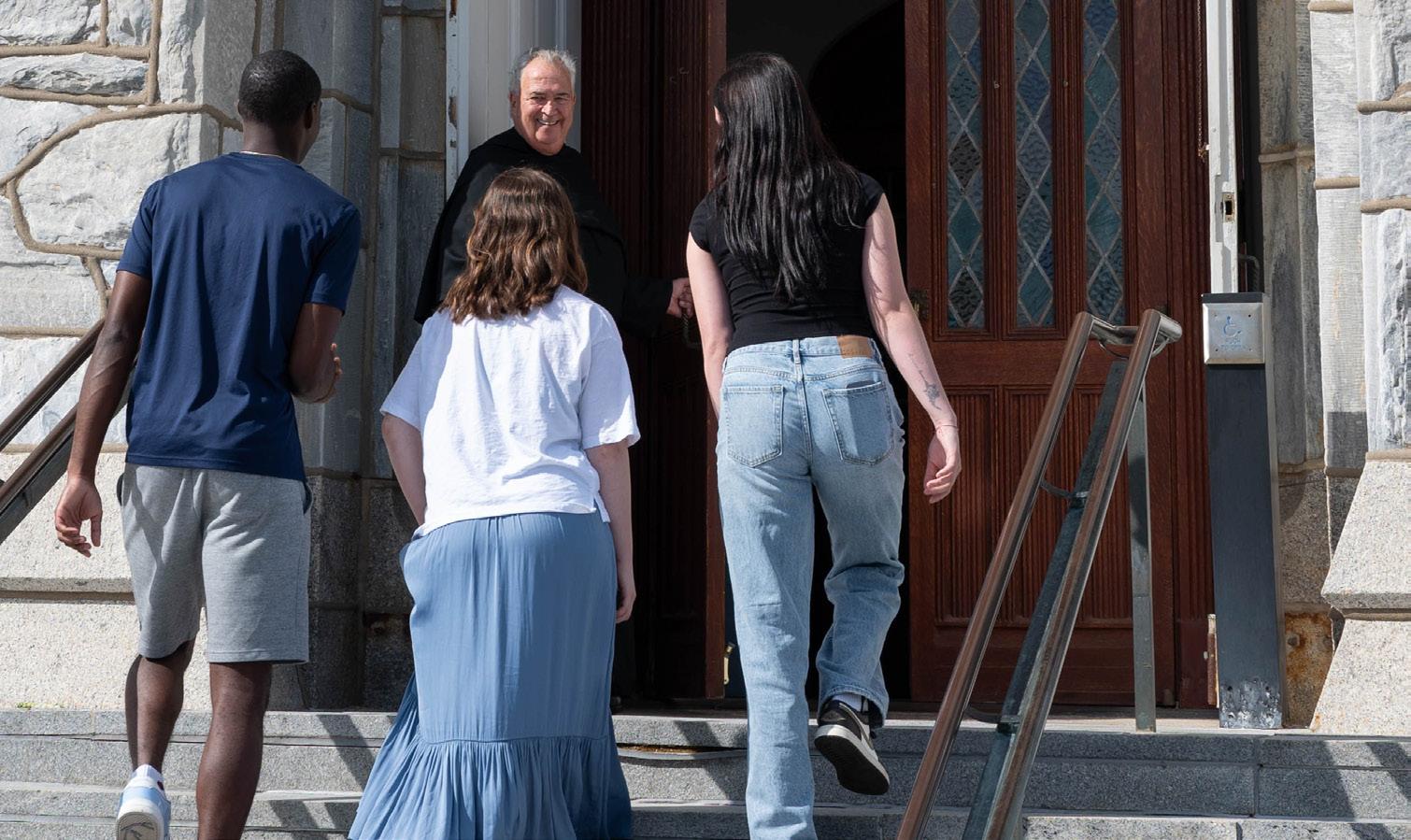
Think of the door image. Imagine knocking on a dear friend’s door, one who loves you immensely and has longed to see you. Without hesitation, your friend will rejoice to see you, and the door will open. Call upon Jesus with your specific prayer. Be assured of an answer. Knock, kneel, praise and pray.
—Edward J. Bonett Jr. Adjunct Professor, Charles Widger School of Law
How do you plan to contact, or connect with, Our Lord today?
ES C:12, 14–16, 23–25
PS 138:1–2ab, 2cde–3, 7c–8
MT 7:7–12
“Ask and it will be given to you; seek and you will find; knock and the door will be opened to you.”
(MT 7:8)
FRIDAY OF THE FIRST WEEK OF LENT
FEBURARY 27, 2026

EZK 18:21–28
PS 130:1–2, 3–4, 5–7a, 7bc–8
MT 5:20–26
From today’s readings, it is abundantly clear that our God is forgiving and loving. He tells us that when we turn away from wickedness, we will have life. Time and time again, He forgives us our sins. Thus, there is always hope to reject evil.
So, God not only gives us the strength to resist doing wrong, but He then forgives us once we have left a dark path. Who else does this? Who else in our entire lives forgives us no matter what we have done (or failed to do)? Yet our God repeatedly does this for us.
“For with the LORD is kindness and with him is plenteous redemption.”
(PS 130:7bc)
God enables us to see each day as a new opportunity to do and say the right things. We can feel confident that He is in our corner, supporting us on a path of goodness, and that we can stand up for others with respect and compassion, no matter our differences. We should remember to ask for God’s help in resisting today’s temptations and to ask for forgiveness when we make mistakes. He is always ready to pick us up.
—Joyce E. A. Russell, PhD Dean Emeritus and Professor, Villanova School of Business
God, I ask you to forgive me for all of the times I could have been a better ambassador of Your light to the world.
SATURDAY OF THE FIRST WEEK OF LENT
FEBURARY 28, 2026

The purpose of Lent is to give us time for reflection and reconciliation as we remember the path Jesus took to sacrifice himself as the Lamb of God for our sins. We are then reminded through the readings of our obligation to follow the commandments as the backbone of our faith, but beyond this, to accept the greater responsibility to emulate Christ in all we do.
The first reading from Deuteronomy shows that, as God’s people, we must choose to obey the Lord’s laws, not as a routine but as a full devotion of our lives. We should always keep in mind that God’s words and precepts must be lived out in our own individual ways as a sign of our surrendered faith.
The Gospel of Matthew calls us to do more. As Jesus teaches, we are not only called to love our neighbors but also our enemies. This challenge is so radical because giving love to those who hurt us seems improbable; why must we extend ourselves by giving grace to our foes? But this is what being “perfect” is about—giving of ourselves even when we feel it is beyond our duty. This does not mean we sacrifice our dignity; rather, we find ways to constantly push ourselves to ask the fundamental “why” behind every notable action.
—Franklin Hung ’28 VSB
How can we better emulate Jesus in our daily lives and in our relationships with others?
DEUT 26:16–19
PS 119:1–2, 4–5, 7–8
MT 5:43–48
“Love your enemies, and pray for those who persecute you.” (MT 5:45)
MARCH 1, 2026

GEN 12:1–4a
PS 33:4–5, 18–19, 20, 22.
2 TIM 1:8b–10
MT 17:1–9
In today’s readings, God calls Abram to leave what is familiar and trust in a promise larger than himself. That promise is not only personal but communal: “All the communities of the earth shall find blessing in you” (Gn 12:4). Blessing, from the beginning, is meant to be shared.
“Rise, and do not be afraid.” (MT 17:8)
On the mountain of the Transfiguration, Peter wants to stay, to hold onto the moment of clarity and light. Yet Jesus leads them back down, into the work of discipleship and shared hardship. Lent invites us into this same movement: from encounter with God to renewed commitment to one another. Unitas reminds us that we are created and re–created not in isolation, but in relationship. Through prayer, fasting and almsgiving, we learn to listen more deeply to God, to one another, and to the needs of the world, trusting that God’s mercy binds us together and sustains us.
—Eileen English ’28 CLAS
Where might God be calling me to step beyond what is comfortable so that others may be blessed?
MARCH 2, 2026

"How Great Thou Art!” is a popular Christian hymn based on a poem written in 1885 after the writer witnessed a sudden, violent thunderstorm that gave way to a calm, sunny afternoon on the southeast coast of Sweden. Today, we hear the prophet Daniel exclaim the same—"Great and Awesome is our God!” (Dn 9:4b). In the Gospel, we are encouraged to “Be Merciful as God Is Merciful!” (Lk 6:36). Another translation is “Be Compassionate as God Is Compassionate!” (I don’t like the translation that says “Be Perfect…,” for I don’t believe this is possible, and I now see perfectionism as a sin.) But we can strive to be forgiving, slow to anger and rich in compassion. The psalm says that the Lord does not deal with us according to our sins: Thanks be to our Great and Awesome God for that! Let us then strive to build up our communities by doing the same toward one another!
—The Rev. Bernie Scianna, OSA, PhD, ’87 Sr. Associate Dean of Students for Student Support
How can I let go of past hurts and grudges and so be more merciful and compassionate to others as I want God to be toward me?
DAN 9:4b–10
PS 79:8, 9, 11 and 13
LK 6:36–38
“Forgive and you will be forgiven.” (LK 6:37)
TUESDAY OF THE SECOND WEEK OF LENT
MARCH 3, 2026

IS 1:10, 16–20
PS 50:8–9, 16bc–17, 21 and 23
MT 23:1–12
The world around us is chaotic, loud and distracting. Voices are coming at us from all directions; it is hard to separate the truth from the lies. It is hard to know who to listen to. Discernment, listening for God's often quiet voice, is helpful in quieting the onslaught of noise.
In MT 23: 1–12, Jesus redirects His listeners toward a life shaped by humility. There is only one Father, one Teacher, one Lord who stands above us all; the rest of us are all learners on the same journey. At the core of this passage is an invitation to integrity. Jesus is asking us to allow faith to shape not only what we say, but how we live, choose, speak and love. It is the quiet consistency of a life aligned with God that becomes a real witness.
“Make justice your aim: redress the wronged.” (IS 1:16)
MT 23:1–12 calls us to surrender the craving for recognition and embrace the hidden, sacred work of serving others. When we choose humility over ego, authenticity over appearance, and compassion over self‑importance, we create space for God to shine through us.
May we become people whose lives preach more loudly than our words—people who lift burdens rather than impose them, who listen more than we instruct, who serve more than we seek to be served. And in doing so, may we reflect the humble heart of Christ.
—Kathy Boyle ’27 MA
Have I listened to God or listened to the world's noise that distracts me from my relationship with God?
WEDNESDAY OF THE SECOND WEEK OF LENT
MARCH 4, 2026

In higher education, we are all familiar with the term “helicopter parent.” But modern psychologists would most likely use the term “bulldozer parent” to describe the mother of the sons of Zebedee. She wanted the best for her sons. “Command that these two sons of mine sit, one at your right and the other on your left, in your kingdom,” (Mt 20:20). She had no idea what she was asking, and many times we don’t either. The passages today begin to prepare us for the betrayal Jesus would face. Like Jeremiah, who was not only rejected by the people of Judah and the citizens of Jerusalem, Jesus would also be betrayed. “Must good be repaid with evil?”(Jr 18:19) Jesus knows what lies ahead for him and is preparing his disciples. May we learn that to follow Christ is to serve, not be served. If we want to sit at the table, we must be prepared to suffer rejection and betrayal from the world. Our riches and glory are not of this world. Let us remember that in our darkest hour and when we feel betrayed by others, we may hold to the truth that Jesus Christ is the light of the world, and whoever follows him will not walk in darkness but will have the light of life!
—Steven Lengkeek Assistant Dean, College of Engineering, Finance Administration
How can we lead with kindness and serve others, even if others reject or betray us?
Jeremiah 18:18–20
PS 31:5–6, 14, 15–16
MT 20:17–28
“You will free me from the snare they set for me, for you are my refuge.”
(PS 31:5)
THURSDAY OF
MARCH 5, 2026
THE SECOND WEEK OF LENT

JER 17:5–10
PS 1:1–2, 3, 4 and 6
LK 16:19–31
Today’s parable of the rich man and Lazarus from Luke’s Gospel was my siblings’ and my favorite growing up. We would mock the lavish illustrations of gluttonous wealth in our Children’s Bible, and the rich man proclaiming how “filthy rich” he was. Yet such depictions of “filthy” indifference remind us: “When you have more than enough, build longer tables, not higher fences.”
“Whatever he does, prospers.”
(PS 1:3)
How easy it would have been for the rich man to send Lazarus even scraps from his table. Or better yet, to invite Lazarus to his table like Christ welcomes us all to His altar. Lazarus, the only person named in Jesus’s parables, means “God helped.” But the rich man remains nameless; he could be any of us. Our wealth is no help when hoarded behind fences.
This Lent, may we instead grow wealthy in relationships rooted in faith, because we can’t take anything except people to heaven.
—Mary Kate Farrell ’26 CLAS
Would we have done anything differently if we were in the rich man’s shoes? How can our choices build tables of unity and communion instead of fences of separation?
MARCH 6, 2026
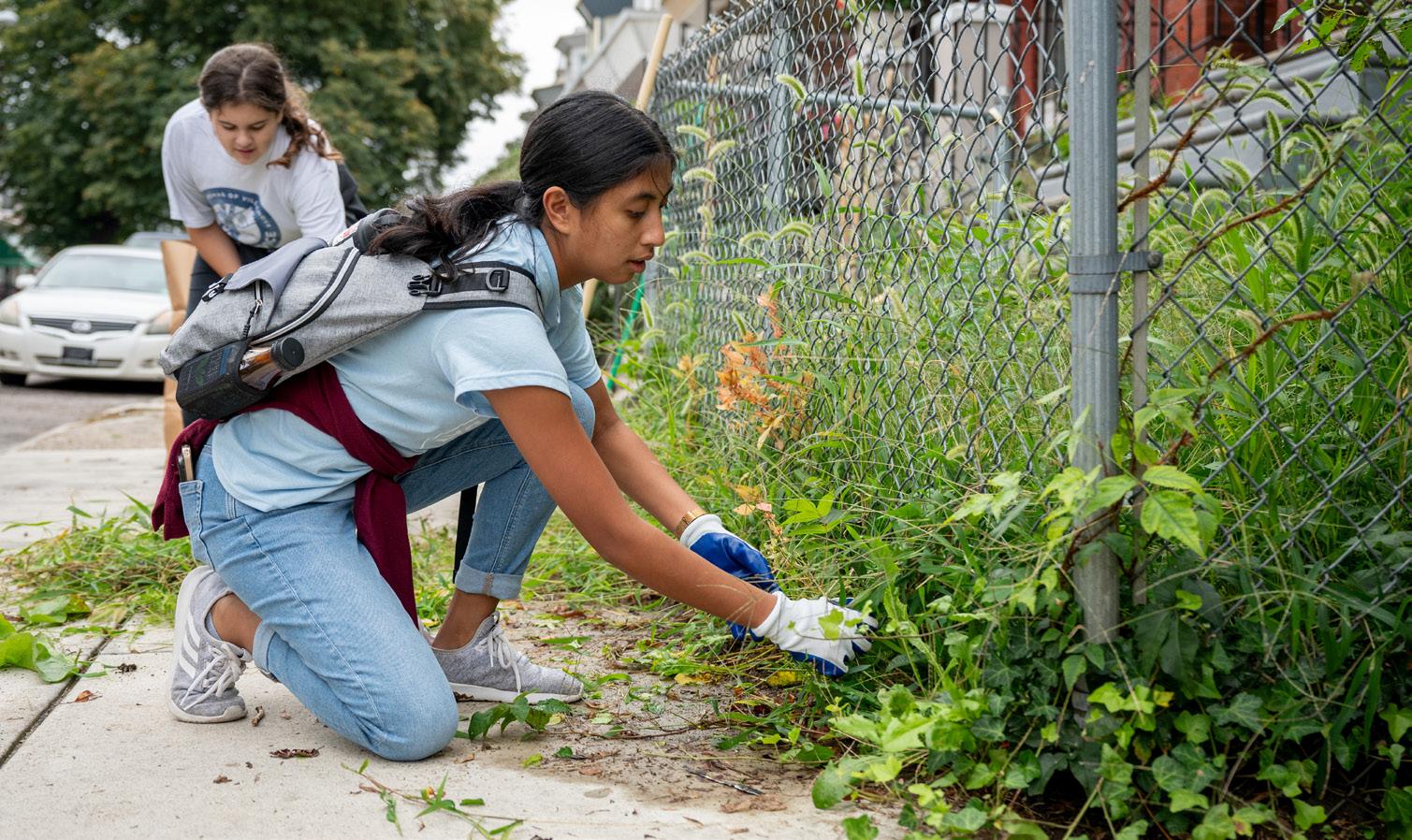
God sends each of us into dangerous situations. God allowed Joseph to be sold into slavery and taken to Egypt. In Jesus’s own parable, the landowner’s servants and son were mistreated (and even killed). Throughout salvation history, God sends people into the unknown: Noah with the flood, Moses and the Israelites into the desert, the Hebrews into exile throughout biblical history. Even the apostles were sent out to preach and build communities in the face of state violence.
One may read the Gospel as a warning to the Pharisees (and it indeed is), but it is also a parable of hope for us. Called to be God’s hands and feet, we will face a hostile world. However, there will be neighbors, friends and strangers who stand by us, nourish us and console us. We support one another to make God’s Kingdom real.
—Boratha Tan ’16 COE
GEN 37:3–4, 12–13a, 17b–28a
PS 105:16–17, 18–19, 20–21
MT 21:33–43, 45–46
How can we support neighbors, friends and strangers as we each face challenges?
“The word of the LORD proved him true.” (PS 105:19)
SATURDAY OF THE SECOND WEEK OF LENT
MARCH 7, 2026

MI 7:14–15, 18–20
PS 103:1–2, 3–4, 9–10, 11–12
LK 15:1–3, 11–32
T“Bless the LORD, O my soul; and all my being, bless his holy name.”
(PS 103:1)
oday’s readings reveal God’s perpetual “wonderful signs": He shepherds, feeds, pardons, heals, and redeems (MI 7:15). In these actions he is kind, merciful, compassionate and faithful. These adjectives shouldn’t insinuate, however, that God is a pushover. It’s easy in our modern world to prefer nice encounters to good ones; while Scripture reminds us that God does “not always chide, nor does he keep his wrath forever,” this means that he sometimes rebukes and gets angry (Ps 103:9). Frankly, Scripture calls us, the sinners, to reflect on our actions that perpetuate these reactions from God and honestly repent.
When the prodigal son “comes to his senses” he comes to terms with his failures. As he considers what he will say to his father, it’s remarkable that he does not plan to seek forgiveness outright (Lk 15:19). He returns home because he is hungry. Couple that with humility, and his rewards are his father’s open arms and a feast.
—Victoria
Rose (Bonito) Kopishke ’14 MA
In what ways, like God, can you welcome home those who have wronged you?

The public ministry of Jesus was highlighted by several significant encounters. One such encounter is the meeting of Jesus and the Samaritan woman who had come to the well for water. However, this encounter with Jesus would be one of significant importance to the woman and would change her life forever. Knowing her sins, Jesus offered her forgiveness and reconciliation, as he does for us.
Jesus came to the well bringing the mercy of God, which is for everyone in need of forgiveness. By reaching out to this sinful woman, Jesus is honoring her dignity, forgiving her and offering her the gift of eternal life. Water is necessary for our physical well–being, but as a symbol of God’s care and forgiveness, it is necessary for our spiritual survival, as well, to reach the eternal life He has prepared for us.
Jesus is meeting us at the well, but we must choose to drink. The water of forgiveness that He is offering us leads us to eternal life with Him, promised to us by His resurrection
—Frank Herron ’63 CLAS
Is your Lent this year preparing you to encounter Jesus at the well and experience His forgiveness and reconciliation? Will you accept His invitation to come and drink?
EX 17:3–7
PS 95:1–2, 6–7, 8–9 122
ROM 5:1–2, 5–8
JN 4:5–42 OR JN 4:5 – 15, 19b –26, 39a, 40–42
“Harden not your hearts.” (PS 95:6)
MONDAY OF THE THIRD WEEK OF LENT
MARCH 9, 2025

2 Kings 5:1–15ab
PS 42:2, 3; 43:3, 4
LK 4:24–30
I“When shall I go and behold the face of God?”
(PS 42:3)
n the story of Naaman, humility is what brings healing. When Elisha tells him to wash in the Jordan River, Naaman is offended because the act feels too simple and beneath him; he expects healing to come in a way that matches his status. It is only when he pauses, lets go of his pride, and listens to the true word of God that he is healed. This invites us to ask whether pride or expectations sometimes prevent us from growing or being healed. Like Naaman, we might resist change because it challenges our comfort, but in reality, humility is where true transformation begins. In healing Naaman, a foreigner who was healed in Israel when many were not, Jesus challenges the idea that God’s love belongs only to those who are familiar to us. The people react with anger because this truth forces them to confront their own biases against others. These readings remind us that we are all God’s children, and no one is more deserving of grace than another. Rather than shaming or dismissing outsiders, we are called to practice humility and recognize God at work in everyone. When we do this, we create space not only for healing in others but in ourselves as well.
—Madigan Reens ’26 VSB
How can we better practice humility and recognize God’s work in everyone?
TUESDAY OF THE THIRD WEEK OF LENT
MARCH 10, 2026

These words on forgiveness in the Gospel of Matthew are among the many challenging teachings Jesus places before us this Lent. Jesus not only calls us to forgive without limit—“seventy–seven times”—but also confronts our hypocrisy when we withhold forgiveness despite having been forgiven so often by God (Mt 18:19). In a country and world marked by anger—sometimes understandably so—Jesus reminds us that hypocrisy does not lead to reconciliation or to overcoming evil with good.
Through our Augustinian value of Unitas, we are reminded that we are deeply interconnected through our shared humanity and as sons and daughters of God. This Lent, let us lean into Unitas by offering and receiving forgiveness wherever it is needed. Let us also pray that our hearts—at times hardened, arrogant, or blind to our own faults—may first turn inward, honestly examining our own imperfections before focusing on the shortcomings of others.
—Matt Davis Associate Director, Center for Church Management Villanova University
How can I lean into Unitas by offering and receiving forgiveness to those in my life?
DAN 3:25, 34–43
PS 25:4–5ab, 6 and 7bc, 8–9
MT 18:21–35
“So let our sacrifice be in your presence today as we follow you unreservedly.”
(DAN 3:41)
WEDNESDAY OF THE THIRD WEEK OF
MARCH 11, 2026

DEUT 4:1, 5–9
PS 147:12–13, 15–16, 19–20
MT 5:17–19
As a teacher, I found deep resonance with these readings because they focused on teaching positive lessons to today’s youth. Deuteronomy emphasizes that God’s commandments are not meant to remain in books, and Moses tells people to remember what they have seen and pass it on to their children and grandchildren. Today, children are surrounded by the noise of social media. This makes the role of teachers and parents very important: We are shaping young people’s lives.
“Whoever obeys and teaches these commandments will be called greatest in the Kingdom of heaven.”
(MT 5:19)
In Matthew, Jesus says that those who practice and teach the commandments will be “called great in the Kingdom of Heaven,” and He reminds us that children learn from example (Mt 5:19). They notice how adults treat others and handle conflict. Teaching God’s law today means showing what love, mercy and integrity look like in school, online and at home.
In a world that encourages shortcuts, self–promotion and instant gratification, these readings call us to offer children a moral compass. When we teach children to respect others, be honest and forgive, we continue this work.
—Lauren Kelly ’99 CLAS
What messages are today’s children learning from the world, and how can we help them find God’s truth amid all the chaos?
THURSDAY OF THE THIRD WEEK OF LENT
MARCH 12, 2026

We frequently hear, with much justification, that our world lives in turbulent and divisive times. Today's Gospel reading reminds us that this is nothing new. Even as Jesus miraculously healed a mute person who was unable to speak by driving out the demon that incapacitated his speech, and thus amazed the crowds, others immediately discounted his miracle and demanded further proof. They even incredibly claimed that Jesus was doing the work of the devil, saying, “By the power of Beelzebul, the prince of demons, he drives out demons. Others, to test him, asked him for a sign from heaven” (Lk 11:15).
But Jesus had an immediate answer: “If it is by the finger of God that I drive out demons, then the Kingdom of God has come upon you” (Lk 11:17).
Indeed, the Old Testament reading today foretold what Jesus would experience: “They obeyed not, nor did they pay heed. They walked in the hardness of their evil hearts and turned their backs… to me” (Jr 7:25).
And fortunately, we also have today's Psalm of David, which brings us back to the reality of God's grace and the salvation that would come for us all through Jesus Christ. If today you hear his voice, harden not your hearts.
—Dennis McAndrews ’75 CLAS, ’78 LAW
How can we grow closer to God and stop hardening our hearts in times of trouble?
JER 7:23–28
PS 95:1–2, 6–7, 8–9
LK 11:14–23
“Come, let us sing joyfully to the LORD.” (PS 95:1)
FRIDAY OF THE THIRD WEEK OF LENT
MARCH 13, 2026

HO 14:2–10
PS 81:6c–8a, 8bc–9, 10–11ab, 14 and 17
MK 12:28–34
"W“Let him who is wise understand these things; let him who is prudent know them.”
(HO 14:9)
hich is the first of all the commandments?” (Mk 12:28). Jesus could have taken the easy way out and answered from the stone tablets God gave Moses, “I am the Lord your God: You shall have no other gods before me” (Ex 20:2). Instead, Jesus recognized the scribes’ role and expressed love: “You shall love the Lord your God with all your heart, with all your mind, and with all your strength” (Mk 12:29). “You shall love your neighbor as yourself. There is no other commandment greater than these” (Mk 12:30). By connecting these two commandments, Jesus teaches that building a better world means seeing our neighbors as fellow humans. God grants us this ability when we commit to loving Him.
What if everyone, leaders and ordinary people, engaged with those we disagree with while recognizing their agency? Even those we find abhorrent were once innocent babies and are deserving of God’s love and our prayers. These shifts are hard, as was Jesus’s suffering to save us. During Lent, we’re reminded of the hard steps we can take to get closer to God and help others do the same.
—Karen Dunne Dasey ’87 CLAS
How can we engage with others in a way that honors the dignity intrinsic to humanity?
SATURDAY OF THE THIRD WEEK OF LENT
MARCH 14, 2026
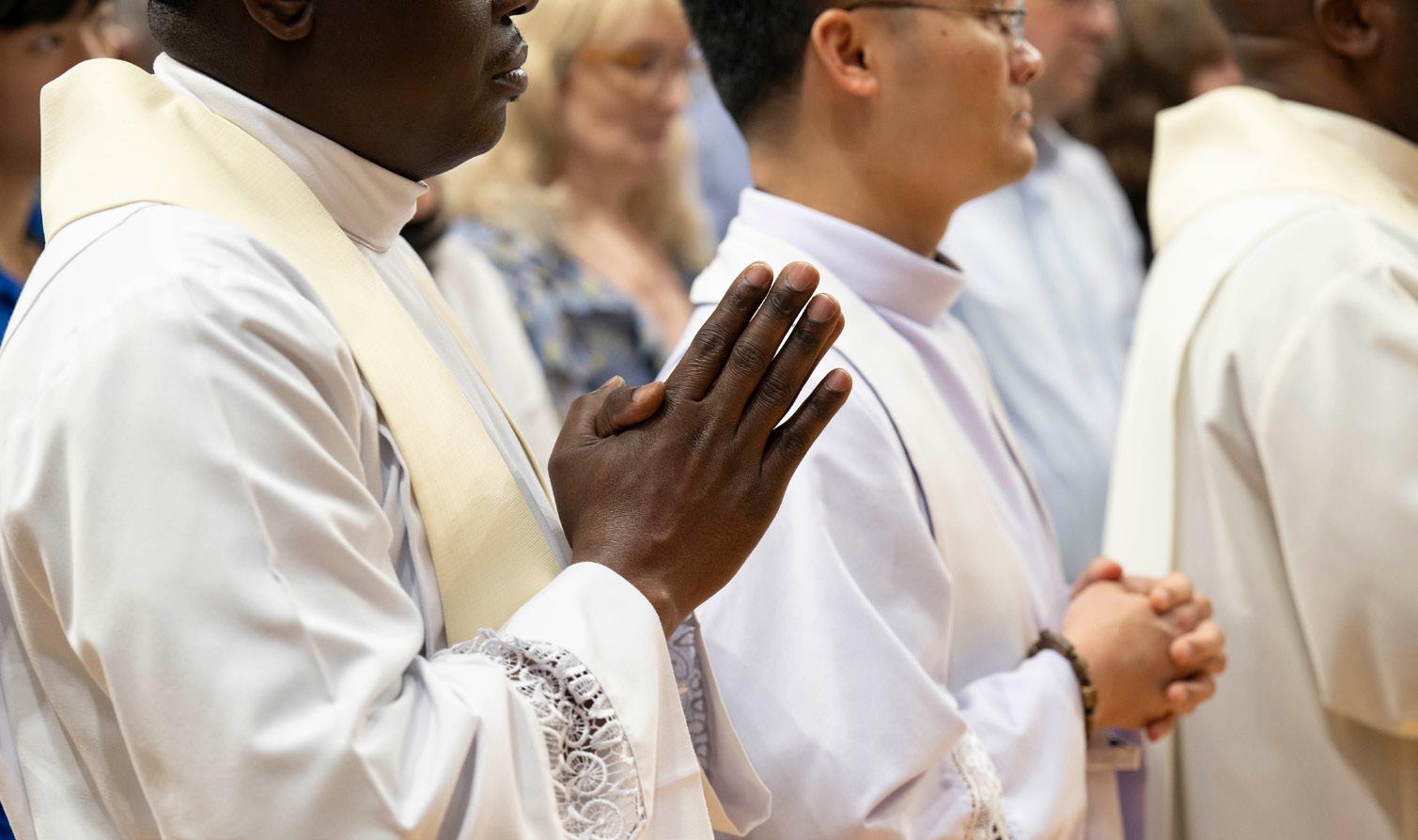
The prophet Hosea was the first to describe God’s covenant with humanity using the image of marriage.
As someone recently married, I hear God’s plea in today’s first reading as the longing of a spouse who desires to be truly known, not just feted by displays of love and respect. Flowers (or ritual sacrifices) are nice, but they cannot replace the deeper work of saying by our living, “I want to know you and love you.” As a Christian, I see this same desire in the Sacred Heart, which reveals the utter depths of love we may participate in this side of Heaven.
When we gather as the Body of Christ, our focus on self diminishes, and we recognize that we are all God’s beloved. Augustine’s prayer, “Let me know myself; let me know you” (Soliloquies 2.1.1), calls me to honesty, that I might look left and right in love, rather than comparison.
—Sean McElwee ’15 MA Associate Director for Liturgical Music Office for Mission and Ministry
How can I lessen my impulse to compare? How can I truly accept God’s unconditional and deep love?
HO 6:1–6
PS 51:3–4, 18–19, 20–21ab
LK 18:9–14
“On the third day he will raise us up, to live in his presence.”
(HO 6:2)
MARCH 15, 2026

1 SAM16:1b, 6–7, 10–13a
PS 23: 1–3a, 3b–4, 5, 6
EPH 5:8–14
JN 9:1–41 OR JN 9:1, 6–9, 13–17, 34–38
“I do believe, Lord.”
(JN 9:38) FOURTH SUNDAY OF
In his remarks on the radical emptying of Godself into the Blessed Mother’s womb, German mystic Angelus Silesias writes, “‘The Word which supports everything, even God, the Old One, must be carried here in frail arms by a young virgin.” As we are reminded in these Lenten readings and consistently throughout the scriptures, our God intimately communes with God’s beloved creation, not from the soaring echelons of prominence, but in the experience and tribulation of the powerless. Entering the world exposed and vulnerable, Jesus is adopted by a descendant of David, a king who was himself an unlikely candidate to lead his nation, yet was purposefully selected. In his restoration of one’s vision, he reveals our collective blindness to his condition, and his elevation of the poor, the emptiness of earthly prestige. May we heed Paul and live as the children of light by embracing those consigned to the shadows.
—Marcy Andersen ’21 MA Center for the Common Good, Office for Mission and Ministry
—Bill Kuncken ’21 MA Doctoral Student, Theology and Religious Studies
Seeking guidance from the shepherding voice of Christ, how can we be more deliberate in our encounters with those in need of comfort and healing?
MARCH 16, 2025

The readings for today remind us that God is always doing something new, even when we can’t yet see it fully. Isaiah imagines a renewed world filled with joy and shared flourishing, pointing us toward God’s desire for wholeness, not just for individuals but for communities. In the Gospel, the royal official trusts Jesus’s word and begins his journey home before seeing any proof, discovering that healing unfolds through faith and relationship. This is deeply Augustinian: we are created by God and re–created in Christ to live in Unitas, bound together rather than alone.
During Lent, this is a big deal—it’s a time to practice trusting God, letting go of what we can’t control, and believing that change and healing are possible. Through prayer, fasting and almsgiving, we learn that hope isn’t a solo effort. Even when it’s hard to see, God is at work, and choosing to hope together is part of our Lenten journey.
—Kimberly Festa Cratty ’99 CLAS, P ’29
Where is Lent inviting you to trust God more deeply, not on your own, but in community?
IS 65:17–21
PS 30:2 and 4, 5–6, 11–12a and 13b JN 4:43–54
“There shall always be rejoicing and happiness in what I create.” (IS 65:18)
TUESDAY OF THE FOURTH WEEK OF LENT
MARCH 17, 2026

EZ 47:1–9, 12
PS 46:2–3, 5–6, 8–9
JN 5:1–16
Lent is a season of honest questions, and in today’s Gospel, Jesus asks a powerful one: “Do you want to be well?” (Jn 5:4) The man lying by the pool had been sick for 38 years, surrounded by hope but unable to reach it. When Jesus speaks, healing happens—but it requires movement: “Rise, take up your mat, and walk” (Jn 5:6).
“Every sort of living creature that can multiply shall live, and there shall be abundant fish, for wherever this water comes the sea shall be made fresh.” (EZ 47:8)
Lent calls us to notice where we have grown comfortable staying stuck: habits we excuse, hurts we carry, shame and resentment we remain under, and strained relationships we cannot seem to fix. Jesus does not wait for perfect conditions. He calls us forward, even when it is inconvenient or uncomfortable. Healing begins when we trust God’s voice more than our excuses or the ways of the world. Do you want to be well? May our answer be “yes.” May we move with the voice that sets us free and discover a healing that restores us, in the words of our Villanova brother Pope Leo XIV, to a “disarming” and “unarmed peace” with God, ourselves and one another?
—The Rev. Bill Gabriel OSA, ’14 CLAS
How can I listen more closely to the voice of healing, inviting me and others toward freedom?
WEDNESDAY OF THE FOURTH WEEK OF
MARCH 18, 2026

In a world so often divided—where physical, cultural and racial boundaries shape how we see one another— Scripture draws us back to our shared origin and deepest truth: We are all the Lord’s people. Today’s first reading reminds us that those whom society casts aside—“the prisoners” and “those in darkness”—are never forgotten by God (Is 49:10). And in the Responsorial Psalm, we hear again that “the Lord lifts up all who are falling and raises up all who are bowed down” (Ps 145:13cd).
This Lent, as I witness hearts closing toward those who are suffering, I find myself returning to John’s reminder that the resurrection of life is promised to those who have done good deeds. My prayer is that these words stir us to compassion, helping us recognize that we are called to live as one community under God. The Lord asks us to widen our circles of care and choose goodness so that all may flourish.
—Megan Walsh–Boyle Senior Writer, University Communication and Marketing
Who are the people I overlook in my daily life, and how is God inviting me to show them compassion?
IS 49:8–15
PS 145:8–9, 13cd–14, 17–18
JN 5:17–30
“In a time of favor I answer you, on the day of salvation I help you.” (IS 49:9)
THURSDAY OF
THE FOURTH WEEK OF LENT
SOLEMNITY OF ST. JOSEPH, SPOUSE OF THE BLESSED VIRGIN MARY MARCH 19, 2026
2 SAM 7:4–5a, 12–14a, 16
PS 89:2–3, 4–5, 27 and 29
ROM 4:13, 16–18, 22
MT 1:16, 18–21, 24a OR LK 2:41–51a
“I will be a father to him, and he shall be a son to me.”
(2 SAM 7:14a)
The author Brian Doyle said, “I am terrified of the fates that may befall my children, fates over which I have no power at all.” In today’s reading, Jesus’s parents take him to Jerusalem for the feast of Passover and lose track of him. Their minds are filled with the dark thoughts that haunted Doyle. The dark thoughts that haunt all parents. As my own children quickly near the age of leaving home and stepping out into the cruel world, I pray that I have armed them with enough love, faith and compassion to shoulder its blows.
I cannot imagine how scary it must seem right now. Doyle said, “You either walk toward love or away from it.” I ask God to fill in the cracks my weaknesses have left and to walk beside my children, beside all children, as they walk towards love.
—Brad Ingelsby ’05 VSB
How can I better accompany loved ones, friends and neighbors in their struggles?
MARCH 20, 2026

In the Wisdom reading, Jesus is called “obnoxious” simply for being different (Wisdom 2:12). This word does not mean annoying in a casual sense, but provoking or threatening, because his way of life exposes injustice and self–justification. That kind of exposure can feel intolerable when our identities depend on power, status or being right. Yet when we root our identity in God, we become united in the belief that we are all children of the same Father. The Psalm reminds us that God is close to the brokenhearted and crushed in spirit, often those pushed aside for being different (Psalm 34:19). In John 7, even Jesus lacks freedom of movement. His presence is perceived as a threat to the established order. Still, he proclaims his true origin in God, reminding us that we all come from the same home. Lent calls us to humility and courage so our lives may witness to this shared descendance.
—Nicole Hoffman ’25 MA Graduate Assistant
in the Center for the Common Good Office for Mission and Ministry
Where might God be inviting me to change in order to live more fully in our shared identity as children of God?
WIS 2:1a, 12–22
PS 34:17–18, 19–20, 21 and 23
JN 7:1–2, 10, 25–30
“Many are the troubles of the just man, but out of them all the LORD delivers him.” (PS 34:20)
SATURDAY OF THE FOURTH WEEK OF LENT
MARCH 21, 2026

JER 11:18–20
PS 7:2–3, 9bc–10, 11–12
JN 7:40–53
"The Christ will not come from Galilee, will he?” (JN 7:41). Some in the crowd listened to Jesus speak these words. Galilee, a rural and insignificant place, was the last place that someone as important as the Messiah would come from. Surely God would come from somewhere more prestigious, more reputable, more wealthy. Right?
But Jesus chooses somewhere unexpected. In the first century, Jesus came from an out–of–the–way place and with people who were less than reputable.
“Let the malice of the wicked come to an end, but sustain the just.”
(PS 7:10)
In our time, how do we react to Jesus in our midst? Do we look for Christ among the powerful, the famous or the well–connected? Do we discount the voice of God coming from an area or a people that the world shuns? Or instead, are we like Nicodemus, asking, “Wait, let's hear Him out. This may be the Christ” (JN 7:51).
—Matt Ryan–Bender Director of Finance and Administration Office for Mission and Ministry and UNITAS: The Office of
Community Enrichment
How do we react to Jesus in our midst?
FIFTH SUNDAY OF LENT
MARCH 22, 2026

Today’s Gospel recounts the story of Jesus raising Lazarus from the dead. Before falling ill and his miraculous encounter with Jesus, Lazarus was an ordinary man. He had sisters, Martha and Mary. He lived in a small village. He could have been a carpenter, a butcher or a shepherd. Still, Jesus saw Lazarus as worthy of a miracle, not because of social status, but because he was human, intrinsically worthy of dignity and just treatment as part of God’s creation.
As the first reading reminds us, God “put [His] spirit in you that you may live” (Ez 37:14). We are all created equally with God’s spirit and are always worthy of mercy and kindness. Today’s Gospel reminds us that we are, like Lazarus, deserving of dignified treatment no matter who we are or where we come from and, like Jesus, are called to help those in our communities who are suffering. This Lent, may we be reminded of the mercy and compassion owed to all humanity, and may we commit ourselves to ensuring that such kindness and dignity is truly shown to all.
—Mia Familetti ’27 MA Graduate Assistant in Communications, Office for Mission and Ministry
How can we commit ourselves to ensuring that such kindness and dignity is shown to all?
EZ 37:12–14
PS 130:1–2, 3–4, 5–6, 7–8
JN 11:1–45
“I will put my spirit in you that you may live.” (EZ 37:13)
MONDAY OF THE FIFTH WEEK OF LENT
MARCH 23, 2026

DAN 13:1–9, 15–17, 19–30, 33–62 or 13:41c–62
PS 23:1–3a, 3b–4, 5, 6
JN 8:1–11
Throughout today’s readings, the themes of judgment and righteousness play out within the context of the faith community. In our first reading, Susanna is almost put to death by the community for a transgression she had not committed. In the Gospel, a woman accused of adultery is also almost put to death, this time for a transgression she had indeed committed. Nevertheless, in both instances, the Holy Spirit convicts righteousness to prevail. For Susanna, it is the stirring up of a young man, Daniel. For the adulteress, Jesus convicts the community to know that they too have indeed sinned.
“Even though I walk in the dark valley I fear no evil; for you are at my
side.”
(PS 23:4)
In both of our readings, the central claim isn’t a rejection of righteousness. Especially within the Lenten season, it is important to center the walk of holiness and take true penitence for our sins. Yet, we must also realize the areas where the community falls short. Rather than banding together as a community of condemnation, we must follow the example of Daniel and Jesus, being beacons of light that call the community of darkness in a spirit of truth, peace, mutuality and charity. As we process deeper along the Lenten journey, may we pray for the grace to journey further with Christ, and act as catalysts for a deeper call to conversion.
—Mike Whaley ’26 CLAS
How can we become beacons of light within our communities this Lent?
TUESDAY OF THE FIFTH WEEK OF LENT
MARCH 24, 2026

Lent is a period we're reminded to pull back the foreskin of our flesh and learn to wait upon God.
Subjecting our flesh to His Word and Ways comes with some immediate pain, like the hunger and thirst the Israelites faced, when on the journey of faith, in the wilderness.
Making our will conform to His may also mean restricting our choices, as we could appear confined to only a “wretched food,” (Num 21:5). Yet, God wouldn't have us complain even if we seem restricted, lest He sends serpents into our midst, as punishment for the sin of complaining.
Thankfully, for those who may have complained and experienced God's anger at the sin of grumbling, they can look to the Cross, like the bronze serpent God ordered Moses to mount on a pole for those bitten by serpents, and be saved. There are always salvation and redemption with our Merciful God.
For those who have been following God and considering His bread—the Proceeding Word—as sufficient, they must continue to look up to Christ. Then, the Lord would look down from His holy height to set them free from every form of captivity and release those doomed to die.
—Tolulope Omodara ’19 MPA
How can we complain less and become more hopeful and grateful this Lent?
NUM 21:4–9
PS 102:2–3, 16–18, 19–21
JN 8:21–30
“He has not left me alone.” (JN 8:30)
WEDNESDAY OF THE FIFTH WEEK OF LENT
SOLEMNITY OF THE ANNUNCIATION OF THE LORD
MARCH 25, 2026
IS 7:10–14; 8:10
PS 40:7–8a, 8b–9, 10, 11
LK 1:26–38
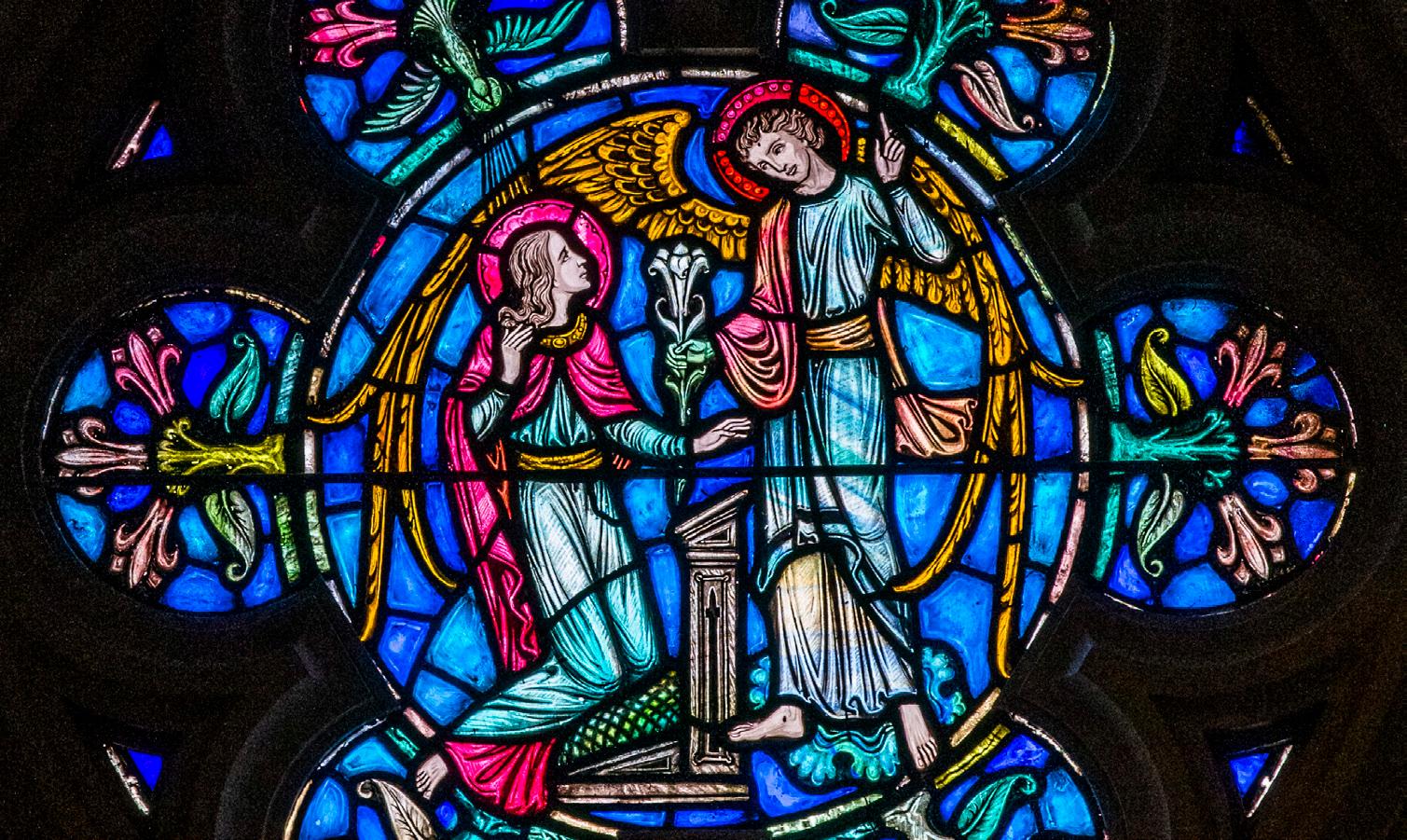
What a joyful moment in the middle of Lent! Today we celebrate the Solemnity of the Annunciation of the Lord, a feast so significant that we set aside our fasting and penances and rejoice in the Lord. The angel Gabriel tells Mary she will bear God’s Son, and she responds with her fiat, her “yes”: “Behold, I am the handmaid of the Lord. May it be done to me according to your word” (Lk 1:38).
“Therefore the child to be born will be called holy, the Son of God.”
(LK 1:35)
We are invited to echo Mary’s yes in our own lives. Lent does not always unfold as we planned, but God meets us in the crosses He calls us to bear. When we embrace the Lent we are living—rather than the one we imagined—we open ourselves to His will, just as Mary did. Whatever challenges we face, may we embrace them with trust and offer our own joyful fiat to the Lord.
—Matt Kirsch Associate Director, Communication and Marketing Office of the Provost University Communication and Marketing
Which unexpected challenges this Lent might God be using to draw me closer to Him?
THURSDAY
OF THE FIFTH WEEK OF LENT
MARCH 26, 2026

The readings today remind us to trust in God, even in the face of uncertainty, difficulty and confusion. We must recall the glorious deeds and unwavering love and strength of God, who prevails over all. This act of trust is not always easy, especially in times like these, when it seems suffering has become the norm and when the last good day feels like it was ages ago. However, that is exactly when we need to remind ourselves of the glory of God.
Joy is a form of resistance, and while it must not be our only form, it is necessary in living a life that follows the Gospel. We must remind ourselves of God, turn to Him when we are in need and trust He will protect us and the good will come again. Once we place our trust in Him, our actions can follow His will.
—Jessika Crockett–Murphy ’26 MA Graduate Resident Minister
When has God recently shown up in your life and reminded you of his love and presence?
GEN 17:3–9
PS 105:4–5, 6–7, 8–9
Hebrews 10:4–10 JN 8:51–59
“Look to the LORD in his strength; seek to serve him constantly.” (PS 105:4)
FRIDAY
OF THE FIFTH WEEK OF LENT
MARCH 27, 2026

JER 20:10–13
PS 18:2–3a, 3bc–4, 5–6, 7
JN 10:31–42
Trust and belief in the Lord do not mean our paths will be easy or straightforward. Life is full of challenges. Escaping them is not possible. In today’s first reading, Jeremiah speaks of “Terror on every side!” as many look for him to fail or denounce the Lord (Jer 20:10). I’m sure we can all relate to a time when we feel the walls are caving in from every side. Empty, frightened, filled with anxiety or stressed to the point of breaking down—all of us have these emotions in our lives at one time or another.
“Sing to the LORD, praise the LORD, For he has rescued the life of the poor from the power of the wicked!”
(JER 20:13)
During these periods of strife in our lives, we must never forget that the Lord is with us always. When Jeremiah proudly announces, “But the Lord is with me, like a mighty champion…,” I am reminded of the Augustinian value of Unitas (Jer 20:11). We are united with one another through Christ and through community. We are never alone. During these troubling times, let us never forget the connections we share with one another and how this collective bond strengthens us in our Lord.
—Bryan Wagner ’09 COE
How can we deepen our faith and sense of community in times of trouble?
SATURDAY OF
MARCH 28, 2026
THE FIFTH WEEK OF LENT

As I prayed with today’s Gospel reading, I was struck by the Pharisees’ fear. Who Jesus was seemed lost on them, at least in comparison to the Roman wrath he might attract: “If we let him go on like this, all the people will believe in Him, and the Romans will come and take over both our place and our nation” (JN 11: 48, NAB). Very human, is it not?
This Lent, the Villanova community is reflecting on the Augustinian value of Unitas—of what it means to be a community of one heart and mind. Fear can be a gift, protecting us from danger. It can also bind our mind and heart, both personal and collective. Amidst the many invitations for reflection that today’s readings extend, I think it’s worth reflecting on our own fears and how they might drive our decision making. Which fears protect us? Which fears bind us?
—Bridget Rickard Graduate Assistant in Liturgical Music Office for Mission and Ministry
What fear(s) may the Spirit be asking me to relinquish into God’s merciful love this Lenten day?
EZ 37:21–28
JER 31:10, 11–12abcd, 13 JN 11:45–56
“Hear the word of the LORD, O nations, proclaim it on distant isles.” (JER 31:10)