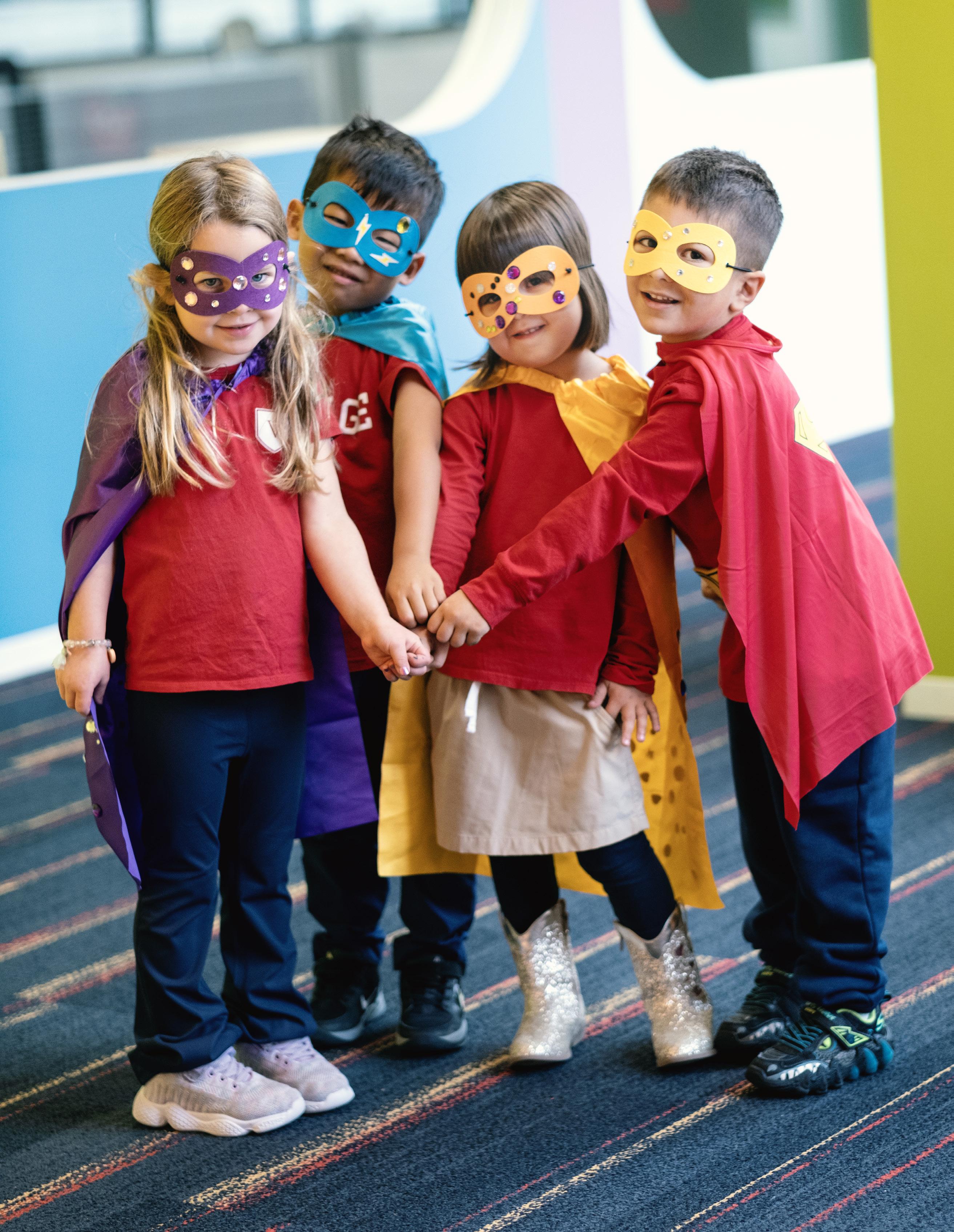

We are a village of students, families, and educators with a common goal: to create a childhood of wonder, joy, and challenge where children expand their minds and hearts, find their greater purpose, and prepare to engage with the wider world.
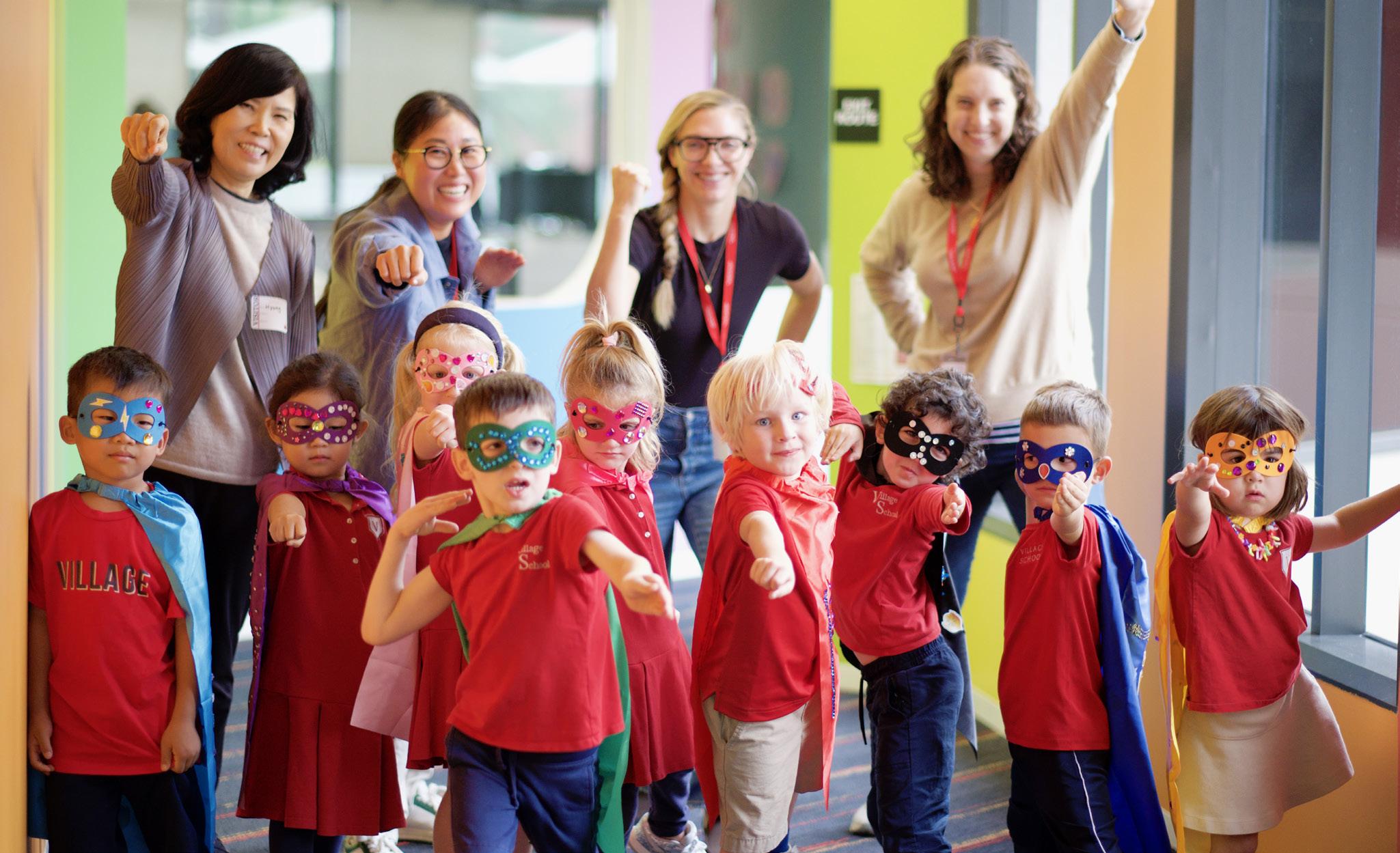
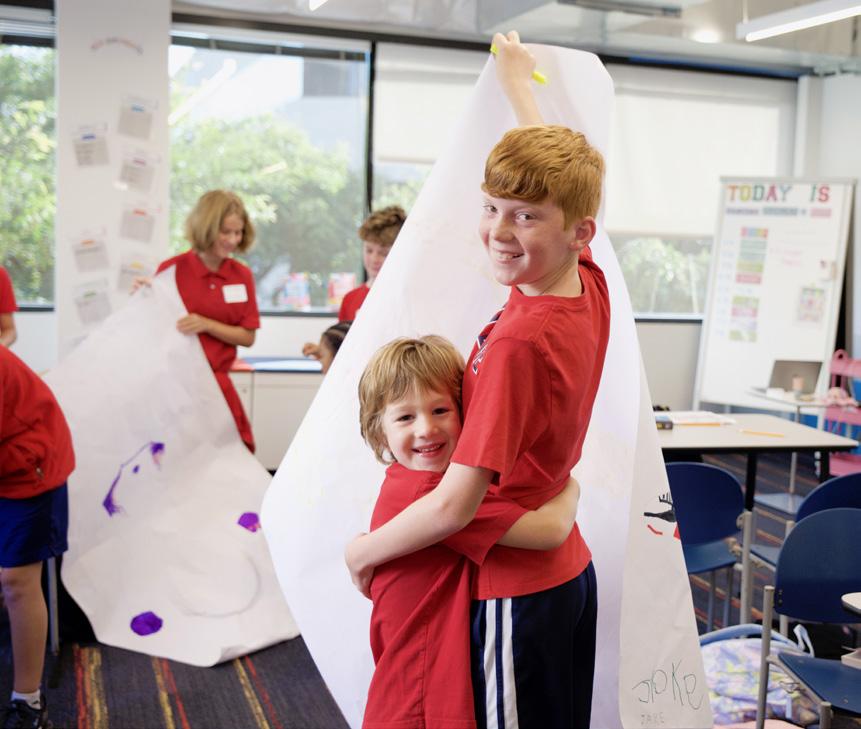
In the Science Lab, TK students explore their superpower: the five senses. Through hands-on play stations, Village School’s youngest Vikings strengthen their understanding of sight, touch, smell, hearing, and taste, and discover how those senses are used daily. Students then celebrate their mastery with a TK Superhero Cape Ceremony.
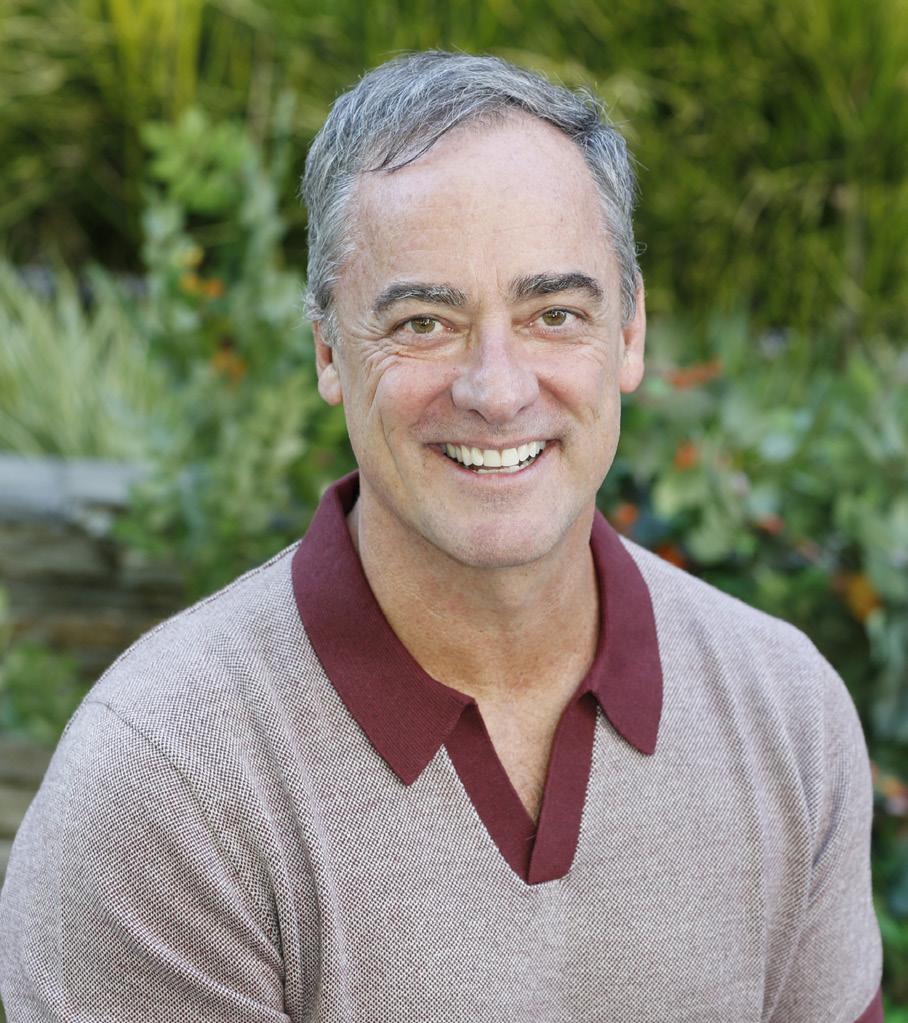
Dear Village Families and Friends, Near and Far,
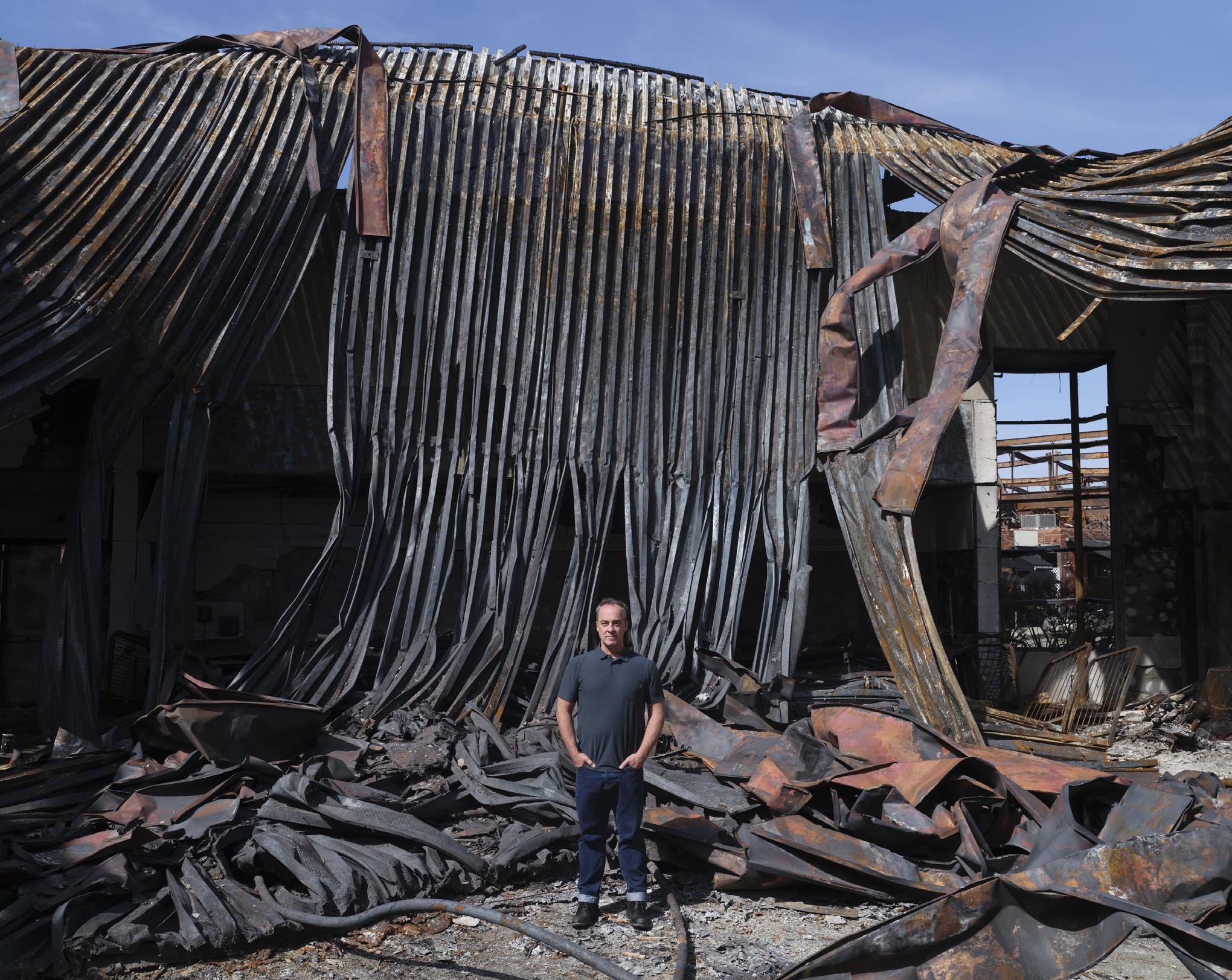
This year, the pages of the Village School magazine tell a bold and aspirational story. Boldness in the face of uncertainty. Boldness in how we showed up for one another. Boldness in imagining what comes next. From the earliest days after the fires, through the weeks that followed as Village became the first school to return to session, our community moved forward with a deep belief in what is possible.
In reflecting on the months behind us, I have seen that this kind of boldness lives not in grand gestures, but in quiet strength.
Earlier this school year I shared an old Stoic fable about a crow who mocked an ox for the yoke it carried. “Why do you bear such weight?” the crow asked, perched light and free on a branch above. The ox, patient and steady, replied simply: “Because I am built for it.”
I’ve thought about that ox often these past weeks and months. When the fires swept through the Palisades, they didn’t just take buildings. They took the spaces where our children learned to read, where they played basketball, where they performed musicals, and where they discovered they could be scientists and artists and leaders. They took the ordinary sacred places where community happens—the front steps where parents waited at pickup, the magical reading room where a struggling reader finally found their book, the playground where every grade learned to experience joy through play together.
The weight of that loss is real. So is the weight of what comes next. But here’s what I know about Village School, and what I’ve witnessed in every conversation with parents, every note from faculty, every drawing a student has made of what they hope we’ll build: we are built for this. Not because we’re exceptional or extraordinary, but because this work—educating children, building community, creating spaces where young people become their best selves—has always required us to carry weight.
The rebuild ahead is enormous. There will be months of countless decisions accompanied by many moments of fatigue and frustration. But there will also be something profound: the chance to reconstruct not just buildings but our collective commitment to what education means. To build spaces that reflect who we’ve become and who we aspire to be. In the pages that follow, I hope you will see that spirit in every photograph and story. We are bold. We are strong. We are Village.
Like the ox, we don’t carry this burden because we sought it out. We carry it because it’s ours, because our children are watching, because the community we’ve built together matters too much to set down. We are built for heavy loads—for the patient, steady work of moving forward when the path is unclear. The fires took much from us. They didn’t take our foundation. They didn’t take our purpose. And,
they certainly didn’t take our capacity to bear what must be borne, together. It is our hope and our aspiration that you are along for this ride with us. We will dream. We will create. We shall push onward.
That’s what we do.
All my best,
John
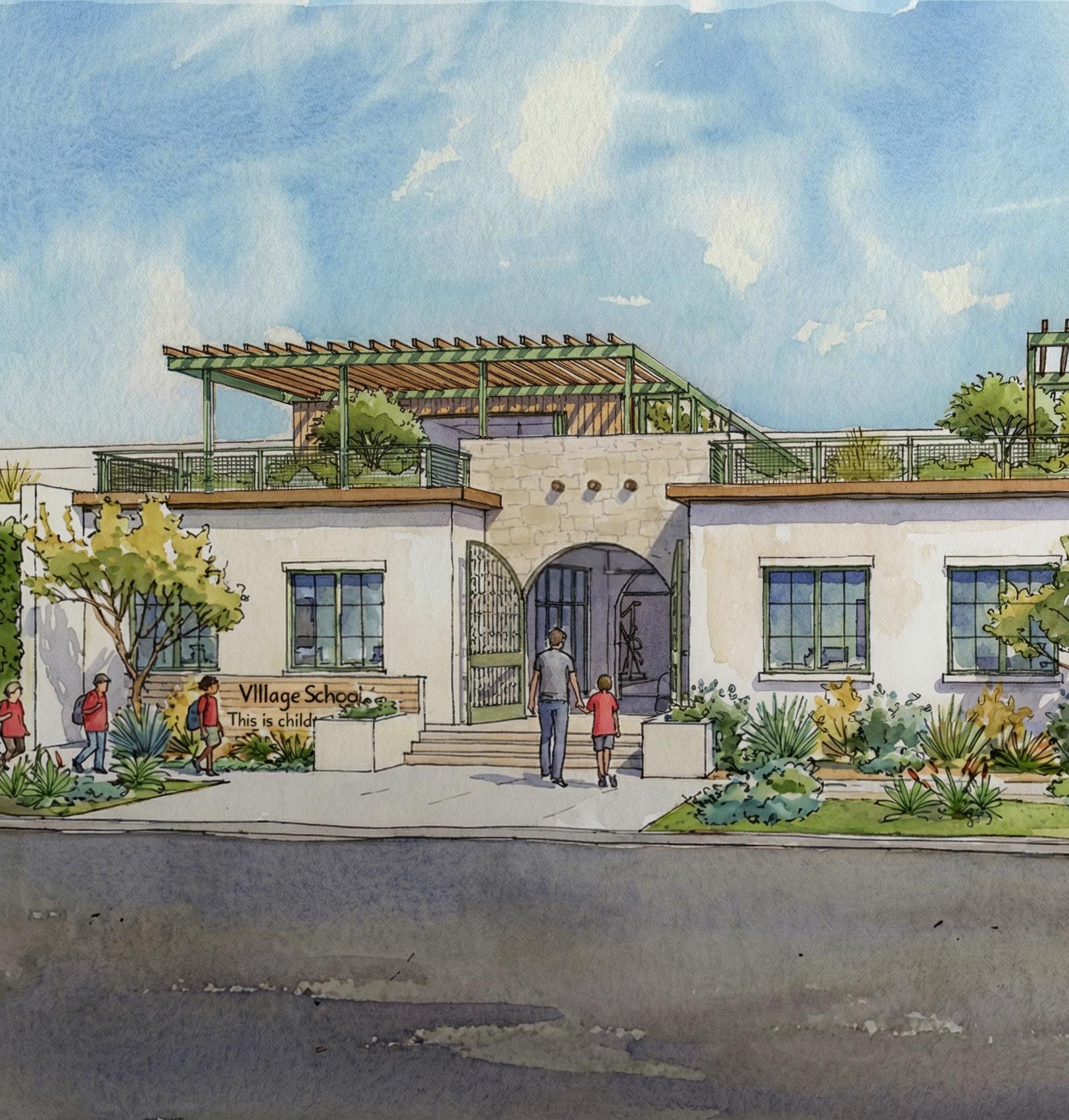
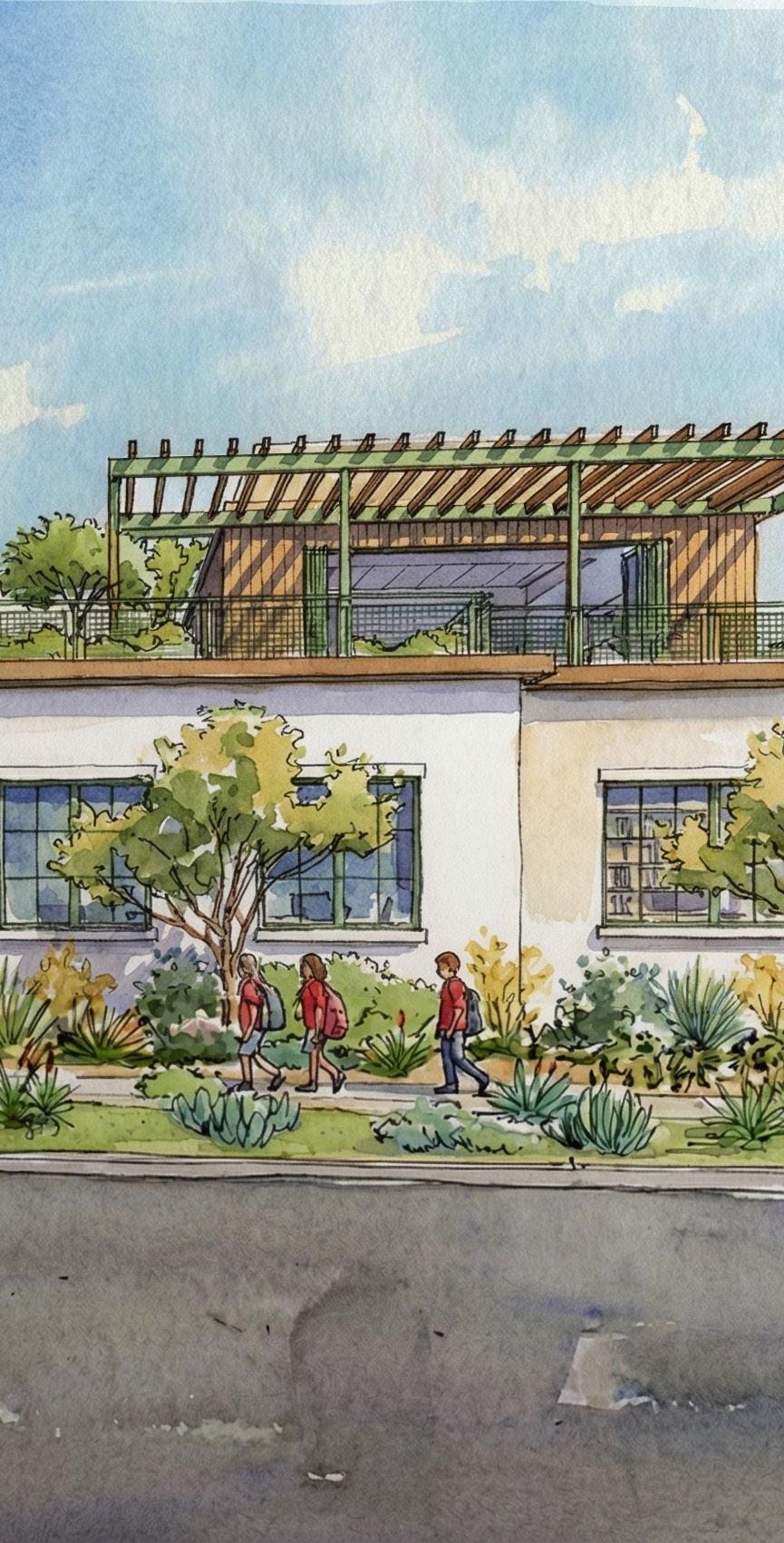
As we settled into the rhythm of our interim home in Santa Monica, meaningful work was already underway to return Village to the Palisades. With the Board of Trustees’ selection of Gensler as our architectural partner, a dedicated steering committee of administrators and trustees began meeting regularly with their team to envision our forever school .
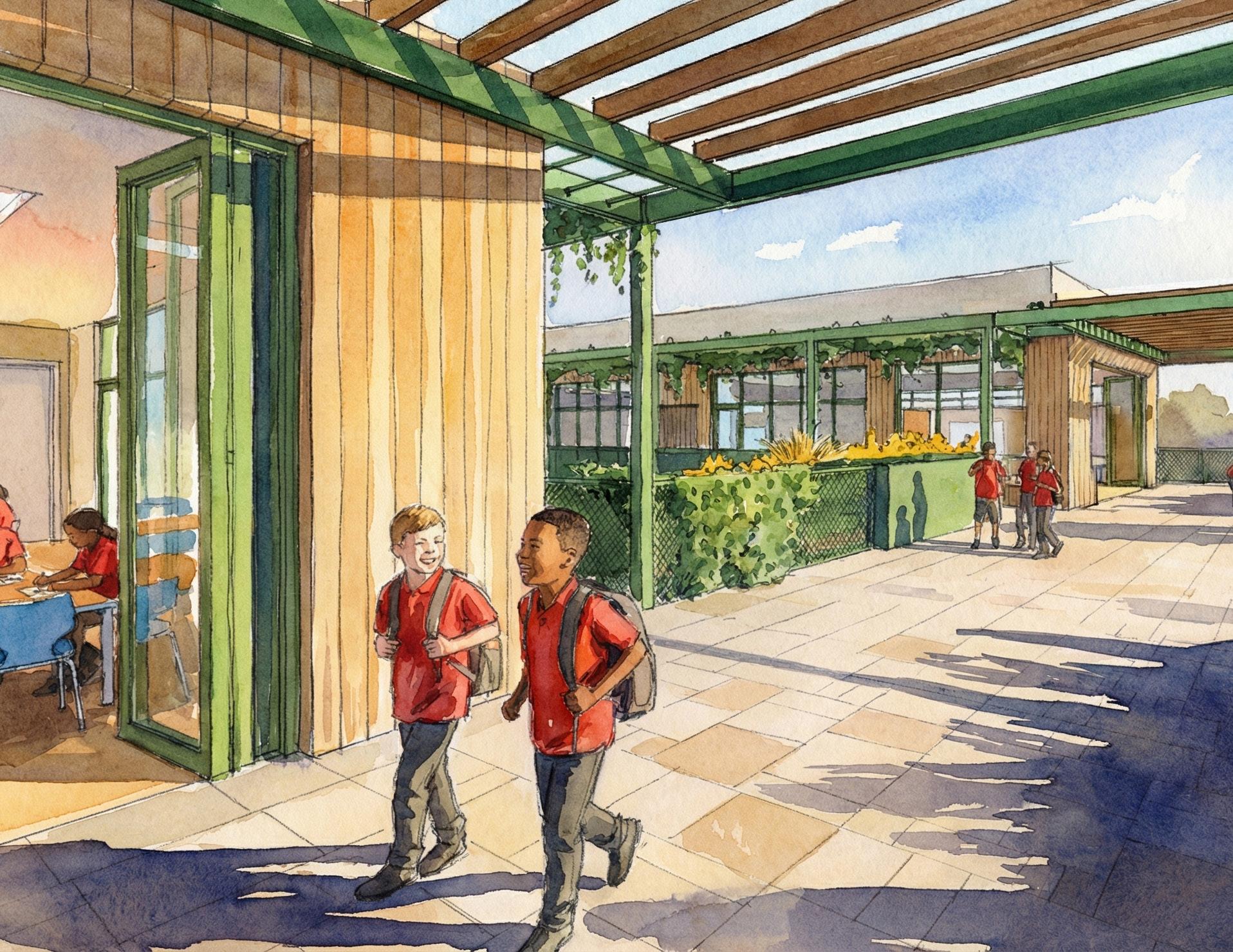
The charge was bold and aspirational, designed for the next generation of Village School students. Over the past several months, parents and faculty joined the conversation, ensuring that every voice helped shape these remarkable renderings. Shared priorities include lightfilled classrooms, multiple outdoor spaces for learning and play, and spaces where kids can simply be kids, honoring our mission of childhood in every corner of campus.
We remain deeply committed to our return to the Palisades and to building a campus worthy of our community, one that feels warm, inviting, and timeless.
ON THE LEFT: Swarthmore Entry
John Evans, Head of School
When Gensler Architects first invited me to dream without limits—to reimagine not just classrooms but rooftop spaces, landscapes, and every corner where learning could unfold—I felt the full weight and thrill of what we were creating together. They didn’t just ask for my input; they empowered me to be bold, to push boundaries, to design a campus that would honor the extraordinary potential of our students and community. In 2028, when we step onto that campus, every innovative space, every thoughtful detail will be a testament to what happens when you’re given permission to build something truly transformative—and you seize it.
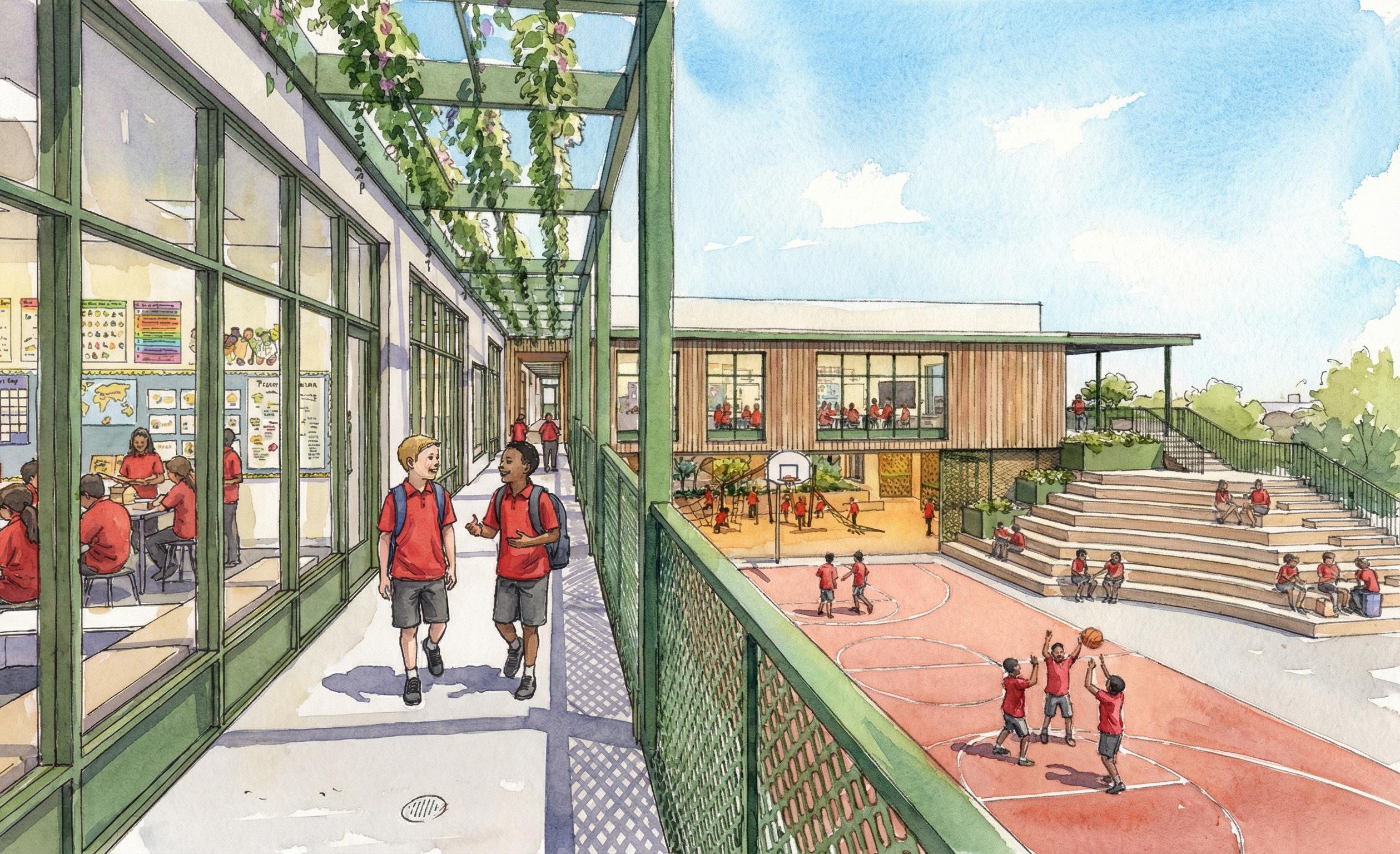
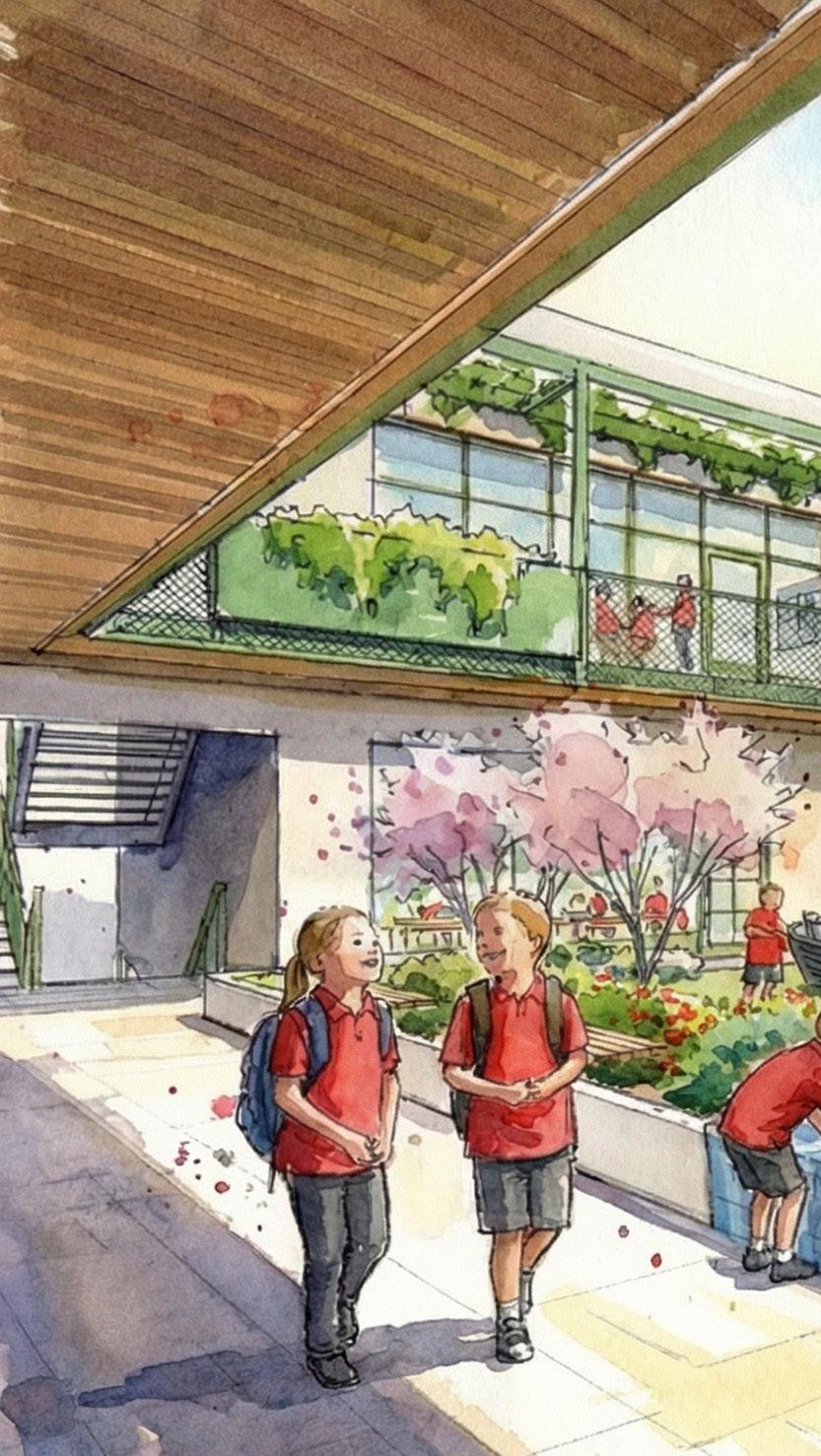
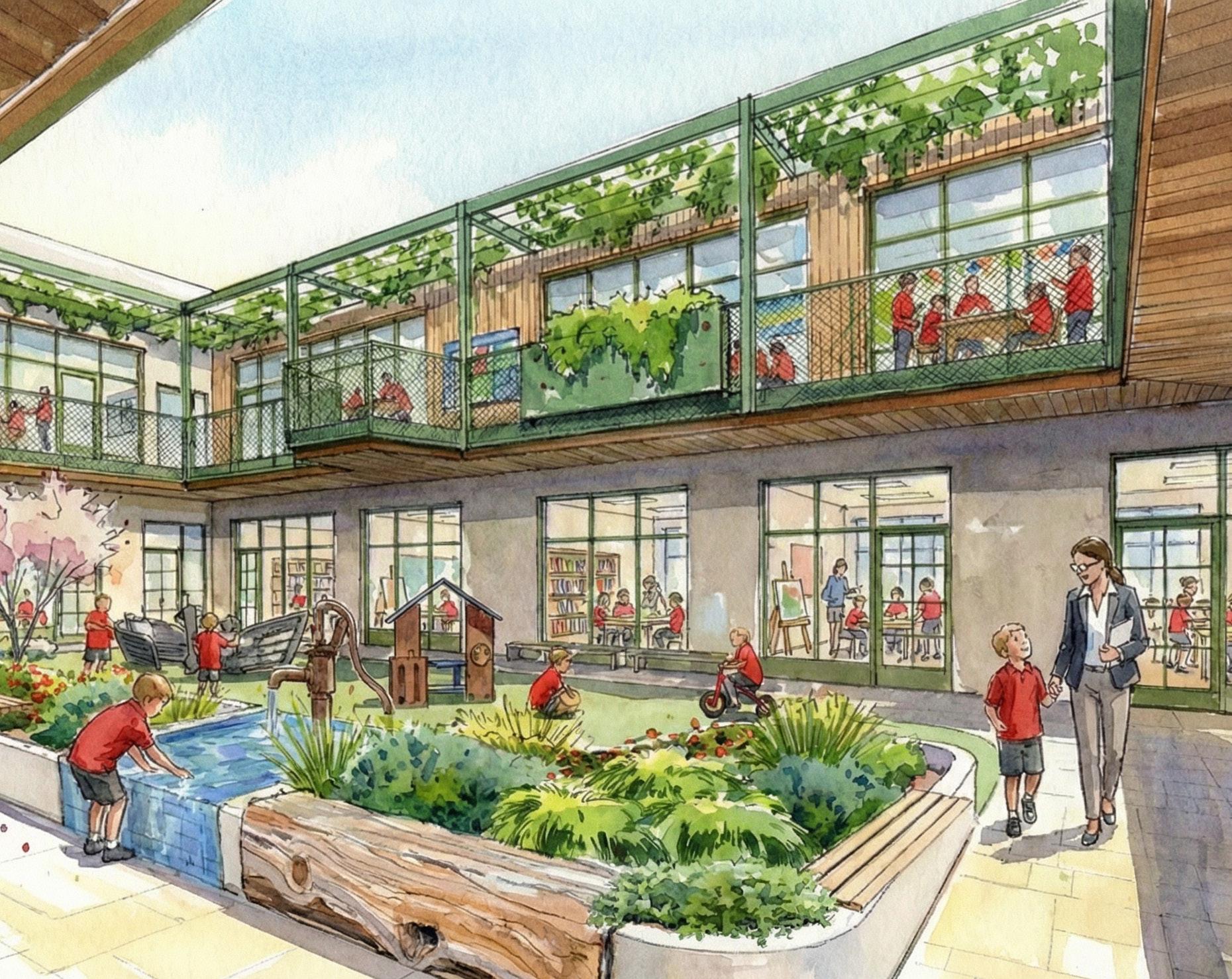
ABOVE: TK/Play Yard, Swarthmore TO THE LEFT: Swarthmore Level 2
Ashley Mooney, Director of Admissions
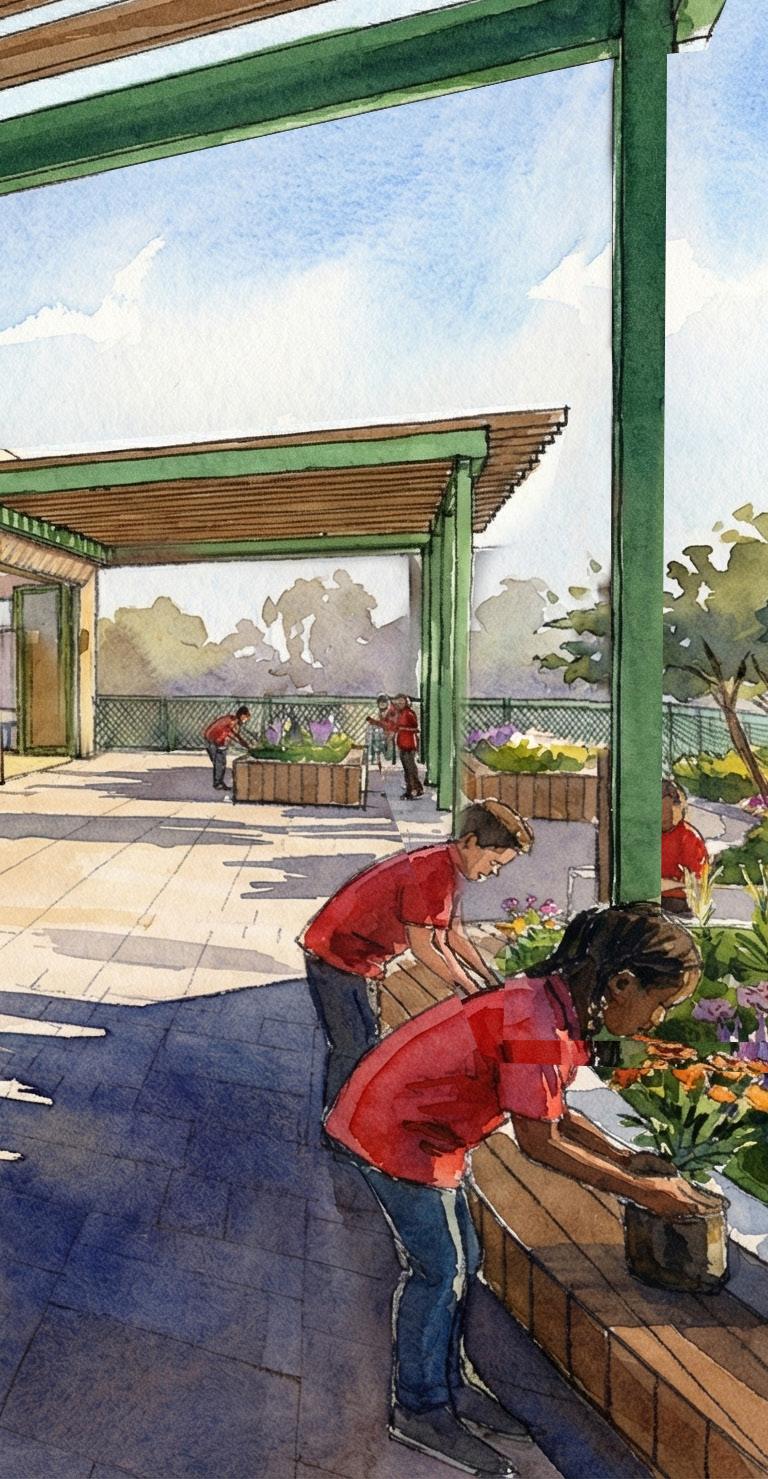
Honoring childhood was a key part of the design imperative. Creating a sense of place that is whimsical and magical. Spaces that encourage exploration, play, imagination, and even the chance to get a little messy. Nooks and crannies in which to read. Secret gardens in which to dream.
Kenzo Bergeron, Assistant Head of School for Academic Programs, Equity, and Belonging
As a community of educators, we were asked to reimagine what a learning environment can be when space, curriculum, and programmatic purpose are designed together from the ground up with the understanding that the environment itself acts as a Third Teacher, shaping how children think, feel, and learn each day. As a result, our new campus will be an ecosystem where every classroom, studio, and shared space is thoughtfully designed to support innovative teaching, meaningful collaboration, and
the evolving needs of children. For example, the new library will reflect our shift from information storage to imagination and inquiry, while classrooms and outdoor gardens will use intentional flooring, natural light, indoor-outdoor flow, adaptable spaces, and sound design to support focus, movement, and sensory regulation, all key conditions for deep learning. The result will be a campus that not only replaces what was lost but boldly advances what is possible in education.
Sara Singsank, Director of Advancement for Community Engagement and Philanthropy
This rebuild was our opportunity to create a forever school, one that honors where we have been while thoughtfully shaping what comes next. From the intentional gathering spaces to the warm, intimate feel of the campus, every choice was guided by the sense of belonging that has always defined Village. Grounding the entrance with our timeless gates and carrying that design through La Cruz ensures that familiar touchstones continue to welcome generations of children and families home.
TO THE LEFT: Learning Garden BELOW: La Cruz Field

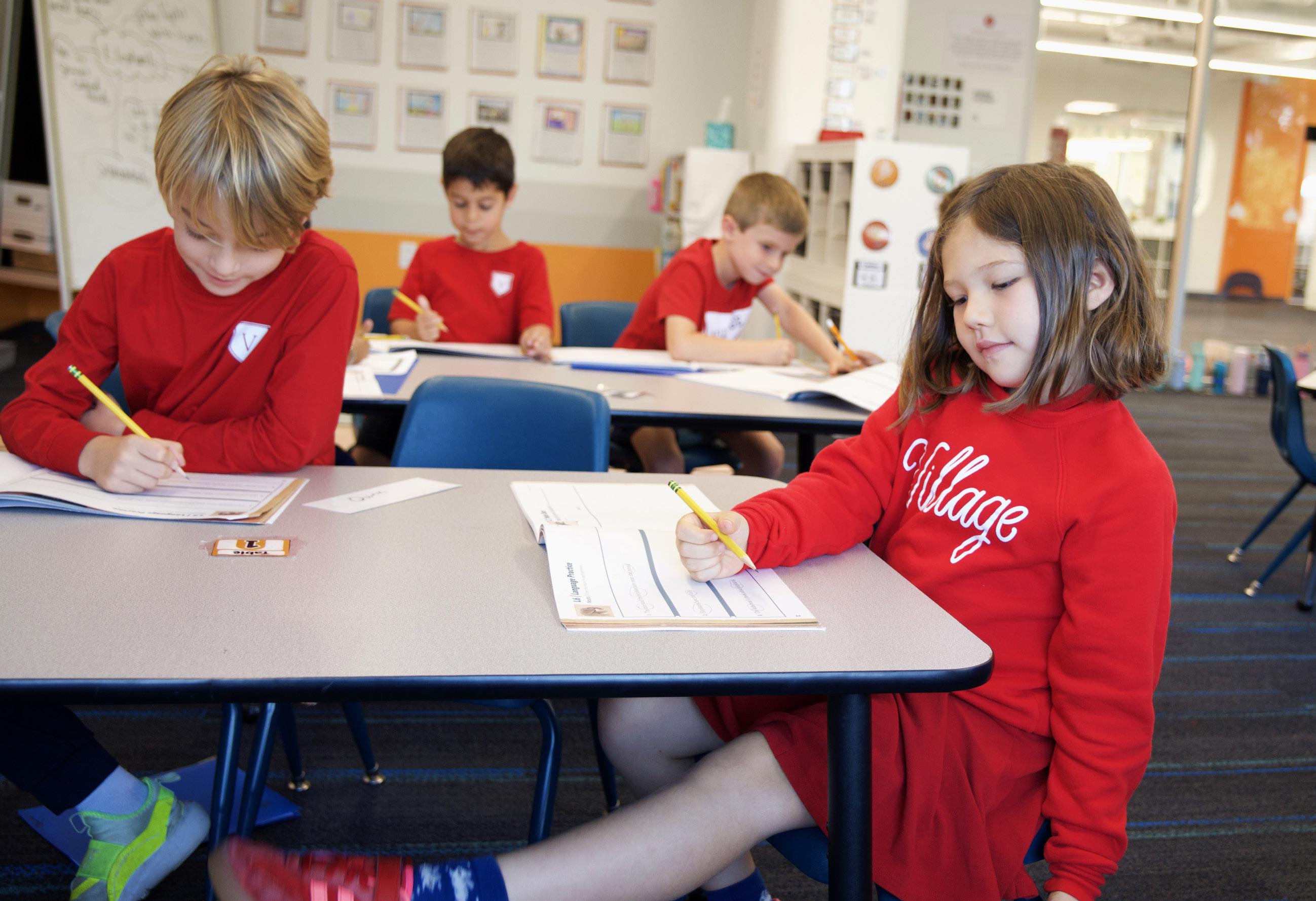
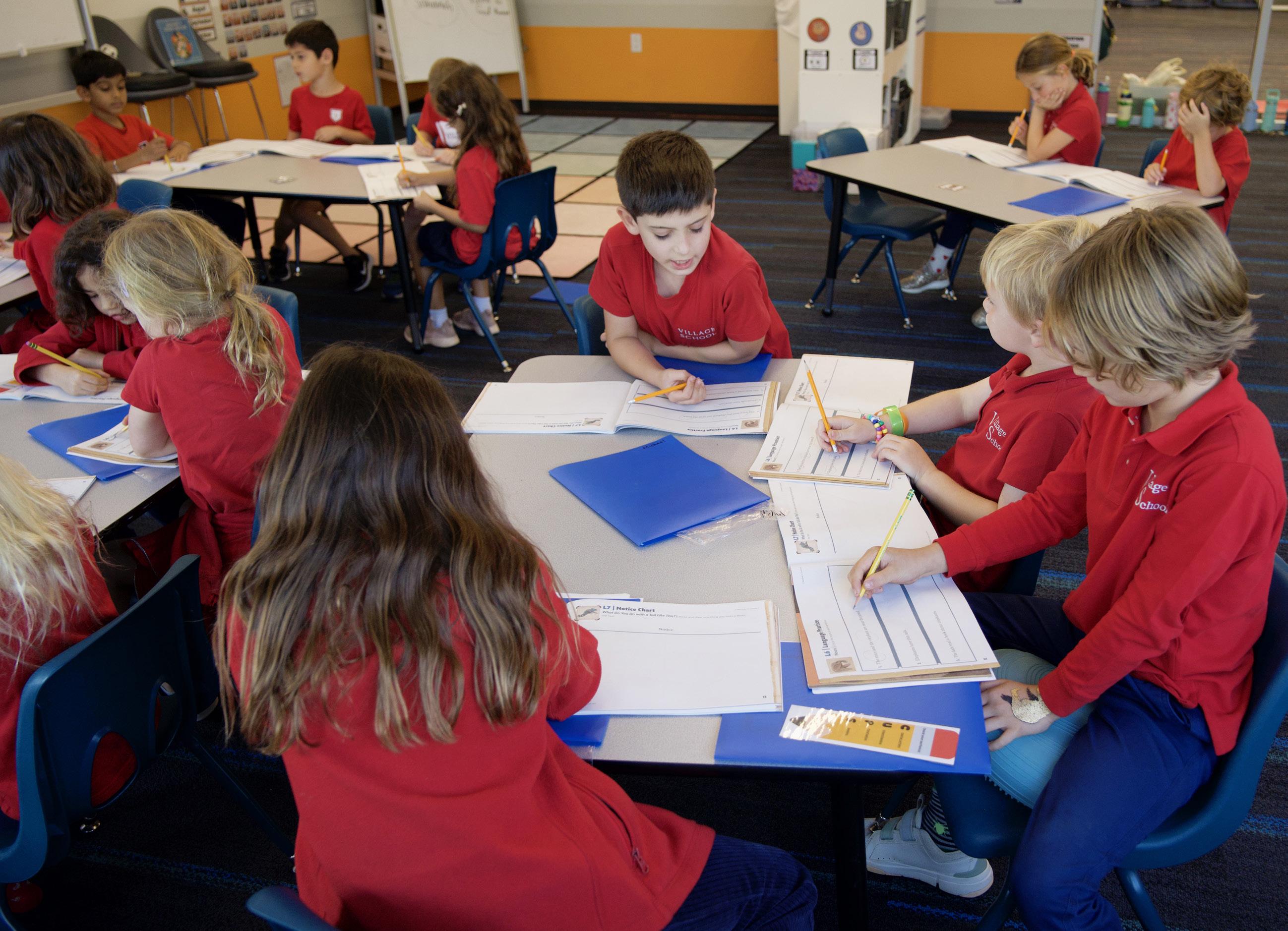
This year, our Kindergarten through third-grade classes began Great Minds’ new Arts & Letters curriculum, a program rooted in joyful exploration of rich texts and meaningful connections across subjects like history, science, and
the arts. Students read award-winning fiction and nonfiction from around the world, building vocabulary and background knowledge as they engage with each module’s central theme. In a recent “creature features” unit, for example, students explored animal traits and adaptations, blending content learning with reading and writing practice.
In first grade, Arts & Letters supports children as they grow from emergent readers
into more confident thinkers and writers. Alongside the phonics work done in Word Study through the Orton-Gillingham approach, teachers guide students to consider how ideas connect, how stories are structured, and how to write about what they know. As First Grade Teacher Gabby Goeglein explains, “Arts & Letters gives us the opportunity to build background knowledge and vocabulary so students understand reading more deeply and
produce meaningful writing about a topic.” This year, her class learned about why books matter, explored different types of libraries, and visited the library for an opportunity to build background knowledge from a librarian directly.
As students move into third grade, the curriculum continues to stretch their thinking. They practice close reading, asking questions, retelling, and examining text structure, all of which
"The curriculum innovation committee spent over a year researching language arts curricula that were mission aligned to Village and informed by the latest research on best practices. Our goal was to find a program that would build upon our strong foundation of phonics and phonemic awareness while simultaneously raising the ceiling for what our students are capable of. Arts & Letters challenges our students to think critically about the connections between their reading and writing, resulting in higher level and more thoughtful output."
— JORDAN LEVINE, DIRECTOR OF TEACHING AND LEARNING
help them slow down and genuinely engage with a story or poem. These habits of mind carry into other parts of the day, whether they’re reading a passage in global studies or looking closely at art or poetry. “Students learn to find evidence in the text to support their thinking,” says Third Grade Teacher Sarah Kurstin. “Everything we do deepens comprehension by grounding it in the text.”
For younger learners, discussion is especially powerful. Through conversation, students practice speaking in complete sentences, refining their ideas, and responding to what their classmates share. This naturally nurtures active listening. As Sarah describes it, teachers often ask, “Your peer just said this,
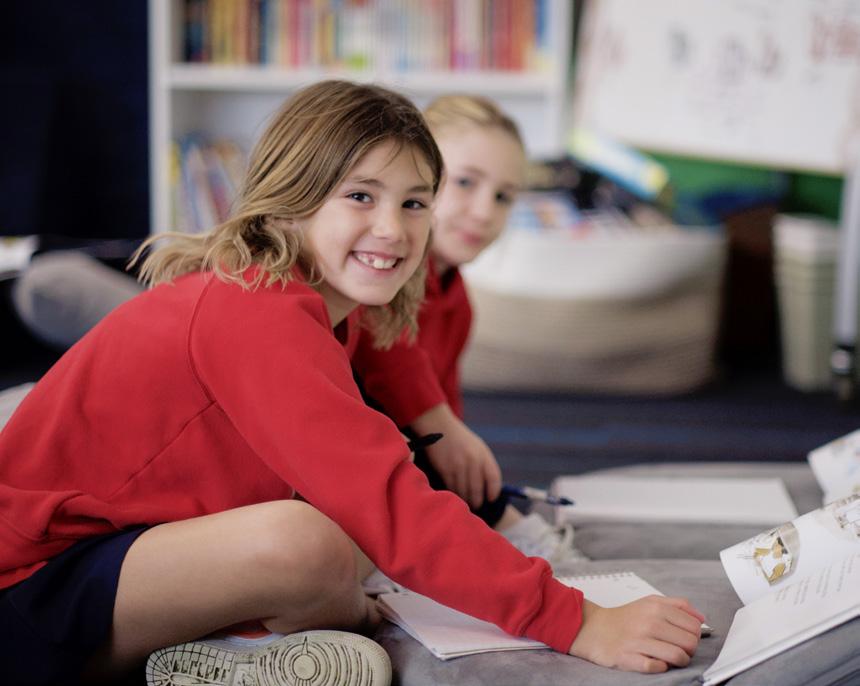
what does that make you think?” Those moments help students learn to build on one another’s ideas and strengthen their own comprehension skills across all subjects learned at Village.
Assessment in Arts & Letters is designed to be ongoing and informative. Each lesson includes small check-ins where students write, respond to prompts, or share observations, giving teachers a clear day-to-day picture of how each child is growing. Across a module, students complete midmodule tasks and a final assessment that invites them to apply their skills to a new text. In early grades, teachers read the story aloud so comprehension can be measured separately from decoding. “It helps us pinpoint whether a child
understands the story structure and can make inferences, even if they’re still developing decoding skills,” Gabby explains. These touchpoints allow teachers to celebrate strengths, identify areas for support, and tailor instruction to each learner in small groups.
At its heart, Arts & Letters is a program that helps children build knowledge and then use that knowledge with confidence. As one teacher shared, “The gift of this curriculum is you’re helping them know things so that they can tell you things.” This foundation will continue to grow as Arts & Letters expands into the upper grades, supporting students as readers, writers, and thinkers at Village.
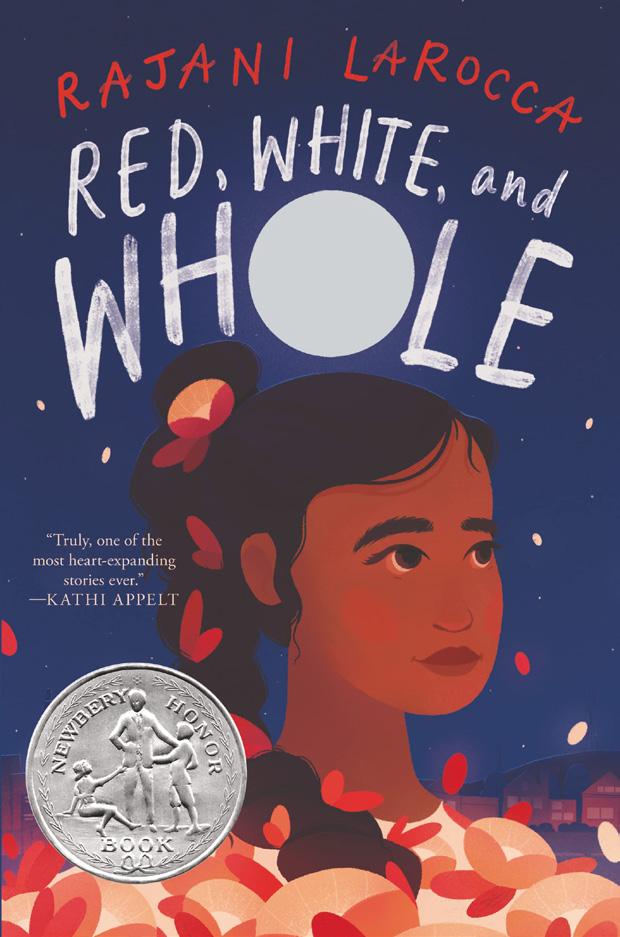
Village educators continually explore innovative ways to engage students in the classroom while nurturing essential skills like writing and critical thinking. In fourth grade, classroom teachers Nichola Keen and Melissa Bishop are elevating their language arts curriculum with their unit on Red, White, and Whole by IndianAmerican author Rajani LaRocca.
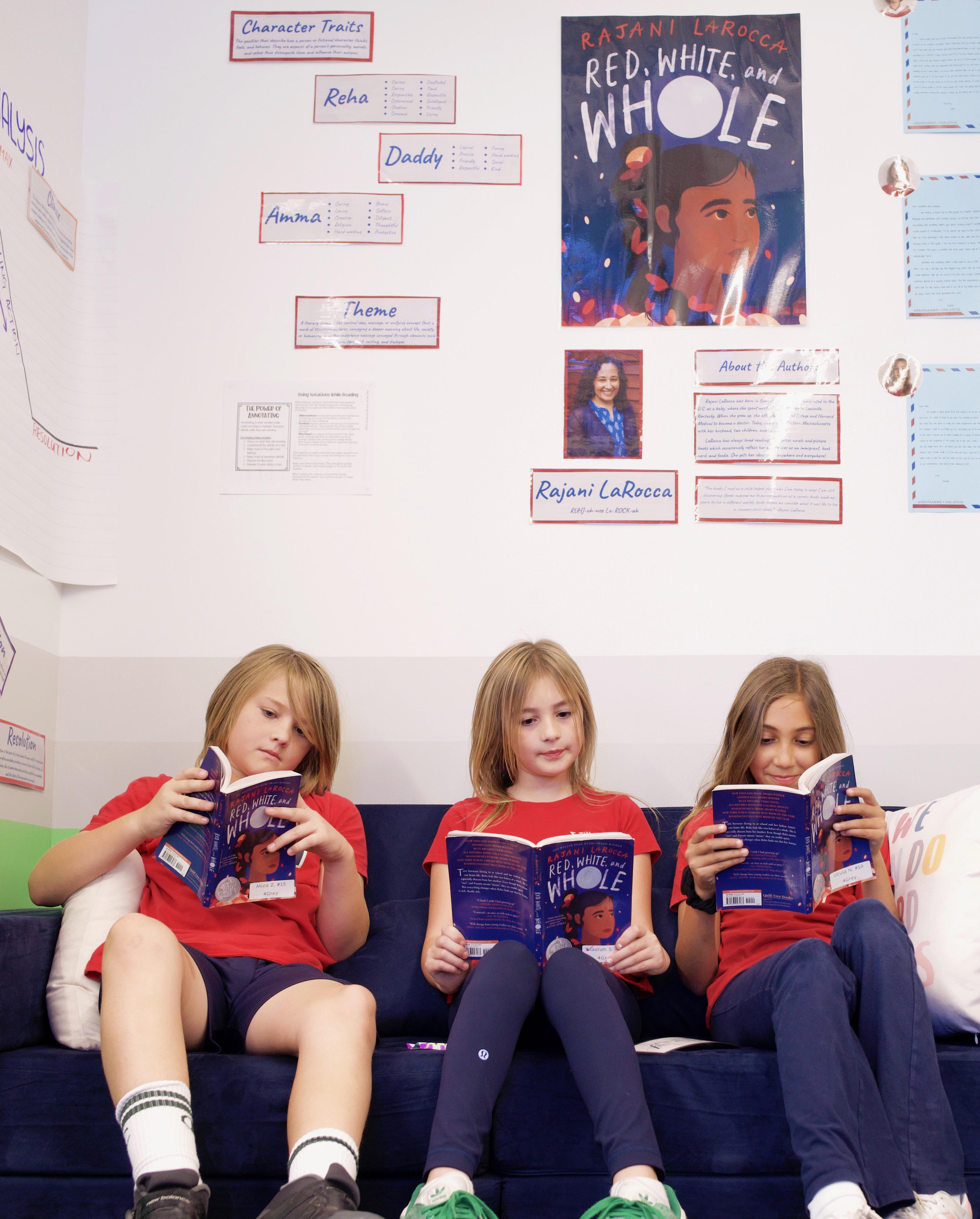
“I’m grateful that the school was very open to using this novel in the classroom and trusting us to steer this literature program in a more inclusive and culturally responsive way. It allows us to be mindful that there are different perspectives and different experiences on campus, and those students can see themselves in the curriculum here while positively engaging with their classmates and teachers.
“— MELISSA BISHOP, 4th Grade Teacher
Red, White, and Whole follows the story of first-generation immigrant Reha as she navigates the complexities of being a teenager in America. The novel is written in verse rather than narrative form, which introduces students to more sophisticated prose and prepares them for middle school and beyond. Fourth grader Finnegan R. reflects, “I have always read mainly novels, and reading a book in verse helped me learn how to understand a text more deeply. In novels, everything is usually right there, but in a poetry book, it all has to work together.”
Annotating improves comprehension skills through reflection and helps students to understand the events of the novel as well as its themes of identity, family, and belonging. As students engage in deep study and openended discussion, they practice making inferences and predictions, skills that fourth grader Krisha D. described when she shared, “I didn't know books could be written in a different, poetic style. It helped me learn a lot about how to make more inferences, and how to predict and understand what was happening in the book.”
“The
book is written in verse
and
each chapter
is a poem which creates a beautiful language that inspires them in their own writing.
“
— NICHOLA KEEN, 4th Grade Teacher
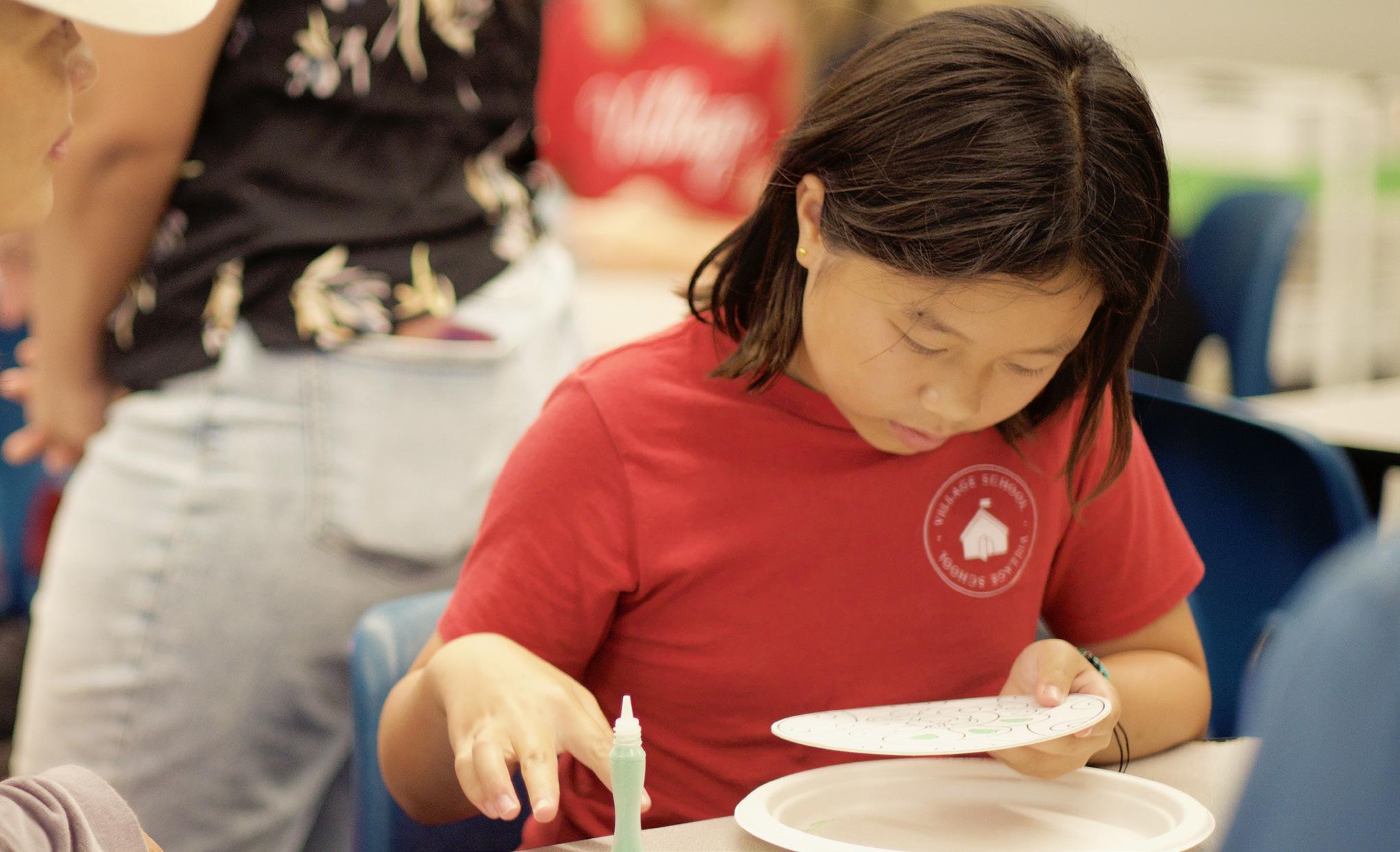
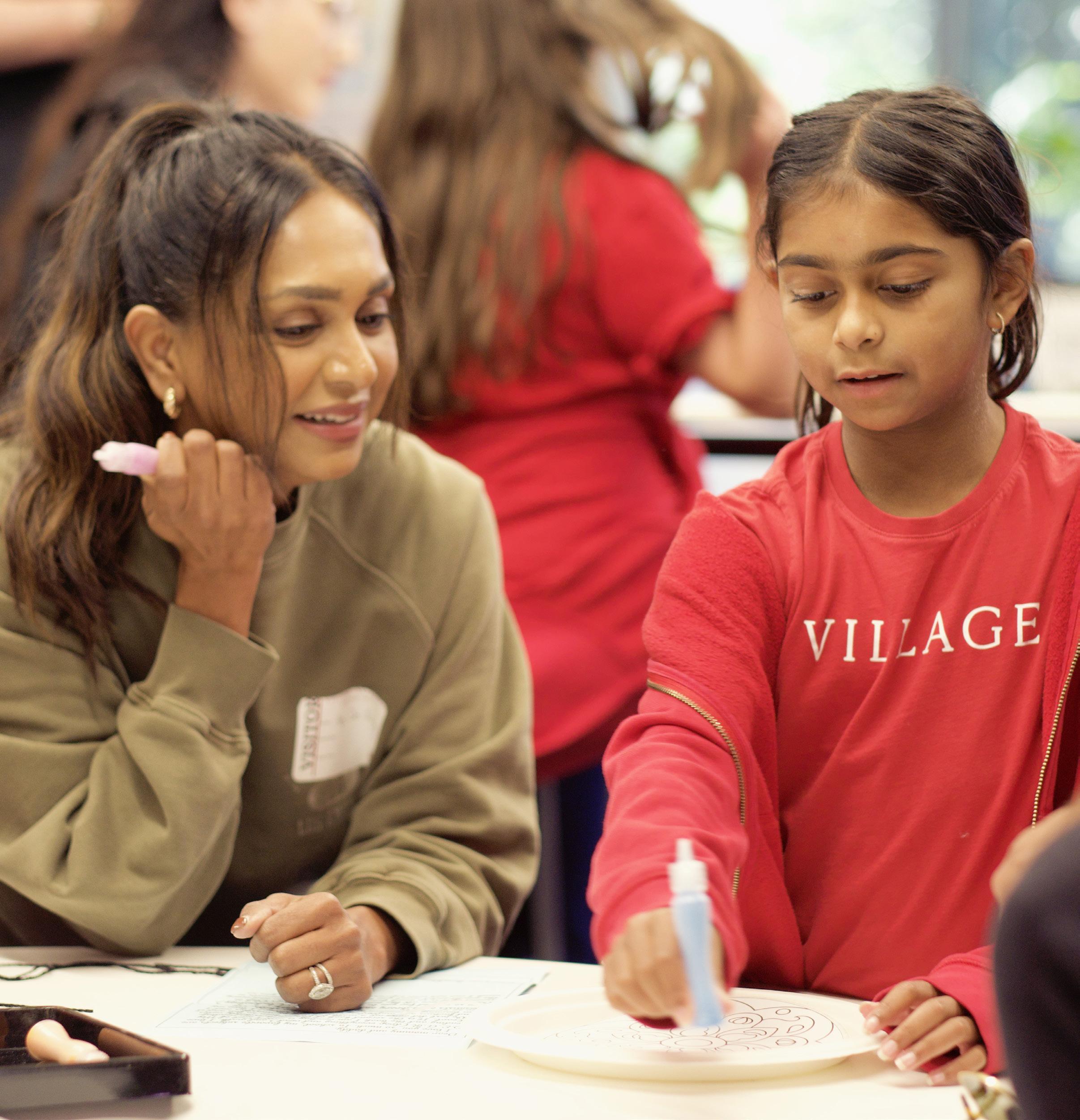
In November, fourth graders created rangoli with parent visitors and wrote aerograms [rangoli is a traditional Indian folk art made with colored rice, sand, or flowers, symbolizing good luck, prosperity, and welcome; aerograms are a feature of the novel, written by both the protagonist and her mother]. In December, students met with the author of the novel and completed a culminating art project where they were encouraged to think like the protagonist, making another valuable connection to the story and to themselves and each other.
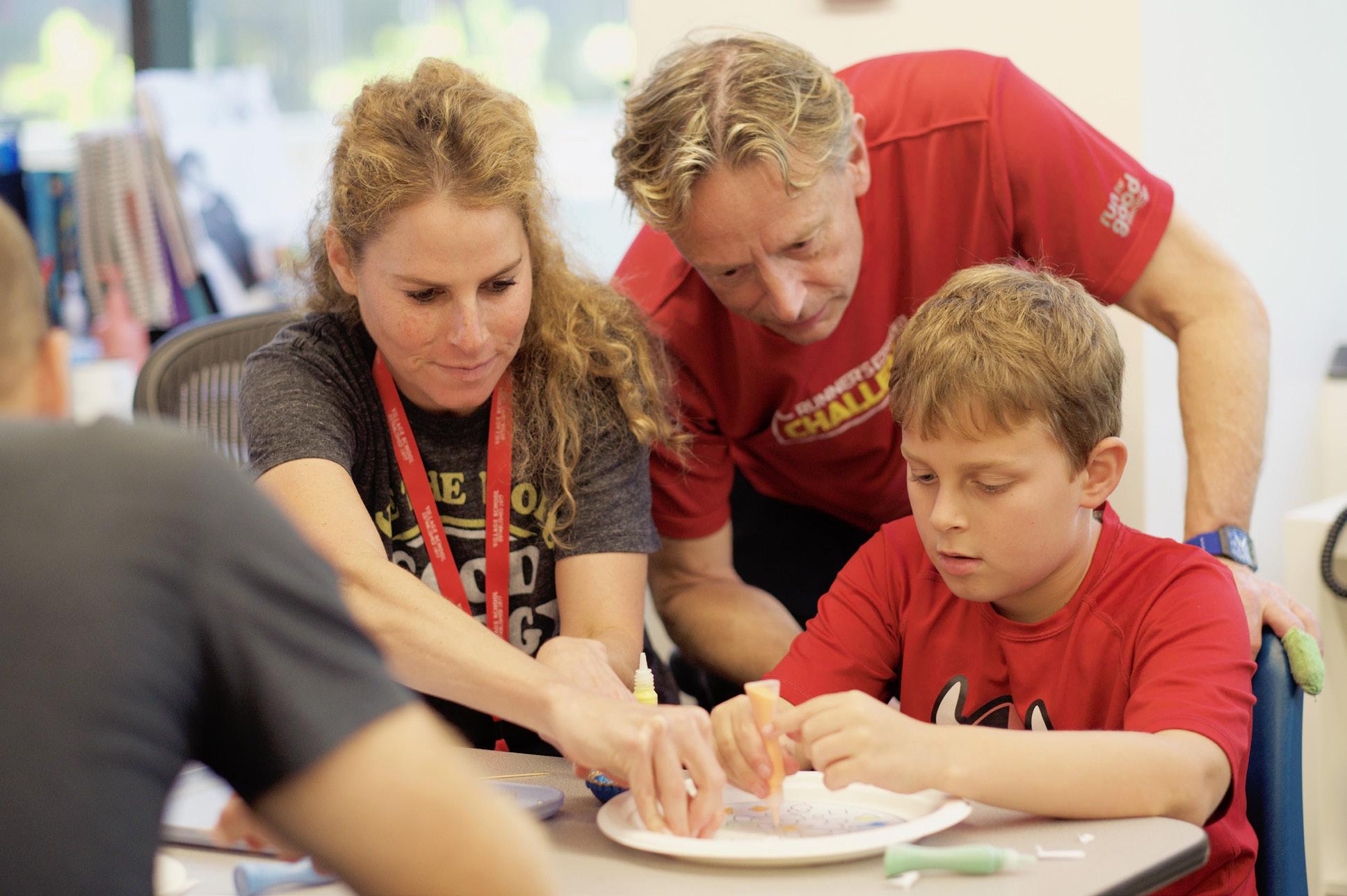
“It was such a delight to see what the class had been studying. We got to read an ‘old fashioned’ letter Kilian wrote and then, in this photo, we are having so much fun participating in the Diwali sand art project. It’s a real treat to be allowed into the classroom for a hands-on ‘peek’ into what Kilian is learning. His excitement and enthusiasm was a joy to see.
— HILLARY YABLON, 4th Grade Parent
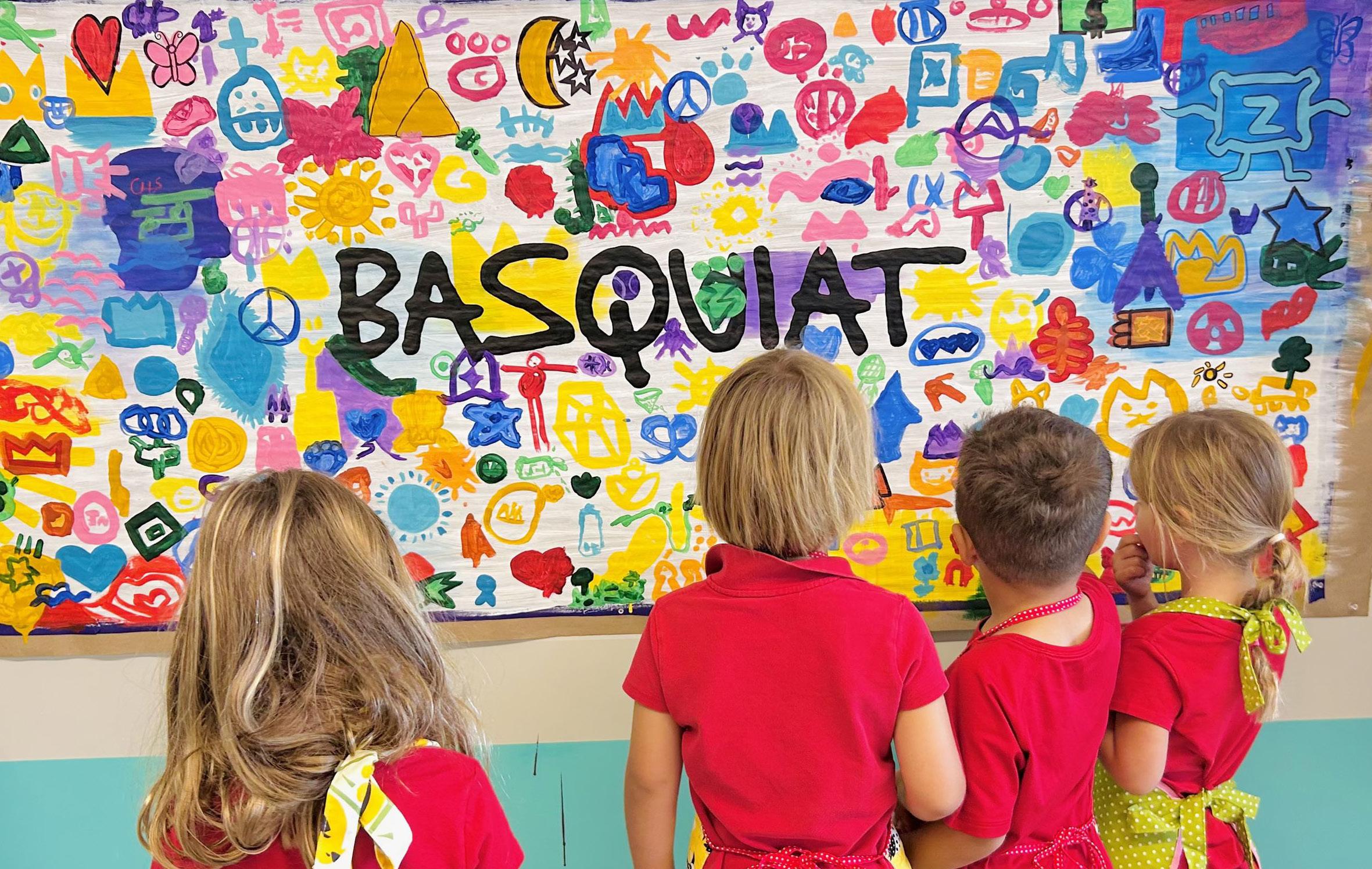
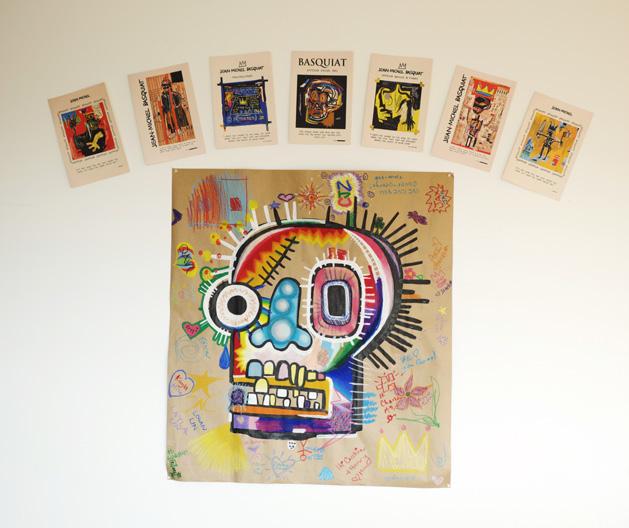
Step into the Visual Arts Studio this year and you’re stepping into a world of color and expression. Jean-Michel Basquiat, Village’s 2025-26 Artist of the Year, inspires students to stretch their ideas about identity and to trust the beauty that comes from imperfection.
Basquiat’s work reminds students that expression isn’t about getting everything “just right.” Even though his paintings can look spontaneous, they’re full of careful
choices and close observation. The essential balance of structure and freedom connects beautifully to this year’s schoolwide theme of Building Balance.
“With Jean-Michel Basquiat as this year’s Artist of the Year, our goal is to encourage students to create boldly,” says Visual Arts Specialist Aidan Romick. “We want students to jump into the chaos that comes with true creative risk-taking.”
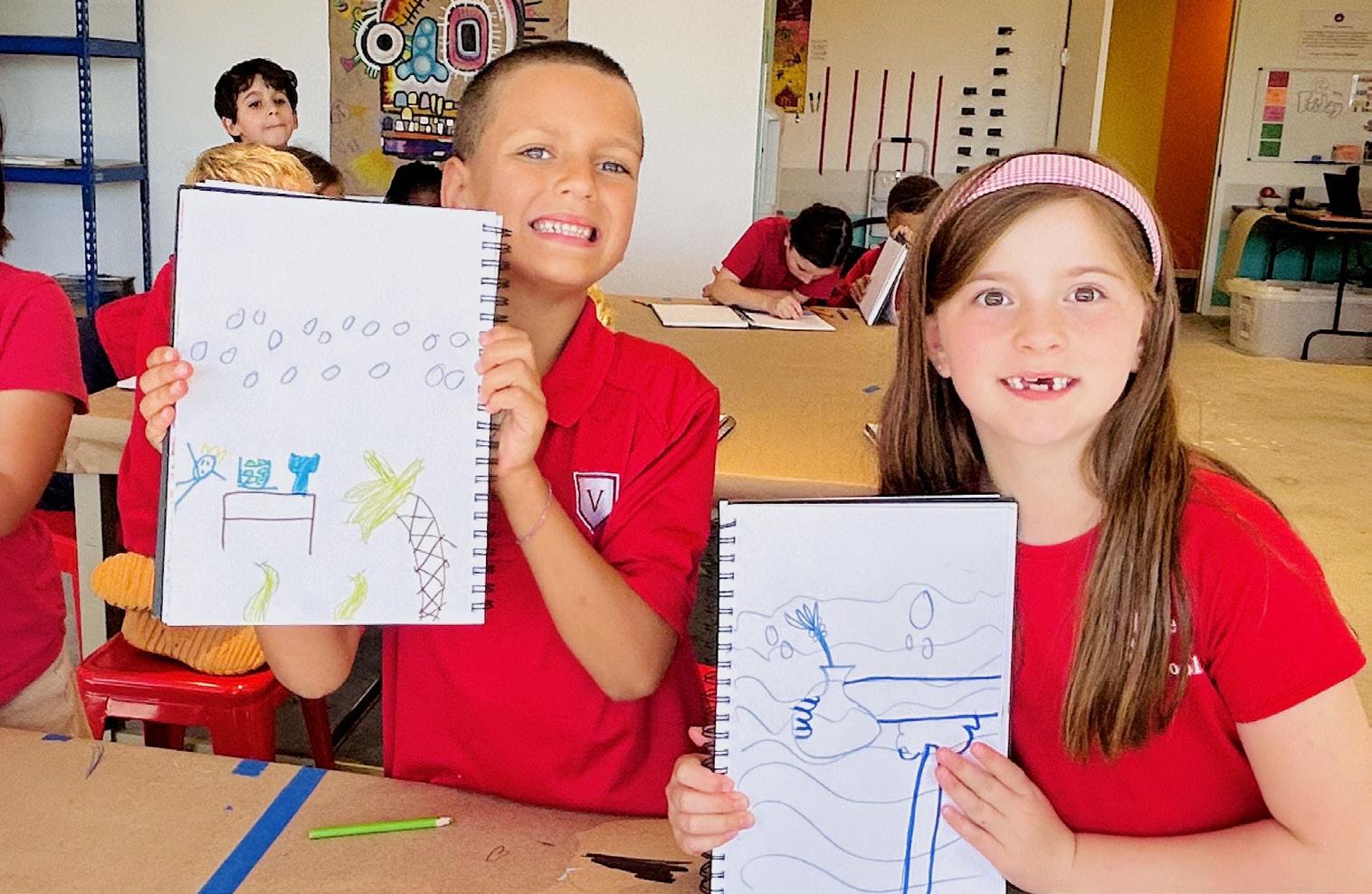

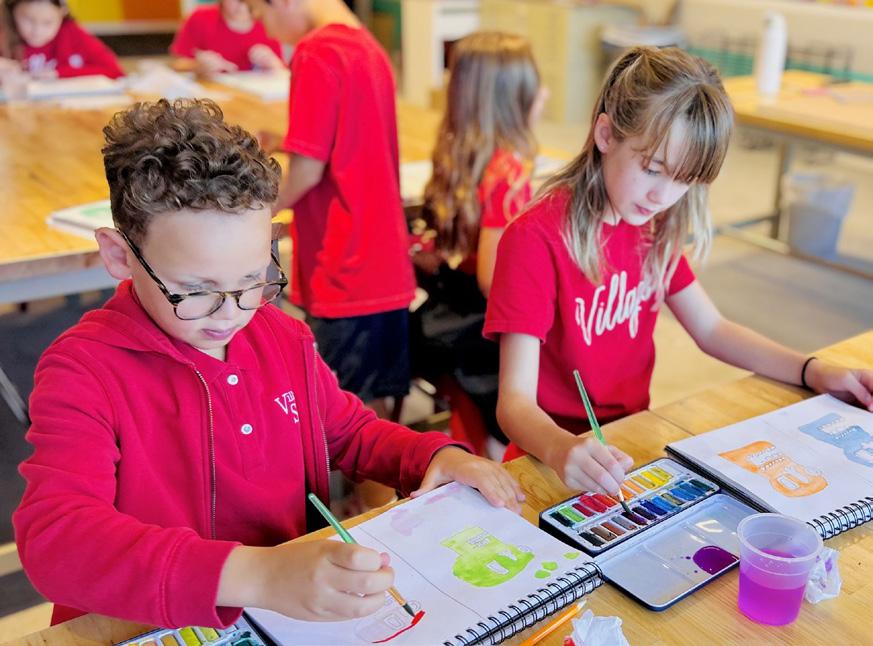
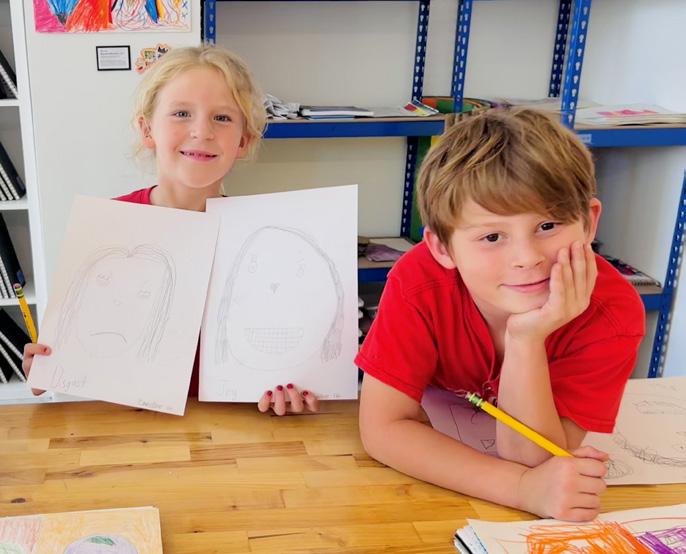
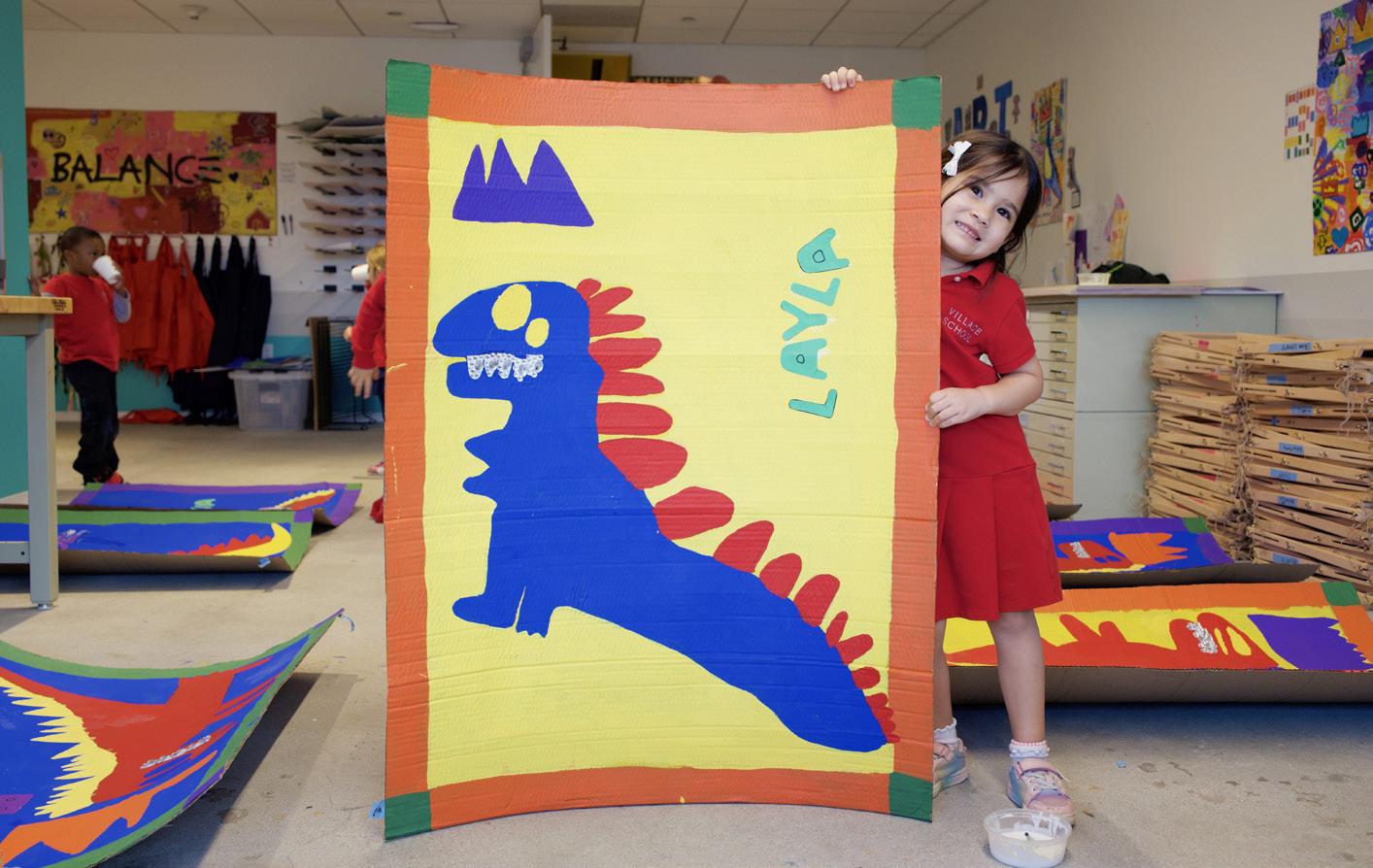
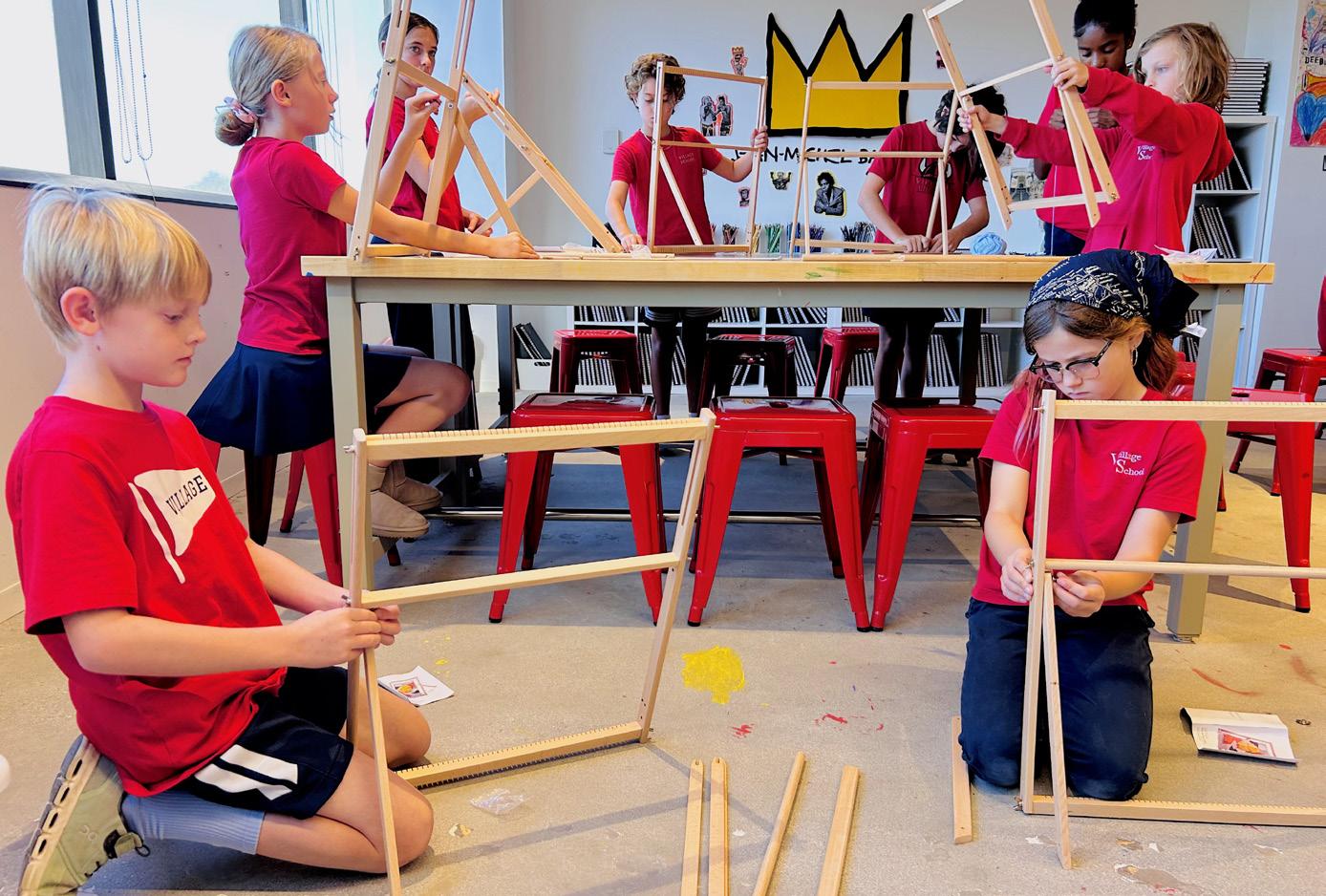
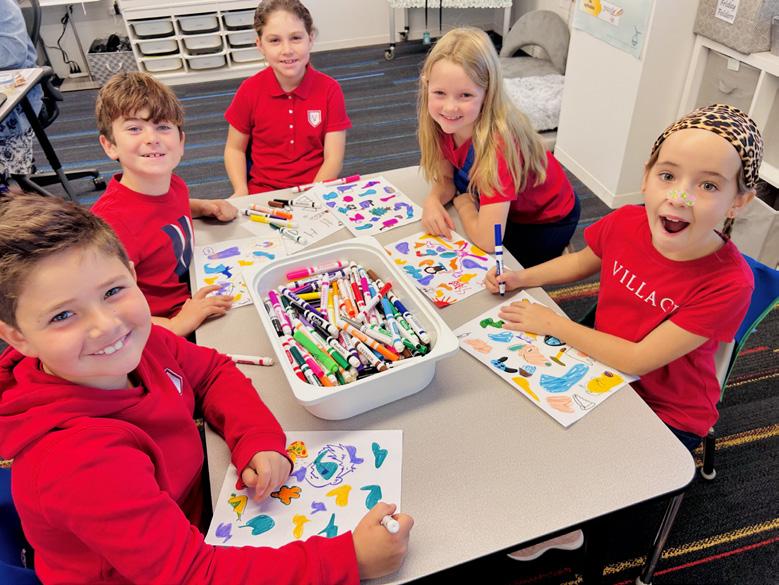
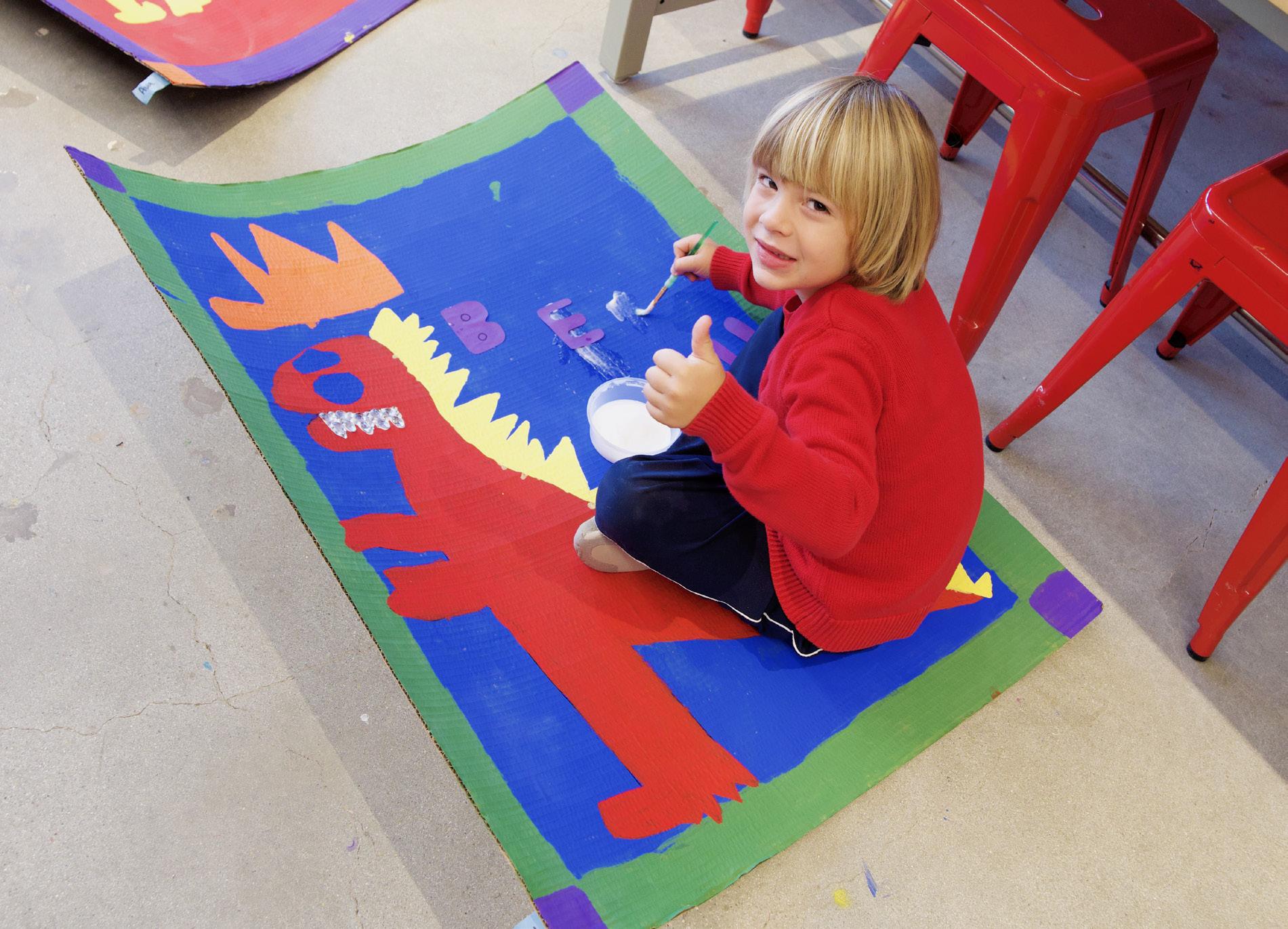
Across grade levels, that idea shows up in different ways. TK artists are learning about primary colors as they create dinosaur portraits inspired by Basquiat. Lower grades are experimenting with vibrant palettes and mixed media, while older students are exploring symbolism through watercolor and weaving, thinking about how artists share ideas about identity.
This approach also helps students see that art doesn’t need to be perfect to be meaningful. A crooked line or unexpected color can lead somewhere new. It’s a gentle reminder that letting go opens the door to discovery.
In Visual Arts, process matters as much as the final piece. Students experiment with new materials, take risks, and pay attention to what feels true to them. “Like Basquiat, who drew freely and often colored outside the lines to capture the energy of his ideas,” Aidan says,
“we invite students to embrace spontaneity and follow where their curiosity leads.”
As in past years, each student will have their own sketchbook to plan projects and record reflections. This sketchbook will travel with them through sixth grade, documenting their artistic growth throughout their time at Village School.
“I like to use my sketchbook throughout the day. It’s therapeutic for me and a good way to express myself and to reflect on my thoughts through art.”—Layla
F., 6th Grade
Throughout the year, as a part of the yearlong focus on a particular genre and artist, every Village student creates two art pieces that will be displayed during the culminating art show in May. We look forward to this year’s show during Grandparents and Special Friends Day on May 21, 2026.
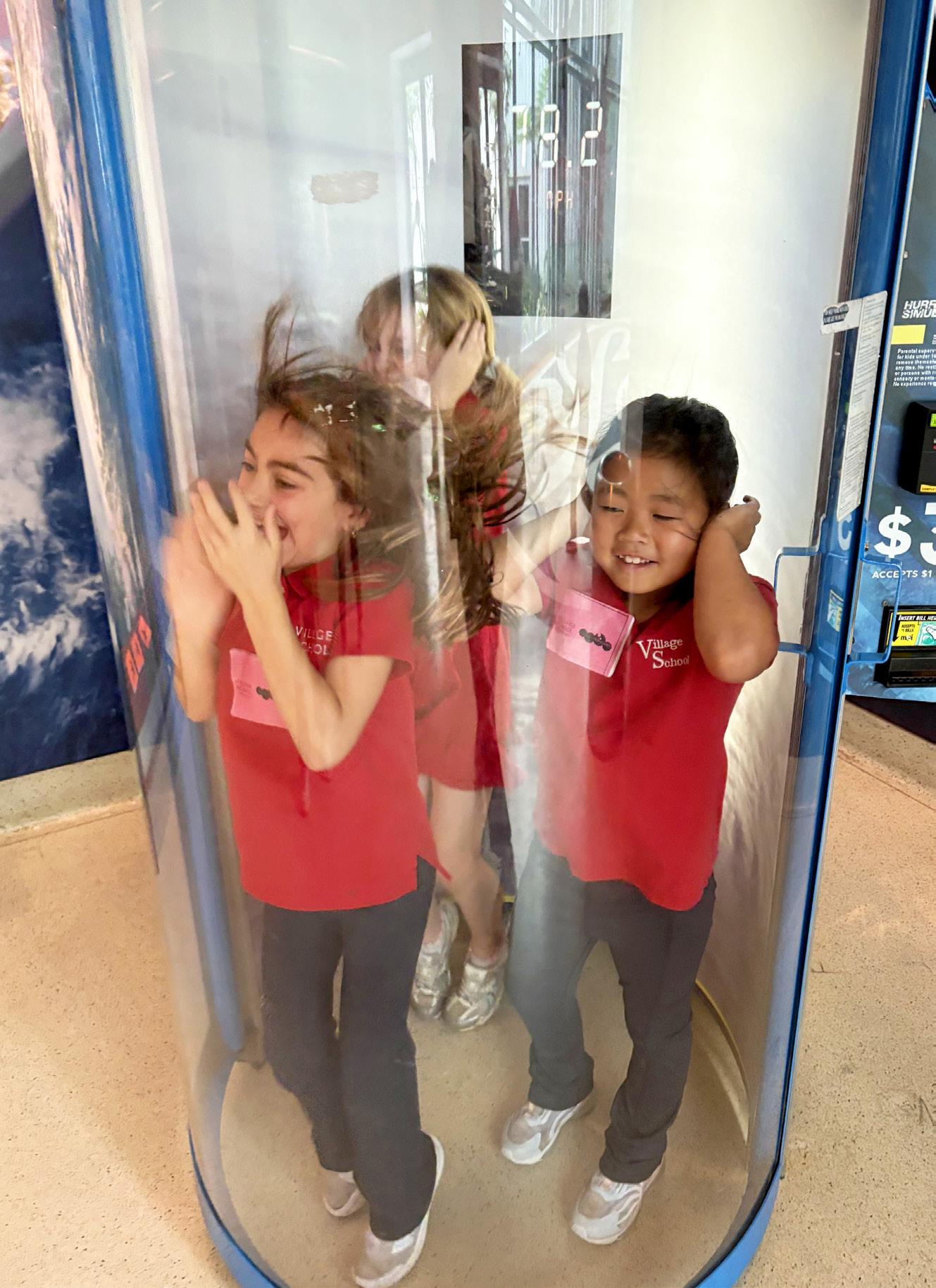
“Field trips are so special to our program because they embody the wonder, joy, and challenge anchored in science.”

"
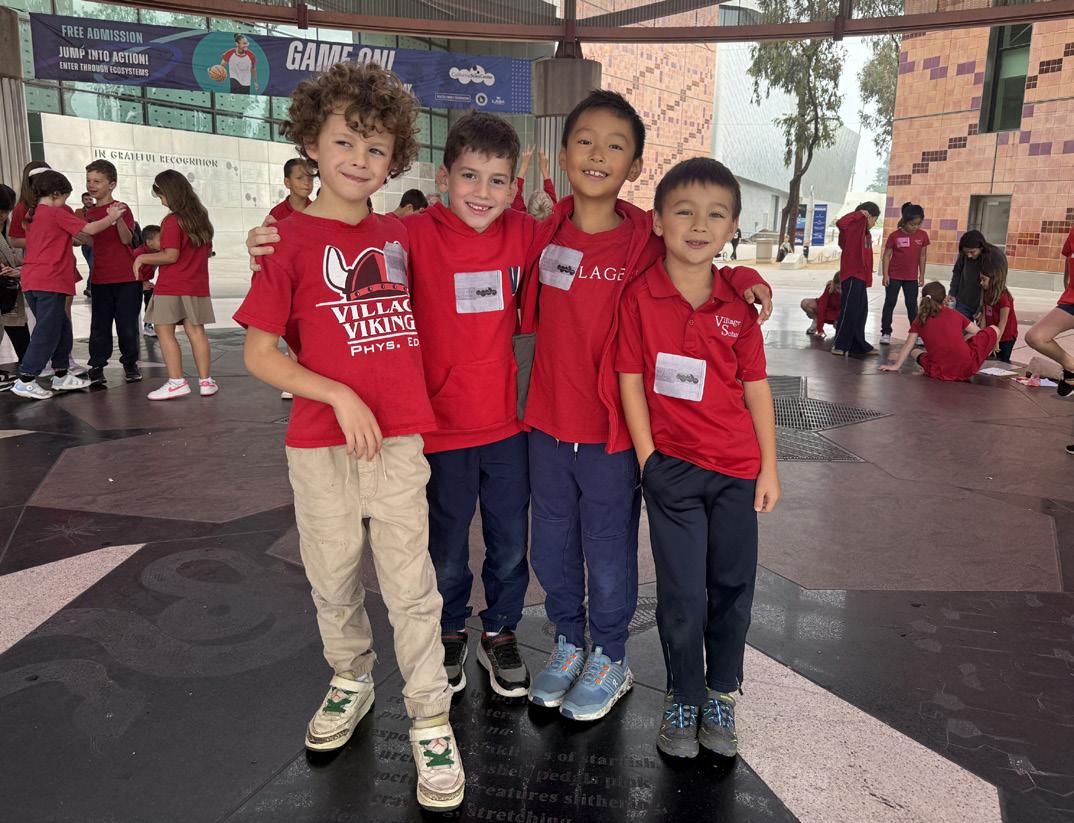
At Village, experiential learning is an integral part of the student experience, extending beyond traditional classroom instruction. Through field trips that promote critical thinking and global citizenship across all grade levels, experiential learning encourages children to be active participants in their own learning. Students
better understand concepts, retain information, and develop skills like teamwork and communication. This approach supports different learning styles and cultivates early leadership skills by encouraging students to take initiative and reflect on their experiences, building a strong foundation for lifelong learning.
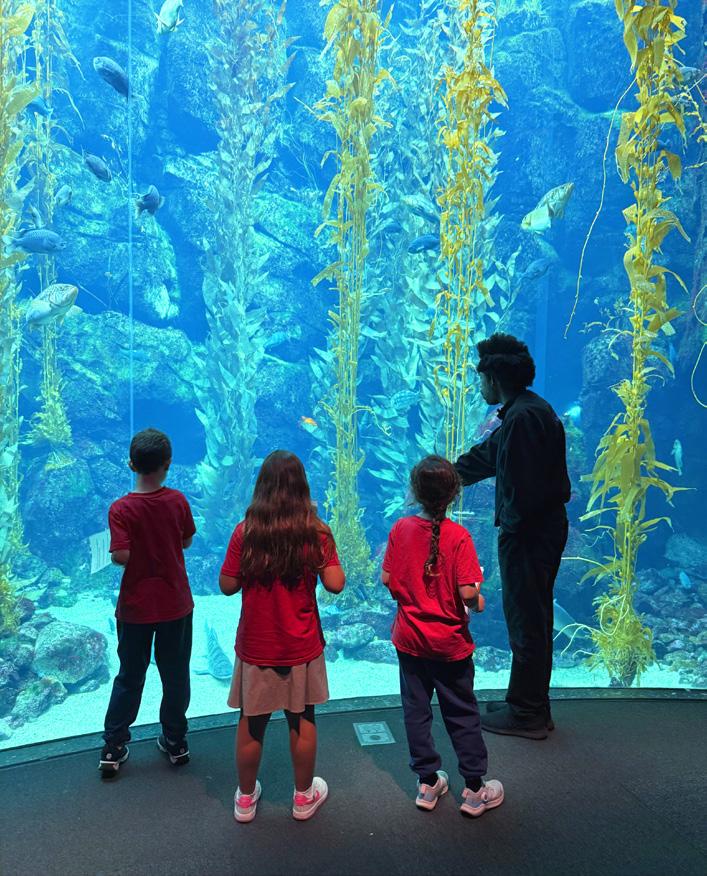
In second and third grade, experiential learning takes the spotlight in the Science Lab, where students are given the opportunity to see the concepts they’ve learned in class in different mediums in the real world. In second grade, students visit the California Science
Students get to experience the concepts we've been studying, while also discovering opportunities for deeper learning, such as exploring six additional habitats. We enjoy providing a ‘sneak peek’ of future grade levels. This approach caters to different types of learners—some eager to explore freely, while others appreciate these preview moments.”
Center where they learn that all organisms have a habitat that naturally provides food, water, and shelter. “After exploring five specific habitats in class, we visit the California Science Center where students can observe these habitats in person. There’s a hands-on component of how to build a dam in a river system, or a touch tank for the ocean,” recalls Katelyn Patterson, Science Specialist. These trips beyond the classroom at the end of a unit help to anchor students’ understanding of complex material.
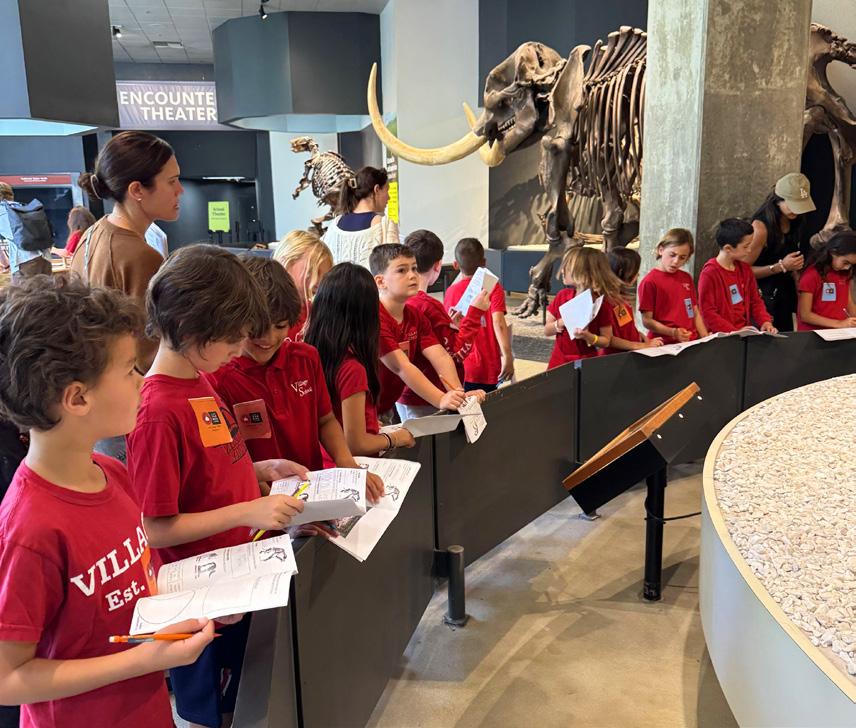
In third grade, students begin the study of fossils by learning about the four different types: mold/cast, body, trace, and true form fossils. They explore evidence that each fossil type provides, such as the shapes, behaviors, and environments of ancient organisms. As third grader Max H. explains, “I like learning about dinosaurs and watching scientists scrape the tar off the dinosaur bones. It’s fun to see how fossils are found.” Students also learn how scientists interpret this evidence to understand the history of life on Earth, including the evolution of
species, environmental changes over time, and how extinct organisms are related to present-day life. This foundational knowledge supports students’ trip to the La Brea Tar Pits, in their own city of Los Angeles, where they are able to see the four fossil types in real life.
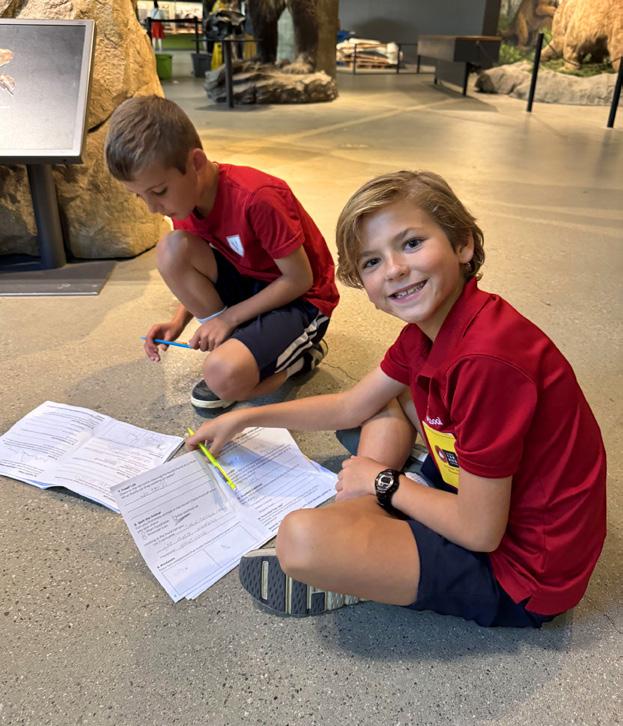
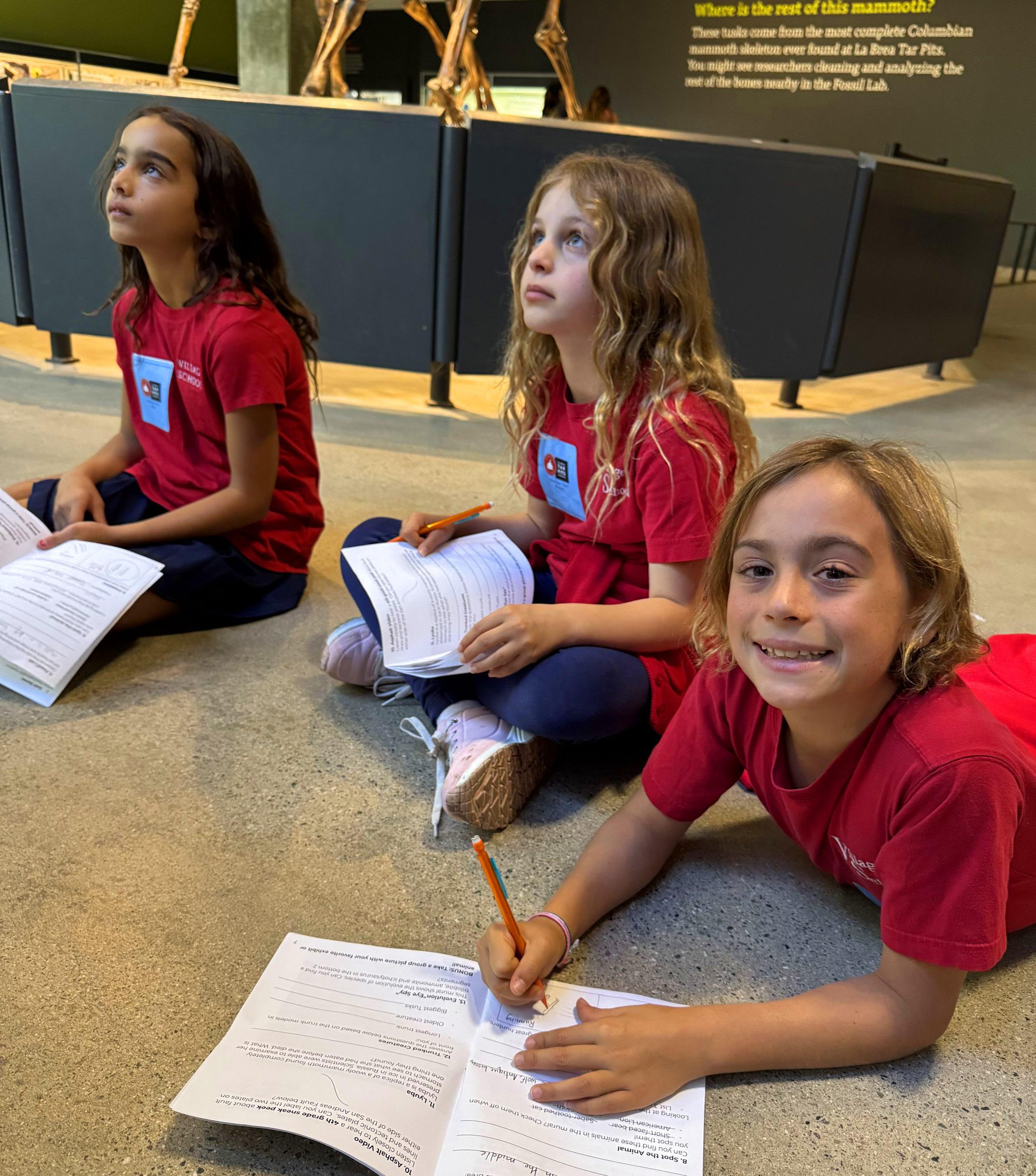
The second and third grade trips are intentionally structured as scavenger hunts that align with topics explored in the classroom with parents joining to help guide small groups. Students are directed to visit specific exhibits and engage with anchor questions and illustrations. These experiences enhance academic learning while building community and collaboration among students and parents.
TK
Rainbow Garden
KINDERGARTEN
Wildlife Learning Center
1ST GRADE
Griffith Observatory
2ND GRADE
California Science Center
3RD GRADE
La Brea Tar Pits
4TH GRADE
Natural History Museum
5TH GRADE
Catalina Island
Marine Institute
Astrocamp
6TH GRADE
Coastal California: Point Lobos, Monterey Bay, and San Francisco
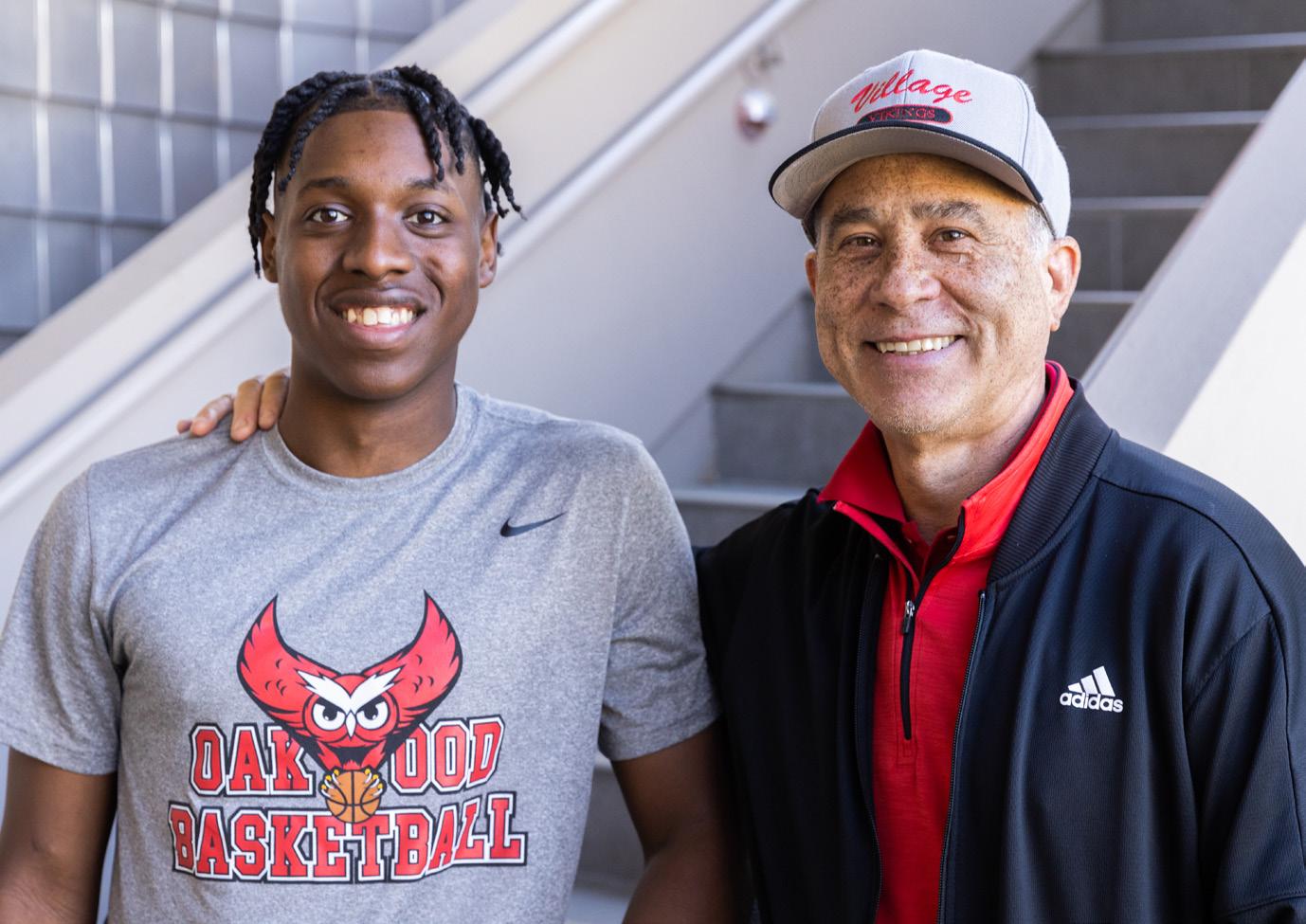
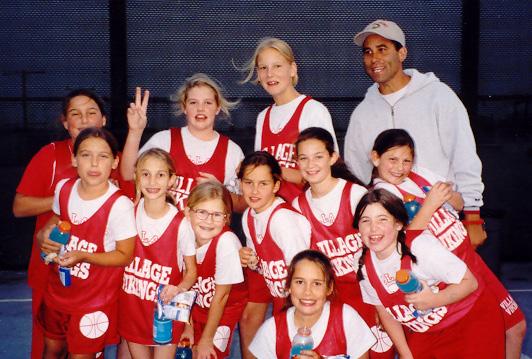
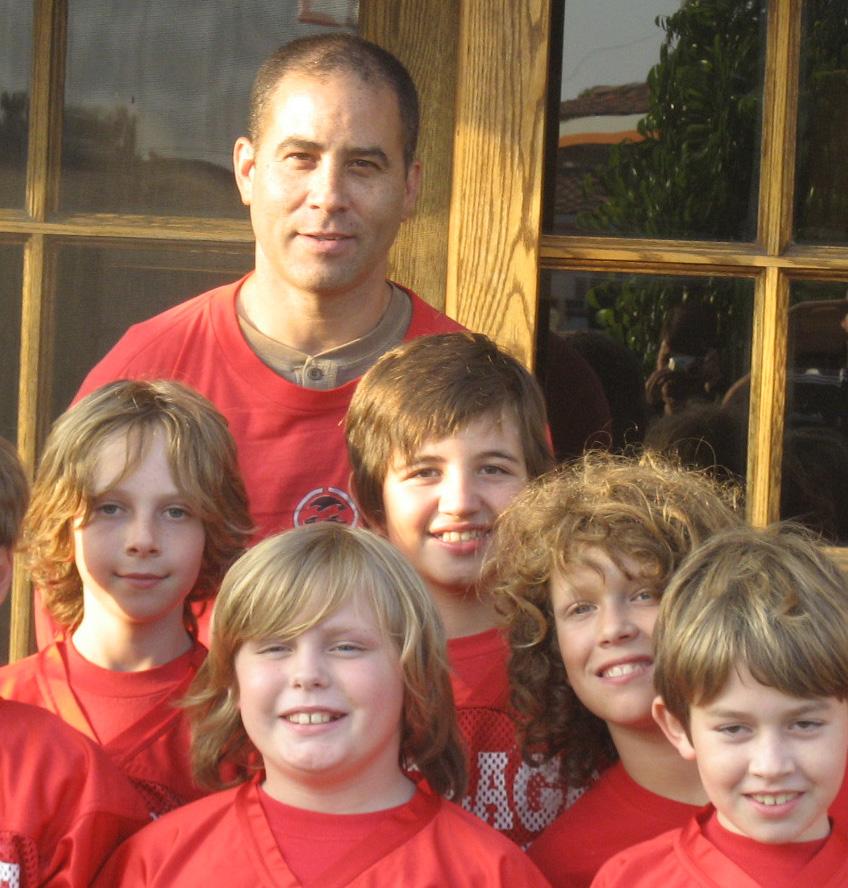
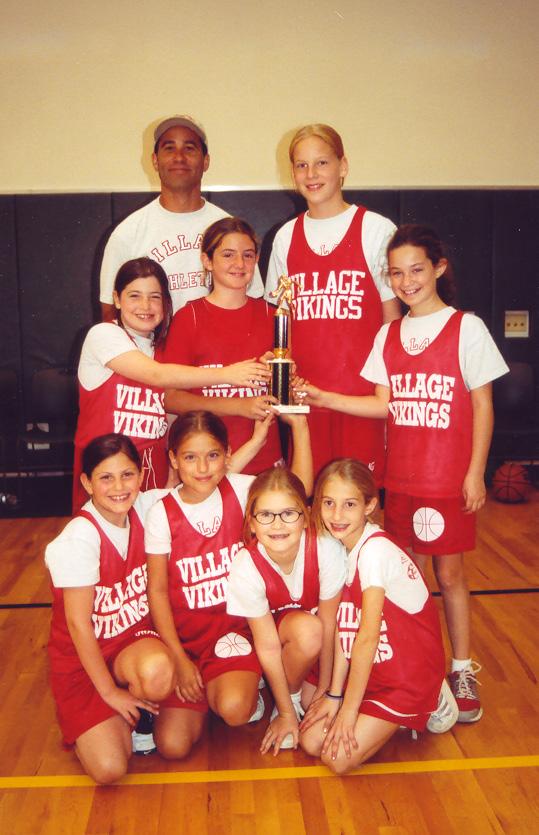
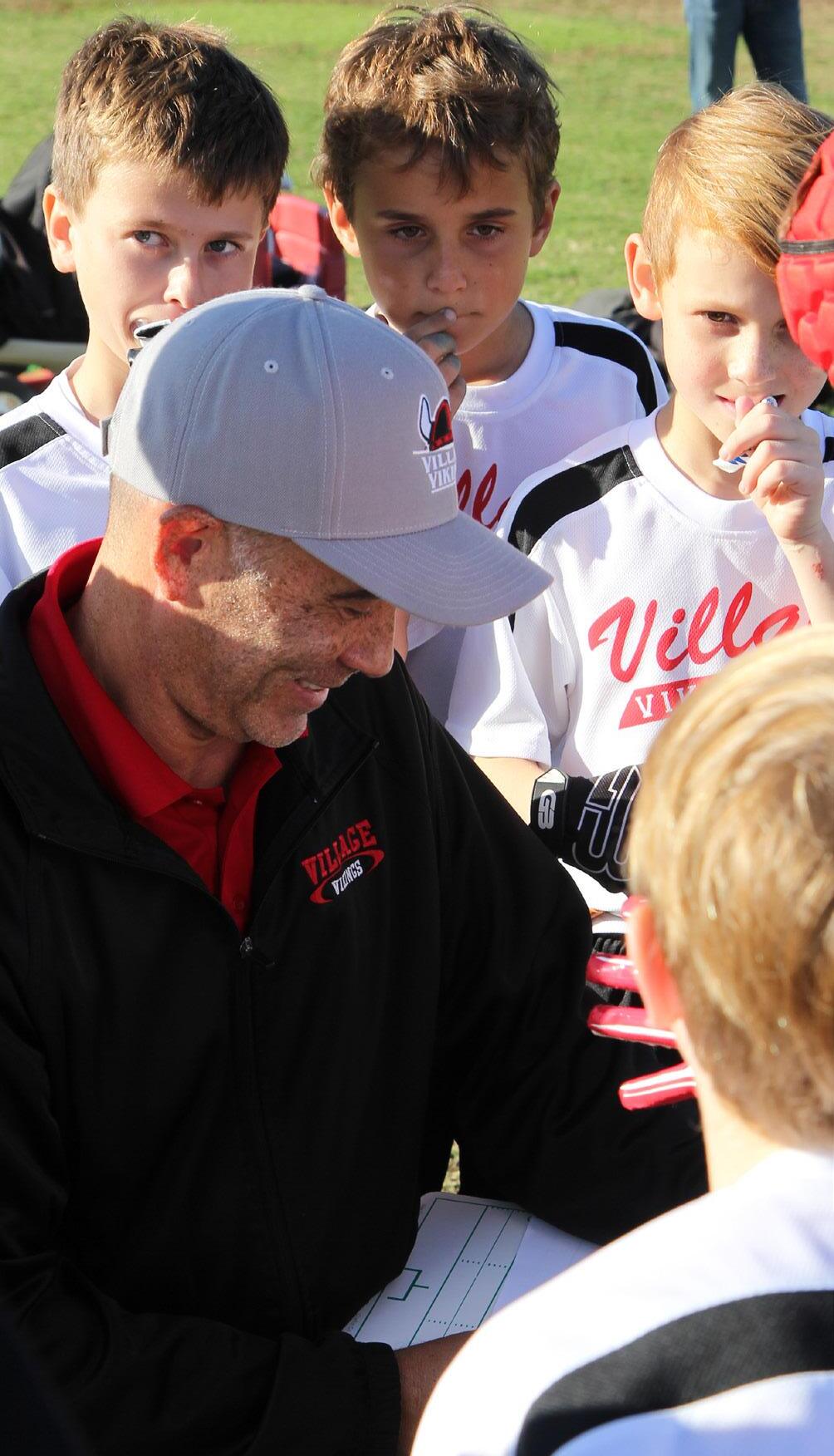
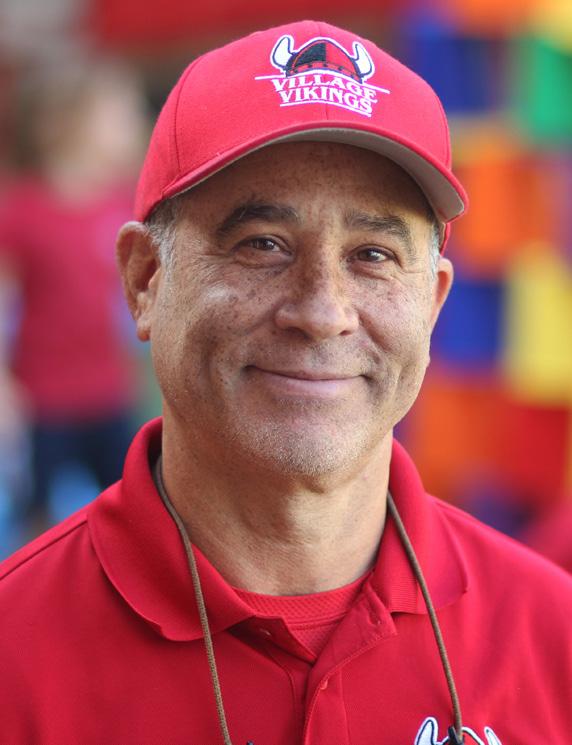
After 25 years, Paul Pettigrew is retiring from his role as Director of Physical Education and Wellness (PEW). During his time at Village, he has observed both the school and the broader world move through defining periods of transition. We sat down with Paul to ask him a few questions about his experience, his philosophy, and the lessons he hopes will carry forward for future generations of Village students.
HOW HAS YOUR UNDERSTANDING OF WHAT CHILDREN NEED – PHYSICALLY, EMOTIONALLY, AND SOCIALLY – EVOLVED OVER THE COURSE OF YOUR CAREER?
When I began, the focus may have been primarily on physical literacy: motor skills, fitness, coordination, and healthy habits. But over the years, I’ve come to understand that movement is interconnected with emotional regulation, confidence, and cognitive development. In many respects, kids remain
the same in that they want to feel safe, learn new things, and connect socially with others. They need teachers who believe in them and opportunities to experience both challenge and joy.
IS THERE A MOMENT WHERE YOU FELT, “THIS IS WHY I DO THIS WORK”? WHAT MADE IT SO MEANINGFUL?
Being hired at Village transformed my career as a teacher and coach. I still remember the excitement, and the responsibility, I felt when I stepped into these roles. It was a chance to bring my passion for movement, sports, and wellness into a growing community and an opportunity for me to to build a comprehensive physical education and athletics program from the ground up.
HOW DID YOU NAVIGATE BALANCING TRADITION WITH INNOVATION ACROSS 25 YEARS?
I've been grateful for the opportunity to work within a community that encouraged new ideas while honoring established values. New ideas included incorporating technology like heart rate monitors and BlazePod training, student choice in activities, and non-traditional offerings such as yoga and mindfulness practices. These innovations complemented more traditional programming including team sports fundamentals and structured skill development.
IS THERE A VILLAGE TRADITION OR EXPERIENCE YOU’RE PROUD TO HAVE SHAPED OR STEWARDED OVER THE YEARS?
One of the highlights of my time at Village has been guiding the development and spirit
of our annual Field Day. It’s a day when the entire Village community comes together to share laughter, movement, and connection. Seeing families join in the fun, teachers take part alongside their students, and students shine in their own unique ways reminds me, year after year, why this event matters.
WHAT ADVICE WOULD YOU GIVE VILLAGE STUDENTS TODAY ABOUT LIVING WELL, TAKING CARE OF THEMSELVES, AND SHOWING UP FOR OTHERS?
For me, it comes down to three simple things: Work hard. Play fair. Have fun. I believe when students commit themselves fully, compete with integrity, and genuinely enjoy the experience of movement, they build a foundation for lifelong success that will serve them well beyond their years at Village School. And as always, GO VIKINGS!
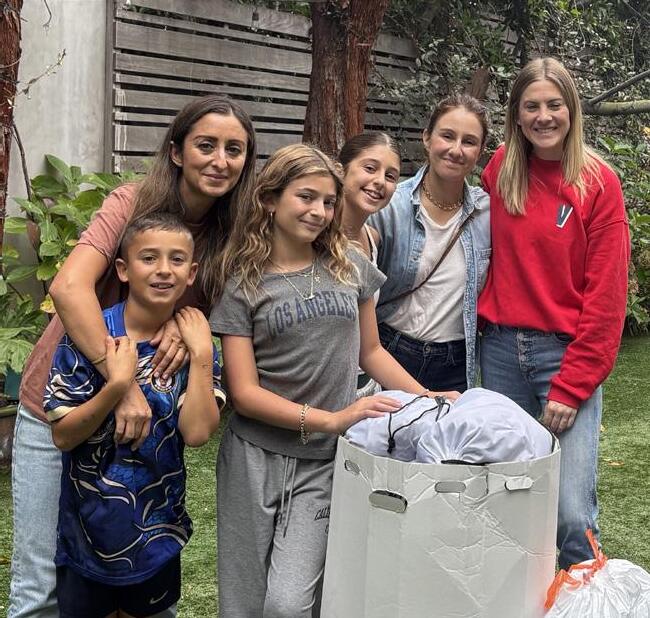
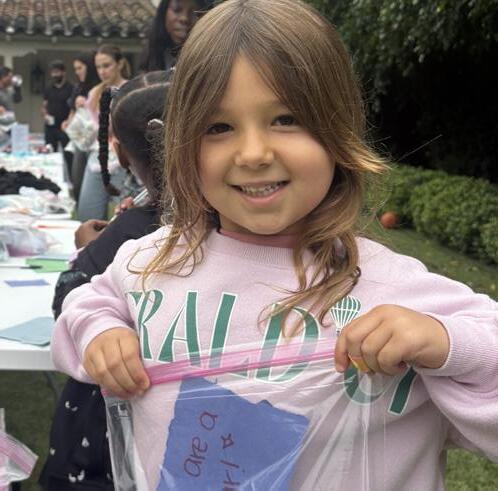
The mission of Service Learning at Village School is to inspire and empower students to become compassionate, engaged citizens by actively participating in meaningful service projects aligned with the United Nations 17 Sustainable Development Goals. Through hands-on learning and collaborative teamwork, the goal is to foster a sense of
responsibility, empathy, and leadership in young minds, making a positive impact while cultivating a lifelong commitment to service and community involvement.
Village has integrated service learning into the schoolwide curriculum while emphasizing the home-school connection, with service opportunities each month for all members of the community. Students
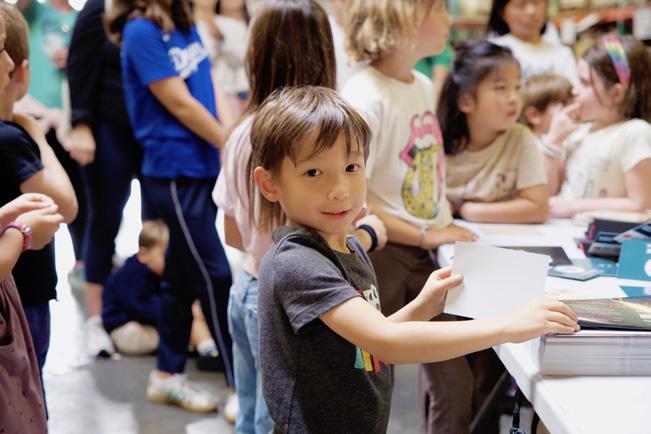
SDG 4—Quality Education
1,000 new items (notebooks, binders, crayons, glue, paint, pencils, erasers) collected in support of Para Los Niños.
of all ages have the opportunity to give back to their community and to connect with the larger world around them while learning valuable lessons through the joy of giving back.
In the 2025-26 school year, the parent-hosted Weekend of Service will expand from a once-a-year event to an opportunity offered each trimester.
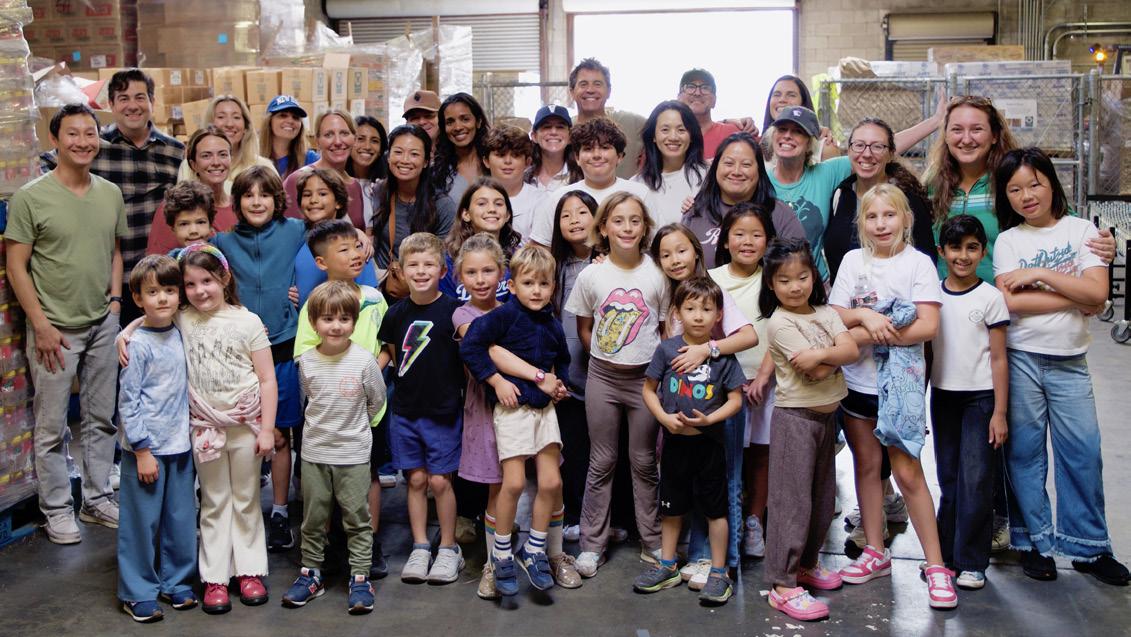
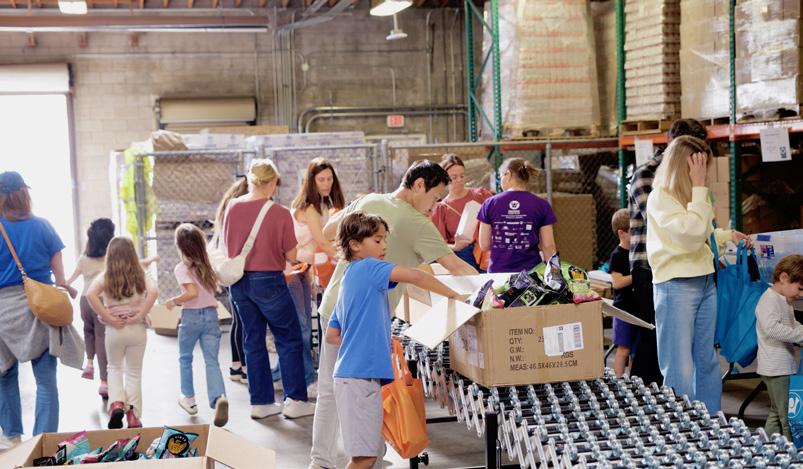
SDG 2—Zero Hunger
500 giveaway bags assembled for the Westside Food Bank's 35th Annual 5K Hunger Walk.
SDG 10—Reducing Inequalities
228 hygiene kits made for the Downtown Women’s Center.
SDG 1—No Poverty
35 warm winter bags made and donated to The People Concern.
SDG 12—Responsible Consumption & Production
75 costumes labeled and packed for the families at One Voice.
SDG 3—Good Health & Well-Being
Over $1,700 raised in support of the LA Cancer Challenge 5K and 10K, benefiting the Hirshberg Foundation for Pancreatic Cancer Research.
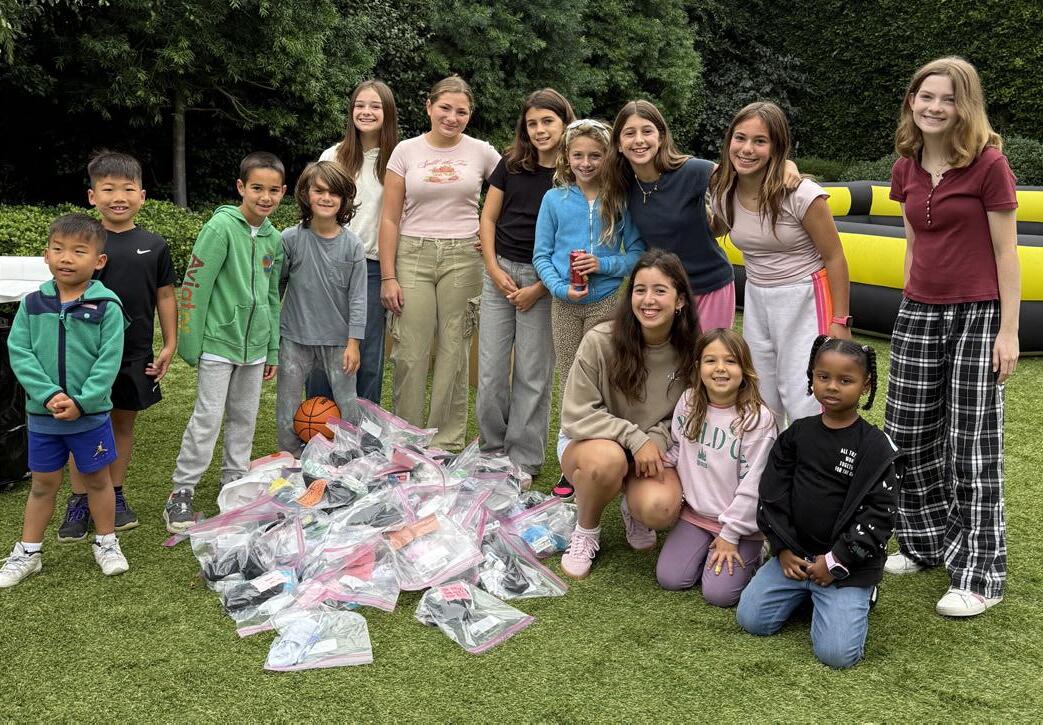
SDG 3—Good Health & Well-Being
Over 500 holiday cards written in support of children battling serious illnesses through Letters of Love.
SDG 10—Reduced Inequalities
32 children received essential items (clothes, pajamas, shoes, socks, games, books, and toiletries) through Baby2Baby’s Family2Family program.
SDG 3—Good Health & Well-Being
SDG 16—Peace, Justice, and Strong Institutions
117 lbs of candy collected and sent to U.S. service members and veterans in partnership with Treats for Troops.
SDG 2—Zero Hunger
50 Thanksgiving meals packed for the families of Westwood Transitional Village, which helps families to find permanent housing.
Village School’s service opportunities are made possible by community hosts, parent volunteers, and the VSPA Village Gives Back and Service Learning Committees. Upcoming service events can be found on the Village School website.
The day of January 7th, 2025 is forever etched in my mind as a series of horrifying events along with a single, steady drumbeat: What. About. The. Kids?
As I raced from our beloved home in the Palisades toward Village School — with our dog, baby, and little else in tow — I heard from several other parents doing the same. "Grab all the kids," we said. Sunset that day was a gridlocked paddywagon of children in red — not a single one left behind, all Village students miraculously picked up within minutes of a not-quite-yet-alarmed email.
The following weeks unfold like a bittersweet picture show: We're at Willows, at Holey Moly, a FEMA help site, a Village group playdate where I save numbers in my phone with shaking hands. A beauty care package from a beloved teacher magically appears on my doorstep one morning. I could name dozens of Village families and staff who reached out to help, who refused to let us close ourselves off from their generosity. Charlie and Lila spent those early nights in their schoolmates' pajamas, clutching their friends' well-loved stuffies. They had no idea how much they had lost. They still don't.
So many priceless things are gone. Our school. Our cherished spaces. An artist friend's future solo exhibition. My husband D.J.'s grandfather's shoe shine kit.
Mr. Evans' entire career's worth of notebooks, a collection he moved into his office only the day before the fires. My wedding dress and the few remaining copies of the day's program from August 2013. "Keep a little fire burning; however small, however hidden," read the quote dedicated to my late father. A strange motto that has stuck with me over the years, even after our community was reduced to rubble by the very same force.
Through the enduring months, those of us who lost our homes (or are reckoning with the hell of a still-standing house in a devastated area) have found an electric kind of shorthand. We have shared information — brands offering discounts to fire victims, how to file this or that paperwork, barrel leg jeans that don't make a 40-year-old mom look like a juggalo. We shared horror stories. Of friends who are worse off — of generations of homes lost. We have also shared gallows humor. There are few comebacks mightier than, "Oh, I'm sorry. My house burned down in a fire!!"
This past year I have felt scattered, unmoored, unfocused. At times, too, I have felt weirdly plugged in. Like I finally knew what mattered and what was silly. I craved neither new things nor old things. I was like Bradley Cooper in Limitless, except I was hosting playdates, baking brownies, and clearing cobwebs from the garage of our


rental home. I threw myself into work and wrote about the rental market price gouging for New York magazine. I planned parties and held gatherings to support local Palisades businesses. I introduced myself to my heroes. I spread wildflower seedbombs.
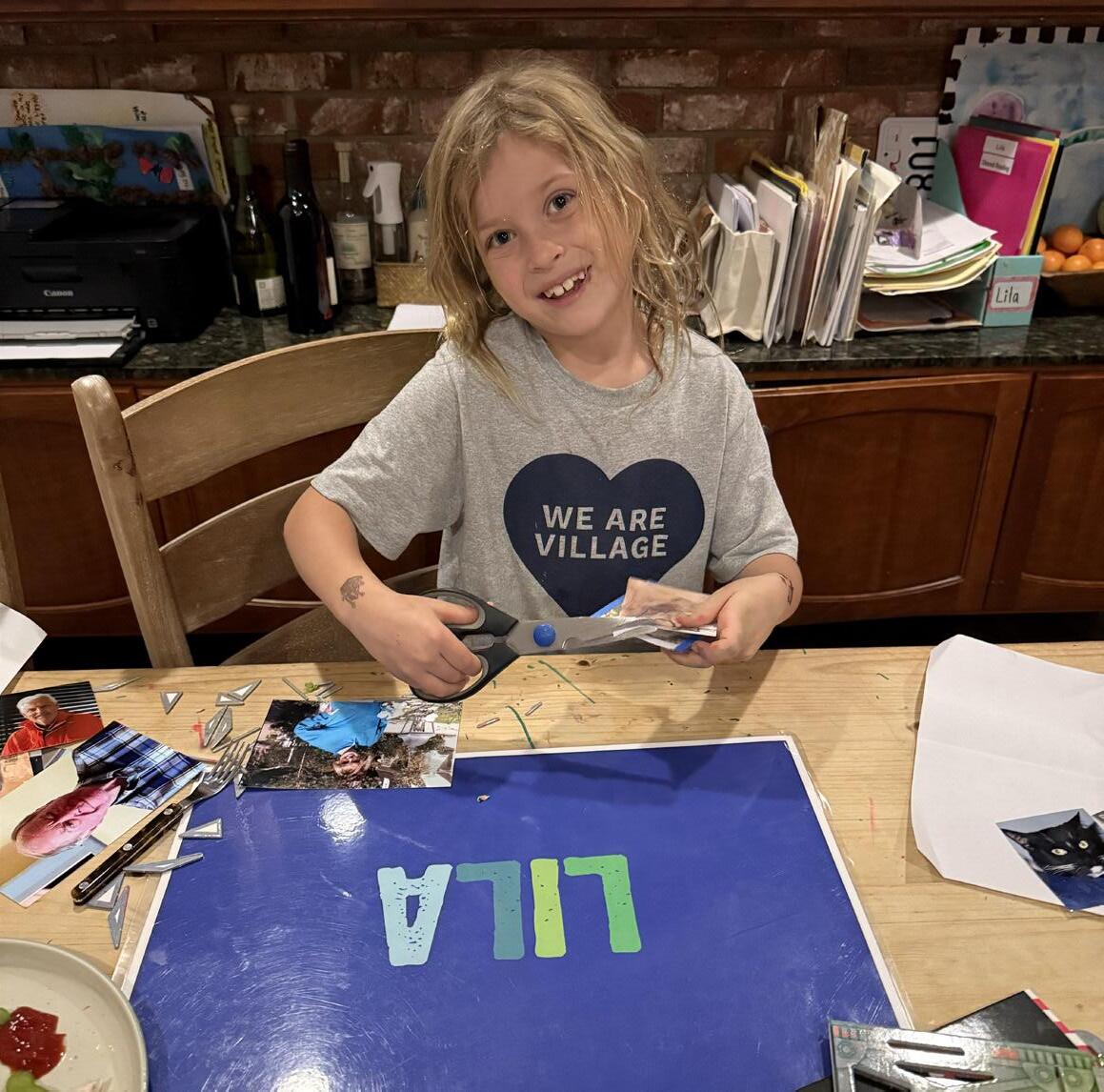
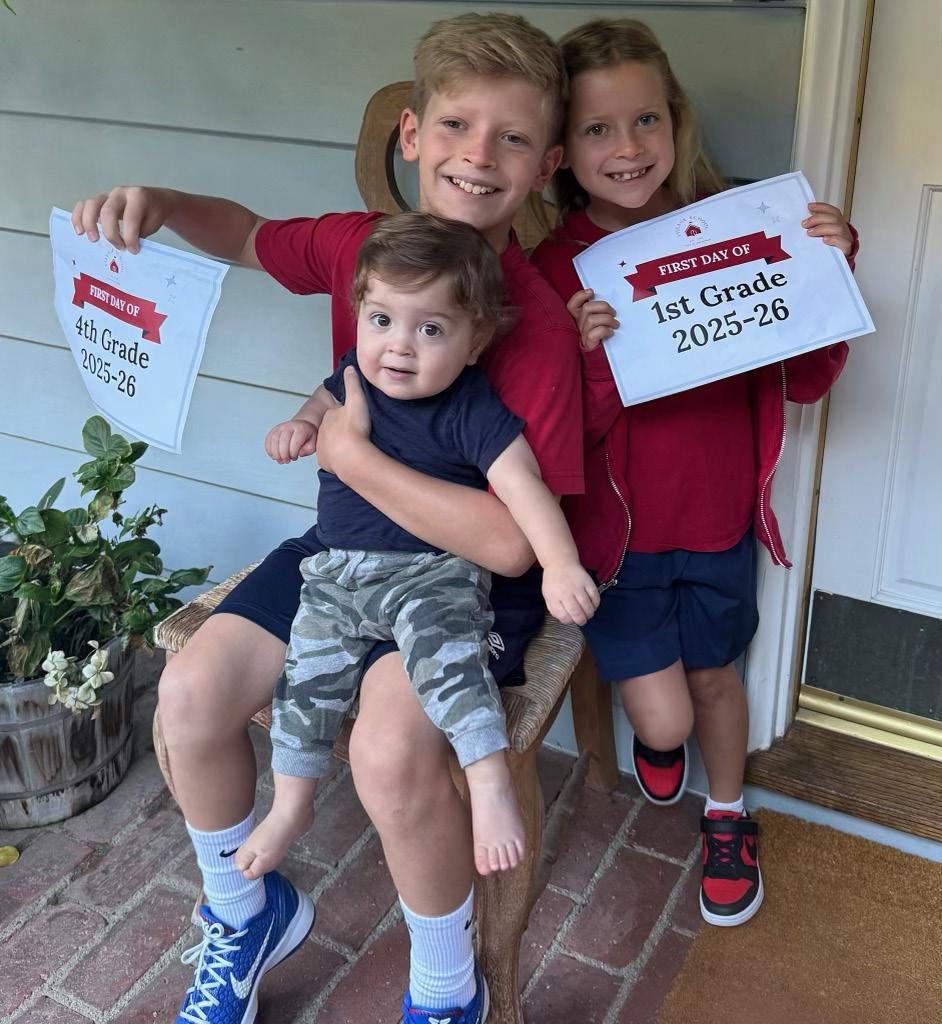
FROM LEFT TO RIGHT: Charlie, Lila, and future Viking Sam on the first day of school, 2025 | Charlie finding a lacrosse ball at our lot in the Palisades | Lila helping me with a Día de los Muertos ofrenda in her Village spirit wear, 2025
When John asked me to write about finding joy through all of this, my mind immediately flashed to the very first time I dropped the kids off at the Colorado Center. I located Suite 200 fine, but once Charlie and Lila were safely inside, I couldn't for the life of
me find my car. I spent about 45 minutes canvassing P1 and P2 on foot before I broke down. D.J. left work to pick me up, and like that episode in Seinfeld, we circled the floors while I held my car key out the window. We laugh so hard about that now.
When the fear drumbeat about the kids finally subsided, in its place has grown an intense clamoring for joy. I often recall something a friend said when I attended a concert in Miami weeks after a two-monthlong NICU ordeal with the baby, Sam, in Boston. A period during which Charlie and Lila were forced to hold strong in the Palisades with their grandparents who flew in from Maryland. The Village community kept them busy that painful summer: There was a meal train started by another parent, a surprise visit from Ms. Miller's dog, Chicken, endless playdates at the beach. "A good season is not something you should pass through quietly," my friend texted when I asked her to revisit that Miami wisdom. She called it "strategic joy. A joy that requires intention and the wisdom that later is not always available." I had planted a seed for myself months before a scary diagnosis nearly derailed our life. Not going wasn't an option. It had been a tough time, and I was going to the concert. For once, those two things weren't at odds with each other.
Things have gotten easier since the fires. I can navigate the Colorado Center parking garage (sort of). I own clothing and Tupperware now. My Carrie Mathison all-knowing season has passed, though I still make a fair amount of "Well, after your house burns down…" jokes. When we finally took Charlie and Lila back to where our home used to be — currently dirt, cement steps, and a few very resilient
lacrosse balls — they saw only opportunity. In our new house, they said, every room will face the ocean.
As I write this nestled into a brand new chaise, Chef, the same dog whose eyes were swollen shut after the fires, is snuggled up against my legs. She's all better now. The baby too. We're still in LA. Still at Village. Two things we wanted so desperately to hold on to. We all know so many families whose lives have changed course, for better or for worse, after this devastating event. For us, our path forward was always here. And I, for one, refuse to pass through this good season quietly.
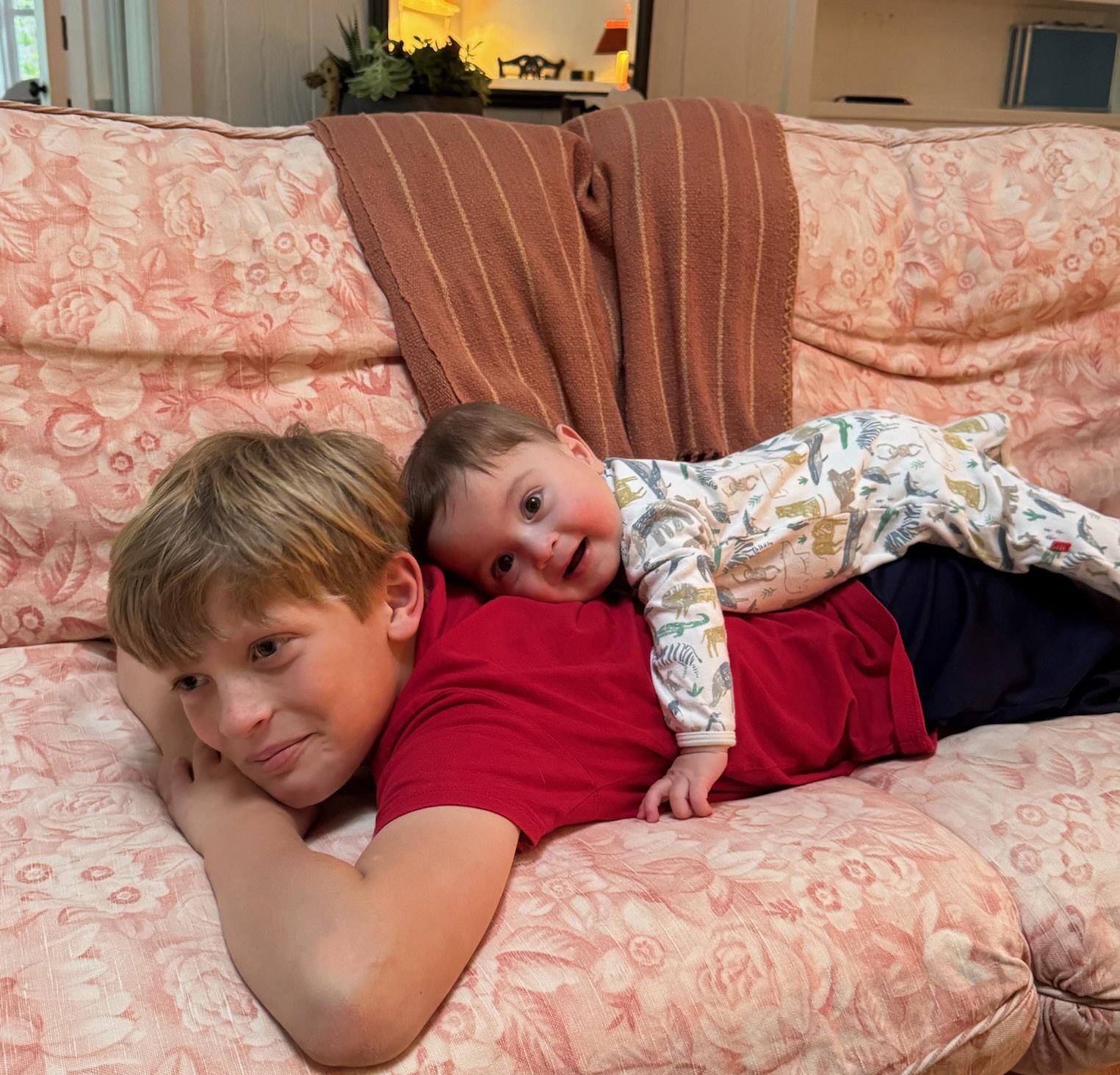
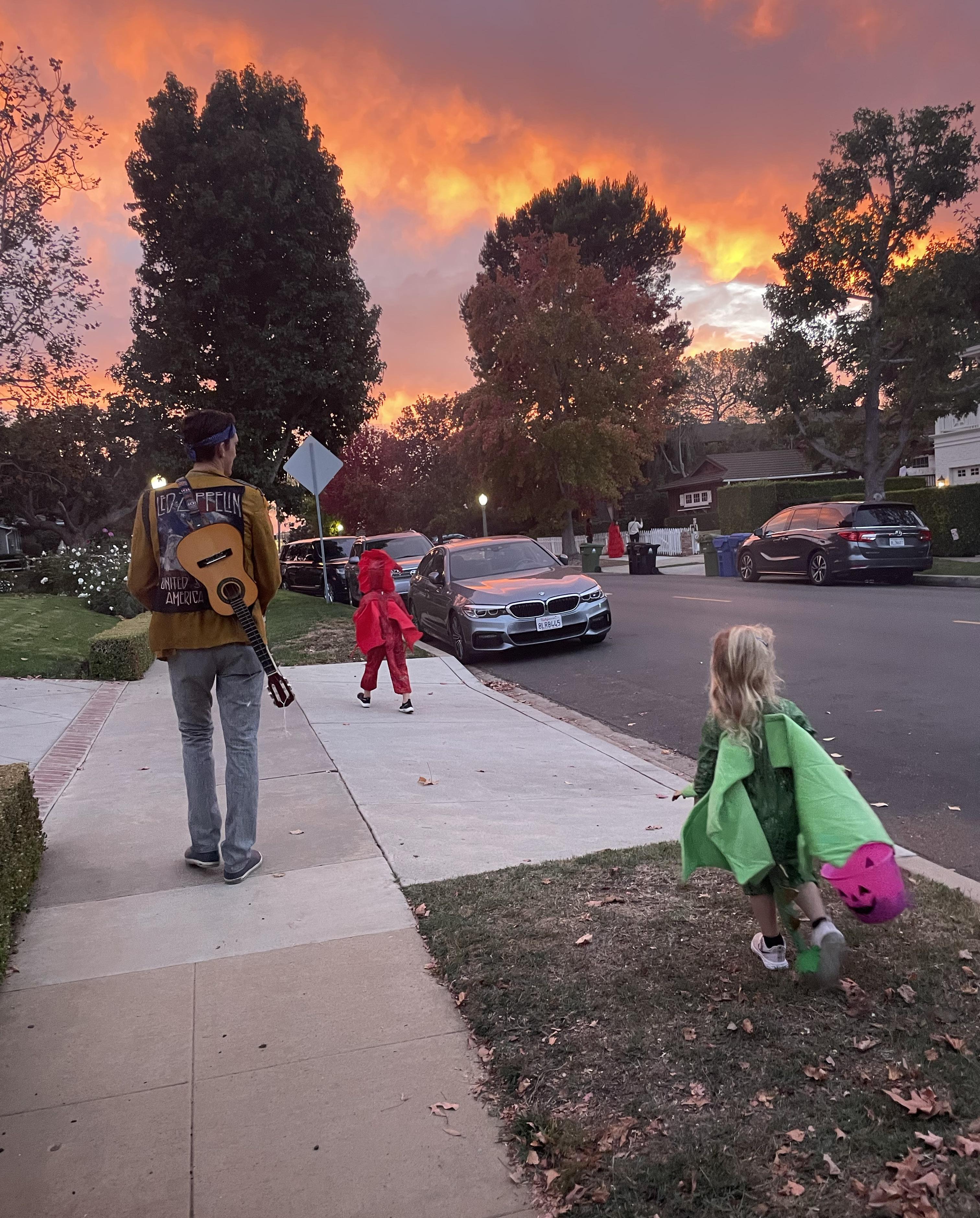
ABOVE: Charlie and Sam settle in to our rental home in Bel Air, 2025 | ON THE RIGHT: A technicolor Halloween in the Palisades, 2022
What first inspired you to start volunteering at Village, and how long have you been involved? How old are your children now?
I was initially inspired to seek out volunteer opportunities at Village School as our on-campus experience, going back six years, was non-existent due to covid protocols. My curiosity got the better of me; I inquired
with VSPA co-heads about opportunities to get involved, next thing I knew, I was on the phone with the previous Halloween chair discussing a transition plan before I could even say yes!
Our family began at Village School with our oldest son Asher in Kindergarten – now in fifth grade. We selected the school without even stepping foot on campus
– a decision purely based on conversations and gut instinct…and we’re grateful as that decision is reinforced every day. Asher’s younger brother Gabriel is in his third year at Village School in first grade. Aside from logistics being easier with both kids at the same school, it’s amazing to witness our kids’ shared experiences and the excitement that ensues.
What makes organizing the Halloween Festival special to you, and why do you think this tradition is important to the community?
Within a matter of weeks after taking on the position, my anxiety quickly transitioned to excitement as I fully immersed myself into the role and embraced my community involvement.
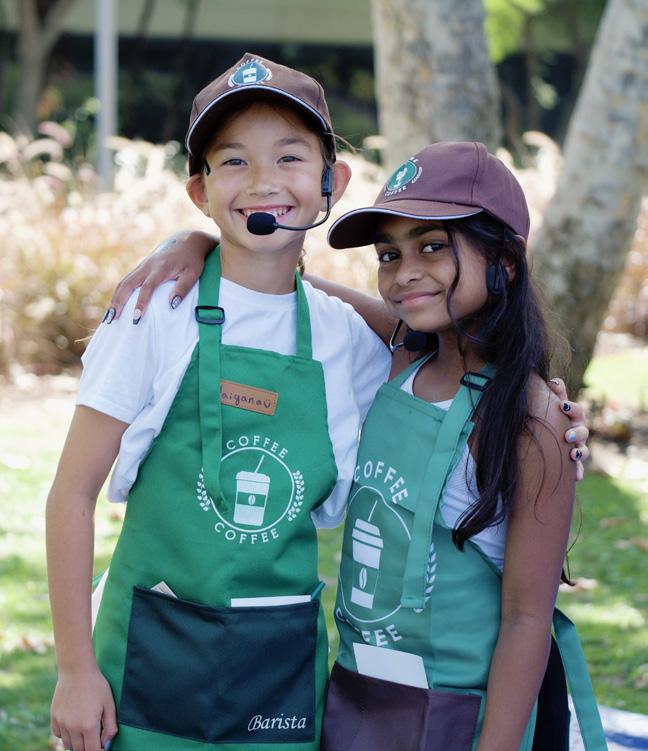
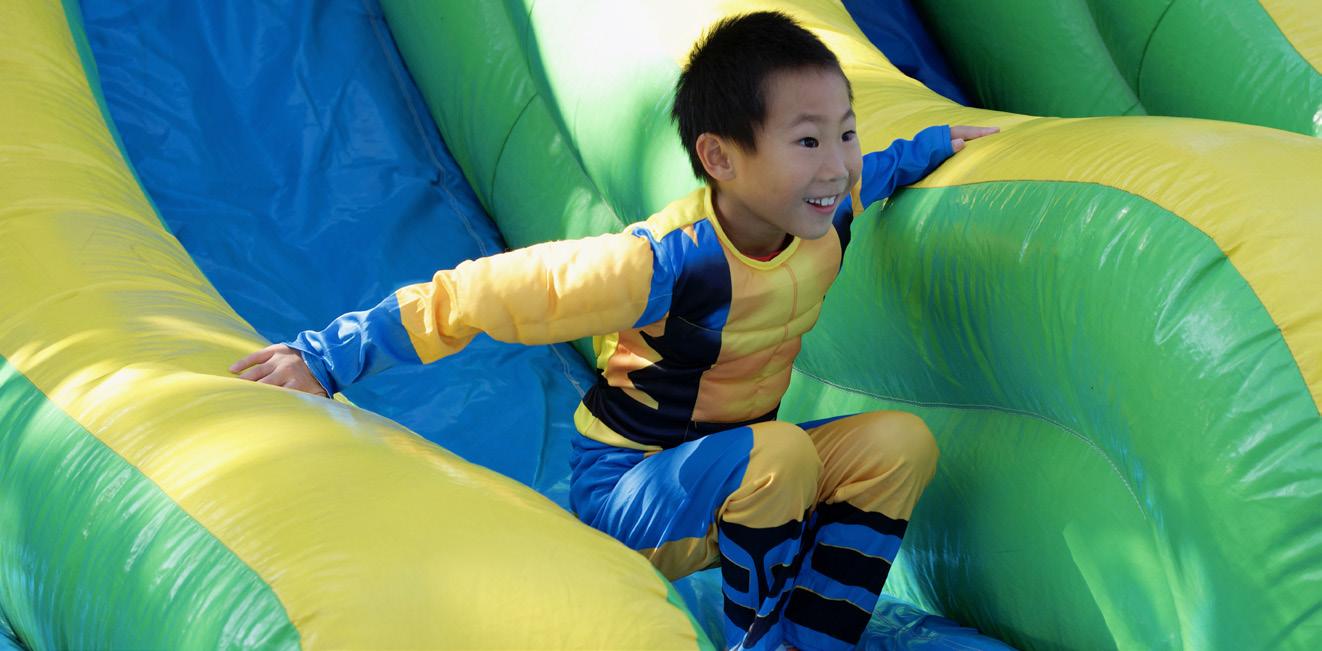
What began as keeping the decorating a secret from my kids has evolved into brainstorming sessions together with Asher and Gabriel as they both contribute ideas and are so enthusiastic to share their thoughts on what spooky scenes they’d like to see and experience. Asher actually drew the campus, a separate page for each location, designing haunted scenes
for my approval. With Gabriel also chiming in his creative ideas, it’s funny, endearing, and so very special to share these moments as a family.
From a community perspective, observing volunteer collaboration and what our amazing parents create together, just gets better and more creative every season. From
decorating through to our Halloween Carnival, our parent volunteers help us create some amazing memories – amongst themselves as well as with our kids, as the Festival is such a unique and exciting atmosphere to interact with students, faculty, and administration on campus. And our parents always bring-it with amazingly
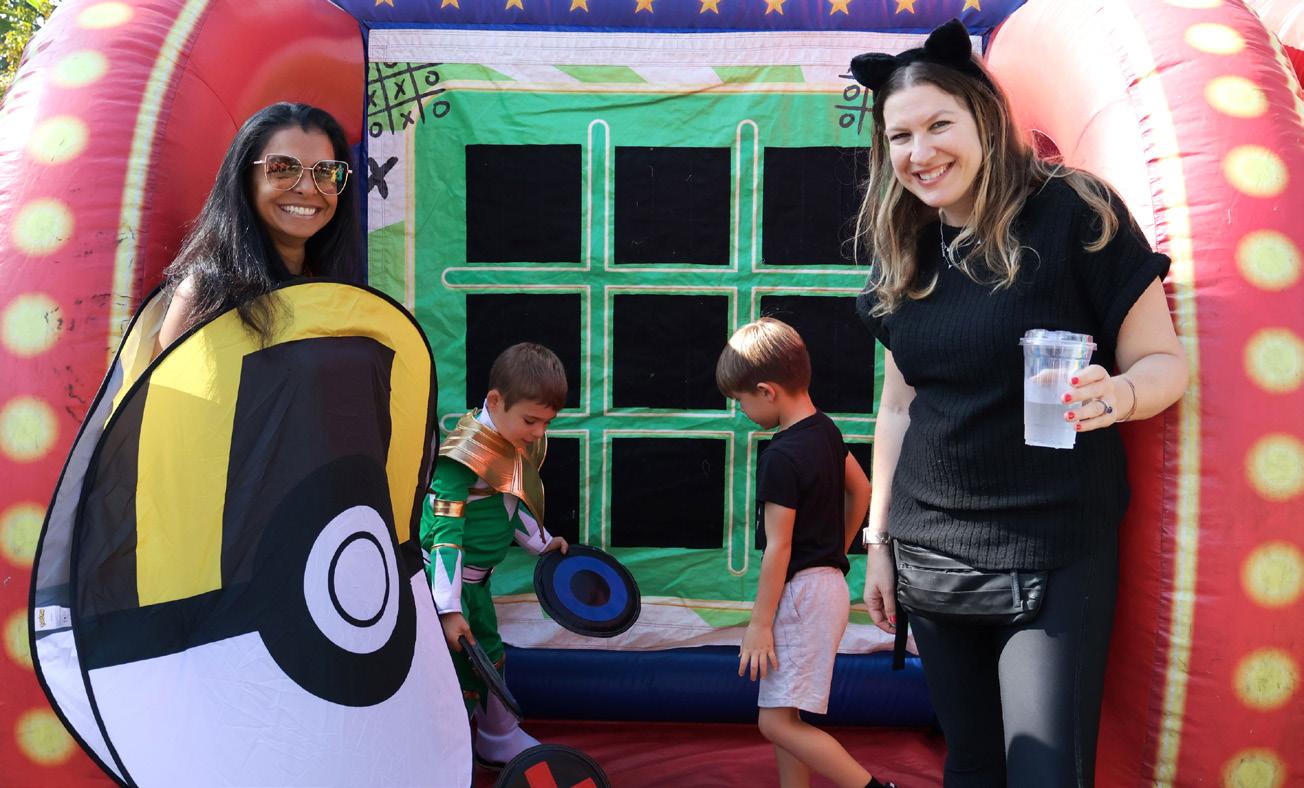
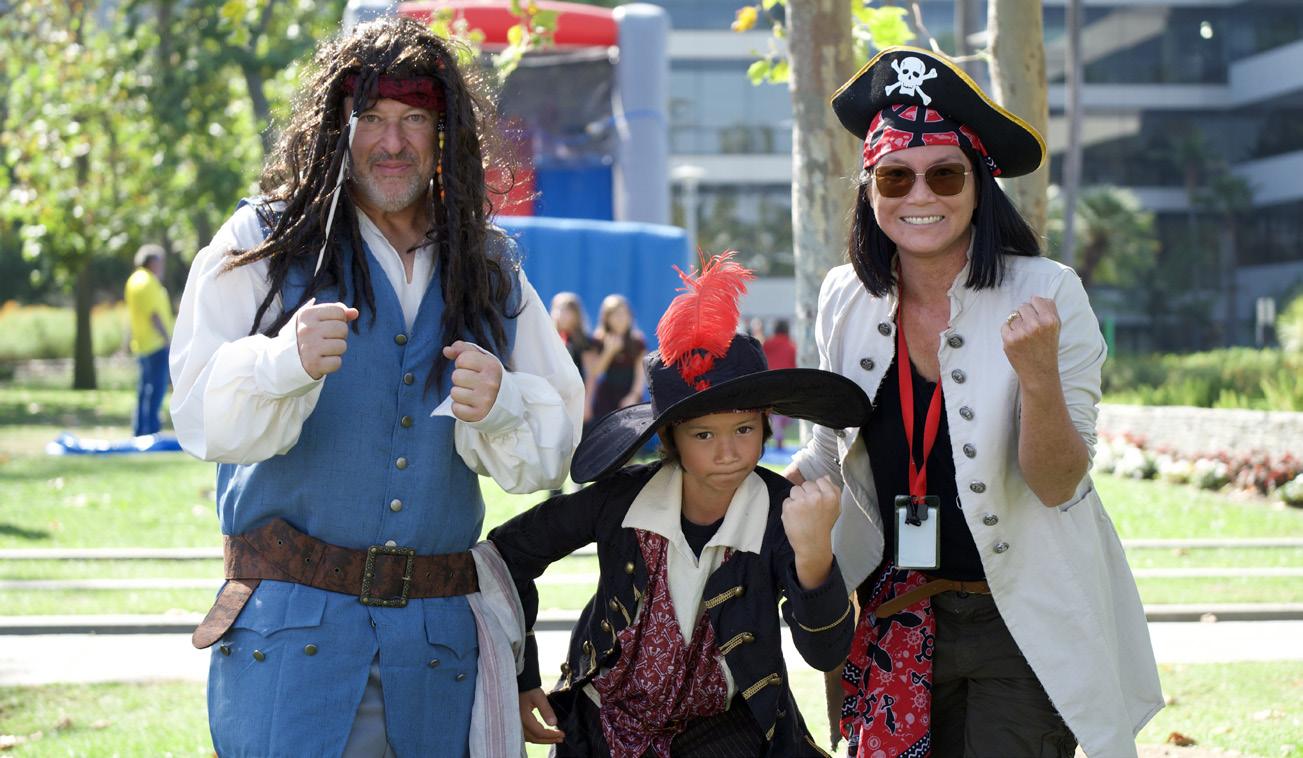
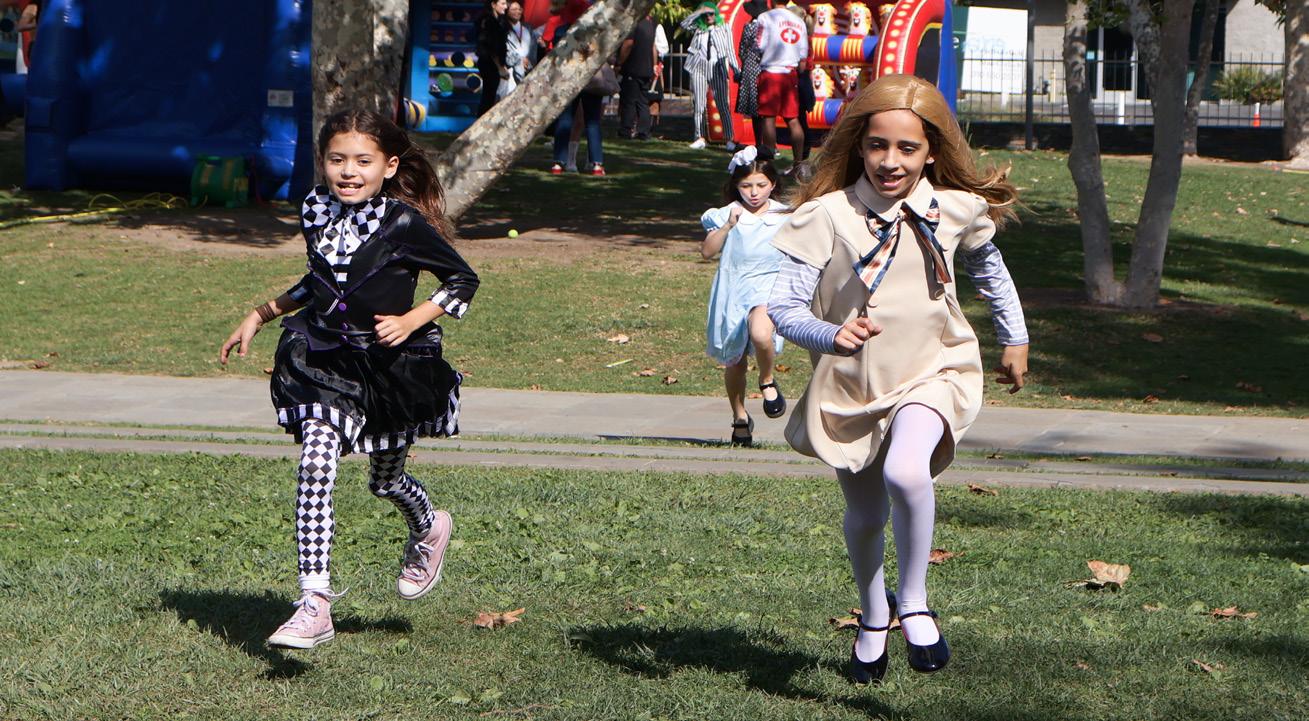
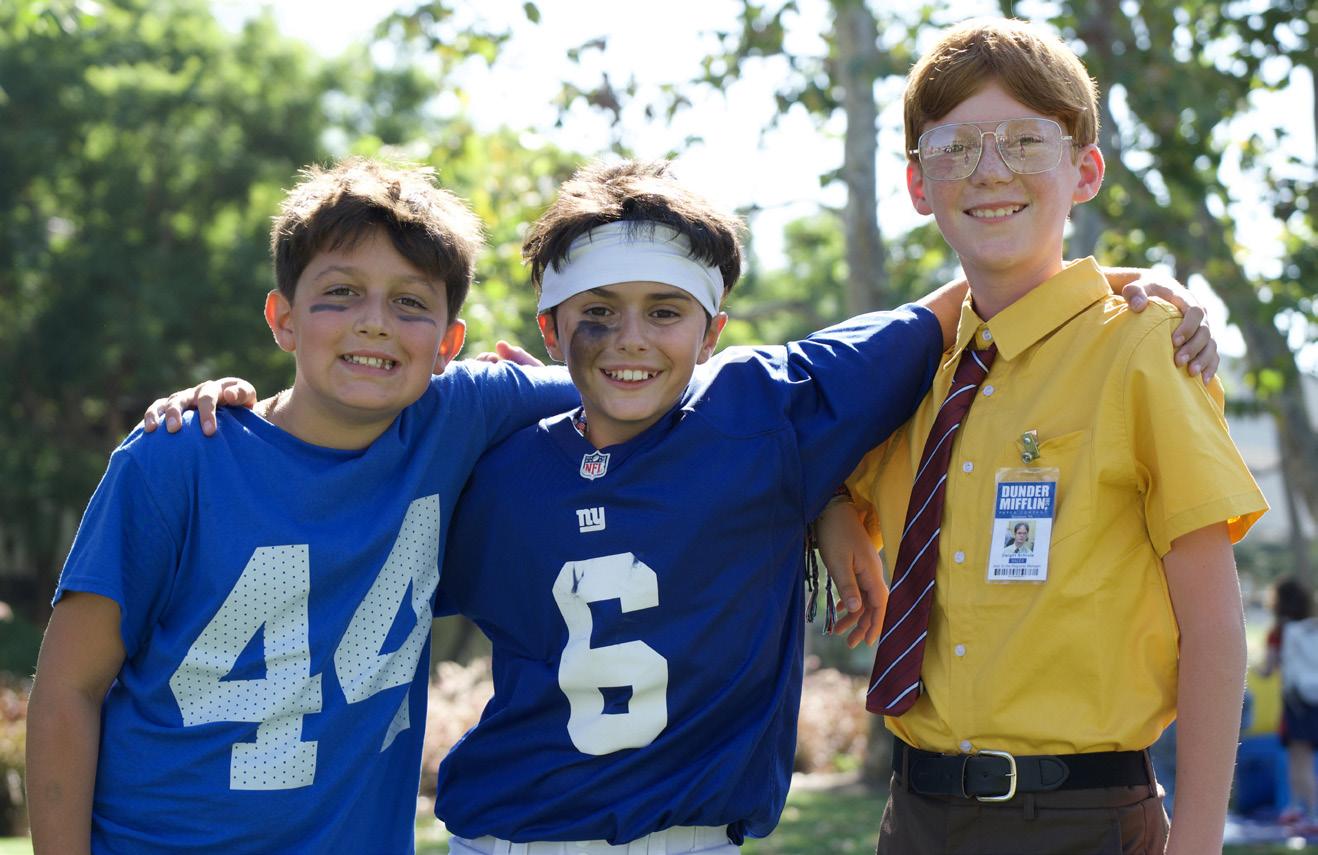
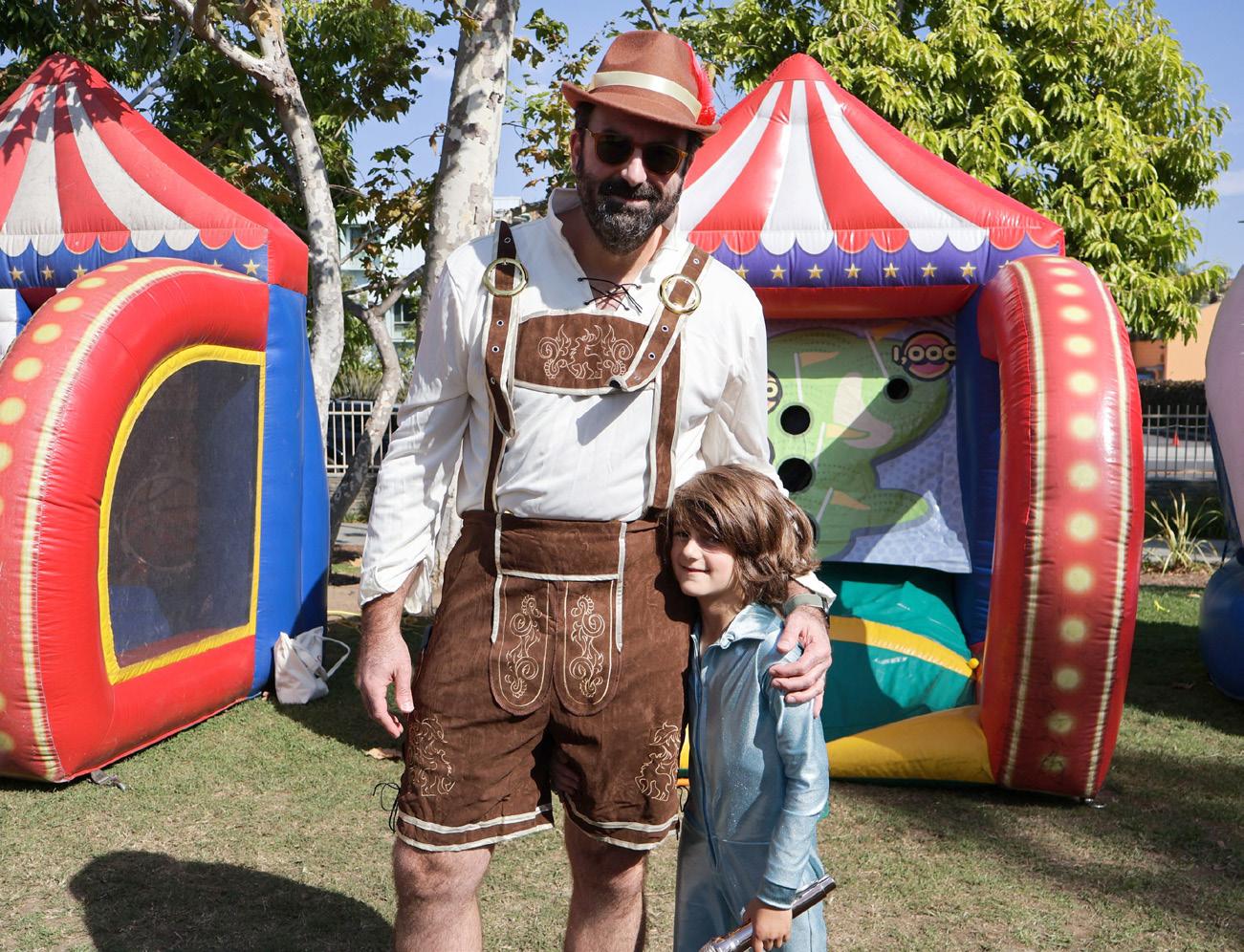
fun costumes! Each year we’ve added and improved experiences to our carnivallike activities, therefore enabling us to enhance community involvement by successfully increasing the number of parent volunteers we can get on campus –which is a primary goal of our committee …and this year’s Halloween Festival was no exception with close to 30 parents helping us decorate and just shy of 100 parents running “booths” at the carnival!
Has your involvement as a VSPA volunteer set an example for your children about community involvement and giving back?
My kids observe first-hand how volunteering at school is a fantastic way to get to know our community and give back. Not only does volunteering allow us to get to know other parents and make friends outside of our specific classroom, grade,
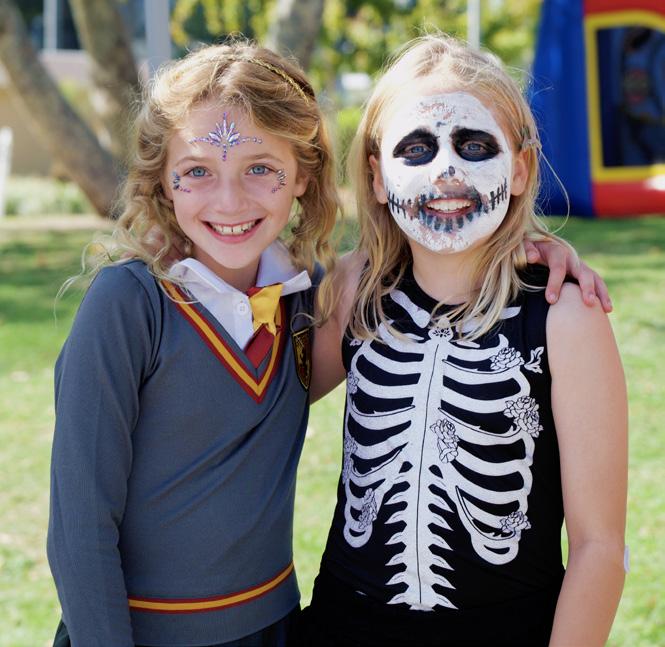

and after school enrichment programs, volunteering sets the stage to interact with people from diverse backgrounds, perspectives, and opinions. There’s a bit of a magical give-and-take amongst my committee and our parent volunteers as everyone shares and [re] discovers new talents or strengths they possess or forgot about as they may have been hidden away.
Personally, that’s the fun part for me about Halloween –we all get to be kids again enjoying the festivities together while giving back to the school. This year was no exception, even more,
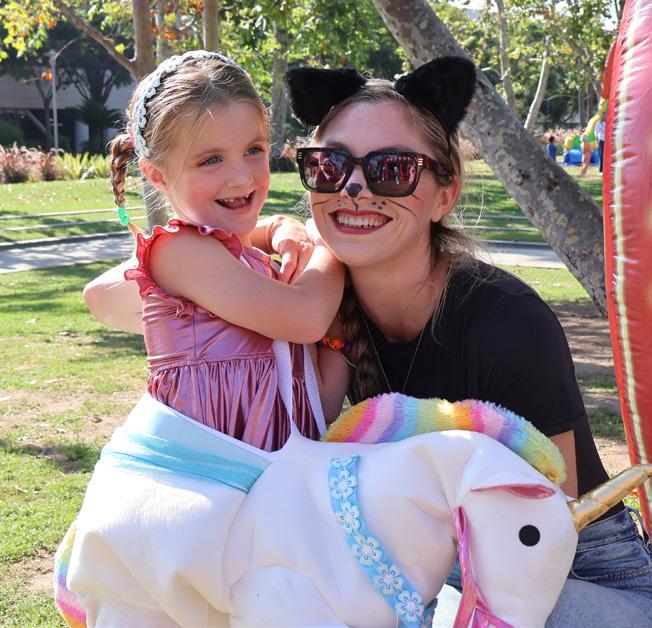
it was an outlier; given everything our community’s been through this year, I fell deep into the DIY rabbit hole developing an Halloween experience extra special for our kids and VS community at-large.
My kids understand that volunteering is all about community building, as you become part of a team dedicated to enhancing the experience for all students – I’m not alone, I’ve got a great committee and parents all working side by side collaboratively. Whether you assist teachers in the classroom or organize extracurricular activities, our
efforts contribute greatly towards creating a welcoming atmosphere for everyone where inclusivity and giving back matters.
What would
say to other parents or community members who are considering volunteering?
My advice for prospective volunteers, look for existing opportunities where you can share your skills and expertise in a way that’s fun and enjoyable for you. If ‘that’ opportunity you’re looking for doesn’t exist, consider discussing your interests with the school, as maybe there’s a new opportunity to build out this project for yourself that equally meets a school need. If you’re collaborative, creative-minded, and willing, I’ve discovered the admin at Village School is a great partner. Students, parents, faculty, and administrators will appreciate your skills and your children will be thrilled to share your involvement with their classmates as they beam with pride. Volunteering, for me, especially with events like Halloween, has the build-up of excitement, anticipation, and celebration that delivers the biggest smiles; and smiles are what memories are made of.
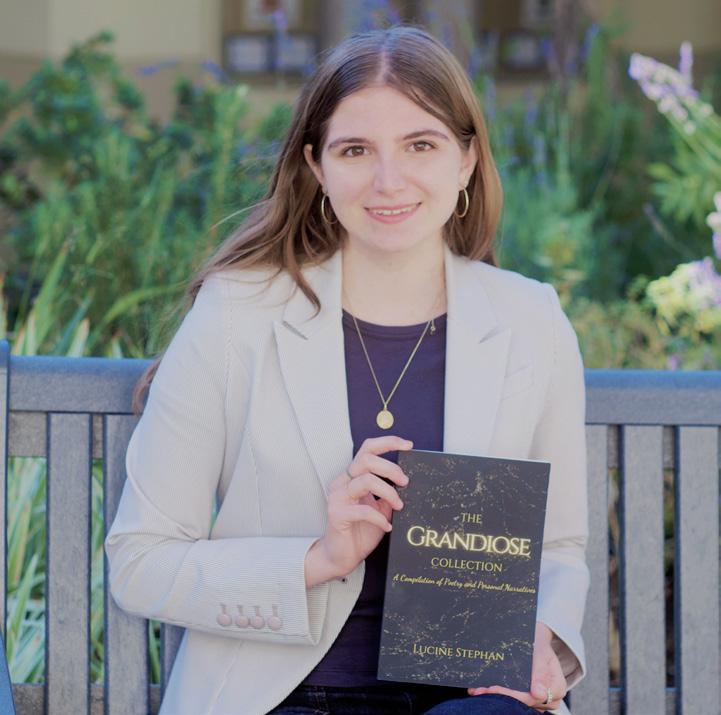
Lucine Stephan ’19, now a freshman at Kenyon College, reflects on her experience at Village and shares her story of becoming a published author.
What inspired you to start writing poetry, and how did you decide to turn your poems into a book? Did you always want to write, even during your time at Village?
I remember at Village I was writing all the time. My love of writing sprang from my love for storytelling and from inscribing my own anecdotes. I had a few very close friends, we were all very creative people, and we would make stories out of other stories that we knew.
In fourth grade, we had this screenplay assignment. I wrote a 40-page screenplay that went crazily beyond the page requirement. I also remember in the tech area [now known as the DREAM Studio], we were asked to create our own world as an assignment. I absolutely enjoyed that. Although it wasn’t writing, per se, it was my first experience with world-building, and that's something that's still really ingrained in my writing process. Theorizing and worldbuilding is what inspires me to write more.
I truly love all forms of writing; I love poetry, I love prose, and I love memoir/personal narrative. Out of genres that I enjoy writing, my favorites would have to be science fiction and high fantasy, which I think comes from Village as well, specifically the world-building aspect. One of my goals is to write a novel one day. One teacher that really believed in me was Dr. Bergeron, and although he didn’t teach writing itself, he taught me to expand my comfort zone. That's a philosophy that I still carry with me today.
"I remember my parents would tell me that during parent-teacher conferences at Village, teachers would say that I’d walk through the door with enthusiasm. I try to carry that same enthusiasm with me today—Village has definitely shaped me into who I am as a person.”
What themes does The Grandiose Collection explore?
The Grandiose Collection is a collection of snippets of my writing from eighth grade to early 2024, my junior year in high school. When I thought of a theme that encapsulates each piece of writing, I thought of the word grandiose. Grandiose, by definition, means something that is extraordinarily grand, grandness to the point of absurdity. In this collection, I wrote about things that are both apparently, concretely grand, as well as grand in the abstract, which I define as smaller, simple, more personal snippets.
“To me, The Grandiose Collection is equated to a photo album. It has captured snippets of myself as I’ve matured.”
The proceeds of The Grandiose Collection support the The Paros Foundation, an Armenian organization hoping to ignite change within Armenia. I want to support one of the educational developmental projects, like helping to rebuild a school, or renovate a classroom.
Who are your favorite poets or writers, and how have they influenced your writing?
I absolutely adore Tolkien [fantasy author of The Hobbit and The Lord of the Rings], and that hasn't changed since when I was in fifth grade. I love his dedication to creating a world where it feels so real, that it's like you could live in it. I wish to create something as complex one day.
Did you face any challenges while writing or publishing your book? Was it challenging to be vulnerable when writing non-fiction?
It was less challenging to pick pieces for the book because the pieces were already written from eighth grade and onward. The difficult part was navigating the self-publishing process. But, I will say it was definitely worth all the hard work and I would do it ten times over.
Sometimes I can't believe that people can just open up a page and see me for who I truly am. Non-fiction is so important because it talks about real experiences, and your real experiences can matter to someone else and impact them in a specific way. As difficult as it is to be vulnerable, I think it's something that we should try to accomplish in our writing, especially when we publish.
You’re now a freshman at Kenyon College. Can you speak to your experience?
I truly can’t imagine myself anywhere else other than Kenyon. Although it has only been a couple of months since I’ve been in college, I can definitely say that my skills have grown: not just as a writer, but as an editor and reader. Kenyon has an extremely
intellectually stimulating environment — being surrounded by so many talented individuals, both creative writers and nonwriters alike, has led to so much growth. My writing has become more nuanced, and my editorial judgement has strengthened.
Kenyon is home to The Kenyon Review, a nationally recognized literary magazine. I’m currently a Kenyon Review Associate, which means I look over and process the submissions of the litmag. I receive eight submissions per week — though I also receive more because I volunteered to review for the poetry contest submissions.
Outside of The Kenyon Review, I've joined two student-affiliated lit mags, Persimmons and Lacuna. I’ve also participated in writers workshops, and listened to schoolorganized poetry readings.
"I've learned so much about the publishing process during my first semester at Kenyon. I'm a Kenyon Review Associate, and I overview the submissions from the prominent literary journal."
What advice would you give to other young writers who want to create their own books?
Continue writing, even if it gets hard or you don't feel like it. Don’t let your fear stop you from persevering towards your dreams. And finally, don’t be afraid to be vulnerable; vulnerability is what connects us with the reader, it’s how we express who we truly are, it’s how we touch their hearts.
Class of 2025 graduates were invited to share words of wisdom with their younger siblings who are currently students at Village.
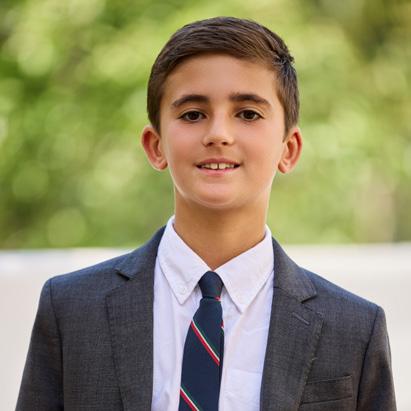
OLIVER DARVISH Geffen Academy
Make sure you cherish your time at Village because it goes by really fast. Also make the most of the Math Lab because it helps prepare you and get you ready for middle school math. Another thing I would say is to make sure to keep challenging yourself and try doing extra assignments or practice because it will help you become more prepared for middle school.
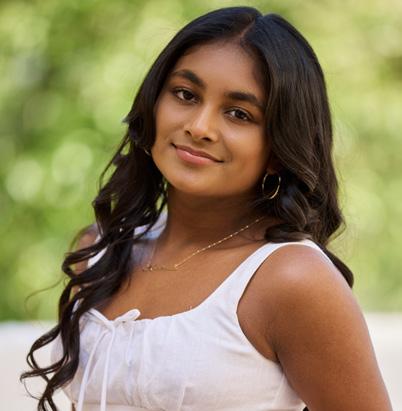
NISHARA DE SILVA Harvard-Westlake School
My advice is to always have an open mind and to follow all the Village Values. Always study hard and apply yourself to everything you do. Make a commitment to your work and try to go out of your comfort zone, you'd be surprised where it could take you. Try your hardest and learn from your mistakes.
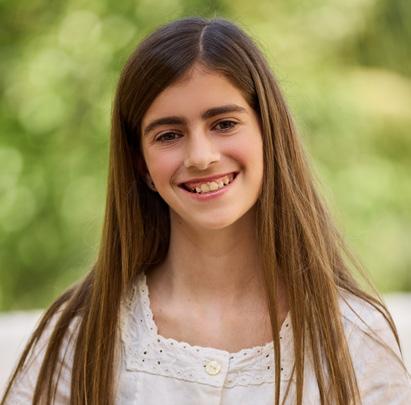
The next few years are going to fly by so fast. Enjoy every moment, even the harder ones, because you’ll learn a lot from them. Don’t rush through them and take time to make new friends and try different and new things. It’s okay to mess up, and sometimes you will, but Village School always has your back no matter what. You will learn a lot from every single mistake you make. So just remember to take time to make memories and new friendships, and they will always help you with whatever you need. Remember what it was like to be the new kid. Be kind to others, welcome other new kids, and be open to making new friends. Participate in everything. Run for Student Council or class rep, volunteer with your friends, go to all the birthday parties (and get all the cake), and celebrate even the small wins with your sports teams.
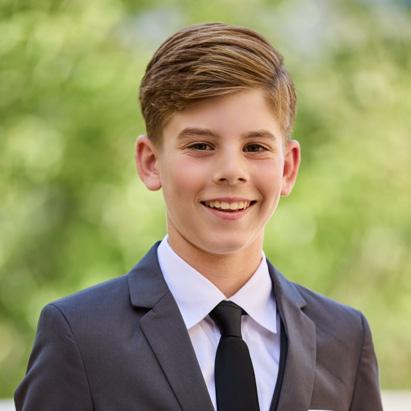
Cherish every moment at Village because once you leave, school will never be the same. Stop every few minutes to appreciate how good you have it at Village - the classes, your teachers, your friends.
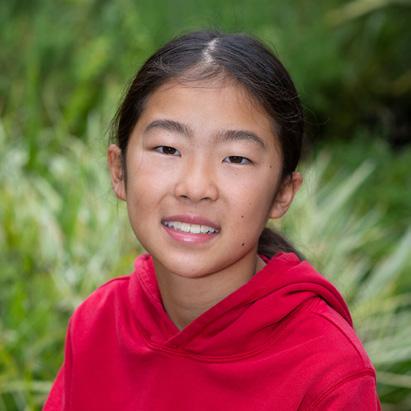
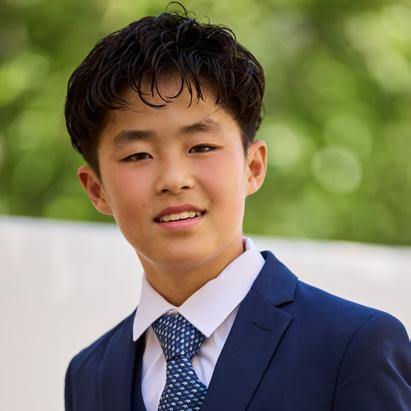
Nothing can stop you from chasing your dreams.
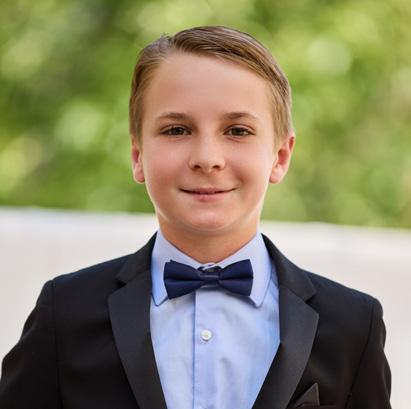
Always be nice to kids in class. You will make great friendships that will last even after you graduate from Village. Time will go by quicklymake the most of it.
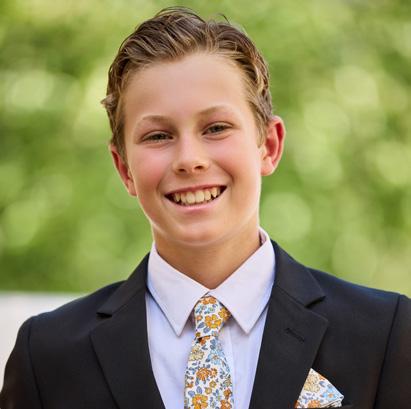
Enjoy every moment at Village. It goes by faster than you think. It's a really loving place. Middle school is great but feels more like the real world and everything speeds up. So enjoy the Village bubble while you're in it.
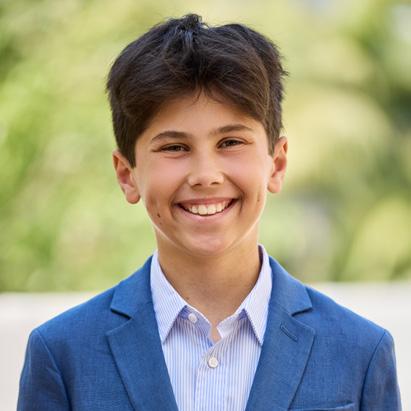
While you still have time at this wonderful school, you should take advantage of every moment, there is truly no place like Village. If I could travel back in time, I would relive all the wonderful experiences at Village School. I would revisit our class trips to Catalina, Astro Camp and San Francisco. I would spend more time with my amazing Kindergarten buddy. Having a little buddy was one of the best memories I have ever had. I would go back and spend every moment with the friends I’ve made and had since first grade. Village School is an incredible place with an incredible amount of amazing bonding experiences, so hold every memory close, and I promise you will make more that you will never forget.
Sarah Mzoughi
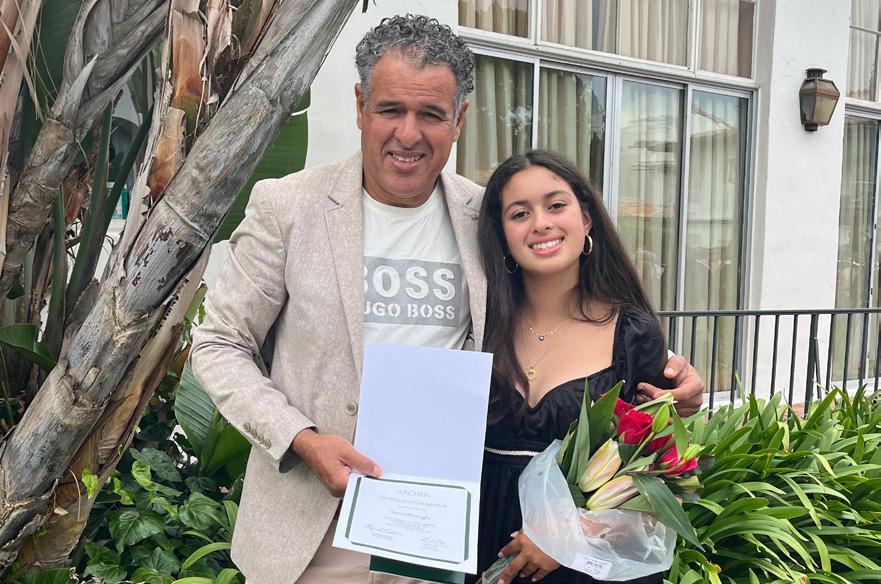
Sarah, now a student at Archer School for Girls, writes, “As a mixed girl I always felt a lot of self-doubt regarding my ‘place’ in the Arab and Hispanic community but as time has gone on, I've learned that one is not limited to binary identities but instead free to define as however sees fit. This work, Sarah’s Soraya, was written in 7th grade with the works of Sandra Cisneros in mind [Sandra Cisneros is a Mexican-American writer known for her vivid portrayals of life in Chicago].”
Sarah was born from immigrant fear. Sarah means White girl, American, straight, Christian, blond, with a love for country music, bible quotes, and midwest suburban apple pie. So plain and common. I will always be Sarah M, the other Sarah or Sarah with an H. At home it's different. Pronounced so soft and smooth. Like honey seeping through chebbakia. I like Sarah at home, but home is not everywhere. Everything is different. My home is “exotic.” My home is not Sarah, but Sarita. Sarita the girl who makes pancakes
with her Tita while listening to Augustin Lara. The first pancake, Sarah, who will go out into the world with no knowledge on what's to come. Sarita the daughter of immigrants, Catholic Mexicans and Muslim Moroccans.
“So you're half and half?” No I am both, I am full of either side 200%. In my home I feel no stranger. No presence makes me doubt if I am enough on either side of the coin.
In America that name sounds droning like the endless “beeeeeep” that enters your head and can't find its way out. “R” is plain with no color and “A'' sounds dark like the Lucas Pelucas tamarindo that stuck to my fingers. Sarah is far from home, a name I cannot proudly claim. A White girl’s name. Sarah’s flexible for the American tongue but Soriya, oh Soriya. Soriya didn't bend or twist for any American blond. She had pride.
I get mad sad about my name. I cry for the moments my name tasted wrong in my mouth, as if it didn't belong to me. I cry alone and quietly hiccup through tearsdiscreet since I am the oldest and women are expected to cry over everything. I hate my White girl’s name. I want Soriya. I feel Soriya. Soriya is the color of ballet folklorico dancers, mosaic tile, agua frescas, couscous, intricate henna and LA murals. Others have even said Soriya fits better. If only Sarah fit better. If only Sarah fit better. Then maybe I wouldn't feel stripped of my real name like the skinless, bloody corpse of the Eid ram.
If it wasn't too late already, I'd want a name that's teeming with my family’s legacy like my sister’s Miriam or my brother’s Kareem. The legacy my family treasures so much. The legacy of my brightly mixed, beautiful heritage. But Sarah doesn't give me the same
content feeling Soriya does; she never will. Sarah, and sometimes Sarah, can't fit amongst the family of Patricia, Mourad, Anouar, Dolores, Aziza, Zainab, Lizbeth, Martita, Herdin, Aiya, Amira, Malik and more perfect spices. I guess Sarah will have to do….and yet jealous Sarah still tells herself, ‘Soriya would be better.’
I hate that Sarah was born from immigrant fear, unlike my sibling’s pride. First pancake, second gen, oldest daughter. Burnt yet undercooked. Open mouthed bubbles. So try to make it perfect, American. What's more American than Sarah? Un día vas a tener mi amor Sarita, mi paloma blanca.
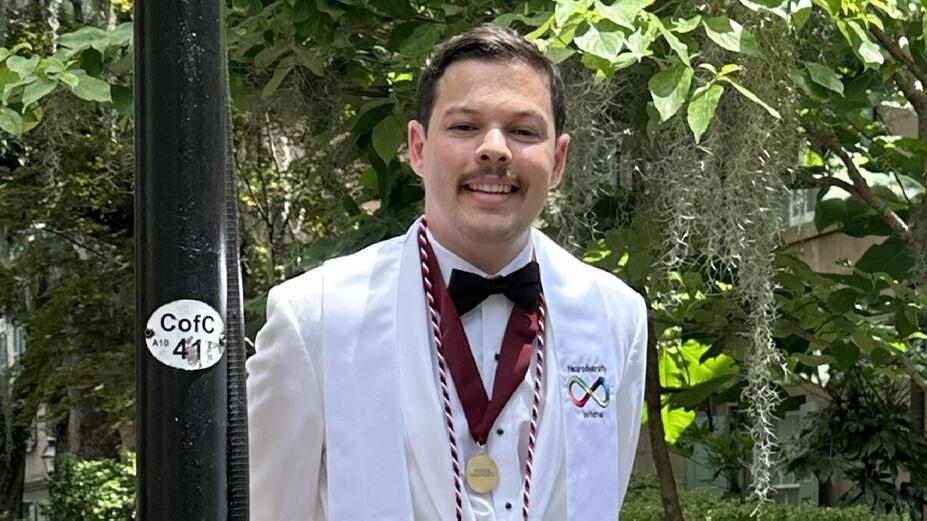
When I was in the second grade at Village School, I found out I had dyslexia and ADHD. At first, I didn't get what it meant and thought I couldn't achieve much in my life. But thanks to an amazing support system, I learned to see my learning differences as “superpowers” rather than setbacks. Going through the ups and downs of having these learning differences from a young age inspired me to advocate for others in the neurodiverse community.
Reflecting on my progress, I realize that it all began at Village School. Words can hardly express how much the faculty and staff meant to me there. They didn’t just support me; they went above and beyond to ensure my success both in and out of the classroom. The nurturing environment at Village School helped build my confidence, allowing me to see my learning differences as a gift rather than a hindrance.
Fast-forward to my sophomore year at the College of Charleston. I started a student organization called the Neurodiversity Initiative. Our goal was to educate the campus about neurodiversity and make the environment more inclusive. During my time at the college, I served as the president and hosted many educational and fun events, creating a safe space for socializing. Some of the highlights were an ADHD panel for faculty to help them better accommodate students and Neurodiversity Celebration Week, which celebrated our community's unique talents and abilities.
One of my faculty advisors nominated me for the Alexander Chambliss Connelley Award during my senior year. This award is given to a graduating student who has made a significant and selfless contribution to the student body and the college. I was humbled and extremely grateful to receive the 2024 Alexander Chambliss Connelley Award. As part of the prize, I got to be one of the commencement speakers at graduation. Winning this prestigious award has motivated me to expand the Neurodiversity Initiative nationally to empower neurodiverse individuals and educate the wider population.
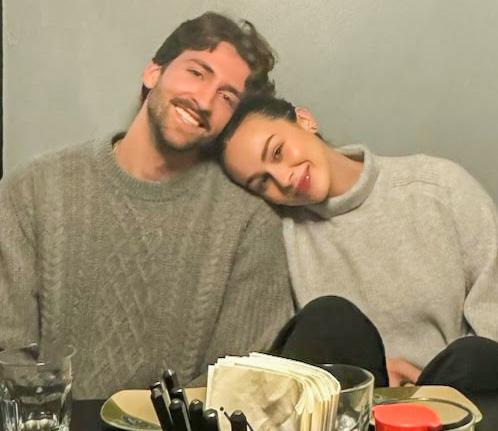
Peter Gutman ’06 and Bella Hogan ’10 reconnected at the beginning of 2020 after crossing paths for many years through their shared experience at Village School and Windward. They were engaged at the end of 2023 and are excited for the future!
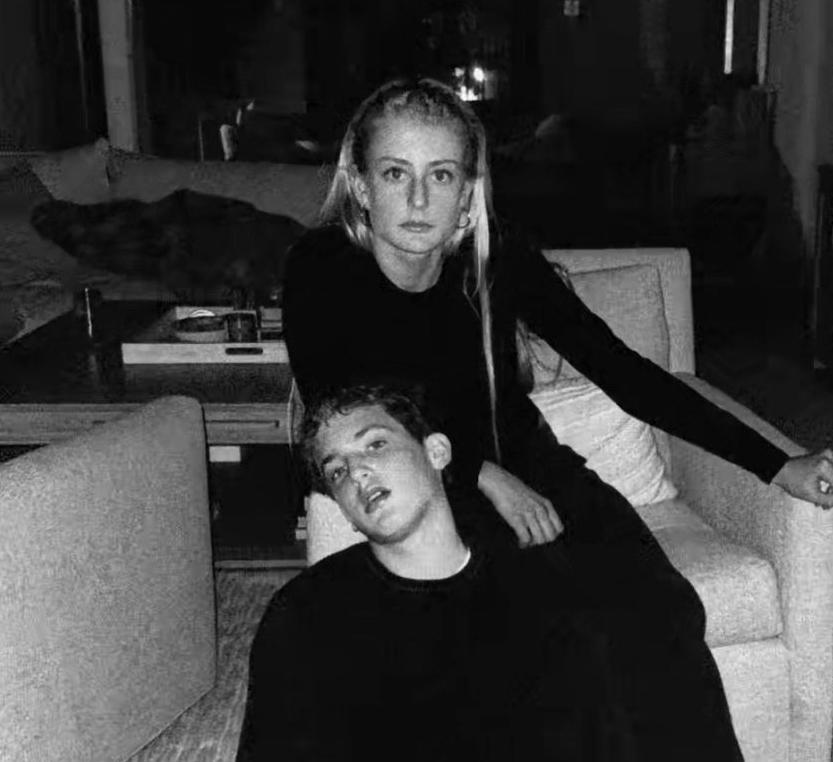
Milo Green ’22 and Annika Cook ’22 started a book club at Windward called the Bookish Book Worms. They have about 30 kids signed up, and they are on a mission to get more kids to read!
Milo and Annika also released their first music single together, titled “My Favorite Hobby,” last winter!
Haylie Rae Wollitz ’10 was admitted to the New York State Bar in December 2023 and the California State Bar in September 2024.
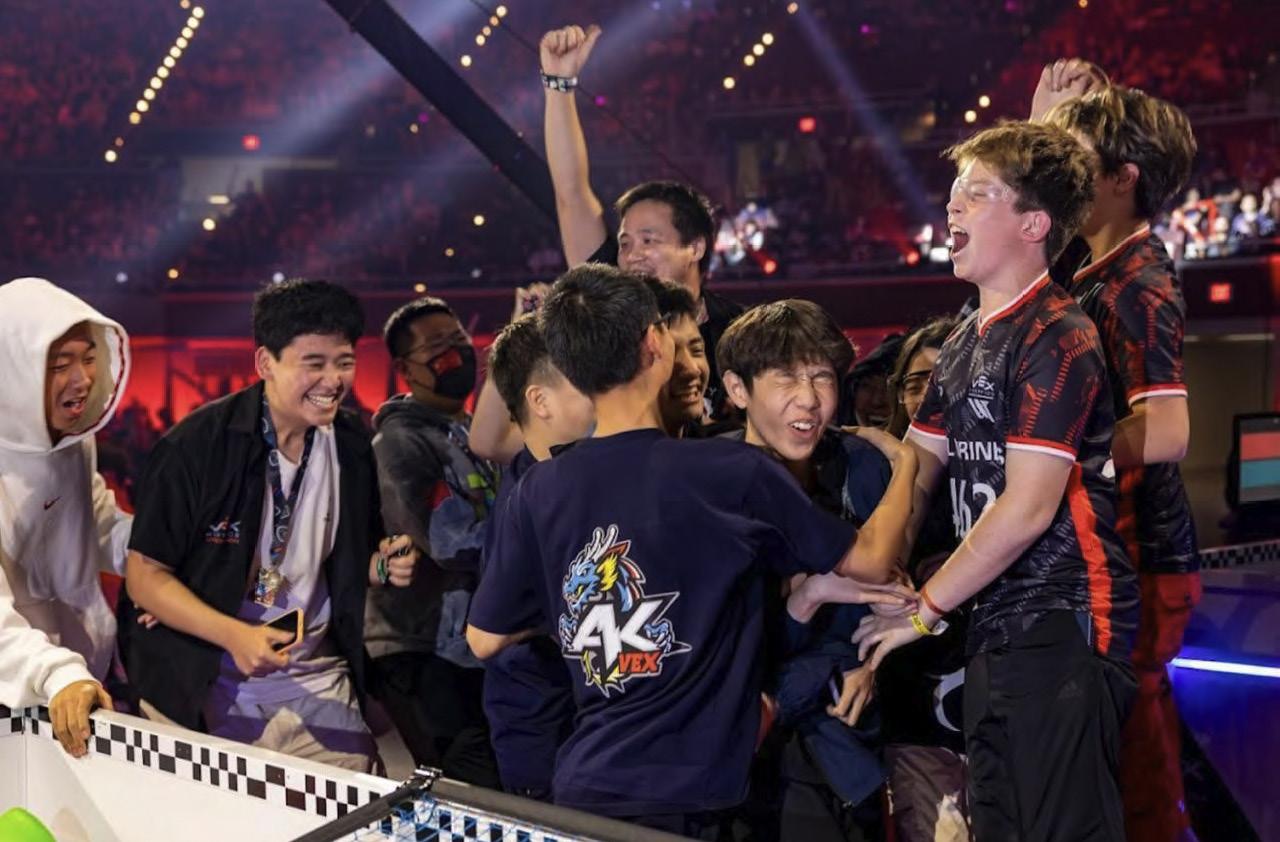
Morgan Litt ’22 writes, "earlier this year, I won the VEX Robotics World Championship with my team at Harvard-Westlake, and I couldn’t thank the Village enough for inspiring me. VEX Robotics is a program with over 10,000 teams from around the world who build a robot to accomplish a certain task. The goal is to complete the task most efficiently. In order to qualify for world's, my team had to win multiple tournaments throughout the year. When we made it to the final competition, we won 20 matches in a row in order to become the world champions. My role on my robotics team is the builder and cadder/designer. At Village, I learned Fusion 360, which was what got me originally interested in robotics and design.
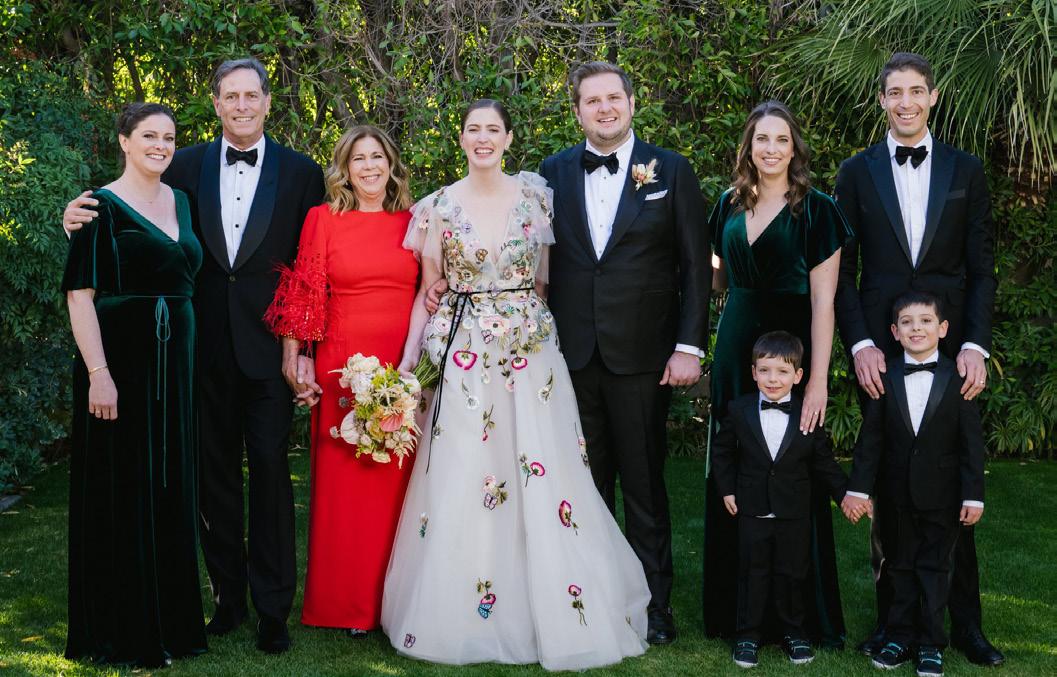
Alexandra Sacks ’04 married Max Weinberg in December 2024. Her siblings Kate Sacks ’01 and Michael Sacks ’99, as well as her nephews Oliver ’31 and George ’33, joined her on the festive day.
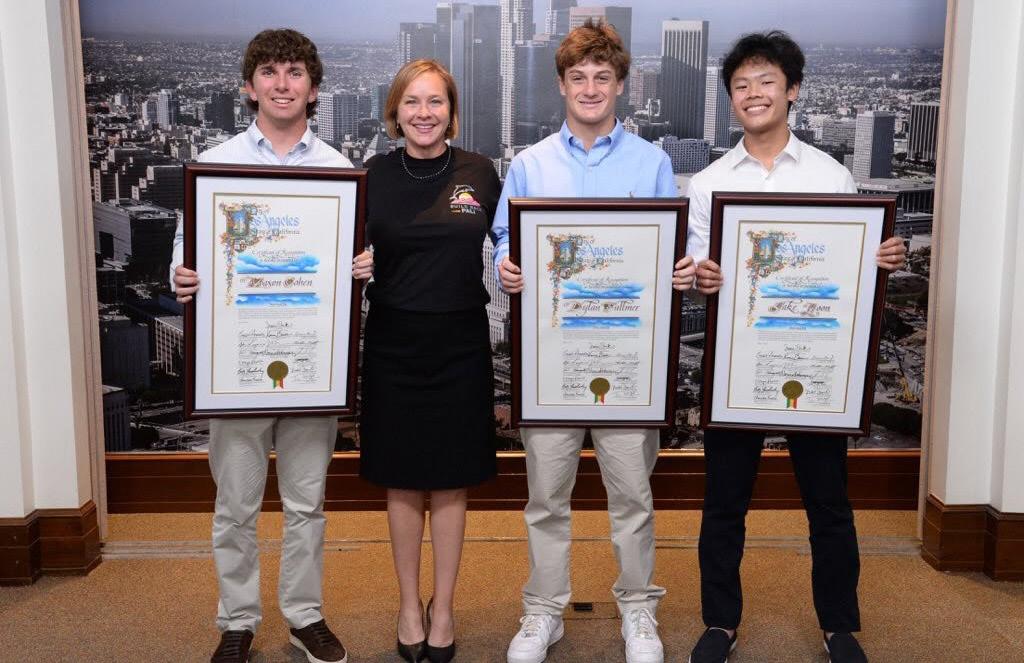
Village alumni Mason Cohen ’21, Dylan Fullmer ’21, and Jake Yoon ’21 were honored at City Council for their dedicated work launching Build Back Pali, raising over $100,000 to support local businesses recovering from the Palisades fire.
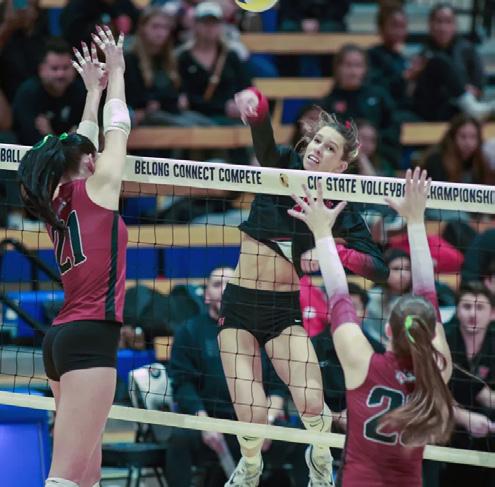
Sophia Cotter ’21 (#12 at HarvardWestlake School, pictured here in a game against Woodcreek) committed to Princeton for Division 1 volleyball.
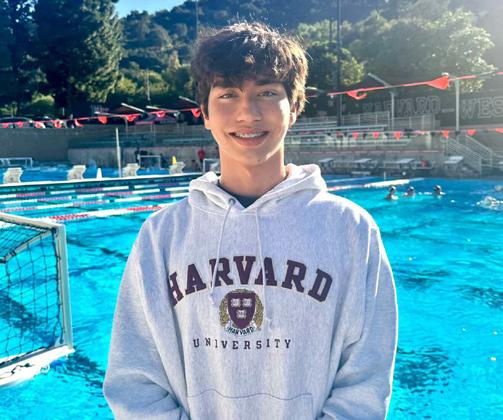
Christian Indelicato ’21 (currently a student at Harvard-Westlake School) committed to Harvard University for swimming and diving.
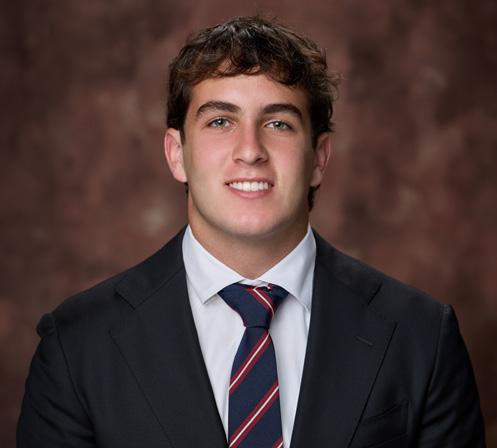
Jack Kripke ’20 (currently a student at Brentwood School) committed to play college football at Williams College.
Robin Lippman ’03 August 2024
Alyssa Garcia ’03 September 2024
Matt Lippman ’03 welcomed his third son.
Ella Cornell ’03 welcomed a child in fall of 2024.
Sarah Mintz ’02 had screenings for her film Good Girl Jane at the Laemmle in September 2024. Her film won the Founders' Award for Best U.S. Narrative Feature at the Tribeca Festival in 2022.
UPDATE YOUR INFORMATION
Please email us at alumni@village-school.org
VERONICA KOPELEVICH, EDITOR
Director of Communications
ASHLEY MOONEY
Director of Admissions
SARA SINGSANK
Director of Advancement for Community Engagement and Philanthropy
DESIGN
KATHY BATES
PHOTOGRAPHY
VERONICA KOPELEVICH
FACULTY CONTRIBUTORS
To learn more about how you can support Village, contact Sara Singsank at ssingsank@village-school.org.
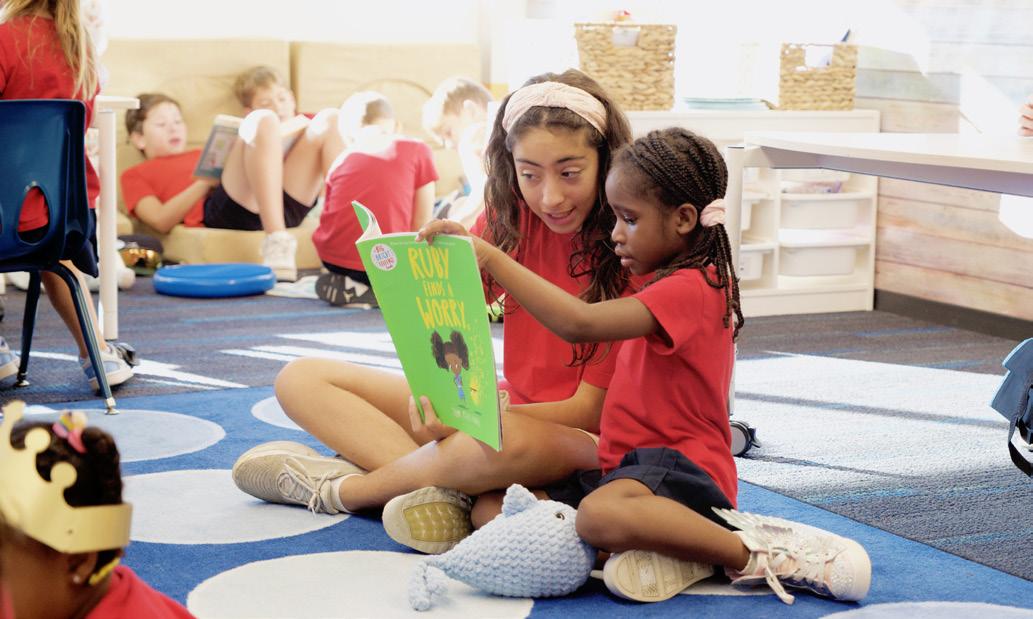
“I like being a Big Buddy because I like to be a good role model for the younger kids.”
—Bradley N., 6th Grade and Big Buddy to Shai S.
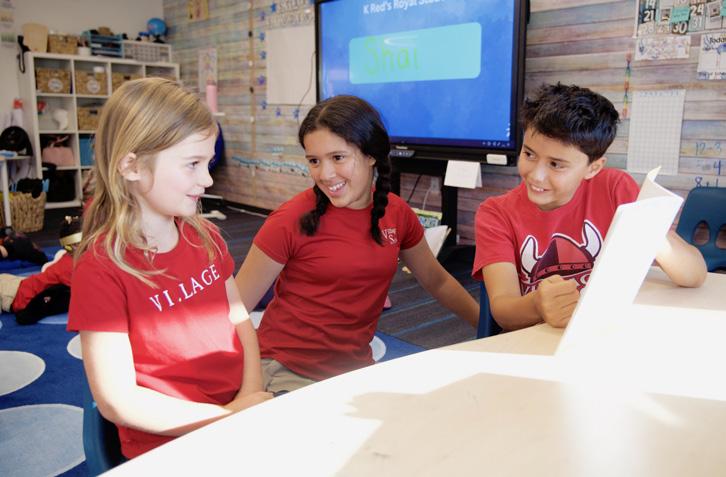
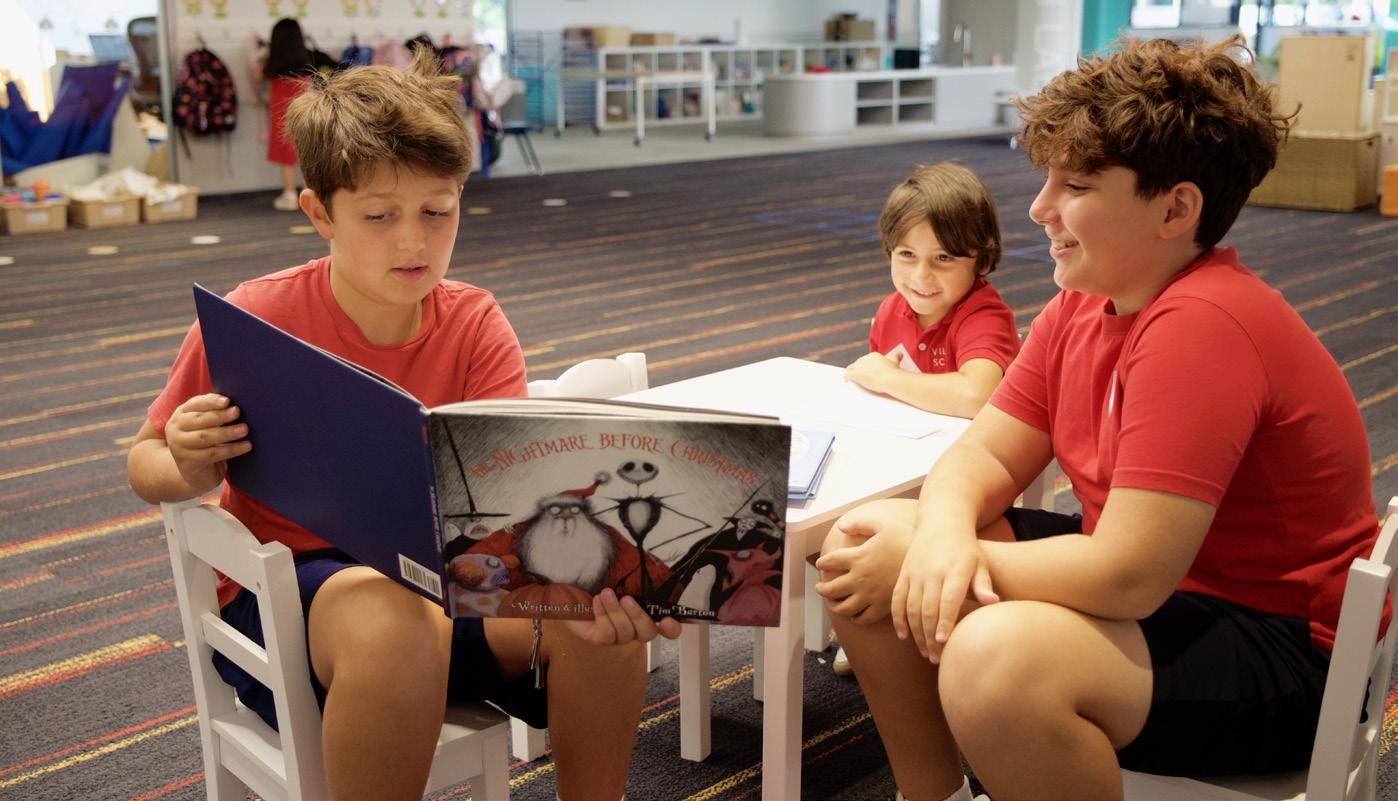
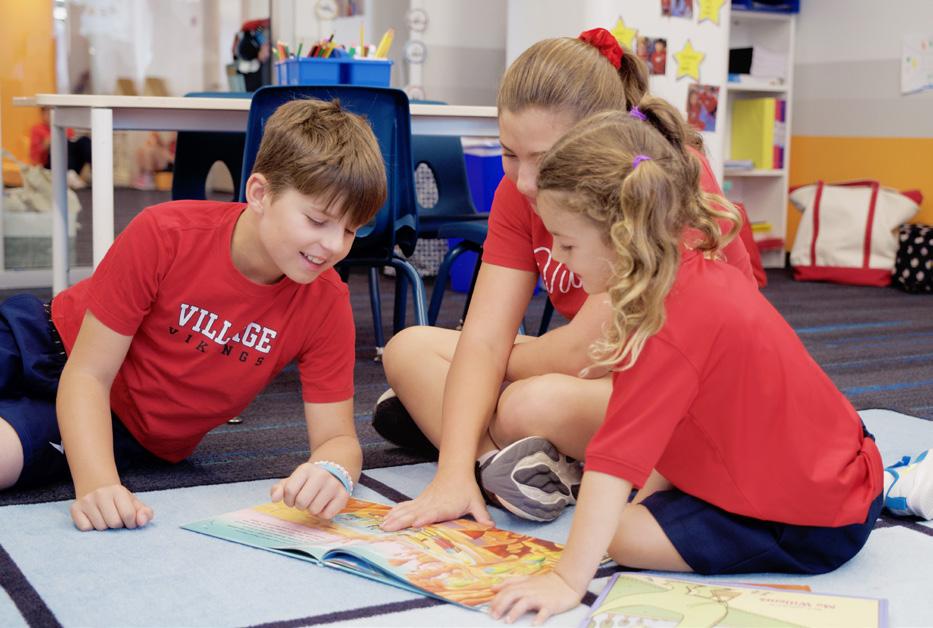
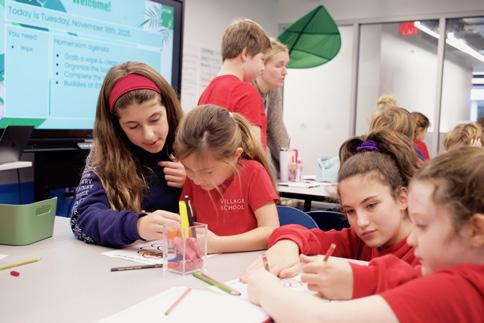
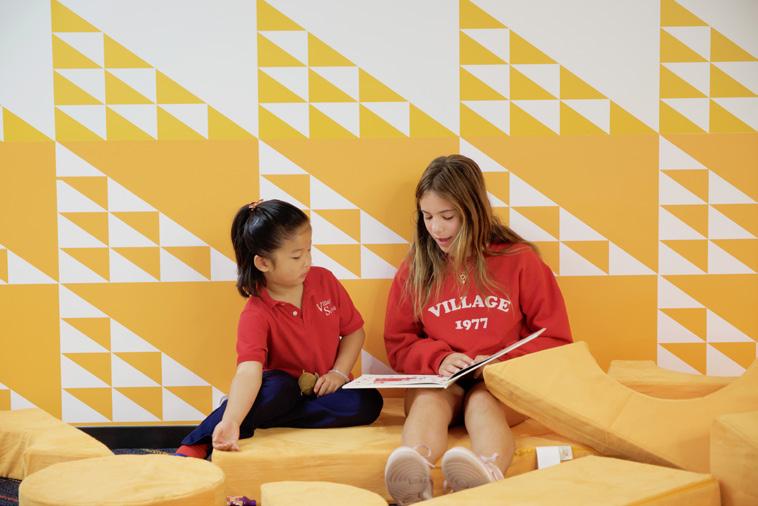
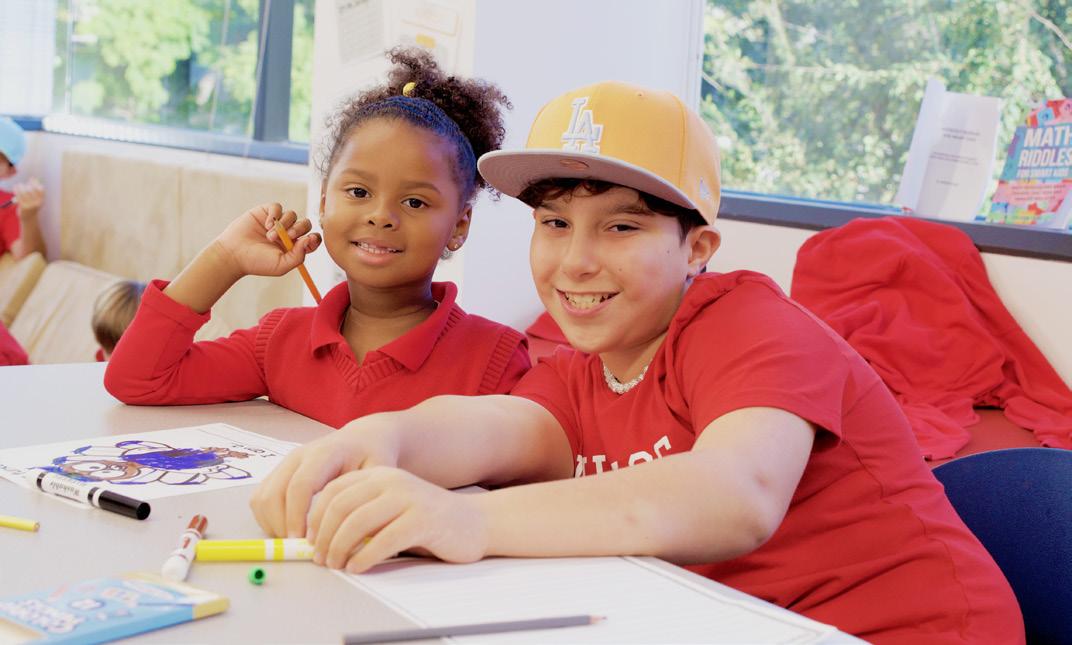
“I just think that my buddy is really kind and I like it when he says hello to me.”
—Sophie L., Kindergarten, and Little Buddy to Teddy T.
Village’s beloved Big Buddies & Little Buddies program brings kindergarten and sixth-grade students together to build leadership, empathy, and a sense of belonging for every child on campus. Through shared meetings each cycle, older students learn to mentor with care, while younger students feel supported and seen. The program balances classroom learning with relationship-building, recognizing that emotional connection is essential to confident, engaged learners.
Santa Monica Interim Campus
2401 Colorado Avenue, Ste. 200
Santa Monica, CA 90404

A small school with a big heart.
A campus woven into the heart of the community. A sea of red shirts walking through the Swarthmore Gate. The drop-off line that once tested our patience and now tugs at our hearts.
Halloween in the gym filled with costumes and cheer. The hum of the lunchroom, steady and full of life.
Chatting on Swarthmore, staying a little longer than we meant to. Walking across to Garden for treats we should have refused. Ice cream in the Village on warm afternoons.
Afterschool meetups at the Yogurt Shoppe, where toppings were endless and friendships were made. Every child known. Every family held. These are the everyday moments we didn't know were extraordinary.
The memories that built our Village.
One year after the fires, we remember what was lost and how much it took to get here. Our community showed us that love and support matter most when everything feels fragile. This is our town. This is our Village.
Pacific Palisades Permanent Campus
780 N. Swarthmore Avenue
Pacific Palisades, CA 90272