PORTFOLIO

SKILLSET
Design Capabilities
•CAD Modeling
•Prototyping
•3D Rendering
•User Experience Design
•User Interaction Design
•Concept Development
•Design Visualization
Manufacturing & Technical Skills
•Additive Manufacturing
•Laser Cutting & Engraving
•Materials Research
•Ergonomic Analysis
•Design for Manufacturability
•3D Printing
•Photogrammetry/3D scanning
•Video Editing and Filming
Core Competencies
•Creative Problem Solving
•User-Centered Design
•Iterative Prototyping
•Technical Communication
•Design Thinking
•Collaborative Innovation
Hello
I am
VIKTORIA SIMON
Product and Industrial Designer
Contact & Professional Links
•Email: viktoriasimondesign@gmail.com
•LinkedIn: https://shorturl.at/jmG3O
•Instagram: @viktoriasimon_design
•Phone: 07495265853
I am a product and industrial designer dedicated to enhancing quality of life through thoughtful innovation. I am a designer driven by a fundamental belief in design's power to improve human experiences. My work is rooted in a holistic approach that prioritises human-centric solutions, focusing on mental and physical well-being, sustainability, and meaningful innovation.I approach complex challenges with meticulous attention to both practical details and user experience. My designs seamlessly blend functionality with comfort, creating intuitive products that make everyday moments easier and more dignified. By focusing on the subtle elements that matter most, it allows me to craft solutions that genuinely improve how people interact with their world
EDUCATION
DEANS COMMUNITY HIGH SCHOOL (2013-2021)
PRODUCT DESIGN BA (HONS) – THE UNIVERSITY OF EDINBURGH (2021-2025)
DESIGN EXPERIENCES
APPROACH

•Comprehensive research-driven design process
•Commitment to understanding user needs deeply
•Embracing complex, challenging design problems
•Interdisciplinary and adaptive thinking
•Continuous learning and skill development
SOFTWARE

STUDENT GENERAL TECHNICIAN AT UCREATE MAKERSPACE (2025 -)
PRODUCT DESIGN FREELANCER (2024) – CAHSS TROPHY COMMISSION



+ 3D Printer Slicers
CORE INTERESTS AND SPECIALTY
•Healthcare Design: Exploring innovative solutions that enhance patient care and medical experiences
•Human-Centered Design: Creating products that genuinely improve quality of life
•Sustainable Innovation: Developing designs that respect environmental and human needs
•Wellness-Focused Solutions: Designing products that support mental and physical health
VISION
My goal is to craft designs that are not just aesthetically pleasing, but transformative solutions that address real-world challenges, support human well-being, and contribute positively to both individual experiences and broader societal needs.
CONTENTS
COMBO PUMP 2022
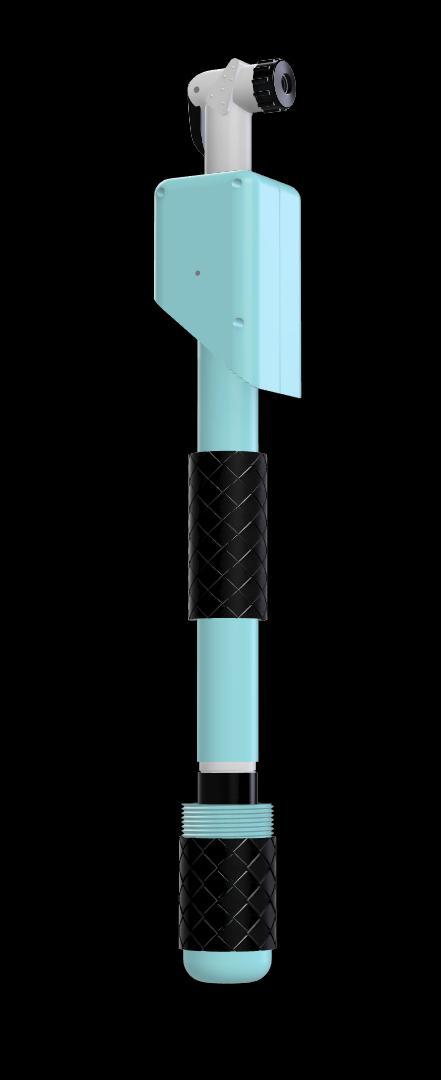
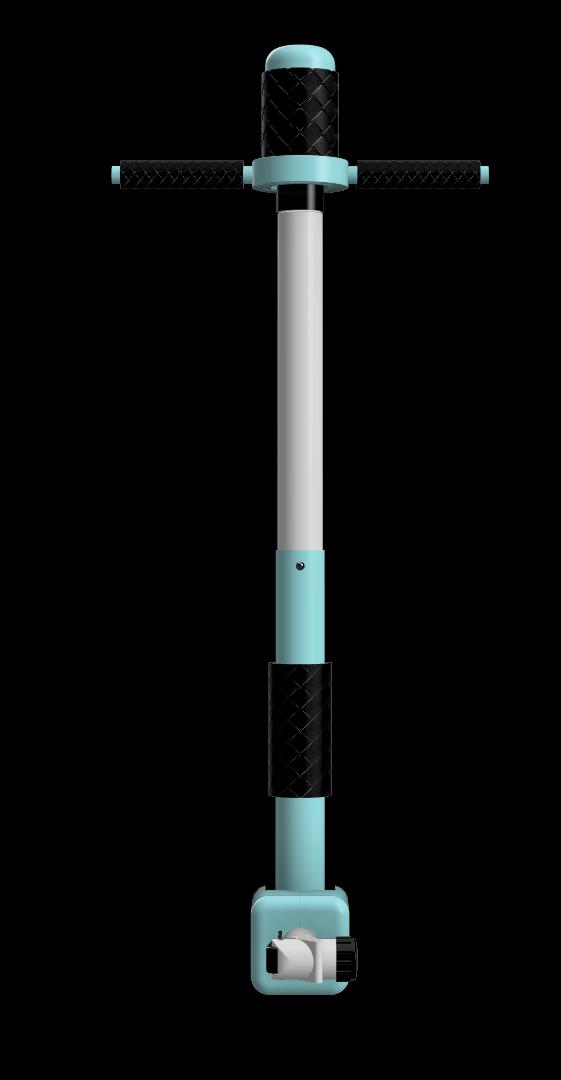
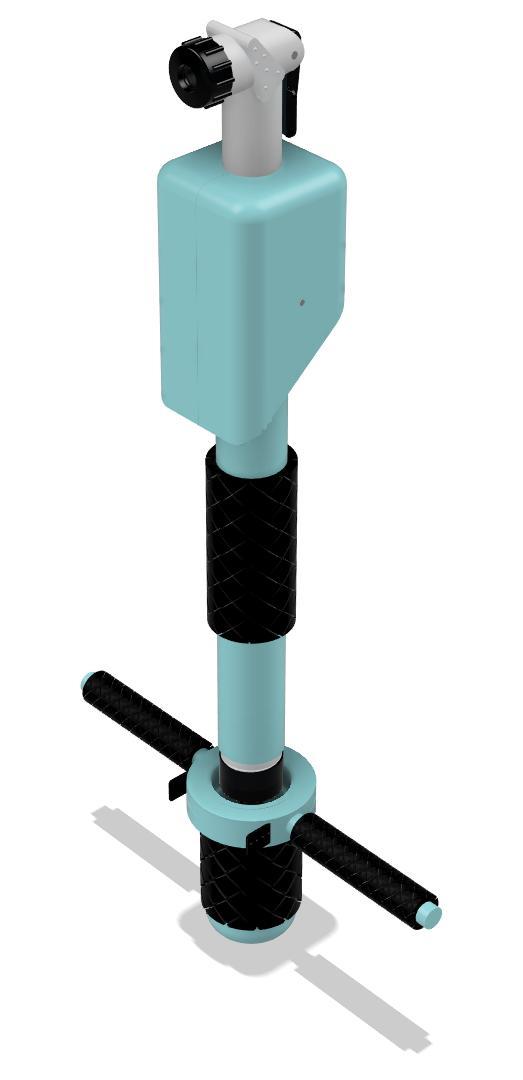
Converting tyre pumping into a less straining experience through the combined efforts of a hand and floor pump convertible.
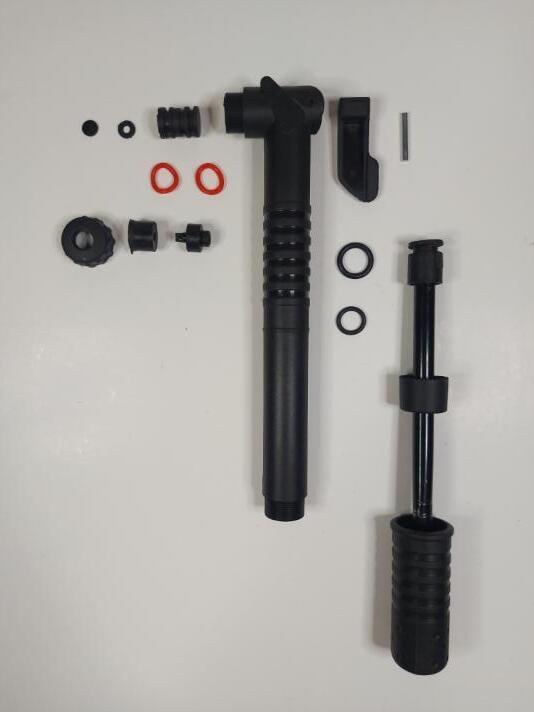
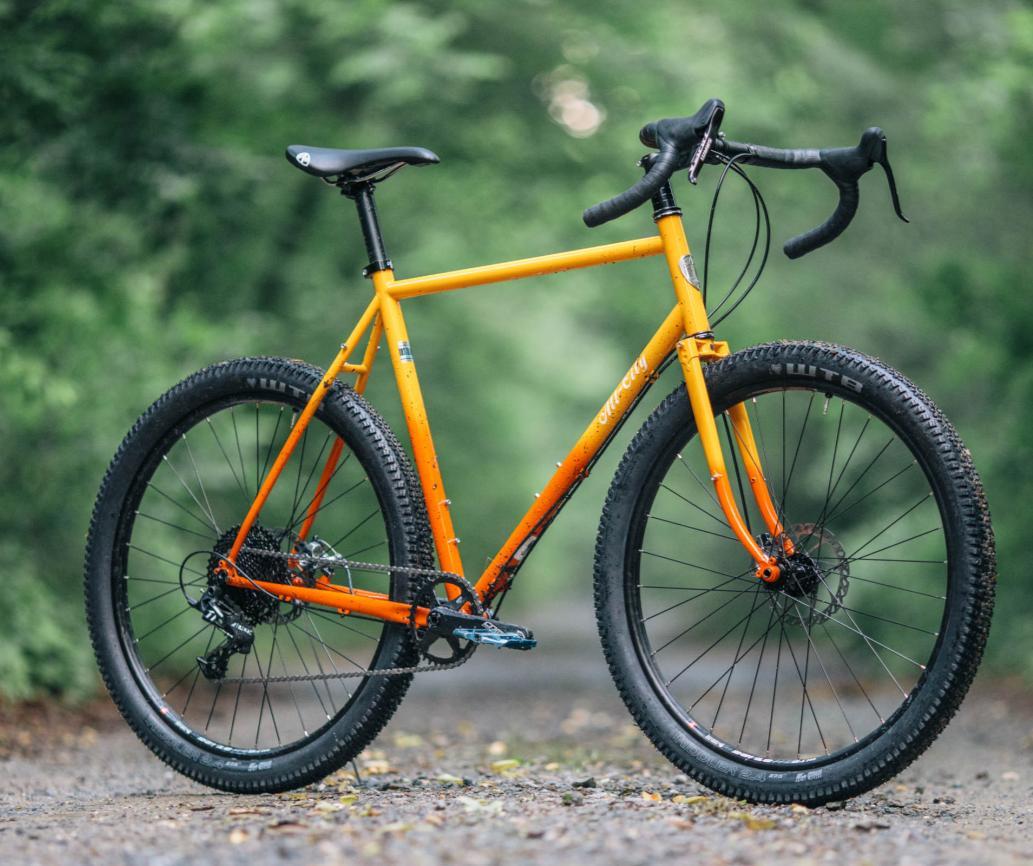
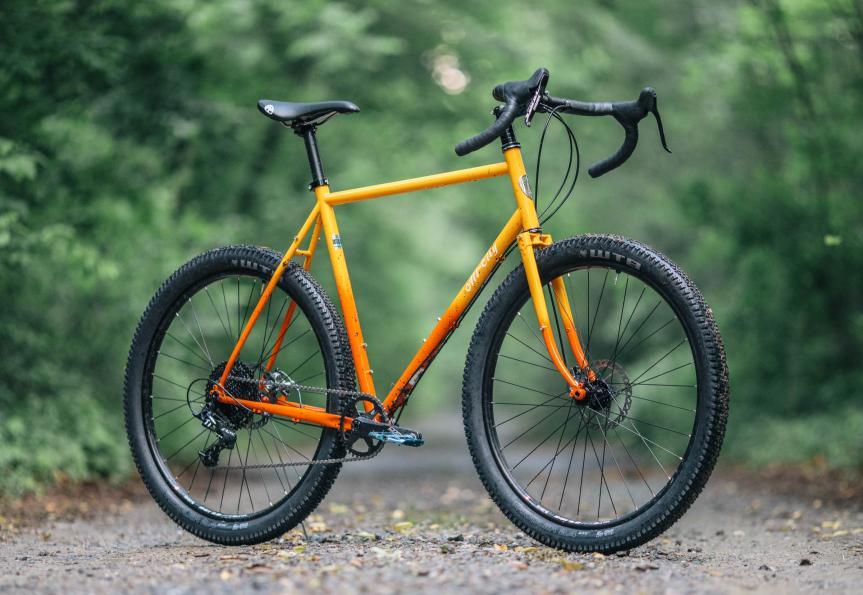
On market bike pump – I used as reference
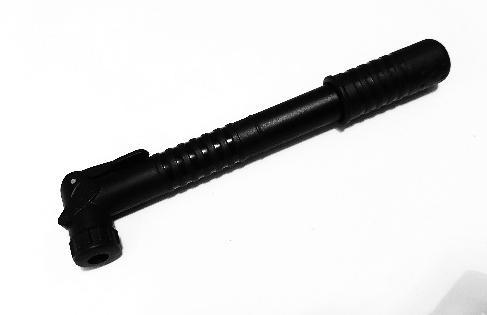
Bike Tyre Pump Re-Design
The Beginning: Design Brief
Bike Pump for improved functionality and user experience by improving the pressure capabilities of a hand pump therefore improving the time taken to pump up a tyre and limit straining of the hands/arms by using stronger muscles. The pump must allow movement flexibility and comfort through its material and user experience by excluding crouching for a long period of time. Non-slip grip to allows for more control and better generation of pressure. The pump must aim for sustainability through material and production allowing a complete ability and ease of disassembly for repairing; accounting for the circular economy.
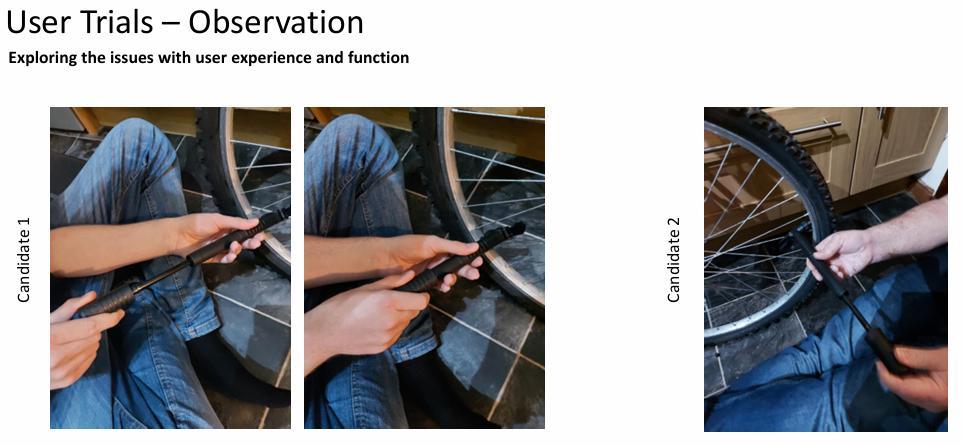
Design Challenge
•Objective: Re-design a bike pump to improve functionality and user experience
•Key Requirements based on user observation:
• Enhance pressure capabilities
• Improve ergonomics
• Implement sustainable design principles
• Consider manufacturing constraints
Focus of Improvement: Sustainability User Experience Functionality
+ Exploring Mechanical fixings, Manufacturing processes and Materials
IDEA GENERATION
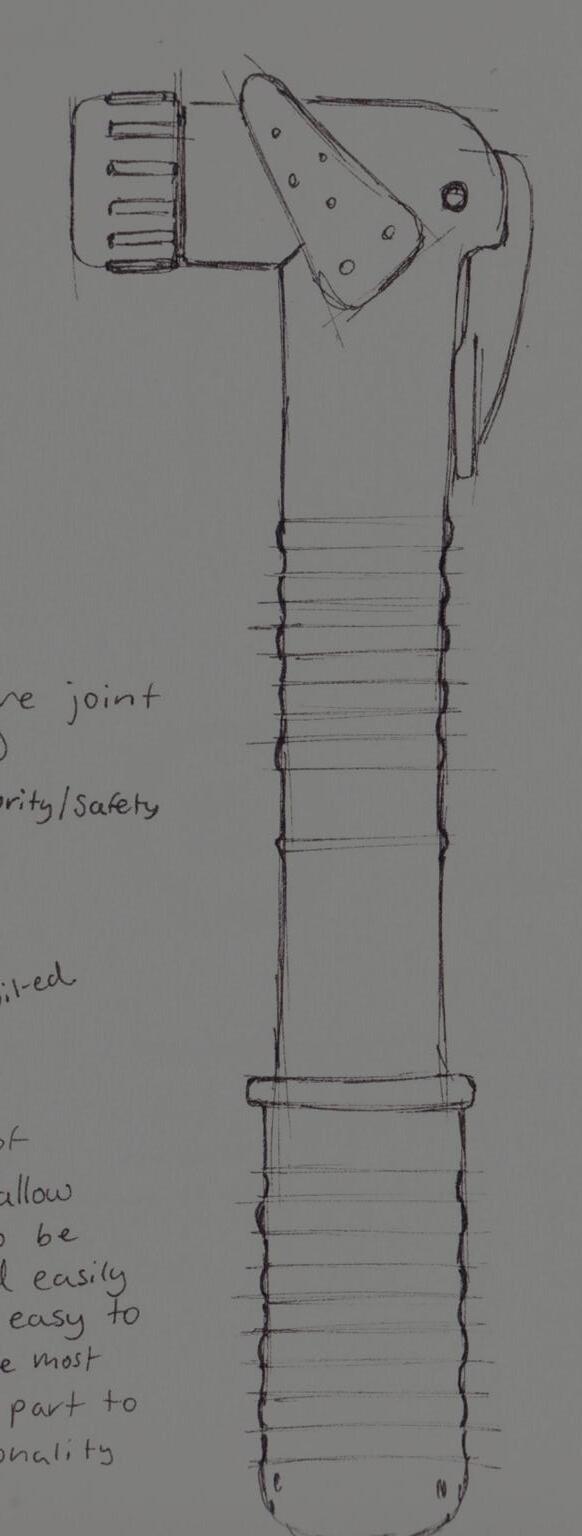
Through the use of object autopsy and investigating the inner parts of a bike pump, I have managed to learn the intricacy and joining methodology of these devices in order to allow me to create a plan to improve them.
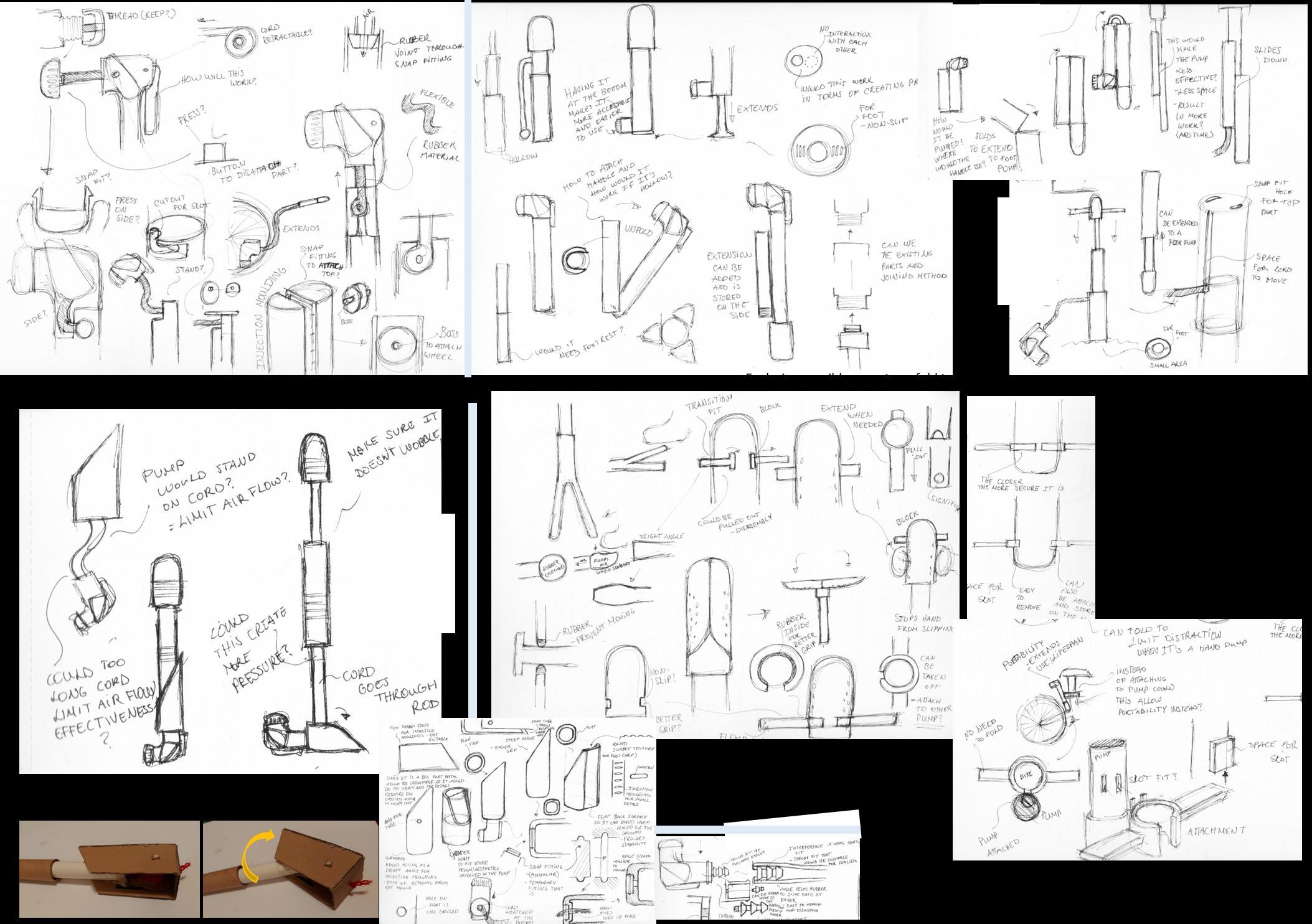
The ideation process focused on the idea of creating better pressure and ensuring less strain and more freedom whilst pumping up bike tyres as well as ensure speed is to use the foot as well in order to allow more strength to be contributed. Therefore I have started experimenting and ideating about how I could create a combined pump of a hand and floor pump. Through thinking on paper I have managed to explore ideas fast before proceeding to low resolution modelling and testing of how to convert the hand pump into a floor pump.
DEVELOPMENT
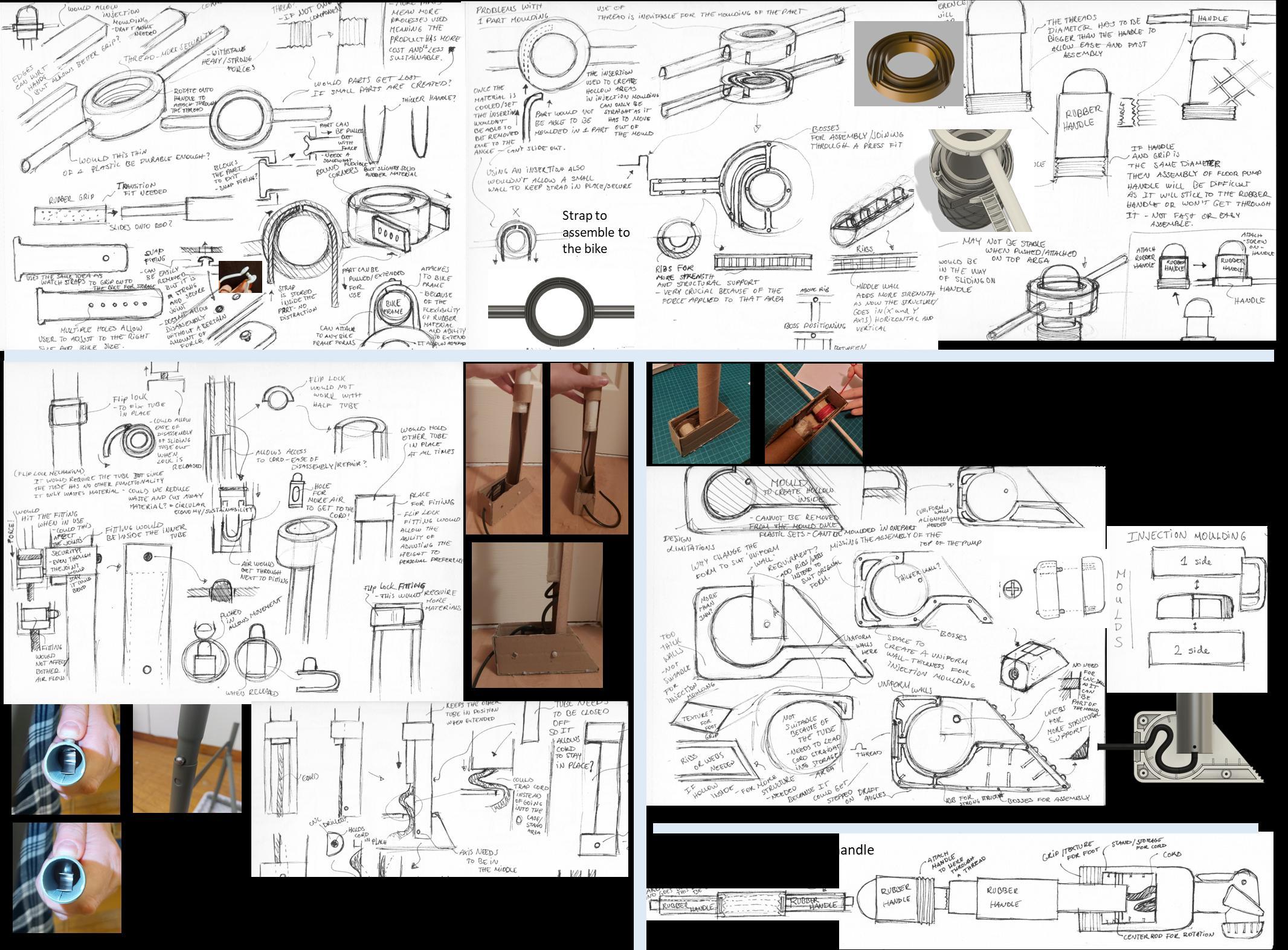
The development created a more detailed exploration of how the parts could be joint as well as what materials and processes could be used. Through the focus on injection moulding the device, I have precisely considered the requirements of injection moulding to ensure the product would be ready for manufacturing.
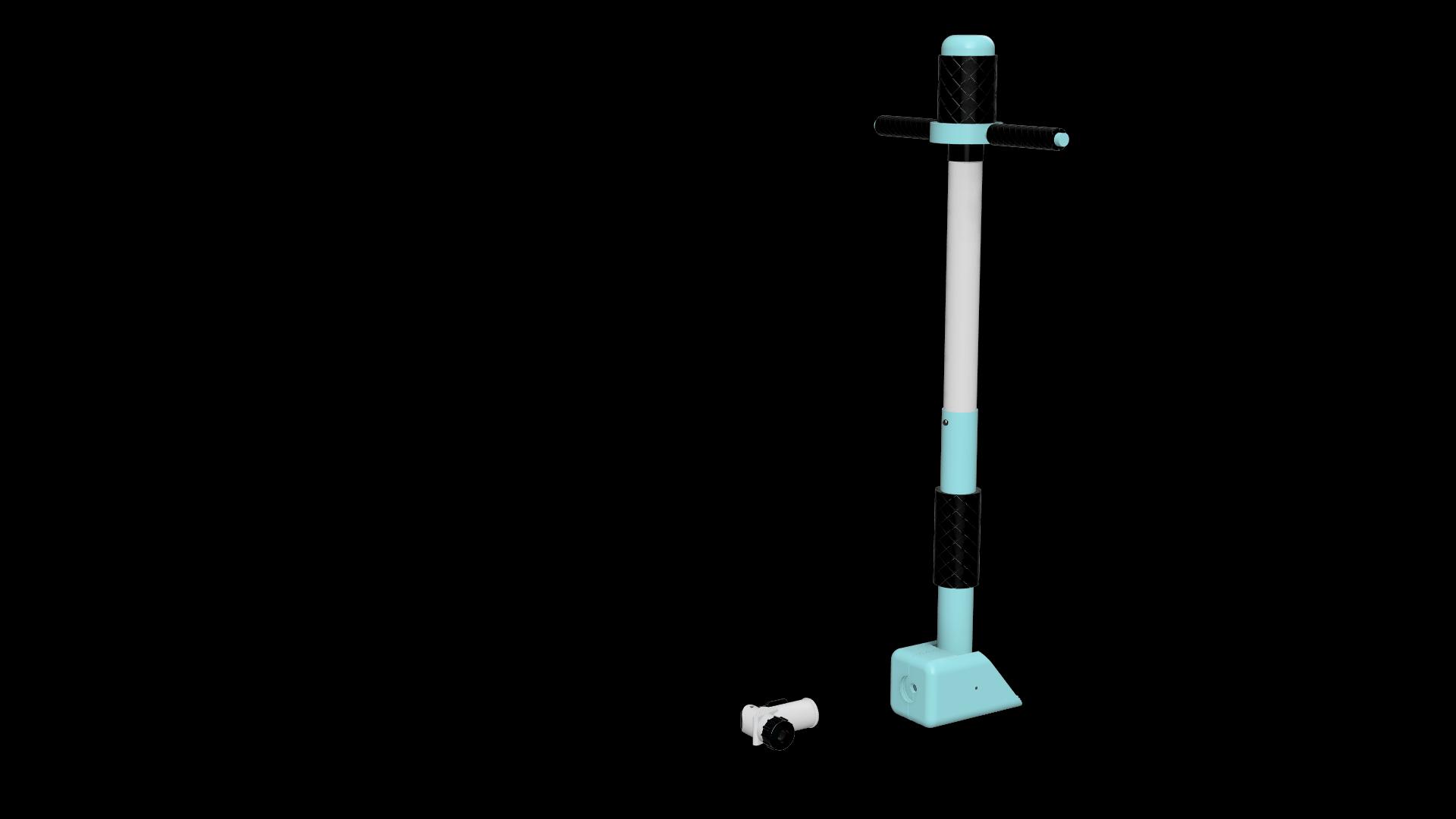
I have used CAD modelling to ensure that all parts are modelling including existing o-ring sizes as well as the tip of the explored pump. This allowed me to then create a complex assembly with technical consideration and attention to detail.
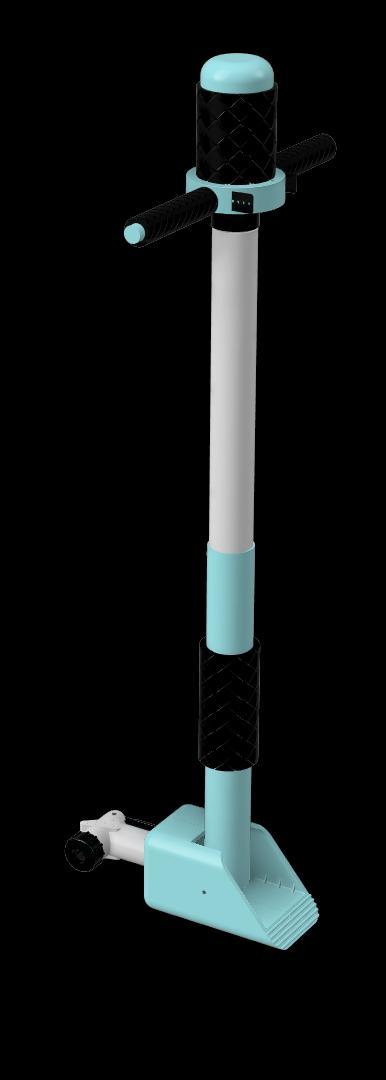
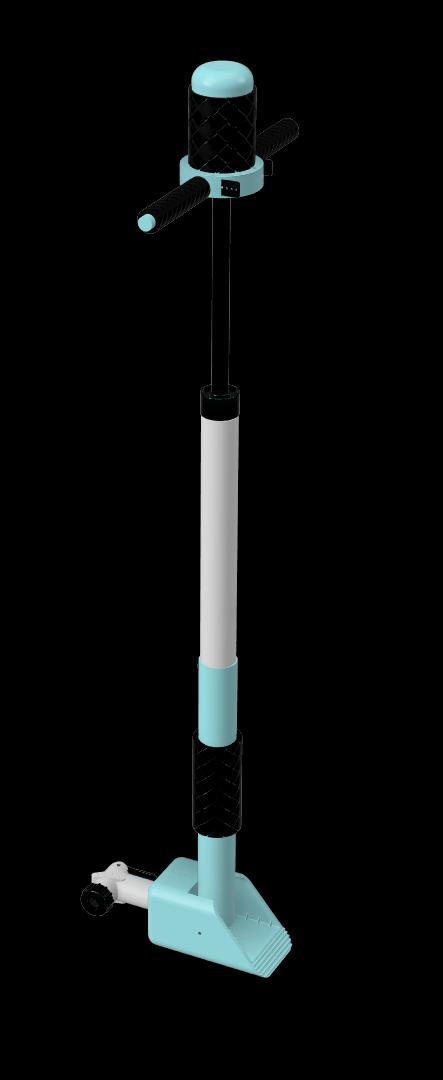
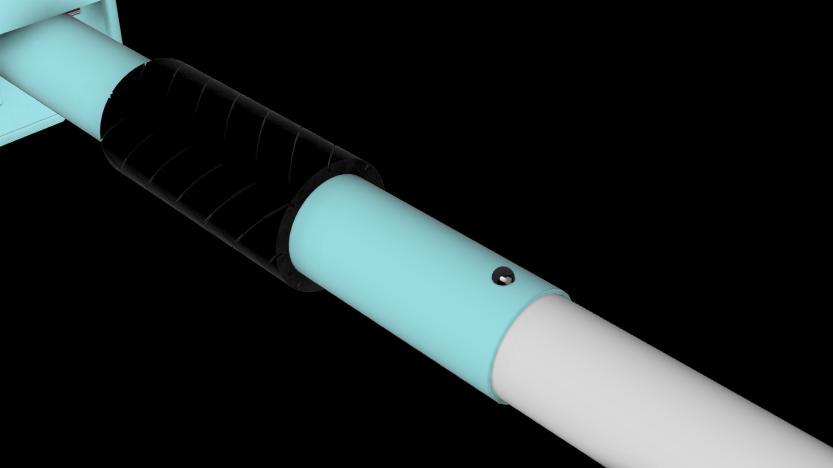
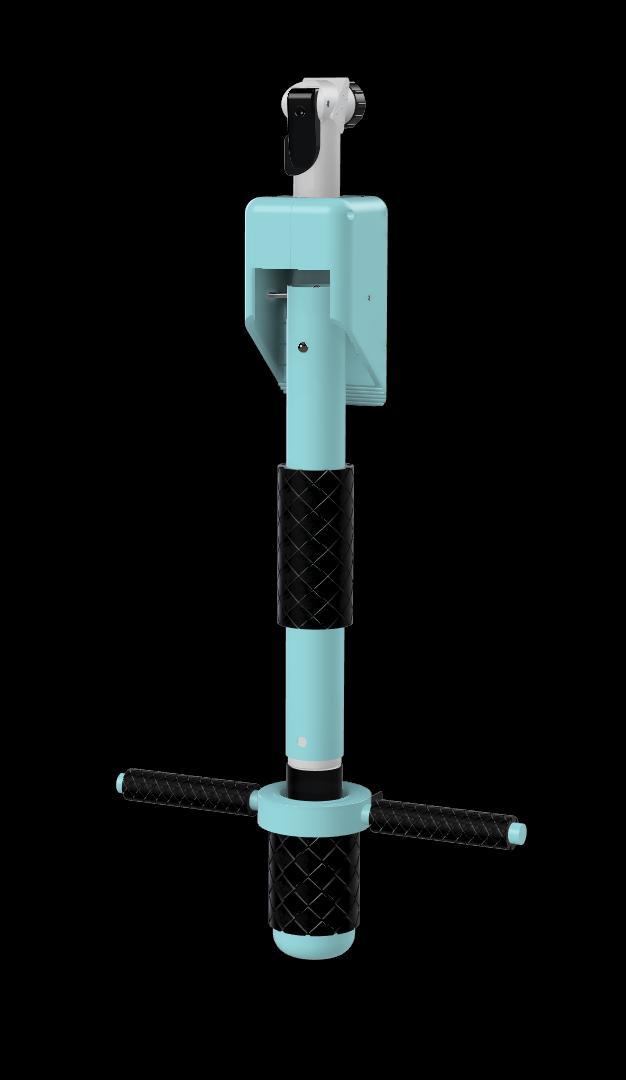
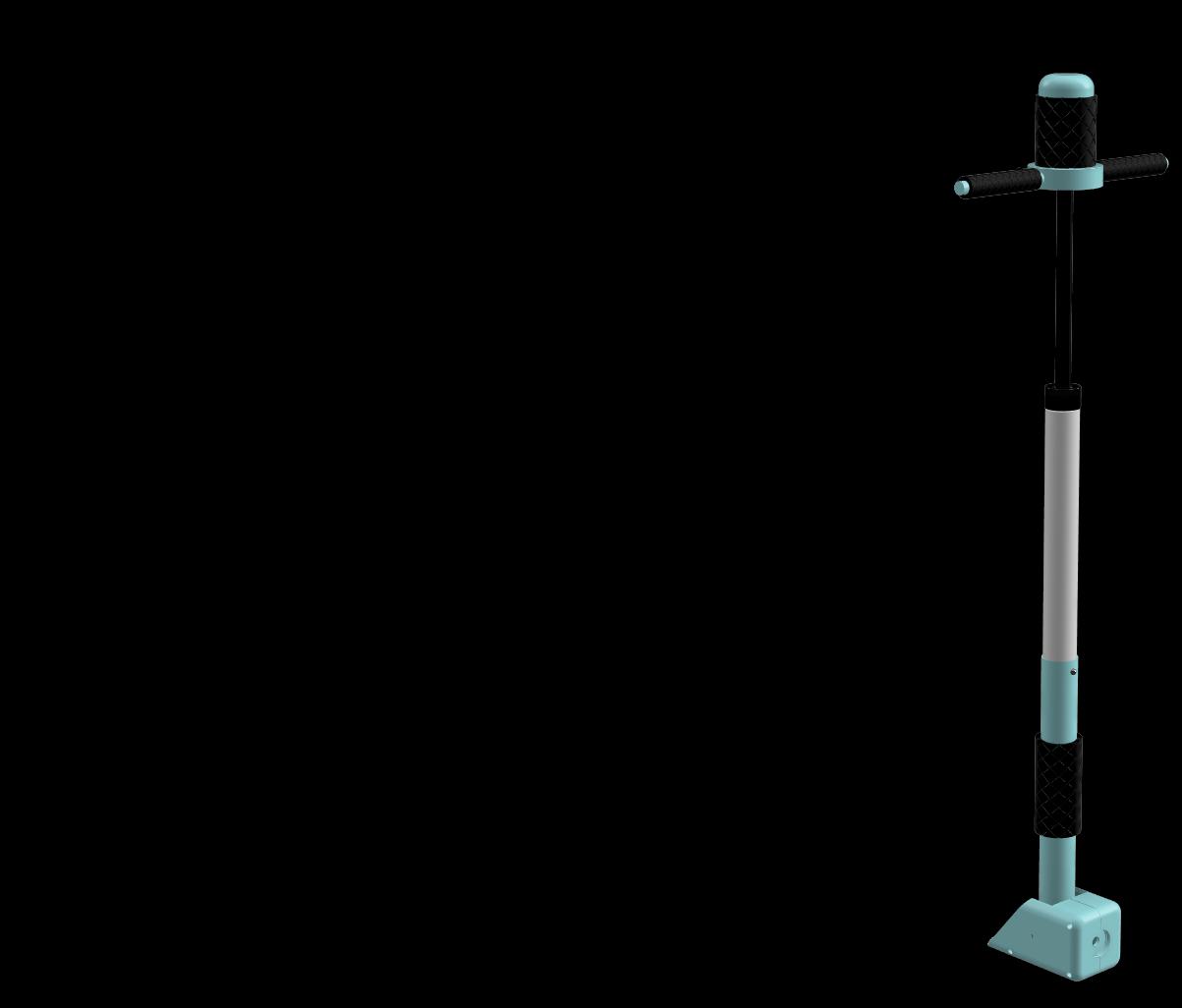
Through using renders I was able to communicate the pump’s functionality such as how can be extended to be used as a floor create more pressure through upper body which was intended to create easier strain
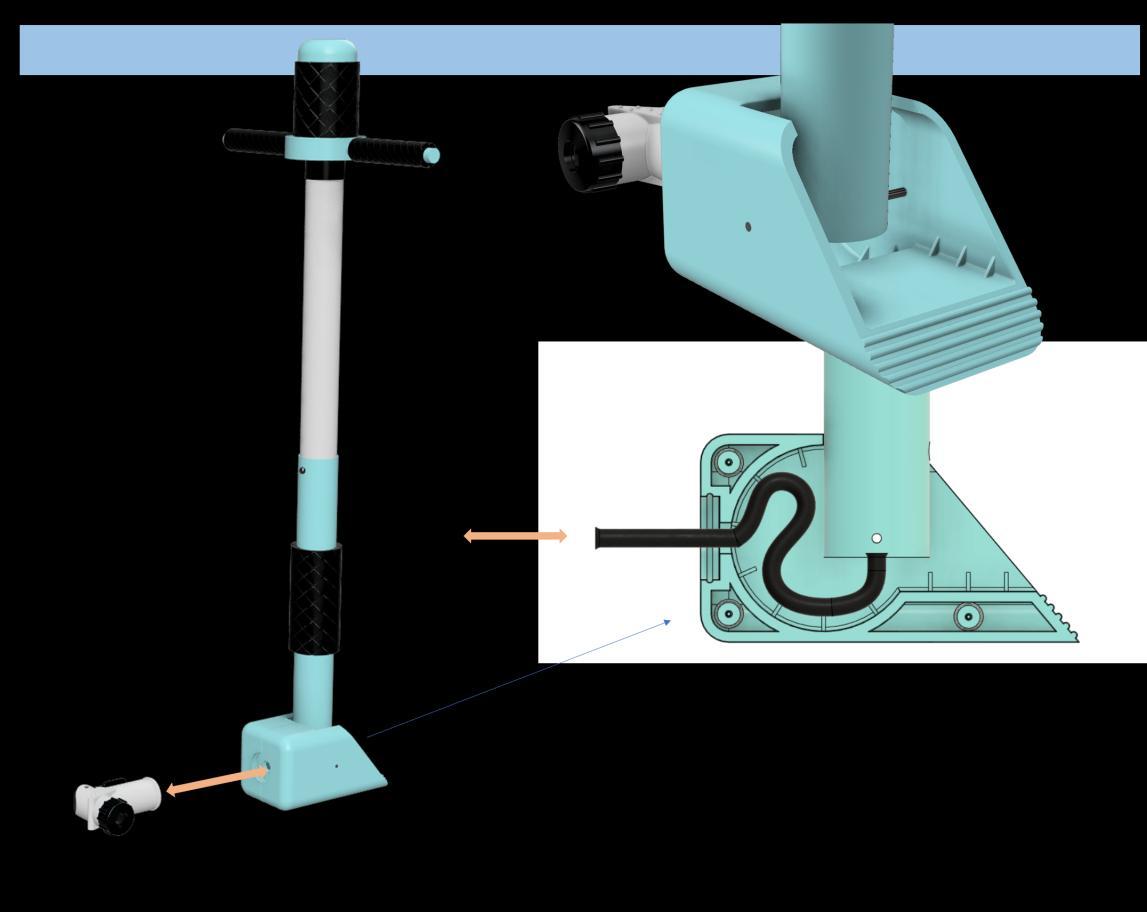



McLaren Plastics Visit and Interview
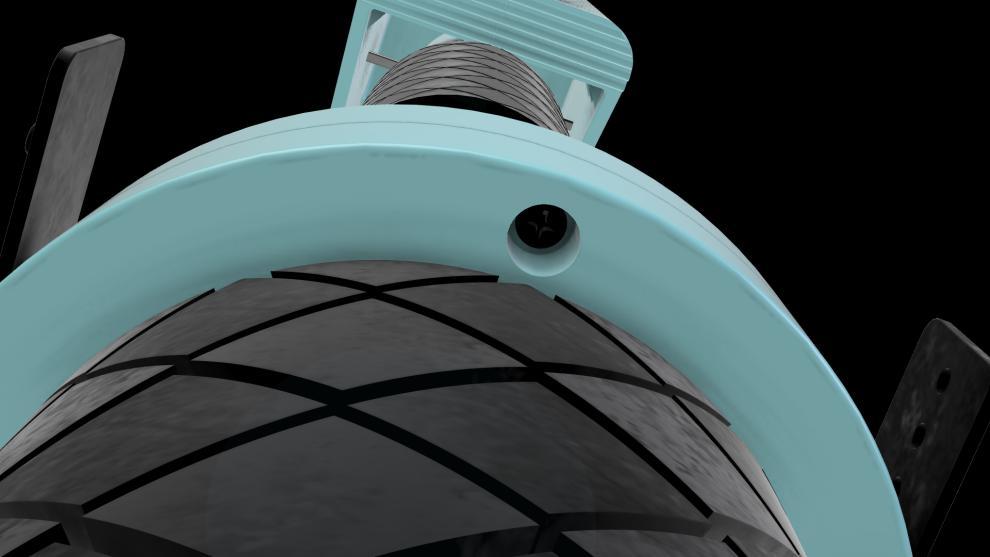
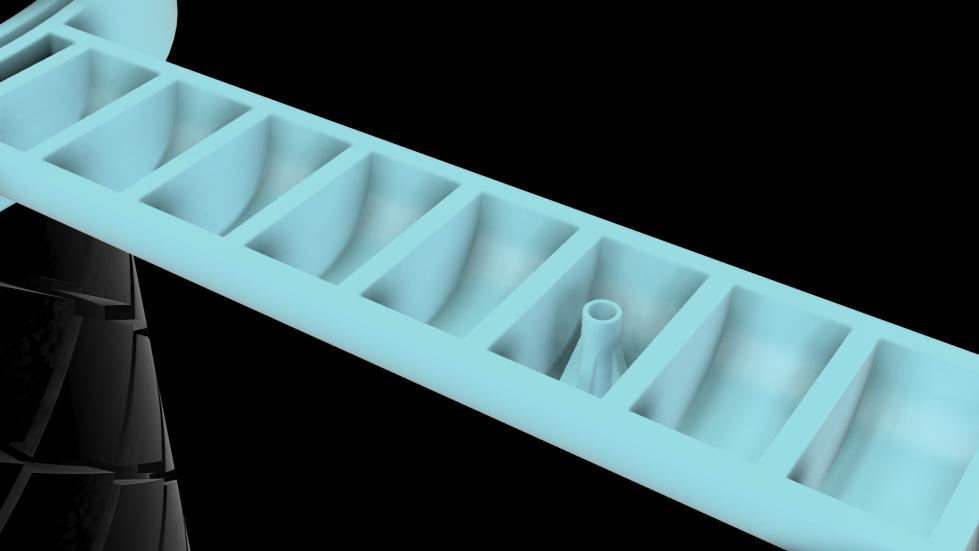
Bosses with Phillips screws for joining – creates more security for interactive areas that have 2 parts.
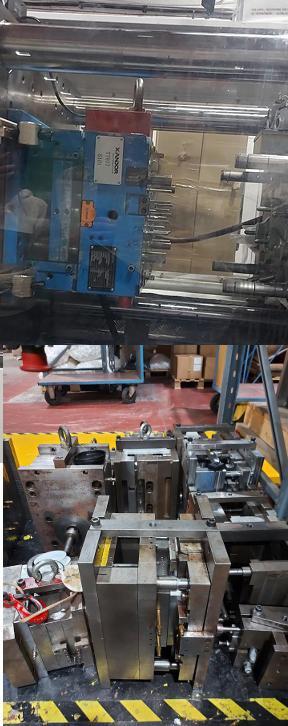
During the visit, I presented my design concepts and received invaluable feedback on material selection, wall thickness requirements, draft angles, and assembly methods. The McLaren specialists identified potential manufacturing challenges with my initial designs, particularly around the complex internal channels and connections in the pump body. Their insights led me to incorporate specific production-oriented features, including the bosses with Phillips screws for secure component joining and the redesigned rubber grip assembly with push-fit and slot fitting mechanisms.
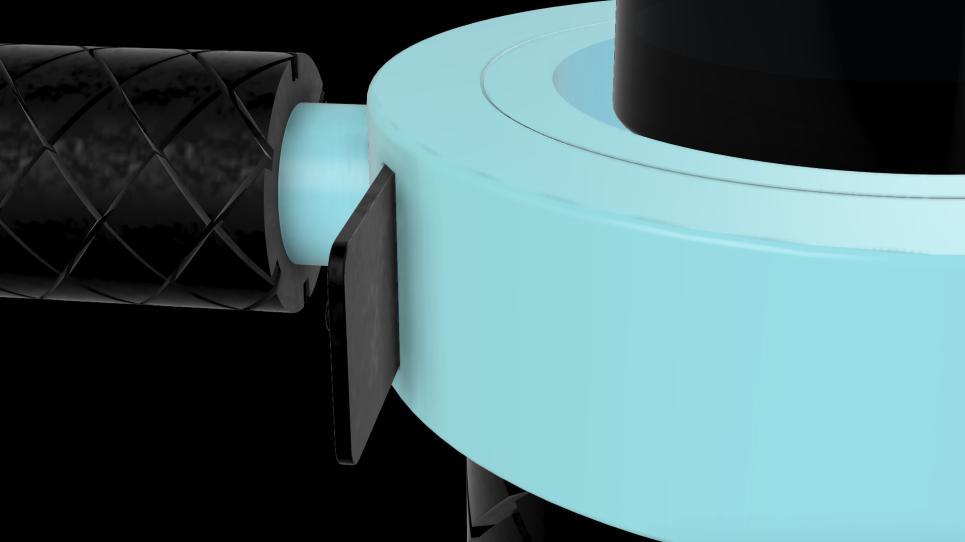
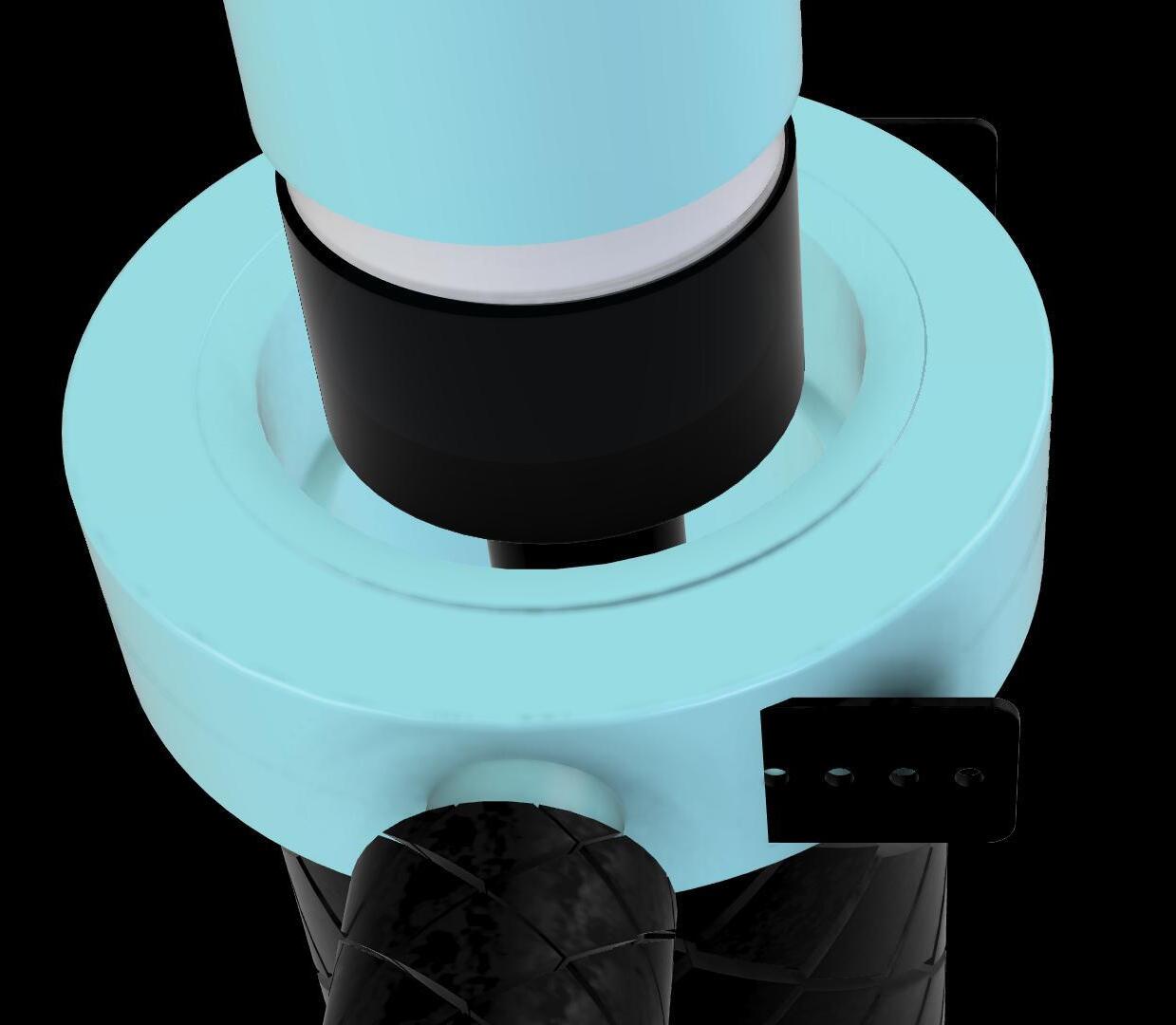
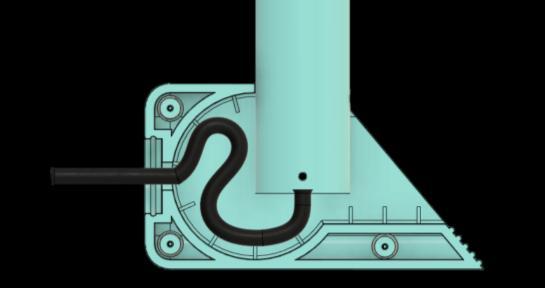
Strap can be pulled out and wrapped around the bike frame – holes allow adjustment to different bike frames and sizes.
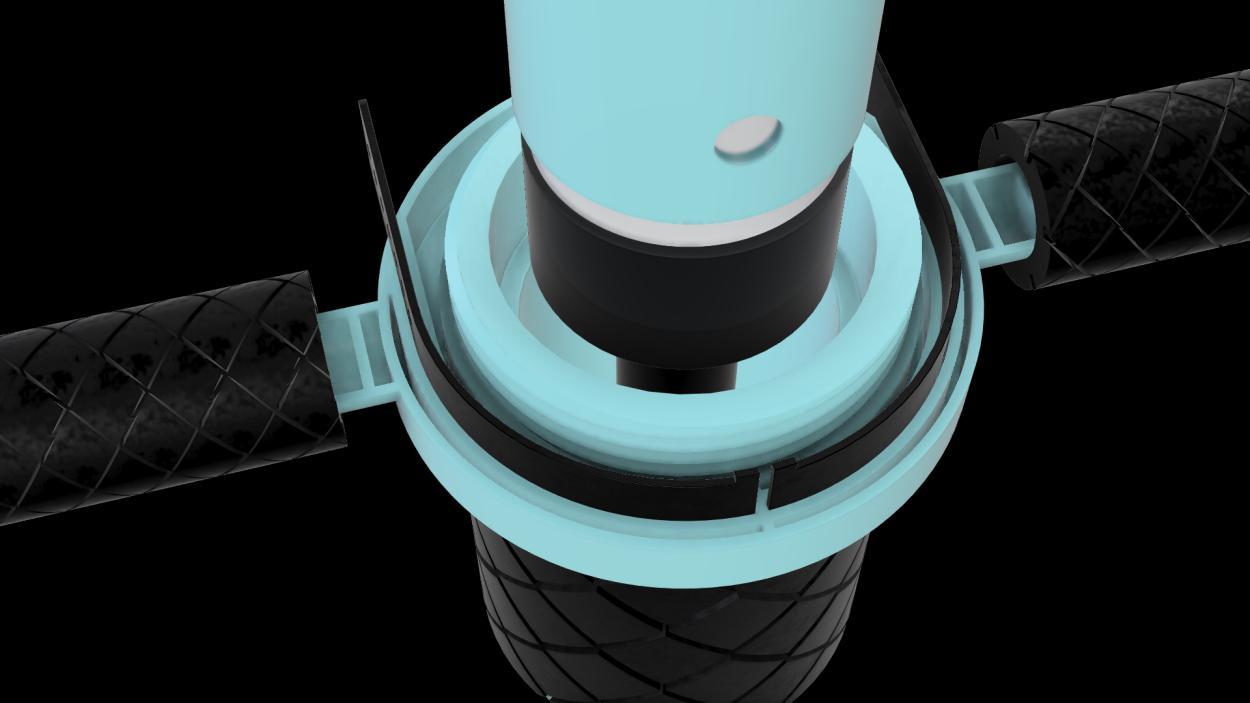
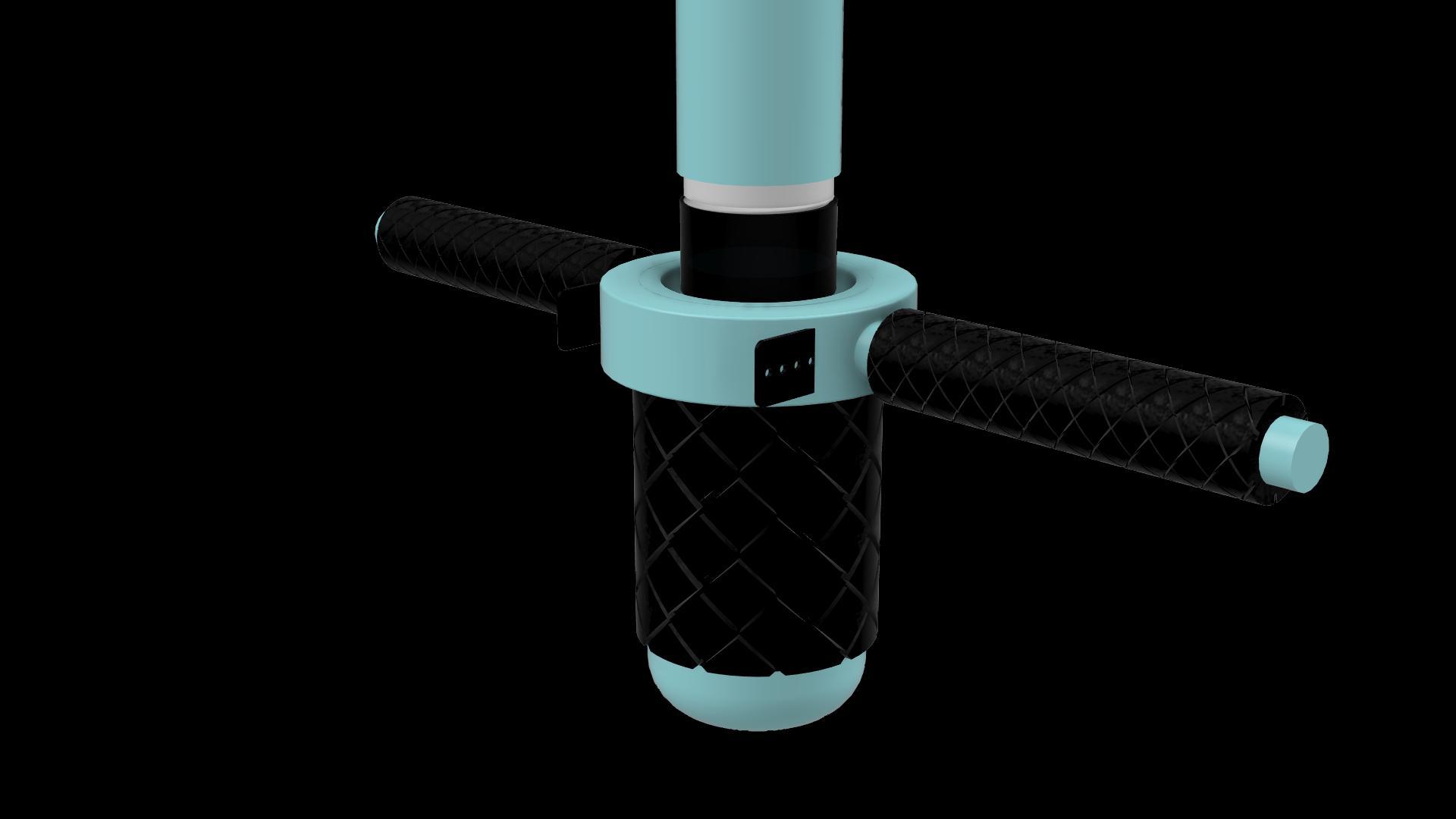
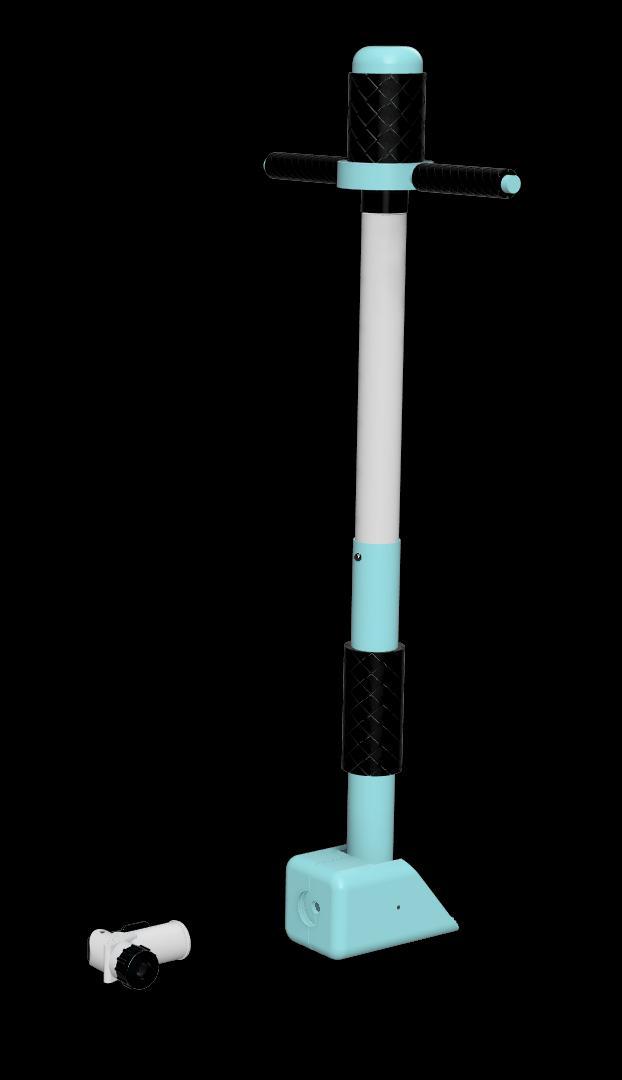
Rubber grip is assembled through a transition/push fit and slot fitting for bigger rubber handle. This adds comfort and allows the hand of users to hurt less and adds more structural support to the floor pump handle.
Bike Frame
REFLECTION
Contextualizing Within Industrial Design
This project sits firmly within the industrial design subfield focused on sports and outdoor equipment, where ergonomic considerations must be balanced with mechanical efficiency and durability requirements. By addressing not just the primary function (inflating tires) but also considering the full user experience including portability, storage, and versatility the design demonstrates my understanding of contemporary product design's comprehensive approach.
My research methodology integrated multiple approaches: object autopsy to understand mechanical construction, user observation to identify pain points, and market analysis to position the product appropriately. This multi-faceted approach reflects current industrial design practice where technical, user-centered, and commercial considerations must be harmonized.
The project particularly exemplifies the current shift in industrial design toward circular economy principles. By prioritizing disassembly, repair, and component replacement, the design addresses sustainability not as an afterthought but as a fundamental design parameter—contextualizing the work within contemporary sustainable design practices.
Strap extends to the desirable length for the bike frame
Portability
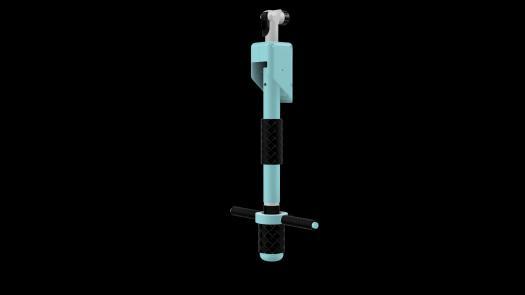
Due to the flexibility of the strap and its sizing it can be placed on the bike in various angles and where desired to fit specific needs.
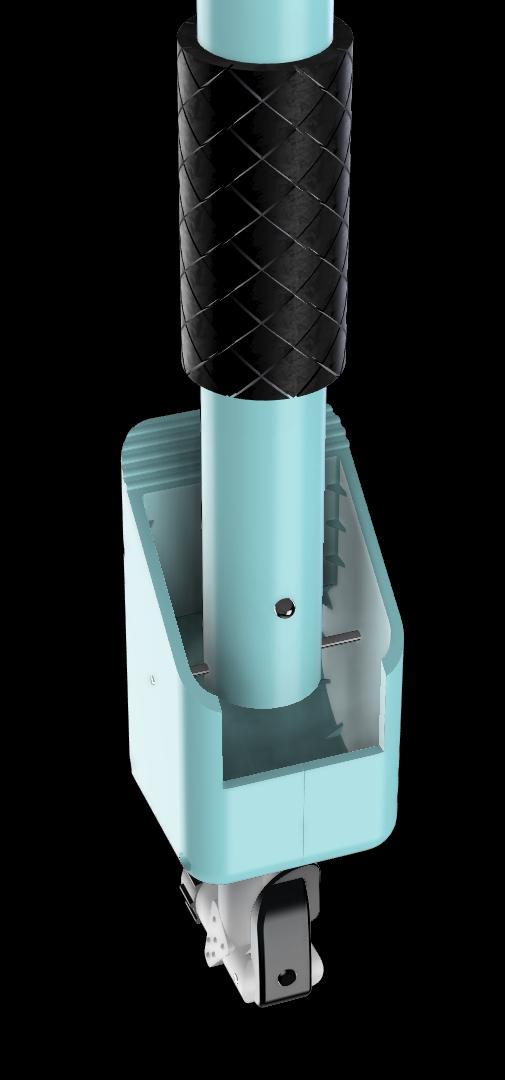
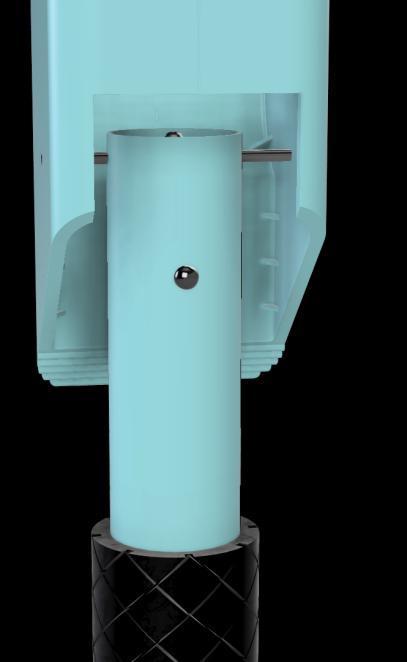
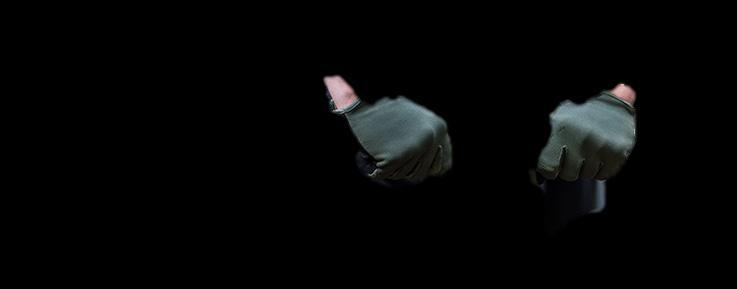
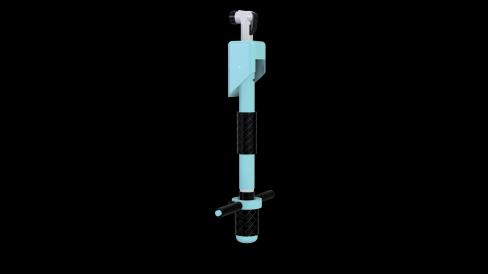
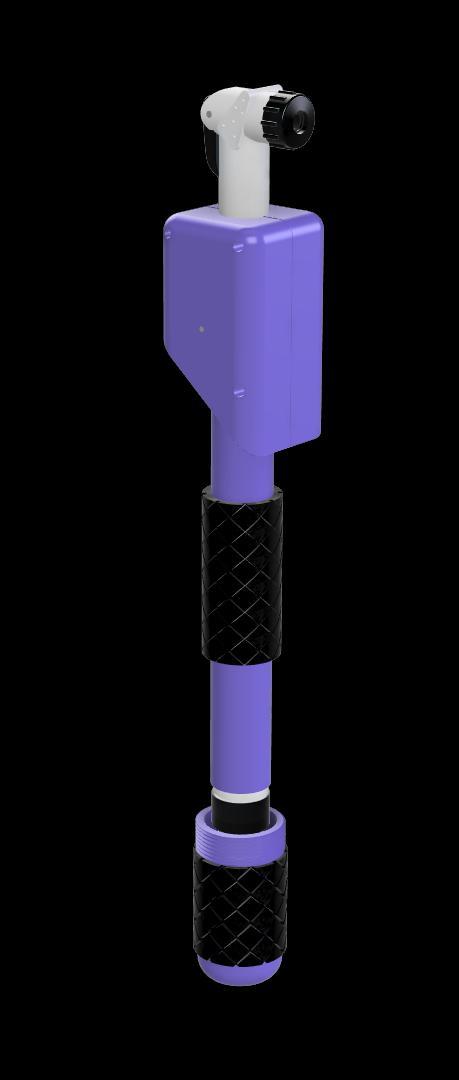
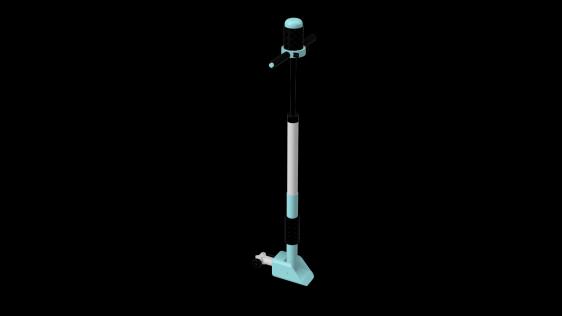
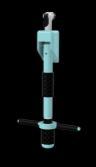
Crutch mechanism to extend the hand pump to a floor pump by pushing in then pulling tube out.
The product allows the ability for disassembly and repair even whilst on the road by limiting the use of mechanical structures that cannot be loosened/removed by hand. The handle and stand are the only ones needing screw drivers however they will not be essential to taken apart on the move and therefore can be more securely held together.
HOW IT WORKS
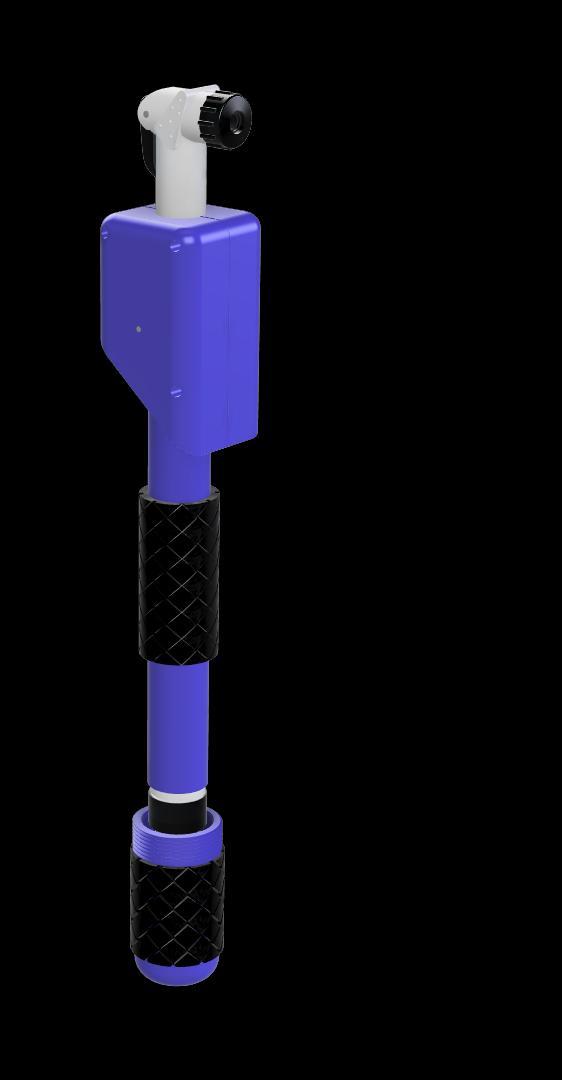
Can be switched between just a hand pump or a floor pump through the use or disattachment of the floor pump handle
By allowing all parts within the pump to be disassembled I have managed to generate a design that adheres to the circular economy in every way by allowing any part to be replaced if damaged/broken and additionally allows personalisation and ease of repair which was the problem encountered within both autopsies.
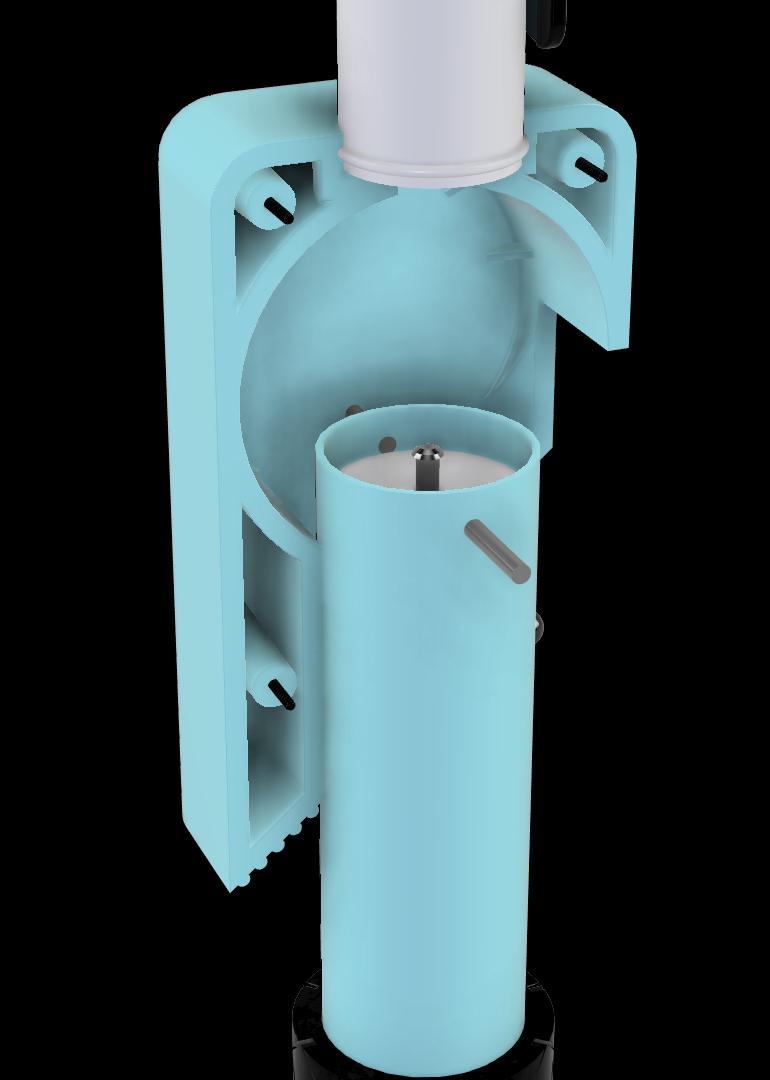
Materials and Sustainability:
Overall, all of my components are made up of recyclable/renewable or biodegradable materials which allows all components to be recycled at the end of their life, and due to the possibility to disassemble all parts the product’s lifespan can be extended by new components.
Personalisation Available
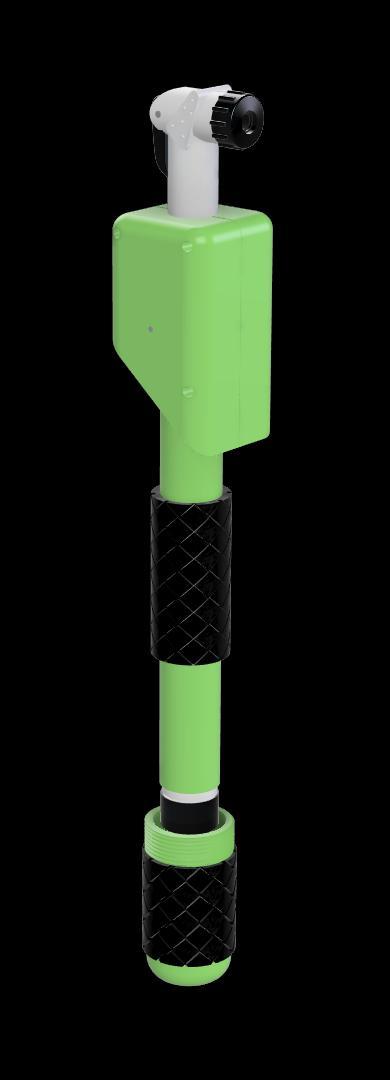
Can come in a variety of colours – this could allow the user to make it personal and fit it to their bike’s design adding more value – this allows users to want to display the product and encourages them to carry it with them.
EXPLODED VIEW
Floor Pump
Floor Pump for better pressure and less strain
Portability – Attach to Bike any way desired
Bike Frame
Portability on Bike
Extendable Head
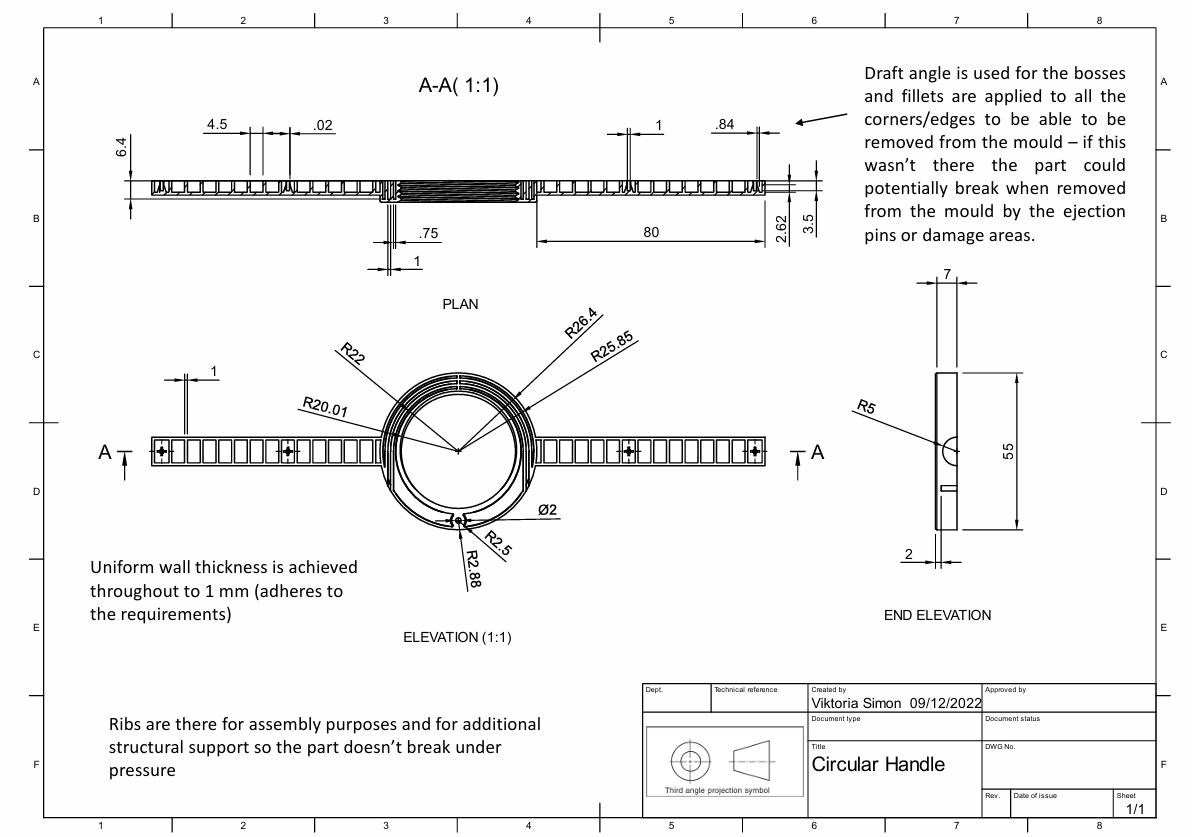
Mechanical fixings: Slot fitting, Interference fits, Threads, Bosses, Push fitting, Snap fitting, Sheet metal screw (Phillips) Full Disassembly to adhere to the circular economy
REFLECTION
Critical Reflection and Learning Professional Development
Complex assembly techniques
Design Methodology Insights centered design
Balancing aesthetics and functionality
Sustainable design principles
This project was a transformative journey in my design design challenged me to: level solutions
Develop intricate technical skills
Understand the complexity of product design
Integrate user needs with technical constraints
Precision in design is critical
Every component tells a story
Design is an iterative, complex process
Technical excellence requires deep understanding
Through this project, I've developed significant technical competencies in several areas of product design. My CAD modeling skills evolved substantially as I created complex assemblies with precise mechanical relationships and manufacturing considerations. The systematic exploration of various mechanisms, particularly the crutch-style extension system, demonstrates my growing ability to develop novel technical solutions to user problems.
My consultation with McLaren Plastics exemplifies my proactive approach to understanding manufacturing constraints, incorporating professional industrial feedback into my design iterations. This industry engagement represents significant professional development, helping me bridge the gap between conceptual design and production feasibility.
The comprehensive technical detailing evidenced in the exploded view and parts list demonstrates my growing attention to manufacturing specifications identifying appropriate materials and processes for each component. This technical precision reflects my development from conceptual designer to someone capable of creating production-ready documentation.
Perhaps most significantly, this project shows my growing ability to integrate multiple design considerations into a cohesive whole. The product addresses ergonomic concerns (rubber grips, improved leverage), functional improvements (dual hand/floor operation), sustainability requirements (disassembly, repair), and aesthetic/emotional aspects (personalization through color options)—demonstrating my holistic approach to design problems.
The project illustrates my methodical design process through clear documentation of each development phase: research and problem definition, ideation exploration, concept refinement, detailed technical development, and final solution presentation. This systematic approach reflects my growing professional discipline and commitment to thorough design processes rather than rushing to aesthetic solutions.
Through this design journey, I've developed a more nuanced understanding of how technical knowledge, user empathy, and manufacturing considerations must be balanced in successful product design representing significant growth in my professional capabilities as an industrial designer ready to create impactful, usercentered products.
Design Opportunity that was explored:
The brief was to create an interactive lighting device with the incorporation of glass blowing and glass work within a social context and issue.
We have decided to go into a familiar social issue: Many study/work many and long hours a day/week; dealing with negative emotions affecting their academic and personal life and mental health.
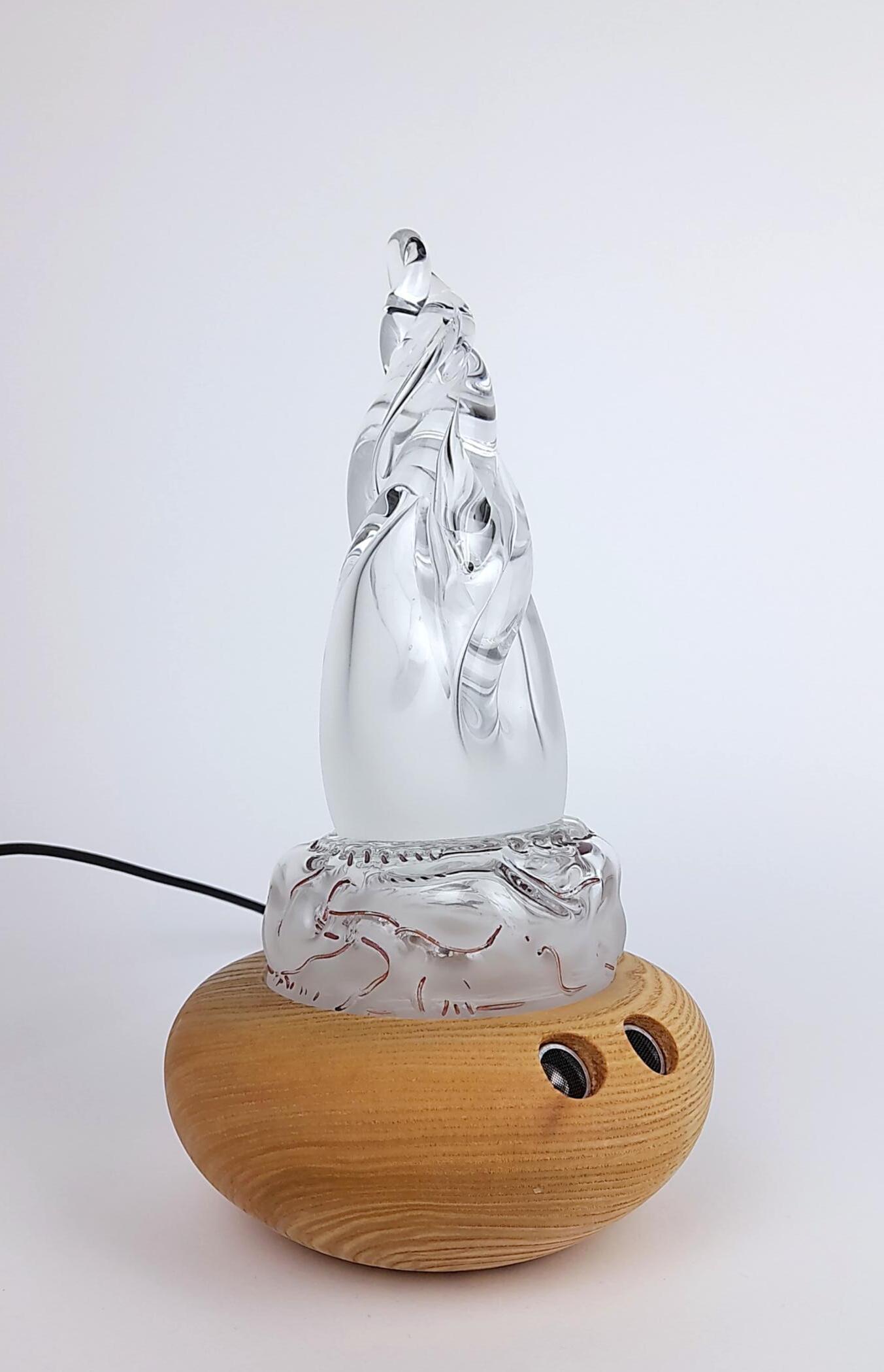
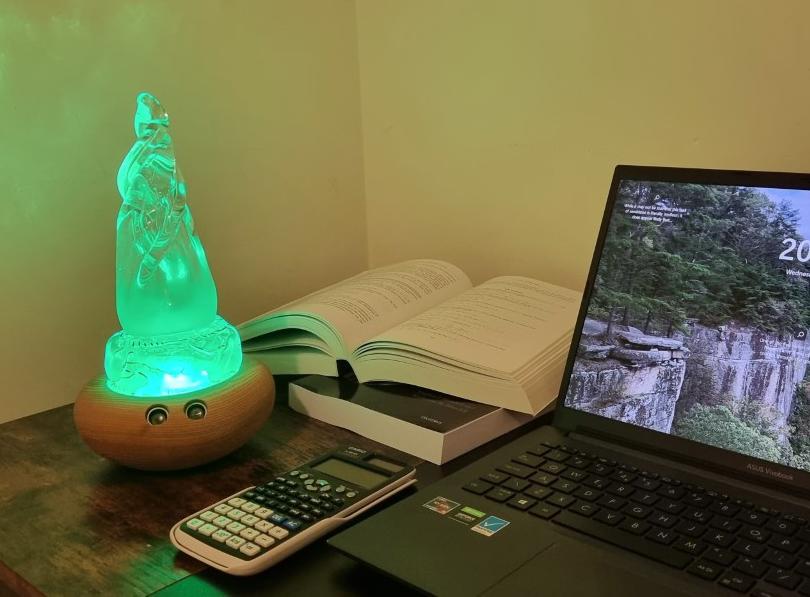
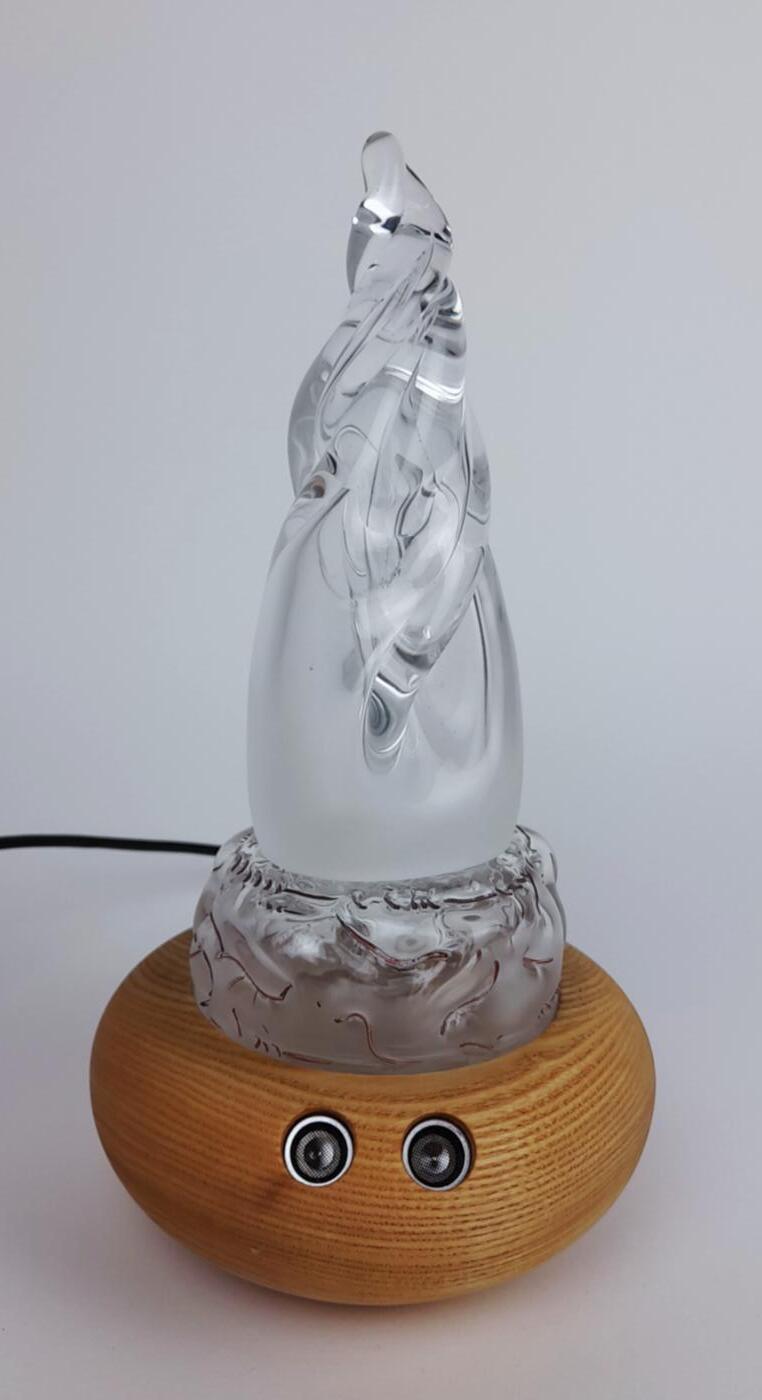
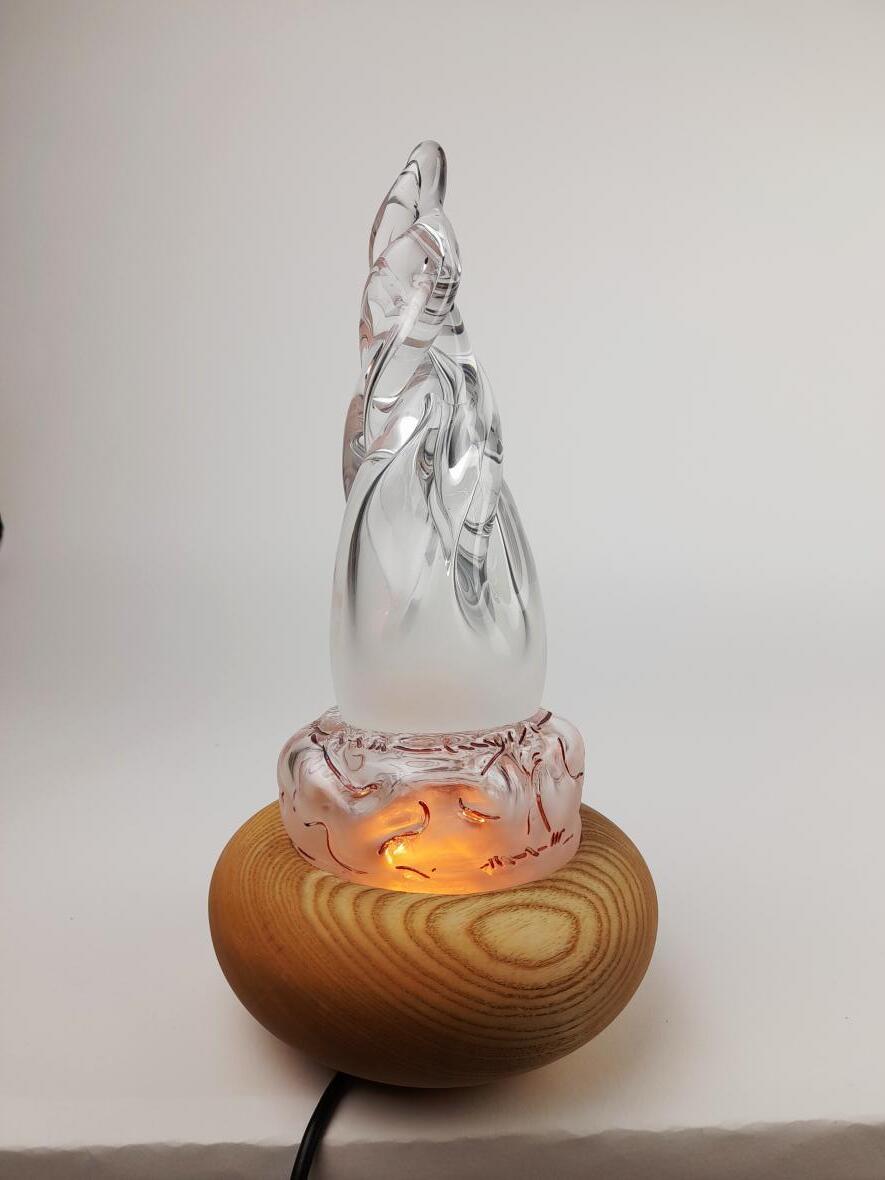
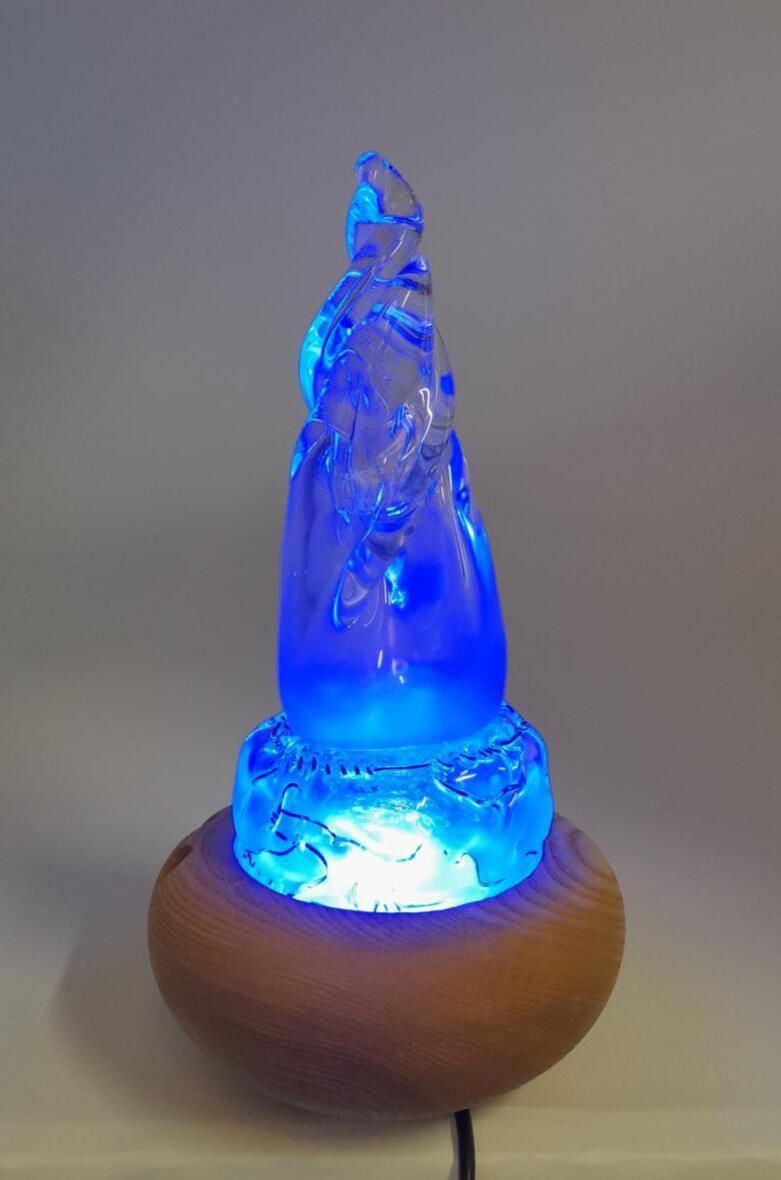
CompanionShell
A study/work companion for student and professionals; enhancing productivity and performance allowing tasks to be completed in less amount of time and to a high standard by eliminating negative emotions experienced by the used and by helping ease stress through an aesthetic inspired by nature.
Its additional recovery function allows users to go to bed on-time/early and get more sleep to enhance their performance and get back to or establish a good sleeping routine.
Overall establishing a good well-being for users.
Project
done in collaboration with Chadia Slaoui
Social Context: Home (Study Space – Area for Studying/Working)
Target Market: Students and Professionals
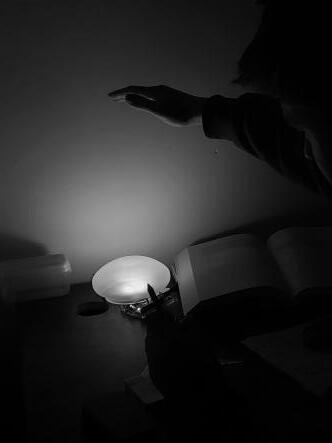
Responds to: The User’s hand motion/action and their emotions
Aim: To set a mood at night and to support and help user’s well-being through the lighting
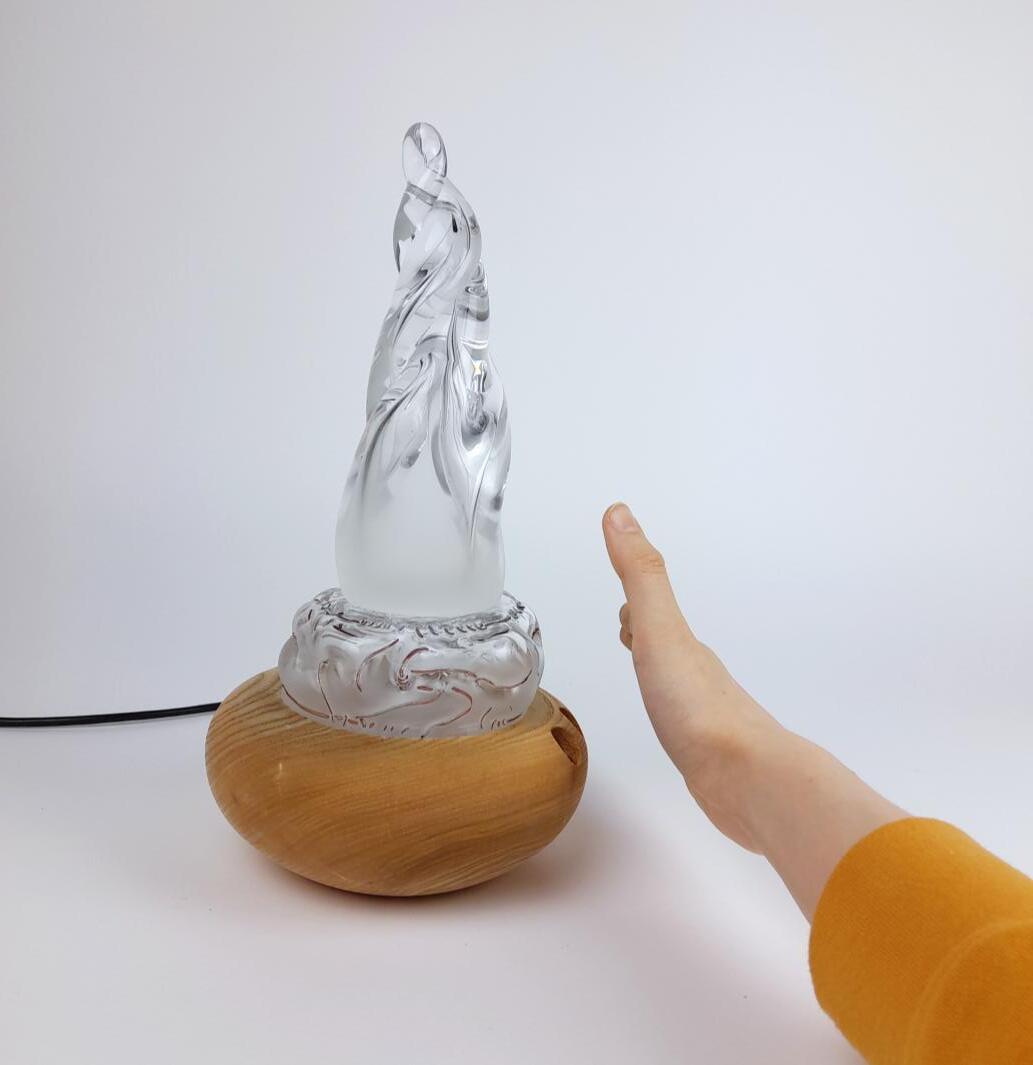
Through extensive research into student and professional’s experience with all-nighters and long working hours, we have started tackling the emotional and mental wellbeing issues around these requirements and how to ensure full efficiency in working. The product went through various testing to ensure that user interaction has been thought out and testing enabled us to ensure the function is effective.
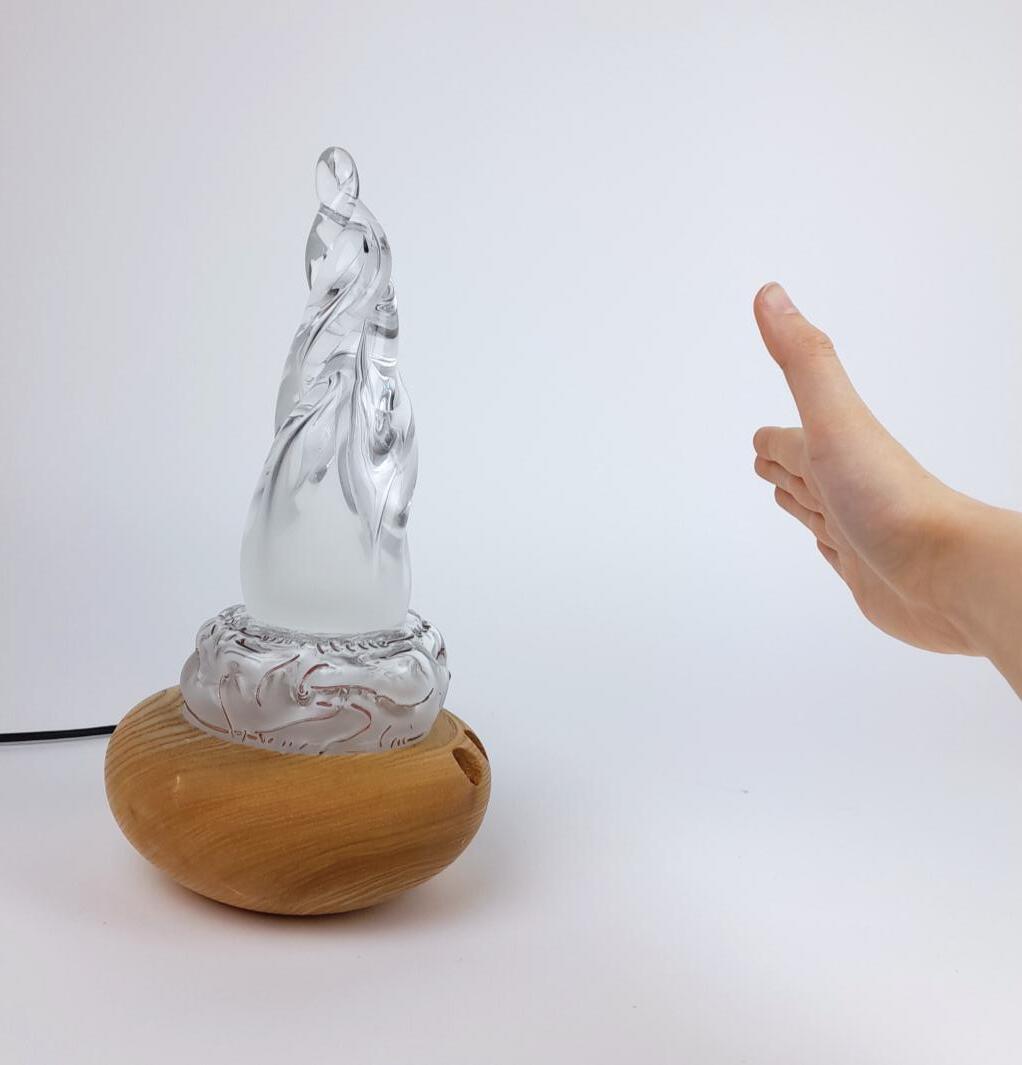
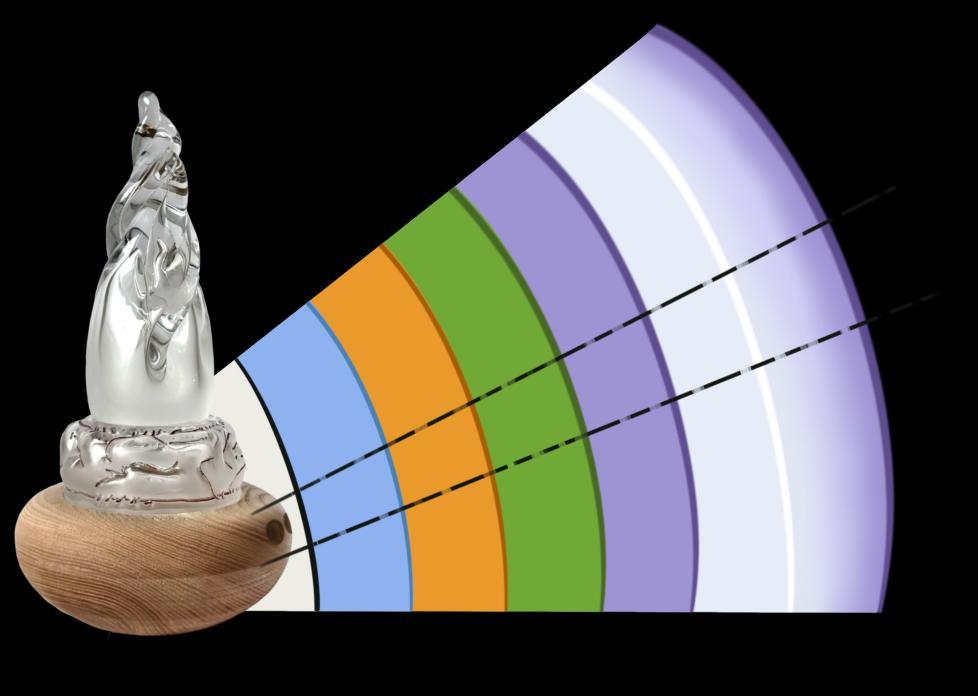
The project focuses on the emotional strain and effects of working long hours and staying productive. The product has been created for user interaction. By triggering the light through distance, users can input emotions which trigger psychological interactions that enable users to create efficient work.
Light Companion – User Manual
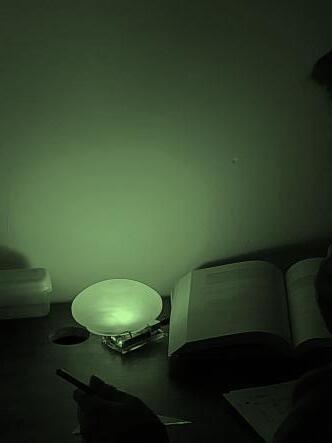
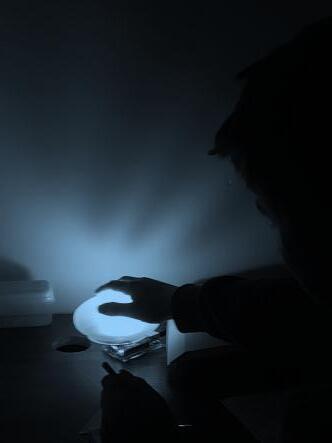
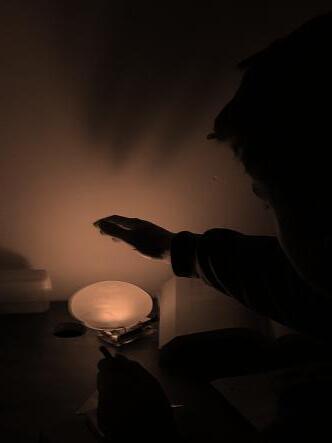
Emotion = Input (distance from sensor = certain emotions user is feeling)
Colour = Output (Response to Input = tackle negative emotion through certain colour)
Blinking = Output (Asks how you are doing – checks up on user establishing a connection)
Emotions and the colours that help with tackling them
Recovery Function
Every 15 Mins
Device asks you to interact with it
“How
are you feeling?”
Select colour by placing your hand at a certain distance from the sensor – colour aims to tackle negative emotions felt whilst working/studying
Brainstorming
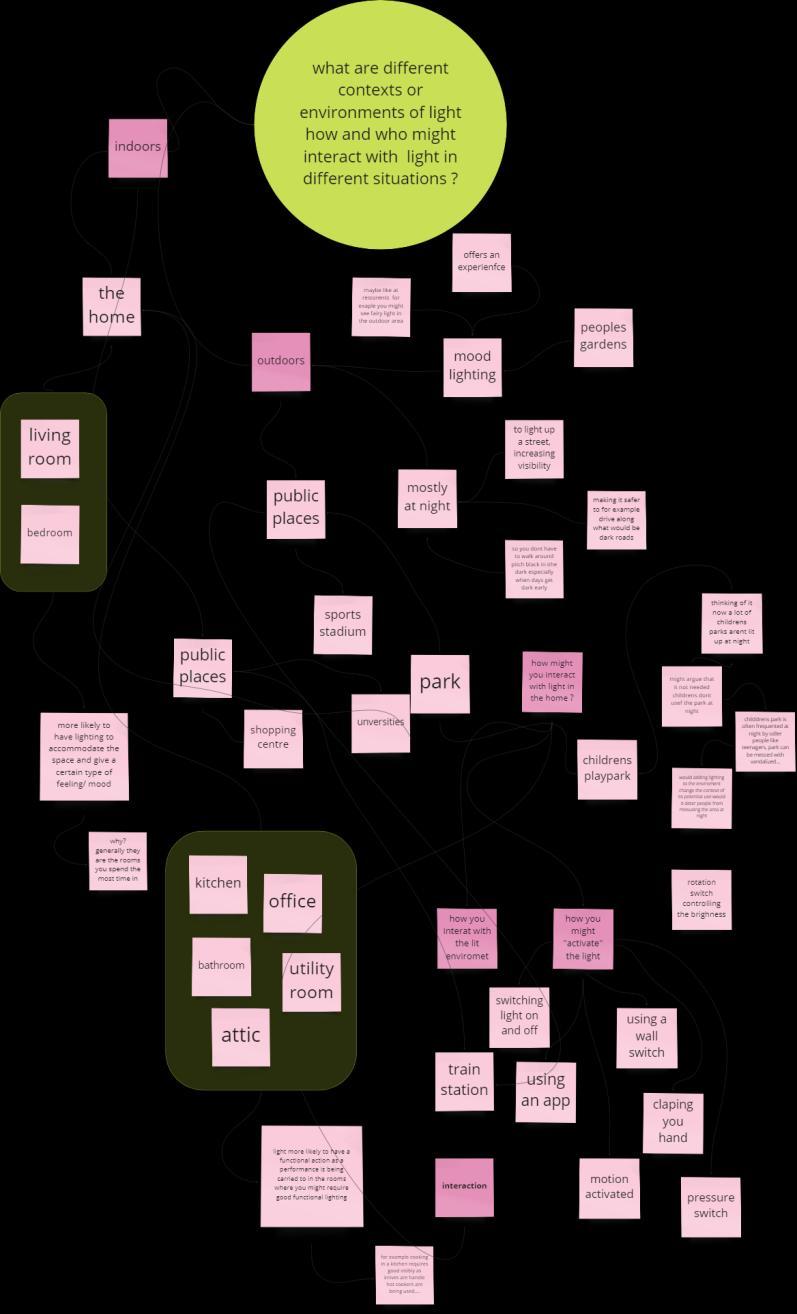
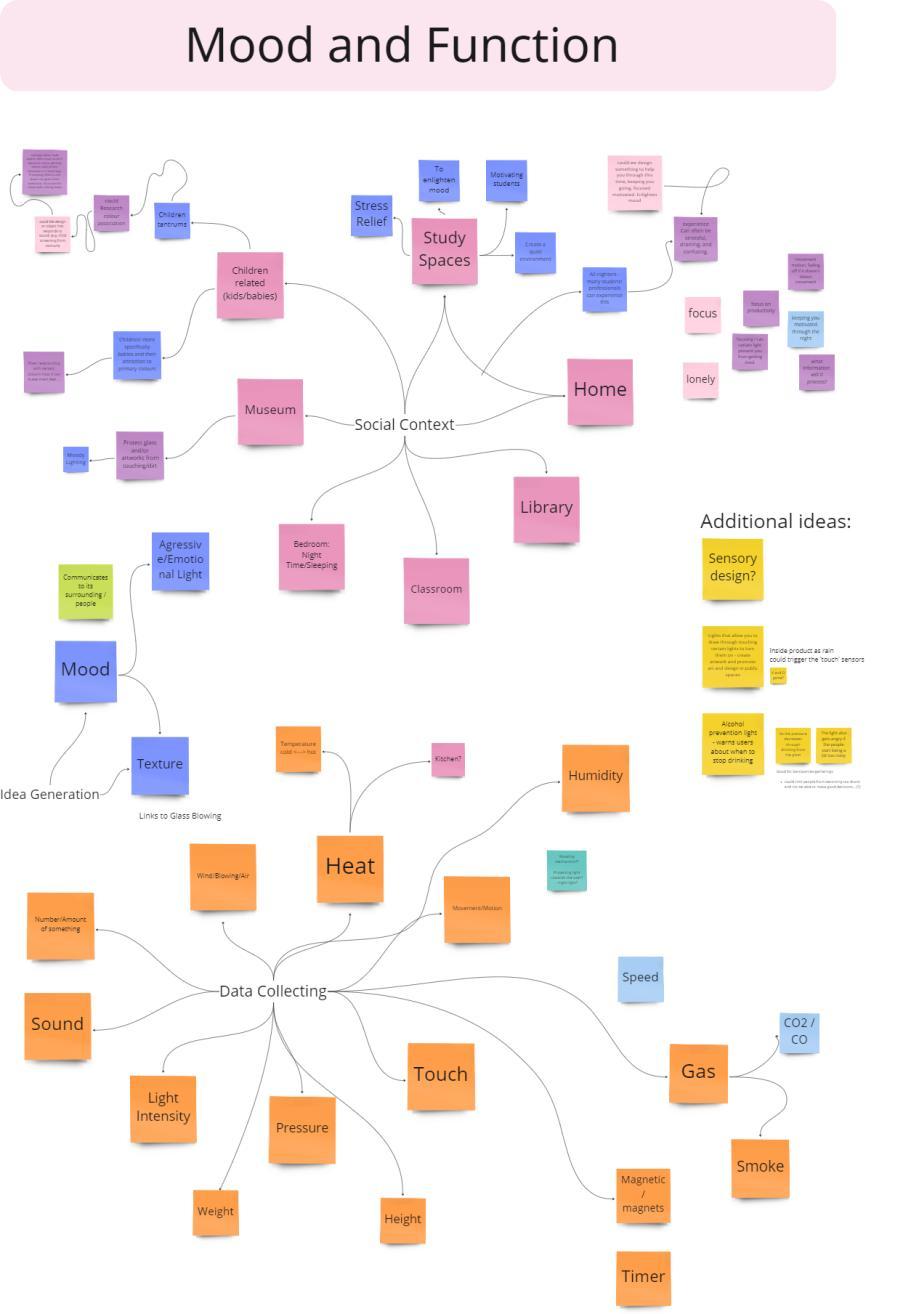
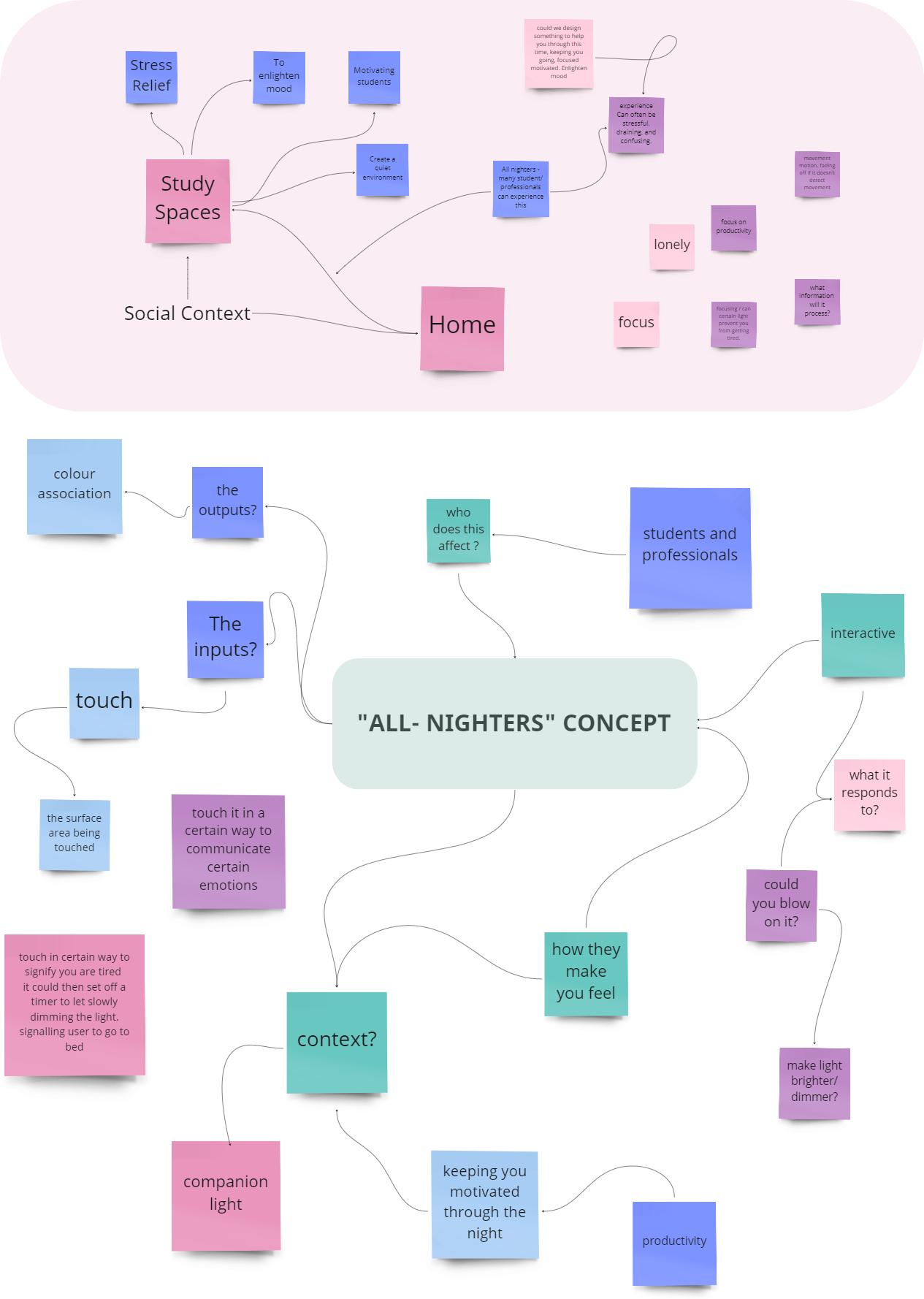
• Through mind-mapping we explored potential social contexts for our responsive light and started ideation around some of the social contexts.
• We had a lot of ideas we went from directing our projects towards children, to babies, then adults…
• Through mind mapping we found out that our area of interest was mood lighting and function, (by function we mean the mood lighting helping the user in some way)
• Mind mapping allowed us to narrow down, and choose our social context effective which resonated with us as students.
Questionnaire
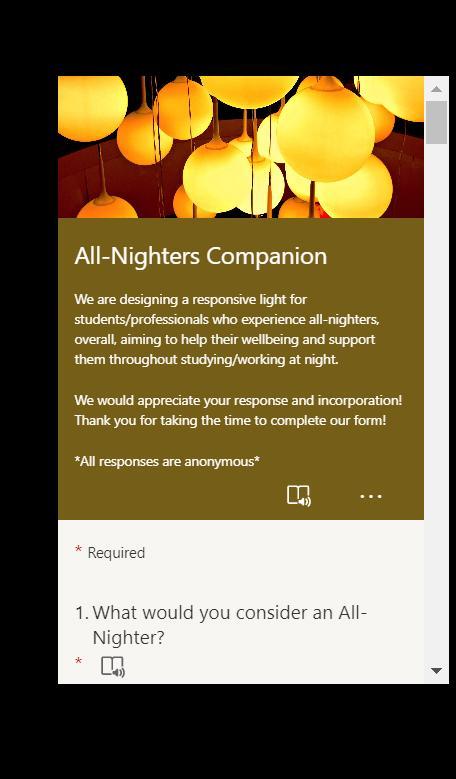
Key points from Questionnaire:
• 91% of respondents have done an all-nightery before
• 55% of responders answered Often or Above (Very Often) to staying up late and studying (45% doing it Rarely)
• Recovery is just as important as support through an All-Nighter (Secondary Function/Design Opportunity?)
• 36% of respondents have referred to energy drinks or drinks with caffeine as a form of helping through All-Nighters/Late studying – could lighting/colour replace this and reduce the need for these?
• Focus on Tiredness (68%), Stress (64%), Overwhelm (45%), Anger/Frustration (36%), Lack of Productivity (32%) and Unmotivation (32%) through mood lighting and colour psychology to help wellbeing.
• . 68% of respondents struggle in some way to recover from an allnightery/studying late.
• 68% of respondents answered that whilst studying at night they feel lonely only sometimes or more often (36% ‘Yes’, 32% ‘Only Sometimes’)
• 86% of respondents have chosen a space within their homes (71% - Bedroom, 1%Livingroom, 0.5% - Kitchen).
• 95% of respondents selected likely to do an all-nightery Close to Deadlines (36% selected during both Mid-semester and End/Close to Deadlines)
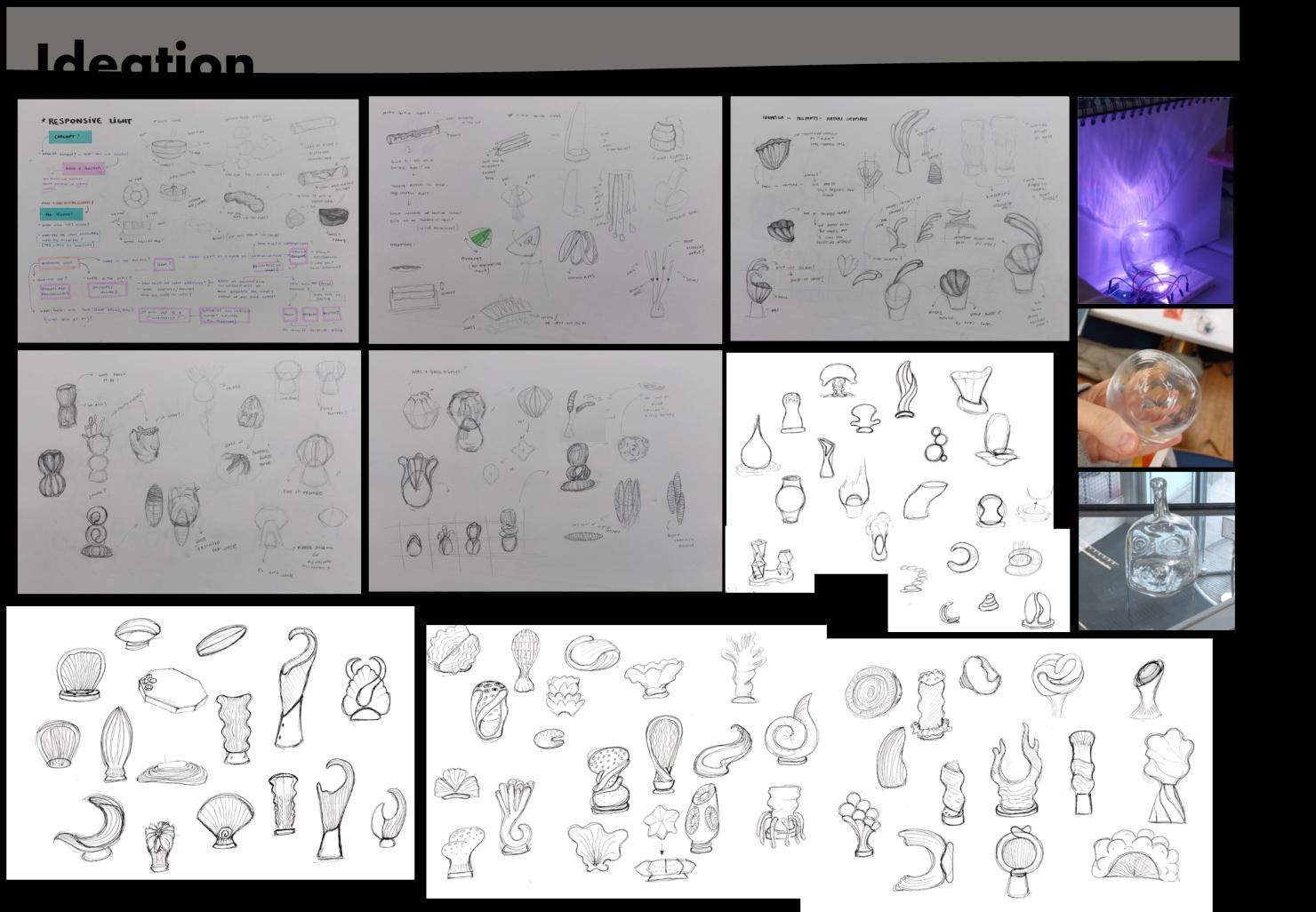
Our ideation process started with research on the user to understand the emotional stall of education and work has on people and what areas we need to focus on. This was effective to establish our own direction and ensure the right problems are solved.
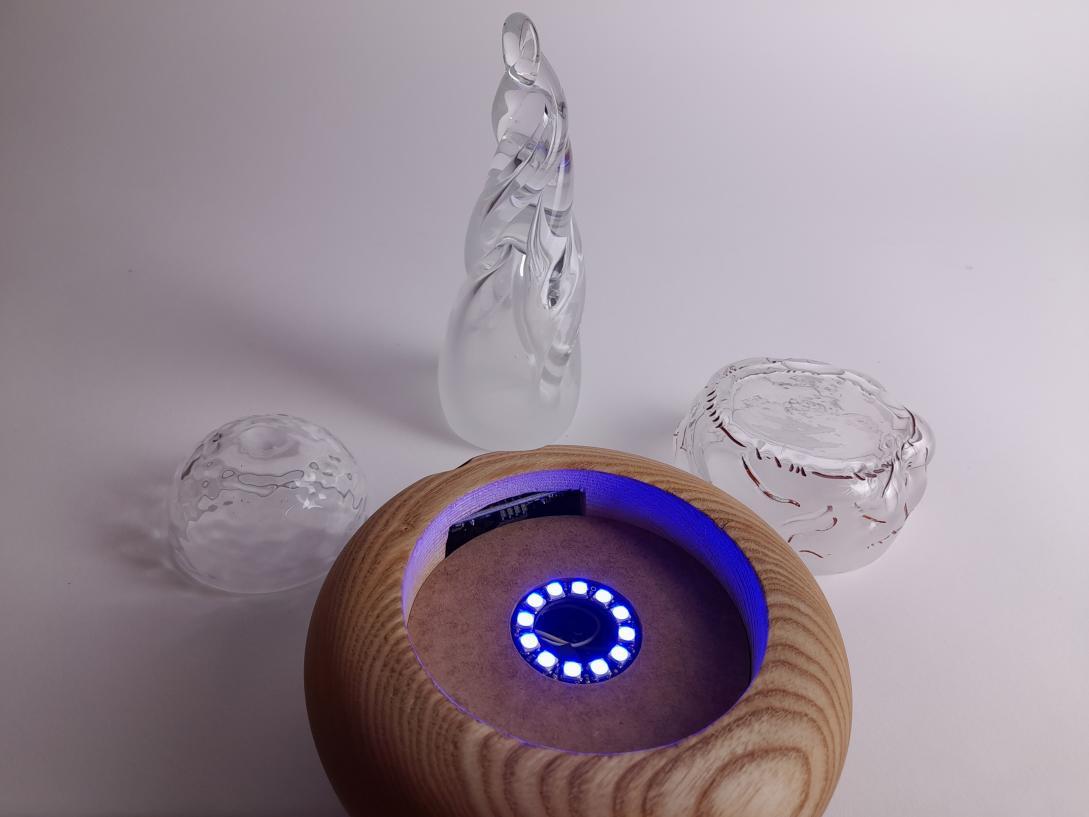
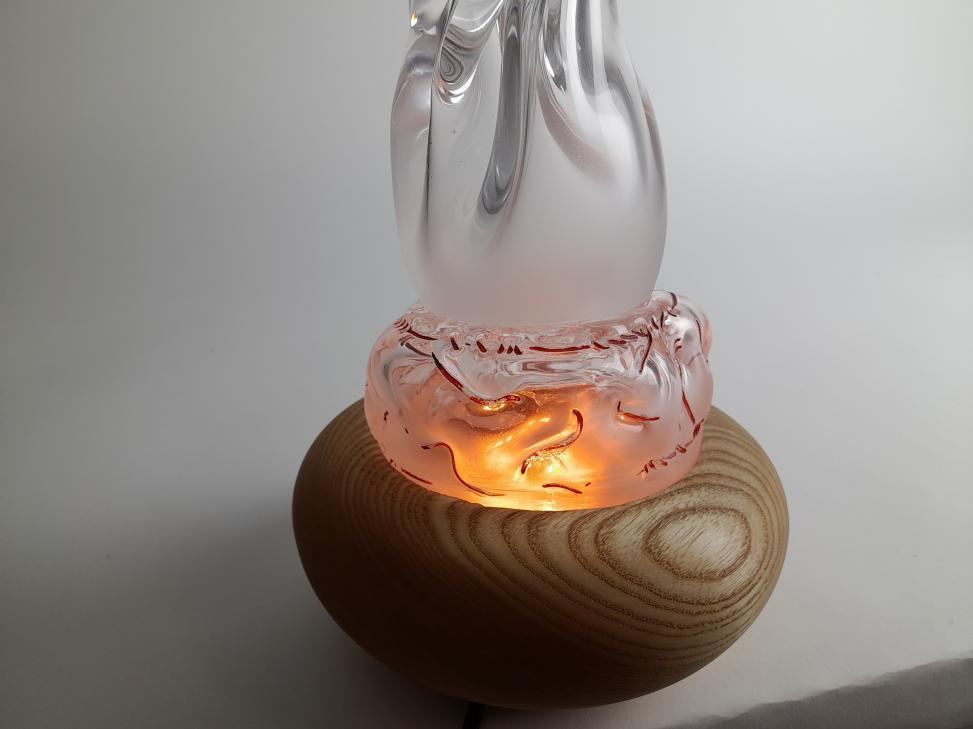
Our aesthetic inspiration came from nature and ensuring our design is free flowing/organic and naturalistic Our goal was to resemble nature through biomimicry and use this as a form of calming mechanism where the aesthetic additionally had a purpose and function.
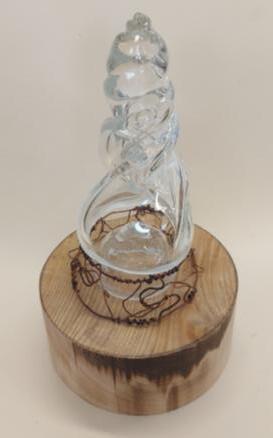
Iterating/ developing wooden base
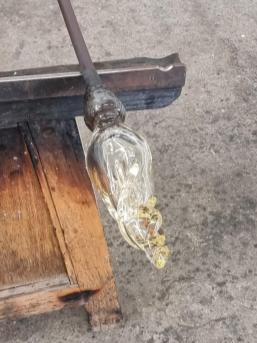
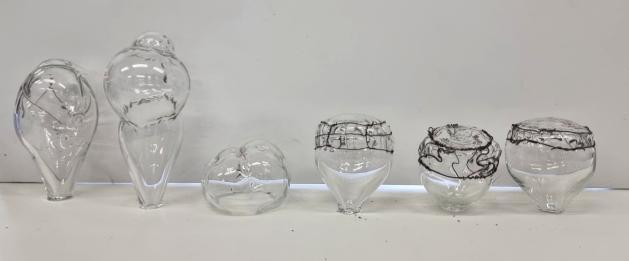
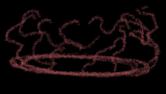
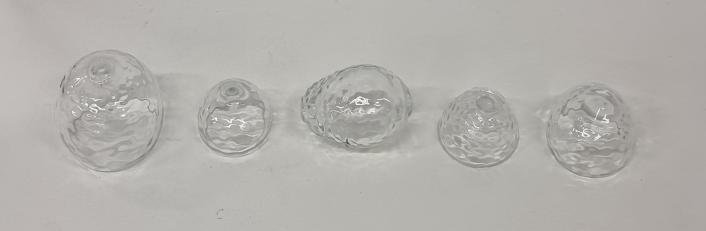
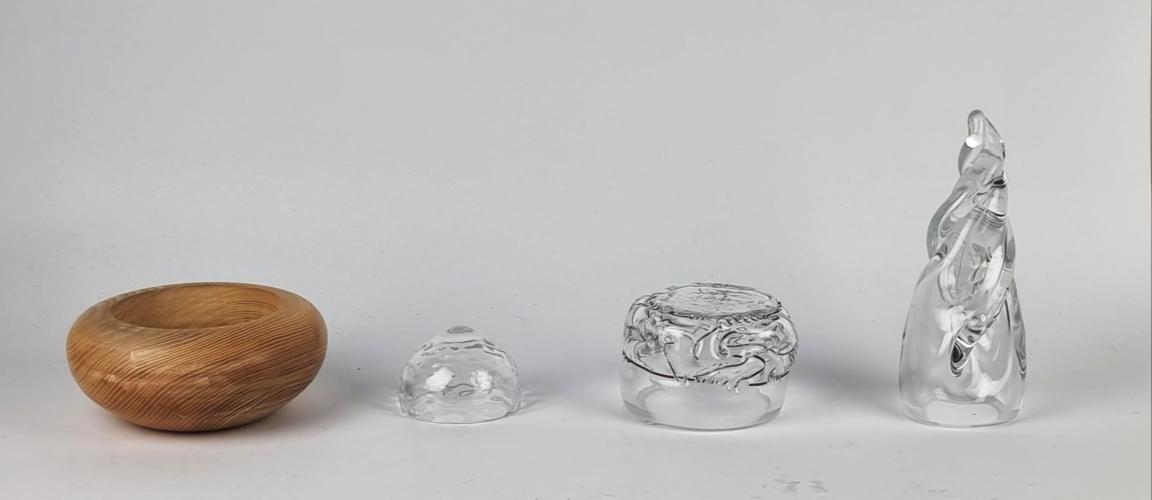
Developing glass components
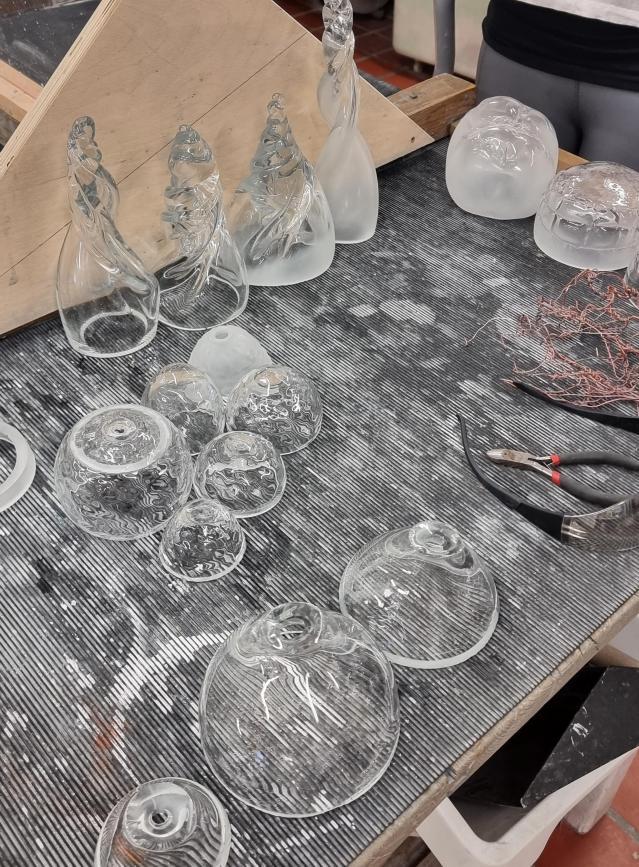
Iterating shell component

Iterating wire frame component





















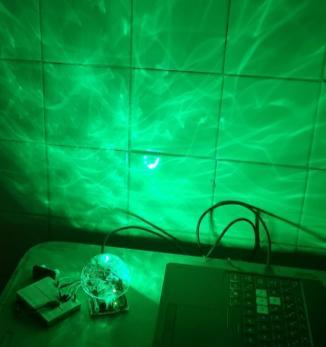
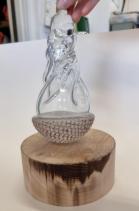
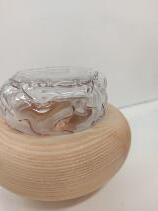









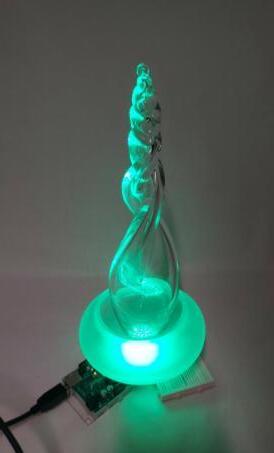
Testing glass components with electronics























Iterating textured ball component
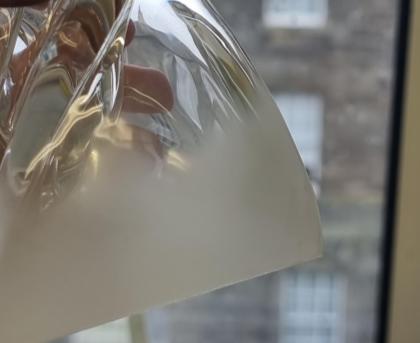
Testing sandblasting
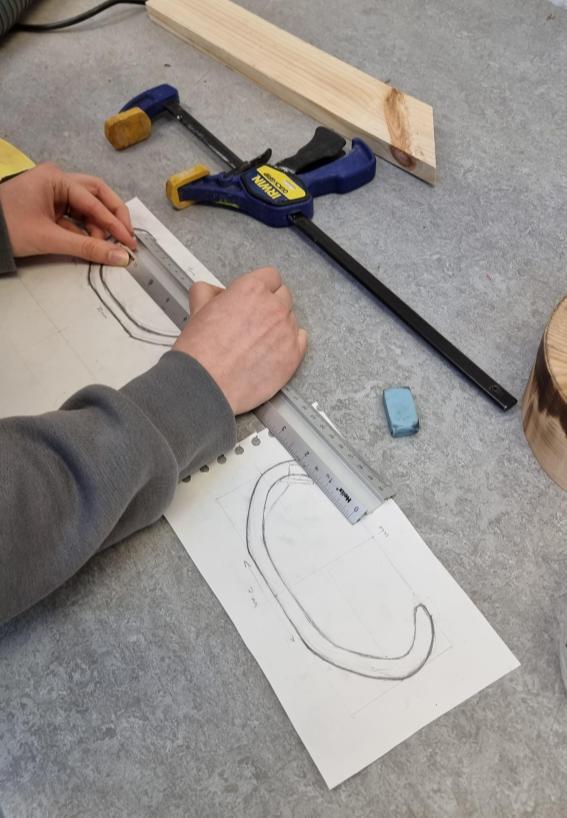
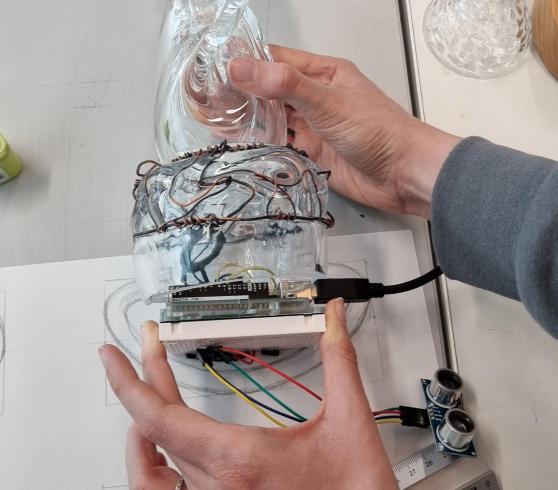
















































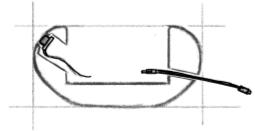
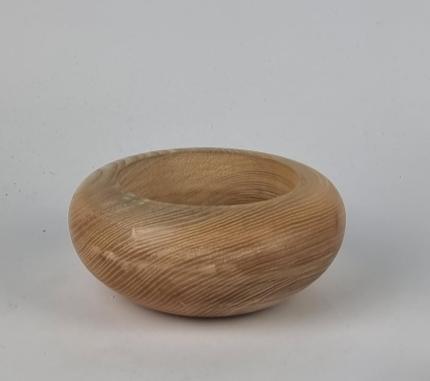
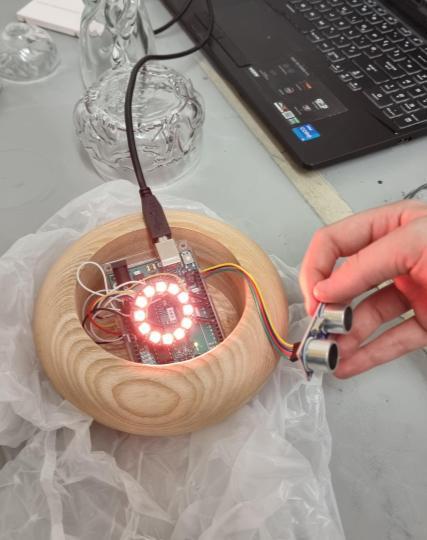
We have went through various iterations and experiments to ensure all aspects of the design accommodate each other and function well together, ensuring the product provides the best lighting as well as patterns to be displayed for emotional wellbeing purposes.
We have used prototyping as a form of iteration in addition through various experiments and compositions experimented with. We felt this was an effective way to ensure that the physical models look coherent and provide a naturalistic look as intended.
















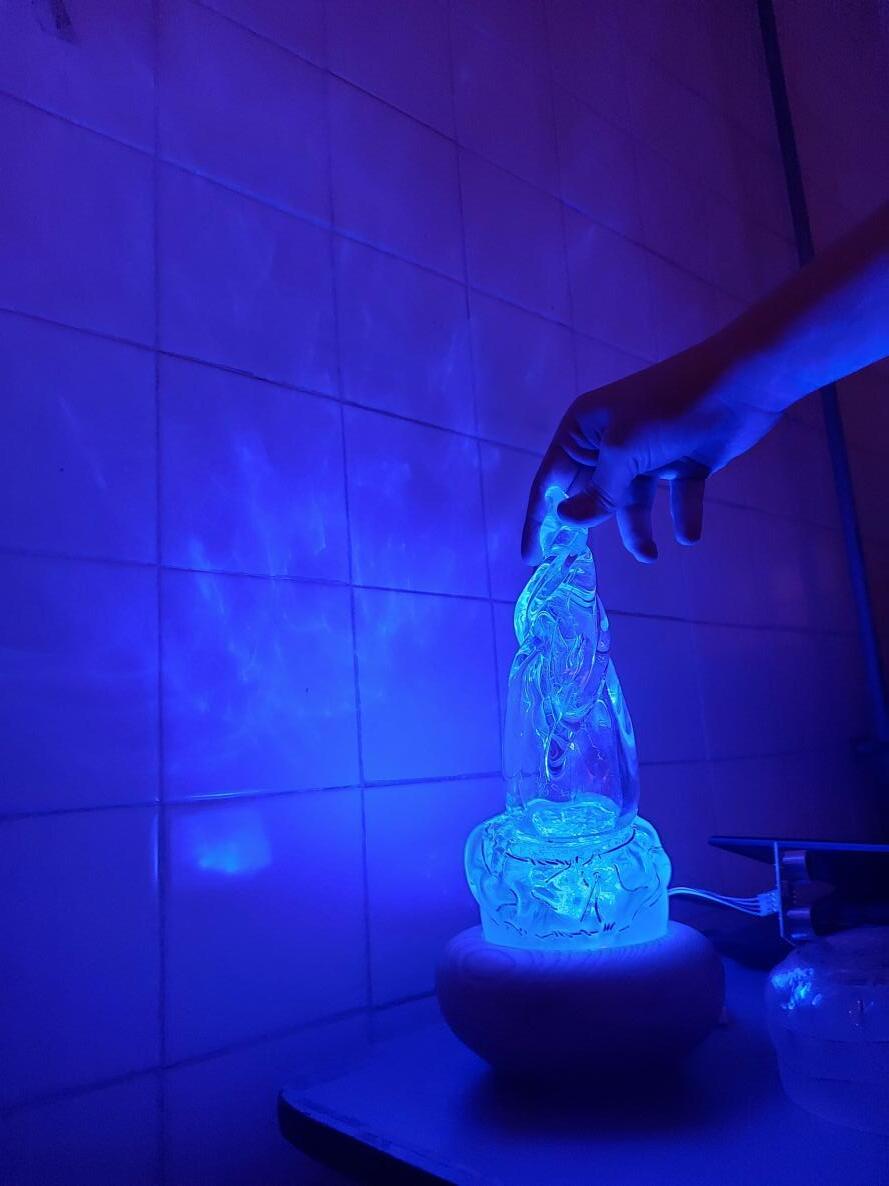
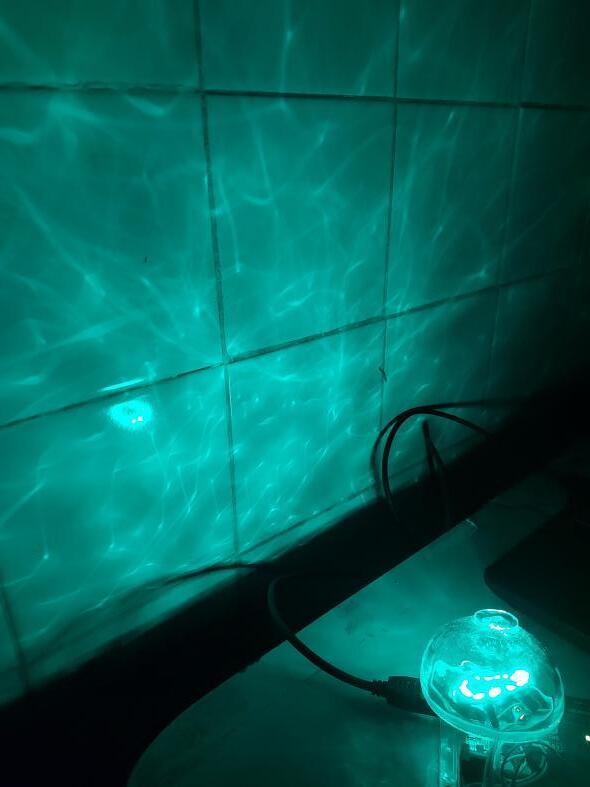
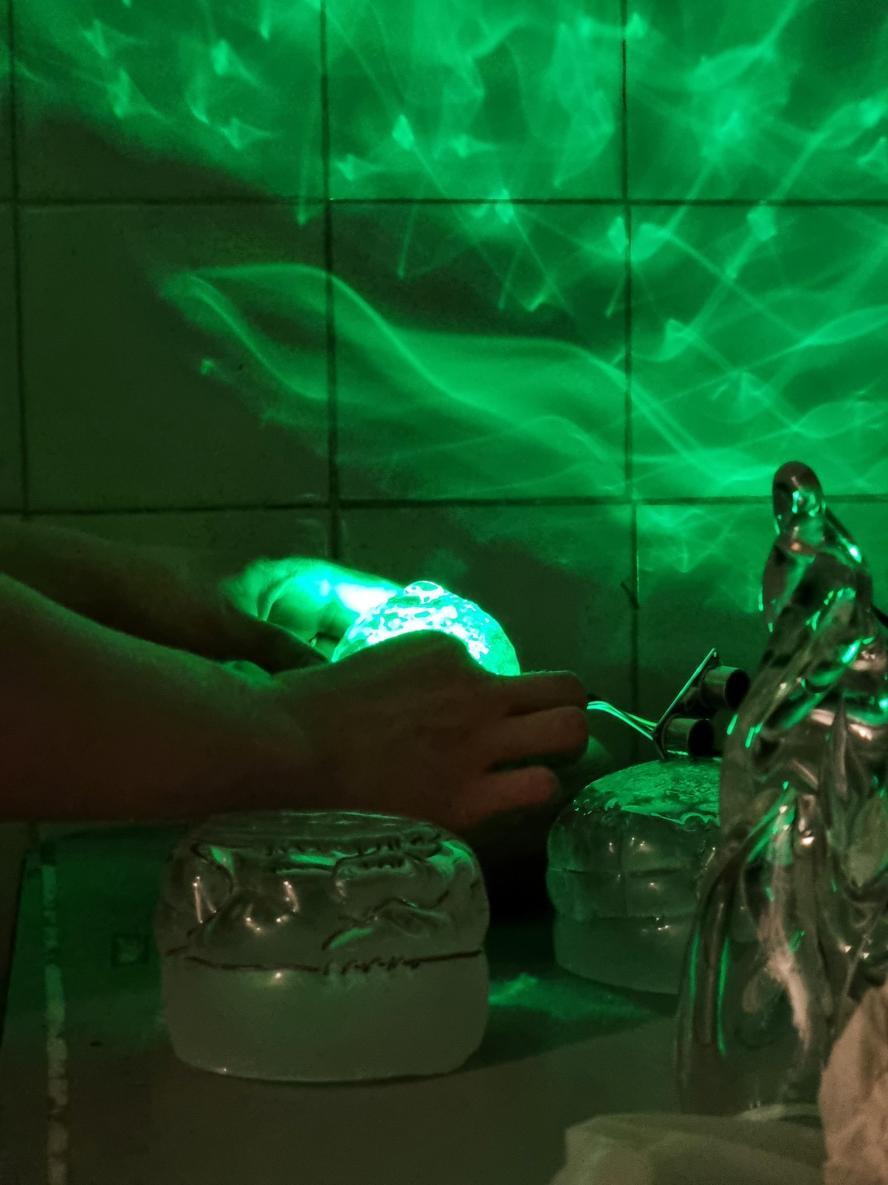
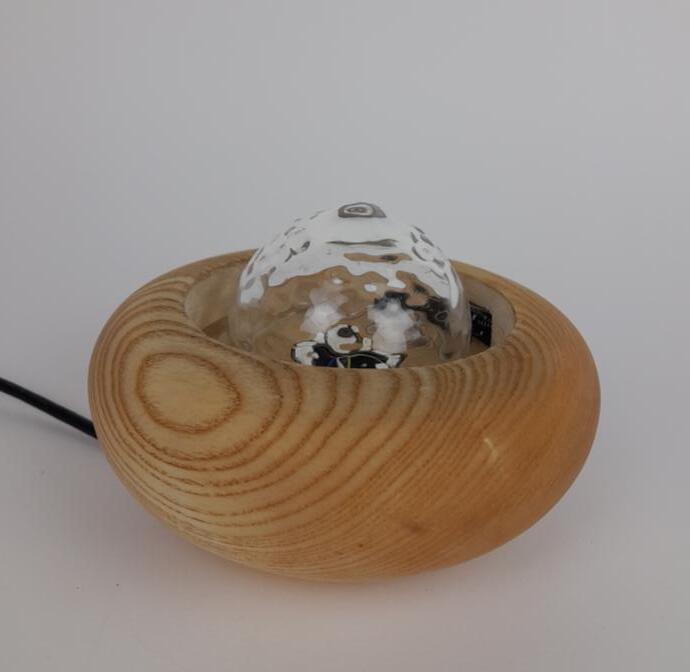
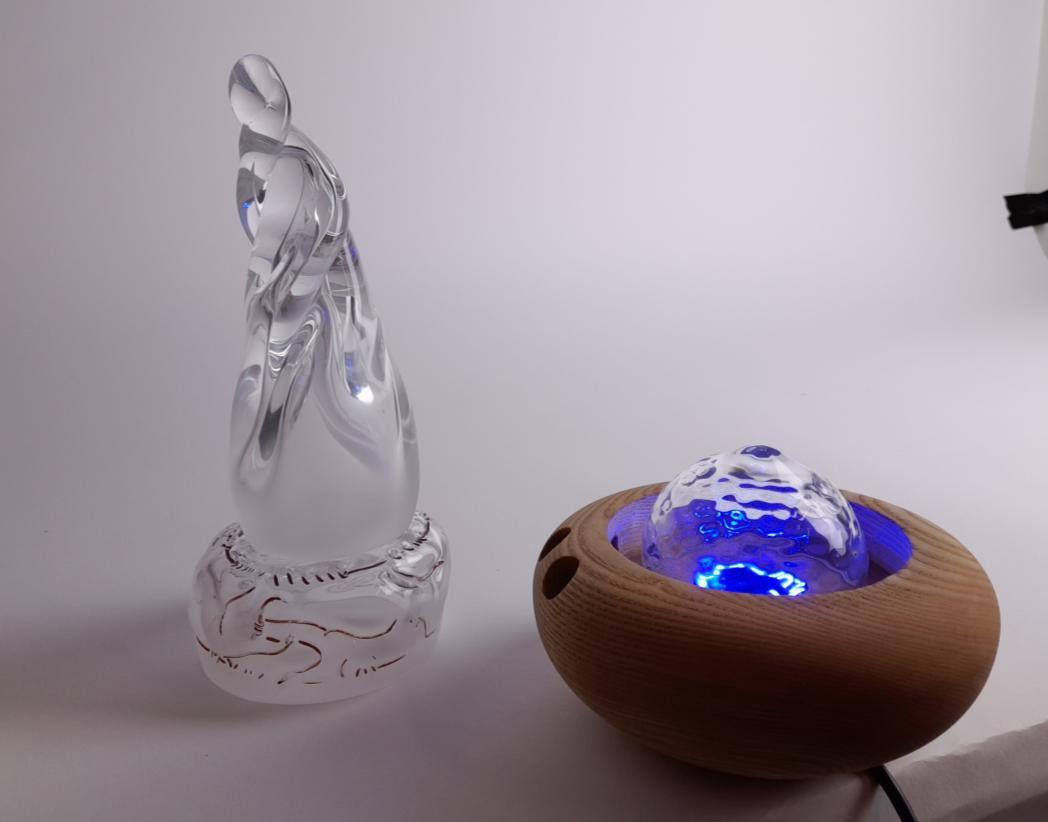
We have explored and iterated around projection using different glass blown components. This allowed us to additionally create a naturalistic environment that started to envision water and ocean in order to create a calming working atmosphere.
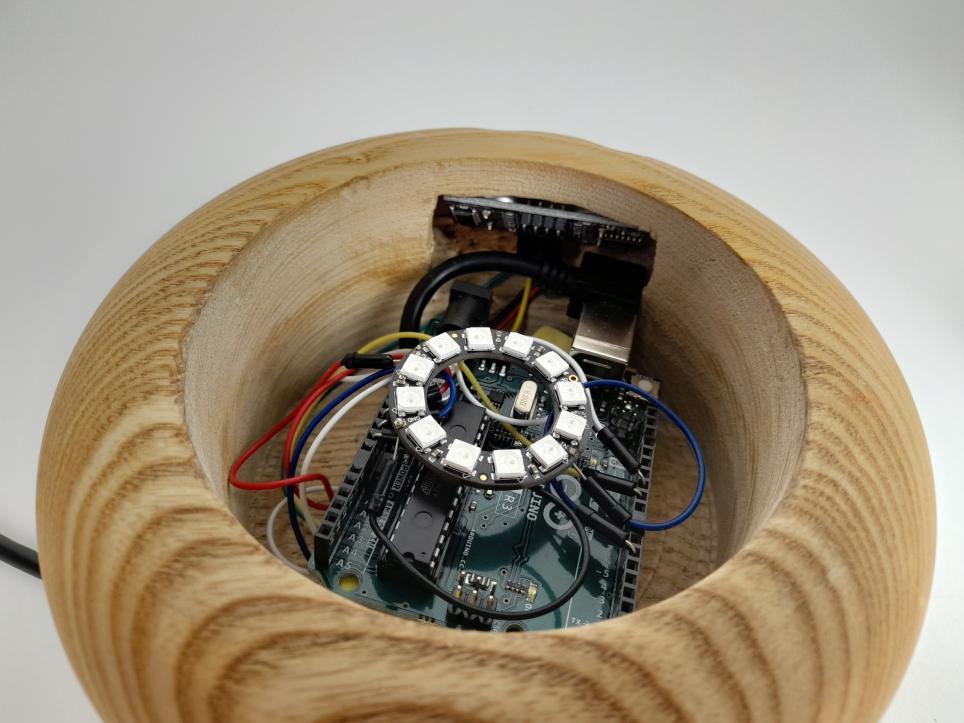
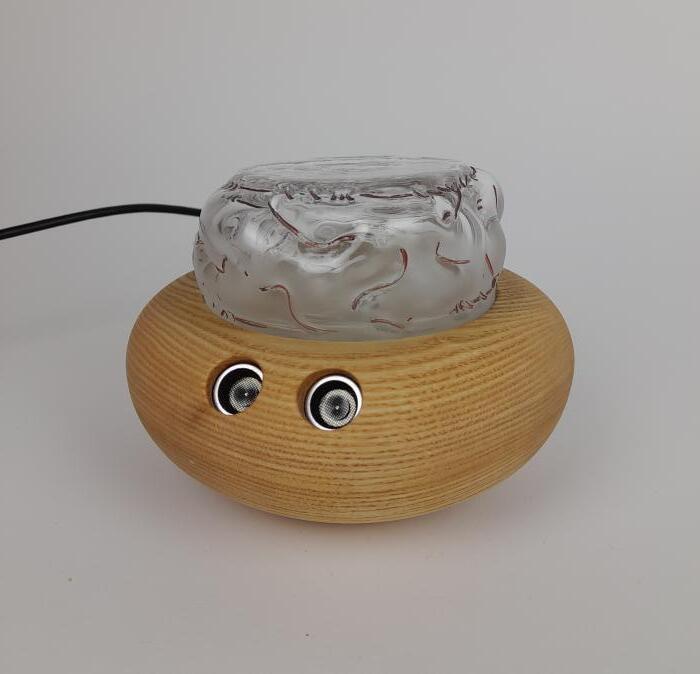
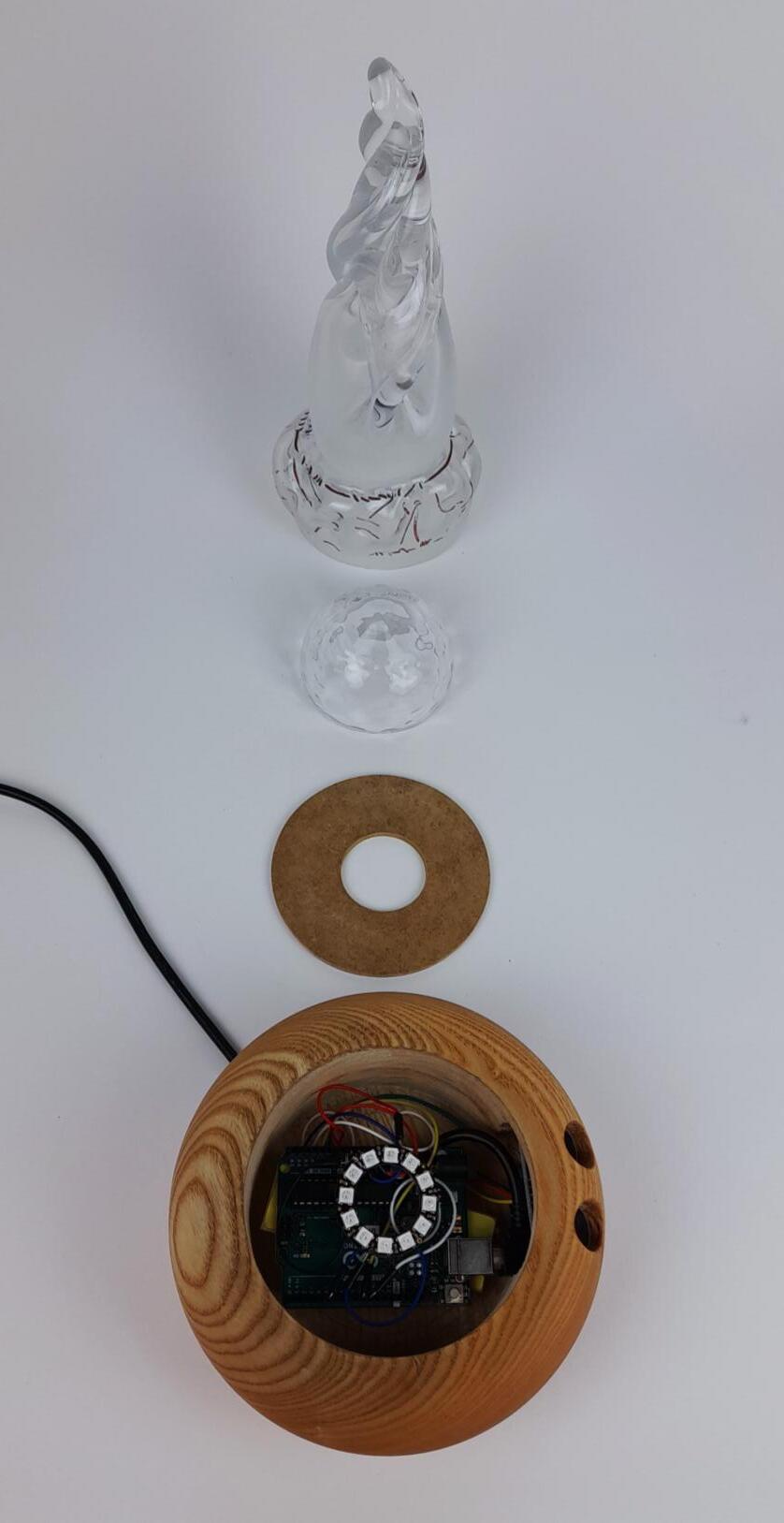
This component was then hidden under bigger components which would additionally be able to be changed as the product was developed to allow ease of maintenance and disassembly.
The process was to ensure enough light was blocked off and for the top to be able to stand on it.
The base was housing the electronics in order to create a neat finish with parts slot fitted.
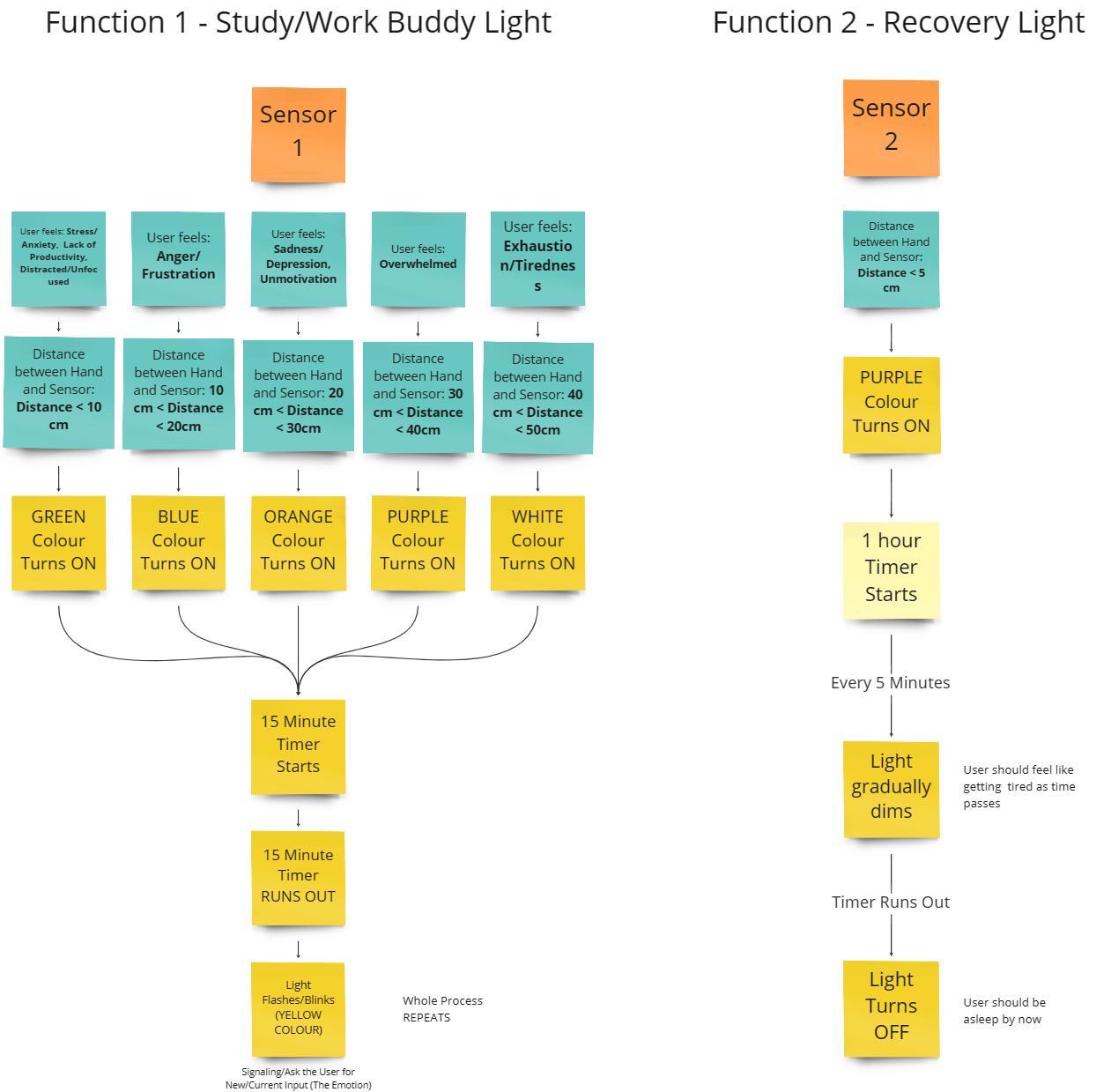
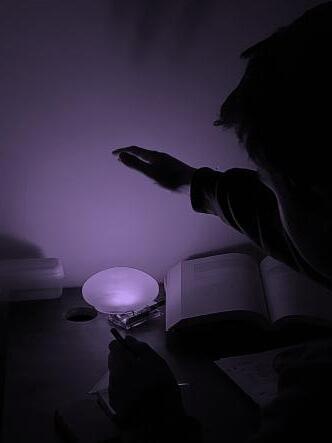









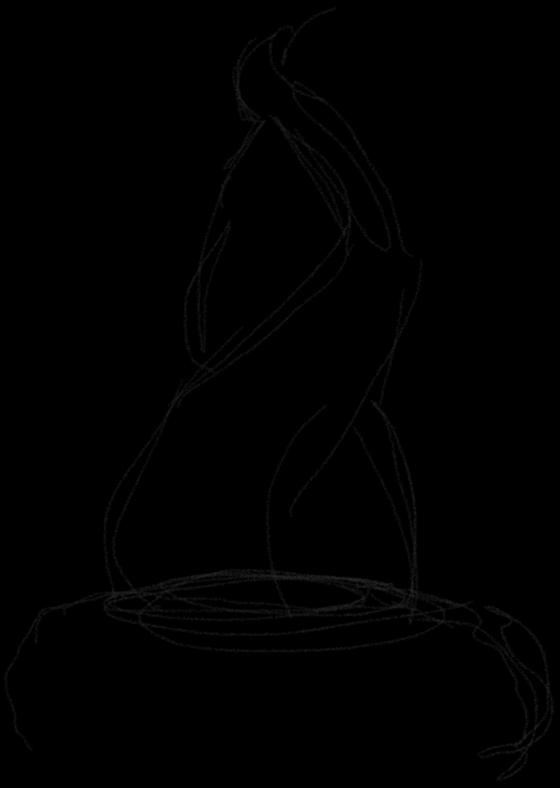

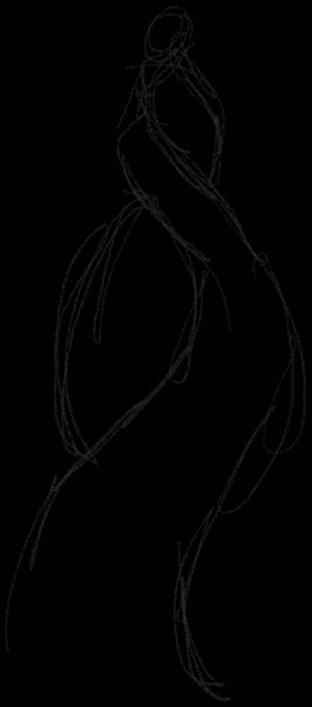














We have explored our functions and how each aspect of our coding would work.
We have started using our research on colour psychology in order to allow us to decide on distances and what colours should show.

Pattern
Exploded View of Components Components
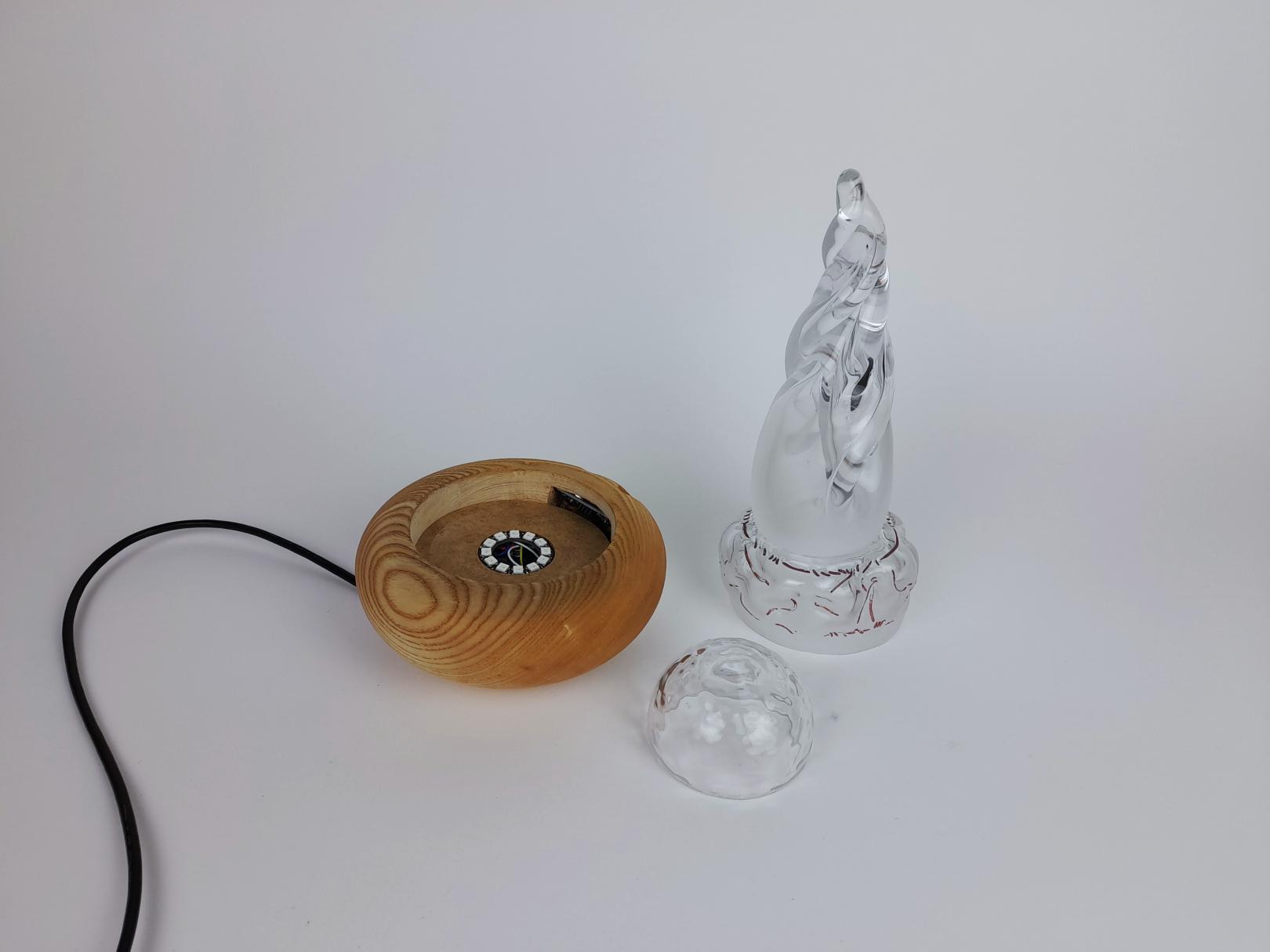
Product provides ease of disassembly through slot fittings for ease of maintenance and all materials used are recyclable
Reflection:
This project allowed me to learn to work as part of a team, ensuring tasks are split well and strengths are used, allowing me to develop my teamworking and leadership skills simultaneously. Using our own experiences as university students allowed us to not only resonate with this project but also find passion within it and ensure our product is able to help with project efficiency amongst students and professionals during difficult deadlines.
The project I believe was well executed with great material process, exploration and manipulation in order to allow us to create a psychologically influential design.
Embracingcomfortineveryinjection,confidenceineveryday.


STARTING POINT (INSPIRATION)
Whilst I do not live with Type 1 diabetes myself, my Fiancé, has been living with Type 1 Diabetes since childhood I have seen the effects Type 1 Diabetes can have on a person and the complications that can come with it and how this can affect the person, their family and friends which encouraged me to make a change. Living with this is not easy, however, design should help make it an easier transition
Designed for People living with Type 1 Diabetes on manual injections and are recently diagnosed or struggle with daily management due to personal barriers.
OVERVIEW
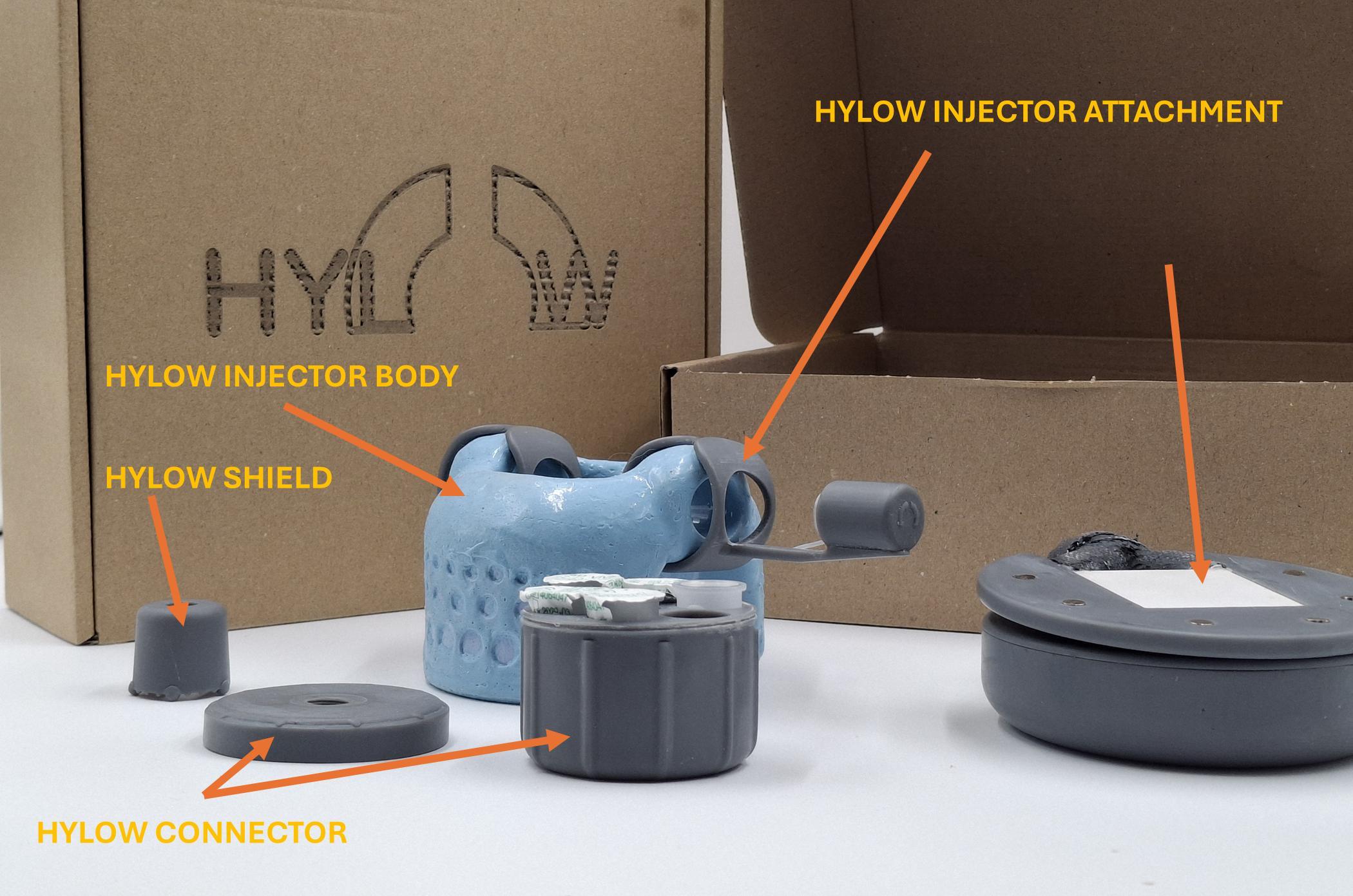
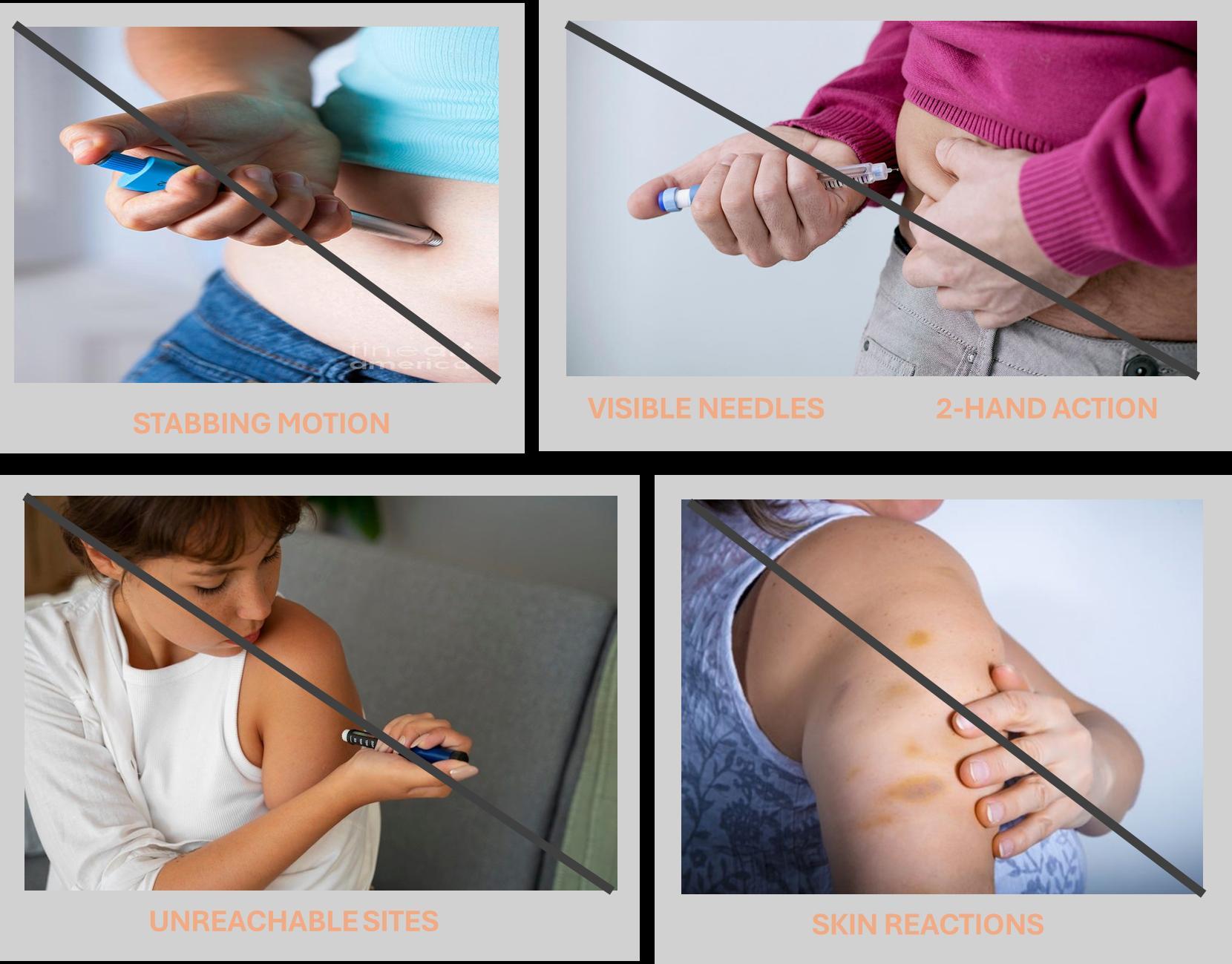
Type 1 diabetes requires multiple daily insulin injections a physical and emotional challenge many struggle with Hylow reimagines this experience by addressing needle anxiety, physical discomfort, medical aesthetics, and discretion needs.
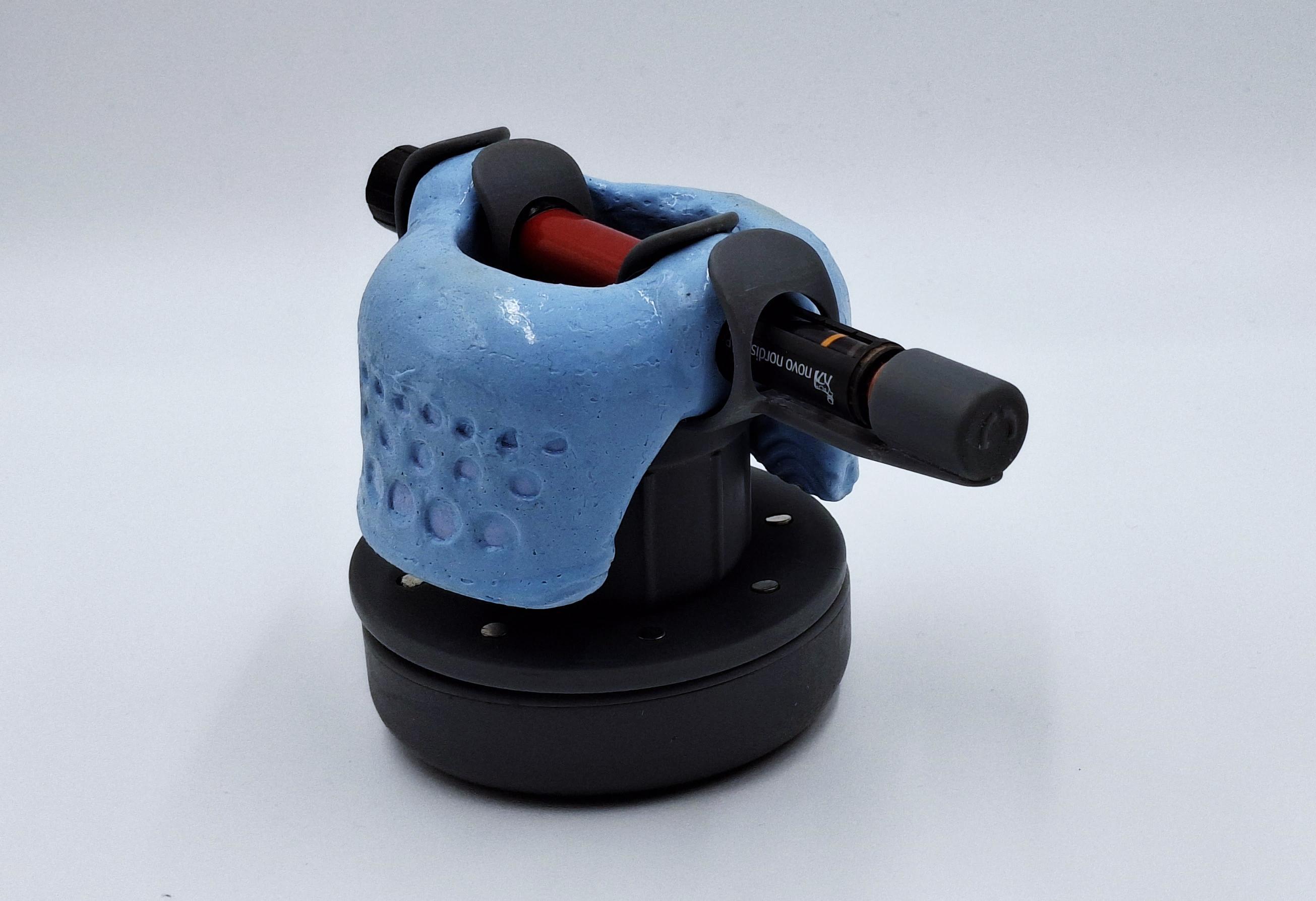
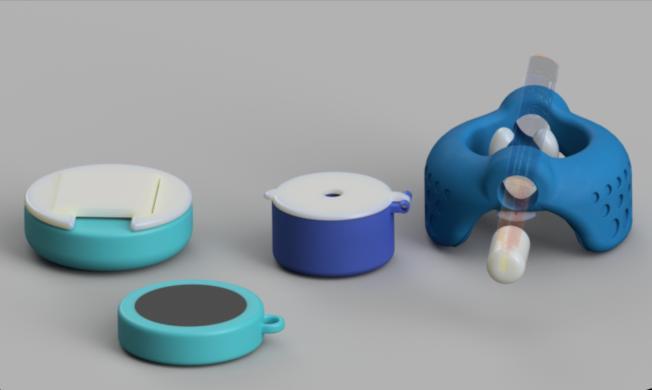
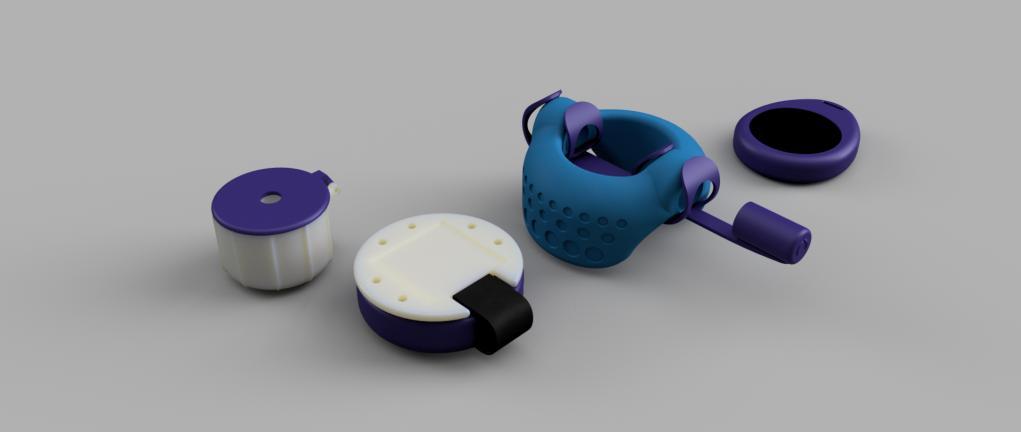
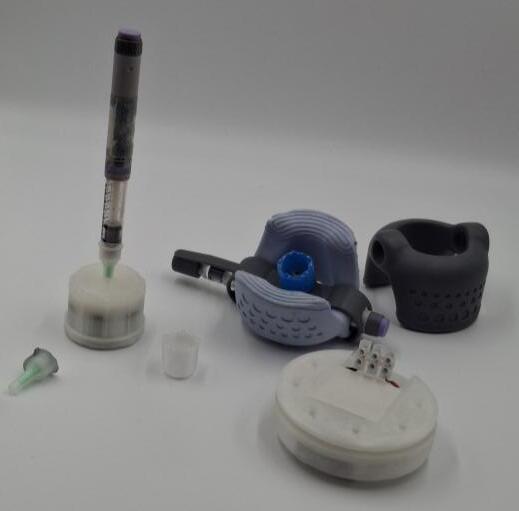
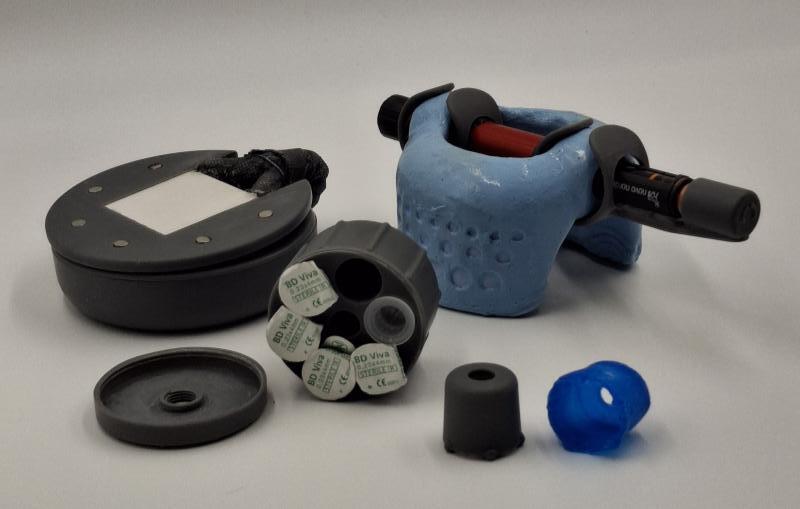
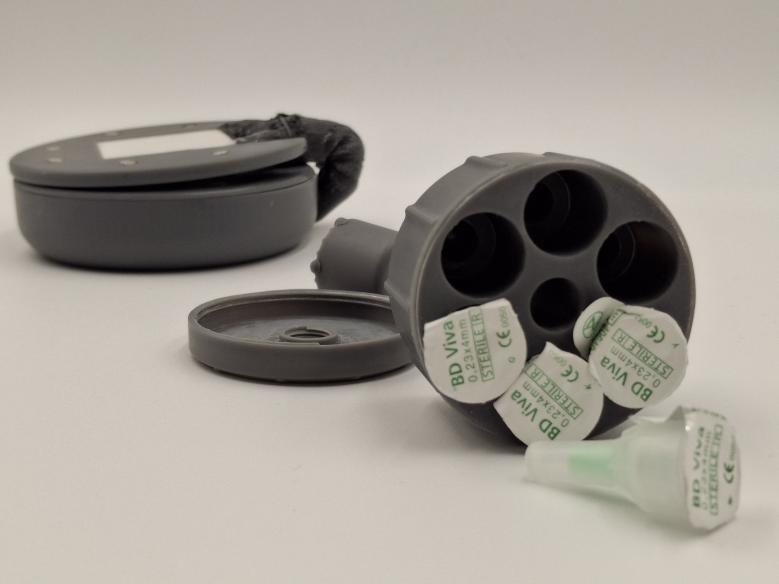
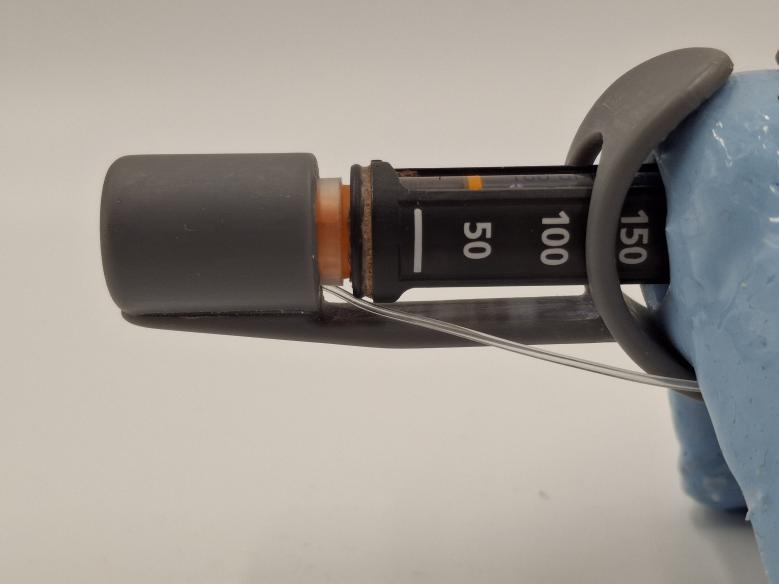
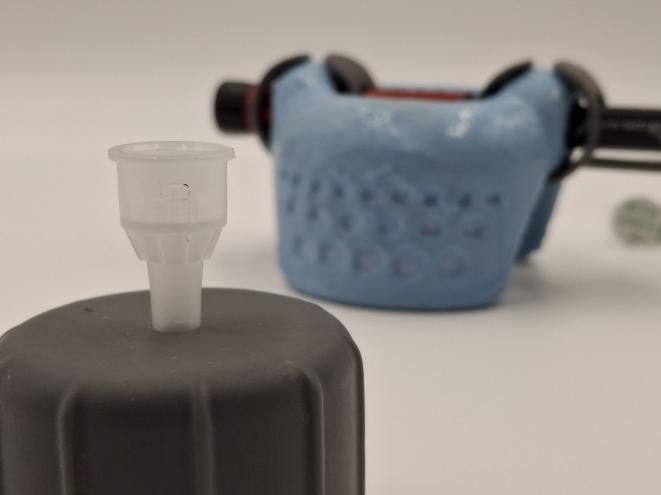
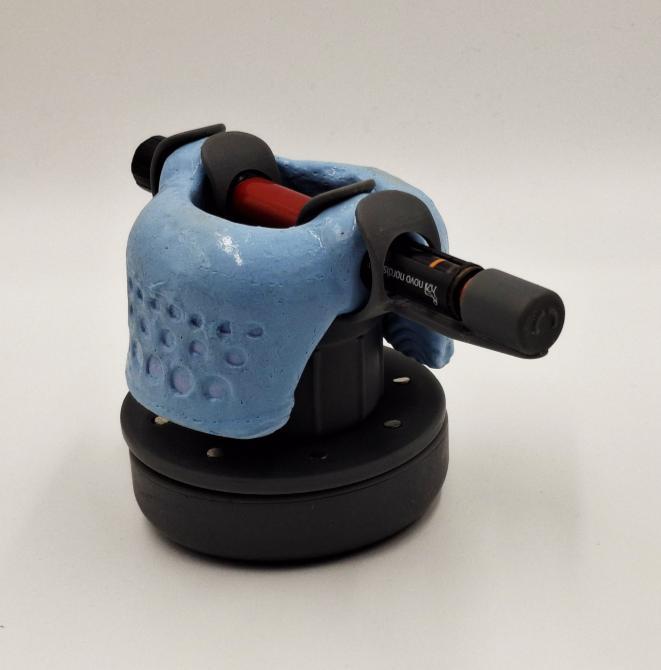
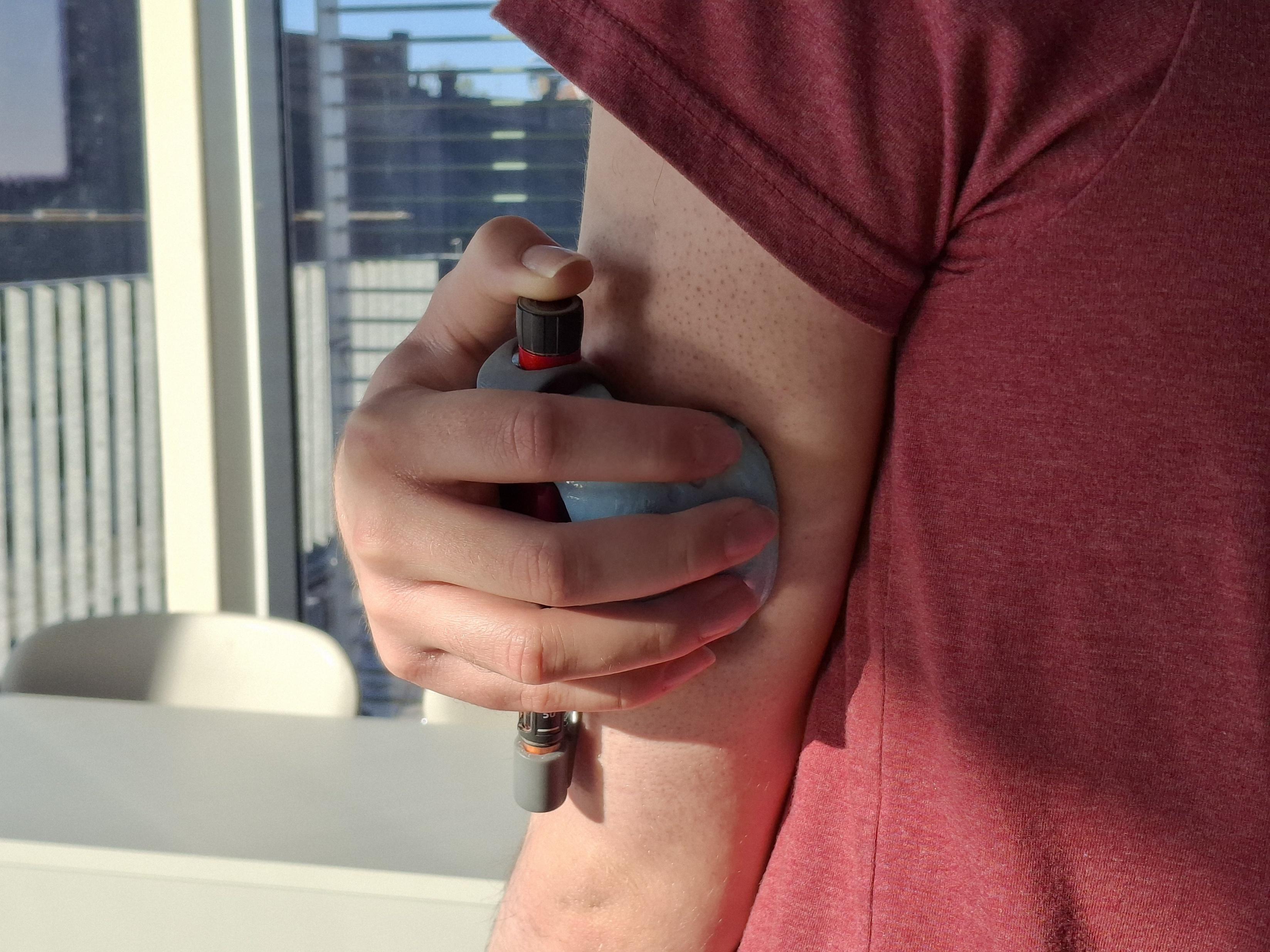
The system features four components: the Hylow Injector transforms stabbing motions into gentle "hugging" actions with one-handed use; the Hylow Shield reduces needle phobia through camouflage and tactile distraction; the Hylow Connector simplifies needle attachment for sensitive fingers; and the Hylow Compress provides dual-temperature therapy for injection sites
Designed for those new to diabetes or struggling with needle anxiety, Hylow helps users manage their condition with greater comfort, confidence, and dignity.
RESEARCH METHODS
•Expert Interviews: Conversations with diabetes educators, nutritionists, psychologists, researchers, and healthcare innovation experts
•Netnography: Analysis of online communities to understand lived experiences across different age groups
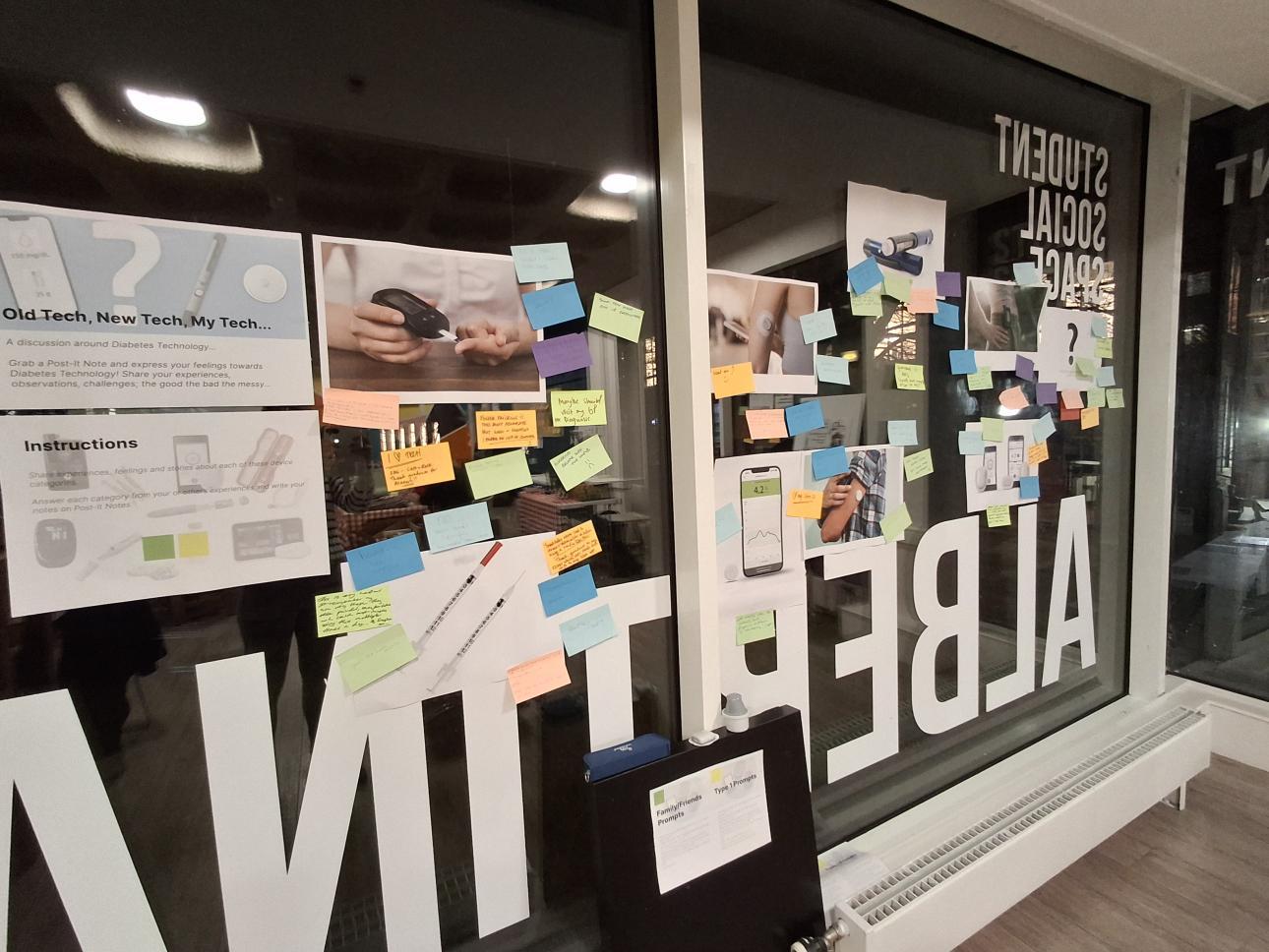
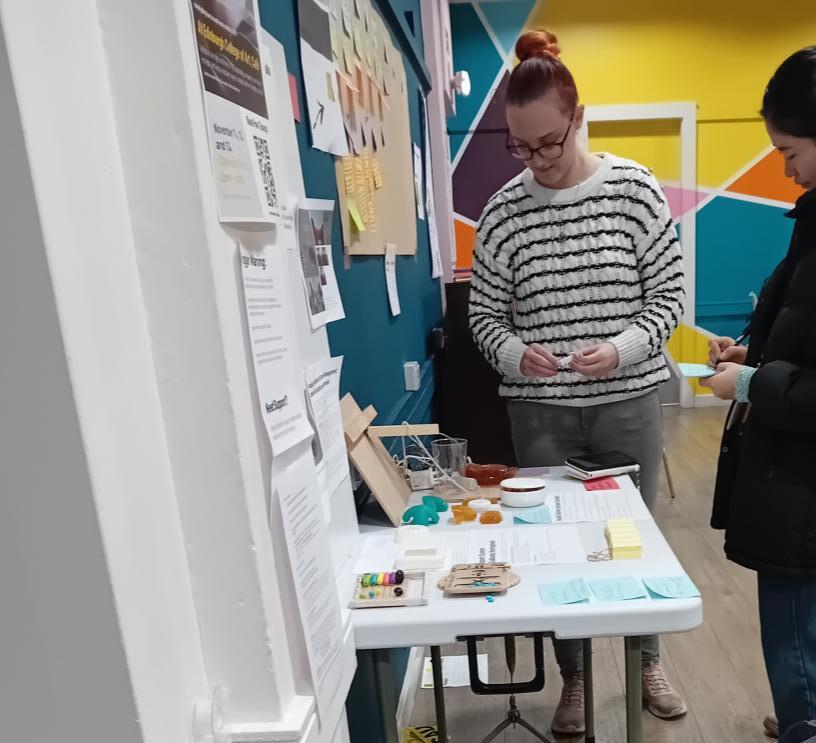
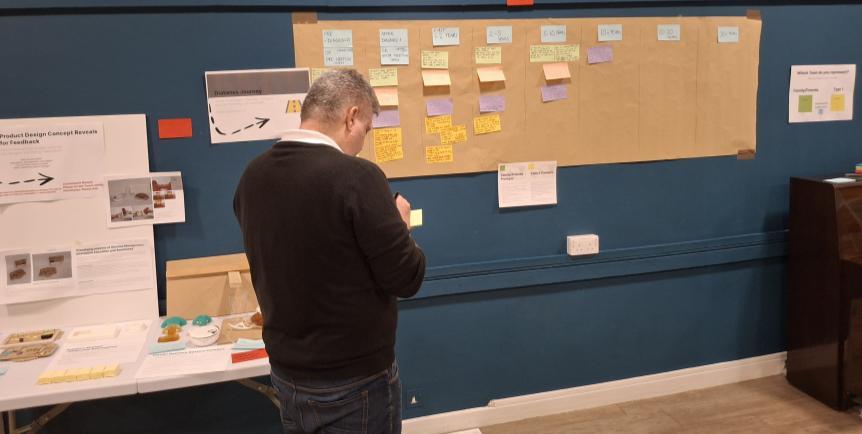
•Workshop with Type 1 Community: Interactive research event where people with diabetes shared experiences through creative activities
•Form and Ergonomic Studies: Testing how different shapes affect psychological comfort through semantic differential studies
•Diary Studies: Documenting daily cognitive and emotional challenges of diabetes management
•Ethnographic Observation: Attending diabetes conferences to observe interactions with technology and healthcare providers
WHO MIGHT HAVE THIS?

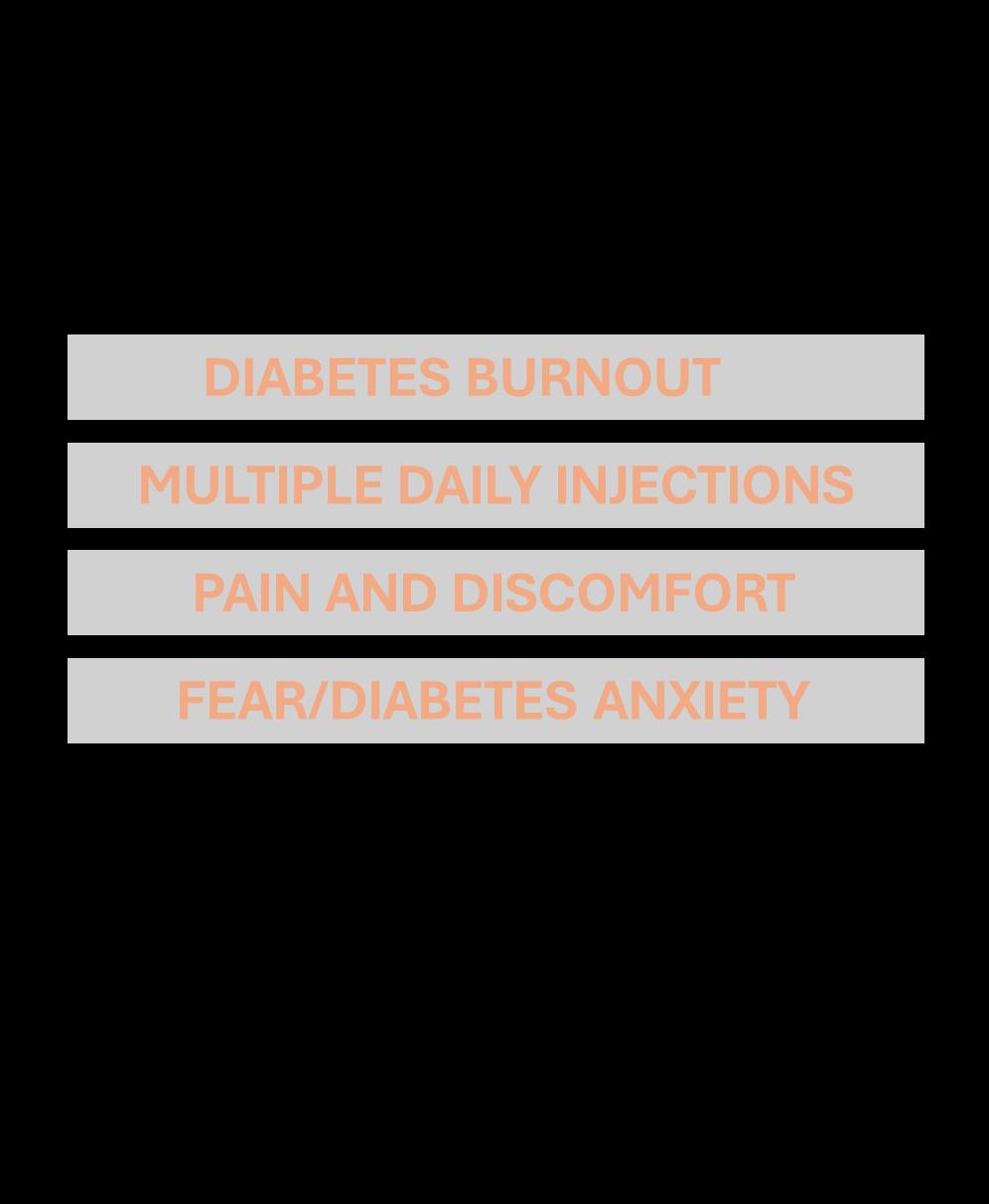
• Someone suffering with diabetes burnout
• Someone looking for physical and mental comfort in diabetes
• Someone on Multiple Daily Injections (Insulin Pens)
• Someone who is guess-estimating or finds dosage calculation difficult and exhausting
• Someone with needle phobia or vulnerable
• Someone who is transitioning into managing Type 1 Diabetes.
• Someone prone to skin irritations and insulin resistance.
• Someone wanting to change sites but isn’t comfortable or discreet enough to do so.
• Someone wanting to limit stigma by demedicalising their devices.
• Someone with amputations or difficulties with their hands.
• Someone who lacks independence or requires additional support for management (aka. Children)

IDEA GENERATION AND DEVELOPMENT
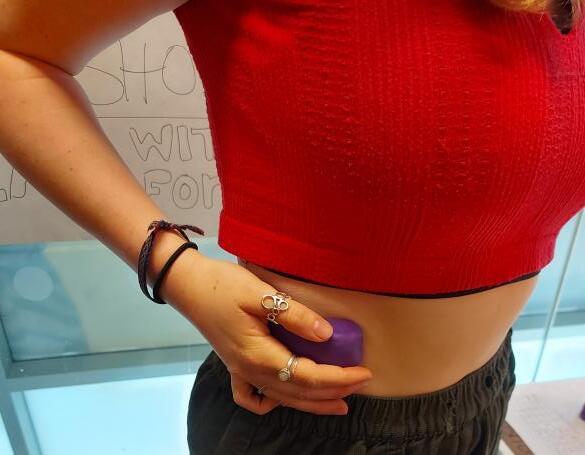
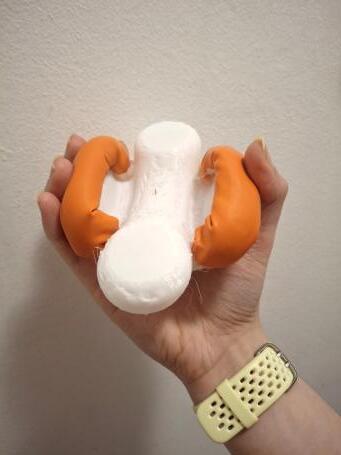
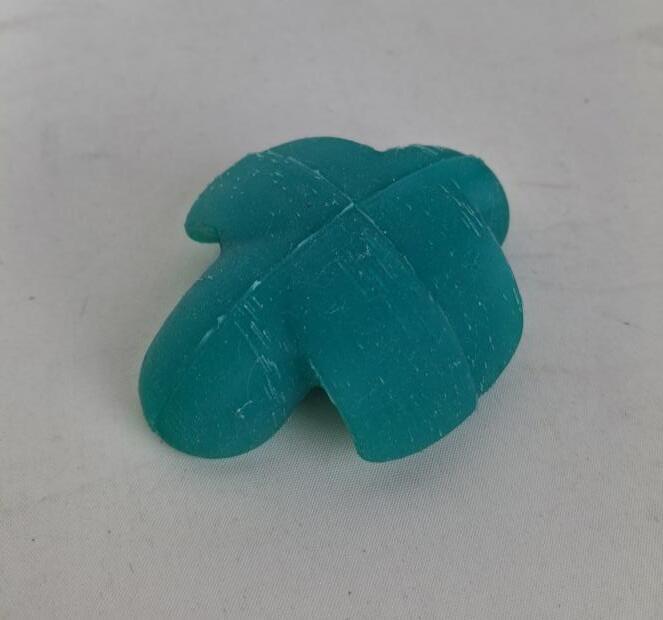
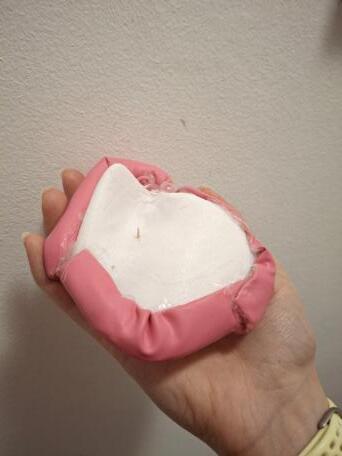
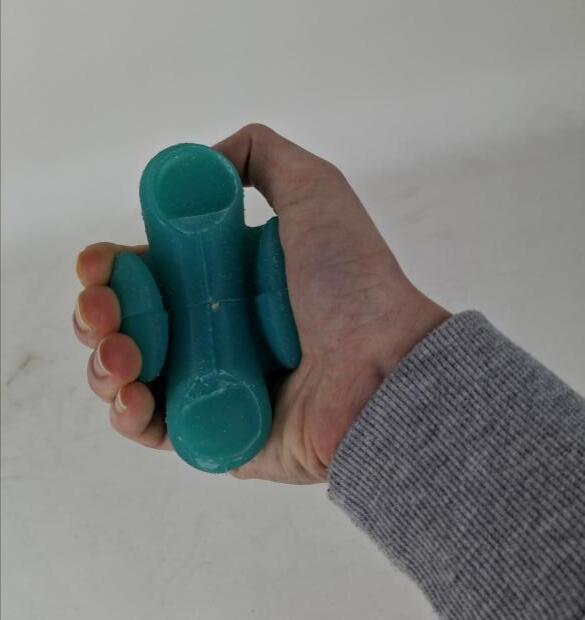
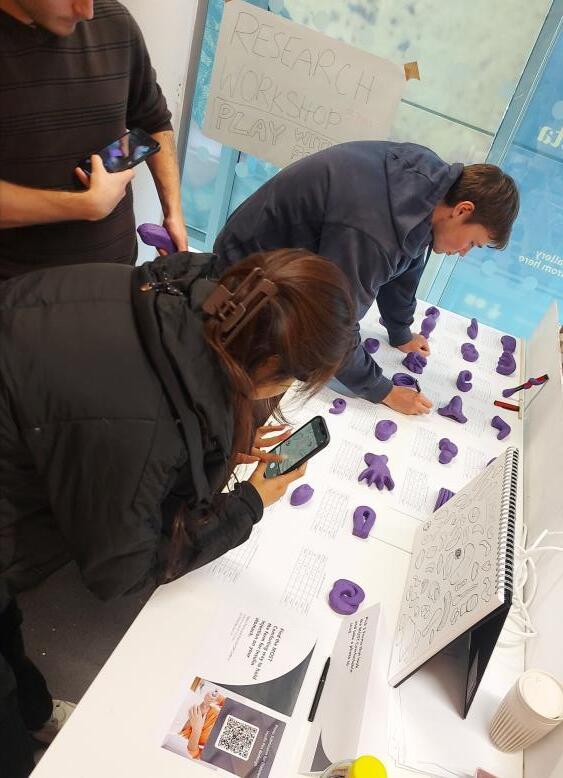
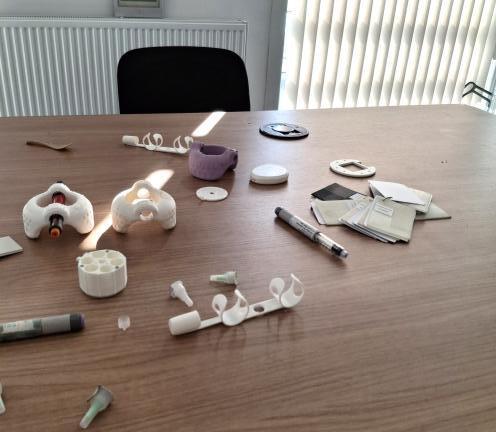
Workshop around my ideations
De-medicalising Injectors
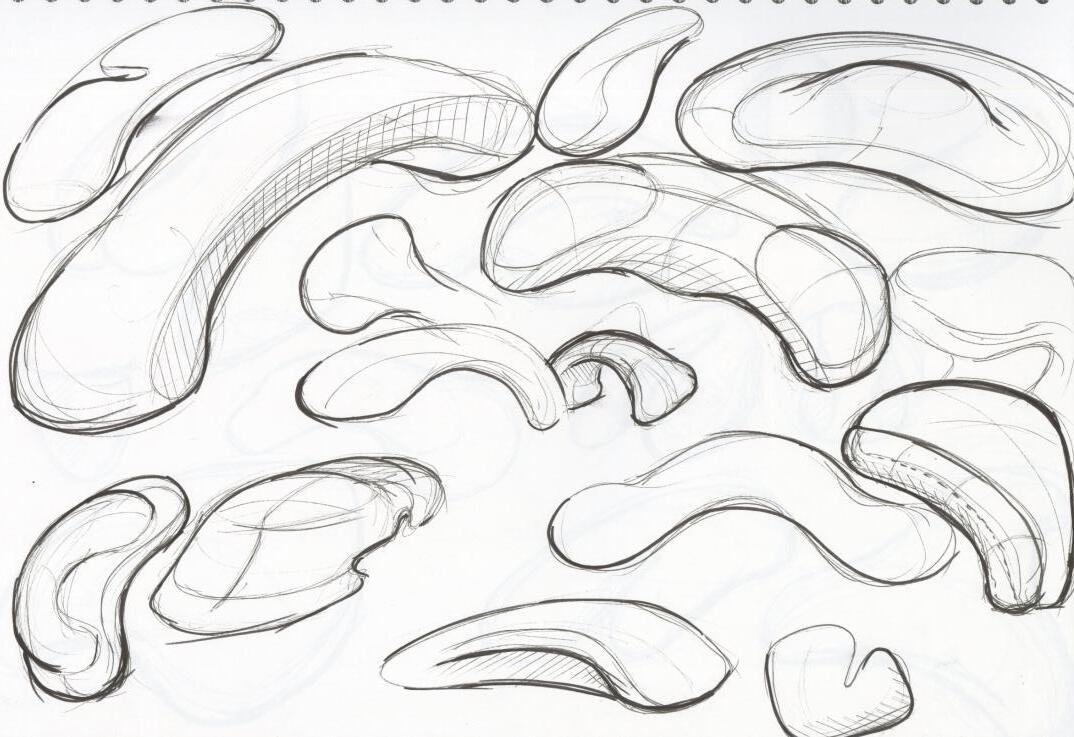
My initial journey began with experimenting with shapes and forms for insulin pens and finding out what aesthetics trigger comfort
Through a workshop, I have managed to test opinions on form and holding an injector
Early explorations with shapes and forms during the workshop phase provided fundamental direction, with participants clearly responding to organic, curved designs that felt comforting rather than clinical
These insights drove the development of the distinctive "hugging" form factor that defines the Hylow Injector.
Design Development: Research to Concept
My design approach emerged directly from research insights, transforming the traditional "stabbing" injection motion into a comforting "hugging" action. This concept resonated deeply with diabetes experts, with one psychologist becoming emotional: "Oh, wow, that'll be so good for kids. I feel quite emotional hearing that."
I explored how ergonomic forms combined with therapeutic techniques could create both physical and psychological comfort. This approach was validated by healthcare professionals for its potential to reduce trauma and anxiety around injections.
Material and Ergonomic Insights
Through extensive material and form testing, I discovered:
•Soft, silicone-like materials created positive emotional associations
•Curved, organic shapes triggered more positive psychological responses than clinical forms
•Ergonomic designs that fit naturally in the hand reduced physical strain
•Squeeze functionality added a therapeutic dimension for anxiety management
The resulting toolkit provides tactile comfort, intuitive hugging motions, organization and skin therapies—prioritizing user dignity while offering comprehensive control over one's health management experience
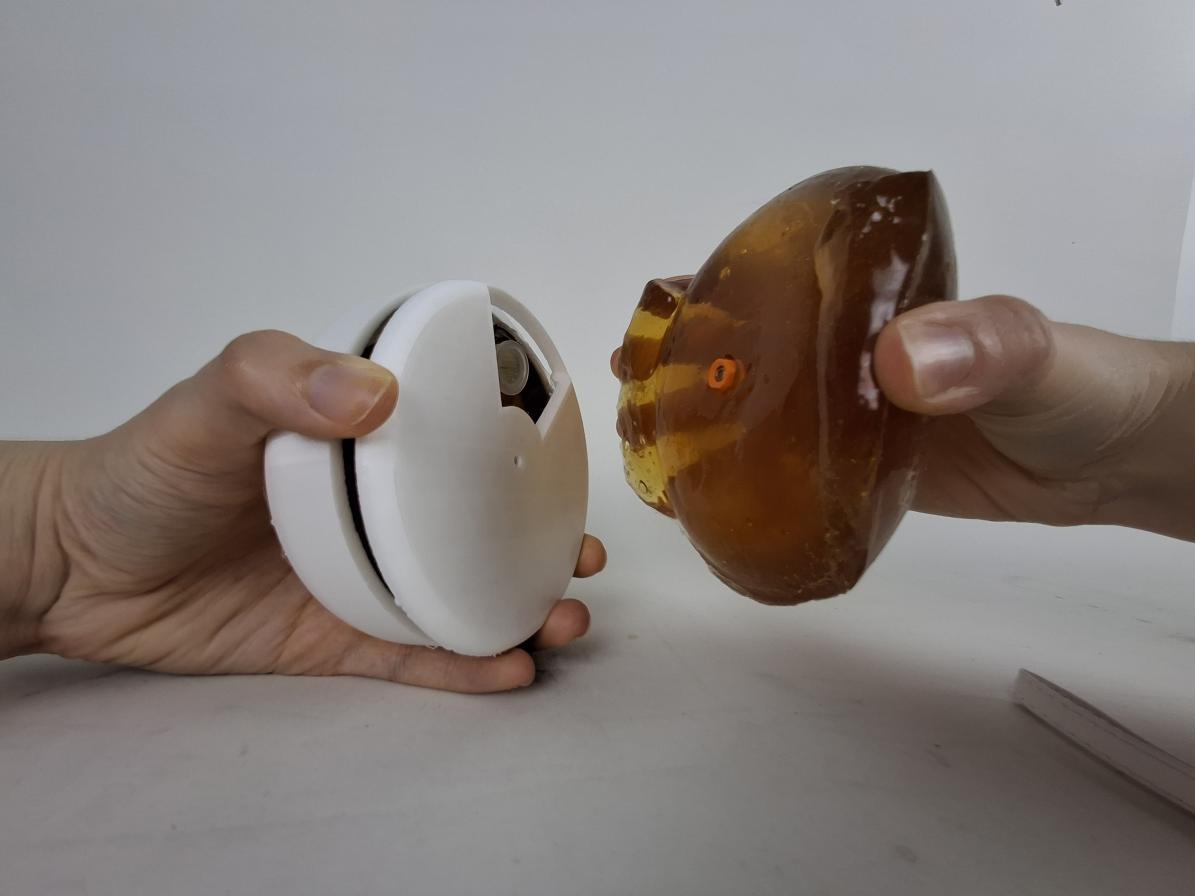
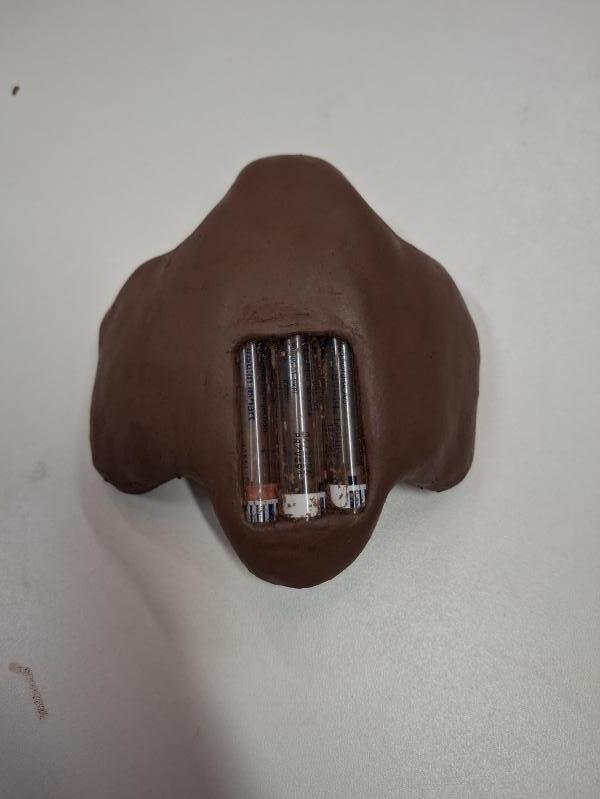
Early Form Development
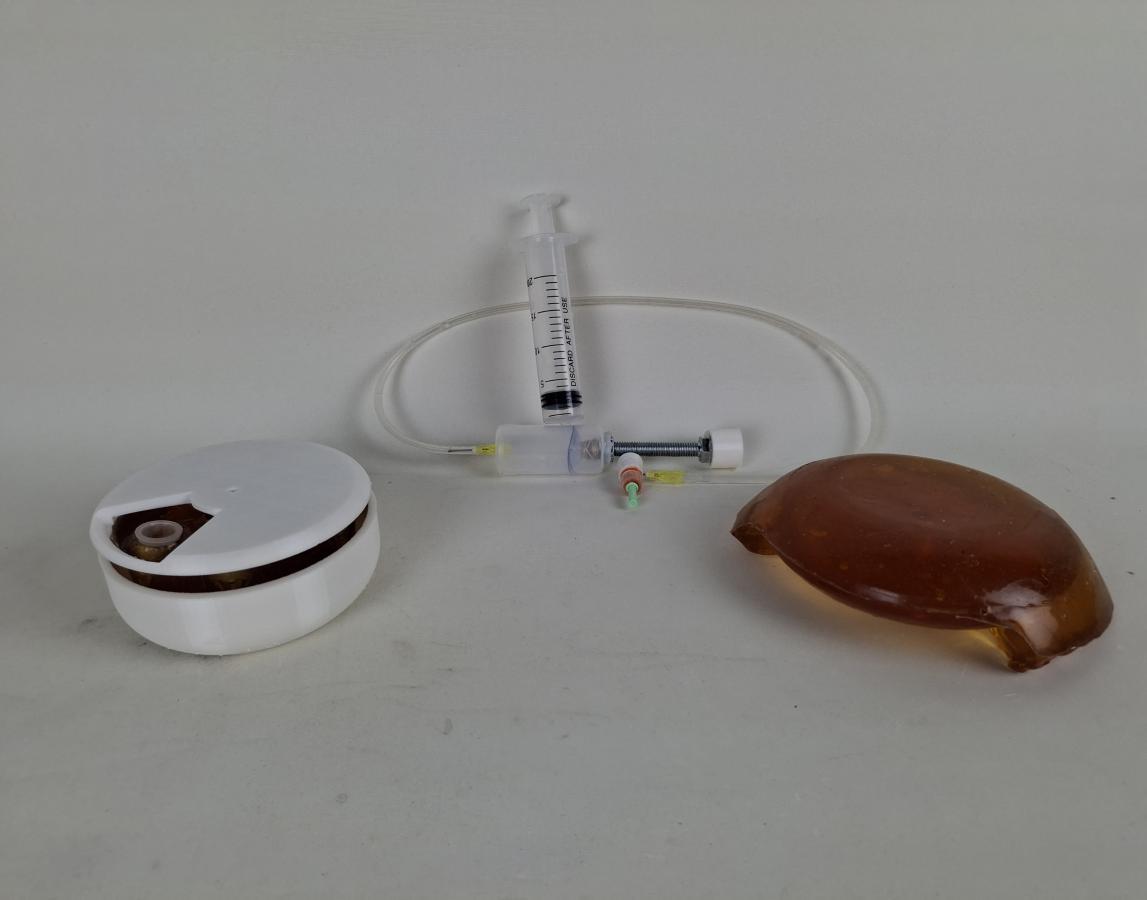
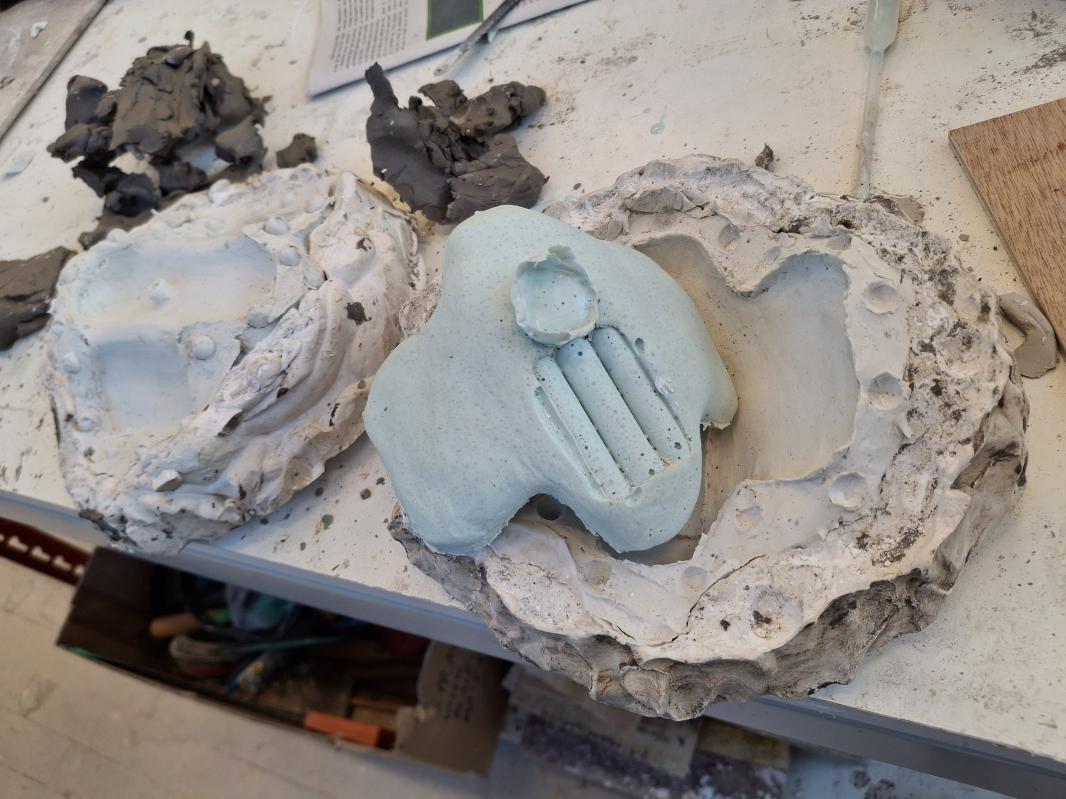
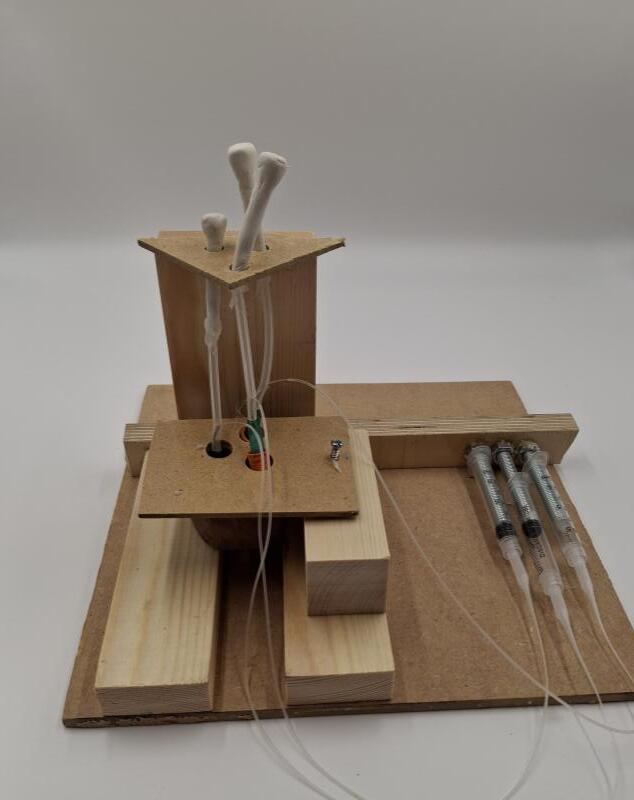
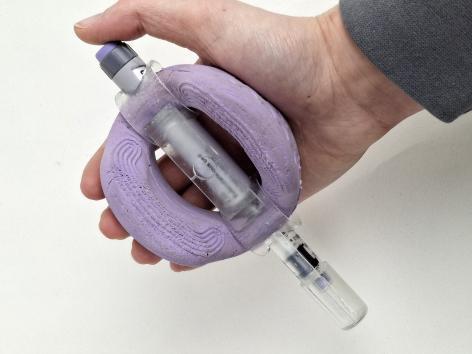
These images showcase my exploration of alternative approaches to insulin delivery. I was investigating how organic, tactile forms could transform the injection experience while maintaining medical functionality. The aim was to explore the idea of advancing insulin pens through multiple liquid deliveries and automation systems
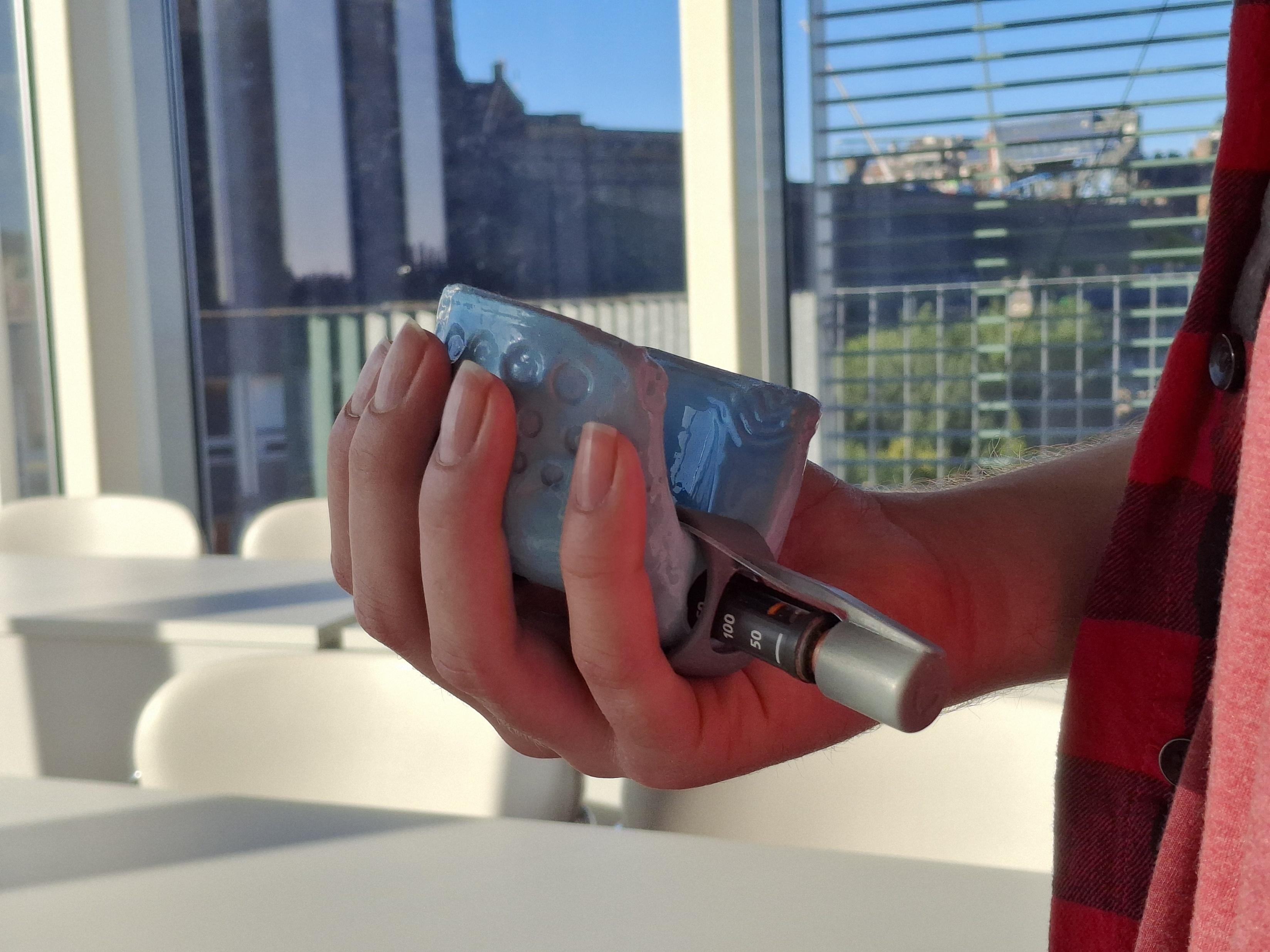
The prototypes reflect my experiments with different materials and ergonomics, testing how curved shapes and soft surfaces might create a more comforting interaction Through silicone casting and hand-built testing rigs, I examined how redirecting insulin flow could convert traditional "stabbing" motions into gentler "hugging" actions that reduce anxiety
This phase was about balancing technical requirements with emotional comfort exploring how thoughtful design could address both the physical and psychological aspects of diabetes management
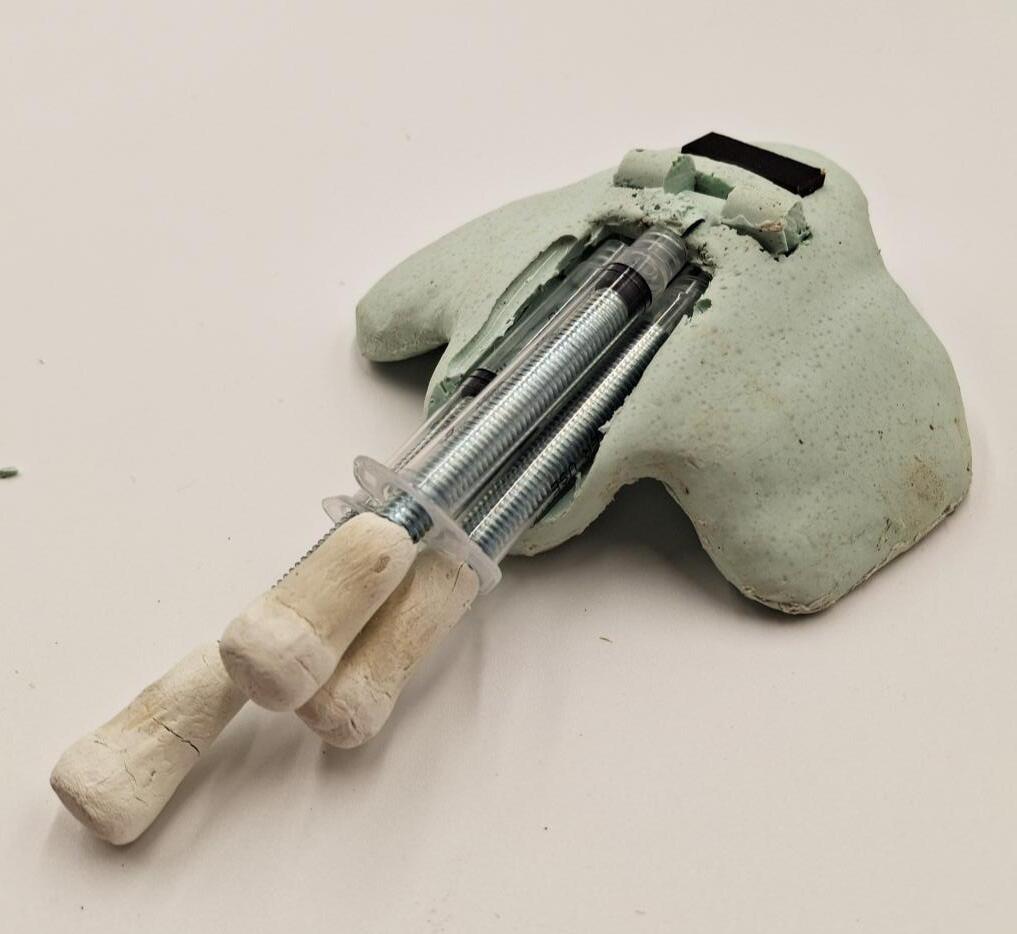
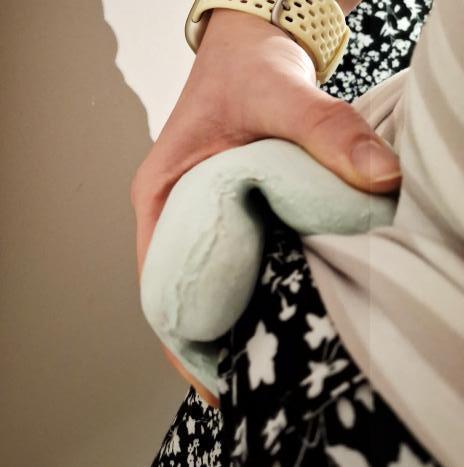
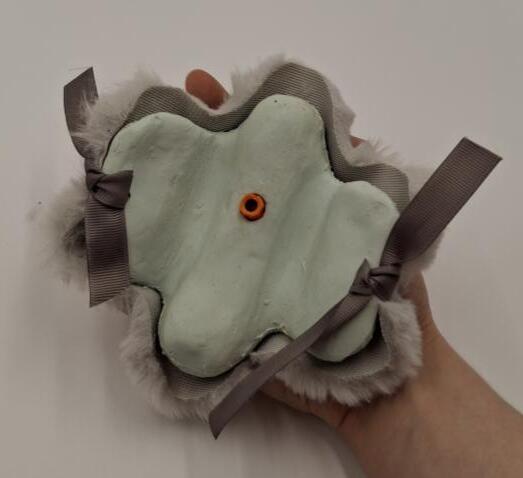
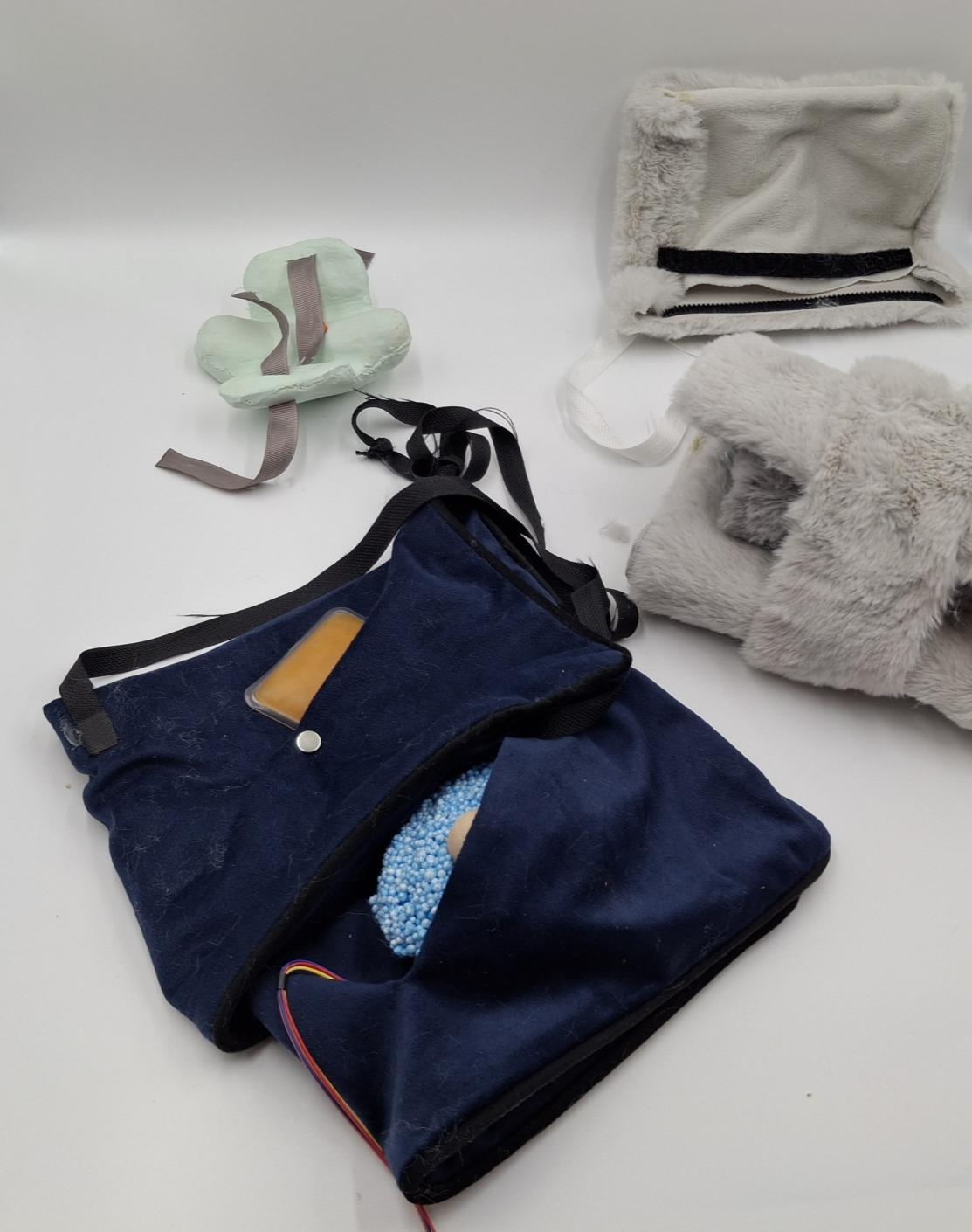
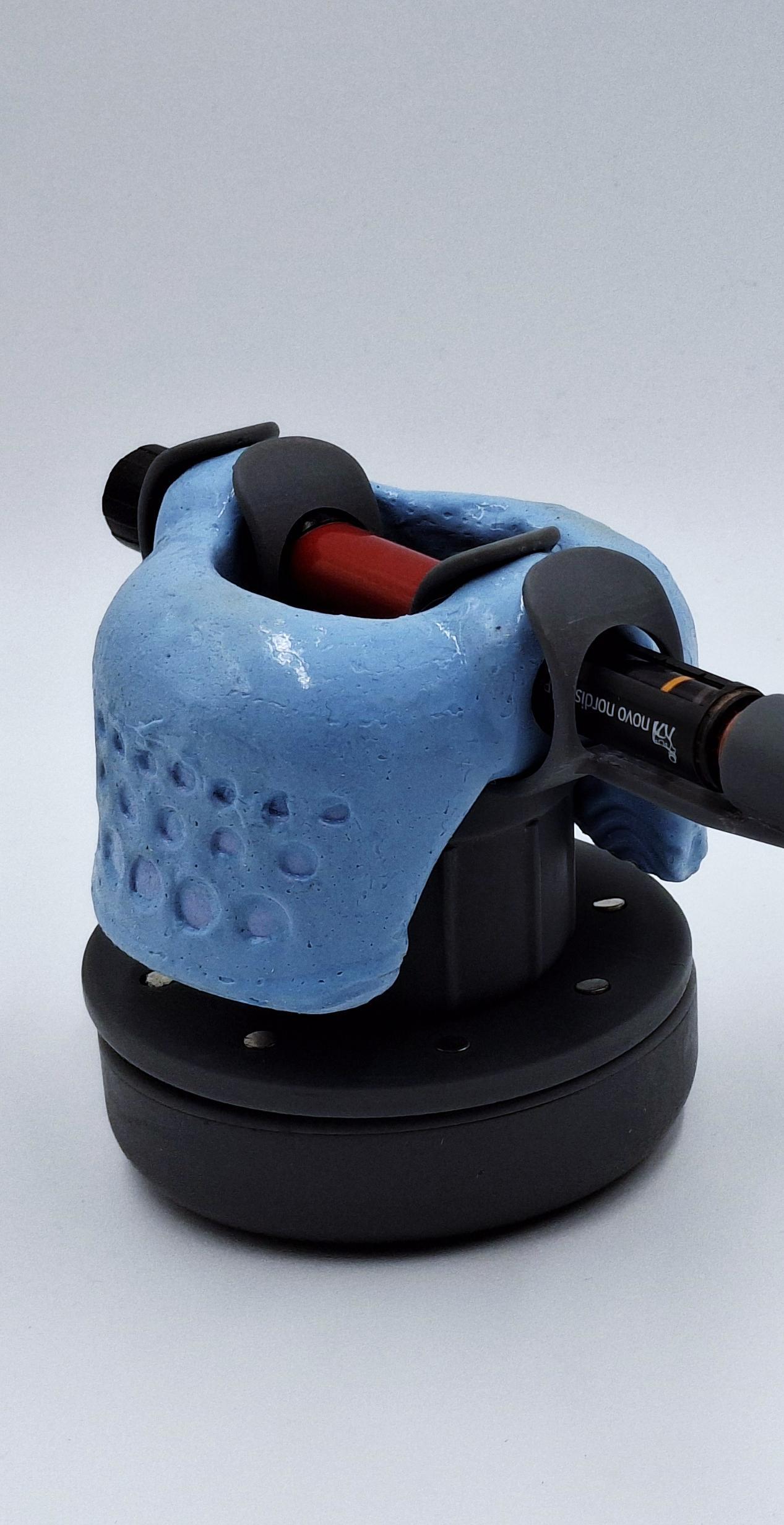
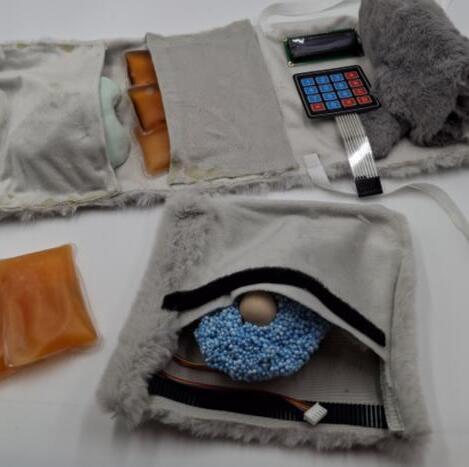
These images showcase my initial but more resolved concept for the Hylow system with a clear direction - a comprehensive toolkit for transforming the diabetes management experience. The design features multiple integrated components: The mint-green injector device (top left) transforms traditional "stabbing" motions into gentle "hugging" actions, incorporating standard insulin syringes in a soft, ergonomic housing that provides tactile comfort and reduces anxiety. The carrier bag and accessories (right) address storage, organization, and discretion needs. The navy textile carrier provides stylish portability while discreetly containing all components. It includes specialized pockets for essential supplies, with soft therapeutic elements for injection site care.
The transformation of a conventional "stabbing" injection motion into a gentler "hugging" action demanded precise engineering solutions This wasn't simply an aesthetic change it required fundamentally rethinking how insulin flows from pen to needle to body. The fluid dynamics exploration became one of my most significant technical challenges, requiring extensive testing to ensure accurate, reliable delivery while transforming the physical interaction.
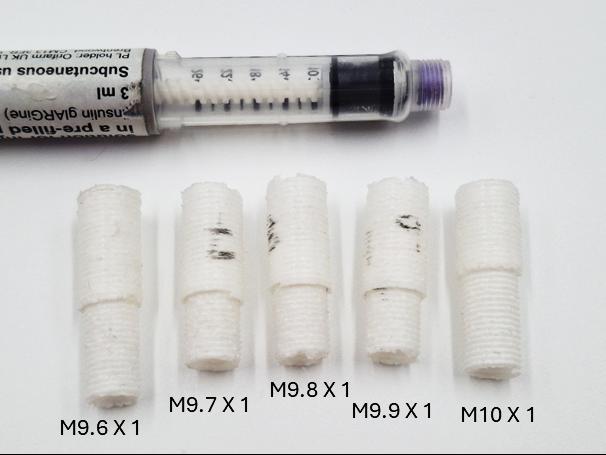
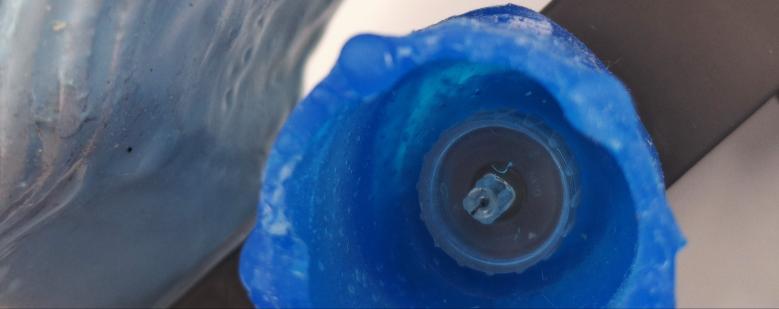
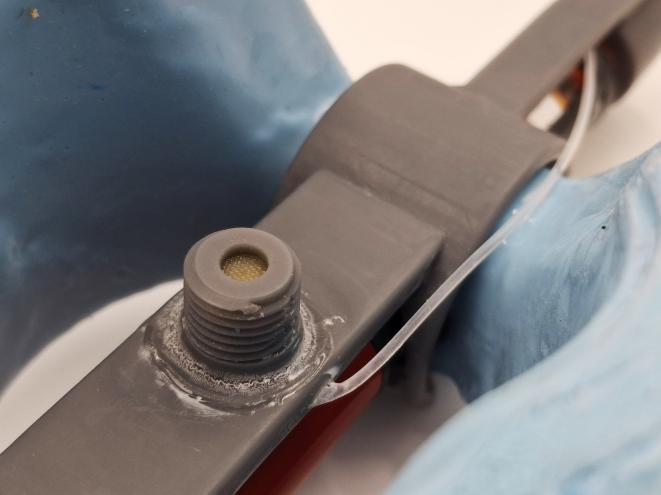
Initial prototypes revealed that redirecting insulin flow would require specialized internal channels and precise threading dimensions to maintain compatibility with standard components. When conventional research methods failed to yield the thread specifications needed for needle attachments, I developed a systematic testing approach creating multiple prototype threads until identifying the exact dimensions required for watertight connections.
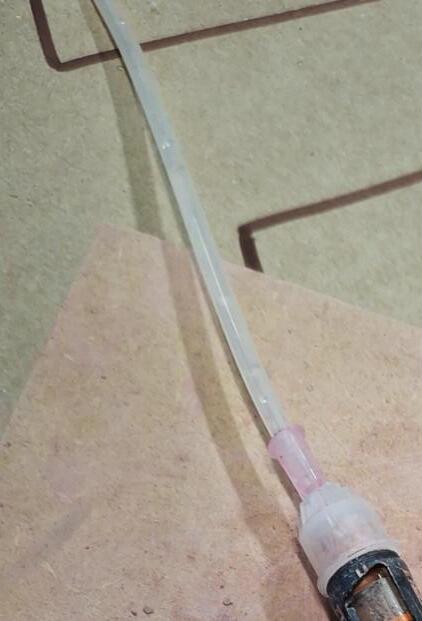
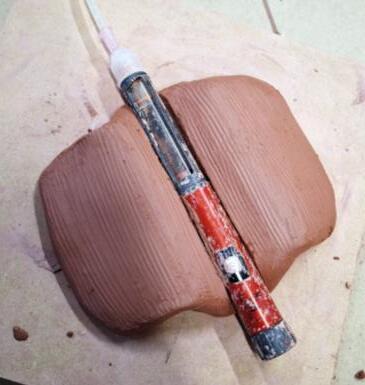
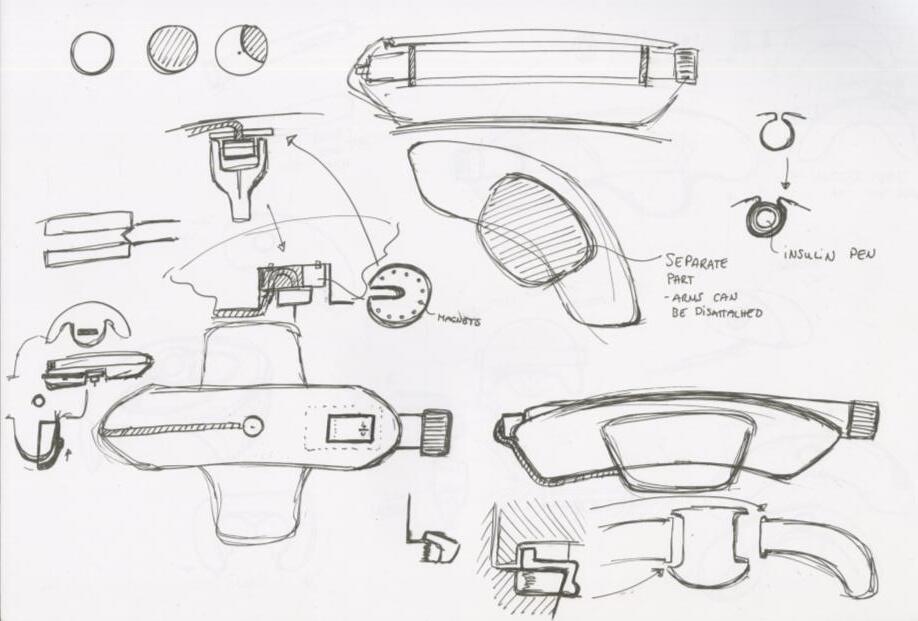
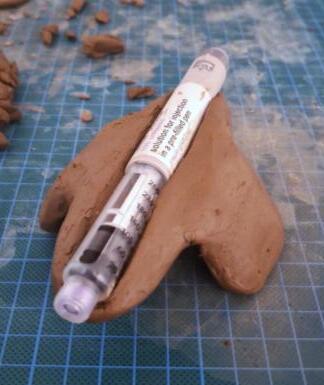
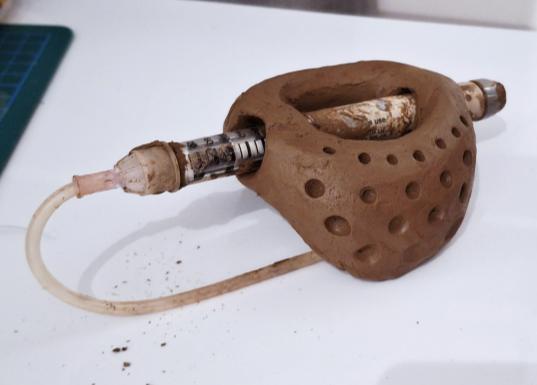
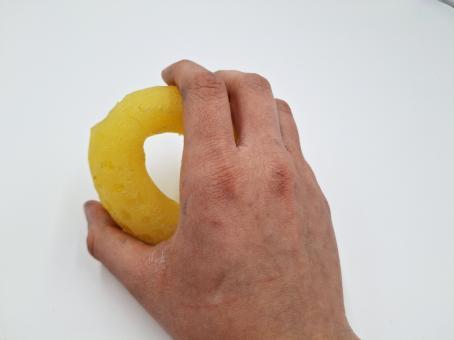
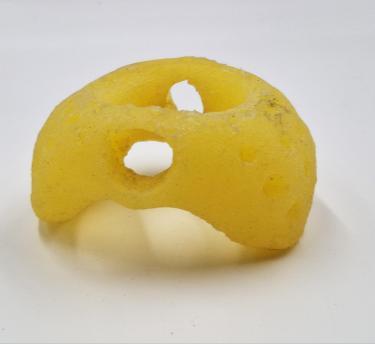
I have additionally iterated around possible forms and forms that could accommodate both the explored function of changing injection techniques as well as pinching the skin through hugging which I could then test with silicone material through casting.
FLUID DYNAMICS
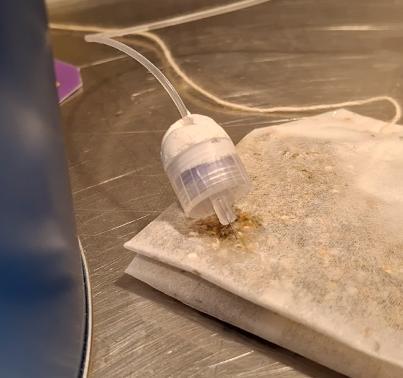
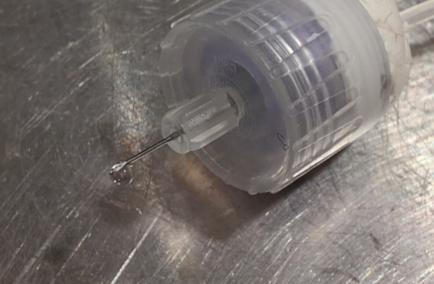
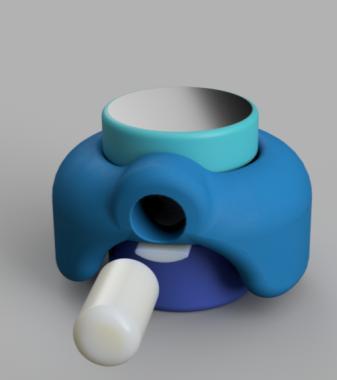
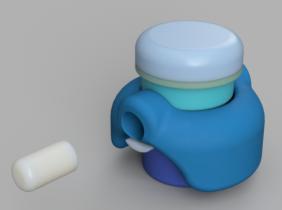
I have used the most successful form from the feedbacks to develop and looked at placements for the insulin pen.
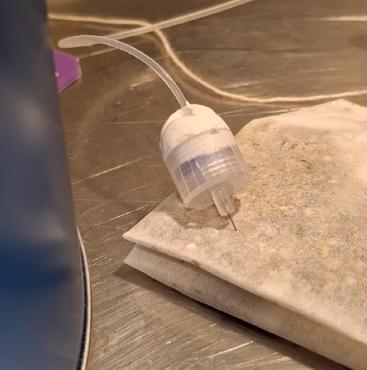
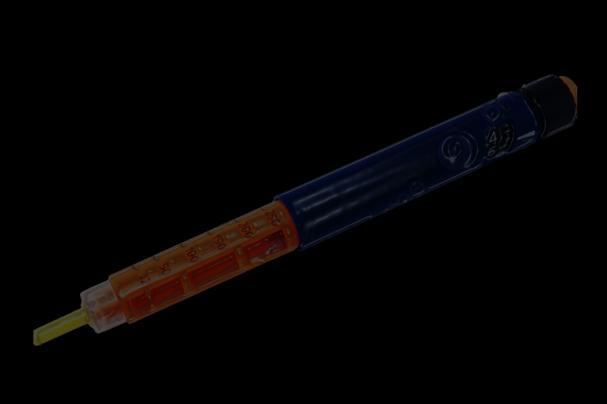
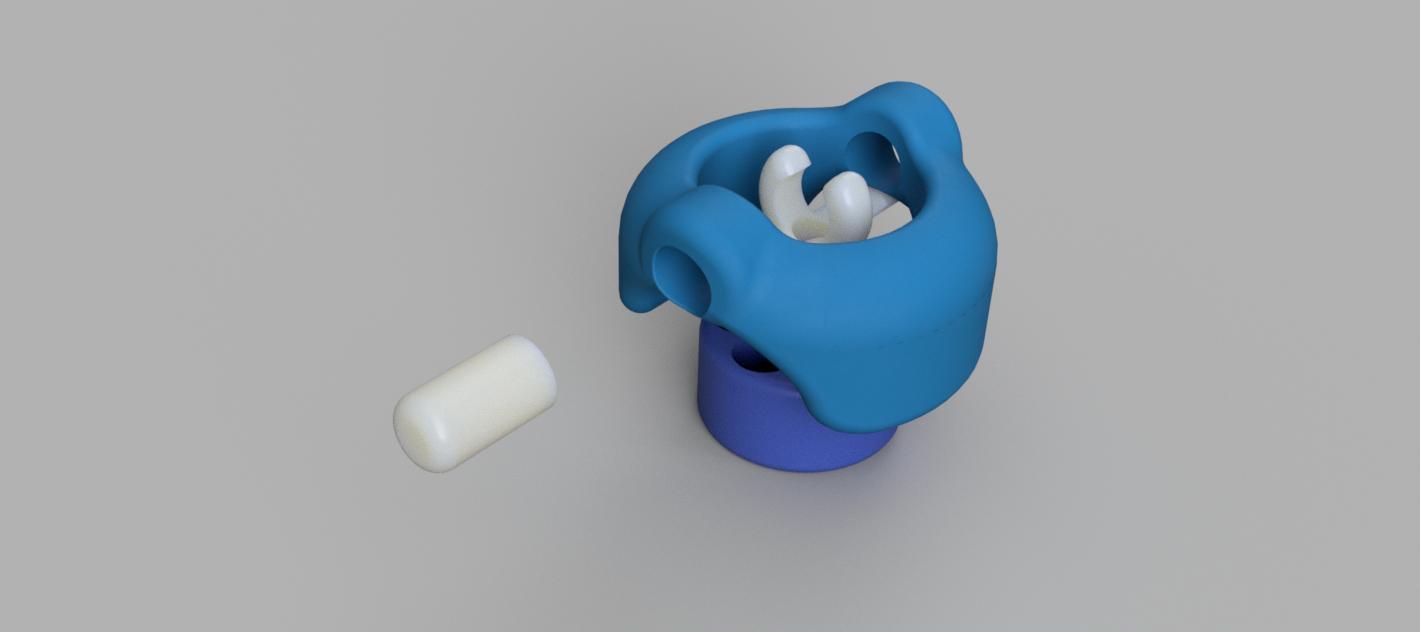
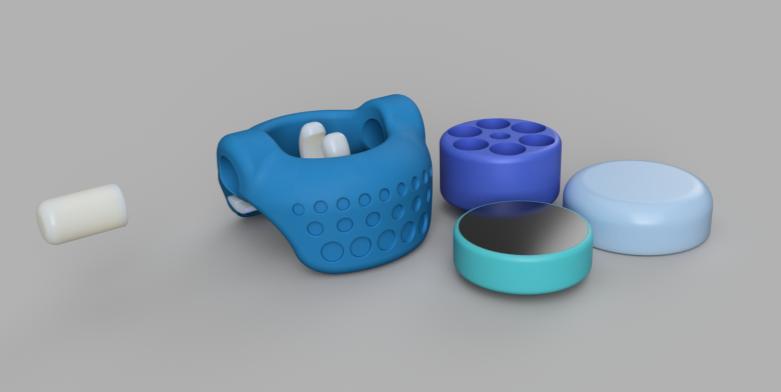
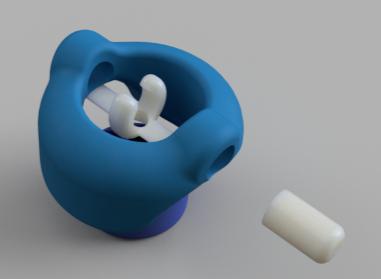
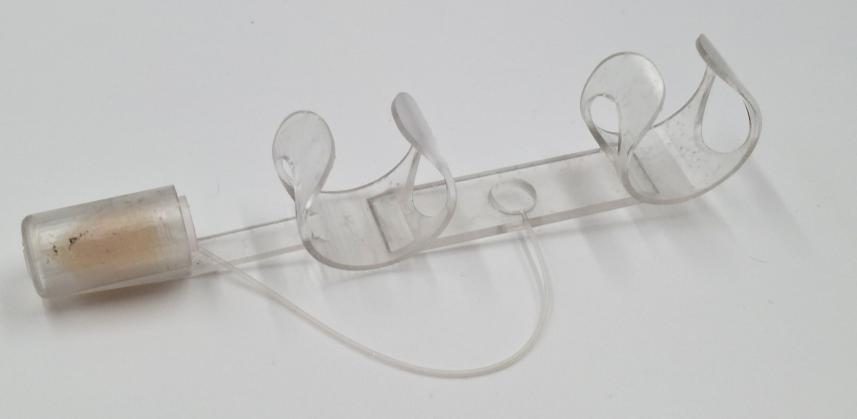
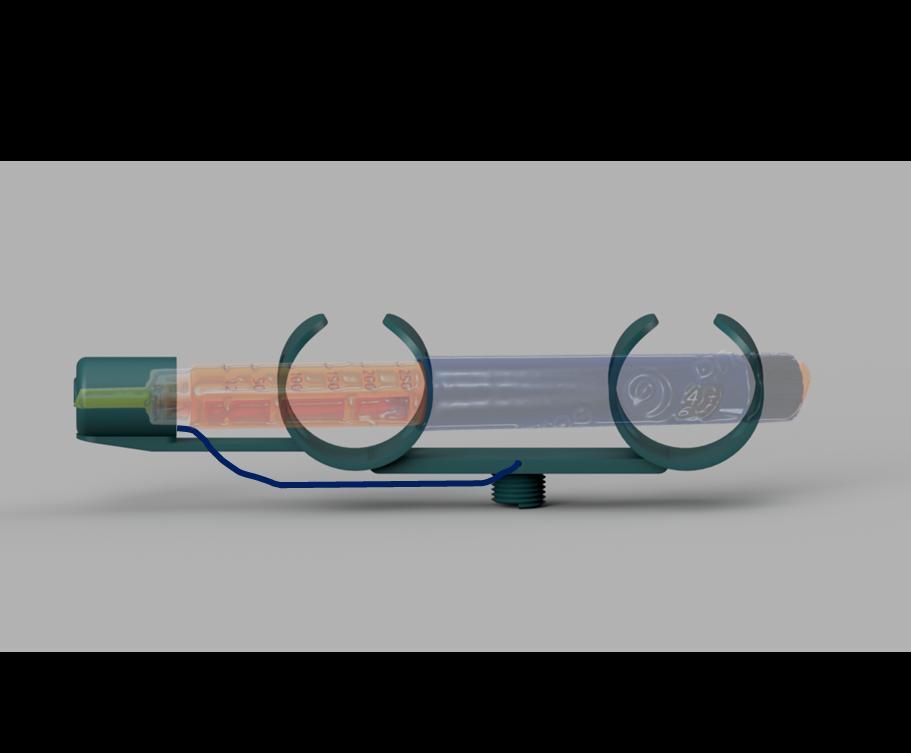
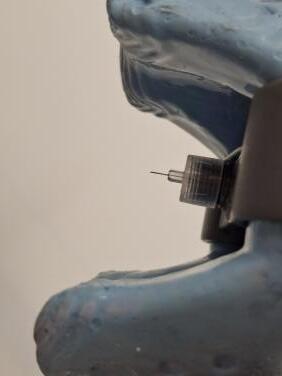
Due to the complex engineering needed for establishing a brand new insulin pen. I have looked into resolving the product by allowing an attachment for the pens. This meant I was looking at fluid dynamics and constructing a tubing that would allow the redirection of insulin to change the conventional stabbing to a more comfortable hug-device for injecting.
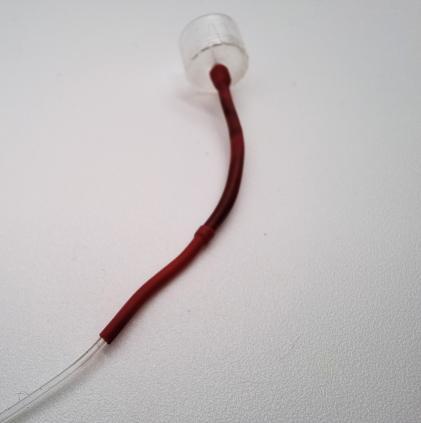
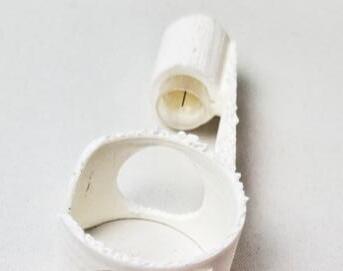
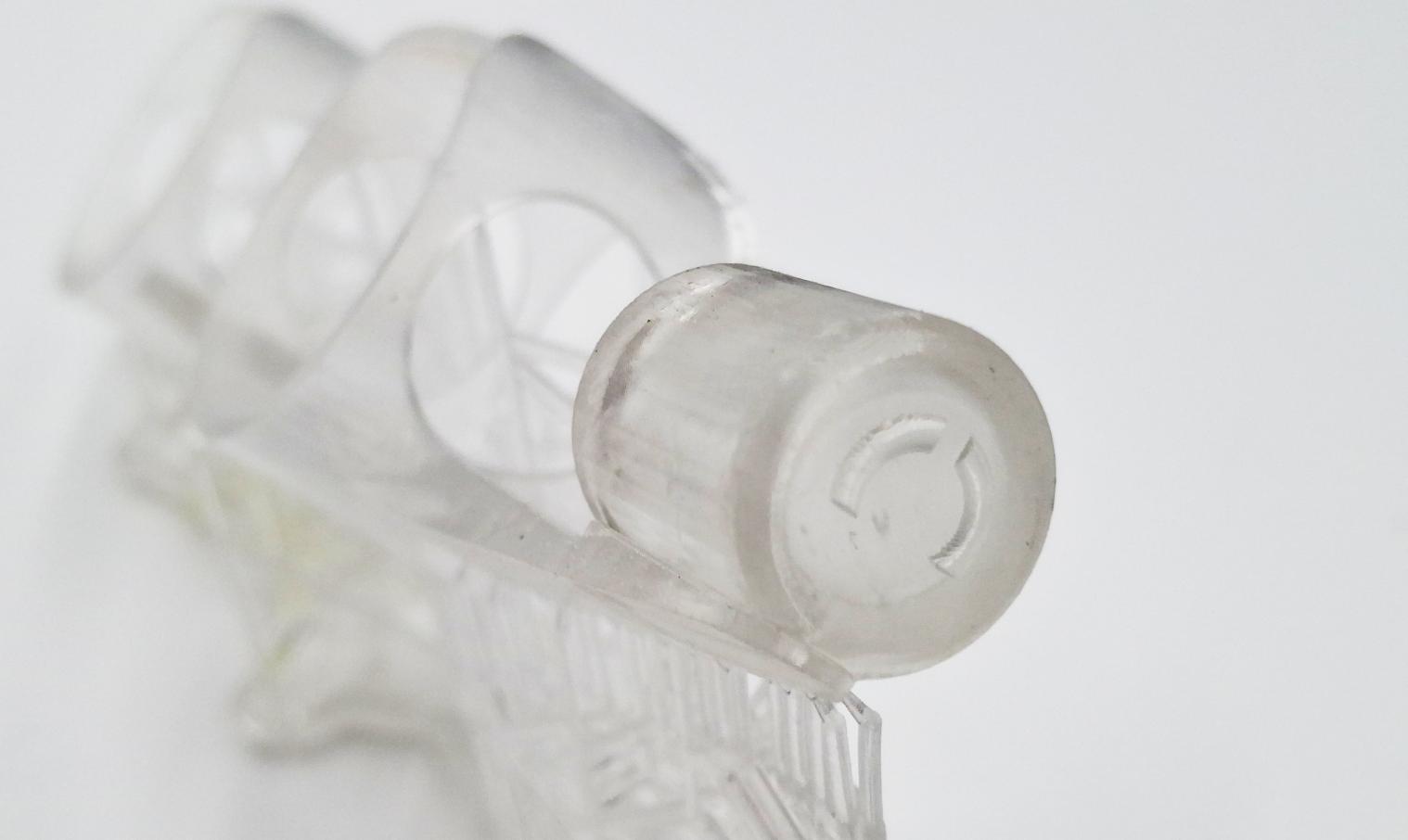
The fluid dynamics exploration proved particularly challenging, requiring detailed understanding of how redirecting insulin flow would affect delivery accuracy Through methodical testing and refinement, I developed a solution that maintained medical precision while transforming the physical interaction into a more comfortable experience through being able to redirect insulin elsewhere to change the injection technique which will fit inside the product


DISCUSSION WITH MCLAREN PLASTICS
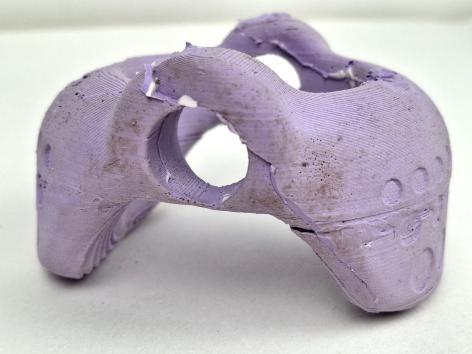
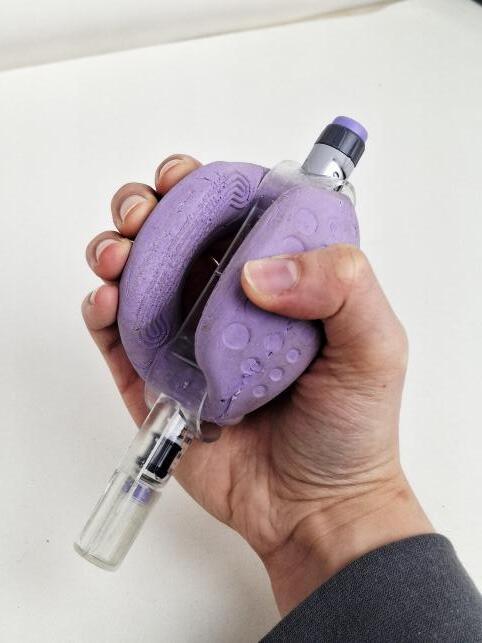
Through turning digital drawings into reality, the project was able to be tested and ensured that sizes and functionalities are effective
I have noticed through the process that various iterations are needed in order to make it suitable for use. I have ensured to analyse and user test my designs throughout developing and testing.
DEVELOPMENT
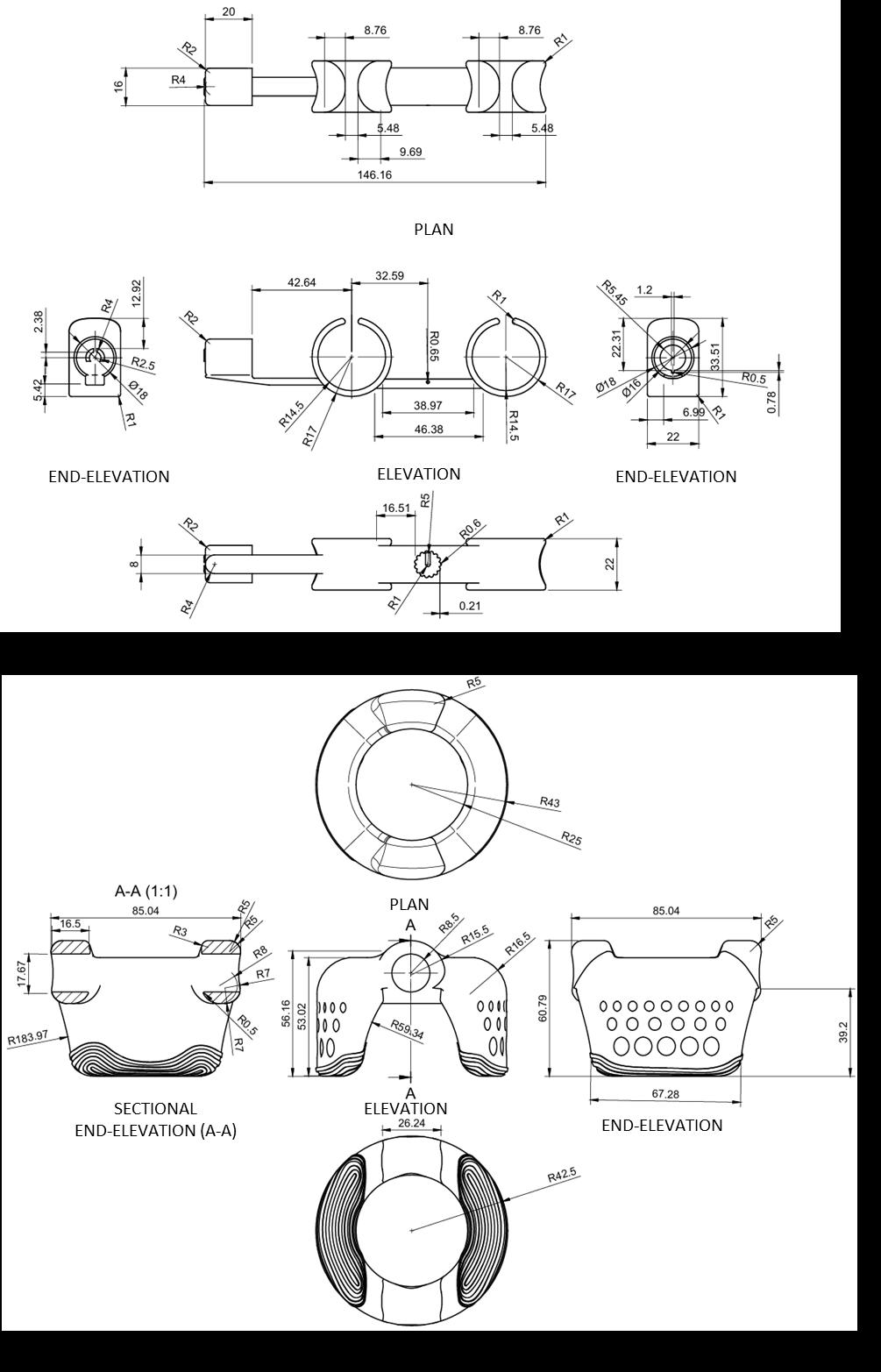
Most of my time was spend on CAD modelling rather than physical iterations where 3D printing was used to test concepts, ideas and dimensions when required However, this allowed me to ensure lots of iterations could be done without manufacturing processes slowing me down.
Through a visit and meeting with McLaren Plastics in Edinburgh, I have managed to get expert manufacturing feedback on my design as well as cost and requirements This allowed me to ensure that further iterations involved their suggestions such as using threaded heat inserts and allowed me to refocus on the possibilities and requirements for manufacturing with injection moulding for industry
My goal was now to ensure I can get the best quality cast for the silicone part.
REFLECTION
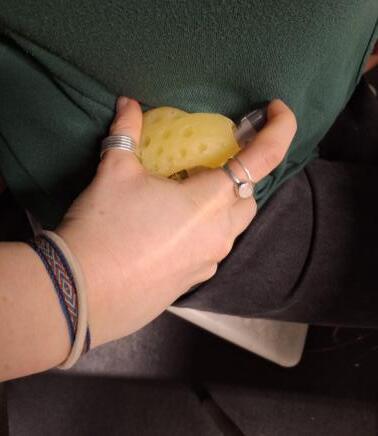
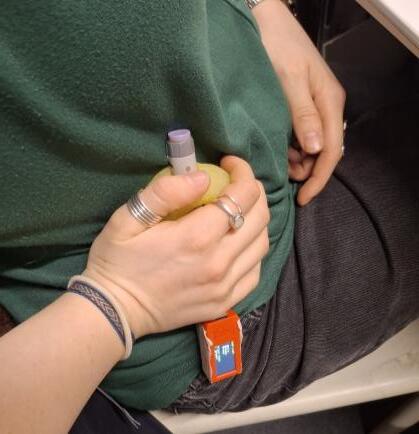
TESTING COMFORT
The testing process has effectively allowed me to prove the effectiveness of concepts, including sizes and observe the public on their visual understanding of the use of the product,
Great feedback was given which ensured my direction to be maintained as tactile comfort was enabled
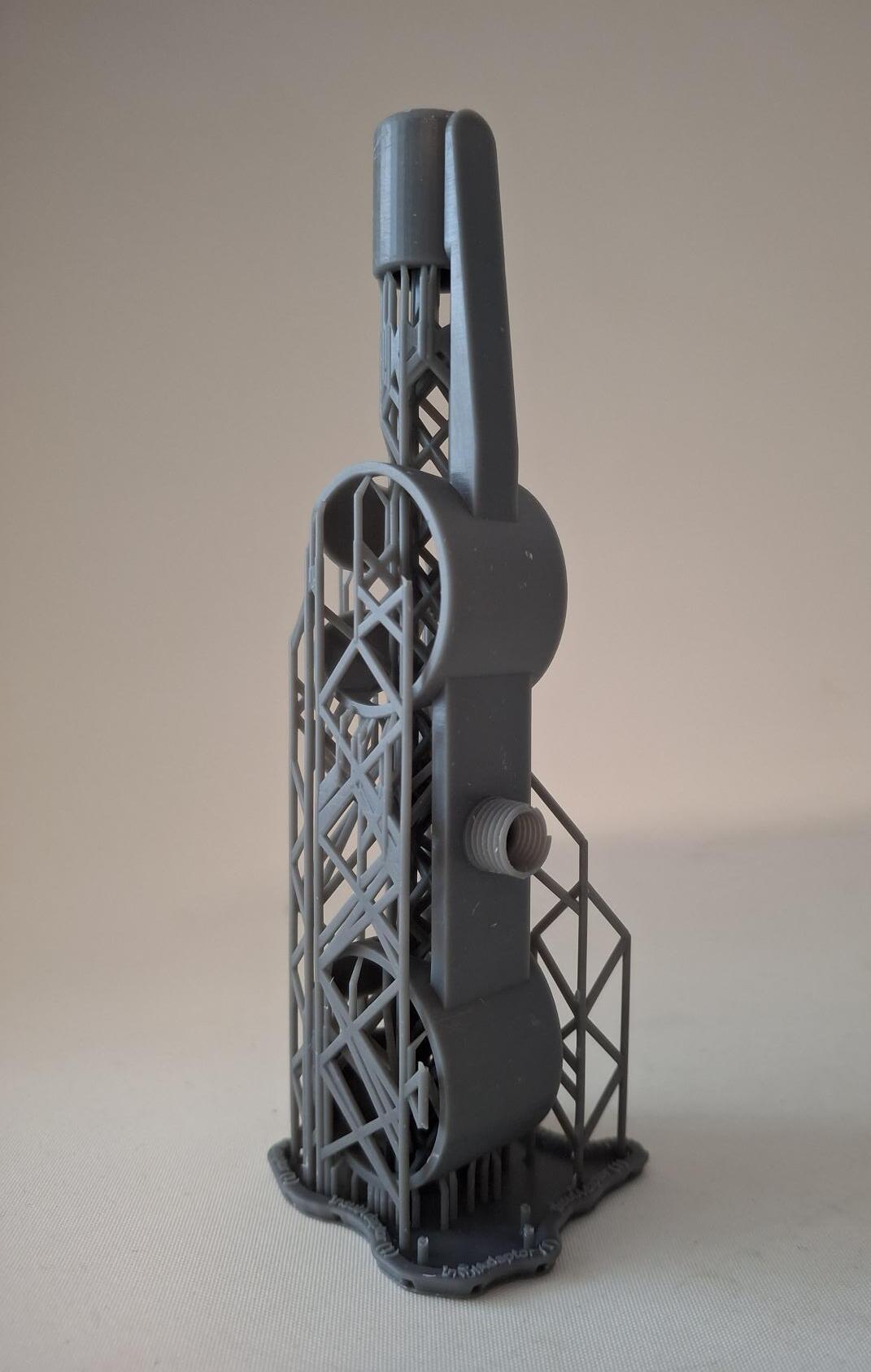
My technical process moved fluidly between digital and physical development While CAD modeling provided precision and iteration speed, physical prototyping remained essential for validating ergonomics and material performance The supporting structure visible in my 3D printed prototypes represents this hybrid approach using digital fabrication to test complex geometries before transitioning to material testing.
The precision engineering required for medical device development became a guiding principle across all aspects of the project. My visit to McLaren Plastics provided invaluable manufacturing insights that informed later design decisions, ensuring the final concept balanced innovative design with production feasibility.
Technical Resilience and Problem-Solving
The technical challenges of this project pushed me to develop greater resilience and creative problem-solving abilities. When conventional approaches proved insufficient such as when 3D scanning failed to capture the intricate threading dimensions needed for needle attachment or finding the standards for needle threads in diabetes were inaccessible I developed alternative methodologies through systematic testing of different thread designs.
These moments of technical difficulty became valuable learning experiences that expanded my capabilities as a designer. Rather than seeing constraints as limitations, I learned to view them as opportunities for innovation. This mindset transformation represents perhaps the most significant growth in my professional approach an ability to maintain creative momentum even when faced with complex technical obstacles.
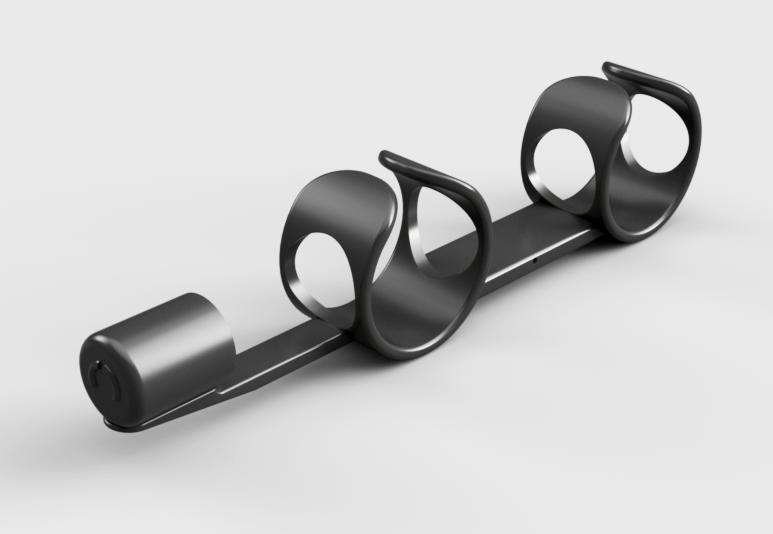
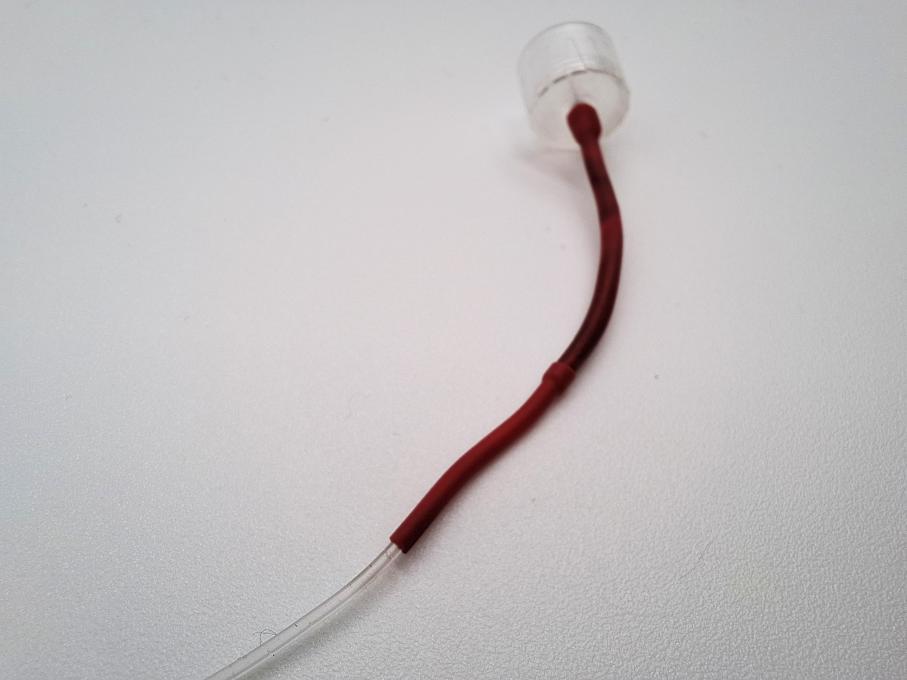
My technical process leveraged multiple fabrication technologies, each offering distinct advantages at different development stages. While FDM 3D printing provided rapid iteration for early concept testing, the intricate nature of medical components demanded higher precision as the design progressed Transitioning to resin-based SLA printing proved transformative for producing small-scale, high-precision components with the smooth surface finish essential for medical applications. Resin printing enabled me to achieve the exacting tolerances needed for threading components and fluid channels—details that would be impossible to capture with conventional FDM technology. The superior resolution allowed me to create watertight connections and precisely engineered internal geometries that ensured reliable insulin flow. This technology was particularly valuable for the connector component, where thread accuracy directly impacted both functionality and safety.
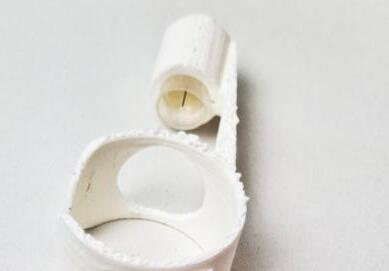
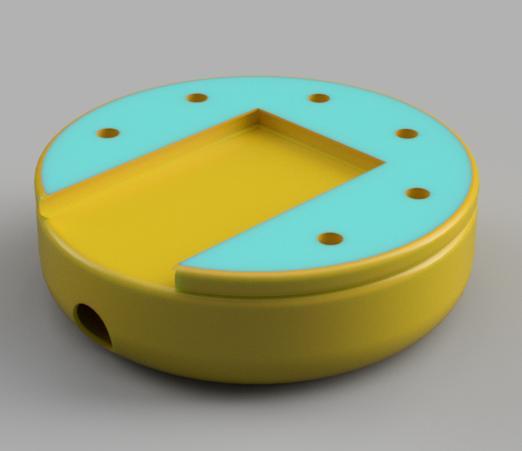
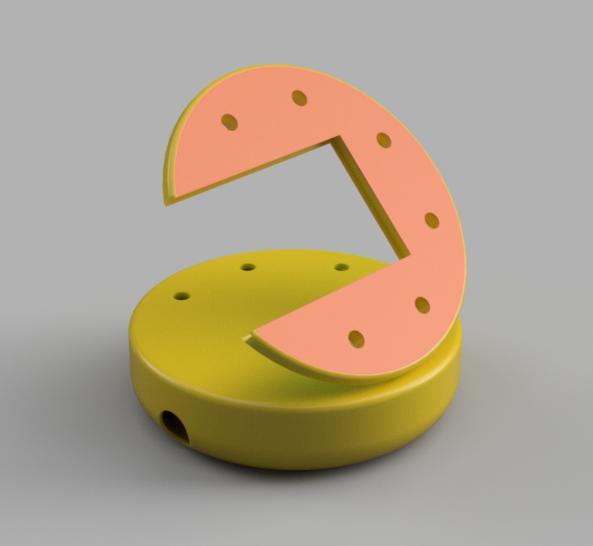
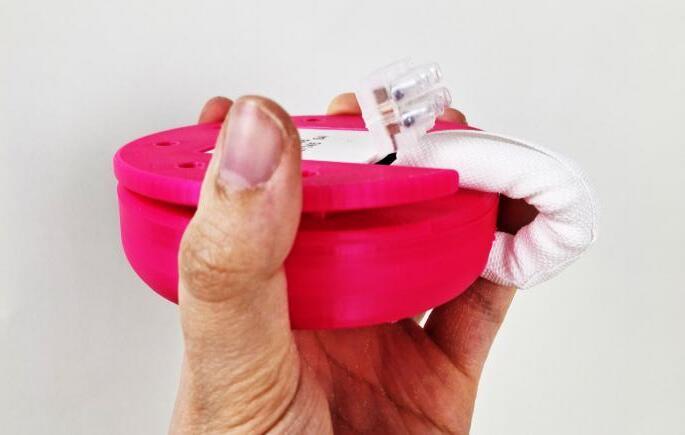
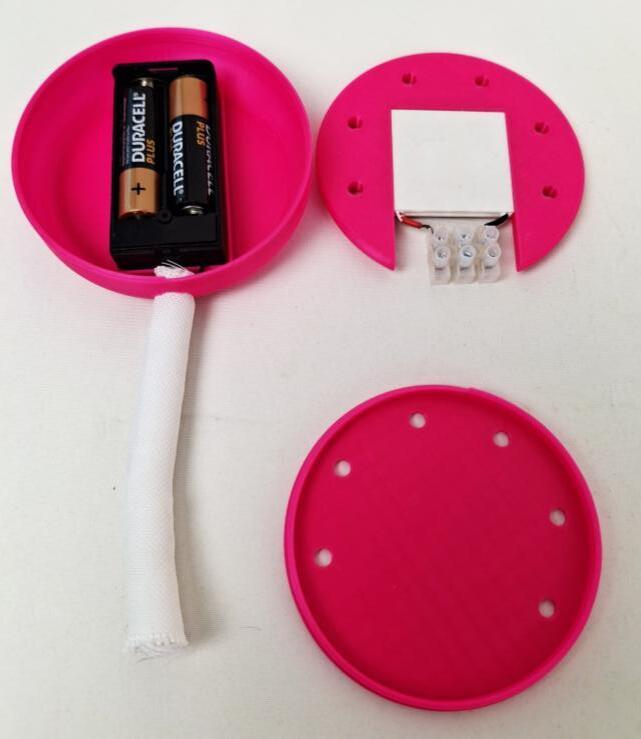
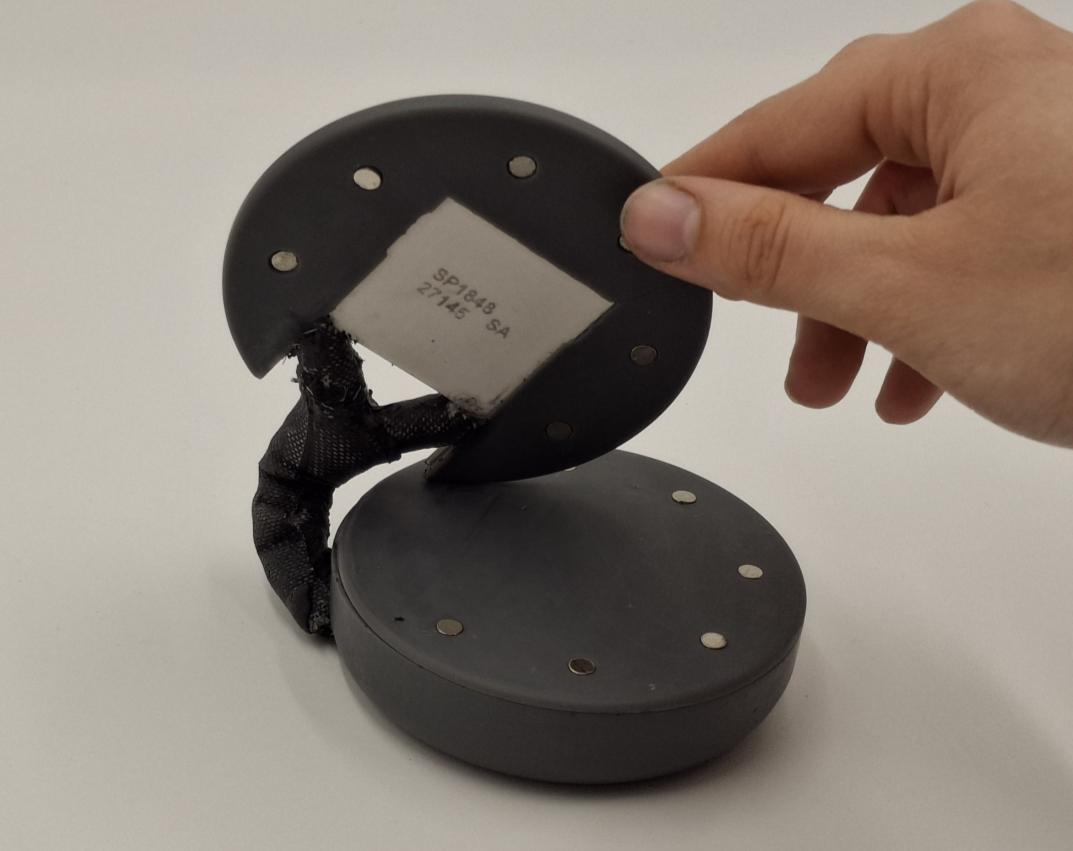
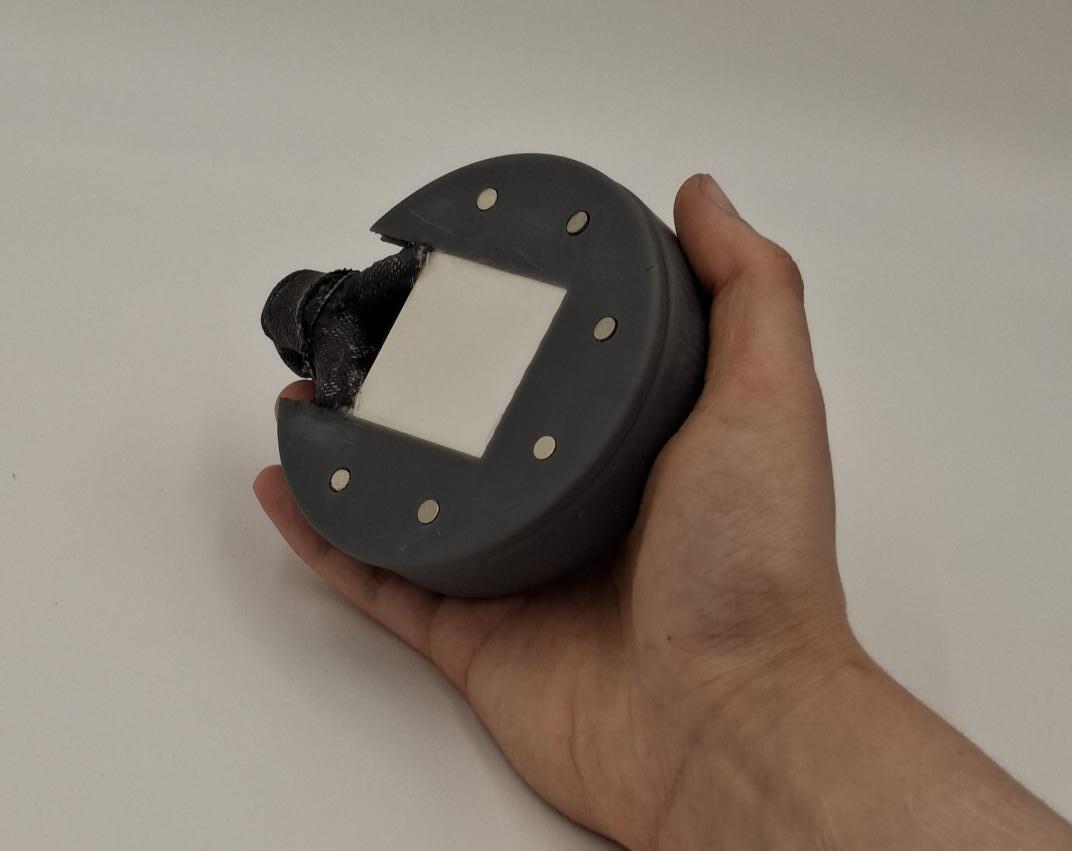
Working with electronic components for the thermoelectric cooler in the Compress component expanded my technical repertoire, requiring solutions that integrated electronic functionality within an approachable, nonclinical housing. This cross-disciplinary approach enabled me to address multiple aspects of comfort simultaneously
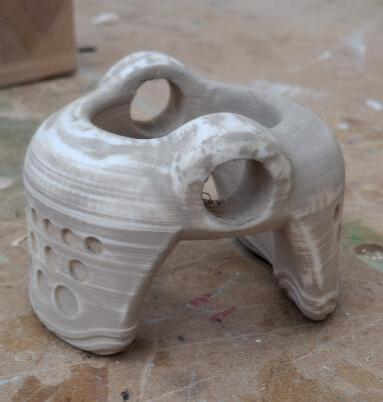
THE MAKING PROCESS
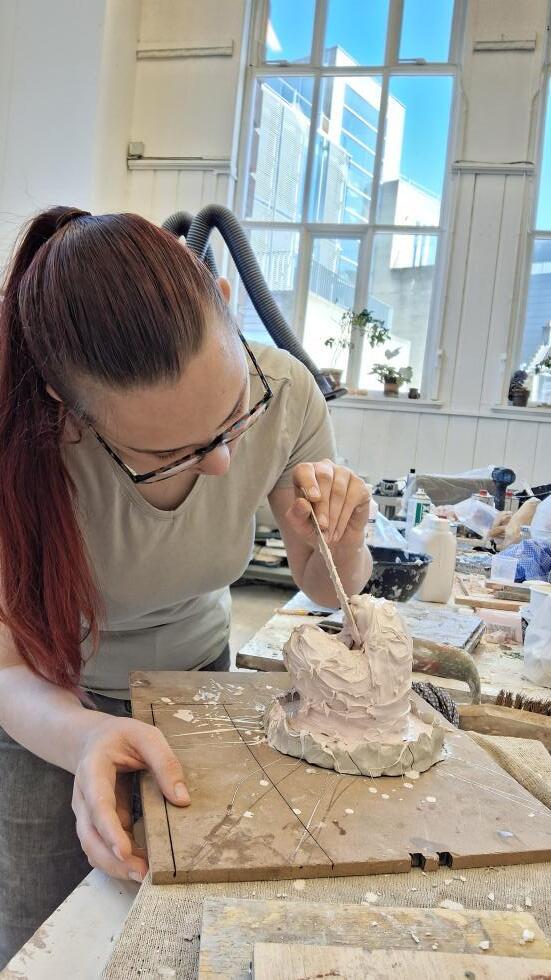
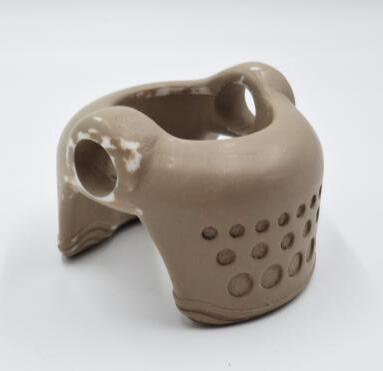
3D PRINTING AND FINISHING
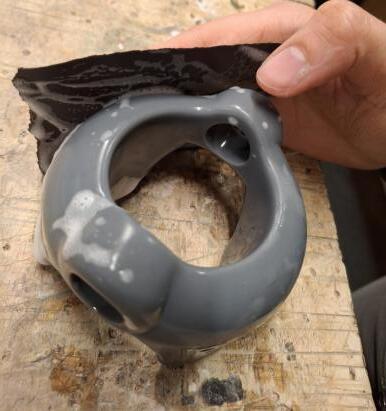
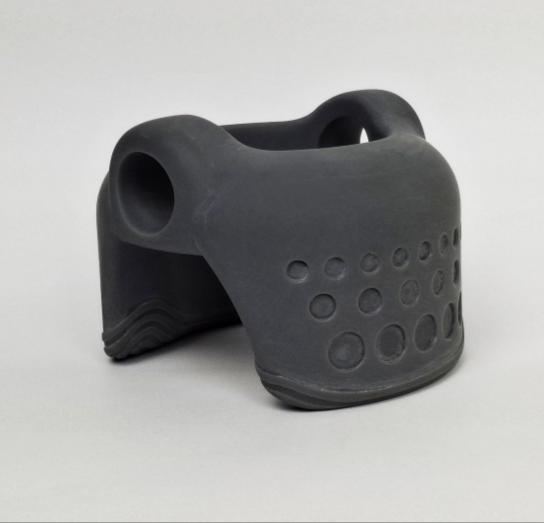
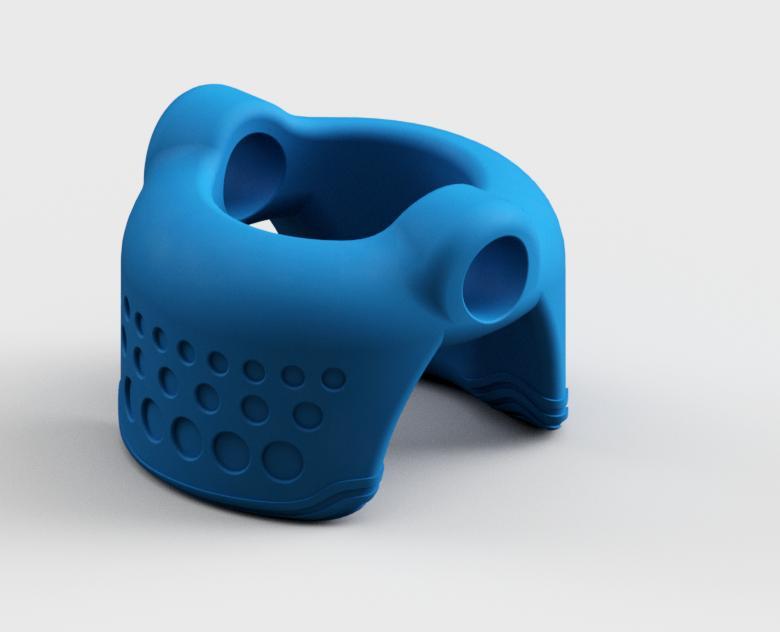
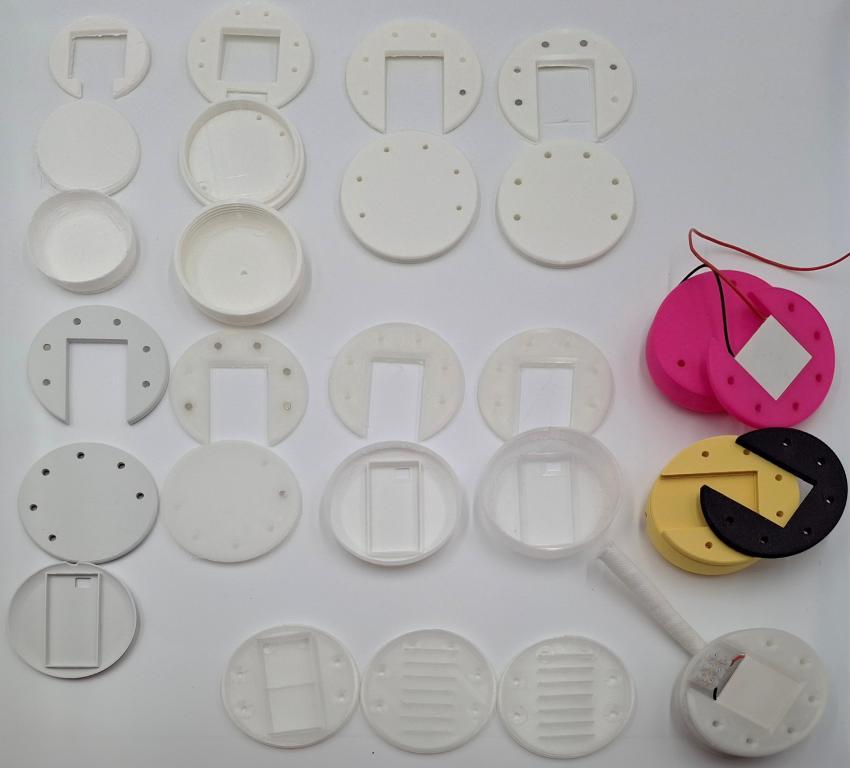
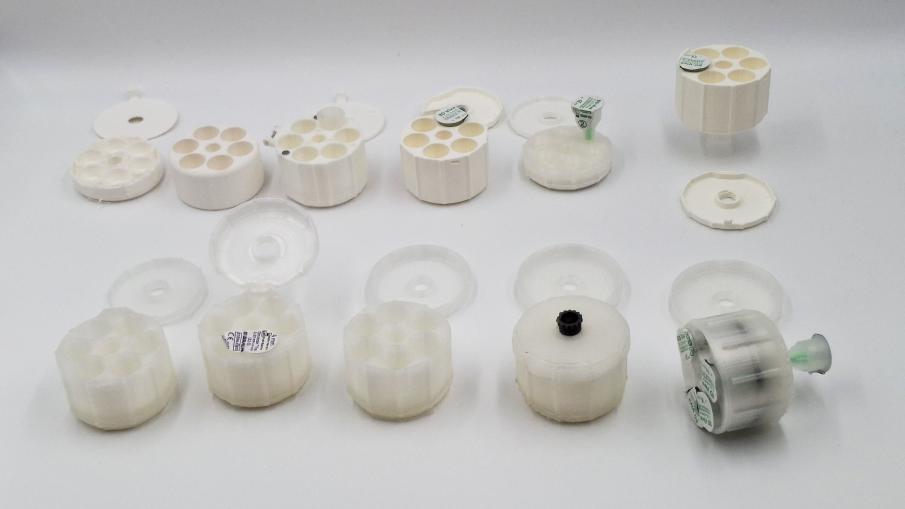
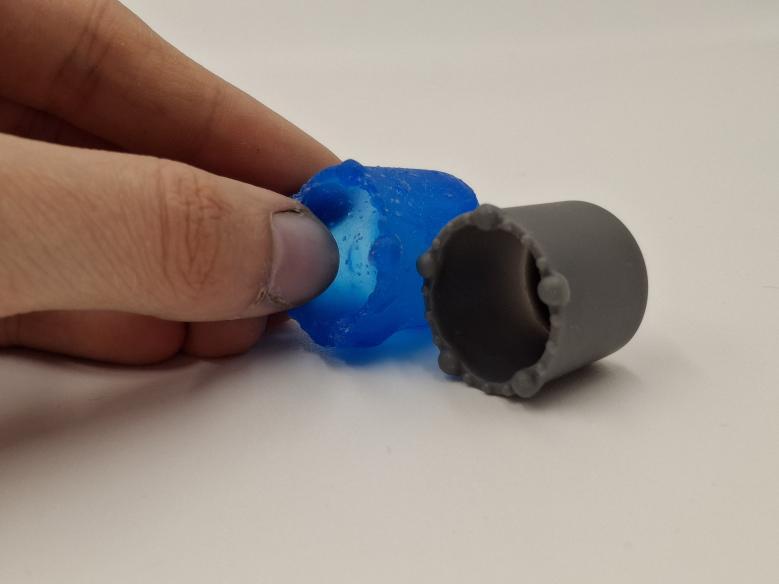
Through making various casting moulds, I have learnt to work with silicone well to the extent possible. However various models had to be made in order to ensure the best quality finish that hand-crafting can enable
However, not working with more advanced manufacturing technologies did make quality often an issue however I have problem solved to find loop-holes and became very familiar with traditional casting methods.
3D printing as a process I have used came with its own challenges which required extra finishing for a better quality mould. This meant often removing 3D printed textures and adding paint as coverage whilst sanding off issues and smoothening the surface until finishing with the best quality model for casting into silicone This process made me learn that 3D printing is never a final outcome and various finishes still need to take place in order to make it as industrial-fitting as possible
I have used plastic materials as well as Resing epoxy in the making in order to ensure the highest quality finish on all my products
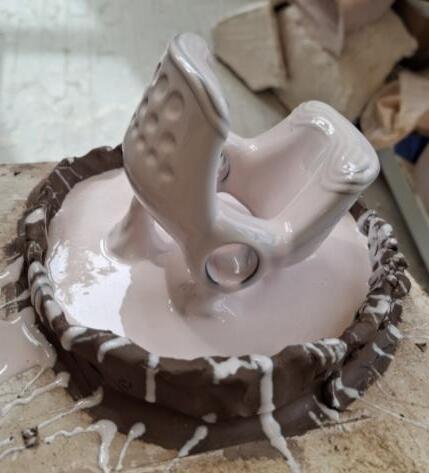
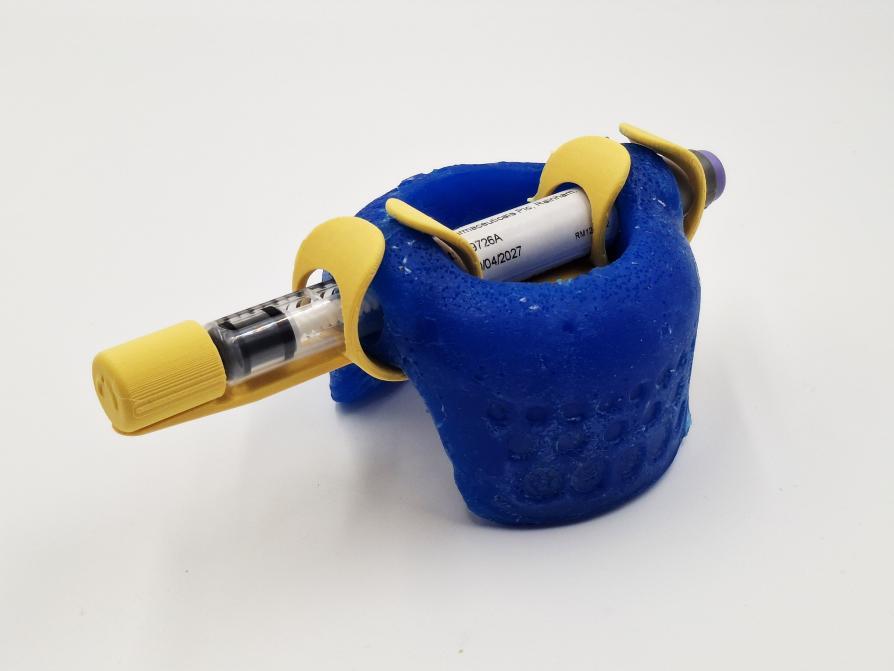
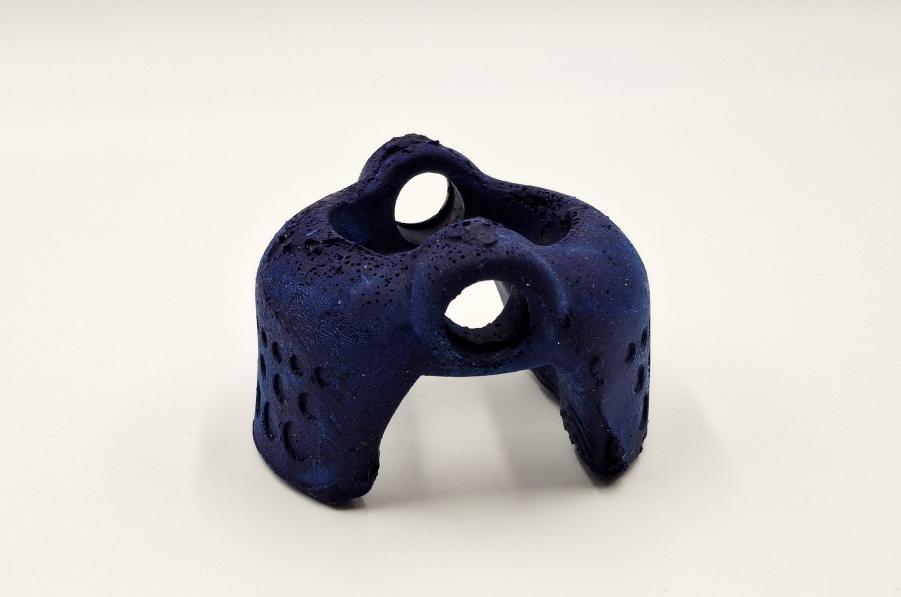
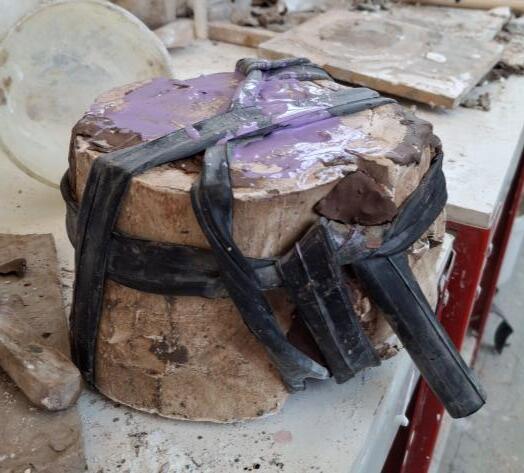
Getting to a casting stage sometimes meant waiting until a good quality model which adheres to my requirements This decision was to ensure time is not wasted on creating models that would not benefit the process
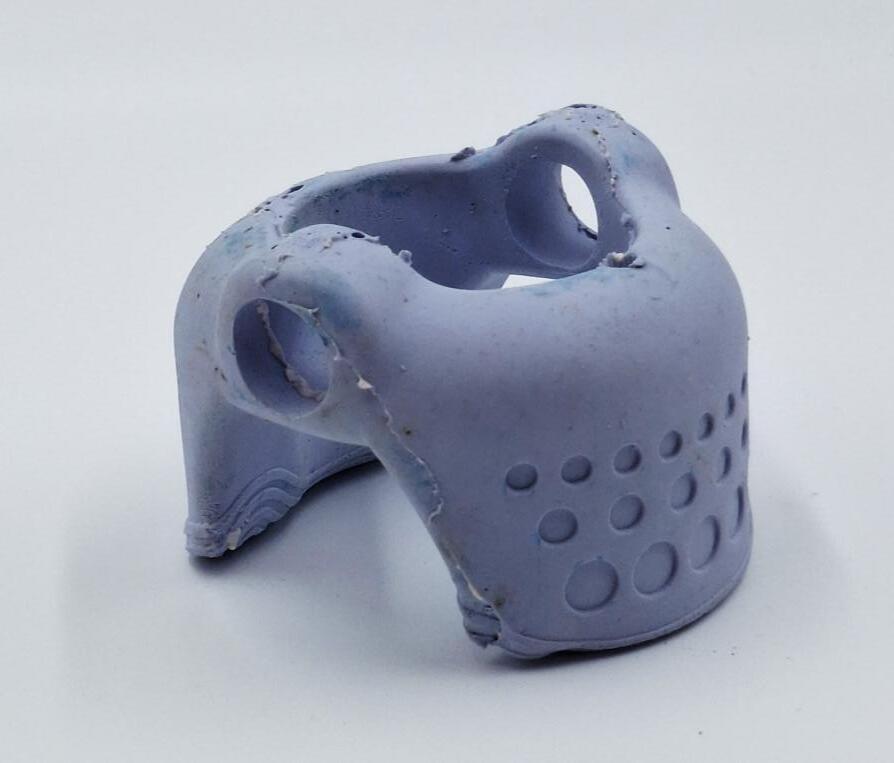
I have ended up with various silicone densities by using various silicone brands including medical grade silicone.
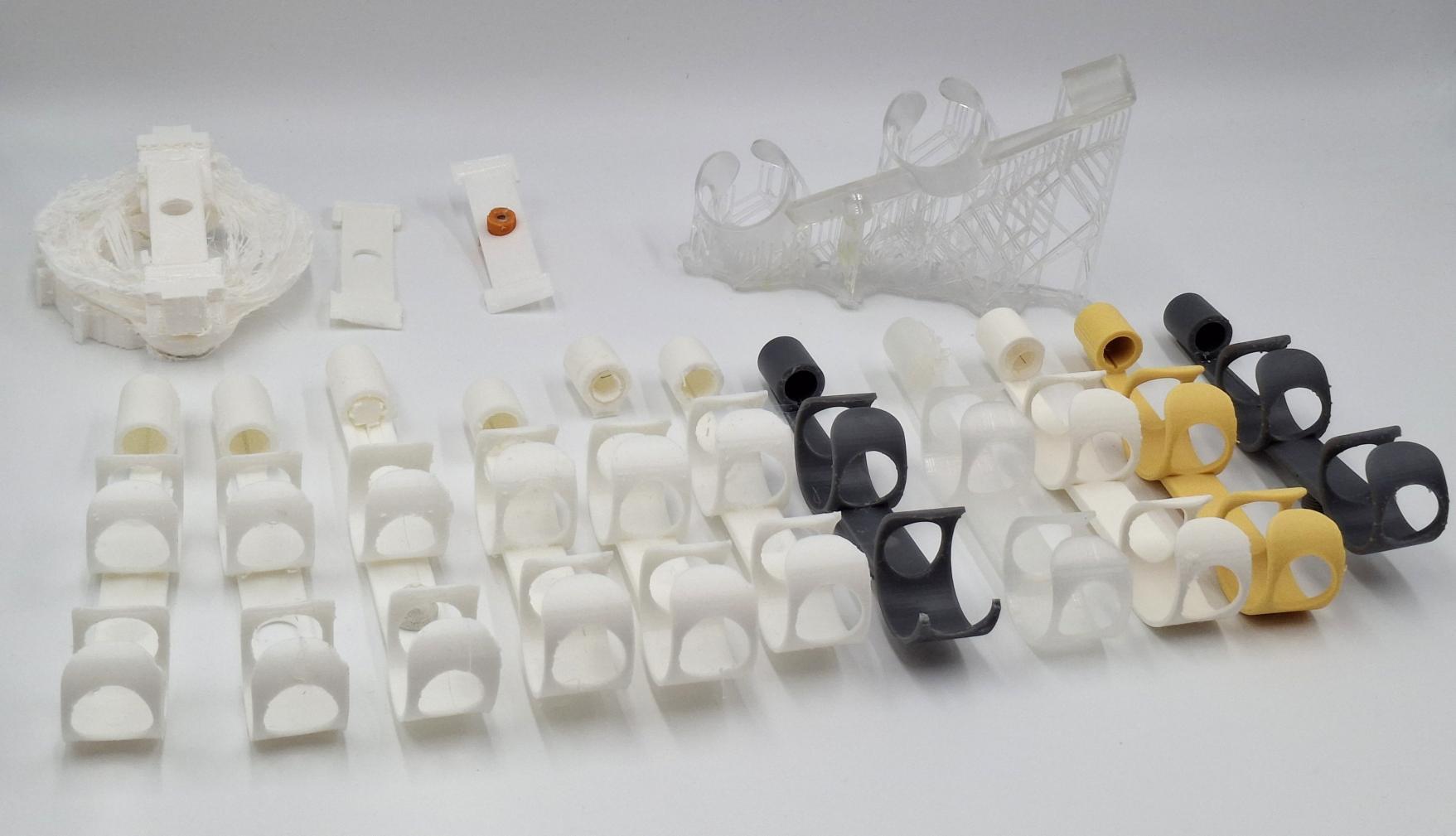
Iterative Prototyping as Continuous Learning
My prototyping journey evolved through continuous cycles of creation, testing, and refinement each iteration representing not just a technical improvement but a deeper understanding of user needs The progression from initial hand-formed models to precisely engineered components reflects my growing comprehension of both the technical requirements and emotional nuances of diabetes management.
User-Centered Validation
Throughout the development process, I maintained a rigorous focus on user validation—ensuring design decisions were grounded in real needs rather than assumptions. By involving users and healthcare professionals at multiple stages, I created feedback loops that continuously refined the design direction. Safety considerations naturally limited full functional testing of injection mechanisms, but I developed alternative validation methods that allowed for meaningful feedback without compromising safety This adaptive approach to testing exemplifies my commitment to thorough validation even when faced with practical constraints
Navigating Design Ethics in Healthcare
The project raised important ethical considerations that shaped my design decisions. Working in healthcare product design carries significant responsibility, as design choices directly impact physical wellbeing and quality of life. Throughout the process, I navigated complex questions about accessibility, safety, and user autonomy that challenged me to develop a more nuanced ethical framework for my design practice.
I became particularly conscious of how medical design often creates hierarchies where advanced technologies are accessible only to those with certain privileges or resources. This awareness drove my commitment to creating solutions that could bridge technological gaps rather than widening them, ensuring that comfort isn't limited to those with access to the most sophisticated systems.
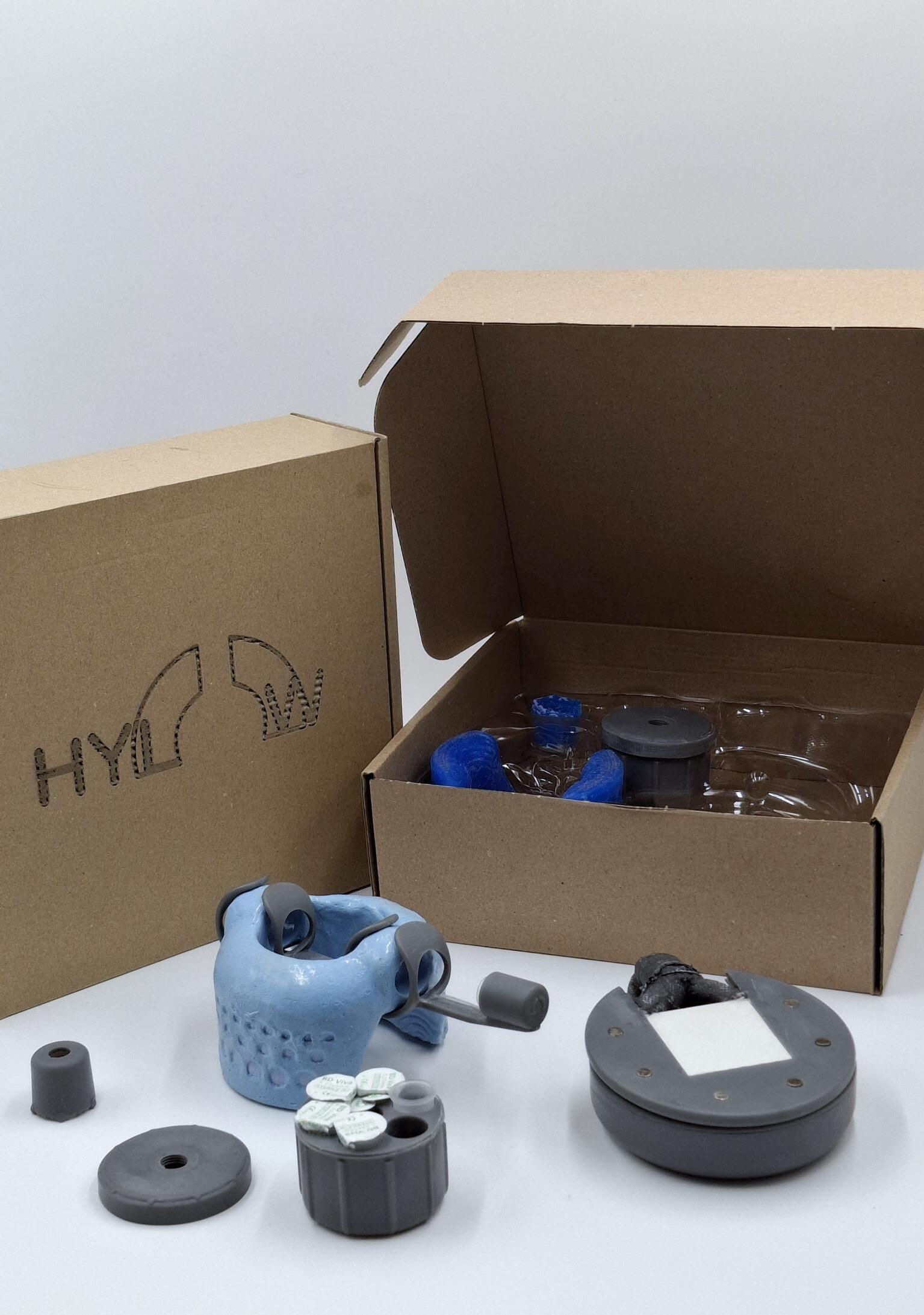
Evolution of Design Philosophy
Some examples
This project marks a significant evolution in my design philosophy—a maturation from focusing primarily on aesthetic demedicalizing to recognizing the complex interplay between form, function, and emotional response. This transformation represents deeper understanding of what constitutes meaningful design intervention in healthcare contexts
The development of Hylow taught me to view medical device design through a more holistic lens recognizing that the most significant innovations often emerge from addressing not just technical requirements but emotional needs that traditional approaches overlook. This perspective will continue to inform my approach to design challenges, particularly in healthcare contexts where technical functionality must be balanced with psychological comfort and social considerations. Through this comprehensive process, I've developed not just a product but a design approach that recognizes healthcare innovations must support dignity, confidence, and wellbeing alongside technical functionality principles that will continue to guide my future work as a designer committed to enhancing quality of life through thoughtful innovation.
Reflection:
Personal Reflection:
Through this project, I've evolved as a designer, moving beyond aesthetic demedicalizing to develop a nuanced understanding of how form, function, and emotion interplay in healthcare design Working across disciplines—integrating biology, engineering, and design principles— taught me the precision required in medical device development
Hylow represents my commitment to creating meaningful design interventions that honor both technical requirements and human experiences. By addressing psychological needs alongside physical functionality, I've developed a design approach that recognizes healthcare products must do more than function effectively they must support dignity, confidence, and wellbeing.
This project has shaped my professional identity as a designer committed to enhancing quality of life through thoughtful innovation that makes everyday moments easier and more dignified for those living with chronic conditions.
Working through material selection presented significant challenges that required experimentation with different silicone formulations to achieve the right balance of tactile comfort and durability. The progression through various prototypes from rough clay models to 3D printed test pieces to final silicone castings demonstrates my commitment to refining both technical functionality and emotional response Therefore, this project made me realise the importance of function and aesthetics to ensure the most comfort is provided
Cross-Disciplinary Integration
What distinguished this process was my willingness to blur boundaries between traditionally separate disciplines. By integrating knowledge from biology, engineering, product design, and psychology, I addressed the complex interplay between technical requirements and human experience in healthcare design.
Project Impact Reflection:
I learnt through this process that Hylow addresses a significant market gap identified with the help of users and professionals which therefore targets the space between basic insulin pens and closed-loop systems. By focusing on accessibility, the system ensures that comfort isn't limited to those with access to the most advanced technology.
The project transforms not just the physical experience but also the emotional relationship people have with their condition helping them navigate the highs and lows of Type 1 diabetes with greater comfort, confidence, and dignity
By reimagining how we approach diabetes management tools, Hylow transforms not just the physical experience but also the emotional relationship people have with their condition helping them navigate the highs and lows of Type 1 diabetes with greater comfort, confidence, and dignity.
Thank You for Viewing
CV and Cover Letter
Portfolio Reflection
Despite having other projects, I have chosen to include my favourite and some of my top 3 most complex health related projects in order to allow me to showcase my passion and interest that lies within designing for physical and mental health and improving bodily functions and emotional considerations. I believe these projects showcase my values as a designer regarding showcasing my empathy and the deep considerations of the user and external areas like sustainability. I believe choosing this selection allowed me to create a themed portfolio that showcases my specialty of health and wellbeing within the design industry.
For more Information or Collaboration:
Contact Me Through:
Email: viktoriasimondesign@gmail.com
LinkedIn: https://shorturl.at/jmG3O
Instagram: @viktoriasimon_design
Phone: 07495265853