The Viking Vanguard, Vol. 113, Issue 2, Oct. 11, 2024
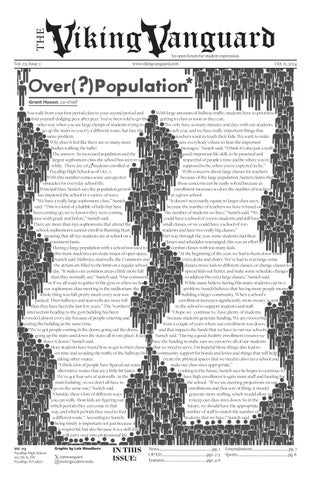
Graphic by Lola Woodburn
EDITORIAL POLICY
The Viking Vanguard operates as an open forum for student expression. Student editors are responsible for determining the media and advertising content.
The Viking Vanguard’s duty is to expand student perspectives, maintain community relations and act as a student publication advocating voice. Besides providing an opportunity for the exchange of viewpoints, The Viking Vanguard serves as an academic tool by which students can voice opinions as well as highlight issues facing today’s students.
LETTER POLICY
The Viking Vanguard accepts unsolicited copy from the staff, students and community. Letters will be published as space is available. The staff reserves the right to edit any letter without changing its content. All letters are the sole opinion of the writer and do not necessarily represent the opinion of The Viking Vanguard staff.
ADVERTISING POLICY
The Viking Vanguard publication staff accepts advertisements for most products available to the public. However, the staff reserves the right to reject, edit or cancel any advertisement at any time. Advertisements shall be free of implications that the staff deems offensive in light of normal public standards (WIAA 18.20.0 and 18.20.1). The staff will not accept advertising for products or groups which are racist, sexist or illegal for high school students. Advertisements do not necessarily reflect the views, endorsements and/or positions of The Viking Vanguard, student body, faculty, administration or school board.
CORRECTIONS POLICY
The Viking Vanguard staff values accuracy and wishes to correct mistakes made in previous issues. If you believe we have made an error, please contact us at thevikingvanguard@ gmail.com.
Editors in Chief
Sienna Hanson Grant Huson
Coverage Editor
Emilia Lettiere
Design Editor
Autumn Pendleton
Managing Editor Quinn Taute
News Editor
Evelynn Bernardino
Academics Editor
Layla Johnson
Arts, Culture, and Entertainment Editor
Ethan Barker
Student Life Editor
Patience Brown
Clubs Editor
Gloria Perez Cruz
Digital Media Editor
Margo Hermann
Graphics Editor
Ezruh Hacker
Sports Editor
Neehla Gracia
Evelyn Beach
Lillian Bain
Audrey Carter
Yentl Charles
Kolten Clark
Casey Conor
Amelia Cook
Hero Cook
Aubrianna Diga
Cameron Edgbert
Marily Escobar Romero
Ernest Everett
Cash Ewing
Ayden Falkey
Bryson Flores
Bodhi Ganesh
Mariah Geubelle
Roxanna Gonzalez
Dominic Haney
Henry Hannah
Jackson Kincaid
Editorial
STUDENTS NEED TO SEIZE THE DAY
High school can be overwhelming. There are so many things that come up, in what sometimes feels like random times, that it may cause student’s heads to spin with all the information or contrarily, that students don’t really know what is going on. It is our belief that students need to be proactive in seeking the information they need to make good decisions.
“It’s important to make use of the resources available to you. This means, yes, you need to check Schoology for general school announcements. It also means that you will want to attend homeroom in order to be successful. Wednesday’s homeroom, for example, is set aside to get you ready to tackle the rest of your lives, starting with either college, apprenticeships, or ways to go straight into the workforce. This can be difficult for teenagers to think about, planning your future isn’t easy, especially when you don’t know what you are doing. That is why students need to not only attend Homeroom but to make use of SchooLinks, the new program designed to help with those things.
where to look. Using online resources, such as the various social media accounts of different school clubs and organizations, like Viking Student Media’s YouTube channel, provide you with information you might not get otherwise. But you may have to take it upon yourself to seek out these channels of information.
It is our belief that students need to be proactive in seeking the information they need to make good decisions.” Our View
Some might argue that they shouldn’t have to go out searching for information, that anything important will be brought to them. While that is a general opinion shared by some, this is not the way to find success and connection at school. Students complain that they don’t like school, but that is often because they are treating it like passive consumers, not doing anything to help themselves.
School is what you make of it, whether it is attending school activities like drama productions or art concerts or cheering on your classmates at athletic events, all of these contribute to what you get out of school and whether you get the information you need.
The way that society is structured today, information is so readily available at our fingertips through social media and the web. We very rarely have to seek out the information that we are looking for, and consequently we don’t know
There’s a lot that goes into being successful during your time in these crowded halls, but you have to be willing to put in the effort to at least do a small part to meet your peers halfway. Be a proactive member of the Viking community to get the information you need to be part of the Viking Way.
Editorial Cartoon
Cayley Mccart
Gavin McKethan
Samantha Mowery
Jack Murdock
Brooklyn Myers
Breanna Nelson
Isaiah Pagay
Kiona Pedebone
Zazel Redwing
Roman Resseau
Zoey Salazar
Maren Santiago
Samari Simpson
Jared Smith
Khmera Swazer
Mekala Tailua
Leila Trammell
Lola Woodburn
Emma Zeitler Staff
Adviser
Sandra Coyer, MJE
LETTER TO THE EDITOR FORM
Just fill out this form, sign your letter, cut it out and return it to Sandra Coyer’s box in the main office to be published either in the next print issue of the Viking Vanguard or online at www.vikingvanguard.com.
ONE MOMENT CHANGES EVERYTHING
It was early on in my first year of high school swim when I first realized that my school had a newspaper. The desk of the pool had a stack of the most recent issue of the Viking Vanguard, the grayish paper almost blending in with the yellowish beige of the desk.
I was early that day, so I picked it up after noticing a blurb at the top advertising a review of
“Venom: Let There Be Carnage.” I’d recently seen that movie, and my interest was piqued.
“
Should I take Business and Marketing, which would teach me skills I could use throughout my life?
Or did I want to do Yearbook, where I would end up covering the culture of the school and come home with a physical manifestation of all my work?
Then, once again, the box for Newspaper Production jumped out at me. I ended up picking that if only because of that one story I read at the pool and it ended up being one of the most important decisions of my life so far.
The first day of the class, I was a little bit worried. I only knew one other person who signed up for the class, and I was still unsure that my decision was the right one.”
Ethan Barker
I’d liked it but held no delusions that it was a flawless movie. The paper’s review, by contrast, was glowing. I began to wonder: “Was this something I could do in a class and get my elective credits while doing so?” Then, I promptly forgot about the whole thing, my brain instead filled with the chlorinated smell of the pool and the rhythm of swimming.
Later that year, we signed up for our sophomore classes. In my district, students start going to high school in our sophomore year, so I hadn’t had the chance to take any of the interesting electives offered. Instead, I was stuck in a stuffy portable for my Life Issues class and homeroom, waiting for the year to be over so I could finally start the freedom and fun of high school.
We were looking through the course catalog, and when it came to scheduling my electives, I was stuck. Did I want to take Auto Shop, where I’d get to work with my hands?
FLIP
The first day of the class, I was a little bit worried. I only knew one other person who signed up for the class, and I was still unsure that my decision was the right one. Thankfully, two of my friends were put in the class as well, and I knew one of the juniors that year.
On the first day of class, it was a lot.
Mrs. Coyer, who everyone just calls Coyer, spent the first half of the period imprinting into our brains that we were storytellers, that we were writing down the history of this school and this community on that same grayish paper I’d seen that day at the pool.
“this class is overworked or tired, we’ll be here to help you.”
And we did. I stepped up to become the Arts and Entertainment editor after just one month of the class, helping one editor who was editing three sections at once. I’ve stayed until the very last minute before our deadline to make sure we were able to get the paper on time. I’ve driven all the way up to Seattle to pick up the paper once every six weeks for over a year now.
And I’ve also been helped by people in this class. People have helped me design and layout pages on days where I’m overwhelmed with stress or have swim practice. They’ve been there for me as a shoulder to lean on in tough days. And they’ve became great friends who I feel I can depend on for anything.
These three years of newspaper are possibly the most integral parts of my high school life. I’ve made connections with a massive variety of people, from former students to a local news anchor to even the owner of a recording studio where Nirvana recorded their first album.
These three years of newspaper are possibly the most integral parts of my high school life. I’ve made connections with a massive variety of people...”
Ethan Barker
I’ve learned to ask questions, to be more aware of the world around me, and to be more outgoing and comfortable talking with anyone.
Frankly, it was a lot to take in, but I could tell I was going to like it here.
After that lecture, we went outside, stood in a V formation, and were told to flap our wings and honk. This lesson, where we were told that we are all geese and how we’ll all support each other in this class.
“If a geese gets injured or tired, it’ll go to the back of the V, and others will take its place,” Coyer said. “When someone in
Finally, it led me to take Running Start classes, which changed the direction of my high school life drastically. I took these because I wanted to take classes more tailored to my interests in film and journalism, I wanted to earn my AA so I can double major when I get to college, and so I could have experience in a college environment with that safety net of my family and friends. All these decisions, all these moments, started with seeing that one newspaper at the pool.
PHONE FLIPS STUDENT EXPERIENCE
A flip phone at 15 is unheard of; it’s something you just don’t hear of anymore.
There’s fifth graders who have the newest iPhone, not because they need it which they don’t but because it’s a status symbol.
When I got on the bus in the third grade, I was astonished at what I saw, my friend had two phones, not one but two phones. I didn’t even know what a cell phone was because I was eight. At that time, we had a landline, a phone I wasn’t even allowed to touch without my parents. My parents had a phonebook which sat in our junk drawer, we had a TV which was 20-inches wide in the back.
“our new house though, my dad and brother went under the entire house and ripped out all the phone connections that ran into the
But it definitely gave me a better chance to develop mentally; in the seventh grade I could read at a senior’s reading level, which I was proud of to say the least.”
though, nowadays I see three-yearolds in Walmart operating the IBM better than Dorothy Vaughan could.
Back then I could actually go outside and read a book without having to know what time it was just that when it started getting dark it was probably dinnertime. That summer we got a TV that was at max 8 inches wide, we still had DVDs and a VHS player. After we got our new “flat-screen TV,” we got this thing called the internet. And all I knew about the strange black box that hummed was that I shouldn’t touch this. I don’t know why we got all this “new technology” in the 2010’s though because internet has existed since the early ‘80s. When we first moved to
Paul Busching
separate rooms.
My parents were both born in the early ‘60s, and both fit the Boomer stereotype. I think that was a part of the reason we got this technology so late in the game. Both my parents’ passwords to everything are almost exactly the same because they can’t remember any of their passwords. And I’m the only person who can switch the TV from HDMI 1 to HDMI 2 and I’m practically a god when I do.
Once I got woken up at 11:23 at night to help my dad get from YouTube to Prime Video, and our remotes have the buttons to automatically take you there.
I think it was a good idea to wait a little longer to get such “advanced” technology
But it definitely gave me a better chance to develop mentally; in the seventh grade I could read at a senior’s reading level, which I was proud of to say the least. I think I had more of an imagination too; I could write whole stories in my head, and they’d be decent as opposed to this where I had a harder time starting than coming up with a plan which was fairly hard.
I thought I had a fairly decent attention span to like in the nineth grade I could listen to my teachers talk forever.
So, when my friend got on the bus with two phones his parents had bought him it was confusing. I didn’t even know what they were called much less what they could do. Nowadays I do know and it’s amazing.
How has an increase in students affected the hallways?
YADDA? YADDA YADDA
Ellice Bledsoe senior
“It has made it even harder for kids to get to and from classes.”
“It’s really hard to get around near the door where you’re coming out of the gym.”
“It’s definitely crowded for sure, going upstairs takes more time and a lot of bodies.”
“There’s a lot of kids not being able to get to class.”
“I trip over my shoes and almost fall down the stairs because there’s too many kids.”
Michele Reed security
Alex Fenwick senior
Beckham Huse junior
Jessi Durham junior
Paul Busching senior
Ethan Barker senior
same application and qualifications as another student,
tion, whether he shows up as the ‘Purple Guy’ or Grant Huson, he never stops finding ways to show his school spirit.
“My favorite way to show my spirit is being ‘Purple Guy’,” Huson said. “I dress up in purple and gold with a Viking helmet on. I’m almost like a physical representation of spirit. I will get super spirited, and I will get loud at sports games, so I like to show my spirit that way. But also in other ways, I like to match the theme usually, So, if I’m not ‘Purple Guy,’ I’m usually rocking along with the theme.”
Huson believes it’s important to encourage enthusiasm among students because high school can be challenging.
“I feel like I need people to be more excited because high school is boring and difficult sometimes, so when I get down on myself because of high school, a thing that helps me is going to a sports game or getting involved with a school or being spirited in some way, that usually helps me. I figured that if I get other people to do the same thing, we can have a better school community,” Huson said.
As this year’s drum major, senior Licy Alejandre says school spirit exemplifies her experience in band, leadership roles and admiration for passionate peers. Alejandre says her favorite event has been leading and conducting the band during the pre- game marching performance at football games.
better time in high school.”
According to Huson, the main reason he has school spirit is because he likes to encourage others to get excited about things.
“High school can be kind of a drag sometimes, and so I try and use my school spirit to get other people more spirited and get them more excited to come to school, do the activities, go to sports games and be involved with their school,” Huson said.
Many people know Huson as “Purple Guy.”
He shows up decked out in purple and gold, screaming and jumping up and down in the student section. But regardless of the situa-
“I’m drum major this year so being able to conduct the band and leading them by marching before the football game has been my favorite thing,” Alejandre said.
Alejandre says that being able to participate in band has given her the opportunity to demonstrate school spirit through their musical performances at football and basketball games, allowing them to be an integral part of school spirit.
“I would say being in band has allowed me to express school spirit through our performances in the football and basketball games, allowing us to be a part of something that’s like the center of
school spirit,” Alejandre said.
Alejandre thinks that school spirit can be shown in various aspects, but at its core it’s about being engaged in any school-related activity, regardless of its scale, and approaching it with genuine enthusiasm.
“I think school spirit is a lot of things, but I think just being a part of something no matter how big or small it is and always doing it with a passion shows school spirit,” Alejandre said. “For me it means participating and building relationships with those around me being in sports, band, and clubs has truly helped me build relationships and be a part of something school related.”
Senior Leila Surratt says that she finds her school spirit through active participation in the HOSA club and her enthusiasm for her nursing assistant club.
Surratt says that she particularly enjoys her school spirit by engaging in club activities, which allows her to collaborate with others and contribute to event decorations.
“My favorite way to show school spirit is being able to participate in clubs because I get to work with people and being able to help decorate for events,” Surrat said.
As a sophomore, Jakub Kruse says that school spirit to him is about embracing your school’s community, participating in traditions like spirit days and football games, and showing pride and enthusiasm for your community through active engagement and support.
“I think school spirit is trying to show people that you take pride in attending the school you do. It’s about showing enthusiasm and pride, as well as support for friends and others. It’s about being a part of school traditions and being engaged in the school’s community as well as supporting it,” Kruse said.
Sienna Hanson, Co-Chief
RUFF DISCUSSES WRITING
LOVECRAFT COUNTRY
Ethan Barker, ACE Editor
The Pacific Northwest seems like a perfect backdrop for horror.
Games like Alan Wake, movies like The Ring and shows like Twin Peaks have all taken advantage of the near-constant rain and cloudy, overcast atmosphere.
Despite this, Seattle author Matt Ruff chose to set his 2016 novel Lovecraft Country, originally conceived of as a TV show, in the Jim Crow-era South, allowing Ruff to contrast the supernatural horrors drawn from pulp fiction and H.P. Lovecraft with the very real horrors of racism and bigotry of the time period.
“I wanted to do a story like The X-Files, where you had a continuing group of characters having weekly paranormal adventures. But I also wanted to do something different with it… I hit on the idea of what if we do an X-Files where my Fox Mulder character is a black travel writer from the 1950s whose job is to research a fictional version of the Green Book [a publication that listed restaurants and hotels friendly to Black people],” Ruff said.
Contrasting two different types of horror allowed Ruff to distinguish his idea from other horror works.
“You can make this guy a science fiction fan and a nerd who’s the kind of guy who, if he sees the Loch Ness Monster running across the highway or if he sees a UFO, he knows what to do, because he knows what the rules are, because he’s into that kind of stuff. But then he’s also dealing with the more mundane horrors of life in the Jim Crow era. And it just seemed like those two things together could make a really interesting and rich and dense TV show,” Ruff said.
my protagonist is a Korean War veteran as well, and other memoirs, but from people living at that time,” Ruff said. While that character, Atticus Turner, could be considered the main character of the novel, each chapter of the anthology focuses on his friends and family and their experiences with impossible, fantastical elements right out of a pulp novel.
“I have this weird knack for taking different pieces of story ideas and fitting them together, things that most people wouldn’t even think would necessarily fit together… I had the basic framework of the story I wanted to tell. I had my cast of characters… and I wanted to give each of them a chance to star in their own little weird tale,” Ruff said. “So it’s like, okay, I’ll have a haunted house story, who’s going to be in that one? And I’m going to have a story about finding a book, kind of like the Necronomicon, who’s going to be in that one?
And I laid out the different pieces and then started stringing together this larger story about the family and the character of Caleb Braithwhite, and the Order of the Ancient Dawn, these weird white sorcerers from New England who want something from this family and won’t leave them alone.”
Of course, the book reached a larger audience when it was adapted into an HBO series in 2020 with Jurnee Smollett and Jonathan Majors.
The most satisfying thing is that moment when the story that’s been burning in my head for however many years is finally out on paper and I can read it, and I’m like, ‘Yeah, that worked.’”
While the pitch was unsuccessful, Ruff decided to turn the idea into a novel instead. A key portion of the book, which came out in 2016, was the realistic portrayal of the characters experiences with Jim Crow America. Ruff did a lot of research on the era through firsthand accounts of the period.
“The black newspaper in Chicago at the time was called the Chicago Defender and it is issues of that are available at the library and online. And so I read the entire years’ worth. It was a weekly, so I read all of the issues from 1954 and that was just a way of grounding myself in what were the issues that the black community in that neighborhood were interested in at that time. And I read a memoir of a black officer who served in the Korean War as sort of background, because
“When I tried to pitch this, this was probably about 10 years ahead of its time, and I couldn’t get anybody interested… As I was writing the novel, in the back of my head, I had this thought that it would be cool if I can get this done, and it does well, I’ll have a proof of concept that this could work as a TV show,” Ruff said. “And that ended up working out better than I had hoped when Jordan Peele read the novel and liked it and decided to option it for HBO.”
Matt Ruff author
While his novel was the basis for the television series, Ruff didn’t have as much involvement with the production of the series. During production, he would send notes to showrunner Misha Green about his inspirations for the story, but allowed her to take the series in the direction she wanted.
“Misha had her own idea of how she wanted to tell the story. And I was happy to, having written it once already, I didn’t feel a need to do it again. And it was neat to watch her take my ideas in a completely different direction… It’s like seeing an alternate universe version of the story… All the characters are there, all the plot points are there, but everything’s a little different,” Ruff said. “I did get to visit the set a couple of times… They bring you on, let you sort of stand in the middle of it and watch these millions of dollars being
Graphic courtesy Matt Ruff.
spent on this story that you just thought up in your room, which is the wildest experience.”
As advice to authors, Ruff says to follow what your aspirations are in the world of writing.
“Write what you want to write, something that you’ll be satisfied with. Even if it never makes money, even if it never gets published, you will be glad to have done it and got it out in the world. Obviously, I’m very gratified that Lovecraft Country was adapted as an HBO series. But if I had just managed to get the book written, you know, that would have been enough for me,” Ruff said. “For me, the most satisfying thing, really, is that moment when the story that’s been burning in my head for however many years is finally out on paper and I can read it, and I’m like, ‘Yeah, that worked.’”
WASHINGTON SCHOOLS SWITCH FROM XELLO TO SCHOOLINKS
SchooLinks and the positives that come with it.
In the beginning of the 2025-2026 school year, the state of Washington is going to be paying for the same digital platform for all school districts across the state.
Through legislation, it was determined that the State should be incurring the costs instead of the individual school districts since competition of beyond high school readiness is a graduation requirement.
They put out a call to all the different digital platforms, Xello being one of them, and then they narrowed it down. They had a team to decide what digital platform Washington would have for every school district, and SchooLinks was selected.
Principal Dave Sunich says he believes the changes will affect students’ readiness for beyond high school.
“I think that the lessons that are within SchooLinks are tailored more specifically to what students from Puyallup need to have to be able to be ready to make a plan for postgraduation as we can do some modifications as a district on them to meet our specific grad requirements and those sorts of things,” Sunich said.
Sunich says the new program will benefit students by allowing them to be able to access their information and keep their progress when switching schools, even outside the district.
“If they put a lot of work into a resume or some of their career findings, they can go back and access those when they’re no longer a student here, which is an improvement from Xello,” Sunich said. “Also, it’s web based, in a sense that even if a kid switches schools, their information will go with them, whereas beforehand, if someone left, they would have had to start over again because there wasn’t really a way to transfer that information.”
Sunich goes on to express his opinion on the change to
“I think it’s a positive change, it was a change that was going to have to happen at one point or another. The state of Washington required everybody to start using the same platform, so they gave a couple of options. [SchooLinks] was one of them, Xello wasn’t. So, it’s just going to be a lot more user friendly when we get used to using it,” Sunich said.
Sunich shares how he sees the change affecting the future students.
“My hope is that once everybody gets familiar with it and used to using it, hopefully it’ll become really seamless, like people are comfortable with it and it is effective, and we’ll probably continue to modify it and make it better,” Sunich said. “I think it’s a lot more user friendly. It allows kids to kind of go at their own pace with the To Do lists and those sorts of things. So in it, the way, it kind of customizes based on the interests of the students.”
College and Career Readiness TOSA Shelley Jellison says that SchooLinks feels like more of an elevated program for students to use.
“a budget crisis, that will open some additional funding for other things. So, I think that’s the best part of it, is that the state will start paying for it.”
Jellison said SchooLinks will be able to provide more information about apprenticeships in Washington state for students to learn about and partake in.
“It’s definitely evolving, I think that it will get to be to a point that that it’s super helpful for students. We have lots of different references for students when they’re exploring careers and apprenticeships and things like that,” Jellison said.
It was a change that was going to have to happen at one point or another. The state of Washington required everybody to start using the same platform, so they gave a couple of options. [SchooLinks] was one of them, Xello wasn’t.”
“It feels maybe a little bit more grown up. I did love Xello, but you know, we’re just ready to move on to whatever the state is going to be using,” Jellison said.
Jellison said SchooLinks is an improvement from Xello because of the modifications available for the students.
“[SchooLinks has] a lot of really great resources and lessons and things like that. But I know at the district level there have been some modified lessons to meet what we have been doing to help that transition,” Jellison said. “I also think that it’s better because the state is going to start paying for it, so that, you know, especially with this year being in such
Dave Sunich
principal
Jellison said the transitions that come with changing platforms from Xello to SchooLinks can be difficult, but the district is working hard to make it function.
“When you transition to a new program, there’s always some glitches. We’re trying to make it as seamless as possible. So, for an example, at the district level, they are uploading test scores. Where, in the past, we had a database or a spreadsheet that students went and looked for their scores and then entered that themselves,” Jellison said.
Jellison goes on to say how when the district and students were trying to upload scores at the same time, they weren’t saving.
“When people were putting in their goals for SAT or PSAT, things like that, it wasn’t saving. Because on the other end, at the district level, we’re trying to upload SBA scores and graduation pathways and things like that,” Jellison said. “We’re trying to get everything ironed out. So, there’s always going to be some little hiccups, but I wouldn’t say anything critical.”
Autumn Pendleton, Design Editor
Some horror movies are terrifying, “I’m-sleeping-with-the-lights-on-tonight” affairs. These ones are decidedly less so. These movies inject comedy into the scariness, making them fun to watch with friends, eating candy and popcorn after trick-or-treating or handing out candy. If you’re looking for classics or modern fun, you’ll find something for you.
EVIL DEAD 2
Blending elements of slapstick comedy and low-budget underground horror, Evil Dead 2 is a unique film that starts off fast and never lets up. Unlikely hero Ash Williams (Bruce Campbell) takes a vacation to a remote cabin with his girlfriend before it gets thrown off track by Deadites, which possess his girlfriend and other inhabitants of the cabin.
The physical comedy of Campbell here is unmatched, especially in scenes where his hand is possessed by one of the demons. There’s also lots of impressive visual effects, including lots and lots of demonic blood and goop drenching the cast, and the iconic image of Ash with a chainsaw replacing one hand and holding a sawed-off shotgun with the other.
The Evil Dead series continued with three more films and a TV series, with the most recent film Evil Dead Rise releasing in 2023. Evil Dead 2 is available on AMC+ or Shudder.
TUCKER & DALE VS. EVIL
One of the funniest horror-comedies of all time, Tucker & Dale vs. Evil follows the titular characters (Tyler Labine and Alan Tudyk, respectively) after a series of unfortunate misunderstandings causes a group of college kids to believe they are murderous kidnapping hillbillies, rather than the friendly people they are.
After a member of the group (Katrina Bowden) injures herself, the pair take her to their cabin to recover, causing the college students to mount misguided, ill-planned, and often fatal (through no fault of Tucker and Dale’s) attempts to rescue her.
Filled with heart, humor, and incredibly quotable lines, the movie works through and upends every cliché in the book, telling us not to base opinions off appearances. Tucker and Dale vs. Evil is available on Prime Video and Peacock.
FEAR STREET
Yes, it’s a trilogy. But I couldn’t just pick one as these movies are perfect to binge, with each offering a different genre of horror.
Part One, set in 1994, is inspired by Scream and the 90s era of horror, while Part Two is clearly inspired by Friday the 13th, especially the summer camp setting. Part Three goes all the way back to 1666, where the curse on the town began, and is inspired by The VVitch, though that movie’s painstaking historical accuracy is replaced with a vaguely imagined colonial setting here.
The curse of Sarah Fier, the plotline that runs throughout all three films, is an intriguing and imaginative setup for various other stories to be told in the universe.
The main characters of Deena (Kiana Madeira), her brother Josh (Benjamin Flores Jr.) and her girlfriend Sam (Olivia Scott Welch) are all fleshed out and realistic characters, making us care about what happens to them.
All Fear Street films are available on Netflix.
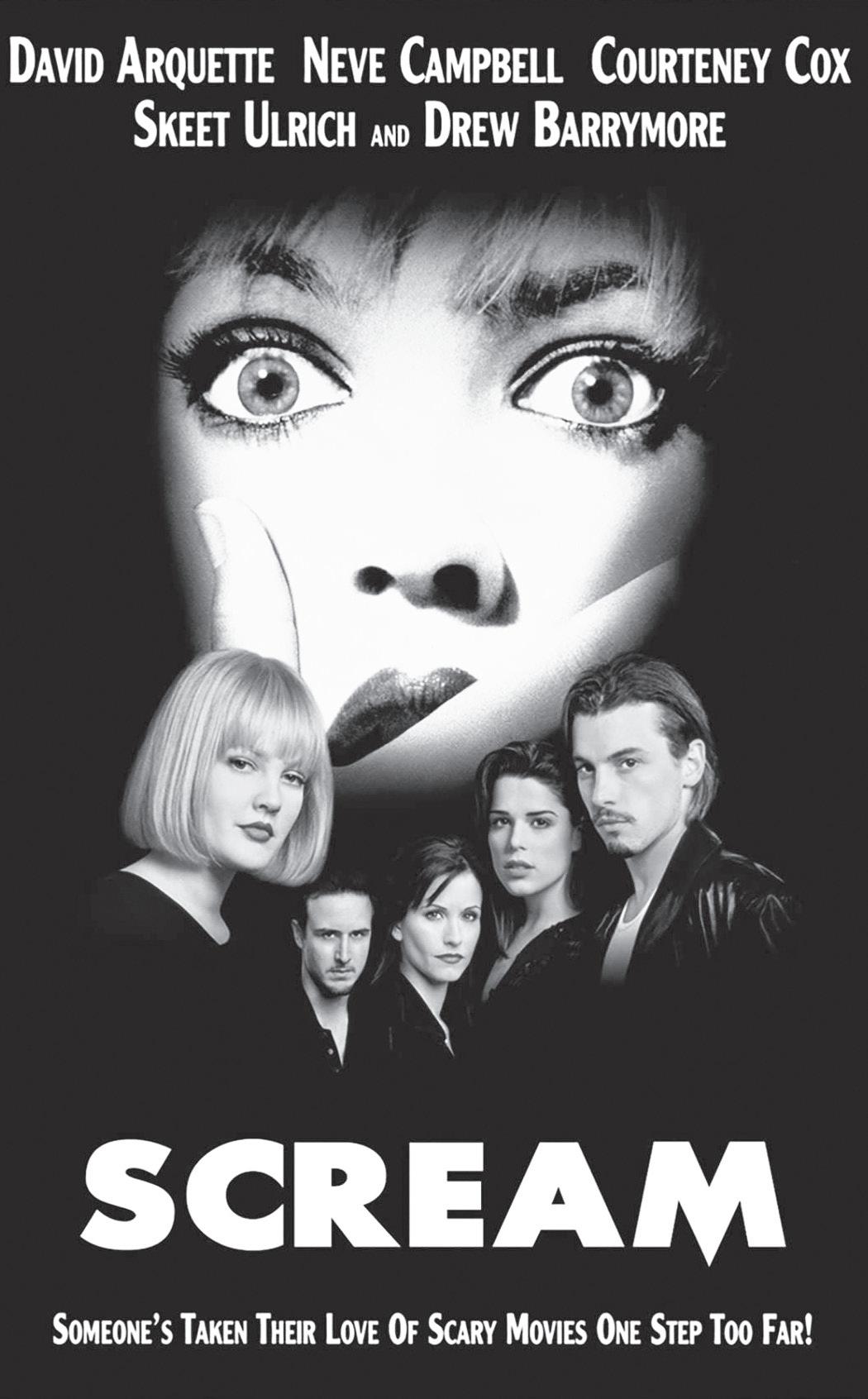
SCREAM (1996)
The original “self-aware” horror that spawned a hundred imitators, the first Scream is one of the most well-known movies of all time. The opening scene is iconic, an encapsulation of everything great about the series.
There’s the charmingly sophisticated voice over the phone (Roger L. Jackson), references to classic slashers like Michael Myers and Jason Voorhees, and the iconic line “What’s your favorite scary movie?”
The mystery of who is behind the Ghostface mask is compelling, with everyone as a suspect up until the moment they’re stabbed, culminating in one of the best twists I’ve seen to date.
The Scream series continued with five other films, with Scream VII set to be released on February 27, 2026. Scream is available on Max.
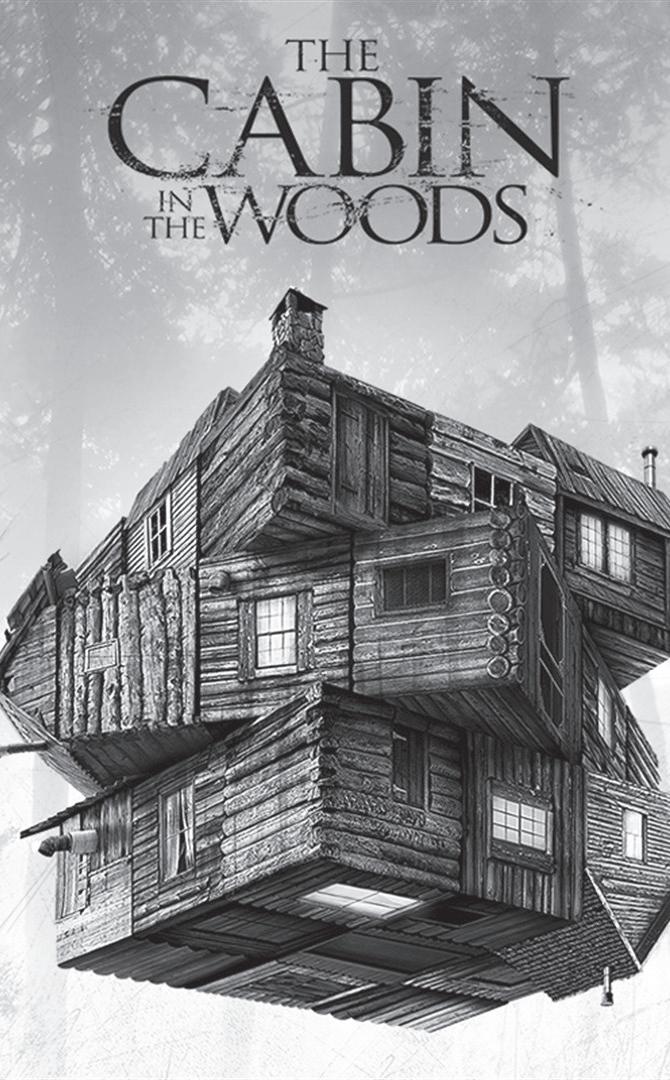
CABIN IN THE WOODS
The Cabin in the Woods starts off like it’s a completely different movie. Two engineers are discussing the failure of an operation in Stockholm, leaving their facility and one in Japan to complete the unknown operation.
While this seems out of place, it’s revealed that these engineers are directing a ritual to appease ancient gods by sacrificing a group of teens who are staying at the cabin. That group, each seeming to conform to a horror stereotype, are well-drawn and likeable.
Like Scream, it plays with the tropes of horror movies, but this time asks “what if every cliched horror movie was that way because it had to be like that?” The film barrels towards an over-the-top and unique climax that hasn’t been equaled by any other movie I’ve seen.
The Cabin in the Woods is available on Peacock.
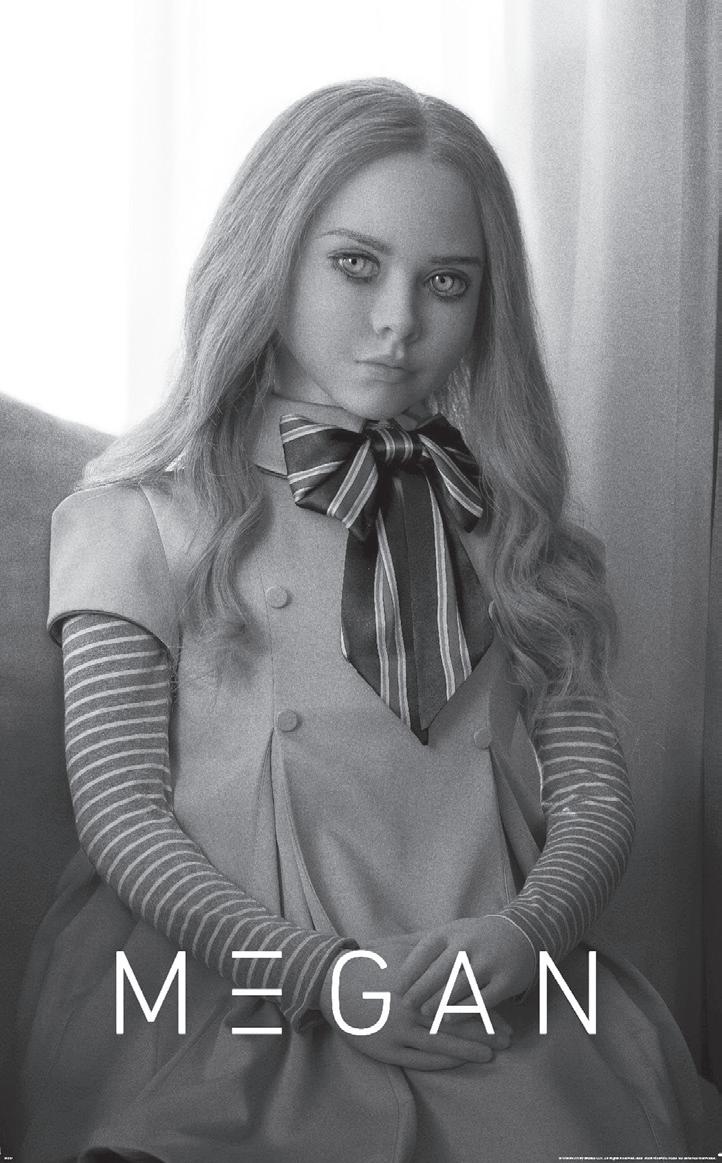
While M3GAN may have originally been another low-budget January flop, after the trailer exploded on TikTok, it became one of the highest-grossing horror films of 2022.
M3GAN, an android powered by advanced AI, begins to break through the firewalls on her programming to fulfill her directive to protect the young, orphaned Cady (an excellent Violet McGraw) at all costs, even from her aunt Gemma (Allison Williams). It’s campy and fun, with a topical message about the dangers of an over-reliance on technology. M3GAN herself is creepy, with movements that gradually get more fluid as she learns and becomes self-aware.
The effects used to bring M3GAN to life are impressive, which included a combination of puppeteering, animatronics, and a live actor (Amie Donald, then only 12 years old).
The film has a sequel in development, set to release on June 27, 2025.
M3GAN is available to stream on Starz.
Ethan Barker, ACE Editor
Head Coaches: New vs Veteran
Being a high school head coach takes a lot of effort. From coaching new players to honing the skills of experienced players. These two coaches have two persepctives of the same story, one just becoming a head coach and the other a veteran head coach.
Q: How long have you been coaching volleyball for your career, and then as a head coach?
A: “I have been coaching volleyball for about 15 years now,” head volleyball coach Duane Abode said. “I’ve been a head coach. I’ve coached two different teams, a couple of different teams. This is my first head coaching position as a high school coach.”
Q: What is the best piece of advice you’ve received from a seasoned head coach?
A: “I would say, to be yourself,” Abode said. “When you take over a program, you take everything that you’ve learned from all of your coaching experience, your other head coaches and friends that you coached with and make your own program and tailor it to what you’ve learned.”
Q: What has been your most memorable experience in coaching?
A: “I think coaching for a club, going to a different state to a large, very popular tournament, and actually coming out with the gold trophy in a state that is known for winning all the time,” Abode said. “So, it was nice to represent Washington and take home a trophy.”
Q: What’s something you believe sets your coaching style apart from others?
A: “I think just wanting to do more than just coach, but to also help,” Abode said. “Help my players become better friends, better daughters, better citizens and better students.”
Q: What is something you enjoy about coaching?
A: “After coaching so many years, I think one of my favorite things is staying connected with players that you’ve known for a long time,” Abode said. “The Sheppard girls who are here at Puyallup [for example], I’ve known them since they were like two and three years old. So, I think that’s another one of the most memorable moments is being able to coach Sophia and to coach Reese in their senior years.”
Q: What’s an aspect to coaching you struggle with?
A: “I want the win more than I feel like some of my players do,” Abode said. “So I think knowing when to say, ‘Hey, this is more than just winning than just go with that book.’”
Q: Is there any particular experience that you can recall that has shaped your coaching style?
A: “I think just getting to know my players,” Abode said. “Also getting to know parents, and that connection with the parent, especially when all they see is their child and everything involved with their child, when there’s actually 12 to 14 other kids. Making that connection that this isn’t just about a team sport and you have to think about how a parent reaction affects the entire team, and not just their child.”
Q: How did you end up coaching head coach at Puyallup?
A: Time I’ve been here, this is my fourth season here. I was given the opportunity to come here, and knowing that the Sheppard girls were here was a great opportunity for me to coach them even more, and Puyallup has had a reputation for being one of the top teams in the area, if not Washington state,” Adobe said.
Sienna Hanson, Co-Chief
Q: How long have you been coaching cross country?
A: “I’ve been coaching [cross country] since 1988,” Monaghan said. “I’ve been here at Puyallup High School from 2008 until present. I coached with Michelle Mathay, back in ‘92, ‘93 and ‘94.”
Q: If you could give one piece of advice to a new coach, what would it be?
A: “Talk to veteran coaches, especially if you’re going to be a head coach, because there’s a lot of coaching that isn’t involving you and the athletes,” Monaghan said. “All of the other stuff you have to do behind the scenes—paperwork, arraying transportation, creating good communication with your parents—and then there’s the actual coaching in front of the kids.”
Q: What’s been your most memorable experience in coaching?
A: “One of my most favorite moments was [coaching] both of my sons, who happened to be on the team at the same time, that only happened once. Taking them both to the state cross country race was great, but then the younger brother beat the older brother, so coming back was not as much fun. It was a great experience to have them both on the team,” Monaghan said.
Q: What’s something you believe sets your coaching style apart from others?
A: “If you need to be told something, I’m going to tell you that, and I try to do it in a really nice manner, but I don’t mince words. I tell them this is what you need to do to be a faster cross-country runner, and sometimes they listen and sometimes they don’t,” Monaghan said. “But if you ask me my opinion, I’m going to give you my opinion, and it’s going to be what it is.”
Q: What’s something you enjoy about coaching?
A: “I like that kids get to see me in a different light. I’m a math teacher, but when people see me out at the mall or at the grocery store and I’m wearing running clothes, a lot of times they think that I’m a PE teacher,” Monaghan said. “They’re different sides of my personality. In math, I’m really structured, really organized, and then in sports, I’m super competitive, even if I’m not racing.”
Q: What’s an aspect of coaching you struggle with?
A: “We have a huge array of abilities on our team, 63 athletes out for cross country. We have some that are running a mile under five minutes, and we have some that are running a mile in 10 minutes, and we have to find a way to make sure that everybody is successful and that everybody is supervised, because we obviously don’t have a cross country course here. This is everybody’s program, how do we find a way for everybody to belong, and everybody to be successful, and everybody to perform at their best level when not everybody’s level is the same?” Monaghan said.
Q: Is there any particular experience that you can recall that has shaped your coaching style?
A: “I think working with the prior coach before me here at Puyallup High School, Michelle Mathay, her plaque is in our awards area downstairs because she’s in the Hall of Fame. Working with her has really [taught me] to encourage people to come out for cross country, and then how to build community. How do you bring all of these people that don’t know each other together as a team, where they are supporting each other during races? Our Varsity guys run first and they will, for the rest of the meet, be running around cheering for the JV. It is amazing having our JV people standing at the finish line, waiting for the rest of their teammates, rather than going and getting a drink of water,” Monaghan said.