Deborah Henrie, Bradley Marston, Donna Eads, Kaylee Pickering, Taylor Smith, Jesse Whipple, Ashley Centers, Randi Fuller, Cliff and Ilene Bandringa, Rob Krieger, Anita DeLelles, Judi Moreo, Nathan Hughes, Karen L. Monsen, Rook Reilley, Gary Trask, John Belanger, Rex McArthur, Steve Dudrow, Faith Jolley, Ashley Bowden, Janie Chu, Michelle Johnson, Chelsie Abbott, Bill Brown
Kathy Lee
Bert Kubica Cheryl Whitehead
Letter fromthe Editor
Hello, Readers,
The heat is in full swing here, but don’t let that discourage you from taking advantage of the amazing outdoor activities our area offers. Regular movement has been proven to boost mental, emotional, and physical health. Our Outdoor Adventure issue offers a healthy assortment of fantastic articles to inspire you to get outside and get moving.
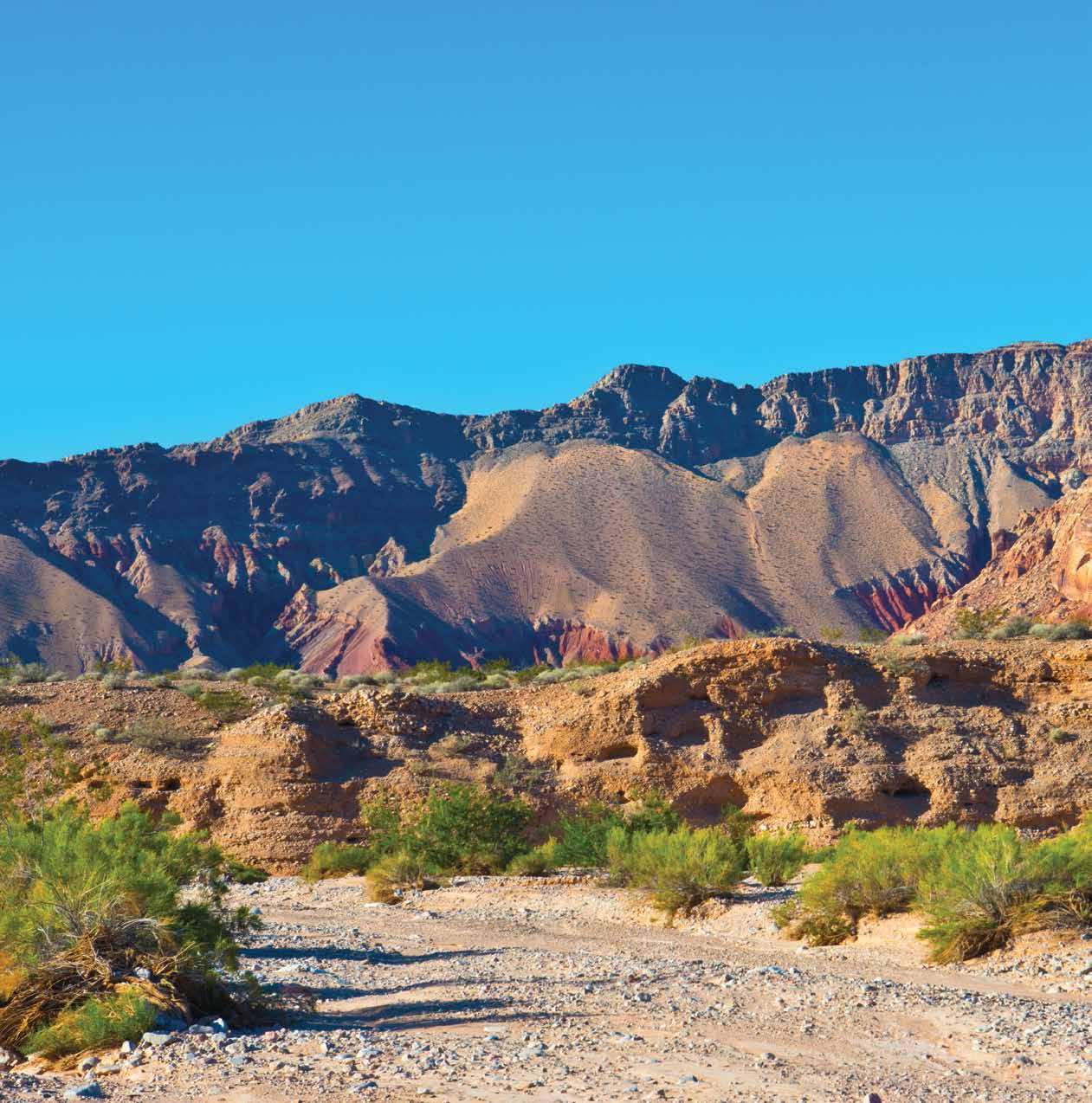
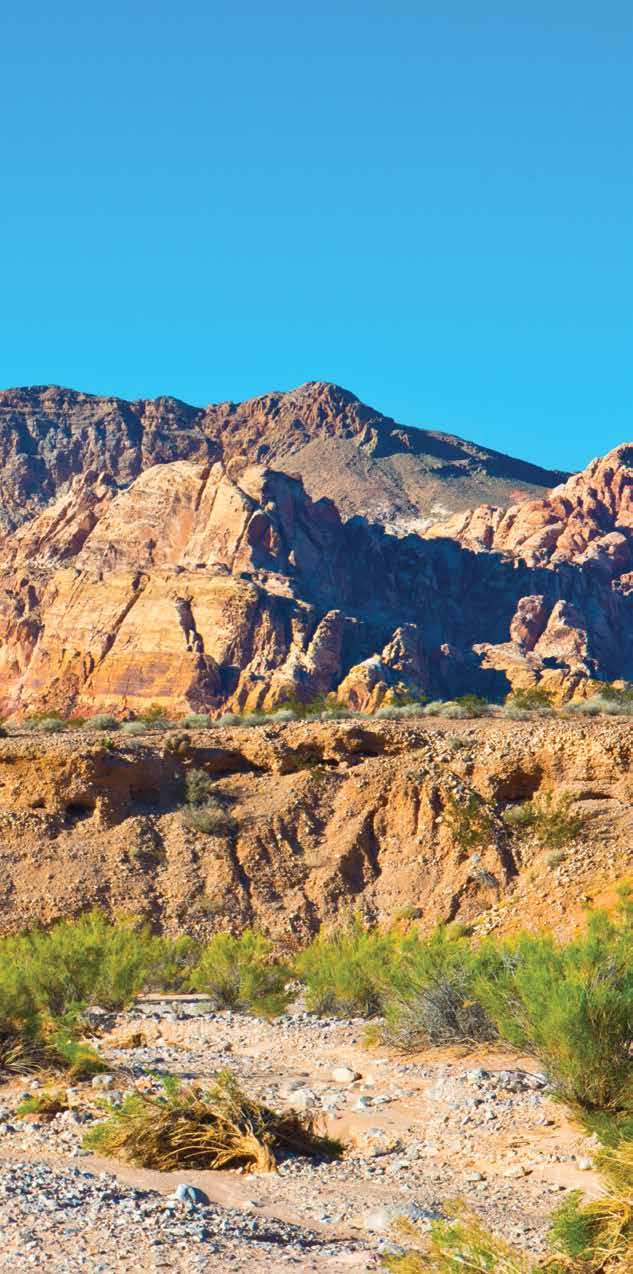
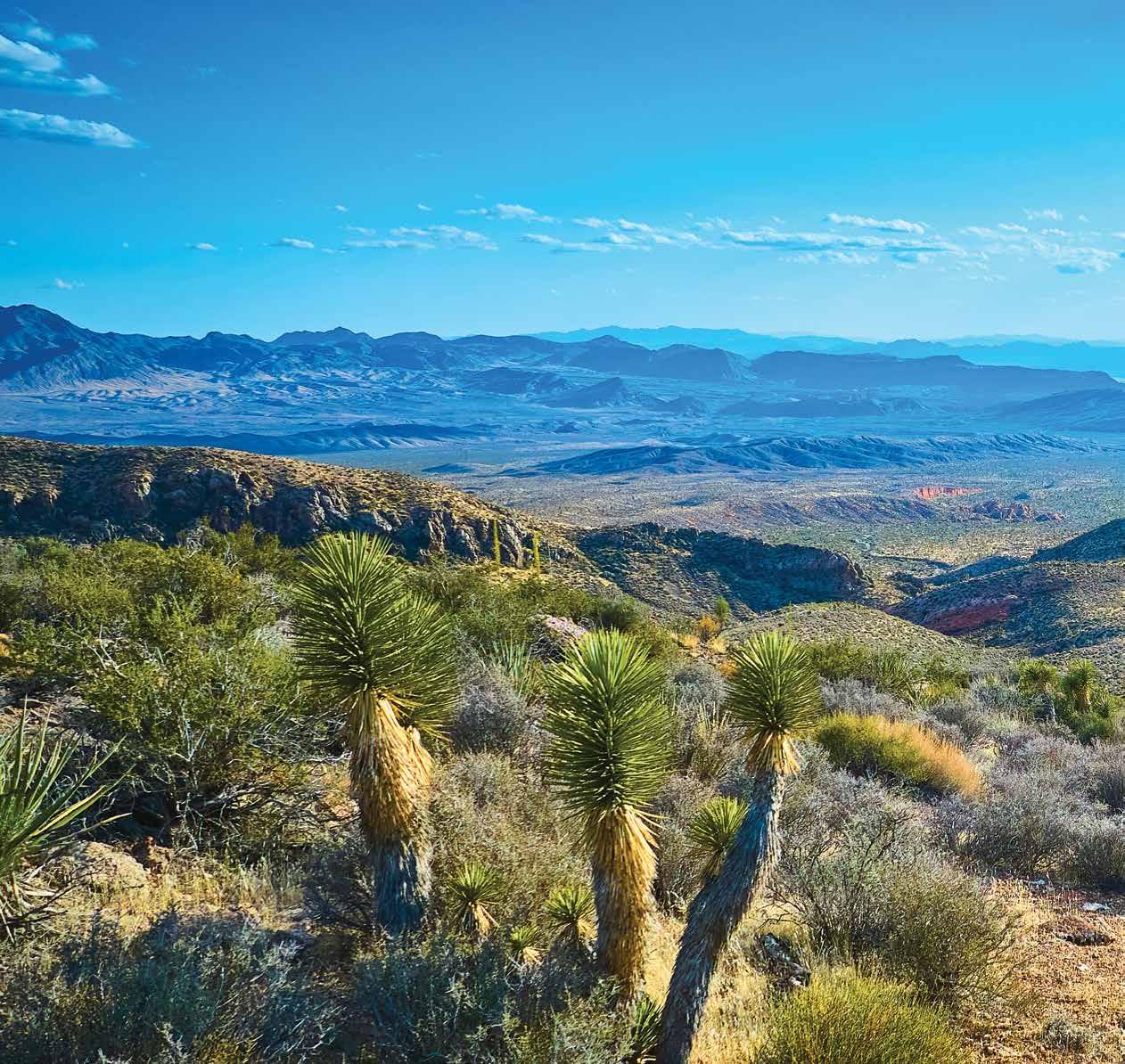
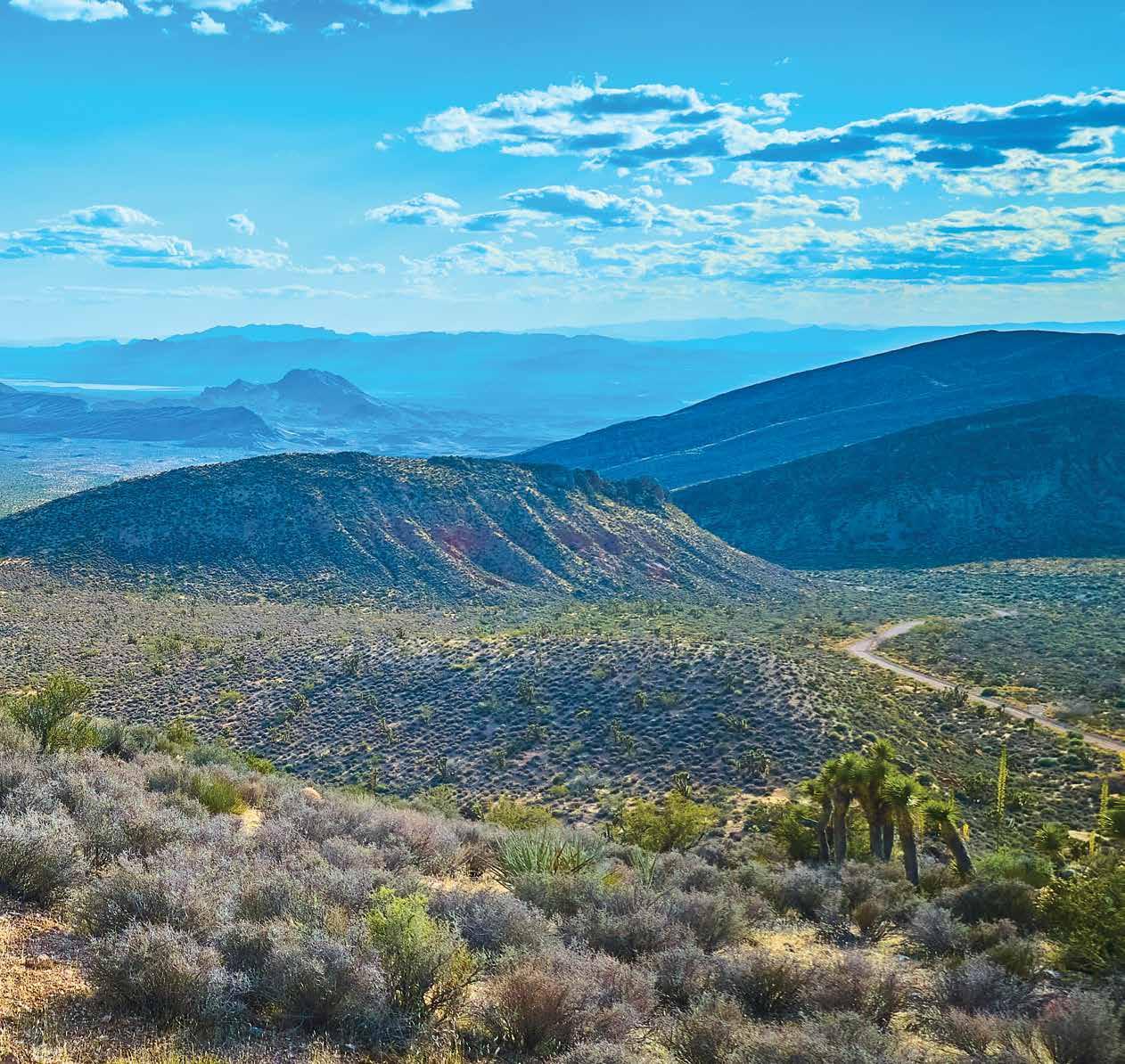
In many ways, this issue is a tribute to our beloved Mojave Desert. Judi Moreo advises that the desert is a space for reflection and learning. If we listen, it has much to teach. Follow Judi on a journey through the exceptional Gold Butte National Monument.
Our Design article by Randi Fuller demonstrates how the desert slows things down and clears our minds. These benefits increase with movement. Learn how to bring the desert—and some of its benefits—inside with thoughtful decor.
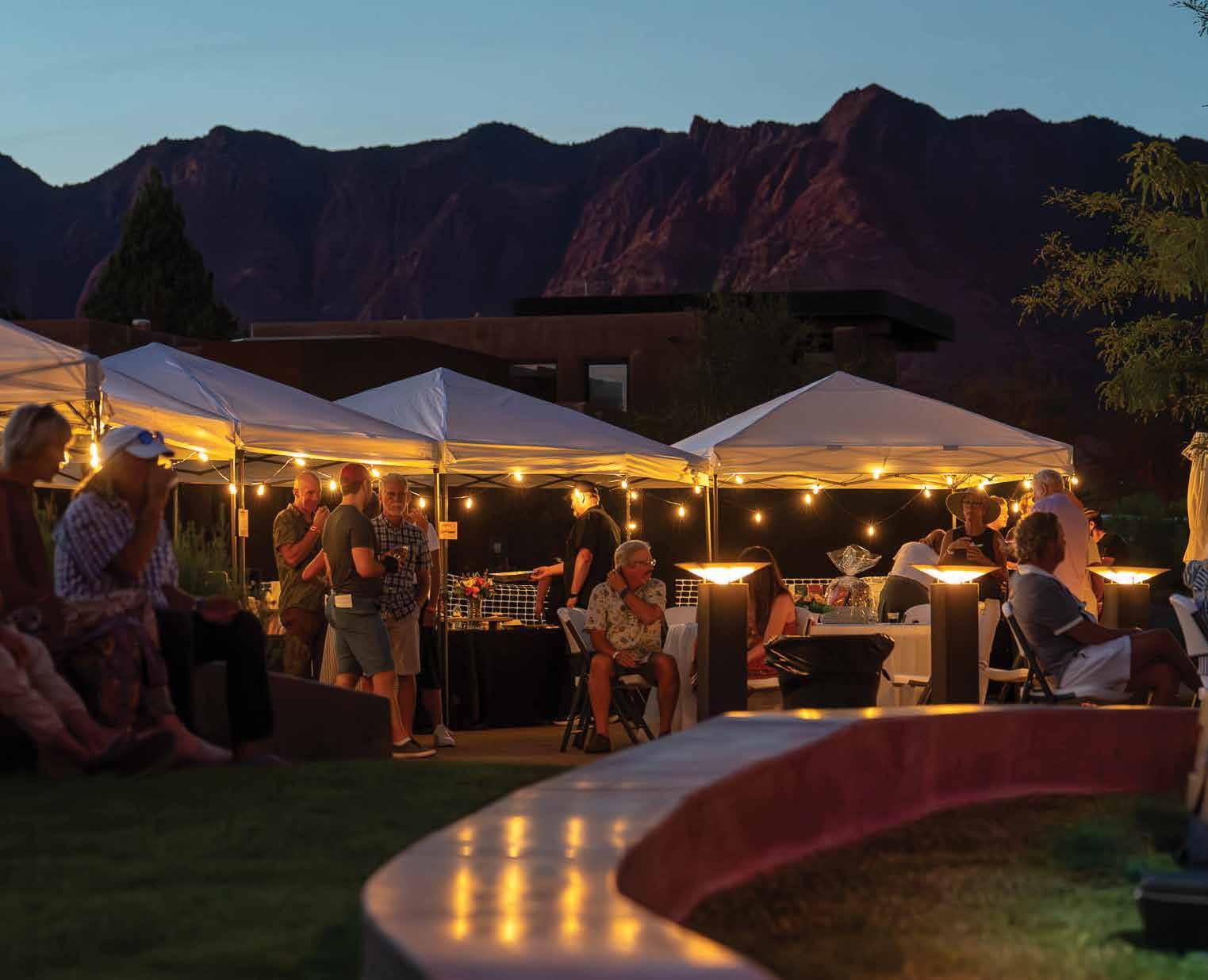
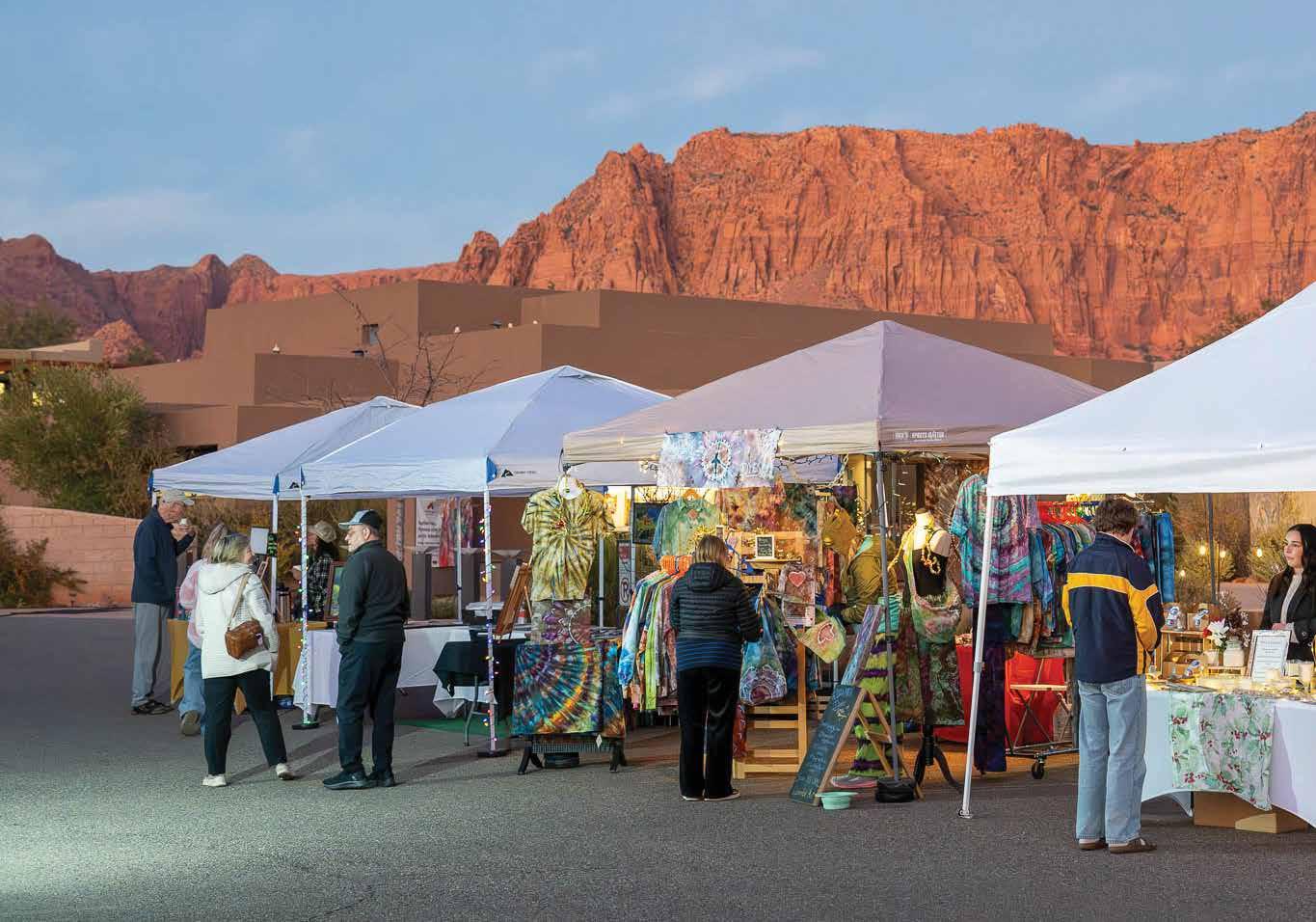
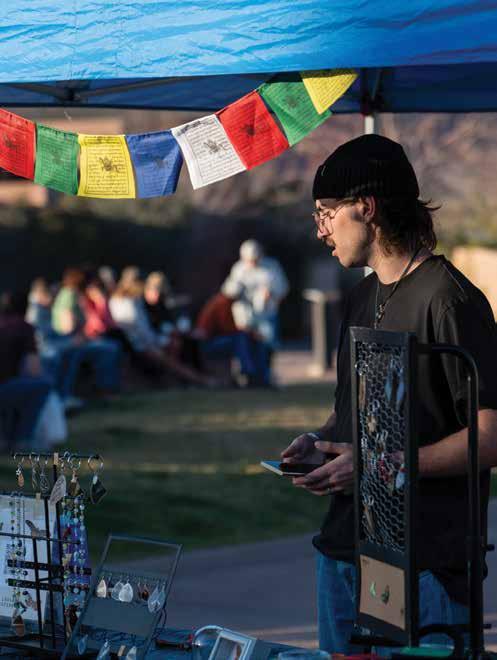
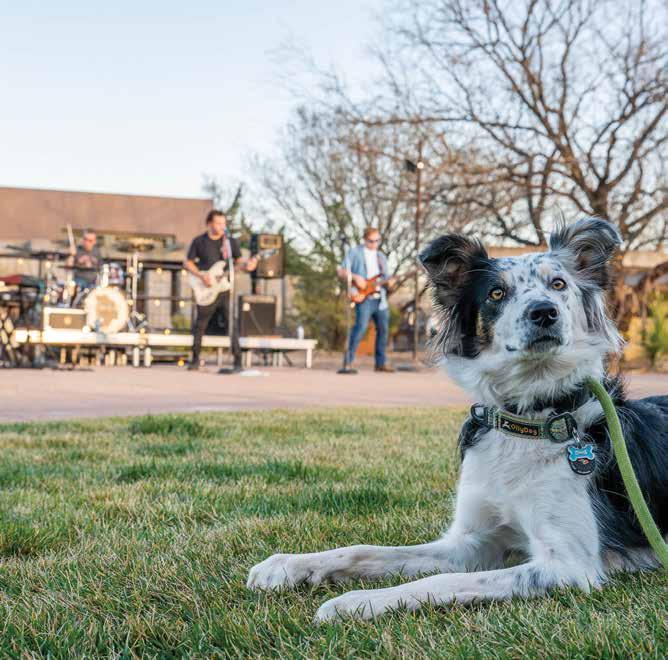
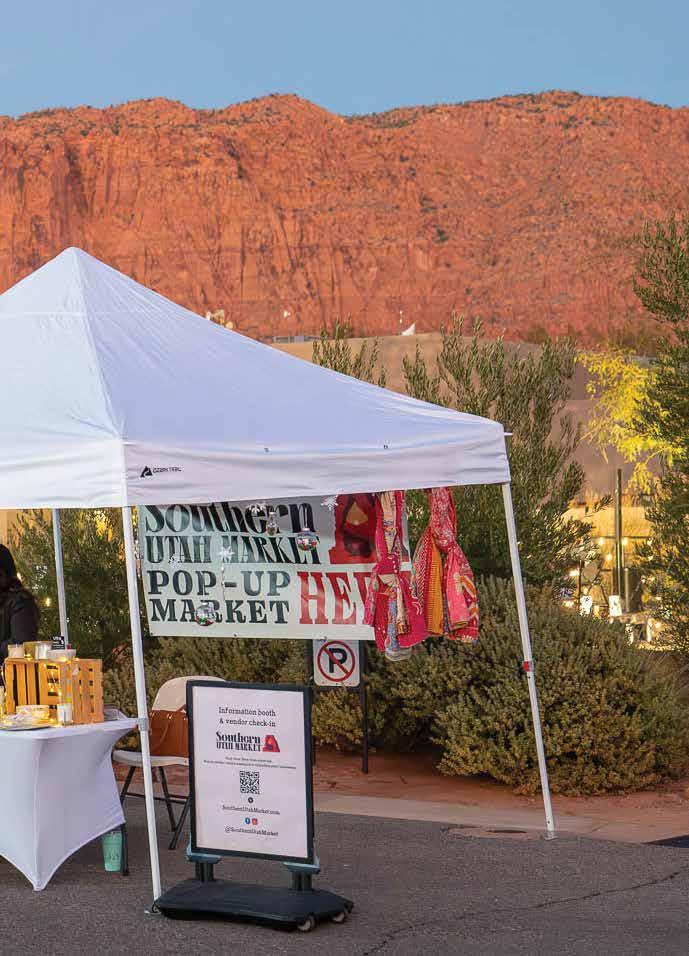
First Fridays at Kayenta offer opportunities to experience the desert in a different way as you explore local art, music, food, and film.
It is also the season for both youth and adults to practice their sharpshooting skills as they hunt turkeys, while our Fitness article suggests a return to simple playing and getting dirty rather than focusing on “exercise.”
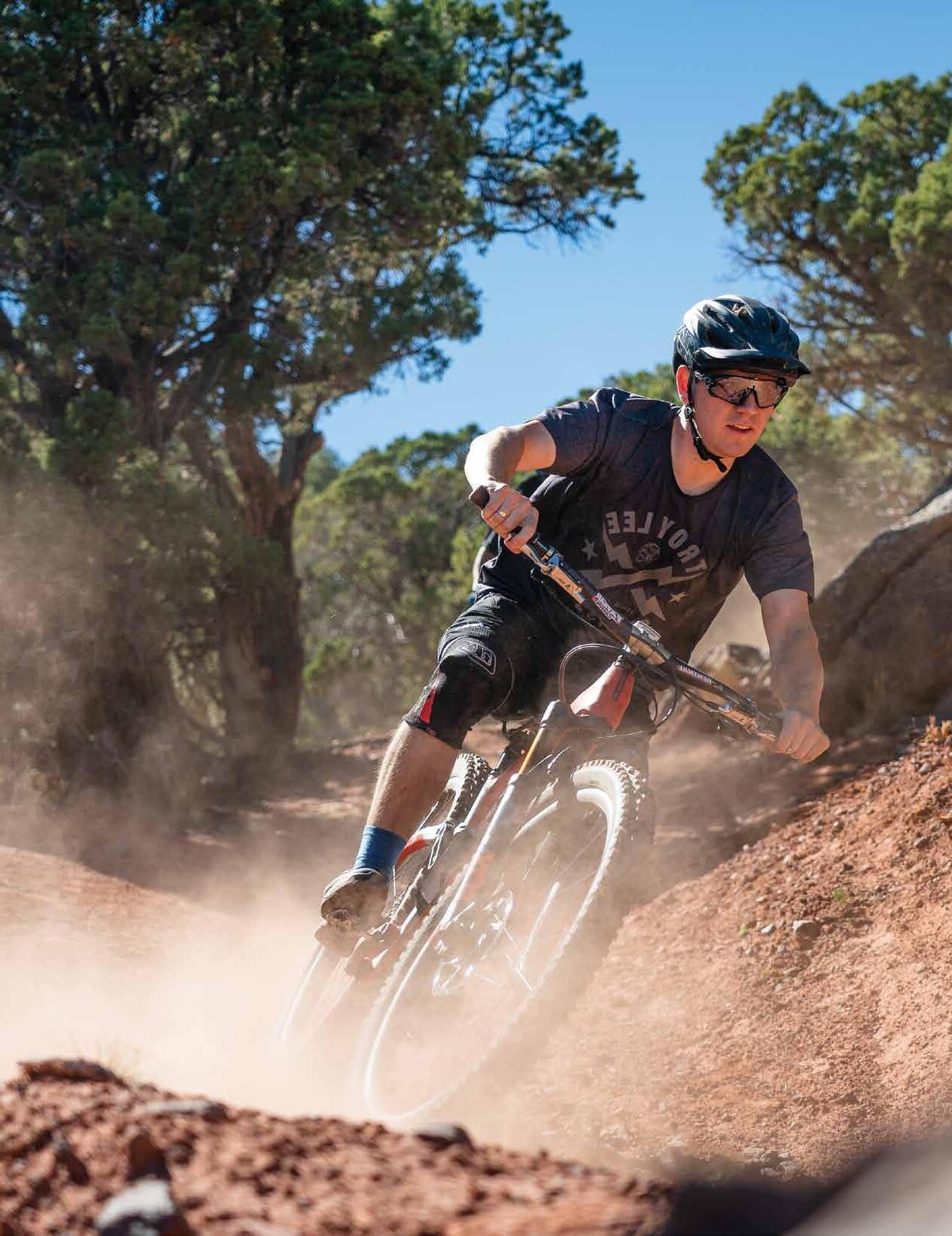
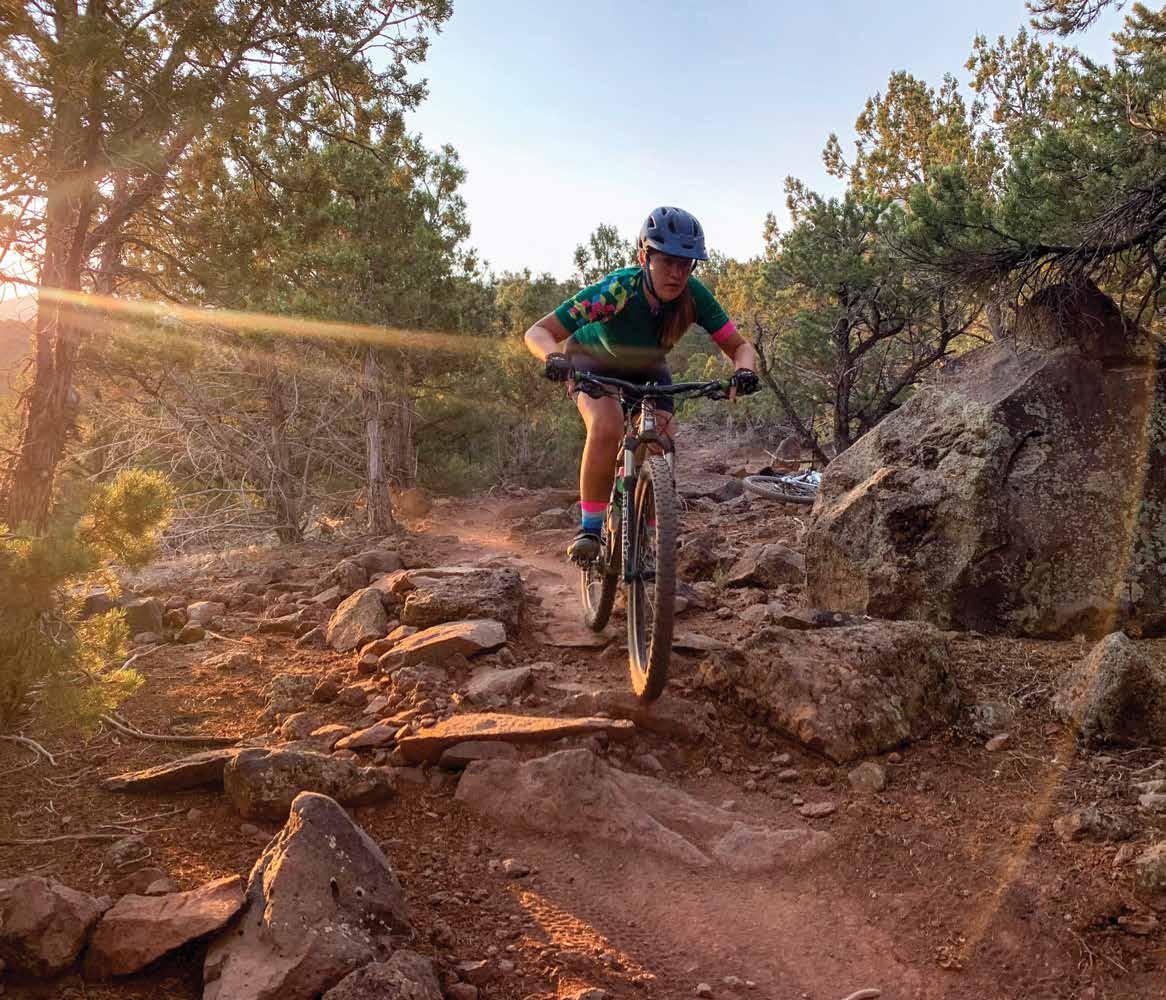
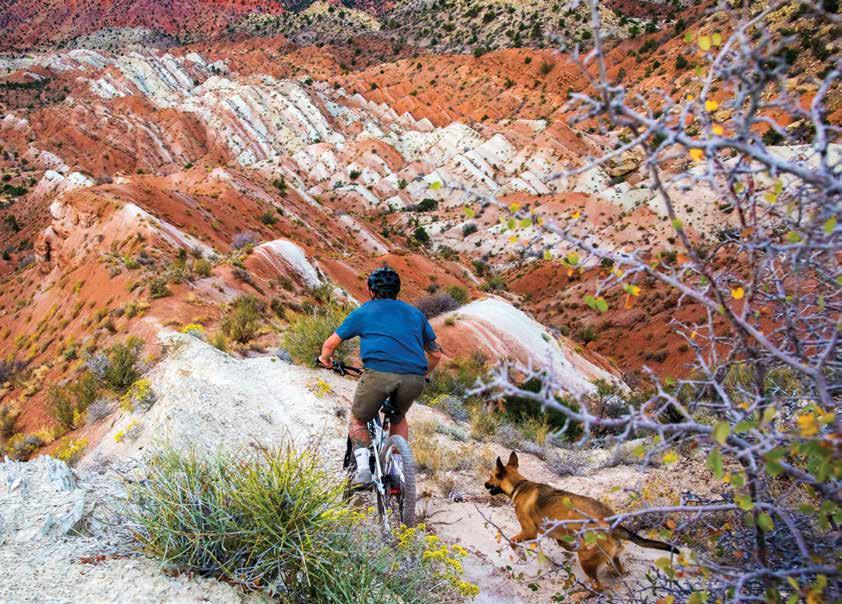
But if it’s exercise you want, consult our guide to exploring southern Utah and Nevada lakes, or discover the rugged desert beauty surrounding the town of Green River, Utah, in our Adventure article. Also, refer to our article on mountain biking in Cedar City and Brian Head, and then stop by Mesquite’s All In Cycles to make some lifelong friends and find your perfect bike.
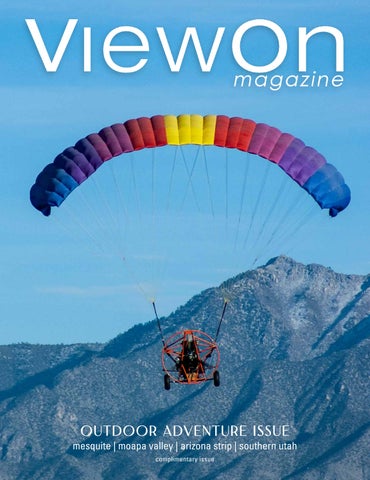
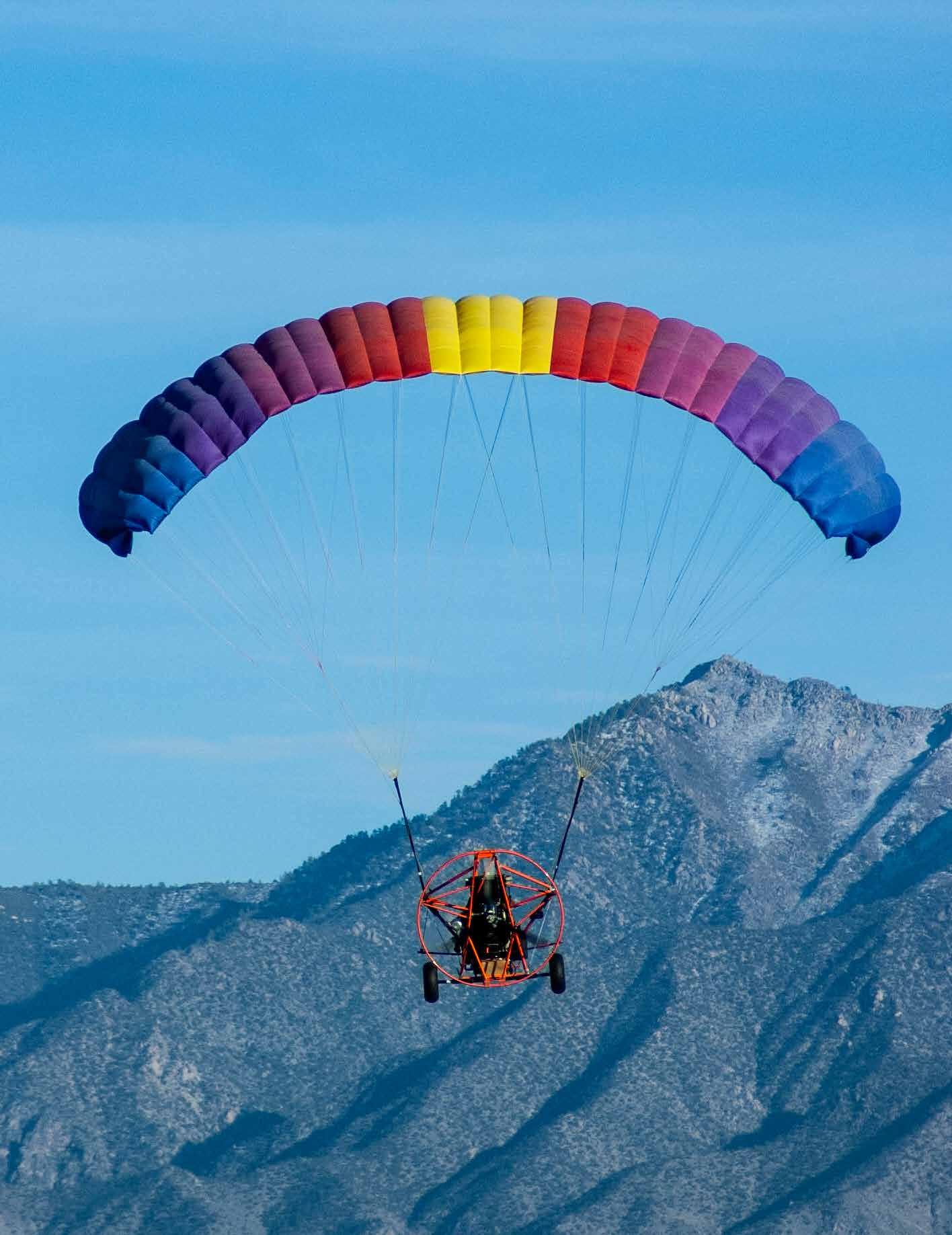
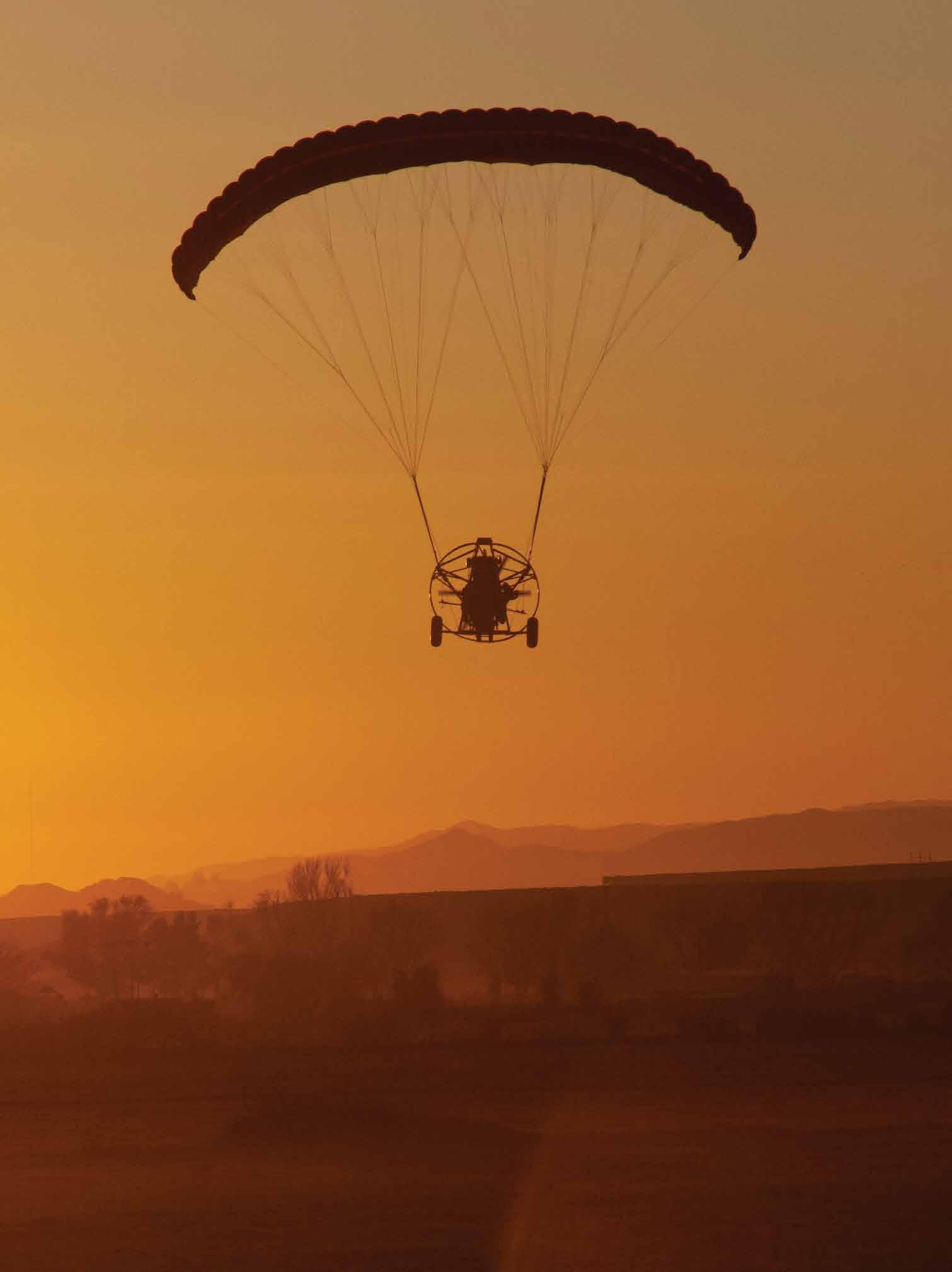
For outdoor fun involving more wheels and an engine, conquer the desert on a UTV from Prime Adventure Outfitters. Finally, read about the ultimate desert adventure—leaving the ground altogether—as you join Mesquite’s Bill Brown on his quest to master the powered parachute.
We are always immensely grateful for our readers and advertisers. Please make sure to give our advertisers some business.
The desert invites you to look more closely, share its beauty, find joy in movement, experience peace, and perhaps find yourself along the way. This summer, will you accept the invitation?
Happy Adventures, Editor in Chief
Frequent
Anita DeLelles, LMT, is a certified Equine and Small Animal Acupressure Practitioner with accreditation from Tallgrass Animal Acupressure Institute. Her studies included two consecutive summers in Bath, England, as well as coursework in Colorado and California and a BFA from UNLV. Anita is certified in small animal massage from the Northwest School of Animal Massage as well as in human massage. In 2014, Anita and husband Ron opened WOOF! Wellness Center and launched their website www.ShopMeoow.com.
David Cordero is the Communications and Marketing Director for the City of St. George. A southern Utah resident since 2006, David has extensive experience in writing, public
relations, marketing, and public speaking. He has also served in a variety of volunteer capacities over the years, including Utah Honor Flight, American Legion Post 90, religious education, and as a coach for his son's athletic teams. Email him at david.cordero@sgcity.org.
Nathan Hughes is a proud native of Mesquite, Nevada. With a deep-rooted passion for community service, he has dedicated his efforts to making a positive impact, particularly among the youth and teaching financial literacy. He is looking forward to working with members of the community. Nathan is president and advisor of Hughes Strategic Group, LLC DBA Pilot Wealth Strategies. Contact Nathan at (208) 490-5400.
contributors
Rob Krieger is a 20-plus-year member of the PGA of America and is originally from Cleveland, Ohio. He came to the area as the Director of Golf at Conestoga and now owns his own golf instruction business in St. George called Red Rock Golf Instruction, which is based at Southgate Golf Course Driving Range. He has been writing for ViewOn Magazine since 2010. He is also a Utah PGA Player Development Award Winner. For help with your game, please visit www.stgeorgegolflessons.com or email him at rob@sgugolf.com.
Ron Bird is a registered Investment Advisor Representative and has been serving Mesquite and the surrounding areas since 2007. Originally from Wisconsin, Ron grew up in Mesquite and served four years in the U.S. Marine Corps and earned his BA in Business Administration. After returning home, he joined his father at Financial Concepts, where he values building lasting relationships through a holistic approach to financial planning.
Ashley Centers is the former general manager of Anytime Fitness Mesquite, and her passion for fitness runs deep. She fell in love with competitive powerlifting as a preteen. She set many state records and national qualifying totals during her lifting career prior to her competitive retirement while attending college. Ashley is now an ISSA Elite Level Trainer, Certified Fitness Nutritionist, and Corrective Exercise Specialist and trains for Strongwoman competitions. She is an inactive board member for the Mesquite Senior Games and is excited to remain a contributor for ViewOn Magazine and to write about her passion for health and fitness!
Judi Moreo is one of the most recognized personal growth trainers and coaches in the world. She is the author of 11 books, including two international bestsellers, You Are MoreThan Enough and ConquertheBrain Drain. A self-made success, Judi started her first business with $2,000 and a lot of chutzpah. Judi learned to succeed step-by-step over many years and now has a worldwide following of clients who are enjoying outstanding success as a result of her guidance. You can reach Judi at judimoreo@yahoo.com or by calling (702) 609-2075.
Karen L. Monsen is a freelance writer who lives in St. George, Utah. She covers outdoor topics, nature, science, research, and human impacts. She taught French and social studies in public schools, served as a technical training coordinator, and designed and delivered business and technical writing seminars for corporate clients.
Randi Fuller is a psychology-based design strategist and founder of The Science of Sanctuaries, an approach developed through her work as owner of Mesquite Tile & Flooring. She combines sciencebacked design principles with artistry and real-world expertise to help homeowners and businesses create spaces that foster well-being, functionality, and beauty. Randi advocates for environments that prioritize safety, aesthetics, and emotional well-being, making thoughtful, evidence-based design accessible to both small businesses and homeowners. Call (702) 346-7225 to speak with Randi, or visit the showroom at 521 W. Mesquite Blvd. in Mesquite, Nevada. You can also visit their website at www.MesquiteTile.com.
Cliff and Ilene Bandringa are authors and the creators of BackRoadsWest.com. They have been traveling and photographing the world for more than 20 years, with a motto of finding the lesserknown, off-the-beaten-path places and then sharing their experiences with others. They do this via their blog, the virtual tour guides they've written, lots of YouTube videos, magazine articles, and a sister website of highquality and stock images. You can find all of these at www.BackRoadsWest.com.
Donna Eads and her husband moved to Mesquite in 2010 from Palm Desert, California, and she loves the small-town atmosphere. Her writing experience extends from high school and college newspapers to professional manuals as a critical care nurse. Her passion for tennis is evident in her frequent articles for ViewOn Magazine.
Kaylee Pickering is the comunications specialist for the Iron County tourism office, Visit Cedar City · Brian Head. Born and raised in Cedar City, she loves sharing the incredible recreation and arts opportunities around her with potential visitors @visitcedarcity. A mother of two young boys, she and her husband spend weekends showing them new trails, finding dirt to play in, and exploring southern Utah.
Message from
the Mayor
“You step onto the road, and if you don’t keep your feet, there’s no knowing where you might be swept off to.” - J.R.R. Tolkien
Where will you be swept off to if you dare to step out of your door and onto the road in Mesquite, Nevada? Will it simply be to a lounge chair by the side of one of our beautiful resort pools with a mai tai in your hand? Or will you end up at one of the wondrous national parks just a short drive away?
In Mesquite, the possibilities are endless. If you’re looking to explore, we have miles and miles of trails to ride. Bring your own off-road vehicle, or visit one of our rental providers, which also offer guided tours. Whether you’re a beginner or an expert, there’s a trail for you and breathtaking vistas to behold. And if you’re really feeling brave, there are some great rockclimbing areas along the way.
Looking for a home base? Mesquite is the perfect spot. You can take a day trip to the Valley of Fire State Park, Cathedral Gorge State Park, or Zion and Bryce Canyon National Parks. There are many ghost towns,
hiking trails, and sights to see within a short drive from Mesquite. You could also spend the day in Las Vegas and take advantage of all it has to offer, and then return to Mesquite and spend your evening watching a show, gambling, getting a massage, or eating at one of our great restaurants.
Don’t want to hit the open road? Stay in town and get in a round at one of our world-class golf courses. Play a little pickleball. Work out at our rec center. Check out the museums or the art gallery. You could even ride a camel.
If you’re looking for a big adventure or just a small one, come visit the safest, most convenient city in Nevada, where you can even find a little trouble—as long as you promise not to take it too far!
Mesquite Why I Love
Mesquite, Nevada, is the kind of place that stays with you. It’s a small town with an uptown vibe—warm, welcoming, and alive with creativity. Our local arts community is the heartbeat of the city, anchored by the Mesquite Fine Arts Gallery, where regional artists showcase work that reflects the beauty and spirit of the Mojave.
What I love most is Mesquite’s perfect balance of serenity and adventure. As “Adventure’s Last Stop,” it sits at the crossroads of some of the Southwest’s greatest treasures—Gold Butte, Valley of Fire, Lake Mead, Beaver Dam Wash, and even Zion National Park. And when you want big-city energy, Las Vegas is just an hour away.
Mesquite feels like what Vegas used to be: friendly, family- oriented, and full of possibility. With world- class golf at places like Wolf Creek, vibrant art, gaming, photography, legalized cannabis, and endless outdoor exploration, it’s a destination for everyone from everywhere.
- Bradley Marston
Moapa Valley Why WE Love
Life is full of big decisions. Twenty-three years ago, we chose to move to Moapa Valley. With its good schools and the advantages of a small town, we hoped it would be a good place to raise our growing family. On our hobby farm, we raised our kids by raising livestock, teaching them hard work and responsibility.
The first person we met in our new neighborhood was Mrs. Beth Waite (now 97 years young). Our first encounter was when she answered the door with a huge smile and an enthusiastic “Welcome!” We didn’t know then that Moapa Valley was full of wonderful people like nowhere else!
Our children are now grown and doing great things. They were raised by neighbors, coaches, and teachers—they were
raised by Moapa Valley! We can now say with proof that moving here was one of the best decisions we could have ever made. Being surrounded by amazing people is “why we LOVE Moapa Valley!”
- Nathan and Deborah Henrie
Where the Desert Gets Weird:
by Judi Moreo
I’ve driven through Mesquite more times than I can count. Like many people, I once thought of it as a pleasant stopover—a place to refuel, stretch, maybe admire the mountains before heading somewhere “bigger.”
I was wrong.
The real story of Mesquite isn’t in town. It begins where the pavement thins, the cell signal flickers, and the desert opens like a curtain, revealing something ancient and quietly spectacular.
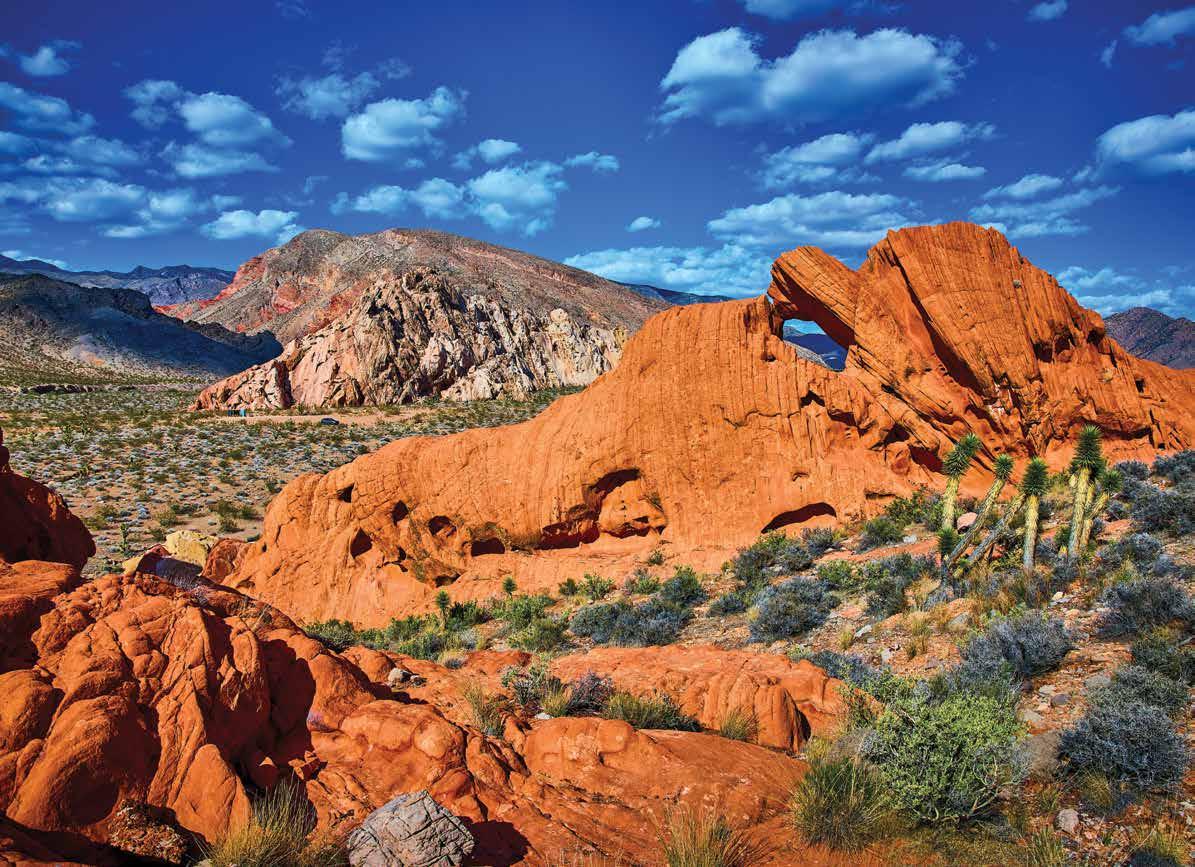
About 20 miles south of town lies Gold Butte National Monument, a nearly 300,000-acre protected Mojave wilderness. The first time I drove into Gold Butte, I felt something shift. The air seemed wider. The silence felt textured. There were no tour buses, no ticket booths—only road, rock, and sky.
This is not a curated desert, it’s a living one.
Little Finland:
Nature’s Private Art Gallery
The journey to Little Finland is an adventure in itself—miles of rugged dirt road that insist you mean it. When I finally stepped out of the car, I understood why it remains a secret to many.
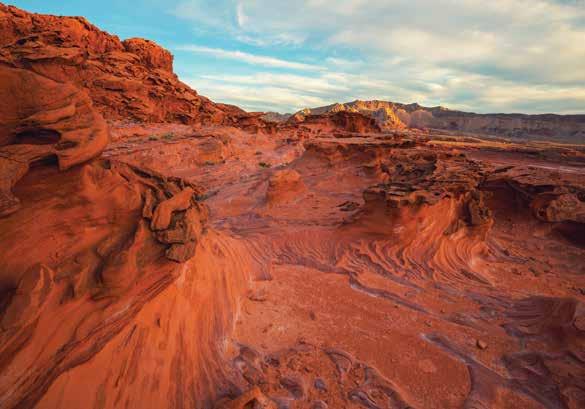
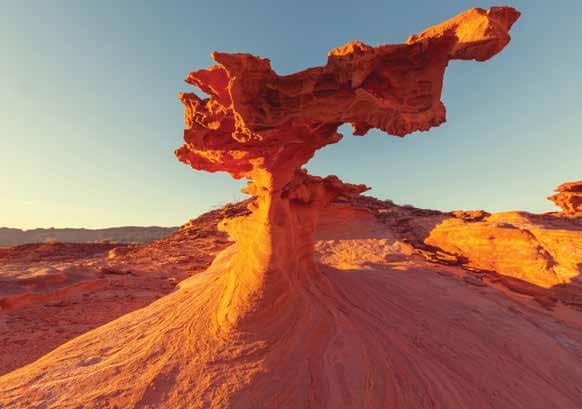
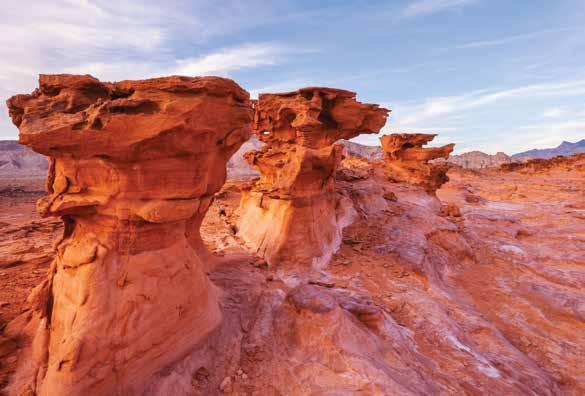
Red Aztec sandstone rises in impossibly delicate fins and swirls, carved by wind over millions of years. Some formations resemble frozen flames; others look like Gothic cathedrals sculpted by a patient, invisible hand. Walking among them
feels like wandering through a natural sculpture garden that no one owns or controls.
I found myself moving more slowly there. Speaking more quietly. It felt disrespectful to rush.
You don’t conquer Little Finland. You observe it.
Devil’s Throat: A Reminder Beneath Our Feet
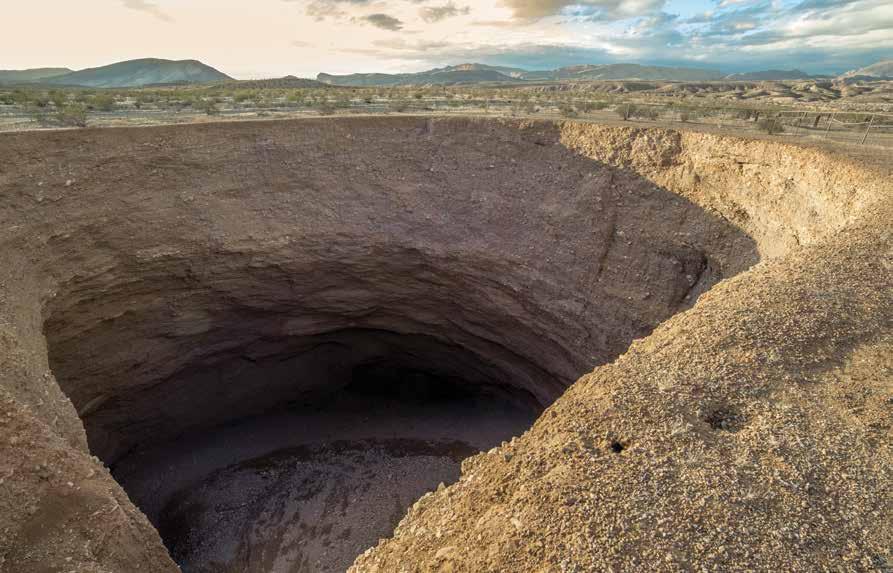
Not far away is one of the desert’s most startling features: Devil's Throat. At first glance, it looks like nothing at all—flat desert scrub. Then suddenly, the earth drops away into a 110-foot limestone sinkhole. Standing at the edge, I felt the kind of humility only geology can deliver. The desert that looks so still is, in fact, full of motion beneath the surface.
Water carved that void over thousands of years. Patient. Persistent. Unseen. There’s something about standing beside a massive hole in the earth that puts your own worries into perspective.
Camels in the Mojave? Yes, Really. Then, when you think Mesquite has shown you all its desert surprises, it delivers something delightfully unexpected.
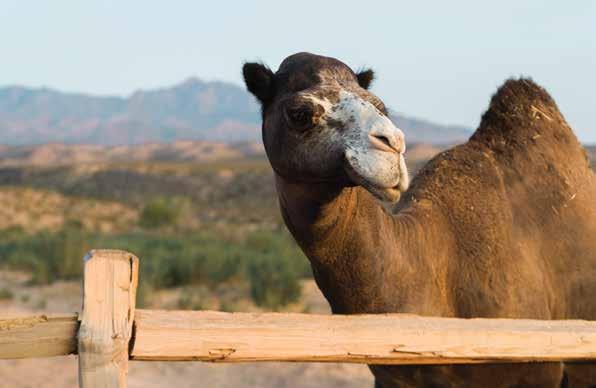
North of town is Camel Safari, a working camel and exotic animal ranch that feels both improbable and perfectly at home in the Mojave.
The first time I saw camels against the Nevada desert backdrop, I laughed out loud. But the history makes sense—camels were once tested by the U.S. Army in the 1850s as desert transport animals. They adapted beautifully. The experiment didn’t last, but the Mojave and camels are not strangers.
Stories Written in Stone
As I continued exploring Gold
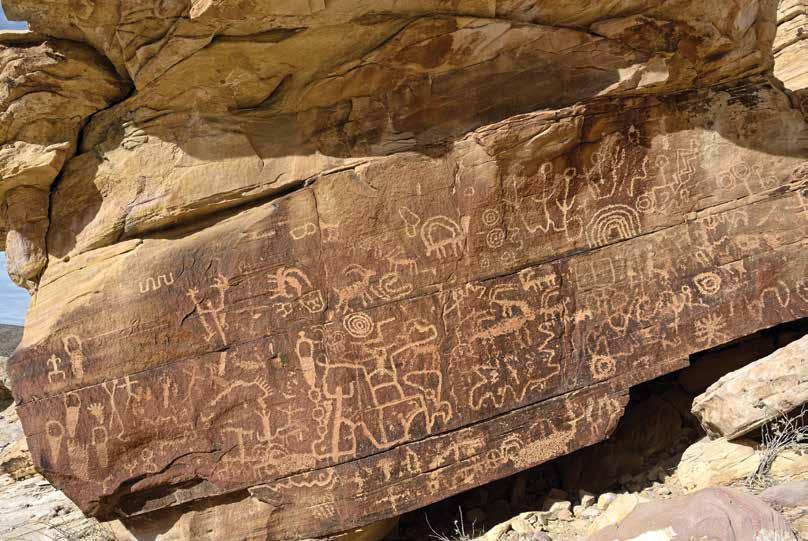
Butte, I began to notice ancient petroglyphs etched into sandstone walls—bighorn sheep, symbols, and shapes whose meanings have traveled across the centuries.
This land was never empty. Indigenous peoples moved through these valleys long before Nevada became a state, leaving behind rock carvings and remnants of agave roasting pits. You feel it when you walk there—a layered history beneath your boots.
Outdoor adventure is often sold as adrenaline. But here, it feels like awareness.
Today, visitors can experience guided tours, meet camels and other animals, and enjoy a surprisingly educational, uniquely Mesquite outdoor experience. It’s part frontier history, part safari, and entirely unexpected.
The Luxury of Space
What struck me most about exploring around Mesquite wasn’t a single rock formation or animal encounter. It was the space.
Unlike crowded destinations such as Valley of Fire State Park, Gold Butte offers something increasingly rare: solitude. Hours can pass without seeing another vehicle. The desert wind becomes your companion. The horizon stretches uninterrupted.
In a world that moves too fast and speaks too loudly, this kind of quiet feels like a gift.
You start to notice small things—the texture of sandstone, the geometry of desert plants, the way shadows lengthen in the late afternoon. The Mojave doesn’t shout for attention. It rewards those who slow down.
A Different Kind of Adventure
Mesquite may be known for golf and sunshine, but its true
outdoor adventure lies beyond the familiar. It’s in wind-carved rock that resembles fantasy architecture. It’s in sinkholes hidden beneath unassuming desert floors. It’s in ancient carvings and unexpected camels.
It’s in the realization that you don’t have to travel halfway across the globe to find something unusual. Sometimes, the extraordinary is right beyond the edge of town, waiting for someone curious enough to turn off the highway and follow the dirt road.
And once you do, Mesquite is no longer a stop along the way...
becomes the destination.
Judi Moreo is an award-winning author and fine artist who lives in southern Nevada. Her work focuses on personal growth and resilience, and she spends her free time exploring the quiet, expansive landscapes of the Mojave. She believes the desert has stories to tell—if only we know how to listen. Contact her at judi@judimoreo.com or (702) 609-2075.
Her new novel, Chronicles of a Divided Land, is now available on Amazon. It is a 2025 International Impact Award Winner for Best Historical Fiction.
Where the Desert Heals
Anyone who has spent a full day exploring southern Utah knows the feeling of being exhausted and sore, and many now end that day at Zion Canyon Hot Springs.
The desert sun hangs high over the red cliffs. Heat rises off the sandstone. Hours pass hiking canyon trails, biking dusty ridgelines, or finishing a long round on one of the region’s scenic golf courses.
Whether the day starts on the trails near Zion or on the greens in nearby Mesquite, the desert eventually makes itself known—you usually feel it in your legs, shoulders, and the back of your neck.
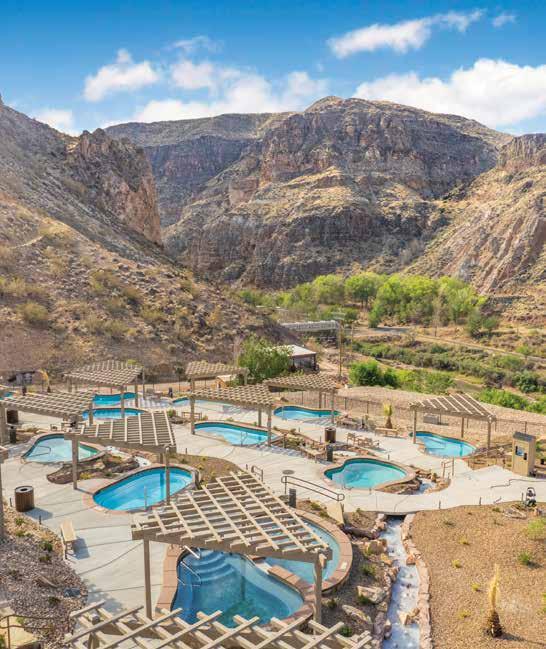
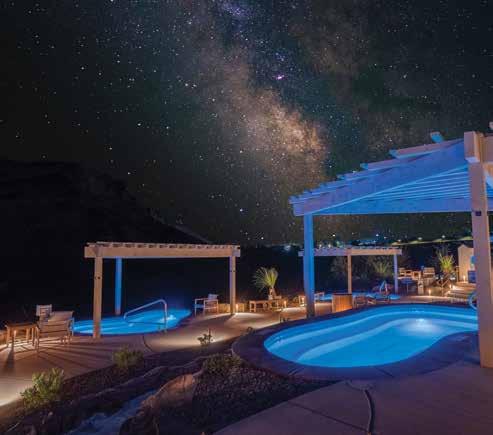
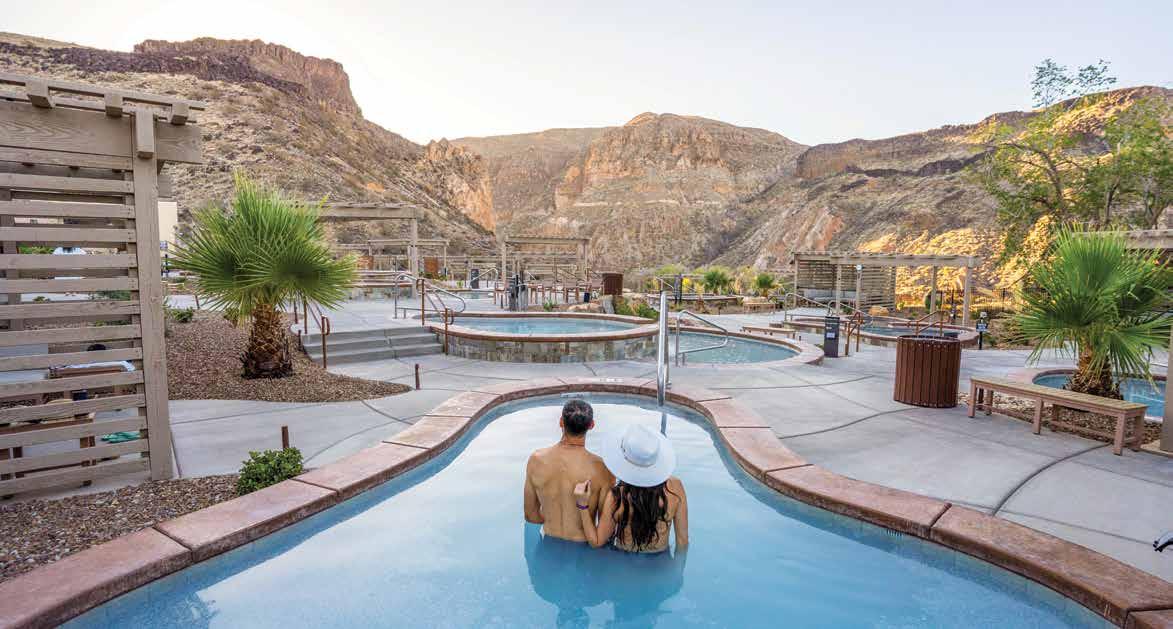
Located just outside Zion National Park in La Verkin, Zion Canyon Hot Springs has quickly become a favorite stop for visitors looking to relax and recover after a full day outdoors. As the largest wellness destination in the United States, the springs offer a place where adventure naturally transitions into recovery.
After hiking Zion’s famous trails, golfing in Mesquite or St. George, or exploring the surrounding desert landscapes, guests arrive to soak in mineral-rich waters that have been rising from deep beneath the earth for centuries.
Something for Everyone
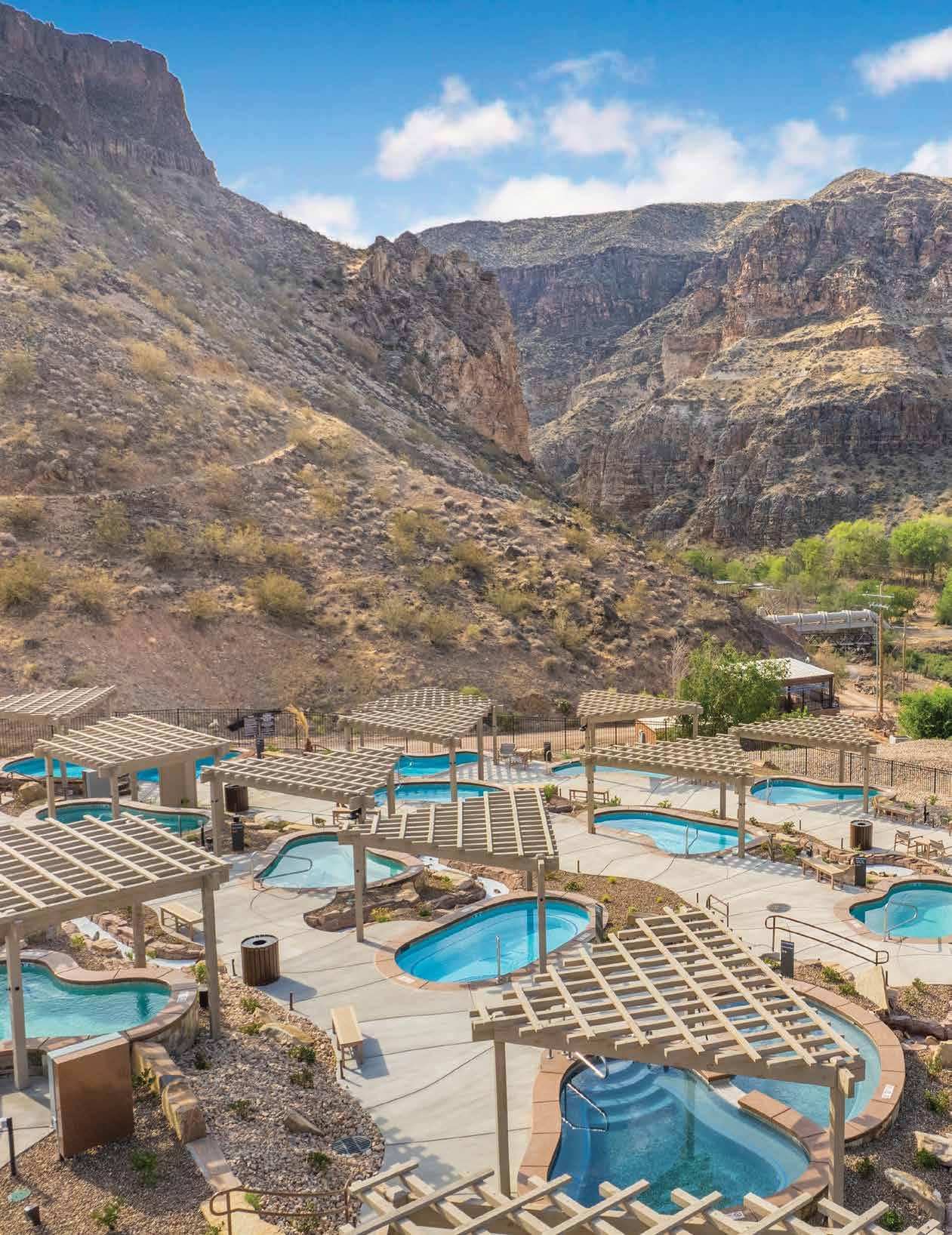
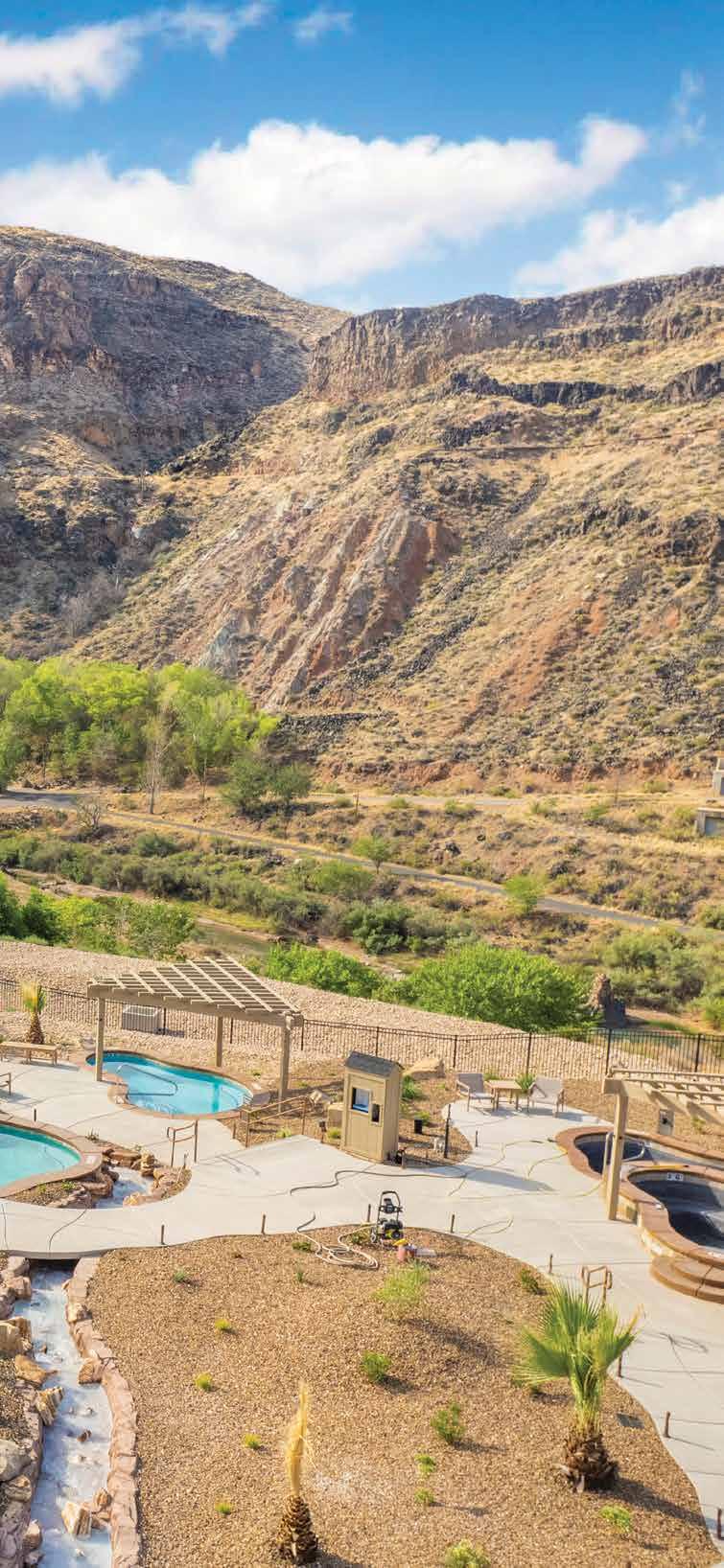
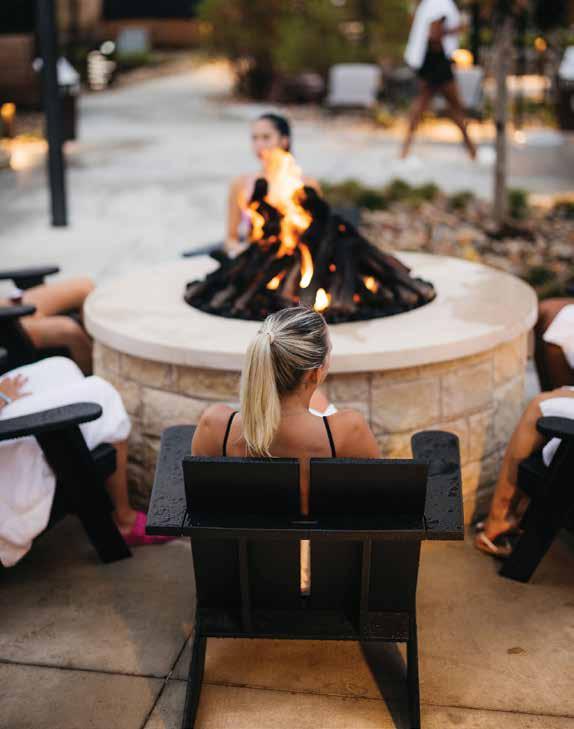
Across the property, guests will find more than 50 soaking pools and hot springs within beautifully designed terraces overlooking the Hurricane Valley. Some pools feature the naturally sourced mineral waters from the historic Pah Tempe hot springs, while others are part of the WorldSprings experience, where guests can explore mineral pools inspired by famous soaking traditions from around the world.
These international pools recreate the mineral profiles of iconic destinations like Iceland’s geothermal lagoons, Japan’s traditional onsens, and the mineral-rich waters of the Dead Sea. Moving between them feels a bit like taking a world tour through mineral water.
The layout of the property makes it easy for different types of visitors to enjoy the space in their own way. One side of the resort is designed with families in mind, including a large family pool where kids can splash and play while parents relax nearby. The other side offers a quieter atmosphere for adults who
want to unwind and soak in a more peaceful setting. Beyond the pools themselves, there are plenty of ways to turn a simple soak into a full wellness experience.
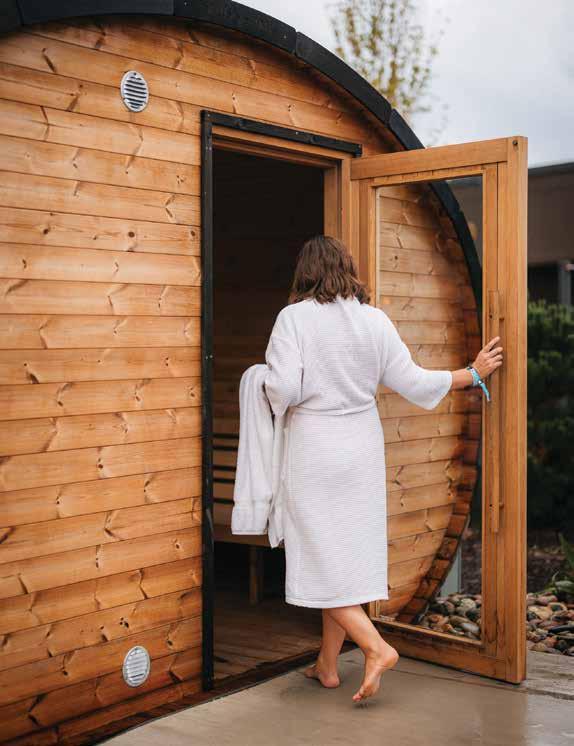
Three barrel-style birch-lined dry saunas sit on the property, designed for traditional heat therapy and perfect for guests who enjoy doing hot-and-cold circuits. The three cold plunges at the facility provide the invigorating contrast, a quick dip that wakes up the senses before returning to the warmth of the pools.
Between the saunas, cold plunges, and mineral pools, many visitors naturally create their own rhythm: soak, heat up in the sauna, cool down in the plunge, then settle back into warm mineral water. The property also includes luxury locker rooms and showers, giving everyone a comfortable space to change and refresh before or after their soak.
When it’s time for a break, guests can grab a bite at the on-site café, which serves a menu of fresh, casual options designed for a relaxing day at the springs. For those looking to elevate the experience a bit further, the grounds also feature a full bar on the Premier side of the property, where visitors can enjoy a cocktail, beer, or glass of wine while soaking in the desert views.
Guests can visit with three-hour passes or stay all day, allowing plenty of time to explore the pools at their own pace. For locals and frequent visitors, discounted memberships are also available, making the springs a regular part of their wellness routine. For many visitors, stopping here simply becomes part of the day. A
morning hike in Zion, a round of golf nearby, or an afternoon exploring southern Utah’s desert landscapes often ends with a long soak as visitors let the warm mineral water take some of the edge off tired muscles. While the setting feels modern, the water itself has a much older story.
A Rare Geological Gift
The mineral water flowing through Zion Canyon Hot Springs comes from Pah Tempe, a natural spring system located along the Virgin River between Hurricane and La Verkin.
The springs sit along the Hurricane Fault, a major geological boundary separating the Great Basin from the Colorado Plateau. This fault system allows groundwater to travel deep underground before slowly rising back to the surface. As the water moves through the earth, it’s heated by geothermal energy left behind from ancient volcanic activity that shaped southwestern Utah thousands of years ago.
Along the way, it passes through layers of rock and sandstone, gathering naturally occurring minerals including calcium, sodium, chloride, sulfate, and iron. By the time it reaches the surface, the concentration is so high that these waters are considered among the most mineral-rich hot springs systems in the United States.
Each day, the natural spring source produces nearly seven million gallons of mineral water, which emerge from the earth at temperatures that can exceed 100 degrees Fahrenheit.
At Zion Canyon Hot Springs, the water is drawn directly from the source, filtered regularly, and circulated through soaking pools across the property so guests can experience these mineral waters in a comfortable setting.
A Tradition of Soaking
Long before southern Utah became a world-famous outdoor destination, the mineral springs near La Verkin were already known as a place to recharge.
For centuries, the Paiute Indian Tribe of Utah regarded Pah Tempe as a place of healing and balance. The mineral waters were traditionally used to soothe wounds, ease fatigue, and help restore the body after illness or injury. Visitors today often describe a similar experience.
After hours spent hiking Zion’s canyons, biking through Hurricane Valley, or finishing a long round of golf nearby, slipping into warm mineral water can feel like a reset. Muscles loosen. Breathing slows down. The aches that come with a long day outdoors begin to fade. It’s a simple kind of relief, but after a full day in the southern Utah sun, it can make a big difference.
Stepping into warm mineral water, letting the desert heat finally fade, watching the cliffs change color as the sun starts to set—out here, adventure happens on the trail or the course, but recovery happens in the water.V
Zion Canyon Hot Springs is located at 203 W. 300 S. in La Verkin, Utah, just outside Zion National Park. The property features more than 50 soaking pools, including natural mineral hot springs sourced from the historic Pah Tempe Hot Springs as well as WorldSprings pools inspired by famous mineral waters around the globe.
For more information visit www.ZionCanyonHotsprings.com, or call (435) 503-3575. Follow along on Instagram and Facebook @zioncanyonhotsprings. Article and photography provided by Zion Canyon Hot Springs | Photo credits: Ty Dobbs
Green River Utah Gray Canyon Scenic Drive
by Cliff & Ilene Bandringa, BackRoadsWest.com
Utah has no shortage of scenic drives, and just when you think you’ve explored them all, another one quietly waits to surprise you. The scenic drive we discovered on one fall day is north of the interesting small town of Green River, Utah. So many people whiz by this enchanting little town on Interstate 70 and miss out on its classic old buildings along an old stretch of U.S. Route 6.
They also miss out on a treasured museum and a scenic river canyon just north of town. In this article, we’ll introduce you
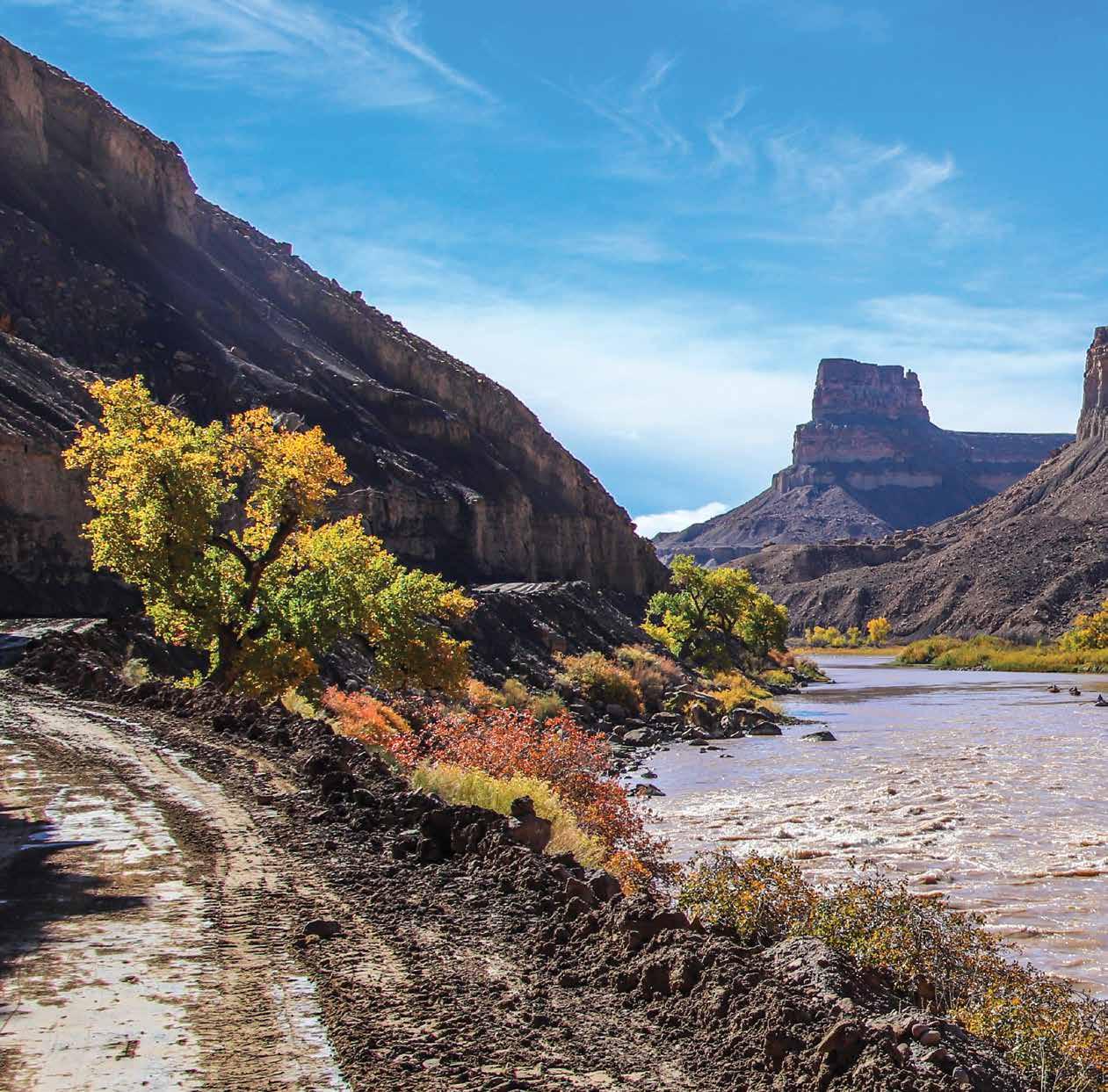
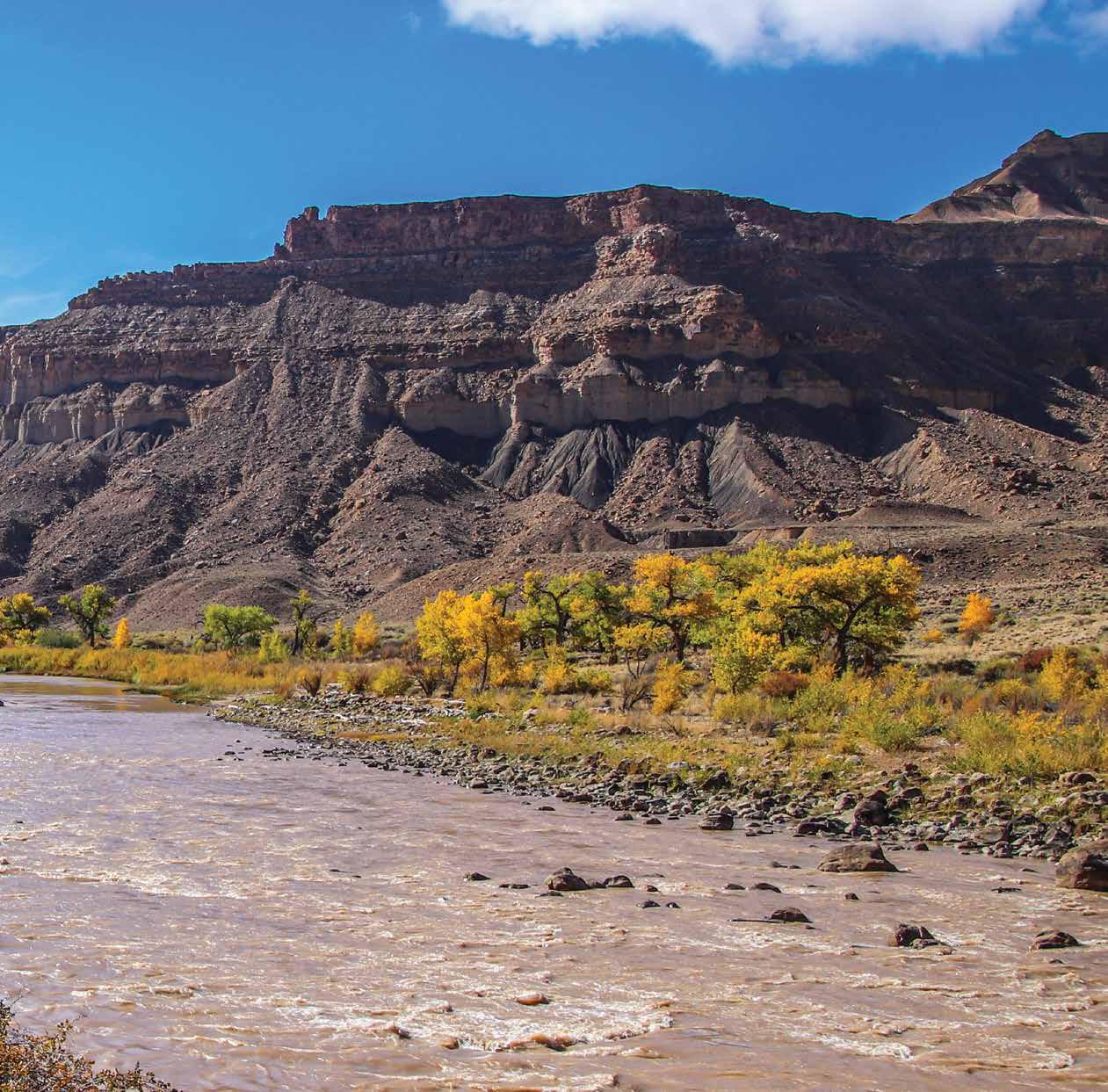
to our latest find, a back road that runs along the wild Green River and into rugged Gray Canyon.
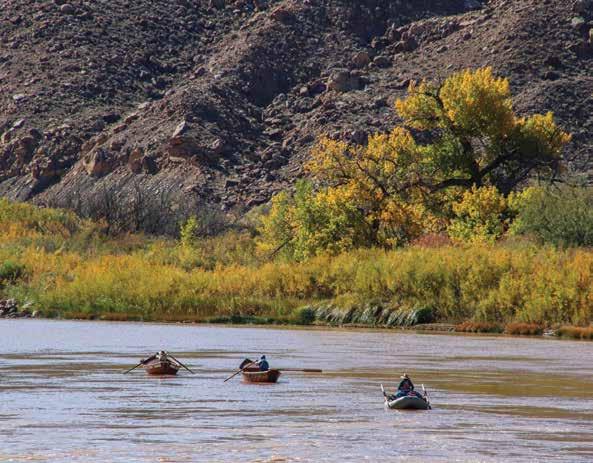
The town of Green River is mostly known as a stopover along the busy travel corridor of I-70. To river runners and rafters, it’s known as the ending point of a long trip down the Green River through Desolation Canyon. John Wesley Powell—the first person of European descent to float this stretch—gave the canyon its bleak name after his 1869 expedition was nearly undone by its fierce rapids, which rival those of the Colorado River in the Grand Canyon.
We strongly suggest taking two or three hours to visit the John Wesley Powell River History Museum in Green River. It’s one of the finest museums we’ve seen dedicated to Powell’s life and legacy, including his role as founder of the U.S. Geological Survey, the federal agency responsible for mapping the nation. Exhibits explore Utah’s geology and the dramatic landscapes it creates, along with a fascinating look at the evolution of river running from the early 1900s to today.
Our road trip begins a half mile east of the museum. From U.S. 6 (the main road), turn left onto Hastings Road. The road heads
due north towards the imposing Book Cliffs. It ends in 18 miles at the Nefertiti Rapids and launch area. The first ten miles are paved, and the remaining dirt section is usually in good shape. Return to U.S. 6 using the same road.
The Book Cliffs are a long escarpment that stretches from Price, Utah, all the way to Grand Junction, Colorado. The cliffs expose rock layers deposited during the Cretaceous Period, a time when dinosaurs ruled the Earth. Paleontologists have unearthed numerous fossils all along these cliffs.
Hastings Road soon passes by several farms and one very large cornfield. This area is known for growing melons of all types. In downtown Green River, there are at least two farm stands that sell a plethora of different melons. When we visited in the fall, all types of squash and pumpkins were for sale in a variety of shapes and colors.
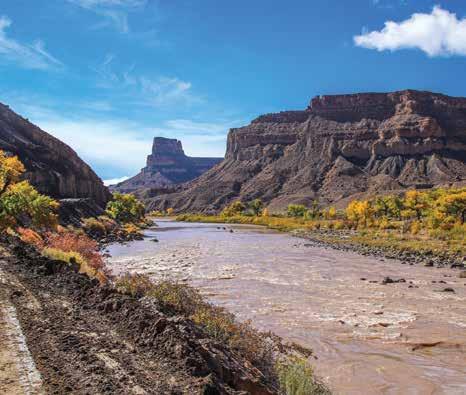
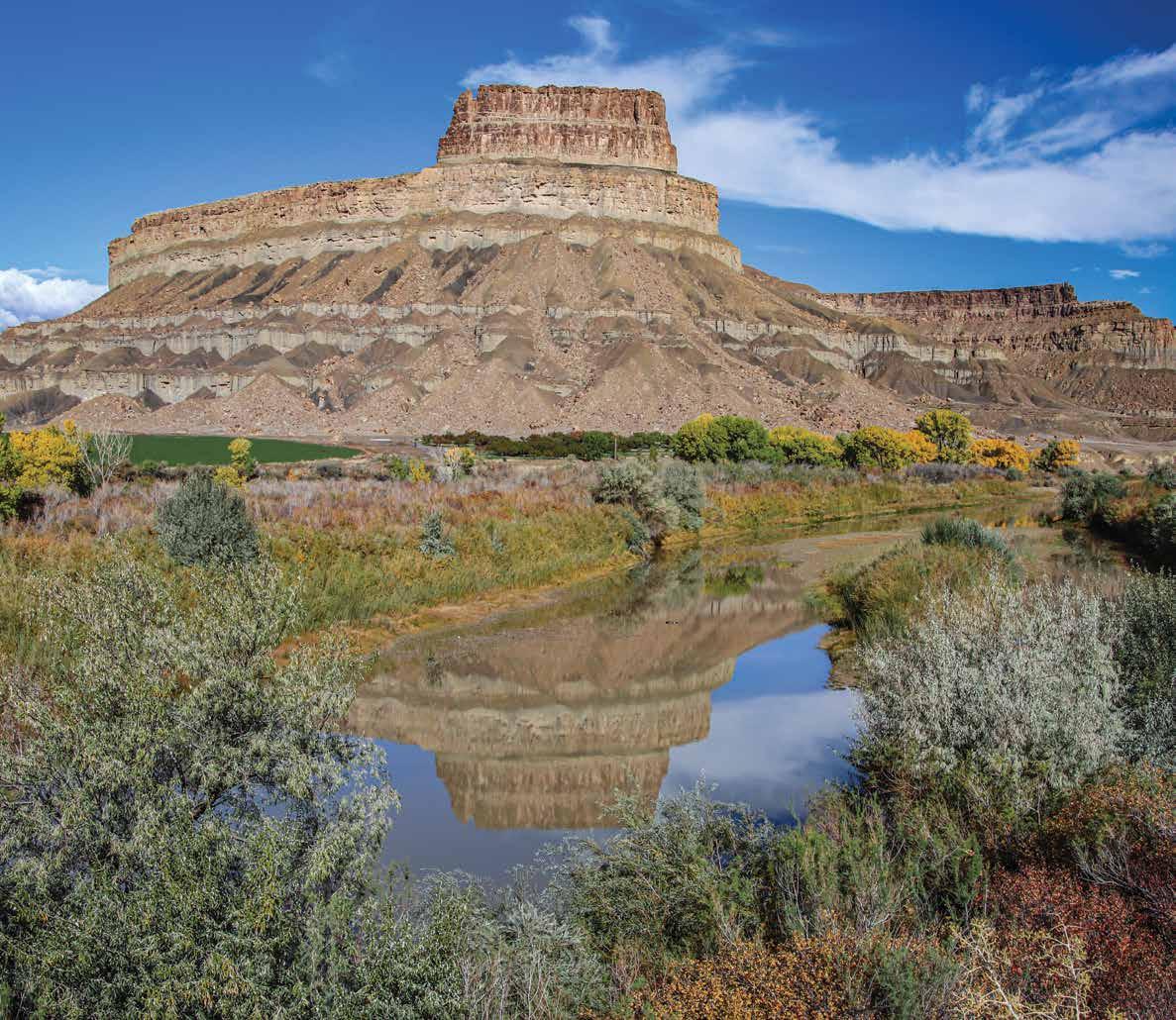
About 7.5 miles from U.S. 6, Hastings Road passes close to the river, and you get a spectacular view of Gunnison Butte. Having recently been to Italy, it looks a little like the Roman Colosseum to us. On the day we visited, the butte was perfectly reflected in the still water of the river, surrounded by a full bloom of fall colors. Needless to say, it was beautiful!
In 9.2 miles, the pavement ends at Swasey Beach and Boat Ramp. This is the ending point of many rafting adventures that began fifty “crow-fly” miles upriver. These rafters would have had a similar experience to Powell’s ride on the river through Desolation Canyon.
By now, the road is inside Gray Canyon, and we’re surrounded by the Book Cliffs on all sides. They may not be very colorful, but they certainly are imposing, rugged, and full of character. A few miles later, the next point of interest is the Stone Cabin Day Use Area. Here, you’ll find a historic cabin amongst a stand of old cottonwood trees. When we visited, their leaves were bursting with so much yellow color it was blinding.
Past the stone cabin, the road squeezes through a narrow part of the canyon and is right next to the river. In one place, the road passes next to a set of rapids. Because the canyon is narrow, this part of the road is prone to landslides. After big rainstorms, this section may not be passable. If the road looks muddy and is covered with rock debris, don’t go further.
Finally, after passing the narrow section, the road goes by Nefertiti Rapids and ends at the Nefertiti boat launch area. This is a great place to get out of the car, take in a view of the canyon, and hear the roar of the river. Two different hiking trails, one that heads further up Gray Canyon and another that leads to a rock art panel, begin where the road ends. Restrooms and a picnic area are also located here.
What we’ve written here doesn’t do justice to this short but scenic road trip. To get a better understanding of its visually stunning scenery, watch our virtual video tour on YouTube. Cheers and Happy Exploring!V
Follow the QR code to our site: www.BackRoadsWest.com/blog and search for “Green River” to get more information and view an interactive map of the trip.
Where the Goats Walk and the Trout Rise
by John Belanger
We loaded the rig, pointed north, and let the miles do what miles do: clear the noise and slow everything back down.
My son is 15 now, which means he still says yes when I ask. I don't take that for granted.
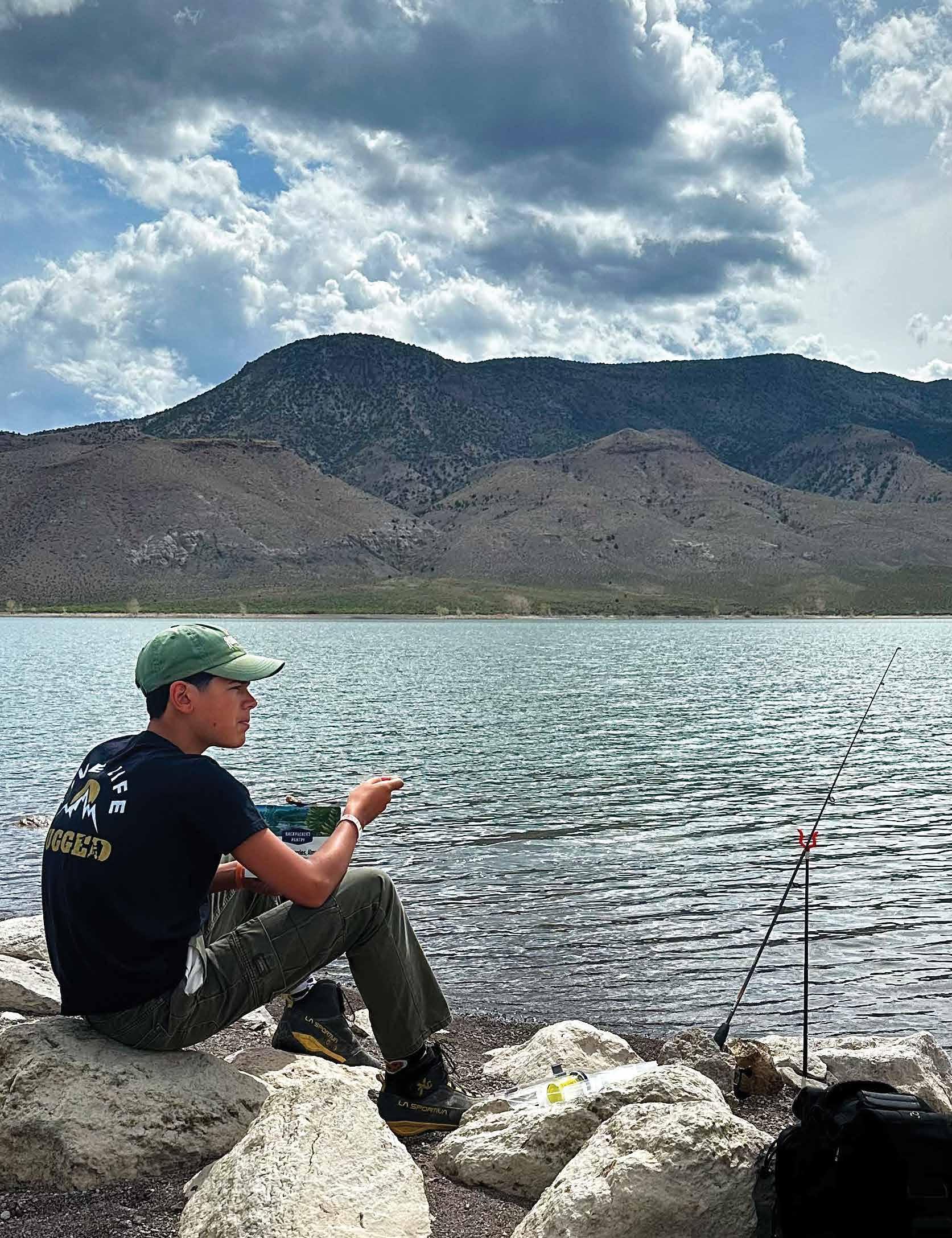
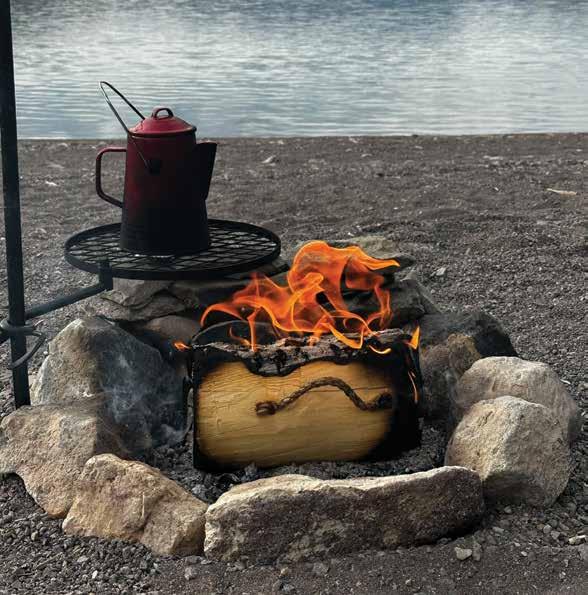
We rolled in during late afternoon with the sun already working the western ridgeline. The reservoir sat wide and still below the sage hills—the kind of blue that doesn't look real until you're standing in front of it. We set up camp, unloaded the gear, and got a TimberTote fire going. There's a ritual to that first fire at camp that I hope Michael remembers when he's grown and doing this with his own kids someday.
The fishing started the next morning. Piute holds rainbow, brown, and cutthroat trout, and the shoreline access is as simple as it gets—you walk out, you cast, you wait. Michael worked his spot with the kind of focus I used to have to ask him for. He didn't need prompting. He was locked in, and watching that was worth the whole drive.
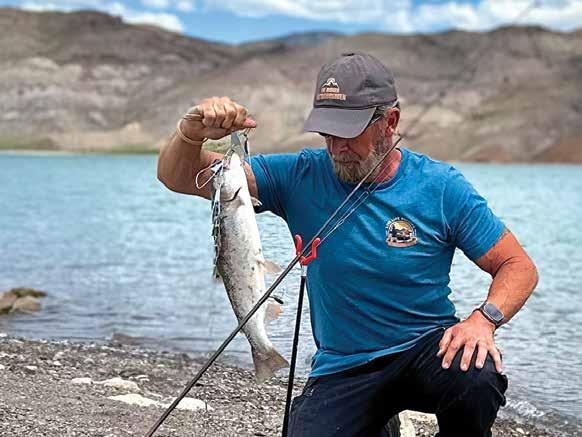
I caught the first fish of the day, a healthy rainbow that put up a proper fight before I got my hands on it. We took a moment to admire the catch, then let it go, and Michael went back to his line without looking up. That's the right way to do it. Later in the day, I pulled in a cutthroat that was worth stopping for, the kind of fish that reminds you why you make the trip. We got the photo, relished in the moment, and sent it back.
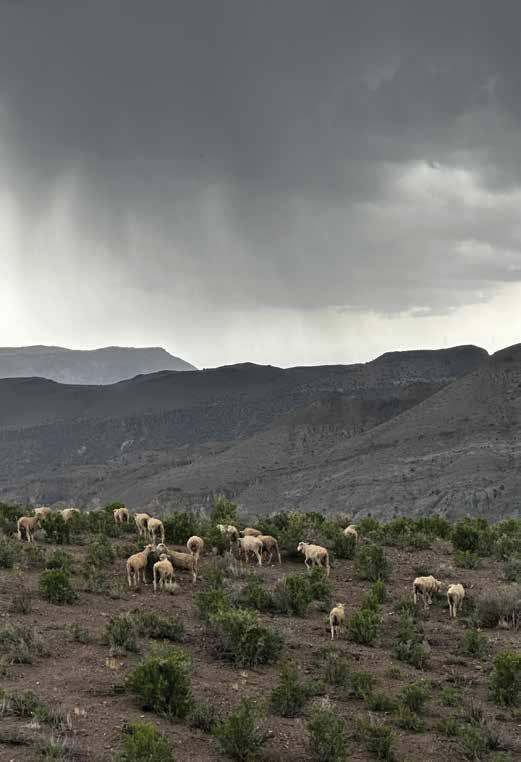
We laced up and headed out on foot mid-afternoon, working the high ground above camp. That's when we found them, a herd of mountain goats moving along the cliffs above the reservoir, unhurried, indifferent to us, picking their way across terrain that had no business being walkable. Michael stopped and watched without saying a word. That silence told me everything I needed to know about how the trip was going to go.
We were still watching them when the sky started to change.
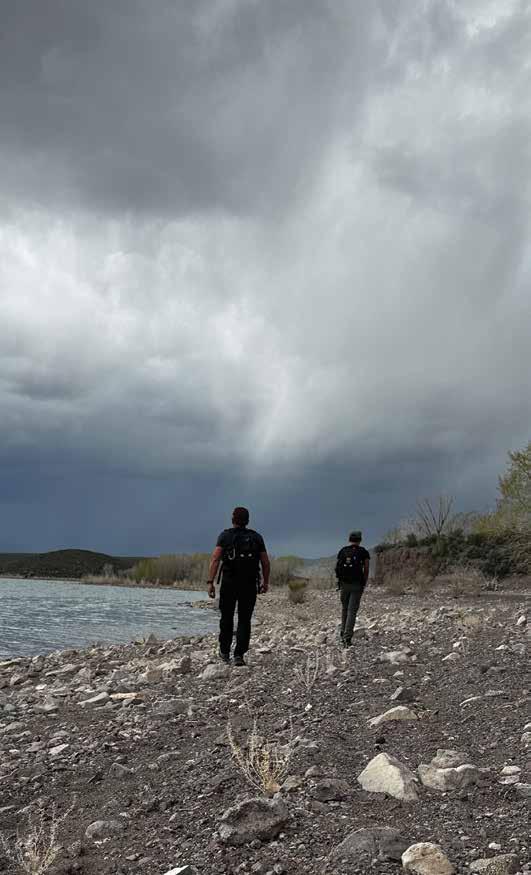
High desert storms don't give you much warning. One minute the sky is deep blue, and the next, a storm is moving in fast from the south, and you're looking at serious weather. We didn't head back. We walked straight into it.
There's something about standing in front of incoming weather that resets whatever's been bothering you. Michael and I walked the shore as the front came through—lightning over the ridge, the reservoir going dark and choppy, the smell of rain on hot rock. We didn't talk much. Didn't need to. He walked beside me, and we watched it together, and that was enough.
We broke camp the second morning under a clean sky. Michael stowed his gear without being asked, loaded his rod, folded his chair, and checked the rig. I didn't say anything. I just watched him work and thought about how fast this goes.
Piute Reservoir isn't a place most people have heard of. No crowds, no services, no hype. Just water, sky, goats on the cliffs, and trout in the shallows. It's the kind of place that rewards people who show up quiet and stay that way. We'll be back.V
We invite you to follow along with us as we explorethe Southwest, you can find us on Instagram @theruggedoutdoorsmen, on Facebook as The Rugged Outdoorsmen LLC, and on the web at www.theruggedoutdoorsmen.com.
FIELD NOTES Location: Piute Reservoir, Piute County, Utah | Elevation: 5,974 feet | Species: rainbow trout, brown trout, cutthroat trout | Gear featured: TimberTote campfires, M-TAC clothing and backpacks | Best Season: spring and fall. Summer storms are real. Come prepared.
Red Rock to Alpine Flow:
Riding Cedar City & Brian Head
by Kaylee Pickering
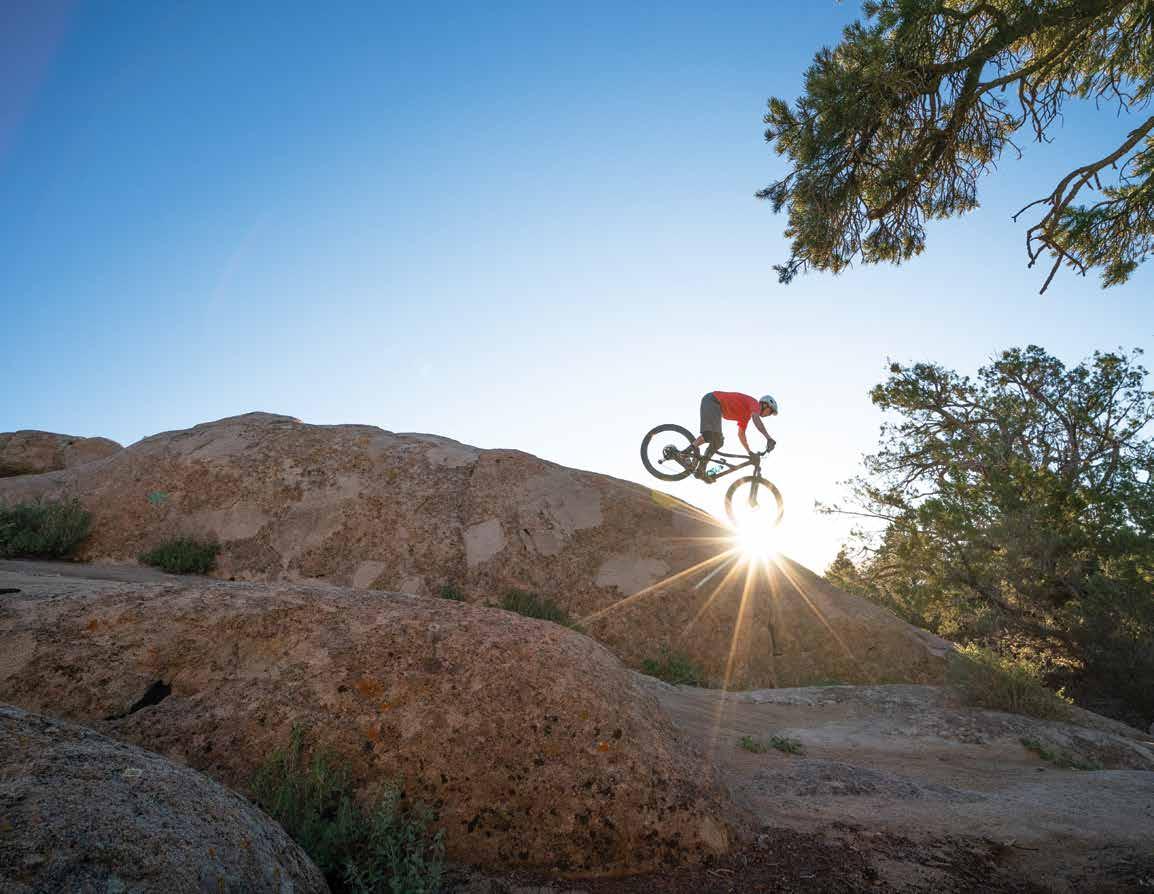
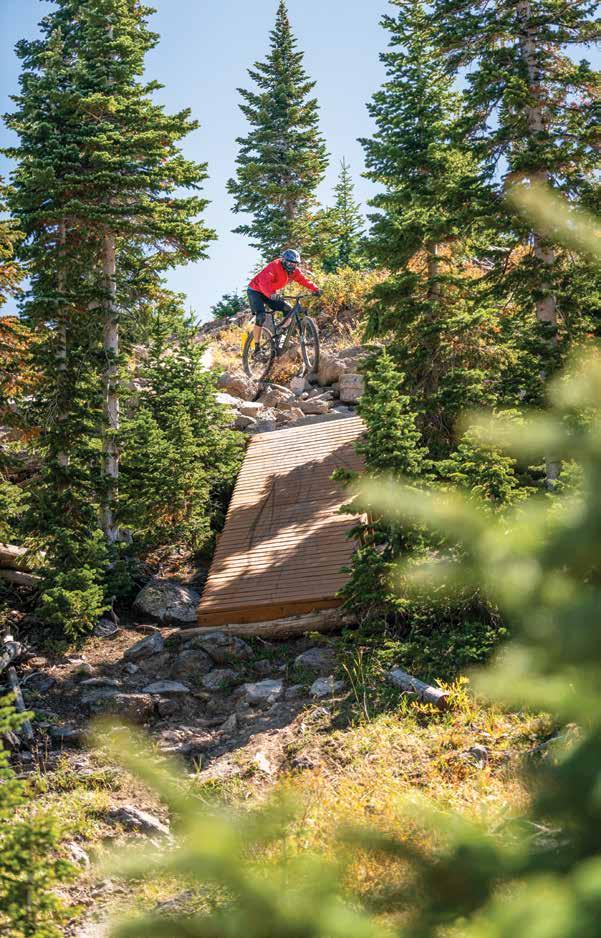
The first stretch of trail might feel familiar: hardpacked dirt, a steady climb, the rhythm of the ride. Then the landscape shifts. You’re winding through lava rock flows, traversing striated dirt with canyon views, or zipping through aspens and pine.
In Cedar City and Brian Head, the terrain shifts quickly and often. In a single day, you can move from red rock desert to alpine forest, from smooth singletrack to quiet gravel roads that stretch for miles. That range is what sets the area apart. It’s accessible, uncrowded, and built for riders of all kinds.
Town to Trail: Mountain Biking in Cedar City
Whether you’re looking for downhill flow, technical terrain, or a scenic ride at your own pace, the trails meet you where you are and invite you to keep going.
The riding here is defined by variety. Each trail system offers something a little different in terms of views, difficulty, and technical features. Together, they create a well-rounded adventure. In under an hour’s drive, you can find four trail systems and a smattering of backcountry trails along the way.
Iron Hills Trail System |
Photo credit: Dan Ransom
Just outside of Cedar City, the Iron Hills Trail System is one of the most accessible places to start. With more than 30 miles of trails, it offers options for nearly every skill level. Riders will find smooth flow trails, rolling terrain, and sections of volcanic rock that can add texture without overwhelming new riders. The skills park at the base of the trail system is a great starting point for new riders and families. Because of the location, these trails are easy to return to as you gain confidence.
Iron Hills Trail System
Photo credit:
Cedar City
Thunderbird Gardens brings a more technical edge with stunning views. The terrain is defined by red rock features, tighter lines, and more deliberate riding. Trails here reward focus and control, making it a favorite for riders who enjoy a challenge and a strong sense of place.
At Three Peaks Recreation Area, the landscape opens up. This is classic southern Utah riding with wide views, rolling hills, varied terrain, and room to explore. Three Peaks is a great place to build skills, test endurance, or simply enjoy a longer ride without feeling crowded. Trails like the Three Peaks Loop are all about the ride and the peace of being outside in the high desert.
Thunderbird
Photo credit: Jacob Miller Three Peaks Recreation
|
Photo credit: Dan Ransom
Head in the Clouds: Mountain Biking in Brian Head
If Cedar City offers range, Brian Head brings the elevation.
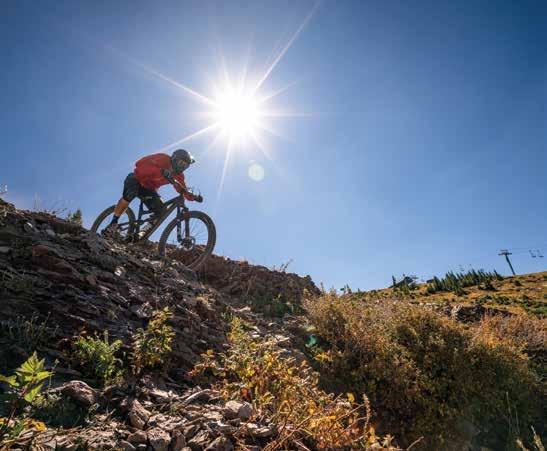
At 10,000 feet, Brian Head Resort provides a cooler, forested environment that feels completely different from the high desert below, not to mention the speed and challenge that only the “Downhill of the Gods” can provide! During the summer, the resort operates as a lift-served bike park, giving riders access to long descents, bermed trails, and purposebuilt flow. The speed along the trail, the views from the lift, and the food at the lodge are all part of the Brian Head experience that make these trails a must.
Backcountry trails like Bunker Creek and Dark Hollow guide riders through aspen groves and open meadows with a steady sense of momentum. For those who prefer a slower pace, these routes can offer a quieter way to take in the landscape.
The elevation changes more than the view. It changes how the ride feels, from the air and the effort to the overall experience.
Brian Head Resort Mountain
Bike Park technical track
|
Photo credit: Dan Ransom
The Road Less Traveled:
Gravel and Scenic Routes
Not every ride is about speed or technical features. Some are about distance, quiet, and the rhythm of the road.
Gravel routes around the area can offer a blend of scenery, history, recreation, and exploration. The Gap Loop from Parowan takes riders through the natural passageway of the Parowan Gap, hewn from dark sandstone and adorned with hundreds of petroglyphs. Routes like the Kolob Reservoir route surround you in high elevation temperatures, stands of bright aspens, and vibrant mountain wildflowers along the way.
Going from Brian Head town to Cedar Breaks is a short drive, but an even better ride. While there is quite a climb between the town and the national monument, the experience of cycling through the colorful landscape is one-of-a-kind.
The pace is different, and that is part of the appeal. It gives you time to take in the landscape and settle into the ride.
Plan Your Ride
The riding season here shifts naturally with elevation.
Spring and fall are ideal for Cedar City’s lower trails, with comfortable temperatures and dry conditions. In summer, Brian Head becomes the focus, offering cooler weather and highalpine riding. The seasonal balance makes it easy to build a multi-day trip and makes a return visit worth it.
A trail for every rider means there is room to grow, and the variety is a reminder that what matters most is being on a bike. New riders can build confidence here, and more experienced riders can push into technical terrain or longer routes. There is space to improve, explore, and return for something new.
The landscapes shift. The riding evolves. And each trip offers a little more than the last.V
Gravel Ride through the Parowan Gap Petroglyphs site
|
Photo credit: Ellie Ihler, Visit Cedar City · Brian Head
We Are Here for You: Ready
for Any Emergency, Anytime.
by Dr. Taylor Smith Mesa View Regional Hospital, ER medical director
When a medical emergency strikes, every minute matters. At Mesa View Regional Hospital, our emergency department care team is honored to serve the Mesquite community and the surrounding region, with physicians and nurses on-site 24 hours a day, seven days a week. No matter the time, patients who come to Mesa View’s ER can be confident they will be evaluated by an experienced, emergency-trained physician dedicated to timely, professional care.
A Team Designed for Emergencies
Our ER team includes board-certified emergency physicians, registered nurses with specialized emergency training, and support staff prepared to manage a range of urgent and complex medical conditions. In addition, essential specialty services are available around the clock.
Cardiology, general surgery, and orthopedic surgery specialists are on-site or on-call 24/7, supported by advanced imaging services including X-ray, CT scan, and ultrasound.
“We have worked diligently over the past several years to expand access to specialty care within our emergency department,” says Kelly Adams, CEO of Mesa View Regional Hospital. “As our community grows, we remain committed to strengthening the services and resources available so patients can receive compassionate care close to home.”
Why the Closest ER Is Often the Safest Choice
In an emergency, symptoms can evolve and escalate quickly. That is why the American Heart Association agrees that the safest place to go is always the nearest appropriate emergency department. Arriving promptly allows trained professionals to stabilize the patient immediately, reducing the risk of complications and ensuring that lifesaving treatment begins right away.
Mesa View’s Emergency Department works closely with Mesquite Fire and Rescue and other regional first responders.
This collaboration helps ensure that when a patient arrives, critical information has most likely already been shared, allowing the ER team to prepare for the patient’s needs as quickly as possible. If a higher level of specialized care is needed after initial stabilization, our team coordinates a safe, medically supervised transfer to the appropriate receiving facility.
Our priorities are the patient’s well-being and the best possible outcome. Beginning care here in Mesquite allows for rapid evaluation, early treatment, and coordinated transport if additional resources are needed.
Recognizing When to Seek Emergency Care
Many wonder whether their symptoms require a trip to the ER. Some conditions can be safely managed at home, but others need immediate medical evaluation. Seek emergency care right away if you or someone else experiences:
· Sudden, severe, or localized abdominal pain
· Chest pain or pressure
· Pain radiating to the jaw, back, or arm
· Difficulty breathing or shortness of breath
· Severe pain from an injury or accident
· Symptoms that come on suddenly and have no clear cause
Heart attack symptoms deserve special attention. Calling 911 is the safest way to reach emergency care. EMTs begin evaluation the moment they arrive, communicate with the hospital, and can initiate treatment before reaching the ER. No one experiencing symptoms of a possible heart attack should attempt to drive themselves.
Supporting Emergency Preparedness at Home
While emergencies are often unpredictable, families can prepare. Practice identifying concerning symptoms, teach children how to call 911, and discuss what qualifies as an urgent situation. Community CPR classes offered by Mesquite Fire and Rescue or the Red Cross can empower family members to act confidently while help is on the way.
Minor discomfort, generalized aches, or pain previously diagnosed by your provider may not require emergency care— but if symptoms are severe, sudden, worsening, or accompanied by other concerning signs, it is always better to be evaluated promptly. When in doubt, the ER is here to help.
Here When You Need Us Most
Whether the emergency is minor, moderate, or life-threatening, Mesa View Regional Hospital’s Emergency Department is staffed, equipped, and ready—day or night. Our objective is simple: to provide the right care at the right time as close to home as possible.V
About the author: Dr. Taylor Smith is certified by the American Board of Emergency Medicine. He has served as medical director for the emergency department at Mesa View Regional Hospital since 2016. For more information, visit MesaViewHospital.com/Emergency.
Outdoor Adventure Starts Here:
How All In Cycles Is Powering Mesquite’s Ride Culture
by Ashley Bowden
In Mesquite, Nevada—where desert trails meet open roads, and adventure begins just beyond your front door—cycling has become one of the most accessible and rewarding ways to experience the outdoors. At the center of that movement is All In Cycles, founded in 2019 by entrepreneur, triathlete, community leader, and advocate Michael Gomes, who is also known as the admin behind “The Sunny Side of Mesquite, Nevada,” a Facebook page where positivity and connection take center stage.
Blending performance, recreation, and community, All In Cycles has grown into more than a bike shop—it’s a launch point for outdoor adventure and a reflection of the lifestyle that defines the region.
Roots That Shaped the Journey
Gomes’ connection to the outdoors started early. Spending his childhood in Alpine, Utah, and Mesquite, Nevada, he was exposed to two distinct landscapes—mountain terrain and desert openness—both of which helped shape his appreciation for movement, exploration, and resilience.
Those early experiences were further expanded through travel, where he was exposed to different environments, cultures, and ways of life. Along the way, he developed a passion for learning new skills and always seeking growth, whether through sport, business, or hands-on experience.
That mindset—staying curious, adaptable, and willing to learn—became a defining trait that would later carry into his business and community involvement.
Turning the Desert Into Opportunity
Mesquite’s landscape offers something truly unique: year-round riding opportunities paired with a diverse mix of terrain. Riders can move seamlessly from smooth neighborhood roads to scenic desert routes framed by mesas and open sky. Whether it’s an early morning ride to start the day or a sunset cruise to unwind, the environment naturally encourages people to get outside and stay active.
For Gomes, that accessibility is what makes cycling so powerful.
“Adventure doesn’t have to be far away,” he says. “It can start right here, with the right mindset and the right support system.”
All In Cycles helps riders take that first step—and every step after—by offering a carefully curated selection of bikes, from comfortable cruisers to high-performance models, along with personalized guidance tailored to each individual’s goals and experience level.
A Different Kind of Bike Shop
What sets All In Cycles apart is its commitment to long-term relationships. Every bike purchase includes:
• Free lifetime maintenance
• Local roadside assistance within Mesquite
• Complimentary delivery
This level of service removes barriers for new riders while giving experienced cyclists the confidence to push further.
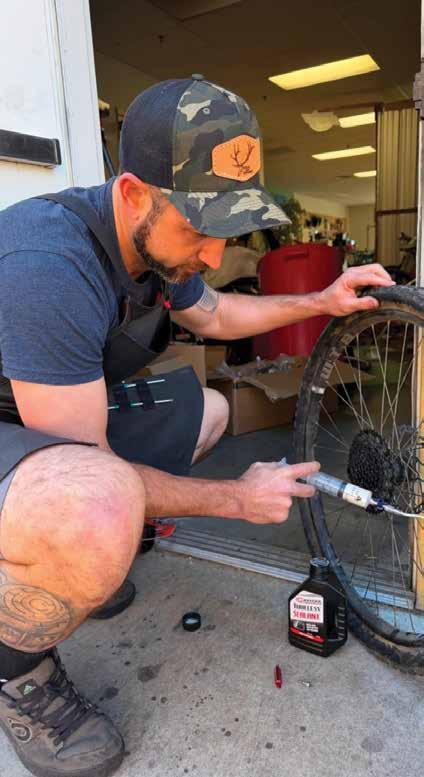
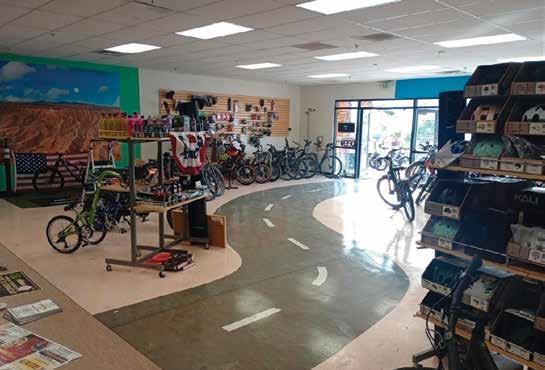
Inside the shop, customers are welcomed into a thoughtfully designed space that reflects both creativity and purpose. A custom indoor riding path allows riders to test bikes in a hands-on, engaging way—transforming the buying experience into something memorable and interactive.
The shop carries a trusted lineup of brands, including Magnum, Bianchi, Euronau, Strider, and Niner, ensuring there’s something for families, commuters, and performance-driven athletes alike.
Building an Outdoor Community
Beyond the storefront, All In Cycles is actively helping shape Mesquite’s cycling culture. Throughout May and June, the shop will continue hosting:
• Community group rides
• Bike safety and awareness classes
• Hands-on workshops focused on maintenance and riding skills
These events do more than bring people together—they create a shared sense of purpose around safe, confident riding.
As participation grows, Gomes continues to emphasize the importance of awareness and mutual respect on the road. Riders are encouraged to stay visible and predictable, while drivers are reminded to give space and remain attentive. The goal is simple: create an environment where everyone can enjoy the outdoors safely.
Adventure With Purpose
For Gomes, outdoor activity is more than recreation—it’s a discipline rooted in consistency, growth, and mindset. As an accomplished triathlete, he continues to train for future races while also mentoring and training close friends who are stepping into the sport themselves. Helping others build confidence and improve their performance has become one of the most rewarding parts of his journey.
That same drive for precision and growth has recently expanded into a new pursuit: archery. Like endurance sports, archery demands focus, patience, and control—qualities that translate directly into both athletic performance and everyday life.
Together, these pursuits reflect a consistent philosophy: show up, stay disciplined, and keep improving. That mindset carries directly into All In Cycles, where the mission goes beyond selling bikes. It’s about helping people unlock their physical and mental potential within a supportive, like-minded community.
Looking Ahead
As Mesquite continues to grow, so does its potential as a destination for outdoor recreation. With increasing interest in cycling, fitness, and community-driven experiences, All In Cycles is helping lead that evolution. Through service, education, and a genuine passion for the outdoors, Gomes has created something that extends beyond bikes.
Because in Mesquite, outdoor adventure isn’t just about where you go—it’s about how you show up, who you share it with, and the journey you build along the way.V
All In Cycles is located at 1085 W. Pioneer Blvd., Suite 160, Mesquite, Nevada. The shop offers bike sales, rentals, service, and community-focused events. Reach us at (702) 684-1293 or email mesquitebikes@gmail.com. Follow along on social media to stay connected with rides, events, and promotions.
DISCOVER ADVENTURE IN MESQUITE DISCOVER ADVENTURE IN MESQUITE
by Rex McArthur
As the sun casts its golden hues over the sprawling landscapes of southern Nevada, a new adventure awaits at Prime Adventure Outfitters, which officially opened in February. Situated in Mesquite, Nevada, this exciting venture is poised to become the go-to destination for outdoor enthusiasts eager to explore the breathtaking terrains of the surrounding areas, including the hidden gems of Gold Butte National Monument.
An Overview of Prime Adventure Outfitters
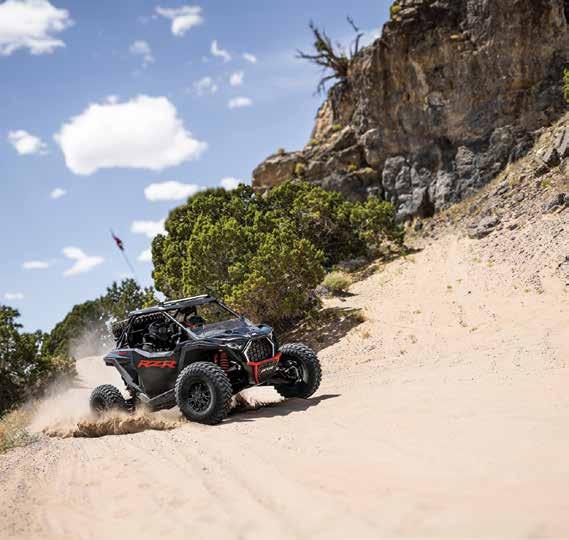
Prime Adventure Outfitters is an official Polaris outfitter that specializes in providing exhilarating experiences through utility task vehicle (UTV) rentals, guided and self-guided tours, and expert outdoor adventure planning. From the vehicles they offer to the scenic trails they explore, the commitment to deliver unforgettable adventures is infused into everything they do.
Exploring Gold Butte National Monument
Located just south of Mesquite and about 80 miles northeast of Las Vegas along Interstate 15, Gold Butte National Monument is an undiscovered paradise perfect for those looking to escape the crowds. Its remoteness only adds to its allure, boasting spectacular views, rich history, and incredible geological formations. Visitors can encounter ancient pictographs and petroglyphs, particularly at sites such as Khota Circus and Falling Man, where the stories of the past are etched into the rocks.
One of the highlights of Gold Butte is the mesmerizing Little Finland, known for its whimsical "fins" of deep red Aztec sandstone. The eons of weathering have sculpted these formations into bizarre and sometimes eerie shapes, making it a fantastic backdrop for photography and exploration.
UTV Rentals for the Adventurous Spirit
To facilitate exploration of this stunning region, Prime Adventure Outfitters provides a range of new UTVs designed to navigate the challenging terrains around Mesquite. These stateof-the-art vehicles ensure a comfortable and safe experience for adventurers, making them perfect for both seasoned riders and beginners.
Renting a UTV allows visitors to take control of their journey, diving deep into the enchanting landscapes awaiting just beyond Mesquite.
Guided Tours: Discover with Experts
For those who wish to enhance their adventure with local knowledge, Prime Adventure Outfitters offers guided tours led by experts familiar with the area's rich history and ecology.
These tours take you on scenic routes while providing fascinating stories about the land, its wildlife, and its cultural significance. It’s an ideal way for newcomers to appreciate the beauty and complexity of northern Clark County.
Self-Guided Tours: Explore at Your Own Pace
If independence is what you seek, Prime Adventure Outfitters also provides self-guided tour options. Every UTV is equipped with a Polaris Ride Command digital ecosystem, which provides GPS trail navigation, group ride tracking, and even music control. With a rented UTV, you can venture along designated routes and explore at your leisure. This approach gives you the flexibility to stop and witness the beauty of your surroundings, from vibrant sunsets to the enchanting rock formations scattered throughout the desert.
Customized Adventure Planning for Unforgettable Experiences
Understanding that each adventurer is unique, Prime Adventure Outfitters also specializes in customized adventure planning. The knowledgeable staff assists individuals and groups in navigating the best trails tailored to their specific interests and skill levels.
They provide essential safety guidelines and recommendations for equipment that suits your outdoor needs, ensuring a safe and enjoyable experience.
Taking Care of Groups: Fun for Everyone
Prime Adventure Outfitters is equally equipped to handle group activities, offering engaging experiences for teambuilding events, family reunions, and other gatherings.
Whether it's a day packed with excitement or a relaxed expedition into the desert, they facilitate organized support to create memorable moments outdoors.
Safety First: Gear Up for Adventure
To ensure safety, Prime Adventure Outfitters provides necessary gear with all rentals, including helmets and goggles. The team also provides comprehensive instructions on operating UTVs and navigating trails, ensuring that all participants feel comfortable and prepared for their adventure.
Embrace the Great Outdoors
With its grand opening now in the rearview mirror, Prime Adventure Outfitters is excited to invite you to experience the majestic beauty of Mesquite, Nevada, and its surroundings. From the striking landscapes of Gold Butte National Monument to a thrilling ride through the desert in a UTV, every moment promises to be an adventure unlike any other.
So, if you’re ready to immerse yourself in the stunning scenery and rich history of southern Nevada, make your way to Prime Adventure Outfitters. Here, the spirit of adventure awaits!V
For more information on rentals, tours, and planning your perfect outdoor getaway, visit www.primeatvrides.com or drop by their location at 520 W. Mesquite Blvd. in Mesquite, Nevada. The great outdoors is calling; answer it with Prime Adventure Outfitters.
CIRCLING THE CITY
A Walk Around Mayor’s Loop
by Janie Chu
Red rocks, winding rivers, and beautiful views: the 5.3mile Mayor’s Loop in St. George is a multi-use trail that showcases the area’s scenic beauty amid an urban backdrop.
The trail’s versatility and desert terrain have put it on the map as a staple for cyclists who live in and travel to St. George.
“The Mayor’s Loop is one of the older sections of trail, completed early on in the trail-building process, and has become a beloved route for trail users,” says St. George Councilwoman Dannielle Larkin, a frequent user of the trail.
“It functions as a hub with many spokes extending out from it, providing a central short circuit for athletic training or just a comfortable walk with family or friends.”
The Mayor’s Loop connects to both the North and South Virgin River Trails as well as the Fort Pearce Wash Trail, the Larkspur Trail, and the Webb Hill Trail. The trail is paved, stroller-friendly, and easily walkable for all levels of ability and experience.
The trailhead is at Crosby Family Confluence Park, located near the Dixie Convention Center. Parking is also available at St. James Park and the Webb Hill Trailhead, giving trail users many options for where to begin their journey.
The trail’s functionality and interchangeability attract everyone from families with young children to early morning cyclists and runners.
“The Mayor’s Loop is one of the most heavily used trails in St. George, thanks to its central location and beautiful views of
the river and surrounding mountains,” Larkin adds. “Gaining popularity throughout the years, it has become a part of a daily routine for many of our residents.”
From Confluence Park, the trail departs north and softly curves along the Virgin River. It then loops back around at River Road and runs through St. James Park, finally ending its journey back at Confluence Park.
The Mayor’s Loop was created with trail users in mind. It includes painted median lines to help guide cyclist traffic and wide, paved pathways to accommodate runners, cyclists, and even scooters. The trail flourishes in the fall and spring months due to the cooler weather and is favored by early morning athletes in the summer.
Whether you are looking for an easy sunset stroll or more vigorous athletic training, there's a route for you.
"The Mayor's Loop trail is in a convenient location and provides many wonderful scenic views of St. George,” says David Cordero, Communications and Marketing Director for the City of St. George. “It's fun to ride a scooter on the trail or take a walk or jog. However you navigate it, I have found it to be an excellent way to get exercise in our great city."
The Mayor’s Loop stands as a reflection of St. George's commitment to providing recreational spaces dedicated to community wellness and connecting to nature.V
The Science of Mojave’s Quiet Power
by Randi Fuller
Mesquite invites movement, but it is also shaped by something quieter. From sunrise tee times and desert trail walks to off-road exploring and evenings beneath unforgettable desert sunsets, the Mojave surrounds this community with a landscape that restores as much as it inspires.
For many people, including myself when I first moved out here, the desert looks empty at first glance. But anyone who spends time in the Mojave knows it is anything but. The desert moves at its own rhythm. Wide horizons stretch in every direction, colors shift slowly with the sun, and the sky feels
impossibly large. In places like Mesquite, stepping outside can feel less like leaving home and more like entering a vast natural sanctuary.
There is real science behind why landscapes like this feel restorative.
Environmental psychology researchers have long studied how natural environments influence the human mind and body. One of the most widely discussed ideas is Attention Restoration Theory. In simple terms, our brains become fatigued when we spend long periods focusing on complex
tasks or navigating visually busy environments. Screens, traffic, noise, and constant decision-making demand directed attention. Over time, that mental effort wears us down.
Natural landscapes offer a different experience. Instead of demanding focus, they allow the brain to relax into what researchers call “soft fascination.” Our attention is gently held by shifting light, moving clouds, rustling plants, or the slow change of color across a mountain ridge. The mind remains engaged, but it no longer has to work as hard.
The desert is particularly powerful in this regard. Compared with dense forests or crowded urban environments, desert
landscapes are visually simple. Wide horizons, open sky, and sparse vegetation reduce visual noise. That simplicity gives the brain room to breathe.
Movement through these landscapes adds another layer of benefit. Walking a trail, exploring a canyon, or even strolling through a neighborhood at sunset engages the body in ways that support mental well-being. Research consistently shows that time spent walking in nature can lower stress hormones, improve mood, and support cognitive clarity. Even brief exposure to natural environments can produce measurable effects.
Light also plays an important role. The desert sky delivers intense daylight that helps regulate circadian rhythms, the internal clock that guides sleep and wake cycles. Spending time outdoors during the day signals to the body when it should feel alert and when it should begin to wind down.
Mesquite’s sunsets provide a perfect example. As the sky moves through layers of gold, rose, and deep violet, the pace of the environment changes. Temperatures soften, shadows lengthen, and activity slows. Simply watching that transition can help the nervous system shift from stimulation toward rest.
Restorative environments do not have to stop at the front door. Research shows that when the colors, textures, and patterns of nature are reflected indoors, many of the same calming benefits follow. A photograph of a landscape can quiet the mind in much the same way as looking out at nature. Materials that resemble stone or wood can also help create that grounded feeling of connection.
Design choices that reflect the surrounding landscape can subtly reinforce these benefits. Natural color palettes, organic textures, and open sightlines toward outdoor views help maintain a visual connection to the desert environment. When indoor spaces echo the calm simplicity of the landscape outside, the restorative effects of nature become part of everyday life rather than something we only experience during occasional outdoor adventures.
restoration comes from something quieter.
A walk along a desert trail. A round of golf beneath a wide sky.
Sitting outside as the sun disappears behind the mountains.
The landscapes around us are not just scenery. They shape how we think, feel, and recover from daily demands.
The Mojave’s quiet power lies in its ability to restore us without asking anything in return. Thoughtful design simply extends that restorative experience into the places we live every day.V
Randi Fuller is a psychology-based design strategist and founder of The Science of Sanctuaries™, an approach developed through her work as owner of Mesquite Tile & Flooring. Randi combines science and evidence-based design with her artistry and real-world expertise to help homeowners and businesses create spaces that foster well-being, functionality, and beauty. Randi advocates for environments that prioritize safety, aesthetics, and emotional well-being, making thoughtful, evidence-based design accessible to small businesses and homeowners alike.
Find Randi on social media @mesquitetile and @thescienceofsanctuaries. For more information, visit www.mesquitetile.com or stop by our location at 521 W. Mesquite Blvd., Suite A in Mesquite, Nevada. For questions, please call (702) 346-7225.
Adventure in a place like this does not always mean extreme activity. Sometimes
Bunkerville sunset
|
Photo credit: Erin Eames
Back to playing FOR FUN AND FITNESS
by Ashley Centers
Hello again, readers, and welcome back to another great edition of ViewOn Magazine! While my main purview as a contributor here at ViewOn is fitness, I have been focusing a lot on total wellness in spirit, mind, and body these days. I think it is truly important for all of us to focus on these things for our overall health and fitness.
Recently, something very motivating for my family and me has been taking on a community garden plot. This has helped us to be more active and allows us to touch some grass and get some dirt under our nails. Hopefully, we will be eating healthier, more nutrient-dense, organically grown foods later in the season.
While I know this hobby is not for everyone, I would like to share a few things to hopefully get you all thinking a little more outside the gym box and to encourage you to try some additional outdoor endeavors.
Personally, I’ve found that when fitness, or more specifically exercise, feels more like play or is an activity that I find mentally engaging, I am much more motivated to do it with regularity.
Maybe for you, this translates into joining a softball league, starting a recreational soccer team, picking up games you played as a kid (like croquet), taking a dance class, or trying martial arts. You could also try wiffleball,
flag football, gardening, or bocce ball. Maybe you could pick up a pickleball racquet or just play a game of catch.
What I would like to stress here is that being outside, getting our hands and maybe even our knees a little dirty, and just getting ourselves back to playing is important. When our fitness feels like play, results are always better, and we tend to stick with things longer.
Getting older isn’t an excuse to stop being playful with our fitness. Sure, we may have to run a little slower or even walk, or maybe we don’t throw as far, but who cares? We can still throw, and we just take a few more breaks. What matters is getting out there and having fun.
This summer, I challenge you to write a list of the sports or activities you enjoyed in the past or maybe ones you never got to play but wanted to. Then grab a friend and start checking off a new-to-you or renewed activity at least once a week.
The more you can be outside in nature, the better. Remember that fitness is fun, and no matter what age you are, you’re never too old to play! You may even find a hidden skill you didn’t know you had.
So until next time, readers, I hope to catch you out there playing like kids and enjoying your fitness journey!V
The Eureka Way:
Investing in Mesquite’s Children, Families, and Future
by Gary Trask
Afew years ago, a Mesquite mother with an autistic child was told she had two options: drive to Las Vegas and join a two-year wait list, or go without the therapy her child needed.
Neither was an answer she could live with.
Today, her family is one of 10 in Mesquite receiving applied behavior analysis (ABA) therapy close to home, thanks to a partnership between Eureka Casino Resort and Crimson Behavioral Health, a St. George, Utah-based provider that expanded into Nevada specifically to serve families in the Mesquite community.
The autism therapy program is just the latest effort under the Eureka Community Initiative (ECI), a long-running effort by the resort to invest in education, health, and opportunity for residents.
Building a Bridge for Families with Autism
Crimson Behavioral Health CEO Andi Cribbs has spent over 35 years in behavioral healthcare. She knows what it looks like when a system fails families.
“Families were being told there’s a two-year wait list and they needed to go to Vegas,” Cribbs says. “That didn’t work for us. These families needed help right away.”
Expanding into Mesquite came with a problem unique to Nevada. Registered behavior technicians (RBTs), the staff who work directly with autistic children, must complete a state background clearance before they can start seeing patients. That process takes up to four months, leaving families waiting and new hires in limbo.
For job candidates with bills to pay, that delay was often a dealbreaker. Crimson was losing trained hires before they could begin working with families.
In 2025, the ECI donated $60,000 to create a scholarship program that covers wages and training costs for new RBT candidates during the credentialing period. The result was immediate. Six new technicians were trained and placed in the community, allowing Crimson to begin serving 10 local families.
“Eureka helped us bridge a gap that is unique to Nevada,” Cribbs says. “Because of this partnership, we solved a retention problem and created a career path for people in the community.”
For the families receiving care, the impact is deeply personal.
RBTs work one-on-one with children for 10 to 30 hours each week, helping them develop skills ranging from communication to classroom readiness. Cribbs recalls five-year-olds who were once nonverbal saying, “I love you,” to their parents for the first time. Children who could not safely cross the street are now learning independence. Kids who once struggled in classrooms are now sitting alongside their peers learning math.
“When you promote a charitable donation, it’s one thing to put a number on it,” says Gerri Chasko, who has led the Eureka Community Initiative as director for 19 years. “But when you see the outcome—when a parent tells you they feel connected to their child for the first time—that’s what this is really about.”
Teaching Mesquite’s Kids to Read Education has been a focus since the beginning. The Eureka Community Initiative, along with local educators, founded Mesquite Reads in 2014 with a specific objective: all Mesquite students would read at their grade level by the third grade.
Mesquite Reads is a summer literacy initiative serving students in kindergarten through fourth grade at local schools, including JL Bowler Elementary in nearby Bunkerville.
This past summer, 85 students participated—the largest group ever. Since 2014, more than 1,500 children have participated, and the ECI has contributed more than $291,000 to support the effort.
Classes are intentionally small, typically 10 to 15 students, allowing teachers to provide individualized instruction. Each day includes breakfast, outdoor activities, reading lessons, math instruction, and hands-on projects. On Thursdays, Eureka employeeowners volunteer to serve lunches for the students. Thousands of lunches have been served over the years.
“The students are tested at the beginning and again at the end of the summer program,” Chasko says. “That way, we can show donors and the community that the program results in real academic growth. The goal isn’t just better grades. It’s a better future.”
The ECI has also distributed more than 4,000 free books at community giveaway events, many sourced from a library at Eureka’s sister property, The Brook, in New Hampshire.
From the Classroom to the Kitchen
The initiative has also created career paths for local students. In 2016, Virgin Valley High School wanted to launch a culinary program but lacked the equipment and funding, so the classroom sat empty.
Eureka stepped in, renovating the space and providing everything from cookware to aprons. The resort also partnered with U.S. Foods to keep the program stocked with ingredients year-round.
The initial investment exceeded $100,000.
Today, the culinary program is one of the school’s most popular electives. The three-year curriculum offers six college credits and provides students with handson experience preparing meals and catering events. Some graduates have gone on to work in Eureka’s own kitchens, including Gregory’s Mesquite Grill.
“Watching them grow from students into professionals is incredibly rewarding,” Chasko says.
Eureka has also created a paid internship program for high school students interested in hospitality or food and beverage careers. Participants rotate through eight weeks in each role, earning college credits.
Investing in the Whole Community
The ECI’s support extends beyond education and workforce development. For the past five years, the initiative has helped fund the mental health counselor at Virgin Valley High School, expanding access before school, after school, and during the summer months. The investment is now over $71,000. The program makes counseling services available not only to students but also to teachers and parents.
Eureka has also funded HOPE Squads at the elementary, middle, and high school levels. These peer-led groups train students to recognize when classmates may be struggling and help connect them with support.
Each year, one of the most anticipated Mesquite community events is Shreek-reeka, held on the Thursday before Nevada Day. The Halloween-themed gathering features carnival booths hosted by local nonprofits and businesses.
In recent years, nonprofits have competed for a $1,000 prize for the best haunted house, with Eureka providing materials and access to the resort’s engineering team to help with construction.
The Eureka Way
Since its founding in 2012, the Eureka Community Initiative has supported more than 50 programs across education, economic development, outreach, and community engagement.
"This is not philanthropy; philanthropy implies distance. This is personal; this is action,” says Eureka CEO Andre Carrier. “The children of our employee-owners attend Mesquite schools; some have autism or, at times, need counseling. ALL of them have aspirations for themselves.
"Part of our work every day at Eureka is to care not only for our employee-owned business, but for the community that supports us. This work is a central part of what we do and who we are."V
For more information about the Eureka Community Initiative, visit eurekamesquite.com/community-initiatives.
A Dream Realized: Flying Powered Parachutes in Mesquite
by Bill Brown | Photo credits: Erin Eames
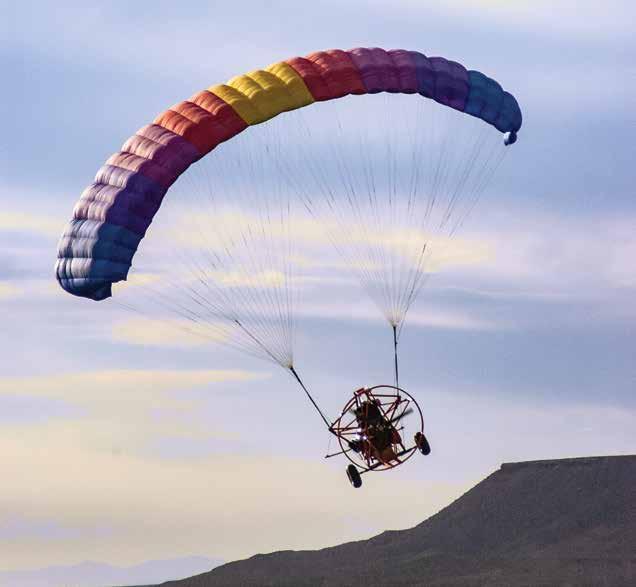
When I retired in 2021 and moved to Mesquite, Nevada, I had no idea I would soon be able to achieve a lifelong goal of flying. For years, I had watched powered-parachute pilots drift gracefully across the sky, their colorful wings floating above fields and backroads. I admired them from a distance, but I had never personally known a pilot. Flying remained a quiet dream—something I hoped for, but never expected to experience.
Discovering a Path to the Sky
After settling into Mesquite, that dream began to stir again. The wide - open desert, the calm mornings, and the endless
horizon made the sky feel closer than ever before. When I discovered a powered-parachute flight school in St. George, Utah, I decided it was time to take a chance. I enrolled in the initial training course, unsure of what to expect but excited to finally explore something I had imagined for so long.
The course was fantastic—far more fun than I ever anticipated. The course I attended was taught by Southern Utah Paramotor, owned by Brad Roper. The instructors were knowledgeable, the training was hands-on, and every session left me more energized than the last. By the time I completed the program, I wasn’t just trained; I was hooked. I wanted to fly as often as possible.
But the drive to St. George wasn’t ideal, and I hoped to find a flying community closer to home. So I headed to the Mesquite airport, looking for guidance, connection, and maybe even a local mentor.
the Mentor Who Changed Everything
The airport manager referred me to Vay Mickelsen, a longtime powered parachute pilot in the area. That referral turned out to be one of the greatest gifts of my life.
I called Vay immediately, and from that first conversation, we became fast friends. Vay was the kind of man who would do anything for anyone—generous, patient, and always ready to help. He welcomed me with open arms and was genuinely excited to have someone to share his flying adventures with.
As a brand-new pilot, I was inexperienced and unsure of myself, but Vay never made me feel that way.
He guided me through setup, safety checks, and flight decisions with kindness and confidence. His experience and expertise were invaluable, and his support gave me the courage to grow into the sport.
Early Mornings Over the Virgin River
On low-wind mornings, we would meet at a dirt landing strip by the river. The routine became a ritual: laying out the wing, checking the lines, warming the engine, watching the wind. When the air was right, Vay would lift off first, and I would follow the master into the sky.
Those flights were unforgettable. We drifted over the Virgin River bottoms, across the red mesas, and above the desert landscape that surrounds our beautiful little town. The world looked different from up there— peaceful, open, and full of possibility.
Over the next couple of years, Vay introduced several adventurous souls to the sport he loved. Powered parachuting is relatively safe and surprisingly affordable, but it still comes with its share of surprises. Weather shifts, equipment quirks, unexpected landings—there was always something new to learn. I could fill pages with “Vay stories,” and just as many with my own. My wife affectionately referred to them as our “near- death flying adventures.”
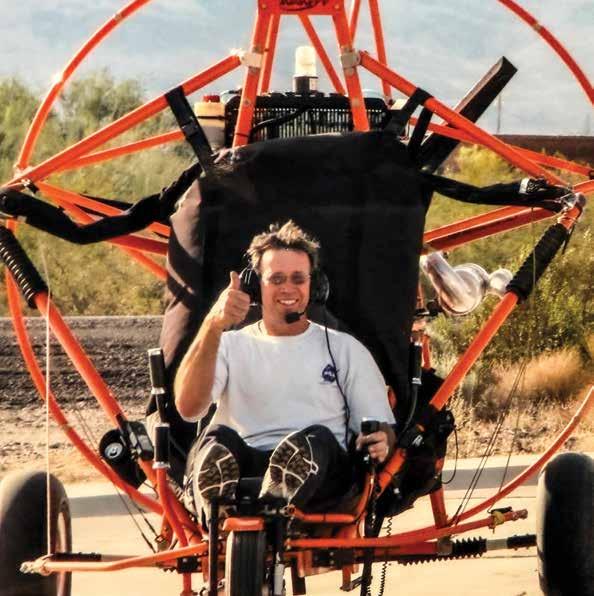
Vay Mickelson giving a pre-flight thumbs up in 2009
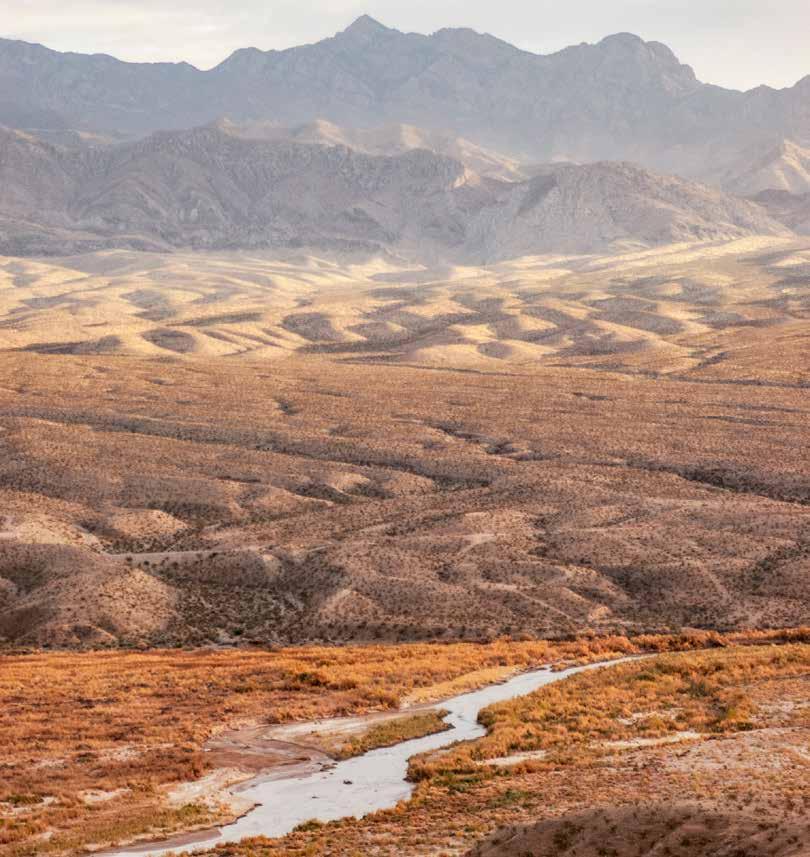
View from the powered parachute flying over the Virgin River in Bunkerville
A Legacy That Lives in the Sky
Every time I set up my machine, lift off over the Virgin River bottom, and move on to the red cliffs and desert landscape, my mind goes to Vay. He tragically passed away in January, and I’m certain I’ve seen him sitting on a cloud, directing his flying family, keeping us safe by leading the way.
His mentorship didn’t end with his presence on the ground. It lives on in every flight I take, every decision I make in the air, and every moment I feel the joy of rising above the desert. Vay gave me more than instruction—he gave me confidence, friendship, and a connection to the sky that will stay with me for the rest of my life.V
When his engine is quiet, Bill can be found at the local Grease Monkey at 411 W. Mesquite Blvd. in Mesquite, Nevada.
Interested in Learning More?
Here Are Your First Steps Into Powered Parachuting:
1. Take a Discovery Flight
- Fly with a certified PPC instructor
- Experience the controls and the open-air feel
2. Pick Your Path
- Ultralight (Part 103): no license required
- Sport Pilot (PPC): license required for two -seat aircraft
3. Begin Ground Training
- Weather basics
- Airspace rules
- PPC aerodynamics
- Emergency procedures
4. Start Dual Instruction
- Wing inflation and kiting
- Takeoff and climb technique
- Turns, cruise, and pattern work
- Engine - out practice
5. Solo and Build Skills
- Practice judgment and weather awareness
- Explore short cross- country flights
- Develop smooth takeoffs and landings
WHAT TO KNOW BEFORE YOUR FIRST LESSON
A few insider tips that make the first day go smoother.
You’ll Be Flying the Controls Early PPCs are stable and forgiving, so instructors often let students steer within minutes.
Weather Is Everything
Lessons usually happen at sunrise when the air is calm. Even light winds can ground a PPC.
Dress for the Breeze
You’re sitting in the open air. Gloves, a windproof jacket, and sunglasses make the experience far more comfortable.
Expect a Slow, Scenic Flight
Cruise speeds hover around 25–35 mph. It’s about floating, not racing.
No Special Fitness Required
Takeoffs and landings are done seated. Most people find PPC flying physically easy.
You’ll Spend Time on the Ground First
Wing inflation, line checks, and understanding canopy behavior are core safety skills—and they’re learned before you ever leave the field.
Powered parachutes (PPCs) are one of the most accessible ways to get into aviation, offering low speeds, forgiving handling, and a surprisingly straightforward path to the sky. Whether someone wants to fly under ultralight rules or pursue a full pilot certificate, the entry requirements are far less intimidating than traditional aircraft.
Risk, Reward, and the Great Outdoors
by Nathan Hughes, AAMS®
Anyone who lives in our area knows summer is a different kind of adventure.
When temperatures climb into triple digits, outdoor fun takes planning. Midday rides are shorter, water is nonnegotiable, and most of us know that if we really want to enjoy the outdoors, we head up into the mountains where the air is cooler and the trails are more forgiving.
Whether you’re loading up the side-by-side for an early morning ride or planning a weekend escape to higher ground, one thing is always top of mind: preparation.
Out here, heat isn’t just uncomfortable, it’s something you have to respect. You check fluids, make sure everyone’s hydrated, keep an eye on weather conditions, and know when it’s time to call it a day. This isn’t because you’re overly cautious, but because ignoring extreme conditions can turn a great outing into a bad situation fast.
The same mindset applies to your finances.
Risk is part of any worthwhile journey. Just like riding, boating, or hiking in the summer heat, you can’t eliminate risk entirely—and you shouldn’t try to. Growth requires movement. Staying parked might feel safe, but it doesn’t get you anywhere.
The goal isn’t avoiding risk. The goal is understanding it and planning for it.
People run into trouble when they take risks without recognizing them—financially and otherwise. Think about riding unfamiliar trails in extreme heat with no extra water, no route planned, and no idea how long you’ll be out there. Financially, that’s similar to chasing market returns, reacting emotionally to headlines, or taking on investments without understanding how much volatility you can really handle.
Lack of planning is not adventure— it’s unnecessary exposure.
Experienced riders know how to adjust. When conditions change, you slow down, shorten the ride, or change the route altogether. Financial planning works the same way. Your age, income, family responsibilities, and long-term goals all shape how much risk makes sense—and where it belongs.
And just like the seasons, risk tolerance changes over time. Earlier in life, you may be comfortable riding longer, faster, and taking on rougher terrain. Over time, the focus may shift toward reliability, protecting what you’ve built, and making sure you can enjoy the ride for years to come. That’s not backing off—that’s adapting to the conditions.
The real benefit of having a solid financial plan is confidence. When markets heat up or cool down, you don’t have to panic because you understand why your strategy exists. Much like navigating summer conditions outdoors, confidence comes from preparation, not guesswork.
Around here, the people who enjoy the outdoors the most aren’t reckless—they’re prepared. They know their limits, respect the environment, and plan accordingly.
Financial decisions aren’t any different.
When risk is taken with intention and awareness, the journey is far more enjoyable—and far more likely to end exactly where you intended.V
Nathan Hughes, AAMS®, is president and advisor of Hughes Strategic Group, LLC DBA Pilot Wealth Strategies. He is a proud native of Mesquite, Nevada.
Contact Nathan at info@pilotwealthstrategies.com or (208) 490-5400.
Investment advisory services are offered through Hughes Strategic Group, LLC d/b/a Pilot Wealth Strategies, a registered investment advisor. This material is for informational purposes only and should not be construed as investment advice. Past performance is not indicative of future results. All investing involves risk, including the potential loss of principal. Analogies and examples are provided for illustrative purposes only. Financial outcomes vary widely and cannot be assured. While diversifying income sources may offer benefits, no investment strategy can guarantee income or eliminate financial risk.
Where Desert Meets Water:
Exploring the Lakes of Southern Utah & Southern Nevada
Exploring the lakes scattered across southern Utah and southern Nevada has a way of slowing life down in the best possible way. These desert waters feel like hidden invitations to step outside the everyday rush and sink into a landscape shaped by sun, sandstone, and silence. There’s a special kind of joy in watching light dance across still water, framed by red cliffs or wide - open desert skies. Whether you’re paddling along a quiet shoreline, floating lazily in warm shallows, or simply sitting at the edge listening to the soft lap of waves, the experience feels both grounding and expansive.
Part of the magic comes from contrast. These lakes appear where you least expect them, turning arid terrain into places of reflection—literally and figuratively. They encourage unhurried
exploration, the kind where you notice textures in the rock, shifts in the wind, and the way the desert seems to breathe. It’s peaceful, restorative, and quietly unforgettable.
These areas are defined by their dramatic contrasts— towering red cliffs, sprawling desert basins, volcanic fields, and high- country forests. But woven through these rugged landscapes is a chain of lakes and reservoirs that offers a refreshing counterpoint to the heat. Each one sits in a unique environment, shaped by geology, history, and the communities that surround it.
Here we explore six standout lakes, each with its own personality, scenery, and adventure potential.
Lake Mead: The Desert Ocean (Nevada /Arizona)
Straddling the Nevada–Arizona border, Lake Mead sprawls across a landscape of volcanic mountains, desert plateaus, and rugged canyons. The lake is part of Lake Mead National Recreation Area, a vast protected region that includes historic sites, wildlife habitat, and miles of shoreline.
Why You Should Go:
Boating and houseboating: It’s perfect for houseboats, speedboats, and long-range exploration.
Fishing: Striped bass, catfish, and crappie are plentiful.
Swimming and beaches: Boulder Beach and other coves offer warm water and sandy shores.
Scenic exploration: Enjoy views of Hoover Dam, Black Canyon, and dramatic desert cliffs.
Just minutes from Las Vegas, Lake Mead offers a surprising escape into wide - open wilderness.
Sand Hollow Reservoir:
Red Rock, Blue Water, Endless Fun (Utah)
Located near Hurricane, Utah, Sand Hollow Reservoir sits at the edge of Sand Mountain, a massive dune field of deep red sand. The contrast between the lake’s bright blue water and the surrounding sandstone makes it one of the most photogenic spots in the region.
Why You Should Go:
Boating and jet skiing: Warm water and open space make it ideal for high- energy fun.
Fishing: Enjoy clear water and healthy largemouth bass populations.
Cliff jumping: Sandstone ledges offer popular, accessible jumping spots. OHV riding: Sand Mountain’s dunes are a premier destination for ATVs and side -by-sides.
The surrounding red-rock desert adds a dramatic backdrop to every adventure.
Gunlock Reservoir: A Quiet Gem with Seasonal Surprises (Utah)
Tucked into a small valley west of St. George, Gunlock Reservoir is bordered by rolling red hills, volcanic rock formations, and the historic village of Gunlock. The area is quieter than the larger reservoirs nearby, making it a peaceful retreat.
Why You Should Go:
Seasonal waterfalls: In high-water years, waterfalls cascade over red rock terraces just below the dam.
Boating and swimming: Calm water and fewer crowds create a relaxed atmosphere.
Fishing: Largemouth bass and bluegill are common.
The surrounding terrain—lava fields, desert ridges, and quiet backroads—adds to its secluded charm.
Quail Creek Reservoir: A Warm‑Water Escape (Utah)
Just north of Sand Hollow and minutes from St. George, Quail Creek Reservoir sits in a basin framed by the Pine Valley Mountains to the north and red-rock bluffs to the south. Its deep, warm water makes it a favorite for both locals and travelers.
Why You Should Go:
Fishing: It is known for trophy-sized largemouth bass and rainbow trout. Boating and water skiing: Calm morning water is perfect for skiers and wakeboarders.
Kayaking and paddleboarding: Quiet coves offer peaceful paddling.
The surrounding landscape blends desert scenery with views of distant mountains.
Navajo Lake:
A High‑Country Haven (Utah)
Set high on Cedar Mountain at nearly 9,000 feet, Navajo Lake is surrounded by dense spruce -fir forests, meadows dotted with wildflowers, and cool mountain breezes. The lake sits just off Scenic Byway 14, a winding alpine road that connects Cedar City to the high plateaus of southern Utah.
Why You Should Go:
Fishing: Cold, clear water supports brook trout, rainbow trout, and splake.
Boating and paddling: It is ideal for kayaks, canoes, and small motorboats.
Camping and hiking: Campgrounds nestle among the trees, and nearby trails lead to lava fields, overlooks, and the Virgin River Rim.
The area feels worlds away from the desert below— quiet, green, and refreshingly cool.
Lake PowelL: A Maze of
Canyons and Blue Water
(Utah/Arizona)
Lake Powell winds through the heart of Glen Canyon, a sandstone labyrinth carved over millions of years. Towering cliffs, natural arches, and narrow slot canyons surround the lake, creating one of the most surreal landscapes in the American Southwest. The nearby town of Page serves as a gateway to both the lake and iconic landmarks like Horseshoe Bend and Antelope Canyon.
Why You Should Go:
Boating and houseboating: Endless side canyons and hidden coves reward multi- day exploration.
Fishing: Smallmouth bass, striped bass, and walleye are common.
Paddling: Kayakers and paddleboarders can slip into quiet, echoing canyons.
Hiking: Water-accessible trails lead to arches, slot canyons, and remote viewpoints.
Lake Powell is a world of its own—vast, wild, and unforgettable.V
Navajo Lake Loop Trail
||
Photo credit: Visit Cedar City
Celebrates 30 Years in Mesquite
by Michelle Johnson and Chelsie Abbott
Since June 30, 1996, Shereen’s Hair & Nails has been more than just a place to get a haircut or manicure; it has been a cornerstone of beauty, friendship, and community connection. What began as a small salon with just two stylists has grown into a thriving local favorite, proudly serving clients with dedication, creativity, and heart.
When Shereen first opened her doors three decades ago, the vision was simple: create a welcoming space where people could feel confident, cared for, and leave looking their very best.
Over the years, that vision has flourished. Today, the salon has expanded to include six styling chairs, four pedicure chairs, and four nail stations, allowing a talented team of professionals to serve a growing and loyal clientele. Despite the growth, the spirit of the salon has remained the same: warm, personal, and community-focused. Many clients who first walked through the doors years ago continue to return regularly, not just for services but for the friendly atmosphere that feels like visiting family.
Shereen’s commitment extends far beyond the salon floor. Throughout the years, the salon has been deeply involved in giving back to the community through donations, volunteering, and supporting local events and causes. Whether contributing to fundraisers, helping community organizations, or offering support where it’s needed most, Shereen’s Hair & Nails has consistently demonstrated that success is best when it’s shared.
The community has certainly noticed. The salon has been honored with the “Best of Mesquite” award multiple times, a testament to the exceptional service, professionalism, and trust the team has built with its clients. These awards reflect not only technical skill but also the relationships and reputation cultivated over three decades.
As Shereen’s Hair & Nails celebrates this milestone, it stands as a shining example of what passion, perseverance, and community spirit can create. From its humble beginnings to the vibrant, full-service salon it is today, the journey has been one of growth, gratitude, and lasting connections. Thirty years later, Shereen’s Hair & Nails continues to do what it has always done best—helping people feel beautiful while strengthening the community it proudly calls home.
We are incredibly proud of Shereen for her many accomplishments as both a dedicated business owner and a loving mother. Through hard work, determination, and heart, she has built a successful business while also raising and supporting her family. Shereen’s achievements are a reflection of her strength, leadership, and the care she puts into everything she does. She is a wonderful example of what can be accomplished through perseverance and love.
Congrats on 30 years!
With all our love and pride, Your Family.V
First Fridays at Kayenta: An Artistic Adventure in the Desert
Contributed by Kayenta Arts Foundation | Photo credits: Alan Holben
In the Southwest, adventure and inspiration go hand in hand. Surrounded by red rock cliffs, desert trails, and expansive skies, the Kayenta Art Village embodies this defining regional spirit of exploration. This sense of discovery is especially present during First Fridays at Kayenta, a monthly celebration of art, music, film, and community that invites visitors to experience creativity in the heart of the desert.
Held on the first Friday of every month, the event transforms the village into a lively gathering place. As the sun lowers behind the red cliffs, pathways between galleries fill with visitors enjoying the evening air, the glow of desert light, and the vibrant artistic energy that defines Kayenta.
The connection between art and landscape is woven deeply into the story of Kayenta itself. In the early days of the community’s development, artists began gathering here organically, drawn by the dramatic desert scenery and the
quiet inspiration of the surrounding red rock country. Painters, sculptors, musicians, and storytellers were captivated by the same elements that draw outdoor adventurers: vast skies, striking geological formations, and a sense of space that sparks reflection and creativity.
First Fridays reflects that legacy of artistic adventure inspired by the outdoors. Much like exploring a desert trail reveals new views around every bend, wandering through the art village on a First Friday leads to unexpected discoveries—new artists, fresh ideas, and creative experiences waiting around each corner.
Visitors can stroll through galleries featuring work by regional painters, sculptors, photographers, and mixed-media artists whose creations are deeply influenced by the landscapes of southern Utah. The warm tones of sandstone cliffs, expansive desert skies, and textures of lava rock and sagebrush frequently echo through the artwork on display.
Open studios throughout the village add another layer of exploration, offering visitors a rare chance to step inside the creative process and meet artists where the work happens. For many, the surrounding landscape is more than scenery—it’s a constant source of creative adventure.
While the art draws visitors in, the energy of the evening extends throughout the village. Each month features live music from local bands and performers. Local food trucks add to the festive atmosphere, encouraging visitors to linger, share a meal outdoors, and enjoy the desert evening as the sky deepens into twilight.
First Fridays features Kayenta’s partnership with the DOCUTAH International Film Festival, presenting the “Best of Fest” film series. These screenings bring a handpicked selection of award-winning and audience-favorite documentaries from the festival to Kayenta, offering powerful storytelling and global perspectives as part of the evening’s cultural offerings.
Guests can also explore the Southern Utah Market, a curated pop-up marketplace featuring local art, crafts, and farmers' market favorites. From handcrafted jewelry and pottery to locally made foods and specialty goods, the market celebrates the
creativity and craftsmanship thriving across the region while offering visitors the chance to meet the artisans behind the work.
Each First Friday introduces a new theme and activity. December’s Luminaria Nights invited visitors to create and decorate luminarias that lit up the entire village, while March’s Swing into Spring featured free country swing and line dancing. These activities encourage guests of all ages to participate, connect, and celebrate the community.
In a region known for outdoor adventure, First Fridays carries that same spirit into the arts. Set among the red rocks and open skies of Kayenta, the event invites visitors to try something new and experience creativity in the landscape that inspires it. Whether strolling through galleries, meeting artists in their studios, enjoying live music beneath the desert sky, or discovering handmade goods at the market, First Fridays offers a vibrant way to experience the artistic energy of southern Utah.V
Kayenta Arts is located at 881 Coyote Gulch Court in Ivins, Utah. Call (435) 674-2787 for more information. Tickets can be purchased through our website at www.KayentaArts.org. Email us at boxoffice@kayentaarts.com.
Follow us on social media to stay updated on our events! Instagram:@cfakayenta
Facebook: Center for the Arts at Kayenta
STAY. Please? Understanding Separation Anxiety in Dogs
by Anita DeLelles, LMT
Separation anxiety is a pretty common behavioral affliction in dogs. It can be stressful for both pups and their humans. Dogs are naturally social creatures who get very attached to their people. So when you leave, even briefly, some dogs react like you’ve vanished forever, leading to all kinds of dramatic and bothersome behavior. The good news? By understanding what causes this anxiety, spotting the signs early, and using the right strategies, you can help your dog to chill. And maybe you’ll convince them that you will come back after all.
There are several potential causes of separation anxiety, and it’s important to identify the underlying triggers for your dog.
Changes in Routine - Dogs thrive on routine, and any disruption to their daily schedule can create anxiety. A sudden change in work hours, school schedules, or moving to a new home can increase stress levels.
Past Trauma or Neglect - Dogs that have been adopted from shelters or have experienced abandonment are at a higher risk of developing separation anxiety. Their fear of being left alone may stem from previous negative experiences.
Lack of Early Socialization - Puppies that are not exposed to short periods of isolation during critical developmental stages may struggle to adapt to being alone later in life.
Genetic Predisposition - Some dog breeds, especially those bred for companionship or herding, may be more prone to separation anxiety. Breeds such as Labrador retrievers, border collies, and chihuahuas are known to form particularly strong attachments to their owners.
Dogs suffering from separation anxiety exhibit various behaviors that signal distress when they are left alone. While occasional restlessness is normal, consistent or extreme behaviors may indicate a deeper issue.
Excessive Barking or Howling - Persistent vocalization, especially shortly after the owner leaves, is a common symptom. This behavior is driven by the dog’s panic and desire to reunite with their owner.
Destructive Behavior - Dogs with separation anxiety may chew on furniture, dig at doors, or destroy household items. This behavior is often an attempt to escape or cope with stress.
Pacing or Restlessness - Repeated pacing in a fixed pattern, such as back and forth by a window or door, is another sign of anxiety. Dogs may display other restless behaviors like circling or fidgeting. These may also be warning signs of a deeper neurological issue.
House Soiling - Even house-trained dogs may urinate or defecate indoors when anxious. This behavior is not due to a lack of training but rather an inability to control bodily functions under stress.
Self-Injury - In severe cases, dogs may harm themselves by excessive licking, chewing their paws, biting their tails, or attempting to escape through windows or doors.
Addressing separation anxiety in dogs requires a combination of training, behavior modification, and in some cases, medical intervention. Here are some practical strategies.
Gradual Desensitization - The goal of desensitization is to gradually accustom your dog to being alone. Start by leaving your dog for short periods, then gradually increase the time. Pair departures with positive reinforcement, such as treats or toys, to create a positive association with being alone. When leaving or entering, make the least amount of fuss. Toss some treats away from the door and leave. Upon return, enter and ignore your dog until they have calmed down, then quietly pet and acknowledge them.
Interactive Toys, Enrichment and Exercise -
Providing engaging toys, such as puzzle feeders or chew toys, can distract your dog and keep their mind occupied while you’re away. This helps reduce boredom and anxiety. A tired dog is generally less anxious. Ensure your dog gets plenty of physical exercise and mental stimulation before you leave. A brisk walk or play session can help expend excess energy and promote relaxation.
Counter-Conditioning - This training method involves changing your dog’s emotional response to being alone. By associating your departure with something positive, such as a special treat they only get when you leave, you can help reduce their anxiety.
Calming Products - There are various calming aids available, including pheromone diffusers, anxiety wraps, CBD, and herbal supplements. While these won’t cure separation anxiety, they may help reduce stress levels. If anxiety is extreme, a veterinarian may recommend antianxiety medication to help your dog manage their stress. Use this as a last resort, as some medications can have side effects.
Separation anxiety is a complex issue that requires patience, understanding, and consistent effort from dog owners. Recognizing the signs early and implementing appropriate solutions can prevent the problem from worsening and improve both your and your dog’s quality of life. It may take some trial and error to find a solution. Talk to a professional at WOOF! Wellness Center for more information on helping your dog overcome separation anxiety.V
Visit woofcenter.com. Call or stop by WOOF! Wellness Center & Training Academy in Santa Clara. (435) 275-4536.
As the Wind Blows: Dust storms in America
“Dust in the wind. All we are is dust in the wind.”
- Kerry Livgren
by Karen L.
Monsen
Singing cowboys and western films portray America’s West as romantic, harsh, and at times violent—just like its weather. Like early homesteaders, today’s residents are blessed and cursed with sunny days, cloudless skies, and ever-present dust. For farmers in the 1930s, the Heartland turned menacing when monstrous dust storms blew away fortunes and dreams.
From soft breezes to destructive tornadoes and hurricanes, wind manifests in different forms. In arid regions, moderate winds toss tumbleweeds like popcorn across the landscape and spawn dust devils. The mother of giant dust storms (the haboob) can blacken the sky as it did during the Dust Bowl days.
Making Wind
Tom Frieders, the warning coordination meteorologist with the National Weather Service (NWS) in Phoenix, Arizona, explains that winds are “driven by the overall differences in atmospheric pressure conditions or generated on a smaller scale from thunderstorms.” Every day, wind occurs when the sun heats the Earth unevenly, causing differences in air pressure that move air from high to low pressure. The greater the pressure difference, the stronger the winds.
Thunderstorms generate strong winds, Frieders adds. “As clouds begin to produce precipitation, rain-cooled air (evaporative cooling) descends (from several thousand feet up in the atmosphere) from the thunderstorm to produce gusty winds,” he says. “These downbursts of air can be significant as they hit the ground and produce outflow boundaries or gust fronts.”
Vortex Wind & Firenadoes
When the ground heats intensely, a pocket of air rises, and surrounding cooler air rushes in to create a rotating convective or thermal vortex. Small-scale vortices, common in Utah and Arizona, are called dust devils, and they dissipate when they encounter cooler air or obstacles.
On July 12, 2025, a pyro-vortex, classified by the National Weather Service as an EF2 tornado with 111 to 135 mile per hour winds, erupted over the Deer Creek Fire east of Moab, Utah, where a mix of state, local, and federal personnel had been fighting a fire since July 10. The fire’s behavior rapidly changed when it reached a stand of ponderosa pines and encountered erratic shifting winds; this produced a counterclockwise rotation—a pyro-vortex. Unlike standard tornadoes fueled by thunderstorms, a “firenado” is fueled by the fire’s extreme heat and strong winds.
Crews monitored the fire from safety zones. The incident report showed that “inflow winds sucked in massive amounts of air from all directions, creating an ash dust storm.” No one was injured, and the entire pyro-vortex lasted approximately 25 minutes. Global News shares a YouTube video courtesy of the BLM at https://www.youtube. com/watch?v=ru28pcROAcE.
Tumblin’ Tumbleweeds
“Ain't no tellin' where the wind might blow. Free and easy down the road I go.” - Dierks Bentley
Strong winds on March 19, 2024, nearly buried South Jordan and Eagle Mountain, Utah, with tumbleweeds. Featured in western movies, the tumbleweed is an invasive Russian thistle accidentally brought into South Dakota in the 1870s by Russian immigrants with their flaxseed. Edible when young, the plant dries into a spiny structure attached to a central root that dislodges under strong winds and scatters over 200,000 seeds per plant. NBC News reported tumbleweeds blocking cars and driveways in Utah (on YouTube https://www.youtube. com/shorts/aVzmUOSWMMk).
Black Sunday
Devastating dust storms were common during the 1930s across western Texas, eastern New Mexico, the Oklahoma Panhandle, western Kansas, and eastern Colorado. The ecological disaster resulted from replacing natural grasses with cultivated fields and eight years of drought.
Expansion of the Homestead Act and high wheat prices following WWI drew 200,000 to 300,000 new homesteaders to the Great Plains. Migrations peaked between 1910 and 1930, each farmer eager to use new machinery, plant wheat, and grow their dreams.
The 1931–32 winter was uncommonly dry, writes Ken Burns in the documentary series, The Dust Bowl. “So was the spring that followed,” he says. “The fierce winds common to the season
began picking up sand and soil from the bare fields and moving it across the landscape.” Drought continued, and temperatures sometimes topped 110 degrees. “And the winds—a constant part of plains life—now carried a menacing message,” Burns adds.
On April 14, 1935, during the worst dust-storm year, a cloud estimated to be two miles high swept through Stratford, Texas, and the Texas Panhandle, burying crops, suffocating livestock, and destroying homes and livelihoods. The USDA estimates the April 1935 storm displaced 300 million tons of topsoil. Iconic photos taken by George E. Marsh with the National Oceanic and Atmospheric Administration (NOAA) are in the public domain at the Library of Congress under “Black Sunday.” Watch a clip from The History Pod about Black Sunday on YouTube at https:// www.youtube.com/watch?v=yyExSjvwkU4.
Tumbleweeds pile up | Photo provided by the City of South Jordan
1935 Black Sunday Stratford, Texas | Photo credit George E. Marsh NOAA Library of Congress
The Haboob
Although not a Dust Bowl state, Arizona has a reputation for dust storms. According to Freiders, haboobs are created when cold air rushing downward from monsoonal storms creates high surface winds, forming turbulent dust-walls that can surge 50 to 100 miles away from the parent thunderstorm before dissipating. The Arabic word “haboob,” meaning wind or blow, describes strong dust or sandstorms common in the Sahara Desert, Arabian Peninsula, and North Africa.
According to the NOAA’s National Climatic Data Center, more than 100 dust storms have been reported in the past 10 years across Arizona, and one to three large dust storms (haboobs)
annually move into the Phoenix area. On August 25, 2025, a massive dust wall towering thousands of feet high approached Phoenix, producing zero to near-zero visibility. Arizona’s duststorm warning system alerted the public to seek shelter and to avoid driving: “Pull Aside, Stay Alive.”
While tumbleweeds, wind, and dust storms are part of daily life in America’s West, the current prolonged drought continues to prompt comparisons to the Dust Bowl days. When will the rains return?
“The answer is blowin' in the wind.” - Bob Dylan V
2025 Phoenix Haboob at Sky Harbor Airport | Photo credit Mike Olbinski
Shapes the Future
by Steve Dudrow, Chairman of the STEAM Center
At the heart of Mesquite, something quietly powerful is happening. The Mesquite Works STEAM Center is redefining what community education looks like by creating a space where curiosity is celebrated, creativity is encouraged, and learning is always accessible. Built around the STEAM model—Science, Technology, Engineering, Art, Agriculture, and Math—the Center inspires students to explore, question, build, and imagine in ways that connect directly to their world.
What makes Mesquite Works truly special is how it operates. The Center runs entirely on donations, grants, and community support. There are no tuition fees, no class charges, and no financial barriers. Every program is free to local students. This is a deliberate commitment rooted in the belief that opportunity should never be limited by income. Learning, discovery, and creative growth belong to everyone.
Inside the Center, students might be programming robots one day and learning drone navigation the next. They design with 3D printers, explore electronics, build LEGO engineering projects, and experiment with emerging technologies such as artificial intelligence. The Curiosity Lab encourages students to ask questions freely, helping them develop confidence in problem-solving and critical thinking. Art is woven into everything, reminding students that innovation is not only technical but deeply imaginative. Creativity and logic move together here, strengthening one another.
The Center thrives because of collaboration. Volunteers, educators, engineers, artists, scientists, and community members generously donate their time and expertise. Retired professionals mentor students. Local organizations partner with programs. Families support outreach and fundraising efforts. Mesquite Works is truly a community-built space,
shaped by generosity and shared belief in the potential of young people.
Beyond technical skills, the Center builds confidence. Students learn how to work as a team, how to fail safely, and how to try again. They discover that not knowing is not a weakness—it is the beginning of discovery. For many students, Mesquite Works is the first place where they see themselves as innovators, builders, and creators.
The impact is already visible. Students move from Mesquite Works programs into 4-H robotics teams, FAA drone certification pathways, advanced engineering clubs, and STEAM-focused educational tracks. Others carry their creative confidence into art, writing, and design. The Center is planting seeds that grow in many directions.
Operating solely on donations is both a challenge and a statement. It means Mesquite Works depends on the community to survive, but it also means the community truly owns it. Every dollar donated enables access. Every contribution becomes a possibility. Every act of generosity opens a door for a student who might not otherwise have one.
It stands as a reminder that education does not have to be expensive to be powerful or exclusive to be excellent. When a community comes together around learning, creativity, and curiosity, remarkable things happen. And in Mesquite, they already are.V
The Mesquite Works STEAM Center is located at 312 West Mesquite Blvd. More information about programs, volunteering, and donations can be found on our website: www.mesquiteworks.org.
TENNIS TNT -tips-n-tricks-
by Donna Eads
For the next two months, the ability of the pros to adapt will be tested. In May, they move from the hard courts to slow clay to finish in Paris with the Grand Slam French Open. June begins with the fast grass season, and its Grand Slam is in London with Wimbledon. Then it’s back to hard surfaces, ending with the New York City U.S. Open.
Each one of these surfaces requires a different strategy and has its own pros and cons. For example, it is not easy to ace someone on clay due to how the clay slows the ball down. Spinning the ball is a must, but a drop shot can be a beauty to behold! While on grass, an ace is almost normal, and serve and volley play works well, but not on clay. But both of these surfaces are easier on the players’ bodies.
Going back to the hard courts in the U.S.A. is a challenge, not only due to the surface but also the weather. The heat and humidity in New York City can be a problem for all players. Of course, in our area, there are very few clay or grass courts to try, so enjoy the broadcasts of these events on your TV.
The next two months should help local players prepare for the summer months. So plan on starting earlier, and remember important things like hydrating before and after play. Be sure you bring a cooling towel, a regular towel, and extra socks so you can take care of your feet. Don’t forget a hat or visor and sunglasses as well.
The next tip is to never store your racquet or balls in the garage or your car during the summer! A can of balls can go bad with temperatures over 100, and your racquet and strings are affected, too.
Another tip is to try moving toward the path of the ball diagonally, not horizontally, when playing. This movement does two positive things for the player. First, you intersect the path of the ball faster, and second, your forward motion puts more pace on the ball. One of the best strategies in tennis, this move takes time away from your opponent, putting you in control of the point and making it likely you’ll win it.
Another thing to keep in mind is to use good footwork. For example, with a volley, step over using your left foot for a forehand, and use your right for a backhand. For lefties, it’s just the opposite. Keep your eyes on the ball until it leaves the racquet. And most of all, keep your head still during a shot. Stay in the shot until it is completed.
Finally, never get hit by an out ball or try to catch it! Technically, you lose the point if it hits you or you touch it before it hits the ground.
See you on the courts!V
BACKSWING & TRANSITION
Common Faults and Key Corrections
by Rob Krieger, PGA
The golf swing begins with a consistent and well-executed pre-shot routine, followed by the backswing and the transition back to the ball toward impact. This will hopefully result in a balanced finish and a golf shot to your liking. Many videos and golf articles discuss these two points. To get back on track faster, it is important to understand what should be happening and what could be causing poor execution. Understanding where your issues lie should put you on a path to improvement. Experimenting with these points can begin making a difference.
Common Backswing Faults:
• Improper weight distribution and shifting
• Loss of knee flex or standing up during the swing
• Excessive hinging of the wrists
• Excessive hip rotation
• Loss of posture in the hips or torso
• Club moving too far inside on the takeaway
• Over-flexing of the right elbow
• Bending of the left arm
• Incorrect shoulder movement
• Poor/over movement or positioning of the head
Key Backswing Corrections
1) Weight should shift horizontally toward the center of the trail foot before hip rotation begins. Weight should not move to the outside of the foot.
2) Maintain consistent flex in the trail knee throughout the backswing; avoid straightening.
3) The wrists will hinge on their own; more wrist hinging early in the swing can lead to other problems.
4) Hip rotation should begin only after the weight shift and once the club reaches approximately hip height.
5) Maintain approximately 20 degrees of hip bend and 40 degrees of torso bend throughout the swing to preserve posture.
6) On the takeaway, keep the hands close to the body while allowing the club head to move slightly away, avoiding excessive movement behind the body.
7) The right arm should fold naturally but not exceed 90 degrees, maintaining a right angle at the top of the backswing.
8) The left arm should remain straight but relaxed, without rigidity or bending.
9) The left shoulder should move horizontally across the body rather than dropping or remaining fixed over the lead foot.
10) The head may shift slightly back horizontally but should not move up or down. A slight tilt toward the trail leg and lifting the chin can help maintain proper clearance and alignment. The head should never move in front of the ball.
Transition is the moment in the golf swing when the club changes direction and moves back toward the ball. When executed correctly, it produces solid impact and consistent results; when it is not, frustration often follows. This phase is particularly challenging because it requires precise coordination between the body and the club.
Common Transition Faults:
• Improper weight transfer from the trail foot to the lead foot or rolling onto the outside of the back foot, which disrupts balance
• Poor knee positioning, which compromises stability
• Insufficient hip rotation or failure to initiate forward movement before the club starts down
• Limited rotation of the torso and shoulders, and reacting to the club rather than leading it
• Initiating the downswing too early, resulting in lost speed and power
• Poor head positioning during the swing
• An abrupt or rushed transition that affects balance and sequencing
Key Transition Corrections
1) Begin the downswing by shifting weight from the inside of the back foot to the front foot.
2) The back knee should move toward the ball before the club starts down, while the lead knee helps pull the body through impact. Focus on one side at a time to avoid overcomplication.
3) The hips should initiate the movement with a slight lateral shift toward the target, similar to a baseball swing, allowing the belt buckle to face just ahead of the ball at impact.
4) The torso and shoulders follow the hips, rotating level to the ground without excessive dipping or lifting.
5) The arms and club should respond to the body’s movement, gradually building speed and maintaining lag so that maximum velocity occurs at impact, not at the start of the downswing.
6) Throughout the motion, the head should remain behind the ball, stable and controlled, but moving past where the ball was after impact.
7) Finally, smooth rhythm and consistent tempo are essential. A controlled, unhurried transition promotes balance, stability, and proper sequencing, allowing all parts of the swing to work together efficiently. This is usually one of the major issues for most people.
The best way to gain better insight into your swing and possible problems is to get help from a local PGA golf professional who understands these swing dynamics. If you decide to DIY it, take a video of yourself and observe the issues from above. Remember, when attempting to apply changes, you must do it slowly. Attempting swing adjustments at regular speed is just difficult and hard. Slow down and shorten your swing while practicing and re-training. You can eventually gain better mechanics and added speed once the retraining of the muscle memory has occurred.
UN Limited
by Judi Moreo
Some of the toughest limitations you’ll ever experience are the ones you place on yourself. Whether intentionally or unintentionally, people tend to let their minds develop an opinion about whether or not they can do something.
Often, these limitations are caused by thought distortions, negative thinking, or self-doubt. Regardless of why you experience self-limitations, it is possible to overcome them. To get started, consider these five tips to begin eliminating your self-placed limitations.
Tips to Eliminate self-placed limitations
Tip #1: Kick your inner judge to the curb.
Everyone has an inner judge deep within them. The judge’s voice comes out to tell us what we did wrong, what we could have done differently, or how we might fail at something. While some believe self-judgement is a good tool for development, it’s actually a big hindrance.
Truthfully, self-judgement creates the opposite effect: Rather than feeling inspired to make changes or do better, all that self-imposed judgement makes us feel bad. Instead of working to push past our barriers, our inner judgement reinforces self-placed limitations.
To practice ignoring your inner judge, it’s crucial to recognize its voice. When you hear the gavel of self-judgement swinging downward, remind yourself to ignore it and keep pushing forward.
Tip #2: Trade your “what if” for “what can I do.”
Daydreaming and fantasizing about things you want in life is a form of visualization that can help you realize your greatest goals and potential. However, don’t get too caught up in your fantasies. It’s important to give “what if” a real shot in reality.
When you catch yourself thinking “what if,” trade that type of thinking by asking yourself, “What can I do today to get myself closer to my dream or goal?” This kind of thinking takes your visions out of fantasyland and closer to reality.
Tip #3: Don’t be afraid to ask for help or advice.
Good things come to those who ask–seriously! If you need something or want advice, don’t be shy about asking for it.
Some folks view asking for help, advice, or resources as a sign of weakness. In reality, it’s a great way to get yourself closer to your biggest goals and desires. When you reach out for help (especially toward someone who is knowledgeable), you open yourself to a wealth of information and opportunity. By asking, you’re breaking past your selfplaced limitations for a chance to learn and grow.
Tip #4: Don’t be afraid to ask lots of questions!
Besides asking for help, asking lots of questions is a great way to tear down self-placed limitations. Rather than staying quiet and keeping to yourself, ask lots of questions.
According to Forbes, when you ask questions, you learn more about the world around you, how things work, what’s happening, and what you can do to contribute. All this information is valuable and helps you not only have a better understanding of what’s happening, but also how you can be a part of the action happening around you. Rather than letting self-placed limitations keep you passive, you’re allowing yourself a chance to expand your knowledge and grow.
Tip #5: Take time to really understand what you want in life.
Nailing down specific dreams and goals is challenging. When you think of all the opportunities out there, you might even feel overwhelmed. This sense of overpowering possibility causes some people to place limitations on themselves as a method of protecting themselves from potential failure.
When you take time to really understand what you want out of life, it takes away some of the uncertainty or fear from the situation. With a clear picture of what you want, it’s easier to picture yourself there and begin working toward those specific goals.V
Judi Moreo is an award-winning author, international speaker, and fine artist who calls southern Nevada home. Through her books, art, and decades on stages around the world, she explores resilience, transformation, and the courage to grow—often returning to the Mojave Desert for its reminder of strength, scale, and stillness. Contact her at judi@judimoreo.com or (702) 609-2075.
Art map maker is the focus of a featured article in our forthcoming Home & Garden issue. Keep an eye out for its release July 1st.