ViewOn Magazine Home and Garden Issue July-August 2026
mesquite | moapa valley | arizona strip | southern utah complimentary issue home and garden
July 1 - August 31, 2026 Volume 19 – Issue 4
PUBLISHER & EDITOR
Kathy Lee
MANAGING EDITOR / CREATIVE DIRECTOR Erin Eames
COPY EDITORS
Elisa Eames
Rayma Davis
COVER PHOTOGRAPHY
Utah Valley Videos – Ron Aguilar
WRITERS
Mari Krashowetz, Denise Houston, Donna Eads, Jimmie B. Hughes, Ashley Centers, Randi Fuller, Kirsten Pope, Rob Krieger, Anita DeLelles, Judi Moreo, Ron Bird, Karen L. Monsen, Chris Bengtzen, Rook Reilley, Stephanie Foley, Jason Rudnik, Eileen Riviere, Nathan Harris, Andy Grimaud, Elisa Eames, Caden Wilding, Jackie Burton, Debbie Terry, Carol Bulloch, Shane Weniger
ADVERTISING SALES Kathy Lee
ADVERTISING EMAIL ads@ViewOnMagazine.com
SUPPORT STAFF Bert Kubica Cheryl Whitehead
DISTRIBUTION ViewOn Magazine Staff
PUBLISHED BY ViewOn Magazine, Inc. Office (702) 346-8439 Fax (702) 346-4955
GENERAL INQUIRIES ads@ViewOnMagazine.com info@ViewOnMagazine.com ONLINE www.ViewOnMagazine.com Facebook Instagram: @ViewOnMagazine
Letter fromthe Editor
Dear Readers,
Welcome to ViewOn ’s Home and Garden issue! The heat is blazing, and some of us may feel a bit wilted at this point, but our articles will breathe new life into you and your home improvement plans. This issue is all about purposeful choices and how your home affects you.
The first step in sprucing things up may be to confront the clutter and disorganization you’ve ignored but also silently cursed all year. Our Organization article offers great ideas for getting a handle on every room in your home.
Looking for inspiration? The theme for the 2025 Parade of Homes was “Built to Inspire” and even included a home with details from the movie Home Alone . Read our Parade of Homes article to revisit the Parade magic or discover for the first time what everyone is talking about.
Find the perfect touch at Rooster Cottage Consignment Store or Side Hustle Vintage, Thrift & New while giving pre-loved items another chance. And though they may be low on many home improvement lists, plants have a noticeable effect on emotions and can significantly improve the feel of a home. Moss & Timber Indoor Plants & Gifts offers a gigantic selection, a gorgeous store, knowledgeable staff, and something big box outfits definitely lack—passion.
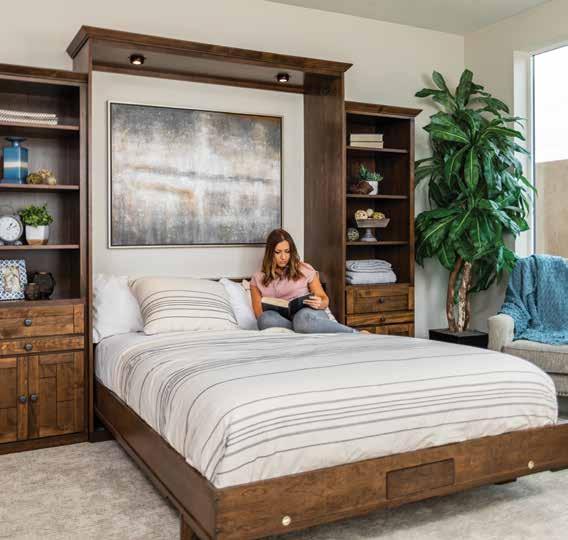
For a clever way to maximize square footage in a room and create a multi-use space, consider investing in a high-quality Murphy bed. Wilding Wallbeds creates sturdy, long-lasting beds that just might outlast you! And our Design article explains how flooring influences your perception of a room, even affecting light and sound.
If your air conditioning just isn’t equal to this desert heat, check out the advertorial from 3 Bears Air Conditioning on the importance of maintaining your units, while The Lindi Corp article discusses the importance of a clean system and how it improves your air quality. Blinds, drapes, and shutters from C&J Shutters also help keep your house cool and can even lower your power bill! Or if you want to escape your house altogether, visit Outdoor Living’s showroom in St. George to see how they can transform your backyard.
As always, thank you so much to our readers and advertisers for your support. We’re always incredibly grateful for you. Please give our advertisers some business and buy local.
See you at the home improvement store,
Editor in Chief
Frequent
Anita DeLelles, LMT, is a certified Equine and Small Animal Acupressure Practitioner with accreditation from Tallgrass Animal Acupressure Institute. Her studies included two consecutive summers in Bath, England, as well as coursework in Colorado and California and a BFA from UNLV. Anita is certified in small animal massage from the Northwest School of Animal Massage as well as in human massage. In 2014, Anita and husband Ron opened WOOF! Wellness Center and launched their website www.ShopMeoow.com.
David Cordero is the Communications and Marketing Director for the City of St. George. A southern Utah resident since 2006, David has extensive experience in writing, public
relations, marketing, and public speaking. He has also served in a variety of volunteer capacities over the years, including Utah Honor Flight, American Legion Post 90, religious education, and as a coach for his son's athletic teams. Email him at david.cordero@sgcity.org.
Nathan Hughes is a proud native of Mesquite, Nevada. With a deep-rooted passion for community service, he has dedicated his efforts to making a positive impact, particularly among the youth and teaching financial literacy. He is looking forward to working with members of the community. Nathan is president and advisor of Hughes Strategic Group, LLC DBA Pilot Wealth Strategies. Contact Nathan at (208) 490-5400.
contributors
Rob Krieger is a 20-plus-year member of the PGA of America and is originally from Cleveland, Ohio. He came to the area as the Director of Golf at Conestoga and now owns his own golf instruction business in St. George called Red Rock Golf Instruction, which is based at Southgate Golf Course Driving Range. He has been writing for ViewOn Magazine since 2010. He is also a Utah PGA Player Development Award Winner. For help with your game, please visit www.stgeorgegolflessons.com or email him at rob@sgugolf.com.
Ron Bird is a registered Investment Advisor Representative and has been serving Mesquite and the surrounding areas since 2007. Originally from Wisconsin, Ron grew up in Mesquite and served four years in the U.S. Marine Corps and earned his BA in Business Administration. After returning home, he joined his father at Financial Concepts, where he values building lasting relationships through a holistic approach to financial planning.
Ashley Centers is the former general manager of Anytime Fitness Mesquite, and her passion for fitness runs deep. She fell in love with competitive powerlifting as a preteen. She set many state records and national qualifying totals during her lifting career prior to her competitive retirement while attending college. Ashley is now an ISSA Elite Level Trainer, Certified Fitness Nutritionist, and Corrective Exercise Specialist and trains for Strongwoman competitions. She is an inactive board member for the Mesquite Senior Games and is excited to remain a contributor for ViewOn Magazine and to write about her passion for health and fitness!
Judi Moreo is one of the most recognized personal growth trainers and coaches in the world. She is the author of 11 books, including two international bestsellers, You Are MoreThan Enough and ConquertheBrain Drain. A self-made success, Judi started her first business with $2,000 and a lot of chutzpah. Judi learned to succeed step-by-step over many years and now has a worldwide following of clients who are enjoying outstanding success as a result of her guidance. You can reach Judi at judimoreo@yahoo.com or by calling (702) 609-2075.
Karen L. Monsen is a freelance writer who lives in St. George, Utah. She covers outdoor topics, nature, science, research, and human impacts. She taught French and social studies in public schools, served as a technical training coordinator, and designed and delivered business and technical writing seminars for corporate clients.
Randi Fuller is a psychology-based design strategist and founder of The Science of Sanctuaries, an approach developed through her work as owner of Mesquite Tile & Flooring. She combines sciencebacked design principles with artistry and real-world expertise to help homeowners and businesses create spaces that foster well-being, functionality, and beauty. Randi advocates for environments that prioritize safety, aesthetics, and emotional well-being, making thoughtful, evidence-based design accessible to both small businesses and homeowners. Call (702) 346-7225 to speak with Randi, or visit the showroom at 521 W. Mesquite Blvd. in Mesquite, Nevada. You can also visit their website at www.MesquiteTile.com.
Cliff and Ilene Bandringa are authors and the creators of BackRoadsWest.com. They have been traveling and photographing the world for more than 20 years, with a motto of finding the lesserknown, off-the-beaten-path places and then sharing their experiences with others. They do this via their blog, the virtual tour guides they've written, lots of YouTube videos, magazine articles, and a sister website of highquality and stock images. You can find all of these at www.BackRoadsWest.com.
Donna Eads and her husband moved to Mesquite in 2010 from Palm Desert, California, and she loves the small-town atmosphere. Her writing experience extends from high school and college newspapers to professional manuals as a critical care nurse. Her passion for tennis is evident in her frequent articles for ViewOn Magazine.
Kaylee Pickering is the comunications specialist for the Iron County tourism office, Visit Cedar City · Brian Head. Born and raised in Cedar City, she loves sharing the incredible recreation and arts opportunities around her with potential visitors @visitcedarcity. A mother of two young boys, she and her husband spend weekends showing them new trails, finding dirt to play in, and exploring southern Utah.
Message from
the Mayor
In the City of St. George, we believe that community gatherings are the lifeblood of a thriving city. They do more than just fill our calendars; they weave together the cultural, social, and economic threads that define our shared identity. Whether through fitness, the arts, or the celebration of our heritage, these events transform our city into a home where everyone feels a true sense of belonging.
The spirit of connection was on full display during April's St. George Art Festival, which welcomed tens of thousands of people—residents and visitors alike—in a celebration of art and culture.
Looking ahead, we are already building excitement for our signature traditions. We are officially on the "Road to 50" for the St. George Marathon. This world-class event is celebrating five decades as a rite of autumn in St. George, and this year’s race promises to be bigger and better than ever before.
Add to that our 37-year sister-city partnership with Ibigawa, Japan, and it proves that our reach extends far beyond our borders, connecting us to friends across the globe.
Likewise, preparations are underway for Dixie Days in September, where we will honor our pioneer heritage through the Dixie Roundup Rodeo, Dinner on Main, the Dixie Days Festival, carnival, historical treks, golf tournament, and so much more!
I encourage you to step outside this summer and engage with your neighbors. Whether you are participating in a Mayor’s Walk, exploring a downtown gallery, or simply enjoying our stunning landscapes, remember that every interaction strengthens the fabric of our community.
To stay updated on all our summer festivities, please visit sgcityutah.gov. I look forward to seeing you all at an event soon!
Jimmie B. Hughes Mayor of St. George, Utah
Dammeron Valley Why I Love
Ilove living in Dammeron Valley—it feels like mountain living with a front-row seat to nature, yet St. George is just a quick 15 miles away. The weather is refreshingly cooler, even in the heat of summer. One day, my son counted 52 trees on our one-acre property, which says everything about how lush and peaceful it feels here.
The views of Pine Valley Mountain are absolutely breathtaking and never get old. I love going on walks with my family, hiking, spotting horses and farm animals, and joining friends on community ATV rides. We have a community service group called “Dammeron Valley Helping Hands,” and we enjoy helping our neighbors. We also have a community garden. Dammeron Valley really is a little slice of heaven—easily the best-kept secret in the St. George area… so shhhh, don’t tell anyone!
- Mari Krashowetz
FMesquite Why I Love
or more than 35 years, Mesquite has been home to me. As an alumnus and a drill team coach for Virgin Valley High School, I love the strong sense of community, hometown pride, and the unforgettable Friday Night Lights, where the community comes together to cheer on the Bulldogs. I love the community support when state champions return home from sports competitions and are escorted down Mesquite Boulevard by fire trucks and cheering crowds before heading up Bulldog Hill to ring the victory bell.
I also love the beautiful desert sunsets lighting up the mesas and the iconic “V” above town. I love the smell of sagebrush, blooming desert wildflowers, roaring flash floods through the hills, and the Virgin River that has brought cooling relief and family memories since pioneer days. I love the fierce rivalry with Moapa Valley, and that at the end of the day, we are still neighbors and family. Most of all, I love Mesquite’s patriotism, values, integrity, and the way neighbors continue to support one another through the good and the bad times.
- Denise Houston
Home:
by Judi Moreo
There’s a moment that happens when you walk into a house.
Sometimes, without a word being spoken, you can feel it. Warmth. Comfort. A sense that someone has lived, loved, and created something meaningful within those walls.
And sometimes, you feel the opposite because a home isn’t built by furniture or square footage. It’s shaped by intention.
Living in the desert, we’re reminded daily that the outside world can be harsh, unpredictable, and, at times, unforgiving. The sun is relentless. The landscape is rugged. There’s very little about it that could be called soft.
This is why what we create inside our homes matters even more.
A Home Is More Than Shelter
Your home is your refuge. It’s where you retreat from the heat. Where you gather your thoughts. Where you restore your energy after facing a world that doesn’t always make things easy.
A home doesn’t become a sanctuary by accident. It becomes one by design—not only in how it looks, but in how it feels.
You Create the Atmosphere
We often think of decorating as choosing colors, furniture, and accessories. But the real atmosphere of a home goes deeper than that.
It’s in the way light fills a room. In the objects with which you choose to surround yourself. In the quiet corners that invite reflection, creativity, or conversation. Your home should tell your story—not someone else’s version of what a “perfect home” looks like.
Where Creativity Lives
Too often, we try to replicate magazine spreads or showroom styles that may be beautiful but have no soul. No connection. No meaning.
A meaningful home is not perfect. It’s personal.
Creativity Lives at Home
Creativity doesn’t require a studio or a special talent. It shows up in the way you arrange a table, in the art you display, in the colors you bring into a room, and in the simple act of making a space your own.
And in a world that moves as quickly as ours, having a place where creativity is welcome—even in small ways—can change everything.
A home that invites creativity invites life. It encourages you to slow down. To notice. To engage. To express something that might otherwise stay buried under busy schedules and daily responsibilities.
Imperfection Is Part of the Beauty
In the desert, nothing is flawless. Edges are rough. Lines are irregular. Growth is unpredictable. And yet, there’s a quiet beauty in that.
Your home doesn’t need to be perfect to be beautiful. In fact, the opposite is often true. Consider the slightly worn chair where conversations happen. The artwork that may not be museum-worthy but means something to you. The spaces that evolve as you do.
These are the things that give a home its character. These are the things that make it yours.
A Space That Supports You
Imagine a home that not only looks good, but supports who you are becoming. A place that energizes you when you walk in. That calms you when the day has been too much. That inspires you to think, create, and dream.
This doesn’t require a major renovation or a large budget. It begins with intention. One small change that reflects who you are and what matters to you. From there, something begins to shift.
A Final Thought
In the desert, we learn that we can’t always control the environment outside. Inside our homes, we have a choice. We can create empty spaces or spaces that are alive with meaning, creativity, and purpose. Because in the end, a home isn’t only where we live.
It’s where we become.
Sometimes, all it takes is a single corner—a small, intentional space where creativity is invited in—to begin that transformation. A place to reflect, to imagine, to create something that didn’t exist before.
Those small spaces have a way of growing. They become the heart of a home. And often the beginning of something more.V
Judi Moreo is an artist, author, speaker, and founder of The Creative Corner, where creativity comes to life. She helps people reconnect with their purpose through art, writing, and personal development. An award-winning author and longtime entrepreneur, Judi inspires others to create meaningful lives from the inside out. Visit www.judimoreo.com.
Built To
inspire:
Submitted by Southern Utah Home Builders Association
Credits: Utah Valley Videos – Ron Aguilar
For 10 unforgettable days in February, southern Utah once again became a showcase for imagination, craftsmanship, and innovation as the 2026 St. George Area Parade of Homes welcomed visitors from near and far. Held February 13 through February 22, the 35th annual event delivered jaw-dropping design, visionary architecture, and unforgettable inspiration around every corner under a fitting theme: “Built to Inspire.”
The 2026 St. George Area parade of homes
Photo
Presented by the Southern Utah Home Builders Association (SUHBA) and Zions Bank, the Parade of Homes featured 31 homes throughout Washington County, along with a special bonus home built by local high school students.
From thoughtfully designed townhomes to sprawling luxury estates exceeding 18,000 square feet, this year’s homes represented the very best in modern living while offering inspiration for every style and budget.
Whether attendees came to search for design ideas, dream about building their future home, or simply enjoy a week of world-class architecture, the Parade of Homes delivered an experience unlike any other. Visitors explored dramatic interiors, innovative layouts, and stunning outdoor spaces while viewing the breathtaking southern Utah landscapes.
Student built home | Photo credit: Leanna Bergeron
Heading into its 36th year, the St. George Area Parade of Homes continues to set the gold standard for showcasing what is possible in homebuilding and design.
“Homes have the power to inspire how we live, gather, and grow,” says Mari Krashowetz, executive officer of the Southern Utah Home Builders Association. “The Parade gives people a chance to see new ideas up close and imagine how those ideas could fit into their own lives.”
The Parade was filled with countless memorable features, including one home with an expansive outdoor pool and landscaping set against the towering backdrop of the Red Cliffs Utah Temple. Another home paid homage to the beloved Home Alone film, incorporating movie-inspired design details at every turn.
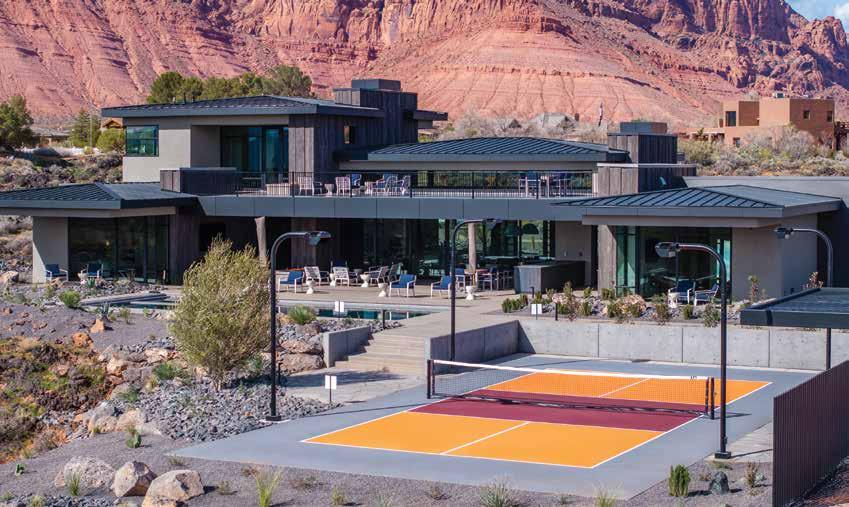
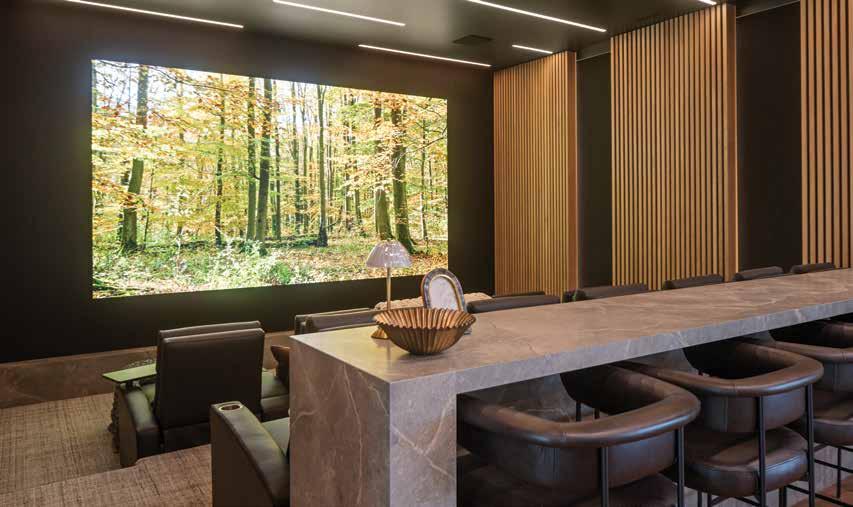
Popular trends this year were soaring vaulted ceilings, floor-toceiling windows, indoor sports courts, private theaters, and resort-style outdoor living spaces complete with lagoons, pools, spas, and private pickleball courts.
An exciting new addition to the Parade this year was the Spotlight on Innovation Home, a category designed to highlight creative solutions to local housing challenges. Located in downtown St. George, the featured home included a standalone accessory dwelling unit (ADU) and demonstrated how thoughtful design could maximize existing infrastructure while honoring the character and charm of historic neighborhoods. The home became a standout example of how innovation and attainability can work hand-in-hand.
Education and workforce development remained another major focus of the Parade. Through the construction of the Parade’s bonus home, students from multiple Washington County high schools gained hands-on experience under the guidance of licensed contractors and skilled tradespeople. SUHBA’s Careers in Construction program is designed to introduce students to careers in construction-related trades at a time when skilled labor shortages continue to challenge the building industry.
“The Careers in Construction program helps students see real career paths right here in Washington County,” says Krashowetz. “It connects education with opportunity and helps foster the next generation of skilled workers our community needs.”
While the homes themselves drew the spotlight, the impact of the Parade extends far beyond architecture and design. The event continues to serve as a major economic driver for southern Utah, generating thousands of jobs and supporting countless local businesses, contractors, suppliers,
designers, and tradespeople. Since the event began in 1991, more than 930 Parade Homes have been built throughout Washington County, helping to shape the region’s identity as a destination for exceptional home design.
In addition to the student-built home, Parade revenue continues to fund scholarships for students pursuing construction-related education. Collectively, the event has contributed more than half a million dollars toward educational scholarships to date.
A portion of every ticket sold benefits the Southern Utah Home Builders Care Foundation and SUHBA’s Housing Attainability Fund. These funds support community service projects, nonprofit organizations, and first-time homebuyer assistance throughout the region.
The 2026 St. George Area Parade of Homes once again proved why it remains one of the premier home showcases in the nation. More than just a collection of beautiful houses, the event champions craftsmanship, creativity, education, innovation, and community impact.V
More information about the Parade is available at www.ParadeHomes.com. Connect with the St. George Area Parade of Homes on Facebook, Instagram, TikTok, and YouTube.
About SUHBA:
The Southern Utah Home Builders Association represents leading home building and trade professionals in Washington County, Utah. As a recognized voice for the local housing industry, our association advocates for policies that protect and promote the building industry. SUHBA hosts the St. George Area Parade of Homes—a nationally recognized and award-winning home show highlighting excellence in design, craftsmanship, and innovation.
To learn more, please visit www.suhba.com.
Homeownership What Buyers
Submitted by Mortgage Mate, LLC
Buying a home is one of the biggest financial decisions most people will ever make. Whether you are purchasing your first home, upgrading to fit a growing family, downsizing, or investing in your future, understanding today’s mortgage market can help you make informed decisions. At Mortgage Mate, LLC, we believe education is just as important as financing. A well-informed borrower is better prepared to navigate the homebuying process, avoid surprises, and choose the loan program that best fits their goals.
Understanding Mortgage Rates
Mortgage interest rates are influenced by several factors, including inflation, the economy, bond markets, and actions taken by the Federal Reserve. Personal financial factors also matter, including:
· Credit score
· Debt-to-income ratio
· Down payment amount
· Loan type
· Property occupancy
Even a small change in interest rates can impact a monthly payment and the total cost of a loan over time. Working with a knowledgeable mortgage professional can help borrowers compare options and understand how different loan structures may affect their financial picture.
in Today’s Market:
Should Know
Preparing for Homeownership
Many buyers believe they need perfect credit or a large down payment to purchase a home. In reality, there are loan programs designed for a variety of financial situations.
Before beginning the home search process, buyers should focus on several key areas.
Review Your Credit
Understanding your credit profile early can help identify opportunities for improvement before applying for financing. Paying bills on time and reducing credit card balances may strengthen a mortgage application.
Build Your Savings
In addition to a down payment, buyers should prepare for closing costs, prepaid taxes and insurance, moving expenses, and emergency reserves.
Get Pre-Approved
A mortgage pre-approval helps buyers understand their purchasing power and shows sellers they are qualified and serious.
Finding the Right Mortgage Solution
Every borrower’s financial situation is different, which is why there is no onesize-fits-all mortgage solution. Factors
such as income, credit history, down payment funds, property type, and longterm goals can all impact which financing options may be available.
Because mortgage guidelines and programs can change over time, speaking with a mortgage professional is one of the best ways to understand current options and determine which loan strategy may fit your needs.
A knowledgeable mortgage professional can help explain available programs, answer questions about qualification requirements, review payment scenarios, and guide borrowers through the financing process from application to closing.
The Importance of Communication
The mortgage process involves multiple steps, including document collection, underwriting review, appraisal, and final approval. Clear communication between borrowers, loan officers, real estate agents, and title companies helps transactions move smoothly.
One of the most important things borrowers can do during the loan process is avoid making major financial changes before closing. Opening new credit accounts or making large purchases can affect loan approval.
Looking Beyond the Interest Rate
While interest rates are important, buyers should also consider:
· Monthly payment affordability
· Closing costs
· Mortgage insurance requirements
· Long-term financial goals
The lowest rate may not always be the best overall financial fit. A mortgage strategy should align with both current needs and plans for the future.
Final Thoughts
Homeownership continues to provide benefits for many families, including stability, the opportunity to build equity, and the pride of owning a home. With preparation and professional guidance, buyers can move forward with greater confidence.
At Mortgage Mate, LLC, our goal is to help clients understand their options and feel supported throughout the financing process.V
This article is intended for informational purposes only and should not be considered financial, tax, or legal advice. Loan programs and qualification requirements may vary.
BRINGINGLuxury ComfortOUTSIDE
A look at how local retailer, Outdoor Living, is helping redefine the backyard...
by Shane Weniger
Backyards look different from how they used to. The patio was once just the place you parked a grill and a couple of chairs for summer cookouts. Now it’s where families actually live—after-work dinners, late nights with friends, quiet mornings with coffee before the heat sets in. The space between inside and outside has gotten thinner, and homeowners want it that way.
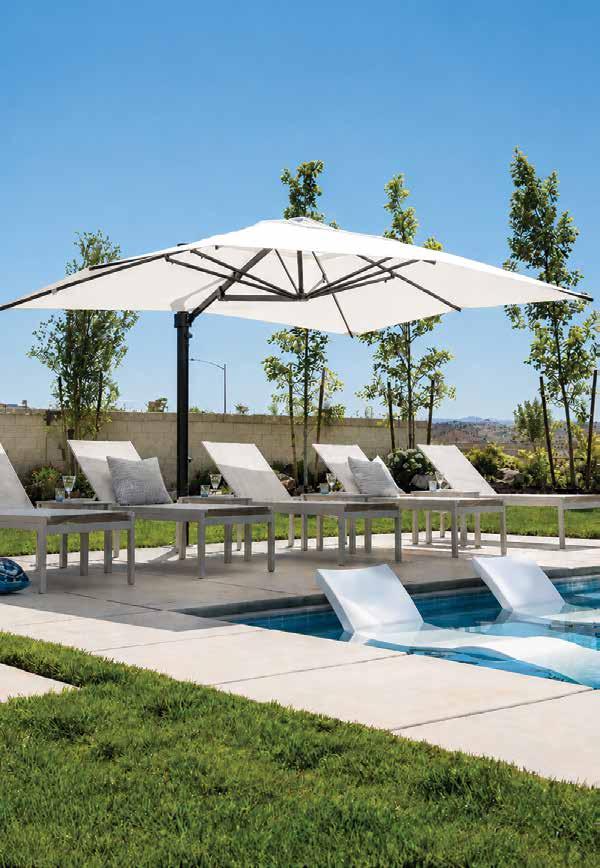
This is what Outdoor Living was built around. Specializing in outdoor furniture and custom design, the St. George showroom on Auto Mall Drive is a locally owned shop focused on one thing: building outdoor spaces that feel like a real part of the home, not a separate place where people tolerate plastic furniture for three months a year.
Homes across the area keep getting more thoughtful about how the indoors and outdoors connect. Open floor plans flow into covered patios. Kitchens open onto pool decks. Even smaller new homes treat the backyard as a real part of the home. And the furniture in that space has to meet the same standard as everything else.
Our region is also unusually hard on outdoor furniture. The sun is direct for most of the year. Summer afternoons run hot, winter mornings can sit below freezing, and the dry desert air finds its way into every joint and seam. Pieces that look fine in a coastal showroom often fade, warp, or fall apart during a season out here. The brands at Outdoor Living are chosen because they hold up through all of it.
That’s why brands matter. Outdoor Living carries the names that actually earn their reputation in the desert, such as Brown Jordan, Gloster, Castelle, Kingsley Bate, Lloyd Flanders, Tropitone, Woodard, Mallin, O.W. Lee, and Sunset West, including shade and outdoor heating from Frankford and Bromic. These aren’t seasonal pieces pulled off a bigbox endcap. They’re built with commercial-grade frames, performance fabrics made for desert sun, and finishes that hold their color year after year. Some of these companies have been refining the same product lines for decades, and it shows in the small details.
But a great catalog only takes you so far. The real question is how a backyard actually feels to sit in—whether the cushions still feel right three hours into a dinner, whether the dining set fits the space without crowding the firepit, or whether the colors work with the stone, the stucco, and the interior. Getting this part right takes a conversation, not a checkout cart.
So most of the work at Outdoor Living starts with a conversation. The team becomes familiar with the space, identifies what gets used and what doesn’t, and determines which pieces and finishes will pull it all together. Layouts get sketched. Fabrics get pulled. Sizes get adjusted. By the time anything is ordered, it already belongs to the home.
A
St. George company, built for backyards in St. George and surrounding areas.
And when it arrives, it arrives ready. Every piece is fully assembled before delivery. No boxes stacked in the garage, no hardware bags, no afternoon spent matching legs to a diagram. The new space is ready the moment it shows up.
That care is part of why Outdoor Living has built such a steady reputation around St. George. The focus is local. Washington County and the surrounding communities are home base, with the occasional project running out to Las Vegas, Mesquite, or Salt Lake City for a client who tracked the showroom down. But the heart of the work stays close.
Outdoor living has come to mean something bigger than furniture. It’s the morning by the
fire with a cup of coffee, the poolside afternoon that feels like a small resort without leaving the driveway, or the long dinner outside with people you love under a sky that handles the lighting for you. Those are the moments the showroom is set up to deliver.
For Outdoor Living, the goal isn’t to sell patio sets. It’s to help homeowners build the kind of outdoor spaces they’ll still be glad they put together five summers from now—the kind of space that earns its keep every weekend.V
ABOUT THE COMPANY
Outdoor Living is a locally owned premium patio retailer specializing in luxury outdoor furniture and custom outdoor living design. Based in St. George and serving the surrounding communities, with occasional projects in Las Vegas, Mesquite, and Salt Lake City, Outdoor Living creates seamless indooroutdoor spaces with premium materials, personalized design, and exceptional customer service.
They are located at 359 Auto Mall Drive in St. George, Utah. Call (435) 703-3307, visit StGeorgeOutdoorLiving.com, and find them on Instagram: @outdoorlivingut.
the Science of
Timeless Flooring
HOW TO CHOOSE FLOORS THAT STILL FEEL BEAUTIFUL DECADES LATER
by Randi Fuller
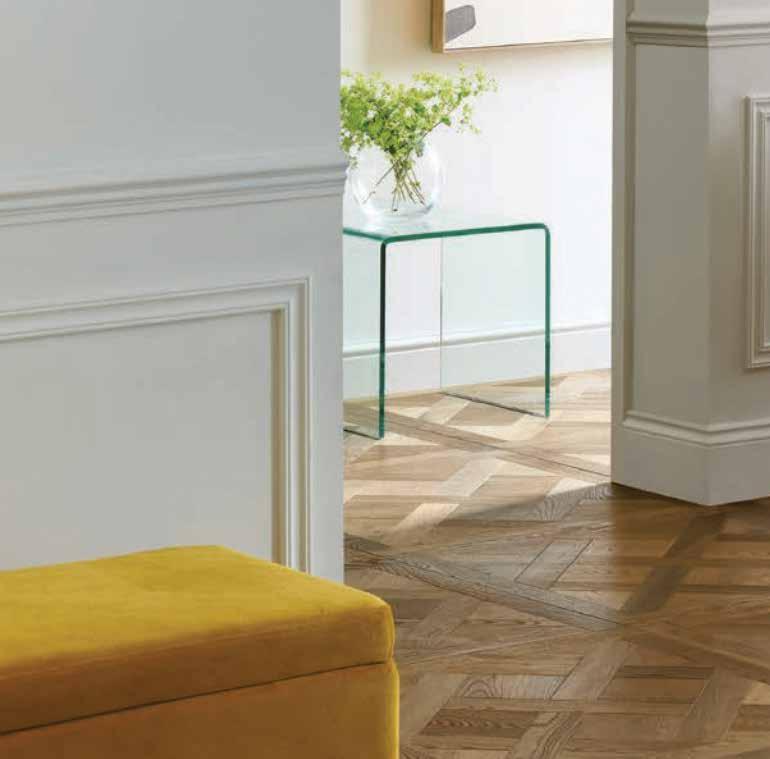
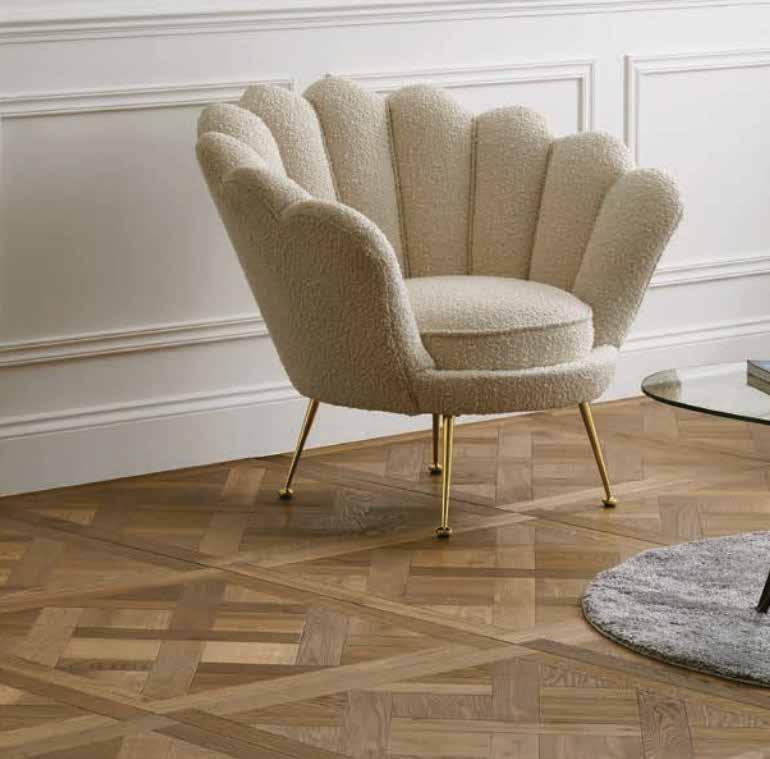
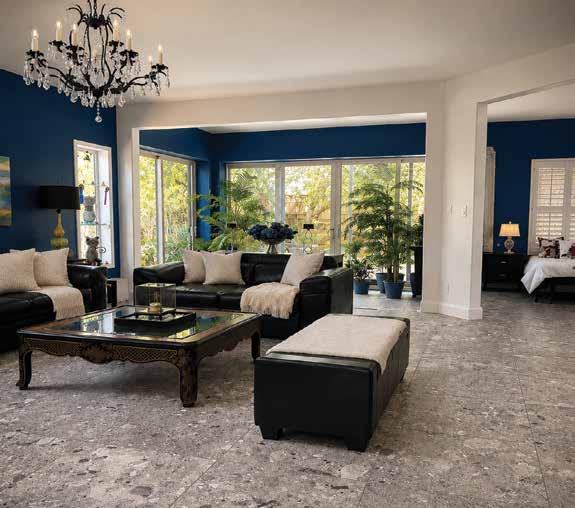
Most homeowners think of flooring as a finish selection. In reality, it quietly shapes how a home feels every single day. Flooring affects how light moves through a space, how sound travels, how calm or cluttered a room feels, and even how naturally the home flows from one area to another. Flooring quite literally grounds us within a space.
When selecting samples for my showroom at Mesquite Tile & Flooring, I like to balance current trends with flooring options homeowners will continue to love years down the road.
The flooring choices that age best emotionally and visually typically follow the same principles found in all timeless designs.
Timeless flooring is rarely defined by a specific decade or trend. Instead, it succeeds because it balances natural aesthetics, visual continuity, proportion, and durability to support everyday living for years to come.
Authenticity: Natural materials and organic textures create a stronger sense of comfort because the brain instinctively
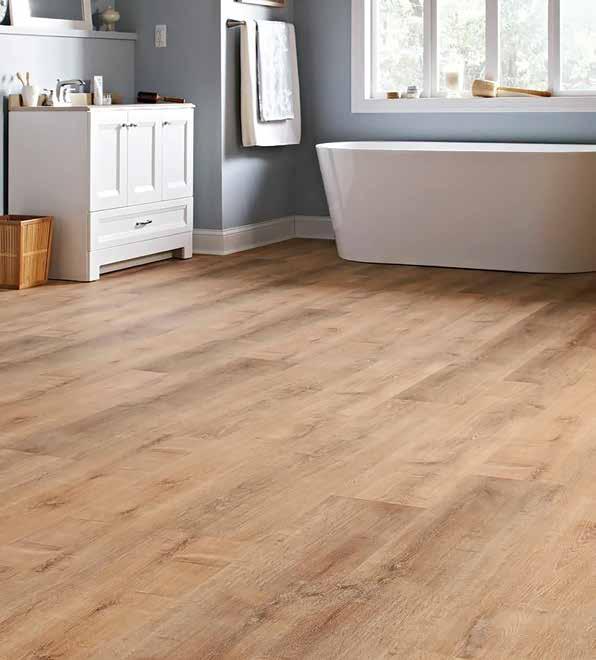
responds to patterns found in nature. Warm wood-look luxury vinyl plank, natural stone visuals, matte porcelain tile, and subtle textures often feel calmer and more grounding than highly polished or artificial surfaces. Even manufactured materials can create a restorative response when they authentically reflect patterns found in nature. The more natural a material looks and feels, the more restorative the environment often becomes.
Color Palette: Flooring trends have gradually shifted away from icy grays and high contrast patterns toward
warmer, earthier tones inspired by nature. Soft browns, warm greiges, sand tones, and muted clay colors create a neutral visual foundation rather than dominating the space itself. Some of the most timeless flooring choices today are warm wood-look luxury vinyl plank and large-format porcelain tile because they balance natural aesthetics with everyday durability. Many natural wood and stone visuals also contain both warm and cool undertones, giving homeowners flexibility as décor styles evolve.
Continuity: Flooring creates one of the largest continuous visual surfaces in a home, which means it strongly influences whether a space feels cohesive or visually fragmented. I often see homeowners replace flooring in only one or two rooms, only to later realize how much continuity shapes the overall experience of the home.
When multiple materials, patterns, and abrupt transitions compete for attention, the eye must constantly process visual interruptions throughout the environment.
Consistent flooring throughout main living areas creates greater openness, flow, and visual calm because the eye can move more naturally through the space. In environmental psychology, reducing unnecessary visual noise helps environments feel more restorative and less mentally demanding.
Scale and Proportion: Scale and proportion strongly influence whether flooring feels timeless or visually overwhelming. Over the last 50 years, flooring trends in the Mojave region have shifted toward larger tile formats and wider planks because they create a calmer visual rhythm. Smaller tile patterns with heavy grout lines once dominated desert homes, while larger formats like 12-by-24-inch porcelain tile and wider planks reduce visual interruptions and help spaces feel more open and cohesive.
Strong patterns, busy layouts, or flooring that feels out of scale with a room can quickly make a space feel dated. Like many classic design elements, timeless flooring succeeds by supporting the overall environment rather than competing for attention within it.
Durability: Timeless flooring must also withstand real life. Durability, comfort underfoot, ease of maintenance, and how materials perform with pets, grandkids, or desert dust all shape long-term satisfaction. Luxury vinyl plank has become especially popular because it combines the warmth and continuity of wood with durability that works well for everyday living.
The goal of timeless flooring is not perfection or trend avoidance. It is creating a foundation that quietly supports everyday living while remaining adaptable as life and personal style evolve.
The best flooring choices are rarely the loudest ones. More often, they are the ones that continue to feel right long after trends have changed because they support how people truly want to live in their homes.V
Randi Fuller is a Psychology-Based Design Strategist and founder of The Science of Sanctuaries™, an evidence-based design philosophy exploring how environments influence emotional wellbeing and human experience. With backgrounds in behavioral health and the design industry and as the owner of Mesquite Tile & Flooring, Randi combines psychology, artistry, and real-world expertise to help homeowners and businesses create spaces that feel both beautiful and supportive.
Mesquite Tile and Flooring is located at 521 W. Mesquite Blvd. Ste. A in Mesquite, Nevada. Visit www.mesquitetile.com or call (702) 346-7225 for additional information. Follow Randi on social media: @thescienceofsanctuaries and @mesquitetile.
Planning a Fall Garden - in Southern Nevada -
by Kirsten Pope, IKA Greens owner
It’s been a hard year for farmers across the country. Winter and spring weather swung from heat to cold to heavy rain, and many fruit and vegetable crops took a hit.
In California, cherry season arrived early and ended early as heat stress was followed by wet weather. In Utah, a hard frost in April damaged orchards right as fruit was setting— peaches, apples, and cherries—causing major losses for seasonal staples. Further afield in Florida (and parts of Mexico), wet weather in April and May reduced early-season tomato production considerably. All of this contributes to light markets for seasonal produce and a hefty price tag for consumers.
The good news is that in southern Nevada, many crops thrive in autumn or winter, and now is a great time to prepare for an autumn garden.
Why fall gardening works here
In our desert climate, the most reliable growing windows are from fall through spring. As days shorten and nighttime temperatures drop, plants experience less stress, pest problems often improve, and water use becomes more efficient.
If you’ve ever felt like you can’t grow anything in southern Nevada, it’s often not a skill issue—it’s a timing issue. Fall is when many home gardens finally start to feel successful.
What to plant for an autumn garden (and when)
Below is a simple planting timeline for southern Nevada. Many of these can be direct-seeded (planted straight into the soil). A few do best as transplants (young plants started elsewhere and then planted into your garden).
Mid-July
• Green beans - bush or pole (seed)
• Sweet corn (seed)
• Winter squash (seed)
Early August
• Beets (seed)
• Broccoli (seed)
Late August
• Broccoli (transplants)
• Cabbage (transplants)
• Cauliflower (transplants)
• Carrots (seed)
• Kale (seed)
• Spinach and chard (seed)
*A practical note: if you’re planting in the heat, germination is the tricky part. Seeds can struggle when soil temperatures are high.
A few ways to improve success:
• Water the bed before planting so the soil starts evenly moist.
• Use light shade cloth during the hottest part of the day.
• Keep the top inch of soil consistently damp until seedlings are established.
Once plants are up and growing, you can shift to deeper, less frequent watering.
Tips that make fall desert gardening easier
You don’t need a perfect setup, but a few small choices make a big difference:
• Morning sun, afternoon protection: Many vegetables appreciate early light and some relief later in the day.
• Mulch matters: A layer of mulch helps hold moisture and keeps soil temperatures more stable.
• Plant what you’ll actually eat: A small garden that gets harvested is more successful than a big one that becomes overwhelming.
Raised beds or container gardens can reduce bending and make daily care more comfortable, and fast-growing crops like beans, beets, and leafy greens provide quick wins.
Growing
hydroponically
If you enjoy having fresh herbs and greens ready to use, but you’re limited by outdoor space, hydroponics is a great way to grow food reliably, especially in an extreme climate.
There are many indoor hydroponic systems available:
• Grow towers can produce a steady supply of leafy greens, but they need a dedicated corner and supplemental lighting.
• Countertop units fit a handful of plants at a time and are ideal for kitchen herbs and small lettuce heads.
Support local while you build your garden
Even if you’re not harvesting from your own yard yet, you can still eat seasonally by shopping from nearby growers. Many crops thrive in surrounding regions through the summer, and buying locally keeps more dollars in our communities.
At Ika Greens, we grow microgreens and other greens and vegetables at our small farm in Moapa, Nevada. Microgreens are harvested between the sprout and baby-green stage. They’re grown indoors, available year-round, and make an easy, nutritious addition to salads, sandwiches, wraps, or as a topping for almost any meal. We grow greens hydroponically, and we’re harvesting an abundance of basil for pesto, dressings, and salads.
We also work closely with local and regional farmers. This year, we have partnered with our mentor and fellow farmer in Caliente, Nevada, where we’re harvesting greenhouses full of tomatoes, along with summer squash, beets, salad turnips, and a range of lettuce mixes in the shoulder seasons.
Depending on the week, you might find regional produce such as:
• Tomatoes grown in Caliente, Nevada
• Watermelons grown in Littlefield, Arizona
• Sweet corn from Enterprise, Utah
• Peaches (limited this season) and other fruit from Hurricane, Utah
• Occasional specialty items direct from California farms
The takeaway
When national weather patterns disrupt crops, it shows up quickly at the checkout line. But one of the best ways to respond is to lean into what our climate does well.
Late summer is the moment to prepare. Start small, plant for fall, and give your seeds a little help through the hottest weeks. By the time temperatures settle, you can harvest from your own backyard while much of the country is winding down.
If you’ve been waiting for the right time to garden here, fall is it.V
Ika Greens Farm Stand and Farm-toFood-Truck can be found every Thursday, Friday, and Saturday from 9 a.m. to 3 p.m. at Baja Imports at 410 W. Mesquite Blvd. Enter THROUGH Baja Imports to their back courtyard area. Visit Ika Greens on Facebook or Instagram (@ikagreens) for current seasonal produce and food offerings.
*Available crops may vary at the time of publication.
Fresh Peach & Roasted Corn Salad
Ingredients:
Mixed lettuce
1 peach, chopped or sliced into 1/4-inch wedges
1 ear of corn
1/4 red onion, sliced thinly
4–6 asparagus stalks
Ika Greens pea microgreens
Sliced almonds and/or pumpkin seeds, toasted
Method:
Grill the corn in its husk for 10–15 minutes until kernels are tender, turning often. Grill the asparagus at the same time, 3–5 minutes, until charred. Chop asparagus into 1-inch pieces. Cut kernels from corn. To assemble the salad, arrange mixed lettuce in a large bowl. Top with corn, asparagus, peach slices, red onion, and garnish with pea microgreens and nuts or seeds. Serve with balsamic vinaigrette.
What’s Hiding in Your Air
And Why It Matters More Than the
Heat
by Jason Rudnik, General Manager of The Lindi Corp
It doesn’t start with a breakdown. It starts quietly.
A little more dust on the table. A faint smell when the system kicks in. A room that never quite feels as cool as the rest of the house. Out here in the desert, we expect the heat. What most people don’t expect is what comes with it.
There’s also a bigger picture that many homeowners don’t consider.
Your air conditioning system doesn’t just cool the air—it helps protect the home itself. Stable indoor conditions reduce stress on materials, prevent excessive drying, and help maintain the overall integrity of the space. For those who spend part of the summer away, this becomes even more important. The home still experiences the full impact of the heat, even when you’re not there.
And in a desert climate, that protection is constantly being challenged. Every day, fine dust and debris move through the air
around us. It’s part of living here. But over time, that same dirt makes its way into your home—and into your HVAC system.
Your air conditioning system doesn’t just cool your home—it moves air. Every cycle pulls in airborne particles: dust, dander, and fine debris carried in through doors, windows, and daily life. In dry environments like ours, that load is significantly higher than most people realize.
At first, it’s barely noticeable.
But inside the system, dirt begins to collect on filters, coils, and blower components. As it builds up, airflow becomes restricted. The system works harder to push air through, increasing strain on motors and reducing efficiency.
That’s when small signs begin to show up—longer run times, uneven temperatures, higher energy bills.
Inside the home, those same particles continue to circulate when filtration isn’t keeping up. Over time, it impacts not just comfort, but the overall feel of the space.
There’s a simple way we often think about it: your system can only perform as well as the air moving through it.
In our line of work, we talk about “finding the dirt”—not just what’s visible, but what’s building up inside the system where it can’t be seen. Once you know where it’s collecting, you can start to correct it by improving airflow, restoring efficiency, and helping the system operate as it was designed to.
Sometimes the fix is simple. Sometimes it takes a deeper look. Either way, the goal isn’t just about the equipment— it’s about the environment inside your home.
Desert conditions are tough on systems. Fine dust finds its way into everything, and air conditioners run longer and harder here than in milder climates. Left unchecked, that combination slowly wears things down.
And for homeowners who leave for part of the season, it’s easy to assume everything will be fine while you’re gone. Without proper airflow and temperature control, that stress continues whether anyone is there to notice it or not.
A well-maintained system keeps things balanced, quietly doing its job in the background.
In these hotter months, it’s worth taking a closer look—not just at whether your system turns on, but how well it’s truly working.
In the desert, it’s not just the heat you’re dealing with. It’s everything that comes with it.V
Call (702) 872-3971 to schedule your maintenance check today. The Lindi Corp services plumbing, HVAC, hot water systems, and appliances. We are located at 50 N. Sandhill Boulevard in Mesquite, Nevada.
Planting for Growth:
What Gardening Can Teach Us About Investing
by Ron Bird
By the time July and August roll around, most gardens tell you the truth. You can see what’s thriving, what needs attention, and what probably looked better in the spring. Some things are in full bloom. Others need trimming back. And a few things just didn’t take the way you expected. Some things are there because they look good right away.
Others take a long time before you even notice much is happening. And a few things don’t look like much at all when they go into the ground, but over time, they end up shaping the whole space.
There’s something honest about that stage of the season. It shows you what’s actually working, not just what was planned. Investing tends to work the same way.
Not every dollar does the same job. Some funds are positioned for longterm growth. Some funds are there to provide stability when things get bumpy. And some funds are kept flexible, ready to use when life calls for it.
The challenge isn’t picking one type of “plant” or investment. It’s figuring out how they all fit together in a way that makes sense for your goals.
A big misunderstanding about investing is the expectation that something should always be happening. But most real growth doesn’t look like much on a day-today basis.
Garden't don't change dramatically overnight. Most of the work is happening quietly. The roots spread, soil settles, and systems begin to build underneath the surface. The visible changes come later.
There will be seasons where the market moves quickly and seasons where it feels like nothing is happening at all.
But the long-term picture is
important in both. Trying to force constant change usually does more harm than good.
Having a garden reminds us that maintenance matters just as much as planting. You don’t just put things in the ground and walk away forever. You adjust. You trim back what’s growing too fast. You replace what didn’t take. You make small changes so everything keeps working together.
Investments need that same kind of attention, not constant tinkering, but occasional check-ins to make sure things still match where you are in life.
What made sense five or 10 years ago might still be fine, or it might need a small adjustment. The key is not letting it drift for too long without looking. At the end of the day, both gardening and investing are really about patience and intention.
You’re not trying to get everything to peak at once. You’re building something that lasts, something that grows over time, and something that supports the way you want to live later on.
And just like a well-kept yard, the best investment plan usually isn’t the most complicated one. It’s the one that’s been planted thoughtfully, tended to when
needed, and given enough time to actually grow. If it’s been a while since you’ve taken a fresh look at your investment strategy, or if you’re not sure whether what you’ve built still fits where you are today, this is a good time to sit down and review.V
This article is for informational purposes only and is not intended to provide specific investment advice. Ron Bird is an owner/agent with Financial Concepts Retirement Planning and can be reached at (702) 346-7025. Visit our website www.FCRPInsurance.com for more information.
The Garden Party of the Season: Toast of Kayenta
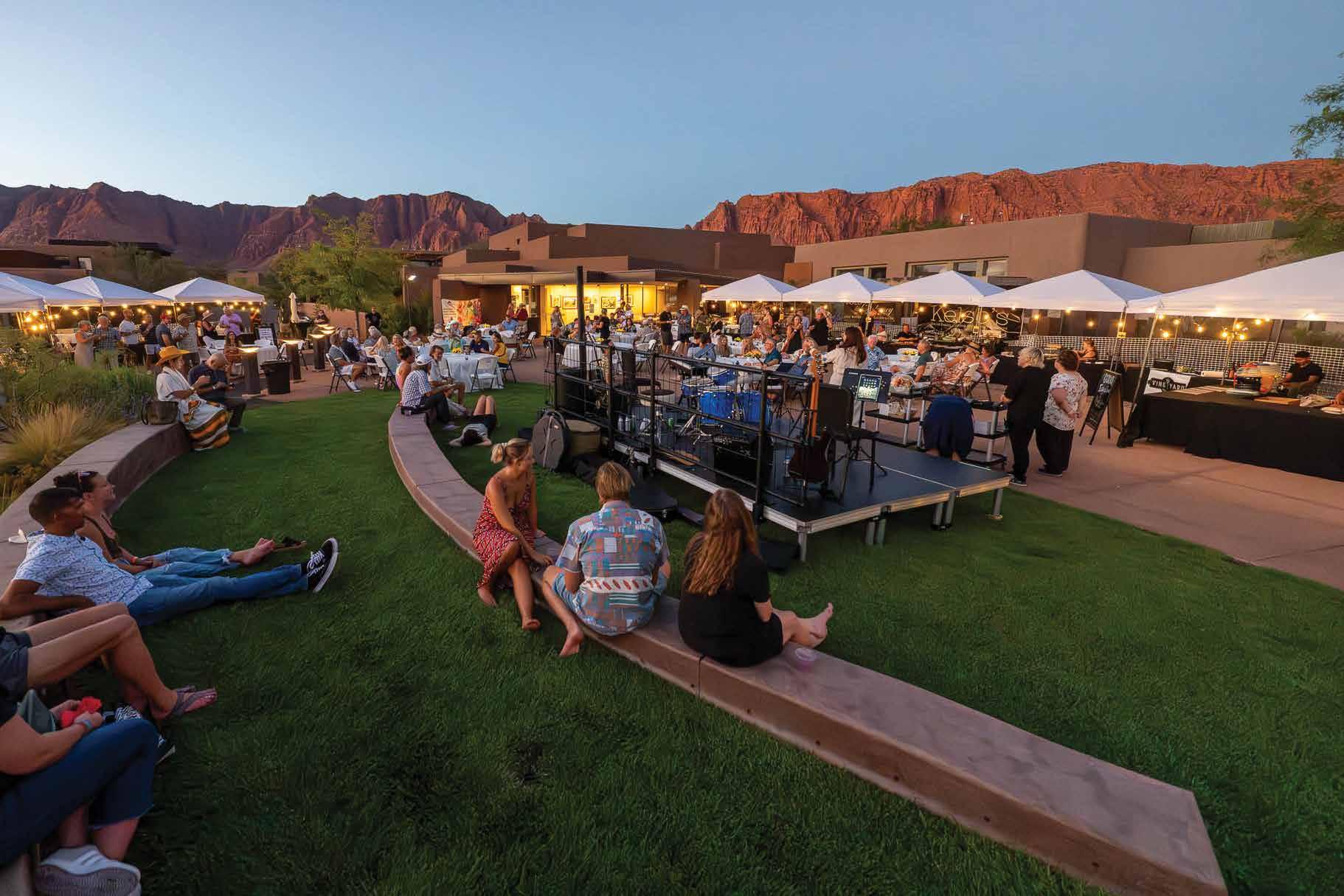
In southern Utah and its surrounding region, outdoor living and entertaining are more than seasonal pleasures—they are part of the lifestyle. The dramatic red rock landscapes, warm evenings, and strong sense of community create the ideal backdrop for gatherings centered around food, art, and connection. Capturing this spirit is the Center for the Arts at Kayenta’s annual event, Toast of Kayenta—formerly known as Taste of the Town at Kayenta.
Set within the stunning Kayenta Art Village, Toast of Kayenta transforms the desert landscape into an elegant open-air celebration of flavor, creativity, and community. The annual food and wine festival embraces the relaxed sophistication of a thoughtfully hosted garden party, where guests gather beneath southern Utah’s expansive skies to enjoy exceptional cuisine, live music, engaging conversation, and unforgettable scenery.
Throughout the evening, attendees enjoy tastings from some of the area’s most celebrated restaurants, private chefs, caterers, wineries, breweries, and artisan vendors. From inventive small
plates to locally crafted wines and specialty beverages, the festival showcases the creativity and growing sophistication of southern Utah’s culinary scene. Guests are invited to explore a carefully curated selection of dining experiences, often discovering hidden gems and new local favorites.
One of the event’s most engaging traditions is the opportunity for attendees to vote for their favorite participants. Awards are presented for categories, including Best Overall Taste, Best Food Taste, and Best Beverage, adding a lively and interactive element to the evening while celebrating the talent and innovation of local culinary professionals. Learn what your neighbors and friends loved at this event. Maybe you’ll find the perfect local wine for the next time you host at home!
What makes Toast of Kayenta especially memorable is the atmosphere itself. The experience mirrors the very best aspects of outdoor entertaining: fresh flavors, relaxed elegance, and the joy of gathering with friends and neighbors in a beautiful setting. Winding desert pathways, native landscaping, and
The perfect inspiration for your next garden party can be found at Kayenta.
Contributed by the Kayenta Arts Foundation | Photography by Alan Holben
the artistic ambiance of Kayenta create a seamless blend of nature, design, and hospitality. Beneath the iconic red cliffs, guests are reminded how deeply the region’s natural beauty influences both its lifestyle and culinary culture.
The event also reflects a growing appreciation for experiences that bring people together outdoors. Garden parties and open-air entertaining have become increasingly popular as homeowners and hosts look to create meaningful, welcoming spaces for connection. Toast of Kayenta captures this trend perfectly, offering inspiration not only through its food and beverage offerings but through its thoughtful setting and atmosphere.
Beyond the celebration itself, Toast of Kayenta supports an important mission. Proceeds from the event benefit the Kayenta Arts Foundation and help sustain arts programming throughout southern Utah. Guests not only enjoy an extraordinary evening of food, wine, and entertainment, but also contribute to the continued growth and vitality of the local arts community.
Last Year's Winners:
Now entering its third year, Toast of Kayenta continues to establish itself as one of the region’s premier fall food and wine events. It is a celebration of creativity, outdoor living, regional flavor, and community connection—a perfect reflection of the Home and Garden spirit, where beautiful spaces and shared experiences come together to create something truly unforgettable. You don’t want to miss this party, so mark your calendars for Toast of Kayenta on September 13, 2026!V
Attendees must be 21 or older with a valid ID. For more details, visit www.KayentaArts.org or call (435) 674-2787. Email us at boxoffice@kayentaarts.com. We’re located at 881 Coyote Gulch Court in Ivins, Utah.
Follow us on social media to stay updated on our events! Instagram: @cfakayenta | Facebook: Center for the Arts at Kayenta
Bold & Delaney Winery Winner of Best Beverage
Papa's Got Jerk Winner of Best Overall & Tie for Best Food
BBQ by joe Tied for Best Food
Mesquite’s Newest Treasure Trove Turns Shopping into an Adventure
by Eileen Riviere
Tucked into an industrial corner at 660 Hardy Way in Mesquite, a freshly (and cleverly) aged warehouse is now home to one of the most unique retail experiences in southern Nevada.
Welcome to Side Hustle Vintage, Thrift & New—the vision of lifelong entrepreneur Eileen Riviere. The name says it all. Part vintage boutique, part thrift shop, part brand-new clothing destination, Side Hustle is exactly what its owner intended: not just a shop, but an experience. And the story behind it is pure Mesquite serendipity.
Eileen brings six decades of family legacy in estate sales, antiques, and appraisals to the desert. From an early age, Eileen worked with her parents at their appraisal and estate sale business. She has managed estate sales and sold vintage items at antique malls. That early immersion shaped a keen eye for value that has never faded. Since 2003, she has been a top-rated seller on eBay and Poshmark, moving women’s clothing and collectibles to happy buyers around the world.
When Eileen and her husband, George, moved to Mesquite, the original plan was to continue the online business from a warehouse on Hardy Way. Just days after unpacking, Eileen told George she was going shopping and returned ten minutes later. “There was nowhere to shop,” she laughs. “I realized right then that Mesquite needed more than another online operation. It needed a destination.”
What followed was four months of nonstop work. The couple transformed a plain warehouse into an “even older-looking” warehouse—complete with character, charm, and the kind of patina that makes every corner feel like a discovery.
Appropriately, they took over the former home of Virgin Valley Veterinary and immediately made their new puppy, Coco, the official mascot. Look for her cheerful face on the sign out front—you can’t miss it.
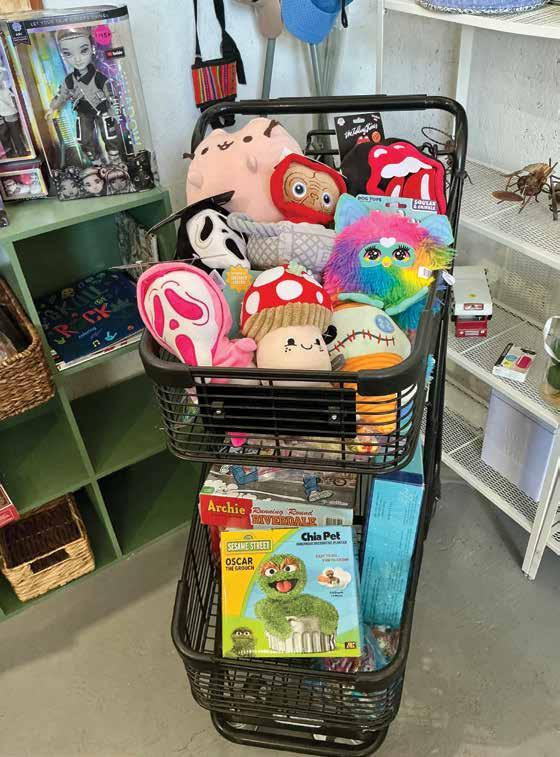
Step inside Side Hustle and you’ll find something for everyone. Racks of brand-new clothing (with tags still
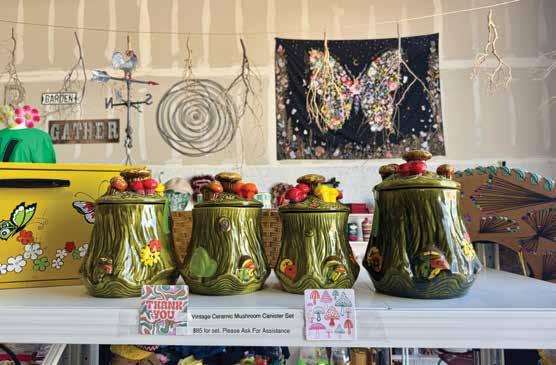
attached) sit alongside carefully curated pre-loved and vintage pieces: casual wear, business attire, denim, swimwear, evening gowns, golf clothing, shoes, purses, and statement jewelry. Beyond apparel, the store overflows with antiques, collectibles, housewares, kitchen treasures, and toys—all of them personally selected by Eileen herself.
Need a break while your spouse browses? Head to the designated “husband babysitting” area, where vintage vinyl spins on a turntable, and comfortable seating provides an atmosphere that makes Side Hustle feel more like a gathering place than a retail stop.
In a town known for golf courses, retirement living, and quiet charm, Side Hustle Vintage, Thrift & New brings something refreshingly different: a place where shopping feels like treasure hunting, where generations of expertise meet small-town hospitality, and where every visit uncovers something new (or delightfully old).
Whether you’re hunting for the perfect outfit, a unique gift, or just a fun afternoon with friends, Side Hustle delivers exactly what Mesquite has been missing—an experience worth coming back to again and again.V
Side Hustle Vintage, Thrift, & New is located at 660 Hardy Way #43 in Mesquite, Nevada. Hours of operation: Thursday to Saturday: noon-5 p.m.
Sunday to Wednesday: closed
Follow us on Facebook for store updates and featured products!
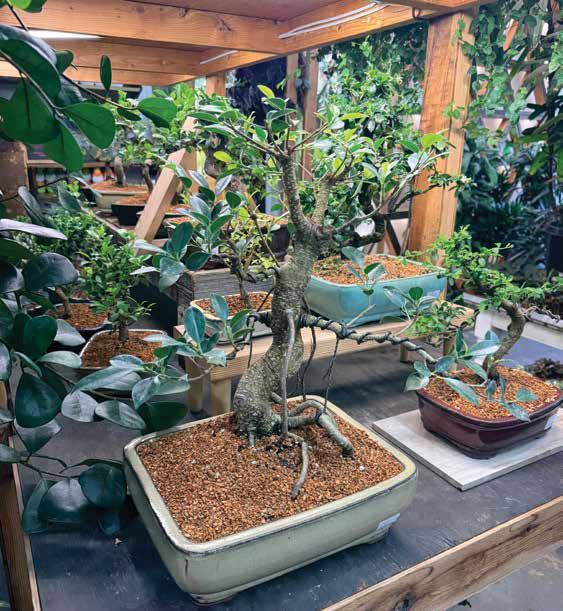
Passionate about Plants: Passionate about Plants:
Moss &Timber Moss &Timber
by Elisa Eames
WIndoor Plants & Gifts
Plants & Gifts
hen Shane Taylor moved from the Salt Lake area to Washington, Utah, he knew his life would change forever, but the red rocks, outdoor activities, clean air, and warm climate had been calling to him for years. In 2017, he finally answered. “I love the weather in southern Utah and access to the outdoors for hiking, biking, swimming, and stand-up paddle boarding,” he says.
But before trading snow and smog for sunshine and crisp air, he spent years planning the escape. “I knew I wanted to move to southern Utah, but I needed a job,” he explains. “I’ve always had a thing for plants. As a kid, I would buy the cheap succulents at the grocery store and take them home and kill them (I had no idea what I was doing).” As a teen, Shane worked for a florist, where he learned how to care for plants.
Later, he worked at a plant nursery in Salt Lake for 17 years— he still has plants from his time there.
Naturally, he planned to open a plant shop after his move to southern Utah. “I felt there was a need for an indoor gardening space in this area,” he explains. Spending time on the project only during evenings and on weekends, he researched and
crafted his business plan while working full-time in Salt Lake. “I was building the fixtures and display items I would need to lay the shop out,” he says. “The 80 to 100-hour work weeks felt electric with creative energy.”
Finally, Shane was ready to pull the trigger, and with help from family and friends, he set his plan in motion. Months later, he
found a location for his shop on St. George’s Sunset Boulevard, where it still is today.
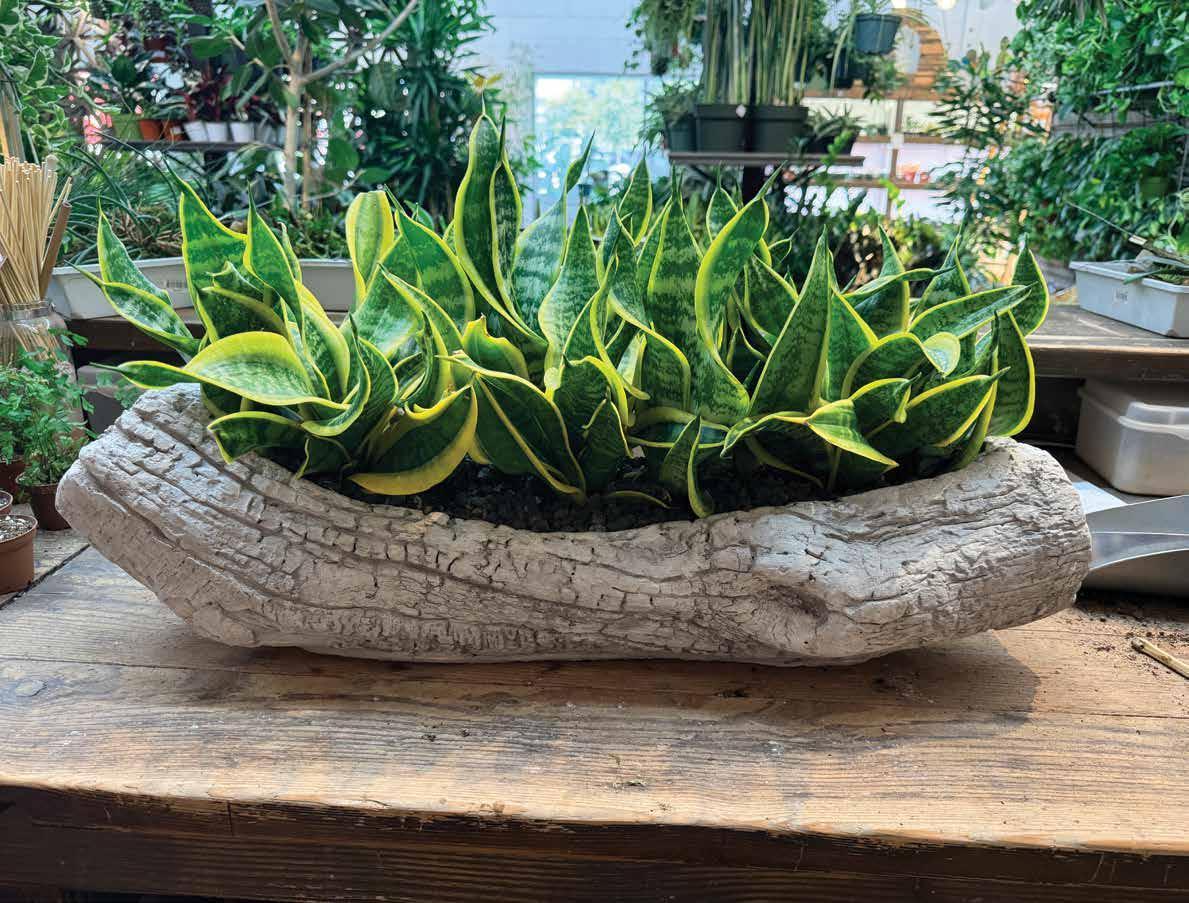
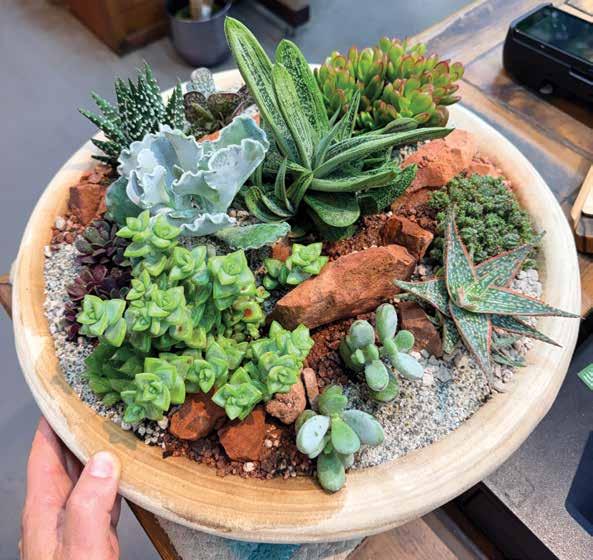
When he launched Moss and Timber Indoor Plants and Gifts, he knew he was rolling the dice—about half of businesses fail within five years. But nine years later, his shop continues to provide one of the most extensive plant selections in the area. “I’ve now been in the horticulture/design/retail industry for 31 years,” he remarks. “We know about every plant we sell and are able to customize the care instructions for our customers.”
Drawing inspiration from art, architecture, industrial design, purposeful spaces, deserts, and mountains, Shane credits skilled, innovative employees and colleagues with helping to shape the ever-evolving shop into what it is now.
Moss and Timber has managed to handle its share of curveballs, including COVID, though the pandemic has not been the only economic decline in recent history to impact small businesses. Current events have also contributed to collective unease and timid spending. “Plants are not strictly a necessity, but they do have their place as a connection to nature and a way to reduce stress, so we’ve been able to weather the rough patches so far,”
he says. “Keeping the business small and light has allowed it to bend through the hard times without breaking. I’m proud of the simple fact that I'm still here.”
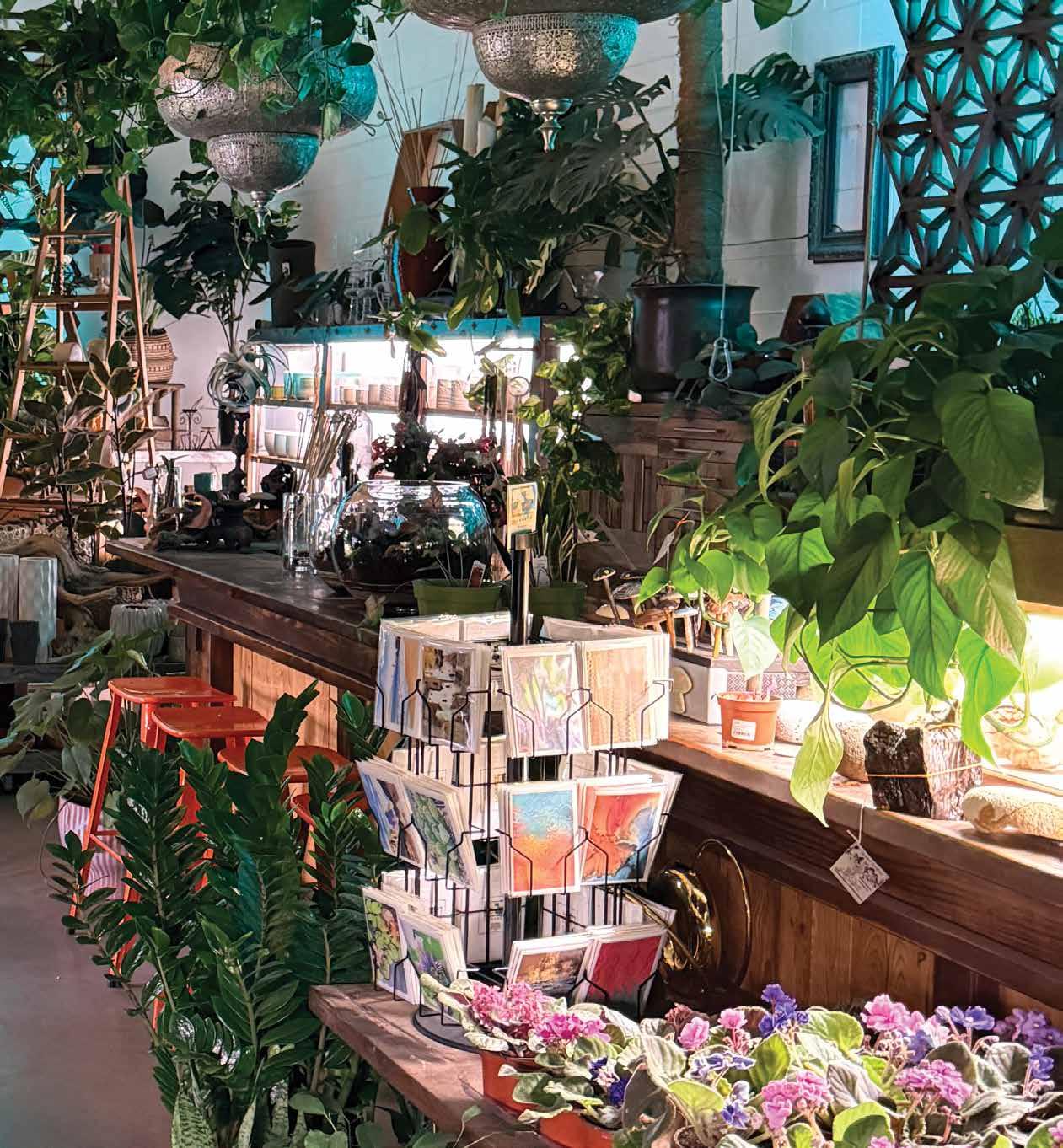
In the end, Shane knows it’s all worth it. “[The best parts of my day are] seeing how customers react to the garden-like atmosphere they step into when entering the shop,” he says. “That and the creativity regarding how we present the carefully curated selection of plants and containers to our customers.” Shane’s efforts are clearly making a difference as Moss and Timber has won the Best of Southern Utah Silver award for four years and counting.
As he celebrates his ninth anniversary, look for festivities at the shop from June 17 through July 15. “I have the best customers a business can have. That's not just a platitude,” he says. “People who are willing to try and cultivate a garden in their home tend to be the best sort of people.”V
Moss and Timber Indoor Plants & Gifts is located at 1122 W. Sunset Blvd. Suite 2, St. George, Utah. Call (435) 674-3417, visit www.mossandtimber.co, or find them on social media. The shop is open Tuesday–Saturday from 11 a.m. to 6 p.m.
High Noon Hydration A Mesquite Summer
Survival Guide for Your Yard
Submitted by Star 1 Landscaping—your locally-owned and operated award-winning landscaping company
In Mesquite, summer isn’t just hot. It’s the kind of heat that makes you question your life choices by 9 a.m. Sidewalks shimmer, car seats become medieval torture devices, and your plants… Well, your plants are hanging on like they forgot to renew their lease with Mother Nature. So naturally, watering becomes less of a routine and more of a full-blown strategy session.
The Golden Rule: Water Smart, Not Just More
When temperatures climb into the triple digits, the instinct is simple: “It’s hot, so give it more water.”
But plants don’t want a panic flood. They want consistency, depth, and timing.
Healthy summer watering in Mesquite looks like:
· Deep watering so roots chase moisture downward
· Early morning cycles before the sun starts its daily assault
· Even coverage so your yard doesn’t develop personality disorders (lush in front, dramatic in back)
In the end, everyone wants a good-looking yard, reasonable water use, and zero neighborhood drama.
Grass versus Plants:
The Hydration Personality Test
Not all greenery drinks the same.
Grass is the high-maintenance friend. It wants:
· Frequent, consistent watering (three times a day in the summer)
· Enough to keep roots cool
· Zero drama from dry spots (the rabbits and pups are enough!)
Desert plants and shrubs, on the other hand, are built tougher. They prefer:
· Deeper, less frequent watering
· Time to dry out between cycles
· A little respect for their survival skills
Overwater them, and they don’t thank you. They quietly decline like someone leaving a bad party early.
The Myth of “Never Water at Noon”
Now here’s where Mesquite breaks a few rules and raises a few eyebrows.
You’ve probably heard, “Never water during the hottest part of the day.” And generally, that’s solid advice. Midday watering can evaporate quickly, making it less efficient.
But then… enter the looped irrigation system.
Looped Systems and the High Noon Exception (whistle wild west gunslinger tune)
Looped systems are a bit like a group chat. Everyone is connected, but not everyone gets the message at the same time.
When water travels through a loop:
· Pressure can vary across the system due to the time of day, miscalculation in programming, etc.
· Some areas get strong flow early
· Others may need a second cycle later in the day
And sometimes, to keep everything balanced, you have to run a short cycle during peak heat.
Yes, at noon. Yes, when it feels like the sun is personally supervising your sprinkler.
Why?
Because:
· It helps maintain pressure balance across the loop.
· It gives struggling zones a quick recovery drink.
· It prevents certain areas from falling behind while others thrive.
Think of it less as watering and more as a midday rescue mission.
It’s not about soaking the yard again. It’s about keeping the system honest.
The Hottest Part of the Day: A Reality Check
In Mesquite, the hottest part of the day doesn’t politely peak and leave. It lingers.
Between noon and 5 p.m., your yard is under full desert pressure:
· Soil dries fast.
· Moisture evaporates quickly.
· Plants shift into survival mode.
· The wind kicks in.
If your irrigation isn’t dialed in, this is when problems show up. You may have:
· Dry patches
· Heat stress
· Uneven growth that looks like your yard is arguing with itself (and losing)
A quick midday cycle in a looped system can act like a cooling mist, helping certain zones hold on until the next full watering window.
The Sweet Spot Strategy
For healthy growth in the Mesquite summer, the winning approach usually includes:
· Primary watering early in the morning (peak absorption time)
· Deep cycles for roots, not surface teasing
· Occasional midday assists for looped systems
· Regular system checks
Irrigation problems don’t fix themselves. Star 1 is like the “perfect date”—we show up looking good once a week or twice a month, but you’re the one dealing with the day-to-day drama.
And most importantly: don’t just set it and forget it.
Your yard isn’t a crockpot. It needs attention and love.
Final Thought:
It’s Not Crazy, it’s Mesquite If you’ve ever found yourself watering at noon while your neighbor gives you a confused look, don’t worry.
In Mesquite, that’s not bad practice. That’s an advanced strategy.
Because out here, you’re not just watering plants, you’re managing heat, pressure, timing, and a system that occasionally has its own opinions.
And if your yard makes it through July looking green, balanced, and HOA-approved?
That’s not luck.
That’s skill… and a well-timed splash during the hottest part of the day, plus a little help from the professionals who work to keep our city and your yard beautiful!V
Call (725) 305-3584 today to discuss ongoing maintenance, new installations, or custom designs. We have the skills and expertise to handle it all!
Living Better by Design Living Better by Design
Ideas for Organization and a More Effortless Home
Home design is moving toward purposeful simplicity. Homeowners aren’t chasing minimalism for aesthetics alone—they’re seeking spaces that reduce stress, support productivity, and make daily life smoother.
Organization has become a lifestyle choice, not a chore.
This year’s trends blend smart technology, sustainable materials, and flexible layouts to create homes that feel lighter, brighter, and easier to maintain.
Smart Storage
That Thinks Ahead
Adaptive shelving—modular systems that expand or contract as needs change, perfect for families whose storage demands evolve
Sensor‑guided organization—cabinets that light up when opened, drawers that track inventory, and pantries that notify you when staples run low
Furniture with hidden capacity
Ottomans with lift-tops, beds with deep drawers, and coffee tables that double as charging hubs
These solutions help homeowners keep clutter out of sight while keeping essentials within reach.
Kitchens Designed for Real Life
The 2026 kitchen is a blend of efficiency and elegance.
Vertical pantry systems—tall, slim pull- outs that maximize storage without expanding the footprint
Smart labeling—digital tags that sync with your phone to track expiration dates
Prep‑to‑plate zones—counter layouts that streamline cooking by grouping tools, ingredients, and appliances by task
The result is a kitchen that feels intuitive, not chaotic.
The Closet Revolution
Closets in 2026 are less about storage and more about daily flow.
Lighting‑integrated rods—automatically illuminate clothing as you browse
Seasonal swap systems—rotating racks that bring current-season items forward
Eco‑sorting stations—built-in bins for donations, repairs, and recycling
Closets are becoming mini command centers for wardrobe management.
The Multi‑Purpose Room
Reimagined
As homes evolve, single -use rooms are becoming a thing of the past. The newest design trend is the multi-purpose room—a space that shifts effortlessly between roles without feeling cluttered or improvised.
Convertible furniture—changes function throughout the day
Pocket‑door dividers—create privacy without permanent walls
Integrated wall systems—hide desks, beds, or hobby zones
The goal is fluidity: a room that adapts to work, play, or rest while maintaining a polished, intentional aesthetic.
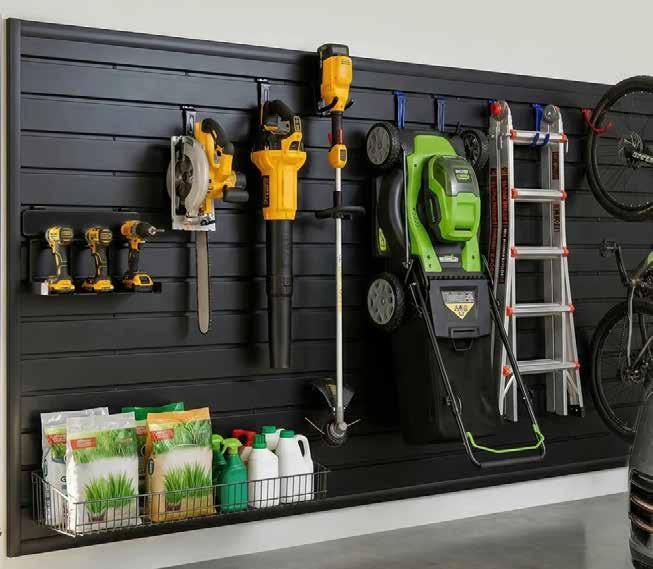
The Garage Becomes a Lifestyle Hub
Garages are no longer catch-all spaces—they’re evolving into multi-purpose lifestyle zones.
Wall‑mounted tool grids—customizable panels for tools, sports gear, and hobby supplies
Charging walls—dedicated stations for EVs, e -bikes, and power tools
Climate‑controlled storage—protects seasonal décor, documents, and keepsakes
This shift reflects a broader trend: every square foot should serve a purpose.
The Laundry Room
Elevated
The laundry room has quietly become one of the most design-forward spaces in the modern home. No longer a forgotten corner, it’s now treated with the same attention to materials, layout, and aesthetics as a kitchen or bath. Homeowners want a space that feels efficient, beautiful, and genuinely enjoyable to use.
Built‑in sorting stations—custom pull- outs for lights, darks, delicates, and linens
Counter‑height folding surfaces—seamless slabs of quartz or butcher block for easy workflow
Tall utility cabinets—vertical storage for brooms, vacuums, and cleaning supplies
Integrated drying rails—sleek rods tucked under upper cabinets
Statement tile—patterned floors or textured backsplashes that elevate the room’s personality
The new laundry room is equal parts functional and stylish—a hardworking space that still feels like part of the home’s overall design story.
The 2026 Mindset:
Less Clutter, More Living
The modern home is shifting toward a philosophy of intentional abundance—owning what you love, storing it beautifully, and letting go of the rest. Organization is no longer about perfection; it’s about creating a home that supports your life, your routines, and your peace of mind.V
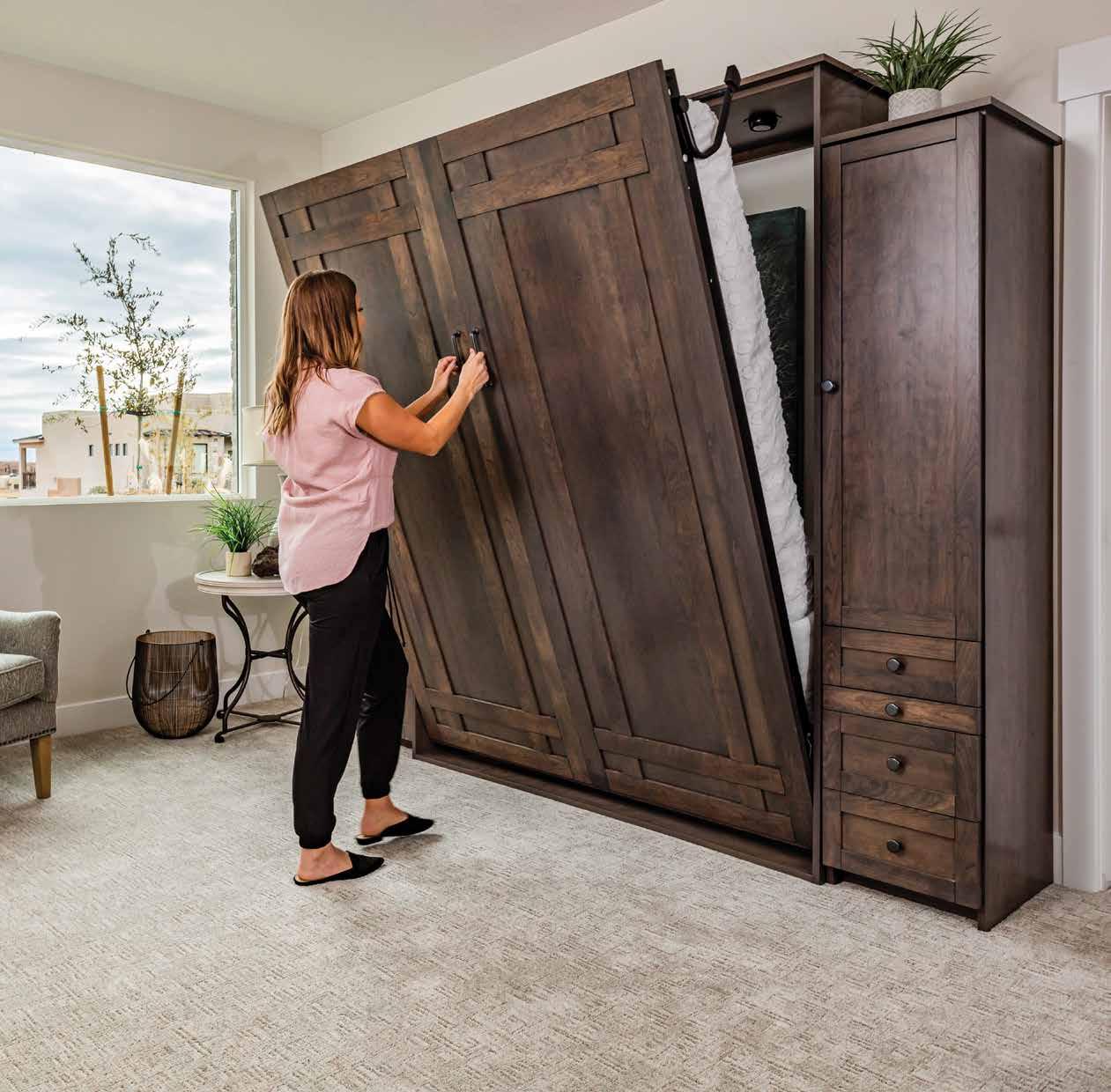
MAKING MORE SPACE WITH A MURPHY BED
by Caden Wilding
Space is an expensive commodity that many people today struggle to afford. Whether you are navigating the rising costs of urban living, adapting to the permanence of remote work, or looking to downsize without losing functionality, the square footage of your home is your most valuable asset. At Wilding Wallbeds, we believe you shouldn’t have to choose between a functional home office and a comfortable guest room. The modern Murphy bed—also known as a wall bed—is the ultimate solution for transforming a single-use space into a multifunctional powerhouse.
Transforming Your Lifestyle with Multi-Use Rooms
The primary driver for choosing a Murphy bed is the ability to reclaim and optimize floor space. In modern homes, guest rooms often sit empty for over 90% of the year, waiting for a guest who may only visit once or twice. By installing a Murphy bed, you can transform that spare room into a daily-use home gym, creative studio, or office.
For those in truly compact environments, like studio apartments or tiny homes, a queen Murphy bed can occupy less than eight square feet when folded—compared to the more than 33 square
feet a queen bed typically occupies. This dramatic reduction in footprint allows your living area to breathe during the day while providing a high-quality sleeping surface at night.
Durability and Long-Term Value
When considering a Murphy bed, it is vital to distinguish between "fast furniture" and a true investment piece. Inexpensive beds made from particleboard or wood alternatives often last only 2–5 years before requiring significant repairs. In contrast, a high-quality, real wood Murphy bed from Wilding Wallbeds is designed to last a lifetime.
Consider the financial impact:
• Resale Value: By increasing the sleeping capacity of your home (for example, your home could sleep six instead of four), you can significantly boost your property’s appeal to families and buyers. This is especially impactful for rental units.
• Renovation Savings: A Murphy bed provides the utility of an extra room without the tens of thousands of dollars required for a garage conversion or home addition.
• Longevity: Our very first bed, built 30 years ago, is still in use today, proving that a well-made bed has a replacement cost of $0 over decades.
Comfort Without Compromise
One of the biggest misconceptions is that Murphy beds are uncomfortable. In reality, they offer a sleeping experience vastly superior to pull-out sofa beds or futons. Because Murphy beds utilize full-sized, real mattresses—including memory foam or innerspring options—your guests receive the same level of support they would in a traditional bed. Unlike sofa beds, the mattress remains flat when stored, preserving its integrity and comfort for years.
Specialized Solutions for Unique Layouts
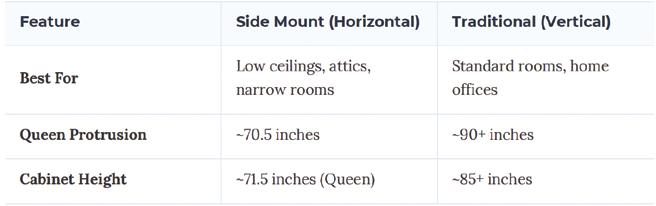
Not every room fits the traditional vertical pull-down model. For homes with low ceilings, basements, or narrow floor plans, side mount (horizontal) Murphy beds are a game-changer. By rotating the bed 90 degrees, the cabinet sits wider along the wall but occupies significantly less depth when in use.
Conclusion: A Solution for the Long Term
When choosing a wall bed, the Wilding Wallbeds difference is clear. We blend superior craftsmanship with exceptional service to deliver the world’s finest Murphy Beds. Every bed is built to order by hand in the U.S.A. using 100% real wood, guaranteeing an heirloom-quality product that stands in stark contrast to cheaper, particleboard alternatives. Focused on safety and reliability, our beds feature the world’s safest patented locking leg mechanism and whisper-quiet piston systems, all backed by a lifetime guarantee on every mechanism. By choosing Wilding Wallbeds, you are investing in a durable, aesthetic, and lasting solution engineered for a lifetime of daily use.V
Visit our showroom at 1509 South 270 East, Ste. #3 in St. George, Utah. You can also browse online at www.WallbedsByWilding.com. We have plenty of options to make choosing, receiving, and installing your Wilding Wallbed easy! For any other questions, please call (866) 395-4851.
The Secret Garden (And Home) Essential:
Why Self-Storage is a Showstopper!
by Andy Grimaud
When considering improvements for your home and garden, your thoughts may turn to lush landscaping, modern outdoor kitchens, or sophisticated interior upgrades. While self-storage might not be at the top of your dream home wish list, it’s actually the unsung hero that powers these ambitions. More than just a place for overflow belongings, self-storage is a strategic resource for homeowners aiming to elevate their living environments.
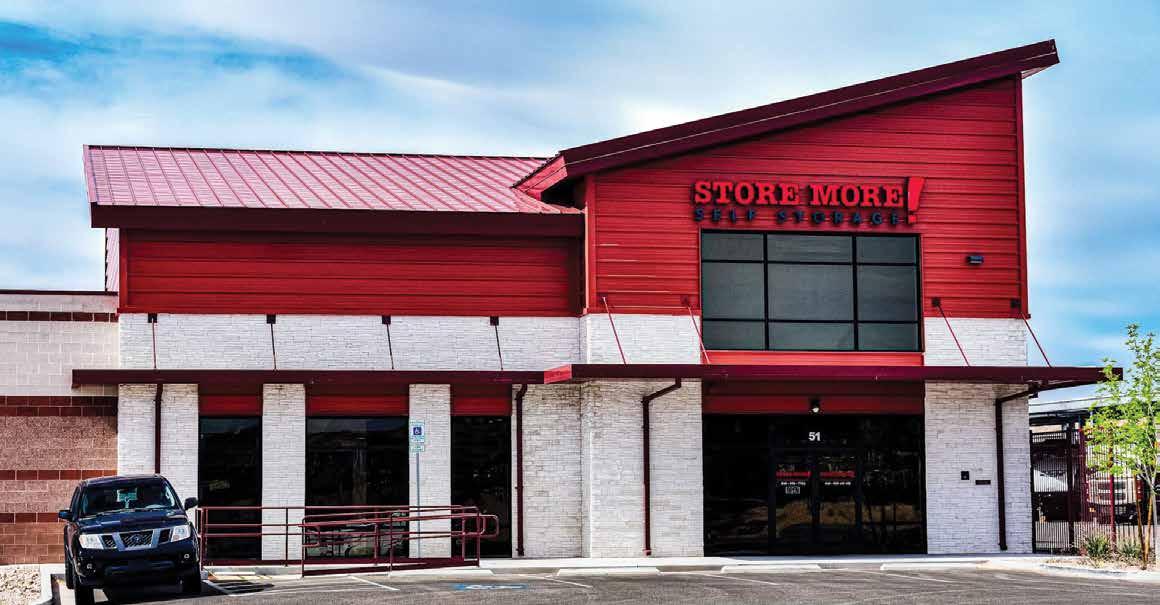
Why STORE MORE! Self-Storage in Mesquite Is Essential for Home and Garden Enthusiasts:
1. The "Clean Slate" for Renovations
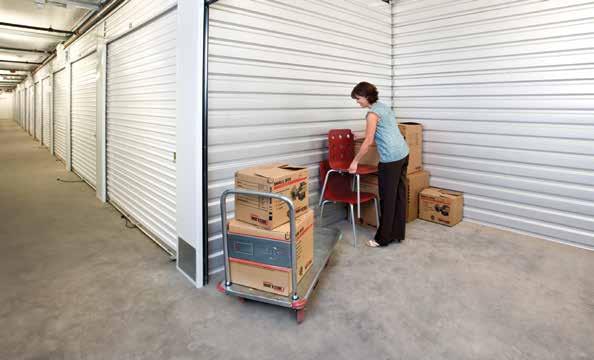
The primary obstacle to achieving a home makeover is not always the budget or the design—it’s logistics. Whether you’re laying down new floors or undertaking a full kitchen remodel, the first challenge is figuring out where to keep your furniture during the dusty construction process. STORE MORE! SelfStorage Mesquite offers a convenient and clean staging area, allowing you to move your belongings out of harm’s way. This protects them and provides contractors with the space they need to work quickly and efficiently.
2. Protection for Your High-End Investments
Home and garden projects often involve high-value tools, delicate décor, and luxury finishes. These items shouldn’t be left
in a hot garage or exposed to a dusty backyard. STORE MORE! Self-Storage Mesquite features climate-controlled units that maintain stable temperatures, safeguarding everything from wooden furniture to sensitive electronics against the desert heat. Additionally, covered RV parking is available for your outdoor toys.
3. Scaling Your Hobby Without the Mess
Starting a new hobby, such as hydroponic gardening, woodworking, or furniture restoration, can be exhilarating. However, the tools and supplies required can quickly overwhelm your garage or spare room. A small storage unit functions as an off-site supply depot, giving you the freedom to pursue your passion and order materials in bulk without compromising the comfort or space of your home.
4. The Bridge to Your Next Chapter
Home and garden inspiration often appeals to those in transition, such as when selling your current home and moving into a new one. Real estate professionals frequently emphasize the importance of decluttering to boost home value. STORE MORE! Self-Storage Mesquite is your secret weapon for staging. By removing personal items and surplus furniture, you create an open, inviting atmosphere that helps prospective buyers envision themselves in your space.
5. The Mesquite Convenience Factor
During a renovation or while freeing up garage space, your time is precious. STORE MORE! Self-Storage Mesquite is designed for maximum convenience:
· Easy online booking: Secure your unit and manage payments online.
· No long‑term contracts: Month-to-month leases mean you pay only for the time you need, whether it’s a brief project or a year-long remodel.
· Expert on site management: Our managers receive consistent praise in customer reviews for providing professional, helpful service and making the move-in experience effortless.V
Start Your Project Today
Whether you need a small space for seasonal garden tools, a large unit for a full-scale renovation or relocation, covered boat/RV parking, or storage for your business, STORE MORE! Self-Storage Mesquite has the size and service to help you STORE MORE! and live better. Visit us at 51 Auto Mall Circle, call us at (702) 346-3244, or visit our website at www.smmesquite.com to secure your unit.
Discover Hidden Treasures at Rooster Cottage Consignment Store
by Carol Bulloch
In a world of big-box shopping and mass-produced décor, there’s something refreshing about finding a store filled with personality, history, and one-of-a-kind treasures. That’s exactly what shoppers discover when they walk through the doors of Rooster Cottage Consignment Store.
Nestled in the heart of Mesquite, Rooster Cottage has become a favorite destination for locals and visitors who appreciate quality, charm, and affordability. More than just a consignment store, it’s an experience—a place where every shelf, corner, and display offers something unexpected.
From stylish home décor and vintage furnishings to unique gifts, collectibles, kitchenware, jewelry, and seasonal treasures, the inventory is constantly changing. That means no two visits are ever the same. Shoppers often stop in just to browse and leave with the perfect accent piece for their home or a meaningful gift they didn’t expect to find.
One of the things that sets Rooster Cottage apart is its warm and welcoming atmosphere. Customers are greeted like friends, and the thoughtfully arranged displays inspire creativity and conversation. Whether you’re decorating a new home, searching for rustic farmhouse touches, or simply love the thrill of discovering hidden gems, Rooster Cottage offers something special for every taste and budget.
Consignment shopping is also smart and sustainable. By giving beautiful items a second life, stores like Rooster Cottage help reduce waste while offering shoppers exceptional value. It’s treasure hunting with purpose—and plenty of fun along the way.
For Mesquite residents, Rooster Cottage is more than a store; it’s part of the community fabric. Visitors traveling through southern Nevada often discover it by chance and quickly realize it’s one of the area’s must-visit shops.
If you haven’t explored Rooster Cottage Consignment Store yet, now is the perfect time to stop in. You never know what treasure is waiting to be discovered—and that’s part of the magic.V
Rooster Cottage Consignment Store is located at 748 W. Pioneer Boulevard in Mesquite, Nevada. We are Mesquite's only consignment furniture store, and we are accepting gently used and new items daily, so our inventory is always changing. Store hours are 10 a.m. to 4 p.m, Monday through Saturday and closed on Sundays. Follow us on Facebook @RoosterCottage.
Meet the Team
Bringing Advanced, Patient-Focused Dentistry to Your Community
Submitted by Virgin Valley Dental
Choosing a dental office is about more than convenience—it’s about trust, consistency, and confidence in the care you receive. Today’s patients want a practice that combines strong relationships with modern technology and comprehensive treatment—all in one location.
At Virgin Valley Dental, that philosophy guides everything the team does. As the practice continues to grow, patients benefit from expanded access to care, advanced clinical capabilities, and the addition of a new doctor—all while enjoying the same patient-first values the community has trusted for years: honesty, comfort, precision, and personalized care.
With an experienced team of dentists, advanced technology, and a strong reputation for patient satisfaction, Virgin Valley Dental continues to deliver a modern, full-service dental experience close to home.
Welcoming Dr. Jason Braithwaite
Virgin Valley Dental is proud to welcome Jason James Braithwaite, DMD, to the practice. Dr. Braithwaite earned his Doctor of Dental Medicine degree from the Roseman University College of Dental Medicine, graduating in 2019. Following dental school, he completed advanced training through the American Academy of Implant Dentistry Maxicourse, further strengthening his expertise in implant dentistry and surgical treatment planning.
He was drawn to dentistry because of the variety the profession offers, and he enjoys all aspects of clinical care. Allowing him to approach patient care with versatility and a comprehensive treatment mindset, his interests include cosmetic restorations, complex surgical procedures, root canal therapy, crowns, and simple restorative fillings.
Dr. Braithwaite focuses on communication, comfort, and helping patients fully understand their treatment options so they can make confident, informed decisions.
Outside the office, he enjoys an active lifestyle that includes mountain biking, dirt biking, and anything with a motor. A self-described “car guy,” he is always tinkering on his next project. He also values time outdoors with his family, including hikes with his wife, Kristin, and their three children. The hikes usually end when the kids decide they have had enough.
His broad clinical training, procedural versatility, and strong family-centered values make him a natural fit for the patient-focused culture at Virgin Valley Dental.
Trusted Care From Experienced Doctors
Patients continue to receive care from two highly respected providers who form the clinical foundation of the practice.
Dr. Nathan Harris has been with Virgin Valley Dental for 17 years and brings two decades of private practice experience. He earned his Doctor of Dental Surgery degree from The Ohio State University College of Dentistry.
Known for his thorough, patient-focused approach, Dr. Harris emphasizes long-term oral health, clear communication, and comfortable care at every visit. His ability to build lasting relationships has made him a trusted provider for families across the community. He and his wife, Shannon, have four children.
Dr. Trevor Hess earned his Doctor of Dental Surgery degree from the Indiana University School of Dentistry and served four years in the United States Army, gaining valuable experience in disciplined, high-responsibility clinical environments.
With 12 years of demanding experience, Dr. Hess focuses on precision, education, and comprehensive treatment planning. He and his wife, Heather, are the proud parents of four children, which reinforces his commitment to family-centered care.
Together, Dr. Harris and Dr. Hess provide a strong clinical foundation built on experience, collaboration, and consistency.
Comprehensive Hygiene Care You Can Rely On
Supported by a skilled team of four dental hygienists, preventive care is a cornerstone of long-term oral health at Virgin Valley Dental.
The hygiene team provides professional cleanings, periodontal therapy, patient education, and early detection. Their proactive approach helps patients prevent more complex issues while maintaining healthy smiles over time.
With a strong hygiene department in place, patients benefit from consistent care and improved scheduling availability.
Dr. Nathan Harris
Dr. Trevor Hess
Advanced Dentistry and Full In-House Treatment
Virgin Valley Dental combines advanced technology with comprehensive clinical services to deliver modern dentistry in one convenient location. The practice utilizes digital imaging and 3D diagnostics for highly accurate treatment planning with reduced radiation exposure. Intraoral scanning and CEREC technology allow the team to design and place same-day crowns in a single visit, eliminating the need for traditional impressions and temporary restorations in many cases.
Patients receive high-quality restorations made from zirconia and lithium disilicate, known for its strength, durability, and natural aesthetics.
In addition, the doctors provide a full range of advanced services, such as:
• Dental implant placement
• Root canal therapy, including molar endodontics
• Clear aligner orthodontics (Invisalign)
This allows many patients to complete treatment with trusted providers in one office without outside referrals.
A Practice Focused on Comfort, Convenience, and Community Trust
At Virgin Valley Dental, care is built around relationships, comfort, and convenience. Every patient is treated as an individual, with personalized treatment planning based on their needs and goals.
The practice is committed to providing the full range of dental care locally in one office, allowing patients to avoid long drives—often 50 miles one way or more—to receive advanced treatment. From preventive care to personalized treatments, patients can complete their care close to home with a team they know and trust.
Reflected in its 4.9-star overall Google rating and numerous 5-star reviews, the office has built a strong reputation in the community, with patients consistently praising professionalism, friendliness, and quality care.
To support accessibility, Virgin Valley Dental is in-network with most Medicare Advantage dental benefit plans, helping patients maximize benefits and simplify their financial experience.
Now Accepting New Patients
With the addition of Dr. Braithwaite, Virgin Valley Dental continues to expand while maintaining its commitment to high-quality, personalized care.
The practice is currently welcoming new patients seeking comprehensive dentistry in a modern, comfortable environment. From implants to same-day crowns, patients receive state-of-the-art treatment supported by experience, technology, and compassion.V
To schedule an appointment, contact Virgin Valley Dental at (702) 346-3880 or visit www.VirginValleySmiles.com.
third Annual Bikers Against Child Abuse Golf Tournament: Riding For the Children
How a group of bikers, a golf course, and a community are coming together to help St. George’s most vulnerable children reclaim their courage.
by Chris Bengtzen
On a warm August morning at Coral Canyon Golf Course, something remarkable will take place on the first tee. Alongside the golfers will stand bikers—leathervested, tattooed, and fiercely committed to protecting the most vulnerable children in Washington County. This is the Third Annual Bikers Against Child Abuse Golf Tournament.
Bikers Against Child Abuse, Inc., known as B.A.C.A., is a nonprofit organization unlike any other. Founded more than 30 years ago on the belief that no child should have to live in fear, B.A.C.A. members provide unwavering support to children who have experienced abuse. They accompany them to court hearings, stand watch outside their homes when there is a
threat, and ride alongside them to show that they are not alone. Their presence sends a clear and powerful message: this child is not alone.
The St. George chapter has been serving Washington County for over two decades, building strong relationships with the Children’s Justice Center, caseworkers, prosecuting attorneys, and families in crisis. Their annual golf tournament has become one of their most important fundraising efforts, and in its third year, organizers anticipate the largest turnout yet.
Welcoming golfers of all skill levels, the tournament will follow a shotgun start scramble format. After the round, participants will enjoy lunch and raffle drawings, with the highlight being the chance to win a brand-new Harley-Davidson for a hole-in-one on a designated hole.
But beyond the prizes and the competition lies a deeper purpose. B.A.C.A. members step into situations where few others will—sitting beside a child in a courtroom, providing a visible presence during moments of fear, and offering strength when it is needed most. Every registration directly supports this mission, helping provide safety, stability, and empowerment to children in our community.
Whether you are a seasoned golfer chasing the thrill of a hole-in-one or simply looking for a meaningful way to spend a morning on one of southern Utah’s most scenic courses, this event offers both purpose and experience. Every dollar raised goes to benefit abused children in Washington County.V
Tee off begins at 8 a.m., and spots are limited. Gather your team, register early, and be part of an event where community, compassion, and courage come together for a cause that truly matters.
B.A.C.A. Mission Statement
Bikers Against Child Abuse, Inc., (B.A.C.A.) exists with the intent to create a safer environment for abused children. We exist as a body of bikers to empower children to not feel afraid of the world in which they live. We stand ready to lend support to our wounded friends by involving them with an established, united organization.
We work in conjunction with local and state officials who are already in place to protect children. We desire to send a clear message to all involved with the abused child that this child is part of our organization, and that we are prepared to lend our physical and emotional support to them by affiliation and our physical presence. We stand at the ready to shield these children from further abuse. We do not condone the use of violence or physical force in any manner, however, if circumstances arise such that we are the only obstacle preventing a child from further abuse, we stand ready to be that obstacle.
B.A.C.A. Golf Tournament Event Details
DATE:
Thursday, August 27, 2026
TIME: 8 a.m. shotgun start
LOCATION:
Coral Canyon Golf Course
1925 N Cyn Grns Drive, Washington, Utah
Entry: $150 per player or $600 per team of four Includes: Round of golf, lunch, and raffle
Grand Prize: Hole-in-one wins a brand new Harley Davidson
Proceeds: 100% donated to the B.A.C.A. St. George Chapter
Bikers Against Child Abuse, Inc.: www.baca-world.org St. George, UT Chapter: (435) 673-2564
Throughout history, lavender has been known as an aromatic, antiseptic, and medicinal herb. Around 3,000 years ago, Egyptians cultivated lavender for soothing ointments, perfume, and embalming. Romans washed linens in lavender and drew its name from the Latin verb lavare, meaning to wash. Romans also used lavender as an antiseptic to treat wounds and deter insects, but medical researchers are currently testing it to treat dementia and neurological conditions.
Lavendula
Lavender (Lavandula), native to the Mediterranean coastline—southern France, the Iberian Peninsula, the Adriatic coast, the Balkans, and coastal North Africa—requires full sun, well-drained sandy soil, and a dry climate. This woody, drought-tolerant, insect-resistant flowering shrub has 47 known species—the primary three being English, French, and Spanish lavender. English lavender, Hidcote and Munstead, are best for higher elevations. Grosso, a lavandin hybrid, is cold-resilient and dominates lavender production in Provence with its impressive mature size, abundant oil, and deep purple blooms.
English French Spanish
English Royalty
Cold-hardy and moisture-tolerant, English lavender is featured in British history. Queen Elizabeth I, who reigned from 1558 to 1603, was the daughter of Henry VIII and Anne Boleyn. The Elizabethan era is known for the establishment of the Church of England, William Shakespeare, and explorers Walter Raleigh and Francis Drake. Raleigh named the New World settlement of Virginia after Elizabeth the Virgin Queen, who demanded fresh lavender every day and lavender tea for her frequent migraines.
During plague years, when 100,000 died in London, Elizabeth scattered lavender on floors to disinfect, counter the stench, and deter pests well before doctors connected fleas to the spread of the plague. Lavender is known to repel insects, including scorpions.
Though Elizabeth witnessed the beginning of lavender distillation in the 16th and 17th centuries, Queen Victoria commercialized the process. Under Victoria’s reign from 1837 to 1901, industrial, political, and scientific advances led to cultivation, distillation, mass production, and distribution of lavender oil as an essential Victorian commodity associated with cleanliness and purity— foundational to British soapmaking.
Today, lavender grows on large commercial and small boutique farms from Tasmania to Utah.
Arizona has approximately 12 farms, Nevada has four, and Utah has seven or more. The Young Living Lavender Farm in Mona, Utah, is a huge 1,400-acre property east of the Wasatch Mountains, and Pine Creek Canyon Lavender Farm in Arizona, located 22 miles northwest of Payson, has 5,000 lavender plants.
The portrait of Queen Elizabeth I of England, from Shakespeare, His Life and Works, by V. Chuiko, 1889, St. Petersburg
Zion Lavender Company
In 2017, Dr. Alex Stojanoff purchased property in Springdale, Utah, near Zion National Park. Raised in Australia, Stojanoff was a reproductive scientist with a passion for growth—plants or embryos— who studied biology. He toured Bridestowe Lavender Estate in Tasmania, which was the oldest and largest lavender farm in Australia, and witnessed lavender farming in Provence, France.
Self-described as “passionate” about his work, Stojanoff started his venture learning through trial and error. He purchased Lavandula angustifolia (English lavender) plants from Seattle and Vermont nurseries and sowed 500 of them on terraced, hilly land behind his house—an ideal spot for lavender with full sun, good air flow, and fast-draining alkaline soil low in nutrients.
Stojanoff describes the hardest part of building a boutique lavender farm as figuring out how to distill the oil. After consulting a specialist near Port Angeles, Washington, he obtained a suitable still and taught himself everything else. A good day of distilling yields around two hundred milliliters of pure lavender oil, and the hydrosol (water) by-product is usable as an air freshener or antiseptic household cleaner. Stojanoff uses almond, grapeseed, coconut, or jojoba for a carrier oil and distributes his products at farmers’ markets around Springdale, Utah, and online at www.zionlavenderfarm.com.
Zion Lavender Fields | Photo credit: Bob Monsen
Lavender distiller | Photo credit: Dr. Alex Stojanoff
Dr. Stojanoff at Farmer's Market
Photo credit: Karen L. Monsen
Working in the field
Photo credit: Dr. Alex Stojanoff
Baker Creek Lavender Farm
Mary Matera and Scott Sproul researched how to grow and distill lavender after they fell in love with essential oils and lavender products in 2015. In 2018, they established the Baker Creek Lavender Farm when they planted their “test” field of 700 plants on property 25 miles northwest of St. George that was once Scott’s grandfather’s ranch.
“The Lavender do extremely well in our unique microclimate and soil along our creek of the Santa Clara River,” Mary says. Spread over four fields, they now have 2,200 plants comprised of 18 different cultivars (cultivated varieties), including English lavender and Lavandin, a hybrid.
Scott distills the oil and conducts workshops on the distilling process. They produce 100% pure oil to make bath, body, aromatherapy, and culinary products—and more—which they sell through their website and at the farm when it is open to visitors in June and July for the bloom season. All information can be found on their website, www.bakercreeklavenderfarm.com.
Gathering the harvest at Baker Creek Farm | Photo credit: Mary Matera
Lavender fields at Baker Creek Farm | Photo credit: Mary Matera
Lavender & butterflies at Baker Creek Farm | Photo credit: Mary Matera
Research
Previously observed only through anecdotal evidence, medical research is now confirming lavender’s therapeutic reputation for treating epilepsy, migraines, Alzheimer’s disease, anxiety, and depression. PubMed Central, a digital archive of biomedical articles within the U.S. National Institutes of Health, includes numerous studies: a 2017 study by Fard et al. and a 2020 study by SeddighiKhavidak et al. on the effects of Lavandula essential oil on patients with multiple sclerosis; a 2021 study by Caputo et al. on using a lavender oil component to treat Alzheimer’s disease; and studies using lavender to treat anxiety, sleep disorders, depression, and pain associated with cancer complications.
From Romans to research scientists, lavender has long been revered for its medicinal properties, but the best promoters of this calming, fragrant, purple-flowered shrub are the boutique cultivators infused with a passion for it.V
plant the beauty, harvest the calm.
- Lisa Fontanarosa,
lavender cultivator Albuquerque, New Mexico
Beat the Heat
with Low-Impact Indoor Exercises
by Ashley Centers
Hello again, readers, and welcome back to another fantastic edition of ViewOn Magazine.
As we endure the heat of summer, I would love to focus on some exercise routines we can do at home to beat the heat and still get our workout on! Hot weather does not have to interrupt your fitness goals.
With the right indoor workout plan, people of any age or ability can stay active, cool, and healthy from the comfort of their homes. Short daily sessions can help to improve energy, strength, mobility, and mood while helping you keep safe and cool all summer long.
Turn the page for some great, mostly seated workout options to try!
Low-Impact Routine
3–5 days weekly
1. Seated Arm Raises – 15 reps
Sit tall in a sturdy chair with your feet flat on the floor. Hold your arms at your sides with palms facing inward. Slowly raise both arms outward to shoulder height, then lower them back down with control. Keep your shoulders relaxed and avoid shrugging.
2. Standing Calf Raises – 15 reps
Stand behind a chair or countertop for balance. Place your feet hip-width apart. Slowly lift your heels off the floor so you are standing on your toes, then lower back down slowly. Keep movements controlled and avoid leaning forward.
3. Bicep Curls – 15 reps
Use a dumbbell, resistance band, or water bottle. Stand or sit tall with your arms at your sides and palms facing forward. Bend your elbows to lift the weight toward your shoulders, then slowly lower them back down. Keep your elbow close to your body throughout the movement.
4. Standing Side Leg Raises – 15 reps per leg
Stand tall beside a chair for support. Slowly lift one leg out to the side without tilting your upper body. Lower the leg back down gently and repeat. Keep your toes facing forward and avoid swinging the leg.
5. Knee Lifts – 15 reps
Sit upright in a chair with your hands resting lightly on the seat. Tighten your core and slowly lift both knees upward together a few inches off the floor, then lower them back down with control. Move slowly to protect the lower back.
Seated Cardio 3–5 days weekly
Perform each move for 45 seconds X 2 circuits
1. Seated March
Sit tall and alternate lifting your knees as if marching in place. Swing your arms naturally to increase movement and circulation.
2. Arm Punches
Sit upright with your hands in loose fists. Alternate punching forward at shoulder height while keeping your core engaged. Move at a comfortable pace.
3. Toe Taps
Keep your heels on the floor and rapidly tap your toes up and down. For more movement, alternate tapping one foot at a time.
4. Seated Knee Lifts
Sit near the front of the chair with your hands gripping the sides lightly for support. Tighten your abdominal muscles and lift both knees upward together, then slowly lower them back down.
5. Arm Circles
Extend your arms out to your sides at shoulder height. Make small forward circles for half the time, then reverse directions. Keep your shoulders relaxed.
6. Seated Torso Twist
Sit tall with your feet planted firmly on the floor. Slowly rotate your upper body to one side while keeping your hips facing forward, then twist to the other side. Move gently without forcing the stretch.
Simple Chair Yoga 3–5 days weekly
Hold each pose 15–30 seconds
1. Seated Forward Fold
Sit near the edge of the chair with your feet flat on the floor. Slowly hinge forward from your hips and reach your hands toward your legs, ankles, or the floor. Let your neck and shoulders relax.
2. Seated Side Stretch
Sit tall and raise one arm overhead. Gently lean to the opposite side until you feel a stretch along your side. Hold briefly, then switch sides.
3. Gentle Seated Twist
Sit upright with both feet flat on the floor. Place one hand on the opposite knee and gently rotate your torso in that direction. Keep the movement slow and comfortable.
4. Overhead Reach
Sit tall and extend both arms overhead with palms facing inward. Reach upward gently while keeping your shoulders relaxed. Lower your arms slowly.
5. Ankle Rolls
Lift one foot slightly off the floor and slowly rotate your ankle in circles. Reverse directions after several rotations, then switch ankles. This helps improve circulation and mobility.
6. Bonus Breathing Exercise!
While seated upright, inhale slowly through the nose for 4 seconds, then exhale for 4 seconds. Repeat for 2–5 minutes.
Each of these workouts is a great way to keep moving, even through the worst of the heat, as everything can be done indoors. Just remember to keep hydrated even when you’re inside, and stop any exercise if you feel dizzy or lightheaded.
And of course, check with your doctor prior to any new physical activities!
Until next time, I hope these workouts help you as they have helped me, and I hope you all enjoy another beautiful summer full of fun and adventure!V
Your friend in fitness, Ash
HOT TRENDS, Cool Casas HOT TRENDS, Cool Casas
The 2026 Guide to Desert Decorating Without Losing Your Cool
by Jackie Burton, owner of C&J Shutters, Blinds, and Flooring
Living in the desert is a constant battle between your interior design dreams and the sun’s relentless desire to turn your living room into a dry sauna. In 2026, "Desert Modern" is a high-stakes game of thermal regulation, UV defense, and what designers are calling "arid elegance."
If you want your home to feel like a sanctuary of cool comfort rather than a weathered sunbox, you need a strategy. Here is the 2026 breakdown of a bit of what’s trending in the world of blinds, drapes, and flooring for those of us living in the beautiful, brutal heat.
Outsmart the Sun: Blinds, Shutters, and Drapes In the desert, your windows are essentially thermal portals to
the surface of the sun. If you leave them unprotected, your AC unit will start making noises that sound suspiciously like a cry for help. The trend this year is all about the layered defense.
1. The Era of Intelligent Automation (Motorized Shades)
If your blinds don’t automatically descend when the temperature hits 100°F—which, let’s be honest, is usually by brunch—are they even working? Motorized cellular or "honeycomb" shades are the MVP of 2026. They trap air in distinct pockets, acting like a literal thermos for your window. Modern versions are sleek, silent, and can be programmed to follow the sun’s arc, keeping your furniture from gradual pigment loss and unsightly sun-bleaching while you’re out of the house.
2. The Timeless Appeal of Interior Shutters
In 2026, the trend is shifting toward wider louvers (4.5 inches) to maximize your view while maintaining airflow. High-quality composite shutters are particularly popular because they handle the intense southwestern heat without cracking or fading. They offer a structural, architectural look that feels permanent and substantial, providing an extra layer of solid insulation that many thinner window treatments can't match.
3. The Performance Power of Modern Drapes
The current trend focuses on high-performance linen blends paired with specialized thermal linings. These linings act as a secondary barrier, reflecting UV rays outside before they can permeate your living space. By using floor-to-ceiling heights, drapes also help seal the edges of your windows, preventing "light gaps" and heat seepage that standard treatments might miss.
4. Woven Woods and Organic Diffusers
We are seeing a massive shift away from clinical, white plastic slats toward natural woven woods. Think bamboo, jute, and grasses in "sun-kissed oak" or "toasted rye" tones. These don't just block light; they diffuse it. Rather than dealing with a harsh glare, these materials create a soft, filtered atmosphere that feels like a peaceful retreat. It is the difference between the intensity of a direct spotlight and the relaxed comfort of sitting under a palm tree.
Flooring: Cool Under Pressure
Gone are the days of wall-to-wall shag carpeting that traps sand. Today’s desert flooring is about staying cool to the touch and surviving the inevitable "indoor-outdoor" lifestyle.
1. Matte Stone and Large-Format Ceramic
The "high-shine" look is out, and textural authenticity is the dominant trend. We’re seeing a surge in oversized (24 by 48 inches or larger) ceramic tiles that mimic the look of natural clay and limestone. A matte finish is crucial—it feels better on bare feet and is much more forgiving when a little Mojave dust hitches a ride inside on your shoes. It keeps the floor temperature down and the "spa" vibes up.
2. LUXURY VINYL PLANK (LVP): THE HEAT-RESISTANT HERO
For those who crave the warmth of wood but live in a climate where real hardwood would warp faster than a vinyl record on a dashboard, high-end LVP is the answer. The 2026 favorites are "bleached driftwood" and "muted sage" tones. LVP is durable, water-resistant, and won’t complain about the 4% humidity. Plus, modern embossing means it actually feels like wood, minus the splinters.
3. The Acoustic Wood Slat Renaissance
One of the most exciting trends migrating from commercial design into desert homes is the use of acoustic wood slats. Often used as an accent wall or even a ceiling treatment, these natural-colored slats break up the "big box" feel of modern homes. When paired with light, sandy-colored flooring, it creates a "cocooning" effect that absorbs sound (essential for those high-ceilinged open floor plans) and adds a sophisticated, architectural edge.
Final Thoughts for the Desert Dweller
Whether you’re remodeling a back patio into a highenergy entertainment hub or just trying to stop your rug from fading into a different dimension, the 2026 philosophy is simple: function is the new fashion.
In the desert, luxury is about how many degrees you can drop the temperature while creating a space perfect for retiring in your casa. Stay cool, stay stylish, and remember: if the sun is winning, high-performance blinds and shutters are one of the most effective tools for protecting your interior climate.V
C & J Shutters, Blinds, and Flooring, Inc., is located at 550 W. Pioneer Blvd., Ste 158, Mesquite, Nevada.
C & J offers flooring and window treatment products and installation to help you cool your home. Reach us on social media @CJmesquite or at (702) 345-3672. Visit us online at www.BlindsFloors.com.
Control Your Golf Shot Distances:
Swing to Body Positions—Knees, Hips, Chest
by Rob Krieger
controlling your golf shots inside 100 yards so they end up on the green, close to the hole, is hard. To lower scores, it requires swinging your club with a set body location, using the same backswing and forward swing acceleration, so the ball goes a consistent distance. Most try to make a ball go a certain distance by constantly varying their power, leading to frustrating results.
Instead, try experimenting with irons (7, 8, 9, PW, GW, SW, and LW) using some of the swing positions listed below. Worry less about the power while keeping it the same, and just vary the backswing length or change the club. The results should help control shot distance, boost accuracy, and improve consistency.
KNEES
(clubhead stays below knees)—Minimum 40% of shots
This swing is for putting or chipping. The clubhead is taken in the backswing, so it is below the knees and stays below the knees in the forward swing. It is the same distance and pace back, and the same distance and pace forward through the ball. For a chip shot, the ball goes a short distance into the air with more roll.
Sand wedges and lob wedges are not the best for these shots due to the shortness of the swing and backspin higher lofts create with little runout. These clubs make it harder for the average golfer to get reliable results, so the 7, 8, 9, and PW are better options.
HIPS
(clubhead and hands are hip/waist high and parallel to the ground)
This is also known as a half swing and is for short pitch shots (roughly inside 50 yards), and no wrists are needed. For a pitch shot, the ball goes farther into the air with less roll. Try swinging only hip high to hip high and changing clubs, using more or less loft. You will see the varying distances the ball travels. Sand wedges and lob wedges are great for these shots.
If you want the ball to go farther, use a less lofted club. If you want it to go shorter, use a more lofted club, but still only swing hip high to hip high. Avoid slowing down through impact, as many players do, and resist swinging harder to increase distance. Instead, select another club, swing from hip high to hip high with consistent speed, and simplify the game for yourself as you build this important skill.
CHEST
(lead arm and hand are parallel to the ground and chest high)
Also known as a three-quarter swing, this is for a longer pitch shot (roughly 50–100 yards). The ball goes farther into the air with less roll.
This swing position is harder because excessive wrist hinging can complicate it. The lead wrist should only approach a 90-degree angle with the lead arm, but it doesn't need to reach it. Over-hinging creates more variables, making consistent ball striking difficult. In both backswing and follow-through, keep the lead arm and hand parallel to the ground and chest high. Hands and arms finish at chest height, resulting in a shorter swing rather than a full finish.V
Good Luck and as Always…Fairways & Greens!
Rob Krieger - PGA Director of Instruction
Happy Dog, Happy Life: Happy Dog, Happy Life:
Simple Training Techniques That Make a Difference
Simple Training Techniques That Make a Difference
by Anita DeLelles
Every dog owner knows the feeling: one moment, your pup is the sweetest companion in the world, and the next, they’re dragging you down the sidewalk, ignoring your calls at the park, or bouncing wildly around the house when guests arrive. The good news? These common challenges are completely normal, and with the right training approach, they can absolutely improve.
For pet parents across southern Utah and Nevada, having a happy, well-behaved dog doesn’t need to involve harsh corrections or complicated methods. In fact, some of the most effective training techniques are also the simplest. Positive
reinforcement, consistency, and patience can transform daily frustrations into rewarding moments that strengthen the bond between you and your furry friend.
The Secret to Calm, Controlled Walks
One of the most common complaints among dog owners is leash pulling. Walks are supposed to be relaxing, but when your dog turns every outing into a tug-of-war match, it can quickly become exhausting.
Fortunately, teaching polite leash manners is easier than many people think. The next time your dog surges ahead, stop
walking immediately. Don’t yank the leash or scold, simply stand still. The moment your dog slackens the tension on the leash, even briefly, reward them with praise and continue walking. Over time, your dog learns that pulling makes the walk stop, while staying close keeps the adventure going.
Consistency is the secret ingredient. Dogs learn through repetition, and even short daily walks become valuable training opportunities. Before long, your dog will begin checking in with you more often and walking calmly by your side.
Build Better Recall, Step by Step
Another important skill every dog should learn is reliable recall. An effective “come” command is more than convenient. It can help keep your dog safe in unexpected situations. Yet many owners accidentally weaken recall by repeating the command over and over or sounding frustrated when their dog doesn’t respond immediately.
Instead, make coming to you the best part of your dog’s day. Start practicing in a quiet room or backyard with minimal distractions. Say your dog’s name, followed by “Come!” in a cheerful, excited voice. The second they look your way or move toward you, reward them enthusiastically with treats, praise, or affection. As your dog improves, gradually increase the distance and introduce more distractions. By keeping the experience positive, your dog will begin associating “come” with rewards and excitement rather than pressure.
Good Manners Begin at Home
Calm household behavior is one of the most valuable skills a dog can learn, especially in busy family homes. Dogs thrive on structure and routine, and small daily habits can make a major difference in their behavior indoors.
Simple exercises like asking your dog to sit before meals or stay while guests enter the home teach patience and selfcontrol. Rewarding calm behavior—such as lying quietly nearby instead of jumping or barking—helps reinforce the idea that relaxation earns attention and praise. The goal is not perfection overnight, but gradual improvement through positive experiences.
Many dog owners are surprised to discover how quickly their pets respond once training becomes part of everyday life rather than being a stressful event. Even five or 10 minutes a day of focused practice can create noticeable progress over time.
At WOOF! Wellness Center & Training Academy, positive reinforcement and science-backed training methods are at the heart of every class and training session. Their experienced trainers understand that every dog has a unique personality and learning style, and they focus on building confidence while strengthening the relationship between pets and owners.
WOOF! offers convenient, small group class schedules and learn-at-your-own-pace drop-in classes for just $35 per session. A happier, better-behaved pup doesn’t happen through punishment or frustration. It happens through patience, encouragement, and consistency. With a few simple techniques and the right support, you can help your dog become a calmer, more confident companion both at home and out in the world.V
Visit woofcenter.com, call (435) 275-4536, or stop by WOOF! Wellness Center & Training Academy in Santa Clara.
TENNIS TNT
-tips-n-tricks-
by Donna Eads
Boy, is it hot! Time to make sure you have all the essentials, such as a cooling towel, sunscreen, a hat or visor, and most of all, water. Before coming out to play, it is important to drink at least 24 ounces of water to decrease your chances of dehydration in our hot and dry climate. Pick a court that has some shade and bring a handheld fan for your breaks.
In Sun City Mesquite, we use court number four due to its built-in shade from the morning sun and an outlet for a fan to keep our players comfortable. Please don’t try to stay in a game if you are feeling fatigued or if you have stopped sweating! These are both signs of overheating.
There is so much tennis to enjoy during the summer. So spend time watching Wimbledon at the All England Lawn Tennis and Croquet Club in London and our U.S. Open Grand Slam from New York City. Maybe you can pick up a new stroke or serve during the tournament. It is a known fact that watching great tennis improves your game, so take the time during this hot season to watch and learn.
There are many catch phrases that teaching pros use to help their students see the easiest way to win during a game. One is “hit down the middle to solve the riddle.” It means that the safest shot is to go over the lowest part of the net. Players forget that when going down the line in doubles, the net is three to four inches higher than where the net strap is attached.
Another good statement is “stay the player.” Once you have started a winning point, stay with it so you are always looking for the next shot. Or how about “isolate an opponent”? In doubles, this is a great strategy for moving a player off the court so your team can hit the winning shot.
The easiest way is to have you and your partner focus on hitting to one person around three to four times. Usually, your team has gotten the opening for the winning shot by then. My favorite phrase in doubles is “it’s like a dance.” Both players must work together to finish the point, just like ballroom dancers.
As stated before, it is essential that a doubles team works together. Remember, it is very important that you move with and cover for your partner. If your partner is pulled to the alley, you must cover the middle. Never stand in one place while playing. Every shot requires an adjustment from right to left or maybe up or back. Playing great doubles requires teamwork and lots of footwork!
One tip for the server is not to hit a bad toss. Without a good toss, the serve will usually fail. Take your time, catch the toss, and try again. Say to your opponent, “Sorry,” and do it again. Then please take your time on your second serve. Keep to your routine, pick a spot to hit, and make sure that the toss is good. It’s your last chance to control the point and the game.V
See you on the courts, Donna Eads
The Garden that teaches us to live
by Judi Moreo
There’s something about the desert in the early morning.
Before the heat rises and the wind begins to stir, there’s a stillness—almost a hush— that settles over everything. At first glance, it can feel empty. Dry. Unforgiving. But if you look a little closer, you begin to notice something remarkable...
Life is everywhere
A small bloom tucked between rocks. A cactus standing tall against the odds. A stubborn bit of green pushing through that most people would dismiss as hopeless. And that’s when it hits you…
The desert isn’t barren at all. It’s resilient.
Living in the desert, we learn quickly that gardening isn’t the same as it is in other parts of the country. We don’t have rich, forgiving soil. We don’t have gentle rains or predictable seasons. What we have instead is something far more powerful—an environment that teaches us how to adapt, endure, and create beauty anyway.
Isn’t that what life asks of us, too?
Resilience Is a Way of Life
In the desert, plants don’t only grow—they survive. They stretch their roots deeper. They conserve energy. They learn how to thrive under pressure that most would never withstand.
People aren’t so different.
We all face seasons that feel dry. Times when nothing seems to be growing, when progress feels invisible, when the conditions are anything but ideal. But, like those desert plants, something is happening beneath the surface. Roots are forming. Strength is building.
Growth doesn’t always look like growth.
You Don’t Need Perfect Conditions
If desert plants waited for perfect soil, they’d never exist.
They grow anyway.
How often do we do the opposite? We wait for the right time, the right resources, the right circumstances. We tell ourselves we’ll start when things are easier, clearer, or more certain. Life rarely works that way.
Some of the most extraordinary things are created in lessthan-perfect conditions. In fact, that’s often what makes them extraordinary.
Creativity Thrives in Unlikely Places
There’s a quiet creativity in the desert that often goes unnoticed. It’s how plants adapt their shapes to conserve water. It’s the way colors appear more vibrant against a neutral landscape. It’s the way life finds a way—again and again.
Creativity isn’t reserved for artists or writers. It’s a way of thinking. A way of solving problems. A way of seeing possibilities where others see limitations.
And sometimes, it’s born because of a limitation. When we don’t have everything handed to us, we begin to imagine. We experiment. We create something new—not in spite of our circumstances, but because of them.
Tending Your Inner Garden
What if we treated our lives the way we tend a desert garden? What if we stopped fighting the conditions and started working with them? What if we nurtured what can grow rather than focusing on what won’t?
Creativity, like a garden, needs attention. It needs space. It requires a willingness to try, fail, and try again.
It doesn’t require perfection. It requires participation. Sometimes, all it takes is a small step—a single seed, a single idea, a single moment of courage—to begin.
Redefining Beauty
Desert beauty isn’t loud or overwhelming. It’s subtle. Strong. Unexpected. It doesn’t beg for attention—it earns it. A single flower blooming in the desert can be more breathtaking than a field full of them somewhere else, simply because you know what it took to get there.
Perhaps our lives are meant to be the same.
Beauty isn’t about ease or abundance, but about resilience. About persistence. About becoming something meaningful in a place where it would have been easier not to.
A Final Thought
In the desert, nothing is wasted—not even the struggle. Every challenge shapes the outcome. Every harsh condition contributes to the strength and character of what eventually grows.
Maybe that’s the lesson. We don’t need perfect conditions to create something beautiful. We need the willingness to begin… right where we are.V
Judi Moreo is an award-winning author, international speaker, and artist who has inspired audiences in 29 countries. A Certified Speaking Professional, she empowers others through her books, workshops, and coaching. Judi is the founder of The Creative Corner, where she helps people rediscover creativity, confidence, and purpose. Contact her at judi@judimoreo.com.