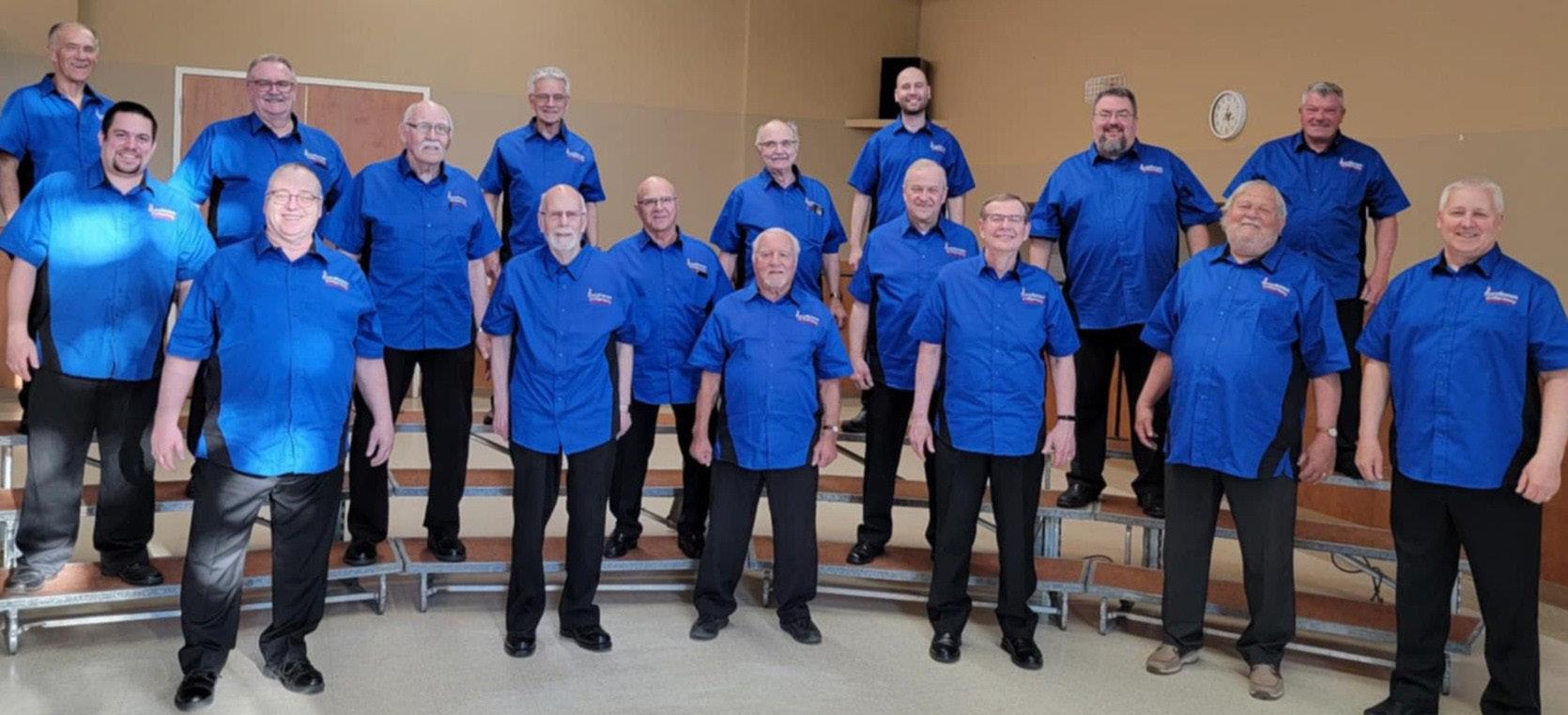
Gentlemen of Harmony is a barbershop chorus in the Greater Moncton area, founded in the late 1960s. It operates under the umbrella of the Barbershop Harmony Society.
President Doug Lyon recalls that he began singing with his father when he was a teenager. “I sang for about thirteen years. Then life got in the way, as they say, I had a family and relocated a few times with my work.
“I got involved with Gentlemen of Harmony three years ago and it has rekindled my passion for harmony.
“Barbershop singing is four-part harmony. Your leads are singing the melody, the basses have the bottom notes, and your tenors have the top, and your baritones fill in to fill
“
in the chord.”
Musical Director Kevin Wentzell has been singing barbershop harmony for thirty-two years. He has been with Gentlemen of Harmony since 2009 and has served as Musical Director for the last fourteen of those years.
He notes, “we are a group of men of all ages; the door is always open. We want to grow as a chorus and spread the news that we are a vocal ensemble that sings four-part harmony. We have guys in their twenties to guys who have been members for forty-seven years. They are in their 80s.”
Adds Lyon, “yes, from ages twenty-two to eightynine!” Membership is now at nineteen, he says, with a goal of between twentyfive and thirty members.
“Anyone who has ever had
a taste of it seems to love it. We just want to make singers aware of it.”
Says Wentzell, “good singing attracts good singers.”
Wentzell notes that,
like many organizations, Gentlemen of Harmony was largely inactive during the COVID-19 pandemic, which slowed membership growth temporarily.
“We are regaining
momentum. We have some new guys who have just joined, who are bringing some youth to our group.
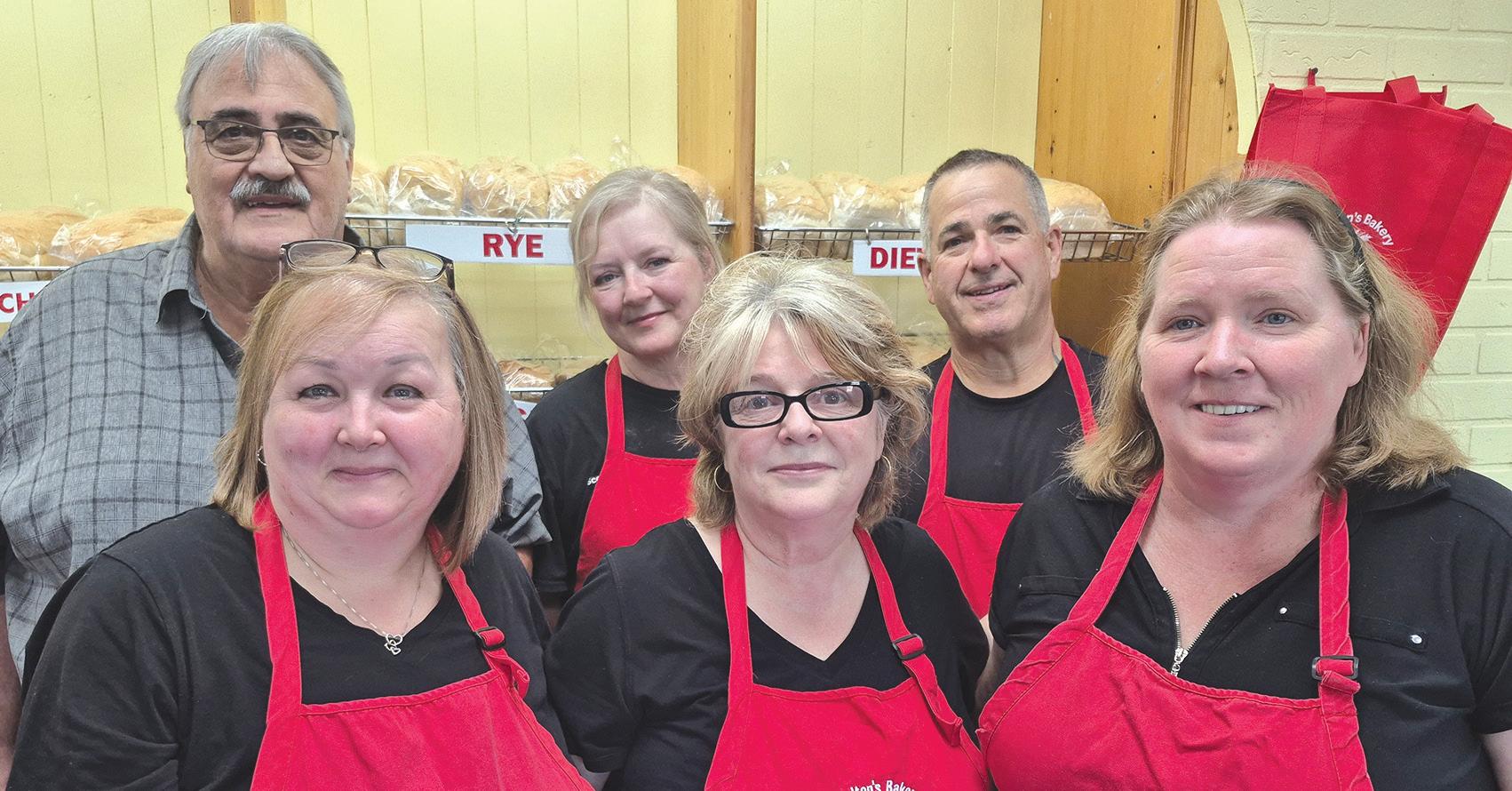
The Gentlemen of Harmony.
As a chorus we invest a lot of time in learning, in education on vocal production, so that we can really engage members,” a point also emphasized by Lyon.
“We spend a lot of time on practice and musical

VOLUME 3, ISSUE 4
PUBLISHER: Eric Lawson
SALES MANAGER: Brian Lane
DESIGNER: Rachel Sheldrake
Published by A View of the Tides Communications
Distributed free in public buildings, apartment buildings, retirement residences, convenience stores, and retail and service waiting rooms from Alma to Salisbury.

Yes, it is still winter – an old fashioned Canadian winter this year – so our winter themes continue. In this issue we talk to the South Eastern Snowmobile Association of New Brunswick about their extensive network of trails in our region and with Master Gardener Karen Rogers about how to sow native species outside in winter.
It is not all about winter this time, however. We also continue two stories from past issues – a discussion with Shanel Akerley of the Town of Riverview regarding housing development; we also revisit the Trail Towns initiative taking shape across southeastern New Brunswick.
Jeff Melnychuk returns to give us all hope for increasing daylight as the seasons progress. Sophie Duplessis also returns to offer a student’s perspective on current affairs.
Evelyn’s Kitchen introduces a maple-flavoured craft you can try at home, appropriate for maple season – and Riverview’s Maple Fest, coming up at the end of the month, which we also profile here.
Publisher: Eric Lawson at 506 863 7324 or via viewofthetides@gmail.com
For advertising information, please contact Brian Lane at 506 860 0015 or via lane309@gmail.com

FEBRUARY 5, 2026
MARCH 5, 2026
APRIL 2, 2026
MAY 7, 2026
JUNE 4, 2026
JULY 2, 2026
SEPTEMBER 3, 2026
OCTOBER 1, 2026
NOVEMBER 5, 2026
DECEMBER 3, 2026
The Moncton Wildcats emphasize education for their players; we spoke with Sarah Noseworthy about how the team structures its educational programs. The Gentlemen of Harmony, Fundy Curling Club, and Highland Dancers all share their sporting and cultural activities and outreach.
We also spoke with Riverview resident Mary Brachaniec about her career helping to develop and implement research, and programs based on that research, designed to help those experiencing chronic pain.
Add in Julie Solbak on fitness, our regular books column, and Cute Pets, and there is a lot to read – we hope you enjoy the lingering moments of Winter, the longer days, and meeting the people of our community in our pages.

Eric Lawson Publisher
Continued from page 1
education to help new members and help us raise the bar on our performances.”
The rebound in membership since the end of the pandemic has also allowed Gentlemen of Harmony to expand their performance schedule. Says Lyon, “we have performed at churches, at the Irving Memorial Chapel in Bouctouche, we perform each year as part of the Remembrance Day ceremonies in Moncton, where our performances have been well received.”
Says Wentzell, “performances average around half an hour. We offer our services for a nominal fee to anyone who is looking for entertainment.”
The chorus also features quartets, groups of four singers each of whom performs one of the four parts. “There is a little bit of extra pressure on the quartets – you really have to make sure you are harmonizing when there are
just the four of you!,” says Lyon. The quartets often perform at Christmas and particularly around Valentine’s Day.
The public can book a Singing Valentine, performed by one of the chorus’s quartets, online.
Says Lyon, “Valentine’s Day this year was an incredible success. We did forty performances and raised $2,400.00.
Half of that goes straight to the Friends of the Moncton Hospital in support of their work in Speech-Language Pathology, with the other half going to offset expenses.
“We perform in people’s homes, in restaurants, at workplaces, at retail stores, and at hospitals and senior’s homes. We get a lot of different reactions!”
Wentzell adds, “we have been performing Singing Valentines in the community for at least thirty years. It has been a really positive campaign for the chorus.
Donating to Speech-Lan-

guage therapy has been our charity for a long time. It is a charity that is near and dear to our hearts, as it is linked with speech, and singing is a huge part of that.
“It has been a really nice fit. We have been honoured and blessed to raise nearly $40,000.00 for the Friends of the Moncton Hospital since we started.
Our chorus is one of the top fundraising choruses with Singing Valentine’s within our Society.”
For anyone interested in joining Gentlemen of Harmony, you can contact the chorus at 506-268-3014 or via email at info@gentlemenofharmony.ca or their website at www.gentlemenofharmony.org.
We are a group of men of all ages; the door is always open. We want to grow as a chorus and spread the news that we are a vocal ensemble that sings fourpart harmony.
Parkland Riverview's Harmony Wellness Program supports your well-being with engaging activities, movement and opportunities to connect.
Discover a community where living well comes naturally. Book a tour today!
experienceparkland.com/riverview | 506-387-7770 822 Coverdale Rd, Riverview

To celebrate International Women’s Day (March 8) and the first day of spring (March 20), here are 2 books depicting journeys of self-discovery and new beginnings by female authors.
Each explores the role of family and environment in becoming who we are, and the need to break with expectations and pre-made narratives to move forward.
Margaret Atwood’s Surfacing (1972) tells the story of a woman who returns to her childhood home in northern Quebec to investigate the disappearance of her father. She brings her boyfriend, Joe, her friend Anna, and Anna’s husband David, who is more interested in filming and fishing than in finding answers.
Surfacing focuses on themes of death and rebirth, and the potential for renewal that comes with spring. The Narrator, who remains nameless throughout the novel, must confront her past before she can build her future.
Set on an island only accessible by boat, the
simplicity of life in the remote Canadian wilderness clashes with the complexity of the narrator’s city life. This homecoming highlights the cyclical nature of the seasons, proving the adage ‘change is the only constant.’
In her 2018 memoir Educated, Tara Westover breaks from her ultra-traditional family to go to university and receives more of an education than she is expecting. She learns about historical events and figures, such as Napoleon Bonaparte and the Holocaust, which were never mentioned during her scarce home-schooling sessions. They were simply not relevant in the lives of isolationists preparing for judgement day.
Set in the mountains of Idaho, the atmosphere seems idyllic at first--a refuge for those who want to be the masters of their own lives. As the story progresses, it starts to seem more like a cage.
Faith and family loyalty dominate all other needs on the mountain, begging the question, “what do we owe to our
family, and what do we owe to ourselves? Do we need to leave home to become who we truly are.”
The independence and perseverance that she cultivates on the mountain is what allows Westover to leave, despite accusations of being ‘uppity,’ and thinking she is ‘better’ than her family.
Both books investigate the power of upbringing and education, particularly different kinds of education: cultural and spiritual beliefs, formal schooling, life lessons, and the lessons of nature.
The stories each woman believes about herself, and the world, limits her to living a particular kind of life.
Westover struggles to understand the point of getting a degree when the only future she can imagine is marrying young and working in her father’s scrapyard. It is only by abandoning this prescribed narrative that she creates a new future for herself, earning her PhD.
Degrees of mental health and paranoia are also explored. Atwood’s Narrator descends into a feral state that could be described as either a spiritual journey or a dissociative fugue. Either way, this break from civilization seems to clear her
mind and make room for a new direction.
At the heart of it all lies the complexity of human nature; love and fear, entitlement and tenacity, grief, sacrifice, purpose, and the need to survive.
Other books exploring themes of self-discovery and new beginnings include:
Betty Smith’s semi-autobiographical coming-ofage story A Tree Grows in Brooklyn (1943) follows Francie Nolan, a first-generation Irish American girl growing up in the Brooklyn tenements at the turn of the century. The classic YA novel shows how we are shaped by our family, our environment,
and the choices we make.
Cheryl Strayed’s wildly popular memoir Wild (2012) tells the story of her decision to hike the Pacific Crest Trail after a death and a divorce. Despite her lack of experience, Strayed hikes 1,100 miles alone, testing her limits and learning her strength along the way.

This month’s recipe is
Ingredients:
Maple Cupcakes
• 1/2 cup soft butter
• 1 cup of brown sugar
• 1/2 cup maple syrup and 1/2 cup milk (or 1 cup milk)
• 1 egg stirred well or whisked
• 2 tsp baking powder
• 2 cups of flour
Icing
• 1/2 cup soft butter
• 2 cups of icing sugar
• 1/2 cup maple syrup (or 1/2 cup milk)
Coloured Sugar
• For each colour:
• 1/4 cup white granulated sugar
• 3 to 5 drops food colouring (I made pink with three drops of red food colouring mixed with the white sugar, and light blue with five drops of blue food colouring mixed with the white sugar).
Decorations
• M and M’s for eyes and nose
• Chocolate sprinkles for whiskers
• 12 large marshmallows for ears (cut diagonally as shown below)
• Feel free to substitute other candies such as smarties, jellybeans, or chocolate chips.


Directions :
Preheat oven to 350 degrees F.
Cupcakes
1. Cream butter and brown sugar together in bowl. Stir in whisked egg and 1/2 cup maple syrup (or ½ cup of milk). Mix well.
2. Combine baking powder and flour, then add gradually to first mixture. Mix well.
3. Add 1/2 cup milk. Mix well.
4. Place batter in a 12-cup paper lined muffin tin.
5. Bake 22 – 28 minutes until edges are light brown and top bounces back when pressed lightly.
Icing
1. Cream soft butter.
2. Alternately add small amounts of icing sugar and maple syrup (or milk) together and stir until smooth. Repeat until all ingredients are added.
Coloured Sugar
In a small resealable bag add sugar and a few drops of food colouring. Seal bag and shake well to colour the sugar. Flatten out any lumps. Allow sugar to dry out on a flat surface for 20 minutes before using. Put in small bowl or small round plastic container.
Decorating
1. When the cupcakes have reached room temperature, spread icing on the tops. Press the top of each cupcake into the coloured sugar of your choice. The sugar will stick to the icing.
2. Spread a small amount of icing on front of each bunny ear and press firmly into coloured sugar.
3. Spread small amount of icing on bottom of each ear and then press firmly onto cupcake.
4. Use candies or pipette icing to decorate the bunny face.
5. Enjoy






BY JEFF MELNYCHUK
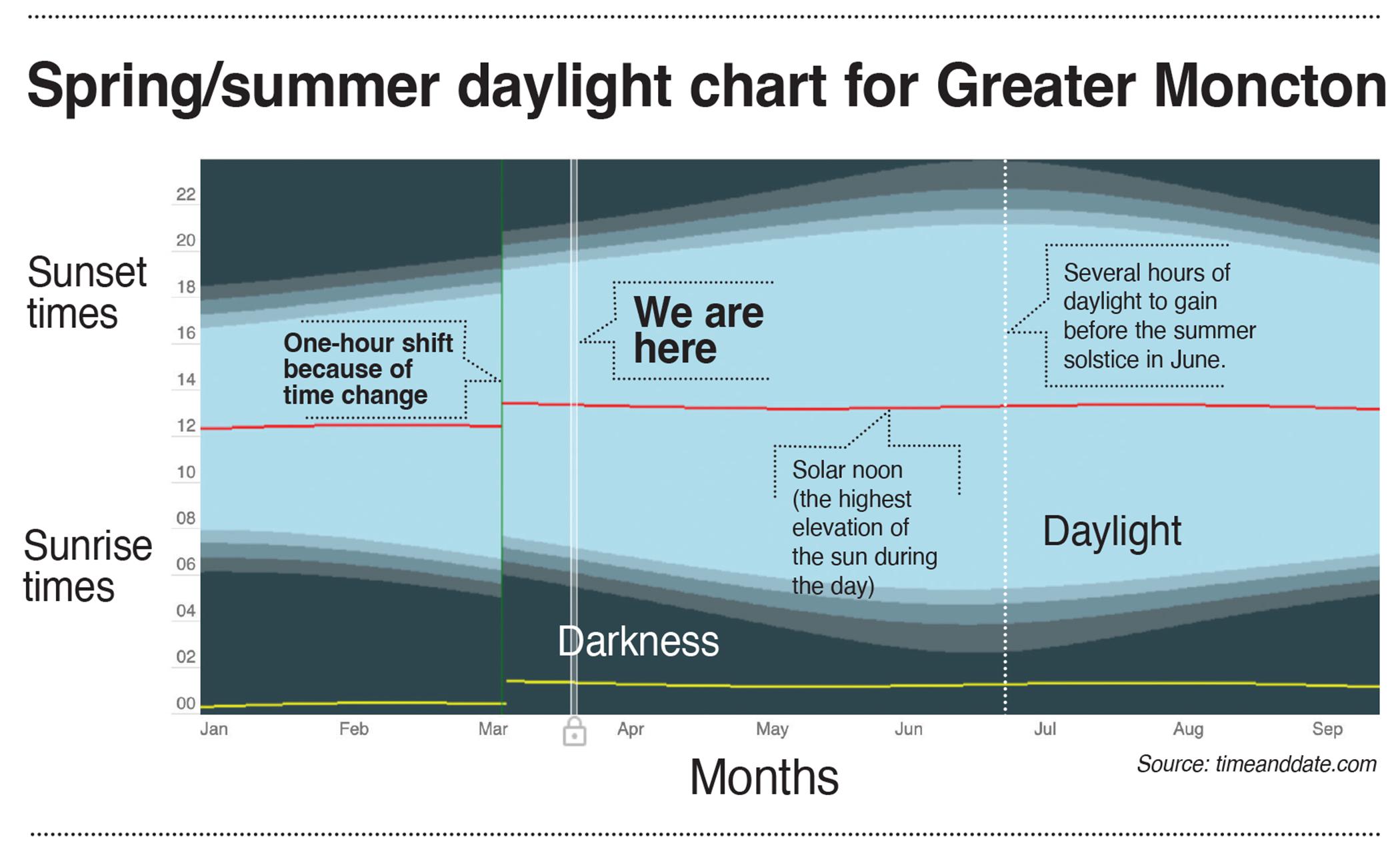
More daylight began inching back into our lives in January and February —barely noticeable at first — but what began as a crawl has become a full-blown sprint toward the spring equinox. March is a transformative month because the daylight increases are the largest of the year. This is it.
Through the end of the month, we’re gaining about 3 minutes and 15 seconds a day. In early January it was just 50 seconds.
On that day, there will be 12 hours with the Sun above the horizon and 12 hours of the Sun below. That might not sound like a big deal when you’re still scratching ice off the windshield with a random Christmas gift card, but during the Deep Dark Days of December (DDDDs), we
had just 8.5 hours of Sunup time and 15.5 hours of darkness. And remember, the last time we had this much daylight was six months ago at the equinox in September. Twelve and 12 is a win.
Over the three painfully slow months since the winter solstice in December, a surprising 3.5 hours of daylight have returned to our lives, roughly split between sunrise and sunset. By the summer solstice in June, that flips to about 15.5 hours of Sunup time and 8.5 hours of Sun-down time, a seasonal swing of close to eight hours . . . eight.
Nerdy small talk
In four sentences, here’s all you need to know about the equinox to make small talk with strangers at Tim’s today: The pole of the Northern Hemisphere is fully tilted 23.5º toward the sun at the summer solstice, and fully 23.5º away at the winter solstice in December. For two brief and precise moments in the calendar year — at the halfway points between the two solstices — the Earth’s axis is exactly perpendicular to the sun. It’s neither tilted toward or away. And for just a few
moments, the sun passes directly over the equator. Following the equinox, we experience more daylight than darkness.
Shouldn’t it be warmer?
It’s just as cold outside now as it was in December, so it should be obvious that temperature is connected to climate and weather rather than the hours of daylight. Proof?
The daytime high on Sept. 22, 2025 — the fall equinox — was 22C. The only crunching under your feet was a few leaves. It’s the sun’s elevation, however, that drives the dramatic
temperature swing between winter and summer. Since the first day of spring is halfway to the summer solstice, the Sun’s elevation of 44º at solar noon is also — drum roll, please — halfway to its highest elevation of the year of 67.3º in June, from its lowest elevation of 20.5º in December. The sun is pushing higher in the sky about one degree every 3.5 days.
Time change, changing times
In case you were in Saskatchewan and missed it, there was a
time change on March 8. (Saskatchewan doesn’t do time changes.) On the eve, sunset was at 6:14 p.m., a whopping 1 hour and 41 minutes later than the 4:33 p.m. we experienced for a punishing 10-day stretch in December.
On the day of the time change, sunset was of course shifted an hour later (plus a couple of minutes for the daily change) to 7:15 p.m., and sunrise was also shifted an hour later to 7:45 a.m.
Understandably, robbing an hour of sleep makes most people cranky but the extra hour at sunset
signals that summer is approaching. Short-term pain for long-term gain.
Jeff Melnychuk, aside from clearly longing for the days of summer, was on a determined career path to astrophysics when he was bitten by the journalism bug in the early 1990s. He’s a former editor of the Times & Transcript in Moncton and is currently editor-and-chief at business magazine Automotive News Canada. His passion for the cosmos and making it relatable, however, continues.
BY SOPHIE DUPLESSIS
While some may argue that the modern education system is an improvement compared to the academic framework from years ago, that is unfortunately not the case. Schools today often set students up for failure by forcing them to learn in certain
ways, creating stressful environments, holding every child to the same unyielding standards, and handing out copious amounts of schoolwork. Not only does this create disappointment and unreachable expectations, but it also restricts a child’s ability to thrive and grow as a person. To
put it into perspective, the average workload for a student is about 2-3 assignments/worksheets for every class. With a courseload of up to 6 classes, that number can rapidly climb. Any student who participates in outside activities must also balance sports, part time jobs, and hobbies
on top of that, often leaving little to no time for leisurely activities. With the exhaustion that students face, it is no wonder that they struggle to succeed. My hope for the future is that these systems are adjusted for the wellbeing of todays youth. An ideal learning structure would include
relaxed and flexible working environments, learning tailored to each child, and mandatory courses that teach valuable life skills. As well as this, having more opportunities to work on future goals or projects could greatly increase the chances of success for many students.


Tank up at Point Park Petrocan, but don’t forget our many other services!
Good food, including:
• U-Bake Lasagna, Fresh Pizza, & U-Bake Pizza from Vito’s
• Fresh subs made daily
• Hot dogs Tuesdays and Thursdays
• Even fresh-baked cookies
• Along with popular snacks and drinks



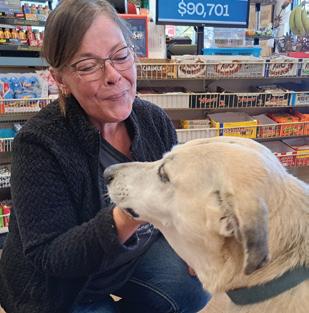
We also have available: air for your vehicle’s tires & an RV dumping station And, our friendly staff will even have a treat for your pup!
Point Park Petro-Canada Mark and Irene Knowles, Owners/Operators

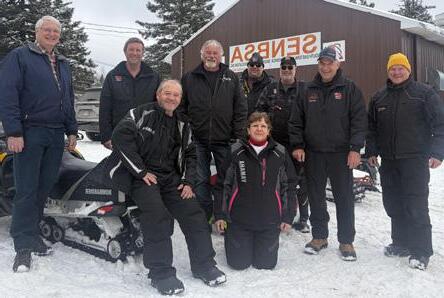
Kevin Williams recalls that the first meeting to explore the possibility of a snowmobile club in southeastern New Brunswick, held in 1986, had thirty attendees.
Today, says Williams, President of the club that grew out of that initial meeting, the South Eastern New Brunswick Snowmobile Association (SENBSA), membership stands at approximately nine hundred.
That growth reflects enjoyment of the sport, but also, says Board of Directors member Joe Smith, “the camaraderie. It is a great social event for people to get together in the winter. Winters are cold and they can be miserable if you let them be, or you can embrace winter. This is a great way to spend time with people.”
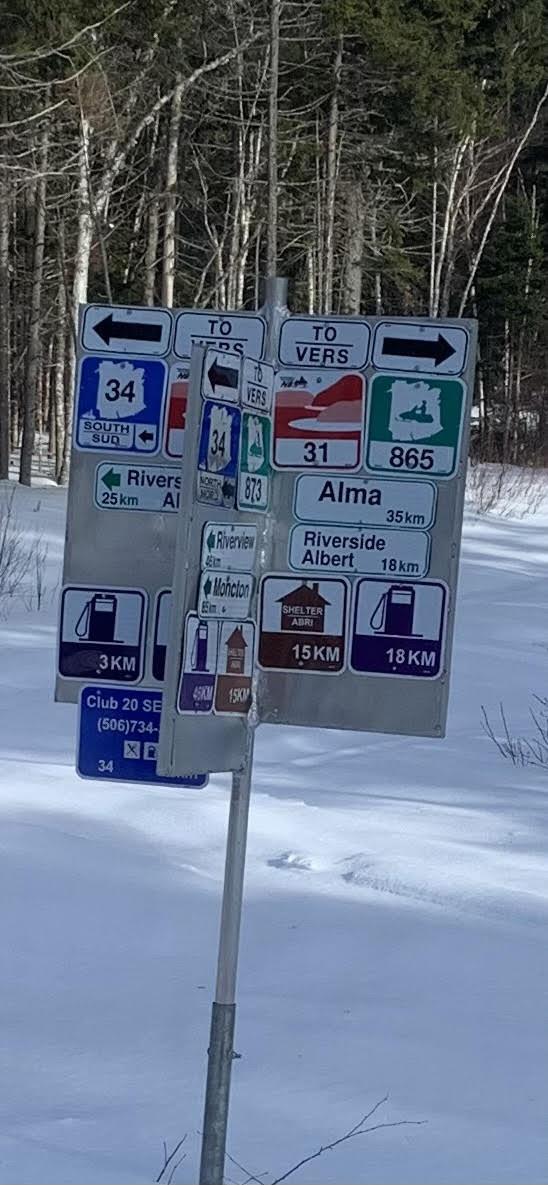
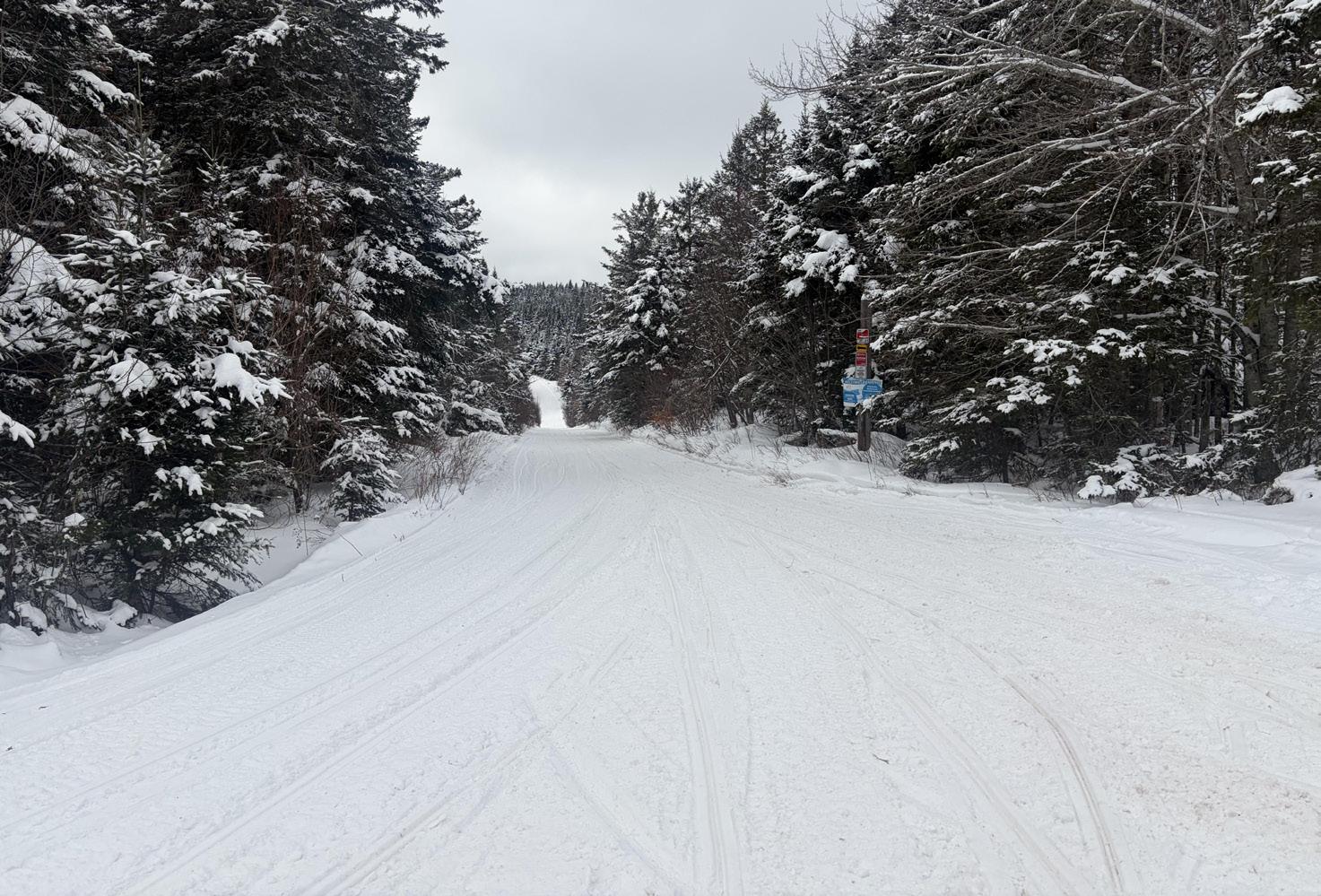
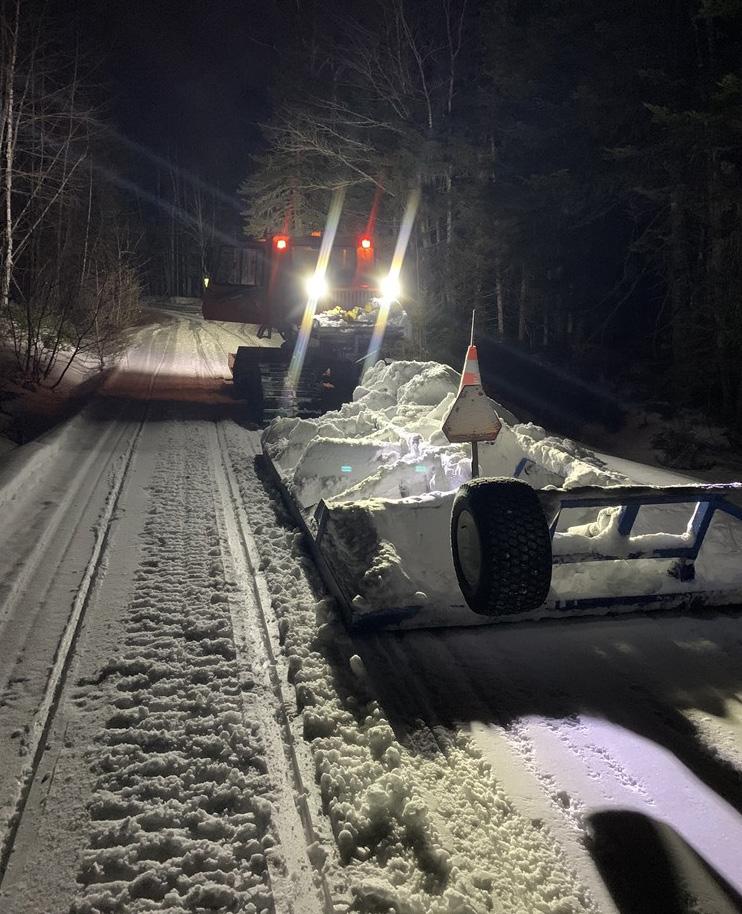
At the core of the association’s activities is its trail network. That network covers approximately 350 kilometres of trails that need to be groomed, making grooming a priority. The trails link to a province-wide system operated by local associations around New Brunswick under the overall heading of Snowmobile Motoneige NB.
Says board member Richard Smith, “what most snowmobilers see, and want, is groomed trails. That is what we deliver, a groomed trail that a snowmobiler can run their equipment on, safely, in the wintertime.
“That means that
people like our mechanics and our dispatchers are so important. Keeping those trails groomed is at the heart of what we do. We have two dispatchers who dispatch between ten and twelve groomer/ drivers, and that goes on twenty-four hours a day, seven days a week when we get snow.
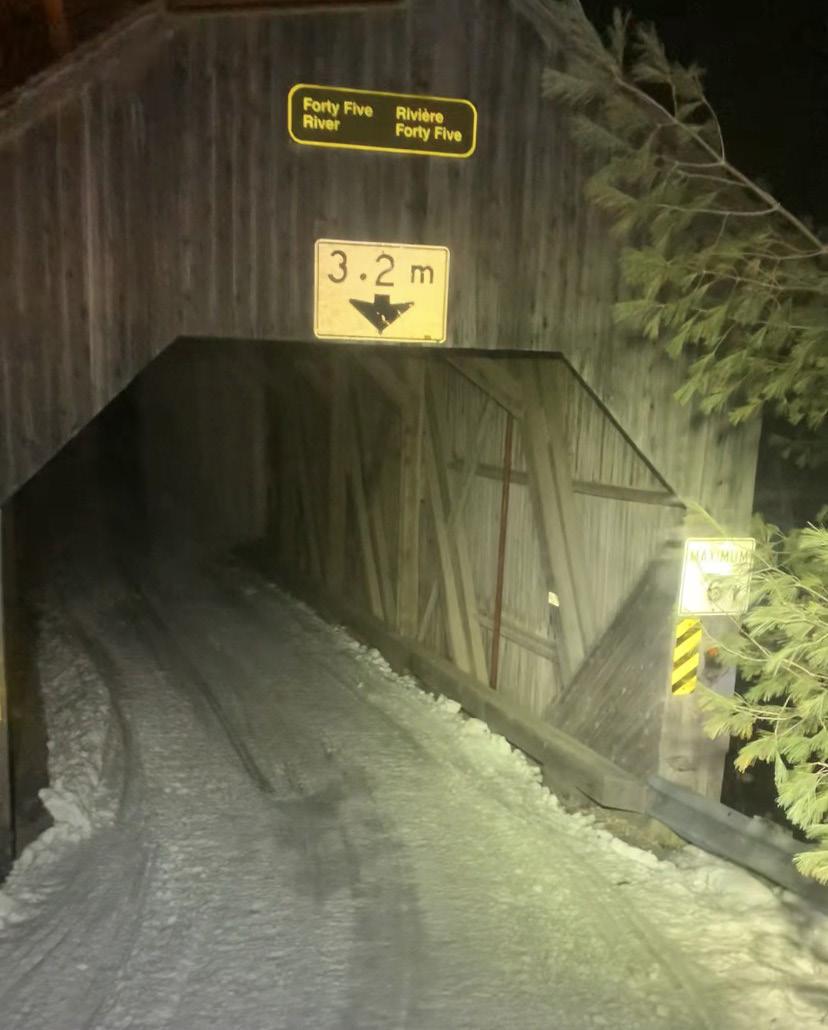
“There are a lot of things that go on in the background that our members never see but that they appreciate. Care of the trails, including grooming and things like volunteers placing signage, building and maintaining bridges for all-season use ranging from our trail groomers to offroad motorized and non-motorized type vehicles as well as hikers.”
Board member Dave Garland notes that the trail network has developed over time. “We already had a lot to work with in 1986, as some old trails were already in place. When we purchased the first groomer the expansion boom was on to connect more trails and more businesses.
“The development of trails has come a long way over the years, from just local trails on top of (Caledonia) mountain to tying in to Hillsborough, to Riverside-Albert, going into Alma, going into Riverview. The Fundy Highlands refers to this area, which goes right through to the Fundy Parkway.
“Now we have a lot

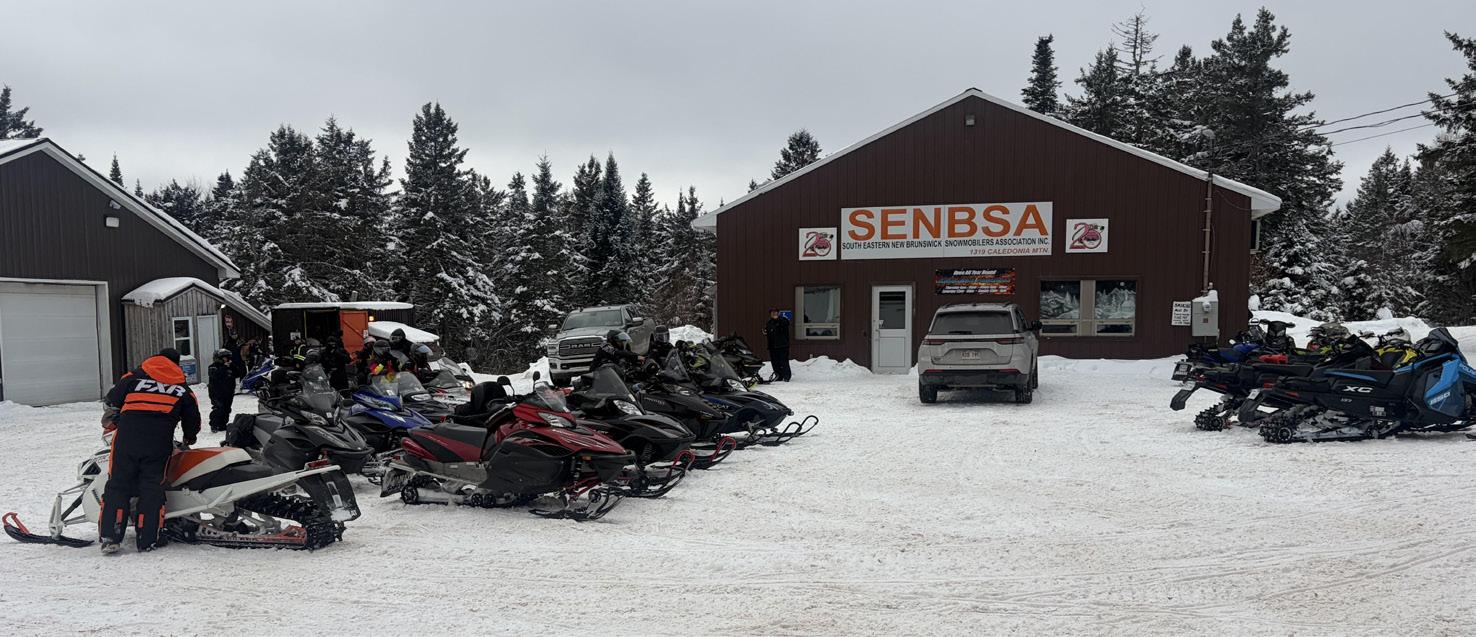

of people who come by trailer. On Family Day weekend, for example, we will have people come over from Nova Scotia and Prince Edward Island and other places out of province. They are coming to see our scenery.”
Adds Smith, “we have three covered bridges in our trail system. Wildlife sharing and crossing our trails is extensive … within hours of a new snowfall it is evident from the tracks animals leave behind that we are their guests. And it is quite obvious that they find life somewhat easier because our packed trails allow much easier travel for them.”
Smith notes as well that, with the trail system linking now to towns and villages, there is potential to include the trails in the Trail Towns initiative under discussion in southeastern New Brunswick.
“It has been identified that 350,000 tourists go up and down Route 114
every year, the majority of them from May until November. We just operate in the winter. When folks come here, they need fuel and they need food. So, there is kind of a symbiotic relationship between us and the towns and the businesses.”
Williams points as well to the sport’s family orientation. It is a sport for all ages, he says, “a lot of families snowmobile together. We had a family barbeque that was very well attended.”
Adds board member Don Martin, “the trail system around the province features things like warm-up shelters, which are nice places for the families to gather, warm up, maybe even take a lunch.”
Williams and Smith note that, with the trail network already so extensive, future plans are focused more on growing membership than on adding trails. Says Smith, ‘we go from Coal Branch on Route 126 all the way to Alma.”
Much of the grooming is done overnight. Says Williams, “we cannot always do that, but we try to. It creates the best trail conditions, and that is our goal – to keep the trails groomed and safe for the enjoyment of our members.”







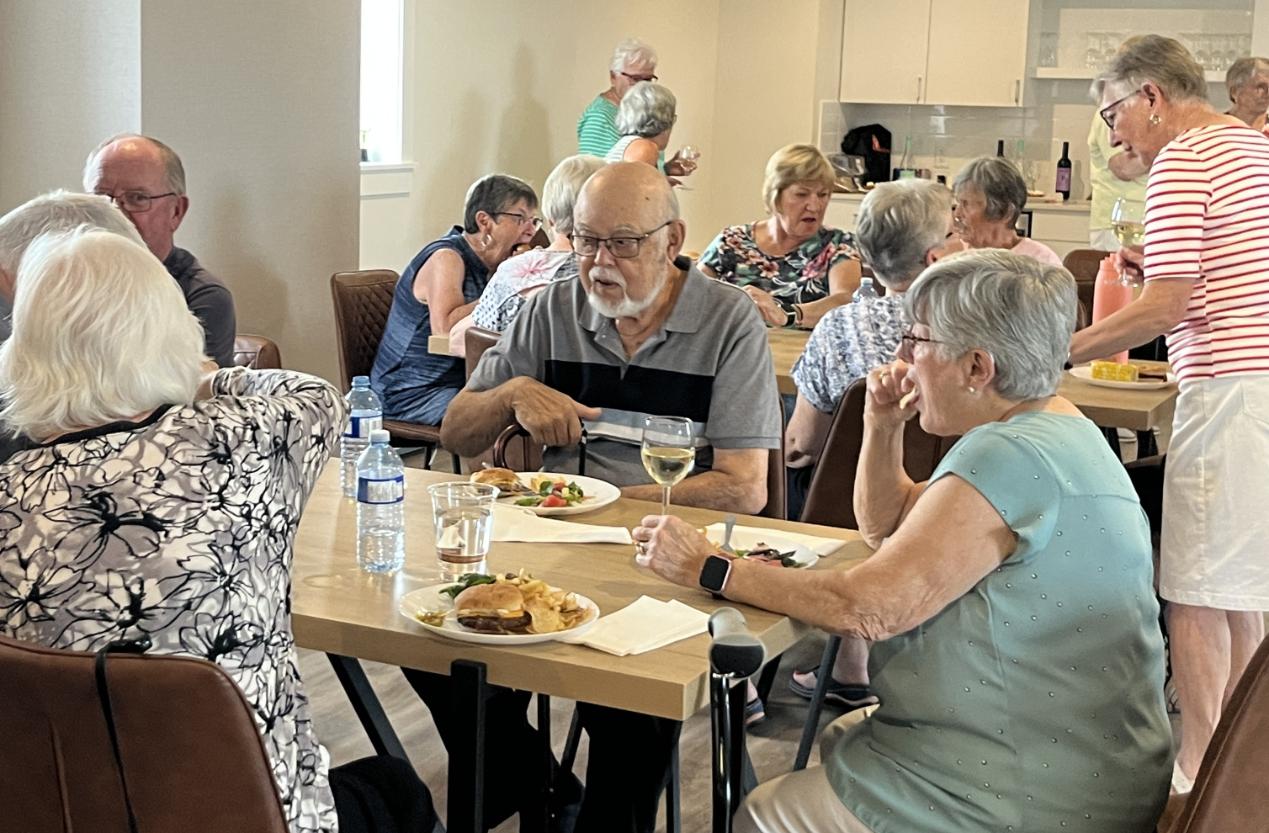
Our team of professionals will help you with every step of downsizing from your home to your new apartment and community at The Jeffrey.
We have years of experience in helping seniors make a smooth transition to an easier way of living. The community spirit and support from your new friends and neighbours will also be a tremendous benefit to those who enjoy other like-minded people and pursuits.
You can soon enjoy the many opportunities that will reduce your stress and make each and every day more enjoyable. Offering spacious 1- and 2- bedroom suites. 145 Dickey Blvd, Riverview 902-830-3482

The December 2025 - January 2026 issue of The River View featured a Q&A on Riverview’s Community Economic Development Strategy with Economic Development Manager Shanel Akerley. We could not publish the entire interview in that issue; we offer the remainder here, in a conversation between Shanel Akerley and The River View Publisher Eric Lawson
Q:Oneoftheinteresting thingsaboutsomenewer neighbourhoods–totake justoneexample,the areaaroundHarmony andSawgrassDrive,and the new construction takingplacethereandat thetopofRunneymeade -isneighbourhood density.Weliveinthat areas;thispastHalloweenwehadenoughcandy for two hundred kids and ran out. When we talked to friends who live elsewhereinRiverview,they saidtheyhadtenkids, eightkids,fourteenkids, those kinds of numbers.
Related to that, the housesatthetopof Runneymeadeareofa relativelysmallnumber ofdesigns.Inonerowof identical houses on both sidesoftheroad,every housesoldquickly,so the demand is there.
Onschoolmornings everyoneofthebus stopshasmanykids. Ittellsmethatneighbourhoodisfillingup withyoungfamilies.The demographicsherehave agedforalongtime,and itseemsliketheyhave turnedandarestarting togetyounger.Isthere anythingspecificthatis helpingtobringyounger families to Riverview?
You are exactly right. We have recently received a report on projected population trends for Riverview, and have learned that the pace of population growth has increased in recent years; families are indeed coming in. According to the report, between 2002 and 2020 the town’s population increased by an
annual average of 0.9 percent. Between 2020 and 2024, the average growth rate had doubled to 1.8 percent per year. We are welcoming more families with kids, and the data shows Riverview’s population is slightly younger than the province’s. This is helping offset our aging population and the wave of retirements being observed. Migrants to the southeast region tend to be young adults, many of whom have children, which is great news as it means our labour force will be supported by young talent. Those younger people also tend to bring fresh perspectives, ideas, and possibly even new sectors to the community, making it a more vibrant place for all.
We received an influx of inter-provincial newcomers from central Canada, and even western Canada during the pandemic, many of whom were looking for rentals, apartments, townhouses, and a range of other housing typologies. Developers were able to meet that demand quickly. As more options become available, we hope to see continued responsiveness to resident needs, particularly in the housing types being delivered. With population growth comes a broader tax base to support the level of services Riverview can offer — events, festivals, snow clearing, waste collection — all the things that require municipal dollars. With more people and more commercial and residen-
tial infrastructure, those costs are spread over a wider base rather than increasing the tax rate for the existing population, which is good news.
We are excited to see new families choosing Riverview, this is a testament to our competitive cost of living that was likely a factor in attracting them here. As an inclusive and welcoming community, the Town will continue to raise awareness on the diversity and value that newcomers bring to the community, contributing not just economically but through ideas, values, and perspectives.
Q:Onasimilartheme — we lived in Manitoba, in British Columbia, inotherpartsofthe Maritimes, and then camehome.Something that is different about thisneighbourhoodis thatitwasveryclearly designedwithdensity in mind. There is one substantialapartment buildingonRunneymeade. Another section is row houses. Another is row townhouses. Another is semi-detachedgardenhomes.A largesectionislarger semi-detached homes. Then there are midsizedsingle-family homes on mid-size lots, which is where I live. Andthenaportionof largersingle-family homesonlargerlots. Thatpatternwas clearlydeliberate.Two apartmentbuildings, some row houses, some gardenhomes,larger semi-detached homes, mid-sizesingle-family homes,largersingle-familyhomes—all inonedevelopment.You did not used to see that. Eachofthosetypesused tobeitsownthing. Whenyouweregoing
throughtheprocess, particularlywhenthe by-lawswerebeingput inplace,wastherealot ofinputonthemultiusenatureofthisneighbourhood, or in the town generally?Areresidents acceptingthatthiskind ofmixmaybenecessary toincreasingaccommodatepopulationdensity?
We received feedback representing both perspectives. Some expressed the more traditional view that low-density neighbourhoods should remain protected. Others took the position that, having established their homes, what neighbouring property owners choose to do is their own concern. What we have come up with in the new Municipal Plan and Zoning-By-Law is a unique approach to encouraging soft density in low-density neighbourhoods to meet the needs of our growing population. Specifically, for lower-density zones, we allow a single-unit dwelling (your traditional family home) plus up to a maximum of two in-law suites and one garden suite. Townhouses, rowhouses, semi-detached units are also permitted in lower density zones. This represents the maximum allowable density in these areas, as our intent is to support opportunities to house more people, most likely family members, students, or aging parents, without compromising the character of established neighbourhoods.
Where we will likely see more of those mixed, higher-density neighbourhoods you mentioned — with single detached homes, then semis, then townhouses, then small apartment buildings leading into larger ones — is in new developments on vacant land. The intent there is to integrate different

income levels, different housing types, and different community groups in the same neighbourhoods rather than having sharp differentiation.
At the end of the day, what we have been hearing from residents is that they want more affordable options and more diverse housing types. There is little appetite for a market comprised solely of apartments or single-unit dwellings — residents are also looking for that "missing middle" housing. However, these forms cannot be delivered without enabling new development. The two go hand-in-hand: we want to see more options, and that will mean embracing thoughtful change and integrating mixed neighbourhoods, which in turn increases overall housing stock and brings more attainable options to the market.
To your point, this involves a lot of awareness-raising and ensuring residents understand we are not proposing to bulldoze existing neighbourhoods to insert fourplexes. Our goal, through the new by-laws, is to conserve existing neighbourhoods, understanding that realistically, households may choose to add one in-law suite to their main dwelling subject to cost and feasibility, because the cost of developing those in existing homes can be quite high. Getting up to four units on one traditional property is possible with two in-law suites and a garden suite, however considering the cost to build, parcel configuration, and setback requirements, challenges exist. Higher-density development will primarily occur in new developments on vacant lands,
where there is more space and flexibility to design mixed neighbourhoods. It is a nuanced topic.
Q:WhenIlookatthe wayourneighbourhoodisbuilt,itmakes sense.Ifwearegoing tohavehigherpopulation densities, this kindofmixislikely necessary.JustlookingatwhatIdriveby everyday,theneighbourhoodjustaround
the corner from me israpidlydeveloping. There seems to be a newhousegoingup everyday,andthey builttwofourplexes sidebyside,butthose areoriginaltothat sectionoftheneighbourhood,sotheywill notfeeloutofplace. On the other hand, Idounderstandwhy peoplehavebeen concerned that the originalcharacterof olderneighbourhoods wasgoingtodis-
appear.Forsomeone who's lived in Riverviewfor50years,that concerngoeswellbeyondpropertyvalues — it has to do with the historic character of theirneighbourhood. Thatiscompletely understandable.
Exactly. It is a fine balance, and we will preserve the character of those long-established neighbourhoods while finding solutions in new developments.


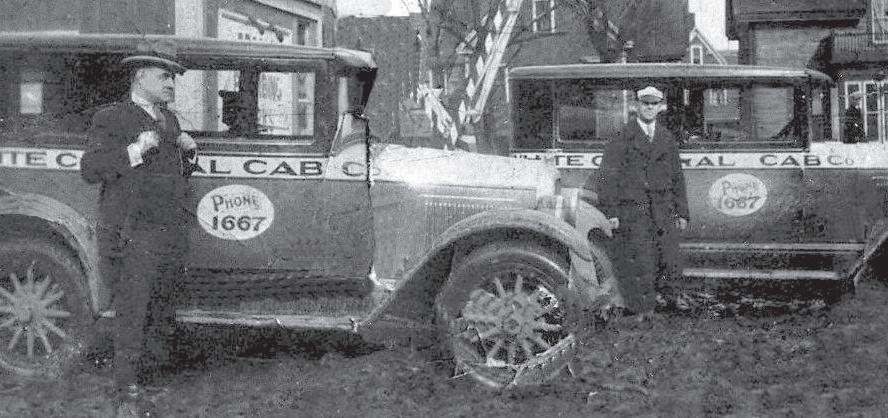
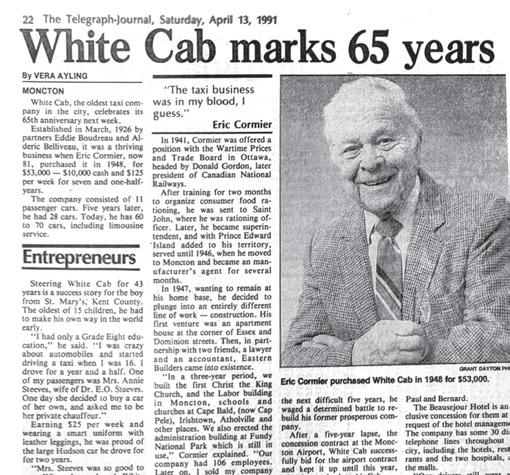
In 1926 entrepreneurs Edward Boudreau and Alderic Belliveau started a new cab service for Moncton and area (long before the term Greater Moncton came into regular use, but including what is today Riverview, Dieppe, and surrounding rural and semi-rural communities).
and
White Cab started with two used cars, soon improving its fleet to include seven new OverlandWhippet vehicles (a popular manufacturer of the time). The company grew and became known as one of the area’s most successful businesses. Ownership transferred to Eric Cormier in 1948; he carried on the tradition of excellent service and the company continued to expand. From the beginning, White Cab emphasized prompt, friendly, and professional service. In the early days drivers were required to wear uniforms, cars were spotless inside and out, and drivers followed a company code of ethics.
White Cab pioneered many innovations in the local industry – specialized cabs with skis on the front, and even snowmobiles, to deal with the region’s fabled snowfalls, limousine and bus services, a leading role in the conversion to owner-operated cabs from company-owned cabs, and, in 1947, becoming the first cab company in Canada to offer what was at the time a cutting-edge innovation: two-way radios in each cab.

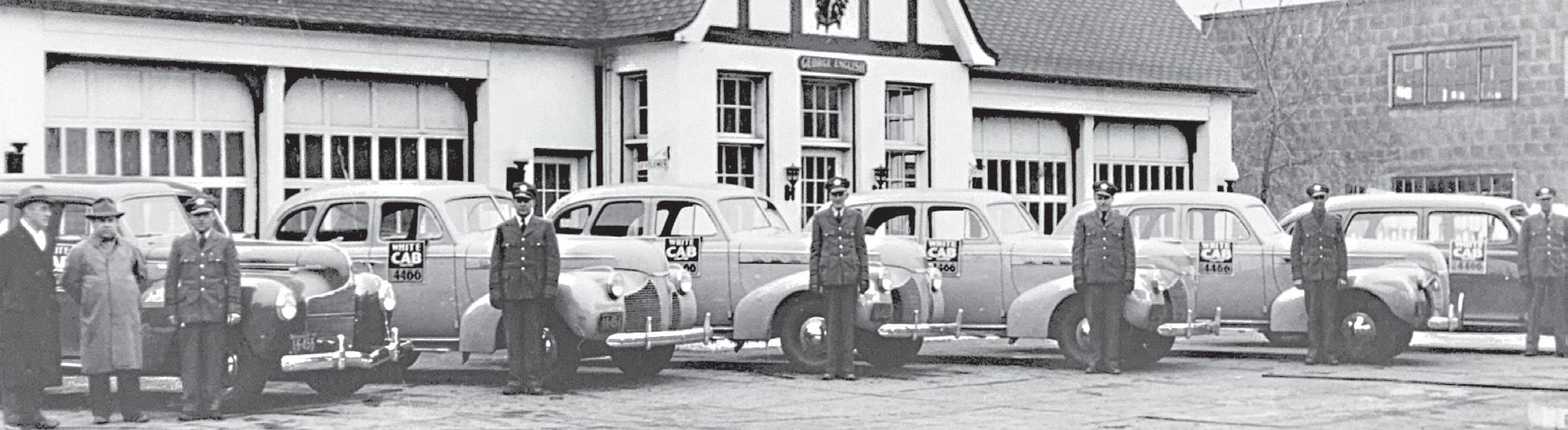
While drivers no longer wear uniforms, White Cab continues to provide the same level of professionalism, service, and cleanliness.
Benny Cormier took over White Cab from his father, Eric Cormier, who had been a driving force in the industry and who introduced many of White Cab’s innovations. Under Benny’s leadership the company continued to grow and innovate, becoming the first cab company in New Brunswick to introduce digital dispatching and GPS
newspaper article tracking of vehicles.
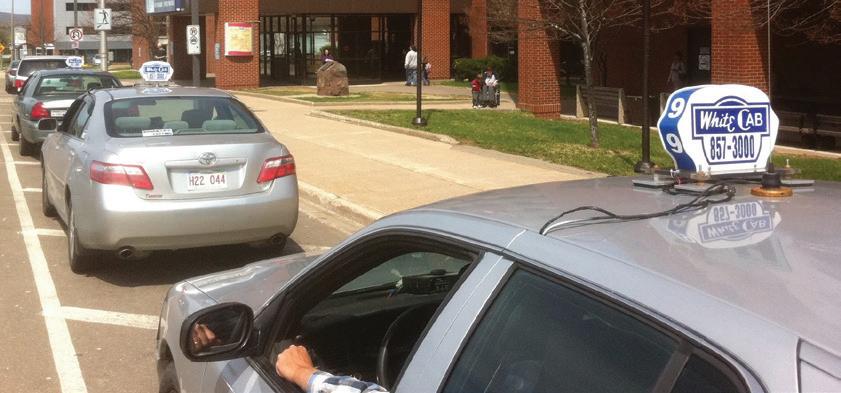
Claude-Pierre Gagné and his partner Janice Diotte took the wheel from Benny following the COVID-19 pandemic and after having served in management roles prior to that. Both have extensive experience in the taxi business. Benny Cormier remains as President.
Gagné notes, “this has always been a family business, and it still is. When Eric Cormier owned this company, his kids were involved. It has always been family run. And, many families have worked here over the years, including siblings and couples; so, it has been family run,




and also featured families in the workforce.”
Gagné recalls that he began as a driver in 2002. He says that some things have changed –there is less night work, for example – while other aspects of the industry remain the same. “It all comes down to service.”
Gagné says, “people will always need transportation. The area is growing so much that our business continues to increase. There is always going to be a need for someone to pick up a phone, dial a number, and say, ‘can you send me a cab.’














BY KRISTEN LAWSON
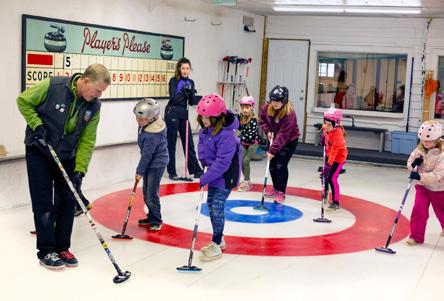
TheFundy Curling Club has more than doubled its membership in the past 15 years. They are currently wrapping up the 2025-26 season with a series of bonspiels. Alan Demaline, Youth Curling Coordinator and club Treasurer, shared his enthusiasm about the curling community andtheclub’sgrowth with The River View.
What are the different kinds of bonspiel you are hosting this season?
Bonspiels are always a great time. Lots of good food, lots of social activity, which is a huge part of curling; much more than what happens on the ice is what happens in the clubhouse.
February 14-15 was our Mixed Bonspiel; that is typically two male and two female players on a team. February 27-28 was the Open Bonspiel, which can have any combination of players.
Last year one of our members, Casey Lockhart, proposed an all-women's bonspiel. It was a huge hit! The boys did all the cooking, which worked out really well. We think so, anyway. The ladies get the day to curl and have a great time amongst themselves. That is coming up again on March 14.
Our most unique bonspiel of the year will be on April 4; it is our Second Annual Human Bonspiel.
I read about that online; it sounds really fun. It was super cool. Last year we wanted to do an end-of-season fundraising event, so we got a bunch of plastic saucers, just like you would put a little kid on. We put our adults in them and delivered them down the ice like a curling stone. It really put our club on the map--it made the national news! I had a lot of clubs from across the country contact me looking for tips on how we ran our human bonspiel because it looked like so much fun. I am sure you will be seeing them pop up across the
country, but it all started right here at Fundy.
That's a nice bragging right! What is the state of curling as a sport in 2026?
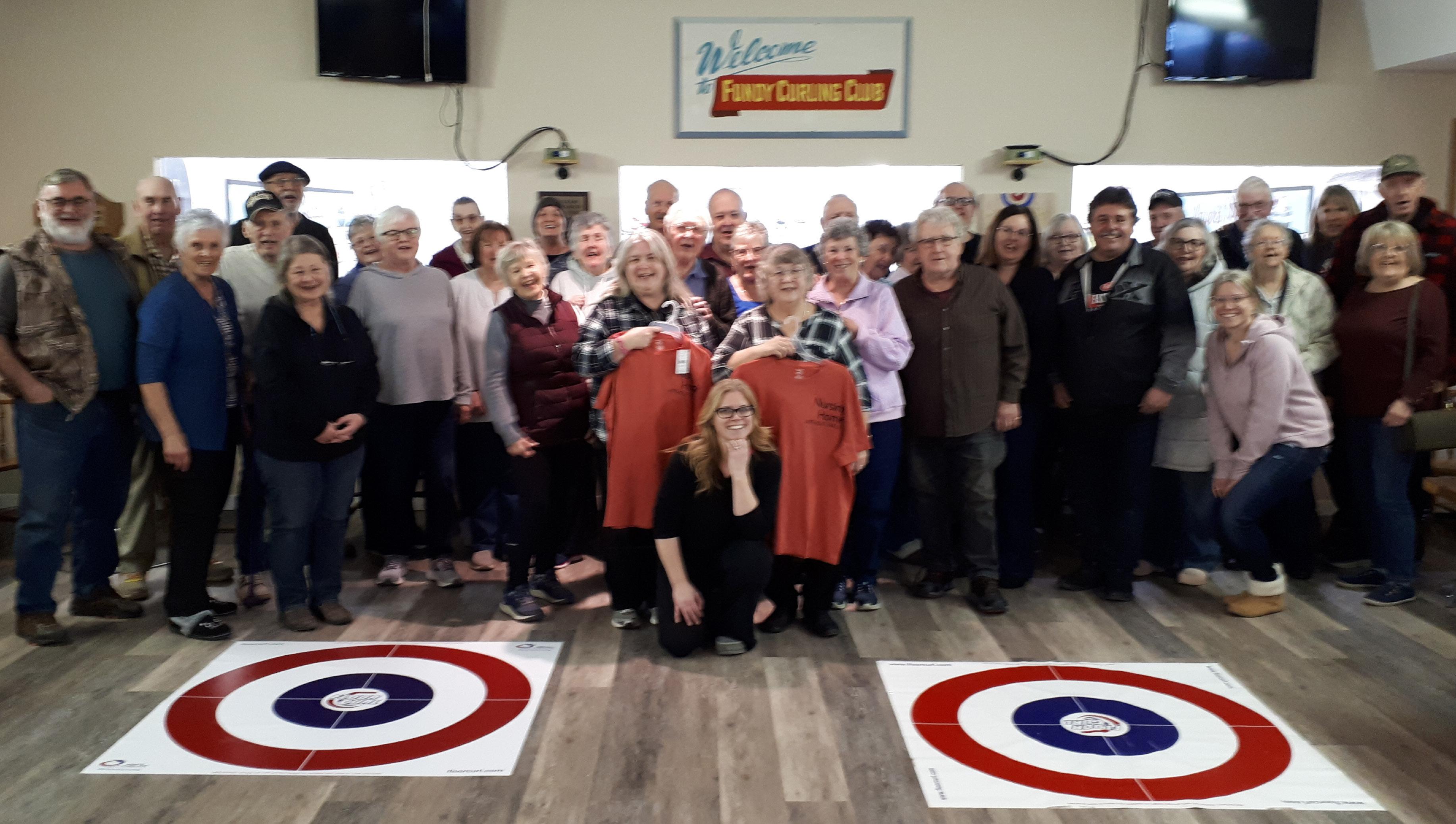
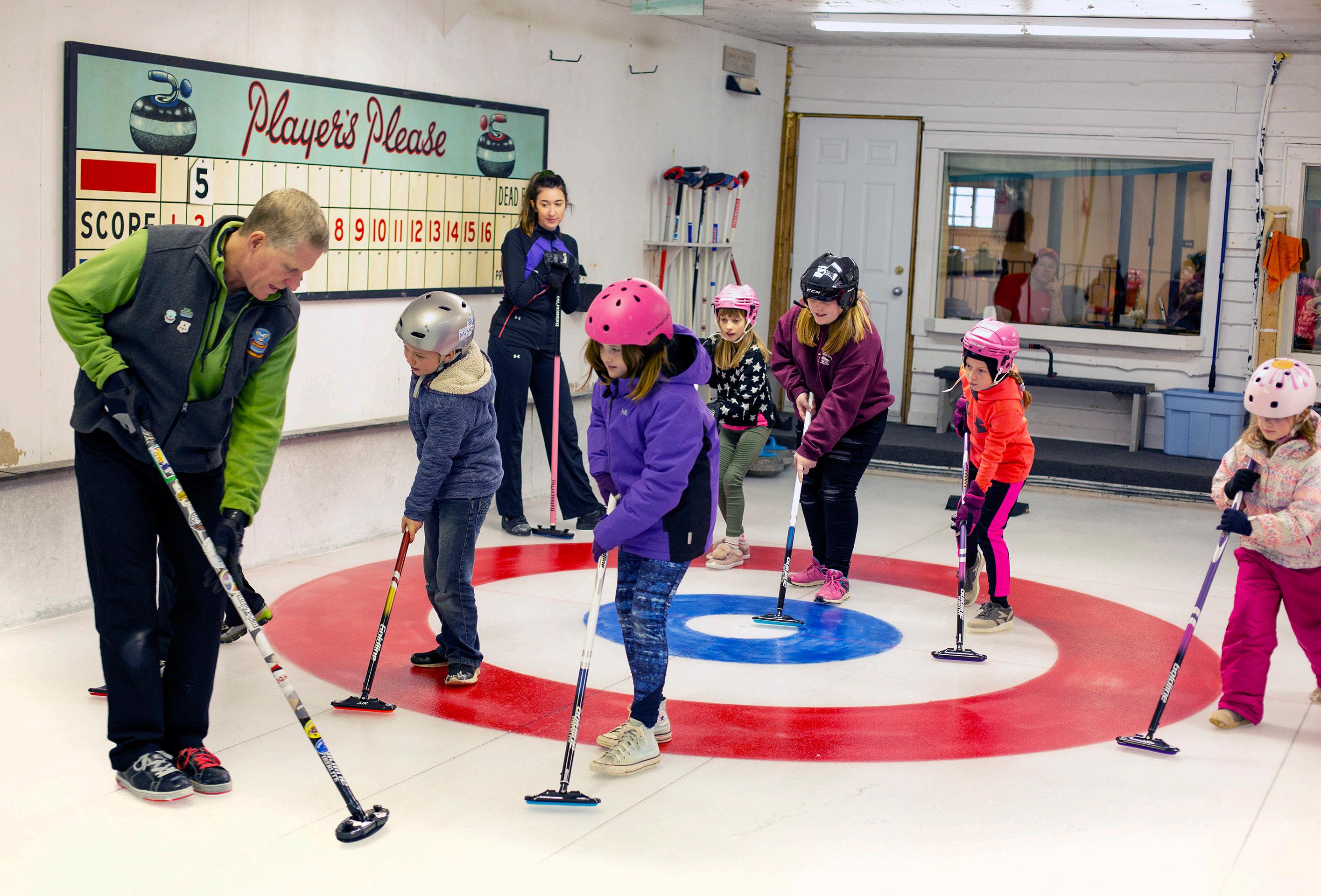
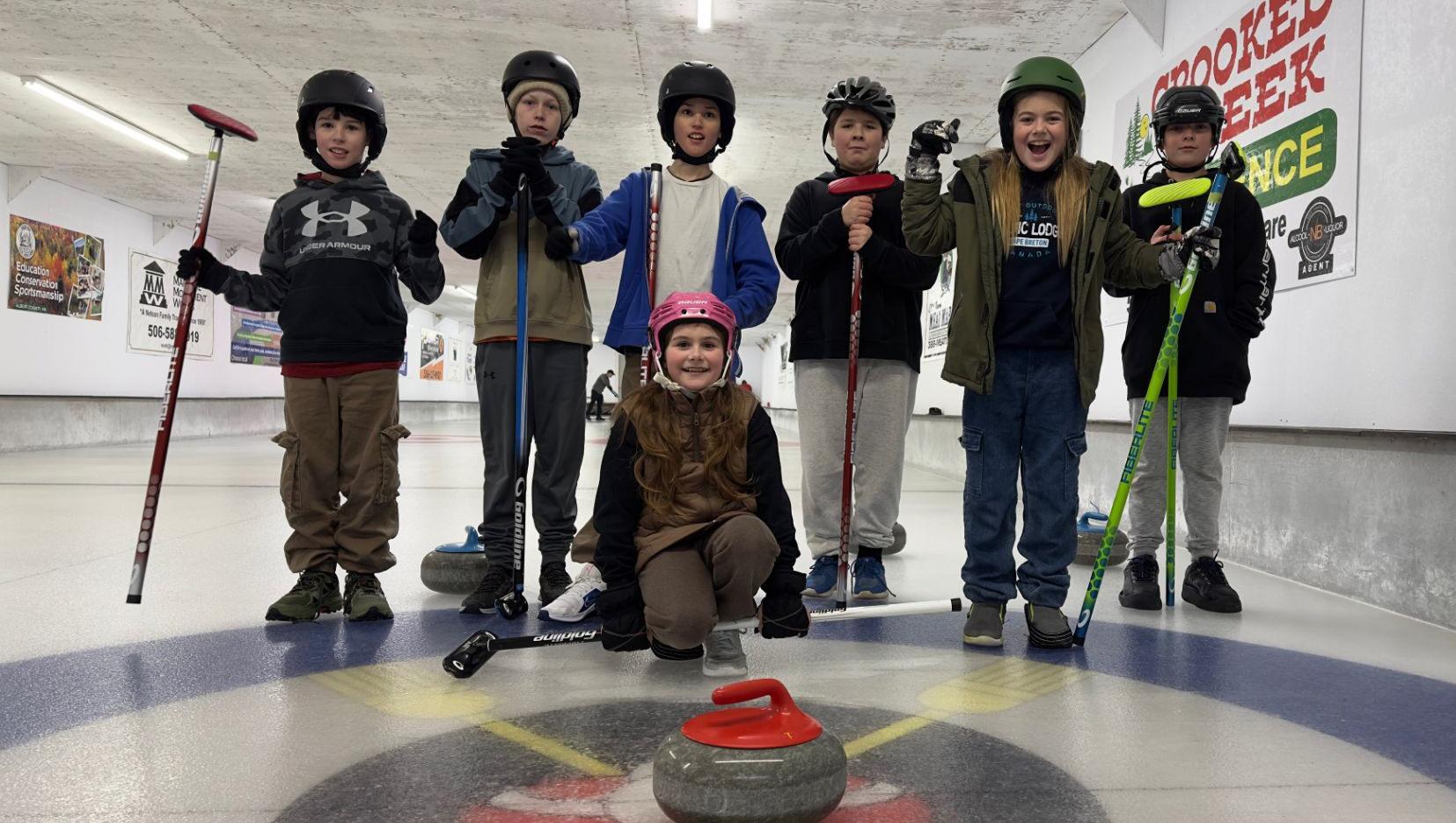
I can only speak from our club's perspective. We have a huge membership for such a small club, around 115 members this year. We are at capacity for some of our programming; we actually had a waitlist for our Little Rocks program this year, because we only have two sheets of ice at our club. We attract members from Alma all the way to Riverview. We are definitely going to see the


need for expansion in the coming years.
You introduced stick curling this year. What is that?
Stick curling is for people who sustained an injury or are not comfortable sliding around on the ice. It introduces a whole new demographic to the curling world. I would describe it like shuffleboard on ice, with two players per team. You use a stick about the length of a broomstick with a specialized handle. Instead of sliding you walk down the ice until a certain point, then push the rock with the stick. It eliminates the sliding, the bending, and the sweeping, which can deter some people from curling.
We started a mini league pilot program for folks 55 and up in February and it [went] very well. Within 45 minutes of instruction people are already able to play in a game.
The Fundy Curling Club is volunteer run. How many people does it take to run the organization?
There are around 30 core volunteers. We have nine people on our board, and then we have subcommittees. We are extremely proud that all our positions, from cleaning to bartenders, ice maintenance, youth coaches—everything is 100% volunteer run.
We just redid most of the interior of our clubhouse. We put the word out for folks who know how to drywall, paint, and stuff like that. We were flooded with people and got the clubhouse looking pretty good.
What is the annual curling season?
We typically have our ice ready by December 1st. We do a three-day learn-to-curl program for adults who have never been on the ice. They can come learn the basics, decide if curling is for them, and then we can integrate them into our league play. Starting in January we have league play every weeknight. December is also a big time for us to work with the kids in our area. The youth coaches go to the Riverside Consolidated School with a couple of floor curl sets (they have wheels on the bottom so you can use them in a gymnasium). The kids get introduced to the basics of curling, then the following week they come to the club, and we get them out on the ice.
Is there anything else you wanted to talk about today?
Our club is so much more than a curling club. It is a gathering spot for the community.
We are partnered with Nursing Home Without Walls, which is a wonder-
ful program to try to keep seniors in their homes as long as they can. We have had them come into the club and have an afternoon of indoor floor curling, which is a big hit.
During March break every year we invite our Little Rocks curlers to
join us at The Forestdale Nursing Home for an afternoon of floor curling. It is an incredible intergenerational experience for everyone. The residents so appreciate the kids coming in to spend a few hours with them.
The community really
embraces the club, and in turn the club tries to embrace the community. We all work together for a better place.
BY KRISTEN LAWSON
After losing access to their previous event space bgc Riverview is getting creative with their fundraising events this year. They are launching a series of new Crafters Markets, with the first edition at the Coverdale Centre on Saturday March 21 from 10 a.m. to 2 p.m.
Community Engagement Coordinator Tosh Taylor spoke about the need to step up their fundraising efforts.
"The plan came out of a big change in our fundraising calendar from previous years. The Town of Riverview has not renewed their liquor
license in the Coverdale Centre. Because we are located in the same building, we would often run our major fundraisers out of the community centre down there, it is like a big auditorium.
“With them not renewing the liquor license, it put an end to our three major events that we host every year. We would have a big event called Diamond Dinner, one called Garage Night, and others throughout the year that would raise us a lot of money. We would only have to do three major fundraising events a year to support the club, because BGCs are non-profit organizations.
“In order to make up for the money we’ve
lost, we had to come up with some more inventive ideas to supplement the funding."
Formerly the Boys and Girls Club, bgc supports local youth through programs including after-school care, intramural sports, homework assistance and school breakfast programs at Riverview East and Riverview Middle Schools.
The teen Drop In at Riverview Middle School has access to the whole gym and a rec room with air hockey and foosball tables. Their calendar is full of activities like sports days, talent shows, art challenges and movie nights.
Notes Taylor, “funding is down everywhere

“Blindness separates us from THINGS but deafness separates us from PEOPLE.”
- Helen Keller
across the entire province. The government has really cut back on funding for non-profits, especially in the education sector. We are going to be working harder than ever to raise as much as we can to keep our programs running.”
Taylor has a background running crafters and farmers markets, so the idea of starting a new vendor’s market came naturally.
The March market will have around 30 vendors including soap makers, woodworkers, a small-scale farmer and a tea maker.
Youth entrepreneurs are encouraged to create their own items to sell and can book vendor tables.
“There is a little guy who has access to a 3D printer; he makes keychains and fidget toys. One girl makes earrings with polymer clay. Another guy creates artwork out of copper and stones that he finds when he is out for a walk.”
More crafters markets are planned for the rest of the year: one for Mother’s Day in May, one for bgc’s Family Fun Day at the end of June, and a big outdoor market at Caseley Park alongside Harvest Fest.
Admission will be by donation. The funding goes towards bgc’s free programming, particularly their breakfast programs at Riverview East School and West

Riverview School. These are supported by Feed NB, with bgc supplementing with fresh fruit and vegetables.
While the markets are intended to offset the cost of programming, Taylor clarified that they are also about engaging with the community so that people can see what bgc is and what it provides.



















By John Wishart
GGroundhog Day falls on Feb. 2, the day several furry prognosticators tell us whether we will have six more weeks of winter.
Newly-returned U.S.
President Donald Trump
beat Shubenacadie Sam and others by a day this year, ushering in many weeks – perhaps months – of economic winter with his decision to impose 25 per cent tariffs on all Canadian imports.
As kind and friendly Canadians, we have every right to question why Trump has decided to take aim at his closest neighbour, friend, and ally within days of taking office. Prime Minister Justin Trudeau has already announced countervailing tariffs, and we are in for a difficult economic period.
provincial governments, and representatives from the biggest New Brunswick exporters to the U.S., in negotiations with the new U.S. administration. But that doesn’t mean we sit idle and wait for better economic days to return.
TUES-FRI:10-5:30 SAT:10-5|SUN:12-5
(506)383-7800|kayla@luckyrabbitfinecraft.ca 620CoverdaleRoad,Unit#7,RiverviewNB,E1B3K6

Our country, our province, and our region produce some outstanding products, some of which make their way to U.S. and other markets.
But they also sit on our grocery store and retail store shelves.

LuckyRabbitFineCraft isagalleryandretailspacein Riverview,featuringquality,functional,finelycraftedproducts madebyartisansacrosstheMaritimes.Thespaceshowcases handcraftedpiecesalongsideacuratedselectionofcomplementary homedecorandlifestyleitems-allselectedtobringbeautyandjoy toeverydaymoments.

For those of us who reside and make our living along the banks of the Petitcodiac, we might wonder what we can do to help our families, communities, and businesses through the darkest days of this economic winter. We should support the efforts of the federal and
One way we as residents of Southeast New Brunswick can do our part to show support for Canadian companies, and rob the Trump administration of its befuddling intentions, is to support and buy local. When we are faced with a choice of similar products or services – one made in the U.S., and another made in Canada –choose Canadian.
If the trade war continues into the summer, the expected lower Canadian dollar may entice more Americans to visit our region, so there could be a golden lining to this situation for our hotels, parks, and the







tourism sector.
In the meantime, think of supporting locally made products like frozen food, seafood, agricultural products (buy local apples instead of Florida oranges), maple syrup, molasses, chocolates, or arts and crafts.





It’s a little thing all of us can contribute to Team Canada’s gameplan. It’s also much more hopeful than joining Shubenacadie Sam down his burrow to wait for economic winter to blow over.

Jenna, Emma and Maddie are three young entrepreneurs and the co-owners of JEM Beauty Salon. Together they have a passion for the industry and for making people feel beautiful in their own skin. JEM is a small local business located in Riverview, that opened in September 2023. The mission here at JEM is to make everyone feel welcome and comfortable, so that they leave glowing. We Can’t wait to see you!




Even with all the information available today, there are still a few stubborn fitness myths that hold people back. Let’s clear up a few of the most common ones.
Myth #1: You have to do cardio to lose weight.
Cardio is fantastic for your heart health, lung capacity, and mental well-being. It can absolutely support a weightloss plan. But it is not a requirement for fat loss. Weight loss ultimately comes down to overall energy balance; not whether you spend hours on a treadmill. Strength training, daily movement, sleep, and nutrition all play a role. If you dislike traditional cardio, that doesn’t mean you can’t make progress.
Myth #2: You can lose fat from one specific area by exercising that muscle. We’ve all heard it: “Do more crunches to lose belly fat.” Unfortunately,
that’s not how the body works. You can strengthen and build the muscles in a certain area, but you don’t get to choose where fat loss happens. Fat loss occurs system-wide based on genetics, hormones, and overall lifestyle habits. Stronger abs? Yes. Spot fat reduction? No.
Myth #3: Walking is enough exercise. Walking is wonderful. It supports cardiovascular health, boosts mood, and is easy to stick with. But as we age, we naturally lose muscle mass and muscle is what keeps us strong, steady, and independent. Muscle helps us prevent falls, climb stairs, carry groceries, open jars, and hike well into our later years. Walking alone does not provide enough resistance to maintain or build the strength we need long-term. Adding strength training a couple of times per week makes a huge difference.
Myth #4: Lifting heavy weights will make me bulky.
This is one of the biggest fears, especially for women. The truth? Building large amounts of muscle requires very specific training, high volumes, progressive overload, and a significant calorie and protein surplus, often hours in the gym each week. Simply lifting challenging weights a few times per week will not suddenly make you “big.” What it will do is make you stronger, more confident, and more resilient. Fitness doesn’t have to be extreme to be effective. A balanced approach: strength, movement, and realistic habits — goes much further than chasing outdated myths ever will.
Julie Solbak, BscKin, CKA Owner, Just Fit Fitness Center and Just Move Health Studio







BY KRISTEN LAWSON
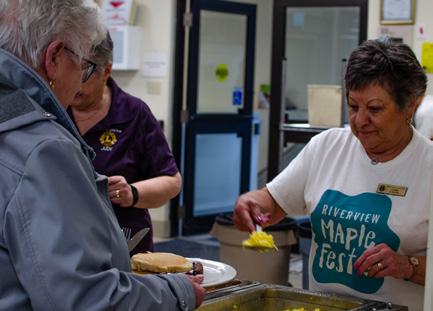
MapleFest is returning for the first weekend of spring. Thirty creative, educational and outdoor events celebrating the maple harvest are happening across Riverview and Albert County from March 27-29.
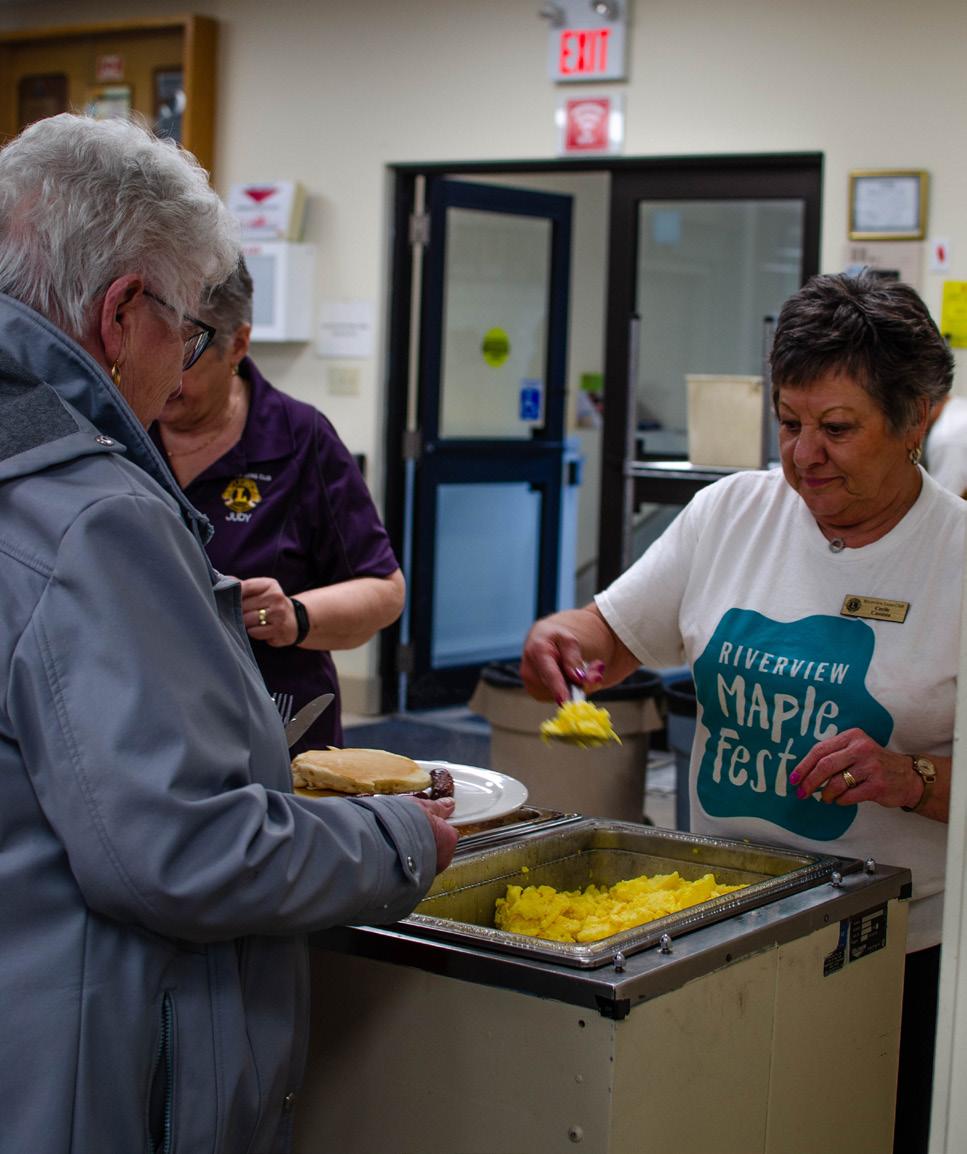
MapleFest began in 2009 as a one-day event celebrating the return of spring and sunshine. The Town of Riverview shuttled groups to the sugar woods for tours of Briggs Maples sugar camp and the Lions Club provided pancakes. Eighteen years on, the club still offers its popular Maple Brunch.
More groups got involved in the second year, expanding the festival to two days, and eventually three. The 2025 festival boasted a historical high of 7,250 participants, with maple-hungry visitors coming from across the Maritimes.
For the past, several years Riverview has been making an effort to turn MapleFest into a regional event. Manager of Community Engagement Karen Thompson explained,
“People will be visiting the sugar shacks, so it’s a great way to bring the entire Albert County together to celebrate spring and maple season.”
Most MapleFest events are for all ages to encourage the whole family to get out and spend time in the community.
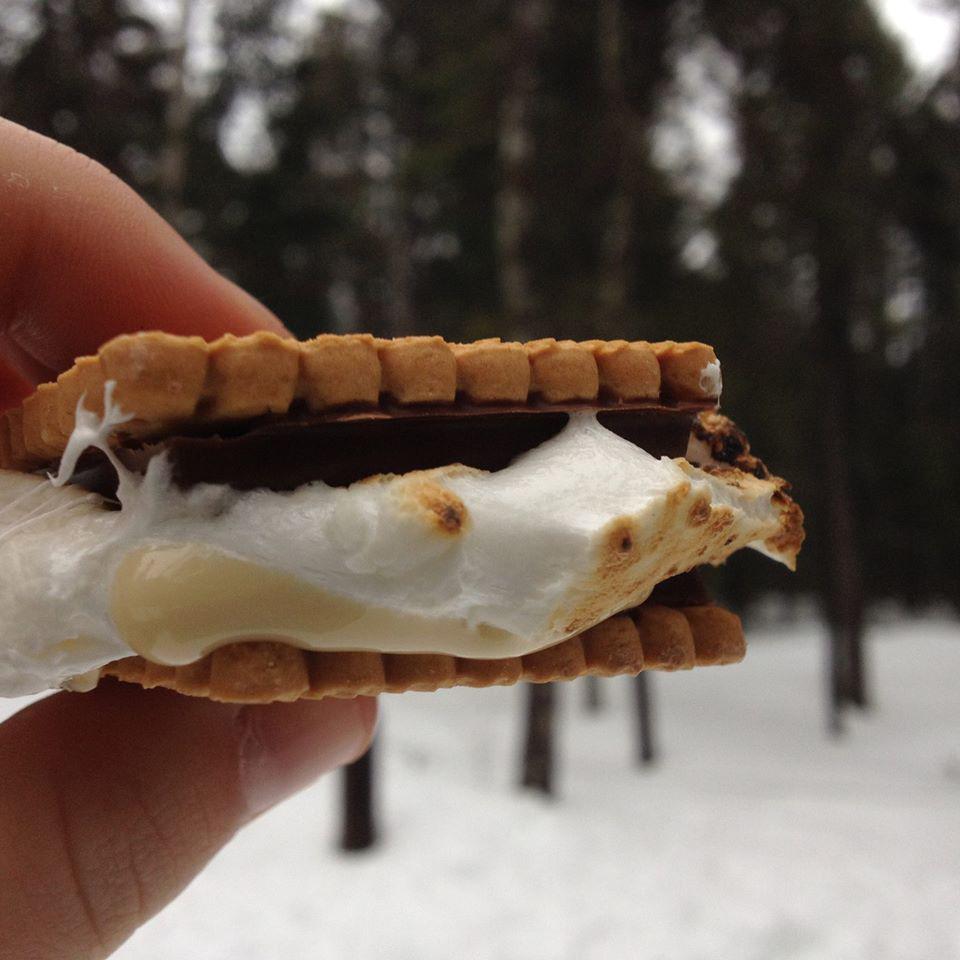
Rise & Maple always draws a big crowd–morning risers hike to the lookout at Mill Creek to enjoy maple coffee, maple s’mores and live music
around the campfire.
For those who want to get their fresh air and sweets in the afternoon, the Scouts are offering maple beavertails and starburst melts at their campfire cookout.
Many businesses are offering maple-themed specials, from seasonal maple coffees and desserts to savoury dishes like maple pizza, maple stir fry and maple brisket. Thompson quipped, “If you can’t go out into the sugar woods or that’s not your thing, you can get your maple on in a different way—go to a spa and get a maple pedicure!”
Even non-maple lovers can get outside and join in the fun with events like a guided round of disc golf or beginner birding. Indoor people can join the fun through activities like laser tag and pickleball.
“A lot of times people will develop a new favourite pastime. If you do not like it, no harm—it is a great way to discover whether this is something
that you would like to do.”
Atlantic Ballet is joining MapleFest for the first time with free dance and improv workshops for ages 9 and up.
Learn about local history at Daniel Delong's Mill Creek - From Naval Base to Nature Park presentation, complete with maple refreshments and historical displays.
Seedy Saturday is another new addition where residents pick up free seeds and can learn how to maximize germination.
The Ukrainian Association is teaching pysanka (traditional egg) making just in time for the Easter weekend.
Five different sugar shacks are participating in MapleFest this year: Briggs is hosting MapleMania with free maple taffy sticks, maple root beer samples and prize draws.
Farmer Brown’s Green-
house has a variety of maple-themed events including a scavenger hunt and foraging workshop.
Fundy Maples is holding an open house with free sugar camp tours in both English and French.
Pedersen’s Country Maple family sugar camp invites visitors to walk their maple trails and roast marshmallows.
White’s Maple's traditional pancake breakfast comes with sausage, brown bread, baked beans and maple taffy.
For more information check out the Town of Riverview website at www.townofriverview.ca



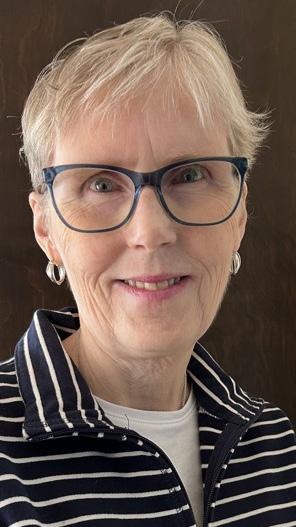
Mary is a retired Physiotherapist in Riverview. She left her career early due to widespread, persistent pain from inflammatory arthritis which she has experienced for more than thirty years. She has been active in pain management and research programs and is committed to finding ways to help others deal with similar health challenges.
Q:Whendidyoufirst becomeinvolvedinvolunteeringandresearch relatedtoarthritisand painmanagement?
I volunteered with the Arthritis Society between 2004 and 2014 in a variety of roles, including leading self-management programs, serving on the New Brunswick and National Boards of Directors, and helping develop national arthritis education programs.
Q:Ibelievethatyour interest in research datesbacktoyour earliestexperiencewith theArthritisSociety. Canyoutellusabout theresearchsideofpain management?
I attended a conference in 2004 to identify top priorities for research in inflammatory arthritis in Canada. The Canadian Institutes of Health Research (CIHR) and the Arthritis Society subsequently designated significant amounts of funding for these priorities.
I served as a Research Ambassador with CIHR’s Institute of Musculoskeletal Health and Arthritis from 2004 to 2010. The idea of engaging patients in health research (“patient engagement”) was a new concept then.
Patient engagement is a process when patients who have themselves experienced a health condition like chronic pain partner with researchers. Patients are involved in all stages of research, from study design to interpreta-
tion of results, to sharing results with health professionals, policy makers, and patients/the public. That process known as Knowledge Translation addresses the seventeen-year gap between new research findings and their placement into practice to improve health care outcomes.
Q:Thatconceptcertainly seemslogical,andthat itwouldhelppatients. Whatelsehaveyoubeen involvedwith?
There is an organization called the Cochrane Collaboration that is a global network of researchers, health professionals, librarians and patients that prepare and publish reviews of high-quality research studies.
Generally speaking, these systematic reviews, combine the results of all research studies done, in any one particular topic. They are published in the (online) Cochrane Library and are considered very trustworthy sources of health information.
I was involved in a project to share our Cochrane Systematic Review results on Fibromyalgia and Exercise with patients and the public using several communication tools. It was an innovative project at the time.
Locally, full access to the Cochrane Library is available through the New Brunswick public library system at: https://www2. gnb.ca/content/gnb/en/departments/nbpl/online-library.htmls.
After that I was a patient partner on a CIHR Chronic Pain Network (CPN) where researchers and people with chronic pain work together to fund and support Canadian university based research teams. We involved patients in every aspect of the CPN, including governance.
This work then led me to the University of Regina “Pain in Dementia” team led by Dr. Thomas Hadjistravropolous.
The CPN was also instrumental in working with Health Canada to develop a National Action Plan on Pain seeking to improve pain management in Canada.
Q:Thosearebigsteps. Whatelsehaveyoubeen focusedon?
The work that Dr. Hadjistravropolous was doing was of particular interest to me as pain is underassessed and undertreated among older adults in longterm care. Many people there also have advanced dementia and can’t tell their families or caregiversabout their pain, leading to suffering and a reduced quality of life.
Dr. Hadjistravropolous had developed and validated an assessment tool that caregivers could use to assess pain in people who had dementia and a limited ability to communicate.
Despite this assessment tool being translated into several languages and used in several centres around the world, it had not been widely adopted in Canada.
So, two projects were developed to get information about pain assessment in dementia patients out to caregivers, health professionals, and policy makers.
In 2019 and 2020, we developed a teaching
video for each of these three groups and shared them and other evidence-based materials on Facebook, Instagram, Twitter, and LinkedIn. That led to 257,000 views of our teaching videos and 60,000 visits from eighty-two countries to our website https://www. seepainmoreclearly.org/
We followed that up with the publication of our results in major medical journals so that other teams could learn about these projects.
Q:Wow!Thatisabig commitment.Whathave beenyourmostrecent activities?
I was a technical committee member on the Health Standards Organization (HSO) National Long-Term Care Standard published in 2023. This guides top quality care in long-term care homes across Canada.
I am now working on a Canadian HSO committee to develop a national standard for palliative care to be published later this year.
These roles were a great fit for me, as I had been a caregiver for my parents during their dementia journeys, and more recently for my late husband when he was sick with cancer.
I find this work deeply rewarding and hope it makes health care challenges more manageable for others.
For more information and resources, readers can visit: Pain Canada at www. paincanada.ca
To get involved, reach out to: The Cochrane Library at https://crowd. cochrane.org/ Maritime SPOR (Strategy for Patient Oriented Research) Support Unit at www.mssu.ca







BY KRISTEN LAWSON
The 13th Annual February Fling Competition, and 4th Annual Maritime Closed Highland Dance Championship, took place as part of the Winter Carnival on February 7, 2026.
More than two hundred spectators filled the stands of Riverview East School to cheer on the 150 Highland dancers from across the Maritimes, including six from Riverview’s Dunnett School of Highland Dance.
Pre-premier dancers competed in the February Fling. The Championship, which split off from the Fling four years ago, featured the premier level dancers. Five champions, one per age group, were named at the end of the day.
School director Jane Dunnett described the atmosphere:
“The piper plays one more time and the champions do a final Highland Fling. The audience claps along and everyone breathes a little sigh of relief because things are done, but those dancers are still putting their very best performance on for the crowd.”
The Maritime Highland Dance Championship is a one-off event, but local dancers will have the chance to compete in the New Brunswick Provincial Championship in Fredericton in May, potentially qualifying for the ScotDance Canada Championship in Moncton in July.
Highland dance has been performed in the Scottish Highlands since
at least 1265 C.E., originating as a way for warriors to test their agility, strength and stamina.
Despite the sport only opening to them in the past 100 years, the dancers are now predominantly women.
Each dance has a story behind it, often related to hunting or battles. The Highland Reel evokes a stag with large antlers running and jumping gracefully through the woods.
The traditional Sword Dance is based on the story of a victorious Highland chief taking his opponent's sword, putting it on the ground, and placing his own sword over it to form a cross, then dancing over them.
If a dancer touches their sword in competition they are immediately disqualified, “You can imagine dancing over two crossed swords that are about a meter long, and they dance in those spaces, in and over the swords, and if they touch one of the blades, then they get zero.”
Dunnett opened her school in 1975 and taught her first classes in her living room. Her current and former students get to occasionally perform at RCMP Pipe & Drum and Highland Games events, she says she is looking for more opportunities.
Last year they taught Highland dance at a private school and travelled to a multicultural festival in Rexton. Visiting senior’s homes is a particular favourite:
“I love when the dancers can go and perform for the seniors. Almost
every time there is someone that either danced as a youngster or knows someone who danced.
If anyone is interested in learning about Highland dancing I can tell them all they want
to know; probably more than they want to know, I will keep going till they stop me!”





Sarah Noseworthy is the Education Coordinator for the Moncton Wildcats. A former Middle School teacher, Noseworthy says the team places great value on learning and commits fully to player education.
“We try to guide them to courses of study that will help them in life. For these players, playing hockey professionally is Plan A, but we work hard to ensure they have the education they will need after hockey too.”
The process starts as soon as players arrive for a new season.
“It all starts at training camp. I meet the players, I meet their parents, I get to know them. We review what the process will be, what the expectations are, what the Quebec Major Junior Hockey League’s policy is regarding education, and reassure them that their education will not suffer.
“I am here to support them on a day-to-day basis while they are with the team. We have a team classroom at the Avenir Centre, and we meet there every day when they are not on the road, for two to two-and-a-half hours. Essentially, it is a study hall.”
Noseworthy notes as well that, since the team’s travel schedule is known at the start of the season, roadtrip study plans can also be developed in advance for the entire hockey year.
“Most of the courses they are taking do have some flexibility in dates. That allows us to front-load some of the schoolwork so that they are a bit ahead each time they leave on a road trip. That means they do not have to think quite as much about school while on the road.
“The coaches are great about setting aside time for study hall when the team is on the road. Even the bus can be used as a classroom through the use of Starlink.”
The team works to co-ordinate the course work to match the curricula and expected
outcomes to each player, including those that come from other provinces and countries.
That can be a bit of a highwire act, says Noseworthy, but the Wildcats make it work.
“New Brunswick has a very good online high school program, the New Brunswick Virtual Learning Centre, and we rely heavily on that. The players have a dedicated online teacher for every course. I am not their teacher; I am their cheerleader, their supporter, their tutor, but I am not their teacher. They have an online teacher for each course.”
This year many of the players are taking university-level courses. “Some of the guys from Quebec are able to attend courses in French in person at the Universite de Moncton, and that is ideal.” The Wildcats have also worked with the New Brunswick Community College and Crandall University, complementing online options.
Noseworthy says that the emphasis on education comes directly from owner Robert Irving. “Just the fact that I have a paid position with the team speaks volumes. That is not always the case with Canadian Hockey League teams. I have a job with the team, so I am able to spend a lot of time with the players to support them. Not all teams have that privilege.”
She adds that when she first took on her role as Education Coordinator, she thought it might be difficult to get players to “buy in. But that is not the case at all. These guys, they are not just high performing hockey players, they

are high performing people. They come from families that highly value education.
“The hard work they have had to put in to be as good as they are as hockey players, that develops character, that matures you.”
Noseworthy came to her Wildcats role from the public school system.
“I was on maternity leave, we had moved from Saint John to Moncton, I was teaching part-time at a private school, My husband works for the Irving group of companies, so he was aware of opportunities in the organization. He saw this opening and told me, ‘you would be good at this,’ and I said, ‘yes, I would!”
I was looking for something part-time. I applied and got the job, and the universe gifted this job to me. It is the perfect role; I enjoy it so much, and it has allowed me to open up my own tutoring school here in Riverview.
“I love how I get to know each person individually and cater to their personal path. I get to individualize their education. I love to meet new people, and it is never the same day twice.”







Master Gardener
Karen Rogers and Butterflyway Ranger Pam O’Brien, both of Riverview, gave a seminar on winter sowing at the Riverview Lion’s Club in February.
Winter sowing, says Rogers, was popularized twenty years ago by a home gardener named Trudi Davidoff in New York State. She had a small cottage, a lot of seeds, and was interested in reusing plastic containers from common grocery items like
repurposing those plastic containers into what Rogers calls “miniature greenhouses.” Containers are filled with about four inches of potting soil and seeds, lightly watered, and placed outside in winter until they are ready to germinate in the spring.
In the early stages, little work is required, particularly if the temperature stays below freezing. If the temperature creeps above 0 degrees Celsius, the plants may need a bit of watering.
the soil, “that’s when you are going to have to give it some care,” says Rogers, who is also a Butterflyway Ranger.
“That is a sensitive stage of the plant’s life. You will need to make sure the plants have water, especially if there is an extended dry period. The plants will generate what are called cotyledons or seed leaves, the first leaves of the season.
“Once the plant has developed its secondary or true leaves, is about three inches tall, and

transplanting them.” Winter sowing allows for several natural processes to take their course, including stratification, the process of introducing seeds to the natural conditions they would experience outdoors in winter if growing wild. This precludes the need for what is known as “hardening off,” the practice of moving indoor-grown seedlings outdoors in spring, which can lead to plants dying as they move from a protected indoor setting to a nat -
of plants that are native to the ecosystem. They are cold-hardy and have evolved alongside their pollinators.
“Sometimes we do not understand everything that is happening in nature, so it is important to learn through observation, ‘oh, so that’s when that plant germinates and flowers,’ because the early pollinators rely on them. If you have plants that are early bloomers in your garden, it will help those pollinators.”
Rogers and O’Brien introduced the win -
number of students from Riverview attending that school and the school would like to start a garden in Riverview. L’Ecole Mascaret started their winter sowing with the idea that in the spring they can start another Butterflyway Garden in Riverview.”
Says Rogers, “winter sowing combines the nurture of native plants with the repurposing of plastics, and both are good for the environment. The Riverview Lion’s Club did a wonder-



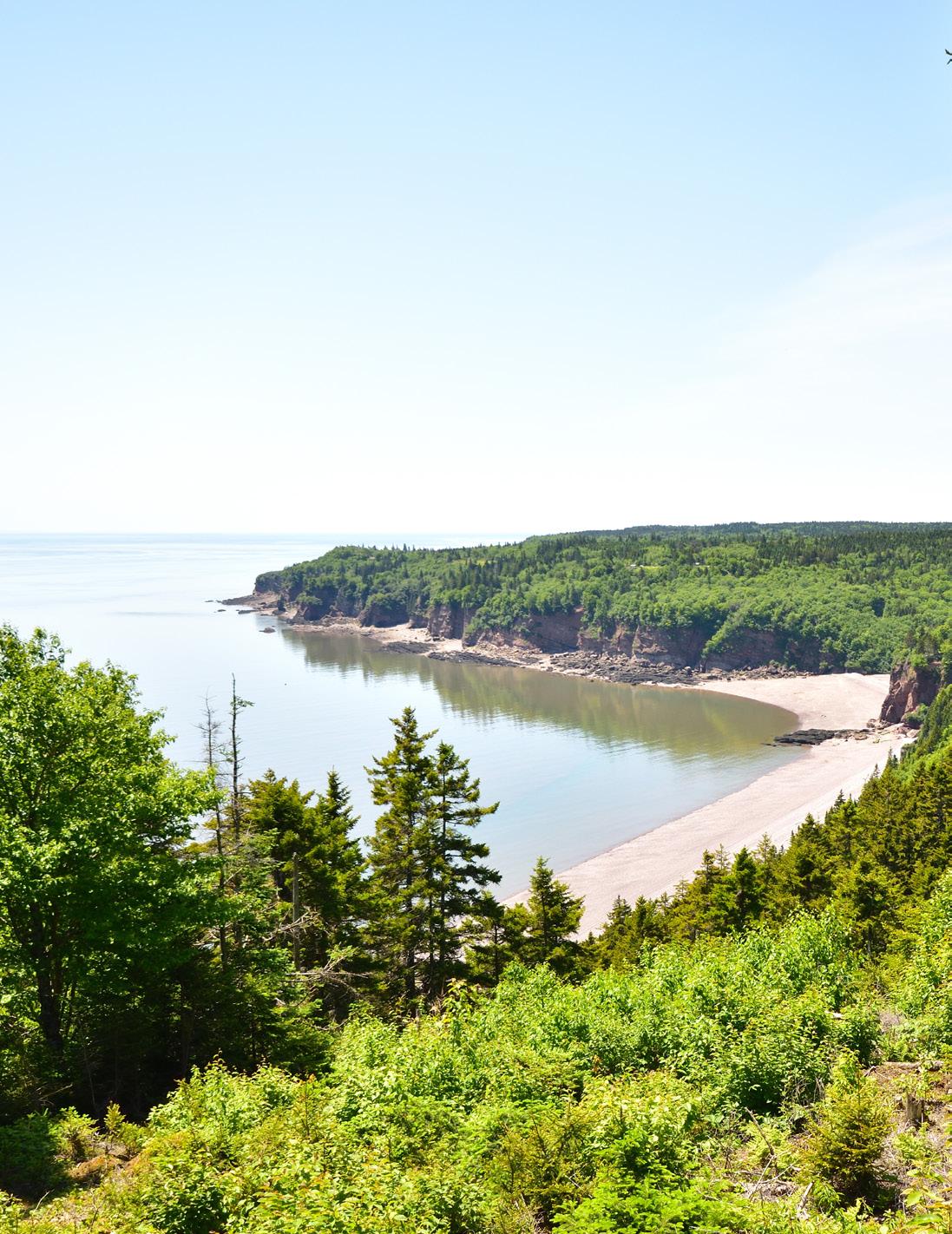
The Southeast Regional Service Commission (SERSC) is developing a project to link Alma to Cape Pele via a Shoreline Trail, part of a larger project to link trails across New Brunswick. Another component of that project is a potential Trail Towns initiative, wherein trails are linked to urban amenities to develop local business and tourism.
Marc Leger, Regional Trails Coordinator with the SERSC, and Fundy Albert Mayor Jim Campbell spoke with The River View for our February issue, when we looked at the Trail Towns idea as it could impact Fundy Albert. Leger and tourism consultant to the SERSC Harvey Sawler gave a presentation on the potential of the Trail Towns idea in Riverview in February. We spoke with Sawler, Yat-Long Murphy, Community Business Liaison with the Town of Riverview, and Ash Arrowsmith, Community Recreation Coordinator, also for the Town of Riverview, about the potential for Trail Towns in Riverview.
Harvey Sawler, who is serving as a consultant on the tourism potential of trails in southeastern New Brunswick for the SERSC, notes that “the Conference Board of Canada and others have conducted analyses indicating that parks and trails are powerful economic generators, at or close to the top of the heap on that front in Canada.
“They are also in high demand globally. I think the SERSC is thinking broadly enough that they should be able to break through to a large market over the long haul.
“This does not happen overnight, but certainly it should serve as a strong economic generator for the southeast, especially if the municipalities come to the fore with the Trail Towns movement. If you get those things working in harmony, the communities as Trail Towns and the infrastructure of the trails themselves, you have a really great product.”
Sawler notes that some trails, and trail systems, globally, have “marquee names and worldwide recognition, like the El Camino and the Appalachian Trail.” Across Atlantic Canada, the trend is building to have those marquee products. The Fundy Footpath is an example of an elite trail that reaches an international market.
“What we are trying to do is
come up with marquee products of high quality.”
Says Yat-Long Murphy, the Town of Riverview’s Community Engagement Officer for businesses, “one thing that stands out for me is $6.2 million in potential spending from visitors. Those numbers represent real opportunities for our local businesses to capture new revenue streams. It is definitely exciting.
“Because this has been done elsewhere, there is real data to back up the idea that this will help the different municipalities. I see this as a really positive initiative.”
Murphy points to benefits like “more foot traffic, more daytime business activity, and more activity during the tourism shoulder season. I also think this could help develop local entrepreneurship. We could see businesses popping up offering guided cycling tours, or hiking experiences, or artisans’ markets that could pop up in Riverview.”
She adds that attracting visitors to the trails links to Riverview’s to expand its hospitality sector. “This could create the right market conditions to open that up, to create a boutique hotel or a Bed and Breakfast. There is so much potential.”
Ash Arrowsmith, the town’s Community Recreation Coordinator, notes, “I think Riverview has been well-positioned to be a Trail Town for a very long time. People who

live here know the trails, they treasure the trails, and I think that will help when visitors come here and ask, ‘what other trails are there,’ our residents will be knowledgeable and ready to help.
“Our community is unique in that we have the Trans Canada Trail going through our community as it is, but it is even more special that it comes in our front yard, as it were, through the community, and out the back yard. We are linked to Fundy National Park and the Fundy Trail Parkway.
“When I did the Trail Towns mission trip almost a decade ago, in the towns that we visited the businesses were on board; their concern was with building trails to begin with. We already have the Riverfront Trail, the Dobson Trail, we have Mill Creek Nature Park with all of those trails, we have many other multi-use trails.
“We are really well-positioned. It does not have to be one size fits all. Each community can develop its own strengths.”



ANSWERS:






GAME 2 GAME