06. El nacimiento de Divina Menorca I 12. MONDO recomienda 16. Entrevista a Jonathan Chaves I 22. Entrevista a Gabriel Morell 28. La historia de un sueño I 34. No digas tortilla, di Calucha 40. Una cueva atípica I 46. Sa Punta Menorca I 52. Cocinando con Pau Sintes I 58. Opening cultural Menorca 2026 I 64. Hauser & Wirth I 70. Cuando Menorca amanece para ti I 74. El mar balear 80. Creatividad con alma mediterránea I 86. Tendencias en decoración 2026 I 90. Viajar en tiempos inciertos I 96. Medicina estética con visión integral I 104. La Matrix inmobiliaria
Contacto / Contact: T. 609 904 366
victor@mondomenorca.com
Director / Director: Victor Barreales
Textos / Text: Mondo Menorca & colaboradores
Fotos / Photos: Victor Barreales, Noelia Tonietto, Shutterstock, clientes y colaboradores
Portada / Cover: Bobby Q I @Menorcailustrada
Dirección de arte y diseño gráfico
Art direction & graphic design
Ivan Khanet
Diseño de anuncios / Ads design
Xavi Pons
SI QUIERES SALIR ANUNCIADO EN LA EDICIÓN DE JUNIO / JULIO, CONTACTA CON NOSOTROS ANTES DEL 15 DE MAYO.
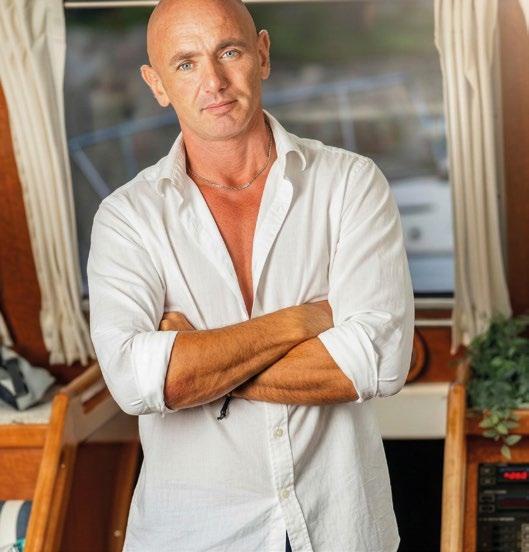
Durante más de dos décadas, la vida profesional de Max Weinbinder estuvo estrechamente vinculada al mundo de la hotelería en Menorca. Con formación superior y másters en hostelería y gestión de empresas, desarrolló una sólida trayectoria como Director General en una reconocida cadena hotelera de la isla. Su carrera parecía seguir un rumbo claro dentro del turismo tradicional, hasta que la pandemia marcó un punto de inflexión que le llevó a replantear su futuro profesional.
Fue entonces cuando decidió transformar una pasión personal en un nuevo proyecto de vida. El mar, siempre presente en su día a día en Menorca, dejó de ser solo un lugar de disfrute para convertirse en el eje de una nueva aventura empresarial. Así nació Divina Menorca, una empresa dedicada a ofrecer experiencias náuticas privadas desde el puerto de Mahón, uno de los puertos naturales más impresionantes del Mediterráneo.
Divina Menorca @divinamenorca
For more than two decades, Max Weinbinder’s professional life was closely tied to the world of hospitality in Menorca. With advanced training and master’s degrees in hospitality and business management, he built a solid career as General Manager of a well-known hotel chain on the island.
His career seemed set on a clear path within traditional tourism, until the pandemic marked a turning point that led him to rethink his professional future. That was when he decided to turn a personal passion into a new life project. The sea, always present in his day-to-day life in Menorca, stopped being simply a place of enjoyment and became the heart of a new business venture. That is how Divina Menorca was born, a company dedicated to offering private nautical experiences from the port of Mahón, one of the most stunning natural harbours in the Mediterranean.
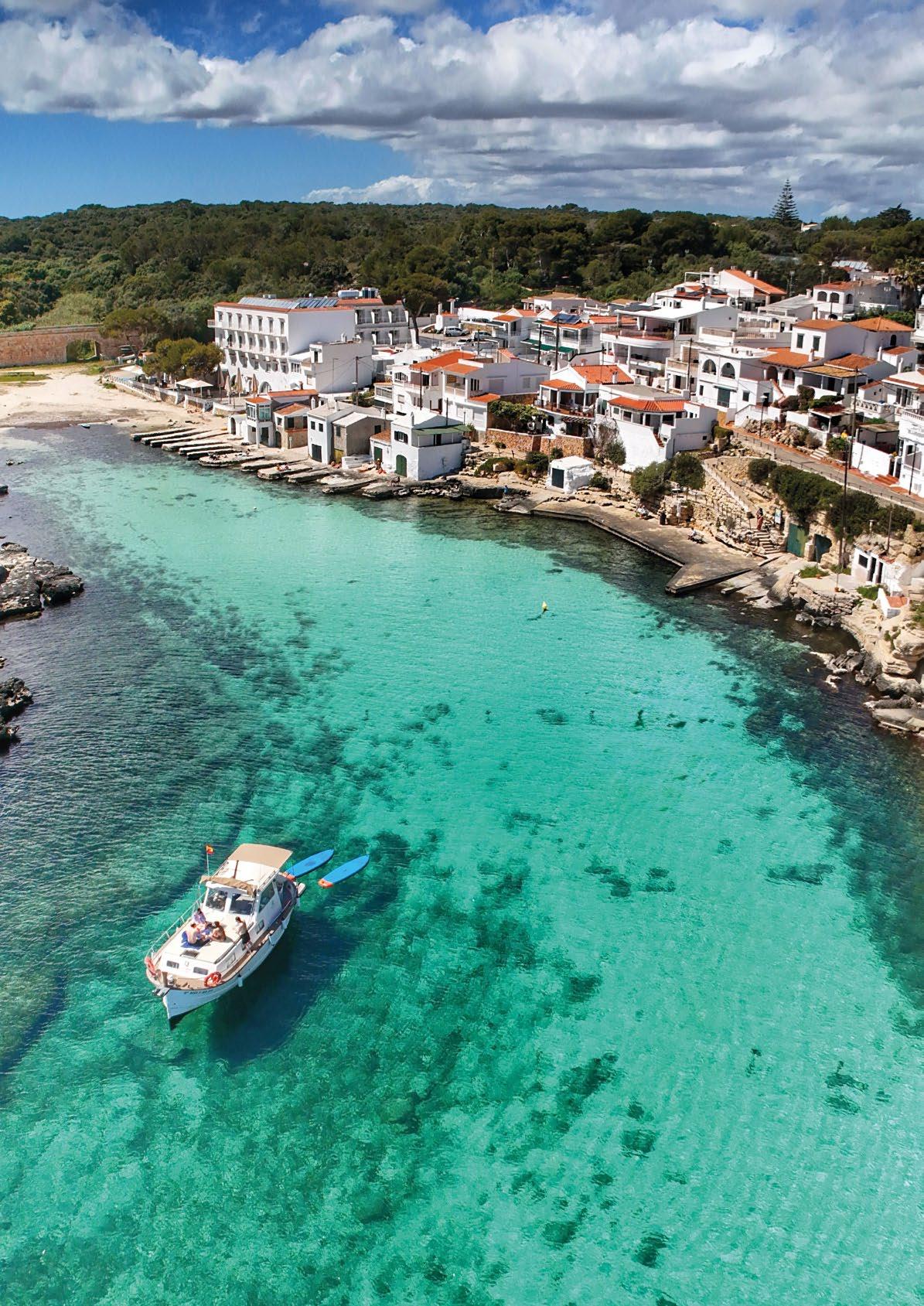
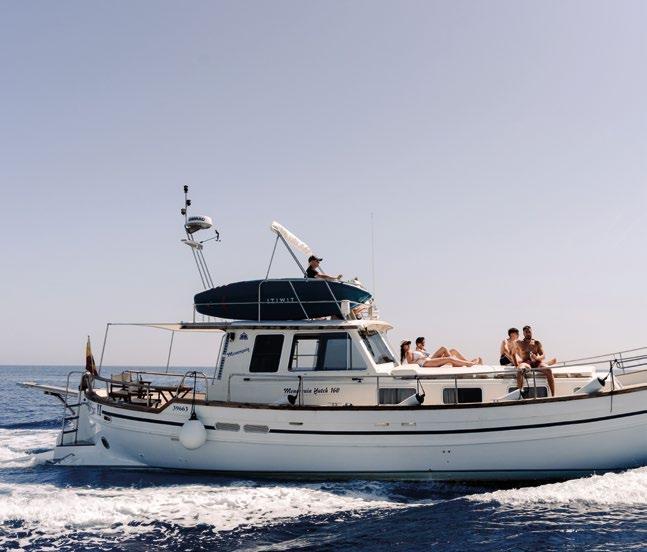
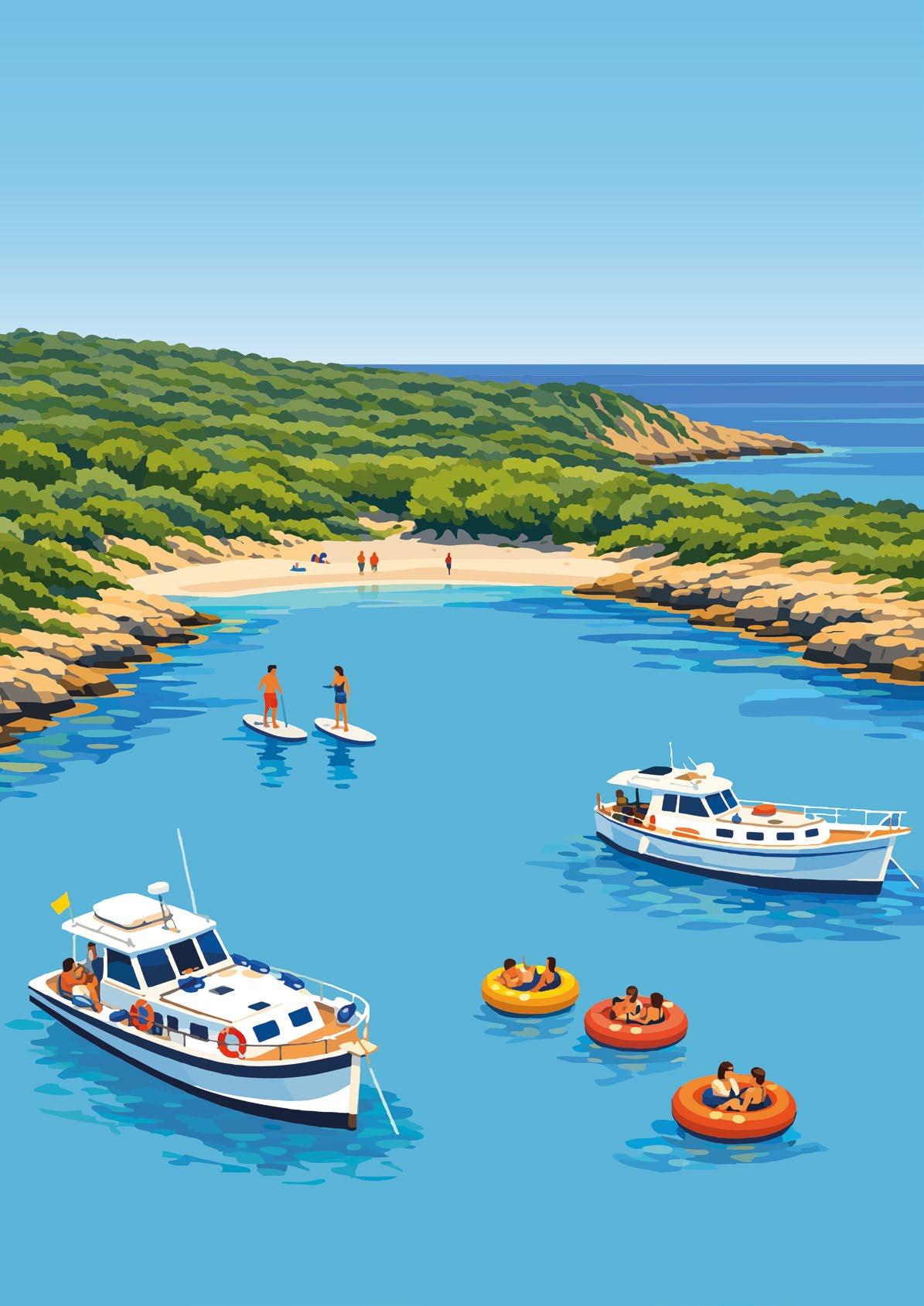
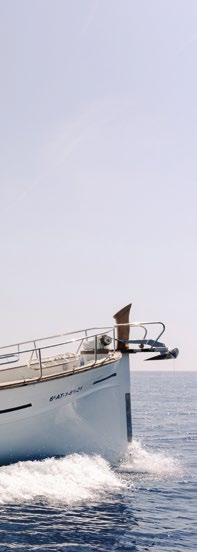
La propuesta de Divina Menorca se basa en descubrir la isla desde una perspectiva diferente: el mar. A bordo de llaüts clásicos menorquines — embarcaciones tradicionales de las islas Baleares conocidas por su elegancia, estabilidad y navegación pausada— los visitantes pueden explorar algunas de las calas más espectaculares de la isla con comodidad y exclusividad.
La flota está formada por tres embarcaciones cuidadosamente mantenidas —Divina I, Divina II y Divina III— con esloras de entre 10 y 15 metros, una dimensión ideal para disfrutar del mar con comodidad y seguridad, especialmente en salidas privadas en familia o con amigos. Todas las embarcaciones están homologadas para un máximo de 12 personas, lo que permite mantener una experiencia íntima, relajada y completamente personalizada.
La actividad principal de la empresa son las salidas privadas por la costa de Menorca, donde
Divina Menorca’s concept is based on discovering the island from a different perspective: the sea. On board classic Menorcan llaüts—traditional Balearic boats known for their elegance, stability and leisurely cruising—visitors can explore some of the island’s most spectacular coves in comfort and exclusivity.
The fleet consists of three carefully maintained boats—Divina I, Divina II and Divina III—with lengths ranging from 10 to 15 metres, an ideal size for enjoying the sea in comfort and safety, especially on private outings with family or friends. All the boats are certified for a maximum of 12 people, allowing for an intimate, relaxed and fully personalised experience.
The company’s main activity is private trips along the coast of Menorca, where guests enjoy a day at sea accompanied by family, friends or their partner. During these outings, they cruise past some of the
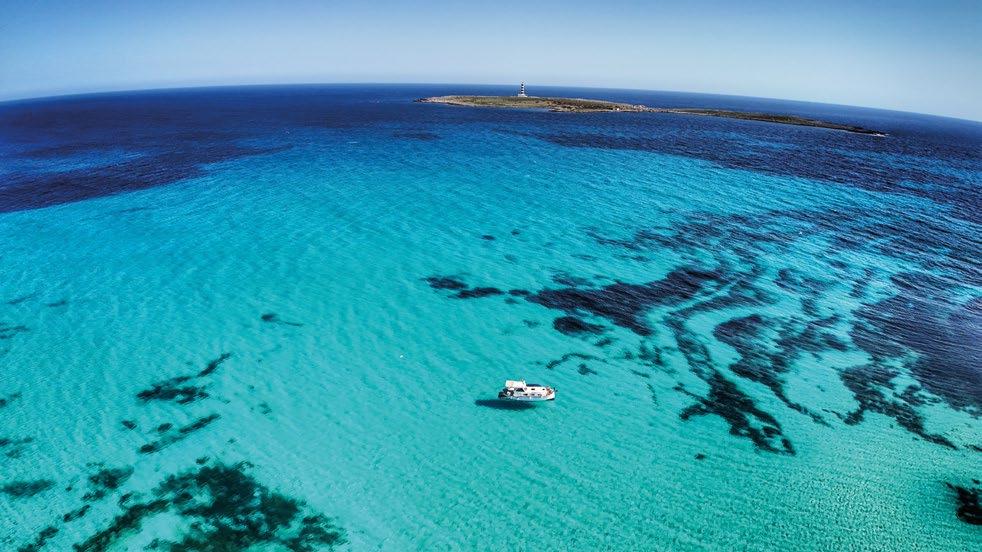
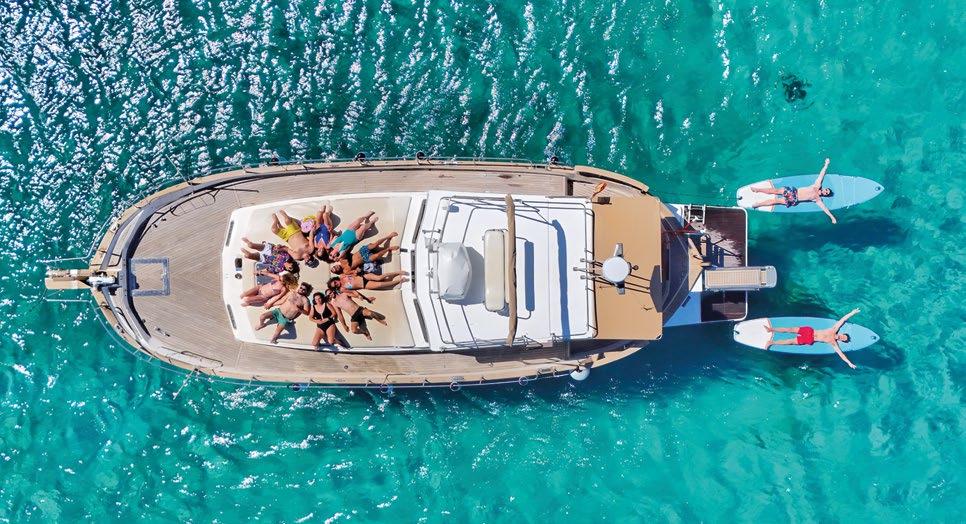
los clientes disfrutan de una jornada en el mar, acompañados por su familia, amigos o pareja. Durante estas travesías se navega por algunas de las calas más bellas de la isla, con tiempo para nadar en aguas cristalinas, practicar snorkel, relajarse al sol o simplemente dejarse llevar por el ritmo del Mediterráneo. Más que una excursión, se trata de una experiencia pensada para compartir, desconectar y descubrir la isla desde una perspectiva privilegiada.
Para quienes prefieren una experiencia más corta, también se ofrecen salidas de media jornada, una opción especialmente atractiva para familias con niños o para quienes desean disfrutar del mar sin dedicar todo el día a la navegación.
EXPERIENCIAS QUE VAN MÁS ALLÁ DE NAVEGAR
Además de estas excursiones, Divina Menorca ha desarrollado una serie de experiencias especiales que aportan un carácter único a la propuesta. Una de las más exclusivas es la posibilidad de
island’s most beautiful coves, with time to swim in crystal-clear waters, go snorkelling, relax in the sun or simply surrender to the rhythm of the Mediterranean. More than just an excursion, it is an experience designed to share, disconnect and discover the island from a privileged perspective.
For those who prefer a shorter experience, half-day trips are also available, an especially attractive option for families with children or for those who want to enjoy the sea without devoting the whole day to sailing.
In addition to these excursions, Divina Menorca has developed a range of special experiences that give its offering a unique character. One of the most exclusive is the possibility of dining on board in the port of Mahón, a truly singular experience.
Guests can enjoy a romantic dinner or a special evening on the boat, with a private chef or high-end catering service, while the boat remains anchored in the heart of the harbour.
cenar a bordo dentro del puerto de Mahón, una experiencia verdaderamente singular. Los clientes pueden disfrutar de una cena romántica o una velada especial en el barco, con chef privado o con un servicio de catering de alta gama, mientras el barco permanece fondeado en el corazón del puerto. Rodeados de historia, arquitectura y silencio, el ambiente convierte la cena en un momento difícil de olvidar.
Otra de las experiencias más solicitadas son las salidas al atardecer, instantes perfectos para contemplar cómo el sol cae lentamente sobre el Mediterráneo mientras se disfruta de un aperitivo en cubierta.
Los barcos de Divina Menorca también se han convertido en un escenario ideal para la organización de eventos privados y celebraciones especiales: despedidas de soltero, cumpleaños, eventos corporativos, prebodas, bodas o encuentros entre amigos y familiares. Cada experiencia se diseña de forma personalizada, adaptándose a los deseos de cada grupo.
En definitiva, Divina Menorca representa una manera distinta de descubrir la isla: desde el mar, con calma, exclusividad y el ritmo pausado del Mediterráneo. Porque hay lugares que se visitan… y otros que realmente se viven.
Surrounded by history, architecture and silence, the setting turns dinner into a moment that is hard to forget.
Another of the most sought-after experiences is the sunset trip, the perfect moment to watch the sun slowly sink over the Mediterranean while enjoying an aperitif on deck.
Divina Menorca’s boats have also become the ideal setting for private events and special celebrations: stag and hen parties, birthdays, corporate events, pre-wedding parties, weddings, or gatherings with friends and family. Every experience is designed in a personalised way, adapting to the wishes of each group.
Ultimately, Divina Menorca represents a different way of discovering the island: from the sea, with calm, exclusivity and the unhurried rhythm of the Mediterranean. Because there are places you visit… and others you truly live.
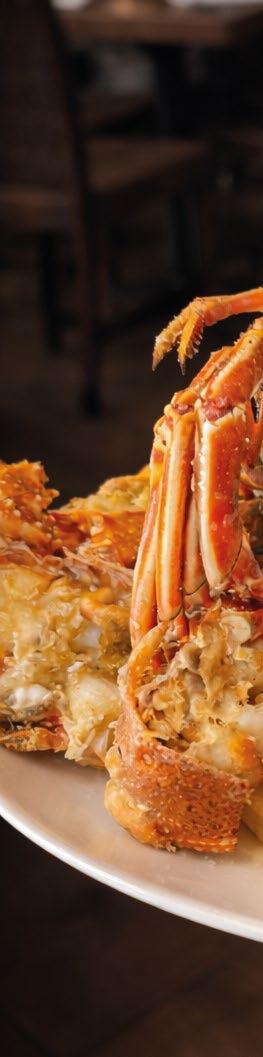
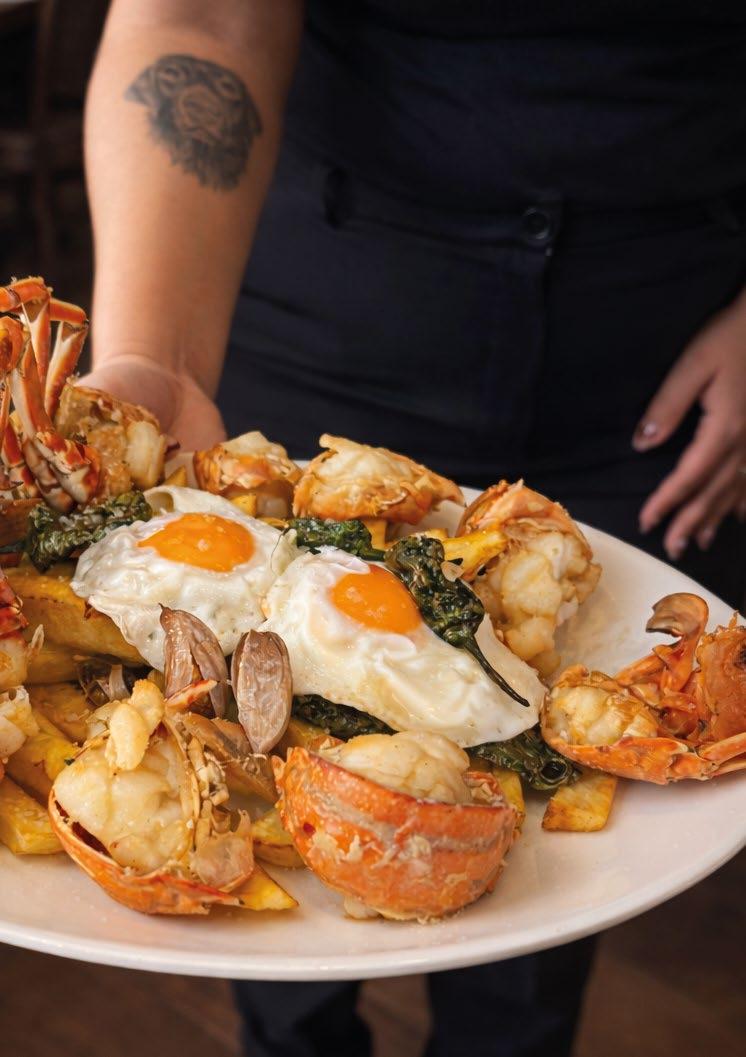
Este año La Guapa cumple la mayoría de edad, 18 años, una fecha muy especial para un proyecto gastronómico impulsado por una familia argentina que, con el paso del tiempo, se ha convertido en un referente para muchos comensales de la isla.
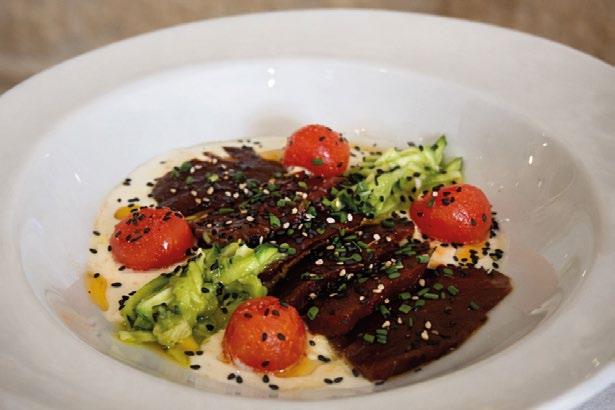
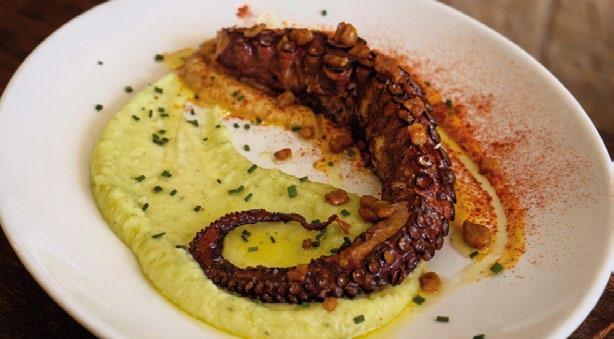
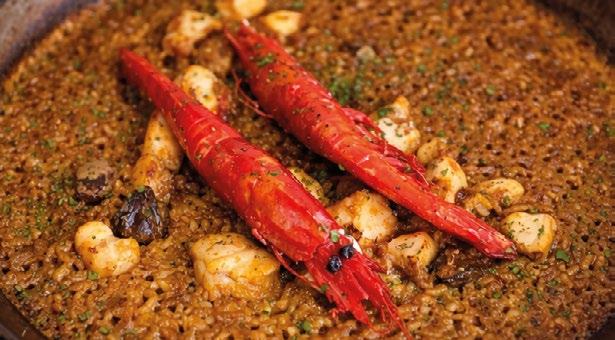
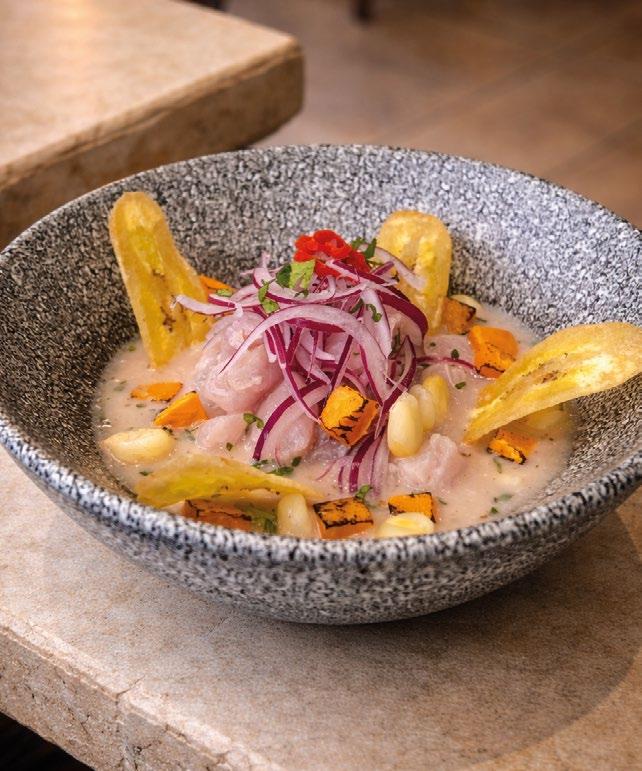
Su propuesta combina platos de la tradición menorquina, como la caldereta, con elaboraciones de inspiración latinoamericana como el ceviche o el tiradito, reflejando una cocina abierta y con identidad propia. En su carta puedes encontrar también arroces, carnes, pescados y variedad de entrantes, todo con una elaboración y calidad espectaculares.
This year, La Guapa comes of age, turning 18, a very special milestone for a culinary project launched by an Argentine family that, over time, has become a go-to destination for many diners on the island.
Its offering brings together traditional Menorcan dishes, such as caldereta, with Latin American inspired creations like ceviche and tiradito, reflecting an open-minded cuisine with a distinctive identity. The menu also features rice dishes, meats, fish and a wide variety of starters, all prepared to an exceptional standard and with outstanding quality.
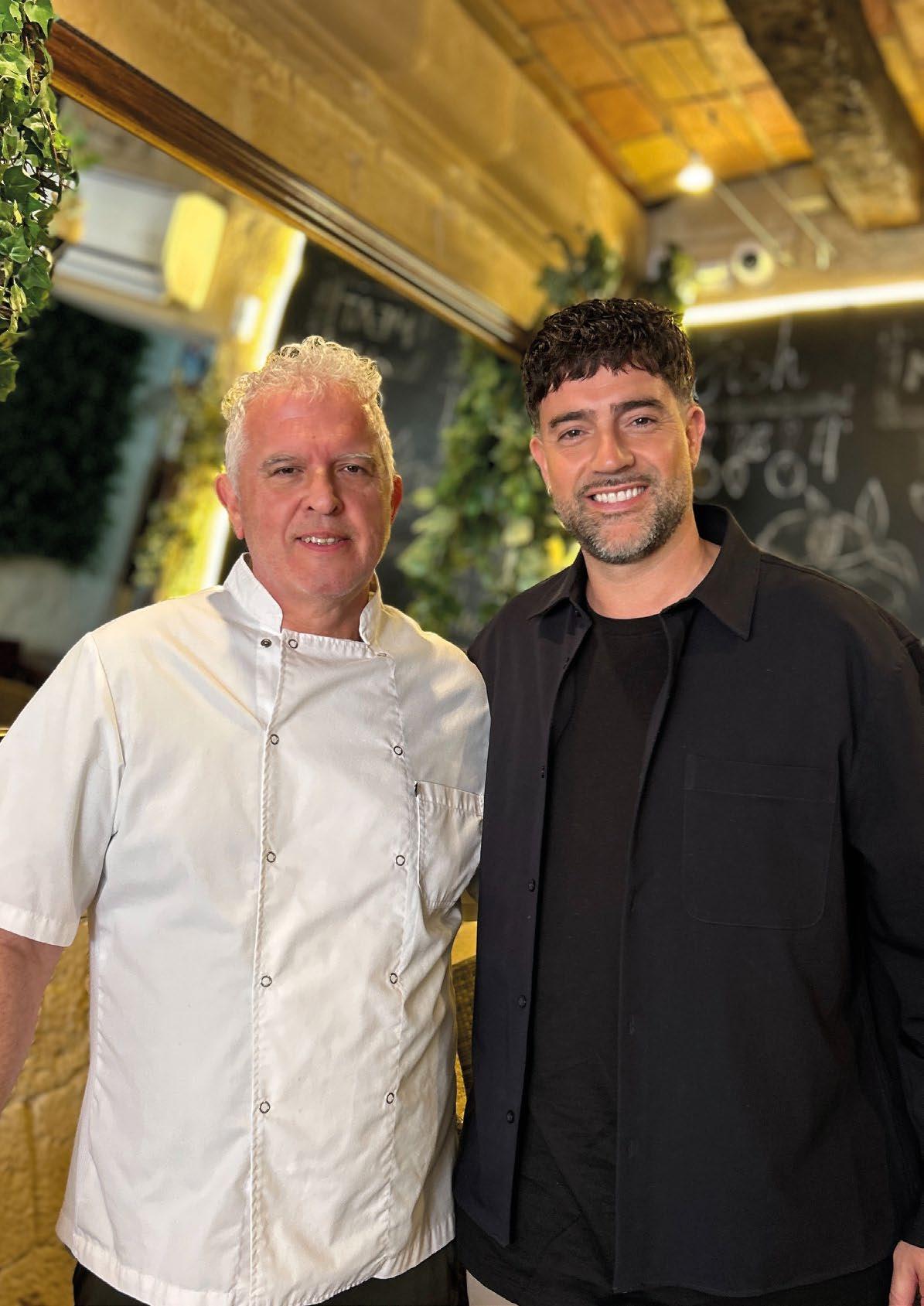
Dieciocho años dan para muchas historias. Si miráis atrás, ¿qué momento recordáis como el más difícil y cuál como el más bonito desde que abristeis el restaurante?
El momento más difícil fue al principio, cuando empezamos el restaurante en familia — mis padres, mis hermanos y yo — porque sacarlo adelante requirió mucho esfuerzo y dedicación.
Ahora vivimos otro momento importante: mi padre, que ha sido siempre el cocinero, está a punto de jubilarse. El relevo lo toma mi primo, que trabajó siete años con él y aprendió todos sus secretos. Yo también soy cocinero, pero actualmente me centro más en la sala.
Lo más bonito ha sido ver cómo, después de 18 años, seguimos teniendo clientes que vuelven y confían en nosotros. Para mí es un orgullo continuar con este proyecto familiar."
Eighteen years make for a lot of stories. Looking back, what do you remember as the toughest moment and the most beautiful one since you opened the restaurant?
The toughest moment was at the beginning, when we started the restaurant as a family — my parents, my siblings and I — because getting it off the ground took a huge amount of effort and dedication.
Now we are going through another important moment: my father, who has always been the chef, is about to retire. My cousin is taking over; he worked with him for seven years and learned all his secrets. I’m a chef too, but these days I focus more on front-of-house.
The most beautiful part has been seeing that, after 18 years, we still have customers who come back and trust us. For me, it is a source of pride to carry on with this family project.
Venís de Argentina, pero habéis apostado fuerte por platos muy menorquines. ¿Cómo fue ese proceso de aprender y hacer vuestra una cocina tan ligada a la isla?
Aunque venimos de Argentina y llevamos 25 años en Menorca, desde el principio quisimos apostar por la cocina local. Mi padre aprendió con cocineros del pueblo, ya jubilados, que le enseñaron recetas emblemáticas como la caldereta de langosta.
Fue un proceso de respeto y aprendizaje: mantener la esencia de la cocina menorquina, pero poco a poco darle nuestro toque personal sin perder sus raíces. Hoy sentimos esa cocina como nuestra, porque forma parte de nuestra historia y de nuestra vida en la isla.
En vuestra carta conviven la caldereta, el ceviche o el tiradito. ¿Cómo reaccionan los clientes cuando ven esta mezcla tan poco habitual?
Nuestros clientes reaccionan muy bien, porque comprenden que nuestra base es la cocina menorquina, pero también valoran propuestas diferentes.
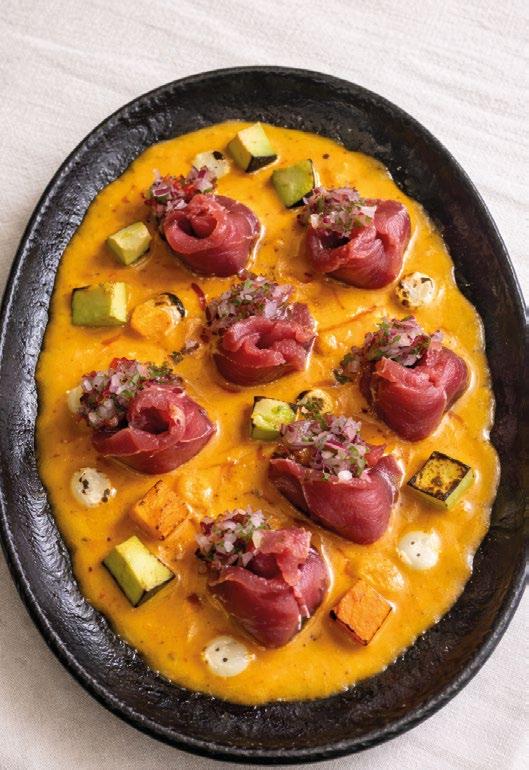
Contamos con un equipo diverso: uno de nuestros cocineros es peruano y aporta su experiencia en platos como el ceviche o el tiradito de atún rojo, siempre respetando la calidad del producto local.
Esta combinación enriquece la carta y hace que la experiencia sea más completa, sin perder nuestra esencia.
Menorca ha cambiado bastante en estos 18 años. ¿Cómo habéis visto evolucionar al cliente y la forma de salir a comer en la isla?
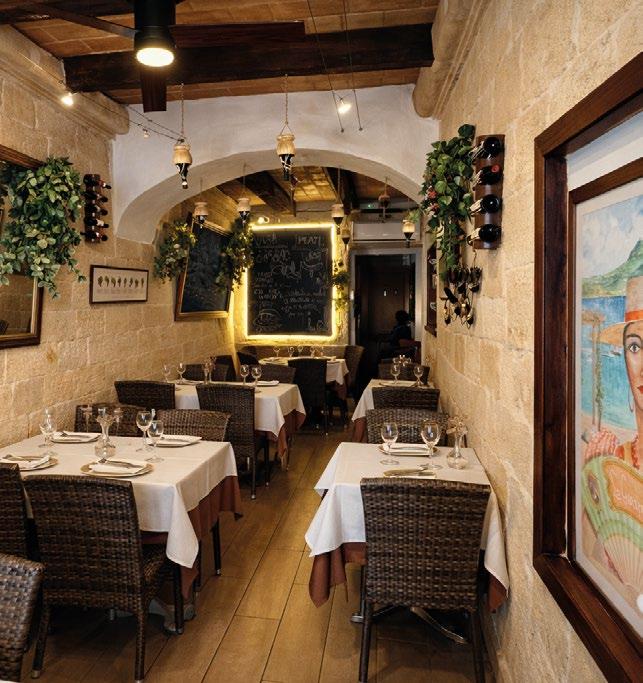
Los clientes hoy buscan no solo comer bien, sino vivir una experiencia completa: calidad, presentación, ambiente y cercanía.
Hemos visto crecer su curiosidad por probar platos tradicionales y al mismo tiempo nuevas propuestas. Esto nos ha motivado a mantener nuestra cocina menorquina auténtica, pero también
You come from Argentina, but you have made a strong commitment to very Menorcan dishes. What was the process of learning and making a cuisine so closely tied to the island your own?
Although we come from Argentina and have been living in Menorca for 25 years, from the very beginning we wanted to embrace the local cuisine. My father learned from village cooks, now retired, who taught him emblematic recipes such as lobster caldereta.
It was a process rooted in respect and learning: preserving the essence of Menorcan cuisine, while little by little giving it our own personal touch without losing its roots. Today we feel that cuisine is ours too, because it is part of our story and of our life on the island.
On your menu, caldereta sits alongside ceviche and tiradito. How do customers react when they see this rather unusual combination?
Our customers respond very positively, because they understand that our foundation is Menorcan cuisine, while also appreciating different proposals.
We have a diverse team: one of our chefs is Peruvian and brings his expertise to dishes such as ceviche and red tuna tiradito, always with full respect for the quality of the local product.
This combination enriches the menu and makes the experience more complete, without losing our essence.
Menorca has changed quite a lot over these 18 years. How have you seen the customer evolve, and the way people go out to eat on the island? Today, customers are looking not only to eat well, but to enjoy a complete experience: quality, presentation, atmosphere and warmth.
We have seen their curiosity grow — a curiosity to try traditional dishes while also exploring new proposals. That has encouraged us to keep our authentic Menorcan cuisine alive, while also

a innovar con ideas como el ceviche o el tiradito, siempre respetando la esencia de la isla. Adaptarnos y acompañar esa evolución ha sido clave para seguir creciendo.
Si tuvierais que explicar en un solo plato qué es hoy vuestro restaurante, después de 18 años, ¿cuál sería y por qué?
Si tuviera que escoger un solo plato, sería la caldereta de langosta. Resume nuestra historia: tradición menorquina, producto local de calidad y la pasión de mi padre que nos enseñó todos sus secretos.
Además, refleja nuestra filosofía: ofrecer platos que conecten con la isla y con nuestros clientes, al igual que hacemos con los arroces, los pescados y carnes a la brasa, y los mariscos para compartir. La caldereta es, para nosotros, el corazón del restaurante después de 18 años.
innovating with ideas such as ceviche and tiradito, always respecting the essence of the island. Adapting and growing alongside that evolution has been key to our continued growth.
If you had to explain what your restaurant is today, after 18 years, through a single dish, which one would it be and why?
If I had to choose just one dish, it would be the lobster caldereta. It sums up our story: Menorcan tradition, high-quality local produce, and my father’s passion, through which he taught us all his secrets.
It also reflects our philosophy: offering dishes that connect with the island and with our customers, just as we do with our rice dishes, grilled fish and meats, and seafood to share. For us, after 18 years, caldereta is the heart of the restaurant.
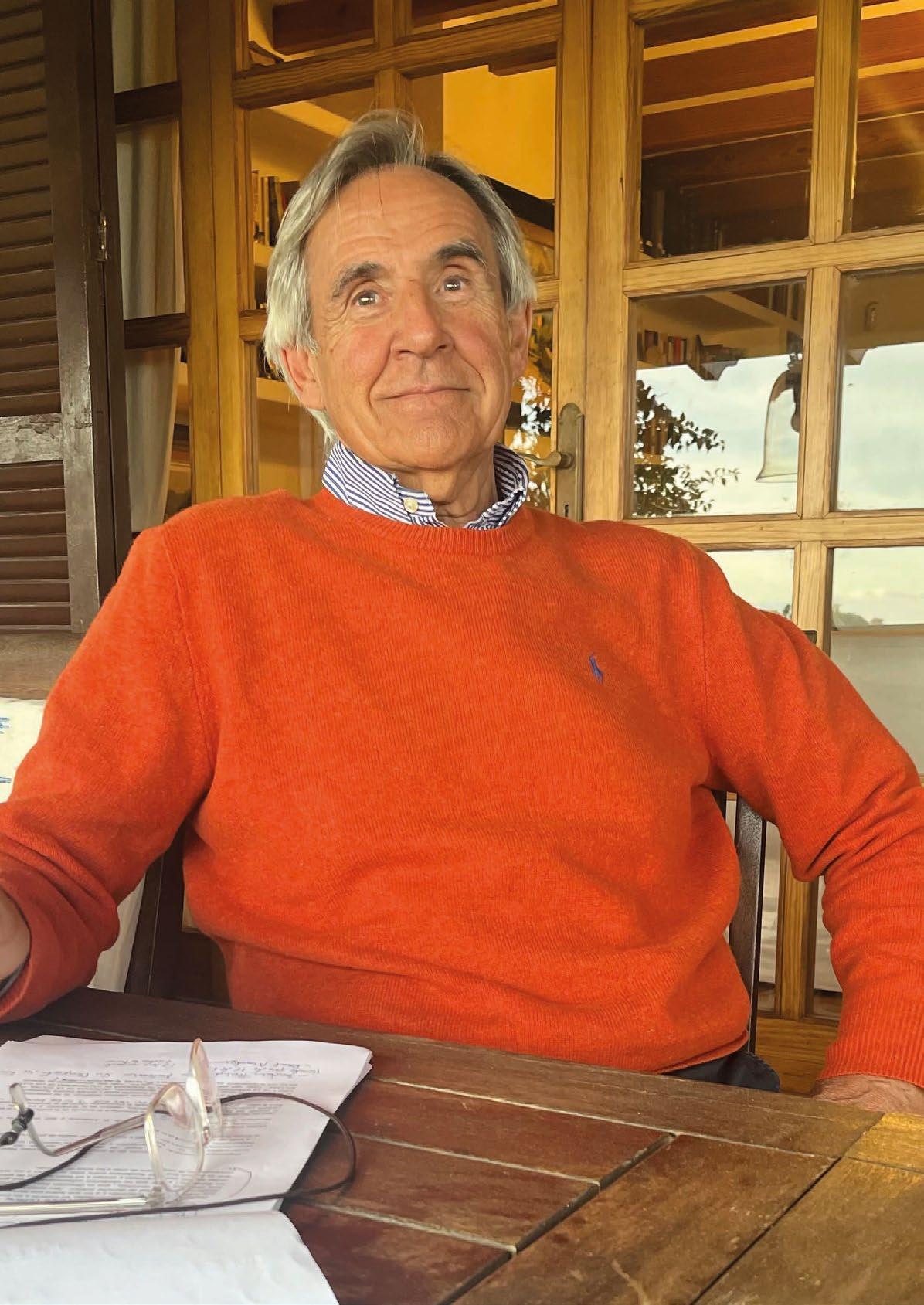
Gabriel Morell Solivellas (Palma de Mallorca, 1952, presidente de la Academia de la Cocina, del Vino y de la Gastronomía de las Illes Balears) , abogado, ejerciente desde hace 50 años, navegante, gastrónomo. El placer de cocinar, comer y estudiar la cocina le ha acompañado durante toda su vida. Ha sido fundador, presidente, secretario y uno de los motores de la prestigiosa Acadèmia del cuina i del vi de Mallorca, una entidad que lleva 40 años aportando conocimiento a nuestra cultura culinaria.
Después de una excelente comida, conversamos en su casa de Establiments, en Palma de Mallorca.
Cómo surgió la idea de crear una Academia de Gastronomía en las islas?
Después de 40 años con la Academia de Mallorca consideramos que hacía falta una entidad de derecho público, una institución que uniera a todas las islas y nos cohesionara como comunidad en un tema tan importante y transversal como la
Gabriel Morell Solivellas (Palma de Mallorca, 1952, president of the Academy of Cuisine, Wine and Gastronomy of the Balearic Islands), lawyer, practising for 50 years, sailor, gastronome. The pleasure of cooking, eating and studying cuisine has accompanied him throughout his life. He has been founder, president, secretary and one of the driving forces behind the prestigious Acadèmia de la Cuina i del Vi de Mallorca, an institution that has spent 40 years contributing knowledge to our culinary culture.
After an excellent meal, we spoke at his home in Establiments, in Palma de Mallorca.
How did the idea of creating an Academy of Gastronomy in the islands come about?
After 40 years with the Academy of Mallorca, we felt there was a need for a public law entity, an institution that would bring all the islands together and give us cohesion as a community around a subject as important and far-reaching as gastronomy,
gastronomía, que además es cultura, identidad, patrimonio y muchas cosas más. Hace 7 años empezamos a movernos, sin prisa pero sin pausa y, después de muchas gestiones, hoy es una realidad.
La Academia está constituida?
Cuántos miembros o académicos la componen?
Sí, el 16 de febrero la directora general de Relaciones Institucionales del Govern dictó una resolución en la que daba conformidad a la constitución de la Academia y ordenaba la inscripción de sus estatutos y de su Junta Rectora en el Registro de Academias de las Illes Balears. Previamente los 30 académicos fundadores habíamos celebrado una asamblea en la que aprobamos los estatutos y designamos a los 9 miembros de la Junta Gestora.
Qué funciones tiene la Academia, cuáles son sus objetivos?
Según el artículo 4 de los Estatutos “La Academia tendrá como objeto la investigación, defensa, estudio, elaboración, codificación, preservación, y difusión de la cocina tradicional de las Illes Balears y de sus vinos y, en consecuencia, de todo lo relacionado con su gastronomía, debiendo constituir un foro de recepción y emisión de los conocimientos de su materia” La Academia tiene la consideración de Corporación de Derecho Público, y tiene la condición de órgano asesor de la Administración Pública en esta materia.
Cuáles van a ser sus primeras actuaciones, cuándo empezará a andar?
En el ámbito interno hemos creado comisiones de trabajo y designado a sus miembros y coordinadores. Estamos gestionando temas de intendencia, como abrir una cuenta bancaria, hacer una página web, un logo, etc. Lo primero va a ser la presentación pública de la Academia, en Mallorca, en Ibiza-Formentera y Menorca.
which is also culture, identity, heritage and much more. Seven years ago, we began working towards it, steadily and persistently, and after a great deal of effort, today it is a reality.
Has the Academy now been formally established?
How many members or academicians make it up?
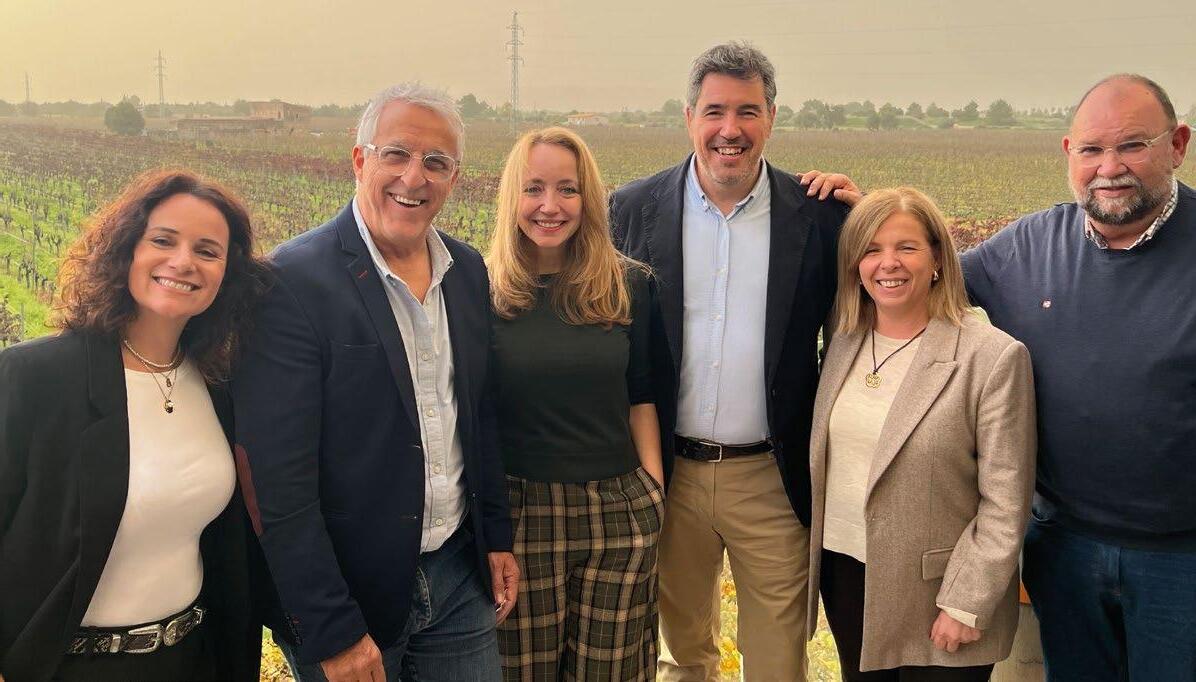
Yes. On 16 February, the Director General for Institutional Relations of the Balearic Government issued a resolution approving the establishment of the Academy and ordering the registration of its statutes and Governing Board in the Register of Academies of the Balearic Islands. Before that, the 30 founding academicians had held an assembly in which we approved the statutes and appointed the 9 members of the Steering Committee.
What functions does the Academy have, and what are its objectives?
According to Article 4 of the Statutes, “The Academy shall have as its purpose the research, protection, study, development, codification, preservation and dissemination of the traditional cuisine of the Balearic Islands and their wines and, consequently, of everything related to their gastronomy, and it must serve as a forum for the reception and sharing of knowledge in its field.” The Academy has the status of a public law corporation and acts as an advisory body to the Public Administration in this area.
What will its first actions be, and when will it begin operating?
Internally, we have created working committees and appointed their members and coordinators. We are also dealing with practical matters, such as opening a bank account, creating a website, a logo, and so on. The first step will be the public presentation of the Academy, in Mallorca, Ibiza-Formentera and Menorca.


Conoces la gastronomía de Menorca, Ibiza y Formentera? Qué papel van a jugar estas islas en la Academia?
La conozco como consumidor, y por algunas visitas que hemos hecho los miembros de la Academia de Mallorca. Las llamadas “islas menores” tienen un peso muy importante en la institución, con un buen número de académicos, como Bep Al·lès, Bàrbara Lluch y Antoni Juaneda, de Menorca, María José Amengual, Carmen Riera y Toni Montserrat, de Ibiza y Santiago Costa, de Formentera. Gente con experiencia y cuyas aportaciones van a ser valiosas. También las de entidades como la asociación Fra Roger, y otras, que se van a integrar como órganos asesores.

Do you know the gastronomy of Menorca, Ibiza and Formentera? What role will these islands play in the Academy?
I know it as a diner, and through some visits made by members of the Academy of Mallorca. The socalled “smaller islands” carry significant weight within the institution, with a good number of academicians, such as Bep Al·lès, Bàrbara Lluch and Antoni Juaneda from Menorca, María José Amengual, Carmen Riera and Toni Montserrat from Ibiza, and Santiago Costa from Formentera. They are people with experience whose contributions will be valuable. The same is true of organisations such as the Fra Roger association, among others, which will join as advisory bodies.
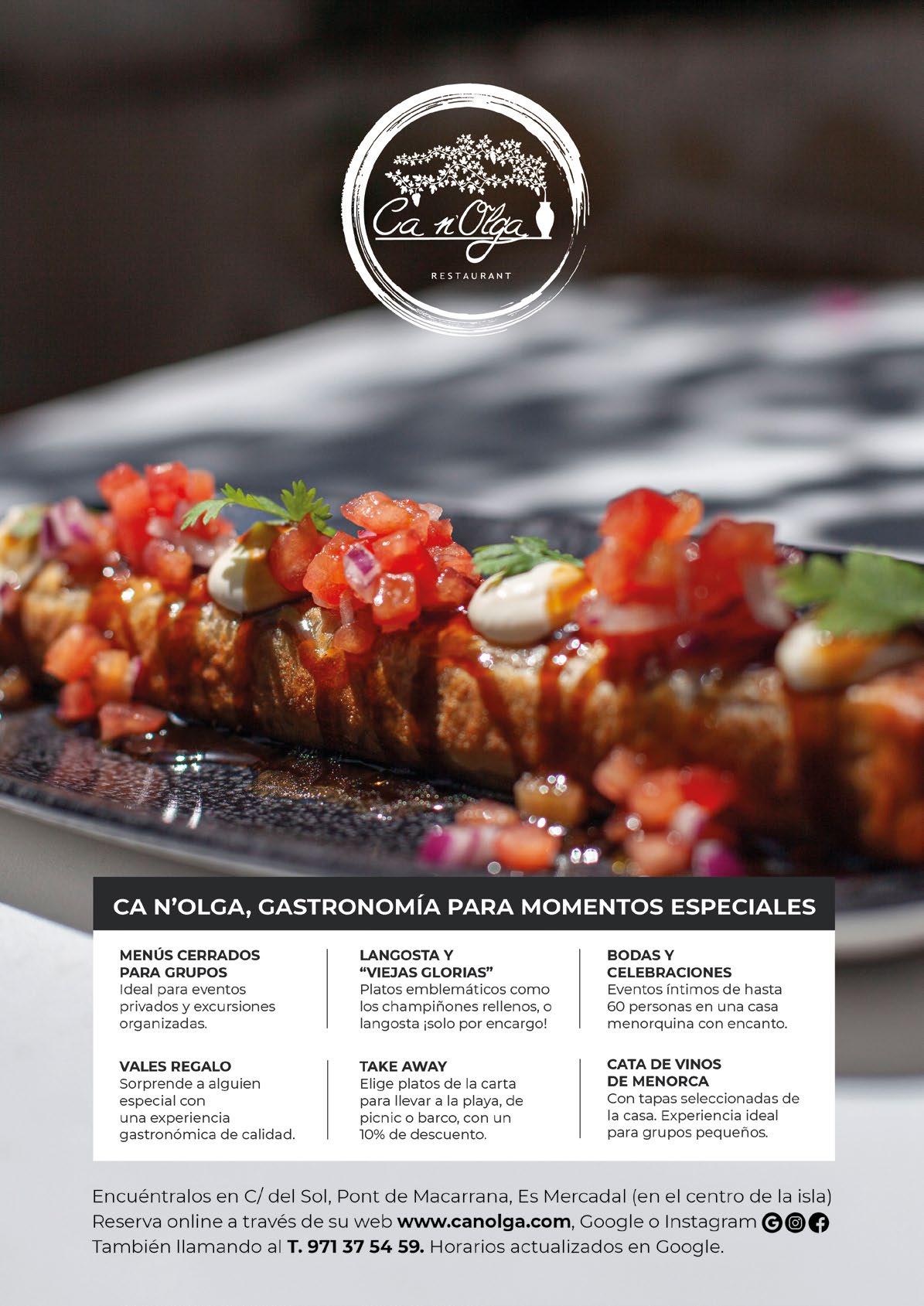
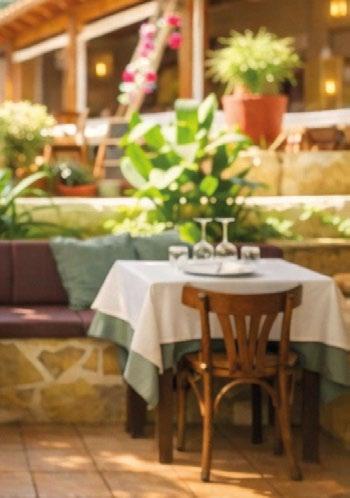
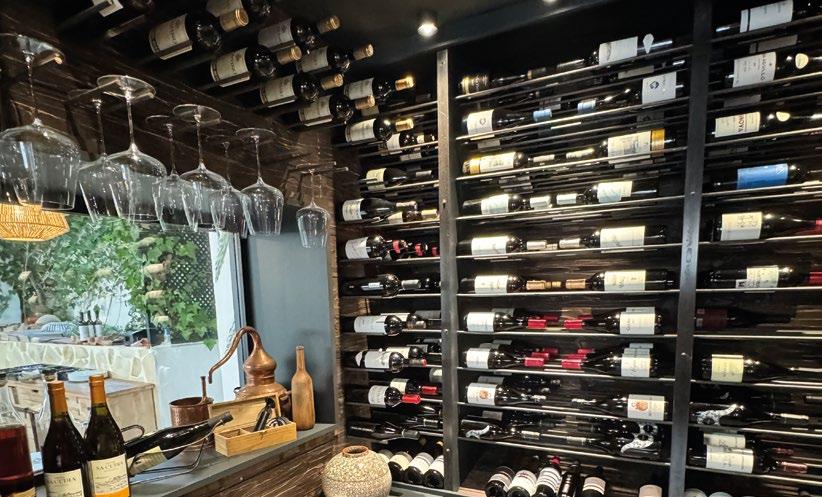
Hace cuarenta años, en una casa menorquina, nació un pequeño sueño que con el tiempo se convertiría en una de las mesas con más historia de la isla. Ca n’Olga abrió sus puertas en 1986 cuando Olga, la propietaria, decidió empezar a cocinar para un pequeño grupo de comensales. La idea surgió de una necesidad muy sencilla y profundamente humana: reunir recursos para pagar y mantener su casa. Así comenzaron aquellas primeras comidas entre paredes de marés, aromas de cocina casera y una hospitalidad que pronto empezó a atraer cada vez a más personas.
Lo que empezó de forma íntima y casi doméstica creció rápidamente. Las distintas estancias de la casa se fueron transformando poco a poco en comedores, ampliando el espacio para recibir a
Forty years ago, in a Menorcan house, a small dream was born — one that, over time, would become one of the island’s most storied dining tables. Ca n’Olga opened its doors in 1986, when Olga, the owner, decided to start cooking for a small group of guests. The idea came from a very simple and deeply human need: to gather enough resources to pay for and maintain her home. That was how those first meals began, surrounded by marés stone walls, the aromas of home cooking and a warmth of hospitality that soon started to draw more and more people in.
What began in an intimate, almost domestic way quickly grew. The different rooms of the house were gradually transformed into dining spaces, expanding to welcome those eager to discover a cuisine
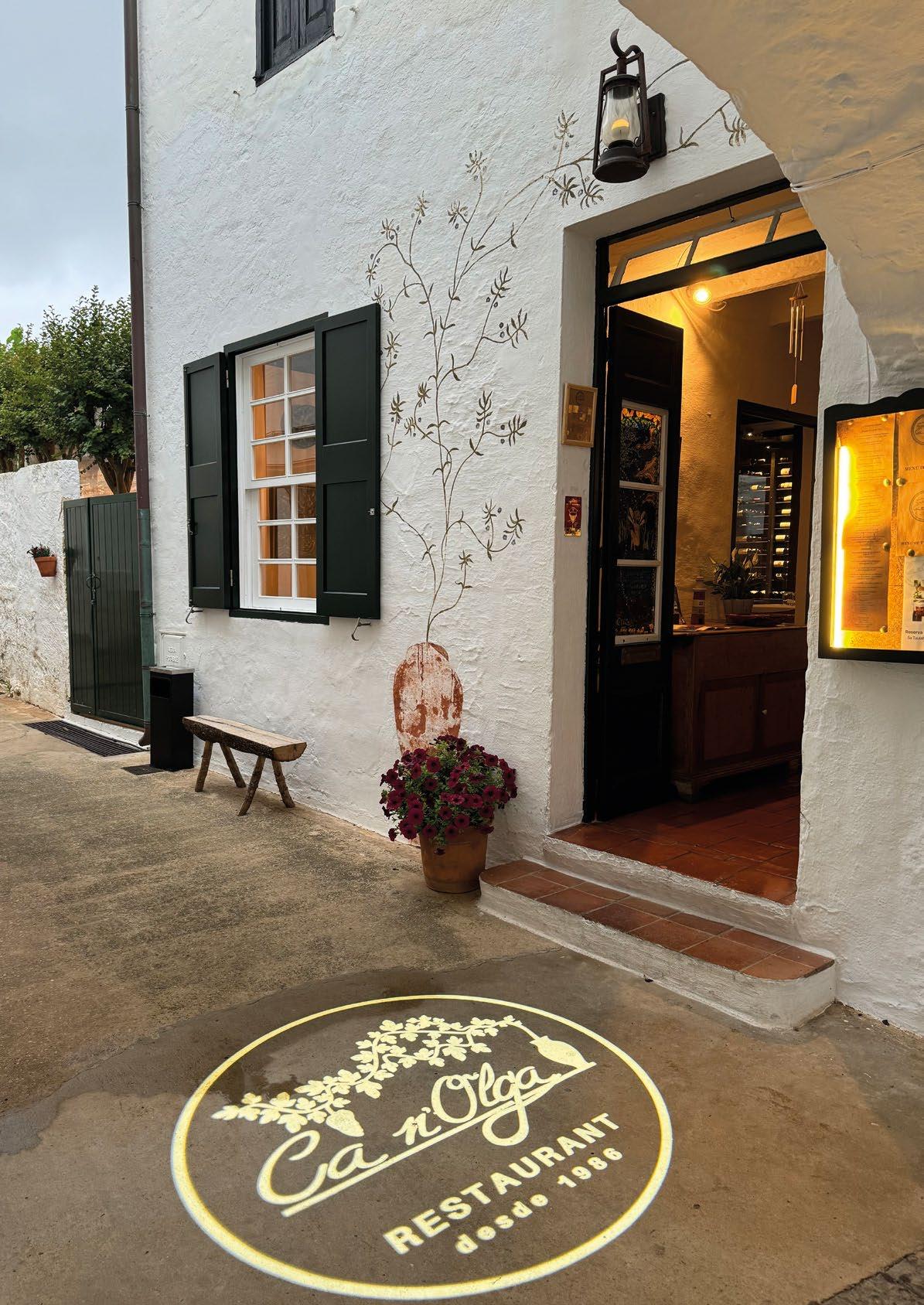
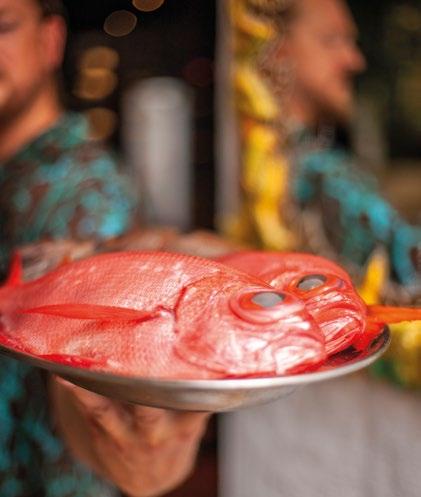
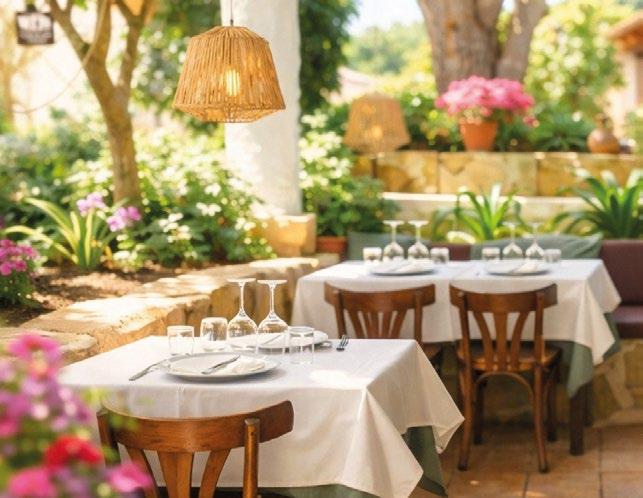
quienes querían descubrir aquella cocina honesta y profundamente ligada a la tradición menorquina. En esa etapa inicial llegó también una figura clave: Manolo, el chef que asumiría la dirección de la cocina y que, con el tiempo, acabaría tomando el relevo del restaurante. Bajo su liderazgo, Ca n’Olga evolucionó, mejoró su cocina y consolidó su reputación, siempre manteniendo el espíritu cálido y auténtico con el que había nacido.
Años más tarde, en 2006, un joven menorquín llamado Pablo Pega, que desde pequeño soñaba con tener un restaurante, cruzó por primera vez la puerta de Ca n’Olga para trabajar en sala. Aquella experiencia marcaría el inicio de una relación profunda con el lugar. Tras un tiempo, decidió marcharse a París para continuar su formación como cocinero y pastelero en un reconocido restaurante de alta cocina. Aquella etapa le permitió descubrir nuevas técnicas, ampliar su mirada gastronómica y afianzar su vocación.
El destino, sin embargo, lo llevó de nuevo a Menorca. A su regreso, asumió la responsabilidad de la cocina del restaurante que ya sentía como propio. Con el tiempo, acabaría convirtiéndose en
that was honest and deeply rooted in Menorcan tradition. In that early period, another key figure arrived: Manolo, the chef who would take charge of the kitchen and who, in time, would go on to take over the restaurant. Under his leadership, Ca n’Olga evolved, refined its cooking and cemented its reputation, always holding on to the warm and authentic spirit with which it had first been born.
Years later, in 2006, a young Menorcan named Pablo Pega — who had dreamed since childhood of owning a restaurant — walked through the doors of Ca n’Olga for the first time to work front of house. That experience marked the beginning of a deep connection with the place. After some time, he decided to move to Paris to continue his training as a chef and pastry chef at a renowned fine-dining restaurant. That chapter allowed him to discover new techniques, broaden his culinary perspective and strengthen his vocation.
Fate, however, brought him back to Menorca. On his return, he took on responsibility for the kitchen of the restaurant he already felt was his own. In time, he would become its chef and owner, a role he has now held for eight years.
su chef y propietario, cargo que hoy ocupa desde hace ocho años.
Hay algo especialmente hermoso en la historia de Ca n’Olga: el restaurante ha pasado de chef en chef a lo largo de cuatro décadas, siempre en manos de cocineros menorquines. Tres generaciones de talento local que han sabido cuidar la esencia del lugar mientras lo hacían evolucionar.
Este 2026, con motivo del 40o aniversario, Ca n’Olga celebra su historia mirando también hacia sus raíces. Los comensales podrán descubrir una sección especial de la carta titulada “Las Viejas Glorias de Ca n’Olga”, donde regresan platos emblemáticos de hace muchos años, recetas que forman parte de la memoria del restaurante y que hoy vuelven a la mesa reinterpretadas con sensibilidad contemporánea.
Cuatro décadas después, Ca n’Olga sigue siendo mucho más que un restaurante: es una casa abierta, familiar, un relato vivo de la gastronomía menorquina y un lugar donde cada plato guarda una historia. Este verano, la invitación es sencilla: venir, sentarse a la mesa y formar parte de ella.
There is something especially beautiful in the story of Ca n’Olga: over the course of four decades, the restaurant has passed from chef to chef, always remaining in the hands of Menorcan cooks. Three generations of local talent who have known how to preserve the essence of the place while allowing it to evolve.
This 2026, to mark its 40th anniversary, Ca n’Olga is celebrating its story while also looking back to its roots. Guests will be able to discover a special section of the menu titled The Old Glories of Ca n’Olga, where emblematic dishes from many years ago return — recipes that are part of the restaurant’s memory and that now come back to the table reinterpreted with contemporary sensitivity.
Four decades on, Ca n’Olga remains far more than a restaurant: it is an open, welcoming home, a living story of Menorcan gastronomy and a place where every dish holds a story. This summer, the invitation is simple: come, take a seat at the table and become part of it.
Don’t say tortilla, say Calucha.
La trayectoria de Gabriel Sintes “Calucha” en la restauración empezó allá por 2007 en un pequeño local del puerto de Mahón, Calucha Delicatessen o Calucha Petit, como le gusta llamarlo a él, donde tenía venta y degustación de conservas, encurtidos, embutidos, otras delicatesen, y vinos y bebidas, para tomar en su terraza y sobre todo, para llevar a casa o al barco para los que salían a navegar. También ofrecía la tortilla de patatas, que preparaba junto a su madre, Carmen. Biel recuerda que, cuando era niño, su madre le motivaba y le retaba “Venga, fes una truita am jo!”
Hace 8 años se le presentó la oportunidad de cambiar de sitio, y se instaló en el actual Calucha, un local bonito, acogedor, y con magníficas vistas al puerto de Mahón y a la Isla del Rey. Aquí pudo ampliar su carta por lo que, además de platos tradicionales por encargo (oliaigua, pulpo con cebolla, raoles d’endivia, berenjenas a la menorquina, perols de todo tipo, calamares rellenos, pescado fresco…) dio rienda suelta a su imaginación y empezó a hacer tortillas de todos los colores y sabores.
Gabriel Sintes “Calucha” began his journey in the restaurant world back in 2007 in a small venue in the port of Mahón, Calucha Delicatessen — or Calucha Petit, as he likes to call it — where he sold and served preserves, pickles, cured meats, other delicacies, as well as wines and drinks, to enjoy on the terrace and, above all, to take home or aboard for those heading out to sea. He also offered tortilla de patatas, which he made together with his mother, Carmen. Biel remembers that, when he was a child, his mother used to encourage and challenge him: “Come on, make an omelette with me!”
Eight years ago, he was given the opportunity to move, and he settled into the current Calucha, a beautiful, welcoming restaurant with magnificent views over the port of Mahón and Isla del Rey. Here, he was able to expand his menu and, alongside traditional dishes made to order (oliaigua, octopus with onion, raoles d’endivia, Menorcan-style aubergines, perols of all kinds, stuffed squid, fresh fish…), he gave free rein to his imagination and began creating omelettes in every colour and flavour.
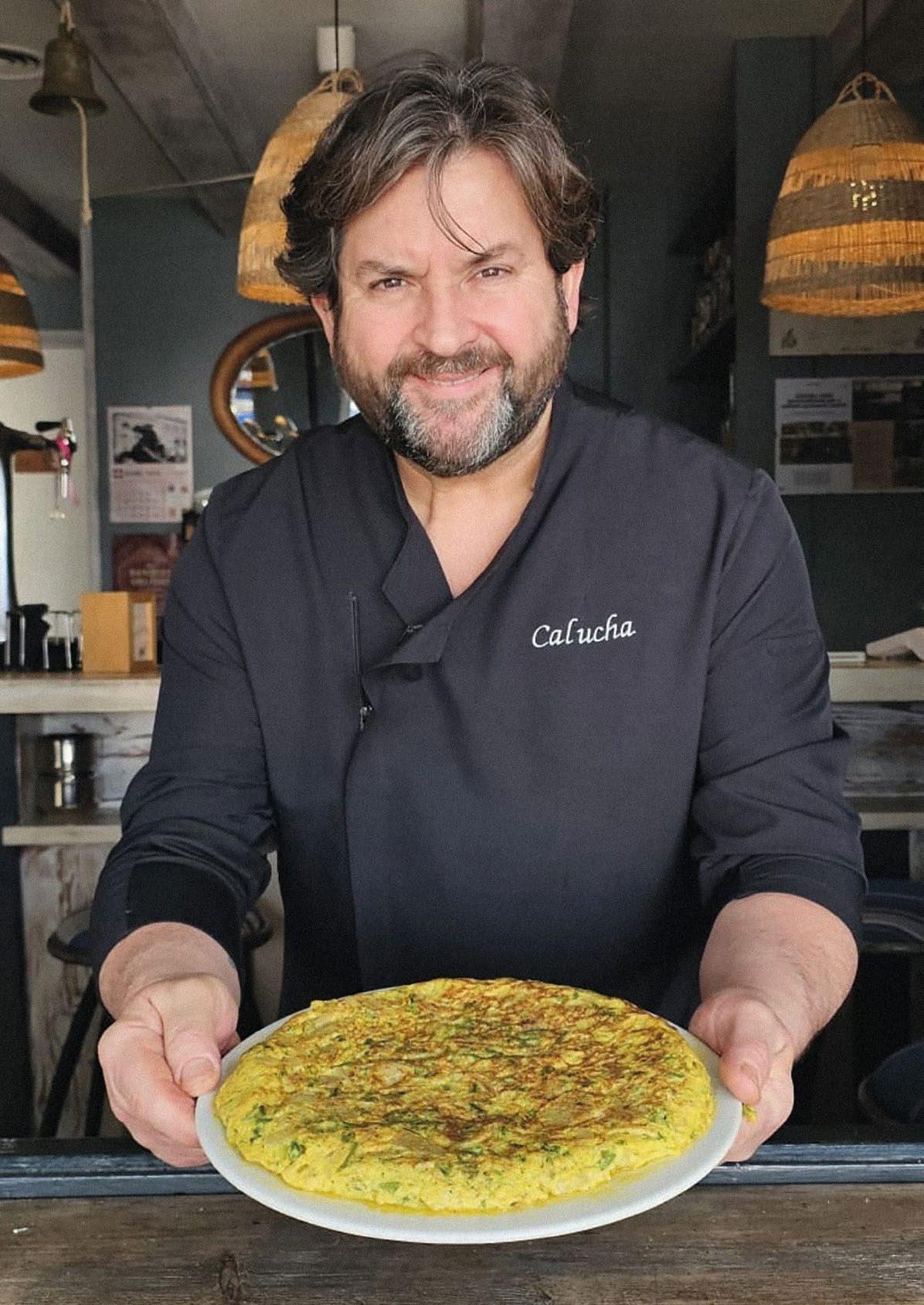
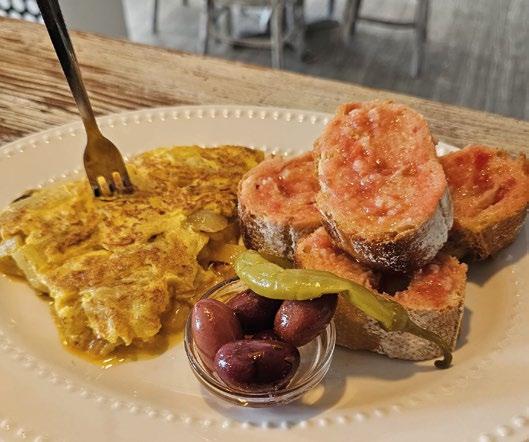
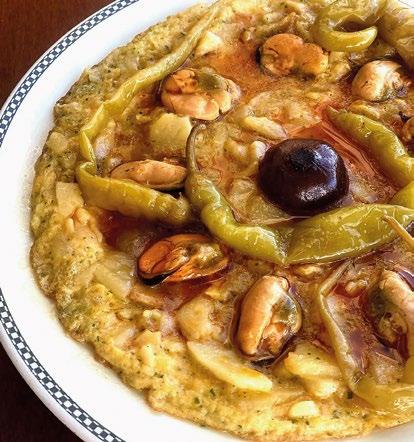
Tomando como base la tortilla de patata clásica, siempre con cebolla, de Carmen, fue incorporando productos, combinaciones y formatos, para alegría de su clientela, cada vez más numerosa, que acude casi en peregrinación a tomarse el mejor pincho de tortilla de Menorca, acompañado de aceitunas kalamata, piparras y un adictivo pan con tomate.
Este es el repertorio de Calucha, un repertorio que sigue creciendo, porque cualquier cosa que le guste a Calucha y pueda convertirla en tortilla, lo hace, y si algún cliente le da una buena idea, también.
En formato de tortilla cerrada hace la clásica con cebolla, la de botifarrón, de berenjena y queso, de pulpo con cebolla, de calabacín con jamón ibérico, la campera con verduras variadas, la de alcachofa, sola o con sepia,de sobrasada y queso, de bacalao, de espárragos, de atún con escalibada, de carn i xuia, trufada, con sabor a oliaigua, de manzana.
En cuanto a las tortillas abiertas, inspiradas en Sacha Ormaechea, del restaurante Sacha de Madrid, que las llama vagas “porque me da pereza girarlas”, se atreve con la de mejillones XL con piparras, la de pulpo con cebolla, con gambas, con langosta, de boquerones, y suma y sigue, porque esto no acaba aquí, por algo Calucha es el Rey de las Tortillas. Y que sea por muchos años!
Using Carmen’s classic potato omelette — always made with onion — as his starting point, he gradually incorporated new ingredients, combinations and formats, much to the delight of his ever-growing clientele, who come almost on pilgrimage to enjoy the best tortilla pincho in Menorca, served with Kalamata olives, piparras and an addictive pan con tomate.
This is Calucha’s repertoire — a repertoire that keeps growing, because if there is anything Calucha likes and can turn into an omelette, he does it, and if a customer gives him a good idea, that too.
In the format of a closed omelette, he makes the classic onion version, as well as botifarrón, aubergine and cheese, octopus with onion, courgette with Iberian ham, the campera with assorted vegetables, artichoke on its own or with cuttlefish, sobrasada and cheese, cod, asparagus, tuna with escalivada, carn i xuia, truffled, oliaigua-flavoured, and even apple.
As for open omelettes, inspired by Sacha Ormaechea of Madrid’s Sacha restaurant — who calls them vagas because “I’m too lazy to flip them” — he ventures into XL mussels with piparras, octopus with onion, prawns, lobster, anchovies, and the list goes on, because this does not end here. After all, Calucha is the King of Tortillas. May it stay that way for many years to come!
Clotilde, David, ¿qué es este concepto ATÍPICO?
Desde hace más de 5 años, en Menorca, desarrollamos nuestra actividad como agencia receptiva Menorca Island DMC, organizando viajes exclusivos para clientes privados y empresas. Imaginamos conceptos a medida, con un hilo conductor impactante, en lugares donde la atmósfera marca la diferencia.
Desde hace más de 15 años queríamos proponer nuestro propio espacio: un lugar donde la imaginación fuera la protagonista, donde casi todo fuera posible, entre autenticidad y elegancia; un lugar vivo durante todo el año, abierto a todos, tanto a locales como a exploradores, y lo hemos encontrado.
El concepto Atípico se presenta como un verdadero regalo, en un lugar histórico de Menorca, en pleno corazón del puerto de Es Castell, en Cales Fonts.
Clotilde, David, what is this ATÍPICO concept?
For more than five years now, here in Menorca, we have been working as the incoming agency Menorca Island DMC, organising exclusive trips for private clients and companies. We create tailor-made concepts built around a striking central idea, in places where the atmosphere makes all the difference.
For over 15 years, we had wanted to create a space of our own: a place where imagination would take centre stage, where almost anything would be possible, balancing authenticity and elegance; a place alive all year round, open to everyone, both locals and explorers — and we found it.
The Atípico concept presents itself as a true gift, in a historic location in Menorca, right in the heart of the port of Es Castell, in Cales Fonts.

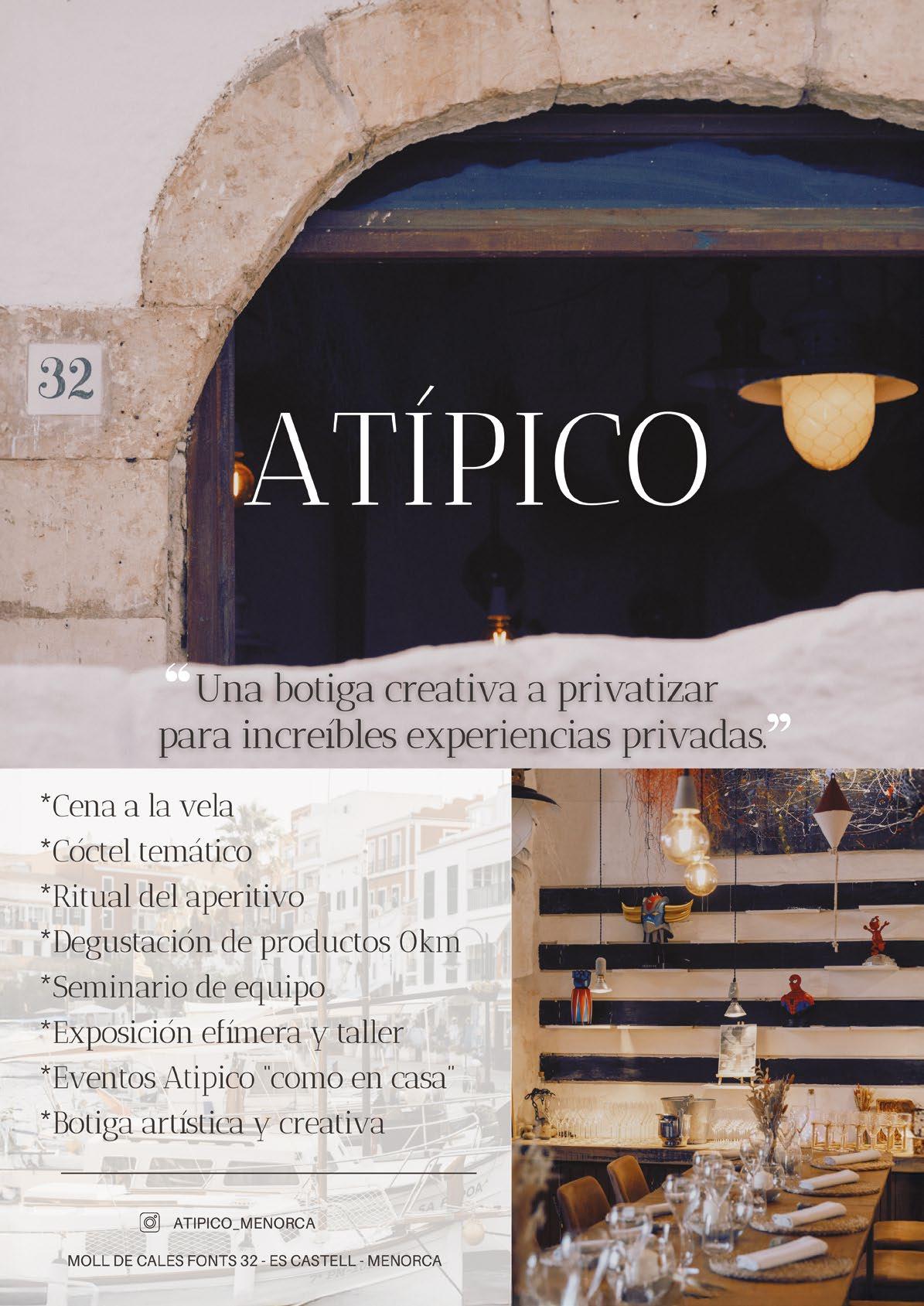
Se define como una Botiga Creativa, disponible de forma exclusivamente privada para organizar un momento especial para grupos de hasta 25 personas:
• Una cena de prestigio a la luz de las velas
• Una degustación de productos locales o un desayuno 0 km
• Una propuesta musical en acústico
• Un cóctel escenificado entre tierra y mar
• Un espacio de reunión desconectado
• Un aperitivo acogedor y auténtico
• Un taller creativo y sensorial
Háblanos de esta Botiga Creativa
Para nosotros es una nueva etapa de vida, sobre todo una cuestión de deseo y pasión. A ambos nos encanta crear y compartir nuestras emociones a través de nuestras creaciones artísticas hechas a mano: Velas artesanales con fragancias de Grasse. Pinturas contemporáneas, imaginativas e inmersivas. Fragmentos Atípico de polvo de marés de Menorca. Todas estas piezas son únicas
¿Cómo ven el futuro?
Los comentarios de nuestros clientes son muy motivadores, ya que describen Atípico como un lugar con una atmósfera única, mágica e inolvidable. Además, nuestras Experiencias privadas « Como en Casa » son momentos culinarios temáticos alrededor de una mesa donde compartimos degustación y convivialidad, en grupos reducidos, durante el periodo de noviembre a abril.
Estamos orgullosos de poder compartir este lugar simplemente único e histórico con nuestros clientes exploradores y con todos los menorquines en busca de experiencias con sentido.

It is defined as a Botiga Creativa, available exclusively for private use to organise a special moment for groups of up to 25 people:
• A prestigious candlelit dinner
• A tasting of local products or a 0 km breakfast
• An acoustic musical performance
• A staged cocktail experience between land and sea
• A disconnected meeting space
• A warm and authentic aperitif
• A creative and sensory workshop
Tell us about this Botiga Creativa
For us, it is a new chapter in life — above all, a matter of desire and passion. We both love creating and sharing our emotions through our handmade artistic creations: Artisanal candles with fragrances from Grasse. Contemporary, imaginative and immersive paintings. Atípico fragments made from Menorcan marés stone dust. Each of these pieces is unique.
How do you see the future?
The feedback from our clients is incredibly encouraging, as they describe Atípico as a place with a unique, magical and unforgettable atmosphere. In addition, our private Like at Home Experiences are themed culinary moments gathered around a table, where we share tasting and conviviality in small groups, from November to April.
We are proud to be able to share this truly unique and historic place with our explorer clients and with all Menorcans in search of meaningful experiences.
C. Miranda de Cales Fonts, Es Castell · T. (+34) 690 85 46 71
Sa Punta vuelve a abrir sus puertas y lo hace reafirmando su posición como uno de los restaurantes más destacados de Menorca. Tras el invierno, una temporada en la que muchos han echado de menos su presencia, el equipo ha trabajado intensamente en una nueva carta que eleva aún más la propuesta gastronómica y define con claridad el rumbo de esta nueva temporada.
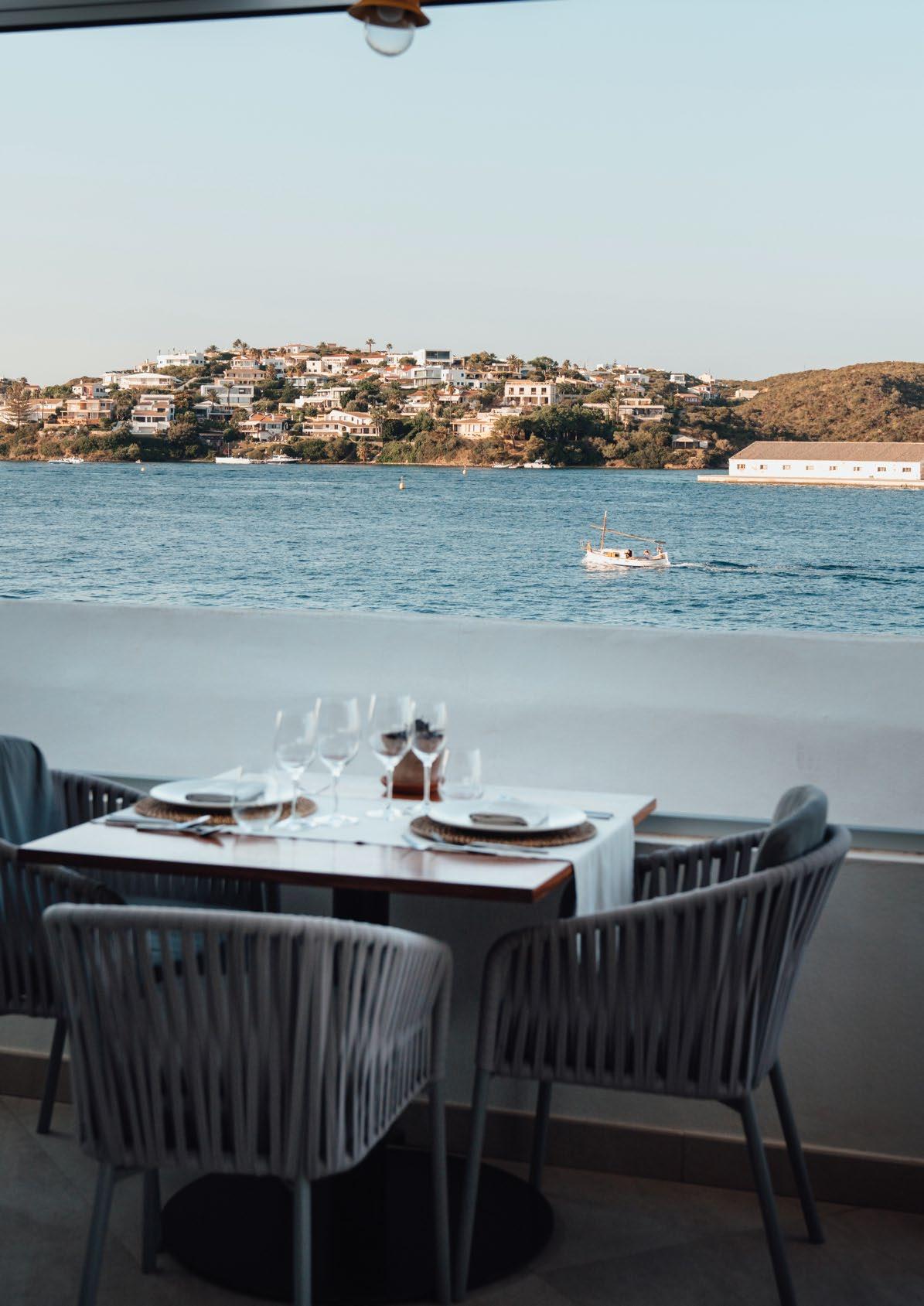
Situado frente a la boca del puerto de Mahón, Sa Punta cuenta con una de las terrazas más privilegiadas de la isla. Amplia, abierta y con vistas panorámicas, ofrece un escenario excepcional para disfrutar de la buena gastronomía.
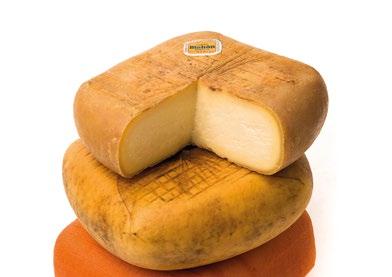
La nueva carta combina producto de alta calidad, técnica, sensibilidad mediterránea y una mirada contemporánea. El recorrido empieza desde el aperitivo, con una sopa fría de tomates asados como bienvenida, panes artesanos del obrador Amapola, en Es Castell y propuestas para compartir como la galleta de parmesano
Sa Punta reopens its doors, reaffirming its position as one of Menorca’s standout restaurants. After the winter months, a season in which many have missed its presence, the team has worked intensively on a new menu that takes its gastronomic offering even further and clearly sets the direction for this new season.
Located facing the mouth of Mahón harbour, Sa Punta boasts one of the most privileged terraces on the island. Spacious, open and with panoramic views, it provides an exceptional setting in which to enjoy great cuisine.
The new menu brings together top-quality produce, technique, Mediterranean sensibility and a contemporary perspective. The experience begins with the aperitif: a chilled roasted tomato soup as a welcome, artisan breads from the Amapola bakery in Es Castell, and dishes designed for sharing, such as the Parmesan crisp with smoked sardine and citrus mousse, or butter brioche grilled on the plancha with smoked sobrasada cream and aged Mahón cheese.
con sardina ahumada y mousse de cítricos o el brioche de mantequilla a la plancha con crema de sobrasada ahumada y queso de Mahón curado.
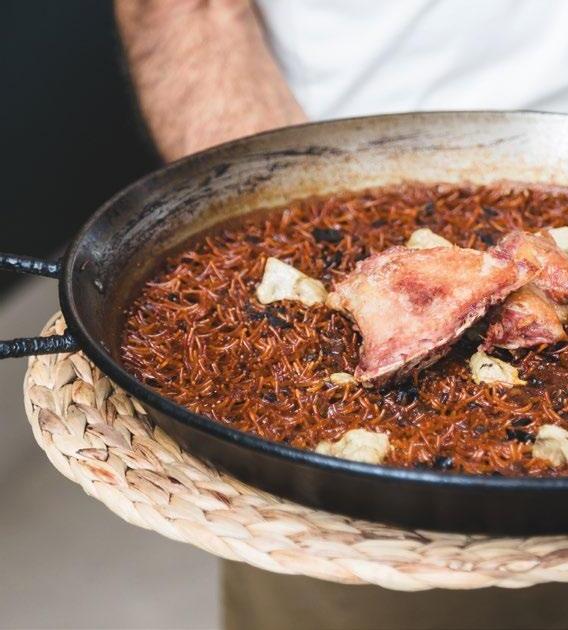
Entre los entrantes, destacan platos frescos y muy bien construidos como el crudo de atún rojo con crema de ají amarillo, la ensalada de tomates con queso de Mahón, la tostada de maíz con salmón, aguacate y tzatziki, o los boletus en escabeche con stracciatella y bomba calabresa. En los principales, la carta despliega una selección cuidada de arroces, fideuás y platos de producto, con propuestas como el arroz del senyoret, la fideuá de pato confitado y foie, el bacalao confitado al pilpil, la raya menier con jamón ibérico o el lomo de vaca madurado.
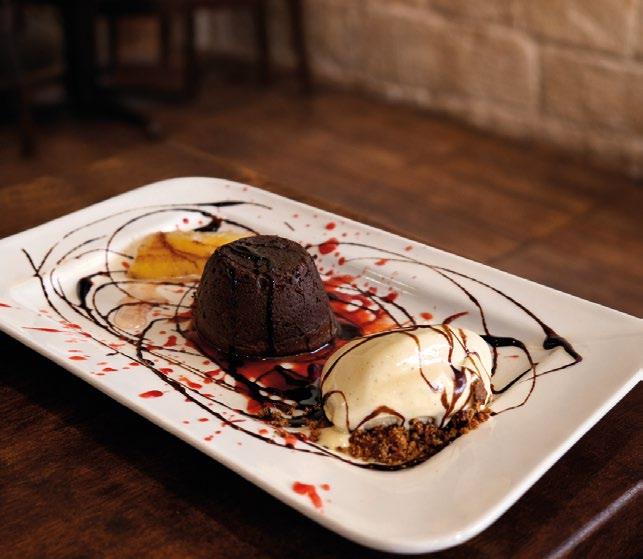
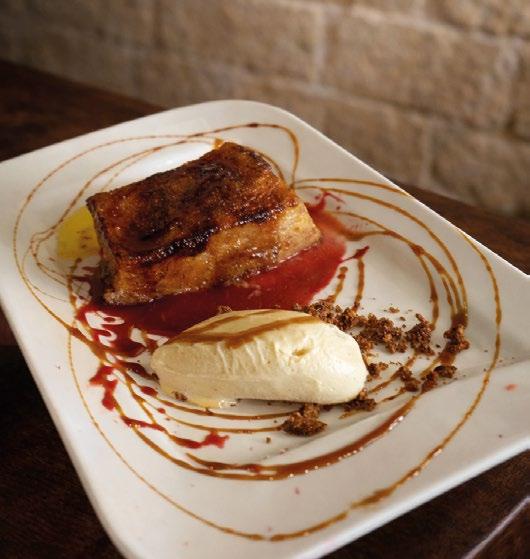
La experiencia se completa con postres a la altura, como la tarta de queso Amapola o la crème brûlée de pistacho con helado de gianduja. Esta temporada, Sa Punta se confirma como una de las mesas imprescindibles de la isla.
Among the starters, standout dishes include fresh, beautifully composed plates such as red tuna crudo with ají amarillo cream, tomato salad with Mahón cheese, corn toast with salmon, avocado and tzatziki, or pickled boletus with stracciatella and Calabrian bomba. For mains, the menu presents a carefully curated selection of rice dishes, fideuás and ingredient-led plates, with options such as arroz del senyoret, duck confit and foie fideuá, confit cod with pilpil sauce, meunière skate with Iberian ham, and dry-aged beef sirloin.
The experience is rounded off with desserts to match, such as Amapola cheesecake or pistachio crème brûlée with gianduja ice cream. This season, Sa Punta confirms its place as one of the island’s essential tables.
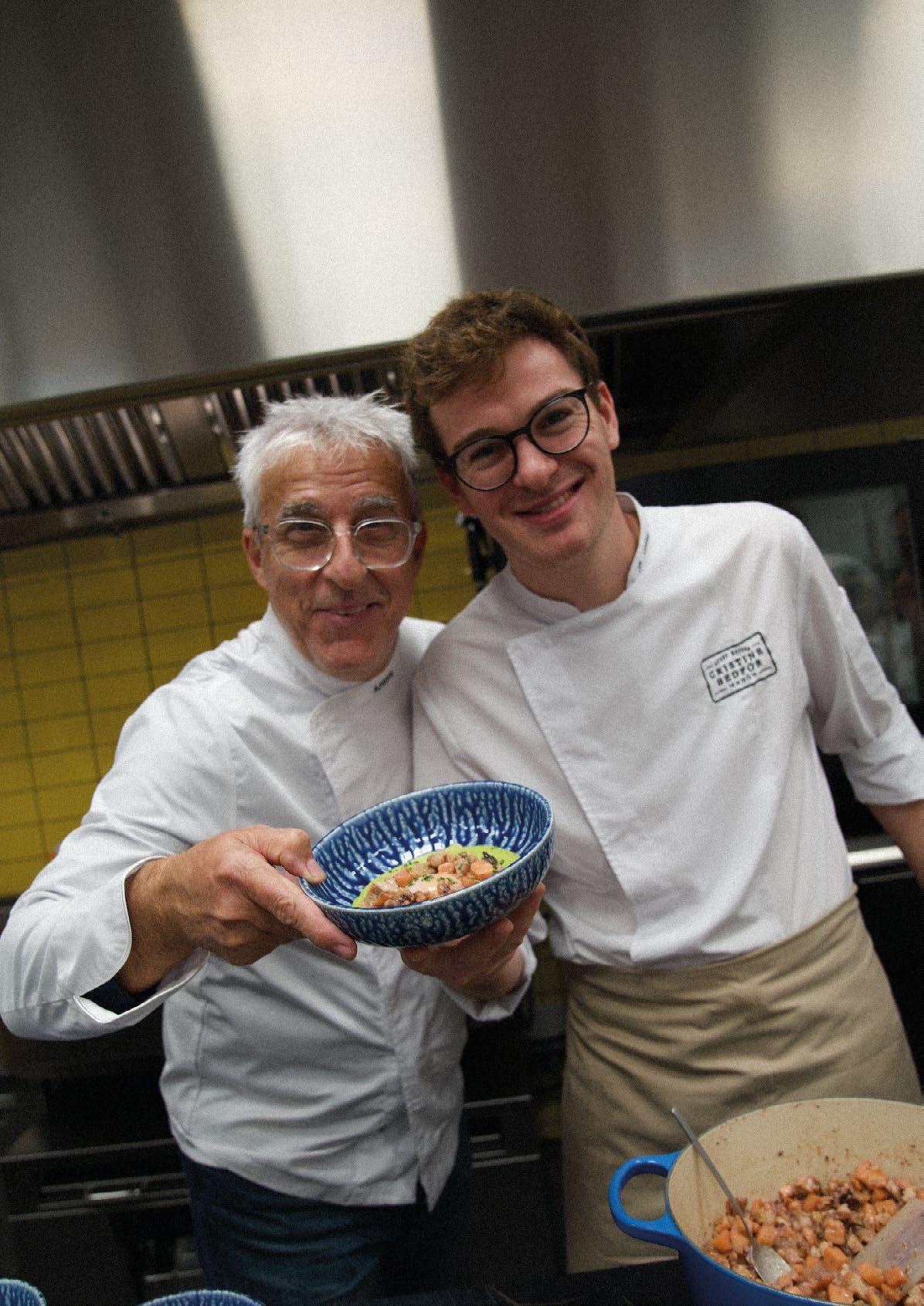
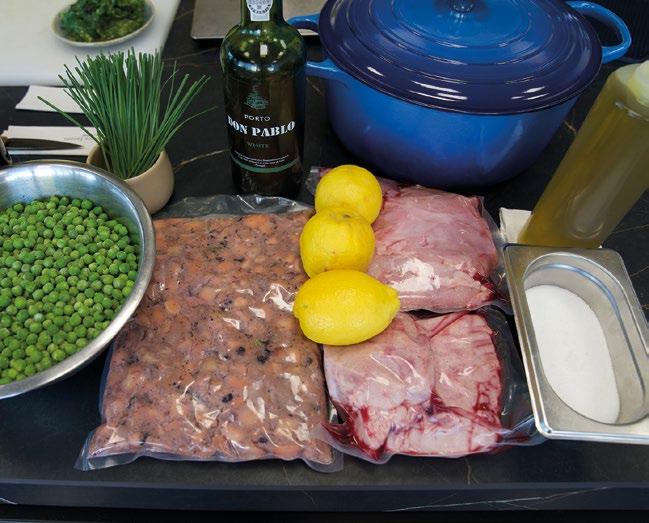
Le proponemos a Pau Sintes, cocinero del hotel Cristine Bedfor de Mahón, que haga un plato en el que la sepia de Menorca tenga un papel protagonista. Él acepta el reto encantado, pero nos advierte que a la sepia le acompañará, casi en igualdad de condiciones, una socia que vive en otro entorno pero con la que se lleva bien, la molleja. Este es el plato “Sepia con guisantes y mollejas” y aquí tienes la receta.
INGREDIENTES (PARA 4 PERSONAS):
• 500 gr de sepia limpia pescada cerca de Macaret
• 300 gr de mollejas de ternera vermella menorquina
• 4 huevos
• 250 gr de guisantes
• 1 cebolla
• 100 ml de nata
• 1 cucharada de vinagre
• 1 vaso de vino oloroso
• 1 limón
• Pimienta negra, sal y aceite de oliva
We asked Pau Sintes, chef at the Cristine Bedfor hotel in Mahón, to create a dish in which Menorcan cuttlefish would play the leading role. He gladly accepted the challenge, but warned us that the cuttlefish would be joined, almost as an equal partner, by an ingredient that comes from a very different world yet gets along with it perfectly: sweetbreads. This is the dish, Cuttlefish with Peas and Sweetbreads, and here is the recipe.
INGREDIENTS (SERVES 4):
• 500 g cleaned cuttlefish, caught near Macaret
• 300 g sweetbreads from Menorcan Red veal
• 4 eggs
• 250 g peas
• 1 onion
• 100 ml cream
• 1 tablespoon vinegar
• 1 glass of oloroso sherry
• 1 lemon
• Black pepper, salt and olive oil
CREMA DE GUISANTES. Cocinar los guisantes y la cebolla cortada en juliana, dentro de una olla o cazuela con un poco de aceite de oliva. Cuando la cebolla esté transparente triturar el conjunto con nata, vinagre, sal y pimienta. Colar para quitar las partes más gruesas y volver a triturar poniéndolo un poco de aceite para que emulsione y obtener una crema fina y sedosa.
SEPIA. Cortar la sepia en dados de un centímetro como máximo, y saltearla en una sartén con aceite de oliva, y con sus jugos que irá sacando, hasta que esté tierna.
MOLLEJAS. Limpiarlas pasándolas por agua y quitándoles las telillas, marcarlas en la sartén a fuego fuerte hasta que queden bien doradas, y cortarlas en trozos del tamaño de los trozos de sepia. En la misma sartén asar un limón partido en dos y exprimir su jugo sobre los trozos de molleja. Verter los trozos de molleja en la olla o cazuela donde descansa la sepia, encender el fuego, salpimentar, echarle vino oloroso y que se conozcan durante un buen rato la sepia y la molleja, para que haya intercambio de jugos y de sabores.
HUEVO. Cocinarlo a 64 grados, durante unos 45 minutos. Se trata de hacer un huevo poché
MONTAJE:
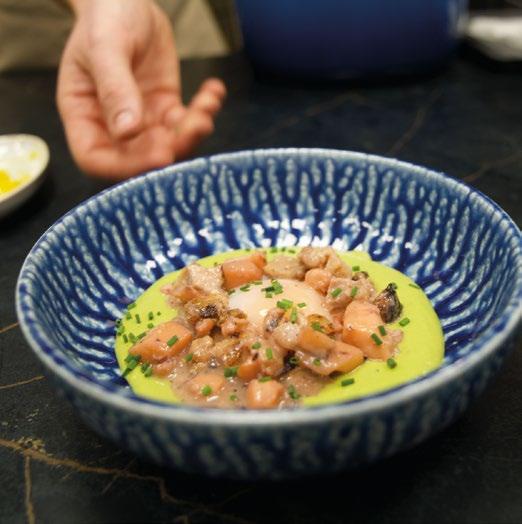
Poner como base la crema de guisantes, añadir el huevo poché, ponerle unas escamas de sal de cocó, incorporar la mezcla de sepia-mollejas, y terminar con un poco de cebollino por encima y unas gotas de aceite de oliva. A la hora de meter la cuchara, Pau te recomienda que vayas cogiendo un poquito de todo en cada bocado, vas a flipar!
Pau Sintes presentó este plato en la sesión del Chefs(in )Club de marzo.
METHOD:
PEA CREAM. Cook the peas and the onion, cut into julienne strips, in a pot or casserole dish with a little olive oil. Once the onion is translucent, blend everything with the cream, vinegar, salt and pepper. Strain to remove the thicker pieces, then blend again, adding a little olive oil so it emulsifies and becomes a smooth, silky cream.
CUTTLEFISH. Cut the cuttlefish into cubes of no more than 1 cm and sauté them in a frying pan with olive oil, using the juices they release, until tender.
SWEETBREADS. Clean them under running water and remove the membranes. Sear them in a frying pan over high heat until nicely browned, then cut them into pieces the same size as the cuttlefish. In the same pan, roast a lemon cut in half and squeeze its juice over the sweetbread pieces.
Transfer the sweetbread pieces to the pot or casserole where the cuttlefish is resting, turn on the heat, season with salt and pepper, add the oloroso sherry, and let the cuttlefish and sweetbreads get to know each other for a good while, so their juices and flavours can mingle.
EGG. Cook it at 64°C for about 45 minutes. The idea is to make a poached egg.
Spread the pea cream as the base, add the poached egg, sprinkle with sal de cocó flakes, spoon over the cuttlefish and sweetbread mixture, and finish with a little chives on top and a few drops of olive oil. When it is time to dig in, Pau recommends getting a little bit of everything in each spoonful — it will blow your mind.
Pau Sintes presented this dish at the March session of the Chefs(in)Club.

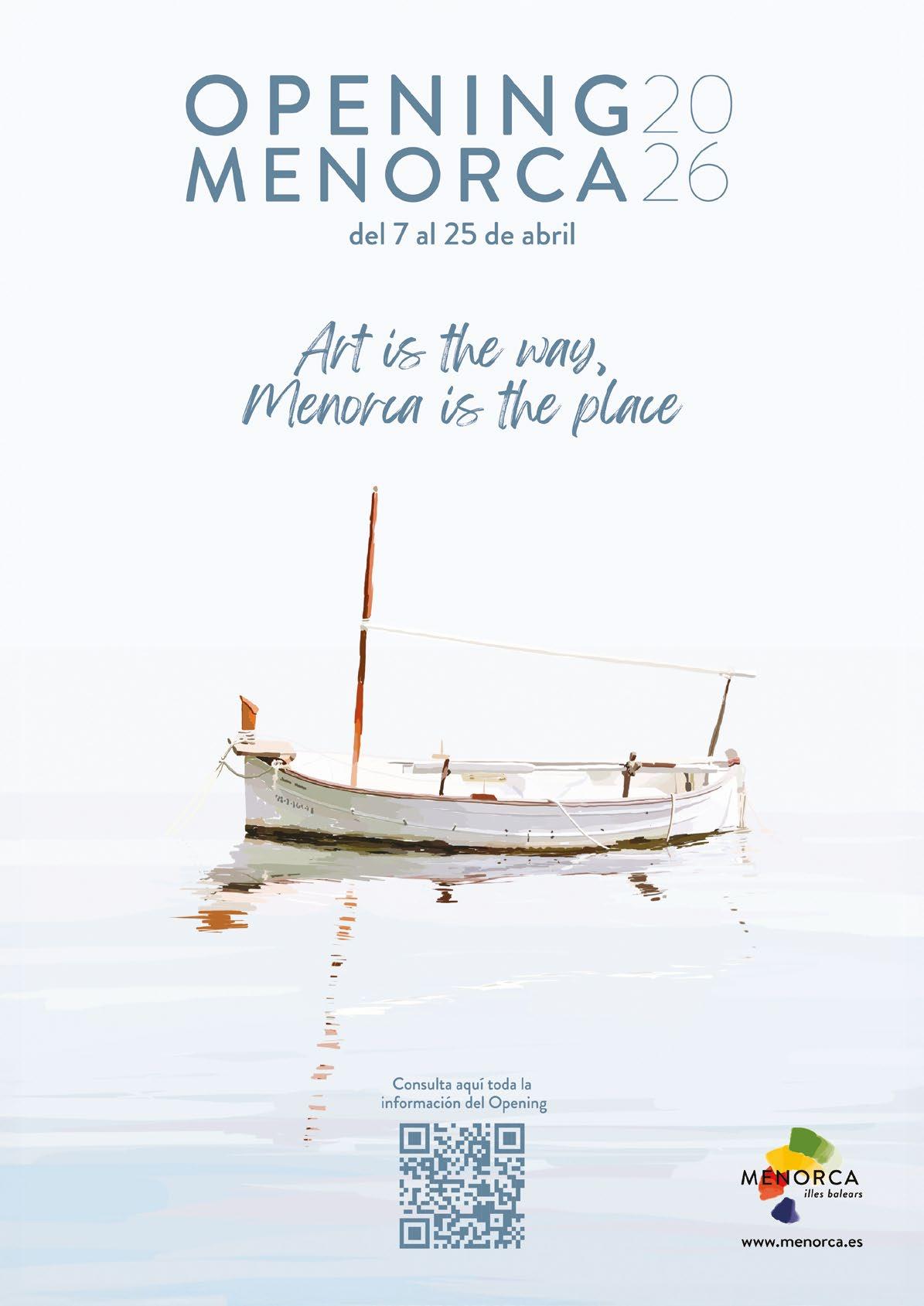
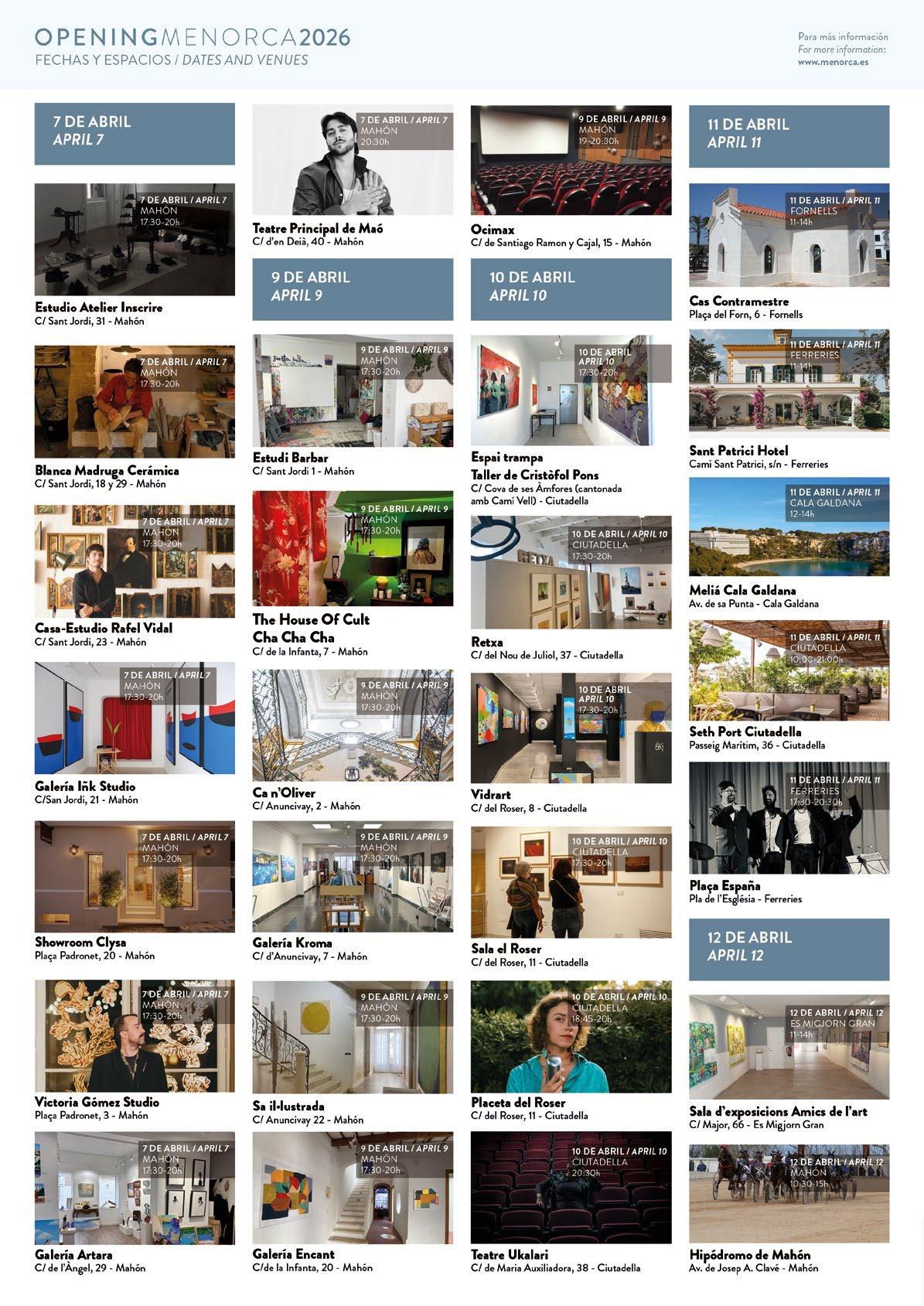
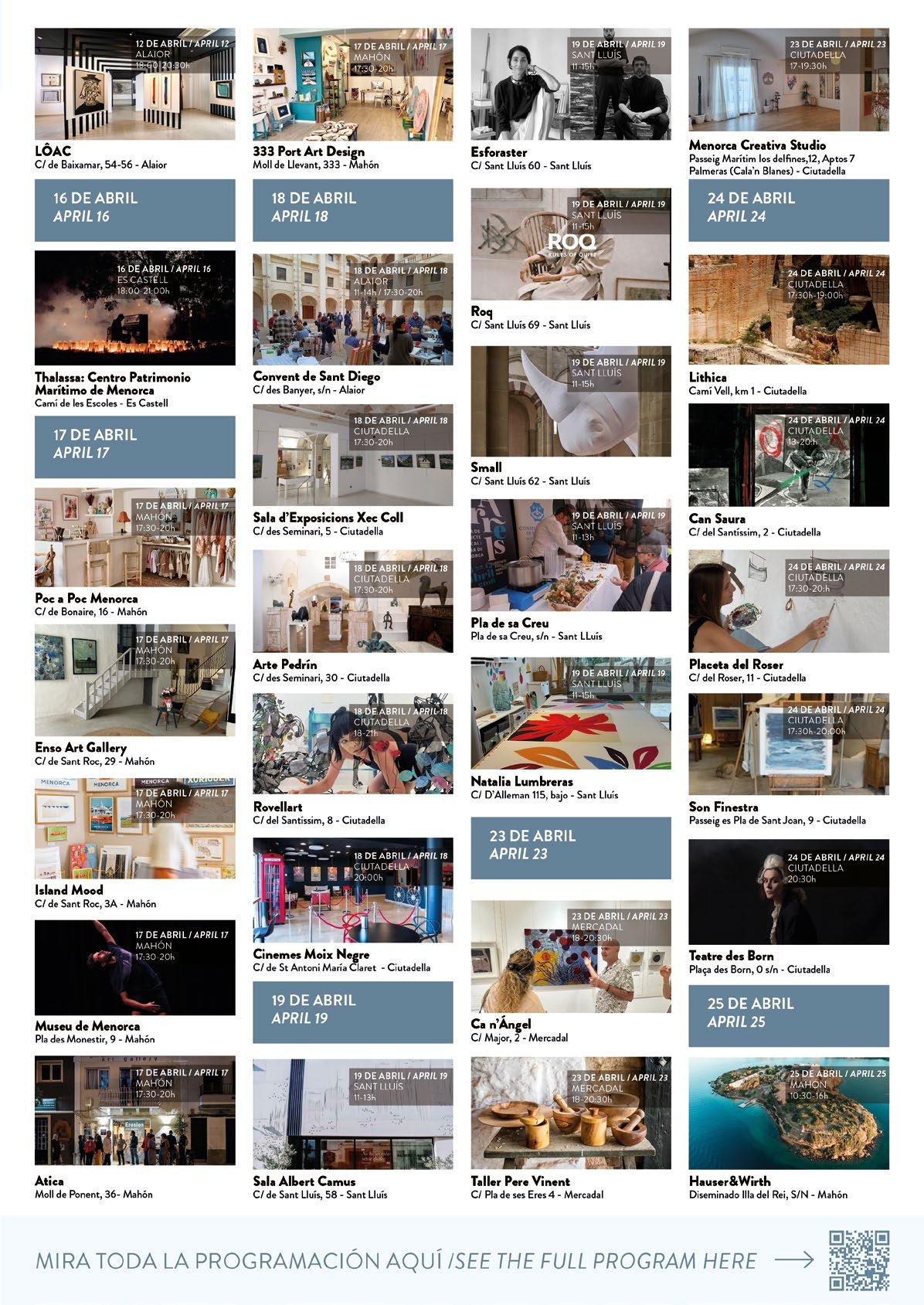
Menorca se prepara para inaugurar la temporada turística de 2026 de una forma inédita. Lejos del modelo tradicional basado exclusivamente en sol y playa, la isla apuesta decididamente por la cultura como motor de atracción con el Opening Cultural Menorca 2026, una iniciativa impulsada por la Fundació Foment del Turisme de Menorca que redefine el concepto de “inicio de temporada”.
Del 7 al 25 de abril, Menorca se convertirá en un gran escenario creativo con cerca de medio centenar de actividades repartidas por toda la geografía insular. Exposiciones, conciertos, encuentros con artistas, talleres, performances y rutas culturales compondrán una programación pensada tanto para visitantes como para residentes, en una experiencia que va más allá del turismo convencional.
Este ambicioso proyecto nace con un objetivo claro, desestacionalizar el turismo y alargar la temporada. En una isla donde históricamente la
Menorca is preparing to open the 2026 tourist season in an unprecedented way. Far from the traditional model based exclusively on sun and beach, the island is making a clear commitment to culture as a driving force for attracting visitors with Opening Cultural Menorca 2026, an initiative promoted by the Fundació Foment del Turisme de Menorca that redefines the very concept of a “season opening”.
From 7 to 25 April, Menorca will become one vast creative stage, with nearly fifty activities taking place across the island. Exhibitions, concerts, artist talks, workshops, performances and cultural routes will make up a programme designed for both visitors and residents, offering an experience that goes beyond conventional tourism.
This ambitious project has a clear objective: to reduce seasonality and extend the tourist season. On an island where tourism has historically been concentrated in the summer months, culture is now emerging as a strategic tool to attract a more
actividad turística se concentra en los meses de verano, la cultura se posiciona como una herramienta estratégica para atraer un perfil de visitante más diverso, interesado en experiencias auténticas y de calidad.
El Opening no es un evento aislado, sino la materialización de una evolución que Menorca lleva años construyendo. En la última década, la isla ha experimentado un notable crecimiento de galerías, espacios expositivos y proyectos artísticos que han configurado un ecosistema cultural vibrante y en constante expansión. Este tejido creativo, que combina talento local e internacional, encuentra ahora en este evento una plataforma para proyectarse al mundo.
Durante 19 días, la isla se transforma en un recorrido artístico continuo. Desde Mahón hasta Ciutadella, pasando por Alaior o Es Mercadal, cada rincón ofrece una propuesta distinta, permitiendo al visitante diseñar su propia ruta cultural. La programación incluye desde grandes exposiciones de arte contemporáneo hasta conciertos en espacios emblemáticos, como el recital inaugural del guitarrista Yerai Cortés o la clausura musical a cargo de Maika Makovski.
diverse visitor profile, one interested in authentic, high-quality experiences.
The Opening is not an isolated event, but rather the tangible result of an evolution that Menorca has been building for years. Over the last decade, the island has seen remarkable growth in galleries, exhibition spaces and artistic projects, shaping a vibrant and constantly expanding cultural ecosystem. This creative fabric, which brings together local and international talent, now finds in this event a platform from which to project itself to the world.
For 19 days, the island is transformed into a continuous artistic journey. From Mahón to Ciutadella, passing through Alaior and Es Mercadal, every corner offers a different proposal, allowing visitors to design their own cultural route. The programme ranges from major contemporary art exhibitions to concerts in emblematic venues, such as the opening recital by guitarist Yerai Cortés and the closing musical performance by Maika Makovski.
Beyond the headline names, the true value of the Opening lies in its ability to integrate disciplines and territories.
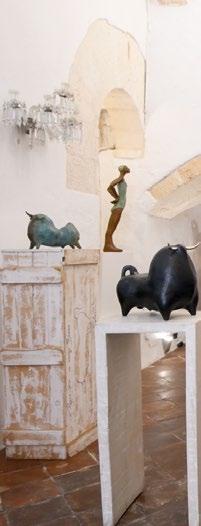
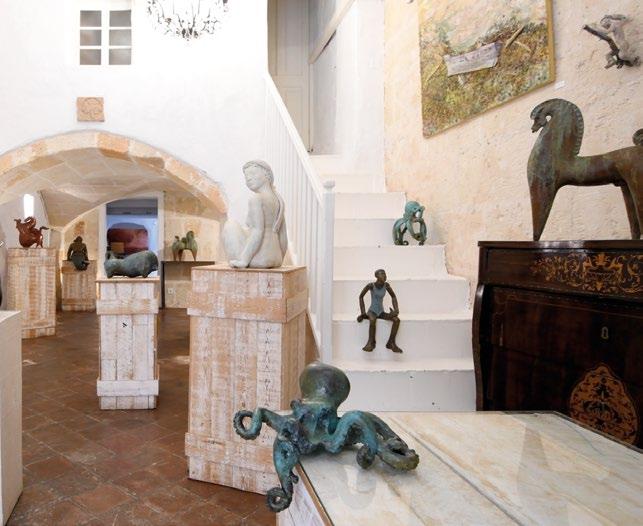
Más allá de los nombres propios, el verdadero valor del Opening reside en su capacidad para integrar disciplinas y territorios. El arte dialoga con el paisaje, con el patrimonio y con la identidad menorquina, generando una experiencia inmersiva en la que el visitante no solo observa, sino que participa, conecta y comprende el carácter de la isla.
Este enfoque responde también a una demanda creciente, la de un turismo más sostenible, equilibrado y distribuido a lo largo del año. Apostar por la cultura permite diversificar la economía local, reducir la presión de los meses de alta ocupación y ofrecer nuevas oportunidades tanto al sector creativo como al tejido empresarial.
El mensaje es claro, Menorca no renuncia a su esencia, la amplía. A sus paisajes, su patrimonio talayótico y su reconocida calidad ambiental se suma ahora un relato cultural sólido, capaz de posicionarla como un destino creativo en el Mediterráneo.
El Opening Cultural Menorca 2026 es, en definitiva, mucho más que un evento. Es una declaración de intenciones. Una invitación a descubrir la isla desde una mirada distinta, donde el arte se convierte en hilo conductor y en puerta de entrada a una Menorca que quiere ser vivida todo el año.
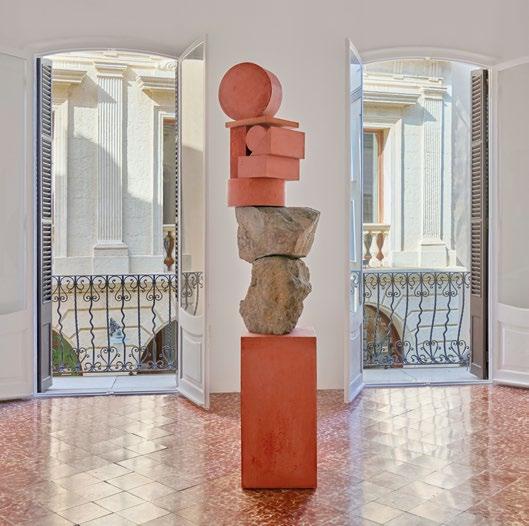
Art enters into dialogue with the landscape, with heritage and with Menorcan identity, creating an immersive experience in which visitors do not simply observe, but participate, connect and gain a deeper understanding of the island’s character.
This approach also responds to a growing demand for tourism that is more sustainable, balanced and spread throughout the year. Investing in culture helps diversify the local economy, reduce the pressure of peak-season months and create new opportunities for both the creative sector and the wider business community.
The message is clear: Menorca is not turning away from its essence, but expanding it. Alongside its landscapes, its Talayotic heritage and its renowned environmental quality, the island now adds a strong cultural narrative, capable of positioning it as a creative destination in the Mediterranean.
Opening Cultural Menorca 2026 is, ultimately, far more than an event. It is a declaration of intent. An invitation to discover the island from a different perspective, where art becomes both the common thread and the gateway to a Menorca that wants to be experienced all year round.
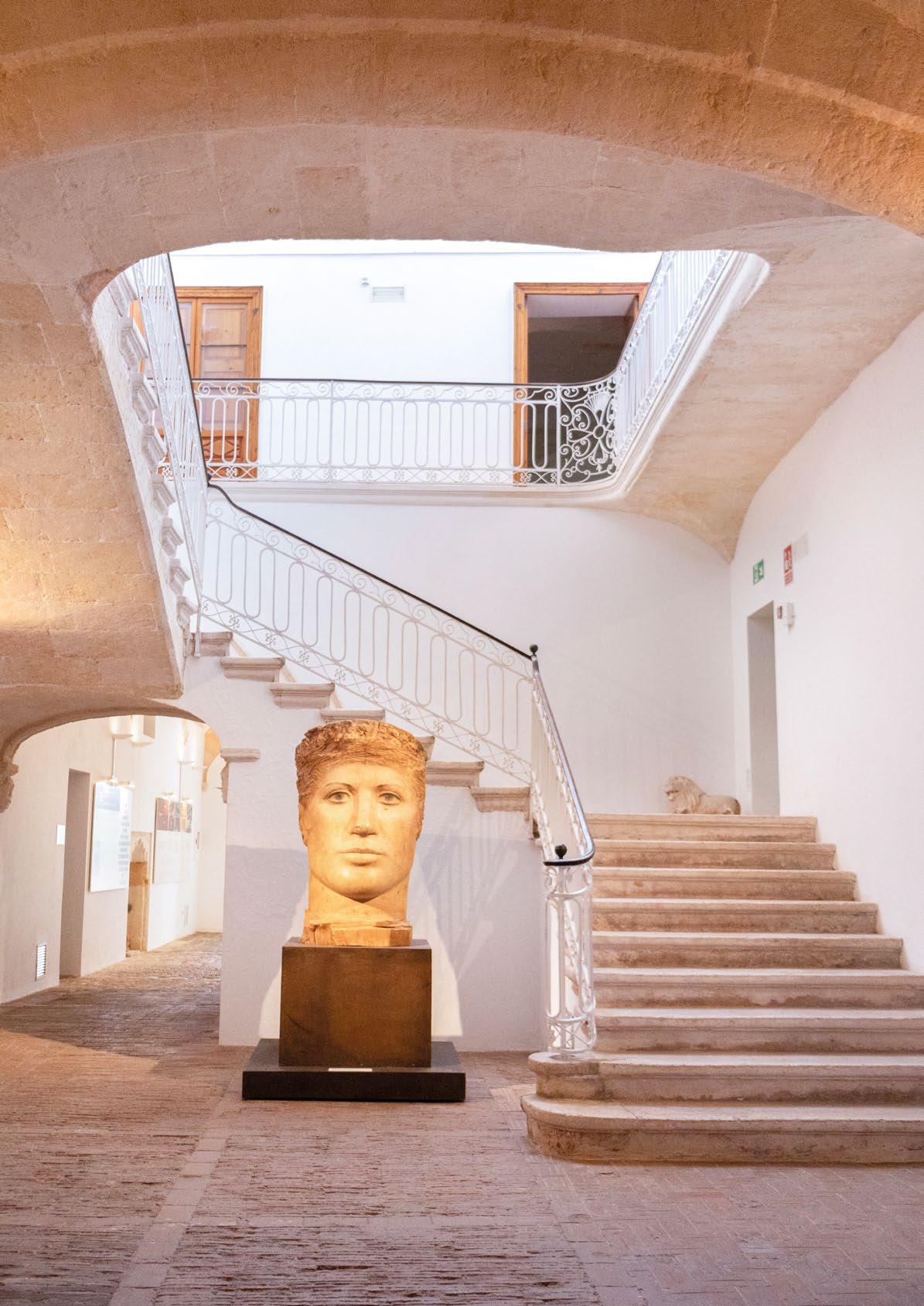
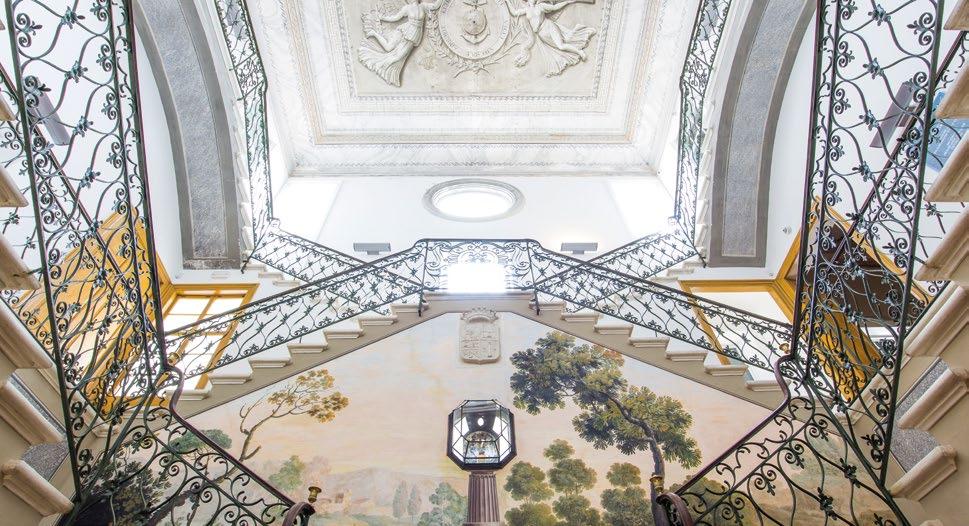
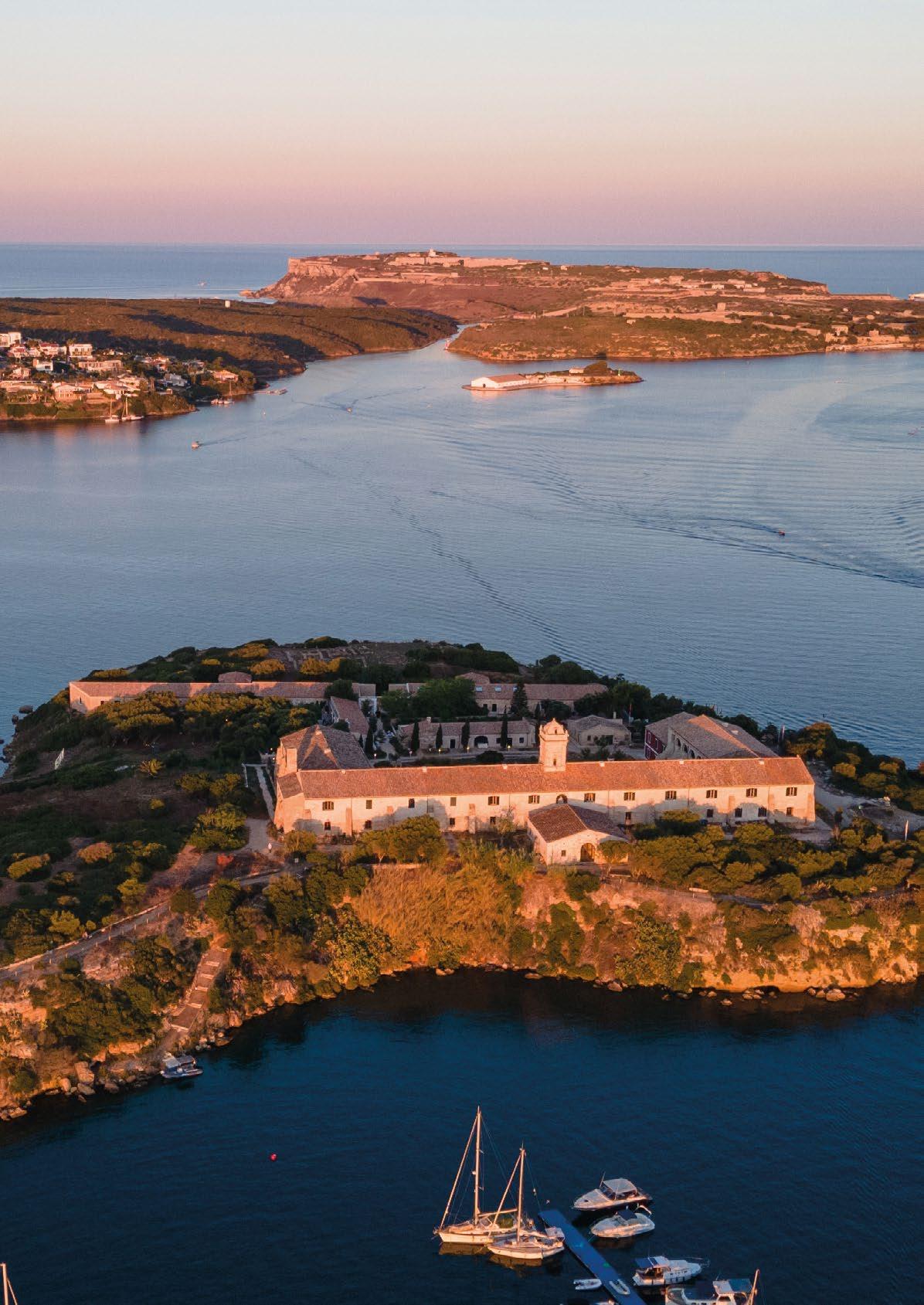
Ubicado en la histórica Isla del Rey, en el puerto de Mahón, el centro de arte de Hauser & Wirth abrió sus puertas en 2021 y, desde entonces, ha acogido exposiciones de artistas como Mark Bradford, Rashid Johnson, Christina Quarles, Eduardo Chillida, Roni Horn, Mika Rottenberg y Cindy Sherman. Ahora, en su quinto año de apertura, el centro inicia una nueva temporada con una muestra de Martin Creed y una exposición colectiva organizada por Rashid Johnson.
El centro de arte se ubica en las antiguas instalaciones de un hospital en desuso fundado por la Marina inglesa en 1711. El edificio principal alberga un museo dedicado a los más de 300 años de historia del lugar, gestionado por la Fundación Hospital de la Isla del Rey, una organización sin ánimo de lucro formada por cientos de voluntarios internacionales.
A partir del 25 de abril, una presentación de Martin Creed incluirá la obra ‘Work No. 3891: Half the air in a given space’ junto con una selección de pinturas murales.
Hauser & Wirth

In 2021, Hauser & Wirth opened the art centre on Illa del Rei, a beautiful historic island in Mahon’s harbour, as a space where ambitious exhibitions by our gallery artists, events and learning activities could connect with the local community and landscape. Five years in, visitors have engaged with exhibitions by Mark Bradford, Rashid Johnson, Christina Quarles, Eduardo Chillida, Roni Horn, Mika Rottenberg and Cindy Sherman.
The art centre sits in the outbuildings of a decommissioned hospital founded by the English navy in 1711, whose main building houses a museum celebrating 300 years of medical history, managed by the non-profit Fundació Hospital de l’Illa del Rei and thousands of international volunteers.
From 25 April, we will present a special presentation by Martin Creed. The exhibition will bring together the artist’s ‘Work No. 3891: Half the air in a given space’ and a selection of wall paintings.
‘Half the air in a given space’ es una de las obras más reconocidas de Creed. Concebida por primera vez en 1998 y recreada posteriormente en distintas partes del mundo, consiste en una multitud de globos que ocupan la mitad del aire de una sala. Esta instalación lúdica invita a los visitantes a entrar e interactuar con la forma y el volumen de la obra.
Martin Creed es un artista visual, performer, compositor y ‘poeta punk’ galardonado con el Turner Prize. Para Creed no existe una frontera entre la vida y el arte. En el proceso de, en sus propias palabras, ‘intentar vivir mejor’, su enfoque lúdico y abierto lo lleva a utilizar muchas formas de expresión diferentes en diversas disciplinas.
Más allá de las galerías, las esculturas exteriores introducen la exposición de este verano, ‘Directionless’, una amplia muestra colectiva organizada por el artista Rashid Johnson, que reúne la obra de más de veinte artistas internacionales externos a la galería.
El recorrido exterior incluirá piezas de Ali Cherri, Mona Hatoum, Cristina Iglesias y Rayanne Tabet. Además, el restaurante y bar Cantina seguirá ofreciendo productos frescos y de temporada en un entorno único, rodeado por un bosquecito de acebuches.
A partir del 21 de junio, ‘Directionless’ parte de la idea de que vivimos un momento de profunda desorientación.
Johnson ha invitado a Charles Gaines, Firelei Báez y Cristina Iglesias a proponer artistas externos a la galería, junto con su propia selección. Este enfoque polifónico, impulsado por los propios artistas, rechaza los relatos únicos y plantea que la práctica creativa puede ser, en sí misma, una forma de encontrar orientación en un presente difícil de descifrar.
‘Half the air in a given space’ is one of Creed’s most celebrated works. First conceived in 1998 and subsequently created around the world, it involves a multitude of balloons which contain half of the air in a room. Acting as a tangible measure of the air, this playful inversion of art and space invites visitors to enter and change the work’s shape and volume themselves.
Martin Creed is a Turner Prize-winning visual artist, performer, composer and ‘punk poet’. In the process of, in his words, ‘trying to live life better’, his playful and open-ended approach leads to the use of many different forms of expression across many disciplines.
Beyond the galleries, an outdoor sculpture trail will introduce works from our summer exhibition ‘Directionless,’ a sweeping group exhibition organised by artist Rashid Johnson and including more than 20 international artists outside the gallery’s roster.
Outdoor sculptures will feature pieces by Ali Cherri, Mona Hatoum, Cristina Iglesias and Rayanne Tabet. Cantina, the on-site restaurant, will continue to serve fresh seasonal produce amid an olive-tree forest.
Opening 21 June, ‘Directionless,’ begins with the premise that we are living in a moment of profound disorientation.
Johnson invited Charles Gaines, Firelei Báez, and Cristina Iglesias to each nominate artists from outside the gallery’s roster alongside his own selections. This artist-driven, polyphonic approach refuses singular narratives, instead proposing that creative practice itself might be a form of orientation-making in an illegible present.

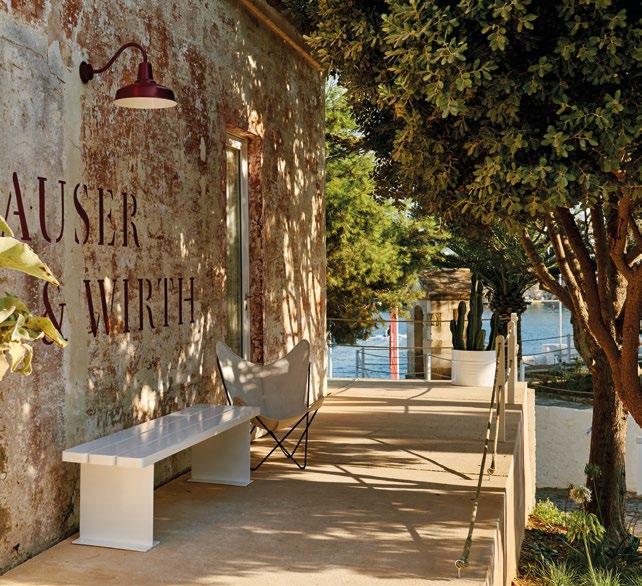
01. Hauser & Wirth Menorca a l’Illa del Rei · Cortesía Hauser & Wirth · Foto: Be Creative 02/03/04. Hauser & Wirth Menorca a l’Illa del Rei · Cortesía Hauser & Wirth · Foto: Daniel Schäfer 05. Hauser & Wirth Menorca a l’Illa del Rei · Cortesía Hauser & Wirth · Foto: Maite Carles
El Education Lab abrirá en junio y se desarrollará en colaboración con la Universidad de las Islas Baleares y la Universidad de Barcelona. Con la participación de las universidades y sus alumnos, el programa responde a la temática de ‘Directionless’. Basado en perspectivas actuales de pedagogía creativa y aprendizaje experimental, ofrece un espacio interactivo para explorar nuevas ideas y formas de trabajo, e invita a una amplia diversidad de voces y comunidades a participar a lo largo de la temporada.
Para que nuestras exposiciones y artistas lleguen a un público lo más amplio posible y establecer sinergias con las iniciativas existentes en la isla, cada año colaboramos con entidades como Trobades & Premis Mediterranis, Albert Camus, Institut Menorquí d’Estudis, Es Claustre, Pedra Viva y la Fundació Menorquina de l’Òpera, entre muchas otras. El programa público cuenta con actividades para todas las edades, como talleres creativos, charlas, proyecciones, performance, visitas guiadas, así como actividades para escuelas de primaria y secundaria. ¡Nos vemos muy pronto en la Isla del Rey!
This year’s Education Lab will open in June and will be developed in collaboration with the University of the Balearic Islands and the University of Barcelona. Working with the university and their students, the program will respond to the themes of the group exhibition ‘Directionless.’ Drawing on current thinking in creative pedagogy and experimental learning, it offers an interactive space for new ideas and working methods, and invites a wide range of voices and communities to participate throughout the season.
Making sure that our exhibitions and artists reach audiences as wide as possible and establish synergies with existing initiatives on the island, this year we continue to collaborate with entities such as Trobades & Premis Mediterranis Albert Camus, Institut Menorquí d’Estudis, Es Claustre, Pedra Viva and the Fundació Menorquina de l’Òpera, among many others. The public programme features events for all ages, including weekly creative workshops, talks, performances, screenings, guided tours, as well as activities for primary and secondary schools. We look forward to welcoming you back very soon!
Es Veler @esveler
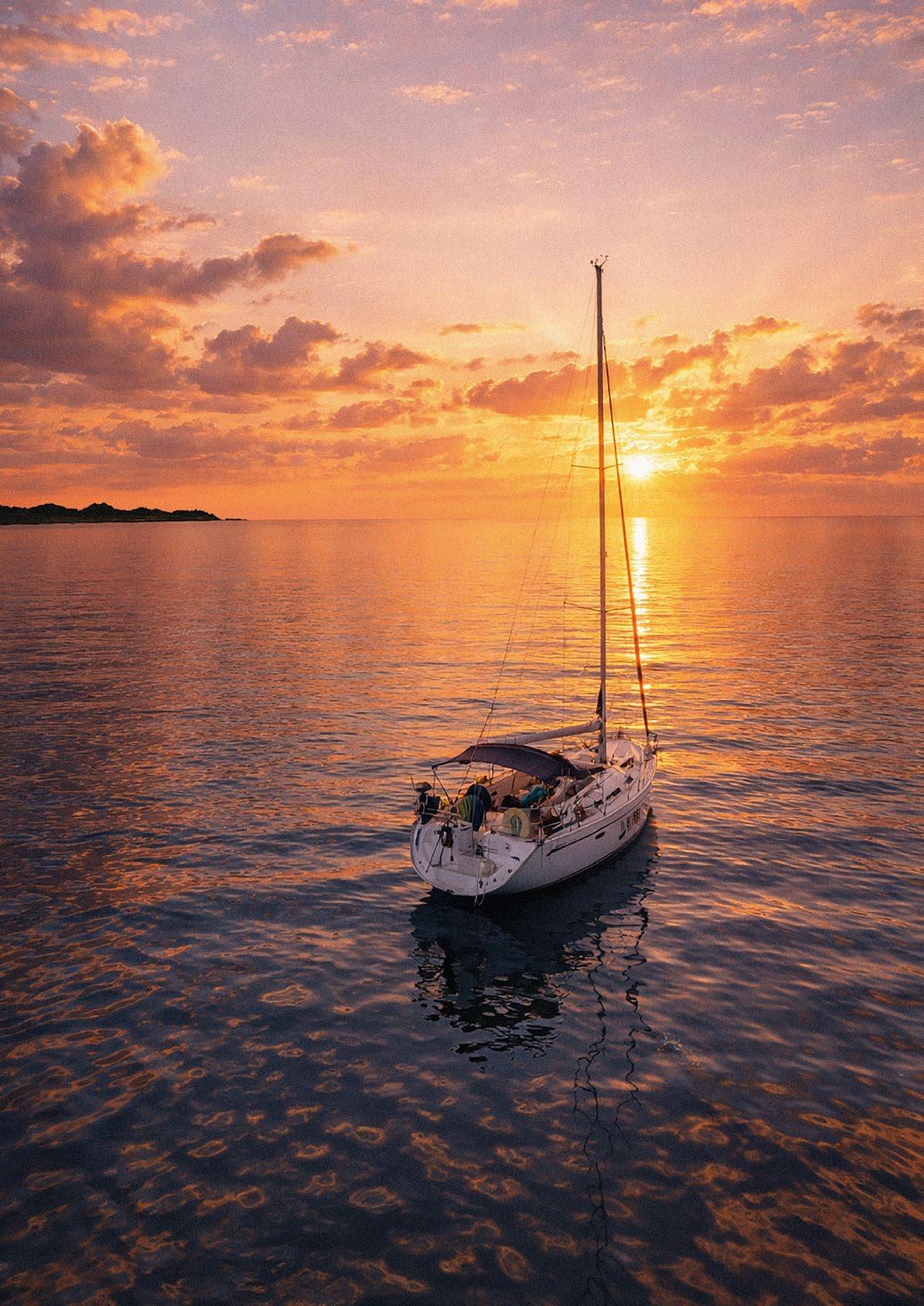
Una noche lejos de todo. Un amanecer solo para vosotros. Porque hay escapadas que no se hacen para cambiar de lugar, sino para cambiar el ritmo
Llegáis al puerto con esa sensación suave de cuando algo bueno está a punto de empezar. Una bolsa ligera. Una chaqueta para más tarde. La emoción en voz baja. Subís a bordo y, en cuanto el velero se separa del muelle, también se alejan otras cosas: la prisa, el ruido, la necesidad de mirar el móvil.
La navegación comienza despacio. A vela. Como si el mar supiera exactamente lo que necesitáis. Menorca se va quedando atrás, más quieta, más limpia, más hermosa desde fuera. Una de vosotras se tumba al sol. Uno de vosotros mira el agua en silencio. Los otros dos hablan poco, pero sonríen mucho.
One night far from everything. A sunrise just for the two of you. Because some getaways are not about changing places, but changing pace.
You arrive at the harbour with that soft feeling you get when something good is about to begin. A light bag. A jacket for later. Quiet excitement. You step on board and, the moment the sailboat pulls away from the dock, other things begin to drift away too: the rush, the noise, the need to check your phone.
The journey begins slowly. Under sail. As if the sea knew exactly what you needed. Menorca starts to fall behind, calmer, cleaner, even more beautiful from the water. One of you stretches out in the sun. One of you watches the water in silence. The other two say little, but smile a lot.
SlEEp AboArd OUR sailboat in a sEcludEd covE
DormEz À bord dE NOTRE voiliEr dAns unE criquE sEcrÈtE
La cala aparece al final de la tarde. Virgen. Vacía. Perfecta. El barco fondea y os lanzáis al agua como quien llega por fin al lugar correcto. El primer baño sabe distinto cuando sabes que hoy no vais a volver a tierra. Luego llega el snorkel, el paddle, la piel salada, las risas que suenan más libres lejos del mundo.
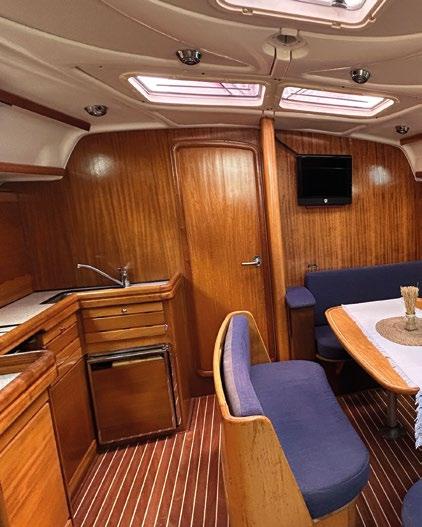
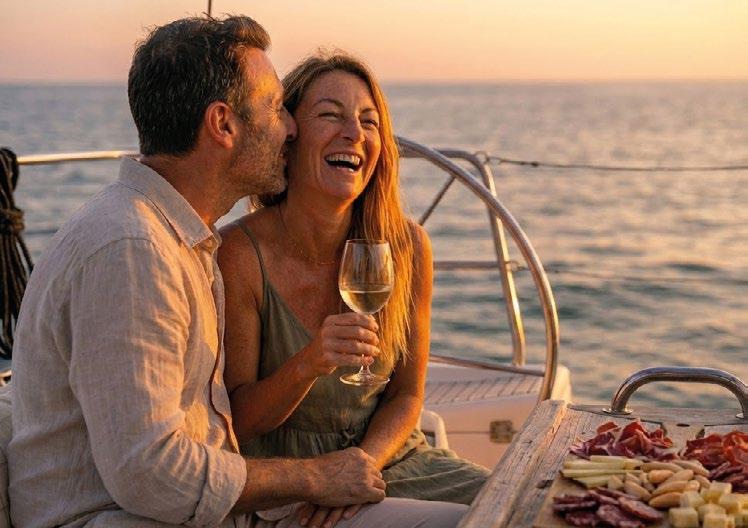
La cena se sirve en cubierta. Un picoteo menorquín, una bebida fría, la luz dorada cayendo sobre la madera. Cuatro personas alrededor de una mesa pequeña y la sensación de que no hace falta nada más. Uno dice algo sin importancia. Todos os reís igual. Hay momentos que no parecen extraordinarios mientras ocurren, pero después se quedan dentro para siempre.
Y ENTONCES, LA NOCHE.
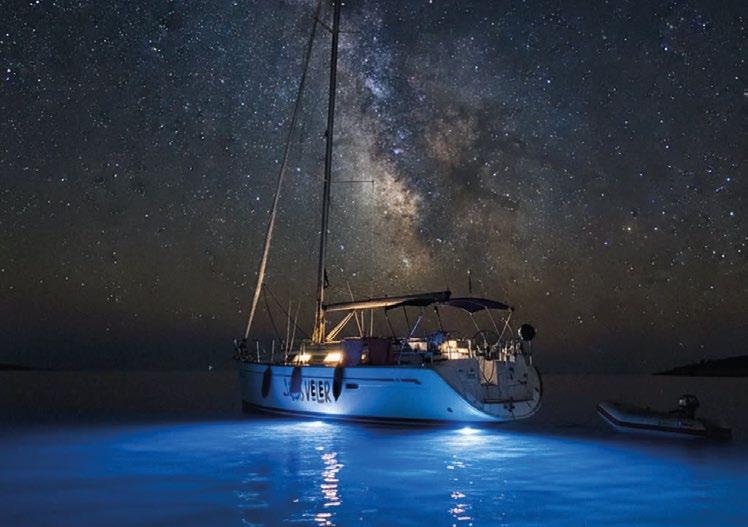
Sin farolas. Sin ventanas encendidas. Sin nada más que el mar dormido y el cielo llenándose de estrellas.
Una pareja se queda en silencio, apoyada en la borda. La otra se mira como si acabara de recordar algo importante. El velero apenas se mueve. La cala respira despacio.
The cove appears at the end of the afternoon. Untouched. Empty. Perfect. The boat drops anchor and you dive into the water like people who have finally arrived exactly where they were meant to be. The first swim feels different when you know you will not be going back to shore tonight. Then come the snorkelling, the paddle board, salty skin, laughter that sounds freer out here, far from the world.
Dinner is served on deck. Menorcan bites, a cold drink, golden light falling across the wood. Four people around a small table, with the feeling that nothing else is needed. One of you says something unimportant. All of you laugh just the same. There are moments that do not seem extraordinary while they are happening, and yet stay with you forever afterwards.
No streetlights. No lit windows. Nothing but the dark sea and a sky filling with stars.
One couple stands in silence, leaning against the rail. The other looks at each other as if they have just remembered something important. The sailboat barely moves. The cove breathes slowly.
Y alguien dice: “Deberíamos hacer esto más a menudo.”
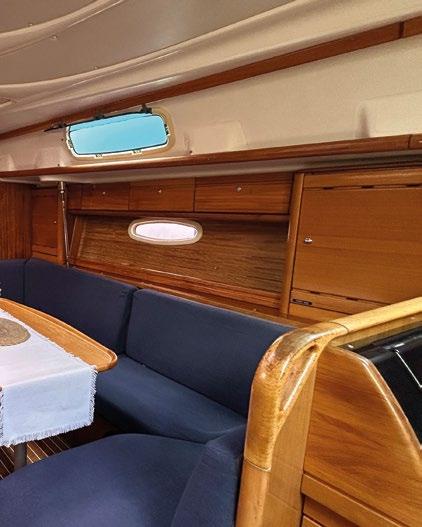
Nadie responde enseguida.Porque todos estáis pensando lo mismo. Dormir a bordo tiene algo difícil de explicar. El rumor del agua. La cabina recogida. El cuerpo aflojando por fin. La sensación de haber desaparecido del mundo sin irse tan lejos.
HASTA QUE AMANECE.
El primer sol entra despacio. Huele a café. La cala sigue vacía. Salís a cubierta y ahí está: el agua quieta, la playa solo para vosotros, el día empezando sin pedir nada. El baño de primera hora no se parece a ningún otro. Tiene algo de promesa cumplida.
Una noche en Es Veler no se recuerda por lo que pasó. Se recuerda por cómo os hizo sentir.
Más lentos. Más cerca. Más vivos.
Hay noches que no cambian nada por fuera. Pero por dentro lo recolocan todo.
And someone says: “We should do this more often.”
No one answers straight away. Because you are all thinking the same thing. Sleeping on board has something about it that is hard to explain. The murmur of the water. The shelter of the cabin. The body finally letting go. The feeling of having disappeared from the world without ever going very far.
UNTIL MORNING COMES.
The first light arrives slowly. It smells like coffee. The cove is still empty. You step out onto the deck and there it is: still water, the beach all to yourselves, the day beginning without asking anything of you. That first swim of the morning feels unlike any other. It carries something of a promise fulfilled.
A night on Es Veler is not remembered for what happened. It is remembered for how it made you feel.
Slower. Closer. More alive.
Some nights change nothing on the outside. But within, they rearrange everything.
Menorca Preservation @menorcapreservation
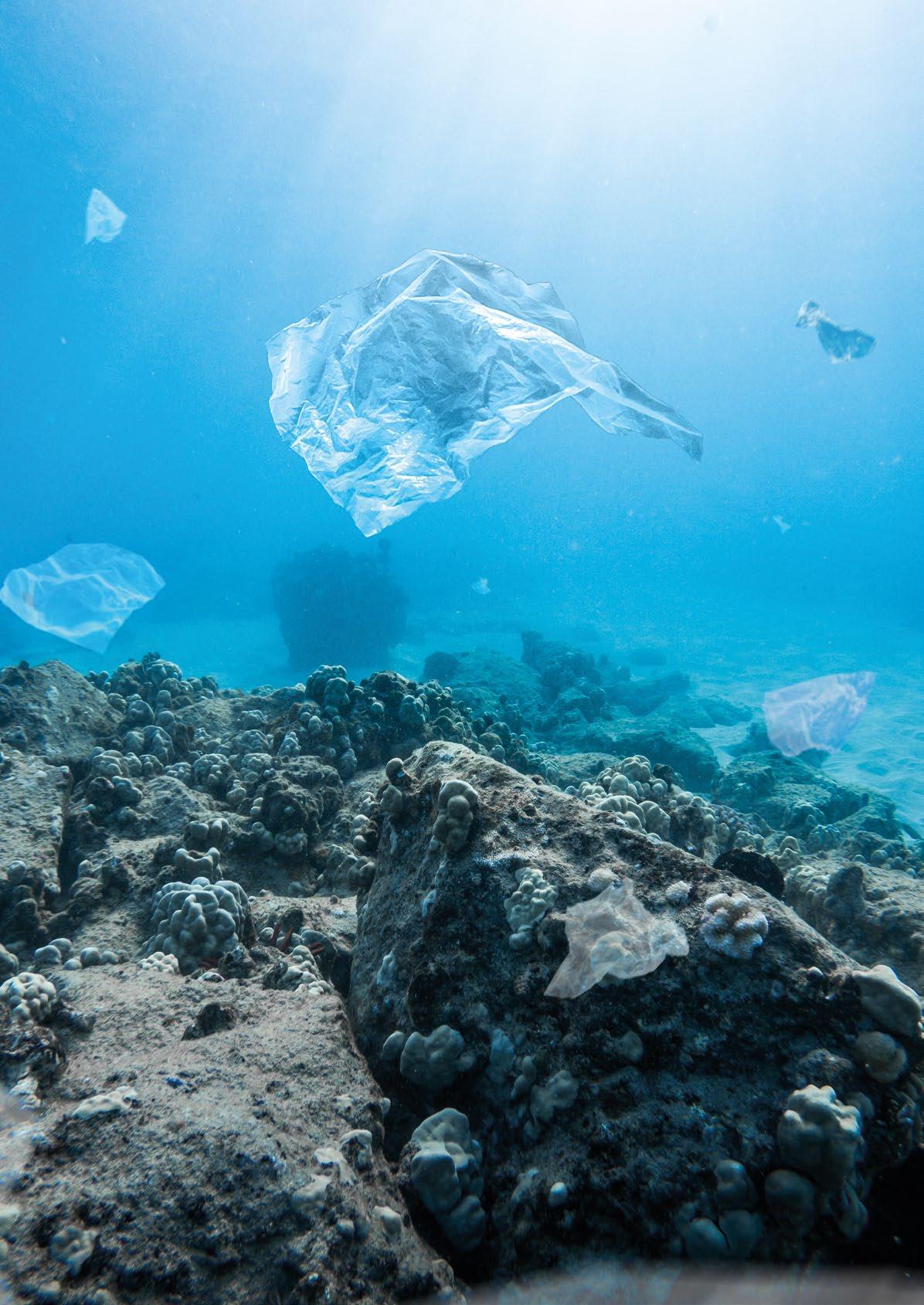
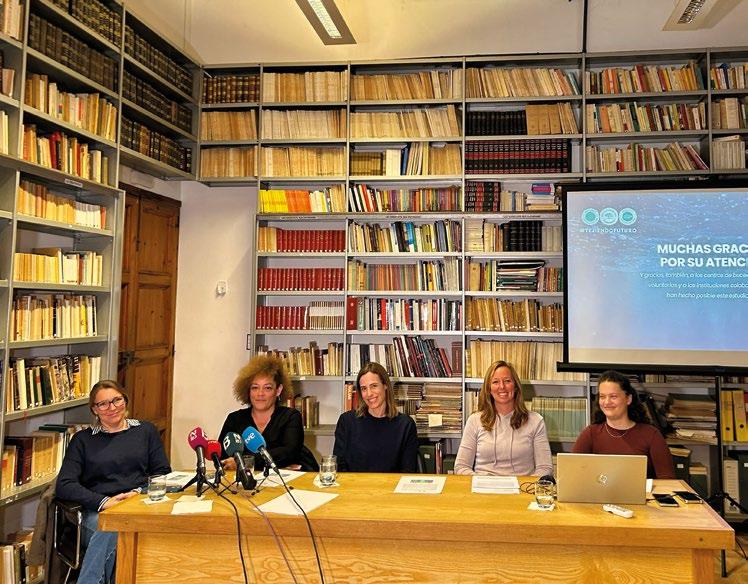
Bajo la superficie cristalina del mar Balear, donde a simple vista todo parece intacto, se esconde una realidad mucho menos idílica. Un estudio piloto impulsado por Menorca Preservation junto con sus fundaciones hermanas Mallorca Preservation e Ibiza Preservation, revela que el fondo marino del archipiélago está acumulando residuos de forma persistente, la mayoría ligados a los impactos negativos de la actividad turística y marítima.
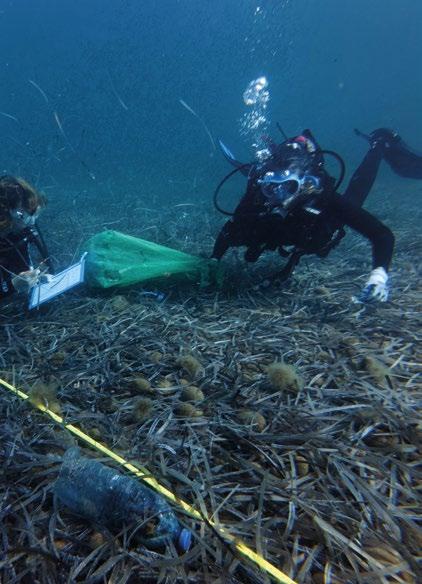
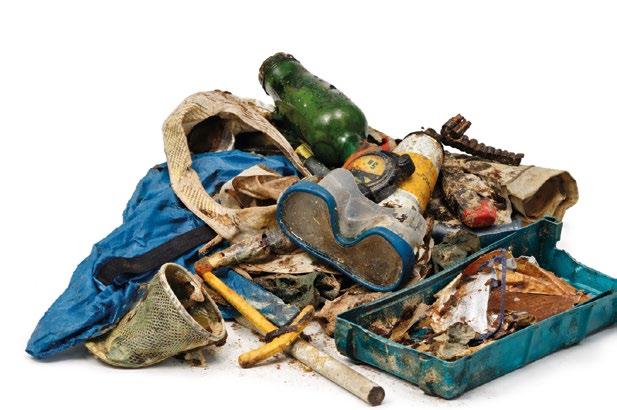
Durante 2025, un equipo de buceadores recorrió 21 localizaciones de las Baleares, analizando una superficie total de 16.120 m² de fondo marino. El resultado: 355 objetos identificados, en su mayoría plásticos. Desde gafas de sol hasta fragmentos de envases o fibras de vidrio, los restos encontrados dibujan un retrato claro de la huella humana bajo el agua: “Cabe señalar que el estudio se ha centrado exclusivamente en los residuos que se encuentran depositados en el fondo
Beneath the crystal-clear surface of the Balearic Sea, where at first glance everything seems untouched, lies a far less idyllic reality. A pilot study led by Menorca Preservation together with its sister foundations Mallorca Preservation and Ibiza Preservation reveals that the seabed around the archipelago is persistently accumulating waste, most of it linked to the negative impacts of tourism and maritime activity.
During 2025, a team of divers surveyed 21 locations across the Balearic Islands, analysing a total area of 16,120 m² of seabed. The result: 355 identified objects, most of them plastic. From sunglasses to fragments of packaging and fibreglass fibres, the debris found paints a clear picture of the human footprint beneath the water: “It should be noted that the study focused exclusively on waste deposited on the seabed, in other words, waste that has settled. This means that waste still floating or suspended in the
marino, es decir, aquellos que han sedimentado. Esto implica que no se han tenido en cuenta los residuos que permanecen flotando o en suspensión en la columna de agua, con mayor movilidad en la masa de agua.” explica Carla Alfonso, una de las coordinadoras del proyecto, añadiendo que “la determinación del posible origen de los objetos identificados se basa en una metodología de carácter probabilístico, por lo que este estudio presenta un primer acercamiento. Las fuentes de origen de los residuos señaladas deben interpretarse como estimaciones fundamentadas en la tipología de los residuos y su distancia al punto de estudio”.
En este mapa de la contaminación, Menorca ofrece una lectura interesante. La isla presenta las cifras más bajas de residuos en comparación con las otras islas, sin embargo, eso no significa que no exista contaminación: en los 42 transectos analizados —equivalentes a 6.720 m²— se encontraron 95 objetos. En primavera, la densidad alcanzó los 1,88 residuos por cada 100 m², reduciéndose a 0,95 en otoño.
Del total de los 20 objetos más frecuentes recolectados por los distintos centros colaboradores —Binibeca Diving (Es Grau y Punta Prima), Blue islands Diving (Macarella y Cala Galdana) y Diving Menorca (Cavalleria, Arenal d’en Castell y Algaiarens) — el 73.6% correspondió a residuos plásticos. De estos, casi la mitad (35,79%) fueron objetos identificables de plástico duro como envases rígidos, fragmentos de utensilios de plástico, tapas o piezas de equipamiento.
“Estos primeros datos en Menorca nos permiten entender un poco mejor qué está ocurriendo con los residuos plásticos en el entorno marino. Aunque las densidades detectadas en Menorca sean inferiores a las otras islas, el hecho de que prácticamente tres de cada cuatro residuos identificados sean plásticos demuestra que este material sigue siendo un problema relevante para nuestros ecosistemas, y que debemos seguir avanzando
water column, with greater mobility within the water mass, was not taken into account,” explains Carla Alfonso, one of the project’s coordinators. She adds that “the determination of the possible origin of the identified objects is based on a probabilistic methodology, so this study represents an initial approach. The sources of origin attributed to the waste should therefore be understood as informed estimates based on the type of waste and its distance from the study point.”
Within this map of pollution, Menorca offers an interesting reading. The island records the lowest levels of waste compared with the other islands; however, this does not mean there is no pollution. In the 42 transects analysed — equivalent to 6,720 m² — 95 objects were found. In spring, density reached 1.88 items per 100 m², falling to 0.95 in autumn.
Of the 20 most frequently collected objects recorded by the different collaborating centres — Binibeca Diving (Es Grau and Punta Prima), Blue Islands Diving (Macarella and Cala Galdana) and Diving Menorca (Cavalleria, Arenal d’en Castell and Algaiarens) — 73.6% were plastic waste. Of these, almost half (35.79%) were identifiable hard plastic objects such as rigid containers, fragments of plastic utensils, lids or pieces of equipment.
“These first data from Menorca allow us to better understand what is happening with plastic waste in the marine environment. Although the densities detected in Menorca are lower than on the other islands, the fact that nearly three out of every four identified items are plastic shows that this material remains a significant problem for our ecosystems, and that we must continue moving urgently towards solutions that reduce its use,” says Rebecca Morris, Director of Menorca Preservation.
Little by little, the seabed is becoming a mirror of our habits. And although Menorca is still in better condition, everything suggests that we cannot let

urgentemente en la búsqueda de soluciones para reducir su uso”, apunta Rebecca Morris, Directora de Menorca Preservation.
Poco a poco, el fondo del mar se está convirtiendo en un espejo de nuestros hábitos. Y aunque Menorca aún se mantenga en mejor estado, todo apunta a que no debemos bajar la guardia. Esto pasa por reducir nuestro consumo de productos plásticos, reutilizar en la medida que es posible, apostar por alternativas honestas y apoyar iniciativas que busquen soluciones a esta grave problemática.
Este estudio, desarrollado en el marco del proyecto conjunto “Tejiendo Futuro, una Alianza para la Preservación de Baleares” que cuenta con financiación del grupo musical Depeche Mode y de la marca suiza de relojes Hublot, canalizada a través del Conservation Collective, nos muestra algo clave: incluso en territorios donde la presión humana es menor, la contaminación por plásticos persiste. ¿Nos ayudas a seguir avanzando hacia una isla libre de plásticos?
our guard down. That means reducing our consumption of plastic products, reusing wherever possible, choosing honest alternatives and supporting initiatives that seek solutions to this serious problem.
This study, developed as part of the joint project Weaving the Future: An Alliance for the Preservation of the Balearics, funded by the music group Depeche Mode and the Swiss watch brand Hublot through the Conservation Collective, shows us something essential: even in territories where human pressure is lower, plastic pollution persists. Will you help us keep moving towards an island free of plastics?

Hay empresas que nacen con una idea clara y una forma diferente de hacer las cosas. Este es el caso de Idees Menorquines, una empresa de Ciutadella que desde hace décadas “navega” guiada por la creatividad y una fuerte conexión con el espíritu de la isla.
La historia comienza en 1991, cuando Jaume Bagur, mientras estudiaba diseño gráfico en Barcelona, decidió crear una pequeña agencia de publicidad y servicios gráficos. El proyecto nació con una vocación creativa y emprendedora, cuando la publicidad en Menorca todavía era vista con cierta desconfianza por parte de muchas empresas locales. Con el tiempo, sin embargo, el trabajo constante y la atención personalizada hicieron crecer la actividad y la confianza de los clientes.
Con los años, Idees Menorquines ha ampliado sus servicios y hoy trabaja en diversos ámbitos relacionados con la comunicación visual: diseño gráfico, artículos promocionales y ropa laboral y publicitaria para empresas, con talleres propios de serigrafía, bordado e impresión digital.
Some companies are born with a clear idea and a different way of doing things. That is the case with Idees Menorquines, a company from Ciutadella that for decades has been “sailing” guided by creativity and a strong connection to the spirit of the island.
The story began in 1991, when Jaume Bagur, while studying graphic design in Barcelona, decided to create a small advertising and graphic services agency. The project was born with a creative and entrepreneurial spirit, at a time when advertising in Menorca was still viewed with a certain degree of mistrust by many local businesses. Over time, however, constant work and personalised attention helped both the business and its clients’ trust to grow.
Over the years, Idees Menorquines has expanded its services and today works across different areas related to visual communication: graphic design, promotional items, and workwear and branded clothing for companies, with its own screen-printing, embroidery and digital printing workshops.
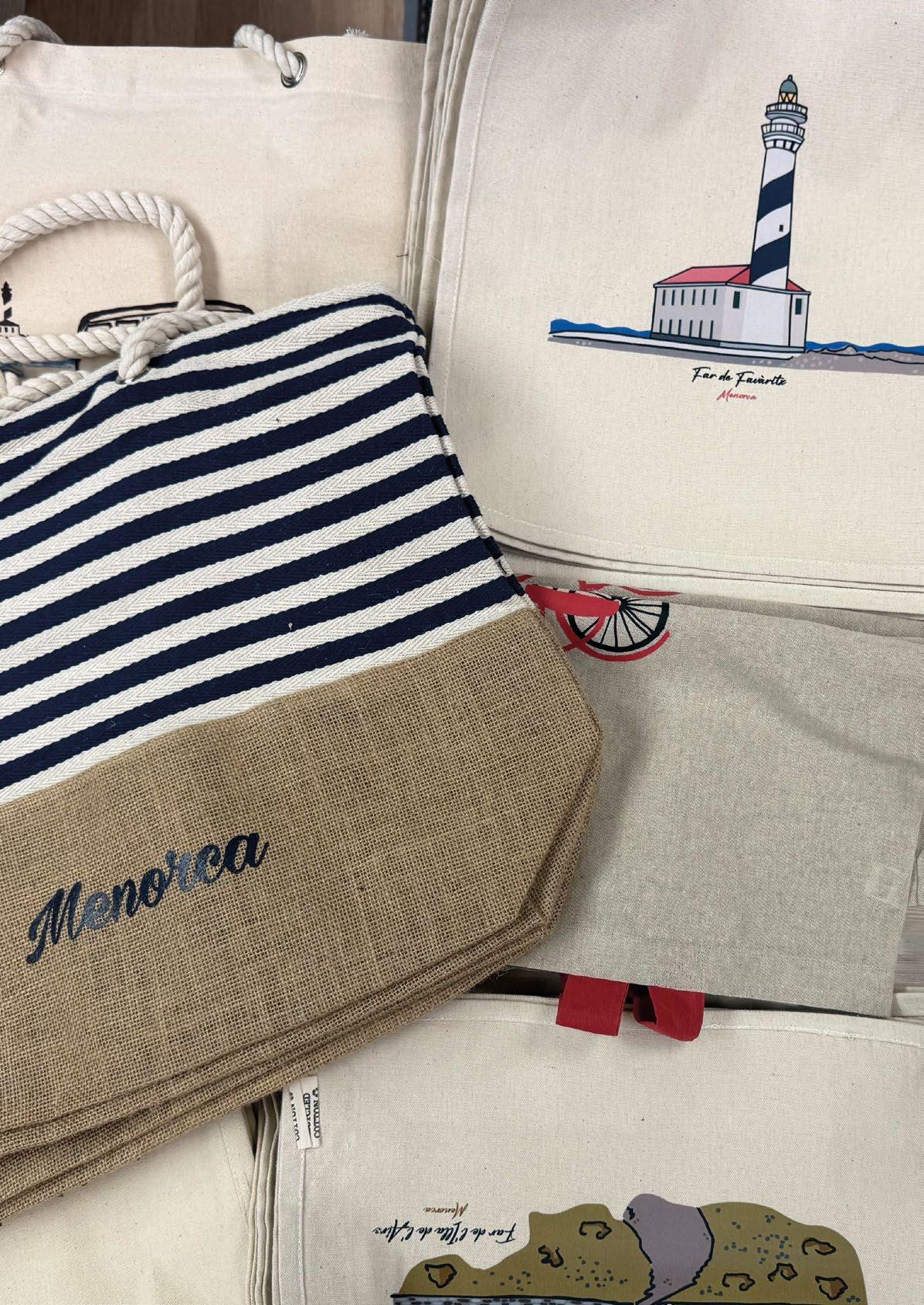
Paralelamente, la empresa también ha desarrollado diferentes marcas de ropa propias, inspiradas en la identidad menorquina y el estilo de vida mediterráneo.
Estas marcas ya forman parte del paisaje comercial de la islas. Algunas se centran en el recuerdo de Menorca, como Ecològica de Menorca i Reserva; otras apuestan por un estilo mediterráneo más universal, como Finestreta; e incluso hay una pensada para los amantes del ciclismo, LoveVelo. En todos los casos, el punto en común es claro: productos con una buena relación calidad-precio, creativos y con identidad propia.
Aunque Menorca sigue siendo su punto de partida y un mercado esencial, los productos de Idees Menorquines han ido viajando cada vez más lejos. Hoy pueden encontrarse en tiendas de otras islas, en la Península y también en distintos países europeos como Francia, Suiza, Alemania, Reino Unido e Italia, entre otros. Esta expansión ha sido gradual porque la empresa siempre se ha guiado por el “poc a poc i bona lletra”, al más puro estilo mediterráneo. Por eso, Idees siempre se ha mantenido fiel a sus raíces, reforzando las relaciones de confianza con los comercios y creciendo sin perder la proximidad.
Otra característica que define a la empresa es su forma de trabajar. Idees apuesta por el trato próximo y la calidad sobre la cantidad. Su filosofía le ha permitido despuntar en un entorno donde el low cost está a la vuelta de la esquina. Su “normalidad” se basa en la innovación constante, el trabajo artesanal, experimentar con nuevos diseños y mantener vivo el espíritu creativo con el que todo comenzó.
Al final, quizá esta sea la clave del proyecto: una combinación de creatividad, raíces menorquinas y ganas de seguir avanzando. Una manera de trabajar que demuestra que, desde una isla pequeña, también se pueden crear ideas que llegan muy lejos.
At the same time, the company has also developed several clothing brands of its own, inspired by Menorcan identity and the Mediterranean lifestyle.
These brands are already part of the commercial landscape of the islands. Some focus on Menorca as a souvenir, such as Ecològica de Menorca i Reserva; others embrace a more universal Mediterranean style, such as Finestreta; and there is even one created for cycling lovers, LoveVelo. In every case, the common thread is clear: creative products with a strong identity and good value for money.
Although Menorca remains its starting point and an essential market, Idees Menorquines products have gradually travelled much further afield. Today, they can be found in shops on other islands, on the Spanish mainland and in several European countries including France, Switzerland, Germany, the United Kingdom and Italy, among others. This expansion has been gradual, because the company has always been guided by the philosophy of poc a poc i bona lletra — slowly and carefully — in the purest Mediterranean style. For that reason, Idees has always remained faithful to its roots, strengthening relationships of trust with retailers and growing without losing its sense of closeness.
Another feature that defines the company is its way of working. Idees is committed to personal service and quality over quantity. This philosophy has allowed it to stand out in an environment where low-cost options are always just around the corner. Its “normal way” of doing things is built on constant innovation, craftsmanship, experimenting with new designs and keeping alive the creative spirit with which it all began.
In the end, perhaps that is the key to the project: a combination of creativity, Menorcan roots and the desire to keep moving forward. A way of working that shows that, even from a small island, it is possible to create ideas that travel a very long way.


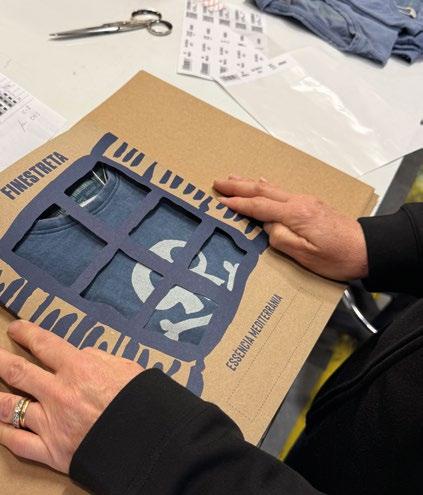
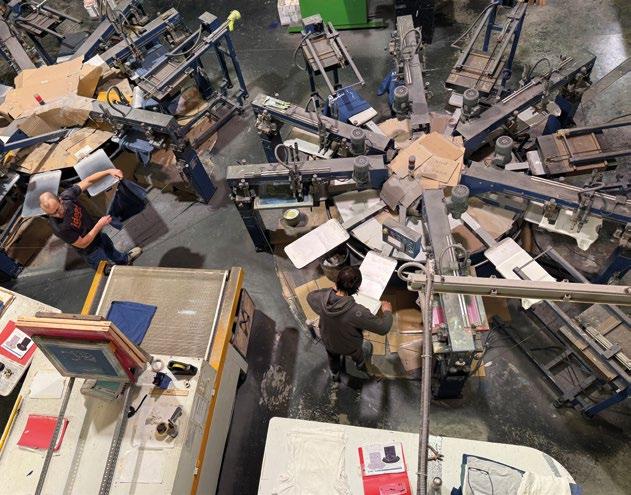
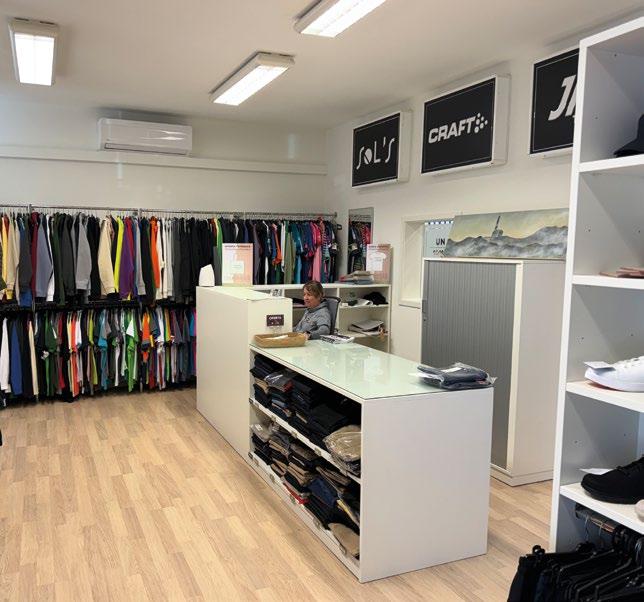
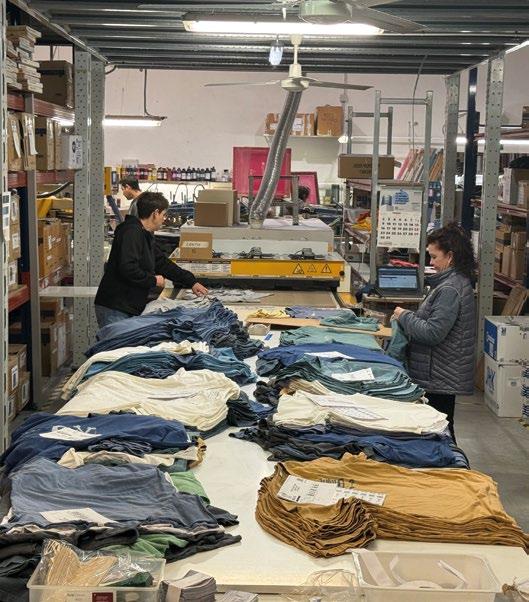


Para que lo tengamos claro desde el principio: la casa de la abuela está de moda. El granny chic, también llamado grandma chic, es un estilo decorativo que recupera la calidez y el encanto de los hogares de antes, mezclando la nostalgia con toques modernos.
Pero no hemos llegado hasta aquí de repente; esto es algo que se viene gestando desde hace tiempo. El amor por las piezas vintage, por lo acogedor y por lo auténtico lleva un tiempo estando de moda, pero ha terminado de explotar gracias a Kendall Jenner al mostrar su casa de la montaña, diseñada en colaboración con la interiorista Heidi Caillier.
Básicamente, nos alejamos del minimalismo tan presente en las últimas décadas para recuperar los muebles antiguos, el crochet, el papel pintado y las vajillas tradicionales. Pero vamos a verlo con más calma para entender bien este estilo.
Let’s be clear from the outset: grandma’s house is in fashion. Granny chic, also known as grandma chic, is a decorative style that brings back the warmth and charm of homes from the past, blending nostalgia with modern touches.
But we did not get here overnight; this is something that has been building for quite some time. The love of vintage pieces, cosy interiors and authenticity has been on trend for a while, but it truly took off after Kendall Jenner revealed her mountain home, designed in collaboration with interior designer Heidi Caillier.
Essentially, we are moving away from the minimalism that has dominated recent decades in order to bring back antique furniture, crochet, wallpaper and traditional tableware. But let’s take a closer look to properly understand this style.
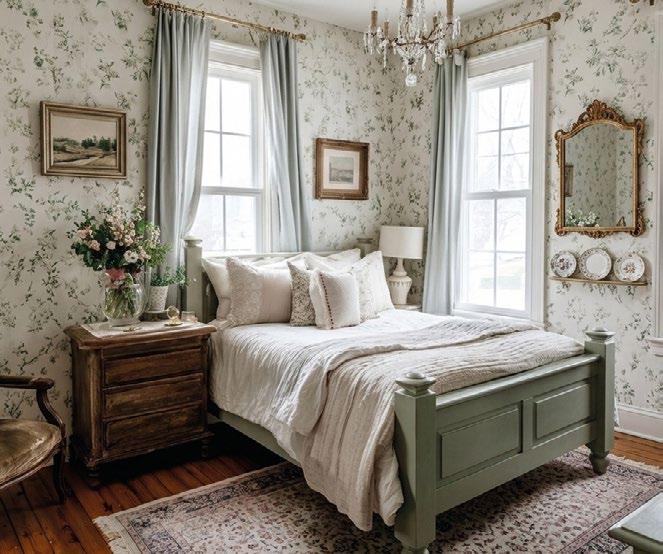
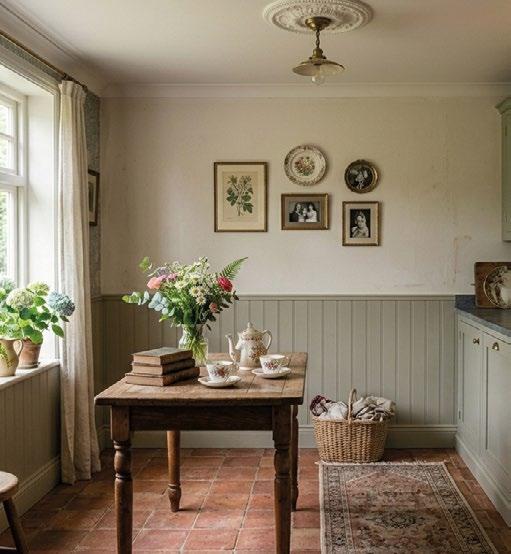
MAXIMALISMO
Como decíamos, aquí nos olvidamos de los espacios despejados, las líneas rectas, los colores neutros y la ausencia de adornos. Se trata de encontrar calma, pero de otra manera. En el estilo granny chic, el bienestar no nace del vacío, sino del refugio. Es un maximalismo acogedor donde cada objeto tiene un porqué: desde esa lámpara de cristal heredada, hasta el libro con las esquinas desgastadas sobre la mesa. No es acumular por acumular; es rodearse de texturas y elementos que nos hacen sentir que el espacio tiene historia y, sobre todo, vida.
El papel pintado es, posiblemente, el recurso más potente para transformar una estancia fría en un auténtico refugio granny chic. Es el fondo que envuelve todo lo demás. Aquí no se busca la discreción: los motivos botánicos, las flores silvestres y los diseños de estilo Arts & Crafts son los grandes protagonistas. Los fans de William Morris, aquí han triunfado.
As we were saying, here we leave behind uncluttered spaces, straight lines, neutral colours and the absence of ornament. The aim is still to create a sense of calm, but in a different way. In granny chic, wellbeing does not come from emptiness, but from a feeling of refuge. It is a cosy form of maximalism in which every object has a reason for being there: from that inherited glass lamp to the book with worn corners resting on the table. This is not about filling a space for the sake of it; it is about surrounding ourselves with textures and elements that make us feel the room has history and, above all, life.
Wallpaper is possibly the most powerful way to transform a cold room into a true granny chic haven. It is the backdrop that wraps around everything else. Here, subtlety is not the goal: botanical motifs, wildflowers and Arts & Crafts-inspired designs are the real stars. William Morris fans, this is your moment.
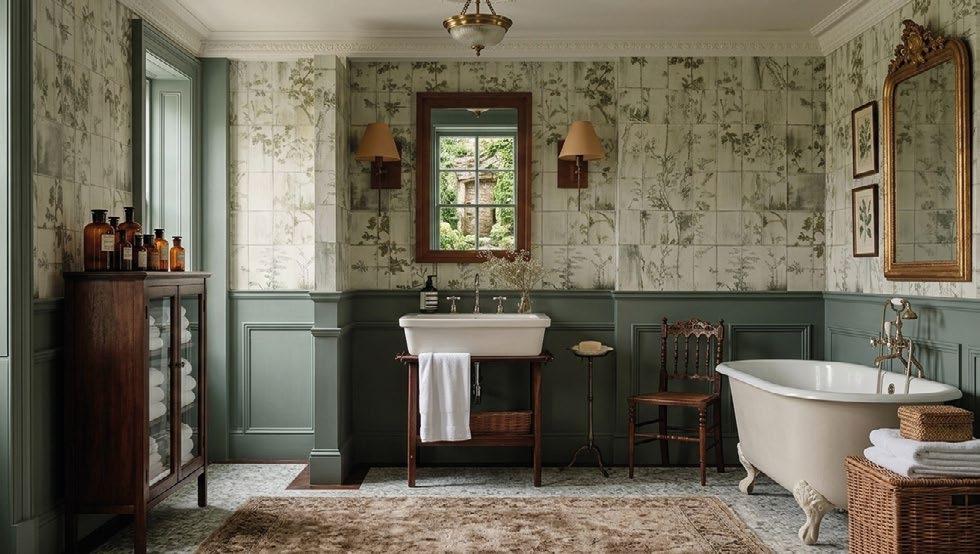
Con los textiles también seremos atrevidos. El granny chic utiliza, principalmente, telas florales o de cuadros en cortinas, alfombras y cojines; incluso en butacas o sofás tapizados. Aquí la clave es la mezcla: no se busca que todo combine perfectamente, sino que el conjunto resulte acogedor y vivido.
El mobiliario en el granny chic no se encuentra en cualquier sitio; se hereda, se rescata en un rastro o se conserva con orgullo. No importa si la pieza tiene algún roce o desperfecto: precisamente ese desgaste es lo que buscamos. Una de las claves de este estilo es mezclar muebles antiguos con piezas modernas; por ejemplo, colocar una lámpara de diseño moderno sobre una mesita auxiliar rústica. Esta combinación rompe la rigidez y aporta la frescura tan característica de este estilo. En definitiva, este estilo no le tiene miedo a la mezcla, al color, ni a lo antiguo ni a lo moderno. Es, sobre todo, acogedor, nostálgico y atrevido. Una invitación a rodearnos de objetos con alma y a convertir nuestra casa en un verdadero refugio.
With textiles, we will be just as bold. Granny chic mainly uses floral or checked fabrics for curtains, rugs and cushions, and even for upholstered armchairs or sofas. The key here is mixing: the aim is not for everything to match perfectly, but for the overall effect to feel warm and lived-in.
Furniture in granny chic is not found just anywhere; it is inherited, rescued from a flea market or proudly preserved. It does not matter if a piece has a few scuffs or imperfections: in fact, that wear is exactly what we are looking for. One of the keys to this style is mixing antique furniture with modern pieces; for example, placing a contemporary designer lamp on a rustic side table. This combination breaks up any sense of rigidity and brings the freshness that is so characteristic of this style. Ultimately, this style is not afraid of mixing, colour, or the old and the new. Above all, it is cosy, nostalgic and bold. An invitation to surround ourselves with objects that have soul and to turn our home into a true refuge.

El mundo vuelve a recordar, una vez más, que viajar está profundamente conectado con la realidad geopolítica. La guerra abierta entre Irán, Israel y Estados Unidos ha provocado en apenas unos días un efecto dominó que afecta directamente al turismo global: cierre de espacios aéreos, cancelaciones masivas de vuelos y miles de viajeros atrapados lejos de casa.
El conflicto comenzó a finales de febrero tras los ataques conjuntos de Estados Unidos e Israel contra territorio iraní, a los que Irán respondió con bombardeos y ataques contra países vecinos de la región. Desde entonces, la situación ha alterado profundamente uno de los corredores aéreos más importantes del planeta.
La aviación internacional depende de unos pocos grandes ejes que conectan Europa, Asia y Oceanía, muchos de los cuales atraviesan Oriente Medio.
Once again, the world is being reminded that travel is deeply connected to geopolitical reality. The open war between Iran, Israel and the United States has, in just a few days, triggered a domino effect directly impacting global tourism: airspace closures, mass flight cancellations and thousands of travellers stranded far from home.
The conflict began at the end of February after joint attacks by the United States and Israel on Iranian territory, to which Iran responded with bombings and attacks on neighbouring countries in the region. Since then, the situation has profoundly disrupted one of the most important air corridors on the planet.
International aviation depends on a handful of major routes connecting Europe, Asia and Oceania, many of which pass through the Middle East.

Cuando esta región entra en conflicto, el impacto es inmediato. Varios países han cerrado su espacio aéreo —entre ellos Irán, Irak, Israel, Kuwait o Bahréin— obligando a las aerolíneas a cancelar rutas o desviarlas miles de kilómetros.
Las cifras reflejan la magnitud del problema: en apenas unos días se han cancelado miles de vuelos en todo el mundo y solo en España se han suspendido cerca del 80 % de las conexiones con algunos países de la región. Además, gobiernos y aerolíneas han tenido que organizar vuelos de repatriación para viajeros que quedaron bloqueados en aeropuertos internacionales.
Esta situación ha generado un caos aéreo que muchos expertos consideran el mayor desde la pandemia. Aeropuertos estratégicos como el Aeropuerto Internacional de Dubái, el Aeropuerto Internacional de Abu Dabi o el Aeropuerto Internacional Hamad han tenido que reducir o suspender operaciones durante varios días, dejando a miles de pasajeros esperando alternativas para continuar su viaje o regresar a casa.
En este contexto, se vuelve especialmente evidente el valor de contar con una agencia de viajes. Cuando un viajero organiza todo por su cuenta y ocurre una crisis internacional, se enfrenta solo a un problema complejo: cambios de billetes, cancelaciones, reclamaciones o nuevas reservas en un mercado saturado. En cambio, cuando el viaje ha sido organizado a través de una agencia, existe un equipo que actúa inmediatamente para gestionar la situación.
Las agencias trabajan con redes de proveedores, mayoristas y aerolíneas que permiten reaccionar con rapidez ante imprevistos. Si un vuelo se cancela o un espacio aéreo se cierra de forma repentina, pueden reorganizar itinerarios, buscar rutas alternativas o coordinar el regreso del viajero.
Otro elemento clave es el asesoramiento en seguros de viaje. Coberturas de cancelación, asistencia médica internacional o repatriación se han
When this region enters into conflict, the impact is immediate. Several countries have closed their airspace — including Iran, Iraq, Israel, Kuwait and Bahrain — forcing airlines to cancel routes or divert them by thousands of kilometres.
The figures reflect the scale of the problem: in just a few days, thousands of flights have been cancelled around the world, and in Spain alone, close to 80% of connections with some countries in the region have been suspended. In addition, governments and airlines have had to organise repatriation flights for travellers who were left stranded in international airports.
This situation has created an air travel crisis that many experts consider the worst since the pandemic. Strategic airports such as Dubai International Airport, Abu Dhabi International Airport and Hamad International Airport have had to reduce or suspend operations for several days, leaving thousands of passengers waiting for alternatives to continue their journey or return home.
In this context, the value of working with a travel agency becomes especially clear. When a traveller organises everything independently and an international crisis occurs, they are left to face a complex problem alone: ticket changes, cancellations, claims or new bookings in an already saturated market. By contrast, when the trip has been arranged through a travel agency, there is a team that can act immediately to manage the situation.
Travel agencies work with networks of suppliers, tour operators and airlines that allow them to respond quickly to unexpected events. If a flight is cancelled or airspace is suddenly closed, they can reorganise itineraries, find alternative routes or coordinate the traveller’s return.
Another key element is advice on travel insurance. Cancellation cover, international medical assistance and repatriation have become essential tools in a global landscape where events can change from one day to the next. Travel will continue to be


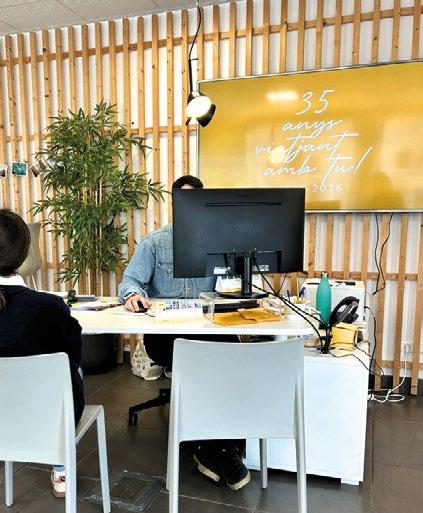
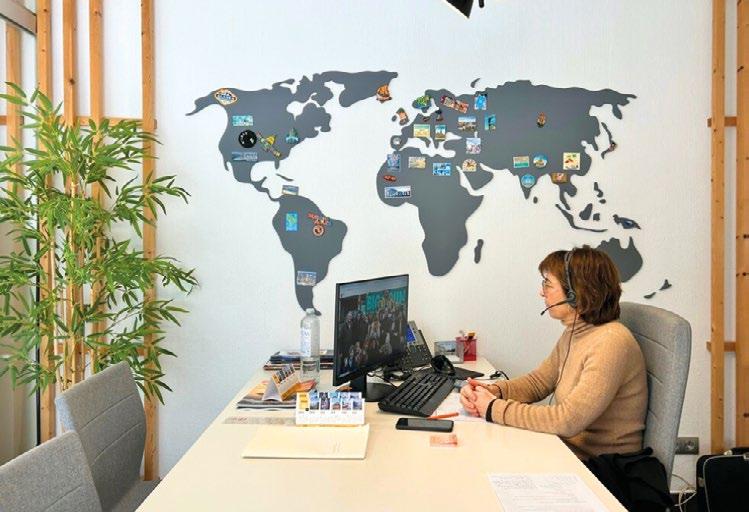
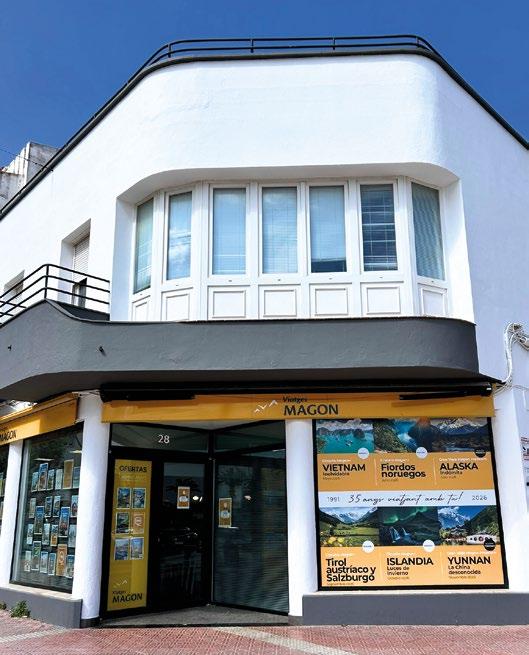
convertido en herramientas fundamentales en un escenario global donde los acontecimientos pueden cambiar de un día para otro.
Viajar seguirá siendo una de las experiencias más enriquecedoras que existen. Pero el contexto actual demuestra que la planificación y el respaldo profesional son más importantes que nunca. Porque una agencia de viajes no solo interviene cuando hay problemas. Escucha al viajero, lo asesora, lo acompaña durante todo el proceso de búsqueda y compra y le ayuda a tomar las mejores decisiones para su viaje. Y si el mundo se complica, también está ahí para gestionar imprevistos y encontrar soluciones.
Ese acompañamiento —antes, durante y después del viaje— es, precisamente, el verdadero valor de una agencia.
one of the most enriching experiences there is. But the current context shows that planning and professional support are more important than ever.
Because a travel agency does not step in only when problems arise. It listens to the traveller, advises them, supports them throughout the entire search and booking process, and helps them make the best decisions for their trip. And if the world becomes more complicated, it is also there to manage the unexpected and find solutions.
That support — before, during and after the trip — is precisely the true value of a travel agency.
Aesthetic medicine with a holistic approach in the heart of Mahón
En una isla donde el bienestar y la calidad de vida forman parte de su esencia, surgen proyectos que nacen no solo desde la vocación médica, sino desde una comprensión profunda del cuidado integral. La clínica de la Dra. Alicia Escamilla es uno de ellos.
Ubicada en Mahón, se ha consolidado como un referente en medicina estética gracias a la combinación de experiencia, formación continua y una visión que trasciende lo convencional. Con más de 15 años de trayectoria, la Dra. Escamilla ha construido un camino sólido basado en el rigor científico, la actualización constante y una atención personalizada.
Desde sus inicios, su filosofía ha sido clara: la medicina estética no debe limitarse a mejorar la apariencia, sino impactar positivamente en la autoestima, el bienestar emocional y la calidad de vida. Este enfoque ha sido el pilar de un proyecto médico que continúa evolucionando.
On an island where wellbeing and quality of life are part of its very essence, some projects are born not only from medical vocation, but from a deep understanding of holistic care. Dr Alicia Escamilla’s clinic is one of them.
Located in Mahón, it has established itself as a benchmark in aesthetic medicine thanks to its combination of experience, continuous training and a vision that goes beyond the conventional. With more than 15 years of professional experience, Dr Escamilla has built a solid path grounded in scientific rigour, constant updating and personalised care.
From the outset, her philosophy has been clear: aesthetic medicine should not be limited to improving appearance, but should also have a positive impact on self-esteem, emotional wellbeing and quality of life. This approach has been the cornerstone of a medical project that continues to evolve.
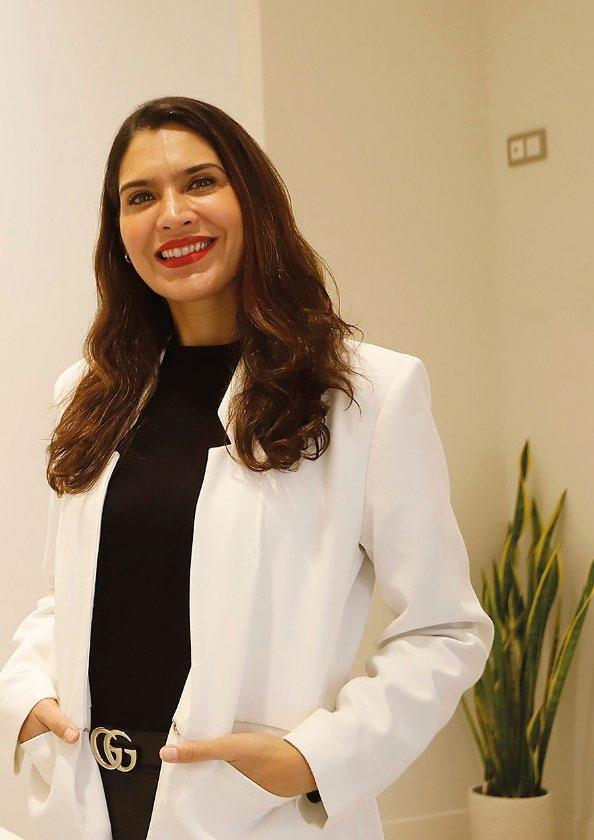
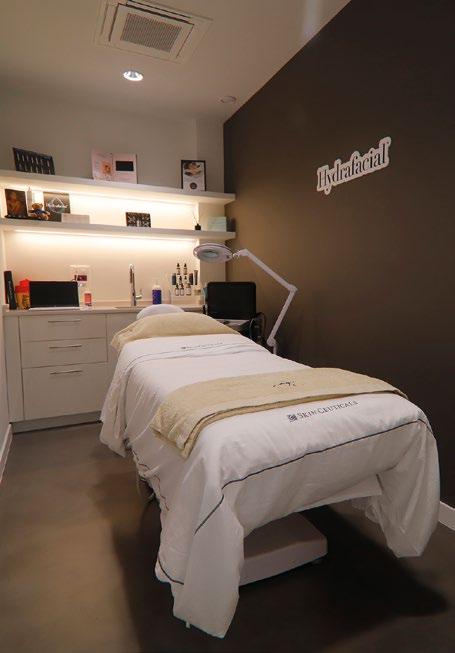
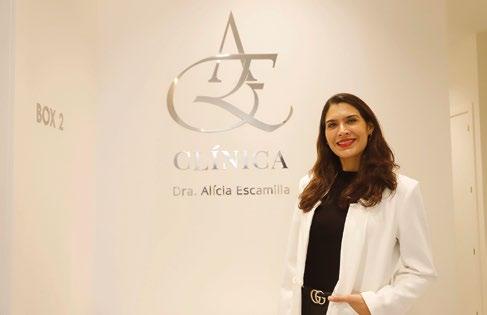
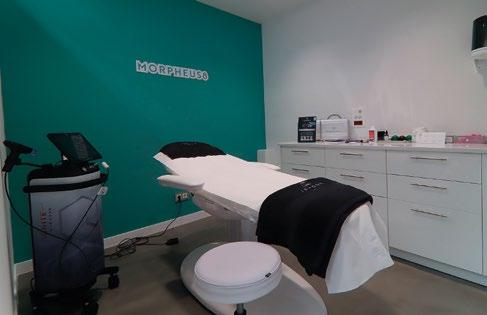
La apertura de la clínica en 2022 marcó un punto clave en su trayectoria. Concebido como un centro médico polivalente, reúne distintas especialidades bajo un mismo techo, ofreciendo una atención integral.
Además de la medicina estética, la clínica integra servicios de cirugía maxilofacial, cirugía vascular, estética avanzada, unidad de nutrición y dietética, medicina estética capilar y trasplante capilar, así como diagnóstico y tratamiento del dolor. Esta diversidad responde a una visión global del paciente, donde cada especialidad aporta valor al bienestar integral.
El crecimiento ha sido impulsado por la confianza de sus pacientes y la creciente demanda de tratamientos seguros y personalizados, dando paso a un nuevo hito: la ampliación de sus instalaciones.
The opening of the clinic in 2022 marked a key moment in its journey. Conceived as a multidisciplinary medical centre, it brings together different specialties under one roof, offering comprehensive care.
In addition to aesthetic medicine, the clinic also offers maxillofacial surgery, vascular surgery, advanced aesthetics, a nutrition and dietetics unit, hair aesthetic medicine and hair transplantation, as well as pain diagnosis and treatment. This diversity reflects a global vision of the patient, in which each specialty contributes to overall wellbeing.
Its growth has been driven by the trust of its patients and the rising demand for safe, personalised treatments, leading to a new milestone: the expansion of its facilities.

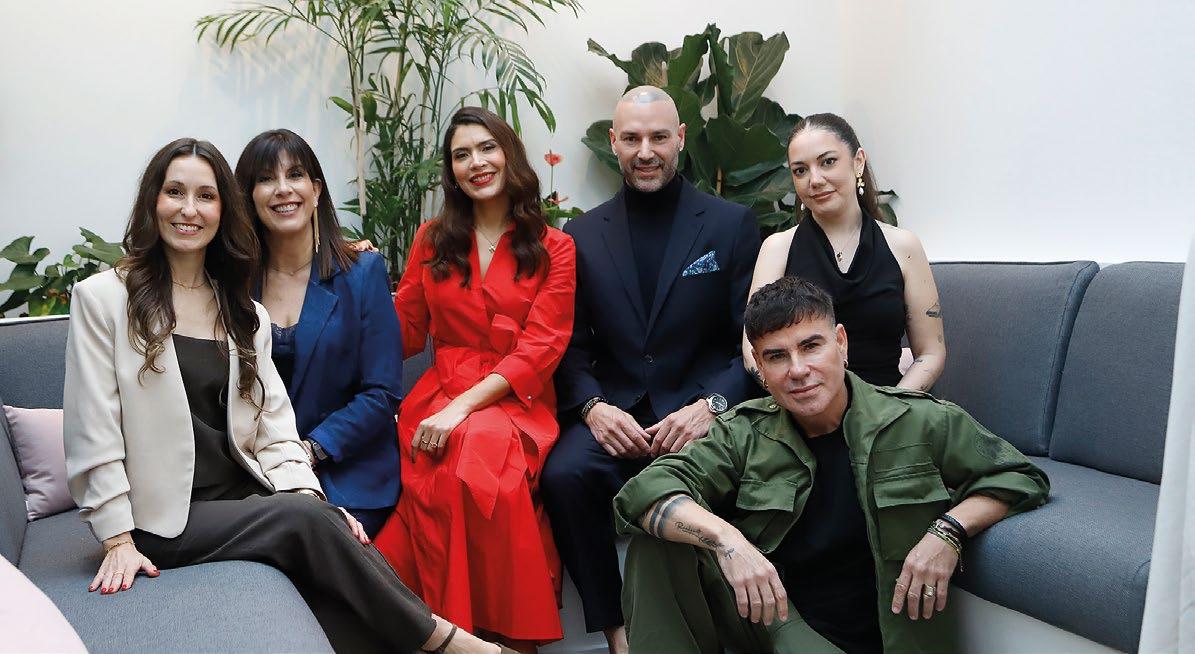
EN LA EXCELENCIA SANITARIA
La ampliación representa más que un aumento de espacio; es un paso firme hacia una medicina más avanzada y alineada con las necesidades actuales. El nuevo entorno ofrece una experiencia más cómoda, moderna y eficiente, donde la tecnología de última generación y el diseño funcional conviven para optimizar cada proceso clínico.
Esta evolución mejora la capacidad diagnóstica y eleva la calidad de los tratamientos, favoreciendo la precisión, la seguridad y la personalización en cada intervención.
En su apuesta por la vanguardia, la clínica incorpora la primera Unidad de Medicina Regenerativa de la isla, marcando un antes y un después en el enfoque terapéutico.
This expansion represents more than simply gaining space; it is a firm step towards a more advanced form of medicine aligned with today’s needs. The new setting offers a more comfortable, modern and efficient experience, where state-ofthe-art technology and functional design come together to optimise every clinical process.
This evolution improves diagnostic capacity and raises the quality of treatments, enhancing precision, safety and personalisation in every intervention.
As part of its commitment to innovation, the clinic is introducing the island’s first Regenerative Medicine Unit, marking a turning point in its therapeutic approach. This advance brings in treatments that stimulate the body’s natural recovery mechanisms.
Este avance introduce tratamientos que estimulan los mecanismos naturales de recuperación del organismo.
La medicina regenerativa representa el futuro del sector, al centrarse no solo en mejorar la apariencia, sino en restaurar la funcionalidad y promover un bienestar duradero. Su incorporación posiciona a la clínica como un referente en innovación dentro del ámbito sanitario de Menorca.
EXPERIENCIA, CERCANÍA Y EXCELENCIA MÉDICA
La Dra. Alicia Escamilla ha demostrado que la excelencia médica no se mide únicamente en tecnología o resultados, sino en la relación con el paciente. Su cercanía, capacidad de escucha y compromiso con la formación continua han sido clave para generar confianza.
Cada tratamiento parte de una valoración individualizada, respetando la naturalidad y las características únicas de cada persona. Frente a tendencias inmediatas, la clínica apuesta por resultados armónicos, seguros y sostenibles en el tiempo.
Hoy, la clínica no es solo un espacio de medicina estética, sino un centro de referencia donde convergen distintas especialidades con un propósito común: cuidar de las personas de manera integral.
La reciente ampliación simboliza una evolución que va más allá de lo físico. Es la reafirmación de una filosofía basada en la innovación, la excelencia y el bienestar. En Mahón, esta clínica representa cómo la medicina puede avanzar sin perder su esencia más importante: el cuidado humano.
Regenerative medicine represents the future of the sector, as it focuses not only on improving appearance, but also on restoring functionality and promoting lasting wellbeing. Its incorporation positions the clinic as a benchmark for innovation within Menorca’s healthcare landscape.
Dr Alicia Escamilla has shown that medical excellence is measured not only in technology or results, but also in the relationship with the patient. Her warmth, listening skills and commitment to continuous training have been key to building trust.
Each treatment begins with an individualised assessment, respecting the natural features and unique characteristics of every person. In contrast to short-lived trends, the clinic is committed to harmonious, safe and sustainable results over time.
Today, the clinic is not simply a space for aesthetic medicine, but a leading centre where different specialties converge with one shared purpose: to care for people in a holistic way.
Its recent expansion symbolises an evolution that goes beyond the physical. It reaffirms a philosophy based on innovation, excellence and wellbeing. In Mahón, this clinic represents how medicine can move forward without losing its most important essence: human care.

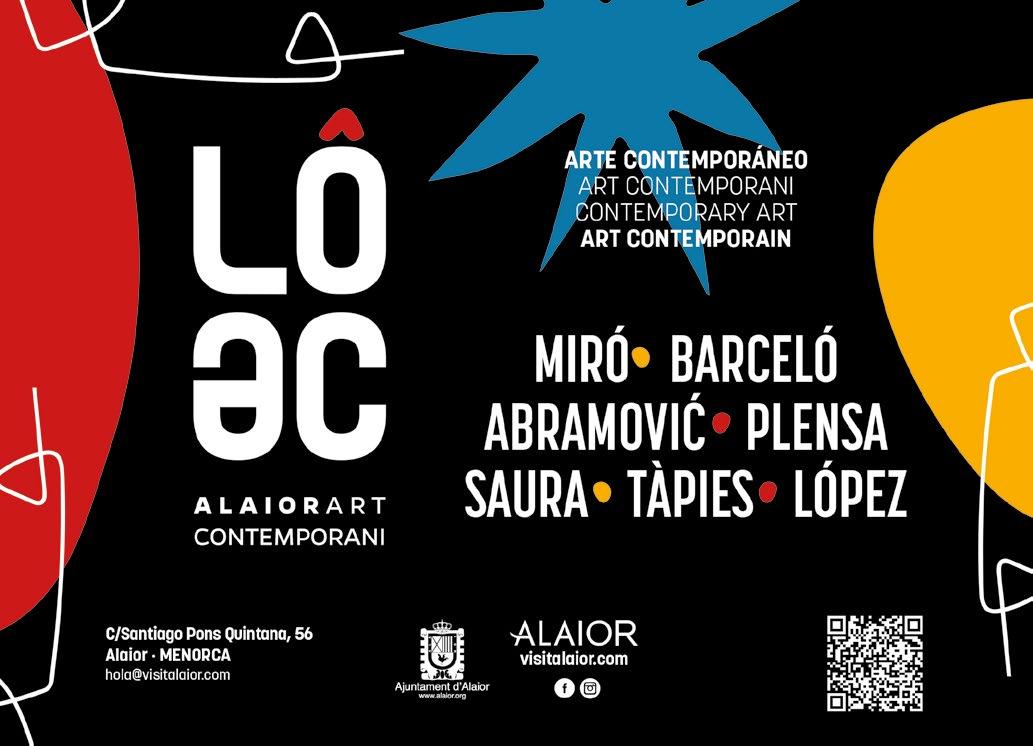

JOSE PONS @jpons_bonninsanso

Lo primero que debo reconocer es que no me apetecía volver a escribir sobre vivienda.No porque el problema haya desaparecido, sino precisamente porque cada vez es más grande.
Hace un año muchos pensábamos que el debate evolucionaría. Que dejaríamos atrás los relatos simplistas y empezaríamos a tomar decisiones valientes. Pero no solo seguimos igual. Estamos peor. Y cuando una sociedad empieza a asumir como normal que una generación entera tenga más difícil acceder a un hogar que sus padres, algo profundo se está rompiendo.
Vivimos instalados en una especie de Matrix colectiva. Un sistema donde resulta más cómodo elegir la pastilla azul. La del relato fácil, la del culpable rápido, la de la discusión permanente que evita afrontar la realidad. La que nos permite seguir pensando que el problema de la vivienda es el propietario. El inversor. El turismo. O ese vecino que tiene dos pisos en alquiler y al que resulta muy sencillo convertir en símbolo de todos los males.
The first thing I have to admit is that I did not feel like writing about housing again. Not because the problem has disappeared, but precisely because it is getting worse.
A year ago, many of us thought the debate would evolve. That we would leave simplistic narratives behind and start making bold decisions. But not only are we still in the same place. We are worse off. And when a society starts to accept as normal that an entire generation finds it harder to access a home than their parents did, something deep is breaking.
We are living inside a kind of collective Matrix. A system in which it feels more comfortable to choose the blue pill. The one of the easy narrative, the quick culprit, the endless argument that avoids confronting reality. The one that allows us to keep thinking that the housing problem is the fault of the landlord. The investor. Tourism. Or that neighbour who owns two rental properties and is so easy to turn into the symbol of every ill.
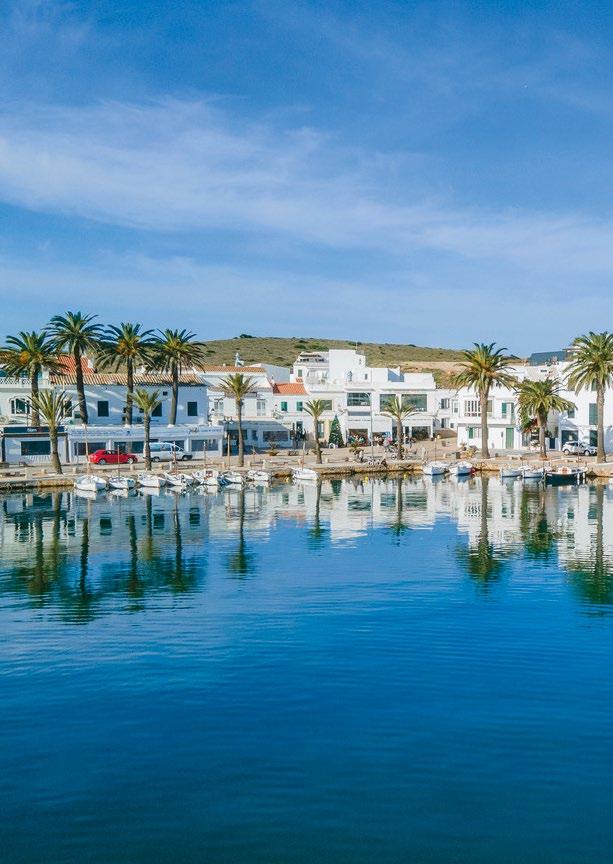
Pero existe otra opción. La pastilla roja. La que obliga a mirar los datos de frente, aunque incomoden. A buscar soluciones de verdad.
En el último año, el precio de la vivienda en España ha crecido en torno a un 12,7%. Sin embargo, si analizamos la evolución real de los salarios en las últimas tres décadas, el aumento apenas supera el 2,7% descontando la inflación. Esto significa que el acceso a la vivienda se deteriora mucho más rápido de lo que mejora la capacidad económica de los ciudadanos. A esta brecha estructural se añade un factor que rara vez ocupa titulares… la carga fiscal y regulatoria.
Diversos análisis sitúan entre el 3 % y el 40% del precio final de una vivienda el peso de impuestos, tasas urbanísticas y costes administrativos. En términos prácticos, en una vivienda con un precio de venta de 350.000€, el impacto fiscal total puede situarse fácilmente entre 90.000 y 140.000€.
But there is another option. The red pill. The one that forces us to look the data in the face, however uncomfortable it may be. To search for real solutions.
In the past year, housing prices in Spain have risen by around 12.7%. However, if we look at the real evolution of wages over the last three decades, the increase barely exceeds 2.7% once inflation is taken into account. This means that access to housing is deteriorating far more quickly than citizens’ purchasing power is improving. Added to this structural gap is a factor that rarely makes headlines: the fiscal and regulatory burden.
Various analyses place the weight of taxes, urban planning charges and administrative costs at between 30% and 40% of the final price of a home. In practical terms, for a property with a sale price of €350,000, the total fiscal impact can easily range from €90,000 to €140,000.
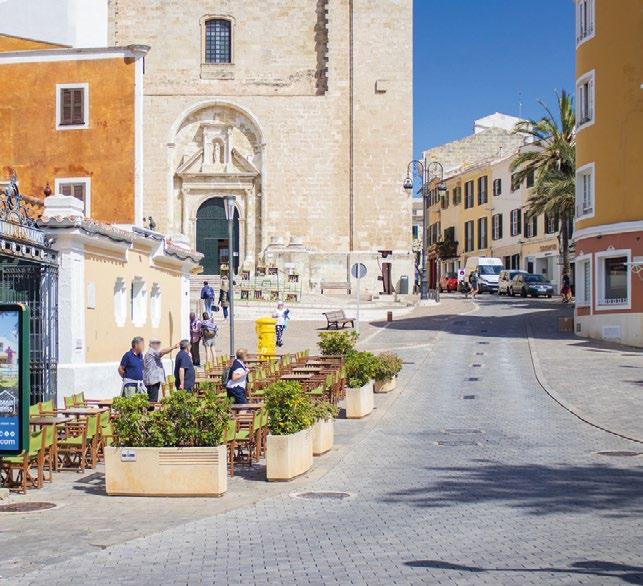
Mientras tanto, el conjunto del sector inmobiliario genera más de 52.000 millones de euros anuales en recaudación pública en España. No se trata de cuestionar la necesidad de financiar servicios esenciales. Se trata de plantear una pregunta incómoda: ¿Hemos convertido la vivienda en un derecho a proteger… o en un recurso a exprimir? En territorios insulares como Menorca, esta realidad se percibe con especial intensidad. El salario medio ronda los 23.000€ anuales brutos. El precio medio de la vivienda supera los 350.000€ en muchas zonas.
La tasa de esfuerzo necesaria para acceder a un hogar supera ya el 45% de los ingresos familiares. Esto ya no es una simple tensión del mercado. Es un bloqueo progresivo del acceso a la vivienda. Pero el problema real no son solo los números. Son las personas. Parejas jóvenes que no preguntan cuánto cuesta una vivienda, sino si algún día podrán permitírsela. Profesionales que rechazan oportunidades laborales por no encontrar dónde vivir.
Meanwhile, the real estate sector as a whole generates more than €52 billion a year in public revenue in Spain. This is not about questioning the need to fund essential services. It is about asking an uncomfortable question: have we turned housing into a right to protect… or into a resource to exploit?
In island territories such as Menorca, this reality is felt with particular intensity. The average salary stands at around €23,000 gross per year. The average price of housing exceeds €350,000 in many areas.
The effort rate required to access a home has already gone beyond 45% of household income. This is no longer a simple market tension. It is a progressive blockage of access to housing. But the real problem is not just the numbers. It is the people. Young couples who no longer ask how much a home costs, but whether they will ever be able to afford one. Professionals who turn down job opportunities because they cannot find anywhere to live.
Propietarios que dudan en alquilar por miedo a la inseguridad jurídica. Inquilinos que viven con la sensación de que su estabilidad depende de decisiones ajenas.
Y, mientras tanto, el debate público insiste en dividir. Propietarios contra inquilinos. Residentes contra turistas. Inversores contra ciudadanos. Como si enfrentar a quienes forman parte de la solución fuera más sencillo que asumir la responsabilidad de gobernar.
La vivienda no necesita más relatos ideológicos. Necesita seguridad jurídica real. Necesita más oferta, con procesos urbanísticos ágiles y coherentes. Y necesita una revisión honesta del peso fiscal que soporta el acceso a un bien esencial.
La solución no es sencilla, pero tampoco es imposible. Lo verdaderamente difícil es abandonar la comodidad de la pastilla azul. Porque aceptar la realidad implica asumir responsabilidades y tomar decisiones que no siempre dan votos, pero sí construyen futuro.
Hoy seguimos teniendo esa elección delante. Podemos seguir discutiendo sobre culpables mientras el problema crece. O podemos tomarnos la pastilla roja y decidir mirar de frente, actuar con valentía y empezar a solucionarlo de verdad.
Landlords who hesitate to rent out their properties for fear of legal insecurity. Tenants who live with the feeling that their stability depends on other people’s decisions.
And yet, the public debate keeps insisting on division. Landlords against tenants. Residents against tourists. Investors against citizens. As if pitting those who are part of the solution against one another were easier than accepting the responsibility of governing.
Housing does not need more ideological narratives. It needs real legal certainty. It needs more supply, with agile and coherent urban planning processes. And it needs an honest review of the fiscal burden placed on access to an essential good.
The solution is not simple, but neither is it impossible. What is truly difficult is abandoning the comfort of the blue pill. Because accepting reality means taking responsibility and making decisions that do not always win votes, but do build the future.
Today, that choice is still in front of us. We can keep arguing about who is to blame while the problem grows. Or we can take the red pill and decide to look reality in the face, act with courage and start solving it for real.