The VIB Strategic Plan charts VIB’s ambitions and management priorities for 2027–2031, building on the institute’s legacy of scientific excellence and its unique interuniversity structure. This plan responds to the evolving landscape of life sciences, addressing both global challenges and regional opportunities.
It is grounded in the conclusions of the 2021–2025 self-evaluation and SWOT analysis, and is organized around the ten strategic objectives (Strategische Doelstellingen or SD) set out in the current covenant.
Flanders is facing significant societal transitions in the coming years (Vizier 2030, Visie 2050, Vlaams Regeerakkoord, UN SDGs), and VIB is well positioned to make pivotal contributions to several of them. The VIB plan commits to:
▶ Pioneering the foundational understanding of living organisms and advancing the ability to engineer them in support of the sustainable development goals.
▶ Advancing translational science in human and planetary health, targeting improved healthcare outcomes, sustainable agriculture and chemistry alternatives.
▶ Establishing VIB and Flanders as an internationally recognized leader in biology AI, targeting predictive biology modelling and in silico biotechnology engineering.
▶ Strengthening the Flanders biotechnology ecosystem by bringing together universities, SOCs, companies, and investors to speed the path from innovation to market in healthcare, agriculture, food, and the bio-based economy.
Leading edge research in life sciences and biotechnology
VIB will reinforce its position as an internationally recognized leader in life sciences and biotechnology by (SD 1, 2, 3, 10):
▶ Pioneering scientific research in the foundational processes underpinning living organisms
▶ in the field of human health (cancer, inflammation, immunity, neuroscience, infectious diseases, microbiome) and
▶ planetary health (plant science, agri-biotech, synthetic biology, protein engineering).
▶ Further strengthening and accelerating the already exemplary VIB Technologies strategy, which is based on early technology access, professional core facilities, developing critical mass in technology expertise, and offering a comprehensive suite of state-of-the-art technologies to support world-class research and innovation, for VIB as well as non-VIB researchers at universities or companies.
▶ Embedding AI, computational biology and data-driven science across all research domains, with a comprehensive strategy around VIB.AI, the VIB Data Core, the new I&B AI.Studio and investments in digital infrastructure and training.
▶ Fostering interdisciplinary and cross-sector collaborations, including co-affiliations for principal investigators and partnerships with clinicians, engineers, and industry.
▶ Maintaining a strong publication record while protecting researchers from excessive KPI-driven pressures.
▶ Emphasizing the need for increased core funding to address the current challenges that VIB is facing in maintaining its excellent performance.
▶ Deepening collaborations between centers and across universities, focusing on high-value inter-center, multi-disciplinary collaborative projects, co-affiliation of Group Leaders and integrated support structures.
▶ Harmonizing and optimizing administrative processes and teams for efficiency, while maintaining service levels and ensuring compliance with increasing regulatory standards.
▶ Regularly reviewing governance and organizational structure to ensure good governance and effectiveness.
Translating scientific innovations with societal and economic impact
VIB’s valorization strategy focuses on (SD 5 & 8):
▶ Maintaining a strategic approach to protecting VIB results through high-value patents, including the development of dedicated intellectual property and freedom to operate strategies.
▶ Accelerating translational science to de-risk discoveries into development projects towards novel diagnostics, therapeutics, and sustainable biotech solutions for both human and planetary health.
▶ Continue the legacy of proactive partnering with companies or investors based on VIB IP or access to technology and expertise, in Flanders, Europe and globally.
▶ Leveraging the use of AI in the discovery process of innovations through the establishment of an I&B AI.Studio as a cross-functional platform to identify and nurture AI-driven industrial opportunities and spin-offs.
Catalyzing the Flemish biotech ecosystem
VIB will continue to drive the growth of the Flemish biotech ecosystem by (SD 6, 10):
▶ Deepening strategic partnerships with government, universities, industry, and international networks.
▶ Expanding available biotechnology infrastructure, such as bio-incubators or pilotscale production facilities, to support start-ups and scale innovation.
▶ Accelerating private investment in biotech by deepening the Flemish, Belgian and European Capital Markets, both in VC and public equity to enhance EU competitiveness in challenging times.
▶ Aiming for a ‘talent gain’ in biotechnology scientists and entrepreneurial profiles in Flanders.
▶ Supporting Biovia, the cluster organisation, and connecting with other stakeholder organizations on the national or European level, in particular towards attracting talent and inward investment companies.
▶ Advising Flemish, Belgian and European public policies on aspects relevant to biotech, including science translation, funding, collaboration, and regulatory trajectories.
Enhancing international visibility
To enhance international visibility (SD 1), VIB will:
▶ Actively promote VIB and Flanders’ reputation for scientific excellence through high-impact collaborations, open science, and valorization.
▶ Purposefully highlight the significant contributions that VIB makes to the ranking and international esteem of the partner universities through highimpact publications, prestigious grants and awards, patent filings, and other innovation metrics.
▶ Engage in policy advocacy, international events, EU associations and highlevel think tanks at the European level to position Flanders as a leading life sciences hub.
Empowering talent and training
VIB is committed to (SD 4):
▶ Developing comprehensive, tailored learning pathways for its employees across all career stages, integrating cutting-edge scientific and digital skills.
▶ Implementing leadership development programs as part of a comprehensive leadership strategy tailored for academic environments.
▶ Training early-career researchers in translational thinking and entrepreneurship.
Ensuring responsible, sustainable, and ethical research
VIB commits to (SD 7):
▶ Embedding open-access, FAIR data practices, and GDPR-compliant procedures.
▶ Upholding high ethical standards in animal research and environmental stewardship, while actively developing and implementing alternative technologies when possible.
▶ Fostering an inclusive and supportive work environment by prioritizing diversity, mental health, and well-being.
▶ Promoting a motivating and sustainable workplace culture with appropriate work-life balance, acknowledging the high-pressure environment inherent to the VIB model under the Covenant.
Engaging society and policymakers
VIB will (SD 8 and SD 9):
▶ Actively communicate and engage with the public and policymakers, increasing biotech literacy and transparency.
▶ Make stakeholder engagement a central part of the VIB Grand Challenges Program
▶ Contribute expert insights to policy and regulatory discussions, promoting evidence-based and balanced approaches to biotechnology.
In summary, the 2027–2031 strategic plan positions VIB to push the boundaries of biotechnology, foster collaboration and excellence, and translate knowledge into tangible benefits for Flanders and the world. Through its integrated approach; combining scientific ambition, operational excellence, and societal engagement; VIB is a world-class research institute and innovation hub, committed to science, society, and sustainability.
1. VIB: A legacy of excellence, a future of breakthroughs
1.1 The VIB Story
VIB aims to touch many lives. VIB’s breakthroughs matter. A few stories…
Richard lives with Charcot-Marie-Tooth disease (CMT), a rare inherited disorder that affects the peripheral nerves, gradually weakening his muscles in his hands and legs. CMT isn’t just his diagnosis - it’s part of his family’s story too. Growing up, he witnessed how CMT curtailed his daily life, and that of his family. That is why he became part of the VIB story as a PhD student. A VIB spin-off has now taken the discoveries into clinical trials with a first-ever therapy. VIB is making the difference.
Susan was an elderly Flemish lady living with poorly controlled eosinophilic asthma and pulmonary aspergillosis. A loving grandmother and day-care provider, she continued to care for others even as her illness worsened. Despite the treatments available at the time, her coughing fits and flare-ups became increasingly severe, until one morning, she did not recover from a particularly intense episode. VIB’s scientific and drug discovery efforts aim to ensure that future patients like Susan can overcome the devastating consequences of mucus plugging. VIB is making the difference.
One spring morning, Henry, a farmer cultivating 100 hectares in the Netherlands, watched as drought ravaged his land. He grows potatoes, onions, cereals, carrots, and sugar beets, but that year his onion yield collapsed to just 10 % of its usual level. He recalls how even the canals had run dry, and how he pumped and coaxed every remaining drop of water to save what he could. Across the traditionally rainy countries of Northern Europe, farmers, including those in Belgium, found themselves praying for rain as in centuries past. For VIB, research into drought-tolerant crops is more than a scientific pursuit: it’s a lifeline for farmers like Henry. VIB is making the difference.
Deep in the Ecuadorian Chocó rainforest, Joseph, Steve, and a small team of biologists trekked through the humid undergrowth - vines overhead, mud underfoot, and beams of sunlight piercing the dense canopy. The biodiversity was overwhelming, a living library of natural mechanisms still waiting to be understood. Yet, the nearest lab was days away, and fragile DNA samples risked degrading before analysis could begin. Thanks to VIB’s advances in nanopore research, the team now carries portable, long-read sequencers in their backpack, miniaturized tools that bring genetic analysis directly into the field. This technology made it possible to document the genetic information of the rediscovered Jambato toad, thought to be extinct for 28 years. The same legacy is used in surgical theaters, where VIB’s innovations are used in real time during surgery on children with brain cancer. VIB is making the difference.
These and many more stories connect and inspire everyone who shapes the VIB story - from scientists and professionals to universities, policymakers, and business partners.
It is a strategic imperative to keep going.
1.2 The strategic imperative
In the current era marked by mounting global instability, climate crises, demographic shifts, and public health threats, Europe must lean into its scientific and technological leadership to drive solutions.
In the current era marked by mounting global instability, climate crises, demographic shifts, and public health threats, Europe must lean into its scientific and technological leadership to drive solutions.
The Draghi report on “The Future of European Competitiveness”, commissioned by the president of the European Commission, Ursula von der Leyen, clearly outlined the strategic priority to build the knowledge economy based on cutting-edge scientific progress “not just to compete globally, but to secure prosperity, resilience, and sovereignty at home.”
The influence of this strategic blueprint for European competitiveness has been significant and will be lasting. Already, the European Commission’s Strategic Agenda 2024–2029 reinforces this urgency, calling for “faster deployment of science-driven innovation to solve Europe’s most pressing challenges.” Meanwhile, the European Innovation Council notes that “Europe’s ability to transform deep tech into scalable solutions will define its geopolitical and economic future.”
Flanders is fully aligned with this European vision Through Vision 2050 and its science and innovation policy, the region positions research, technology, and innovation as cornerstones of economic competitiveness and societal resilience. Biotechnology and the life sciences are identified as strategic domains for future-oriented investments,
strengthening Flanders’ international leadership while ensuring the excellence in fundamental research translates into solutions for health, sustainability, and industrial transformation.
This is especially true in the biological and biotechnological sciences, which hold unparalleled potential to address the most pressing challenges facing Europe and Flanders today. The science of life, and the engineering capabilities derived from it, permeate nearly every aspect of modern society. It has driven major advancements in human health, such as new therapeutics for chronic, age-related, and inflammatory diseases, as well as advanced therapeutic medicinal products. At the same time, it is reshaping planetary health through nextgeneration agricultural biotechnologies, decarbonization solutions, and innovations for sustainable food production.
Translating breakthrough discoveries from novel singlecell and spatial ‘omics’ technologies to the rapidly advancing fields of AI and machine learning into deployable solutions, is not only a scientific imperative but also a societal one. This urgency is amplified by the need for Europe and Flanders to remain globally competitive. By strengthening its translation ecosystem, Flanders can further establish itself as a European leader in life sciences and biotechnology, driving sustainable growth, reinforcing strategic autonomy, and improving lives both locally and globally.
1.3 The VIB vision
At the heart of humanity’s most profound breakthroughs lies a simple yet powerful - and sometimes uncomfortable - truth: the global scientific enterprise is largely driven by excellence in basic, hypothesis-driven research
Time and again, curiosity-driven exploration of life’s fundamental mechanisms has rewritten the textbook understanding of biology. Such insights open new frontiers in medicine, biotechnology, and sustainability. From uncovering the structure of DNA to developing CRISPR gene editing, and from decoding cellular signaling to enabling mRNA technology, history shows that transformative applications rarely emerge from narrowly focused, incremental research, but from bold, foundational inquiry.
It’s VIB’s vision that genuinely original and strategic basic research has the potential to impact daily life in many aspects. When exceptional talents are combined with dedication, creativity, collective purpose, state-of-the-art technology, and correct incentives, scientists can uncover the uncharted territory of human knowledge. Scientific research is, by nature, an erratic process of experimentation and failure, but the unforeseeable successes emerging thereof are often disruptive and can have a long-lasting impact on society in Flanders and beyond.
It’s VIB’s vision that, while scientific breakthroughs and high-impact publications are significant achievements to
⬛ Pursue a bold strategy to access and implement research technology
⬛ Discover mechanistic insights using cutting-edge research technology and AI
⬛ Publish and make available to the global scientific community with high impact
⬛ Build critical mass of the best international scientific talent
⬛ Pursue bold ideas:
⬛ Discover unknown biology
⬛ Develop disruptive biotechnolgy
advance society, it is not sufficient to rely on the serendipity of the external world to translate these insights into innovation. Moreover, if done well, the translation into innovation, spin-offs and partnerships based on IP, results in significant direct and indirect economic impact. At VIB, science goes beyond the lab.
Finally, it’s VIB’s vision that it should continue its role as an impartial steward of the Flemish biotechnology ecosystem. Over the years, VIB has helped build a thriving network of biotechnology companies, entrepreneurs, investors, and research infrastructure in Flanders that now attracts international attention. Through this neutral and strategic role, VIB has enabled spin-offs to grow into successful companies, guided entrepreneurs to become captains of industry, and helped investors establish themselves as European benchmarks. It has also developed worldclass research infrastructure that makes Flanders stand out globally. VIB continues to identify gaps within the ecosystem, develop solutions, and bring together partners and investors to bridge them, ensuring sustainable, longterm growth. This long-term mission is pursued in close collaboration with universities, private partners, investors and policymakers across Flanders and Europe.
⬛ Launch and nurture new spin-offs and business partnerships based on IP and projects
⬛ Survey the continuously changing needs of the biotech ecosystem in Flanders
⬛ Take the initiative to turn weaknesses into strengths to the benefit of the region
⬛ Take science beyond the lab
⬛ Engage in translational science on select projects with real competitive edge
⬛ Derisk early innovation towards investor, business or societal adoption
The VIB Impact Journey
1.4 The VIB mission and legacy culture
‘VIB invests in people not projects’. Almost 30 years ago, this principle was at the heart of VIB’s founding and it remains the cornerstone of its scientific strategy today. Top scientists possess an intrinsic drive for high-impact research, a commitment to societal relevance, and a keen curiosity for the most compelling biological questions. VIB researchers pursue bold ideas, generating disruptive insights that advance science and deepen our fundamental understanding of life.
Therefore, VIB’s scientific agenda is driven ‘bottom-up’ by its group leaders. To ensure sufficient critical mass, foster intellectual cross-pollination, and provide international exposure, this agenda is supported by VIB’s thematically focused research centers, each pursuing a coherent strategy within their field.
is to excel in science in biology and biotechnology on the international stage, and to excel in science translation into entrepreneurial biotech, and to accelerate the biotech ecosystem that VIB has built in Flanders.
At the higher level, VIB scientists and centers rely on the strategically managed, internationally diverse institutional environment that VIB provides. This environment rests on a few interdependent building blocks that have remained largely consistent over successive cycles:
▶ Long-term funding: The five-year covenants with the Flemish government provide stability allowing sufficient time to achieve meaningful results from the investment.
▶ Strategic university partnerships: Collaboration with the Flemish research universities is crucial to VIB’s success, benefiting all partners through high-impact research output, improved global rankings, valorization outcome, and talent development.
▶ Institutional governance: VIB’s robust management and governance framework ensures continuous improvement and sustained strategic relevance.
The current strategic plan is a reflection of the institutional ambitions for the coming five years, while building on the strong foundations laid out so far.
Mission part 1 Scientific excellence and state-of-the-art technology
Science is a people’s business. VIB provides its researchers at every stage of their career with unique opportunities to excel in their field, based on the quality and depth of their results. Therefore, acquiring and nurturing talent is central to VIB’s strategy and culture. VIB aims to be a merit-based organization, where excellence and ambition is valued. This ambition must be balanced with care for the individual, a culture of candor and open feedback, and a sustainable worklife balance.
One of the most impactful strategic enablers of VIB has been its strategic approach to accessing and operating cutting-edge research technology through VIB Technologies, its core facility program. VIB’s technology approach is internationally recognized as best-in-class and is a major draw for many scientists seeking to work in a VIB center. By providing access to non-VIB scientists, VIB helps elevate the scientific output of universities and biotechs. Its institutional strategy focuses on identifying and leveraging cutting-edge research technologies while building a comprehensive scientific presence and service offering for both VIB and non-VIB scientists. With support from the Flemish Government, VIB made the auspicious move in the last cycle by establishing AI and computational biology as a new
center and core pillar. This initiative proved timely and catalytic, given the rapid advances in the field of AI. Achieving this requires substantial investment, scale, deep technical expertise, and strategic portfolio management with a forwardlooking focus on emerging trends and future needs.
VIB’s institutional science support units - such as HR, ICT, and Finance - are a cornerstone of its operational excellence, embedding VIB’s cultural essence into every activity despite growing internal and external pressures. The institute’s trademark ‘can-do mentality’ and pragmatic approach enable it to create solutions that empower scientists in their daily work. For example, ICT and the Data Core are establishing compliance with NIS2 cybersecurity regulations within a complex research environment and VIB’s HR and financial operations are accommodating an international workforce with dual university affiliations and differing policies. These capabilities remain a key competitive advantage. As VIB grows and faces organizational complexity, university partnerships, and regulatory demands, it is proactively enhancing its science support functions through future-proof policies and optimized operating models to sustain agility and excellence.
Mission part 2
Economic
impact and societal relevance
The VIB mission goes beyond the lab. VIB’s institutional prominence is fueled by the collective impact of its contributions to the Flemish ecosystem. The growth of VIB spinoffs through successful capital raises, combined with the effects of direct VIB partnerships with biotechs based on intellectual property (IP), creates a vibrant, accelerating dynamic that benefits the wider ecosystem. VIB reinforces its position of prominence by delivering VIB-originated therapeutics and diagnostics to patients and by enabling planetary health solutions derived from its research.
VIB’s scientific output serves as a rich source of potential innovations.
While most discoveries are driven by a strong societal mission, not all can be directly translated into products or technologies for immediate use. The initial challenge, therefore, lies in creatively identifying and prioritizing the most promising concepts and subjecting them to rigorous testing To achieve this, VIB adopts a proactive and collaborative approach, validating discoveries and de-risking smart innovations derived from them. The institute’s objective is to bridge the gap between academic research and innovation trajectories that are ready for the market or investors. By fostering strong partnerships with investors, entrepreneurs, businesses, and non-profit organizations, VIB
accelerates asset maturation and secures additional investment to help projects cross the ‘valley of death.’
This strategy not only increases the likelihood of success but also delivers substantial economic value and meaningful societal benefits.
Some discoveries have the potential to significantly impact society, but they arise in a domain with market failure or no for-profit interest. VIB considers such proposals and aims to advance them collaboratively with different partners. Achieving such societal impact requires the same rigor and approach as projects with commercial potential, but with other endpoints and criteria.
As a result of the success of VIB’s early spin-offs, VIB quickly realized that more gaps needed to be filled to build a biotech ecosystem in Flanders. Indeed, beyond the IP, the entrepreneurs and the access to capital, a nascent spin-off needs access to specialized bioincubator infrastructure, service centers, dedicated pilot facilities, a network organization, talent, policy advocacy, etc.
VIB is committed to making this guardian role a central part of its future strategy. As a non-profit, knowledgeable institution it is often uniquely placed to identify key gaps in the biotech ecosystems. VIB’s approach to advancing the ecosystem is to develop actionable plans that address critical bottlenecks. Such needs and plans are developed and challenged with multiple stakeholders in the ecosystem. Where relevant, VIB seeks public-private partnerships and coinvestments as a validation for these needs and plans.
Based on the Flemish Government’s recommendation during the last evaluation, VIB has taken a more proactive role in advising policymakers at the local, Flemish, Belgian and European levels. The Flemish ecosystem has gained prominence thanks to VIB’s increased visibility in international outlets based on such policy advice.
These initiatives demonstrate that VIB is committed to accelerating the ecosystem.
2. VIB’s institutional science strategy –Defining the ‘What’
Based on this vision and mission, where does VIB want to play? What are its ambitions? What is its plan to maintain its international relevance among top-ranking peers? VIB’s strategy can best be understood by considering its results and ambitions in the context of societal challenges and the most significant developments in these fields.
Hence, this strategic plan starts with a broad overview of each field’s status and cutting-edge developments (‘from bench to breakthrough’). VIB’s journey to impact can be applied in each of these fields, starting with fundamental research ambitions for the next cycle (‘VIB’s science ambition’) and moving on to translational science (‘VIB’s translational science ambition’) with an aim to result in economic and/or societal impact in the ecosystem.
Several key priorities stand out for the coming period:
▶ AI-powered biology and biotechnology – advancing datadriven discovery is mission-critical for VIB’s future scientific leadership.
▶ Future-proofing research technologies – maintaining and upgrading VIB’s state-of-the-art core facilities is essential; they elevate both VIB and non-VIB scientists, as well as biotech companies, through shared access.
▶ Human-first research approaches – VIB’s impact is amplified through discovery in patient-derived samples, ensuring direct relevance to human health.
▶ Sustainable chemistry through synthetic biology – VIB can play a strategic role in enabling a bio-based and sustainable chemical sector in Flanders.
▶ Sustainable and regenerative agriculture – VIB’s research can help secure the future of resilient food systems in Flanders and across Europe.
▶ Cross-center scientific collaboration – ambitious collaborations across VIB Centers are the next lever to amplify impact.
▶ Empowering the next generation – nurturing Gen Z scientists toward entrepreneurship and industry careers strengthens the talent pipeline.
▶ Accelerating European and Flemish competitiveness – through contributions to science policy, infrastructure development, and capital markets, VIB enhances regional and European innovation capacity.
VIB in Computational Biology: going from empirical discovery to predictive biology
From bench to breakthrough: recent milestones in AI
The AI revolution has arrived. While its massive potential spans many sectors, AI’s most transformative impact is expected in biology and biotechnology, where it can fundamentally change how we understand and engineer life. McKinsey & Company estimates that the life sciences sector ranks among the top 3 industry sectors that will experience some of the highest productivity gains from generative AI, compared to other industries (3-5% of total industry revenue), with up to one-third of this impact coming from its integration into R&D strategies.
For decades, uncovering causal biology - whether in human disease or plant systems - relied on empirical, reductionist approaches. Scientists advanced gene-by-gene or pathway-
by-pathway, building associations through population studies or model systems and validating them with carefully controlled molecular experiments. In recent years, massive efforts have been sustained by consortia to build openaccess knowledge databases such as the Protein Data Bank for protein structures, the European Nucleotide Archive for sequencing data, and the Clinical Genome Resource for clinically relevant genes and variants. Even for such systematically captured data types, such as protein 3D coordinates, the data collection, storage, and annotation was and remains a major challenge. The next frontier lies in integrating these diverse data layers into coherent representations of complex biological systems and reaching the scale required to fully enable AI-driven discovery.
Artificial intelligence and machine learning are changing the equation. Advanced AI-driven ‘predictive biology’ models are able to truly ‘learn’ systems biology, incorporating the immense complexity of living systems. They allow scientists to understand disease processes and predict the effect of interventions. This spans both human health and planetary health, and thus has the potential to link methodologies across all VIB research centers - from neuroscience and oncology to plant biology and microbiomes. Also technological innovations will be accelerated by AI, creating even more opportunities for shared innovation and knowledge exchange. VIB aims to be at the forefront.
The shift towards AI-powered research is amplified by the technological convergence of high-throughput and high-resolution tools: spatial biology, single-cell and multi-omics, advanced imaging, and automation. These methods allow scientists to interrogate primary tissues and diverse biological systems at unprecedented resolution. Consequently, every experiment has become a big data project, generating multidimensional datasets across DNA, RNA, proteins, metabolites, cellular states, and tissue structures.
Here, AI is not a luxury - it is a necessity. Machine learning approaches are required to connect sequence to structure to function, revealing causal mechanisms of disease or adaptation. These models are only as good as the quality
of the underlying data and the biological insight guiding them. AI without deep biology understanding, scientific intuition, and experimental validation is blind. Predictions must be tested in the lab, and AI models must be refined iteratively with real-world data. This interplay - where computational modelling informs experimental design, and experiments validate and improve models, generally referred to as active learning or reinforcement learning - is central to future discovery. This plays to VIB’s strengths, with its deep biology expertise.
Close collaboration between computational scientists and experimental biologists is therefore crucial, as is a robust data architecture that integrates internal and external datasets. A major part of the effort to build impactful AI models lies in structuring, curating, and harmonizing data across technologies and sources. VIB has taken major steps in this direction, but further progress will require continued investment in both infrastructure and expertise.
AI is not just accelerating basic research; it is redefining the translational pipeline - from decoding disease mechanisms to designing drugs, personalizing therapies, and predicting agricultural resilience. The vision of predictive, preventive, and precision solutions in both health and sustainability is moving from aspiration to reality, with AI as a catalyst for breakthroughs that are both biologically grounded and clinically or societally actionable.
VIB’s science ambition in AI and Computational Biology
Building on its legacy of deep biology expertise, pioneering experimental science, and strategic technology acquisition, VIB is uniquely positioned to lead in the integration of AI and computational biology. The establishment of VIB.AI during the last funding cycle marked a bold commitment to this future. With hubs at KU Leuven and UGent and a growing faculty of top-tier investigators, VIB.AI brings together specialists in machine learning, predictive modelling, and systems biology, while connecting with computational and experimental group leaders across all other VIB centers.
VIB.AI will be well-positioned to guide and build on the massive adoption of single-cell and multi-omics technologies by the centers focusing on biological questions. These research methodologies increasingly rely on cutting-edge machine learning approaches to interpret the data. Other technologies also herald seismic shifts in biology and could serve as the basis for future AI-powered modelling.
The MISO technology developed at the VIB Center for Structural Biology (CSB) is a good example. The technology allows determining Cryo-EM structures of protein complexed in their native conditions. It allows studying nature’s building blocks at the atomic scale in their natural environment. This technology could leapfrog not only biological understanding but also, in combination with AI and computational approaches, engineering of nature’s building blocks with beneficial outcomes.
VIB.AI serves as a network hub, uniting co-affiliated computational group leaders from across the institute in a collaborative ecosystem. Through shared projects, hackathons, and cross-disciplinary programs, VIB.AI fosters the exchange of ideas that bridge computational and experimental approaches. This integration is essential because AI-first modelling should inform experiments, reducing inefficiencies and the need for animal-based research, and accelerating the discovery cycle, while experimental validation ensures robustness and maintains biological relevance.
In the next funding cycle, VIB will consolidate its AI-driven science by:
▶ Embedding computational biology across all research programs, leveraging predictive modelling.
▶ Strengthening data architecture and harmonization, enabling multi-omics, spatial, and imaging datasets to flow seamlessly into AI models.
▶ Developing high-throughput, controlled in-house data generation capabilities to address the shortage of publicly available, high-quality datasets for specific biological questions.
This ambition is supported by VIB’s technology acquisition strategy, which is evolving towards integrated pipelines that combine multiple omics layers and spatial context in a single workflow. As described elsewhere in this document, the experience gained from establishing the Single Cell Core will be extended to multi-omics spatial analytics, ensuring that VIB researchers have access to interdisciplinary technology platforms tightly coupled with computational expertise.
VIB’s translational science ambition in AI-driven innovation
AI and machine learning are reshaping how diagnostics, therapeutics, and climate-adapted crops are discovered, developed, and deployed. While well-funded biotech and data science companies are aggressively pushing AI-driven translational science approaches and product pipelines, VIB is well placed to adopt and (co-)lead the integration of these approaches into translational science projects. VIB already has a first start-up in this domain: Rainbow Crops. Launched in 2025, it develops crop varieties that are both climate-resilient and optimized for yield and other key traits, using an AI-powered technology platform that combines multiplex genome editing and precision breeding.
In the upcoming cycle, VIB will focus on:
▶ Target discovery and prioritization: Leveraging geneto-function predictive models for target optimization, to support the otherwise manual analysis of the competitive edge and technical hurdles associated with a drug discovery project.
▶ Biophysics-based, AI-augmented biologics design: Designing and optimizing molecules in silico before experimental validation has the potential to dramatically accelerate timelines and reduce costs compared to traditional experimental methods. It also has the potential to tackle biological targets in novel ways that cannot be addressed by conventional biologic approaches. Indeed, tools such as AlphaFold have paved the way for de novo biologic design. VIB’s EvolveX project towards biophysics-based, in silico antibody design is significantly augmented with AI.
▶ Small-molecule discovery optimization: Expanding VIB Discovery Sciences’ expertise in computer-assisted drug design (CADD) and AI-driven medicinal chemistry. Their suite of in-house developed CADD, in silico screening and modelling, and compound prioritization tools is rapidly proving its translational value. VIB‘s translational experience in this area is illustrated by spin-offs (e.g. Augustine Therapeutics, Tanai Therapeutics and Trim Therapeutics), and license deals (e.g. with Springworks Therapeutics).
▶ Predictive biomarker discovery and development: Using AI to analyze high-resolution omics datasets to identify robust, clinically translatable biomarkers. This addresses a key bottleneck in precision medicine by enabling the early detection of chronic diseases, as well as identifying patients who will respond to specific treatments. So far, too few research-grade biomarkers have withstood independent validation or crossed the translational barrier toward true clinical diagnostics. AIpowered approaches can lower the attrition in the early selection of novel biomarkers. VIB has a proven track record of translating biomarkers for clinical use.
▶ Rational protein design in planetary health solutions: Either nature-inspired, but AI-augmented protein designs or totally ‘synthetic’ proteins can be custommade to address specific technological challenges. Such applications can spur disruptive innovations such as pore-based sensing devices or highly functionalized biomaterials (e.g. membranes). VIB has a track record in this field and aims for the next horizon in collaboration with imec.
▶ AI-powered phenotype-genotype correlations to spur climate-resilient agriculture: Plant genomes are highly complex and harbor millions of years of evolutionary adaptation to external stressors. The complexity of plant genomes (e.g. in polyploidy) is still only partially understood and its potential to address climate problems holds significant potential. VIB has already demonstrated this potential in a recent spin-off, Rainbow Crops.
The expectation is clear: future licensing and spin-off deals will increasingly rely on AI components, whether for accelerating product development or underpinning investor confidence. VIB will therefore develop validated, investorready AI pipelines, bridging the gap between academic discovery and market-ready technology.
Ultimately, AI’s promise lies in its synergy with experimental science. By coupling predictive modelling with high-quality data generation and rigorous biological validation, VIB aims to shorten the path from hypothesis to therapeutic or technological impact, positioning itself as a leader in this next era of life sciences innovation.
2.1.2 Data management at VIB – Leaping forward
During the last funding cycle, VIB established the VIB Data Core, hosted by VIB.AI, as a cornerstone of its research data strategy to address the exponential growth in data volumes and the need for robust computational infrastructure. As VIB operates across multiple universities, each with its own ICT policies and computing infrastructure, creating a unified data ecosystem is both a monumental challenge and a strategic necessity.
The VIB Data Core represents the transition from fragmented, ad hoc solutions to a centralized, scalable, and FAIR-compliant data management framework that underpins all stages of the research lifecycle - from data generation and curation to advanced analytics and longterm archiving.
There are several core priorities for the upcoming cycle:
▶ Centralized, secure, and federated data infrastructure for sensitive data: The Data Core is establishing federated repositories and analysis environments to enable secure, real-time access to sensitive datasets without the need for frequent data transfers. This model supports multi-omics integration, spatial biology, imaging, and AI-driven research, while ensuring compliance with GDPR and international data protection standards for sensitive human data. To achieve this, VIB is implementing Secure Processing Environments (SPEs) or Trusted Research Environments (TREs), aligning with best practices in sensitive human data handling.
▶ AI-ready data architecture and High-Performance Computing (HPC): To fully unlock the power of artificial intelligence and machine learning, VIB’s infrastructure integrates high-performance compute clusters, GPUaccelerated environments, and cloud-based elasticity for large-scale model training. VIB is leveraging the Flemish Supercomputer Center (VSC) while investing in hybrid cloud solutions and dedicated hardware to optimize workflows for genomics, proteomics, imaging, and predictive modelling.
▶ Machine Learning Operations & software engineering standards: The aim is to embed best practices into AI and data-driven projects, by ensuring that model and data registries, CI/CD (Continuous Improvement/ Continuous Delivery) pipelines, reproducible environments, and experiment tracking are established as defaults rather than afterthoughts. This approach will increase reliability, reproducibility, and scalability across biological research applications, enabling seamless collaboration between scientists, engineers, and data teams.
▶ Foundation-model strategy & hosting: An on-premise infrastructure to host domain-specific foundation models will be pursued - including large language models, structural biology models, and omics models - equipped with robust evaluation frameworks and guardrails. This strategy, aligned with VIB.AI, the I&B AI.Studio (see section on Science Translation), and the Data Core, ensures secure, efficient, and cutting-edge access to best-in-class models while safeguarding data privacy and driving innovation in biological discovery.
▶ Data FAIRness and metadata strategy: In alignment with FAIR principles (Findable, Accessible, Interoperable, Reusable), the Data Core will implement FAIR-by-design workflows, embedding metadata collection and quality control from the earliest stages of research. A central metadata catalog will provide visibility across all VIB datasets, enhancing collaborations, reproducibility, and business development opportunities. This approach will also support compliance with Horizon Europe and EHDS requirements, ensuring interoperability with European and global data spaces.
▶ Readiness for the European Health Data Space (EHDS): the Data Core is actively preparing for EHDS implementation by collaborating with Sciensano, the Belgian public health institute, government representatives and European initiatives to ensure compliance with EHDS requirements and positioning the institute for leadership in future cross-border health data research collaborations (cf. also the first bullet on the management of sensitive data).
▶ Integrated support for core facilities and research groups: VIB Data Core will become the default data partner for all core facilities, offering end-to-end solutions for acquisition, storage, analysis, sharing, and publication. This includes building custom data pipelines for high-throughput technologies such as single-cell and spatial omics, as well as web-based portals for visualization and analytics. Dedicated application hosting and long-term maintenance – a longtime request of the research groups - will be supported by a sustainable service model.
▶ Sustainability, training, and talent development: To ensure long-term viability, the Data Core will adopt green computing practices (e.g., energy-efficient HPC, optimized storage) and promote data lifecycle management policies to reduce redundant storage. Furthermore, VIB will invest in training programs for data stewardship, secure computing, and AI workflows, targeting both wet-lab and computational scientists. Building a strong community of data managers, bioinformaticians, and AI engineers will be key to sustain this effort.
By embedding world-class data management into its research fabric, VIB will not only accelerate discovery and translation but also future-proof its research infrastructure against evolving data and regulatory demands. The VIB Data Core will serve as the digital backbone of the research endeavor, enabling crossdisciplinary science, supporting large-scale collaborations, and reinforcing VIB’s position as a global leader in datadriven life sciences innovation
The Data Core will continue to lead ELIXIR Belgium, aiming to further consolidate connections both within Belgium and internationally. This network is incredibly valuable, as it brings additional expertise to the core and VIB. The staff will also continue participating in European projects that are strategically important to the Data Core’s objectives.
The close collaboration between VIB.AI and the Data Core ensures that research needs align with infrastructure requirements, while jointly shaping the institute’s data management strategy and providing advanced machine learning expertise.
Original science driving improved patient outcomes
2.2.1
VIB
in cancer research –from precision therapies and biomarkers to preventive strategies
From bench to breakthrough: recent milestones in the field
Cancer remains a leading global health challenge, with an estimated one in two men and one in three women in highincome countries expected to be diagnosed during their lifetime. In Europe, cancer accounts for 22% of all deaths, killing over 1.1 million people annually (Eurostat, 2022, The Economist, 17 July 2025).
Over the past decade, oncology has undergone a major transformation, driven by breakthroughs in immunooncology and novel therapeutic modalities. Immune checkpoint inhibitors revolutionized cancer care, and new approaches - such as bispecific antibodies, CAR-T cell therapies, and next-generation cytokines - are further reshaping treatment standards. Therapeutic cancer vaccines, fueled by mRNA technologies, have emerged as a promising field, while dual-antigen strategies and simplified supply chains are improving cell therapy scalability. In parallel, targeted therapeutics have seen a resurgence with modalities like protein degraders addressing previously ‘undruggable’ targets. Radioligand therapies and antibodydrug conjugates are attracting record investments, reflecting their potential to enhance existing treatments.
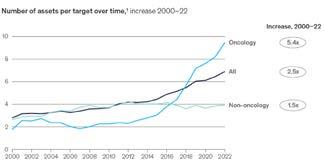
Oncology drug development has become extremely competitive in recent years, as exemplified in the graph by the number of therapeutic assets in development per proposed target (McKinsey & Company, RewiR&D, January 2025). This is continuously ‘raising the bar’ for translational innovations emerging from academic settings.
Diagnostics are also evolving. Liquid biopsy assays, which are non-invasive blood tests for circulating tumor DNA (ctDNA), now enable early detection, treatment monitoring, and minimal residual disease (MRD) tracking, while AIdriven imaging and molecular diagnostics are accelerating precision oncology. However, the high cost of advanced therapies and variable patient response underscore the urgent need for more and better predictive biomarkers.
Looking ahead, cancer prevention and early detection are becoming tangible goals. Personalized neoantigen vaccines are in late-stage trials, multi-cancer early detection tests are advancing, and microbiome-based strategies show promise for improving immunotherapy outcomes and reducing cancer risk.
VIB’s science ambition in cancer research
Innovations in cancer therapeutics are advancing rapidly, while diagnostics and prevention strategies move much more slowly. This has important implications for VIB’s cancer research strategy. These innovations are still driven by fundamental discoveries from the top academic research institutions like VIB. VIB is moving massively towards unbiased, hypothesis-free research, starting with human materials and patient observations. This is strongly enabled by VIB’s implementation strategy of advanced research technologies like single-cell, spatial omics (together multi-omics) and AI, which allow a more holistic understanding of human cancer biology before validation in model systems.
Understanding the origin of cancer, how it establishes disease, and how it progresses is at the heart of VIB’s scientific mission. VIB’s oncology research is rooted in the legacy of the VIB Center for Cancer Biology (CCB), which has advanced the understanding of the tumor microenvironment and cancer heterogeneity. The VIB CCB aims to crack the tumor initiation code by studying cellto-cell competition in the cancer environment. The goal
is to develop a cancer fitness atlas. Understanding how the tumor initiation code evolves with aging may help researchers grasp why cancer is an age-related disease. Spatial omics and AI will enable scientists to zoom in on specific cellular niches, such as the vasculature, tertiary lymph nodes, and specific immune cell populations, while also providing a holistic view of the human tumor microenvironment. However, although cancer metastasis is the primary cause of cancer death, comparatively little has been learned about it through scientific research, and existing treatments do not always interfere with metastatic spread. Therefore, VIB’s CCB proposes studying metastasis in a clinically relevant setting and attempting to break the stalemate based on the difficulties of translating these findings into actionable therapeutic strategies. Chemical biology will be introduced in the CCB community as a new, exciting discipline. This discipline uses chemical methods and tools to investigate and manipulate cancer-related proteins and cellular pathways to identify new drug targets and design innovative cancer treatments. Finally, CCB aims to study cancer as a systemic disease and build on the documented effects of diet, hormone cycles, circadian
rhythms, and microbiomes on cancer development. In other words, the goal is to decipher the molecular determinants of the tumor macro-environment.
However, it has become evident that other VIB centers have important contributions to make to the field of cancer research, especially if the strengths of each center are combined in larger, strategic collaborations across groups in different centers where complementary expertise can be leveraged
For example, VIB.AI can apply machine learning and AI approaches to some of the richest cancer datasets VIB has assembled, such as those from the Grand Challenges projects. Such collaborations could enable the development of AI-based analysis pipelines that predict tumor behavior or help discover novel signatures of the pivotal phases of cancer establishment relevant to therapy.
The tumor microenvironment represents many opportunities. First, the clear and direct involvement of the immune compartment still holds untold stories and
is already fertile ground for cross-center collaborations between CCB and the VIB Center for Inflammation Research (IRC). The microenvironment also contains a nervous system component whose role has largely been disregarded. This is a topic that group leaders at CCB and neurosciencefocused group leaders in the other VIB centers (Center for Brain & Disease Research/CBD, Center for Molecular Neurology/CMN) can address. The gut microbiome or virome can influence the tumor immune response or cancer establishment. The mechanisms underlying these phenomena could provide a basis for collaboration between cancer-focused and microbiome-focused research groups in the VIB Center for Microbiology (CfM). Additionally, the (bio-)technology oriented research groups, e.g. at CSB and Center for Medical Biotechnology (CMB), increasingly focus on oncology approaches to apply their technological development. This represents clear opportunities for winwin collaborations.
Evidently, there are many opportunities to collaborate on larger efforts, for example to develop and share the latest methodologies and protocols for ever-increasing resolution in spatial-biology across centers. The institutional technology strategy is pushing both the Single Cell Core and the Spatial Catalyst to enhance such diffusion. Also, with structural biology many combined efforts can elucidate important complementary aspects of immune signaling or pathway regulation. These also have strong implications for target validation and intervention strategies that VIB can capitalize on.
VIB’s translational science ambition in cancer research
VIB’s scientific endeavor in cancer research is poised to deliver important translational research avenues. In particular, VIB is well-positioned to build on the humanfirst discovery approach that has become central to basic oncology discovery research, thanks to its close partnership with the local clinical research hospitals across Flanders. Key investors and industry leaders argue that this approach is devoid of the confirmatory biases that can plague hypothesis-driven research, where experimental design limits the ability to discover true causal relationships.
Unbiased experiments, on the other hand, allow for unanticipated discoveries, making them more robust and clinically meaningful.
As an extension of this discovery research, VIB’s cancer researchers have also expressed the ambition to take research into patients. In the past cycle, a collection of highly impactful investigator-driven clinical studies was designed with additional ‘on treatment’ biopsies, which yielded a growing and uniquely insightful collection of single-cell and spatial omics datasets that elucidate the complexity of immunotherapy in the human tumor microenvironment. This has already translated into a novel T-cell receptor and antigen discovery platform at CCB that is now being explored for applications in mRNA-based cancer vaccines, for the design of novel T-cell engagers, or TCR T cell therapy applications.
Recently, VIB CCB researchers have collaborated in a public-private partnership to use an innovative medical device that enables testing of microdoses of FDAapproved medications directly within the human tumor microenvironment in situ. Combined with the molecular cancer biology expertise, this allows discovery of de novo sensitivities of melanomas to therapeutics that are not part of standardized clinical protocols. These can then be tested systemically for therapeutic response. As such, microdosing and small trials spur medical advances and increased understanding.
The molecular understanding resulting from VIB’s cancer research portfolio, regularly leads to the identification of novel targets or alternative ways to target known drug targets. Exciting projects are emerging that combine the cytokine and structural biology expertise of the VIB IRC and CSB, the deep cancer microenvironment and human data science at the VIB CCB and the antibody engineering capacity of I&B. The quality and impact of translational projects particularly benefit from such cross-disciplinary cross-pollination. There are several VIB-originated cancer therapeutics currently in clinical trials, originating from target and drug discovery by VIB (e.g., Springworks phase 1) or from platform technologies spun out and deployed in
cancer (e.g., Actakines at Orionis Biosciences). VIB’s early drug discovery activities will remain a cornerstone, looking for public-private partnerships whenever possible.
The VIB CCB has made major contributions to the discovery of proposed biomarker panels based on research technologies for addressing key unmet medical needs in cancer diagnostics in the European or global context. In the last cycle, the I&B team established an industry-trained biomarker discovery and diagnostics development team at Discovery Sciences, which focuses on translating these panels into diagnostic tests applicable in routine clinical settings. A key achievement was to develop a test for homologous recombination deficiency to stratify patients for eligibility for the recently approved PARP inhibitor Olaparib (AstraZeneca). This test was developed in close collaboration with CCB scientists and clinicians at the university hospital. The I&B guidance was pivotal to achieve accreditation and reimbursement for this lab-developed test. Over 400 patients have already been tested in its first year of implementation, and discussions are ongoing with companies interested in developing an IVD test based on this technology. Such examples clearly show the impact of biomarker research in oncology, especially if combined with the proactive, collaborative approach of the I&B teams to take the necessary translational steps. In view of the many concepts emerging from technology-oriented projects, e.g. from CMB, VIB proposes to increase its capacity to handle such discovery projects.
VIB has a strategic position to initiate projects that build infrastructure, expertise and capabilities that attempt to break translational barriers in specific areas of cancer care
Such efforts necessitate partnerships with nearby research hospitals or foundations. Besides drug and biomarker development, many contributions can still be made to the field. Progress in terms of 5-year survival is widely variable across different cancer indications. Most progress has been made in some relatively prevalent indications such as melanoma or breast cancer, whereas progress in rare tumors such as sarcomas and certain pediatric cancers lags behind. Soft tissue sarcomas represent 1-2% of adult cancers and up to 6% of childhood malignancies. With over 100 subtypes, they are highly heterogeneous in terms of histological presentation, disease course, and molecular background. Over 20% of sarcomas have no known markers and are therefore classified as ‘undifferentiated’. VIB is funding a Grand Challenges project in which CCB will partner with a local cancer foundation, the university hospital and VIB.AI to build the translational infrastructure to address this challenge. The aim is that scientific progress will lead to biomarker panels or drug targets, helping individual patients receive a diagnosis and guiding treatment. Additionally, there will be regular engagement with the patient community.
Clearly, VIB has a lot to offer. VIB is committed to making tangible contributions to cancer research and oncology practices at the regional, European, and global levels.
2.2.2 VIB in inflammation & immunity
From bench to breakthrough: recent milestones in the field
Immune-mediated inflammatory diseases (IMIDs) - including rheumatoid arthritis, asthma, psoriasis, inflammatory bowel disease (IBD), and atopic dermatitis - affect 3–7% of the population, with 13–30 million people in the EU living with these chronic conditions. They cause a major burden on quality of life, productivity, and healthcare systems.
The field has long been dominated by biologics targeting legacy cytokines such as TNF-alpha. While precision medicine approaches have faced resistance, recent advances in target discovery and deeper insights into disease mechanisms are transforming the landscape. While hitting upstream targets can be powerful, it risks severe immune suppression. Combination strategies are gaining traction, with bispecific antibodies offering a practical alternative to multiple biologics by engaging several validated downstream targets in a single molecule.
As novel modalities are introduced, the clinical objectives of therapeutic interventions increase, resulting in a continuous ‘raising the bar’ for new approaches. Emerging modalities,
such as cell therapies and T-cell engagers, aim for immune system resets, potentially curing some autoimmune conditions. However, not all IMIDs are amenable to this approach; for others, the goal may need multicellular dampening, targeting diverse immune and stromal cells. Diseases driven by Th2 responses, such as asthma, are now moving beyond symptom control toward precision interventions tailored to patient heterogeneity.
Disease heterogeneity and treatment resistance highlight the need for predictive biomarkers to enable patient stratification and prognostic assessment - current clinical markers remain insufficient. Advances in molecular understanding now allow for more targeted therapeutic strategies.
Finally, immune system components are increasingly implicated in a wide range of diseases, including cancer, neurodegeneration, fibrosis, and metabolic disordersbroadening the scope for innovation and translation.
In contrast to oncology, where genetics were at the origin of the acceleration of target discovery, diseases of the immune system are driven as much through interactions with the environment as through genetics. The study of immune regulation at the proteomic level, in a disease and compartment specific manner, and this on a single cell and spatial basis, is significantly deepening the finesse in target choice. High-end FACS, deep molecular imaging, single-cell and spatial omics, alongside innovative modelling in fully humanized mouse models are significantly impacting VIB’s I&I research agenda at IRC and many other centers.
Human-first approaches to start discovery research have been the tradition in I&I, partly because some of the immune compartments are so easily accessible. However, as the system is driven by complex regulation, there is often significant heterogeneity in the underlying biology. This complexity necessitates a detailed study to reveal underlying mechanisms through multi-omics, single-cell, and spatial analysis, structural biology of the proteins involved, cellular and pathway analysis and AI-powered data science.
The Inflammation Research Center (IRC) is the main critical mass of inflammation and immunology research at VIB. Its ambition is to consolidate its international leadership position in systems immunology through detailed, mechanistic study of the molecular biology of inflammation and immunity and continuing the focused strategy of prioritizing therapeutic relevance. The center proposes to study the immune system regulation at the extremes of age. This has proven a fruitful strategy to untangle complexity and reveal patterns that can be extrapolated to other ages, for example in a Grand Challenges project called ‘Primary Immunodeficiency Diseases or PID’.
Another impactful approach has been to start from ‘experiments of nature’. In the last cycle, major research efforts into the molecular drivers of mucus plugging in
eosinophilic airway diseases identified GAL-10 as a novel driver, leading to landmark publications and widespread interest from the clinical community. The translational effort that VIB built in collaboration with argenx, resulted in a partnership for further development of the antibody for clinical application.
The scientific ambition of IRC is to continue its global leadership in the study of molecular mechanisms that control inflammation (e.g. NF-κB signaling, cell death pathways, cytokine receptor biology and pattern recognition receptors), while expanding into emerging, high-potential domains or technologies. Particularly the IRC topics like macrophage and dendritic cell biology, tissue-specific immune regulation, host-microbiome-barrier interactions and systems immunology enable cross-center collaborations for more synergies.
The center’s strong performance is spurred by a culture of cross-disciplinary collaboration among group leaders and with clinicians at the university hospital. The center functions as the ‘molecular department’ for the immunology clinicians. Some of the group leaders, including the Director, also hold clinical positions. The center aims to accommodate MD-PhDs, particularly when they are interested in establishing themselves as clinician researchers. This is a particularly attractive strategy for the coming cycle.
The center is a strong supporter of VIB’s technology strategy. It has started and hosts the VIB Protein Core, the VIB Bioimaging Core and the Single Cell Core. The center integrates spatial omics data of the peripheral immune system with functional data using AI-powered approaches and has built strong connections to VIB.AI through its co-affiliated group leaders. Culturally, the center aims to establish AI-based approaches as a core aspect of VIB researchers’ identities. For example, it offers all PhD students standard advanced training in machine learning and coding. This approach can be extended throughout VIB.
The center hosts a group leader who focuses on the structural biology of cytokine signaling, integrated between more functional groups. This has proven particularly fruitful for understanding key pathways and designing approaches for clinical applications.
The center’s state-of-the-art capability to swiftly generate next-generation mouse models, including humanized models, and its work with advanced organoid models of human origin ensure a center-wide ability to test in vivo relevance. As Howard Skipper said, “A model is a lie that helps you see the truth.”
From orchestrating defenses to shaping outcomes, immune dysregulation often lies at the heart of human pathologies. In cancer, the immune system can both suppress and fuel tumor growth. In neurodegenerative diseases, chronic neuroinflammation is increasingly recognized as a driver of neuronal damage. Even in the case of infectious diseases, where the immune response is protective, an unchecked reaction, such as that seen in sepsis, can lead to devastating inflammation and tissue injury. Logically, the study of the role of inflammation, immune system components, or molecular actors is core to other VIB centers as well in the context of neurodegenerative diseases (CMN, CBD), cancer (CCB), infectious diseases (CMB), structural biology (CSB), and microbiome (CfM).
For the next cycle, VIB centers are aiming to leverage these bottom-up interests into larger, cross-center endeavors These can synergize on complementary biology expertise, shared infrastructure, common dataset generation, and joint translational science projects. Recognizing the practical challenges of such projects, VIB is committed to turning these ambitions into reality by offering resources such as funding (internal and external), project management, collaborative frameworks (e.g. around IP), guidance on interpersonal skills, and administrative support (e.g. regulatory). These cross-center and cross-disciplinary collaborations are anticipated to have a disproportionate impact, both scientifically and translationally.
Several topics have already emerged from the initial discussions. Some examples:
▶ Based on its legacy in B-cell and auto-antibody research, IRC could make valuable contributions to CCB research on T-cell-focused studies of the tumor microenvironment.
▶ Understanding neuronal communication is a key focus for CBD researchers. It would be exciting to extend this understanding to include immune-originated cells communicating with neurons, with participants from IRC and CMN.
▶ The use of VHH technology to perturb regulatory networks and protein-protein interactions at CSB can easily be complemented by the systems approach at IRC or the other centers.
▶ The innovative proteomics approaches developed for interactomics research at CMB is highly relevant to discover the role of intracellular immune pathways and can perhaps even be combined with the VHH approaches mentioned above.
▶ A very exciting area of research is to investigate the molecular underpinnings of the so-called gut-brain axis. Several projects are already underway at IRC and CBD in neurodegenerative diseases like Parkinson’s disease.
▶ More comprehensive approaches may be within reach, for example combining the microbiome research expertise at CfM with the structural insights from the protein science at CBD could be valuable.
VIB’s translational science ambition in I&I research
VIB, and in particular the VIB IRC, has emerged as the ‘biology department’ for Flanders’ biotech ecosystem in the accelerating field of I&I therapeutics. Major focus and multi-year investment on the translational scientific efforts at IRC was introduced in the last cycle and this has massively paid off in terms of R&D collaborations, spinoffs and major licensing deals, with significant economic and societal impact as a result. The center has several therapeutics in the VIB pipeline with the potential to reach the market in the coming years. These will be transformative events for the whole of VIB.
IRC has many key assets in its translational efforts. These include deep connections and joint ideation with clinicians, a collaborative culture, scientific creativity, a wide network of biotech executives on a first-name basis, close proximity to key companies, and professional I&B capabilities. The center will continue to build on its biologics experience. The center has incorporated the VIB VHH expertise and made a collaborative effort to establish a fully human antibody discovery platform starting from ‘rare patient’ B-cells. Expertise in antibody engineering has allowed creative proposals to fine-tune the pharmacology of biologics for specific applications or microenvironments. The immediate access to structural biology allows to pursue strong IP positions proactively. Strong capabilities for generating mouse models form an integrated pipeline for therapeutics. Of course, both the discovery support offered by VIB Discovery Science and the other capabilities at I&B will continuously be leveraged.
VIB’s translational portfolio in I&I is much broader than only IRC. Indeed, many valuable technology platforms, concepts and projects are being pursued in other centers: tumor vaccination approaches (CCB), neuroinflammatory drug discovery (CBD), human microglial transplants in neurodegenerative diseases (CMN), and immunoproteomics diagnostics as a novel platform for vaccine development (CMB).
The human gut microbiome plays a foundational role in shaping immune system development, balance, and function. VIB research from CfM leads the field, both through solid methodological pioneering as well as through comprehensive sample collection, either community-sourced or through innovative investigator-driven trials with the university hospital. VIB research has identified distinct microbial community types - known as enterotypes - that are associated with varying immune states. In particular, the B2 enterotype, characterized by low microbial richness and increased prevalence of pro-inflammatory species, has been linked to systemic immune activation and dysregulation. This enterotype has been observed more frequently in individuals with immune-mediated diseases such as inflammatory bowel disease, and may act as a microbiome-derived risk factor for immune dysfunction. VIB proactively initiated translational efforts to convert the B2 enterotype determination which is based on sequencing, into qPCR-based clinical diagnostic tests. Such a tool would enable multi-centric clinical trials to further validate the original findings and could form the basis for more routine diagnostic use tests in the context of health risk monitoring. As such, it contributes to preventive medicine. More directly, possibilities emerge through the use of ‘bugs-as-drugs’ therapeutics. VIB has already started a spin-off company based on this concept.
The VIB Structural Biology Center (CSB) is making a major effort to create a spin-off based on an innovative drug discovery platform using VHH’s (Nanobodies®). Allosteric modulators have many therapeutic advantages. They allow for the functional agonism (or antagonism) of important receptors in a manner that is relevant for disease in terms of both space (the right tissue) and time (the right moment), i.e. in the presence of the normal ligand. This avoids unnecessary side effects and such therapeutics are expected to have a wider therapeutic window. Historically, this ‘bull’s eye’ of pharmaceutical development has primarily been the result of serendipitous findings that are often documented as allosteric in hindsight. Rational, targeted
discovery platforms for allosteric modulators have proven challenging to develop. However, a preliminary contribution to this field has already resulted in Confo Therapeutics, a VIB spin-off. Now, the next generation has been developed and is targeting rational discovery technologies for allosteric agonism of membrane targets, many of which have attractive positioning in the I&I field, such as PD-1.
VIB aims to expand on its biomarker translational portfolio in I&I in the coming cycle. Many I&I diseases are heterogeneous and stratification of patients based on companion diagnostics remains of interest, even though the bar is high.
▶ In the last cycle, a Grand Challenges project sought to answer the question of whether treating rheumatoid arthritis (RA) patients with Disease-Modifying Antirheumatic Drugs (DMARDs) earlier in the disease course could prevent irreversible cartilage damage, creating just such a case.
▶ Another Grand Challenges project aimed to address the underdiagnosis of primary immune disorders in young children. As a result, additional screenings have been integrated into the routine ‘heel pricks’ of newborns. In addition, interferon-based screening assays are being prepared for clinical diagnostic use. Clinicians can now support off-label use of existing medications after molecular immune profiling.
▶ The study of peripheral or circulating immune cells as biomarkers for early detection or progression of neurodegenerative diseases (CMN) or neurodevelopmental disorders (CBD) is being proposed. Both centers are well placed for impactful contributions, based on the access to interesting brain and human genetics collections, and the expertise in iPSC and single-cell and spatial omics technologies. Discoveries can be validated functionally by studying the involved immune mechanisms.
2.2.3 VIB in neuroscience and neurodegenerative disease research
From bench to breakthrough: recent milestones in the field
Neurological disorders are the third leading cause of disability and premature death in the EU, with costs estimated at 800 billion euro annually. Prevalence is expected to rise with an aging population, making diseasemodifying therapies an urgent priority.
Recent advances give reason for optimism. A ‘human-first’ approach is transforming neuroscience, as in oncology and I&I, enabling novel target discovery, iPSC-based disease modelling, improved preclinical relevance, growing acceptance of predictive biomarkers, and regulatory innovation. Systems-level insights into brain function, powered by advanced imaging, are accelerating progress.
Model systems are evolving. Traditional animal models remain useful but are now complemented by iPSCs derived from human cells, and even iPSC-derived organoids and microchips reconstructing functional neuronal circuits, improving translational relevance. Combined with advanced imaging, electrophysiology, and human pharmacology data, these approaches strengthen causal target validation. Ultimately, converging evidence from multiple human-based modalities will drive breakthroughs in neurology.
Genetics remains central to target discovery, but while early focus was on low prevalence (familial), high-penetrance mutations, the next challenge is identifying targets for sporadic cases. Long-read sequencing which captures a wider range of genetic variations, single-cell and spatial omics allowing a deeper understanding of topical and cellular neuro-anatomy, and access to longitudinal cohorts and brain banks are expanding discovery potential.
Biomarker development is advancing. More and more KOLs consider that the pTau217/β-Amyloid 1-42 blood test for Alzheimer’s already shows around 96% accuracy, enabling earlier diagnosis and intervention. Next-generation biomarkers are emerging fast.
VIB’s science ambition in neuroscience and neurodegenerative disease research
With significant critical mass, VIB has made major contributions to the field and is well positioned to consolidate its international standing in the coming cycle. Its research lines are fully in-step with the dynamics described.
The main focus of the VIB CBD has been the enormous complexity of the brain and the nervous system in development, health and disease. Its mission is to force a breakthrough in the slowing of brain disorders by understanding normal brain function and translating the insights into mechanistic understanding of human disease. This requires scaling and integrating different levels of biology, from the molecular over the cellular to the circuit function and finally behavior. It also requires scaling from brain development, over adulthood to the aging brain.
Particularly exciting are the research lines that use singlecell and spatial omics technologies. Many examples can be given:
▶ Sleep disorders are common early signs of neurodegenerative diseases and proposed to have a contributory role. Protective mechanisms that downscale the synaptic communication machinery during hibernation can be reversed at reawakening. Exciting discoveries can be made in the molecular pathways underlying this process and parallel evidence can be documented in humans.
▶ VIB group leaders study brain cell resilience in the context of Alzheimer’s disease by comparing expression in cells neighboring versus further removed from amyloid plaques in a human brain using spatial omics technology. Even though shared clinician-scientist positions were not possible, connections to clinicians have been intensified in Leuven. The recent hiring
of a group leader who is conducting an exemplary centenarian cohort study has raised high expectations that this type of collaborative research will expand and have an impact in the coming cycle.
▶ Many neuropsychiatric diseases can be understood as resulting from faulty brain development. Exciting molecular and behavioral connections between neurodevelopment, aging and degeneration will be pursued in the coming years.
Comprehensive research efforts in the same overreaching biological question are being addressed in a crossdisciplinary collaboration between group leaders of the center, for example on Tau or TDP-43. Many neurodegenerative diseases are proteinopathies. CBD researchers can scale the different biological levels of study easily in a collaborative fashion to include the mechanistic study of the proteins and protein states.
With an institutional reorganization, the center now also hosts research lines that seek to understand cognitive and brain function at the systems level. The difficulty in monitoring brain function, disease progression, or response to treatments in real-time has held back both fundamental
understanding of function at a circuit or organ level and translational progress. The recent integration of some ex-NERF groups into the environment of CBD represents an exciting opportunity to translate the molecular or cellular insights to the circuit or organ level. Advanced instrumentation and research technology development is essential in this endeavor and expertise units focus on expertise and technologies that are unique to this type of research. Similarly, CBD has made major investments in developing a brain-on-a-chip application in collaboration with imec, in which patient-derived iPSC neurons of different types can be modelled in a circuit supported by a microchip. This allows the simultaneous study of molecular or cellular phenomena while monitoring their impact on circuit function real time. The results so far are remarkably replicative of what is known of the human brain disease in situ
VIB’s neurodegeneration research groups will further integrate ‘human-first’ studies in several ways. Especially VIB’s CMN has had a long legacy of neurogenetics research.
▶ Patients and their families have been longitudinally followed through direct contact, questionnaires, regular sampling and, finally, post-mortem brain collection. This is an extremely valuable resource for neurogenetics studies and more detailed functional studies based on omics research. This collection can be used to make valuable contributions to the understanding of the vast genetic, molecular, and cellular heterogeneity in neurodegeneration and neurodevelopmental disorders through fine-grained studies using advanced genomic analysis (e.g. long-read sequencing) and single-cell omics. The collection also invites advanced (causal) statistical and machine-learning approaches in collaboration with VIB.AI.
▶ The center is now adding neuro-immunology as a second focus area that is synergistic with the first in many ways. Human genetic studies have revealed that the immune system plays a key role in the pathogenesis of neurodegeneration and neurodevelopmental disorders. Combining expertise in novel neurogenetic approaches with models of immune function will strengthen the center’s international position and facilitate the development of biomarkers and therapeutics. By linking phenotype to function, the center aims to determine whether immune responses are beneficial or detrimental and to understand communication between immune and brain cells in neurodegenerative and neurodevelopmental disorders.
▶ Finally, in many VIB labs in both centers and at VIB Discovery Sciences, iPSC’s are being incorporated as work-horse systems to ensure the highest relevance. The technology has been fully established at several sites, and genomic tools, such as advanced CRISPR engineering, CRISPR libraries, and antisense, will be further implemented in the coming years.
It’s no surprise that VIB researchers feel the most exciting research in this field lies at the intersection of the different disciplines. Here too, collaborative projects will catalyze original approaches. Examples include:
▶ Building a mechanistic understanding of the gut-brain axis in health and specific diseases between CBD and CfM,
▶ combining VIB’s strength in macrophage research (IRC in inflammation, CCB in cancer) with glia-focused research in the CNS (CMN).
▶ Combining insights and approaches into large cohorts or deep characterization of samples is an obvious synergy between CBD and CMN.
▶ The depth of expertise and capability in immune system research at IRC can cross-fertilize research at CMN.
One particularly exciting theme being put forward by several VIB centers is ‘VIB in situ structural biology’ applied in cross-center projects in neurodegenerative disease research. The initiative seeks to establish structural insights into sub- and supracellular organization with near atomic precision based on 3D cryo-electron tomography (cryoET). This technology-based push aims to enable the atomic visualization of proteins directly in patient tissues, gaining fundamental insights into the molecular aspects of cellular organization and guiding future therapeutic avenues and ‘structure-based’ diagnostics.
▶ For example, in the brain it is essential to understand the ultrastructural organization of cells and the connections between them to uncover how nanoscale disruptions drive synaptic failure and circuit dysfunctions. Recent advances in cryoET enable the visualization of proteins and macromolecular assemblies in their native cellular environment, serving as a ‘connectomics’ engine to construct an atlas of neuronal nanoarchitecture. The direct application on patient tissues is particularly exciting. By vitrifying intact human brain tissue and extracting ~100 nm lamellae using cryo-focused ion beam (cryo-FIB) milling, scientists can ‘see’ the synaptic cleft to visualize supramolecular complexes, stacked nanoblocks, pathological aggregates, organelle contact sites, and enzyme assemblies disrupted in disease.
▶ Protein aggregation lies at the heart of a wide range of neurodegenerative and systemic diseases, hallmarked by the accumulation of amyloid fibrils - highly ordered, β-sheet-rich aggregates whose structure underpins both their stability and pathogenicity. Recent advances in cryoET have revolutionized the ability to resolve these fibril structures at near-atomic resolution, directly from patient-derived material. This breakthrough has highlighted the polymorphic nature of amyloids. However, such fibrils are typically studied in isolation, extracted from tissues and stripped of their native cellular context - erasing crucial information about their interaction with membranes, organelles and surrounding macromolecules. In situ structural biology offers prospect of visualizing amyloids within their physiological environment and of shedding light on how amyloid fibrils interact with their surroundings, perturb cellular architecture, and drive toxicity. This will allow to decode the full pathogenic mechanism of aggregation disorders and will uncover novel therapeutic and diagnostic opportunities grounded in structural precision.
VIB’s translational science ambition in neuroscience and neurodegenerative disease research
VIB’s research continues to deliver strong translational impact in the field despite the high risks perceived by industry and investors. Augustine Therapeutics exemplifies this success, advancing a best-in-class HDAC6 inhibitor into clinical trials through cross-disciplinary research (human genetics at CMN, functional validation at CBD) and early drug discovery efforts at VIB, culminating in a 78 million euro funding round. Other notable achievements include Muna Therapeutics, a joint spin-off with Aarhus University leveraging a spatial omics target discovery platform, and Jay Therapeutics, which is preparing clinical proof-of-concept for tauopathy-related synaptic defects. Trim Therapeutics, a recent seed-stage spin-off, is pursuing novel chemistry to prevent the buildup of amyloid beta in early Alzheimer’s disease. Moving forward, these projects will rely on close collaboration between group leaders, the I&B Discovery Sciences group, and the core facilities to maximize success.
There is also a wealth of translational efforts targeting therapeutic interventions. These collaborative efforts with the I&B team start with early data or IP and aim to develop compelling investor- or business-ready data packages. They may also take the form of impact-oriented projects in collaboration with partners under the Grand Challenges Program. Some examples below:
▶ The blood-brain barrier (BBB) is a highly selective, semipermeable barrier formed by endothelial cells lining cerebral microvessels. Its function is to protect the brain from harmful substances while allowing essential nutrients to pass through. However, this same protective mechanism also poses a major challenge for delivering therapeutic agents - especially large molecules such as proteins, antibodies, or gene therapies - into the central nervous system. VIB has several approaches in the making, originating from both CBD (in collaboration with KU Leuven) as well as IRC, to develop receptormediated transcytosis approaches across the BBB or the blood-CSF barrier using Nanobodies® (VHH’s). The potential of this approach has now been validated in the phase 1b/2a Brainshuttle AD trial by Roche, where a bispecific antibody to amyloid beta and transferrin receptor 1 (TfR1) reduced amyloid levels on PET imaging to lower than 25% in 91% of patients within 28 weeks. VHH-based approaches offer additional advantages due to their modularity, size and other characteristics.
▶ A large effort is being made to discover actionable biomarkers that can be translated into clinical diagnostics. At CMN, VIB researchers start with cohorts with genetic and omics profiling in FTLD and AD to propose biomarkers for the early - still actionablestages of disease. The use of immune profiling is a particularly innovative approach. While promising, such panels require extensive validation in large, wellpowered, and independent cohorts to confirm their reproducibility, sensitivity, specificity, and generalizability across diverse populations. This process is essential for distinguishing true biological signals from confounding noise and for ensuring regulatory and clinical confidence. This typically involves painstakingly slow progress through large multi-party collaborations. VIB proposes to accelerate this process by anchoring biomarkers to mechanistic evidence - such as demonstrating their involvement in disease-relevant pathways, regulatory networks, or causal genes. Such biological plausibility can provide supporting evidence to the rationale for a biomarker’s utility and, in some cases, justify prioritized validation or earlier translational steps. As in the other fields of VIB, VIB aims to support translational biomarker projects in neurodegenerative diseases proactively.
▶ An exciting venture-creation project has been developed as a next-generation computational platform for de novo, epitope-specific antibody design. Indeed, traditionally, discovering potent antibodies relies on immunization or screening. These methods offer limited control over epitope targeting, and on antibody sequence exploration, especially for cell surface targets such as G protein-coupled receptors (GPCRs) and ion channels. Grounded in trusted, interpretable biophysical principles and powered by the legacy FoldX empirical force field software, the approach achieves best-inclass predictive accuracy without large training dataset requirements. The approach does not compromise human interpretability of results, thus overcoming key limitation of black-box AI models. Its modular design spans generation of totally novel antibody sequences, with optimized developability properties, as first-in-class therapeutic leads across diverse targets and formats.
▶ Attractive projects lie at the crossroads with nanoelectronics engineering. In collaboration with imec, several projects are ongoing and/or could be started. Already, projects have resulted in early stage IP.
▶ In one project a highly miniaturized device (<100um diameter) for non-disruptive, chronic sampling of fluids from the brain was developed.
▶ In another, a brain-machine interface was designed through an implantable, flexible micro-electrocorticographical device with multiplexed electrodes, allowing for an unprecedented high sampling density. The aim is to implant it in a fit-for-purpose electrode cartridge system in thinned skull bone, which would avoid foreign body reactions and be less invasive. In another project, a brain-on-a-chip device can replicate essential neural circuits for preclinical research on Parkinson’s disease.
Several impact-oriented Grand Challenges Projects are ongoing in this field.
▶ One project establishes a comprehensive reference center approach for patients with amyloidosis diseases in Belgium, encompassing patient community involvement, patient sample and data accumulation, and cutting-edge, fundamental protein science to mechanistically map the underlying disorders.
▶ Another project is leveraging anti-sense therapeutics development for rare forms of familial AD to establish clinical proof-of-principle for safely lowering gammasecretase expression in humans. They will apply an approach of targeting co-inherited SNP’s rather than the point mutations themselves, which would establish a proof-of-principle that could be applied to many other diseases with genetic components. In the coming cycle, more opportunities will surely emerge that aim to achieve broad-scale impact.
2.2.4 VIB in infectious disease & human microbiome research
From bench to breakthrough: recent milestones in the field
The COVID-19 pandemic highlighted global vulnerability to infectious diseases, emphasizing the need for preparedness strategies beyond crisis periods. A few years later, threats such as SARS-CoV-2, influenza, RSV, hepatitis, dengue, and accelerating antimicrobial resistance (AMR) of highly pathogenic bacteria such as the ESKAPE pathogens (Enterococcus faecium, Staphylococcus aureus, Klebsiella pneumoniae, Acinetobacter baumannii, Pseudomonas aeruginosa, Enterobacter species) remain pressing. There is a critical need to develop and test robust, comprehensive preparedness strategies in between crises.
Recent breakthroughs showcase the power of new modalities. mRNA vaccines have transformed vaccine development and are being applied to other fields. Molecular clamp technology which stabilizes viral glycoproteins in their native, prefusion structure, improves
immune response. Bispecific antibodies and antibodydrug conjugates offer innovative solutions for high-risk populations, such as immunocompromised patients. For AMR, CRISPR-based approaches, improved Lipid Nanoparticle (LNP) delivery, and better vector technologies could enable new strategies, including targeting pathogen reservoirs. Understanding host-pathogen interactions may further unlock immune-based therapies, similar to the successes in immuno-oncology.
The microbiome field, while past its initial hype, is maturing with quantitative microbiome profiling and personalized approaches. Translating insights into diagnostics, tailored treatments, and evidence-based guidelines will be key. This area holds major potential to address chronic and infectious disease burdens, shaping future public health strategies.
Image credits: Maude Jans, Lars Vereecke, Geert van Loo (with help from Peter Borghgraef)
VIB’s science ambition in infectious disease and microbiome research
Three of VIB’s centers conduct research on infectious diseases: CMB, CSB and CfM. Several research lines emerge at CMB:
▶ Since its inception, virology has been a core area of fundamental research at VIB, a tradition that continues at CMB. Reminiscent of Louis Pasteur’s research approach, fundamental questions about viral entry and replication are being addressed from a curiositydriven starting point, knowing that some of these research lines can lead to therapeutic applications. CMB focuses on developing new, innovative molecular tools and biotechnologies to address human health issues, including infectious diseases. CMB aims to enable the production of new biopharmaceuticals and vaccines.
▶ The center has deep technical expertise in innovative proteomics approaches. These approaches are applied to the study of interactomics to discover novel biology from intracellular proteins in the context of intracellular pathogens or metabolic diseases. To fully understand intracellular protein function and regulation, a concerted effort is made to study proteins and their specific proteoforms at the single-cell level. These are distinct molecular variants arising from genetic, posttranscriptional, and post-translational modifications, each within their respective 3D/4D cellular contexts. This includes characterizing the extent and nature of modifications and mapping their spatiotemporal dynamics in subcellular compartments. Importantly, each proteoform may engage in unique interactomes and exert specific biological functions, necessitating high-resolution approaches to dissect their role. To enable such granularity, CMB envisages establishing high-throughput discovery and validation platforms for affinity-based tools targeting individual proteoforms, thereby facilitating their functional interrogation in biological systems. An immunopeptidomics approach has been developed to discover and target posttranslationally modified proteins using nanobodies in
host-directed therapy. In addition to target discovery, these proteomics-based research lines also yield biomarker discovery.
▶ A CMB group leader is driving a 5 million euro European project in an international collaboration aimed at developing next-generation mRNA vaccines against bacterial infections and antimicrobial resistance (AMR). By combining expertise in mass spectrometry, artificial intelligence, immunopeptidomics, and mRNA vaccine technology, the consortium will pioneer vaccines that target both extracellular and challenging intracellular pathogens such as Mycobacterium tuberculosis and Acinetobacter baumannii. With preclinical studies led by VIB and the first clinical trials at UZ Gent, this initiative positions VIB as a hub for cutting-edge vaccine innovation, addressing one of the world’s most pressing public health threats.
The following lines of research into bacterial diseases are pursued at CSB:
▶ VIB’s structural biology center aims to bring structural biology understanding as close as possible to the physiological cellular level using advanced technologies, microfluidics and VHH’s as tools. This enables significant basic biology discovery. For example, a crucial initial step in a bacterial infection is the recognition and colonization of the host tissue by specific attachment via surface-exposed adhesion molecules. In
Gram-negative bacteria, these adhesins are displayed on the outer membrane as single proteins or can be incorporated into filamentous polymers. This step can serve to avoid mere clearance through mechanical shear, or can trigger more complex host-cell responses. These research lines may offer avenues for host-directed therapies but also find application in protein engineering with planetary health applications (next chapter).
▶ Another area of research focuses on multidrug-resistant Acinetobacter baumannii. This bacterium thrives within hospital settings by resisting disinfection procedures and environmental stresses. This nosocomial pathogen has a concerning arsenal of resistance mechanisms, and its virulence is based on a ‘resist and persist’ strategy. Nanobody® technology is again used as a tool to explore its biology.
Finally, VIB’s CfM plans to expand its research into human health related topics:
▶ ESKAPE pathogens often display a capacity to develop so-called persister cells. These are a small subpopulation of genetically identical bacteria that temporarily enter a dormant state and survive exposure to high doses of antibiotics. Unlike resistant mutants, persisters do not proliferate during treatment. Instead, they resume growth later and can cause relapse infections, which is especially problematic in biofilmassociated or immunocompromised settings. Using Escherichia coli and Pseudomonas aeruginosa as model organisms, a multi-scale approach combining population-level evolution experiments, single-cell microfluidics and advanced microscopy, high-throughput omics, and mathematical modelling is used to decode the molecular and genetic regulators of persistence.
▶ In line with the field dynamic around CRISPR in AMR research, a new research area is emerging that applies high-throughput, CRISPR-based functional genomics approaches to reveal the molecular factors that influence bacterial survival, stress response, and antibiotic susceptibility. CRISPR interference and knockout screens
in both Gram-negative and Gram-positive bacteria are used to systematically perturb gene expression across the genome. Large-scale pooled screens with single-cell phenotyping, computational modelling, and machine learning, enable to connect gene function to antibiotic efficacy and resistance evolution at high resolution. This platform enables the identification of targets that are essential for bacterial fitness under antibiotic stress. It also identifies synthetic lethal interactions, and conditional vulnerabilities that only emerge during drug exposure, and mechanisms of intrinsic resistance and tolerance, particularly in persistent or biofilm-associated populations.
▶ Finally, VIB hosts a group leader who is internationally recognized for foundational and translational work in human gut microbiome profiling, particularly through quantitative microbiome profiling and enterotype classification. Their research has reshaped the understanding of host–microbe interactions and has established gold-standard methodologies for this nascent field on which microbiome-based diagnostics and therapeutics can be built. This work results in major translational avenues and impact (see next section).
As with the other fields, there are many opportunities for cross-center, ‘big ideas in science’ projects in this field. Some have already been described above.
VIB’s translational science ambition in infectious disease and microbiome research
Clearly, VIB can still make important contributions to the field of anti-infective therapeutics in the next cycle. VIB rose to the challenge posed by the SARS-CoV-2 virus pandemic in an exemplary manner, building on the legacy of virology research at CMB. By harnessing the best possible capabilities and expertise in the institute a massive effort was sustained to develop Nanobodies® (VHH’s) targeting hidden epitopes to treat or protect vulnerable or immunocompromised patients. The basis was the fundamental science and structural biology of viral entry at CMB (with international collaborators). When the crisis hit, many capabilities were leveraged in a massive collaboration all in record time:
▶ formatting and pre-manufacturing characterization at CMB and the Protein Core,
▶ preclinical characterization at CMB and I&B Discovery Sciences,
▶ structural characterization of the receptor-antibody complex at CSB,
▶ manufacturing science and capacity at CMB,
▶ intense collaboration with I&B for IP filings, contractual agreements and company creation of a new VIB spin-off (Exevir), and then,
▶ manufacturing expertise and capacity at UCB, and
▶ pre-IND work, regulatory steps and early clinical development at Exevir, etc.
This project was a prime example of how pooling expertise can truly make a step-change contribution, even in the face of many challenges, including rapid mutational waves of SARS-CoV-2. Despite the potential to be best-in-class, the persisting unmet medical need, and the loss of potency of all other antibodies on the market, investor and pharma interest in the field has evaporated completely. This unexpected turn
of events is yet another challenge to achieving the desired societal impact. VIB remains committed to exploring ways to make those innovations available to patients, either through a spin-off or in a nonprofit setting, if possible.
CMB has emerged as a powerhouse for innovation in Manufacturing Science and Technology, generating innovative biomanufacturing technology platforms and individual therapeutic innovations in next-generation biologics. The partnership with the Gates Foundation focused on cost-effective manufacturing technologies is a recognition of this expertise. A core capacity and suite of technologies have been developed for the bioengineering of Pichia pastoris as an emerging production host. This requires sustained basic research to expand the scope of existing approaches for novel applications. Examples include the Glycodelete platform, which is a suite of glycoengineered cell lines; Secrify, an innovative high-throughput screening platform designed to analyze the secretability of protein fragments in yeast across entire proteomes; glycoengineered CAR-T cells; and lysosome-targeting drug concepts.
Market-failure in the field of AMR or some antiviral therapeutic development necessitates a proactive approach to project proposals with realistic potential to be translated into clinically viable applications. This presents significant challenges, as later phases of product development are often impossible to maintain in an academic context without substantial funding. Additionally, such proposals should be measured against the ever evolving future standard-of-care from industry-backed projects, if any exist. Some early research lines are being developed toward host-directed therapy approaches or viral or bacterial targets using Nanobodies®. Host-directed therapies demonstrate reduced vulnerability to therapeutic resistance because they necessitate pathogenic reliance on alternative host factors or evasion of activated host defense mechanisms by pathogens. Alternatively, CRISPR-based exploration could be attractive once the technology has matured for clinical application.
VIB can claim a rightful place among institutions derisking microbiome applications through a range of translational science projects. The B2 enterotype
defined at CfM has been reproducibly associated with inflammatory bowel disease (IBD), metabolic disorders, and psychological stress. A proactive IP strategy was taken towards putative diagnostics and the I&B Biomarker team at Discovery Sciences has been engaged with the lab in a close collaboration to develop a qPCR-based profiling test for B2 enterotype conform industry-standards. Such a test would allow a wide distribution to clinical diagnostic centers. The lab actively engages with clinicians to establish risk stratification for microbial signatures associated with Colorectal Cancer incidence and progression or to predict immunotherapy responses in cancer. A VIB spin-off (MRM Health) co-founded by the lab has recently reported a 17% improvement in the Mayo Endoscopic Severity (MES) score at week 8 and reduced inflammation in severe forms of inflammatory gut disease using a live biotherapeutic product aimed at restoring beneficial taxa. Precision nutritional strategies or more such therapeutic opportunities will undoubtedly follow, including based on the B2 enterotype.
From bench to breakthrough: current direction of the field
Europe faces converging crises in agriculture, from climate change to geopolitical instability, prompting global calls for ‘moonshot’ technologies to prevent future hunger Plant biotechnology has already transformed agriculture. Genetic engineering, while impactful, is dominated by a few large companies and remains controversial in Europe due to restrictive GMO regulations. The potential of plant biotechnology goes much beyond GMOs however.
Plant research has evolved rapidly through breakthroughs in genomics, phenotyping, and computational biology. Sequencing innovations along with advanced phenotyping technologies have produced massive datasets that link genotype to phenotype. The challenge has shifted from data generation to data interpretation, where single-cell, spatial, and multiplex gene-editing approaches are helping to unravel complex genotype–phenotype relationships and reveal the molecular basis of desirable traits.
The discovery of CRISPR opened a new era by enabling trait development without introducing recombinant DNA The technology offers the opportunity to democratize trait development with dramatically reduced costs and timelines, especially for climate-resiliency traits. Upcoming EU regulations on New Genomic Technologies (NGT), shaped partly by VIB’s advocacy through EU-SAGE, could unlock major opportunities - provided short-sighted measures like a patent ban are avoided, as they would harm Europe’s competitiveness.
CRISPR does not only enable precise genetic modification but also the generation of new biological knowledge. When combined with single-cell and spatial transcriptomics, as well as high-resolution field phenotyping, CRISPRdriven research is accelerating the understanding of plant physiology under normal, biotic, and abiotic stress conditions.
The integration of these technologies with artificial intelligence further transforms agri-tech by enabling predictive models, streamlining breeding pipelines, and accelerating trait development. This technological convergence has also fueled the rise of innovative bioinformatics, plant diagnostics, and soil analytics platforms.
Meanwhile, the widespread use of sequencing continues to enhance conventional breeding through marker-assisted and speed-breeding approaches. Together, these advances mark a new era in plant science, where data-driven innovation is reshaping agriculture. In parallel, there is an increasing adoption of regenerative agricultural practices to restore biodiversity. Biodiversity is however also a source of inspiration to mine genomes for disease or stress resistance.
Biologicals - consisting of selected microbial organisms or the compounds they produce - are emerging as sustainable and viable alternatives to agrochemicals, driven by environmental regulations, rising costs, and farmer adoption. They enhance nutrient availability to plants, stimulate natural plant growth processes, or increase resilience to stress factors or pathogens.
Despite challenges in attracting investment, Europe and Flanders have the potential to lead in climate-resilient crops and regenerative agriculture, making the coming years highly promising for the field.
VIB’s science ambition in plant science
Through its internationally leading center in plant research, VIB’s mission in plant science is to provide the foundation for three pillars of innovation:
▶ combating climate change and preserving global biodiversity,
▶ fostering sustainable agriculture, and
▶ contributing to a plant-based society
Addressing these global challenges requires a technologydriven approach to uncover and apply new knowledge in plant biology.
VIB invests in the adoption and development of cuttingedge technologies that allow plant systems to be studied across scales in a ‘cell-to-field’ approach - from molecules to cells, to whole plants, and ultimately to the field, and overcome the unique challenges of plant biology, such as those posed by the cell wall. By integrating experimental, computational, and data-driven methodologies, PSB pioneers ways to advance the understanding of molecular mechanisms through close collaboration among group leaders with complementary expertise and technologies. Research spans a broad range of species, from model organisms such as Arabidopsis thaliana and Spirodela polyrhiza to crop species as maize (Zea mays), soy (Glycine max), tomato (Solanum lycopersicum), and others - ensuring both fundamental insights and translational relevance.
The center’s long legacy of dozens of international plant genome assembly projects will remain a focus, providing a basis for contributing to the understanding of natural variation and biodiversity. This feeds a special interest in polyploidy in plants. Polyploidy, the condition of having more than two complete sets of chromosomes, is a widespread and evolutionarily significant feature. Many major crops are polyploid and their genomes exhibit structural complexity, gene redundancy, and regulatory diversity. This can be harnessed for climate resilience, biodiversity conservation, and sustainable agriculture. Natural variation in the gene copies can infer buffering of genetic damage, neofunctionalization of genes in drought conditions, or enhancing regulatory plasticity to allow adaptations to stressors.
The center plans to implement telomere-to-telomere (T2T) sequencing and chromosome-scale assemblies, a transformative leap in plant genomics. These technologies enable to produce gapless, highly accurate reconstructions of entire chromosomes, from one telomere to the other, capturing even the most repetitive and structurally complex
regions, promising novel discoveries. This allows increasing involvement of the assembly and analysis of so-called pangenomes, i.e., the complete set of genes within a particular species, capturing the genetic diversity found among different individuals of that species. Pangenomes allow to study both the genes that are shared by all individuals (core genome) and the genes present in some but not all individuals (accessory genome). They are particularly useful to generate insights into how genetic variation correlates with phenotypic diversity, disease resistance, and climate adaptation.
The rapid adoption of single-cell and spatial transcriptomics technologies in plant science will be further strengthened. These advancements go hand-in-hand with improvements in imaging technology and precision genomic tools. These tools have been established inhouse across different plant tissues and species, including commercially relevant crops. These advancements enable PSB group leaders to explore subcellular or cellular levels and contextualize basic findings in relation to tissues and organs, or apply them to plants cultivated in field settings.
Beyond the long tradition of bioinformatics research in genome assembly, VIB’s plant science is now fully adopting AI and machine learning approaches across a number of research groups for the study of plant genomes, molecular processes, functional regulation and plant phenotypes. Coaffiliation with VIB.AI ensures cross-fertilization.
VIB contributes to the transition toward a plant-based society by advancing research on high-value plant metabolites with applications in crop protection and human health. In parallel, the institute is exploring strategies to enhance carbon capture into biomass, supporting global efforts to combat climate change. Complementing these initiatives, VIB is also engineering plants for the sustainable production of biofuels and bio-based chemicals, thereby fostering innovative solutions at the intersection of agriculture, health, and climate resilience.
In the ‘VIB in situ structural biology’ theme, an intriguing cross-center proposal holds potential for the development of climate-adapted crops.
Big swings in environmental temperature shift plasma membrane fluidity and its nanodomain organization in plants. This, in turn, affects endocytosis, which is the process by which plasma membrane proteins are internalized together with other extracellular components. Endocytosis is crucial for maintaining homeostasis and transducing signals between cells and/or the environment. This is directly relevant to climate adaptation as the endocytic control of specific cargos is a mechanism to protect against heat, drought or nutrient pulses (e.g. internalization of aquaporins, nutrient or hormone carriers). In plants, endocytosis is driven by a unique, multimeric protein complex called the TPLATE
complex. This complex acts as a gate-keeper, but its physiology is not fully understood. Studying the structure of this mechanism in situ will allow to characterize the different steps and dynamic conformational changes of the TPLATE complex during plant endocytosis. Such mechanistic insight will lead to ways to strengthen its resistance to increasing temperature fluctuations in climate-adapted traits.
VIB’s translational science ambition in agri-biotech
VIB has been at the origin of the agri-biotech ecosystem in Flanders. Its proactive strategy involves translating basic plant science insights into new agri-biotech spin-offs and IP-based partnerships. No less than six spin-off companies in the region find their origin in the research at PSB. The strategy continues to rest on its key foundations:
▶ Capabilities in the form of centrally supported expertise units, such as the crop genome engineering facility, the plant proteomics facility, the agbio single cell platform, and the research greenhouse and phenotyping installations at PSB and the agro-incubator
▶ Engagement with the I&B team
▶ Incubation to validate proposals with the objective of obtaining industry-ready data packages
▶ Engagement with entrepreneurs-in-residence and investors to launch spin-offs.
Many research efforts planned at PSB have an ultimate aim in sustainability, biodiversity or a plant based society. From root architectures and the associated biology of stomata, nutrient use efficiency and the symbiosis of plant roots with the rhizobial microbiota, the genetic resource offered by polyploidy and the coping mechanisms in African orphan crops or seagrasses, the biosynthetic pathways in plants as engines for valuable metabolites, engineering ligno-cellulosic biomass crops for bio-ethanol production, modulating pathogen effector proteins and the
corresponding resistance or susceptibility genes, internal plant response pathways to biotic or abiotic stressors, etc. are topics that will be followed closely for translational projects. A particular effort to expand the genome editing expertise and address the recalcitrance of some crop species to genome editing has already started. If successful, this effort could be transformational to quickly generate additional germ plasms, which are typically developed over years of breeding and therefore restricted to large agri-tech companies. Developing applications in marker assisted breeding next to the genome editing approach seems a wise diversification of the center’s output.
The recent Rainbow Crops spin-off illustrates the potential. The market need is driven by the limitations of conventional breeding techniques for complex traits, such as drought tolerance. This biology is encoded in multiple genes, which is unattainable for conventional breeding. In a novel approach, PSB group leaders created a platform that combines traditional breeding with multiplex genome editing to introduce rational genetic variation. Using advanced screening and phenotyping, they identified plants with unique genetic combinations. In a translational effort between I&B, PSB, the VIB Agro-Incubator, internal and external AI experts, and an entrepreneur-in-residence the concept was validated in a relevant trait, sparking the interest of one of the market leaders in this field and venture capital investors. The company is setting up large partnerships with both strategic companies as well as the Gates Foundation, once again putting Flanders on the world wide map.
Climate-smart agriculture also presents opportunities. Currently, producing ammonia fertilizers using the HaberBosch process consumes approximately 2% of the world’s final energy and produces about 1.3% of energy-related CO2 emissions, even before the fertilizer reaches the field. Therefore, cutting synthetic nitrogen use is a direct climate win. Since N2O is an extremely potent greenhouse gas, any practice that reduces soil N2O will yield outsized climate benefits. Several VIB research lines focus on this issue, such as the physiology and application of legume-rhizobia
interactions (VIB spin-off Protealis) and the use of biological nitrification inhibitors. These inhibitors suppress nitrifiers, reducing nitrate leaching and N20 formation.
The plant science at VIB is well suited for citizen science projects. Valuable experience was gained in a citizen science project ‘Soy in a thousand gardens’, where soy was planted in a thousand gardens across Flanders to map the rhizobiome variability and identify valuable strains. Similar impact-oriented projects will be pursued, with ideas emerging from the study of biodiversity or of crops relevant to the global south. The study of closely related plant species allows to decipher adaptations in plants through evolutionary biology and shines a light on the translational applicability of biodiversity.
The VIB CSB center combines structural biology of proteins with next-generation, AI-powered artificial design methodologies. The diversity of, and the structural insights into, proteins that effectuate host-microbe interactions can inspire applications in synthetic biology and agriculture. Bacterial proteins called endospore appendages (briefly ENAs) form long protein fibers on the surface of Bacillus spores. The structural characterization of ENA fibers mapped their biological function, but also highlighted their potential for engineering in terms of fiber length or functionalization. These can find high-value applications, such as specialty textiles or functionalized membranes for e.g. bioremediation or waste water treatment. Native ENAs in Bacillus thuringiensis (BT) strains maintain a stable connection between the so-called parasporal bodies that contain larvicidal toxins and the spore for use in crop protection. In collaboration with UGent groups, the addition of recombinant ENAs was shown to enhance insecticidal activity of BT toxin-based insecticides. When spores are ingested by ‘hungry’ larvae this enhances the co-transmission of the crystalline toxins in the midgut. Additionally, they enhance the effectiveness by improving stickiness on leaves and increasing UV-tolerance.
2.3.2 VIB in sustainable solutions via synthetic biology and protein engineering
Synthetic biology is an interdisciplinary field combining biology, chemistry, engineering, and computer science to tackle two of Europe’s most urgent challenges: climate change and geopolitical independence. By enabling the precise programming of biological systems, it offers transformative solutions for decarbonizing industry, creating sustainable materials, producing bio-based chemicals and fuels, and reshaping food systems
Synthetic biology provides the technological foundation to shift from extractive to regenerative models of production. These advances align with Europe’s climate goals while reducing reliance on foreign resources and creating highvalue jobs.
Several converging trends are accelerating adoption
Next-generation CRISPR tools now allow complex, precise genetic reprogramming with fewer errors. Advances in fermentation, scale-up, and downstream processing are cutting costs, while DNA synthesis is becoming faster and cheaper. Biosensors (cells or proteins engineered to detect and respond to target molecules) can enable real-time monitoring of fermentation processes and the generation of large high-quality datasets, paving the way for digital twins and AI-driven optimization. Improved biocontainment methods reduce risk, and partially or fully engineered genomes are being explored for applications across energy, packaging, textiles, and construction.
Applications range from established processes to emerging innovations. Engineered microorganisms convert agricultural or municipal waste into biofuels and industrial feedstocks, reducing dependence on fossil fuels. Enzyme-powered plastic recycling and biodegradable microbial-based materials promise solutions to plastic pollution. Longer-term ambitions include biological CO₂ fixation and biomining using engineered organisms to recover rare earth metals from waste streams - potentially revolutionizing resource sustainability.
Finally, AI-driven protein design (enabled by breakthroughs like AlphaFold) opens opportunities in specialty materials, novel agrochemicals, sensor technologies, and life science tools, positioning synthetic biology as a cornerstone of Europe’s bio-based, circular economy.
VIB’s fundamental and translational science ambition in synthetic biology and protein engineering
VIB is in a unique position to put Flanders at the forefront of a new industry that upcycles waste streams as an input for a sustainable bio-based economy. Next to its ambitions in infectious diseases, VIB’s CfM has a proven track record in precision fermentation, synthetic biology, microbial ecosystems study and the design of microbial cell factories. The center successfully combines the fundamental study of genetic and epigenetic regulation, inheritance, trait development and evolution in yeast with a tradition of successful industry collaboration. The two inform each other in a virtuous cycle.
The center has strong expertise in the underexplored potential of non-model microbes for precision fermentation and plans to continue its quest, including their bioengineering. The massive microbial diversity has prompted the center to establish a large and expanding
collection of well-characterized strains, both phenotypically and genetically. Significant investment in automation enables cutting-edge microbial research and drastically improves experimental throughput, allowing the generation and testing of thousands of new variants. This accelerates the testing of scientific ideas, further promoting strategic basic research and stimulating valorization of new antimicrobials, probiotics, and superior industrial strains.
According to several analyses, including a report of the EU Science Advisory Council, the bio-based economy has the potential to disrupt the status-quo on many fronts. Synthetic biology can provide the technology platform to counter the climate impact of industrial production and to address resource challenges that are not reliant on unpopular lifestyle changes.
First, the application of microbial fermentation in sustainable production of food components or ingredients has been a historical strength of the center and new applications will remain a stronghold for the coming cycle. For example, organisms such as Yarrowia lipolytica can grow on various waste streams, including oils and lignocellulosic agricultural and food waste that is readily available in Flanders, including roots from endive
production, molasses from sugar production and fruit and food waste. Y. lipolytica is a safe organism that can be engineered to produce various lipids and metabolites as ingredients for human or animal food.
Despite being an established field, there are still many frontiers in microbial engineering for bioethanol and biobased energy. However, the economics of the overall process must improve significantly to become a truly impactful alternative. For example, it would be desirable to ‘multiplex’ single strains or consortia that make cellulases, saccharify biomass, and ferment all at once. Strains that can use alternative energy sources (e.g. pentose) or are resistant to inhibitors are still a key priority. Flux modelling, multi-omics, microbial engineering and AI technologies will be applied to accelerate the design-build-test-learn loops. The common baker’s yeast Saccharomyces cerevisiae can be engineered to use waste streams for the production of bio-ethanol. There are opportunities to combine VIB expertise in cross-center ‘Big Ideas in Science’ projects. For example, the VIB PSB center has been studying the engineering of modified lignin structures in poplar for years, including in field trials. Such stock produces wood that can be more easily upcycled into microbial feedstocks for further applications.
The breakdown of plastic waste increasingly relies on an integrated approach combining microbes, enzymes, and chemistry. Certain bacteria and fungi can colonize plastics and secrete enzymes that depolymerize long, inert polymers like PET, polyethylene, and polyurethane into smaller monomers. Through protein engineering, these biocatalysts can be optimized to increase their activity and stability. Microbes may also metabolize the released fragments into biomass or useful by-products, while chemical processes such as glycolysis, hydrolysis, or catalytic depolymerization can complement biological steps by accelerating breakdown and broadening the range of treatable plastics. VIB CfM aims to lay the groundwork for a biochemical recycling platform that can convert persistent plastic waste into feedstocks for microbial cell factories. CfM plans to identify and evolve enzymes from or in microbes to improve the
efficiency of these processes. CfM’s microbial engineering expertise is already being combined with the chemistry expertise of other Flemish university groups.
The VIB CfM also proposes to engage in the emerging field of biomining. Biomining is the use of microorganisms to extract, concentrate, or recycle valuable metals from ores, industrial waste, or electronic scrap. Certain microbes can oxidize, solubilize or even bind metals, enabling the recovery of elements such as copper, gold, cobalt, lithium, and rare earths. In ‘metal bio-leaching’, microbes produce acids or oxidants that dissolve metals into solution, where they can be recovered. In biosorption, microbial cells or biomass bind and concentrate metals directly. The center is well placed to apply its engineering expertise to enhance the efficiency or applicability of this process.
Several research lines at VIB CSB promise to deliver valuable technologies using synthetic biology, computational protein design, and structural biology Inspired by the diversity in the microbial world, it was discovered that biological nanopores can read biomolecules with exceptional resolution. The VIB CSB center and the licensing deal based on IP from VIB were transformational for Oxford Nanopore Technologies (ONT), which developed ‘pore’-based sequencing technology. This has transformed the field of DNA sequencing globally and established ONT as a unicorn in the UK biotech ecosystem. A next breakthrough in protein sequencing is expected in the coming years. CSB is engineering hybrid pores with atomically defined nanoscale apertures with high precision using computational protein design. In a collaboration with imec, this biological innovation can be combined with the latest semiconductor nanofabrication advances to overcome key technical hurdles. This combination would allow the co-engineering of solid-state and biopores with unmatched local precision. If this technology can be spun out in Flanders, it could have equally disruptive scientific and economic impact.
2.4 VIB in the biotech ecosystem
Flanders’ ecosystem as a leader in Europe
2.4.1 The driving role of VIB in the Flemish biotech ecosystem
Vision 2030 and Vision 2050 set out a strategic response to opportunities and challenges that Flanders faces in the short, medium, and long-term and provide a framework to understand the priorities of the Flemish Government. Through this vision, Flanders wants to ensure it remains connected to the world, embraces sustainability as a leading principle, and develops a new economy and inclusive society, within the ecological limits of the planet. The aim is to create prosperity and well-being in a smart, innovative and sustainable way in a social, open, resilient and international Flanders, in which everyone counts.
In 2025, the Flemish Government introduced the Flemish Productivity and Competitiveness Agenda (Vlaamse
Productiviteits- en Competitiviteitsagenda – Vlaamse Versnelling). This framework defines ten strategic levers to boost the productivity and competitiveness of the Flemish economy, structured around key pillars. The first pillar, ‘Creating a business-friendly climate,’ emphasizes policies related to economic regulation, administrative simplification, innovation, and attracting international investment. VIB’s role within this ecosystem aligns closely with this vision (e.g., through its valorization activities but also by providing office spaces via the bio-incubators, access to pilot infrastructure, supporting start-ups, engaging in venture capital markets, and advocating for efficient and simplified regulatory frameworks).
VIB’s economic and societal impact is directly dependent on a vibrant, well-oiled ecosystem for biotech in Flanders VIB’s activities and driver role extend beyond its core mission of world-class research and its translation into economic impact. From the start, VIB has recognized that the institute’s impact depends on a well-functioning ecosystem. If any part of that ecosystem is missing or underperforming, investments in VIB cannot deliver their full economic potential. Over time, the social capital built through this ecosystem has become a core pillar of the Flemish economy, one that underpins prosperity and well-being of future generations. The resulting impact is substantial, as detailed in the Economic and Societal Impact Study delivered by BiGGAR Economics, an independent, specialist consultancy, in 2024. In short, VIB contributed approximately 1.0 billion euro in gross value added (GVA) and created over 11,000 jobs in Flanders (1.3 billion euro and 13,000 jobs in the EU; 1.4 billion euro and 14,000 jobs globally) in 2023. For every 1 euro of core Flemish funding, VIB generated over 12 euro in economic activity in Flanders (over 14 euro in the EU, and over 15 euro globally).
VIB will remain a driver for the Flemish and European Biotech ecosystem in the coming cycle. By identifying gaps and emerging needs, and by launching targeted initiatives, preferably through public–private partnerships, VIB has made accelerating the innovation ecosystem its third core mission.
In the last cycle, VIB made significant contributions to the total available space for biotech companies in several cities in Flanders (Ghent, Leuven and Brussels).
The most significant achievement here is the new VIB-PMV bioincubator in Ghent Tech Lane. As the facility nears full occupancy, the priority now is to maximize its impact and value for the biotech ecosystem. While VIB will continue to survey the needs of the ecosystem in terms of bioincubators and bioaccelerators, VIB has also stimulated a dynamic among private investors, which have realized additional high-tech space, such as Bioscape (Ghent and Antwerp).
Over the next five years, VIB will be involved in concrete discussions for bioincubator space with GMP-accreditable rooms for biomanufacturing of biologics in Tech Lane Ghent. Also, VIB is connecting the Biotech Ecosystem to the exciting deeptech hub of Wintercircus. Overall, VIB aims to promote growth of the ecosystem by providing state-of-the-art infrastructure for its scientists and those of private companies, ideally in an environment where they can collaborate and cross-pollinate each other seamlessly.
2.4.3 Pilot infrastructure
The translation of concepts into biotechnology products for deployment in society is riddled with technical, scientific, and business risks. In particular, there is significant uncertainty when a solution has been demonstrated on a small scale in a laboratory setting, whether an upscaled process will deliver the same quality results and whether the overall economics will be prohibitive. In order to demonstrate early proof-of-concept in a setting that is as realistic as possible, it is crucial to have access to specialized pilot facilities for VIB, and non-VIB partners alike. VIB has been working to fill the gaps in the ecosystem.
The VIB Agro-Incubator
With the support of the Flemish Government, VIB was able to acquire and refurbish the VIB Agro-Incubator. This is an open GMO-accredited greenhouse facility featuring Europe’s largest accessible automated phenotyping platform for in-depth analysis of agronomic parameters, paired with a robotic precision sprayer designed for mimicking field foliar applications. The site also incorporates a two-hectare test field managed in partnership with ILVO. This high-tech research infrastructure site stimulates the development of new crop varieties and plant support products for sustainable agriculture and climate-resilient plants. The agro-incubator catalyzes the valorization of plant research by validation and scaling up of fundamental research findings and supporting its translation into crops. Through collaboration agreements with external parties (academia and industry), joint industrial projects with PSB, and European research projects with international consortia, many R&D questions from the broader agribiotech ecosystem have been addressed by the research infrastructure.
The facility has also proven its value in creating a welcoming work environment for agri-biotech start-ups within the biotopeby VIB program, with Zymofix realizing a fast growth, supported by agro-incubator facilities and expertise. This will also be pivotal in the early trajectory for the recently launched VIB spin-off Rainbow Crops, as was the case for INARI. The continued investment and adaptation of the site and team to the needs of the VIB community and the Flemish ecosystem are pivotal for the translational impact of plant science in the coming years.
The VIB Agro-Incubator also hosts the statutory seat of EMPHASIS, the European Research Infrastructure for plant phenotyping. VIB will act as a structural partner of the Flemish Agricultural Vision 2030-2050 (Vlaamse Landbouwvisie 2030-2050, Beleidsnota WEWIS, p.22). VIB already maintains a strategic partnership with ILVO, recently renewed, to develop innovative solutions for agricultural improvement and crop optimization. This collaboration also encompasses joint management of the agro-incubator site and shared initiatives within the Food Pilot Plant
BiopharmX – a biomanufacturing pilot plant
In 2024, at the request of the Flemish government, VIB conducted a feasibility study to explore the mission, requirements, feasibility, operational design and business plan for a biomanufacturing research and small-scale cGMP pilot plant. Several dynamics underpin the rationale for such a pilot facility.
▶ First, reducing the technological manufacturing risks of innovative biotherapeutics early-on in the innovation value chain is crucial, as these risks often deter private investment.
▶ Second, research groups and small companies often lack the capacity to produce clinical-grade material for small phase 1/2 clinical studies.
▶ Third, the pandemic revealed that Flanders lacks facilities for biomanufacturing demands in case of societal crises.
▶ Fourth, with regard to defense-related infrastructure, such facilities are needed to (i) increase resilience with respect to the biomanufacturing of critical medicines during wartime; (ii) test solutions for defense against chemical, biological, and radiological threats, as well as technologies with potential dual-use applications.
▶ Finally, the ecosystem is grappling with an acute shortage of highly skilled Manufacturing Science and Technology (MSAT) specialists.
To bridge this gap, a proposal was made for a nonprofit entity designed to drive innovation in biomanufacturing and provide cGMP pilot production capacity. The objectives of this pilot facility focus on:
▶ Innovation Infrastructure: Advance MSAT through cutting-edge process innovations such as AI/ML-driven digital twins, flexible biomanufacturing technologies, and proprietary platforms like OPENPichia®.
▶ cGMP Production Facility: Deliver small-scale clinical trial materials (up to 400-liter capacity) for biologics, enabling faster development cycles for proteins, antibodies, viral vectors, and plasmid DNA therapeutics. These can be used as pharmaceutical products or serve as tool compounds for the production of Advanced Therapy Medicinal Products (ATMPs).
▶ Talent Development: Complement existing training initiatives by providing hands-on cGMP experience for highly educated profiles and fostering collaboration between academic and industry experts.
In doing so, this ‘pilot-line’ for biotech solutions could not only address capacity shortages but also serve as a hub for innovation, de-risking early-stage projects, and accelerating tech transfer to private players, thereby solidifying Flanders’ competitive advantage in the biomanufacturing domain. In collaboration with FIT, VIB has lined up a consortium of public-private investors (PMV, Kadans, Alinso group) to finance the necessary building infrastructure in the Ghent Tech Lane biomanufacturing campus, propelling the concept towards realization.
A network for a synthetic biology-based economy
Flanders and VIB are in a unique position to spearhead initiatives to accelerate the industrial transition towards a sustainable, circular bio-based economy As described above, synthetic biology can provide the technology platform to counter a significant proportion of the climate impact of industrial production and to address resource challenges in a geopolitically shifting landscape. Specific opportunities for tangible impact can be identified in next-generation recycling industry, in waste stream upcycling, and in providing more sustainable alternatives in chemical, food and feed industries. Importantly, significant sustainability gains could be made without relying on unpopular lifestyle changes.
Microbial cell factories are not just a hypothetical concept; they are a reality that is already being implemented in industry. Over the past years, several new companies that
use microbial cell factories have been founded, and existing global companies have also made strategic investments in this area. Following the initiatives taken in Denmark by the Novo Nordisk Foundation, Flanders could reclaim a leading position in the creation of a bio-based economy. Indeed, the region has the necessary expertise, pilot facilities for scaling up, and next-generation equipment to design and test these processes.
Three factors make Flanders ideally positioned for a synthetic biology-oriented initiative:
▶ First, Flanders has a thriving chemical and food industry with major production sites of SMEs and large international companies such as AB InBev, Puratos, Barry-Callebaut, Danone, Total, Fuji Oil, and Ineos. All these companies are looking to decrease their dependency on unsustainable, non-renewable resources derived from animal products, oil, and rare metals.
▶ Second, Flanders has established an efficient waste sorting and recycling industry that provides input for circular processes using waste streams.
▶ Third, Flanders is home to internationally recognized research groups and pilot facilities that can design and validate novel production processes from start to finish. With foundational science-based research at VIB, UGent and KU Leuven, applied, process-oriented research at VITO and ILVO, and pilot facilities for upscaling and industrial validation, such as the BioBase Europe pilot facility, Flanders has a unique ecosystem that can advance this innovative industry.
Currently, there is a lack of coordination, organization, networking, and financial support to design and test new solutions at a (pre-)industrial scale, which limits the ability to bring these assets to the next level. While many opportunities have been identified in academic settings, successful implementation ultimately depends on industryor demand-driven innovation. Achieving cost parity, ensuring supply chain robustness, and establishing viable business models remain major hurdles in developing new industrial
processes. These challenges are difficult to address when scale-up has not yet been tested in real-life conditions and when components of the value chain operate in silos, with waste-product supply chains lacking harmonization. The main investment priorities are therefore 1) supporting R&D efforts to develop and test novel processes, and 2) investing in pilot plants for waste processing and upcycling.
VIB is uniquely positioned to spearhead initiatives that could establish a foundation for a next-generation bio-based industry in Flanders. Over the next few years, VIB intends to explore this opportunity with all the relevant partners operating in this field (see above).
2.4.4 biotopeby VIB:
a leading European start-up hub according to the Financial Times 2025
To enhance the entrepreneurial talent, accelerate nascent start-ups and strengthen the Flanders-based ecosystem in agri-biotech and sustainable solutions, VIB started a highly impactful entrepreneurial incubator program with the support of the Flemish government. The impact of biotopeby VIB can be exemplary for the ambition voiced in Vision 2050 (Beleidsnota WEWIS p. 24).
VIB raised two pre-seed funds (Biotope Ventures I and II) with a total of 9.5 million euro so far to enable the first financing of biotopeby VIB-selected companies. The combination has been highly impactful with measurable results (see ex-post analysis).
biotopeby VIB is a commitment of VIB to the future of the ecosystem. VIB continually manages the program’s needs and will take action to address them. This approach also serves as a template for activating entrepreneurial talent among VIB PhDs and postdoctoral scientists through a new initiative: the VIB.NxT academy (see below).
2.4.5 The capital markets for biotech in Flanders and Europe
Access to capital remains the greatest challenge for Europe’s biotech ecosystem. European capital markets are far less developed than those in the US, leading many companies to seek financing overseas shifting a significant share of economic impact to the US. American markets for biotech are 3-, 5- to 7-folds deeper across, respectively, early venture capital, late-stage venture capital, and public equity, making the US the dominant global hub. As a result, Europe largely funds public research and early development, while later stages are financed by US investors. Coupled with faster regulatory approvals and a unified market in the US, this means most economic value is captured there. Europe must strengthen its ability to finance innovation to retain economic benefits and ensure a meaningful voice in shaping global biotechnology innovation.
VIB is a key player in the venture capital landscape and widely regarded as a mark of quality. Through numerous spin-offs, it has built a strong reputation as an active and professional partner in biotech investment networks. VIB also reinvests its returns via an internal Seed Capital Fund to support new ventures. In addition, it has co-founded four venture capital funds: two preseed funds (Biotope Ventures I & II, both managed by VIB staff) and two early-stage funds (V-Bio I & II). Most recently, VIB and PMV have initiated the creation of a 1 billion euro growth fund, Avante Biocapital. Designed to invest in clinical-stage biopharma companies across Europe, the fund will combine capital with operational excellence through a dedicated support team. Avante Biocapital is now established, led by a top-tier investment team, and fundraising is well underway, positioning it as a catalytic development for European biotech.
In the coming cycle, there are more challenges and opportunities that will demand VIB’s involvement.
▶ The final stretch to support Avante Biocapital, which is moving fast towards a first close. If successful, this will be an impact that will reverberate throughout Europe.
▶ The continuation of V-Bio Ventures, with V-Bio III, will be an important dynamic for the early stage venture creation within the ecosystem that relies on the track record and partnership of VIB.
▶ The VIB team will work with government-linked funds to address the needs in early stage venture capital in biotechnology across the many domains of industry through fund-of-fund strategies.
▶ VIB sees a big need to strengthen the investment landscape for agri- and food-technology investments, also based on its ambitions in planetary health solutions. VIB is exploring a partnership with Wageningen University to join forces here and establish a new initiative. In view of the urgent need for climate solutions, such a partnership could be transformational.
▶ In parallel with exploring different types of projects in medical device or research technology development from the VIB science base, a network of dedicated investors will be formed.
▶ VIB is also exploring to help address the public equity markets for biotech in Europe. The fragmentation of the European stock markets is especially detrimental for highly innovative companies such as biotech and deeptech companies. VIB is working on a concrete approach to reform and address the specific root causes for the sub-standard performance. If successful, this could have massive impact.
2.4.6 Cluster organization – Biovia
Every strong ecosystem needs a cluster organization. VIB played a founding role in this area, establishing Flanders.bio and co-founding Medvia, and has been a strategic partner and influential voice in both through its board positions. VIB was also instrumental in the recent merger of these organizations into Biovia, now positioned as the leading member organization for biotech, medtech, digital health, and agri-tech in Flanders. Going forward, VIB will continue to support Biovia’s mission as a complementary partner behind the scenes.
2.4.7 Public biotech literacy
Increasing public biotech literacy is essential for societal resilience and long-term economic competitiveness. Recent events have shown what happens when science is misunderstood or undervalued: political narratives in the US portray science as disconnected from societal needs; vaccine hesitancy leading to measles outbreaks; and misinformation about health spread rapidly, with significant social and economic consequences. These challenges underscore the urgency of helping citizens understand biotechnology as a driver of both public well-being and economic growth. Over the next five years, VIB will address this issue by targeted outreach initiatives and citizen science projects. The latter are a cause that is particularly close to the hearts of the VIB Scientific Directors. By engaging the public directly in research and dialogue, VIB aims to foster trust, counter misinformation, and position biotechnology as a cornerstone of a resilient, competitive society.
2.4.8 International exposure & inward investment
The Flanders ecosystem needs to be visible on the international stage, both in top scientific networks as well as in business or investor communities. The Flemish government has identified the life sciences sector as one of seven strategic sectors with strong potential for economic
growth and global recognition (Beleidsnota Ondersteuning Vlaamse Regering, Rampenschade, Buitenlands Beleid, Ontwikkelingssamenwerking en Internationaal Ondernemen 2024-2029). VIB has an active role:
▶ VIB is a co-host, sponsor or strategic partner in international events related to science and biotech in Europe, for example the VIB Conference Series, BioEquity, BioCentury Grand Rounds, and Crop IB. The international visibility created offers opportunities for inward investment (in collaboration with FIT). VIB will continue investing in select events.
▶ Under the leadership of Biovia and FIT, VIB serves as an active content partner within the Flanders Welcome Team, supporting companies interested in relocating to the Flemish ecosystem. VIB also maintains a structural role and formal connection to FIT, as requested (Beleidsnota Ondersteuning Vlaamse Regering, Rampenschade, Buitenlands Beleid, Ontwikkelingssamenwerking en Internationaal Ondernemen 2024-2029; Beleidsnota WEWIS 20242029).
2.4.9 Policy advocacy
Following the Flemish Government’s recommendation during the last review, VIB has significantly intensified its policy advocacy efforts at the Flemish, Belgian, and European level. Notably, VIB played an advisory role during the Belgian Presidency of the EU Council, contributing to the Draghi Report (EU competitiveness agenda) and the Letta Report (EU Capital Markets), and helping shape initiatives such as the forthcoming Biotech Act and Bio-Based Economy strategy. VIB experts also play an increasing advisory role in European initiatives such as the European Partnership for Personalized Medicine (EP PerMed).
In the upcoming cycle, VIB will continue its engagement in EU-LIFE, an alliance that advocates for the interests of independent research institutions at the European level, and that was co-founded by VIB. In the coming months, EU-LIFE will establish its legal entity as an international non-profit in Flanders.
These efforts are essential to VIB’s scientific and ecosystem mission. The following domains require particular attention:
Science funding: safeguarding the foundation for innovation
Recent policy initiatives at both the regional and European levels increasingly emphasize economic competitiveness and short-term impact. While these objectives are valuable, they risk diverting research funding away from fundamental science toward narrowly defined applied projects. Such a shift would weaken the very foundation on which future innovations and societal progress depend.
Even in times of economic constraint, it is essential to sustain substantial investments in strategic basic research, while continuing to support excellent research groups and state-of-the-art technology and research infrastructures. These pillars enable long-term progress and ensure that Europe remains at the forefront of scientific discovery
VIB actively contributes to policy dialogues to safeguard this balance. For instance, VIB participates in the WEWIS/cabinet working groups (‘trajectories’), which are conducting an in-depth analysis of the Flemish research and infrastructure funding landscape. The resulting recommendations will inform upcoming reforms in research financing, reforms that must place excellence and sustainability at their core.
Local funding conditions for top science have become increasingly challenging in recent years. Historically, VIB’s core funding, combined with international and industrial contributions, was about equally complemented by support from local sources such as FWO (the regional research funder), BOF (university research funds), and charity funding. Today, this equilibrium is under strain due to several factors:
▶ FWO Funding shortage: the growth in the number of professorial positions in Flanders over the past 15 years has not been matched by an increase in the FWO budget. This has led to a strong competition for project funding and mandates, reducing success rates. Moreover, a researcher can, per call, submit a maximum of one
fundamental research project, and the total of requested and ongoing research projects on behalf of a supervisor can not exceed two. In addition, the access of VIB Group leaders to FWO project funding has been capped at a maximum of 50% of the budget per panel. No other institution faces such a cap.
▶ Structural changes in the allocation of internal university research funding (‘BOF’-funding): due to cost savings and general shortage of funding, the universities’ internal research funding is also becoming increasingly limited. Moreover, in several universities, there has been a shift from competitive BOF-funding, where VIB groups excelled, to a fixed low base grant for all professors, independent of the type of science or productivity.
▶ Federal government reforms of the fiscal regime for researchers could result in a dramatic cut to VIB (federal social security and tax returns).
▶ Pressure on local charity funders: These funders face calls to distribute resources more broadly across stakeholders, rather than solely based on excellence.
The original vision behind embedding VIB groups within universities was to create a cluster of exceptional research teams that deliver disproportionate scientific and economic impact. This model has proven successful, but recent trends risk diluting its effectiveness under pressure to spread resources more evenly across the academic community.
Going forward, VIB will continue to advocate for research funding systems that reward excellence and ambition, rather than distributional models. This is critical to maintaining Flanders’ position in the Regional Innovation Scoreboard (notably for the indicators ‘attractive research systems’ and ‘intellectual assets’), which is a key longterm policy goal of the Flemish Government (Beleidsnota WEWIS 2024-2029: 30). In addition, it is crucial for maintaining Europe’s position as a global leader in science and innovation.
Research using human samples and data
Since the COVID-19 crisis, Western Europe has lost approximately 22% of its share in global clinical trial activity between 2019 and 2024 - a clear signal for action. With the growing shift toward human-first research strategies, access to patient samples and clinical data has become mission-critical for research institutes, universities, and biotech companies alike. Yet in Belgium, the current system remains fragmented and inefficient: regulations are inconsistently interpreted, administrative burden is high, and data sharing across hospitals is often impeded by institutional disincentives. These frictions ultimately harm patients by slowing the development of new therapies and diagnostics.
To restore competitiveness and strengthen the translational research ecosystem, Belgium urgently needs a coordinated policy framework at both Flemish and federal levels. Key priorities include:
▶ A unified informed consent model across hospitals that enables broad research use rather than narrow, project-specific approvals.
▶ Inclusion of recontact permissions (via treating physicians) to facilitate proactive, nationwide patient recruitment for clinical trials.
▶ Transparent and harmonized access rules for academic and translational researchers, streamlining administrative procedures.
Such a framework would expand hospital participation in fundamental research, accelerate patient recruitment in clinical trials, and strengthen Belgium’s position as a European biotech hub. Other countries, such as the Netherlands and the UK, already benefit from national biobanks with harmonized consent procedures, deep genomic characterization, and mandated data sharing, systems that have proven instrumental in attracting strategic investments and collaborations.
For instance, BioNTech’s partnership with the UK was largely driven by the country’s unified national contract framework and access to integrated health and genomics data.
VIB will continue to advocate, together with partners such as Sciensano and key stakeholders, for the establishment of such a national framework - one that balances scientific progress, patient rights, and data security - ensuring Belgium remains a competitive and trusted environment for human-centered biomedical research.
NGT Crops
Ensuring access to crops developed with New Genomic Techniques (NGTs) is critical for Europe’s research and innovation leadership in life sciences. NGTs enable precise, efficient plant breeding that can accelerate the development of climate-resilient, disease-resistant, and resource-efficient crops - key to achieving sustainable agriculture and food security goals. However, restrictive EU regulations currently classify many NGT crops under GMO legislation, creating uncertainty and delaying their deployment.
This regulatory barrier not only slows innovation but also drives research and investment out of Europe to regions with more enabling frameworks, such as the US and parts of Asia. Active policy engagement and lobbying are therefore essential to shape a science-based, proportionate regulatory environment that allows European researchers and companies to translate breakthroughs into real-world solutions, safeguarding both scientific competitiveness and the resilience of our food systems.
In particular, the remaining issue is whether Europe would impose a so-called ‘patent-ban’, effectively allocating the regulatory framework of GMO’s on innovations that are patent protection. This is a destructive course as it will ban access to innovation and will result in a direct dependence of drought-tolerant crops from either US or Chinese developers. Also, it is possible such companies will not want
to import into the EU for fear of losing their patent protection when ‘conventional’ breeders start in-breeding such traits.
Animal use in research
The responsible use of animals in research remains essential for advancing biomedical science and developing new therapies. Despite major progress in alternative methods such as organ-on-chip technologies and advanced cell models, these approaches cannot yet fully replicate the complexity of a living organism. Animal studies continue to play a critical role in understanding disease mechanisms, validating new drug targets, and ensuring the safety and efficacy of treatments before clinical trials in humans.
Restricting or banning animal research prematurely would significantly slow innovation, jeopardize patient access to life-saving medicines, and undermine Europe’s global competitiveness in health sciences. VIB is committed to applying the highest ethical standards, reducing animal use where possible, and adopting alternatives whenever scientifically validated - but it is vital to maintain a regulatory framework that supports the responsible use of animals where no alternative exists.
Knowledge security
Embedded across its data governance, cybersecurity, and policy-advocacy activities, knowledge security is an increasingly important dimension of VIB’s institutional responsibility. As a research institute spanning multiple universities and operating at the frontier of life sciences, AI, and biotechnology, VIB actively strengthens the secure handling of sensitive research data through robust governance frameworks, GDPR- compliant procedures, and the implementation of secure processing environments and trusted research environments for sensitive human data. This effort is coordinated through the VIB Data Core, which provides centralized, secure, and federated infrastructures aligned with European initiatives such as the European Health Data Space and national partners including Sciensano. In parallel, VIB is investing significantly in cybersecurity and compliance with the NIS2 directive,
embedding security-by- design across ICT systems while maintaining an open, collaborative research environment. At the policy level, VIB engages with Flemish, Belgian, and European authorities to contribute expertise on emerging policy priorities related to research security, data protection, and strategic autonomy, and stands ready to support new policy objectives when requested, in line with its role as a trusted, independent steward of knowledge and innovation
Defense and societal resilience
In response to a rapidly changing geopolitical landscape, VIB has actively supported the Flemish Government in shaping a strategic role for biotechnology within the Flemish Innovation and Industry Strategy for Security and Defense (VISD). Building on its position as a leading life sciences institute, VIB authored the biotechnology roadmap for defense and resilience, identifying priority domains such as CBRN detection and protection, robust local biomanufacturing, and advanced medical and health technologies. This work leverages the strengths of the Flemish biotech ecosystem while embedding societal responsibility, preparedness and strategic autonomy at its core. VIB will continue to contribute its scientific expertise, infrastructure and network in the coming years, working closely with public and private partners to strengthen resilience and ensure that biotechnology is deployed thoughtfully in support of security and societal well-being.
3. VIB’s institutional operations strategyDefining the ‘How’
VIB’s ambitions in the human and planetary health spaces dictate several institutional priorities for the following cycle.
3.1 Institutional priorities
3.1.1 Continue investing in AI and computational biology
The importance of data-driven and AI-powered approaches is obvious across all of VIB. The roadmap laid out for VIB.AI needs to be fully financed as laid out in the center’s strategic plan, continuing the implementation in a cross-center collaborative fashion.
Many of the centers seek to deepen the connections to VIB. AI based on co-affiliated group leaders or open-access resources and/or collaborations.
To maintain its leadership in life sciences, VIB must continuously push the boundaries of knowledge and foster bold, high-impact research directions. VIB will push its science by stimulating intense cross-center collaboration on visionary projects.
Collaboration as a cornerstone
Indeed, scientific breakthroughs often occur at the intersections of disciplines - where cancer research meets inflammation biology, neurology intersects with immune regulation, and areas like microbiology and plant science converge to address challenges in planetary health. As illustrated in the description of VIB’s science ambitions across its different activity domains, the next great leap in breakthrough research will not come from isolated advances, but from the deliberate integration of ideas and expertise across disciplines. Bringing together VIB’s research centers in inflammation, cancer, neuroscience, microbiology, plant biology, structural biology, and synthetic biology, will create a framework where complementary strengths converge into a powerful engine of transformative discoveries with broad societal and environmental impact.
The connected expertise in this collaborative ecosystem will unlock ‘big ideas in science’-questions that no single field can answer alone. Structural biology can illuminate the architecture of biological systems, while synthetic biology enables the design of new molecular tools. Insights from microbiology can reshape our understanding of host–
pathogen interactions, while advances in neuroscience reveal the complexities of brain and behavior. Discoveries in cancer and inflammation provide urgent clinical contexts that unify fundamental science with transformative applications.
The boundaries between disciplines and centers should not be barriers, but catalysts. Shared platforms, integrated approaches, and intentional collaboration will allow VIB to address complexity at scale and with unprecedented precision. Aligning the research centers under a common vision, positions VIB to drive breakthroughs that redefine human health, expand our understanding of life, and open new frontiers of innovation.
Governance and monitoring
Scientists will jointly identify cross-cutting themes and develop research proposals. They will appoint theme leaders who will coordinate the collaborative effort, monitor progress, and ensure accountability to milestones. As is the case for the overall research agenda, the oversight will rest with the scientific center directors and ultimately with the TEBs (Thematic Evaluation Boards) and BoD. This governance model is designed to balance scientific freedom with responsibility, ensuring the initiative delivers tangible progress toward VIB’s missions.
It is proposed to integrate the progress reporting on the strategic cross-center collaborations into VIB’s annual activity report, ensuring transparency and alignment with overall institutional reporting. In addition, group leaders will seek strategic advice on these from the Scientific Advisory Board (SAB) and present them during the five-yearly TEB evaluation. This is in line with the approach for the Government grant to the group leaders.
3.1.3 A solid core grant to provide financial stability for top-tier research
VIB’s long-term strategy is underpinned by stable core funding from the Flemish Government. This dependable foundation is essential, as it allows VIB to recruit outstanding principal investigators and provide them with the resources needed to launch ambitious research programs from the outset.
The current level of the base grant to individual group leaders reflects funding ambitions from several evaluation cycles ago. To remain globally competitive and continue producing breakthrough science, it is important to adjust core funding per PI to align with contemporary international standards. Modern research approaches such as omics, human-first strategies, Cryo-EM, and advanced model systems, are more resource-intensive, all while enhancing predictive power and translational potential. In addition, evolving competitive funding landscapes mean that VIB group leaders face increasing challenges in securing local external grants. Strengthening the core grant will help ensure financial stability, enable strategic research planning, and sustain VIB’s leadership in cutting-edge life sciences.
3.2 Excellence in service deliveryfuture-proofing HR, Finance, and ICT
Achieving research excellence is not solely the responsibility of researchers - it depends on high-quality professional support services that create an enabling environment where science can thrive. VIB is a unique organization with a collaborative model that spans nine research centers and four partner universities, bringing together diverse expertise to tackle complex scientific and technological challenges. To sustain and strengthen this mission, our support services must evolve in step with the growing complexity of our operations.
Over the years, HR, Finance, and ICT services have largely developed organicallyboth at the institutional level and within the individual centers. This decentralized approach has provided flexibility, autonomy, and proximity to researchers, enabling tailored solutions and responsive support. These strengths remain essential and need to be preserved.
However, as VIB grows and becomes more complex, this structure also creates challenges. Differences in processes and tools across sites make it harder to ensure consistency, aggregate data for strategic decision-making, and roll out institute-wide initiatives such as ERP, MS365, or compliance frameworks. Duplication of systems and workflows adds cost and complexity. The support levels across centers differ. These factors slow down projects of strategic importance and reduce efficiency - time and energy that could be better invested in science. This while administrative and legal requirements, such as sustainability reporting, cybersecurity compliance, and wellbeing policies, continue to grow.
This underscores the need for a future-proof support model that delivers efficiency, consistency, and excellence without compromising local engagement.
To address these challenges, VIB will gradually transition to a fully integrated support structure that brings together the strengths of local presence and institutewide alignment. This means that at each location (Antwerp, Brussels, Ghent, Leuven), there will be one integrated support team for HR, Finance, and ICT, closely connected to a central function for strategy, standards, and specialized expertise. Reducing duplication of work and harmonizing policies and processes, supported by digital platforms and AI tools, will contribute to strategic alignment and efficiency. Shared dashboards will ensure transparency. Integrated teams will also strengthen operational resilience by providing continuity during staff absences and enabling a more balanced distribution of workloads across locations.
The goal is therefore not centralization, but collaboration in a connected, transparent system that enables both local responsiveness and global coherence. The goal is to deliver uniform, high-quality services across all centers, while maintaining the responsiveness and contextual understanding that researchers value.
This represents a complex change management project with implications for many colleagues across VIB. It will require careful planning, open communication, and phased implementation to ensure buy-in and minimize disruption. The transition will be implemented gradually and collaboratively, starting with diagnostic workshops to map current practices, identify best ideas from the centers, and co-design the future model together. Changes will be piloted before scaling and it will be ensured that roles, responsibilities, and reporting lines are clear, while maintaining the flexibility and responsiveness that define VIB’s support services today.
The International Advisory Board has emphasized the strategic importance of this initiative for the next cycle. By modernizing and integrating our support services, we will position VIB as a future-ready institute, capable of combining operational excellence with scientific ambition - enabling the entire institute to act as one team with a shared purpose - advance life sciences for the benefit of society.
3.3 Science policy
3.3.1 Leveraging core funding with complementary resources to sustain excellence
The true impact of the group leader core funding lies in its multiplier effect. Obtaining international funding is a way to leverage the funding provided through the government grant (Beleidsnota WEWIS 2024-2029: 33; Beleidsnota EWI 2019-2024: 15). Core support for strategic basic research is currently leveraged about fourfold through competitive local and international grants, as well as industrial collaborations. VIB’s financial stability and global competitiveness thus depend on this complementarity. An enabling local funding landscape, where VIB group leaders, in their dual role as university faculty, can compete for resources alongside their peers, remains an essential part of this system.
Building on its strong foundation, VIB is broadening its engagement with international funding schemes to diversify income streams. The institute has already established a strong track record in investigator-driven European programs such as ERC and MSCA. Going forward, it will also increase its involvement in initiatives aligned with the EU’s vision for a more innovative Europe - matching VIB’s second mission of translating research into societal and economic impact. To advance this strategy, VIB has recently attracted an Innovation Grants Manager with a proven track record in securing and managing such funding.
Competitiveness and innovation will also be key themes in upcoming Pillar 2 collaborative projects from the European Commission. With its strategic basic research and strong innovation pipeline, VIB is well-positioned to contribute to these priorities, complementing its role in building a more innovative Europe with tangible social and environmental benefits, as emphasized in the refined Grand
Challenges program (see chapter 4.5.2). VIB will actively scout calls to identify opportunities where its researchers can shape the European research agenda, while also coordinating strategic international consortia to maximize interdisciplinary collaboration and networking. Dedicated internal capacity will ensure the successful coordination of these high-impact consortia, freeing VIB researchers to focus on scientific excellence while strengthening the institute’s leadership in Europe-wide collaborations. VIB will also continue to advocate within EU-LIFE and other platforms for sustained investment in bottom-up basic research, safeguarding the foundation of future innovation.
Through these combined efforts, VIB not only secures the resources needed to sustain cutting-edge science but also amplifies its role in building a more innovative, sustainable, and resilient Europe.
3.3.2 Group leader recruitment and scientific leadership development
Having internationally recognized research groups is vital for Flanders’ international attractiveness as a knowledgebased region (Beleidsnota Werk, Economie, Wetenschap, Innovatie en Sociale Economie (WEWIS) 2024-2029: 31).
To fulfil its mission of conducting breakthrough research, VIB strives to recruit the very best researchers from around the world and foster an environment where excellence can thrive. Several VIB research centers are poised for a rejuvenation of their talent base in the coming cycle. They will continue to recruit through open international calls to ensure transparency, competitiveness, and excellence. Identifying exceptional candidates requires more than opening a call and waiting for interesting applications. Therefore, a culture of continuous scouting through direct searches will be further implemented throughout the institute. An opportunity hiring system will be developed to seize chances to strengthen the community when outstanding international talent becomes available. Such appointments are envisioned for international investigators with distinctive backgrounds who offer new perspectives on biological questions, researchers who bridge emerging disciplines to create new avenues of inquiry, and highly visible senior scientists whose presence can reinforce the centers’ reputation and excellence. This mechanism will help diversify the scientific portfolio, refresh research lines, and maintain a dynamic balance between established excellence and emerging fields.
Attracting top international talent also requires a welcoming environment that enables researchers to thrive. A particular challenge is the Flemish Government’s requirement for faculty members to achieve a B2 level of Dutch within their first five years, corresponding to a very substantial number of training hours. For early-career group leaders, this obligation is particularly burdensome, as it coincides with the demanding phase of establishing their first independent laboratory and, in many cases, balancing family responsibilities. For senior group leaders, it is a major hurdle when considering moving to VIB. To enhance the international attractiveness of the Flemish research
ecosystem and allow new investigators to concentrate on building their scientific programs, VIB will continue to advocate for a revision of this requirement towards a lower threshold, such as the B1 level (as is the case for other migrants). This adjustment would reduce the hurdle for VIB to attract exceptional talent, and let the incoming talent focus on research, while still supporting long-term integration.
Developing the leadership skills of VIB group leaders. Thanks to the cycles of international group leader recruitments, the rigorous selection process and the 5-yearly peer advice and review system, the VIB group leader pool is becoming increasingly diverse and international, and many group leaders have achieved strong international standing. They have built international relationships and visibility while at the same time becoming familiar with the Flemish academic, funding and political ecosystem. This experience is considered a valuable asset for the position of scientific center director. The position requires an in-depth understanding of the local context, and is very difficult to fill with external talent. In close collaboration with HR, a leadership development program for group leaders will be established. This will increase the pool of potential candidates for leadership positions and provide a career development path for ambitious group leaders, thereby supporting talent retention. Without coupling the participation in such development program to any promise of a director position, a systematic approach to developing internal talent will also ensure that the center has the resilience to cope with circumstances where a director is suddenly unable to fulfil their function, for example due to illness. It may lead to ambitious group leaders taking on leadership roles abroad. While this may be a loss for the center on the short term, it is unavoidable in the long term and contributes to the VIB international network and visibility.
3.3.3 Open science policy
Science will be central to addressing the challenges and opportunities of the future. VIB regards science as a collective endeavor, where knowledge is shared, built upon, and translated into new discoveries and applications. Open science is therefore at the core of VIB’s mission. It reflects the institute’s commitment to transparency, collaboration, and societal impact, while operating within a framework that safeguards technology transfer, business development, and compliance with legal requirements such as GDPR.
To accelerate innovation and maximize the societal value of research, VIB will continue contributing to open science through the following priorities:
▶ Commitment to open access: VIB will ensure that its scientific publications are openly accessible, enabling global access to the findings of its researchers.
▶ Promoting early sharing: VIB will further encourage the dissemination of manuscripts and data through preprint servers such as bioRxiv and medRxiv, ensuring early access to new knowledge and accelerating innovation.
▶ Ensuring recognition and credit: Through clear authorship guidelines, recognition for inventors, consistent attribution of credit, and systematic use of ORCID, VIB will reinforce transparency and reward contributions appropriately.
▶ Improving data FAIRness: Through the VIB Data Core and its role in ELIXIR, the institute will further enhance the findability, accessibility, interoperability, and reusability of datasets by implementing FAIR-by-design workflows, embedding metadata collection and quality control from the earliest stages of research, thereby ensuring that data can be effectively reused in future research.
▶ Emphasis on relevance and quality: Only high-quality, relevant datasets create true scientific and societal impact. VIB’s open science practices will prioritize
outputs that meaningfully advance knowledge and innovation. Publication of data only for the sake of having an additional published dataset is not what VIB strives for.
▶ Strengthening data governance: To address the dispersed nature of datasets across its centers, VIB will improve governance structures to enable more strategic and integrated use of its data assets. A central metadata catalog will be set up linked to FAIR-bydesign workflows ensuring that relevant metadata are uploaded in early stages of research. This catalog will also provide visibility across all VIB datasets, enhancing collaborations, reproducibility, and business development opportunities. The information in this catalog will also feed into the VIB bibliometric database enabling efficient reporting to the Flemish research portal FRIS.
Through these measures, VIB will uphold research integrity, accelerate the translation of discoveries into applications, and maximize the reusability and visibility of its outputs. In doing so, VIB strengthens the value of public investment in science and reinforces its role as a driver of knowledge, innovation, and societal benefit.
3.3.4 Advancing the humanfirst research strategy
VIB is accelerating its adoption of a human-first approach across fundamental and translational discovery programs. As access to patient samples and clinical data becomes increasingly critical for biomedical innovation, VIB will continue strengthening the internal systems, partnerships, and policies that support such research while maintaining the highest ethical and regulatory standards.
Strengthening access to patient samples and data
Despite national harmonization efforts, access to patientderived materials remains administratively demanding. To address this, VIB will:
▶ Invest in local regulatory expertise: Regulatory officers embedded at key sites, who are familiar with local academic hospital procedures, will form a VIB-wide network, ensuring consistency, compliance, and knowledge sharing.
▶ Streamline administrative processes: Process mapping and language model–based tools will be introduced to reduce administrative burden and accelerate study approvals.
▶ Develop a coherent biobanking strategy: Building on existing expertise (e.g., the CMN biobank), VIB will coordinate biobanking policies, standardize quality procedures, and ensure sustainable management of human materials.
Deepening engagement with the clinical ecosystem
To bridge discovery and application, VIB will reinforce collaboration with both university and peripheral hospitals through
▶ Joint academic–clinical appointments and nurturing young talent: VIB will continue to develop joint positions with university hospitals that are open to such partnerships, allowing early-career MDPhD researchers to combine clinical training with research at VIB. Supporting early-career clinicians in maintaining research activity helps retain high-potential talent, fosters long-term scientific engagement, and strengthens lasting connections between VIB and the broader clinical community.
▶ Clinician-researcher career paths: Where possible, joint PI-level appointments will be pursued to anchor translational research in clinical settings.
▶ Expanding clinician participation beyond the major academic hospitals to broaden the network of contributors to discovery and clinical translation.
VIB will further harmonize its internal data governance frameworks, strengthen GDPR compliance, and ensure that all human-sample–related activities adhere to the highest ethical standards. Training initiatives will focus on responsible data use, privacy protection, and integration of human-derived datasets with multi-omics and modelsystem data.
Through these measures, VIB aims to lead by example: embedding human-first principles throughout its research strategy while contributing to a broader national transition toward integrated, ethical, and patient-centered science.
3.3.5 Institutionalizing crosscenter collaboration through co-affiliated PI appointments
▶ To further strengthen and sustainably embed crosscenter collaboration, VIB will introduce a policy for coaffiliated PIs. The goal is to integrate group leaders into the research community of a second VIB center, where their interdisciplinary work generates clear mutual benefit for both the PI and the host center. This model provides VIB with an additional mechanism to foster cross-center collaboration and to ensure the systematic integration of domain-specific expertise across the institute. It was very successfully piloted by the newly started VIB.AI center.
▶ Co-affiliated group leaders retain their primary appointment in their home VIB center, with grant funding and professorial (ZAP) allocation provided through that center and its partner university. In parallel, they hold a secondary affiliation with another VIB center, actively contributing to its research agenda, technology transfer, and community-building activities. They gain access to the technology services and expertise platforms of this second center, and acknowledge the co-affiliation in publications, presentations, and collaborative outputs. Engagement is reinforced through participation in faculty meetings, seminar series, and joint projects. Co-affiliations are envisioned as longterm commitments, generally with a five-year term to be evaluated jointly by the PI and the affiliated center. This framework ensures mutual commitment, provides durability, and maximizes the impact of interdisciplinary collaboration across VIB.
In today’s era, life science breakthroughs are increasingly driven by the integration of advanced technologies and scientific expertise. This synergy defines VIB’s research approach across all domains. The VIB core facilities, equipped with cutting-edge instrumentation and operated by highly skilled staff, are essential partners for both routine applications and complex, technology-intensive experiments. The rapid emergence of novel instruments and methods has expanded the boundaries of molecular and spatiotemporal resolution, opening entirely new areas of research.
The Flemish Government recognizes that excellent science depends on world-class research infrastructure and expert technological support (Beleidsnota Werk, Wetenschap, Innovatie en Industrie 2024–2029, p.44).
VIB Technologies has built a consistent, two-decadelong track record as a cornerstone of world-class research in Flanders. Since 2012, VIB’s core facilities have operated under a unified umbrella, offering interconnected, cross-technology services to the entire life sciences community. This integrated structure allows the cores to
act as a one-stop shop for advanced technology solutions, supporting both VIB scientists and external partners. A defining strength is its early adoption of new technologies and data-driven decision-making, in part through the VIB Tech Watch. Between 2021 and 2026, the use of VIB’s core facilities steadily increased across the institute’s research labs.
In the 2027–2031 cycle, systematic technology scouting, testing, and implementation of technology, closely aligned with VIB’s scientific priorities will remain central, ensuring that VIB Technologies continues to act as a key enabler of pioneering life science research across Flanders.
3.4.2 Driving future innovations through integrated cross-technology workflows
To meet the growing demand for integrated biological insights, technology pipelines must be adapted to enable the collection of multi-dimensional data within a single experiment. This requires the seamless integration of diverse data types and thus diverse technologies. Traditionally, technologies were applied separately, with data collected from distinct experiments that were later combined during analysis. As technology domains converge and data integration tools advance, this approach is rapidly changing. Current and future research impact relies on generating integrated datasets within a single experimental framework.
Looking ahead, VIB Technologies’ vision focuses on building deeply integrated, cross-technology ecosystems that support seamless, end-to-end workflows, from experimental design and data generation to analysis and interpretation. This strategy will strengthen collaboration across disciplines and campuses, ensuring that VIB remains at the forefront of technological innovation and scientific discovery.
Achieving this shift requires the coordination of diverse, highly specialized expertise; an exciting opportunity with increased complexity. During the past period, VIB Technologies has piloted this way of working within
the setup of its Single Cell core where the expertise from different core facilities is united. Single-cell technologies had an immediate and transformative impact across VIB’s research programs, rapidly becoming a cornerstone of discovery.
The next wave of breakthroughs will follow from data enriched with spatial and temporal dimensions, enabled by spatial omics technologies. These approaches allow scientists to study biological processes directly within their native tissue context, offering deeper understanding of cellular organization and function. VIB launched the Spatial Catalyst initiative in 2024 to coordinate platform testing and benchmarking. These exploratory efforts will be consolidated into robust, production-ready service pipelines for spatial omics - mirroring the trajectory of single-cell technologies during the previous cycle.
Other service portfolios are seeing similar trends. When scientific insights progress and user needs evolve, routine workflows are complemented with new technological methods and applications developed in-house. To do so, VIB Technologies will leverage existing knowhow of existing cores, of expertise units in the research centers and of group leader labs.
This approach of strategic pooling of expertise will naturally intensify collaboration between the Flow-, Bioimaging- and the three omics (sequencing, proteomics, metabolomics) cores, making multi-omics pipelines a cornerstone of future innovation.
3.4.3 Implementation of next-level automation and AI-driven innovations
The VIB cores will scale up their automation efforts and embed AI software tools in specific workflows. This should lead to increased throughput, more efficient and reproducible services, as well as increased modelling capabilities. In addition, smartly designed automation modules will allow to decrease the personnel cost linked to specific services.
3.4.4 Mastering a double act portfolio: the synergy of novel and conventional techniques
Anno 2025, scientists rely on swift access to a toolbox of new techniques that push the boundaries of molecularand spatiotemporal parameters and resolution. Yet, while such frontier technologies generate new leads for scientific breakthroughs, it remains a large assignment to validate and give meaning to the new leads.
Therefore, science still depends on well-established, reliable and generally accepted reference techniques These conventional technologies which have been around for years are indispensable pillars of scientific reproducibility. Therefore, a technology portfolio needs to balance onboarding new technology early enough with keeping conventional technology up-to-date. A healthy and future-proof technology portfolio ensures that new and conventional technologies are mutually reinforcing.
3.4.5 Ensuring continued operational efficiency
In the coming cycle, VIB will further strengthen the operational efficiency, integration, and strategic alignment of VIB Technologies.
Over the years, VIB research centers have established highly valued expertise units to address local needs in specific technology domains. The impact and efficiency of these units can be further strengthened by connecting them more closely with the knowledge base and best practices within VIB Technologies. To maximize synergies and optimize resource use between the institutional VIB Technologies program and the local, center-based technological infrastructure, a structured mapping of available capabilities
is essential. The assessment will focus on identifying synergies and opportunities for harmonization, preserving local flexibility while making greater use of centralized expertise, shared resources, and digital tools. The ultimate goal is to unite strengths and build a more integrated ecosystem that consistently delivers high-quality services across all centers.
Finally, VIB must also address the persistent space constraints in Ghent, where research groups continue to expand. To relieve pressure on the main research building at Tech Lane Ghent and promote interdisciplinary collaboration, VIB will evaluate relocating several established cores (i.e. Protein and Screening Cores) as well as the Ghent-based Discovery Sciences team of Innovation & Business into the Ghent Bioincubator building. This move would free up much-needed laboratory space for research groups while creating a shared environment that fosters synergies between technology platforms and improves accessibility for both academic and industry partners. A feasibility study will assess infrastructure requirements, cost-benefit implications, and potential timelines for phased implementation. Provided no major hurdles are identified and budgets allow, the grouping of these technology units will be realized in the 2027–2031 cycle.
3.4.6 Extending the Core Facility satellites:
increasing local access to the VIB Core Facilities in
Antwerp and Brussels
The VIB Core Facilities have historically grown on the larger campuses of KU Leuven and Ghent University. Because of the value of proximity and the need for access to the core facilities in Antwerp and Brussels, VIB is establishing Core Facility satellites.
These smaller, specialized units are embedded within local research environments and are firmly connected to the larger cores. The embedding of such satellites across campuses allow for agile support, bringing niche expertise and rapid response capabilities to all VIB researchers. The structural link between the satellites and mother cores guarantees that the necessary quality metrics such as SOPs, calibrated devices, and trained staff, are always respected. Some have been started, more will follow.
3.4.7 Working synergistically within the Flemish life sciences ecosystem
There is a constant demand from the non-VIB community to access the technologies offered by VIB Technologies. Creating partnerships based on equal co-investment in cores maximizes resources and expertise. VIB aims to team up with its partner universities. The aim is to build on what works well and to form smart partnerships based on joint future investments. As an example, VIB Technologies is currently discussing with KU Leuven to establish a joint Mass Spectrometry core facility that will build on the VIB Metabolomics Core Leuven to serve the entire local research community and avoid the need for setting up a new facility at the university side.
3.4.8 Securing sustainable funding for VIB Technologies
The core facilities are a critical enabler of VIB’s worldclass research, providing researchers with access to advanced technologies and expertise. Moreover, all cores are open to non-VIB academics and to agri-, biotech- and pharma companies, fulfilling an important enabling role in the Flanders’ ecosystem. At present, this program is financed through the VIB Technology Fund, which fully relies on federal social security and tax returns. This funding model creates a significant vulnerability, as the upcoming reforms in federal tax legislation could dramatically impact the available budget and jeopardize the continuity of these essential services.
To safeguard the long-term stability of our research infrastructure, VIB proposes to finance the operational costs of the core facility program through the core grant of the Flemish government, ensuring predictable and sustainable support for technologies that are indispensable to our scientific mission.
3.5 Science translation
3.5.1 Economic Impact: Innovation & Business
Continue what is working well
The economic impact of VIB validates that the I&B (Innovation & Business) approach is exemplary. It is a strong enabler for Flanders’ strategy to strengthen its position as an innovation leader in Europe; through the valorization of university discoveries (Beleidsnota WEWIS 2024-2029: 61; Visie 2050). The success depends on many factors, nonexhaustively some of these are given below:
▶ First and foremost, the financial support of the Flemish government for VIB I&B under the covenant allows to build a team, run the operations, support IP filings, work with entrepreneurs-in-residence and external experts, support selected, promising projects from their inception through proof-of-concept budget, operate at international top levels, and provide support to the ecosystem. The major aim is to partner with industry or investors based on strong IP from the VIB science base.
▶ The I&B team is composed of dedicated expert subteams focused on intellectual property, business development, new venture creation and ‘wet lab’ activities supporting drug discovery or biomarker development. Many colleagues have (long) industry experience, bringing a layer of expertise that is not available in academic environments. I&B colleagues work together in project teams across disciplines together with academic teams, group leaders and core facilities to advance translational projects. Once a year, the team organizes its popular ‘Innovation & Business Summer School’ aimed at diffusing the awareness around science valorization, contracts, business negotiations and venture creation dynamics.
42 start-ups
million over the last 5 years
inward investments in 25 years
▶ The I&B proof-of-concept budget has been pivotal for VIB as it allows to invest in early projects with clear valorization potential. VIB will advocate to increase the availability of such funds (e.g. at the EU level). A key element for success has been its prudent and methodical management and the depth of internal scientific and business due diligence conducted by the team prior to any investment decision.
▶ Project selection follows a comprehensive scrutiny prior to investment, vetting the scientific robustness of the initial findings, the market needs, the commercial potential, the competitive edge for a proposed product, the most optimal modality, the FTO landscape and many other relevant valorization aspects. Selected projects are then executed in a milestone-driven fashion with clearly
defined go-/no-go decision points. In all projects, expert (outside) advisors are invited to scrutinize proposals and industry feedback drives both project selection as well as its direction.
▶ A can-do culture of teamwork, within each team as well as across the different teams, with constant attention to people management dynamics that are vital in such a complex setting.
▶ A collective, high-risk appetite for novel and innovative proposals and concepts. It is VIB’s role to think outof-the-box and increase the probability of success for academic concepts to be taken forward successfully into development. That said, the I&B team brings an important degree of ‘reality check’ to the academic community, especially during early engagement in projects with a perceived valorization potential. As a team, I&B aims to ‘fail forward’ and learn from expected failures. Without such attitude, the team runs the risk to become increasingly risk-averse and operate similarly as a for-profit organization.
▶ VIB prioritizes attracting external, for-profit partners to invest in early-stage, low Technology Readiness Level (TRL) science, above pursuing direct financial returns for the institute. While financial returns remain important to incentivize innovation, valorize prior investments, and acknowledge VIB’s contribution to the Flemish economy, the primary objective is to catalyze technology development and translation. VIB’s Innovation & Business (I&B) team carefully manages partner expectations and negotiates agreements on this basis. It is VIB’s view that financial returns should always be proportional to:
▶ the size of the opportunity and profit potential within the relevant industry sector,
▶ the level of scientific and technological risk still outstanding,
▶ the competitive dynamics in the market, and
▶ the non-monetary terms of the deal such as ecosystem benefits or rights retained by VIB.
▶ A VIB Seed Capital fund allows VIB to modestly co-invest in the equity capital of biotechs. This is often pivotal for the success of fledgling biotechs and for their anchoring in Flanders. This budget line has been made possible from historical revenues generated by I&B and is capped.
▶ The I&B team contributes to VIB’s catalytic role within the Flemish biotech ecosystem. As a nonprofit organization, VIB operates independently of the commercial biases that may influence for-profit partners. Leveraging its deep involvement in the biotech sector, VIB is uniquely positioned to identify emerging needs and to initiate public–private partnership projects that address them. This proactive, ecosystem-building approach is highly valued by policymakers, biotech companies, and investors alike.
The examples below illustrate how VIB Innovation & Business continuously evolves, introducing new approaches and incremental improvements to stay ahead in a rapidly changing world. These highlights reflect its adaptive mindset rather than a full account of all activities.
Increasing I&B project support
The VIB research centers have expressed a growing need for additional support in managing translational Innovation & Business projects, particularly those involving dealmaking with companies and investors based on novel IP. The goal is to address this increasing demand through efficient organization and teamwork. The main challenge lies in balancing project-based activities with the high transactional workload from IP prosecution, contract negotiations, and corporate legal agreements. Several initiatives addressing this challenge are outlined below.
BD catalyst positions have been created for proactive project building and management, aimed at licensing with existing biotech’s or pharma companies. Many aspects of the BD catalyst approach are identical to the legacy New Ventures approach. The valorization route (spin-off creation or licensing) is often impossible to predict early on and largely depends on outside interest. The portfolio of ongoing projects and new proposals are being managed in a cross-team approach. Of course, different transactional expertise comes into play once there is concrete interest from a putative licensee or investor.
In the coming cycle, VIB will explore to increase the number of BD Catalyst positions, in particular in the Planetary Health field. Many Planetary Health projects rely on external partners such as Bio Base Europe Pilot Plant (BBEPP), ILVO, partner-university consortia (e.g. Cropfit) to move beyond early-stage research, making it essential to actively build and connect to this wider ecosystem.
I&B recently recruited an innovation grants officer to enhance the participation and success of VIB in translational science and valorization-oriented grants, for example at the EU level. The grant officer works closely with the VIB Grants Office. This also enables more active policy advocacy activities on the level of grants through the joint teams (e.g., EIC, Horizon Europe).
The I&B team kickstarted a competitive intelligence practice through EU-funding. An experienced business analyst with VC background supports ongoing and planned projects with competitive analysis, landscape mapping, analysis of unmet needs etc. This is especially helpful in the context of grant writing, building of business cases, monitoring of changing competitive landscapes and pressure-testing academic concepts for IP or valorization projects. Within the VIB I&B.NxT academy, the I&B team will leverage (see section 4.6.2) young talent at VIB to support the competitive intelligence analyses.
When possible, the I&B team hosts an I&B internship program in BD, NV and recently in IP. Young professionals (e.g. recent PhD graduates) are offered a one year contract to support the I&B staff members with various aspects of their valorization efforts, such as business analyses or contract revision. As part of an EU-funded exchange program, VIB has hosted two Polish tech transfer professionals for onthe-job training, proving the value of this approach.
Some VIB I&B projects focus on developing medical devices. While there are similarities with therapeutics or diagnostics, the development path and project activities differ significantly. Implantable medical devices, in particular, require specialized considerations in regulatory compliance, materials science, device engineering, and biology. Moreover, the ecosystem for medical device partners is relatively limited and the field is littered with academic concepts that have failed commercially or required far more capital than anticipated. VIB aims to build a network of industry experts and partners in medical device and medtech development to carefully and strategically engage in such projects.
The I&B team aims to use dedicated advisory boards, in an application and field-specific manner on a more regular basis. Such advisory boards would consist of tailor-made industry experts to advise on specific aspects of new or early project concepts. In particular, the team feels a strong need across agriculture, food, materials, and industrial biotechnology. In these contexts, a proactive outreach will be made to other Flemish SOCs (VITO, imec) or organizations. Preferably, a two-way collaboration of exchanging ideas or concepts can be found and aligned with valorization strategy (field definitions, exclusivity, licensing or spin-off). Finally, the I&B team also aims to engage with patient organizations or farmer’s representatives directly, to better understand their needs and how this translates into priorities in translational science. In this last activity, the team will leverage the GCP experience.
I&B contracts & alliances group, administrative expertise and efficiency gains
As mentioned, over the years, VIB’s science has become much more ‘human-first’. In addition, legal complexity has significantly increased, resulting in a higher contractual and admin workload, especially for agreements prior to tech transfer to industry partners (Material transfer agreements, Data transfer agreements, academic collaboration agreements, etc.). The establishment of a Contracts & Alliances group, which includes a legally trained professional, a data protection officer, and a contract manager, addresses VIB’s evolving needs in academic tech transfer. While VIB does not have a traditional legal department, legal expertise is embedded within this group, and scientists are trained in contract negotiations when moving into the business development (BD) manager role. This model combines scientific insight with practical contract management, allowing BD managers to lead negotiations confidently while relying on specialized legal and compliance guidance when needed. To ensure accountability and oversight, the team consistently follows a ‘four-eyes principle’.
Digitizing, implementing AI for IP filings, contract drafting and competitive intelligence analyses, as well as standardizing processes have increased efficiency (e.g. an online MTA request form) but many untapped opportunities for further digitization can unlock efficiency gains. VIB is currently mapping user requirements for a new datamanagement software solution to manage IP and contract processes (replacing the outdated CRM). The choice and implementation of a new platform will involve significant time investment. An Enterprise Service Management software will be explored to automate workflows across different software solutions that are in use for specific tasks. Such an approach should allow to manage the portfolio of projects and transactions (IP filings, contract negotiations, corporate documentation) and ensure an auditable trail. Finally, it should also increase transparency for and improve communication between sub-teams and group leaders through ‘dashboards’ (e.g. per center or per group leader) for ongoing efforts or outstanding requests (e.g. for data).
I&B drug discovery capabilities within Discovery Sciences
VIB’s I&B incorporates professional drug discovery capabilities to test the validity of proposed new drug discovery projects from an industry perspective and – if deemed favorable – to initiate its first phases. These translational projects are collaborative efforts between the I&B teams, one or several group leaders, frequently across different centers, and Core facilities. Innovative projects also emerge from in-kind public-private collaborations with local biotechs.
The I&B Discovery Sciences team has been catalytic over its 10-year existence and has had a significant impact on new venture creation, business deals and VIB-originated therapeutics in clinical development. The team brings substantial drug discovery expertise in:
▶ assay development for small molecule or biologics discovery cascades,
▶ small molecule medicinal chemistry and computer assisted drug design,
▶ VHH, antibody, or next-generation biologics engineering (e.g. bispecifics, ADC,…),
▶ translational drug discovery science consulting,
▶ peptide, and
▶ anti-sense oligonucleotide therapeutics.
The scope, technologies and modalities of the team’s experimental implementations continue to expand. The team aims to gain experience with novel drug modalities whenever projects present relevant opportunities. By collaborating with local CROs and partners who provide specialized expertise, VIB gradually broadens its overall capabilities (e.g. LNPs, PROTACs, ADCs, vaccines). Efforts will also be made to strategically partner with nearby platform biotechs such as Confo Therapeutics, Orionis Biosciences, argenx, to help derisk early-TRL VIB projects.
Over the past years, I&B DS has developed a comprehensive in silico screening and structure-based computer assisted drug design (CADD) platform that has formed the basis for two recent spin-offs (Tanai Therapeutics and Trim Therapeutics). The platform focuses on ligand-based and structure-based methodologies, and includes modelling approaches based on alpha-fold or on molecular dynamics modelling. It allows for in silico screening of vast collections of small molecules (trillions) and for productive, staged prioritization and ranking. The data is now being encoded and adapted to enable AI-based approaches, with the first results emerging. The increasing demand for, and the impact of, these platforms necessitate some changes:
▶ Expansion of the team to include new expertise in molecular dynamics and structural biology, with a new sub-team organized separately while maintaining links to the overall DS team;
▶ Structural links to both VIB.AI (e.g. for the machine learning expertise) as well as the I&B AI.Studio (see further); and, finally,
▶ Partnership with the Data Core (IT infrastructure and storage) and the Compound Screening Core. The DS team aims to offer mature pipelines or software solutions to the academic community through the Cores, partly build on the compound and screening data available at the Core.
I&B biomarker development capabilities within Discovery Sciences
Translating promising biomarkers from academic discovery into clinically approved diagnostics is both a pressing need and a formidable challenge. Although research laboratories often identify molecular signatures that have the potential to transform diagnosis or treatment, only a small proportion of these ultimately reach routine clinical practice. This gap is shaped by scientific, regulatory and systemic hurdles that require specialized expertise to overcome.
At the scientific level, many biomarkers struggle with robustness, reproducibility and validation across diverse and relevant patient populations. Academic findings, often generated from very specific cohorts of patient samples, must prove robust in heterogeneous real-world settings. Equally important, exploratory assays need to be transformed into standardized, reliable tests on platforms routinely used in clinical diagnostic centers (whether academic or private). Many technology platforms used in research are not suited or do not have the necessary regulatory approval for use in patient management. Without an appropriate platform or technology translation, even the most promising discovery remains confined to the (research) lab.
During the previous funding cycle, VIB set up a dedicated team within Discovery Sciences of industry-seasoned professionals with decades of experience in biomarker and diagnostic development. Working in close collaboration with VIB labs and supported by the funding of the Flemish government grant, hands-on support was given with expertise, industry-grade assay development and validation and translational project management. This has already proven pivotal in several projects.
A first major impact was achieved in a project with CCB scientists and UZ Leuven clinicians. A research-grade Homologous Recombination Deficiency (HRD) test to select patients eligible for a recently approved PARP inhibitor (Olaparib, AstraZeneca) in ovarian cancer was taken from the academic concept to validation in patient cohorts from a pivotal PARPi phase 3 trial. This test has subsequently been accredited for clinical use and has successfully obtained RIZIV (Belgian National Institute for Health and Disability Insurance) reimbursement. Over 400 ovarian cancer patients from all over Belgium were screened with this assay in its first year of use.
A similar milestone stems from earlier CCB research. In collaboration with Biocartis, the US FDA has approved the Idylla companion diagnostic Micro Satellite Instability
(MSI) test, P250005 on 15 August 2025 to identify colorectal patients with MSI-High status. These patients may benefit from treatment with the immunotherapy OPDIVO® (nivolumab) as a monotherapy and/or treatment with OPDIVO (nivolumab) in combination with YERVOY® (ipilimumab). The challenge to get a biomarker to regulatory approval is hereby demonstrated, as this impact comes more than 10 years after the start of the initial biomarker discovery and collaboration with VIB.
Diagnostics development is riddled with challenges, ranging from economic realities (low reimbursement and hence low profit margins), funding gaps, regulatory hurdles, payer requirements for cost-effectiveness, to slow adoption in clinical workflows. The ecosystem is fragmented across academic labs, healthcare providers, industry partners, regulators and payers, each with different incentives and timelines. Companies or investors most often only invest once a biomarker has been fully de-risked, leaving a significant ‘valley of death’ between biomarker discovery and clinical use and/or commercialization.
VIB’s track record demonstrates that it has the know-how to develop performant clinical diagnostics and bring them to the point of need, even in the absence of a commercial party from the start. Industry interest often materializes after this has been established. Under the EU In Vitro Diagnostic Regulation (IVDR-2017/746, Article 5(5)), there is exemption for in-house developed tests, commonly known as “in-house IVDs”. This allows hospitals and clinical laboratories to develop and use their own diagnostic tests without CE marking, provided certain conditions are met, such as BELAC1 accreditation and the absence of alternatives on the market. Careful consideration is therefore required prior to investment, as many aspects of the evaluation for regulatory approval - even for non-profit use in academic reference centers - are like the rationale followed by the diagnostic industry.
1 The Belgian Accreditation Body (BELAC) is Belgium’s national accreditation body. Its primary role is to ensure that conformity assessment bodies in Belgium adhere to international standards of competence and reliability, thereby supporting the quality, safety, and efficiency of products and services across various sectors.
The development of a biomarker is only warranted if robustness (technology, protocol, reagents), accuracy and reproducibility have been shown across real-life populations, and
▶ if the biomarker tangibly improves clinical outcomes for patients (clinical validation),
▶ if the biomarker or an alternative is not available commercially and
▶ if clinicians are truly convinced that such a biomarker will change decision-making and patient management based on the outcome (actionability).
The fact that it has a lower operating cost than a commercial test is not a valid argument. Academic researchers are at risk of falling into a trap by developing biomarkers based on a ‘technology push’ instead of a real ‘user pull’. The VIB I&B team therefore considers every proposal carefully, taking into account technical aspects, medical necessity, and the business case, and presents it to a panel of relevant clinical KOLs and experts. This is essential in order to justify further public investment and maximize the chances that biomarkers will effectively reach patients.
The demand for biomarker development in human research at VIB is high, and the potential for societal impact is substantial. The key implications are:
▶ Strengthening the VIB DS team working on biomarker and diagnostic development to approximately 5 FTEs, a logical step from the current 2 FTE.
▶ Pursuing synergistic partnerships based on ongoing projects, with companies, academic and non-academic hospitals, foundations, or patient organizations, both nationally and internationally.
▶ Establishing expert clinical boards in relevant medical fields to review proposals and provide guidance on ongoing projects. These boards may be convened on a project-by-project basis or organized by medical field.
I&B AI.Studio
Both the VIB projects and the life science industry indicate a strong shift towards the massive adoption of data science, AI and computational approaches in the development of biotechnology innovations. The field is accelerating fast, and old-school discovery principles are being complemented with AI-driven design. Many of the VIB spin-offs already rely on these approaches and almost all ongoing I&B projects include an AI-related component.
The I&B team is establishing a new I&B AI.Studio to integrate expertise in AI, data science, and software engineering into its activities. The goal is to scout, evaluate, improve and manage data science, AI and software projects before pursuing partnerships or spinouts. In its early phase, the AI.Studio will focus on a few rapid-value projects to engage with the VIB community. It will select a limited number of pilot projects with high valorization potential and use insights from these initiatives to shape its infrastructure, collaboration requirements, and operating model.
Project exploration is ongoing, and governance of project selection will follow I&B’s standard procedures. Initial projects will leverage AI-driven single-cell and spatial transcriptomics developed by VIB groups, using both internal and public datasets to discover and prioritize targets. In conjunction with computational protein-design pipelines, biologics assets such as antibodies, multispecifics, alternative scaffolds, and enzymes, can then be rapidly generated against these targets and validated by I&B DS if deemed high value. In doing so, the AI.Studio will complement the CADD pipeline already developed by DS.
The AI.Studio will be a full part of the I&B team, and operate at the intersection of
▶ VIB, and particularly VIB.AI, research groups: as these are the source of novel research concepts, algorithms, and datasets. The VIB.AI machine learning expertise unit will also be a valuable partner.
▶ VIB Data Core: as the provider of infrastructure, storage, HPC, low-level platform architecture and data governance.
▶ I&B Discovery Sciences: the AI.Studio will complement their work with a pure AI/data science scope, focusing on digital-first assets and IP. Also, AI-methodologies will be shared with the CADD sub-unit.
The implications for the coming cycle are
▶ As in other units, it is important to recruit scientists with industry experience that are excited to engage with VIB group leaders on novel methods or concepts.
▶ The head of the team and a first team member were recruited, one computational scientist at DS will make the transition. The team will be expanded to 5-6 FTE with different backgrounds in the coming cycle (e.g. software and data engineering, Machine Learning Operations (MLOps)).
▶ An investment into infrastructure at the Data core will be made to guarantee sufficient capacity.
3.5.2 Grand Challenges
Translating knowledge into tangible, real-world impact requires interdisciplinary collaboration between researchers and societal stakeholders (Beleidsnota WEWIS 20242029). VIB is uniquely positioned to connect the brightest minds in life sciences with other actors in the ecosystem to discover innovations that are dearly needed for today’s transforming society, which is facing inevitable societal transitions. These include the transition to accessible and affordable healthcare, to resilient agricultural practices and sustainable food production, to a circular economy and the energy & industrial transitions. The Grand Challenges Program offers excellent opportunities to engage profoundly with society in participatory projects and demonstrate societal impact resulting from its research. Grand Challenges can appeal to the public’s imagination
and lead to strong societal support for innovations that enable these societal transitions. This is exactly why the Grand Challenges Program retains an important role in VIB’s institutional strategy.
Over the past decade, the Grand Challenges Program has proven its value as a catalyst for societal impact. Sixteen projects have been awarded, and tangible results have emerged from the first completed initiatives. The program fostered strong collaborations with external partners, including clinicians in our local environment, and encouraged PIs with a basic research mindset to adopt an impact-driven approach. Dedicated support from the VIB team was highly valued, particularly in stakeholder engagement, and citizen science initiatives generated significant visibility. These strengths, combined with robust institutional support, distinguish the program as a unique asset within VIB’s portfolio, bridging the gap between basic research and societal needs. The Grand Challenges projects support the Flemish Government’s efforts towards the UN Sustainable Development Goals (SDGs). Vizier 2030 of the Flemish Government translated the SDGs into Flemish policy goals.
At the same time, the evaluation of the program highlights clear opportunities for improvement. The Grand Challenges Program would benefit from stronger integration of expert advice and stakeholder perspectives during the project design phase, as well as from clearly defining the impact roadmap for each project.
Refinements are essential to encourage broader engagement across the VIB community and to ensure effective use of resources, thereby increasing the likelihood that projects will successfully translate into meaningful societal impact. In the next five-year cycle, the program will incorporate lessons learned while retaining successful elements, with the goal of maximizing the potential for societal impact.
Refinement of the selection procedure to maximize societal impact
The selection procedure will be refined to include a preselection phase. This phase will prioritize pre-proposals with the greatest potential for societal impact and the strongest alignment with clear selection criteria, focusing on:
▶ Whether the project can meaningfully contribute to a societal transition.
▶ Whether it is executed by an interdisciplinary consortium with translational expertise.
▶ Whether a comprehensive impact roadmap is in place.
▶ Whether the research approach is top-tier and unique.
▶ Whether stakeholder engagement is embedded from the design phase onwards.
Based on project rankings, expert advice from independent selection committees, budgetary and strategic factors, a limited number of projects will be invited to submit full proposals. These selected projects will receive intense support from both VIB teams (GCP and I&B) and external experts, fostering a co-design and co-creation process that develops mature, high-quality proposals with the strongest potential for impactful results.
Structural integration of stakeholder engagement
Going forward, stakeholder engagement will be an essential and mandatory element throughout the lifetime of a project, beginning with the design and preparation phase. Resources and efforts dedicated to this area will be increased, and the team will acquire specialized expertise to focus on stakeholder engagement across this and other VIB programs. This team will work closely with scientists to foster meaningful interactions with diverse stakeholders along the value chain and to incorporate insights from these interactions into the project strategy. Since Grand Challenges projects are inherently aimed at societal transitions, active stakeholder engagement is expected to
accelerate the uptake of project outputs by external partners and facilitate smoother implementation. Moreover, it is critical for building societal support and reducing resistance to the transformative changes these projects seek to achieve.
Monitoring societal impact aligned with the Sustainable Development Goals
Project outcomes, impact roadmap and the resulting societal impact are monitored for their contribution to the Sustainable Development Goals, and the regional translation of these goals in the Flemish policy framework Vizier 2030, which defines 53 goals referenced below. Project outputs and outcomes will be categorized according to their contribution across three core dimensions of societal impact:
▶ Social Impact – contributing to an inclusive and healthier society,
▶ Economic Impact – supporting the development of a new economy,
▶ Environmental Impact – ensuring progress remains within the ecological boundaries of the planet.
Realizing societal impact from a research project takes time and efforts from many different players. VIB should not be expected to walk the entire impact road alone, nor should it be expected to bring innovations to the end user independently. Each of the projects will rely on partnerships with other organizations such as hospitals, companies, NGOs, and social ventures, for the final implementation of innovations to the end user. Setting up the projects with stakeholder engagement across the value chain from the very beginning, is the best warranty for a smooth transition of the project outcomes to external partners for final implementation. Also, closely engaging end users in the preparatory phase and during execution of the projects, will lead to social impact along the way and will increase societal support for innovations well before they reach the end user.
3.6 Conferences and training
3.6.1 VIB vision
on training and conferences: empowering the future talent in life sciences
One of the main pillars of the Flemish Productivity and Competitiveness Agenda (Vlaamse Productiviteits- en CompetitiviteitsAgenda – Vlaamse Versnelling) refers to strengthening human capital. Through its training programs, especially for young researchers, VIB develops a highly skilled talent pool for the Flemish biotech ecosystem. The institute is also dedicated to providing a broad offer of continuous education opportunities for its staff and the research community. The VIB Training & Conferences Program (TCP) is built on a strong foundation and over a decade of experience in delivering science- and technology-focused workshops, international conferences, and personal development trainings. The program serves scientists and research support staff at all career stages, fostering research promotion, skill enhancement and collaboration. It emphasizes interdisciplinary and inter-institutional exchange, aligning with strategic goals to enhance creativity, collaboration and performance.
Its training and learning objectives are aligned with the OECD Skills Strategy for Flanders and Visie 2050, the long-term strategic vision of the Flemish Government, which focus on cultivating a culture of lifelong learning Key emerging and strategic focus areas identified for the next five years include multi-omics, spatial omics, machine learning & AI, neuroinflammation, immuno-oncology and synthetic biology.
VIB is committed to developing the talent base at VIB and in Flanders to empower researchers and support staff alike. Several historical strengths will remain key:
▶ VIB is committed to training curricula informed by expert-led, high-impact learning paths. These programs are carefully curated to address the evolving needs of the life sciences sector, combining cuttingedge scientific content with practical skill development. The new generation of scientists should not just be technically skilled but also be equipped with interpersonal skills for modern work environments.
▶ A mix of formats, foundational training, advanced workshops, and leadership development tracks, ensure that participants are not only keeping pace with scientific progress but are also prepared to lead it.
▶ VIB actively promotes interdisciplinary events that bring scientists, technologists, entrepreneurs, and thought leaders from diverse fields together. This is conducive to a culture of openness, creativity, and mutual learning.
▶ VIB advocates for Open and FAIR Science as well as Open Education
▶ Through personalized development opportunities, challenge-based learning and exposure to entrepreneurial thinking, the program supports individuals in navigating their unique career paths.
3.6.2 Pillars fueling the further development of VIB’s training and conferences ambition
International conferences & summer schools
The international conferences organized by VIB are thematically aligned with its research programs and its strengths in technology and entrepreneurship. Over the past decade, VIB has evolved into a well-known and respected international brand in conferences, exemplified by an average NPS (Net Promotor Score®) of 86. To enhance the program’s global reach and impact over the next years, an annual worldwide call for conference and training proposals will be launched. VIB will invite international collaborators from EMBL, SIB, and the Crick Institute as well as subject-matter experts and journal editors to participate in the scientific organizing committees.
Summer schools will focus on cutting-edge topics such as computational flow cytometry, machine learning and AI, spatial omics and Innovation & Business, offering participants hands-on training and expert insights. The expanded VIB training portfolio will include collaborative EMBO courses, developed together with national partners such as ELIXIR-Belgium, VITO, and ILVO, and international organizations including EMBL, SIB, and SciLifeLab.
Learning trajectories and certification
Learning trajectories are customized educational pathways tailored to specific target audiences as well as their certification through microcredentials. These trajectories cover key technical domains such as bioinformatics, life sciences technologies, research data management, research software engineering, and entrepreneurship. They are complemented by transferable skills such as science communication, leadership and management, career development, and wellbeing.
In the coming 5 years, microcredentials will be developed in collaboration with or independently from national and
international higher education institutions (HEIs). The first proof-of-concept microcredential, focused on reproducible data analysis, was delivered in partnership with UGent. Digital certificates issued by VIB will be introduced for both microcredentials and participation in trainings and conferences, providing trainees with verifiable credentials that can be linked to their LinkedIn or ORCID profiles.
A new talent-building initiative, the VIB.NxT academy
VIB proposes to launch the VIB.NxT academy, a flagship initiative designed to inspire scientists to embrace market-driven innovation, cultivate a technology-focused mindset, and foster biotech breakthroughs from within VIB. The program aligns with the objectives of the Flemish Government’s Science and Innovation Policy (Beleidsnota WEWIS 2024-2029 p.14), which emphasizes the importance of talent development, translational research, and the valorization of scientific knowledge within Flanders’ innovation ecosystem.
Purpose and target group
The VIB.NxT Academy aims to empower early-career researchers, including PhD students and postdoctoral fellows, with the skills and insights needed to drive innovation and prepare for diverse career trajectories beyond academia. This initiative directly supports the Flemish ambition to strengthen the human capital pipeline in science and technology, as articulated in the WEWIS beleidsnota and the Vlaamse Innovatiestrategie
Program structure
▶ Participant selection: Candidates from VIB’s PhD and postdoctoral communities will be invited to apply for the VIB.NxT academy.
▶ Training activities: A series of courses and experiential learning modules will be developed, building on VIB’s Training & Conference portfolio and external opportunities. These may include experience-based lecture series, exchange programs, and participation
in events that expose young scientists to technology, communication, business, and market dynamics. The goal is to foster a generation of researchers who understand innovation processes and can bridge science with societal and economic value.
▶ Community building: An online forum will connect participants, allowing them to share experiences and communicate; both trainings and events will help them building long-term professional networks across VIB and Flanders’ broader innovation landscape.
▶ Hands-on engagement: Several HQ teams including Innovation & Business (I&B), Grand Challenges, Communications, and Technologies will offer projectbased learning opportunities such as desktop assignments or short-term job shadowing. These assignments may involve analyses related to ongoing projects in design or execution phases. Each participant will work under the guidance of an experienced mentor and produce a tangible deliverable (e.g., FTO analysis, report based on literature and database searches, presentation of competitive mapping).
▶ Integration and workload: Since these activities fall outside the core scope of a researcher’s PhD or postdoctoral project, prior approval from the group leader will be required. Time commitments will remain limited and flexible, ensuring that participation does not interfere with ongoing research responsibilities.
Recognition and incentives
To highlight and reward excellence, VIB envisages an annual pitching event where participants present their projects and outcomes. This event will provide visibility, formal recognition, and career-enhancing exposure.
In line with the Flemish government’s policy emphasis on entrepreneurial valorization of research, VIB is exploring partnerships. As an example, VIB is working with a foundation to establish the Aureus Nova Scientia Prize, a distinction for early-career scientists in biotechnology who
demonstrate originality, societal or clinical relevance, and an entrepreneurial mindset. The prize will include both a cash award and a scholarship to facilitate the translation of research outcomes into real-world applications, reinforcing Flanders’ leadership in life sciences innovation.
Resources and alignment
The VIB.NxT academy will require a modest investment of 1–3 FTEs to support community building, maintain the online platform, and host and participate in events. It will be designed to complement existing university or partner initiatives in Flanders (e.g., Wintercircus, university entrepreneurship programs). A dedicated VIB.NxT academy brand identity will ensure coherence with the broader VIB communication strategy and reinforce VIB’s contribution to Flanders’ innovation capacity.
Expected impact
If effectively implemented, the impact of the VIB.NxT academy could be catalytic:
1. By developing talent with hands-on experience in business, communication, and technology within the Flemish biotech ecosystem.
2. By strengthening identity and belonging among earlycareer researchers within the VIB community.
3. By stimulating entrepreneurial thinking and activity consistent with Flemish innovation policy goals.
4. By sourcing and nurturing valuable ideas that could evolve into start-ups (driven by entrepreneurial students) or spin-offs (emerging from incubation within VIB I&B), contributing directly to Flanders’ knowledge-based economy.
VIB aims to nurture a VIB community of trainers. Several initiatives will facilitate a knowledge-building and sharing culture by:
▶ creating a forum for trainers to interact and share knowledge. The first training community events have been organized and have set the tone for future events to enable knowledge exchange by sharing experiences and collaboration formats.
▶ supporting the FAIRification process of VIB’s large and mostly open training materials. The training materialsincluding analysis code, workflows, and related datasets - will be properly annotated and made citable, fostering both reuse and recognition of the contributions from VIB’s trainer community.
▶ recognizing educational activities via training-specific ORCID entries. Very recently this feature became available at ORCID. Next step is to automate the process for our trainers/researchers.
▶ acknowledging training activities for group leaders and their coworkers in the VIB 5-yearly evaluation procedure.
▶ expanding the pool of trainers via targeted events.
TCP facilitates communities and embraces partnerships
VIB puts growing emphasis on partnership and collaboration in the development of its Conferences program. An international advisory board has been appointed to provide strategic guidance.
Intensified collaboration will be pursued with partners from the Flemish ecosystem, including VAIA, VSC, VITO, ILVO, imec and the Universities of Applied Sciences HoGent, Howest, and Erasmus Hogeschool to foster regional innovation and broaden the reach of training initiatives.
The program will incorporate modular curricula originating from European consortia activities such as ELIXIR and Horizon Europe grant projects, ensuring alignment with cutting-edge developments and standards in the life sciences.
3.7 Communication
3.7.1 Strengthening VIB’s global reputation and increasing public knowledge and support
Communication is a cornerstone of VIB’s mission. It connects scientists, strengthens public understanding of biotechnology, and ensures that VIB’s research delivers both scientific and societal value. Over time, science communication has become an integral part of VIB’s culture, highlighting not only scientific excellence but also the tangible benefits of life sciences for society.
The VIB communications strategy builds on this foundation. It positions VIB as a bridge between science and society, and between scientists themselves, while introducing new elements to strengthen VIB’s international reputation as a leading life sciences institute, attract toptier researchers and partners, and foster a connected and proud internal community
Strategic alignment with Flemish policy objectives
The strategy directly contributes to the realization of the Flemish policy objectives for science communication, as laid out in the Flemish Science Communication Policy Plan 2022–2030 (Beleidsplan Wetenschapscommunicatie 20222030). Communication at VIB contributes to:
▶ Enhancing Flanders’ global scientific reputation, positioning the region as a hub for excellence in biotechnology, science, and innovation.
▶ Strengthening science literacy and public trust, by offering accessible and nuanced information on scientific progress and the value of biotechnology for public wellbeing and economic growth.
▶ Attracting investors and industry partners, supporting VIB’s valorization and entrepreneurial activities.
▶ Encouraging public participation in science, through outreach and citizen engagement.
▶ Inspiring youth to pursue STEM careers, contributing to the development of future talent in Flanders.
Digital-first and visual storytelling
As audiences increasingly consume information online, VIB has adopted a digital-first communication strategy. Online and social media platforms are now the primary channels for reaching both scientific and public audiences.
Each platform will be clearly positioned:
▶ LinkedIn: Showcase research excellence, discoveries, collaborations, and institutional impact. The VIB LinkedIn page has over 34,000 followers and a 50/50 split between Belgian and international followers. Posts about spin-offs, discoveries, conferences, awards, and grants perform well in terms of impressions, clicks, and interactions.
▶ Instagram: Highlight the human side of science and VIB’s diverse community. VIB has a smaller following that is a similar split between Belgian and international followers.
▶ YouTube: Provide long-form, in-depth visual storytelling.
▶ TikTok: Engage younger audiences, including PhD and postdoctoral candidates, creatively through short-form science content.
VIB will also explore new channels such as Bluesky and strengthen visibility through center-specific accounts that address specialized audiences. Communication staff across centers will receive training and tools to produce impactful, audience-tailored content.
A new website (2026) will offer an improved user experience, Search Engine Optimization (SEO), and generative engine visibility (GEO), ensuring VIB’s stories reach a wider audience in Flanders and globally.
Data-driven communication and analytics
VIB uses analytics and AI-based monitoring tools to evaluate performance, understand audience behavior, and guide content strategies. Data-driven insights support personalized storytelling, improving engagement, reach, and conversion, from clicks to collaborations.
Enhancing VIB’s media strategy
The news environment has evolved rapidly: shorter cycles, fragmented audiences, and increased competition for attention. In this landscape, trust and credibility are paramount. VIB aims to be the go-to expert source for biotechnology and life sciences in Belgium and beyond.
By maintaining regular engagement with key journalists and offering transparent, fact-based insights, including on sensitive topics such as animal research and genetic engineering, VIB reinforces its reputation as a trusted authority across all key audiences, informing scientists, the general public, and the ecosystem via the media.
VIB’s media relations strategy balances proactive press outreach with long-term relationship building:
▶ Selective, high-quality press releases through EurekAlert and AlphaGalileo to reach international scientific journalists across Europe and North America.
▶ Development of a VIB experts overview, linking journalists to researchers by field, ensuring accessibility, and “putting a face to science”.
Target audiences
Over the next five years, VIB’s communication efforts will focus on three key external audiences that are key for the reputation and continued success of VIB: (i) the global scientific community, (ii) the Flemish public, and (iii) the business and innovation ecosystem, as well as the internal VIB community.
The global scientific community: increased reach through tailored communications
The research community is not one large, homogeneous community but consists of a combination of several different communities, each specializing in its own research domain, such as plant biology, cancer, or neuroscience, for example. In order to increase the reputation of VIB and its centers,
and to expand VIB’s reach in the scientific community, VIB stories and messaging will no longer be distributed through institutional VIB channels only, such as the VIB.be website and the institutional social media channels.
Over the next 5 years, the communications channels for each VIB center will be built up, with a specific focus on social media channels, to accommodate the evolution towards digital-first and visual storytelling. Center-specific channels will allow the centers to publish news that is of specific interest to their peers, while contributing to building the VIB brand for potential employees and collaborators. They will report on specific scientific news and papers, center events and symposia, VIB trainings and conferences in the domain, impact stories, job postings, etc. These stories will be of interest to scientists outside VIB working in the same domain. This will allow VIB centers to increase their reputation in their fields and attract talent and partners for the centers. For VIB, adding center channels to the mix will reinforce VIB’s reputation and significantly increase its overall reach, both overall for the institute and within specific research domains.
The Flemish public: public outreach and engagement in Flanders
While global visibility strengthens reputation, domestic engagement is essential for trust and societal impact In line with the Flemish Science Communication Policy Plan (2022–2030), VIB will continue to promote public participation in science and inspire young people toward STEM studies. This in turn contributes to the Flemish Productivity and Competitiveness Agenda (Vlaamse Productiviteits- en Competitiviteitsagenda – Vlaamse Versnelling), notably the pillar on ‘human capital’
Key initiatives include:
▶ Science on the Road (Wetenschap op Stap): Reaching 3,000 pupils annually with classroom-based science sessions.
▶ Flanders Technology & Innovation (FTI): the VIB partnership with FTI showcases science and innovation to a lay audience through a joint program with the Strategic Research Centers (SOCs).
▶ Nerdland Festival: Joint participation in Belgium’s largest outdoor science festival with imec, Flanders Make, and VITO to engage more than 1,000 children each year.
▶ Technopolis partnership (2026): Co-developing an immersive “Health and Care of the Future” experience for youth aged 14–18, reaching up to 285,000 visitors annually. The initiative will demonstrate how biotechnology shapes future healthcare and inspire young people to reflect on the role of science in improving health and well-being, thereby strengthening science and biotech literacy among young citizens.
▶ Day of Science (Dag van de Wetenschap): Annual open-door event with interactive workshops and lectures at the Flemish universities, facilitated by VIB scientists.
▶ Public science formats: Continued participation in Pint of Science and Soapbox Science, presenting to the general public in accessible locations such as a local pub or a street corner.
▶ Inclusive outreach: Collaborations with TAJO, TADA, and Ekoli to reach socially vulnerable youth (10-18), helping broaden horizons and encourage STEM careers. pupils annually with classroom-based science sessions.
Informing the business and innovation ecosystem
In order to attract investors and industry partners, Communications supports VIB’s valorization and entrepreneurial activities by informing the ecosystem about relevant VIB news, collaborations, and trainings, as well as innovations based on VIB scientific discoveries. Several channels continue to be used to inform the ecosystem: the VIB website and social media, tailored newsletters and mailings, events, the annual report, and the media.
The internal VIB community: building cohesion and ambassadorship
A strong external image depends on an informed and cohesive internal community. With multiple research centers, dual affiliations, and an international workforce, internal communication is key to fostering belonging and identity. With annual staff turnover exceeding 20%, internal communication remains a critical lever to ensure that new colleagues quickly feel part of the VIB community.
Priorities include:
▶ Strengthening the employee journey in collaboration with HR - from onboarding to long-term engagement or “ambassadorship”.
▶ Tailoring content for diverse audiences (scientists, support staff, international recruits).
▶ Developing a new intranet platform with ICT for easier access to information and community tools.
▶ Reinforcing institutional cohesion through events like the VIB Seminar and regular internal updates (What’s New newsletter, intranet).
Strengthening the communications team
To increase reach and effectiveness, VIB is introducing a Communications Business Partner model, embedding communication professionals in the research centers while maintaining a lean strategic coordination at HQ.
▶ Center-based partners: Focus on domain-specific audiences, storytelling, and visibility.
▶ HQ communications: Manage institutional reputation, media relations, website, corporate social media, and VIB-wide initiatives.
▶ Shared capacity: HQ will train and equip center partners to ensure consistency and excellence across all communication activities.
This model will:
▶ Improve reach in specialized scientific communities.
▶ Clarify roles and responsibilities across HQ and centers.
▶ Enhance collaboration and coherence.
▶ Create a professional, future-proof communication structure aligned with VIB’s strategic goals.
Expected impact
Through this strategy, VIB will:
1. Reinforce its global reputation as a trusted leader in biotechnology and life sciences.
2. Increase public knowledge and support for science and innovation in Flanders.
3. Strengthen partnerships and valorization through visibility and trust.
4. Inspire the next generation of scientists and innovators.
5. Foster a connected internal community of ambassadors who embody VIB’s mission.
3.8 Science support
3.8.1 HR
Leadership at VIB: strategic focus and development
Leadership is a cornerstone of excellence in research organizations. At VIB, where dynamic, multidisciplinary teams drive innovation, effective leadership is becoming increasingly critical. The evolving workforce composition with a growing presence of Generation Z researchers at the start of their careers, creates both challenges and opportunities. These early-career scientists bring new perspectives and expect purpose-driven work, inclusive environments, and continuous feedback. At the same time, the flexible structure of research teams and the pressure to deliver world-class results require strong, adaptive leadership at all levels. For VIB, leadership is a driver of scientific excellence: the quality of leadership directly shapes the motivation, engagement, and performance of research teams.
VIB aspires to become a reference in leadership development. Excellent science thrives in environments where people feel supported, challenged, and inspired. By investing in leadership, VIB strengthens its ability to attract, retain, and empower top talent: strong leadership development enhances VIB’s reputation in the international research community, positioning the institute as a frontrunner in talent development.
The target group is not limited to formal leaders: postdoctoral researchers will also be supported in developing leadership and people management skills. This enables them to navigate their first management experiences effectively, while simultaneously building competencies valued in both academia and industry.
To realize this ambition, VIB will focus on three key objectives:
1. Leadership vision: A shared vision of leadership will be co-created with input from across the organization. This vision will reflect VIB’s values, its scientific mission, and the unique realities of leading in a research environment. It will provide the foundation for all future leadership initiatives.
2. Leadership development strategy: Based on this vision, VIB will implement a comprehensive leadership development strategy. This will include modular training programs for new and experienced leaders, peerlearning and coaching opportunities, as well as tools and frameworks to support leadership in daily practice.
3. Integration of leadership competencies: Leadership competencies will be systematically embedded throughout the employee journey. This includes screening for leadership potential during intake (particularly for PI and team lead roles), personal development for leadership growth, and incorporating leadership as a key performance indicator (KPI) in performance reviews to ensure accountability and continuous improvement.
A strategic and coherent approach is necessary to navigate the potential challenges of balancing the autonomy of the
Research Centers with an overarching leadership vision, ensuring complementarity with the respective universities in leadership development, aligning resources for leadership development with other strategic priorities, and fostering inclusivity while maintaining scientific excellence under high-performance pressure. These trade-offs require deliberate choices and regular review.
Fostering an inclusive and inspiring workplace
VIB aims to be an employer of choice for (inter)national research talent. Beyond offering a world-class research environment and state-of-the-art technologies, an inspiring workplace also depends on the organizational culture. Diversity, equity, and inclusion are central to the values of VIB, ensuring that every collaborator feels respected, supported, and empowered. By combining scientific excellence with a culture that values people and inclusion, VIB strengthens its employer brand, attracting and retaining talent while enabling employees to thrive both personally and professionally.
This strategic ambition is built on four interconnected priorities: embedding open feedback as a cultural norm, strengthening psychological safety across teams and leadership levels, enhancing engagement through inclusive practices, and fostering an environment where all voices are heard and valued.
To achieve this ambition, VIB will:
▶ Integrate feedback and inclusivity into leadership evaluations and development,
▶ Strengthen policies that promote respectful behavior, equal opportunities, and work-life balance, offer DEIfocused learning opportunities for all employees, and
▶ Monitor progress through KPIs, surveys, and performance reviews.
Enhancing HR operational excellence
VIB strives to position HR as a proactive partner in research success by fostering a transparent, co-creative, and datadriven HR policy & supportive framework. The focus is on reducing administrative burden, enhancing service delivery, and enabling organizational agility. Through close collaboration with research centers, evidence-based decision-making, and the use of smart digital tools, HR will create a streamlined and trustworthy structure that supports both scientific excellence and the well-being of a diverse workforce.
Together, these three pillars – leadership development, an inclusive workplace, and operational excellence – form the backbone of VIB’s HR strategy for the next years. They are mutually reinforcing: effective leaders cultivate inclusive teams, inclusive practices attract international talent, and operational excellence ensures that HR can support both. By explicitly addressing long-term trends such as global competition for talent, digitalization, and societal expectations, VIB positions itself not only as a top research institute but also as a benchmark employer in the international knowledge economy.
3.8.2 ICT
Cybersecurity
and NIS2 compliance
The implementation of the European NIS2 directive is a central driver for the ICT team, requiring substantial technical investments and organizational measures across VIB. This strengthens risk management, enhances monitoring and response capabilities, and embeds a culture of security through awareness initiatives and training. This approach enables VIB to maintain a resilient and trustworthy environment for research.
Digitalization of support services
Building on the streamlining of ICT service delivery, the same principles will be extended across the organization. An Enterprise Service Management (ESM) approach will introduce structured workflows, transparent processes, and collaborative platforms for the support services. This transformation will further enhance support functions, foster cross-unit collaboration, and improve the overall collaborator experience.
AI-driven efficiency
VIB will further enhance efficiency in day-to-day operations by introducing Artificial Intelligence (AI) in a responsible and secure way. The use of AI in daily work will be supported with training and guidance for personnel, while AI embedded in service management will automate repetitive tasks. These steps will free time for higher-value activities and reinforce VIB’s commitment to operational excellence.
3.8.3 Finance Operations
Over the next five years, VIB aims to further professionalize and strategically strengthen its Finance Operations to ensure transparency, efficiency, and data-driven decisionmaking across the organization. A robust and future-proof financial backbone is essential to support VIB’s growing complexity, international collaborations, and evolving research portfolio.
A key priority is to obtain full transparency on VIB funds managed within university accounts, addressing current visibility gaps caused by the hybrid financial structure. Gaining a consolidated view of all VIB-related financial flows will allow for more accurate forecasting, optimized resource allocation, and improved accountability toward funding partners and stakeholders.
VIB will continue to adopt a strategic and analytical approach to financial management, building on digital tools and real-time data insights. The use of interactive dashboards will be expanded. By investing in internal analytical capacity, the proactive monitoring of financial performance will be enabled further, in order to support evidence-based decision-making at both operational and strategic levels.
In parallel, the purchasing department will be expanded to continue to meet legal tendering requirements and to strengthen procurement as a strategic function. Through consolidated purchasing, enhanced vendor management, and framework agreements, VIB will optimize the use of financial resources, secure better pricing, and ensure compliance with public procurement standards.
Finally, finance services will be fully integrated into the Enterprise Service Management (ESM) platform, ensuring seamless interaction with other support functions. This integration will enhance accessibility, transparency, and standardization of finance-related processes, contributing to greater efficiency and an improved service experience for internal stakeholders.
By investing in these initiatives, VIB will establish a modern, transparent, and agile financial operations framework that supports strategic decision-making, ensures compliance, and maximizes the impact of every euro invested in science.
3.8.4 Facility management
In the coming years, VIB will adopt a proactive and pragmatic approach to facility management to ensure that its infrastructure continues to meet the evolving needs of its research community while advancing sustainability goals. A key priority will be to develop and implement practical solutions to address the acute shortage of space affecting the Center for Inflammation Research (IRC) and the core facilities located in the FSVMI building. This may include moving some Core facilities to one of the Bioincubator buildings as the FSVMI building cannot be extended further.
In parallel, VIB will assess the feasibility of sustainable and scalable solutions to mitigate the shortage of research animal facilities in Ghent and Antwerp. Close collaboration with partner institutions and regional authorities will be essential to ensure these efforts align with future scientific and regulatory requirements.
VIB will continue to foster the growth of start-ups within its bioincubators, providing them with state-of-the-art infrastructure, technical expertise, and facility services to help these emerging companies thrive within the broader life sciences ecosystem.
Another strategic focus will be the continued investment in improving the sustainability of VIB-owned buildings, as they represent a major driver of the organization’s CO₂ emissions. Targeted actions will include enhancing energy efficiency, integrating renewable energy sources where possible, and implementing measures to reduce VIB’s overall environmental footprint.
To strengthen operational efficiency, VIB Facilities will implement an Enterprise Service Management (ESM) framework, enabling better tracking of assets, streamlined maintenance planning, and improved service delivery
across all facilities. This digitalization effort will support data-driven decision-making and facilitate transparent communication between facility teams and end-users.
Finally, significant investments will be required to maintain and renovate older VIB-owned buildings to ensure safety, functionality, and compliance with modern standards, while extending the lifespan of these critical research assets.
3.8.5 Ecosystem support
Most of the ambitions related to VIB’s mission of ecosystem support, focused on building and strengthening the Flanders-based life sciences ecosystem, are implemented by the Directors’ Office, with in-kind contributions from the relevant VIB HQ teams.
Bioincubators are managed by VIB with different stakeholders from the ecosystem, typically in a publicprivate setting. The plans and proposals for possible support of additional pilot facilities will require dedicated discussions. A brief overview:
▶ The continuation of the VIB Agro-Incubator funding is important to secure the role it plays in providing access to accredited greenhouse space and expertise to both agri-biotechs and (VIB and non-VIB) academic groups. The I&B team will continue to seek connections to the core facility community and continue to ensure the integration in and accessibility for VIB groups while ensuring sufficient business development with private partners for financial sustainability. The core funding enables a subsidized use by the VIB and academic community, while still incentivizing the team to secure sufficient yearly funding from industry. VIB must ensure it can cover regular maintenance costs, invest in new infrastructure (including sustainability initiatives), and support in-kind contributions to early academic projects within the facility, as well as workflow and tool development by the team.
▶ The proposal for a biomanufacturing pilot facility will be subject to a different decision and business plan and is not part of the covenant of VIB. If the funding decision is taken, the optimal legal structure will be evaluated and proposed under the mandate of the Board of Directors of VIB.
▶ A possible coordinated action on synthetic biology will require a broad stakeholder interaction (Chemistry cluster in Antwerp, Food industry partners, Academic centers and existing pilot facilities like BBEU). Limited investment in the capacity at the VIB CfM can be carried by VIB as a further basis for a coordinated action.
biotopeby VIB is undergoing a separate evaluation and the funding request is limited to the program funding as the entrepreneurial incubator of VIB.
The activities underlying VIB’s impact in Biovia, public biotech literacy, international exposure, inward investment and business/investor-oriented policy advocacy are supported through the existing I&B team.
The institutional governance of VIB operates under the mandate of the Board of Directors, with strict adherence to the principles of Good Governance. These include external audits and regular reviews of the Good Governance Charter.
Reporting to the Flemish Government is well established and follows a structured routine. Government observers sit on the Board, alongside non-political directors appointed by the Government. Annual reporting includes a site visit to monitor output expectations and KPIs. The five-year evaluation and review process is firmly embedded across the organization, although it represents a major coordinated effort.
Overall, VIB’s success is founded on its rigorous processes and commitment to external review as a means of ensuring excellence, a principle that enjoys broad support.
Nevertheless, with the upcoming five-year strategic plan, it is timely to reflect on where adjustments might be made without compromising this rigor.
▶ Quantitative KPIs: as in prior evaluations, VIB advises against a numerical increase of the quantitative KPI’s imposed on the organization. Long-term output data (above) show that VIB has reached a performance plateau at the top level; further gains can only be expected from proportional growth in size. Except for a few smaller or newly established centers, significant expansion in the number of group leaders is not an objective. Instead, the next cycle will prioritize pragmatic, justified growth combined with operational efficiency. Moreover, as set out in the rationale for the financial plan, a catch-up is required to keep the VIB output at its current level.
▶ Rationalization of the KPIs: The list of KPIs has expanded over time, now comprising ten numerical indicators and numerous qualitative reporting requirements. VIB proposes that this list be streamlined. In particular:
▶ The specific KPI for NERF (3 technologies) can now be retired as the center has been fully integrated in existing centers.
▶ The KPI on 3% of the government grant being spent on scientific collaborations with other Flemish research institutions should be reconsidered. VIB remains strongly committed to collaborate with other research institutions wherever genuine synergies can be established, building on complementary expertise. There are clear opportunities such as in planetary health science with ILVO or VITO, and in device development with imec. However, certain structural factors limit deeper partnerships. Indeed, creating economic impact through spinouts requires broad exclusive licenses. This is – for example - not compatible with imec’s development-on-demand model that is based on non-exclusive licenses. In addition, the associated cost structures (around 300,000 euro per FTE per year) can be constraining, even for in-kind collaborations involving revenue sharing. Taking these considerations into account,
VIB proposes that collaboration with other scientific institutions be maintained as a qualitative reporting line rather than a quantitative KPI.
▶ The ‘best practices’ reports were introduced to highlight scientific, societal or economic achievements and remain valuable for illustrating impact. These provide a nice opportunity to explain how VIB has achieved specific results and why it mattered to the scientific community, to certain societal actors, or to the economy. Some of these cases span multiple years and follow-up updates can be included. For other cases, this is less relevant. VIB proposes the flexibility to make editorial choices in selecting which best practices to feature when reporting.
A renewed covenant will also entail a renewal of the framework agreement with the Flemish Universities. For the two previous covenants, a single shared template has been agreed upon, which should help streamline the renewal process. In this context, VIB would like to invite the university financial departments to provide transparency regarding the partner university accounts (research and reserves) on a regular and mutually agreed basis. This information would support a more complete understanding of the financial position of each center or group leader and would be used constructively in annual management discussions and forward planning with the center directors.
4. VIB’s institutional financial plan
The financial plan reflects the shared ambition of VIB and the Flemish government to ensure that VIB remains among Europe’s leading research institutes. The scientistdriven strategic cross-center collaborations, together with the continued development of VIB’s research technology strategy, will be a key lever for future scientific impact.
Yet VIB also faces significant, even existential, challenges in the current funding landscape and fiscal climate. Realizing this ambition will require sustained investment in the proven strengths of the VIB model, coupled with a genuine commitment to enhancing operational efficiency.
Challenges in the funding landscape
The funding environment for top-tier science in Flanders is under increasing pressure, with substantial consequences for the purchasing power of VIB group leaders:
▶ Inflation and personnel costs: In the past five years, high inflation has sharply increased the cost of goods, services, and consumables, while mandatory salary indexations have substantially raised personnel expenses. These pressures were only partially offset by the - very welcome - increases in the government grant.
▶ Growing administrative burden: Regulatory and administrative requirements have expanded significantly. As a result, center-level administrative support needs have grown faster than the funding available to group leaders.
▶ Competitive funding shortage: The overall Flemish Research Foundation (Fonds voor Wetenschappelijk Onderzoek, FWO)-budget has not grown significantly, even as the number of Flemish PIs competing for these funds has increasedresulting in very low success rates for projects and mandates. Moreover, access for VIB group leaders to FWO project funding is capped at a maximum of 50% of the budget per panel, irrespective of the excellence of their proposals. Following cost savings and a general shortage of funding, the universities’ internal research funding (‘BOF’-funding) is also becoming increasingly limited. Moreover, in several universities, there has been a shift from competitive BOF-funding, where VIB groups excelled, to a fixed low base grant for all professors, independent of the type of science or productivity.
▶ Pressure on local charity funders: These funders face calls to distribute resources more broadly across stakeholders, rather than solely based on excellence.
Anticipating fiscal reform
VIB’s stimulating research environment has long been supported by the Technology Fund, which relies heavily on federal social security and tax returns for R&D personnel. This fund is essential to VIB’s success, providing support for the core facilities, the excellence policy, and the Training & Conferences program. Ongoing federal budget negotiations, however, could substantially reduce these returns and pose an existential threat. At the time of writing, the outcome remains uncertain.
To safeguard the long-term stability of the VIB Technologies program from fluctuations in federal fiscal policies, the financial plan proposes shifting its funding to the government grant and reallocating the Technology Fund to support the Grand Challenges Program. The Grand Challenges Program, being a collection of time-limited projects, can more easily be adjusted to align with available budgets and can continue to be managed under the authority of the VIB Board of Directors. By contrast, VIB Technologies requires a stable, long-term financial base and forwardlooking management, conditions best ensured through structural government funding.
Budget need: adapting to changing scientific requirements
Life sciences research has undergone a profound transformation, with an increasing reliance on complex, data-intensive, and technology-driven approaches. Experiments now routinely require advanced technologies, big-data infrastructure, and AI. VIB is well-placed to lead this transition, for example through the establishment of the Data Core and the co-affiliation model for PIs between VIB.AI and the other VIB research centers.
These innovations are indispensable for scientific excellence, but they come at substantially higher costs than traditional research methods. Over the next five years, AI must be integrated across all VIB core activities and through all research centers:
▶ VIB.AI: The previous government grant provided a limited start-up budget for VIB.AI. By the end of 2026, the center will be fully operational and will play a crucial role in data-driven life sciences. Full funding will be required for a core of eight group leader positions, an absolute minimum given their distribution across multiple locations.
▶ AI integration across research groups: All research groups will need to embed AI within their research lines. Their core grant must increase to enable the recruitment and training of appropriate expertise (e.g. bio-informaticians) and the adoption of more resource-intensive research methods.
▶ AI.Studio: This new initiative is designed to support the valorization of AIenabled research lines.
▶ Advanced technologies: Continued investment in rapidly evolving research technology is essential, including technology to generate high-quality training data sets. To maximize efficiency, VIB opens its technology environment to the host universities, other research institutions, and companies in Flanders.
The renewed emphasis on cross-disciplinary collaboration in this strategic plan will further accelerate the shift toward value-creating translational science. The I&B and GCP approaches already demonstrated delivering tangible economic and societal benefits for Flanders.
To enable these new forms of valorization and integrate AI into all research lines, VIB proposes increasing the annual government grant for each group leader in a phased manner, to 300,000 euro in 2027 and 350,000 euro. This amount is still significantly lower compared to VIB’s international peers.
Differentiating funding by center size
Smaller VIB centers face structural disadvantages:
▶ Critical mass: Maintaining a sufficient number of group leaders is essential for scientific competitiveness, for attracting top (inter)national talent, and for providing a stimulating environment for early-career researchers. Limited scale reduces intellectual diversity and may concentrate leadership in a small number of senior faculty.
▶ Breadth of output: Larger centers, with more diverse research lines, are better positioned to meet the broad output expectations for VIB centers, especially in translational research and valorization. They also have more group leaders to share the departmental responsibilities within partner universities.
▶ Vulnerability to turnover: Smaller centers are more vulnerable to changes in group leader composition: illness, or their departure from VIB after a negative evaluation or to pursue other opportunities can significantly affect their ability to meet key performance indicators.
▶ Reduced collaborative capacity: Smaller centers often lack the resources to support collaborative center projects, deploy flying technicians for technology transfer, or develop specialized technology platforms.
▶ Limited economies of scale: Administrative capacity is harder to sustain. With small teams covering multiple domains (HR, Finance, ICT, Communications) workload imbalances increase the risk of stress, burnout, or service gaps.
Since the discontinuation of the quantitative ‘balanced scorecard’ budgeting model, proportional budget increases have tended to reinforce historical differences in center size and funding through successive cycles. The only major exceptions were CfM and PSB. CfM’s budget increased substantially, though they remain among the smallest centers. PSB’s budget was capped in the most recent period.
While these allocations have broadly aligned with strong TEB evaluations, they have also created dynamics in which center growth can be perceived as a pathway to additional funding. Understandably, Scientific Directors have often prioritized centerlevel investments (rather than PI-level) to sustain performance.
The future financial plan seeks to realign incentives toward long-term institutional sustainability and, where possible, to address structural imbalances between smaller and larger centers.
Operational efficiency and center budget allocations
As part of the financial plan, VIB will initiate a phased reorganization of the ICT, HR, and Finance functions across its research centers. Currently, each center maintains its own dedicated support staff. To improve efficiency, ensure consistency of services, and strengthen regulatory compliance, these functions will be integrated at the location level
Accordingly, budgets for these support functions will be consolidated and allocated per site. The transition will occur gradually over several years, with a strong focus on change management, maintaining high service standards, and ensuring continued staff motivation.
Each center will continue to receive a central budget to provide tailored scientific support to their group leaders, including technology expertise units, communications support, grant support, and regulatory expertise.
Opportunity costs
VIB’s contribution to the Flemish research and innovation ecosystem represents a long-term and substantial driver of growth of the Flemish knowledge economy. However, its funding model increasingly resembles a dam with hidden cracks: each individual leak may appear minor, but collectively they lower the water level. Left unaddressed, these cracks could eventually cause the dam to fail, rapidly draining Flanders’ future potential.
VIB plays an active role in shaping Europe’s agenda for competitiveness and technological independence, engaging with policymakers at multiple levels. Maintaining this influence requires a solid and sustainable financial foundation. Only from such a position of strength can Flanders continue to shape Europe’s innovation landscape.
Summary
This financial plan reaffirms VIB’s founding principles and strategic priorities. In order of importance:
1. Integrating AI across all VIB core activities and through all research centers, developing VIB.AI toward full operational maturity, and establishing the AI.Studio.
2. Ensuring baseline financial stability for a select group of outstanding researchers, enabling them to push scientific boundaries while maintaining excellence at an international level.
3. Optimize the support and funding to smaller centers to maximize research investment and help them reach a sustainable critical mass.
Financial plan
The financial plan is designed to ensure the international competitiveness of the VIB model. It builds on the excellent reports from the Thematic Evaluation Boards (TEBs), VIB’s demonstrated economic impact, and a strategy that strengthens its societal and scientific contributions.
The following paragraphs describe the proposed funding strategy based on (i) the institutional priorities proposed in the current plan and (ii) the proportional consequences on core funding. The section also describes the fall back scenario (as requested by the administration).
Proposed funding strategy aligned with VIB institutional priorities
Funding of institutional priorities
Table 1 presents the financial calculation for the institutional priorities outlined in this strategic plan. These are reflected in the following components:
▶ Increase for strategic basic research:
▶ Increased annual budget for research groups: raising the core grant to 300,000 euro per group in 2026 and 350,000 euro from 2027 onwards. This supports new interdisciplinary research across centers, enables full integration of AI into research lines, stimulates new valorization activities, and ensures that VIB’s research centers maintain excellence in strategic basic research while retaining top scientific talent.
▶ Structural funding for VIB.AI: aligning its budget with that of other smaller centers to ensure full operational capacity throughout the next five-year period.
▶ Pragmatic growth of smaller centers relative to larger centers, addressing structural imbalances and supporting long-term sustainability.
▶ Swapping Technologies to the Government grant and Grand Challenges funding to internal sources:
As described earlier, the financial plan proposes shifting the Grand Challenges Program to the Technology Fund and moving the Core Facilities to the government grant. This explains why the budget for the Grand Challenges Program drops to zero from 2027 onward in Table 1 and is transferred to the Core Facilities line.
The resources previously allocated to the VIB Technologies Program from the Technology Fund exceed the historical funding of the Grand Challenges Program. Therefore, an extra allocation for the VIB Technology Program is required to fully integrate the Technologies Program into the government grant. VIB Technologies is one of the most mission-critical programs of VIB. Future-proofing this legacy is of the utmost importance for both the VIB and non-VIB academic community.
▶ Economic valorization:
A proportional 10% increase in budget for Innovation & Business (including Discovery Sciences, VIB AI.Studio, and VIB.NxT) supports the translation of the expanded pipeline scientific discoveries, and AI-driven technologies, as well as the development of entrepreneurial and innovation talent.
Future-proofing core funding lines
The following funding lines will need to be adapted to ensure the expected impact of these institutional priorities:
▶ Administrative and scientific support: A proportional 10% increase in administrative and science support funding is foreseen to provide the necessary general and research support services associated with expanded research activity.
▶ A 17% overhead is applied to cover the costs incurred by the partner universities, in line with the framework agreements with the partner universities.
Table 2 represents the integrated ‘future proof’ budget proposal for VIB. Compared with the current covenant, this proposal represents:
▶ a 15% increase in the government grant in 2027;
▶ a further 8% increase in 2028, and
▶ a 2% annual increase from 2029 onwards to compensate for inflation.
For context, this increase is in line with increases in previous covenants.
Financial plan 2027-2031 (in euro)
Table 1 - Funding of institutional priorities
Table 1: Itemized list of funding strategy for the institutional priorities in the financial plan 2027-2031 (in euro).
5,955,983
1,283,965
1,012,517
2,416,210
11,059,149
Table 2 - The consolidated financial plan based on the institutional priorities
Table 2: Future-proofed consolidated financial plan 2027-2031 (in euro).
Fall-back scenario – Freeze of current funding
Key assumptions
At the request of the Flemish Government, a second scenario is provided where the funding remains unchanged (see Table 3). In this scenario, the 2026 grant serves as the baseline for the next funding period, based on the following key assumptions:
▶ Indexation: an annual 2% indexation is applied, consistent with the Flemish Government’s 2026 budget guidance. Aside from this, the budgets for strategic basic research, valorization, research support, and the biotech ecosystem remain unchanged.
▶ Continuation of investment funds: under the previous covenant, additional investment funds (eenmalige investeringsmiddelen) were provided from 2022 onward for Technologies (Data and Single Cell Cores) and for establishing the new research center VIB.AI.
▶ Continuation of externally financed initiatives: It is assumed that initiatives currently financed outside the annual grant will be maintained and structurally integrated.
▶ The VIB Agro-incubator has transitioned from the Flemish resilience plan (Vlaamse Veerkracht), and has been incorporated into the annual budget.
▶ The biotopeby VIB program will continue under VLAIO funding in 2026 and remains an essential long-term component of the innovation ecosystem.
▶ Partner universities: The budget allocated to partner universities has been adjusted to exclude overhead on university invoicing and to include overhead for all centers, including VIB.AI, for which no overhead was foreseen during the startup phase.
▶ Swap Technologies & Grand Challenges Program (see above)
Limitations and risks of scenario 2
This scenario entails the following limitations and risks:
▶ Underfunding of VIB.AI: During 2022-2026, VIB.AI was in its start-up phase and received only partial funding. Under a budget-freeze scenario, the planned expansion of group leader positions cannot be realized.
▶ Erosion of purchasing power: Rising research costs, combined with the reduction in the 2026 government grant, and a projected decrease in federal funding, remain unaddressed, further reducing purchasing power.
▶ Strategic trade-offs: Research centers will be forced to balance the new initiatives outlined in this plan against sustaining existing research lines, slowing strategic progress.
▶ Reduced competitiveness: Over time, these constraints will undermine VIB’s capacity to invest in high-risk, high-reward science, eroding international competitiveness and diminishing innovation potential.
Table 3 - Fall Back Scenario - Freeze of current funding
Table 3: Fall back scenario as requested by administration.
VIB is an independent research institute that translates insights in biology into impactful innovations for society. Collaborating with the Flemish universities, it conducts research in plant biology, cancer, neuroscience, microbiology, inflammatory diseases, artificial intelligence and more. VIB connects science with entrepreneurship and stimulates the growth of the Flemish biotech ecosystem. The institute contributes to solutions for societal challenges such as new methods for diagnostics and treatments, as well as innovations for agriculture.