Operating under California Education Code 48907, Via Verde, a student travel magazine published by students at Palo Alto High School, is a designated limited open forum for student expression and discussion of issues of concern to its readership.
LETTERS TO THE EDITORS
The staff welcomes letter to the editors but reserves the right to edit all submissions for length, grammar, libel, invasion of privacy and obscenity. Send all letters to viaverdemagazine1@ gmail.com or to 50 Embarcadero Road Palo Alto, CA 94301.
ADVERTISING
The staff published advertisements with signed contracts providing they are not deemed by the staff inappropriate for the magazine’s audience. For more information about advertising with Via Verde, please email us at viaverdemagazine1@gmail.com.
PRINTING & DISTRIBUTION
Via Verde is printed by aPrintis in Pleasanton, California. The Via Verde staff will distribute copies at no cost around the Palo Alto High School campus. All previous Via Verde work is available at issuu.com/viaverdemag.
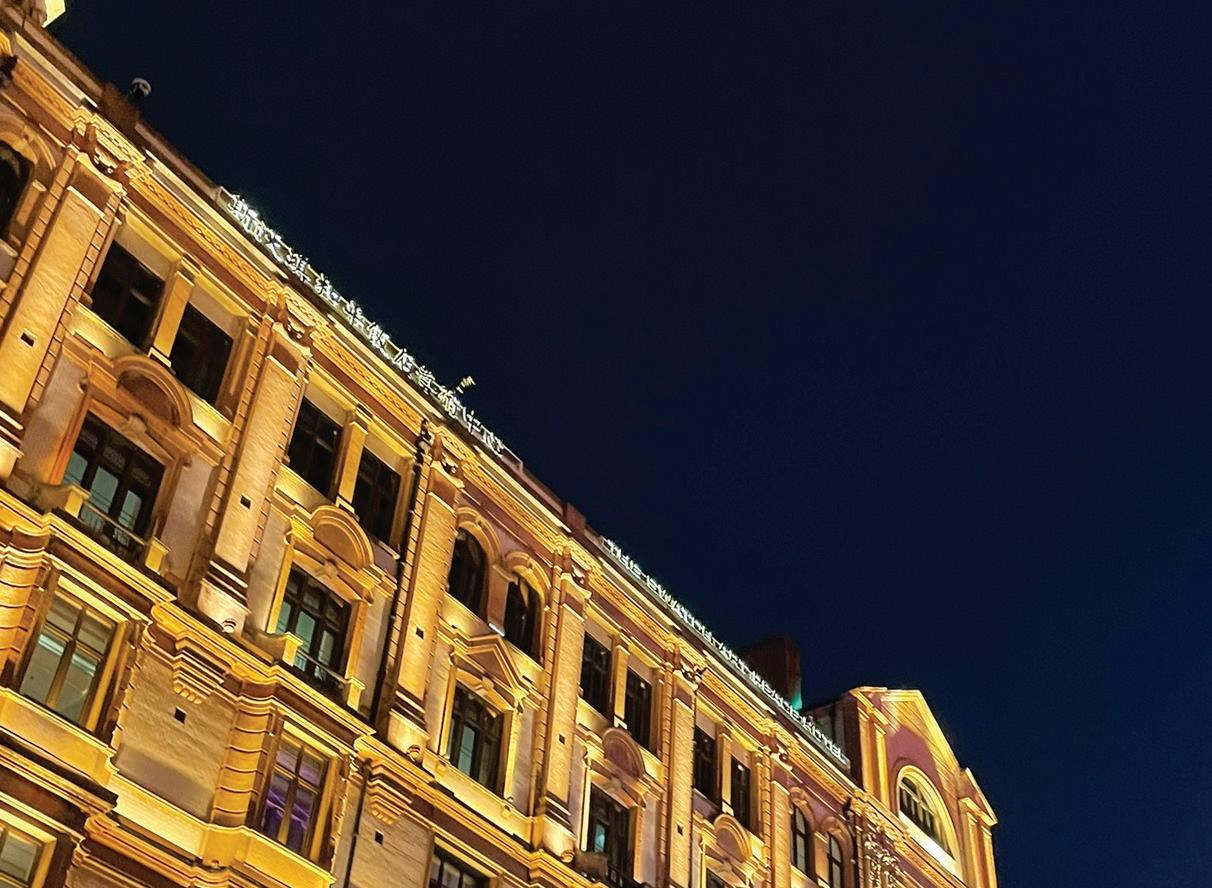
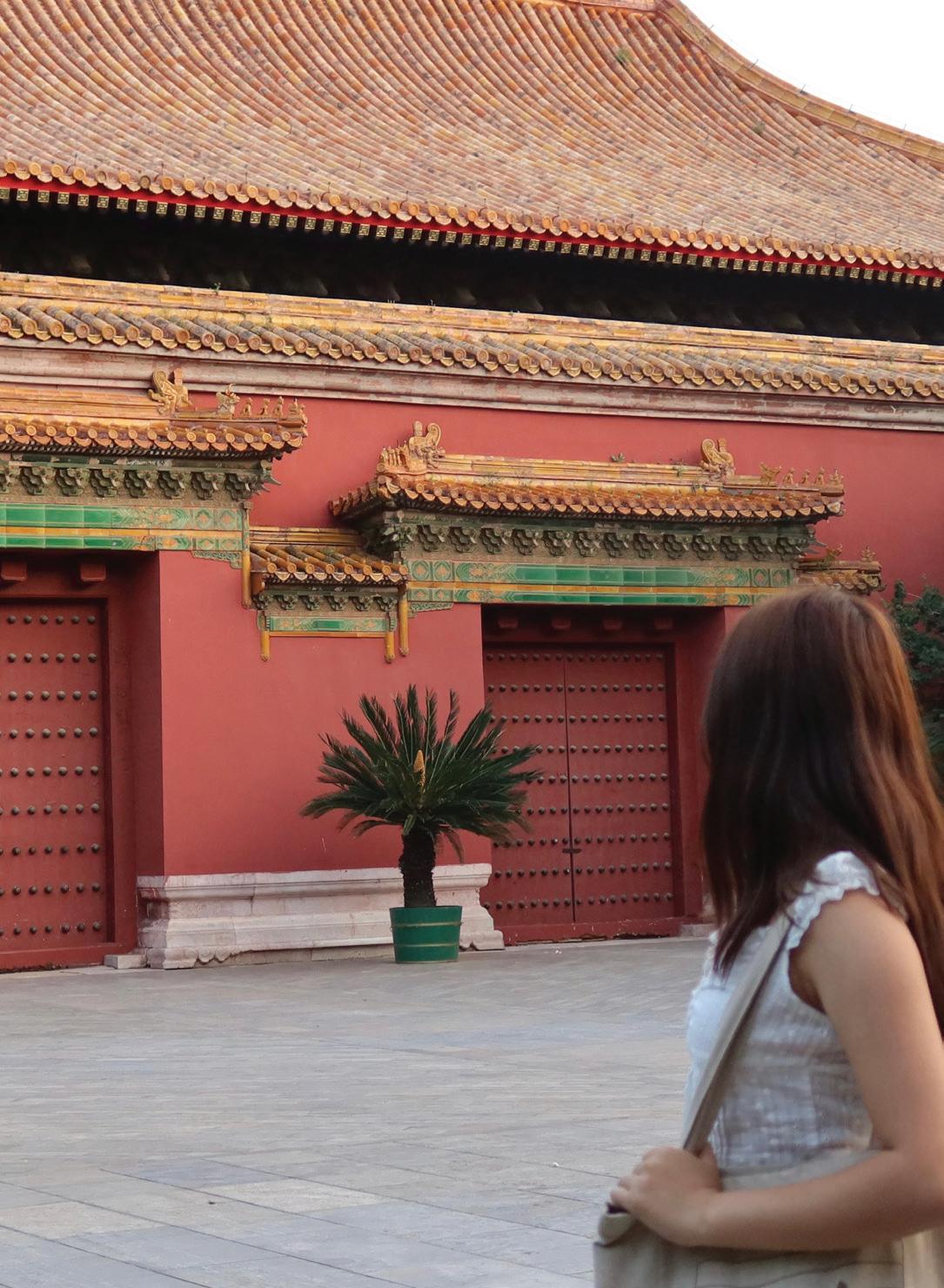
Photo by: Liana Zhu
SHANGHAI, CHINA
VIA VERDE
Palo Alto High School’s Travel Magazine
MISSION STATEMENT
Via Verde aims to be a travel magazine that uses the power of the student press and desktop publishing to pursue the values of the Palo Alto Unified School District and scholastic journalism. More specifically, the mission of the Via Verde is to provide the Paly community with information on travel issues from student perspectives; a forum for students to submit and publish their experiences related to travel; and an independent journalistic magazine that models integrity and creativity, seeking to educate its readers on local and international cultures.
LETTER FROM THE EDITOR
Welcome aboard to Via Verde! We are delighted to have you travel around the world through a Paly student lens.
Via Verde, Paly’s unique student travel magazine is back for its second issue in Volume 6. Via Verde serves as a space where students are encouraged to broaden their perspectives on local and international travels with the discovery of new cultures.
In this issue, we delve into staff writer Hadrien de Martel’s experience hiking through the breathtaking landscapes of Patagonia and Arjun Jindal’s travel advice for teens traveling to popular tourist destinations after being mugged in Morocco.
Meanwhile, staff writers Chiara Martin and Mack Reller compare different ski resorts around Lake Tahoe to determine the best one for teens while Tarika Pillay explores how public transportation differs in three major cities around the world. Lastly, Benji Sandel discovers students’ travel necessities after exploring Cuba without a VPN.
As this marks my final issue, I also want to take a moment to welcome the next Via Verde team.
Leading this publication has been such a meaningful experience, and it’s something I’m so incredibly proud to pass on. Via Verde is more than just a travel magazine—it’s a space for storytelling, creativity, and perspective, and I hope it continues to be pushed in new and exciting directions.
Bon Voyage!
Cailey Lilly Quita
Reller
@viaverde.mag issuu.com/viaverdemag
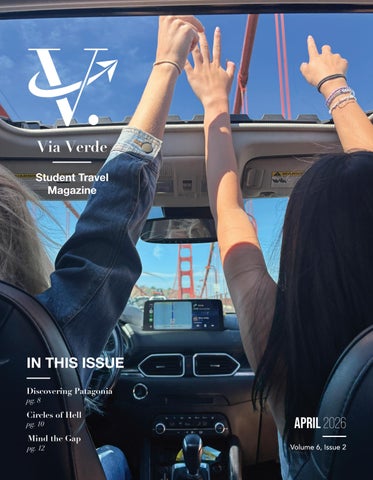
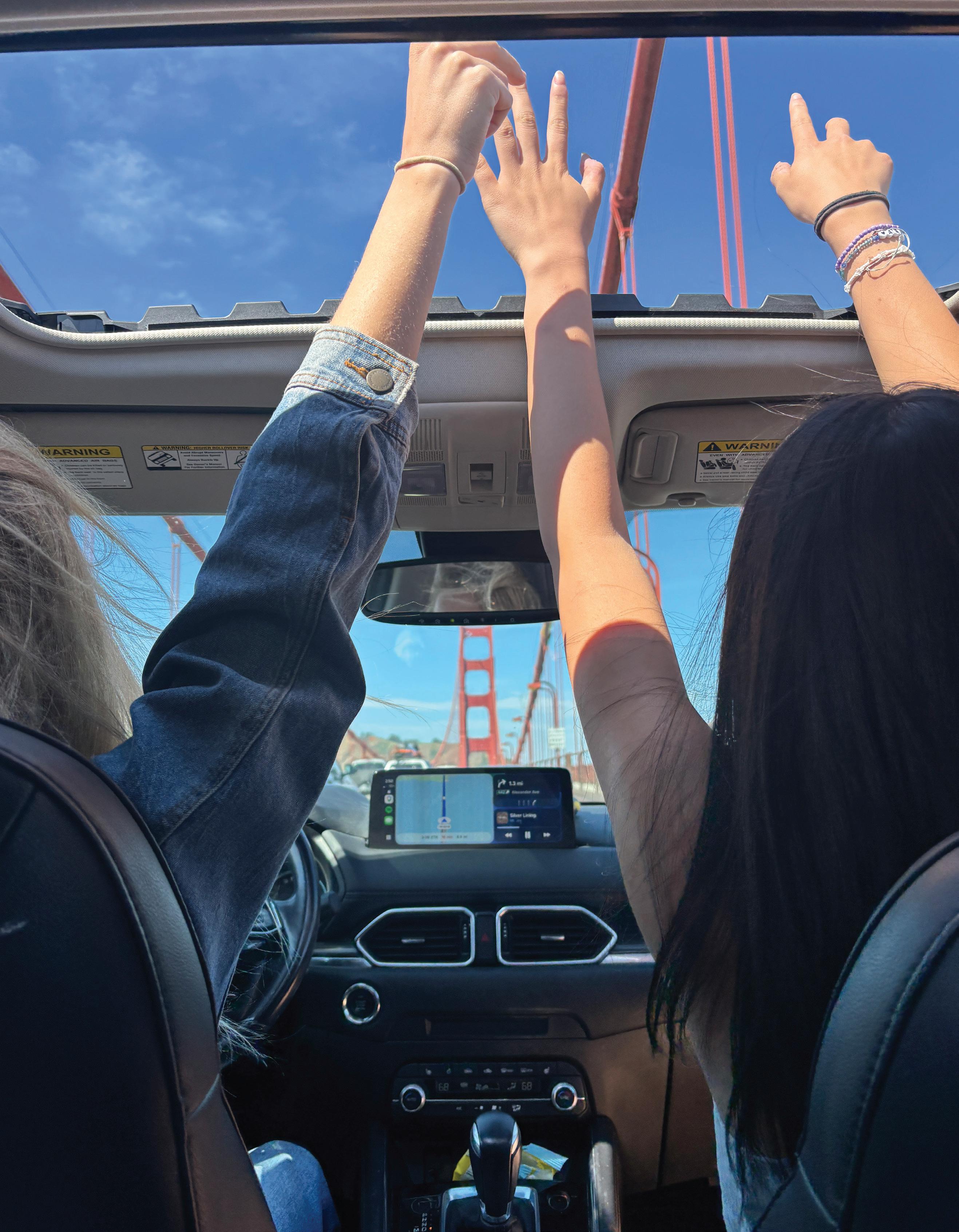
ON THE COVER
Palo Alto High School seniors
Charlotte Barclay and Chloe Huang enjoying a drive across the San Francisco Golden Gate Bridge
Photo by: Merise Boda
IN THIS ISSUE
Photo by: Eli Paz Kozodoy
by Cailey Lilly Quita
Photo by: Katherine Zaner
LOS ANGELES, UNITED STATES
Discovering Patagonia
SPENDING TWO WEEKS IN NATURE
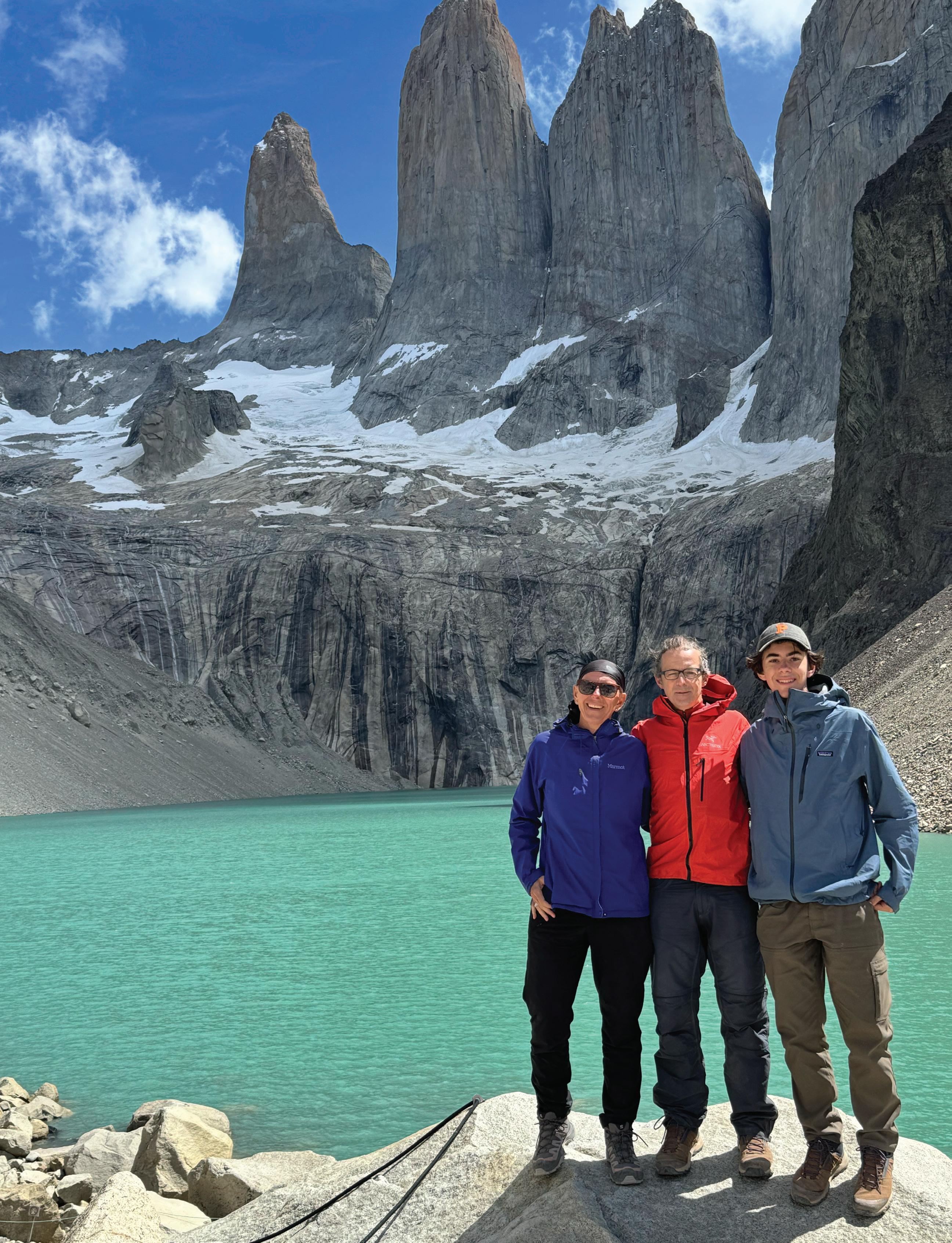
TORRES DEL PAINE: Standing at the top of the Torres, the most famous peak in the park.
Photo by: Stan de Martel
VIA Verde 8
PATAGONIA, A LARGE REGION
that spans the south of Chile and Argentina, is known as a nature lover’s dream, or so at least TripAdvisor says.
By the time I landed in Patagonia, my expectations were already high. Websites, travel guides, and friends had all described how it was the most beautiful place in the world.
Their thoughts were quickly proved right.
After landing in Ushuaia, the southernmost city in the world, I was surrounded by the towering Andes mountains with their jagged peaks. I felt a harsh and freezing breeze blowing in my face.
I couldn’t help but feel insignificant in the face of nature.
That feeling became a constant throughout my trip. The wonder and feeling of seeing glaciers, mountains, and lakes that I simply couldn’t process how they could exist.
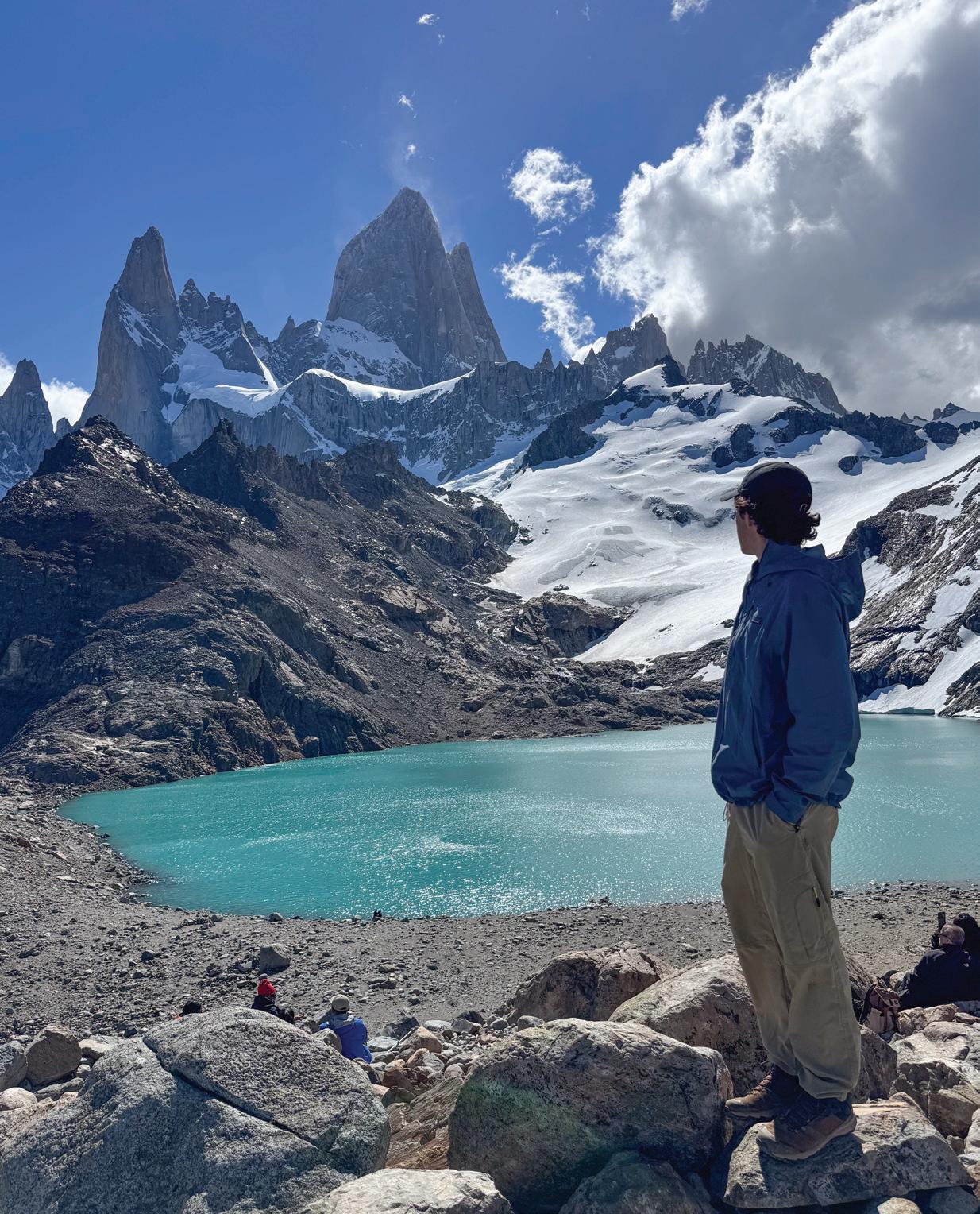
I walked on the Perito Moreno Glacier, which stretched on for miles, and drank glacier water straight from the source. I climbed up Mount Fitz Roy and sat near the top, staring at its jagged peaks standing tall in front of me. I spent four days backpacking in the Chilean national park Torres Del Paine with my family, watching as the scenery changed
from cyan lakes, to rocky mountains, and finally to roaring rivers carving through forests and valleys.
During the trip, I disconnected from everything in my life here in Palo Alto. I didn’t purchase a data plan, so I rarely used my phone, and I distanced myself from the stress of school.
I fully immersed myself in nature, and everything was going well until the final day of the backpacking trip. We stood on one side of Grey Lake with a 10-mile hike ahead, and no boat ticket to return home.
If we couldn’t get on the boat, we would miss the bus and miss our flight. And so as the sun began to rise, I woke up at 6 a.m. and set off to walk the first section of the hike and see the glacier Grey, then quickly came back to wait in line for the first boat of the day at 11 a.m.
We rushed quickly, jumping over rocks, and seeing the landscape shift until we made it back to the pier, bags in hand, waiting attentively, hoping that the boat would have enough space to take us on.
My heart dropped as the captain told my family and everyone without a ticket to go to the back of the line. And as the line continued to shrink, and more and more people boarded the boat, I felt my hopes drop. But,
luckily, after a long wait, the captain let us on, and we managed to make it home.
The trip as a whole was amazing. I saw myself reconnecting with nature, and it was a humbling experience seeing the grandness of the earth in the surrounding landscapes. I felt the most peaceful and at ease in a long time.
The region, however, has been affected by an increase in tourism due to its rapidly increasing popularity on the internet. As I hiked up to the Torres Del Paine, there was a crowd of people on the trail, and I had to walk much more slowly due to other hikers blocking the path. It was like a traffic jam of hikers, which broke the feeling of isolation and closeness to nature.
The glaciers are also rapidly retreating and are in danger of eventually disappearing due to global warming.
And so, I believe that everyone, if given the opportunity, should experience Patagonia. It truly lived up to all my expectations, and as TripAdvisor said, it was a nature lover’s dream. But I would urge visitors to remember that the reason Patagonia is beautiful is its nature, and to continue acting as environmentally friendly tourists. v.
ON TOP OF THE WORLD (RIGHT): Standing above the valley near the top of Mount Fitzroy. Photo by: Stan de Martel
Text by: HADRIEN DE MARTEL
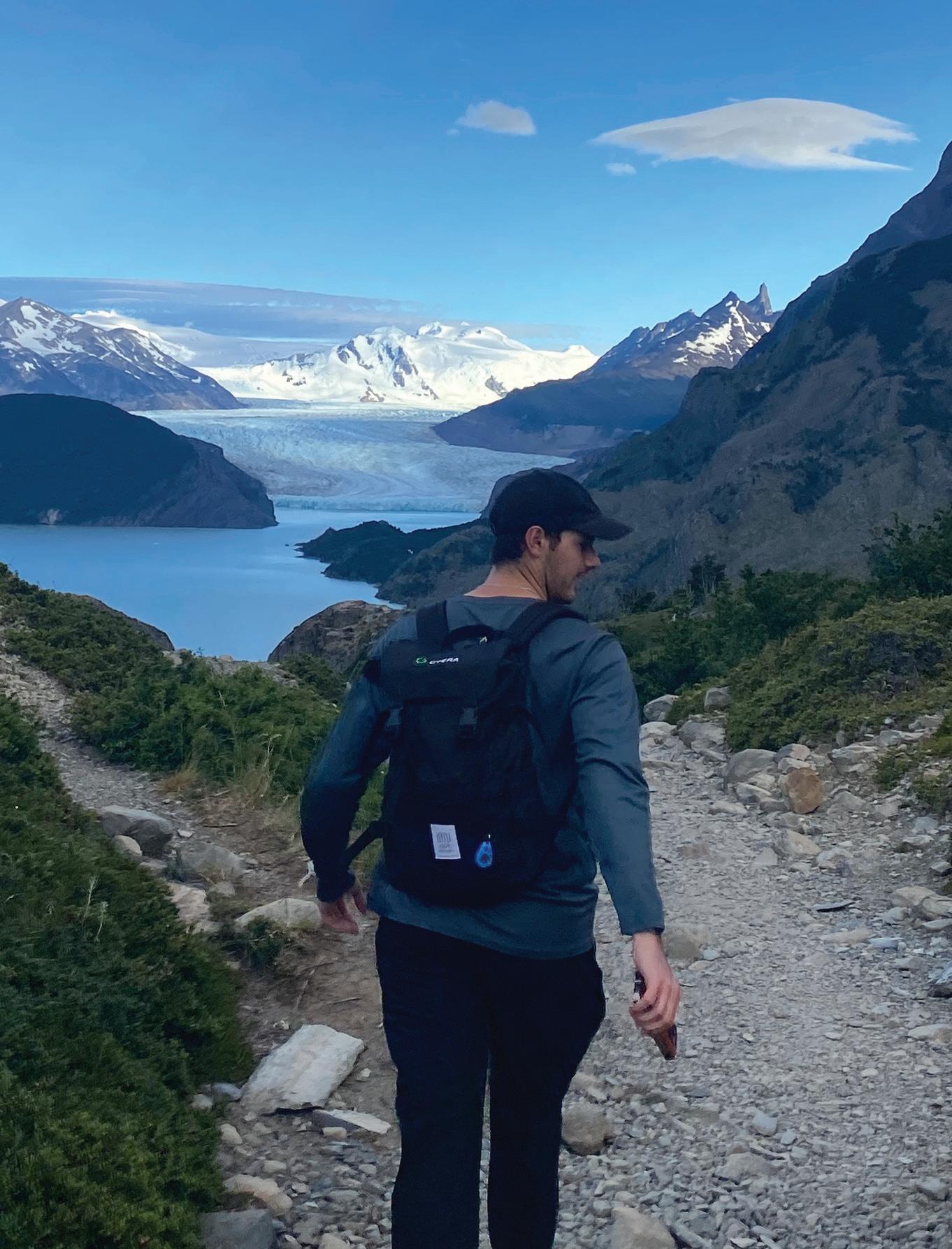
GLACIER AHEAD (LEFT): Walking towards Glacier Grey on the last day of the backpacking trip. Photo by: Hadrien de Martel
CirclesHELL of
WHEN NOTHING GOES ACCORDING TO PLAN
Text and Photo by: ARJUN JINDAL VIA Verde
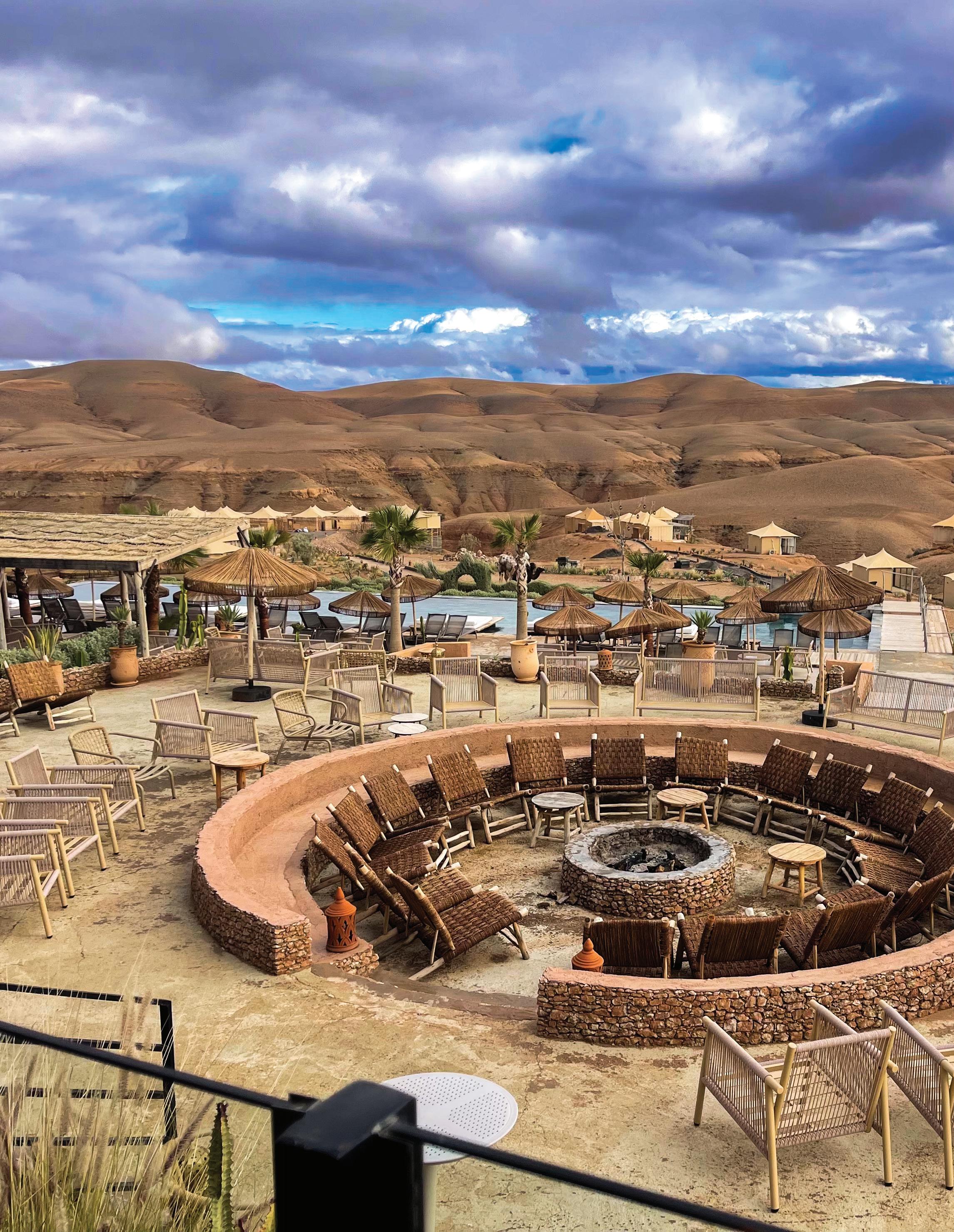
CIRCLES WITHIN CIRCLES — A desert resort’s fire pit and wicker seating overlook the rolling dunes of the Moroccan countryside.
1. Descent
IT ALL BEGAN THE DAY AFTER FINALS, AND THE DAY MY FAMILY LEFT FOR MOROCCO. A slight cough woke me up that morning. After brushing my teeth and eating breakfast, I assumed I just needed a little more sleep.
That assumption would prove to be one of many bad ones, what was supposed to be a quick nap turned into 18 hours of the least restorative sleep I’ve ever had. By the time I woke up, the day had now become the next day. It was travel day. I frantically packed — something I should have done yesterday when I was busy being unconscious — while a lingering exhaustion hung over me. Still, I was excited!
Still tired, a nagging cough followed me through the car ride to the airport, through the security line and onto the plane. As I boarded, I took a melatonin, hoping to finally get some rest. Unfortunately, that would not be happening. Somewhere over the Atlantic, the slight tiredness upgraded itself to a full-body ache. The cough deepened. The melatonin didn’t help, it only made me drowsy enough to experience the misery more vividly.
I was trapped in a metal tube hurtling toward Africa, and my body had chosen that exact time to fall apart. By the time we landed, my fever had climbed to103 degrees. Morocco greeted me with a wave of dry heat, and I greeted it right back a rattling cough that drew eyes from the custom agents.
2. Humiliation
I’m an optimist, I always think tomorrow will be better. So when my dad texted me to my family at a restaurant for lunch, I rallied. I hailed a cab and handed the last of my money to get there, but not enough to get back. Groggily, I stumbled into the restaurant looking for my family.
It was the wrong restaurant. It was one of three restaurants with the same name.
I stood there for a moment, phone in hand, no money, trying to process the situation. Then I turned around and started walking. After 20 minutes of streets I had never seen before, I finally made it back. I was a mess: still stuck, broke, and now hangry. Great.
A few days in, our tour group had an ATV excursion in the desert. I thought this might be the beginning of things turning around, maybe even the air rushing past and some sun would make me less sick.
Then I realized that I could not drive an ATV. It’s the exact opposite of a bike. I stalled. I jerked. I stalled again. The instructor watched me with disappointment.
I rode through the Moroccan sand dunes holding the back of my instructor’s ATV, arms wrapped around a stranger, like a little child being picked up from school.
Finally, a good meal at the hotel. After one too many hot chocolates — partly for my sore throat, or partly just because I returned to my hotel room throughout the ornate hallways of the hotel, As I walked out onto the patio with a beautiful arch, a sudden, violent nausea hit.
I threw up in the hallway, or maybe it was near the courtyard. I do not remember to be honest, I just continued on to my room and collapsed into bed.
3. Mugging
The final circle arrived during a tour of the city. We stopped near a market, and I ducked into a shop to buy soda: a small simple act of joy in a trip marked by the absence of it. I handed it to the cashier the equivalent of $2. He gave me back $1 and the soda.
As I turned to leave, a man approached me grinning, and extending his hand for a shake. I shook it, because what kind of person refuses a handshake? And in motion, he plucked the $2 clean out of my other hand. It happened so fast that for a second I just stood there, soda in hand, empty palm in the other, trying to reconcile what had just occurred.
Before I could react, the cashier was already on it. He shoved the man, grabbed the $2 back, and handed them to me, almost with the view that this kind of thing happens. I nodded, took my change, and just walked back to my tour group. Soda in one hand, crumpled bill in the owwther. I had just gotten mugged for one dollar.
The tour continued, just as life does. We walked through the passageways of the old city and for the first time on the trip, I forgot I was sick. The beautiful culture, the crowded corridors, the incredible arts, the dazzling lights, it was beautiful in a way impossible to replicate anywhere else. If this trip taught me anything, it is this: Be aware! Keep your cash in a zipper pocket, not your open hand. Expect things to go wrong, because they will, and the best you can do is make sure you don’t make yourself an easy target. v.
EXPLORING PUBLIC TRANSPORTATION SYSTEMS IN THREE MAJOR CITIES AROUND THE WORLD
Text and photos by: TARIKA PILLAY
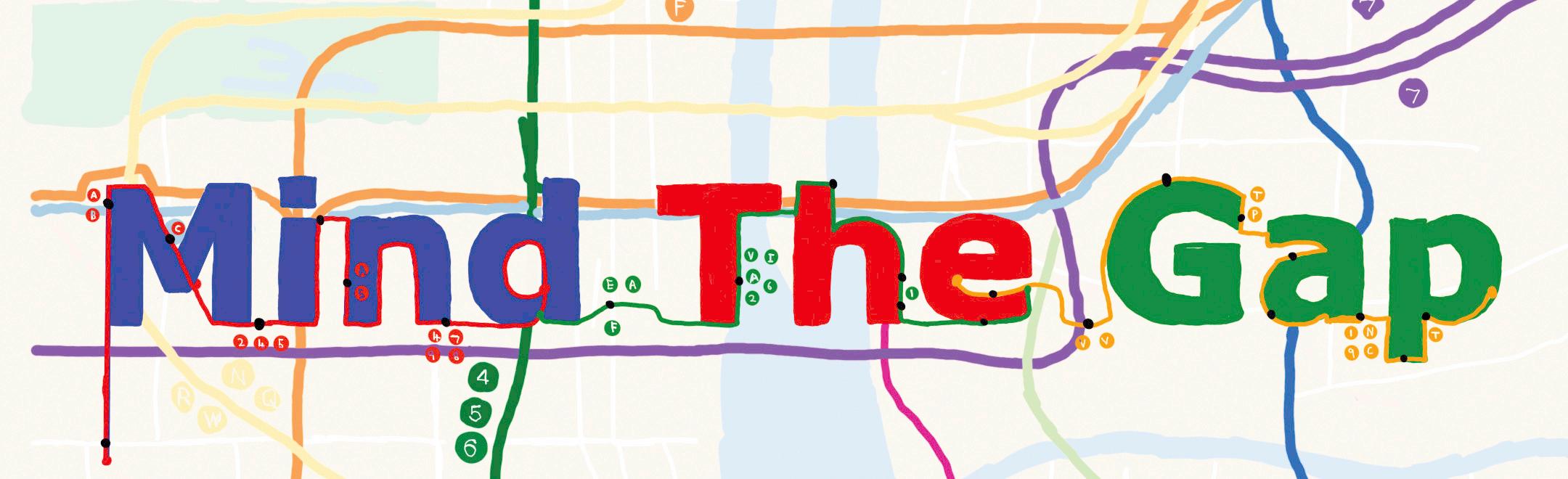
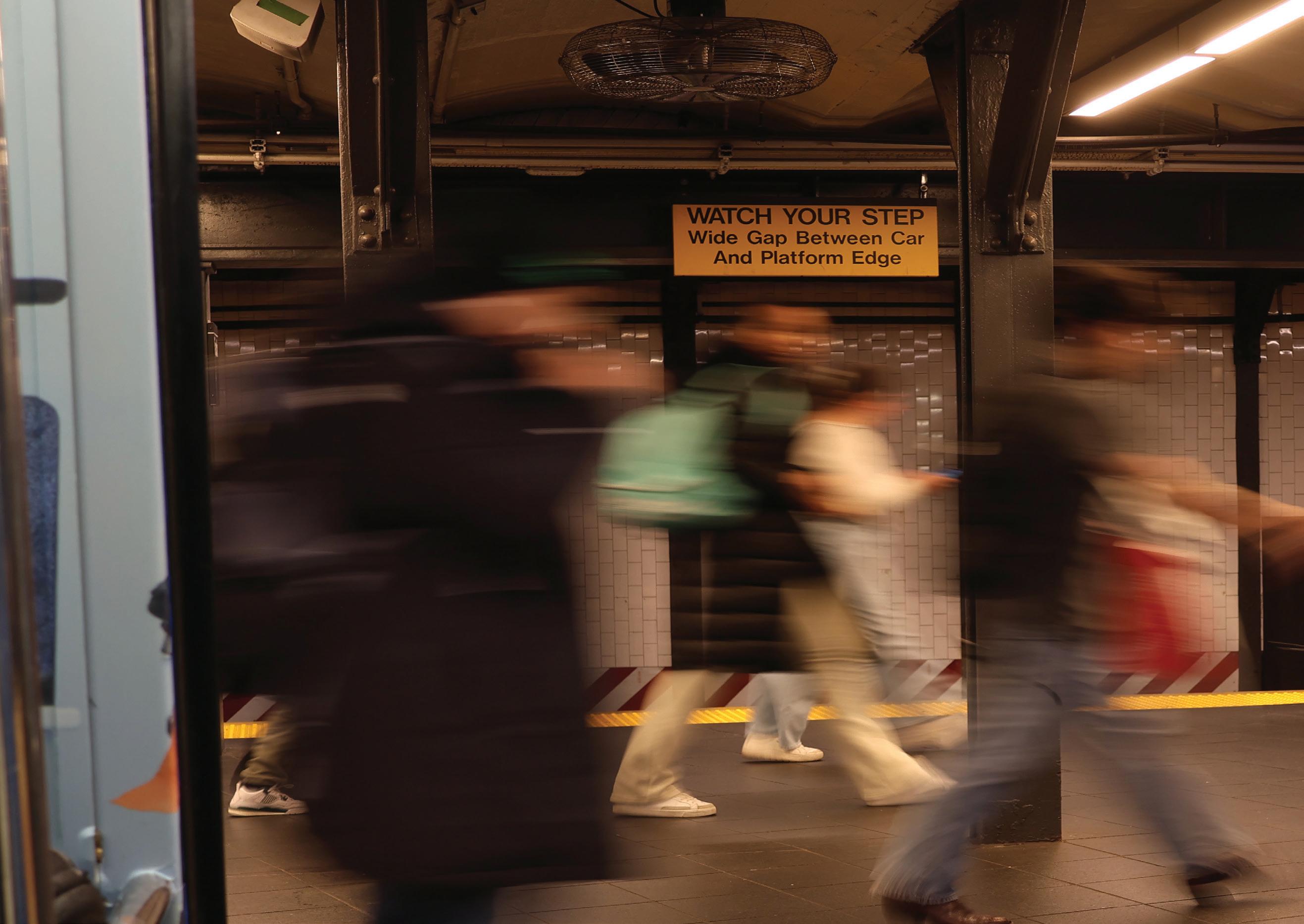
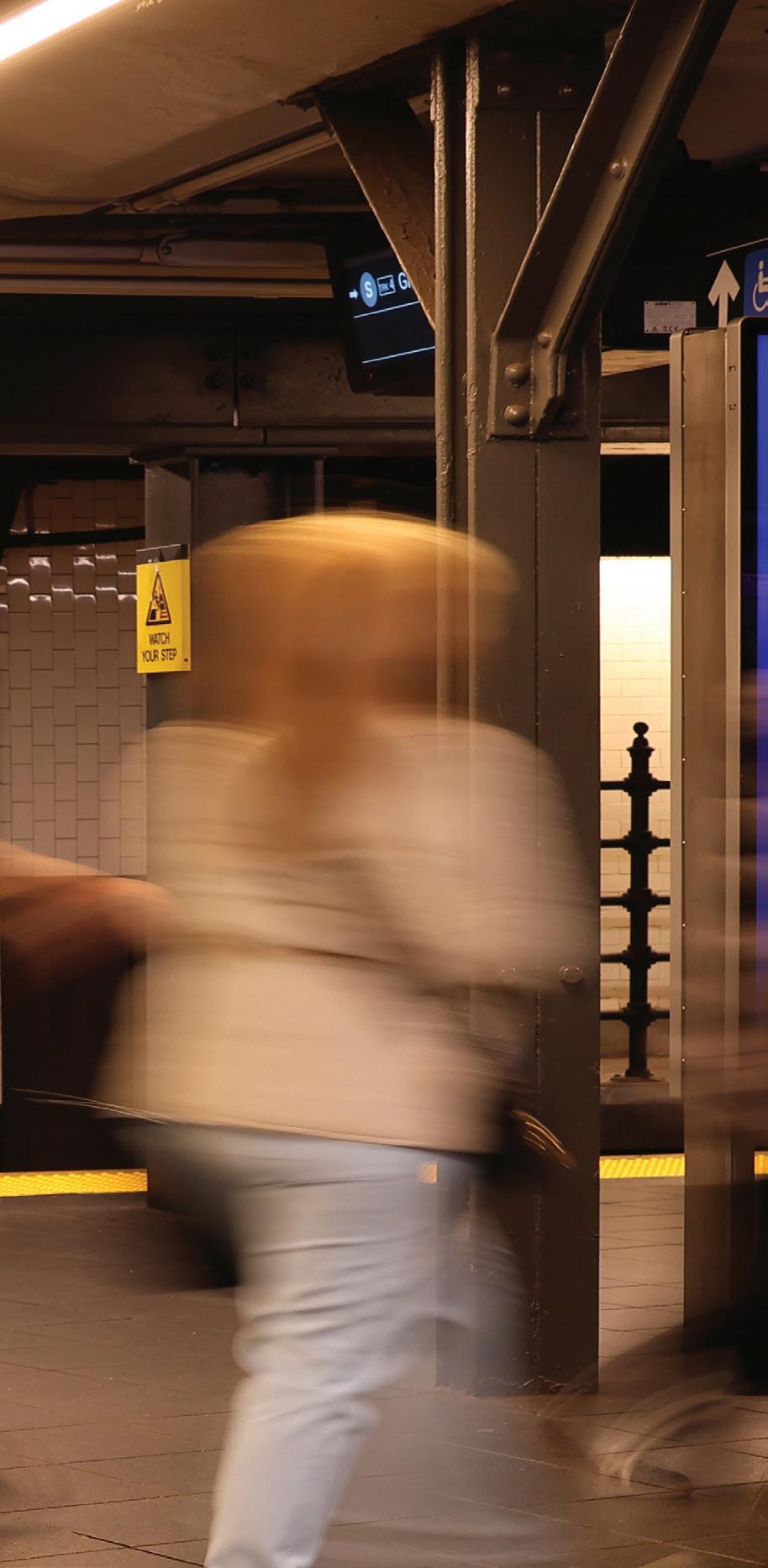
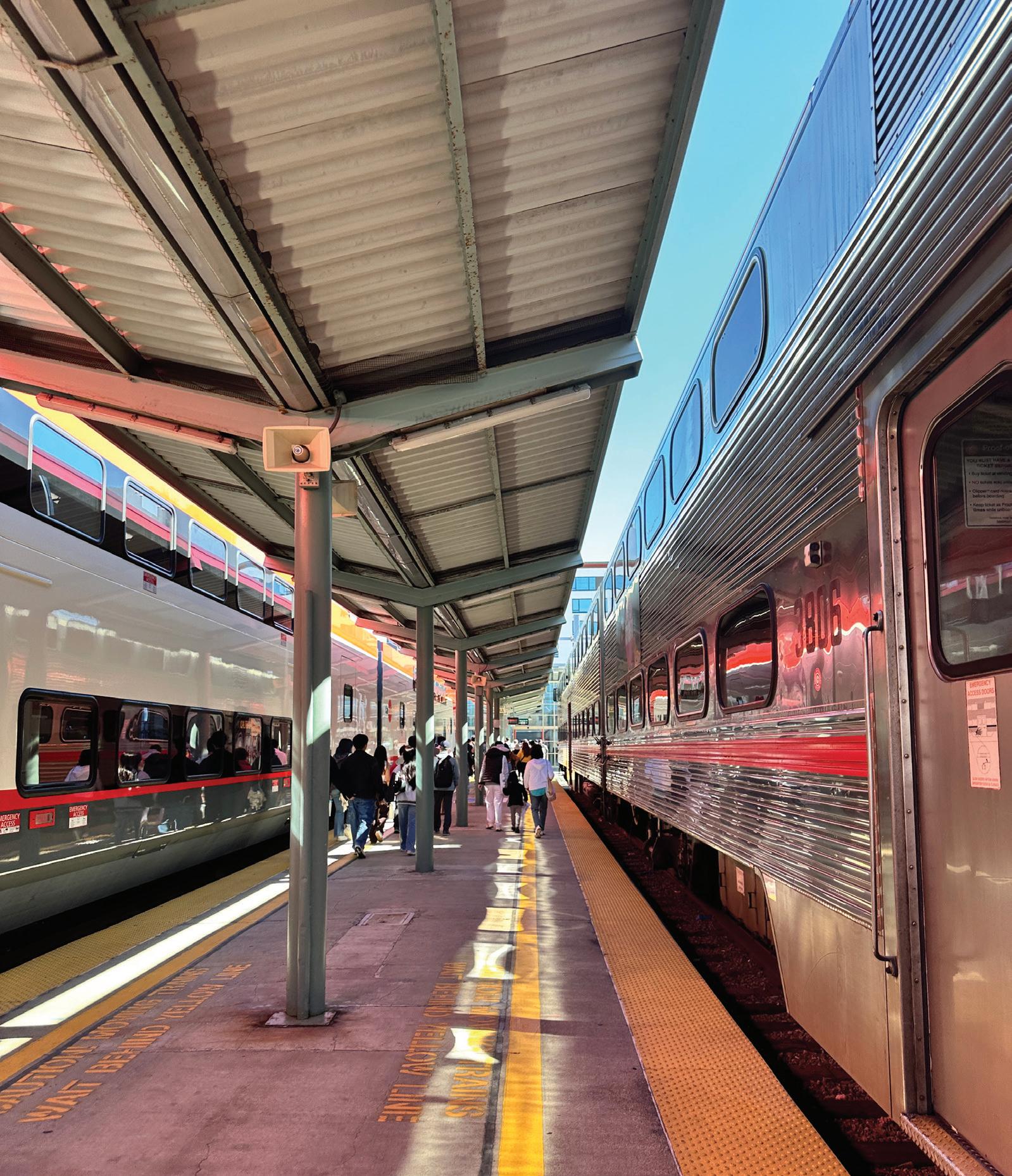
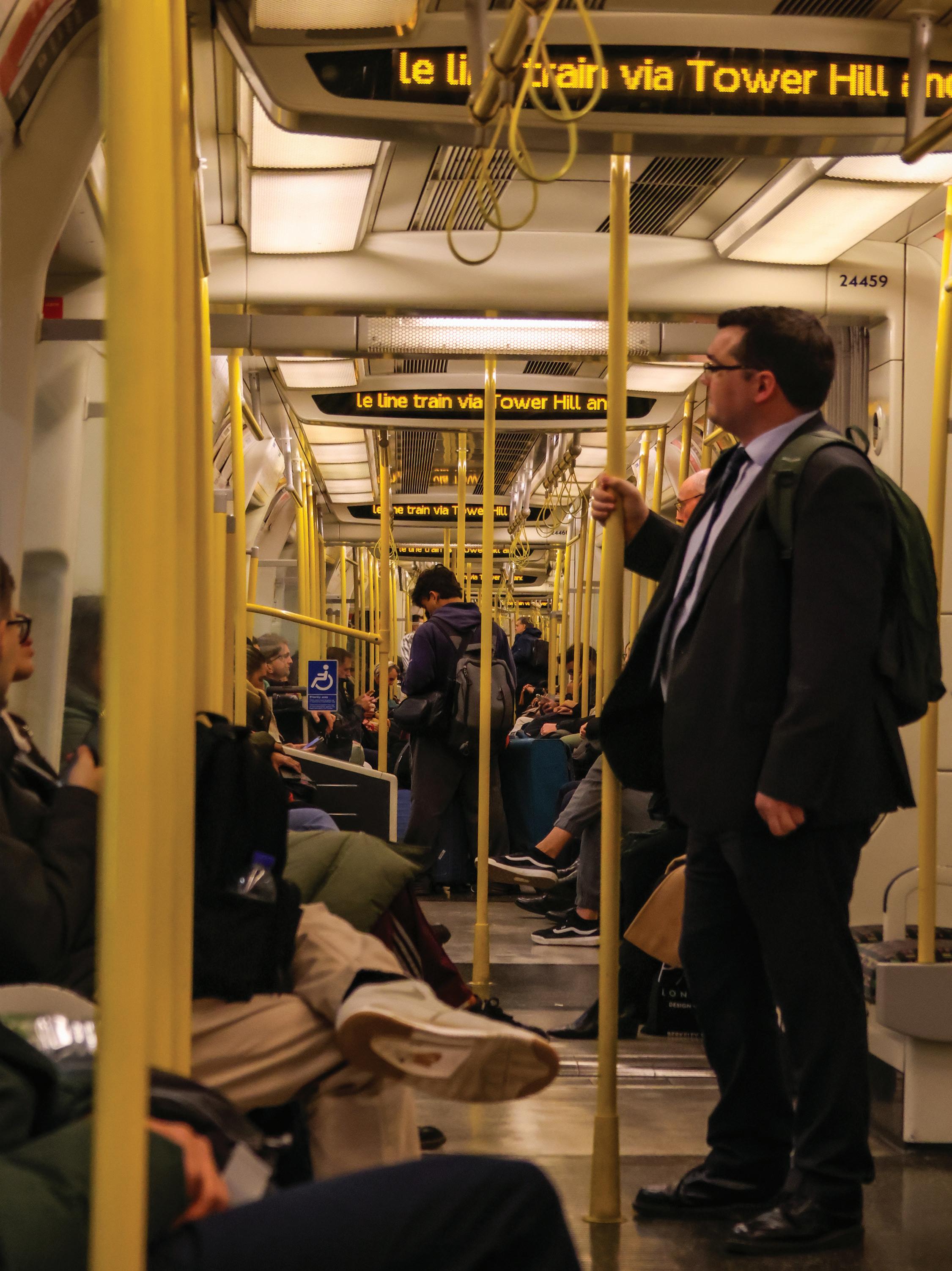
FROM LONDON TO NEW YORK, TO OUR VERY OWN CALTRAIN, PUBLIC TRANSPORT HAS been around since the 1800s, and has since become more than just a way to get around town. The tube is one of the oldest subways in the world, reminding their passengers to “Mind The Gap” and New York has capatalized on the iconic red, blue and green subway lines running along their maps under their buildings. Even the Bay Area relies on the Caltrain to get from coast to coast. v.
SPEEDING DOWN THE TRACKS (TOP RIGHT): The London subway system and it’s iconic red tube.
PASSING THROUGH THE STATION (BOTTOM LEFT): New Yorkers leaving the train to get to their exit.
SUNNY DAY (BOTTOM RIGHT): Caltrain bustling with activity at San Francisco and 4th.
VIA Verde
VIA Verde 14
BE THERE SOON: London workers taking the tube in the evening.
VIA Verde 14
VIA Verde 15
Photo by: Sandy Lui
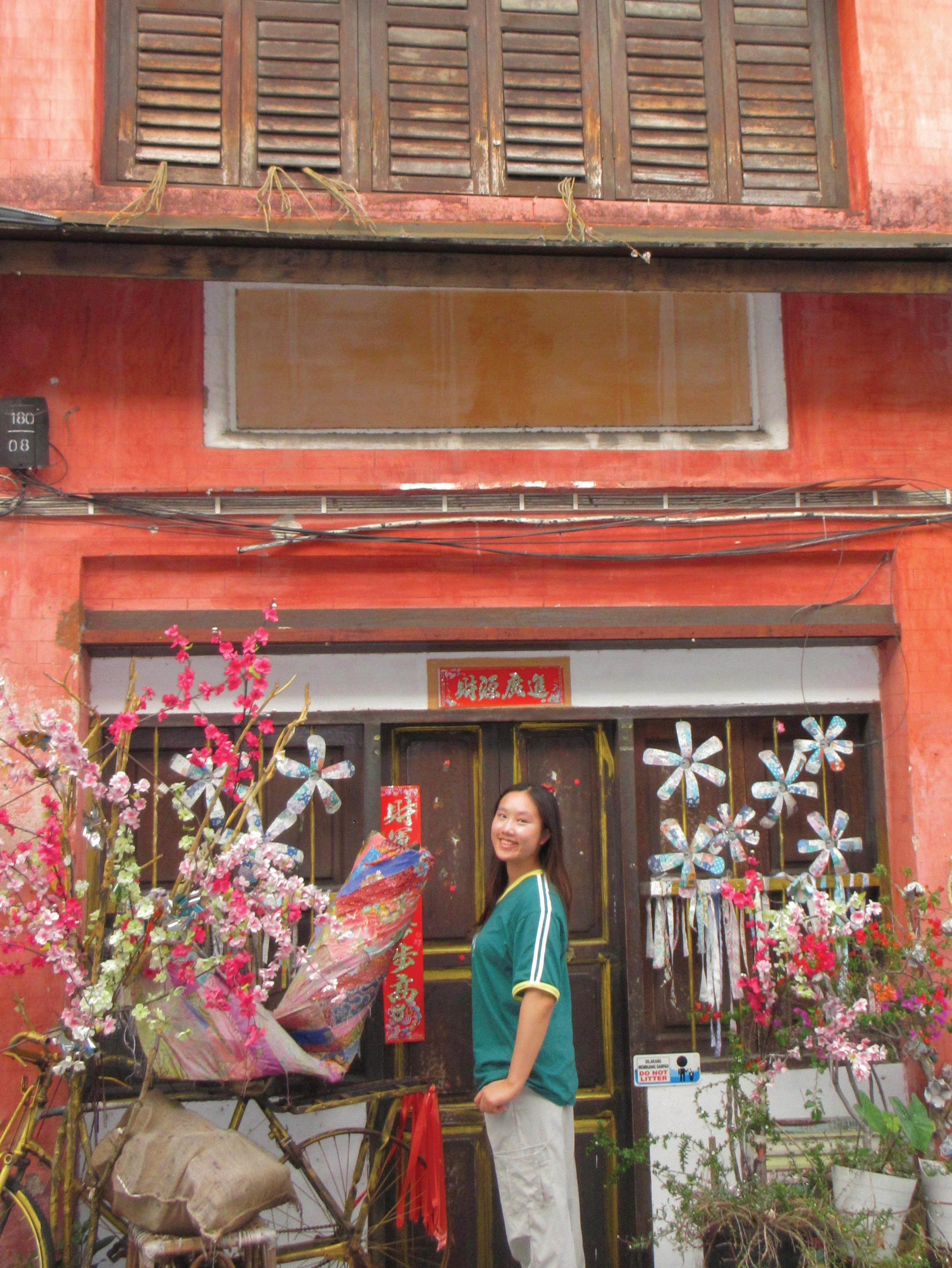
GEORGE TOWN, MALAYSIA
VIA Verde 15
Text by: MACK RELLER and CHIARA MARTIN
The Winter Guide
WHICH SKI RESORT HAS THE BEST EXPERIENCE?
JUST A 3-HOUR DRIVE FROM PALO ALTO, LAKE
Tahoe is home to some of the best ski resorts not just in California but in the entire country. But because Tahoe offers so many different resorts, it can be challenging to pick just one to spend your vacation at.
We reviewed three of the top options to let Palo Alto High School students know which resort is best for them.
Palisades
Palisades ski resort is likely the most popular place on the list. Its huge size and amazing terrain make it one of the most iconic mountains in California, in addition to having hosted the winter Olympics in 1960.
Palisades is the 6th largest ski resort in America, which allows it to have a plentiful amount of runs at all levels. But one of Palisades’ biggest strengths is the advanced terrain it offers. Right at the bottom of the mountain, the lift Kt-22 takes you up two thousand feet and gives access to cliffs, amazing tree skiing, tight chutes, and more, which create an awesome playground for expert skiers.
But for less advanced skiers, they may not be able to experience these highlights. They most likely will ski the green runs which can get overcrowded and the lift lines on these runs tend to be the longest.
Additionally, skiing at Palisades is not cheap. But compared to other mountains in the area, Palisades has pretty average day pass prices ranging from $150 to $250 depending on the day. The food
you can get on the mountain is also overpriced, but that goes the same for about every other ski resort in America.
Another positive trait about Palisades is its apres ski experience. Most days when the mountain is closing down, the base of Palisades will usually have a DJ playing music and a crowd of people dancing and singing along. The vibes are always good and it is a great way to finish off an awesome day of skiing.
Palisades’ achilles heel or its biggest weakness is going to have to be its long lines. If you try to visit the mountain on a 3-day weekend, just about the entire Bay Area is going to be following you. This is going to lead to 30-minute-plus lift lines, which really ruins the day because you’re’ just spending the whole day in line. So if you’re only going to be spending one or two days skiing, you really don’t want to waste those days waiting in lines. We would advise going up on a regular weekend or looking for a different, less crowded mountain so you can maximize your skiing experience.
But if you’re an advanced skier, someone looking to have a great time after their ski day, and someone who doesn’t mind long lines, we would recommend you go and check out Palisades Tahoe.
Northstar
Northstar offers a lot more beginner terrain and is the perfect place for beginners to start their skiing careers.
A majority of the terrain at Northstar is pretty flat, which makes the mountain available to skiers of all levels. They also groom lots of
SCENIC SKIING: Palo Alto High School junior Henry Germain surveys the slopes at Palisades before continuing on his run. Photo by: Mack Reller
their runs, clearing obstacles and making smooth and mellow runs which helps the new skiers.
The negative side of this is that Northstar lacks advanced terrain, which can make higher-level skiers feel kind of bored. The only part of Northstar that is comparable to Palisades’ advanced terrain is its Martis Camp chairlift, which offers a couple of steep advanced level runs. But if there is not an abundance of snow, most of these runs are closed off. This forces higher-level skiers to lower-level runs, which can take away their excitement.
Days pass at Northstar go from $170 to $240, so pretty similar to Palisades. The prices you pay for food are about the same, but we would argue that the food quality at Northstar is much lower than at Pallisades, so it might be smart to pack your own lunch.
The village at Northstar also offers a lot of amazing restaurants, making it pretty easy to just walk into town and find a place to sit down and enjoy a nice meal. They also have an ice skating rink and a sledding hill, which adds to the overall experience of one’s trip.
If you’re new to skiing and still learning the basics, Northstar is a great place to learn. But if you’re looking for intense, hard ski runs, you’re going to be hard-pressed to find them at Northstar.
Kirkwood
Kirkwood is the smallest and least known resort out of the three, which has both its pros and its cons.
The pros are that Kirkwood is less busy and features much shorter lines, even on the busiest weekends. This is a great pro compared
to Palisades and Northstar which can have lines over an hour long. It can also be slightly cheaper than Palisades and Northstar, with day passes ranging from $125-200 per day.
The cons are that being much smaller, there are less options and new runs to try out. It’s not the best place for intermediate skiers, as there aren’t a variety of blue runs. However, this makes it great for advanced and expert skiers, as most of the runs are black diamonds with difficult terrain.
Kirkwood has great advanced terrain and rivals Palisades for having the most difficult runs. There are lots of moguls and tree skiing for skiers who like to challenge themselves.
Kirkwood, unlike Northstar and Palisades, doesn’t have the same “ski town” vibe. There are some restaurants, but much fewer, and there aren’t many activities for non-skiers. The social atmosphere isn’t the same as at other bigger resorts, which can make it less appealing for teens. The only real thing to do in Kirkwood is ski, so it attracts more of the hardcore type skiers.
Overall, Kirkwood is definitely worth checking out especially for more advanced skiers, and is a great place to go on busy weekends since it’s less crowded.
Conclusion
Each one of these mountains has its strengths and weaknesses, and caters to different skiers at all different levels. Picking a mountain that suits you can make or break your ski trip. But with the right information you’ll be able to find the right mountain for you. v.
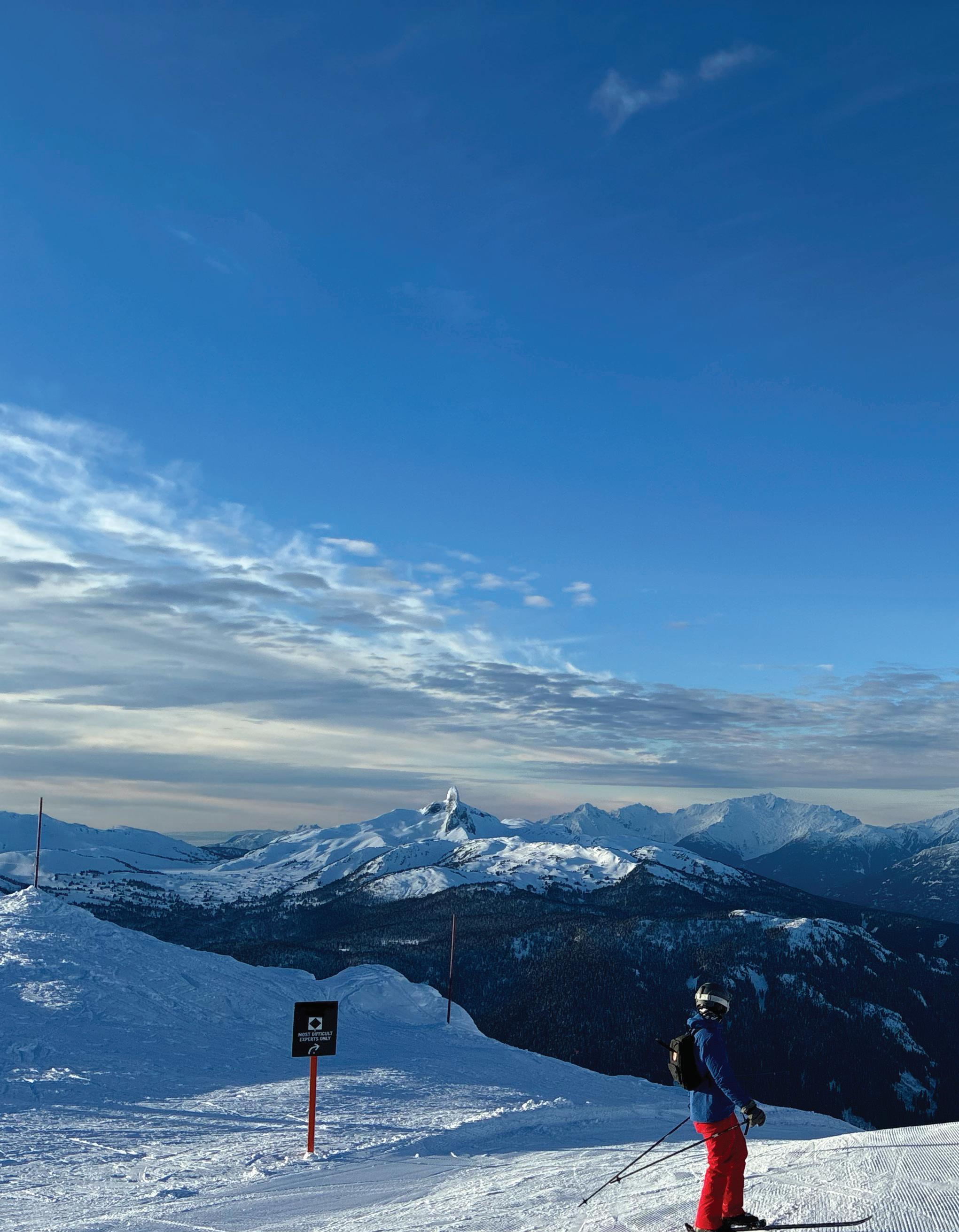
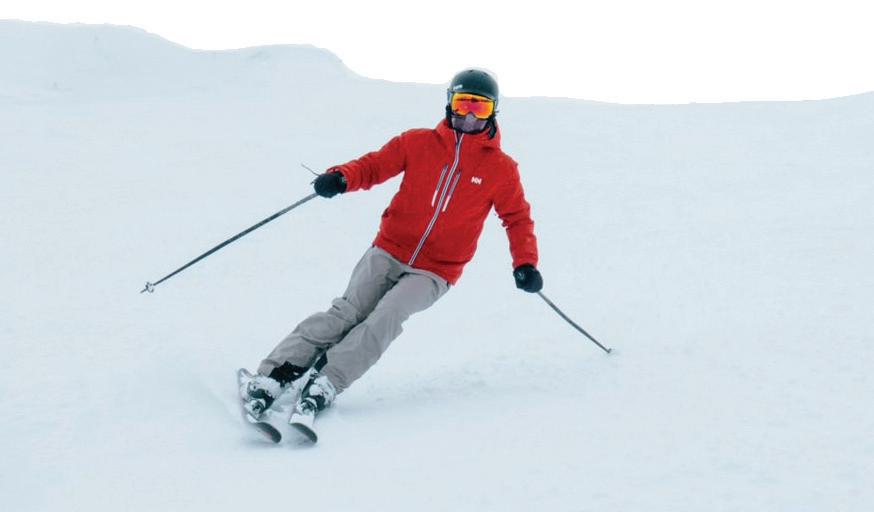
ON THE SLOPES: Palo Alto High School senior Hadrien de Martel skis down a black diamond at Kirkwood. Photo by: Jules Lustig
Photo by: Anna Garay
Verde
adventure
ASKING STUDENTS ABOUT THEIR TRAVEL HACKS
often a lot of downtime. Whether your music and en tertainment are inaccessible in that downtime, your lips are dry and chapped, or you lose your charger and your
— that with a Virtual Private Network, any site is acces sible all over the world. For instance, it could tell your phone you are in the United States, so you can have access to the content you wouldn’t normally get in the island.
have a VPN — meaning I couldn’t open Netflix, Apple
lem on our long drives around the island. I love listening to music but hate using my phone storage. As a result, there are many songs in my Apple Music library that I love, but very few downloads. It turns out, listening to the same songs on repeat for two weeks can get repetitive.
The fix? The first thing I did when I returned (after texting my grandma that my family landed safely) was Via Verde was curious about travel hacks other stu-
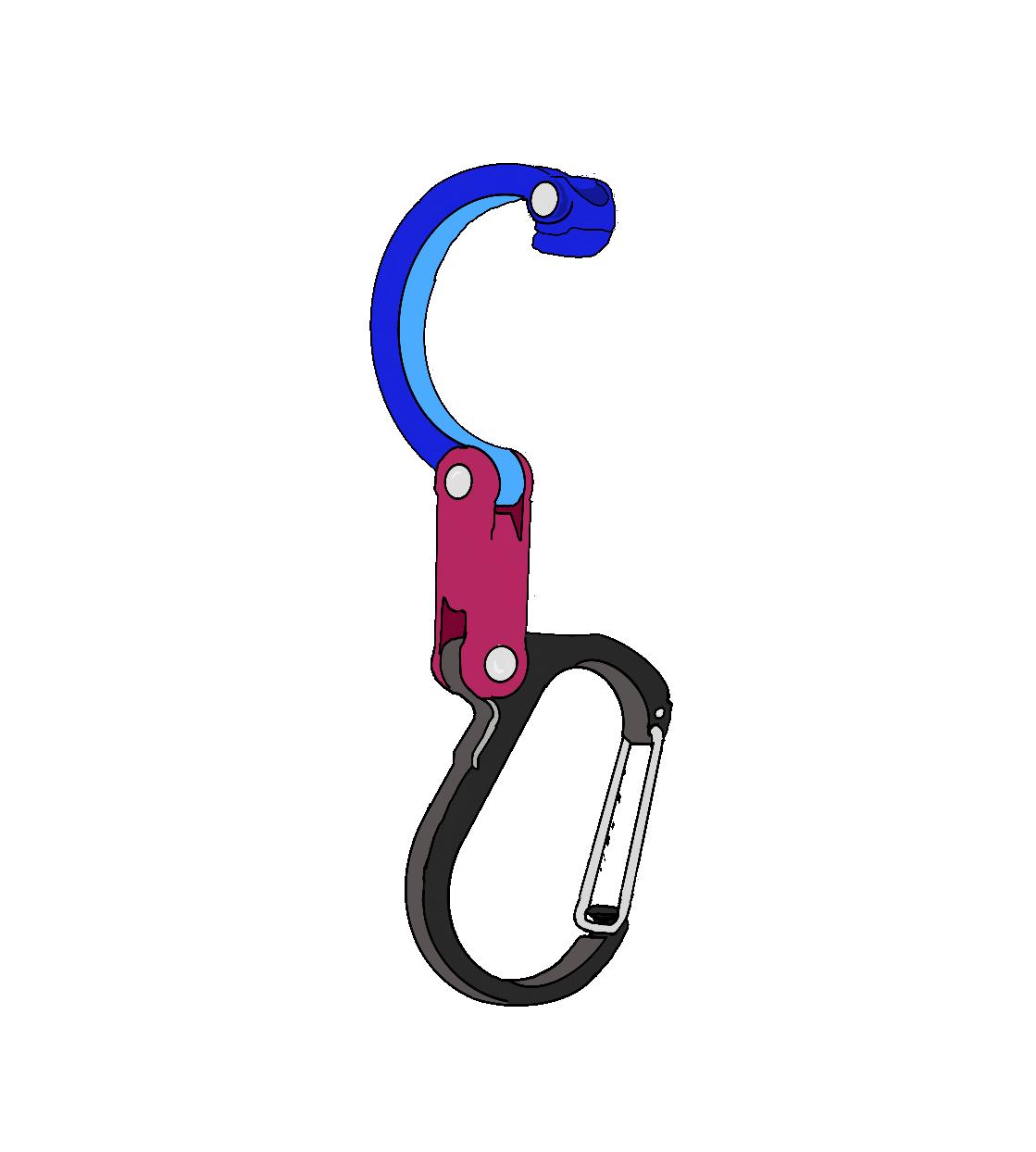
Sophomore Mathew Hong said he doesn’t travel without a Here Clip, a portable clip for a bag, because of its convenience. A Hero Clip is two clips connected that can be used to hang bags off any hook and surface.
“I got a hero clip [which is ] a carabiner that can transform.” Hong said. “It’s really useful for hanging stuff together… and also it’s a nice tool to have on you all the time.” v.
STUDENT TRAVEL PHOTOS FROM AROUND THE WORLD LANDING