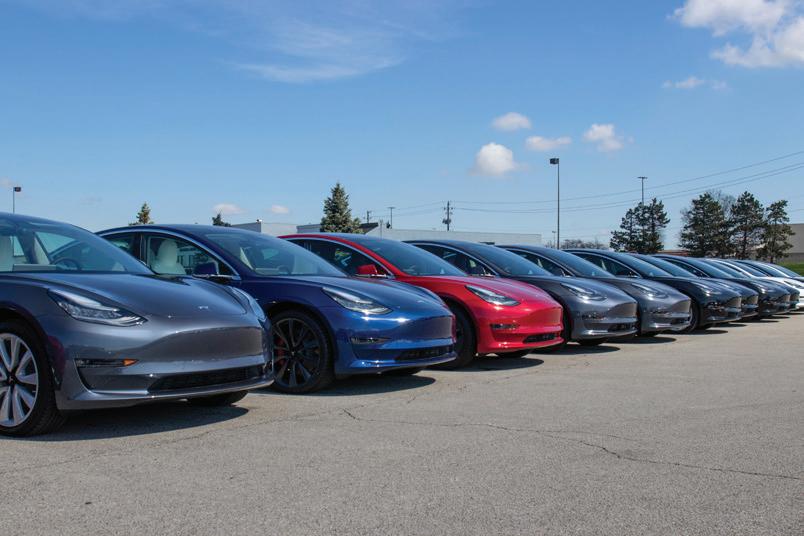
NEW ZEALAND'S EV TRANSITION KEEPS STALLING — AND THE EVIDENCE POINTS SQUARELY AT POLICY INSTABILITY RATHER THAN TECHNOLOGY OR CONSUMER APPETITE
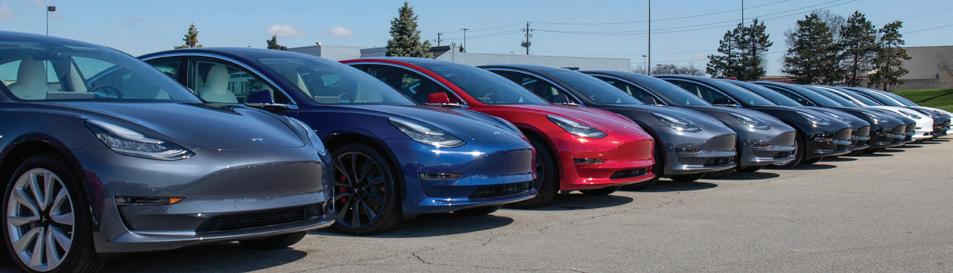
Cast an eye across the global EV landscape, and the picture is unambiguous. One in four new cars sold worldwide is now electric. China hit one in two last year. Norway, the standard-bearer for long-haul policy commitment, is selling 98% of new cars as EVs — the result of 35 years of consistent, cross-party strategy. Even countries that most Kiwis couldn't confidently place on a map are moving faster than we are: Vietnam at 40% EV new car share, driven by domestic manufacturer VinFast; Turkey at 22%; Indonesia tripling year on year.
THE NUMBERS IN CONTEXT
New Zealand? We finished 2025 at 11% of new car sales. Not embarrassing in isolation — but consider where we were. In 2023 we sat at 20%, among the stronger performers in the developed world, with Australia behind us. By 2024, EV market share had fallen to 10.6%, and Australia, which had been the laggard, introduced its New Vehicle Efficiency Standard
in 2025 and overtook us for the first time.
The slide wasn't driven by technology failure or a collapse in consumer appetite. The BYD Atto 1 and Dongfeng Box both arrived in New Zealand below $30,000, and 260 new light EV models are now available here compared to 152 in 2023. Drive Electric, the industry advocacy group that tracks EV uptake using Ministry of Transport data and international research, identifies the remaining barriers in its annual State of the Nation report (released for 2026 last month) as affordability, policy certainty, charging infrastructure, and the speed of fleet turnover. The technology gap has largely closed.
What happened between 2023 and 2024 is well documented. The incoming government scrapped the Clean Car Discount — the feebate scheme that reduced the upfront cost of loweremission vehicles. The Clean Car Standard was weakened, twice. Road User Charges were introduced for EVs, eliminating a tangible ownership cost advantage. These were not
minor adjustments, and Drive Electric’s 2026 report notes the prior package of Clean Car policies had been forecast to reduce transport emissions by 3.4 million tonnes and cut petrol imports by 1.4 billion litres by 2035. The policy reversal did not just slow the EV market; it demonstrated, in real time, how directly purchasing behaviour responds to policy signals. The contrast with the bus sector is instructive. When the government committed in 2021 to purchasing only zero-emission buses from 2025, the fleet responded: New Zealand's electric bus fleet has grown roughly 12-fold in three years. Palmerston North became the first city to run a fully electric bus fleet and recorded a 69% increase in bus patronage over two years.
New Zealand’s EV transition keeps stalling — and the evidence points squarely at policy instability rather than technology or consumer appetite
A
ISSN 2816-0959 (Print)
ISSN 2816-0967 (Online)
ONLINE autochannel.co.nz
EMAIL contact@autochannel.co.nz
SUBSCRIPTIONS subscriptions@autochannel.co.nz
MAIL PO Box 202152, Southgate, Takanini 2246
Auckland, Wellington, Christchurch, and Dunedin are all making measurable progress, showing that consistency in procurement policy works. The light vehicle market, however, stripped of its demand-side and supply-side levers, did not receive the same signal.
THE GLOBAL LESSON WE KEEP IGNORING
The contrast is visible globally. China made a strategic decision to lead the EV transition as an economic and industrial priority, not simply a climate one. The result: China now manufactures more than 70% of EVs globally, produced 12.4 million of the 17.3 million EVs built worldwide in 2024, and commands a domestic market where one in two new cars is electric. The policy was set, resourced, and sustained — and the market followed.
WHAT THE AFTERMARKET SHOULD BE WATCHING
For the aftermarket trade, the pace of fleet electrification is not an abstract policy question — it determines what rolls through workshop doors over the next decade.
New Zealand trucks average 17.8 years old. The light vehicle fleet turns over slowly. Vehicles purchased under today's market conditions — whether ICE or EV — will still be in circulation in the late 2030s. The shape of that future fleet is now being determined by purchasing decisions made in the current policy environment.
MEDIA SALES
Michael White, michael.white@viamedia.co.nz
PRODUCTION
Harrison Wade
Deven Solanki
AUTO CHANNEL IS PUBLISHED BY
BUSINESS DIRECTOR
Michael White, michael.white@viamedia.co.nz
GENERAL MANAGER
Simon Holloway, simon.holloway@viamedia.co.nz
FINANCIAL CONTROLLER
Mel White NOTICE TO ADVERTISERS
Via Media uses due care and diligence in the preparation of this magazine, but is not responsible or liable for any mistakes, misprints, omissions, or typographical errors. Via Media prints advertisements provided to the publisher but gives no warranty and makes no representation to the truth, accuracy, or sufficiency of any description, photograph, or statement.
Via Media accepts
Auto Channel is the best way to reach the wider automotive industry. The publication is direct mailed to New Zealand businesses in the following automotive sectors: Automotive workshops, parts importers and distributors, transmission specialists, automotive recyclers, towing operators, panel beaters and painters, crash repairers, tyre dealers, suspension and underbody repairers, steering specialists, autoelectrical repairers, new and used-car dealers, air-conditioning repairers, trucking and transport.
The United States presents the mirror image. The EV transition has been treated as a political football, with incentives introduced under one administration, revised under the next. The outcome is predictable: private capital prices in policy risk, manufacturers hedge, consumers wait. New Zealand is not America, and our scale of political dysfunction is different, but the mechanism has parallels.
BUDGET 2026: NO NEW DIRECTION
The May Budget offered no answer, instead focusing on fiscal discipline: health, education, defence, law and order. There was no meaningful new spending on transport decarbonisation nor funding committed to meeting New Zealand's Paris Agreement pledges — a point critics noted immediately, given Treasury's own estimate that missing those targets could cost the country between $3.3 billion and $23.7 billion in offshore carbon credit liabilities by 2030.
The charging network is not on track to meet the government's own target of 10,000 public charge points by 2030. The country currently has around 1,800. The charger-to-EV ratio sits at 1:52 — among the lowest in the OECD. The $52.7 million zero-interest government loan package announced earlier this year for ChargeNet and Meridian Energy is a positive step — it should deliver over 2,500 additional charge points and roughly double the network — but the deployment rate required to hit 10,000 by 2030 remains well ahead of what has been achieved to date.
Meanwhile, New Zealand spends an estimated $7–9 billion annually on petroleum imports, sourced through Asian refineries that draw around 80% of their crude from Gulf states. Since the closure of Marsden Point in 2022, we have had no domestic refining capability. Every time a geopolitical event disrupts supply — as the Iran–US conflict has done this year, triggering a spike in pump prices and a corresponding 265% monthly surge in EV registrations — the structural vulnerability is exposed afresh. Consumer appetite is there, as that surge demonstrated, but what’s missing is the policy environment to translate it into sustained momentum.
A slower EV transition does not mean no EV service work — it means a delay in the rampup. Workshops that hold off on EV-capable tooling, training, and diagnostic investment because the transition ‘isn't here yet’ risk being caught short when the curve steepens. And when it does steepen — driven by price parity, which Bloomberg NEF projects will be reached globally between 2025 and 2029, or by the next fuel price shock, or by policy eventually stabilising — the ramp will likely be steep.
The Drive Electric State of the Nation report identifies 138,626 light EVs on New Zealand roads as of early 2026. That number is growing, if unevenly. The used EV import channel remains constrained by Japan's limited BEV supply — the Nissan Leaf accounts for 78% of used BEV imports — but the new vehicle market is at least diversifying. Multiple electric ute models have now entered the New Zealand market. The electric van segment is expanding. The BYD Shark 6 registered 1,885 units in 2025 alone.
So there’s no doubt the fleet is changing. The question is whether the policy environment will allow it to change at a pace that serves the country's economic and energy security interests — or whether New Zealand will continue arriving late to transitions that the rest of the world is already well into.
Norway's lesson, cited in the Drive Electric report, is that even 35 years of consistent policy yields only 32% fleet share. Fleet transformation takes time, and the clock started somewhere. A decade from now, the decisions made — or deferred — in 2025 and 2026 will show up in a workshop booking system, in a fleet manager's replacement cycle, or in a fuel import bill. What the industry needs from government — of whatever political persuasion — is not ambition; it’s simply consistency: the kind that lets businesses plan, investors commit, and workshops prepare for a fleet they can already see arriving.
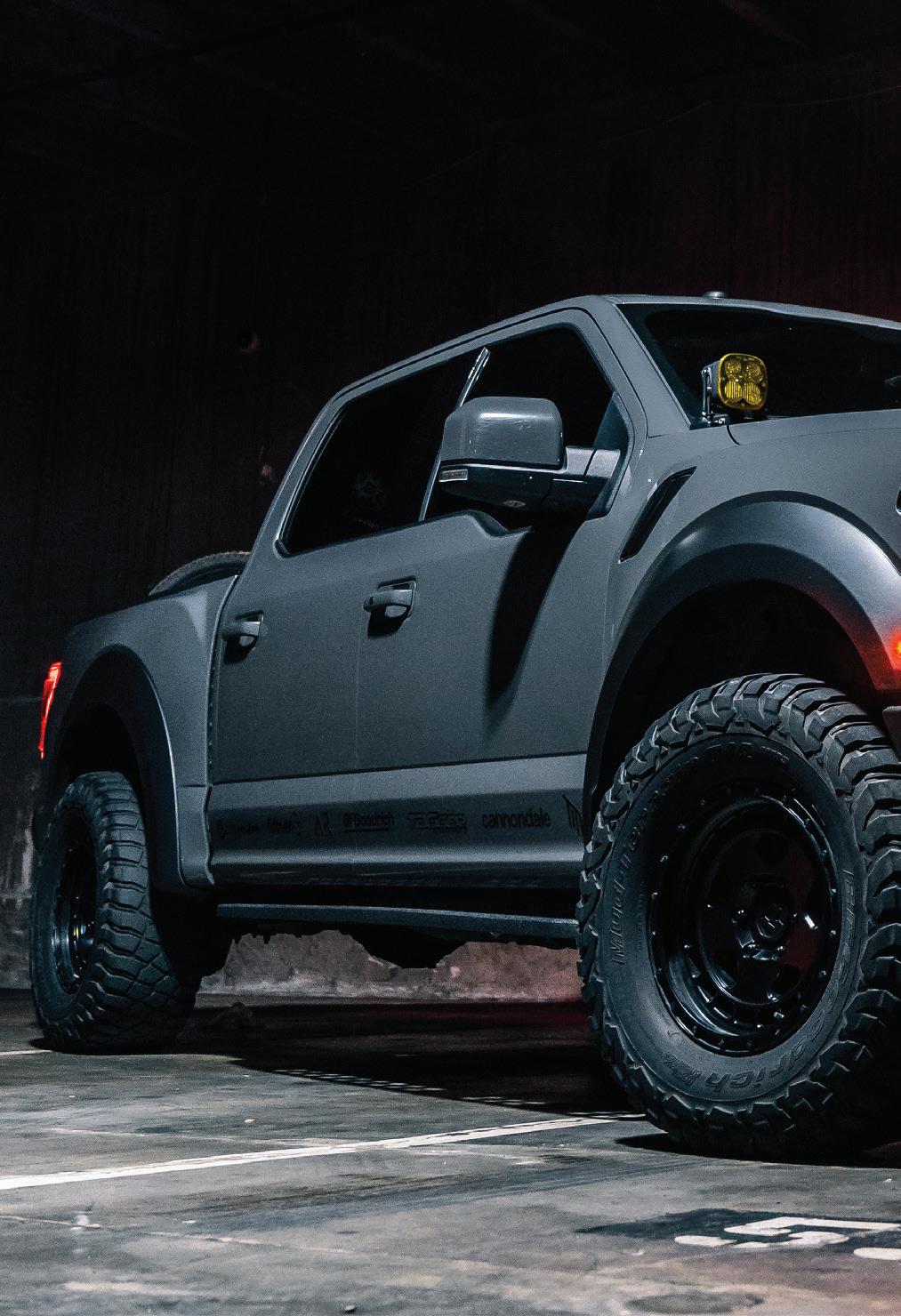
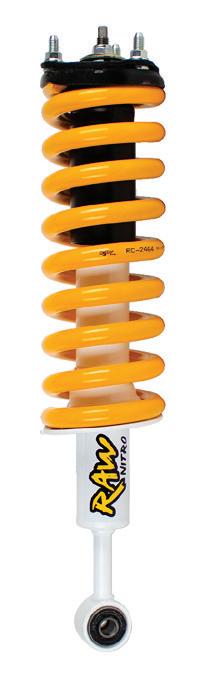
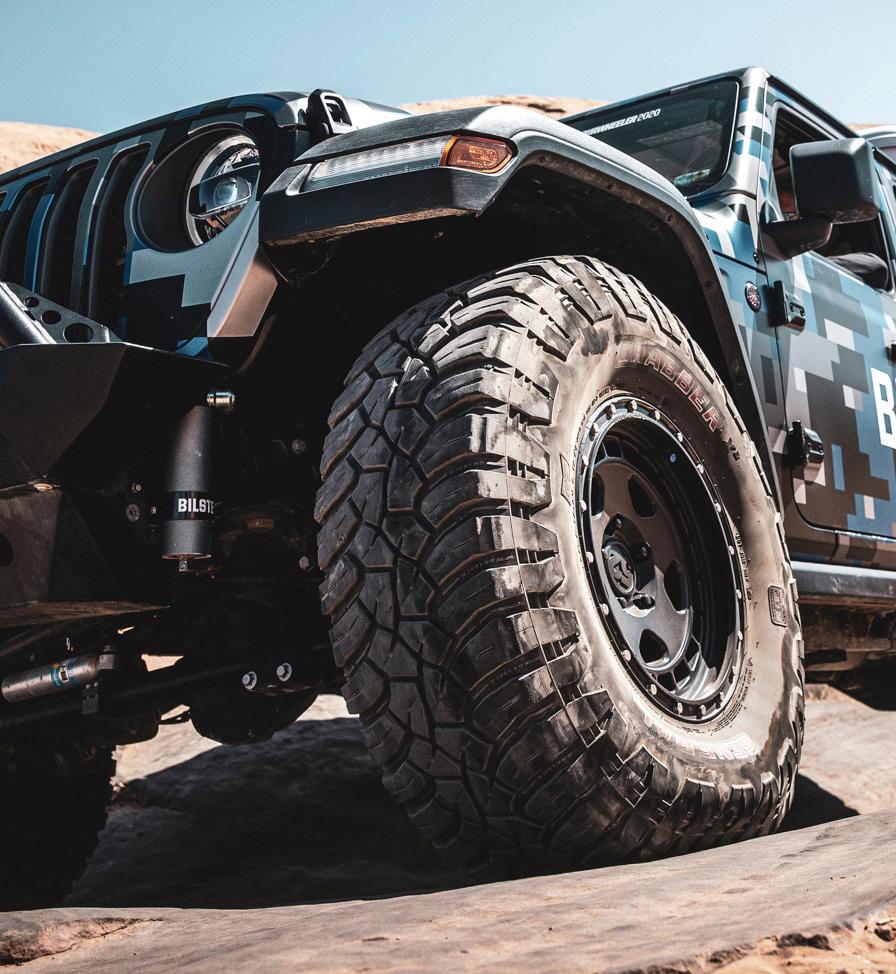
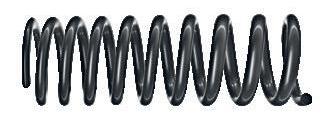
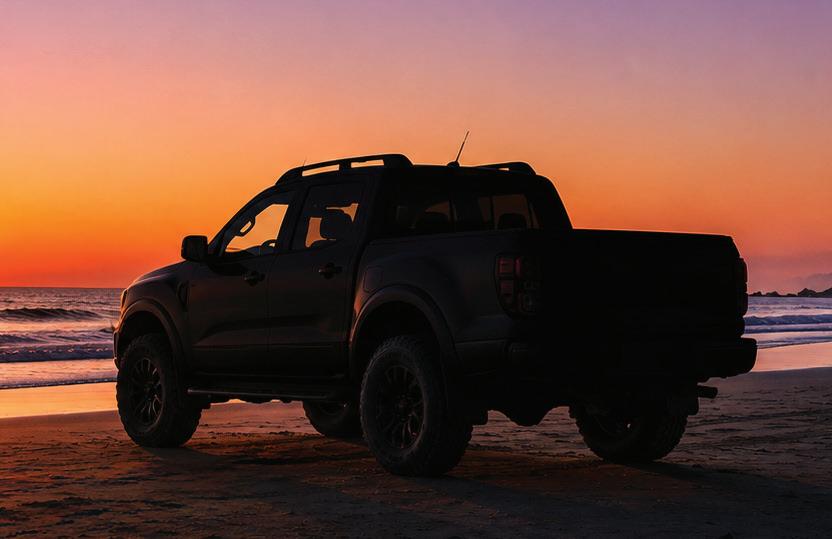
LIFT JUNKIE RIDE IS DESIGNED FOR DRIVERS WHO WANT AN IMPROVED STANCE WITHOUT SACRIFICING RIDE COMFORT & PERFORMANCE. THE RIDE LIFT KIT IS PERFECT FOR DAILY USE, ENHANCING AESTHETICS WHILE MAINTAINING FACTORY-LIKE HANDLING.
ENGINEERED FOR 4WD ENTHUSIASTS WANTING A TOUGHER SUSPENSION SETUP WITH BETTER CONTROL AND STABILITY OFF-ROAD.
THE JACKED LIFT KIT DELIVERS INCREASED PERFORMANCE WHILE MAINTAINING COMFORT.
FOR THOSE WHO DEMAND A FULLY CUSTOMISED SUSPENSION SETUP, LIFT JUNKIE CUSTOM ALLOWS YOU TO CHOOSE PREMIUM COMPONENTS TO MATCH YOUR SPECIFIC DRIVING NEEDS.
OFFERING UP TO 6 INCHES OF EXTRA RIDE HEIGHT & ENHANCED LOAD-CARRYING CAPACITY, THIS LIFT KIT IS DESIGNED FOR BOTH OFF-ROAD PERFORMANCE & HEAVY-DUTY APPLICATIONS.
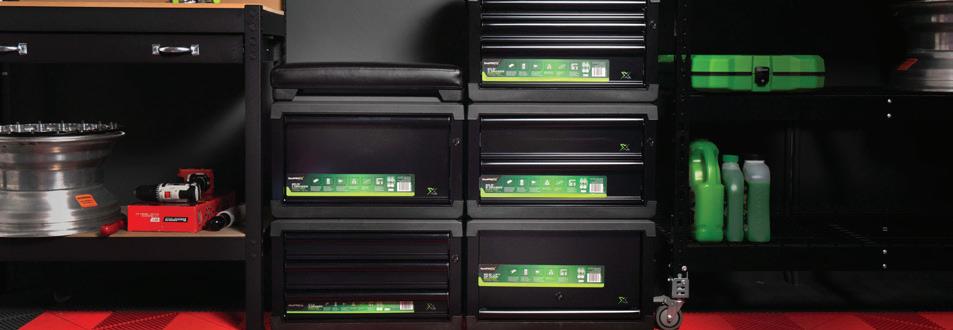
ToolPRO-X modular storage: Built for how trades actually work
THE TOOLPRO-X MODULAR SYSTEM ADAPTS TO THE JOB — WORKSHOP BAY, UTE CANOPY OR ON-SITE
Time in a workshop or on-site is lost in small pockets. Walking back to grab a tool. Digging through mixed gear. Resetting between jobs. It adds up quickly and directly hits productivity.
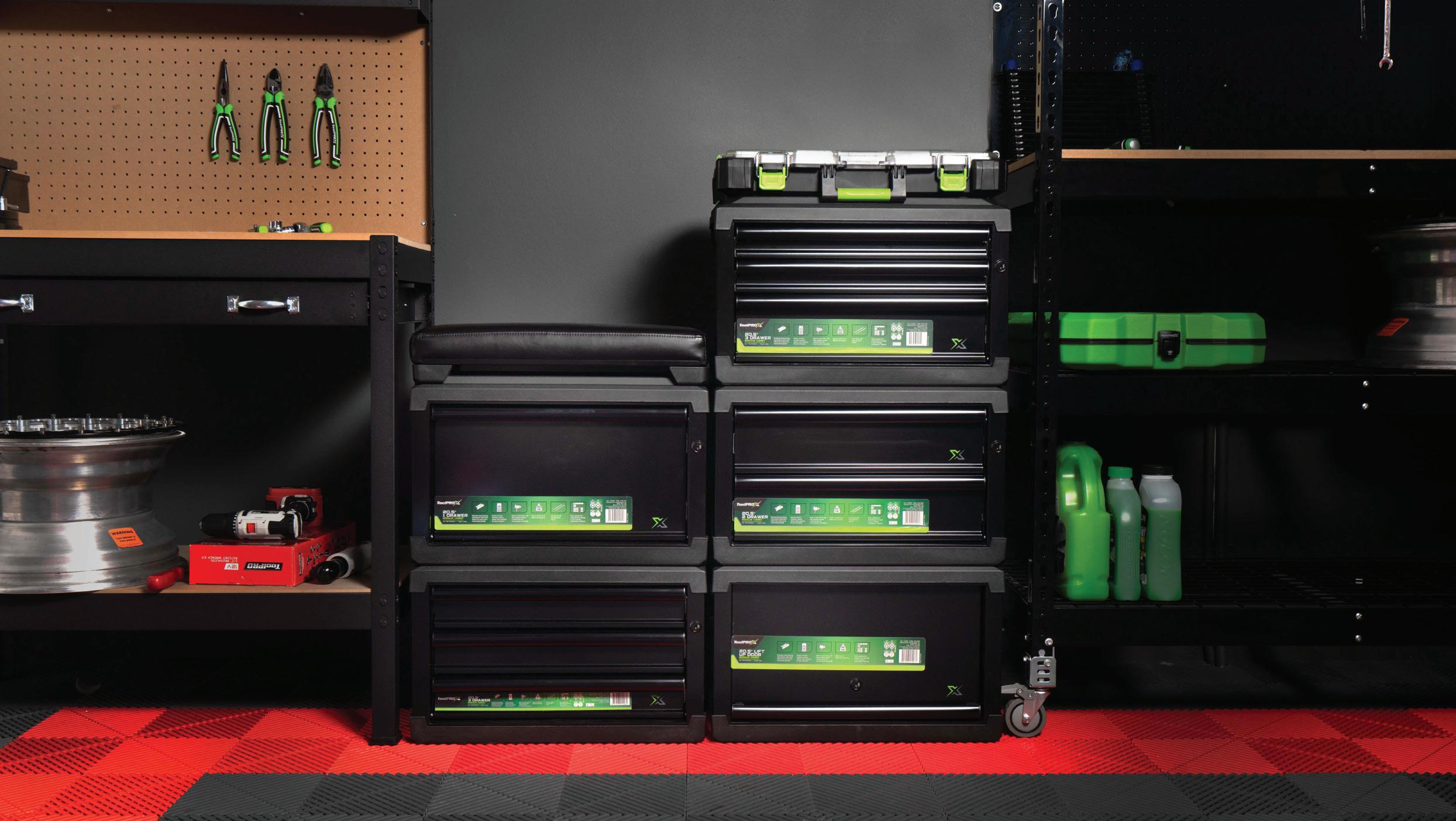
A modular storage system like ToolPRO-X is designed to remove that friction. At its core, the system is built around interlocking modules that stack and connect securely. You’re not locked into a single layout. The system can be built around how you work, not the other way around.
WHERE TOOLPRO-X STANDS OUT
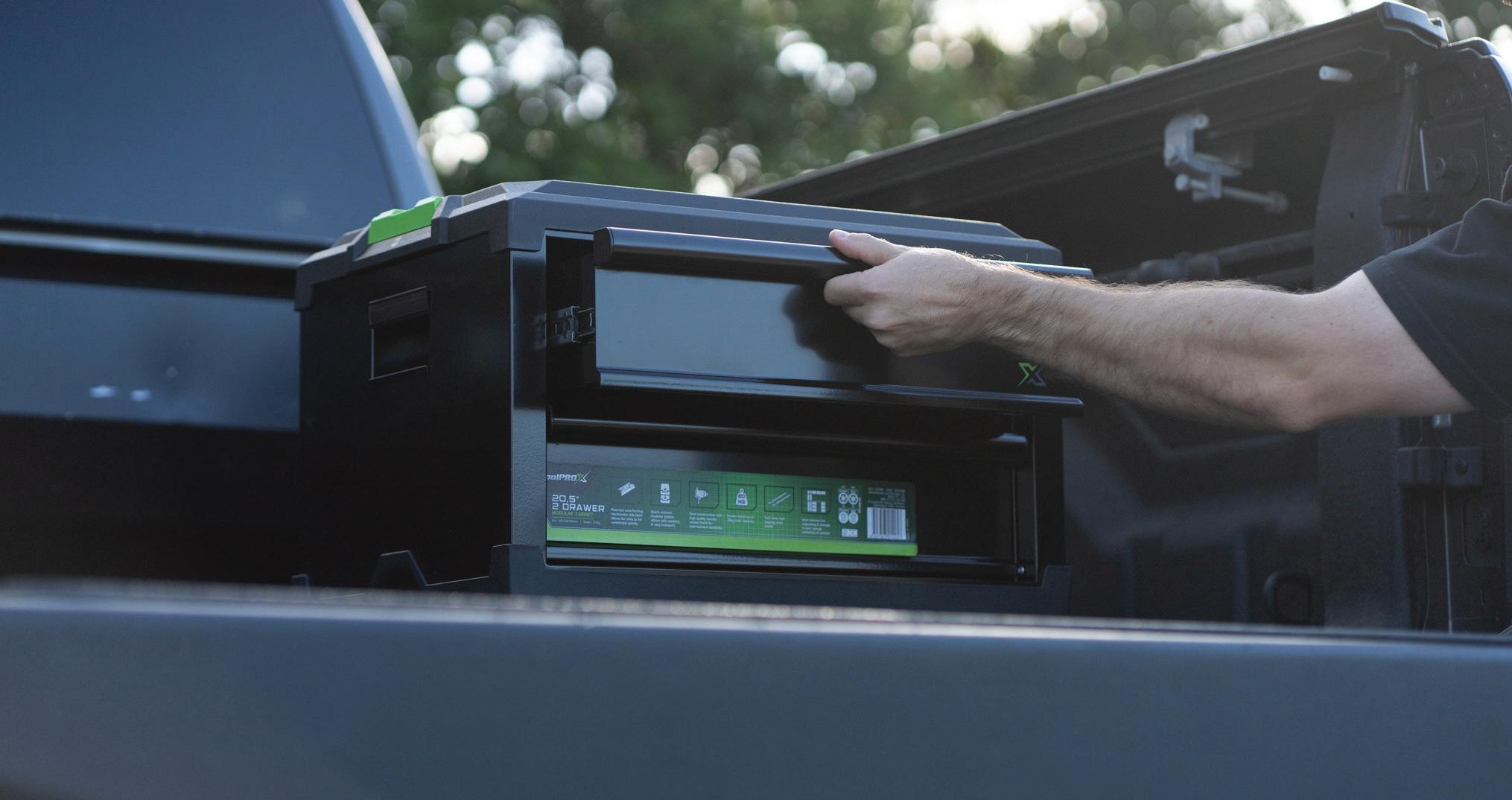
In a workshop, it becomes a structured bay setup with dedicated drawers built around how jobs are done. In a ute canopy, it creates a clean, secure layout that holds together and doesn’t shift or rattle. For a mobile mechanic, it can be configured with a flat workbench-style top to create a usable surface on-site. A detailer can turn it into a rolling setup with a seat module, keeping products, tools and access in one place.
Same system, completely different applications; Each one built around the job.
The quality of the system is what makes that level of flexibility viable across trades.
The cabinets are constructed from steel with a rust-resistant protective coating, designed to handle daily exposure to knocks, fluids and wear. Drawers are engineered with defined load
capacities, with configurations rated around 20–25kg per drawer, supported by soft-close quad ball-bearing runners. That combination matters. It means the drawers still run clean when they’re loaded with real weight, not just when they’re empty on day one.
On the smaller end of the system, organisers are IP65 rated. That gives protection against dust, dirt and water ingress, which is critical when gear is stored in a vehicle, used outdoors or exposed to workshop conditions. It’s a practical feature that extends tool life and reduces the risk of failure when tools are needed.
Mobility is the other advantage. Instead of managing multiple toolboxes or loose gear, you’re moving one connected system. In a workshop, that means moving between bays without disruption. On the road, it creates a cleaner, more efficient vehicle setup that’s faster to load, unload and work from.
ToolPRO-X has been built with trade use in mind. It’s not overloaded with unnecessary features. It focuses on durability, load capacity and flexibility where it counts.
For any trade, that’s the value. Better protection for your gear and a setup that adapts as the job changes. This isn’t just workshop storage. It’s one system that carries across every part of the job. In the bay, in the ute or on-site.
Shop the ToolPRO-X Modular Storage range and more at competitive trade pricing on the Supercheap Auto Trade website. Not a Trade customer? Create your free account with your NZBN at trade.supercheapauto. co.nz/account/register to access Trade pricing and additional benefits.
New Zealand’s vehicle fleet: 4.75 million vehicles, and still growing
A
NEW NZIER REPORT COMMISSIONED BY THE MTA MAPS THE CURRENT STATE OF THE FLEET AND PRESENTS A COMPLICATED
PICTURE
New Zealand now has more vehicles per person than at any point in its history. By the end of 2025, the Ministry of Transport estimates the national fleet will total 4.75 million vehicles — up 24.5% from 3.79 million in 2015. The fleet has grown at a compound annual rate of 2.3%, comfortably outpacing population growth of 1.5% over the same period.
Those numbers come from The Current and Future State of the New Zealand Vehicle Fleet and Industry, a detailed analysis prepared by the New Zealand Institute of Economic Research (NZIER) for the MTA, released last month. Drawing on Ministry of Transport data, Stats NZ, and interviews with industry experts, the report is one of the more comprehensive stocktakes of the sector in recent years.
The growth has not been uniform across vehicle types. Light commercial vehicles — utes, vans, light trucks, and motor caravans — have expanded at nearly three times the rate of the passenger fleet, growing at a compound annual rate of 4.7% to reach 796,000 vehicles. Light passenger vehicles (LPVs), by contrast, grew at 1.8% annually. The ute’s rise, the report notes, reflects its versatility, durability, and the tax advantages it offers small business owners.
Despite a marked slowdown in new vehicle registrations since 2022 — with 2024 recording the lowest annual additions since before 2015 — the fleet itself has continued to grow. Used vehicles staying in service longer than they once would have explains much of that gap.
ELECTRIFICATION: SLOWER THAN MOST ASSUME
One of the report’s clearer findings is just how far behind popular perception the electrification figures sit. At the end of 2025, EVs are estimated to total 101,000 vehicles — 2% of the entire fleet. Plug-in hybrids add another 48,000 vehicles, or 1%. The technology that has actually moved the needle in the light fleet is the conventional petrol hybrid, which has grown from 14,000 vehicles in 2015 to 429,000 — around 10% of the light vehicle fleet. These have largely arrived via the used-import channel, particularly from Japan.
The proportion of the light fleet running solely on petrol has dropped from 82% to 65% over the decade, but that shift has come almost entirely from hybrids, not EVs. In 2024, with the Clean Car Discount removed, EV registrations fell to 8,209 — just 3% of new registrations, against a global new car share of around 20%.
The heavy fleet tells a simpler story: overwhelmingly diesel, and likely to stay that way for the foreseeable future. Of the 189,000 heavy vehicles estimated to be on the road in 2025,
186,000 are diesel-powered. The report finds the total cost of ownership of an electric heavy truck is currently around $2.30 million against $1.82 million for a diesel equivalent — and the Climate Change Commission does not expect price parity for heavy trucks until close to 2045.
AN AGEING FLEET AGEING FASTER
The age profile of the fleet is where the report’s findings start to carry a sharper edge for the trade. The average age of a vehicle in the New Zealand fleet was 15.0 years in 2024, up from 14.2 years in 2015. For comparison, the European Union average for passenger vehicles was 12.5 years in 2023.
The used-vehicle import sector is the primary driver. An LPV arriving from Japan in 2024 was, on average, 9.8 years old when it entered the fleet — nearly a year older than in 2015. Imported used trucks and buses have aged even more sharply: the average imported used truck entering the fleet in 2024 was 10.7 years old, up from 7.6 years in 2015. Imported used buses went from an average entry age of 6.2 years to 9.5 years over the same period.
Vehicles are also exiting the fleet older than before. The average LPV now leaves the fleet at 20 years old — up from 19.4 years in 2015. The NZIER attributes this partly to lower annual mileage per vehicle: each LPV now travels around 9,985km annually, down from 10,940km a decade ago. Fewer kilometres means slower wear, and owners are holding on to vehicles longer rather than upgrading.
That dynamic has real downstream effects. An older fleet is slower to absorb the safety and technology advances built into new vehicles. It also generates more compliance failures.
WOF FAIL RATES CLIMBING
The Warrant of Fitness data in the NZIER report makes uncomfortable reading. The overall fail rate for WoF tests increased from 37% in 2017 to 41% in 2024. Because that figure includes retests, it understates the real picture — the first-time fail rate, which the report notes would be a more accurate indicator of vehicle condition, is not separately published but can be assumed to be higher still.
The report also cites industry anecdote suggesting that on any given day in New Zealand, up to 700,000 vehicles could be unwarranted or unregistered — a number that would represent nearly 15% of the total fleet. The top reasons for WoF failures recorded in July 2025 were defective lights, tyres, and steering and suspension.
Certificate of Fitness fail rates have followed a similar trajectory. COF-A failures for light passenger service vehicles climbed from 13% in
2017 to 20% in 2024. COF-B failures for heavy vehicles went from 17% to 21% over the same period.
REPAIR COSTS OUTPACING INFLATION
The cost of keeping vehicles on the road has increased well above the general rate of inflation. Stats NZ data cited in the report shows that vehicle servicing and repair costs rose 44% between April 2014 and March 2025. Vehicle insurance costs rose 75% over the same period. Both outstripped general inflation by a considerable margin.
The NZIER attributes this to the increasing technological complexity of modern vehicles — Advanced Driver Assistance Systems (ADAS), proprietary software, specialist components, and different construction methods that require more time and specific tooling to work on. When these vehicles are involved in collisions, they are more expensive to repair. When they develop faults, those faults are more costly to diagnose and fix.
The industry itself has remained financially resilient despite these pressures. The general repair and collision repair sectors recorded the strongest margin performance in the industry in 2024, at 7.7% and 7.9%, respectively. The sector as a whole employs 65,830 people across nearly 16,000 business units and contributes $6.8 billion — 1.9% — to New Zealand’s GDP.
WHAT THE DATA SAYS ABOUT DRIVERS
The report challenges several narratives that circulate regularly about New Zealanders and their relationship with vehicles. The idea that younger people are less interested in getting their licences is not supported by the data.
The proportion of 16- to 24-year-olds holding a licence has actually increased, from 777 per 1,000 people in that age group in 2015 to 850 per 1,000 in 2024. Overall licence holder rates per capita have remained stable.
The narrative that New Zealanders are giving up on vehicle ownership in favour of shared mobility also does not hold up: at 816 light vehicles per 1,000 people, ownership per capita is 8% higher than it was in 2015. The proportion of households with access to at least one vehicle rose from 93% in the 2018 Census to 94% in 2023.
Where the numbers do show a shift is in how much those vehicles are being used. Per capita kilometres travelled in light passenger vehicles dropped from 7,064km in 2015 to 6,653km in 2025. More vehicles on the road, each doing fewer kilometres — that combination is part of what is holding the fleet age up and keeping older vehicles in service longer than the economics of wear and tear would otherwise dictate.
The fleet is growing, ownership is high, and the industry serving it remains profitable. But the vehicles are older, arriving older, staying longer, and becoming harder and more expensive to work on. That is the operating environment the trade is navigating, and, by most indicators, the trajectory is not reversing soon.
NAPA Australia confirms new deal with Sprintcar champion James McFadden
H2 NORTHERN TERRITORY-BORN THREE-TIME AUSTRALIAN CHAMPION CONTINUES AS
NAPA
AMBASSADOR INTO THE 2026–’27 SPEEDWAY SEASON
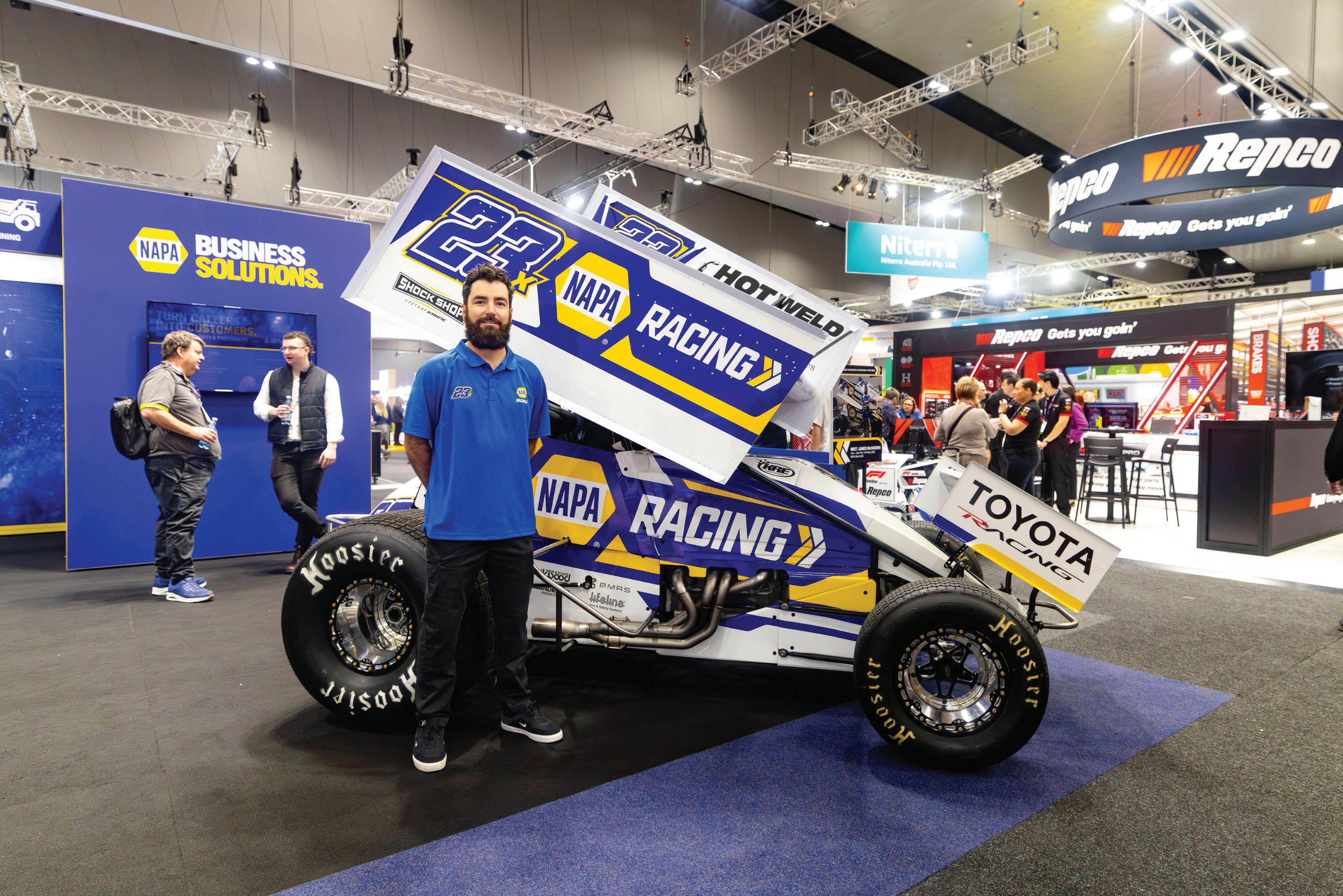
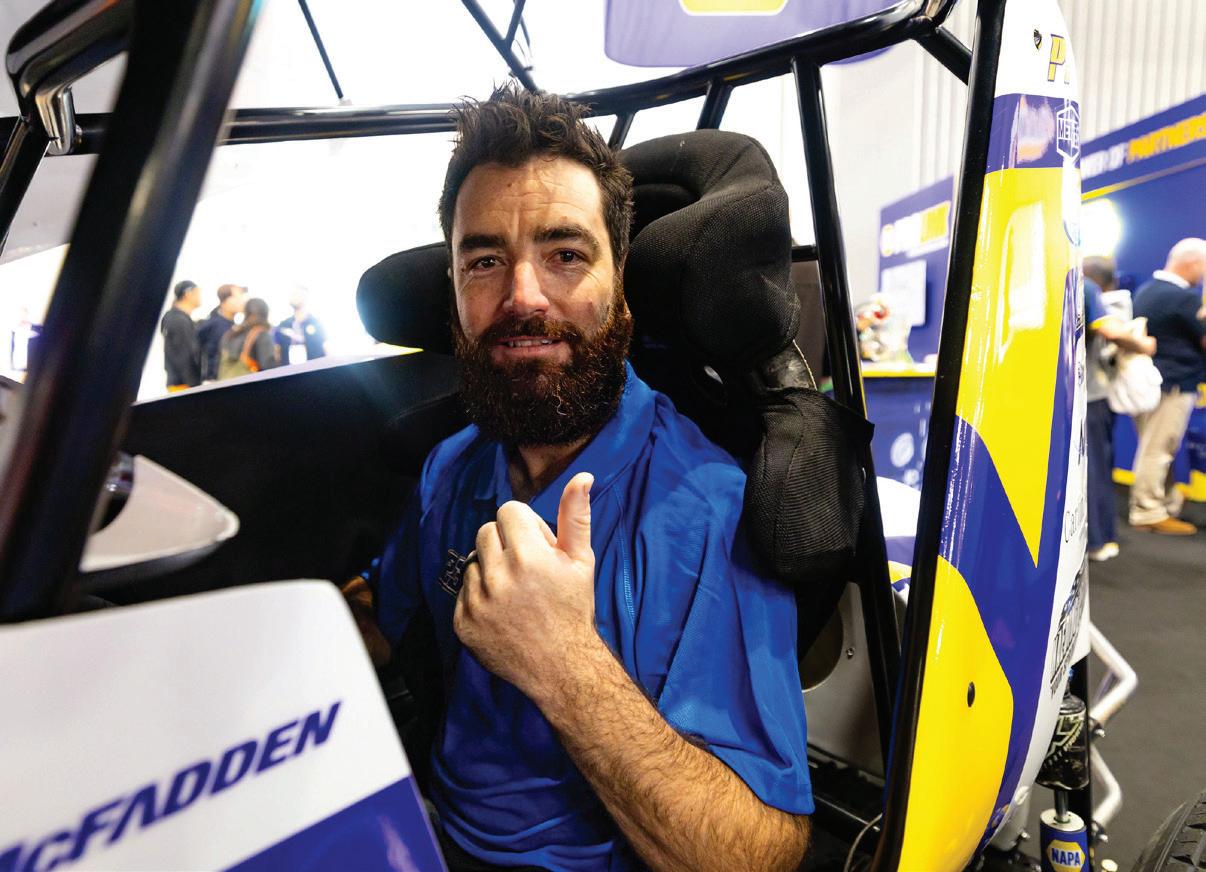
James McFadden will continue as a NAPA ambassador and drive for Team Brady Racing in the 2026/27 speedway season, with up to 30 events expected to fill his Sprintcar commitments.
The 37-year-old Northern Territory-born fan favourite is a three-time Australian Sprintcar
winner — credentials that place him among the greats of the discipline. His résumé extends well beyond Australian shores: competing fulltime in North America across several seasons, McFadden recorded 12 victories in the World of Outlaws and four in High Limits Racing.
His 2026–’27 schedule is yet to be fully confirmed, but he will contest the High Limits Racing event in Perth, the Grand Annual Classic in Warrnambool, and the Australian Title in Toowoomba early next year.
FROM THE TRACK TO THE BRAND
McFadden and NAPA have worked together since 2023, when he competed with Hodges Motorsport. That partnership has now moved into its fourth year, with McFadden making the transition to Team Brady
Racing while retaining the NAPA ambassador role.
“The NAPA brand is a huge part of global motorsport,” said McFadden. “Every team and driver with NAPA’s support operates at a high level. I am very proud to have the support of NAPA Australia.”
He was also a winner on the opening night of competition at the NAPA Speedway last year, held on a temporary track within the Adelaide street circuit precinct — a result that underlined his standing as one of the sport’s most consistent performers.
McFadden credits the relationship as something that goes beyond a standard commercial arrangement. “In my life and my career, family is a huge part of my racing, and partnering with NAPA has been no exception. The team at NAPA Australia shows a genuine interest in our racing family that goes beyond just sponsorship.”
NAPA’S COMMITMENT TO THE SPORT
Mitch Wiley, Executive General Manager –Marketing at NAPA Australia, says the renewal reflects the strength of the partnership on and off the track.
“James is one of the best Sprintcar racers in Australia and the world, but he is also a fan favourite and very popular amongst NAPA’s staff and customer base. He is a great fit for NAPA and we know that he is going to do an incredible job on and off the track this year.”
McFadden was a feature guest at the 2026 Australian Auto Aftermarket Expo, appearing alongside one of his NAPA Sprintcars.
Consolidation pressure on the repair sector
TECHNOLOGY COMPLEXITY, DIAGNOSTIC GATEKEEPING, AN AGEING OWNER COHORT, AND A TIGHT LABOUR MARKET ARE RESHAPING WHO DOES THE WORK, AND WHO SURVIVES
The general repair sector in New Zealand is splitting into three tiers: franchised and chain operations, authorised dealer workshops, and independent businesses. That is the picture described by industry participants interviewed for The Current and Future State of the New Zealand Vehicle Fleet and Industry, a report prepared by the New Zealand Institute of Economic Research (NZIER) for the MTA released last month.
The consolidation is not hypothetical; it’s already underway. The forces accelerating it are a familiar combination: the technological demands of modern vehicles, the cost of staying equipped to work on them, and an owner cohort reaching retirement age without a ready pool of buyers to take over.
The collision repair sector is moving along the same lines, with the additional dynamic of insurers — AMI and the IAG group are cited in the report — entering the market directly to repair vehicles they insure. At the same time, consolidators such as Drive Group and franchise buying arrangements are absorbing independents. As with general repair, the driver is partly demographic and partly technological.
DIAGNOSTIC ACCESS: THE COST OF STAYING IN THE GAME
The NZIER report puts specific language around what many in the trade already know from experience. Modern vehicles integrate computer systems, advanced sensors, and proprietary software in ways that have significantly complicated diagnosis and repair. Access to manufacturer-specific tools, diagnostic equipment, and repair information is either restricted outright or requires costly subscriptions, licences, or overseas workarounds — including VPNs and third-party software — to obtain.
The practical result is that independent workshops face a strategic choice: invest heavily in diagnostic coverage across multiple brands, or narrow their focus to those where the investment can be justified. Neither option is straightforward, and both carry risk. A workshop that specialises gains efficiency; one that tries to maintain broad coverage faces ongoing capital outlay with no guaranteed return.
The report frames this as part of the global ‘right to repair’ debate, and notes that advocacy for mandated access to manufacturer repair information is growing. However, it also acknowledges that even where a right-torepair policy is implemented, brand-specific diagnostic tooling requirements and the manufacturer warranty implications of using non-authorised repairers will remain barriers. Longer warranty periods — a consequence of improving vehicle build quality — extend the
period during which vehicles are effectively locked to authorised repairers.
The new Chinese brands entering the New Zealand market are making this more acute. Several can currently only be repaired at manufacturer-authorised workshops. More brands are expected to follow the same model as their market presence grows.
LABOUR: EXPENSIVE TO TRAIN, HARD TO FIND
Staffing remains a persistent constraint. The NZIER report estimates the cost of training an apprentice — accounting for supervision costs and productivity losses while they develop — at between $80,000 and $100,000 annually. That figure makes recruitment from overseas of fully trained technicians more economically attractive in the short term, but it also means the sector’s skills base is exposed to immigration policy and global competition for qualified people.
The technological shift in the work itself is also changing what skills are in demand. Collision repair has moved from largely mechanical and bodywork-focused tasks to processes that require electronic diagnostics and software competence. Modern vehicles feature stronger construction that is more protective in a crash but more difficult and expensive to repair when damage does occur. ADAS calibration after a collision repair is now a standard requirement rather than an exception.
In general repair, the expectation is that vehicle reliability will continue to improve, reducing the frequency of breakdowns — but when faults do occur, they are increasingly complex. System faults, as opposed to mechanical failures, are growing as a proportion of the repair mix. That shift favours workshops with investment in diagnostics and technicians trained to use them.
THE AGEING FLEET AS A NEAR-TERM REVENUE DRIVER
Against the longer-term structural headwinds, there is a more immediate dynamic the report identifies that works in the trade’s favour: the fleet is old, and getting older. The average LPV in New Zealand is 15.2 years old. Imported used LPVs are arriving at nearly 10 years old on average. Vehicles are exiting the fleet older than they used to — the average LPV is scrapped or exported at 20 years old, up from 19.4 years in 2015.
An ageing fleet is one that requires more maintenance, particularly as WoF failure rates climb. The overall WoF fail rate reached 41% in 2024, up from 37% in 2017. The top categories were defective lights, tyres, and steering and suspension: the traditional bread and butter of the general repair sector.
The NZIER report is careful to separate the near-term picture from the longer one. Electrification, which will reduce servicing demand for ICE vehicles over time, is still at an early stage in the fleet. By 2035, EVs are forecast to make up only 14% of the LPV fleet and 9% of LCVs. ICE vehicles — including hybrids with combustion engines — will still account for 73% of the LPV fleet in 2035. The structural change resulting from electrification, the report concludes, will be relatively gradual over the next decade before accelerating in the decade after.
FLEET CONCENTRATION AS A STRUCTURAL SHIFT
One trend the report flags with implications beyond the EV transition is the forecast shift in vehicle ownership. Light vehicle ownership per capita is projected to decline through to 2045, as New Zealand’s population ages and urban intensification changes housing and transport patterns. The Ministry of Transport forecasts the total light vehicle fleet will peak around 2046.
As private ownership softens over time, the report anticipates subscription services and shared mobility models becoming more prevalent. Fleet buyers — business, government, and rental operators — already account for over 60% of new vehicle purchases across the fleet. That proportion is expected to grow, concentrating purchasing and servicing decisions in fewer, larger organisations.
For the workshop sector, that trajectory points in the same direction as the technology and consolidation pressures: toward larger operations with the capital, capability, and capacity to hold fleet service agreements. As we report elsewhere in this issue on the emerging shared mobility sector, the commercial fleet market is increasingly structured around operators who can service vehicles consistently, quickly, and to a predictable standard. That is a different kind of customer than the individual walk-in — and a different kind of business relationship to build.
The independent sector is not disappearing.
The NZIER data shows general repair business units have actually increased over the last two years, bucking the broader trend. But the conditions under which independent workshops operate are tightening — in terms of what it costs to stay equipped, who controls access to repair information, and what the customer base looks like as the fleet and ownership patterns continue to evolve. For a sector that employs more than 65,000 people and contributes $6.8 billion to GDP, the fundamentals remain sound, but the conditions under which that work gets done are shifting.
WHANGAREI . HENDERSON . PENROSE . HAMILTON . TAURANGA . PALMERSTON NORTH . LOWER HUTT . CHRISTCHURCH
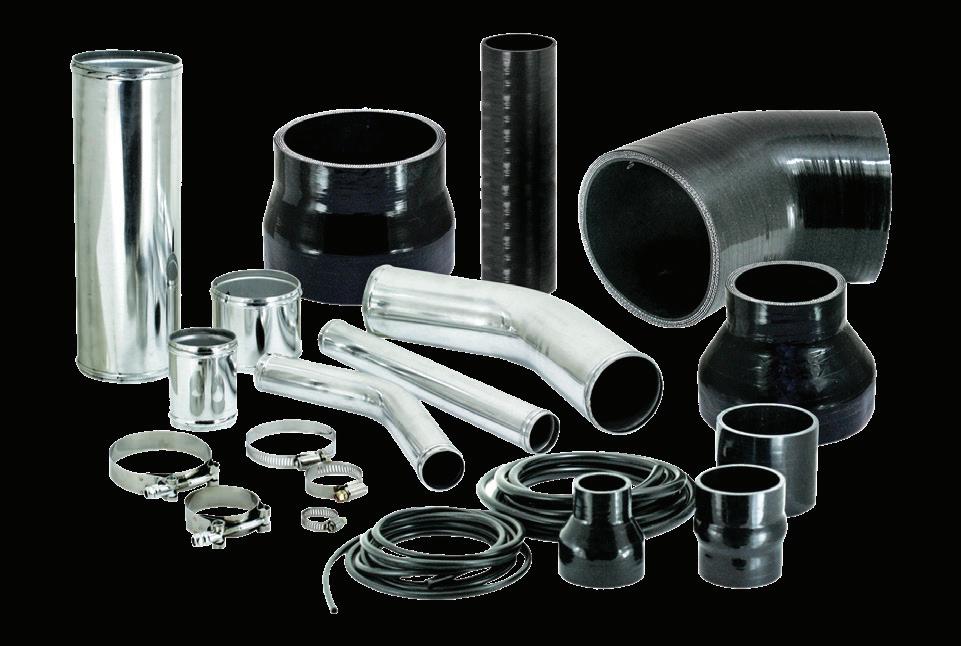
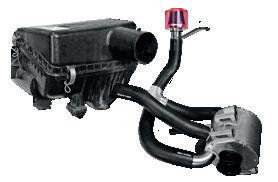
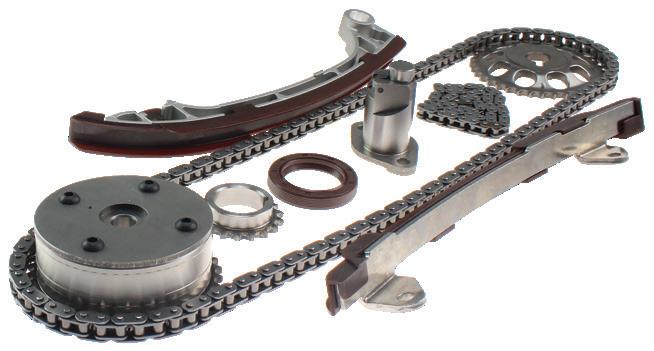
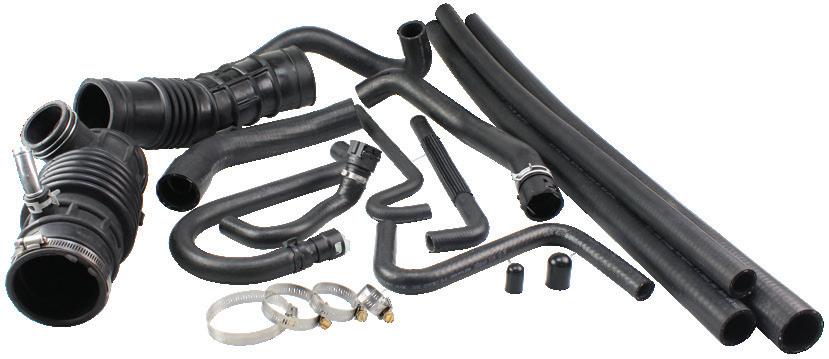
SILICONE HOSING / ALUMINUM PIPE
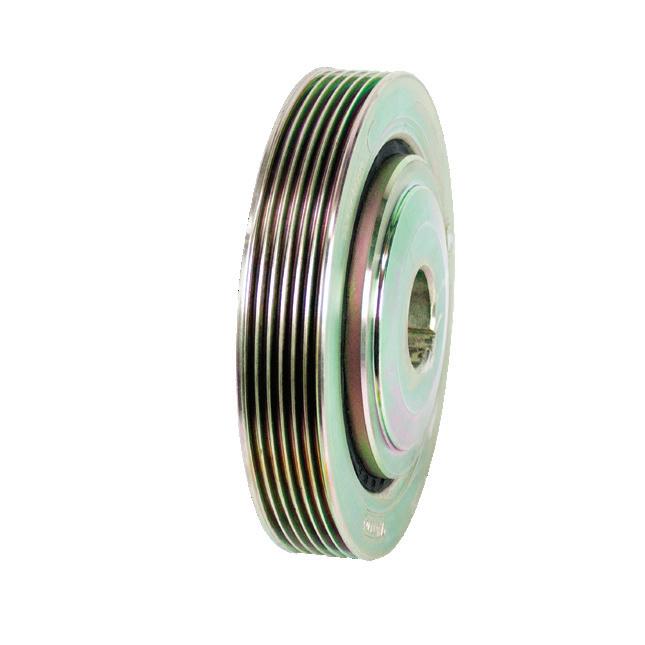
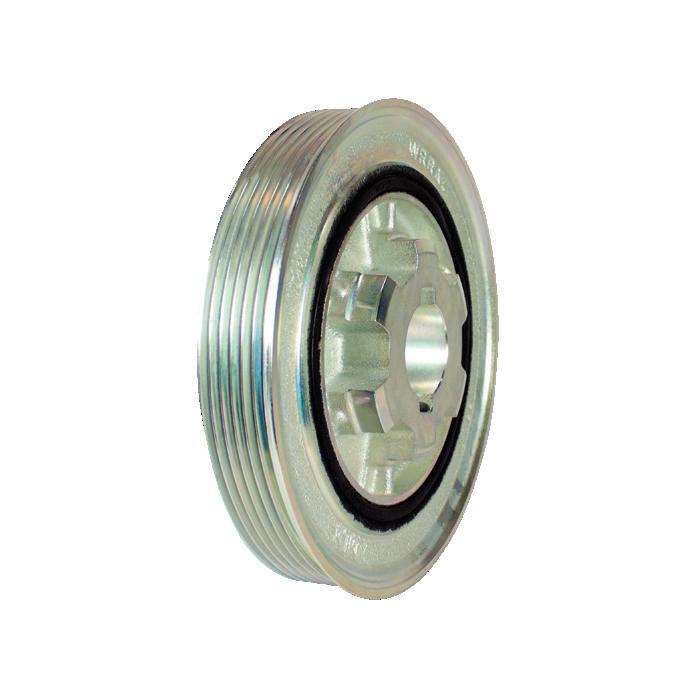
CRANKSHAFT PULLEYS / HARMONIC BALANCERS
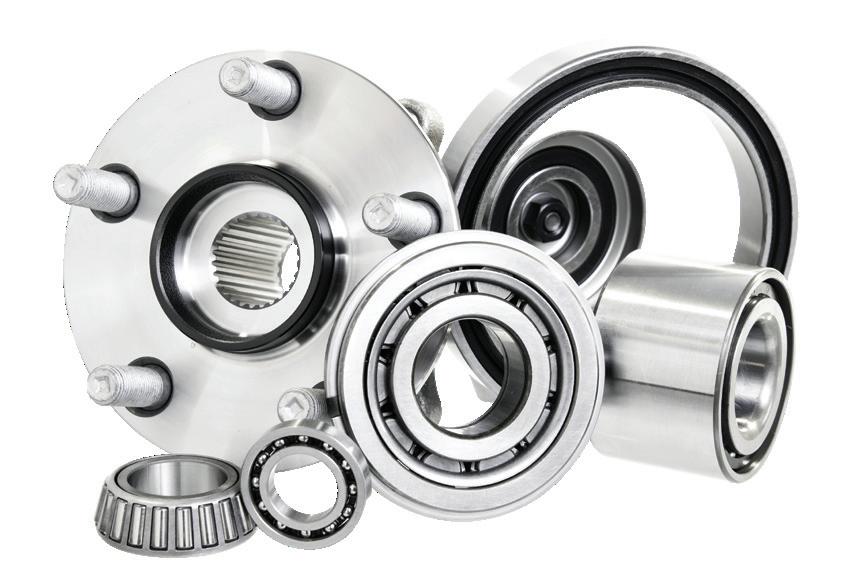
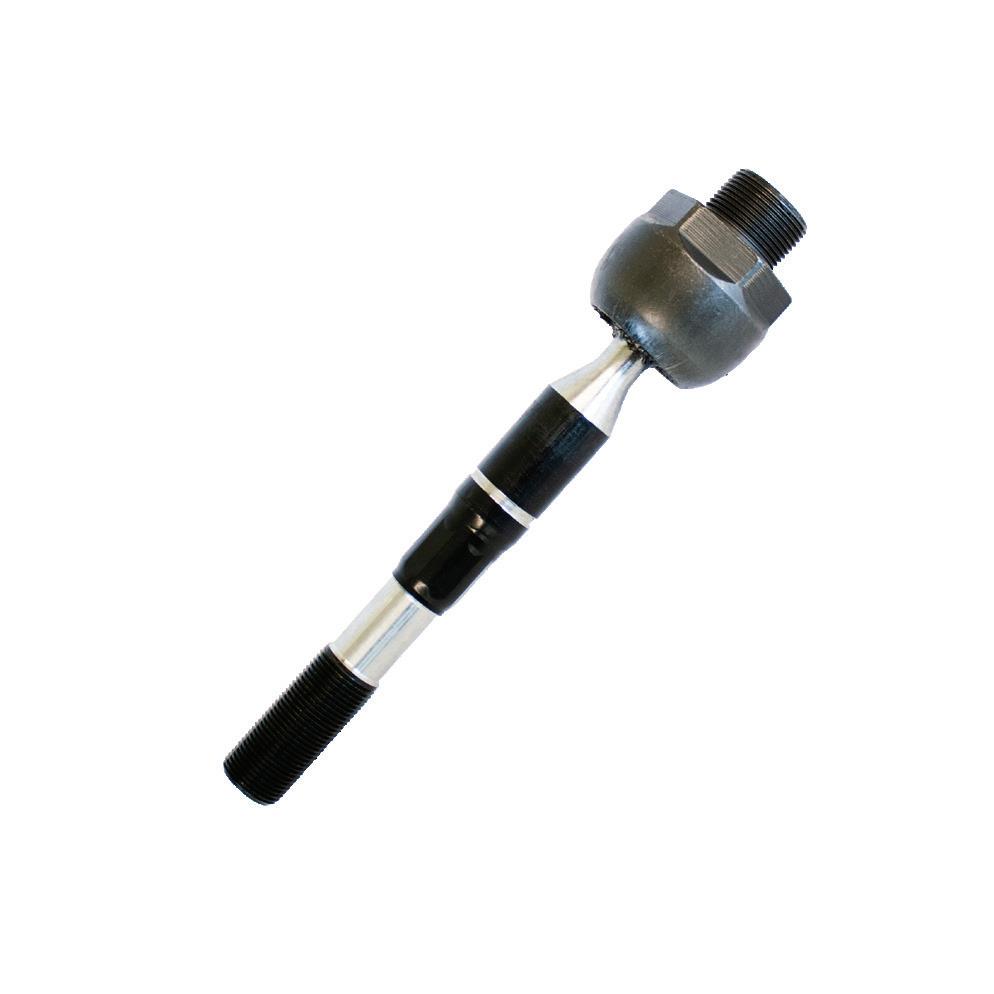
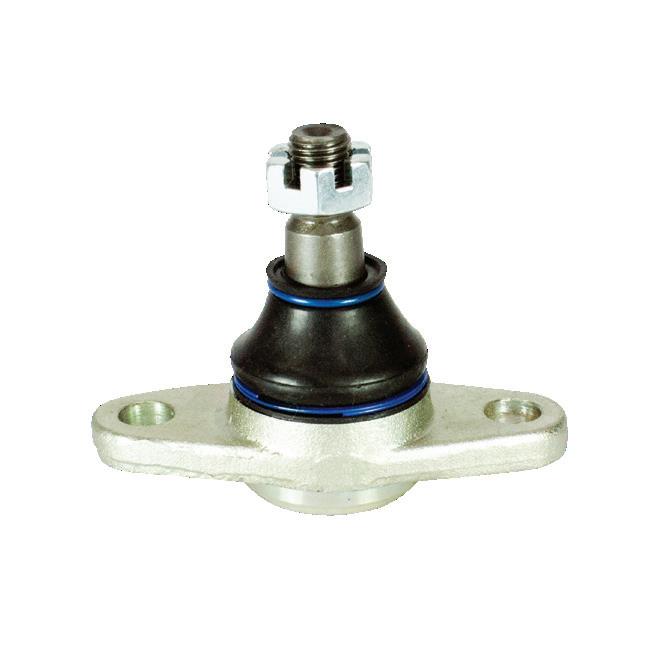
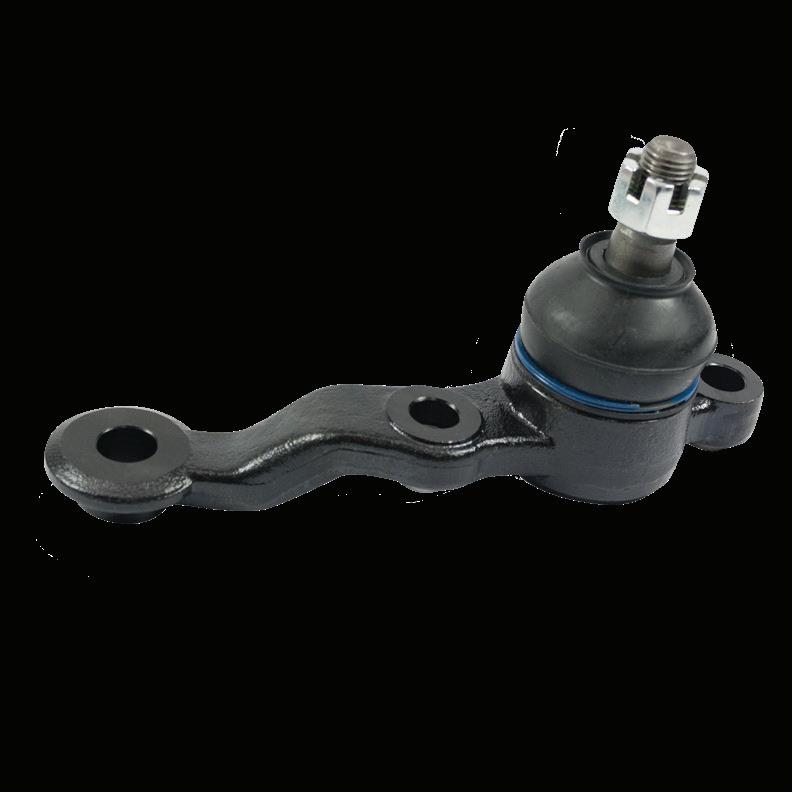
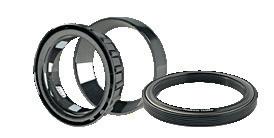
WHEEL HUBS AND BEARINGS BALL JOINTS
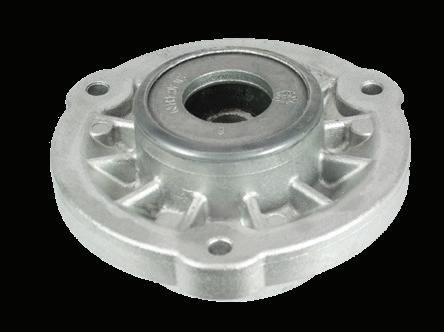
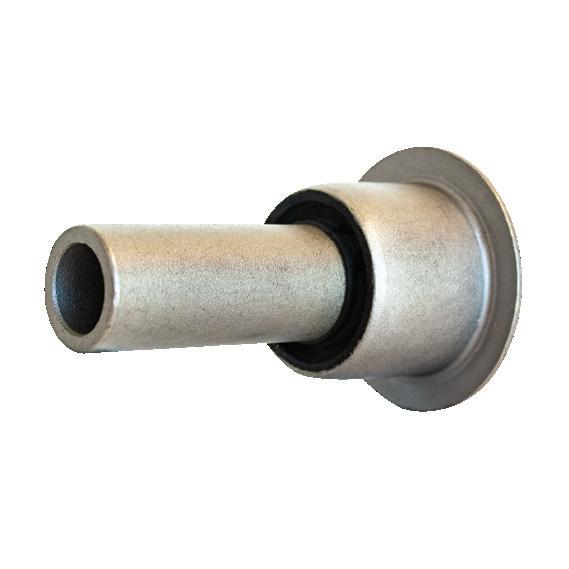
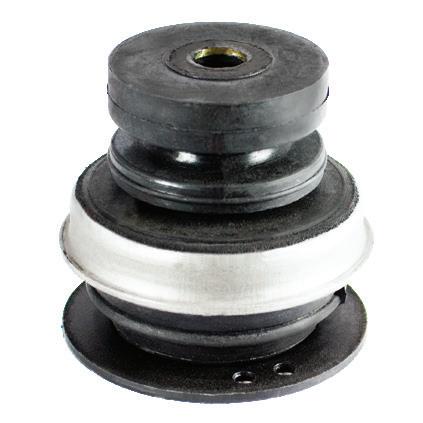
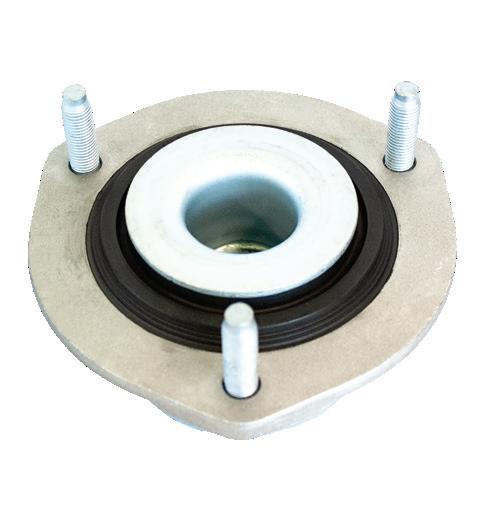
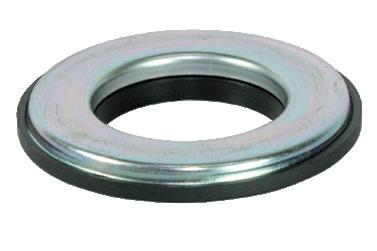
SRUT MOUNTS & BEARINGS
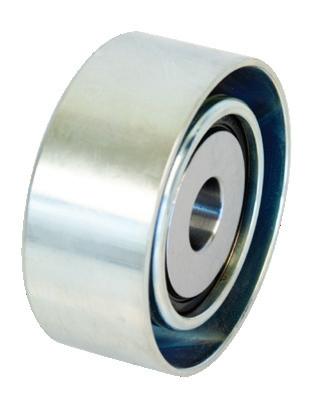
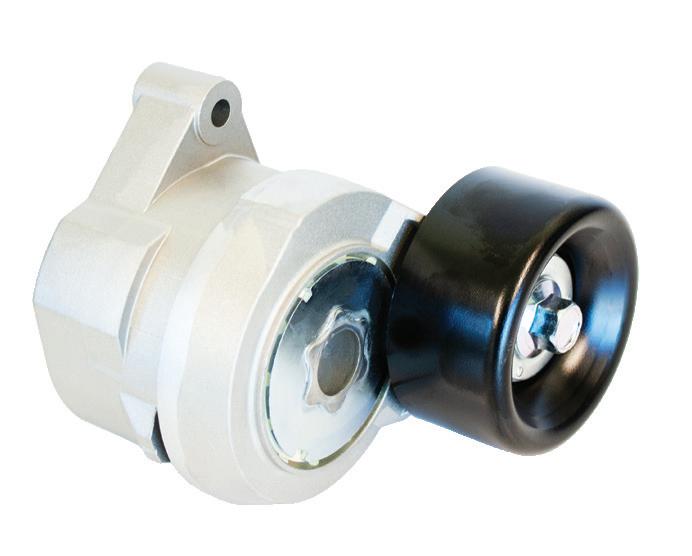
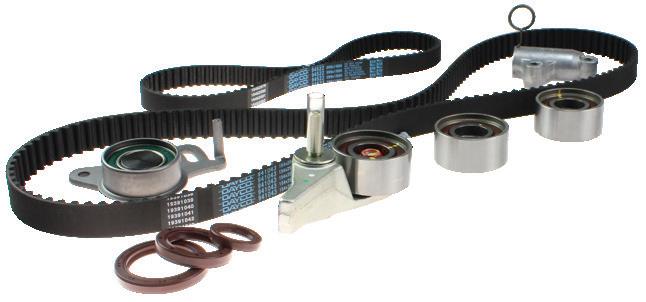
TENSIONERS / IDLERS
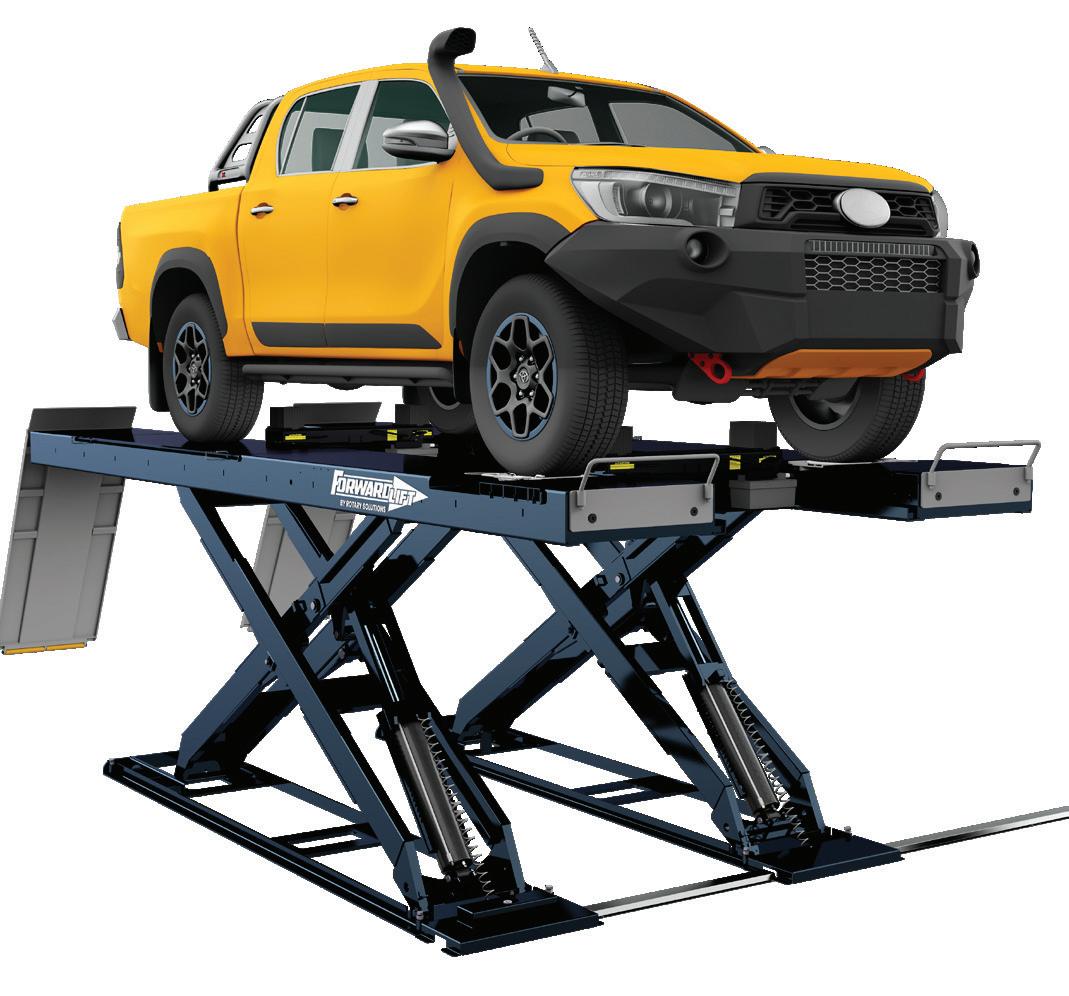
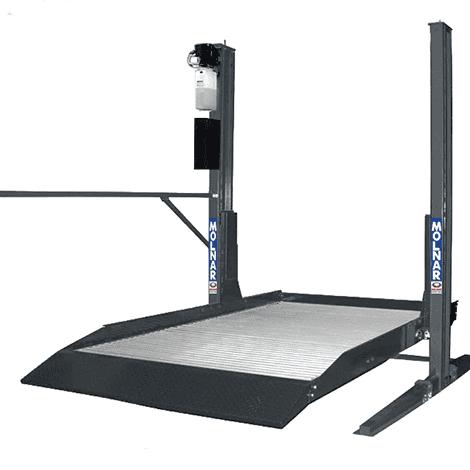
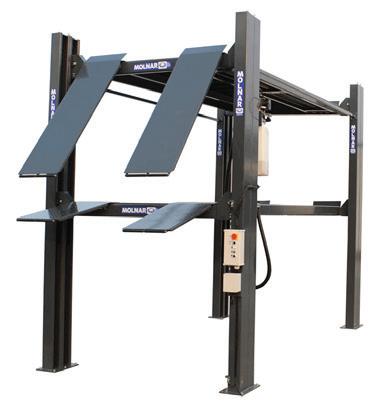
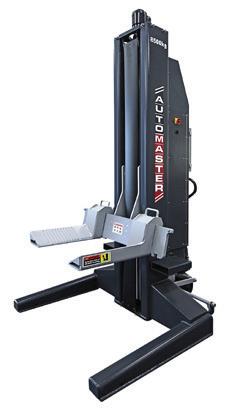
Molnar parking lifts now available through Automaster
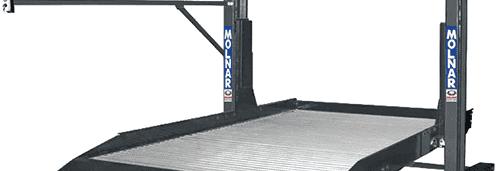
DOUBLE OR TRIPLE YOUR PARKING CAPACITY WITHOUT EXPANDING YOUR FOOTPRINT, WITH AUTOMASTER’S NEW MOLNAR RANGE OF HYDRAULIC CAR STACKERS
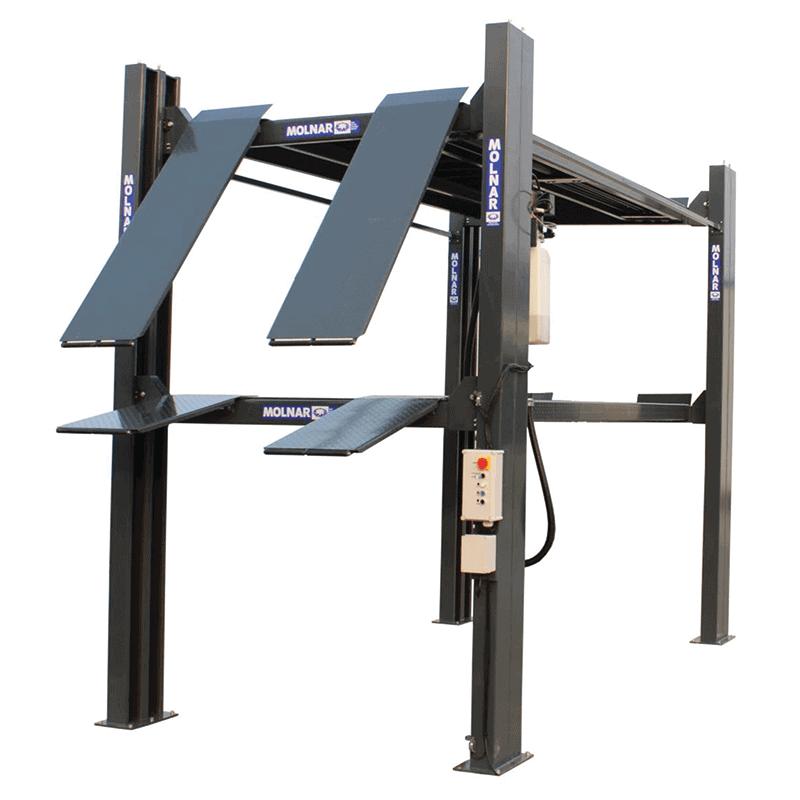
For workshops, dealerships, and commercial parking operators, space is a constant constraint. Molnar’s hydraulic car stacking lifts offer a straightforward alternative: use the height you already have. Automaster has added the Molnar Parking range to its equipment line-up, bringing two-car and three-car stacking solutions to the New Zealand market.
THE LASER-2.2 CP — TWO-CAR STACKER
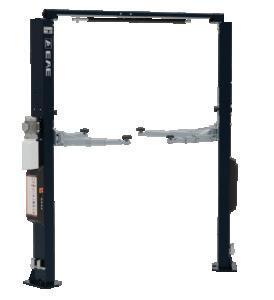
The Molnar Laser-2.2 CP is a hydraulic two-post car stacker with a 3000kg lifting capacity. It operates as a stand-alone unit or can be linked with shared columns to create a multi-bay stacking system — a practical option where floor space is limited but ceiling height is available.
The lift runs on a twin two-stage hydraulic cylinder system, with safety locking positions every 100mm along the column height. That means it can be locked securely at any point
a specific clearance height, or when a second vehicle is being parked or retrieved underneath. A key-switch operation keeps things simple and access controlled. Installation is above ground, with no pit required.
The standard Laser-2.2 CP has an overall height of 3510mm with 2140mm of clearance beneath the raised platform, making it suited to sites with standard commercial ceiling heights. For sites where headroom is tighter, the CP-LC (Lower Column) variant reduces the column height accordingly, while the CP-LC 3M offers a 3m column height for locations where a full-height unit won’t fit. A hot-dip galvanised outdoor version is also available for exposed installations. All models carry a three-year Molnar warranty.
THE LASER-4.3 CP — THREE-CAR STACKER
For operators who need to further increase capacity, the Molnar Laser-4.3 CP is a four-post
each rated at 3000kg. Both platforms operate independently and can be locked at any height, allowing a mix of vehicle types — sedans, SUVs, utes — to be accommodated across all three levels. Safety is covered by multi-position locking ladders at 100mm spacing, spring-loaded anti-fall locks that engage automatically if a cable fails, and an integrated hydraulic flow restrictor that controls descent in the event of a hose rupture. The overall width is 2750mm, length including ramps is 6643mm, and the unit requires a minimum 150mm reinforced concrete slab rated at 25MPa. At a lifting time of approximately 65 seconds per platform, it’s well-suited to higherthroughput commercial environments.
Like the two-car range, the Laser-4.3 CP has a small enough footprint to allow multiple units to be installed side by side where floor area permits — effectively turning one parking row into three.
Automaster supplies and installs the full Molnar range nationwide, with freight delivery available to all regions.
For further information, contact Automaster on 0800 214 604 or visit automaster.co.nz
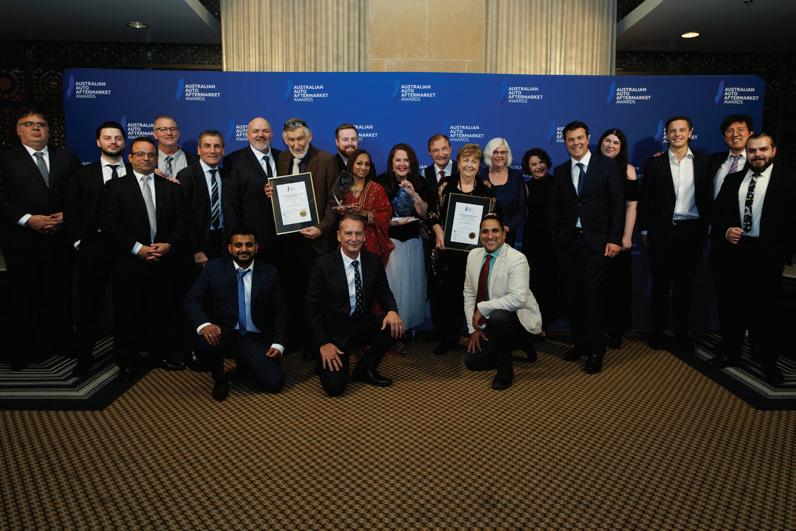
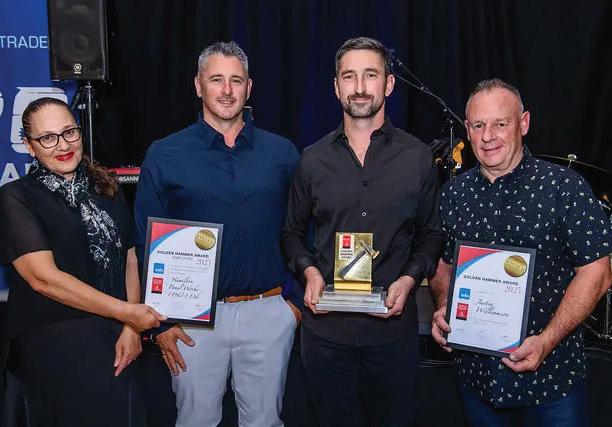
Terrain Tamer parent company sweeps
2026 Australian Auto Aftermarket Awards
DON KYATT SPARE PARTS TOOK HOME HONOURS ACROSS MARKETING, EXPORT, INNOVATION, AND LEADERSHIP AT THE INDUSTRY’S FLAGSHIP ANNUAL NIGHT.
The Melbourne-based distributor behind Terrain Tamer 4WD Parts and Flashlube additives had a strong night at the 2026 Australian Auto Aftermarket Awards, collecting Excellence awards in both Export and Marketing, a finalist placing in the Woman at the Wheel Award, and the evening’s standout honour — Hall of Fame induction for company veteran Allan Gray OAM (Order of Australia Medal).
EXPORT
AND MARKETING RECOGNISED
Don Kyatt’s Excellence in Export award reflected a sustained international growth push. The company opened its first offshore branch in 1986 and now serves customers across more than 80 countries through nine international branches and a wider global stockist network. Export sales have more than doubled over the past five years.
The Excellence in Marketing award went
to Terrain Tamer’s ‘The Customer is Still King’ campaign, a heritage-driven initiative built around long-term customer relationships. The campaign centred on Finding Frank, a children’s book, supported by an integrated television, radio, and digital strategy. The company says the campaign delivered measurable gains in customer engagement, brand loyalty, and sales performance.
Marketing Manager Skye Kottachchi was named a top-3 finalist in the Woman at the Wheel Award, recognising her leadership and strategic contribution across her 15 years with Don Kyatt. The award acknowledges women making a mark in the automotive industry.
The company also received a nomination for Best Stand Under 36m² at the accompanying Australian Auto Aftermarket Expo.
HALL OF FAME FOR ALLAN GRAY
The night’s defining moment was the Hall
of Fame induction of Allan Gray OAM, who at 92 continues to work with Don Kyatt Spare Parts. Gray’s career in the industry stretches back to 1948 — a span covering the rise of Australia’s 4WD sector, decades of technical education, and ongoing product development. Known within the trade as ‘the engine whisperer’, he has also spent considerable time mentoring mechanics and supporting charitable causes.
CEO Brent Hutchinson said the breadth of recognition reflected the team’s collective effort: “To be recognised across so many different areas of the business was incredibly humbling,” he said. “These awards recognise the hard work, innovation and commitment that has shaped our company over many decades. We are extremely proud of the entire team and honoured to see Allan receive such well-deserved recognition for his lifetime contribution to the industry.”
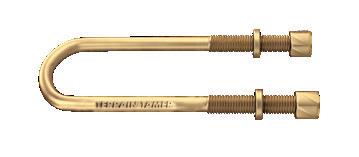
INTRODUCING THE
RANGE
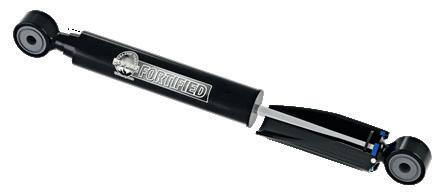
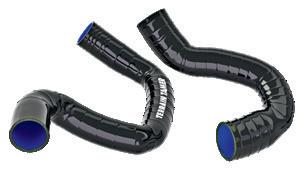
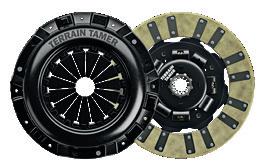
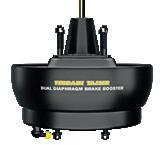
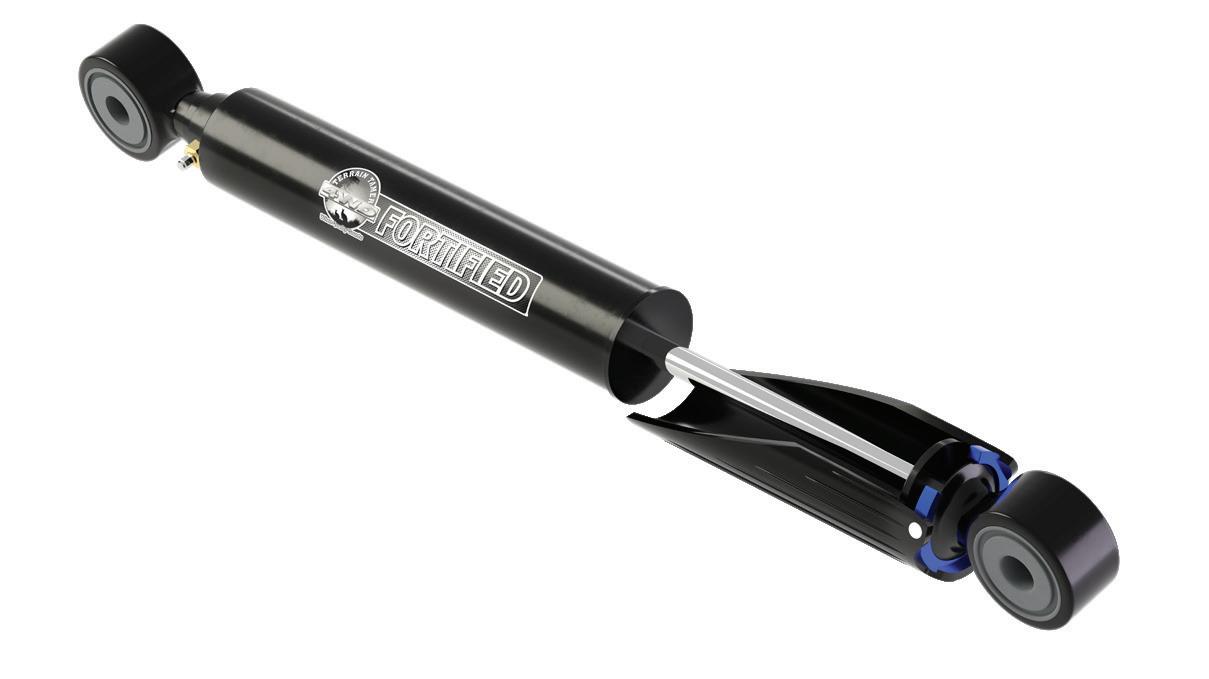
At Terrain Tamer, we understand the demands of real heavy duty 4WD vehicles, tackling extreme conditions. That’s why we’ve invested in the technology to create our TERRAIN TAMER FORTIFIED 4WD Parts range, uniquely designed and developed to truly meet these needs.We’re built tougher as recognised and used in mining, emergency services and agriculture, and those who really need to demand more from their vehicle. For information
terraintamer.com or call (09) 263 6021
Blackfern brings FRAM filtration into the fold
AUTOSERV NZ HAS JOINED THE BLACKFERN COOPERATIVE AS A GOLD TIER SUPPLIER, GIVING MEMBER WORKSHOPS A NEW ROUTE TO ONE OF THE WORLD’S BEST-KNOWN FILTRATION BRANDS
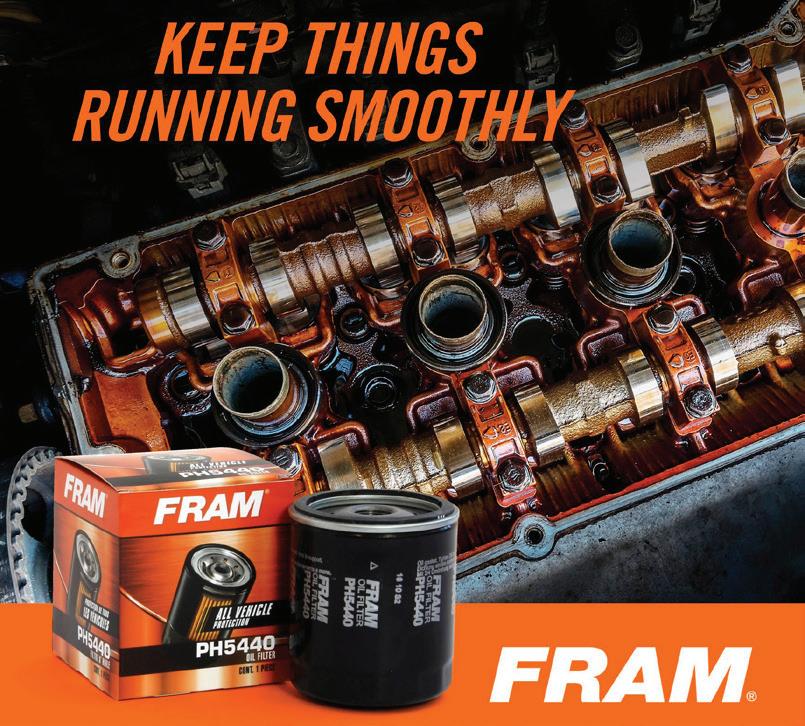
FRAM is now available to Blackfern member workshops through Autoserv NZ, the brand’s New Zealand distributor and an established name in the local aftermarket. The arrangement extends Autoserv’s existing product portfolio — which includes Wynn’s performance chemicals — and adds a globally recognised filtration line to the range that workshops can access through a single Blackfern account.
“It’s all about making it easier to access key brands,” says Roger Castleton, Director of Blackfern Cooperative.
A NEW WAY TO ORDER
To support the new supply arrangement, Autoserv operates an online shop through the Blackfern portal at blackfern.coop, giving workshops a single location to order and restock fast-moving filtration lines. For part number lookup, workshops can use framfilters. co.nz — enter the vehicle’s rego number and the correct filtration parts come up immediately. Manual search by vehicle type is also available, along with a cross-reference
guide for part number matching. It’s a practical tool for reducing charge-out time on straightforward filter replacements.
ABOUT THE BRAND
FRAM needs little introduction to most technicians — the brand has been fitted by New Zealand workshops for generations. It is sold across 174 countries and holds the number-one position in North America, currently the world’s largest automotive aftermarket.
The FRAM Tough Guard range is manufactured to meet or exceed OEM specifications, using a synthetic fibre and cellulose blend that increases both dirttrapping and dirt-holding capacity. The range claims 99% filtration efficiency and is the widest range in New Zealand to offer that rating. For cabin air filtration, the FRAM Fresh Breeze filter incorporates ARM & HAMMER baking soda for odour control and filters up to 98% of dust, pollen, and other contaminants. FRAM 4x4 filter kits are also now available through the channel.
MARGIN AND SERVICE INTERVAL OPPORTUNITY
The Blackfern distribution model is designed to deliver premium product at a better margin for member workshops. With WoF inspection intervals under review and service periods potentially extending as a result, having a trusted, high-performance filtration brand on the shelf is a straightforward way to support customer engine protection — and justify the conversation around service quality at the counter.
Any purchases of FRAM products through Autoserv on a Blackfern account during June and July will earn double reward points, and qualify the member for a draw to win 20,000 reward points. Terms and conditions apply. Visit blackfern.coop to find out more.
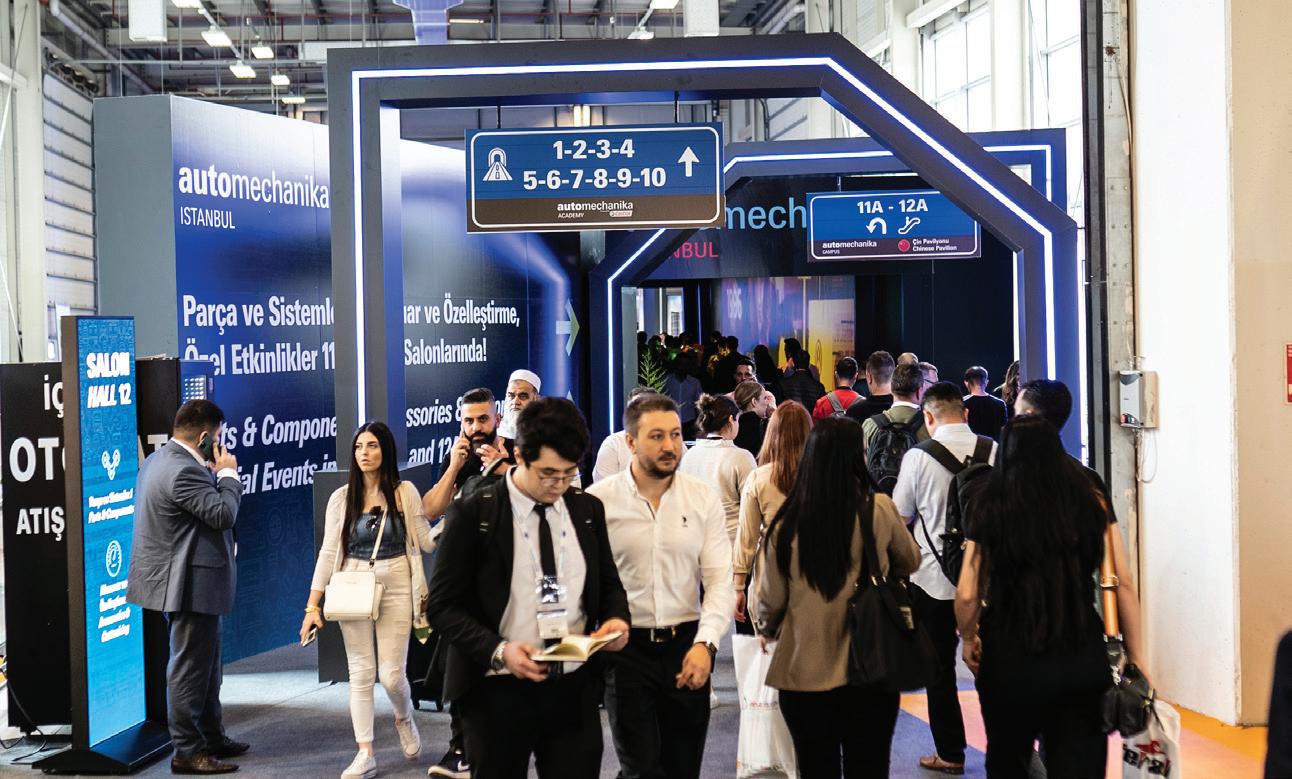
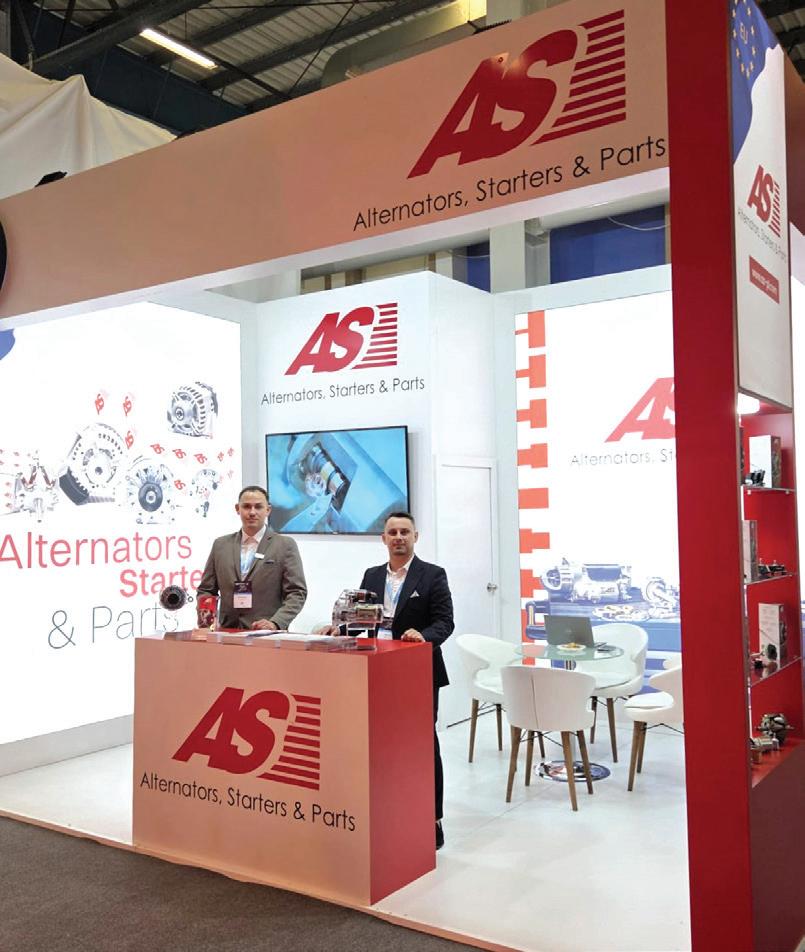
Automechanika Istanbul marks 25 years as Eurasia’s aftermarket hub
THE 2026 EDITION DREW AROUND 1,400 EXHIBITORS FROM 41 COUNTRIES, UNDERSCORING ISTANBUL’S STANDING AS THE REGION’S MOST INTERNATIONAL TRADE FAIR
Automechanika Istanbul opened its 25th edition at the Tüyap Fair and Congress Center on 19 May, running through to 22 May 2026. Organised in cooperation with Messe Frankfurt Istanbul and Hannover Fairs Turkey, the event has grown from its 2001 debut into the dominant aftermarket trade platform across a geography stretching from Europe through the Middle East, North Africa, and Central Asia.
This year’s show hosted approximately 1,400 exhibitors from 41 countries across more than 40,000sqm of net exhibition space. The previous edition attracted more than 57,700 visitors, with 55% international attendance representing professionals from 152 countries.
TECHNOLOGY AND EV IN FOCUS
Electric vehicle technologies featured prominently, with the Innovation4Mobility by
Bakırcı zone in Hall 12 offering handson experience areas focused on EV and next-generation mobility solutions. A dedicated Additive Manufacturing Zone highlighted 3D printing applications in the automotive sector, showcasing lower-cost, faster production processes.
The Automechanika Academy programme brought expert speakers together to discuss mobility, sustainability, technology, and the future of the aftermarket, including a panel on transformation in supply chain management.
A GATEWAY TO EURASIAN MARKETS
International pavilions represented a broad cross-section of manufacturing nations, including the United States, Germany, China, Morocco, India, Hong Kong, Spain, South
Korea, Pakistan, Singapore, and Taiwan. With an international exhibitor ratio of 55%, Automechanika Istanbul holds the distinction of being the most internationally represented trade fair held in Türkiye.
Technology and Innovation Partner ZF used the fair to launch its ZF [pro]Tech advanced workshop service concept in the Turkish market — one of several strategic partnerships that also included MAHLE, YANMAR, Hartridge, Bakırcı, and IBIS.
The 25th anniversary was marked by a dedicated tunnel installation tracing the show’s history, positioned between Halls 10 and 11, alongside a career area, a live vehicle-painting event, and a university engineering showcase.
The belt inside the rack: why EPS repair is changing
A PROVEN COMPONENT-LEVEL FIX FOR ELECTRIC POWER STEERING FAILURE IS RESHAPING WORKSHOP ECONOMICS IN THE US AND UK
Electric power steering has been standard fitment on new vehicles for well over a decade. The system replaced hydraulic assist progressively through the 2000s and is now essentially universal — not just on new cars, but on the large volume of used Japanese imports that fill the NZ vehicle parc. The Toyota Corolla, Auris, Yaris, and Aqua; the Nissan Tiida, Note, and Leaf; the Honda Fit and Freed — all have carried EPS for ten years or more and are now at the age where the components inside the steering rack are starting to wear.
The critical component in a belt-driven EPS rack is a rubber drive belt connecting the electric motor to the steering gear. When that belt wears or breaks, the power assist cuts out. Steering reverts to heavy manual mode — manageable at speed, but physically demanding at low speeds and potentially dangerous in an emergency.
The failure mode is consistent: a customer complains of sudden, severe steering heaviness, often accompanied by an EPS warning light on the dash. The vehicle comes in, gets scanned, and the diagnosis points to the rack. From there, the standard response in most workshops is full rack replacement — an exchange unit installed, the old one returned or scrapped. That approach works, but it carries a significant cost. A replacement rack typically runs $800 to $1,500 in parts, with labour and wheel alignment on top. Total repair cost frequently ends up costing between $1,500 and $2,500 depending on application and
the workshop’s alignment setup.
THE ROOT CAUSE THAT CHANGES THE MATHS
The US aftermarket supplier Plews & Edelmann has built a business case around a different question: not what failed, but why. In many EPS rack failures attributed to the rack as a whole, the actual failed component is the rubber drive belt. The rack housing, the electric motor, the control module — all still functional.
“The industry treated EPS failure as a rack problem,” said Dan Billie, CEO of Plews & Edelmann. “We looked at the root cause and realised, in many cases, it was a belt problem. That’s a fundamentally different repair.”
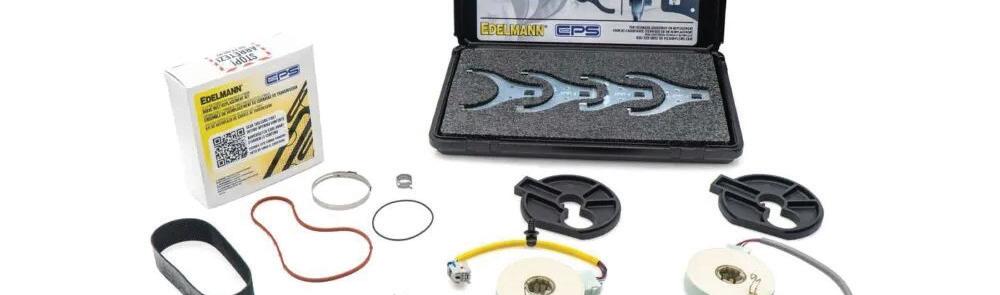
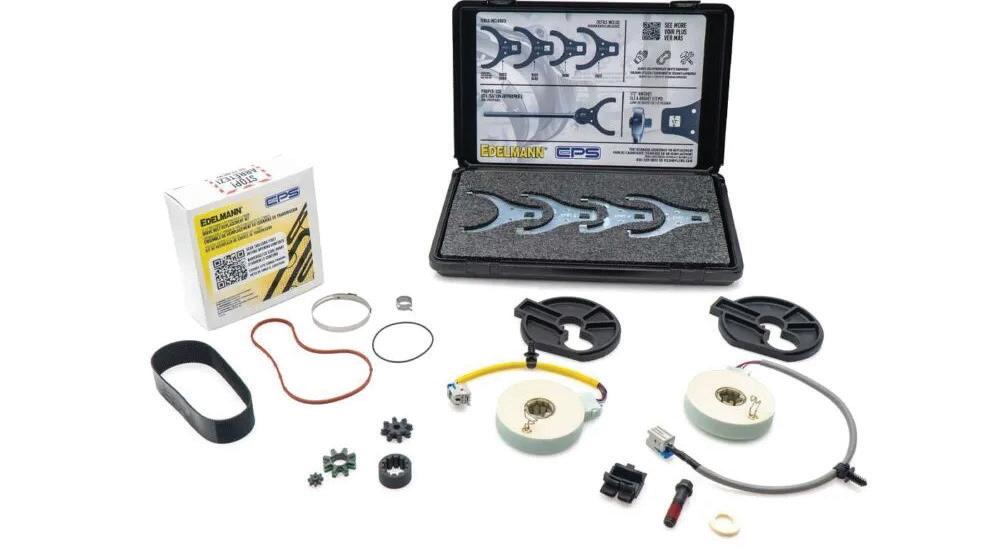
The company’s Edelmann EPS Drive Belt Kits supply a replacement belt along with the housing gasket, O-ring seals, and boot clamps needed to complete the job. No module reflash is required. Because the original motor and control unit are reinstalled, the vehicle’s ECU recognises the rack without reprogramming. The company claims a cost saving of more than 50% against full rack replacement and says the repair takes approximately the same time as removing and reinstalling an exchange rack. Alongside the belt kits, Plews & Edelmann has released torque sensor replacements — addressing another common EPS failure point that until now has also defaulted to full rack exchange — plus proprietary chamfer ring removal tools engineered specifically for EPS rack disassembly, where standard spanner
wrenches are ineffective due to the positioning and tooth pattern of the internal rings.
The product line was launched in the US earlier this year and has been picked up across North American trade media as a meaningful shift in how EPS failure is approached at workshop level.
SUPPLY CHAIN WORKAROUNDS
Until these options are available in the NZ market, the workaround currently available to technically capable workshops is sourcing by belt specification — EPS rack belts are standardised by length, width, and tooth count per application, and can be imported individually from offshore suppliers. This approach is viable, but it comes with no local technical support, no warranty pathway, and no guarantee of correct fitment without application-specific research. It is not a trade supply solution.
So for now, the immediate practical value for NZ workshops is diagnostic. When an EPS warning appears and a scan indicates rack failure, the question worth asking — before committing to a rack exchange — is whether the belt is the actual failed component. Physically inspecting the rack is the starting point. On belt-drive EPS systems, a broken or visibly worn drive belt is often accessible once the rack is partially disassembled, and the condition of the motor and control module can be assessed at the same time. If the rack assembly is otherwise sound, workshops have options: source the belt by specification, or advise the customer accordingly and document the diagnostic finding.
At the supply end, the emergence of a purposebuilt EPS belt repair category in the US market signals where the global aftermarket is headed. When that product does eventually arrive in the local supply chain, workshops that already understand the diagnosis and repair process will be well positioned.
RUC system overhaul heads into regulation phase
CONSULTATION ON THE PROPOSED FRAMEWORK UNDERPINNING ELECTRONIC ROAD USER CHARGES IS OPEN, WITH THE GOVERNMENT SEEKING INPUT FROM TECHNOLOGY, FINANCE, AND RETAIL SECTORS
New Zealand’s road user charges system is heading for its most significant overhaul in decades. The Land Transport (Revenue) Amendment Bill — now through the Transport and Infrastructure Select Committee — proposes shifting the country’s 3.5 million light vehicles from fuel excise duty to electronic RUC, with the select committee recommending changes to strengthen the framework before the bill becomes law.
The logic behind the shift is straightforward: petrol tax is a rough proxy for road use, and that link is breaking down as more fuel-efficient vehicles pay less despite using the roads equally. With hybrid registrations rising steadily, the mismatch between what vehicles pay and how much road they use is only going to widen.
WHAT THE REGULATIONS COVER
The consultation sitting alongside the bill deals specifically with the regulatory framework that will govern how an electronic RUC market
operates in practice. The bill creates the role of ‘RUC providers’, opening the market to private companies to monitor vehicle travel, issue RUC licences, provide alternative payment schemes, and collect revenue.
Key areas under consultation include how electronic distance recorders can be used, the criteria for becoming an approved RUC provider, provider monitoring and compliance, personal data protection, and alternative payment structures. Flexible payment models — such as post-pay and monthly billing — are part of the framework, along with separation of NZTA’s dual roles as both RUC regulator and retailer to enhance competition.
DATA PRIVACY AND PROVIDER OBLIGATIONS
Privacy protections are a central plank of the proposed regulations. Any technology solutions will be required to comply with the Privacy Act and the Road User Charges Act, which contains
Bosch ADS X updates add 2026 model coverage and expanded ADAS calibration
SOFTWARE VERSIONS 7.1 AND 7.2 CONTINUE A MONTHLY UPDATE CADENCE THAT IS BECOMING CENTRAL TO THE SCAN TOOL’S VALUE PROPOSITION
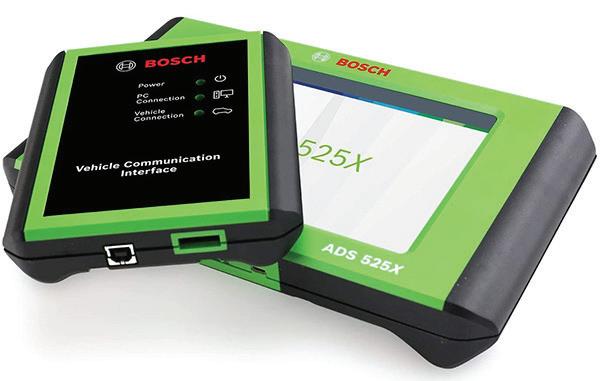
Bosch Diagnostics has released software updates 7.1 and 7.2 for its ADS X series scan tool. Both updates add 2026 model year vehicle coverage and expanded ADAS calibrations — version 7.1 includes more than 6,500 new special tests and system applications, and version 7.2 more than 7,000. Update 7.1 adds 2026 model year coverage for Alfa Romeo, Chevrolet, Ford, Genesis, GMC, Honda, Hyundai, Kia, Lexus, Lincoln, RAM, Subaru, and Toyota. Version 7.2 continues that rollout with BMW, Hyundai, Jeep, Kia, MINI Cooper, Nissan, RAM, Subaru, and Toyota. Toyota, Subaru, Hyundai, Kia, Nissan, and Honda collectively cover a substantial share of the local vehicle mix — new sales and used imports alike. The 2026 model year is already arriving in service bays on the latest new vehicle deliveries.
THE ADAS CALIBRATION ANGLE
The ADAS calibration expansion in both
updates connects directly to a regulatory change that takes effect this year. From 1 November 2026, WoF inspections will include a check for AEB and Lane Keep Assist warning lights on vehicles where those systems are fitted — meaning an uncalibrated or faulted ADAS system can fail a compliance inspection.
ADAS calibration is moving from a niche capability to a standard workshop function. The foundation of that capability is scan tool coverage: the ability to read, clear, and trigger calibration routines for the systems fitted to vehicles coming through the door. Shops running out-of-date diagnostic software risk being unable to complete the work — and increasingly, unable to clear the faults that will block a WoF.
Bosch ADS X users with
existing safeguards around what information can be collected and accessed. The consultation is designed to ensure those protections are built into the provider framework from the outset, rather than bolted on later.
For workshops and fleet operators currently managing diesel or EV RUC obligations, the shift toward electronic systems and private providers is likely to change how RUC is purchased, tracked, and reconciled. The bill enables new payment models, such as subscriptions and post-payment, with private companies able to offer set-and-forget billing options. That has obvious implications for fleet management workflows and the tools workshops use to advise customers on compliance. RUC revenues will continue flowing to the National Land Transportation Fund, preserving the existing user-pays principle — the mechanics of collection are changing, not
an active subscription receive updates automatically. Shops that have let their subscription lapse, or that are running older diagnostic platforms without current ADAS coverage, should treat the November deadline as a prompt to review their tooling.
Bosch’s monthly update cadence for the ADS X is worth understanding as both a business and a technical consideration. The scan tool is a one-time purchase; the ongoing software subscription is what keeps it current. As the vehicle parc grows more complex and ADAS becomes standard across most makes, the value of that subscription — and the cost of not maintaining it — becomes progressively clearer.
Versions 7.1 and 7.2 are the latest in a sequence that began adding 2026 model-year coverage in version 6.11 and has continued monthly since then.
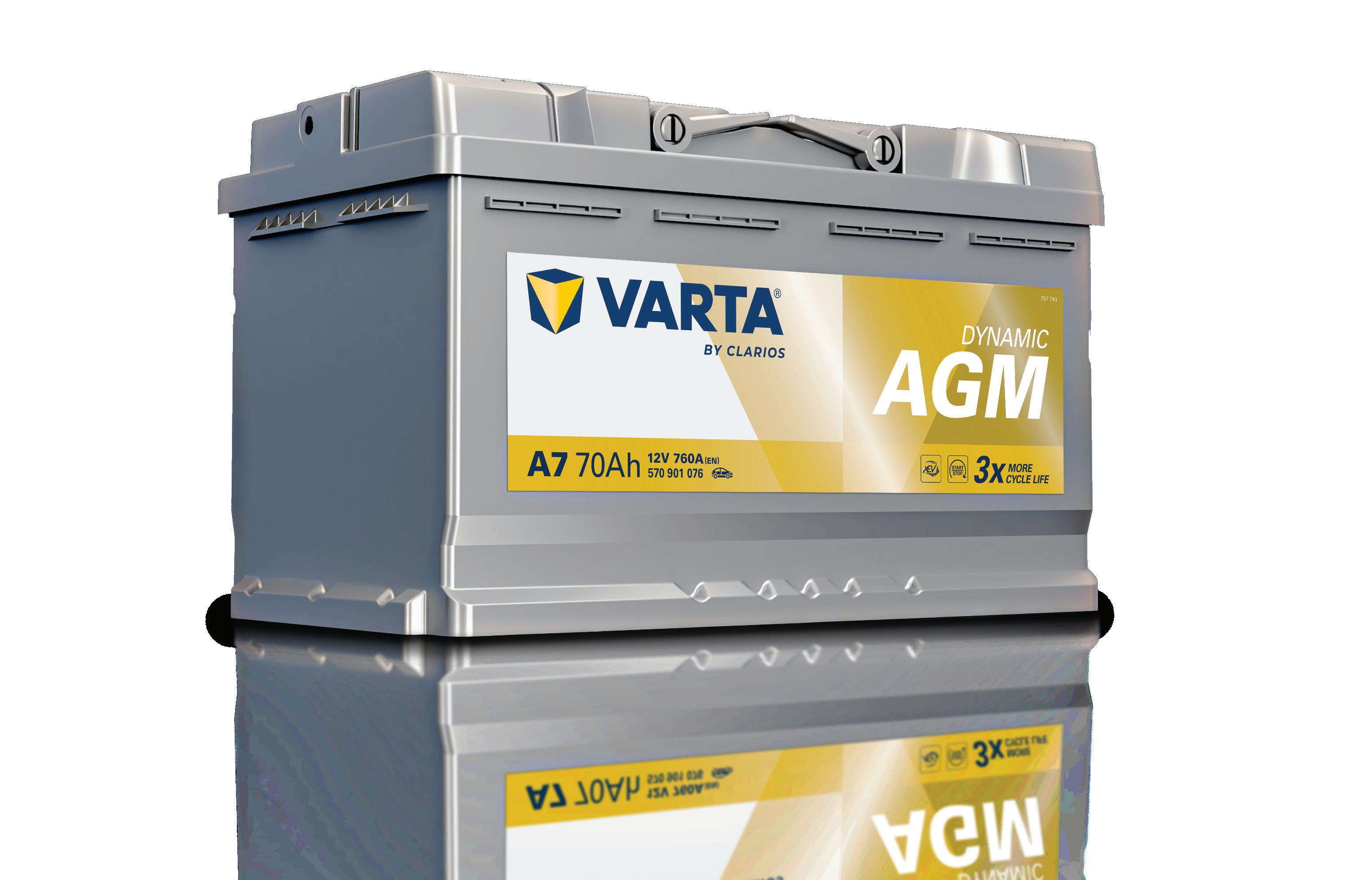
WHEN UPTIME MATTERS, FLEETS BACK BATTERIES THEY CAN TRUST.
VARTA has long been the factory-fit choice for European trucks, and that matters here in New Zealand, where around 90% of European trucks were originally fitted with VARTA. It is proven OE technology built for hard work, long life and dependable performance.
That same confidence is why VARTA has been chosen for one of New Zealand’s largest fleets, Fonterra. In demanding conditions where safety, reliability and longevity all matter, VARTA delivers. When every kilometre counts, chose VARTA.
WHEN A EUROPEAN VEHICLE NEEDS A NEW BATTERY, FIT THE ONE IT WAS BORN WITH.
VARTA automotive batteries are factory fitted in a huge share of European vehicles, making them the natural replacement choice for workshops servicing the European car parc. Built to meet OE standards, VARTA delivers the performance, fit and reliability modern vehicles demand. For workshops, the message is simple: fit the battery trusted by Europe’s vehicle manufacturers from day one.
VARTA – Fit the battery the car was born with.
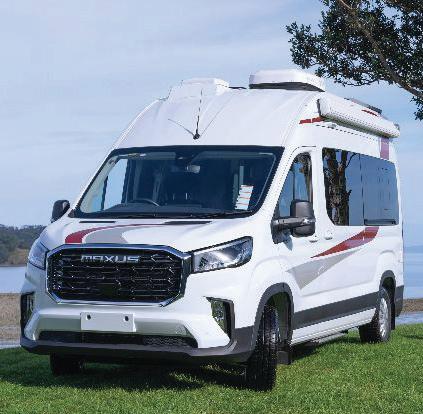
Maxus Automotive arrives in NZ with electric trucks, RVs and caravans
SAIC’S SPECIALIST COMMERCIAL AND LEISURE VEHICLE BRAND HAS LANDED IN NEW ZEALAND UNDER A DEDICATED DISTRIBUTOR AGREEMENT
Maxus sits within the SAIC group alongside LDV but operates as a distinct entity, focused on what the manufacturer describes as special projects and bespoke models. The New Zealand distributorship, Maxus Automotive, holds a direct agreement with SAIC and has positioned its range to avoid overlap with Inchcape’s LDV business.
The launch line-up spans motorhomes, caravans, electric trucks and buses. On the recreational vehicle side, there are two motorhome models — including a Luton cab-over configuration — plus a van-based campervan and five caravan variants. A utebased off-road motorhome is in the pipeline. The motorhome range is rear-wheel drive, which the distributor says sets it apart from the front-wheel drive European product that dominates this segment.
Caravans arrive fully assembled from the factory, which Maxus Automotive says removes significant cost from the supply chain
compared with locally finished competitors.
EDELIVER75 DRAWING FREIGHT INTEREST
The eDeliver75 is a fully electric 7.5-tonne truck offered in short and long wheelbase configurations. Globally, the platform runs a 120kWh LFP battery with a WLTP range of around 250km and supports 120kW DC fastcharging — enough to bring the pack from 20% to 80% in approximately 30 minutes. Payload capacity is rated at 4,590kg.
In New Zealand, FedEx is currently trialling a demonstrator, with the truck’s urban range and operating economics making it a practical fit for point-to-call delivery routes. The truck service network currently covers Auckland, Hamilton, Tauranga and Taupo, with expansion planned through service partnerships.
Maxus Automotive also holds distribution rights for Sunwin electric buses, with growing operator interest as fleet contracts requiring zero-emission vehicles begin to take effect.
Bosch adds 172 new part numbers for Q1 2026
A RELEASE SPANNING EIGHT PRODUCT CATEGORIES EXTENDS BOSCH AFTERMARKET COVERAGE TO MORE THAN 76 MILLION VEHICLES GLOBALLY
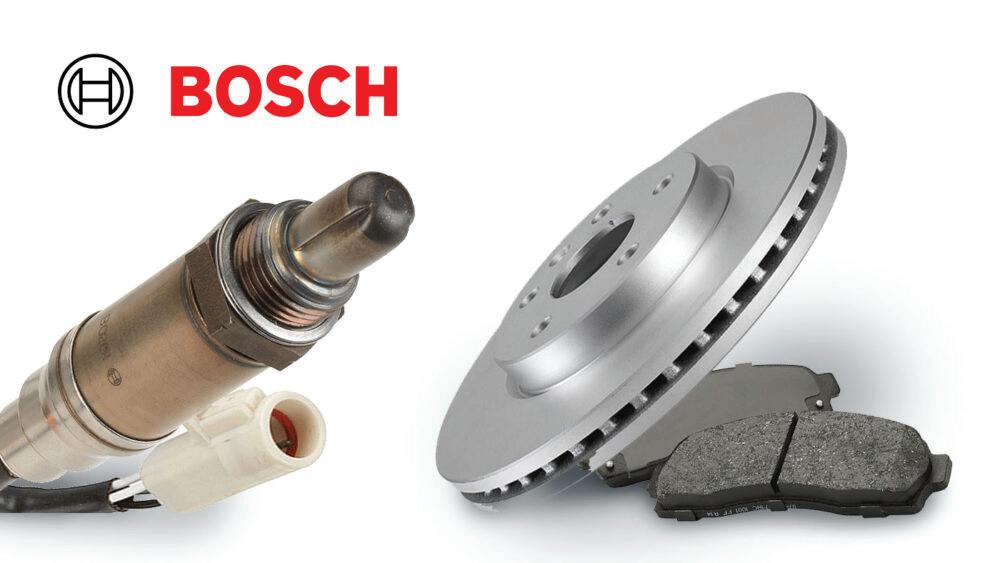
Robert Bosch has added 172 new automotive aftermarket part numbers across eight product categories for Q1 2026, covering engine parts, pumps, injectors, rotating machines, sensors, batteries, braking components, and spark plugs.
Bosch’s OE relationships with Toyota, Subaru, Honda, and the Volkswagen Group mean the brand spans the full breadth of the local vehicle mix — used Japanese imports and new vehicles alike. A release of this scale, across this many categories, is a prompt to check whether your distributor has updated their local Bosch range accordingly.
WHAT’S NEW ACROSS THE CATEGORIES
In engine components, Bosch added 13 new part numbers, including canister purge valves, ignition coils, and throttle bodies. The category also introduces a new EVO spark plug with an iridium alloy construction for improved wear resistance and extended service life, with coverage weighted toward Asian-market vehicles.
The pumps category added two new GDI high-pressure pump part numbers, each with an integrated pressure-limiter valve and pressure damper in a compact, lightweight design. Aftermarket coverage for GDI highpressure fuel delivery has traditionally been thinner than OE supply, so the addition is useful for workshops that handle directinjection engines.
Twenty new injector part numbers were released across gasoline injectors, standard fuel injectors, and GDI fuel injectors — all engineered to meet or exceed OEM specifications for fuel atomisation and combustion performance.
In braking, Bosch released 17 new part numbers, including 14 parking brake shoe part numbers covering more than eight million vehicles. Coated shoe plates resist rust and corrosion, and both bonded and riveted attachment methods are covered, matching OE
NETWORK AND SERVICING
Motorhome sales are handled through THL’s RV SuperCentre network at Mangere, Hamilton, Palmerston North and Christchurch, with a Queenstown site to follow. Caravan sales run through Maxus Automotive’s own retail sites in Albany, Tauranga and Takanini, with Taupo planned for the network. The company operates from the former SsangYong premises at 170 Great South Road, Takanini.
Warranty work must be carried out through the Maxus Automotive network, though general servicing can be performed by LDV dealers. Parts supply runs directly through Maxus.
The distributor is also evaluating plug-in hybrid motorhome options and 48-volt system technology as future additions to the range.
configurations across domestic and light commercial applications.
Sensors and rotating machines also feature in the release; Bosch has confirmed the full part list is available through its trade portal and distributor network.
PART OF A BROADER PATTERN
The Q1 2026 release is notably larger than the equivalent Q1 2025 update, which covered 82 new part numbers across similar categories. The near-doubling reflects both the increasing complexity of the vehicle parc and the growing aftermarket demand as more late-model vehicles move into independent workshop territory.
Not every global catalogue release lands directly on local shelves — confirming NZlocal availability with your Bosch distributor is the practical next step, particularly for any part numbers that align with high-failure applications in the current vehicle mix.
Fewer cars, more kilometres
MOBILITY AS A SERVICE IS STILL EARLY-STAGE IN NEW ZEALAND — BUT THE MODEL IT REPRESENTS WILL RESHAPE WHAT COMES THROUGH WORKSHOP DOORS
ACCESS OVER OWNERSHIP
The average New Zealand car is parked around 95% of the time. It sits idle while its owner works, sleeps, and goes about their day — depreciating, occupying space, and representing a capital outlay that, according to Drive Electric’s State of the Nation 2026 report, adds up to roughly $60 billion tied up across the country’s 4.4 million light vehicles. Against that backdrop, the logic of mobility-as-a-service — paying for access to a vehicle when you need one, rather than owning one — is not difficult to follow.
Mobility as a service, or MaaS, is the broad term for transport models built around access rather than ownership. It covers ride-sharing platforms like Uber, shared electric car services like Auckland- and Christchurch-based Zilch, e-bike and e-scooter operators including Lime and Neuron, and the emerging concept of fully integrated platforms that combine public transport, shared vehicles, and on-demand services into a single subscription. Drive Electric (which advocates for accelerated EV uptake and bases its annual report on Ministry of Transport and international data) covers MaaS as a growing part of the electric transport ecosystem, while making clear that in New Zealand the model is still in its early stages.
That caveat matters, as this is not an imminent disruption but rather a structural shift that is building unevenly and that the aftermarket trade has time to read and prepare for.
WHAT IS ALREADY OPERATING IN NZ
New Zealand’s MaaS landscape is modest but real. Zilch operates fully electric car-sharing across Auckland, Christchurch, Hamilton, and Rotorua, offering vehicles by the hour or day under a model that bundles insurance, maintenance, and charging. The service targets both individual members and organisations looking to replace underutilised pool vehicles. Uber has committed to electrifying its platform, introducing an Uber Green tier in 2024. Shared micro-mobility — e-scooters and e-bikes from operators including Lime, Neuron, and Flamingo — collectively completes hundreds of thousands of urban trips annually.
At the commercial end, the transition is further advanced. NZ Post’s fleet of almost 1,000 vehicles reached 70% electrification in May 2025, with an innovative financing model allowing its contractor network to lease electric vans at progressively lower rates as vehicles are re-leased — effectively seeding a secondhand electric commercial vehicle market. IKEA, which opened its first New Zealand store in late 2025, mandated zero-emission last-mile delivery from partners including NZ Post and
Mainfreight. When a retailer of that scale sets the condition, the effect ripples across entire logistics networks.
The Drive Electric report also notes that Palmerston North’s fully electric bus fleet contributed to a 69% increase in bus patronage over two years — a data point that suggests modal shift is real when alternatives are reliable and accessible. Autonomous vehicle trials are underway at Christchurch Airport, and while full deployment remains some years away, the direction of travel is clear.
BOTH SIDES OF THE WORKSHOP EQUATION
Here is where the story becomes doubleedged, and the concern is straightforward: if more New Zealanders access mobility through shared services rather than owning vehicles outright, the pool of privately owned vehicles — and therefore the number of routine service customers — could contract over time. The Drive Electric report notes that internationally, one shared vehicle can replace between five and 15 privately owned cars. Global research from shared EV operators in Europe shows utilisation rates of 40–60% for shared fleets, compared to around 5% for privately owned vehicles. More use per vehicle, fewer vehicles overall — that is the model’s arithmetic.
For workshops dependent on a steady flow of WoF, oil change, and routine maintenance customers from private ownership, that arithmetic eventually means something. Not tomorrow, and not dramatically in the near term given how slowly New Zealand’s fleet turns over, but the direction is signalled.
The other side of that equation, however, is equally significant — and arguably more immediately relevant.
Shared and commercial fleets cover far higher annual kilometres than privately owned vehicles. Higher utilisation means accelerated wear: tyres, brakes, suspension components, and general mechanical condition all degrade faster. A vehicle completing 60,000 kilometres a year in a shared fleet needs servicing on a fundamentally different schedule than the same model sitting in a suburban driveway. NZ Post’s EV fleet trial data, compiled by EECA, recorded a 50% reduction in maintenance costs compared to equivalent diesel vehicles — but that reduction sits within the context of a fleet that is actively and professionally managed, serviced on contract, and turned over systematically.
This is the salient point: fleet operators at scale — whether logistics companies, shared mobility platforms, or large corporates replacing pool vehicles — don’t walk in off the street. They consolidate their servicing and
want capability, consistency, reliability, and competitive contract pricing. The workshops that win that work will be EV-capable, wellequipped, and able to service at volume as part of that solution.
THE MICRO-MOBILITY QUESTION
E-scooters and e-bikes are worth a brief mention, less because they represent direct workshop opportunity and more because they reflect the broader pattern. Two-thirds of all New Zealand vehicle trips are under 6km. The Drive Electric report notes the e-bike market was valued at approximately $100 million in 2024, with consistent year-on-year growth. These vehicles don’t come through automotive workshops — but they do replace short trips that might otherwise have been made in a car, which over time nudges private vehicle utilisation downward.
The implication for workshops is indirect but real: the mix of transport options available to urban New Zealanders is widening, and some of those options sit entirely outside the traditional automotive servicing ecosystem.
WHAT TO WATCH
None of this requires immediate panic or wholesale reinvention. New Zealand’s MaaS market is early-stage; private vehicle ownership remains deeply embedded in the country’s culture and geography; and the rural and provincial markets that make up a significant share of the aftermarket will be the last to be affected by urban shared mobility trends.
But the signals from the commercial fleet sector are worth taking seriously now. NZ Post, IKEA’s delivery network, electric bus operators, and shared car platforms are not hypothetical future customers — they are operating today, and their fleets are growing, and the question for workshops is how they are positioned to service them.
EV capability is the baseline. Beyond that, fleet servicing contracts reward consistency and capacity. Workshops that have invested in EV diagnostics, high-voltage safety training, and the ability to turn vehicles around quickly and reliably will find the commercial fleet market increasingly accessible, while those that haven’t will find themselves watching it from the sidelines.
The indicators are that the model that replaces some private ownership will not eliminate workshop demand — it will concentrate it. Volume will flow toward fewer, better-equipped operators, a transition that warrants some consideration.
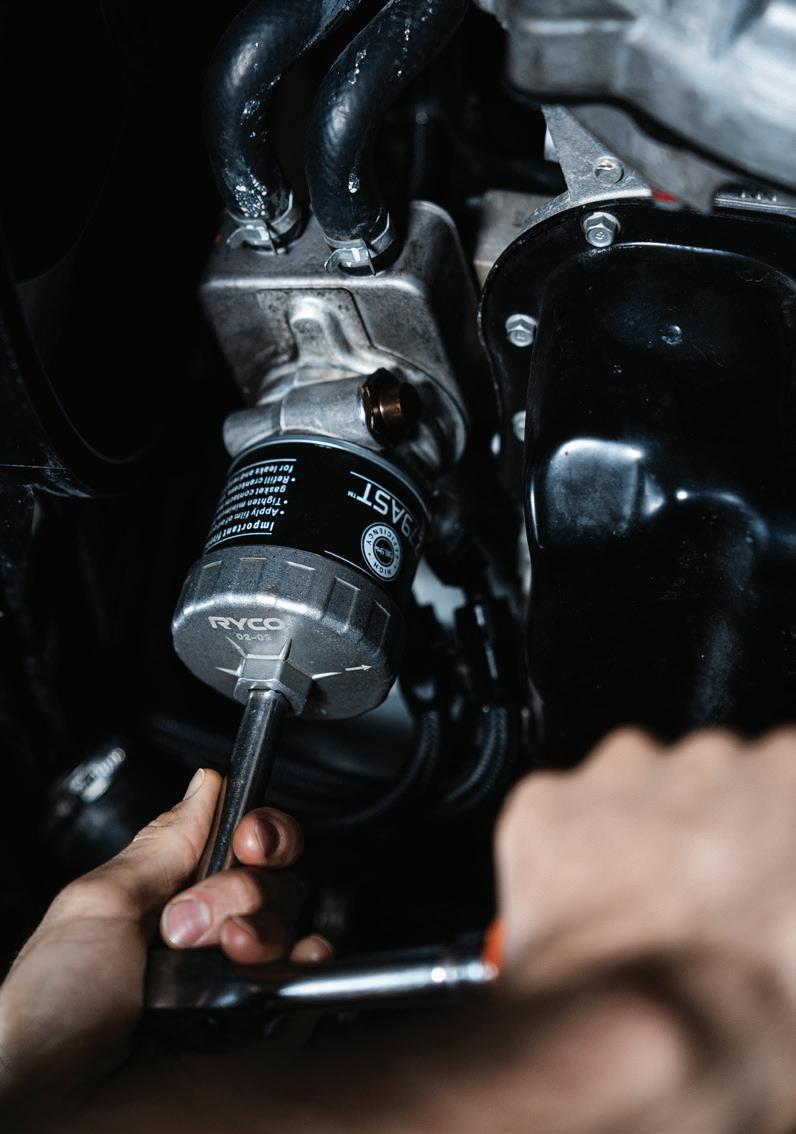
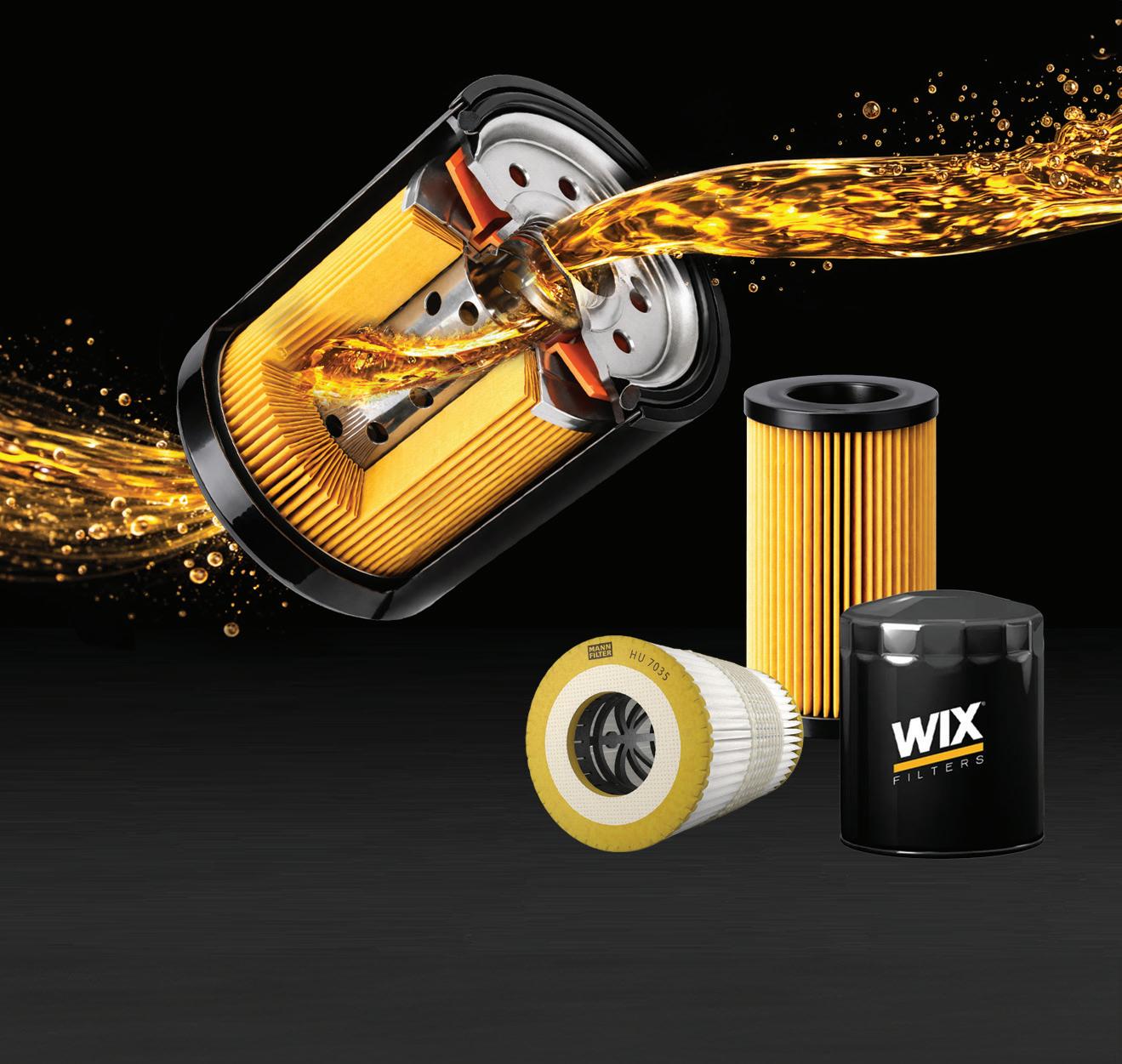
Ryco SynTec continues to be the ultimate in oil filtration
RYCO SYNTEC CONTINUES TO GIVE YOU THE ULTIMATE IN ENGINE PROTECTION, WITH ITS HIGH-EFFICIENCY MEDIA DESIGNED TO REMOVE MORE DIRT, KEEPING YOUR ENGINE CLEANER FOR LONGER
Ryco identified an opportunity to improve flow and burst pressure, whilst maintaining elite efficiency and life, resulting in the best oil filter on the market for when compromise isn’t an option. As the control part for the Supercars Championship, the SynTec Oil filter technology has been raceproven to withstand the harshest performance applications, whilst being the perfect upgrade over OE to your everyday car.
The technological enhancements in the range include larger ports and increased thickness on the base plate to increase oil flow and protect against oil pressure surges during endurance events. The steel spiral wound core also prevents core collapse and protects against surges, making it durable. It also includes a Tefloncoated main sealing to aid in removal when servicing.
The synthetic media technology provides increased contaminant reduction, removing 98.9% of contaminants with a 20-micron rating. The fine synthetic media fibres are designed
to trap more dirt as oil moves through them, without increasing the pressure drop across the filter, providing higher efficiency oil flow.
The efficiency, life and flow rating of this filter range ensures that they maintain the recommended service life of vehicles while not compromising the flow of oil. The robust construction provides additional protection against chemical attack and is made to resist extremely high temperatures, making the range perfect for those high-pressure and performance applications or simply for those customers just looking for a performance upgrade over OE.
The Ryco SynTec applications include highperformance and racing, and offer a premium upgrade over OE for your daily drive. Since developing the range of control parts for the GEN3 Supercars, Ryco has continued to develop and extend the range of SynTec Oil Filters in both spin-on and cartridge applications to suite a wide range of popular current and older makes and models including Commodore, Falcon, Camaro, Mustangs, commercial vehicles such
as transit vans, 4x4 vehicles including Ford Ranger, Everest, Mazda BT50, Toyota Hilux, Japanese and European vehicles and many more applications.
To check if there is a Ryco SynTec Oil Filter available for your car, simply use the vehicle or REGO search on the Ryco website at ryco.co.nz.
For more information on Ryco products see ryco.co.nz
Quieter, cleaner & safer braking with Bremtec
IN TODAY’S AUTOMOTIVE AFTERMARKET ENVIRONMENT, WORKSHOPS NEED BRAKE COMPONENTS THEY CAN RELY ON FOR CONSISTENT PERFORMANCE, DEPENDABLE QUALITY, AND BROAD VEHICLE COVERAGE
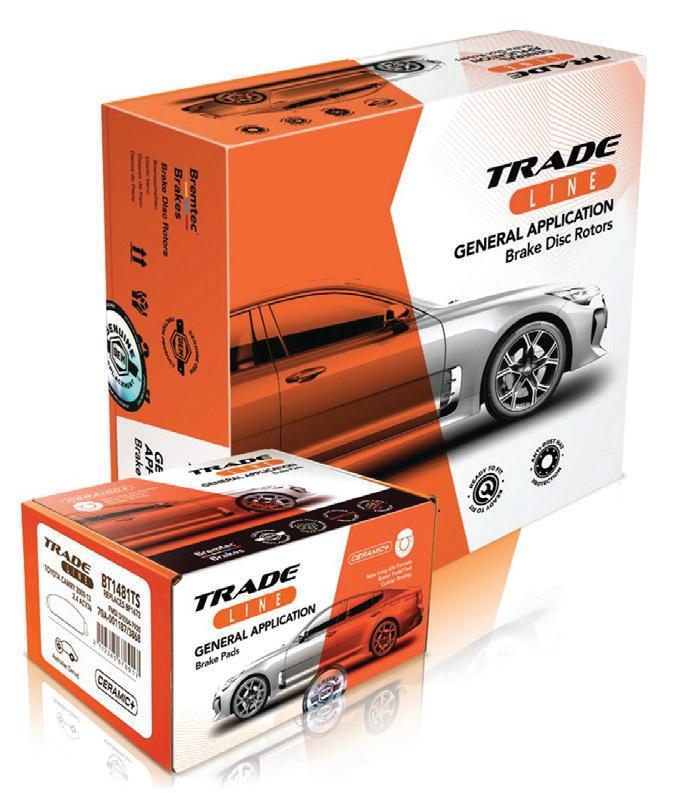
Bremtec Brakes continues to meet these needs with its Trade-Line range, which offers a complete braking solution across brake pads, brake rotors, brake shoes, brake drums, brake callipers, and brake hydraulics. Manufactured to exceed original equipment (OE) specifications, Bremtec TradeLine products are engineered to deliver the ideal balance of performance, reliability, and driving comfort for everyday passenger and commercial vehicle applications.
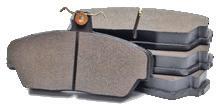
Headlining the Trade-Line range are its Ceramic+ brake pads, which have been developed specifically for daily driving conditions. Manufactured using unique ceramic matrix composite formulations and delivering enhanced resistance to brake fade and reduced wear on rotors, the brake pads provide quieter braking performance, reduced brake dust, and excellent stopping power.
Bremtec has also invested heavily in reducing and eliminating copper from its friction materials, helping to create more environmentally responsible braking solutions
without compromising performance.
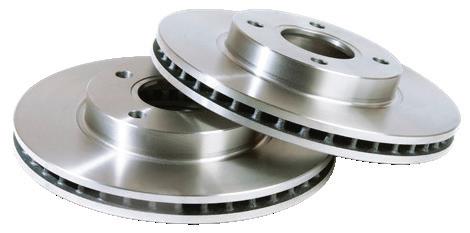
Complementing the brake pads are the Trade-Line brake rotors, which are manufactured to the highest precision quality to deliver reliable performance. Featuring advanced metallurgy designed to reduce thermal judder, the rotors help maintain consistent braking feel while supporting a longer service life.
For older vehicle and working applications, Bremtec also offers Trade-Line brake shoes and brake drums. Manufactured to OE-quality specifications, the range provides workshops with a cost-effective and dependable solution while maintaining consistent braking performance and durability. Bremtec’s TradeLine range further extends into brake callipers and hydraulics, providing workshops with access to complete braking system coverage from a single supplier. The Trade-Line callipers are a reliable and cost-effective replacement option, delivering good pedal feel and dependable everyday braking performance.
Meanwhile, Trade-Line hydraulics play a
critical role in maintaining efficient braking operation by ensuring reliable hydraulic pressure transfer throughout the system. Engineered as OE-quality replacement components, the hydraulics range ensures reliable braking by maintaining consistent pressure, preventing air or fluid leaks, and allowing for responsive braking action.
With one of the largest aftermarket brake portfolios available, Bremtec Brakes continues to provide workshops, distributors and technicians with trusted braking solutions engineered for local driving conditions and the evolving demands of the automotive aftermarket.
For more information on the Bremtec Brakes range, visit www.cooldrive.co.nz.
Capricorn returns A$15.7 million interim trade rebate to members
THE AUTOMOTIVE COOPERATIVE IS ISSUING EARLY REBATE PAYMENTS AS REWARDS POINTS, PROVIDING PRACTICAL RELIEF TO WORKSHOPS NAVIGATING A DIFFICULT TRADING PERIOD
Capricorn has announced an interim trade rebate of up to A$15.7 million, to be returned to eligible members as Capricorn Rewards Points. The payment brings forward a portion of the annual trade rebate, calculated on each member’s Trade Account spend over the nine-month period from 1 July 2025 to 31 March 2026.
The interim rebate is automatic — members do not need to apply. Capricorn calculates each allocation based on eligible spend, with points appearing on the May Trade Account statement, issued in June. Members can also check their Rewards Points balance at any time through the myCAP portal.
HOW THE REBATE WORKS
The rebate is proportional to each member’s Trade Account spend across the qualifying period. Points do not expire, and redeeming them has no effect on future rebate calculations — those are based solely on spend, not redemptions.
Capricorn Group CEO Brad Gannon said the decision reflected the organisation’s cooperative values and its responsibility to members through all stages of the business cycle. “We know many of our members and Preferred Supplier partners are operating in a tough environment, managing rising costs and ongoing uncertainty. This interim trade rebate is one meaningful way we can help ease pressure and return value directly to our members — and by issuing it now, we hope to provide some real relief when it’s needed most.”
PUTTING POINTS TO WORK
Rewards Points are flexible and can be used in a number of ways:
• Redeemed for tools, workshop equipment, or office supplies
• Applied directly to a Capricorn Trade Account balance
Members unsure how to use their points are encouraged to speak with their Area Manager or contact Capricorn directly.
Keeping Engines Moving From OE to Aftermarket
WHY CAPRICORN ISSUES TRADE REBATES
As a cooperative, Capricorn’s structure means that when the organisation performs well, that value flows back to members. The Trade Rebate is one of the primary mechanisms for doing that. Any decision regarding a further trade rebate for the remainder of the 2025/26 financial year will follow year-end results and remains at the discretion of the Capricorn Board.
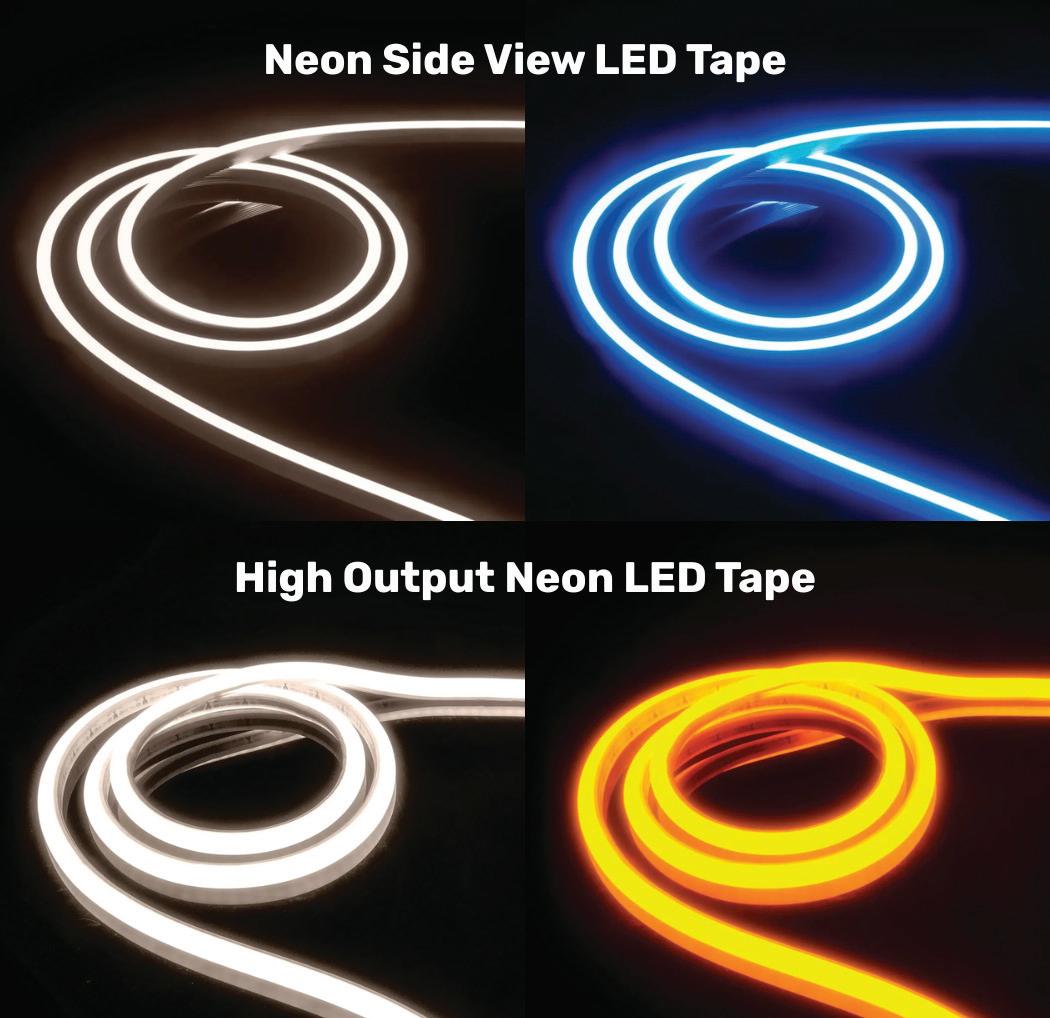
NARVA’S NEON LED TAPE IS IDEAL FOR RV, CARAVAN, AND MARINE
customisation for a precise fit.
Like the Side View tape, it features 3M™ adhesive backing for a secure hold and an IP66 rating for weather and dust resistance — a solid performer in tough conditions.
LIGHTING THAT WORKS FOR YOU
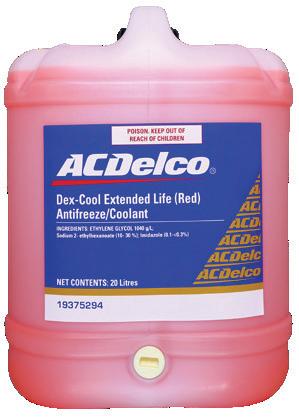
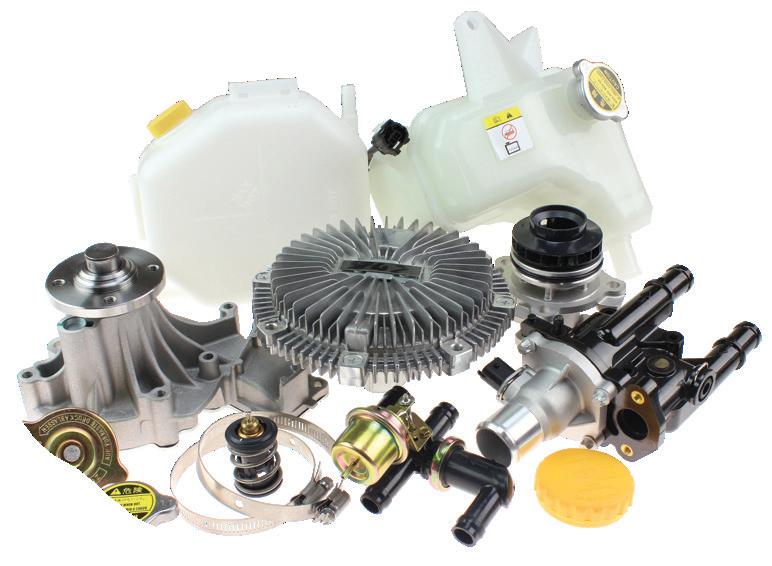
• Mixes with all types of anti-freeze & coolant
• Special ceramic micro fibre formulation – reinforced with copper
• Repairs any leak in the engine block or cooling system*
AUTO UPDATE
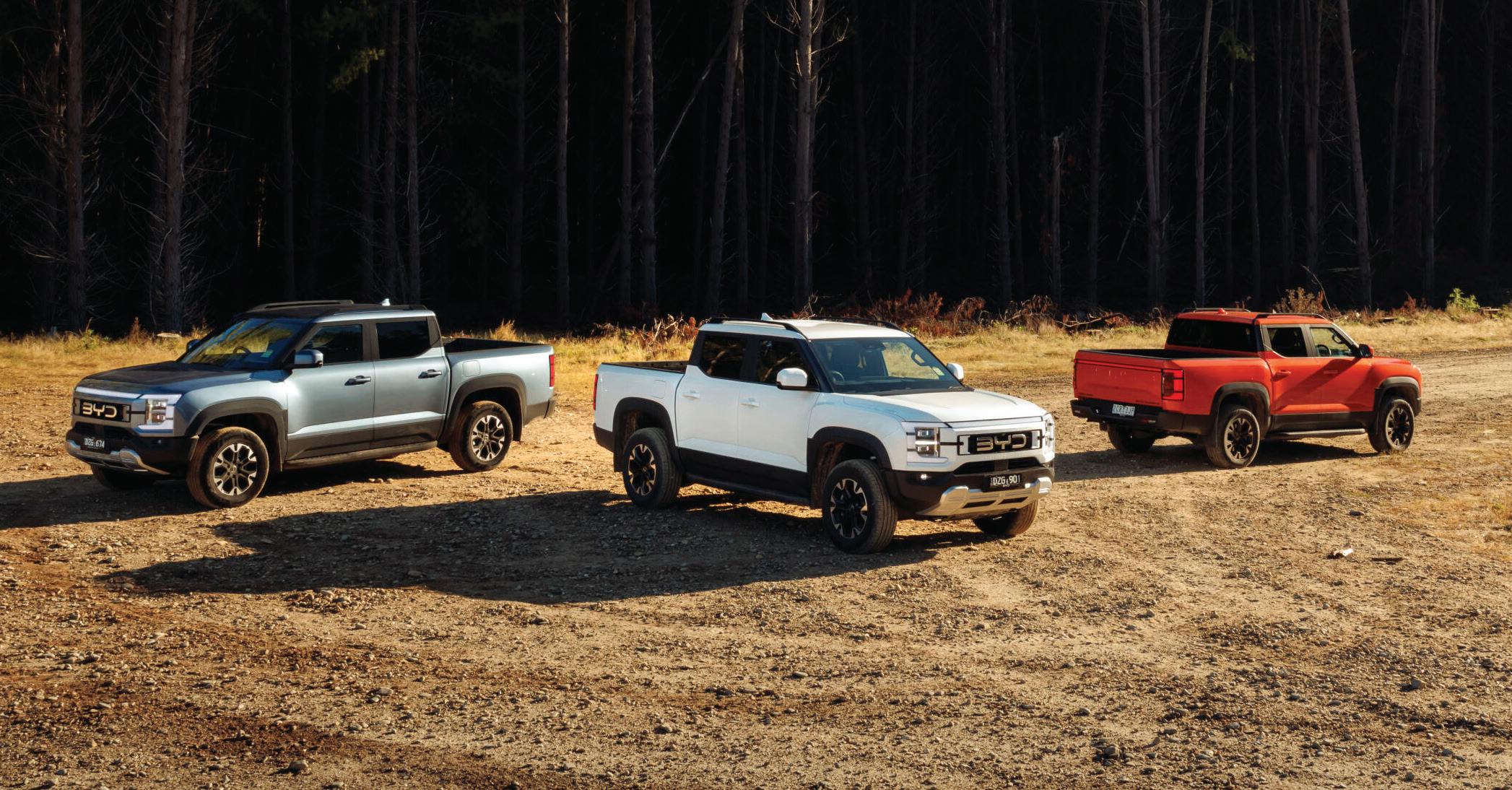
BYD Shark 6 range grows to three
PERFORMANCE GETS A BOOST AND A CAB-CHASSIS JOINS THE LINE-UP AS BYD TARGETS TRADE AND FLEET BUYERS
BYD has expanded its Shark 6 range in New Zealand to three models, adding a trade-oriented Dynamic Cab-Chassis and a range-topping Performance pickup alongside the existing Premium. First deliveries of both new variants began in May.
The expansion directly addresses two criticisms that had dogged the Shark 6 since its local launch in October 2024 — a towing capacity that fell short of the segment benchmark, and the absence of a cab-chassis option for fleet and trade buyers.
BYD New Zealand general manager Warren Willmot said the additions were driven by local feedback. “Kiwis asked us for more towing, more power and tougher off-road performance, and that’s exactly what the Shark 6 Performance delivers.”
PERFORMANCE:
MORE OF EVERYTHING
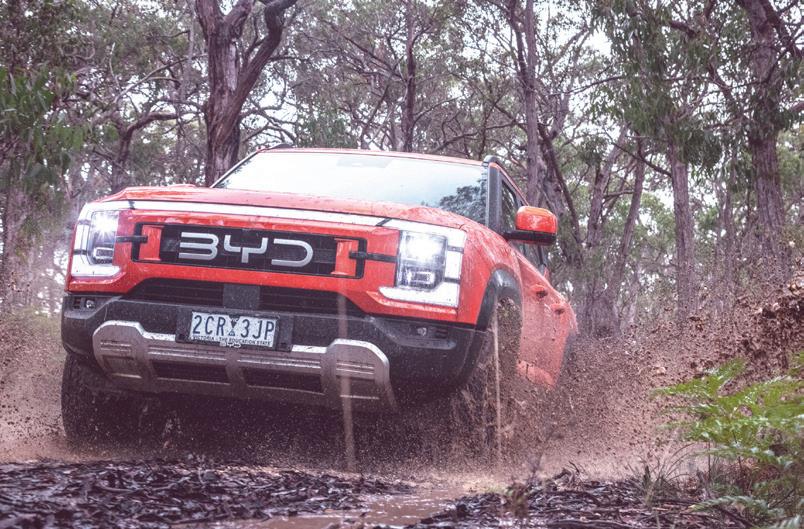
The Shark 6 Performance swaps the 1.5-litre turbo for a 2.0-litre unit, pushing total system output to 350kW and 700Nm — up from 321kW and 650Nm in the Premium. The sprint to 100km/h drops from 5.7 to 5.5 seconds. More significantly for buyers who need to work the vehicle, braked towing capacity rises to 3,500kg, matching the diesel benchmark set by the Ranger and Hilux and resolving what had been the Shark 6’s most-cited shortcoming.
Fuel consumption is rated at 1.3L/100km under the WLTP combined cycle when battery charge is above 25%, using the same 29.58kWh Lithium Iron Phosphate Blade Battery carried
across all three variants.
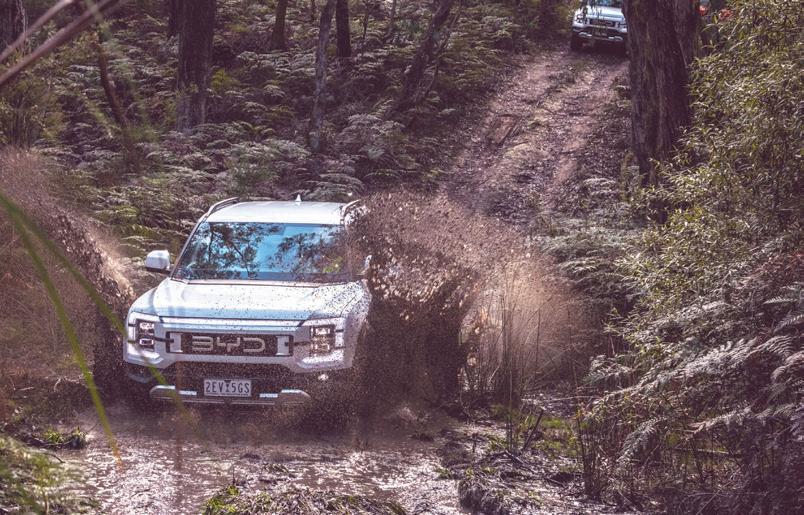
The Performance also debuts Crawl Mode — a low-speed off-road function that caps the vehicle at 12km/h and continuously modulates torque to maintain traction on rocks, steep climbs, and deep ruts. BYD has confirmed it will roll out Crawl Mode to existing Premium owners via an over-the-air update later this year.
CAB-CHASSIS FOR TRADE AND FLEET
The Dynamic Cab-Chassis shares its 1.5-litre powertrain with the Premium — 321kW, 650Nm, and a 5.7-second century sprint — and retains 2,500kg braked towing. Where it differs is in specification: the cab-chassis drops the headup display, heated and ventilated front seats, rear privacy glass, and rain-sensing wipers of the Premium, and uses a 12.8-inch touchscreen rather than the larger 15.6-inch unit.
A heavy-duty alloy tray, developed in partnership with Ironman, is available as a dealer-fit accessory. It features eight integrated tie-down points, two lockable storage boxes,
and an optional trundle tray. The tray is designed to comply with ADR 92/00 and maintains access to the vehicle’s charging port and Vehicle-to-Load interfaces.
WHAT STAYS THE SAME
All three Shark 6 variants share the same core architecture: BYD’s Dual Mode Off-Road AWD system with front and rear electric motors, double-wishbone independent suspension front and rear (unusual in the ute segment), and a full ADAS suite. All carry a five-star ANCAP rating. Three intelligent drive modes — EV Pure Electric, HEV Series, and HEV Parallel — operate seamlessly without driver input, with the system selecting the most efficient mode based on speed and load conditions. For urban running, the Shark 6 operates in electric-only mode; for heavier work or highway driving, the petrol engine comes online to supplement or recharge.
Vehicle-to-Load capability at 6.6kW is standard across the range, with three 230V outlets in the tub and one in the cabin — practical for both worksites and off-grid use.
AUTO UPDATE
Kia Seltos goes all-new for 2026
THE SECOND-GENERATION SELTOS ARRIVES ON A NEW PLATFORM WITH A BIGGER BODY, A HYBRID POWERTRAIN, AND A SUBSTANTIALLY UPDATED INTERIOR — WITH NEW ZEALAND DELIVERIES EXPECTED LATE 2026
Kia has comprehensively re-engineered its Seltos for 2026, moving to the brand’s newer K3 platform and growing the vehicle in every meaningful dimension. At 4,430mm long and 1,830mm wide on a 2,690mm wheelbase, the new model is 45mm longer and 30mm wider than its predecessor, with a 60mm wheelbase stretch that translates directly into cabin space.
The Seltos is Kia’s top-selling model in New Zealand, and the new generation is a significant step rather than a facelift. Global production began in December 2025 at Kia’s India plant — the primary manufacturing hub for the model — with facilities in Korea and China also underway. Kia New Zealand anticipates first local deliveries late in 2026, with the hybrid variant expected to arrive in Q4.
HYBRID JOINS THE LINEUP
The headline addition is a 1.6-litre hybrid powertrain — the first electrified option in the Seltos range. A front-wheel-drive variant produces 113kW; an e-AWD version, which uses a rear-mounted electric motor rather than a mechanical rear differential, outputs 131kW. The e-AWD system operates purely through software control, similar in concept to the Toyota Corolla Cross hybrid setup.
The hybrid introduces Kia’s Smart Regenerative Braking System 3.0, which automatically modulates regenerative braking intensity based on traffic flow, road gradient,
navigation data, and detected hazards including intersections and speed bumps. Vehicle-toLoad capability is standard on hybrid variants, allowing the Seltos to power external devices from the cabin.
Petrol variants carry over a 2.0-litre naturally aspirated unit and a 1.6-litre turbocharged option, with specific NZ powertrain and variant confirmation still to come from Kia New Zealand.
EXTERIOR AND STRUCTURE
The new Seltos takes clear design cues from Kia’s EV range — vertical Star Map daytime running lights, flush door handles, and a more upright, geometric roofline replace the softer lines of the outgoing model. The drag coefficient drops from 0.33 to 0.31, aided by a rear spoiler, aero wheels, and an optimised underbody.
Structurally, the K3 platform brings increased
use of ultra-high-strength and hot-stamped steel — up to 60% on Korea-built variants — improving torsional rigidity and crash performance. The new Seltos is targeting fivestar ratings under North American NCAP and India’s BNCAP protocols, with a Top Safety Pick designation from IIHS also in Kia’s sights.
INTERIOR
Inside, the most significant change is the adoption of a column-mounted shift-by-wire gear selector, which eliminates the traditional centre console transmission tunnel and frees up floor space between the front seats. A low, horizontal dashboard maximises forward visibility.
The digital environment is anchored by dual 12.3-inch screens — instrument cluster and infotainment — paired with a 12-inch head-up display. Kia’s AI Assistant supports natural voice control for navigation, vehicle settings, and entertainment without requiring physical inputs.
Rear seat legroom gains 25mm from the longer wheelbase, and boot capacity grows from 498 to 536 litres. Rear seats recline 12 degrees forward and back, and fold 6:4 flat. A foldable dual-level cargo floor and Kia’s AddGear modular storage system add day-today practicality.
Over-the-air software updates cover both infotainment and vehicle controllers. Digital Key 2 with ultra-wideband technology allows smartphone-based access without requiring the phone to be held to a sensor.
ADAS
The safety suite has been expanded and enhanced. Forward Collision-Avoidance Assist 2 now operates across a speed range of 10–85km/h. New additions include Intelligent Speed Limit Assist, Highway Driving Assist 2 with hands-on/off detection, and a Surround View Monitor. Lane Keeping Assist 2 and Safe Exit Warning are also standard.
AUTO UPDATE
MG ZS gains an entry-level petrol variant
THE NATURALLY ASPIRATED ZS 1.5 VIBE JOINS THE MY26.5 RANGE AT $25,990, GIVING BUYERS A LOWER BARRIER TO ENTRY INTO MG’S COMPACT SUV
MG Motor New Zealand has added a naturally aspirated 1.5-litre variant to the ZS range for MY26.5, positioned as the most accessible entry point in the lineup. Priced from $25,990 MRP plus on-road costs, the ZS 1.5 Vibe sits below the existing turbocharged models and is aimed squarely at buyers for whom the sticker price is the primary consideration.
The return of a naturally aspirated option coincides with a naming shuffle across the ZS range: the existing 1.5-litre turbocharged Vibe is being renamed Excite Turbo, tidying up a lineup that now spans petrol and Hybrid+ drivetrains across clearly differentiated grades.
MG Motor New Zealand country business manager Dean Sheed said the Vibe is built around simplicity. “It’s a car designed for people who want great value, modern technology and 5-star safety peace of mind, without overcomplicating things.”
POWERTRAIN
AND FEATURE SET
The 1.5-litre naturally aspirated four-cylinder produces 81kW and 140Nm, driving the front wheels through a CVT. Those figures are a significant step down from the 125kW/275Nm of the turbocharged variants — buyers trading up from the Vibe will notice the difference.
The Vibe misses out on the climate control
air-conditioning found in turbo variants and uses a traditional gear shifter rather than the rotary selector on higher grades. Features like LED headlights, rain-sensing wipers, satellite navigation, a surround-view camera, rear air vents, and a 12.3-inch digital instrument cluster require stepping up to the Essence Turbo or either Hybrid+ variant.
What it does carry is the full MG Pilot safety suite: Autonomous Emergency Braking, Lane Keep Assist, Blind Spot Detection, Rear Cross Traffic Alert, and a reverse camera. A far-side airbag is also included. The interior features a 10.25-inch infotainment touchscreen with wired Apple CarPlay and Android Auto. Externally, 16-inch alloy wheels and LED daytime running lights with halogen headlights round out the specification.
WHERE IT FITS
The MY26 ZS range holds a five-star ANCAP safety rating across all variants, including the new Vibe, which gives the entry price point a meaningful safety endorsement.
The broader ZS range now offers four distinct approaches to the compact SUV: the 1.5L Vibe at the entry level, the Excite Turbo and Essence Turbo for those wanting the 125kW turbocharged petrol, and Hybrid+ variants for buyers prioritising fuel economy — MG quotes 6.9L/100km for Turbo models and 4.7L/100km for Hybrid+.
All new MG ZS variants are backed by a 10-year warranty when serviced within the MG dealer network.
Nissan previews two PHEV SUV concepts in Beijing
THE
TERRANO
NAMEPLATE MAKES A RETURN AS A PLUG-IN HYBRID OFF-ROADER, ALONGSIDE AN URBANFOCUSED CROSSOVER CONCEPT, AS NISSAN STEPS UP ITS ELECTRIFICATION PUSH IN CHINA
Nissan unveiled a pair of new energy vehicle SUV concepts at Auto China 2026 in Beijing in April, signalling an accelerated push into plug-in hybrid territory as the brand works to rebuild momentum in its largest growth market.
The two concepts take contrasting approaches. The Terrano PHEV Concept revives a nameplate last seen in the early 2000s, reimagined as a body-on-frame off-road SUV with plug-in hybrid power. Its design language — described by Nissan as ‘Modern Robust’ —
features a vertical front end, short overhangs for improved approach angles, rectangular LED lighting, integrated skid plates, orange recovery hooks, a roof rack, and an externally mounted spare tyre. The brief is unambiguous: this is positioned as a proper off-road vehicle with hybrid efficiency, not a softroader dressed up for the bush.
While Nissan hasn’t confirmed powertrain specifications, the Terrano is expected to share its PHEV setup with the Frontier Pro PHEV, which uses a 1.5-litre turbocharged engine
Suzuki Swift hits 1,000km range in NZ fuel test
AN INDEPENDENT ECONOMY RUN ON NORTH ISLAND ROADS REVEALS THE FOURTH-GENERATION SWIFT’S MILD HYBRID SYSTEM SIGNIFICANTLY OUTPERFORMS ITS OFFICIAL FIGURES
The fourth-generation Suzuki Swift has been put through an independent fuel economy test on New Zealand roads, returning results well clear of its factory-rated figures.
The Swift GLS CVT averaged 3.3L/100km over a mixed route of motorway, open rural roads, and city streets — 23% better than the official 4.3L/100km WLTP figure. The GLS manual did better still, averaging 3.0L/100km against a rated 4.0L/100km, a 25% improvement. Based on the standard 37-litre tank, that translates to a theoretical range of 1,121km for the CVT and 1,233km for the manual. The tests were conducted by Donn
Anderson, who has more than 30 years of involvement in fuel economy events, including record-breaking runs in both the UK and New Zealand. Anderson noted that the route — which began and ended in Auckland — encountered significant stop-start traffic and roadworks, conditions that would typically hurt fuel economy but where the Swift’s mild hybrid system proved its worth.
HOW THE SYSTEM WORKS
The Swift’s fuel efficiency comes from a combination of hardware improvements and its Integrated Starter Generator (ISG). The 1.2-litre three-cylinder unit features a high
paired with an electric motor producing a combined 429hp and 800Nm, with a 33kWh battery delivering up to 135km of pure-EV range under CLTC testing.
The Urban SUV PHEV Concept takes the opposite tack — a sleeker, road-focused crossover drawing design cues from the recently launched NX8, aimed at younger urban buyers in the Chinese market. Export plans beyond China have not been confirmed for the Urban SUV.
CHINA AS EXPORT HUB
Both concepts are confirmed for production within 12 months, alongside three additional NEV models Nissan plans to introduce in China before fiscal year 2027. The Terrano PHEV production model is earmarked for selected global markets, though specific countries have not been named. North America and Europe are considered unlikely targets; ASEAN, Latin America, and the Middle East are the more probable destinations.
The announcements form part of Nissan’s broader strategic repositioning of China — not just as a domestic sales market, but as an innovation and export hub. Models including the N7 and Frontier Pro PHEV are already destined for Latin America and ASEAN markets, with the NX8 also flagged for international distribution.
Nissan is targeting one million units in annual Chinese sales by fiscal year 2030, with exports a stated pillar of that ambition.
compression ratio of 13.9:1, variable valve timing, four valves per cylinder, and reduced internal friction compared to the previous fourcylinder equivalent. It is lighter and has fewer components than its predecessor.
The ISG replaces the conventional alternator and does three jobs: it restarts the engine via a belt-drive system that eliminates the gear noise of a traditional starter motor, it harvests energy under deceleration to charge both the leadacid and lithium-ion batteries, and it provides supplementary electric motor assistance during acceleration for up to 30 seconds. The result, in practice, is engine stop-start that Anderson described as “almost imperceptible” to occupants.
The CVT is also new — lighter and more compact than the previous unit, with the ability to cruise at 100km/h at just over 2,000rpm. Anderson pointed out that the manual gearbox version is a notable outlier in an increasingly automatic market: “There are now so few manual transmission cars available, but the GLS manual is a fine exception.”
The Swift’s official CO2 output of 96g/km for the CVT variant is 9.4% lower than the outgoing third-generation non-hybrid model.
PRICING
New Zealand’s most affordable hybrid, the Suzuki Swift GLS is priced from $25,990 plus on-road costs, with the CVT automatic range starting from $27,500 plus on-road costs on current promotion.
AS-PL takes its rotating electrics range to Automechanika Istanbul’s 25th edition
THE POLISH ALTERNATOR AND STARTER SPECIALIST USED THE MILESTONE FAIR TO STRENGTHEN RELATIONSHIPS AND OPEN CONVERSATIONS WITH NEW PARTNERS ACROSS EUROPE, THE MIDDLE EAST, AND BEYOND
AS-PL was established in 1992 in Gdańsk and has grown into a significant independent supplier of alternators, starters, and rotating electrical components, working with aftermarket distributors and wholesalers across around 100 countries. The company’s catalogue now spans more than 20,000 products covering nearly 450,000 reference numbers, across passenger cars, trucks, agricultural machinery, boats, motorcycles, and industrial applications
Products are offered across three tiers — Economy, Standard, and Premium — with the company’s own AS-branded range introduced in 2004. Remanufactured alternators and starters are also part of the offer.
ISTANBUL AS A STRATEGIC PLATFORM
AS-PL exhibited in Hall 2, Stand B170 at the
Tüyap Fair and Congress Center across the four days of the 25th anniversary edition. The Istanbul show sits alongside Automechanika Frankfurt, Equip Auto Paris, and Autopromotec Bologna as a regular fixture on the company’s international trade fair calendar.
Automechanika Istanbul is Türkiye’s largest international trade fair and the region’s biggest gathering for the automotive aftermarket industry. The 2026 edition drew approximately 1,400 exhibitors from 41 countries across more than 40,000sqm, with international pavilions from the United States, Germany, China, India, Spain, South Korea, and a range of other markets. For a manufacturer with AS-PL’s distribution footprint, it offers direct access to the Eurasian corridor — a region where demand for quality rotating electrical components continues to grow alongside an ageing and expanding vehicle parc.
Hamilton pair take top honours at CRA Apprentice Awards
TWO HAMILTON-BASED
APPRENTICES HAVE CLAIMED THE COLLISION REPAIR INDUSTRY’S TOP TRAINING AWARDS PRESENTED AT LAST MONTH’S CRA ANNUAL CONFERENCE
Ervin Jay (Ejay) Hernandez took out the Golden Gun Award, recognising excellence in automotive refinishing. Ejay works at Fleet Image NZ and began his career there as a sandblaster five years ago. His drive to develop led him into a MITO automotive refinishing apprenticeship, which he has since completed. Judges noted his attention to detail, competitive spirit, and the pride he brings to his work.
The Golden Hammer Award, recognising achievement in panel and structural repair, went to Justin Williamson of Hamilton Panel Works. Justin joined the business nearly three years ago and made his mark early, impressing his employer with practical ability, initiative, and a maturity that has seen him take on a genuine production support role. The Hamilton Panel Works team describe him as someone they rely on daily.
Both winners receive a tool prize pack, a monetary award, and the opportunity to enrol in a post-trade qualification through MITO.
THE FUTURE OF THE TRADE
The awards are among the most competitive in the sector, with finalists assessed across a practical component, a formal application, an interview, and their overall apprenticeship progress.
MITO Chief Executive Verna Niao presented the awards and acknowledged both recipients’ commitment to their trade. CRA Chair Jeff Robson highlighted the broader significance of the results: “These awards are intensely contested — it’s fantastic to see the effort and pride that the participants put in. Our apprentices are the future of our industry, and their achievements reflect the commitment of their employers and supervisors to industry training.”
Robson also acknowledged the business owners providing entry-level opportunities: “I’d like to sincerely acknowledge all the business owners training apprentices — providing someone with their first opportunity is truly impactful.”
RELATIONSHIPS AT THE CORE
The Istanbul stand drew both existing partners and first-time contacts, with conversations spanning current market developments, new projects, and the broader direction of the aftermarket. AS-PL’s approach to trade fair participation reflects its wider business model — direct engagement with distributors and wholesalers rather than consumer-facing retail, and a focus on building durable supply relationships across multiple markets in a single setting.
For more information, visit as-pl.com
Ejay Hernandez with Golden Gun judges Brendan Rosie (Rosiez Collision Repairs), Steve Noyer (Moselle’s Panel & Paint), and (far right) Verna Niao (MITO Chief Executive)
Justin Williamson with Golden Hammer judges Verna Niao (MITO Chief Executive), Brendan Rosie (Rosiez Collision Repairs), and (far right) Steve Noyer (Moselle’s Panel & Paint)
Aerpro AOBDLK OBD2 port lock
The Aerpro AOBDLK OBD2 Lock is a security solution designed to protect a vehicle’s OBD2 port from unauthorised access and potential theft. Featuring tough aluminium construction and a discreet black design with a blanking sticker to conceal screw heads, it blends seamlessly into the vehicle’s interior. A vehicle-specific bracket and all necessary hardware are included, making installation quick and straightforward. Acting as both a physical barrier and visual deterrent, the AOBDLK helps prevent tampering with critical diagnostic ports — blocking unauthorised use of scan tools, key cloning tools, and potential vehicle theft.
For more information, contact sales@nz.brownwatson.com or call +64 9 525 4575
Molnar Laser 4.3 CP triple-stacker parking lift
The Molnar Laser 4.3 CP is a premium hydraulic four-post, three-car triple-stacker parking lift designed for maximum flexibility, safety, and reliability. Both platforms operate completely independently and can be locked at any height, allowing vehicles to be parked at your preferred level. This flexibility makes it ideal for sedans, SUVs, utes, and sports cars.
Contact Automaster at info@automaster.co.nz, call 0800 214 604, or visit automaster.co.nz
Ignite Interior Ambient Lighting Kits available from CoolDrive
New from Ignite Lighting and available through CoolDrive Auto Parts is an advanced LED Interior Ambient Lighting Kit, allowing drivers to customise their vehicle’s interior. Controlled via a user-friendly mobile app, the kit features a 64-colour range, with dynamic and static modes available. Featuring Bluetooth connectivity, the system requires no drilling or physical wiring connection, thanks to independent control modules. The flexible lighting strips can be bent and cut to suit individual installations, with the kit compatible with 99 per cent of vehicle models.
For more information, visit cooldrive.co.nz
Rola Platform Bike Rack
The Rola Platform Bike Rack (PBR) is a robust, easy-to-use hitch-mounted bike carrier built to carry two bikes securely on everyday drives and weekend escapes. With a 60kg load rating, integrated bike and hitch lock, and no frame contact, it is designed to protect your bikes while keeping loading simple. Built for Australian and New Zealand conditions, the PBR includes smart features like oversized wheel trays, padded wheel straps, tilt-down boot access, and an integrated anti-rattle hitch system to help keep the rack stable on and off the road.
For all enquiries, contact Rola NZ on 0800 698 227 or at info@rolaracks.nz
ACDelco 3v Lithium Coin Cell Batteries
ACDelco 3V Lithium Coin Cell Batteries are equipped with advanced technology you can count on! Made to power small electronic devices such as vehicle keyless entry remotes, calculators, watches, medical devices and much more. Contains no mercury or cadmium; safe for the home and better for the environment, anti-leakage protection; holds in power for up to five years in storage under normal conditions. All ACDelco 3V Lithium Coin Cell Batteries are sealed in child-resistant packaging.
For more information, visit gmtradeparts.co.nz or acdelco.co.nz
King Springs
Strada EE-62C two-post hoist
The Strada EE-62C is a CE-certified, 4,200kg-capacity two-post hoist featuring ultra-low arms as standard and full 24V control. It can be configured symmetrically or asymmetrically without additional parts, and auxiliary post control allows full operation from either post. Automatic arm locks, mechanical safety latches, and restrictive valves provide double-redundant safety, while a pre-fixed hydraulic pressure system prevents overloading.
For more information, visit stradalifts.co.nz or call 021 509 286
King Springs are Australia’s leading manufacturer of high-performance automotive coil springs, trusted by workshops and enthusiasts alike. Engineered from premium X5K highstress steel, they offer unmatched strength, reduced weight, and superior suspension response. Ideal for New Zealand’s demanding roads and off-road conditions, King Springs improve handling, ride height, and load capacity across a wide range of vehicles — from 4WDs and utes to performance and passenger cars. Easy to pair with KYB or OEM shocks, they’re a go-to solution for reliable, high-quality suspension upgrades that deliver proven performance and customer satisfaction.
Kings Springs are available through Mount Shop
Terrain Tamer Fortified Shock Absorber
Terrain Tamer’s Fortified Shock Absorber moves beyond conventional twin-tube construction with a single-body monotube design built for serious load work. The 64mm bore increases oil volume for better thermal stability, while a free-floating piston separates the gas and oil chambers to prevent aeration and damping fade — a real problem on prolonged corrugated roads. A chrome-hardened shaft and induction-hardened piston rod handle side loads and high-speed impacts. Rated to five tonnes, the range covers Toyota Hilux (including GR Sport and Rogue), Land Cruiser 70/80 Series, and Nissan Patrol GQ/GU, with further applications in development.
alleuroparts.co.nz or 0800 255 387 or parts@alleuroparts.co.nz
amsoil.co.nz or 021 395 320 or wayne@amsoil.co.nz
ateco.co.nz or 09 979 8000
automaster.co.nz or 0800 214 604
autolign.co.nz or 09 574 2288
bacsystems.com.au
06 306 8446 or blackfern.coop
tyreorder.co.nz or 0800 80 90 96
bmw.co.nz or 0508 269 727
bntnz.co.nz or 09 414 3200
bridgestone.co.nz or 0800 802 080
capricorn.coop or 0800 401 444
0800 CASTROL (0800 227 876)
centurydistributors.co.nz
cyb.co.nz or 09 978 6666
chemz.co.nz or 06 877 9690 09 636 5428 or sales@clutchindustries.co.nz
cooldrive.co.nz or 0800 327 868
cool-safe.org.nz
crc.co.nz or 09 272 2700
dieseldistributors.co.nz or 09 265 0622
dtm.co.nz or 0800 621 233
07 850 5240
eproducts.co.nz or 09 916 6750
0800 757 333 or fenixautoparts.co.nz
0800 465 855
ford.co.nz or 0800 367 369
fuchs.co.nz or 09 828 3255
garageworkshop.co.nz or 03 244 0441
gearwrench.co.nz
gmtradeparts.co.nz
The Auto Channel supplier directory is your easy reference for sourcing a range of automotive products and services. This directory is a paid service for businesses who supply to the New Zealand automotive trade. To secure your inclusion, contact us on advertising@autochannel.co.nz.
REVAMPED FRANKTON BRANCH SIGNALS THE DIRECTION MOUNT SHOP IS TAKING ITS NATIONAL TRADE NETWORK
Mount Shop has been supplying the New Zealand automotive trade with undercar components for over two decades, growing from a specialist enginemount supplier into one of the country’s most comprehensive undercar parts distributors. Its branch network spans Henderson, Penrose, Whangārei, Hamilton, Palmerston North, Lower Hutt, Christchurch, and — most recently — Tauranga, with each location set up to service trade customers directly from stock.
The Hamilton branch at Frankton has now undergone a significant refurbishment, with the result making a clear statement about where the business is heading.
SPACE, LIGHT, AND A TRADE-FIRST LAYOUT
The redesigned store replaces the traditional warehouse-counter format with an openplan layout that feels contemporary without sacrificing functionality. Polished concrete floors, clean lines, and strong natural light create a professional environment — one that reflects the calibre of the brands Mount Shop represents while making it easier for trade customers to quickly identify, order, and collect product.
The Waikato has one of the country’s most active automotive trade scenes, with a large concentration of independent workshops, fleet operators, and specialist repairers spread across Hamilton and its surrounding satellite towns. A well-stocked, easy-to-navigate branch in Frankton puts the right parts closer to where they’re needed.
BRANDS THAT TRADE CUSTOMERS RECOGNISE
The Hamilton store’s updated layout gives Mount Shop’s product range room to breathe.
The company represents a broad portfolio of globally recognised suspension and undercar brands, including KYB, Koni, King Springs, H&R, RBI, SWAG, CTR, and Pista — covering everything from OE-grade replacement shocks and engine mounts through to upgraded components for vehicles used in towing, loadcarrying, or performance applications.
Counter staff are trained to work from OE numbers, samples, or photos when necessary — an important capability for trade buyers chasing hard-to-identify components. That combination of in-branch expertise and stocked inventory is central to Mount Shop’s trade proposition: the right part, same day, with the right advice to back it up.
STOCK, SERVICE, AND A GROWING NATIONAL FOOTPRINT
The fit-out is part of a broader pattern. Mount Shop opened a new Tauranga branch late last year, extending its reach into the Bay of Plenty, and the Hamilton refurbishment follows the same logic — a national network that keeps getting easier to deal with. Stock depth, knowledgeable counter staff, and branches positioned in the right centres add up to a supply partner that trade customers can rely on when the job can’t wait.
Visit the team at 10A Somerset Street, Frankton, Hamilton. Phone 07 847 6821.
Automotive workshops
Parts importers and distributors
Transmission specialists
Automotive recyclers
Towing operators
Panel beaters and painters
Crash repairers
Tyre dealers
Suspension and underbody repairers
Steering specialists
Towing operators
Auto-electrical repairers
New- and used-car dealers
Air conditioning repairers
Trucking and transport
Editorial: contact@autochannel.co.nz
Advertising: Mike White michael.white@viamedia.co.nz
All other enquiries to: autochannel.co.nz Auto Channel is produced by Via Media, publishers of two of NZ’s biggest-selling automotive magazines: NZ Performance Car and NZV8.
SHOCK ABSORBERS
• Original Equipment quality replacement
• Nitrogen Gas filled
• Twin Tube
• Large range constantly updated
Standard height HD upgrade
• 20-35% heavier valving to suit uprated coil and leaf springs
• 35mm bore with increased oil capacity
HD Range for vans, ute, SUV
Suit 30-50mm lifted vehicles HD
Australian design for outback conditions
35mm bore, increased oil capacity and reinforced metal housings