THE STRAIT OF HORMUZ CRISIS IS DISRUPTING MORE THAN FUEL PRICES — LUBRICANT SUPPLY AND PACKAGING COSTS ARE ALREADY MOVING, AND THE AFTERMARKET WILL FEEL IT
Most of the coverage of the ongoing Strait of Hormuz crisis has focused on petrol prices. That’s understandable — pump prices are visible, immediate, and politically charged. But for the automotive aftermarket, the more consequential story is playing out further upstream, in the base oil and lubricant supply chains that keep workshops stocked and vehicles serviced.
The strait is the world’s most critical energy chokepoint. According to the US Energy Information Administration, around 20 million barrels per day of crude oil and petroleum products were transiting Hormuz before the current crisis — roughly 20% of global oil consumption. Critically for this region, around 84% of that crude was destined for Asian markets, with China, India, Japan, and South Korea the dominant recipients. These are
the same countries that house the refineries producing the base oils blended into the motor oils, transmission fluids, and gear oils used throughout the New Zealand aftermarket.
When crude stops moving through the strait, the downstream effects ripple quickly and widely.
BASE OILS, ADDITIVES, AND PACKAGING — THE TRIPLE SQUEEZE
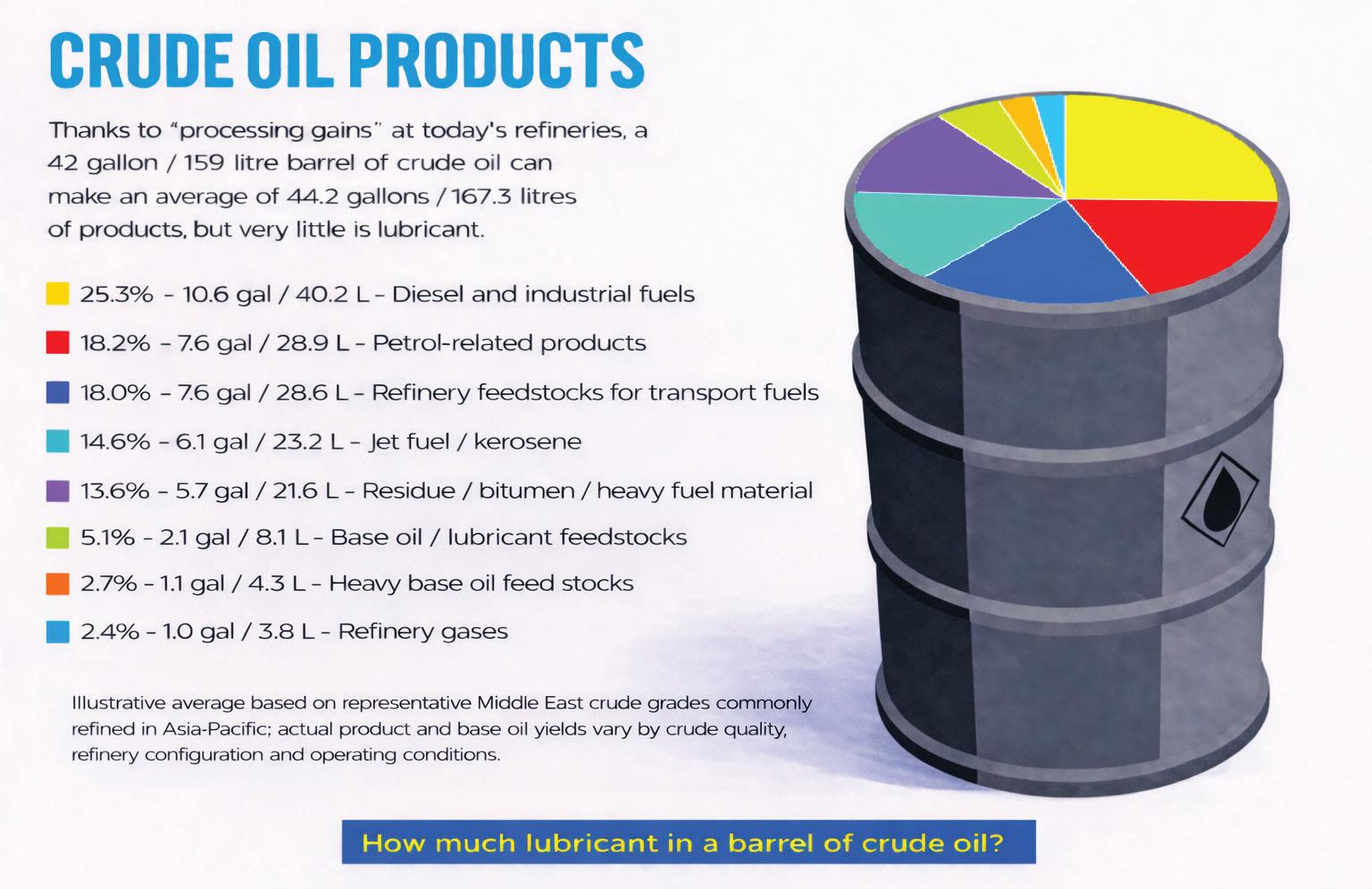
Lubricant pricing is not simply a function of crude oil costs at the pump. Finished motor oil is a blended product, combining base oils — themselves refined from crude — with performance additive packages that are also petroleum-derived. When crude supply tightens, both components are affected simultaneously.
The disruption has hit Group III base oils
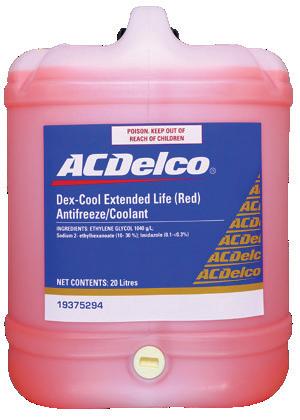
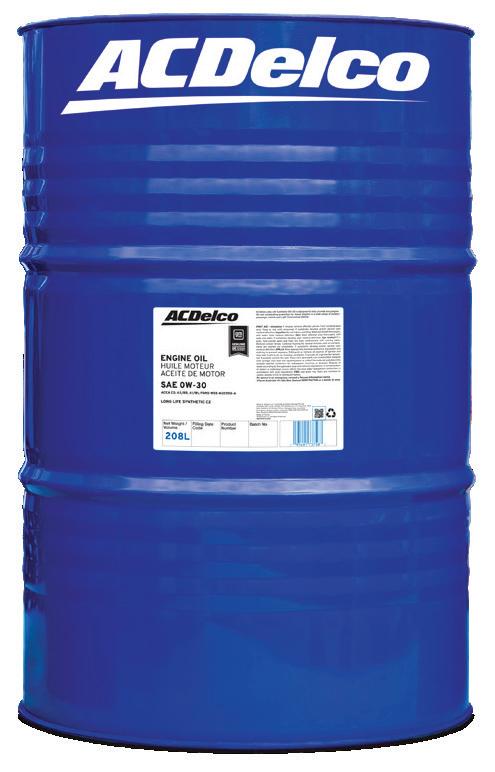
particularly hard. The Middle East is a major global source of high-quality Group III stock, with significant production capacity at facilities including Shell’s Pearl GTL plant in Qatar. Reported impacts on those facilities, combined with near-total restrictions on tanker traffic through the strait, have created acute tightness in Group III supply globally. Industry reports indicate Asian markets are now experiencing record-high base oil prices, with some blenders in the United States reporting cumulative price increases approaching US$2.00 per gallon above pre-conflict levels — and similar pressure is being felt across Asia-Pacific supply chains. Suppliers into New Zealand are reporting price increases in the range of 30% to 50%, with some orders being rationed as blenders and distributors work through limited available stock.
When the tap tightens upstream
The Strait of Hormuz crisis is disrupting more than fuel prices — lubricant supply and packaging costs are already moving, and the aftermarket will feel it The ageing car parc: the opportunity on your doorstep
New Zealand’s vehicle fleet is one of the oldest in the developed world — and getting older The EV brand on your hoist today may not exist in five years
A wave of new electric vehicle brands is entering the market with attractive pricing — but thin local support networks and uncertain long-term viability are questions the trade is already fielding
How a 16-year-old’s ambition in 1920s Melbourne grew into one of the industry’s most enduring family businesses
jump starter that’s always ready when you need it
Projecta’s Intelli-Start IS5000HD model brings interchangeable connectors and unlimited starting capacity to workshops and mobile operators
ISSN 2816-0959 (Print) ISSN 2816-0967 (Online)
ONLINE autochannel.co.nz
EMAIL contact@autochannel.co.nz
SUBSCRIPTIONS subscriptions@autochannel.co.nz
MAIL PO Box 202152, Southgate, Takanini 2246
Where companies have been unable to source base oils through normal channels, some are turning to the spot market — buying at whatever price is available — which is accelerating the upward pressure further.
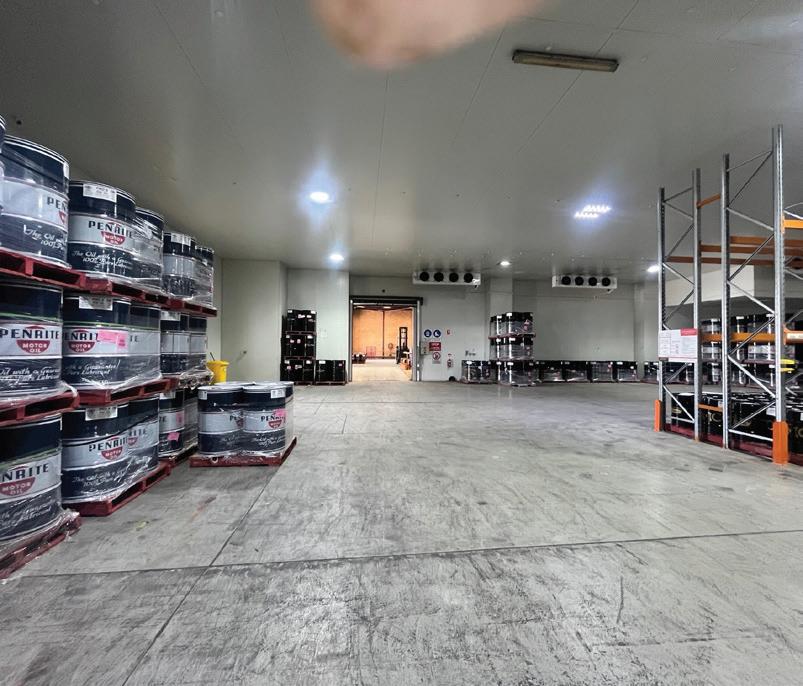
There is a third pressure point that is less obvious but no less real: packaging. Most lubricant sold into the New Zealand aftermarket arrives in drums and plastic bottles. Highdensity polyethylene — the material used for most lubricant containers — is itself a petroleum derivative. With feedstock supply constrained, polymer production across Asia has been disrupted, and some major lubricant brands are reported to be exploring alternative packaging options as plastic bottle supply tightens.
These three cost pressures — base oils, additives, and packaging — are hitting simultaneously, and suppliers are absorbing what they can before passing costs on.
HOW SUPPLIERS ARE MANAGING THE INCREASE
MEDIA SALES
Michael White, michael.white@viamedia.co.nz
Mark Everleigh, mark.everleigh@viamedia.co.nz
PRODUCTION
Harrison Wade
Deven Solanki
AUTO CHANNEL IS PUBLISHED BY
BUSINESS DIRECTOR
Michael White, michael.white@viamedia.co.nz
GENERAL MANAGER
Simon Holloway, simon.holloway@viamedia.co.nz
FINANCIAL CONTROLLER
Mel White
NOTICE TO ADVERTISERS
Via Media uses due care and diligence in the preparation of this magazine, but is not responsible or liable for any mistakes, misprints, omissions, or typographical errors. Via Media prints advertisements provided to the publisher but gives no warranty and makes no representation to the truth, accuracy, or sufficiency of any description, photograph, or statement. Via Media accepts no liability for any loss which may be suffered by any person who relies either wholly or in part upon any description, photograph, or statement contained herein. Via Media reserves the right to refuse any advertisement for any reason. The views expressed in this magazine are not necessarily those of Via Media, the publisher, or editor. All material published, gathered, or created for Auto Channel is copyright 2026 Via Media Limited. All rights reserved in all media. No part of this magazine may be reproduced in any form without the express written permission of the publisher.
Auto Channel is the best way to reach the wider automotive industry. The publication is direct mailed to New Zealand businesses in the following automotive sectors: Automotive workshops, parts importers and distributors, transmission specialists, automotive recyclers, towing operators, panel beaters and painters, crash repairers, tyre dealers, suspension and underbody repairers, steering specialists, autoelectrical repairers, new and used-car dealers, air-conditioning repairers, trucking and transport.
The scale of the increases makes straightforward price adjustment difficult for many suppliers. Rather than a single list price change, the industry is seeing a range of mechanisms being applied: general price increases, per-litre adjustments, and temporary cost-recovery levies applied while input costs remain elevated. The intent in most cases is to manage the spike without locking in permanent price structures that would need to be unwound once supply normalises.
Force majeure declarations have added further complexity. The legal provision — which allows companies to suspend contractual obligations in the event of circumstances beyond their control — has been invoked by a number of blenders and bottling manufacturers across Asia, where supply disruptions have made it impossible to fulfil existing commitments. QatarEnergy declared force majeure on all LNG shipments in early March following damage to its Ras Laffan facilities. Similar declarations in the lubricant supply chain mean that some New Zealand distributors are navigating cancelled or suspended supply agreements alongside rising spot costs.
One dynamic worth understanding: fuel prices at the pump move on futures markets, meaning they respond almost immediately to geopolitical events. Lubricant prices move differently. Stock already on the water or in warehouse was purchased at pre-crisis costs, and price increases flow through as that stock is consumed and replaced at higher cost. The increases are coming — they are simply arriving on a slight delay relative to what’s already visible at the forecourt.
THE GOVERNMENT’S RESPONSE
The government has moved to strengthen the country’s fuel supply buffer, securing an additional 90 million litres of diesel from Z Energy — equivalent to around nine days’ supply — to be stored at Marsden Point in Northland. The Crown will control when that fuel is released into the domestic market, and the additional stock sits outside existing minimum stockholding requirements for fuel companies.
Finance Minister Nicola Willis described the move as "a practical, forward-looking step," with Channel Infrastructure working to have a refurbished storage tank operational by early June, backed by up to $21.6 million from the Regional Infrastructure Fund.
The diesel reserve is a meaningful buffer for transport, agriculture, and industry — but it does not address the lubricant supply chain. Base oils are not interchangeable with transport fuels, and tightness in blending feedstocks and packaging materials is a separate problem.
Even with a swift resolution, supply normalisation will take time. A tanker backlog has built up, refinery restarts need to be worked through, and damaged infrastructure will require assessment before full production resumes. Analysts caution that even an optimistic scenario points to months, not weeks.
For workshops and distributors, lubricant pricing is unlikely to soften quickly. Stock purchased now at elevated cost will need to be priced accordingly, and the input cost reality will flow through. The petrol price is what consumers see, but the lubricant supply chain is what the trade needs to watch.
More than what’s on the shelf: how product range and access today’ssupportworkshops
FOR NEW ZEALAND WORKSHOPS, PARTS AVAILABILITY IS NO LONGER JUST A MATTER OF CONVENIENCE; IT PLAYS A DIRECT ROLE IN EFFICIENCY, JOB QUALITY AND THE CONFIDENCE TECHNICIANS HAVE IN STANDING BEHIND THEIR WORK
As the vehicle fleet becomes more diverse and repair work increasingly specialised, workshops need consistent access to parts that fit correctly, perform as expected and align with their preferred brands. While strong in-store availability remains important, the ability to source beyond what is physically stocked has become just as critical.
Product range today is about access as much as it is about inventory.
Workshops are servicing a wider spread of vehicles than ever before, from late-model passenger cars through to commercial vehicles, 4WDs and increasingly specialised applications. That diversity brings with it a greater need for choice across core categories such as braking, suspension, steering, rubber components, accessories and electrical.
Supercheap Auto Trade has structured its offering with this reality in mind, focusing on Trade-grade parts and well-recognised brands designed to support everyday workshop needs. However, even with a broad national footprint,
no supplier can realistically stock every product variation, brand or application across every location at all times.
This is where Supercheap Auto Trade’s Special Order capability becomes an important part of any workshop.
When a part isn’t available on the shelf, it doesn’t necessarily mean it can’t be sourced. For workshops, Supercheap Auto Trade’s Special Order products provide access to a wider network of products without requiring them to shift suppliers or compromise on brand preference. In many cases, the solution isn’t changing the job specification but knowing where and how to source beyond standard stock.
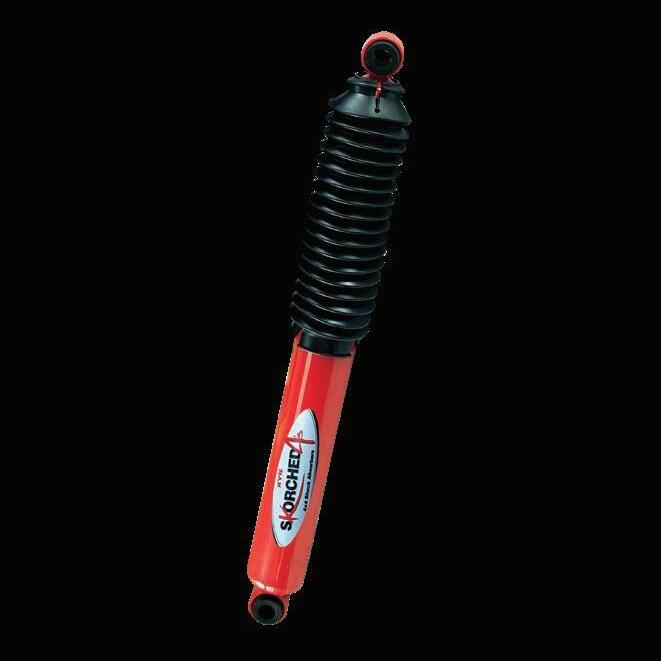
Through Supercheap Auto Trade, workshops can access an extended range of aftermarket brands via Special Order, including well-established names such as DBA, SuperPro, Mackay, ClutchPro, KYB and others across key repair and upgrade categories. This gives technicians the ability
to continue using trusted components even when the application is less common or the requirement more specific.
Importantly, this access is designed to work within existing trade processes rather than adding complexity. Parts can be searched through the Supercheap Auto Trade website or sourced with support from local store teams, allowing workshops to confirm availability, suitability and supply options without managing multiple external relationships.
From a workshop perspective, this flexibility helps protect both efficiency and reputation. Using known, trusted brands reduces the risk of comebacks, supports warranty confidence and helps maintain consistent repair standards. When workshops can source the right part rather than the nearest alternative, it supports better outcomes for both the business and the end customer.
As pressure on workshop productivity continues to increase, the role of range and access will only grow in importance. The ability to say “yes” to more jobs, is often dependent on knowing that solutions exist beyond what is immediately visible.
In a market where time, confidence and consistency matter, having a reliable trade partner with both strong in-store range and established Special Order pathways can make a meaningful difference to how workshops operate day to day.
Access, ultimately, is what turns range into real value.
To find out more, workshops can explore the full range of in store and Special Order products available at competitive trade pricing via the Supercheap Auto Trade website. Not a Trade customer? Free NZ Trade accounts can be created using a NZBN at trade. supercheapauto.co.nz
The ageing car parc: the opportunity on your doorstep
NEW ZEALAND’S VEHICLE FLEET IS ONE OF THE OLDEST IN THE DEVELOPED WORLD — AND GETTING OLDER
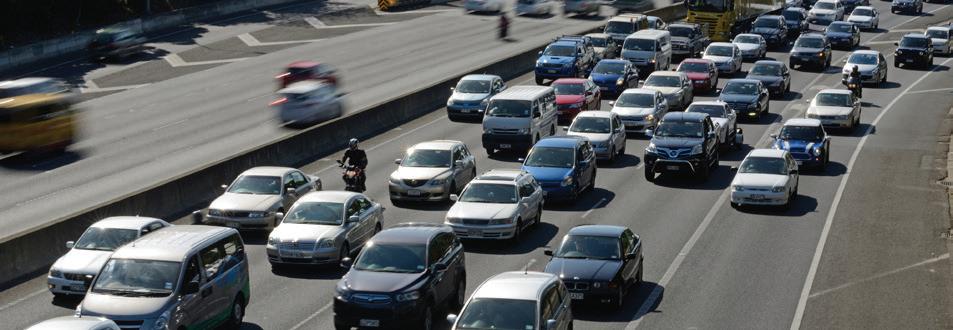
The work is already there. The average vehicle age in New Zealand is 14.8 years — more than four years older than Australia’s fleet and over five years older than the UK’s. As of 2022, 43% of light vehicles were at least 15 years old, up from 24.8% in 2001. That proportion has continued to rise. In 2024, there were 4.7 million registered vehicles in New Zealand. Nearly half of them are old enough to be well past any manufacturer warranty, well outside a franchise dealer’s sweet spot, and entirely dependent on the independent aftermarket for ongoing maintenance and repair.
WHY THE FLEET STAYS OLD
The structure of the market has always pushed toward older vehicles. About 41% of the light vehicle fleet arrived as secondhand imports, typically sourced from Japan, already five to eight years old, and then kept on the road for years beyond that. Cost-ofliving pressures and elevated new-vehicle prices have reinforced the pattern. New Zealand’s best-selling new car effectively starts at $49,000, a price point that puts a replacement purchase out of reach for a large portion of the driving public. When trading up becomes unaffordable, people maintain what they have — and they look for someone who can keep it running.
The recent WoF reforms add another dimension. From November 2026, most
light vehicles under 14 years old will move to two-yearly inspections. The government’s position is that modern vehicles are reliable enough to support longer intervals. The MTA’s counter-argument — backed by its member workshops, who conduct 80% of all WoF inspections — is that a 41% current failure rate and over half a million vehicles on the road without a valid warrant suggest otherwise. Whatever the outcome on road safety, the practical effect is that more vehicles will arrive at workshops with more deferred maintenance to address. The opportunity doesn’t shrink; if anything, it grows.
THE VEHICLES IN THE FLEET
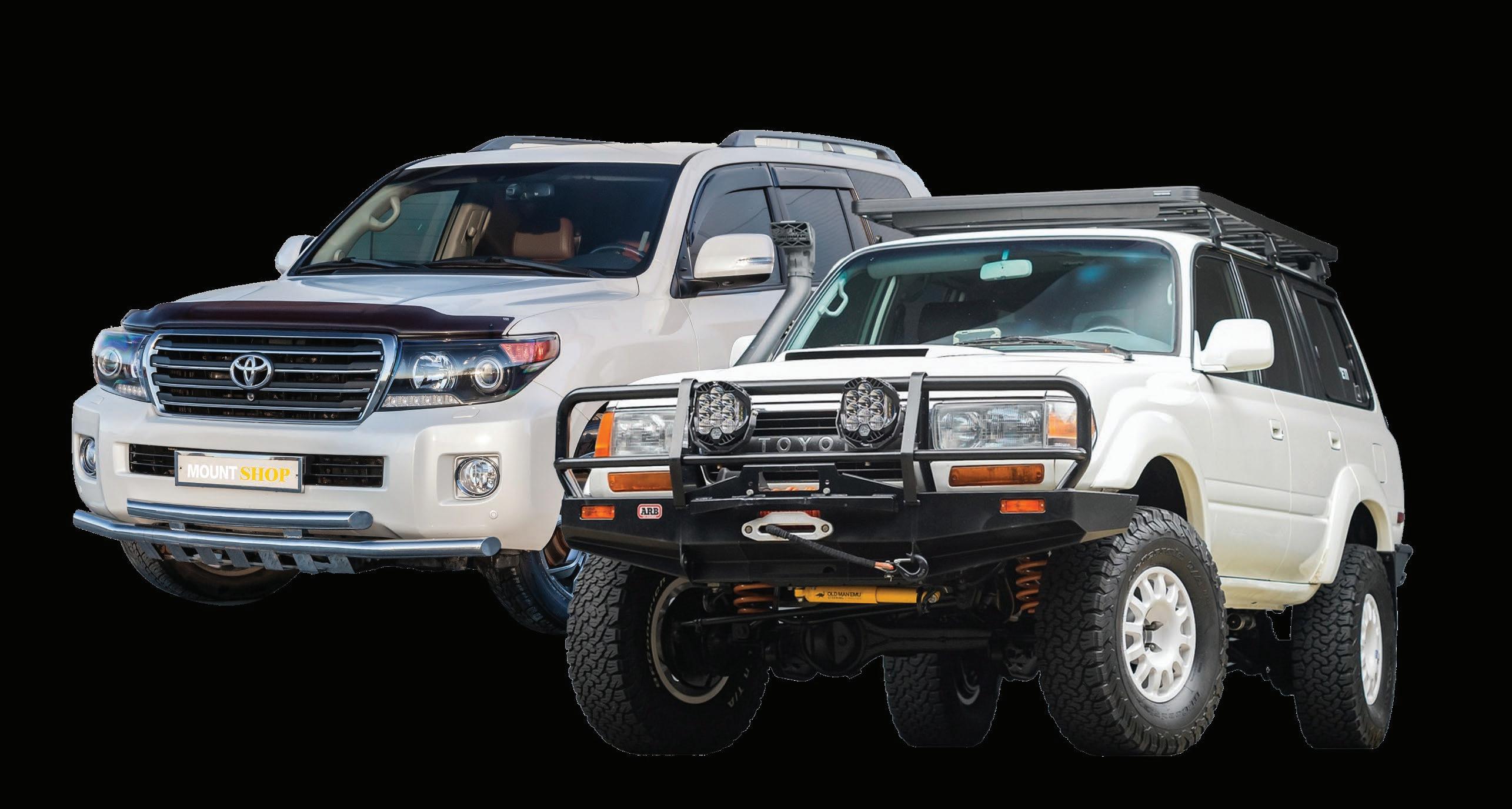
The dominant makes in the ageing parc are no surprise to anyone working in a workshop. Toyota has led new vehicle sales in New Zealand for nearly four decades. The Corolla, RAV4, Hilux, and HiAce are among the most registered vehicles in the country, and at fleet average age, many of these are now 10 to 15 years old with serious kilometres accumulated. The Ford Ranger and Mazda models round out a fleet heavy on well-proven platforms that the independent aftermarket knows well.
Diesel utes and SUVs deserve particular attention. High-kilometre diesel platforms — the Hilux, Ranger, Mitsubishi Triton, and larger SUVs like the Prado and Patrol — accumulate predictable and often costly issues: EGR valves, DPF systems, turbochargers, timing
components, and injectors. Franchise dealers are often reluctant to commit to remediation work on older, high-kilometre diesel vehicles. Independent workshops with the right diagnostic capability and the appetite for that work will find it is not in short supply.
THE SHIFT FROM DEALERSHIPS
For vehicles beyond ten years old, the migration away from franchise service centres is largely complete — driven by cost, convenience, and in some cases, necessity. Dealer networks for several active brands have contracted, particularly outside main centres. For owners of older Mitsubishi, Suzuki, and Nissan vehicles in provincial markets, an authorised service centre may simply be impractical. So the work doesn’t disappear, it moves to whoever is positioned to take it.
THE FLEET LOOKS DIFFERENT DEPENDING WHERE YOU ARE
The composition of the local fleet varies significantly by region. Wellington and Auckland have the youngest average fleet age at around 13 years, while provincial southern districts average closer to 20 years. A workshop in Gore or Waimate is servicing a fundamentally different parc than one in Newmarket — different age profile, different makes, different failure modes, different parts requirements.
Workshop owners who understand their local fleet composition — what’s in it, how old it is, which platforms dominate — have the basis for deliberate decisions about technician training, parts sourcing, and service capability. Those who don’t are leaving it to chance.
The fleet is ageing, and the vehicles aren’t going anywhere. The work is already there — and a sensible starting point for making the most of it is ensuring your workshop’s capabilities, parts sourcing, and training reflect what’s actually parked in your corner of the country.
The EV brand on your hoist today may not exist in five years
A WAVE OF NEW ELECTRIC VEHICLE BRANDS IS ENTERING THE MARKET WITH ATTRACTIVE PRICING — BUT THIN LOCAL SUPPORT NETWORKS AND UNCERTAIN LONG-TERM VIABILITY ARE QUESTIONS THE TRADE IS ALREADY FIELDING
The spike in EV registrations that followed rising fuel prices in early 2026 brought a fresh wave of electric vehicles into workshops across the country — and with them, a set of questions that go well beyond voltage and software access. Parts availability, authorised repairer networks, and the longterm viability of the brands themselves are now practical concerns for anyone running a service bay.
Capricorn Group CEO Brad Gannon put it plainly last month: “Workshops are already reporting vehicles sitting idle for weeks or even months, leaving owners paying finance, insurance, and registration on cars they can’t use.” His warning — directed at consumers — carries equal weight for the trade. An immobilised vehicle is lost revenue for the owner, a reputational problem for the workshop, and a sourcing headache that can stretch for months when the brand in question has no meaningful parts supply chain on this side of the world.
A CROWDED MARKET WITH UNEVEN FOUNDATIONS
Australia now has more than 40 EV brands on sale. New Zealand, despite being a fraction of the size, has seen a similar proliferation — with Zeekr, Dongfeng, Xpeng, Denza, Geely, and BAIC all entering the local market between mid-
2025 and early 2026. Most are Chinese-owned, most are EV-only, and most arrived with limited authorised repairer infrastructure.
That’s not automatically a problem — BYD and MG entered the same way and have since built credible support networks. But the broader picture is sobering. Global consulting firm AlixPartners forecasted in mid-2025 that only 15 of the 129 Chinese EV and plugin hybrid brands currently operating will be financially viable by 2030. Of those 129, just three — BYD, Li Auto, and Seres Group — are currently profitable.
The brands most likely to exit are precisely those with the thinnest local presence: limited dealer networks, no independent parts supply, and warranty obligations that exist on paper but may be impossible to honour. Under New Zealand consumer law, a buyer’s contract is with the local importer or dealer. If the manufacturer collapses overseas, the local distributor typically follows — and the warranty becomes unenforceable.
THE COST PICTURE IS SHIFTING TOO
Beyond parts and support, the running cost equation for EVs is changing in ways that weren’t fully priced into early purchase decisions. In Australia, Gannon points to a federal revenue gap of AU$15–18 billion annually as fuel excise receipts decline — a figure
roughly equivalent to the entire Pharmaceutical Benefits Scheme budget — and flags that a road user charge for EVs is expected but not yet defined. “There is still no clarity on how or when this will be introduced — and what the cost will be for EV users,” he said.
New Zealand moved earlier. From 1 April 2024, light EVs began paying road user charges at $76 per 1,000km — the same rate as diesel vehicles — with PHEVs at $38 per 1,000km. The government has signalled that universal RUC, covering all vehicle types, is the long-term direction, with petrol excise to eventually be phased out entirely. The shape and timing of that transition remains unresolved.
For the average EV owner, the numbers still stack up — home charging runs at roughly 3–5 cents per kilometre against 12–18 cents for petrol, and RUC adds around 7.6 cents on top. But the cost certainty that once made EVs a straightforward fleet or personal finance decision has eroded, and that uncertainty is part of what’s driving more cautious buyer behaviour in the current market.
WHAT THIS MEANS FOR PARTS AND SERVICING
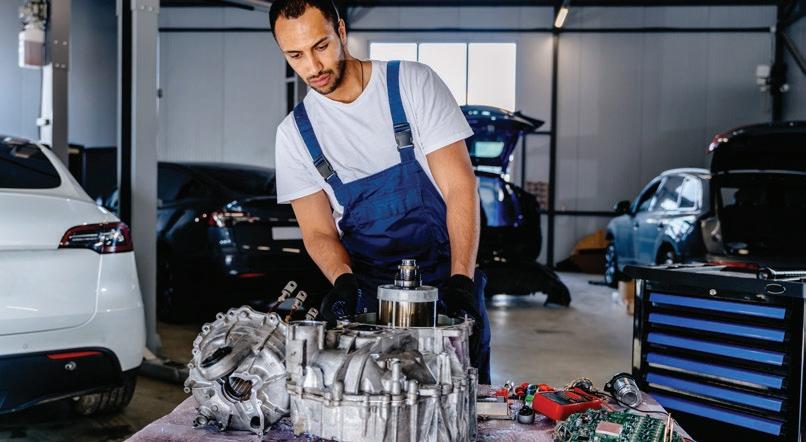
The servicing case for EVs is genuinely simpler in some respects — fewer moving parts, no oil changes, no exhaust system. But the areas where things do go wrong — electric motors, high-voltage battery systems, and charging infrastructure — tend to require either manufacturer-specific diagnostic tools or proprietary parts that independent workshops cannot easily source.
For the established brands with deep local networks, this is a manageable constraint. For the newer entrants, it is a structural gap. When a lesser-known brand’s sole importer has no authorised repairers outside the main centres, a vehicle damaged or broken down in a regional area becomes a practical problem with no good solution.
Gannon’s checklist for consumers — asking where parts are stored, how many authorised repairers operate locally, and what protections exist if a brand exits the market — translates directly into questions workshops will increasingly be asked to answer on behalf of their customers. The trade doesn’t sell the cars, but it inherits the consequences when the support structure isn’t there.
The EV transition is real and, in the long run, probably irreversible. But the current market — crowded, competitive, and still shaking out — rewards caution. For workshops, knowing which brands carry genuine local support and which are operating on thin foundations is becoming as important as knowing how to work on the vehicles themselves.
From a kitchen stove in St Kilda to a century of oil
HOW A 16-YEAR-OLD’S AMBITION IN 1920S MELBOURNE GREW INTO ONE OF THE INDUSTRY’S MOST ENDURING FAMILY BUSINESSES
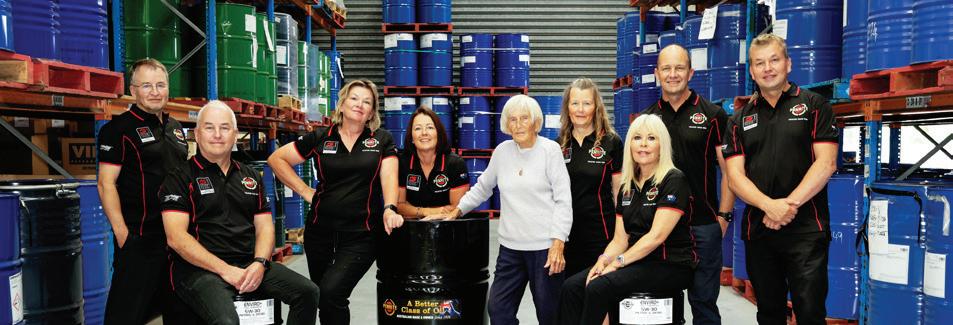
On his sixteenth birthday — 6 March 1926 — Les Mecoles launched an oil company from his family home in St Kilda, Melbourne. He blended his first batches on his mother’s kitchen stove and delivered them by wheelbarrow to service stations, factories, and the local port. To fund his initial stock, he sold his prized leather jacket.
It was an unlikely beginning for what would become one of the region’s most recognised lubricant brands. But Les was no ordinary teenager. His school notebooks were already filled with sales figures and oil blend formulas, and he had spent his early years importing oils and acting as an agent for established brands including Shell and Autolene. By the time he registered his own company, he had a working knowledge of the industry that most adults would have envied.
The name came later. Les had initially sketched ‘Oil-Rite’ on the back of an envelope, but the name was taken. His brother Stan — who joined the business in 1934 — suggested combining ‘Pen’, a reference to Pennsylvania crude oil, then regarded as the world’s finest, with ‘Rite’ to signal the right oil for the job. Penrite was registered with the Commonwealth of Australia in 1936, and Les became a member of the Pennsylvanian Grade Crude Oil Association, enabling him to import 100% pure Pennsylvania crude for blending.
GROWTH, WAR, AND EXPANSION
Through the 1930s, Penrite expanded steadily, moving through a series of larger premises in Richmond and Abbotsford as distribution spread to other Australian states. By the time World War II began, the company was supplying not just oils and lubricants but greases, batteries, and workshop tools. Records indicate Penrite contributed to the Allied war effort, producing products for both the European and Pacific campaigns. With staff reduced to fewer than 10, Les and Stan kept the operation running, shipping in the company’s plain green wartime tins — a practical departure from Les’s usual marketing instincts. Post-war rationing slowed recovery, but
by 1951 Penrite had incorporated as a Pty Limited company. Les was travelling regularly to Brisbane, Sydney, and Adelaide, building a national sales force. Among his early recruits was a young man named Ron Walker, who would later serve as Lord Mayor of Melbourne, chair Fairfax Ltd, and head Formula 1 in Australia.
THE DYMOND FAMILY TAKES THE WHEEL
By the late 1960s, Les’s health had begun to fail after two bouts of cancer. With no children to inherit the business, he turned to John Dymond — a young oil additives supplier he knew well — as a potential successor. John had arrived in Australia from England in the late 1950s, having trained as an engineer at the Vauxhall factory in Luton before working with British Petroleum on fuel additive programmes across Australia and New Zealand. He understood the market and, critically, he understood what it needed.
The sale was finalised in March 1979. Les passed away that August, having seen the company into capable hands.
John Dymond — known simply as JD — moved quickly. He identified a gap that had existed since the company’s founding: most lubricants on the market were engineered for North American or European conditions, not Australian ones. In 1981 he launched the Penrite HPR — High Performance Range — a line of multi-grade, full-zinc oils built specifically for local conditions. It was the first of its kind in Australia and established Penrite’s reputation in the performance end of the market.
The decades that followed brought continued growth, a purpose-built blending facility at Wantirna in the 1990s, and a series of marketing campaigns — among them the long-running ‘Obsession with Oil’ and later ‘A Better Class of Oil’ — that built genuine loyalty among independent mechanics and enthusiast car owners.
A FAMILY BUSINESS, STILL
but Penrite has
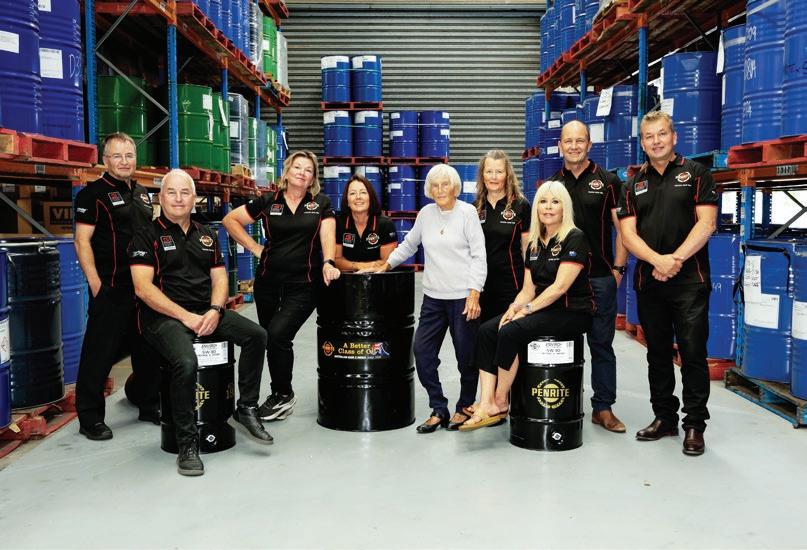
remained firmly in family hands. Margaret Dymond — known to most as Marsey — has been part of the business for more than 45 years and remains its owner today. Her involvement spans far more than governance: she is a regular presence at motorsport events, engaging with competitors and enthusiasts while maintaining, by all accounts, a deliberately low profile.
Day-to-day leadership sits with Toby Dymond as CEO, alongside family members Nigel, Fleur, and Jon in senior roles. “Our history is built on vision, hard work, and family values that continue to guide us today,” Toby says. “I’m just as passionate about the future — ensuring Penrite remains at the forefront of innovation, supporting the automotive community, and delivering the high-performance products our customers can trust for the next century.”
ONE HUNDRED YEARS ON
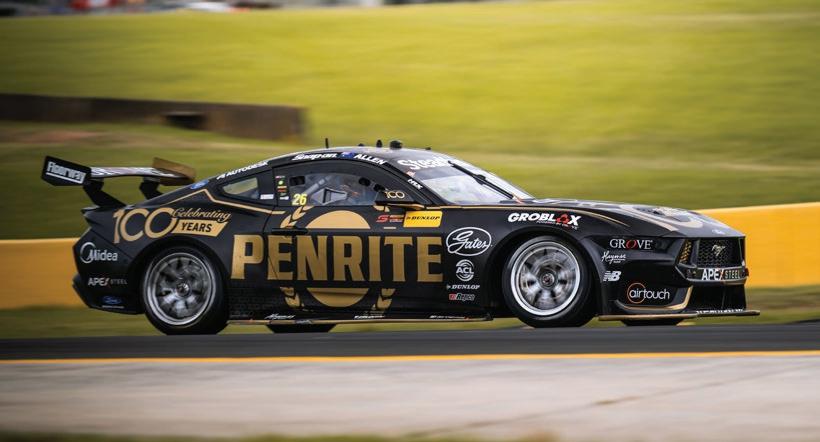
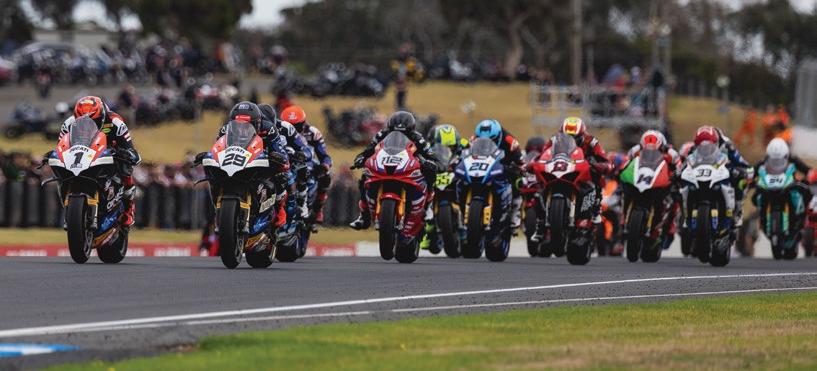
Today, Penrite manufactures more than 170 products across 12 market segments, operates more than 22 warehousing facilities across Australia and New Zealand, and exports to over 50 countries. Its Auckland office supports local distribution, and the brand is stocked by major trade and retail outlets throughout the country. The company sponsors around 250 brand ambassadors across Australia and New Zealand, and maintains naming rights and team sponsorships across V8 Supercars, the PRO MX Series, and the Australian Superbike Championship.
That a company started with a wheelbarrow and a borrowed stove in a Melbourne suburb is now producing 46 million litres of lubricant annually is, in itself, the story. Penrite’s centenary is, above all, a reminder of what a single-minded 16-year-old with a notebook full of oil formulas can set in motion.
John Dymond and his eldest son Mark are no longer with the company,
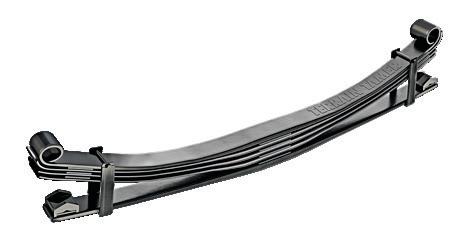
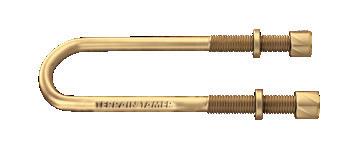
Terrain Tamer adds Parabolic Leaf Springs for the Mitsubishi Triton L200 and MV
TWO NEW OPTIONS FOR NEW ZEALAND’S MOST POPULAR UTE
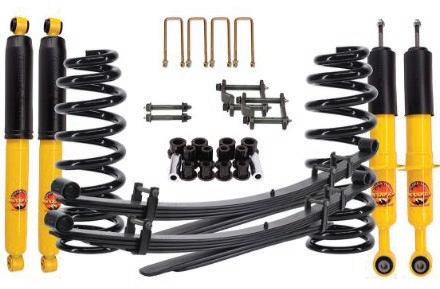
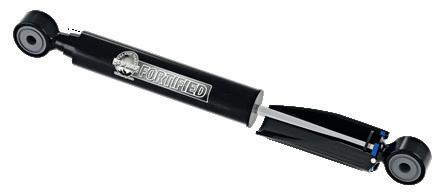
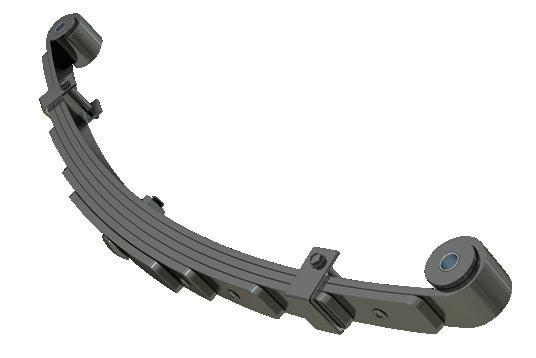
Terrain Tamer has extended its parabolic leaf spring range to cover the Mitsubishi Triton L200 and MV (02/24–), with two load-rated options now available. The additions bring the current-generation Triton into Terrain Tamer’s established parabolic programme, which spans a wide range of 4WD platforms and sits within the brand’s Fortified Parts Range. Two variants are offered: a Standard Parabolic rated for 0–400kg, and a Heavy Duty Parabolic rated for 400–700kg — both delivering a 40mm rear lift.
WHY PARABOLIC?
Unlike traditional leaf packs, which use multiple leaves of uniform thickness and offer little to no flex, parabolic springs taper from a thicker centre to thinner ends. That profile allows each leaf to work independently and distributes stress more evenly across the spring — improving both ride comfort and durability.
The reduced leaf count significantly lowers unsprung weight, which has a direct bearing
on GVM headroom and improves ride quality whether the vehicle is loaded or running empty. On the road, the reduction in unsprung mass also translates to better handling response.
PROTECTING THE DRIVETRAIN
One of the more practical benefits of the parabolic design is the effect it has on drivetrain shock. When a traditional leaf pack hits a bump, its rigidity transfers force directly to the differential, loading the crown wheel and pinion and, in more aggressive situations, causing a wheel to lift and lose traction.
The parabolic spring gives with the bump, allowing the differential housing to rotate with the spring and absorbing much of that shock before it reaches the gears. For working vehicles — utes carrying tools, towing trailers, or covering rough terrain regularly — that protection adds up over the life of the vehicle.
QUIETER AND MORE DURABLE
Because the leaves in a parabolic spring
don’t contact each other under normal load conditions, interleaf friction is virtually eliminated. That means a quieter ride and significantly less risk of rust buildup between the leaves, which is a common cause of failure in conventional leaf springs.
The springs are manufactured from a special grade steel and have been developed specifically for 4WD applications, rather than adapted from commercial trucking designs.
TRITON L200 AND MV FITMENT
Part numbers MIT025P (Standard) and MIT025HDP (Heavy Duty) cover the Triton L200 and MV from 02/2024 onwards, and are also available as part of Suspension Kit SK121. Full application listings, product specifications, and FAQs are available on the Terrain Tamer website.
For the full Terrain Tamer Parabolic Spring range, visit terraintamer.com/4wd-products/ suspension/leaf-springs/parabolic-springs
INTRODUCING THE
RANGE
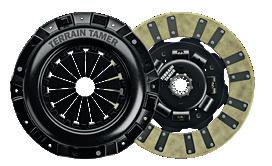
At Terrain Tamer, we understand the demands of real heavy duty 4WD vehicles, tackling extreme conditions. That’s why we’ve invested in the technology to create our TERRAIN TAMER FORTIFIED 4WD Parts range, uniquely designed and developed to truly meet these needs.We’re built tougher as recognised and used in mining, emergency services and agriculture, and those who really need to demand more from their vehicle.
City Centre Motors’ golden anniversary in Porirua
KEITH BUTLER OPENED CITY CENTRE MOTORS IN 1976 WITH A SIMPLE GOAL: GIVE PORIRUA DRIVERS A MECHANIC THEY COULD
AND 50 YEARS ON, HIS SONS ARE STILL HONOURING
On 27 April 1976, Keith Butler opened the doors to City Centre Motors. In an era of chrome and carburettors, his vision was simple: to provide Porirua drivers with a mechanic they could truly trust.
Fifty years on, City Centre Motors stands as one of the longest-serving businesses in the region. While Porirua changed a lot since, the workshop has remained a constant, reliable anchor for generations of families, motorists, and fellow automotive professionals.
Originally established on Lyttelton Avenue, the business moved to its current Parumoana Street location in 1981. Remaining in the same spot for more than four decades is a rare feat and reflects the strong ties City Centre Motors has built within the community. This stability laid the foundation for the significant growth that followed, including the workshop’s late1980s shift into brake and clutch specialisation.
SPECIALIST BRAKE AND CLUTCH CARE
During the late 1980s, City Centre Motors evolved into the region’s premier brake and
TRUST,
THAT PROMISE
clutch specialist. Significant investment was made in specialist machinery to reface brake rotors, drums, and flywheels in-house — capabilities that were, and remain, uncommon. The workshop also became one of the few in the area able to custom-manufacture brake and clutch pipes and hoses.
At the same time, City Centre Motors established itself as the go-to destination for brake parts and technical knowledge — not just for the public, but for the wider automotive trade. This trade-focused role continues today.
A FAMILY TORCH PASSED ON
The family connection deepened in the 1990s when Anthony (Ants) completed his apprenticeship at the workshop. Mike joined the business in 2005, and in November 2010, the brothers officially purchased City Centre Motors from their father. Under their leadership, the workshop reached a major milestone in 2014, doubling its floor space and significantly expanding its brake and clutch parts inventory.
Today, City Centre Motors is powered by a dedicated team — Mike, Ants, Andy, Allan, Dan,
Shavin, and Wendy — bringing more than 150 years of combined experience in the motor industry. That depth of knowledge allows the team to service all makes and models, from petrol and diesel vehicles to modern hybrids and electric cars, while continuing to offer the specialist brake expertise the workshop is known for.
Although Keith officially retired in 2010, his heart never left the workshop. He returned part-time to work alongside his sons for several years, sharing his experience and passion. Keith sadly passed away in 2025 after a long battle with cancer. As City Centre Motors marks its 50-year milestone, the celebration is as much a tribute to his character and work ethic as it is to the business itself.
A NOTE FROM THE TEAM
As City Centre Motors marks 50 years, the team want to thank their customers and trade partners for their continued loyalty and support. It has been a privilege to keep Porirua moving for the past 50 years, and they look forward to supporting the local community and automotive trade for many years to come.
City Centre Motors are long-term Blackfern suppliers to the trade. To celebrate, any parts or service purchases made through City Centre Motors on a Blackfern account during May will qualify the member for a draw to win a $250 prezzy card or 25,000 reward points. Terms and conditions apply.
NZTA updates clean car data as government weighs standard’s future
REFERENCE DATA FOR 2027 AND 2028 HAS BEEN REFRESHED ON SCHEDULE — EVEN AS A MINISTERIAL REVIEW KEEPS THE SCHEME’S LONG-TERM DIRECTION UNCERTAIN
The New Zealand Transport Agency has updated the reference data underpinning the Clean Vehicle Standard, even as the government continues to assess whether to revise — or scrap — the scheme’s emissions targets altogether.
The update, which the NZTA is required by legislation to publish by 30 April, was flagged to dealers via email newsletter on 23 April. The agency was careful to note that publication of the new figures does not pre-empt any government decisions on the standard’s future.
Transport Minister Chris Bishop announced last year that a review of the Clean Vehicle Standard’s targets will be completed by June 2026. Until that review concludes, the scheme continues to operate under its existing framework — and importers remain subject to its credit and charge calculations.
WHAT THE NEW FIGURES SHOW
Under the updated reference data, the annual CO2 target for passenger vehicles will
tighten from the current 108g/km to 103g/ km in 2027, before dropping further to 76g/ km in 2028. Commercial vehicle targets follow a similar trajectory, moving from 207g/km this year to 175g/km in 2027 and 144g/km in 2028.
Mean target weights have also shifted. Type A passenger vehicles move from 1,482kg in 2026 to 1,549kg for the following two years. Type B commercial vehicles move from 2,098kg to 2,174kg over the same period. Slope of line figures — which factor into how a vehicle’s CO2 value is calculated relative to its weight — move from 0.0343 to 0.0374 for type A, and from 0.0526 to 0.0486 for type B.
The CVS works by assigning each imported light vehicle a calculated CO2 value based on its 3-phase worldwide harmonised light vehicle test procedure score, tare weight, and vehicle classification. A positive value earns the importer a credit; a negative value may result in a charge. Credits can be offset against charges or transferred to other importers.
Vehicle import values climb 28% as the fleet keeps shifting
MARCH TRADE DATA FROM STATS NZ SHOWS THE AUTOMOTIVE SECTOR PULLING WELL ABOVE ITS WEIGHT — AND THE COMPOSITION OF WHAT’S ARRIVING TELLS ITS OWN STORY
The value of imported vehicles, parts, and accessories reached $828 million in March 2026 — up $181 million, or 28%, on the same month a year earlier. The jump was the standout contributor to a 9.6% year-on-year
lift in total merchandise goods imports, which came in at $7.2 billion for the month, according to Stats NZ.
The quarterly and annual figures reinforce the trend. For the three months ended March 2026, the automotive category rose 17% year-onyear to $1.9 billion. For the full year to the end of March, the tally reached $8.4 billion — up 9.5% on the prior year.
THE EU FIGURE IS WORTH NOTING
Within the monthly breakdown, automotive shipments from the European Union increased by $38 million year-on-year. That’s a meaningful rise, and it lands at an interesting moment. With US tariffs reshaping global supply chains and
OPERATING IN UNCERTAINTY
For dealers and importers, the practical challenge is planning a model mix against targets that may yet be revised before they take effect. The June review deadline gives the industry a relatively short window — and the outcome remains genuinely open. The government signalled in March that scrapping the standard entirely is among the options under consideration.
That uncertainty sits alongside a market that is moving in its own direction regardless. The fuel price spike of March 2026 pushed weekly EV and plug-in hybrid sales past 1,000 units — a level that, if sustained, would naturally pull importer portfolios toward lower-emissions models with or without a regulatory framework compelling it.
Chinese brands continuing their aggressive push into the Australasian market, European manufacturers are actively looking to diversify their export volumes into markets where trade relationships remain stable. New Zealand, with its open import regime and no domestic vehicle manufacturing to protect, is a relatively frictionless destination.
The practical effect for the trade is a broader and more varied fleet arriving in greater numbers — more European marques, more model variants, and a continued influx of new Chinese brands whose parts supply chains remain works in progress. Both dynamics have direct workshop implications.
THE BROADER PICTURE
Petroleum products moved in the opposite direction, falling $310 million or 30% year-onyear to $724 million in March — a figure that reflects both global price movements and, increasingly, a fleet that is consuming less fuel than it once did. The overall monthly trade balance landed as a surplus of $698 million, with exports climbing $542 million or 7.3% to $7.9 billion.
For the year to March, the annual trade deficit narrowed to $3.2 billion — a significant improvement on the $6.3 billion deficit recorded in the year ended August 2024. The direction of travel is positive, and the automotive sector’s import growth is a meaningful part of what’s driving activity on both sides of the ledger.
A week of fuel panic added 1,000 EVs to the fleet — where’s the charge network?
THE PUBLIC CHARGING NETWORK IS GROWING, BUT PACE AND SPECIFICATION ARE STILL FALLING SHORT
March 2026 offered a sharp reminder of how quickly consumer behaviour can change. As fuel prices climbed on the back of Middle East supply tensions, EV and plug-in hybrid sales surged past 1,000 units in a single week — a rate that, if sustained, would represent a structural step-change in the composition of the light vehicle fleet. It didn’t take a subsidy or a government campaign; it took a spike at the pump.
The numbers put the policy debate in context. EV registrations in early 2026 were running nearly double the equivalent period in 2025. New vehicle buyers who had been sitting on the fence moved quickly once the running cost advantage became impossible to ignore. For workshops, that means the electrification of the fleet — which had appeared to stall following the removal of the Clean Car Discount in 2024 — is back in motion, driven this time by market forces rather than government incentives.
A NETWORK BUILT FOR YESTERDAY’S FLEET
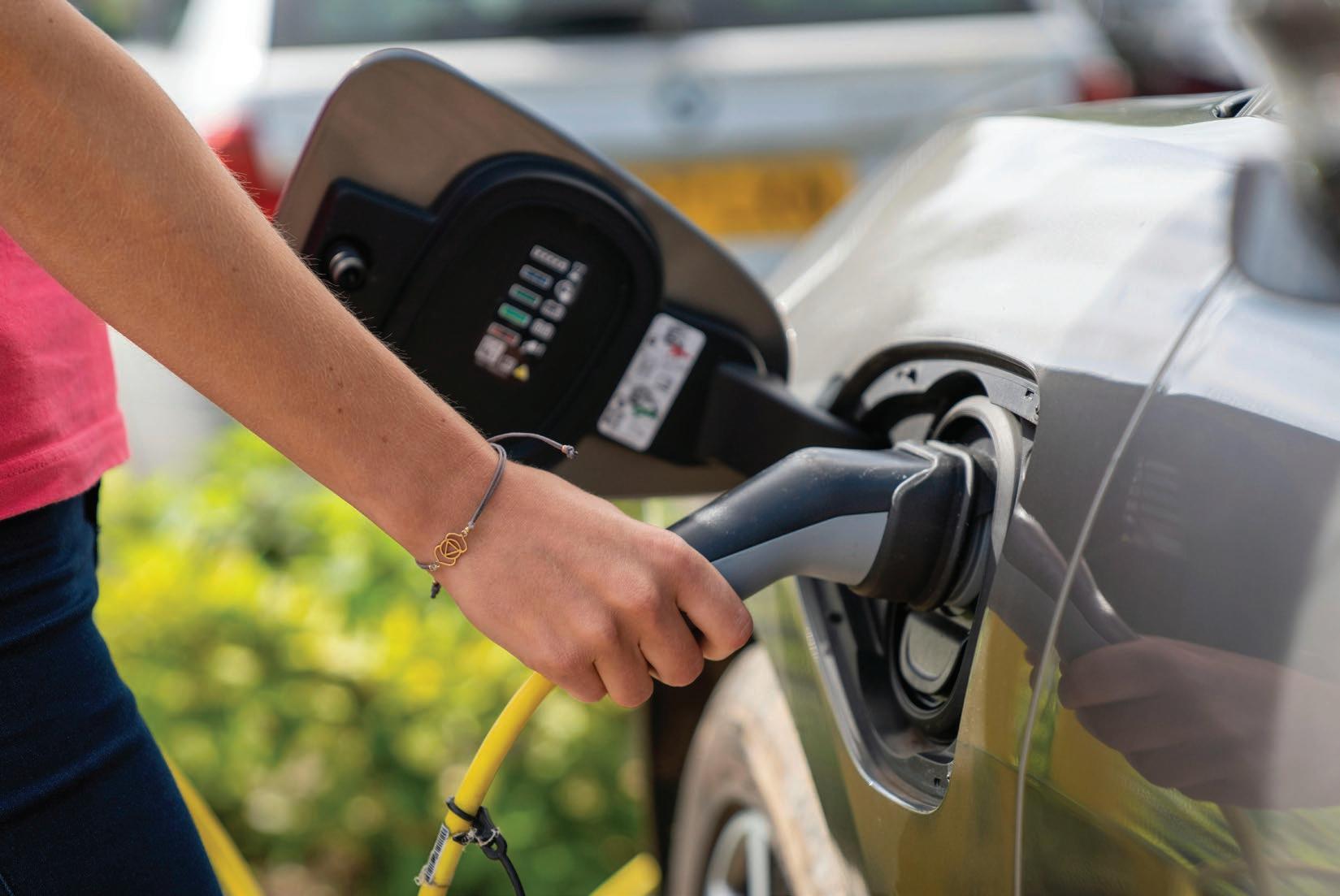
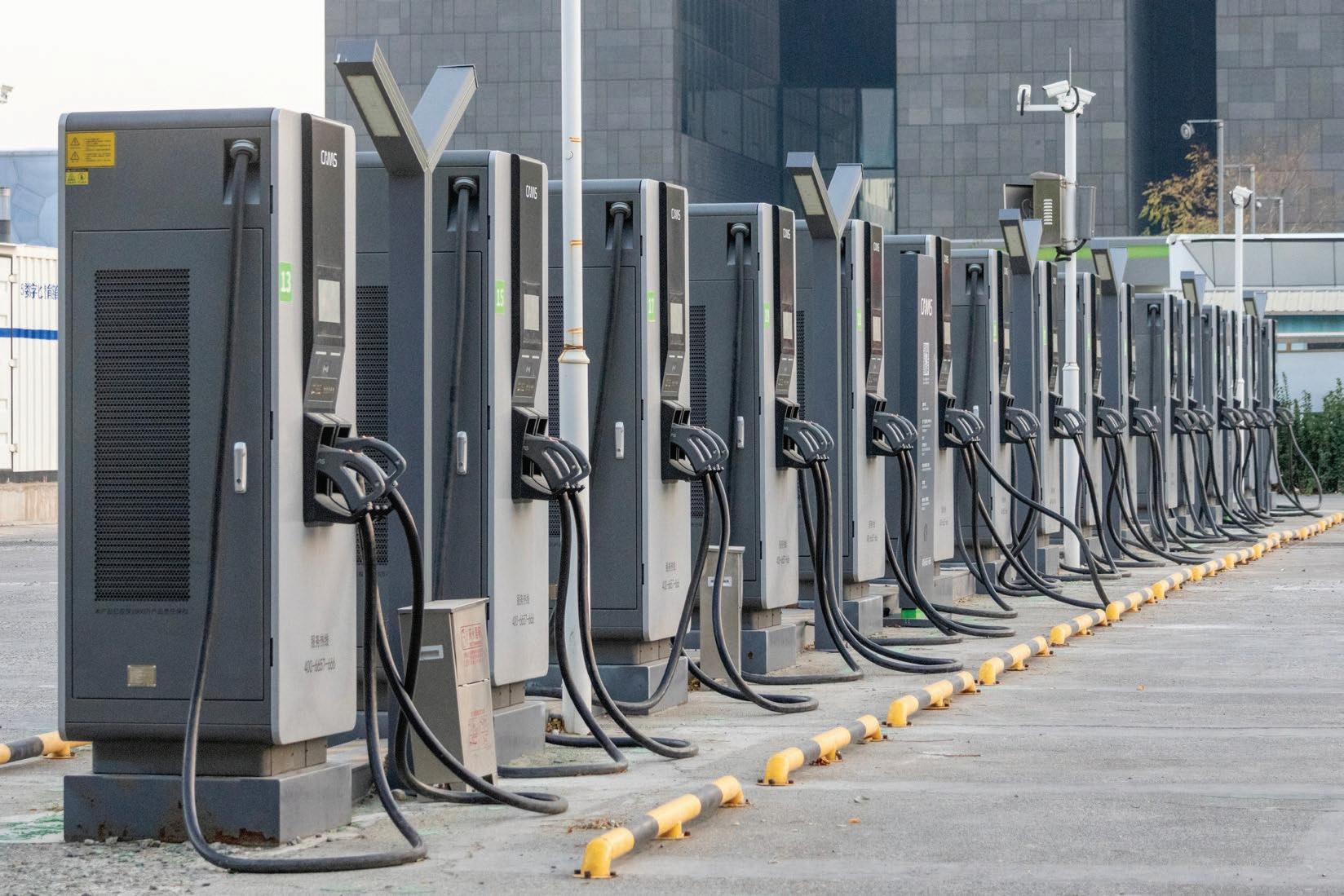
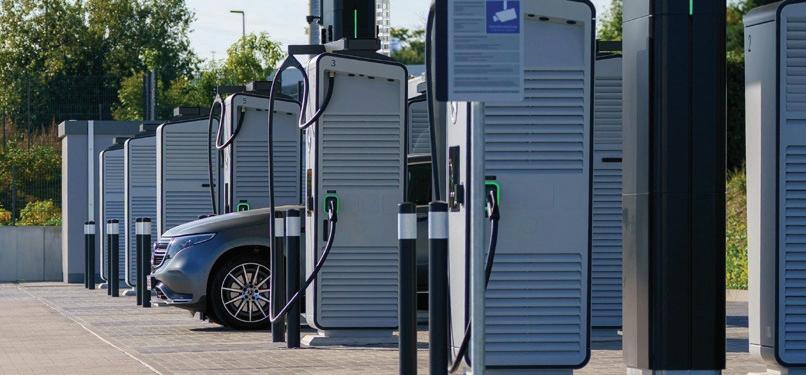
The charging infrastructure question, however, is more complicated. New Zealand currently has around 1,800 public charge points — one of the lowest charger-to-EV ratios in the OECD. The government’s March response was a $52.7 million package of zero-interest loans
to ChargeNet and Meridian Energy, with both operators co-investing a further $60 million. The combined investment is expected to lift the national network to around 4,500 charge points — meaningful progress toward the government’s stated goal of 10,000 by 2030, but still well short of it.
The composition of that rollout has drawn scrutiny. Of the 2,574 new charge points funded under the scheme, the split between AC slow chargers and DC fast chargers is roughly even — around 1,200 AC units to 1,374 DC. AC chargers are cheaper to install, typically costing under $5,000, but charge over several hours rather than the 20–60 minutes a DC fast charger can deliver. Critics, including Drive Electric, have argued the mix skews too heavily toward minimum-viable solutions rather than the high-capacity network modern EVs and their drivers actually require. EV drivers surveyed by the Energy Efficiency and Conservation Authority reported long wait times, limited availability, and slow speeds as their primary frustrations with public charging — problems a large AC rollout does little to address.
The government has also moved to streamline consenting, with amendments to national environmental standards taking effect in May 2026 that remove the need for resource consent for most new charge point installations.
That should reduce delays and cost for operators — but it accelerates the build, not the specification of what gets built.
WHAT A PATCHY NETWORK MEANS FOR THE TRADE
For workshops, the charging infrastructure picture matters for reasons that go beyond whether their own staff can top up a courtesy car. A public network that doesn’t inspire driver confidence — particularly outside main centres — shapes which vehicles buyers choose, how far they’re willing to travel, and what condition those vehicles arrive in when something goes wrong.
Range anxiety doesn’t disappear when someone buys an EV; it transfers to a calculation about whether the charging infrastructure on their regular routes is reliable enough. When it isn’t, drivers push vehicles harder between charges, arrive with depleted batteries in ways that can affect battery health over time, and occasionally get stranded in circumstances that generate breakdown work. A network of slow chargers distributed across the country is better than nothing — but it’s not the same as a network that gives drivers genuine confidence at highway speeds and regional distances.
The fleet composition shift also has straightforward volume implications. More EVs on the road means more EVs requiring the periodic checks, tyre work, brake servicing, and software diagnostics that make up an increasing share of workshop throughput. The vehicles coming through now are not earlyadopter Leafs and early Model 3s. They are newer, more varied in brand and specification, and increasingly from manufacturers whose parts supply chains and diagnostic access remain works in progress.
THE POLICY ENVIRONMENT REMAINS UNSETTLED
The March sales surge occurred against a backdrop of genuine policy uncertainty. The government signalled during the month that it was considering scrapping the Clean Car Standard — the emissions framework that shapes which vehicles importers bring into the country. Whether that happens or not, the signal itself creates hesitation among importers planning their model mix for the next two to three years.
What is clear is that the fuel price shock has done more to accelerate EV uptake in a single month than two years of policy debate managed. The fleet is moving, the infrastructure is catching up slowly, and the trade sits squarely in the middle — servicing whatever rolls through the door, regardless of how the policy environment settles.
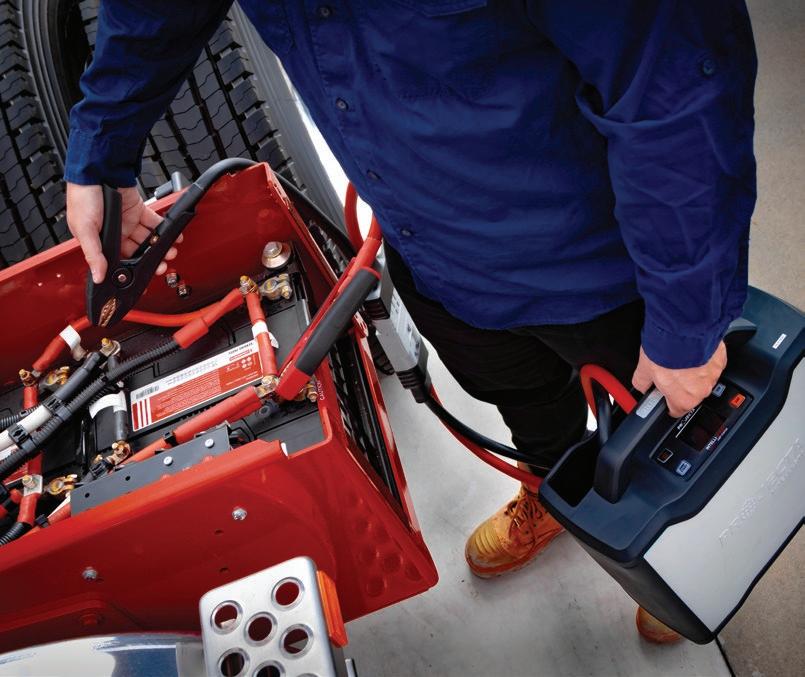
The jump starter that’s always ready when you need it
PROJECTA’S INTELLI-START IS5000HD MODEL BRINGS INTERCHANGEABLE CONNECTORS AND UNLIMITED STARTING CAPACITY TO WORKSHOPS AND MOBILE OPERATORS
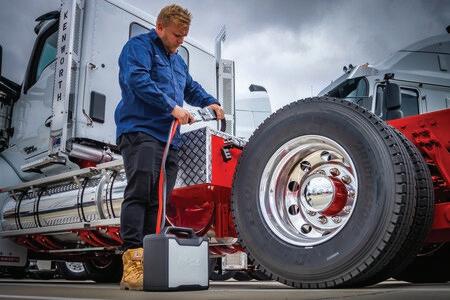
Jump-starting heavy equipment has long been a weak point in the market. Most workshops rely on battery trolleys that are often undercharged or flat when they’re needed most. For mobile operators, the solution is usually a ute or small truck loaded with batteries — a bulky and inefficient approach that’s far from ideal out in the field.
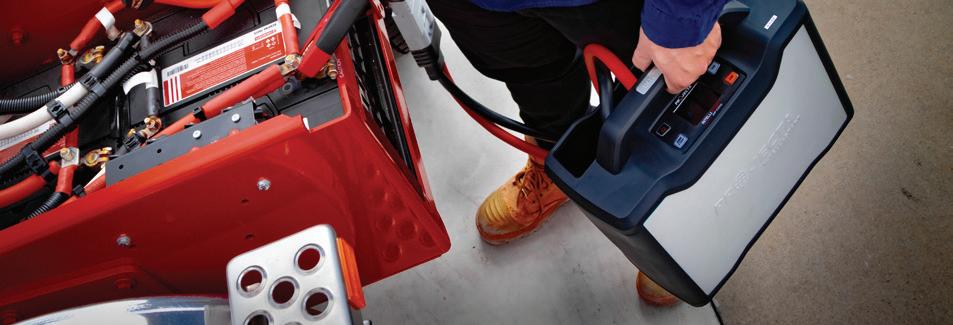
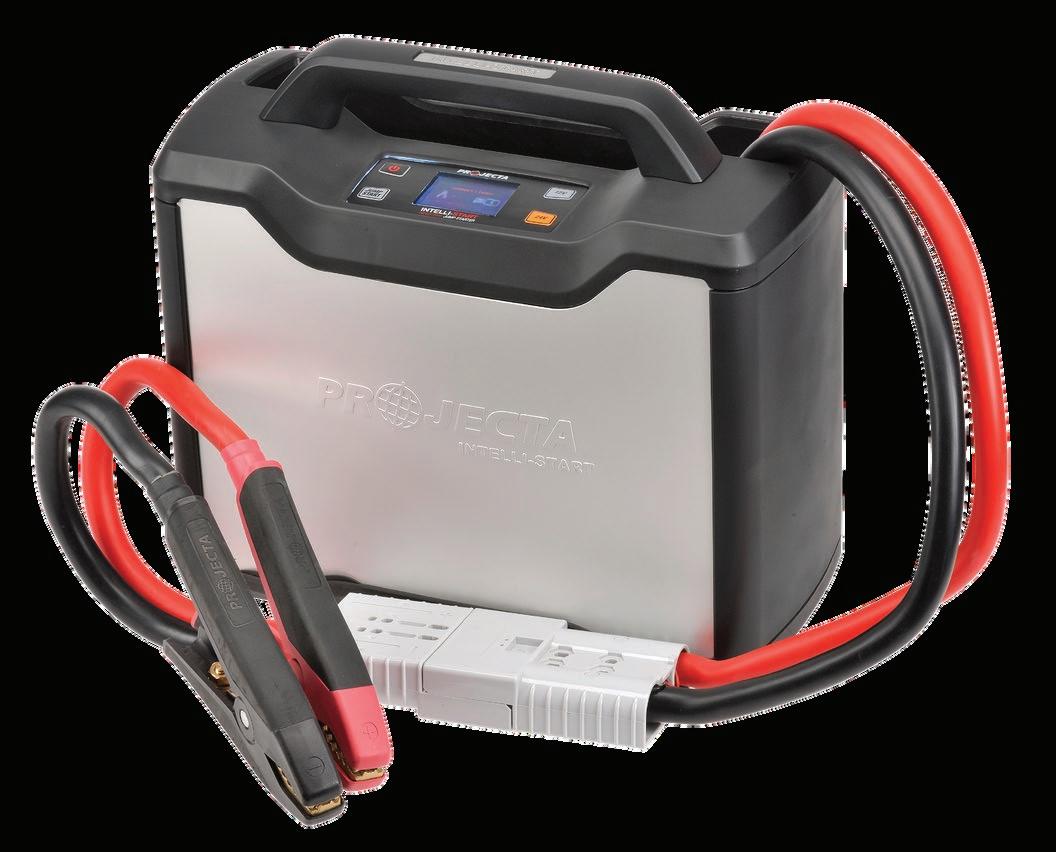
Now you can say goodbye to those headaches! IS5000HD has been designed to start just about any machinery, will never be flat (due to RRT), is ultra-safe, workshop-tough, and light enough for just about anyone to carry with just one arm.
MEET THE IS5000HD
Since the market-changing launch of the IS3000 and IS5000 Jump Starters, Projecta has added even more functionality to their industrial jump starter range. While the standard IS5000 offers enough starting capacity to start just about any industrial equipment, some machines and heavy transport vehicles have specific jump-starting points that may be difficult or impossible to reach with standard clamps.
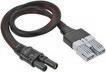
Enter IS5000HD, which incorporates a multi-pole heavy-duty connector which allows the heavy-duty clamps to be disconnected from the jump starter leads. This allows the user to switch between Clamps — 350A Heavy Duty Connector or CAT connector, depending on the vehicle or equipment they are starting (adapters sold separately).
The multi-pole connector is especially
important for applications requiring clamps, as it allows the sensing wires to remain intact, allowing the jump starter to work just like the standard IS5000 with all protections and sensors functioning correctly (e.g. reverse polarity or voltage sensing).
For applications requiring a 350A HD connector (e.g. transport fleets) or CAT plug (e.g. industrial equipment), additional adapter leads are available. Each is 1.3m long, to allow the unit to sit on the ground and start just about any piece of equipment (total cable length from unit to end of HD or CAT plug is 2.8m).
For users who need all three connectors, the ISHDKIT is available. This all-in-one unit contains both the 350A HD and CAT plug adapters in a durable carry bag, which can also accommodate the clamps.
With all these additions, the jump starter itself has been proven to provide just as much power at the ‘clamps’, meaning it will start just about any engine.
KEY FEATURES:
• Unlimited jump starting due to PATENTED Rapid Recharge Technology (RRT)
• Tested and proven to start just about anything with up to 1500A of clamp power (12V)
• Supplied with detachable clamps with Multi-Pole heavy-duty connector; ensures all safety protocols remain active, even when interchanging cables
• Interchange between Clamps, 350A HD
Connector and CAT plug for ultimate versatility
• 350A HD and CAT adapters sold separately
• Lightweight and portable — a truly mobile solution that won’t break your back
• Safest jump starter on the market — advanced ‘all-in-one’ protection system preventing surges, short-circuits, reverse polarity, and overheating
• 12/24V operation with automatic voltage detection
• Easy to use — intuitive colour screen indicates alarms, battery status and vehicle status
• Market-leading two-year warranty
PROJECTA JUMP STARTERS
With more than 30 years in the game, Projecta understands the common frustrations around jump starters. Users regularly face three key issues: units that are flat when needed, the risk of damage or injury during use, and bulky gear that’s hard to handle on site.
The Intelli-Start range has been designed from the ground up to ensure all three issues are a thing of the past. With Intelli-Start, users will never have a flat jump starter again if they use RRT. They are safe to use, easy for inexperienced operators and exceptionally durable and portable.
RRT is a patented technology owned by Projecta. No other jump starter in the world can replenish its charge directly from the vehicle it just started. In just 40 seconds, every IntelliStart jump starter from IS920 to IS5000 will recharge the amount of charge it just used to start the vehicle directly from the vehicle via the alternator.
This means no more 240V charging and no flat jump starters!
Unlike many jump starters on the market, the Intelli-Start jump starters use LiFePO4 batteries, which both facilitate the RRT and are totally safe. Even if they do fail, they will not catch on fire like Lithium Cobalt jump starters can.
Projecta’s Intelli-Start range has been a reliable option for some time, with the IS920 and IS1220 models covering most passenger vehicles, and the IS1500 designed for heavyduty trade use. One of the key benefits of the range is its use of LiFePO4 batteries, which offer significantly longer service life — delivering up to 2000 cycles compared to around 500 from standard lithium cobalt units.
To find out more, visit projectapower.com or contact sales@nz.brownwatson.com
WoF overhaul: the case for and against less frequent checks
MTA WARNS REDUCED INSPECTION FREQUENCY COULD COST DRIVERS MORE THAN IT SAVES
From 1 November 2026, most light vehicles under 14 years old move from annual to two-yearly WoF inspections, with new vehicles going four years before their second check. Transport Minister Chris Bishop has framed the changes as longoverdue modernisation, noting that comparable countries, including Ireland, Germany, Japan, and Australia, inspect every one to two years and achieve similar or better safety outcomes. The government’s modelling projects between $2.6 billion and $4.1 billion in net benefits over 30 years.
THE INDUSTRY POSITION
The Motor Trade Association isn’t convinced the savings will materialise at the consumer end. MTA Head of Advocacy James McDowall says the $70 saved by skipping one WoF a year is likely to be offset by larger repair bills when issues go undetected between inspections.
“Drivers might not know how far a certain amount of litres will get them, especially if they have a less modern car,” says McDowall.
“Vehicles only needing a warrant every two years up to the age of 14 is going to mean more vehicles on the roads with dangerous faults like worn tyres and brakes. The reality is many motorists simply don’t keep a close eye on their vehicle’s condition, and rely on the WoF to find safety issues.”
The MTA had recommended a more conservative rollout — a first WoF at three years rather than four, and the twice-yearly check ending at seven years of age rather than 14.
THE FLEET CONTEXT
The concern carries particular weight given the composition of the fleet. The average vehicle age in New Zealand is 14.8 years, with 63% of registered vehicles 10 years old or older — a profile shaped largely by the country’s long reliance on used Japanese imports. About 41% of the fleet arrived as second-hand imports, typically already five to eight years old on arrival, meaning many vehicles are already well into middle age by the time they reach a first owner here.
AA Trip Tracker puts a dollar figure on every journey
NEW APP FEATURE HELPS DRIVERS MAKE SENSE OF FUEL COSTS AS PUMP PRICES HIT RECORD HIGH
Fuel has rarely felt more expensive.
The crisis in the Strait of Hormuz that began in late February has pushed New Zealand pump prices well above even the 2022 peaks, and premium 95 petrol in Auckland reached $3.74 per litre in early April. Against that backdrop, the AA has launched a new Trip Tracker function inside its recently released app — a tool designed to convert the abstract cost of fuel into something drivers can actually plan around.
TRIP COSTS, CALCULATED
Users enter a start and end point, their number plate, and their fuel type. The app then calculates an estimated cost for that specific journey based on vehicle fuel consumption data and the current average fuel price. There is also an option to input a local pump price manually, which is useful given the variation between service stations and regions.
AA Chief Mobility Officer Jonathan Sergel says the tool addresses a gap between what drivers see at the forecourt and what they
actually understand about their running costs.
“Often the only fuel price we think about is when it’s time to fill up the tank, but each journey has its cost,” says Sergel. “Drivers might not know how far a certain amount of litres will get them, especially if they have a less modern car without an accurate distance gauge, so we’re turning fuel prices into a clear dollar figure per trip.”
EVS AND EMISSIONS, TOO
Trip Tracker also covers electric vehicles. For EV drivers, the app displays the average cost per kWh at public charging stations, applying the same per-journey logic to charging costs rather than fuel spend.
The tool additionally surfaces average carbon emissions for each journey — a feature the AA says is intended to support more considered travel choices rather than function as a judgement call on drivers.
“Public transport could potentially be a cheaper option, or even carpooling, cycling or walking where possible,” says Sergel. “It’s about
Against that backdrop, the MTA’s data points are hard to dismiss. The current WoF failure rate is 41%, and at any given time, more than half a million vehicles are on the road without a valid warrant. The government’s own modelling acknowledges an estimated 0.6% to 1.3% increase in defect-related crashes under the new regime, though it notes that vehicle defects account for only 3.5% of fatal and serious injury crashes, compared with speed, alcohol, and drugs.
WHAT THE TRADE RECOMMENDED
When the MTA canvassed its members — who collectively conduct 80% of WoF inspections — on the original proposals, the response was unambiguous: less frequent checks would mean more unsafe vehicles. MTA’s position was documented in a formal submission on the consultation and supported by a nationwide press campaign. The final settings landed further from the industry’s position than it had hoped.
The changes take effect in two stages, with the full transition for vehicles registered from 2013 applying from 1 November 2027.
educating people, bringing greater clarity to their budgets and encouraging mindful travel.”
PRACTICAL VALUE
As fuel prices stay elevated, drivers are paying closer attention to what their vehicles actually cost to run. That heightened awareness tends to flow through to stronger interest in fuelefficiency servicing, tyre condition, and other factors that affect running costs — and tools like Trip Tracker are only going to sharpen it.
Trip Tracker is available now through the AA’s app. Search ‘The AA (NZ)’ on the App Store or Google Play.
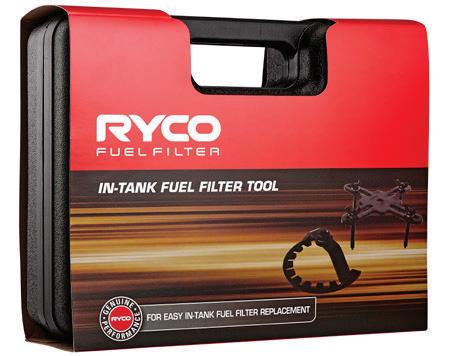
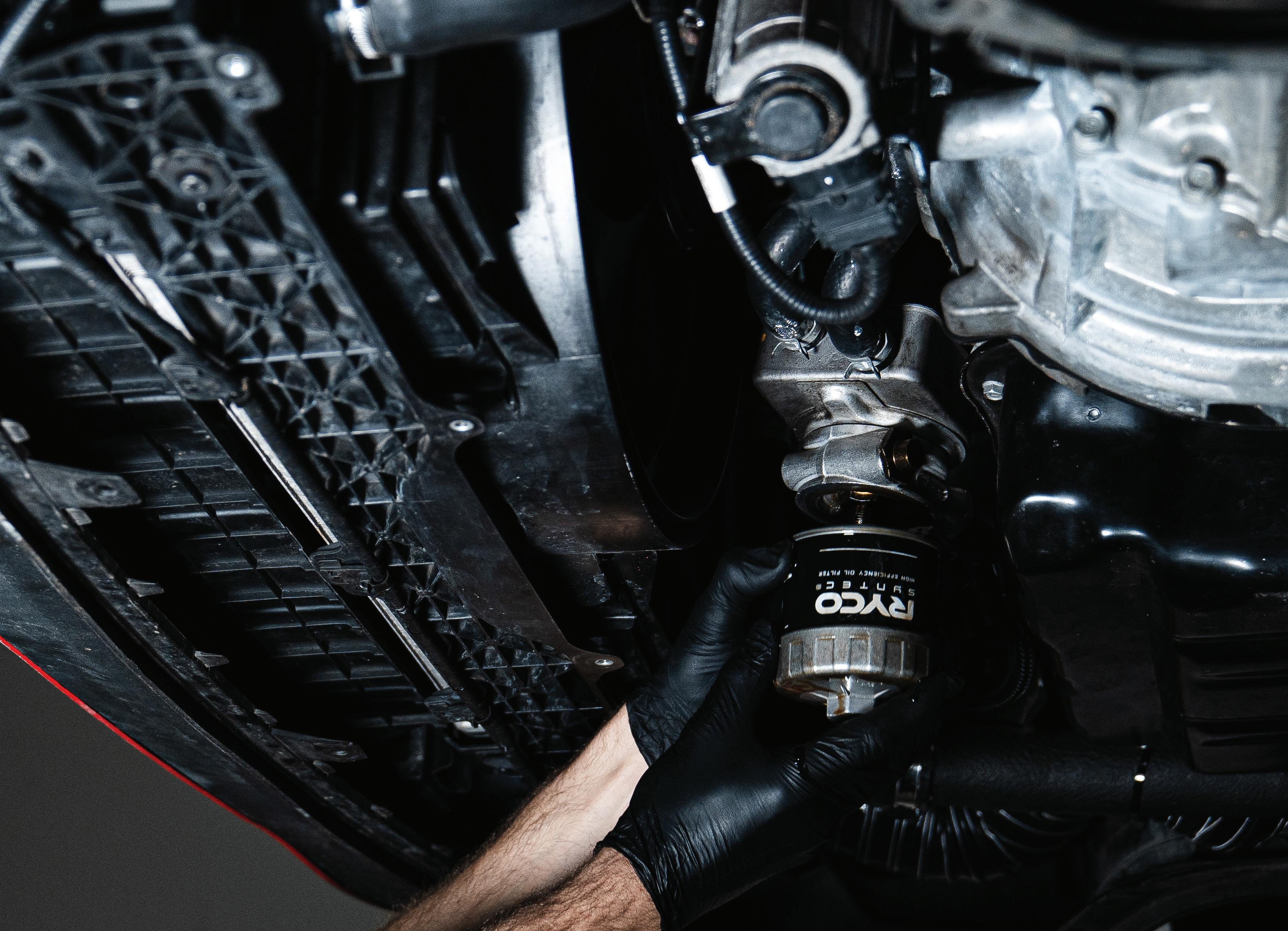
WHEN YOU NEED THE RIGHT TOOL FOR THE JOB BE RYCO READY
When you’re working on a vehicle, it’s important you have the right tools on hand to ensure that you achieve the best job possible.
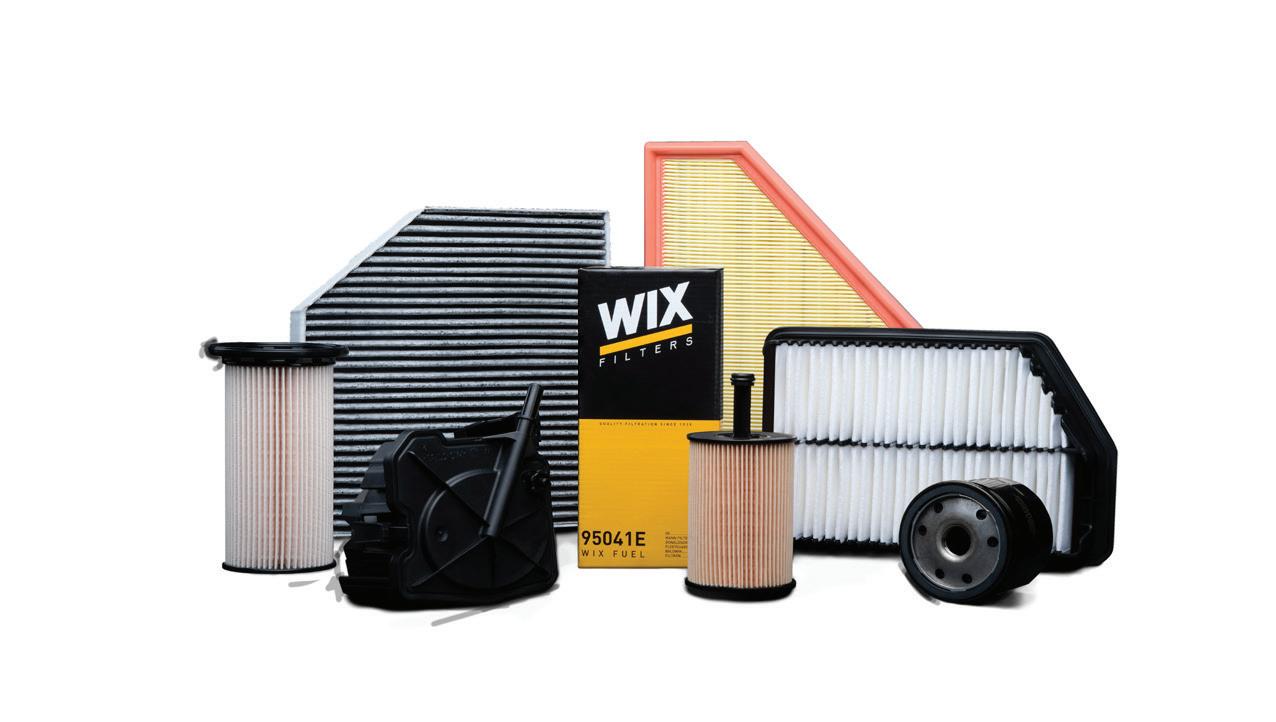
It’s why Ryco have developed a range of tools and accessories to assist with filter servicing.
So when you’re working with filters, be sure you’re Ryco Ready.
TYRE CHANGER FOCUS
Tyre changers for every workshop
AUTOMASTER EQUIPMENT’S FOUR-TIER RANGE COVERS EVERYTHING FROM A COMPACT ENTRY MODEL TO ITALY’S FINEST LEVERLESS MACHINES
Automaster Equipment supplies tyre changers across four distinct tiers, giving workshops a clear path from entry-level investment to high-volume professional performance.
THE AUTOMASTER — ENTRY-LEVEL CAPABILITY WITHOUT COMPROMISE
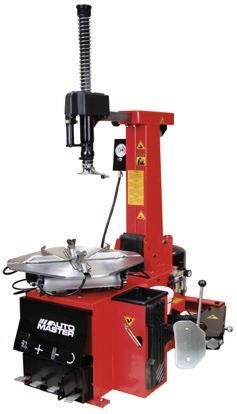
The Automaster AM-106B is built for smaller workshops, tyre-fitting operations that don’t need to run flat-out every day, and ATV or motorcycle dealers who still want a dependable machine. It handles both alloy and steel wheels from 10” to 24”, with a 2500kg bead breaker that deals with rusted or stubborn beads cleanly. The side-swinging head design keeps the footprint compact, which matters if floor space is tight. It comes supplied with plastic jaw covers to protect alloy rims, along with a tyre lever, lube brush, and bead lube.
THE
AUTOMASTER
PRO SERIES — HEAVY DUTY FOR BUSY SHOPS
The Pro Series steps up for workshops where the machine is in regular, sustained use. The
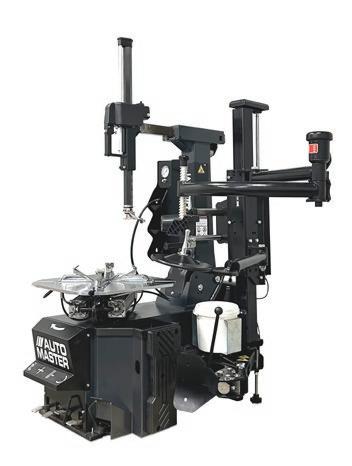
AM-203IT is a pneumatically controlled tilt-back post machine with a pedal-controlled tubeless air blaster and inflation gauge, designed for fast, high-volume tyre work without putting alloy rims at risk, while the AM-204IT adds an extra-wide bead breaker opening, making it the better choice where the vehicle mix includes large-diameter 4WD or performance wheels. Optional HP2 low-profile or twin helper arms are available on both models, reducing the risk of tyre lever damage on difficult-to-fit tyres and lowering operator strain over a long shift.
THE AUTOMASTER PLATINUM EDITION — ITALIAN COMPONENTRY, COMPETITIVE PRICE
The AM-228IT Platinum Edition is designed for mid-to-high volume professionals who want more machine without moving to a full Italian premium price point. The body is manufactured in China to a high specification, but key internal components — including the gearbox — are Italian-made. The bead breaker uses a heavyduty 200mm double-effect cylinder producing 3180kg of force, with a patented system that
drives the blade back out to prevent it sticking. A dedicated extra pedal positioned near the bead breaker improves ergonomics when working with wider tyres, and the machine comes standard with HP3 heavy-duty helper arms. An optional WDK run-flat roller kit is also available. For a busy workshop that wants Italian-grade reliability in core components at a lower overall cost, the Platinum Edition occupies an attractive position in the range.
CORGHI — 100% ITALIAN, LEVERLESS TECHNOLOGY
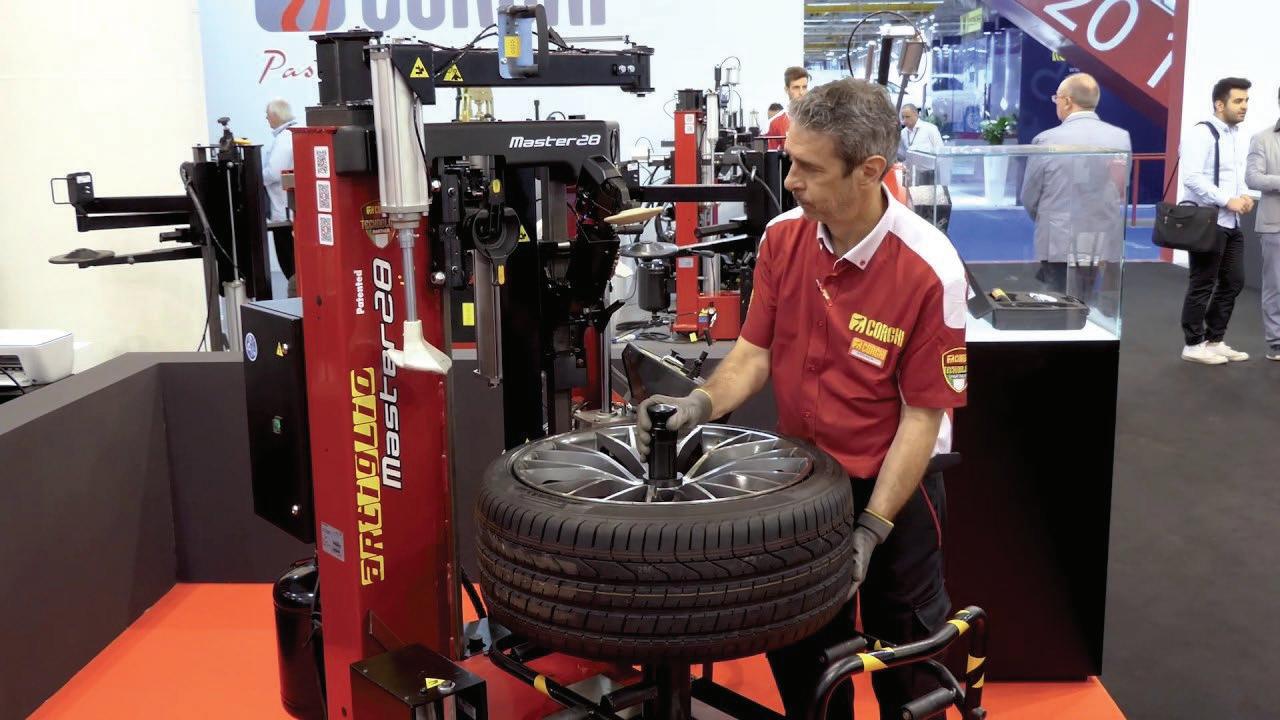
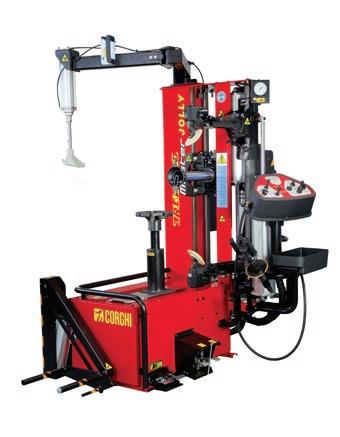
For workshops that want the best, Corghi is the top of the range. With the multiple conventual machines like the A2025TI or lower cost A224TI, these machines are well known as the most durable on the market, up to the Artiglio Master Jolly family that uses Corghi’s ‘Leva la Leva’ leverless system, which means the tool never makes contact with the rim during mounting or demounting. That’s significant protection for high-value alloy wheels, and also reduces operator fatigue. A synchronised dualdisc bead breaker handles even rigid-sidewalled tyres efficiently, and the ergonomic control console gives operators precise, repeatable control. Manual or automatic pneumatic wheel clamping is also available. It’s a long-term investment for a high-throughput tyre operation where rim protection and speed both matter.
For more information, contact Automaster on 0800 214 604 or visit automaster.co.nz.
TYRE CHANGER FOCUS
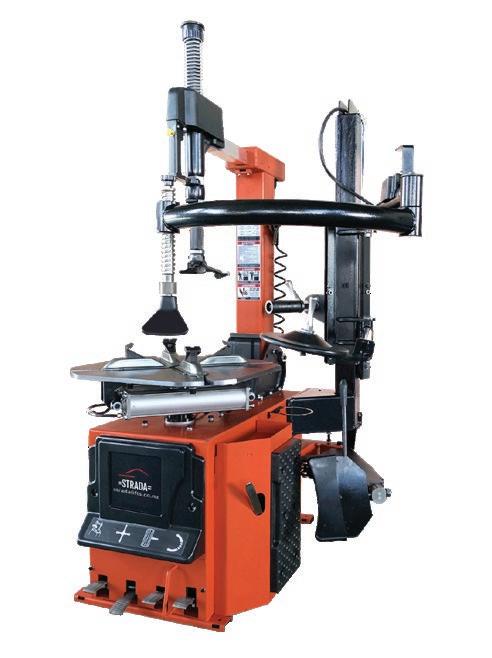
Strada Lifts tyre equipment:
NOT EVERY PIECE OF WORKSHOP KIT IS WORTH WHAT YOU PAY FOR IT; STRADA LIFTS’ TYRE EQUIPMENT RANGE IS DESIGNED TO BE THE EXCEPTION
Workshop equipment is one of those categories where spending less tends to look fine on paper — until it doesn’t. Strada Lifts takes a different approach: CE-approved gear, 12 to 60-month warranties, and a full spare parts catalogue held locally, so when something needs attention, it gets sorted without a six-week wait for parts. Flexible finance options, including full-service lease and buy-now-pay-later, mean the quality option is within reach without blowing the budget.
TYRE CHANGERS: TWO MODELS, ONE CLEAR STEP UP
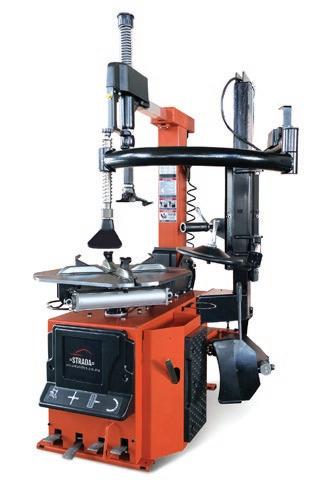
Strada’s tyre changer lineup currently spans two models, the SL-620 and the SL-850M, both running on standard 240V/15amp supply with a 24-inch turntable and a bead brake force of 2,500kg.
The SL-620 ($1,995 incl. GST) is the entry point and a capable unit for most general workshop applications. Self-centring clamping jaws and a dual-cylinder design deliver 40% more jaw clamping force than single-cylinder equivalents — a meaningful difference when working with stiffer sidewalls. The two-way cylinder control of the tyre shovel and a dedicated side pedal keep operation straightforward, and the machine handles rims from 10 to 22 inches outer, 12 to 24 inches inner, with a maximum tyre diameter of 43 inches.
The SL-850M ($2,995 incl. GST) shares the same core specification but adds a helper arm — the key differentiator for workshops regularly dealing with low-profile or run-flat tyres. An adjustable tilting column, pneumatic mounting head with auto-return, and the option of an automatic tension mounting head round out the upgrade.
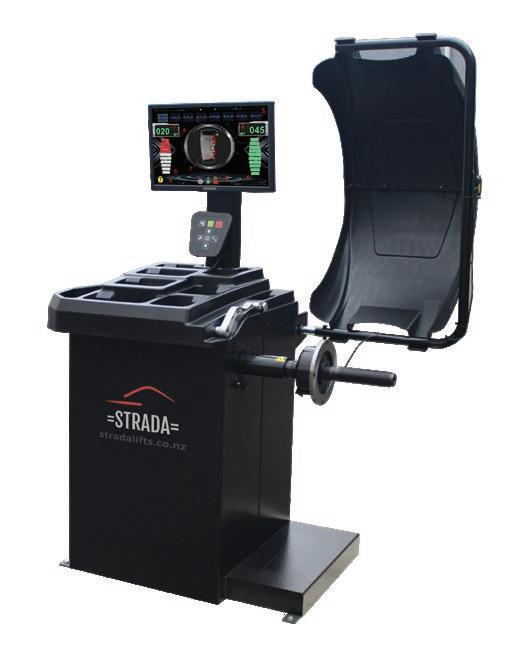
WHEEL BALANCERS: ENTRY LEVEL AND FULLY FEATURED
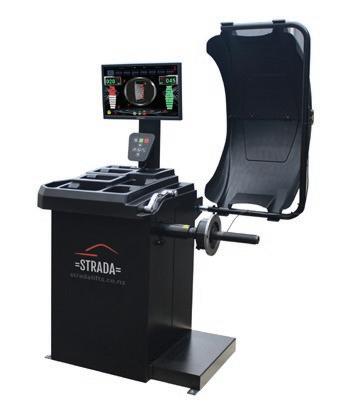
The two wheel balancers — the SL-220B and SL-600W — share the same core technical specification: 30-inch max wheel diameter, 100kg max tyre weight, 200rpm spin speed, and unbalance accuracy of ±1g. Both include seven ALU modes, OPT optimisation, motorcycle mode, self-diagnosis, a tyre protection cover, and four cone sleeves for different wheel fitments.
The SL-220B ($1,895 incl. GST) uses an aluminium pull ruler and sonar width ruler for automatic distance and diameter measurement — three auto-input values that reduce manual data entry and speed up throughput.
The SL-600W ($2,995 incl. GST) adds a 19-inch display and a laser line for pinpointing the exact weight placement position. In a workshop running high volumes of alloy wheels, that combination of larger readout and laser guidance is a genuine time-saver and reduces the margin for error.
PRICING AND DELIVERY
All four products are available to order direct from the Strada Lifts website. Freight is depot-to-depot as standard, with metro tail lift delivery available on request — $150 to the North Island, $250 to the South Island.
For more information, visit stradalifts.co.nz or call 021 509 286.
TYRE CHANGER FOCUS
Hunter Engineering’s tyre changer range covers every workshop need
GEORGE STOCKS BRINGS A FULL LINEUP OF HUNTER ENGINEERING TYRE CHANGERS TO THE NEW ZEALAND MARKET, FROM ENTRYLEVEL TABLE-TOPS TO A FULLY AUTOMATIC MACHINE THAT TAKES THE COMPLEXITY OUT OF CHANGING A TYRE ENTIRELY
When it comes to running a wheel and tyre service business, one of the most important pieces of plant is the tyre changer. Investing in the right one matters — not only to the technicians who use it but also to the types of customer demands it serves. With a multitude of brands on offer, choosing the right machine isn’t always straightforward. Hunter Engineering’s range covers the full spectrum, from conventional tyre changers to fully automatic machines, distributed in New Zealand by Stocks.
TABLE-TOP
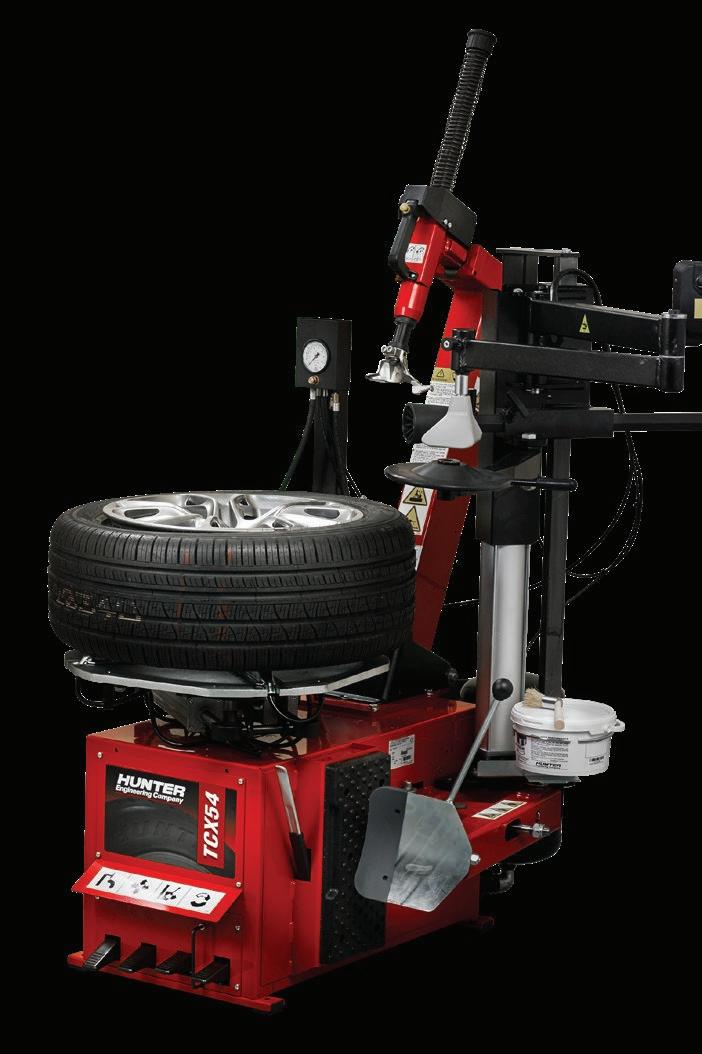
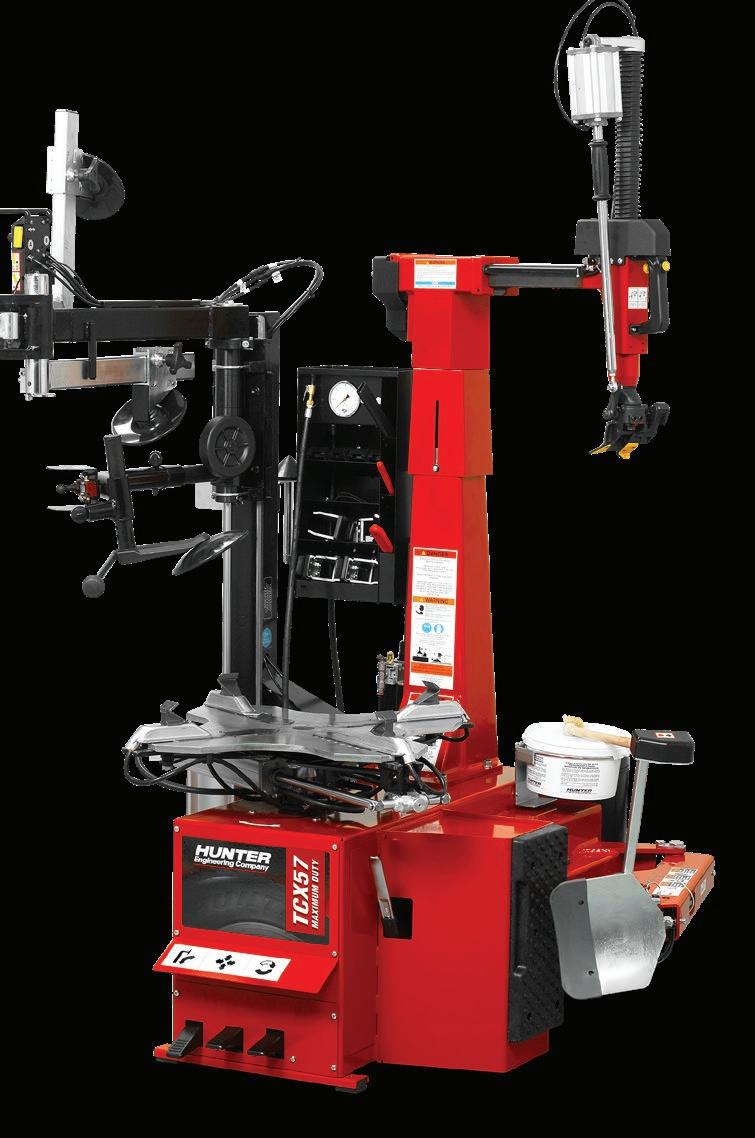
At Hunter’s entry-level end of the range sit the TCX54 and TCX57 table-top tyre changers. Both feature a conventional design familiar to most tyre technicians, but with more advanced features than comparable equipment from other manufacturers. Hunter table-tops are designed to make the operator’s life easier, reducing reliance on bars and hammers
to mitigate fatigue and safety risk — and improving efficiency in the process.
CENTER-CLAMP
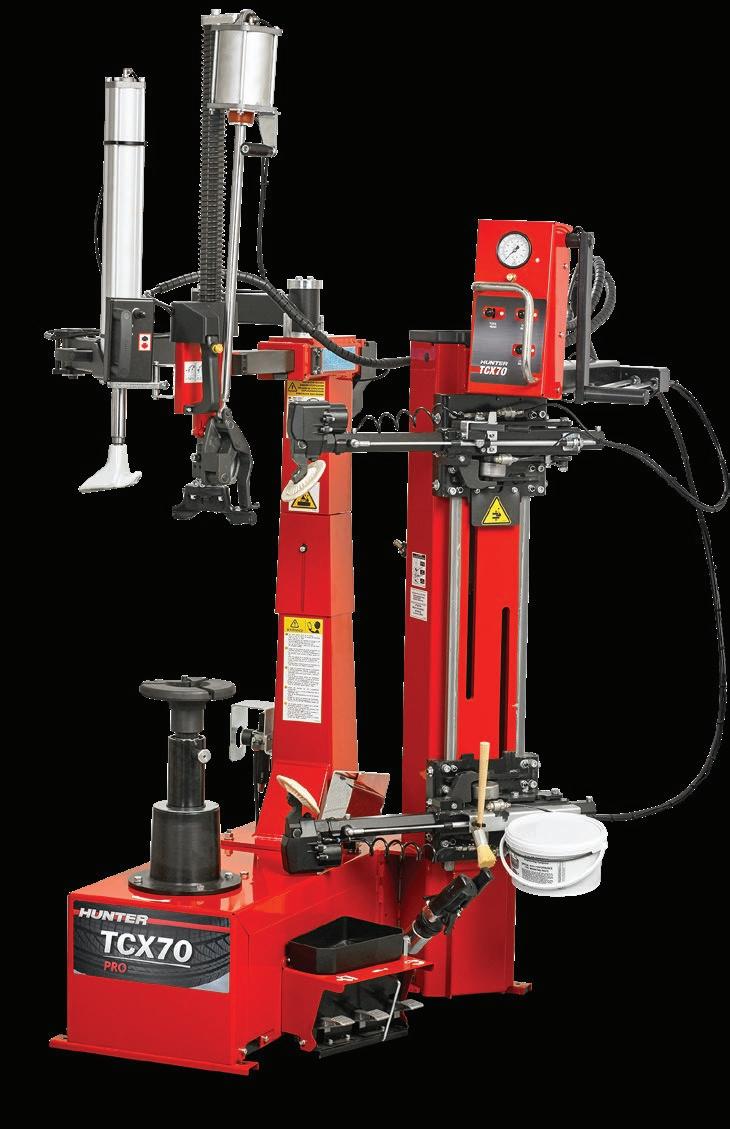
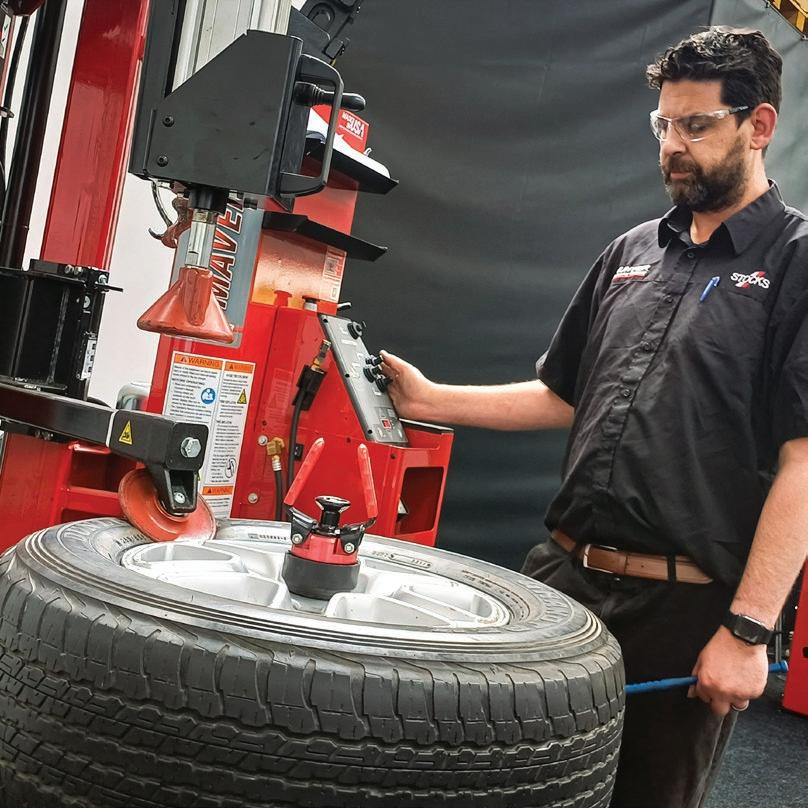
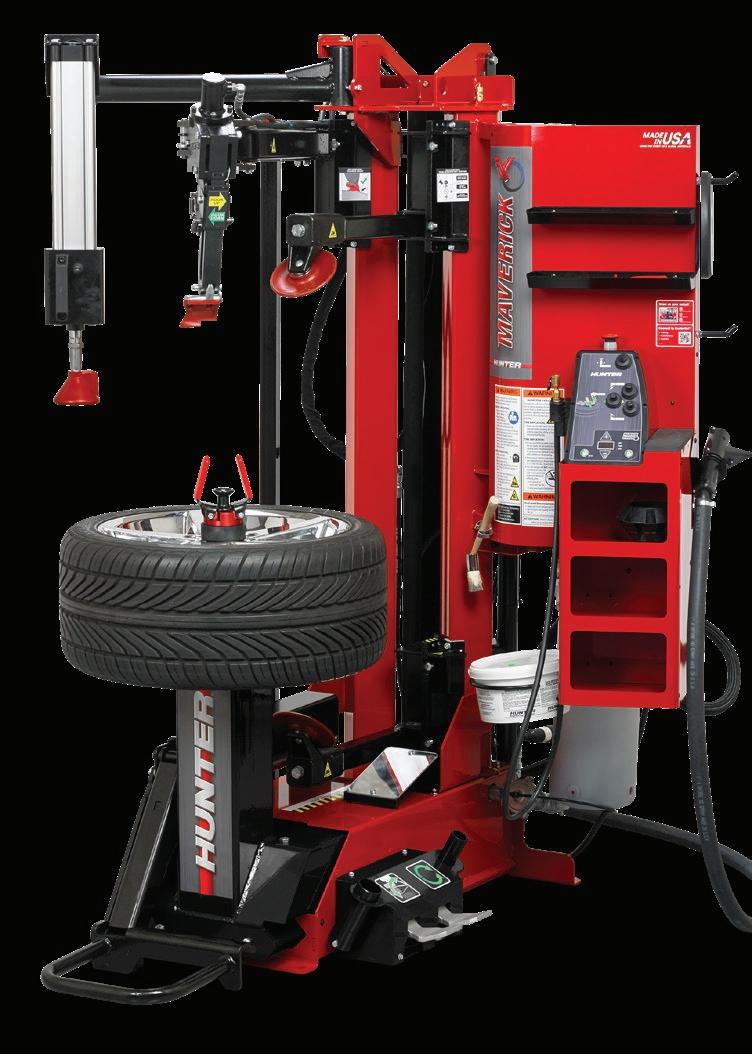
The center-clamp format is the most popular tyre changer type in the Hunter range, with the TCX70 and Maverick among the best available. A key benefit of this design is that it enables operators to secure wheels and change tyres without damaging the rim — making them the ideal choice for businesses working with high-value vehicles and wheels made from exotic materials like carbon fibre. For technician-focused performance, the Maverick sets the benchmark, with fully variable controls, a SmartSet leverless toolhead, built-in safety features to protect the wheel, tyre, and technician, and an integrated tyre inflator.
FULLY AUTOMATIC
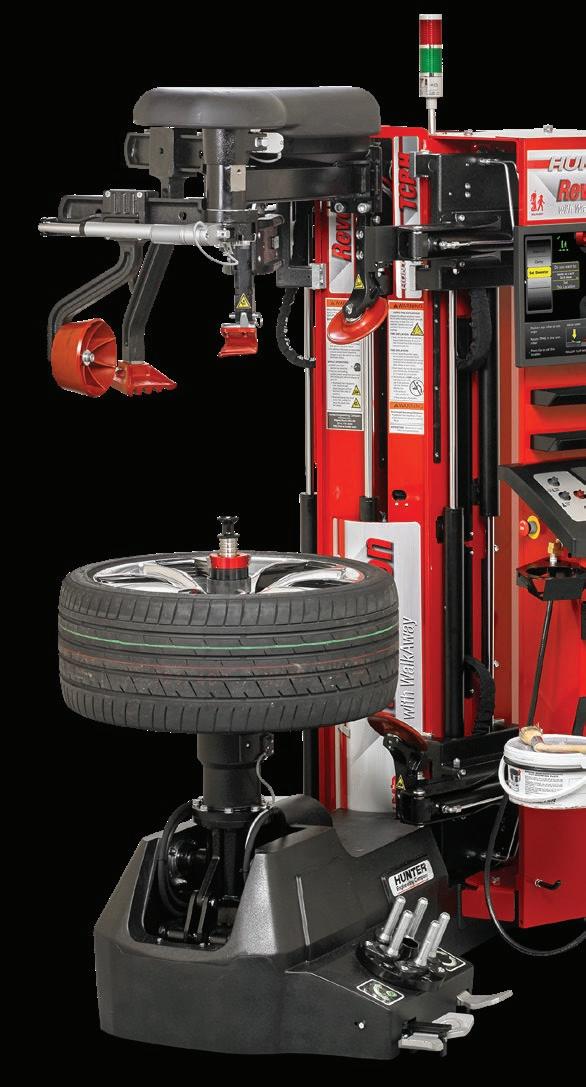
The Hunter Revolution is the most technologically advanced tyre changer on the
market. With an average two-minute service time across all tyre and wheel types, semiautonomous WalkAway mode that saves 25% of time per four-tyre set, and 13 fewer operator decisions compared to a conventional machine, the benefits are substantial. It’s no exaggeration to say almost anyone can change a tyre on this machine.
And no tyre changer purchase is complete without ongoing service and support. Stocks backs all its equipment with a 36-month service agreement and warranty.
For more information on Stocks’ tyre changers, wheel balancers, and wheel aligners, visit georgestock.co.nz, or get in touch to arrange a tour of the Auckland showroom.
A BUSY TYRE OR SERVICE WORKSHOP, TIME IS EVERYTHING, AND WHEN IT COMES TO WHEEL ALIGNMENT, GETTING THE VEHICLE SET UP AND MEASURED QUICKLY AND WITH EASE IS A BIG WIN
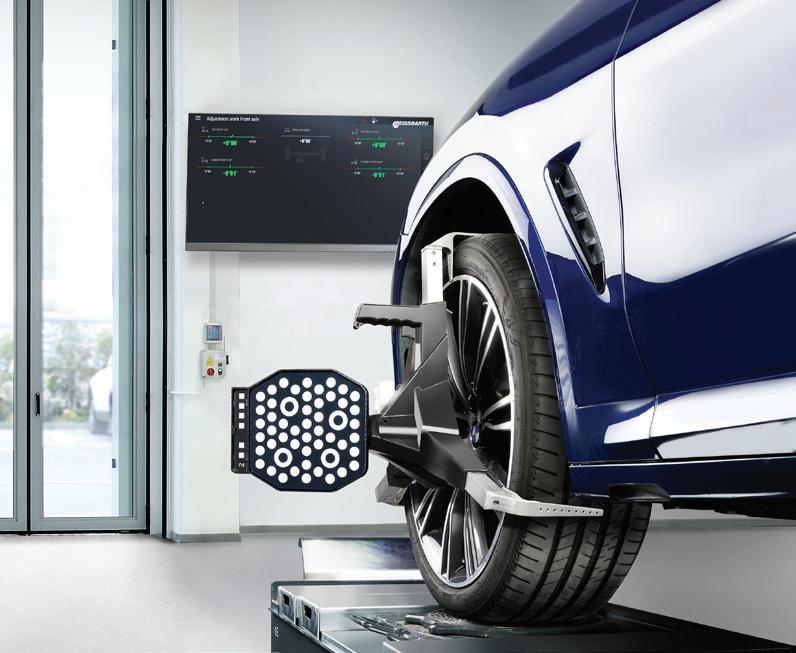
That’s where modern alignment systems from brands like FASEP and Beissbarth are making a real difference.
Wheel Aligners
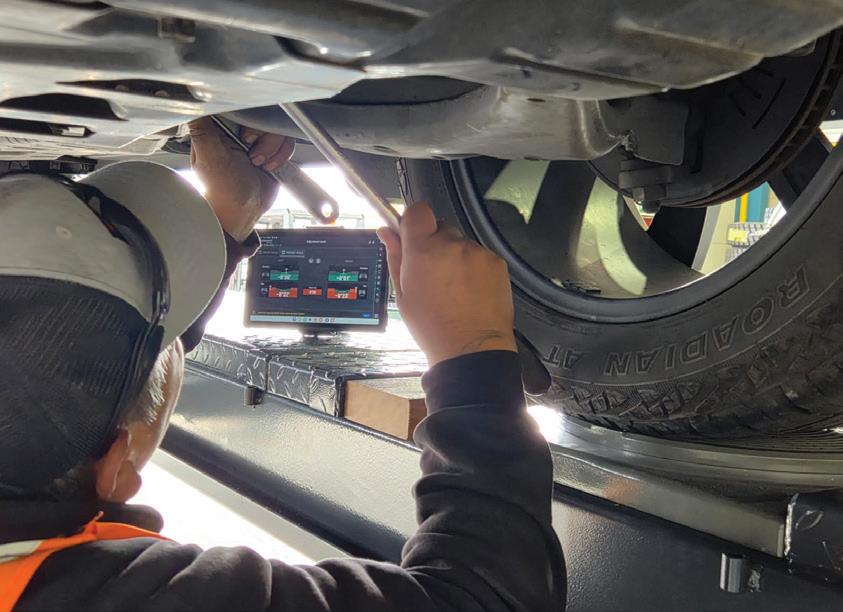
Today’s systems are engineered to get readings from the vehicle as quickly and smoothly as possible. Lightweight targets, fast-mounting clamps, and intuitive guided processes mean technicians can move from drive-on to live measurements in minutes, without the drawn-out setup many workshops are used to.
VCO-K
ECO Wheel Aligner
The VOC-K ECO Aligner reduces preparation time by up to 80% thanks to its simple, user-friendly software and contact clamps.
› Half-enclosed cabinet
software walks technicians through the alignment process, helping ensure consistency regardless of experience level. With comprehensive vehicle databases built in, there’s no time wasted chasing specs or second-guessing settings.
Just as importantly, these systems improve how you communicate with customers.
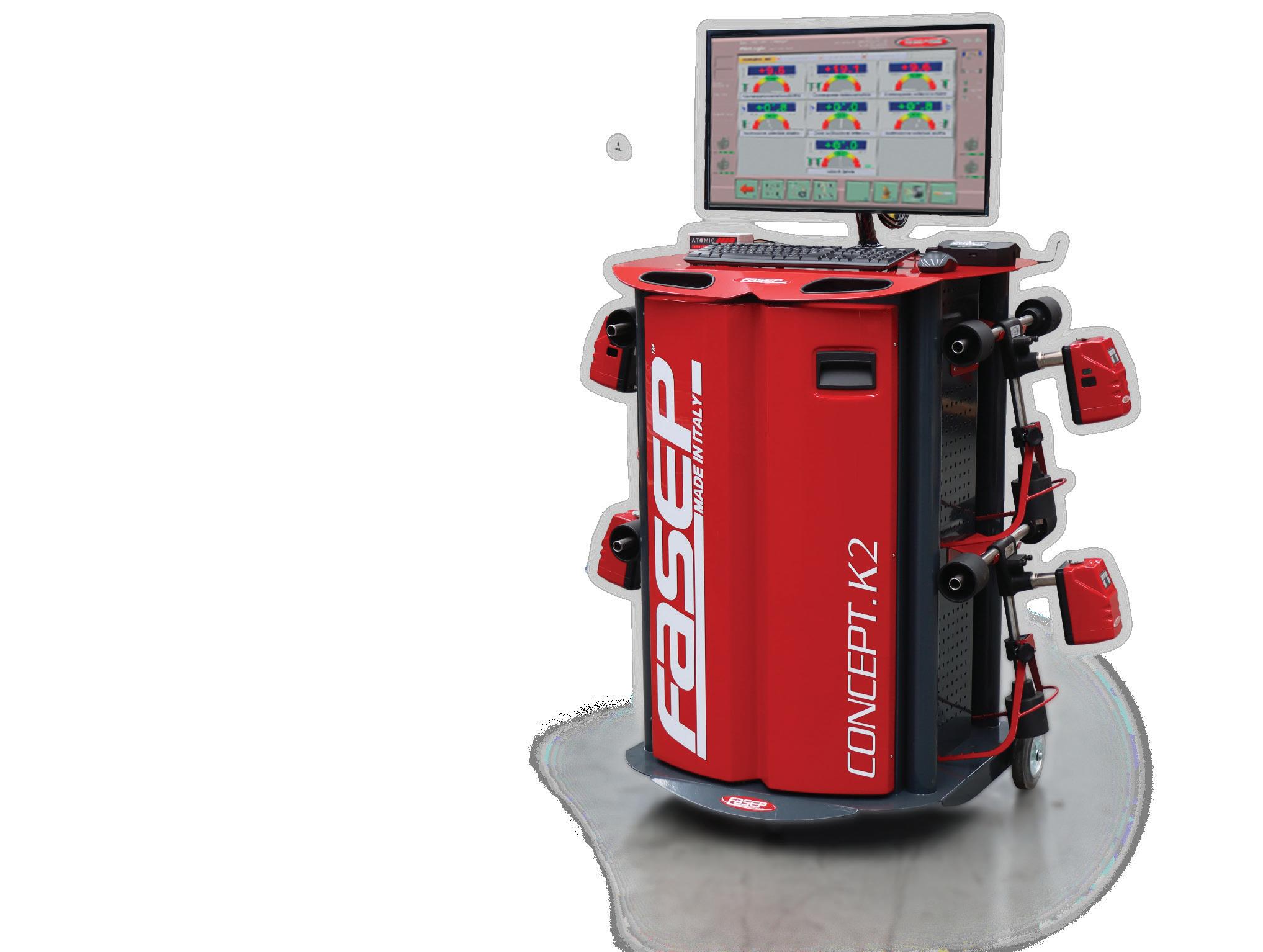
VCO-K2 Wheel Aligner
Treadway Equipped offers free, noobligation wheel aligner demos in your workshop, so you can experience the speed and ease of use first-hand. Call 0800 436 436 or visit treadwayequipped.co.nz to book your demo.
› Powerful computer, with easy-to-operate software
As Josiah Garton from Treadway Equipped explains: “The real difference is speed and ease of use, how quickly you can get readings, turn the job around, and keep the workshop moving without disruption.”
› 24" Widescreen LED colour monitor
› Contact clamps (no run out required)
› Wintrax 2 sensors
Clear, visual before-and-after reports make alignment easy to understand. Instead of trying to explain technical measurements, you can show customers exactly what was out and what’s been corrected. It’s a simple way to build trust and reinforce the value of the work being carried out.
Reduce alignment preparation time by up to 80% thanks to simple, user-friendly software and contact clamps. Easily see accurate alignment data on the 27" widescreen monitor.
› Enclosed cabinet
› Powerful computer, with easy-to-operate software
› 27" Widescreen LED colour monitor
› Contact clamps (no run out required)
› Wintrax 2 sensors
› Colour laser printer
The impact on workshop efficiency is immediate. Less time spent setting up means less time tied up on the hoist, better workflow through the day, and more vehicles processed without adding pressure to the team.
Feature-rich systems like FASEP’s VCO range and Beissbarth’s Q.Lign Compact bring all of this together in a compact, workshop-friendly package. They’re designed not just to perform, but to fit seamlessly into the day-to-day rhythm of a busy workshop.
› Colour laser printer
Item A646.010
Once the vehicle is measured, modern aligners continue to deliver value. Guided
Want to see how much time you could be saving?
Item A669.002
We’re touring New Zealand demonstrating FASEP wheel aligners. Some of the fastest, most accurate, and trusted wheel aligners on the market.
If you are not 100% satisfied with your equipment, Treadway Equipped will repair, replace or refund the equipment free of charge within the first 100 days.
TYRE CHANGER FOCUS
John Bean Celebrates 100 years in wheel service
ITALIAN-MANUFACTURED, SUPPORTED BY THE REPCO EQUIPMENT TEAM AND BACKED BY THE LOCAL JOHN BEAN FACTORY NETWORK
John Bean and their time-proven wheel service product have been a staple within the Repco Equipment product offering for well over 30 years, and Repco are proud to acknowledge the brand’s 100 years of delivering professional workshop equipment.
MODERN VEHICLES DEMAND MODERN TECHNOLOGY
The core of any high-volume tyre shop is the efficient mounting of tyres on the wheels of your customers’ vehicles. Today’s modern cars and trucks run such a variety of wheel and tyre combinations that can be a challenge for machines that are not up to the task. Are you turning away jobs or making do with a not-fitfor-purpose or unsafe tyre machine?
John Bean professional tyre changers can handle a variety of rim widths and tyre types, and are designed to help you increase your shops overall productivity with a combination of speed, versatility, and safety. Whether you service fleets or have a high-volume workshop, there’s a tyre changer to fit your unique needs.
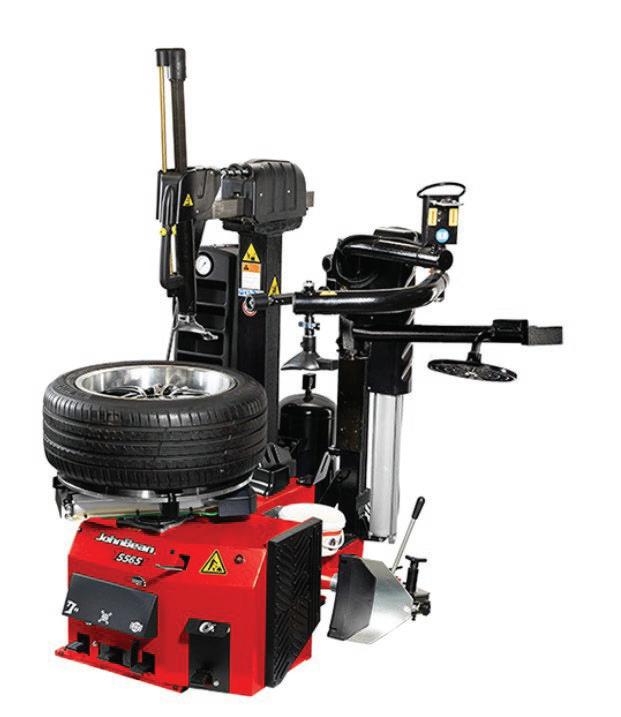
THE JOHN BEAN T5565T
The T5565T is a premium 26” tyre changer that accommodates a full range of OE tyre fitments for passenger cars and light trucks, making it an ideal choice for diverse tyre service applications. Delivering improved ergonomics, especially when working with wide tyres, the robust, industrial chassis is two inches lower than standard models.
Patented PROspeed technology allows high-speed turntable rotation with precise speed control and high torque output, delivering safe, fast, and efficient operation. The integrated pneumatic bead assist optimises single-technician use when mounting and demounting run-flat, low-profile, and highperformance tyres. With its user-focused design and advanced capabilities, the John Bean T5565T 2S tyre changer delivers exceptional performance and reliability, ensuring precise and efficient tyre-changing.
ACHIEVING OPTIMAL WHEEL BALANCE FIRST TIME
Today’s modern vehicles are engineering marvels that push the performance and efficiency limits to the max. An integral part of achieving high-performance and maximum fuel economy is a properly balanced set of wheels and tyres that offer a secure grip in all weather conditions and perform well at all speeds. As a wheel rotates, its weight must be precisely and evenly distributed, because even the tiniest of variances in wheel weight distribution can lead to harmful vibrations and uneven tyre wear.
Professional wheel balancers from John Bean help identify areas on a wheel that are out of weight balance and allow technicians to quickly correct issues.
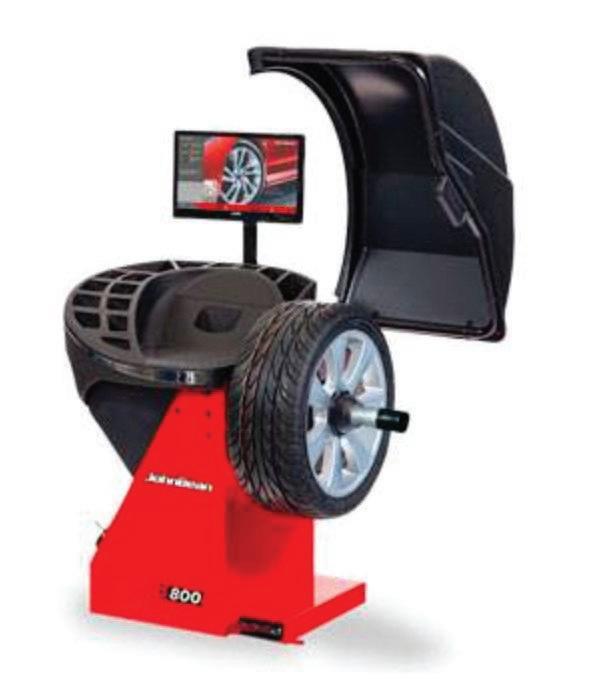
SEMI-AUTOMATIC TOUCHSCREEN WHEEL BALANCER B600P
The John Bean B600P is a semi-automatic
wheel balancing machine designed for highvolume shops that are looking for equipment that offers shorter cycle times while repeatedly delivering accurate wheel balancing.
Boost shop productivity with features like SmartSonar automatic rim-width detection and our effortless, accurate Power Clamp wheelclamping system, which maintains a constant force throughout the process. Our laser-guided weight placement system, easyWeight, will quickly indicate the exact location of the weights, avoiding misplacement and rework.
The B600P wheel balancer from John Bean is ideal for shops that are looking for equipment that is easy to operate and offers high levels of productivity, keeping shops operating at full capacity.
John Bean wheel service equipment meets the highest standards and requirements from the OEMs to serve your customers with the maximum quality and accuracy at all times.
FROM THEN TO NOW — WE HAVE COME A LONG WAY IN 100 YEARS
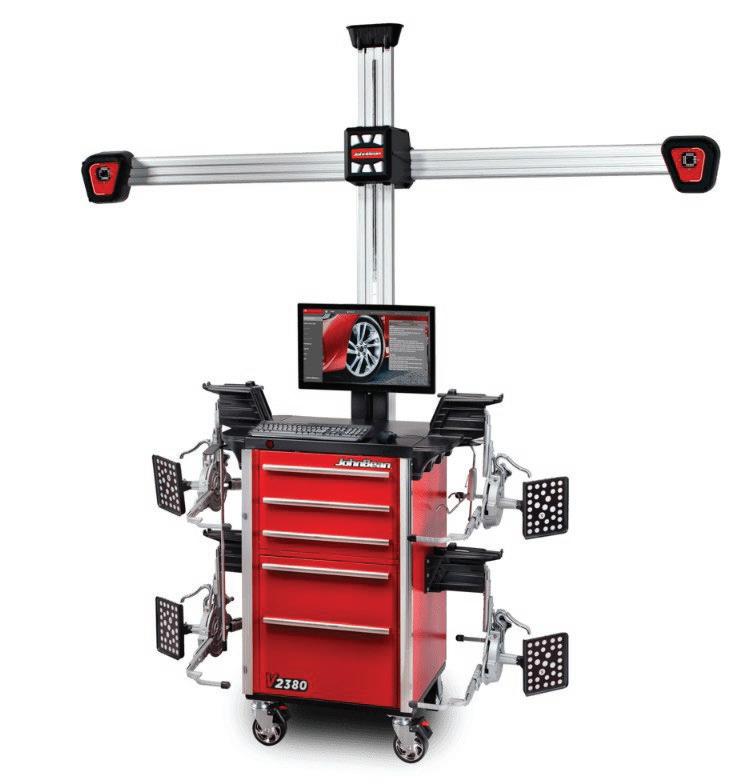
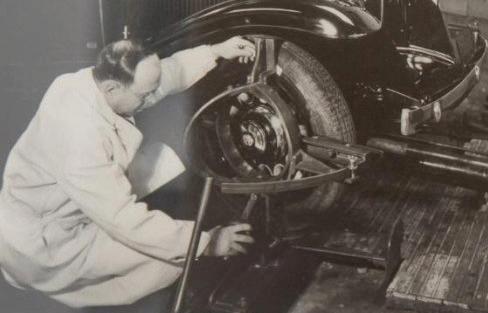
John Bean sparked a revolution in the 1920s with the invention of the world’s first wheel aligner, creating an entirely new category of precision equipment for automotive shops. That bold innovation launched a 100-plusyear legacy of building alignment systems that evolved to meet the demands of repair professionals. From early mechanical tools to sleek, digital, connected solutions, every John Bean aligner raised the bar for accuracy, speed, and ease of use. Trusted by shops worldwide, these machines delivered spot-on alignments that kept vehicles rolling smoothly and revenue flowing steadily. With a century of innovation in its rearview, John Bean led the industry, empowering shops to tackle alignments with confidence and boost their bottom line.
100 years down the road, the latest offering from John Bean redefined alignment technology with advanced imaging and intuitive guidance designed for techs of all experience levels. Equipped with the fastest camera system John Bean has ever offered, delivering rapid measurements with precision accuracy. Integrated notification alerts and an intelligent user interface simplify the alignment process, while live alignment readings and automatic height tracking ensures consistent results. Engineered for modern service bays, minimised setup time and maximised productivity — merging speed, innovation, and reliability into one powerful platform that remains trusted by alignment professionals worldwide.
Contact the Repco Equipment team on 0800 237 726.
An early mechanical aligner from John Bean-FMC in the Lansing, Michigan labs, 1930
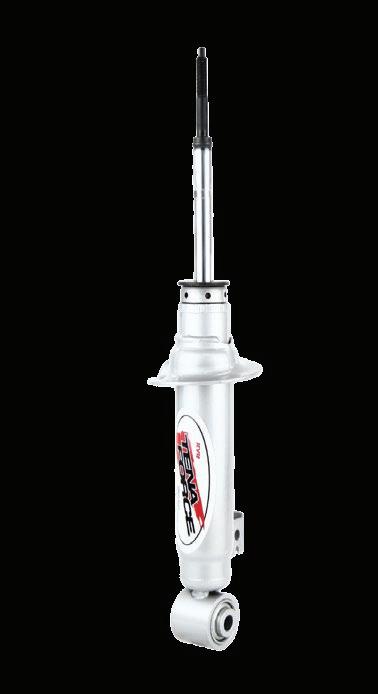
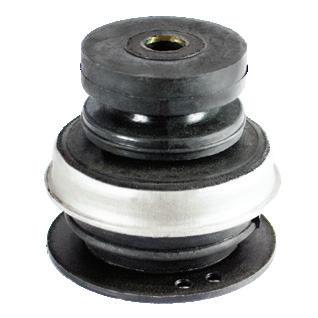
SHOCK ABSORBERS
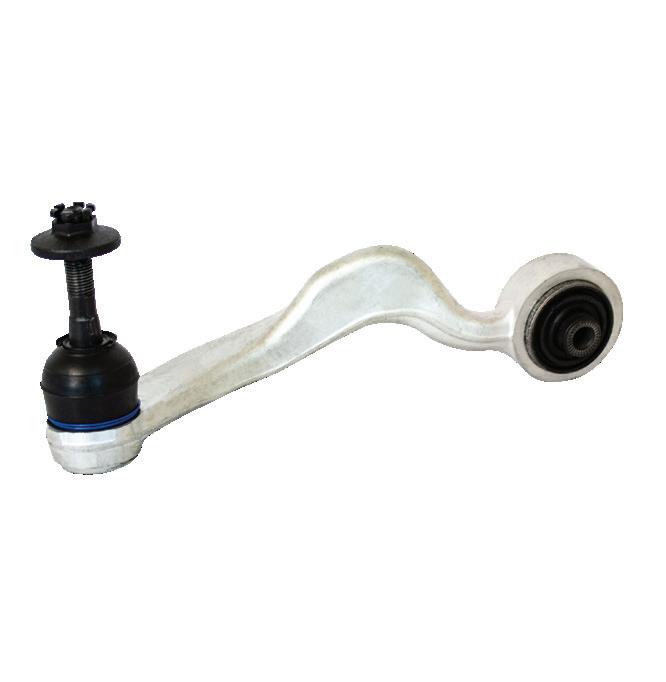
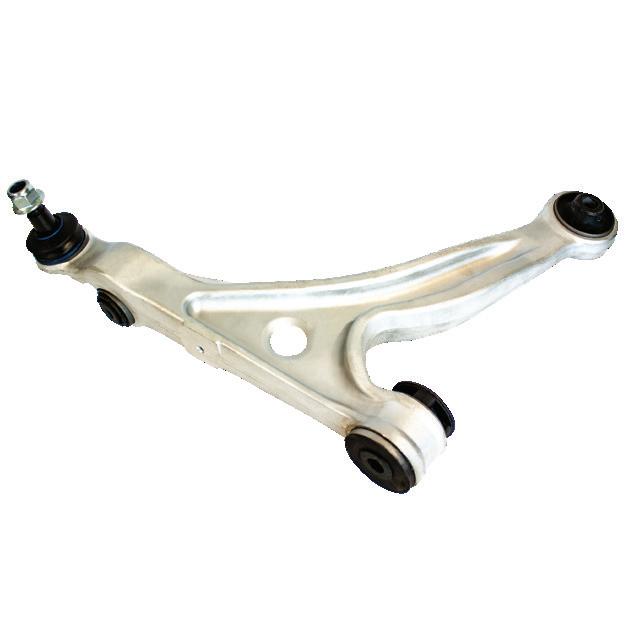
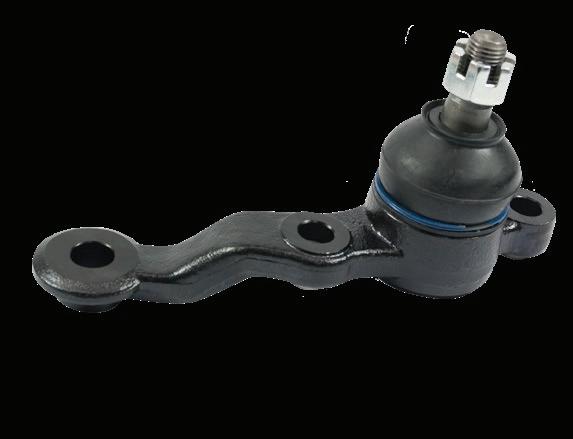
SUSPENSION ARMS
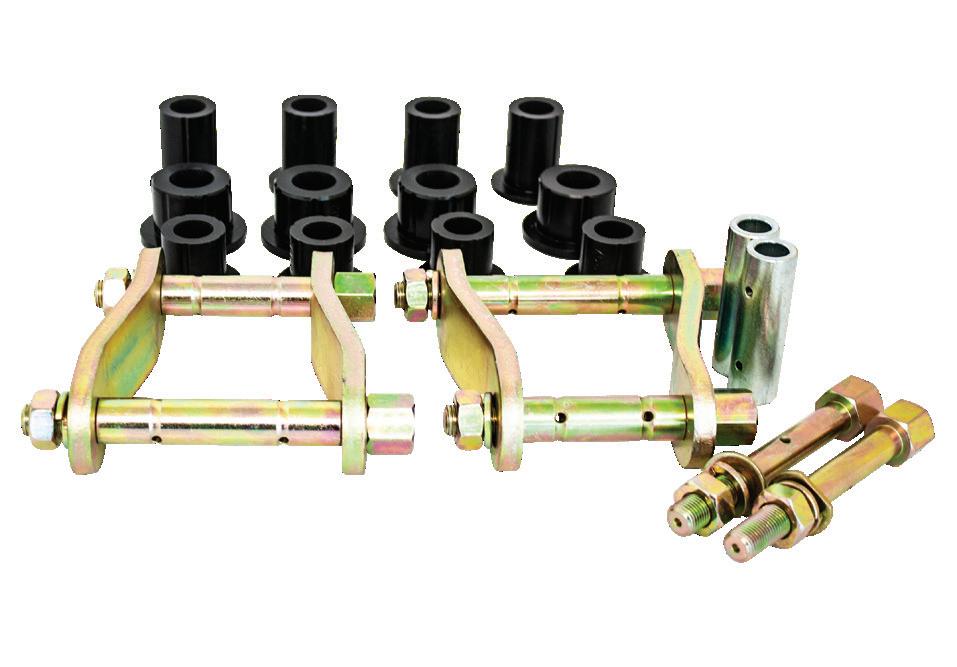
SHACKLE KITS
WHANGAREI . HENDERSON . PENROSE . HAMILTON . TAURANGA . PALMERSTON NORTH . LOWER HUTT . CHRISTCHURCH
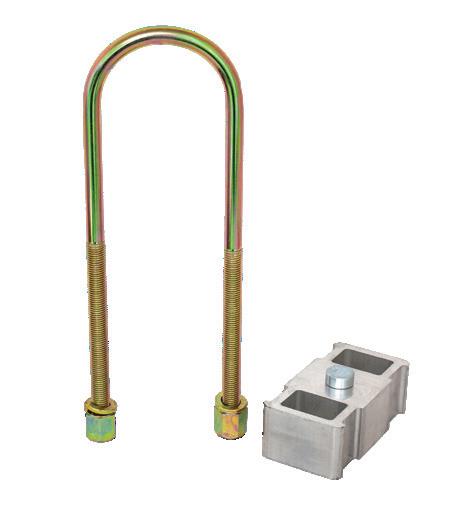
COIL SPRINGS / LEAF SPRINGS
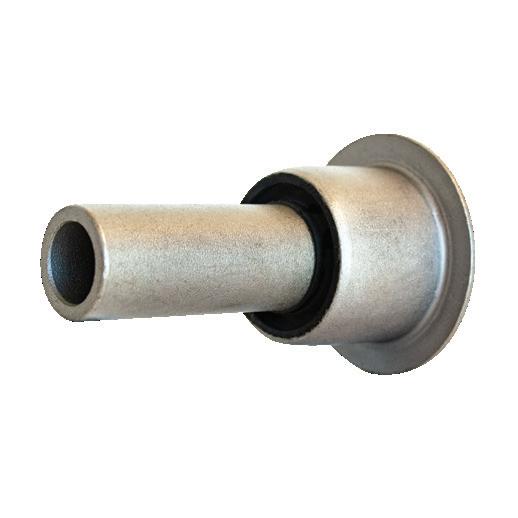
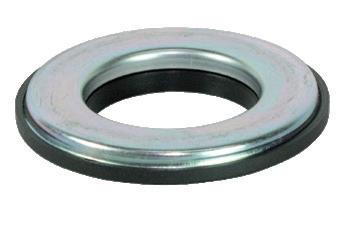
SUBFRAME / BODY MOUNTS BALL JOINTS SRUT MOUNTS & BEARINGS
Absorbers
AUTO UPDATE
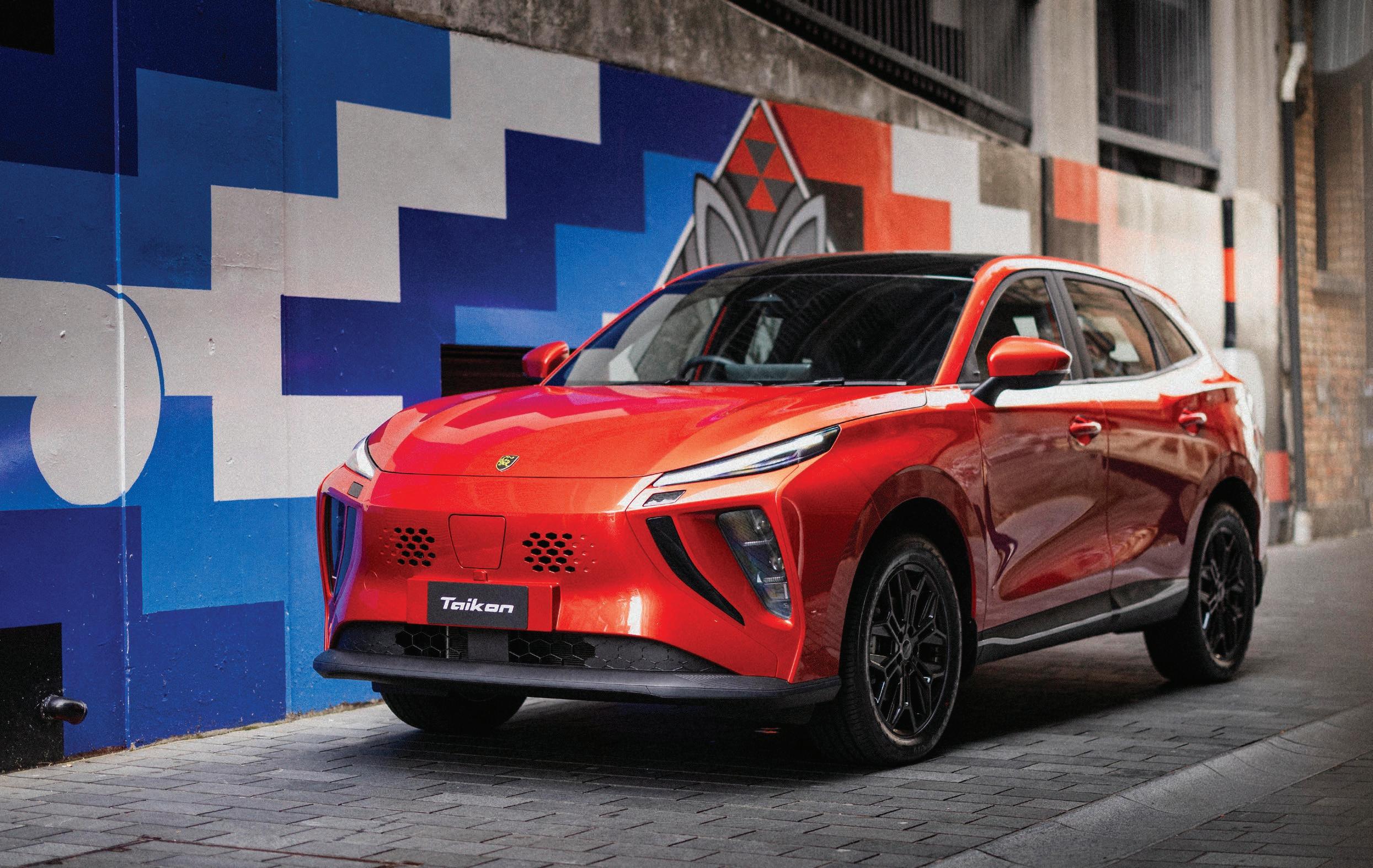
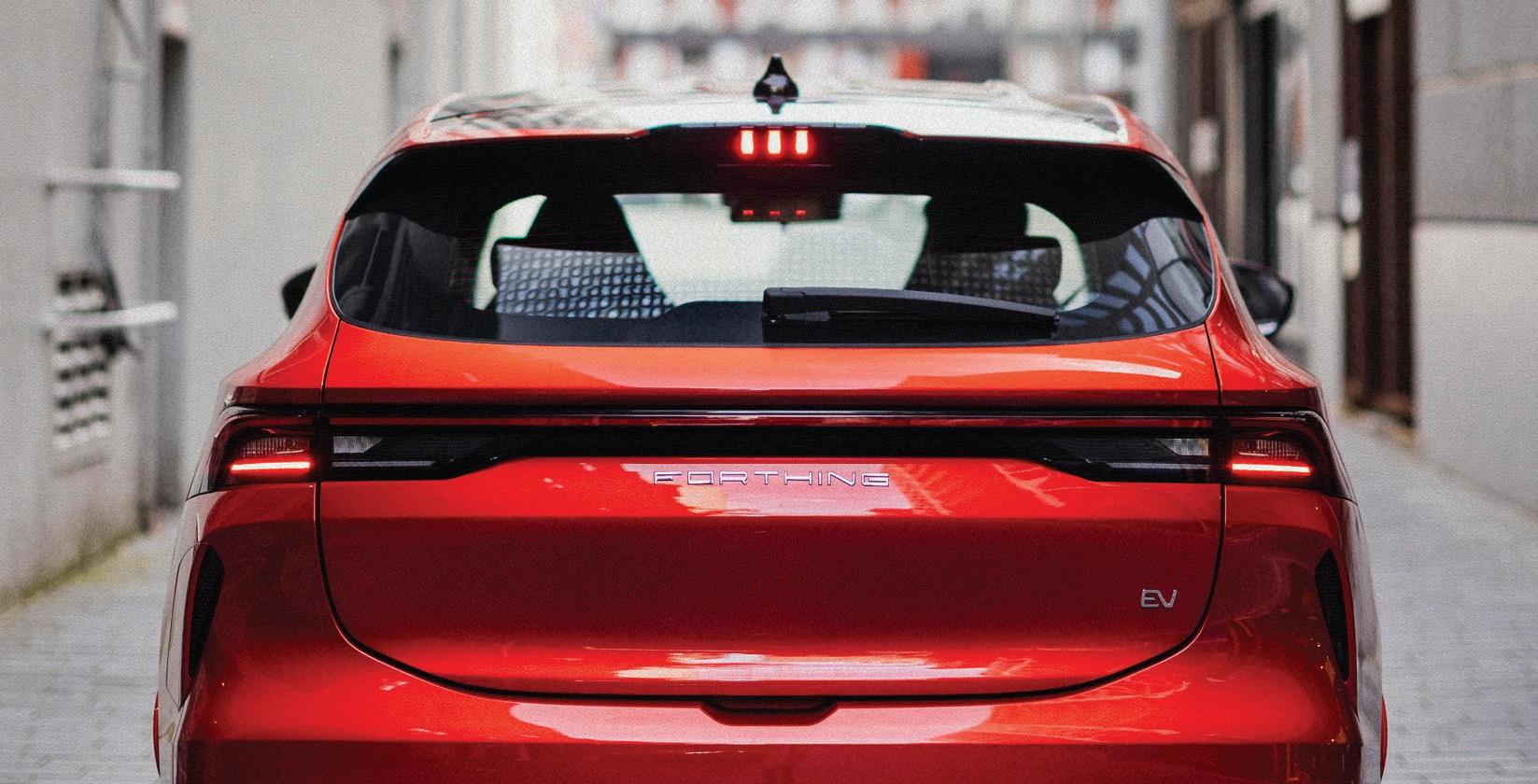
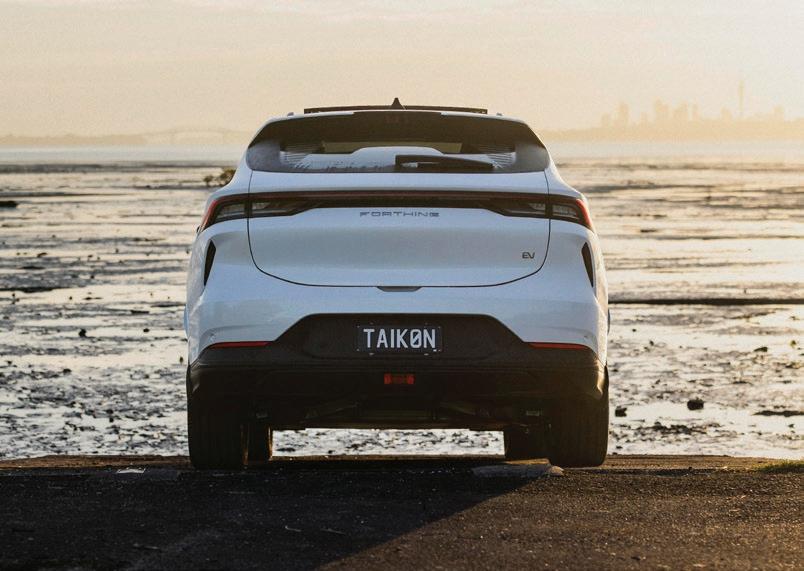
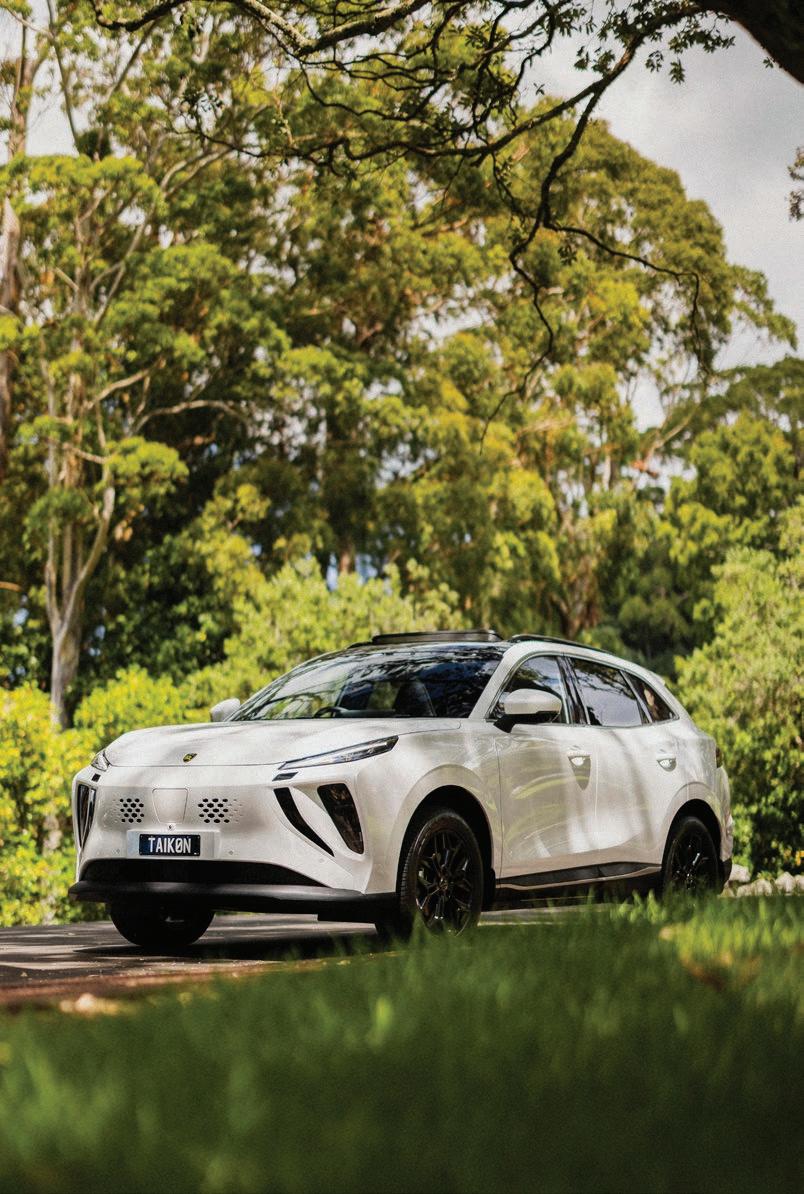
Forthing enters New Zealand with dual-powertrain Taikon SUV range
A CHINESE BRAND BACKED BY 70 YEARS OF MANUFACTURING HISTORY HAS ARRIVED IN THE MEDIUM SUV SEGMENT WITH COMPETITIVE PRICING AND AN ELECTRIFIED-ONLY LINEUP
The name Forthing is new to New Zealand, but its manufacturing history is not.
Forthing is a sub-brand of Dongfeng Liuzhou Motor Co. (DFLZM), a division of Dongfeng Motor Group — one of China’s four major state-owned automotive manufacturers.
Established in 1954, DFLZM has spent decades producing vehicles under joint venture arrangements with Honda, Nissan, and Renault, while developing its own lineup in parallel. The Forthing brand itself was formalised in 2016, with a deliberate focus on new energy vehicles
(NEVs) and international markets.
Distribution in New Zealand and Australia is handled by Ateco Automotive — the same group that distributes BYD, Jeep, RAM, Alfa Romeo, FIAT, and Abarth locally — with a dedicated Forthing NZ team managing the local operation. The Taikon is the brand’s first model for the New Zealand market, with two further models planned for later in 2026, and more to follow in 2027.
THE TAIKON: SIZE, SHAPE, AND POSITIONING
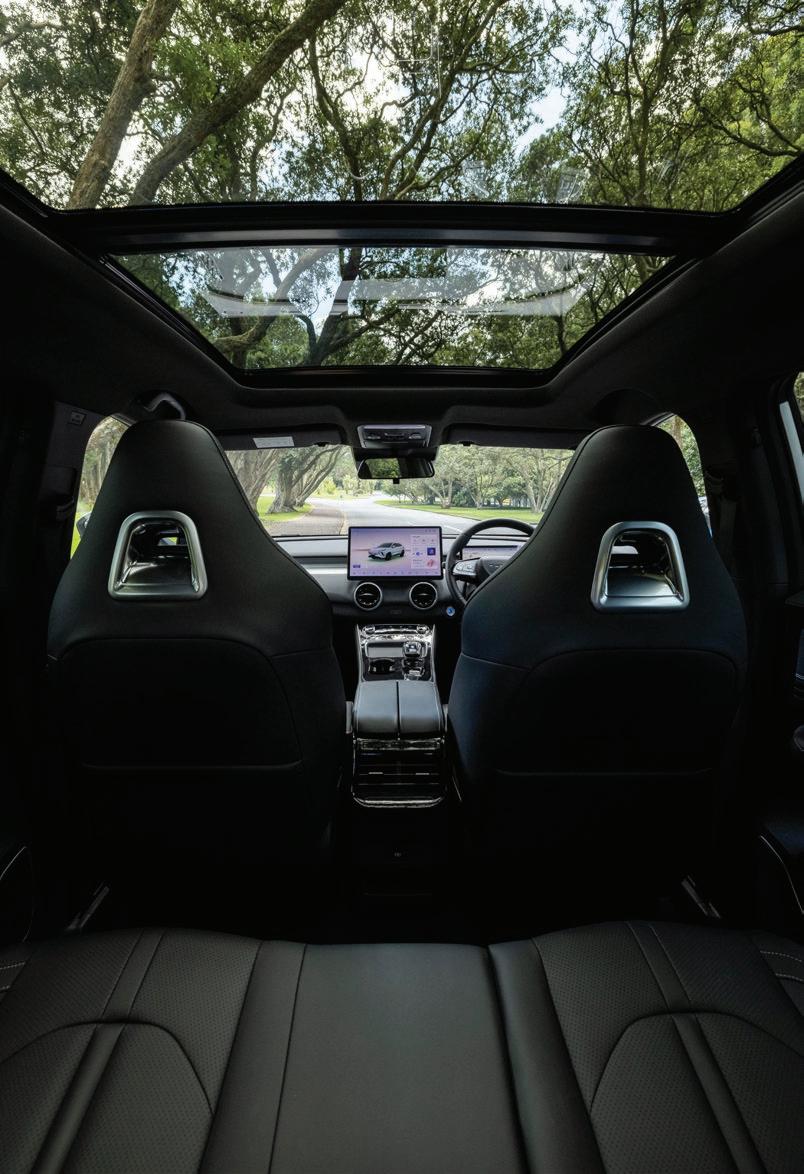
The Taikon sits squarely in the mid-size SUV segment, comparable in footprint to the Toyota RAV4, measuring 4,600mm in length with a 2,715mm wheelbase. Despite a coupelike roofline that gives it a relatively compact silhouette, interior dimensions are substantial — the Taikon offers more than 1,480 litres of boot space with the rear seats folded flat, along with genuine rear headroom and legroom that belie the external profile.
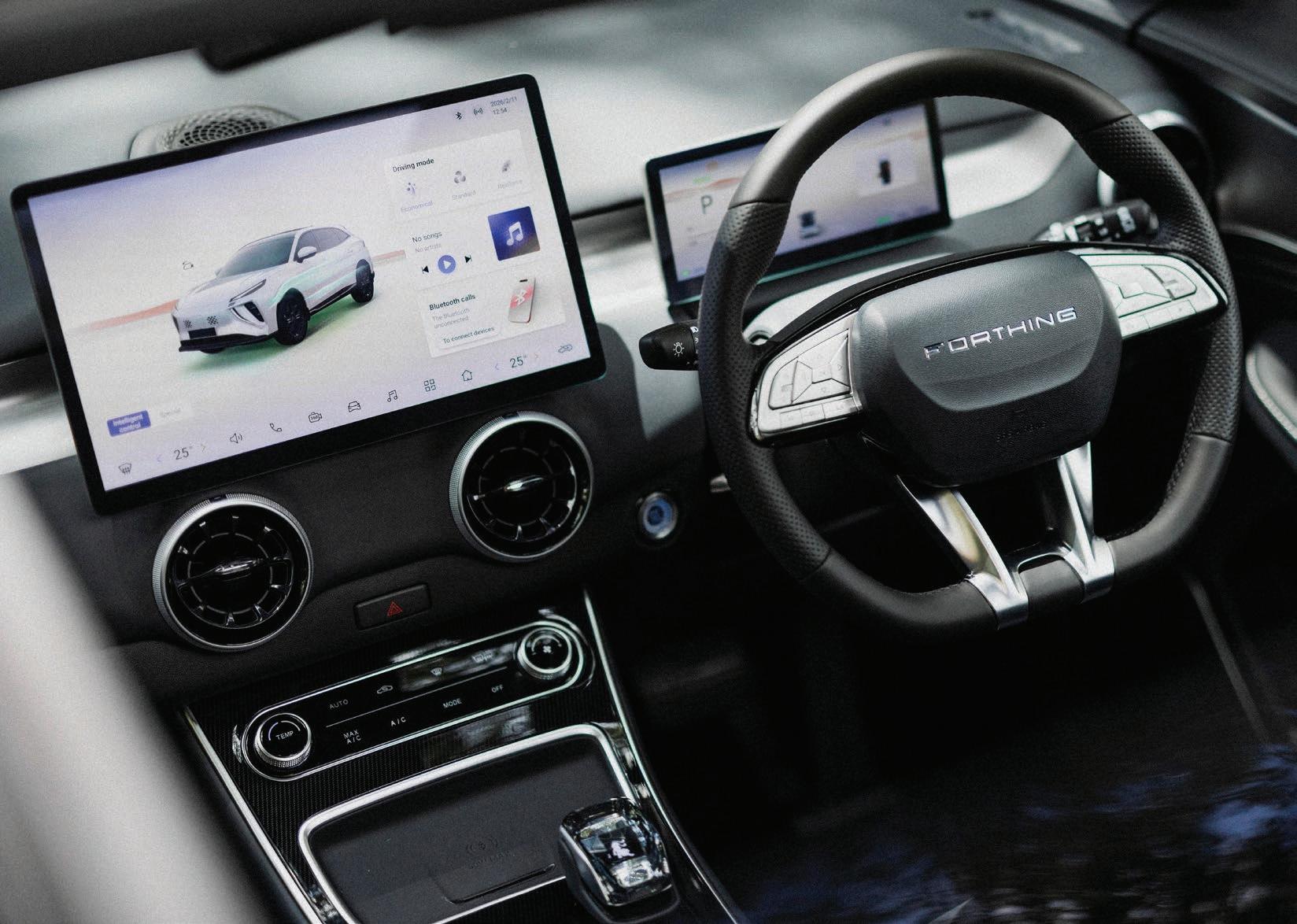
The interior is finished with soft-touch materials throughout, and key touchpoints — including a crystal-cut gear selector — reflect a level of detail not typically associated with entry-level Chinese SUVs. The centrepiece of the cabin is a 14.6-inch central touchscreen paired with an 8.8-inch digital instrument cluster. Apple CarPlay and Android Auto are standard, and the system is complemented by physical controls for frequently used functions — a deliberate design choice that reduces reliance on the touchscreen for everyday operation.
Todd Groves, General Sales Manager for Forthing NZ, has been straightforward about
AUTO UPDATE
where the brand is positioning itself: “We’re not trying to be anything we’re not; we’re not trying to be premium, we’re not trying to be technology-advanced or anything like that. It’s about providing value for money into the market, which is why we’ve priced it as a medium SUV under $40,000.”
TWO POWERTRAINS, BOTH ELECTRIFIED
The Taikon is available exclusively in electrified powertrains — there is no conventional petrolonly option. Buyers can choose between a Super Hybrid and a full battery-electric vehicle (BEV), each offered in Luxury and Exclusive specification levels.
The Super Hybrid pairs a 1.5-litre petrol engine — operating primarily as a range extender rather than driving the wheels directly — with a 120kW / 240Nm rear-mounted electric motor and a 31.94kWh LFP battery. The battery is DC fast-charge capable up to 120kW and delivers 180km of electric-only range (WLTP), with a combined hybrid range exceeding 1,000km. The rear-wheel-drive configuration and independent multi-link rear suspension set the Super Hybrid apart mechanically from the EV variant.
The full-electric Taikon uses a front-mounted 150kW / 240Nm motor drawing power from a 64.4kWh LFP battery pack. DC fast charging supports a 30–80% charge in approximately 30 minutes, while 11kW AC charging delivers a full charge in around seven hours. WLTP-rated range is stated at over 400km.
Both battery systems are currently supplied by Octillion, a global EV battery manufacturer. Future model generations are expected to transition to next-generation chemistry from Cornex and Thunder.
SPECIFICATION AND PRICING
All Taikon variants are well-equipped as standard. Across both Luxury and Exclusive grades, equipment includes power-adjustable seats with driver massage function, keyless
entry, LED lighting, 19-inch alloy wheels, roof rails, a 60/40 split-fold rear seat, and a full active safety suite. That suite includes Level 2+ ADAS, blind spot monitoring, lane-keep assist, front and rear collision assist, adaptive cruise control, and six airbags. ISOFIX anchor points are fitted at outboard rear positions, and the vehicle is rated to tow up to 1,500kg (braked).
The Exclusive variant adds a full panoramic opening glass roof, HD 360-degree camera, sunscreen glass, six-speaker audio system, power tailgate with cargo blind, and a 50W wireless phone charging pad.
FULL RANGE PRICING
• Taikon Super Hybrid Luxury — $39,990 plus on-road costs
• Taikon Super Hybrid Exclusive — $44,990 plus on-road costs
• Taikon EV Luxury — $42,990 plus on-road costs
• Taikon EV Exclusive — $47,990 plus onroad costs
Eight exterior colours are available — Pearl White, Black, Light Blue, Granite, Atomic Red, Jade Green, Sandstone, and Amethyst. Pearl White is the only no-cost option; all other colours carry a $495 charge.
SAFETY
The Taikon has achieved a five-star Vehicle Safety Risk Rating (VSRR) in New Zealand testing. ANCAP assessment has not yet been completed — Ateco has indicated this is scheduled for next year.
DEALER NETWORK AND PARTS SUPPORT
Four dealerships are now open: a new standalone showroom operated by Smith Motor Group in Panmure, Auckland; Winger Motor Group in Hamilton; Automarque in Wellington; and Euromarque in Christchurch.
Further locations on Auckland’s North Shore, in Tauranga, and in Dunedin are in planning. Parts are warehoused at Ateco’s Auckland facility, with close to $1m of inventory already in stock.
All Taikon models are covered by a sevenyear / 200,000 km factory warranty, an eightyear / 200,000 km battery warranty, and seven years of roadside assistance.
For more information, visit www.forthing. co.nz
AUTO UPDATE
Kia PV5 sweeps 2026 What Car? Van and Commercial Vehicle Awards
KIA’S FIRST PURPOSE-BUILT ELECTRIC VAN HAS CLAIMED THREE TITLES AT ONE OF THE UK’S MOST RESPECTED COMMERCIAL VEHICLE AWARDS, AND WILL SOON ARRIVE IN NEW ZEALAND
The Kia PV5 has taken out three major honours at the 2026 What Car? Van and Commercial Vehicle Awards, including the top prize. The PV5 Cargo was named overall Van of the Year and Best Small Electric Van, while the PV5 Passenger claimed Best Van-Based MPV — a strong result for a firstgeneration model from a brand not historically associated with the light commercial vehicle sector.
What Car? editor Steve Huntingford summed up the Cargo’s appeal: “The new Kia PV5 combines the payload capabilities businesses will expect, with the sort of ease of use and long-distance comfort they might not. Its real-world range strikes a good balance between being enough for a full day of work without pushing costs too high, and, thanks to fast-charging capabilities, downtime for fleets is kept to a minimum. The PV5 is also backed up by one of the most comprehensive aftercare packages around, providing long-term reassurance for operators.”
On the Passenger variant, Huntingford was equally direct: “It’s an exceptionally difficult challenge for a van-based MPV to offer all the comfort and refinement car buyers expect, but it’s one which the Kia PV5 has mastered. With flexible, comfortable seating, a quiet yet composed ride and a long range, the PV5 will
fit seamlessly into the lives of many larger families.”
WHAT IT IS
The PV5 is the first model in Kia’s Platform Beyond Vehicle (PBV) strategy — a purposebuilt electric van range developed on a dedicated E-GMP.S architecture rather than adapted from an existing passenger car platform. It is available in Cargo and Passenger
configurations, with a chassis cab variant also offered internationally.
The Cargo variant is built around practicality: up to 790kg payload capacity, 4,420 litres of load space, and barn-door rear access.
The Passenger variant seats five adults with, according to Kia, class-leading interior space and a 412km WLTP range.
Both variants share the same front-mounted 120kW electric motor and are offered with battery options ranging from 43.3kWh to 71.2kWh, depending on configuration. The Cargo Long on the largest battery delivers up to 416km WLTP. DC fast charging takes the battery from 10 to 80% in approximately 30 minutes; AC charging runs at 11kW, suited to depot overnight charging without requiring high-cost rapid infrastructure.
The PV5 also supports vehicle-to-load (V2L) functionality, allowing operators to run tools or equipment directly from the van — a practical feature for trade applications.
AWARD RECORD
The What Car? wins add to a growing international award tally. The PV5 has also taken out the 2026 International Van of the Year title, achieved a five-star rating in the 2025 Euro NCAP Commercial Van Safety assessment, won the iF Design Award Gold for Automotive Product Design, and claimed a Guinness World Record for the greatest distance travelled by a light-duty battery-powered electric van at maximum payload on a single charge — 693.38km.
COMING TO NEW ZEALAND
Kia New Zealand has confirmed the PV5 is coming to New Zealand in 2026. Local deliveries are expected to begin with the Cargo variant first, with Passenger and specialist configurations to follow as right-hand-drive production ramps up. The PV5 Cargo is listed at $55,990 before on-road costs — positioning it well below most of its direct electric van competitors. All Kia vehicles in New Zealand are backed by the brand’s seven-year warranty.
Kia NZ operates 33 dealerships nationwide.
For more information about the KIA PV5, visit www.kia.co.nz
Honda ZR-V Hybrid range expands with two-grade lineup from 1 May
A NEW ENTRY-GRADE VARIANT DROPS THE ZR-V’S PRICE OF ENTRY BY MORE THAN $3,000, BROADENING THE REACH OF HONDA’S E:HEV HYBRID SUV
Honda New Zealand has expanded the ZR-V Hybrid lineup to two grades, both on sale from 1 May. The ZR-V Hybrid L and ZR-V Hybrid LX share the same e:HEV hybrid system — a 2.0-litre direct-injection petrol engine producing 104kW and 182Nm, paired with a high-power electric motor delivering 135kW and 315Nm through a twomotor e-CVT transmission. Three drive modes — Econ, Normal, and Sport — are standard across both grades.
Chassis hardware is shared too: dualpinion electric power steering, multi-link rear
suspension with a floating rear subframe, and low-friction front damper mounts contribute to what Honda describes as improved steering feel and load-holding capability over the previous generation.
GRADE DIFFERENCES
Both grades come standard with the full Honda SENSING active safety suite, postcollision braking, a nine-inch touchscreen with Google Built-In, Honda Connect with digital key, remote power tailgate, heated front seats, front roof ambient lighting, and a 10.2-inch TFT
Honda Prelude returns with e:HEV hybrid power and Type R-derived chassis
A REVIVED MODEL ARRIVES WITH PROVEN UNDERPINNINGS — CIVIC TYPE R SUSPENSION, BREMBO BRAKES, AND HONDA’S MOST DRIVER-FOCUSED HYBRID SYSTEM
The 2026 Prelude is built around the same two-motor e:HEV hybrid system as the ZR-V — a 2.0-litre direct-injection petrol engine producing 104kW and 182Nm, paired with a high-power electric motor delivering 135kW and 315Nm through a two-motor built-in electric CVT. The petrol engine operates primarily as a generator in most driving conditions, with the electric motor handling propulsion — a setup that delivers strong low-speed response and linear acceleration without the stepped feel of a conventional automatic.
What sets the Prelude apart from Honda’s other e:HEV models is S+ Shift — a system designed to sharpen the connection between driver input and vehicle response by refining throttle mapping, acceleration delivery, and engine sound.
CHASSIS AND DYNAMICS
Honda has drawn directly from the Civic Type R parts bin for the Prelude’s chassis. Front
suspension uses Type R-derived dual-axis struts with aluminium knuckles, strut forks, and lower arms. The multi-link rear suspension carries the same aluminium components. Adaptive dampers — tuned specifically for the Prelude from the Type R’s Adaptive Damper System — adjust across the four available drive modes: Comfort, GT, Sport, and Individual.
Braking hardware is equally serious: Brembo four-piston aluminium front callipers finished in Prelude blue.
Each drive mode adjusts powertrain response, steering weight, suspension tune, engine sound, and adaptive cruise behaviour independently. Individual mode allows the driver to mix settings across all parameters.
DESIGN AND COLOUR
The Prelude’s low, wide coupe silhouette is clean and purposeful — narrow-profile front grille, flush door handles, full LED lighting, and a full-width rear light bar. Five exterior colours
instrument display.
The LX adds a 360-degree camera, heated steering wheel, heated rear outboard seats, an eight-way power driver’s seat, four-way power passenger seat with reverse auto tilt, a 12-speaker Bose stereo with subwoofer, wireless phone charging, sports pedals, ion generator, and front footwell ambient lighting.
An expanded colour palette accompanies the update — the LX is available in six exterior colours, with four new additions: Meteoroid Grey Metallic, Ocean Blue Pearl, Twilight Mist Black Pearl, and Desert Beige Pearl.
WARRANTY AND PRICING
The ZR-V is backed by a five-year unlimitedkilometre warranty with 24/7 roadside assistance, plus an eight-year / 160,000km warranty covering the e:HEV high-voltage battery and components.
Both L and LX grades are available at authorised Honda dealerships across New Zealand now.
For more information about the Honda ZR-V Hybrid range, visit www.honda.co.nz/zr-v
FULL RANGE PRICING
• Honda ZR-V Hybrid L — $51,900 plus onroad costs
• Honda ZR-V Hybrid LX — $55,900 plus on-road costs
are available: Moonlit White Pearl, Rallye Red, Racing Blue Pearl, Meteoroid Grey Metallic, and Crystal Black Pearl.
WARRANTY AND PRICING
The Prelude carries Honda’s five-year unlimited-kilometre warranty with 24/7 roadside assistance, plus an eightyear/160,000km warranty covering the e:HEV high-voltage battery and components.
Kiwi motorists will be able to get their hands on the Prelude at authorised Honda dealerships across New Zealand from 1 May 2026.
For more information, visit www.honda. co.nz/prelude
PRICING
• Honda Prelude — $69,990 plus on-road costs
Rola Ridgemounts and Titan Trays
THE
ROLA RIDGEMOUNT SYSTEM IS
PURPOSE-DESIGNED FOR SPECIFIC VEHICLE AND TRAY COMBINATIONS, ENSURING A PRECISE FIT AND SEAMLESS INTEGRATION
With weight-reducing cut-outs and subtle branding, Ridgemount delivers a clean, functional solution that complements the strength and styling of the Titan Tray.
ROLA CANOPY RIDGE MOUNT
Expanding the range, the Rola Canopy Ridge Mount introduces a dual-profile design that aligns with cab-mounted trays or roof racks. Suited to flat-roof canopies with a minimum of 1.1 metres of uninterrupted space, it provides a stable and secure cargo platform.
Manufactured from stainless steel and finished with a durable powder coating, it’s built to handle demanding environments. Available in both bolt-through and trackmount configurations, and fully compatible with Titan Trays, it offers versatility across trade and recreational applications.
Rola Ridgemount systems are available as bundle packs with Titan Trays or as standalone components, giving customers flexibility to tailor their setup.
TITAN TRAYS
Constructed from high-strength, lightweight, abrasion-resistant anodised aluminium, Titan Trays are engineered for durability without excess weight. With a load rating of up to 400kg, they are built to perform under pressure. The tray’s innovative design allows accessories to be mounted on all four sides, delivering exceptional flexibility for a wide range of carrying needs.
Offering a lower-profile, more aerodynamic alternative to traditional roof boxes, Titan Trays can also contribute to improved fuel efficiency. Easy installation and a low mounting height make them a practical solution for maximising roof space, whether for worksite demands or weekend adventures.
DURABLE AND VERSATILE BY DESIGN
Designed to suit everything from passenger vehicles to 4WDs, Titan Tray aluminium flat trays combine modern styling with real-world functionality. Aluminium construction provides
Nearly 60 years in the motortrade
CHRISTINE LAMBIE OF CHRISTCHURCH IS RETIRING AFTER A WORKING LIFE THAT TRACES ALMOST SIX DECADES OF CHANGE,
COLOUR, AND CHARACTER IN NEW ZEALAND’S MOTORTRADE
Christine’s story is one of dedication, adaptability, and a genuine love for an industry that has evolved dramatically since the late 1960s.
Christine’s career began in 1967 at Andrews and Beaven on Bath Street, where she worked as an automotive parts delivery driver — well before the rise of formal courier companies. From 1967 to 1972 she drove one of the very first Ford Escort vans, at a time remembered fondly as the “miniskirt days”. Back then, it was entirely normal for automotive wholesalers to employ female van drivers, with firms like Motor Traders, Motor Specs, Young Bros, G.A.C., EW Pidgeon, and Lucas all part of the bustling scene. It was also where Christine first learned what parts did what — with simpler engines, a quick look under the bonnet made everything clear. In 1972, she
moved to Palmer & Doak, a Ford dealership, taking on parts sales and deliveries. Stocked with parts and driving a Ford Transit (which she freely admits she hated), Christine covered the role from 1972 to 1975. That period ended with the arrival of her “gorgeous baby son” on 22 March 1975 — a milestone that briefly paused, but never stopped, her working life.
In 1977, Christine returned to the industry, joining Carthy Motors Ltd, a Holden dealership, as a parts representative servicing automotive and panel shops. What was meant to be temporary — while her builder husband waited for more work — became a nine-year chapter from 1977 to 1986, and in truth, a lifelong return to work. Driving a VC Commodore station wagon, Christine became legendary in the trade. Carthy Motors sold the odd tin of B&M filler when she arrived; under her watch, that grew to many dozens of 4-litre tins every week. She earned the affectionate nickname “the BOG girl” and proved her value not only through sales, but insight — visiting wreckers’ yards on Mondays meant she often knew which panel shops damaged Holdens were heading to, with quotes almost ready the next
inherent resistance to rust and corrosion, making it ideal for harsh conditions, while a durable powder-coated finish ensures longterm protection and visual appeal.
For users needing flexible storage, flat trays offer an effective way to transport oversized, lightweight items. Suitable for vehicles with or without gutters, they provide broad compatibility across multiple platforms. Canopy-mounted configurations further enhance usability, allowing easy transport of longer items such as ladders and timber.
For more information or reseller inquiries, please contact Trailcom enquiriesauckland@trailcom.co.nz, or call 0800 698 227
day. Add in demonstrations of sandpaper, file blades, orbital sanders, and plastic welders, and it’s clear why those were remembered as fun, fast-paced years, rewarded with a wage and generous commission.
Between 1986 and 1988, Christine worked commercially with various agencies, travelling in her own VL Commodore. From 1988 to 1996, she was a commission representative for Wynns Oil, sharing Canterbury with fellow rep Darren Baxter, who remains with Wynns today.
Training and development followed, with roles at Carich Training as Sales Tutor and Training Manager (1996–2000), MITO as Apprentice Training Manager for Canterbury and the West Coast (2000–2008), and the Motor Trade Association as Business Development Manager across Canterbury, the West Coast, South Canterbury, and North Otago from 2008 to 2019.
Never one to sit still, Christine then started her own business, AAS, supporting workshops with WoF administration, health and safety, and general business assistance. Since 2019, she has served as Canterbury Area Manager for the Blackfern Coop.
As Christine Lambie steps back from the trade, she takes with her more time for family, bike touring, and travel — and leaves behind nearly 60 years of knowledge freely shared and relationships built on trust. Her working life is the motortrade’s history in miniature. The engine may have cooled, but the warmth she brought to the job won’t fade any time soon.
Koni Heavy Track Shock Absorbers
Robust construction and precision tuning make Koni Heavy Track shock absorbers a natural fit for the Ford PX3 Ranger — and any pick-up, 4x4, or SUV that sees serious on- and off-road work. Developed specifically for the demands of larger vehicles, they upsize Koni’s proven damper technology for 4x4 and pick-up applications, with rebound adjustment to tune handling and ride to your vehicle setup. Each damper is designed for specific applications, and the range is tested and validated under extreme real-world conditions to meet the highest standards of safety, stability, and road-holding.
Koni Heavy Traack Shock Absorbers are available through Mount Shop
New! Peak P-409-HPX 4-post parking lift
The Peak P-409-HPX is a heavy-duty four-post storage lift with 3104mm between the posts and two runway-width settings, making it well-suited for storing boats, trailers, and a range of larger recreational equipment. It includes folding drive-on ramps, dual safety locking, rubber wheel chocks, and an adjustable trailer jockey wheel platform as standard.
Contact Automaster at info@automaster.co.nz, call 0800 214 604, or visit automaster.co.nz
Narva Model Red/Amber Side-Marker and Indicator Lamps
Narva’s Model 80 and 81 red/amber side-marker and indicator lamps deliver ingenious dualfunction design, combining two lights into one to streamline fleets with less wiring, lower weight, and faster installation. Built for rugged performance, they feature UV-stable Grilamid lenses, IP68/ IP69K rating, and ADR compliance, offering durable clarity in harsh conditions. Model 80 presents a modern clear-lens look; Model 81 keeps a traditional coloured lens. Both work as easy retrofits, ideal for smarter, safer fleet lighting.
For more information, visit narva.co.nz or contact sales@nz.brownwatson.com
JB Weld Adhesives
JB Weld introduces a new range of high-performance automotive adhesives designed for professional results: this lineup includes Autoweld Black, an impact-resistant automotive adhesive, filler and sealer, Bumper Weld Tan for flexible, paintable bumper fixes, Seamweld that provides high impact and vibration-resistant bonding and sealing to automotive body panels, and Instant Weld Clear, a fast-setting epoxy for invisible, high-strength repairs.
Trusted by mechanics and DIYers alike, this new range is available now from your nearest automotive or hardware retailer.
ACDelco 3v Lithium Coin Cell Batteries
ACDelco 3V Lithium Coin Cell Batteries are equipped with advanced technology you can count on! Made to power small electronic devices such as vehicle keyless entry remotes, calculators, watches, medical devices and much more. Contains no mercury or cadmium; safe for the home and better for the environment, anti-leakage protection; holds in power for up to five years in storage under normal conditions. All ACDelco 3V Lithium Coin Cell Batteries are sealed in child-resistant packaging.
For more information, visit gmtradeparts.co.nz or acdelco.co.nz
Terrain Tamer Fortified Drive Belts
Developed from over a decade of military parts engineering, Terrain Tamer’s Fortified Drive Belts offer a 34% increase in belt life over OE equivalents. The patented serpentine belt construction uses strengthened tensile cords and a specific elastomer blend to resist stretch, heat, oil, and wear. Applications cover popular 4WD models including Toyota Hilux, LandCruiser, Prado, Ford Ranger, Mazda BT-50, Mitsubishi Triton, and Nissan Navara.
Visit terraintamer.com for the full listing.
Trojan Universal Hitch Receiver
The Trojan Universal Hitch Receiver is a versatile solution for mounting hitch accessories like bike racks or storing a weight distribution hitch on an A-frame. Featuring a multi-fit mounting plate, it installs horizontally or vertically and includes a heavy-duty anti-rattle bolt for secure, quiet towing. RRP $92.300
For more information contact Trailcom on 0800 876 526 or email enquiriesauckland@trailcom.co.nz
WIX Returns to NZ with CoolDrive
A legendary brand has returned to New Zealand, with CoolDrive Auto Parts now exclusively stocking WIX filters for passenger vehicles. Trusted by generations and engineered for today’s engines and conditions, WIX delivers best-in-class filtration with enhanced dirt-holding capacity, competitive pricing, and extended service life.
Built to OEM standards and tested to the toughest global benchmarks in the lab and on the track, WIX filters keep vehicles running cleaner for longer. Choose WIX for filtration you can trust.
alleuroparts.co.nz or 0800 255 387 or parts@alleuroparts.co.nz
amsoil.co.nz or 021 395 320 or wayne@amsoil.co.nz
ateco.co.nz or 09 979 8000
automaster.co.nz or 0800 214 604
autolign.co.nz or 09 574 2288
bacsystems.com.au
06 306 8446 or blackfern.coop
tyreorder.co.nz or 0800 80 90 96
bmw.co.nz or 0508 269 727
bntnz.co.nz or 09 414 3200
bridgestone.co.nz or 0800 802 080
capricorn.coop or 0800 401 444
0800 CASTROL (0800 227 876)
centurydistributors.co.nz
cyb.co.nz or 09 978 6666
chemz.co.nz or 06 877 9690 09 636 5428 or sales@clutchindustries.co.nz
cooldrive.co.nz or 0800 327 868
cool-safe.org.nz
crc.co.nz or 09 272 2700
dieseldistributors.co.nz or 09 265 0622
dtm.co.nz or 0800 621 233
07 850 5240
eproducts.co.nz or 09 916 6750
0800 757 333 or fenixautoparts.co.nz
0800 465 855
ford.co.nz or 0800 367 369
fuchs.co.nz or 09 828 3255
garageworkshop.co.nz or 03 244 0441
gearwrench.co.nz
gmtradeparts.co.nz
The Auto Channel supplier directory is your easy reference for sourcing a range of automotive products and services. This directory is a paid service for businesses who supply to the New Zealand automotive trade. To secure your inclusion, contact Mark Everleigh on 021 140 6855 or mark.everleigh@viamedia.co.nz.
Penrite opens new Victorian warehouse as centenary investment push continues
THE AUSTRALIAN LUBRICANTS MAKER STRENGTHENS
ITS
DISTRIBUTION NETWORK
WITH A NEW FACILITY IN MELBOURNE’S WEST, PART OF A BROADER INFRASTRUCTURE DRIVE IN ITS 100TH YEAR
Penrite Oil has opened a new warehouse in Tottenham, Victoria, adding capacity to its national distribution network as the company marks a century in business. The facility is now fully operational and will initially service delivery routes across Melbourne’s western and northern suburbs, with planned expansion into regional centres including Bendigo and Ballarat.
The Tottenham site holds approximately 500–600 pallets, giving Penrite increased flexibility to manage inventory and respond to growing demand across Victoria. The company says the location was chosen to streamline delivery runs across a corridor that had previously been serviced from further afield.
A NETWORK BUILT FOR SCALE
The new warehouse is one of more than 22 facilities Penrite operates across Australia and New Zealand, a network the company says is designed to fulfil orders within 24–48 hours against a 100% delivered-in-full-on-time target. The Auckland office anchors the company’s local operations, with product distributed to trade customers throughout the country.
CEO Toby Dymond said the investment reflects the company’s continued focus on service reliability. “This new warehouse allows us to better support our customers in Melbourne’s west and regional Victoria by improving delivery efficiency and reducing
turnaround times,” he said.
Chief Transformation Officer Biren Patel framed the Tottenham facility as part of a wider operational improvement programme. “This facility gives us greater flexibility across our distribution network, enabling us to better serve customers, optimise logistics, and support future expansion in both metropolitan and regional markets,” he said.
CENTENARY MILESTONE DRIVES INFRASTRUCTURE FOCUS
Founded in Melbourne in 1926, Penrite is privately owned and remains in the hands of the Dymond family, who acquired the business in 1979. The company now manufactures more than 170 products across 12 market segments — from engine oils and transmission fluids to coolants, greases, and specialty lubricants for vintage and classic vehicles — and exports to more than 50 countries.
The Tottenham opening is one of several infrastructure moves the company is making in its centenary year. Dymond said investments of this kind reflect the company’s intention to build on its first hundred years rather than simply mark them. “At Penrite, we pride ourselves on delivering high-quality products backed by exceptional service,” he said. “Expanding our distribution network ensures we can continue meeting the needs of our customers while supporting the growth of our business across Victoria and beyond.”
Automotive workshops
Parts importers and distributors
Transmission specialists
Automotive recyclers
Towing operators
Panel beaters and painters
Crash repairers
Tyre dealers
Suspension and underbody repairers
Steering specialists
Towing operators
Auto-electrical repairers
New- and used-car dealers
Air conditioning repairers
Trucking and transport
Editorial: editor@autochannel.co.nz
Advertising: Mike White michael.white@viamedia.co.nz
Mark Everleigh mark.everleigh@viamedia.co.nz
All other enquiries to: autochannel.co.nz
Auto Channel is produced by Via Media, publishers of two of NZ’s biggest-selling automotive magazines: NZ Performance Car and NZV8.
Classic
• The “Original” shock that earned KONI’s World Class reputation
• Black and Red with KONI Wing Logo
• Suit older performance and classic cars
• Use for replacement and vechicle upgrade
STR.T
• Suit European Vehicles
• Perfect for OE replacement and vehicle improvment
• Suit OEM or performance lowering springs
• Non-adjustable damping - fit and drive!
Heavy Track
• KONI proven technology, for 4x4 and pick-ups
• Rebound adjustable
• Improved handling and ride for large vehicles
• Dampers specifically designed for each application
REPCOBRABHAM BT19
CELEBRATING 60 YEARS OF AN AUSTRALIAN LEGEND
Sixty years after it rewrote the Formula 1 record books, the Repco-Brabham BT19 continues to stand as a defining symbol of Australian ingenuity, determination and motorsport excellence. In 1966, Sir Jack Brabham achieved something that remains unmatched in Formula 1 history: he won the Drivers’ World Championship in a car bearing his own name, while also securing the Constructors’ World Championship for his team. No other driver has claimed both titles in a car of their own construction.
Designed by Ron Tauranac and built by Motor Racing Developments, the Repco-Brabham BT19 was powered by the Repco RB620 3.0-litre SOHC V8 engine, engineered and manufactured in Melbourne. At a time when European powerhouses such as Ferrari, Lotus and Maserati dominated the sport, a small Australian team rose to the top of the world stage. The Repco-Brabham BT19’s combination of simplicity, reliability and clever engineering proved decisive under Formula 1’s new 3.0-litre regulations in 1966.
Only one Repco-Brabham BT19 was ever produced, and it competed across the 1966 and 1967 seasons. Its crowning moment came at Monza in September 1966, when Brabham secured enough points to clinch his third Drivers’ world title and Australia’s place in global motorsport history. The achievement cemented the Repco-Brabham BT19 as one of the most significant racing cars ever built.
`v
the 2026 Repco Adelaide Motorsport Festival, where its unmistakable V8 note once again echoed around a street circuit. From there, it travelled to Melbourne to headline the Formula 1 Qatar Airways Australian Grand Prix celebrations at Albert Park.
This year marks another milestone for this recordsetting car. The Repco-Brabham BT19 has become the first racing car inducted into the Australian Motorsport Hall of Fame. The induction ceremony took place on the Fan Stage at Albert Park during the Formula 1 Australian Grand Prix, recognising not only the machine itself but also the pioneering figures behind it — Brabham, Tauranac and Repco engine designer Phil Irving.
Adding to the emotion of the occasion, Sir Jack’s grandson, Sam Brabham, drove the Repco-Brabham BT19 for some demonstration laps ahead of the 2026 season-opening Grand Prix race. Watching this greenand-gold racer with the unmistakeable sound of its Australian-made Repco V8 engine were powerful reminders that Australia once conquered the world of Formula 1, a story that still inspires six decades on.
This year, Sir Jack Brabham’s centenary year and 60 years after that landmark championship season, the Repco-Brabham BT19’s legacy is being celebrated across Australia. The car recently captivated fans at