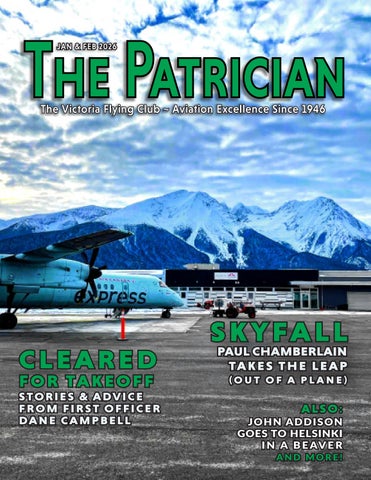
The Patrician
T he P atrician
“T
(Victoria
BOARD OF DIRECTORS
ACTING PRESIDENT Colin Williamson
SECRETARY Joey Martin
TREASURER Reg Smith
DIRECTORS Paul Rutten
Glen Rippon
Don Devenney Al Johnston
GENERAL MANAGER Mike Schlievert

NEWS Around the Club
FROM THE EDITOR:
Happy New Year!
It's been a pretty mild winter so far and here's hoping that it stays that way.
This issue is a bit of a whopper, but it features featuring articles from VFC greats Paul Chamberlain, John Addison, and our own Dane Campbell!
Enjoy the read and if you want to join their ranks and share your stories in these hallowed pages, remember that the Patrician always accepts (and encourages!) article submissions, photography, and more. Until next time.
—Kelly Clark, Editor of the Patrician
2026 WINGS BANQUET
Come and join us for the 2026 Wings Banquet as we celebrate the achievements of all of our 2025 graduates!
This year the banquet will be held at Olympic View Golf Club and will feature a full buffet and cash bar.
Katrina and Claire from the Dispatch desk will be your MCs for a fun filled evening of celebration, good friends, and good food.
Check your email for information on how to buy your tickets. You have until March 20th to buy yours!
EVENTS & HOLIDAYS
FEB 7 SATURDAY COFFEE & DONUTS
FEB 14 VALENTINE'S DAY
FEB 16 FAMILY DAY
FEB 17 LUNAR NEW YEAR / RAMADAN
MAR 8 DAYLIGHT SAVINGS TIME
MAR 16 ST. PATRICK'S DAY
MAR 20 LAST DAY TO BUY WINGS TICKETS
MAR 19 RAMADAN ENDS
MAR 20 SPRING EQUINOX
MAR 27 2026 WINGS BANQUET
Did we leave any events out?
Let us know at vfcpatrician@gmail.com!
WE HAVE NEW PLANES!
Meet our two new planes: the Hawk XP GYGR the Tomahawk, GTRQ!
These new additions to the fleet have already earned their in-house nicknames, Yager and Torque, and are waiting for you to get them up into the air!

"Remember, you fly an airplane with you head, not your hands and feet.”
–Bevo Howard
D ispatch ' s N ew L ook
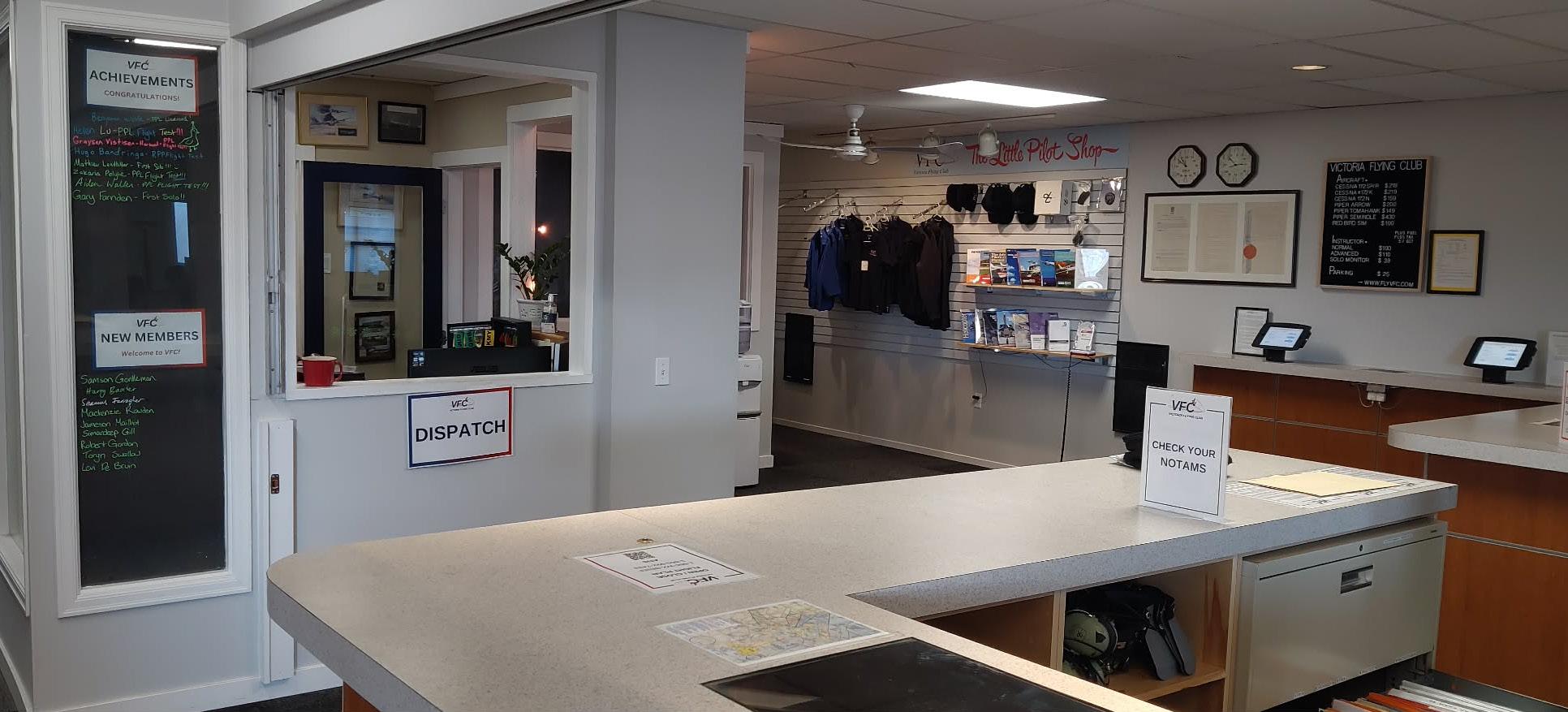
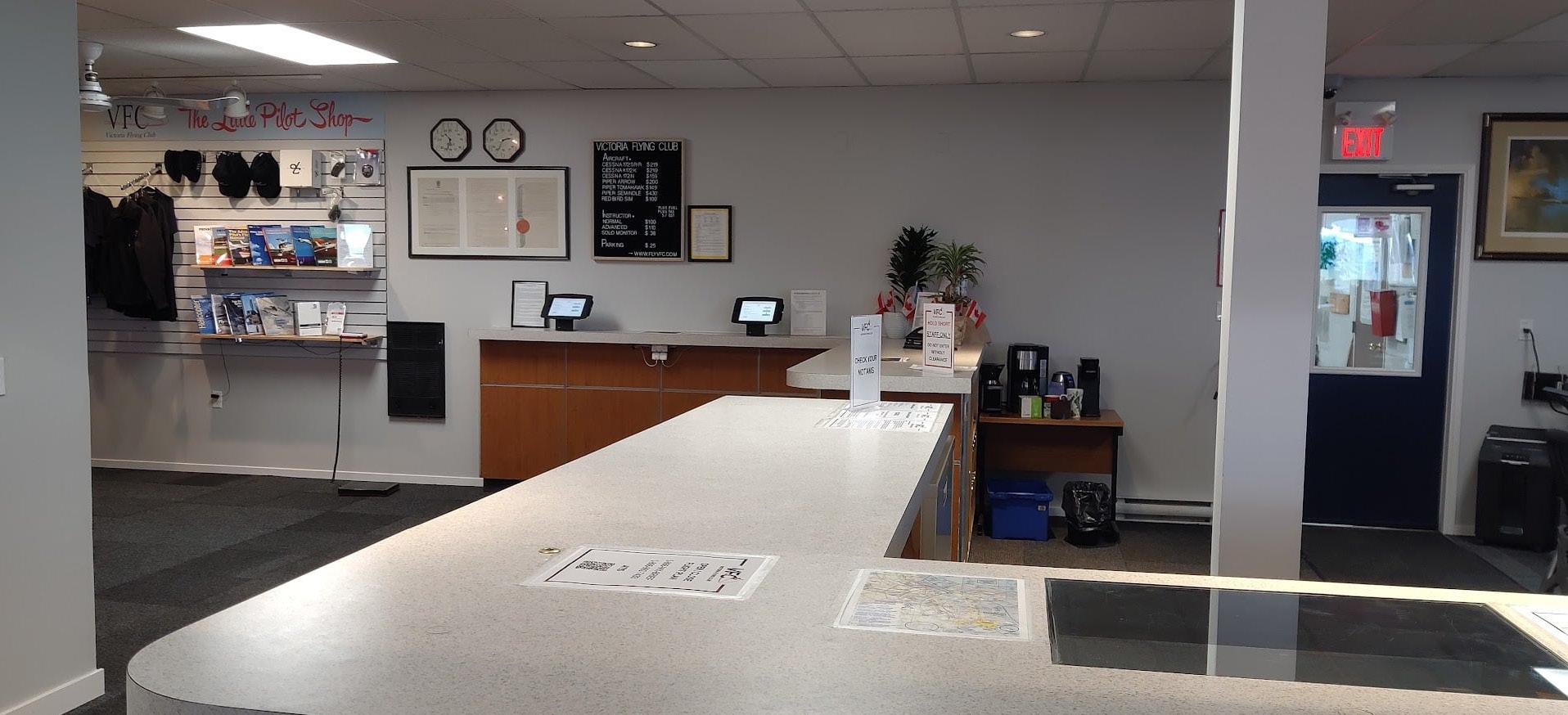
In case you haven't been into the VFC for a while, you might be surprised to see the new layout! We streamlined the front office for operational ease and expanded the pilot's shop.
Come say hi and check it out for yourself the next time you're in!

FIRST SOLOS
"Without disruption of air traffic, these fearless, forthright, indomitable and courageous individuals did venture into the wild blue yonder in flying machines.
Furthermore, these skillful individuals did safely land said flying machines at Victoria International Airport, incurring no significant damage to self or machine, thus completing first solo flights."
THIS ISSUE WE CELEBRATE THE FIRST SOLOS OF THESE PILOTS:
Oliver Barrett
Devin Antoniazzi
Benjamin Sharret
We want your first solo or achievement in the Patrician!
Send your photos to vfcpatrician@gmail.com or tag us on Instagram.
VFC MENTOR PROGRAM
Do you want other pilots to fly with, split flight cost, share knowledge, or get help getting to a new airport for the first time? Find potential mentors and their resumes posted on the Mentors bulletin board beside the Dispatch counter. Contact details are on each mentor's resume or you can email mentors@flyvfc. com for more information.
Interested in becoming a mentor?
There's always room for more experienced pilots! Send an email to mentors@flyvfc.com for more information on how to join up!
MEMBER ACHIEVEMENTS
PPL WRITTEN TEST
Bruce Cousins
Victoria Wood
Nichola Finnerty
Zoe Leduc-Wright
Matthew Carrington
Helen Lu
Mark Russell
Cole Patterson
Michael Quayle
PPL FLIGHT TEST
Cole Patterson
Stanley Mathew
CPL WRITTEN TEST
Bernie Tremblay
Jose Pablo Sandoval Sandez
CPL FLIGHT TEST
Juan Pablo Cobo
WELCOME NEW VFC MEMBERS
Shannon Quinn
Jonathan Rowbotham
Ernest Volnyansky
David McLeod
Rose Weekes
Alison Prince
Alexander Nowak
Man Lung Wong
John Faux
Alexander Richardson
Thomas Matchett
Adil Kayani
Emily Claus
Ayanna Dawkins
Garry Reynolds
Peter Yip Hamon Sidhu
James Woodman
Kazuma Edwards
Kento Kado
Rachel Chambers
Felix Laister
Jereme Fisher
Bradlee Gray
Aidan Munro
PARKING AVAILABLE!
Interested in prime paved parking spaces for your aircraft? Good News:there are spots available!
Secure, pull-in/pull-out, easy access.
Call Dispatch at 250-656-2833 to arrange a spot or to get on the waitlist for hangar spaces!


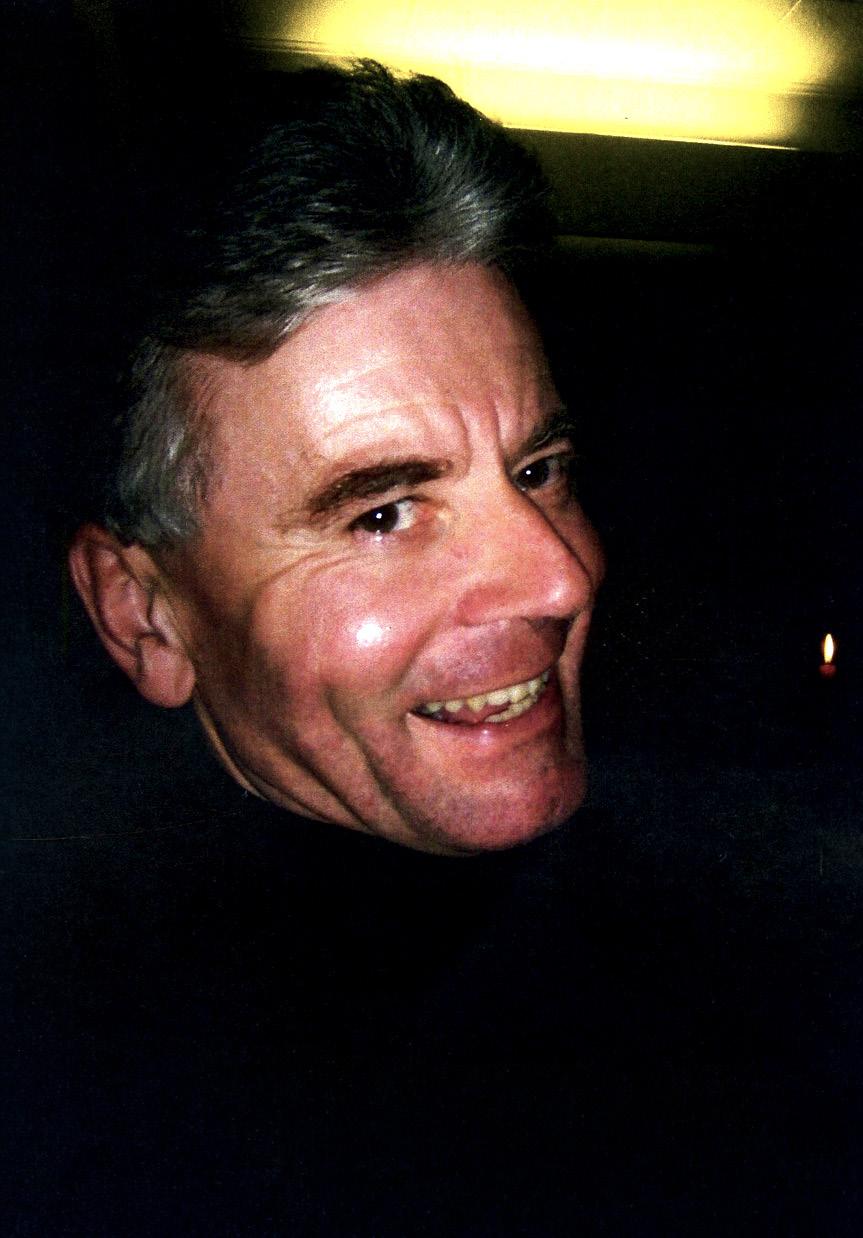
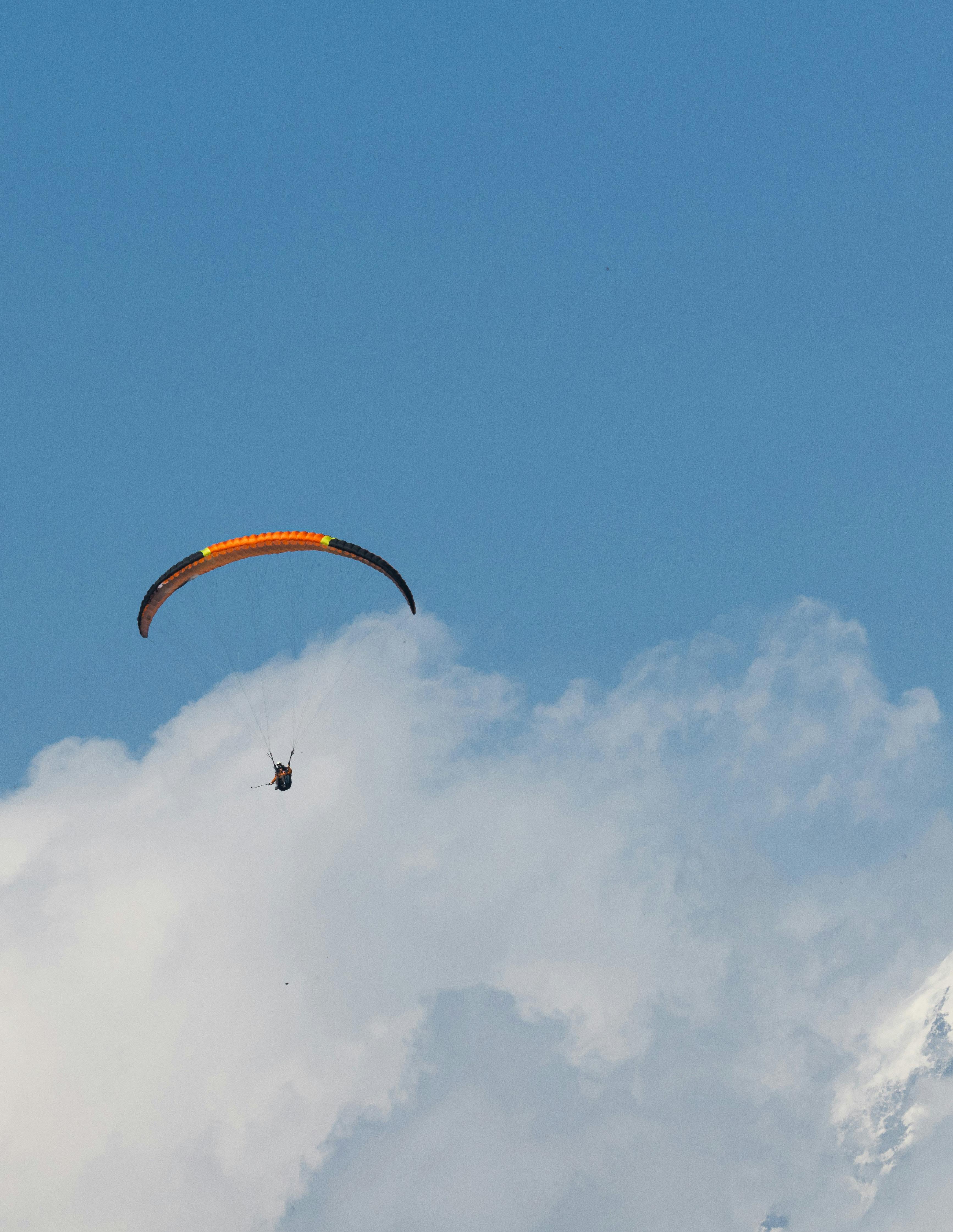
Afterf lying aer oplanes for 50 years, I decided to jump out. I was going to miss my summers bombing forest fires in Northern Canada, but my decision to celebrate my retirement by making my first parachute jump was not entirely my idea. My cousin was flying in from UK, and she wanted to skydive. I was told to book it…
SKYFALL
A Zen master once said that a marksman doesn’t shoot at the target, he aims at himself. But as we turned right base into the Arbutus Meadows Event Centre near Qualicum Beach, I would be lying if I told you I wasn’t feeling a little nervous. The Vancouver Island Jump Centre is a tiny kiosk on the edge of a large field. We were met by a jovial host who put us both at ease (important). First there was a short video; then there was a long waiver—which we signed more times than a mortgage application; and, finally, we slapped down our visa cards. The cost of a tandem jump is $399. The Centre operates six days a week from March to October, and, as well as offering easy access from Victoria via the Island Highway, it provides a shuttle service from the Nanaimo Ferry
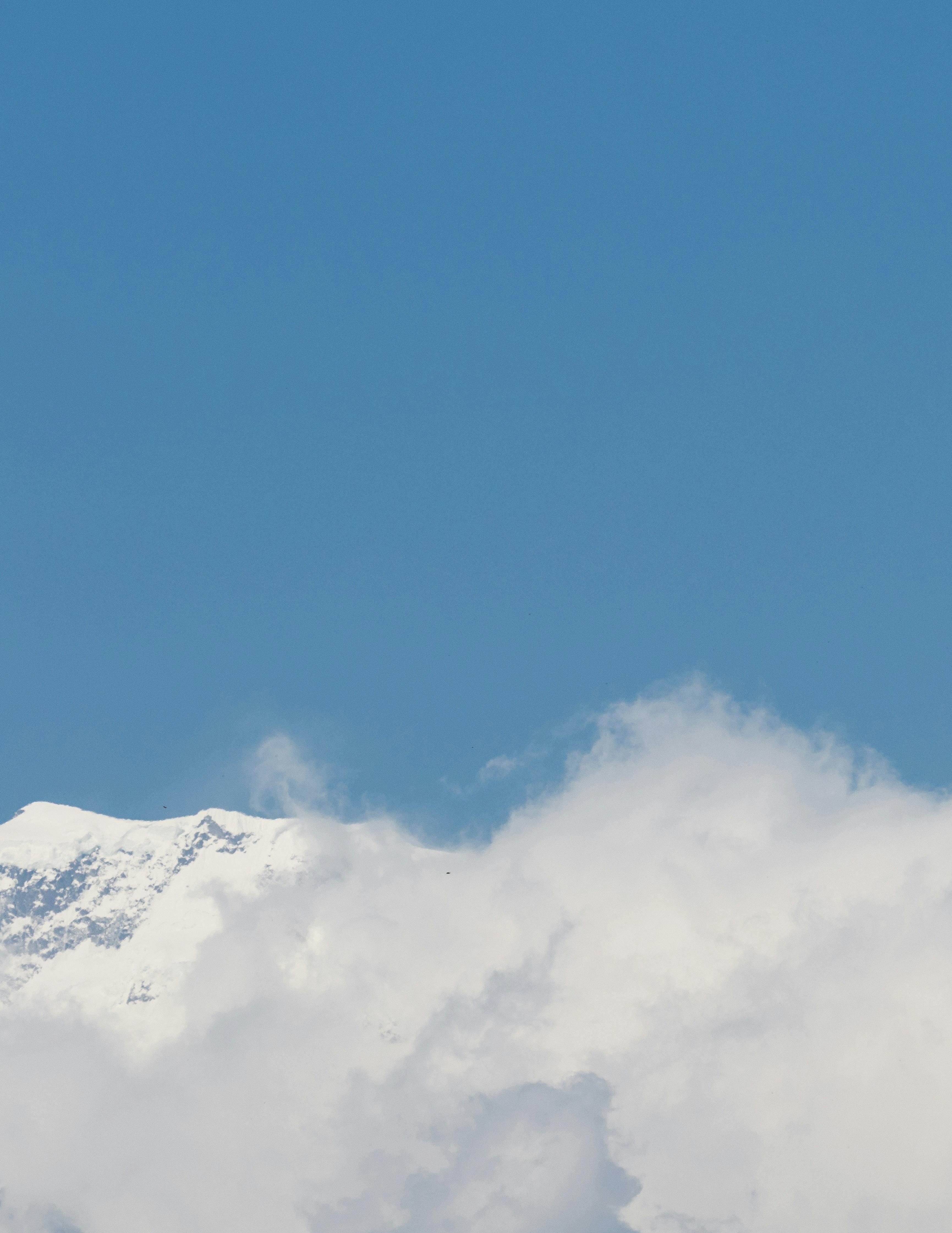
SKYFALL
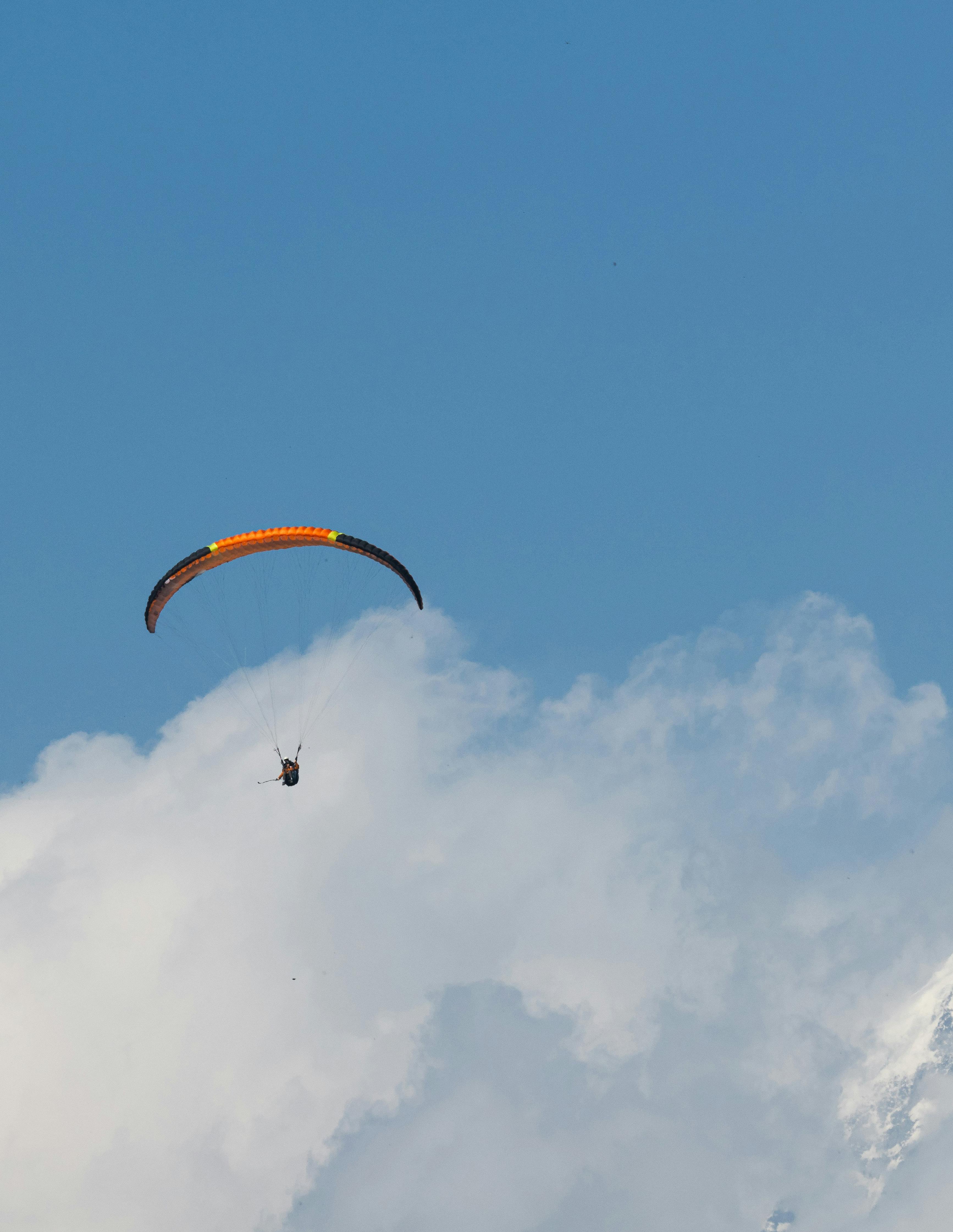
Terminal. It was time to get suited up.
In a nearby hangar I met my tandem jump master Gilly. I recalled the lyrics in Colin Hay’s song: “6’4 and full of muscle I come from the land down under,” except Gilly was from New Zealand, not Australia, and he wasn’t 6’4. After giving us a few more tips, like reminding us to keep our feet up on landing (very important), we jumped into a minibus, and got radar vectors to the Qualicum Beach Airport. It was here that we found our pilot sitting patiently in the cockpit of a Cessna 182.
The back seats had
BY PAUL G. CHAMBERLAIN
been removed, and we lay awkwardly on the floor of the cramped fuselage. As we completed the 17 minute climb to 10,000 feet, I recalled my days as a student pilot at the Victoria Flying Club 50 years earlier when I had made my first solo cross country flight from Victoria to Campbell River. The scenery looked vaguely familiar to me, but I couldn’t help but feel a growing sense of anxiety. Back then I was flying in an aeroplane; now I was about to jump out.
I felt Gilly shuffling on the floor behind me. Next, I heard
four distinct clicks as he attached his harness onto mine. The moment I had long anticipated had arrived. I was curious to know how I was going to react.
The pilot reached over, and carefully opened the door. A frigid blast of air shot into the cockpit like a cannonball, and the noise of the engine rose to a crescendo— so did my heartbeat. I was instructed to move my left leg out of the door, followed awkwardly by my right leg. Nietzsche says that if you look into the abyss long enough, the abyss stares back at you. I didn’t try.
Instead, I looked up at the flaps, which I noticed had been partially extended. Gilly shouted out the procedure one last time above the slipstream: “Are you ready?” I felt like I was about to be executed. Moments later, I heard the count down…but I never heard the word ‘GO’. All I remember was tumbling out into the icy blast of slipstream, as if I was being sucked into a jet engine.
Within seconds the wild gymnastics stopped, and I found myself descending straight down in a giant belly flop, my cheeks flapping in the wind, my mouth full of air, and the slipstream shrieking in my ears as we approached the speed of verticality. That’s when Gilly casually tapped my right shoulder. It was the signal to spread my
arms out and tuck my legs in. Gilly gave me a thumbs up, and for the first time I began to relax. Curiously, there was no sensation of speed, just a delightful feeling of buoyancy, and during the brief seconds of free fall I had no sense of time, nor did I have any deep, speculative thoughts. Falling from two miles above the earth is definitely an alien experience, but I also discovered that it is powerfully seductive—perhaps this is what it feels like to walk in space?
I looked around me.
To the East I saw the Salish Sea; to the West I glimpsed mountains; and below, quite still, was a variegated sward of fields spread out like a giant trampoline. I expected the ground to rush up at me, but the earth was motionless. Fear had evaporated. But a
curious thought came to me several days later. Recalling the paradox of the tree that creates the handle of the axe that cuts it down, I had conquered my fear by ignoring the very emotion that kept me alive. An eagle would no more understand this than a fish in the sea. Suddenly, all hell broke loose.
Gilly pulled the ripcord! My head somersaulted down to my feet; and then my feet jerked back up to my head. In less time than it took to say “MAYDAY MAYDAY MAYDAY” I was floating serenely to earth like a falling leaf, the canopy filled with air, and the world beneath my feet. Hanging in the harness, I heard Gilly’s voice again. In a reassuring tone he asked, “Are you OK?” I was, and at that
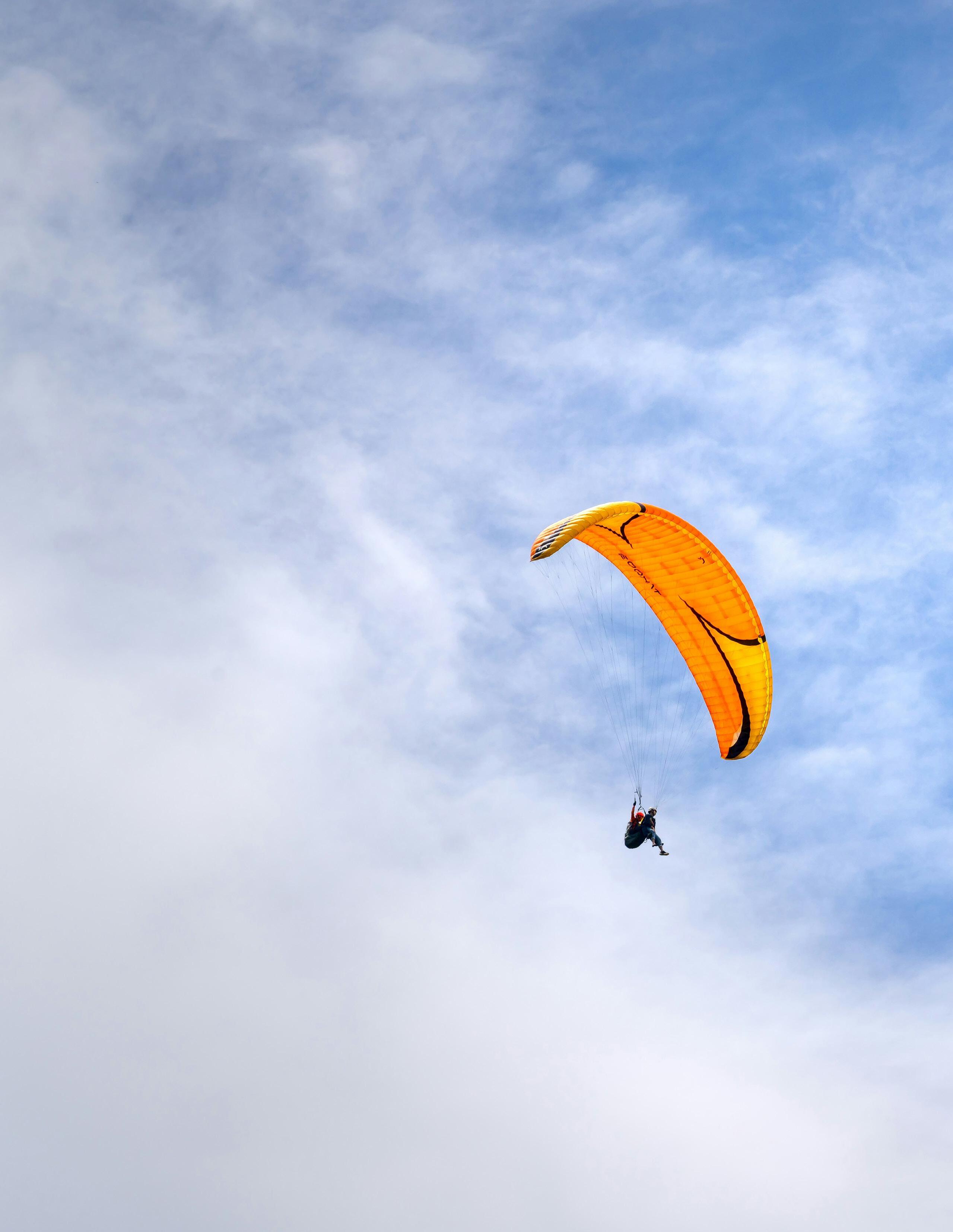
moment it occurred to me that at no time did I ever actually see Gilly during the jump, nor did I ever feel his weight on my back. Tandem jumping is a surprisingly solivagant experience.
It was time for a flying lesson. A long, nylon cords hangs down on each side of the parachute. Pull the left handle, and you turn left; pull the right one and you twist right. These actions mimic the ailerons on the control wheel of an aeroplane. But wait. There’s more. If you pull down on both handles simultaneously, your sink rate increases, and if you let them go back up the sink rate decreases, just like moving the throttle lever. Unlike an aeroplane, however, a parachutist is always coming down—unless you catch a powerful
updraft. In this case you can turn into a popsicle. It has been known to happen.
To my surprise, I not only lost track of time, but I also had some difficulty with my spatial awareness. As we approached the drop zone, I estimated my altitude to be 300 feet, yet Gilly told me I was still at 1,000 feet! A tight circuit soon followed as we positioned ourselves for landing: downwind, left base, and then a short gate onto final. Gilly increased the rate of descent at the last minute by spilling some air, and then he relaxed the shrouds, and we floated effortlessly into the flare. Forget GEAR DOWN—it’s FEET UP! The next thing I remember was sliding on my back to a stop, the parachute collapsing around me like a feather. No
sooner had I stood up than I saw my cousin floating in on short final behind me.
There was laughter, a vigorous handshake, and a certificate.
Mostly, however, there was just a sense of nervous relief. I made it! Congratulations! I don’t consider myself a thrill seeker, but this is one thrill I am glad I didn’t miss…
People ask me if parachuting is dangerous. I point out that statistically one in every 500,000 die tandem jumping; but 19,000 people die in Japan every year in the bathroom. Do the math. After reflecting upon my own experience, I have come to the conclusion that my decision to make a parachute jump was not unlike my decision to retire from flying—sometimes you just have to let go.

CLEARED FOR TAKEOFF
Stories and Advice from a First Officer
By Dane Campbell WestJet Pilot and VFC Alumnus
First and foremost
I’d like to thank the Patrician for giving me the opportunity to write this article. The Victoria Flying Club is a very special place to me and I’m always happy to get involved any way I can. Before sharing some tips and advice for current students I’ll start by telling my own story.
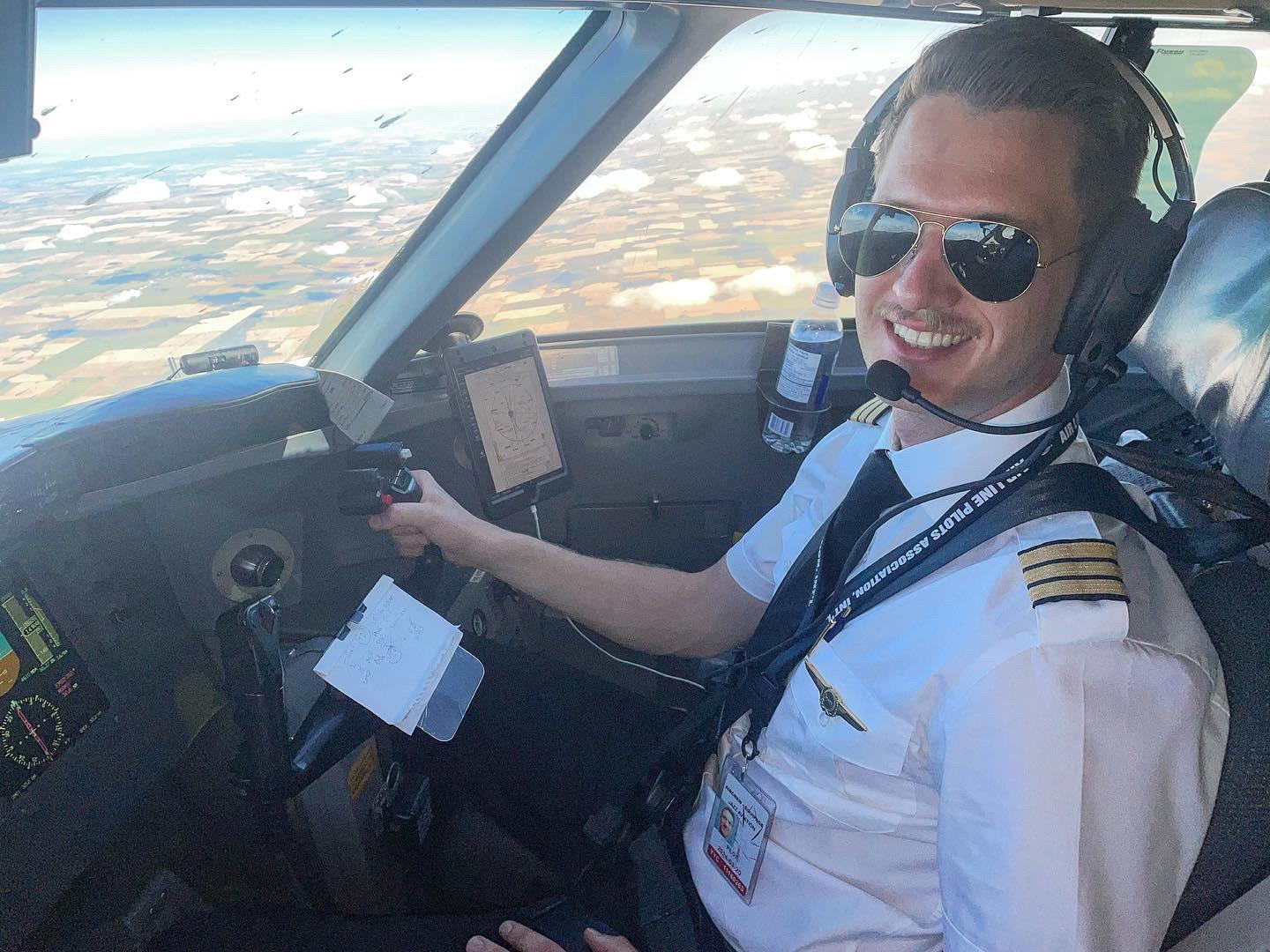
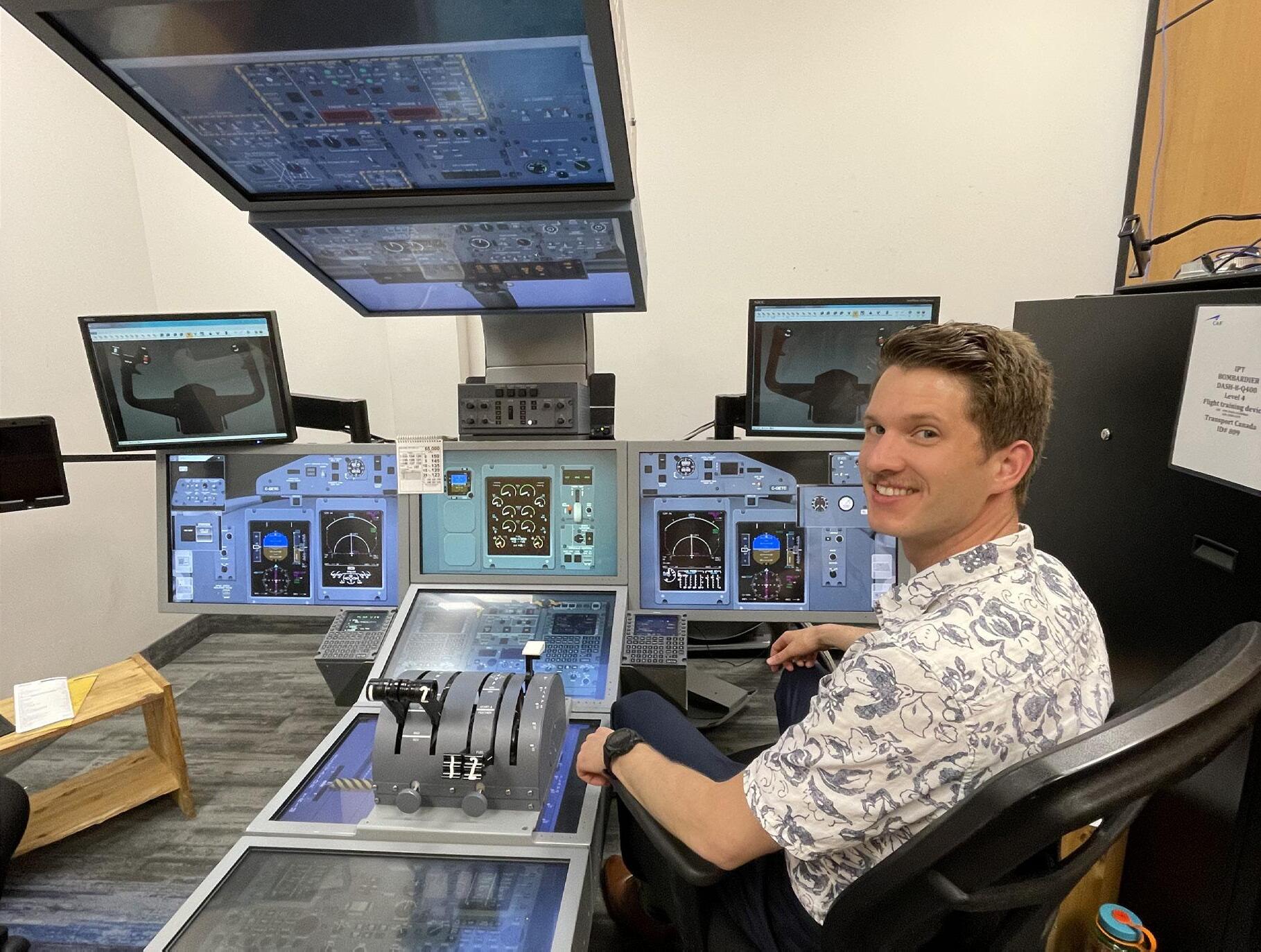
For those of you that don’t know me, my name is Dane Campbell. I am a First Officer on the Boeing 737 at WestJet and a Victoria Flying Club Alumni. I didn’t always foresee a career in

aviation. Upon graduating from Reynolds Secondary School in 2009 I decided to go to the University of Victoria. To be honest I was really unsure of my path at that time and ended up graduating with a Bachelors Degree in Economics in 2013. I was hired by the TD bank as a Customer Service Representative (Bank Teller) and was eventually promoted to a Financial Services Representative (Financial Advisor) after completing my IFICS (Investment Funds in
Canada) designation from the Canadian Securities Institute. I quickly discovered the world of banking was not for me and so I left the Bank. I went through a series of other financial jobs that included Tax Processor and Payroll Specialist. I kept building my education and completed the Payroll Compliance Practitioner designation and even entered the CPA program in hopes of becoming a Chartered Professional Accountant. At this point I realized I needed an even
bigger change in direction from the world of office jobs. My father is a pilot so I always had the idea in the back of my head but never truly considered it as a career for myself.
In January 2017 I went for a Discovery Flight at the Victoria Flying Club and quickly decided that was it. Right there and then I signed up for flight lessons, quit my office job and committed to a career
as a Pilot. Simultaneously I was able to get a job working the line at the flying club which allowed me to completely immerse myself in aviation. From this point on whether I was studying, flying, or working, I was at the Flying Club all day every day.
I also went through the application process for the Royal Canadian Air Force, successfully completing the Aircrew Selection
Course in Trenton, Ontario. Ultimately, I decided to stay in the civilian world.
By June 2018 I had completed my Commercial Multi-IFR ratings and was looking for my first job. Thanks to a recommendation from a friend and some great timing (often the case for pilots who land their first job), I accepted a job in Hay River, Northwest Territories. I immediately

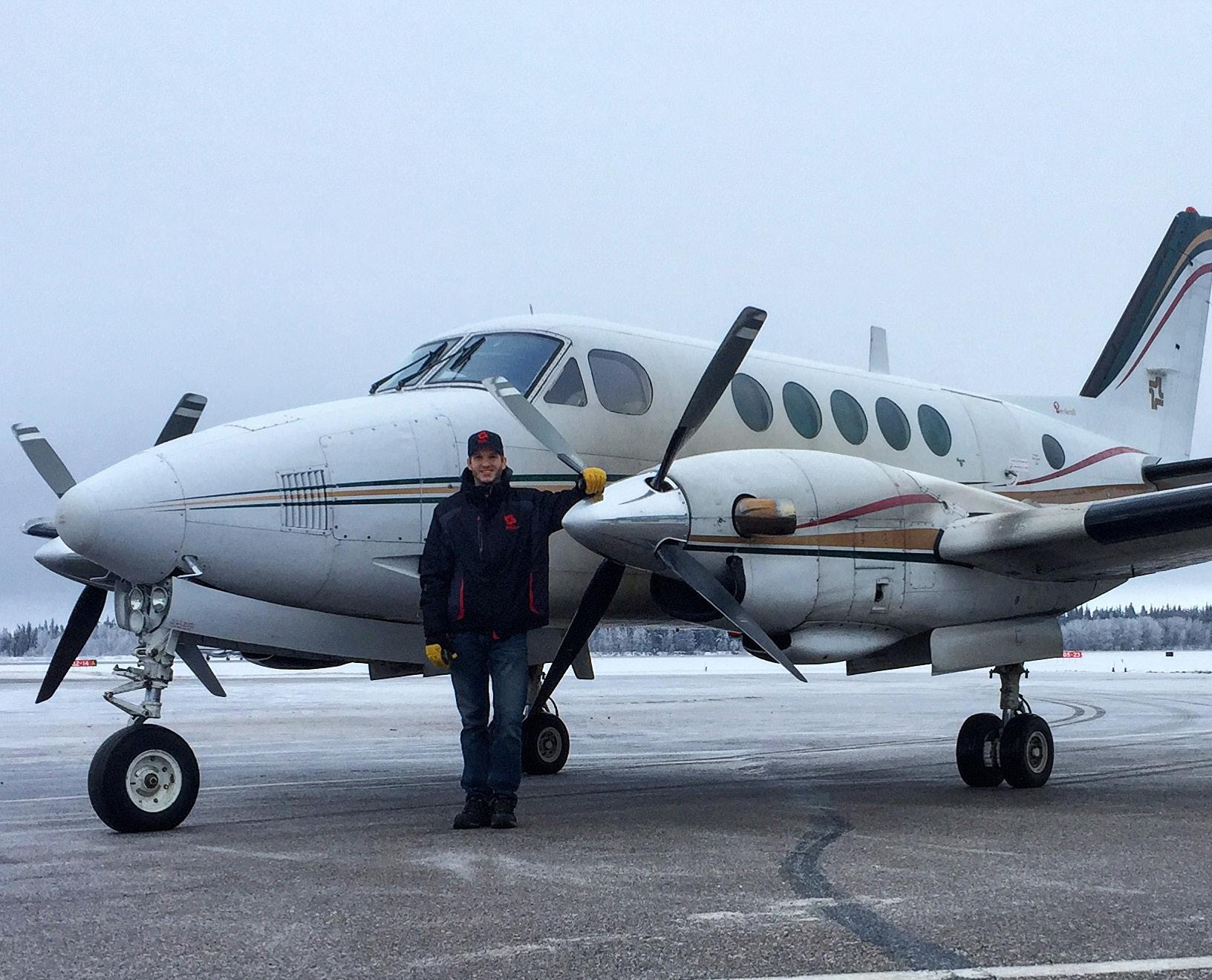
packed up the car and moved to the small town on the south shore of Great Slave Lake. I was fortunate enough to start flying right away as a First Officer on the King Air A100 and Pilot in Command of a Cessna 337 Skymaster. After a year the work dried up and I took a job flying Medevac on a King Air 250 for Kenn Borek in Inuvik, NT. One year later I received the dream offer from Jazz for a ground school starting late March 2020. I put in
my resignation and went on a holiday with my partner (wife now) filled with excitement and hope. Although as you already know the world had other plans for us. Of course, due to Covid my Jazz ground school was cancelled and my former employer would not hire me back. I got stuck in the middle with terrible timing and no prospects. Eventually the Victoria Flying Club was nice enough to hire back on the line since there were no hopes for flying
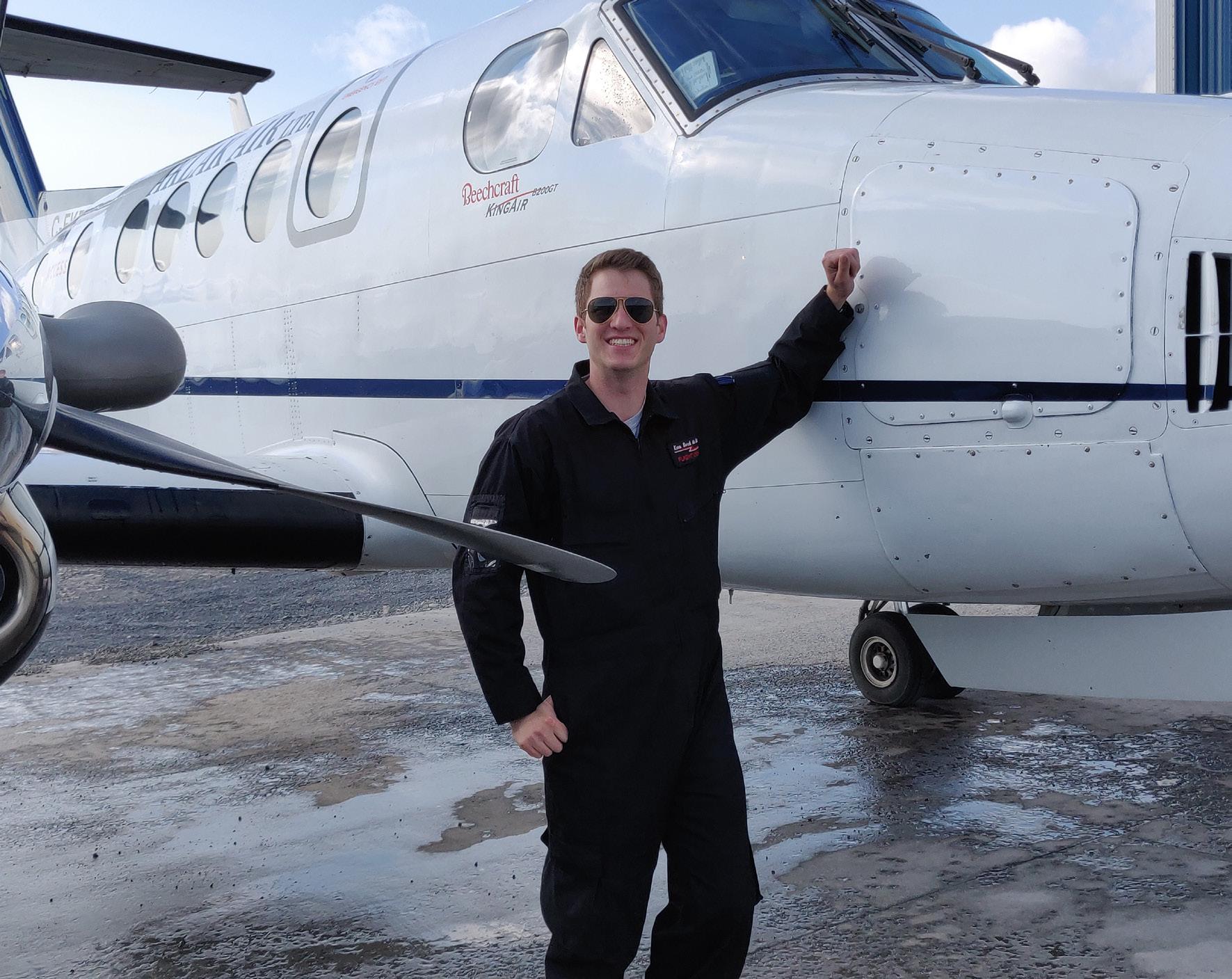
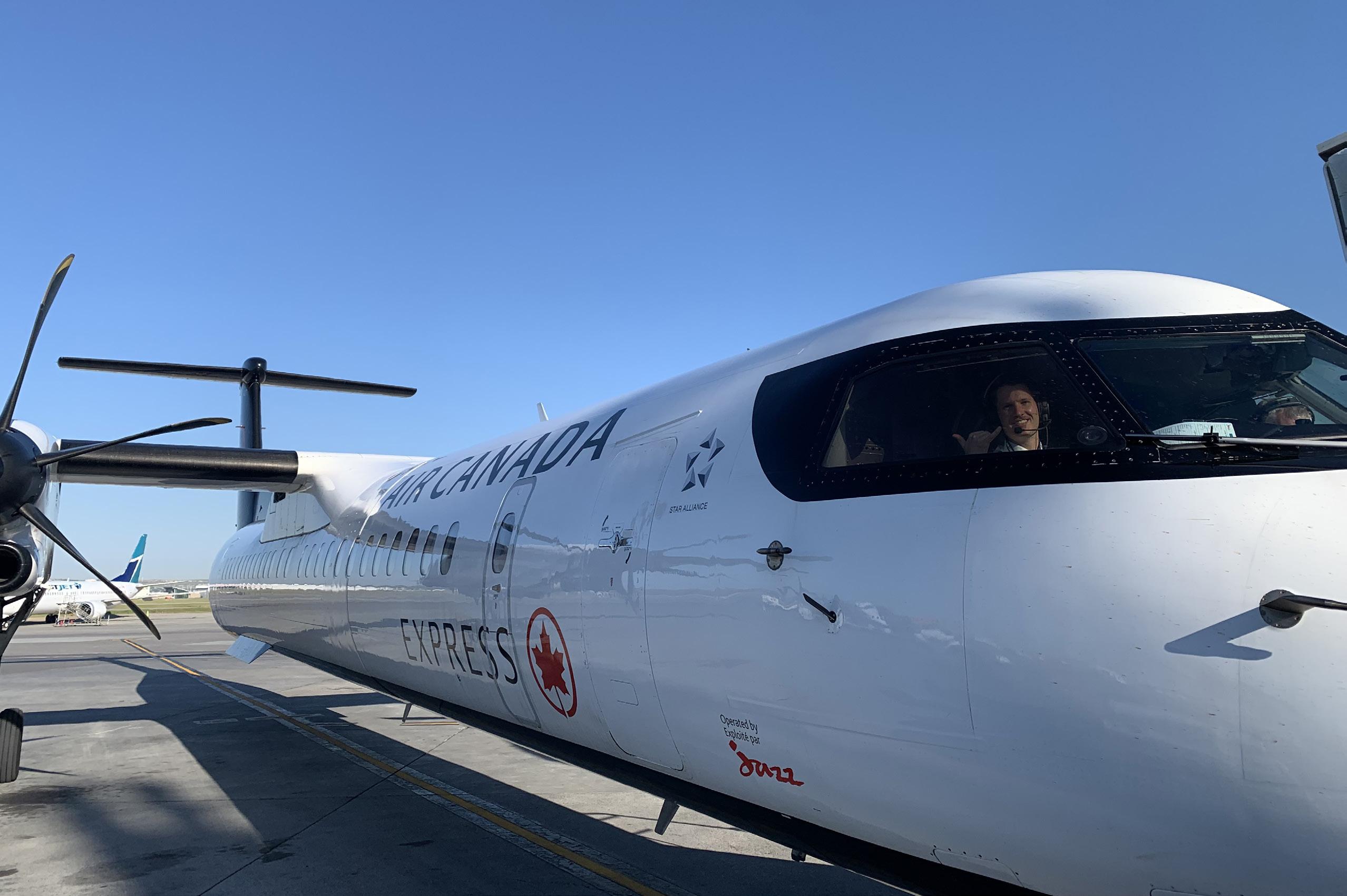
jobs. After some time my first employer in Hay River decided they had enough work to hire me back for one year. So, once again I packed up the car and moved to Hay River. Fast forward a year and Kenn Borek also hired me for another year of Medevac flying Inuvik. Unfortunately my ATPL exams expired before I could 1500 hours so I had to study up and write them for the second time. I literally had to repeat every step of my aviation career up to this point. Eventually the airlines picked up and Jazz called with a new ground school date for me in 2022. I spent just over a year flying the Dash 8 Q400 around the West of Canada and the United States, gaining the 705 Airline experience I was looking for. In 2023 I was ready for the next step and accepted a job flying the Boeing 737 at WestJet. The last 2 and a bit years have been the best of my life flying the jet around Canada,


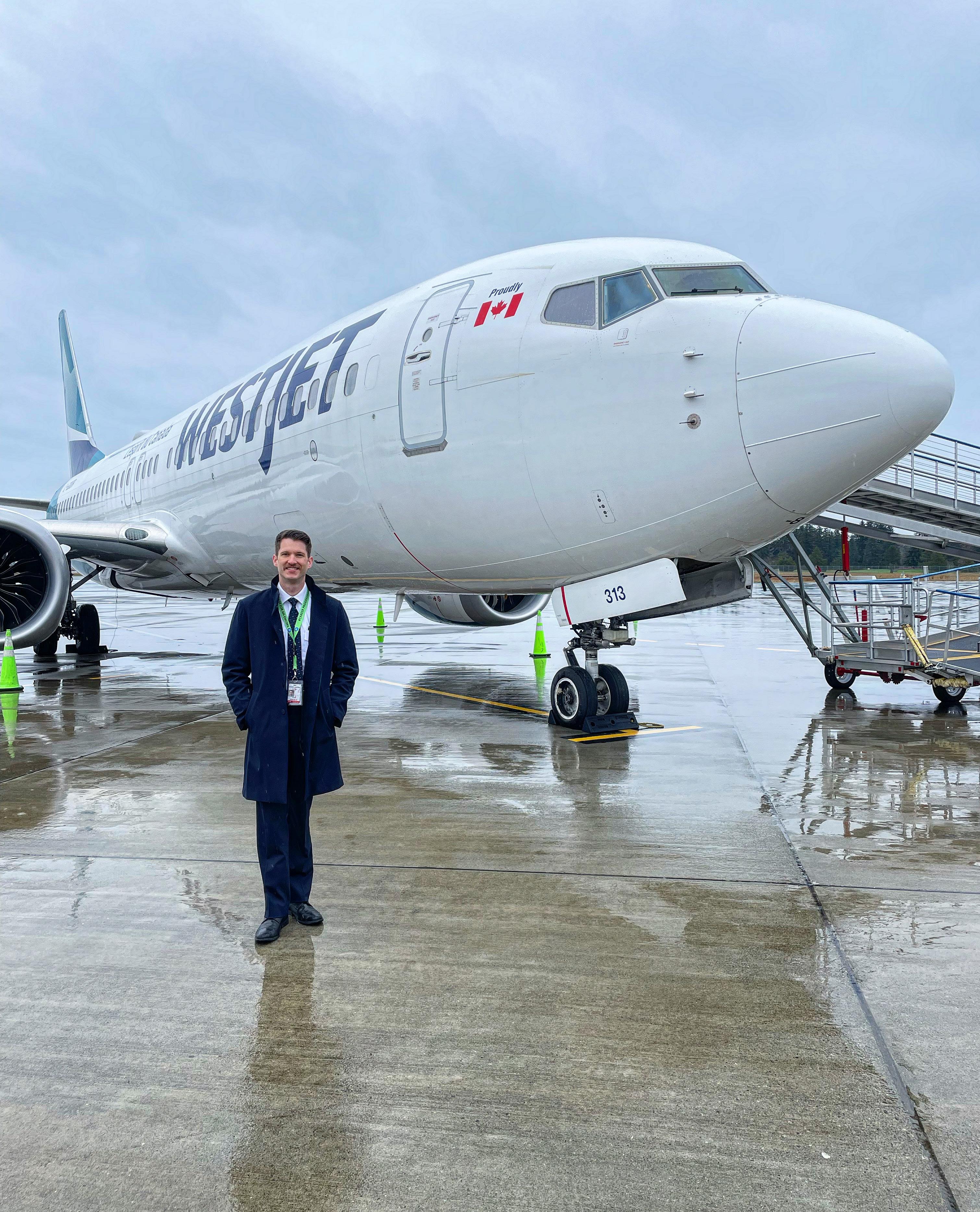
the US and Mexico. Hawaii is my favourite destination and I’m fortunate enough to fly there regularly. It seems like just yesterday that I walked through the doors of the Victoria Flying Club and changed my life forever. Several years ago I wrote a similar piece for the Patrician highlighting tips and advice to be successful in your flight training as a new pilot. I still believe in what I said and so I will say it again. Learning to become a pilot is one of the most challenging and rewarding things you can do. If you wish to be successful you must commit yourself completely. Properly study and review all the material your instructor recommends before each lesson. If you show up unprepared not only are you wasting their time but more importantly your
own. Try to fly consistently and regularly so your skills do not deteriorate between lessons. Lots of pilots get stuck in their training because they delay getting the written exam portion of ratings out of the way. Obviously this is the less fun part of training but it is equally important. Force yourself to set dates and book exams. Put in the time to properly study so you can get that part out of the way and focus on flying. You don’t want to end up delaying flight training for the next rating because you still have an exam
to complete, especially when the weather is nice! When you finish all your licences and ratings you will face the monumental challenge of landing your first flying job. In aviation, a lot of this comes down to the right time, right place situations. Your timing and contacts will play a huge part. Things you can do to better your chances include networking. Make the effort to chat up other pilots. Find out who is hiring and how you can introduce yourself. Brush up your resume and send it everywhere. When it comes to your
first flying gig it’s best to not be too picky. As a low time pilot you will be super unappealing to employers (sorry but it's true!) and the most important thing is to get your butt in an airplane and start building hours. In the beginning it really
doesn’t matter what type of hours. Be prepared to move anywhere and start in any role. Don’t be hasty to pass up an opportunity with a company that shows interest in you because they want you to start on the ramp. Ramp to flying
jobs have always been fairly standard, even when demand for new pilots is great, and it’s not always great. Don’t be discouraged, it’s often the quickest path to an excellent flying opportunity. It’s super important to maintain good

relationships with your employers and never burn any bridges as you progress through your career. The only consistency in this industry is inconsistency and you never know when you’ll be asking a former employer to hire you back. In my case, I went back through all three of my first jobs in aviation after Covid.
I love working for a mainline airline. It’s all about safely connecting
passengers to their destinations, while getting to explore new parts of the world yourself. Every flight presents different challenges and the experience has been extremely rewarding. If you’re reading this article as a student pilot with big aspirations just know that you can end up here too.
It will take lots of hard work and sacrifice but the journey is an epic adventure
and the destination is a dream come true. Keep up all the hard work and best of luck with all the flight training. Feel free to get in touch with me for advice on making it in commercial aviation. I’m always open to mentoring and helping in any way I can.
Thanks for tuning in.
-Dane
danecampbell44@gmail.com
Instagram: @flyboy_dane

GROUND SCHOOL SCHEDULE
PRIVATE PILOT LICENCE GROUND SCHOOL
PPL #25-11: NOVEMBER 16, 2025 TO FEBRUARY 22, 2026
Sundays (09:00 - 16:00)
Instructor: Neil Keating (Zoom attendance possible by arrangement)
PPL #26-01: MARCH 01, 2026 TO MAY 24, 2026
Sundays (09:00 - 16:00)
Instructor: Neil Keating (Zoom attendance possible by arrangement)
COMMERCIAL PILOT LICENCE GROUND SCHOOL
CPL #25-15: FEB 2025 TO JULY 2026
Saturdays (09:00 - 16:00)
Instructor: Ken Kosik, Neil Keating
INT: INSTRUMENT TRAINING GROUND SCHOOL
TBA. Expected on Sundays beginning in March 2026 to May 2026. Instructor: Warwick Green
Individual scheduling requests are available for Private Pilot Licence, Commercial Pilot Licence, Mountain Awareness Training (MTA), Remotely Piloted Aircraft Systems (Drone) Courses (RPAS) by request.
Individual tutoring is also available for PPL and CPL upon request.
Confirm your attendance with Neil Keating on cell at 204-291-9667 and VFC Operations (Russell) at 250-656-2833.


BEAVER TO HELSINKI
By John Addison Former VFC Instructor
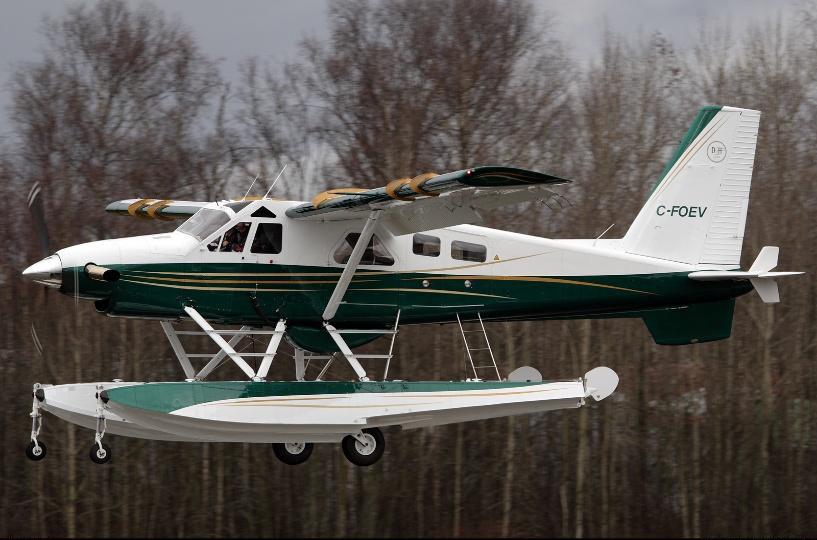
Earlier this year in June, Terry Forsyth, owner of Island Aero aircraft brokers in Sidney BC, asked if I would like to ferry an aircraft from Vancouver Island to Europe and of course I agreed. Terry had often asked me to prepare quotes for ferry flights to Europe, but as most of them never materialised I didn’t give this one much thought assuming he would get back to me if the deal went through.
I had often delivered various aircraft all over Canada, the US and South America and had flown a 210 back and forth across the Atlantic a couple of years earlier so was reasonably familiar with such a trip and expected, should it materialise, that I would simply wait for decent
weather, then a few short hops via Greenland and Iceland to the UK somewhere.
A couple of months later, in August, Terry asked me again, and the answer was still “yes;” after all, we were in the middle of a beautiful summer, the flying should be reasonably straightforward. Time passed, and I forgot all about Terry’s ferry flight until in mid-October, when he calls to tell me the aircraft is ready to go. October? To fly a light aircraft across to Europe I’ll probably have to take the northern route via Frobisher and Sondrestrom to avoid the 680-mile leg commonly flown by ferry crews between Goose Bay and Narsarsuaq in southern Greenland. Doesn’t he know it’s winter up north already? Then he drops the bombshell …. it’s a Beaver on amphib floats! Slow is
an understatement, maybe the only thing slower would have been the Mark1 Beaver which managed 70kts in 1915 and, sensibly, never went anywhere close to the North Atlantic. At least it was a turbine powered Beaver.
One should perhaps be a wee bit more circumspect before blindly agreeing to do these things.
Information from Terry when answering my questions about such trifles as aircraft speed, range etc. has been a little sparse, but he does tell me the aircraft’s destination is St Petersburg … well, I wasn’t expecting that! I had flown from Iceland into the UK, The Netherlands and Denmark but never across the Norwegian Sea. It seems that the buyer is a Russian banker living in St Petersburg who
landing in Helsinki
intends to base the aircraft there and use it to fly up and down to his summer camp somewhere around the White Sea. In my airline experience I had found airports and airspace to be pretty much the same all over the world, with the singular exception of Russia, it’s different; or was the last time I went. I just hope I can find somebody to look after the Russian bureaucracy I’m bound to encounter, as I’d had experience of its interminable quagmires in Moscow and
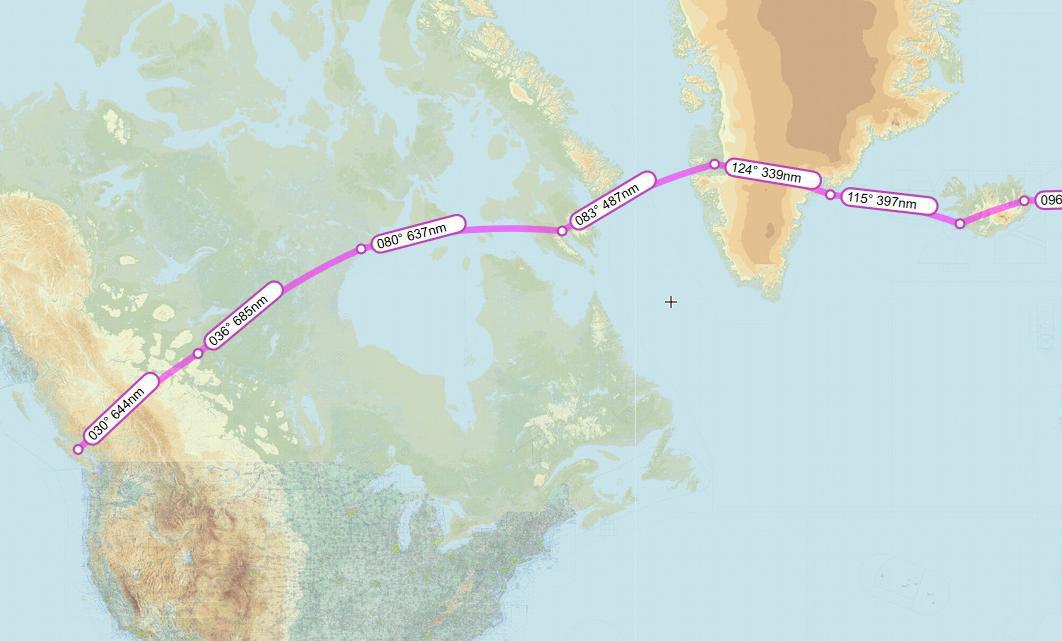
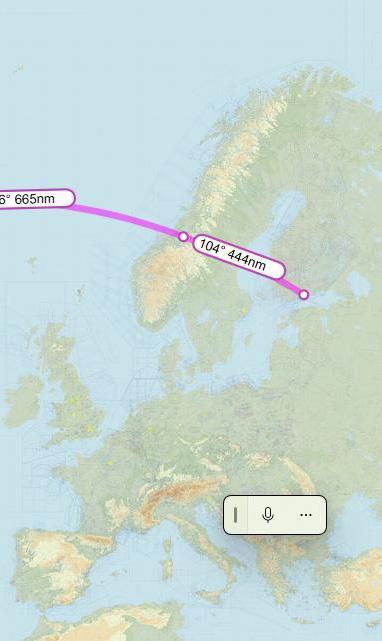
wasn’t looking forward to having to plough through it once again. Anyway, I’ve enough data to begin planning a rough route to St. Petersburg and plan to go via Fort MacMurray, Rankin Inlet, Frobisher, Sondrestrom, Kulusuk, Reykjavik, Egilsstadir, Trondheim and Helsinki. 4,700 nautical will take roughly 45 hours flying time, 9 days minimum, more likely a couple of weeks, maybe more.
The very thought of crossing the North Atlantic
in a light aircraft will scare the heck out of most sensible pilots, and with good reason, for there were many aircraft that started out to cross that piece of ocean which were never seen again. However, the odds of engine failure or some such thing over the North Atlantic are no greater than over the Lower Mainland countryside; so apart from an engine failure, the only difference is weather and with the Beaver’s range, an absence of alternate airports. North Atlantic weather can
DHC-2T
be foul, from every sort of precipitation imaginable, through screaming gales to pea-soup fogs. Clear skies with favourable tailwinds have been reported over the North Atlantic, but I believe such reports to be the stuff of dreams, I’ve never seen them! Patience, and the ability to interpret forecasts will usually level the playing field and result in the North Atlantic being as safe as anywhere else.
So, with the departure date having now slipped further to October 30th, I arrive in Campbell River to
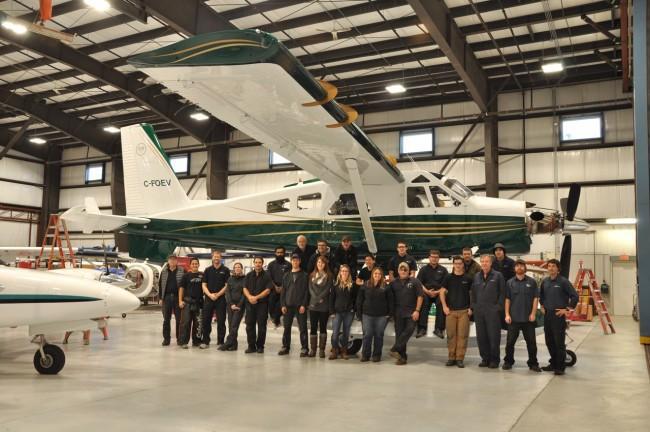
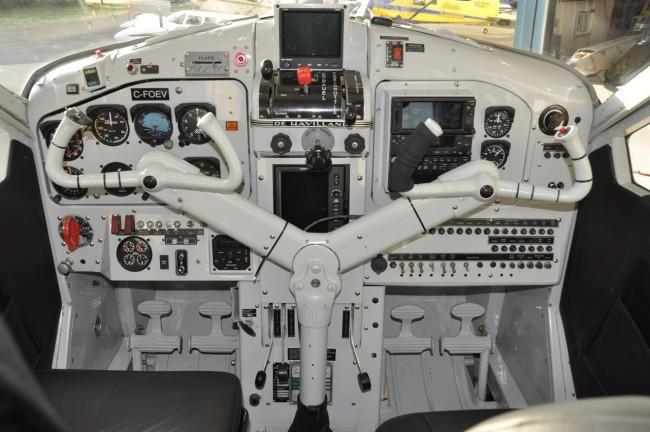
meet with Bill Alder, owner of Sealand Aviation. Bill shows me the aircraft, and it is obvious that he, along with everybody else at Sealand, has taken great pride in completely rebuilding it even if they can’t quite fathom the idea of flying it across the North Atlantic. Bill and his team have done an amazing job rebuilding it from stem to gudgeon; new interior, new panel, new paint, and, of course, a P&W PT6 engine. This Beaver really is a beauty.
Now that I've seen the aircraft, I'm keen to learn about its new systems and
start asking Bill a ton of questions. By way of reply Bill tells me that he would like to come along on the flight, which is a great relief as he is obviously intimately familiar with every nut and bolt, and if the guy that built it is willing to fly in it, that does wonders for my own peace of mind. So while Bill busies himself with some last-minute details such as organizing life-rafts, immersion suits, and all the other emergency goodies I have a look at the aircraft.
Now I’m really glad Bill is coming along. In addition to the standard fuselage tanks,
Sealand has added wingtip tanks and a belly tank for the extra kerosene the PT6 needs, the extra fuel weight being offset by the lighter engine. With an internal turtle bladder tank for the ferry, we will have around 1,200 litres, or 7+45 hours of fuel which is roughly 850nm in still air at 110KTAS. Hmmm.
Bill has got us a ferry permit allowing us to fly overweight; just as well as we'll be overweight before we even step into it … even with the overweight allowance!
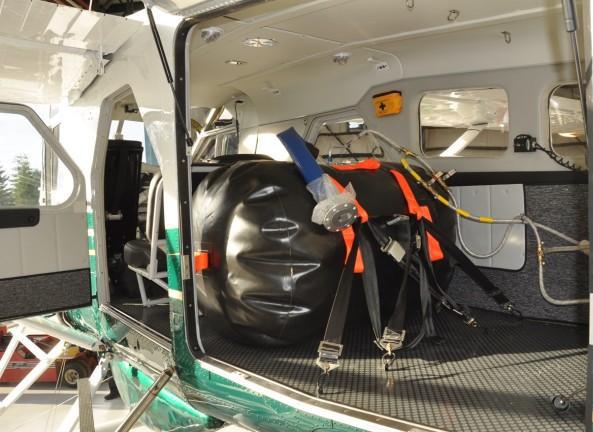
Bill's only concern at this point (and you should always listen to the guy that built the thing), is that his bladder doesn't have the capacity of the turtle bladder pictured. Well, I've stopped to pee before, just not stopped on the North Atlantic !
Finally all is ready; we've filled every tank to the brim and we're off, sort of. A bit like that fuel tank really, as we 'turtle' rather than 'hurtle' down Campbell River’s southeasterly runway. As we wobble Eastbound toward the Homathko Icefields, we are clearly going to have to fly between the rocks as we will never reach any sort of cruising altitude to fly over them. Beautiful day though, smooth flying on top of a layer of cumulus cloud. No more than intrepid aviators deserve.
All’s well until around Puntzi Lake where the weather starts to turn, and with marginal VFR and light snow falling I decide to stop overnight in Prince George. The weather is messing us about already.
October/November weather over the North Atlantic is predictable for its unpredictability; the stability of the summer’s anticyclonic high is past, and winter’s
has yet to arrive. In this shoulder season, I’m going to have to find the pauses between fronts, if there are any. I’m really going to have to watch the freezing levels, as anything wet between 0° and -10° is going to be full of ice and an amphib Beaver is possibly the worst aircraft imaginable for carrying it. Bill knows that we may well be spending more days grounded than flying and the owner, always impatient, has been made aware also. One of the attractions about this sort of flying is that I can do things my way, which means never being pressured about time and weather delays. Once Terry had confirmed the trip I began to look at the weather patterns to get some sort of idea of where there may be opportunities for us. November is a very unpredictable month as the winter pressure patterns haven’t settled in yet and daylight gets shorter. I’ll not plan to fly at night as I’m pretty sure I’ll never get the ceilings and visibility I want for night flying and besides, this is only a ferry flight. The weather forecasts are not promising anything except confusion, but hopefully I’ll have a better idea before leaving Frobisher.
Beaver to Helsinki
We are going to be limited to one leg each day owing to winter's shortening days being made even shorter with our easterly progress across time zones.
The next day is perfectly flyable, and the 4-hour flight to Fort Mac gives me the opportunity to sort performance figures. Following refuelling, it seems that using 75% N2 and 45psi torque burns 160 litres per hour including start, taxi, and take-off. That'll do.
Full of energy is Bill; before heading to the hotel in Fort Mac, he decides to fix a fuel leak he’s spotted, so he hops onto a forklift, removes a wing-tip fuel tank, takes it apart, reseals a leaking gasket and puts it all back together again. Just like that, took him about an hour. I think he's done this before! However, he bathed himself with kerosene; a smell that was, I suspect, still with him as he walked through his front door a few weeks later.
Now we head off to Rankin Inlet. The weather is
a bit of an issue today, with 3,000’ overcast and visibility of 5 miles at best, so I guess it’s time for me to earn my nickel. It will take close to 7 hours to fly the 700 nautical miles today; maximum range for this Beaver. This is the longest leg of the trip and we’re still not halfway across Canada. The low grey ceiling is now ragged, around 1,000 to 1,500 with 1 to 2 miles visibility and beginning to blend perfectly with the grey snow-covered ground. There is now no visible horizon at all, classic whiteout conditions. To be able to see the ground with any sort of forward visibility, and to avoid hitting it, flying at 500’agl is the best I can do.
We are well north of the tree line, and with no trees or even rocks to break up the grey monotony, and with another 4 hours to fly in these conditions below 500', it’s time for some help; so I engage the autopilot in roll mode to keep the wings level and control the pitch manually with a touch of nose up trim (so that inattention will result in a climb, not a descent !). The aircraft seems completely fault free so there is nothing for Bill to do apart from sitting, Buddha-like, on top of the bladder tank when we’re feeding fuel from it.
After transferring the bladder tank fuel I give Bill the flying to do, and after a short while he becomes perfectly happy flying along at 500’, so I can
attend to the aircraft's new Garmins until I'm happy that we have 3 useful independent GPS systems, including my Foreflight. Magic stuff –Foreflight - how could we possibly get lost? We've certainly come a long way in the navaid department in the last 50 years; beats the heck out of Decca, Gee and Astro navigation. Rankin shows up just where the Garmins say it should … I really like this stuff! Foreflight won’t get us across the ocean, so I have downloaded Jeppesen VFR and IFR charts and approach plates for the balance of the route beyond Frobisher. Once landed in Rankin Inlet, we tackle the fuelling which takes a while. The belly tank is very difficult and slow to fill so we decide not to use its fuel unless we need our 60min reserve. With a fuelling procedure now down pat, we put the aircraft to bed and head off on the very short drive into town. Bill had scrounged a truck for us, he's really good at this sort of stuff. Rankin is not large; maybe 300 yards one way, and
500 the other. This is my first visit, and it seems like a bit of a "one-dog” town so I'm quite looking forward to exploring. Little did I know.
We wake the next morning to solid grey in every direction in thickly falling snow, I can barely see across the street. Our first day grounded, I hope it’s the last one; let’s see what delights Rankin has to offer the stranded traveller.
A kind local lady in the hotel had offered to wash Bill's kerosene-soaked clothes: "I like doing laundry; coca cola in the wash will get rid of the smell ..." she says. She may indeed have said, but it didn't.
Now it is Bill’s time to shine; he grew up in Dawson Creek so should be used to this weather. With Bill driving Moses' borrowed truck, we spent the day driving around in circles absolutely lost. Just as well you don't need a sense of direction to build a Beaver or fix a fuel leak. The locals were beginning to stare at us as our pick-up truck continued is seemingly
aimless pretzel-like progress around town. Somebody should have warned me …. I must admit though, it was tough. The street signs are written in a form of Inuktitat script which looks to me like barbed wire. Another day though, and Bill
Beaver
would have cracked it for sure. Found good food at lunchtime, but nothing to eat after 6.30 when we tried for dinner ... go figure.
The weather forecasts are a bit hit and miss; I
day brings decent weather thankfully, so we roar off towards Frobisher; properly called Iqaluit nowadays but old habits die hard. It is another long flight, passing by Coral Harbour and Cape Dorset on the way; but it
driven to the Discovery Hotel very quickly and efficiently. 950 litres after a 6-hour flight. We feed from the main tanks to begin with, then transfer the bladder tank into the mains which takes
have to look at the source information that the forecasters use to get the bigger picture but it’s still impossible to predict much beyond 12 hours. The next
really is a beautiful day, so we enjoy the sightseeing. Frobisher is well used to ferry flights of all sorts, so on arrival we are fuelled and
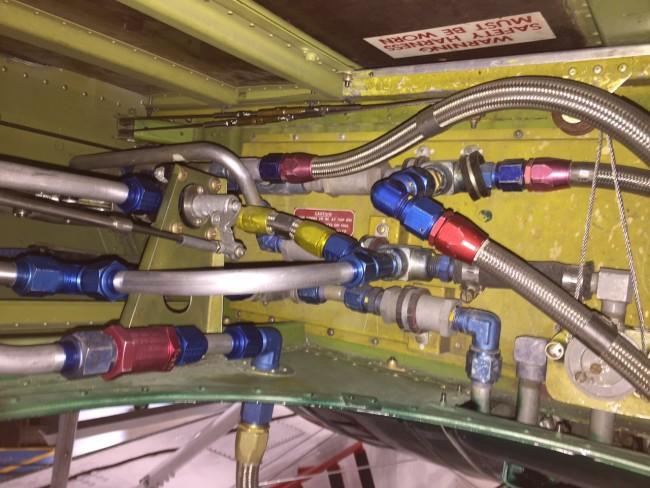
2 hours, then the tips, then front and rear fuselage. There isn't a lot of CofG latitude at our weight, so we are being a tad careful. Because the belly tank is so slow to refuel,
The fuel system plumbing Sealand added...
we don't transfer it but leave it full considering it as our reserve, there is an hour's fuel in it. Considering how awkward the aircraft's 7 tanks can be to fuel, especially if fuelling with the sometimestoo-large fuel nozzles, the fuel guys everywhere were more than patient.
We are halfway through this trip and still in Canada… However, now blessed with some more deservedly fine weather, armed with passports, Euros, and round two-pin electric wall plugs, we launch off to probably the most expensive place to fly to on the planet: Greenland in general, and Sondrestrom in particular. Needs must
with this aircraft, but the scenery en-route is amazing, immigration absent, and the sun is shining brightly…even if it is more than 30 degrees below zero on the ground. This is getting close to where Fahrenheit matches Celsius … It's really cold!
The hotel is empty at this time of year after a busy tourist season, and we saw no commercial flights at all. We had been offered inside hangar space for the Beaver at $700US for the night but declined despite being told that the price was entirely reasonable. They’re dreaming! We nearly had cause to regret this decision as the following morning the cold-soaked
battery only just managed to spin the engine quickly enough for a start, if slightly on the warm side, but start it did. ("Pratt & Whitney - Dependable Engines") so now we wait for several minutes for oil to warm and the aircraft to generally wake up. As we wait on the ramp the customs man finally arrives, but my gestures must have properly indicated that I wasn't going to shut down at any price, for he just shrugged and drove off. Bill wanted a stamp in his passport … too bad.
Off we go into another beautiful sparkling -30° morning, but the wheels won't retract; we'll have to sort this otherwise we really will be competing with the DH1 in the slow speed stakes. I point at the emergency gear handle; Bill starts pumping and slowly the wheels come up. This is fun, let's cycle them one more time just to warm up the hydraulic fluid some more. I don't think Bill was best pleased with my request, for it seemed like quite hard work as I watched him! Anyway, having departed and flown westward down
The 100-gallon Turtle Tank
Beaver to Helsinki
the fjord as we couldn’t climb much, and with the wheels finally where they should be, we turn back eastbound up the fjord. We are gaining the altitude we need to continue eastbound over the icecap so off we go flying at just a thousand feet or so above the ice. Grid MORA is around 10,000' here which guarantees 2,000' ground clearance but with such good weather, I’m happy at 7,000'. I doubt this aircraft had ever been anywhere near this altitude before, it’s a Beaver,
after all. We see all the detail in the ice, all the crevasses and fissures. The icecap looked perfectly smooth from my 747 at 40’000’ until you get down here for a good look at it up close and personal.
I have been keeping a close eye on a developing deep depression north of the Denmark Strait and the weather it is spawning and so far, it is behaving as predicted; today it is layering cloud up against Greenland's East coast. Cold heavy air
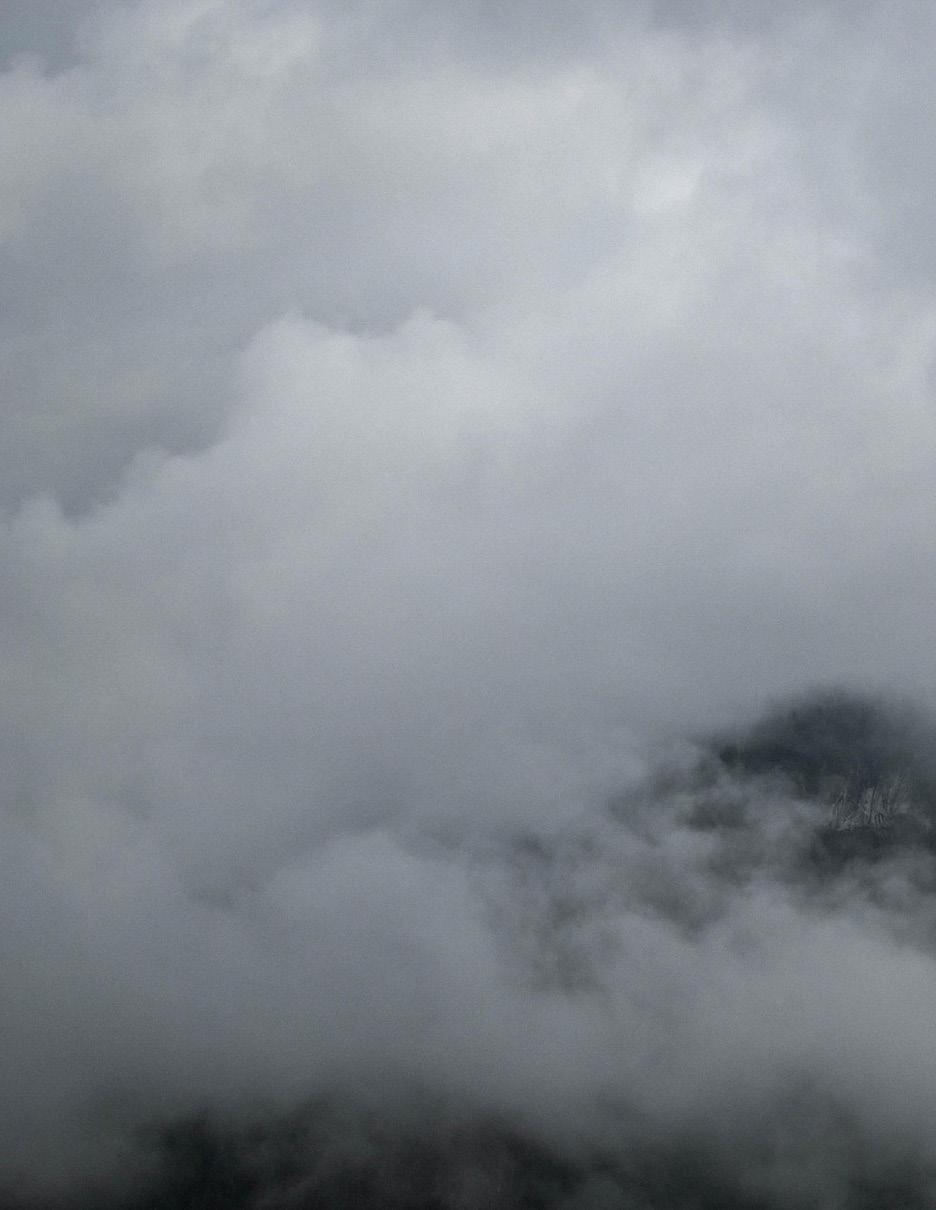
from the icecap causes the Foehn or katabatic winds that whistle down the fjords, so we have a surprisingly bumpy ride sliding down off the icecap, before sneaking under the weather and onto Kulusuk’s gravel runway.
Kulusuk village: fishing and sealing. The hotel is a little surreal, we are the only guests. Breakfast, lunch, and dinner put out for four; Bill, me, the receptionist, and the housekeeper. I guess that's everybody until after
Spring break-up. Excellent food - not sure quite what it was, didn't ask, but certainly fresh!
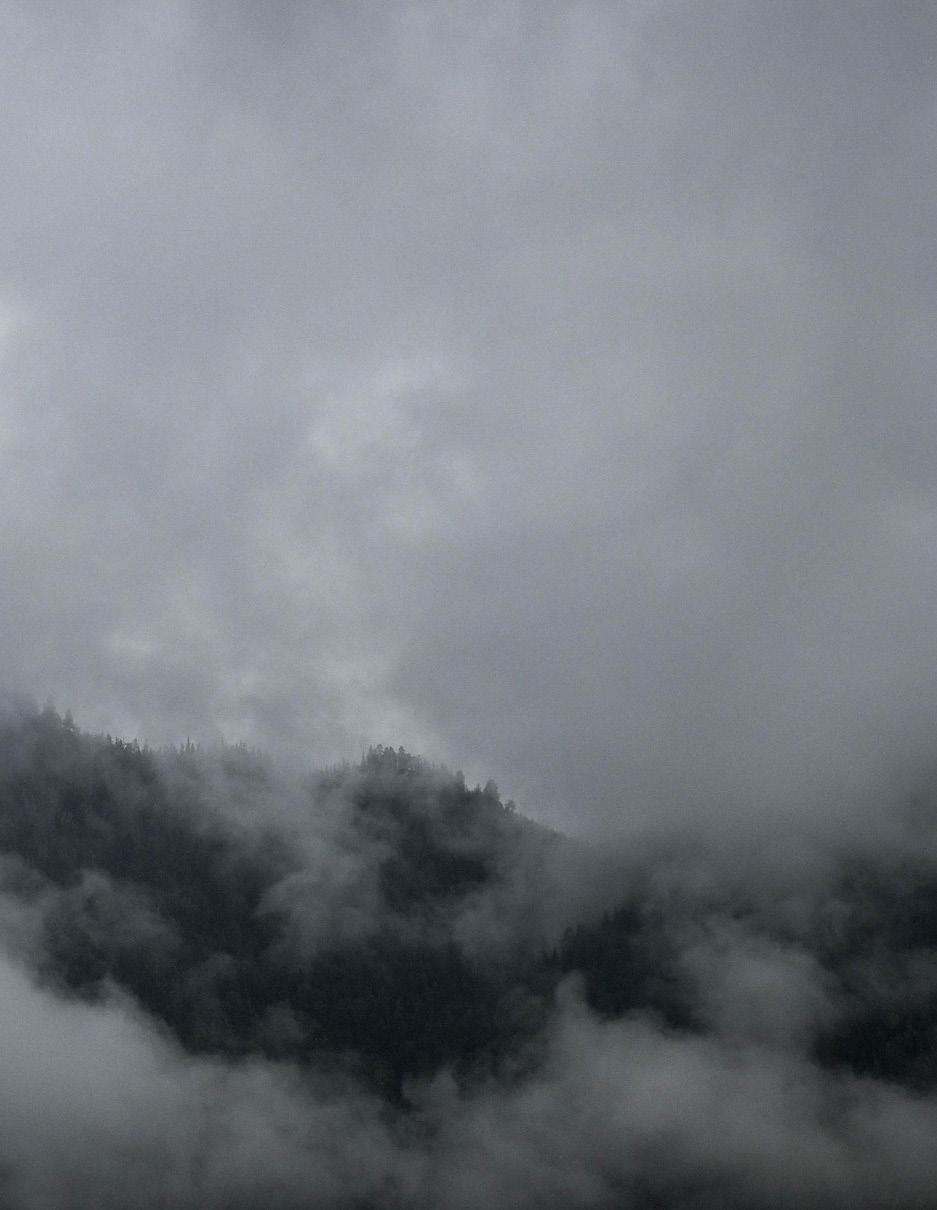
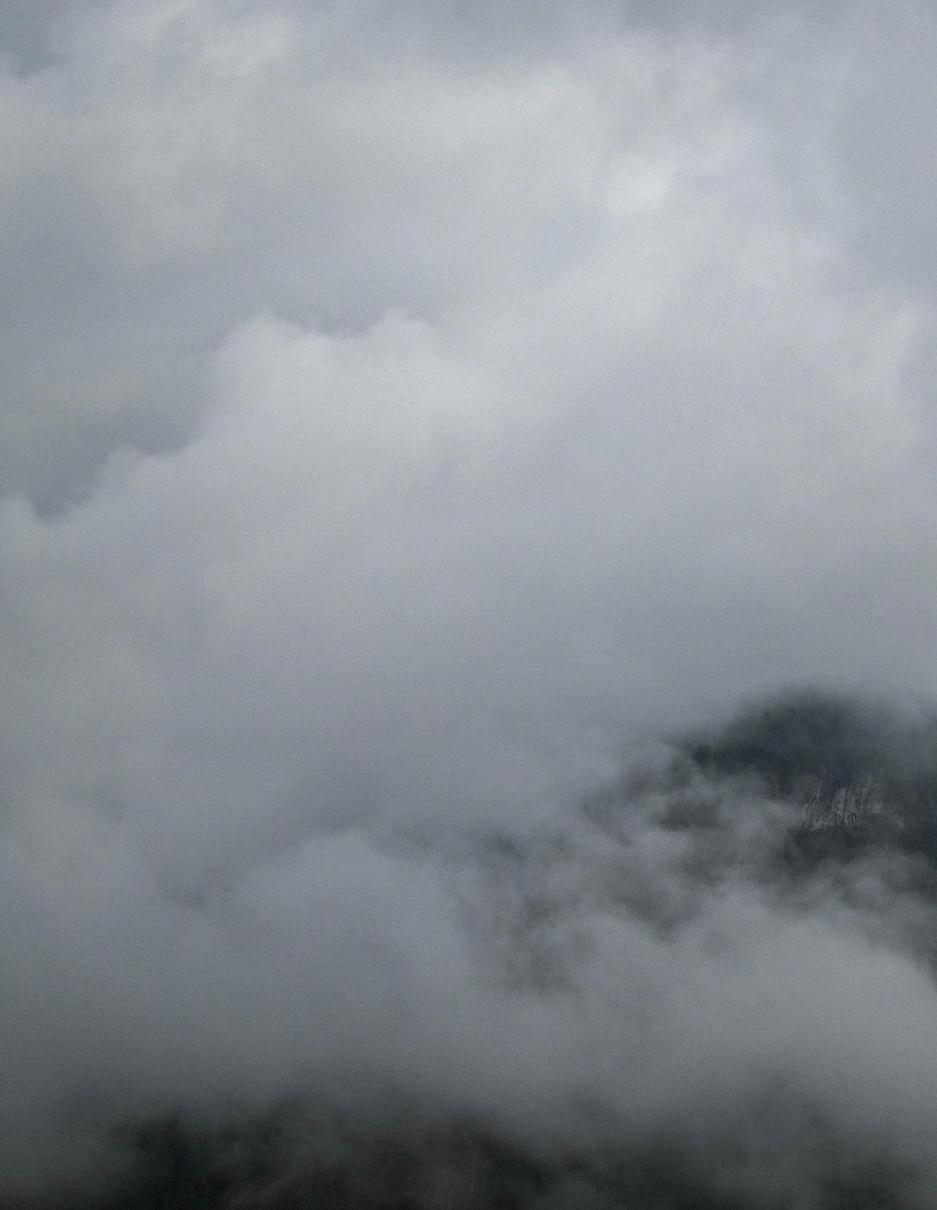
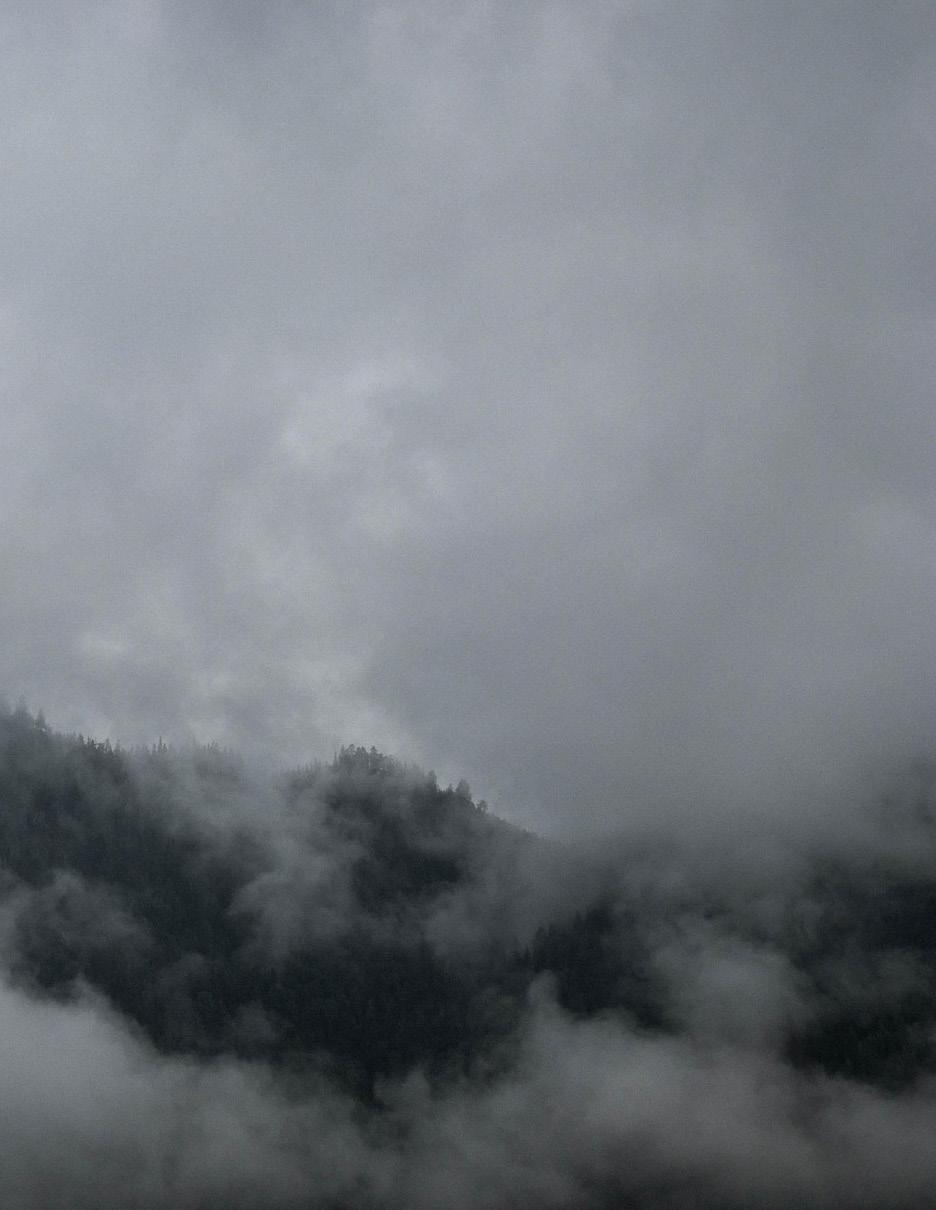
We could quite possibly remain stuck here in Kulusuk until Spring waiting for good weather; after all, it is the North Atlantic at winter's beginning. So I'm continuing to look hard at the weather and judging that the freezing level should stay around 1000', decide to go on to Iceland. The weather is perfect as we round the corner and head out to sea, sun shining, icebergs sparkling and after flying around a few of them for a look-see, we climb for the crossing to Reykjavik. This idyll doesn't last too long before Sod's Law and the Icelandic Low kick in and we are down on the deck again, dodging showers where the freezing level will be on the surface. Don't want ice on this aircraft ! So here we are, happily battling our way across the Denmark Strait at 500’ more like a boat than a ‘plane until arriving at Reykjavik, we climb 300-400’
up to circuit height to land. Job done. That’s the second low-level leg; it’s time for some easier flying.
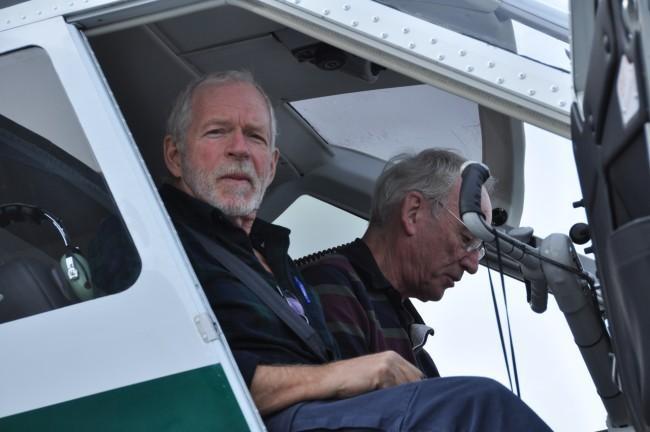
Here in Iceland we have a welcoming committee. Victor, the aircraft’s owner, has flown in to meet us and will accompany us to St.. Petersburg. This is his first glimpse of his purchase, so Bill spends quite some time showing him the aircraft before we all head into town for an excellent fish dinner.
The next morning is typically Icelandic except the wind remains calm, which is to say here in Iceland, below gale force. The cloud ceiling precludes
following ATC's preferred departure routing, so I just amble westbound down the coast, fly around Keflavik airport before following the southern shoreline all the way to Egilsstadir on the east coast. As it is Victor’s aircraft, I’ve put him in the left seat to see how he manages, so I’m thankful for the decent weather. Victor has something to do with banks in Russia and plans to use the aircraft to fly between St. Petersburg and his summer retreat somewhere in the White Sea area. He owns a 185 on amphibs so the Beaver shouldn’t be too much of a stretch. However, I am going nowhere near the salt
A photo of the prop.
chuck with him as I’ve yet to see waves less than 10’ tall so will leave the float segment of his training until St. Petersburg.
These small airports like Egilsstadir on Iceland’s east coast suit me very well. No fuss, no administrative
formalities or security to bother with, everybody is so friendly, and we can just get on with what we must do. Egilsstaoir is an ideal spot for us, being the closest Icelandic airport to Norway: just 2,500 people, comfortable hotel with wonderful food and a
good internet connection. Ferry pilot heaven.
Tomorrow, we have 665nm to fly over one of the most inhospitable stretches of salt water on the planet.
The depression I’ve been watching is deepening and approaching the Norwegian Sea moving North-eastwards, it’s the same one that gave us grief in Kulusuk. I have been watching it develop since Frobisher; It has been travelling across the ocean from the Greenland coast more or less paralleling our track to the north, and is now passing north of Iceland forecast to track toward Norway’s north coast. It has shown 950mb (28.0”), much deeper than our Pacific lows. In theory, we could get a serious push from this as its counterclockwise circulation will be providing gale force south-westerly winds. Its cold front should be passing in the early morning bringing decent weather and strong winds. That’s the theory I go to bed with, we'll see what the day brings.
I’ve been up since before daybreak watching the progress of this storm and making a plan; it is still behaving much as advertised and should track
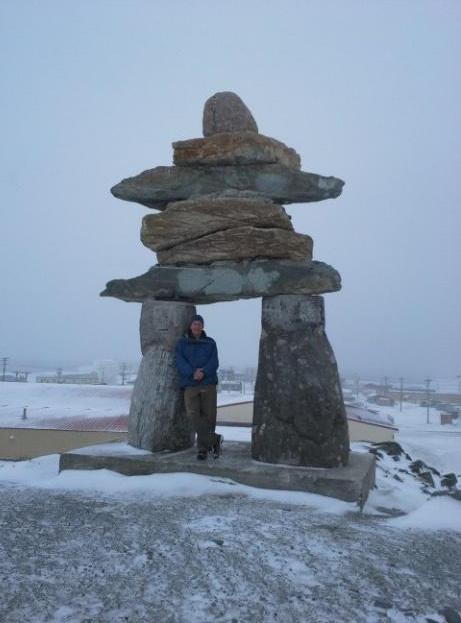
Me and Rankin's Inuksuk.
about 300nm north of our proposed track. The sun sets in Trondheim around 4pm so working backwards with 1 time zone to cross I would like to leave Egilsstaoir around 9. I want to avoid at all costs getting caught up in the weather associated with the warm and occluded fronts which follow the cold front as I’m quite sure that would be the end of us, but I do want to be able to take advantage of the wind, we’ll be like the stone in a slingshot slung toward the Norwegian coast.
There is always a balance between risk and reward, I just have to find it. Filling the tanks in a Cessna 172 for a 50-mile flight would, I suppose, be safer than starting with half tanks, but somebody might have to stay behind to avoid an overweight aircraft. If that were a 250-mile flight, you might have to think a little, a 450-mile flight and you might have to think a bit more. If I were unprepared to accept any risk, I would never have accepted Terry’s ferry request, Bill would have had to take the wings off and send the Beaver in a box. The challenge is to minimise risk. Knowledge and experience are key,
but careful planning helps even more. The point here, is that while many pilots would balk at the thought of flying the North Atlantic much less the Norwegian Sea with today’s weather, I had been monitoring this depression for the past 5 days, assessed all that the weatherman had to offer, and made a plan that I judged presented minimal risk.
So, this 11th day of the journey starts well enough, even sunny. I haven’t mentioned the storm to Victor; I’d rather he just focusses on his new aeroplane. Timing is everything today; our 9am departure time should keep
us well ahead of the storm’s warm and occluded fronts with the associated foul weather. We should get a serious push too, that’s the plan! Once airborne I won’t have access to any weather, I’ll just have to trust that I got the timing right.
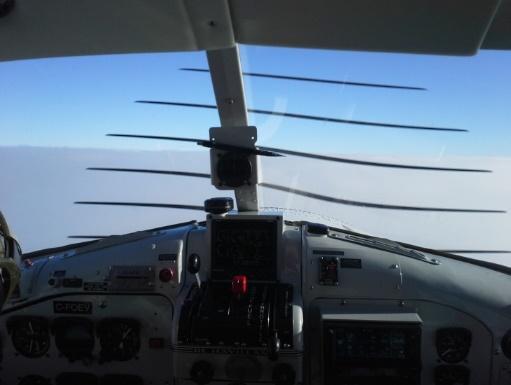
The first hour and a half is quite fine, we have a 20 knot push at 4,000’ and the cloud ceiling is just high cirrus (with serious mare’s tails!). With today’s tailwinds, we pass our point of no return pretty quickly and having done so, Sod’s law predictably kicks in and with the ceiling beginning to lower, I can absolutely feel the menacing presence of that storm now
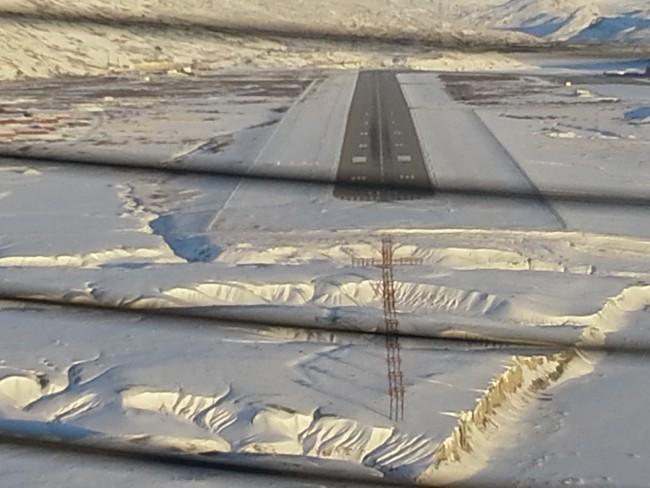
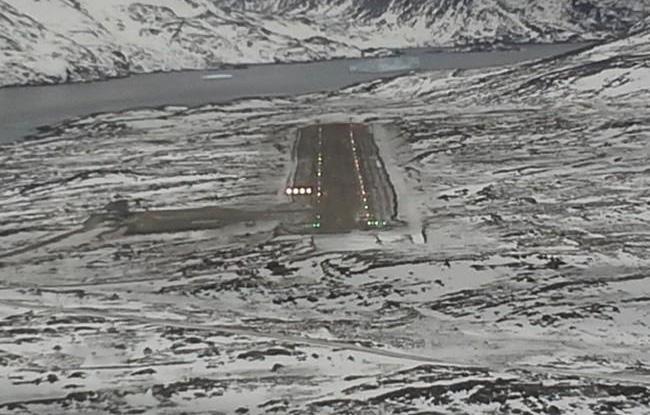
Final approach at Sondrestrom through the prop.
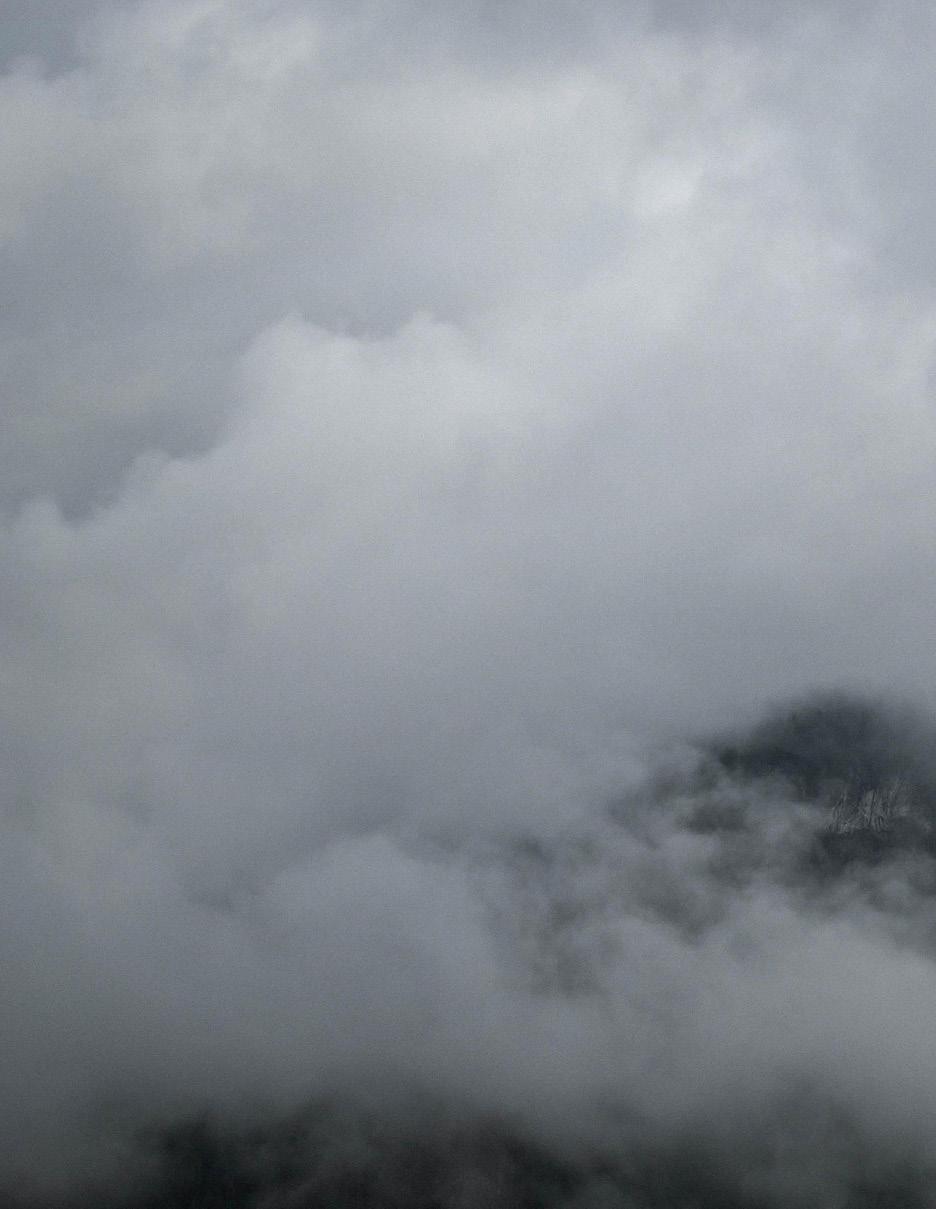
just 250 miles to our left, reaching out for us. After 3 hours we’ve become seriously involved with this storm. But so far … no surprises. It's a seriously rough old steely-grey sea down there, the whitecaps have been completely flattened by the gale force winds. The flight is surprisingly quite smooth, feels a bit like surfing, and the temperature is staying around 1º to 2ºC, so the sleet doesn't stick. We are flying with 20 degrees of port drift and a 40 knot push which means, working backwards on my E6B, a full south-westerly gale of around 60 knots out
there. No wonder there are no fishing boats in view. This is no place for a Beaver, or anything for that matter. I have been turning just slightly to the right every now and again to keep a quartering tail wind as the wind direction backs until I judge that turning left direct to Trondheim will put the wind directly on our tail. It does. We now have a groundspeed of 160 knots with peaks to 170 and 180. This is now a seriously quick Beaver! Victor is really impressed with the aircraft’s performance, to the point where I am beginning to wonder if he realises what
the wind is doing… oh well, I’m just delivering it. After around 450 miles of this nonsense we begin to emerge from the overhanging stratus, can leave 1000' and climb to a respectable cruising altitude. That’s three lowlevel legs; enough is enough. I’ve spent the last 3 hours staring forwards picking our way around the showers, just pointing to where I want Victor to go. I don’t recall much chatter on that leg at all. The only saving grace was the groundspeed. Everything has gone exactly as planned though; with no surprises, I feel pleased.
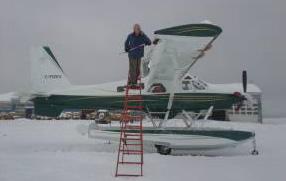
Seems it snowed overnight... about a foot.
It feels quite strange to be flying at 5,000' above a broken layer in intermittent sunshine after battling the elements at low level. Maybe we can find a rain shower to wash the salt spray off the aircraft.
We land in Trondheim as the sun is setting. That's the last leg that could have really held us up owing to bad weather. We choose the airport hotel to save time, and it’s the same as every other airport hotel, busy and bland.
We wake up to a fine day, so pile into the Beaver once more for the last leg to Helsinki Malmi, our new destination. Victor tells us
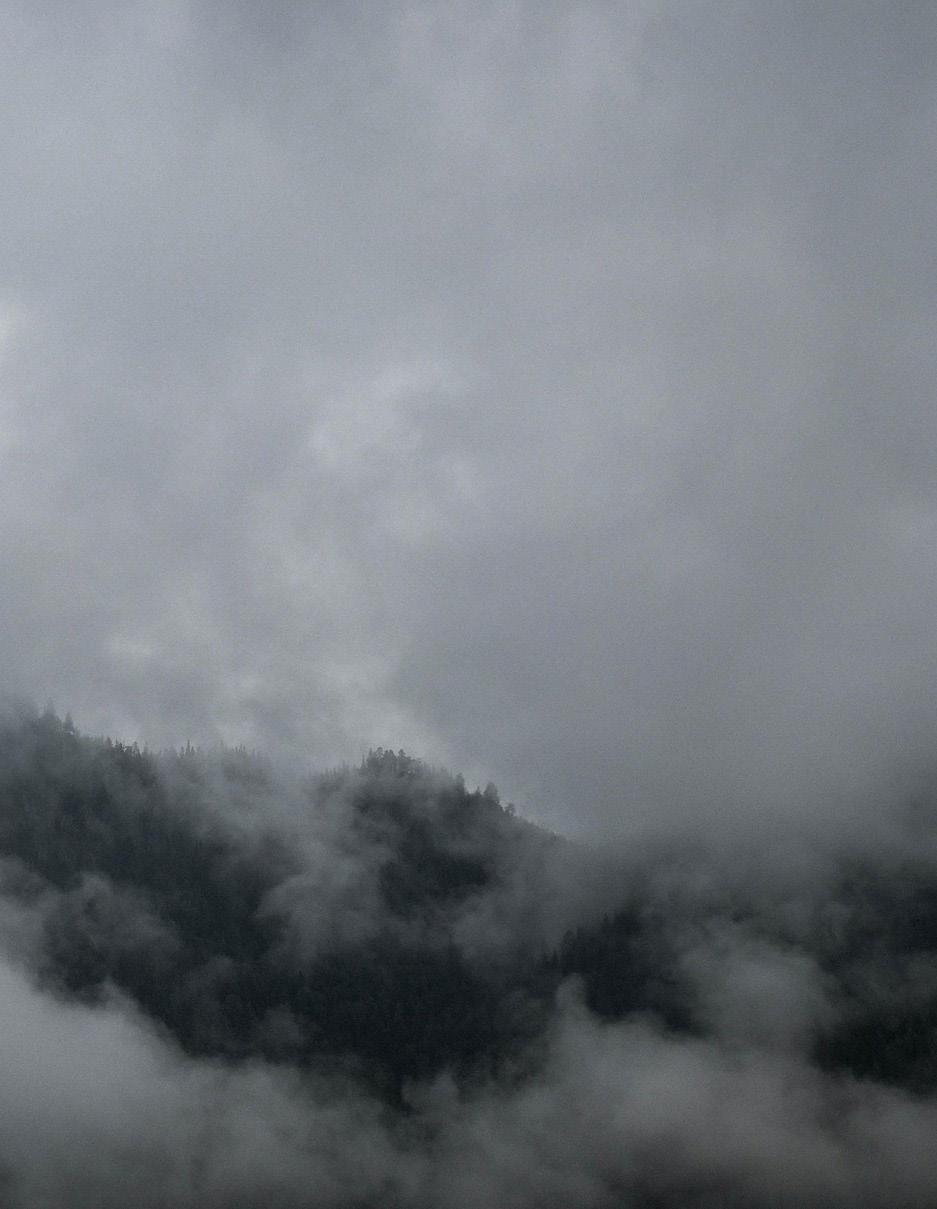
he cannot fly directly into St. Petersburg without completing Russian import bureaucracy requirements which he will deal with in the coming weeks before flying the 150nm from Helsinki to St. Petersburg. Now, back over land, it seems I am expected to speak on the radio. The ocean is a great place to fly below 1,000' as I can just forget about communications. If I would have needed to speak, I would use our satphone, a wonderful piece of kit. ATC were really quite easy to get along with once they realised that we were perfectly happy without them and that there was nothing they could do for us anyway. They became
quite used to us during the journey, just assuming that we would pop up on ETA, and as we always did, they didn't bother us at all.
But now the Norwegians and Swedes want to chat. As I haven't a clue how to fly VFR around here, I just tell them what I am doing and keep clear of all the military airspace… seems to work. As we approach the Swedish coast at the Gulf of Bothnia, it appears that we are going to have to descend once more to silly heights to remain in visual conditions. However, there is way too much hilly countryside and far too many tall masts sticking up around here for that, so I climb up to
7,000' into the sunshine and air-file IFR for the last hour or so into Helsinki. I don’t think anybody has ever air-filed an IFR flight plan around here, it isn’t a European thing, so they were a bit puzzled by my request, but as I simply told them I was at Togmi on the Swedish/Finnish FIR boundary proceeding direct to Malmi at 7,000’ and asked
for a clearance, they gave it to me, sensibly choosing to not ask questions … which just goes to show that if one keeps the initiative, ATC will comply. Airspace between 5,000’ and 25,000’ is pretty much empty in Europe, just the airlines climbing and descending through it. Anyway, we seemed to get quite a bit of attention;
wonder why? I guess there aren’t too many amphib Beavers flying IFR around Scandinavia.
Solid overcast at Helsinki and we are now vectored to fly the longest RNAV approach of my life. I keep trying to tell ATC I don't need a 20-mile final, it's a Beaver! 3-5 miles is more than ample! No chance, they just continue
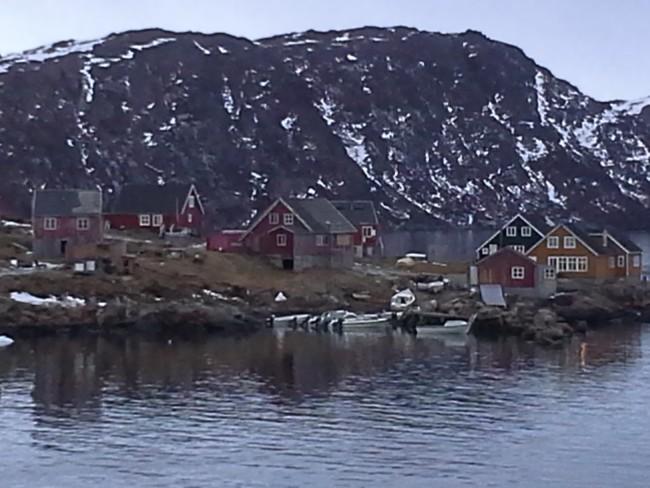
Bill and I took the opportunity to explore a little; to look at the village and to get some much-needed exercise.
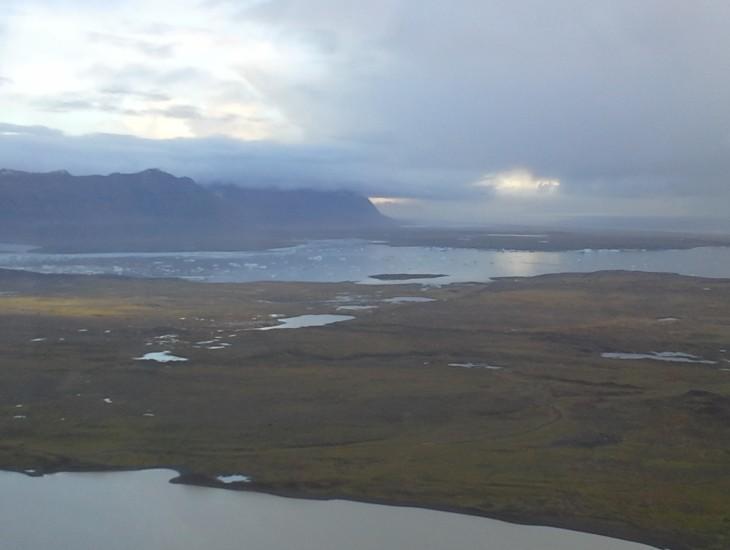
to treat us as an airliner.
As we begin the descent and enter solid cloud at 4,000’ it immediately becomes obvious that Victor has no clue about instrument flying, so having no flight instruments on the right side, I’m having to fly from the right seat looking across the cockpit for the flight instruments on the left while following the Foreflight RNAV track on the iPad on my lap, not the
ideal setup and probably not the most accurate centreline tracking, I think. Breaking visual around 1,000’ I think I can feel several pairs of binoculars staring at me wondering what on earth a Canadian registered amphib Beaver flying IRF looks like. Anyway, after landing we are met by half a dozen members of the Finnish amphib flyers club. They have been following our progress on Sealandontheroad.com.
It seems that this journey has been garnering a lot of traction on the internet, so Victor and Bill are the centre of attention and spend quite some time chatting happily with everybody. Malmi is another small airport where there is not too much attention given to security, so all who fancy can wander out to take a look. I even find a couple of aviation inspectors from whatever the local agency is called who want to
inspect the aircraft and its paperwork. I just invite them aboard and we chat awhile.
Helsinki is flooded with delegates to a very large convention, so after one night in town we move to a Spa hotel an hour outside Helsinki. It is very pretty, on the coast. Victor has had some of his people drive across from St. Petersburg, so we have a car. I have spent a day with Victor and a now empty, properly weighted
aircraft flying around Tuusula lake just north of the city to get him used to managing the Beaver on the water. Victor is used to his 185 on amphibs so feels quite at home on floats and gets the hang of the Beaver on floats in no time.
Tonight we drive into town to eat and talk with some of the floatplane club members; it's a fine evening. Tomorrow Bill heads home to Campbell River, I’ll stay another day
with my feet up, and Victor drives back to St. Petersburg. The plan going forward is for Victor to complete the Russian registration process with the aircraft in Finland before ferrying it back to St. Petersburg in a month or so.
An amphib Beaver on this 4,500-mile journey? Who would have thought! Wouldn't have missed it for the world...
-John Addison November, 2015

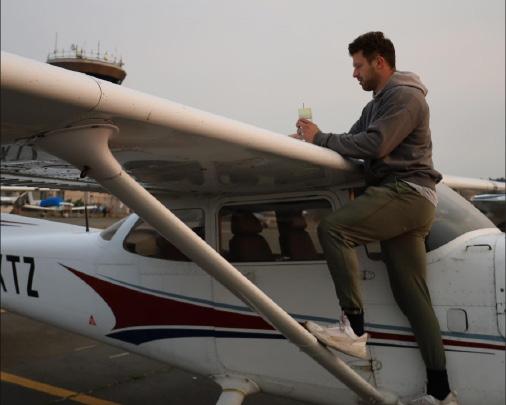
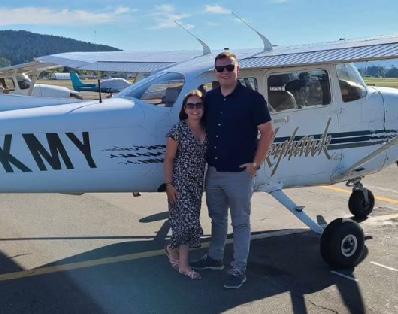
SOME OF THE PEOPLE WHO TAGGED US ON INSTAGRAM!
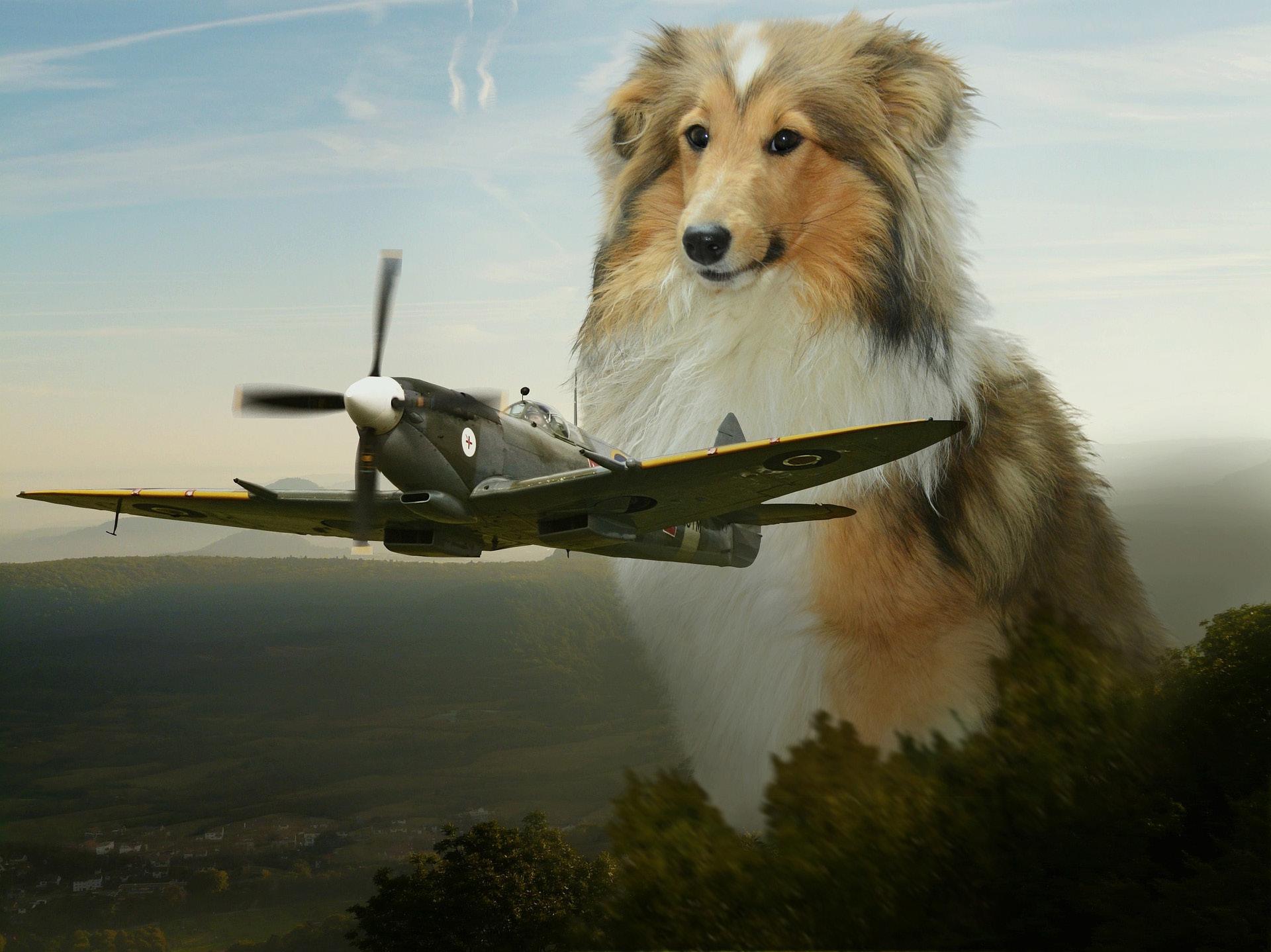
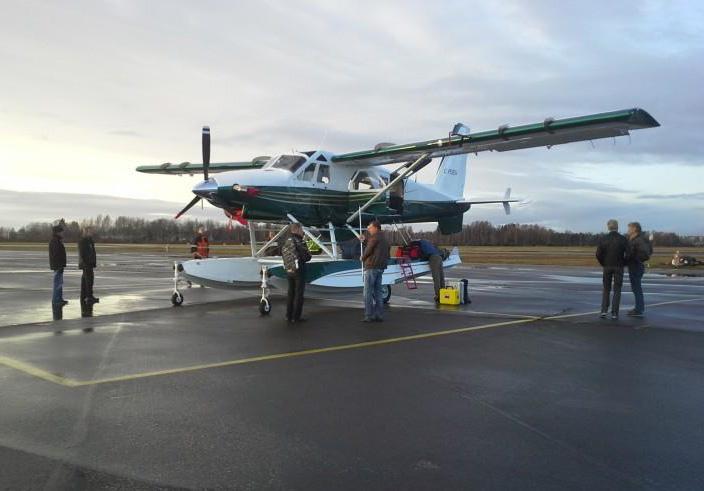
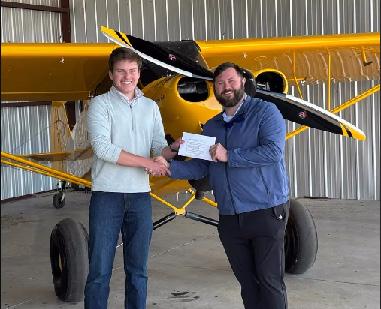
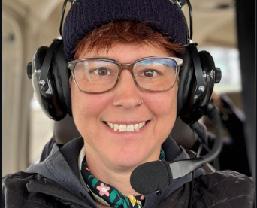
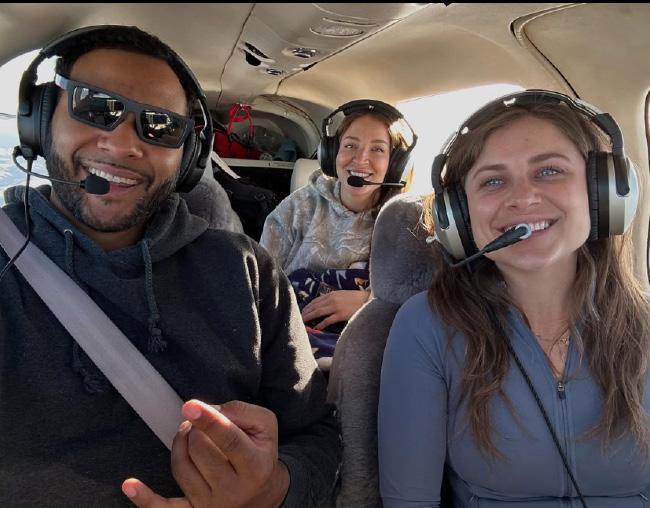
From top, left to right: @grants_aviation: "2025 has been a year for the books."; @jennnpaige says "O’ Canada!"; @flyin.joe: We couldn't pass up an opportunity to share this good boy with you; @keanu.mcgill enjoying a ride wingside; @jen.jaunts giving us a great shot!; @wild.horizon.adventures: "Adventures are about to look a lot different" // Thanks for the share!

Tag us on Instagram & get featured!
@victoriaflyingclub #flyvfc #victoriaflyingclub