Inaugural Chief Executive of Veteran and Family Wellbeing Agency appointed
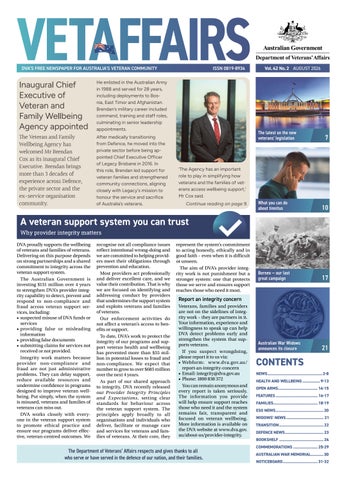
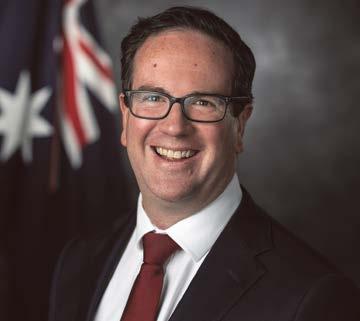
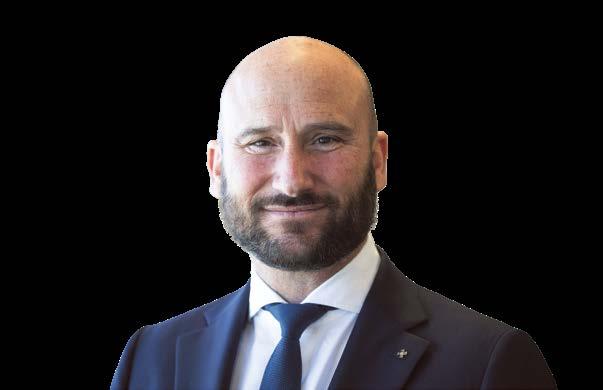
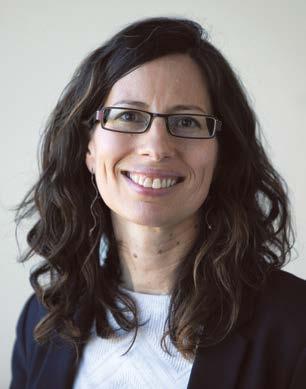
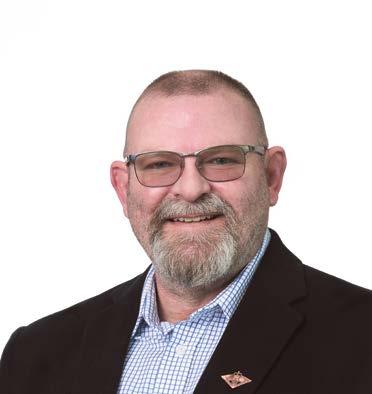
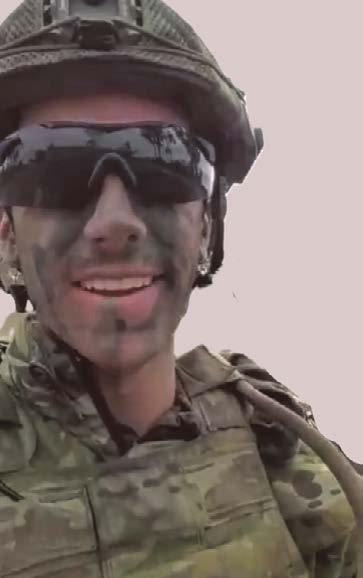
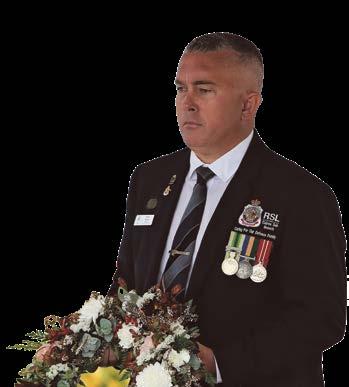
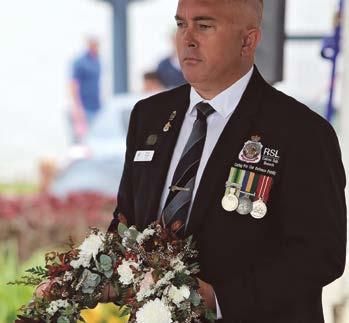
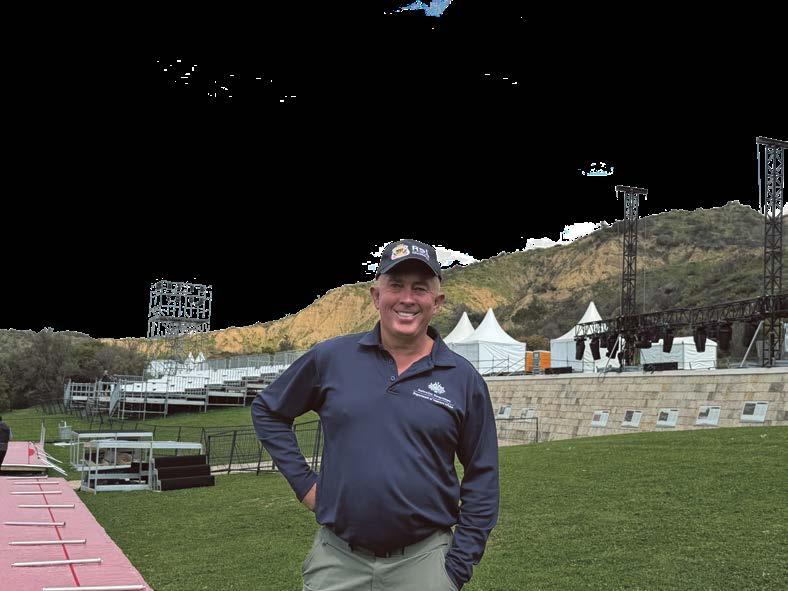
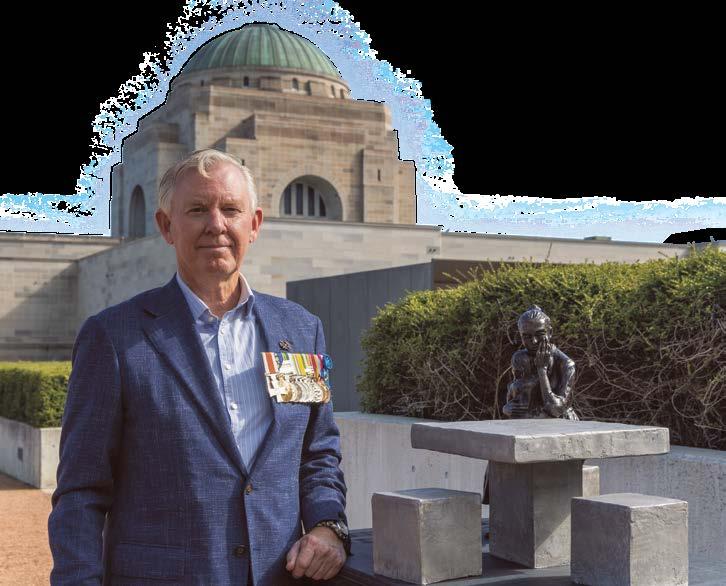
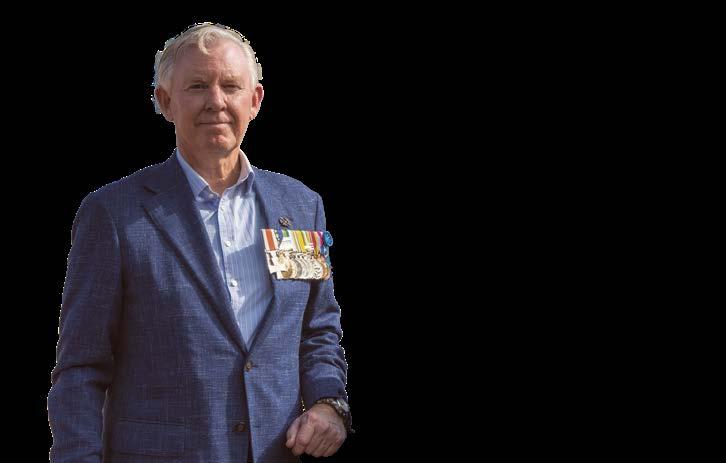
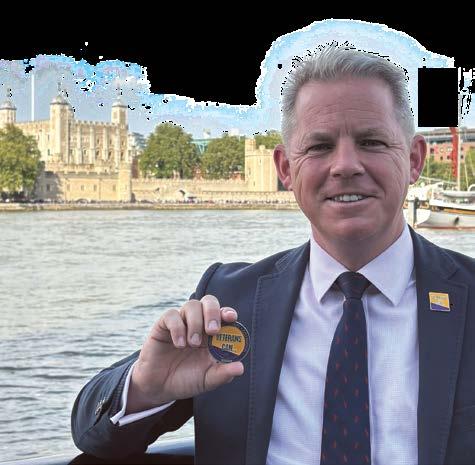
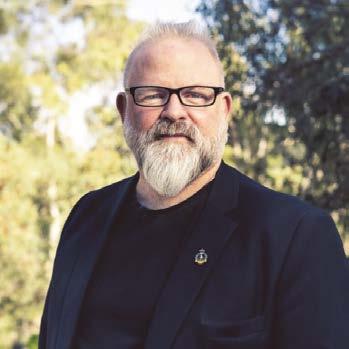
The Veteran and Family Wellbeing Agency has welcomed Mr Brendan Cox as its inaugural Chief Executive. Brendan brings more than 3 decades of experience across Defence, the private sector and the ex service organisation community.
He enlisted in the Australian Army in 1988 and served for 28 years, including deployments to Bosnia, East Timor and Afghanistan. Brendan’s military career included command, training and staff roles, culminating in senior leadership appointments.
After medically transitioning from Defence, he moved into the private sector before being appointed Chief Executive Officer of Legacy Brisbane in 2016. In this role, Brendan led support for veteran families and strengthened community connections, aligning closely with Legacy’s mission to honour the service and sacrifice of Australia’s veterans.
‘The Agency has an important role to play in simplifying how veterans and the families of veterans access wellbeing support,’ Mr Cox said.
Continue reading on page 9.
A veteran support system you can trust
Why provider integrity matters
DVA proudly supports the wellbeing of veterans and families of veterans. Delivering on this purpose depends on strong partnerships and a shared commitment to integrity across the veteran support system.
The Australian Government is investing $151 million over 4 years to strengthen DVA’s provider integrity capability to detect, prevent and respond to non-compliance and fraud across veteran support services, including:
• suspected misuse of DVA funds or services
• providing false or misleading information
• providing false documents
• submitting claims for services not received or not provided.
Integrity work matters because provider non-compliance and fraud are not just administrative problems. They can delay support, reduce available resources and undermine confidence in programs designed to improve veteran wellbeing. Put simply, when the system is misused, veterans and families of veterans can miss out.
DVA works closely with everyone in the veteran support system to promote ethical practice and ensure our programs deliver effective, veteran-centred outcomes. We
recognise not all compliance issues reflect intentional wrong-doing and we are committed to helping providers meet their obligations through prevention and education.
Most providers act professionally and deliver excellent care, and we value their contribution. That is why we are focused on identifying and addressing conduct by providers that undermines the support system and exploits veterans and families of veterans.
Our enforcement activities do not affect a veteran’s access to benefits or support.
To date, DVA’s work to protect the integrity of our programs and support veteran health and wellbeing has prevented more than $55 million in potential losses to fraud and non-compliance. We expect that number to grow to over $685 million over the next 4 years.
As part of our shared approach to integrity, DVA recently released our Provider Integrity Principles and Expectations , setting clear standards for behaviour across the veteran support system. The principles apply broadly to all organisations and individuals who deliver, facilitate or manage care and services for veterans and families of veterans. At their core, they
represent the system’s commitment to acting honestly, ethically and in good faith – even when it is difficult or unseen.
The aim of DVA’s provider integrity work is not punishment but a stronger system: one that protects those we serve and ensures support reaches those who need it most.
Report an integrity concern Veterans, families and providers are not on the sidelines of integrity work – they are partners in it. Your information, experience and willingness to speak up can help DVA detect problems early and strengthen the system that supports veterans.
If you suspect wrongdoing, please report it to us via:
You can remain anonymous and every report is taken seriously. The information you provide will help ensure support reaches those who need it and the system remains fair, transparent and focused on veteran wellbeing. More information is available on the DVA website at www.dva.gov. au/about-us/provider-integrity
NEWS
FROM THE DEPARTMENT
Alison Frame Secretary, Department of Veterans’ Affairs
A record $14.8 billion in payments and services was provided to veterans and families of veterans last financial year –$4.7 billion more than just 4 years ago. This expenditure was not only on monetary compensation, but on expanded access to treatment and rehabilitation, stronger wellbeing support, and the institutional changes needed to deliver a simpler, more responsive system focused on your wellbeing.
An investment of $739.2 million over 4 years will improve treatment and rehabilitation for veterans to reduce the impact of injury and improve their lifetime wellbeing. Another $169.7 million (ongoing) has been committed to increase allied health provider fees. This is alongside a new $5,000 threshold that Veteran Card holders can use for allied health services each financial year – starting from 1 July 2027.
I assure you that this measure will not prevent veterans from accessing the allied health treatment they clinically require. The threshold will introduce a point-in-time check for DVA to ensure the treatment they are receiving is effective and clinically required. There will be an efficient mechanism for DVA to fund additional – and if required, multiple episodes of care – above the threshold where there is a valid clinical need. It is also important to note that the threshold does not include expenditure on any GP, specialist, hospital services, audiology, dental, optical or Open Arms services. In 2024–25, the median allied health care usage by Veteran Card Holders was $1,900, and the average was $3,500.
Public consultation on how the allied health measure will operate will begin later this month. Information will shortly be made available to those who have registered to participate, as well as on the DVA website, about events and opportunities near you.
DVA is focused on converting the increased investment in the vast array of health and rehabilitation services available to Veteran Card holders into faster decisions, simpler access and more responsive support that make a real difference
for veterans and families. We are improving access to treatment, rehabilitation and practical support by reducing wait times, simplifying processes and using technology to make services easier for veterans, families and providers to navigate. Here are just a few examples:
A new online claim form for Medical Expenses Privately Incurred (MEPI) helps veterans and families provide the right information from the outset, supporting faster processing. Because lodgement through the webform ensures completeness of requests, claims lodged online are currently being processed within one working week, reduced from an average of 40 days at the start of 2026.
DVA has removed the need for prior financial approval for 23 health services commonly used by eligible Veteran Card holders. Services such as Magnetic Resonance Imaging (MRI), pelvic health physiotherapy and vestibular physiotherapy to manage balance disorders can now be claimed directly online by providers, without requiring manual assessment and approval. This means health providers spend less time on administration – and you start treatment sooner.
So far this year, DVA has finalised more than 23,000 additional transport reimbursement claims, with average processing times reduced to around 18 days – well within our 28-day service standard. And if you claim online through MyService with your receipts attached, it can be turned around in as little as 2 days. Our Booked Car with Driver service has now been expanded to veterans covered under the improved Military Rehabilitation and Compensation Act 2004 . There’s no need
to wait on the phone –you can book a car in real time using the online tool.
During 2025–26, DVA supported more than 1,400 veterans to access Household Services essential assistance for the first time. Streamlined assessment processes have significantly reduced decision-making time. Once allocated, Household Services decisions are now being made in around 11 days – down from 55 days – and the meaningful difference this makes is reflected in the feedback we receive.
One veteran recently told us: ‘Keep doing this process, it was quick and overall a less stressful experience, especially for those with mental health issues. It makes me want to engage more with DVA directly.’
Another said: ‘I was very pleased that the matter could be resolved over the phone and that approval for Household Services was granted on the same day… Streamlining this process to reduce delays is, in my view, strongly in the best interests of veterans.’
The mental health of veterans and families of veterans remains one of our top priorities. New Veteran Mental Health Care Plan incentives are now supporting GPs and psychiatrists to deliver more proactive, coordinated and continuous care for veterans, with $58.3 million over 3 years and $21 million a year ongoing set aside for this initiative. DVA is facilitating approvals for these plans in less than 10 days, demonstrating how responsive support for veterans can be when all the required information is available.
It’s important to know that even before you take the medical path, you are able to receive free mental health and wellbeing support from Open Arms, which integrates evidence-based practice, lived experience expertise, military-aware and trauma-informed approaches to provide the right support, in the right way, for veterans and families. During Mental Health Month in October, Open Arms will host a major national symposium for practitioners to learn from one another, reflect on what works, and continue building a world-leading service. Also in October, we will pause to honour the Australians who have served in Afghanistan and related support operations. For 20 years, our servicemen and women contributed to a multinational mission to combat terrorism, stabilise and reconstruct the country, with some paying the ultimate price. DVA will host a major commemorative service in the nation’s capital to pay tribute to them and acknowledge the impacts that service has had on them and their families. (For more on this, see the article on page 28 of this newspaper.)
Australia’s veteran support system is undergoing its most substantial transformation in decades, one that alongside compensation prioritises earlier access to treatment, recovery and lifelong wellbeing. I thank you for your patience and support as we continue on this journey.
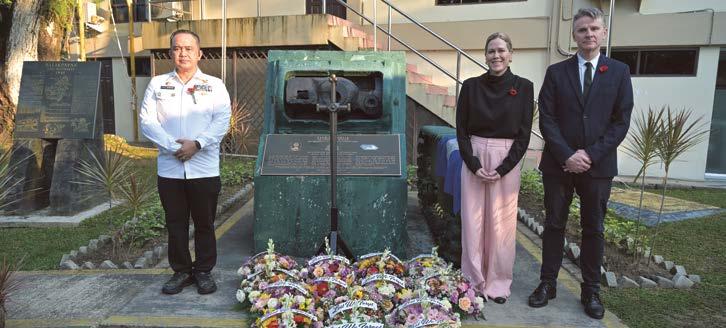
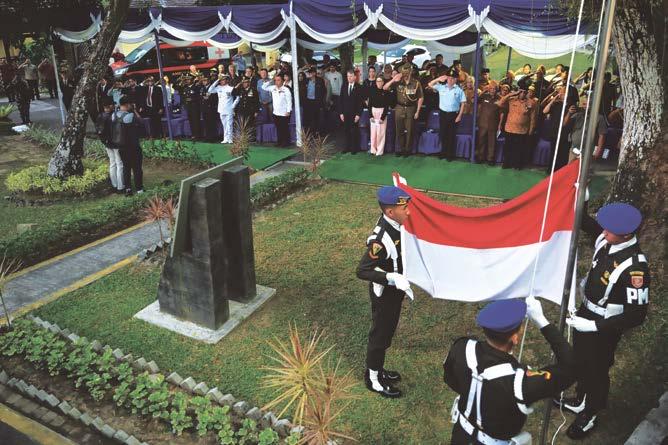
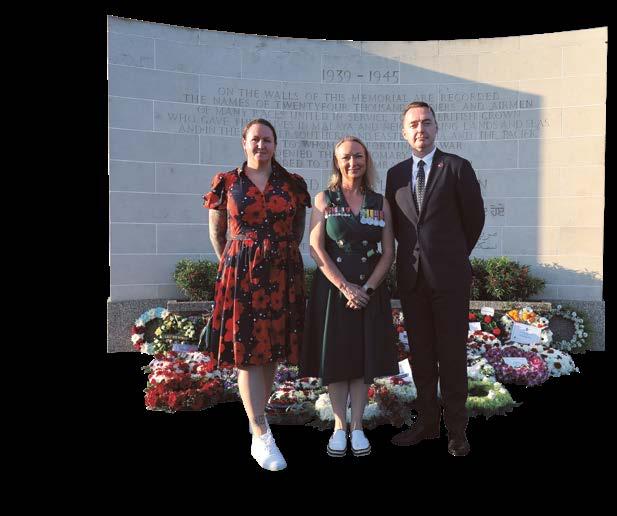
With Lieutenant Colonel Arih Frananta Filipus Sembiring (left) and Ambassador Rod Brazier on Anzac Day at the Tank Memorial, Balikpapan, Indonesia (See the story on page 17.)
NEWS
The Government is committed to ensuring that our ADF members, veterans and families know that whatever may befall them during their service, they will be properly looked after and their service acknowledged, respected and commemorated by a grateful nation.
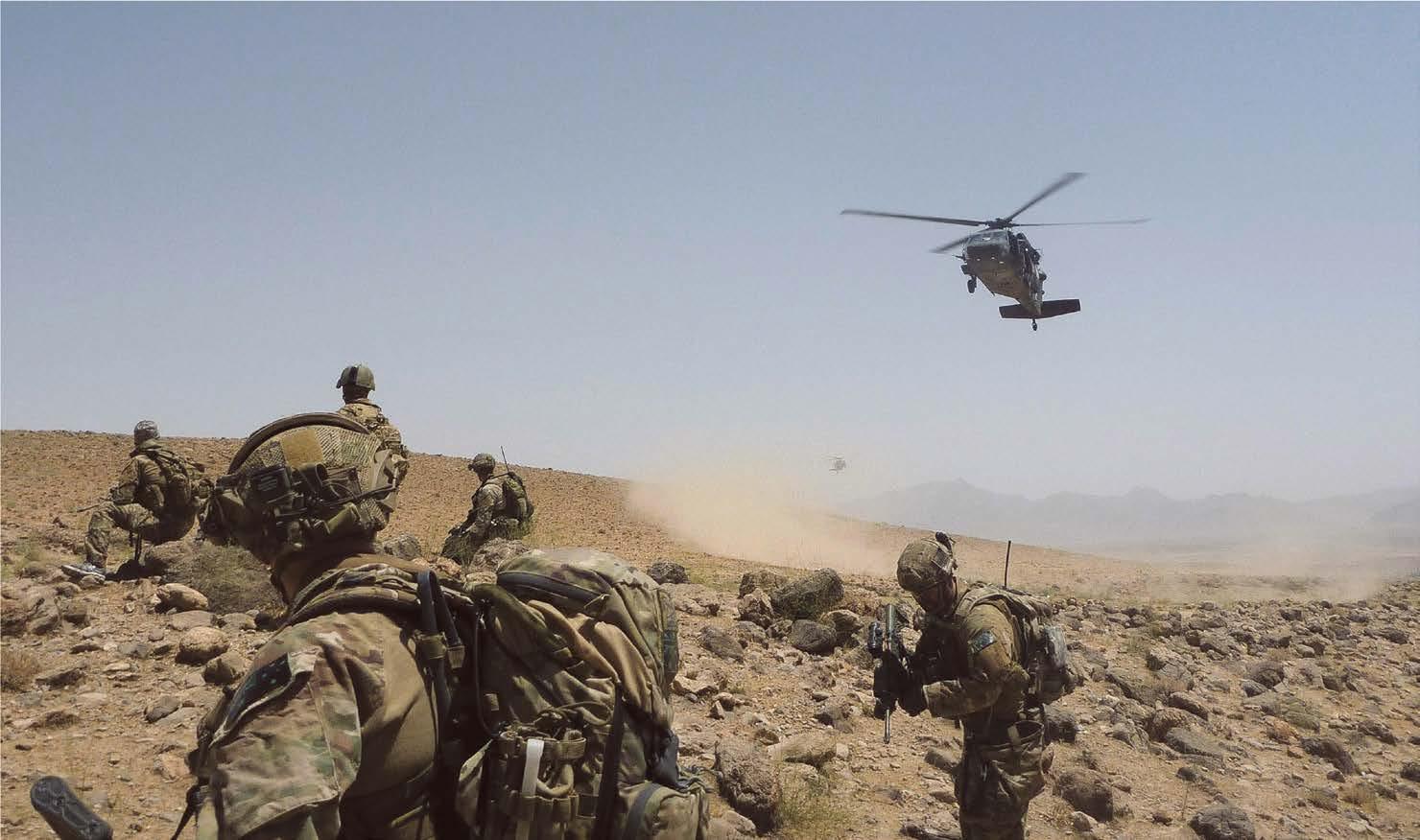
On October 2001, just weeks after the terrorist attacks on America that claimed 10 innocent Australian lives, the ADF began operations in Afghanistan with the United States and other partners.
Operation Slipper initiated what was to become our country’s longest-running military commitments. Over the coming 2 decades, more than 35,000 Australian personnel would serve in Afghanistan, or in support in the Middle East Area of Operations.
The Roll of Honour at the Australian War Memorial records the names of 47 who died as a result of their service. Some 263 were wounded.
On 11 October this year, 25 years on from the start of Operation Slipper, we will pause as a nation to remember the sacrifice of all who served in this conflict with a national commemorative service to be held at the Australian War Memorial.
If you are interested in attending, I encourage you to register via the
FROM THE MINISTER
The Hon Matt Keogh MP Minister for Veterans’ Affairs and Minister for Defence Personnel
For those who are unable, the commemoration will be broadcast live on ABC iView.
With the end of Australia’s involvement in Afghanistan still fresh in all our memories, this is the most significant national commemoration for Australian involvement in 21st century conflict, and reaffirms our ongoing commitment as a nation to never forget the service and sacrifice of those who have served in our nation’s uniform.
For the Government that means continually improving the care and support we offer to the veteran community.
The findings of the Royal Commission to Defence and Veteran Suicide continue to inform this work.
Veterans and families of veterans saw the result of some of that work with transformative changes that came into effect on 1 July, with a simplified veterans entitlements framework and a new Veteran and Family Wellbeing Agency.
The biggest change most veterans will see is a new, simpler claims processing system.
This is the most significant reform in a generation to a system that the Royal Commission into Defence and Veteran Suicide observed was so complex it was contributing to suicidality in the veteran community.
Three separate pieces of legislation governed the old system, with some veterans (depending on the
We’ve unified those 3 mechanisms into a single system that’s fairer, quicker and simpler to use – for veterans and for DVA claims processing staff.
Importantly, if you’ve lodged a claim under the old system prior to July 1, you don’t need to do anything – your claim will still be processed as usual. If you’ve lodged a claim after 1 July, your claim will be assessed under the new, simpler system.
All those already receiving benefits will continue to receive benefits, there is nothing you need to do. I encourage all veterans and families of veterans to familiarise themselves with the new system, including within the pages of Vetaffairs
Another big change on 1 July was the official opening of the Veteran and Family Wellbeing Agency, also a recommendation from the Royal Commission.
There are literally thousands of organisations all around Australia that are set up to provide support for veterans and the families of veterans, but navigating through the myriad of options to find the one
that best suits individual circumstances can be challenging.
We set up the Veteran and Family Wellbeing Agency to help, providing a single point of contact to link veterans and families of veterans with the individual supports in their local area. The Agency has a particular focus on at-risk veterans, especially those who are transitioning out of full-time ADF service and into civilian life, which we know can be a challenging time for many. The Agency’s role is to ensure there’s no gap in support for transitioning veterans between what Defence provides and what DVA offers.
Whether it’s help with health, housing, employment, education or even community connection, I encourage you to make use of the Agency’s website at www.veteranwellbeing.gov.au
If your needs are more complex or you simply need to talk to a real person, you can call the new helpline on 1800 823 922, Monday to Friday between 8:30 am and 5:00 pm.
You can read more about the Wellbeing Agency on page 9 of this edition of Vetaffairs
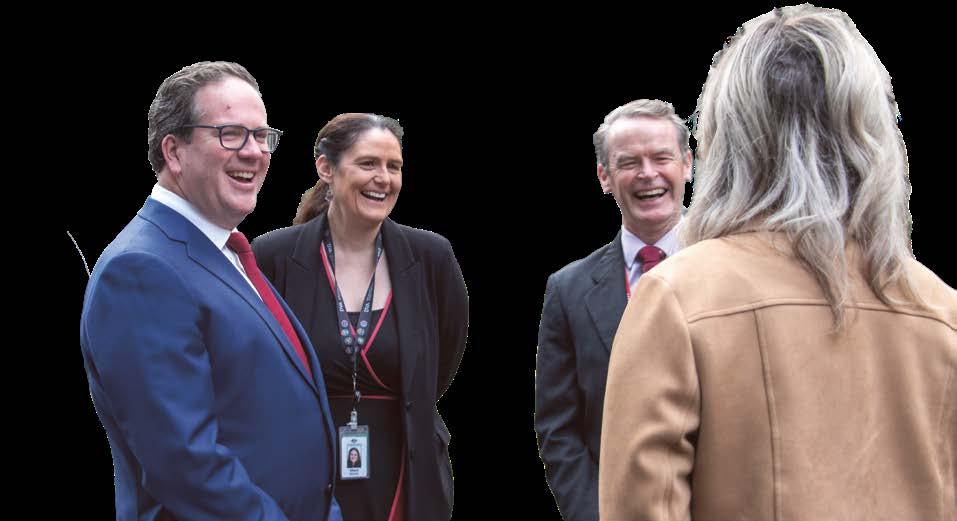
With DVA Deputy Secretary Alison McLaren and Brendan Cox, Chief Executive of the new Veteran and Wellbeing Agency, speaking with Jessica Mitchell from Defence Families of Australia.
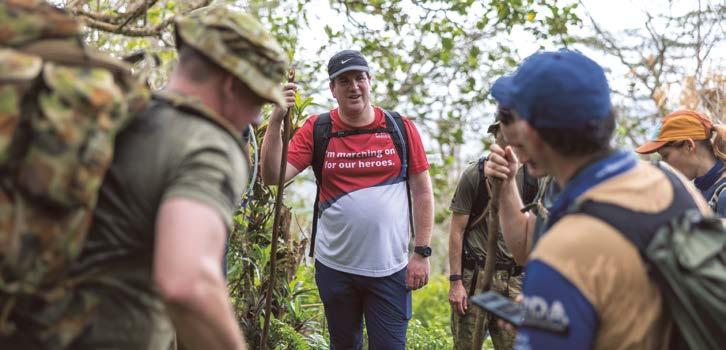
Walking on the Kokoda Track to the Isurava Memorial site for ANZAC Day 2026. (Image: Defence)
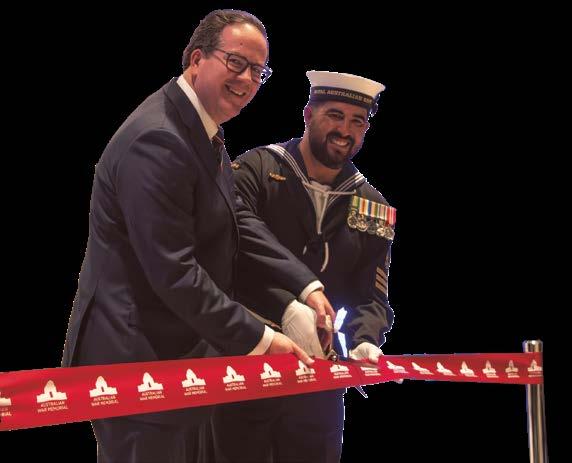
Opening the new Anzac Hall at the Australian War Memorial.
Veterans can earn more before pensions affected
From 1 July 2026, veterans can earn more, and the value of their assets can be higher, before their pension payments are affected.
The rise in income and asset amounts is in line with the annual indexation process of the income free areas and asset value limits that are used to calculate rates of income support pensions. Disability compensation payments and war widow(er)’s pensions are not subject to the income and assets tests.
Related to these thresholds increasing, some recipients of the service pension, income support supplement, veteran payment and social security age pension may have seen an increase to their payments.
The rate of permanent impairment payments, eligible young person payments, as well as limits for household services and attendant care under the Military Rehabilitation and Compensation Act 2004 (MRCA) increased
from 1 July 2026. Veterans who are receiving compensation payments under the Safety, Rehabilitation and Compensation (Defence-related Claims) Act 1988 (DRCA) also received an increase.
The Veterans’ Entitlements Act 1986 (VEA) and DRCA closed to new claims for rehabilitation and compensation on 1 July 2026. Payments received under these Acts continue to be indexed. This includes the rates applicable to claims lodged prior to 1 July 2026, ensuring the clients who have lodged these claims are not disadvantaged when their claims are determined.
The table below outlines the new limits and thresholds from 1 July 2026 for income support payments and new MRCA and DRCA rates. For more information, including a summary of the new income and asset thresholds, pension rates and allowances please visit www.dva.gov.au/access-benefits/ payment-rates
Helping you access clear, reliable information
DVA has a new “Community questions answered” webpage to support veterans, families of veterans and the broader community with clear, factual information on key issues.
The page brings together responses to questions DVA is hearing from the community where there may be confusion, misunderstanding or misinformation. It is not intended to be a general “frequently asked questions” page, but a focused source of clear, factual information on issues where greater clarity may be needed.
Mixed messages or uncertainty can make it harder for people to understand the support available to them. The new webpage helps address this by:
• providing clear, factual responses where there is confusion or misinformation
• bringing together information in one place as a single source of truth
• offering content that can be confidently shared with others.
The aim is to help veterans and families of veterans access reliable information and make informed decisions about their support and wellbeing.
Content on the page will be updated as new issues emerge through community engagement, enquiries and correspondence, and feedback from veterans, families and stakeholders through usual DVA channels. Veterans, families, advocates and ex-service organisations can check information quickly, use the page as a trusted reference, and share accurate information through their own networks.
See the questions and answers at www.dva.gov.au/community-questions-answered.
Letter to the Editor
I recently had a note published on the newspaper’s Noticeboard page asking if anyone had a copy of the book about my maternal grandfather’s battalion in WW2: The Brown and Blue Diamond at War, the story of the 2nd/27th Battalion . I rated my chances of success as akin to the proverbial Buckley’s and Nunn (i.e. an albeit hopeful zero).
But lo and behold, two blokes in two different states (SA and WA) contacted me and mailed me copies of the book, so I can now hand them on down the family line.
As well as that, I was also able to secure a copy for a bloke in Tassie (whose father had served with the 2/27th in New Guinea) from a woman in Victoria! So it was a truly great, national response, and one for which I’m extremely grateful. Our veteran community really does have our back(s), and my experience shows the muchtouted camaraderie of the defence veteran community does really exist. Thanks again.
Blue Phillips
COUNTERING MISINFORMATION WITH THE REPATRIATION COMMISSIONER
As your Repatriation Commissioner I spend hours talking with veterans and I worry about the misinformation in our community. These furphies can be harmful. Here I’ll provide the facts.
Furphy: The claims system is so complicated you need to pay an advocate.
Nope. Over half of veterans who submit a claim do so themselves without advocate assistance.
For some veterans and their families, the claims process can be overwhelming. These veterans deserve help and there are free services available, including qualified advocates and DVA Claims Support Officers.
Reputable advocates can be awesome – particularly when they are free. It’s important to know you don’t have to pay if you don’t want to. If you choose to pay an advocate, check their credentials and understand their fees. Some are good. Don’t trust anyone who claims they have a “special arrangement with DVA” to get your claims done faster. From 1 July this year, for some of us older veterans, the process became simpler as we are now dealing with only one Act, not up to 3. The claims process is what it is. Just follow the bouncing ball and be careful of people seeking to profit from your entitlements.
Furphy: The $5,000 annual threshold for allied health services will disadvantage veterans.
Sometimes DVA is funding “allied health services” that are not necessary or recommended by a doctor. I’ve seen examples and they’re not great. This change is not about stopping funding, but if overall costs exceed $5000 then there must be a “valid clinical need”.
For those not sure, allied health includes services such as physiotherapy, psychology, occupational therapy and podiatry. The changes do not apply to Open Arms, dental, optical, hearing, GP, specialist or pharmaceutical services.
The most important fact is that if you have a valid clinical need, you will be able to receive allied health support of more than $5,000 – in fact if it’s valid, funding is unlimited. The question is – what is valid clinical need, who determines it, and how?
These are legit questions and need to be answered. It’s a good thing these changes take place from 1 July next year. This provides time to properly understand impacts, communicate with veterans and providers, and develop processes and procedures. I guarantee veterans will be involved!
I can confirm that most veterans never exceed $5,000 for allied health, which means most won’t be impacted. I have also confirmed the fees for allied health services will increase, meaning more providers will probably offer their services to veterans.
The best advice I can give now is if you have any doubt about whether what you are doing has valid clinical need, have a chat to your GP.
Furphy: DVA’s updated Medicinal Cannabis Framework is too rigid and prevents some veterans from accessing treatment they need.
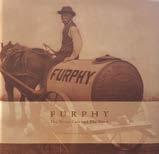
But what is a Furphy?
This has been a contentious issue.
One of my soldiers, who was significantly injured following an improvised explosive device blast in Afghanistan, has had his life positively changed through using medicinal cannabis. But he manages its use in collaboration with his GP.
I have also met with veterans drugged out of their minds. This is exploitation of ill veterans and it is tragic. All medication needs to be used properly. The use of cannabis as a medication can’t get out of control.
Medicinal cannabis use, with rules to make it safe, can be effective. DVA’s updated framework promotes proper use and minimises exploitation and other real health risks.
I’ve written a digger-speak “fact sheet” that is being sent to all veterans who access medicinal cannabis. I hope it helps explain things.
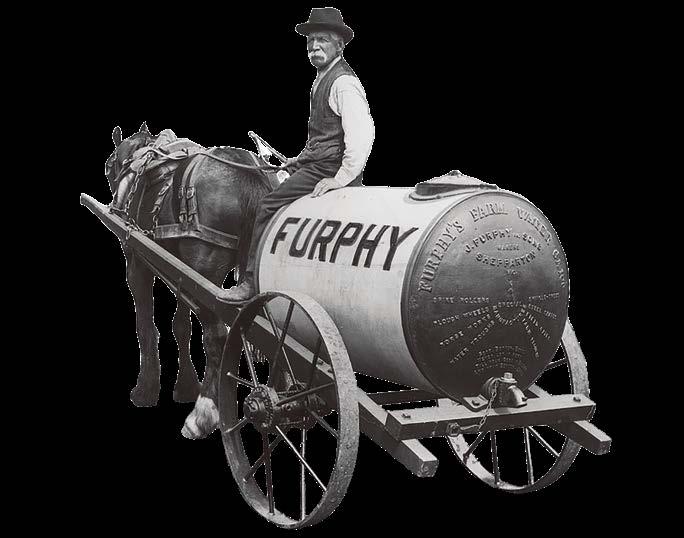
The word Furphy dates back to the First World War, where horse drawn water carts from ‘Furphy & Sons’ were widely used in Australian Army camps. Soldiers gathered around them to talk, and soon rumours, tall tales and gossip of dubious veracity flowed!
As Repatriation Commissioner, Kahlil is independent of DVA.
Psychological wounds of war cannot be buried in the sand
KAHLIL FEGAN DSC AM
Repatriation Commissioner
As the years progress, memories can quietly fade into the "sands of time", but some are simply too important to dissipate, for there is still much to learn. Our experiences in Afghanistan – those that fundamentally shaped a generation of Australian soldiers – are such memories.
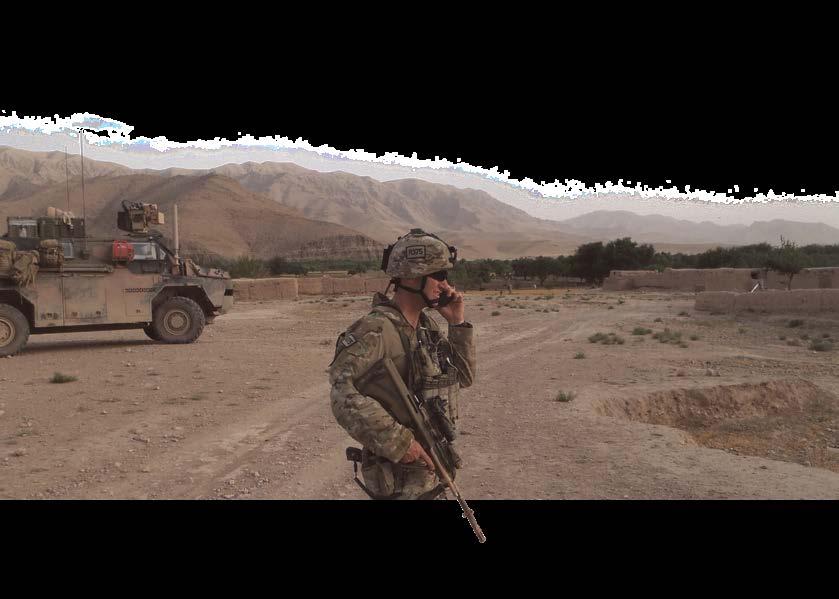
Reflecting on my experience while Commanding Officer of the 8th/9th Battalion and Mentoring Task Force Four in 2012, I have pondered what I learned from my time in Afghanistan, especially about the impact of the deployment on our men and women, all of whom returned changed in one way or another. I now realise the psychological challenges associated with our tour started well before we left Australia. Over 14 months of deep, mission-specific training and preparation, we became acutely attuned to every aspect of the conflict. It was an exciting but extremely busy period characterised by long periods away from family and friends, who were at times neglected. Some were left behind as we sped along the “road to war”, and unfortunately some relationships became our first casualties.
formed and that the true nature and number of casualties was yet to be determined.
For those selected, each time we learned of another soldier seriously injured or killed, what we were preparing for became increasingly real. The updating of wills and the writing of letters to family that you hoped they’d never have to read certainly took an emotional toll. When we assumed from our predecessors, who had 4 soldiers killed in action, the responsibility for Australia’s largest physical combat contribution to the War on Terror, it rested heavily on our shoulders.
We deployed into a bitter winter but soon the cold and snow would be replaced with heat and dust. Our soldiers would operate with the Afghan Army from mostly remote and often exceptionally austere patrol bases in the mountains and valleys of Uruzgan Province.
The sensitivity of the operational environment became evident early in the tour when a couple of US soldiers inadvertently threw a copy of the Koran into a fire pit. The resulting protests, injuries and deaths necessitated additional force protection and lock-downs.
It was a stressful time; many soldiers were desperate to be selected for the deployment and worked incredibly hard to make the team. Those soldiers, and there were many, who didn’t make it due to manning caps, injury or training deficiencies – were heartbroken. Regardless of how much we invested in them, feelings of failure or being ostracised were evident. A few soon ended their military careers with perceptions of failure. In some ways, the psychological impact of Afghanistan could mean as much for them as for those who deployed, yet they have no medals to show for it.
Throughout the tour the dangers our men and women faced were numerous and unpredictable. They included the prevalent, cowardly and indiscriminate improvised
explosive device; the very real threat of being murdered by an Afghan soldier with whom we lived, mentored and indeed risked our lives for; numerous fire fights with the enemy resulting in the death of insurgents and injuries to our soldiers; rocket and mortar attacks; and civilian casualties including the death and injury of women and children.
There were 2 suicide bomber attacks, including a child suicide bomber, resulting in deaths and mass casualties. A number of Afghan soldiers operating with us were killed, and as relationships strengthened so did the impact of each of these deaths.
Six months after we took over, we quietly handed over to our replacements from 3rd Battalion the Royal Australian Regiment. When the last of our people safely touched down in Brisbane, my Regimental Sergeant Major, Ian D’Arcy, and I shared our first magnificent post-tour beer –one that tasted even better knowing all our soldiers had returned home to their families. The 2 of us reflected on how well our people dealt with the deployment. Throughout, they presented as resilient, professional, strong of mind and certainly appeared to rebound effectively following some hyper-stressful and horrific incidents.
What I did not fully comprehend at the time was that the impact of the deployment was not over. Indeed, for some it was really only the end of the beginning. During my third year in command of the battalion, I’d come to realise that cracks had
In this first 12 months post deployment, I became aware of subtle increases in certain emotions and behaviours including frustration, complacency, risk-taking, anger and impatience. I saw decreased positivity, increased negativity, relationship break-downs, increased misuse of alcohol and prescription drugs. There were more cases of suicidal ideation and the first few cases of serious PTSD started to emerge. Tragically our first team member, diagnosed with PTSD, died from suicide not long after return.
The changes I noticed were by no means a tsunami, but I was attuned to them having had a number of years working with the team. Perhaps it was always present and I was blind to it. Perhaps it was present but concealed by soldiers eager to deploy. Or, perhaps it was an inevitable repercussion of exposing young men and women to war.
My learning is that the impact of war can have profound and enduring consequences for a soldier, sailor or aviators’ soul – consequences that impact each person differently and may not manifest for many years.
For this reason, as a society we have an obligation to acknowledge and support our service personnel and their families, not just while in uniform, but for life. We must not let the experience of deployments such as Afghanistan simply fade into the sands of time, for there is still much to learn about how to best support a veteran.
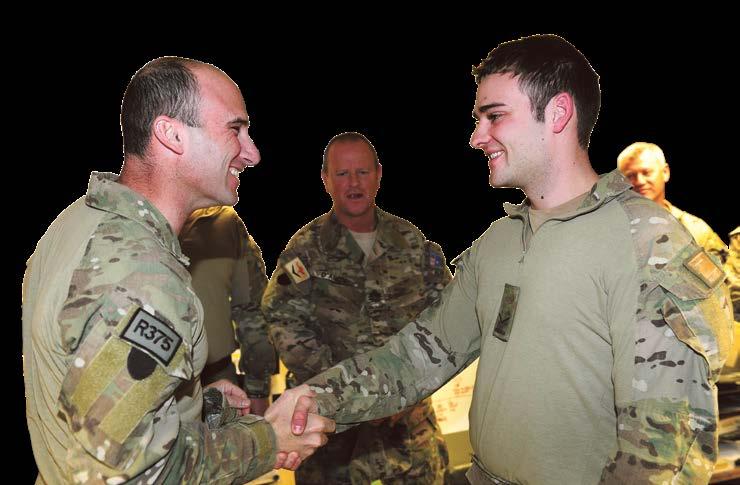
As a Lieutenant Colonel commanding the 8th/9th Battalion and Mentoring Task Force Four, Afghanistan, 2012. (Images: Defence)
A simpler veterans’ compensation system begins
All new claims for compensation are now being determined under an improved version of the Military Rehabilitation and Compensation Act 2004 (MRCA).
A single ongoing Act: the improved MRCA
When it came into full effect on 1 July 2026, the Veterans’ Entitlements, Treatment and Support (Simplification and Harmonisation) Act 2025 (VETS Act) consolidated the 3 primary Acts governing veterans’ compensation into a single ongoing Act. This implemented the recommendation of the Royal Commission into Defence and Veteran Suicide to simplify and harmonise veterans’ compensation and rehabilitation legislation. These significant reforms were shaped through extensive consultation with the veteran community.
Regardless of when a veteran served, or when their injuries or diseases occurred, all new compensation claims are now considered under the MRCA
"Grandparenting" of existing payments from 1 July 2026
There is no change to existing payments under the Veterans’ Entitlements Act 1986 (VEA) and the Safety, Rehabilitation and Compensation (Defence-related claims) Act 1988 (DRCA).
Veterans receiving payments under the DRCA incapacity scheme have been transitioned to the more beneficial MRCA scheme.
Eligibility for various entitlements that had operated differently across the 3 Acts has also been standardised. Veterans’ existing rehabilitation plans and dependants’ access to education schemes are now covered under the MRCA, regardless of previous coverage.
Determination of existing claims
All claims for compensation received before 1 July 2026 are being determined under the previous tri-Act system of the VEA, DRCA and MRCA. Existing compensation claims under the DRCA and VEA must be finalised before further compensation under the MRCA can be determined.
Finalisation of claims under the VEA and DRCA provides the ability to determine a ‘baseline rating’, or record of veteran’s impairment, for assessment of subsequent permanent impairment (PI) claims under the improved MRCA.
Download the booklet
Resources regarding benefits under the improved MRCA, including fact sheets, frequently asked questions and an information booklet, are available on the DVA website
DRCA permanent impairment claims
It is important to note that the DRCA legislation does not necessarily treat initial liability (IL) and permanent impairment as separate claims.
Instead, once initial liability is accepted for the condition under the DRCA, DVA looks at all relevant compensation payable.
If a claim was lodged under the DRCA before 1 July 2026, with a positive indication for an assessment of PI compensation, and the condition is accepted as service-related, DVA will continue to assess the impairment and decide any lump sum compensation payable under the DRCA.
Transition to the MRCA: applying a baseline impairment rating
A new MRCA claim for a previously claimed condition can be made once claims for that condition are finalised under the DRCA or VEA. This usually occurs at the end of the standard appeal period.
While veterans can lodge IL claims for new conditions under the MRCA when they have outstanding DRCA and VEA claims for other conditions, all older Act claims will need to be finalised before the MRCA PI claim can be determined. This is to allow the calculation of a baseline impairment rating from which any further impairment can be assessed for compensation purposes.
Some MRCA payments also require evidence of a 5-point worsening from the baseline impairment rating. A baseline rating will also help DVA to assess eligibility for benefits such as the Veteran Gold Card, or lump sum compensation for primary carers of veterans’ dependants.
Changes to liability support
Presumptive liability for injuries and diseases known to have a common connection with military service is one of the improvements under the new system.
Providing DVA with a confirmed medical diagnosis and essential information (e.g. your service history) will help to progress your claim and provide earlier access to relevant treatment, rehabilitation or compensation.
Army veteran Shannon Lemanski wins global award
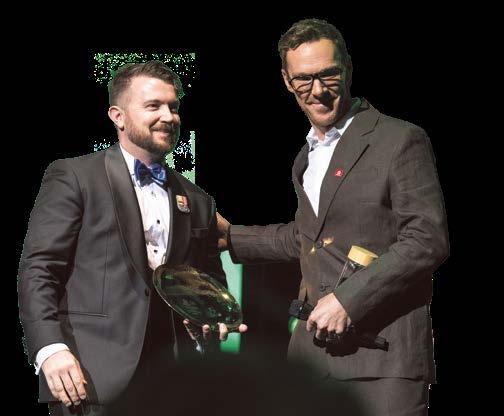
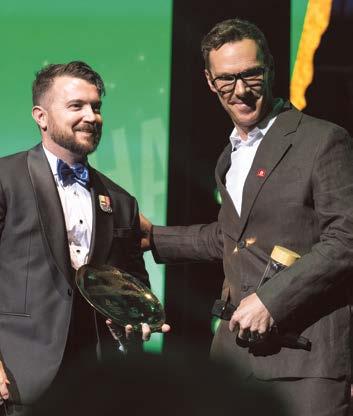
Army veteran Shannon Lemanski has been awarded the prestigious 2026 Global Sustainability Award at The King’s Trust Awards, becoming the first Australian to receive a global honour through the program. Last year, Shannon was the winner of 2 awards at the King’s Trust Australia Awards 2025.
(See Vetaffairs, December 2025.)
Shannon is the founder of Aqua Ubique, a social enterprise using atmospheric water generation technology to convert air into safe drinking water. During an Army deployment to Papua New Guinea, Shannon observed first-hand the impacts of unsafe water on local communities. Later, he saw similar issues in regional and remote Australia, inspiring him to look for a solution.
Shannon participated in The King’s Trust Australia Enterprise Accelerator Programme, supported
by DVA, which helps veterans to develop business skills and translate service experience into civilian careers. ‘The Enterprise Accelerator stood out because it offered exactly what I needed at that stage: a place to learn the ropes, build the fundamentals and explore an idea with real purpose, surrounded by people who understood the reality of service and transition,’ Shannon said.
To find out more about the programme, visit www.kingstrust.org.au/start-a-business
Shannon Lemanski receives his award from actor Benedict Cumberbatch.
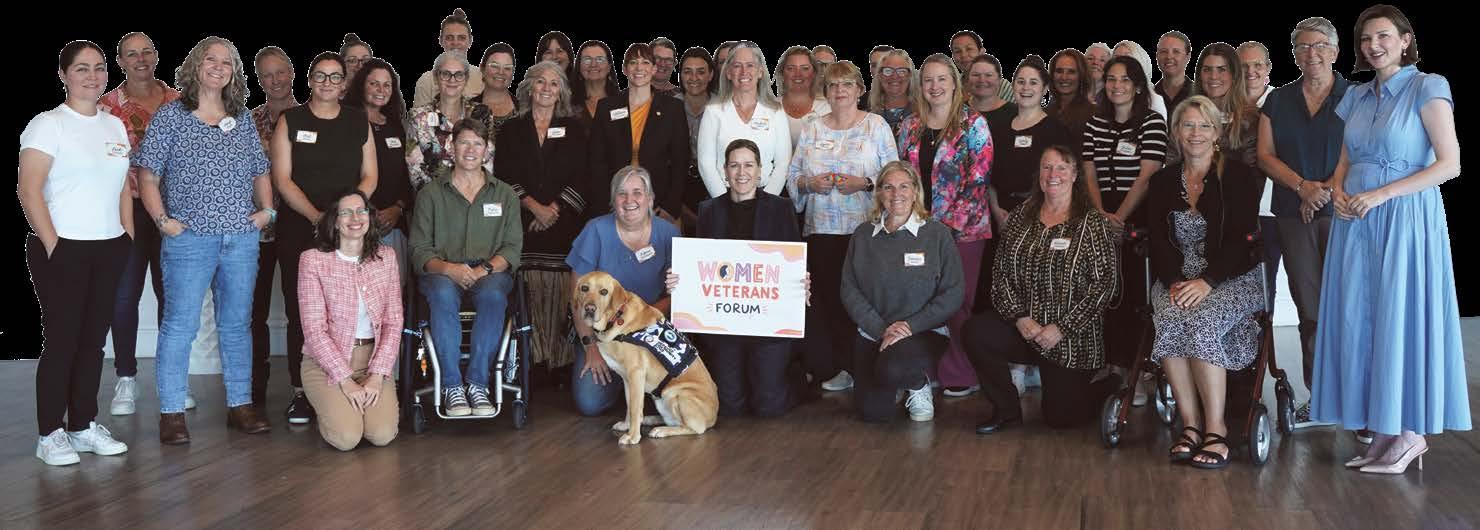
Women Veterans Forum 2026
The annual Women Veterans Forum provides a platform for women veterans to raise issues directly with DVA and to create new channels of communication between DVA and the veteran community. The most recent forum, held in May, was a great success, with 38 women veterans from across the country meeting to collaborate in person on topics such as military sexual trauma, transition, employment and women’s health.
The Forum is a prime example of the value of co-design, which acknowledges people with lived experiences as the experts on their needs and collaborators on designing solutions.
‘I have virtually avoided any and all ADF/veteran-linked groups and activities since my separation from service,’ one participant commented. ‘In this forum I have felt safe to be part of the group and
activities. Being part of the solution is important to me. I feel that I have been able to contribute as part of the solution over the last 2 days. Thank you.’
Throughout the 2-day forum, participants generously shared their perspectives, ideas, and vision for change. This input is being summarised into a report that will be published on the DVA website in the coming months.
Lieutenant General Susan Coyle, the then ADF Chief of Joint Capabilities and now Chief of Army, gave a welcome address via video. Minister for Veterans’ Affairs Matt Keogh addressed the forum virtually, engaging with participants during a Question & Answer session. In the afternoon of the final day, participants presented a summary of their ideas and insights directly to senior DVA leaders, including Secretary Alison Frame.
‘Living in a rural area and with non-military friends, there is a major portion of my life that is not usually discussed or acknowledged,’ said another participant. ‘I enjoyed being able to talk on a level with fellow women about topics I haven’t talked about since leaving defence. Thank you.’
Thank you for getting input from us. I have never felt this seen as a veteran before.
- Forum participant
The 2026 forum marked 10 years since the inaugural (then-named) Female Veterans and Veteran Families Forum in 2016. In 2023, in response to feedback, this was separated into the Women Veterans Forum and the Veteran Families Forum.
Over the past decade, DVA’s consultative forums have driven significant change, with our service design moving from a single ‘veteran’ cohort to consideration of the need for tailored support for various groups within the veteran community.
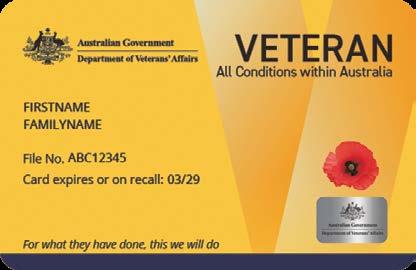
New look, same card
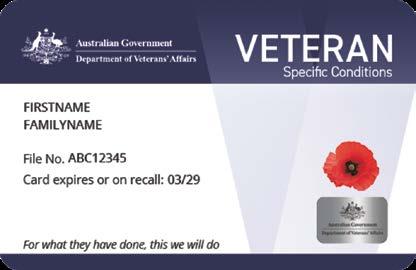
Have you received your new Veteran Card?
DVA has been rolling out new Veteran Cards since July as part of a scheduled global re-issue carried out every 6 years. The Veteran Card has a new design, but the way the card works remains exactly the same.
Your entitlements, eligibility and access to concessions remain unchanged.
To avoid any delay in receiving your new Veteran Card, ensure your postal details are up to date. The easiest way to confirm your postal address is through MyService, DVA’s secure online client portal: www. dva.gov.au/about-myservice
Follow these steps to update your details in MyService:
1. Sign in via myGov.
2. Select MyService from your linked services.
3. From the MyService home page, open the section showing your personal information.
4. Follow the prompts to update any details that have changed, including your postal address, contact details, correspondence preferences, or other personal information relevant to your DVA services or payments.
5. Review the information you’ve entered and submit your changes. This will notify DVA of the change and update your information in MyService.
Some Veteran Card holders may not receive their new card until around October because of the scale of the re-issue. At the time of printing, approximately 100,000 new Veteran Cards had been dispatched, with 200,000 remaining in the queue for delivery by October. If your new card arrives after your current card’s expiry date, you can keep using your current card until the replacement arrives. If you’ve ditched the physical wallet and prefer digital cards, you can download the digital Veteran Card
to your myGov app wallet. The digital Veteran Card works the same way as the physical card and provides the same information.
More information about DVA Veteran Cards is available on the DVA website at www.dva.gov.au/ access-benefits/veteran-card
HEALTH AND WELLBEING
Helping veterans and families connect with support
Since launching on 1 July, the Veteran and Family Wellbeing Agency has been helping veterans and the families of veterans to better connect with wellbeing services and support.
The Agency’s website includes a national service directory and resources to assist veterans, the families of veterans, and those who support them. It contains material on a range of wellbeing topics, drawing on evidence-based information to improve health and wellbeing literacy.
There is a helpline to support people who may need additional help navigating their options.
The Agency can assist veterans and families of veterans to connect with community-based services, including those offered through Veterans’ and Families’ Hubs across Australia, providing access to local support, services and connections in person.
Importantly, the Agency does not replace existing services. Instead, it strengthens how the system works together, helping to ensure people are connected to the right support:
• DVA remains responsible for delivering entitlements and services such as compensation, rehabilitation, income support and access to treatment.
• Open Arms – Veterans & Families Counselling provides dedicated support for eligible veterans and the families of veterans.
• The Joint Transition Authority (JTA) supports and guides serving ADF mem¬bers as they prepare to separate from the ADF.
• Defence Member and Family Support (DMFS) helps manage the unique challenges of military life and continues to provide supports and the Defence Member and Family Helpline.
The Agency will continue to grow and evolve, informed by feedback from veterans, families and providers. This approach will mean the Agency operates in a way that is responsive to the needs of the community and aligned with recommendations from the Royal Commission into Defence and Veteran Suicide. A key initial priority for the agency will be supporting at-risk veterans and families of veterans who are planning and preparing to transition from ADF and civilian life. This cohort was identified by the Royal Commission as requiring proactive support.
The Agency responds directly to recommendations from the Royal Commission. It reflects a shift towards a more person-centred system that strengthens prevention and early intervention to support veterans and the families of veterans through transition and at times of need.
Visit the Agency website: www.veteranwellbeing.gov.au
Wellbeing Agency branding symbolises growth, strength and renewal
The launch of the Veteran and Family Wellbeing Agency on 1 July included the unveiling of its brand identity, which reflects what we’ve heard wellbeing means for veterans and the families of veterans: growth, strength and renewal over time. It recognises that, while wellbeing looks different for everyone, military service is a shared connection.
The Agency’s brand is brought to life through a combination of visible and lived elements, including the Agency’s logo, shown as a simple silhouette of a lone pine. It is a clear and recognisable symbol connected to military service, while also representing resilience and new growth. Together, these meanings reflect the journey many veterans and families experience as they move through different stages of life and wellbeing.
The Agency’s identity also incorporates:
• consistent tone and language across Agency communications, so information is clear, respectful and easy to recognise
• a consistent visual identity across its website, social media and other communication materials
• clear information and pathways that help veterans and families understand what support is available and how to access it
• positive and consistent experiences for veterans and families when they engage with the Agency
• services that are easy to find, access and use, supported by stronger connections across the wellbeing system. Together, these elements shape the Agency’s identity.
The Agency and the brand identity were developed through consultation and co-design, bringing together veterans, families, ex-service organisations and service providers to help define what meaningful support looks like in practice, and how that should be represented.
You can connect with the Veteran and Family Wellbeing Agency on Facebook at www.facebook.com/veteranwellbeingausgov
Agency welcomes inaugural Chief Executive
Continued from page 1.
‘I’m excited to lead this work and help build a wellbeing system that continues to evolve with the needs of veterans and families.
‘What isn't well defined is the pathway to support, and the Agency has a critical role to play in changing that. Our measure of success for me will be when families are telling us that their transition was smooth and well supported. The biggest metric is a veteran or family saying “That was actually a really good transition, and I am contributing to my community as a result” – that’s what is really important.’
A Churchill Trust Fellow, Brendan has undertaken significant research into improving support for families of veterans experiencing physical and psychological injury. His work has focused on international best practice and reinforces the importance of a “no wrong door” approach, ensuring veterans and families of veterans can access the support they need without barriers.
As a veteran and a father, Brendan is deeply committed to improving wellbeing outcomes for those who serve and the families who support them. He recognises that when a person joins the ADF, their family also shares in that service.
As Chief Executive, Brendan is leading the evolution of the Agency and driving a more connected, holistic model of care. A key priority is making it easier for veterans and families of veterans to find information and access services, including through stronger links with existing supports such as the Veterans’ and Families’ Hubs.
HEALTH AND WELLBEING
Turn down tinnitus with treatment
DR ANNA COLWELL
Deputy Chief Health Officer Department of Veterans’ Affairs
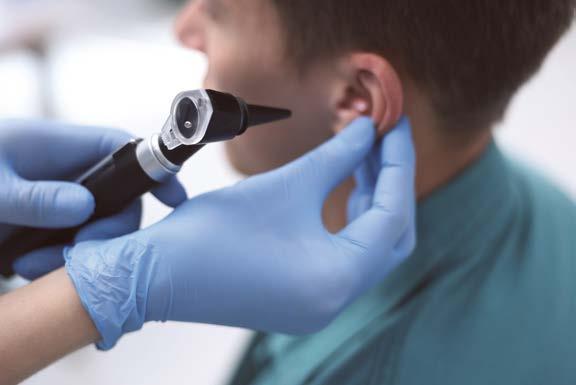
Tinnitus is when you can hear a sound inside your ears or head, but there is no outside source. It may ring, hiss, whistle, crackle, rustle or roar. It can be temporary, for example due to recent loud noise, or may last a long time. Most people with long-term tinnitus also have hearing loss.
Tinnitus is occasionally a sign of a more serious illness. See your doctor promptly if:
• your tinnitus is only in one ear
• it beats in time with your heart, or
• you also have sudden hearing loss, or balance problems.
These symptoms are more likely to have a serious cause and rapid treatment may be important.
Tinnitus treatment works to make the sound less annoying so you can function better. It can change how your brain reacts to sound and help you avoid things that make your tinnitus worse. If your tinnitus is mild, you might not need much treatment at all, but if it is more severe and bothers you on a day-to-day basis, there are several treatments DVA can fund.
DVA has recently launched an Improved Access to Treatment for Tinnitus pilot program with Hearing Australia. This pilot is for veterans and serving veterans under the age of 60 with accepted service-related tinnitus who lodge a MRCA permanent impairment claim.
The pilot operates only in the context of decision making on new claims in the compensation process between acceptance of initial liability by DVA, and determination of permanent impairment. The pilot provides a streamlined pathway for these veterans to access necessary tinnitus treatment and clinical advice to ensure they receive appropriate treatment for tinnitus before consideration of any permanent impairment.
You can find out more about the pilot on the DVA website. (Search for “Improving wellbeing through increased access to treatment”.)
The launch of this pilot program has led other veterans to ask: ‘Where can I get the same type of tinnitus treatment?’. The pilot does not affect delivery of DVA-funded tinnitus treatment for veterans in other contexts. For veterans with accepted service-related tinnitus, treatment is accessible through your Veteran Card. Currently serving veterans have ongoing access to tinnitus treatment through Defence health arrangements.
Tinnitus is a sound that may ring, hiss, whistle, crackle, rustle or roar.
As with all health conditions, your GP is a good place to start if you want to seek care for tinnitus. They will ask about how tinnitus affects you and find your triggers, such as loud noises, stress, and caffeine. They will also look for medications or health problems that may be making it worse, like infections, mood or sleep problems. If further treatment is needed, they can refer you to an Ear, Nose and Throat (ENT) doctor, or an audiologist.
Audiologists are experts in hearing and tinnitus. They can test your hearing, explain ways to reduce tinnitus, fit hearing aids or other helpful devices, as well as talk about ways to protect your hearing from further damage.
Hearing aids are commonly used because improving hearing makes tinnitus less noticeable. “Masking” uses other sounds to make tinnitus seem quieter. Some people like soft background noise (like music or a fan), while others use special devices.
Some people whose tinnitus impacts their life significantly will be referred to a psychologist for Cognitive Behavioural Therapy. This can help you feel less bothered by tinnitus, learn helpful relaxation skills and treat related issues like stress, low mood or sleep problems.
A small number of people may need specialised treatments such as tinnitus retraining therapy or neuromodulation devices. Your GP or audiologist can help you with what tinnitus treatment will be best for you.
Department of Veterans’ Affairs
The
HEALTH AND WELLBEING
Veterans’ and Families’ Hubs network grows throughout Australia
The Veterans’ and Families’ Hubs Program continues to reach more veterans and families of veterans across the country. The Hubs national network is making it easier to find support, connect with the local community and access a range of practical services closer to home.
The Hubs program was established to improve access to services that support health, wellbeing, housing, employment, social connection and economic security for veterans and families of veterans. As Minister for Veterans’ Affairs Matt Keogh said: ‘The Hubs make a real difference to the wellbeing of current and former serving veterans, which is why we are expanding the network.’
In 2019, the Australian Government first committed $30 million to establish 6 Hubs, which laid the foundation for a national approach to coordinated, wrap-around support. In 2021, a further $10 million was committed to expand the network into Southeast Queensland and Tasmania. This was followed by another $2.5 million to strengthen Tasmanian services, including a new Hub in Burnie and upgrades to the Launceston RSL.
The 2022–23 Federal Budget provided a further $46.7 million for 8 more Hubs across Australia, and again in 2025 a further $5 million was committed for the Bendigo Hub.
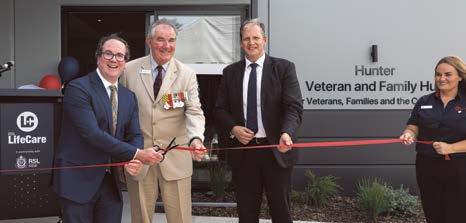
R: Minister Matt Keogh opens the Hunter Hub with Brigadier Vincent Williams CSC (Ret’d), Director and Acting President RSL NSW; Drew Pearce, CEO of RSL LifeCare; and Hub Manager Hayley Catford.
AN EVOLVING NATIONAL NETWORK
The program reached a major milestone in March 2026 with the opening of the Hunter region Hub in Maitland. Delivered by RSL LifeCare, in partnership with RSL NSW (and other ex-service organisations), it improves access to support for more than 22,000 veterans and families of veterans across the region.
Located near key Defence sites including the Singleton Military Area, Bullecourt Barracks and RAAF Base Williamtown, the Hub is operating through a “hub-and-spoke” model (main Hubs bolstered by other local sites operating as touch-points for support). This helps increase veterans’ access to services, wellbeing programs and social connection activities across the Hunter region.
Another major development is underway in Greater Sydney. RSL LifeCare, in partnership with RSL NSW, are working to deliver a Hub in the Hawkesbury region, interlinked with a Hub at Bardia Barracks in Ingleburn.
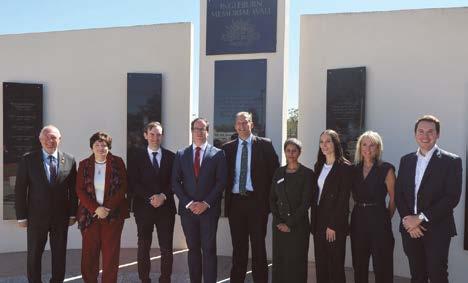
Together, the 2 locations are expected to support around 19,200 veterans and families of veterans across Greater Sydney’s southwestern corridor, including 11,500 in Greater Western Sydney and 7,700 in the Hawkesbury region.
Bardia Barracks has a long and proud military history. Built in 1940 as part of the
Ingleburn Army Camp, the site was home to thousands of Australian soldiers undergoing training during the Second World War. Bardia Barracks remained in use until the 1990s, with soldiers who served in the Korean and Vietnam Wars, National Service Schemes and the Army Reserves training and bunking on the grounds. Repurposing the barracks as a Veterans’ and Families’ Hub will ensure their legacy endures, while transforming the precinct into a welcoming, contemporary space for the veteran community.
The Bardia Barracks Hub is a strong example of what we can achieve when the Australian and NSW Governments work hand-in-hand with organisations like RSL LifeCare, RSL NSW and our local subbranches to wrap practical support around veterans and their families.
There are now 11 Veterans’ and Families’ Hubs operating nationally, providing a mix of in-person and outreach services tailored to local community needs. These include:
• Adelaide (SA) – SA Government
• Burnie (TAS) – North West Tasmanian Veteran Welfare Board
• Caboolture (QLD) – Lives Lived Well
• Darwin (NT) – Mates4Mates
• Hunter (Maitland, NSW) – RSL LifeCare
• Queanbeyan (NSW) – RSL LifeCare
• Northern Adelaide (SA) – Lives Lived Well
• Nowra (NSW) – RSL LifeCare
• Perth (WA) – RSL WA
• Wodonga (VIC) – RSL Victoria
• Tasmania (state-wide hub-and-spoke model)
– RSL Tasmania
While the service offerings of Hubs may differ depending on local needs, together they offer or provide access to a wide range of services, including primary health care, mental health care, employment assistance, housing advice, legal and financial services, and opportunities to members of the veteran community to connect with each other.
And more Hubs are on the way, with upcoming locations at:
• Hawkesbury region and Ingleburn (NSW) –RSL LifeCare
• Tweed/North Coast (NSW) – RSL LifeCare
• Ipswich (QLD) – RSL Queensland
• Surf Coast/Geelong (VIC) – RSL Victoria
• Southwest Perth (WA) – RSL WA
• Bendigo (VIC) – TBC
STRENGTHENING SUPPORT THROUGH PARTNERSHIP
The continued rollout of the Veterans’ and Families’ Hubs network reflects strong collaboration between government, ex-service organisations, business and local communities.
In addition, Hubs are working directly with the newly established Veteran and Family Wellbeing Agency to ensure veterans and families of veterans get access to the support they need, no matter where they are located across the country.
Through these partnerships, we’re building an interconnected system of care for veterans
and families of veterans across the country. Shaped by local needs, the Hubs take a flexible, relationship-based approach and offer welcoming places where trust, connection and practical support can grow.
As the program continues to develop, not only is it making access to services easier, it’s helping veterans and families of veterans feel more connected, less isolated and better supported by building stronger ties to the community. For more information about the Veterans’ and Families’ Hubs, visit www.dva.gov.au/vfhubs
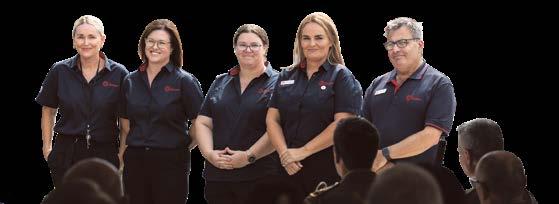
The RSL LifeCare team will manage the Hunter Hub.
L to
The site for the Bardia Barracks Hub was officially turned over on 15 April 2026.
The reception area of the Hunter Veterans’ and Families’ Hub
HEALTH AND WELLBEING
Moral injury: why it matters for veterans and families
When people think about the impacts of military service, they often think of physical injury or post-traumatic stress disorder (PTSD). However, some experiences can also leave a different kind of wound, sometimes described as “moral injury” (MI).
ASSOCIATE PROFESSOR JON LANE Chief Psychiatrist Department of Veterans’ Affairs
MI can happen when a person is involved in, witnesses, or is affected by events that go deeply against their values and sense of what is right. For veterans, this may arise in combat, training, leadership situations, or other high-pressure environments. It can also affect families, who may continue to see the emotional and relationship impacts long after service has ended.
DVA’s current working definition of MI is:
Moral Injury is a trauma-related syndrome affecting serving members, veterans and their families, caused by the physical, psychological, social and/or spiritual impact of grievous transgressions, violations, or betrayal of deeply held moral beliefs and/or ethical standards, that disrupt one’s understanding of right and wrong, or sense of goodness of oneself, others or institutions.
A helpful way to understand moral injury is to start with what researchers call a “potentially morally injurious event”. In plain language, this is an experience that feels like a serious breach of a person’s moral code. This may include doing something, or feeling unable to stop something
from happening, that goes against deeply held personal beliefs. It can also include witnessing cruelty or injustice, or feeling betrayed by trusted leaders, peers, or institutions.
MI events or incidents are referred to as transgressions, and so someone can be a perpetrator, a witness, or a victim of transgressions. What often makes these experiences so distressing is that it is not only the event itself, but it’s also the way it can affect a person’s sense of self, trust in others, and view of the world.
The effects of moral injury can be wide-ranging, depending on the intensity and severity of the MI and the subsequent impacts on the person involved. A person may experience guilt, shame, anger, grief, disappointment, or a deep loss of trust in themselves, others, or institutions. Some people withdraw from relationships, struggle with self-worth, or feel that life has lost meaning and purpose.
These types of experiences that shake our beliefs, identity, or sense of meaning can affect emotional wellbeing, connection with others, family life and day-to-day functioning. This is what we mean when we talk about the spiritual impact of MI. For some people, there may also be a religious impact, particularly if the experience has shaken their belief in God, or their faith construct, or understanding of self.
A person
may experience guilt, shame, anger, grief, disappointment, or a deep loss of trust in themselves, others, or institutions.
Moral injury can sit alongside PTSD, depression, anxiety, or grief, but it is not the same thing. PTSD is often linked to fear and danger, while moral injury is more closely related to guilt, shame, betrayal and loss of trust. A person may continue to think not only about what happened, but what it means about them, other people, or the institutions around them. This is important because support may need to focus not only on reducing distress, but also on rebuilding trust, connection, identity and a sense of purpose.
This is especially relevant for veterans and families of veterans. Military service can involve situations where loyalty, responsibility, safety and survival are in tension, and where there may be no easy choices. Some veterans may carry distress related to actions they took, actions they could not prevent, or betrayals they experienced.
Families may notice withdrawal, anger, numbness, relationship strain, self-blame, or a loss of connection with community, faith, or identity.
Understanding moral injury can help make sense of these reactions and support a more compassionate response at home and in services.
MI is not recognised as a formal disorder at this stage though. It has been recognised as something that impacts a person’s mental health and functioning, and is described as a condition, such as chronic fatigue syndrome, or fibromyalgia. In other words, even though it isn’t a formal diagnosis per se, it is absolutely recognised as an important target for intervention.
In fact, MI and its impacts were recognised by the Royal Commission into Defence and Veteran Suicide, which recommended that Defence and the Department of Veterans’ Affairs should work collaboratively to develop an agreed approach to minimising the negative impacts of moral injury, including the risk of suicide and suicidality for serving and ex-serving members (Recommendation 78).
DVA and Defence are working jointly to respond to this recommendation.
The positive message is that moral injury can be recognised and support is available through Open Arms for veterans and families of veterans, and especially through the chaplains working with both Open Arms and Defence.
Recovery may take time, but with the right care, people can rebuild trust, connection, self-respect, and meaning. Support may include chaplains, counsellors, psychologists and other trusted professionals. For veterans and families of veterans, having language to describe moral injury can be an important first step. It can help people feel understood, reduce isolation, and open the way to healing and recovery.
HEALTH AND WELLBEING
New payment supports older veterans
The Additional Disablement Amount (ADA) is a new benefit that came into effect on 1 July 2026.
The ADA is similar to the Extreme Disablement Adjustment benefit under the Veterans’ Entitle ments Act 1986 (VEA). It provides support for veterans over age pension age with a high degree of impairment due to injuries or illness caused by their service now that the VEA has closed to new compensation claims.
Veterans who are granted the ADA may receive a Veteran Gold Card and a periodic payment, offset against other permanent impairment compensation or Commonwealth-funded superannuation. This includes any MRCA per manent impairment payments, lump sum compensation paid under the Safety, Rehabil itation and Compensation (Defence-related Claims) Act 1988 (DRCA) and Disability Com pensation Payment paid under the VEA.
Partners of veterans who were eligible for the ADA at the time of their death and who meet the MRCA criteria of “Wholly Depend ent Partner” are entitled to compensation and a Veteran Gold Card. The children of deceased ADA veterans also receive an eli gible young person payment (if applicable) and access to the MRCA education scheme – as well as a Veteran Gold Card.
To find out more, search for “Additional Disablement Amount” on the DVA website
Don’t wait –access mental health support early
Fully funded mental health treatment is available to eligible Veteran White Card holders through Non-Liability Health Care (NLHC– mental health).
Eligible veterans include those who have served at least one day of continuous full-time service in the ADF, and Reserve members with border protection or disaster relief service or who were involved in a serious service-related training accident.
The early treatment of mental health conditions may lead to better health outcomes in the long term. So, when you’re ready, make an appointment with your GP to discuss your mental health and treatment options. You won’t need to prove that your military service caused the condition, and you won’t need to lodge a formal claim to receive funded mental health treatment. Your GP may also refer you to a mental health provider, such as a psychologist or psychiatrist.
The treatment can be accessed for as long as clinically necessary, which means you do not have to pay for your mental health treatment.
Although many Veteran White Cards cover mental health treatment already, before seeking treatment you need to check if mental health cover has been added to your individual card. You can request to add it online via MyService or by calling 1800 VETERAN (1800 838 372).
Recent data indicates that over a quarter of a million services have been funded by DVA since July 2023 through NLHC (mental health) arrangements alone. (This figure does not include services provided to Veteran Gold Card holders or Veteran White Card holders with other accepted conditions.)
More information is available on the DVA website: search for “Non-Liability Health Care (mental health) for veterans”. For further support, contact Open Arms – Veterans and Families Counselling for free and confidential counselling services available 24/7. Just call 1800 011 046 or visit www.openarms.gov.au
Future housing facility to support homeless veterans in the NT
The Australian Government, alongside the Salvation Army (Northern Territory), has unveiled plans for the Scott Palmer Services Centre in Darwin – a new transitional housing facility dedicated to supporting veterans and families of veterans experiencing or at risk of homelessness.
The new centre is part of a national effort to improve veteran wellbeing. Backed by a $3.245 million DVA grant, the centre will be run by the Salvation Army and offer several transitional housing units, along with access to wrap-around support services. These will include mental health care, employment assistance and connections to veteran-specific services such as Open Arms and the Darwin Veterans’ and Families’ Hub.
Making the announcement, Luke Gosling, Special Envoy for Defence, Veterans’ Affairs and Northern Australia, said that the Royal Commission into Defence and Veteran Suicide made it clear we need to do more, especially for veterans facing homelessness. ‘Named for Commando Scott Palmer, the only Territorian killed in Afghanistan, the Scott Palmer Centre will carry his legacy forward in a practical way – backing veterans and their families with real, wrap-around support including mental health care and help into employment.’
The centre helps respond to the need for targeted support in the Northern Territory, where homelessness rates are up to 12 times higher than the national average. The initiative aligns with recommendations from the Royal Commission, which highlighted homelessness as a major risk factor for poor mental health and suicidality.
The Salvation Army is currently looking to secure a suitable property, and further timelines will be confirmed once a site is secured.
Minister for Veterans’ Affairs Matt Keogh said the initiative is about more than just putting a roof over someone’s head. ‘It’s about dignity, stability and ensuring veterans have access to the services and supports they need to get back on their feet,’ Minister Keogh said.
Stable housing is a cornerstone of wellbeing and suicide prevention.
Private Scott Palmer tragically lost his life during operations in Afghanistan in 2010. He served with distinction in East Timor, Iraq and Afghanistan, and was known for his courage, professionalism and deep bond with his fellow soldiers. His legacy will live on through this initiative.
For more information on veteran homelessness support, visit “Homelessness support” on the DVA website or contact Open Arms on 1800 011 046.
OPEN ARMS
Finding purpose after service
It’s not always easy to find purpose after ADF service, particularly when there are mental and physical challenges involved.
Open Arms is proud to support veterans and families of veterans to help them overcome adversity, find renewed purpose and move forward with their lives in meaningful and positive ways.
We spoke to people in the veteran community who have done just that and continue to actively encourage and support their friends and family to do the same.
GOLF DRIVES BETTER MENTAL HEALTH FOR VETERANS
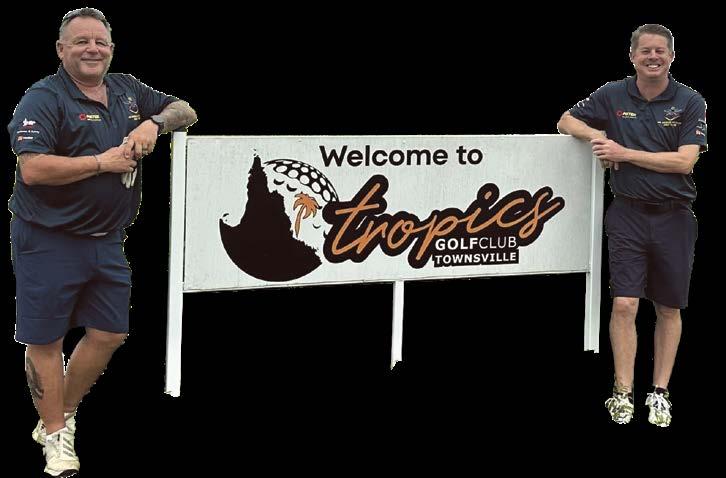
No one should navigate mental health challenges alone. That belief inspired Air Force and Navy veteran Joe to establish a dedicated golf club for Defence veterans in Townsville – a place where former service members can reconnect, rebuild confidence and support one another.
Motivated by this mission, Joe shared his idea with mates, sparking the interest of Army veteran Matt in helping bring the idea to life. Together, they coined the slogan: “Improving veterans’ mental health – one round at a time”.
Drawing on their military experience and determination, the pair then turned the concept into reality, achieving what can only be described as a “hole in one” in under a year.
In that short time, they successfully registered the not-for-profit organisation – the NQ Defence Veterans Golf Club – and secured 2 host golf courses. They have also welcomed 74 financial members, gained sponsorship support, and established weekly games and regular club competitions.
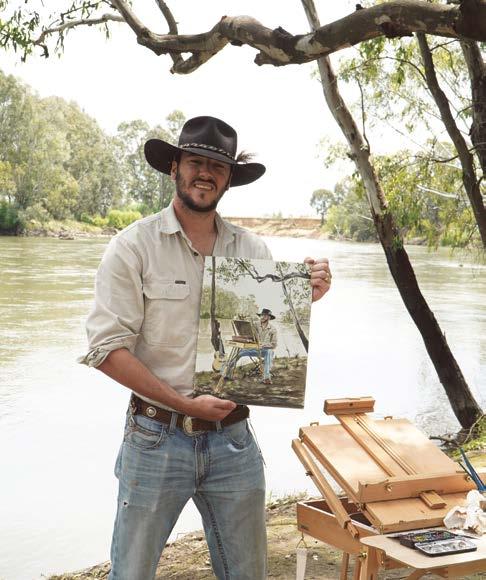
ARTIST HUGH PAINTS A BRIGHTER FUTURE FOR HIMSELF
Art has helped Army veteran Hugh to paint a brighter future for himself and to encourage others to draw strength from their service and move forward.
‘I injured my shoulder in 2018 and was in and out of surgery for the next 2–3 years,’ he explained. ‘Before my discharge in 2021, I really hadn’t seen an end to my military career.’
After he left the Army, the former member of 6th Transport Squadron, who had achieved his dream job driving a Bushmaster, missed the structure and discipline of military life and struggled with his own loss of identity.
‘I would find it hard to get out of bed before 2 pm,’ he recalled. ‘I felt numb because I believed I had nothing to achieve.’
Hugh said his life began to improve after he took up acrylic painting with the help of YouTube.
President Joe and Club Secretary Matt understand first-hand how challenging the transition from military service can be.
‘It can really affect your mental health, especially if you have been medically discharged,’ they agreed. ‘You can lose your identity when you lose the uniform, and it’s important to rediscover that.’
For both men, golf has been a lifeline, restoring routine, purpose and social connection. They have also seen the same positive impact among members, whose ages range from veterans in their early 20's to the club’s oldest player at 82.
‘We’ve all been through similar experiences, and we know how challenging it can be to find a sense of purpose after military life,’ they
said. ‘When our members come to play golf, we just want them to be themselves. The only thing we ask is which service they were in.’
Now supported by an 11-member committee, after each game members gather for a social catch-up to build connection and, when needed, share referrals to support services that have helped others.
The NQ Defence Veterans Golf Club hopes its success will inspire veterans across Australia to establish similar initiatives within their own communities. The club continues to grow and welcomes new members from all services and all levels of golfing experience.
To get in touch, email nqdefenceveteransgc@gmail.com or visit www.nqdefenceveteransgolf.com.au
‘It changed everything for me,’ he said. ‘I bought some cheap paints and a canvas, and it was like time froze. I started to create something that was my own fingerprint and even though it was trial and error at the start, I went on to watercolours and then started to sell my art.’
Four years on, the self-taught artist is working to expand a start-up business to help veterans find purpose after service. He has conducted free art classes via his Oura gallery near Wagga Wagga and continues to volunteer to help veterans in the wider community.
‘It’s hard for some veterans to begin a new life,’ Hugh said. ‘That’s why it’s important for veterans to talk to veterans who’ve been there and done that.’
Hugh, who has also been a Veteran Artist-In-Residence at the Anzac Memorial in Sydney’s Hyde Park, has also completed Soldier On’s “March On” challenge, walking 96 km from Wagga Wagga to Gundagai to support veterans’ mental health. ‘There is a turning point in everyone’s life, and I am doing my best to help make a difference,’ he said.
Club
Joe and Matt, founders of the NQ Defence Veterans Golf Club
OPEN ARMS
Mindfulness can make ALL THE DIFFERENCE
Veterans, families of veterans and carers are encouraged to take part in a new 8-week Open Arms MindfulnessBased Stress Reduction program (MBSR).
The free online program will be delivered over the next 3 years by Openground – Australian Centre for Mindfulness. Participants can join from anywhere in Australia and you do not need to be an Open Arms client.
Air Force veteran EJ, now a lawyer in Melbourne, is living proof of the benefits of mindfulness. While
she had done her best to keep going after a medical discharge from Defence and a marriage breakdown around the same time, it had taken a real physical and mental toll.
During the toughest of times, she sought help from Open Arms, which invited her to join an 8-week MBSR Program. Soon after completing the course, EJ began to notice a real change in her mental health.
‘It started me on the road to re-programming my brain, showing myself compassion, changing my mindset towards stress, taking off that protective layer you develop in the military and being vulnerable,’ she explained. ‘It changed my life.’
EJ says her newfound mindset, which now includes daily mindfulness practice, has given her the peace and quiet she has craved for many years: ‘It continues to help me move on from stressful periods in life and to be the best version of myself for me and my children.’
To learn more or register visit www.openarms. gov.au/get-support/ online-programs
Open Arms celebrates the success of Shoulder to Shoulder
More than 1,200 veterans and the families and carers of veterans from around Australia have joined Open Arms’ Shoulder to Shoulder online forums. These anonymous online spaces were set up to create strong supportive networks and help to improve overall mental health and wellbeing in the veteran community.
The partnership between Open Arms and Sane Australia has also delivered a series of free webinars featuring advocates for the veteran community whose own lived experience helps raise awareness of the challenges and the support that is available.
Veteran Family Commissioner and Defence widow Annabelle Wilson, who recently took part in a nationwide webinar, hopes the Shoulder to Shoulder forums will only continue to grow in numbers.
‘It is such a valuable way for people who have experienced the same challenges to connect with others who understand what they are going through,’ Annabelle said. ‘I have navigated challenges that affected my wellbeing and I also know how
much connection and peer support made a difference and still makes a huge difference for me.’
Annabelle understands only too well how important it is to reach out for support. She was 7-and-a-half months pregnant with daughter Primrose when her veteran husband Josh lost his health battle in 2017. Overcome by grief, trauma and a deep sense of injustice with the system, she later sought help from Open Arms.
‘The post traumatic recovery I’ve experienced has been immense,’ Annabelle explained. ‘I was able to see my therapist weekly, whereas I wasn’t able to do that previously because I couldn’t afford it. ‘I’ve learnt a lot about myself and I’ve done a lot of work on my grief journey.’
She describes her role as Veteran Family Commissioner as an ‘honour’ after nearly 2 decades as a member, lobbyist and advocate for the veteran community.
‘I have grown up in this community, these are my peers,’ she said. ‘I’ve also been able to put my own experience aside and to think rationally about what I want to do to help the veteran community. My work is guided by a simple belief: families deserve systems that show up when they are needed most.’ Annabelle Wilson with daughter Primrose
Learn more about the forums
The 2 online Shoulder to Shoulder forums provide anonymous, peer-led spaces where people can connect, share experiences and feel understood by others who ‘get it’.
To help make them even more relatable and accessible, they were co-designed with the veteran community and trauma experts. They are moderated by mental health professionals and can be accessed 24/7 on any device.
To find out more visit www.openarms.gov.au/get-support/online-programs
FEATURES
Volunteering veterans continue a life of service
Volunteering offers a powerful way to stay connected, support communities and build a renewed sense of purpose.
Colleen – from Army hospitals to op shops
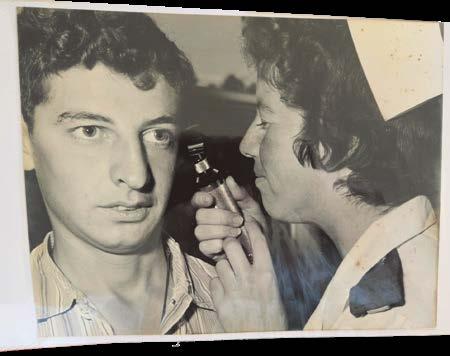
When Colleen enlisted as an Army nurse in 1976, she could not have known service would become a defining thread running through her life. She had already begun her nursing career in local hospitals before joining the Army. Over 9 years of service she found not only purpose, but lifelong friendships.
‘Serving one’s country is very humbling,’ she says. ‘For a girl from a small Queensland town, it was a wonderful way to see Australia. But it’s the friendships you make – they last a lifetime.’
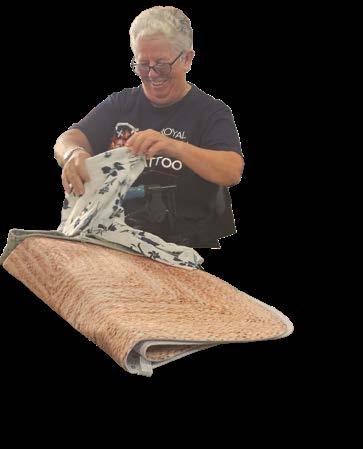
Today, that same spirit of service continues in a quieter, but no less meaningful way. Colleen now volunteers at a charity opportunity shop in Hervey Bay, where she helps sort donations that support local causes. ‘It’s about service,’ Colleen says. ‘In the Army we served our country. Volunteering is a continuation of that, but on a local level – it’s about serving the local community.'
Colleen first stepped into volunteering during a difficult period
in her life. After the loss of her partner, a Navy veteran, she found herself with time and a sense of emptiness. ‘Losing my partner left me with too much time on my hands,’ she says.
Living opposite the local op shop, Treasure Trove, she walked across the road one day and asked to volunteer. Their response was immediate: ‘When I mentioned my military background, they were impressed. I was accepted immediately.’
That first step was simple, but the impact has been lasting.
Inside the shop, there’s a sense of warmth and energy. Music – usually 60s and 70s rock and roll – plays in the background as volunteers work through bags and boxes of donations. ‘It really is a treasure trove,’ Colleen says. ‘You never know what you’ll find.’
When COVID-19 forced the shop to close in early 2020, Colleen, like many Australians, struggled with the sudden isolation. When the
Nathan – sailing into community leadership
Nathan, a Navy veteran, was one of the volunteers selected to support DVA’s delivery of Anzac Day services in Gallipoli, Türkiye, this year. (See article on page 27 of this newspaper.) One of the reasons Nathan was chosen was the active and important role he plays supporting his local veteran community through volunteering and leadership. After recognising both the strengths and challenges within RSL organisations, Nathan was compelled to take on the role as President of the Cairns RSL Subbranch. In this role, Nathan is working to improve accessibility for veterans, increase visibility within the broader community, and create pathways that make it easier and more relevant for younger veterans to connect, participate and feel a sense of belonging.
Reflecting on what inspires him to volunteer, Nathan said: ‘At the heart of it, my motivation has always been service, giving back to those who served, ensuring their contribution is recognised, and helping build an organisation that remains strong,
relevant and inclusive for the next generation of veterans.’
Nathan is supporting veterans through advocacy and connection and has focused on building an internal culture where effort, initiative, and service are recognised and rewarded. ‘Many veterans transition out of service carrying a strong sense of identity, purpose and camaraderie,’ he says. ‘And when that structure changes, the support they receive from community organisations, like RSL sub-branches, can make a real difference.’
Reflecting on the impact of volunteering, Nathan said that some
doors reopened later that year, returning to volunteering brought something important back: ‘Sanity returned’ – she recalls – ‘helping my local community is so rewarding.’
For Colleen, volunteering is not just about giving back – it’s about staying connected and maintaining wellbeing. ‘Keeping an active social life is essential for physical and mental health,’ she says. ‘Instead of sitting around, volunteering keeps your body and mind active.’
Colleen sees clear parallels between her time in uniform and
of the most rewarding moments come from the simple things: ‘Walking the Cairns Esplanade with members, sharing breakfast, and listening to stories… Many veterans carry experiences they don’t often speak about, and providing a space where they can share those stories, if and when they choose, is incredibly important.
her life now: ‘The camaraderie of volunteers is similar to Army service. From serving your country to serving your community, it’s very rewarding.’
Her advice to others, especially veterans who may be feeling isolated, is simple: ‘Give it a go. Whether it’s an op shop, an animal shelter, or teaching kids to read, there are so many options. It rewards the charity, but it benefits the volunteer even more. ‘I now can’t imagine not volunteering.’
build connections that are genuinely meaningful. Ultimately, if you’re considering getting involved, start small, attend an event, help at a function, have a conversation.’
For some veterans, volunteering is one of the ways they continue to serve – sharing skills, values and experience from the ADF, and making a positive contribution to their communities beyond the uniform. For more information about volunteering and how it is considered if you are receiving a DVA payment, go to the “Voluntary work” page of the DVA website
‘I would encourage people to understand that volunteering is not one way,’ Nathan says. ‘While you are there to support others, you often gain a deeper appreciation for service, resilience and perspective that stays with you long term. You hear stories, share moments and
Nurse Colleen examines a patient at 7 Camp Hospital at Kapooka, NSW Collen at the Treasure Trove op shop
Nathan Shingles
Nathan helped to deliver the Anzac Day services at Gallipoli this year.
FEATURES
Lest we forget the veterans of Borneo
On 1 May 1945, the first wave of some 80,000 Australian soldiers, sailors and airmen began a large amphibious assault on the oil-rich island of Tarakan, beginning a massive Allied military campaign to retake areas of the island of Borneo from the occupying Japanese.
With Japan in full retreat and staring at certain defeat – what were the Australians doing there?
‘Borneo was brilliant because it was a flawlessly executed military campaign on a grand scale,’ says Michael Veitch, media personality and author of Borneo: The Last Campaign . ‘And controversial, because most historians argue that it was unnecessary.’
Codenamed Operation Oboe, the attack on Tarakan was followed 6 weeks later by amphibious landings on Labuan Island and Brunei Bay in British North Borneo, and finally on 1 July, a third assault on the oil port of Balikpapan. With American support, the Australians first neutralised the little remaining Japanese air and naval power and obliterated the beachheads through an unprecedented bombardment. This had the collateral effect of destroying some vital airstrips, oil production facilities and civilian infrastructure – the capture of which was among the stated strategic aims of the campaign.
The real fighting took place in the dense jungle interior, where sheer grit went hand-in-hand with extraordinary bravery as the Australians were forced into grueling close combat to clear an intransigent enemy often more willing to die than to surrender. Our last 2 Victoria Cross recipients of the war – Corporal John Mackey VC and Private Leslie Starcevich VC – were awarded for their actions in Borneo.
Several months before Oboe even began, groups of Allied special operatives began parachuting into the interior. They made contact with the local “Dayak” people, convinced them to gather critical intelligence and trained them to join a guerilla fight. ‘It was an astonishing success,’ says Michel Veitch. ‘The Dayaks were absolutely willing to fight the Japanese, for whom they had nurtured a
murderous loathing, and proved to be brilliant, natural soldiers.’
The Australians had executed a highly successful, complex, tri-service campaign grounded in excellent intelligence, planning and logistics to re-take key sites in a territory the size of NSW. They had liberated and saved thousands of local civilians from a cruel Japanese occupation.
More than 600 Australians gave their lives for it.
‘But back in Australia, you would hardly know it,’ Michael Veitch says. ‘Everyone was sick of the war and quickly losing interest in what we were still doing in the jungles up there “mopping up” the Japanese.’
For the Australians on Borneo, the job did not end with Japan’s surrender. In the British part of the island, they pitched in on the reconstruction effort, providing medical aid to the brutalised locals, establishing schools and rebuilding devasted infrastructure. In (future) Indonesian Borneo, for 6 months they had the invidious task of maintaining security. Incredibly, in some instances this meant re-arming their Japanese POWs in an effort to keep the peace between the returning Dutch, ethnic Christians and increasingly active pro-independence Indonesian nationalists.
Just 7 weeks after Indonesia proclaimed independence on 17 August 1945, Australia sent a diplomatic mission to meet its inaugural president, Bapak Soekarno. And when the Dutch finally ceded control in December 1949, Australia recognised Indonesia’s independent statehood immediately.
This moral, political and practical support has never been forgotten. Fast forward 80 years, and ‘the bilateral relationship and current level of engagement and trust have matured to levels I have yet to witness,’ according to Colonel David Gandy,
the Australian Army’s attaché in Jakarta, who coordinates the Anzac Day Service in Balikpapan, one of 5 held across Indonesia.
‘The Balikpapan service in particular maintains a special connection with Australian military service given the magnitude and strategic importance of Operation Oboe and the ongoing connection with the local expat community,’ he says. ‘Key landmarks and military sites have been rehabilitated and preserved through a collaborative effort between the Indonesian Government, local community and the Balikpapan Anzac Day Committee, who have been key contributors to the success of the service since 1998. Key historical artefacts are kept in the local military museum, and memorials have been established throughout the town, along with remnants of a Matilda tank on Pasir Ridge, which serves as the commemorative site for the Anzac Day service.’
This year, Secretary Alison Frame represented DVA at the Anzac Day service in Balikpapan. ‘The friendship shown by the Australians towards the people of Borneo has been remembered positively,’ Ms Frame says. ‘I was touched by the respect and care shown to the places where Australians fought and died to liberate the island, and I want to especially thank the local Anzac Day committee for their dedication in organising the service every year.’
And what of our repatriated veterans? Their service was largely ignored by an Australian public mentally exhausted by 6 years of war. ‘So they kind of shut up about it,’ says Michael Veitch. ‘From the get-go, Borneo has been almost erased from the national consciousness. Since I’ve put out my book, I have been inundated with contacts from the children and grandchildren of the men who
served wanting to know about what they did.’
The inscription on the headstone of one the men who served, requested by his grieving family, reads: Not just today, but every day, we remember Lest we forget.
To read the full story of Borneo in the Second World War, visit www. anzacportal.dva.gov.au/resources/ borneo-1942-1945
Australian artillerymen at the landing at Balikpapan pounding Japanese positions 6000 yards away. (AWM 019437)
This year’s Anzac Day Dawn Service in Balikpapan, held annually on Pasir Ridge, one of the key battle sites of the operation.
Nawi, Sanina and their children, suffering from malnutrition, malaria and scabies, in Beaufort Civil Hospital set up under Australian Army administration. (AWM 111823)
Australian Matilda tanks on the move on Labuan Island, North Borneo, June 1945. (AWM 108867)
FAMILIES
Are the kids alright?
COMMISSIONER ANNABELLE WILSON Veteran Family Commissioner
Annabelle Wilson - Veteran Family Commissioner
When I attended my first Veteran Families Forum, I was just 2 weeks into the role of Veteran Family Commissioner.
I came prepared with what I thought were the top issues facing our community. Carer support, presumptive liability, addressing family and domestic violence, improving DVA programs, postvention support and communication, to name a few.
Important work, for sure.
But when we sat with families and worked through the list together, one question rose above the rest: Are the kids alright? And, what are we doing to help them?
At the time of writing, that forum was almost eight months ago. Since then, children have been a constant focus of my conversations with families, veterans, ex-service organisations, and across government.
I’m excited to share what we’ve been working on and some of the progress that’s underway.
Across the country, there are incredible group programs for children. We’re pushing to ensure that the funding that is currently in the space, stays in the space, and where possible provide the personnel needed to support sustainability
What I’ve heard time and again is how powerful it can be for kids to realise they’re not the only one. That there are other kids out there who just get it, without needing a long explanation. Those moments of connection really do matter – and we need more of them.
Alongside that, we’re also strengthening the professional support around children and families. Open Arms is now reviewing its Model of Care to include children and adolescents, alongside expanding the range of professionals that people can access. This means more connection to clinicians who understand both trauma and military life, and who work with children in ways that feel safe and age-appropriate. Recent changes have also opened up the outreach network, giving families more options and making it easier for children to access support earlier, closer to home.
This is about getting in before things escalate, and making sure that when families do reach out, there’s someone on the other end who really understands.
At the same time, we’re giving young people a say in what matters to them. In September, we’re establishing a pilot Children of Veterans Assembly at Government House in Canberra as part of the National Consultation Framework. The Assembly, which I see as the “children's component” of the Families Forum, will be the first time we’re hearing directly from children of veterans, and giving them space to influence the systems
We’re also taking a closer look at several existing programs within DVA, including the Sons and Daughters of Vietnam Veterans program, the Acute Support Package and the education schemes to make sure they’re reaching the families who need them; and exploring how they can grow to better reflect the intergenerational impact of service on families of veterans.
A big part of this work comes down to one simple question: who might still be falling through the cracks? Because if support exists, but isn’t reaching people, then there’s more work to be done.
This shows up in the everyday spaces that families walk into as well. It’s important to me that the children’s spaces across our network are warm, welcoming and engaging. And the more familiarity and consistency we have, the better. Earlier this year, I sent resource packs with children’s books and resources to all of the Veterans’ and Families’ Hubs. Inside each pack are children-specific resources that reflect Australian military life, each developed by a defence or veteran spouse. That means this initiative also directly supports veteran families, their creativity, and their communities.
When a child walks into a space that feels like it was created with them in mind, it sends a clear message that they belong here too.
I’m really looking forward to this. For many of these young people, it will be the first time they’re being asked directly about their experiences. Not
Are the kids alright? To answer that question, there’s still a lot of work to do.
Our children have been asking to be heard for a long time. We’re listening.
Packing children’s books and resources for the Veterans’ and Families’ Hubs
With participants at the SA Veterans’ Families Day High Tea. (See article on page 19. Photo by Frankie the Creative)
FAMILIES
National tribute to honour the unseen service of veteran families
A message from the Recognising Families Committee
A new sculpture planned for the Australian War Memorial will be the first public tribute acknowledging the unseen service of the families of Australian service personnel and veterans. To bring this sculpture to fruition, the Recognising Families Committee is calling on the community to play a vital role in turning the concept into reality – and provide the families of Defence members and veterans with the recognition they deserve.
The Recognising Families Sculpture will honour the more than one million families who have stood behind the Australians who have served in wars, conflicts and peacekeeping missions, including the more than 103,000 who died as a result of service.
To be created by artist Nina Sanadze, the sculpture will represent the strength and quiet endurance of families of Defence members
and veterans. The piece will portray a young mother and child, symbolising humanity, care, resilience and the emotional weight carried in the absence of a loved one.
Matt Anderson, Director of the Australian War Memorial, said that the sculpture pays tribute to all families who wait, hope, love and support our Defence force personnel. ‘This sculpture will add a physical presence to remind us of the contribution families make to the defence of our freedoms and values,’ he said. ‘We are honoured to place it in a prominent location to encourage our visitors to consider the many faces of service and sacrifice.’
The sculpture will incorporate a table, with an empty seat, inviting visitors to pause and reflect on the sacrifice and unrecognised service of Defence personnel and veteran families.
Laura McMahon, family representative on the committee, said: 'We lived in the space between departure and return, focusing on how to make family life feel normal at home but also for those away.
Veterans’ Families Day 2026 brings community together across SA
A message from Veterans SA
May marked an important month for Veterans SA as we came together through a series of events to celebrate Veterans’ Families Day 2026.
This year, Veterans’ Families Day was celebrated as a Festival of Families across several days from 15 to 17 May. The events brought Defence and veteran families and veteran organisations together with the wider South Australian community in different ways, each reflecting a shared message of gratitude and connection.
A Veterans’ Families Day High Tea at Ayers House was hosted by Dr Sharon Mascall-Dare OAM GAICD. With keynote speeches by Veteran Family Commissioner Annabelle Wilson and Olivia Savvas MP, the event created a warm and welcoming space where families, students and community members came together to celebrate the day. A highlight of the morning was a tri-service
panel featuring Commander Rebecca Wilson, Lieutenant Colonel Thuy-An Vu and Wing Commander Mark Fox, who shared honest reflections on service life and its impact on families.
The discussion resonated strongly, particularly with students in attendance, whose thoughtful questions reflected both curiosity and their lived experience of Defence life. It was a moving reminder that understanding often comes from shared experience.
SA first led the nation in 2024 by establishing an official Veterans’ Families Day on 15 May, recognising the vital contributions of ADF families. This leadership has since influenced WA, which became the second state to formally recognise 15 May as a day to acknowledge the role of defence and veteran families.
Veterans SA Director Bianca Wheeler said that when SA first recognised Veterans’ Families Day in 2024, it was about making the
This sculpture means more than any words could ever convey. It’s a quiet thanks that we never asked for, but one I know that holds so much significance for all the veteran families that came before me, and all the veteran families still to come.'
To bring this historic tribute to life, the Recognising Families Committee is seeking public support to
the Australian War Memorial’s national collection.
The committee’s founder and RSL Queensland State President Major General Stephen Day DSC AM, added: ‘Our families wear no uniform, they have no medals, there is no recognition or real understanding of the role they play – we should do something about that.’
Commissioner
invisible visible – shining a light on the families who stand beside our service personnel every step of the way. ‘For us, it’s personal. We see the strength, the sacrifices and the quiet resilience every day,’ Ms Wheeler said.
On 16 May, Veterans SA hosted an activation at Elizabeth City Centre. In the middle of a busy shopping centre, people paused to write messages of thanks, share reflections and tie ribbons in support of veteran families in our community. These simple actions created moments of pause and gratitude, contributing to an installation that for the next year will tour key veteran sites across Adelaide, sparking more conversations.
‘It was wonderful to connect with so many South Australians who have a defence connection and see the community take time to recognise veteran families in such a genuine way,’ Ms Wheeler said.
On 17 May, Veterans SA joined the Partners of Veterans Association of Australia (SA Branch) for a community event at Mawson Lakes that brought veteran families together for a day of fun and celebration. Through music, activities and conversation, the day reinforced connection, belonging and the importance of community.
Across every event, one message stood out: military service is never carried alone. It is shared by families through deployments, relocations, uncertainty and change.
Veteran Family
Annabelle Wilson attended Veterans’ Families Day with daughter Primrose.
(Photo: Frankie The Creative)
Yes, Veterans Can…
A message from Veterans Can…
Veterans Can… is a growing international social enterprise built on a simple but powerful belief: that military service leaves most veterans stronger, more capable and more connected than ever. Rather than focusing solely on challenges, Veterans Can… exists to create a balanced and optimistic narrative around life after, and because of, service – one rooted in connection, community and celebration.
Founded by Garrath Williams, a dual British and Australian Army veteran and long-time advocate, the organisation has quickly evolved into a global community platform designed to connect veterans, support veteran-owned businesses and create meaningful opportunities to continue serving society in new ways. At its core is the belief that veterans are not “broken” and need to be fixed, but are highly capable individuals, are part of a supportive community – and have enormous value to offer.
For Australians, the Veterans Can… mission feels naturally aligned with the values that underpin the ADF and wider veteran community: mateship, resilience, humour, service and practical support. This shared culture is already helping build meaningful collaboration between UK and Australian veteran networks.
One clear example is the Veterans Can-Do Exchange program – an Australian-based initiative, in partnership with HomeFront Australia and OpOz, that aims to connect veterans through shared experiences, leadership opportunities
ESO NEWS
orative
projects. Veterans Can… is also helping bring the hugely successful Veteran Games concept to the UK through the Veteran Games UK initiative. Inspired by the Australian movement, the games focus on connection, camaraderie and wellbeing through inclusive military-themed, team-based competition.
Our organisation’s growing partnership with veteran-owned Powder Monkey Brewing Co further reflects this expanding UK-Australian collaboration. Powder Monkey brews a dedicated “Veterans Can…” Pilsner in Sydney, creating both a conversation starter and a fundraising vehicle for veteran-focused initiatives. Discussions are also underway with RSL clubs and sub-branches about stocking the beer within their venues, helping create visible, community-based support for the movement across the nation.
Veterans Can… is not attempting to replace existing ex-service organisations or support structures. Instead, it complements them by creating a positive, proactive and internationally connected community that celebrates what veterans can still achieve together. For Australians looking to engage with forward-thinking veteran initiatives, it offers an opportunity to help shape a genuinely global movement built on shared service, shared identity and shared purpose.
To find out how you can, too.
Visit: www.veterans-can.com
Nasho Fair Go seeking members ahead of milestone anniversary
A message from Nasho Fair Go
As it approaches its fifth anniversary, Nasho Fair Go Ltd (NFG), the only Australia-wide association exclusively representing servicemen conscripted between 1965 and 1972 who did not serve in the Vietnam War, is putting out the call for more members.
Established by Victorian Nasho Geoff Parkes in 2022, NFG has grown quickly, clearly tapping into a need for mateship, camaraderie and social support for the remaining men who were called up for National Service and are now aged between 74 and 81.
‘63,000 of us were conscripted back then –only around a quarter of us saw direct combat in Vietnam, but we were still compelled to serve 2 years of military training and service – in Australia, Borneo, Singapore, Papua New Guinea and Malaysia,’ Mr Parkes said.
‘So, while most of us did not see direct, active military service, our training was identical to Australia’s regular soldiers – we were trained for war.
‘Now, some 50 years on, we think there are about 30,000 living Nasho veterans, and we want to bring them together because we are finding that reuniting old friends, reminiscing and reflecting on years gone by is so important.’
Mr Parkes said another key function of NFG was to keep members up to date with the various medical benefits and entitlements they are able to access in their senior years.
‘We don’t have time on our side anymore,’ Mr Parkes said. ‘Our average age is approaching 80 and our numbers are dwindling year-by-year.
‘Having an association like NFG, which is able to support members to access health care, lodge a claim and get the most out of the White Card provided by the DVA has been very well received.
‘Just like our training days, I really feel we have an obligation to help each other. That’s what NFG is all about.’
NFG is aiming to reach the 5,000 member mark before the end of 2026. To find out more and join up visit www.nashofairgo.com.au/ nasho-registration-page
Veterans Can… founder Garrath Williams
Andy Cullen, CEO of PTSD Resurrected, making a (successful) pitch for the first Australian “Veterans Can... Deliver” enablement grant at a Veterans Can-Do Exchange program event in Brisbane.
Statement on the closure of Australian War Widows
A message from Australian War Widows Incorporated
We are deeply saddened to advise that the national organisation of Australian War Widows Incorporated (AWW Inc.) was wound up on 16 June 2026.
Please be assured that the state branches in the ACT, NSW, Queensland and WA will continue to operate and provide unwavering support to war widows across Australia.
Our purpose and proud history
Australian War Widows Incorporated was an incorporated association formed by state and territory war widows organisations. Our core purpose has always been to advocate for and protect the interests of Australian war widows.
The War Widows Guild of Australia was first established in Victoria in 1945. NSW, Queensland, the ACT, SA, WA and Tasmania were established in the following years. Our national federation was proudly led by our visionary founder, Jessie Vasey CBE OBE, until her passing in 1966. Since then, the leadership of AWW Inc. has been drawn from its dedicated member states.
Over the decades, AWW Inc. has achieved incredible milestones for war widows around the country – including the establishment of our nationally commemorated War Widows Day.
The future of advocacy
The national organisation was created by Jessie Vasey many years ago out of a critical need to advocate on behalf of all Australian war widows at a federal level. While federal advocacy remains vital, the landscape has evolved. Today, our state branches are fully equipped to carry out this essential function.
Australian War Widows ACT, NSW, Queensland and WA will continue to work collaboratively to advocate for, and support, war widows around the country. Your voice will not be lost.
The reason for this decision
Since 2017, AWW Inc. has operated with 5 member states. Following the voluntary winding up of AWW South Australia Incorporated in December 2025, AWW Inc. no longer met the legal criteria required to maintain our status as an incorporated association.
Over the past 6 months, we have worked tirelessly alongside our state branches to find a viable solution to ensure the continuation of the national organisation. Regrettably, we have been unable to find a sustainable path forward.
A new national voice for war widows
A message from the Families of Veterans Guild
Eighty years ago, Australia’s war widows came together in the aftermath of the Second World War to advocate for recognition, rights and each other. What began as a small community guild soon became a powerful national movement, one that advanced advocacy for war widows across Australia and secured meaningful engagement with government.
In June, Australian War Widows Incorporated (AWW Inc.) unfortunately closed. Since 2017, AWW Inc. has operated with 5 member states. Following the voluntary winding up of War Widows South Australia in December 2025, the national guild has determined that it can no longer meet the requirements to continue as an incorporated association.
On 1 July 2026, the Families of Veterans Guild (the Guild) became responsible for leading national advocacy efforts for Australian war widows following the closure of AWW Inc.
This is a significant responsibility, and we take it on grounded by the Guild’s founding purpose: to advocate for the dignity and needs of war widows and their families, and to ensure their legacy and contribution continue to be recognised. This
reflects the vision of Jessie Vasey CBE OBE, who first brought the war widow community together, and which remains central to our work today.
The Guild, Australia’s longest standing and largest remaining war widow’s organisation, has been proudly supporting and advocating for war widows in NSW since 1946, and has long welcomed members from across the country into its
With sincere gratitude
To our partners, colleagues and all those we have worked with over the decades: Thank you for your enduring commitment to the ex-service community.
To our beloved war widows: We are deeply saddened to be closing our doors after so many years, but we take comfort in knowing that the vital advocacy and support you deserve will continue through our amazing state branches. Thank you for your steadfast support.
As we close this chapter, we ask you to always remember our war widows’ motto:
We all belong to each other. We all need each other. It is in serving each other and in sacrificing for our common good that we are finding our true life.
ing stability, continuity of support and ongoing service provision to the war widows’ community following the closure and to ensuring that advocacy on the issues that matter continues without interruption.
We acknowledge the longstanding contribution of AWW Inc. and all of its presidents and leaders over the last 78 years. The legacy they leave
Below: War widows and veteran families at the Australian War Memorial
TRANSITION
What to look for in an employer
Many employers value the skills and experience gained through the ADF and are taking a more deliberate approach to attracting and supporting veteran and partner employees.
If you are exploring your next role, it can help to look beyond the job description and focus on how an organisation brings veterans into the workforce and what support is in place once you are there.
This can start with a strong public leadership commitment, demonstrated by organisations that invest in long-term programs that support study, wellbeing and employment pathways for veterans and families of veterans.
Flinders University, a Veteran Employer of Choice under the
Veteran Employment Commitment (VEC), is demonstrating such leadership. Professor Ben Wadham, Director of the Open Door: Improving the Wellbeing of Veterans, Public Safety Personnel, and their Families research initiative, says the university’s commitment to veterans is grounded in recognising their capability, not just their service.
‘Through Open Door and the Military Academic Pathways Program, we provide integrated support across study, wellbeing, and employment,’ Professor Wadham says. ‘This enables veterans and their families to thrive while strengthening Flinders University with their diverse skills and perspectives.’
Together, the two initiatives reflect a sustained commitment to strengthening education outcomes for veterans and supporting positive employment opportunities.
First homes delivered under acute housing program
In March 2026, the first housing facility funded through the Veterans’ Acute Housing Program (VAHP) program was completed in the Cairns region. The development consists of 6 selfcontained, one-bedroom dwellings across 2 triplexes. Tenancies and support services commenced almost immediately, with 5 of the 6 residences occupied within the first week of the facility’s completion.
Clear, visible, veteran-inclusive recruitment practices are another way that employers help veterans understand where their skills and experience fit, while signalling that they recognise and value what they bring. This can include tailored information on careers websites, internal employee referral networks, and job advertisements that clearly state where Defence experience is valued.
Once in the door, it is important to understand how an organisation supports and retains its veteran employees. This can include providing time to attend commemorative events, offering mentoring, and establishing veteran employee networks.
As you explore different industries, the Veteran Employment Program ‘Find a VEC organisation’ tool helps you compare employers by location,
The remaining 7 capital works housing projects are currently underway. These are expected to be delivered progressively from this year, with all the projects anticipated to be completed by around mid-2028. In total, the program is expected to deliver up to 78 new dwellings across Queensland, Tasmania, NSW, Victoria, SA, and WA.
The VAHP is a $30 million initiative designed to improve housing outcomes for veterans and families of veterans who are experiencing, or at risk of, homelessness. It provides $24 million in capital works grant funding for projects to expand the availability of crisis and transitional housing; and $6 million in grants to fund organisations to deliver specialist support
industry and the supports they offer. Go to www.veteransemployment. gov.au/show-your-commitment/ commitment-supporters
Looking for clear recruitment pathways, structured workplace support and visible public commitment, can help you identify organisations where your skills and experience will be recognised.
services that address the risk factors for homelessness.
In addition to housing delivery, the program is assisting 5 organisations to provide targeted wrap-around support to address the risk factors of homelessness. Four of these are already delivering case management and outreach-based service delivery to veterans and families of veterans in locations across Queensland, NT, NSW (including the ACT), Victoria and SA. Veterans and families of veterans in need of crisis support across these regions can reach out to RSL Queensland, RSL LifeCare, Vasey RSL Care or RSL Care SA for assistance.
The fifth organisation, based in Perth, has commenced referral support and partnership activities and
will expand to deliver more intensive, on-site case management in mid-2027 once the associated crisis and transitional housing facility is completed. In the interim, veterans and families of veterans can reach out to RAAFA WA to be connected to local supports.
In the second half of last year, more than 500 veterans and family members of veterans experiencing, or at risk of experiencing homelessness, received case management or outreach support through the VAHP Specialist Services grantees. For more information on veteran homelessness support, search for “Homelessness support” on the DVA website or contact Open Arms on 1800 011 046.
Professor Ben Wadham (Image courtesy of the Flinders Foundation)
DEFENCE NEWS
Thinking about working overseas?
What you need to know about Safeguarding Australia’s Military Secrets
Recent events at home and abroad are a timely reminder that Australia’s national security relies not only on platforms and capabilities, but on how Defence knowledge, skills and experience are protected, even after a uniform is hung up or a role changes.
Earlier this year, an Australian Army Reservist was charged with allegedly working for a foreign military without authorisation. Internationally, similar legislation is being actively enforced by close partners. The United States, for example, has recently charged former military personnel for providing unauthorised training to foreign militaries under its export control laws.
These cases highlight that:
• Defence knowledge retains its sensitivity over time
• intent does not remove legal obligations
• early advice can prevent serious consequences.
What
is SAMS?
The Safeguarding Australia’s Military Secrets (SAMS) framework, established under amendments
to the Defence Act 1903 , helps protect Australia’s military capabilities, operational advantage and national interests.
In practical terms, SAMS requires certain individuals to obtain a Foreign Work Authorisation (FWA) before providing defence-relevant services, skills, knowledge or experience to a non-exempt foreign government, foreign military, or foreign government-controlled entity.
These obligations can apply more broadly than many people expect, including to:
• current ADF members, Defence APS employees and contractors
• certain former Defence personnel
• others with access to sensitive defence knowledge, experience or information, including in defence industry and the higher education and research sector.
Importantly, this is not limited to technical or combat roles. It can include training, advisory, consultancy, research or other professional services.
Supporting informed decisions
SAMS is not about restricting legitimate opportunities or international engagement. It is about ensuring sensitive defence-related knowledge
Study to gauge effects of blast exposure
An infantryman turned neurologist is leading a major Army study into how repeated low-level blast exposure may affect soldiers’ long-term cognitive function.
Lieutenant Colonel Antony Sutherland joined Army in 2001 as a rifleman before later serving as a reserve medic while completing medical school. He is now the lead clinician for the Phase 2 Blast Overpressure Monitoring Project, which began in February 2026.
‘The study is designed to help Army better understand the cumulative effects of low-level blast across a soldier’s career,’ Lieutenant Colonel Sutherland said. ‘While high-level blast effects from events such as improvised explosive devices are well documented internationally, far less is known about the long-term impacts of repeated low-level exposures common in training environments.’
Phase 2 will follow soldiers through a posting cycle, collecting structured sensor, cognitive and medical data that will inform a broader multi-year program to understand lifetime exposure patterns. So far, 101 soldiers from the 3rd Battalion, Royal Australian Regiment; 4th Regiment, Royal Australian Artillery; the School of Infantry; and the School of Artillery have joined the study, with numbers expected to grow to 400 by the end of 2027.
Blast sensors mounted on helmets and body armour record exposures. Data collected will be paired with regular cognitive assessments, symptom reports and blood-based biomarkers throughout the posting. The likely outcomes include adjustments to the allowable number of rounds fired during training, active recovery actions between exposures, and improved
is a shared responsibly and in Australia’s national interest.
If you are considering working overseas – even in a civilian or technical capacity – it is important to pause and consider whether your knowledge or experience may be relevant.
Did you know that a Foreign Work Authorisation may not be required for certain work with a Five Eyes partner (US, UK, Canada or New Zealand) or certain activities?
Early engagement is encouraged.
Public consultation notice
Defence will shortly seek feedback on proposed amendments to the Defence (Non-Foreign Work Restricted Individual) Determination 2024, including updates to job family function, role names and clarification of time elapsed provisions. Watch out for further updates. For further information, contact us on:
understanding of links between exposure and symptoms.
Lieutenant Colonel Sutherland said it was Army’s duty to understand the effects and update training to reduce low-level blast exposure ‘so far as reasonably practicable’.
‘There is an important balance here’ he said. ‘We don’t want to stop using these weapon systems or reduce competency in applying them. You don’t want someone to fire an 84mm for the first time in combat. But if we can modify the training to lower those exposures, while maintaining weapon
proficiency and competency, then that’s something we should try and get after.’
The Land Engineering Agency is also examining the blast and acoustic profiles of weapon systems to support improved training design and safer range practices. The study will expand the academic body of knowledge and strengthen links to NATO and Five Eyes research programs. This research forms part of the broader Army work into brain health under Recommendation 61 of the Royal Commission into Defence and Veteran Suicide.
Gunner Floyd Everuss of 4th Regiment, Royal Australian Artillery, fires an M777A2 155mm howitzer. (Photo by Corporal Guy Sadler; Defence)
BOOKSHELF
The following books, often self-published, have been written by, for and with veterans. The books and their descriptions are submitted by readers. DVA takes no responsibility for the accuracy of their content or the opinions expressed in them.
Salt in His Veins – The Life of Vice Admiral Sir Albert Poland
By Peter Jones
Vice Admiral Sir Albert ‘Patsy’ Poland came from a long-standing UK naval family and had an incredibly action-packed career spanning 2 world wars. For most of the First World War, he served in the battle cruiser HMS New Zealand , taking part in the battles of Heligoland Bight, Dogger Bank and Jutland. Patsy later earned a Distinguished Service Cross commanding a torpedo boat in the heroic Ostend Raid. His service in the Second World War included commanding the RAN and Royal Navy ships of the Tobruk Ferry Service that supported the besieged Australian Tobruk garrison. At war's end Poland accepted the Japanese surrender at Sabang.
• Pages: 246
• Cost: $82.75 – $94.83 (hardcover)
• To Buy: Booktopia and Amazon Australia
Spit Polish Discipline – Life in the Australian Army as a National Service Recruit 1967–1969
By Peter Thomas Collins with Janine Chipperfield
Musketeers: Christian Spy Novel Part 1
By Trevor Hibbs
Written by Army veteran Trevor Hibbs, this fictional Christian story is filled with action, intrigue and romance mainly set during the Cold War in Hawaii, the UK and other parts of Europe. The main characters are reservists in the United States’ and UK Naval Intelligence, working with the CIA and MI6 in spying on and capturing Russian spies. Their cover is working for a Formula 1 UK Racing team, travelling all over the world.
• Pages: 162
• Cost: $18.36
• To Buy: Amazon
Lucifer – He Knew I Would Never Stay Down
By Bruce McCabe
This book follows Peter, a 19-year-old Aussie larrikin, and his journey from the untimely conscription notice shortly after his mother’s death, to recruit and infantry training, and deployment as a Company Signalman with 6 Royal Australian Regiment’s advance party to the war in Vietnam. Peter finds out that war cannot fail to scar the psyche or have an insidious impact on all aspects of life.
• Pages: 342
• Cost: $35.83 (paperback) $6.06 (Kindle)
• To Buy: Amazon
Porky’s People
By Karl Metcalf
This book is an illustrated history of the Seventh Battalion Royal Australian Regiment's first tour of duty in South Vietnam during 1967–68, covering the period from the raising of the battalion through to its return to Australia and the immediate aftermath. The book primarily uses images to tell this story, whether they be photographs, artwork, maps or newspaper cuttings. It is about “Porky’s People” and the priority for selection of images has been the people who served in, or supported, the battalion. Each operation has its own chapter with an accompanying map and short introduction.
• Pages: 765
• Cost: $200 including postage
• To Buy: porky_seven@bigpond.com
Feathers from Stones: A Gentle PTSD Story
By Kim Hicks
A heartfelt rhyming story that helps children make sense of the unseen feelings carried by someone they love, Feathers from Stones opens the door to meaningful family conversations about healing, resilience and emotional wellbeing. The author, a former ADF member and long-serving police first responder, has created the book with consideration of the unique environment experienced within military families, including periods of separation, operational stress, and the flow-on impact this can have within the home.
• Pages: 50
• Cost: $15.39
• To Buy: Amazon
This is a story about choice: to be a victim of circumstances or become empowered by them. Army veteran Bruce McCabe tells the story of a man who never gave up on himself after a traumatic and violent childhood, and the pain and isolation he bore as he saw the abusive relationships his mother endured, including with his own father. This pattern repeated with other men as they moved to escape the breakdown of relationships from the late 1950s until the 1970s. Bruce’s struggle to be a good man, to overcome trauma and its instinctive reactions, is tested in the 2020s, but the effort of the last 35 years enables him to make the right choices.
• Pages: 200
• Cost: $38 including postage
• To Buy: brucemccabe.2@outlook.com
All Lives Lost: The Complete Untold Story of the 1943 Archerfield Air Tragedy
By Andrew Johnston
On 27 March 1943, a RAAF C-47 Dakota transport aircraft lifted off from Archerfield Aerodrome in Brisbane with 23 military souls on board. Two minutes later, it fell from the sky with all lives lost. The official explanation and bungled burial of victims was swift – the deeper truth was not. The Archerfield air disaster was quietly pushed aside: its inconsistencies ignored, its witnesses discounted, and its troubling questions left to fade from public memory. All Lives Lost reopens the case with modern scrutiny and an unflinching drive to uncover Australia’s forgotten air tragedy. The book also presents detailed biographies of every victim – restoring their identities, their stories, and their humanity.
• Pages: 508
• Cost: $39.99 (including free postage within Australia)
• To Buy: www.andrewjohnstonbooks.com; or email andrewjohnstonbooks@outlook.com
FURPHY: The Water Cart & the Word
By Professor John Barns and Andrew Furphy
The word “furphy” dates back to the First World War, where horse drawn water carts from J. Furphy & Sons were widely used in Australian Army camps. Soldiers gathered around them to talk and gossip, and rumours soon followed. Co-authored by Andrew Furphy, a 4th generation descendant of company founder John Furphy, this book traces the story of the water cart back to the 1800s in Victoria and explores the necessity that led to this invention, which went on to capture a place in the Australian language. Thoroughly researched and containing many fantastic photos and illustrations, it deserves a place in every Australian library and on every coffee table.
• Pages: 142
• Cost: $39.95
• To Buy: www.furphystory.com.au
If you have a book for a subsequent edition, please email vetaffairs@dva.gov.au . Please provide the following: title, name of author, blurb (short description that we reserve the right to edit), price, how to buy it, and image of the front cover. Submitting a book does not guarantee publication.
New website provides interactive experience of Hellfire Pass
The launch of a new Hellfire Pass Interpretive Centre website helps preserve the memory of the more than 60,000 Allied prisoners of war (POWs), including around 13,000 Australians, who were forced to build the BurmaThailand Railway during the Second World War. The "death railway" was built to create a land route between Burma and Thailand for Japanese forces, avoiding sea routes that were risky due to Allied attacks.
The Interpretative Centre is located at the Konyu cutting, known as Hellfire Pass, in Thailand. On Anzac Day 1943, prisoners started work creating a path through a notoriously difficult section of the landscape for the railway.
The name ‘Hellfire Pass’ comes from the sight of the sick, starving men who worked by torchlight, which resembled a scene from hell.
The scale of suffering at Hellfire Pass is hard to imagine. POWs and r ōmusha (forced Asian labourers) worked day and night, cutting through solid rock and thick jungle, often with just basic tools or even their bare hands. The ordeal was made worse by a lack of food, cruel and brutal treatment, and the spread of disease.
Valentine William Lowrie was one of these Australian POWs. First captured at the fall of Singapore, Valentine was sent to work on the Burma-Thailand Railway between 1942 and 1943.
‘On the railway his job was a “cane cutter”, which involved men at the very front of the gang that cut cane for the pathway of the rail line,’ explains Callan Date, reflecting on his grandfather Valentine’s role.
‘There is a deep sense of pride within our family that Pa was a POW and that he was able to survive the extreme hardship and return home.’
Stories of POWs like Valentine are shared at the Hellfire Pass Interpretive Centre to honour their memory and spirit in the face of terrible hardship.
The new website allows users to experience Hellfire Pass through virtual walk-throughs of the trail and memorial site. The website details the histories, historical context and artefacts associated with Hellfire Pass and the wider Burma-Thailand Railway.
‘I believe it’s vital that stories like my grandfather’s are shared and preserved because they help future generations understand the human reality behind the history we commemorate,’ Callan Date says. ‘When these stories are accessible, they ensure that the sacrifices, resilience and courage of people like Pa aren’t reduced to just historical facts.’
To take a virtual walk-through Hellfire Pass and hear more stories like those of Valentine, visit hellfirepass.dva.gov.au
Works commence on the Lemnos Remembrance Trail
Construction of the Lemnos Remembrance Trail is underway in Lemnos, Greece, to honour the service and sacrifices of Australian service personnel who served on the island during the First World War.
Situated less than 100 kilometres from the Gallipoli Peninsula, the Greek island was perfectly positioned for use as a staging, medical and logistical base before and during the Gallipoli campaign. The first Allied troops arrived
on Lemnos in February 1915, beginning an occupation that lasted until the end of the war. Australians began arriving in early March, establishing camps and building critical infrastructure for the military base.
The island quickly became a vital support base for the Allied forces, with a large, deep bay on its southern side allowing supplies and troops to be transferred easily. Working in harsh conditions with only basic equipment, medical staff cared for tens of thousands of sick and wounded soldiers who were evacuated from Gallipoli.
The Lemnos Remembrance Trail will help share the role of Lemnos in the war and ensure
the history and sacrifices of those who served are not forgotten. Once completed, the trail will feature 16 commemorative sites and areas of reflection across the island, supported by interpretive signage at key places of significance.
Those unable to make the pilgrimage to Lemnos can explore this chapter of Australia’s First World War history virtually through DVA’s Lemnos Remembrance Trail website. Here, users can uncover the history, experiences and stories of Lemnos from anywhere in the world.
To learn more, visit www.lemnosremembrancetrail.gov.au
Prisoners of war carrying sleepers on the Burma-Thailand Railway (AWM P00406.026)
Callan Date at the Konyu cutting (Hellfire Pass) in Thailand
Callan Date participated in Anzac Day services at Hellfire Pass this year.
No. 1 Australian Stationary Hospital overlooking the harbour at East Mudros (AWM H13986)
COMMEMORATIONS
Strengthening French-Australian bonds on Anzac Day
The Sir John Monash Centre, set on the grounds of the Villers-Bretonneux Military Cemetery in northern France, plays a key role in preserving and sharing the story of Australians on the Western Front. In the lead up to Anzac Day this year, the centre commemorated the shared history of Australian and French service in the First World War through a series of events.
On 22 April, a significant concert was held at the Amiens’ Notre-Dame Cathedral to raise funds for the Somme Battlefields for Peace charity and delivered in partnership with the Prefecture of the Somme and Somme Tourisme. A highlight of the evening was a unique and moving performance by the Australian Army Band that showcased the strong and lasting ties between Australia and France.
Local football (soccer) clubs Amiens SC and Montpellier HSC played a commemorative football match to pay homage to Australian soldiers. In the lead up to the game, players visited the Sir John Monash Centre to learn more about the experiences of Australian soldiers on the Western
Front. The proceeds from the sale of commemorative scarves were donated to Somme Battlefields for Peace.
After the Anzac Day Dawn Service at the Australian National Memorial, crowds gathered for the highly anticipated (Australian Rules Football) “Anzac Cup”, which celebrates the strong connection between Australia and Villers-Bretonneux. Opened by Her Excellency Ms Lynette Wood, Australian Ambassador to France, the men’s and women’s Australian “Spirit” sides went head-tohead with the French teams to contest the Sir John Monash and the Caroline Bartlett OAM trophies.
The players were selected to represent Australia in the Anzac Cup based on their own personal
or family connections to the ADF. While in Villers-Bretonneux, they were hosted by local families and spent time engaging with their opposition by running community football clinics, sharing a dinner, taking part in a street parade, and holding a combined training session.
‘The interactions between the players and their host families, who volunteer their time, offer an Australian immersion at the heart of French life,’ said Timothée Viola, Visitor Services Officer at the Sir John Monash Centre. ‘The bonds forged each year are lasting symbols of the friendship that unites the people of Villers-Bretonneux and Australia through sport and far beyond.’
Through interactive and immersive experiences, the Sir John Monash Centre tells Australia’s story in the words of those who served in their own voices, through letters, diaries and life-size images, offering visitors a deeper understanding of their service and sacrifice. For more, visit www. sjmc.gov.au
110 years on – remembering battles of the First World War
This year marks 110 years since Australians served in major battles in Europe and the Middle East during the First World War. On the Western Front, it included battles at Fromelles, Pozières and Mouquet Farm. In the Middle East, it included the Sinai and the Palestine Campaign, including the Battle of Romani.
The Battle of Fromelles, from 19 to 20 July 1916, was planned as a diversion to draw attention away from the Somme offensive. Australian troops faced a well-prepared enemy with strong defences near the village of Fromelles. The battle was a costly failure with more than 5,500 Australian casualties: almost 2,000 were killed in action or died from their wounds, and over 400 were captured in less than 24 hours.
Fromelles was one of the worst disasters in Australian military history. On 19 July, when the 60th Battalion mustered for roll call afterwards, only 106 men answered out of the 887 who had gone into battle.
On the morning of 20 July, while tending to the wounded in no-man’s-land, Private William ‘Billy’ Miles spoke with a German officer. The Germans proposed a truce while both forces collected the wounded, but orders were soon received to end the tentative truce. For 3 days and nights, men ventured into no-man’s-land, at risk of enemy fire, to bring in the wounded. Charles Bean, Australia’s official war historian, wrote this was ‘that magnificent tribute of devotion which the Australian soldier never failed to pay to his mates’.
As part of the Battle of the Somme, Australian troops gained control of the village of Pozières, where they became the target of concentrated artillery fire from German defenders and experienced some of their heaviest fighting of the First World War. Repeated attempts to capture nearby Mouquet Farm cost Australian Divisions more than 11,000 casualties before they were withdrawn. Over the course of 2 months, the Australian Imperial Force (AIF) had suffered 28,000 casualties at Fromelles, Pozières and Mouquet Farm.
While most of the AIF went to France in 1916, the mounted units remained in Egypt to continue the fight against the Ottoman Army. The Battle of Romani, from 3 to 5 August 1916, stopped the Ottoman threat to the Suez Canal, a vital supply route, and marked their drive out of Egypt and into Palestine. Initially outnumbered, the Australian Light Horse, alongside British troops, were forced to withdraw before regrouping with reinforcements and holding a key defensive position overnight. By morning, they had advanced and pursued the retreating force, taking large numbers of prisoners.
Australian soldiers of the 53rd Infantry Battalion waiting for the attack in the Battle of Fromelles, France, 19 July 1916.
The Battle of Romani ended Turkish attempts on the Suez Canal and led to the construction of a railway and water pipeline, which would later determine the outcome of several desert battles. On the 110th anniversary of these battles, we remember the service and sacrifice of all those who served in the First World War.
The “Australian Spirit” Aussie Rules women’s team
The Australian Army Band performing at Amiens’ Notre-Dame Cathedral
(AWM A03042)
Anzac Day overseas service volunteers reflect on their experience
Earlier this year, 23 veterans and family members of veterans were selected to support DVA’s delivery of international Anzac Day Dawn Services. Volunteers supported teams in Türkiye (Gallipoli), France (Villers-Bretonneux), Malaysia (Sandakan), Thailand (Hellfire Pass), Papua New Guinea (Isurava) and Singapore.
Participating in an international Anzac Day service was a deeply significant experience for the volunteers. For families of veterans, volunteering offered an opportunity to honour their loved ones’ service through active remembrance. For veterans, it fostered a connection to Australia’s broader war history and helped them see their own service as part of a proud national legacy.
On their return to Australia, we spoke with some of the volunteers to learn more about their experience and the role volunteering played in strengthening their connection to service.
Ashleigh McNulty volunteered to support the Sandakan service in Malaysia. As a family member of a veteran, she said that attending the overseas service in Sandakan was a truly meaningful experience that gave her a much deeper appreciation and understanding of the sacrifices made by those who served. ‘It was also a chance to connect with others, reflect on our shared history and be part of something very special and memorable,’ Ashleigh said.
Coming together for such an important event, unites us in our shared purpose. ‘Being surrounded by people who were all there to honour, remember and reflect on those sacrifices was deeply moving and created a real sense of connection and shared respect,’ Ashleigh reflected.
As a family member of a veteran, Linda Bone shared similar sentiments. While supporting services in Singapore, she found it especially meaningful to witness veterans take part in the ceremony and reflect on their service, recognising their contributions. For Linda, these moments of quiet reflection deepened the significance of the service. She said that the overall
my awareness of the history of the location and made the service all the more special’.
Supporting the delivery team in France was Australian Army veteran Francine Dudfield, who served as a medic and provided critical care across diverse environments, including during deployments to the Middle East and South Pacific.
‘There is something incredibly powerful about standing together in a place where so much history unfolded,’ Francine said. ‘Anzac Day is about coming together, remembering together, reflecting together, and honouring the values that define us. I feel proud to be part of something much bigger than myself.’
Matthew Jones, an Australian Army veteran, supported Anzac Day services at Hellfire Pass in Thailand. Reflecting on the experience, Matthew said: ‘It’s so hard to put the experience into words without feeling like I’m not doing justice to what happened there. It was truly one of a kind – an incredible experience, but also deeply humbling and emotional every step of the way.’
Matthew also spoke about how the experience led him to consider his own service more deeply.
‘As a veteran myself, it brought a completely different level of perspective and appreciation,’ he said. ‘It made me reflect on my own service and experiences, especially in comparison to the sacrifice and hardship endured by those who came before us.’
DVA thanks all the veteran and family member volunteers who supported the 2026 international Anzac Day services. Anyone interested in volunteering to support our 2027 international Anzac Day services should keep an eye on the DVA website ( ) for expressions of interest, which will open later this year.
L to R: Linda Bone with Rachel Milsom and Adam Weiderman at the Kranji War Cemetery in Singapore
Francine Dudfield
Ashleigh McNulty at the Anzac Day Dawn Service in Sandakan, Malaysia
Mathew Jones at Hellfire Pass, Thailand
National commemorative service to mark 25 years since Australia’s involvement in the Afghanistan War
This October marks the 25th anniversary of the establishment of Operation Slipper, the first of several contributions the ADF made to the Afghanistan War – Australia’s longest war (2001–2021).
On 11 October 2026, DVA will hold a national service in Canberra to commemorate and honour all Australians who served in the Afghanistan War, the families who supported them and the allies we served alongside.
The Afghanistan War was a response to the 9/11 (11 September 2001) terrorist attacks in the United States. Between 2001 and 2021, more than 35,000
Australians served in the Afghanistan War and in support through the Middle East Area of Operations.
Australian personnel undertook combat operations, reconstruction efforts, mentorship and training. They served our country with courage, professionalism, commitment and integrity. We remember the 47 Australians who lost their lives and are listed on the Australian War Memorial’s Roll of Honour, and acknowledge the physical and mental impacts that service has had on many of our veterans. Honouring our veterans is the responsibility of all Australians. We invite veterans, families and community members to come together and attend the national commemorative service in Canberra. The service will be broadcast live on ABC iView for those unable to attend in person.
Australian Army soldiers from the Special Operations Task Group in Uruzgan province, Afghanistan, in 2012 (Image: Defence)
Whether you are attending the service in Canberra, watching at home, or taking part in local community events, we encourage you to reflect on the service and sacrifice of veterans from the Afghanistan War in a way that is personal to you. A unique way you can share in the commemorative spirit is through a personal reflection on our Wall of Remembrance. The ‘Wall’ is an evolving, community-led tribute for all Australians to share a memory of a loved one connected to the ADF. We invite you to submit a tribute at www.dva.gov. au/wall-of-remembrance
Information about the national commemorative service, including the venue and free registration details, will be available on the DVA website closer to the date. Please visit www.dva.gov.au for the latest information.
85 years on –
Remembering Australian service in the Second World War
This year marks 85 years since Australians served in key battles in Libya, Syria, Greece and Crete during the Second World War.
Bardia, in the Italian colony Libya, was the site of the first land battle fought by Australian troops in the war. The 6th Australian Infantry Division, alongside British and Indian soldiers, helped defeat a much larger Italian army, resulting in the loss of 130 Australian lives.
Australian forces were then sent to Greece to join British Commonwealth forces in the defence against a looming German invasion. Plagued by communication and supply problems, many Commonwealth forces were evacuated to Crete.
In May 1941, the Australian 6th Division, including infantry, artillery, engineers, medical and other units fought in the Battle of Crete. More than 270 Australians were killed, over 500 wounded, and more than 3,000 were taken prisoner defending the strategically important island. The battle ended with the German occupation of Crete, though some Australians were able to hide with the help of local Cretan people. Those who managed to escape the island withdrew to Egypt; the rest were taken prisoner, and many saw out the remainder of the war in Axis captivity.
After the Allied capture of the strategically important port of Tobruk, in January 1941, a multi-national garrison made up of troops from Britain, Australia, New Zealand, India and Poland, held the city. In April, German and Italian forces laid siege to Tobruk forcing its Allied defenders to endure extreme desert conditions, water scarcity, and disease along with constant air and artillery attack for 8 months.
The Tobruk garrison aggressively defended the port, patrolling and hitting the enemy day and night, denying Axis forces the initiative. More than 850 Australians died during its successful defence, becoming part of Australian wartime legend. The determination and resilience of the defenders led pro-Axis propagandist Williams Joyce (Lord Haw-Haw) to call them the ‘Rats of Tobruk’ – a nickname that the Australians proudly embraced.
To resupply the defenders during the Siege of Tobruk, Commonwealth ships had to run a dangerous gauntlet of Axis air attacks. On 29 June, Australia lost HMAS Waterhen , the first RAN warship ever lost to enemy action, though fortunately all on board were rescued. On 27 November 1941,
HMAS Parramatta was sunk by German torpedoes, with the tragic loss of 138 lives.
Australians also took part in the Syria-Lebanon Campaign against Vichy French forces, participating in the initial invasion from Palestine into Syria and Lebanon. On 21 June, despite some heavy fighting, Allied forces captured the Syrian capital, Damascus. Beirut, the Lebanese capital, fell 3 weeks later, ending the campaign.
Eighty-five years on from these important battles, we pay tribute to the sacrifice of nearly one million Australians who served in the Second World War.
The 6th Australian Division Cavalry Regiment near Tobruk in Fiat-Ansaldo medium tanks captured from the Italians at Bardia.
Commemorative healing with Project Norden
A message from Project Norden
Project Norden is a veteran charity started by Luke Kearney and Jasper Muller in 2025 with a vision to help reduce veteran suicide through the creation of veteran wellbeing activities which simultaneously honour fallen soldiers.
The idea for our project came about while Luke and Jasper, 2 ex-paratroopers who served together in Iraq and later in the police force, were navigating medical retirement and DVA processes. They began cleaning the graves of local servicemen as a way to give back to their community.
When visiting the North Tumbulgum cemetery, Luke and Jasper found the grave of Private Daniel Maye, who was killed in action in the Battle of Passchendaele in 1917. Maye’s memorial was completely unreadable due to mould and debris, so they went home, gathered some cleaning supplies and returned to restore the grave. In doing so, they realised the immense healing power in commemorating the fallen in this way.
So, Project Norden was created – a charity that Luke calls a ‘commemorative healing project’. We aim to bring together veterans, building community and purpose, improving veteran mental health and wellbeing while remembering and sharing the stories of our fallen.
The name Project Norden honours the late Richard Norden VC, a decorated soldier and later an Australian Federal Police officer who was tragically killed on duty in 1974 at the age of just 24.
Gundagai statue honours Richard Norden VC
A striking new memorial dedicated to the Battle of Coral-Balmoral and the extraordinary bravery of Private Richard Norden VC during the Vietnam War was unveiled in Gundagai, NSW, on 14 May this year.
Veterans of the battle, their families, friends and hundreds of supporters were joined by Governor-General Sam Mostyn, who posthumously awarded the Victoria Cross to Richard Norden in 2024.
On 12 May 1968, Australian and New Zealand troops established a new Fire Support Base called Coral in a strategically important
Project Norden has had more than 80 veterans involved in numerous grave-cleaning events across south-east Queensland and the NSW north coast, as well as several veterans joining in from across the nation. We have cleaned over 400 graves, attending to 16 locations across Australia, 3 in France and one in Germany, and have been able to mark 2 veteran memorials that were previously unmarked.
Luke and Jasper have also begun filming timelapses of the cleaning process and posting these on social media with a voice-over sharing the story of the fallen soldiers.
Our aim is to eventually be able to take groups of veterans overseas to clean the graves of Australian soldiers who did not make it home. We have been engaging with the Office of Australian War Graves and have approval from the Commonwealth War Graves Commission in London to take groups to Europe to join our volunteer program and help tend to graves located within the region.
To help build towards this goal and better support ongoing local projects, we are seeking major sponsorship or grants from any interested organisations and accept donations via our website.
Project Norden welcomes and encourages all veterans and their families to come and help out with cleaning graves by joining our events or by sharing graves they are cleaning in their own region. Further information about upcoming events is available at www.projectnorden.org or on our social media pages across all major platforms.
area north of Saigon. In the early hours of the following morning, the base was attacked following a relatively brief but intense rocket and mortar barrage.
Coral-Balmoral was the longest sustained battle faced by Australians during the Vietnam War. It was also one of the costliest. Twenty-six Australians were killed during the battle and almost 100 were wounded.
Private Richard Norden risked his own life to save Section Commander, Lance Corporal Daniel ‘Joe’ Kelly, and retrieve the body of Private Christopher Nisbet who was tragically killed during the battle. (For more, see the story in Vetaffairs April 2025).
Former governors-general David Hurley and Sir Peter Cosgrove were in attendance at the unveiling, alongside Keith Payne VC, Repatriation Commissioner Kahlil Fegan and the families of Privates Norden, Nesbit and Kelly.
The statue, erected by the Gundagai RSL Sub-branch, depicts Richard Norden VC drag-carrying his section commander Joe Kelly back from enemy lines. DVA was proud to contribute to its creation through the Saluting Their Service Commemorative Grants Program. The memorial will provide a place for future generations of Australians to visit and allow thousands of people to learn more about, and reflect upon, Australian service in the Battle of Coral-Balmoral and the wider Vietnam War. Lest we forget.
L to R: Mitch, Jasper, Luke and Todd at the Tenterfield Boer War Memorial after tidying the grave of Major James Thomas
The new memorial in Gundagai dedicated to the Battle of Coral-Balmoral (Photo courtesy of Graham J. Christie)
Private Richard Norden VC
AUSTRALIAN WAR MEMORIAL
Australian War Memorial’s dawn of a new era
The Australian War Memorial marked the opening of its new Anzac Hall with an official ceremony on 23 June 2026.
This follows the staged openings of the main works components including the Atrium, Southern Entrance, Parade Ground, and the CEW Bean Building and Charles Bean Research Centre.
Visitors now can visit 3 major new galleries on modern conflicts: Afghanistan, Peacekeeping, and the Middle East. The new space also houses dynamic reimagined displays from the
into the Anzac Hall project. ‘More than 100 veterans were part of this development project,’ Mr Anderson said. ‘They have been here from the beginning and from the ground up.’
He added that the Memorial always wanted the new Anzac Hall to reflect, but not imitate, the heritage building: ‘The roof design was inspired by the iconic Rising Sun badge worn by the Australian Army. We used copper cladding to mirror the original copper dome silhouette.’
The completion of the third and final major works component represents 5 years of planning, 4 years of collecting, 3 years conserving, 2 years of detailed exhibition design and one intensive year of installation.
‘The Australian War Memorial has a mission unlike any other cultural institution in the country,’ Mr Anderson said. ‘We have a unique and enduring purpose and are 3 things at once – a shrine, an archive, and a museum. This allows us to explore more deeply each of the stories entrusted to us. That is how we help our visitors
to understand the causes, conduct and consequences of conflict.
‘It is a tribute to our staff that we were able to stay open throughout a once-in-a-generation development while still delivering a world-class visitor experience. It is truly a remarkable achievement with hard work and ambition realised.’
Among the thousands of tasks undertaken, the movement of collection items into the new Anzac Hall stood out.
‘One of our collection managers, Kassandra Hobbs PSM, oversaw the relocation of more than 3,700 objects into Anzac Hall. Every one of those objects, from the giant Lancaster G for George bomber to a tiny lucky cat smuggled into a prisoner of war camp, helps tell a fundamental story of who we are as a nation,' Mr Anderson said.
The Australians in Bomber Command 1939–45 display in Anzac Hall alone will feature 369 objects, 70 per cent of which will be displayed to visitors for the very first time.
COMMEMORATION MEETS CREATIVITY
Inspired by Australia's most iconic wartime aircraft, the Memorial Shop has partnered with popular toy brand Sluban to recreate Second World War bomber G for George as a construction brick set.
The brick-built model is a 1/44 scale recreation of the actual aircraft, complete with authentic camouflage pattern and accurate markings.
$200 + $30 delivery (Australia only)
Avro Lancaster MkI, G for George AR-G, 460 Squadron CONSTRUCTION BRICK SET
21 Engineer Support Troop, Vietnam
7–10 September 2026, The Cabravale Club Resort (formerly Cabravale Diggers), Sydney, NSW Royal Australian Engineers invite members to attend.
Contact: Ian Duncan
0419 266 264
ianjduncan48@gmail.com
B SQN 3 Cav Townsville Members, 1972 to 1981
11–13 September 2026, Townsville, QLD
Reunion for members from the return from Vietnam in 1971 until the amalgamation in 1981.
Contact: Brian ‘Casper’ Chapman or Richard ‘Dick’ Pearce
0448 715 441
rrjpearce@hotmail.com
No. 96 RAAF Pilots Course 50th Anniversary Reunion
16 September 2026, HARS Aviation Museum, Shellharbour Airport, Wollongong, NSW
Members, instructors and partners are invited. There will be a private tour of the museum followed by drinks and dinner onsite.
Contact: Steve Nelson
0419 863 192
snelson330@gmail.com
40th Anniversary Reunion –General Entry (GE27) – Royal Australian Navy
18–20 September 2026, HMAS Moreton, Brisbane, QLD
The reunion will be held on the 18th, with additional social events planned for the 19th and 20th. A 40th Anniversary coin has also been produced.
Contact: Mr Dallas Hemphill 0402 156 047
dallas.hemphill@hotmail. co.uk
44th Anniversary – 81st Intake
JRTE – HMAS Leeuwin
1–4 October 2026, Launceston, TAS
17:00, 2 October – Boathouse Function Centre; 17:00, 3 October – St John Craft Beer Bar; 4 October – Brunch/lunch, venue to be advised for National Rugby League Grand Final.
Contact: Philip ‘Bomber’ Lancaster
0400 929 089
philip@ohservices.com.au
HMAS Albatross AFL Reunion
3 October 2026, Postman’s Tavern, Nowra, NSW
All past players, officials and supporters of the Albatross Demons AFL club are welcome; 2 pm – 8 pm.
Contact: Duane Unwin
0413 805 644
duaneunwin@gmail.com
NOTICEBOARD REUNIONS
HMAS Leeuwin 1st Intake (1960)
5–9 October 2026, Fremantle, WA
Due to the age of us still around, and sadly the loss of a great number of our intake, this could be the last of our official get-togethers. We hope to make this reunion one to remember with as many 1st JR’s and their partners attending as possible. Ian Dunn is busy organising a program and an accommodation venue. Please indicate your interest to attend.
Contact: Don Barker 0437 500 528
evdonb@bigpond.com
32 Platoon Delta Company 1986 October 2026
Just making initial inquiries to see if a reunion for 32 platoon 1986 (enlistment date 12 October) will be held. Any information will be greatly appreciated.
Contact: Jennifer Norris 0431 967 280
jennifer.norris1967@gmail. com
Headquarter & Headquarter
Company 1st Australian Logistic
Support Group
14–19 October 2026, AlburyWodonga, NSW/VIC
This is for veterans who served in 1 ALSG (headquarter company) and friends. Also, if you belonged to a small unit in Vietnam and haven’t been to an event, we would like you to consider joining us.
Contact: Tony Brown
0428 852 736
tony11raye13@gmail.com
Airman Aircrew Reunion
23–24 October 2026, Coffs Harbour, NSW
RAAF Airman Aircrew and Associates are invited to the C.ex Coffs Club. It’s a great opportunity to catch up with those whom you haven’t seen for many years. Check out the website for more details.
Contact: Allan ‘Al’ Harris
0412 608 817
www.airmanaircrew.com.au
2RAR Association
Annual Reunion
30–31 October 2026, Coolangatta/Tweed Heads RSL, QLD/NSW
Includes lunches, meet & greet, Commemorative Service in Cunningham Park, reunion, and 2RAR Association AGM. For details visit 2RAR Association Inc on Facebook.
Current and retired military aircrew, all nationalities and all aircrew specialisations, are welcome. A weekend of events allows plenty of time to foster the spirit of aircrew, experience esprit-de-corps, camaraderie, and reminisce with old friends.
23 October – meet & greet at the Tamworth Hotel; 24 October – clay target trap shoot, BBQ and Reunion Dinner (formal); 25 October – Remembrance Ceremony and wreath laying followed by AGM and recovery session.
Contact: Dennis ‘Rhino’ Hume
humanhovell@icloud.com www.facebook.com/groups/ NNWAircrewReunion
WRAAC SCHOOL 5/76 Recruit
Course 50th Reunion Lunch
1 November 2026, Albion, QLD Breakfast Creek Hotel: 11:30 am for a 12:00 pm start. Expressions of interest are sought from those wishing to attend.
Contact: Mrs Marion Bowen (nee Swain) or Mrs Colleen Crabb (nee McNamara)
mbow7421@bigpond.net.au, or bouncingkoala1@hotmail.com
60th Anniversary HQ1ATF Association Reunion
16–20 November 2026, Pacific Palms, NSW
To be held at the Tiona Holiday Park.
Contact: John Verhelst
jeverhelst@gmail.com www.hq1atf.org
Date Change – ‘A’ Battery 155th Birthday and Reunion Commemorative Celebrations
3–5 December 2026, Brisbane, QLD
Due to the ADF scheduling a major military exercise over the July–August period, the date for this reunion has been changed. Program includes meet & greet; ‘A’ Battery Open Day; BBQ lunch and St Barbara’s Day 1st Regiment Regimental Activities; ‘A’ Battery AGM 2026; and ‘A’ Battery birthday and reunion commemorative celebrations formal cocktail evening.
Contact: Paul Johnston
0411 166 904
a155@abtyassn.org.au
www.australianartilleryassoc iation.org
MEDALS LOST & FOUND
LOST
Carmelo Cordina E/LX21893
Second World War medals belonging to my grandfather have been missing for decades. He served in the Royal Navy and was lost at sea during the war. Would love to be reunited with his medals as they are our only connection to him: 1939–1945 Star, the Africa Star and the War Medal 1939–1945.
Contact: Dianne Williams
dianna@deakon.com.au
Lt Clive Veal Dunlop – N393060
Seekings Clive’s service and honours medals.
Contact: Bruce Webb
0427 535 555
brucewebb42@hotmail.com
Joseph Samuel Hibbs
Sam enlisted in the Australian Army on 3 occasions and served in both world wars. His service numbers were 303, 1831 and QX7130. The family is seeking information regarding his lost military medals.
Seeking missing family medals for Patrick, 32nd Infantry Battalion, regimental number 3291. Still to locate 1914/15 Star and Victory Medal.
Contact: David Coad 0417 868 325
Private Herman Edward Harvey
Seeking missing family medals for Herman, 9th Lighthorse, regimental number 1027. Still to locate British War, 1914/15 Star and Victory Medal.
Contact: David Coad 0417 868 325
Sergeant Albert Harvey
Seeking missing family medals for Albert, 10 BN AIF, regimental number 1949. Still to locate British War and 1914/15 Star.
Contact: David Coad 0417 868 325
James Allan Dupree
Seeking British War Medal and Victory Medal. James enlisted on 17 December 1915 and discharged on 25 March 1920. He died at Riverton SA in 1939 and is buried in the West Terrace War Cemetery in Adelaide. His sister Elizabeth Harding (nee Dupree) was the beneficiary of his will. Maybe some of Auntie Bess’s family are in possession of the medals.
Contact: David Dupree
dupree2748@iCloud.com
Pte George Albert Donnelly, Seeking the First World War medals of my great uncle – 13/ BN AIF, No. 1183, killed in France.
Contact: Darrell Donnelly 0401 810 316
darrelldonnelly2@gmail. com
Rufus Morley
I am trying to locate the original medals of my late uncle, Gunner Rufus Morley VX40039, missing in action in the Second World War.
Contact: Dennis Morley 0417 830 881
dennismorley53@bigpond. com
FOUND
Albert Eric Johnson QX46949 (Q266858)
Albert was born in Wondai, Queensland, on 19 August 1917. Date of enlistment: 17 October 1940; date of discharge: 3 June 1946. Next of kin was noted as Annie Johnson. A Second World War medal rack consisting of 5 medals was found at the Riverview Dump (near Goodna) around 6 years ago. We would like to return it to family.
Contact: Simon Morley, Hervey Bay RSL Sub-Branch Inc 07 4197 7477
These notices have been provided by readers of Vetaffairs. DVA takes no responsibility for the accuracy of the information they contain. To submit a notice, search for “Vetaffairs Noticeboard Submission” on the DVA website
You may also wish to visit the Defence Department’s “Honours and awards” web page for information on applying for medals, replacements and relatives’ medals.
NOTICEBOARD
NAVY
Seeking HMAS Supply(I) crew members or family
I am researching the deployment of HMAS Supply to the Moruroa nuclear tests and the impact of potential radiation exposure on the crew. There is now modelling being conducted by a US university using declassified French files focusing on the impact of the nuclear tests on island populations. I am seeking contact with crew members from that deployment or their families.
Contact: Philip Pyke
0407 203 318
phil.pyke@me.com
ARMY
WRAAC 5/81 March Out photos
Desperately seeking any photos from the WRAAC School 5/81 March Out Parade and group photos, particularly Platoon 1.
Contact: Tracey Halliwell (Brewster)
0404 807 764
wthalliwell@gmail.com
Seeking information for a book about the 1943 Moora mortar explosion
The tragic circumstances of the Moora mortar tragedy on 15 March 1943 claimed the lives of 14 soldiers when a 3-inch mortar exploded during a training lesson conducted by the 4th Infantry Battalion. The book will commemorate the lives lost in the tragedy. As part of this project, I’m also reaching out to families, relatives and friends of those who perished in hope of gathering personal stories, photographs, and memories that celebrate who they were.
Contact: Andrew Johnston
0402 581 105
andrewjohnstonbooks@ outlook.com
www.andrewjohnstonbooks. com
Seeking Peter “Hairy” Ross
Hoping to touch base with Hairy, originally from Swansea Belmont. We joined the 18Plt. C Company 1 RTB of the Army in August 1968, then infantry training at Ingleburn. I was posted to 3 RAR and I think Hairy went to 7 RAR.
Contact: John Harris
0432 807 789
sophiacreek@bigpond.com
MC citation of Major William (Bill)
John Reynolds
I served as Major Bill’s radio operator on all ops of 4 RAR’s 68/69 Vietnam tour. I’m seeking a copy of the citation for his Military Cross gained on 16 February 1969.
Contact: Barry Campbell
0412 282 488
bcam9039@bigpond.net.au
Seeking Noel Robinson
Trying to locate Noel, last known location was Northern Beaches, Sydney.
Contact: Paul Magin
0429 816 951
Seeking family of soldiers
Kirkpatrick and Mundt
On behalf of the Clermont RSL in QLD, I am seeking relatives of 2 First World War soldiers who are buried in unmarked graves in the Clermont Cemetery. The branch wishes to commemorate these soldiers by adding a plaque on their grave but must first have approval from a relative. The soldiers are James Alexander Kirkpatrick S.N. 408, 42nd Battalion, died Clermont May 1919; and William Henry Mundt S.N. 2222, 52nd Battalion, died Clermont January 1936. Kirkpatrick was from the Bundaberg region and his father was the shire clerk at Eidsvold during the war.
Contact: John Heelan 0447 599 670
Peter Francis Whitaker – Vietnam Service
Seeking information regarding Peter (service number 2786848), who served in Vietnam with 131 Divisional Locating Battery, RAA, during 1967–1968. The 131 Div Loc Bty RAA Association is seeking confirmation of his date of death and place of burial for inclusion in our newsletter, which honours members who have passed.
Contact: John L Browne lister_490@hotmail.com
AIR FORCE
RAAF Recruit Training Course
Looking to contact any members of Course 1106 1RTU in 1971.
Contact: Dennis Morley (on behalf of a member) 0417 830 881
dennismorley53@bigpond. com
PTE Alfred William Court and DVR Horace Reginald Court
The Kingston SE RSL is trying to find any family of former servicemen WX40071 PTE
Alfred William Court and his father, 6305 DVR Horace Reginald Court. Alfred, known as Alf or “Courty”, served with the 2/16th Australian Infantry Battalion during the Second World War. He died of wounds at Balikpapan, Borneo, on 2 July 1945, aged 20. His mother was Ruby Court. His father Horace served in the 16th Australian Army Service Corps during the First World War. He enlisted at the age of 19 in Kalgoorlie, WA, and his brother Walter was listed as next of kin.
Contact: Phil Southam
0419 807 169
kingston@rslsa.org.au
Facebook: RSL Kingston Sub-Branch
MISCELLANEOUS
19th National Diggers Bowls Tournament
The tournament is back in 2026 in Dubbo, bringing together current and former ADF members from across Australia for a few days of competition, connection and banter. No team or experience? No problem. Just nominate by the closing date and you’ll be matched with others. Partners and families are welcome. Entry Fee – $75 per person (lunch included each day); one non-military family member/ partner per team of 3 is eligible. Nominations close 4 September; Diggers Day – 6 September; Registration Day – 7 September, Tournament – 8 to 10 September.
Contact: Peter Lesueur 0447 892 333
peterlesuerur@outlook.com
Honouring the Hidden Service – Australian War Memorial, Canberra
Partners of Veterans Australia (PVA) is proud to announce this national commemorative and engagement event to be held on 16 October 2026. This special event will recognise the often unseen contribution, resilience and sacrifice of the partners, spouses, children and families who have stood beside those who have served Australia. The program will include a Commemorative Service and Wreath Laying Ceremony; National Symposium and formal Gala Dinner. The event aims to bring together current and former serving families, widows, carers, supporters, advocates and the broader veteran community for a day of recognition, connection and national conversation.
Looking for information on 2 items: a painting on black velvet titled The Grotto Wyndham , and a pewter mug engraved ‘Top Shot of the RAAF’.
Contact: Frank Paull 0428 605 458
frankhazelpaull@gmail.com
Vietnam Veterans Federation SA bush retreat
The retreat, Camp Andrew Russell (CAR), is named after the first Australian killed in action in Afghanistan. The retreat is available to all war and peacekeeping veterans, first responders and their families. CAR provides a place of rest, remembrance and community, is located on 20 acres at Alawoona, and costs $8 per person, per night. We are also seeking a volunteer caretaker/manager for the camp for periods of 3 months to stay onsite to clean and complete admin.
Contact: Philip J Scroop, Vietnam Veterans’ Federation SA Branch 0418 835 516
Seeking Raymond Jones
From Perth WA, the paper boy from West Heidelberg. It’s regarding information for a book related to service in Vietnam.
Contact: Newton Reynolds 03 9879 1002 or 0428 969 144
nc.reynolds@bigpond.com
RSL London sub-branch launch
The London sub-branch was launched in May 2026 and this notice is a call-out to any ex-service personnel living in the UK and interested in being involved with a like-minded group of current and former personnel. If you have any mates who are living and working in the UK who would benefit from a London-based RSL network, please pass the below details onto them. For those wishing to join, click on the below link and choose ANZAC House as your sub-branch – or reach out for a chat.
My husband, who is an ADF veteran, and I have both been diagnosed with multiple sclerosis (MS). I have a background in neuropsychology and I want to know more about other military couples in this atypical situation.
Contact: Candice
msveterancouples@gmail.com
Tribute to Service Australia (TTSA)
We are a newly formed volunteer, not-for-profit organisation,
TO SUBSCRIBE OR UNSUBSCRIBE
telling the stories and marking the graves of more than 4,500 pioneers across Australia. Over the last 10 years, we have marked the graves of numerous Gallipoli, First and Second World War survivors whose graves show no recognition of their service. We now have the capability and passion to tell the stories and make plaques for these ex-service personnel. At no cost, honour your family members’ service by submitting their story, with photos, to be published on our freely available website and stored permanently. Services include ADF, first responders, surf life savers, nurses, etc.
Contact: Graham Bell 0413 621 515
gmcbell15@gmail.com http://tributetoservice.au
Join the YCW Veterans Support Group
Any returned veterans who were members of the Young Christian Workers (YCW) back in the 1960s and 1970s, are invited to join the Veterans Support Group. The group’s objective is to help revive the YCW Camp at Phillip Island in conjunction with Vasey RSL Care. We are keen to hear from any member who had holidayed at the camp or is interested in helping get it back to its former glory so that it can be used for returned veterans and families for short stays.
Contact: John F Sheehan, Secretary, Veterans Support Group 0409 573 682
sheehanjf46@gmail.com
Recognising Families Sculpture
The Recognising Families
Sculpture at the Australian War Memorial will be the first public tribute built anywhere in Australia to honour more than one million families who stood behind the 2 million Australians who have served in wars, conflicts, and peacekeeping missions. To bring this historic tribute to life, the Recognising Families Committee is seeking public support to raise $500,000 to commission, create and install the artwork. To donate or stay updated with the progress of the sculpture, visit the website or follow us on social media. Contact: RSL Queensland
RecognisingFamilies@rslqld. org www.recognisingfamilies.org.au
Vetaffairs is published 3 times a year. Although we sometimes have to reduce the length of articles to make them fit, the full versions are in the digital editions on our website: www.dva.gov.au/vetaffairs
If you no longer wish to receive the printed edition of Vetaffairs , please email us at vetaffairs@dva.gov.au with your name and address and either your DVA client number or date of birth. If you’d prefer to receive the digital version via email instead, please say so when you email us.
If you would like to subscribe to our e-newsletter, DVA e-news , please go to dva.gov.au/latest-news DVA e-news is published every month.