VETAFFAIRS

The final step in the journey towards a simpler, easier to use legislative framework for veterans’ compensation is now less than 3 months away.
From 1 July the current three-Act system will be simplified, with all new claims determined under a single ongoing Act – an improved version of the Military Rehabilitation and Compensation Act 2004 (MRCA).
This will enable veterans and families of veterans to have all new claims for compensation and rehabilitation assessed against the MRCA criteria, regardless of when a veteran served, or when their injuries or diseases occurred.
The transition to the improved MRCA as the single ongoing Act marks a major milestone in the response to the recommendations of the Royal Commission into Defence and Veteran Suicide. The Royal Commission highlighted the
need to simplify and harmonise the legislation governing compensation and rehabilitation to reduce the complexity of the support system for veterans and families of veterans.
The changing nature of Defence service across the 20th and 21st centuries had resulted in a system of multiple Acts. This made it hard for veterans, families, advocates and DVA staff to navigate, leaving some individuals eligible for compensation under more than one Act for the same injury, incapacity, or death.
In responding to the need to change this complex and sometimes confusing system, from 2022 the veteran community and other key stakeholders were consulted on legislative reform, with feedback shaping the Veterans’ Entitlements, Treatment and Support (Simplification and Harmonisation) Act 2025
(VETS Act), which was passed by the Australian Parliament in February 2025.
When it comes into full effect on 1 July, the VETS Act will bring all veterans’ entitlements under the improved MRCA, providing clearer, fairer and more consistent compensation outcomes for veterans and families of veterans. Various entitlements will be enhanced, while allowances and other payments that had operated differently across the 3 Acts will be standardised from 1 July.
This includes reimbursement for travel for treatment and expanded eligibility for incapacity payments, as well as improvements to liability, and benefits for dependants, from support for education to funeral compensation.
Continue reading on page 16.
A new wellbeing agency focused on veteran and family wellbeing will begin operations on 1 July this year.
The Australian Government is investing $78 million over 4 years from 2025–26 to establish the new agency within DVA.
In 2025, veterans, families and service providers shared their experiences and ideas through consultation and co-design activities. The message was clear: the wellbeing system needs to be easier to navigate, more inclusive of families and grounded in lived experience. And it should be focused on prevention and early support for those in the process of transition – not just provide a crisis response.
Those priorities are now shaping the practical design of the new agency.

Based on what was heard through consultations, the agency’s role has been defined around 5 core functions:
• Wellbeing education, prevention and early intervention
• Transition planning and preparedness
• Navigation and referrals to wellbeing supports, including acute, complex and crisis support
• Life-stage transitions and community connection
• Wellbeing monitoring and feedback
Together, these functions provide a framework for how the agency will develop capability to connect and integrate, supporting access to early prevention and support, which underpin the agency’s approach.
Continue reading on page 7.



Alison Frame Secretary, Department of Veterans’ Affairs
As DVA continues our work to improve and modernise the veteran support system, we are making solid progress in responding to claims for compensation, even as the number of claims continues to rise. In the financial year to January 2026, the number of claims DVA received was around 10 per cent higher than last year’s record levels.
In response, our teams are delivering more determinations than ever and most Initial Liability (IL) claims are now being allocated within 14 days. Over the past 12 months, MRCA IL claims have taken about 120 days on average to be determined. This means veterans are getting access to the health services and payments they may need while any subsequent Permanent Impairment (PI) claims are being assessed.
To bring down PI processing times, DVA is bringing in additional Claims Support Officers who are assisting delegates by reviewing claims and making outbound calls to veterans to confirm the status of their PI claim. These calls give veterans clearer updates on where their claim is at and confirm if the medical reports and information we have on record are enough to support a delegate decision – making support clearer, simpler and more responsive.
To further improve our timeliness, we are modernising technology and harnessing artificial intelligence (AI) to reduce the administrative burden and – where we can – give DVA staff more time to focus on decision making and supporting veterans.
For example, CLIKChat is a new tool that quickly answers questions from staff, in plain language, about policy and compensation drawing on publicly available information. We have also started a small pilot with RSL
Queensland using AI to help prepare summaries for IL claims. (You can read about the tool that’s being used in this trial and our efforts to responsibly utilise AI on page 6 of this edition of Vetaffairs.) The participating veterans are volunteers and the project is subject to strict privacy and information security requirements.
I want to stress that these technologies are tools that support and improve the efficiency of human decision making – they do not replace it – and they must be used in ways that maintain integrity, safety and trust in the veteran support system.
There will be further streamlining of claims processing when the new veterans’ legislation comes into effect on 1 July. We will keep you well informed about the upcoming changes so you can plan any decisions about future claims according to your own individual circumstances. DVA is also supporting free, trained professional advocates who assist veterans to navigate the new system. In this respect, we are working closely with the new Institute of Veterans’ Advocacy, which is now accepting membership applications. (For more on this, see page 5 of this newspaper.)
While compensation remains our core business, we are in the midst of a shift to a deeper focus, across DVA and the entire veteran support system, on the wellbeing of veterans
and families of veterans. Supported by major new Government investment (see the article on page 7), we’re creating a system where treatment, rehabilitation and compensation work together to deliver better outcomes. That means services that are designed to minimise and prevent further illness and injury where possible, and providing treatment, rehabilitation and recovery support when needed – helping people to live well beyond the uniform.
As part of this approach, we are targeting some of the major causes of suicide – PTSD, depression and anxiety – with world-leading treatments, like MDMA for PTSD and psilocybin for treatment-resistant depression. (I encourage you to read the advice about these from Dr Jon Lane, our Chief Psychiatrist, on page 10.)
This is a team effort, in which health providers play a central role, so we are making it easier for them to deliver the safe, timely, and highquality care veterans deserve. DVA fees are generally higher than Medicare, reflecting the complexity of veteran care. We have recently increased the fees for compensation claim medical assessments and reports by around a third, recognising the real time and cost involved for clinicians.
Health providers no longer need to call DVA to confirm a veteran’s eligibility for treatment in most cases – they can now determine
Vetaffairs is published by the Department of Veterans’ Affairs as a free newspaper for Australia’s veteran community.
Editor: Martin Blaszczyk
Email: vetaffairs@dva.gov.au
Mail: GPO Box 9998 Brisbane, QLD 4001
this on the spot – meaning veterans get care faster. And certain lowrisk, commonly approved treatments no longer require prior financial approval from DVA before the treatment can be delivered to an eligible Veteran Card holder when using their card, reducing red tape and speeding up payments.
An overwhelming response to our call for applications to join our delivery teams on the ground at overseas commemorative services is a powerful testament to the commitment of our veteran community to honouring Anzac Day.
It was a hard task for the panel to select the 26 volunteers from more than 850 applications who will work alongside DVA staff at services in Turkiye, France, Papua New Guinea, Malaysia, Thailand and Singapore. The volunteers will provide information and assist attendees, lay wreaths and offer personal reflections, often tied to wartime family history. But most of all, they will keep alive the memory of the original ANZACs and all those who have served after them, as we all will on 25 April. I thank them – and I thank you – for your service.
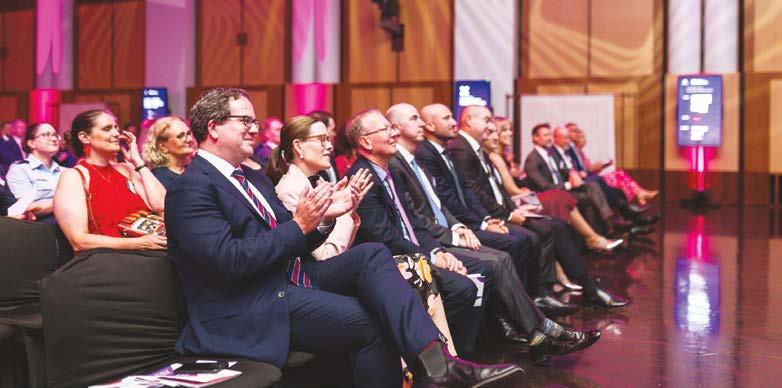
Image top left: With Minister Matt Keogh and the veteran community at the 2025 Prime Minister’s National Veteran Employment Awards
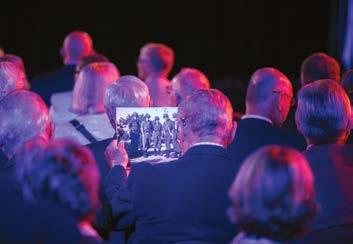
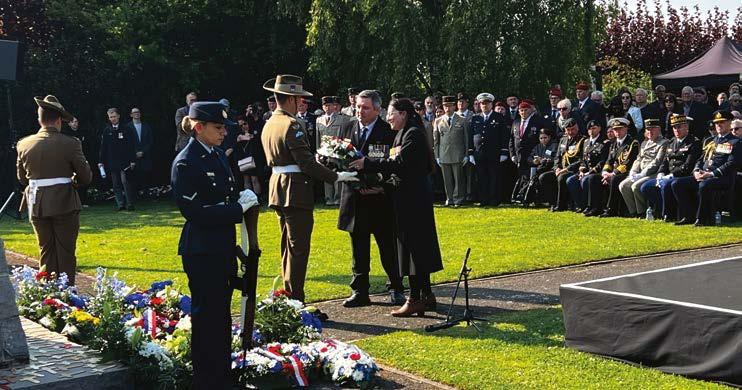
Image top right: Last year, volunteers joined DVA’s teams for the first time to deliver our overseas services on Anzac Day.

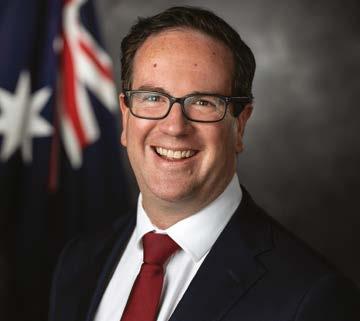
The Hon Matt Keogh MP Minister for Veterans’ Affairs and Minister for Defence Personnel
Across the country in cities, suburbs and small towns, as well as in places overseas, we will wake before dawn to remember all those who have put on the uniform in service of our nation at Anzac Day dawn services, marches and school commemoration ceremonies.
We will acknowledge and thank the members of the ADF, past and present, who have put their lives on the line for our country, as we reflect on these increasingly fraught global times.
As we do so, I look forward to the next few months as we build a modern, trusted system that better supports your wellbeing on behalf of a grateful nation.
A system where veterans can access the right care at the right time. Where treatment, rehabilitation and compensation and other broader supports work together to deliver better overall wellbeing outcomes, and that reflect what veterans and families of veterans need at every stage of life.
From July, veterans and families of veterans will see transformative changes to the way they are supported. The new single pathway compensation claims system will make accessing support quicker, clearer and simpler. All new claims will be dealt with by a single piece of legislation, not the current mish-mash of 3 separate laws.
That is a big deal for the entire veteran community.
The complexity of the current system is a contributor to veteran suicide, according to the Royal Commission into Defence and Veteran Suicide.
We received interim findings from the Royal Commission soon after coming into Government in 2022, with the key recommendation being to simplify and harmonise the compensation claims system. We immediately began work with the sector to respond to that finding.
The changes that will come in from July are the result of extensive consultation to ensure veterans and their families are better supported.
On behalf of the thousands of people who will benefit, I thank everyone involved in bringing the new system into being.
The new, enhanced Military Rehabilitation & Compensation Act 2004 (MRCA) means a system where it is easier for veterans to understand, easier to support veterans and families making claims, and faster for DVA to process claims. It harmonises the rules, standardises certain payments and enhances some entitlements.
To any veteran considering lodging a claim after 1 July, I strongly encourage you to familiarise yourselves with the detail of these changes on the pages of this newspaper. I encourage family members to do the same, because the Royal Commission laid bare the complex nature of military service on your lives too. It showed us that service leaves marks that are not always
visible, such as mental health challenges, transition difficulties, isolation and intergenerational effects.
One clear theme was the need for better, earlier, and broader support for veterans and families of veterans – support that recognises veterans as capable contributors to their families, their communities and the nation, and that helps them to continue serving in new ways after military service.
That is why we are investing $739 million into improved medical treatment and rehabilitation for veterans.
Consistent with the findings of the Royal Commission, DVA will now have a greater focus on early intervention and prevention, working closely with Defence to identify risks earlier and act sooner.
Modern clinical evidence shows early access to the right care can have a hugely positive impact on wellbeing, reducing long term impairment and chronic illness while improving daily functioning and mental health. We want to reduce the impact of injuries veterans may have received, leading to better overall wellbeing outcomes and quality of life.
The linchpin of this approach will be the new veteran and family wellbeing agency, which will provide a more connected system of support for ADF personnel, veterans and families. The new agency will also be up and running from 1 July, supported by $78 million in funding from the Government, with a focus on supporting positive transitions so veterans can connect and contribute to the community and thrive post service.
Importantly, the new agency will have a remit for complex case management, encompassing service coordination and referral to services for at-risk veterans and families of veterans to make
sure no one falls through the gaps. The agency will connect veterans and families to service and support nationwide, working closely with the Veterans’ and Families’ Hub network to provide access to wellbeing services close to home.
The new agency comes into existence following consultation and co - design with veterans, families, ex-service organisations and service providers, and implements a further Royal Commission recommendation.
We welcome continued feedback as the new agency takes shape, so that we can ensure that all our serving personnel, veterans and families can be safe in the knowledge that whatever may befall them during their service, they will be properly looked after, and their service acknowledged, respected and commemorated by a grateful nation.
Left: Announcing expanded support for families of deceased veterans with Mark Lax, Chair of Legacy Australia, at the Australian War Memorial. (See the article on page 21.)
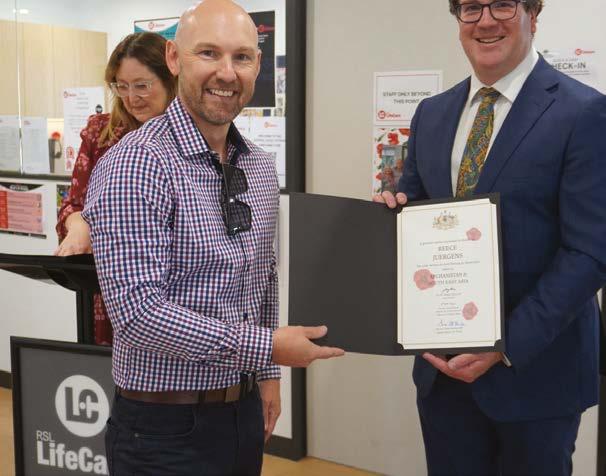
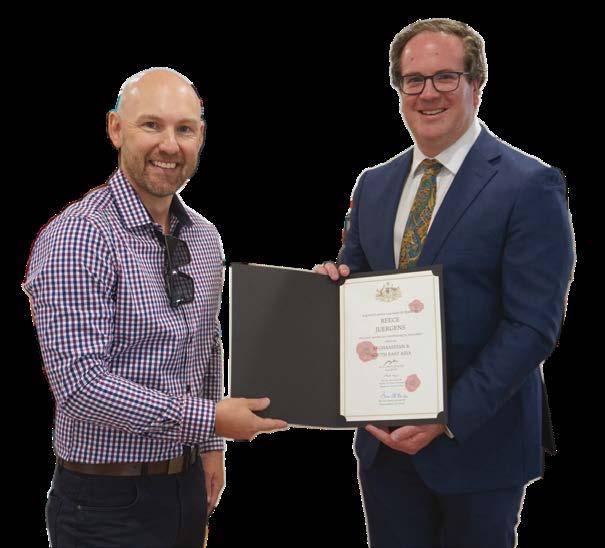
Top right: Presenting veteran Reece Juergens with a Certificate of Appreciation for his service in contributing to Australia’s effort in Afghanistan and South-East Asia.
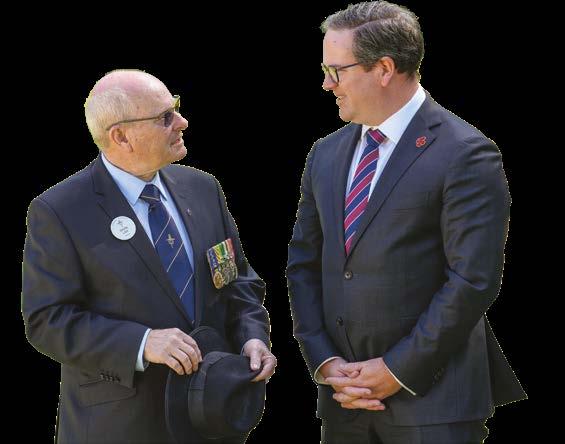
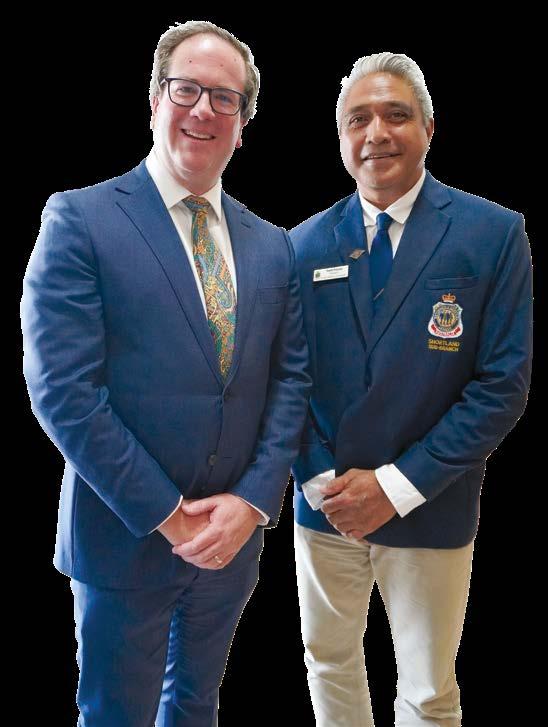
Bottom right: With Sosefo Puliuvea, President of the Shortland RSL Sub-Branch, at the opening of the Hunter Veterans’ and Families’ Hub.
From 20 March, some veterans and veteran family members received an increase in their DVA pension and compensation payments.
The first full payment at the new rate is the payday of 16 April 2026. You don’t need to do anything to receive the increase: it is applied automatically.
Deeming rates will also change in line with arrangements applying to payments made by other Commonwealth departments. Deeming rates are used to calculate deemed income from your financial investments (e.g. shares, bank accounts), regardless of actual returns.
This deemed income counts toward the income test while the actual returns are not counted. The income test, along with the assets test, determines your entitlement to the Service Pension, Income Support Supplement and Veteran Payment. A new deeming rate of 1.25% (currently 0.75%) will apply to financial assets under $64,200 for singles, and $106,200 combined for couples. Any remaining balance over these amounts will be deemed at a rate of 3.25% (currently 2.75%).
The Veterans’ Affairs Ministerial Advisory Council (MAC) is a new, independent advisory body being established by the Government to provide independent and informed advice to the Minister for Veterans’ Affairs on the lifetime wellbeing of serving personnel, veterans and families.
The MAC will consist of 10 part-time individuals appointed by the Minister for a 30-month term who are experienced in matters important to the veteran community. Members will offer expert guidance specifically to:
• provide independent advice on the experiences and needs of serving personnel, veterans and families of veterans
• provide advice on veteran services, including on the administration and stewardship of support services provided to serving personnel, veterans and families of veterans
• collaborate with other advisory bodies, experts and those with lived experience to develop advice
• assess and report to the Minister on the quality of outcomes for serving personnel, veterans and families.
The MAC will complement, but does not replace, existing consultation mechanisms – providing regularity, structure and specialist expertise in advice to the Minister. Expressions of interest for membership closed in March and are now being considered by the Government.
The commemoration of the Malayan Emergency article from Ross Beadmen brought back many memories for me [Vetaffairs December 2025]. I was out there in the Far Eastern Fleet aboard HMS Constance in 1948. The ship certainly wasn't designed for the tropics and I saw first-hand an egg being fried on the steel upper deck!! Our ship
rotated with other destroyers up both coasts of Malaya to prevent insurgents from entering the country. It was hot and tedious most of the time but we did prevent quite a few of the insurgents from getting ashore. Thanks Ross for memories.
Richard Sims (Perth)


The Australian Government is committed to reform to better protect veterans from exploitation when engaging commercial veteran advocates.
As a first step, veterans, veteran advocates and the broader community are invited to have their say on how to best regulate the veterans’ advocacy sector.
A public consultation paper is available on the DVA website and submissions are open until 8 May 2026.
Recently, DVA has seen a dramatic increase in some commercial advocates engaging in unscrupulous behaviours that prioritise profits over the health and wellbeing of veterans and families of veterans.
We recognise it’s important that we don’t over-regulate a largely volunteer service. The principle of “mates supporting mates” will remain at the heart of veterans’ advocacy. The purpose of this reform would be to:
• restrict exploitative fee practices by commercial veteran advocacy providers
• ban overseas hosting of veteran information by advocates
• protect veterans from misleading and deceptive conduct, advertising and behaviour
• ensure advocates charging fees are properly trained, insured, and conduct themselves ethically.
We encourage you to have your say and make a submission on the DVA website at www.dva.gov.au/advocacy-consultation
The independent Institute of Veterans’ Advocacy (IVA) has commenced accepting applications for membership, marking a significant milestone in its establishment as Australia’s professional association for veterans’ advocates. Membership of the IVA is open to all veteran advocates who meet the competency, training and professional standards.
The Institute’s Chair, Michael von Berg MC OAM, described the milestone of accepting membership applications as an exciting time.
‘The Board has been working hard to establish the foundations of the IVA, and we’re now looking forward to engaging with the membership and building an organisation that supports this incredibly important sector,’ Mr von Berg said.
The IVA’s establishment has been supported through targeted Government investment and forms part of broader work to strengthen protections for veterans and improve professional oversight, ethical and professional standards in the advocacy sector.

The IVA will set competency and training standards for the veterans’ advocacy sector, establish and implement a formal code of conduct, and provide supervision of advocates’ work.
More information about the IVA, including membership categories and details about how to apply for an IVA membership are available at www.iva.org.au
DVA will continue to work with the IVA as the professional body for veterans’ advocates and encourages all professional advocates to register with the IVA.

A simpler compensation system is coming on 1 July
The Australian Government is committed to ensuring advocates can access the information they need to assist veterans and families of veterans with their claims for compensation or other assistance from DVA – before and after 1 July. For more information visit www.dva.gov.au/legislationreform.
If you would like to know more about how the changes may affect your clients, you can find a range of helpful information videos on DVA’s Advocacy Training and Development Program website at www.web.atdp.org.au/vetsact.

DVA is continuing to modernise its digital systems to better support veterans and families of veterans while ensuring strong safeguards remain in place around privacy, accountability and transparency.
As part of this work, we have recently updated our Artificial Intelligence (AI) Transparency Statement. This public document explains how AI and related technologies are used across the Department, and the governance arrangements that guide their use.
One area clarified in the updated statement relates to MyService, which uses AI capability for text analysis, including keyword matching. This supports the efficient handling of text-based information and helps staff work with information more effectively. The text analysis algorithm does not process any personal information.
Importantly, this technology does not make decisions about individuals. It is used as a supporting tool and always operates with appropriate human oversight. DVA staff remain responsible for decision making, and human review and accountability are central to all relevant processes.
DVA intends to commence a voluntary, consent-based trial of a Prototype AI Claims Document Reader in partnership with RSL Queensland in the first half of 2026. The prototype is designed to assist staff by quickly identifying relevant information in lengthy claims documents. All claims decisions remain with human delegates. The trial will require clear consent from participants to ensure that those who volunteer to participate understand:
• the purpose of the tool
• what information may be used during the trial
• how AI-enabled technologies may interact with information.
The trial will test the suitability of the tool to assist staff. The tool will not make decisions nor determine claim outcomes. Claims decisions will continue to be made by trained DVA delegates.
DVA does not use AI to make decisions without human involvement. This principle applies across all relevant systems and activities and is reinforced through governance arrangements, training, and ongoing oversight.
The Department is also strengthening internal capacity to govern and manage the use of AI. This includes improving how systems are understood, documented and overseen.
Through this work, DVA remains committed to using technology responsibly and transparently, in ways that support trust and deliver better services for the veteran community.
The AI Transparency Statement is a living document and will continue to be updated as technology, policy settings and system understanding evolve. To find out more search for “Artificial Intelligence (AI) Transparency Statement” on the DVA website
The Building Excellence in Support and Training (BEST) Grants Program supports the work of ex-service organisations (ESOs) in providing free advocacy services to the veteran and Defence communities. Advocates give advice and assistance about claims, entitlements and services.
This year’s round marked a significant change to the BEST Program with the introduction of a 3-year grant round and grant agreement period. ESOs were able to apply for the BEST Program in the 2026–27 round, which will cover the next 3 years. If eligible, they will also receive grant agreements for 3 years.
Funding has also more than doubled per year, with a total of up to $58.6 million (GST exclusive) over 3 years from 2026–27 to 2028–29 available for the BEST Program. This more streamlined approach provides increased stability for employment of advocates by ESOs. It is delivered in support of Recommendation 99 of the Royal Commission into Defence and Veteran Suicide, as well as the findings of the Senate Standing Foreign Affairs, Defence and Trade Legislation Committee Inquiry into issues relating to advocacy services for veterans (accessing compensation and income support).
For more information, search for “The new 2026–27 BEST Program” on the DVA website.
Many veterans call DVA directly to organise Booked Car with Driver transport, but there is a way to skip the queue!
DVA’s Booked Car with Driver service supports thousands of veterans travelling to medical treatment each year. In 2025, almost 30,000 veterans used the service, completing more than 650,000 journeys to and from medical appointments.
You can speed up the process by using the MyService portal to ask DVA to arrange transport for treatment covered by your Veteran Card.
And when you have finished the medical appointment, you don’t have to ring DVA to book your return journey back home. Journeys to return home can be organised by ringing the transport provider that took you to your appointment directly.
Drivers will give veterans a “Right of Return Card” on the journey to the appointment, which has all the information you need to organise the journey back home. When calling them, simply quote your DVA file number and the address, and a driver will be back to pick you up from the appointment. (If the driver has not offered you the card, please ask for one.)
Find out how: Search for “How to book transport in MyService” on the DVA website or go to www.dva.gov.au/about-myservice/ how-to-book-transport-in-myservice
The Government is prioritising the health and wellbeing of the veteran community with a commitment to providing more effective and efficient support to veterans and families of veterans. An investment of $739.2 million over 4 years will improve treatment and rehabilitation for veterans to reduce the impact of injury and improve their lifetime wellbeing.

Consistent with the findings of the Royal Commission into Defence and Veteran Suicide, DVA will have a greater focus on early intervention and prevention, recognising that fostering wellbeing is one important protective factor against suicide. DVA will be working closely with the Department of Defence to identify risks earlier and act sooner, including by using insights from claims decision making to support Defence’s proactive approaches.
Modern clinical evidence shows that early access to the right care helps to:
• improve daily functioning
• prevent conditions from worsening
• reduce long term impairment
• support mental health
• strengthen long term wellbeing and quality of life.
As part of this work, DVA is also working more closely with Defence on strengthening preventative approaches to reduce injuries while serving and, once a medical condition is accepted as service-related, providing veterans with access to modern, evidence-based care.
We’re funding effective and innovative treatments for veterans, prescribed by registered medical practitioners. This includes options such as medicinal cannabis, for which we have released a new framework, as well as world-leading treatments like MDMA for PTSD and psilocybin for treatment-resistant depression, with appropriate safeguards in place to ensure safety and clinical oversight (for more see page 10 of this newspaper).
Hearing conditions such as hearing loss and tinnitus often develop gradually. With early assessment and timely treatment, the impact of symptoms can often be reduced and the progression of the condition better managed. That’s why DVA is improving access to treatment to support earlier assessment and evidencebased care, so veterans with tinnitus can receive support that helps them manage symptoms and improve quality of life.
Established, clinically tested tinnitus treatments are focused on helping people live well with the condition by reducing its impact on daily life. They support people to better manage symptoms, build effective coping strategies and continue everyday activities with greater comfort and confidence. They use practical, evidence-based approaches such as habituation, and improving sleep, concentration and emotional wellbeing.
DVA will also provide access to new and emerging treatments as clinical practice continues to evolve, ensuring veterans benefit from advances that improve quality of life.
To support improved access to treatment, DVA will refer veterans with an undetermined Permanent Impairment (PI) claim to Hearing Australia for a fully funded hearing assessment and any clinically necessary treatment. This helps ensure veterans can access timely, clinically appropriate care while their condition is being assessed.
When considering a PI claim, and whether a veteran’s impairment is likely to continue indefinitely under Section 73 of the Military Rehabilitation and Compensation Act 2004 (MRCA), the Department must consider:
• the duration of the impairment
• the likelihood of improvement in the service-related condition, and
• whether all reasonable rehabilitative treatment has been undertaken.
To ensure veterans receive the best possible care, relevant information will be shared with Hearing Australia at the time of referral. Following completion of its assessment and initial treatment, Hearing Australia will provide a report to DVA – and to Defence where the veteran is still serving – outlining levels of impairment and recommendations for any future treatment.
Hearing Australia is the largest provider of Australian Governmentfunded hearing services, delivering specialist expertise, advice, assessment and treatment nationwide. This arrangement supports DVA’s PI claim assessment while ensuring veterans receive timely, evidence-based treatment for their condition.
Accessing assessment and treatment for tinnitus does not affect a veteran’s access to other DVA supports or entitlements, which continue as usual while treatment is underway.
Continued from page 1
A new website will provide accessible wellbeing information tailored to the veteran community. By making information clearer and easier to find, the agency aims to support earlier help-seeking and informed decision-making.
Improving navigation across the wellbeing system is a key early priority. A new service directory will be developed and made available through the website. It will focus on trusted local and community-based services, making it simpler for veterans, families of veterans, and supporters to navigate the system and find services within their local communities.
For those who would benefit from additional assistance, the agency will also provide access through a dedicated phone line. This will
help individuals and families who require additional assistance to connect with the right services at the right time, reducing confusion and improving coordination across the system.
The agency’s role is to strengthen connection and access, complementing existing clinical and compensation services rather than replacing them.
Families play a critical role in wellbeing and transition, and their inclusion has been central to the agency’s design. Support will be available to families who need help finding and accessing appropriate services, including those delivered through Veterans’ and Families’ Hubs. This approach recognises that wellbeing impacts the whole family and that families play an important role in help-seeking and recovery.
Lived experience will continue to inform how the agency develops. Ongoing engagement with veterans and families will continue as the agency grows, helping ensure services remain practical, relevant and responsive to the needs of the community.
The agency will commence operations on 1 July 2026 and will be established progressively, beginning with an initial focus on supporting at-risk ADF members transitioning out of service. Its capability will develop over time, informed by ongoing engagement, evidence of what is working, and lessons learned during early implementation.
DVA will share further updates as the agency continues to take shape. For more information, search for “Taskforce on Wellbeing Agency and Peak Body” on the DVA website
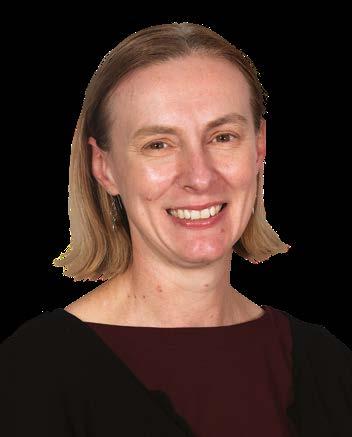
DR STEPH DAVIS Chief Health Officer Department of Veterans’ Affairs
Although most Australians receive vaccines in childhood, protection doesn’t always last for life. Some diseases become more serious with age, and protection against a few conditions requires boosters or special vaccines later in life.
Vaccines protect you and also protect those around you – if you don’t get sick you can’t pass the infection on to anyone else. Four vaccines are particularly important for older Australians: influenza (the flu), COVID-19, shingles, and pneumococcal disease. With winter approaching, now is a good time to get your annual flu shot and make sure your other vaccines are up to date as well.
Influenza (flu) is much worse than the common cold. On average, each year in Australia around 18,000 people end up in hospital and 3,500 die from the flu. People most likely to get severe flu include babies and young children (under 5 years old) and people aged 65 years and older.
The vaccine lowers your chances of catching the flu but also makes it much less likely that you will have to go to hospital or die from the flu. The flu vaccine is updated every year because protection fades and flu virus strains change, so you need a flu vaccine every year. With the flu season running from May to September, now is the best time to book your shot.
COVID‑19 continues to cause serious illness in our community, particularly in older adults. Vaccination remains an effective way to reduce the risk of hospitalisation and death. Like the flu vaccine, the COVID vaccine provides some protection against getting sick, but even more protection against getting really sick –which means going to hospital, or even
G’day everyone! I was proud to be appointed as the Department’s Chief Health Officer in August 2025 following the retirement of Professor Jenny Firman.
I am a General Practitioner and Public Health Physician with experience in clinical medicine, epidemiology and public health across many areas of Australia, and internationally. I’m excited to be working for DVA and committed to improving the overall health and wellbeing of Australian veterans and families of veterans.

dying. Current recommendations advise annual vaccination for people aged 65 to 74, and a dose every 6 months for those aged 75 and over.
Shingles happens when the chickenpox virus reactivates later in life, causing a painful rash and sometimes long-term nerve pain. Without vaccination, around one in 3 people will develop shingles as they get older. There is also some early evidence that the shingles vaccine may help reduce the risk of dementia. Two doses of the vaccine are recommended to provide the best protection.
Pneumococcal infections can lead to pneumonia, bloodstream infections and meningitis. Older adults and people with certain medical conditions are most at risk. A pneumococcal vaccine later in life offers strong protection.
The National Immunisation Program (NIP) funds several vaccines for eligible Australian adults. Annual COVID vaccines are currently funded for everyone aged 18 and over. Everyone aged 65 and over can receive free flu vaccines and free shingles vaccines; everyone aged 70 and over can receive free pneumococcal vaccines.
When someone has a higher risk of severe disease, the NIP may fund the vaccine at a younger age. For example, adults who have a medical condition (such as bad asthma, heart or kidney disease) or another risk factor that puts them at higher risk of serious illness (including being Aboriginal and/or Torres Strait Islander) are eligible for a free flu vaccine at any age.
Aboriginal or Torres Strait Islander people are also more likely to be at higher risk of severe shingles and pneumococcal disease and so can receive free vaccines for these conditions from the age of 50.
There are many places you can access vaccines, including from GPs, Aboriginal Community Controlled Health Organisations and pharmacies. A lot of workplaces also offer vaccinations, particularly the flu vaccine.
If you have a medical condition where specific vaccines are recommended in the Australian Immunisation Handbook (the expert guidebook for vaccines in Australia), you may be eligible for DVA-funded vaccines beyond what is funded by the NIP. For example, DVA can fund the shingles vaccine at the age of 50 years and older if you have a Gold Card. The same applies where shingles infection would impact an accepted condition on your Veteran White Card.
A conversation with your doctor can help to work out what vaccines are recommended for you, and where indicated, your doctor can request DVA funding for vaccines under the Repatriation Pharmaceutical Benefits Scheme.

Vaccination is a small step that provides big protection, especially as winter approaches. By staying up to date with your vaccinations, you’re not just helping yourself but also providing an ongoing service to your family and the Australian community.
When it’s time to honour the military service of residents at his aged care home, 101-year-old Harold is always called upon to recite the Ode.
A proud Navy veteran who served on the HMAS Kanimbla in the Second World War, Harold is happily settled in a residential aged care home that offers specialised support for veterans and war widows. The facility recognises residents’ service, maintains strong links with the veteran community and provides staff training tailored to the unique needs of former service personnel.
‘The staff, by and large, know what they are doing – and they’re familiar with me, of course,’ Harold says with a smile from his favourite chair, provided by DVA while he was still living independently at home. ‘They measured me, went away and brought back a chair designed for my incredibly wonderful shape,’ he laughs.
Both DVA and the Department of Health, Disability and Ageing provide aged care services for older Australians. For veterans and war-widowed partners, My Aged Care is the main entry point to access aged care information and support – just as it is for all Australians. Through My Aged Care, the Government funds aged care homes across the country so they can provide essential care and services to residents.
DVA clients like Harold can access all services available to the general public. In addition, DVA provides extra supports where eligible, as long as these services do not duplicate what is already covered through My Aged Care or the aged care provider.
DVA helps eligible veterans and war-widowed partners remain independent at home for longer through programs such as Veterans’ Home Care, which offers domestic assistance, personal care, respite care and home and garden maintenance; and the Rehabilitation Appliance Program, which provides mobility aids and other assistive equipment.
Harold lived in his own home until the age of 98 with DVA’s support. The Department provided home maintenance, respite and convalescent care, and a mobility scooter to help him stay active and connected to his community. Harold’s aged care facility is now responsible for meeting his day-to-day needs. However, DVA can still fund customised aids and appliances beyond what the home itself is resourced to provide.
DVA has a range of resources to help you navigate aged care services. These booklets explain the services and supports available to DVA Gold Card and White Card holders accessing in-home aged care services and those living in residential aged care facilities.
PRODUCTS REQUIRED
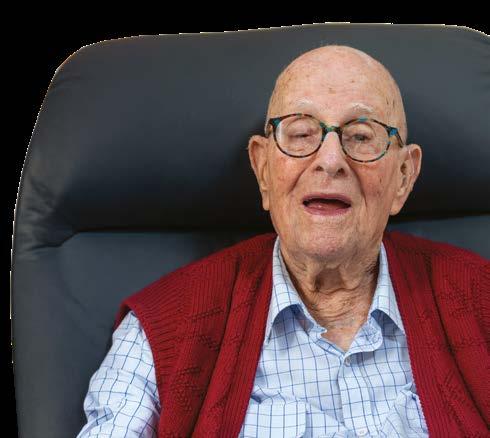
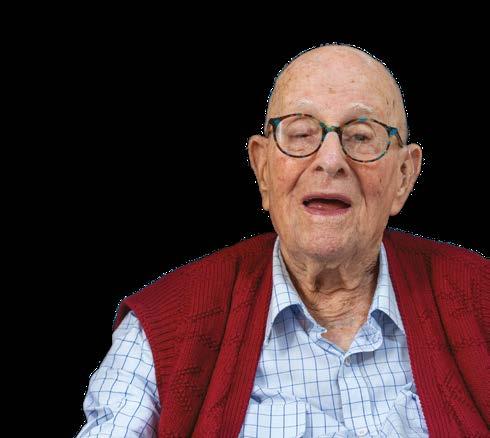
‘DVA’s doing all sorts of things,’ says Harold, touching the small sensor on his shoulder. ‘It reads my blood sugar level. Before that, I was having my finger pricked every night for blood tests. But that does it, just takes it. It’s marvellous.’
To help veterans like Harold and their families understand the support available, DVA has developed a new resource: The veteran’s guide to living in an aged care home
The guide explains the services and programs accessible to veterans in residential aged care, with a focus on recognition of service, maintaining lifestyle and wellbeing, and staying connected to friends, family and the veteran community.
You can watch Harold share his story in a video on the YouTube channel of the Department of Health, Disability and Ageing.
For more information about aged care for all Australians, contact My Aged Care at MyAgedCare.gov.au or call 1800 200 422. For details about DVA’s care at home and aged care services, visit www.dva.gov.au/aged-care or call 1800 VETERAN (1800 838 372).
• Call us on 1800 VETERAN (1800 838 372), or
• Go to www.dva.gov.au/ac and order online, or
• Fill in and send us this form.
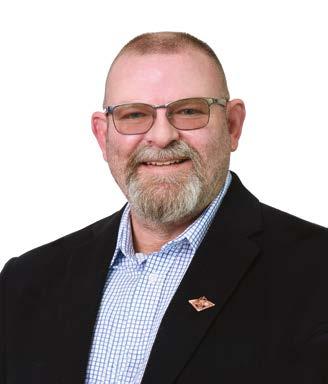
ASSOCIATE PROFESSOR JON LANE
Chief Psychiatrist Department of Veterans’ Affairs
The most studied psychedelics used as mental health treatment are methylenedioxymethamphetamine (MDMA) and psilocybin. MDMA can be used to treat post-traumatic stress disorder (PTSD), and psilocybin for treatment-resistant major depressive disorder (MDD). While there are street versions of these drugs, special pharmacy-grade versions of them are used.
PAP typically involves structured and intensive treatment that includes preparation sessions, guided “dosing” sessions using of one of these 2 drugs that last for 8–10 hours, and follow up “integration sessions” to process the experience, typically over 6–8 weeks.
Research indicates that PAP may benefit some individuals who have tried other treatments but have not achieved good resolution of their symptoms. In 2023, this led to MDMA and psilocybin being authorised for use under specific circumstances by the Australian Therapeutic Goods Administration (TGA), which regulates the use of medications.
However, use of these drugs in Australia still has significant restrictions because they are very new and the research on their effectiveness is at an early stage. There is still little known about who will respond to treatment and how long it lasts if they do. It is known that some people should not use these drugs due to the risks involved, for example those with epilepsy or heart disease.
Psychedelic-assisted psychotherapy (PAP) is a specialised form of treatment that combines psychedelic drugs with intensive talking and exposure therapy, known as “psychotherapy”.
For other people, the risks and side effects are still being discovered. Research does show that you need to do psychotherapy with the drug –the drug alone doesn’t help. This is demonstrated through a long history of recreational use of these drugs, despite their risks.
Psychedelics are not a “silver bullet” as the treatment is hard work and requires intensive, individual, emotional and personal development skills. This is why it takes weeks to complete the full treatment. PAP is not considered routine treatment for PTSD because, in addition to its novelty, it is usually provided in a special clinic rather than by a person’s usual treating team.
For all of these reasons, PAP is something that should only be considered for very severe, serious cases where people are not getting better after all the usual treatments, those with good evidence of benefit, have been tried. For PTSD, these treatments include trauma-focused talking therapies like Eye Movement Desensitisation Reprocessing (EMDR), prolonged exposure therapy, and trauma-focused cognitive processing therapy; along with medications and the basic psychological skills that support emotional regulation.
The criteria for DVA to fund PAP are quite specific:
• The treating doctor must follow TGA requirements –so they must be a psychiatrist who is specially trained and accredited for providing PAP. Psychologists can provide the psychotherapy part of the treatment, but they must also be accredited.
• Veterans must have ongoing severe symptoms after they have properly engaged in several usual treatments in the last 2 years.
• There must be 2 psychiatrists saying that this is an appropriate treatment for the veteran, including one who is the regular treating psychiatrist. Meeting these criteria shows DVA that the veteran needs to try a new treatment and that they have a known treating team around them when the PAP is finished.
Finally, we are strongly encouraging veterans who receive this treatment to enrol in the Australian National University’s Australian Interventional Pharmacotherapy and Psychedelic Assisted Psychotherapy Research Registry. This registry collects deidentified information from patients, doctors and psychologists relating to how well PAP and ketamine treatments are working.
Participation in the registry is on an opt-in basis for anyone in Australia undergoing these types of treatment. The data will be used for various research studies in the future to look at how well they work, as well as their safety and cost effectiveness. Evidence of this type will be essential for ongoing funding of these treatments for veterans.
Veterans with hard-to-treat PTSD or depression are encouraged to talk to their doctors and other health professionals about what else they can do to improve their mental health.
DVA funds all required evidence-based medications and psychological talking therapies for all mental health conditions without needing there to be a link to service under Non-liability Health Care (mental health), available to holders of a Veteran Gold or White Card. This includes allied health treatment that supports mental health as part of a mental health treatment plan. Assistance with sleep, establishing an exercise routine or improving your diet can set a strong foundation for any additional mental health treatment.
All of this can start with talking to your GP, or the staff from Open Arms, who are available day and night, 365 days a year, on 1800 011 046.

The annual monetary limit for high cost, clinically needed dental restorative items (Schedule C items), such as crowns or bridges, has been doubled and the time you have to use it has been extended from one to 2 years.
From 1 January 2026 to 31 December 2027 your total limit is $5,980.30 and this amount will be indexed for the following 2-year period.
This will be your new biennial monetary limit for Schedule C items. Importantly, you will not be able to roll over the amount into the next 2-year period because the monetary limit resets.

You don’t need to do anything to activate the new biennial monetary limit. To learn more about DVA’s Dental Program, visit www.dva.gov.au/what-wehelp-with/health-support/ dental-services
The capped amounts apply even if you hold a Veteran Gold Card or have dental-related conditions accepted on your Veteran White Card. In addition, dental therapists, hygienists and oral health therapists have also been added to the approved list of dental service providers. This means it is now easier to access a dental practitioner suited to your needs.
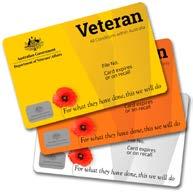

Health providers need to confirm what treatments are covered under your DVA entitlements.
Showing your Veteran Card – physical or digital –helps providers understand your eligibility and prevents delays.
If you hold a Veteran White Card, bring details of your accepted conditions to your appointment. This helps health providers understand what treatment DVA will fund.
If you’ve linked MyService to your myGov account, you can view your accepted conditions under your DVA Veteran Card in MyService. From MyService you can generate a list of your accepted conditions to be saved as a PDF, which you can choose to share with your provider.
Step-by-step guidance to help you find your accepted conditions is in MyService. Search for ‘How to find your accepted conditions and check your legislation in MyService’ to find these instructions on the DVA website
If you don’t have MyService it’s easy to set up. To find out how, visit www.dva.gov.au/ about-myservice
Call the Veteran Access Network on 1800 VETERAN (1800 838 372) and ask us to send you a letter listing your accepted conditions.
For a hassle-free visit, check with your health provider before booking: contact them to find out whether they accept Veteran Cards before making an appointment. And we recommend that you keep records handy: Give permission to your GP or other regular health providers to store your accepted conditions in your health records. This makes future appointments easier.
Support is available. If you’re having trouble with MyService or unsure how to find your accepted conditions, DVA staff and Veteran Support Officers can assist. Contact DVA on 1800 VETERAN (1800 838 372).
For further information visit www.dva. gov.au/about-myservice.
DVA has taken steps to improve understanding about the causes and impacts of mild traumatic brain injury (mTBI) and repetitive low-level blast (rLLB) over-pressure exposure during military service.
We’ve been exploring opportunities to help identify causes and ways to diagnose neurocognitive conditions, while understanding individuals can have different symptoms. Our aim is to learn how best to treat these conditions.
Recommendation 61 of the Royal Commission into Defence and Veteran Suicide calls for the development of a brain injury program to support serving and ex-serving ADF members with neurocognitive conditions, regardless of the cause.
In 2025, DVA and Defence collaborated to bring medical and scientific experts together to establish the Brain Injury Expert Advisory Panel. The panel has discussed current global best-practice approaches to the challenges of preventing, identifying, monitoring and treating brain injuries.
DVA has commissioned the University of New South Wales (UNSW) to conduct a review of international literature on overpressure exposure impacts, including neurocognitive impacts or brain injury. UNSW will provide ongoing research updates and its reports, along with the outcomes of engagement with Five Eyes partner countries, will be shared with the expert panel to help shape options to address Recommendation 61. The UNSW literature review is now available on the DVA website. (Search for "Neurocognitive Effects of Repetitive Low-Level Blast Overpressure in Humans".)
Veterans who believe they are experiencing symptoms of a possible brain injury or other neurocognitive condition are encouraged to speak with their GP to discuss their symptoms, diagnosis and treatment options.
Current and former full-time members of the ADF who are experiencing mental health concerns can access assessments and clinical investigations under DVA’s Non-Liability Health Care (NLHC) program. This includes Reservists who have at least one day of continuous full-time service. Assessment, investigation and treatment will be funded by DVA without needing to identify a causal link between the symptoms or condition and ADF service. Services are provided to anyone with a Veteran White Card that covers NLHC (mental health). Veteran Gold Card holders can also request to be assessed without the need for a service-related condition to be accepted.
Further information, including a fact sheet on mild traumatic brain injury and outcomes of the meetings of the expert panel, is available on the DVA website. (Search for “Brain Injuries”.)
Anyone who has lived the Defence life knows that teamwork is what gets you and your mates over the line, especially during tough times. That’s why for the first time, Open Arms is offering veterans and current serving ADF personnel and their partners online access to its free 2-day Stepping Out group program.
Stepping Out offers support to help participants better understand a number of key issues relating to the transition from military to civilian life, including wellbeing, personal and social adjustment.
It is open to those who are planning on, or will be separating from the ADF, as well as veterans who have already left the ADF, regardless of their location and with no time limits on eligibility to join.
Australian Army veteran and Open Arms Lived Experience Professional Craig, who co-facilitates Stepping Out with mental health clinicians in Queensland, says the new online Transition Support Program is designed to increase access and encourage support networks around Australia.
‘We understand that not everyone can take time off work to physically attend a 2-day face-to-face program,’ Craig explains, ‘We still offer those options to those who can, but wanted to provide more clients with the opportunity to access the program regardless of their location’.
In addition, a new 2-hour online introductory program is also available to those who are keen to know more about the benefits of enrolling in the full 2-day program.
Craig says that like all of the group programs offered by Open Arms, Stepping Out focuses on working together as a group because that’s what the military does really well. ‘We’ve all had similar experiences so it is natural for us to bounce off each other as a group and to support one another at the same time,’ he says.
‘Also, the group dynamic can be really helpful. Participants have reported the sharing of experiences in a safe group setting to be one of the best things, as they meet others with both similar and vastly different experiences, and gain practical skills and knowledge to help them move through their transition journey.
‘And they can also pick up new ways of doing things. It doesn’t matter what age you are, your experiences to date, or how far along in your transition journey you are, you never stop learning.’
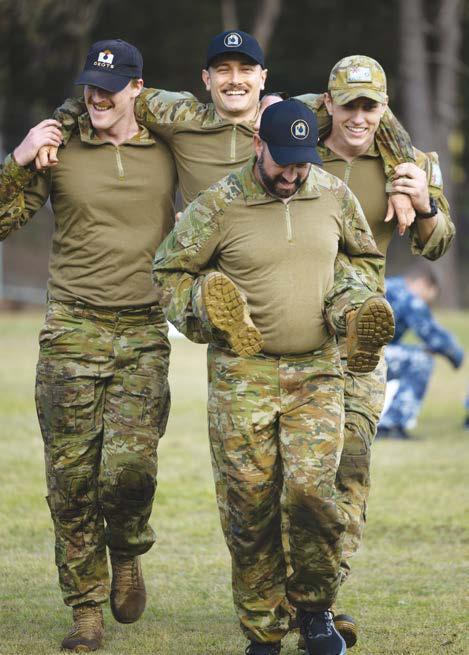
Stepping Out is part of a suite of Open Arms voluntary group programs which includes Managing Anger, Understanding Anxiety, Recovery from Trauma, Relaxation and Stress Management, Managing Pain, Building Better Relationships and Sleeping Better.
To register for these programs visit www. openarms.gov.au/get-support/treatment-programs-and-workshops or telephone Open Arms on 1800 011 046.
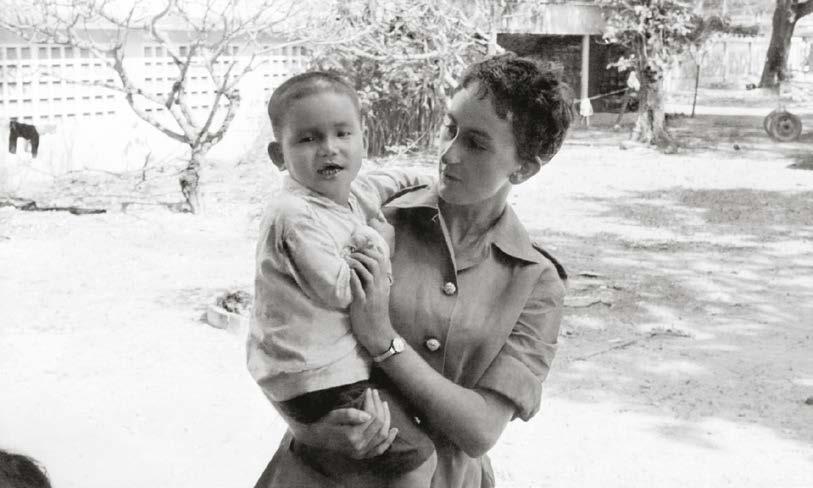
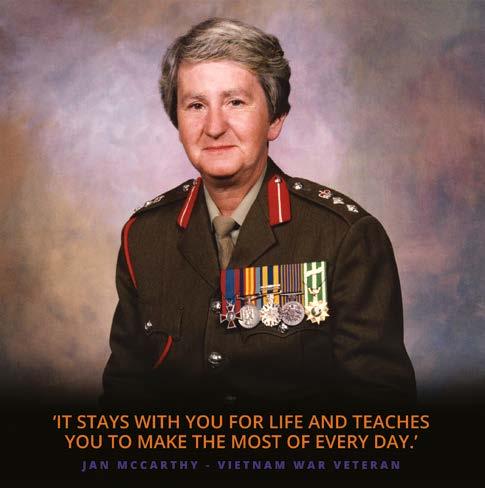
Even after nearly 60 years, the memories of Jan McCarthy’s service as an Army nurse during the Vietnam War have never left her.
‘A very strong memory is the helicopters coming into the 1st Australian Field Hospital with so many casualties,’ Jan says. ‘Those pilots were incredible – they saved a lot of lives just getting the patients to us.’
Now 85 years old, Jan has not forgotten the soldiers she nursed, those who didn’t come home, her nursing colleagues who did their utmost to save lives, and the bravery she witnessed firsthand. And while she never
regrets her decision to go to Vietnam, the former Matron-in Chief of the Australian Army Nursing Corps says it was easier to go to war herself than to send Defence nurses who came after her into conflict zones.
‘I was worried about them, just like my Matron was worried about me and her nurses going to Vietnam,’ Jan explains.
A retired colonel who served for 27 years, Jan made it her mission to
ensure that field nurses who were under hers and future commands would receive proper training while on deployment to ensure their safety and the safety of their patients. ‘Even though I’d had a lot of experience as a casualty nurse, it was a different time, she says. ‘We went to Vietnam not really knowing what we were going to and when we returned to Australia, there was no debrief.
Still active as the President of the Returned Nurses sub-branch of the Victorian RSL, Jan’s story is featured in Our Vietnam Nurses. The book’s author, Annabelle Brayley, was a driving force in setting up the Vietnam Nurses Memorial in Morvern, western Queensland, to honour both military and civilian nurses she describes as ‘courageous and dedicated.’
‘It is the only memorial in Australia dedicated solely to the nurses who served in Vietnam from 1964 to 1972, but it is so much more than that,’ Annabelle says. ‘As well as being a place for other people and future generations to learn about the Vietnam War and Australia’s role in it, we hope it becomes a place of peace and serenity in which all veterans and serving personnel will feel seen and safe from criticism or harm.’
The memorial includes a permanent photographic exhibition and 3 honour boards featuring the names of the nurses who served. A third and final stage is currently underway to raise funds to erect a multi-figure bronze sculpture representing the military and civilian surgical team nurses.
To find out more about the memorial, visit the Facebook page of the Morven Historical Museum.
The nightmares began for Australian Army veteran and author Gary McKay when he landed in a Vietnamese jail more than 30 years after surviving near fatal gunshot wounds during the Vietnam War.
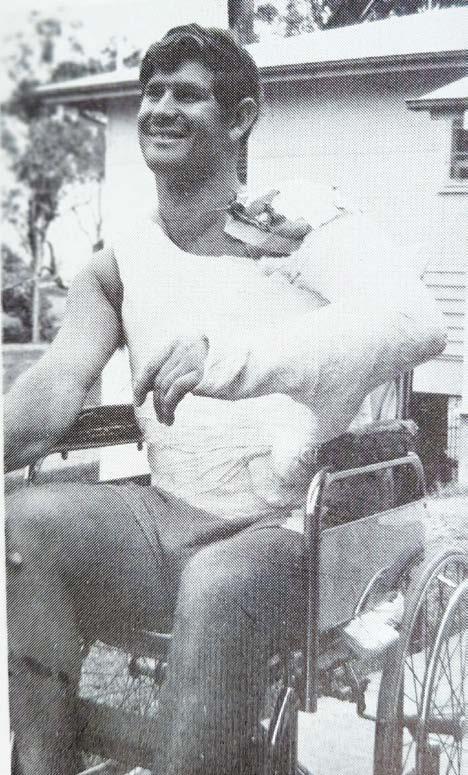
It was 2004 and he had just returned from leading an organised battlefield tour to Vietnam for fellow veterans when, unknowingly, his own battle with PTSD began.
‘The correct visa had not been organised for us to travel to sensitive sites and as a result, the interpreter and I were thrown into jail at gunpoint,’ Gary he recalls. ‘We had a 19-year-old guard with an AK-47 who kept his finger on the trigger.’
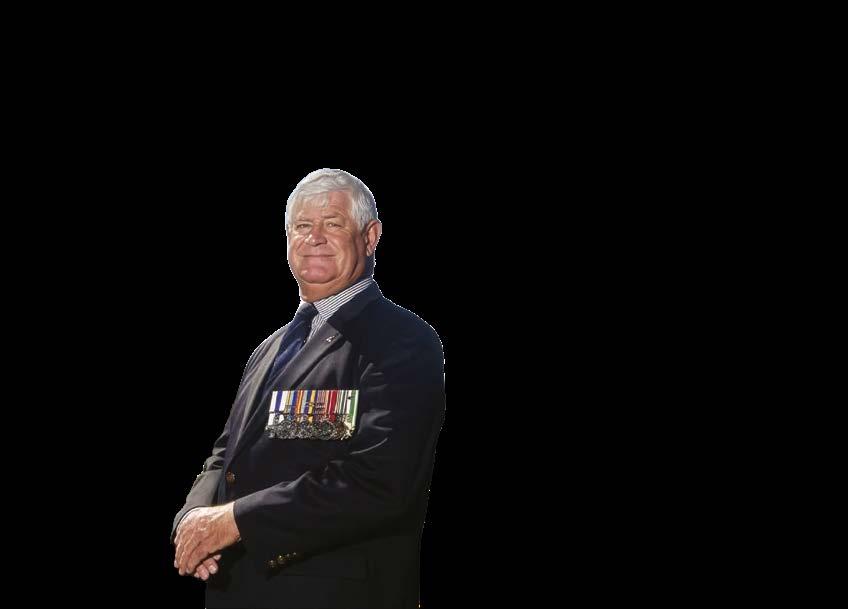
After his release and eventual return to Australia, the wartime memories came flooding back. The retired Lieutenant Colonel, who’d been conscripted to the Australian Army in 1968, always considered his 30-year military career as ‘cathartic’ when it came to Vietnam.
Especially when it came to the event that almost took his life.
It was 1971 and the 23-year-old Rifle Platoon Commander of 4th Battalion, The Royal Australian Regiment was nearly at the end of his active duty. His bravery in the Battle of Nui Le had seen him awarded the Military Cross for gallantry. It was in the aftermath of the battle, during Operation Ivanhoe, when Gary sustained gunshot wounds just millimetres from his head.
‘We were outnumbered 10 to 1,’ he says, 'I ended up getting shot twice in the shoulder and became the last Australian soldier wounded in action in Vietnam. That honour definitely wasn’t on my bucket list.
‘My shoulder had been shattered by the AK-47 rounds and I had to spend all night in the bunker system before they could get me out. If it wasn’t for the company medic, Mick Sullivan, I would have bled to death.’
Gary didn’t realise that this near-death experience in 1971 and his time in a Vietnamese jail would collide and become his trigger point for developing PTSD.
‘After I came back to Australia in 2004, the horrific nightmares began. For 14 nights straight my bed was wet with sweat, I was screaming and yelling out. I went to the Vietnam Veterans’ Counselling Service [now Open Arms] for help and after determining my eligibility for support, they referred me to a doctor who specialised in treating veterans and first responders.
‘He told me I had PTSD and it had been triggered by not being in control of the situation in jail. I didn’t believe him. I thought – I’m a hero – I’m too tough for that.’
After having a full-blown panic attack, the doctor referred Gary to a clinical psychologist who was married to a veteran.
‘After 3 to 4 months I was down to weekly visits. Dr Bob helped me to build a bridge to get to the other side.’
In honour of his fellow Vietnam veterans, he has written several books about the war, including his own autobiography: In Good Company: One Man’s War in Vietnam .
‘Through my own experiences with PTSD I became more aware of the psychological struggles of war and the effect on veterans. I used to think these blokes with PTSD were only after a pension. If you are putting people in harm’s way, you are going to have to look after them when they come back. PTSD is a normal reaction when people are put in an unreal environment where they are killing people or seeing people killed. No-one can expect them to remain unaffected. They need support.’
Over the years, as President of the Kiama-Jamberoo RSL Sub-branch, Gary has worked tirelessly to chronicle and transcribe the experiences of Vietnam veterans for the Australian War Memorial.
‘I could talk to them with empathy because I’d been there and knew what they’d been through.’
He reflects on how lucky he has been in his life and is grateful for the good place he is in now: ‘I just turned 78 but in my mind I am only 55 because I should have died in 1971.’
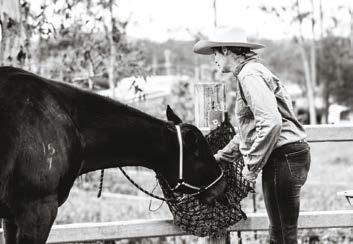
Paid work is not the only option after transition. Hayden started out volunteering with kangaroos.
Hayden discharged from the ADF in 2023. Since transitioning to civilian life, he has been participating in DVA’s Veteran Vocational Rehabilitation Scheme. Through his participation in the scheme, Hayden’s rehabilitation consultant suggested formal volunteering to help him achieve his psychosocial and vocational goals.
‘I was unsure what volunteering opportunities would be out there,’ Hayden says. ‘I’m not really a pencil pusher, so I wasn’t interested in any kind of desk or office gig.'
After discussing his interests with his rehabilitation consultant, he was referred to a kangaroo rescue not too far from where he had recently moved.
‘I thought it was pretty cool that my rehab consultant took the time to get to know me –my likes, dislikes, what I’m interested in,’ says Hayden. ‘I really felt they listened to me, and it made a big difference.’
When Hayden agreed to give volunteering a go, he expected new experiences, but not multiple visits to his local hospital in the first couple of weeks.
‘It was my second day, and a new kangaroo had just come into our care with a gunshot wound. We needed to gently sedate him so we could treat his injuries. I learned very quickly that kangaroos are incredibly powerful and fast animals. Before I knew it, he’d kicked up in a panic and connected with my face just above my left eye and split the skin,’ Hayden says.
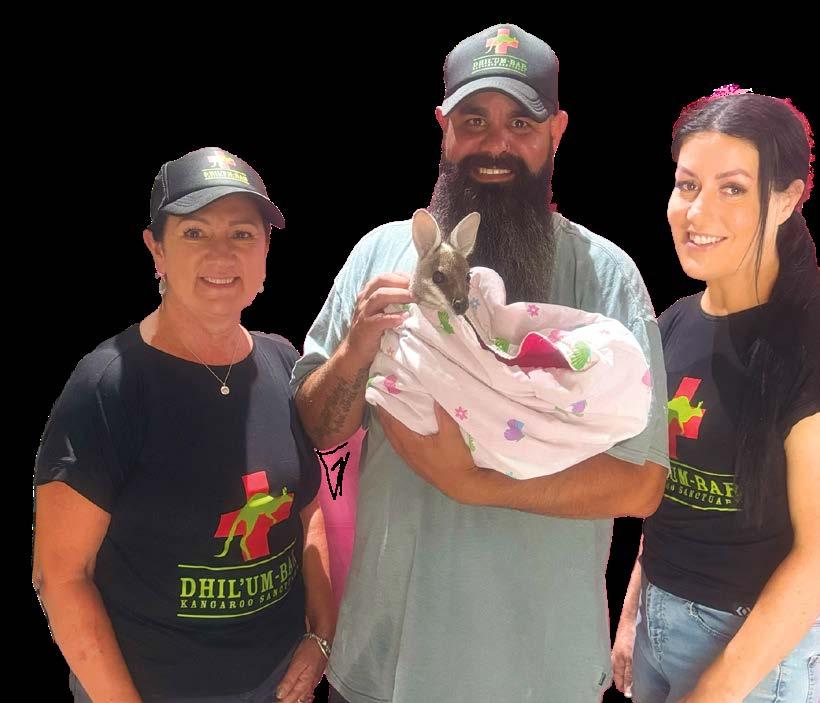
‘Once we finished helping the poor thing, off I went to the hospital and came back with stitches and a new nickname – “Roo”.’
Volunteering at Dhil’um-bar Kangaroo Sanctuary, located in Queensland’s Sunshine Coast hinterland, has provided Hayden with opportunities to make a meaningful difference and build connections with others while contributing to a shared purpose.
‘It feels pretty good to know that I’m helping sick, injured and orphaned wildlife. The things I’ve experienced, like caring for tiny, orphaned joeys and other baby native wildlife. The stories I have to tell, they’ve helped me to connect. I’ve connected with the animals, others at the sanctuary, my Defence mates, and me Mrs and kid.
‘I also now know my way to the local hospital and I’m familiar with some of the medical staff up there. They had a good laugh stitching me up, and then a few days later they laughed again when I turned up for help getting a tick removed from under my chin.’
The power of volunteering is strong – not just for Hayden, but for many veterans whose efforts help to create positive change.
'I come here to help the kangaroos, but they’ve helped me in the end by teaching me to be calm, patient, and grateful,’ Hayden explains. ‘That roo that kicked me taught me patience. You can’t rush trust. You’ve got to earn it, with animals and with people.’
Hayden’s mentor at the Sanctuary, Tab, says his story, his ability to connect with others, and his quiet determination to support the animals demonstrates the spirit of volunteering perfectly. Sue, the Sanctuary’s Volunteer Coordinator, agrees: ‘We’ve got an incredible group here, people from all walks of life who just want to make a difference. In Hayden’s case, he took a kick, housed a tick, and still kept coming back! That’s what we love about our volunteers – they’re resilient, compassionate, and full of heart,’ Sue says.
Like many veterans, Hayden continues to serve his community even after hanging up his ADF uniform.
DVA’s Veterans’ Vocational Rehabilitation Scheme is designed to assist veterans to transition to civilian life by helping participants to obtain or sustain suitable employment. The scheme also supports veterans to manage their medical and social wellbeing needs. More information, including eligibility criteria and the application process, is available on the DVA website at www.dva.gov.au/what-we-help-with/social-support/ dva-rehabilitation Did you

To ensure we receive your mail quickly, always address it to:
Redirecting mail from street addresses and outdated PO boxes costs time and money. By using the one correct address, we can respond to you faster and avoid unnecessary expenses. If you don’t want to send postal mail, you can always reach us via:
MYSERVICE: www.my.gov.au TELEPHONE: 1800 VETERAN (1800 838 372) EMAIL: GeneralEnquiries@dva.gov.au
Having a solid support network in your workplace can be instrumental in setting you up for success in the civilian workforce after your defence career.
This can start with seeking out a mentor. Many veterans who find success in their civilian life cite the support and guidance they have received from a mentor as a fundamental part of that success. From the small things to the big things, mentors can help veterans joining the civilian workforce.
‘Sometimes it can be as practical as breaking down a CV,’ says David Bragg from Boeing Defence Australia, speaking about his experiences as a mentor. ‘Sometimes it’s just about taking a moment to help a veteran find a space to create that
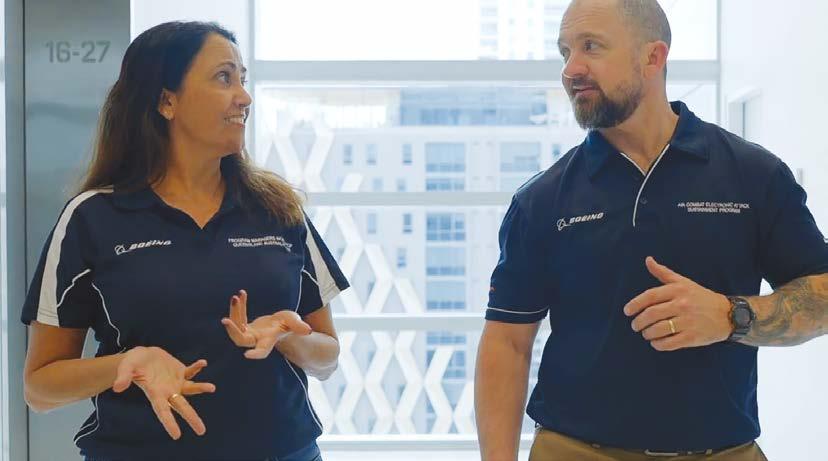
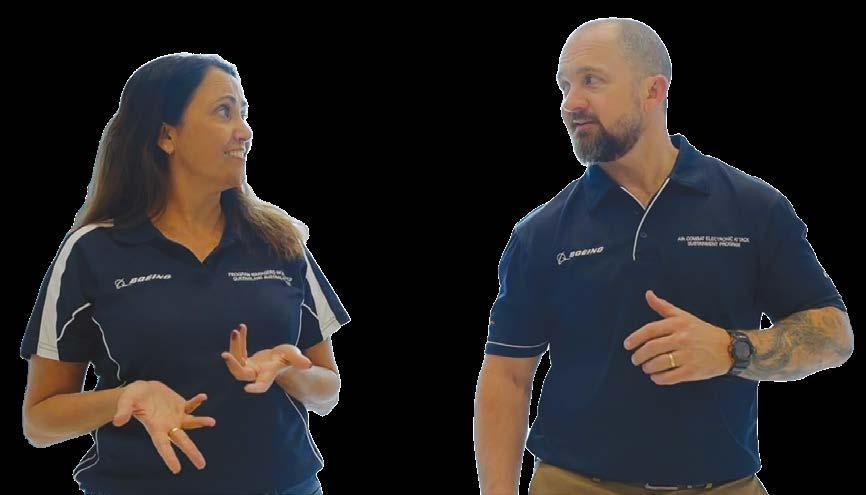
clarity and momentum and find their own path.’
David was fortunate enough to meet mentors himself when beginning civilian employment. ‘I was blown away by the benefits that I got from it,’ he adds.
Connecting with a mentor in the civilian workforce, whether they are a veteran themselves or not, can benefit a veteran in many ways. Your mentor can help you adjust to your civilian workplace by sharing their own knowledge and experiences. Rachel Leal, also from Boeing Defence Australia notes: ‘It

Three universities will share in $250,000 to continue their work supporting veterans into higher education through the third round of the Veteran Recognition of Prior Learning – Tertiary Support (RPL) Grant Program. Launched in 2022, the RPL Grant Program helps universities develop or expand initiatives that recognise the skills and experience gained through military service.
These programs provide veterans with faster, fairer access to tertiary education by translating Defence experience into academic credit and entry pathways.
Over 3 years, the Government has invested $1.65 million, supporting a range of university-led initiatives that assist veterans and families of veterans in transitioning to study and civilian careers. The latest grant recipients are the University of Canberra, the Australian Catholic University and the University of Western Australia.
is different, the landscape is different. Having a mentor has helped me navigate that.’
A mentor can provide a supportive and productive workplace culture and assist with making plans for career development and advancement. Mentors can connect you to new networks and help you to build positive working relationships that can foster your civilian career.
To find employers committed to supporting veteran employment with veteran employee mentoring programs, visit the Veteran
The University of Western Australia will deliver the Veteran Academic Preparatory Program in 2026 to support ADF veterans transitioning into higher education; the University of Canberra will develop a Veteran Credit Calculator; and the Australian Catholic University (ACU) will renew and expand its RPL framework to include disciplines facing critical workforce shortages.
The ACU is the first Australian university to implement a comprehensive credit recognition framework for current and former ADF members. Since expanding its ground-breaking support framework by extending the Veteran Entry Program to immediate family members of serving and ex-ADF personnel, the ACU has removed many barriers to higher education for the Defence community.
‘Transitioning out of the military poses significant challenges for many of the Defence community,’ ACU Provost and Deputy Vice-Chancellor (Academic) Professor Julie Cogin said. ‘But we know veterans bring with them exceptional, transferable skills and attributes to the workforce.
‘ACU welcomes this funding to support initiatives that help student veterans navigate the real challenges of transition from service to study. This initiative reflects the best of
Employment Program website at www.veteransemployment.gov.au and use the “Find Veteran Employment Commitment organisations” search portal. The website also hosts other resources and advice for your transition and civilian employment.
Employers of veterans can visit the website to join the Veteran Employment Commitment. Resources for employers, including a practical guide on how to develop a mentoring program in your workplace, are also available on the website.
what universities and Government can achieve together – recognising service, valuing experience, and creating real opportunities.’
The university has already welcomed more than 450 serving and ex-serving personnel, and family members, as students to ACU courses since 2020 and will use the funds to renew and expand its RPL framework to include disciplines facing critical workforce shortages.
With support from a previous RPL grant, the Veteran Tertiary Support Program at the University of Canberra offers direct entry, automatic credit, and tailored wellbeing support for current and former ADF members and families of veterans. Veterans with 3 or more years of service can enter postgraduate study without an undergraduate degree, receiving credit for their Defence experience.
These grants increase opportunities for members to gain civilian qualifications from Defence training and education. These programs are helping unlock new opportunities for those who’ve served, recognising their contribution and supporting their future success.
When the new veterans’ legislation comes into full effect from 1 July, there will be no change to existing compensation payments or services. Veterans will not need to take any action for these payments to continue.
Existing income support payments such as the Veteran Payment, Service Pension, Partner Service Pension and Income Support Supplement will continue as normal. There will be no change to existing Disability Compensation Payments, including above general rate payments such as the Special Rate Pension (TPI) Temporary Special Rate (TTI) and Extreme Disablement Adjustment (EDA) under the provisions of the VETS Act.
There is an exception for DRCA veterans receiving incapacity payments, who will have their benefits transferred to the more generous MRCA incapacity payments on 1 July.
All veterans with Qualifying Service will continue to be eligible for the Gold Card at age 70, with treatment for existing card holders to continue unchanged.
The automatic payment of War Widows and Orphans’ pensions under the VEA will continue after 1 July, as well as the automatic granting of funeral benefits. Eligible dependants will continue to receive Gold Cards.
There will be no interruption to approved services already being received for Rehabilitation and Household Services and/or Attendant Care.
All claims lodged by National Servicemen will be investigated and determined under the improved MRCA from 1 July. This includes veterans with part-time service in the Citizen Military Forces (CMF), and coverage under the 1971 and 1930 Acts.
The improved MRCA will recognise medical conditions previously accepted under the DRCA or VEA, so there will be no need to re-establish liability for existing accepted conditions. This includes presumptive conditions and categories accepted under the DRCA, including compensation for Point Cook firefighters and F-111 Deseal/Reseal workers.


A number of changes will also be made to liability provisions under the improved MRCA from 1 July:
Medical event on duty: The definition of ‘service injury’ will change from 1 July, removing the requirement to show an injury that occurs on duty, such as a heart attack or stroke, was caused by a member’s service.
Injuries or deaths arising from treatment: Serving members will be covered for unintended consequences of treatment under Defence health arrangements, including for pre-existing conditions or preventative treatment.
Conditions relating to tobacco use: Claims relating to tobacco use before 1 January 1998 may be accepted as service related, ensuring no disadvantage for VEA and DRCA veterans.
Eligible DRCA veterans will automatically transition to the more beneficial MRCA incapacity payments from 1 July. Payments under the MRCA include a remuneration loading and have no notional reduction for superannuation. VEA veterans who are unable to work because of service-related conditions may also be eligible to claim for incapacity payments from 1 July.
A simpler system from 1 July continued from page 1.
As part of the transition, the Veterans’ Entitlements Act 1986 (VEA) and Safety, Rehabilitation and Compensation (Defence-related Claims) Act 1988 (DRCA) will close to new claims for compensation on Tuesday, 30 June (11.59 pm AEST).
Existing compensation payments under the VEA and DRCA will then be ‘grand-parented’ from 1 July. (See the "Support for veterans" section above.) This means they will continue uninterrupted and be indexed as normal, with no reduction in entitlements. There is an exception for veterans receiving DRCA incapacity payments, who will transition to the more beneficial MRCA payments from 1 July.
As part of the VETS Act, a single review pathway harmonising appeals across the 3 Acts to the Veterans’ Review Board was introduced on 21 April 2025.
There will be a number of improvements to Permanent Impairment (PI) compensation from 1 July:
‘Date of effect’: This will allow treating doctors to provide a meaningful estimate of when an impairment met the criteria of being permanent and stable for payment to commence.
MRCA section 80 (s.80) additional compensation payments for the children of severely injured veterans: In changes from 1 July, the amount can be paid either to the impaired veteran or to the primary carer (or appropriately apportioned where primary caring arrangements are shared) of the eligible young person or child.
Posthumous PI payment for veteran families: Providing an option to convert weekly payments into a lump sum where claims were outstanding at the time of a veteran’s death.
Financial advice: The Repatriation Commission will be able to determine circumstances where a vulnerable veteran must receive financial advice before receiving a lump sum PI payment.
The changes to compensation from 1 July will enable veterans and families of veterans to better understand their entitlements and receive the support they need, when they need it.
For more information visit the DVA website at www.dva.gov.au/legislationreform
The Additional Disablement Amount (ADA) is a new payment that will provide continued support for veterans over pension age with a high degree of impairment due to service caused injuries or illness. It is similar to the VEA Extreme Disablement Adjustment (EDA) benefit.
Veterans who are eligible for the ADA will receive a Vet eran Gold Card, with compensation also available to wholly dependent partners in the event of the veterans death.
The Special Rate Disability Pension (SRDP) supports vet erans who are under pension age and whose capacity for work is severely restricted because of accepted conditions related to military service. It can be received instead of MRCA incapacity payments.
DRCA veterans will become eligible for the SRDP for the first time from 1 July. VEA veterans ineligible for the Spe cial Rate (or TPI) pension because of the "alone test" may also be eligible for the SRDP (as there is no equivalent test under the MRCA). Veterans who are eligible for the SRDP will receive a Veteran Gold Card, with compensation also available to wholly dependent partners in the event of the veteran's death.
DRCA veterans with high levels of impairment may become eligible for the Veteran Gold Card for the first time from 1 July. This will require acceptance of initial liability for a new condition under the improved MRCA or the wors ening of an accepted condition by 5 impairment points, and 60 impairment points overall.
Eligibility for the ADA or SRDP from 1 July is also a path way to the Gold Card.
From 1 July, all eligible treatment card holders will be able to claim the MRCA travel reimbursement amount of $0.68/ km when a private vehicle is used to travel for approved treatment. This is higher than the rate of $0.44/km cur rently payable under the VEA.
The 50 km round trip minimum distance requirement will be removed, ensuring more veterans can be reimbursed for travel costs related to treating their service conditions from 1 July.
From 1 July, veterans with open VEA and DRCA rehabil itation plans will automatically transition to the MRCA rehabilitation scheme. As there are no differences between DRCA and MRCA rehabilitation, this will mean no change for DRCA veterans.
VEA veterans working under the Veterans’ Vocational Rehabilitation Scheme (VVRS) will remain eligible for the special rate and intermediate rate of the disability compen sation pension and invalidity service pension. DVA will also review VVRS plans to identify any additional rehabilitation activities that may be of benefit.
VEA veterans having difficulties managing domestic or personal care tasks due to service related conditions will become eligible to apply for Household Services and/or Attendant Care for the first time from 1 July.
The children of severely injured DRCA veterans will be eligible to apply for the Military Rehabilitation and Compensation Act Education and Training Scheme for the first time from 1 July.
Funeral expenses for all service-related deaths occurring on or after 1 July will be reimbursed up to a maximum of $14,990 (indexed). This will include the automatic granting of funeral compensation for eligible VEA veterans, with this benefit retained and increased from $2,000 to $3,000.
Additional lump sum compensation may also be payable where a veteran’s death is service-related and occurs on or after 1 July.
Partners of veterans who were eligible for the Additional Disablement
Amount at the time of their death and who meet the MRCA criteria of "Wholly Dependent" will be entitled to compensation. Eligible partners may receive a Gold Card for life, and the children of deceased DRCA veterans may also be eligible for a Gold Card for claims made after 1 July.
There will also be the flexibility to convert their Wholly Dependent Partner compensation payments into an age-based lump sum for claims made after 1 July.
All new claims for compensation under the VEA and DRCA will close on Tuesday 30 June. New claims for compensation and rehabilitation received on or after 1 July will then be determined under the improved MRCA as the single ongoing Act.
Usefulinformation
A range of resources is available on DVA’s website that can help you learn more about the changes from 1 July.
T his includes:
• more than 20 fact sheets and summaries of the impact for particular groups
• frequently asked questions
• scenarios that demonstrate how the improved MRCA may impact individual circumstances.

How an aeronautical engineer established one of world’s biggest health services companies and brought the Invictus Games to Australia.
Thirty odd years ago, Glenn Keys AO was happily test-flying Army aircraft. Today, the respected corporate philanthropist runs Aspen Medical – a multinational with 6,500 staff across 25 countries.
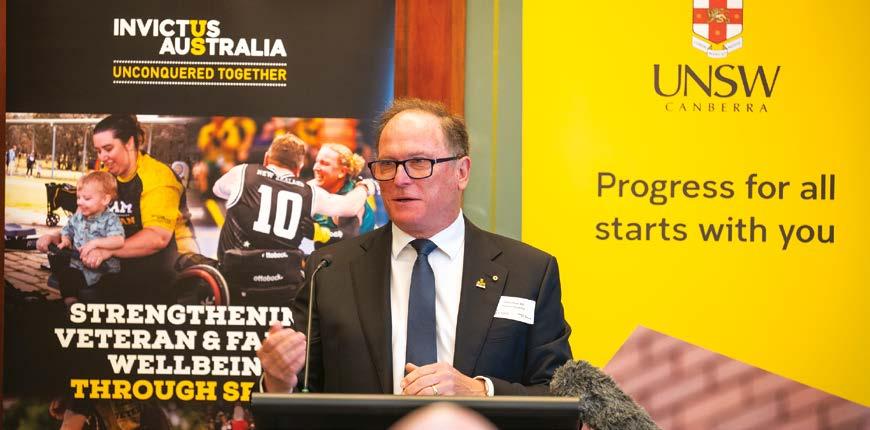
‘I loved that the military trained you for, and then gave you, the opportunities to exercise leadership and decision making,’ says Glenn. ‘I’ll never forget what one of my early Army bosses said to me: “I expect to you to run as hard as you can – and to make mistakes. The only guidance I give you is: don’t make the same mistake twice".'
Military service runs strong in the Keys family: his father served in the Air Force, an uncle was a Rat of Tobruk, another was a pilot in a Spitfire squadron. Glenn’s great-grandfather volunteered for the Light Horse – twice – in the First World War. ‘The concepts of service and of support to others have been inculcated in me for my entire life,’ he says.
Glenn himself completed a degree in mechanical engineering while undertaking officer training at Duntroon and eventually went on to became Acting Chief Engineer for Australian Army aircraft. When the Army began to acquire and operate its own aircraft, particularly helicopters, he was offered the opportunity to become its first Flight Test Engineer, following training at the International Test Pilots School in the UK.
‘I loved being in the Army,’ Glenn recalls. ‘As a young Captain, I was looking after 25 aircraft around Australia, with all the staff, equipment and logistics that entails – it was just brilliant.’
But a time came when the needs of his second child, Ehren, who was born with Down syndrome, were not compatible with the transient military life. ‘I married my wife, not the Army,’ Glenn states emphatically. ‘Both she and my son needed me. I loved the camaraderie, the mess… but I had to put my family above all that.’
After working for a start-up for several years, he approached a doctor friend with
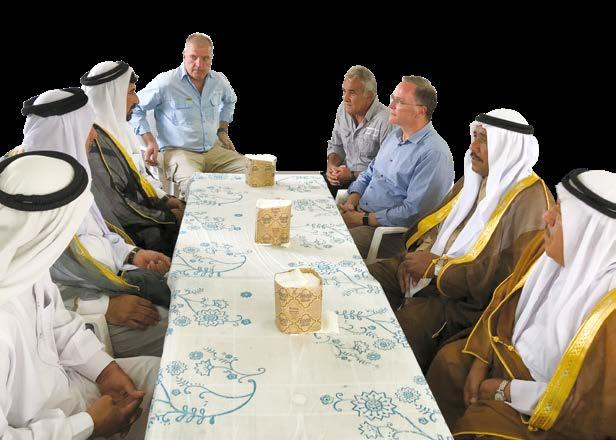
the idea of contracting for the UK National Health Service. ‘He said to me: “Glenn, I don’t know anything about people management, projects and logistics – if you do all of that stuff, I’ll do the medical bit”. That’s how Aspen Medical started, 23 years ago, in my dining room in Canberra.’
Aspen Medical is now a Veteran Employer of Choice, the highest level under DVA’s Veteran Employment Commitment. Its first major contract was as the health provider for the Regional Assistance Mission in the Solomon Islands (RAMSI). It has since cared for Australian troops in East Timor, fought Ebola in Africa, and provided medical support to the evacuation of refugees from Afghanistan, among many other projects.
For Glenn, the business is about taking care of people, which has remained the driving force behind all he does. Inspired by the resilience of his son Ehren, in 2012 he founded Project Independence, a charity established on the principle that those with an intellectual disability should be able to buy their own home. ‘We believe it’s the first of it’s kind in Australia, maybe the world,’ Glenn explains, with justifiable pride in a scheme that has built 30 homes in Canberra, and more to come around Australia.
Supporting his fellow veterans is among Glenn’s other passions. When Australia considered hosting Prince Harry’s Invictus Games, he was approached to be one of its 2 founding directors. The Invictus Australia Steering Committee then put together the successful bid to host the Invictus Games in Sydney in 2018. Recently Invictus Australia, under Glenn’s leadership, announced an intention to bring the Games back down under, in 2031, building on this legacy and success.
Last year, Invictus Australia engaged almost 10,000 veterans and family members
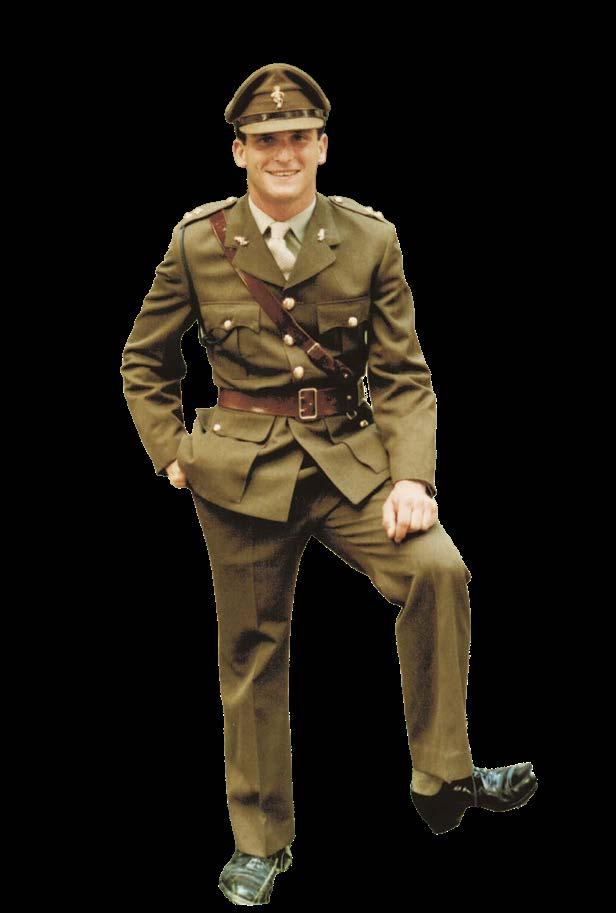
in sport – and almost 30,000 since the Sydney Invictus Games. ‘One of the unique things we do is that we engage with sporting organisations which invite veterans into their broader family,’ Glenn explains, ‘so you’re also getting the benefits of re-integration with community, as well as the education of community.'
In recognition of this achievement, last year Glenn was the first non-European to be appointed to the board of the global Invictus Games Foundation: ‘It’s an incredible honour. We have a critical methodology for helping veterans and families recover from trauma, as well as proactively preventing physical and mental health challenges that come with transition and service – and sound evidence-based research to support that.’
Glenn credits the skillset he gained in the ADF as the foundation for his success. ‘No-one ever asks me about the jobs we said “No” to,’ he reflects. ‘The skills we get in Defence are often grossly undervalued by the non-military community – people management, logistics management, coordination, problem solving, delegation. I think Aspen Medical is very good at risk management, and a huge amount of that comes from our skills, training and expertise in Defence.’

COMMISSIONER ANNABELLE WILSON
Veteran Family Commissioner
Veteran Family Commissioner
With the establishment of the new wellbeing agency, our ex-service organisations (ESOs) have a new opportunity for veterans and families of veterans to connect to, and navigate through, the incredible support system that already exists.
On Friday, 29 October 2021, I was a beneficiary receiving support from the ESO community. On Monday, 1 November 2021, I was instead leading the service delivery team at one of Victoria’s major ESOs.
That rapid transition gave me a rare vantage point. I was able to look at our service delivery through a client lens and use those real-world insights to identify what was working, and possibly more importantly, what was not.
As a beneficiary, I had been dropped into the crowded and confusing “spaghetti soup” that was the ESO sector and couldn’t navigate it. So, I didn’t. I had been told by DVA that they couldn’t help me. So, I assumed I didn’t belong there anyway. I didn’t know which number to call, so I called none.
Redesigning the service delivery model started there. It became about laying a clear breadcrumb trail. If someone contacted us, we needed to be able to either help them directly or connect them to someone who could. I would love to see an ESO sector built on this principle: it’s not “no wrong door”, it’s that “every door is the right door”.
Service delivery models are not abstract concepts. They are practical frameworks that should be shaped by the experiences and needs our community. And as a result of my real-world insights, I knew that articulating our service delivery was critical. Not only to help establish who we were to our families, but also so we had an understanding internally about where we sat in the ecosystem of supports.
What then became evident through this process was that we didn’t need to just know about the ecosystem, but we had to actually link ourselves with the other supports and services in the community. And not only the ones in government and the other ESOs, but the ones in the wider community services network too.
Consortium was queen here, and support was strongest when we acted as one. By that I mean that I saw this concept really work when we ran programs that were formally linked, co-badged or embedded. We can’t all do everything, but if we each play our part we all help each family
in different ways and avoid duplication (i.e. the dreaded “spaghetti soup”).
Another key principle we knew early on was that families are not a one-size-fits-all. They have different structures, challenges, values, goals, and definitions of what “success” looks like.
For our service delivery model, this meant that we first needed to get to know each family practically, psychosocially and financially. What were their personal circumstances and the barriers preventing them from having their needs met. For this, alongside our internal team of professional case managers, we also embedded a financial counselling component (from a different ESO) to the intake process.
It was important to us to help families to identify their goals and priorities across the 3 areas and build literacy from experts in the field around what potential changes needed to be made. And while emergency financial support was sometimes necessary, we found the most sustainable outcomes came from helping families build the skills to take control of their own situation. The old “teach a man to fish” principle.
Once we had established the need, the next step was to identify the connection points.
For our particular service, we found that many of our families were ineligible for traditional ESO supports, making partnerships with the broader community services sector essential. Strong referral pathways became a core feature of our service.
I’m not saying anything groundbreaking when I say that one of the most important aspects of post-traumatic growth is peer connection, and this is where the programs that we delivered really came into their own. We hosted events for widows of veterans to gather together and seasonal family days at ticketed places like the zoo and the aquarium so our beneficiaries could build relationships in a low-pressure environment.
The best thing we did though (in my humble opinion) was our youth camps. Each school holidays we ran camps for our school-aged kids, and twice a year a family camp for the whole family. The feedback was extraordinary: children who
I’d love for each of us to understand our service delivery and be able to articulate to our community exactly what we do to help them.
struggled to form friendships due to frequent relocations found peers who understood them. Friendships were formed, and families began to heal.
And gathering this feedback uncovered another home truth for me: sometimes when we get so knee deep in the delivery of services and supports, we deprioritise actually tracking the impact of them. Why this happens is so understandable, given that we want to spend all our efforts on actually running the program, rather than diverting resources to evaluation. But over time, I began to see this as an investment, to ensure our services genuinely met the needs of our families and to identify growth opportunities, and it is now something I believe should be a core element of all programs, both inside and outside of government.
With wellbeing undoubtedly a focus in our community, communicating how our ESOs play a part in the rehabilitation of our families, and what do we do to contribute to postvention support and post-traumatic growth is arguably more important than ever.
So, what does utopia look like for me?
I’d love for each of us to understand our service delivery and be able to articulate to our community exactly what we do to help them. I’d love for each of us to understand how we fit into the rest of the ESO sector, know who we refer to and who refers to us (the coveted “breadcrumb trail”) and link our services together where possible. And I’d love for each of us to be able to track the impact of our service delivery and explain, using real data, what is successful and where the growth opportunities lie.
I would encourage anyone who runs a service to take hold of this opportunity, and I would encourage anyone who interacts with a service to seek this from it.
We should all be looking inward at what contributes to the support and improvement of the lives of our veterans and the families of our veterans, and work on how we are articulating that value add, and how we are connecting that value add to the wellbeing support structures already in the space. And those about to come.
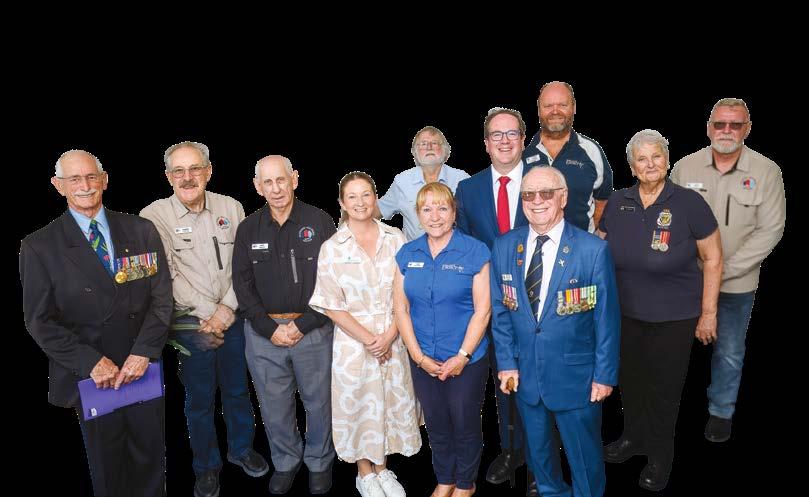
Minister Matt Keogh opened the Coffs Coast Veterans’ and Families’ Wellbeing Centre on 29 January in the company of 10 advocates from 6 different ex-service organisations.
Minister for Veterans’ Affairs Matt Keogh officially opened the Coffs Coast Veterans’ and Families’ Wellbeing Centre at the end of January. The Coffs Coast Centre is one of 3 on the NSW Mid North Coast, creating a regional hub.
Uniquely, the regional network emerged organically. Volunteer wellbeing and compensation advocates had been providing services locally across the Mid North Coast – some for up to 30 years – as active members of 11 different ESOs. Acknowledging that each volunteer was focused solely on supporting the veteran community, their parent ESOs encouraged them to work together for the common good.
In 2019, through their advocates, the parent ESOs adopted the “hub-and-spoke” model. The ESOs entrust their advocates to coordinate wellbeing support in the 3 centres and (currently) 11 spokes through a memorandum of understanding.
In each centre, the building owner contributed significant funds to ensure the site was ready to maximise the impact of the services provided. As a result, the centres meet the comfort and security needs of contemporary veterans and veteran families.
Funded by a number of Australian Government grants, we created a bespoke wellbeing-focused client management system and virtual private network (VPN) backbone in 2023. The following year, the network added a video-conferencing facility and large touch-screen monitors, and opened the Taree Centre in an existing community centre. As is crucial in regional, rural and remote areas, the video-conferencing facility enables in-place, on-line contact with health and community service providers, distant families and friends, and advocacy support at spokes with only a Wellbeing Support Officer available.
Last year, a One-Off Veteran Wellbeing Grant furnished and fitted out the centres in the Wauchope RSL Sub-Branch and the Coffs Ex-Services Club’s new apartment and commercial development.
Our regional centres and spokes welcome all current and former ADF members, Reservists, and families, and the DVA grants have enabled a range of benefits for veterans and veteran families in the Mid North Coast region.
We are proud to provide coordinated wellbeing advice and support, on-line social connectedness, and connection to service providers and wellbeing programs no matter where they may be.
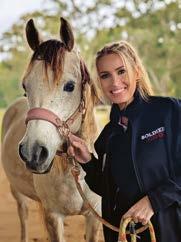
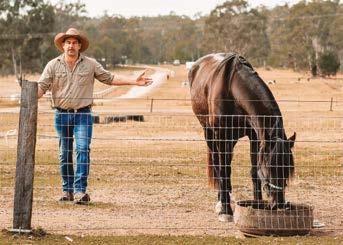
Soldier On has delivered an equine-assisted therapy program that has provided targeted wellbeing support for veterans, serving personnel and families of veterans.
The program combined interacting with horses, grooming and guided activities with psycho-educational group discussions that focused on key wellbeing challenges including PTSD, depression, anxiety, social isolation and community reintegration.
The program delivered 36 sessions, with approximately 10 participants per session. It was run by qualified equine therapy providers trained in trauma-informed care across 6 locations nationally.
Soldier On received verbal feedback from 92 participants that revealed consistent themes showing the program’s impact. Connection and relationship building emerged strongly, with participants describing meaningful connections with horses, family members and peers.
One participant reflected on ‘making a real connection with the horses’, while another spoke about ‘bonding with my son’ and seeing their child relax and enjoy the experience.
Participants consistently reported a sense of calm, safety and reflection, describing the sessions as a ‘safe and comfortable environment’, where they felt ‘calm and grounded’. Many noted the opportunity for reflection, with one participant sharing that the experience allowed them to ‘look at myself differently’ and ‘feel safe to be myself and share openly’.
The program also supported insight and self-awareness, particularly in understanding how emotions and behaviour affect others. Participants reported learning how their emotional state influenced connection, noting that ‘horses respond best when I am open and relaxed’ and that the experience increased awareness of body

language, communication and per sonal impact.
For many, the sessions brought on unexpected emotional processing, with participants commenting: ‘it was healing’, ‘a release of emotions I didn’t expect’, and ‘it allowed me to process things I hadn’t realised I was holding’.
The feedback consistently highlighted the importance of supportive and compassionate facilitation. Facilitators were described as ‘kind’, ‘patient’, and ‘non-judgmental’, with participants noting that staff created a strong sense of trust, belonging and psychological safety.
The natural environment also played a key role in outcomes. Being outdoors, away from screens and daily pressures, was described as grounding and restorative. Participants valued the rural settings, describing the combination of nature and horses as calming and conducive to presence and connection.
Overall, the participants were highly satisfied with the program, with strong expressions of gratitude and recommendations for it to continue. Many described the experience as ‘unforgettable’ and called for more sessions to be offered.
Soldier On provided logistical support where needed, including transport and on-site aid, alongside post-session follow-ups to assess outcomes and connect participants with additional Soldier On services or external referrals.
Supported by a Veteran Wellbeing Grant from DVA, this equine-assisted therapy program shows the value of evidence-informed, non-clinical interventions in supporting veteran wellbeing. Soldier On is proud to have delivered a program that strengthened emotional regulation, connection and resilience for participants who may benefit from alternative pathways to support.

Legacy has launched the most significant change in its history, expanding support to more families of veterans. For over 100 years, Legacy has supported the families of veterans who could no longer provide for their loved ones due to service-related death, injury or illness, or who have later died.
From now on, the requirement for a veteran to have completed a period of operational service has been removed. This major eligibility change is in direct response to the findings of the Royal Commission into Defence and Veteran Suicide on the far-reaching impacts of military life.
Legacy will now support families of former permanent ADF members and Reservists who have served on continuous full-time duty, irrespective of the nature of their service, allowing thousands more to be welcomed into Legacy’s care.
‘Service has many impacts, not just through death or injury,’ said Dr Mark Lax, Chair of Legacy Australia. ‘Families carry the weight of service in ways that aren’t always visible. Broadening eligibility to services and support clearly shows we are responding to the wider spectrum of challenges they face.
‘Our dedicated volunteers, often drawn from the veteran and wider
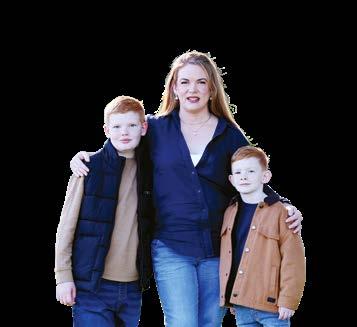
community, currently support more than 28,000 people and have been nothing short of phenomenal, offering personalised mentorship and a sense of belonging that has transformed countless lives.’
This expansion builds on the promise made on the battlefields of the First World War, when soldiers pledged to care for each other’s families. Since then, Legacy has supported hundreds of thousands of people, from those who lost partners in war, to the children of those veterans who were injured or killed during peace-time service for Australia.
Legacy delivers exceptional care through emergency financial relief, education scholarships, advocacy to secure entitlements, social
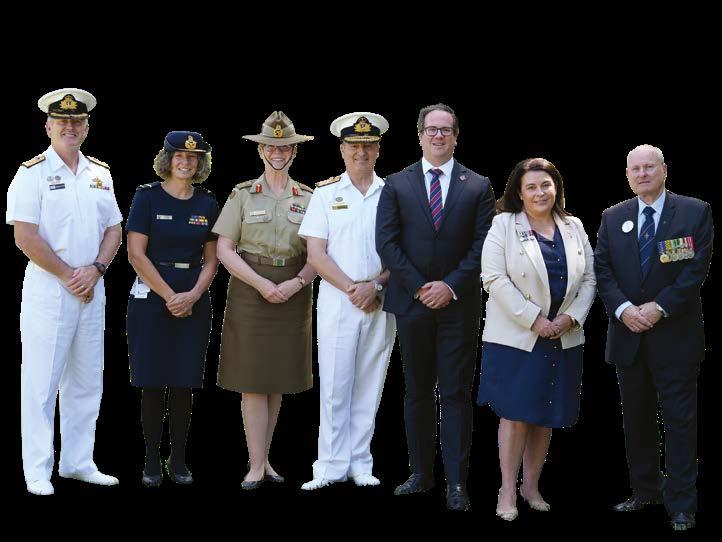
programs and lifelong support for children with disabilities.
‘This natural evolution extends Legacy’s proven impact to even more families who need it,’ said Dr Lax.
‘Many older partners of peacetime veterans will have the opportunity to foster a new community through local club activities such as social outings, morning teas and attending memorial events, helping combat isolation while building identity and belonging.
‘Legacy’s services are now also available to families of current serving veterans who are in the process
of transitioning out of Defence due to no longer being medically fit for service and are unable to care for their families themselves. ADF members are crucial in spreading the word through their networks so more families realise they now qualify and can reach out for support.’
The expansion strengthens Legacy’s unique position in Australia, ensuring no veteran family is disadvantaged because of their military service. For more information or to check eligibility contact your nearest Legacy club or visit www.legacy. com.au.

A message from RSL Victoria

To mark the 125th anniversary of the founding of the Australian Army, the Returned & Services League of Australia (Victorian Branch) has released a limited edition commemorative badge featuring the image of a contemporary Australian soldier.
‘The 125th anniversary of the Army is an important moment to reflect on its history, but also to remember those currently serving in its ranks,’ RSL Victoria State
President Dr Mark Schröffel said. ‘Which is why we have chosen the image of a contemporary soldier for this commemorative badge.’
The badge is being sold across Victoria as part of the 2026 ANZAC Appeal, with all proceeds going towards the diverse range of services the RSL provides to assist veterans and veteran families. These services include emergency financial assistance, veteran
advocacy, and social and community activities.
The ANZAC Appeal is the longest running veteran charity appeal in Australia. This is the first time the image of a modern Australian soldier has been represented on a commemorative badge as part of the Appeal.
‘While grounded in history, the ANZAC Appeal is about supporting the veteran of today,’ Dr
Schröffel said. ‘The RSL is as important to recent veterans as it was to the diggers who returned from the First World War.
‘RSL Victoria is Australia’s oldest veterans’ charity. Our purpose has always been to support veterans and their families.
The ANZAC appeal helps us to change lives.’
The ANZAC Appeal continues to support veterans and their families in their time of need. Your donation can help the RSL continue to deliver life-changing support to our veterans.
The limited edition commemorative badge can be purchased from RSL Sub-branches or online through the ANZAC Appeal website at www.anzacappeal.com.au
The following books, often self-published, have been written by, for and with veterans. The books and their descriptions are submitted by readers. DVA takes no responsibility for the accuracy of their content or the opinions expressed in them.
By Kevin O’Brien
The author assesses the Battle of Long Tan through a fresh lens – often challenging the official history view. Using evidence that was not available in the aftermath of the battle, retired Brigadier Kevin O’Brien forensically examines the narrative in clear logical steps. Starting with the bigger picture of why Australians were deployed to the war in Vietnam and then concluding with why, politically, they could not be seen to fail. The book is richly illustrated with clear maps and supporting photographs. It is a “must have” reference for historians and a “must read” for all Vietnam veterans.
• Pages: 307
• Cost: $39.95 plus postage
• To Buy: www.longtanbook.com
By Mike Tyquin
The maintenance of health in any army is a key factor in warfare. The seeds of ultimate defeat at Gallipoli in December 1915 were the risks that accompanied a hugely ambitious, complex and large-scale amphibious operation – the landings on well-defended shores under cover of darkness. Tragic and sometimes avoidable errors were made, putting pressure on the Australian Army Medical Corps which received aid from, and gave support to, all 5 forces at various times during 1915. This book explores these complexities and mistakes through the eyes of the infant corps.
• Pages: 140
• Cost: $19.99
• To Buy: Big Sky Publishing
By Russ Morison
This book is about Vietnam veterans, the forgotten ones. It is the story of the quiet, unsung heroes of the Vietnam War who left behind family, home and a population who were not all behind them, to help bring about peace in that troubled land called Vietnam. They didn’t all “hit the two-way firing range”, but they effectively supported those who did. They were the Personnel on Garrison Operations, or POGOs, as they were affectionately called. This is their story.
• Pages: 260
• Cost: $38 plus satchel postage $16
• To buy: dabblers3@gmail.com or 0408 947 935
By Dr Tom Lewis
This book uncovers the full scale of the Second World War’s forgotten battles along our coastline. From German surface raiders laying deadly mines to Japanese submarines prowling offshore and enemy aircraft launching hundreds of attacks, the war on the coast stretched across thousands of kilometres. Scores of ships were sunk, thousands of lives lost – yet much of this story remains unknown. Among the tragedies are gripping accounts of heroism and heartbreak, and tales of misjudgement and misadventure. Australia’s Coastal War reveals it all – a sweeping and deeply human account of a war far closer to home than most Australians ever realised.
• Pages: 440
• Cost: $34.99
• To buy: Big Sky Publishing
By Don Williams
Catalina flying boats had unique characteristics and were operated by the RAAF in the Pacific theatre of the Second World War, serving in several key roles. Catalinas serving as bombers were one of the few Allied planes with the range to strike the key Japanese base of Rabaul. They also monitored the enemy advance up to the Battle of the Coral Sea and paid a heavy price at the hands of Japanese fighters. This is a complete operational history of the Catalina in Australian service throughout the war, during which 225 airmen lost their lives.
• Pages: 132
• Cost: $39.95
• To buy: www.avonmorebooks.com
By Jeff Steel
This book chronicles the survival of Australian POW, Don Graham, from Changi prison to the deadly Yoshikuma coal mine near Nagasaki. Trapped in the greatest defeat of the British Empire, he endured Changi, survived a torpedoed prisoner ship, and lived through Tokyo’s firebombing – all as a forced labourer. Each day was a gamble of exhaustion, punishment or death – until he witnessed the strange, mushroom-shaped cloud that would signal the war’s end. Don’s incredible resilience and heroism reveal a forgotten Second World War survival story of grit, mateship and unbreakable spirit.
• Pages: 368
• Cost: $36.99
• To buy: Big Sky Publishing
By David W. Cameron
This book uncovers Adolf Hitler’s final refuge, the Führerbunker, deep beneath Berlin, a sprawling underground network with tunnels and shelters throughout the Chancellery, creating a vast, fortified command centre built to withstand relentless Allied air raids and protect the leader. Tracing its construction, life inside the complex, and the desperate final days of the Third Reich, it dispels myths, reveals Soviet efforts to destroy it, and exposes the grim realities of the war’s closing chapter.
• Pages: 322
• Cost: $32.99
• To buy: Big Sky Publishing
By Bill ‘K9’ Kourelakos
This book recounts the operational history of the Lockheed C-130 Hercules in the RAAF, spanning the A, E and H models from 1958 to 2012, leaving the current J model to be covered in the future. The author, retired Air Commodore Bill Kourelakos, has intimate knowledge of the aircraft along with extensive service on them. He brings an insight that only someone who has flown the aircraft in testing times can bring. The book is a detailed and balanced reflection of what the mighty Hercules did for Australia and how it impacted the lives it touched.
• Pages: 1,216
• Cost: $89.99
• To Buy: Big Sky Publishing
By Shane C Richards
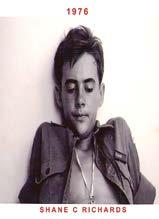
The cover of 1976 shows the author as a fifteen year old, when he enlisted in the Royal Australian Navy in which he served for 9 years. Shane Richards’ book features poems which represent a deeply personal journey through the author’s mental health experiences. Each piece was composed during various admissions to mental health units over the past decade. These writings capture the author’s thoughts and emotions during some of the most challenging periods of his life, offering readers an intimate glimpse into the struggles and reflections that shaped this collection.
• Pages: 104
• Cost: $16.50 (paperback) $4 (e-book)
• To Buy: Amazon or www.shanecrichardsthepoet.com
By Fiona Kuilboer
By Paul Dobbyn
This is the story of Hedwig, a golden Labrador, and how he turned from "just a dog" into Fiona’s lifeline. The book explores the lived experience of working with a Psychiatric Assistance Dog. It aims to help others better understand how the dogs support mental health, build independence, and change lives. Whether you’re considering a Psychiatric Assistance Dog, already on the journey, or just love a good dog story, this book will remind you that courage can be quiet and healing might have 4 paws. The author, a RAAF veteran, also includes a brief section outlining DVA’s Psychiatric Assistance Dog Program.
• Pages: 197
• Cost: $24.49 (paperback) $10.79 (e-book)
• To Buy: hedwigforthewin.com.au
By David Pullen
Sheer Bloody Hell is based on the poem of Albert James Pullen and historians Meleah Hampton and Joy Pickett’s accounts of Private Walter James Stafford, an Aboriginal Anzac killed in action on the Somme battlefield during the First World War. It is a real life story, dubbed the “Australian version of Saving Private Ryan”, and is to be read as historical fiction based on facts, Aboriginal oral history, truth telling and fictional embellishing by the author, with links to Dharug Aboriginal warriors. It is self-published by Lessons With David.
• Cost: $10 (PDF)
• To Buy: lessonswithdavid@outlook.com
By John Meldrum
This book follows John’s transformation from a restless Sydney teenager into a disciplined young soldier. Raised in a working class family shadowed by hardship, John sought freedom and purpose in the Australian Army. He experienced gruelling training at Kapooka and Ingleburn to the camaraderie and chaos of service abroad with 2 Royal Australian Regiment. Immersed in the heat, culture and danger of 1960s Malaya, John learned the true meaning of mateship, courage and resilience – not against an enemy, but against fear, fatigue and self-doubt. (All proceeds from sales are going to Motor Neurone Disease research.)
• Pages: 104
• Cost: $22 (paperback), $8.24 (e-book)
• To Buy: Amazon
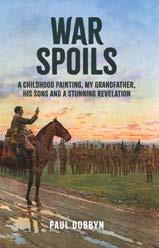
This hybrid book about ‘a childhood painting, my grandfather, his sons and a stunning revelation’ takes the reader on a very personal journey into First World War battlefields as witnessed by Paul’s grandfather, Captain Henry Dobbyn. The reader is also aboard the fatal flight of Paul’s uncle, Pilot Officer Robert Dobbyn over Europe in 1944. And it considers the challenges Paul’s father, Lieutenant Denis Dobbyn, faced as an Australian Intelligence Corps officer dealing with Japanese forces in post-surrender Rabaul in 1945–46. Paul’s poem War Spoils , inspired by the discovery of Captain Dobbyn’s journal, opens the book.
• Cost: $36 including postage
• To Buy: warspoils2025@gmail.com
By Roger Buck
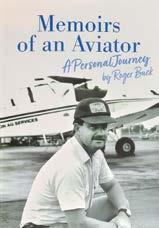
This is an adventure story of 6 years of RAAF service, including 367 days of active service on helicopters in the Vietnam War, plus 33 years of low-level operations as an agricultural pilot. A legend in his own lifetime, Roger Buck entered the RAAF to become qualified as an Engine Fitter, then cross-trained onto Iroquois helicopters to become a Flight Fitter. His Vietnam experience involved on-line maintenance and flying as a Flight Fitter on gunships and troop carriers from Vung Tau and Nui Dat. Roger’s writing on engine emergencies and flight procedures is of real practical value to pilots of all levels.
• Pages: 206
• Cost: $49.99 plus postage
• To Buy: rogerlynbuck@bigpond.com
By Russ Morison
This book is about the military truckies of the Vietnam War era, and in particular the history of 2 Transport Platoon, Royal Australian Army Service Corps (RAASC). The platoon is one of 5 RAASC platoons that served our combat forces, supplying and delivering the material that enabled our forces to establish a firm foothold in enemy territory who once prospered in Phuoc Tuy Province. Their story has finally been told here.
• Pages: 260
• Cost: $38 plus satchel postage $16
• To Buy: dabblers3@gmail.com or 0408 947 935
By Ric J Frawley
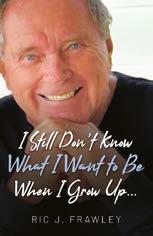
Ric Frawley describes his book as ‘a soldier’s journey through war and aftermath’. Serving across multiple infantry battalions in the Vietnam War, Ric witnesses the reality behind the headlines: fear, brotherhood, violence, numbness and the emotional cost of staying alive. But the battle does not end when the uniform comes off. PTSD, anxiety and the silent war within threaten to dismantle his life, his relationships and his identity. Through perseverance and brutal honesty, Ric reveals how a man can lose everything and still rebuild.
• Pages: 310
• Cost: $24.71 (paperback), $5.98 (e-book)
• To Buy: Amazon Australia
If you have a book for a subsequent edition, please email vetaffairs@dva.gov.au . Please provide the following: title, name of author, blurb (short description that we reserve the right to edit), price, how to buy it, and image of the front cover. Submitting a book does not guarantee publication.
Article courtesy of the Department of Defence
In response to the 2023 Defence Strategic Review, the Government commissioned an independent audit of the Defence estate to assess whether its footprint was fit for purpose.
The audit considered a range of matters to ensure the Defence estate is best positioned to support operational and capability requirements. It was conducted by 2 independent co-leads, Jan Mason and Jim Miller, who visited more than 70 Defence locations and engaged with stakeholders across government, Defence and industry.
They assessed whether the estate is fit for purpose and provides the ADF with the facilities and capabilities it needs to keep Australians safe. The auditors focused on strengthening the resilience of the Defence estate, mechanisms to accelerate delivery of major infrastructure, and options for consolidation of under-utilised facilities.
The Audit’s 20 recommendations aim to transition the estate toward a more modern, futurefocused and fit-for-purpose capability that best enables the ADF in its tasks. They are aimed at re-orienting the Defence estate to meet current and future capability needs, identifying that:
• the Defence estate is too large and is on an unsustainable trajectory
• parts of the estate are unsafe, unused or unserviceable
• there are too many facilities in the southern parts of the country
• strategic transformation is required to ensure the estate remains fit for purpose and capability aligned.
The report’s first recommendation calls for Defence to ‘reduce its property holdings through focused divestment of sites at market value in areas not aligned with current or future capability priorities’.
The audit identified a total of 68 sites for divestment. On the basis of subsequent Defence capability analysis one site, Pittwater Annex, will be retained and 3 will be partially divested: HMAS Penguin, RAAF Williams – Laverton, and Warradale Barracks. Three of these identified sites have already been divested, while 6 other properties are currently undergoing divestment actions.
The Government has agreed or agreed-in-principle to all 20 of the Audit’s recommendations, which involves making decisions to transition to a modern Defence
estate that reflects the needs of the nation and our Defence personnel.
The Government has accepted the Audit’s recommendations for a focused program of consolidation and divestment across multiple sites aimed at rationalising and reorientating the estate towards contemporary and future security challenges.
Some of the sites are historically significant and have important meaning to current and former Defence personnel. The Government acknowledges the deep connection that Defence people and families have with the establishments on which they live, work and train. It is committed to preserving and enhancing public access to historically significant sites and collections so that all Australians can celebrate our proud military history.
The Government has acknowledged that many of the Defence sites are also accessed by community organisations, including veterans’ organisations. For these organisations and their members, particularly veterans, these sites hold significant meaning.
As part of the divestment process, Defence will engage with community organisations which access these sites, including existing tenants, to work through their individual circumstances and future needs. This will be done sensitively and on a site by site basis.
Other recommendations of the audit relate to aligning facilities to capability priorities, including accelerating the transition to an integrated, focused force. It recommends driving greater consolidation and shared use of facilities, embedding consideration of alternative finance and delivery models, and provisioning for whole-of-life cycle costs in project budgets.
This undertaking is the most significant reform to the Defence estate ever – providing personnel with the facilities and capabilities they need to keep Australians safe. All proceeds from divestments under this process will be retained within the Defence portfolio and be reinvested in National Defence Strategy priorities, including continuing to upgrade and strengthen our northern bases.
The Department of Finance is leading the process due to its experience in managing large-scale divestment programs, expertise in divestment and remediation, and oversight of the Commonwealth Property Disposal Policy as well as other land policy and legislation. Community engagements will commence in April in Tasmania. To access the report and all related information about the Delivering the Future Estate, visit www.defence.gov. au/about/locations-property/delivering-future-estate. If you have further enquiries, please email delivering.the.future.estate@ defence.gov.au

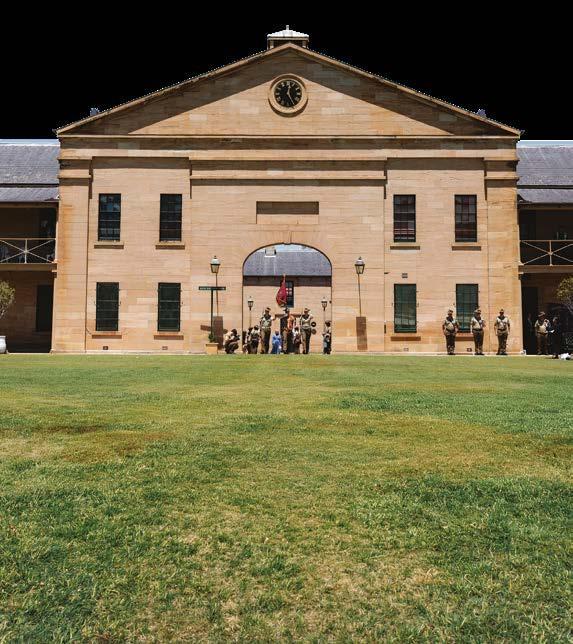
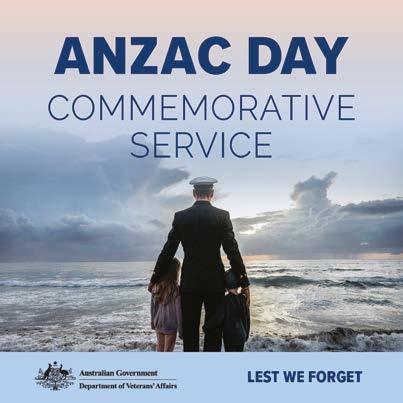

Anzac Day is one of the most significant days of commemoration for Australians.
Marking the anniversary of the Gallipoli landings during the First World War, Anzac Day provides an opportunity for Australians to honour the service and sacrifice of more than 2 million Australians who have served our nation in times of war and peace. It is also a time to honour the more than 103,000 personnel who have lost their lives during or as a result of their service.
As preparations unfold both across the country and internationally, this year’s commemorations invite Australians of all ages to remember and reflect upon the selfless service of our current and former service personnel .
The Australian War Memorial will anchor the nation’s Dawn Service. State and territory governments, RSL Sub -branches, ex-service and community organisations will continue their longstanding role in hosting marches, ceremonies and wreath-laying events across the country, ensuring everyone has a place to gather in remembrance.
Commemorative services overseas will continue to connect Australians to the places where the Anzac story was forged. Dawn Services at
Gallipoli in Türkiye and at Villers-Bretonneux in France remain deeply significant to the families of those who served and to Australians seeking to understand the origins of the Anzac legend. Anyone planning to attend the services in France or Türkiye must register for a free attendance pass by visiting commemorations. teg.com.au. These Dawn Services will also be broadcast live by the ABC on Anzac Day.
Services in Malaysia, Thailand and Papua New Guinea honour those who served in later conflicts, highlighting the broad span of Australian military history and the generations who lived it. Those who will be participating in Dawn Services at Sandakan in Malaysia and Hellfire Pass in Thailand are encouraged to register their attendance for free on the DVA website: search for “Anzac Day - Asia Pacific”. Registration assists organisers to plan ahead, provide updates and helps ensure a safe, respectful and smooth experience for attendees.
To help support commemorations, the DVA digital kitbag is a key tool for planning a commemorative service. With speeches, sample
orders of service, commemorative music lists, craft activities, and reflective materials, the kitbag supports teachers, families and community leaders in planning and understanding the elements of a commemorative service. You can download the kitbag from DVA’s Anzac Portal at anzacportal.dva.gov.au/ad-kitbag
Educational resources are also available through the Anzac Portal – including posters, learning modules, personal stories and interactive activities. They help to nurture curiosity and historical understanding in communities and classrooms nationwide.
These resources are included in the annual Anzac Day commemorative packs that are distributed to ex-service organisations, aged care facilities, schools and community groups, offering posters, learning materials and firsthand accounts that highlight the experiences of those who served across different eras.
This year, as always, Australians will stand together across the generations to honour courage, service and sacrifice, ensuring that the Anzac legacy remains a living, shared part of our national story.

The word ‘Anzac’ holds deep national significance and represents the courage, sacrifice and service of the original Australian and New Zealand Army Corps. As Australians prepare to commemorate Anzac Day, here is a timely reminder about the importance of upholding the respect and value of ‘Anzac’.
The Protection of Word ‘Anzac’ Regulations safeguard its use across Australia. They prevent the word from being misused or overused in commercial, corporate or public contexts, helping preserve its special place in our national heritage. You may need to apply for a permit if you intend to use the word ‘Anzac’ in:
• commercial products, such as merchandise, apparel or memorabilia
• corporate or business names, events, or promotions
• official publications, ceremonies or activities not directly connected to Anzac Day commemorations. Some uses – including most official Anzac Day ceremonies – may be exempt, but all other uses require approval from the Minister of Veterans’ Affairs or his delegate. Applying for a permit is free and can be completed online. Applicants need to:
1. review the requirements outlined in the Anzac Regulations
2. complete an application form detailing how the term will be used
3. submit the application to DVA for assessment. Applications are assessed to ensure the use of the word aligns with the spirit and intent of Anzac commemoration.
If you believe the word ‘Anzac’ is being used inappropriately –such as in marketing, product branding or events – you can report it to DVA. This information helps ensure the regulations are upheld and that the term continues to be used respectfully. You can make a report by emailing usewordanzac@dva.gov.au
For more details on the protections in place, when a permit is required, and how to apply, visit the DVA website. (Search for “Protecting the word ‘Anzac’”.)
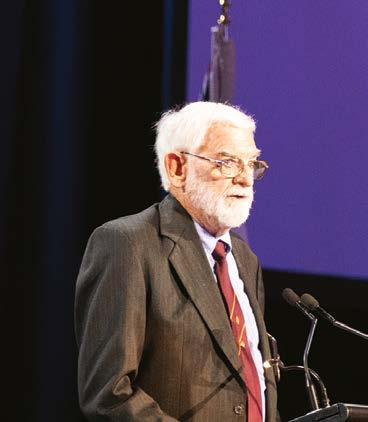
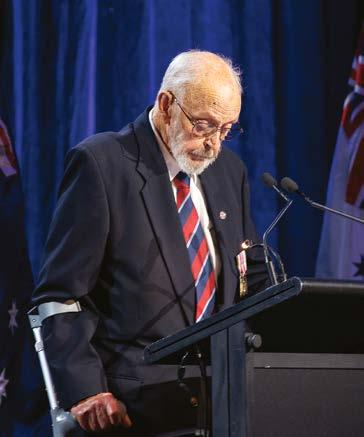

On National Servicemen’s Day, 14 February, members of the community, including National Servicemen (Nashos) and their families, gathered in Canberra to commemorate 75 years since the inception of the first of 2 National Service schemes introduced during the Cold War. This National Commemorative Service honoured the more than 280,000 Australian men who were called up for National Service in the 1951–1959 and 1965–1972 schemes.
Nashos at the commemorative service received a round of applause for their service and the audience heard moving accounts from those who served, with stories shared throughout the ceremony, reflecting the varied experiences of National Service veterans. ‘The Nasho Song’ captured the unique experiences faced by National Servicemen. Regardless of where they served, Nashos were an integral part of our armed forces during the 1950s, 60s and 70s.
Representing veterans of the 1951–59 scheme, Albert McKay RFD reflected that ‘during training we became as one, soldiers with a commitment to each other and to our nation. Three months later I marched out of Ingleburn as a moderately competent infantryman. The transition from boyhood to manhood was almost invisible.’
Speaking on behalf of Nashos who served in Vietnam, Bob Whittaker said that the National Service experience was life changing for each recruit:
‘The birthday ballot created a random sample of one-twelfth of our generation. The laid-back lifestyle of the swinging 60s rapidly morphed into a rigorous training regime preparing us for counter insurgency warfare in the jungles of Southeast Asia. We left friends and family behind. Our lives and careers were put on hold for 2 years.’
Ron Brandy, representing veterans of the 1964–72 scheme, reflected on the enduring impact of service: ‘Our experiences built resilience, tolerance and self-confidence from overcoming fears and challenges. Camaraderie and teamwork became the natural default position. There are many different experiences and stories – good, funny, and some regrettably bad – as Nashos approached the end of their National Service commitment.’
In his commemorative address, Minister Matt Keogh, reaffirmed the service and sacrifice of all Nashos:
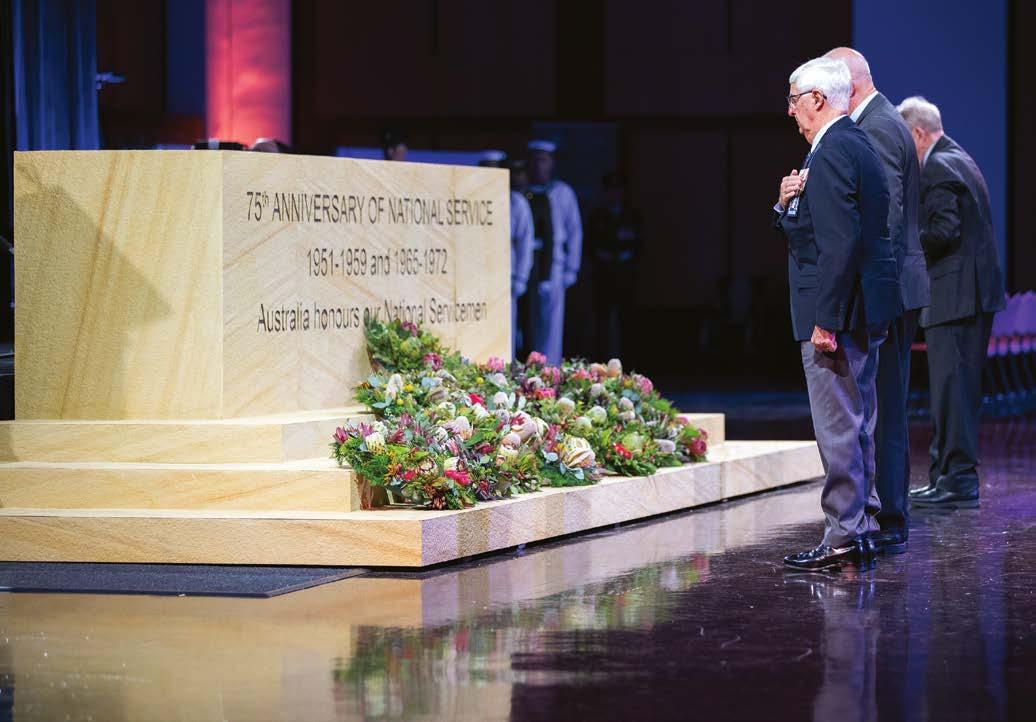
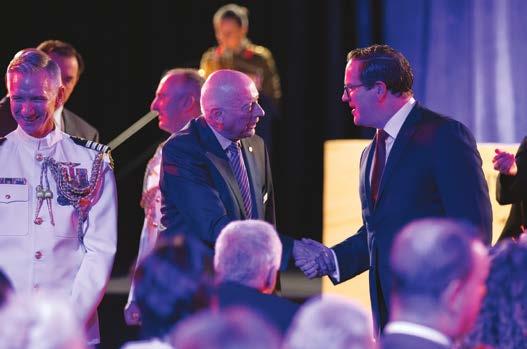
‘Whatever the nature of your service – at home or overseas – you should be proud. You helped defend our nation. And you served with distinction, in the best traditions of the ANZAC spirit. For this we thank you.’
Tragically, National Servicemen lost their lives. During both schemes, some men died while they were serving from such causes as accidents and illnesses. In the Vietnam War era National Service Scheme, 2 men lost their
For each of us, the National Service experience was life changing. Our lives and careers were put on hold for 2 years
Bob Whittaker Vietnam War Nasho
lives in Borneo serving in the Confrontation and more than 200 lost their lives serving in Vietnam.
Lest we forget.
You can watch the service on ABC iview –search for "75th Anniversary of Australian National Service".
A unique way you can share in the commemorative spirit is through a personal reflection to our Wall of Remembrance. The "Wall" is a living, evolving, community-led tribute for all Australians to share a reflection or memory of a loved one connected to the ADF.
POST YOUR PERSONAL TRIBUTE AT www.dva.gov.au/wall-of-remembrance
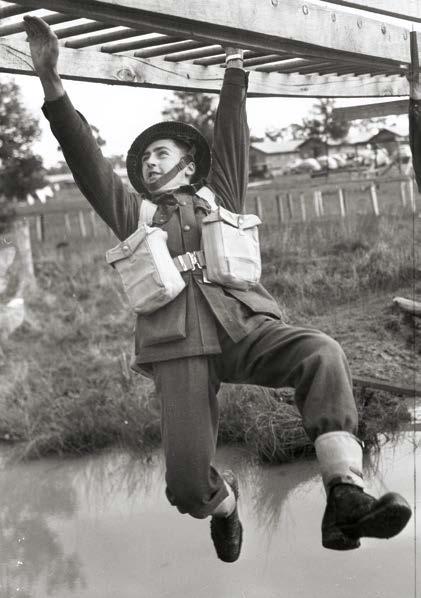
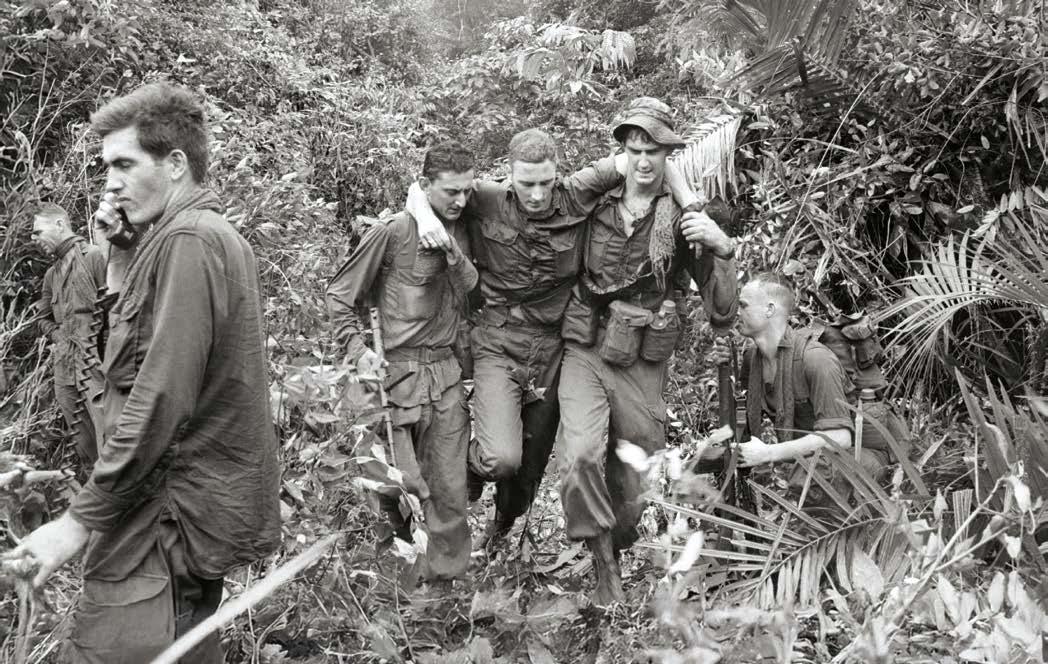
On National Servicemen’s Day, we remembered and honoured the contributions of all who served in the National Service Training Scheme (NSTS) which ran for 8 years from 1951 and the National Service Scheme (NSS) from 1965 to 1972.
Although there was a 6-year gap between the schemes, and significant differences between them, both the NSTS and NSS were conscription schemes that required large numbers of young men to undertake compulsory military service.
National Service was a key part of Australia’s defence strategy during the Cold War period to increase defence manpower. It allowed Australia’s armed services, particularly the Army, to expand, providing the personnel for domestic and overseas defence commitments.
National Servicemen, affectionately known as ‘Nashos’, were an integral part of our armed forces during the 1950s, 60s and 70s. They served in Australia and during the NSS some also served overseas, in Borneo, Malaysia, Papua New Guinea and Vietnam.
With little warning, Nashos put their lives on hold during their compulsory service. Compulsory military service was a major interruption to their young lives, one over which they had no control. For many this was their first time being
separated from their family and friends, often far from home.
Bob Pillifeant, a veteran of the NSTS, recounts that ‘the greatest challenge throughout my time as a Nasho was the complete change of my then comfortable lifestyle and to have to conform and take and obey all orders given. From all of this training and conforming I became an entirely different teenager…my outlook on life had changed for the better in many different ways…’
The training and service was not always easy, and that returning to civilian life could be challenging. They underwent gruelling training, which particularly for the men of the 1965–72 scheme was long and often at odds with their regular lives. And the length of service made returning to civilian life even more challenging.
As Handrickos (Hank) Kreemers, a veteran of the NSS, recalls: ‘A naive country boy, now discharged soldier, husband and father had returned to civilian life with no job, no prospects, no house, very limited funds… All remnants of a previous life now a memory.’
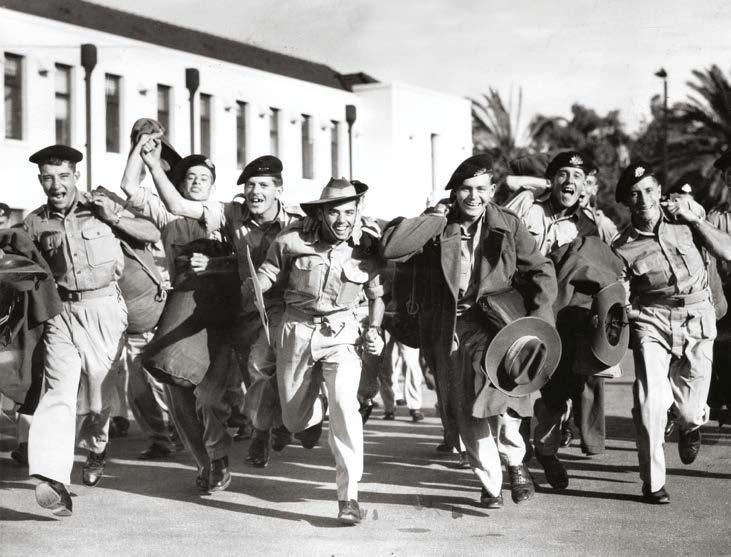
Image top left: National Service recruit in training at Puckapunyal (State Library of Victoria [SLV] H98.105/4297). Top right: A wounded National Serviceman from 5RAR being helped to a helicopter evacuation site in Phuoc Tuy Province, Vietnam (AWM COA/66/0877/N). Bottom right: Army National Servicemen celebrating the end of their initial training period (news.com NP1129492).
Regardless of whether service was voluntary or conscripted, in Australia or overseas, everyone who has served a day in our nation’s uniform is a veteran who deserves to be commemorated. Whether their service took them abroad or kept them within Australia, each and every National Serviceman played a vital role in shaping Australia’s defence force. Their commitment and sacrifices deserve our deepest respect. We pay tribute to the unique experiences faced by National Servicemen and honour them all.
A naive country boy, now discharged soldier, husband and father had returned to civilian life with no job, no prospects, no house, very limited funds.
Each year, DVA invites schools across Australia to participate in the Anzac Day Schools’ Awards. Through the awards, schools embark on a learning journey to connect with and honour veterans and current ADF members while gaining a deeper understanding of Australia’s wartime history.
Riana Primary School was the deserving recipient of the 2025 state award for Tasmania. The school’s submission included a diverse range of student works, including poetry, art, veteran interviews and videos. The entry showcased the students’ creativity and the
commitment of teachers to honour veterans.
Riana Primary School used the prize money from the award to attend a First Nations cultural immersion day at Tiagarra Cultural Centre in Devonport. The visit provided students with a valuable opportunity to deepen their understanding
of First Nations history, culture and connection to Country, complementing their classroom learning.
Class teacher Miss Meyn said that ‘this was a great opportunity to build upon learning in the classroom and, particularly important for our Aboriginal students to learn more about and
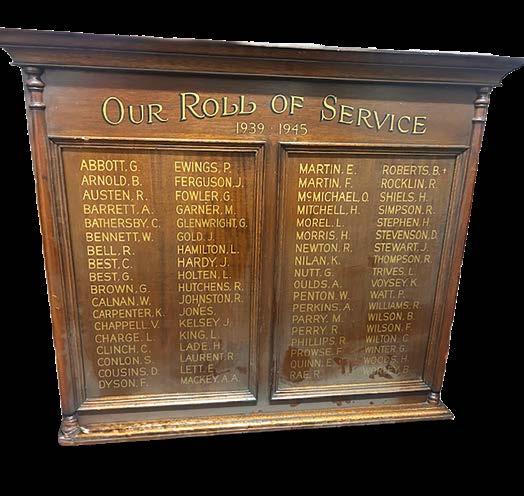
Can you crack a case like Sherlock Holmes?
experience parts of their culture. Without the prize money, being a small school means we would never have had the opportunity to visit such a significant place in Tasmania.’
We’re pleased to hear that the Anzac Day Schools’ Awards are supporting further learning opportunities
for students and teachers. The theme for the awards in 2026 is "Women in service" and entries close on 28 May. Visit anzacportal. dva.gov.au/classroom/ anzac-day-schools-awards.
Do you have a keen eye for clues?
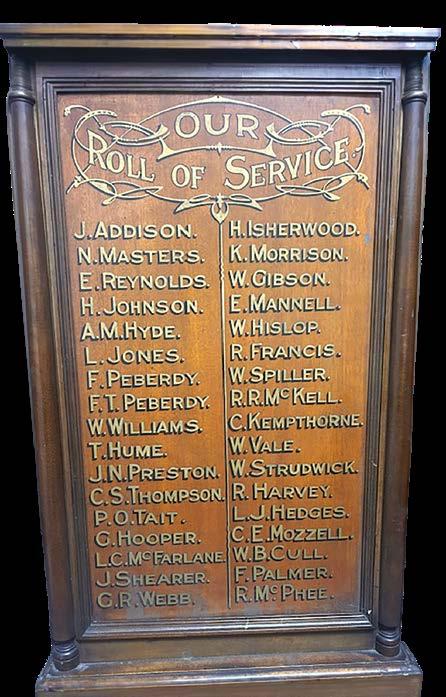
Well, for any budding sleuths, there’s a mystery waiting to be solved.
Two honour boards comemmorating Australian veterans of the First and Second World Wars have found their way to Trafalgar, Victoria, and we need your help to get them home.
The honour boards were found bubble-wrapped on a shipping pallet mistakenly delivered to a
local hardware store, without an address or any documentation to identify their point of origin or final destination.
Curiously, many of the 106 veterans listed on these honour boards were born in NSW and enlisted in metropolitan Sydney, which begs the question of how the boards have ended up in regional Victoria. The honour boards have been turned over to the Trafalgar-Thorpdale RSL Sub-branch. It's committee and members is keen to see them returned to their rightful owners.
‘It’s all a bit of a mystery, but we’re committed to solving it and seeing these honour boards returned returned to their home location so that their community can continue to remember and honour those locals who served our nation in time of war,' said Secretary Paul Altamore. If you want to join the hunt, a good place to start is DVA’s Nominal Rolls: nominal-rolls.dva.gov.au
If you crack the case or have any helpful information, you can contact Paul at trafrsl@bigpond.com.
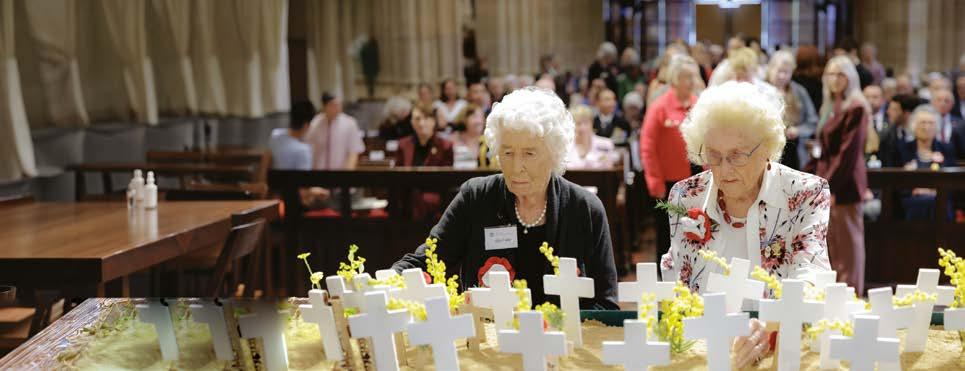
Last year, the Families of Veterans Guild launched the Virtual Field of Remembrance – an online space where war widows, veteran families, veterans and the public can honour someone they love who has served.
Created as an extension to the Guild’s ANZAC Field of Remembrance, the Virtual Field is a standing symbol of love, service and sacrifice. The Guild’s ANZAC Field of Remembrance has been held since 1952. The service was created to demonstrate the costs of war and military service, with war widows playing a central role in curating, delivering and participating in the service. Together with their families, war widows unite with their community in commemoration – recognising their loss, love, and the ongoing care they carry for those who served.
The ANZAC Field of Remembrance remains the only commemoration in Australia where war widows and veteran families lead the act of remembrance, laying personal tributes to their loved ones before invited guests and the wider community.
The Virtual Field of Remembrance makes the laying of tributes more accessible to war widows and veteran families, as well as the general public. With many in our community unable to attend the ANZAC Field of Remembrance and lay a tribute in person, the virtual field allows them to be part of the day and take part in the commemoration.
Open year-round and easy to use, the virtual field offers an opportunity to make this Anzac Day personal to you. Tributes are simple to create, free to lay, and create a permanent public record of service and sacrifice. Messages sit together, recognising both those who served and the families who live with the impact of service.
We invite you to add your tribute today and to share the link with those who served alongside you or your loved ones. Your contribution helps to keep their names, sacrifices and stories front of mind , where they belong. To lay a tribute, visit www.familiesofveterans.org. au/virtual-field-remembrance.
In 1992, a historic statue of a Digger at the Manly War Memorial in Brisbane was shattered by vandals and thought to be lost until it was unearthed in a Council shed in 2013. There it sat for a decade, until the local community rallied to restore this unique piece of their military history.
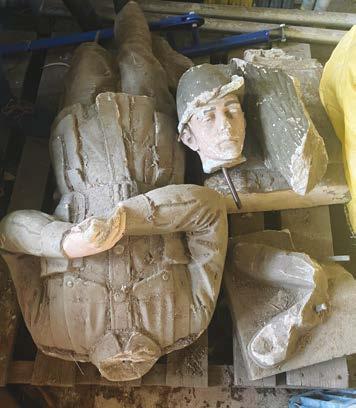
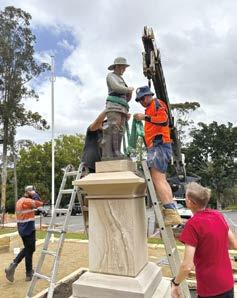
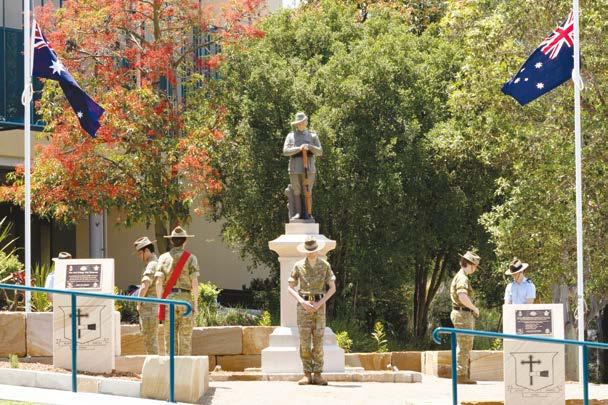
Nearby Iona College has led a project to ensure the statue was returned to its former glory, and endure as a testament to those who have sacrificed so much. After almost a year of work by a college alumnus, stonemason Dan Gill, the restored statue was unveiled last year on Remembrance Day.
Iona College Principal Trevor Goodwin said that the project was a massive undertaking, and one that relied on an incredible amount of hard work from a lot of people inside and outside of Iona.
‘To see the reaction of the Diggers and veterans when the statue was officially unveiled on Remembrance Day made that long and difficult journey worthwhile,’ Principal Goodwin said.
The statue itself was one element of the newly established Iona War Memorial, with the second key element being a Lone Pine tree. This symbol of resilience and remembrance was generously donated by another Iona College alumnus, Phillip Armstrong, with the hope the memorial becomes a space of reflection, education and gratitude.
‘The Spirit of the Anzacs lives within this memorial because its restoration was one of
Article courtesy of Veterans SA
commitment, resilience, teamwork, determination and service,’ Principal Goodwin added. ‘We are very proud of what has been achieved, prouder still of the involvement of Iona and our Old Boys, and very humble in accepting the gratitude of our community for restoring the fallen digger back to active duty.
‘There’s been a remarkable outpouring of genuine emotion...an integral part of our community’s history had been brought back to life.’
Iona College worked in partnership with the Manly-Lota RSL, Brisbane City Council and the Queensland Government to complete the project, which was supported by a grant from DVA’s Saluting Their Service (STS) Commemorative Grants Program. At the centre of this and many other innovative projects are collaborations between dedicated locals, the veteran community, and DVA, ensuring our wartime heritage is honoured, preserved and shared with future generations.
To find out more, search for "Saluting Their Service Commemorative Grants Program" on the DVA website
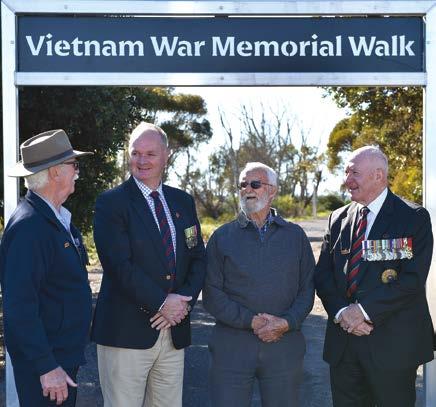
Last year, the Yorke Peninsula community in South Australia commemorated 50 years since the end of the Vietnam War with the launch of its new Vietnam War Memorial Walk.
The Walk is a thoughtfully crafted 3.7 kilometre bespoke stretch of the Yorke tourist trail between the townships of Coobowie and Edithburgh that pays tribute to the service and sacrifice of Australia’s Vietnam War veterans. Along the route, trail walkers can interact with 29 laser-cut signs containing information about every Australian unit that served in the Vietnam War.
The concept for the Memorial Walk was developed by Roger Hogben, a local resident who served in Vietnam as a member of the 4th Battalion, Royal Australian Regiment. Mr Hogben identified the path linking Edithburgh to Coobowie as the ideal location due to its scenic views and townships with businesses and services at both ends.
Mr Hogben said the Memorial Walk was important to recognise the often misunderstood efforts of Australians in the Vietnam War and that Yorke Peninsula was a fitting location due to its strong veteran population – more than 5% of the state’s veteran population reside on the Yorke Peninsula and in the Mid North.
‘The Vietnam War Memorial Walk is about paying tribute to all who served in Vietnam,’ Mr Hogben said. ‘It has been built to stand the test of time and will be an educational tool for future generations.’
Approximately 800 people attended the official launch at Edithburgh Golf Course on Vietnam Veterans’ Day, 18 August 2025, including veterans, General the Honourable Sir Peter Cosgrove AK AC (Mil) CVO MC (Retd),
Australian War Memorial Director Matt Anderson PSM, and Max Ball National President of the Vietnam Veterans Association of Australia.
A highlight of the launch was a visit from a genuine Vietnam-era Huey helicopter that flew in from NSW and landed on the golf course.
‘The Vietnam War Memorial Walk is a powerful and lasting tribute, not only to those who served but to the spirit of our community,’ Yorke Peninsula Council Acting Mayor Richard Carruthers said. ‘It gives locals and visitors alike a chance to pause, reflect and honour the sacrifices made. It combines history, culture and natural beauty in a way that is truly unique, and we hope it becomes a destination where many people can learn, reflect and pay their respects.’ Each element of the Walk was meticulously designed and verified in consultation with the Vietnam Veterans Association and the Australian War Memorial to ensure historical accuracy and authenticity of unit insignia. Major funding support came from DVA’s Saluting Their Service Commemorative Grants Program and Veterans SA’s ANZAC Day Commemoration Fund.
To learn more, search for ‘Vietnam Veterans’ Memorial Walk’ on the website of the Yorke Peninsula Council.
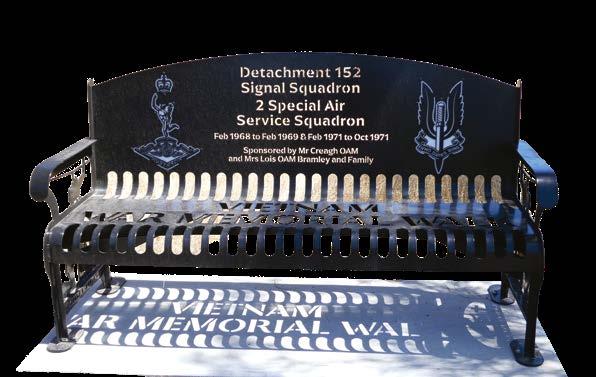
Tamara Sloper-Harding’s wedding day in 1999 should have been all about celebration, laughter and dancing. Instead, it became a day she would never forget for another reason entirely. Part way through the reception, her mobile phone rang. She was being deployed to East Timor immediately.
‘I knew that something might be happening soon, but I had hoped to make it through the wedding,’ Tamara, a former Lieutenant, said. ‘Then the call came, and suddenly I had to switch from bride to service member – it was surreal.’
The rest of the evening was a blur of notes, phone calls and last-minute preparations. A week later, instead of being on her honeymoon, she was in Dili – a city ravaged by conflict – as part of Austral-
‘It was shocking to see the destruction up close,’ Tamara recalls. ‘One moment I was surrounded by family and friends, the next I was in the middle of a tense operational zone. You just had to adapt – fast.'
Her wedding shoes and combat boots will sit side by side in the Australian War Memorial’s (AWM) new Peacekeeping Gallery. Six years in the making, the gallery showcases the experiences of Australians who have served in peacekeeping missions worldwide.
AWM Historian Dr David Sutton said that peacekeeping
is a vital part of Australia’s military history, but it’s often overlooked. ‘This gallery puts people first, highlighting the extraordinary work done in challenging conditions, and showing how service takes many forms,’ David said.
For Tamara, her wedding shoes and combat boots, now sitting in a glass case, are a quiet but powerful reminder of a day that spanned joy and duty. ‘When I see them, I remember how quickly life can change and how you keep going, even when the world shifts beneath your feet,’ she said.

Understated and unique, each glass leaf is a poignant piece of
Taking inspiration from Laurence Binyon's famous poem along with design cues from Australia's distinctive eucalyptus trees, each fallen leaf is a symbol of the personal and collective sacrifices made during times of war.
Echoing the spirit of the original glass sculptures sun rises and Quiet skies, as the sun sets Australian War Memorial, these solitary leaves have been meticulously hand-crafted by artist Annette Blair. Each leaf is unique and etched with the artist’s signature and edition number, making a meaningful gift, ideal for current and former service personnel or collectors of hand-made glass art.

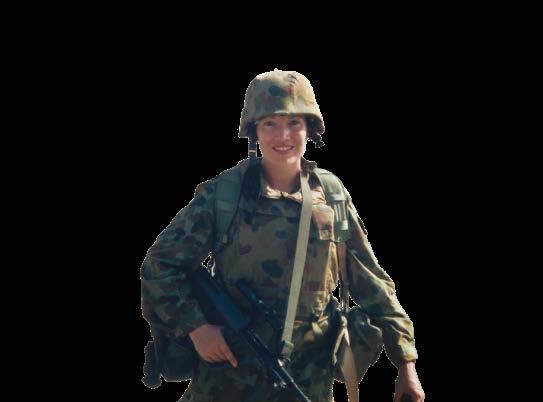
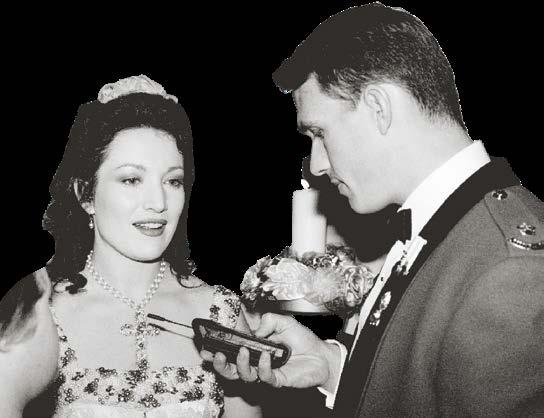
For visitors to the AWM, they are a doorway into the extraordinary world of Australian peacekeeping: a story of resilience, commitment, and humanity. (The AWM’s new galleries will officially open in mid-2026.)

Delta Coy 3 RAR Second Tour
22–26 April 2026, Canberra, ACT
Contact: John Herlihy
0423 626 140 jarcen6879@gmail.com
60th Anniversary – 15th Intake JRTE –HMAS Leeuwin
24–26 April 2026, Tweed Heads, NSW Friday 24th – meet & greet at South Tweed Sports Club. Saturday 25th Anzac Day – muster at Kingscliff Bowls Club for march to Cenotaph (1km) & dinner at 18:00 at South Tweed Sports Club. Sunday 26th – cruise the Tweed River (time to be advised).
Contact: Peter John Franklin
0428 500 629
pjfranklinjp@outlook.com
2 Squadron RAAF Association
25 April 2026, Brisbane, QLD
Serving and former members will march in the Brisbane parade and then assemble at the Pig and Whistle afterwards. Contact me for details. 3 Squadron Association members will be there with us again this year. If you are a former 3 SQN member, contact Bill Farrell at sec3sqnassocqld@gmail.com
Contact: Arthur Rennick
0408 064 042
2sqn.association.raaf@gmail.com
“2 Squadron Association Inc. –RAAF” on Facebook
Air Force Health Services
1–3 May 2026, New Lambton, NSW
To be held at the Wests club, this reunion welcomes all personnel (and their partners) who have served in any area of the Air Force Health Services –no matter your role, rank, or posting. The weekend will include a relaxed meet & greet night, a memorable reunion dinner, and a chance to say farewell over breakfast on Sunday. If you’ve been part of this vital community, we’d love to see you there!
Contact: Christine Rees
0433 616 613
christinerees58@gmail.com
https://www.facebook.com/ groups/338017036289535
No 61 RAAF Pilots Course –60th Reunion
5–6 May 2026, Brisbane, QLD
To be held at the United Services Club, 5 May is for course members and instructors, and 6 May is for anyone who is or was associated with them – a sort of ‘meet the course’.
Contact: John Stone or Paul Lobston (Lobo)
0477 998 003 or 0412 440 972 stone45@gmail.com or paul.lobston@gmail.com
HMAS Anzac – 30 year Anniversary 15–17 May 2026, Perth, WA
Join us for a full weekend celebrating 30 years of service, mateship and memories. All former Ships’ Company and friends of HMAS Anzac are warmly invited. Friday, 15th: meet & greet at ANZAC House, then on to the Grosvenor Hotel. Saturday 16th: formal dinner and celebration (ticketed) at Novotel Perth Langley. Sunday 17th: relaxed Sunday sesh at the Grosvenor Hotel. More
details coming soon. Keep updated on the HMAS Anzac III 1996 – 2024 Facebook page.
Contact: Michael Clark 0409 624 744 mv_clark63@bigpond.com www.facebook.com/ groups/10779866564
HMAS Leeuwin 16th Intake (1966–1967) 19–22 June 2026, Port Macquarie, NSW 60th anniversary reunion.
Contact: Colin Hardie or Ken Griffin
0416 250 242 hardiecolin4@gmail.com or harlandgriffin@hotmail.com
HMAS Hobart 50th Reunion of the World Cruise 1976 3–5 July 2026, Ballina, NSW
The second reunion of around the world voyage is being organised by Kris Skimmings.
Contact: Warren Midgley 0417 265 876 wdmidge702@yahoo.com.au Facebook – "HMAS Hobart round the World Cruise 1976"
National Service 14 Platoon C Company 2 RTB 13 July 2026, Perth, WA
Seeking all remaining members of 3/1966, 14 Platoon, C Coy, 2 RTB (Puckapunyal) for a 60-year reunion to be held at 12:00 hrs at The Shoe Bar (Baby Shoe Room, upstairs), Yagan Square.
Contact: Terry Healy
0405 441 013 terryhealy@iprimus.com.au
50 Years: Walton/Collins 56th Intake
17–19 July 2026, Perth and Fremantle, WA
The reunion is for all personnel who were part of the Walton and Collins intake joining HMAS Leeuwin in July 1976. Four functions are planned over the weekend.
Contact: Peter John Graham 0406 244 625 pjgraham2@bigpond.com ‘56th Intake’ group on Facebook
July 1966 HMAS Nirimba 21st intake 24–26 July 2026, Tweed Heads, NSW
We have 30 MOBI’s (plus partners/wives) who have already registered to attend. If you are from this intake and haven’t registered for this 3-day event at the Twin Towns Services Club, please do so.
Contact: Stephen Dacey
0434 428 030 stephendbbris@gmail.com
B. Company 2 RARNZ 70–71 16–21 August 2026, Maroochydore, QLD
Contact: Michael Gay
0439 031 285 gaymick@bigpond.com.au
B SQN 3 Cav Townsville Members, 1972 to 1981
11–13 September 2026, Townsville, QLD Reunion for members from the return from Vietnam in 1971 until the amalgamation in 1981.
Contact: Brian ‘Casper’ Chapman or Richard ‘Dick’ Pearce 0448 715 441 rrjpearce@hotmail.com
HMAS Leeuwin 1st Intake (1960) 5–9 October 2026, Fremantle, WA Due to the age of us still around, and sadly the loss of a great number of our intake, this could be the last of our official get-togethers. We hope to make this reunion one to remember with as many 1st JR’s and their partners attending as possible. Ian Dunn is busy organising a program and an accommodation venue. Please indicate your interest to attend.
Contact: Don Barker
0437 500 528 evdonb@bigpond.com
32 Platoon Delta Company 1986 October 2026
Just making initial inquiries to see if a reunion for 32 platoon 1986 (enlistment date 12 October) will be held. Any information will be greatly appreciated.
Contact: Jennifer Norris
0431 967 280 jennifer.norris1967@gmail.com
Headquarter & Headquarter Company
1st Australian Logistic Support Group 14–19 October 2026, Albury-Wodonga, VIC
This is for veterans who served in 1 ALSG (headquarter company) and friends. Also, if you belonged to a small unit in Vietnam and haven’t been to an event, we would like you to consider joining us.
Contact: Tony Brown 0428 852 736 tony11raye13@gmail.com
Airman Aircrew Reunion
23–24 October 2026, Coffs Harbour, NSW
RAAF Airman Aircrew and Associates are invited to the C.ex Coffs Club. It’s a great opportunity to catch up with those whom you haven’t seen for many years. Check out the website for more details.
Contact: Allan ‘Al’ Harris
0412 608 817 www.airmanaircrew.com.au
WRAAC SCHOOL 5/76 Recruit Course
50th Reunion Lunch
1 November 2026, Albion, QLD Breakfast Creek Hotel: 11:30 am for a 12:00 pm start. Expressions of interest are sought from those wishing to attend.
Contact: Mrs Marion Bowen (nee Swain) or Mrs Colleen Crabb (nee McNamara) mbow7421@bigpond.net.au or bouncingkoala1@hotmail.com
60th Anniversary HQ1ATF Association
Reunion
16–20 November 2026, Pacific Palms, NSW. To be held at the Tiona Holiday Park.
Contact: John Verhelst jeverhelst@gmail.com www.hq1atf.org
George H G Barratt R562/V39016
George (known as Harry) served as a bugler at Gallipoli and the Somme and then with the militia until he re-enlisted in 1940 as a warrant officer in New Guinea. The family in Melbourne have his bugle and diary, but his service medals have been missing for decades.
Contact: Ken Williams willows97@bigpond.com
Staff Sgt Christopher Gray, Regt No. 143 First World War Victory Medal and British War Medal are missing. The family has his 1914–15 Star and would like to reintroduce it to the missing two.
Contact: Gerry McCormack gandgmcc@bigpond.net.au
Walter Austin Parker VX33706
I’ve recently written a biography about my great-great uncle Walter, who served in the Second World War. He was never married and had no children. I would love to know what happened to his medals and who is currently in possession of them.
Contact: Rachel Weaver
0409 690 237 rachel.denton46@schools.sa.edu.au
T K Downie V509096
Three Second World War medals found.
Contact: Greg McCall 0435 072 927
R F Sweedman, No. 223991
15 years of service medal handed in to the Vietnam Veterans’ Federation of Australia. Contact: Brianna Williamsbrianna@vvfagranville.org https://www.vvfa.org.au
Reginald Joseph Parker
Mr Parker, born on 19 May 1935, was a resident of Orana Nursing Home in Point Clare, NSW, from 2011 until 14 June 2019 when he died. A bag of his belongings was found recently containing 3 medals from the Second World War (so not awarded to Reg as he was only 5 when the war broke out). The medals are believed to be British: 1939–45 Star, Africa Star, France and Germany Star, Pacific Star, War Medal 1939–45, Defence Medal (British); and Australian Service Medal 1939–45 (ribbon only), Australian Commonwealth Military Forces rising sun badge. Would love to return these to family.
Contact: Liz Post 02 4337 5430
These notices have been provided by readers of Vetaffairs. DVA takes no responsibility for the accuracy of the information they contain.
You may also wish to visit the Defence Department Honours and Awards page for information on applying for medals, replacements and relatives’ medals (defence.gov.au/adf-members-families/ honours-awards).
RAN 9 Karat Gold Cygnet Ring
I am trying to locate this ring, which is worth $2,375. It is inscribed with words and numbers, so is easily recognisable. It was lost between Mudgee and Cowra, NSW.
Contact: Stuart Wright, R94360 0447 068 565
HMAS Nirimba
The July 66 intake of HMAS Nirimba is celebrating its 60 years in July 2026. We are still looking for the following from that intake – Denis Ballam, Graham (Boots) Dagg, Chris Ellis, Alan Donovan, Geoffrey Hadley, Enzo Costa, Phil Menere, Keith Knott and Keith Plain. Please make contact if you know of their whereabouts or have any contact details.
Contact: Stephen Dacey 0434 428 030
stephendbbris@gmail.com
Submarines Association of Australia (SAA)
Did you serve beneath the waves? The SAA welcomes all serving and former submariners. We exist to promote the unique camaraderie and fellowship forged in the silent service. With active branches in every state and the ACT, you can reconnect with your buddies from boats close to home. The association is committed to the welfare of our members and has a network of DVA Advocates with submarine experience to assist you. To find your local branch and to join our community, visit the website or email Tony. DOLPHIN 35 – Deep down you know it makes sense!
Contact: Tony Vine, National Secretary
national.saa.secretary@ gmail.com
www.submarinesaustralia. com
Naval Association – Box Hill
The Box Hill Sub-section of the Naval Association meets quarterly at the Box Hill RSL on the 2nd Friday of the month, commencing at 10 am. The remaining dates for 2026 are 8 May, 14 August and 13 November. We invite all current and ex-Navy personnel and families, and those interested in all things Navy, to join us. Lunch at the bistro follows the meeting. Please contact Joy if you wish to attend as bookings are required for lunch.
Contact: Joy
0406 349 712
etri1008@hotmail.com
https://navalassoc. org.au/membership/ naa-membership-types
Fleet Air Arm Association of Australia – WA Division
The Association is seeking new members. If you served in the Royal Australian Navy Fleet Air Arm or the Air Wing of an Allied naval service, we would welcome you to apply. Our association comprises men and women from all branches of the navies’ Fleet Air Arms from the commissioned and noncommissioned ranks. We meet bi-monthly.
Contact: Mick Spahn
jan.spahn25@gmail.com
No One Left Behind by Keith Payne VC
Seeking to buy this out-of-print book.
Contact: Ron
0448 556 204
WO2 Robert ‘Snoopy’ Read
Seeking ‘Snoopy’. Last known posting was as WO2 Tobruk.
Contact: Ben Page
0427 179 945
admin@workingdogcentre. com
www.workingdogcentre.com
Seeking Lt J W Patchot
Lt Patchot was the Commander of 5 Platoon A Company,
1 RTB Kapooka from July to September 1965.
Contact: Phil Evans
philipjevans1@bigpond.com
2nd Advanced Ordnance Dept – Vietnam 1971
I am hoping to reach any servicemen who served at 2AO Depot in Vietnam in 1971. My father, Rodney John Murn, also served there and I would like to reach out.
Contact: Emily Slawson
0405 406 877
emily.slawson@accenture. com
2 Transport Platoon, Vietnam
I am writing my fourth book about the Vietnam conflict and am eager to make contact with any member of 2 Tpt Pl that deployed to Vietnam. Any stories, photos etc. would be most useful.
Contact: Russ Morison
0408 947 935
dabblers3@gmail.com
Army mates 1RTB 32 Pl and Darwin 1AVN
Seeking reunion with old friends
– Marie ‘Ozzy’ Osborn and Rachel. Please reach out.
Contact: Trisha Lee
0412 490 933
trishalee_67@hotmail.com
Victorian residents who served Seeking those who served between 1975 and 1995 (including in peacekeeping operations and the Gulf War) who were born or resided in the following Victorian towns before (not after) their time in the services: Wonga Park, Lilydale, Coldstream, Yering, Gruyere, Wandin, Seville, Silvan, Monbulk, Olinda, Kalorama, Mt Dandenong, Montrose, Kilsyth, Mooroolbark, Mt Evelyn.
Contact: Anthony McAleer OAM 0488 004 122 antmca@bigpond.com
Middle East Veterans 2001–2011
Seeking information/stories/ photos from members of the ADF who wore the Defence Pattern Desert Uniforms (DPDU) overseas. Specifically looking for uniform and load carriage equipment modifications and any unique uniform accoutrements or items for inclusion in a new book on the subject.
Contact: Calum McDonald calum.mcdonald.author@ gmail.com
Steve Douglas Seeking to contact Steve, who served with me in 6RAR from 1983 to 1986.
Contact: Tony Broadbent 0439 914 174
Ian Allen Taylor #212567
Seeking Ian, who may be residing in the Gosford (NSW) area. A previous address was Redbank Plains Rd, Goodna, QLD. Ian is a long-time family friend of my father, WOII Pat Wittig (service No. 35109) and is also godfather to my eldest sister. He served alongside my father at Wacol and Enoggera, and possibly Nui Dat and Canungra, and may have been involved with Nui Dat House on the Gold Coast.
Contact: Pat Wittig 0411 339 966 rqms@hotmail.com.au
Noreen Margaret Everett WRAAC
Seeking information regarding my aunt who was in the Women’s Royal Australian Army Corps. She was serving in 1952 when she was 22, but could have joined earlier and resigned close to her 50s. Perhaps she was a drill officer/sergeant.
A couple of photos show Noreen with my mum Nance (her twin sister) and 3 other Army women at Romano’s; another from 1952 is with Nance and 15 others. Noreen did not marry or have children. She passed away in 2018, and my mum and their parents have also passed away.
Contact: Kay Berriman 0417 455 676 theberrimans@bigpond.com
Found: Small family Bible of First World War soldier Peut Soldier Peut enlisted in Queensland in 1915 and the Bible was sent to him by his father to the 26th Battalion in Egypt. More details of the soldier’s service have been written inside the main cover. Hoping to return the Bible to family.
Contact: Bill Gadd billgadd@westnet.com.au
RAAF friends from 1983
Seeking to catch up with Sharon Wilton (Orderly Room Clerk, Fairbairn) and Kevin Horn (Darwin).
Contact: Steve Napper 0458 438 149
Seeking contact with Mrs Valerie (Val) Holt
Former wife of SQNLDR John Holt (deceased in 1977 in F-111 incident at Evans Head Bombing Range). Val and John were my long-term friends since 1963. I last met with Val and her then doctor husband at a reunion more than 10 years ago but have lost contact. Also requesting contact with wife of aircrew member lost with John in 1977.
Contact: GPCAPT John Ward (Rtd) 0497 622 676 jar.ward@bigpond.com
RAAF Recruit Training Course
Looking to contact any members of the RAAF Recruit Training Course no 565 at Forest Hill, Wagga, NSW, May/June 1961.
Contact: Charlie Richards
0403 235 701 joyandcharlie2@gmail.com
Shape the future of TPI NSW — Join us in Orange!
TPI Veterans NSW is coming to Orange for 2 special information sessions as we launch our refreshed constitution and new
membership model. Join us at the Orange Ex Services Club on 5 May (7:30 pm) or 6 May (10 am) for social drinks and a short, engaging presentation about the future of your local veteran community. Hear directly from Scott Jeffrey (TPI Federation President), JennyJane Carpenter (CEO), Kevin Kelly (NSW Club President) and a DVA representative who will explain the upcoming VETS Act changes commencing 1 July 2026. RSVP to:
Contact: Vanessa Campbell 02 9235 1466 wellbeing@tpinsw.org.au
Join the YCW Veterans Support Group
Any returned veterans who were members of the Young Christian Workers (YCW) back in the 1960s and 1970s, are invited to join the Veterans Support Group. The group’s objective is to help revive the YCW Camp at Phillip Island in conjunction with Vasey RSL Care. We are keen to hear from any member who had holidayed at the camp or is interested in helping get it back to its former glory so that it can be used for returned veterans and families for short stays.
Contact: John F Sheehan, Secretary, Veterans Support Group 0409 573 682 sheehanjf46@gmail.com
Calling ESOs – Contribute to the SOS Flannel Card app
The Flannel Card app offers immediate, practical and emotional support to survivors in the critical weeks and months after a loss to suicide. The app brings together trusted services, clear pathways to support and a sense that you are not alone. We are inviting ex-service organisations and aligned providers to nominate or list bereavement and postvention services that support survivors of veteran suicide, including: grief and bereavement counselling; trauma-informed therapy; peer support groups; practical and wrap-around supports; services for children and young people; and support for witnesses of suicide.
Contact: Elena Rowland (The Flannel Project)
0438 984 154
el@theflannelproject.com
https://sos-flannel-card.glide. page
Vetaffairs is published 3 times a year. Although we sometimes have to reduce the length of articles to make them fit, the full versions are in the digital editions on our website: www.dva.gov.au/vetaffairs
If you no longer wish to receive the printed edition of Vetaffairs , please email us at vetaffairs@dva.gov.au with your name and address and either your DVA client number or date of birth. If you’d prefer to receive the digital version via email instead, please say so when you email us.
If you would like to subscribe to our e-newsletter, DVA e-news , please go to dva.gov.au/latest-news DVA e-news is published every month.