The friendly publication where friendly people advertise!
Please call Rhett Palmer at 772.473.7777 or email us at advertising@verosvoice.com
Space deadline is the 1st of each month. Camera Ready deadline is the 10th.
facebook.com/VerosVoiceMag
It’s not just about buying a jet— it’s about buying it right.
AMERICA’S LAST FRONTIER Vero Beach Pioneer Henry T. Gifford
“Down the intriguing Indian River came restless souls seeking new adventure and opportunity in a section of the United States that was as alluring as it was repelling,” noted Anna Pearl Newman in her Stories of Early Life Along the Beautiful Indian River.
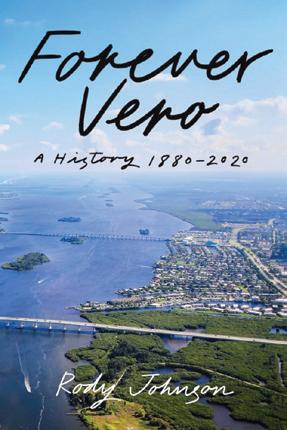
Excerpts from Forever Vero: 1880-2020
BOOK BY RODY JOHNSON
We continue on our journey through Vero’s past with excerpts from Rody Johnson’s book.
The family most widely recognized as the first permanent settler family in what became Vero Beach was the Henry T. Gifford family. He arrived in 1887 and soon brought the rest of his family from Vermont to establish a 160acre homestead near present day U.S. 1 and 20th Street. It’s hard today to grasp the hardships they met and overcame.
— Barbara
One of those restless souls was Henry T. Gifford, who, with his 20-year-old daughter Nettie Mae, departed Vermont for Florida in 1887. They initially left the rest of the family behind in their hometown of Royalton. Henry was a stern but handsome-looking fellow, partially bald with a full beard, who was very active in his community. Back in Royalton, he had a seat on the city council and served as sheriff. The job had its stresses. Local thugs had threatened his family,
on the Indian River on Orchid Island and John’s Island. Workers constructing Flagler’s railroad lived in what would be named Gifford, and Scandinavian families immigrated to Oslo just south of Vero. Fellsmere, just to the west of Sebastian, would be developed as the area’s first town several years later, but would be severely damaged by floods.
Kit and Sis Johnson may have thought their 1936 West Virginia trip to Vero Beach was strenuous, but it hardly compared to Henry Gifford’s and his daughter’s trip to Florida. They went by boat from New York to Jacksonville, then up the St. Johns River to Sanford, transferring to a rickety train to Titusville, and finally boarded a shallow-draft steamboat that ferried them down the Indian River to Fort Pierce. Nettie Mae took a job there at a one-room schoolhouse, teaching the children of three families who lived in the area. Henry, wanting to explore deeper, went farther down to Palm Beach and Miami. …
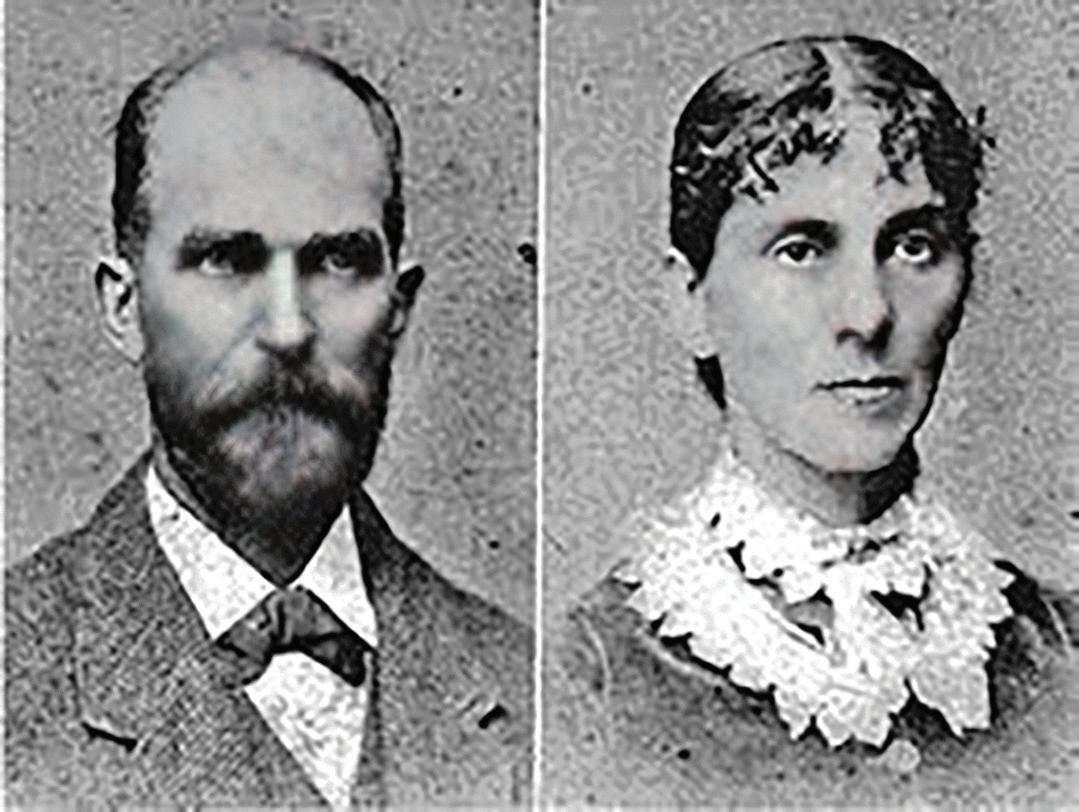
Henry T. Gifford and his wife Sarah. PRESS JOURNAL ARCHIVES
and when the doctor told him his health would benefit immensely from a move to a warmer climate, the idea of going south seemed like an opportune move for the entire family. …
Several other pioneer individuals and families besides the Giffords arrived at roughly the same time along a 200-mile stretch of the Indian River in the 1880s that eventually would be Indian River County. To the north of the Giffords’ homestead, there were small settlements on the mainland of Sebastian, at Quay, (later Winter Beach), and
Apparently discouraged by his visits, Henry decided to return to Vermont. On his return, he stopped in Fort Pierce where a colleague took him for a week’s hunting in the vicinity of where Vero would eventually be. Henry liked the area and decided to stay. What was the attraction? It was nothing but tropical Florida jungle without neighbors nearby. It was also on a stretch of high ground a mile inland from the Indian River by which he could receive supplies. The railroad would not come through for another six years.
Henry paid $50 to homestead 160 acres. … The Gifford homestead sat on a sand ridge that runs down the coast, though 100,000 years ago, that ridge was all oceanfront. It was down this ridge that Flagler laid the tracks for his Florida East Coast Railroad. Did Henry Gifford even have an inkling that Henry Flagler was planning a railroad? The Gifford property lay between the soon-to-be railroad tracks on the west and the Indian River to the east.
Henry cleared a few acres and built a shack from the trunks of cabbage palms with palmettos for a roof near present-day 20th Street and U.S. 1. Through the dense jungle foliage, he cut a trail to the river.
Leaving Nettie Mae in Fort Pierce to teach, Henry headed back to Vermont to get the rest of his family: his wife Sarah, their oldest daughter Cora and her family, along with the two younger children, Charles, nine, and Sarah, three. The clan traveled south by boat, bringing along their hired man, Britt, to help. A barge was used to haul the horses, a wagon, tools, household goods, and a two-month supply of groceries. They landed on November 21, 1888, at the place where Henry had cut his road to the river, unloaded the gear, and reassembled the wagon.
His son Charles, given the name Friend Charles, would affectionately be called Uncle Charlie in his later years around Vero. He would write his family’s story of settling Vero. In it, he said, “Nettie Mae was here from Fort Pierce to welcome us. She put up a little white flag on the palmetto shack which said, “Love, Welcome Home.”
Mosquitoes were also there to greet them in droves. They had a surface well for water and cooked on an open fire, using the smoke to keep the mosquitoes away. They slept under netting on palm frond mattresses. For food, they planted crops, and for meat, they
hunted deer, caught fish, or collected shellfish. At times, they camped on the beach and caught sea turtles for soup or collected their eggs. Flour, sugar, and other supplies were obtained from floating stores, which were paddlewheel trade boats that cruised down the river periodically from Titusville, 60 miles to the north.
“This was our introduction to Florida pioneering,” said Charles. Unfortunately, the living conditions were too rough for his sister Cora’s family, and within a year, they decided to return north.
In coming to Florida, known as America’s Last Frontier, the Giffords were living much like the pioneers did over 100 years earlier as they spread across the United States in covered wagons.
In comparison, at the time, my grandparents were living in Charleston, West Virginia, in relatively luxurious circumstances. Their two-story homes were being upgraded to feature the latest
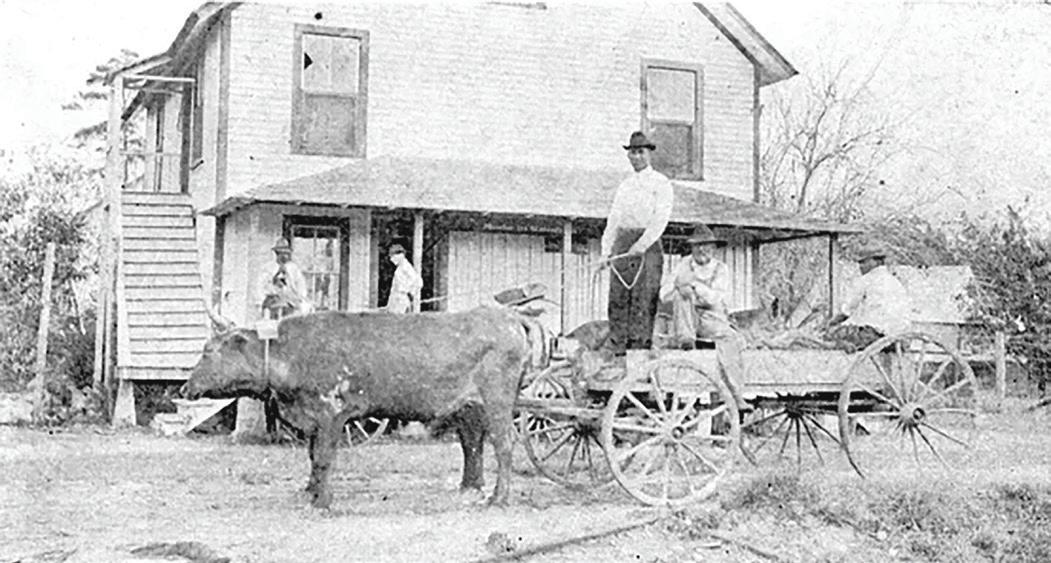
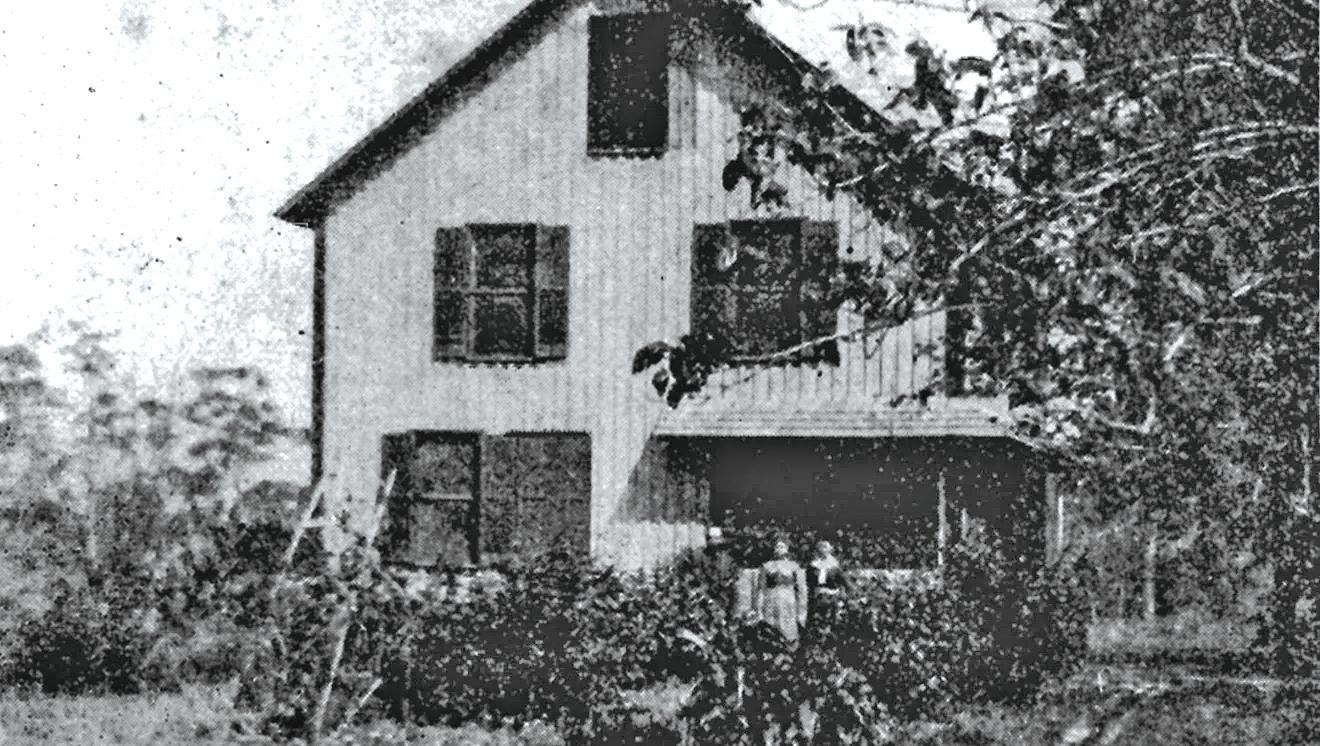
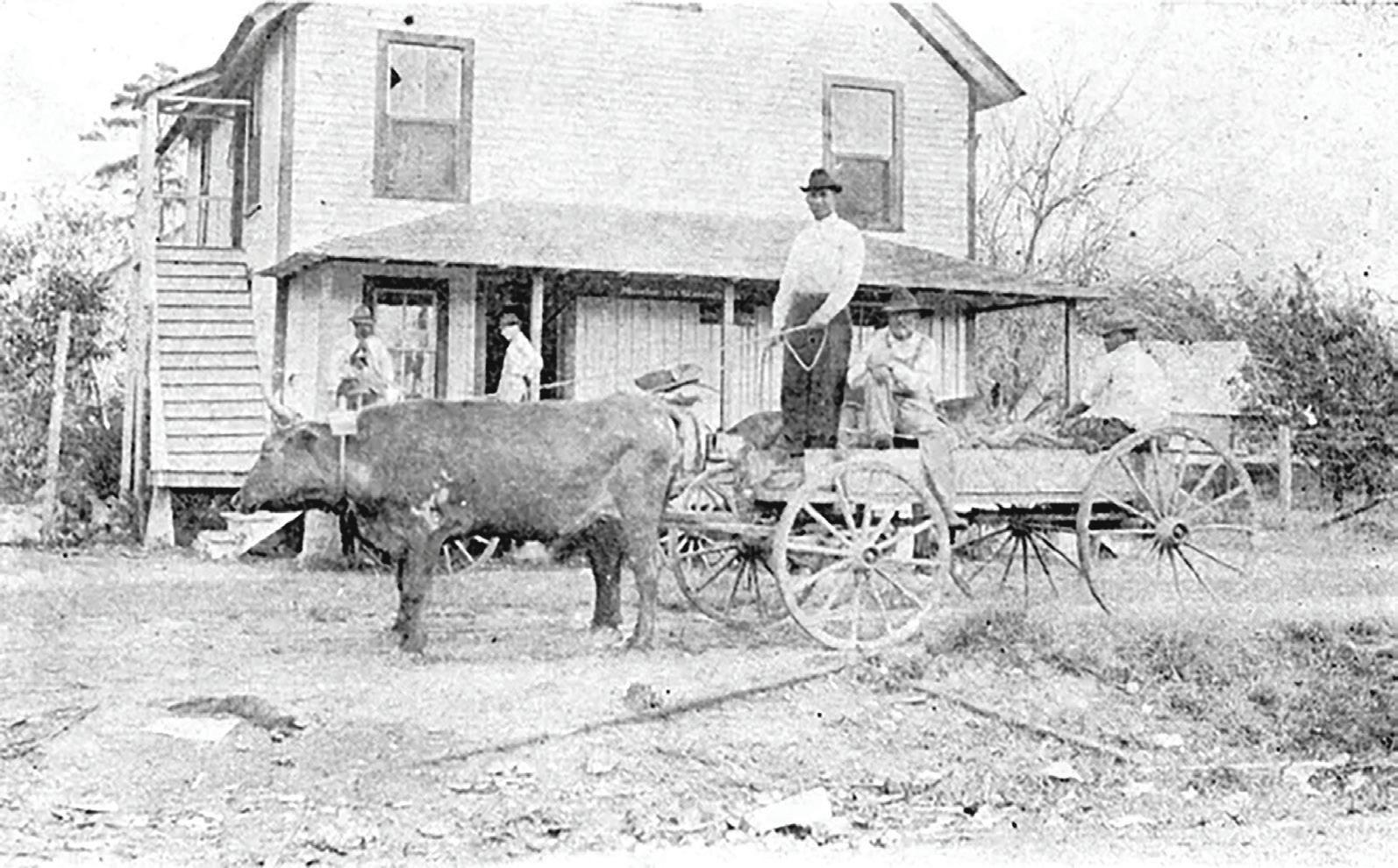
This store and post office was built in 1898 by the Henry Gifford family directly in front of their home in Vero Beach. This structure faced on what would become Osceola Boulevard or today's State Road 60. In the wagon are Hank Huey and Cordwood Smith. PRESS JOURNAL ARCHIVES
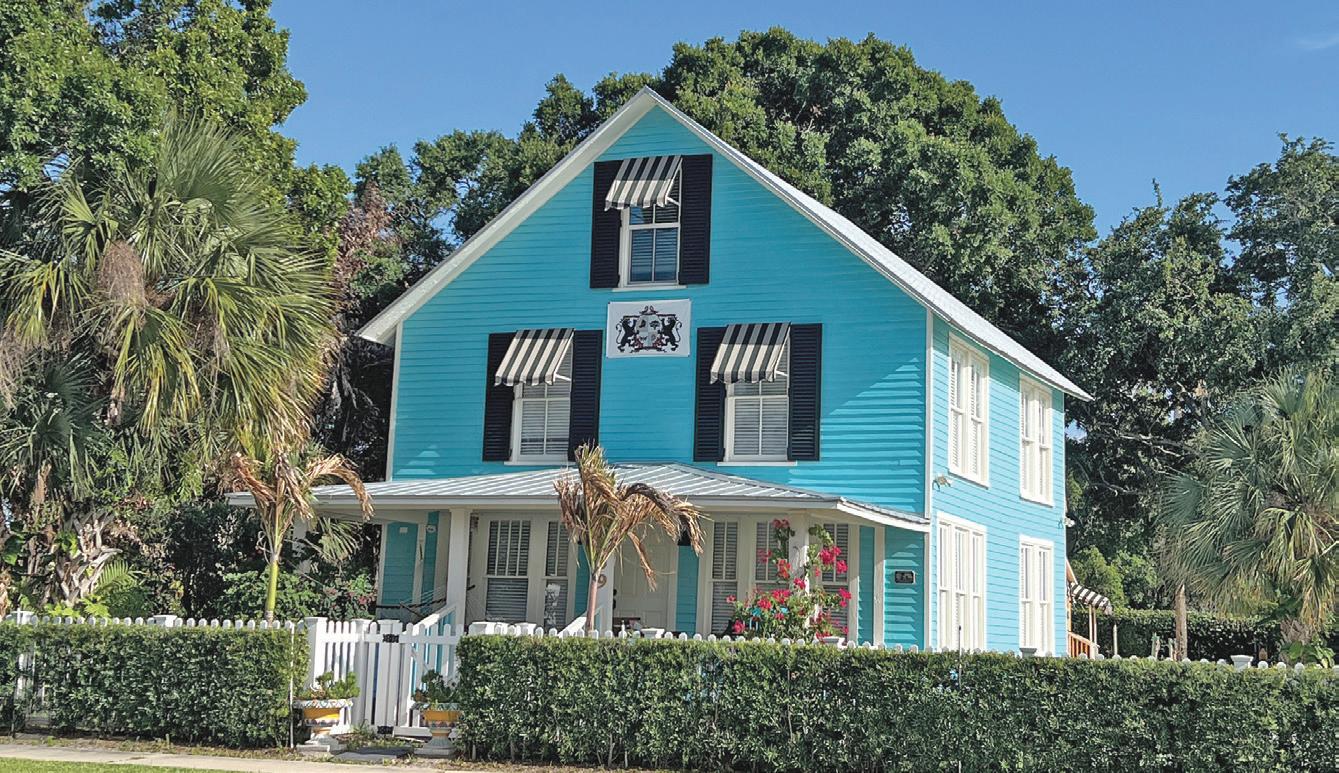
The Gifford house today, completely renovated and lovingly restored by Hala Madi-Shalhoub
The Gifford house was the first wood-frame two-story house in the area and still exists over a century later. It was also the site of Vero’s first post office. Their son Charles lived in the house until his death in 1955.
modern conveniences and lifestyle improvements: indoor plumbing, running water, electric lights, bathrooms, iceboxes, and stoves instead of fireplaces. Charleston had modern multi-story buildings, electric streetcars, grocery stores, and doctors. The “horseless carriage” was on the horizon. My grandparents could not have conceived of what the Giffords were experiencing. My ancestors had been pioneers in Western Virginia in the 1700s where they worried about Indians, not alligators, snakes, and mosquitoes. …
But the Giffords were undeterred and determined. They soon built a wood-frame two-story house with an open porch across the front and outside stairs connecting the second story. Timbers for the construction were ferried down the river and their hired man, Britt, was on hand to assist. The Gifford house was the first of its kind in the area and still exists over a century later, close to its original location. Charles lived in that 1889 house until his death in 1955.
“Gifford’s workload was amazing for a man who had come to Florida for his health. ”
VERO, NO MORE THAN FOUR LETTERS
For the Giffords to get their mail, it took a day’s sailing to the Narrows Post Office at Gem Island on the north end of John’s Island. That post office was established in 1884 by a seaman who returned to the spot after being stationed there during the Civil War, serving on a Union gunship, the Gem of the Sea. The Narrows was a 10-mile stretch of the Indian River with islands starting at Pelican Island and extending south to Prang Island, beyond the present 17th Street Bridge. The islands offered fertile soil and closer access to the mainland than the rest of the wide Indian River, and with ocean waters warmed by temperate currents, farming on the islands was less likely to be affected by sharp cold spells.
Even before settlers began to build along the Narrows, the federal government built a series of Houses of Refuge along the southeast Florida coast to assist shipwrecked sailors. The Bethel Creek House was completed on the beach across the river from where Vero would eventually be. The British ship Breconshire ran aground and sunk just to the south in 1894, though the crew survived.
Since childhood, I’ve enjoyed walking along the beach and seeing its wrecked boiler protruding above the surface until it was finally submerged by a storm in 2017. A flagpole with an American flag has been placed there more recently. (A relatively new Vero tradition, “Swim to the wreck” is for a multitude of kayakers, paddle boarders, and swimmers to go out to the site one-quarter mile off the beach on the morning of the Fourth of July.)
By 1891, several families had arrived in the vicinity. This warranted the need for a post office and a small store to be operated out of the Gifford house. The store was a modest operation offering a few tools, pots and pans, and clothing. Food was limited to lard, grits, beans, rice, yams, flour, salt, and pepper. Smoked meats, probably venison and fish, was occasionally available.
Five people petitioned the government for the post office, and Henry Gifford became the Postmaster. His wife Sarah selected the name “Vero,” having been told by the postal authorities at the time that it could be no more than four letters long. Sarah chose “Vero” based on the Latin word veritas, meaning truth. Charles described his mother as “quite a student. She liked poetry, wrote some, and sketched some, too.” Unfortunately, she had a stroke the year after she arrived and was an invalid until she died in 1894 at age 52.
$15 PER ACRE
Henry Gifford found work to supplement his farm income. He was part of a team that built a road from Sebastian to Fort Pierce, clearing a
20-mile, 10-foot-wide path through the palmettos and cabbage palms. The men were paid $22.50 ($660 in today’s dollars) a mile, a mule, and it was back-breaking work. This would become the Old Dixie Highway.
He also had a job with the government, filling the kerosene beacon lights that marked the channel to help the boats navigate the river through the shoals and sandbars at night. These steamboats drew only three feet of water as they navigated the Indian River. Gifford’s workload was amazing for a man who had come to Florida for his health.
He later sold off some of his land, even giving away an acre if a person would build a place to live on it, but sales were slow. His first buyer was Otto A. Roach, who purchased an acre for $15.
With the arrival of Henry Ford’s Model T cars in the 1910s, Roach saw the opportunity and opened an automobile garage in Vero. He would go on to serve on Vero’s first city council. Roach’s son, Ottie, would be a lifelong Vero resident and a fishing friend of my father’s. …
Henry Gifford died … 18 years after coming to Vero. “Father just dropped dead while talking to friends,” Charles wrote. “His heart just gave out. He was a hard-working man, did not drink and paid his bills even though it might take him a while.”
(My family became friends with the Giffords. Horace Gifford would become my father’s partner in a sporting goods venture in the 1940s, and his son, Uncle Charlie’s grandson Charlie and I hunted together as teenagers.)
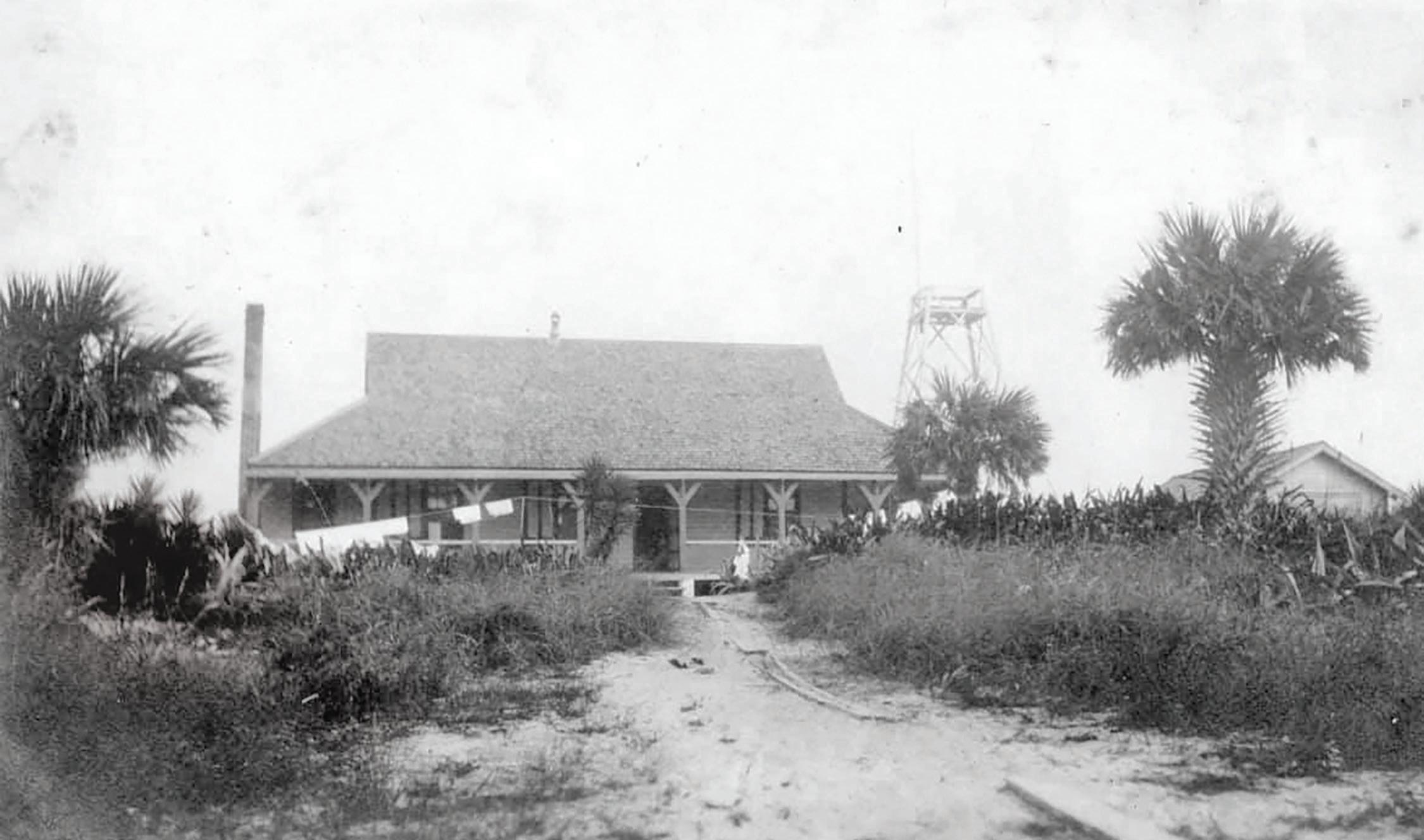
Bethel Creek House of Refuge, built in 1876, was the first of ten houses of refuge, providing a safe haven for those shipwrecked along the coast. The Gilbert Bar House of Refuge in Stuart is the only one still standing and operates as a museum.
Manatee, Memories, and a Near Miss
BY DOOLIN DALTON
It’s not quite summer yet, but step outside for about thirty seconds and your shirt will tell you otherwise.
With temperatures already creeping into that familiar Florida intensity, Charise and I decided it was time to cash in on one of the perks of living here: easy access to incredible day trips. So, before the sun had a chance to really start showing off, we packed the car early on a Saturday morning and made the easy two-hour drive from Vero up to Blue Spring State Park.
If you’ve never been, Blue Spring is one of Florida’s most beloved natural springs, and for good reason. The park is centered around a first-magnitude spring that pumps out an astonishing 100 million gallons of water per day, feeding into the St. Johns River. The water stays a constant 72 degrees year-round, which makes it a refreshing escape in the summer and interestingly, a winter refuge for manatees seeking warmer waters. While peak manatee season had already passed, we were told a few stragglers were still hanging around.
“[We] launch into the darker waters of the St. Johns River … yes… this is where the alligators like to hang out.”
Deciding I had used up my daily allotment of bravery, I retreated back to the spring side of the park where the only things sharing the water with me were fish and my own wounded pride. I grabbed a snorkel and spent some time just taking in the clarity and calm of the spring, which, after the previous adventure, felt downright luxurious.
And then, just as we were getting ready to call it a day, we got one more unforgettable moment.
The main swimming area is exactly what you picture when you think “Florida spring.” The water is impossibly clear, glowing in shades of blue that almost don’t look real, and teeming with fish that glide right alongside you. It’s the kind of place where you can float for hours without realizing how much time has passed.
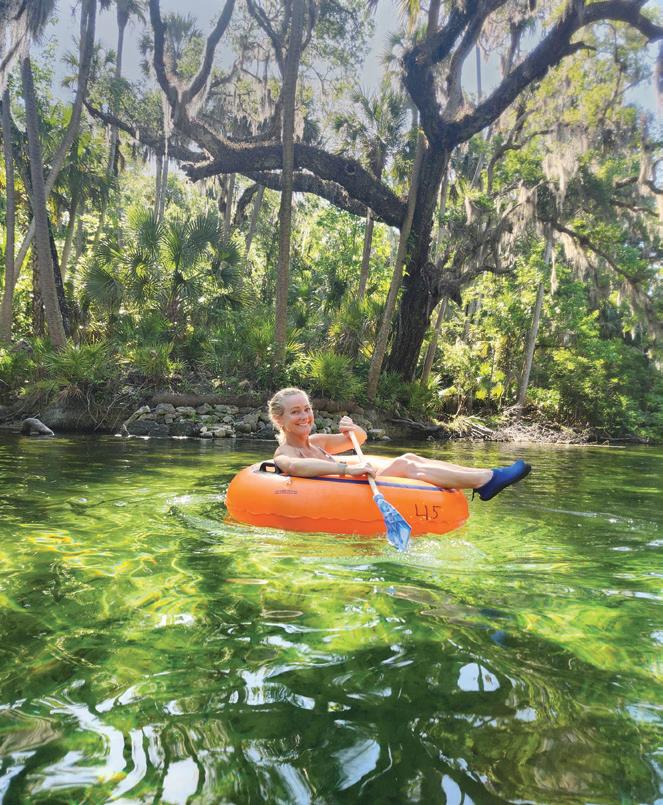
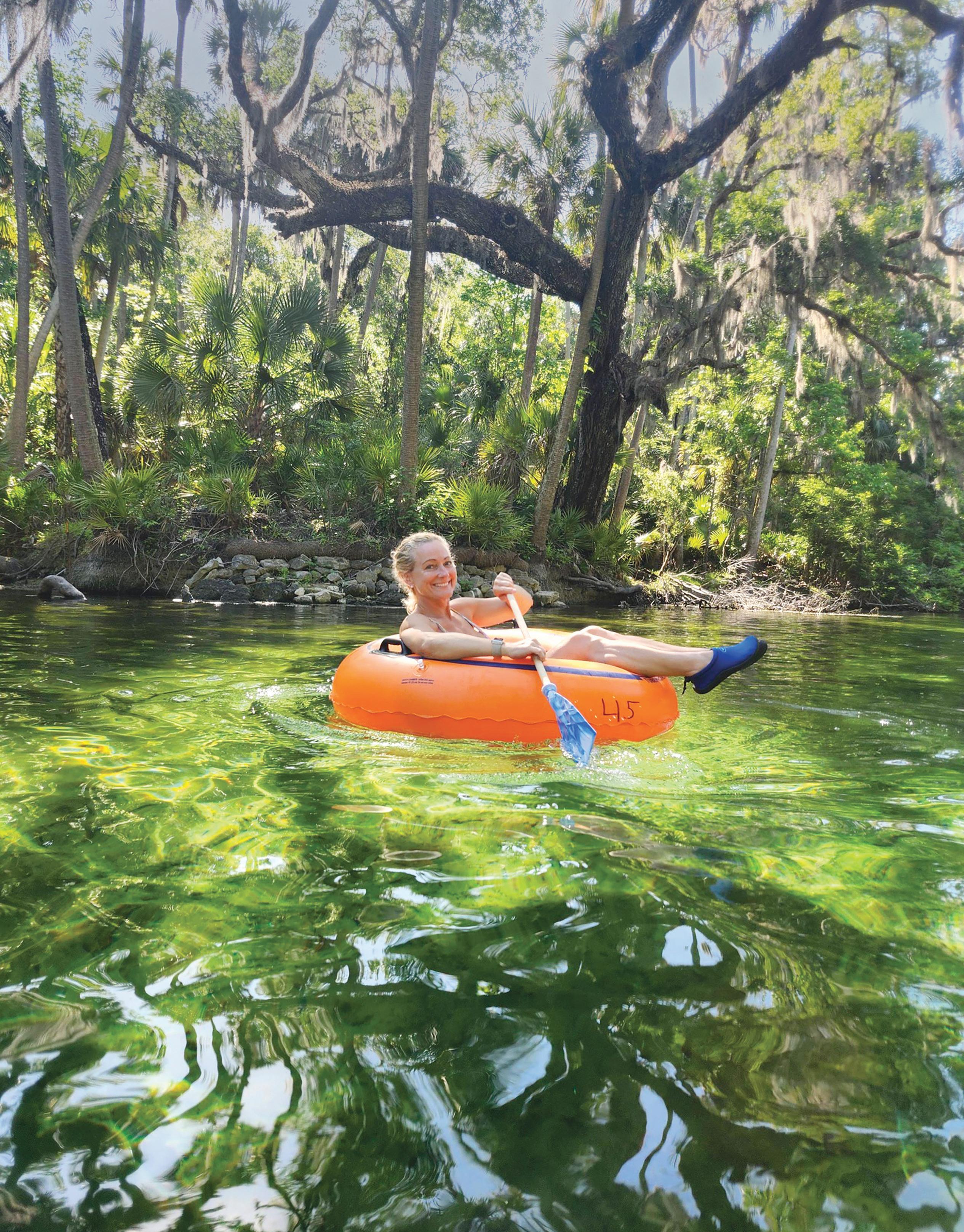
We rented tubes for a bit and just let ourselves drift, fully leaning into the “do absolutely nothing” portion of the day.
At one point, we swam over to the “Blue Boil,” the source of the spring itself. It’s a surreal spot where the sand appears to bubble as water surges up from underground, giving you a front-row seat to the sheer force of nature pushing all that crystal-clear water to the surface.
After working up an appetite, we dried off and dug into a packed picnic lunch under the shade of the park’s towering trees. It was a simple, but perfect lunch.
Then came the part of the day that, in hindsight, I should have thought through a little more carefully. We made our way to the opposite side of the park, where paddleboards and kayaks launch into the darker, more tanninstained waters of the St. Johns River. This side is a completely different vibe. It’s less “tropical paradise,” more “you are definitely in Florida
now.” The water here is murkier, the vegetation thicker, and yes … this is where the alligators like to hang out.
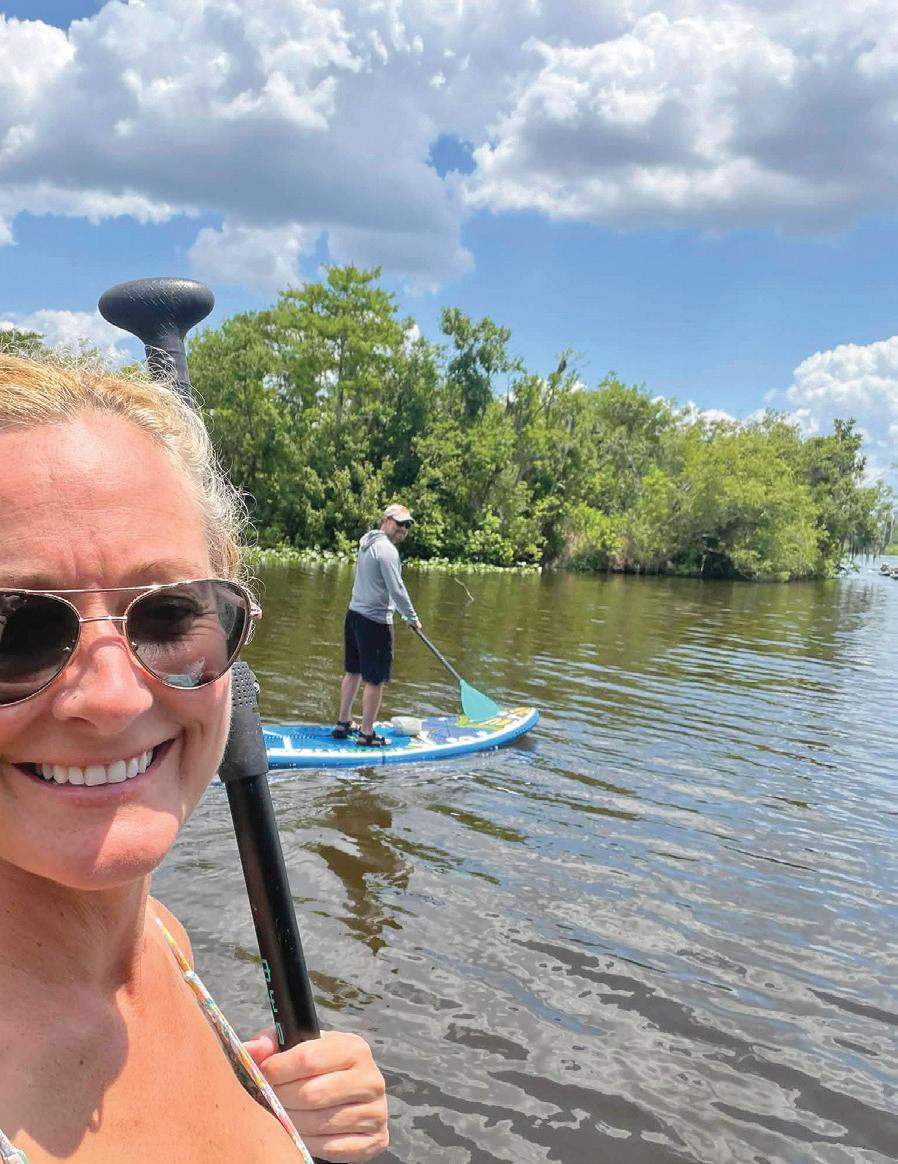
Now, I’ve been paddleboarding for years. Paddleboarding requires balance and can be difficult to learn at first. I’ve handled wakes, wind, and the occasional overconfident turn without issue. But apparently, all it takes to completely undo that track record is one simple phrase: “Hey, look … a gator!” Charise said. Quickly turning my head was all it took.
I’d like to say I fell gracefully, but that would be a lie. What followed can only be described as a full-body panic scramble back onto the board. In that moment, there have only ever been two people in history capable of walking on water: Christ himself… and me, for about three seconds, powered entirely by adrenaline and poor decision-making.
As I pulled myself back up, I realized the situation had escalated. The splash had attracted attention. Not one, but three additional gators had surfaced nearby, apparently curious about the commotion. Let this serve as your official travel tip: do not do what I did.
A park ranger paddled by and let us know to keep our distance: a manatee was making its way through the spring. Sure enough, moments later, one of the largest manatees I’ve ever seen glided into view. I slipped underwater and watched from a respectful distance as this massive, gentle creature moved effortlessly through the clear water. It was quiet, peaceful, and honestly a little awe-inspiring. Living in Florida all my life, I’ve seen a lot of manatee, but never this large and this up close.
On the way home, we made a stop in DeLand, wandering through its charming downtown filled with local shops and restaurants. It was the perfect way to wind down after a day that had a little bit of everything. Relaxation, adventure, and just enough chaos to make it memorable.
All in all, it’s hard to beat a day like this. Blue Spring State Park offers a near-perfect escape when you want to get out of town without going too far. Just remember: float the spring, pack a lunch, enjoy the manatees … and maybe go with a guided tour if you want to see the gators up close. Seriously. Learn from me.
Facing Page: Charise tubing at Blue Spring State Park
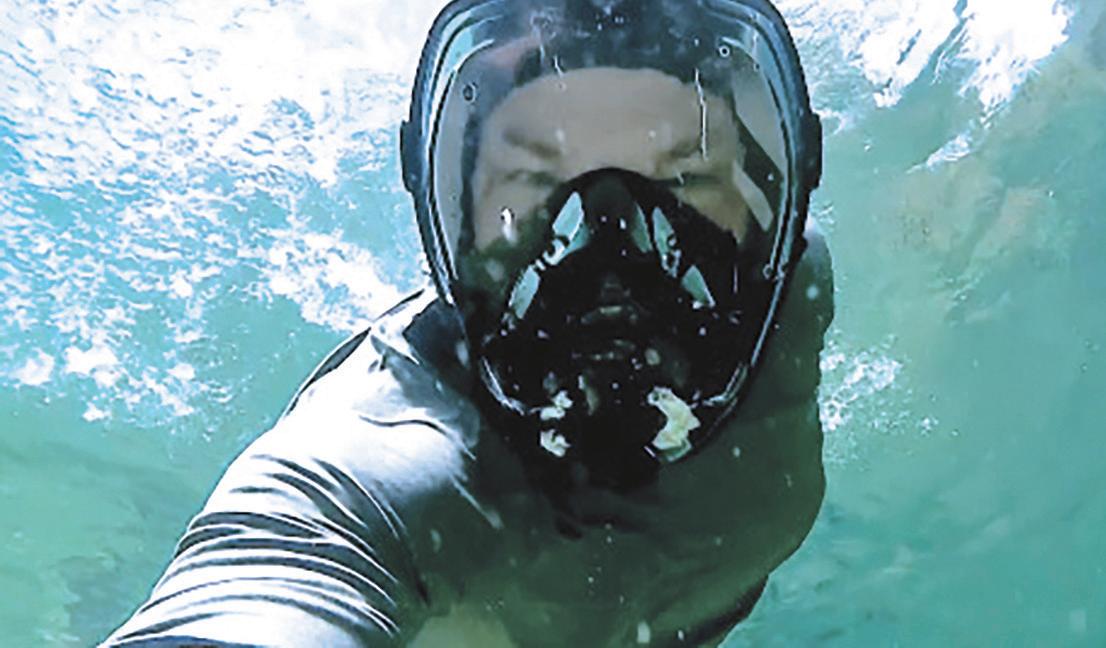
Snorkling near the Blue Boil, the source of the spring.
Paddleboarding the St. Johns River moments before disaster struck
What “Wealth Management” Really Means After You Stop Working
BY DANNY
During your working years, wealth is often measured by growth.
You save consistently, contribute to retirement accounts, and track balances with the goal of building as much as possible over time. But once paychecks stop, the definition of wealth management begins to change.
In retirement, the focus shifts from accumulation to sustainability. Managing wealth is no longer just about how much you earn on paper; it’s about how your resources support your lifestyle, your priorities, and your peace of mind.
THE ACCUMULATION YEARS:
BUILDING THE NEST EGG
Before retirement, most financial decisions revolve around growth. Contributions are steady, time is on your side, and market ups and downs tend to matter less because you’re still adding to your accounts.
During this phase, Financial Planning often centers on savings rates, investment selection, and long-term goals. Risk is usually approached differently, because the ability to recover from market swings is supported by ongoing income and time.
This accumulation mindset works well—until the moment income shifts from earned wages to personal savings.
RETIREMENT CHANGES THE GOAL
Once you retire, your portfolio becomes a source of income rather than just a long-term asset. Withdrawals replace contributions, and the timing of those withdrawals matters far more than it did before.
This is where Wealth Management takes on a new role. The goal is no longer to maximize
growth, but to manage resources in a way that supports consistent income, manages risk, and adapts to life changes over time.
Market volatility, inflation, healthcare costs, and taxes all play a bigger role once income depends on your assets. Managing wealth in retirement means balancing these factors while maintaining flexibility.
INCOME BECOMES THE PRIORITY
One of the biggest shifts retirees experience is the need for dependable income. Rather than watching account balances fluctuate, retirees often want clarity around how much they can reasonably spend and where that income will come from.
Effective Financial Planning helps coordinate income sources—such as Social Security, pensions, investment withdrawals, and other assets— into a structured approach. This coordination can help reduce uncertainty and provide a clearer picture of how different decisions interact.
RISK LOOKS DIFFERENT AFTER RETIREMENT
Risk during working years often means shortterm market losses. In retirement, risk can also include running out of money, taking withdrawals during down markets, or creating tax inefficiencies. Thoughtful Wealth Management considers how investments are positioned for income needs, not just growth potential. It also looks at how risk is distributed across accounts and how adjustments may be needed over time.
MANAGING WEALTH IS AN ONGOING PROCESS
Retirement isn’t a single event—it’s a long phase of life that evolves. Spending needs change,
tax rules shift, and personal goals may look different five or ten years into retirement than they did at the start.
That’s why Financial Planning and Wealth Management in retirement are not one-time exercises. They are ongoing processes designed to adapt as circumstances change.
Understanding this shift—from building wealth to managing it for income—can help retirees approach retirement with more clarity and fewer surprises. Wealth management after you stop working isn’t about doing more; it’s about doing things differently.
BRINGING WEALTH MANAGEMENT INTO FOCUS
Understanding how wealth management changes after retirement can help bring clarity to decisions that impact income, taxes, and long-term confidence. For many retirees, it’s helpful to review these pieces together rather than trying to manage them separately.
At East Coast Tax and Financial, we help individuals and couples look at their full financial picture—connecting wealth management and financial planning in a way that reflects their retirement goals and evolving needs.
If you’re navigating the shift from accumulation to income, a conversation can help you better understand how your resources are positioned today and how they may support you moving forward.
To learn more or to schedule a conversation, contact East Coast Tax and Financial to discuss your retirement planning and wealth management approach.
DANNY HOWES, EA, RFC EAST COAST TAX AND FINANCIAL
HOWES, EA, RFC
The Story of Everything
Where did we come from, and why are we here? Why does the universe exist? Is life an accident? Why are the laws of physics so precise? Do modern scientific discoveries point to an Intelligent Designer? And if they do, should we be paying more attention? This film pays attention, without being preachy or coming to absolute biblical conclusions.
The Story of Everything documentary is based on Stephen Meyer’s book Return of the God Hypothesis and released for a short time in theaters on April 30, 2026.
For centuries, we’ve been left with questions and arguments, not easily answered. Or as narrator, Stephen C. Meyer, suggests: two stories— two rival tellings of everything.
The film does not rush to answer. It allows the questions to accumulate, to deepen, to take on weight as the film progresses. It’s like a science documentary about the universe, space, and maybe some updated discoveries about how life began, but it’s also much more philosophical and spiritual than that.
The Story of Everything is ambitious to tackle these huge questions—questions we’ve all wondered about. The documentary interviews scientists, mathematicians, philosophers, and authors, including people connected with intelligent design arguments. Some of the explanations about cosmology and fine-tuning are genuinely fascinating, even if pretty deep.
Visually, the movie is beautiful. There are sweeping shots of galaxies, stars, microscopic cells, DNA strands, and nature scenes that honestly made the theater feel immersive. The soundtrack also helped a lot, adding to the sense of wonder.
I think one of the best things is that the movie simply presents scientific mysteries and lets you sit with the awe of it all. Those moments are compelling no matter what your beliefs are. There’s one part that dis-
cusses the complexity of DNA and cellular information that was especially interesting because it made even ordinary biology feel incredible.
As the film explores questions, it does seem to build a case for a creator. Some viewers will find that inspiring, while others may feel like it had its conclusion already decided. Some people may love its thoughtful approach to faith and science, while others may want a more neutral science examination. But when the facts they present start adding up, how can they be neutral and still be honest?
Personally, I appreciated that the movie never turns into a heavy sermon or criticizes people who disagree. It stays respectful in tone and presents its arguments seriously and lets experts speak at length. It’s very thought-provoking.
Perhaps the pacing is the movie’s biggest weakness. There is a huge amount of information, and some stretches feel like sitting through a college lecture. A few explanations about physics and cosmology started to blend together for me. Younger viewers may struggle to follow everything.
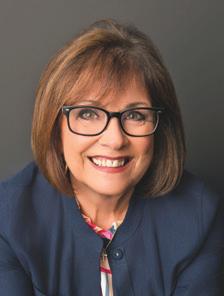
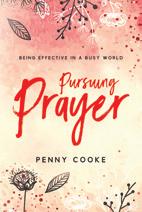
Penny Cooke is an award-winning author of Pursuing Prayer: Being Effective in a Busy World, The Wake-up Prayer children’s book, and her latest, Pursuing Prayer for America. She co-hosts the Seeds of Hope podcast with Del Bates on Wednesdays on Vero’s Voice Facebook page. Learn more at pennycookeauthor.com
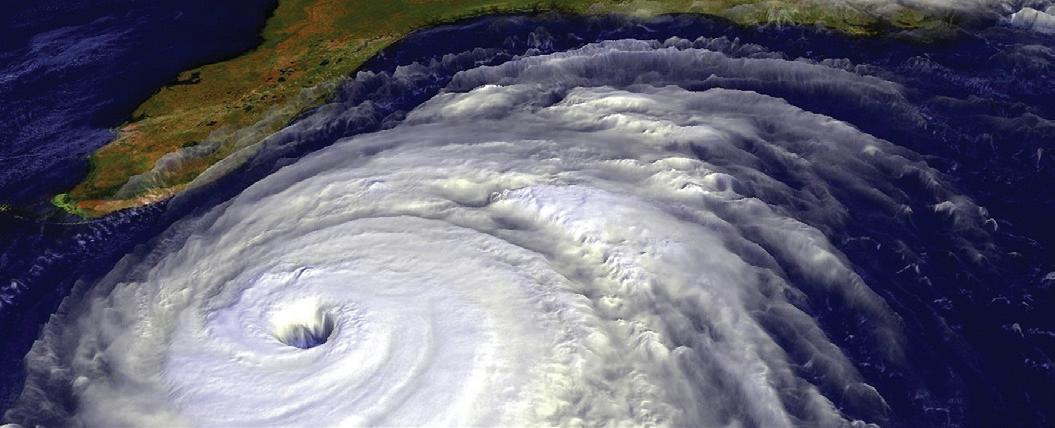
What should you do NOW?
q Trim your trees and remove debris.
q Register for a special needs or pet friendly shelter, if applicable.
What should you do if there is an imminent threat?
q Secure your home.
q Fill your car’s gas tank.
q Evacuate if told to do so.
q Stay tuned to local media:
q Inventory and update your disaster supply kit.
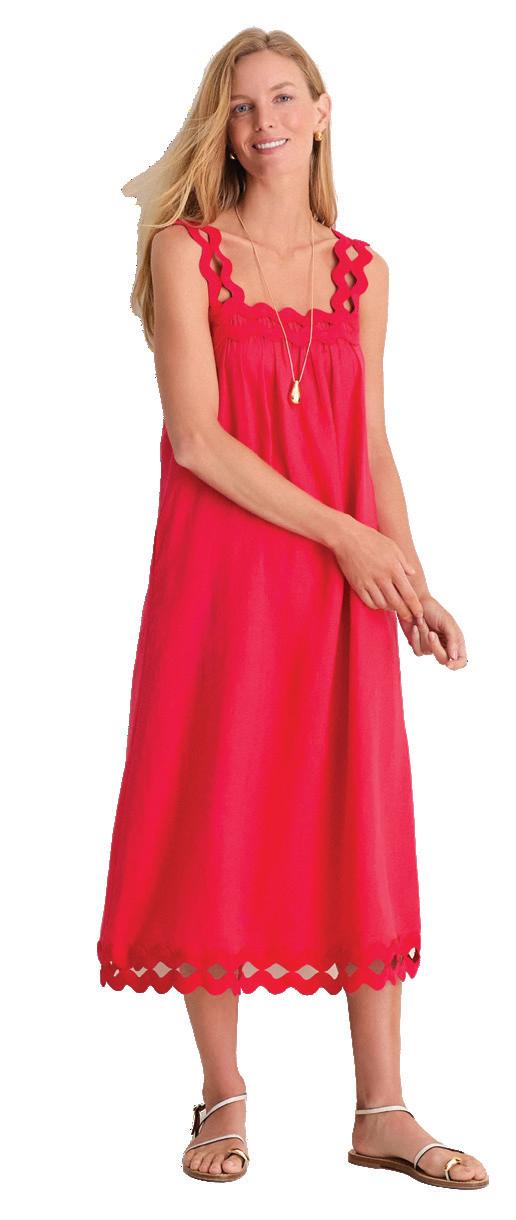
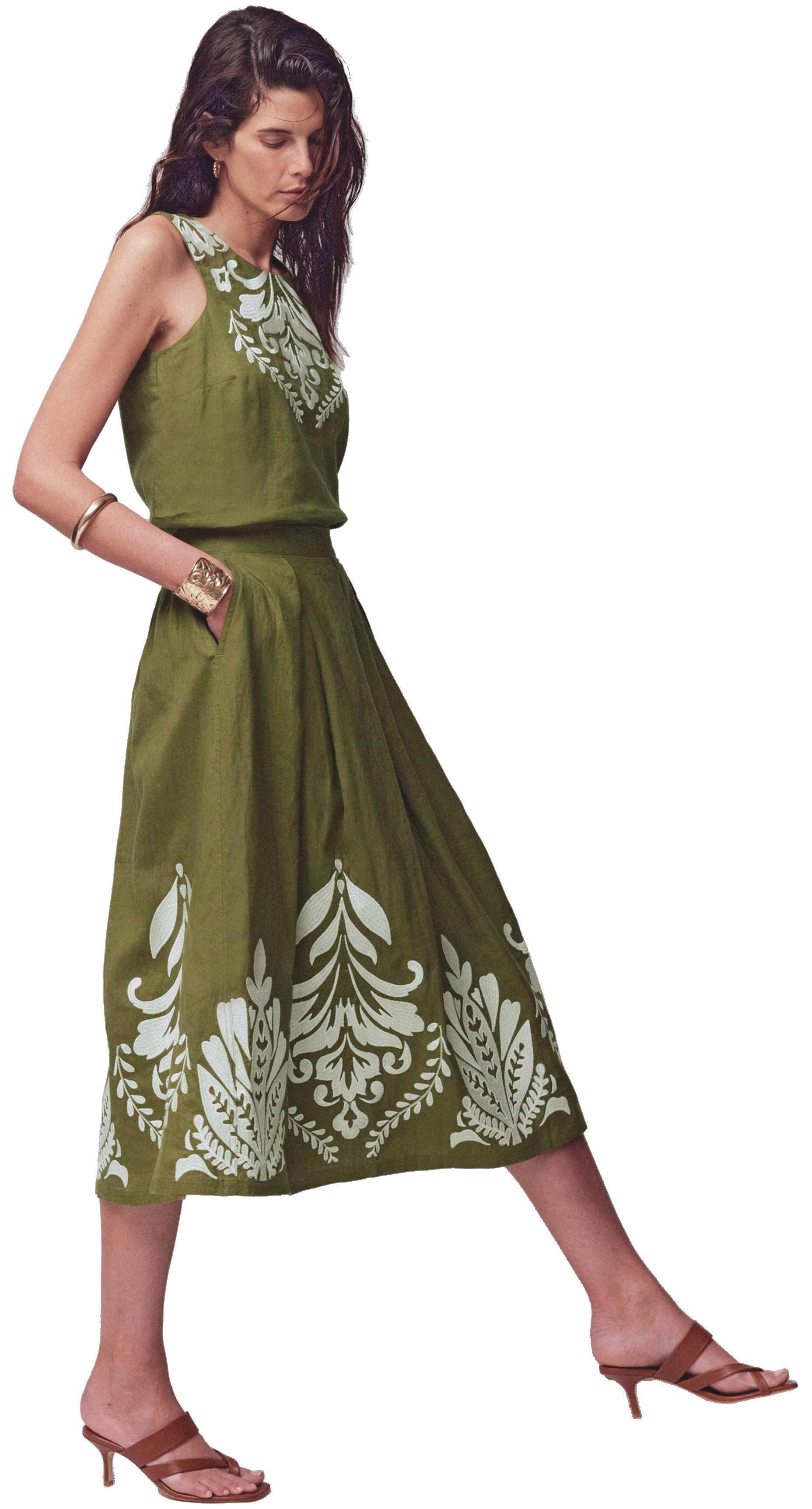
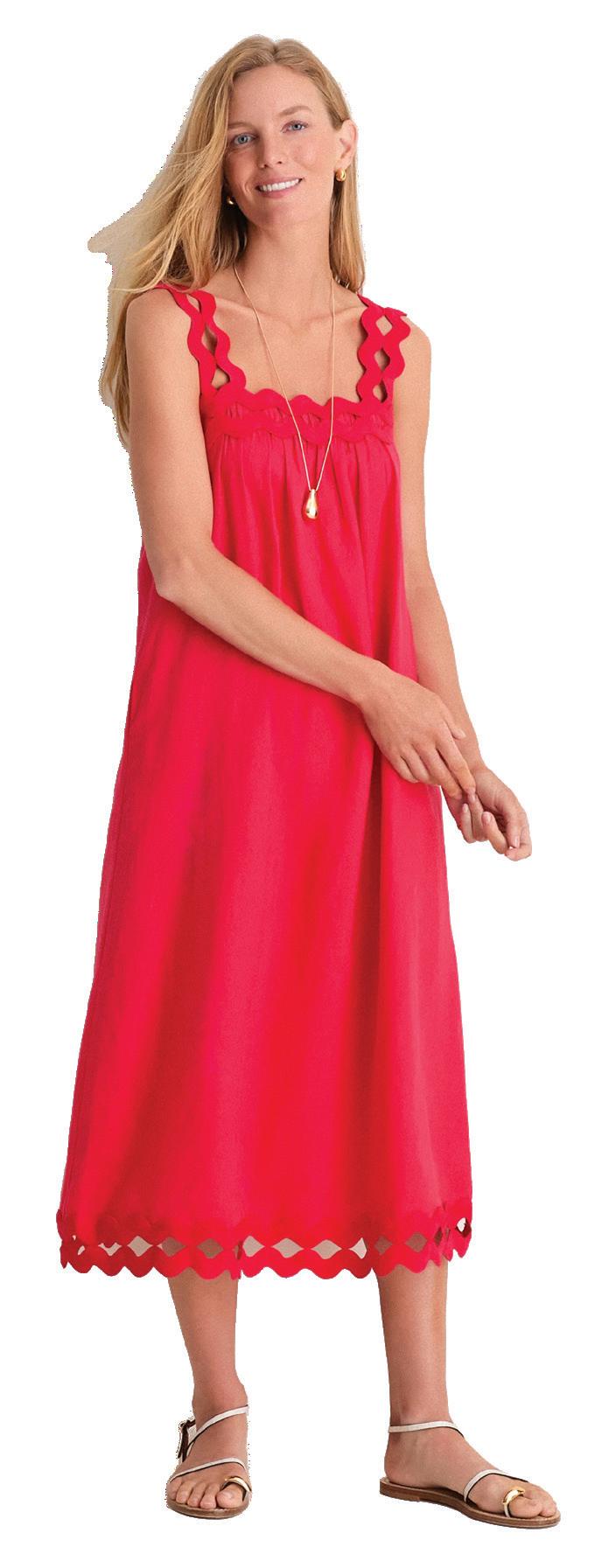
Sofia Embroidered Linen Top
Boden boden.com
DINNER STAPLES Summer
CARRABBA’S TUSCAN GRILLED CHICKEN COPYCAT RECIPE
My all-time favorite chicken when we go out is at Carrabba’s – their Tuscan Grilled Chicken. They don’t marinate the chicken; they baste it as it grills which keeps it from drying out.
Ingredients
• 1 1/2 -2 pounds boneless skinless chicken breasts or thighs, washed and patted dry
For the Italian rub:
• 1/4 cup kosher salt
• 2 tablespoons coarse cracked black pepper
• 1 1/2 teaspoons granulated garlic
• 1 1/2 teaspoons granulated onion
• 1 1/2 teaspoons dried oregano leaves
• 1/4 teaspoon crushed red pepper
For the Italian Grill Baste:
• 2 tablespoons butter
• 1 small yellow onion, finely chopped
• 4 cloves garlic, minced
• 1 tablespoon flour
• 1/2 cup olive oil
• 1/4 cup red wine vinegar
• 2 tablespoons lemon juice, freshly squeezed
• 1 tablespoon Dijon mustard
• 1 1/2 tablespoons sugar
• 2 tablespoons parsley, finely chopped
Instructions
1. Make the Italian chicken rub. In a small bowl, mix together all the seasonings. Sprinkle both sides of the patted-dry chicken and set aside for 30 minutes while you make the baste. (You’ll have enough left for another meal.)
2. Make the baste. Melt butter in a skillet over medium heat. Add chopped onion and cook until soft and translucent. Stir in the garlic and cook about 30 seconds.
3. Sprinkle in the flour. Slowly whisk in the oil, vinegar and lemon juice. Whisk in mustard and sugar. Remove from the heat and stir in parsley. Let cool slightly.
4. Preheat your grill to medium heat, 375-400.
5. Lightly brush the chicken with the Italian Grill Baste.
6. Grill the chicken. Place the chicken on the grill and cook for 5-7 minutes per side, depending on thickness. As it cooks, brush lightly with additional baste. Grill until the chicken breasts reach 165°; chicken thighs 180 to 185°.
7. Brush again with baste before serving.
GREEN BEANS AMANDINE
I made this for Easter and everyone loved them, with one friend going back for fourths. Browning the butter adds a delicious rich nutty flavor.
Serves 8
Ingredients
• 4 tablespoons butter (half a stick)
• 1 cup sliced almonds
• 2 small shallots, thinly sliced
• 2 pounds fresh green beans, washed and ends trimmed
• 4 teaspoons lemon juice
• 2 tablespoons and 1 cup water, divided
• Salt and pepper
Directions
1. In a large skillet over medium high heat, melt the butter and add the almonds. With a spatula, stir until the butter has browned and almonds are beginning to brown, 7-8 minutes.
2. Add the shallots and cook 1 minute. Stir in the lemon juice and 2 tablespoons water; continue stirring until liquid thickens, 1 minute more.
3. Scoop out into a bowl; set aside.
4. Add the beans to the skillet and add 1 cup water and salt. Cover and cook over medium heat, stirring occasionally, until beans are nearly tender, about 9-10 minutes.
5. Remove lid and cook over medium-high heat until the liquid evaporates, 2-4 minutes.
6. Remove the pan from the heat. Add the almond mixture to the beans and toss.
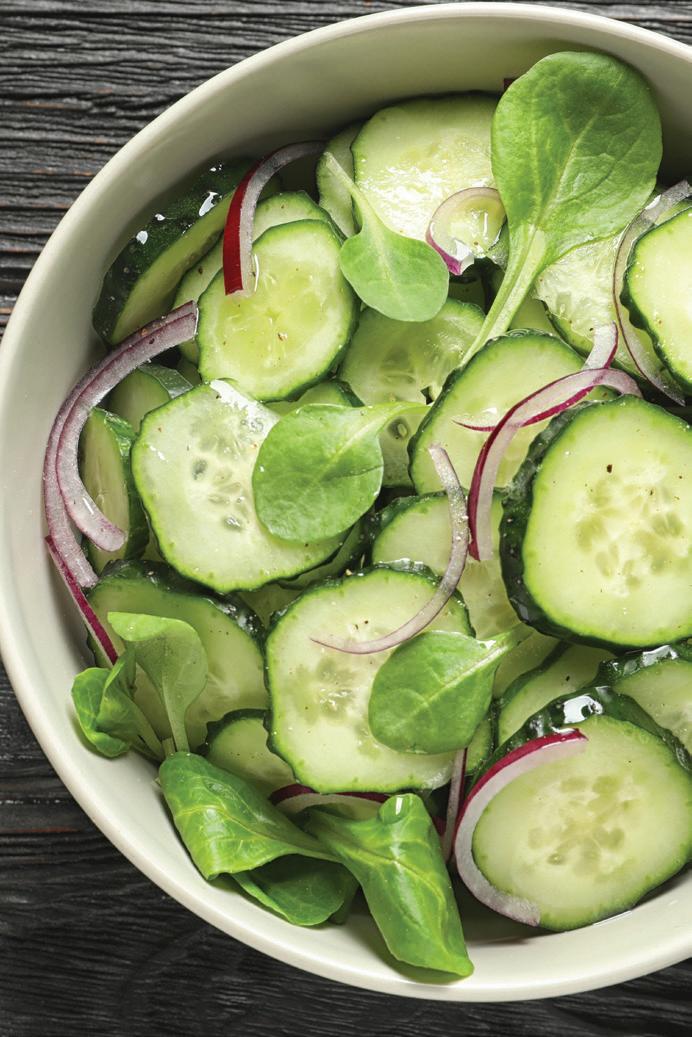
FAVORITE CUCUMBER SALADS
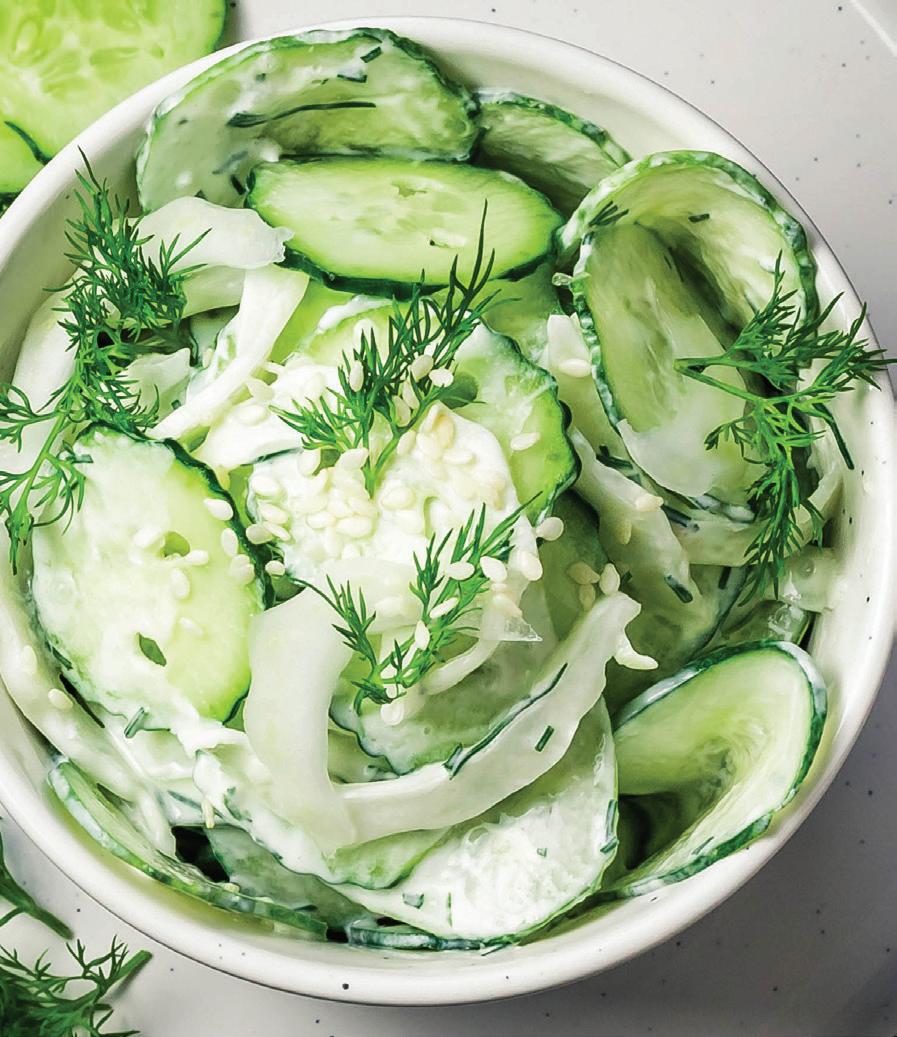
CREAMY CUCUMBER SALAD
Don’t skip the step where you add salt to the cucumbers and let drain in a colander. Your salad will be a watery mess if not.
Ingredients
• 2 large cucumbers, peeled and thinly sliced
• 1 sweet onion, thinly sliced
• 1 tablespoon sea salt
For the dressing:
• 1 and 1/2 cups mayonnaise, or more to taste
• 2 tablespoons vinegar
• 1 tablespoon white sugar
• 1 teaspoon dried dill weed
• 1 teaspoon garlic powder
• 1 teaspoon ground black pepper
• A few fresh dill sprigs for garnishing
Directions
1. Mix the cucumbers, onion, and salt together in a bowl. Cover with plastic wrap and let sit for 15 to 30 minutes.
2. Turn cucumber mixture into a colander set over a bowl. Let drain, stirring occasionally, until most of the liquid and salt has drained, 15 to 30 minutes. Transfer drained cucumber mixture to a large bowl.
3. Make the dressing. Whisk together mayonnaise, vinegar, sugar, dill, garlic powder, and pepper in a bowl until smooth. Pour over cucumber mixture and stir until coated.
4. Cover with plastic wrap and refrigerate 1 to 2 hours before serving. Garnish with a few sprigs of fresh dill.
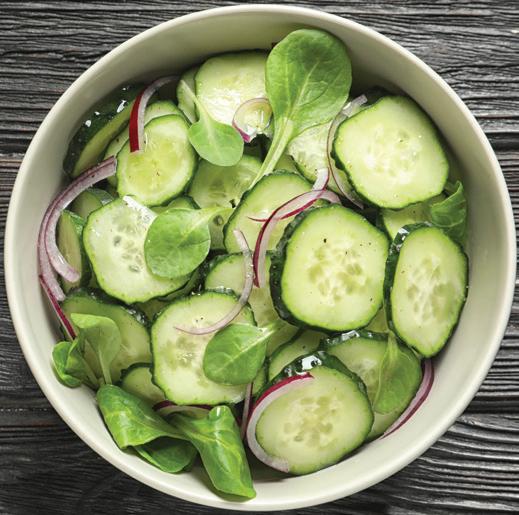
VINEGAR AND SUGAR CUCUMBER SALAD
A quick and easy salad. My grandmother made this every summer with the cucumbers in her garden.
Ingredients
• 1 cup sugar
• 1 cup white vinegar
• 1 cup water
• 4 cucumbers, peeled and sliced
• 1 medium red or sweet onion, sliced
Directions
1. In a large bowl, combine the sugar, vinegar and water.
2. Add the prepared cucumbers and onions.
3. If you have a lot of dressing left over, you can add more cucumbers and onions.
DINNERSTAPLES
CONTINUED FROM P23
CHOCOLATE ÉCLAIR CAKE
The easiest no-bake dessert ever! Layers of graham crackers and vanilla pudding with fluffy Cool Whip, topped with a homemade chocolate ganache.
1. Line the bottom of a 9x13-inch casserole dish with a single layer of graham crackers.
2. Combine milk and vanilla pudding in a large bowl. Whisk briskly for 2 minutes. Add vanilla.
3. Mix whipped topping into pudding mixture until combined.
4. Spread half of the pudding mixture over graham crackers in the pan.
5. Top with a single layer of graham crackers.
6. Spread the remaining pudding mixture over crackers.
7. Top with a final layer of graham crackers.
8. Pour the chocolate chips into a large bowl.
9. Pour the cream into a saucepan and heat it over medium-low heat, just until the cream starts to simmer.
10. Remove from the heat and immediately pour over the chocolate chips. Let it rest for 5 minutes.
11. Stir until the chocolate is completely melted and the mixture is well combined.
12. Pour the ganache over the top of cake and spread evenly to the edges.
13. Refrigerate cake for at least 12 hours before serving.
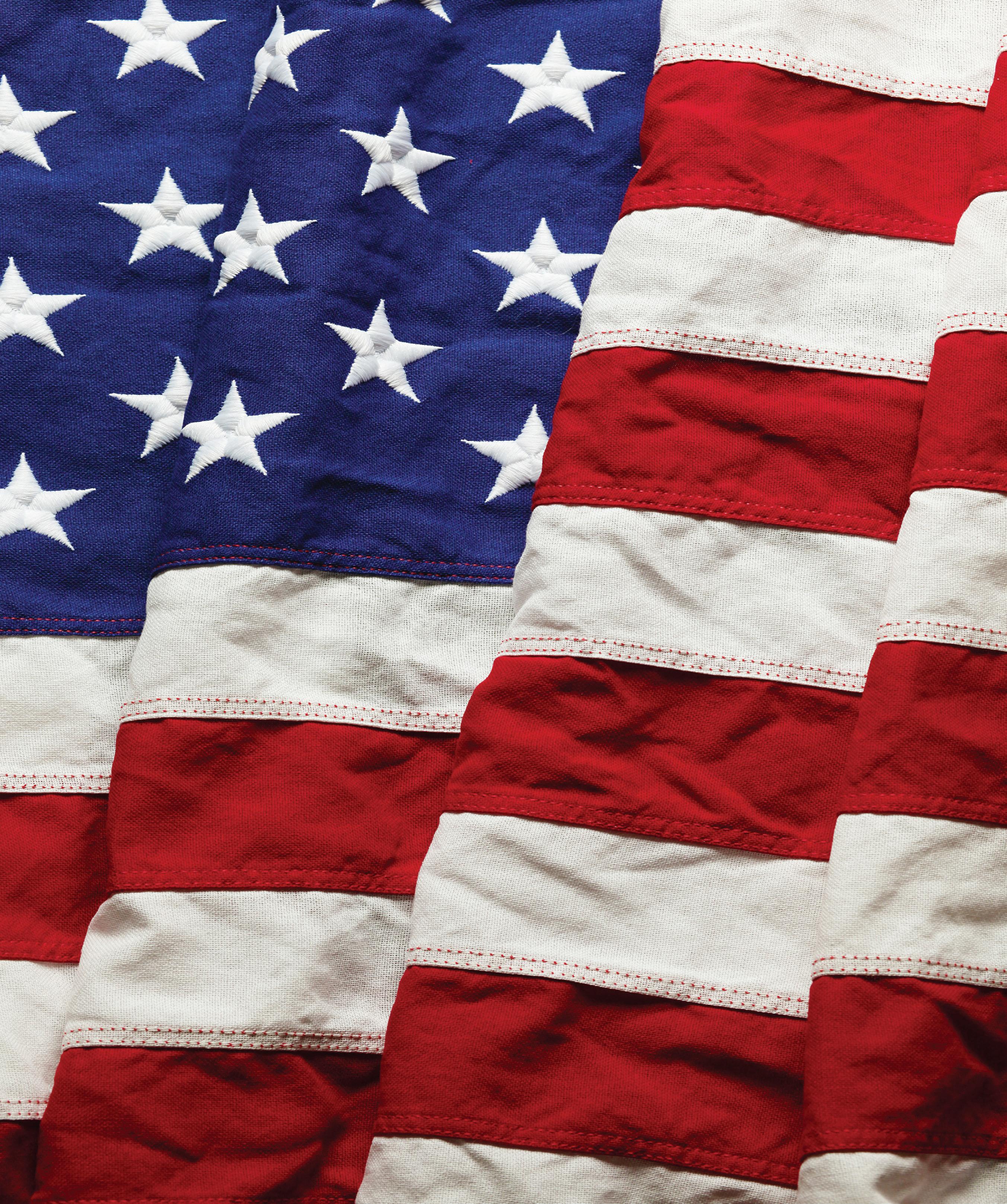
JUNE 14 IS FLAG DAY
The American Flag, Symbol of Our Nation
United States Flag
Q&A
1. Who cut the American flag into pieces and was honored for doing it?
Robert Peary, who left pieces of the flag scattered at the North Pole.
2. Is it ever appropriate to fly the flag upside down?
Yes, but only in an emergency. It is a distress signal for extreme danger to life or property, and has become a symbol of political protest.
3. Francis Scott Key wrote the words to “The Star-Spangled Banner” on the back of an envelope. What is the source of the music for it?
6. The first unofficial American flag (introduced by George Washington) had what instead of stars in the upper left-hand corner?
British Union Jack
7. An act signed in 1818 by this president called for the American flag to have 13 stripes and one star for each state.
allowing for the American flag to have 13 stripes and one star for each state.
James Monroe signed the Flag Act of 1818
8. As this 1950s TV show begins, a flag appears as the narrator touts someone’s “never-ending battle for truth, justice and the American way.”
4. The American flag first flew over a foreign fort in what country?
5. Why is the American flag folded into a triangle?
symbolize the tricorn hats of colonial soldiers, sailors and marines during the Revolutionary War.
The American flag is folded into a triangle to
9. The American flag that inspired 1814’s “The Star-Spangled Banner” had 15 stripes and 15 stars. Which two states had joined the original 13?
Vermont and Kentucky
10. What is an expert on flags and their history called?
A
Sources: ushistory.org, rd.com
The
The Adventures of Superman
The music is from an old English drinking song called “To Anacreon in Heaven.”
Libya, over Fort Derne on the shores of Tripoli.
vexillologist.
Our
Patterns That No Longer Serve
BY BETH WALSH STEWART
Patterns are a natural part of Creation. We see the symmetry of butterfly wings, the polygons of honeycombs, and the spirals of seashells. Natural patterns happen when pressure meets energy flow, creating a natural boundary.
Since humans are part of nature, patterns are part of our operating systems. Just like in nature, when pressure meets energy flow, we often create boundaries to deal with the stress. For some of us, these patterns have become so ingrained that they act as a default system run by our subconscious.
Psychological patterns of human behavior are recurring, often subconscious, mental and emotional habits. These patterns are often born in childhood when our ability to reason was still developing. Sometimes the information we used to form the pattern came from a trusted elder or authority, and we tucked it away in our subconscious labeled “Truth.” We never questioned whether it reflected our own perception or values but just stored it as a shared belief. These old patterns can decide how we respond to people, ideologies, and situations. They might show up as learned prejudices, relational “rules,” and trauma responses.
For example, do you root for UF or FSU? Were you loyal to that school before you sought attendance there? If so, why? Sometimes a preference like this becomes a hand-me-down pattern because it is “passed down” from a person or group that has authority in our lives.
All human beings desire to feel the sense of belonging. We are a tribal species. Just as wolves have packs and whales have pods, we were created for community. Wanting to “fit in” with a social group is a normal emotional pressure that most of us have felt. As children, we tie the sense of belonging to emotional security, physical safety, and personal value. We benefit from “going along” with the group consensus. Though normal, this is also how biases are often formed.
“We were created for community. Wanting to “fit in” with a social group is a normal emotional pressure that most of us have felt.”
A university bias may decide what’s on your sweatshirt or which license plate you hang on the front of your car, but it will not usually affect quality of life or living into one’s potential like other hand-me-down beliefs can. A child who is told he won’t amount to anything by someone he respects may develop the pattern of self-doubt, choosing to avoid demanding situations where he may have thrived.
A teenager that couldn’t afford top-of-the-line sneakers and name brand clothing may be bullied or singled out as low-class. If the individual or group that taunts him has value in the social hierarchy of his school, he may develop low self-esteem that influences major life decisions.
Patterns are formed when pressure meets energy flow. We all know the social pressures of growing up. Did we meet those pressures with high or low energy? Often our self-worth was created by the answer to that question.
To spot, confront, and let patterns that are not serving us go will take deep emotional work if they were created in childhood. Many of these slanderous beliefs have been buried under years of experience and memories.
Other patterns created in adulthood were often shortcuts to move out of discomfort. These can be rectified more easily. For example, do you quit activities where you don’t excel? Do you people-please to create positive outcomes? Is there a tendency to hide a behavior you use to feel in control, like shopping, snacking, or smoking? It will take work to diminish these patterns as well, but since they are more recent, there is a greater likelihood that you will be able to see where you created them and to realize that they are not the solutions you had hoped them to be.
Professional therapy is the best attack against childhood trauma and the resulting patterns that have developed. EMDR, eye movement desensitization and reprocessing, is a powerful tool for healing. There are many practitioners on the Treasure Coast that utilize this vehicle to uncover, discover, and recover.
For the patterns developed later in life, talk therapy, 12-Step groups, and prayer have shown positive results and provided tools to challenge the status quo with new practices and replaced ideology. In both cases, the first step is to seek the necessary help.
Patterns are a natural part of Creation. Let’s keep the good ones and learn to let the negative ones go.
Beth Walsh Stewart, MTh, is the Creator of BethWe, the nonprofit that was the impetus for this work. Dedicated to rescuing the stragglers lost in the shadows of the road of life, Beth is best-known for her Good Seed Podcasts, 12-Step seminars, weekly blogs, g.o.d. speaks books, and uplifting workshops. Beth lives by this motto: I have been called to help my brother find his authentic self and his God, and I best accomplish this end by sharing my pursuit of the same.
Dear Friends & Members,
I would like to invite you to some of the activities for the Summer at First Presbyterian Church of Vero Beach
– Dr. Timothy Womack, Senior Pastor
Bible Studies
Weekly – Tuesdays
10:30am A Walk Through the Bible with Dr. Tim Schumann Conference Center
7pm 6/9 thru 8/25
ZOOM Summer Small Group Study: “Twelve Ordinary People” for Working Couples and Singles
July15 thru August 19
11am Women’s Precept Bible Study – Book of Ruth Earnshaw Room
Summer Camps
July 20 – 24
9am – 1pm Dinosaur Discovery Preschool Camp
July 13 – 17
9am – 12pm Kids in the Kitchen with Peter Mahtani
12:30pm -2:30pm Teens in the Kitchen (youth)
July 20 - 24
9am – 12pm Bible Blast Music Camp with Janine Jones
12:30pm – 2pm Mallets & More Music Camp
Save the Dates
8/9 10am Blessing of the Backpacks, McAfee Hall
8/11 9am Preschool Begins
8/19 3:30pm QUEST – Weekly Afterschool Program Begins 9/28 – 10/7 Trip to Scotland with Dr. Jacob Craig
Rev. Andy Smothers Associate Pastor
Janine Jones, Director of the PRIMO School of Music
Peter Mahtani, Associate Director
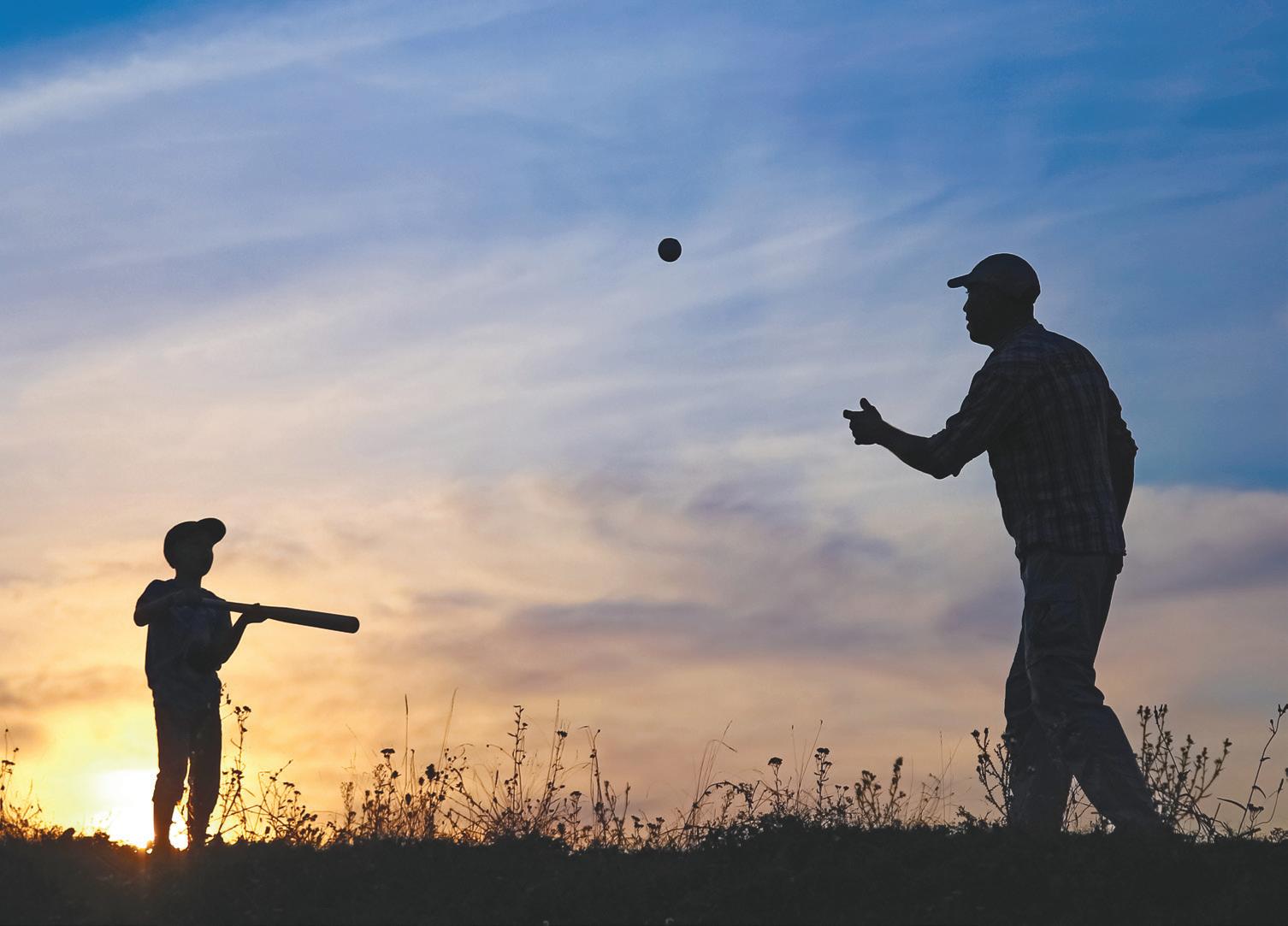
The Role of a Father
BY PASTOR ALEX PAPPAS
Ephesians 6:4 (NKJV)
“⁴And you, fathers, do not provoke your children to wrath, but bring them up in the training and admonition of the Lord.”
Fathers play such a vital role in their homes and society. As I am writing this today, I know not everyone has always had a good father, and I know that some people might not even have had a father at all.
Maybe you are reading this today and have not been a good father yourself. The point of this article is not to make you feel bad, but to try to help steer you to recognize just how important the role of a father is. You can always start doing things differently starting today.
“A father should demonstrate love to his children in word and deed.”
A good father will always demonstrate love, leadership, and protection to his family. His role includes making decisions, setting goals, providing direction for the family, and taking responsibility for the physical needs of the whole house, by leading and providing for his family.
A good father teaches his children about faith, morality, and values by setting an example of living out his faith. He will instill in his children the importance of having a personal relationship with God. He mentors them in navigating life’s challenges with faith and the power of prayer.
A father’s presence and involvement in his children’s lives will always create a safe space for them. A present father provides a sense of security for his family. His children feel valued and confident and learn to handle life’s difficulties with boldness and courage.
Above all else, a father should demonstrate love to his children in word and deed.
As we are being celebrated as dads this month, let’s lead our families with love, integrity, and kindness, leaving a legacy to the generations to come that will have eternal value.
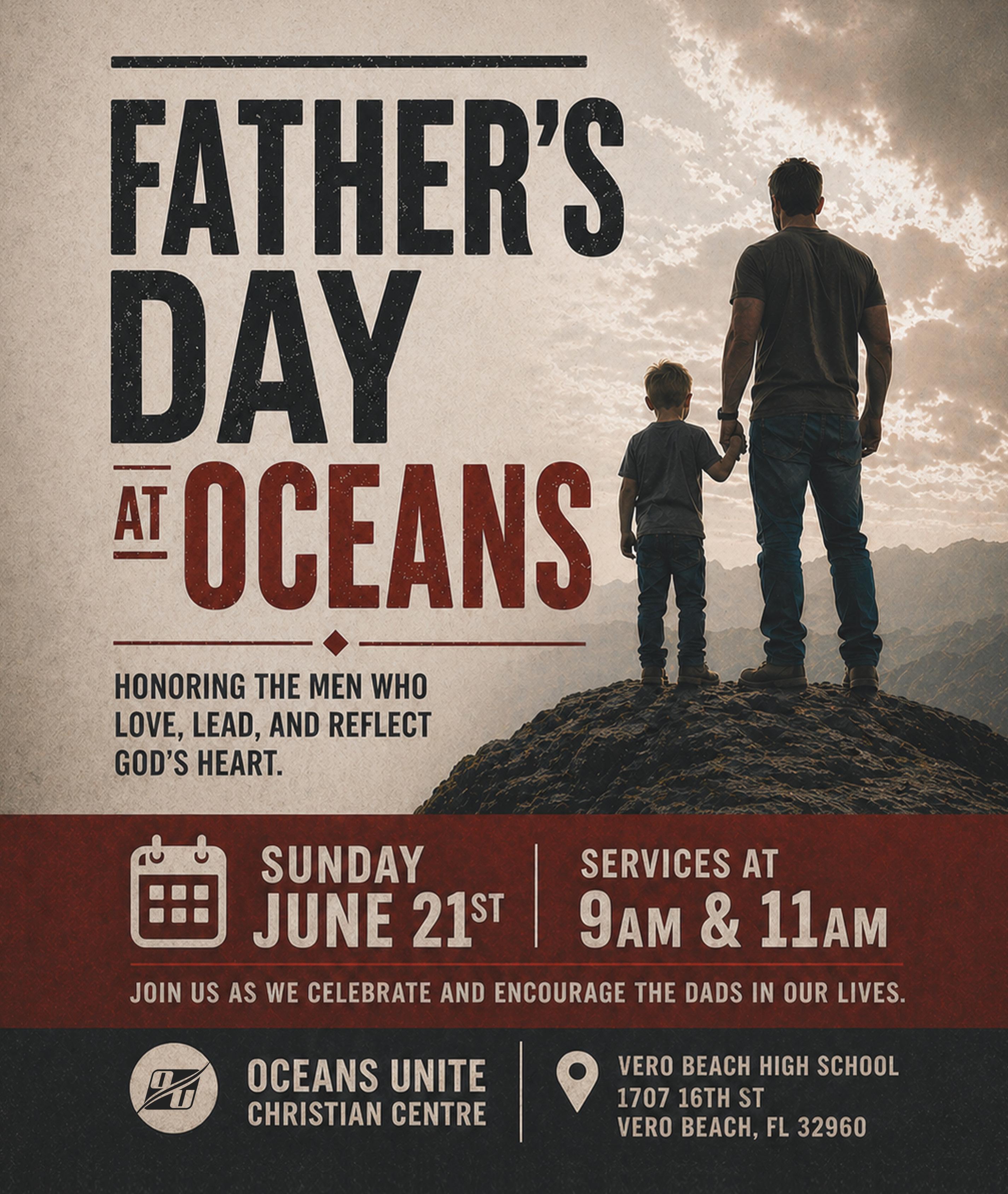
Happy Father’s Day!
Rev’s Verses
BY PASTOR RICH IENUSO
Happy Daddy’s Day!
A Blessed and Happy Father’s Day to all daddies!
Romans 8:15 states that we can call Father God “Abba.”
This is an endearing word which means Daddy, Papa and Dad.
As children of God we have the privilege of calling God by this loving name.
May we all send our love and prayers to our earthly fathers and may we realize that through the Holy Spirit we can praise our Abba Father.
We have been adopted into God’s family when we receive Jesus as our personal Lord and Savior.
Galatians 3:26; Ephesians 1:5; and 1 Peter 2:10
Blessings, Pastor Rich Ienuso
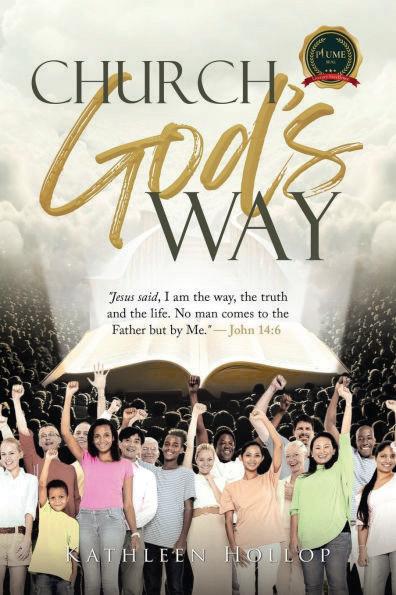
Kathleen Hollop is a healing evangelist who has
the miracles of God today. She has made 23 trips to Africa,