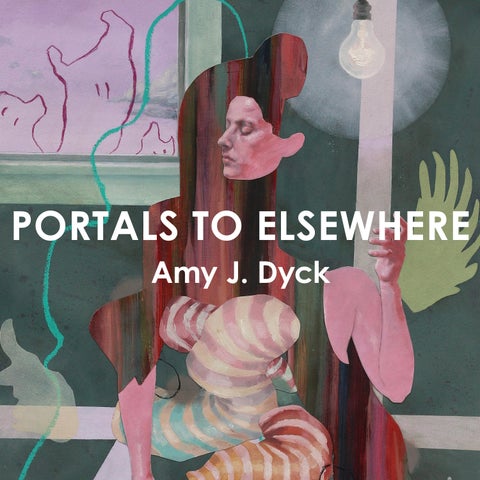
PORTALS TO ELSEWHERE
Amy J. Dyck
PORTALS TO ELSEWHERE
AMY J. DYCK
Vernon Public Art Gallery
March 20 - May 20, 2026
Catalogue of an exhibition held at the Vernon Public Art Gallery
3228 - 31st Avenue, Vernon, British Columbia, V1T 2H3, Canada
March 20 - May 20, 2026
Production: Vernon Public Art Gallery
Editor: Victoria Verge
Layout and graphic design: Vernon Public Art Gallery
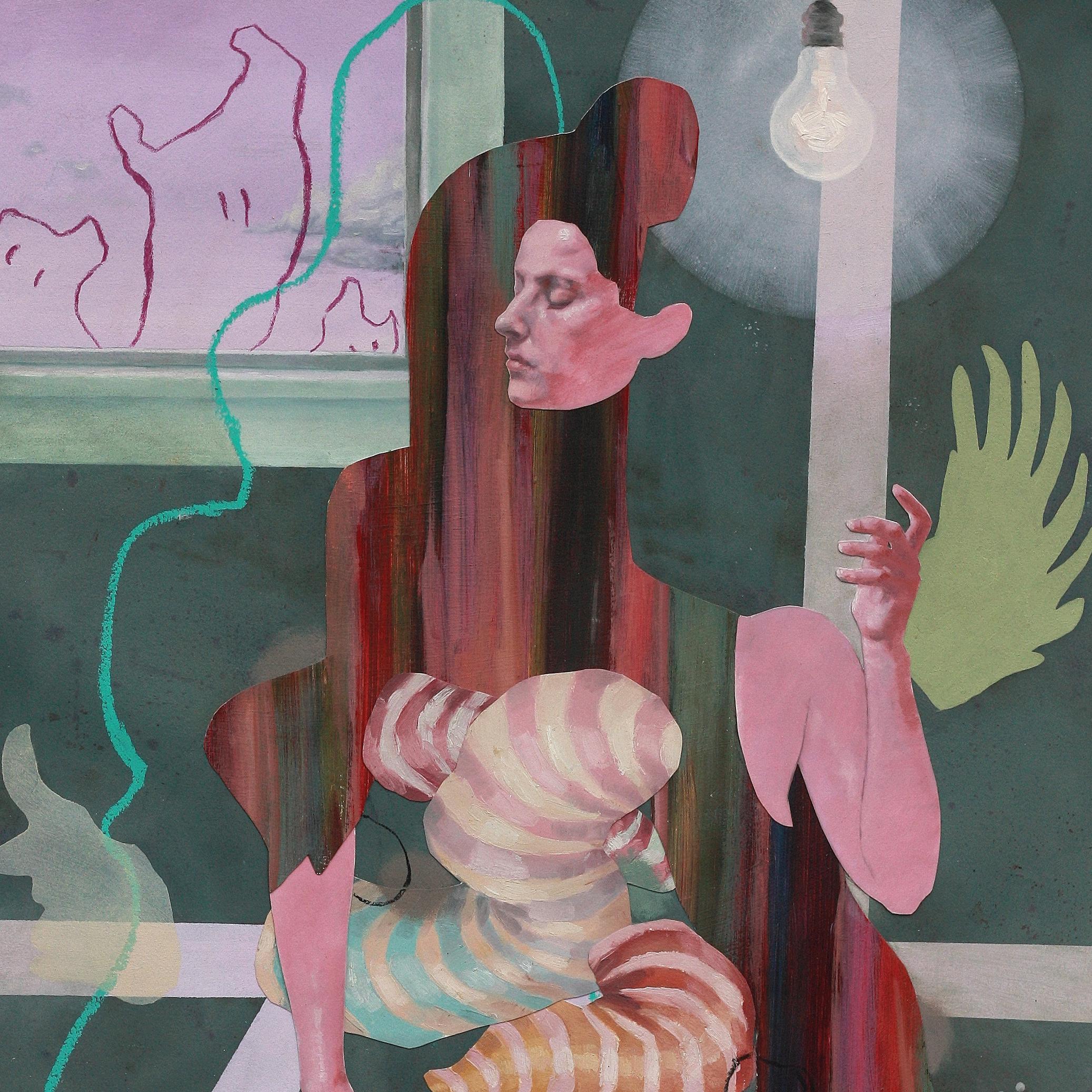
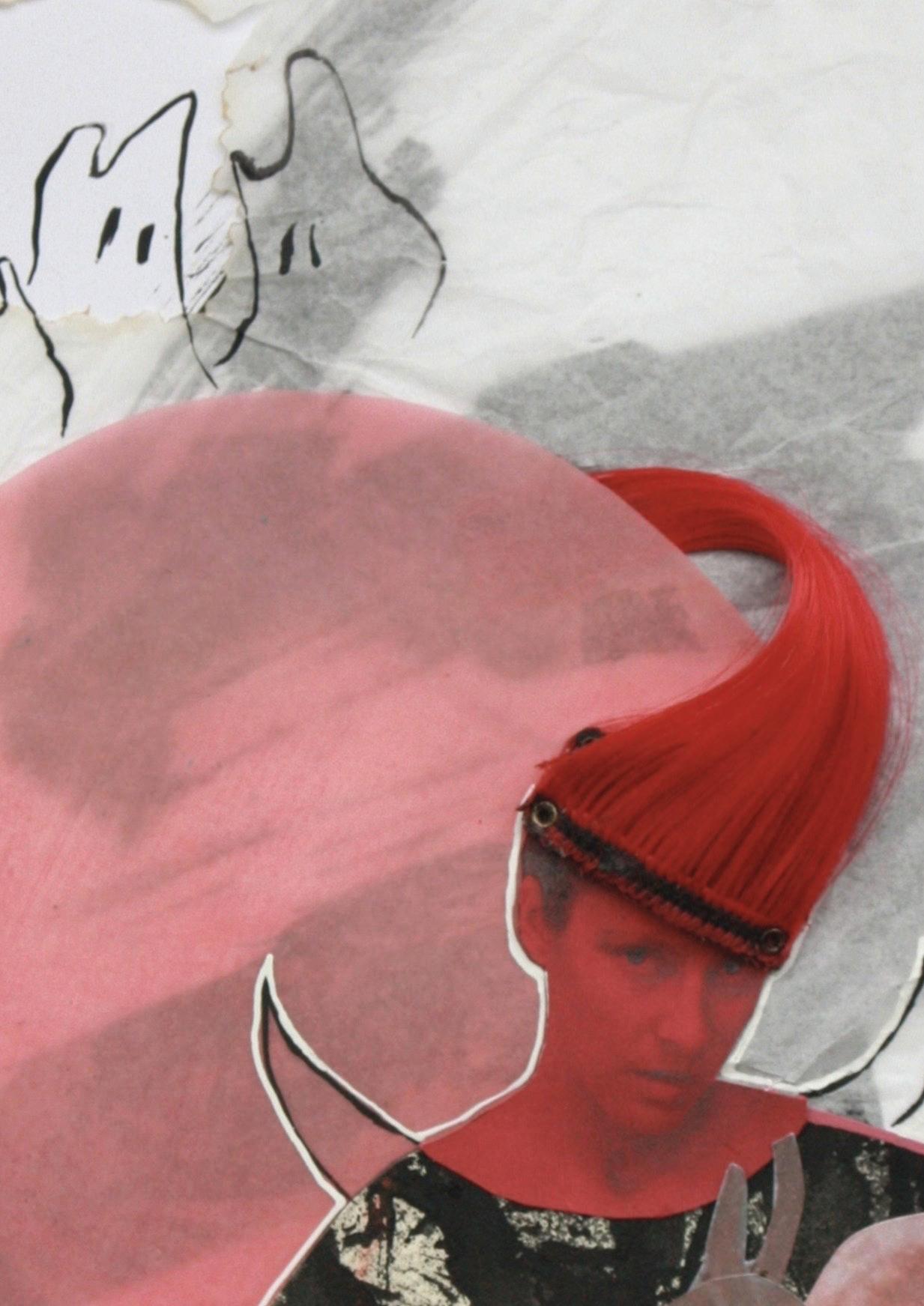
Front cover: Peace Offering (Necklace), 2024, Oil paint with pastel and charcoal on mounted paper, 30x22.5 in. (detail image)
Printing: Get Colour Copies, Vernon, British Columbia, Canada
ISBN 978-1-927407-96-7
Copyright © 2026 Vernon Public Art Gallery
All rights reserved. No part of this work may be reproduced or transmitted in any form or by any means, electronic or mechanical, including photocopying and recording, or by any information storage or retrieval system, except as may be expressly permitted by the 1976 Copyright Act or in writing from the Vernon Public Art Gallery. Requests for permission to use these images should be addressed in writing to the Vernon Public Art Gallery, 3228 31st Avenue, Vernon BC, V1T 2H3, Canada. Telephone: 250.545.3173, website: www. vernonpublicartgallery.com.
The Vernon Public Art Gallery is a registered not-for-profit society. We gratefully acknowledge the financial support of the Greater Vernon Advisory Committee/RDNO, the Province of BC’s Gaming Policy and Enforcement Branch, British Columbia Arts Council, the Government of Canada, corporate donors, sponsors, general donations and memberships. Charitable Organization # 108113358RR.

This exhibition is sponsored in part by:
EXECUTIVE DIRECTOR’S FOREWORD
On behalf of the Board of Directors and the Vernon Public Art Gallery (VPAG), I am pleased to welcome Amy J. Dyck, an artist from Langley, BC to the VPAG. In learning about Amy and her work, I was inspired by the ways she chose to explore and articulate her chronic illness using a multidisciplinary artistic practice. While engaging with Amy’s work, I found myself reflecting on my own personal challenges and how we each navigate vulnerability and resilience. Though this work is based on her personal journey, the exhibition Portals to Elsewhere provides viewers the opportunity to explore beyond that and to contemplate both psychological and emotional themes that are sure to resonate differently with each viewer.
We are grateful for the essay by our guest writer Carolyn MacHardy, PhD Associate Professor Emerita with the Faculty of Creative and Critical Studies at UBC Okanagan where she focused her work on Global Contemporary, Canadian and Outsider Art History. MacHardy delves into Dyck’s lived experience as a person living with a disability and opens the door for us as individuals and a community, to reflect on our own reactions when we witness someone living with a disability.
I’d like to acknowledge Victoria Verge, Curator for the VPAG, for her work in bringing this exhibition to the Greater Vernon community. The important subject-matter presented through the visual art lens opens the door to deeper consideration of our thoughts and beliefs regarding disabilities.
I would like to acknowledge the financial support of the Province of British Columbia, the Regional District of the North Okanagan, and the BC Arts Council, whose funding enables us to produce exhibitions such as this for the residents and visitors of the North Okanagan region and interested parties across Canada.
We hope you enjoy this exhibition and accompanying publication.
Regards,
Dauna Kennedy Executive Director
Vernon Public Art Gallery
CURATORIAL INTRODUCTION
It was a crisp afternoon when I first visited Amy J. Dyck’s studio in the fall of 2025. The studio sits tucked into a corner of a barn-like shed behind her family’s home in Langley, surrounded by flat expanses of Fraser Valley farmland. From the outside, the structure is modest, almost inconspicuous. Inside, it is a world.
Dyck met me at the door and ushered me into a space so small it seemed impossible that it could contain the magnitude of work stacked within it. Crates and cardboard boxes were piled nearly to the ceiling. Finished sculptures rested shoulder to shoulder on shelves. Paintings leaned against one another in quiet conversation. Small maquettes and collages lay on worktables, some resolved, others paused mid-thought. The air felt charged, not crowded, but dense with imagination. I was struck by the paradox: how could such a compact physical space house ideas that felt so expansive, so psychologically and emotionally vast?
Dyck herself, someone who has lived for years with a complex chronic illness that has dramatically altered her mobility, moved through this compressed studio with a fierce clarity. Her illness has not slowed her practice, if anything, it has intensified. There is urgency here. A need. A refusal to be diminished. The studio did not feel like a site of limitation but of propulsion – a launch point for creatures that stretch, strain, and reassemble themselves into new forms.
Throughout our visit we spoke about shadow selves; the inner demons that haunt, protect, distort, and sometimes fortify us. In Dyck’s work these shadows materialize as ghosts, hybrid beasts, and dark companions who hover at the periphery of the domestic interior. They are not simply antagonists. They are aspects of the psyche: grief, fear, resilience, anger, imagination. They are the parts of ourselves that persist when our bodies falter.
Nowhere is this psychological negotiation more tenderly articulated than in the three Peace Offering paintings: Peace Offering (Tulips), Peace Offering (Necklace), and Peace Offering (Rocks). In each, we encounter a seated figure surrounded by elements of a domestic interior, beyond or within that frame linger faint ghostly presences – watchful, ambiguous, neither fully threatening nor fully benign. The figure, meanwhile, presents something forward: a string of pearls, a bouquet of flowers, a cluster of stones.
The act of offering is ancient. It implies negotiation – with gods, with spirits, with memory, with oneself. It is both appeasement and prayer. In these works, art becomes offering. The pearls slip delicately from her hand. The tulips bend in quiet surrender. The stones gather in her lap like
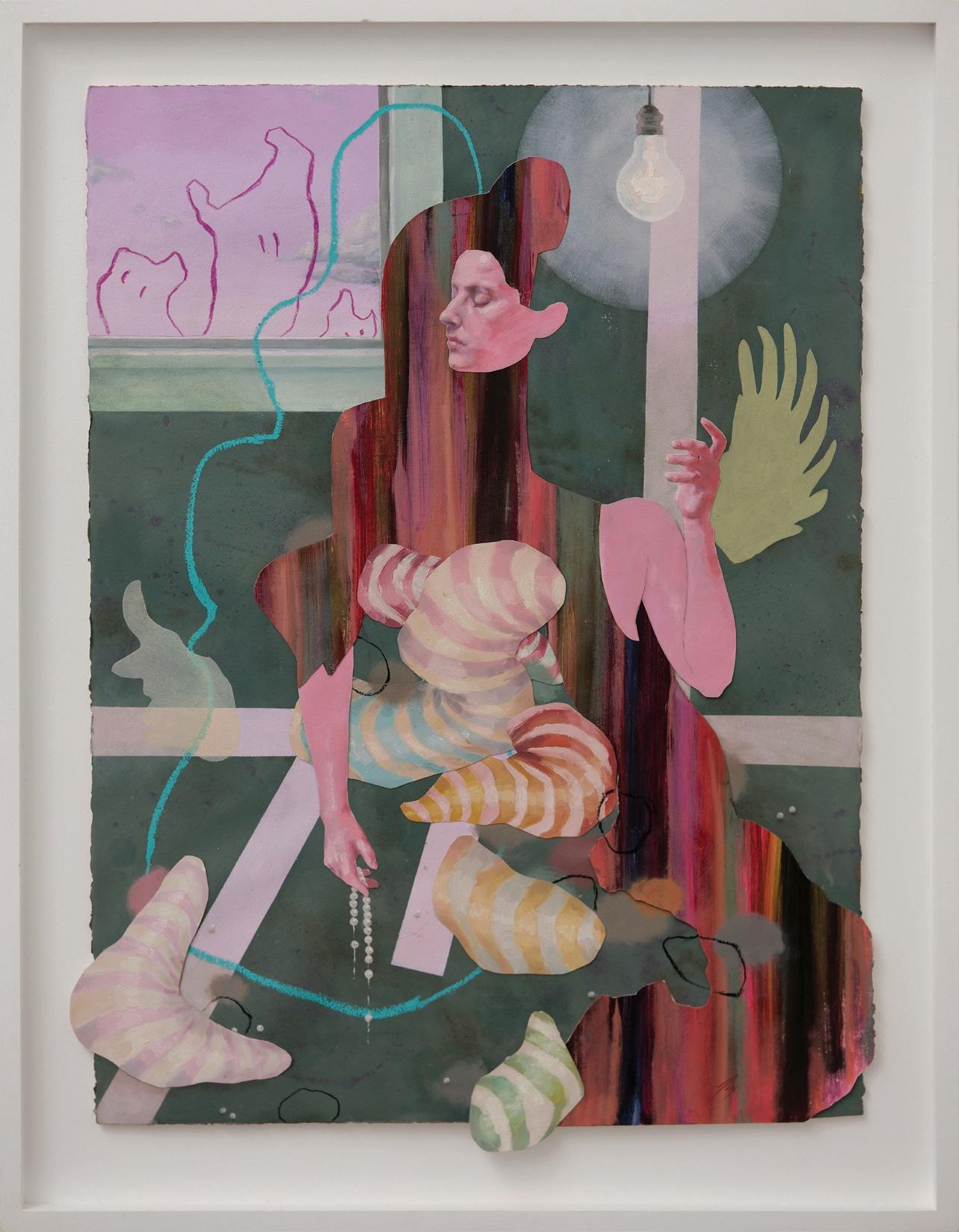
Peace Offering 1 (Necklace), 2024. Oil paint with pastel and charcoal on mounted paper. 30x22 in. (unframed).
something harvested from the earth itself. Each object suggests an attempt to make peace with what cannot be eradicated. If the ghosts cannot be banished, perhaps they can be placated. If illness cannot be cured, perhaps it can be integrated.
There is something here that recalls the long history of women accused of witchcraft – women who worked with herbs, intuition, interior knowledge; women who negotiated with unseen forces. The domestic interior becomes ritual space. The table becomes altar. The bouquet, the necklace, the stone – talismans. Rather than passive victimhood, we witness agency with constraint. The figure does not collapse under surveillance; she participates in it.
Windows recur insistently throughout Portals to Elsewhere. They function not merely as compositional devices but as conceptual thresholds. For someone living with chronic illness, a window can be a lifeline – a way to experience the outside world at arm’s length. It offers sunrise without exertion, fresh air without departure. It is escape and containment simultaneously.
Art history is rich with images of women at windows – figures poised between interior domesticity and the external public world. From Renaissance portraiture to nineteenth-century Impressionism, the woman at the window often embodies longing, restriction, contemplation, or quiet rebellion. Dyck’s windows inherit this lineage but destabilize it. They do not only frame the outside; they frame the inside as well. They ask: which side is freer? The ghosts often hover near these portals, complicating the notion of escape. Perhaps the beyond is not purely liberatory. Perhaps what must be crossed is psychological before it is physical.
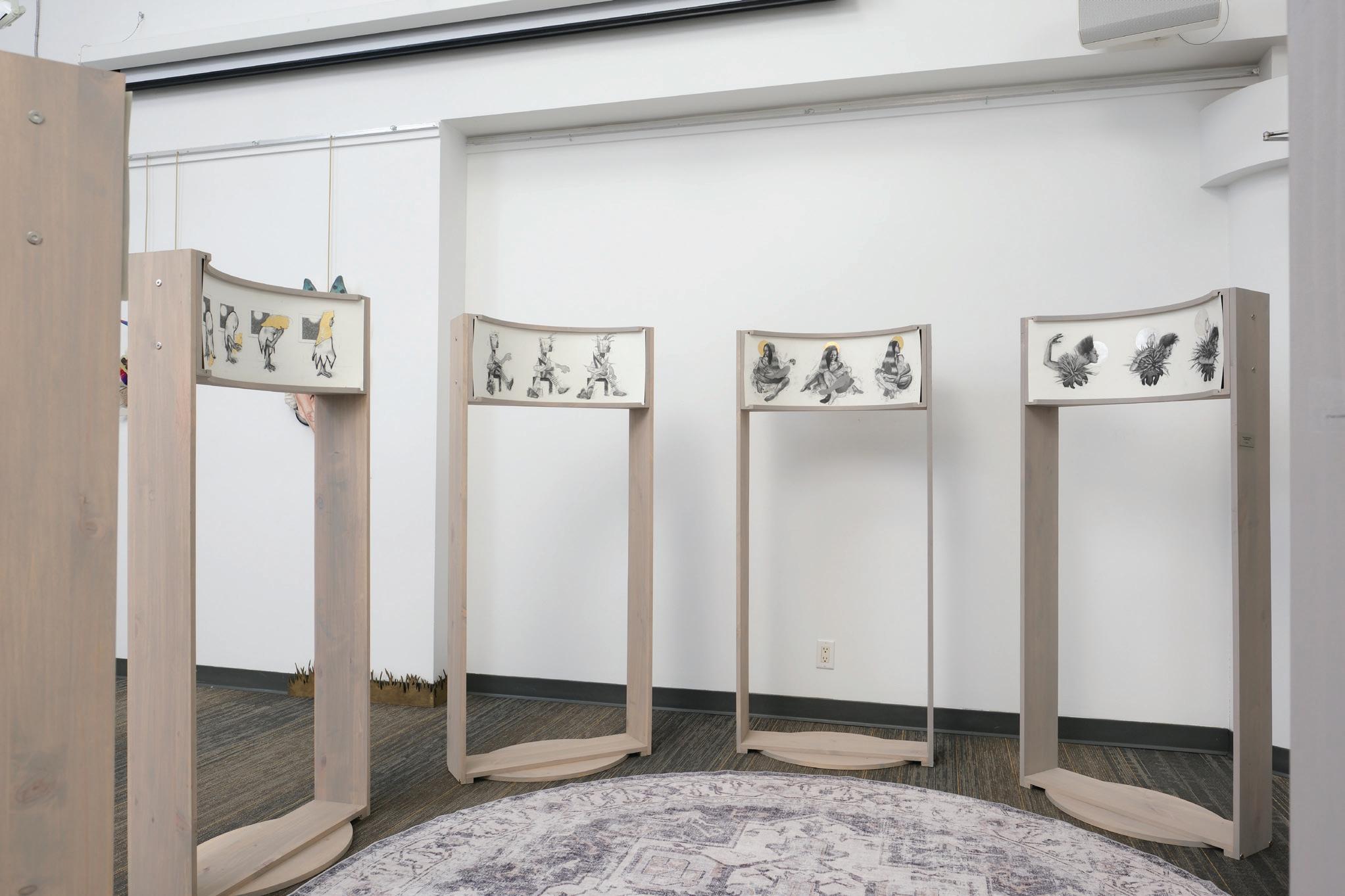
This dynamic of confinement and expansion is made spatially literal in the circular installation of the Bed-Desk series. Created during a period when Dyck was largely confined to bed, these elongated charcoal drawings are arranged in a ring that viewers can physically enter. What originated as a practical adaptation – her husband building a desk that allowed her to work from bed – becomes, in the gallery, another portal.
Within these drawings, figures evolve across time. Bodies twist, sprout, unfurl. Arms multiply. Wings emerge. Gold and silver leaf catch the light like fragile halos. The circle invites viewers into a contemplative centre – a space of movement imagined when physical movement was not possible. In this way, the installation reverses expectation: what was born of limitation becomes immersive and expansive. The bed becomes studio. The studio becomes threshold. The threshold becomes communal.
Frida Kahlo inevitably echoes here – another artist who transformed confinement into production, bed into site of resistance, body into primary subject. Yet Dyck’s creatures depart from direct selfportraiture into hybridization. Legs merge with wheels. Hair morphs into feathers. Torsos splice
with wood grain and painted stripes. Ceramic heads and hands attached to plush textile bodies. These “Frankensteined” figures are not grotesque for spectacle’s sake; they are adaptive. They rebuild themselves from available parts.
Wing’s and feathers appear repeatedly, in sculptures such as Black with Ghosts and Twist with Moons, and in painted works where flight is implied but never fully realized. Wings are ancient symbols of transcendence, but here they are weighted with ambivalence. To grow wings is not simply to escape; it is to transform. Feathers sprout alongside fur, leather, ceramic, fabric –materials historically associated with craft and “women’s work.” Soft sculpture, hand stitching, reclaimed textiles, and ceramic processes situate Dyck’s practice within feminist material histories. These mediums have long been dismissed as domestic or decorative; here they are formidable.
The sculptures, perched on pedestals throughout the gallery, seem at once vulnerable and armoured. Some are compact and self-contained, others sprout tails, spikes, or mechanical appendages. Many incorporate fragments modeled from Dyck and her family, collapsing distinctions between autobiography and mythology. They are bodies that have endured rupture and insist on continuity.
Across more than fifty works, Portals to Elsewhere constructs an ecosystem – a wild interior landscape where ghosts, hybrids, and watchers coexist. It is not a simple narrative of triumph over adversity. Nor is it a lament. It is an ongoing negotiation. The creatures evolve, as Dyck writes, in response to “really difficult things.” They adapt. They gather strength from shadow rather than denying it.
When I left Dyck’s studio that fall afternoon, the sky over the fields had begun to shift toward evening. The small barn receded in the rearview mirror, but the density of that space stayed with me. In a world that often equates expansiveness with physical scale, Dyck reminds us that vastness can reside within constraint. A window can hold a horizon. A bed can hold a universe. A small shed can contain an entire mythology.
Portals to Elsewhere does not promise escape so much as transformation. It asks what it means to live alongside our ghosts rather than outrun them. It suggests that offerings – gestures of making, of beauty, of ritual – can soften even the most persistent shadows. And invites us, gently but insistently, to step through.
Victoria Verge Curator
Vernon Public Art Gallery
DIFFICULT BEAUTY:
AMY J. DYCK’S PORTALS TO ELSEWHERE
by Carolyn MacHardy
Portals to Elsewhere by Amy J. Dyck invites viewers on an immersive journey through sculptures, paintings, collages, and a circular installation. These works explore the complex realities and challenges associated with living with a chronic illness and are deeply autobiographical. Dyck’s works draw audiences into her world and speak to themes and emotions which are universal: feelings of fragmentation, dislocation, and grief; memories of trauma and fear; and hopes for freedom - whether metaphorical or real - through imagined portals to an outside world. Dyck’s work embodies “difficult beauty”, a concept discussed by philosophy professor and journalist Chloé Cooper Jones in Easy Beauty: A Memoir, which chronicles her experiences with living with a disability. Cooper Jones summarizes British philosopher Bernard Bosanquet’s theorization of easy beauty as opposed to difficult beauty, noting that “easy beauty is apparent and unchallenging,” while difficult beauty “requires more time, patience and a higher amount of concentration.” She further notes that “the intricacy of a difficult aesthetic object can provoke resentment and disgust in us if we are unable to resolve and classify the complex elements of the object.”1
Hi I’m Complicated, a self-portrait done soon after a serious relapse and, as she puts it, her “collapse into a wheelchair,” captures the focus required to interpret difficult beauty. In this painting, few body parts are where or as one might expect: her ears are replaced by feet; her left leg is missing – or has been amputated or was never there – or possibly the swath of green fabric which (barely) covers the rest of her and hangs partially down her left side is masquerading as a leg. Despite this physical ambiguity, her expression is bold and defiant. She challenges viewers to confront ableist stereotypes by using her own body as “the site and source for artistic production and personal expression,” as disability theorist Ann Millet-Gallant has written of artist Frida Kahlo, one of Dyck’s artistic inspirations.2
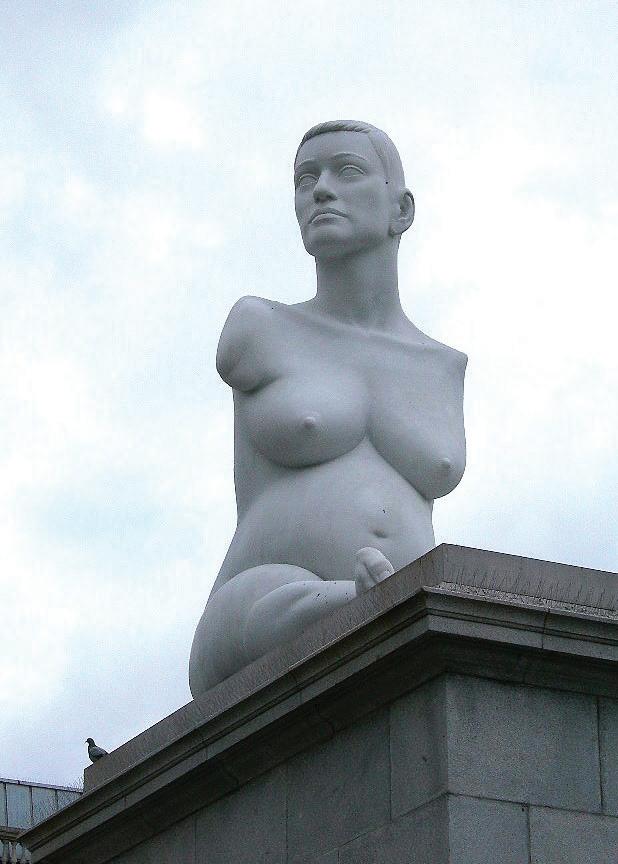
The mixed media sculptures placed on pedestals throughout the exhibition are intriguing in their complex strangeness, referencing monsters, insects and ghosts, and including mythological and cultural symbols. These sculptures are deeply personal, often incorporating clay fragments modeled from Dyck and her family. But they also speak to the universal experience of those with disabilities. As literary and disability theorist Rosemarie Garland-Thomson has noted, persons with a disability are stared at daily and “othered”: they are seen as inferior and undesirable, distanced from the nondisabled viewer because of their disabled body. They are constantly on display because of their perceived deviance from the norm, thus reinforcing social distance and stigma.3 But disabled people have appeared in art throughout history, and even representations of disability unsettle segments of the population who prefer easy beauty to the challenges thrown out by the display of the disabled body. The uproar over the display of Marc Quinn’s Alison Lapper Pregnant, an
11.5 foot tall, 13-ton marble sculpture exhibited on a plinth in London’s Trafalgar Square for eighteen months in 2006, drew hostile reactions from certain quarters: not only was Lapper nude (and barefoot), but she was also pregnant and disabled and occupying a space traditionally associated with able-bodied men. (Many conveniently forgot that Admiral Horatio Nelson, standing on top of a tall column in the centre of the square, was himself physically disabled.)4
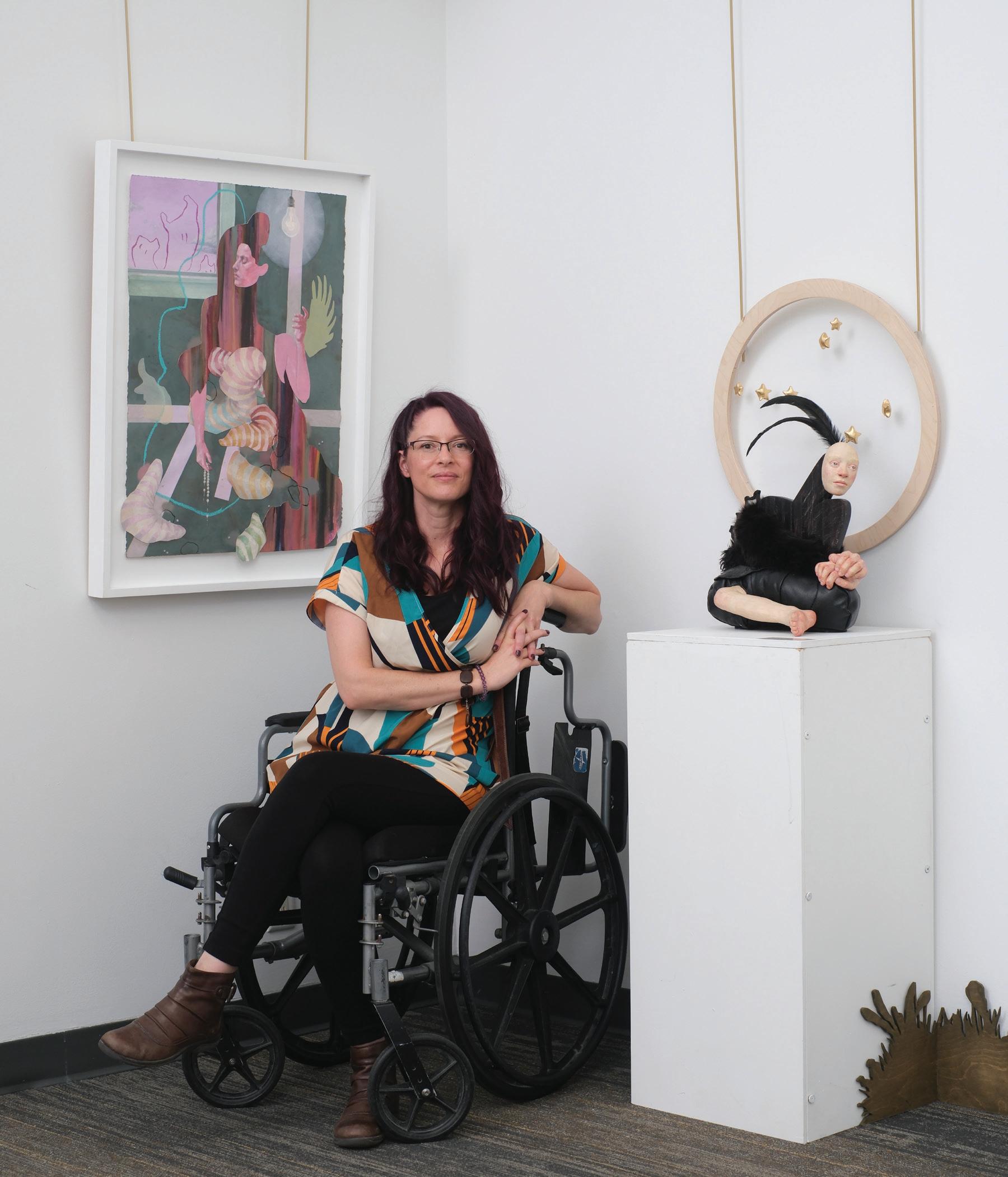
Black with Ghosts exemplifies Dyck’s multi-referential and ambiguous approach to displaying disability in public exhibition spaces. The work comprises two parts: a fragmented figure on the pedestal and, on the wall behind it, a circular wooden frame with golden stars suspended within it. The figure’s ceramic face gazes serenely at us, hands folded left over right and her right leg emerging from the seductive black leather and fur of her truncated torso. Does she have a left leg? We don’t know. Feathers bursting from the back of her head and pointing at the stars, along with her freed right leg, suggest a yearning for escape and freedom. Two schematic white ghosts framed in black and with coal black vertical eyes lurk behind the figure. Are they haunting us? Or the figure? Are they malignant or benign? Ghosts from the past or fragments of the figure’s psyche?
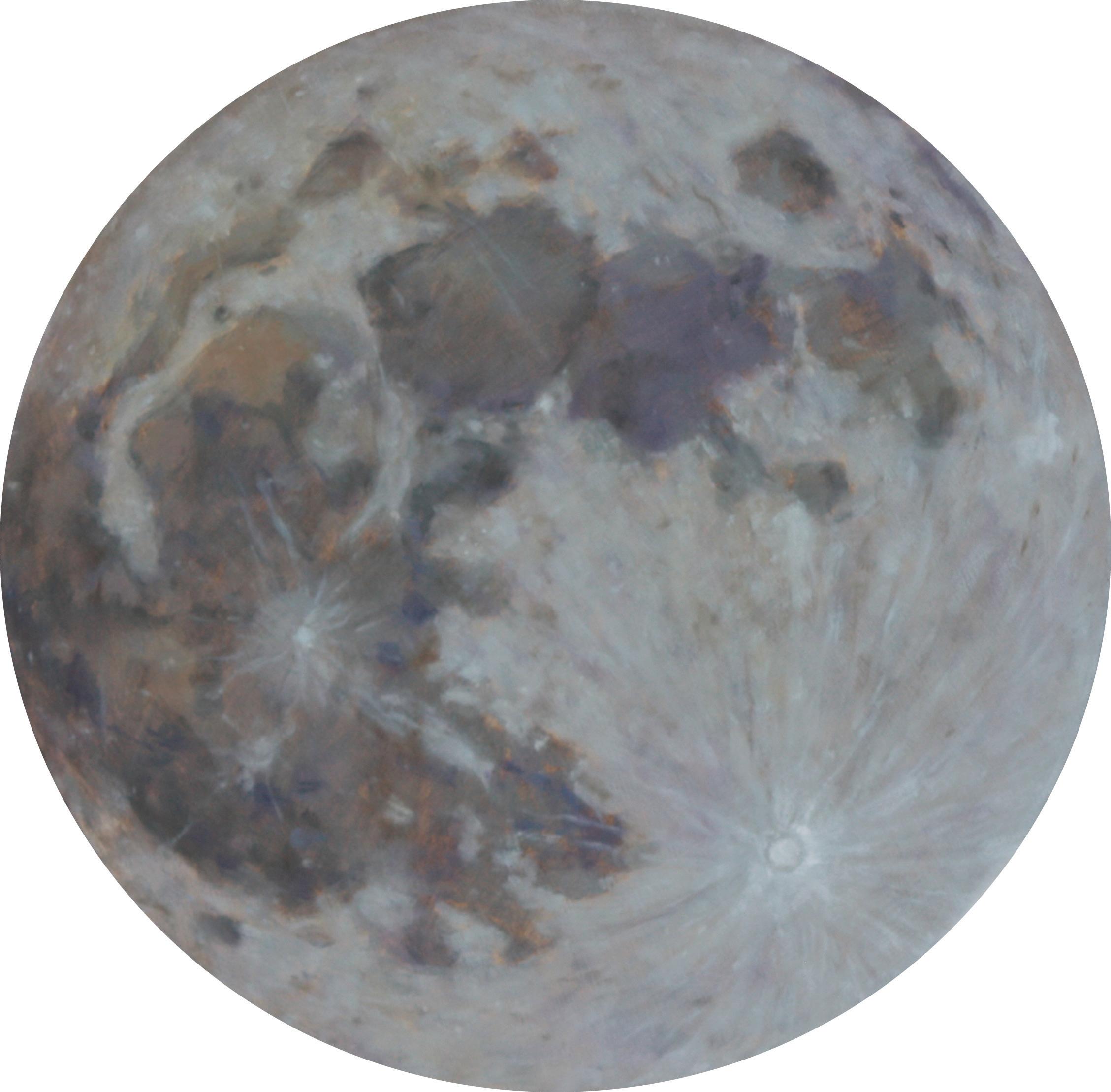
Blame Mosquito is marked by ambiguity and tension. The Medusa-like head features six arms with ruddy hands pointing fingers away from the figure and a seventh hand, also red, pointing at its haloed fur-clad head. There is no supporting body underneath and a painting of a lunar landscape behind it. In some cultures, the mosquito is seen as a symbol of resilience, the pesky David taking on Goliath; however, in many parts of the world it is feared as a carrier of disease. The work invites viewers to interpret trauma and blame in open-ended ways.
Worm with Teeth (Ouroboros) at first appears to symbolize wholeness and infinity but soon reveals a conflict between protection and aggression. The worm, clad in lace and a soft fuzzy blanket, hugs and knots itself together, its leather tail disappearing into a gaping, toothy mouth. Dyck’s take on Ourorobus is far from easy beauty, instead presenting many layered meanings: most apparent is the suggestion of violence within the universal life cycle of renewal and rebirth.
Collage is central to Dyck’s practice, serving as a tool to navigate the capricious nature of illness and disability. It allows for the expression of realities that can’t - or shouldn’t - be put into words.
Alison Lapper Pregnant, Marc Quinn, 2006. Photo by Carolyn MacHardy.
Layering fragments, erasing, and adding more layers in different media is a temporal process that can serve as a metaphor for the process by which the body reveals its new and changing realities. It is also a way to explore and test ideas before they are presented in larger works. In Wings and Wheel Dyck contrasts flight – wings attached to her forehead, covering her eyes - with immobility –a discombobulated wheelchair is ineffective in the artist’s clawed hands. Dyck revisits these ideas in Wheel and Wings (pg. 27), using oil paint and reclaimed fabric on wood to create a larger and more robust three-dimensional collage. Here there is much greater tension as Dyck has layered the fragmented body parts with greater precision, relegating the sharp talons to the background, and adding a small rabbit (the family pet) crawling up her leg. She is powerless to brush it off, but she may not want to reject this small creature whose fight/freeze/flight reflexes so closely mirror ours.
Conversation (with help from Kiyotada and Cezanne) (pg. 66) is also a collage and powerfully states the exhibition’s central theme. Here a figure inspired by the 18th century Japanese artist Kiyotada, sits on a chair in a room with a lightbulb, approached by a Bosch-like hybrid creature, half human, half marine animal. Outside the window/portal, Mont Saint-Victoire, made famous by 19th century French artist Paul Cezanne’s many paintings of it and now a mecca for artists and non-artists alike, is almost reachable…if only. The larger oil painting on canvas, based on this collage, leaves more to the imagination: the figure on the chair and the strange creature on the floor continue to gesture toward each other, trapped in an interior lit by artificial light while outside the sun, mountain and blue-sky contrast with the claustrophobic interior. The tension is heightened with the introduction of a small iridescent fly on the window ledge: will it opt for freedom or join the other two in their attempt to have a conversation that spans cultures, geographies and species?
The circular installation of the Bed-Desk series originated during a period when Dyck was confined almost exclusively to her bed. Her husband constructed a desk for her use in bed so that she could continue with her art practice. Throughout this process, which is ongoing, the real window in her bedroom, which features in many of her works, beckons while the panels, exploring figures in motion, some in a rhapsodic dance of metamorphosis, allude to her hope for regained mobility. An artist’s studio can be any place they wish is to be, and Dyck follows precedents set by artists Frida Kahlo and Henri Matisse in turning her bed into a studio for an exploration of creative energy and inspiration.
Amy J. Dyck has seized control of her narrative, refusing ableist perceptions of disability as suffering or diminished worth. Portals to Elsewhere has a powerful, quirky energy and engages the viewer through the interplay of ambiguity, complexity and tension. Dyck’s invitation to be stared at is reciprocated as she stares boldly back at us. Yes, she’s complicated and her dignity, even when her body is a shambles, is intact. Difficult beauty indeed.
Endnotes
1 Chloé Cooper Jones, Paul Dippolito, and Alison Forner, Easy Beauty: A Memoir, First Avid Reader Press hardcover ed., (New York, NY: Avid Reader Press, 2022), 131. Cooper Jones paraphrases Bosanquet’s argument.
2 Ann Millett-Gallant, The Disabled Body in Contemporary Art (New York, NY: Palgrave MacMillan, 2010), 5.
3 Rosemarie Garland-Thomson, Staring: How we Look (New York, NY: Oxford University Press,2009),https://search-alexanderstreet-com.eu1.proxy.openathens.net/view/work/bibliographic_ entity|bibliographic_details|3219894.
See also Rosemarie Garland-Thomson, and American Council of Learned Societies, Extraordinary Bodies: Figuring Physical Disability in American Culture and Literature (New York: Columbia University Press, 1997), https://www.fulcrum.org/concern/monographs/js956g01z.
4 The sculpture is presently in storage. For an excellent discussion of the public display of disability see Ann Millet, “Sculpting Body Ideals: Alison Lapper Pregnant and the Public Display of Disability,” Disability Studies Quarterly 28, 3 (Summer 2008), at https://www.digitalgreensboro.org/record/6844?ln=en&p=Lap per+Pregnant&v=pdf
Carolyn MacHardy is Associate Professor Emerita of Art History at the University of British Columbia’s Okanagan campus, where she specialized in Global Contemporary, Canadian and Outsider Art History. She has written numerous exhibition catalogue essays on local artists, including Mary Smith McCulloch, Ruth MacLaurin, Percival Ritchie, Lori Mairs, Briar Craig, Shawn Serfas and Wanda Lock. She has published articles on Canadian artists Tom Thomson, Clarence Gagnon and Donald Shaw MacLaughlan; her article on Lady Aberdeen’s 1891 Guisachan Album was published in the Journal of Canadian Art History in 2015. In 2023 she curated the exhibition Geography Lessons, devoted to the artists Nellie Duke and Sophie Atkinson, at the Kelowna Art Gallery.
ARTIST STATEMENT
Pulling from my lived experience with disability and difficulty, the creatures are nuanced and strange, broken and fierce, and filled with conflicting layers that ,make up the whole of who they are.
Using symbols of human, animal and insect bodies, as well as monsters and ghosts, mechanical and abstracted forms, I suggest a complex psychological landscape in each figure. These visual metaphors evoke ideas such as primal instinct, imagination, haunting memories, self-protection, dignity, and resistance. I explore an allegory of what resilience might look like in the face of hard and life-altering circumstances.
Windows are a sort of portal to another space; they allow us to experience, even if at arms-length, another place. Through one, a person can observe the sunrise, listen to birds, spy on neighbours, all without leaving home. For a person with chronic illness, a window can be a lifeline, offering somewhere to escape to. In this exhibition, windows serve as a metaphor for imagining something different for oneself - a place to escape to or to be oneself.
The large circular installation in this gallery is an invitation into a contemplative space, where seven figures each evolve through time. These drawings were completed almost entirely from bed, where I worked while too sick to leave the house over winter. I explored what movement might feel like through drawing when my body was in a state of collapse.
My process typically starts with small mixed media collages. I explore feelings and ideas through photographs, papers, magazines, paints, and other media until a complex and embodied presence emerges. These small works are usually finished pieces, and are often the inspiration for larger paintings, drawings, and sculptures over time.
In this exhibition, the gallery itself is transformed into a wild place where strange beings exist, stretch their legs, and find their place in the world too. These creatures are me, and they are you, in all their complexity, mess, and longing as they imagine a place where they can escape, belong, or call home.
Amy J. Dyck
ARTWORK IN THE EXHIBITION
PAINTINGS
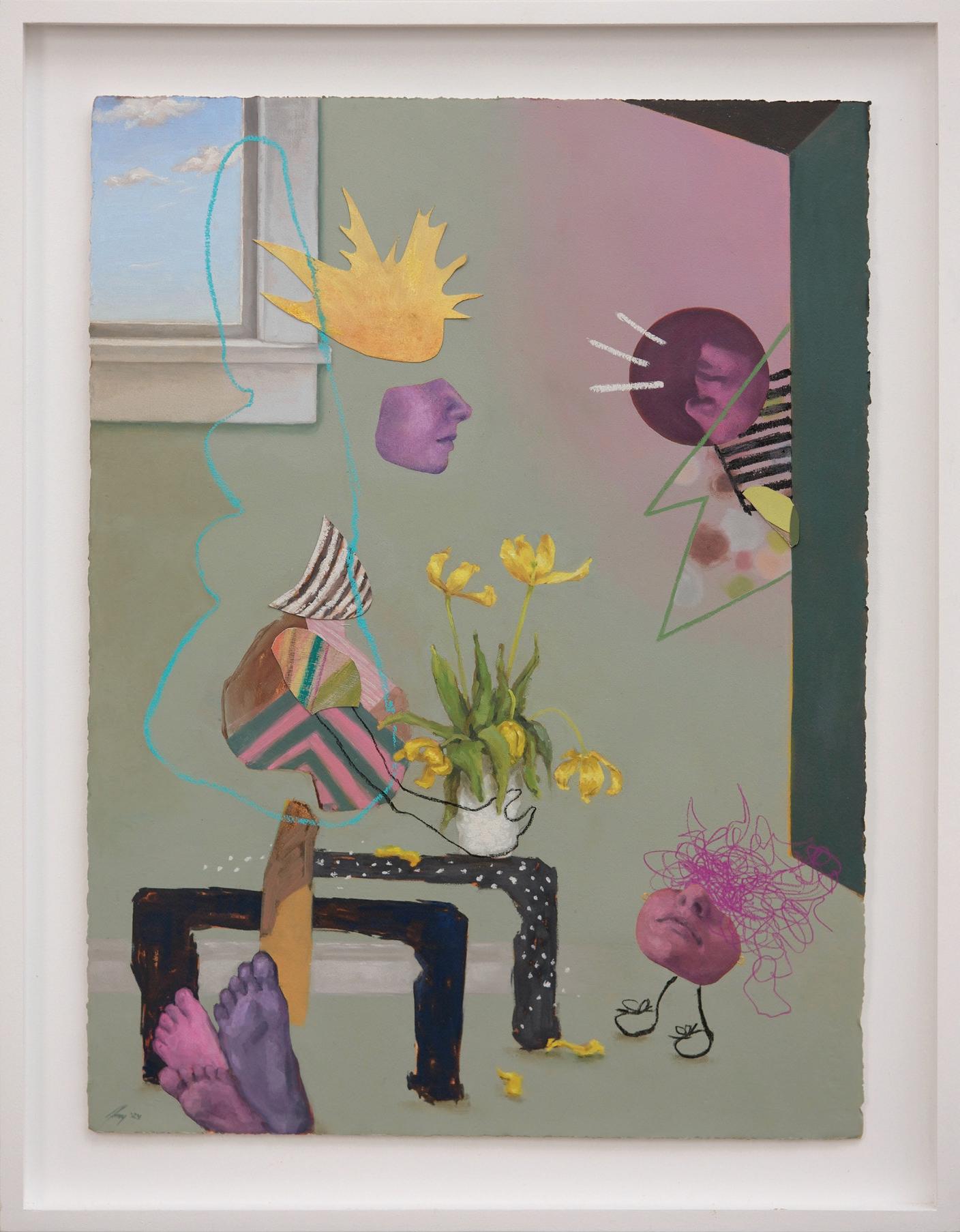
Peace Offering 1 (Tulips), 2024. Oil paint with pastel and charcoal on mounted paper. 30x22.5 in. (unframed).
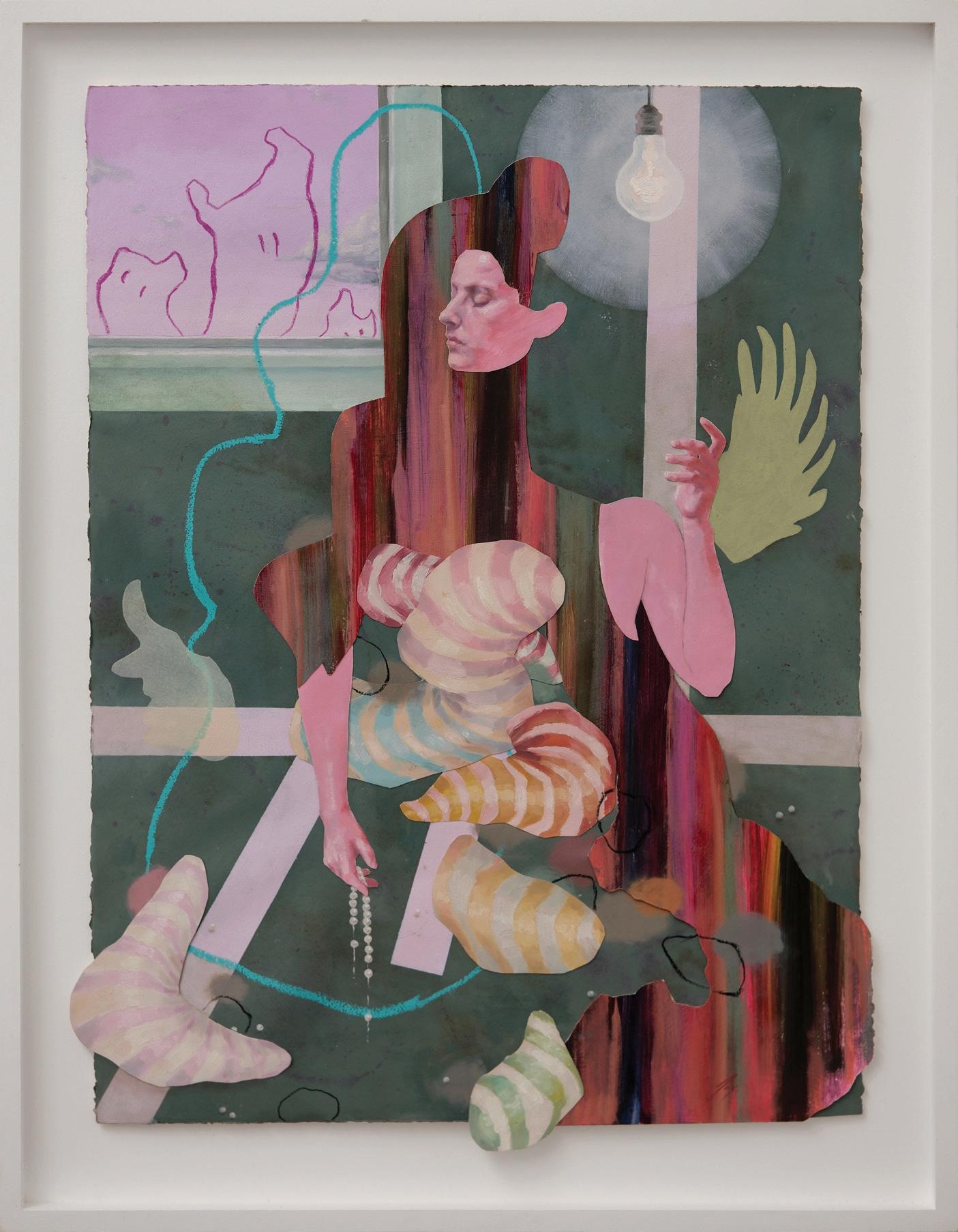
Peace Offering 2 (Necklace), 2024.
Oil paint with pastel and charcoal on mounted paper. 30x22.5 in. (unframed).
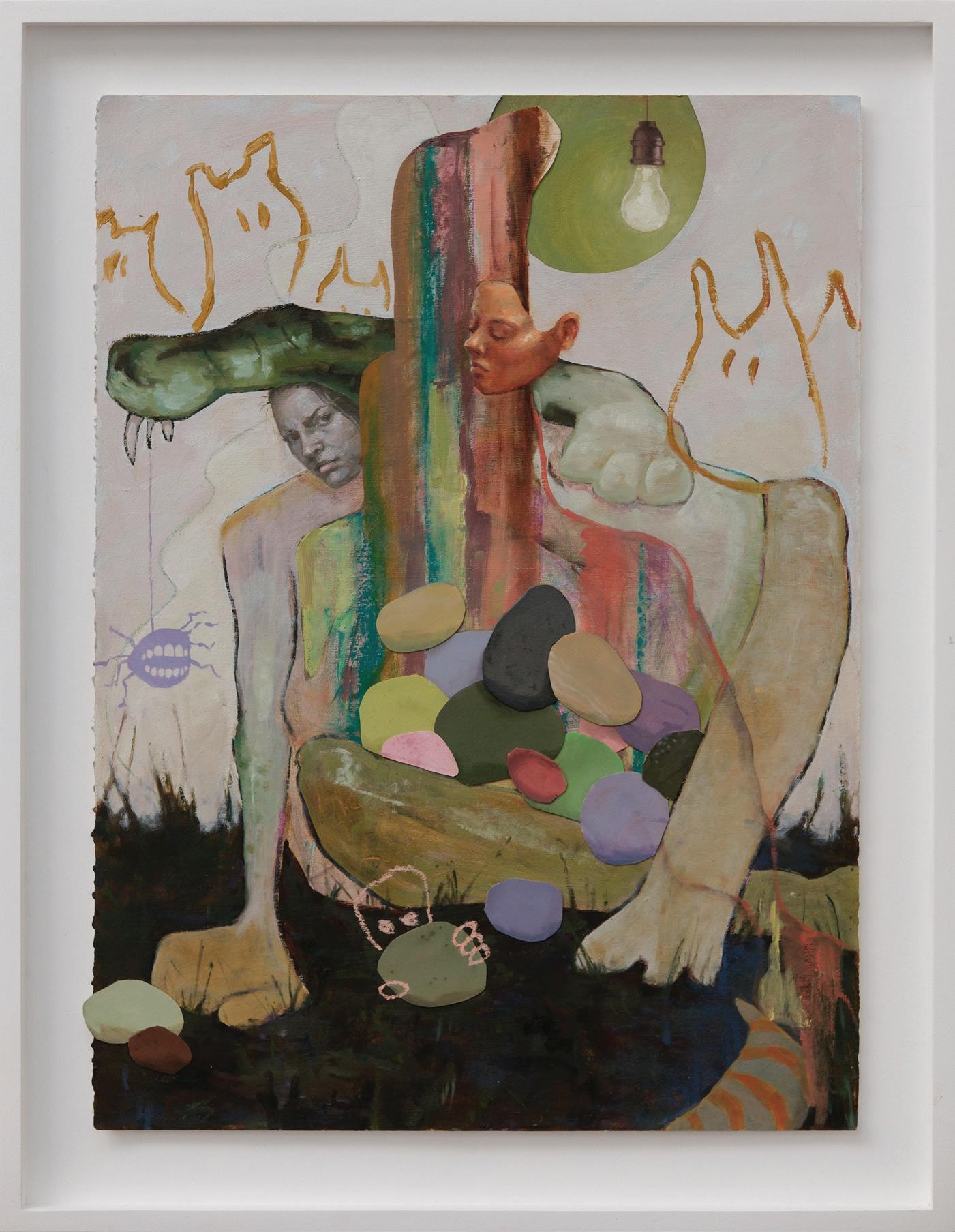
Peace Offering 3 (Rocks), 2024.
Oil paint with pastel and charcoal on mounted paper. 30x22.5 in. (unframed).
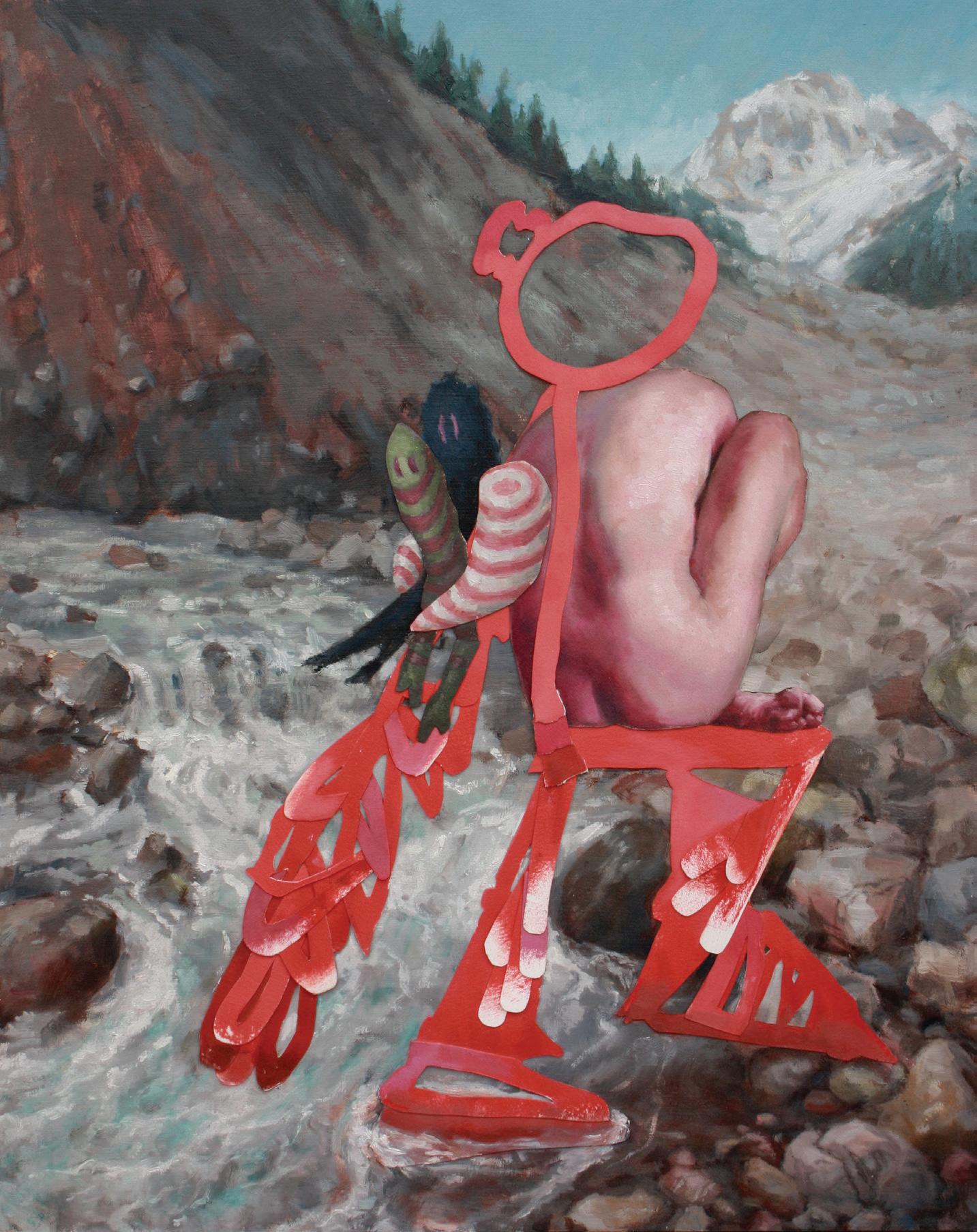
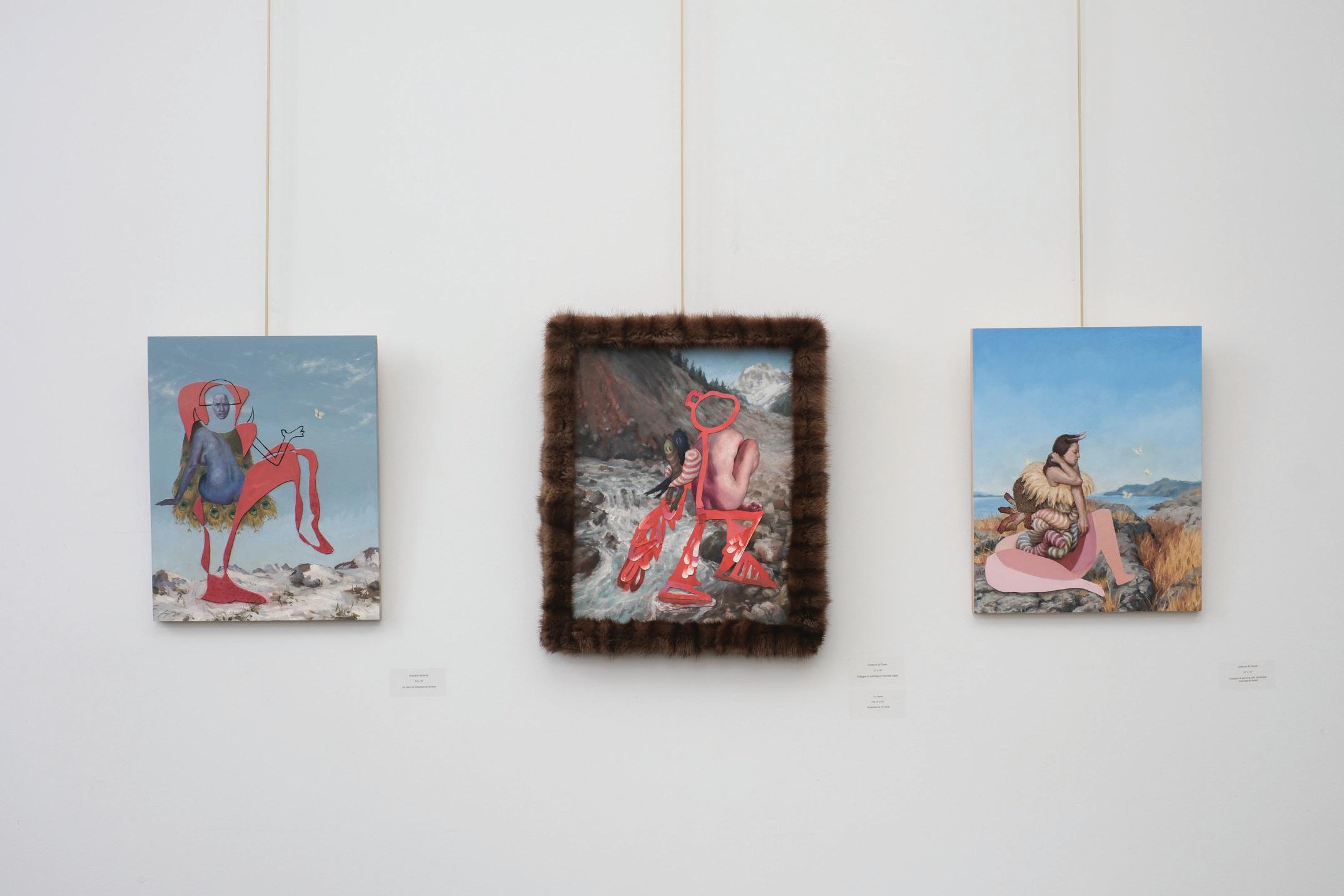
Creature by Creek, 2022. Collaged oil painting on mounted paper. 12x16 in. (unframed).
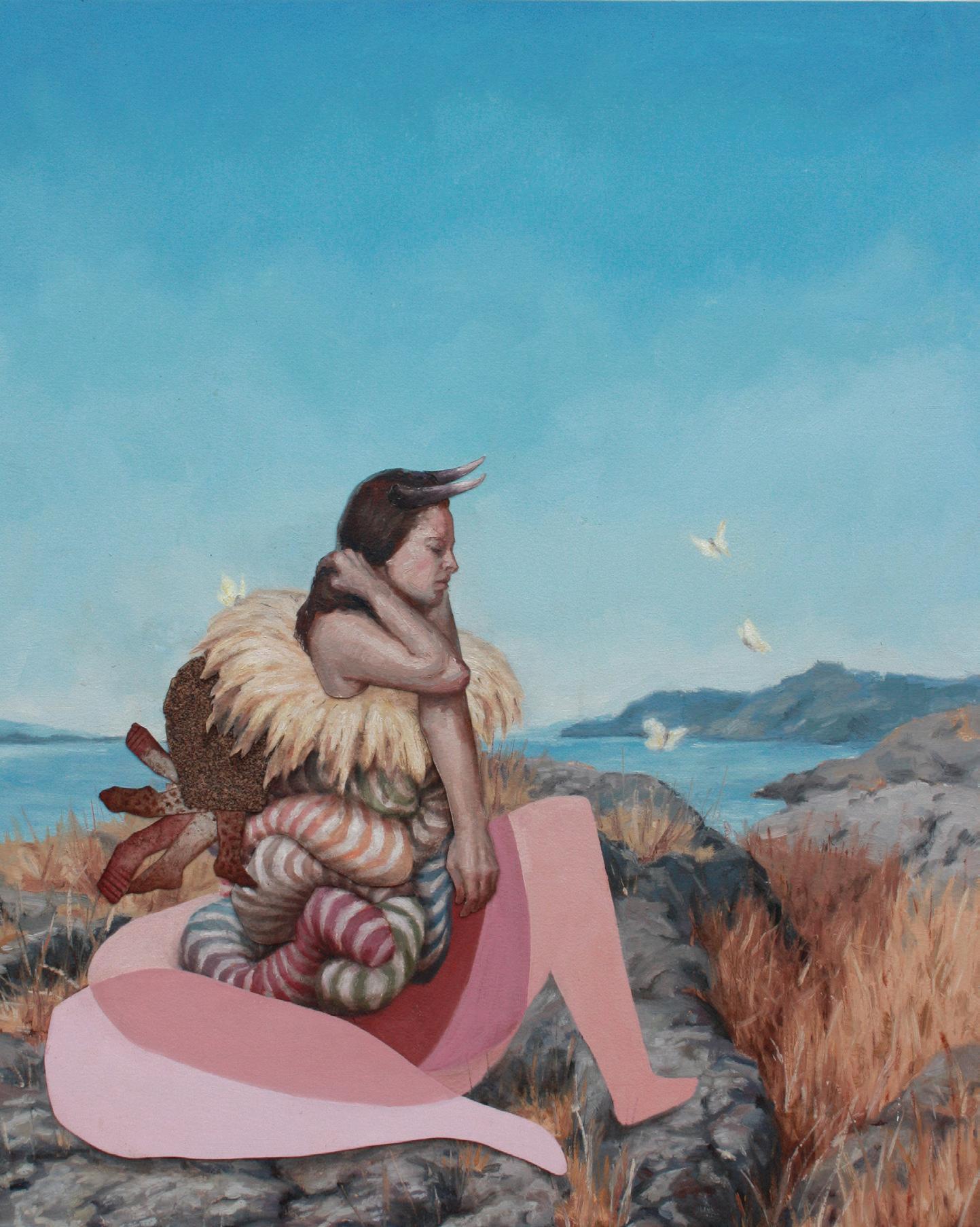
Creature by Ocean, 2022. Collaged oil painting with sandpaper, mounted on board. 12x16 in.
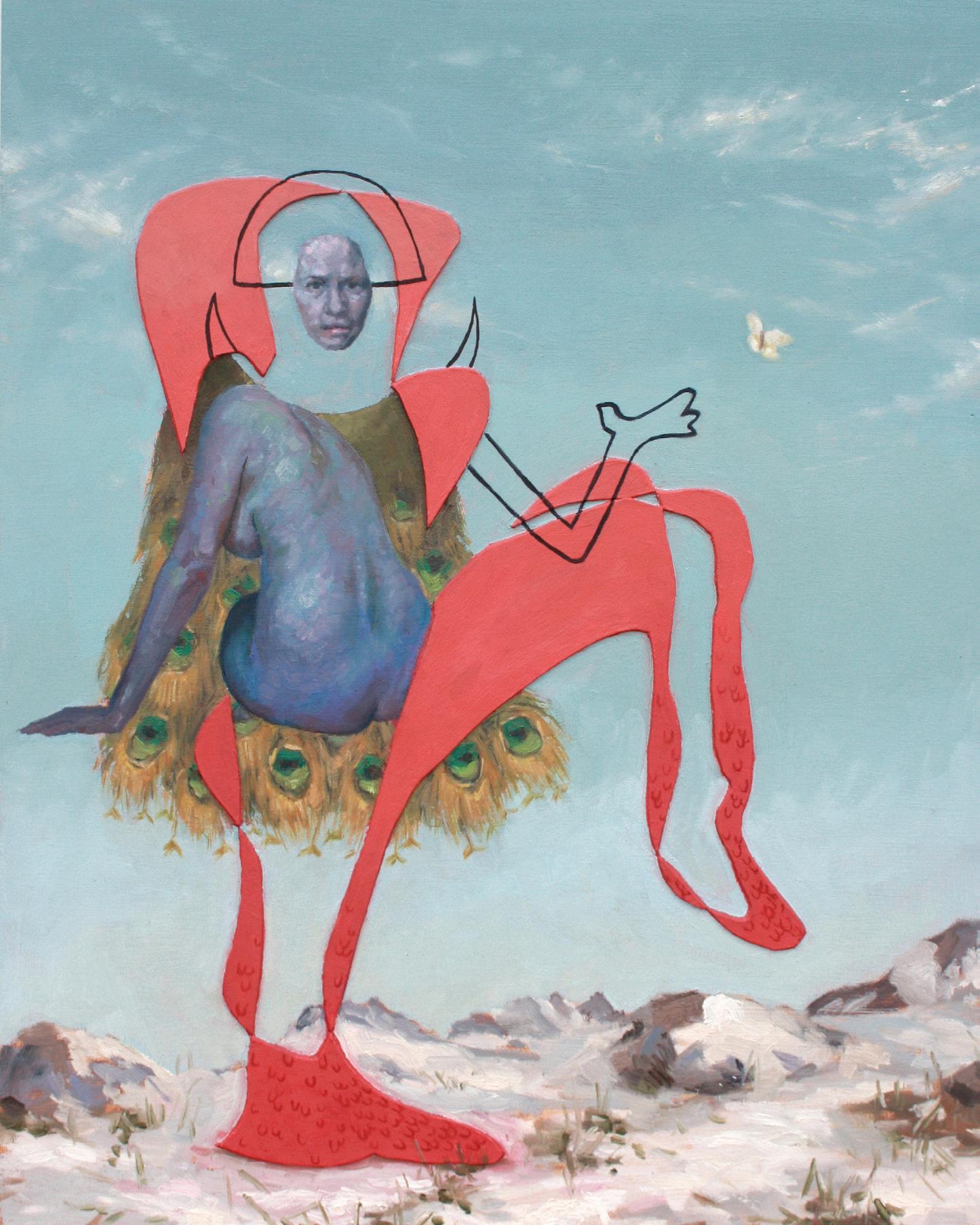
Blue with Butterfly, 2022. Oil paint on dimensional surface. 12x16 in.
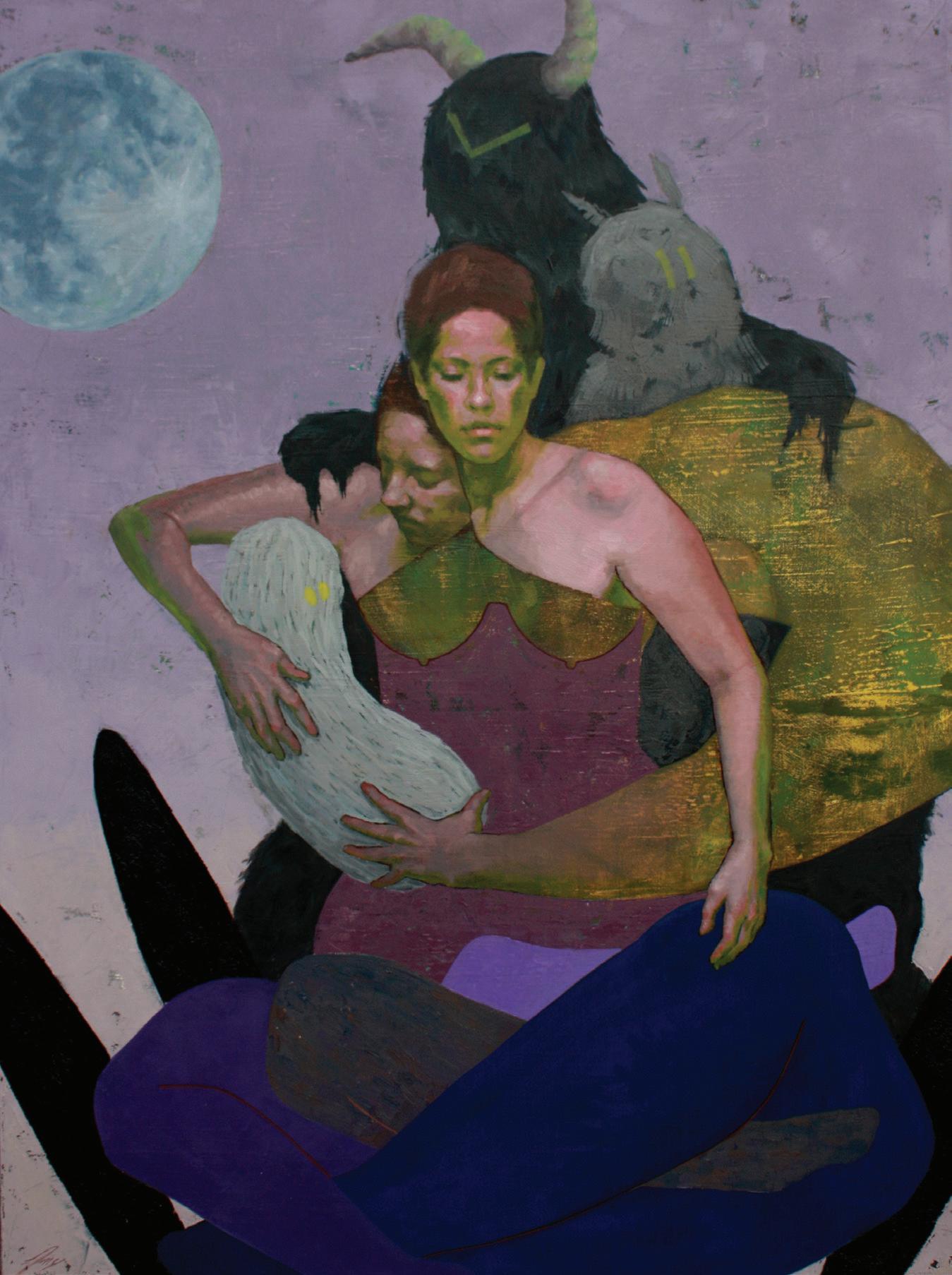
Three Monsters, 2022. Oil paint and tar on canvas. 30x40 in.
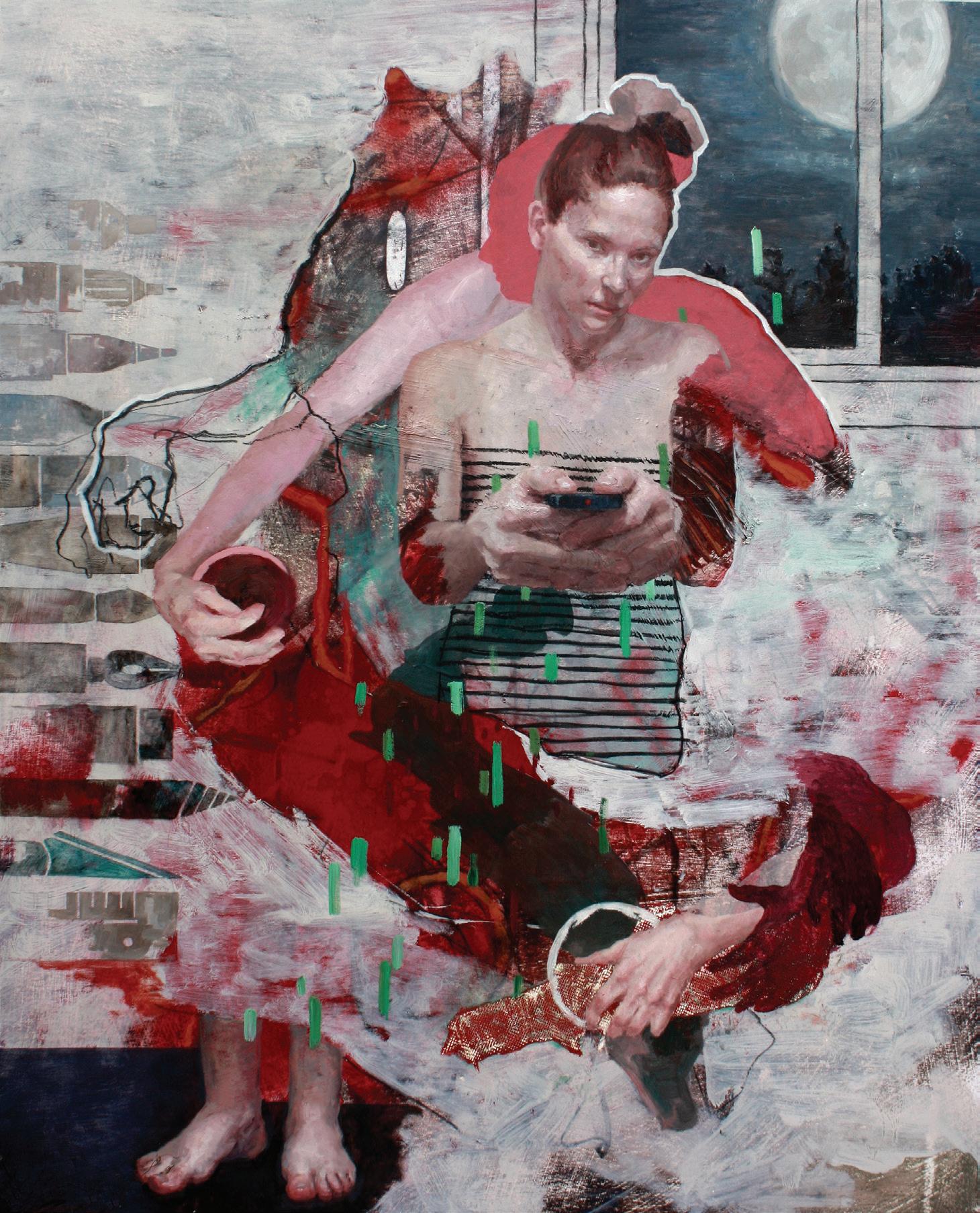
Chaos and Order, 2021. Oil paint with spray paint and charcoal on cradled board. 24x30 in.
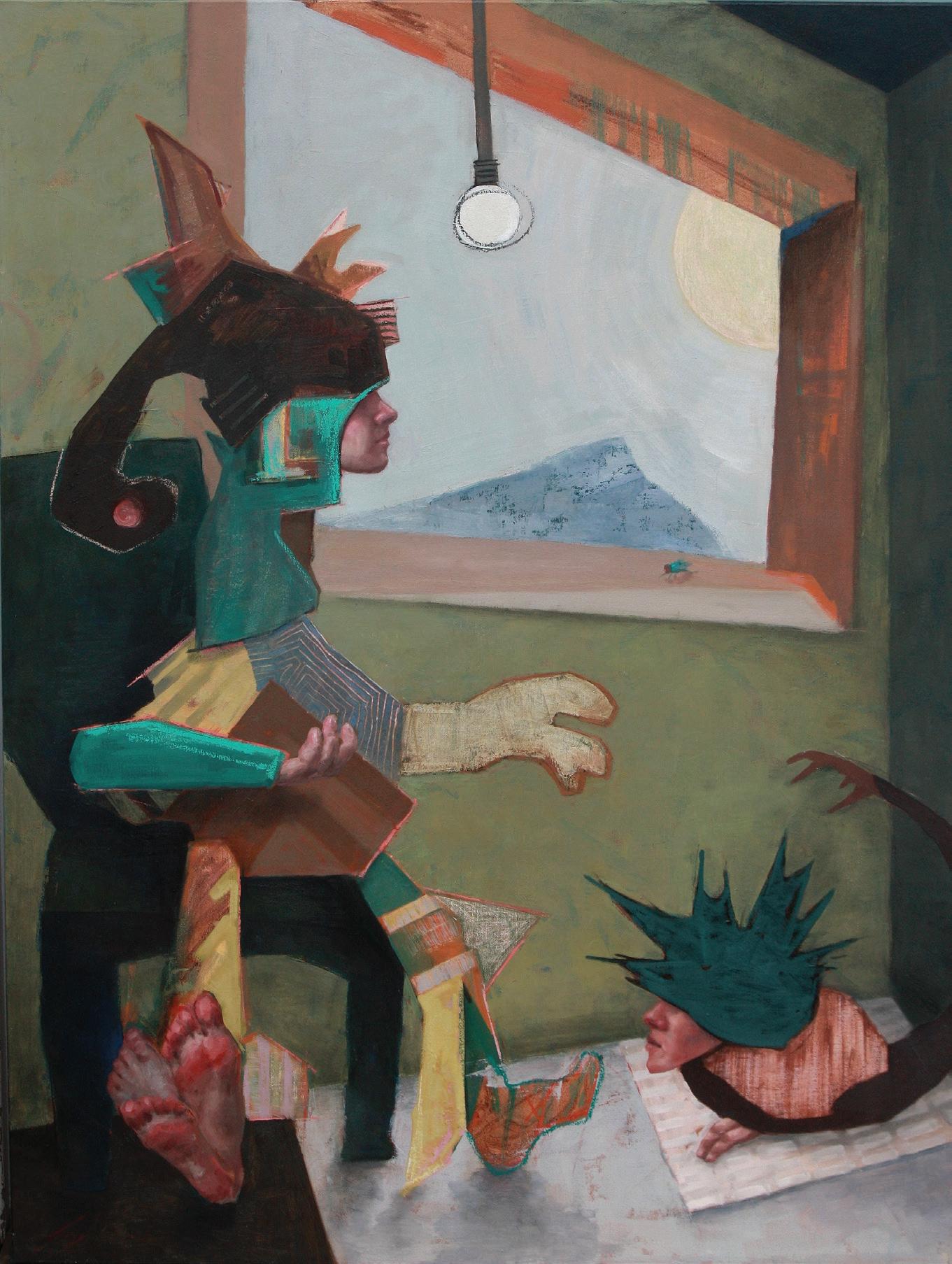
The Conversation, 2024. Oil paint on canvas. 30x40 in.
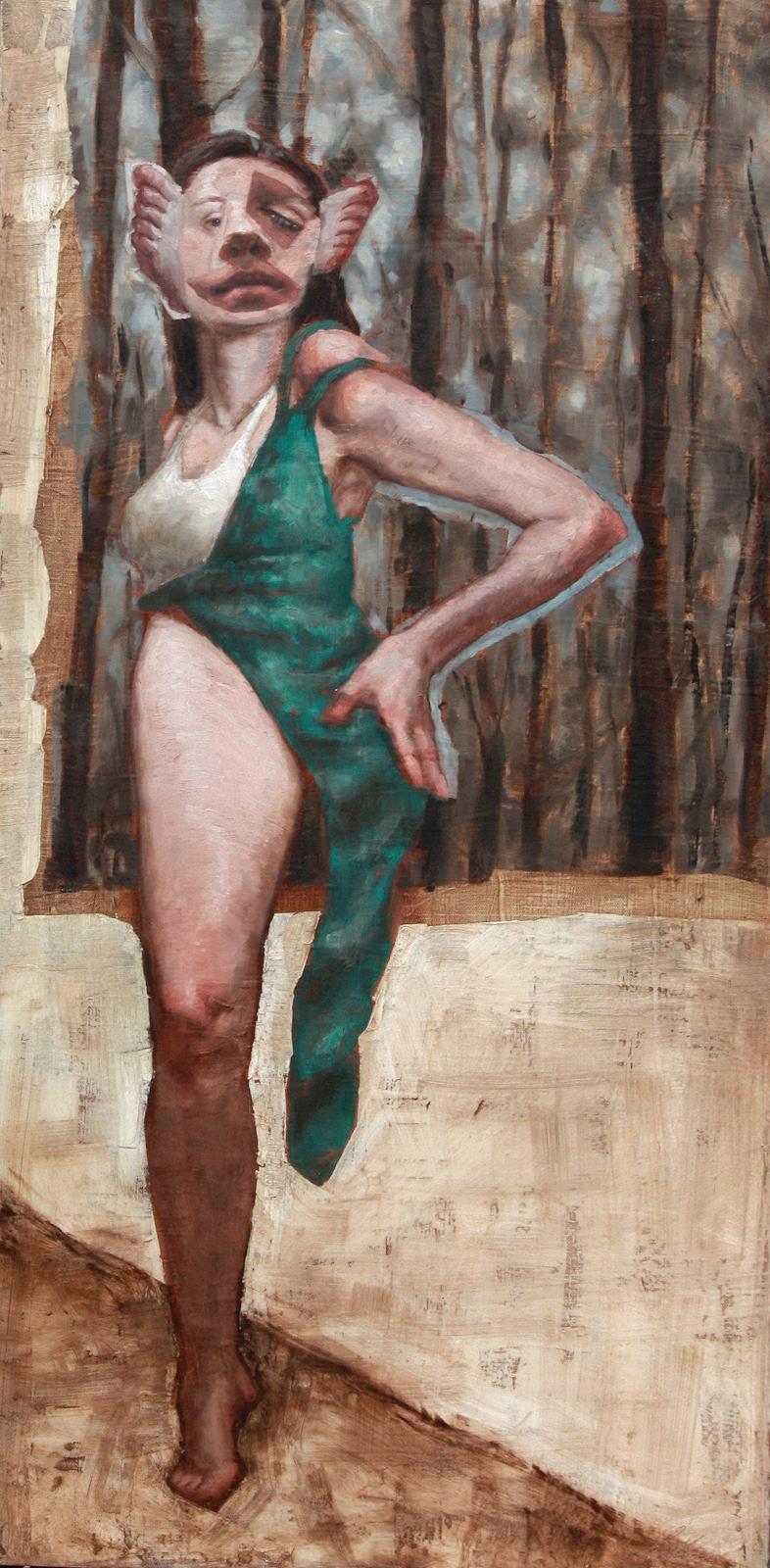
Hi, I’m Complicated, 2018. Oil paint on canvas. 18x24 in.
DIMENSIONAL COLLAGES
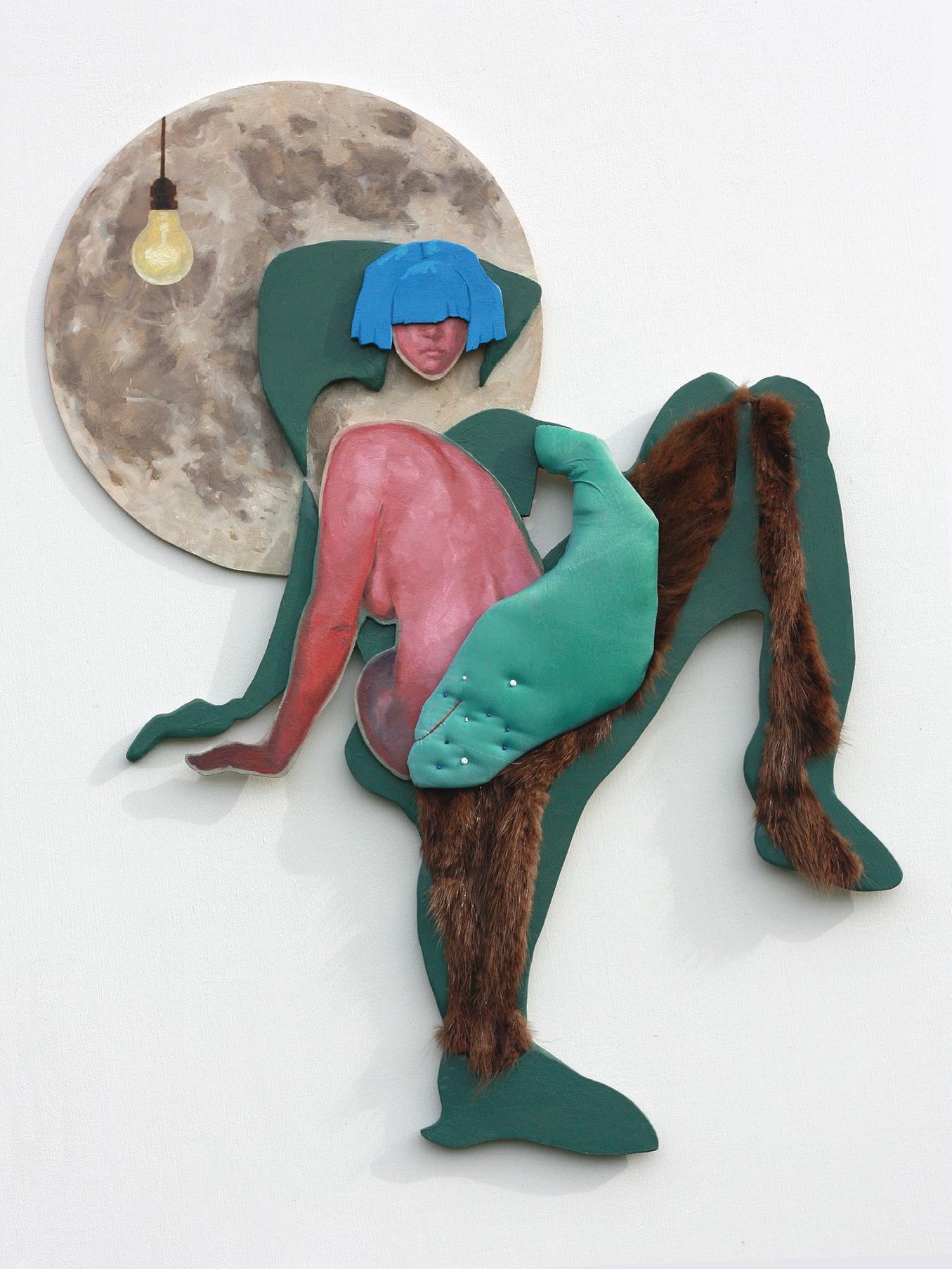
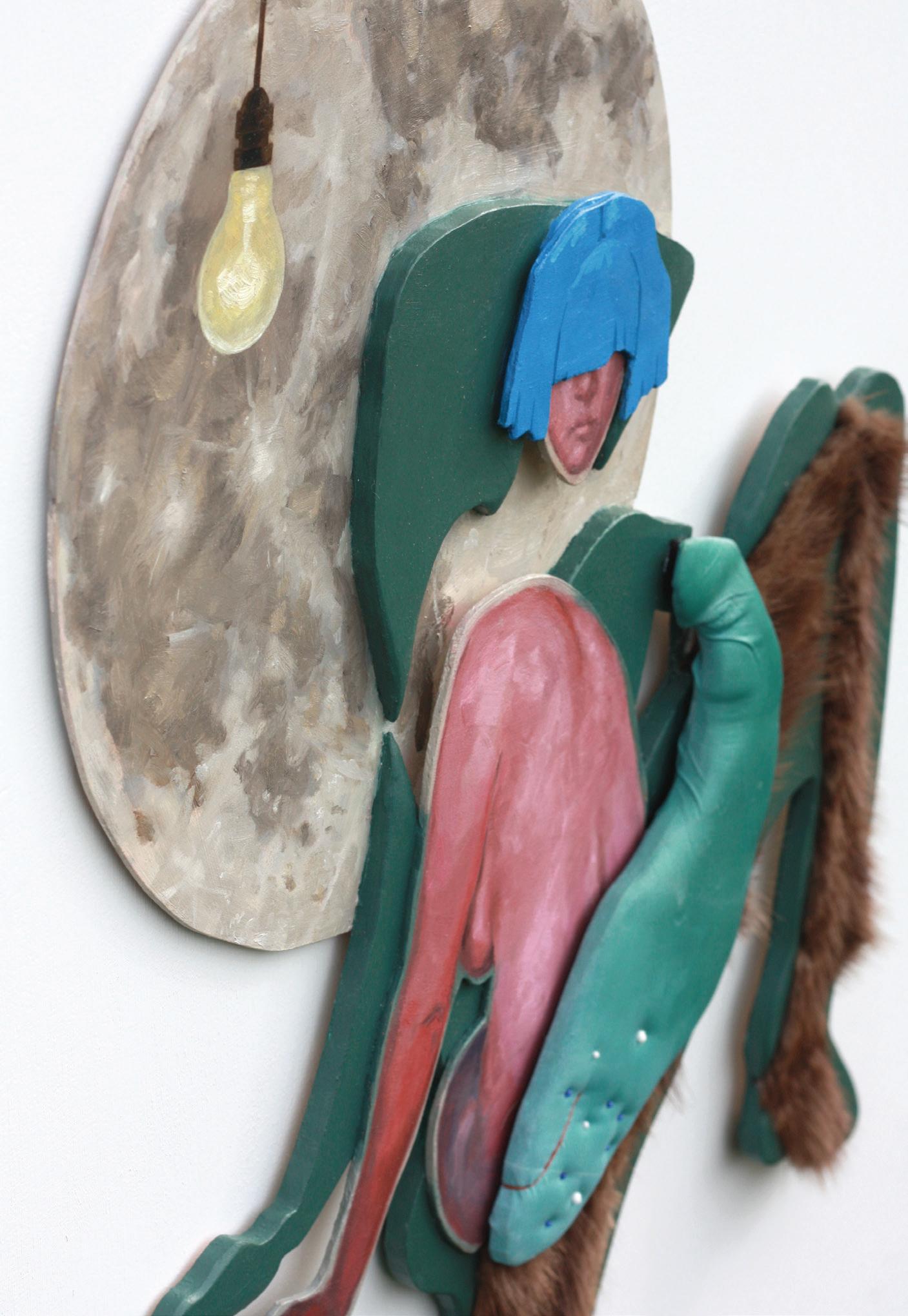
Moon with Lightbulb, 2024. Oil paint, reclaimed fur, and fabric with beads on wood. 21x29x1 in.
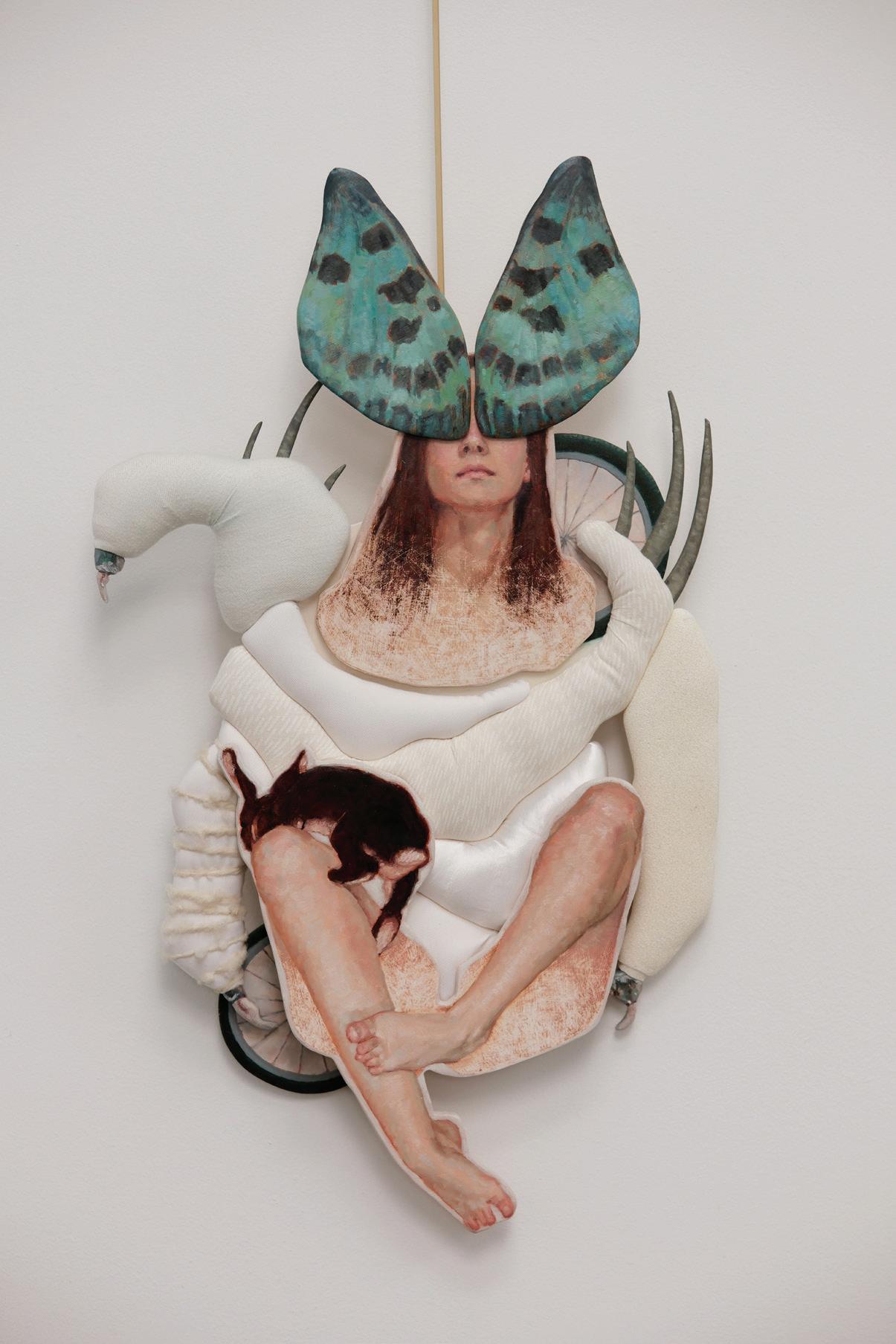
Wheel and Wings, 2023. Oil paint and reclaimed fabric on wood. 31x19x2.5 in.
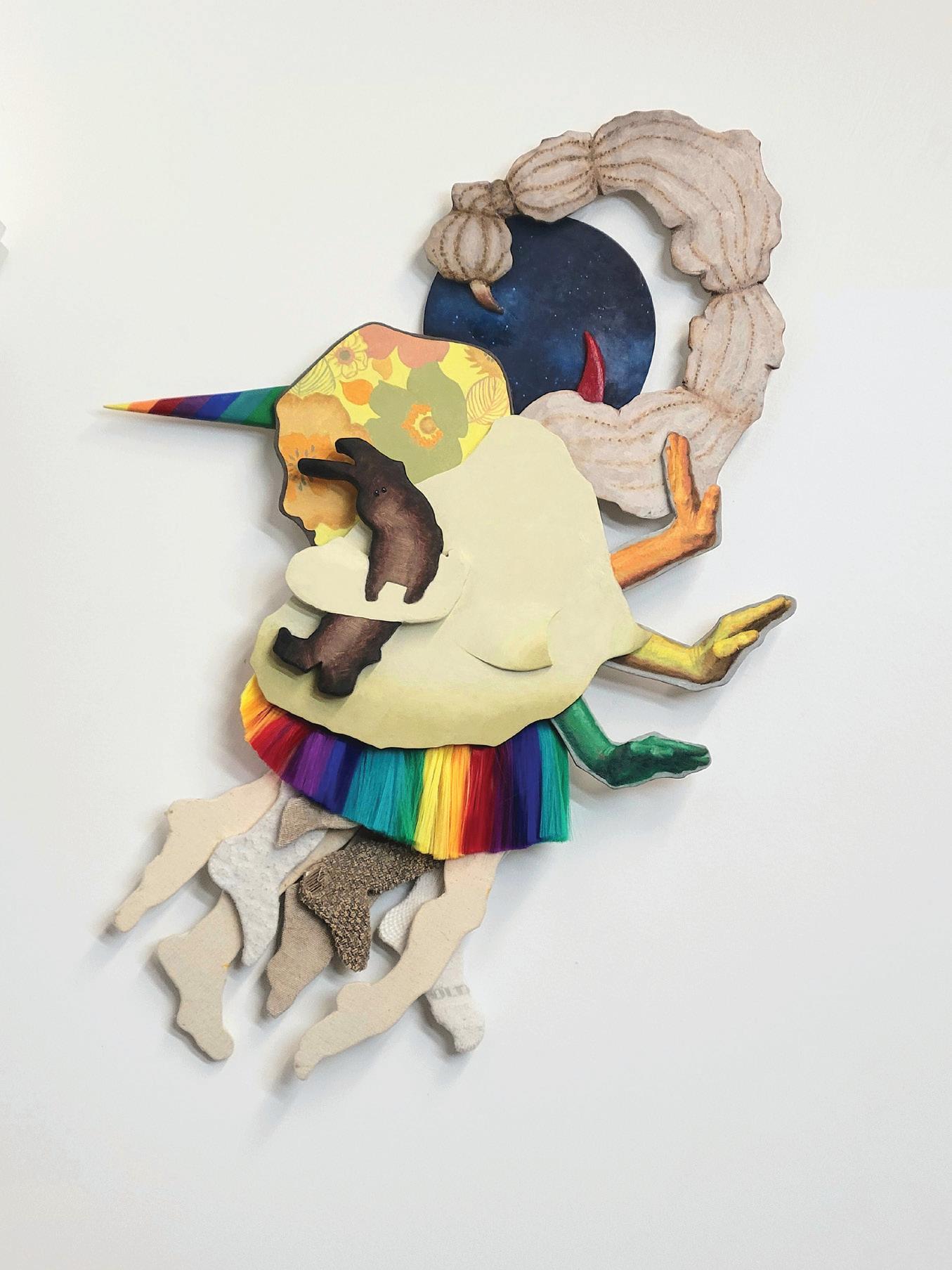
Rainbow Unicorn, 2023. Oil paint on wood with hair extensions and reclaimed fabric. 20x28.5x1 in.
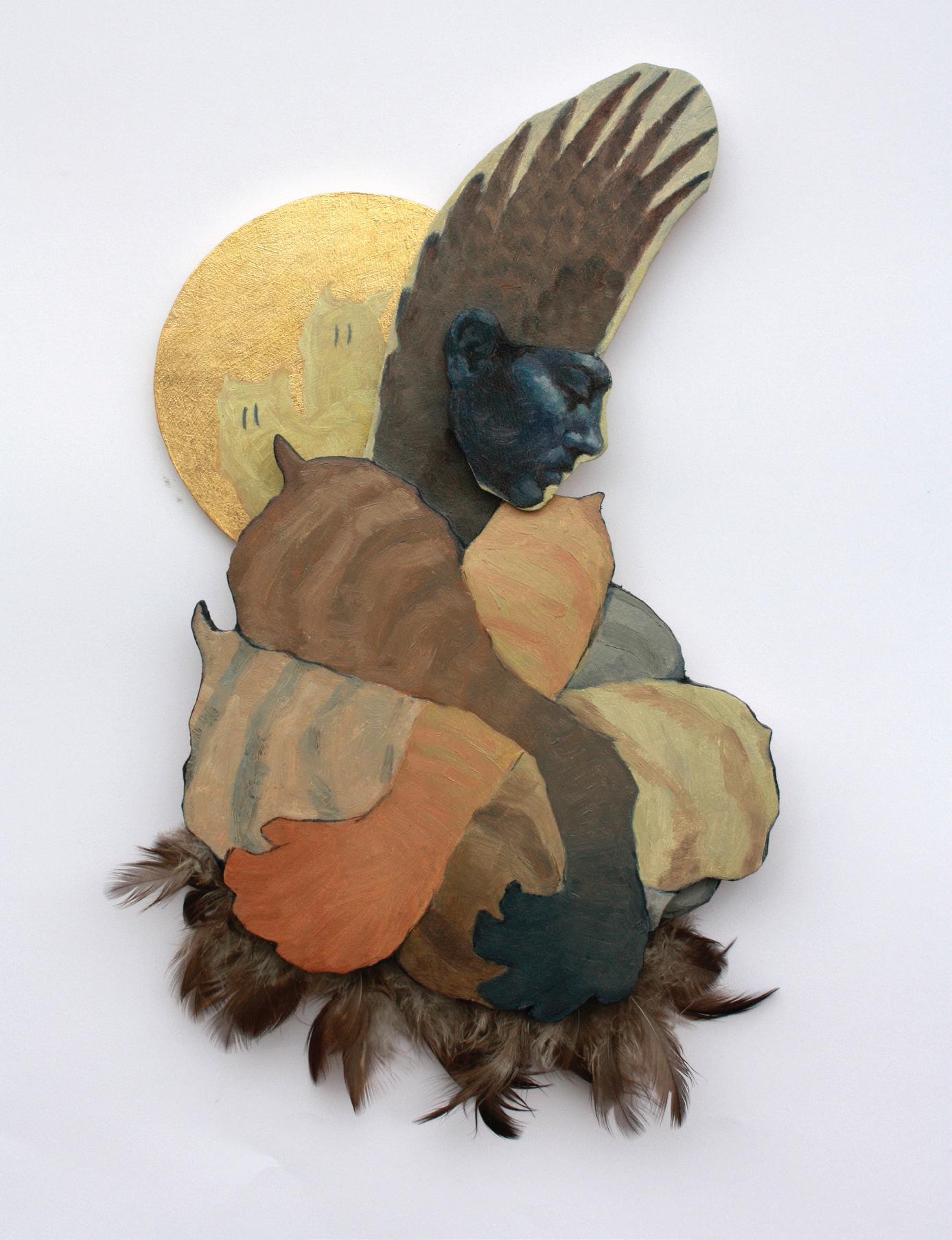
Hawk with Gold, 2022. Oil on baltic birch plywood with hawk feathers and metal leaf. 10x17.5 in.
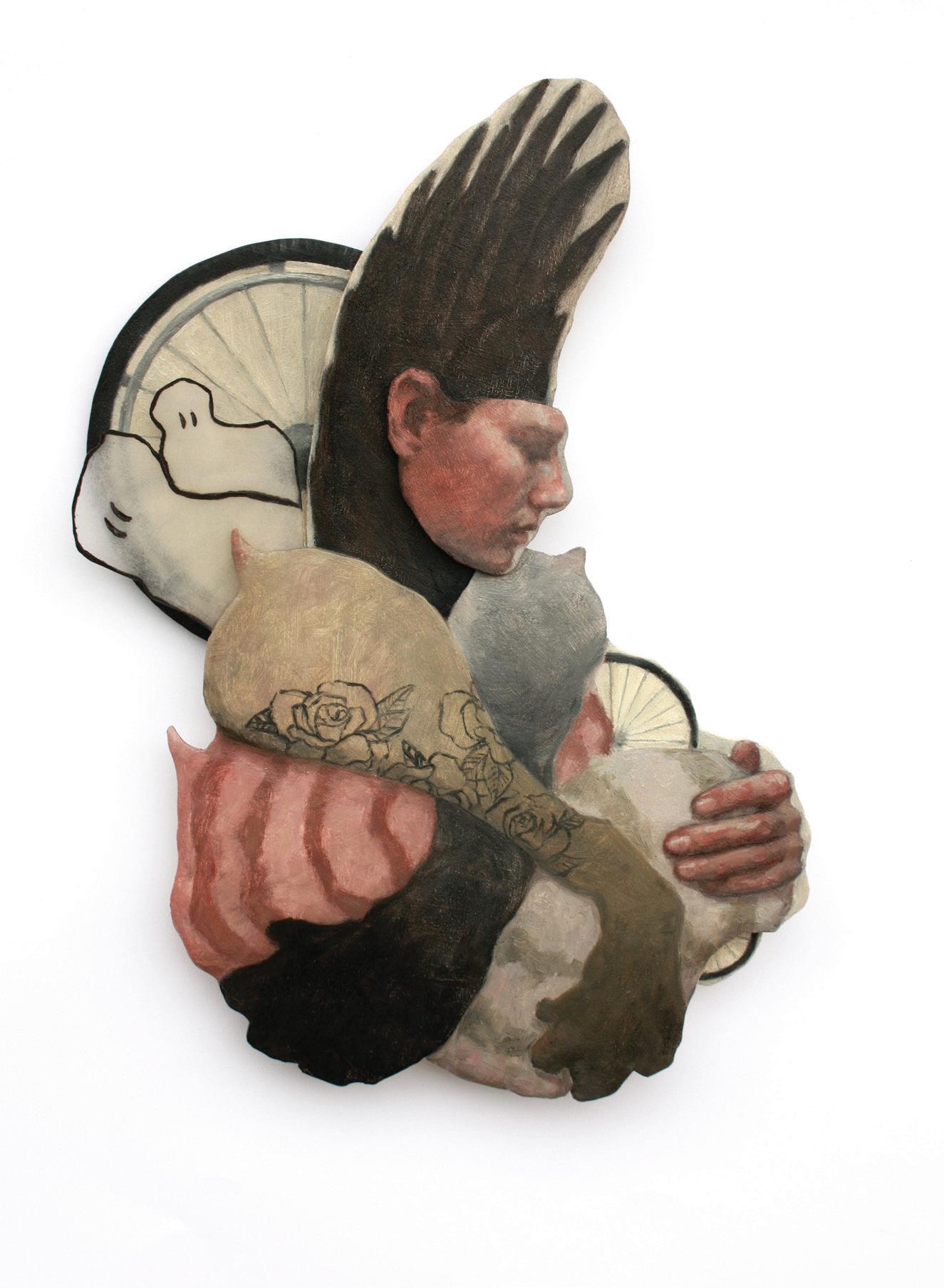
Wheel and Ghosts, 2022. Oil on baltic birch plywood with plexiglass insert. 10x16 in.
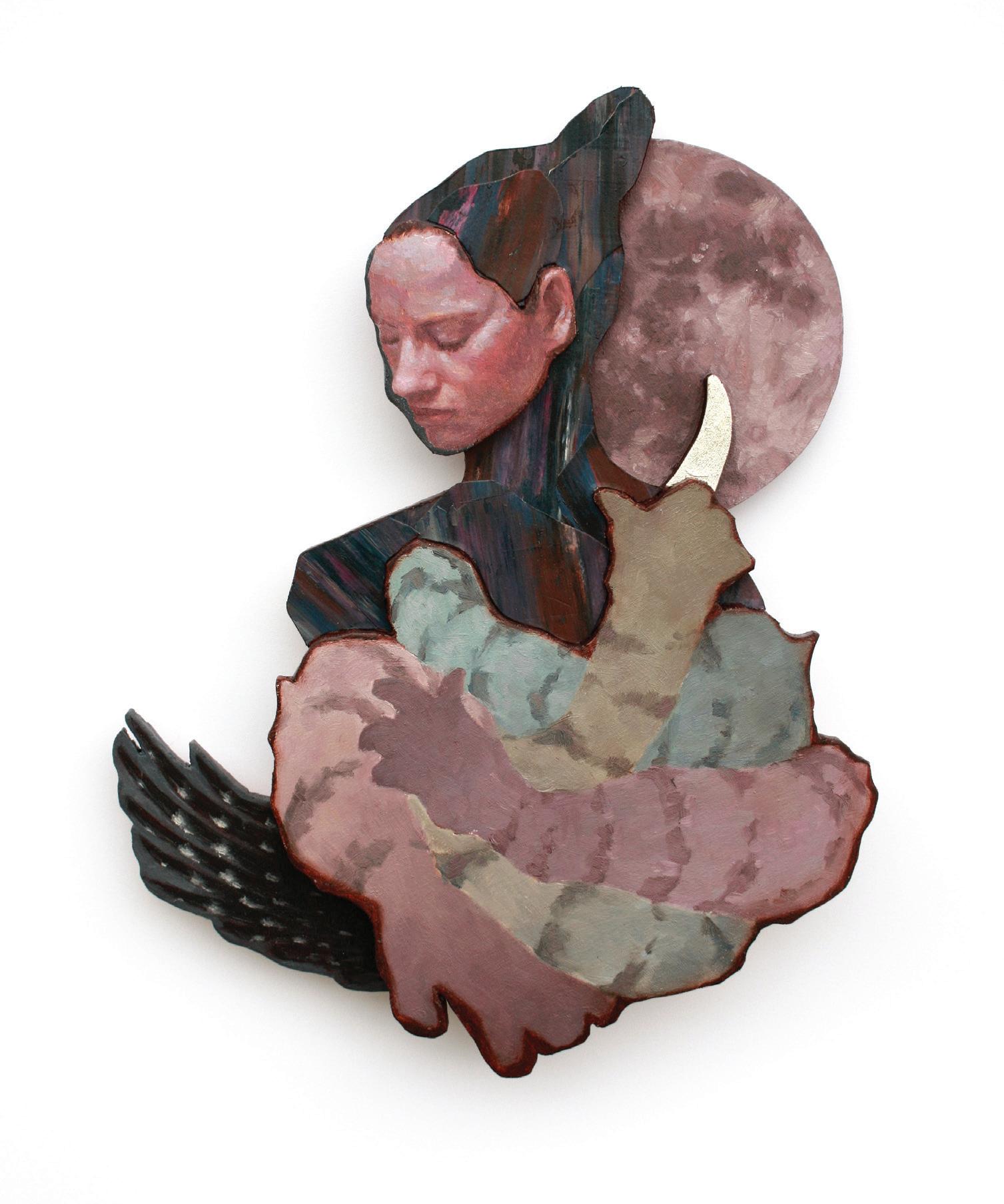
Purple Moon, 2022. Oil on baltic birch plywood with aluminum leaf. 11x14 in.
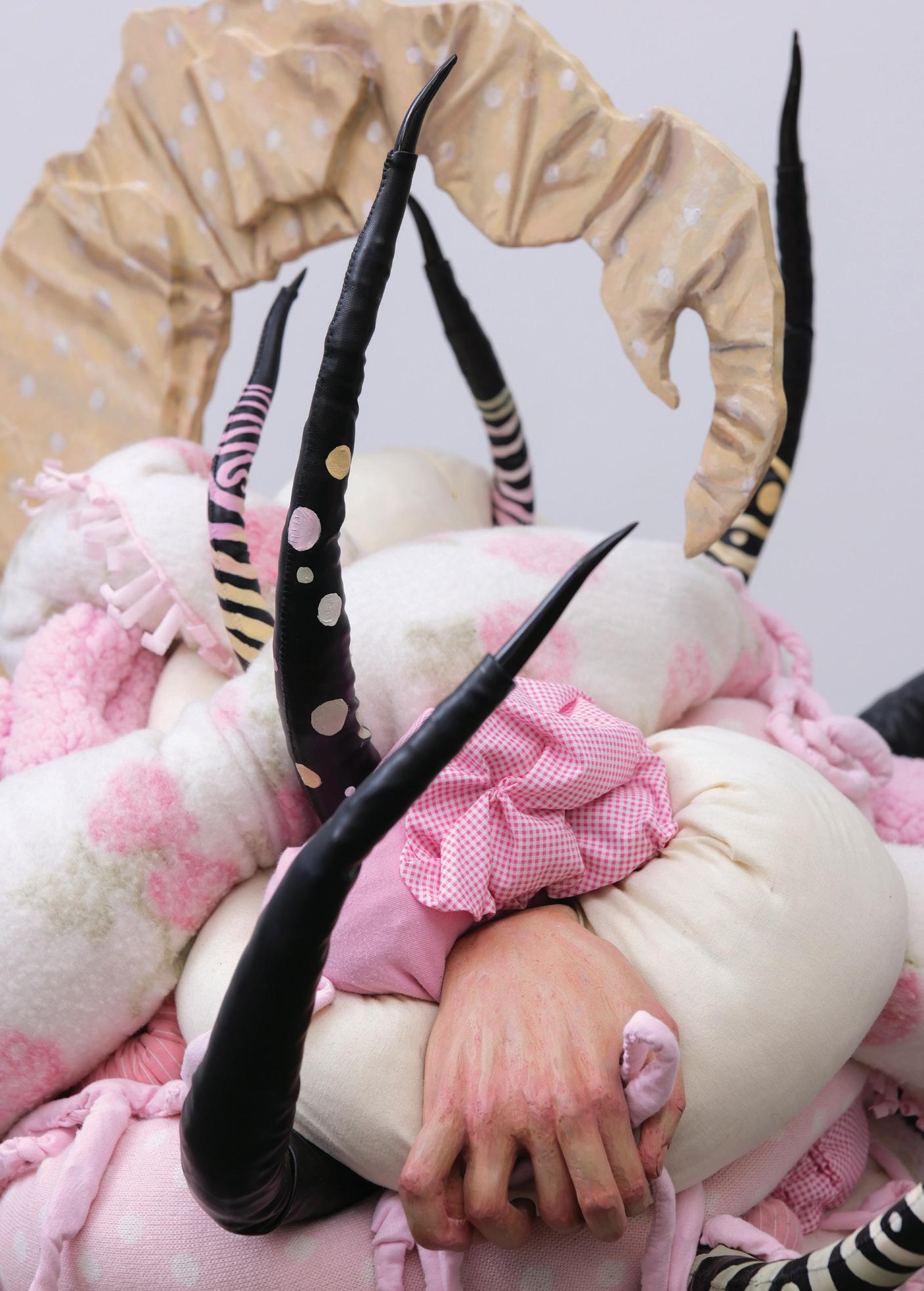
SCULPTURES
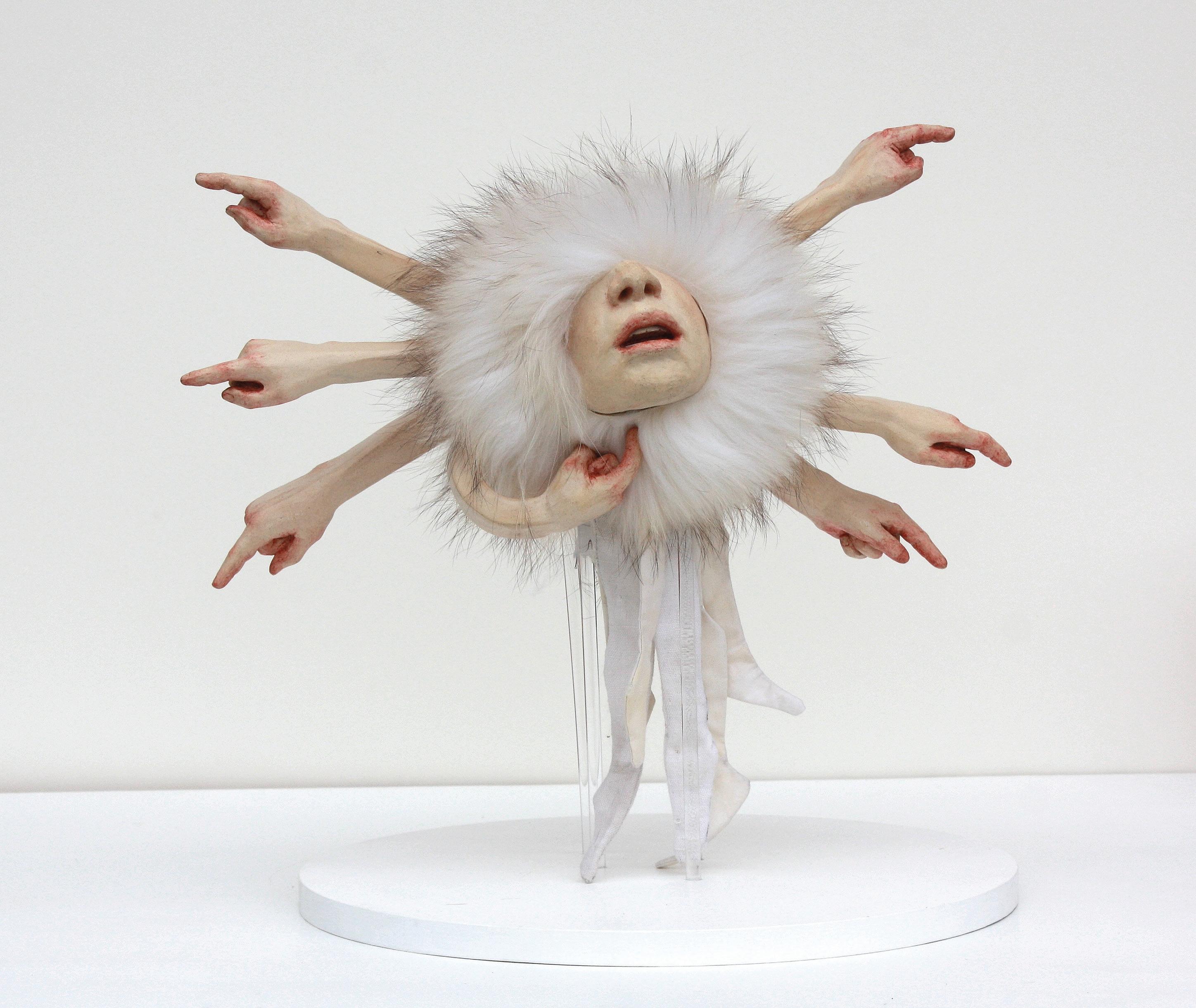
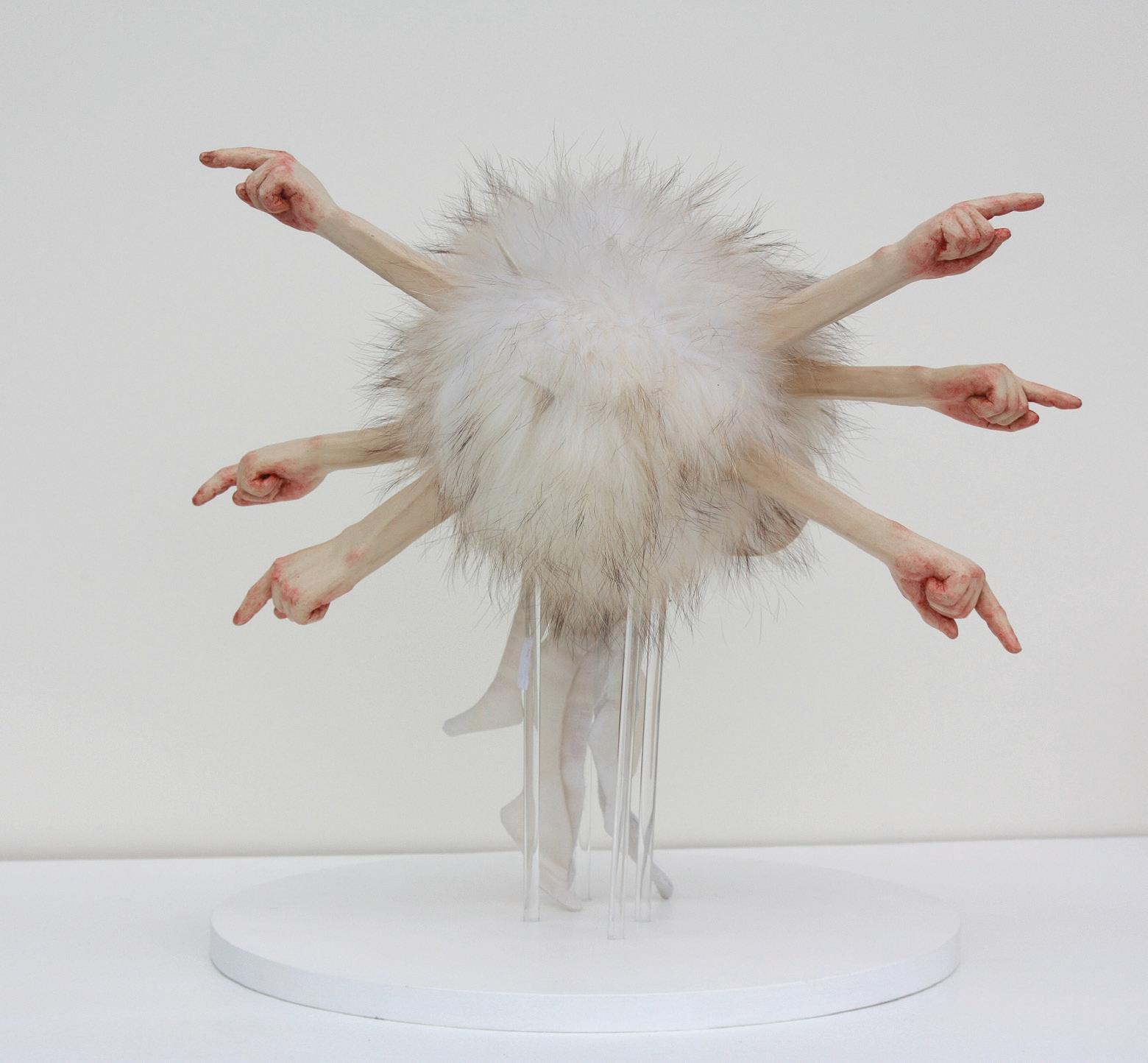
Blame Mosquito, 2024. Ceramics with reclaimed fur and fabrics with oil paint. 17x16 in.
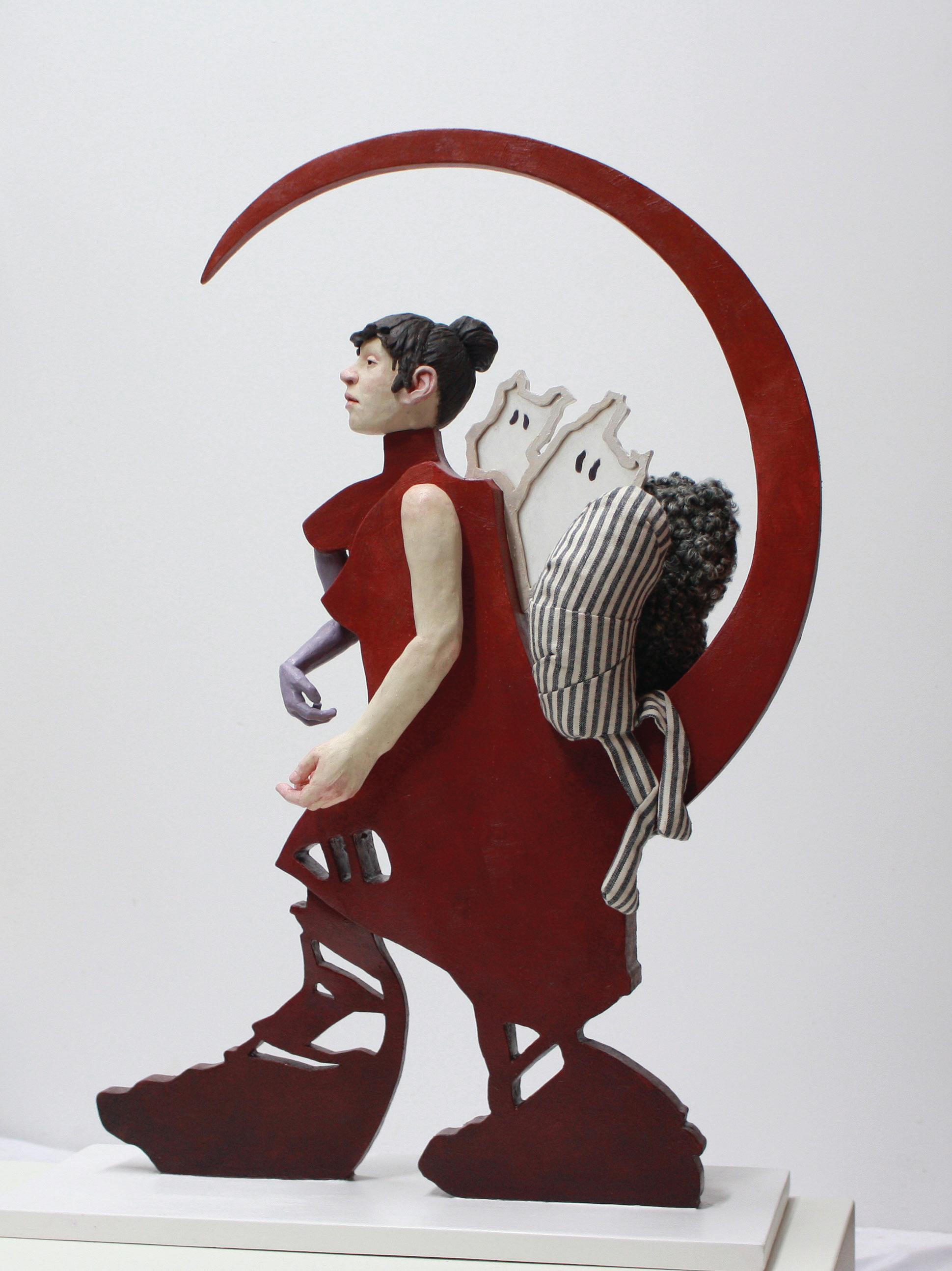
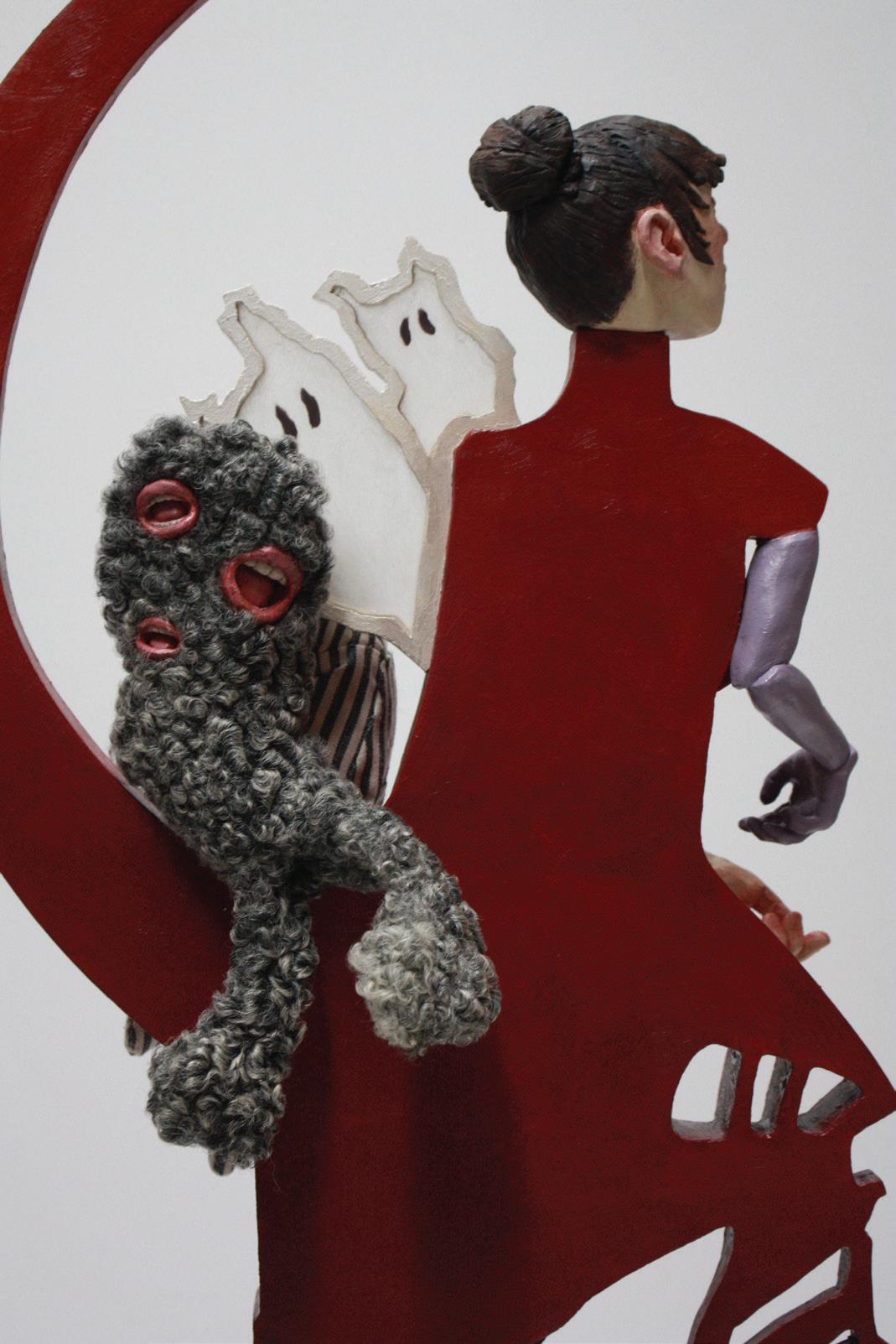
Mech, 2026.
Ceramics, fabric, wood, feathers, with oil paint. 15x18x11 in.
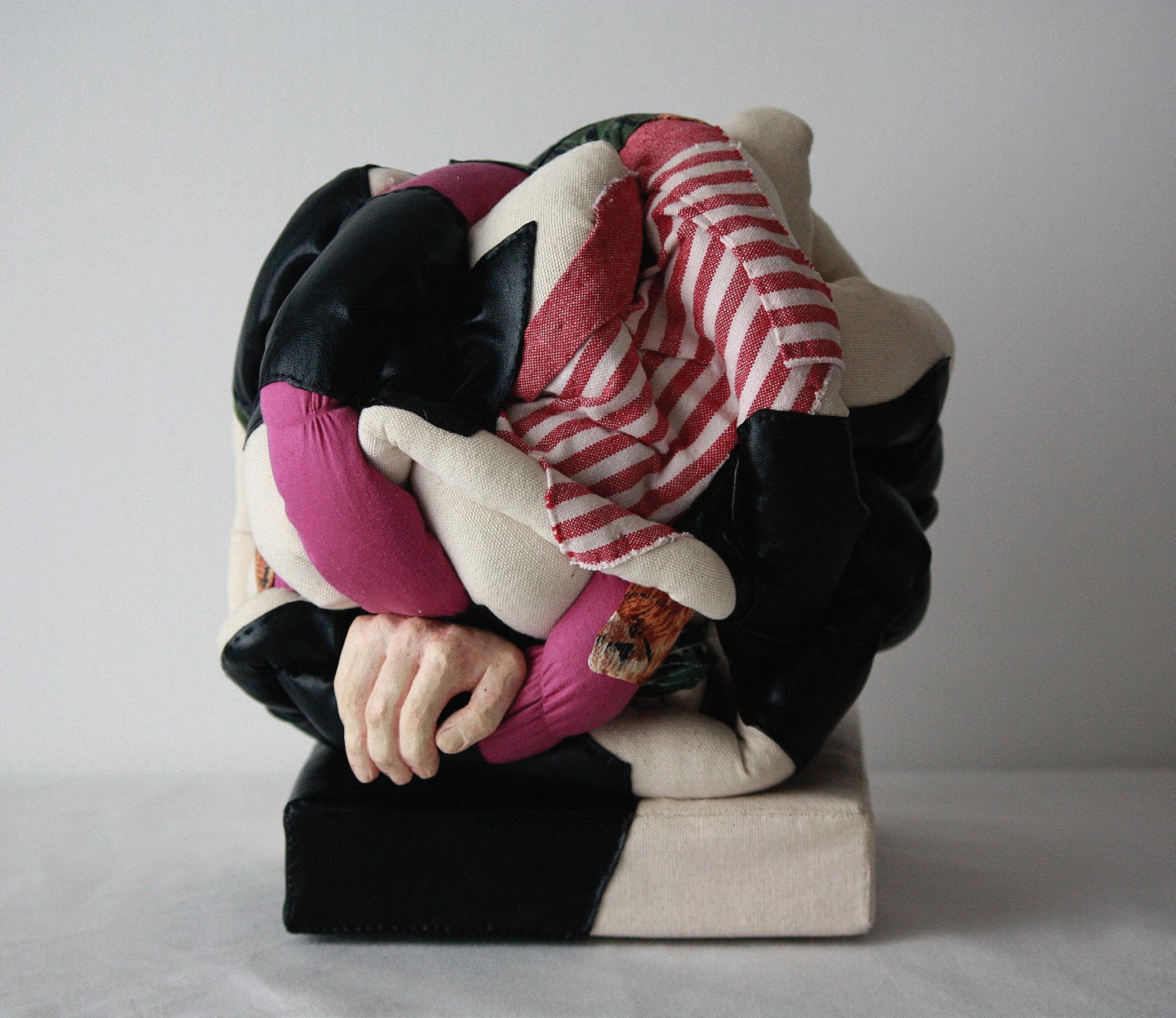
Hand with Knot, 2023. Reclaimed fabric with wood and ceramics. 7x8x11 in.
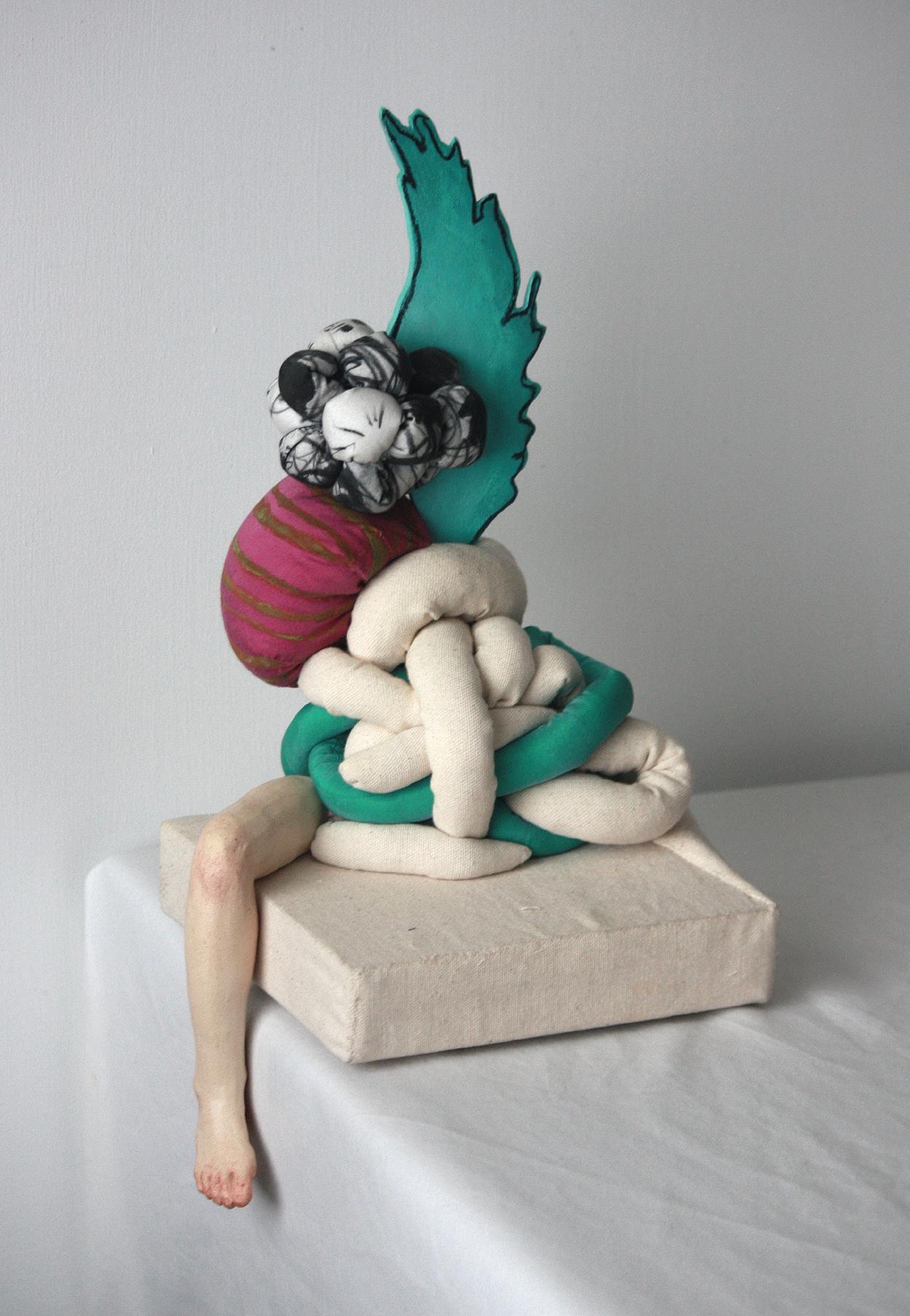
Wing Mohawk with Leg, 2023. Reclaimed fabric with wood, oil paint, charcoal, and ceramics. 7x7x16 in.
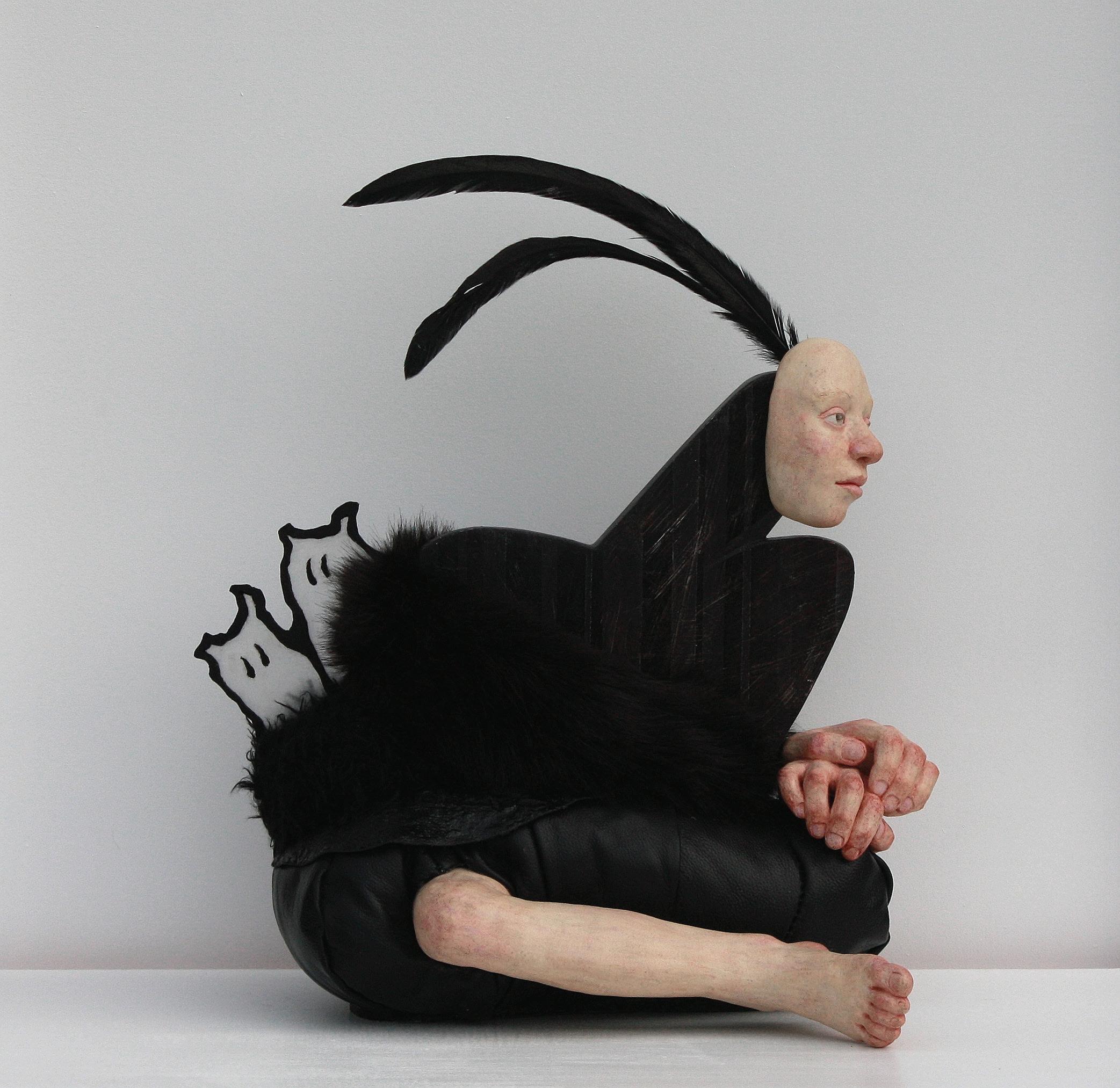
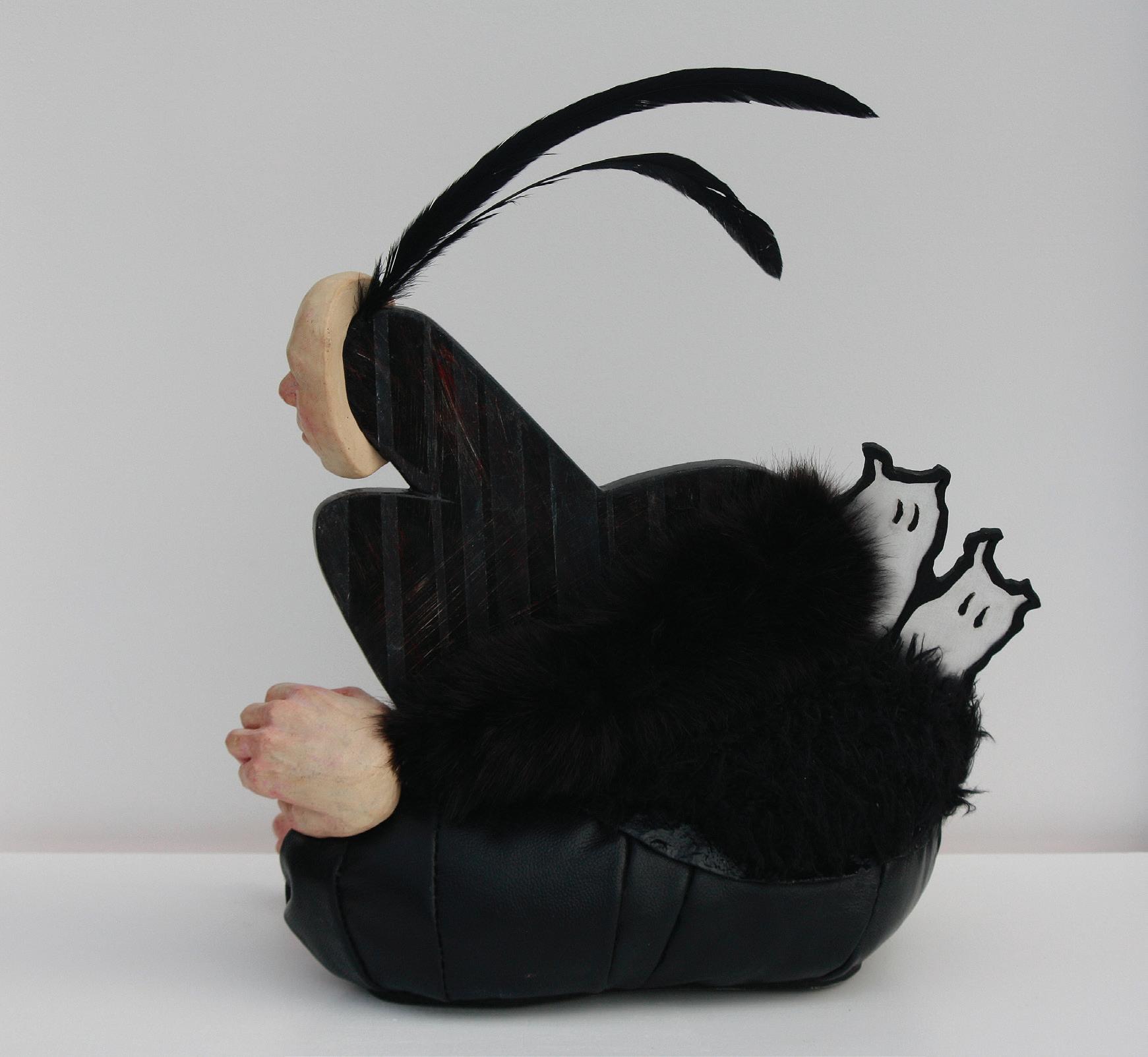
Black with Ghosts, 2024. Ceramics with reclaimed leather, fabric, plexiglass, wood, feathers, with oil paint.
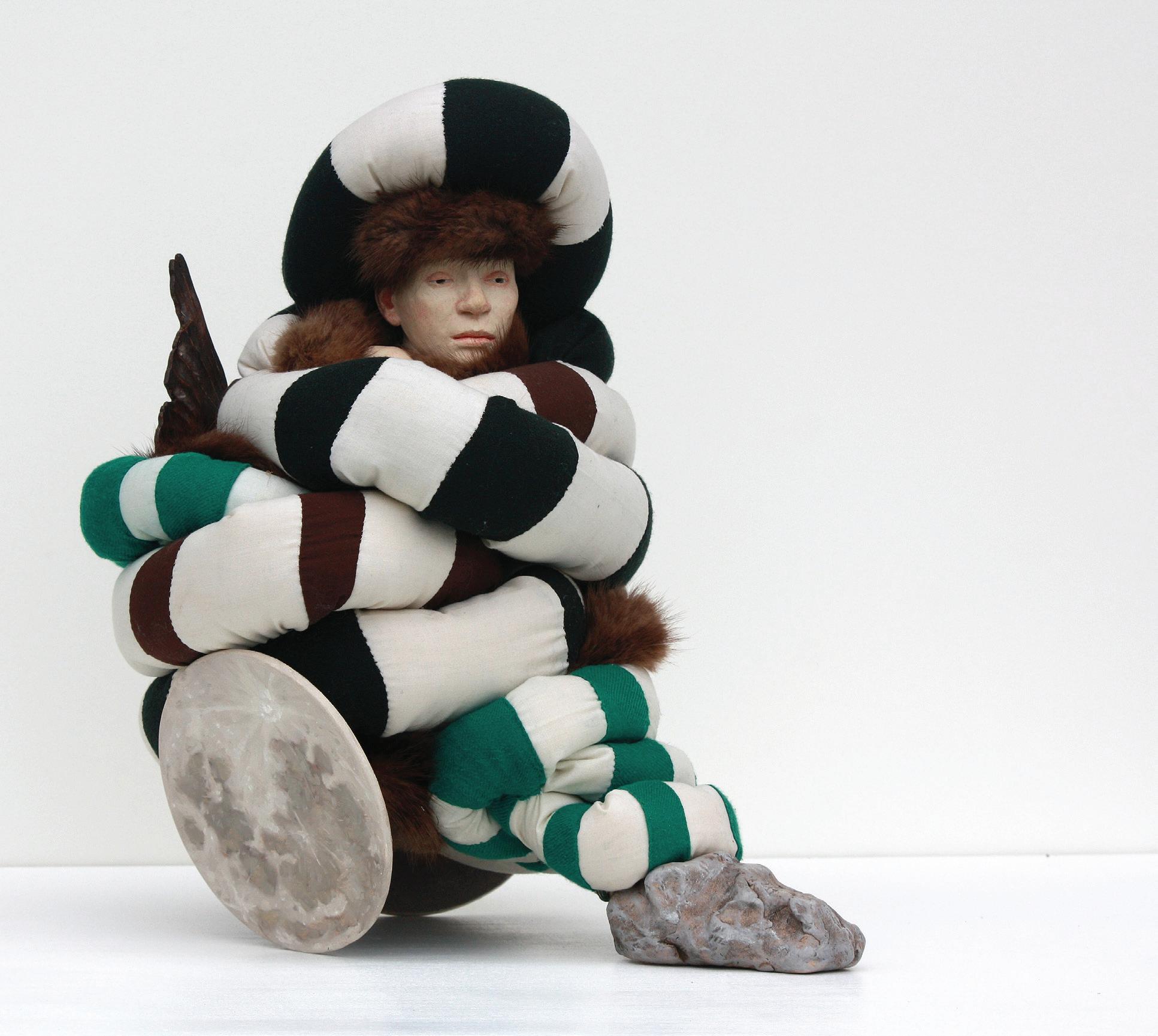
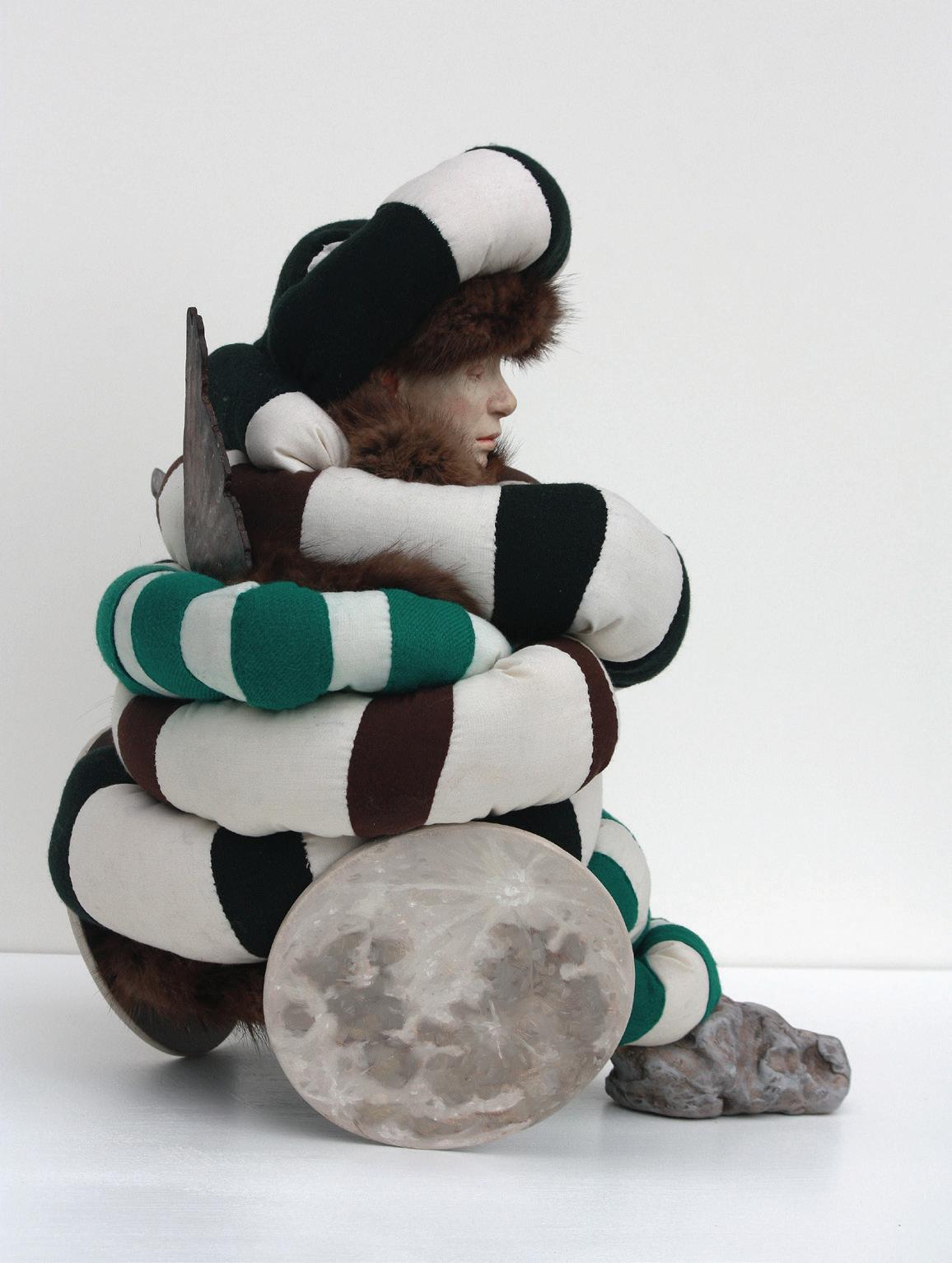
Twist with Moons, 2024.
Ceramics with reclaimed fur fabrics and oil paint on wood. 17x16x14 in.
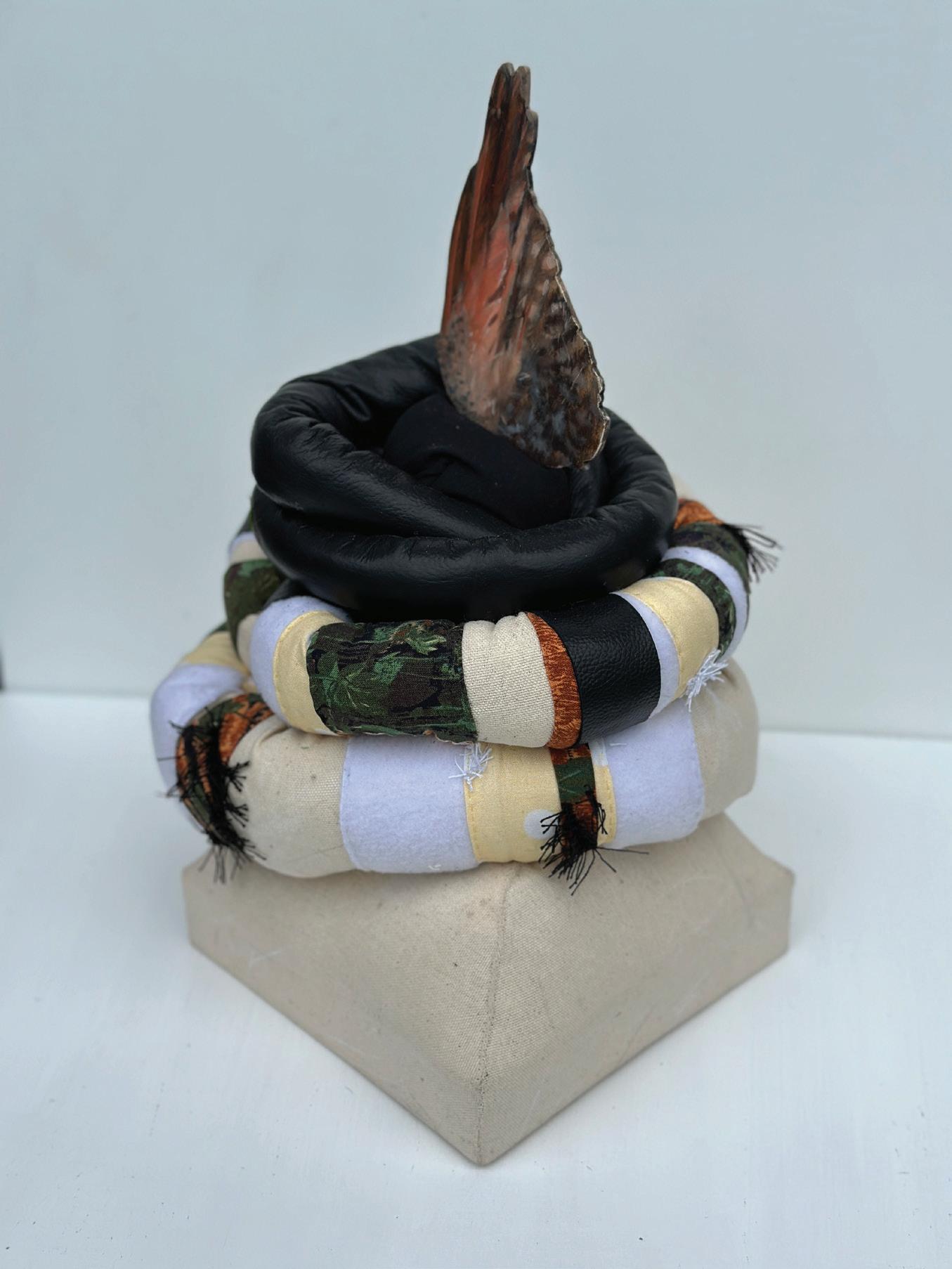
Flicker with Swirl, 2023. Reclaimed leather, fabric, and oil paint on wood. 9x13x7 in.
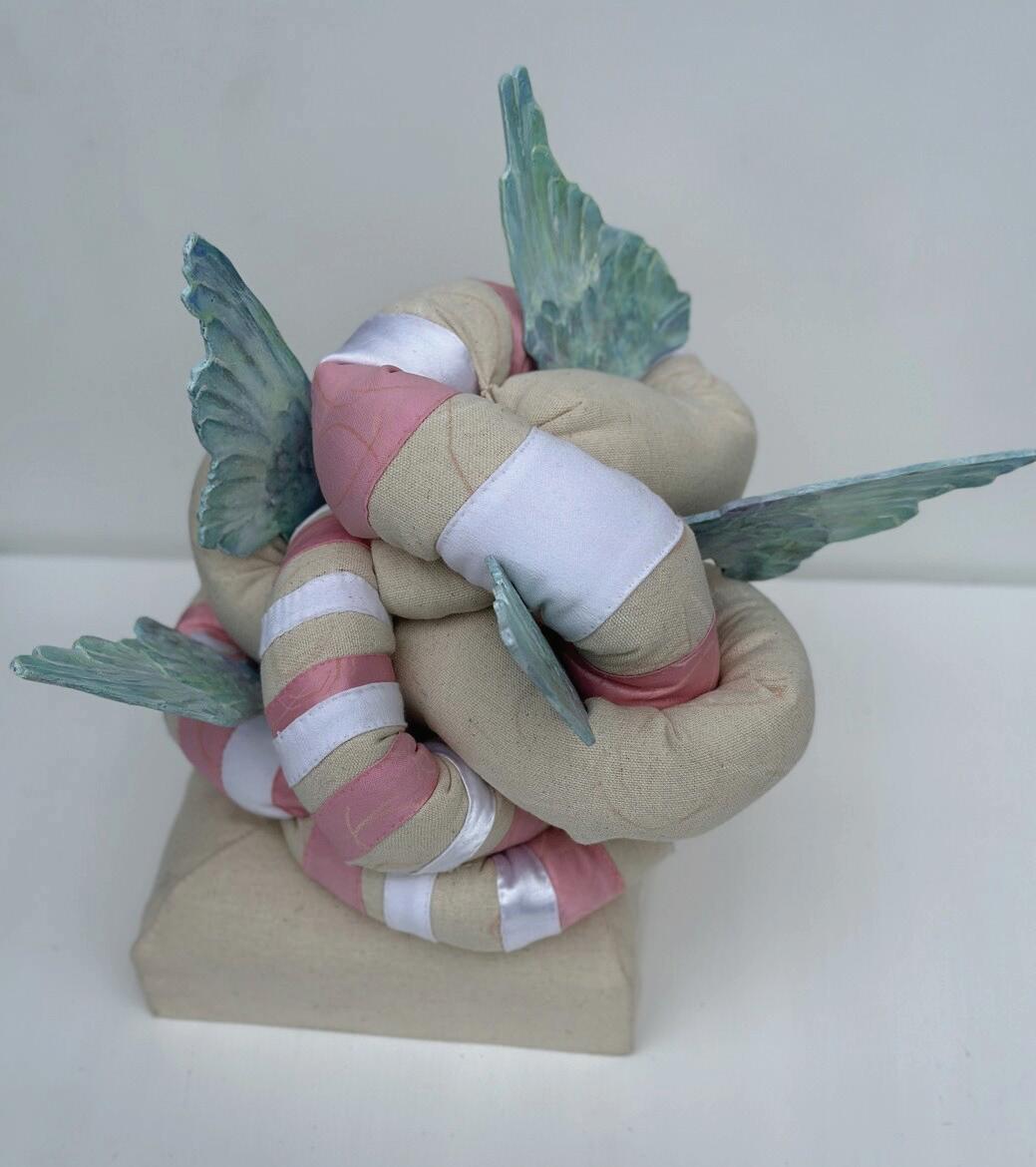
Starling with Knot, 2023. Reclaimed fabric and oil paint on wood. 14x7x12 in.
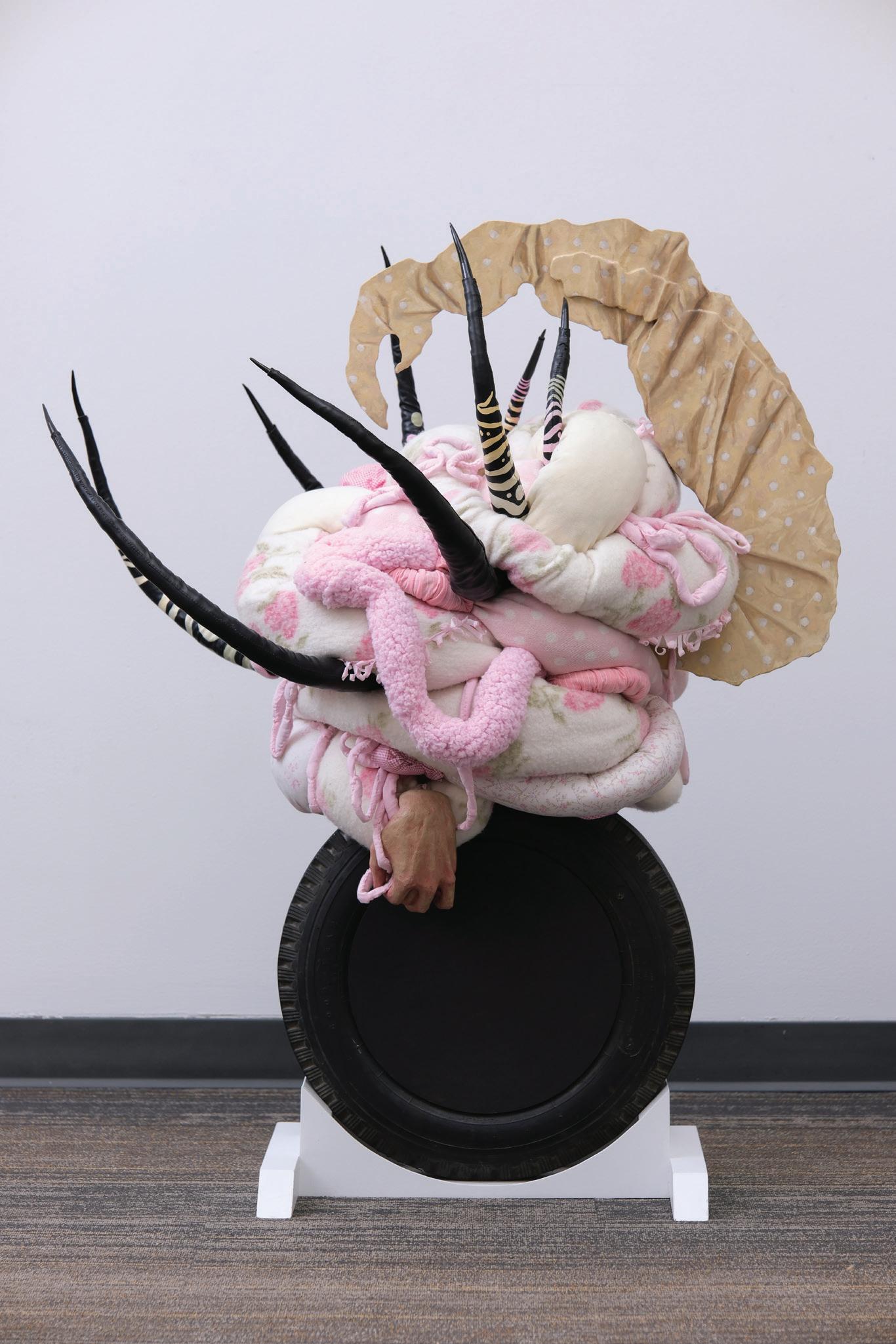
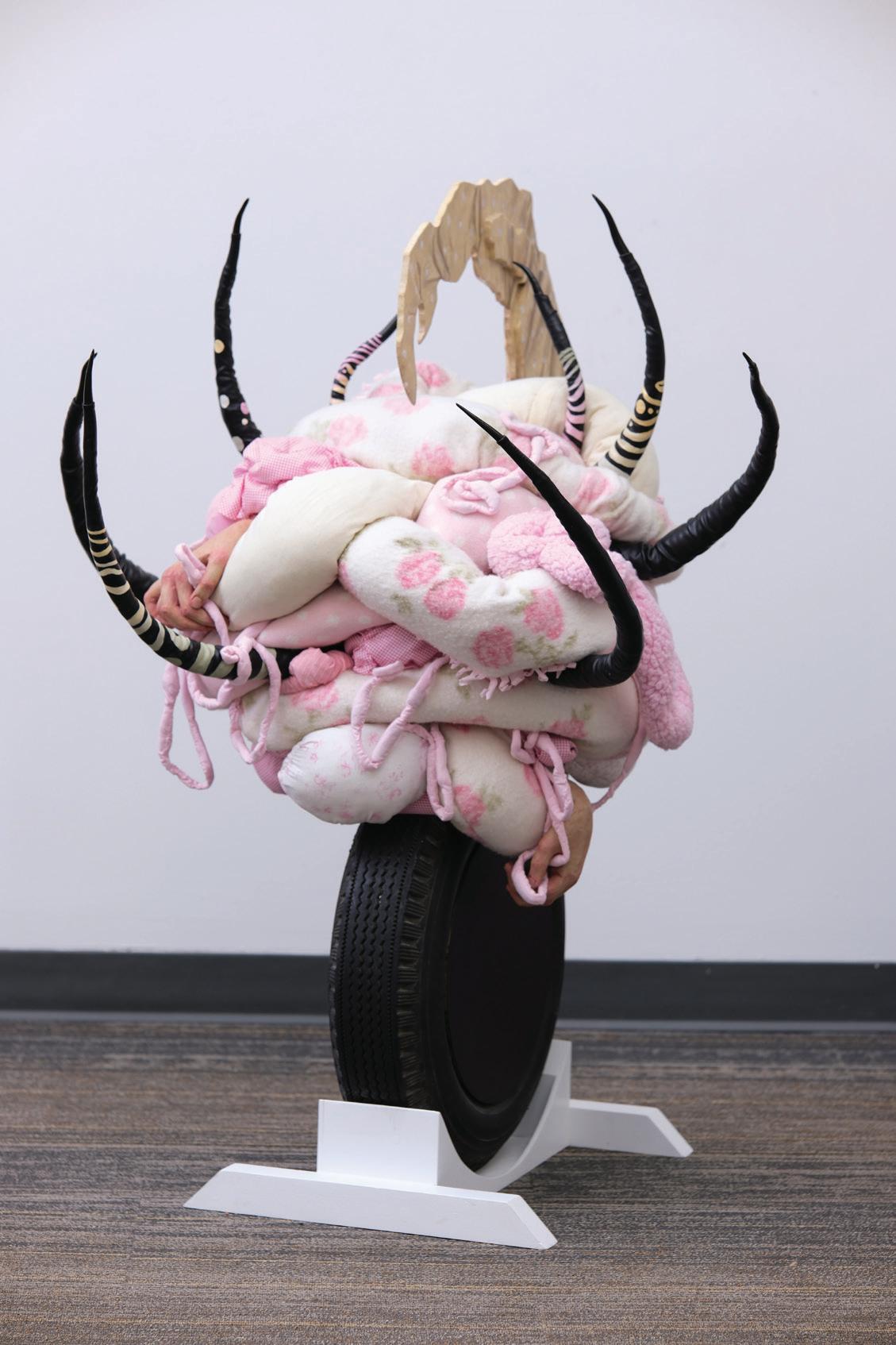
Polka Dot Tail, 2024. Reclaimed fabrics, tire, ceramics, wire, and wood with oil paint. 45x40x33 in.
Yellow
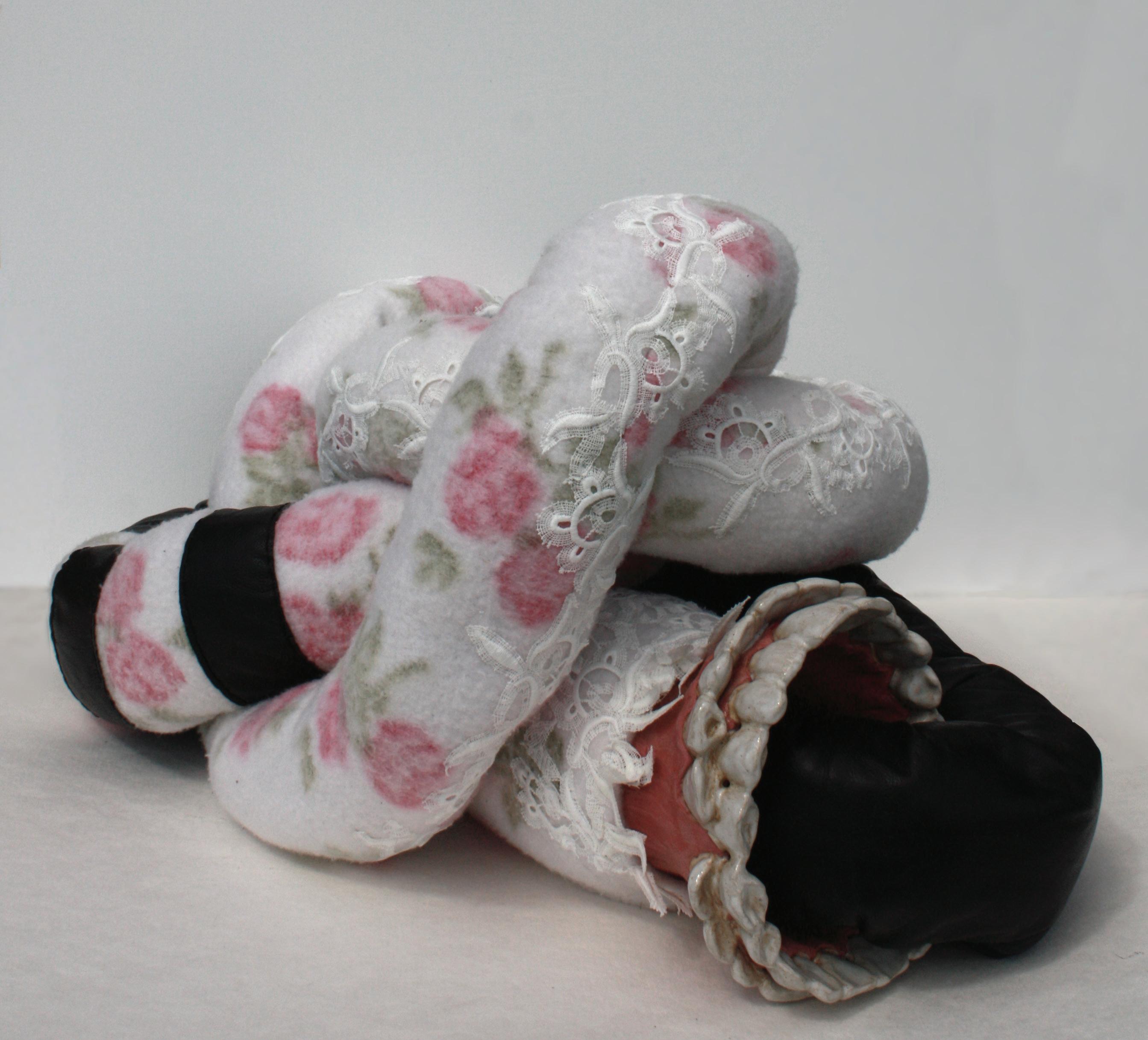
Worm with Teeth (Ouroboros), 2023. Ceramics and oil paint with reclaimed leather and fabrics. 24x16x14 in.
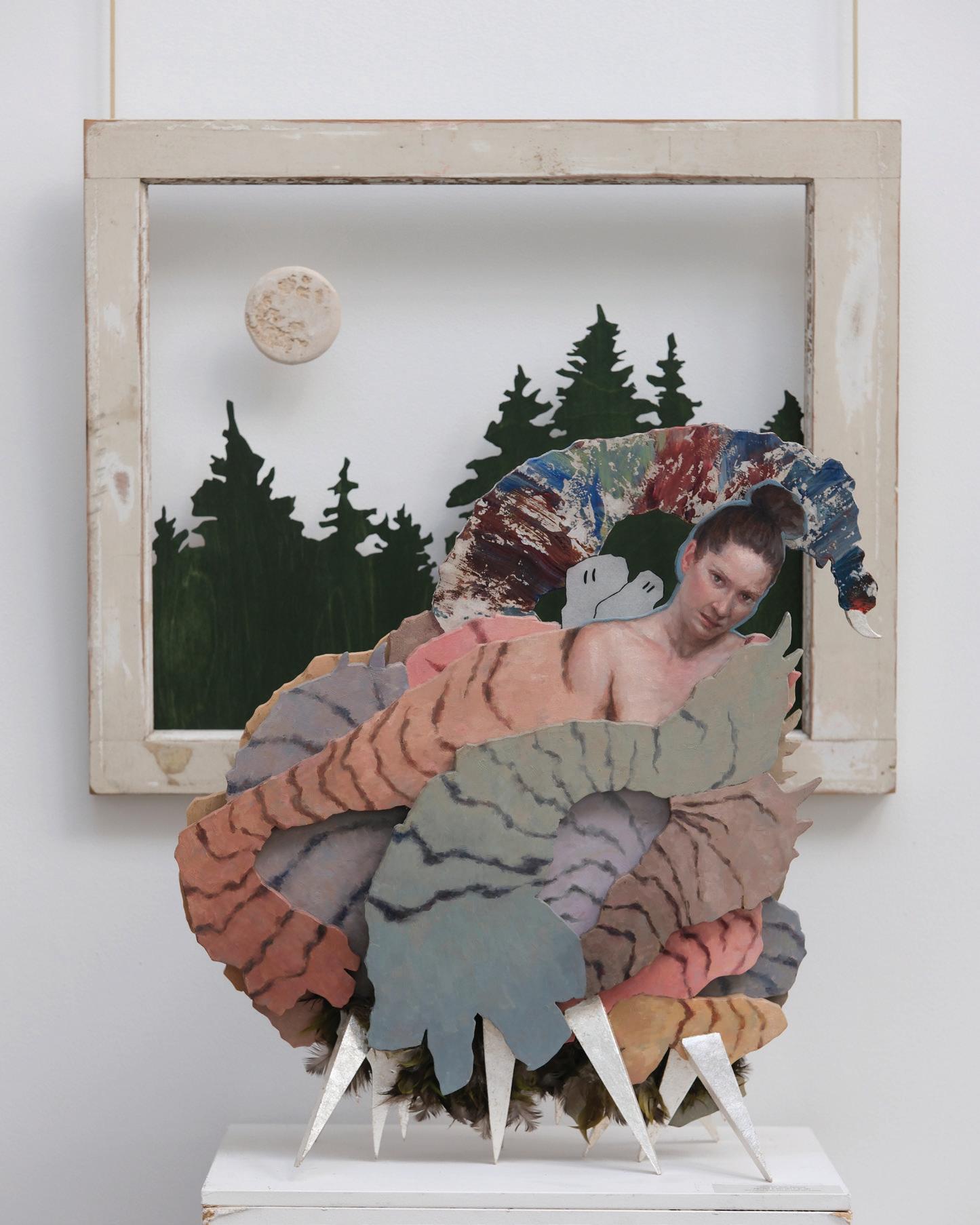
Scorpion with Spikes, 2022.
Oil paint, reclaimed feathers, aluminum leaf on wood. 24x24x8 in.
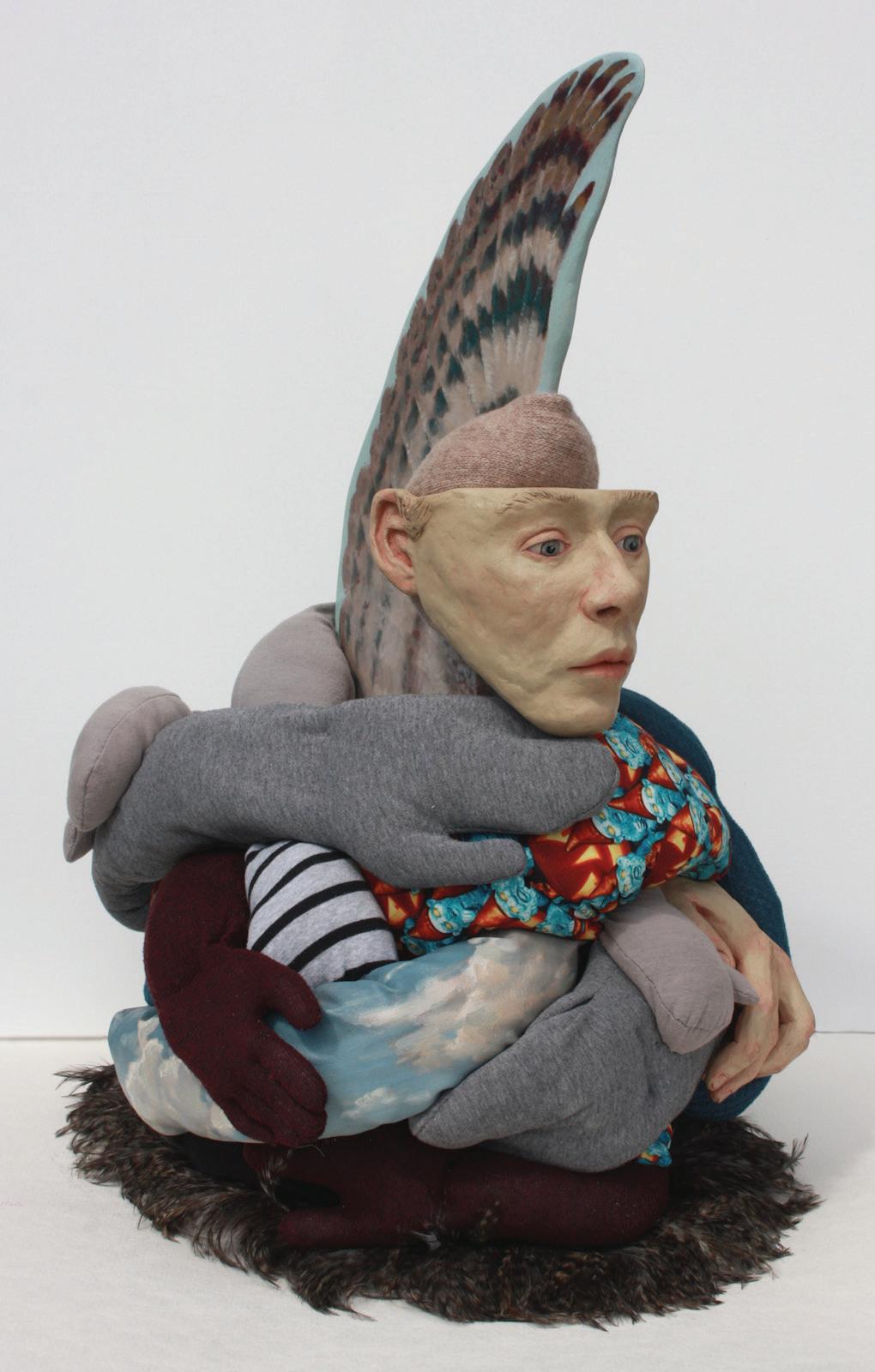
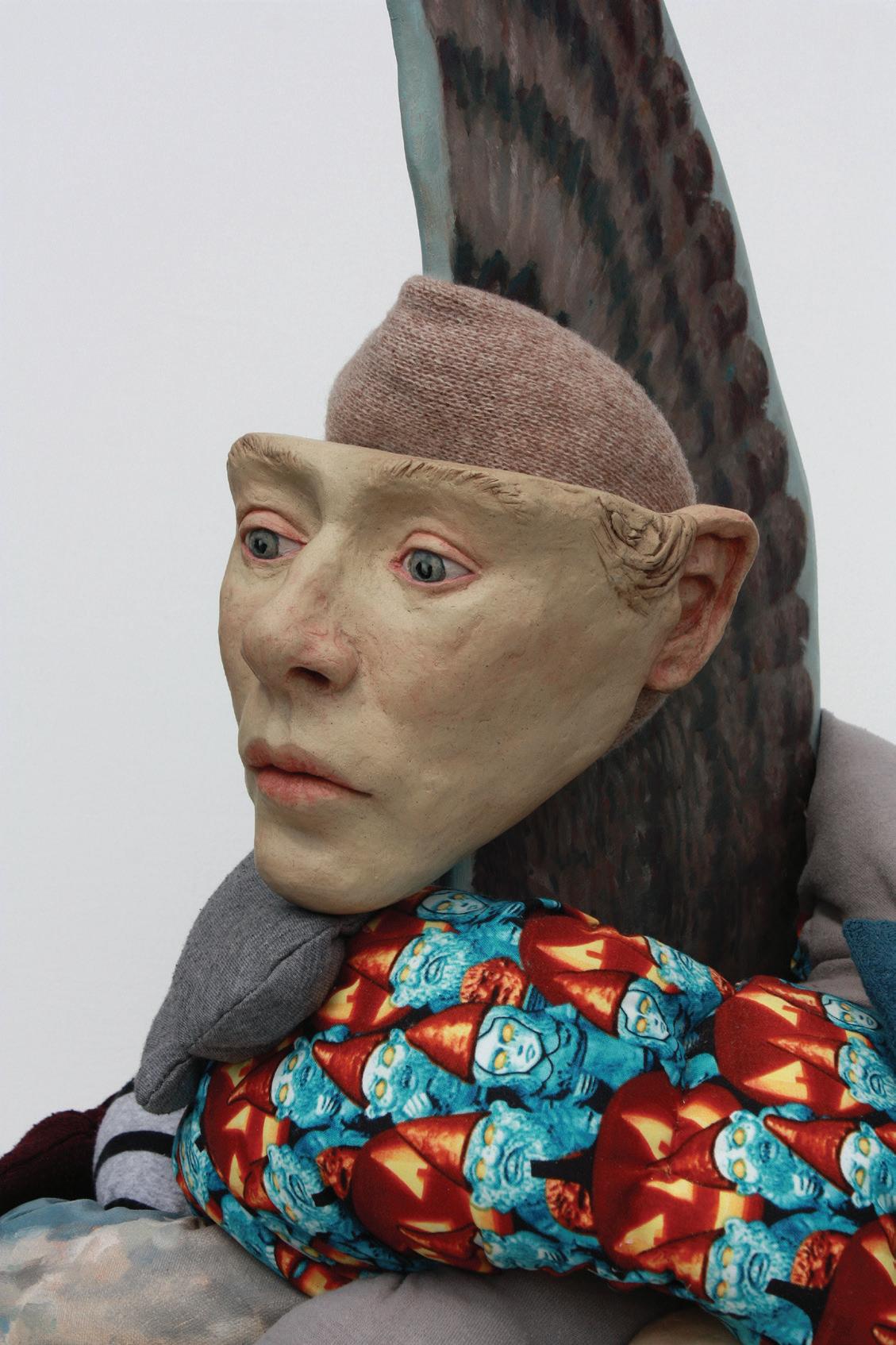
Wing Head, 2024. Ceramics, reclaimed fabrics, feather duster, oil paint on canvas and wood. 26x19x15 in.
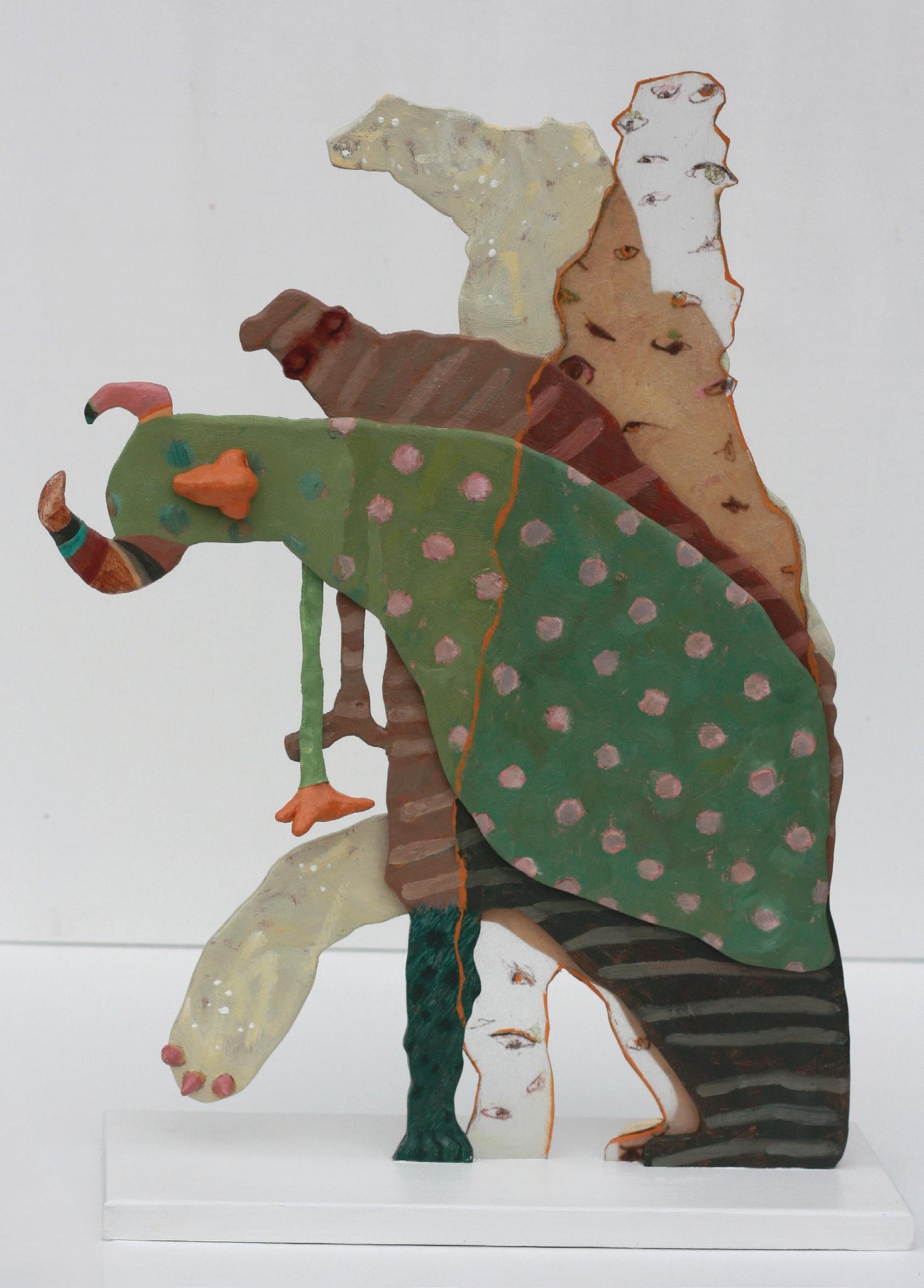
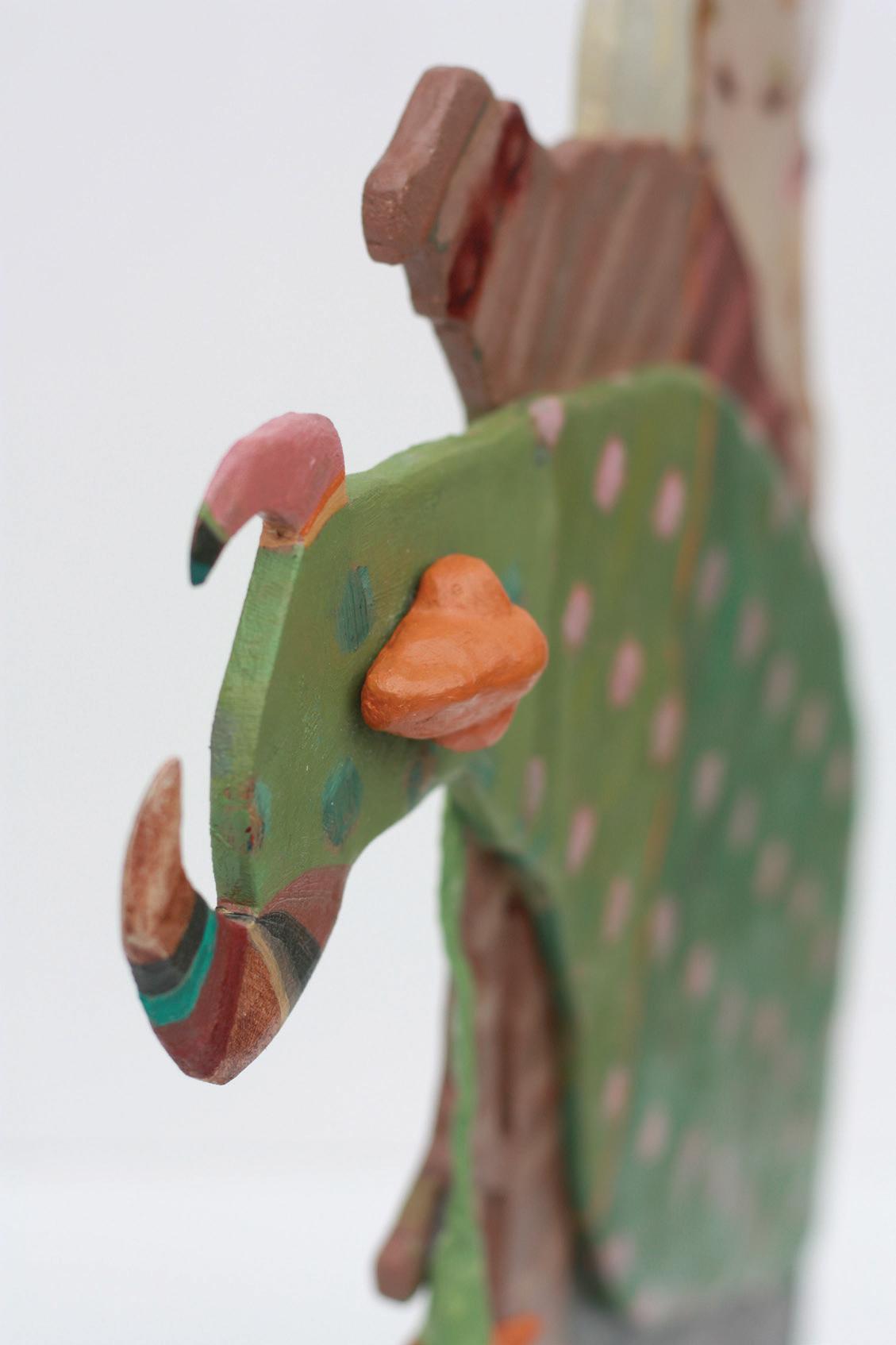
Leaning Figure (in Green), 2023. Oil paint on wood with plexiglass, fabric, resin, charcoal. 13x18x4.5 in.
COLLAGES
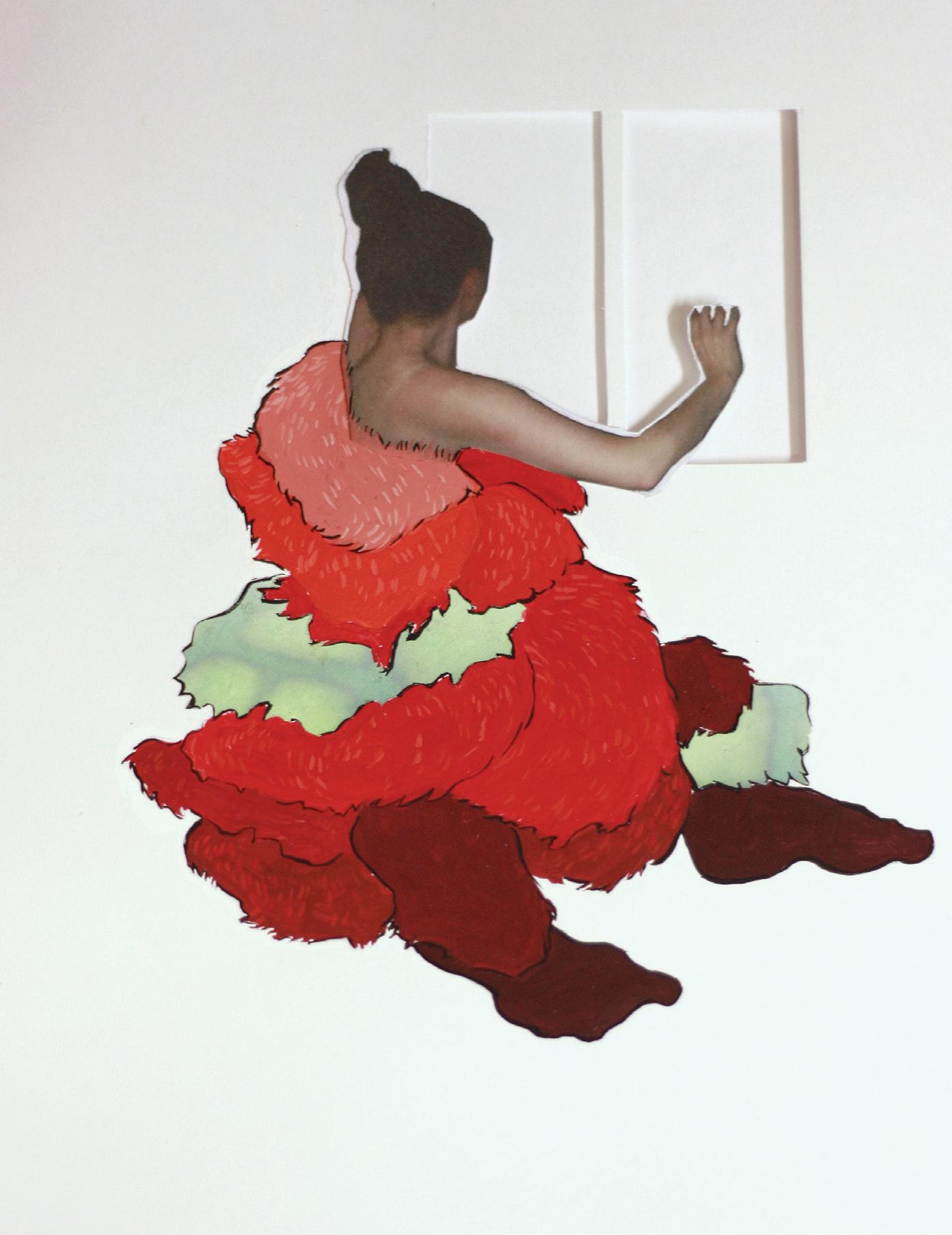
Window (Dichotomy 9), 2021. Ink jet print with acrylic paint on paper. 8.5x11 in.
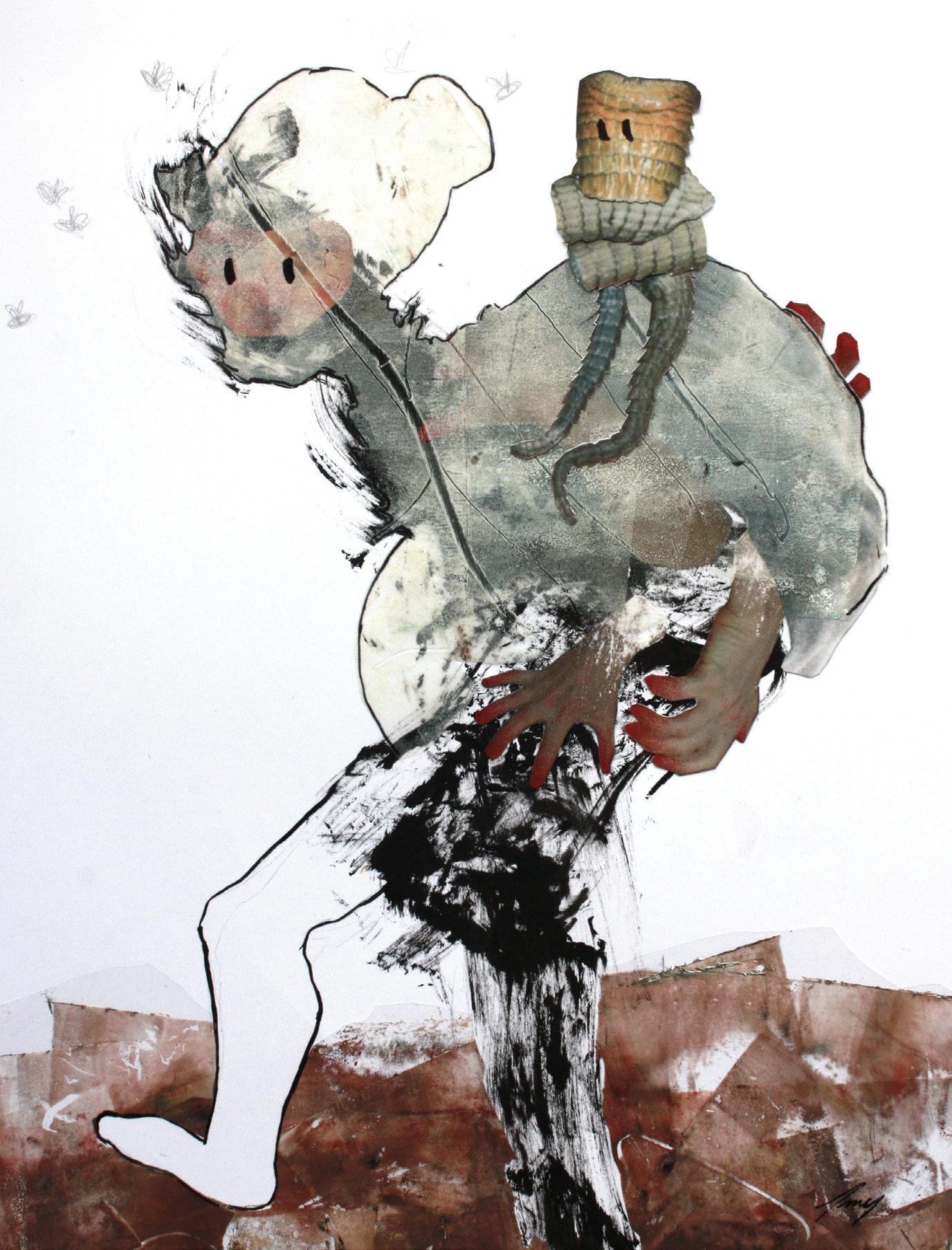
Creature on Back, 2021. Pencil crayon, inkjet print, ink, oil paint on plastic, magazine on paper. 8.5x11 in.
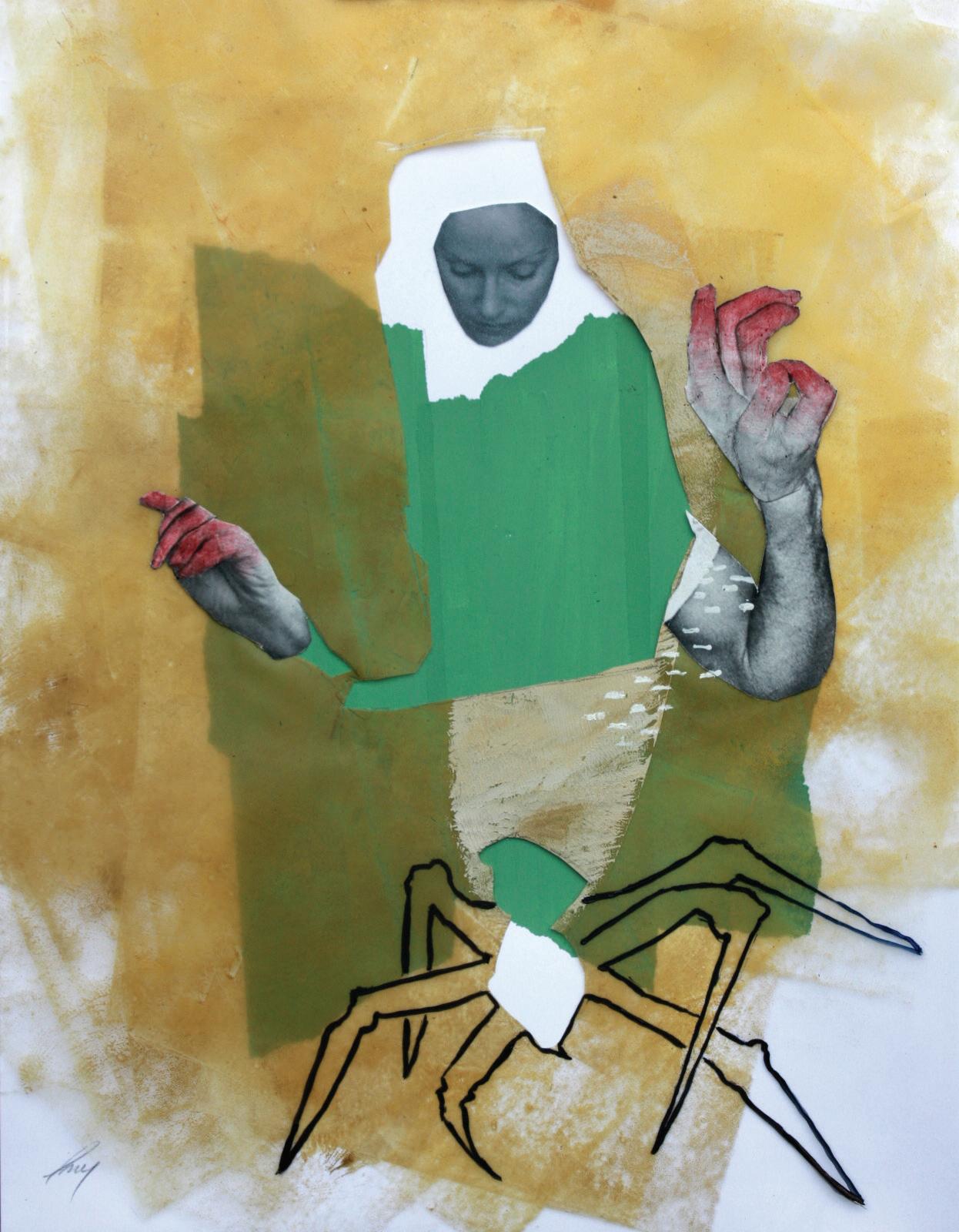
Spider, 2021.
Acrylic, marker, magazine, pencil crayon, oil paint, plastic, inkjet print on paper. 8.5x11 in.
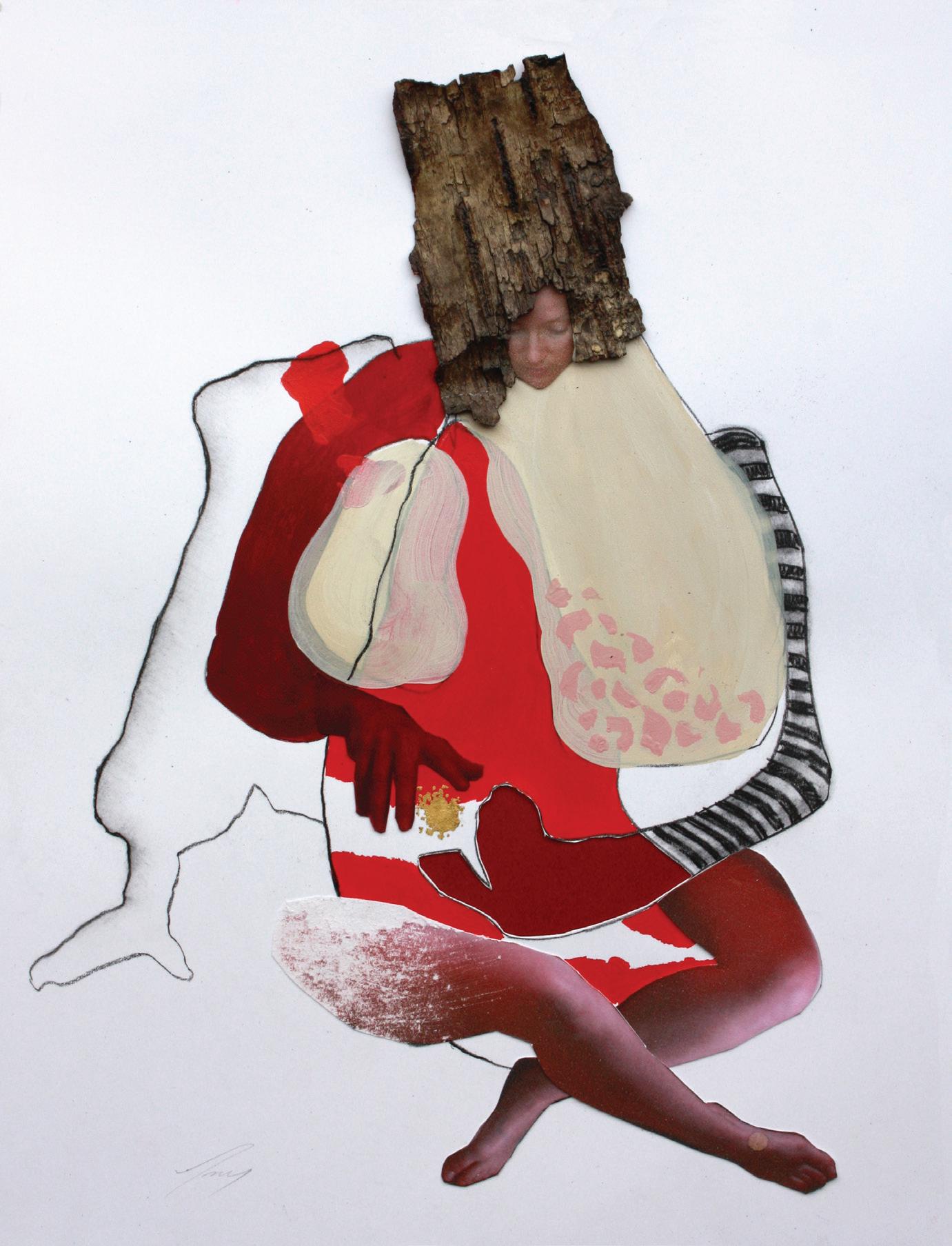
Bark-head, 2021. Bark, acrylic, charcoal, inkjet print, 23 ct gold leaf on paper. 8.5x11 in.
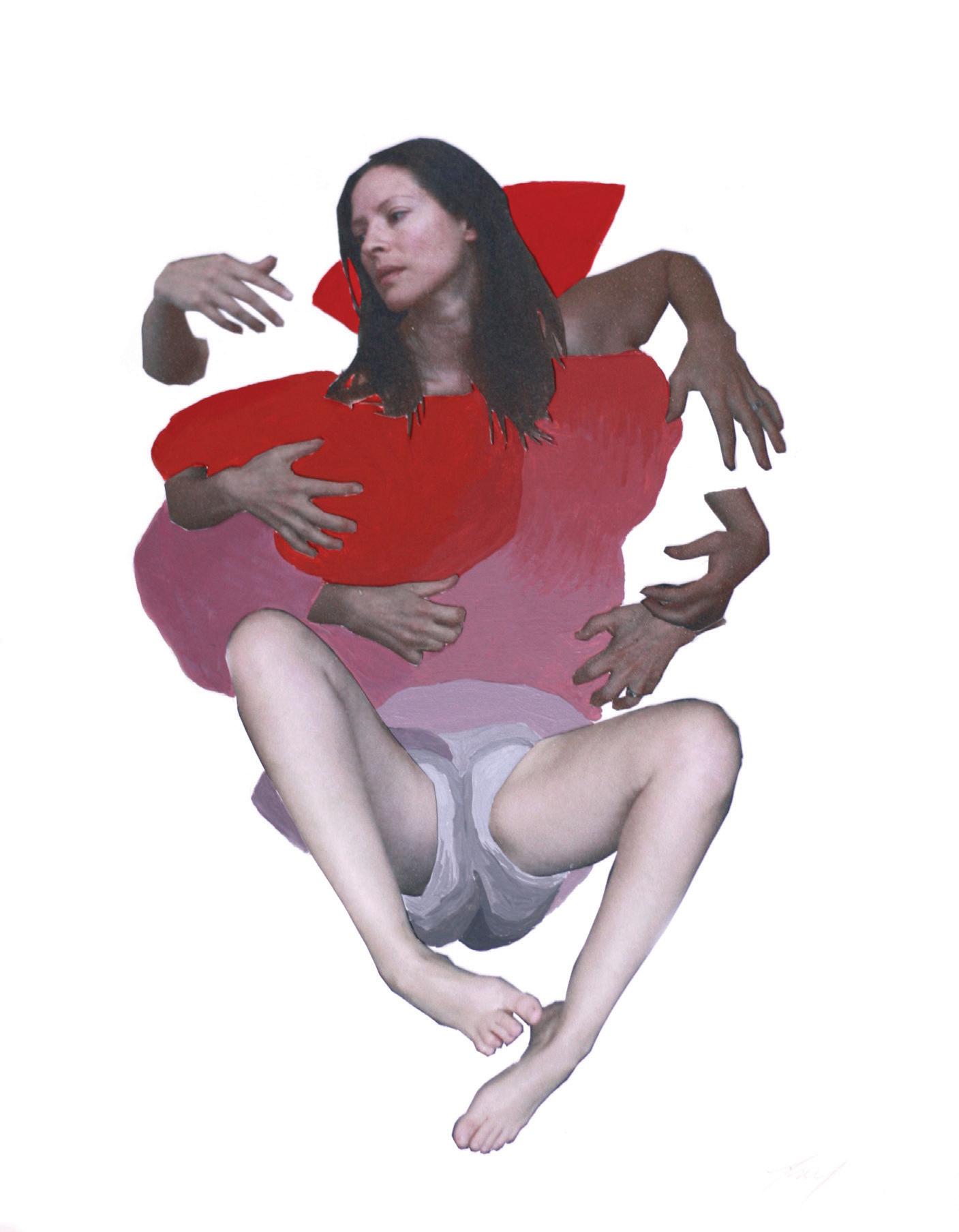
Arms (Dichotomy 13), 2020. Acrylic and inkjet print on paper. 8.5x11 in.
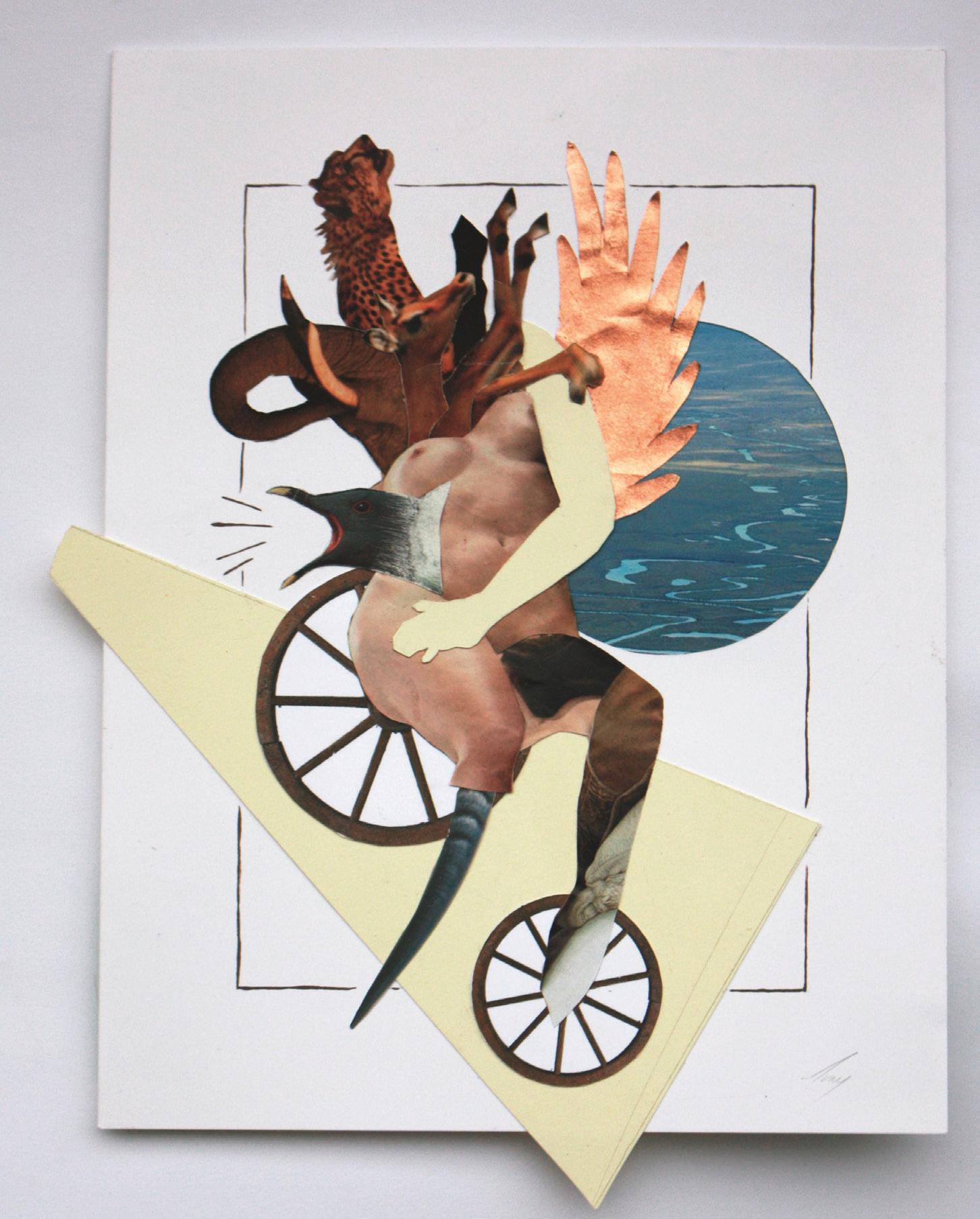
Wildish, 2024. Magazine, inkjet print, copper leaf, charcoal on paper. 8.5x11 in.
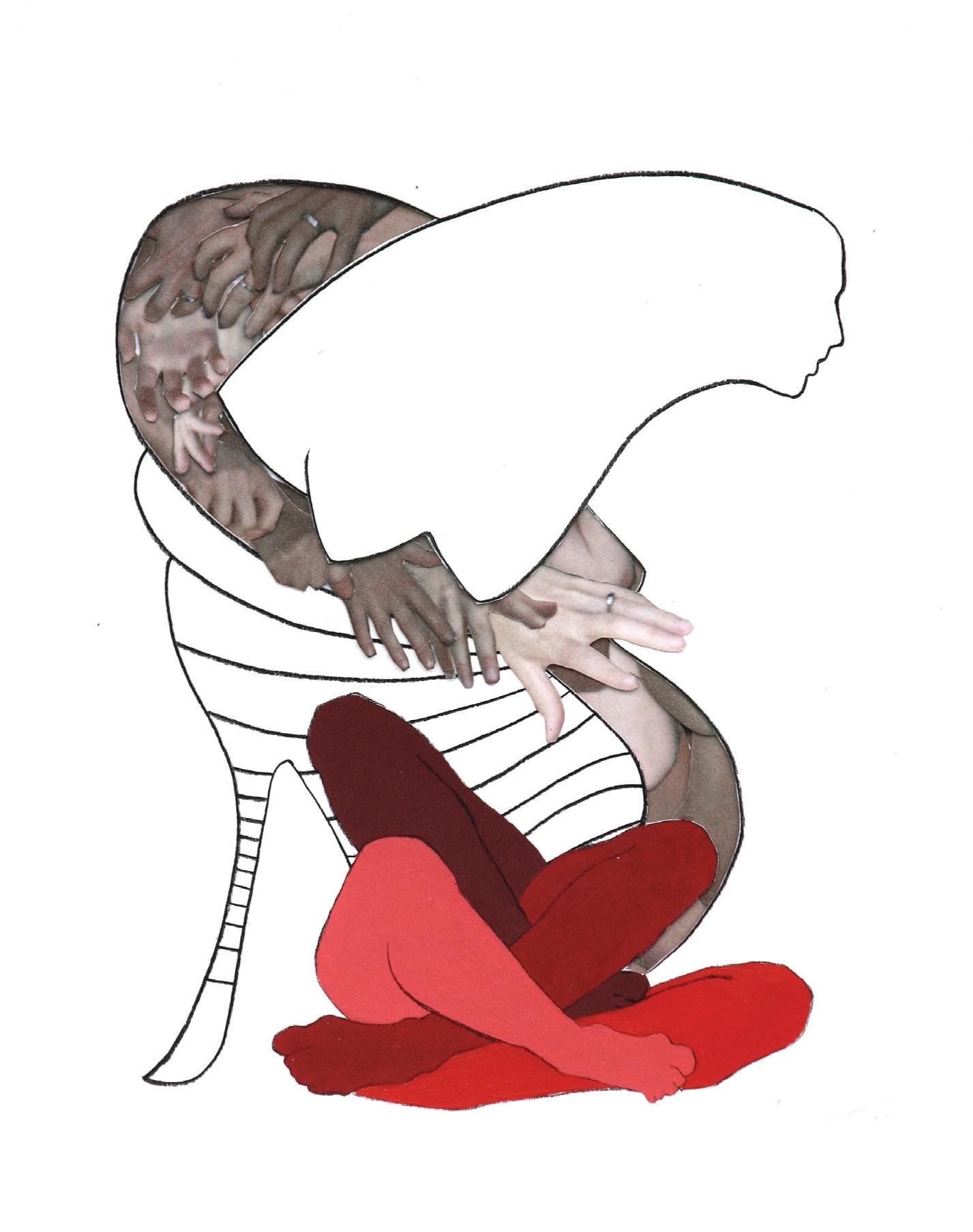
Collected (v2), 2021. Inkjet print, acrylic, and charcoal on paper. 8.5x11 in.
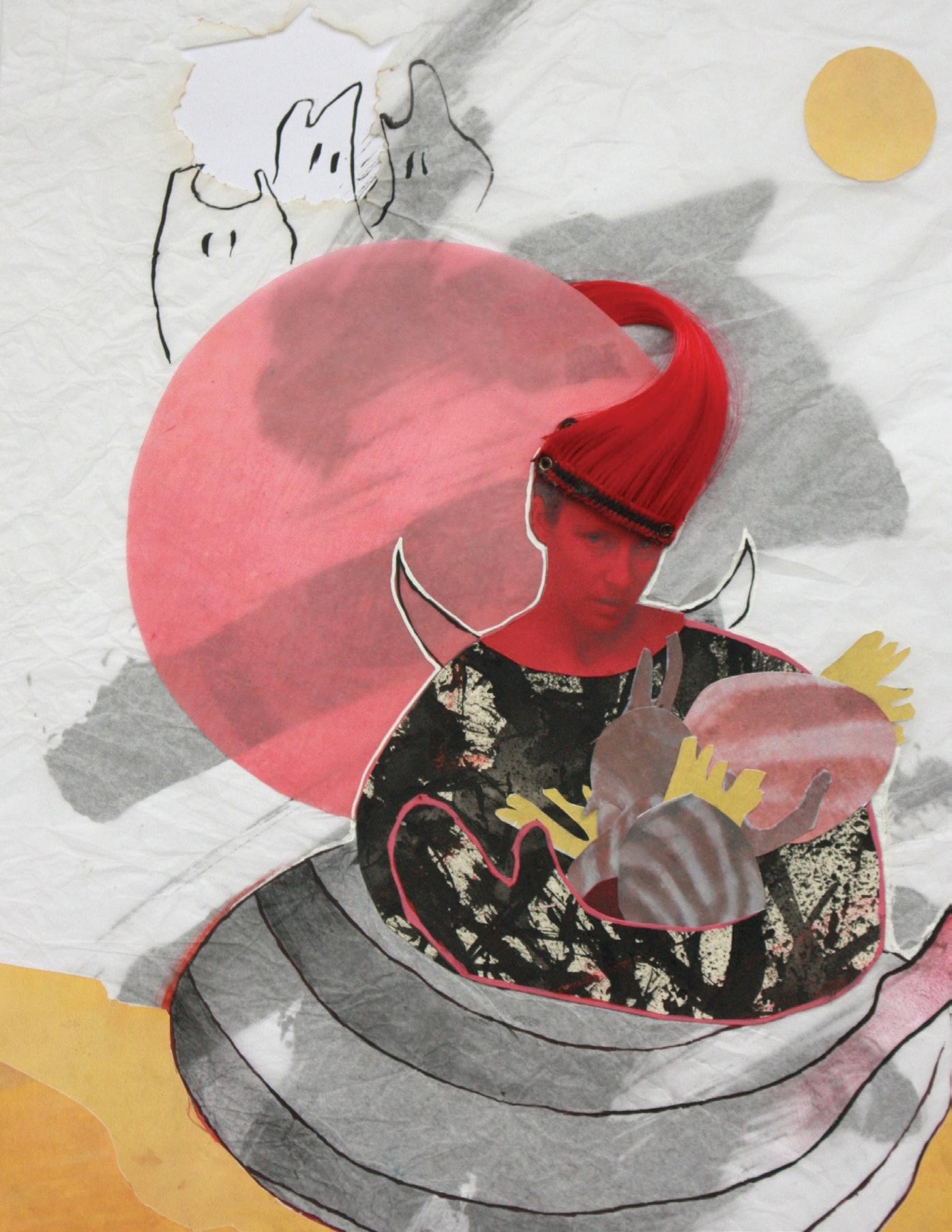
Protective, 2024.
Tissue paper, ink, pencil crayon, inkject print, acrylic, charcoal on paper. 8.5x11 in.
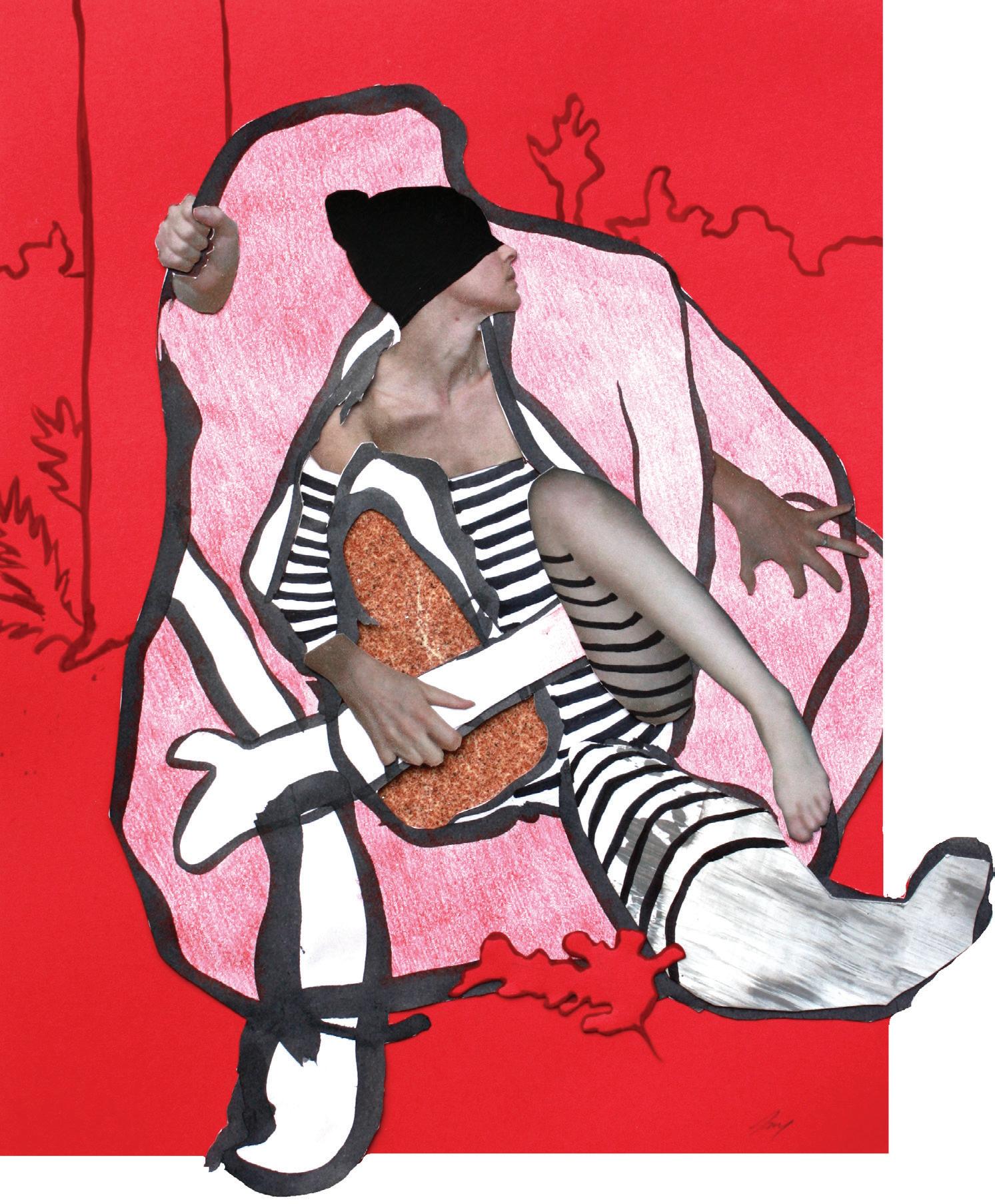
Rough Edges (Dichotomy 21), 2022. Sandpaper, marker, inkjet print, acrylic, pencil crayon on paper. 8.5x11 in.
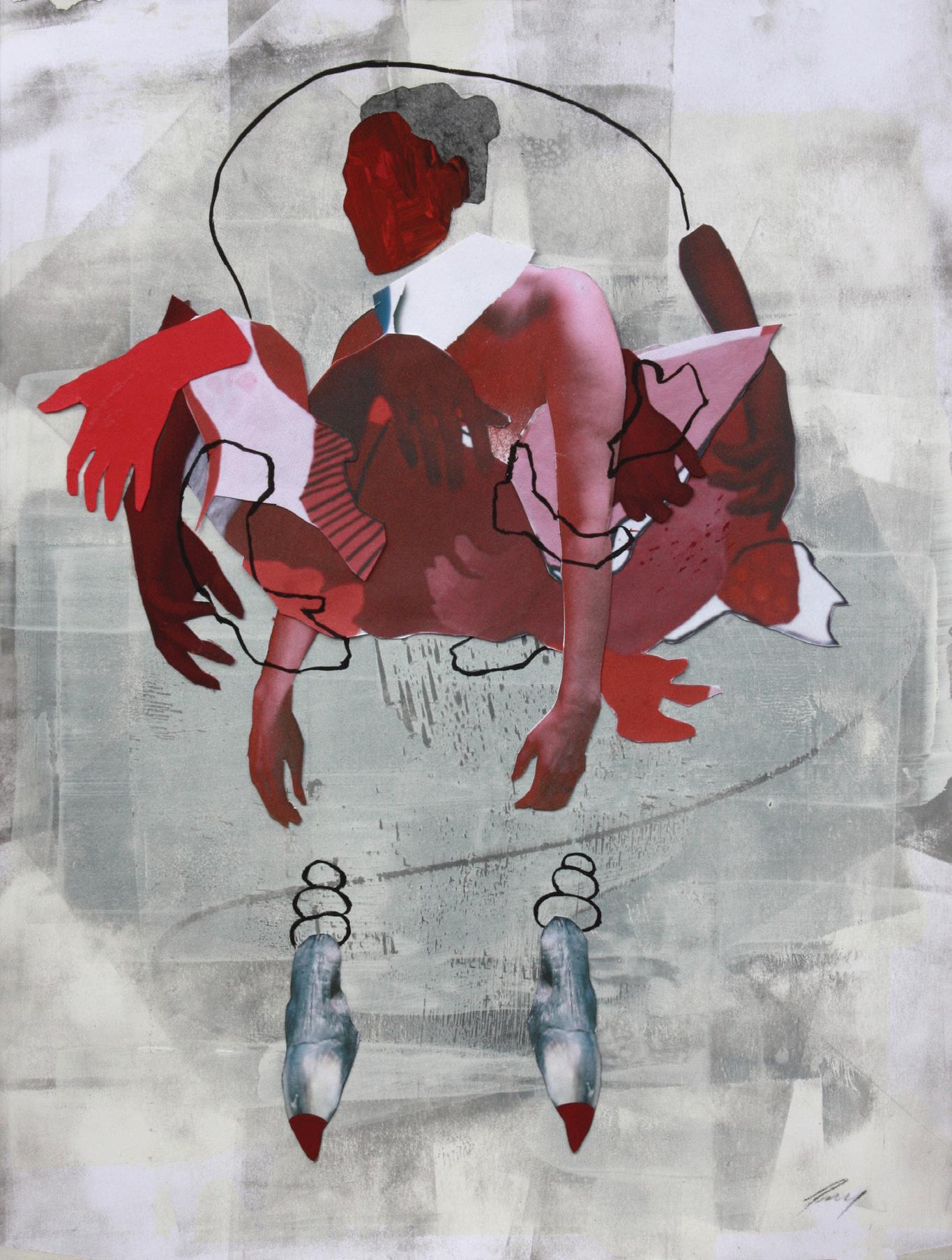
Rocket-Woman, 2021. Paper, inkjet print, acrylic, and charcoal on paper. 8.5x11 in.
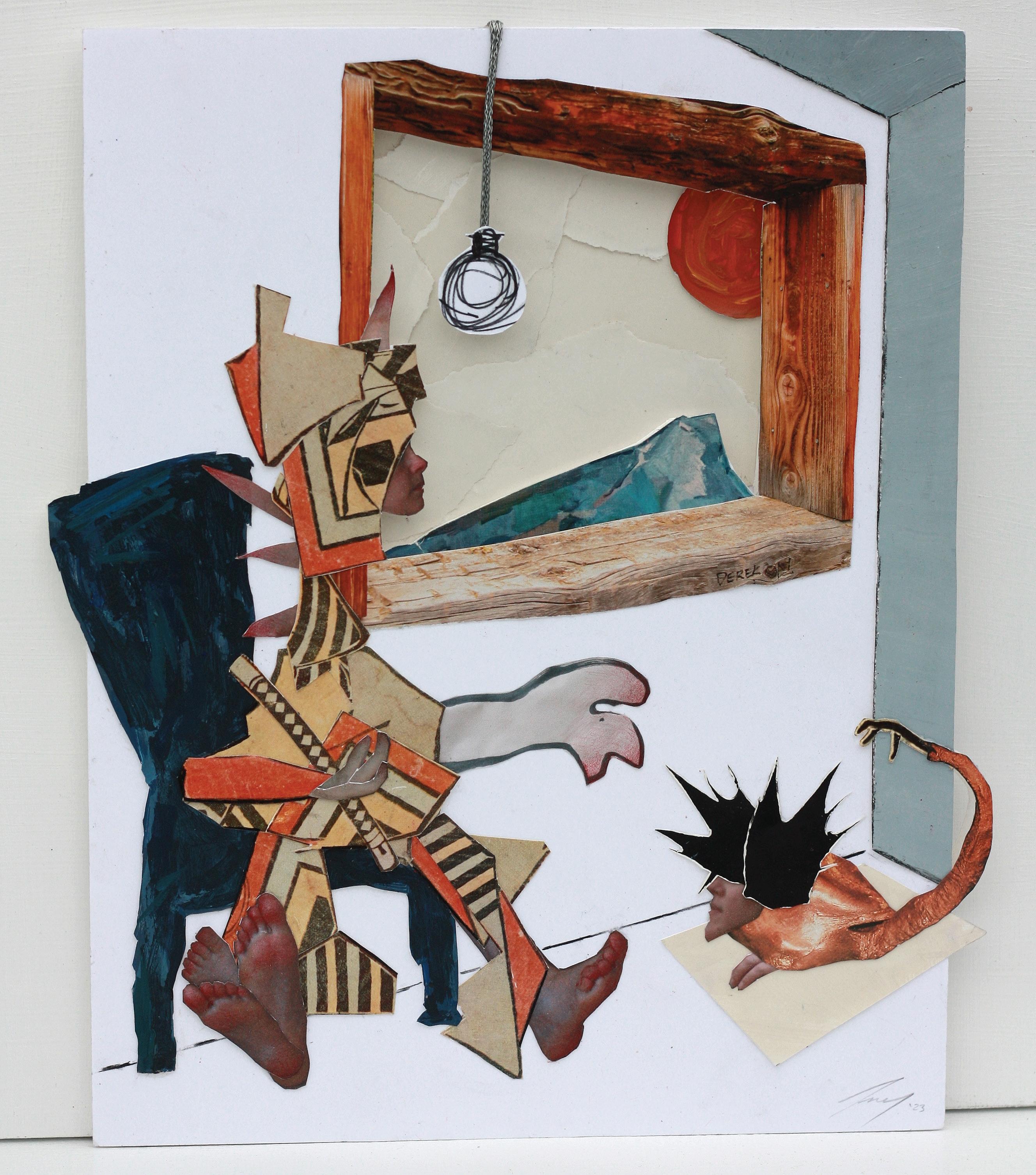
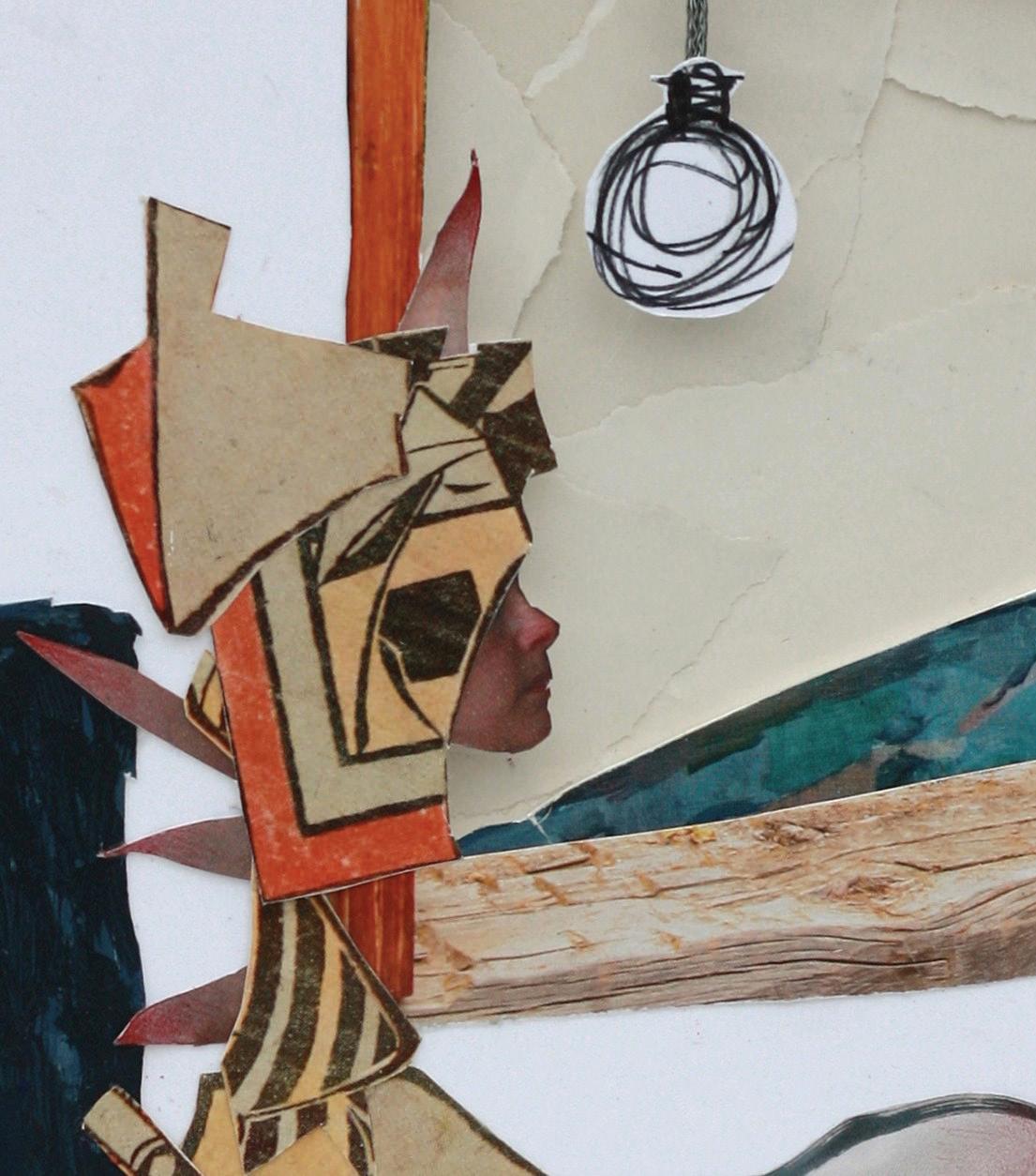
Conversation (with help from Kiyotada and Cezanne), 2023. Reclaimed art prints, acrylic, magazine, inkjet print, wire, pencil crayon and marker on paper. 8.5x11 in.
BED-DESK SERIES
THE BED-DESK SERIES
While planning a large sculptural project for this exhibition, I found myself suddenly too sick to leave bed. While I have a chronic disability, it is also a dynamic one. This means it fluctuates in intensity, often unpredictably. This Bed-Desk Series was created almost exclusively during these months of acute illness.
My husband is a builder who has supported me through decades of this fluctuating complex chronic illness. Seeing that I was bed-ridden, and knowing how important my creative practice is to me, he immediately designed and built a special desk so making art could be more easily accessible from where I rested. Any pieces I made, though, would have to work with the long-andnarrow shape of the desk itself (this determined the size and shape of the drawings).
Over the next months, as I wrestled to accept my body’s state of collapse, I rested a lot. When I was able, I sat up in bed and drew. By putting pencil to paper, I channeled my longing to move and feel strong into these strange characters who were complex and broken like me, but who also walked and grew and took up space in the adaptive ways that they could. Working in this way helped me think creatively about the ways I may be able to adapt and evolve as well.
The large installation itself was also built by my husband, as an act of collaboration and support, and funded by a Canada Council for the Arts grant, with the same materials that he used to make my bed-desk. By stepping (or wheeling) into this installation, you are entering into your own portal to elsewhere.
The space is simple and small, like mine was over these months. The drawings themselves are curved in order to invite you, the viewer, to inch closer. When you do, the paper will appear to flatten, the distortion will dissipate, and you will see the figures more accurately and intimately. This closeness will open to you to the nuance and detail that may have been hidden had you tried to view them from a safe distance. It takes courage to look at others, and at ourselves, closely. Maybe you will see yourself in these characters the way I did, and also recognize in their movements the ways that you, too, can adapt, evolve, and find strength in unconventional ways.
We acknowledge the support of the Canada Council for the Arts.
Amy J. Dyck
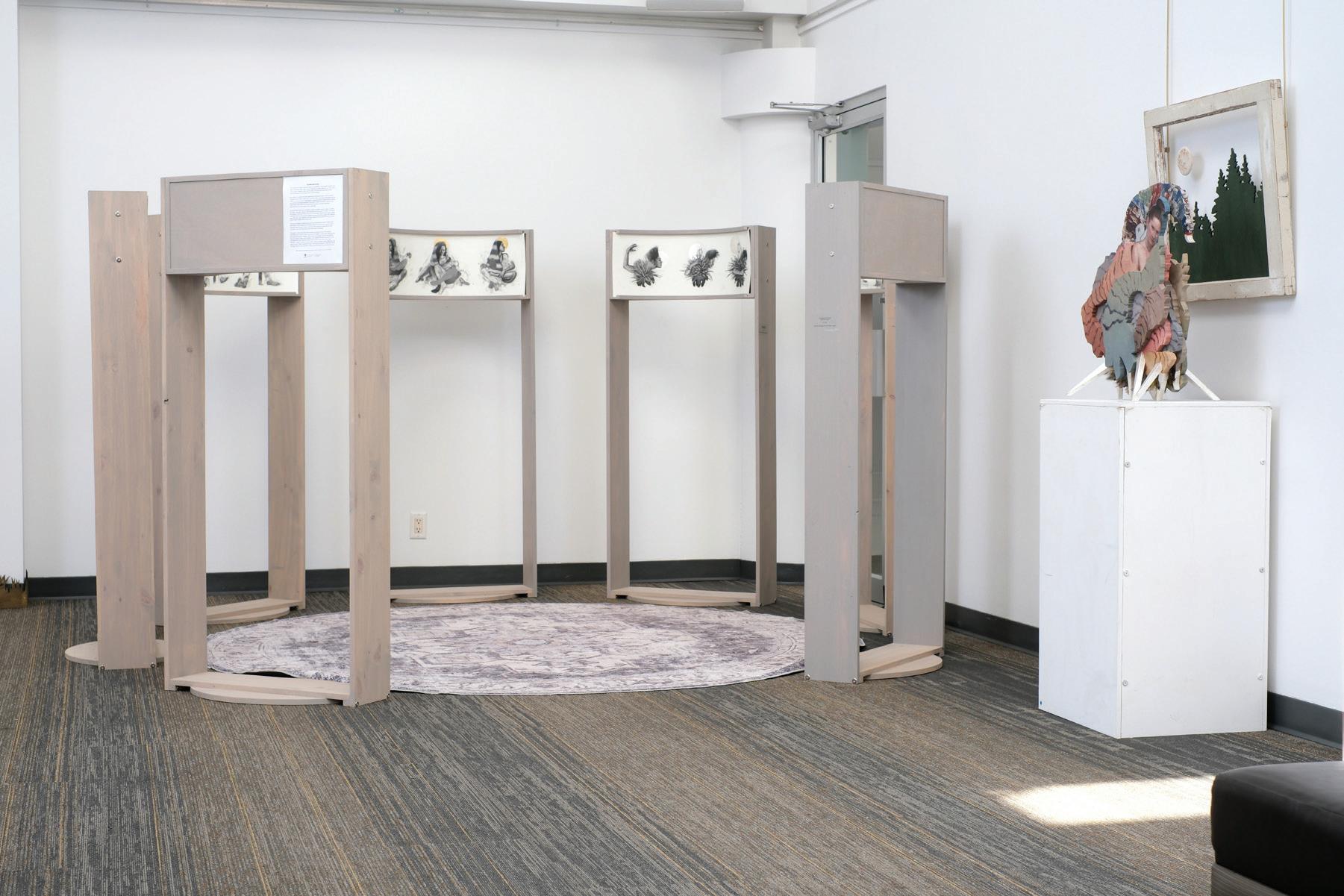
Bed-Desk Series (installation image), 2024.
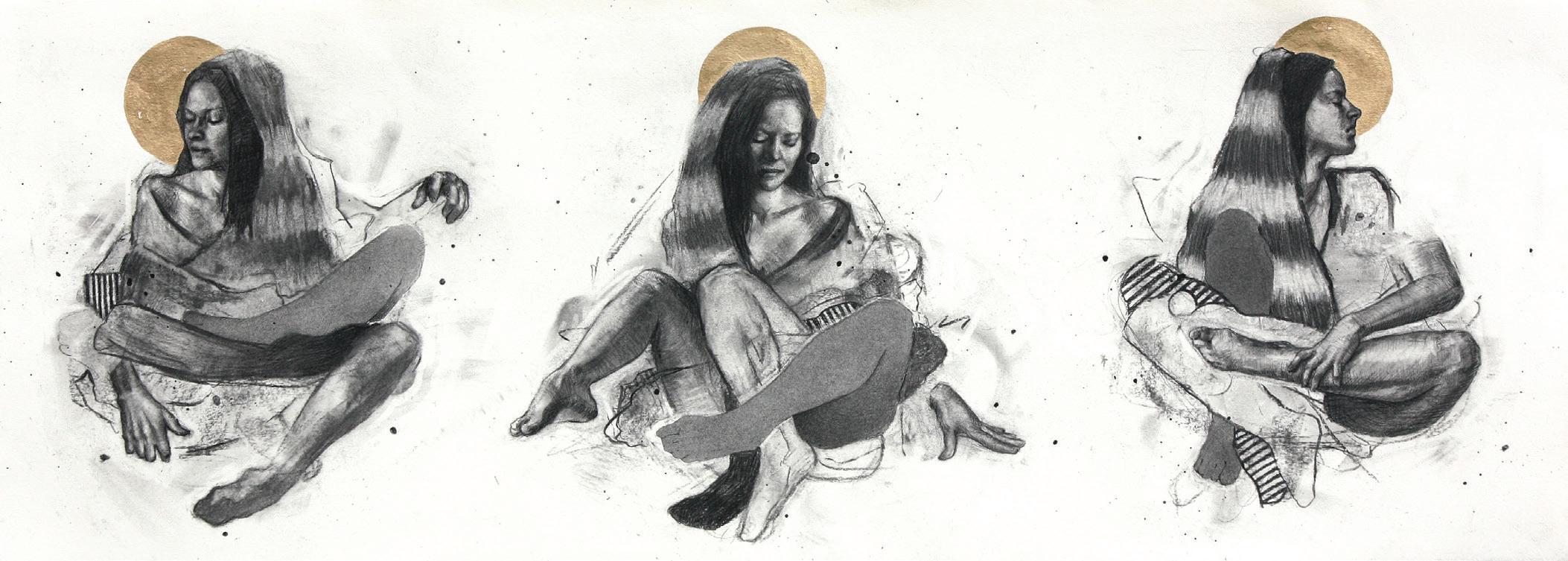
Chaotic Being with Halo, 2024. Charcoal and 23 ct gold leaf on paper. 11x30 in.
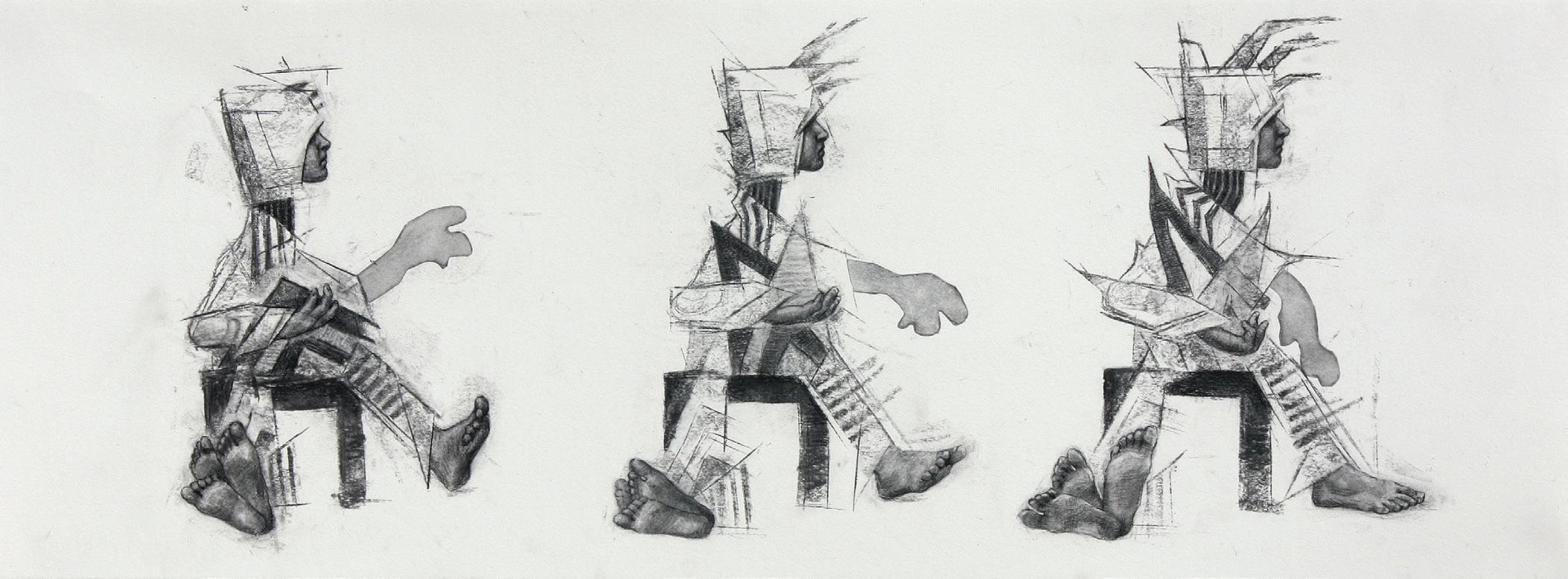
Growing Armour, 2024. Charcoal on paper. 11x30 in.
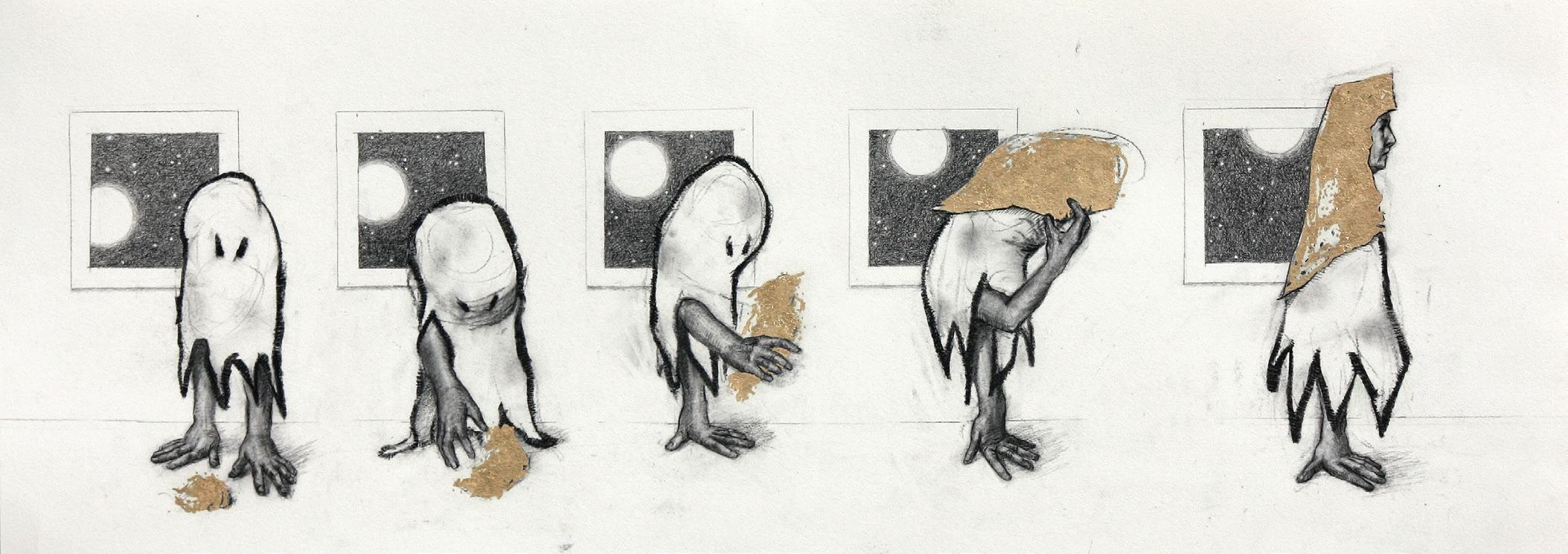
Discovering the Wise One, 2024. Charcoal and 23 ct gold leaf on paper. 11x30 in.
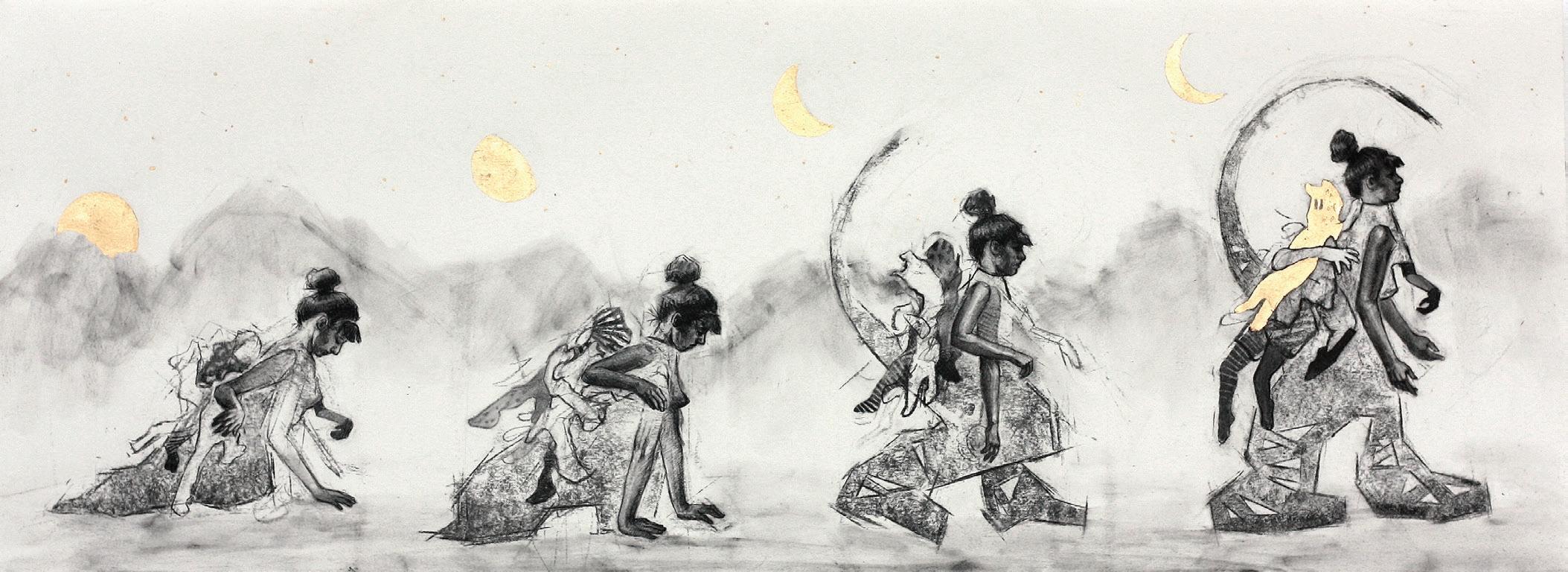
Mothering, 2024. Charcoal and 23 ct gold leaf on paper. 11x30 in.
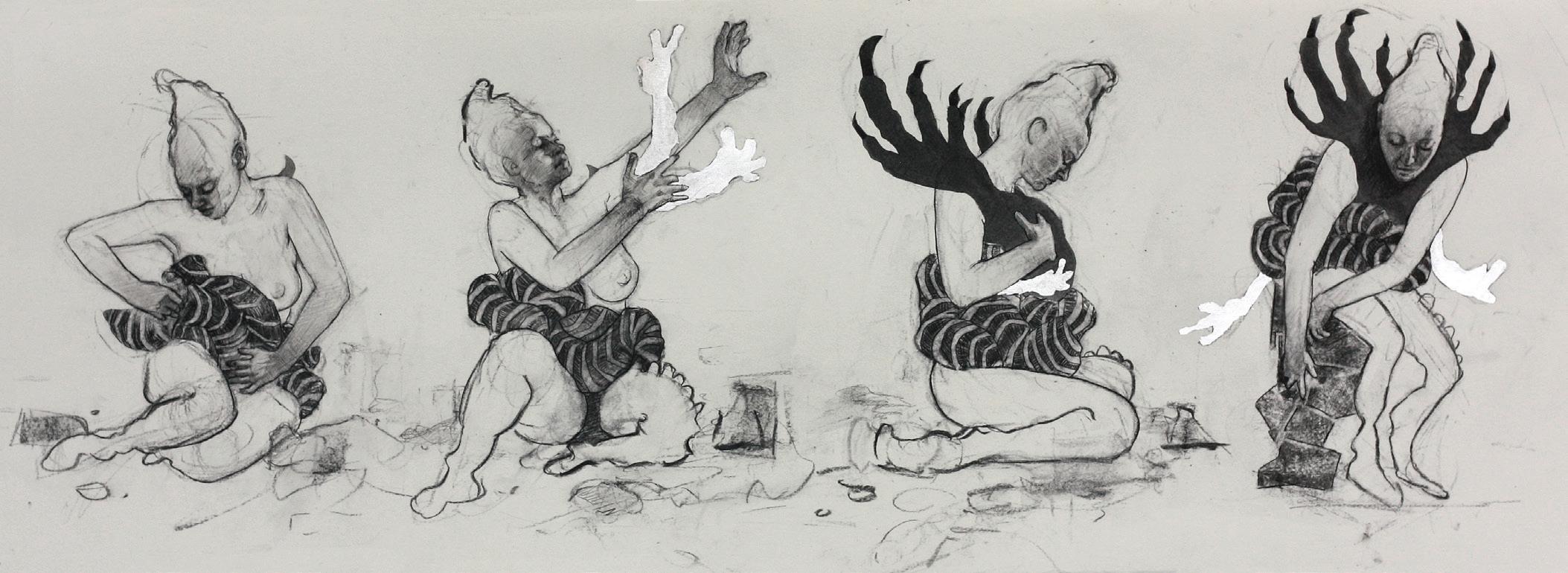
The Assembly Process, 2024. Charcoal and aluminum leaf on paper. 11x30 in.
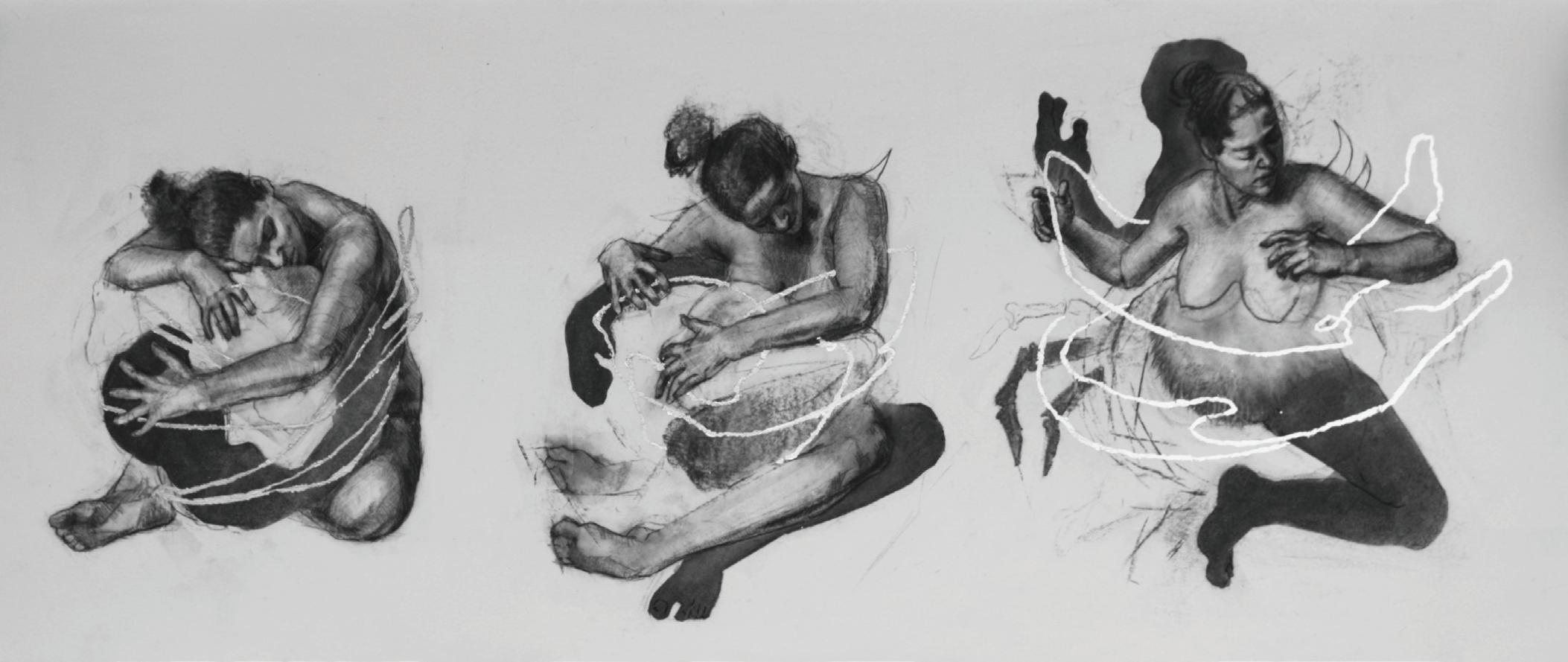
Unravelling, 2026. Charcoal and aluminum leaf on paper. 11x30 in.
CURRICULUM VITAE
AMY J. DYCK
SOLO & COLLABORATIVE EXHIBITIONS (SELECTION)
2024 Portals to Elsewhere, Sidney and Gertrude Zack Gallery, Vancouver BC
2024 “Hi, I’m Complicated,” THIS Gallery, Vancouver BC
2023 Intricate Arrangements (with Monique Motut-Firth), The Act Art Gallery, Maple Ridge BC
2023 All the Parts of Me, Queen Elizabeth Theatre, Vancouver BC
2022 Dichotomy, PoMo Arts Centre, Port Moody BC
2019 Dwell, SAMC Gallery, Trinity Western University, Langley BC
2019 Liminal Spaces, Queen Elizabeth Theatre, Vancouver BC
2016 Echo, Amy J. Dyck and Nikol Haskova, The Fort Gallery, Langley BC
GROUP EXHIBITIONS (SELECTION)
2024 The Gifts of Madness, Penticton Art Gallery, Penticton BC
2023 Our Journey for Inclusion: 70 Years of Innovation, Chilliwack Museum and Archives, Chilliwack BC (award)
2023 Fraser Valley Biannual, The Reach, Abbotsford BC (iterations in the Fraser Valley)
2022 Confronting Demons, Blind Insect Gallery, Portland Oregon
2021 On The Edge, Federation Gallery, Vancouver BC
2021 Business Card Art Show, JKR Gallery, Provo UT, USA
2020 Hedges and Houses and Mothers and Children, I Like Your Work Podcast with Dazed and Confucius, online and virtual exhibition, Vancouver BC
2017 Bombay Sapphire Artisan Series Finalist Exhibition, Winsor Gallery, Vancouver BC
2017 Fraser Valley Biennale, The Reach Museum Gallery, Abbotsford BC
2016 Ensemble, The Act Art Gallery. Maple Ridge, BC
2015 Sidney Fine Art Show, Mary Winspear Centre, Sidney BC
AWARDS & GRANTS (SELECTION)
2024 Grant Awarded. Canada Council for the Arts, Explore and Create, Concept to Realization
2024 1st place, Our Journey for Inclusion: 70 Years of Innovation, Chilliwack Museum & Archives, Chilliwack, BC
2023 1st place, Women United Art Prize (collage and fibre art), online, international
2022 1st place, Face Forward Art Portrait Prize, online, international
2021 Honorable Mention, Blue Review Art Prize, New York, USA
2020 2nd place, Painting on the Edge, Federation Gallery, Vancouver BC
2017 Finalist, Bombay Sapphire Artisan Series, Winsor Gallery, Vancouver BC
PRESS & PUBLISHED (SELECTION)
2024 Jewish Independent. Artist’s Portals to Elsewhere, Olga Livshin, Sep 13 2024
2024 Create Magazine Blog. Exploring Human Depths: Whimsical, Dynamic Art by Amy J. Dyck
2024 How We Heal Podcast. Episode 46. Art-Making as an Accessible Conduit for Healing
2024 How We Heal Podcast. Episode 45. From Chaos to Creativity
2024 Women Art United Podcast Episode 56. Art After the Bad Thing Happened
2023 Create! Magazine Issue #41, December 2023.USA
2023 Uppercase Magazine issue #58 July-Aug-Sept 2023. Canada
2023 An Artist and a Mother, Chapter 29: Pushing Back, Demeter Press. USA
2022 Not Real Art Blog. Mixed Media Artist Amy J. Dyck Makes Peace with Her Inner Demons
2022 Vancouver Art Gallery, Art Connect; Outsider Art with Kristin Chung, Shannon Goodman, John Clinock, Amy J. Dyck and Charlie Sandeman. Canada, Sep 29
2022 Vancouver Sun. Festival Celebrates Artists Who Live/Work Outside of Mainstream Cultural Spaces, Dana Gee. Canada, Oct 5
2019 Apero Magazine, Nourish. USA, November
2018 American Art Collector Magazine, Emerging Artist Feature. USA, April
2018 Art Minute, If I Don’t Make Art I Fade out; Why She Needed to Keep Painting After Having Kids, CBC Arts. Canada, Feb 2
PROFESSIONAL EXPERIENCE (SELECTION)
2024 Artist Talk, Portals to Elsewhere. Sidney and Gertrude Zack Gallery, Vancouver, BC
2023 Artist Talk, Intricate Arrangements (joint exhibition) The Act Gallery, Maple Ridge, BC
2022 Guest Panelist for Betty Spackman’s A Creature Chronicle Symposium, Langley, BC
2021 Artist Talk, Surrey Art Gallery Association. “Art and the Journey Through a Crisis.” Surrey, BC
2021 Instructor for Deeper Selves Reside Mentorship Program (virtual)
2021 Instructor, Drawing Structural Portraits and Portrait Painting, Langley Arts Council, virtual
2017-current Critique Facilitator, Langley Arts Council, Langley, BC
2020 Juror, Nanaimo 2020 Art Show, Federation of Canadian Artists, Nanaimo, BC
2020 Instructor, Painting the Portrait in Oils, South Surrey White Rock Art Society, White Rock, BC
EDUCATION
2000-2002 Certificate. Interdisciplinary Design Studies, Kwantlen Polytechnic University, Richmond, BC.
Studied under artists such as Robert Liberace, Zoe Frank, Justin Ogilvie, Betty Spackman, Erica Grimm through workshops and classes.
For more than a decade, Dyck has instructed on topics like figure portrait drawing from life, plein air painting, oil painting basics, portrait drawing and painting, drawing hands and feet, composition, perspective, atmosphere, how to critique, the anatomy of light, visual problem solving, expressing your inner vision and more.