The Vermont Chamber of Commerce is dedicated to advancing the Vermont economy. Trusted by the businesses that make living, working, and thriving in Vermont possible, we prioritize collaboration and uphold the core values that define our state As the preeminent not-for-profit business organization, we advocate, build community, and provide resources for businesses statewide.
FROM PLANNING TO POLICY TO ACTION
A Biennium Reflection from President Amy Spear
As we reflect on the 2025–2026 legislative biennium, we are reminded of both the responsibility and the opportunity that come with representing Vermont’s diverse and resilient business community during a period of extraordinary change. Over the past two years, Vermont businesses have faced rising costs, workforce shortages, housing constraints, healthcare affordability challenges, shifting federal priorities, and growing economic uncertainty At the same time, our state continued to confront long-term challenges tied to demographics, competitiveness, and affordability.
Against this backdrop, the Vermont Chamber remained focused on advancing pragmatic, data-informed solutions grounded in the realities facing employers across the state. We advocated for policies that improve affordability, expand opportunity, modernize systems, and support long-term economic growth.
This biennium also marked an important shift in Vermont’s economic conversation Through the Vermont Economic Action Plan, shaped by more than 5,000 Vermonters, we helped establish a shared roadmap for workforce growth, housing development, and economic vitality The launch of the Vermont Competitiveness Dashboard and Business Climate Survey further strengthened Vermont’s ability to connect data, policy, and action. Together, these efforts are helping create a more coordinated approach to solving the challenges that impact businesses, communities, and working Vermonters.
Without legislative supermajorities, policymaking increasingly required collaboration and coalition building. Encouraging developments, including the launch of the bipartisan Caucus for Vermont’s Economy, reflected a growing recognition that Vermont’s economic challenges require sustained attention and bipartisan solutions As the caucus continues to grow, it represents a promising opportunity to build long-term momentum around the policies and investments needed to strengthen Vermont’s future
Meaningful progress was made during this biennium. Legislation advanced to support the construction of more homes, strengthen economic development tools, create new pathways for workforce growth, and begin the difficult work of addressing rising healthcare costs Innovative businesses gained access to new opportunities, and important groundwork was laid for future reforms. Yet Vermont’s affordability challenges will not be solved in a single session or a single biennium. Lasting progress requires sustained leadership, long-term thinking, and a willingness to work together toward shared goals
These outcomes were made possible by our engaged members and our trusted relationships with policymakers and partners across sectors Together, we strengthened the voice of Vermont’s business community while helping shape a more strategic conversation about Vermont’s future.
Thank you for your partnership and continued commitment to advancing Vermont’s economy.
Amy Spear President Vermont Chamber of Commerce
ADVANCING THE VERMONT ECONOMY
MEMBER-DRIVEN, DATA INFORMED
The Vermont Chamber represents businesses of every size, in every industry, across the whole state Through trusted advocacy, data-informed policy leadership, and strong member engagement, we ensure Vermont businesses have a voice in the decisions shaping our economy.
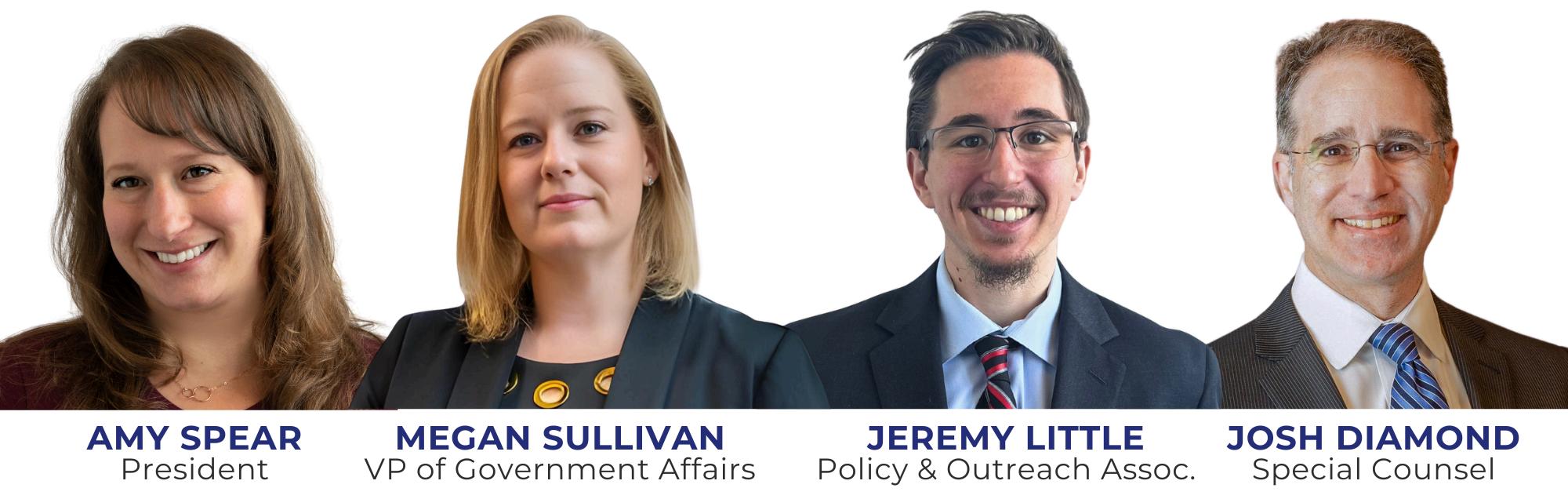
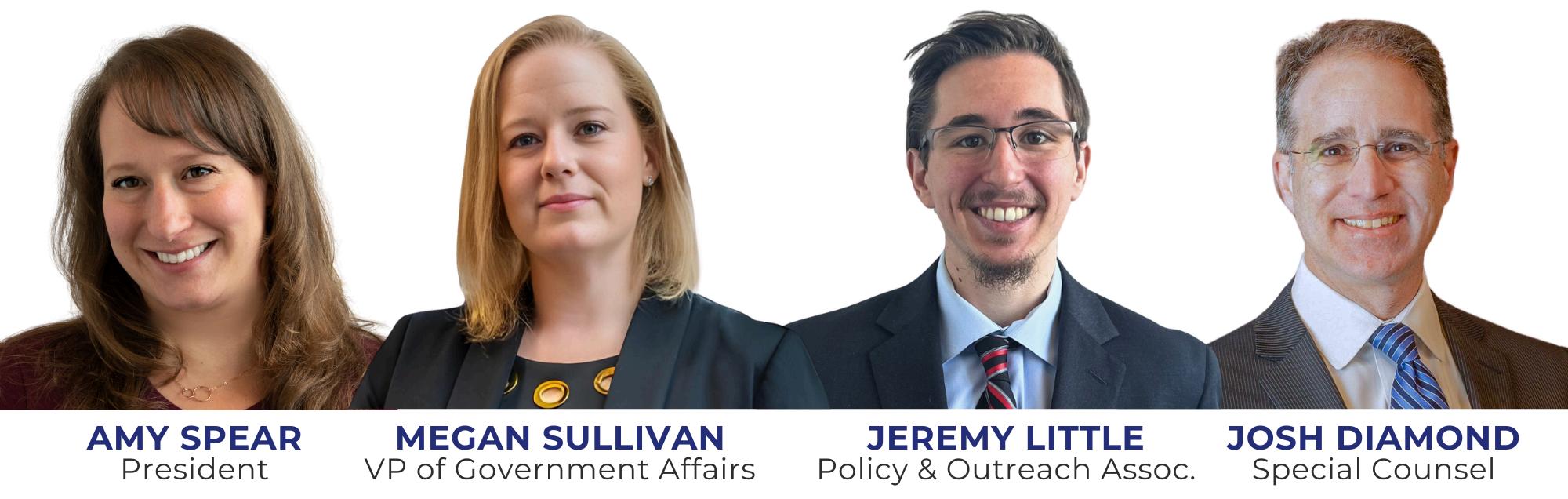
OUR GOVERNMENT AFFAIRS TEAM
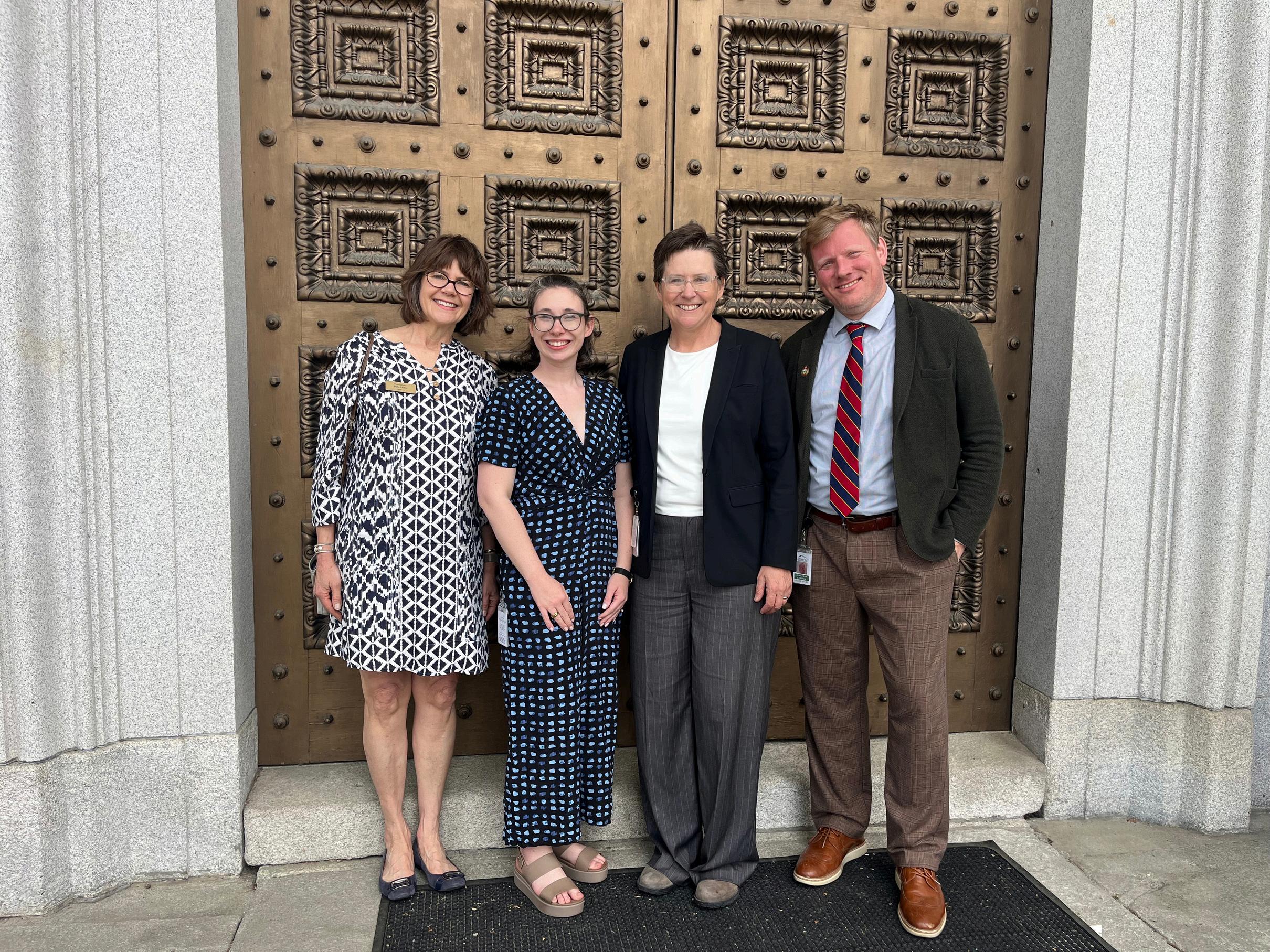
The Vermont Chamber advocacy team brings a wealth of experience in legislative affairs, economic development, and business advocacy. They are committed to providing valuable guidance and fostering an environment where all businesses can thrive EXPERIENCED | TRUSTED | DETERMINED | CONNECTED
ADVOCACY IN ACTION
The Vermont Chamber ensured Vermont’s business community had a strong and consistent voice in Montpelier throughout the biennium From committee testimony to bill tracking and coalition engagement, our work connected business realities to policy decisions and helped advance solutions focused on affordability, competitiveness, and long-term economic vitality.
Number of times Chamber staff testified before legislative committees.
Number of legislative interns working alongside Chamber team members.
Number of committee hearings monitored by Vermont Chamber staff.
CAUCUS FOR VERMONT’S ECONOMY
THE LAUNCH OF A NEW CAUCUS FOCUSED ON THE ECONOMY
During the 2026 legislative session, lawmakers launched the bipartisan Caucus for Vermont’s Economy to advance policies that strengthen Vermont’s competitiveness and expand opportunity statewide. Led by co-chairs Rep. Abbey Duke and Rep. Ashley Bartley, the caucus brings together House and Senate members to focus on housing, workforce challenges, affordability, regulatory modernization, and business competitiveness
In its first year, the caucus heard from Vermonters about challenges navigating permitting processes and explored ways to improve coordination, predictability, and efficiency across state government. For the Vermont Chamber, the caucus is an encouraging step toward a more coordinated, solutions-oriented approach to Vermont’s economic future, helping turn economic data into action for businesses, communities, and working Vermonters
Jonathan Cooper, Clerk Rep Chris Morrow, Communications Rep Kate Lalley, Communications
LEGISLATIVE OUTCOMES
PROGRESS AND CHALLENGES
LEGISLATIVE ACTIONS
KEY BILLS IMPACTING BUSINESS RESILIENCE AND GROWTH
Record-high government spending in recent years was largely supported by one-time federal pandemic relief funding As we entered the 2025-2026 biennium, these federal dollars were no longer available, presenting a critical challenge: returning state spending to a sustainable level. Despite the economic uncertainty, the majority in the legislature remained focused on maintaining high levels of government spending, introducing new state revenue sources to fund initiatives While these efforts were well-intentioned, the state faces a significant affordability crisis affecting businesses, individuals, and families Sustainable, incremental changes are essential to ensuring a robust and resilient economy.
Even with these financial pressures, several key bills addressing the needs of Vermont's business community successfully moved through the legislative process this biennium. Moreover, a number of proposed tax increases that would have further strained Vermont's economic climate were defeated In the following sections, we provide an overview of critical legislation, roll call votes, and additional details on bills that aim to support businesses and help build a more resilient future for Vermont's economy.
PASSED LEGISLATION
SHAPING VERMONT'S BUSINESS ENVIRONMENT AND ECONOMIC FUTURE
2025
BILL ISSUE
H.35 Healthcare Markets
WHAT BUSINESSES NEED TO KNOW
Summary: Vermont’s individual and small group health insurance markets will remain permanently separated, reversing the plan to have them merge in 2025 The Vermont Chamber testified in favor of this bill
What It Means for Business: The unmerging prevents small group insurance rates from being affected by the typically higher costs of the individual market
Summary: The selling of cleaning products, dental floss, and fluorinetreated containers containing PFAS will be phased out in 2032 and 2028 for cookware.
PFAS
H266 Healthcare, Drug Pricing
What It Means for Business: These changes mark progress toward regional alignment. The extended cookware timeline provides businesses with food service time to transition to alternatives
Summary: In 2026, a price cap will be implemented for certain intravenous outpatient prescription drugs, limiting cost to no more than 120% of the average US sales price
What It Means for Business: This act will reduce 2026 increases in health insurance rates for the small group markets by 4% and reduce the cost of care for those seeking treatment
Summary: The alcohol to-go program is now permanent, allowing establishments to sell alcoholic beverages for off-premises consumption alongside to-go food orders.
H339 Alcohol To Go
What It Means for Business: Businesses can permanently offer alcohol togo, codifying revenue sources, meeting consumer demand, and allowing for long-term planning
H238
BILL ISSUE
WHAT BUSINESSES NEED TO KNOW
H454 Education1
H461 Unpaid Leave
Summary: Timelines and working groups were established to revise school district boundaries, funding formula, class sizes, and student weighting The bill proposed a business-only property tax classification, which treated businesses as a valve to stabilize other taxpayers The proposal was ultimately removed following unified action from the business community and Governor
What It Means for Business: Though immediate cost containment remains elusive, this sets the stage for mitigating the cost of education and creating a more affordable system
Summary: This law expands eligibility for unpaid leave under Vermont's Parental and Family Leave Act and expands eligible leave types for employees, including safe leave and bereavement leave.
What It Means for Business: Employers must accommodate the expanded definitions and eligibility criteria This may result in a broader range of leave requests, potentially impacting staffing and operating costs
Summary: Vermont's stormwater management regulations, particularly concerning the ‘3-acre rule,’ were extended.
H.481 Stormwater Management, 3Acre Rule
H482 Healthcare Oversight
What It Means for Business: Developers and property owners gain time to comply with costly stormwater permitting, improving financial and logistical planning
Summary: The Green Mountain Care Board (GMCB) was granted the authority to adjust hospital reimbursement rates if the domestic health insurer is at imminent risk of insolvency The act also allows the GMCB to appoint a hospital observer.
What It Means for Business: The solvency of Vermont’s sole domestic health insurer is essential to preserving the employer-sponsored benefits available to Vermont’s workforce
Summary: Average property tax increases were uniformly increased by an average of 1.1%, offset by $77.2 million in one-time funds.
H.491 Property Tax Yields1
H493 2026 State Budget1
S.51 Tax Policy, Workforce Incentives1
What It Means for Business: Commercial property owners saw the same tax increase as homestead owners. While the buydown ensured shortterm stability, it created a larger funding gap heading into 2026
Summary: The $9.1 billion budget with a 5-year, $3 billion increase made investments in workforce development, housing, and infrastructure
What It Means for Business: Large budget growth raised concerns in the context of Vermont’s affordability crisis and uncertain federal funding Still, targeted investments were made to ease labor shortages and support economic growth
Summary: A new tax credit package was enacted to improve affordability for current and prospective Vermont residents Key provisions include a military retiree exemption that fully exempts pension income up to $125,000, with a gradual phase-out between $125,000 and $175,000
What It Means for Business: The exemption is a strategic move to attract and retain military retirees and their families, strengthening Vermont’s workforce and economy
This bill contains Senate and/or House roll call votes listed later in this report 1
BILL ISSUE
S122 Economic Development
WHAT BUSINESSES NEED TO KNOW
Summary: The Legislature passed an economic development bill supporting trade, tourism, and small business growth while improving administrative efficiency.
What It Means for Business: These provisions aim to enhance Vermont's economic competitiveness, support diversity in entrepreneurship, and attract a skilled workforce
Summary: This act seeks to reform Vermont’s healthcare system through Reference-Based Pricing, reduced hospital spending, and a new statewide healthcare delivery plan
S126 Healthcare Reform1
S127 Community Housing Infrastructure Program1
What It Means for Business: A more sustainable, cost-effective healthcare system will help employers maintain affordable coverage and support workforce health
Summary: To address Vermont’s housing crisis, the Legislature created the Community Housing Infrastructure Program (CHIP), a financing tool to help fund housing-related infrastructure.
What It Means for Business: By easing workforce housing shortages and expanding infrastructure, this act supports talent attraction, employee retention, and economic growth
This bill contains Senate and/or House roll call votes listed later in this report 1
2026
BILL ISSUE WHAT BUSINESSES NEED TO KNOW
Summary: Establishes new ticket resale requirements, including a 110% cap on resale prices, a ban on speculative ticket sales, and protections against deceptive resale practices
H512 Event Ticketing
What It Means for Business: Creates a fairer and more transparent secondary ticket marketplace
Summary: Requires health care businesses with hedge fund or private equity investment to report significant business information to the Green Mountain Care Board and Health Care Advocate
H.583 Private Equity in Healthcare
H.907 Sister State
H915 Beverage Redemption
What It Means for Business: Sets a concerning precedent by requiring privately held businesses to disclose confidential information to an independent nonprofit.
Summary: Establishes a process for formalizing international relationships that support trade and economic collaboration
What It Means for Business: Expands opportunities for international partnerships and trade
Summary: Restructures Vermont’s bottle redemption system through a Producer Responsibility Organization (PRO) model Until full implementation, distributor handling fees increase by one cent
What It Means for Business: Increased handling fees will add millions in new costs for beverage manufacturers, distributors, retailers, and ultimately consumers.
BILL ISSUE
H921 Alcohol
WHAT BUSINESSES NEED TO KNOW
Summary: Allows small-scale alcoholic beverage manufacturers to directly distribute up to 3,000 barrels annually and expands off-premises sales flexibility
What It Means for Business: Expanded distribution and off-premises sales flexibility will help support growth opportunities for small and medium-sized brewers
H933 Tax Conformity, Research & Development, Transportation Fund
Summary: Increases the state R&D Tax Credit from 27% to 75% of the federal credit and raises the cap from $3 million to $4 million Other key provisions include restoring immediate expensing of qualified research expenditures (QREs) for smaller businesses (less than $31 million in annual receipts), expanding the Down Payment Assistance Program, and providing additional Transportation Fund support
What It Means for Business: Enhancements to the R&D tax credit improve regional competitiveness and lower the cost of innovation Additional provisions support affordability, infrastructure investment, and workforce development
Summary: Increases average property tax rates by 35%, offset by $1009 million in one-time funds. The bill also lowers the threshold for excess education spending, increasing penalties for substantial increases to school budgets
What It Means for Business: The use of one-time funds helped moderate property tax increases in the short term, but businesses continue to face uncertainty until structural reforms address the underlying drivers of education spending
Summary: The FY27 budget makes investments in workforce development, housing, and infrastructure However, some proposed investments were reduced or funded on a one-time basis rather than ongoing support
H951 Budget
What It Means for Business: Continued budget constraints raise concerns in the context of Vermont’s affordability crisis Still, targeted investments in workforce and housing may ease labor shortages, strengthen retention, and support economic growth
H955 Education, Tax Classification
S.71 Data Privacy1
Summary: Modernizes Vermont's education system by encouraging regional school governance, expanding shared services, and transitioning to a new funding model designed to improve educational opportunities while slowing long-term cost growth.
What It Means for Business: This represents a significant step toward a more sustainable education system, though its long-term impact will depend on effective implementation and continued fiscal discipline
Summary: Establishes a comprehensive consumer data privacy law that gives Vermonters new rights over their personal information while setting standards for how businesses collect, use, and share data
What It Means for Business: Beginning in 2028, businesses that handle consumer data will need to implement new privacy compliance practices, increasing administrative and operational responsibilities while benefiting from a regionally compatible and predictable statewide regulatory framework
This bill contains Senate and/or House roll call votes listed later in this report 1
BILL ISSUE
S173 Vocational Rehabilitation
WHAT BUSINESSES NEED TO KNOW
Summary: Updates the state's workers' compensation vocational rehabilitation system by expanding injured workers' access to rehabilitation services while creating a working group to recommend additional reforms
What It Means for Business: Employers and workers' compensation insurers may face additional responsibilities for providing and coordinating vocational rehabilitation services, with the goal of helping injured employees return to work more effectively
Summary: Establishes a primary care payment reform program that shifts participating providers toward prospective, population-based payments to strengthen primary care and improve access
S197 Primary Care
S212 Water Connections
What It Means for Business: For employers and health insurance purchasers, the bill aims to improve the stability and availability of primary care while potentially influencing future health insurance costs and benefit design
Summary: Regulatory changes streamline water connection permitting and improve coordination between municipal and state systems
What It Means for Business: Reduced permitting timelines and improved efficiency may lower construction costs and support business expansion.
Summary: The CTE system will undergo comprehensive reviews and updates to support integration with broader education reform efforts.
S.313 Career Technical Education (CTE)
S325 Land Use, Act 2501
What It Means for Business: A more aligned CTE system will strengthen workforce training and improve employer engagement, helping support the recruitment of skilled, job-ready workers
Summary: Targeted changes were made to Act 181, including the repeal of Tier 3 and road rule provisions and the addition of legislative oversight of permitting agencies
What It Means for Business: Repealed provisions reduce regulatory barriers, though broader Act 250 reform remains ongoing Additional oversight may help improve accountability and permitting efficiency
S.327 Economic Development
S.328 Housing
Summary: Businesses gain access to C-PACE financing, expanded Rural Industry Development Program eligibility, and cash rounding to the nearest nickel. The bill also creates a hospitality and culinary apprenticeship pilot and education study, repeals the VEGI sunset, and reduces the program's annual incentive cap
What It Means for Business: Investments support long-term workforce and economic development needs
Summary: Advances a broad housing package that expands financing tools, streamlines housing development, updates common interest community laws, and strengthens local and state housing planning
What It Means for Business: Improved development tools and efficiencies will support housing production, workforce attraction, and long-term economic growth.
This bill contains Senate and/or House roll call votes listed later in this report 1
LEGISLATION THAT STALLED MIXED OUTCOMES: WINS AND MISSED OPPORTUNITIES
BILL ISSUE
25-0653 Right To Sit
S135 Swipe Fees
WHAT BUSINESSES NEED TO KNOW
Summary: A proposed employer mandate would have required employers to provide seating for employees while working Following Chamber advocacy, the proposal did not advance
Summary: Credit card fees on tax or gratuity portions of transactions would be prohibited and cash acceptance for purchases would’ve been mandated under this bill
2026
BILL ISSUE
H.348 Extreme Temperatures
H459 Workers Comp, Paid Family Leave
H585 Association Health Plans
H718 Building Energy Code
H758 Rodenticides
S230 Flexible Working Arrangements
S247 Plastics, Recycling
Rules Wetlands
WHAT BUSINESSES NEED TO KNOW
Summary: Chamber advocacy helped prevent proposed regulations tied to broad temperature thresholds that would have created burdensome regulatory requirements within routine, day-to-day operations
Summary: Following Chamber advocacy, a proposal to prohibit the concurrent use of Workers Compensation and Parental and Family Medical Leave did not advance
Summary: Implementation of association health plans to create new health care options for small businesses and entrepreneurs did not advance
Summary: Proposed changes to the residential building energy standards would have created structural updates to Vermont’s residential building standards framework for residences with fewer than three dwelling units
Summary: Following Chamber and stakeholder advocacy, a proposal to broadly ban anticoagulant rodenticides commonly used by food-related facilities to prevent rodent infestations stalled this session
Summary: Chamber advocacy helped prevent proposed regulations that would have imposed new requirements on Vermont employers, limiting employer discretion over workplace scheduling and location decisions
Summary: This proposal would have banned certain plastics and advanced recycling processes, broadly impacting Vermont’s medical, maple sugaring, and manufacturing sectors
Summary: Proposed rules by the Scott administration would have supported higher-density development in designated growth areas, helping address housing shortages, discouraging sprawl, and preserving wetlands.
26-0804 Tax Policy1
Summary: Proposed taxes that would’ve been among the highest in the nation on income from pass-through businesses, investment proceeds, and high-income earners were taken up by both chambers Following Chamber advocacy, the policy was dropped from consideration
This bill contains Senate and/or House roll call votes listed later in this report 1
CONNECTING PEOPLE, IDEAS & ACTION
THE POWER OF CIVIC ENGAGEMENT
BUILDING A MORE ENGAGED VERMONT
A strong economy depends on engaged citizens, informed voters, and leaders who are invested in the future of their communities
The decisions made in Montpelier directly impact Vermont businesses, employees, and communities. That's why the Vermont Chamber encourages employers to support civic participation and help their teams engage in the democratic process.
REGISTER TO VOTE
In Vermont, individuals may register to vote at any time, including on Election Day. Registration is available online through Vermont Online Voter Registration, by mail, or in person at a Town or City Clerk's Office during regular business hours Employers can share this Sample Employee Email with information on how to register
Important election dates include the Statewide Major Party Primary on August 11, 2026, and the General Election on November 3, 2026.
Online voter registrations should be submitted by the Friday before Election Day to allow time for processing After that date, voters may need to register in person
HOW TO VOTE
Employers can help increase participation by sharing information about the many ways Vermonters can vote. Here is a Sample Email to Send Your Employees and materials to help communicate voting deadlines, absentee ballot deadlines, links to polling locations, and more.
POLLING INFORMATION
In-Person Voting
All polling places open between 5am and 10am and close at 7pm on Election Day
View all polling locations in Vermont on this map.
Find your polling place at My Voter Page.
Absentee Voting
Request a ballot at My Voter Page or in person at the town clerk’s office by 5pm on the day before the election
Submit your ballot by mailing it back in or depositing your ballot in a drop box if your town has one (list of all ballot drop box locations), by 7pm on the day of the election.
The My Voter Page provides voters with access to registration status, absentee ballot requests and tracking, polling locations, sample ballots, and candidate information
LEARN ABOUT THE CANDIDATES
Many voters report that a lack of information about candidates is a barrier to participation. Employers can help by sharing trusted, nonpartisan election resources with their teams
Information about candidates for the Vermont House and Senate, as well as additional election resources, is available through the Vermont Secretary of State Election Information.
The challenges facing Vermont are interconnected Workforce shortages, housing availability, affordability pressures, healthcare costs, and economic competitiveness cannot be solved in isolation Addressing them requires a shared understanding of where Vermont is today, a clear vision for where we want to go, and the leadership to turn ideas into action.
That work accelerated during this biennium through the Vermont Futures Project
VERMONT ECONOMIC ACTION PLAN
A SHARED VISION FOR AFFORDABILITY AND ABUNDANCE
After engaging more than 5,000 Vermonters across all 14 counties, the Vermont Futures Project launched the Vermont Economic Action Plan, a long-term blueprint for strengthening Vermont's economy and creating a more affordable and abundant future
Vermonters Engaged5,000+ Counties Represented
VERMONT COMPETITIVENESS DASHBOARD MEASURING WHAT MATTERS
The Vermont Competitiveness Dashboard provides a clear view of how Vermont performs relative to other states across key economic indicators, helping policymakers, business leaders, and stakeholders identify where Vermont leads and where improvement is needed.
VERMONT BUSINESS CLIMATE SURVEY
THE VOICE OF VERMONT EMPLOYERS
The Vermont Business Climate Survey provides a direct look at how employers experience Vermont's economic environment. Responses from businesses across all 14 counties continue to highlight concerns around affordability, workforce availability, housing, healthcare costs, and regulatory predictability, helping inform policy discussions and economic priorities
TURNING PLANNING INTO ACTION
INFORMING POLICY AND SHAPING VERMONT'S FUTURE
Throughout the biennium, the Vermont Futures Project provided trusted research, datainformed analysis, and a long-term economic perspective to support policymakers, business leaders, and communities By connecting planning to policy and policy to action, the Futures Project is helping build the foundation for a stronger, more competitive Vermont.
TRANSPARENCY AND ACCOUNTABILITY IN THE LEGISLATIVE PROCESS
VOTING RECORDS
To promote transparency and accountability, the Vermont Chamber of Commerce has compiled the voting records of legislative incumbents on key issues addressed over the past biennium This resource equips Vermont businesses with insights into how lawmakers' votes align with crucial economic policies and efforts to advance the state's economy. Civic engagement is essential for a thriving economy, and being informed about legislative issues and voting records is a key part of this process. By understanding how incumbents vote, businesses can engage more effectively with their legislators whether to express gratitude for their support or to discuss the potential impacts of policies, taxes, or regulations This report underscores our commitment to ensuring Vermont businesses have the information they need to advocate for policies that drive economic growth and strengthen the state's business environment.
Boutin of Barre City Yea Yea Yea Yea Absent Yea Yea Yea
Boyden of Cambridge
Brady of Williston
Branagan of Georgia
Yea Nay Yea Absent Absent Yea Yea Yea
Yea Nay Yea Yea Yea Yea Nay Yea
Yea Yea Nay Nay Yea Yea Yea Yea
*Vermont does not require roll call voting; this step is only taken when requested on the floor of the House or Senate There are bills or votes that are not included in this list, as they did not have a roll call voting record available
*Vermont does not require roll call voting; this step is only taken when requested on the floor of the House or Senate There are bills or votes that are not included in this list, as they did not have a roll call voting record available
HOUSE VOTING RECORD, CONTINUED
Lipsky of Stowe
Logan of Burlington
Long of Milton
Long of Newfane
Lueders of Lincoln
Luneau of St Albans City
Maguire of Rutland City
Malay of Pittsford
Marcotte of Coventry
Masland of Thetford
McCann of Montpelier
McCoy of Poultney
McFaun of Barre Town
McGill of Bridport
Micklus of Milton
Mihaly of Calais
Minier of South Burlington
Morgan of Milton
Morgan of Milton
Morris of Springfield
Morrissey of Bennington
Morrow of Weston
Mrowicki of Putney
Nelson of Derby
Nielsen of Brandon
Nigro of Bennington
North of Ferrisburgh
Yea Yea Yea Yea
Yea Yea Nay Yea
Yea Yea Yea
Yea Yea Yea Yea
Yea Yea Yea
Absent Yea Absent Absent
Noyes of Wolcott Yea Yea Yea Yea Yea Yea Yea Yea
Nugent of South Burlington Yea Yea Yea Yea Yea Yea Yea Yea
Not holding elected office at the time of vote 2 *Vermont does not require roll call voting; this step is only taken when requested on the floor of the House or Senate There are bills or votes that are not included in this list, as they did not have a roll call voting record available
HOUSE VOTING RECORD, CONTINUED
Pezzo of Colchester
Pinsonault of Dorset
Pouech of Hinesburg
Powers of Waterford
Priestley of Bradford
Pritchard of Pawlet
Quimby of Lyndon
Rachelson of Burlington
Satcowitz of Randolph
Scheu of Middlebury
Scully of Burlington
Sheldon of Middlebury
Sibilia of Dover
Soucy of Barre Town
Southworth of Walden
Squirrell of Underhill
Steady of Milton
Stevens of Waterbury
Stone of Burlington
Surprenant of Barnard
Sweeney of Shelburne
Tagliavia of Corinth
Taylor of Milton
Tomlinson of Winooski
Toof of St. Albans Town
Torre of Moretown
Walker of Swanton
Waszazak of Barre City
Waters Evans of Charlotte
Wells of Brownington
White of Bethel
White of Waitsfield
Winter of Ludlow
Wood of Waterbury
Yacovone of Morristown
PINNACLE INVESTORS
INVESTING IN VERMONT’S ECONOMIC FUTURE
The work of advancing Vermont's economy requires more than advocacy alone It requires research that informs decision-making, policy leadership that shapes the business climate, and partnerships that bring people together around solutions.
Pinnacle Investors are a community of business leaders who provide leadership support. Their investment helps power the research, advocacy, and statewide collaboration that advance a stronger, more competitive Vermont
Throughout this biennium, Pinnacle Investors helped support efforts to strengthen Vermont's economic future through the implementation of the Vermont Economic Action Plan, member-driven advocacy, business climate research, legislative engagement, and convenings that connected business leaders and policymakers around the state's most pressing challenges
These organizations have demonstrated a commitment to leadership and long-term solutions. We are grateful for their partnership, their vision, and their investment in advancing Vermont's economy.