Introduction
On 2nd October, Dr. Wilhelm Haarmann Vanillin Factory was founded. The establishment of this company marks the birth of synthetic fragrance and flavour production and the beginning of industrial development in the Weser town of Holzminden. This book aims to shed light on the development that has led to one of the world‘s most important companies involved in the development and production of fragrances and flavours being based in Holzminden today.
It is not a scientific work, even though the author was sometimes given this impression due to the numerous files which he came across in various contexts and whose significance had to be analysed. At best, however, it remains a spotlight on certain developments - especially in and after wartimes - that are worth analysing academically.
The book concentrates on the development in Holzminden which was initially dominated by the entrepreneur Wilhelm Haarmann and, then, from 1876, by his company which operated as Haarmann & Reimer.
In 1919, Carl Wilhelm Gerberding founded Dragoco, a second company in Holzminden within the fragrance and flavour industry. In terms of production technology, the first years were admittedly modest, but when stating the purpose of the company, Gerberding was already showing foresight and, having taken over an old iron foundry, was able to start industrial production in 1929.
Up until the beginning of the 21st century, both Holzminden-based companies existed in competition with each other and both were able to stand their ground and develop into respectable ‘players’ within the branch of fragrance and flavour producers. In 2002, the two companies merged to become Symrise, a company which, today, counts as one of the most important producers within this segment worldwide.
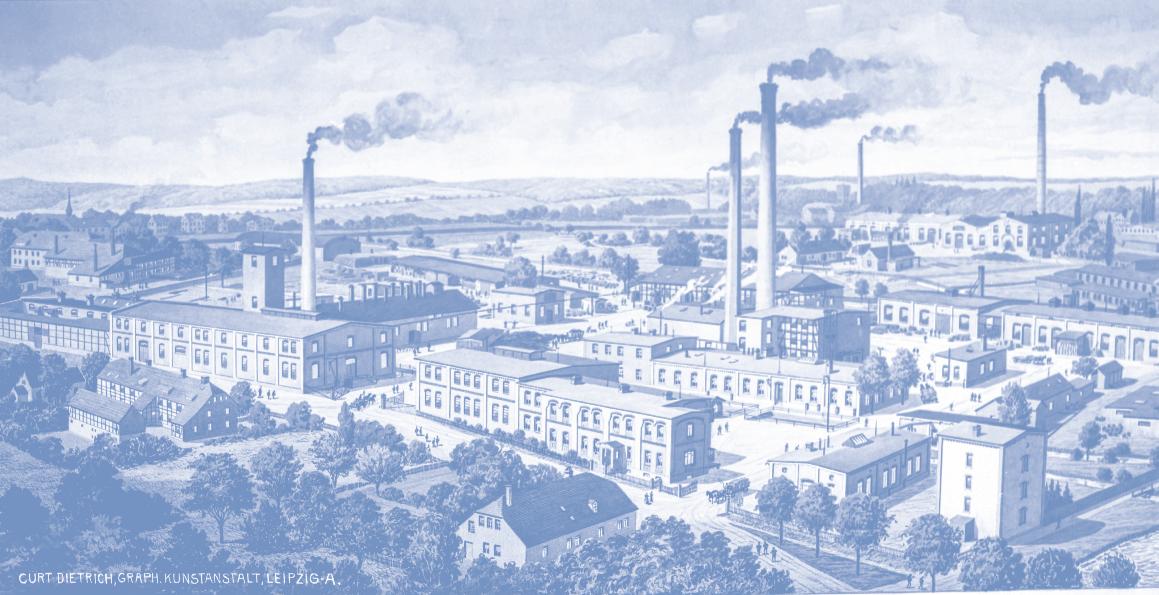
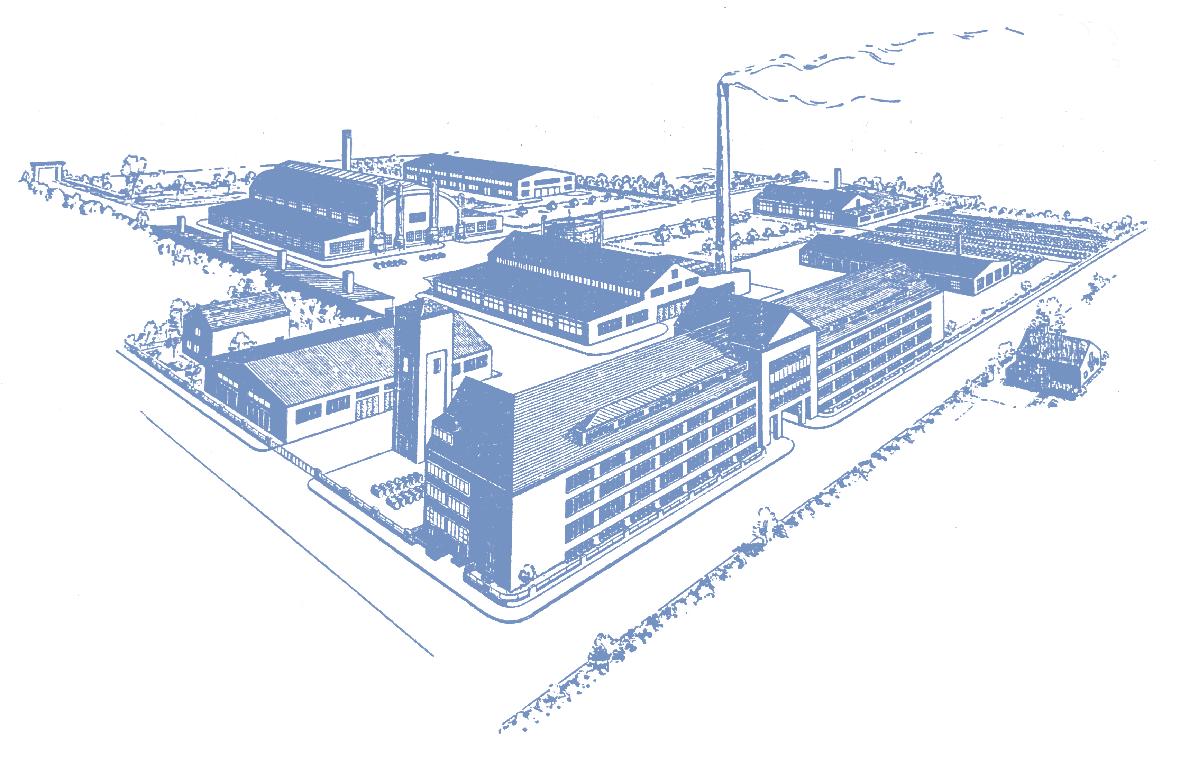
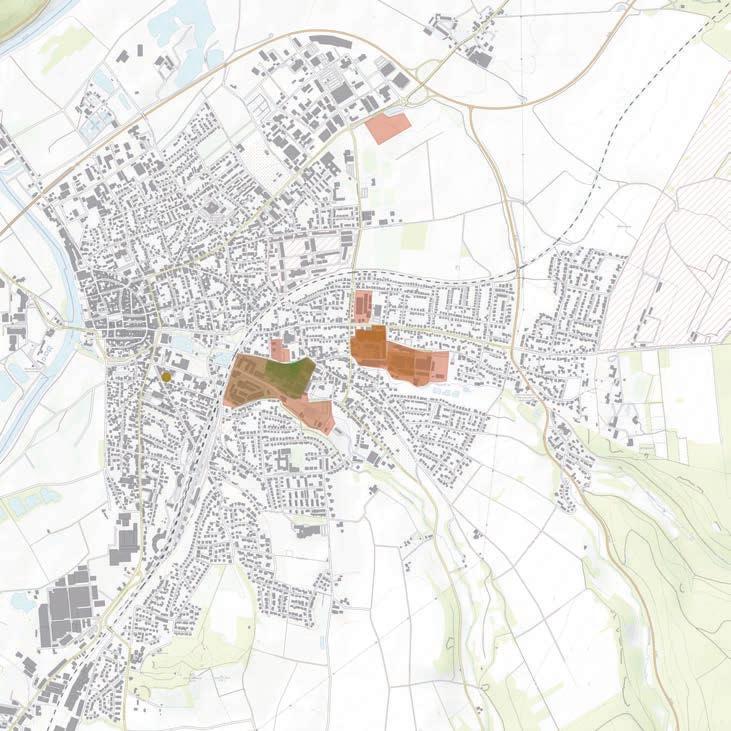
The townscape of Holzminden has been significantly influenced by these entrepreneurial activities. Starting with Wilhelm Haarmann’s small shed on the
City map of Holzminden with the Symrise factory site
Holzminde stream in the former village of Altendorf, the production facilities, laboratories and administrative buildings have expanded into the town, and at the same time, the town has grown around these facilities and beyond. This did not always go smoothly but compromises were always found in the light of being mutually dependent.
If you consider a period of 150 years, global historical events and catastrophes move into focus; wars, violent regencies and economic crises have had a very serious impact on the Holzminden commercial enterprises. And maybe it is these current global crises which focus interest on how it has been possible for the people and, in this case, the companies which have been carried by these people, to survive the past crises.
For a company that relies on constant innovation, future viability is essential for survival. It is necessary to look at the successes and failures of earlier business decisions in order to assess how to continue to work and operate successfully in the future.
A glance at the last chapter, which covers little more than twenty years, shows that the future of the Holzminden site hung in the balance but it was saved thanks to the many people here in the area working together.
For the future, we can only hope that the international Group which has emerged from Dr. Haarmann’s Vanillin Factory in Altendorf near Holzminden will not lose sight of those working for the good of the company in Holzminden.
View over Holzminden
The Beginnings
1874 - 1883
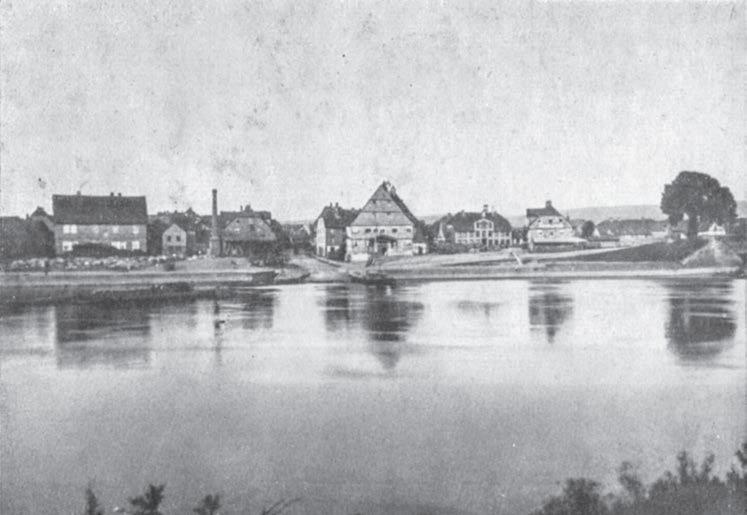
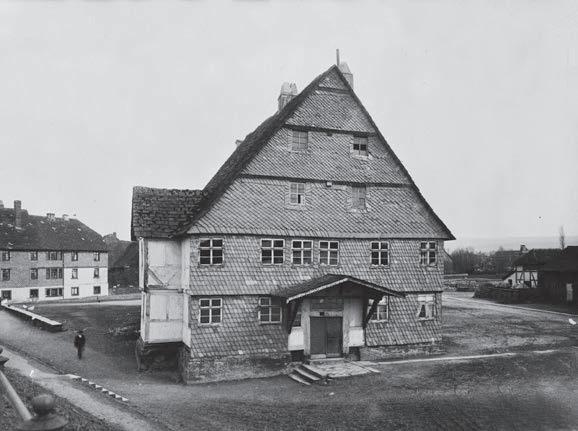
Holzminden c.1880: The photo above and the lithograph below show the town of Holzminden before the construction of the Weser bridge. In the foreground of the lithograph is the bridge over the harbour basin, behind which are stored slabs of Solling sandstone for shipment. The Haarmann family was largely responsible for the trade in Solling sandstone, especially polished slabs for floors and roof coverings. Wilhelm Haarmann, the son of this family, was born in 1847 in the house on the right-hand side of the picture.

The systematic research of materials on a molecular and atomic level, the development of more exact analytic methods and, finally, the discovery of structure formulas of the chemical elements brought far reaching progress in chemical knowledge in the 19th century. In particular, the discoveries made by Friedrich Wöhler contributed to the establishment of organic synthetic chemistry as a new research field. The synthesis of natural materials from various base materials, which were often readily available, was the cornerstone for the development of the chemical industry. Germany was a leading light in this field up until the First World War.
Foundation of the First Chemical Company
The scientific discoveries were first used for the industrial production of dyes: the companies Bayer and Hoechst were founded in 1863 as dyestuff factories; Badische Anilin- und Sodafabrik (BASF) (Baden Aniline and Soda Factory) was established in 1865; and in 1867, AGFA (Aktien-Gesellschaft für Anilin-Fabrikation) (public limited company for Aniline Production) was founded to produce dyestuffs and primary products on the basis of aniline, which serves as the base material for the synthesis of dyes and man-made fibres.
History of Fragrances and Aromas
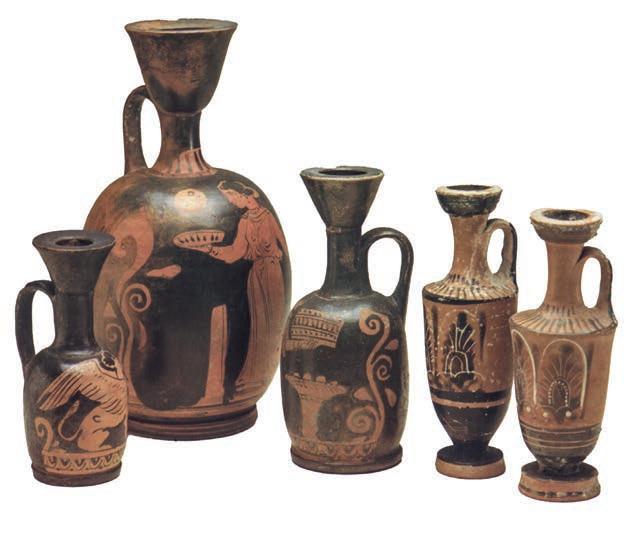
The history of the development and use of fragrance and aroma materials is tightly interwoven with the cultural history of mankind. Fragrances can trigger an immediate feeling and memory. The term perfume is derived from the Latin term ‘per fumum’, which means ‘with the help of smoke’. Way back in history, mankind ascertained that various smells, sometimes pleasantly smelling perfumes, evolved by burning wood and herbs. Vessels in which fragrant herbs and salves were stored have been traced back to 5000 BC. Further finds indicate that the technology of distillation was being developed as early as 3000 BC. Distillation was used to
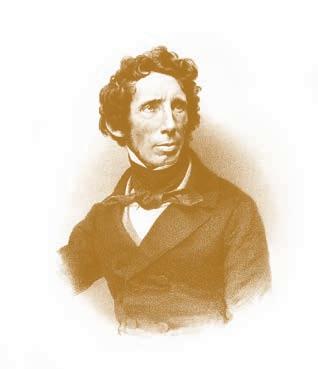
Friedrich Wöhler – pioneer of organic chemistry
Friedrich Wöhler (* 31 July 1800 in Eschersheim; † 23 September 1882 in Göttingen) is considered a pioneer of organic chemistry. His syntheses of oxalic acid by hydrolysis of prussic acid (1824) and of urea from ammonium cyanate (1828) established biochemistry, as for the first time substances that had previously only been known from living organisms could be artificially produced from inanimate matter. Initially, these syntheses received little public attention. Wöhler was a close friend of Justus von Liebig. Together with Liebig, he established the radical theory around 1830. This enabled the great variety of organic chemical compounds to be systematically explained for the first time. With their plant chemical research, Wöhler’s students laid a further foundation for the establishment of biochemistry as a separate branch of science.
Antique fragrance vessels, Greece
produce essential oils from herbs and the volatile fragrant substances were separated from their solid carrier materials and could be conserved in tightly sealed jars for a long time. Purely on the technical side, the production of fragrant materials did not change in principle until the first synthetisation in the 19th century. However, the manufacturing processes and the numerous fragrant notes had been continuously refined.
While the significance of fragrant materials was initially connected to religion, fine perfumes were probably already luxury goods and status symbols in ancient Egypt. The perfumes of modern times have their origins in France. The development of perfumes was originally linked to the production of fine leather materials. In the late 16th century, fine leather gloves came into fashion but the penetrating smell of the tanned leather had to be disguised by fine perfumes. For this reason, the leather and perfume industries joined forces in Grasse. As the fine fragrance business was more profitable in the long term, the tanners eventually became fragrance manufacturers. To this day, the town in the south of France is considered the global centre of fragrances.
In Germany, it was Leipzig which started to become a centre for the manufacture of essential oils and essences from the beginning of the 19th century. The most important protagonist of this early fragrance industry was the company Schimmel & Co. This company will be mentioned in this book several times.
Birthplace of Wilhelm Haarmann on the banks of the Weser in Holzminden
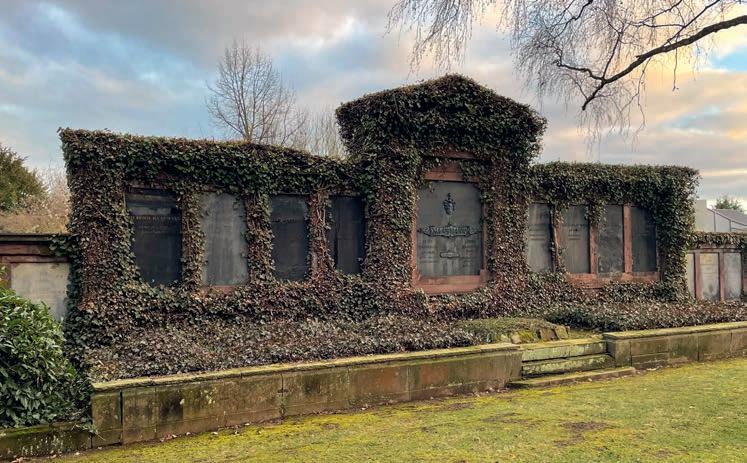
Grave of the Haarmann family in the Allersheimer Strasse cemetery in Holzminden. However, Wilhelm Haarmann was buried in Höxter, where he had later lived.
The Haarmann Family in Holzminden
The history of Holzminden on the river Weser is tightly interwoven with the Haarmann family in the 18th and 19th centuries. Friedrich Ludwig Haarmann founded the School of Architecture in Holzminden in 1864 and it was the first of its type in Germany. Today, the school is an integral part of HAWK (University of Applied Sciences and Arts) Göttingen / Hildesheim / Holzminden. Further members of the family were involved in the quarrying, processing and sale of Solling sandstone. Heinrich Wilhelm Haarmann, father of Wilhelm Haarmann (born in 1847), was one of them. It is possible that, as early as the middle of the 1860s, father Heinrich Wilhelm had already recognised that chemistry would play a significant role in the development of the economy. An entry in the family chronicles by his son Wilhelm Haarmann is an indication of this. He wrote about his father: “Later, when he was a self-employed merchant and manufacturer he often dealt with problems of mechanics, chemistry etc.” After a happy childhood in tranquil Holzminden, Wilhelm Haarmann initially went to study chemistry at the Bergakademie (Mountain Academy) in Clausthal, before transferring to the University of Göttingen a year later, as he had spent “an enjoyable year with friends” in Clausthal, but “with few scientific achievements”. This was to change in Göttingen where he came into contact with Friedrich Wöhler who held the Chair of Pharmacy and Chemistry there. Wilhelm Haarmann writes in the family chronicles: “It was thanks to the latter that I was able to work with the rarest of metals, with platinum. 3 semesters later, I was drawn to Hofmann in Berlin who was the foremost authority in the field of organic chemistry.”
1870s – Chemical Institute of Berlin
Chemist August Wilhelm Hofmann, as of 1888 von Hofmann, was a pioneer for the research of aniline dyes in England and Germany. He developed a multitude of important methods of transformation in organic chemistry. Hofmann founded the German Chemical Society of Berlin in 1867. As of May 1865, he held lectures
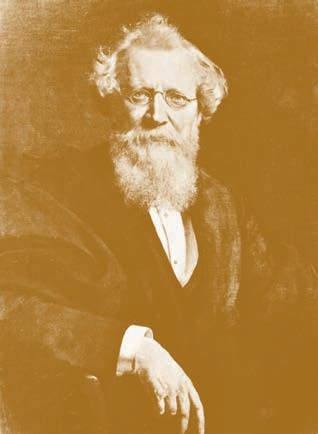
August Wilhelm von Hofmann
The chemist August Wilhelm Hofmann, from 1888 von Hofmann (* 8. April 1818 in Giessen; † 5. Mai 1892 in Berlin), was a pioneer in the research of aniline dyes. He developed a large number of important synthesis methods in organic chemistry. Hofmann was married four times and had eleven children; three of his wives died early. He married his fourth wife, Bertha Tiemann (18541922), in 1873. She outlived him by 30 years. Bertha was the sister of his assistant Ferdinand Tiemann. Tiemann, a friend of Wilhelm Haarmann and silent partner of the Holzminden company, was also for many years the editor of the reports of the German Chemical Society, which were published by Hofmann. The Chemical Institute on Georgenstrasse, founded by August Wilhelm von Hofmann, was one of the most important chemical research and training centres in Europe during the 30 years of its existence. Around 300 doctoral theses were supervised there. Almost 900 scientific publications “from the Berlin University laboratory”, 150 of them by Hofmann himself, testify to a high level of scientific productivity.
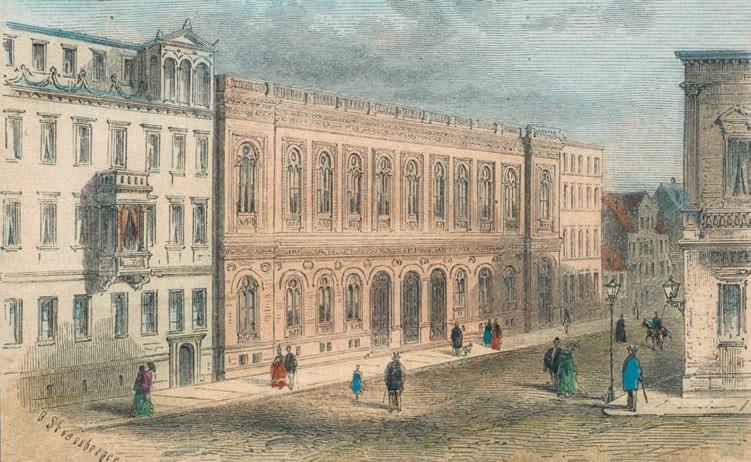
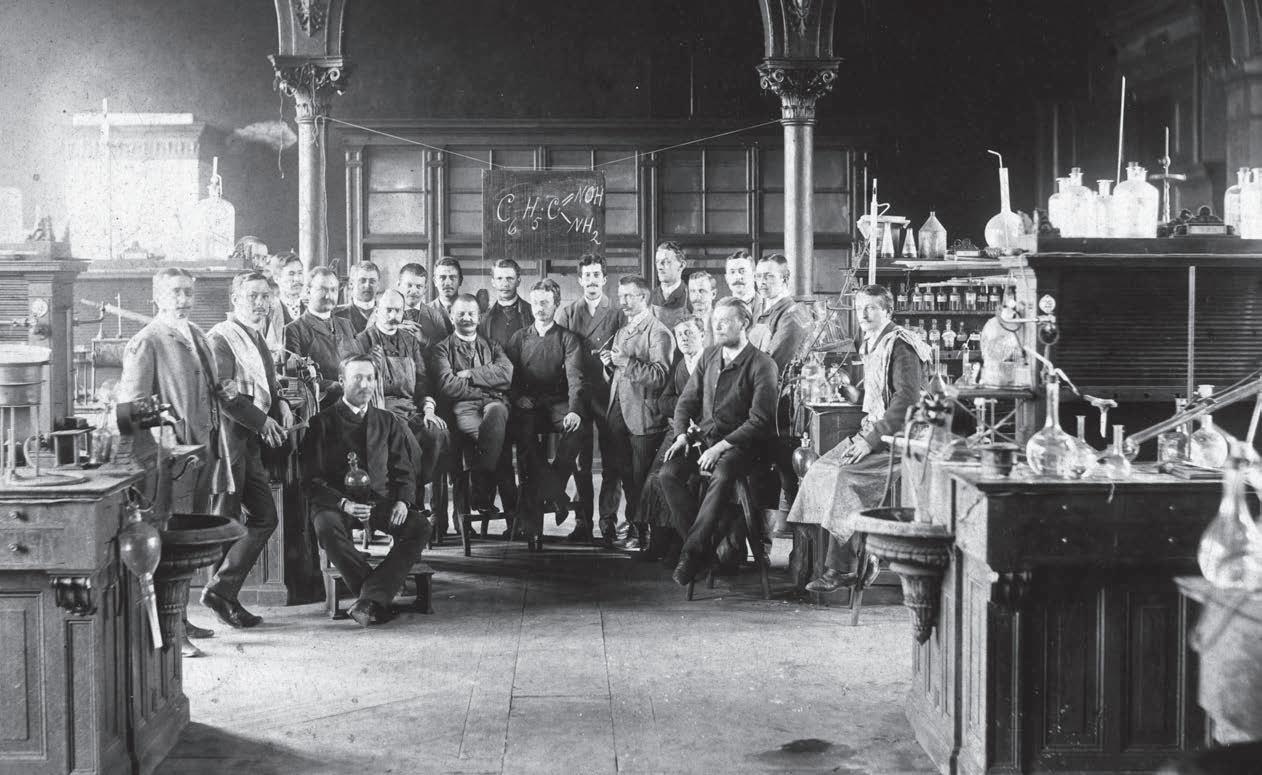
The Chemical Institute on Georgenstrasse, Berlin, c.1870
Group picture at the 1st Chemical Institute on Georgenstrasse, Berlin. Among others, the future H&R chemists Dr. Schmidt and Dr. Lemme are pictured here, c.1880
Synthesis (Chemistry)
In chemistry, synthesis (from the Greek - ‘composition’) refers to the process by which a compound is produced from elements or a complicated, composite new substance is created from simple compounds. (Synthetic) synthesis is the exemplary creation of a compound on a laboratory scale, but also the creation of an element in its pure form. A synthesis is, therefore, more than the (physical) mixing of two or more substances. In contrast to a mixture, the starting materials cannot be recovered from a newly synthesised compound by purely physical processes.
in the 1st Chemical Institute of Berlin both in inorganic and organic chemistry. Ferdinand Tiemann became von Hoffmann’s assistant in 1869.
Wilhelm Haarmann received important impulses for his research in von Hoffmann’s laboratory, where he met Ferdinand Tiemann. Haarmann wrote about this in his family chronicles, which he seemingly completed years later from memory: “In May 69, I found my Göttingen and Holzminden friends there again and through them made the acquaintance of Ferd. Tiemann, with whom I worked side by side in the laboratory. This gradually developed into an intimate friendship, which was only torn apart by Tiemann‘s death in November 1899.”
1870/71 – Franco-Prussian War
In 1870/71 Haarmann and Tiemann left to fight in the Franco-Prussian War. They were assigned to different regiments and did not see each other again until after the war in the autumn of 1871. Wilhelm Haarmann’s regiment remained in France until the late summer.
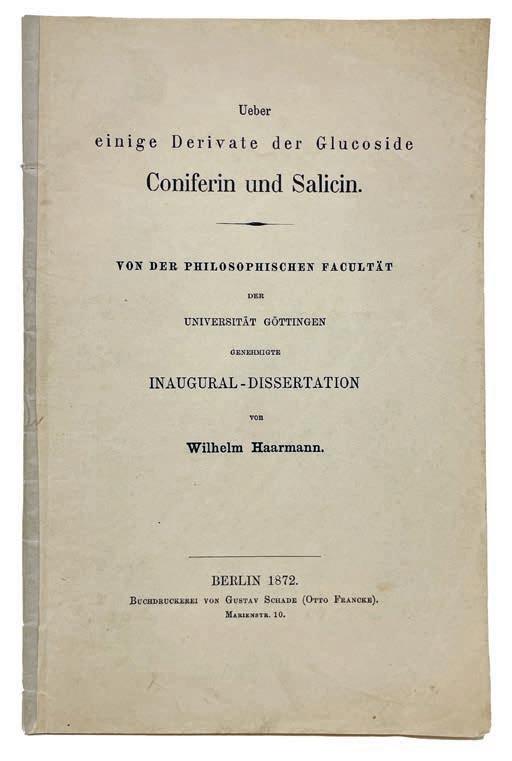
The research of a Holzminden apothecary Tiemann gave Haarmann an important piece of advice regarding vanillin. He was familiar with the incomplete research results of the Holzminden apothecary Wilhelm Kubel who had researched the cambial sap of conifers with Theodor Hartig, the Brunswick forest scientist. Hartig was able to convince Kubel to hand over a small amount of 8 grammes to Haarmann when he visited Holzminden. The inaugural dissertation had been approved by the University of Göttingen and was titled About Some Derivatives of the Glucosides Coniferin and Salicin. Wilhelm Haarmann used the laboratory of August Wilhelm von Hoffmann in Berlin to carry out his research. In April 1872 Wilhelm Haarmann passed with summa cum laude.
The vanilla aroma was, in fact, only a by-product of the dissertation but Tiemann and Haarmann followed this avenue with undiminished energy. However, they needed a much larger quantity of coniferin. “Through my father‘s kindness, I came into possession of fir trees, I scraped and boiled and, in July, I had 500 grammes of coniferin for further examination in Berlin, with Tiemann, who was living as an assistant in the laboratory and who took me in and supported me.”
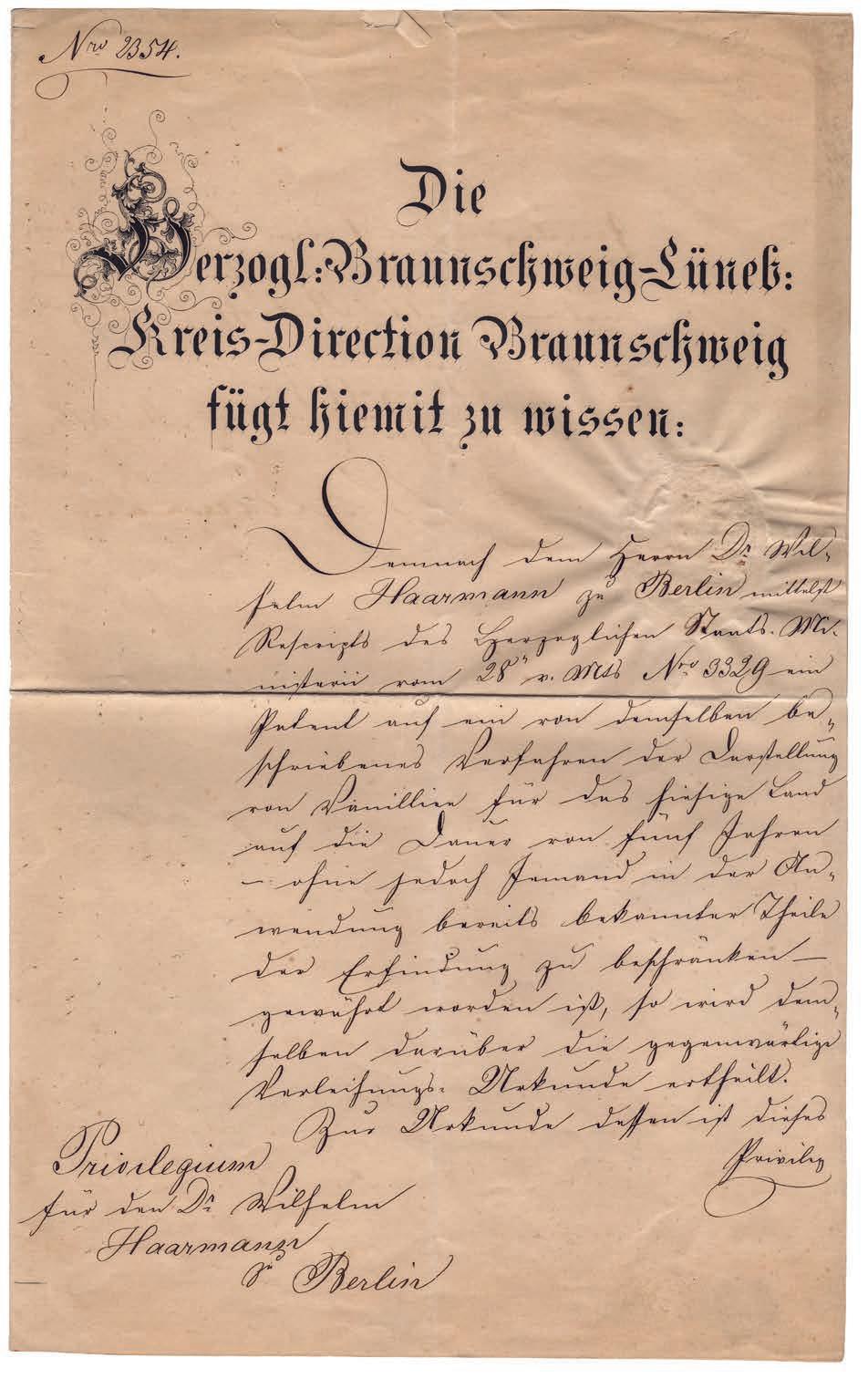
Even before Tiemann and Haarmann could complete their research, both scientists travelled as part of a field trip “to England’s factories!” The next entry in Haarmann’s family chronicles sounds laconic but was extremely important for the future paths of these two chemists: “In Febr. 1873 the result, vanillin was completed, patents were taken out.”
The significance of the vanilla flavouring and, thus, the potential that would lie in the artificial reproduction of the vanilla flavour clearly motivated Wilhelm Haarmann to push ahead with the project. The production of artificial fertilisers and synthetic dyes were role models for the potential business success.
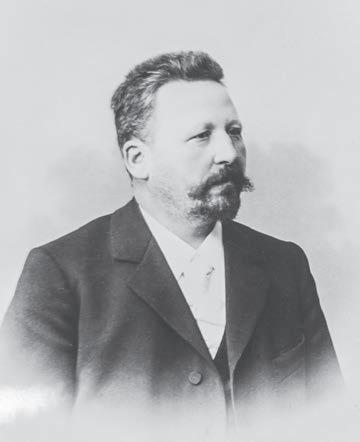
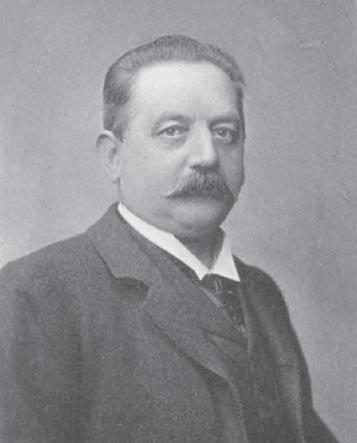
Wilhelm Haarmann (right) Ferdinand Tiemann (left)