

V. LOOKING WIthin
VERDE MAGAZINE
April 2026 Volume 27 Issue 4

ON THE COVER
In an illustration by Managing Editor Lara Saslow and Editor -in-chief Chloe Huang, a woman uses a magnifying glass to look into a miniature representation of Palo Alto High School to represent this issue’s theme of our community’s efforts to help others feel seen by amplifying their voices.
Publication policy
Verde Magazine, a news and features magazine published by the students in Palo Alto High School’s Magazine Journalism class, is a designated open forum for student expression and discussion of issues of concern to its readership. Verde is distributed to its readers and the student body at no cost.
Letters to the editors
The staff welcomes letters to the editors but reserves the right to edit all submissions for length, grammar, potential libel, invasion of privacy and obscenity. Send all letters to verdemagazine1@gmail. com or 50 Embarcadero Rd Palo Alto, CA 94301.
Advertising
The staff publishes advertisements with signed contracts providing they are not deemed by the staff inappropriate for the magazine’s audience. For more information about advertising with Verde, please contact our business manager at verdebusiness5@ gmail.com.
Printing & distribution
Verde is printed five times a year in October, December, February, April and May by Folger Graphics in Hayward, California. The Paly Parent Teacher Student Association mails Verde to every student’s home. All Verde work is available at verdemagazine.com.
Editors-in-Chief
Chloe Huang
Kensie Pao
Managing Editors
Eva Chang
Lilia Kuzmicheva
Lara Saslow
Features Editors
Chris Jeon Ryan Saket
Profiles Editors
Lilo Sayag
Yardenne Sternheim
Culture Editor
Tessa Berney
Perspectives Editor
Stefan Eriksson
News Editors
Leela Kulkarni
Julie Yang
Manager of Business Operations
Stefan Eriksson
Social Media Managers
Ananya Adya
Angela Fang
Photo Director
Shaurya Thummalapalli
Art Director
Ethan Bradley
Launch Editor
Ananya Adya
Webmaster
Ethan Zhang
Staff Writers
Justin Chen
Jacob Domingo
Joshua Joo
Rohan Kini
Jaron Leung
Keira Ling
Alma Michlin
Anisha Shetty
Ryan Shin
Kai Schoebel
April Yuan
Adviser
Paul Kandell

FROM THE EDITORS
WHAT DOES IT MEAN TO BE SEEN?
In June 2025, almost a year ago today, Granny Ruth, a longtime activist for the Raging Grannies, urged youth to get more involved in Indivisible Palo Alto Plus’ protests. “When you all [Palo Alto High School students] marched out of campus to protest school shootings, we joined you on the streets,” Ruth said. “Now it’s your turn to join us.”
This wish was more than fulfilled on Jan. 30, when 1,000 Paly students walked out of class to protest the United States Immigration and Customs Enforcement’s activities. That day, students took to the streets not just to protest, but to amplify the voices and experiences of marginalized groups that are often overlooked.
Our cover story “Inside ICE Detention” brings this into focus. Through an interview with former ICE detainee Sophia, Managing Editor Lara Saslow sheds light on the physical conditions of detention, as well as the emotional uncertainty and fear that Sophia and many other detainees experience on a daily basis. As is common with political hot topics, stories like Sophia’s are often reduced to headlines or statistics, making it essential to remind the community that behind every decision is a person whose experiences are too often left unseen and unheard.
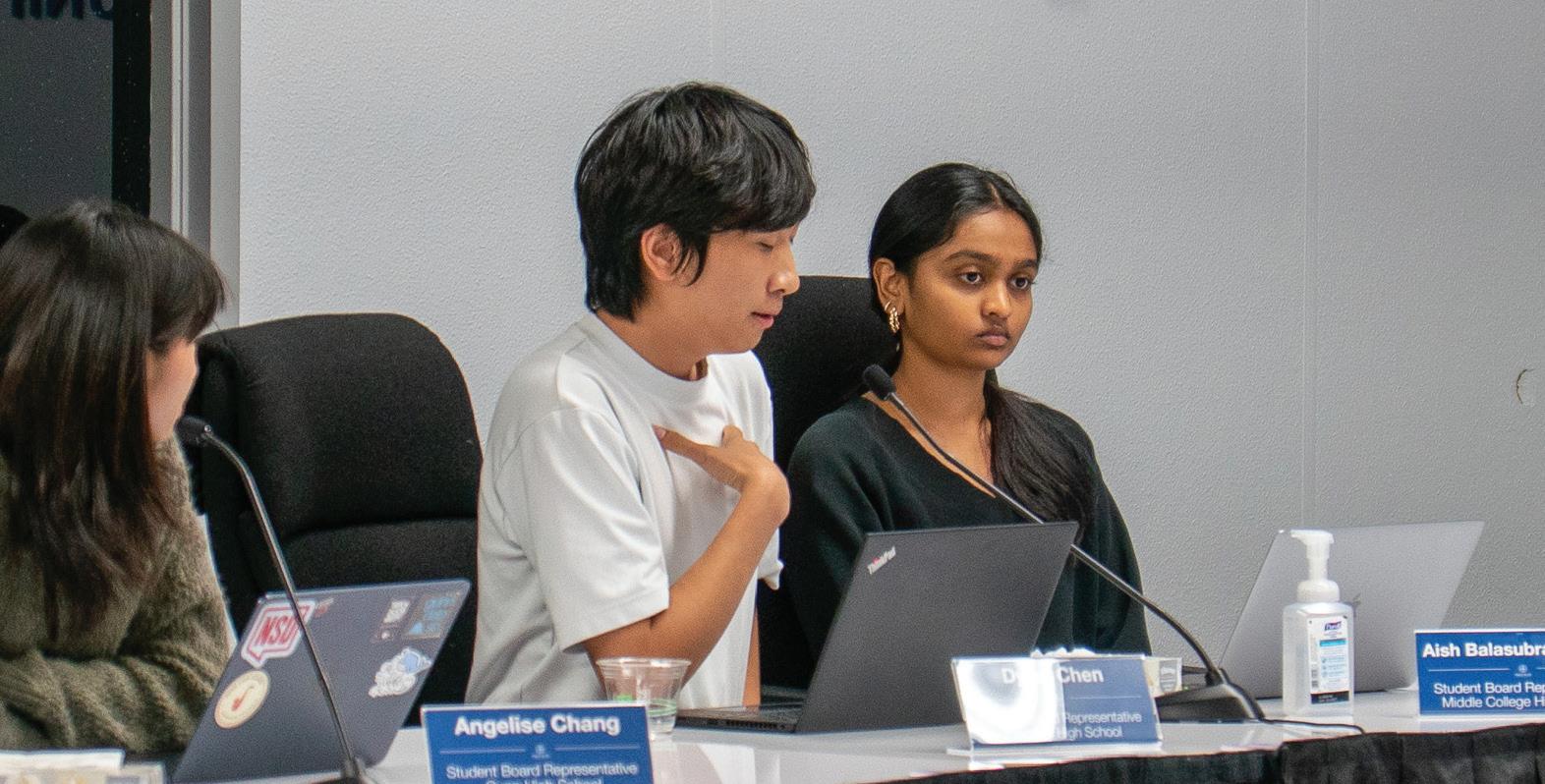
This same issue of visibility is occurring within our own Paly community. In the profile story “On our behalf,” Social Media Manager Angela Fang and Staff Writer Jaron Leung examine the power of student voices through Paly Board Representative and senior Dylan Chen, highlighting his advocacy for more student representation and the district-wide decisions he has been able to influence. In “Do you copy?” Culture Editor Tessa Berney and Art Director Ethan Bradley cover the journey of Copy Technician Ve-
ronica Rodriguez in her fight to keep her job. In both cases, these individuals’ voices were amplified through the support of their peers — student petitions for Chen, and the Palo Alto Educators Association for Rodriguez — and the student press.
Accurate representation also shapes how people see themselves. Our culture story “Rewriting the rink” by Staff Writers Joshua Joo and Justin Chen explores how media portrayal of queer men is beginning to move beyond common and harmful stereotypes — a shift that has helped many gay students feel more recognized, even as others continue to struggle with internalized homophobia.
More universally for students, Photo Director Shaurya Thummalapalli shares his experience with burnout in his perspective piece “Finding my way,” reflecting on a college-driven mindset that often pushes students to sacrifice personal interests and mental health to feel successful.
In this issue, we encourage readers to question: Who is given a platform, and who is left unheard? What stories are amplified, and which remain unnoticed? We hope that this edition encourages you to realize that being seen is not just about visibility, but about being understood.
We also want to acknowledge that this is our last issue as a Verde leadership team. It has been an honor to serve our Paly and Palo Alto community. Readers, we have appreciated your support in readership for the past five issues, and we assure you that our next leadership team will uphold our Verde standards of being truthful, critical and diverse. As we depart, we want you to consider the question, “What does it mean to be seen?”
— EVA, CHLOE, LILIA, KENSIE, LARA
DYLAN CHEN pg. 34
the verdicts
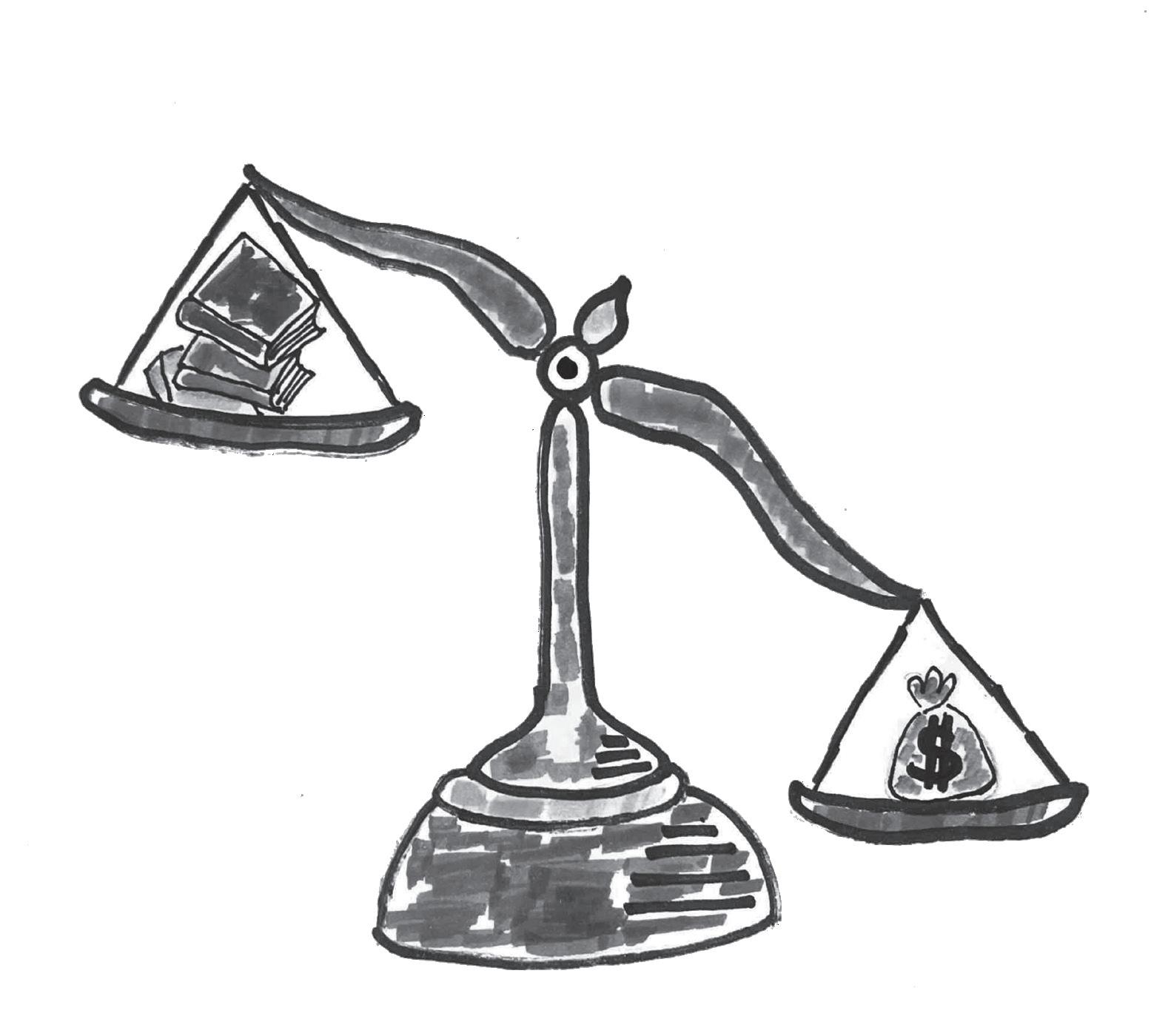
Applauding the PAEA’s fight for fair wages
AS OF MARCH, the Palo Alto Educators Association has been renegotiating a contract with the Palo Alto Unified School District in an unprecedented push for higher pay.
For more than a decade, PAEA members have been advocating for higher salaries, citing the pay gap with neighboring districts and long commute times due to Palo Alto’s unaffordable housing relative to educators’ current wages. In a 2024 interview with the Campanile, Gunn High School math teacher Kathy Hawes — a veteran teacher who has been with the district for more than 30 years — revealed that she would be making an additional $37,000 annually working at the Mountain View-Los Altos Union High School District.
Due to wage discussions taking place during school hours, teacher advocates like Palo Alto High School math teacher and PAEA union negotiator Daniel Nguyen are often absent during instructional periods. For students, this means missing hands-on, in-person guidance for difficult courses that are deliberately designed to have a teacher present.
While Verde acknowledges that a lack of instructional direction can be detrimental to a student’s education, we believe that this is a fair compromise to be made in order for our educators to obtain the pay equal to their teaching quality. Such a resolution would not only benefit educators, but their students as well, as fair wages would act as an incentive for
For Nguyen, missing instructional periods is undoubtedly a concern, and he has taken measures to minimize its impact on learning quality as much as possible.
“We schedule tests so that they’re not on the same day as when I’m gone,” Nguyen said. “There’s days where we get ahead of the lesson so that when I’m gone, students can just work on assignments. If I’m gone and material needs to be presented, I’ll record a video making sure I deliver the content to students.”
In addition, Nguyen believes that increased wages would allow teachers to pursue outside interests and attend to personal issues without fear of financial insecurity.
“A lot of teachers have side jobs over the summer,” Nguyen said. “Teachers only have so much time. If a teacher needs to go pick up a shift somewhere so that they can feed their family or put a roof over their head, that’s less time that they can, say, attend a drama performance or a sporting event. [Higher pay will make] educators more financially comfortable so that they don’t have to worry about what’s going to happen with the next paycheck.”
The current impasse between teachers and the district lies in the district’s reserve rate, especially when compared to neighboring districts.
“A reserve rate is basically how much a district has in reserves compared to how much they spend,” Nguyen said. “Mountain View-Los Altos’ reserve rate is about 15%, which means that any excess money they get, they invest in teachers and other places. Our reserve rate is double that at 30%, meaning that instead of investing extra money in students and educators, the district is putting it in a bank account where it’s just earning interest.”
PAUSD’s highest salary for teachers is less than $170,000 per year. In comparison, MVLA’s highest salary is over
Quality comes at a cost. If PAUSD wishes to maintain the high academic standards it has come to expect, it’s imperative to give the outstanding teachers it employs their deserved compensation. v
Editors’ note: In recognition of the influence teacher advisers typically have over the writing process, our teacher adviser, Paul Kandell, had limited involvement in the development of this editorial to avoid any potential bias.
Art by ASHLEY SHIN
Disclaimer: The following content discusses themes of suicide. Resources are listed in the right column of this article for any person struggling with depression or suicidal thoughts.
Progress on youth mental health, a positive step
FOLLOWING THE DEATH of a Palo Alto High School student at the Churchill Avenue railroad crossing on Feb. 3, community members have pushed for measures to prevent further incidents on the tracks.
A Feb. 26 statement issued by the City of Palo Alto announced that officials are considering a temporary closure of the crossing, with an official update expected in mid-April. We are aware of the discussion surrounding a potential closure, as well as the varying perspectives, but even without a formal decision, we would like to applaud the measures taken thus far to combat the city’s youth mental health crisis.
Following a petition started by Paly junior Julia Curtis advocating for paid guards
at each of Palo Alto’s four railroad crossings, City Council approved 24-hour crossing security according to a status update from the City of Palo Alto, and is sharing the costs with the Palo Alto Unified School District. We believe that the presence of guards who are trained to de-escalate suicide in-person will significantly improve Palo Alto’s suicide crisis. According to the United States Department of Transportation, increasing intervention reduces suicide rates.
The city has also partnered with RailSentry by Herzog to implement sensors that detect anomalies on the tracks. Using AI-based learning software and laser lights that distinguish specific objects like people and animals, alerts are sent to locomotive engineers on trains who can stop or slow
the trains in time. They also notify the nearest police station to alert officers of the situation at hand.
Coming to a conclusion on the closure of Churchill will require extensive discussion and planning, but in the meantime, we applaud the implementation of these new practices to combat a problem that has plagued Palo Alto students for years. v
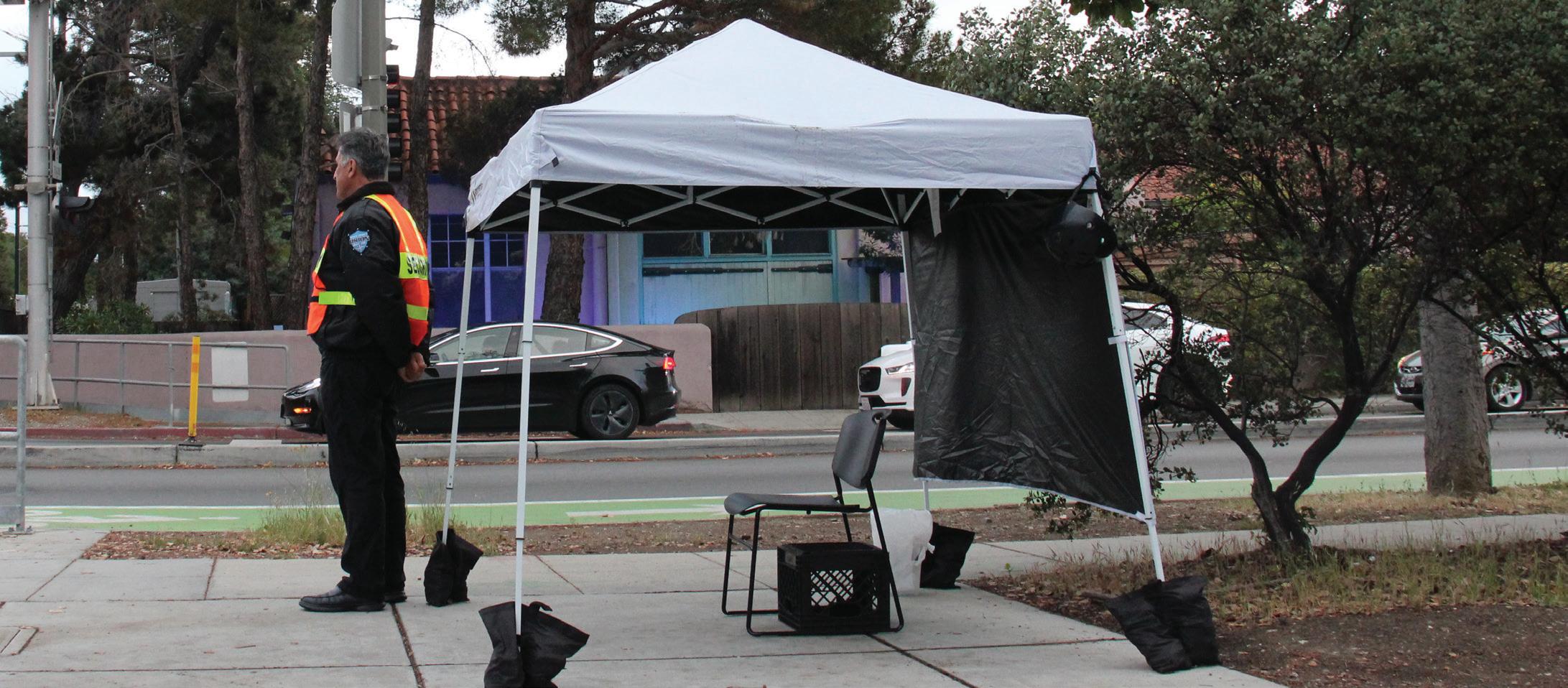
PREVENTATIVE PROGRESS — A Track Watcher observes the Churchill Avenue crossing. “The contract is only for one year, and we’re still going to have kids with suicidal thoughts after one year,” Curtis said. “It is a huge help when someone is there to prevent suicide in the moment.” Photo: Chris Jeon
Resources for dealing with mental health crises
Call the 24/7 suicide and crisis hotline: 988 Crisis Text Line: Text HOME to 741741
Call The Trevor Project’s 24/7 crisis support hotline: (866) 488-7386
To volunteer for the Track Watch, email TrackWatchPaloAlto@gmail.com
To donate to the Trevor Project, go to https://give.thetrevorproject.org/fundraiser/6961929

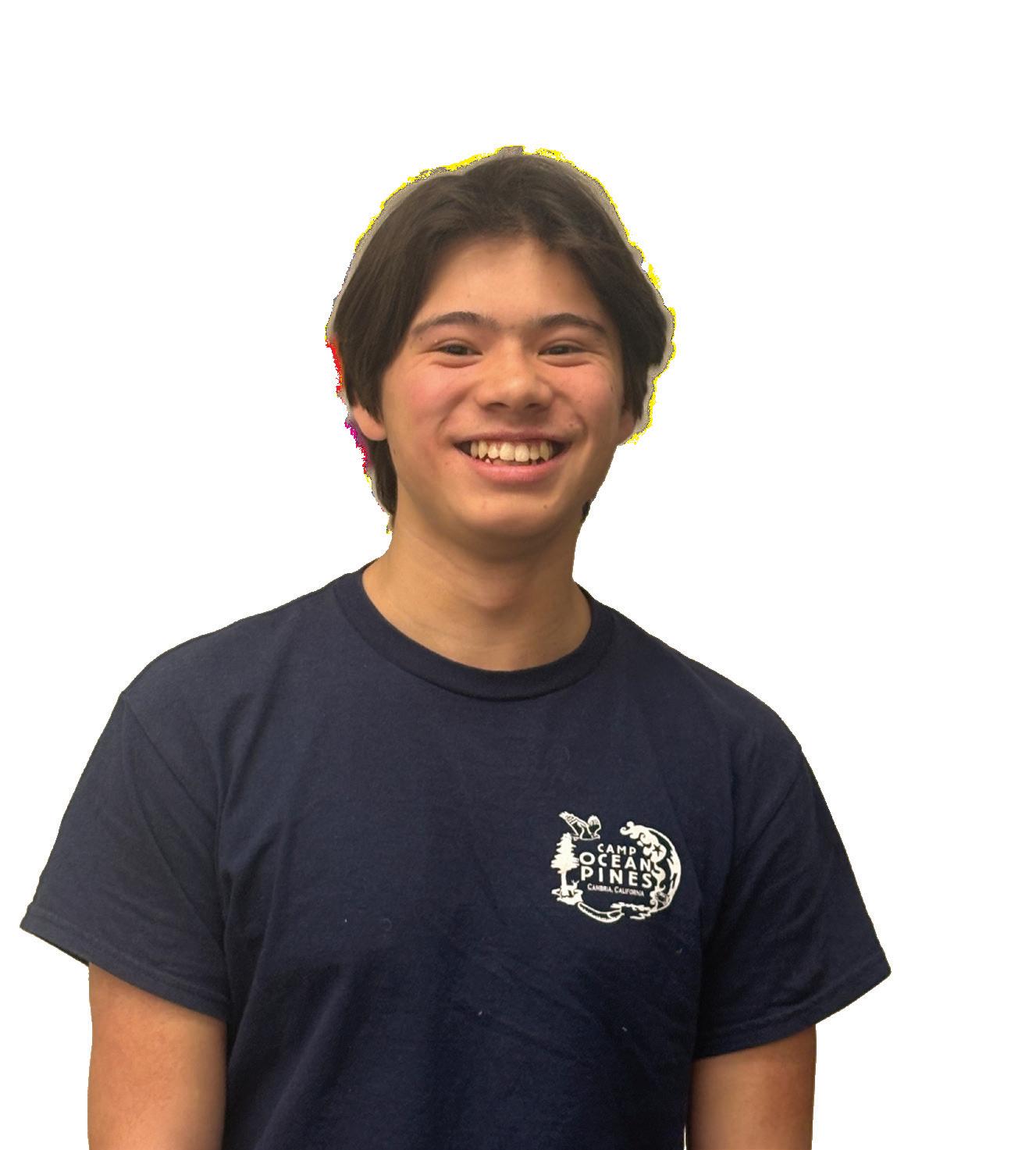
with junior president Kai Bunger-Tang
Q: How is prom planning coming along?
A: “Prom planning is going well. We have a really nice venue this year, and we actually picked the most expensive out of our options from last year, so we’re hoping it’s going to be really fun and nice. ... It’s going to be in the SF Galleria. For food, we’re planning on having hand food, and for activities, we’re thinking of having foosball and Casino Night. I think we’re also going to have a bunch of drinks and a balloon drop. Hopefully, that’ll be really exciting. We’re just working closely with our prom planner.”
Q: What activities can students expect after spring break?
Verdoodle: Back from spring break ASB Answers
A: “One thing that’s really big after spring break is Spring Spirit Week, and that will start on the week of April 20. I think we’ll have activites like Quadchella, where students can sign up to perform on the Quad during lunch.”

Art by Deepika Menon


Text, design and photos by
ANANYA ADYA
What’s at a math teacher’s desk? Verbatim: Once the portables are removed, what would you like to see in the space?
Gabrielle Juan
Advanced Placement Statistics and Introduction to Analysis & Calculus teacher
A Jellycat christmas frog gifted by two of her students

A stuffed sloth which her students named Sludge

“I would like to see the portable space turned into either more lunch tables, or an area for recreational activities during lunch.”
— Tess Kim, junior
A paper polygon folded by one of her students
“This collection has definitely started growing. The first one is the big sloth ... I got it off a Chinese website, and sloth is my spirit animal. So I brought it to class, and then my Alg 2/Trig H students named them a few years ago, and its name is Sludge. I think, recently, the most significant one is that tree in the back, which is from two of my students this year, and it’s my first Jellycat. I didn’t know much about Jellycats until that one.”
— Gabrielle
Juan


“I would like a playground with swing sets.”
— Lauren Boyce, freshman
“I would want the space to be replaced with space for Spikeball and other games.”
— Ethan Avena, junior
Students react to district changes
Palo Alto High School students said they are hoping to regain trust in the Palo Alto Unified School District after the district parted ways with its acting superintendent, who served for less than one month.
PAUSD subsequently hired a second acting superintendent, Herb Espiritu, on March 19.
Espiritu will temporarily act as superintendent until April 21, according to a statement by school board President Shounak Dharap.
Espiritu, the district’s human resources director, steps into the role of superintendent after more than three years with PAUSD. He is replacing Trent Bahadursingh, who served as acting superintendent for 22 days.
Paly senior Max Soparkar said the frequent changes in leadership have decreased his trust in the district.
“They should vet their applicants better … because clearly something hasn’t been working,” Soparkar said.
The district announced the decision to hire Espiritu on March 19.
This was two days after the school board announced that the district was separating from Bahadursingh at the March 17 board meeting.
The school board did not provide a reason for the separation, but it comes amongst a litany of lawsuits against the district, including one accusing Bahadursingh of workplace bullying.
Bahadursingh will receive one year of salary paid by the district.
Paly junior Meghna Singh said she hopes that the next superintendent will be more transparent with students.
“I want to know who my administrators are and what they stand for,” Singh said. “All students should have a sense of what the superintendent wants.”
by JARON LEUNG
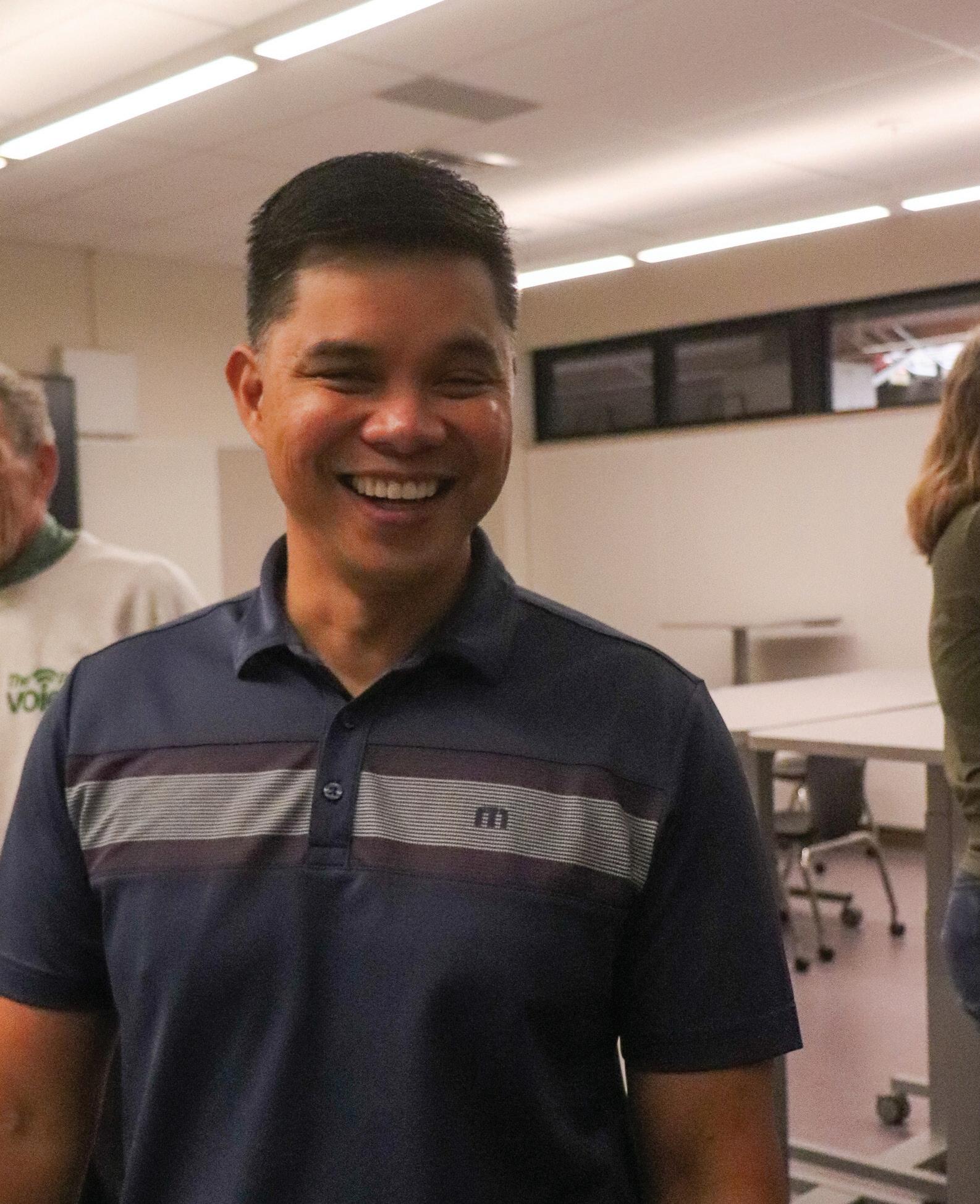
NEW ON DUTY — Palo Alto Unified School District’s acting superintendent Herb Espiritu meets with Paly school staff on March 27. Paly junior Meghna Singh said she thinks the turnover in district leadership will not be good for the school. “If we really want the best administration for our school, for our students, there wouldn’t need to be a lot of overturn in the administration,” Singh said. Photo: Shaurya Thummalapalli
Edited and designed by LEELA KULKARNI and JULIE YANG

Local nonprofit introduces award to recognize student volunteers
Bay Area students are navigating a new volunteer recognition award program launched by a Palo Alto nonprofit organization after the sudden pause of a federal program last year.
Youth Community Service introduced the Youth Community Service Award in early 2026 in response to the May 2025 pause of the President’s Volunteer Service Award.
The new YCS Award is open to students in Santa Clara and San Mateo counties.
It requires the completion of 50 volunteer hours for elementary students, 75 for middle schoolers and 100 for high schoolers. Americorps has not yet provided a timeline for the reinstatement of the PVSA program.
Palo Alto High School junior Ean Hsiung volunteers for the Palo Alto Speech
and Debate team as a summer camp counselor and a camera operator for his church. He said that he felt upset when the PVSA was paused.
“This was honestly an award that a lot of people were working towards, including myself, and it was something to reflect how much we had helped people, and also something to show to colleges," Hsiung said. "Everyone's just chasing little bits that they can add to their [college] application.”
For Hsiung, the YCS award was a new way for him to receive recognition for his hard work.
“I felt pretty good when the YCS award was announced, not just only to be able to get recognition for it [volunteer work], but to be able to feel appreciation when service is done,” Hsiung said. by JUSTIN CHEN
Faculty critical of national park book ban
Staff at Palo Alto High School are criticizing Redwood National Park for marking nine books about Native American history to be potentially removed from the park’s visitor center in response to the Trump administration’s executive order.
For Paly Social Justice Pathway history teacher Caitlin Drewes, the administration’s directive instructing parks to take out signs or information that “inappropriately disparage Americans past or living,” according to the U.S. Department of the Interior, omits significant parts of American history.
“There are so many different histories of America,” Drewes said. “When you make a directive like this, to tell only ‘the truth’ and to take out the bad, what you're doing is taking away multiple perspectives. You're bringing it back to the one dominant perspective, the master narrative.”
Paly librarian Sima Thomas reflected on what trends of censorship from the federal level could mean for Paly.
“I haven't had any pushback from anywhere,” Thomas said. “This space [the Paly library] feels, for now, protected, but it does also feel like national parks were always these kinds of bastions of education and connection with the land.”
Thomas said she believes book bans urged by the government are indicative of their weaknesses.
“They [government officials] know that their perspective is fragile and vulnerable to being dismantled,” Thomas said.
by ANGELA FANG
BOXES OF HOPE — Volunteers from the Palo Alto High School Youth Community Service Interact Club pack boxes of food. YCS club Vice President Ean Hsiung said that through the YCS Interact Club students can experience helping the community. “A lot of people would feel a fulfillment from doing service that they wouldn't expect,” Hsiung said. Photo: Tessa Berney
PTSA to open Viking Grant applications
The Parent Teacher Student Association is set to announce applications for the spring cycle of Viking Grants at Palo Alto High School.
The Viking Grants Program provides up to $1,000 per grant for Paly students and faculty who have innovative ideas that will benefit a large part of the Paly community, according to the PTSA.
Earlier this year, the PTSA set a goal to double the amount of grants awarded by having two cycles, one in the fall and the other in the spring.
According to PTSA President Valerie Rainey, each cycle would typically be allocated up to $7,500. Five grants were awarded during the fall cycle, and $5,000 worth of grants is proposed for the spring cycle, according to Rainey. In the 2024-25 school year, the PTSA had one grant cycle.
Funding for these grants usually comes in part from partnership fundraisers with popular restaurants in Palo Alto. Earlier this year the PTSA did not think the association would be able to accommodate for twice as many grants until they launched a
new campaign along with two fundraising programs, according to Rainey.
The PTSA budgeted $245,000 to Paly programs this year, and $15,000 of those funds were allocated to the Viking Grants.
Sophomore Krittika Chandra used the Viking Grant for supplies and materials for the Palo Alto Girls Math Tournament to engage middle school girls with STEM.
“I think it’s really helpful because sometimes it’s hard to get the first sponsor, but once you have the Viking grant then it’s easy to convince other companies to sponsor you,” Chandra said. “The Viking grant is a good first start.”
In the future, Rainey said she hopes this program will gain more popularity with Paly students, potentially spurring more donations.
“We think it's really great when we see applications from students and from staff about things [or new projects] that are needed,” Rainey said. “We love new projects coming through. They just need a little bit of money, but they've got the idea.”
by ALMA MICHLIN
TheatreWorks moves to Cubberley center
Local theater company TheatreWorks Silicon Valley is planning a move three miles away to Cubberley Community Center after 55 years based at Palo Alto’s Lucie Stern Theatre.
The nonprofit is partnering with The City of Palo Alto to construct a permanent home — a 40,000-square-foot theater located in the Performing Arts Complex of Cubberley, according to TheatreWorks’ website.
Though the City and TheatreWorks have speculated about a possible home there for decades, the plan was recently put into motion after the city’s plan for the community center started coming together, said Phil Santora, executive director of TheatreWorks.
TheatreWorks Artistic Director Giovanna Sardelli says the company faces limitations at Lucie Stern Theatre because its facilities are shared with other art groups.
“There is something to be said for taking all the energy that that [sharing] requires and just putting it towards art,” Sardelli said.
The company has yet to start the process of designing the theater, but is currently working with architects. Sardelli says the freedom of having balcony seating allows it to open up larger shows and musicals, while still having the ability to put on intimate performances.
Santora says the project is exciting because of the possibilities the new building would allow the company to do for the residents of Palo Alto.
“It gives us the chance to truly make a cultural hub,” Santora said. “We want this place to be active, day and night, with culture and community coming together.”
by APRIL YUAN
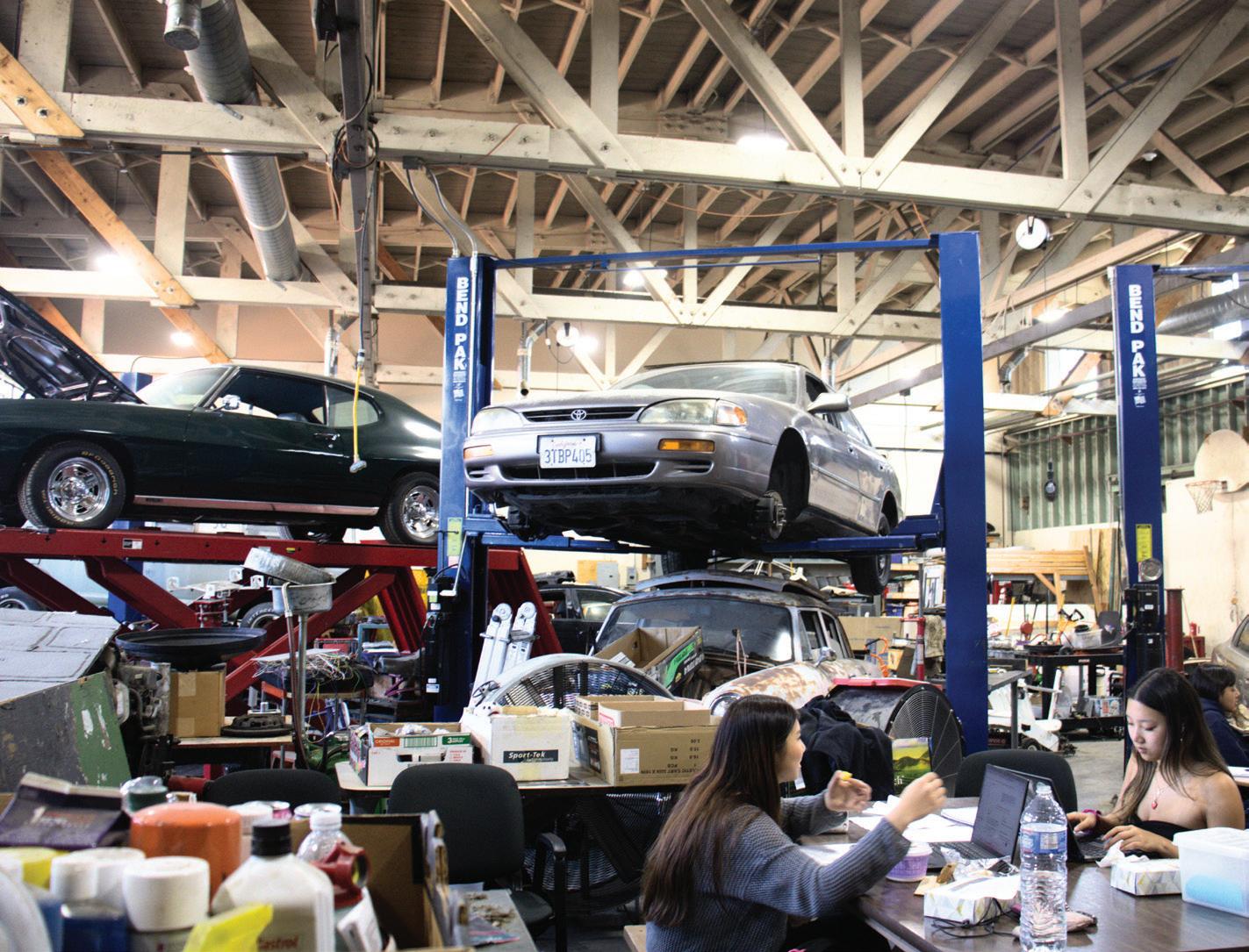
FUELING UP — Students eat lunch in the Automotive Technology classroom, surrounded by cars. Automotive teacher Doyle Knight used a Viking grant to help him pay for parts for an electric vehicle. “Yeah, that [the grant] was very beneficial,” Knight said. Photo: Alma Michlin

THE PLATFORM — People wait for a train at the University Avenue Caltrain station. Trains stop every 15 minutes, but this may change. “If they cut service, it’s definitely one less option for me and others to get around,” Palo Alto High School freshman Neel Jonnala said.
Public transportation to consider service cuts
Bay Area public transportation services Bay Area Rapid Transit and Caltrain are considering service reductions following a decreasing trend in ridership and funding, posing concerns for riders.
According to BART, which faces a projected deficit of $376 million in 2027, the Bay Area’s high work-from-home rates have significantly lowered revenue.
In the event that BART does not obtain sufficient funding by November 2026, it will be forced to reduce its spending by over $175 million in annual cost reductions through a 70% reduction in service hours; push station closing times from midnight to 9 p.m.; shut down up to 15 stations and up to 25% of system track miles; and layoff a total of 1200 employees by July 2027.
Caltrain is currently facing similar challenges and outlined potential operational impacts if the agency does not secure new external funding by November
2026, including the closure of more than one-third of stations, the removal of weekend service and limiting service to once an hour, compared to its current rate of once every 15-20 minutes.
BART and Caltrain both provide frequent and affordable service for youths under the age of 18.
Palo Alto High School freshman Neel Jonnala expresses how reducing service would affect his routine.
“I’ll take the Caltrain to get up and down, to San Francisco,” Jonnala said. “My brother lives there, and Caltrain makes it convenient to get there. If they cut service, it’s definitely one less option for me and others to get around.”
Paly senior Emily Stell rides the Caltrain almost every day to commute from her home in San Jose, and relies heavily on its frequent service.
“I take my normal 7:28 a.m. train to get to school every day,” Stell said. “Oftentimes the train runs every 15 minutes,
which makes it easy to get on a train. If it ran every hour, that would put a huge dent in my ability to get home at the time I’d like.”
Caltrain Public Information Officer Dan Lieberman said that cuts would have drastic effects on riders who frequently rely on Caltrain, as well as other modes of transportation.
“Electrification made Caltrain’s half-hourly service possible, which had been a major factor in our recent ridership growth,” Lieberman said. “Losing that [half-hourly service] would likely see reductions in ridership, resulting in more gridlock on Highway 101 and additional spillover into more local roads, as well as the air pollution that comes along with it. As it is now, Caltrain’s upcoming fiscal cliff will make it impossible to maintain the current levels of service unless a new funding source is identified.”
by CHRIS JEON
Photo: Chris Jeon
Text by ANANYA ADYA and JULIE YANG
STARTING FROM
LEADERSHIP CHANGES
SPARK
INQUIRY ON DISTRICT’S FUTURE
THE APRIL 21 PALO Alto
Unified School District board meeting is just around the corner, but following the March 30 superintendent selection processboard meeting, extra commotion stirs among school and community members regarding the role of the superintendent.
As of March 19, the school board unanimously selected Director of Certified Human Resources Herb Espiritu as acting superintendent until April 21.
Before this selection, the official decision of a “mutual separation” between the long-term Superintendent Don Austin and the PAUSD Board of Education took place on Feb. 20. Trent Bahadursingh briefly stepped into the role of acting superintendent before also mutually separating from the Board on March 17.
PAUSD board member Rowena Chiu was the only board member to vote against appointing Bahadursingh
as acting Superintendent. She said that the district needed a clearer switch from previous leadership — one that reflected a broader cultural reset that she believed PAUSD could benefit from. According to Chiu, a reset would improve the dynamics between the Board and the superintendent.
“Even though I respect Mr. Bahadursingh as a professional, I felt that his ties to the previous superintendent were too close,” Chiu said. “I, at the time, spoke, as did PAEA [Palo Alto Educators Association], about the need for a cultural reset, and I felt like the continuation of the cultures that we had had in the previous eight years, I just felt that it was time for a change.”
ship shift add to the growing speculation of what the process of appointing the next superintendent will look like.
Lynette White, the PAUSD Public Information Officer, said that during the transition and search for a new leader, the Board will continue aiming to create a clear and accessible plan so that the community can stay updated throughout each step of the selection process.
“ I just felt that it was time for a change.”
— ROWENA CHIU, PAUSD board member
“Collaboration with the Board, staff and community stakeholders [is crucial] to continue the work that needs to be done to complete the school year and prepare for the next one,” White said.

Although she voted against the appointment of Bahadursingh, Chiu also voted against his separation agreement, particularly due to the specific terms that he was leaving on.
“My reasoning around the second vote is that I’m concerned these large settlements that senior folks in our district are leaving with,” Chiu said. “I do understand they are tied to their contracts, but I’m uncomfortable with that in terms of my fiduciary duty as a trustee of this district to see such large sums going out the door, settled on folks that we are separating with.”
Chiu’s comments about the leader-

According to White, throughout the next few months, changes in the district will focus around solidifying student services, with extra emphasis on community involvement in decision making to ensure student voices are being represented.
“Our focus remains where it should be and that is on student learning, well-being and maintaining a positive, safe and supportive environment for every student,” White said. “For staff and community, we are committed to providing stability as we complete the school year and throughout the process of hiring the next superintendent.”
Especially with recent controversies surrounding how the district previously balanced power among board members, it is important to focus on rebuilding the connection and trust between students and other members of the PAUSD community.
Paly science teacher Samuel Howles-Banerji said that he hopes the district will focus more on the communication between the district office and staff, as he noticed a lack of this with the current district office, especially during the pandemic.
“When school [was announced to]
SQUARE ONE
shut down from COVID … it was posted to Palo Alto Online before teachers were informed,” Howles-Banerji said. “It’s very unnerving when your students and the public know things about your job before you do.”
Howles-Banerji said the disconnection between the Board and school community has persisted since the pandemic, and he hopes that the decision of selecting the next superintendent will lead to more community involvment.
“The superintendent has to work with teachers, classified staff, students and administrators,” Howles-Banerji said.
“The superintendent’s primary job is to advocate for high quality education, not for a budget that prioritizes district office versus site funding, so I’m hoping that the district with the Board will include stakeholders [during the selection process].”
community better in its decisions because when the public is not in cluded, district choices can feel dis connected from what students need in their daily school lives.
“I hope the district will focus on listening to some voices more in the future, as well as really communicating what’s happening, what decisions the school board is making in their meet ings and what they’re planning on implementing, and communicating that to the community,” Carlstrom said.
“It’s very unnerving when your students and the public know things about your job before you do.”
— SAMUEL HOWLES-BANERJI, Paly science teacher
Likewise, similar concerns about a lack of collaboration were echoed by students. Paly junior Olivia Carlstrom said that she hopes the Board will engage the

priorities is to determine how to move forward and make improvements in the mental health climate of the district.

She added that the district should focus on having more conversations with the school community to better understand student mental health needs.
“I feel like if the district has open discussions about mental health with the staff and the students, it will allow the admin to really understand what’s going on with the students and be more involved with the student body,” Carlstrom said.
According to White, student mental health remains one of the pillars of the
“I can’t imagine that [mental health] not being a priority for anyone else, because we as a community have struggled so much with the loss of Paly students and all of the young people who have died by suicide,” Chiu said.
In these dire times, Chiu said that she hopes that the next leader can guide PAUSD toward a more community-centered environment.
“I would love our next superintendent to really center a collaborative and empathetic and transparent leadership model,” Chiu said. “If we want to include parent voice, student voice and teacher voice, which sometimes may conflict with one another, it’s really hard to do that if you don’t have a transparent leadership model.” v
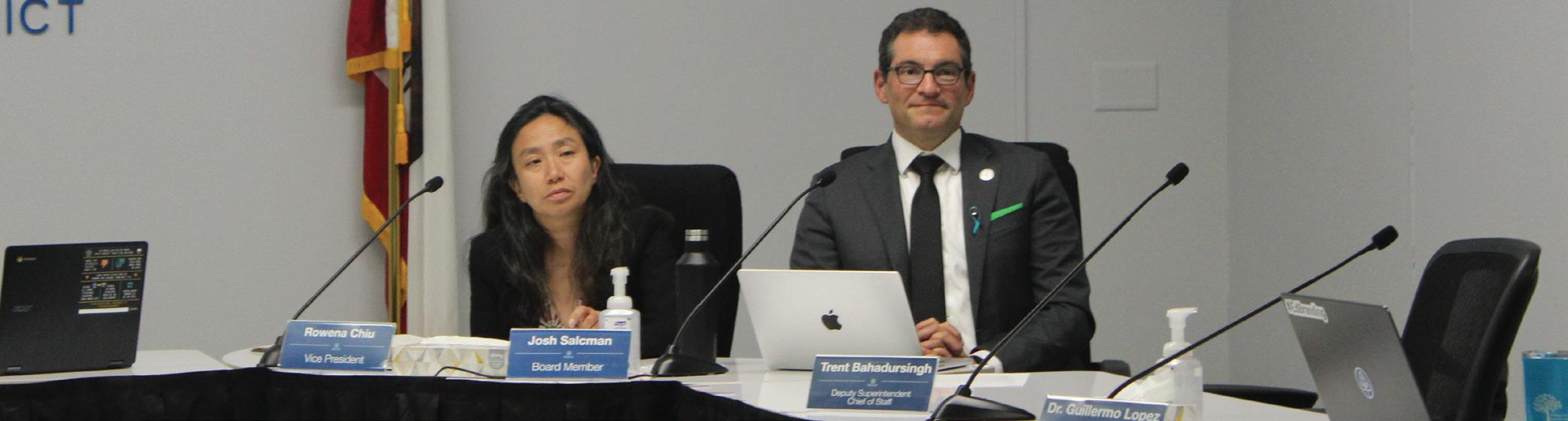
EMPTY SEAT — At the March 17 Palo Alto Unified School District board meeting, a decision was made to mutually separate acting Superintendent Trent Bahadursingh from the Board. PAUSD board member Rowena Chiu said that she hopes for more transparency in the leadership model for the school district. “Some of the core values I look at [in a superintendent] are collaboration and empathy,” Chiu said. Photo: Angela Fang

luck of

the Draw SPORTS BETTING SURGES AMONG STUDENTS

MILLIONS OF PEOPLE TUNED IN highlight of the college basketball season: March Madness. Between every blockbuster play and tim eout, the broadcast cuts to a flood of sports gam bling promotions.
This March Madness, the American Gaming Association pro jected that Americans will bet $3.3 billion on NCAA men’s and women’s basketball teams. Tournaments like these have contribut ed to online sports betting exploding in popularity among youth. A survey issued by ESPN last month found that one in three young adults places an illegal sports bet before turning 21.
Teens at Palo Alto High School do not defy this statistic. Sports betting is a form of gambling that involves wagering on the outcome and elements of an ath letic competition. Behind closed doors and laptops tilted at 45 degrees when a teacher walks by, the sports betting culture at Paly has flourished.
Ken, whose name has been changed by Verde, is a sophomore at Paly. Ken started placing $25 sports bets from time to time after seeing ads on YouTube from sports content cre ators. For Ken, it is not for financial gain, but rather to make watching sports more en tertaining.

“Your favorite team wins, but nothing happens,” Ken said. “Life goes on. But then you put some more money in it



easier for users to start placing bets or continue betting regularly.
In Ken’s first attempt at sports gambling, he quickly encountered issues creating an account. Under bill AB 831, online sportsbooks are illegal in California and sports betting is banned regardless of age. However, a Politico poll issued by the Citrin Center-Possibility Lab found over 60% of registered voters in California still participate in illegal online sports betting. This is because users, like Ken, can easily place bets on sportsbooks operating outside of California by faking their location.
Age was another issue for Ken. In the entire United States, no one under the age of 18 is allowed to gamble. To bypass this issue, he bets under his mom’s name. She allows it on the condition that she maintains full control over his spending and can revoke this priv-

According to Humphreys, gambling can also take up mental real estate in the brain where users are constantly focused on placing their next bet instead of family, grades or work.

ipating in sports betting has required him to dedicate more time to watching games.
“I did kind of get more interested in sports … it gave me more of an interest in it because I was looking at the betting lines and looking at all these different statistics,” John said.
“You almost never run into a compulsive gambler who started at 40.”
— KEITH HUMPHREYS, Professor of Behavorial Sciences, Stanford University
A typical bet for John ranges from $100 to $200, and he places them on a biweekly basis.
“One time, [I watched] like Russian ping pong, or something, dumb stuff like that,” John said. “[It] looked like good odds, sometimes I’ll just do fun bets.”
Numerous sports betting platforms allow users to win up to $1,000 without providing an ID. To avoid legal ramifications, John withdraws his sports gambling earnings as cryptocurrency and switches accounts after reaching the $1,000 limit.

John, a Paly junior still under the age of 18, was first exposed to gambling at 12 years old by his family. In the past, John felt no desire to watch sports, but partic-
“I keep doing crypto to keep it anonymous,” John said. “Holding it in crypto makes it a lot easier, especially given that your information, your identity, gets tied into it when you put it into your bank account.”
Legal punishments are avoidable, but long-term mental health consequences are still on the table. Despite acknowledging the possible harmful
effects, John continues to gamble.
“Gambling is never good,” John said. “I do it for fun. I think I can control myself. I understand that it’s a stupidly addictive thing, so I tell people, ‘don’t do it.’”
When watching sports and placing bets become intertwined, Humphreys warns that the brain will create a secondary association between the two. For youth trying to quit sports gambling, watch ing or playing the sport in any form could trigger a relapse.
Avoiding a sports gambling addiction may be possible if done right. Greg Matson, the owner of sports betting company Califor nia Wager, strikes a balance between profit and play. Matson has over 1,500 paid subscribers and makes his living providing sports picks to the public for a fee. Matson compares sports betting to the stock market, where sports picks are the equivalent of well-re searched investments.
“We won every single year, and we’ve done it across an array of sports,” Matson said. “If you have the information and you’re stubborn and disciplined above all else, that’s how you can do it.”
Matson runs his business by researching picks before sharing them with his customers, through which he’s made over $1 mil lion in earnings. Sports fans are conflicted on whether to support sports betting, as the activity has been linked with numerous ath letes purposely losing games to make money for themselves and others.
One recent example involves former professional bas ketball player Terry Rozier, who admitted in an interview with The Atlantic of intentionally leaving a game early so bettors could profit from wagers based on his underperfor mance.
“I think anyone who can influence a game should not be able to bet because it’s unfair and betting should be based on the game,” Ken said.
Sport betting has also invited a new culture into the world of athletes, a culture built on profit versus sports manship. Paly journalism teacher and sportsblog writer Bri an Wilson has seen it first-hand online.
“People get … not just angry about it, but they get very into their conspiracy theory mode, which I think can get pretty toxic in terms of ‘is sports fixed?’” Wilson said.
When players prioritize bets over the integrity of the game, the enjoyment of sports decreases for everyone.
“I always have questions when I see an athlete who’s sponsored and promoted by sports, because then you wonder who else is paying them more, or what else might be happening, it just raises a lot of red flags,” Matson said.
Despite his success in this industry, Matson hopes to see stron ger security measures implemented in the future to keep teens off sports betting platforms. The burden is on California legislators, but just as much on parents.
“Ignorance is a lot of it, too, and you can’t just expect that if you [parents] don’t talk about it, if you’re not aware of it, and you don’t make your kids aware of it, it’s just not going to happen,” Matson said.
According to Matson, what drives gamblers into debt is unre alistic expectations and unnecessary risk-taking. For Matson, most of his winnings come from simple, single-bet, safe plays.
“You have to lose a lot. You have to learn the hard way, and
that can become costly,” Matson said. “As someone who does it for a living, I would never advise somebody to get into this. It’s a tough world, and it’s unforgiving.” v

If you or someone you know is struggling with sports betting, confidential help is available 24/7 through the National Problem Gambling Helpline at 1-800-MY-RESET.



Text by LEELA KULKARNI and ALMA MICHLIN
MONEY
HIGH HOUSING COSTS IMPACT TEACHERS’ UNION
anywhere between $91,000 to $172,000 per year. That means the average teacher earns about 1/23 of the typical Palo Alto home price per year.
The Palo Alto Educator’s Association is currently in negotiations with PAUSD. According to PAEA President Tom Culbertson, educators are asking for better benefits and working conditions, as well as increased salaries.
“We’re asking for compensation and benefits that are competitive with other districts, and so obviously part of that’s going to involve investing in educators,” Culbertson said. “There’s tons of other programs that I’m sure could use more support with that money as well.”
During the Feb. 10 school board meeting, the school district reversed its previous decision to cut some staff positions for the

TALKS
Alto. Since moving closer to Palo Alto, he has gained more free time throughout the week.
“I’ve changed that [Santa Clara commute] to a 10-minute commute each way every day, and it’s life changing,” he said. “So I got at least an hour of my life back.”
For teachers new to the district, living in Palo Alto to min

“ability can cause teachers who contribute to that ranking to move elsewhere.
It affects educators’ ability to do extra things for students.”
— TOM CULBERTSON , PAEA president
year of teaching make $91,546 on a bach-
In Mountain View, new teachers make $81,726 according to the Mountain View Whisman School District 2024-25 salary schedule. Though their starting salary may seem lower, Mountain View’s average housing market has an average of $1.99 million,
This means newer teachers don’t have
Palo Alto housing developers have started fixing the affordability issue. According to Palo Alto Online, a new teacher housing project is under construction. The 55 units will be available for low to moderate income teachers and staff of the PAEA and California School Employees Association. This development has studios and one-bedroom apartments. However, Blackburn said this development may not be a solution for families.
“When I was younger, I would move into that place, no problem,” Blackburn said. “You’re asking that question of me now, as an older person, having lived in a condo for 17 years... I don’t think I would do that now. Everybody’s lifestyle choices are going to probably depend on where they are in life.”
tors,” Culbertson said. “It affects classroom situations. It affects educators’ ability to do extra things for students, and that’s why we’re really fighting for this right now.”
Knight has had that experience, saying that being late means he feels less put together.
“I feel rushed and I don’t feel very organized,” he said.
Blackburn agreed that PAUSD needs to invest in teacher salaries.
“We [PAUSD] have a ridiculous amount of money, and we are in Palo Alto, where living expenses are really high,” Blackburn said. “We can definitely afford to do so [invest in teacher salaries], it’s a choice that they’ve decided to not invest in their teachers, and that makes things difficult.” v
DRIVING HOME — Paly economics teacher
Grant Blackburn navigates a school parking lot. He used to commute from Santa Clara, and would have to spend a lot of money on gas. “I would be having to go and fill up my gas tank once every three days,” Blackburn said. “That’s almost twice a week.”

Photo illustration by LEELA KULKARNI and ALMA MICHLIN

ROAD TRIP: CALIFORNIA’S UNIVERSITIES
SPRINGTIME BRINGS sunny afternoons, wishful thoughts of summer break and for Palo Alto High School’s incoming senior class, the approaching decisions to be made for college applications — starting with which universities to apply to.


In addition to researching online, many students like Paly senior Annie Xiong find that visiting in person is essential to determine if a college’s culture, location and campus life is right for them.
“I think the vibe of both the college and the city is something you can only really know once you’re there,” Xiong said. “Before going, you can really only hear other people’s opinions, but you have to see for yourself if you like the atmosphere. For me, [when I visited] I was able to imagine myself spending the next four years there.”
To make the search easier, this stop-by-
East of San Francisco, our journey starts at the original University of California campus, UC Berkeley. Statue Sturdy the Bear is one of UC Berkeley’s 23 bear installations representing the school’s mascot, the Golden Bears, across campus.

California Polytechnic State University in San Luis Obispo offers a career-focused cooperative education, where students can take semesters off for real work experience. The vast campus features scenic hills such as the one the looking point and initial “P” is built on.
pare to build your college list! v
stop blueprint maps out nine colleges across California in good distance for a road trip. With a mix of state and private schools, these colleges are among the most popular schools Paly students apply to, according to Maialearning. Before touring each stop, we suggest learning a bit about the schools online. Be sure to talk to current students and hear unfiltered perspectives on their college experiences. Most importantly, visualize your future in that environment and prepare to build your college list! v
Additional reporting by Keira Ling
Continuing down the coast, the next stop is the beautiful and bike-friendly UC Santa Barbara. Right up against the Pacific Ocean, UCSB is complete with sunny beaches and its very own college town, Isla



Our first school in Los Angeles County, Loyola Marymount University is a private Catholic university that stands atop a bluff overlooking the city. In close proximity to the Hollywood film and entertainment industry, LMU boasts a stand out film program.

Walking across the bustling greens of UCLA, you might encounter students tossing around frisbees and volleyballs, and certainly the distinctive twin towers of Royce Hall. In 2025, UCLA was Paly students’ most applied-to college, attracting 214 applications, according to Maialearning.




Thirty miles east of the buzz lies the smallest college of this road trip: Pomona College. The liberal arts school is the oldest of the Claremont Colleges, a consortium of seven interconnected institutions. Take a stroll from campus to campus, and find out if the close-knit college town environment is for you.


Moving on to Downtown LA: USC’s campus features sprawling red-brick buildings and the beloved Tommy Trojan, a lifesize bronze statue with its dedicated Tommy Cam live feed you could appear on!
The heart of UC Irvine is Aldrich Park, a massive, circular botani cal garden at the center of cam pus. Be sure to lay under the colossal fig tree, where many students seek shade while studying.




After 500 miles of college exploration, our excursion concludes in sunny La Jolla, where students at UC San Diego bask. While touring the grand Geisel Library, start thinking about what qualities of these nine colleges appealed to you most, and perhaps your plan to get back home!
Art by ANGELA FANG and KEIRA
Text by ANGELA FANG
THE AI TUTOR
STUDY TOOLS CHANGE HOW STUDENTS LEARN
THE MATH PROBLEM had Palo Alto High School sophomore Brian Chung stuck for over an hour. It was 11 p.m., his Analysis Honors exam was mere hours away, and that answer wasn’t clicking — until he reached for his phone, took a screenshot and let Claude be the key that finally opened the door.
Chung is not alone. According to a May 2025 College Board survey, 84% of high school students reported using generative AI tools to assist with schoolwork and study for tests, up from 79% in January.
As admissions rates at selective universities continue to decline, a growing wave of AI-powered study platforms have been reshaping how students prepare for tests. In Palo Alto, home of Stanford University and Silicon Valley, for the many who aspire to be admitted in selective universities, the pressure to perform well on standardized and school tests has never been higher.
“It [college admissions] is getting more competitive, and there’s a lot of pressure to get good grades,” Chung said.
In this environment, any new tools promising a competitive edge quickly gain traction.
The Phenomenon
tions I get wrong,” Chung said. “If I still don’t get it, I just prompt it into Claude.”
Paly senior Theresa Wang said she uses AI tools to study for her Advanced Placement Physics C class.
“The last time I used AI was to help me with my physics homework, so like going over problems and targeting concepts,” Wang said.
Wang said that she enjoys using OpenAI’s chatbot, ChatGPT, because of its ability to act as a tutor.
“I usually use ChatGPT … I think it’s good at giving personalized answers and being a tutor in place of an actual human in specific contexts,” Wang said. “So for example, when you already partially know the answer, but you just want a bit of confirmation.”
Chung added that AI can have an advantage over Google or Youtube because its ability to give personalized answers allows it to answer all types of questions.
“Even if I search it up on Google or YouTube, there might not be an answer,” Chung said. “But AI can literally prompt it specifically, and can still give me an answer.
“
[For]
the concepts I didn’t know, I screenshotted some images into Claude, and I prompted Claude to explain some conceptual stuff … AI just helps me understand better
.”
— BRIAN CHUNG, Paly sophomore
When Paly computer science teacher Kathryn Widen was in college, she studied using textbooks and old materials. Now, she says she is noticing the effects of that shift in studying methods in real time.
“Students have said they’ve used AI for generating extra practice problems if they’re struggling with that concept,” Widen said.
Chung said that Anthropic’s Claude chatbot appeals to him because it helps him understand advanced concepts.
“[For] the concepts I didn’t know, I screenshotted some images into Claude, and I prompted Claude to explain some conceptual stuff and create questions, like multiple choice or free response,” Chung said. “AI just helps me understand better.”
Chung also said that he uses AI tools to study the SAT.
“I go through a bunch of practice tests, then go over the ques-
Beyond general-purpose chatbots like ChatGPT or Claude, Chung said he uses Turbo, an AI study tool designed specifically to create notes, summaries, flashcards and quizzes marketed to help students prepare for tests in academic subjects.
“When you put a YouTube link it just gives you a whole summary of it,” Chung said. “I’ve used that before and it’s been pretty helpful when I didn’t really have any time and just needed a quick summary.”
Chung noticed that AI study tool companies, like Turbo, have increasingly turned to social media platforms to market high school students, running advertisements featuring students who claim that these specific tools helped them improve efficiency, under-

DILEMMA
standing of concepts, and test scores on exams.
Dangers
However, doubts regarding accuracy have been raised about Turbo and similar AI tools. Turbo struggles with solving higher-level complex subjects and often oversimplifies nuanced topics, AI consulting firm Christopher Queen Consulting reported.
As students resort to using AI tools that provide them with information to complete assignments or study for tests, the concern of inaccurate information has become deadlier, especially as each individual test score gains more weight.
Wang said that while AI is useful for conceptual review, it struggles with calculations and should not be trusted without human verification.

but sometimes things with such a high probability are still not actually correct.”
Wang said that she frequently encounters AI chatbots generating false or unsourced information.
“It [AI hallucinations] is very common,” Wang said. “When it [AI chatbots] gives you results for something, it doesn’t tell you what the source is, or the source is completely fake.”
Overreliance
Widen also raised concerns about students using AI to fully complete assignments, which she said ultimately detracts from learning.
““I think it [AI] is good at reviewing concepts, but I would be careful with the calculations,” Wang said. “It always gets it wrong.
I think AI is quite poor when it comes to basic arithmetic … that’s why I think it’s always a good idea to double check your own work and just make sure it sounds right.”
Hallucinations
The output is always something which is high probability, but sometimes things with such a high probability are still not actually correct.”
— CHARLES ELKAN, Computer Science professor, University of California San Diego
According to the University of California San Diego Computer Science professor
Charles Elkan, who studies machine learning and data science, AI hallucinations refer to when an AI model produces an output which is believable, but not actually correct.
“What these AI models are doing is they’re starting with the contacts that you provide as input, and then they’re looking for the next word, which is high probability, high likelihood, according to all the patterns that the model has learned from its training data,” Elkan said, “Then it’s looking for the second next word, the third next word, and so on. And so the output is always something which is high probability,
“I see a lot of text generation for just generating an answer that they can copy into a document,” Widen said. “The class that I see it the most in is my AP class … it’s really important that they try and fail now, especially because there’s opportunities to revise versus having ChatGPT solve it for them.
Wang warned that artificial intelligence poses risks to critical thinking and has strained the relationship between students and teachers.
“There’s definitely a danger with critical thinking here [use of AI],” Wang said. “AI caused a bit of a trust issue between students and teachers … nowadays it can be hard to figure out if the student has used AI or not.”
Widen said generating practice problems and receiving stepby-step guidance are valuable functions of artificial intelligence, but added that educators have concerns about misusing the technology.
“Generating practice problems is awesome, Widen said. “Walking you step-by-step through how to do something for a different problem is great. Those are all really useful tools … but when your teachers don’t want you using AI, it’s because we see students using AI as a shortcut that is ultimately preventing learning,”
Looking Forward
For now, AI tools remain a pivotal part of many Paly students’ study habits, while their accuracy of the information they produce remains imperfect.
As college admissions grow in competitiveness, and each test score carries more weight, finding a balance between efficiency, reliability, and dependence is something students, educators, experts and parents must figure out how to address together. v
INSIDE ICE
Editors’ note: The interview for this story was conducted in Spanish and translated live for all of Verde Magazine staff. Verde has translated all quotes into English. As we never learned the name of our source, we have chosen to give her a placeholder name; Sophia.
THE STORY OF A WOMAN DETAINED
BY ICE
THEY HANDCUFFED ME
and they took me to the back to the third or fourth floor where there’s small rooms where you stay,” she said. “They take away any pins, belts, jewelry and they keep you there until you can go to a detention center.”
Sophia said she fled Peru seeking asylum four years ago, at the age of 25, after being abused by a family member.
“I fled my country by myself. I don’t have family [in the United States]. I [only] have few friends.”
Although she was represented by a lawyer and was in the process of becoming a citizen, she was taken into U.S. Immigration and Customs Enforcement custody after four years of living in the U.S., for
“violating the terms and conditions of the application” while in person to register, regardless of having no criminal record. Apparently, under the new administration, a one-minute delay was a violation, which is what Sophia had.
In the small room on the third or fourth floor of the same building, she waited to be taken to the detention center, unable to make phone calls.
“We got there at approximately 2 a.m. and we were there until 5 p.m. the next day. They didn’t give us blankets or even the aluminum bed sheets that in other places they do give you,” she said.
While some stay here for days, she was there for less than 24 hours before being moved. Her hands, feet and waist were handcuffed and she was taken by minivan from San Francisco to Bakersfield, without knowing where she was going at the time. In these new rooms, she waited with the four other detainees with whom she traveled and others who had arrived separately.
“They don’t give us blankets, you just wait there without knowing what’s going to happen to you in that moment,” she said.
After a while, she and other detained

“ONE SUFFERS UNJUSTLY” — While leaving our class after the interview, Sophia received a text message from a woman she had met in the detention center. The woman, still being detained, wrote in an earlier text, “Here, in this place, there are no distractions — only anguish, anxiety, sadness, and yells; for only God knows what one suffers unjustly.” The woman, in her 50s and with a daughter in the U.S., has no criminal record and had been detained by ICE for four months ongoing at this time.
people were handcuffed and transported by minivan again to a nearby location.
When she arrived at what she later identified as California City Detention Facility in Bakersfield, she was registered, given an identification card, and directed to her new “home.”
“Then from there they gave us a yellow bag,” she said. “They give us clothes because we can’t wear our own clothes, some orange sandals, and they took us to the rooms, where the beds are.”
Although she hadn’t experienced her panic attacks and anxiety for the past four years, as she experienced them again when she was detained, she was isolated until she could see a psychologist. While she had an especially stressful experience, others at the center did not have it much better.
“The truth is that everyone that was there being detained in that moment felt really bad. Because barely anyone has a criminal charge and almost everyone had a process with the court,” she said.
Even though some of the immigration officers could speak Spanish, they would not talk to those who were being detained.
“The immigration officers are very derogatory,” she said. “They look at you like you are inferior. They won’t tend to you. They will look at you rudely. For them, it’s like Latino/a people don’t matter to them.”
Sophia was detained from October until Jan. 12.
“Three months and almost two weeks,” she said.
At the center, she spent her days reading and talking with other detained people. Others were from different Latin American and Asian countries, of ages ranging from 20 to 80. The vast majority of them did not have criminal records.
“Almost always it would be talking, trying to de-stress, it was the only thing that we could do,” she said.
In the center, men and women were
DEtENtioN
separated. There were about 42 rooms, spread out between two floors, she said.
“Three times a day they locked us up,” she said. “They locked us up from 6 a.m. to 7 a.m., from about 11 a.m. to noon, and then from 3 p.m. to 4 p.m., and then at 10 p.m. they locked us until the next day.”
The food was flavorless and limited, and bathrooms were cleaned by detainees who were paid one dollar a day.
Sophia was let out when her lawyer submit a writ of habeas corpus, which ensures that a detained person can challenge their detention before a judge.
more intensity, because his daughter didn’t let it happen.”
Sophia said she never thought she would be detained in the U.S., having a lawyer and being in the process of get ting a citizenship. Still, she thinks that there are good people in this country.
“They [immigration officers] look at you like you are inferior.
SOPHIA, ICE detainee
“They [her lawyer and friends] didn’t think that I was going to get out because it was almost impossible to get out of there,” she said.
While she eventually got out, other’s remained detained, were deported or even left voluntarily to their home countries.
“Many other people, one of them being my friend, whom I met there, and well, she’s already back in her country,” she said. “Her lawyer didn’t want to keep defending her, and [authorities] wanted to send her to another country so she preferred to leave voluntarily.”
Sophia came to this country seeking a better life.
“I came requesting asylum, she said. “In my country, I was sexually abused by [a family member]”
Even in Peru, she tried to escape her abuser by moving to other cities. As she was already 25, her abuser attempted to abuse his own daughter, but she wouldn’t let him, which led him back to Sophia.
“His daughter confronted him and she mentioned me so [the abuser] came back looking for me,” she said. “So I decided to go far away. I couldn’t explain to you why the person who abuses you wants to look for you. He wanted to abuse his own daughter and he came looking for me with
“I still think there are good peo ple [in the U.S.],” she said. “Things are hard, just like they are everywhere. I think it’s a country where justice is served. In my coun try, it’s not like this. I can’t report what happened to me because some time has already passed. In my country, you can’t report abuse because there’s no evidence, because it happened to me in my adolescence. So there’s no justice for me, and they can’t de tain that person.”
Sophia said detainees would be scared whenever officers were around, as they never knew if they would be taken away.
“The vast majority of people who were there were very scared of the immigration officers because they are people who treat you very poorly.”
She said that it is a lie that gov ernment agents are only detaining those with criminal records. She said that they don’t give diabet ic people their medications, that some nurses treat their patients very poorly and that they’re not given jackets even when in closed rooms with blasting AC.
“The treatment is inhu mane,” she said. “It’s unjust. We know that this isn’t our coun try, but these people come here looking for help, like in my case.”
v

to win it FLYNN IT
ELITE ROWER’S JOURNEY TO DIVISION I
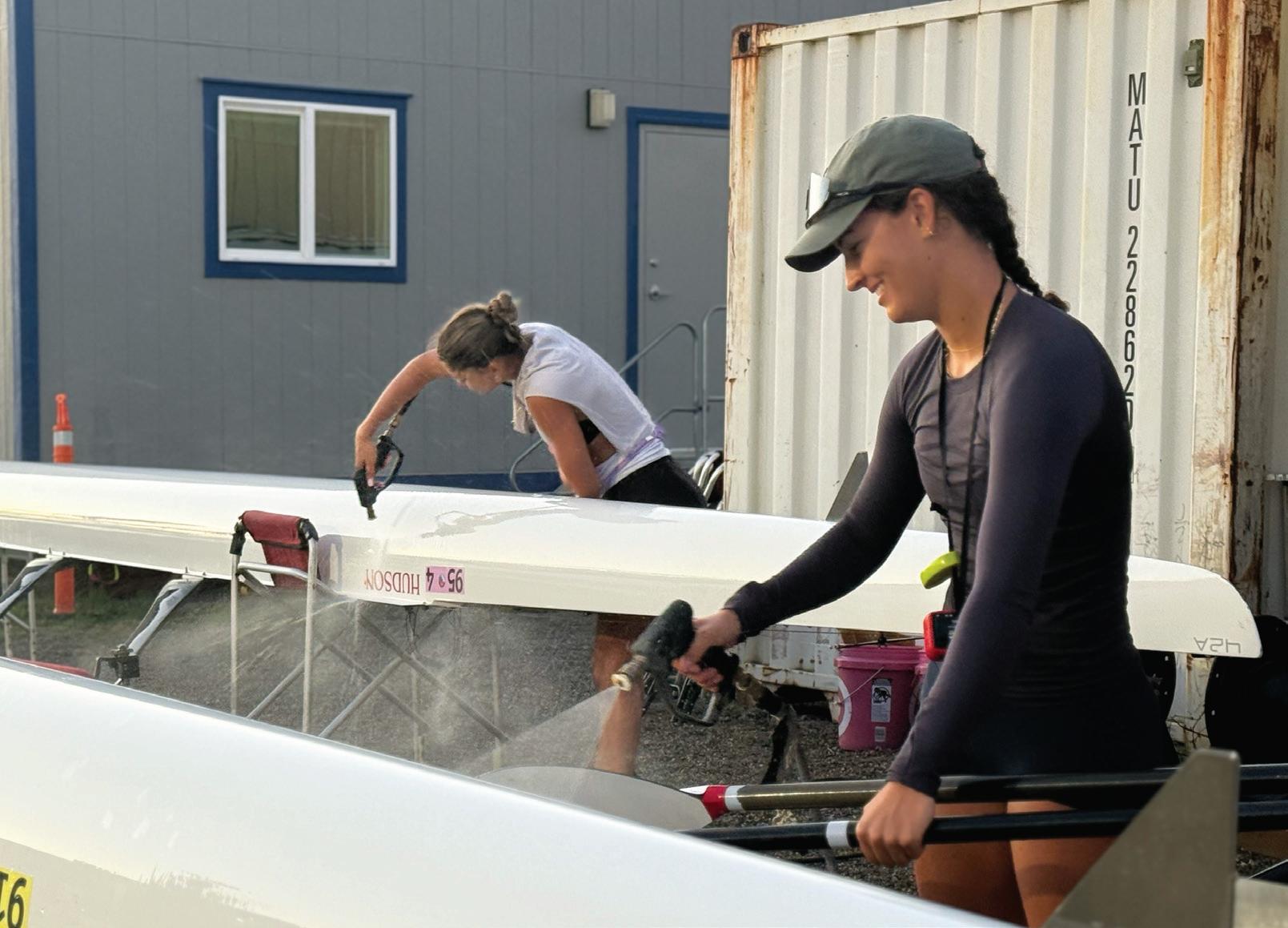
AT 5 A.M., the San Francisco Bay is an ice-cold, shimmering pool of darkness. Sloshing breaks the silence as Palo Alto High School senior Dorin Flynn tears her oars through the calm waters. Commanding instructions crackle through the megaphones of the Redwood Scullers coaches, pushing the team through their grueling morning practice. Despite the strong winds, the rowers peel off layer after layer of clothing that kept them warm just moments earlier. Minutes turn into hours as the sun begins painting the sky in orange and yellow hues, signaling the fast-approaching end of practice.
For five years, Flynn has rowed for Redwood Scullers, a pre-elite competitive rowing club in the Bay Area. With the program’s prestige, many Redwood Scullers rowers go on to row for Ivy League schools. As a 2023 Youth National Champion and a gold medalist at both the San Diego Crew Classic and the Royal Canadian Henley Regatta, Flynn is one of few Paly athletes committed
to play a Division I sport in college and the only committed rower of her class.
Flynn is committed to row at The University of Virginia. However, her plans were completely different just a few months prior.
“Back in February or March last year, I committed to the United States Naval Academy, but medically, they couldn’t guarantee admission,” Flynn said. “So then I had an offer from UVA that they were going to hold for a while, so I took them up on that offer.”
Though her admissions process had its ups and downs, Flynn says she is looking forward to the next four years in Virginia. She has her eye on this summer’s national U19 rowing team, and hopes to place at the National Collegiate Athletic Association.
“It [admissions] was definitely a stressful journey because in my head, I was set on the Naval Academy until about October, and then I had to change plans last minute,” Flynn said.
Flynn grew up around the sport because of her father’s competitive rowing career. However, her own experience

with rowing began at Vermont’s outdoor camp Hosmer Point, which she attended the summer before fifth grade. The camp offered rowing as an option, so she figured she would give it a shot.
Flynn’s time at camp set her passion for rowing in motion — she began hopping from team to team in middle school until she joined Redwood Scullers in eighth grade, where she still rows today.
Besides her journey to commitment at UVA, rowing brings Flynn all kinds of hurdles on a regular basis.
Rowing calls for strict practices multiple times a week, with some beginning as early as 5 a.m.
“It’s kind of normal to me now, but especially getting into it, it’s definitely harder,” Flynn said. “Occasionally, someone just won’t show up to morning practice, and you’re like, did they sleep through their alarm, or did they just not want to come?”
Flynn says that having discipline is
essential for each team member. Though some days are worse, remembering that people are relying on her gives her motivation to keep showing up.
Flynn’s dedication in putting in effort and time is part of what makes her an incredible rower, according to Ali Bollyky, Flynn’s rowing teammate and a senior at Castilleja School who is also committed to rowing at UVA.
“We will go out in the water and we’ll have eight really hard pieces lined up, and Dorin is somebody in the boat who’s going give her 110% every single one of those eight pieces,” Bollyky said. “And I think that’s the kind of person you want in your boat and you want as a friend.”
With practices both on land and in the San Francisco Bay, rowers are exposed to numerous forms of exercise throughout the week. Practices are a mix of intervals, tempo rows, technical rows — focused on technique — and low-intensity ‘steady state’ rows.
“Anyone can get in a boat and row somewhat

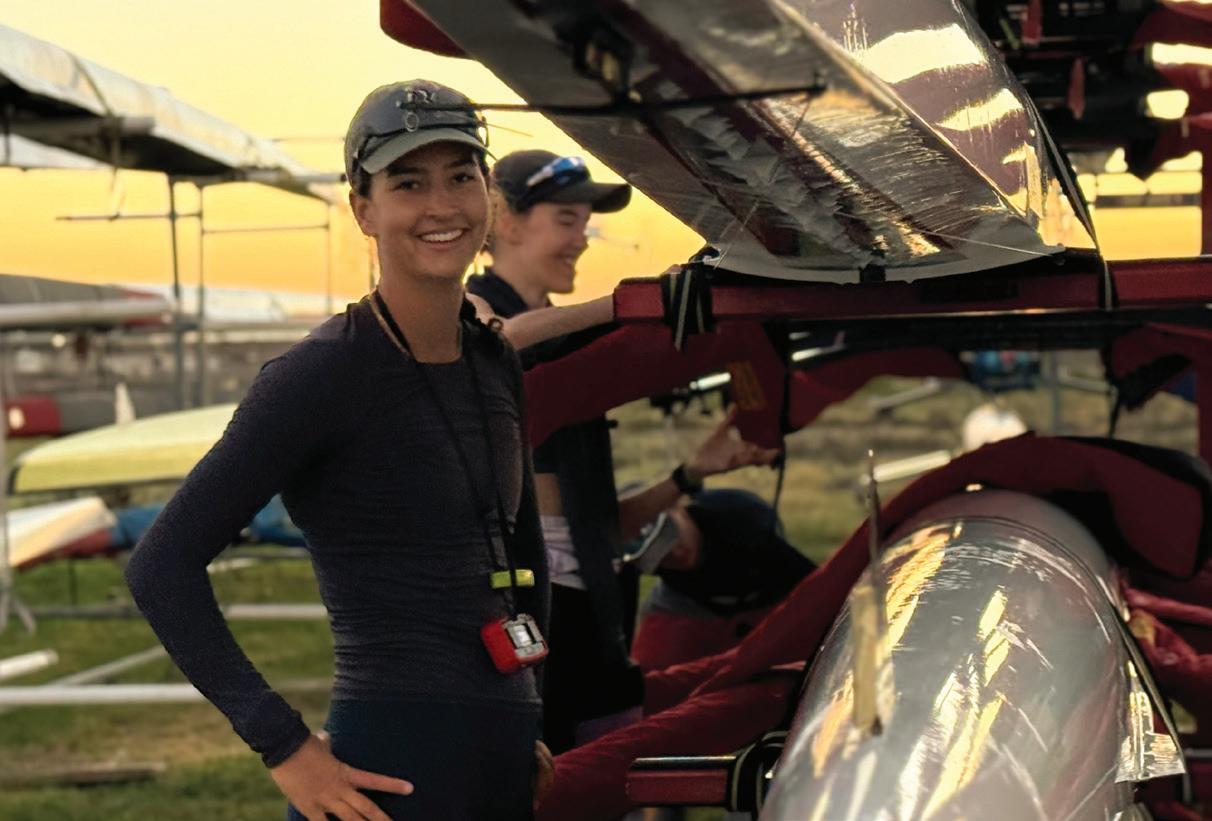
ALL SMILES (LEFT) — Palo Alto High School senior Dorin Flynn pauses for a photo while packing up after a Tuesday morning Redwood Scullers rowing practice in the San Francisco Bay. “There’s a lot of technique that goes into it,” Flynn said. “It’s a super supportive team in general, there’s always gonna be someone who’s willing to talk to you, or looking out for you.” Photo: Keira Ling
SUNRISE PRACTICE (BELOW) — Flynn rows through the sunrise with three Redwood Scullers teammates. “If I have a really good practice, I’ll come off the water and I just want to talk about it with everyone because I’m so happy about how it was,” Flynn said. “It makes me happy to be with my friends, doing something that’s hard, but it’s so much fun.” Photo: Keira Ling
okay,” Flynn said. “And I think when you’re really racing everyone at Nationals, in the A final, everyone’s gonna be a pretty good rower. But who can push through the pain for the longest?”
Chris Flynn, Flynn’s father, has been in the same position as his daughter. After rowing through college and pursuing a competitive rowing career, he is now the director of operations at Bair Island Aquatic Center. He says her competitive spirit has been present since childhood.
“From a very young age, from like three years old, she would be very achievement-oriented and very focused on grinding it out, but she was always a really enthusiastic participant in the most craziest adventures I would take both our kids on,” he said.
Bollyky agrees that Flynn’s enthusiasm and eagerness to grow play a huge role in her success in the sport.
However, at times, Flynn still struggles with feeling unmotivated.
“There are better seasons and worse seasons,” Flynn said. “Last season was rough, and mentally I was not in the great-
est place … It was really hard to wake up early and go to practice.”
During these times, Flynn’s father pushes his rowing background to the side and focuses on acting as a parent figure, rather than a coach.
“I’m her father, and I think it’s important that I keep that separation so if she’s frustrated with the coaches or at practice, she can vent to me,” he said. “I understand the challenges, and so I just kind of let her take ownership of what she wants to do in the sport.”
Ultimately, Flynn chose her own path, and intends to follow it to Virginia this fall. While the moments last, she continues to dedicate herself to the team that helped her get to where she is today.
“You have to do it for yourself,” Flynn said. “You have to do the sport because you really like it. And it’s definitely going to be hard, but I think it’s worth it.” v
AMAYA's ACHIEVEMENTS (Senior and junior year)
Senior year (as of March 2026):
• Nike Cross Nationals individual qualifier (20th place)
• Northern California Cross Country Runner of the Year
• Northern California Cross Country Senior of the Year
• Fourth individual overall at the California State Cross Country Meet Junior year:
• Northern California Cross Country Junior of the Year
• Fourth individual at the California State Cross Country Meet
• Third at Stanford Invitational 1600 meter
• Stanford Invitational DMR champion + Meet Record holder
• Arcadia Invitational DMR champion
• Arcadia Invitational individual 800 meter qualifier
• California State track meet individual 1600 meter qualifier + finalist
• Eighth in California State Meet 1600 meter
• New Balance Outdoor Nationals Championship Mile qualifier
• New Balance Outdoor Nationals championship 800 meters qualifier
Overall Personal Records (as of December 2025):
800m: 2:13.12 Mile: 4:49.49
3200m: 10:20.52 5k XC: 16:52.7 1600m: 4:48.14

SPRINTING AHEAD — Paly senior Amaya Bharadwaj runs a warmup lap around the track during practice after school. "I'm really proud of how my running has progressed over the years," Bharadwaj said.
FAST TRACK
TOP TRACK SUPERSTAR TO RUN DI IN COLLEGE
AS PALO ALTO HIGH school
senior Amaya Bharadwaj laces up her shoes and takes her spot on the starting line of the track, her smile turns into a look of determination. As the whistle sounds, Bharadwaj explodes forwards, quickly taking the lead.
During her time running on Paly's cross-country and track and field teams, Bharadwaj has set seven school records.
This track season, she hopes to break the school record in the mile for girls, which currently stands at 4 minutes, 42 seconds, just seconds ahead of her personal best from last season of 4:49.
“I want to set the school record in the mile because my [former] teammate, who graduated last year, currently has the school record,” Bharadwaj said. “And last year, we would be right together in most of the races, so I really want to get that record.”
During cross country season this past fall, Bharadwaj qualified for Nike Cross Nationals (NXN), where she finished 20th overall among girls with a time of 17:45.
"I was the first girl from Paly to do that [go to NXN]," she said. "So I think that's a really big accomplishment."
NXN is the premier high school cross-country championship, recruiting top-qualified athletes and teams.
After her outstanding performance at NXN, Bharadwaj was ranked nationally by Dyestat Rankings, coming in as the 27th fastest girl in the nation, and third among girls on the list from California.
Bharadwaj shares that she’s had the dream of running Division 1 in college since 8th grade, when she developed her love for running.
This fall, Bharadwaj will be fulfilling her dream, as she will be on the Division 1 track team at Stanford University.
“I think there’s just no place in the world where you get the same level of academics and athletics,” Bharadwaj said.
However, Bharadwaj’s achievements and accomplishments came along with sac-
rifices as well. Track takes up the majority of her time throughout the week, leaving her homework as a task for the weekend.
“In junior year, I would study for six to eight hours on Sundays because I had so much homework from the past week and to do for the upcoming week,” Bharadwaj said.
While the process took lots of sacrifice and hard work, Bharadwaj encourages aspiring runners to not give up and keep pushing through.
“I think when it doesn't work at the beginning, people get demotivated and just stop,” Bharadwaj said. “But if you stay consistent and do a little [running] every day, it can go a really long way.”
Bharadwaj explains that before her running journey began, she struggled to find success through other sports.
high level was really exciting for me,” Bharadwaj said.
Paly track coach Michael Davidson said that Bharadwaj’s leadership and work ethic have become especially apparent over the past year.
“She's really stepped up and led,” Davidson said. “Over the last season, she started pushing her work in the summer, really going that extra mile to make her goals of being on a podium and performing really well on some of these big meets a reality.”
Paly senior Alli Katila-Miikkulainen, a teammate on the track team, said that Bharadwaj is the hardest working person she has ever met.
“ If you stay consistent and do a little [running] every day, it can go a really long way.”
— AMAYA BHARADWAJ, Paly senior
"I feel like you start running if you are not good at any other sport," Bharadwaj said. "So that was kind of why I started, and I found out that I was really good at running."
Bharadwaj first started running in India when she was in sixth grade, where opportunities in the sport looked very different from those of many of her current teammates.
“There were no girls to train with, so I would train with the boys,” Bharadwaj said. “Some of my races in India got canceled because there weren't enough girls to compete with because they're not encouraged to do that [running].”
When she was 14, Bharadwaj moved to the United States, attending Paly, where she found a running environment that offered more opportunities for girls than she had back in India.
“Once I moved here, I think just having that opportunity to compete on such a
“She is always, even after the workouts, doing extra running, like eight miles a day," Katila-Miikkulainen said. "I don’t think I’ve ever been to a practice where she hasn’t been here.”
While she is now a superstar runner, Bharadwaj wasn’t always the top runner on the team. When she first joined, she found herself in the background, surrounded by more established runners.
“She came in behind a lot of girls who were really talented and developed at the time, so she just kind of sat back and did her thing, all while she was developing under these other girls,” Davidson said. “Now she's come to the forefront, and now she's the one setting the pace.”
Her consistency and commitment to improving each season have transformed her into one of the team’s best runners.
“She's been in the background, doing her work, and all of a sudden over these last few seasons, she's really beginning to shine,” Davidson said. “But it's not a new shine, she's just been polishing it quietly in the corner, and now she's putting her lamp on the table in the middle of the room to let everybody know, ‘hey, I'm here.’" v

Text by ROHAN KINI and ANISHA SHETTY
Tonga takes over Tonga takes over
WELCOMING THE NEW VARSITY HEAD FOOTBALL COACH
AS
THE CRISP MORNING
the Earl Hansen Viking Stadium, the silence is abruptly cut off by the loud screech of a whistle. All at once, the players explode into short sprints, racing across the field.
To Edward Tonga — the man behind the whistle — coaching football is another way to give back to the community and help the next generation grow and prosper. He was recently introduced as the new head coach of the Palo Alto High School varsity football team, bringing a fresh perspective to the team both on and off the field.
Before his role as head coach, Tonga was the team’s defensive coordinator for three years, before replacing former Head Coach Dave DeGeronimo on Jan. 16. Beyond that, Tonga also makes time to work as a spe cialist in the Student and Family Engagement pro gram (SaFE).
“I help bridge communication between the school and the families, and provide resources for students to succeed,” Tonga said.
Tonga’s role as a SaFE specialist is to con nect with students and their families, sup porting their academic, social and emotional growth, as well as helping parents stay in volved in their children’s education.
Before transferring to teach at Paly, Tonga was an instructional aide for mod erate to severely disabled students at Gunn High School. When Tonga saw and gained expereince of the SaFE pro gram’s students benefits, he was offered a job as a specialist in the program. His job was to help students with tasks such as doing schoolwork, social activities and taking bathroom trips. He expressed that his time working as an aide at Gunn, connecting with the students and their families, is something that he loved.
“Those were, I’ll tell you right now, life-chang ing experiences and Palo Alto granted me that, and I’m very grateful for that,” Tonga said.
Continuing his work with the SaFE program
at Paly, Tonga spends his mornings with the football team and the rest of the day with students.
Tonga hopes to make multiple changes to the Paly football team going forward, and has begun planning out the steps he will take in order to lead the team to success.
After a rough season in the fall with a record of 0-10, Tonga looks to have a busy off-season, focusing on fundamentals, preparation and consistency, both in practice and in the game. He wants to focus on unity and forming a strong bond with the players.
“We’re looking to improve the chemistry and brotherhood within the team,” Tonga said. “Building strong relationships and trust among players is just as important as developing their skills
Due to Tonga being a returning member of the Paly football staff, many players are familiar with him as a coach. Paly sophomore Tristan Wehner, the new starting tight end for the varsity team, shares his opinion on Tonga’s new position.
“He’s making real connections with the players and has brought us more together as a team,” Wehner said.
On top of the focus on team chemistry, Tonga is also trying out different ways to improve the athleticism of the group. He’s implementing new strength training and more
“We’re planning to make a huge impact during the off-season,” Tonga said. “We’ll be introducing position-specific training, maintaining consistent strength and conditioning year-round and collaborating with other sports to help our athletes stay en gaged and develop in multiple ways.”
The experience and passion that Tonga brings to the team as the new head coach has already made an impact on those around him. His passion for help ing others is seen clearly in his football coaching, with his genuine interest in the well-being and improvement of the team.
“My favorite part of coaching is watching players grow. Not just as athletes, but as young adults,” Tonga said. “Seeing them push past their limits, embark on teamwork and celebrate their success has been truly fulfilling.”
a Wednesday morning football practice. “It’s about teaching life lessons, character and the importance of a positive faith-based mindset while developing athletes as individuals,” Tonga said.

Text by TESSA BERNEY and ETHAN BRADLEY
THE TECHNICIAN PALY TEACHERS FOUGHT FOR DO YOU COPY?
IF VERONICA RODRIGUEZ is not huddled in Palo Alto High School’s 400s printing center, she can be seen bouncing around Paly, hand-delivering the copies to teachers.
Rodriguez is the mastermind behind all paper handouts at Paly. As the school’s reproduction technician, she prints every test, review packet and resource teachers need to carry out their lesson plans effectively. She works for every academic department along with the College and Career center.
Rodriguez has worked at Paly for over 22 years, but the journey to get to where she stands today has not been easy.
“I immigrated to the United States in 1989 and I came here looking for better opportunities to help my family in Mexico, because we are very poor over there,” Rodriguez said.
When Rodriguez left Mexico, the unemployment rate in her country was 2.93%, a relatively low number and similar to today’s rates. However, the economy was less secure. At the time, the GDP was three times lower than Mexico’s current GDP.
Rodriguez had to leave behind her mother, brother and relatives in Mexico after trying and failing to find a job in Mexico that could leverage her engineering degree.
“Here in America, when you do things in the right way, you can have opportunities for very many jobs,” Rodriguez said. “In Mexico, we didn’t have many job opportunities.”
Starting over in America meant coming as an immigrant. She applied for U.S. citizenship after living in America for a few years.
Rodriguez’s first job in America was a manufacturing job at Bay Precision in Livermore, California. At Bay Precision, she utilized her engineering skills and learned how to operate heavy machinery. The skills she developed there still apply to her position as a reproduction technician at Paly because Rodriguez helps fix the printers when they break down.
In February, Rodriguez received the news that her position as copy technician was going to be discontinued in the Palo Alto Unified School District.
“I felt very devastated, very sad,” Rodriguez said. “I couldn’t sleep for a few days, until we had the meeting and they rejected cutting my position.”
Rodriguez had cultivated in-depth relationships with teachers across Paly, but she never expected such widespread support from her peers.
Advanced Placement Capstone teacher
Lucy Filppu has known Rodriguez for over 10 years. During this recent unsettling time she helped support Rodriguez with whatever she needed.
“ I couldn’t sleep for a few days, until ... they rejected cutting my position.”

— VERONICA RODRIGUEZ, Paly reproduction technician
Teachers were quick to respond to PAUSD plans to cut the reproduction technician position at Paly and Gunn High School due to budget cuts. The news broke on a Friday and by the following Monday, Paly representatives of the Palo Alto Educator’s Association had swiftly created a petition that gained over 100 teacher signatures in favor of keeping Rodriguez’s role.
“If I had to pick one employee on the campus who’s the most beloved and necessary, she’s probably up there at the very top,” Filppu said. “It was easy to come together. Everybody wanted to come together.”
On Feb. 11, Rodriguez found out her role was reinstated through an email sent by the district. While her work is behind the scenes, no one can deny the integral part Rodriguez plays in keeping classrooms afloat.

“People who don’t work inside the high school don’t know how the school runs,” Rodriguez said. “But teachers who work daily in the school know how important it is to have a [copy] technician.” v
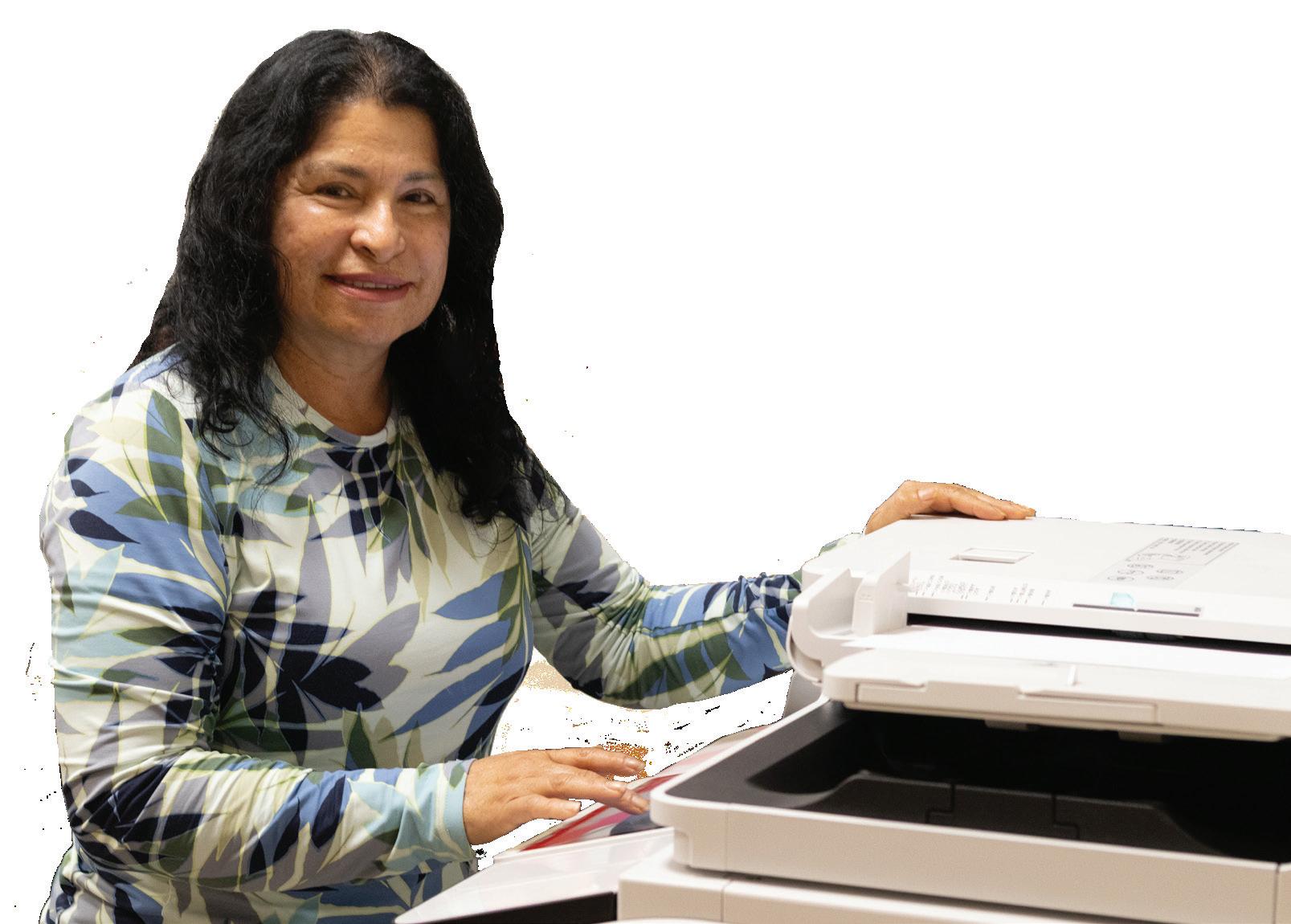
Veronica Rodriguez prints out a copy. “I have to program every single print request, because all the print requests
Text by ANGELA FANG and JARON LEUNG
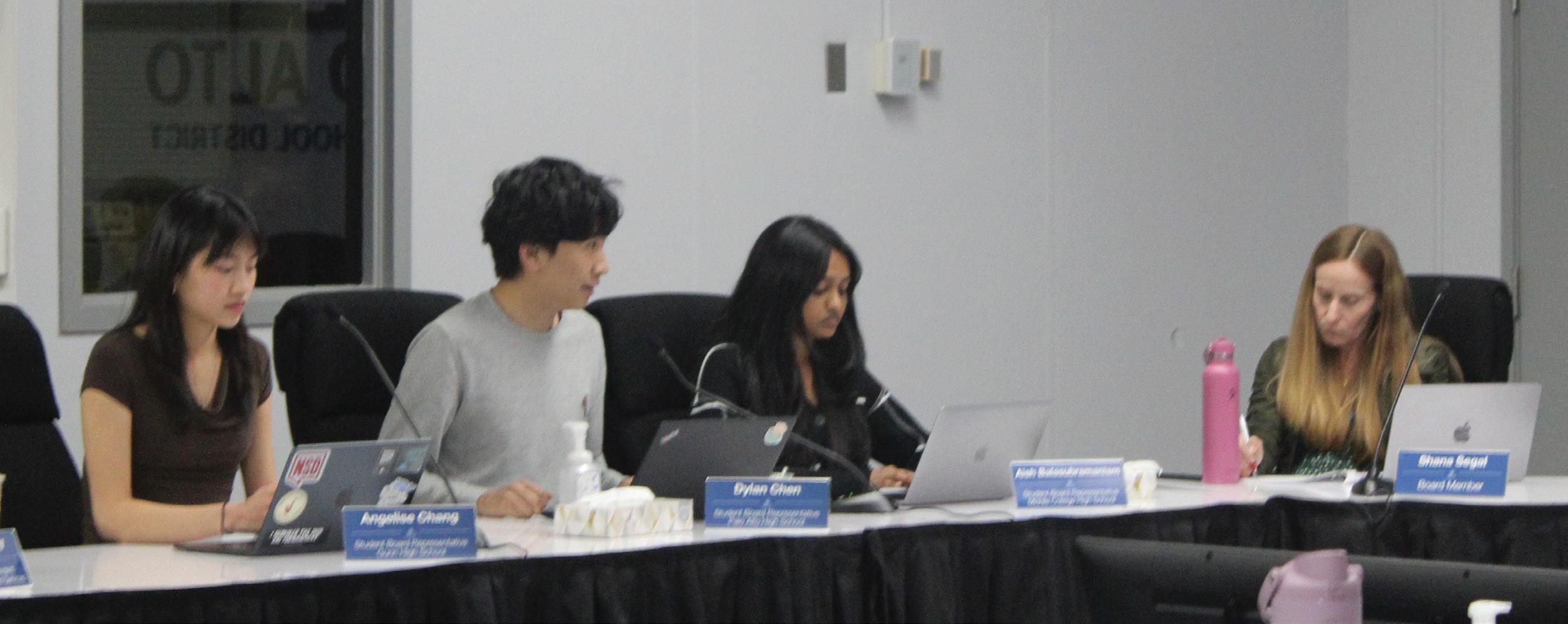
oN our BEhalf
PALY STUDENT BOARD REP REFLECTS ON TENURE
THE MURMUR of the crowd quiets down as the board members take their seats. Among the collection of administrative staff and local politicians sit three conspicuously out of place students. As one, Palo Alto High School’s representative, leans forward to speak, dozens of eyes turn toward him. As he challenges the claims of the administration, for a few moments, everyone is listening.
As Paly’s sole student board representative, Dylan Chen serves alongside counterparts from Henry M. Gunn High School and Palo Alto Middle College, voicing student perspectives at monthly Palo Alto Unified School District board meetings.
These forums determine the district’s decisions on policies that govern Palo Alto schools. It is the board representatives at the table that direct contentious debates and speak up for their constituents.
Over the past year, Chen has traversed through the challenges that come with advocacy at the district level on issues from school phone policies to mental health. To Chen, his role extends beyond expressing student opinion.
“It’s not enough to just advocate for students or say what the student body wants to say,” Chen said. “In cases of student advocacy, student voices are easily ignored by administrators or by people with a higher degree of power than we are. The goal is to advocate for students and create change that can benefit students. And advocating is easy, but change is hard.”
Chen’s path to change has not come without conflict. According to Chen, his approach to how the board should function differs from popular beliefs that the board should set aside disagreement and speak peacefully.
“es … it could intimidate students, especially when there’s such a high degree of power difference,” Chen said. “When students are afraid to speak out, you can no longer get student perspectives, and get what’s best for students in district matters. I hope we can all learn from this incident and be more respectful and professional to student voices and how we engage with each other.”
According to board member Shana Segal, the three student board representatives play a vital role in school policymaking.
Advocating is easy, but change is hard.”
“While unity is important … it’s important to show dissent,” Chen said. “It’s important to show disagreement. It’s important to show a degree of rhetoric and a degree of emotion, because these are authentic student responses to policies. And if we shy away from these authentic responses, we will never get the full student input in district policy.”
— DYLAN CHEN, Paly Student Board Representative
“I understand that students bring perspectives board members may not always see from a governance lens alone,” Segal wrote in a statement to Verde. “Their lived experiences in classrooms and on campus bring essential context to our discussions and help ensure our decisions reflect the experience of students.”
At the Feb. 10 board meeting, Chen was involved in a verbal altercation with former Superintendent Don Austin, where Austin challenged Chen’s statement criticizing the board’s budget cuts.
To Chen, the conflict demonstrated the need for thoughtful language between administrators and students.
“If every admin in our district acted this way [like Austin] towards student voic-
With his term coming to a close in June, Chen’s assertiveness within a panel of adult board members has redefined the capabilities for future student representatives. To the incoming Paly representative, Chen leaves one guiding message:
“There will be a lot of voices telling you to do this, to do that, trying to influence you in different ways,” Chen said. “Don’t lose your core mission: to respect student opinion, and to advocate for them, and to treat students as your bosses and realize you are here to serve the students.” v
SPEAKING OUT — Palo Alto High School senior and student board representative Dylan Chen addresses board members at a district board meeting. “It’s been incredible seeing Dylan stand up and speak out for the student body,” Paly junior Anika Deshpande said. Photo: Angela Fang

LEARNING
INSIDE BRUNO MARS’ NEWLY RELEASED SOLO ALBUM
YOUR HAIR, YOUR FACE skin, your lips / I ain’t ever seen beauty like this,” sings Bruno Mars on “God was Showing Off,” one of the few songs on his brand new al bum.
Bruno Mars released his fifth studio al bum, “The Romantic,” on Feb. 27, with it being his first solo album in nearly 10 years. The album was teased, with Bruno Mars announcing on X that the album was finished on Jan. 5. Four days later, he re leased the lead single “I Just Might.”
For the world, the album became the





Risk It All

The opening track, “Risk it All,” centers on the idea of Mars willing to do anything for his lover. The song opens with a E minor 7th chord progression of the guitar, followed by a symphony of trumpets and melodic strings that



resemble the sound of a mariachi band, a Mexican music ensemble. Mariachi bands are known for their rich and expressive melodies, which shape a dramatic and romantic atmosphere for the song. The lyrics reference the degree to which he would go to be in a relationship with his lover. Mars sings, “You could set the bar beyond the stars / I’ll do anything you ask me to / Say you want

the moon / Watch me learn to fly,” implying that he has found someone, and figures that the relationship is worth any risk. The mellow opening track is a beautiful one, focusing on pure love and promise between lovers. Its honesty and purity being angelically vocalized on top of a blissful symphony allows this song to be one of our favorites.






TO FLY
standstill in “Why You Wanna Fight?” and “On My Soul,” where Mars questions his lover’s relationship, but fights for it and attempts to prove his loyalty to her.
Mars wants to commit to something more in “Something Serious,” but the feelings are unreciprocated and aren’t as strong as they used to be in “Nothing Left.”
— OM RAJAN, Paly junior “
There are not many albums that have come out that have a set list this good, with each song being this high quality.”
tionship and wishes he could have another chance. After listening to the album, Rajan said he had mixed opinions about it.

The album ends with “Dance With Me,” where Mars reminisces on his rela






Cha

“I would say that the album, musically, is extremely good,” Rajan said. “There are not many albums that have come out that have a set list this good, with each song being this high
But despite the praise, Rajan said it

“I think that it did not meet my ex pectations for a Bruno Mars album,” Rajan said. “I think I am asking for a lot because of his previous albums and the fact that many of them had some huge hits.”
Rajan felt that the album didn’t have standout songs which he believes was unlike Mars’ other albums.
“Obviously you need good songs, and you need consistently high quality songs,” Rajan said. “But you also need a couple hit songs that are going to be played everywhere.”
In addition to the album’s release, Bruno Mars is scheduled to go on The Romantic Tour from early April to late October, bringing the show to San Francisco in the last month.
But after learning about the entire album’s meaning, here is our analysis of the individual songs we thought stood out the most. v

Cha Cha
Soon into the album’s story, “Cha Cha Cha” enters with a story in itself. The song begins with Mars describing his urge to dance as an array of instruments slowly builds into the song. After inviting someone over to the dance floor, Mars sings, “Come on and cha-cha-cha


with me / And I’ma cha-cha-cha with you tonight.” In this song, Mars veers away from deep romantic conversations and explores pure chemistry and an intimate interaction in a club-environment. Similar to “Risk it All,” Mars uses the metaphor of flying into space again, singing “Let’s go to the moon a


little later / Hope you ain’t scared to fly” with a new meaning, building onto the sexual tension Mars produces through his lyrics. The intensity of Mars’s voice, paired with a slight mellowness in the music, is what caused “Cha Cha Cha” to stand out as one of our personal favorites on the album.






IJust
Might

The album’s lead single, which was released on Jan. 9, is an explosive disco jam that built a significant amount of hype for the album. The song explores the excitement of meeting a new love interest, singing “But first, may I just say that your face got me so intrigued?” to
Something Serious
Towards the end of the album, we hear a latin-funk, very jazzy track, titled “Something Serious.” This song focuses on shifting from casual dating
Nothing Left
In a sudden twist, the album’s story takes a tragic turn. “Nothing Left” highlights the emotional struggle of a relationship that has lost its spark. Mars dreadfully sings, “You used to light up when I called to say, “I love you” /
The Ver - dict:
Mars has once again been successful in releasing a fresh batch of timeless music to bless ears for years to come. While no song stood out as one to reach the heights of his older ones, such as “That’s What I Like” and “Locked out of Heaven,” the album’s groovy theme can make
display the idea of love-at-first-sight. Mars also sings “‘Cause when I take you to the floor, ooh, you gotta get down / You know what to do,” using the idea of dancing as a test to determine this lover’s worth to him. The song’s fun and groovy array of instruments, paired with his expressive, screaming vocals. This made for a great single and fits in perfectly as arguably the album’s most upbeat track.
to a deeper relationship, strengthening the bond between Mars and his lover. Singing “I should be your mans / Girl, don’t you want that real love?” the idea of moving on and deepening the connection between lover and lover is portrayed. The song’s story pairs nicely with “Risk it All,” highlighting the desire to intensify a relationship as well as being hopeful to stay together forever. “Pretty babies? / I could give you that,” the





chorus sings, promising to continue this love onwards, even to the point of becoming parents. “Something Serious” remains the shortest track on the album, giving us less than three minutes of pure energy and fun.


But these days, maybe those words don’t hit the same.” In a yearnful manner, Mars continues saying, “Don’t wanna let you go, but you know something’s got to change,” trying to stop this love from slipping away forever. As he attempts to find a change, he tries to make things different, to rekindle the lost flame and start over, ending the
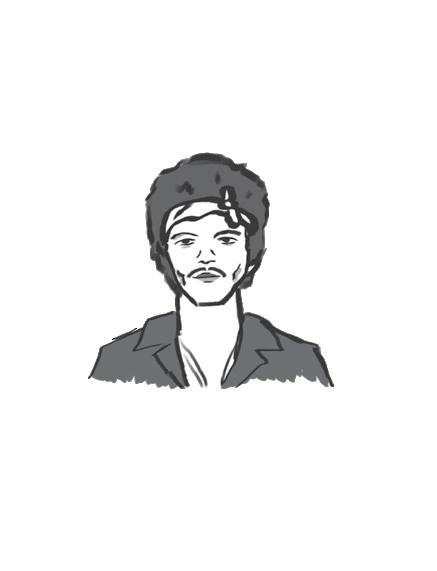
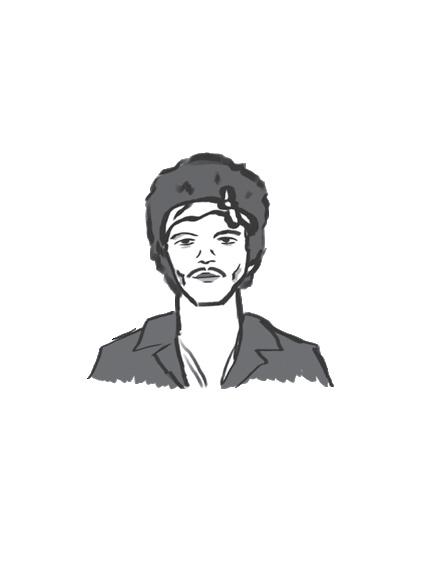
anyone dance. Even after nine years since his last solo album, Mars has not lost what made him so popular: his catchy tunes, a shifting voice and relatable lyrics. The album’s mellow songs only push the album further to greatness, and we predict that

song by singing “I’m reaching out for you, baby / I need you to reach out and do the same.” Though the song ends tragically, leaving his situation unresolved and hopeless, “Nothing Left” serves as a calming track, contrasting most other songs on the album.


“Risk it All” will climb the ranks as one of Mars’ most recognized songs in the future. Overall, “The Romantic” serves a more mature collection of music, allowing us to rate this album a 4.5/5.




Winner of Best Driving School 3 years in a row. Our skilled instructors make it easy to understand the many rules of the road, and teaching you road safety is our number on priority.

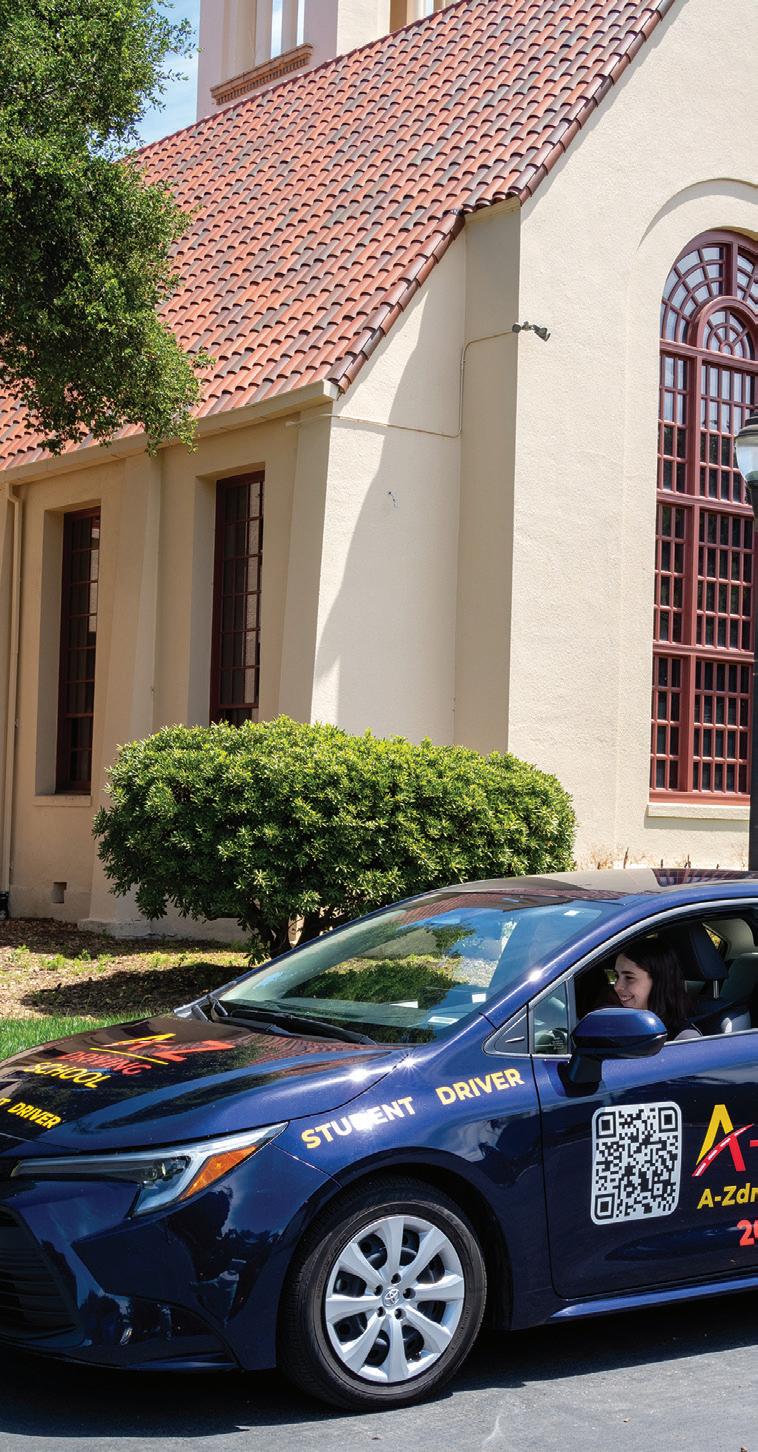
Text by ETHAN BRADLEY and ALMA MICHLIN

HARRY STYLES RETURNS AFTER TWO YEAR BREAK
IN THE MUSIC VIDEO FOR HIS new release, “Aperture,” Harry Styles is on the run. Styles, a marathon runner outside of his music career, is chased through hotel hallways and down stairs by a man wearing sunglasses and a trenchcoat.
Immediately after his 2023 tour, Styles announced that he’d be taking a break from music, but after almost three years, Styles is not on the run anymore. No longer running from expectations and publicity, Styles has returned with a new album and upcoming tour.

On Mar. 6, Styles released “Kiss All The Time. Disco, Occasionally,” his first album release in almost four years.
Styles began his career as a part of the popular boy band called One Direction before moving into his solo career in 2017. He released his debut single, “Sign of the Times,” which has been making a return with its use in the trailer for “Project Hail Mary,” a sci-fi film featuring Ryan Gosling.
fy Wrapped, he’s still been in my top five, like second or third place, even though he hasn’t been around,” Mohsin said. “With other artists that I’ve discovered over the last couple years, he hasn’t been my main artist, but he’s still up there.”
She explained how Styles’ fan base shifted during the break.

Paly senior Nusaybah Mohsin has been listening to Styles’ music for the last four years.
“I discovered his music right when his third album [Harry’s House] came out,” Mohsin said. “It was 2022 and I had Covid, so I was stuck in my room, and I didn’t really know what to do. I kept hearing really good things about that album … so I decided to give it a try.”
Like other fans, her listening decreased slightly with his hiatus, but she continues listening to his music consistently.
“[In the last four years] on my Spoti-

“People have gotten older, and I think a lot of people left for a bit, and now they’re coming back like, ‘oh my God, I haven’t thought about Harry Styles in a couple years,’ now he’s here,” Mohsin said.
Alongside his fan base, his music has changed as well. Paly junior Jessie Kwan has been listening to Styles’ music since 2015.
“He spent this time making music that he wants, new genres of music,” Kwan said. “I think this hiatus allowed him to explore [the] different kinds of new music that he’s writing now, which are more like disco and stuff like that.”
In an interview with radio host Tom Power, Styles’ mentions spending time in the dance clubs of Berlin, Germany. He said that experience taught him how to

let go. With this album, Styles hopes to give more people the opportunity to have the same experience.
“Kiss All The Time. Disco, Occasionally,” is 12 songs long. From the catchy chorus of “American Girls” to the heartfelt lyrics of “Coming Up Roses,” this album enables people to feel the music from within.
by ETHAN BRADLEY

as raw and emotional as the other songs, and it just seemed less genuine,” Vahdat said.
“ I think it’s going to be one of those albums that builds over time.”
Still, the album came out to mixed reviews. Critics from Pitchfork accuse him of being afraid to stray from a formula, while others from NME, a music review site, call the album liberating.
— DELANEY VAHDAT, Paly sophomore
The past three solo albums Styles has released have all debuted No. 1 on the Billboard 200 chart, this one being no different. This makes Styles the second solo male artist to see their first four chart entries debut at number one.

Paly sophomore Delaney Vahdat had mixed, yet positive views on the album.
“I feel like his other albums have been very summer-y … versus this one is more emotional and more emotionally relevant, and doesn’t just sound good, but also has meaningful lyrics,” Vahdat said.
Vahdat liked most songs on the album, with standouts being “American Girls” and “Dance No More,” but found she had some issues with a few.
“[‘Pop’] felt rushed … it didn’t feel
“I think it’s gonna be one of those albums that builds over time, instead of being something that hits super hard initially and dies out,” Vahdat said.
This is just the beginning. On May 16, Styles will kick off his “Together, Together” tour in Amsterdam.
“I do think that it’s going to gain popularity once he starts performing it, because I think his tour is going to be incredible with him singing these live,” Vahdat said.
Styles plans on having 60 shows in seven cities, 30 of the shows being in Madison Square Garden in New York. Mohsin mentions some of the disappointment from Styles’ fanbase.
“I just feel like this is his first impression back and it kind of feels a little distasteful, just with how little places are and then how expensive tickets are,” Mohsin said.
But for fans who could not get tickets, “Harry Styles. One Night Only in Manchester” is available to stream on Netflix. Styles performed the whole album start to finish in front of an audience of nearly 24,000 people, finishing off with some crowd favorites, including “Sign of the Times” and “Golden.”
Overall, Styles’ return may have come as a surprise, but by finding himself, he has once again shown the talent he has as an artist with a return much appreciated by Paly fans. v

Art
Text by JOSHUA JOO and YARDENNE STERNHEIM
OUTDOOR GEAR TRENDS AS LEISURE CLOTHES FROM TRAIL TO TREND
PICKING UP A PAIR
of black and silver Gore-Tex Salomon XT-6s ($200) and zipping up a dark grey Arc’teryx parka ($400), students set off another normal day in school, where they will spend most of their time sitting indoors in a classroom.
Introduced in 2017 and taking off as the COVID-19 pandemic ended, Gorpcore emerged as a fashion trend where people dress in high quality sports gear designed for the extreme outdoors as streetwear.
brand.
The outdoor weather fashion trend can often mean a hefty price tag. Prices range all the way from a few hundred dollars for a pair of hiking shoes to around a thousand dollars for a parka.
Palo Alto High School junior Annie Kasanin has grown up with her family exploring the outdoors and therefore buying gear and products from different outdoor brands.
“I’ve collected most of my higher-end outdoor gear over time from hiking and backpacking,” Kasanin said, “I own clothes from Patagonia, Arc’teryx, The North Face,
heard of it.”
Sophomore Wyatt Edson, a member of the cross country team, runs in outdoor conditions.
Edson said wearing North Face gear is not a part of the Gorpcore trend for him, but a necessity for outside conditions.
“I find it very comfortable, and I get a discount on it at work,” Edson said.
Edson, who works at Fleet Feet, a footwear retailer, said he recalled many people purchasing more outerwear gear, especially the models that were winterized, or made for rugged environments.
Patagonia fleece everywhere, and whenever it rains, I’ll pull out my Arc’ter-
“Over the past few months, I’ve seen a bigger increase in people buying speed goats [trail shoes],” Edson said. “I’ve also noticed people are buying Solomons, which, for the shoes we have, are all trail shoes.”
— ANNIE KASANIN, Paly junior
not constantly advertised and shown on social media these brands wouldn’t be
While most outdoor brands are found on Instagram and ators, Kasanin has seen many advertisements and photo
“One company I found out about a year ago is Gramicci, which is a climbing brand [...] and I immediately came to love their cool logo
anin said. “If the ad didn’t reach me, I’m not sure I would have

However, Kasanin thinks these types of shoes and clothing are convenient for Paly students to wear on a daily basis.
“A majority of kids bike to school and have sports after school, so it makes sense that they want to be comfortable and ready to walk or bike around,” Kasanin said.
However, Kasanin highlights that there are some extremes to wearing gorpcore clothing and gear to school.
“I don’t think any Paly student needs to wear an Arc’teryx shell and Patagonia hiking pants every day to school,” Kasanin said. “I think it’s more about a balance between casual wear like jeans and more outdoorsy clothes like fleeces or canvas jackets.”
With media gaining the attention of consumers, retailers have stocked up on Gorpcore items such as windbreakers and shells and beanies. These items still hold
controversy with their use.
Reed Hoffman, a sophomore, said Gorpcore was yet another trend that will die down as we go into 2026. Hoffman sees this trend as a prime example of overconsumption and overkill.
“You have one trend; but then the next trend tends to come in and do the opposite of whatever that other one was,” Hoffman said. “[You] want to look unique, and you want to be different.”
Arc’teryx employee Shirley Chi said that most students who come into the Arc’teryx store in Stanford Shopping Center purchased the accessories rather than most flagship waterproof jackets.
With Arc’teryx being a brand aimed for professionals, Chi stated students come more to browse.
Over the span of around a year Chi worked at Arc’teryx, she said the company increased the prices of items incrementally – the Arc’teryx Toque (beanie) increasing from $50 to $60 over the time she worked at the outdoor fashion brand.
According to the National Retail Federation, most students in K-12 grades spend around $300 on clothing a school year; a puffercoat jacket from the North Face costs $380.
Edson said there will always be stu dents who are willing to spend more on clothes.
“I know some people, they really enjoy collecting clothes, and they’re fine spending a ton of money on that because it’s their hobby,” Edson said. “And I think that’s completely fine.”
Two of the alternative brands people turn to are Columbia and Patagonia.
These brands have extensive items under $100 and a popular refurbished program, where used or returned gear is resold for a discount.
“But for the beanie itself to rise a whole $10 while I’ve been here is the crazy
— SHIRLEY CHI, Arc’teryx employee
than shopping.
“Within the market and whatever adjustment they have to profit off of it, I understand that there always can be bumps,” Chi said. “But for the beanie itself to rise a whole $10 while I’ve been here is the crazy part.”
Senior Estelle Dufour spends a lot of time on her long breaks from school outdoors hiking and backpacking in many national parks like Glacier and the Canadian Rockies.
She believes that buying affordable products can be just as good, if not better than buying from expensive brands.
“I think if people are spending a lot of money on something that is designed to be best outdoors in specific conditions, it’s kind of just a waste of their money,” Dufour said. “Might as well buy a regular item that will most likely be less expensive.”
A concern raised by many Paly students is cost. Promoted by influencers and fashion hobbyists on social media, most of them adults, Gorpcore encourages wearing clothing that is out of budget for students.
Art by ETHAN BRADLEY
shift to counteract the current trends as
Hoffman said. “I’d be more willing to spend $600 on a pair of jeans that’s gonna last me multiple decades than buy my $8 pair of jeans that I have to replace every six months.”
plenty of alternatives to save money through secondhand stores and refurbishing programs.
ods allow students to be both more sustainable with their purchases and wears and also opt for a cheaper alterna tive.
said fashion trends always


Text by LILIA KUZMICHEVA
Off the Clock
DIVISION ONE COMMITS’ BEST SPORTS MEMORIES
Dorin Flynn, Rower

CELEBRATING SUCCESS — Dorin Flynn and her teammates stand on the podium holding trophies after a win with the Cambridge Boat Club. “I remember being super excited because it was only my fifth time rowing with the girls on that boat,” Flynn said. Photo courtesy of Gina Flynn

Amaya Bharadwaj, Runner

BEFORE
for a photo with the California
“Even though it was a really big stage, it was the least anxious I’ve been on the start line because I was just so excited for the opportunity,”
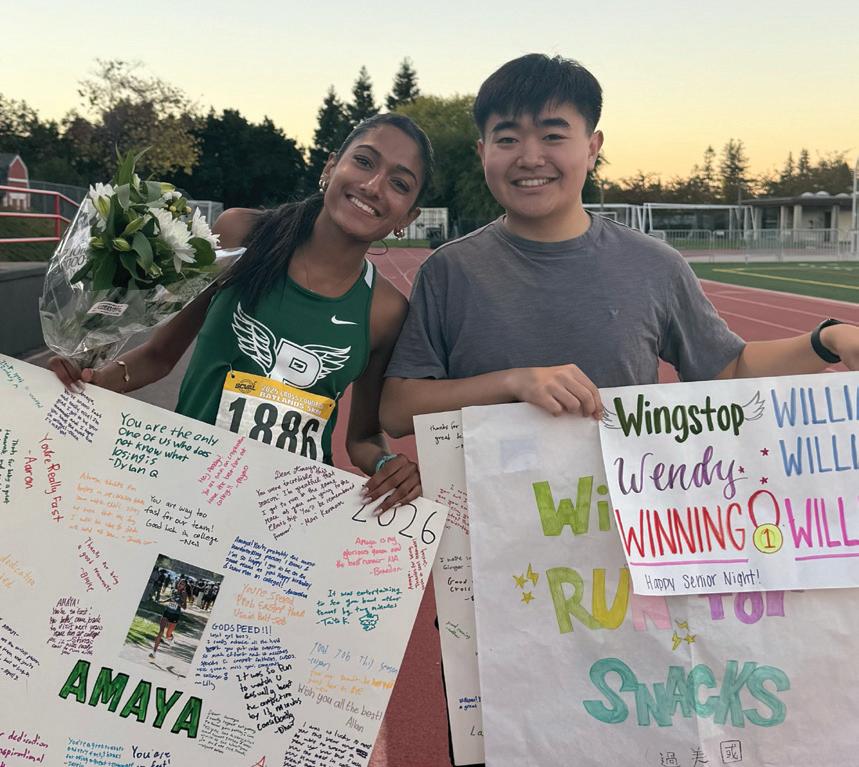
JOY IN MOTION — Dorin Flynn celebrates a nationals win in her freshman year with her teammates on the boat. “I remember looking out of the boat and being in shock that I had actually won,” Flynn said. Photo courtesy of USRowing
FRIENDS
MEDALS — Amaya Bharadwaj smiles
section at Nike Cross Nationals.
Bharadwaj said. Photo courtesy of Amaya Bharadwaj
SIGNING OUT — Amaya Bharadwaj poses with senior William Xue at the cross-country senior night. “It was really surreal that it was time for our senior night because we grew up watching the other seniors,” Bharadwaj said. Photo courtesy of Talia Boneh
Back In
THE PRO CARRIES ON LEGACY OF OLD PRO
WHISPERS OF upbeat music flow throughout Ramona Street, on a tranquil pedestrian block off of University Avenue in downtown. The music is followed back to a plain storefront with few signs and advertisements indicating its identity. Residents of Palo Alto have this building ingrained in their memory as a lively sports bar with bull riding, and a connection to Stanford sports. Known as The Pro, the space is now remodeled and unrecognizable — green accents and wood furnishings dominate the high-end bar and grill. Though their memories are cherished, this new space was adapted to fit the ever-changing standards of downtown’s dining scene.
The Pro reopened in late January, after a fouryear period of rebranding from Old Pro. The restaurant is littered with framed photos of sports moments throughout history, bobbleheads of famous athletes and team flags encapsulating The Pro’s past identity as a sports bar. The interior now holds a large bar at its center, an upgrade from the bar previously squeezed into the wall, allowing for comfortable seating at the counter.
“The process started with just reading about the Old Pro closing,” Bienaimé said. “That was the beginning of it all, and this area, and wanting to continue that legacy into the future with a new space.”
Sohiel Azim, assistant general manager of The Pro, said that while the space is completely transformed, memories of Old Pro remain.
“Everyone has a different story about Old Pro,” Azim said. “It was somewhere where you had a little bit too much to drink. It was somewhere where you knew somebody got thrown off the bull.”
“From someone who’s just coming in having a casual Tiki drink to someone coming in having an Old Fashioned, whoever comes in has their spot on the menu,” Azim said.
Longtime customer of Old Pro Eric Ortiz said though the old space had charm, he appreciates that the bustling college atmosphere has settled.
“Whoever comes in has their spot on the menu.”
— SOHIEL AZIM, assistant general manager of The Pro
Old Pro’s mascot, Bucky the Bull, now sits atop a display, a testament to the bull-riding that shaped the atmosphere of Old Pro. Azim says management still respects the laid-back feel of the old place, recognizing that the updated space is different, but not comparable.
“Old Pro has always been a hallmark of the community, and what we wanted to do was take that and reinvent it and modernize it to what today’s society is,” Azim said.
“It’s [The Pro] definitely a level up.”
— ERIC ORTIZ, Old Pro regular
Guillaume Bienaimé, the owner of The Pro, first spotted the opportunity to remodel after Old Pro’s closing in 2022. Former owners of Old Pro could not maintain the sports bar, leading to its closure.
As the owner of Zola + BarZola, Bienaimé says the process of developing The Pro’s menu was similar to his experience in the past.
The menu includes classic, shareable dishes such as the $22 Game Day Nachos — tortilla chips smothered in cheese, peppers, beans, avocado and salsa. On the other hand, their $23 House Sausage flatbread combines the traditional flatbread experience with Italian sausage, peppers and hot honey.
Azim says that along with the food menu, the drinks menu was designed to fit a wide range of demographics.
“It’s [The Pro] definitely a level up, just the overall ambiance, its core is definitely a step up from where it was,” Ortiz said.
Palo Alto High School physical education teacher Jason Fung has been working at The Pro since its opening.
“It’s a whole different restaurant in itself … serving higher quality food and making sure that we still establish that it is the place to get good food and dine,” Fung said.
Fung said he used to enjoy going to Old Pro to watch a variety of games — especially during March Madness — though he now takes pleasure in seeing familiar faces at his workplace.
Management ensured that pieces from Old Pro remain in The Pro — besides its name, its wooden seating tables are the original tables from Old Pro.
“What we did is we stained, sanded and revitalized it,” Azim said. “All the tables that you see here once were part of the Old Pro, so it was important for us to keep the bones within this place true.”
The Pro is currently working on applying feedback given by customers to work towards fulfilling their goal — to have a space for everyone in the community.
“I can see this place forming and changing seasonally to adhere to the season,” Azim said. “So we’ll see where the journey will take us.” v
Photos by KAI SCHOEBEL
The Game



CATCHING UP (TOP LEFT) — Two customers converse over drinks at The Pro’s spacious bar. “We just wanted it to be a space the community could celebrate,” said Guillaume Bienaimé, the owner of The Pro.
BUCKY THE BULL (TOP RIGHT) — Old Pro’s mascot, Bucky the Bull, retired after years of being ridden and now sits atop a display. “The bull that everyone rode when it was the old establishment,” said Palo Alto High School physical education teacher Jason Fung, an Old Pro regular who now works at The Pro.
WALL OF SPORTS (BOTTOM) — Along The Pro’s left wall, countless sports trinkets and memorabilia are displayed as a tribute to Old Pro’s sports scene. “Essentially, what we wanted is to have a place in the community for everybody, not just the college person that wanted to drink and pregame for the next event,” said Sohiel Azim, assistant general manager of The Pro.
Text by JUSTIN CHEN and JOSHUA JOO
Rewriting
HOCKEY
ROMANCE RESHAPES
QUEER MEDIA
IN A SPORT built by bruises, the last thing anyone expected to go viral this winter was a six episode-long unique love story.
The fictional HBO Max hockey romance drama series, “Heated Rivalry,” follows an enemies-to-lovers trope between two rival gay National Hockey League stars, Ilya Rozanov and Shane Hollander.
Publicly, Rozanov and Hollander are positioned in the show as the defining rivalry of their generation in hockey. Their rivalry stretches back to their teenage years, when both were identified as generational talents competing for the same NHL draft spotlight.
In private, however, the two have been secretly sleeping with each other for years. But when both players are selected for the Canadian national team roster, they are forced into close proximity and gradually develop a deeper romantic relationship.
“Heated Rivalry” is one of the most successful recently released TV shows in 2025. The show amassed over 30 million minutes of view time within a week of the show’s November premiere, according to the New York Times. For many viewers, the show’s appeal goes beyond entertainment, raising questions about LGBTQ+ representation in media and what it means to see queer identity portrayed
with masculinity and depth in romantic relationships.
The release of the show comes at a time of heightened adversity against the LGBTQ+ community. According to KFF, a health policy research organization, in 2025 and 2026, the current presidential administration weakened anti-discrimination laws protecting members of the LGBTQ+ community, removed the concept of gender identity in federal agencies, limited gender-affirming care and attempted to ban transgender people from serving in the military.
“
that gay men in mainstream media are typically presented as feminine, a stereotype they say perpetuates harmful biases.

They [‘Heated Rivalry’] didn’t make any of the characters less masculine.”
— “JOE,” Paly Junior
“They [‘Heated Rivalry’] didn’t make any of the characters less masculine,” Joe said. “That’s a really common thing, especially when representation of gay men is brought up. They often feminize the guy, like they have a more feminine voice or they are less bulky. It was really good to see a representation of queer men when they’re still bulky and masculine.”
Joe — a Palo Alto High School junior and member of the LGBTQ+ community, whose name has been changed to protect their identity — said the show’s massive engagement has helped address generalizations of the community in mainstream media, combating discrimination and homophobia in traditionally male-dominated sports.
Specifically, Joe said
According to Joe, combating the stereotype of ”gay meaning feminine” is especially important in hockey — a sport Joe says has a traditionally conservative fan base.



Art by ETHAN BRADLEY
the Rink
“I’ve definitely seen a lot of things online as well, like hockey players making sexist, homophobic or like racist jokes,” Joe said. “I feel like having [positive LGBTQ+] representation in a sport that’s conservative is really important … a lot of players aren’t able to come out [as gay].”
According to the University of Alberta, there are currently no openly gay NHL players, despite estimates that there is at least one in gay player every team. Reportedly, within competitive male hockey, jokes about LGBTQ+ people and sexual comments about girls and women are commonly shared in private team banter.
challenges hockey’s conservative norms, incorporating a level of depth in the relationship between Rozanov and Hollander.
“‘Heated Rivalry’

“Good representation is where sexuality isn’t the characters’ entire plot line.”
— HUDSON PRESS, Paly Junior
Joe said that “Heated Rivalry” presents queer characters positively and
demon -
strates the different nuances and complexities within each individual’s life,” Joe said. “The characters both have issues with their identity, but for different reasons. And I feel like that’s a really nice representation.”
For gay hockey players who may feel isolated in a sport where coming out remains rare, seeing authentic, nuanced struggle reflected on screen can be a powerful reminder that they are not alone.
Colten Migliore, a Paly junior and president of the Gender & Sexuality Alliance Club, also said that seeing LGBTQ+ characters with nuanced, complex personalities beyond their queer identity makes shows more appealing and realistic for him.
“A lot of the shows that I’ve watched in the past with LGBTQ+ representation have been more superficial, where the queer identity was the main aspect of those characters,” Migliore said. “But the more recent shows that I’ve seen … have a lot more depth, and that makes it more interesting for me.”
Migliore pointed to other recent shows, like the Netflix series “Boots,” a story of a gay Marine Corps recruit’s experience, as examples of this growing complexity in LGBTQ+ storytelling.

“I like that the characters in the show [‘Boots’] are really complex, so you don’t really know what’s gonna happen,” Migliore said. “You’re not sure whether the decisions they make are necessarily good or bad. It’s thought provoking.”
Migliore also said that media depicting LGBTQ+ people not just as teenagers or young adults is important.
“Gay people holding parent-like roles is very rarely something that you see in the media,” Migliore said. “Most of the media, at least ones that I’ve seen with


representation, have characters that are either teenagers or young adults … I think that’s somewhat harmful, because representation should show … what they [LGBTQ+ people] can look forward to seeing if they want to be parents.”
According to Hudson Press, a junior and Paly’s Film Club President, LGBTQ+ people holding mature roles are important for a realistic representation of the community.
“Washing down the queer experience to these few moments in their life in high school or middle school is such a small portion in somebody’s life,” Press said. “People also want to see like LGBTQ representation where people are growing old, or getting married, or getting a job, and living outside of the world of feeling ashamed or feeling awkward.”
Specifically, Press said that having LGBTQ+ characters as mature adults takes away from sexuality as a defining aspect of that character.
“I think in general, good representation is where sexuality isn’t made the characters’ entire plot line,” Press said. “Sexuality is just an aspect of who they are. Sexuality … shouldn’t be a defining characteristic.”
Joe said these types of positive representations of the LGBTQ+ community are important in addressing internal biases within the community that can lead to self-stigmatization.
“It [positive representation] also builds up how communities view themselves,” Joe said. “I feel like within the gay community, there’s similar things [internal biases] due to how the media in the past has represented the LGBTQ+ community.”
However, “Heated Rivalry” has not been without criticism from Paly’s community.
Joe noted that some students, even within the LGBTQ+ community, felt uncomfortable over sexual scenes in “Heated Rivalry,” which they say partially comes from internal biases.
“I found it really interesting that a lot of friends who aren’t comfortable with watching it [‘Heated Rivalry’] say, ‘oh, it’s too sexual,’” Joe said. “Interestingly enough, they [student’s friends] are more willing to watch sexual scenes about straight people … I find that, maybe, it’s some internal bias about like homosexual relationships that brings another level of uncomfortableness.”
Overall, for Paly students like Press and Joe, “Heated Rivalry” represents a meaningful step towards better representation.
“I definitely think that [LGBTQ+ representation] has changed over time to let us see more of the other aspects of the characters’ lives,” Press said.
As the LGBTQ+ community navigates an increasingly hostile political climate, a wave of nuanced, complex queer media — from “Heated Rivalry” to “Boots” — might be the kind of storytelling that is needed right now.
“In the past 5 to 10 years, [LGBTQ+] representation has definitely become more normalized,” Press said. “The media is beginning to show this other part of queer people’s lives that isn’t driven by their sexuality. I definitely think we’re heading in the right direction.” v








Text by KAI SCHOEBEL
steadfast Skiing
THE COST OF PURSUING
SOMETHING YOU LOVE

ISTAND AT THE START GATE, staring at the translucent iced snow peppered with red and blue giant slalom gates. “Ten seconds!” a race official yells. My heart starts pounding. Every training run and race has led to this moment; time slows down, my heart pounds away. Five seconds, four, three, two — I push out as hard as I can, every ounce of my strength driving through my poles into the snow. The only thing that matters now is speed.
Ripping from gate to gate, everything is falling into place, all of my training is going to pay off here and now. Then, click, my
right ski releases. Suddenly I’m on my back, no skis, just sliding into the rectangular neon B-netting lining the side of the run.
For me, ski racing is everything. Nearly every weekend, I spend around 24 hours between travel and training — all for the chance of becoming one of 25 Division I recruits in the United States.
Currently I am racing under the Federation Internationale de Ski, which is an international governing body which sanctions some of the highest level competition in ski racing. Races normally take place during the week, Monday through Thursday, meaning missing weeks of school at a
time is the norm.
Just two of these races in close proximity leads to months of catch-up work. Being one step behind while everyone keeps marching forward makes it nearly impossible to re-synchronize with the curriculum.
Although there is a large focus on technique in skiing, the main battle is on the mental side. With racing being so precise, the athlete must be solely focused on the task at hand to have any chance of winning or even completing the run.
My teammates and I have all experienced doubts about our abilities after a series of crashes or bad results. This is where
having a bulletproof mental side makes or breaks a racer.
Elite FIS racer Sawyer Broman is a junior at South Tahoe High School. Broman says how the only time he even considered quitting was after a sequence of poor results and crashes.
“It [racing] messes with your head for sure, and this year was pretty rough,” said Broman, a junior at South Tahoe High School. “To be honest, I was often doubting if I was capable of reaching my goals. But at the same time if you keep working at it eventually you’re going to get a result.”
The norm to race at this level is to train five hours per day at least four times a week. I can only do about half of that. To make even this work, primarily, I’ve given up social time. With my weekends booked, large amounts of my studying and school work is pushed into the school week, bumping out less important aspects of my life. Some of my other extracurricular activities like soccer and robotics lose hours of practice during the
week due to the increased workload outside of school.
This means everything comes after racing. The top racers’ social life, education and especially life outside of skiing is severely constrained because of the strict training schedule and commitment.
Broman said he is now training full time at Palisades Tahoe, with the main goal of racing. To be able to channel his focus, he switched to online classes, while also moving to a school with far less rigor than his previous one.
Academies specifically for racing are established throughout the U.S. and the globe, with the sole goal to cultivate the next generation of Olympic athletes.
I didn’t have the traditional high school experience. But I was really happy to be traveling the world and already doing something I truly loved.”
—Keely Kashman, Olympic ski racer “
Broman’s switch to online school caused him to lose touch with former close friends, while also seeking out new ones from around the world.
When Olympic downhill racer Keely Kashman was 15, she switched from in-person high school to an independent study curriculum at Summerville High School.
“I didn’t have the traditional high school experience,” Kashman said. “But I was really happy to be traveling the world and already doing something I truly loved.”
For me, this isn’t the right path. The idea of gambling on racing, going all in, does not align with my future goals. The problem is if skiing does not work out for these athletes who spend most of their lives training, it can be a challenging transition into other opportunities because their education and experiences outside of the sport may be limited. One injury, one mistake can take everything from an Olympic prospect, leaving them with nothing.
Being a part-time racer has its drawbacks. I have missed countless weeks of school for racing, prompting periods of stressful catch-up work.
While there are negatives to ski racing, nothing can compare to the feeling of standing in the start gate. The surge of adrenaline as you kick out, the despair of a crash, but also the thrill of a triumph with a podium, result or finish.
You cannot simply like this sport, you must fall in love with it. v
SNAKING SLALOM — I race down the slalom course at a Palisades Tahoe FIS race.
Photo: Kash Vankirk
Text and
photo

by SHAURYA THUMMALAPALLI
NAVIGATING
WHAT I’VE LEARNED AS I’VE PAVED MY PATH


In June 2024, my sister graduated from Palo Alto high school while I graduated from middle school. While her graduation was a monumental moment for our family, it marked a new chapter for my life as well — I too would now spend the next few years of my life striving to be accepted
after a long day of spending my thoughts on work.
After months of deepening my interest in the sport, I made the decision that I wanted to box competitively.
But during the second semester, robotics competition season commenced, and I


STUDY SESSION — I spend the night preparing for exams after submitting summer program applications.
THE

work piling on top of each other.
I understood that six or less hours of sleep was only amplifying my stress, but without this, could I really consider myself a success?

But in the midst of my experiences with sleepless nights, I was only adding to an epidemic of students enduring the same challenges.
A multitude of studies have found that sleep is the key to regulating behavior and emotions, though “nearly 70% don’t get enough, causing physical, mental and behavioral problems,” according to the Child Mind Institute.
UNKNOWN

tends a prestigious university, neither she nor my parents want that of me if it comes
ily. I had to endure months of these pressures to finally make changes.
I understood that six or less hours of sleep was only amplifying my stress, but without this, could I really consider myself a success?
Towards the end of the semester, I had understood that I was doing everything wrong. Stacking extracurricular activities on top of classes which were challenging enough was not doing anything to help me stand out to colleges. I was only ruining myself.
They understand life’s struggles, its ups and downs, and the only thing they want from me is to love high school, to love my classes and to love the activities I pour my time into.
As my mother says to me often, what she only wants from me is to return home from school everyday and be the same, energetic, happy-go-lucky, kid I was mere years ago.
And it’s for these realizations for which I spend my fourth semester of high school happier and more excited to wake up everyday and achieve what I am meant to.
There were many moments in which I reached the point of burnout. There were many moments in which I had felt the weight I had loaded onto myself only to push through, not realizing the impacts. I have cried, I have felt emotional pain, I have felt lost so many times. Over time, the stress which was harming me had stopped being temporary. It became consistent.
I still remember one specific night last semester. After taking a difficult Chemistry test which had mentally drained me, I had went to robotics for hours until finally returning home at 10 p.m. But the already long day was not over. I had a math test the next day that I needed to prepare for with a heavy, cluttered mind.
But after preparing my desk with materials and my computer to begin a long study session, I shed a tear, then two, then
My attempts to optimize myself to become a greater applicant meant nothing if I was sacrificing my ability to love my life for this goal.
But unknowingly, I too changed as my life did.
I realized only after that I was more impatient and easily angered by anything my friends said or did. At home, I ignored my parents and went straight to my room to work after spending hours at robotics or other places after school.
With my goal now being to truly live and exist as a human in the now rather than to forcefully set myself up for the future, I have been able to treat my work as something that builds me instead of defines me.
My biggest issue was trying to see the outcome of an unpredictable journey.
I was becoming a horrible person to the people around me, and it was all due to my own decisions.
Despite everything I had believed, what truly changed me was how my parents reacted to everything. Though my sister at-
Spending less time at my desk and more at the gym has allowed me to continue strengthening myself since boxing isn’t available to me anymore.
What I, and many other students, struggled to understand is that you can’t see yourself at certain stages of your life until those stages arrive.
But we all need to remember that high school is not meant to be a checklist of accomplishments. The future will come whether we map out every step or not.
While the future may be a large collection of steps, right now, today, the only goal is to move on to the next. v
Palo Alto Unified School District
Palo Alto High School
50 Embarcadero Road
Palo Alto, CA, 94301