
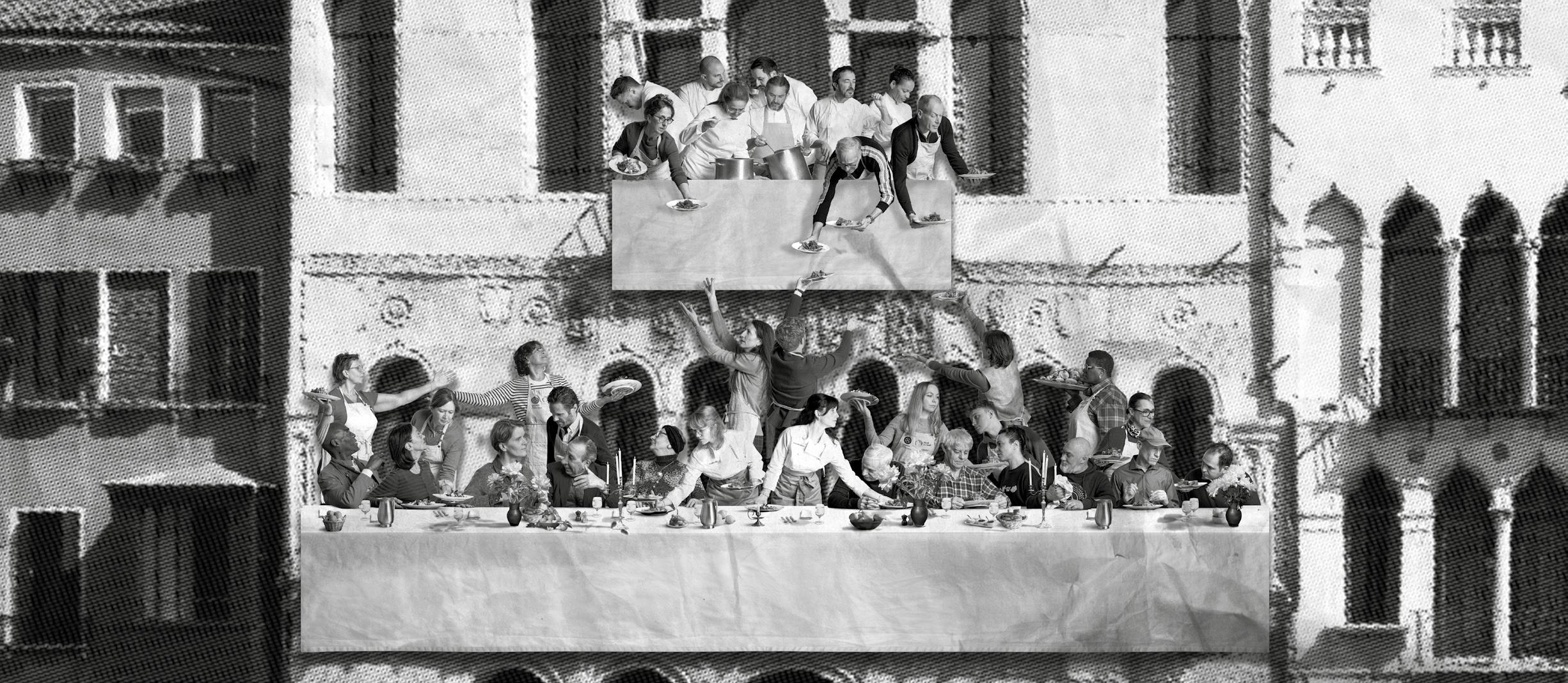
Il Gesto
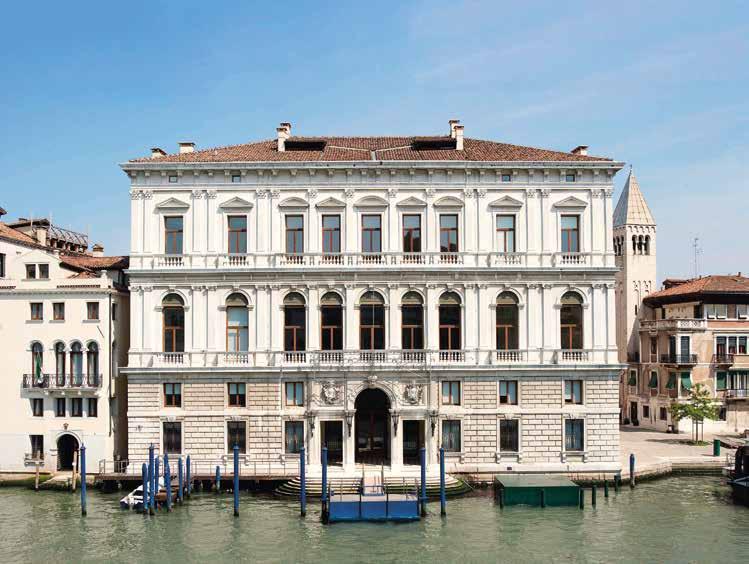
ON THE COVER: Il Gesto — Temporary installation on The Venice Venice Hotel façade
Follow: @venicevenicehotel @fondazionebonotto @jr

WHO SITS AT THE TABLE
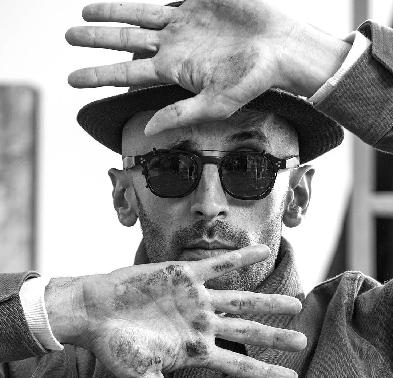
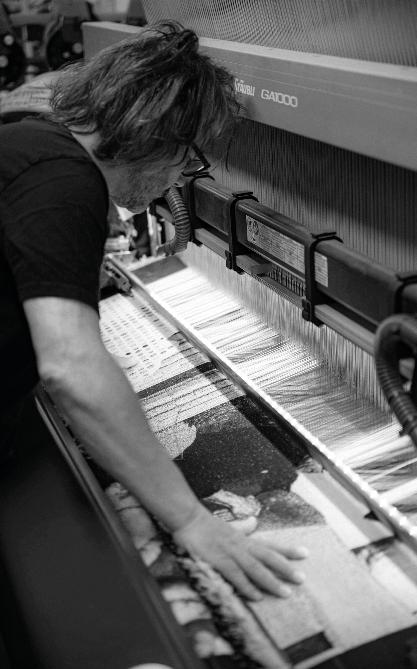
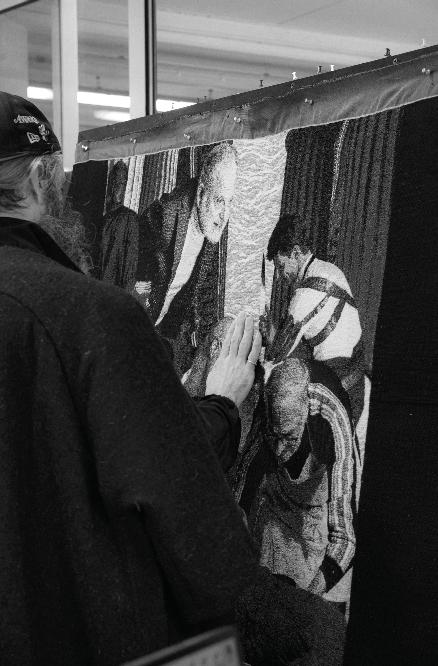
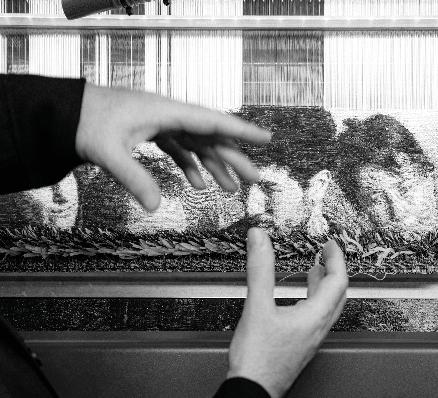
For the 61st International Art Exhibition of the Venice Biennale 2026, JR presents Il Gesto at The Venice Venice Hotel. Across Palazzo Ca’ da Mosto, the project reactivates Veronese’s The Wedding at Cana as a contemporary banquet — bringing together 176 people connected to Refettorio Paris, each portrait carrying a recorded voice. The work takes form
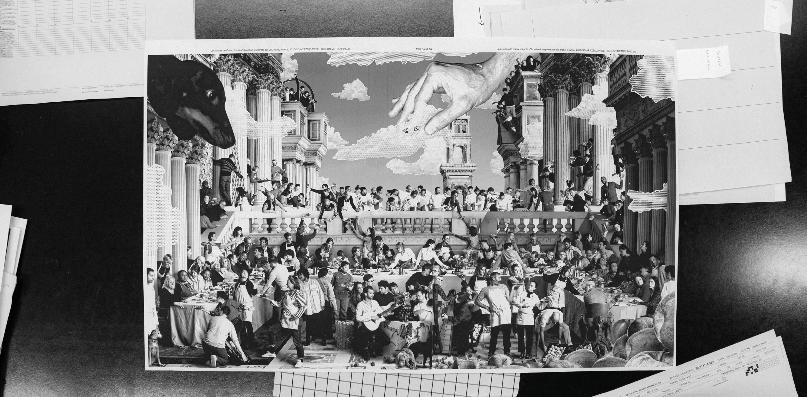
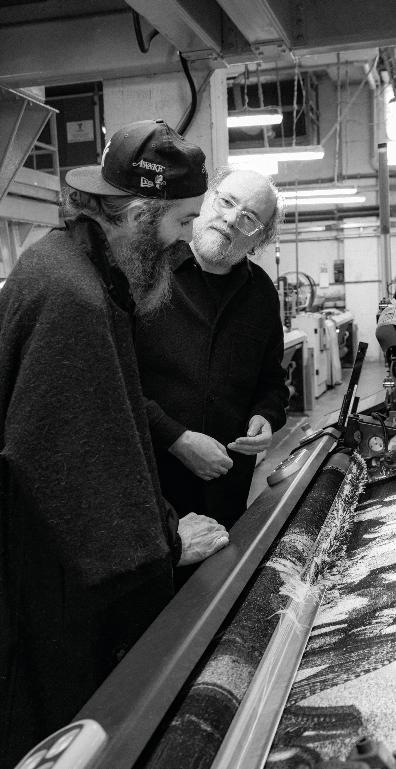
on the Byzantine façade and, on the Second Piano Nobile, in a monumental tapestry created by Giovanni Bonotto and produced by Fondazione Bonotto.
SCAN THE QR CODE TO VISIT THE INSTALLATION
Now at The Venice Venice Hotel
Peggy Guggenheim a Londra.
Nascita di una collezionista.
Con il sostegno di:
+
+
Allegrini + Apice + Eurofood
Florim + Hangar Design Group
Mapei + Pettenon Cosmetics + Roberto Coin + Rubelli + Swatch + Villa Sandi
Resa possibile da The KHR McNeely Family Foundation, Kevin, Rosemary e Hannah Rose McNeely
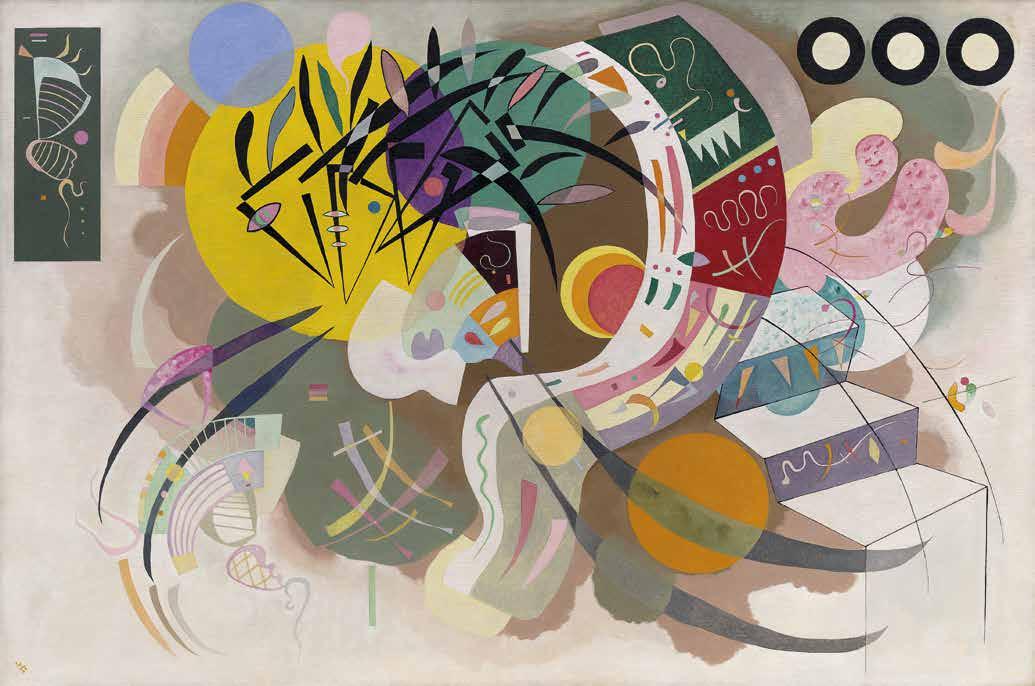
Vasily Kandinsky, Curva dominante (Courbe dominante), aprile 1936, olio su tela, 129,2 x 194,3 cm. Solomon R. Guggenheim Museum, New York, Solomon R. Guggenheim Founding Collection
CANICULA LAWRENCE ABU HAMDAN
MASSIMO D’ANOLFI AND MARTINA PARENTI
JANIS RAFA
WANG TUO
ROMAN KHIMEI AND YAREMA MALASHCHUK
P. STAFF
YUYAN WANG MAYA WATANABE
Personal Structures – Confluences emerges as a space for encounter, gathering over 150 artists from more than 30 countries. It is a place where artistic practices, cultures, and disciplines intersect, contaminate one another, and generate new possibilities for coexistence.

visit us:
Open everyday from 10 to 18h Tuesdays closed. Free Entry www.personalstructures.com
OuR vENuEs:
Palazzo Mora, Strada Nova 3659
Palazzo Bembo, Riva del Carbon 4793
Marinaressa Gardens, Riva dei Sette Martiri ecc_italy europeanculturalcentre EuropeanCulturalCentre European Cultural Centre



di Massimo Bran
In Tonalità Minori. Per una volta si può tranquillamente dire, senza retorica alcuna, che mai titolo fu più azzeccato di questo per una Biennale Arte che va a dispiegare il suo infinito delta espressivo nel bel mezzo di una destrutturazione tragica e ansiogena dell’universo-mondo. Come emanciparsi, come profondamente, intimamente ribellarsi a questa deriva umana, valoriale, culturale a tinte autoritariamente crasse, volgarmente sanguinarie ed escludenti, che sta tenendo in ostaggio i nostri giorni e le nostre terre, se non adottando, con una finta di corpo disorientante, delle direzioni e dei toni grammaticalmente e costitutivamente altri nei loro volumi intimi e però pulsanti, minimali e però appassionanti? Davvero non resta che ragionare e vivere in sottrazione al cospetto dell’enormità regressiva che insanguina e traumatizza questo nostro drammatico presente; il che non vuole affatto dire sottrarsi alla responsabilità di schierarsi, di prendere una posizione netta al cospetto di tale sfacelo culturale, quanto piuttosto smarcarsi proprio linguisticamente dai toni brutali e dal vocabolario penosamente angusto di chi è al timone di questa deriva, andando a scavare le ragioni profonde di questa stessa deriva provando a individuare, a raccogliere altri possibili esiti, altre possibili, più umane e civili direzioni dello stare al mondo insieme e diversi. Rileggendo la storia, le storie, smascherando inganni e soprusi, valorizzando radici culturali sinora marginalizzate dal codice dell’arte stessa euroatlantico-centrica, ma ciò facendo liberi da ogni furia meramente e prepotentemente rivendicativa, adottando, per l’appunto, un approccio, un’indagine in tonalità altamente minori. Realizzando un nuovo intenso capitolo di TheBAG, la nostra guida alla Biennale che da anni rappresenta per pubblico e operatori un punto di riferimento imprescindibile per immergersi a fondo nell’epicentro globale dell’arte contemporanea, abbiamo voluto aderire non solo contenutisticamente, ma anche proprio a livello di immagine a questa Tonalità Minore, verrebbe da dire gentilmente intima, elegantemente sobria ed asciutta. Ci è venuto naturale così porre al centro per una volta pressoché esclusivamente la miriade di singole voci che andranno a comporre questo caleidoscopico coro espressivo allestito dalla mai troppo compianta Koyo Kouoh, la quale ci lascia in eredità una chiave discreta e al tempo stesso radicale per affrontare i nostri giorni in maniera più aperta, libera, meticcia.
In Minor Keys. For once, we can say without any rhetoric that no title could be more fitting than this for an Art Biennale unfolding its infinite expressive ramifications in the midst of a tragic and anxiety-ridden deconstruction of the world-as-we-know-it. We can mount a deep, intimate rebellion against this human, ethical and cultural drift –coarsely authoritarian, vulgarly blood-soaked, exclusionary – that holds our days and our lands hostage only by adopting, with a disorienting body feint, directions and tonalities that are grammatically and structurally other: intimate in scale yet pulsing, minimal and fervent. There is nothing left but to live by subtraction in the face of this huge regression that bloods and traumatises our present. This does not mean withdrawing from the responsibility to take a stand, to assume a clear position before such cultural collapse; rather, it means disengaging – first and foremost at the level of language – from the brutal tones and the painfully impoverished vocabulary of those at the helm of this drift. It means digging into the deeper reasons behind it, while attempting to trace, gather and articulate other possible outcomes, other ways – more humane, more civil – of inhabiting the world together in the respect of our differences. It means rereading history exposing deceptions and abuses, foregrounding cultural roots long marginalised by the code of Euro-Atlantic art itself. Yet doing so free from any merely forceful or overbearing rhetoric of claim and counter-claim, adopting instead such an approach, such an inquiry, in resolutely Minor Keys. Working out a new and intense chapter of TheBAG – our Biennale guide, which for years has stood as an essential reference for audiences and professionals seeking to immerse themselves in the global epicentre of contemporary art – we chose to align, not only in content but also in visual language, with this Minor Key: gently intimate, elegantly restrained and essential. It was natural for us to place at the centre, almost exclusively, the myriad individual voices that compose this kaleidoscopic expressive chorus conceived by the never-too-deeply-mourned Koyo Kouoh, who leaves us a legacy: a discreet yet radical key to living our days in a more open, freer, and more creolised way.
editorial
Koyo Kouoh
with Gabe Beckhurst Feijoo, Marie Hélène Pereira, Rasha Salti, Siddhartha Mitter, Rory Tsapayi
In refusing the spectacle of horror, the time has come to listen to the minor keys
Koyo Kouoh
di Michele Cerruti But
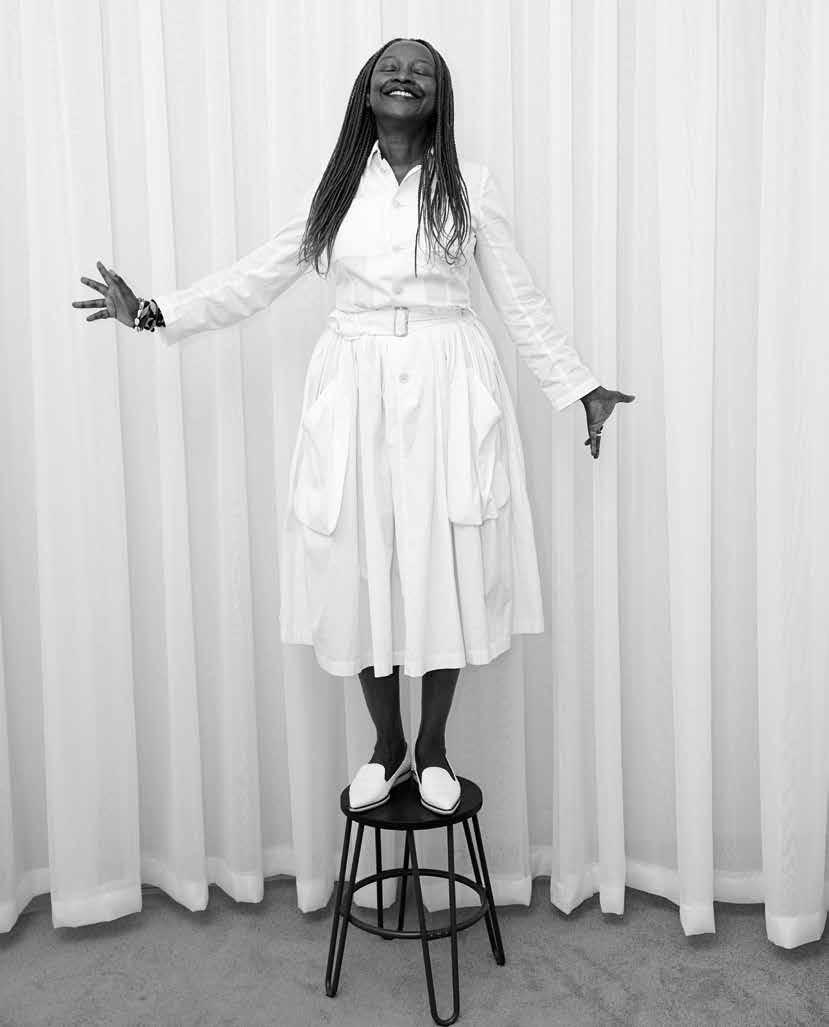
Koyo Kouoh è una donna africana. E l’Africa, per lei, non è una diaspora: è un continente esteso, fatto di propaggini e territori espansi, una geografia nera in cui il Brasile, Cuba e gli Stati Uniti sono Paesi africani aggiunti. Abitava quest’Africa ovunque: a Douala in Congo, a Cape Town in Sudafrica, ma anche a Zurigo, New York, Philadelphia, Londra. E soprattutto a Dakar in Senegal, luogo di una conversione all’arte che l’ha resa una delle maggiori curatrici contemporanee. Ovunque vi fosse modo di trasformare lo sguardo dell’arte di mercato Kouoh fondava un progetto, dirigeva una mostra, apriva un’accademia, con una presenza quasi ubiqua, sempre dirompente, in ogni modo collettiva. Per lei, che dopo un’infanzia segnata da un importante matriarcato a Douala si forma in scienze bancarie in Svizzera, la questione finanziaria è abbastanza chiara: ben contenta se un artista ha successo nel mercato, ben consapevole che questo non ha nulla a che fare con il suo valore. Perché la fame di quest’Africa globale che Koyo dichiarava di avere, e che viveva e stimolava in chiunque incontrasse, è anche la fame di un modello alternativo, collaborativo e non competitivo, che costruisce alleanze anziché separazioni, che non è mai puramente guidato dal mercato. Un approccio che ha garantito solidità e sostenibilità alle istituzioni che ha fondato o diretto, come la RAW Material Company a Dakar o lo Zeitz MOCAA a Cape Town (il Museo dell’Arte Africana Contemporanea), rilevato in un momento catastrofico e risollevato trasformandolo in uno spazio di incubazione anziché di sola esposizione. La curatela era per lei innanzitutto uno stile di vita: una pratica sartoriale che Kouoh coltiva nel vestire, nella relazione con il suo corpo, nell’arte. Adorato e inseparabile burro di Karité, champagne – «l’unica cosa che si può bere da colazione a cena» –, fibre rigorosamente naturali per ciò che indossava e un ‘su misura’ che valeva poi anche per le relazioni. Il tutto a comporre la cifra di una carriera e di un’esistenza luminose. Per Koyo Kouoh non conta quel che c’è prima o dopo la morte: ciò che conta, e in cui credeva, «sono le energie, vive o morte, e la forza del cosmo».
Koyo Kouoh is an African woman. And for her, Africa is not a diaspora: it is an extended continent, composed of offshoots and expanded territories, a Black geography in which Brazil, Cuba and the United States become additional African countries. She inhabited this Africa everywhere: in Douala, in Cameroon, in Cape Town, South Africa; but also in Zurich, New York, Philadelphia, London. And above all in Dakar, Senegal, the place of a conversion to art that would make her one of the leading curators of our time. Wherever there was a possibility to shift the gaze of the art market, Kouoh would find a project, direct an exhibition, open an academy, with an almost ubiquitous, disruptive and collective presence. For her – raised within a strong matriarchal environment in Douala and later trained in banking and finance in Switzerland – the financial question was relatively clear: she welcomed an artist’s success on the market, while remaining fully aware that it had nothing to do with their value. The hunger for this global Africa she claimed, lived, and instilled in those she encountered, was also a hunger for an alternative model: collaborative rather than competitive, building alliances rather than separations, never purely market-driven. An approach that ensured solidity and sustainability to the institutions she founded or directed, such as RAW Material Company in Dakar or Zeitz MOCAA in Cape Town (the Museum of Contemporary Art Africa), which she took on at a very difficult moment and revived by transforming it into a space of incubation rather than mere display. For her, curating was first and foremost a way of life: a sartorial practice that Kouoh cultivated in how she dressed, in her relationship to her body, and in her approach to art. Her beloved and inseparable shea butter, champagne – “the only thing one can drink from breakfast to dinner” – strictly natural fibres for her clothes, and a sense of tailoring that she extended to relationships as well. Altogether, these elements form the hallmark of a brilliant life and career. For Koyo Kouoh, what comes before or after death did not matter: what mattered, what she believed in, “are living or dead energies, and the force of the cosmos.”
in minor keys
di Michele Cerruti But
Una Biennale “in minor keys” non è una mostra in tono minore. Non è neppure un lavoro sulle arti minori. Né si occupa di minoranze. Pensarla in questo modo, anzi, significa fraintenderne la profondità. La tonalità minore è invece notoriamente una delle più potenti e radicate forme di costruzione della musica di ogni tempo e cultura. Sono in minore la Quinta di Beethoven, l’Estate di Vivaldi, la Patetica di C ˇ ajkovskij, la Toccata e fuga in re minore di Bach. A pensarla nel pop, in minore sono Stairway to Heaven, Smoke on the Water, Losing My Religion, Poker Face. O gli indimenticabili Rimmel, Sally, Almeno tu nell’universo, se si vuole navigare nella musica cantautoriale italiana. Dentro la forza consolatoria del Maggiore, il Minore finisce per essere un capolavoro di altra monumentalità. Quel che suggerisce Koyo Kouoh è che le Tonalità Minori sono uno spostamento del centro. Dall’interno del sistema maggiore dell’arte euroatlantica, il suo intero lavoro curatoriale è a tutti gli effetti un ridisegno delle centralità attraverso altre logiche di relazione, temporalità, sensibilità e istituzionalità. Non diverso dall’approccio di Kafka, che nel suo scrivere in tedesco pur vivendo a Praga costruiva una ‘letteratura minore’. Così, almeno, ne parlavano Deleuze e Guattari ( Kafka: Toward a Minor Literature, 1975). In quel testo parlare di ‘minore’ non riguardava tanto una questione di dimensione o rilievo, piuttosto del modo in cui si impiega una lingua o un sistema dominante. Kafka scriveva in tedesco. Una lingua certamente maggiore, ma che, secondo i due filosofi francesi, quando viene impiegata da un ceco diventa straniante, estranea, deterritorializzata. Uno strumento che porta immediatamente l’intimo e il privato a una dimensione politica, e che è subito un’enunciazione collettiva: parla per una pluralità, e racconta di una condizione comune. La letteratura minore è quella che si muove dentro una lingua dominante e la toglie dal suo territorio, con l’obiettivo di aprire vie di fuga collettive, esprimere traiettorie altre.
La Biennale delle Tonalità Minori è questo: non ha nessuna ambizione di portare un presunto periferico al centro, piuttosto quella di decentrare il canone. Il lavoro di Kouoh – tutto quanto, sicché questa Biennale ne diventa necessariamente una celebrazione non ostentata – non è mai stato quello di magnificare gli artisti africani o le narrative sul Global South come eccezionalità che vengono da lontano, con un approccio di estetizzazione dell’esotico ben poco interessante. Piuttosto, quello di muoversi dentro al canone, con lo stesso linguaggio e la stessa modalità, per riformarne il centro. Ad esempio, attivando la costruzione di infrastrutture esterne ai centri dominanti, come RAW Material Company, che definiscono parametri pedagogici altri e supportano la connessione e l’intreccio tra artisti e curatori. Legittimando pratiche non canoniche, genealogie sommerse e soggettività storicamente marginalizzate, come nelle molte scelte di artiste e artisti di questa Biennale, che lavorano sull’onirico, l’ancestrale, lo sciamanesimo, il magico reietto. Mettendosi in ascolto di temporalità e cosmologie non prevalenti, come avviene nelle processioni e nella performatività di questa mostra.
Le Tonalità Minori sono plurali, non monocordi, e persistono nel tentativo di preservare fragilità e tensione. Eppure la forza di questo Minore, che è l’interezza della carriera di Kouoh, ha in sé la potenza di rivoluzionare il linguaggio, le pratiche e forse lo stesso canone della contemporaneità dell’arte in una “chiave” che era inimmaginabile anche solo un decennio fa. E che proprio per questo, come già suggeriva Lesley Lokko nel 2023, è una voce che emerge per Forza Maggiore. [Fai un respiro profondo] [Espira] [Rilassa le spalle] [Chiudi gli occhi]
A Biennale “in minor keys” is not a low-key exhibition. Nor is it about minor arts. Nor does it concern minorities. To think of it in these terms is, in fact, to miss its deep meaning. Minor key is, as is well-known, one of the most powerful and deeply rooted forms of musical structure across time and cultures. Beethoven’s Fifth is in a minor key, as is Vivaldi’s Summer, Tchaikovsky’s Pathétique, Bach’s Toccata and Fugue in D minor. Pop music too has very famous songs in minor key: Stairway to Heaven, Smoke on the Water, Losing My Religion, Poker Face. Italian singer-songwriter music has its own songs in minor key as well: let’s think to Rimmel, Sally, Almeno tu nell’universo. Within the comforting power of the Major, the Minor reveals itself as a masterpiece of another kind of monumentality. What Koyo Kouoh suggests is that Minor Keys entail a shift of the centre. From within the major system of Euro-Atlantic art, her entire curatorial practice effectively redraws centralities through other logics of relation, temporality, sensibility and institutionality. An approach which is not so different from Kafka’s one: writing in German while living in Prague, he forged what Deleuze and Guattari would call a “minor literature” (Kafka: Toward a Minor Literature, 1975). In this book, “minor” does not refer to scale or importance, but to the way a dominant language or system is used. Kafka used to write in German, certainly a major language, yet, in the hands of a Czech writer, according to the two French philosophers, this language becomes estranging, foreign, deterritorialized. A tool that immediately carries the intimate and the private into the political, becoming at once a collective enunciation: it speaks for a plurality and tells about a shared condition. Minor literature operates within a dominant language and takes it away from its territory, opening collective lines of flight and alternative routes. The Biennale of Minor Keys is precisely this. It has no ambition to bring what was peripheral to the centre rather, it seeks to decentre the canon. Kouoh’s work – indeed, her entire practice, of which this Biennale becomes an understated celebration – has never been about magnifying African artists or narratives about the Global South as something exceptional coming from far away, with an approach aiming at a hardly interesting aestheticization of the exotic. Instead, it moves within the canon, using its very language and modalities, in order to reshape its centre. This happens, for instance, through the activation of infrastructures outside dominant hubs, such as RAW Material Company, which establish alternative pedagogical frameworks and support connections between artists and curators. It involves legitimising non-canonical practices, submerged genealogies, and historically marginalised subjectivities – as in many of the artists featured in this Biennale, whose work engages the oneiric, the ancestral, shamanism, the abjected magical. It also means attuning to nondominant temporalities and cosmologies, as seen in the performative dimensions of this exhibition. Minor Keys are plural, not monochord, and persist in their effort to preserve fragility and tension. Yet the strength of this Minor – embodied in Kouoh’s entire career – holds the potential to revolutionise language, practices, and perhaps even the canon of contemporary art itself, in a “key” that would have been unimaginable until ten years ago. And for that very reason, as Lesley Lokko already suggested in 2023, it is a voice that emerges by Force Majeure.
[Take a deep breath] [Exhale] [Drop your shoulders] [Close your eyes]
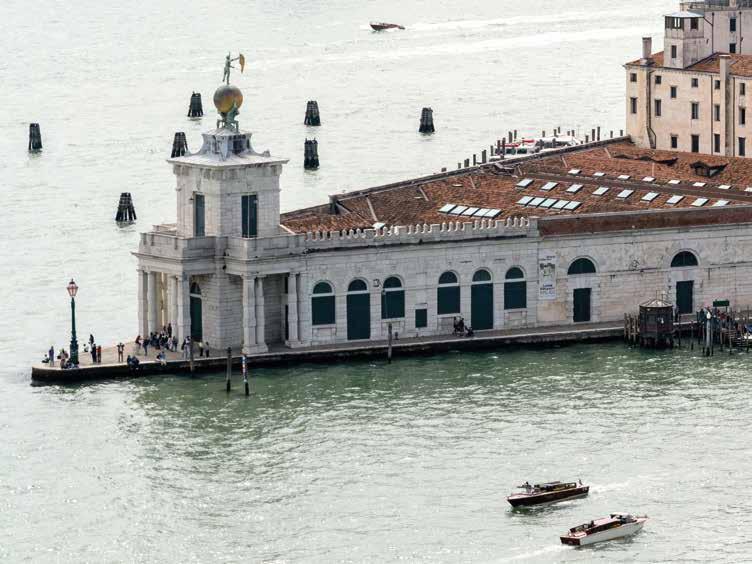
A MAJESTIC SETTING ON THE GRAND CANAL
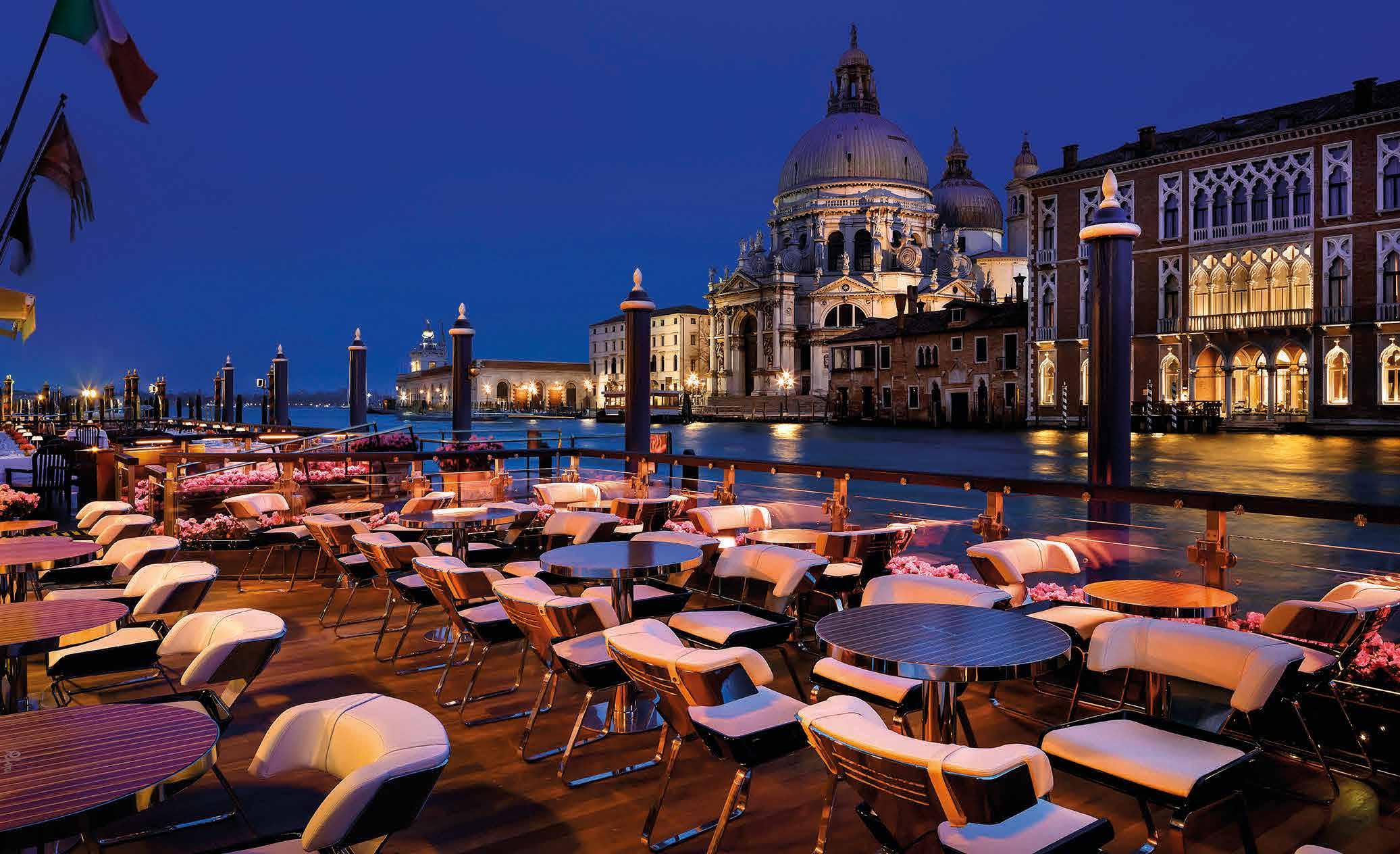
Extending along a magical stretch of the Grand Canal, the splendid terraces of The Gritti Palace are the most stylish gathering places in Venice. Drop in for lunch or dinner, afternoon refreshments, or an aperitivo of perfectly chilled bubbles immersed in a living canvas of the city’s legendary monuments.
110 ARTISTS
AbadPhilip Aguirre y OteguiAkinbode AkinbiyiLaurie AndersonFabrice Aragnoarms ache avid aeon: Nancy Brooks Brody, Joy Episalla, Zoe Leonard, Carrie Yamaoka, fierce pussy, Jo-ey TangKader AttiaSammy BalojiRanti BamAlvaro BarringtonÉric BaudelaireSabian BaumannblaxTARLINES KUMASIBeverly BuchananSeyni Awa CamaraMaría Magdalena Campos-Pons & Kamaal MalakNick CaveCarolina
Pio
CaycedoAnnalee DavisBuBu de la MadeleineDawn DeDeauxNolan Oswald DennisDenniston HillBonnie DevineGodfried DonkorMarcel DuchampEdouard Duval-CarriéTorkwase Dysonrana elnemrTheo EshetuRachel Fallon (with Alice Maher)G.A.S. FoundationSofía
Gallisá MurienteAdebunmi GbadeboLeonilda GonzálezLinda Goode BryantJoana Hadjithomas & Khalil JoreigeAlexa Kumiko HatanakaAyrson HeráclitoClarissa Herbst & Dominique RustNicholas HloboCarsten HöllerSohrab HuraAlfredo JaarMohammed JohaMichael JooNina KatchadourianSandra KnechtMarcia KureNatalia Lassalle-Morillo (in collaboration with Gloria Morillo)Florence LazarDan LieWerewere Likinglugar a dudasDaniel Lind-RamosAlice MaherSenzeni MaraselaGuadalupe MaravillaManuel MathieuGeorgina MaximTiona Nekkia McCloddenBig Chief Demond MelanconAvi MograbiWangechi MutuNairobi Contemporary Art Institute (NCAI)Eustáquio Neves´Tuaˆ n Andrew ˜Nguyeˆ nTammy NguyenOtobong NkangaKaloki NyamaiTemitayo OgunbiyiPauline OliverosKambui OlujimiHagar OphirUriel OrlowEbony G. PattersonRajni Perera & Marigold SantosThania PetersenAlan PhelanJohannes PhokelaLéonard PongoGala Porras-KimWalid RaadMohammed Z. RahmanRAW Material CompanyTabita RezaireGuadalupe RosalesYo-E RyouKhaled SabsabiRose SalaneIssa SambAmina Saoudi Aït KhayCarrie SchneiderHala SchoukairBerni SearleMmakgabo Mmapula Helen SebidiWardha ShabbirYoshiko ShimadaHimali Singh Soin & David Soin TappeserBuhlebezwe SiwaniCauleen SmithVera TamariTsai Ming-liangVictoria-Idongesit UdondianCelia Vásquez YuiKemang Wa LehulereKennedy YankoRaed YassinSawangwongse YawnghweBillie Zangewa
in minor keys
110 ARTISTS
Pio Abad
BORN 1983, Manila, Philippines
LIVES&WORKS London, UK
Philip Aguirre y Otegui
BORN 1961, Schoten, Belgium
LIVES&WORKS Antwerp, Belgium
Attraverso un linguaggio sempre plurale, Pio Abad indaga i processi di rimozione e opacizzazione del colonialismo. Muovendo in particolare dalla sua storia famigliare nelle Filippine e dall’impegno dei suoi genitori contro la dittatura, il suo lavoro mette spesso al centro gli oggetti, testimoni del quotidiano in grado di condensare complessità molto articolate, intrecciate con il dramma della storia del potere. È stato finalista del Turner Prize 2024. MCB
ENG Through an ever-plural language, Pio Abad investigates the processes of erasure and obscuration of colonialism. Drawing in particular on his family history in the Philippines and his parents’ involvement in resisting the dictatorship, his work often focuses on objects – witnesses to everyday life capable of condensing highly articulate complexities, entangled with the drama of power history. He was a finalist for the Turner Prize 2024.
La scultura di Philip Aguirre y Otegui si sviluppa prevalentemente nello spazio pubblico. È in questo ambito che assume una consapevole responsabilità sociale e politica, all’interno di quella che l’artista definisce una “poesia dell’immagine”, intesa come congiunzione tra dimensione formale e impegno civile. Attraverso l’integrazione di linguaggi anche pittorici, la sua ricerca si concentra sull’umanità e sulla capacità di resistenza dell’essere umano. MCB
ENG His sculpture primarily unfolds in the public sphere, where it takes on a conscious social and political responsibility within what the artist defines as a “poetry of the image,” understood as a conjunction of formal concerns and civic engagement. Through the integration of painterly languages, his practice focuses on humanity and on the capacity for resilience.
Akinbode Akinbiyi
BORN 1946, Oxford, UK
LIVES&WORKS Berlin, Germany
Laurie Anderson
BORN 1947, Chicago, USA
LIVES&WORKS New York City, USA
Fotografo di origine nigeriana, Akinbode Akinbiyi ha costruito nel tempo un ampio archivio visivo delle grandi città africane, osservate a passo lento e senza enfasi spettacolare. Le sue immagini si soffermano sul quotidiano, sulle soglie, sugli attraversamenti e sulle relazioni che animano lo spazio urbano. Più che inseguire l’evento eccezionale, Akinbiyi restituisce la complessità ordinaria della vita in città come Lagos, Kinshasa, Dakar e Il Cairo. GS
ENG Of Nigerian origin, the photographer Akinbode Akinbiyi has built over time an extensive visual archive of major African cities, observed at a slow pace and without spectacular emphasis. His images linger on the everyday, on thresholds, crossings and the relationships that animate urban space. Rather than chasing the exceptional event, Akinbiyi renders the ordinary complexity of life in cities such as Lagos, Kinshasa, Dakar and Cairo.
Pioniera nell’intrecciare performance, musica, avanguardia e produzioni multimediali, Laurie Anderson è diventata un riferimento fondamentale per l’arte a livello internazionale, ben oltre la scena newyorkese da cui proviene. Negli anni ’80 scala le classifiche – anche in Italia, grazie alla trasmissione RAI Mister Fantasy – con O Superman, brano minimale, ipnotico, essenziale. Da allora continua a sorprendere e affascinare con un talento multiforme, attraversato da una costante vena ironica. Per raccontare le sue storie – si definisce una storyteller – utilizza le vibrazioni profonde della propria voce, innestando e ibridando musica elettronica, poesia, video, arti visive e realtà virtuale. MMG
ENG A pioneer in weaving together performance, music, avantgarde and multimedia productions, Laurie Anderson has become a key point of reference for art at an international level, going beyond the New York scene where she comes from. In the 1980s she climbed the charts – in Italy too, thanks to the RAI programme Mister Fantasy – with O Superman, a minimal, hypnotic, essential song. Since then she has continued to surprise and captivate her audience thanks to her multifaceted talent, featuring a constant streak of irony. To tell her stories – she defines herself as a storyteller – she makes use of deep vibrations of her own voice, grafting and hybridizing electronic music, poetry, video, visual arts and virtual reality.
Regista, produttore, ingegnere del suono e direttore della fotografia, ha collaborato a lungo con Jean-Luc Godard. La sua ricerca si è sviluppata attraverso continue sperimentazioni, sia sul piano tecnico sia su quello visivo. Ha ideato installazioni definite “pittura-cinema”: forme di pittura cinematografica in loop infinito, composte da spezzoni di film che rendono omaggio al cinema francese e non solo. Le sue opere sono permeate da una sottile elegia del quotidiano, con toni intimisti che suggeriscono atmosfere possibili, talvolta puramente contemplative. FS
ENG Director, producer, sound engineer and cinematographer, he worked together with Jean-Luc Godard for longtime. His practice has evolved through ongoing experimentation, both technically and visually. He has conceived installations defined as “painting-cinema”: a sort of cinematic paintings in an infinite loop, made of movie clips that pay homage to cinema, in particular to French cinema. His works are permeated by a subtle elegy of the everyday, with intimate tones that evoke possible, at times purely contemplative moods.
Più che un collettivo in senso stretto, arms ache avid aeon: è un progetto concepito da Jo-ey Tang che riunisce Nancy Brooks Brody, Joy Episalla, Zoe Leonard e Carrie Yamaoka, mettendone le pratiche in dialogo con fierce pussy, collettivo lesbico femminista nato a New York negli anni ’90. Articolato per capitoli, il progetto intreccia opere, testi e materiali documentari per far emergere una genealogia queer fondata su amicizia, attivismo e collaborazione. Tra astrazione queer (Brody), sperimentazione dei materiali (Episalla), indagine del paesaggio (Leonard) e processi di trasformazione (Yamaoka), il progetto costruisce uno spazio condiviso di memoria e riattivazione critica.
ENG More than a collective in the strict sense of the term, arms ache avid aeon: is a project conceived by Jo-ey Tang that brings together Nancy Brooks Brody, Joy Episalla, Zoe Leonard, and Carrie Yamaoka, placing their practices in dialogue with fierce pussy, a lesbian feminist collective founded in New York in the 1990s in relation to ACT UP. Structured in chapters, it interweaves artworks, texts, and archival materials to show a queer genealogy grounded in friendship, activism, and collaboration. Through queer abstraction (Brody), material experimentation (Episalla), landscape inquiry (Leonard), and transformation processes (Yamaoka), the project constructs a shared space of memory and critical reactivation.
Nomadismo culturale e contaminazioni tra differenti materie e mezzi espressivi contraddistinguono il suo percorso creativo, che indaga temi legati soprattutto all’identità culturale e all’impatto che il colonialismo ha avuto sulle società extraeuropee. Con opere e installazioni di forte intensità visiva ed emotiva, coniuga etica ed estetica, affrontando concetti quali memoria, trauma, guarigione e, soprattutto, riparazione, intesa sia come forma di riappropriazione sia come pratica di resistenza, per dare voce a minoranze e storie di emarginazione. FS
ENG Cultural nomadism and the blending of different materials and expressive media characterize Kader Attia’s creative path, through which he explores themes related above all to cultural identity and the impact of colonialism on non-European societies. Through works and installations of powerful visual and emotional intensity, he combines ethics and aesthetics, addressing concepts such as memory, trauma, healing and, above all, repair – understood both as a form of reappropriation and as a practice of resistance – giving voice to minorities and histories of marginalization.
Fra le voci più significative dell’arte contemporanea africana, l’artista esplora il passato precoloniale del Congo e ne indaga il presente osservando diverse realtà contemporanee attraverso la lente della memoria storica, con particolare attenzione al patrimonio culturale, architettonico e industriale della regione del Katanga. Nel 2025 ha presentato alla Fondazione Prada il suo esordio cinematografico, dedicato all’eredità del colonialismo e alle origini della crisi ecologica del suo Paese, assunto come esempio e monito di una condizione che riguarda l’intero Pianeta. MMG
ENG Among the most significant voices in contemporary African art, the artist explores the pre-colonial past of Congo and investigates its present by observing various contemporary realities through the lens of historical memory, with particular attention to the cultural, architectural and industrial heritage of the Katanga region. In 2025 he presented his cinematic debut at Fondazione Prada, dedicated to the legacy of colonialism and the origins of the ecological crisis in his country, taken as an example and a warning of a condition affecting the whole Planet.
Fabrice Aragno
BORN 1970, Neuchâtel, Switzerland
LIVES&WORKS Lausanne, Switzerland
arms ache avid aeon:
Nancy Brooks Brody
BORN 1962, New York City, USA 2023
Joy Episalla
BORN 1957, Bronxville, USA LIVES&WORKS New York City, USA
Zoe Leonard
BORN 1961 Liberty, USA LIVES&WORKS New York City, USA
Carrie Yamaoka
BORN 1957, Glen Cove, USA LIVES&WORKS New York City, USA
fierce pussy
FOUNDED 1991, New York City, USA
Jo-ey Tang
BORN 1978, Hong Kong, China LIVES&WORKS New York City, USA
Kader Attia
BORN 1970, Dugny, France
LIVES&WORKS Berlin, Germany and Paris, France
Sammy Baloji
BORN 1978, Lubumbashi, Democratic Republic of the Congo
LIVES&WORKS Brussels, Belgium and Lubumbashi, Democratic Republic of the Congo
Ranti Bam
BORN 1982, Lagos, Nigeria
LIVES&WORKS Paris, France and Lagos, Nigeria
Alvaro Barrington
BORN 1983, Caracas, Venezuela
LIVES&WORKS London, UK
Lavorando principalmente con l’argilla, materiale primordiale, Ranti Bam sovrappone sottili lastre di terracotta per creare vasi spesso sorretti da zampe animali, collocati su sgabelli di legno noti come akpoti, tipici della tradizione nigeriana. Le superfici, che conservano le tracce evidenti del processo creativo, sono talvolta percorse da motivi decorativi astratti. In alcuni casi l’artista vi pratica fori e lacerazioni che rivelano l’interno del vaso, invitando il pubblico ad avvicinarsi e a sostare in una riflessione sui temi della vulnerabilità e della resilienza. FS
ENG Working mainly with clay, a primordial material, Ranti Bam layers thin slabs of clay to create pots often supported by animal legs, placed on wooden stools known as akpoti, typical of the Nigerian tradition. The surfaces, which retain evident traces of the creative process, are sometimes decorated with abstract motifs. In some cases the artist pierces and tears them open to reveal the inside of the pot, inviting the visitors to draw closer and pause to reflect on vulnerability and resilience.
In merito al suo lavoro, l’artista sottolinea come esso si concentri sulla celebrazione delle comunità nei modi in cui queste si autorappresentano e nei linguaggi culturali attraverso cui prendono forma. Contaminazioni fra materiali eterocliti, linguaggi espressivi e riferimenti visivi definiscono un approccio anticonformista alla pratica artistica. La sua pittura oltrepassa i limiti fisici della tela per espandersi nello spazio della quotidianità al ritmo della musica hip hop. Temi cardine della sua ricerca sono l’identità culturale e i rimandi a figure e vicende della diaspora africana. FS
ENG The artist emphasizes how his work focuses on celebrating communities in the ways they represent themselves and through their cultural languages. The intersections between heterogeneous materials, expressive languages, and visual references define an unconventional approach to artistic practice. His painting breaks past the physical boundaries of the canvas, to inhabit the space of everyday life, vibing to the rhythm of hip hop. Core themes of his research include cultural identity and references to figures and events of the African diaspora.
Éric Baudelaire
BORN 1973, Salt Lake City, USA
LIVES&WORKS Paris, France
Sabian Baumann
BORN 1962, Zug, Switzerland
LIVES&WORKS Zurich, Switzerland
Regista e artista visivo, Éric Baudelaire sviluppa il proprio lavoro attraverso una pluralità di media, tra cui grafica, fotografia, video, installazioni e performance, spesso articolati in relazione a un nucleo filmico. Il suo approccio, apparentemente erede della tradizione documentaria, si traduce in pratiche sperimentali e partecipative. Muovendosi tra realtà e finzione, indaga le complesse dinamiche della comunicazione visiva per affrontare specifici nodi storici, sociologici e politici, come le vicende dell’Armata Rossa giapponese in Libano o la condizione dello stato non riconosciuto dell’Abkhazia nel Caucaso. FS
ENG A filmmaker and visual artist, Éric Baudelaire develops his work by using different media, including graphic work, photography, film and video, installation, and performance, often structured around a central film project. His approach, an apparent heir to the documentary tradition, leads to experimental and participatory practices. Moving between reality and fiction, he explores the complex dynamics of visual communication to engage with specific historical, sociological, and political questions, including the actions taken by the Japanese Red Army in Lebanon and the condition of the unrecognized state of Abkhazia in the Caucasus.
La pratica artistica di Sabian Baumann è profondamente intrecciata all’attivismo e si concentra su tematiche queer, femministe intersezionali e sull’identità di genere, mettendo in discussione norme sociali e strutture di potere consolidate. La sua ricerca si sviluppa attraverso diversi media, tra cui disegno, scultura, video e installazione. In particolare, il collage consente all’artista di intrecciare cultura pop e riferimenti artistici, attivando una riflessione critica e politica su norme sociali, soggettività e forme dell’amore.
MMG
ENG Sabian Baumann’s artistic practice is deeply intertwined with activism, focusing on queer and intersectional feminist issues, as well as gender identity, while challenging established social norms and power structures. Baumann’s work unfolds across a range of media, including drawing, sculpture, video, and installation. In particular, collage enables the artist to weave together elements of popular culture and artistic references, activating a critical and political reflection on social norms, subjectivity, and forms of love.
blaxTARLINES KUMASI
FOUNDED 2015, Kumasi, Ghana
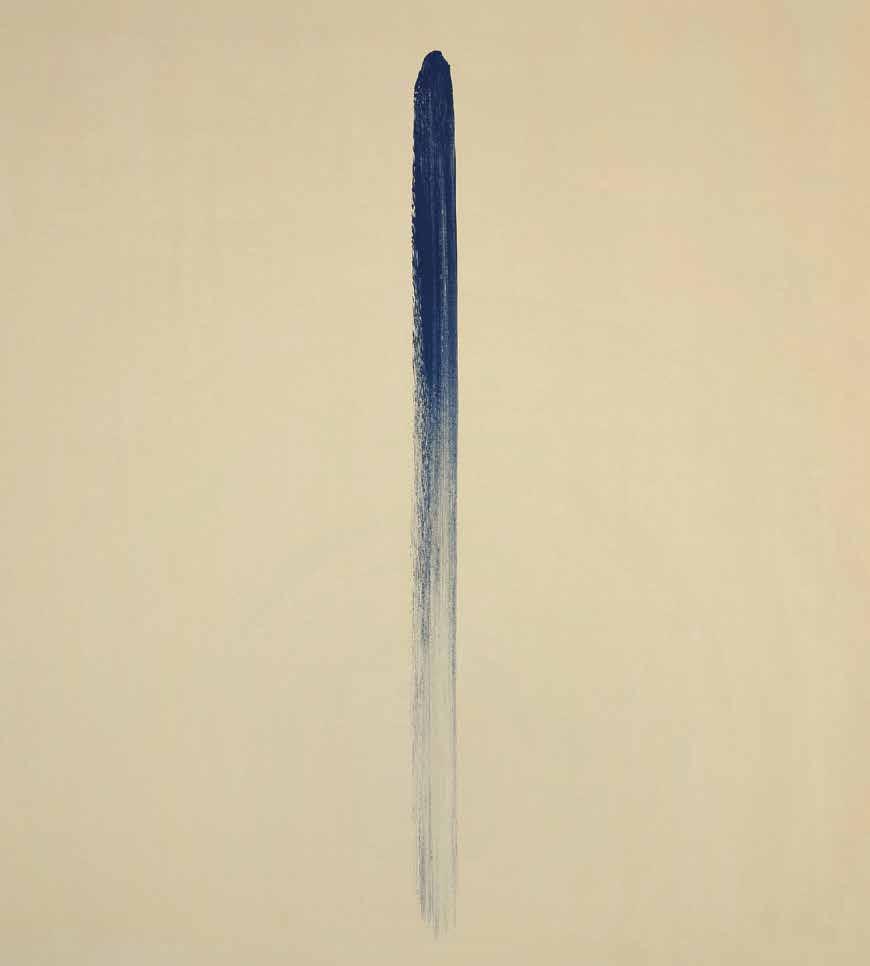
Piattaforma open-source di condivisione, rete fluida e community-driven, blaxTARLINES si configura come uno dei collettivi più influenti nel contesto africano e come una “rivoluzione silenziosa” dell’educazione artistica. Il progetto riunisce artisti, curatori e scrittori ed è sorto all’interno del KNUST di Kumasi a partire dall’Emancipatory Art Teaching Project di Karî’kachä Seid’ou, tra le figure più incisive della contemporaneità. Al centro vi è il rinnovamento della pedagogia dell’arte, ma anche della pratica artistica stessa, che si articola attraverso mostre, incontri e reti capaci di attivare una dimensione collettiva e processuale. MCB
ENG
An open-source platform for sharing and a fluid, communitydriven network, blaxTARLINES is not only one of the most influential collectives in the African context but it represents as well a sort of “silent revolution” in art education. The project brings together artists, curators, and writers. It originated within KNUST in Kumasi from the Emancipatory Art Teaching Project by Karî’kachä Seid’ou’s, one of the most incisive figures in contemporary discourse. At its core lies a renewal of art pedagogy, as well as of artistic practice itself, unfolding through exhibitions, public programs, and networks that activate a collective and processbased dimension.
Beverly Buchanan
BORN 1940, Fuquay, NC, USA 2015
Seyni Awa Camara
BORN 1945, Oussouy, Senegal 2026
Nel corso di oltre cinquant’anni di carriera Beverly Buchanan ha declinato la propria esperienza di donna nera in una pratica artistica attenta alle ingiustizie socio-economiche e di genere. Pittrice, scultrice e autrice di opere d’arte pubblica, ha dato forma a lavori al contempo monumentali ed effimeri, capaci di far emergere tematiche quali colonialismo e schiavitù: una produzione personale e collettiva, frammentaria eppure imponente, che si traduce in uno schiaffo a qualsiasi gerarchia di potere. DL
ENG Over more than fifty years, Beverly Buchanan translated her experience as a Black woman into an artistic practice focusing on socioeconomic and gender-based injustices. A painter, sculptor, and creator of public artworks, she produced works that are at once monumental and ephemeral, bringing to the fore themes such as colonialism and slavery: a body of work both personal and collective, fragmentary yet huge, that stands as a striking challenge to established hierarchies of power.
Definita “Magicienne de la Terre” (Maga della Terra), Seyni Awa Camara ha appreso dalla madre artigiana la tecnica della terracotta. Spesso descritta come un’artista sciamanica, legata a una dimensione spirituale e immaginativa, è entrata nel mondo dell’arte occidentale grazie all’antropologa Michèle Odéyé-Finzi. Dopo un matrimonio forzato e difficoltà legate alla maternità, ha ripreso la propria attività realizzando sculture dalle valenze totemiche: figure femminili dal fascino perturbante, gravide o circondate da piccoli esseri che si aggrappano ai loro corpi, oppure animali appartenenti a un bestiario fantastico. FS
ENG Described as a “Magicienne de la Terre”, Seyni Awa Camara learned the practice of pottery from her mother who was a clay craftswoman. Often considered as a shamanic artist, connected to a spiritual and imaginative dimension, she entered the Western art world thanks to the anthropologist Michèle Odéyé-Finzi. After a forced marriage and difficulties related to motherhood, she resumed her practice, producing sculptures with totemic qualities: female figures of compelling presence, pregnant or surrounded by small beings clinging to their bodies, as well as animals drawn from a bestiary of mythical creatures.
María Magdalena Campos-Pons & Kamaal Malak
BORN 1959, Matanzas, Cuba
LIVES&WORKS Nashville, USA
BORN 1962, Philadelphia, USA
LIVES&WORKS Nashville, USA
Nel progetto condiviso di María Magdalena Campos-Pons e Kamaal Malak convergono performance, suono, spiritualità, installazione e memoria diasporica. La ricerca di Campos-Pons, da sempre attenta a temi quali schiavitù, migrazione, genealogia e ritualità, incontra qui una dimensione sonora e relazionale che espande l’opera come spazio di invocazione e incontro. Insieme costruiscono lavori in cui voce, corpo, acqua e terra si fanno strumenti per rimettere in circolo memoria, appartenenza e possibilità di cura. GS ENG In the collaborative project by María Magdalena Campos-Pons and Kamaal Malak, performance, sound, spirituality, installation, and diasporic memory converge. Campos-Pons’s practice has always focused on themes of slavery, migration, genealogy, and ritual. Here it engages a sonic and relational dimension that expands the work as a space of invocation and encounter. Together, they create works in which voice, body, water, and earth become instruments for bringing memory, belonging, and possibilities of healing back into circulation.
Nick Cave
BORN 1959, Chicago, USA
LIVES&WORKS Chicago, USA
Carolina Caycedo
BORN 1978, London, UK
LIVES&WORKS Los Angeles, USA and Caguas, Puerto Rico
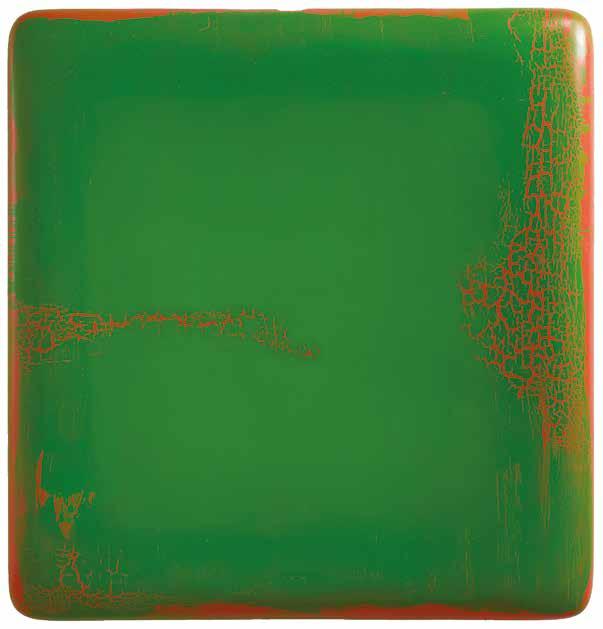
Fiori dipinti su oggetti domestici, bronzi monumentali e autoritratti ricamati: con il ciclo Two Points l’artista traccia un percorso dentro e fuori l’Arsenale in sette tappe, corrispondenti alle fasi del lutto, tra cui l’imponente Amalgam ( Origin ) affacciato sul bacino. La monumentale figura in bronzo è decorata con elementi naturalistici che si trasformano in una corona di rami, fiori e uccelli. Attraverso queste opere, l’artista riflette su una società insieme frammentata e interconnessa, e su un’esistenza sospesa in una soglia porosa tra vita e morte. MMG
ENG Painted flowers on domestic objects, monumental bronzes, and embroidered self-portraits: with the Two Points cycle, the artist charts a journey in seven stages through and beyond the Arsenale, each corresponding to a phase of grief, including the imposing Amalgam (Origin) overlooking the Arsenale basin. The monumental bronze body is adorned with natural elements that unfold into a crown of branches, flowers, and birds. Through these works, the artist reflects on a society that is at once divided and interconnected, and on an existence suspended within a porous threshold between life and death.
Fare arte diventa per Carolina Caycedo una forma di attivismo ambientale volta ad affermare i principi di una giustizia sociale attenta alla tutela dei diritti delle comunità indigene e degli ecosistemi. Ha analizzato l’impatto dei sistemi estrattivi, della costruzione di grandi dighe, della deforestazione, dei conflitti territoriali e della privatizzazione delle risorse idriche. La sua ricerca si concentra sui concetti di ecofemminismo e memoria storico-collettiva, ricostruendo genealogie femminili per evidenziare il ruolo delle donne nella cura e nella difesa dei beni naturali comuni. FS
ENG For Carolina Caycedo making art is a form of environmental activism aimed at establishing the principles of social justice, with particular attention to the rights of Indigenous communities and ecosystems. Her work analyses the impact of extractive systems, largescale dam construction, deforestation, territorial conflicts, and the privatization of water resources. Her practice focuses on ecofeminism and collective historical memory, reconstructing female genealogies to highlight the role of women in the care and defence of common natural resources.
Annalee Davis
BORN 1963, St. Michael, Barbados
LIVES&WORKS St. George, Barbados
BuBu de la Madeleine
BORN 1961, Osaka, Japan
LIVES&WORKS Nara, Japan
Lo studio di Davis si trova all’interno di un’azienda lattiero-casearia ancora in attività, che nel XVII secolo operava come piantagione di canna da zucchero. In questo contesto sviluppa una pratica ibrida che riflette criticamente sulle economie storiche e sull’eredità coloniale della piantagione, esplorando questi temi attraverso disegni, fotografie, installazioni e processi site-specific, ma anche mediante programmi pedagogici che intrecciano natura, arte e agricoltura. MCB
ENG Annalee Davis’s studio is located within a working dairy farm that, in the seventeenth century, operated as a sugar plantation. In this context, she develops a hybrid practice that critically reflects on the historical economies of the plantation and its colonial legacy, exploring them through drawings, photography, and site-specific installations and processes, as well as through pedagogical programs that interweave nature, art, and agriculture.
Artista visiva, performer, drag queen e drag king, BuBu de la Madeleine è autrice di video, testi, performance e installazioni. Una produzione eterogenea, non priva di ironia, dall’impronta fortemente politica. Dal 2004 porta avanti il progetto A Mermaid’s Territory, incentrato sull’archetipo queer della sirena, intesa come figura di passaggio tra il regno acquatico e quello terrestre, tra la vita e la morte, capace di sottrarsi alle limitazioni e alle costrizioni mondane. DL
ENG A visual artist, performer, drag queen and drag king, BuBu de la Madeleine produces videos, texts, performances, and installations – a heterogeneous politically charged body of work characterized by irony. Since 2004, she has developed the project A Mermaid’s Territory, centered on the queer archetype of the mermaid, understood as a figure of passage between water and land realms, between life and death, capable of escaping worldly constraints and limitations.
Il riconosciuto lavoro di Dawn DeDeaux si colloca deliberatamente “dopo” l’arte, interrogandone possibilità e sopravvivenze in uno scenario post-umano e postantropocenico. Attraverso immagini e installazioni in cui la figura tende a dissolversi, così come sculture nello spazio pubblico che si configurano come presenze, la sua ricerca rilegge l’umano in chiave spettrale, anticipando una condizione oltre l’umano. In questo orizzonte, il corpo si smaterializza, la comunicazione si fa telepatica e l’opera si configura come residuo o presagio di un’arte alla fine del tempo. All’interno di un’epoca segnata dall’estinzione, DeDeaux evoca una “arca-madre” ( mothership ) come possibile accompagnamento verso la fine del reale. MCB ENG Dawn DeDeaux’s acclaimed work deliberately places itself “after” art, questioning its possibilities and survival in a post-human and post-anthropocene landscape. Through images and installations where the figure tends to dissolve, as well as sculptures in public spaces that take the form of presences, her practice reinterprets the human in a spectral key, anticipating a condition beyond human. In this context, the body dematerialises, communication becomes telepathic and the work appears as a residue or omen of an art at the end of time. In an era marked by extinction, DeDeaux evokes a “mothership” as a possible accompaniment towards the end of what is real.
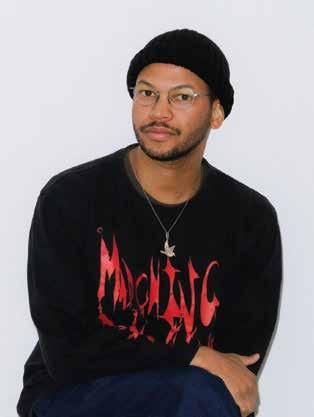
Un lavoro che pone al centro una “consapevolezza nera dello spazio”, intesa come attenzione alle condizioni materiali e metafisiche della decolonizzazione. Una pratica “paradisciplinare” che indaga la politica dello spazio attraverso un approccio che Dennis definisce “system-specific”, volto a svelare le strutture nascoste che predeterminano i limiti della nostra immaginazione sociale e politica. Un lavoro raffinatissimo che ricombina sistemi sociali, tecnici, politici e spirituali, radicati in una condizione universale di non-appartenenza alla terra e guidati dall’intreccio di teorie e pratiche di liberazione nera, indigena e queer. Dennis è tra i fondatori del collettivo NTU e promotore del black earth study club, una rete orientata alla solidarietà planetaria. MCB
ENG A body of work centered on a “Black consciousness of space,” understood as attention to the material and metaphysical conditions of decolonisation. A “paradisciplinary” practice that investigates the politics of space through what Dennis calls a “system-specific” approach, aimed at revealing the hidden structures that predetermine the limits of social and political imagination. Their work recombines social, technical, political and spiritual systems grounded in a planetary condition of non-belonging to the Earth and guided by the entanglement of Black, Indigenous and queer liberation theories and practices. Dennis is a co-founder of the NTU collective and initiator of the black earth study club, a network oriented toward planetary solidarity.
Organizzazione interdisciplinare che basa la propria attività sulla residenza come spazio di sperimentazione del rischio. Al centro del progetto vi è la relazione con il paesaggio dei Catskills, inteso come materia viva del lavoro. Accanto alle residenze, promuove commissioni, conversazioni, performance e pubblicazioni, configurandosi come uno spazio di sperimentazione in cui prende forma un’idea di comunità artistica aperta, spesso impegnata nel supporto di artisti LGBTQ+ e non bianchi, il cui lavoro è attraversato da questioni sociali e politiche. MCB
ENG An interdisciplinary organization that bases its work on residencies as spaces for experimenting with risk. Central to the project is the relationship with the Catskills landscape, understood as the living material of its work. As well as residencies it promotes commissions, conversations, performances and publications, establishing itself as a space for experimentation where the idea of an open artistic community, often committed to supporting LGBTQ+ and non-white artists whose work addresses social and political issues, takes shape.
Appartenente alla Serpent River First Nation (Anishinaabe/Ojibwe), Bonnie Devine declina il proprio impegno civile attraverso la scrittura, l’insegnamento, la curatela e una pratica artistica multiforme e multidisciplinare. La sua ricerca si concentra sulle tradizioni narrative, culturali e visive della società Anishinaabe, affrontando temi legati al territorio, alla memoria e alla sovranità indigena. I suoi interventi artistici reinterpretano la storia coloniale dal punto di vista delle popolazioni autoctone. FS
ENG A member of the Serpent River First Nation (Anishinaabe/Ojibwe), Bonnie Devine expresses her civic engagement through writing, teaching, curating and a multifaceted and multidisciplinary artistic practice. Her approach focuses on the narrative, cultural and visual traditions of Anishinaabe society, addressing themes of territory, memory and indigenous sovereignty, and her work reinterprets colonial history from the perspective of indigenous peoples.
Dawn DeDeaux
BORN 1952, New Orleans, USA
LIVES&WORKS New Orleans, USA
Nolan Oswald Dennis
BORN 1988, Lusaka, Zambia LIVES&WORKS Johannesburg, South Africa
Denniston Hill
FOUNDED 2008, Glen Wild, USA
Bonnie Devine
BORN 1952, Toronto, Canada LIVES&WORKS Toronto, Canada
Nolan Oswald Dennis
by Mariachiara Marzari
How does the idea of the “minor,” as proposed in In Minor Keys, resonate with your artistic practice?
For me artwork is mostly suggestion and reflection, an echo of the world itself. A small part of a much bigger question. Koyo Kouoh’s theme reminds us that smallness is also a source of power, in art practices it resonates with the value of looking and listening closely, hearing the things that seem inaudible, or seeing things that seem invisible, and importantly sharing them with others. Staying with the trouble of the minor keys lets us recognize the otherwise hidden politics and poetics that haunt us.
Maps, diagrams, models, and other world-ordering devices are tools you use in your art works to make manifest the “black consciousness of space”. How did you come to the idea of questioning the politics of space and time through an approach to systems? And how is your thinking evolving in a rapidly changing world?
I come from a place with inverted relations to the world and so I think of my work as part of a long tradition of disorganizing and reorganizing the world as we find it. The Nigerian writer Chinua Achebe said “If you’re African, the world is upside down,” and to me this is a relational statement, it’s not about the planet as a spatial object but how we are compelled to relate to it as a system of relations. I learnt from Renée Green, who was my professor, the use of the adjective “system-specific” that I apply to my interest in two kinds of systems – “imposed-systems” of the world as it is and “counter-systems” for the world as we want it to be. Systems from above and systems from below, so to speak, which change us as we encounter them and which change themselves through their encounter with us. Where is justice in all this? Where is freedom? Where is peace?
How is it possible to be part of something and at the same time not be part of it? “To be or not to be, that is the question”: is this still the core around which our lives unfold?
If you’re from a politically or socially marginalized community this question is not so complex, we are always “in, but not of” – both within and outside the limits of careful relation. It is not so difficult to see examples of this. At the very least Black people have always had to weave lives as part of a world in which we are only partially considered, partially consulted, partially comforted. I think we are in a period where the boundaries of marginalization are increasing again, so more people are forced to grapple with alienation. I think it is time for both individuals and organization to build something else to be part of.
Courtesy Diana Pfammatter CCABerlin
Godfried Donkor
BORN 1964, Accra, Ghana
LIVES&WORKS London, UK and Accra, Ghana
Marcel Duchamp
BORN 1887, Blainville-Crevon, France 1968
Artista da sempre interessato a esplorare le relazioni tra Africa ed Europa, Godfried Donkor è noto per i suoi collage mixed-media dedicati a figure di pugili afro-discendenti. Nel 2025, alla fiera londinese 1-54, ha presentato una serie di opere incentrate su narrazioni di potere e migrazione. Per la Biennale 2026, la sua ricerca si sviluppa attraverso composizioni di carattere improvvisativo, prossime al visual jazz, in cui immagini storiche della regione Ashanti del Ghana si intrecciano con iconografie globali. MMG
ENG An artist who has always been interested in exploring the relationships between Africa and Europe, Godfried Donkor is known for his mixed-media collages featuring boxers of African descent. At the 2025 1-54 London art fair he presented a series of works focusing on narratives of power and migration while for the 2026 Biennale, his practice develops through improvisational compositions which evoke visual jazz, where historical images of the Ashanti region of Ghana intertwine with global iconographies.
Universalmente riconosciuto come una figura fondativa dell’arte concettuale, Marcel Duchamp ha avviato una rivoluzione non attraverso la tecnica, ma attraverso il pensiero: ciò che conta è l’idea, più che la sua realizzazione. Abbandonata la pittura tradizionale, introduce il readymade, oggetti comuni che, ricontestualizzati, acquisiscono nuovi livelli di senso e valore: emblematico il gesto di presentare un orinatoio oggi noto nei musei come Fontana. Senza mai parlarne apertamente, negli ultimi vent’anni della sua vita lavora al suo progetto forse più sorprendente, un’installazione visibile attraverso lo spioncino di una porta in legno massiccio che rivela… il segreto. MMG
ENG Universally recognised as a founding figure of conceptual art, Marcel Duchamp sparked a revolution not through technique but through thought: what matters is the idea, rather than its realisation. Abandoning traditional painting, he introduced the readymade, everyday objects that, when recontextualized, acquire new levels of meaning and value: his presentation of a urinal, now known in museums as Fontana, was emblematic of his approach. Without ever discussing it openly, he spent the last twenty years of his life working on perhaps his most surprising project – an installation visible through the peephole of a solid wooden door that reveals... the secret.
Edouard Duval-Carrié
BORN 1954, Port-au-Prince, Haïtï
LIVES&WORKS Miami, USA
Torkwase Dyson
BORN 1973, Chicago, USA
LIVES&WORKS Beacon, USA
Fuggito da giovane da Haiti, Edouard Duval-Carrié ha sviluppato una pratica artistica attraversata dalle influenze del realismo magico e del Vodou, affrontando temi complessi come la diaspora caraibica e la migrazione. Attraverso tecniche miste, crea immagini vivaci e naïf, oniriche e surreali. Strategie spiazzanti e stranianti con cui mette in discussione e sovverte le narrazioni dominanti, giustapponendo, in un’ideale galleria di icone numinose, personaggi della mitologia, divinità ed eroi nazionali haitiani, che animano scenari misteriosi e sfondi ricchi di simbologie. MMG
ENG After fleeing Haiti as a young man, Edouard Duval-Carrié developed an artistic practice influenced by magical realism and Vodou, addressing complex themes such as the Caribbean diaspora and migration. Using mixed media, he creates vibrant, naïve, dreamlike and surreal images, his unsettling strategies challenging and subverting dominant narratives and juxtaposing mythological figures, deities and Haitian national heroes in an imaginary gallery of numinous icons inhabiting mysterious scenes and richly symbolic backgrounds.
Torkwase Dyson lavora tra pittura, disegno, scultura e suono per esplorare le relazioni tra ecologia, infrastruttura e architettura. Le sue astrazioni geometriche nascono da una riflessione sulla percezione dello spazio, in particolare in relazione all’esperienza dei corpi neri. Al centro della sua ricerca vi è quella che definisce Black Compositional Thought : una teoria visiva e politica che interpreta percorsi, acque, passaggi e recinti come forme di costrizione ma anche come possibilità di liberazione. GS ENG Torkwase Dyson works with painting, drawing, sculpture and sound to explore the relationships between ecology, infrastructure, and architecture. His geometric abstractions arise from a reflection on the perception of space, particularly in relation to the experience of Black bodies. Central to his research is what he calls Black Compositional Thought : a visual and political theory that interprets routes, waterways, passages and enclosures as forms of constraint but also as possibilities for liberation.
rana elnemr
BORN 1974, Hannover, Germany
LIVES&WORKS Cairo, Egypt
Theo Eshetu
BORN 1958, London, UK
LIVES&WORKS Berlin, Germany and Rome, Italy
La fotografia di rana elnemr si configura come una riflessione quasi documentaria sulla vita nella capitale egiziana. Muovendosi tra immagine fotografica e video, il suo lavoro si concentra sulle dinamiche di visibilità e potere, mettendo in discussione i codici del documentarismo. Nell’ambito della sua ricerca artistica, ha fondato il Contemporary Image Collective, istituzione indipendente no-profit che promuove la ricerca visiva e gli scambi internazionali. MCB
ENG rana elnemr’s photography is an almost documentary reflection on life in the Egyptian capital. Moving between photography and video, her work focuses on the dynamics of visibility and power, challenging the codes of documentary filmmaking. As part of her artistic practice, she founded the Contemporary Image Collective, an independent non-profit institution that promotes visual research and international exchange.
Artista britannico di origine etiope e olandese, cresciuto tra Africa ed Europa e da tempo legato a Roma, Theo Eshetu sviluppa una ricerca incentrata sui temi dell’identità, della percezione e della circolazione delle immagini. Le sue installazioni video, spesso immersive e stratificate, intrecciano immagine, suono e linguaggio, esplorando le possibilità dell’arte di raccontare la molteplicità delle culture, della spiritualità e dell’esperienza umana. MCB
ENG A British artist of Ethiopian and Dutch descent, raised between Africa and Europe and with longstanding ties to Rome, Theo Eshetu develops a practice focused on themes of identity, perception and the circulation of images. Often immersive and layered, his video installations intertwine image, sound and language, exploring the possibilities of art to narrate the multiplicity of cultures, spirituality and human experience.
Rachel Fallon (with Alice Maher)
BORN 1971, Dublin, Ireland
LIVES&WORKS Dublin, Ireland
G.A.S. Foundation
FOUNDED 2019, Lagos and Ikis ˙ e ˙ , Nigeria
Scultrice e fotografa, l’irlandese Rachel Fallon indaga la condizione femminile e la maternità nella società contemporanea, con particolare attenzione ai temi della difesa e della protezione. Nota per le sue collaborazioni con artisti e collettivi, alla Biennale si presenta accanto alla connazionale Alice Maher, la cui produzione multiforme esplora le relazioni tra natura, cultura e mito a partire da oggetti prelevati dalla realtà quotidiana. DL ENG Irish sculptor and photographer Rachel Fallon explores the condition of women and motherhood in contemporary society, with a particular focus on themes of defence and protection. Known for her collaborations with artists and collectives, she will be exhibiting at the Biennale alongside fellow Irish artist Alice Maher, whose multifaceted work draws on objects from everyday life to explore the relationships between nature, culture and myth.
Fondata da Yinka Shonibare, la Guest Artist Space Foundation è una residenza per artisti dedicata allo scambio culturale internazionale, attiva tra la città di Lagos e il contesto rurale di Ijebu Ode. Al centro della sua missione vi è la costruzione di un’infrastruttura di supporto alla pratica artistica, fondata da un lato sulla possibilità concreta di lavorare e sperimentare – attraverso tempo, spazio e reti – e dall’altro sul rafforzamento delle relazioni transnazionali. MCB
ENG Founded by Yinka Shonibare, the Guest Artist Space Foundation is an artist residency dedicated to international cultural exchange, operating between the city of Lagos and the rural context of Ijebu Ode. Central to its mission is the construction of infrastructure to support artistic practice based on the concrete possibility of working and experimenting across time, space and networks, and on the strengthening of transnational relationships.
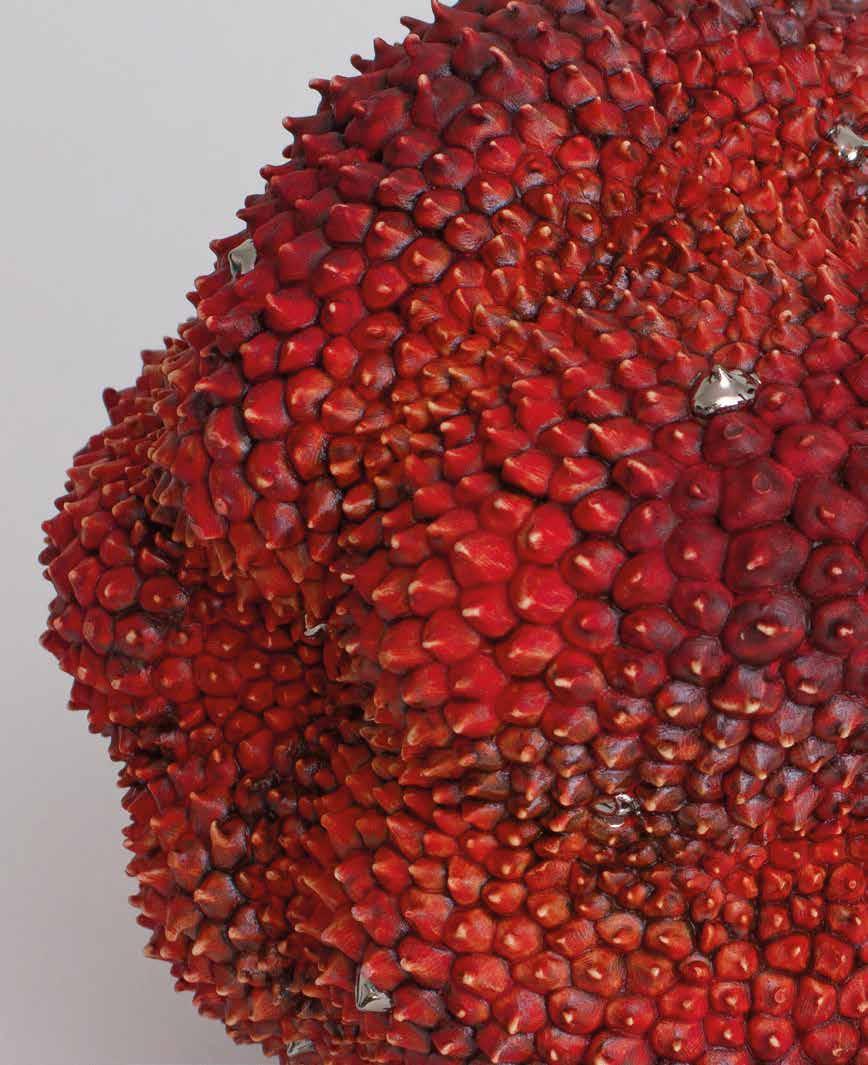
Sofía Gallisá Muriente
BORN 1986, San Juan, Puerto Rico
LIVES&WORKS Puerto Rico
Adebunmi Gbadebo
BORN 1992, Livingston, USA
LIVES&WORKS Philadelphia and Newark, USA
Artista visiva e filmmaker portoricana, Sofía Gallisá Muriente sviluppa il proprio lavoro attraverso processi di lungo periodo basati su esplorazione e dialogo, rifiutando le logiche tradizionali del filmmaking a favore di pratiche intuitive e collettive. Le sue opere prendono forma a partire da archivi, registrazioni, storia orale e immaginazione popolare. Emergono così narrazioni contraddittorie, insieme ai processi di assimilazione e alle modalità della cancellazione storica, in particolare nel contesto portoricano. Ha co-diretto a lungo la piattaforma no-profit Beta-Local. MCB ENG Puerto Rican visual artist and filmmaker Sofía Gallisá Muriente develops her work through long-term processes based on exploration and dialogue, rejecting traditional filmmaking logics in favour of intuitive and collective practices. Her work draws on archives, recordings, oral history and popular imagination. Contradictory narratives emerge, along with processes of assimilation and modes of historical erasure, particularly in the Puerto Rican context. She was for many years the co-director of nonprofit platform Beta-Local.
Nel lavoro presentato da Adebunmi Gbadebo le tecniche plastiche, la manipolazione e la ceramica diventano strumenti di connessione fisica con l’eredità. I materiali impiegati – capelli provenienti dalla diaspora africana, terra scavata in ex piantagioni del South Carolina, tinture di indaco – sono mezzi vivi attraverso cui esplorare genealogia e memoria, affrontando le eredità della schiavitù e le relazioni tra corpo, suolo e politica. Il tutto si inscrive in una poetica profondamente affettiva che indaga la cultura ancestrale come condizione del presente. MCB
ENG In Adebunmi Gbadebo’s work, sculpting techniques, manipulation and ceramics become tools for a physical connection with heritage. The materials used – hair from the African diaspora, earth excavated from former South Carolina plantations, indigo dyes – are living mediums through which to explore genealogy and memory, addressing the legacies of slavery and the relationships between body, soil and politics, all embedded in a deeply emotional artistic philosophy that investigates ancestral culture as a condition of the present.
Leonilda González
BORN 1923, Minuano, Uruguay 2017
Linda Goode Bryant
BORN 1949, Columbus, USA
LIVES&WORKS New York City, USA
Attraverso la pittura e l’incisione, Leonilda González ha contribuito all’impegno sociale e politico in America Latina, utilizzando l’arte come strumento di protesta democratica e pagando tale posizione anche con periodi di esilio. Negli anni ‘60 si afferma con la serie Novias Revolucionarias (“Spose rivoluzionarie”), simbolo di una critica al matrimonio e, al tempo stesso, ai regimi dittatoriali, portando tematiche tradizionalmente confinate alla sfera domestica nello spazio pubblico della protesta. MMG
ENG Through painting and printmaking, Leonilda González contributed to social and political engagement in Latin America, using art as a tool of democratic protest and paying for this position with periods of exile. In the 1960s she rose to prominence with the series Novias Revolucionarias (“Revolutionary Brides”), a symbol of critique directed at both marriage and dictatorial regimes, bringing themes traditionally confined to the domestic sphere into the public space of protest.
Nel corso della sua lunga carriera, Linda Goode Bryant è stata gallerista –dirigendo a New York, tra il 1974 e il 1986, lo spazio Just Above Midtown, che ha contribuito a lanciare artisti come David Hammons – ma anche educatrice, videoartista, imprenditrice e, più recentemente, promotrice di pratiche agricole urbane con il progetto Project Eats avviato nel 2009. La sua ricerca si fonda su ideali di collaborazione e sperimentazione, nel tentativo costante di affrontare le disuguaglianze e le tensioni sociali. DL ENG Over the course of her long career, Linda Goode Bryant has been a gallery owner – directing the Just Above Midtown space in New York from 1974 to 1986, which helped launch artists such as David Hammons – and also an educator, video artist, entrepreneur and, more recently, a promoter of urban agricultural practices with the Project Eats launched in 2009. Her practice is based on ideals of collaboration and experimentation, in an ongoing attempt to address inequalities and social tensions.
Il celebrato duo libanese Joana Hadjithomas & Khalil Joreige lavora intorno all’assenza dell’immagine. Più che artisti, si definiscono “cercatori”, costruendo un lavoro fotografico e filmico a partire da immagini che documentano, testimoniano e al tempo stesso scompaiono. Emergono così archivi, guerre, rovine e narrazioni interrotte, in cui l’immagine cristallizza una forte implicazione politica, riconfigurando con rigore l’idea stessa di documento entro una dimensione profondamente poetica. MCB
ENG Celebrated Lebanese duo Joana Hadjithomas & Khalil Joreige explore the absence of the image. Rather than artists they define themselves as “seekers”, building a photographic and filmic body of work from images that document, bear witness and simultaneously disappear. Archives, wars, ruins and interrupted narratives emerge where the image crystallises a strong political implication, rigorously reconfiguring the very idea of document within a profoundly poetic dimension.
I lavori di Alexa Kumiko Hatanaka si configurano come complessi intrecci di tecniche di stampa, lavorazione della carta, tinture naturali e cucitura, dando forma a installazioni spesso di grande scala e a sculture indossabili. Le opere sono materializzazioni di processi e collaborazioni estese, ma anche di dimensioni intime e profonde: da un lato il lavoro con comunità dell’Artico e le pratiche performative collaborative, dall’altro aspetti legati all’esperienza personale, come il bipolarismo e l’identità queer. Nella raffinatezza tecnica dei lavori confluiscono temi quali salute mentale, cambiamento climatico, vulnerabilità e sopravvivenza. MCB
ENG Alexa Kumiko Hatanaka’s work is a complex interweaving of printing techniques, paperworking, natural dyeing and stitching, resulting in often large-scale installations and wearable sculptures. Her works are the embodiment of extensive processes and collaborations, but also of intimate and profound dimensions: on the one hand, her work with Arctic communities and collaborative performance practices, on the other, aspects of personal experience such as bipolarity and queer identity. The technical sophistication of her work intertwines themes of mental health, climate change and survival.
Artista, docente e curatore, Ayrson Heráclito esplora la cultura afrobrasiliana della diaspora con una particolare attenzione al corpo. È nel corpo e nel suo rapporto con i materiali, il cibo e i gesti rituali che prende forma una ricerca sulla densità della migrazione e della schiavitù, intrinsecamente connessa al simbolismo del quotidiano e alla dimensione sensoriale dell’esistenza. MCB
ENG Artist, lecturer and curator, Ayrson Heráclito explores the culture of the Afro-Brazilian diaspora with a particular focus on the body. It is in exploring the body and its relationship to materials, food and ritual gestures that a body of work examining the density of migration and slavery takes shape, intrinsically connected to the symbolism of everyday life and the sensory dimension of existence.
Il lavoro di Clarissa Herbst & Dominique Rust indaga memoria, trasformazione e stasi, mantenendo una tensione aperta tra struttura e imprevisto. I loro processi di ricerca basati su improvvisazione e associazione costruiscono dispositivi scenici in cui spazio, oggetti e corpo condividono lo stesso peso drammaturgico, all’interno di una pratica performativa che combina installazione ambientale, materia, azione e suono. Sottratti alla loro funzione, gli oggetti diventano presenze attive, generando situazioni instabili tra controllo e fallimento. AS
ENG The work of Clarissa Herbst & Dominique Rust investigates memory, transformation and stasis, maintaining an open tension between structure and the unexpected. Through research processes based on improvisation and association, they construct scenic devices in which space, objects and the body share the same dramaturgical weight, within a performative practice that intertwines environmental installation, material, action and sound. Removed from their function, objects become active presences, generating unstable situations between control and failure.
Joana Hadjithomas & Khalil Joreige
BORN 1969, Beirut, Lebanon
LIVES&WORKS Beirut, Lebanon and Paris, France
BORN 1969, Moussaitbeh, Lebanon
LIVES&WORKS Beirut, Lebanon and Paris, France
Alexa Kumiko Hatanaka
BORN 1988, Toronto, Canada
LIVES&WORKS Toronto, Canada; New York City, USA and Japan
Ayrson Heráclito
BORN 1968, Macaúbas, Bahia, Brazil
LIVES&WORKS Salvador, Bahia, Brazil
Clarissa Herbst & Dominique Rust
BORN 1959, Crailsheim, Germany
LIVES&WORKS Zurich, Switzerland
BORN 1960, Basel, Switzerland
LIVES&WORKS Zurich, Switzerland
Nicholas Hlobo
BORN 1975, Cape Town, South Africa
LIVES&WORKS Johannesburg, South Africa
Carsten Höller
BORN 1961, Brussels, Belgium
LIVES&WORKS Stockholm, Sweden; Biriwa, Ghana and Tuscany, Italy
Nicholas Hlobo è noto per grandi opere scultoree in cui gomma, nastro, organza, pizzo e materiali trovati vengono cuciti e messi in tensione fino a generare forme ambigue e sensuali. La sua pratica affronta questioni legate all’identità culturale xhosa, alla maschilità, alla sessualità, ai processi di industrializzazione e alle trasformazioni del Sudafrica post-apartheid. Nel suo lavoro il gesto del cucire non è decorativo: è una modalità di sutura e di conflitto, un dispositivo che mostra come identità e storia emergano da lacerazioni e ricomposizioni. GS
ENG Nicholas Hlobo is known for large sculptural works in which rubber, ribbon, organza, lace and found materials are sewn, pulled and tensioned to generate ambiguous and sensual forms. His practice addresses issues related to Xhosa cultural identity, masculinity, sexuality, the processes of industrialization and the transformation of postapartheid South Africa. In his work, the act of sewing is not decorative: it is a process of suture and conflict, a device used to show how identity and history emerge from lacerations and recompositions.
Formatosi come entomologo, Carsten Höller è noto per installazioni interattive che integrano scienza, arte e psicologia. A questo imprinting scientifico si lega il rigore metodologico dei suoi “laboratori del dubbio”, concepiti per generare al tempo stesso disorientamento, gioia e stupore attraverso la partecipazione attiva del pubblico: dai celebri funghi rovesciati alla Fondazione Prada fino agli scivoli a spirale presentati nel 2025 a Stoccolma come dispositivi di sperimentazione sensoriale. A Venezia, a Palazzo Diedo, si può ammirare una sua scala ovale. MMG
ENG Trained as an entomologist, Carsten Höller is known for interactive installations that integrate science, art and psychology. This scientific background is reflected in the methodological rigour of his “laboratories of doubt”, designed to generate disorientation, joy and amazement all at once through the active participation of the public: from the famous upside-down mushrooms at the Fondazione Prada to the spiral slides presented in 2025 in Stockholm as devices for sensory experimentation. In Venice, one of his oval staircases can be admired at Palazzo Diedo.
Sohrab Hura
BORN 1981, Chinsurah, India
LIVES&WORKS New Delhi, India
Alfredo Jaar
BORN 1965, Santiago, Chile
LIVES&WORKS Lisbon, Portugal
Fotografo e filmmaker, Sohrab Hura sviluppa un linguaggio in cui fotografia, film e libro si contaminano costantemente. Muovendo da una pratica documentaria, si è progressivamente spinto verso forme più soggettive, mobili e imprevedibili, in grado di restituire la tensione emotiva e politica del presente. Le sue immagini e i suoi montaggi rifiutano il realismo convenzionale, cercando una forma narrativa aperta in cui diario, osservazione e invenzione possano convivere. GS
ENG Photographer and filmmaker Sohrab Hura has developed a language in which photography, film and book continuously intertwine. Beginning with documentary practice, he has gradually moved towards more subjective, mobile and unpredictable forms, capable of conveying the emotional and political tension of the present. His images and montages reject conventional realism in favour of an open narrative form in which diary, observation and invention can coexist.
Artista, fotografo, architetto e filmmaker, Alfredo Jaar ha costruito una pratica che mette in relazione arte e responsabilità pubblica. Le sue installazioni affrontano temi quali guerra, violenza, informazione, visibilità e abuso di potere, interrogando al contempo la circolazione delle immagini e il modo in cui producono coscienza o assuefazione. Lontano da ogni neutralità, Jaar utilizza lo spazio espositivo come piattaforma critica in cui rallentare lo sguardo e restituire complessità a ciò che l’attualità tende a semplificare. GS
ENG Artist, photographer, architect and filmmaker Alfredo Jaar has developed a practice that intertwines art and public responsibility. His installations address themes such as war, violence, information, visibility and the abuse of power while questioning the circulation of images and how they can produce consciousness or addiction. Far from neutrality, Jaar uses the exhibition space as a critical device capable of slowing down the gaze and restoring complexity to that which current events tend to simplify.
Attraverso una peculiare tecnica di collage, Mohammed Joha rielabora una pratica tradizionale trasformandola in una metafora di rottura e riassemblaggio. Colori intensi, forme drasticamente semplificate e materiali di recupero – come vecchi tessuti, brandelli di carta da parati, cartoni e plastiche – danno vita a planimetrie e installazioni complesse che richiamano ambienti distrutti. Il suo lavoro visualizza così una condizione di precarietà e una forma di “presenza nell’assenza”. Ponendo la situazione palestinese al centro della propria ricerca, la sua partecipazione alla Biennale si afferma come una testimonianza politica. FS
ENG Through a unique collage technique, Mohammed Joha reworks a traditional practice, transforming it into a metaphor of rupture and reassembly. Intense colours, drastically simplified shapes and recycled materials – such as old fabrics, shreds of wallpaper, cardboard and plastics – give life to complex floor plans and installations that recall destroyed environments. His work thus visualises a condition of precariousness and a form of “presence in absence”. By placing the Palestinian situation at the centre of his work, his participation in the Biennale is a political testimony in itself.
Nato negli Stati Uniti da una famiglia di origine coreana, Michael Joo è un artista concettuale con formazione in biologia. La sua pratica è guidata da una rigorosa ricerca scientifica e ontologica, in cui le modalità della percezione assumono un ruolo centrale rispetto all’oggetto artistico. Pittura, scultura e fotografia diventano così i mezzi attraverso cui l’intangibile tenta di materializzarsi nello spazio espositivo. Nel 2001 ha rappresentato la Corea alla Biennale di Venezia. DL ENG Born in the United States to a family of Korean origin, Michael Joo is a conceptual artist with a background in biology. His practice is guided by rigorous scientific and ontological research, in which modes of perception take on a central role with respect to the artistic object. Painting, sculpture and photography thus become the means through which the intangible attempts to materialise in the exhibition space. Joo represented Korea at the 2001 Venice Biennale.
Giocare è una cosa seria, anche quando è alla base della pratica artistica: tra video, performance, scultura, fotografia e suono, Nina Katchadourian trasforma oggetti banali e situazioni ordinarie in opere cariche di umorismo e intelligenza. I suoi lavori rappresentano una critica costante alla tendenza umana a serrare le esperienze in categorie ed etichette, classificando e catalogando per mantenere uno stretto controllo sulla realtà. Da qui l’umorismo contagioso delle sue proposte, che offrono l’occasione di ritrovare uno sguardo più fresco e consapevole sui fenomeni del quotidiano. MMG
ENG Playing is a serious matter, even when it forms the basis of artistic practice: through video, performance, sculpture, photography and sound, Nina Katchadourian transforms everyday objects and ordinary situations into works full of humour and intelligence. A key theme of her work is a sustained criticism of the human tendency to confine experiences within categories and labels, classifying and cataloguing in order to maintain a tight control over reality. Herein lies the irresistible humour of her work, which offers an opportunity to find a fresher and more aware look at the phenomena of everyday life.
Il contributo di Sandra Knecht alla Biennale si concentra sul tema principale della sua ricerca, il concetto di Heimat (patria/identità). Per l’occasione ha ideato una ‘mappatura’ del mondo naturale che la circonda, traducendolo in interpretazioni di sapori, ovvero in piatti e opere conservate in barattolo. Il suo approccio, di chiara matrice concettuale, la porta a considerare il cibo e la gastronomia – intesa anche come strumento di ricerca storico-sociale – come mezzi espressivi per esplorare i concetti di identità, tradizione e appartenenza. FS ENG Sandra Knecht’s contribution to the Biennale focuses on the central theme of her work, the concept of Heimat (homeland/identity). For the occasion, she has devised a “mapping” of the natural world that surrounds her, translating it into interpretations of flavours, or dishes and works preserved in jars. Her clearly conceptual approach leads her to explore food and gastronomy – also understood as a tool for historical-social research – as expressive means to explore concepts of identity, tradition and belonging.
Mohammed Joha
BORN 1978, Gaza, Palestine
LIVES&WORKS Marseille, France
Michael Joo
BORN 1966, Ithaca, NY, USA
LIVES&WORKS New York City, USA
Nina Katchadourian
BORN 1968, Stanford, USA
LIVES&WORKS New York City, USA and Berlin, Germany
Sandra Knecht
BORN 1968, Buus, Switzerland
LIVES&WORKS Buus, Switzerland
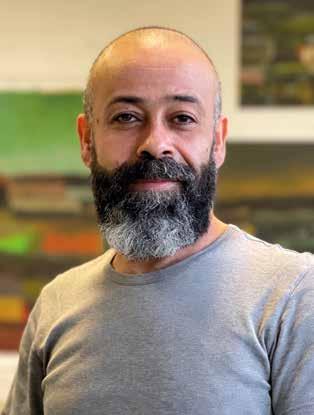
Mohammed Joha
by Marisa Santin
How does the idea of the “minor,” as proposed in In Minor Keys, resonate with your artistic practice?
This question resonates directly with my project No Shelter, which emerges from fragments of materials and traces of memory that are often overlooked or made invisible. I work with reclaimed materials – fabric, paper, cardboard, and plastic – reassembling them through collage as a response to what has been destroyed in both place and architecture. The work is rooted in my experience from Gaza. Although I have lived in Europe for more than twenty years, Gaza remains central to my practice. The loss of some of my family members, home, and hundreds of artworks has turned sewing and reconstruction into a daily artistic language, where memory becomes a material rather than an abstract idea. In this sense, “no shelter” refers not only to displacement but to a broader existential condition: without houses, yet not without a homeland. The “minor” becomes a space of survival, where life persists in fragments, residues, and unfinished form.
In your work, collage seems to function as an “architecture of loss.” How does this recomposition process become a form of care as well as resistance?
This question continues directly from my practice described above, where I understand collage not only as a visual technique, but as a way of rebuilding meaning after rupture. It is an “architecture of loss” made from fragments often tied to personal memory. Through this process, fragments from broken environments are brought together to form new structures. In that sense, collage becomes both care and resistance: care as an act of gathering, mending, and holding together what is fragile; and resistance as a refusal of disappearance by rebuilding presence from what remains. Using pieces of my own clothing makes the process more intimate. It is not only material reconstruction, but also an act of understanding and preserving memory. Each work becomes a space where fragility is acknowledged, and survival becomes visible.
How does Gaza radical instability – together with the current dramatic situation – manifest in your visual language and your idea of identity?
I understand Gaza as a space compelled to repeatedly shed its skin, constantly rewriting its geography after each conflict. This radical instability, intensified by the current situation, is directly inscribed in my visual language, where collapse and reconstruction coexist. I work with elements people rely on when dignified housing is denied. In this sense, my visual language is built from fragments and traces of memory, forming dense yet fragile structures that reflect both destruction and endurance, where life persists within its own erasure. This condition also shapes my idea of identity: not as something fixed, but as a continuous process of reconstruction under displacement and loss. The act of assembling becomes a way of holding together what is constantly breaking, turning instability itself into a lived and visible form of existence within time.
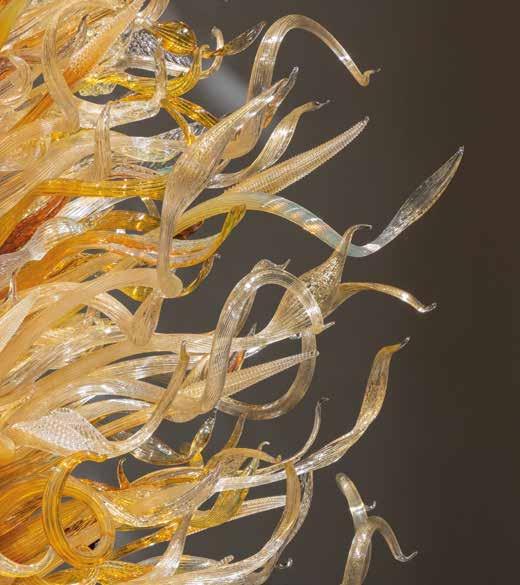
Nina Katchadourian
by Marisa Santin
How does the idea of the “minor,” as proposed in In Minor Keys, resonate with your artistic practice?
Much of my work is inspired by things that surround us that we rarely pay attention to, and I try to make a case for having a closer look. My project Seat Assignment, for instance, is the result of eleven years of making art, using only my cell phone and whatever materials were around me, on every flight I took during that time. I wanted to test what might be possible under those circumstances, even within the temporal, spatial, material, and social constraints of an airplane cabin.
Many of your works transform situations of constraint – suspended time, limited spaces, improvised materials – into creative opportunities. How do limitation and freedom intertwine in your process, and what interests you in working within these self-imposed conditions?
I’ve always been concerned with the question of what a person is able to manage under duress. I take this question up in a low-stakes way within my works, but I think a lot about the very high-stakes versions of this question: for example, my own family members who survived the Armenian genocide, or women artists in Gaza who – despite the genocide they are currently trying to survive – continue to make their work. One artist I’ve recently learned about constructs her paintbrushes from her own hair, and I am in awe of this kind of fortitude and resourcefulness.
Play and improvisation have a role in both of the works you are exhibiting as part of In Minor Keys. Can you comment on the importance of this in your work?
Play, although it may sound like a light-hearted or frivolous thing, is in fact a form of research – and some of the most serious subjects can sometimes only be approached in this spirit. My film, The Recarcassing Ceremony, is about a game my brother and I played as children, but it’s also about two children trying to contend with a big loss within the game, and just around the corner from that lies the very major subject of death. The new sculpture I’m showing in conjunction with this film, The Sjöbloms and Båtsmans, incorporates all the original figures and accessories that were part of this game. When a viewer sees this work, I hope it’s clear that the objects still hold enormous importance for me even many decades later. Making this work felt like an offering; I’m still trying to understand the experience.
Per la Biennale, Marcia Kure presenta Network V, un progetto monumentale che combina disegni su grande scala e sculture, costruito come un’accumulazione di segni in cui linee e superfici articolano riflessioni sulla densità e la durata dei fenomeni indagati. L’artista affronta così il modo in cui corpi e materiali vengono plasmati dai sistemi istituzionalizzati del lavoro, del commercio e del potere. I materiali sono scelti per la loro storia di circolazione e trasformazione, mentre la scultura inscrive nello spazio dinamiche di scambio e movimento; il disegno rimane tuttavia il suo principale luogo di indagine. MMG
ENG For the Biennale, Marcia Kure presents Network V, a monumental project that combines large-scale drawings and sculptures, constructed as an accumulation of signs in which lines and surfaces articulate reflections on the density and duration of the phenomena under investigation. The artist thus addresses the way in which bodies and materials are shaped by institutionalised systems of labour, commerce and power. Materials are selected based on their history of circulation and transformation, while the sculpture inscribes dynamics of exchange and movement within space; drawing, however, remains her primary approach to investigation.
Le performance e i video di Natalia Lassalle-Morillo fondono tecniche teatrali, cinema sperimentale e installazione, ponendo spesso al centro la collaborazione con performer non professionisti. Nel caso del progetto per la Biennale l’artista lavora con la madre, «con cui collabora fin dalla nascita», come ha dichiarato. Ne nasce un dialogo che esplora la memoria collettiva dei Caraibi e il modo in cui l’esperienza quotidiana dell’oppressione imperialista ha plasmato le strutture relazionali e famigliari, attraverso un confronto viscerale tra due donne nell’intimità della parola. MCB
ENG Natalia Lassalle-Morillo’s performances and videos intertwine theatrical techniques, experimental cinema and installation, often focusing on collaboration with non-professional performers. In the case of her Biennale project, the artist is working with her mother, “with whom,” as she says, “she has collaborated since birth”. The result is a dialogue that explores the collective memory of the Caribbean and the way in which the daily experience of imperialist oppression has shaped relational and family structures through a visceral confrontation between two women, utilising the intimacy of the spoken word.
Oltre ai ritratti fotografici che hanno contraddistinto la sua produzione degli anni ‘90, Florence Lazar realizza installazioni e video in cui coniuga intento documentaristico e costruzione estetica. Le sue opere affrontano temi legati alla memoria storica – collettiva o individuale – in contesti segnati da crisi, conflitti, marginalità ed emergenze ambientali. In questo modo le sue strategie di testimonianza e documentazione si configurano come azione politica, mettendo in discussione anche le responsabilità di chi seleziona contenuti e strumenti di trasmissione dell’informazione. FS
ENG In addition to the photographic portraits that characterised her work in the ‘90s, Florence Lazar creates installations and videos that combine documentary intent and aesthetic construction. Her work deals with themes related to historical memory – collective and individual – in contexts marked by crises, conflicts, marginalisation and environmental emergencies. In this way, her practice of testimony and documentation becomes political action, while also questioning the responsibilities of those who select content and tools for transmitting information.
La pratica artistica di Dan Lie si sviluppa attraverso installazioni di ampio respiro, performance e illustrazioni che documentano i cicli naturali di trasformazione, decadimento e rinnovamento della natura. Utilizzando funghi, piante, batteri e processi biochimici, l’artista crea ecosistemi che mutano nel corso dell’esposizione. I materiali organici marciscono ed evolvono, spingendo a superare una visione binaria di vita e morte e una concezione lineare del tempo: la continuità dell’esistenza implica la morte. FS ENG Dan Lie’s artistic practice has been developed through largescale installations, performances and illustrations that document the natural cycles of transformation, decay and renewal of nature. Using fungi, plants, bacteria and biochemical processes, the artist creates ecosystems that change over the course of the exhibition. Organic materials decay and evolve, challenging our binary vision of life and death and the linear conception of time: the continuity of existence implies death.
Marcia Kure
BORN 1970, Kano State, Nigeria
LIVES&WORKS Princeton, USA; Abuja, and Kaduna, Nigeria
Natalia Lassalle-Morillo
(in collaboration with Gloria Morillo)
BORN 1991, San Juan, Puerto Rico
LIVES&WORKS San Juan, Puerto Rico
Florence Lazar
BORN 1966, Paris, France
LIVES&WORKS Paris, France
Dan Lie
BORN 1988
LIVES&WORKS Berlin, Germany
Natalia Lassalle-Morillo (in collaboration with Gloria Morillo)
by Mariachiara Marzari
How does the idea of the “minor,” as proposed in In Minor Keys, resonate with your artistic practice?
Since the moment I first read Koyo’s curatorial text, I was deeply moved by her proposal of the minor key as a metaphor for a different kind of relationality – one grounded in care and in the affective bonds we develop in communion with others. Or, to quote Koyo, “the oases, the islands where the dignity of all living beings is safeguarded.” For the Biennale, I’m presenting a project developed in collaboration with my mother, Gloria Morillo. This project spans over ten years of thinking and working together (though I would argue our collaboration started 35 years ago, the day she gave birth me). I consider our process as one of the islands Koyo describes in her text – a territory where my mother and I could realign her relationship to her past, together, and by doing so, attempt to break cycles of generational inheritance. Building complicity and familial relations with collaborators is a slow, quiet, and rigorous process, one that I try to protect from the rhythms and pressures of the art world. I make art as a way of coexisting with others – negotiating differences, building community, and resisting the dehumanizing conditions of the present together. As I understand it, my practice is a deep and sustained process of research and learning, not only about artistic creation and the themes I investigate, but about life itself.
Theatrical performances, experimental cinema, and installations characterize your artistic practice. What approach do you use in your works, and how does artistic language translate into story?
I reject traditional, hierarchical filmmaking processes in favor of an intuitive and improvisational practice, a methodology inherited from 15 years of experimental and collaborative theater work. I collaborate with family, researchers and other artists, but most often with people who haven’t studied in art institutions, but who are writers, poets and performers in their own right. My artistic practice centers collaboration as a tool for refusing, revising and reimagining dominant historical narratives. The construction of Caribbean history through a colonial and imperial gaze has led me to understand history not as truth-telling, but as theater, where every person plays a part in the staging of a fiction. In the face of cumulative tragedies and centuries of erasure, I engage with my practice as a site of rehearsal and experimentation where history can be dislocated and revised, and where my collaborators and I create counter-mythologies woven from our lived experience and imaginations. I explore how myth and fiction can become strategies for confronting the gaps and absences in our history and memory – not to replace them, but to allow absence itself to provoke reflection and collective inquiry.
Natalia Lassalle-Morillo and Gloria Morillo, photo by Christopher Gregory-Rivera
LAURA MEGA DANIEL PEŠTA
WHERE MY SOUL COMPILES














M AY 6 – NOVEMBER 22 , 202 6
GARIBALDI GALLERY, VIA GIUSEPPE GARIBALDI, CASTELLO 1815, VENEZIA
CURATED BY CHIARA MODÌCA DONÀ DALLE ROSE
Werewere Liking
BORN 1950, Mgombas, Cameroon
LIVES&WORKS Abidjan, Côte d’Ivoire
lugar a dudas
FOUNDED 2004, Cali, Colombia
Scrittrice, drammaturga, performer, pittrice e pedagoga, Werewere Liking occupa un posto singolare nella cultura africana contemporanea. La sua pratica è inseparabile da un’idea comunitaria dell’arte, intesa come formazione, trasmissione e invenzione di nuovi immaginari sociali. Attraverso il teatro, la scrittura e le arti visive, e attraverso l’esperienza del polo creativo Ki-Yi Mbock da lei fondato, ha costruito uno spazio in cui sperimentazione formale, oralità, rituale e pedagogia si intrecciano in modo inscindibile. GS
ENG Writer, playwright, performer, painter and pedagogue, Werewere Liking occupies a unique place in contemporary African culture. Her practice is intrinsically linked to a communal understanding of art, understood as the formation, transmission and invention of new social possibilities. Through theatre, writing and visual arts, and through the experience of the creative hub Ki-Yi Mbock which she founded, she has built a space in which formal experimentation, orality, ritual and pedagogy are inseparably intertwined.
Il “luogo del dubbio” (lugar a dudas) fondato nel 2005 a Cali dall’artista Óscar Muñoz è uno dei centri indipendenti più influenti della Colombia. Nato per intrecciare arte, educazione e ricerca, è diventato nel tempo una vera e propria scuola informale per diverse generazioni di artisti. Grazie alla continuità del suo lavoro – articolato in residenze, studi, un’importante biblioteca, proiezioni, mostre e programmi pedagogici – l’organizzazione si è affermata come un punto di riferimento imprescindibile per l’arte contemporanea. MCB
ENG The “place of doubt” (lugar a dudas) founded in 2005 in Cali by the artist Óscar Muñoz, is one of the most influential independent centres in Colombia. Created to combine art, education and research, it has over time become a true informal school for several generations of artists. Thanks to the continuity of its work – articulated through residencies, studios, a large library, screenings, exhibitions and educational programs – the organisation has established itself as an essential reference point for contemporary art.
Daniel Lind-Ramos
BORN 1953, Loiza, Puerto Rico
Lives in Loiza, Puerto Rico
Alice Maher
BORN 1956, Tipperary, Ireland
LIVES&WORKS County Mayo, Ireland
Pittore e scultore d’assemblage, Daniel Lind-Ramos trasforma oggetti quotidiani in opere di forte densità storica e rituale. Nato e cresciuto a Loíza, centro della cultura afro-portoricana, lavora a partire da materiali raccolti nella sua comunità e nel paesaggio locale: attrezzi, strumenti, resti, elementi costruiti e naturali. Le sue sculture monumentali condensano festa, religione, lavoro e trauma, restituendo alla materia una capacità narrativa che mette in relazione storia locale e immaginario diasporico. GS ENG A painter and assemblage sculptor, Daniel Lind-Ramos transforms everyday objects into works of intense historical and ritual density. Born and raised in Loíza, the centre of Afro-Puerto Rican culture, he works with materials gathered from his community and the local landscape: tools, instruments, relics and built and natural elements. His monumental sculptures condense celebration, religion, work and trauma, restoring to the material a narrative potency that connects local history and diasporic imagery.
Alice Maher lavora tra scultura, disegno, pittura, installazione e film, affrontando temi quali l’infanzia, il corpo femminile, la memoria e il mito. Utilizza spesso materiali non convenzionali — capelli, bacche, insetti — in dialogo con la tradizione dell’arte medievale e il folklore irlandese. Nel recente The Sybils, si è concentrata su una serie di disegni a carboncino che raffigurano masse di capelli e forme involute, evocando l’incertezza della cultura e della società contemporanea. MMG
ENG Alice Maher’s work spans sculpture, drawing, painting, installation and film, addressing themes such as childhood, the female body, memory and myth. She often uses unconventional materials –hair, berries, insects – in dialogue with the medieval art tradition and Irish folklore. In her recent work The Sybils, she focuses on a series of charcoal drawings depicting masses of hair and convoluted shapes, evoking the uncertainty of contemporary culture and society
Artista interdisciplinare che lavora con fotografia, video, stampa e installazioni mixed media, spesso arricchite da tessuti e ricamo, Senzeni Marasela affronta temi legati alla storia, alla memoria e alla narrazione personale, mettendo in luce lacune storiografiche e figure trascurate. Parte di una generazione post-apartheid, rielabora archivi e cultura materiale per costruire narrazioni stratificate che danno voce alle esperienze delle donne nere in Sudafrica. AS
ENG An interdisciplinary artist working in photography, video, print and mixed media installations, often enriched with textiles and embroidery, Senzeni Marasela tackles themes of history, memory and personal narrative, highlighting historiographical gaps and neglected figures. Part of a post-apartheid generation, she reworks archives and material culture to construct layered narratives that give voice to the experiences of Black women in South Africa.
Il fare multidisciplinare di Guadalupe Maravilla fonde scultura, performance, pittura e rituali sciamanici di guarigione. La sua ricerca è profondamente radicata in esperienze autobiografiche, in particolare in due traumi: quello della migrazione senza documenti e quello della malattia. Emblematici sono i suoi Disease Throwers (“lanciatori di malattie”), sculture totemiche composte da materiali di recupero raccolti lungo le rotte migratorie, e i gong, utilizzati nelle performance per creare ambienti sonori orientati alla purificazione dai traumi fisici e psicologici. FS ENG Guadalupe Maravilla’s multidisciplinary practice blends sculpture, performance, painting and shamanic healing rituals. Her research is deeply rooted in autobiographical experiences, and particularly in two traumas: that of undocumented migration and that of illness. Emblematic of this are her Disease Throwers, totemic sculptures composed of recycled materials collected along migration routes, and her gongs, used in performances to create sound environments oriented towards purification from physical and psychological traumas.
Con una ricerca che prende forma da un’esperienza biografica segnata da fratture storiche e geografiche, Manuel Mathieu sviluppa una pratica multidisciplinare estesa che, a partire dalla pittura, integra ceramica, installazioni, disegno, tessitura e film. Attraverso un linguaggio riconoscibile, potente e multisensoriale, il suo lavoro intreccia astrazione e figurazione, esplorando ciò che sfugge alla rappresentazione per attivare una partecipazione interpretativa dello spettatore fondata su immersione e memoria. Al centro emergono il trauma, la ricerca spirituale e la sofferenza, insieme a una dimensione di nostalgia, in un campo di prossimità umana e di urgenze sotterranee. MCB
ENG With a body of work informed by a biographical experience marked by historical and geographical fractures, Manuel Mathieu has developed an extensive multidisciplinary practice which began with painting before integrating ceramics, installations, drawing, weaving and film. Through recognisable, powerful and multisensory language, his work intertwines abstraction and figuration, exploring what escapes representation to engage the viewer in an interpretative participation based on immersion and memory. Trauma, spiritual quest, and suffering along with an element of nostalgia emerge at the centre, in a field of human proximity and subterranean urgencies.
Rielaborando indumenti usati attraverso cucito, tessitura, ricamo e uncinetto, Georgina Maxim pone al centro la tecnica “dhunge mutunge”, un punto di riparazione che da gesto funzionale si trasforma in dispositivo estetico. In queste superfici stratificate, realizzate attraverso processi ripetitivi e meditativi, forma, colore e cucitura emergono come tracce e cicatrici, depositi di memoria che attivano storie individuali. La sua ricerca si concentra su trasformazione, identità e continuità, traducendo il passato in nuove configurazioni. AS
ENG Reworking used garments through sewing, weaving, embroidery and crochet, Georgina Maxim’s work focuses on the “dhunge mutunge” technique, a repair stitch that, from a functional gesture, becomes an aesthetic device. In these layered surfaces, created through repetitive and meditative processes, form, colour and stitching emerge as traces and scars, repositories of memory that reveal individual stories. Her research focuses on transformation, identity and continuity, translating the past into new configurations.
Senzeni Marasela
BORN 1977, Thokoza, South Africa
LIVES&WORKS Johannesburg, South Africa
Guadalupe Maravilla
BORN 1976, San Salvador, El Salvador
LIVES&WORKS New York City, NY, USA
Manuel Mathieu
BORN 1986, Port-au-Prince, Haïtï
LIVES&WORKS Montreal, Canada and Paris, France
Georgina Maxim
BORN 1980, Harare, Zimbabwe
LIVES&WORKS Harare and Mutare, Zimbabwe
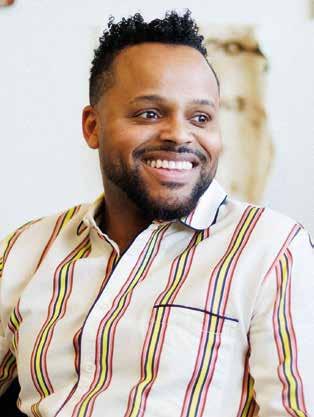
Manuel Mathieu
by Mariachiara Marzari
How does the idea of the “minor,” as proposed in In Minor Keys, resonate with your artistic practice?
Making art, in my opinion, is something that happens in the margins, out of sight. Beauty is hidden. Choosing to focus on that suggests that Koyo understands where the process begins. In a way, this decision is an attempt to stay as close as possible to the work itself, before it begins to act on the world, or the world on it. The most precious aspects of our survival lie in our capacity to translate our existence – through those quiet forms of resistance that dominant narratives try to silence. I want my abstract paintings to create conditions for perception where viewers can step back and recognize patterns across time, seeing how violence interrupts continuity and leaves lasting voids in historical collective memory.
Drawing on its own multiplicity, the abstraction of your work conveys the richness of existing at the crossroads of racial, geographical, and cultural identities. Who is Manuel Mathieu?
I was born in Port-au-Prince, Haiti, and immigrated to Montreal, Canada, at the age of 19. I seek to channel what lies beyond the visible, generating through abstraction a space where the mind can move freely – a space in which we can explore and confront the complexities of our humanity. I invite the viewers into a transitory state where they might come to understand the irregularities of our presence. History, like the land, carries a spiritual weight; understanding that healing requires traversing the inner landscapes of our memory is an important step toward grieving for example. Each artwork has the potential to be a spiritual encounter – a portal that reflects our interconnected existence beyond the limitations of physical form.
You allow viewers to actively participate in the shaping of the work’s meaning. What does this interactive mode of interpretation consist of?
I create spaces of contemplation where the viewer becomes a co-creator in the dialogue. This interactive mode of interpretation invites each person to bring their own sensibility, transforming passive observation into active participation in meaning-making. I ask the viewers to trust themselves. The viewer’s own memories, emotions, and experiences become the bridge between the visible and the invisible, allowing the work to speak through their unique consciousness. I hope to create a moment of shared revelation where the boundaries between observer and artwork dissolve, and meaning emerges from a space we all share.
Photo Jeanne Tétreault
Artista visiva, filmmaker e curatrice, Tiona Nekkia McClodden sviluppa una pratica interdisciplinare che attraversa il documentario, il video sperimentale, la scultura e l’installazione sonora. Il suo lavoro esplora e critica le intersezioni tra razza, genere e sessualità, con una particolare attenzione, negli ultimi anni, ai concetti di re-memory e di biomythography. La sua opera costruisce costellazioni di riferimenti e genealogie, restituendo corpo e complessità a storie spesso marginalizzate. GS
ENG Visual artist, filmmaker and curator Tiona Nekkia McClodden has developed an interdisciplinary practice that spans documentary, experimental video, sculpture and sound installation. Her work explores and critiques the intersections of race, gender and sexuality, with a particular focus in recent years on the concepts of re-memory and biomythography. Her work builds constellations of references and genealogies, restoring substance and complexity to often marginalized histories.
Big Chief Demond Melancon è tra i principali rappresentanti del Black Masking, tradizione afroamericana di New Orleans in cui vengono realizzati elaborati costumi indossati durante il Mardi Gras, in onore del sostegno offerto dai nativi agli schiavi fuggitivi. Il suo lavoro si concretizza in abiti ideati e assemblati nell’arco di diversi anni, ma anche in opere bidimensionali interamente realizzate a mano: complesse composizioni in cui storia, memoria e immaginazione convergono, tra figure storiche afroamericane, icone della cultura popolare, riferimenti araldici e richiami alle tradizioni Ashanti e Yoruba. MMG
ENG Big Chief Demond Melancon is a leading representative of Black Masking, an African-American tradition in New Orleans that involves the creation of elaborate costumes worn during Mardi Gras in honour of the Native Americans’ support for escaped slaves. His work takes the form of clothes designed and assembled over several years, as well as entirely handmade two-dimensional works: complex compositions in which history, memory and imagination converge and which include African-American historical figures, icons of popular culture, heraldic references and references to Ashanti and Yoruba traditions.
Tra le voci più critiche e originali nell’affrontare il conflitto israelo-palestinese, Avi Mograbi è un regista e videoartista che coniuga approccio documentaristico e riflessione personale, spesso mettendosi in scena come narratore. I suoi film e le sue videoinstallazioni esplorano temi quali le dinamiche di potere del governo israeliano, la violenza istituzionale, la responsabilità civile e l’occupazione dei territori palestinesi. Il suo linguaggio, privo di retorica, ricorre all’ironia per esercitare una critica lucida e incisiva. FS ENG One of the most critical and original voices addressing the Israeli-Palestinian conflict, Avi Mograbi is a director and video artist who combines a documentary approach with personal reflection, often putting himself centre stage as a narrator. His films and video installations explore themes such as the power dynamics of the Israeli government, institutional violence, civil responsibility and the occupation of Palestinian territories. Devoid of rhetoric, his language uses irony to exert a lucid and incisive critique.
Influente artista keniota-americana, Wangechi Mutu è nota per collage, sculture e video attraverso cui affronta temi quali identità, genere e razzismo, spesso in dialogo con l’immaginario afrofuturista. Figure ibride e surrealiste, insieme a sculture in bronzo e installazioni immersive, fondono forme organiche, simboli kenioti e riferimenti mitologici, mettendo in discussione standard di bellezza e rapporti di potere. Nel 2025 ha presentato a Roma la personale Black Soil Poems, tra la Galleria Borghese e la Casa del Cinema, con sculture e film che esplorano la femminilità nera, il consumismo, il degrado ambientale, la mitologia, la fantascienza e i processi di decolonizzazione. MMG
ENG An influential Kenyan-American artist, Wangechi Mutu is known for the collages, sculptures and videos through which she addresses themes such as identity, gender and racism, often in dialogue with Afrofuturist imagery. Hybrid and surrealist figures, together with bronze sculptures and immersive installations, blend organic forms, Kenyan symbols and mythological references, questioning standards of beauty and power relations. In 2025 she presented her solo exhibition Black Soil Poems at the Galleria Borghese and the Casa del Cinema in Rome, featuring sculptures and films that explore Black femininity, consumerism, environmental degradation, mythology, science fiction and processes of decolonization.
Tiona Nekkia McClodden
BORN 1981, Blytheville, USA
LIVES&WORKS Philadelphia, USA
Big Chief Demond Melancon
BORN 1978, New Orleans, USA
LIVES&WORKS New Orleans, USA
Avi Mograbi
BORN 1956, Tel Aviv
LIVES&WORKS Lisbon, Portugal
Wangechi Mutu
BORN 1972, Nairobi, Kenya
LIVES&WORKS New York City, USA and Nairobi, Kenya
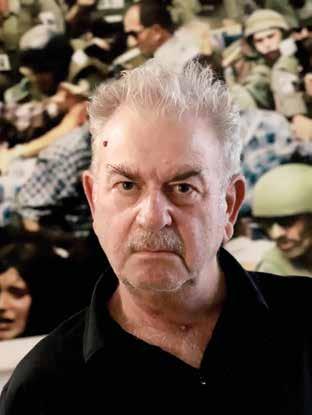
Avi Mograbi
by Marisa Santin
How does the idea of the “minor,” as proposed in In Minor Keys, resonate with your artistic practice?
Koyo Kouoh’s invitation to think in a minor key is, in a sense, an opportunity for me to go fourteen years back to one of my most intimate works Once I Entered A Garden, and to draw out a thread from it that speaks to our current catastrophic moment. It is also an opportunity to find a way to express the horror of genocide without surrendering to the pornography of images we live under the attack of. To seek the minor key in the midst of destruction is not a simple challenge, but a political decision — one that aligns with both my work as a filmmaker and my long-standing engagement as an activist.
In your films you often return to the idea that the camera is never neutral, but a device that alters what it observes and makes the filmmaker an active part of the scene. How has this awareness, over the years, changed your way of constructing documentary “truth” and your relationship with the people and reality you film?
The camera is never “neutral”, there is always someone holding the camera, there is always an eye placed on the eyepiece, there is always a mind that determines where the lens should be directed to and on what it should focus on. Whereas in my early days of filmmaking I was keen to capture reality as “it really is”, I later reached the understanding that at best you can use the camera to record a gaze, your gaze at the reality that unfolds in front of you, and that there is nothing neutral about your gaze. The man with the camera always takes part, whether big or small, in the scene that he is documenting. And having reached this understanding I also realised that it is absolutely necessary to present to the viewer the process of gazing, the making of the captured inspection including the different dilemmas, ethical and aesthetical, that arise from such an intervention. For me, one of the most crucial aspects that has to be presented to the viewer is the power relations between the person with the camera and his subjects, whether the filming is consensual or not.
In many of your works there is a clash between national narrative and political violence. Today, do you think cinema can still create a space of critical ambiguity, or has it become primarily a site of testimony?
The fact that cinema creates a space of critical ambiguity is unquestionable. As long as filmmakers are determined to quest the reality they live in their films will be dialectical. But critical ambiguity face huge political, commercial, populist forces that refuse it and wage a war against it.
Photo Quique Kierszenbaum
Arsenale di Venezia



Nairobi Contemporary Art Institute (NCAI)
FOUNDED 2020, Nairobi, Kenya
Eustáquio Neves
BORN 1955, Juatuba, Brazil
LIVES&WORKS Diamantina, Brazil
Il Nairobi Contemporary Art Institute è uno spazio non profit dedicato alla crescita, alla conservazione e alla narrazione dell’arte contemporanea dell’Africa orientale, fondato da Michael Armitage. Fin dalla sua nascita ha assunto una funzione espositiva, archivistica e discorsiva, contribuendo a costruire una memoria critica delle pratiche artistiche della regione e a renderla accessibile a un pubblico più ampio. MCB
ENG Founded by Michael Armitage, the Nairobi Contemporary Art Institute is a non-profit space dedicated to the development, preservation and storytelling of contemporary East African art. Since its inception, it has served an exhibition, archival and discursive function, helping to build a critical memory of the region’s artistic practices and to make them accessible to a wider audience.
Fotografo e artista visivo brasiliano, laureato in chimica, Eustáquio Neves attiva saperi scientifici per sperimentare tecniche e materiali, ibridando arti grafiche, pittura, scrittura e fotografia attraverso processi di manipolazione chimica che generano giustapposizioni e texture originali. Nelle sue opere connette memoria collettiva e individuale con identità personale e sociale, affrontando i temi della diaspora africana in Brasile, denunciando il persistere del razzismo e documentando la vita delle comunità quilombolas, composte da discendenti di africani schiavizzati. MMG
ENG A Brazilian photographer and visual artist with a degree in chemistry, Eustáquio Neves uses scientific knowledge to experiment with techniques and materials, blending graphic arts, painting, writing and photography through chemical manipulation processes that generate original juxtapositions and textures. In his works, he connects collective and individual memory with personal and social identity, addressing issues affecting the African diaspora in Brazil, denouncing the persistence of racism and documenting the lives of the quilombola communities, made up of the descendants of enslaved Africans.
Tuaˆ´n Andrew Nguye
ˆ ˜ n
BORN 1976, Sai Gon, Vietnam
LIVES Hoi An, Vietnam
WORKS Ho Chi Minh City, Vietnam
Tammy Nguyen
BORN 1984, San Francisco, USA
LIVES&WORKS Easton, USA
Artista e filmmaker, Tuaˆ´n Andrew Nguyeˆ n esplora il potere della memoria e la sua capacità di agire come forma di resistenza politica. La sua ricerca nasce spesso dal confronto con comunità segnate da colonialismo, guerra e processi di displacement, traducendosi in film, sculture e installazioni che rimettono in circolo narrazioni marginali o cancellate. Più che ricostruire una storia lineare, Nguyeˆ n lavora sulle lacune dell’archivio e sulle possibilità immaginative del racconto, facendo della memoria uno spazio di ascolto e reinvenzione. GS
ENG Artist and filmmaker Tuaˆ´n Andrew Nguyeˆ n explores the power of memory and its ability to act as a form of political resistance. His body of work often stems from engagement with communities affected by colonialism, war and displacement , resulting in films, sculptures and installations that put marginal or erased narratives back into circulation. Rather than reconstructing a linear history, Nguyeˆ n works on gaps in the archive and the imaginative possibilities of storytelling, making memory a space for listening and reinvention.
Tammy Nguyen è una pittrice che lavora con immagini fitte e stratificate, spesso in acrilico, in cui si sovrappongono non solo i livelli della pittura ma anche e soprattutto strati geopolitici, ecologici e spirituali. La sua ricerca nasce da indagini interdisciplinari, suggerendo come la non linearità del pensiero possa costituire una chiave di lettura del contemporaneo. Fondatrice della Passenger Pigeon Press, lavora con il libro inteso come estensione della pratica artistica. MCB
ENG Tammy Nguyen is a painter who creates dense, layered images, often in acrylic, overlapping not only layers of paint but also and above all geopolitical, ecological and spiritual stratifications. Her work employs interdisciplinary investigations, suggesting how the non-linearity of thought can constitute a key to understanding contemporary life. Founder of the Passenger Pigeon Press, her work with books is an extension of her artistic practice.
Otobong Nkanga indaga le trasformazioni sociali e topografiche dei luoghi, soffermandosi sui processi di estrazione, circolazione e consumo delle risorse. Disegno, creazione tessile, performance e scultura le consentono di seguire i percorsi della materia – dalla terra al commercio, dal paesaggio al corpo – rendendo visibili le ferite che collegano territori lontani. Il suo lavoro mostra come minerali, suolo e vegetazione siano sempre intrecciati a storie di lavoro, violenza e dipendenza. GS
ENG Otobong Nkanga explores the social and topographical transformations of places, focusing on processes of the extraction, circulation and consumption of resources. Drawing, textile creation, performance and sculpture allow her to follow the paths of matter –from land to commerce, from landscape to body – making visible the wounds that connect distant territories. Her work shows how minerals, soil and vegetation are always intertwined with histories of labour, violence and dependence.
Stratificando materiali diversi – gommapiuma, fibre di agave, pigmenti – attraverso una varietà di tecniche di assemblaggio, tra cui intreccio, incollaggio e cucito, Kaloki Nyamai costruisce narrazioni complesse e aperte a molteplici interpretazioni. Nei suoi lavori incorpora anche iconografie precoloniali, offrendo dispositivi di esplorazione, riflessione e guarigione delle ferite della storia. Le sue opere raggiungono una dimensione monumentale, occupando lo spazio per mettere in discussione l’egemonia di narrazioni dominanti, spesso sbilanciate sui valori egemonici dell’Occidente. MMG
ENG By layering different materials – foam rubber, agave fibres, pigments – through a variety of assembly techniques including braiding, gluing and sewing, Kaloki Nyamai constructs complex narratives open to multiple interpretations. He also incorporates precolonial iconography into his work, offering devices for exploration and reflection and for healing the wounds of history. His works reach monumental proportions, occupying space as a challenge to the hegemony of dominant narratives, which are often biased towards the hegemonic values of the West.
Al centro del lavoro di Temitayo Ogunbiyi vi sono i sistemi che orientano e regolano il movimento di persone e materia, intesi come dispositivi non solo infrastrutturali ma anche culturali. Da qui nascono sculture pubbliche e playground funzionali in cui gesto, gioco e apprendimento corporeo diventano strumenti per interrogare appartenenza, libertà e trasmissione culturale. Il suo linguaggio fa ricorso a scultura, installazione, tessuto e disegno per sviluppare una ricerca formale spesso volta a mettere in relazione cultura botanica ed elementi antropologici, come le acconciature tradizionali e le strutture vegetali. MCB
ENG At the heart of Temitayo Ogunbiyi’s work are the systems that orient and regulate the movement of people and matter, understood as not only infrastructural, but also cultural devices. This inspires public sculptures and functional playgrounds in which gesture, play and bodily learning become tools for questioning belonging, freedom and cultural transmission. Her language intertwines sculpture, installation, textiles, and drawing, developing a formal practice often connecting botanical culture and anthropological elements, such as traditional hairstyles and plant structures.
Pioniera della musica elettronica, Pauline Oliveros ha teorizzato e praticato il Deep Listening (Ascolto Profondo), volto a espandere la percezione uditiva e a favorire un ascolto consapevole dei suoni, mostrando come questi possano trasformare la nostra percezione del mondo. Autrice di partiture pensate per la meditazione sonora collettiva, realizza composizioni che si configurano come istruzioni rivolte a gruppi, anche di non professionisti, favorendo processi di coesione sociale. Le sue opere costruiscono stratificazioni di complessi paesaggi sonori. FS
ENG A pioneer of electronic music, Pauline Oliveros was both creator and practitioner of the concept of Deep Listening, aimed at expanding auditory perception and encouraging conscious listening to sounds, showing how they can transform our perception of the world. Author of scores designed for collective sound meditation, she created compositions that act as instructions addressed to groups, including non-professionals, fostering processes of social cohesion. Her works are created using layers of complex soundscapes.
Otobong Nkanga
BORN 1974, Kano, Nigeria
LIVES&WORKS Antwerp, Belgium, and Uyo, Nigeria
Kaloki Nyamai
BORN 1985, Nairobi, Kenya
LIVES&WORKS Nairobi, Kenya
Temitayo Ogunbiyi
BORN 1984, Rochester, USA
LIVES&WORKS Lagos, Nigeria
Pauline Oliveros
BORN 1932, Houston, USA 2016
Kambui Olujimi
BORN 1976, Brooklyn, New York City, USA
LIVES&WORKS New York City, USA
Hagar Ophir
BORN 1983, Jerusalem
LIVES&WORKS Berlin, Germany
Kambui Olujimi lavora con scultura, installazione, fotografia, video e performance per interrogare sistemi di pensiero percepiti come inevitabili, portando alla luce dinamiche implicite legate a cancellazione, memoria e costruzione sociale. Con un approccio non lineare, attinge all’inconscio collettivo per tradurre fenomeni astratti in dispositivi concreti, rendendo visibili incongruenze e strutture illusorie. La sua ricerca si configura così come un’indagine critica sulle narrazioni dominanti e sui processi che le generano. AS
ENG Kambui Olujimi works with sculpture, installation, photography, video and performance to interrogate systems of thought perceived as inevitable, exposing implicit dynamics related to erasure, memory and social construction. Using a non-linear approach, he draws on the collective unconscious to translate abstract phenomena into concrete devices, making inconsistencies and illusory structures visible. His research thus takes the form of a critical investigation of dominant narratives and the processes that generate them.
Con una formazione in studi storici, scenografia e danza, Hagar Ophir si muove tra installazione, performance, ricerca visiva e pedagogia, assumendo la Storia come spazio da riattivare. I suoi progetti recenti si concentrano sul destino degli oggetti rituali ebraici, oggi spesso sottratti al loro contesto d’uso e relegati in musei o archivi. Il suo lavoro si sviluppa frequentemente in forma collaborativa, mettendo in relazione arte ed educazione nella costruzione di spazi condivisi di conoscenza. MCB ENG With a background in historical studies, scenography, and dance, Hagar Ophir moves between installation, performance, visual research and pedagogy, embracing history as a space to be reactivated. Her recent projects focus on the fate of Jewish ritual objects, now often removed from their original context and consigned to museums or archives. Her work is often developed collaboratively, connecting art and education through the construction of shared spaces of knowledge.
Uriel Orlow
BORN 1973, Zurich, Switzerland
LIVES&WORKS Lisbon, Portugal; London, UK and Basel, Switzerland
Ebony G. Patterson
BORN 1981, Kingston, Jamaica
LIVES&WORKS Kingston, Jamaica and Chicago, USA
Nella sua pratica multidisciplinare, Uriel Orlow unisce ricerca storica, ecologia e attivismo socio-politico. Il tema cardine della sua ricerca è la testimonianza ambientale della memoria, rintracciata in ciò che solitamente resta marginale o invisibile. Ricostruendone le storie, l’artista mostra come il mondo vegetale sia stato, e continui a essere, profondamente connesso alla politica e ai sistemi di potere: le piante conservano tracce del colonialismo – basti pensare alla loro classificazione eurocentrica –fino a delineare forme di vero e proprio “nazionalismo botanico”. FS
ENG Within his multidisciplinary approach, Uriel Orlow combines historical research, ecology and socio-political activism. The key theme of his practice is the environmental testimony of memory, traced in what usually remains marginal or invisible. By reconstructing its stories, Orlow shows how the plant world has been, and continues to be, deeply connected to politics and systems of power: plants retain traces of colonialism – not least through their Eurocentric classification – to the point of constructing forms of genuine “botanical nationalism.”
Ebony G. Patterson costruisce opere visivamente sontuose e perturbanti, in cui tessuti, perline, glitter, fiori artificiali e materiali ornamentali convivono con temi di violenza, lutto e visibilità. La sua pratica affronta questioni di classe, razza, genere, cultura giovanile e vulnerabilità nei contesti postcoloniali, trovando nel decorativo non un’evasione ma una strategia critica. Dietro la seduzione cromatica delle sue installazioni e dei suoi arazzi emerge una riflessione severa su perdita, memoria e precarietà dei corpi.
GS
ENG Ebony G. Patterson creates visually sumptuous and disturbing works where fabrics, beads, glitter, artificial flowers and ornamental materials coexist with themes of violence, mourning and visibility. Her practice addresses issues of class, race, gender, youth culture and vulnerability in postcolonial contexts, finding in the decorative not an escape but a critical strategy. Beyond the chromatic seduction of her installations and tapestries emerges a stark reflection on loss, memory and the precariousness of bodies.
Una collaborazione prolifica, nata da una forte affinità estetica e concettuale, caratterizza il lavoro di Rajni Perera e Marigold Santos, sviluppato attorno a temi condivisi quali migrazione, identità diasporica, maternità, spiritualità e relazione con il mondo naturale. L’immaginario figurativo che ne emerge è denso: il corpo si fa ibrido, narrativo, attraversato da elementi mitologici e trasformativi. Al centro della loro ricerca si colloca la grande installazione scultorea collaborativa Efflorescence/The Way We Wake, concepita come corpo e paesaggio insieme, in cui materiali eterogenei – tra cui argilla, elementi sintetici e componenti ornamentali – danno vita a una forma complessa e stratificata. MCB
ENG A prolific collaboration, born from a strong aesthetic and conceptual affinity, the work of Rajni Perera and Marigold Santos developed around shared themes such as migration, diasporic identity, motherhood, spirituality and a relationship with the natural world. The figurative imagery that emerges is dense: the body becomes hybrid, narrative, and interwoven with mythological and transformative elements. At the centre of their work is the large collaborative sculptural installation Efflorescence/ The Way We Wake, conceived as both body and landscape together, in which heterogeneous materials – including clay, synthetic elements and ornamental components – give life to a complex and layered form.
Discendente dai Cape Malay — comunità musulmana di Città del Capo, formata da discendenti di schiavi e rifugiati provenienti dal Sud-Est asiatico — Thania Petersen lavora con fotografia, performance, video e installazione. Dialogando con le proprie radici culturali e religiose, Petersen dà forma a opere tessili, costumi e personificazioni, ma anche a ambienti sonori e visivi. Il suo lavoro mira a mettere in discussione le etichette identitarie, celebrando al contempo la forza e la resilienza delle comunità e contrastando le egemonie culturali e valoriali dominanti. MMG
ENG A descendant of the Cape Malay – a Muslim community in Cape Town, founded by the descendants of slaves and refugees from Southeast Asia – Thania Petersen works with photography, performance, video and installation. Her practice creates a dialogue with her own cultural and religious roots, giving shape to textile creations, costumes and personifications, as well as to sound and visual environments. Her work aims to interrogate identity labels, while celebrating the strength and resilience of communities and countering dominant cultural and value hegemonies.
Influenzato dall’esperienza maturata in musei e archivi, Alan Phelan orienta la propria ricerca verso la reinterpretazione della storia e dei linguaggi. Recuperando un antico metodo di fotografia a colori additiva – il processo Joly, inventato in Irlanda nel 1895 – Phelan lo impiega insieme a una varietà di altri materiali e tecniche per costruire una “storia visiva mancante” e mettere in luce una prospettiva contemporanea e queer. Le sue opere esplorano le connessioni tra storia, politica, cultura popolare e identità di genere. FS
ENG Influenced by his experience in museums and archives, Alan Phelan directs his practice towards the reinterpretation of history and languages. Using a variety of materials and techniques, he has revived an ancient method of additive colour photography – the Joly process, invented in Ireland in 1895 – employing it to construct a “missing visual history” and highlight a contemporary, queer perspective. His works explore the connections between history, politics, popular culture, and gender identity.
Già presente alla Biennale del 2013, Johannes Phokela è un pittore e scultore sudafricano che sviluppa opere in dialogo postmoderno con la tradizione pittorica europea, in particolare con i maestri fiamminghi del XVII secolo. A partire da una tecnica pittorica rigorosa, affronta con una sottile carica satirica i temi del colonialismo e delle categorie precostituite che legittimano, spesso inconsapevolmente, la distribuzione del potere. Il suo lavoro sorprende e disturba il canone artistico occidentale e il suo patrimonio visivo consolidato, attivando azioni di sofisticata iconoclastia politica. MMG
ENG A previous contributor to the 2013 Biennale, Johannes Phokela is a South African painter and sculptor who creates works in postmodern dialogue with the European pictorial tradition, particularly the Flemish masters of the seventeenth century. Beginning with a rigorous painting technique, he confronts, with a subtle satirical edge, the themes of colonialism and the pre-conceived categories that legitimize, often unconsciously, the distribution of power. His work surprises and disrupts the Western artistic canon and its consolidated visual heritage, using techniques underlined by a sophisticated political iconoclasm.
Rajni Perera & Marigold Santos
BORN 1985, Colombo, Sri Lanka
LIVES&WORKS Toronto, Canada
BORN 1981, Manila, Phillipines
LIVES&WORKS Calgary, Canada
Thania Petersen
BORN 1980, Cape Town, South Africa
LIVES&WORKS Cape Town, South Africa
Alan Phelan
BORN 1968, Dublin, Ireland
LIVES&WORKS Dublin, Ireland
Johannes Phokela
BORN 1966, Johannesburg, South Africa
LIVES&WORKS Johannesburg, South Africa
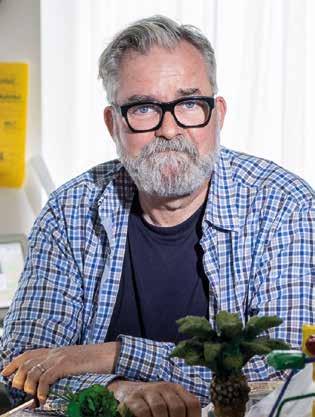
Alan Phelan
by Marisa Santin
How does the idea of the “minor,” as proposed in In Minor Keys, resonate with your artistic practice?
My Joly screen photographs revisit a forgotten method of colour photography, a minor note in the history of photography but one that was invented in Dublin where I am from. They are small illuminated images that demand a closer look. But there is a visual contradiction as the closer you get, the less you see, as the lined filter interrupts the detail. There is also a colour shift as there are two layers in the photograph that mismatch when you move. This helps ‘un-invent’ photography, questioning its authority further by layered timelines and multiple visual reference points. It’s also grounded in humour and respect for tradition. What I love about Koyo’s approach is that it is rooted in so many cultural practices that add complexity and compassion as well as dignity and equity.
Many of your works interrogate archives, museum systems, and national histories in order reactivate lateral or forgotten stories. In your process, what role do error, deviation, or the manipulation of sources play in producing new readings of history and language?
Parallel to my art career I have also worked in the museum and archive sector. This has helped me understand how history is constructed, told, and controlled. As a result I have embraced the counterfactual, creating messy histories from sources that do not belong together. Mistakes, mismatches and creative misunderstandings are important. Historians get annoyed with me because of this. I am not re-writing history but questioning how it is made. The aim is to include things that have been left out or suppressed, like a lot of queer histories. Using cinematic mise-en-scène or an historic photographic process gives gravitas, seduces the viewer, but things never line-up, and provoke different readings and meanings.
At this stage of your work, what directions or images are you focusing your research on, and what kind of relationship between history and the present do you feel is most urgent to explore today?
I have been researching more into Carlo Scarpa since being allowed use his incredible windows in the Central Pavilion for my printed vinyl works. I am working on a project that connects the utopian capitalism of mid-century Italian design to the surveillance capitalism of today. This is for a project in 00A Gallery in Trent later this year. There is a bridge there between technologies and modernisms that is really interesting to explore. It’s using a different set of visual vocabularies and making new viewing devices to resist nostalgia and a deferred potential, echoing how data waits to be activated, just as memory waits to be recalled.
Photo Anthony Woods
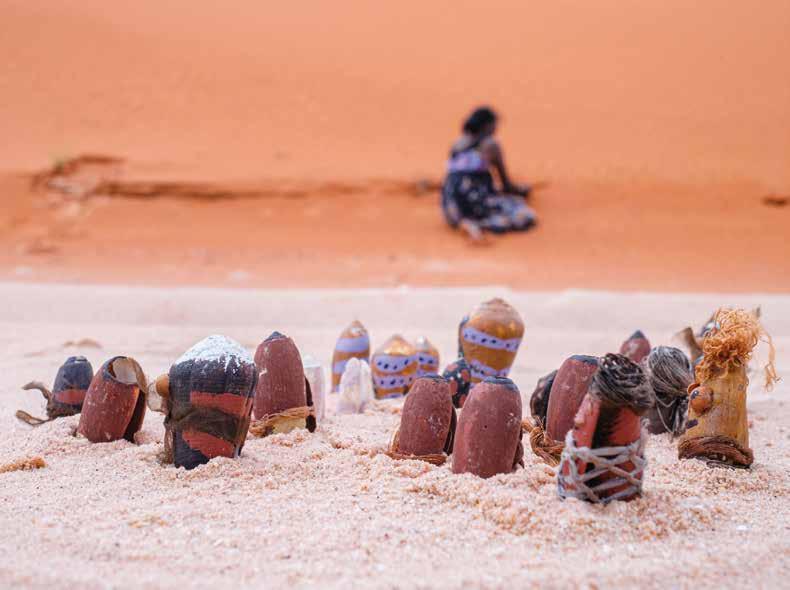

Léonard Pongo
BORN 1988, Liège, Belgium
LIVES&WORKS Brussels, Belgium and Kinshasa, Democratic Republic of Congo
Walid Raad
BORN 1967, Chbanieh, Lebanon
LIVES&WORKS Medusa, USA
Per Léonard Pongo la pratica artistica è una forma di narrazione ed esplorazione. Nel dialogo tra fotografia, immagine in movimento, oggetti tessili e tecniche di stampa sperimentali affiorano paesaggi e cosmologie congolesi, dispositivi vivi e inesauribili che si rivelano in visioni instabili e non definitive. Le sue immagini si espandono così oltre la fotografia, assumendo una dimensione installativa e sensoriale, ridefinita attorno all’idea di opacità. MCB
ENG For Léonard Pongo the artistic practice is a form of narration and exploration. In a dialogue between photography, moving image, textile objects and experimental printing techniques, Congolese landscapes and cosmologies emerge: living and inexhaustible devices that reveal themselves in unstable and indefinable visions. The images thus expand beyond photography, taking on the sensory dimension of an installation, redefined around the idea of opacity.
Walid Raad lavora tra fotografia, video, installazione e performance per interrogare il modo in cui gli eventi traumatici vengono registrati, narrati e ricordati. Noto per The Atlas Group, progetto dedicato alla storia contemporanea del Libano e alle sue guerre civili, ha costruito un’opera che mette costantemente in crisi l’idea di documento e di archivio. Mediante finzione, montaggio e conferenza-performativa Raad mostra come la memoria collettiva sia sempre instabile e contesa. GS
ENG Walid Raad’s practice spans photography, video, installation and performance to interrogate the way traumatic events are recorded, narrated and remembered. Known for The Atlas Group, a project dedicated to the contemporary history of Lebanon and its civil wars, he has built a body of work that constantly challenges ideas of documentation and trust in the archive. Through fiction, montage and performative lectures, Raad demonstrates how collective memory is always unstable and open to dispute.
Mohammed Z. Rahman
BORN 1997, London, UK
LIVES&WORKS London, UK
RAW Material Company
FOUNDED 2008, Dakar, Senegal
Il miniaturismo di Mohammed Z. Rahman si configura come un’indagine socio-antropologica del domestico, inteso come strumento per leggere appartenenza, classe, processi di razzializzazione e trasmissione affettiva. Ma è anche una lettera d’amore all’East End in cui il cibo viene rappresentato come veicolo di “parentela interdiasporica e solidarietà”. La sua pratica, ampia e trasversale, tiene insieme immagine e parola senza gerarchie formali, muovendosi tra pittura, installazione, scultura, illustrazione, zine, poesia e scrittura saggistica. Ne emerge un lavoro che esplora il cibo, la cucina e l’ospitalità come eredità della generosa cultura islamica. MCB
ENG Mohammed Z. Rahman’s miniaturism is a socio-anthropological investigation of the domestic, understood as a tool for understanding belonging, class, processes of racialisation and affective transmission. But it is also a love letter to the East End, celebrating food as a vehicle for “inter-diasporic kinship and solidarity”. His broad and transversal practice unites image and word without formal hierarchies, moving between painting, installation, sculpture, illustration, zines, poetry and non-fiction writing. The resulting work explores food, cuisine, and hospitality as a legacy of generous Islamic culture.
Il centro culturale fondato da Koyo Kouoh è una delle istituzioni decisive per la ridefinizione del discorso artistico contemporaneo africano. Inteso come spazio in cui l’arte opera come strumento di trasformazione dell’immagine e del pensiero, il centro si distingue per la qualità del lavoro quotidiano e dei suoi programmi. Fondamentale nel dibattito internazionale, RAW Material Company ha contribuito a ridefinire l’immagine stessa dell’arte africana, riconoscendola come un campo capace di incidere su pensiero, immaginari e realtà sociali. MCB
ENG A cultural centre founded by Koyo Kouoh, RAW Material Company is one of the key institutions redefining contemporary African artistic discourse. Intended as a space in which art operates as a tool for the transformation of image and thought, the centre stands out for the quality of its daily work and its programs. A key player in the international debate, RMC has helped to redefine the image of African art, recognizing it as a field capable of affecting thought, imagination and social realities.
Una pratica incentrata sul concetto di guarigione caratterizza il lavoro di Tabita Rezaire, che concepisce l’essere umano come un soggetto in cui spiritualità e tecnica si compenetrano. Imbevuto di tecnologie digitali, cosmologie ancestrali e processi di decolonizzazione della conoscenza, il suo lavoro si muove all’interno di una dimensione rituale, in cui l’artista occupa il ruolo di guaritrice con l’obiettivo di dispiegare l’anima delle persone. Nelle sue opere, le reti – organiche, elettroniche e spirituali –diventano dispositivi di trasformazione che attivano nelle persone una consapevolezza della propria “macchina interna” di dati ed energie. MCB ENG A central focus on the concept of healing characterises the work of Tabita Rezaire, who views the human being as a subject in which spirituality and technology intertwine. Permeated with digital technologies, ancestral cosmologies and processes of decolonizing knowledge, her work moves within a ritual dimension wherein the artist assumes the role of healer with the aim of unfolding people’s souls. In her work, networks – organic, electronic and spiritual – become transformative devices that activate an awareness of one’s own “internal machine” of data and energies.
Ricordo individuale e memoria collettiva sono al centro della ricerca multidisciplinare di Guadalupe Rosales, sviluppata anche attraverso la pratica pedagogica. A partire dalle comunità Latinx nel sud della California, l’artista ha avviato un lavoro di archiviazione di materiali eterogenei volto a preservarne la rilevanza culturale e sociale, contrastando la loro cancellazione storica e promuovendo valori di inclusività. Le sue opere danno forma a spazi immersivi e multisensoriali, concepiti come luoghi di condivisione di esperienze e memorie. FS
ENG Both individual and collective memory are at the centre of Guadalupe Rosales’ multidisciplinary research, which is also developed through pedagogical practice. Drawing on her experience of Latinx communities in Southern California, Rosales has begun an archive of heterogeneous materials, aimed at promoting values of inclusiveness, as well as highlighting the cultural and social relevance of these communities and counteracting their historical erasure. Her works create immersive, multisensory spaces, conceived as places for sharing experiences and memories.
L’opera presentata da Yo-E Ryou è connessa al progetto Unlearning Space, sviluppato dall’artista sull’isola di Jeju, vivendo a contatto con la comunità delle Haenyeo, pescatrici subacquee da cui ha appreso nuove forme di vita collettiva e di conoscenza della realtà. Le sue installazioni rinviano a modalità di attenzione percettiva, fondate su ciò che si avverte prima di essere visibile e su ciò che il corpo conosce attraverso l’esperienza quotidiana. La fluidità dell’acqua diventa così metafora e strumento di indagine. FS
ENG The work presented by Yo-E Ryou is linked to the Unlearning Space project, developed on Jeju Island, where the artist lives alongside the female free divers of the Haenyeo community, from whom she has learned new forms of collective living and ways of understanding reality. Her installations reference these modes of perceptive attention, grounded in what is sensed before it is visible and what the body knows through daily experience. The fluidity of water thus becomes both a metaphor and a tool for investigation.
Presente sia alla mostra ufficiale sia con un’installazione nel Padiglione Australia ai Giardini, Khaled Sabsabi sviluppa una ricerca segnata dal trauma della guerra, vissuto in giovanissima età quando, con la famiglia, fugge dal conflitto civile in Libano. Sabsabi realizza soprattutto installazioni immersive, con cui esplora la manipolazione mediatica della violenza, ma anche la complessità delle religioni – in particolare il sufismo – e le questioni legate all’identità arabo-musulmana, alle migrazioni e alla giustizia sociale. FS
ENG Present both at the official exhibition and with an installation in the Australian Pavilion at the Giardini, Khaled Sabsabi’s work is marked by the trauma of war, experienced at a very young age when he fled the civil conflict in Lebanon with his family. Sabsabi primarily creates immersive installations through which he explores the media’s manipulation of violence, but also the complexity of religions – in particular Sufism – and issues related to Arab-Muslim identity, migration and social justice.
Tabita Rezaire
BORN 1989, Paris, France, 1989
LIVES&WORKS Cayenne, French Guiana
Guadalupe Rosales
BORN 1980, Redwood City, USA
LIVES&WORKS Los Angeles, USA
Yo-E Ryou
BORN 1987, Seoul, South Korea
LIVES&WORKS Seoul and Jeju Island, South Korea
Khaled Sabsabi
BORN 1965, Tripoli, Lebanon
LIVES&WORKS Sydney, Australia
Rose Salane
BORN 1992, New York City, USA
LIVES&WORKS New York City, USA
Issa Samb
BORN 1945, Dakar, Senegal 2017
Con un approccio volutamente poco determinato Rose Salane costruisce il proprio lavoro a partire da oggetti ordinari, raccolti presso archivi, istituzioni o aste. Questo deposito eterogeneo diventa uno strumento per interrogare modelli di vita urbana. Tra scultura, collage, installazioni e ricerca documentaria, la sua pratica indaga memoria, circolazione, perdita e anonimato. Formata in urbanistica, Salane porta la città dentro ogni suo lavoro come infrastruttura mentale e dispositivo di riflessione. MCB
ENG In a broad and deliberately undefined practice, Rose Salane builds her work by engaging with ordinary objects collected from auctions, archives and institutions. This heterogeneous repository becomes a tool for interrogating the patterns of urban life. Through sculpture, collage, installation and documentary research, her practice investigates memory, circulation, loss and anonymity. Trained in urban planning, she brings the city into each of her works as a mental infrastructure and backdrop for reflection.
Tra i protagonisti dell’arte africana contemporanea, Issa Samb è stato uno dei fondatori del Laboratoire Agit’Art, collettivo costituito a Dakar nel 1974 per promuovere il superamento dei formalismi accademici a favore di pratiche interdisciplinari, sperimentali e fondate sull’impegno socio-politico. Il suo lavoro crea un ponte tra le tradizioni africane – che attribuiscono centralità alla parola e al rito – e le influenze di avanguardie europee quali il dadaismo, il surrealismo e il movimento Fluxus. FS
ENG Among the protagonists of contemporary African art, Issa Samb was a founder of the Laboratoire Agit’Art, a collective established in Dakar in 1974 to promote the transcendence of academic formalism in favour of interdisciplinary experimental practices grounded in sociopolitical engagement. His work connects African traditions – which focus on the word and ritual – with influences from the European avantgarde, such as Dadaism, Surrealism and the Fluxus movement.
Amina Saoudi Aït Khay
BORN 1955, Casablanca, Morocco
LIVES&WORKS Sousse, Tunisia
Carrie Schneider
BORN 1979, Chicago, USA
LIVES&WORKS New York City, USA
Amina Saoudi Aït Khay apprende sin da giovane l’arte tradizionale maghrebina del telaio, che rinnova in seguito grazie a una sensibilità cromatica sviluppata attraverso la pittura su seta, integrando nelle sue composizioni tessili anche i motivi dell’astrazione moderna. Le sue opere nascono da un dialogo con i materiali – soprattutto la lana — tinti con pigmenti naturali come melograno, henné e curcuma, in un processo intuitivo e attento che si lascia guidare dalle qualità stesse delle sostanze. Affiorano così paesaggi e memorie legate tanto al suo passato in Marocco quanto al suo presente in Tunisia. MMG
ENG Amina Saoudi Aït Khay learned the traditional Maghreb art of weaving from a young age, returning to it later in life thanks to a chromatic sensibility developed through silk painting, integrating the rhythms of modern abstraction into her textile compositions. Her works are born from a dialogue with materials – primarily wool – dyed with natural pigments such as pomegranate, henna and turmeric, in an intuitive and careful process that is guided by the qualities of the substances themselves. Landscapes and memories linked both to her past in Morocco and her present in Tunisia emerge.
Il lavoro di Carrie Schneider utilizza performance, fotografia e film, prendendo spesso come soggetto i propri famigliari e amici, insieme al loro carico psicologico ed emotivo. Le sue immagini si muovono tra quotidiano e fantastico, costruendo una tensione costante tra registrazione, improvvisazione e trasformazione. La sua pratica indaga il rapporto tra l’esattezza della macchina fotografica e la sua capacità di astrazione, introducendo nel processo elementi di disordine e imprevedibilità. AS
ENG Carrie Schneider’s work spans performance, photography and film, often taking family and friends as well as her own psychological states as subjects. The images move between the everyday and the fantastic, building a constant tension between recording, improvisation and transformation. Her practice investigates the relationship between the accuracy of the camera and its capacity for abstraction, introducing elements of disorder and unpredictability into the process.
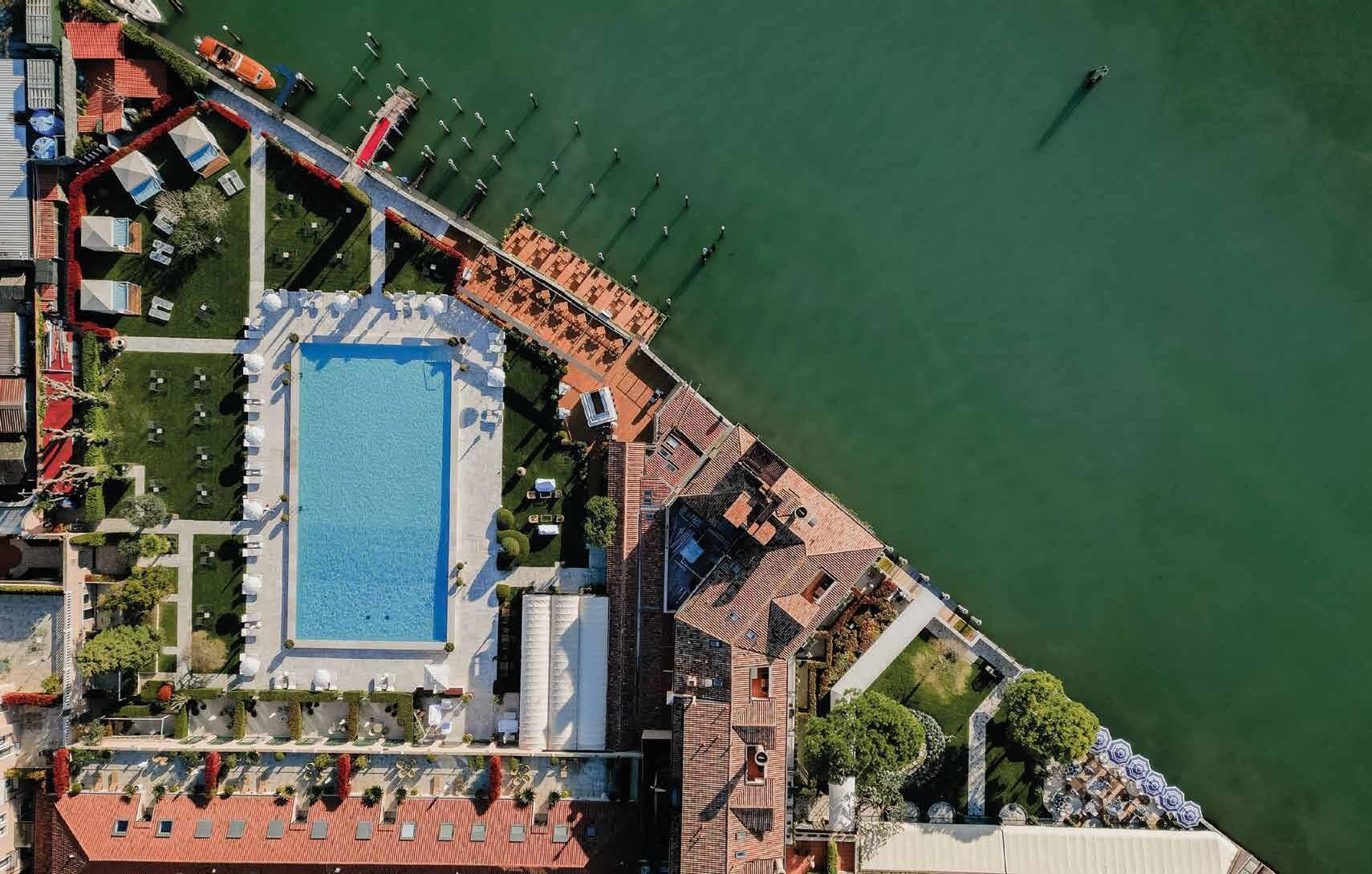
L’artista libanese Hala Schoukair sviluppa forme organiche e minerali in dipinti e opere su carta, ricorrendo a motivi intricati e ripetitivi, tra astrazione e figurazione, in cui l’infinitamente piccolo e l’infinitamente grande tendono a confondersi in segni stratificati. La produzione più recente segna una svolta nella sua poetica, con opere di grande scala generate da un ritmo frattale che richiama forme organiche. Memorabile è l’uso di minuscoli punti perforati utilizzati per rappresentare l’impatto emotivo della situazione socio-politica in Libano. MMG
ENG Lebanese artist Hala Schoukair develops organic and mineral forms in paintings and works on paper, using intricate and repetitive motifs between abstraction and figuration in which the infinitely small and the infinitely large begin to merge into layered patterns. Her most recent work marks a turning point in her poetics, with largescale pieces generated by a fractal rhythm that recalls organic forms. Particularly memorable is the use of tiny perforated dots to represent the emotional impact of the socio-political situation in Lebanon.
A partire dagli anni ‘90 Berni Searle sviluppa un linguaggio che spazia tra fotografia, video e performance, profondamente radicato in questioni politiche e sociali. Il suo corpo ricorre come elemento centrale, inteso come proiezione di un corpo collettivo ferito e attraversato da identità multiple. In questa prospettiva, il suo lavoro si configura come un’indagine sui traumi, visibili e latenti, che attraversano il Sudafrica postapartheid, filtrati da una dimensione personale e incarnata. AS
ENG Since the nineties, Berni Searle has been developing a language that spans photography, video and performance and is deeply rooted in political and social issues. Her body recurs as a central element, understood as a projection of a wounded collective body traversed by multiple identities. From this perspective, her work can be understood as an investigation of the visible and latent traumas that plague post-apartheid South Africa, filtered through a personal and embodied lens.
Le opere di Mmakgabo Mmapula Helen Sebidi combinano tradizioni ancestrali e narrazioni sociali contemporanee. Nei lavori più recenti emergono nuove sperimentazioni scultoree, insieme al recupero di opere storiche ‘perdute’. La sua arte è considerata una forma di redenzione esistenziale, un ponte tra il mondo spirituale e quello materiale, in cui figure animali assumono il ruolo di guide, accompagnando le trasformazioni sociali in dialogo con le forze ancestrali. Mettendo spesso in scena la condizione delle donne nere durante l’apartheid, la sua pratica acquisisce una forte valenza sociale e politica. MMG
ENG The works of Mmakgabo Mmapula Helen Sebidi combine ancestral traditions and contemporary social narratives. Her most recent works feature new sculptural experiments, along with the recovery of “lost” historical works. Her art can be seen as a form of existential redemption, a bridge between the spiritual and material worlds, in which animal figures assume the role of guides, accompanying social transformations in dialogue with ancestral forces. Often depicting the plight of black women during apartheid, her practice acquires a strong social and political significance.
Pittrice e miniaturista contemporanea, Wardha Shabbir costruisce paesaggi di forte intensità esperienziale. Si tratta di mondi che derivano dalla flora, dalla fauna e dall’architettura di Lahore, in Pakistan, e che ne rielaborano la precisione ornamentale e l’immaginazione simbolica in una concentrazione quasi meditativa. Nel suo lavoro, attento alla percezione del pubblico, la miniatura assume una dimensione tridimensionale, aprendo spazi di riflessione caratterizzati da profondità geografica e spirituale. MCB
ENG Contemporary painter and miniaturist Wardha Shabbir constructs landscape of powerful experiential intensity. These worlds are derived from the flora, fauna and architecture of Lahore, Pakistan, and rework ornamental precision and symbolic imagination in an almost meditative concentration. In her work, attentive to audience perception, the miniature takes on a three-dimensional quality, opening up spaces for reflections of geographical and spiritual depth.
Hala Schoukair
BORN 1957, Beirut, Lebanon
LIVES&WORKS Beirut, Lebanon
Berni Searle
BORN 1964, Cape Town, South Africa
LIVES&WORKS Cape Town, South Africa
Mmakgabo Mmapula Helen Sebidi
BORN 1943, Marapyane, South Africa
LIVES&WORKS Johannesburg, South Africa
Wardha Shabbir
BORN 1987, Lahore, Pakistan
LIVES&WORKS Lahore, Pakistan
Yoshiko Shimada
BORN 1959, Tokyo, Japan
LIVES&WORKS Chiba, Japan
Himali Singh Soin & David Soin Tappeser
BORN 1987, New Delhi, India
LIVES&WORKS London, UK and New Delhi, India
BORN 1985, Bonn, Germany
LIVES&WORKS London, UK and New Delhi, India
Mediante pratiche artistiche e di ricerca eterogenee, spesso collaborative, Yoshiko Shimada sviluppa una ricerca che si estende tra pedagogia radicale, archivio, attivismo e spiritualità, mettendo in luce le interconnessioni tra modernità giapponese, patriarcato e forme di discriminazione nel contesto postbellico. Il suo lavoro si concentra su tensioni sociopolitiche e amnesia storica, indagando la complessità dei ruoli di genere e delle identità sessuali e culturali in relazione al colonialismo e all’imperialismo giapponese.
ENG Through heterogeneous and often collaborative artistic and research practices, Yoshiko Shimada has developed a body of work that spans radical pedagogy, archive, activism and spirituality, highlighting the interconnections between Japanese modernity, patriarchy and forms of discrimination in the post-war context. Her work focuses on socio-political tensions and historical amnesia, investigating the complexity of gender roles and sexual and cultural identities in relation to Japanese colonialism and imperialism.
Nel duo Hylozoic/Desires, Himali Singh Soin e David Soin Tappeser mettono in dialogo poesia sperimentale, musica originale, performance e immagini per evocare futuri speculativi e temporalità non lineari. La loro ricerca si orienta verso un orizzonte ontologico piatto, in cui pietra, spirito, macchina e umano si collocano sullo stesso piano. I lavori nascono da geografie estreme, archivi scientifici e immaginazioni ecologiche, trasformando il dato in racconto sensibile e facendo confluire meraviglia e pensiero critico. GS
ENG As the duo Hylozoic/Desires, Himali Singh Soin and David Soin Tappeser bring experimental poetry, original music, performance and image into dialogue to evoke speculative futures and non-linear temporalities. Their research is oriented towards a flat ontological horizon where stone, spirit, machine and human are placed on the same level. Their works often draw on extreme geographies, scientific archives and ecological imaginations, transforming data into sensitive narratives and bringing together wonder and critical thinking.
Buhlebezwe Siwani
BORN 1987, Johannesburg, South Africa
LIVES&WORKS Amsterdam, Netherlands and Cape Town, South Africa
Cauleen Smith
BORN 1967, Riverside, USA
LIVES&WORKS Los Angeles, USA
L’ubungoma, aspetto centrale della spiritualità africana, legato alla divinazione e all’intermediazione con gli antenati come forma di guarigione, è al centro della pratica di Buhlebezwe Siwani, in cui rito e gestualità performative si fondono in dimensioni installative e video. Al centro si colloca il corpo femminile nero, inteso come soggetto, medium e campo di forze. Il lavoro si radica nell’indagine della spiritualità africana e nelle sue tensioni con il cristianesimo, affrontando le eredità della colonizzazione e il modo in cui queste continuano a modellare identità, credenze e rappresentazioni. MCB
ENG Ubungoma, a central aspect of African spirituality linked to divination and mediation with ancestors as a form of healing, is at the heart of Buhlebezwe Siwani’s practice, in which ritual and performative gestures merge with installation and video dimensions. At the centre is the Black female body, understood as a subject, medium and force field. The work is rooted in the investigation of African spirituality and its tensions with Christianity, addressing the legacies of colonization and the way in which these continue to shape identities, beliefs and representations.
Artista interdisciplinare con una forte radice nel cinema sperimentale della metà del Novecento, Cauleen Smith lavora tra film, video, installazioni, creazioni tessili, disegno e performance. La sua ricerca riflette sulle possibilità quotidiane dell’immaginazione e mette in relazione identità nera, musica, archivi, fantascienza e pensiero radicale. Le sue opere fanno convivere studio, invenzione e militanza, trasformando l’arte in uno spazio di relazione, memoria e futuri possibili. GS
ENG An interdisciplinary artist with strong roots in mid-twentiethcentury experimental cinema, Cauleen Smith works across film, video, installation, textile creations, drawing and performance. Her research reflects on the everyday possibilities of the imagination and connects Black identity, music, archives, science fiction and radical thought. Her works bring together study, invention and activism, transforming art into a space for connection, memory and possible futures.
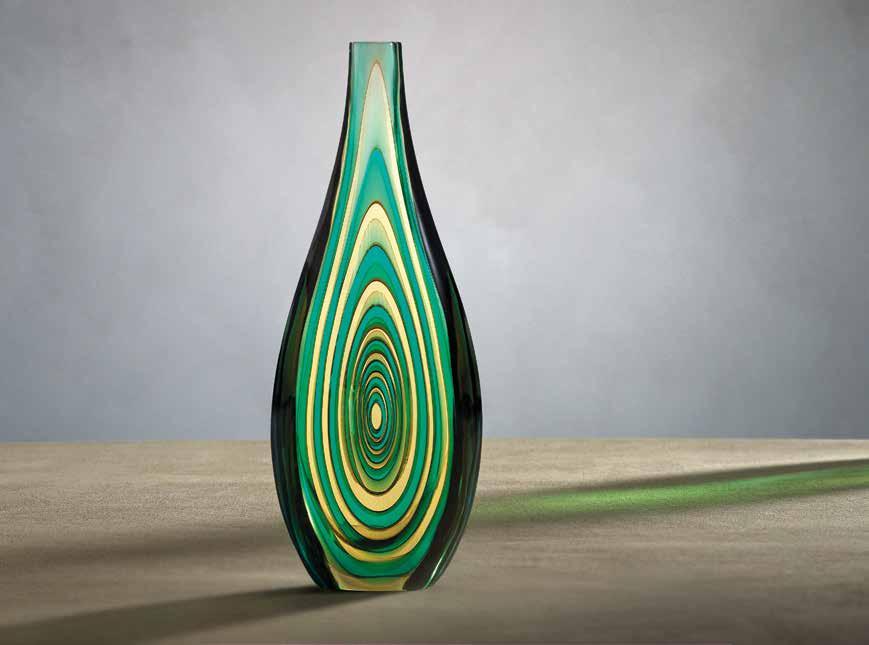
Vera Tamari
BORN 1944, Jerusalem, Palestine
LIVES&WORKS Ramallah, Palestine
Tsai Ming-liang
BORN 1957, Kuching, Malaysia
LIVES&WORKS New Taipei City and Taipei, Taiwan
Le installazioni monumentali in ceramica di Vera Tamari esplorano i temi della memoria e della resilienza in profonda connessione con le tragedie del territorio palestinese. Il mondo vegetale ricorre spesso come simbolo di resistenza, sacralità e rigenerazione. Nel 2024 ha realizzato un’importante installazione presso il Palestinian Museum, composta da oltre tremila piccoli alberi di ulivo in ceramica che evocano lo sradicamento quotidiano della popolazione palestinese da parte delle forze di occupazione israeliane. Un lavoro che si configura al tempo stesso come atto di memoria e come celebrazione della vita e della speranza contro le forze di distruzione. MMG
ENG Vera Tamari’s monumental ceramic installations explore themes of memory and resilience, with deep connections to the tragedies of the Palestinian territory. The plant world often recurs as a symbol of resistance, regeneration and the sacred. In 2024 she created a major installation at the Palestinian Museum, comprising over three thousand small ceramic olive trees to evoke the daily uprooting of the Palestinian population by the Israeli occupation forces. Her work is simultaneously an act of memory and a celebration of life and hope against the forces of destruction.
Tsai Ming-liang ha ridefinito il linguaggio del cinema contemporaneo attraverso opere segnate da durata, silenzio, solitudine e un’attenzione radicale allo spazio. Il suo lavoro, spesso costruito attorno alla presenza dell’attore Lee Kang-sheng, osserva corpi, architetture e desideri in una condizione di sospensione quasi ipnotica. Negli ultimi anni la sua pratica si è progressivamente aperta all’installazione e alla performance, mantenendo intatta la capacità di trasformare il tempo in materia emotiva. GS
ENG Tsai Ming-liang redefined the language of contemporary cinema through works marked by duration, silence, solitude and a radical attention to space. His work, often built around the presence of actor Lee Kang-sheng, depicts bodies, architectures and desires in a condition of almost hypnotic suspension. In recent years his practice has progressively opened up to installation and performance while maintaining his ability to transform time into emotional matter.
Victoria-Idongesit Udondian
BORN 1982, Uyo, Nigeria
LIVES&WORKS Lagos, Nigeria and New York City, USA
Celia Vásquez Yui
BORN 1960, Pucallpa, Peru
LIVES&WORKS the Peruvian Amazon, Pucallpa, Peru
Creazioni tessili, scultura, installazioni, performance e fotografia indagano l’abbigliamento come luogo in cui cultura, migrazione e sistemi di scambio globale prendono forma. Al centro del lavoro di Victoria-Idongesit Udondian materiali di seconda mano e tecniche tradizionali vengono rielaborati in sculture, costumi e abiti ibridi. Mettendo al centro storie individuali, memoria culturale e condizioni postcoloniali, le sue opere esplorano le relazioni tra lavoro, consumo e potere, mostrando come gli oggetti partecipino alla costruzione dell’identità. AS
ENG Textile creations, sculpture, installations, performances and photography, used to explore clothing as a place where culture, migration and systems of global exchange take shape. Victoria-Idongesit Udondian’s work centres on second-hand materials and traditional techniques, reworking them into hybrid sculptures, costumes and clothing. These works connect individual histories, cultural memory and the postcolonial condition, interrogating the relationships between labor, consumption and power, and demonstrating how objects participate in the construction of identity.
Appartenente alla comunità Shipibo-Konibo dell’Amazzonia peruviana, Celia Vásquez Yui concepisce il fare artistico come strumento per veicolare messaggi di forte impegno civile, in difesa dell’ambiente e dei diritti dei popoli indigeni. Utilizzando tecniche tradizionali di modellazione della ceramica, realizza figure animali decorate con complessi motivi geometrici Kené, tracciati con pigmenti naturali ricavati da piante e minerali della foresta. Questi segni rinviano a saperi ancestrali e a pratiche magico-propiziatorie legate alla cosmologia e ai canti di guarigione dell’Amazzonia. FS ENG A member of the Shipibo-Konibo community of the Peruvian Amazon, Celia Vásquez Yui views artistic creation as a tool to convey messages of strong civil commitment to defence of the environment and the rights of indigenous peoples. Using traditional ceramic modelling techniques, she creates animal figures decorated with complex geometric Kené motifs, traced using natural pigments obtained from the plants and minerals of the forest. These signs refer back to ancestral knowledge and magical-propitiatory practices, linked to Amazonian cosmology and healing songs.
Nel lavoro di Kemang Wa Lehulere – figura fondamentale dell’arte contemporanea sudafricana – banchi scolastici, lavagne, pneumatici e sculture seriali diventano materiali attraverso cui interrogare l’eredità dell’apartheid e le sue persistenze nelle strutture educative e sociali contemporanee. Elementi recuperati e riassemblati attivano una tensione tra esperienza individuale e narrazione ufficiale, mettendo in crisi le versioni istituzionali della storia. Centrale è anche la dimensione collettiva, che si esprime sia nei processi di produzione dei lavori sia in forma istituzionale, come in progetti di cui è cofondatore quali il collettivo Gugulective (2006) e il Center for Historical Reenactments (2010) di Johannesburg. MCB
ENG In the work of Kemang Wa Lehulere – a fundamental figure in South African contemporary art – school desks, blackboards, tyres and serial sculptures become materials through which to interrogate the legacy of apartheid and its persistence in contemporary educational and social structures. Recovered and reassembled elements are used to create a tension between individual experience and official narrative, challenging institutional versions of history. The collective dimension is also central, expressed both through the production processes of the work and in institutional forms, as in projects he co-founded, such as the Gugulective collective (2006) and the Center for Historical Reenactments (2010) in Johannesburg.
Le sculture e installazioni di Kennedy Yanko, costruite con metalli di recupero e pelli verniciate, danno forma a strutture tese, sensuali e quasi anatomiche. Superfici pittoriche solidificate si trasformano in materia flessibile, mentre elementi rigidi e pesanti vengono saldati, piegati e assemblati in configurazioni che destabilizzano i concetti di gravità ed equilibrio. Un crescente riconoscimento istituzionale, tra mostre museali e importanti collezioni internazionali, accompagna una ricerca che insiste sulla continua possibilità di rigenerazione della materia e dello sguardo. MCB
ENG Kennedy Yanko’s practice uses sculpture and installation to create a dialogue between salvaged metals and patent leather, giving shape to taut, sensual and almost anatomical structures. Solid pictorial surfaces become flexible materials again, while heavy, rigid elements are welded, bent and assembled into configurations that destabilise gravity and balance. Growing institutional recognition, including museum exhibitions and major international collections, accompanies a body of work that emphasizes the constant possibility of regenerating matter and the gaze.
Tra i protagonisti più attivi della scena underground di Beirut, Raed Yassin sviluppa una pratica che attraversa musica e arti visive. In quest’ultimo ambito analizza la relazione tra memoria personale e storia collettiva, spesso filtrata attraverso la cultura pop. Le sue opere costruiscono una mitologia del presente, contaminata da rimandi alla cultura del passato, al cinema e alla musica araba, senza trascurare temi di forte impegno civile, come i conflitti dell’area mediorientale. FS
ENG One of the most active figures of the Beirut underground scene, Raed Yassin has developed a practice that spans music and visual arts. He uses the latter to analyse the relationship between personal memory and collective history, often filtered through pop culture. His works build a mythology of the present, informed by references to the culture of the past, cinema and Arab music, without neglecting themes of strong civil commitment, such as the conflicts of the Middle East.
Nato nella famiglia reale Yawnghwe, esiliata in seguito a un colpo di Stato, l’artista birmano sviluppa una pratica tra pittura e installazione che mette in relazione storia familiare e vicende politiche del Myanmar. Attraverso l’analisi di immagini d’archivio e dispositivi pittorici, il suo lavoro mette in discussione i limiti della documentazione storica e rielabora dinamiche legate al traffico di droga, agli eserciti rivoluzionari e alla violenza di Stato, nel tentativo di rendere leggibile una realtà politica profondamente complessa. AS ENG Born into the Yawnghwe royal family, and exiled following a coup d’état, Burmese artist Sawangwongse Yawnghwe has developed a practice that spans painting and installation, connecting family history and political events in Myanmar. Through the analysis of archival images and pictorial devices, his work questions the limits of historical documentation and reimagines dynamics related to drug trafficking, revolutionary armies and state violence, in an attempt to make a profoundly complex political reality legible.
Kemang Wa Lehulere
BORN 1984, Cape Town, South Africa
LIVES&WORKS Cape Town, South Africa
Kennedy Yanko
BORN 1988, St. Louis, USA
LIVES&WORKS Miami, USA
Raed Yassin
BORN 1979, Beirut, Lebanon
LIVES&WORKS Beirut, Lebanon and Berlin, Germany
Sawangwongse Yawnghwe
BORN 1971, Shan State Burma
LIVES&WORKS Zutphen, Netherlands and Chiang Mai, Thailand
Raed Yassin
by Mariachiara Marzari
How does the idea of the “minor,” as proposed in In Minor Keys, resonate with your artistic practice?
The idea of the “minor” resonates with how I think about art as something that works quietly rather than declaratively. I’m drawn to gestures that don’t demand attention but instead settle over time, shifting perception in ways that are subtle yet lasting. Making art, for me, is like planting small seeds across different spaces and contexts, without control over how or when they will take root, trusting that time will shape their meaning. This approach aligns with a sensitivity to what exists in the background tones, narratives, and emotions that don’t resolve neatly or present clear conclusions, but instead linger and remain open. I’m interested in that space of gentle resistance, where things are not fully defined, where memory, awareness, and ambiguity coexist. It reflects a way of engaging with the world where meaning is not immediate or singular, but something that unfolds gradually, often outside the center, in quieter and less visible ways.
Personal memory and collective history lie at the core of your practice. Your works weave together video, photography, sound, installations, and neon signs through a deeply personal lens. What was your first approach to art?
My first approach to art was not clearly defined; it was present around me in an ambiguous way when I was a child. Over time, however, personal trauma and the experience of war took over and shifted my attention elsewhere. It was poetry that eventually opened the door for me, becoming the entry point through which I began to understand both my place in the world and myself as an artist and musician.
You stated that “when times change, points of view change as well, along with the political and social situation.” In the present context, what is the current “sound” of the world?
Unfortunately, the sound of the world right now feels like the soundtrack of a horror B-movie played by a satanic death metal band.
Photo Tony Elieh
Padiglione Italia Biennale Arte 2026
09.05 – 22.11.2026
Tese delle Vergini Arsenale, Venezia
Commissario
Angelo Piero Cappello
Curatrice
Cecilia Canziani
Artista
Chiara Camoni
contecontutto.it
@contecontutto
#ConTeConTutto
#PadiglioneItalia2026
#ItalianPavilion2026
Main sponsor
Sponsor
Billie Zangewa
BORN 1973, Blantyre, Malawi
LIVES&WORKS Johannesburg, South Africa
Collage tessili realizzati con ritagli di seta grezza cuciti a mano danno forma a composizioni figurative capaci di mettere in discussione la storica oggettificazione del corpo femminile nero. Spesso soggetto al centro delle proprie immagini, Billie Zangewa costruisce narrazioni intime legate alla quotidianità domestica, attraverso cui indaga identità, genere e rappresentazione. La materialità del tessuto, con bordi irregolari e superfici interrotte, enfatizza il processo e l’imperfezione, traducendo il vissuto in immagini sospese tra personale e universale. AS
ENG Textile collages made from hand-sewn scraps of raw silk give shape to figurative compositions that challenge the historical objectification of the Black female body. Often at the centre of her images, Billie Zangewa constructs intimate narratives tied to everyday domesticity through which she investigates identity, gender, and representation. The material nature of the fabric, with its irregular edges and interrupted surfaces, emphasizes process and imperfection, translating experience into images suspended between the personal and the universal.
Gala Porras-Kim*
BORN 1984, Bogotá, Colombia
LIVES&WORKS Los Angeles, USA and London, UK
* Sezione non competitiva Out of competition
APPLIED ARTS PAVILION
Special Project of La Biennale di Venezia and Victoria and Albert Museum, London
Gala Porras-Kim indaga i dispositivi istituzionali che determinano il valore, il significato e persino il destino degli oggetti culturali. Disegno, testo, scultura e installazione le permettono di lavorare a stretto contatto con collezioni museali, reperti archeologici, archivi e sistemi di conservazione, mettendo in luce le implicazioni politiche di ogni classificazione. La sua pratica non si limita alla critica dell’istituzione, ma formula anche ipotesi e protocolli alternativi per ripensare il rapporto tra gli oggetti e chi li custodisce. GS
ENG Gala Porras-Kim investigates the institutional mechanisms that determine the value, meaning and even fate of cultural objects. Drawing, text, sculpture and installation are used to work closely with museum collections, archaeological finds, archives and conservation systems, highlighting the political implications of each classification. Her practice is not limited to institutional critique, but also develops alternative hypotheses and protocols to rethink the relationship between objects and their custodians.
See p. 129 A cura di Michele Cerruti But MCB, Massimo Michele Greco MMG , Daniele Licata DL , Francesco Santaniello FS, Giovanni Santarelli GS, Adele Spinelli AS
Chiara Camoni
by Michele Cerruti But
How does the idea of the “minor,” as proposed in In Minor Keys, resonate with your artistic practice?
I firmly believe in Minor Keys, because they have enormous potential for transformation. I can be in small groups, because I prefer small groups than big ones, but these groups can multiply and extend. So the critical mass grows and changes. It is not the sensational gesture, but the repetition of many small intentions, each at its own scale, that generate a huge powerful force.
In Con te con tutto (With you with everything), your project for the Italian Pavilion, it’s the very preposition “with” which seems to play a major role. What does it mean to you to stay “with”?
In the title the word “con” – “with” – appears twice. It is present in Con te (With you), where the “you” can refer to the “other” considered as a human being, but also in Con tutto (With everything), referring to a desire to participate in the entire world, a world that is both animate and inanimate. A participation that also extends to time, understood both as the past and the future. There is a desire for openness, but also a desire to get lost. Because in this context the word “with” brings with it difficulty: opening up to the “other” means being ready to accept their complexity. The word I have reflected on the most in recent years is “empathy”. I believe that today there is a great need for it. We must recalibrate our empathy towards the world and understand how we can relate to it.
Can your project be considered as a representation of your studio in the Apuan Alps? What do the “domestic” and the “everyday” mean to you?
On my kitchen table, breakfast cups alternate with bowls and sculptures that I shape myself. I switch back and forth between the time of everyday life and the time of art. The two dimensions merge into each other and often the distinction is no longer so clear-cut. It is precisely this transition area that is extremely interesting for me. Even the relationship with the forest has no intellectual or literary connotation for me, it is the forest I’m used to, overlooking a marble quarry. It is made up of presences, such as tree trunks, which evoke the columns and make me think of bodies – sculpted ones and ours. The works exhibited in the first gallery sink their roots into the distant past, but they look at the future. That’s why we have chosen to open up a space for fruition immediately after this “forest” of figures, a space of compromise between an absolute area of art and an area of our daily experience. Here the Dialogues section opens up where works by different artists enter into a dialogue with each other and with my own works as if they were real subjects. In this space visitors can see the garden through the doorway which is the final part of the journey: the time that passes. It’s the time of day and night, the time of seasons and, after all, the time of our lives.
Photo Camilla Maria Santini
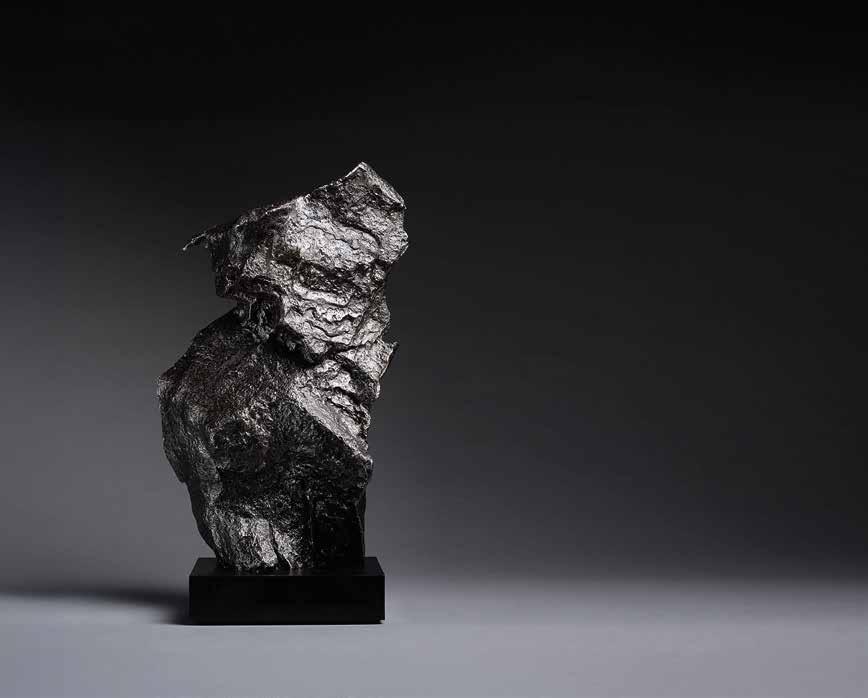
Un dialogo con oltre 400 opere, lungo 4,5 miliardi di anni, che mette in relazione le arti delle origini, l’arte tribale, l’arte antica e contemporanea, culture e civiltà di tutto il mondo.
Palazzo Erizzo Ligabue San Marco 3319 www.fondazioneligabue.it
Venezia
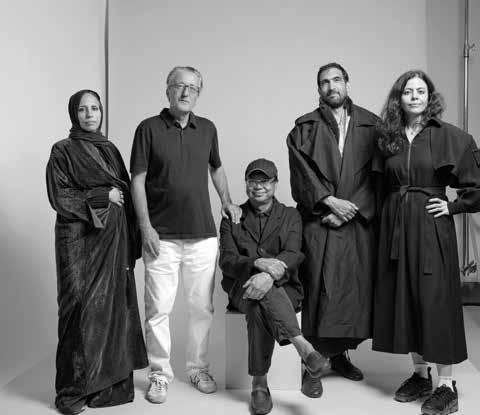
Tom
Eccles
Curator, Qatar National Pavilion
by Mariachiara Marzari
How does the idea of the “minor,” as proposed in In Minor Keys, resonate with untitled 2026 (a gathering of remarkable people), the Qatar National Pavilion project?
I think of the very idea of the Qatar National Pavilion as a space for “minor keys”, not in themselves minor but as modes of participation that often sit at the so-called margins. Inviting the Palestinian chef, Fadi Kattan, for example is part of a process to privilege voices and artistic skills that deserve more attention. We also built into the structure of the program the opportunity for our selected artists to invite further participants to create what we’ve called “a gathering.”
A space conceived as a tangible sign, both physical and conceptual, of the future Qatar Pavilion, which will be designed by Lina Ghotmeh – Architecture. Which elements of the 2026 project are foundational for the construction of a Qatari cultural identity within the Biennale?
The current pavilion is conceived both conceptually and physically as a platform for dialogue and sharing. A place that is quite literally open to the world. As such we wanted to create a space that represents Qatar and in many ways the region in a way that it is rarely seen in the West. The program is also conceived as a crossroads, both geographically and artistically.
The structure designed by Rirkrit Tiravanija for Art Biennale 2026 resembles a tent, conceived as a site of cultural exchange, a symbolic archetype of a civilization that becomes a contemporary space for both body and soul. What is the manifesto-thinking behind the project?
I’m not sure we have a manifesto, but if there were one it would be something like “we all live under a big tent where we better understand each other through the communal activities of shared music, food and of course art.”
A film by Qatari-American artist Sophia Al-Maria, live performances by Lebanese artist Tarek Atoui, a large-scale sculpture by Kuwaiti-Puerto Rican artist Alia Farid, and a culinary program of Middle Eastern cuisine conceived by Palestinian chef Fadi Kattan form the core elements of the space envisioned by Tiravanija. Which characteristics of these individual contributions become key factors in shaping this open and shared work?
The pavilion is shaped by very specific contributions but our hope is that this brings together a fusion of vibrant histories, a clear-eyed present and a hopeful future rooted in Qatar and its surrounding region.
Sophia Al-Maria, Tom Eccles (curator), Rirkrit Tiravanija, Tarek Atoui, Ruba Katrib (curator) © Brigitte Lacombe



Discover over 170 designer brands






Only 30 minutes away

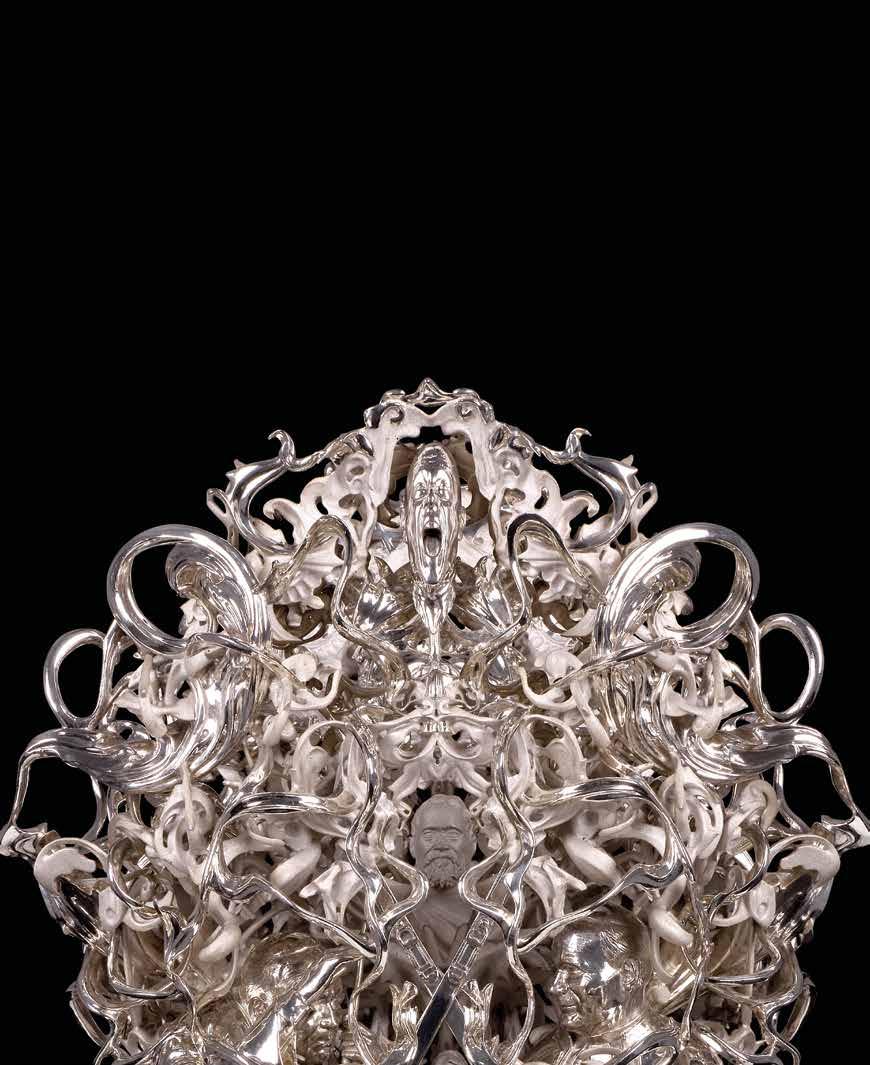
maps&contents




in minor keys
Giardino delle Vergini
Teatro alle Tese
Teatro Piccolo Arsenale
Arsenale Nord
La Biennale di Venezia with Victoria & Albert Museum
Palazzo Malipiero
Campo San Samuele 30124 Venezia VE
Fermata / Stop San Samuele, Linea / Line 2
Patrick Mimran
Art is not where you think you are going to find it
Patrick Mimran
in minor keys
giardini
in minor keys
arsenale
in minor keys
CORDERIE, OUTDOOR INSTALLATIONS
NATIONAL PARTICIPATIONS (pp. 121-129)
29 ALBANIA Sale d’Armi
30 ARABIA SAUDITA
ARGENTINA Sale d’Armi
32 CILE
Artiglierie
33 CINA Repubblica Popolare Cinese Magazzino delle Cisterne
34 EMIRATI ARABI UNITI
Sale d’Armi
35 FILIPPINE
Artiglierie
36 INDIA
Artiglierie
37 IRLANDA
Artiglierie
38 ISRAELE
Arsenale
39 LETTONIA
Artiglierie
40 LIBANO
Sale d’Armi
41 Granducato di LUSSEMBURGO
Sale d’Armi
42 MALTA
Artiglierie
43 Regno del MAROCCO
Artiglierie
44 MESSICO
Sale d’Armi
45 Sultanato dell’OMAN
Artiglierie
46 PERÙ
Sale d’Armi
47 SINGAPORE
Sale d’Armi
48 Repubblica di SLOVENIA
Artiglierie
49 Repubblica Democratica di TIMOR-LESTE
Artiglierie
50 TURCHIA
Sale d’Armi
51 UCRAINA/1
Sale d’Armi
52 Repubblica dell’UZBEKISTAN
Quarta Tesa
53 PADIGLIONE ITALIA
Tese delle Vergini
around town
NATIONAL PARTICIPATIONS (pp. 133-149)
54 Repubblica ARABA SIRIANA
55 Repubblica di ARMENIA
56 Repubblica dell’AZERBAIGIAN
57 BAHAMAS
58 BOSNIA-ERZEGOVINA
59 BULGARIA
60 Repubblica del CAMERUN
61 Repubblica di CIPRO
62 Repubblica Democratica del CONGO
63 CROAZIA
64 CUBA
65 ECUADOR
66 EL SALVADOR
67 ESTONIA
68 ETIOPIA
69 GEORGIA
70 GRENADA
71 GUATEMALA
72 Repubblica di GUINEA
73 Repubblica della GUINEA EQUATORIALE
74 Repubblica di HAITI
75 INDONESIA
76 ISLANDA
77 Repubblica del KAZAKISTAN
78 Repubblica del KIRGHIZISTAN
79 Repubblica del KOSOVO
80 LITUANIA
81 Repubblica di MACEDONIA DEL NORD
82 Repubblica di MOLDOVA
83 MONGOLIA
84 MONTENEGRO
85 Repubblica di NAURU
86 NUOVA ZELANDA
87 PAKISTAN
88 Repubblica di PANAMA
89 PORTOGALLO
90 ROMANIA/2
91 Repubblica di SAN MARINO
92 SANTA SEDE
93 SENEGAL
94 Repubblica di SIERRA LEONE
95 Repubblica Federale di SOMALIA
96 Repubblica Unita della TANZANIA
97 UCRAINA/2
98 UGANDA
99 Repubblica Socialista del VIETNAM
100 Repubblica dello ZIMBABWE
around town
COLLATERAL EVENTS
(pp. 153-163)
101 PALAZZO MORA “ _____________” *
* Gaza - No Words - See the Exhibit
102 PALAZZO CAVANIS |A ghrab Idra¯k: Thresholds of Perception
103 FABBRICA H3
A s Above, So Below
104 REM PROJECT
Baile, Botella y Baraja José Ruiz between the Bottle and the Canvas and his Naïf Narration of Puerto Rico
105 DOCKS CANTIERI CUCCHINI
Catalonia in Venice: Claudia Pagès Rabal Paper Tears
106 ISTITUTO SANTA MARIA DELLA PIETÀ
C ymru yn Fenis / Wales in Venice presents Sownd: Manon Awst and Dylan Huw
107 CAMPO DELLA TANA
Fermata: Hong Kong in Venice
108 PALAZZO DONÀ DALLE ROSE F issures of Light Diaspora: Dissonances in Fa Minor
109 NEGOZIO OLIVETTI Hybrids. Leandro Erlich al Negozio Olivetti
110 PALAZZO NERVI SCATTOLIN I f All Time Is Eternally Present: Kandis Williams, Meriem Bennani & Orian Barki, Tai Shani
111 RIVA SAN BIASIO I nfinito Cabinet Maria Cristina Crespo
112 MUSEO STORICO NAVALE Iván Tovar: Le Retour
113 CAMPO DELLA TANA Jacone’s Polyphony Exhibition from Macao, China
114 FONDATION WILMOTTE K an Yasuda - Isole del silenzio
115 SMAC – SAN MARCO ART CENTRE L ee Ufan
116 FONDAZIONE BVLGARI
BIBLIOTECA NAZIONALE MARCIANA L ara Favaretto, Momentary Monument – The Library Monia Ben Hamouda, Fragments of Fire Worship
117 ISOLA DI SAN GIORGIO MAGGIORE Nabatele
118 MAGAZZINI DEL SALE N. 5 Nalini Malani Of Woman Born
119 CHIESA DI SAN GIOVANNI EVANGELISTA Official. Unofficial. Belarus.
120 RADIO VANESSA R adio GAMeC Pedagogy of Hope
121 DOCKS CANTIERI CUCCHINI R onald Ventura: Luna
122 SPAZIO OLIVOLO S cotland + Venice: Bugarin + Castle
123 PALAZZO DELLE PRIGIONI S creen Melancholy: Li Yi-Fan
124 FONDAZIONE ERES S hifting Waters ERES Foundation
125 SPAZIO 996/A S ong E Yoon: Songs Across Time
126 PALAZZO CONTARINI-POLIGNAC Still Joy – From Ukraine into the World
127 PALAZZO SORANZO VAN AXEL Su Xiaobai’s Alchemical Universe
128 PROCURATIE VECCHIE Tadeusz Kantor (1915-1990). Emballage, Cricotage and Madame Jarema
129 PALAZZO ROCCA CONTARINI CORFÙ T he Spirits of Maritime Crossing 2026
130 PALAZZO FRANCHETTI T URANDOT: To the Daughters of the East
131 PALAZZO FRANCHETTI Vyacheslav Akhunov: Instruments of the Mind
in minor keys
around town
NOT ONLY BIENNALE
(pp. 167-209)
132 10 & ZERO UNO MELISSA MCGILL. AQUAE
133 193 GALLERY/1 HASSAN HAJJAJ. Venice, 1447
134 193 GALLERY/2 SESSE ELANGWE
135 193 GALLERY/3 THANDIWE MURIU
136 A PLUS A GALLERY COUNTERFORMS
137 AKKA PROJECT BlackBox by DAWIT ABEBE The Residency Outcome
138 AMA VENEZIA AURA
139 ANISH KAPOOR FOUNDATION ANISH KAPOOR
140 ARCHIVIO DI STATO DAYANITA SINGH ARCHIVIO
141 ARSENALE INSTITUTE FOR POLITICS OF REPRESENTATION D is for DUCHAMP the DEEP DYED DECEIVER
142 ART DEPOT AI BIRI You+Me=we: Together // Gallery EYN
143 ATENEO VENETO NATASHA TONTEY The Phantom Combatants and the Metabolism of Disobedient Organs
144 BAROVIER&TOSO ARTE FABRIZIO PLESSI Perdersi in un bicchier d’acqua
145 BAROVIER&TOSO GALLERY IBRAHIM MAHAMA A Shea Garden
146 BEA VITA VENEZIA NOWRUZ Images, Sounds and Voices from Contemporary Iran
147 BRAGORA GALLERY YEXIN YANG The Man Who Threw Away Golden Rice
148 CA’ DA MOSTO THE VENICE VENICE HOTEL JR. Il Gesto. A contemporary reinterpretation of The Wedding at Cana
149 CA’ FACCANON SHIM MOON SEUP Harnessed From Nature
150 CA’ PESARO/1 JENNY SAVILLE
151 CA’ PESARO/2 GIULIO MALINVERNI Natura morta, Natura viva
152 CA’ PESARO/3 HERNAN BAS. The Visitors
153 CA’ PESARO/4 GIUSEPPE DI LIBERTO
154 CA’ PESARO/5 NICOLÁS LAMAS
155 CA’ REZZONICO I GUARDI DELLA COLLEZIONE GULBENKIAN
156 CA’ TRON/1 EMILIA KABAKOV Venetian Diary
157 CA’ TRON/2 TONY CRAGG Ocean of Drops
158 CA’ TRON FONDAZIONE BERENGO ART SPACE GLASSTRESS
159 CAPPELLA DI SANTA MARIA DELLA PIETÀ SCALA DEL BOVOLO WALLACE CHAN Vessels of Other worlds Mythos
160 CASA DEI TRE OCI BERGGRUEN ARTS & CULTURE JOSEPH KOSUTH The-exchange-value-oflanguage-has-fallen-to-zero
161 CASA SANLORENZO WAVES
162 CASTELLO 925 CROSS CONTEMPORARY ART PROJECTS MARTIN WEINSTEIN Nothing Goes Away
163 CASTELLO 925 PROJECT SPACE CROSS CONTEMPORARY ART PROJECTS ANNE LEITH. Verge
164 CAVANA GALLERY DU HAI JUN Chronicles of the Floating City
165 CHIESA DI SAN FANTIN LORE BERT Towards the Light
166 CHIESA DI SANTA MARIA DELLA VISITAZIONE MARCELLO MARTINEZ-VEGA Amazonien
167 CIRCUIT SUNBURN
168 COLLEZIONE PEGGY GUGGENHEIM PEGGY GUGGENHEIM A LONDRA Nascita di una collezionista
169 COMPLESSO DELL’OSPEDALETTO ZHOU YIWEN
An Allegory of Power and Freedom
170 CORTE NOVA MELISSA MCGILL. Marea
171 CREA – CANTIERI DEL CONTEMPORANEO MICHAEL CORNER. Cliché
172 EMERGENCY VENEZIA LILLI MÜLLER
Divided We Do Not Stand… a Chance
173 EUROPEAN CULTURAL CENTRE ITALY/1 PERSONAL STRUCTURES –CONFLUENCES
174 EUROPEAN CULTURAL CENTRE ITALY/2 PERSONAL STRUCTURES –CONFLUENCES CASPAR BAUM
Our Precious World
175 EUROPEAN CULTURAL CENTRE ITALY/3 PERSONAL STRUCTURES –CONFLUENCES DIETMAR BRIXY. Wanderlust
176 EUROPEAN CULTURAL CENTRE ITALY/4 PERSONAL STRUCTURES –CONFLUENCES DOM ART RESIDENCE – ACCEPTED WITHOUT REVIEW
Yiou Wang, Lilli Müller, Pablo Cazares, Quang-Dai Tran, Brenner-Havelka-Plessl, Agnes Hansella, Sandra Bejarano, Sonja Radakovic, Olaolu Senbanjo, Evgeny Granilshchikov
177 FABRICA33 NICLAS CASTELLO La diabolica commedia: Prelude
178 FONDAMENTA DEI PENINI THOM YORKE / STANLEY DONWOOD No Go Elevator (Not Without No Keycard)
179 FONDATION VALMONT GAYLE CHONG KWAN, STEPHANIE BLAKE, KIMIKO YOSHIDA
Penelope - Her Journeys
180 FONDAZIONE BEVILACQUA LA MASA/1 PICASSO, MORANDI, PARMIGGIANI
Still Lifes
181 FONDAZIONE BEVILACQUA LA MASA/2 GIANGIACOMO ROSSETTI
182 FONDAZIONE BEVILACQUA LA MASA/3 108ma COLLETTIVA GIOVANI ARTISTI Creart 3.0
183 FONDAZIONE DELL’ALBERO D’ORO PATRICK SAYTOUR
Le pli et le temps / La piega e il tempo
184 FONDAZIONE DI VENEZIA GIANNI BERENGO GARDIN La Venezia del Maestro del bianco e nero
185 FONDAZIONE DRIES VAN NOTEN THE ONLY TRUE PROTEST IS BEAUTY
186 FONDAZIONE GÜNES ¸ TEKIN AHMET GÜNES¸TEKIN
Sessizlik / Silenzio / Silence
187 FONDAZIONE IN BETWEEN ART FILM CANICULA
188 FONDAZIONE PRADA ARTHUR JAFA and RICHARD PRINCE Helter Skelter
189 FONDAZIONE QUERINI STAMPALIA/1 THE DREAMER
190 FONDAZIONE QUERINI STAMPALIA/2 DING YI. Cosmotechnics: Ding Yi as Planetary Code
191 FONDAZIONE QUERINI STAMPALIA/3 NIGEL COOKE. Bad Habits
192 FONDAZIONE QUERINI STAMPALIA/4 THE INVISIBLE CORD. HANS HARTUNG AND THE MUSIC
193 GALERIE NEGROPONTES UN REGARD SUR BRANCUSI, VENISE
194 GALLERIA 200C TIM PARCHIKOV I’m not taking part in it
195 GALLERIA ALBERTA PANE THE MATERIALITY OF JUDY CHICAGO
196 GALLERIA D’ARTE L’OCCHIO TOBIA RAVÀ. Palpiti notturni
197 GALLERIE DELL’ACCADEMIA MARINA ABRAMOVIC ´ Transforming Energy
198 GALLERIA DI PALAZZO CINI DAVID SALLE Present-Tense Painting
199 GARIBALDI GALLERY LAURA MEGA DANIEL PEŠTA Where My Soul Compiles
200 HOTEL METROPOLE CHRISTOPHER BUCKLOW Guests
201 IKONA PHOTO GALLERY FERDINANDO SCIANNA Il Ghetto di Venezia
202 ISOLA DI SAN GIACOMO FONDAZIONE SANDRETTO RE REBAUDENGO MATT COPSON Fanfare/Lament. Don’t have hope, be hope!
203 ISOLA DI SAN GIORGIO/1 ABBAZIA DI SAN GIORGIO MAGGIORE BARRY X BALL The Shape of Time
204 ISOLA DI SAN GIORGIO/2 FONDAZIONE GIORGIO CINI HOW TO REACH THE SKY
205 ISOLA DI SAN GIORGIO/3 FONDAZIONE GIORGIO CINI GEORG BASELITZ. Eroi d’Oro
206 ISOLA DI SAN GIORGIO/4 LE STANZE DEL VETRO 1948-1958 IL VETRO DI MURANO E LA BIENNALE DI VENEZIA
207 ISOLA DI SAN GIORGIO/5 LE STANZE DELLA FOTOGRAFIA HORST P. HORST La Geometria della Grazia
208 ISOLA DI SAN GIORGIO/6 LE STANZE DELLA FOTOGRAFIA ROBERTO DUTESCO 30 years. The Wild Horses of Sable Island
209 ISOLA DI SAN GIORGIO /7 FONDAZIONE GIORGIO CINI HOMO FABER 2026 An Island of light
210 LA GALLERIA ART BEYOND BOUNDARIES 25 Years of La Galleria
211 LINLI ART SPACE HERO PAVEL Gener(AI)tion: 100 Visioni, 100 Doni
212 M9 – MUSEO DEL ‘900 PERTINI. L’ARTE DELLA DEMOCRAZIA
213 MAGAZZINO DEL SALE 3 PEDRO CABRITA REIS XIV Steps
214 MARE KARINA HANNA ROCHEREAU Data Divas
215 MARIGNANA ARTE MAURIZIO PELLEGRIN I ritratti perduti / The Lost Portraits – 1990-2025
216 MARIGNANA PROJECT ALESSANDRO D’AQUILA Before Language / Prima del linguaggio
217 MUNAV – MUSEO STORICO NAVALE DI VENEZIA ALFRED EISENSTAEDT La fotografia era nell’aria
218 MUSEO CORRER/1 BIZHAN BASSIRI Principe. Il Nottambulo del Pensiero Magmatico
219 MUSEO CORRER/2 JULIAN CHARRIÈRE Spiral Economy
220 MUSEO DEL MERLETTO BIENNALE DEL MERLETTO 2026
Merletti d’Autore
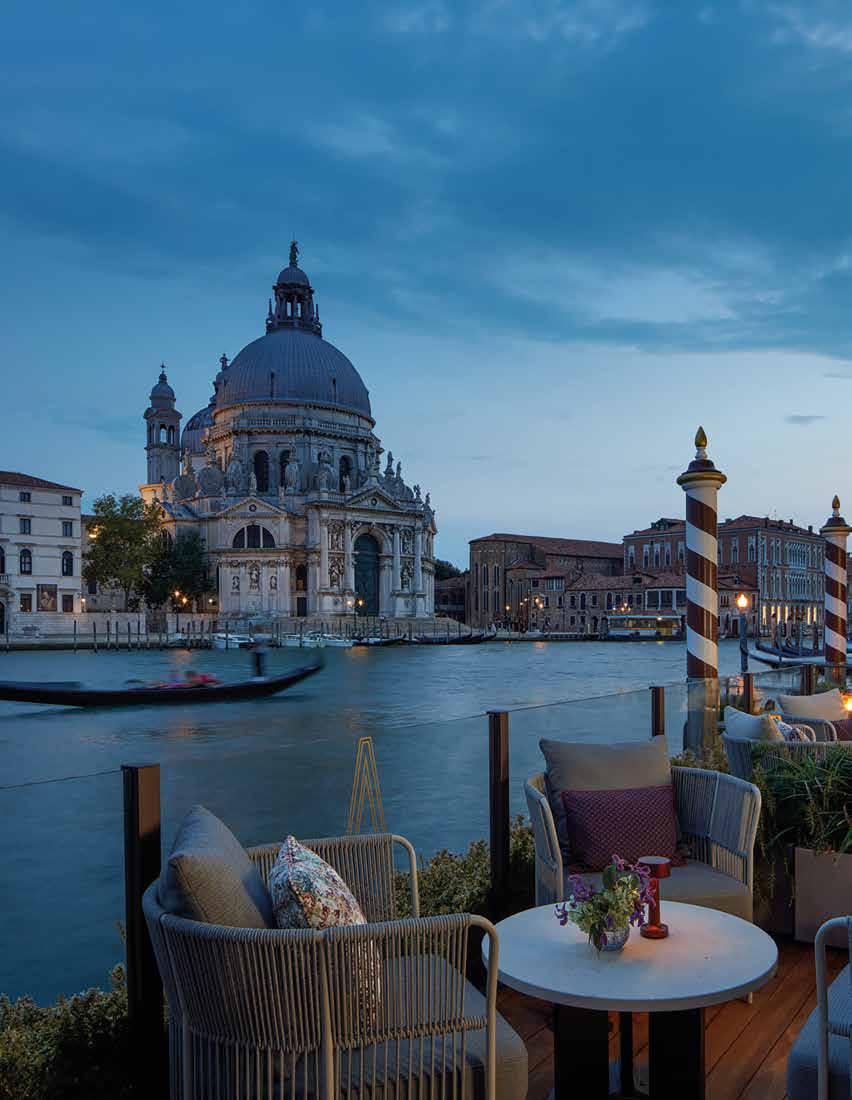
in minor keys
221 MUSEO DI PALAZZO GRIMANI AMOAKO BOAFO It doesn’t have to always make sense
222 MUSEO FORTUNY ERWIN WURM. reamers
223 MUVEC – CASA DELLE CONTEMPORANEITÀ KLIMT, SCHIELE, KOKOSCHKA e il corpo nell’arte contemporanea
224 NICOLETTA FIORUCCI FOUNDATION LYDIA OURAHMANE 5 Works
225 OCEAN SPACE TIDE OF RETURNS [ONDE DI RITORNI]
226 ORATORIO DEI CROCIFERI IEVA LYGNUGARYTE Carmen
227 ORTO GIARDINO DEL REDENTORE VENICE GARDENS FOUNDATION SARAH MOON Orizzonte | Un giardino a Venezia
228 PALAZZETTO BRU ZANE | FONDATION BRU ROLAND DUFAU Scultore di luce
229 PALAZZO ALBRIZZI CAPELLO LINA KARAM. Diving in the depth of a journey
230 PALAZZO BALBI DRIFT. Shy Society
231 PALAZZO BRAGADIN TAMARA KVESITADZE Medea. Fragments of Memory
232 PALAZZO BRAGADIN CARABBA MEL RAMOS. An Iconography of American Beauty
233 PALAZZO CORNER DELLA CA’ GRANDA PALAZZO PAPADOPOLI CHARLOTTE COLBERT
Possible Landscapes
234 PALAZZO DELLE ARTI E DELLE CULTURE FONDAZIONE GIANCARLO LIGABUE COLLECTO
235 PALAZZO DIEDO/1 BERGGRUEN ARTS & CULTURE STRANGE RULES
236 PALAZZO DIEDO/2 BERGGRUEN ARTS & CULTURE CEAL FLOYER. Unfinished
237 PALAZZO DUCALE ETRUSCHI E VENETI. ACQUE, CULTI E SANTUARI
238 PALAZZO FRANCHETTI
FONDAZIONE BERENGO MARTIN JANECKÝ Dreamers BERTIL VALLIEN Transparent Boundaries
239 PALAZZO FRANCHETTI | LE CABANON EVA & FRANCO MATTES Rage Bait
240 PALAZZO FRANCHETTI
PALAZZO LOREDAN
CHIHULY: VENICE 2026
241 PALAZZO GRASSI/1 MICHAEL ARMITAGE The Promise of Change
242 PALAZZO GRASSI/2 AMAR KANWAR Co-Travellers
243 PALAZZO MALIPIERO PATRICK MIMRAN
Billboard Project. 42 Billboards in Venice Recent Works
244 PALAZZO MARIN SHIRIN NESHAT. Do U Dare!
245 PALAZZO MOCENIGO Le Tarbouche. Quando un accessorio diventa simbolo Opere di MOUNA REBEIZ
246 PALAZZO PISANI SANTA MARINA ETHNOGRAPHY OF THE BODY AND MATERIAL Slowness and Depth in an Accelerated Society
247 PALAZZO PRIULI BON | DOMUS CIVICA MAGGIE HALL Love You to Death
248 PALAZZO QUERINI A CA' BALA JEREMY DELLER The Constant Buzz of a Drone
249 PALAZZO ROTA IVANCICH KOEN VANMECHELEN We Thought We Were Alone
250 PALAZZO ZON SHIGEO OTAKE “Nel mezzo del Cammin”
251 PALAZZO ZORZI | UNESCO SARA BONAVENTURA, LUKAS TAIDO, MATTEO ZAMAGNI Water Dream Memory
252 PUNTA DELLA DOGANA/1 PAULO NAZARETH. Algebra
253 PUNTA DELLA DOGANA/2 LORNA SIMPSON Third Person
254 SALONE VERDE JEWEL
Matriclysm: An Archeology of Connections Lost
255 SCOLETTA BATTIORO E TIRAORO ARCH HADES
Return | Ritorno
256 SCUOLA GRANDE DI SAN ROCCO JAN FABRE
The Quiet Source
257 SCUOLA PICCOLA ZATTERE/1 NIKIMA JAGUDAJEV. Like
258 SCUOLA PICCOLA ZATTERE/2 RACHEL YOUN
Unruly Vessel
259 SMAC VENICE ALIGHIERO BOETTI
260 SPARC* LEO FRONTINI Yields of Fray
261 SPAZIO BRUCHIUM FERMENTUM HELEN BROMS SANDBERG Le Sette Opere di Misericordia
262 SPAZIO RAVÀ SIGMAR POLKE
The Photographs for Venice Biennale 1986
263 SPAZIO SV FRANÇOIS REBOUL Beyond Chaos From Chaos to Freedom
264 SPAZIO THETIS VENICE 20.26
265 TEATRO GOLDONI MINOR MUSIC AT THE END OF THE WORLD
266 THE HOME OF THE HUMAN SAFETY NET MARINELLA SENATORE We Rise by Lifting Others
267 UNIVERSITÀ CA’ FOSCARI VENEZIA/1 JENNIFER WEST Stitched Cosmos
268 UNIVERSITÀ CA’ FOSCARI VENEZIA/2 VICTORIA LU
Metamorphosis: Beyond the Real – Searching for Victoria Lu
269 VICTORIA MIRO FLORA YUKHNOVICH Egg
270 VILLA FÜRSTENBERG PARCO INTERNAZIONALE DI SCULTURA BANCA IFIS
dalle collezioni civiche di savona
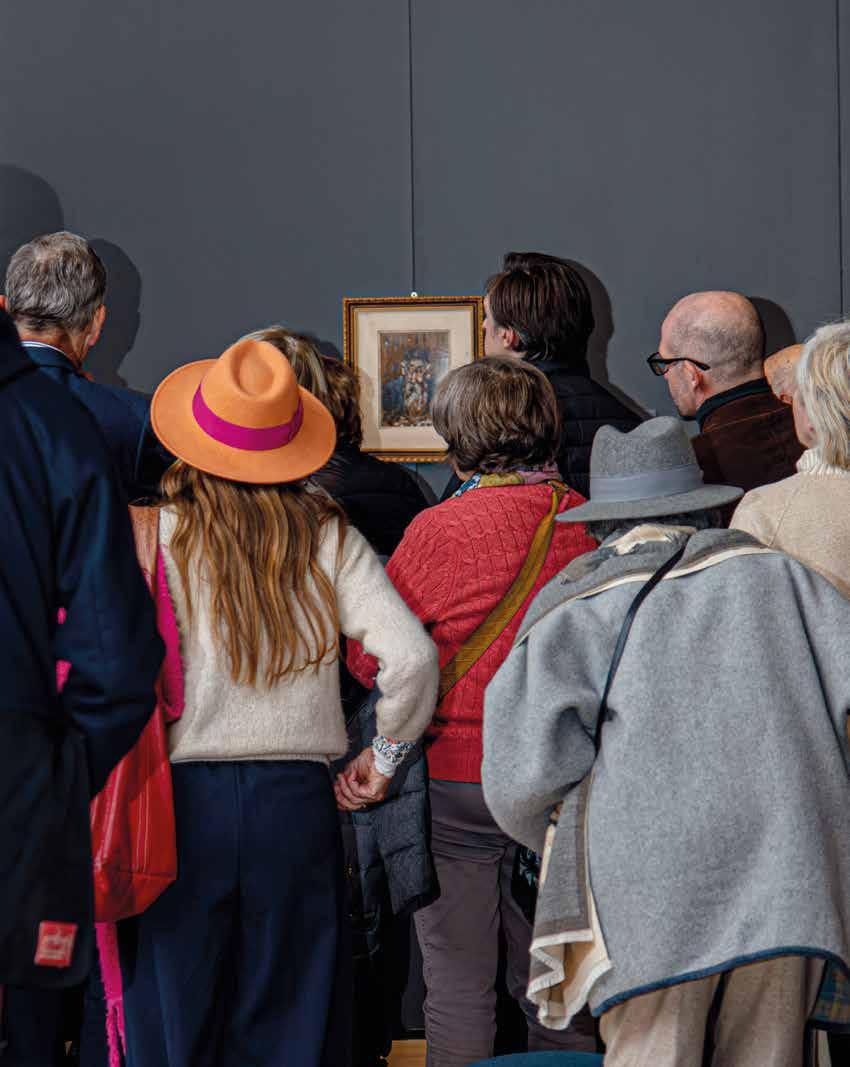
Scopri la mostra Explore the exhibition

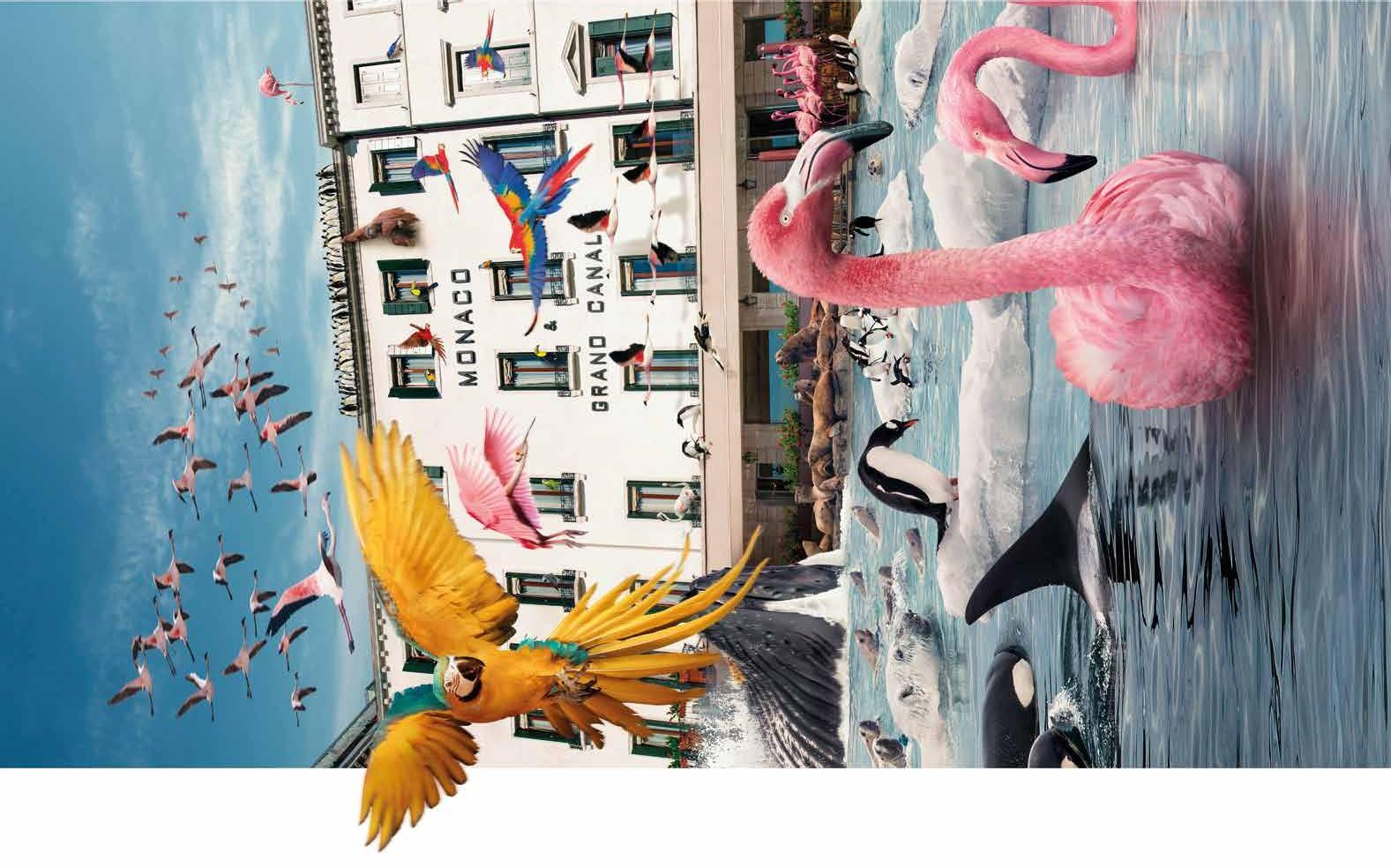
EVERYWHERE ELSE YOU CAN JUST MEET PEOPLE.


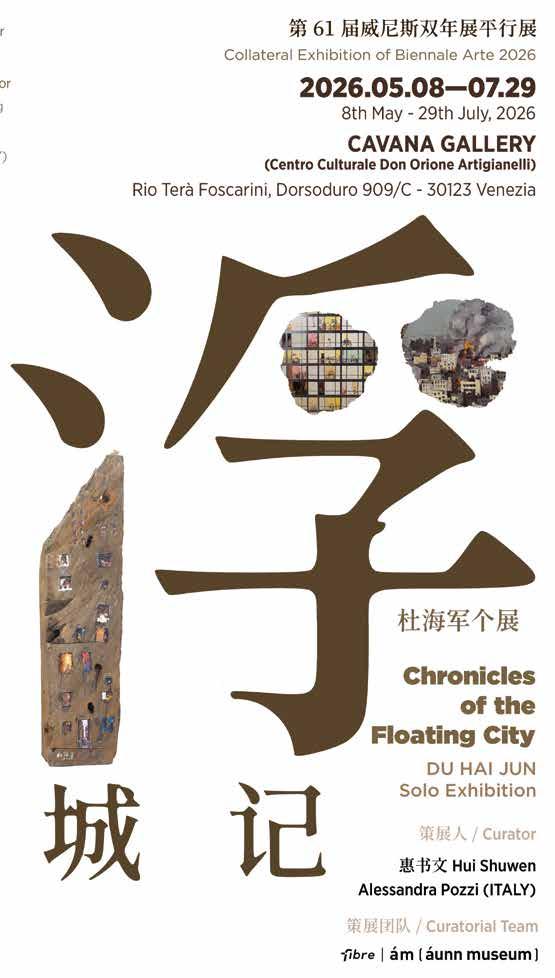
giardini
NATIONAL PARTICIPATIONS
in minor keys
1 AUSTRALIA
conference of one’s self
COMMISSIONER Creative Australia
CURATOR Michael Dagostino
EXHIBITOR Khaled Sabsabi
Il progetto prosegue la ricerca poetica di Khaled Sabsabi tra dimensione spirituale e quotidiana, intrecciando storie di migranti e di sensibilità condivise. L’ambiente immersivo, insieme monumentale e meditativo, invita a un attraversamento lento, fatto di ascolto e trasformazione. Ispirato al misticismo sufi, il progetto esplora l’interconnessione tra il sé interiore e il sé esteriore, aprendo uno spazio di riflessione sulla nostra comune umanità e sulle narrazioni collettive.
ENG The project further develops Khaled Sabsabi’s poetic inquiry into the spiritual and the daily life, weaving together migrant histories and shared sensibilities.The immersive, monumental and meditative environment invites visitors to visit the Pavilion taking time for listening and transformation. Inspired by Sufi mysticism, the project explores the interconnection between the inner and outer self, opening a space for reflection on our common humanity and on collective narratives. www.theinvitation.com.au
2 AUSTRIA
Seaworld Venice
COMMISSIONERS T he Arts and Culture Division of the Federal Ministry for Housing, Arts, Culture, Media and Sport Republic of Austria
CURATOR Nora-Swantje Almes
EXHIBITOR Florentina Holzinger
Partendo dal Padiglione ai Giardini e diffondendosi in diversi luoghi della città, il progetto austriaco si annuncia come un’esplorazione radicale e provocatoria delle interazioni tra corpo, acqua e tecnologia, proseguendo il ciclo di performance sperimentali Études che Florentina Holzinger, artista e coreografa viennese, porta avanti dal 2020. Muovendosi tra danza, performance, opera e teatro, Holzinger intreccia canoni tradizionali, cultura pop e controcultura ridefinendo continuamente il confine tra spettacolo e atto di sovversione.
ENG The Austrian project, taking place at the Giardini Pavilion and in other exhibit spaces across the city, explores in a radical and provocative way the interactions between body, water and technology, continuing the cycle of experimental performances Études, which Florentina Holzinger, a Vienna-born artist and choreographer, has been developing since 2020. Moving across dance, performance, opera, and theatre, Holzinger weaves together traditional canons, pop culture, and counterculture, continuously redefining the line between spectacle and act of subversion. www.seaworldvenice.at
3
BELGIO
IT NEVER SSST
COMMISSIONER Caroline Gennez, Flemish Minister for Welfare and Poverty Reduction, Culture and Equal Opportunities
CURATOR Caroline Dumalin
EXHIBITOR Miet Warlop
L’artista belga, già alla Biennale Teatro nel 2024 con After All Springville – una casa in metamorfosi abitata da creature metà umane e metà oggetti –, occupa lo spazio con una scultura vivente, invitando il pubblico in un’arena in cui linguaggio, musica e disorientamento collettivo si scontrano. Parole in gesso circolano liberamente – portate, passate, trascinate – mentre musicisti e danzatori le attraversano in una spirale di rituali fisici. Il Padiglione non tace mai del tutto: anche quando la performance finisce, le parole rimangono come resti di un muro di preghiere o di un karaoke di una civiltà scomparsa.
ENG Already present at the 2024 Theatre Biennale with After All Springville – a house in metamorphosis inhabited by creatures that are half-human, half-object – the Belgian artist fills the space with a living sculpture, drawing the public into an arena where language, music, and collective disorientation collide. Plaster words move through the space – carried, passed along, dragged – as musicians and dancers go through them in an escalating spiral of physical rituals. The Pavilion is never fully silent: even when the performance is over, the words left behind continue to resonate, like remnants of a prayer wall or a karaoke machine from a vanished civilization. www.belgianpavilion.be
4 BRASILE
Comigo ninguém pode
COMMISSIONER Andrea Pinheiro, President of the Fundação Bienal de São Paulo
CURATOR Diane Lima
EXHIBITORS Rosana Paulino and Adriana Varejão
Punto di partenza del progetto è la dieffenbachia, nota in Brasile come comigo ninguém pode, una pianta tossica divenuta simbolo di protezione e resilienza ancestrale. Con un titolo che allude a un potere insieme vegetale, spirituale e politico, la mostra mette in dialogo opere storiche e recenti di Adriana Varejão e Rosana Paulino – note per i loro lavori di ricerca sulle ferite coloniali – attraverso sovrapposizioni cromatiche, materiche e iconografiche che riscrivono la memoria come atto di resistenza. Dipinti, sculture e disegni compongono un immaginario in cui natura, fede e spiritualità si intrecciano, restituendo visibilità a ciò che la storia ufficiale ha rimosso.
ENG The project draws inspiration from the dieffenbachia, known in Brazil as comigo ninguém pode, a toxic plant that has become a
symbol of ancestral protection and resilience. With a title that hints at a vegetal, spiritual, and political power, the exhibition brings together historical and recent works by Adriana Varejão and Rosana Paulino through chromatic, material, and iconographic overlaps that rewrite memory as an act of resistance. Paintings, sculptures, and drawings weave together an imaginary world where nature, faith, and spirituality intertwine, restoring visibility to what official history has removed. www.bienal.org.br
5 CANADA
Entre chien et loup
COMMISSIONER National Gallery of Canada, Jean-François Bélisle
CURATOR Kim Nguyen
EXHIBITOR Abbas Akhavan
Il Padiglione è trasformato in una Wardian case, il contenitore usato dall’Impero britannico per trasportare piante tra i continenti, e ospita una vasca con ninfee giganti del genere Victoria Originarie del Sud America ma divenute simbolo dell’era vittoriana, le piante sono state germinate all’Orto Botanico di Padova prima di raggiungere maturità a Venezia. Sostituendo la facciata con pannelli di vetro, Abbas Akhavan rende il giardino visibile dall’esterno, mentre sculture abitano lo spazio interno e il cortile. Il titolo, espressione francese per l’“ora blu” – quando non si distingue il cane dal lupo, il protettore dal predatore – apre una riflessione su un momento cruciale della storia globale e sul modo in cui ci posizioniamo oggi rispetto agli ambienti naturali e costruiti che abitiamo.
ENG The Pavilion is transformed into a Wardian case, the container used by the British Empire to transport plants across continents, housing a basin with giant water lilies of the Victoria genus. Native to South America yet emblematic of the Victorian era, the plants were germinated at the Botanical Garden of Padua and they reached their maturity in Venice. By replacing the façade with glass panels, Abbas Akhavan makes the garden visible from the outside, while sculptures inhabit the indoor space and the courtyard. The title, a French expression for the “blue hour” – when one cannot distinguish the dog from the wolf, the protector from the predator – opens a reflection on a crucial moment in global history and on how we put ourselves in relation to the natural and built environments we live in.
www.gallery.ca
in minor keys
6 Repubbliche CECA e SLOVACCA
The Silence of the Mole
COMMISSIONER Michal Novotný, National Gallery Prague
CURATOR Peter Sit
EXHIBITORS Jakub Jansa, Selmeci Kocka Jusko
Il Padiglione ai Giardini celebra il suo centenario ospitando, per la prima volta dopo vent’anni, una mostra allestita congiuntamente dai due Stati. Videoarte, scultura e architettura esaminano ciò che accade all’immaginazione quando si trasforma in strumento di rappresentazione culturale, passando da linguaggio poetico a dispositivo di potere persuasivo. Al centro del progetto, la figura della Talpa si configura come metafora attraverso cui le due entità politiche riflettono e rappresentano la propria identità.
ENG The Pavilion at the Giardini celebrates its centenary by hosting, for the first time in twenty years, an exhibition jointly staged by the two States. Video, sculpture, and architecture explore what happens to imagination when it becomes an instrument of cultural representation, shifting from poetic language to a device of persuasive power. At the heart of the project, the figure of the Mole takes shape as a metaphor through which the two political entities reflect upon and represent their own identity.
www.ngprague.cz
7 Repubblica di COREA
Liberation Space:
Fortress/Nest
COMMISSIONER Arts Council Korea
CURATOR Binna Choi
EXHIBITORS Goen Choi, Hyeree Ro Il progetto sudcoreano prende in esame il periodo che segnò la liberazione dal dominio coloniale giapponese (1945-1948) non come evento concluso ma come processo aperto, ancora segnato da fratture e aspirazioni. Le sculture di Goen Choi e Hyeree Ro articolano questa tensione attraverso due visioni: tubature in rame che incidono l’architettura come un sistema circolatorio e un “padiglione nel padiglione” poroso e immersivo, scandito dai gesti fondamentali dell’esistenza. La mostra si configura così come uno spazio di cura rappresentato come un monumento vivente, un organismo al tempo stesso “fortezza” e “nido”, in cui la liberazione non è dato acquisito ma pratica collettiva costante.
ENG The South Korean project examines the period that marked independence from Japanese colonial rule (1945-1948) not as an ended event, but as an open process still marked by fractures and aspirations. The sculptures by Goen Choi and Hyeree Ro ar-
ticulate this tension through two visions: copper piping that cuts through the architecture like a circulatory system, and a porous, immersive “pavilion within the pavilion,” structured around the fundamental gestures of existence. The project thus takes shape as a space of care, represented as a living monument, an organism that is at once “fortress” and “nest,” where independence is not a given condition but an ongoing collective practice. www.arko.or.kr
8 DANIMARCA
Things to Come
COMMISSIONER The Danish Arts Foundation
CURATOR Chus Martínez
EXHIBITOR Maja Malou Lyse
Muovendo da studi che collegano stimoli erotici virtuali e fertilità maschile, l’artista riflette sul declino riproduttivo come metafora di un collasso culturale più ampio. Scienza, finzione e pornografia convergono in un ambiente filmico immersivo, un sistema di immagini capace non solo di rappresentare il mondo ma anche di trasformarlo, concependo le immagini stesse come tecnologie affettive e materiali che incidono su corpi, desideri e possibilità di futuro. Lo sperma è materia, così come lo è il registro visivo iperfemminile del film.
ENG Starting from studies linking virtual erotic stimuli and male fertility, the artist reflects on reproductive decline as a metaphor for a broader cultural collapse. In an immersive film environment, science, fiction, and pornography converge into a system of images that does not only represent the world, but can actually transform it, conceiving images as affective and material technologies that act upon bodies, desires, and possibilities of a future. Sperm is matter, and so is the hyper-feminine visual register of the film www.kunst.dk | www.majamaloulyse.info
9 EGITTO
Silence Pavilion:
Between the Tangible and the Intangible
COMMISSIONERS Ministero della Cultura Egiziano - Accademia d’Egitto a Roma
CURATOR/EXHIBITOR Armen Agop
In un tempo segnato dall’accelerazione e dalla spettacolarizzazione la ricerca di Armen Agop conduce la forma a una dimensione di pura essenzialità. Sculture e superfici sviluppate nell’arco di tre decenni tracciano uno spazio di attenzione e durata, in dialogo con la tradizione plastica egizia e con l’atemporalità del deserto. Il lavoro si concentra sull’articolazione del silenzio,
inteso come campo in cui pensiero ed emozione si dispiegano secondo ritmi propri.
ENG In an era marked by acceleration and spectacle, Armen Agop’s practice leads form towards a rigorous essentiality. Sculptures and surfaces developed over three decades delineate a space of attention and duration, in dialogue with Egyptian sculptural traditions and the desert’s atemporality. His work focuses on the articulation of silence, in which thought and emotion unfold according to their own rhythm.
www.armenagop.com
10 FINLANDIA
Padiglione Alvar Aalto Aeolian Suite
COMMISSIONERS Juha Huuskonen, Frame Contemporary Art Finland
CURATOR Stefanie Hessler
EXHIBITOR Jenna Sutela
Lo spazio è trasformato in un paesaggio eolico fatto di suoni, movimenti e simulazioni ambientali realizzate in collaborazione con l’Istituto di Scienze Marine CNR-ISMAR di Venezia. I visitatori partecipano ad una sorta di dramma degli elementi muovendosi in una scena animata da cinque venti veneziani personificati (la Tramontana, due diverse Bore, lo Scirocco e il Garbin), che ‘cantano’ attraverso voci e gesti ispirati al grammelot. Tra teatro itinerante e installazione immersiva, l’opera intreccia scienza e percezione sensoriale, invitando a un ascolto profondo delle forze atmosferiche e del loro impatto sull’ambiente.
ENG The space is transformed into an aeolian landscape made of sounds, movements, and environmental simulations carried out in collaboration with the Institute of Marine Sciences (CNR-ISMAR) in Venice. Visitors take part in a sort of drama moving through a scene animated by five personified Venetian winds (the Tramontana, two different Boras, the Scirocco, and the Garbin), which “sing” with voices and gestures inspired by grammelot. The work, both itinerant theatre and immersive installation, weaves together science and sensory perception, inviting visitors to listen to atmospheric forces and to reflect on their impact on the environment.
www.frame-finland.fi
11 FRANCIA
Comme Saturne
COMMISSIONER Institut français, operator of the French Ministry for Europe and Foreign Affairs and the French Ministry of Culture
CURATOR Myriam Ben Salah
EXHIBITOR Yto Barrada
Nel Padiglione francese – interamente rinnovato dopo un anno di lavori – la figura di Saturno viene rievocata come emblema di malinconia e creazione, connettendo miti, linguaggio e pratiche tessili. I visitatori percorrono una sequenza di spazi occupati da tende, dispositivi meccanici e materiali trasformati, dove la luce modella e consuma le superfici. La tecnica del dévoré, che dissolve parti di tessuto facendo emergere disegni per sottrazione, diventa qui gesto generativo. Il progetto di Yto Barrada – nota per le sue indagini sui fenomeni culturali e sulle narrazioni storiche – esplora cicli di perdita e rigenerazione, componendo uno spazio in cui usura e trasformazione diventano forme di resistenza poetica.
ENG In the fully-renovated French Pavilion, the figure of Saturn is evoked as an emblem of melancholy and creation, weaving together myth, language, and textile practices. Visitors move through spaces occupied by curtains, mechanical devices, and transformed materials, where light shapes and erodes surfaces. Here, the devoré velvet technique – a textile technique which dissolves parts of fabric to reveal patterns resulting from intact fibres – becomes a generative gesture. The project by Yto Barrada – known for her investigations into cultural phenomena and historical narratives – explores cycles of loss and regeneration, creating a space in which wear and transformation become forms of poetic resistance.
www.ytobarrada.com
12 GERMANIA
Ruin
COMMISSIONER ifa – Institut für Auslandsbeziehungen
CURATOR Kathleen Reinhardt
EXHIBITORS Henrike Naumann, Sung Tieu È di pochi mesi fa la notizia della prematura scomparsa di Henrike Naumann, a soli 41 anni, mentre si preparava a rappresentare la Germania alla Biennale Arte. La sua pratica, al tempo stesso disturbante ed empatica, restituisce l’immagine di un Paese ancora attraversato da fratture irrisolte dopo la caduta del Muro di Berlino. Attraverso assemblaggi di oggetti ready-made, Naumann costruiva ambienti solo in apparenza ordinari, secondo una “estetica della riunificazione” pensata per risultare inquietantemente familiare. Il progetto che aveva iniziato a sviluppare per Venezia insieme all’artista vietnamita Sung Tieu prosegue questa riflessione, amplificandola
nel contesto dell’architettura fascista del Padiglione tedesco.
ENG It was only a few months ago that we heard about Henrike Naumann’s early passing at the age of 41, as she was preparing to represent Germany. Her practice – at once unsettling and deeply empathetic – depicted a country still marked by unresolved fractures after the fall of the Berlin Wall. Through assemblages of readymade objects, Naumann created environments that are only apparently ordinary, shaped by an “aesthetics of reunification” which was designed to feel uncannily familiar. The project she had begun developing for Venice together with Vietnamese artist Sung Tieu carries forward this reflection, amplifying it within the context of the German Pavilion fascist architecture.
www.deutscher-pavillon.org
13 GIAPPONE
Grass Babies, Moon Babies
COMMISSIONER The Japan Foundation
CURATORS Lisa Horikawa, Mizuki Takahashi
EXHIBITOR Ei Arakawa-Nash
Basandosi sulla sua esperienza di genitore queer, Ei Arakawa-Nash presenta un progetto che intreccia pratica performativa, video e scultura giocosa e sentimentale, centrata sulla circolarità della vita. Il titolo mette in dialogo due simboli – grass, legato al giardino e alla natura, e moon, legato al tempo e all’emozione – riflettendo su relazioni, cura e affetto. Con oltre cento bambole-oggetto a occupare lo spazio espositivo, l’artista esplora concetti di famiglia, identità e diversità.
ENG Drawing on his experience as a queer parent, Ei Arakawa-Nash weaves together performance, video, and playful, sentimental sculpture focused on life cycle. With over one hundred doll-objects filling the exhibition space, the artist explores concepts of family, identity, and diversity and reflects on relationships, care and affection through the symbols of grass evoking the garden and nature and moon evoking time and emotion. www.a5rkw.com
14 GRAN BRETAGNA
Predicting History: Testing Translation
COMMISSIONER Emma Dexter
CURATOR Ese Onojeruo
EXHIBITOR Lubaina Himid RA
Tra le pioniere del Black British Art Movement, Lubaina Himid porta da decenni storia e cultura nera nello spazio dell’arte contemporanea, unendo temi quali razza, femminismo e memoria coloniale. Professoressa emerita alla University of Lancashire e vincitrice del Turner Prize 2017, Himid opera
su un terreno dove ricerca storica e narrazione si uniscono in un linguaggio vivo e stratificato, che rende visibili identità culturali a lungo marginalizzate. Il progetto per questa Biennale si propone come una guida attraverso l’imprevedibilità della vita. Storia e traduzione sono sempre approssimazioni e nulla è mai perfetto, occorre perciò imparare a riconoscere cosa significhi “casa” anche lontano dal proprio luogo di origine.
ENG A pioneer of the Black British Art Movement, Lubaina Himid has brought for decades Black history and culture into contemporary art exploring race, feminism, and colonial memory. Himid combines historical research and narrative in a layered, vibrant language that makes long-marginalized cultural identities visible. The project for this Biennale is conceived as a guide through the unpredictability of life. History and translation are always approximations, and nothing is ever perfect – one must therefore learn to recognise what “home” means even far from one’s own place of origin. www.venicebiennale.britishcouncil.org
15 GRECIA
Escape Room
COMMISSIONER Fani Tsatsaia, Metropolitan Organization of Museum of Visual Arts of Thessaloniki (MOMUS)
CURATOR George Bekirakis
EXHIBITOR Andreas Angelidakis
L’architetto e artista greco-norvegese Andreas Angelidakis presenta un’installazione immersiva in cui storia, rovine classiche e dinamiche digitali incontrano il mito platonico della caverna, evocato dall’artista per interpretare la nostra era di post-verità e di ascesa del populismo nazionalista. Riconfigurato come una escape room, il Padiglione incarna una realtà strutturata come un gioco, confrontandosi simbolicamente con il paradosso di un edificio che tenta di sfuggire al proprio “sé” e, dunque, alla propria storia.
ENG The Greek-Norwegian architect and artist Andreas Angelidakis presents an immersive installation where history, classical ruins and digital dynamics converge with Plato’s myth of the cave – invoked by the artist to interpret our era of post-truth and the rise of nationalist populism. Set up as an escape room, the Pavilion embodies a gamelike reality, engaging symbolically with the paradox of a building that attempts to escape its own “self” – and, by extension, its own history.
IG @angelidakis
PENELOPE Her Journeys
16 PAESI BASSI
The Fortress
COMMISSIONER Eelco van der Lingen, Mondriaan Fund
CURATOR Rieke Vos
EXHIBITOR Dries Verhoeven
Artista visivo e autore teatrale, Dries Verhoeven trasforma il Padiglione progettato da Gerrit Rietveld in un dispositivo performativo e architettonico che assume la forma di uno spazio chiuso, simile a un bunker. L’artista indaga il riflesso di autoconservazione della società occidentale in un contesto di incertezza geopolitica, rendendo tangibili fragilità sociali e tensioni politiche. Il lavoro riflette sull’urgenza di proteggere confini, quiete e stile di vita, mostrando come questa spinta possa tradursi in una condizione di isolamento autoimposto.
ENG A visual artist and playwright, Dries Verhoeven transforms the Pavilion designed by Gerrit Rietveld into a performative and architectural device that takes the form of an enclosed, bunker-like space. The artist investigates the self-preservation reflex of Western society in a context of geopolitical uncertainty, making social fragilities and political tensions tangible. The work reflects on the urgency to protect borders, quietude, and way of life, revealing how this impulse can translate into a condition of self-imposed isolation. www.dutch-pavilion.com IG @dutch.pavilion.venice
17 PAESI NORDICI
Finlandia, Norvegia, Svezia
How Many Angels Can Dance on the Head of a Pin?
COMMISSIONERS Kiira Miesmaa, Director of the Kiasma Museum of Contemporary Art / The Finnish National Gallery, Gitte Ørskou, Director of the Moderna Museet in Stockholm and Ruben Steinum, Director of the OCA in Norway
CURATOR Anna Mustonen
EXHIBITORS Klara Kristalova, Benjamin Orlow, Tori Wrånes
Pratiche distinte si fondono in un intervento che trasforma il Padiglione in un paesaggio abitato da presenze ibride, a metà tra umano, animale e vegetale. Attingendo al folclore nordico, le opere si estendono tra interno ed esterno e attivano l’architettura come parte integrante del progetto. Ne deriva un ambiente che alterna scala intima e dimensione monumentale, mettendo in gioco prossimità, convivenza e modalità diverse di abitare lo spazio.
ENG Distinct practices merge into an intervention that transforms the Pavilion into a landscape inhabited by hybrid presences,
halfway between human, animal, and plant. Drawing inspiration from Nordic folklore, the works unfold from indoor to outdoor making architecture an integral part of the project. The result is an environment that alternates intimate scale and monumental dimension, engaging proximity, coexistence, and different ways of inhabiting space.
IG @nordiccountriespavilion
18 POLONIA
Liquid Tongues
COMMISSIONER Agnieszka Pindera, Director of Zache˛ta – National Gallery of Art
CURATORS Ewa Chomicka, Jolanta Woszczenko EXHIBITORS Bogna Burska, Daniel Kotowski, with the participation of Choir in Motion (Chór w Ruchu), Alicja Czyczel, Aleksandra Gryka and Magda Mosiewicz
L’installazione esplora linguaggi marginalizzati e comunicazioni oltre l’umano, con focus sulla cultura sorda e sul concetto di “deaf gain”, ovvero la sordità vista non come deficit ma come risorsa culturale e cognitiva. Il progetto coinvolge il Choir in Motion, coro di performer sordi e udenti, e combina voce parlata, Lingua Internazionale dei Segni, canti di balene, ambiente subacqueo e coreografia collettiva per ridefinire i confini tra corpo, codici linguistici e percezione.
ENG The Polish installation explores marginalized languages and communication beyond the human, focusing on Deaf culture and the concept of “deaf gain.” The project involves the Choir in Motion, a choir of deaf and hearing performers, combining spoken voice, International Sign Language, whale songs, underwater environments, and collective choreography. www.labiennale.art.pl | www.zacheta.art.pl
NEW ENTRY 19 QATAR untitled
2026 (a gathering of remarkable people)
COMMISSIONER Her Excellency Sheikha Al Mayassa bint Hamad bin Khalifa Al Thani
CURATORS Tom Eccles and Ruba Katrib
EXHIBITOR National Pavilion of Qatar
PRODUCED by Qatar Museums
PRESENTED by Rubaiya Qatar
FEATURED ARTISTS include Rirkrit Tiravanija, Sophia Al Maria, Tarek Atoui, Alia Farid, Fadi Kattan
Nato dalla presentazione del lavoro di Rirkrit Tiravanija a Doha nell’ambito di Rubaiya Qatar, il progetto prende forma come un’opera corale e partecipativa nel sito destinato al futuro Padiglione permanente del Qatar progettato da Lina Ghotmeh – Architecture. Realizzato da
Qatar Museums e presentato da Rubaiya Qatar, a gathering of remarkable people si articola attorno a una struttura a tenda ispirata ai luoghi di incontro qatarioti, ospitando un film di Sophia Al-Maria, live performance sonore di Tarek Atoui, la scultura Jerrican di Alia Farid e un programma gastronomico dello chef Fadi Kattan. Coinvolgendo artisti, musicisti, poeti e chef di diversa provenienza, il progetto riflette sulla cultura come legame indelebile che unisce le persone.
ENG Born from the presentation of Rirkrit Tiravanija’s work in Doha as part of Rubaiya Qatar, the project takes shape as collective work on the site designated for the future permanent Qatar Pavilion, designed by Lina Ghotmeh – Architecture. Produced by Qatar Museums and presented by Rubaiya Qatar, a gathering of remarkable people is organised around a tent-like structure inspired by Qatari gathering spaces, hosting a film by Sophia AlMaria, live performances by Tarek Atoui, Alia Farid’s sculpture Jerrican, and a culinary programme by chef Fadi Kattan. Bringing together artists, musicians, poets and chefs, the project reflects on culture as an enduring bond that unites people. (See interview p. 83) qm.org.qa
20 ROMANIA/1
Black Seas – Scores for the Sonic Eye
COMMISSIONER Ioana Ciocan
CURATORS Corina Oprea, Diana Marincu
EXHIBITORS Anca Benera & Arnold Estefán
A partire dal concetto di “occhio sonico”, il progetto si concentra sull’ascolto come metafora, metodo e strumento di conoscenza. Dati oceanografici – turbolenze, boe alla deriva, correnti sotterranee – registrazioni sul campo e composizioni spettrali vengono tradotti in vibrazioni spazializzate all’interno di un ambiente sonoro e visivo, in cui il Mar Nero è attivato come sistema risonante. Nel lavoro di Anca Benera e Arnold Estefán il suono opera come archivio e agente, articolando un paesaggio stratificato che intreccia dinamiche ecologiche e geopolitiche.
ENG Drawing on the concept of the “sonic eye,” the project focuses on listening as metaphor, method and instrument of knowledge. Oceanographic data – turbulences, drifting buoys, undercurrents – alongside field recordings and spectral compositions are translated into spatialised vibrations within a sonic and visual environment, in which the Black Sea becomes a resonant system. In the work of Anca Benera and Arnold Estefán, sound operates as archive and agent, articulating a layered landscape that interweaves ecological and geopolitical dynamics.
Giardini and New Gallery of Istituto Romeno di Cultura e Ricerca Umanistica Palazzo Correr, Campo Santa Fosca, Cannaregio 2214 www.blackseas.ro



in minor keys
RUSSIA
The tree is rooted in the sky
COMMISSIONER Anastasiia Karneeva Antonio Buonuario, DJ Diaki, Marco Dinelli, Timofey Dudarenko, Faina, Oleg Gudachev, Atosigado, Hérica, Jaijiu, JLZ, Tatiana Khalbaeva, Alexey Khovalyg, Roman Malyavkin, Petr Musoev, Valerie Oleynik, Alexey Retinsky, Mikhail Spasskii, Lukas Sukharev, Alexey Sysoev, Maria Vinogradova, Alexey Retinsky, Intrada Ensemble (Ekaterina Antonenko, Daria Khrisanova, Oksana Kuznetsova, Olga Talysheva, Veronika Okuneva, Serafim Chaikin, Artem Nikolaev, Bogdan Petrenko, Ilya Tatakov), Toloka Ensemble (Ekaterina Rostovtseva, Lizaveta Anshina, Antonina Sergeeva, Zhanna Gefling, Yaroslav Paradovsky, Vera Bazilevskikh, Sofya Ivanishkina), giorgino, Phurpa (Alexey Tegin, Nikita Korolev, Georgy OrlovDavydovsky), Selfish “S.r.l.”
Nessuna informazione sul progetto è pervenuta alla nostra redazione al momento della stampa. At the time of going to press, no information about the project had been received by our editorial team.
SERBIA
Through Golgotha to Resurrection
COMMISSIONER Ivan Miloševic´, acting director, Belgrade City Museum Tomáš Koudela Predrag Djakovic´
Un’indagine sulle tematiche dello sradicamento e della progressiva perdita di valori prende forma attraverso un approccio monumentale, costruito sull’accumulo di oltre cento valigie risalenti all’inizio del XX secolo. A queste si affiancano fotografie d’archivio che occupano i 25 metri della parete principale, mentre l’apparato sonoro è affidato a un’improvvisazione in la minore composta ed eseguita dall’artista stesso. Creando un parallelo con il simbolismo religioso, il Goldiventa metafora del crollo di un sistema di valori, mentre la Resurrezione si configura come ipotesi incerta, collocata in un futuro sempre più difficile da immaginare.
An investigation into themes of uprooting and the progressive erosion of values takes shape through a monumental approach built on the accumulation of over one hundred suitcases dating back to the early twentieth century. These are accompanied by archival photographs spanning the 25 metres of the main wall, while the sound component is entrusted to an improvisation in A minor com -
posed and performed by the artist himself. Drawing a parallel with religious symbolism, Golgotha becomes a metaphor for the collapse of a system of values, while Resurrection is framed as an uncertain hypothesis, set within a future that is increasingly difficult to imagine. www.pedjadjakovic.com
23 SPAGNA
Los restos
COMMISSIONERS AECID (Spanish Agency for International Development Cooperatíon), AC/E (Acción Cultural Española)
CURATOR Carles Guerra
EXHIBITOR Oriol Vilanova
Cosa resta delle immagini, una volta esaurita la loro funzione? Migliaia di cartoline raccolte da Oriol Vilanova nell’arco di oltre vent’anni ricoprono le pareti del Padiglione, trasformandolo in uno pseudo-museo costruito per accumulazione. Fotografie prodotte in massa dal turismo – spedite, dimenticate o riemerse nei mercatini dell’usato – vengono riunite senza gerarchie in una composizione murale potenzialmente infinita. Quelle immagini stereotipate, un tempo parte della comunicazione più ordinaria, riemergono come residui visivi e tracce di esperienze individuali, frammenti di una memoria collettiva fragile e dispersa.
ENG What remains of images once they have lost their function ? Thousands of postcards collected by Oriol Vilanova over more than twenty years cover the walls of the Spanish Pavilion, transforming it into a pseudo-museum built through accumulation. Mass-produced tourist photographs – sent, forgotten, or rediscovered in flea markets – are brought together without hierarchy in a potentially infinite wall composition. These stereotyped images, which once were part of the most ordinary forms of communication, re-emerge as visual residues and traces of individual experiences, fragments of a fragile and dispersed collective memory. IG @oriolvilanova
24 STATI UNITI D’AMERICA
Call Me the Breeze
COMMISSIONER Jenni Parido
CURATOR Jeffrey Uslip
EXHIBITOR Alma Allen
Nel corso di tre decenni Alma Allen ha sviluppato un linguaggio scultoreo astratto e biomorfico ispirato ai paesaggi e alle formazioni geologiche delle Americhe. La mostra presenta sculture site-responsive che esplorano il concetto di “elevazione” come manifestazione fisica della forma e come simbolo di ottimismo collettivo. Lavorando con materiali locali, Alma Allen com-
bina metodi pre-industriali di intaglio e di modellazione manuale con tecnologie avanzate come la scultura robotica. Nelle sue opere la roccia grezza sembra levigata dal tempo e il bronzo appare liquido: figure statiche che, nella mente dell’artista, sono sempre in movimento come la brezza.
ENG Over three decades, Alma Allen has developed an abstract and biomorphic sculptural language inspired by the landscapes and geological formations of the Americas. The exhibition presents site-responsive sculptures that explore the concept of “elevation” as both a physical manifestation of form and a symbol of collective optimism. Allen combines preindustrial methods with advanced technologies, working with local materials. In his works, rough rock seems to be smoothed by time and solid bronze appears liquid. Even if these sculptures seem to be static, in the artist’s mind they are always in motion like a breeze www.almaallenvenice2026.org
25 SVIZZERA
The Unfinished Business of Living Together
COMMISSIONER Swiss Arts Council Pro Helvetia: Katharina Brandl, Sandi Paucic, Rachele Giudici Legittimo
CURATORS Gianmaria Andreetta, Luca Beeler, Nina Wakeford
EXHIBITORS Miriam Laura Leonardi, Lithic Alliance, Yul Tomatala, Nina Wakeford Immagini in movimento, suoni e materiali d’archivio danno forma a un ambiente che si estende tra interno ed esterno, indagando il tema della convivenza come promessa sociale e come terreno di conflitto. Il progetto prende avvio da due programmi televisivi svizzeri, Telearena (1978) e Agora (1984), tra i primi a portare il dibattito sull’omosessualità nello spazio pubblico. Rielaborando questi materiali attraverso installazione e montaggio, il team artistico riflette sulle condizioni di visibilità, sul diritto di parola e sulle forme, sempre negoziate, del vivere insieme. ENG Moving images, sound, and archival materials shape an environment which develops from indoor to outdoor, investigating coexistence as both a social promise and a site of conflict. The project refers to two Swiss television programs, Telearena (1978) and Agora (1984), among the first to bring public debate on homosexuality into the broadcast sphere. By reworking these materials through installation and editing, the artistic team reflects on conditions of visibility, rights to speak, and the always negotiated forms of living together. www.prohelvetia.ch | IG @prohelvetia_venice
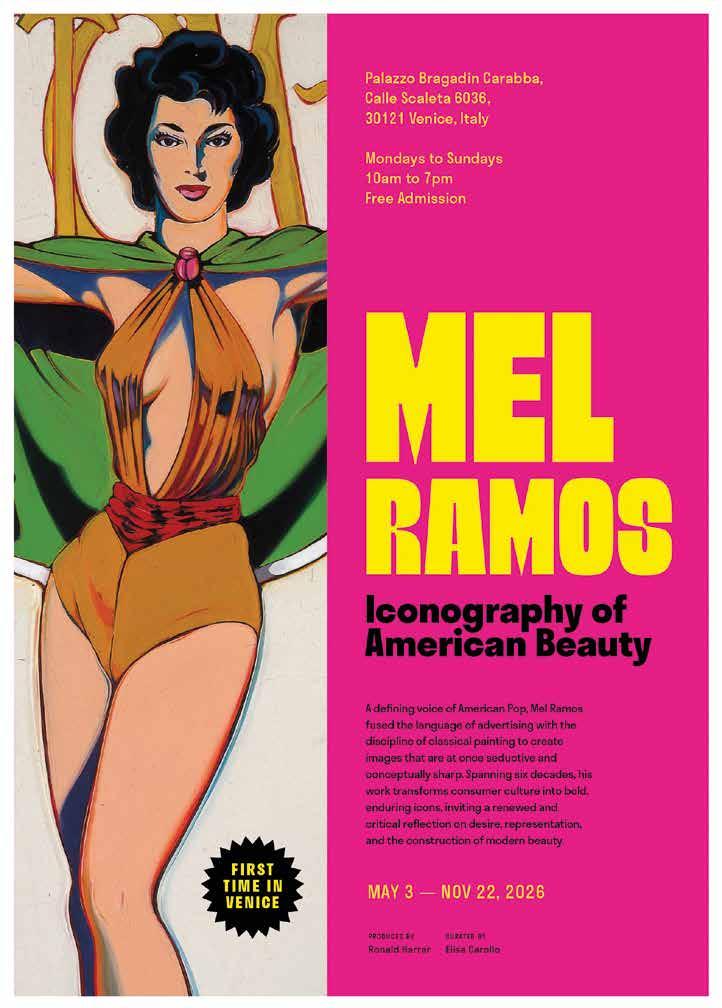
in minor keys
26 UNGHERIA
Pneuma Cosmic
COMMISSIONER Julia Fabényi, Ludwig Museum –Museum of Contemporary Art, Budapest
CURATOR Luca Cserhalmi
EXHIBITOR Endre Koronczi
Tra elementi architettonici, suoni e immagini in movimento, Endre Koronczi sviluppa una ricerca sul flusso dell’aria come forza invisibile e diffusa, qui articolata in tre installazioni che mettono in relazione fenomeno fisico e dimensione immateriale. Componenti di ventilazione, una videoinstallazione e una parete ‘respirante’ compongono un sistema percettivo lento e atmosferico, che apre a una riflessione sul rapporto tra individuo e ambiente.
ENG Among architectural elements, sounds, and motion pictures, Endre Koronczi develops a research practice focused on airflow as an invisible and pervasive force, here articulated through three installations that relate physical phenomena to an immaterial dimension. Ventilation components, a video installation, and a “breathing” wall compose a slow, atmospheric perceptual system that opens a reflection on the relationship between the individual and the environment. www.ludwigmuseum.hu www.pneumacosmic.hu
27 URUGUAY
Antifragil
COMMISSIONERS Martín Craciun, National Institute of Visual Arts, National Directorate of Culture, Ministry of Education and Culture of Uruguay
CURATOR Patricia Bentancur
EXHIBITOR Margaret Whyte
L’artista uruguayana presenta un’installazione nata dall’assemblaggio di materiali eterogenei, mettendo in discussione le gerarchie tradizionali tra artigianato e arte contemporanea. Tessuti, oggetti tecnologici obsoleti e detriti si combinano in configurazioni in cui elementi carichi di uso e memoria entrano in relazione con residui industriali, generando nuove connessioni. Il progetto sviluppa il concetto di “antifragilità”, facendo di errore, vulnerabilità e disordine delle forze attive.
ENG The Uruguayan artist presents an installation built through the assemblage of heterogeneous materials, challenging traditional hierarchies between craft and contemporary art. Fabrics, obsolete technological objects, and debris combine in configurations where memory load elements enter into relation with industrial waste, generating new connections. The project develops the concept of “antifragility,” engaging with error, vulnerability, and disorder as active forces. www.margaretwhyte.com
28 PADIGLIONE VENEZIA
Note persistenti
COMMISSIONER Maurizio Carlin
CURATORS Giovanna Zabotti, Denis Isaia, Cesare Biasini Selvaggi
EXHIBITORS Dardust, Paolo Fantin, Alberto Scodro, Ilya ed Emilia Kabakov, Artefici del Nostro Tempo
Un ritorno alle note più profonde della laguna, a ciò che rimane: il Padiglione Venezia costruisce un’esperienza sensoriale e narrativa che apre un campo di risonanza tra passato, presente e futuro. Il percorso si articola in una sequenza di ambienti che corrispondono a quattro dimensioni simboliche della città: sommersa, domestica, mitologica e collettiva. Tra concrezioni materiche che evocano paesaggi subacquei, sistemi sonori generativi e oggetti della vita quotidiana raccolti dagli abitanti ( Diario Veneziano di Ilya ed Emilia Kabakov p. 175), Venezia si manifesta come un processo in atto, stratificato e instabile, sostenuto da memorie e trasformazioni continue.
ENG A return to the deepest shades of the lagoon, to what endures: the Venice Pavilion develops a sensory and narrative experience that opens a field of resonance between past, present, and future. The path unfolds through a sequence of environments corresponding to four symbolic dimensions of the city – submerged, domestic, mythological, and collective. Among material accretions evoking underwater landscapes, generative sound systems, and everyday objects gathered from residents (Diario Veneziano by Ilya and Emilia Kabakov, p. 175), Venice emerges as an ongoing process, layered and unstable, sustained by constant memory and transformation. www.comune.venezia.it
BVLGARI PAVILION
LOTUS L. KANG
Nota per la creazione di ambienti stratificati che fondono elementi organici e strutturali, Lotus L. Kang sviluppa un’installazione appositamente concepita per il Padiglione Bvlgari, in continuità con la sua ricerca sul tempo come dimensione molteplice e non lineare. Il lavoro prende forma attraverso scultura, fotografia e dispositivi sensibili alle condizioni esterne, generando configurazioni instabili e in continuo mutamento. Qui, pellicole fotografiche e strutture sedimentarie producono immagini sospese che, rifiutando radicamento e compiutezza, danno ampio sviluppo al tema del divenire.
ENG Known for creating layered environments that merge organic and structural elements, Lotus L. Kang presents an installation conceived specifically for the Bvlgari Pavilion, continuing her research into time as a multiple, nonlinear dimension. The work takes shape through sculpture, photography, and devices responsive to external conditions, generating unstable and ever-changing configurations. Here, photographic films and sedimentary sculptures produce suspended images that refuse rootedness and resolution, giving full expression to the theme of becoming.
Spazio Esedra www.bulgari.com | IG @lotuslkang
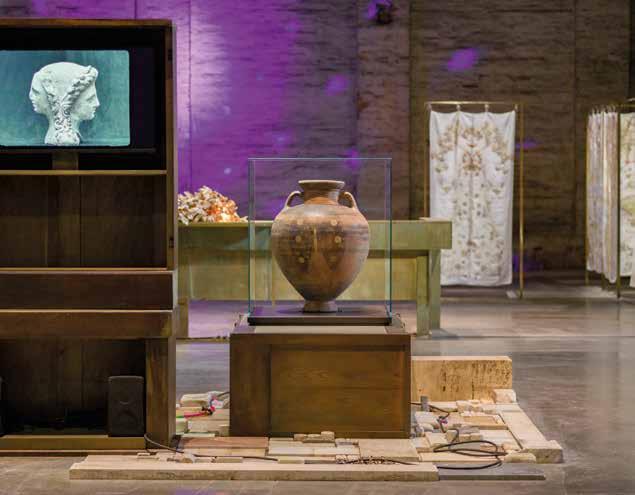
Fornitore
Ufficiale del Padiglione Italia alla Biennale Arte 2026
Chiara Camoni, Con te con tutto , installation view con
dettaglio di Anfora da trasporto, fine VII sec. a.C., Courtesy
Fondazione Luigi Rovati, Milano
Photo © Enrico Fiorese —
Courtesy La Biennale di Venezia, 2026
arsenale
NATIONAL PARTICIPATIONS
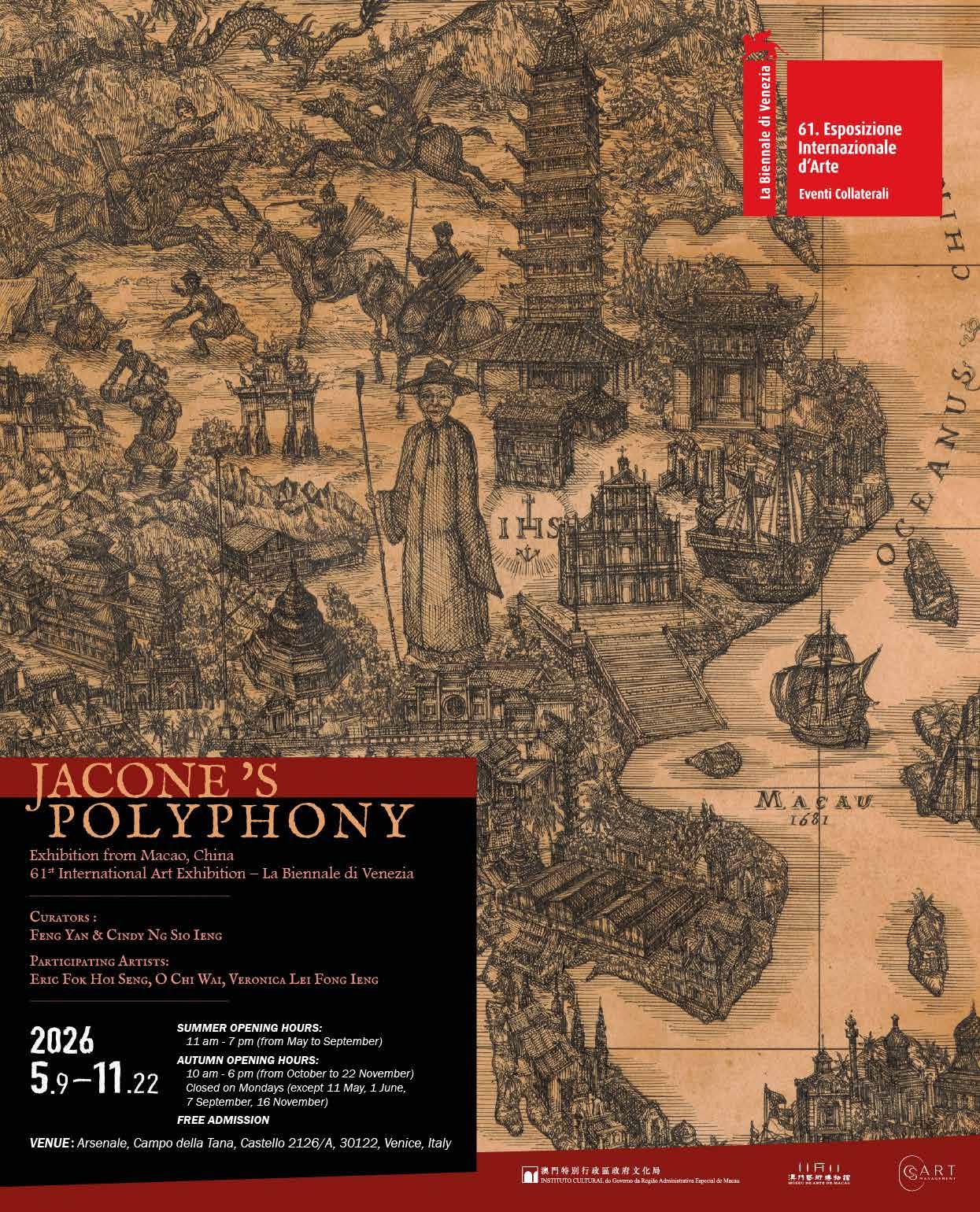
in minor keys
29 ALBANIA
A Place in the Sun
COMMISSIONER Ministry of Tourism, Culture and Sport
CURATOR Małgorzata Ludwisiak
EXHIBITOR Genti Korini
Un’opera video a tre canali trasforma lo spazio espositivo in un palcoscenico speculativo in cui storia, fantasia e ideologia si sovrappongono. Genti Korini intreccia pittura, immagini in movimento e fotografia attraverso il linguaggio Zaum, inventato dai poeti futuristi russi all’inizio del Novecento per sovvertire l’ordine costituito.
Ne emerge un ritratto dell’Albania come frontiera romanticizzata, palcoscenico a sua volta, in cui tutto può essere ridefinito e non esistono destini già tracciati o imposti da preconcetti.
ENG A three-channel video work transforms the space into a speculative stage where history, fantasy, and ideology overlap. Genti Korini weaves together painting, images in motion, and photography through the Zaum language, developed by Russian Futurist poets in the early 20th century to disrupt the established order. What emerges is a portrait of Albania as a romanticized frontier, itself a stage where everything can be redefined and no destiny appears predetermined or shaped by preconceptions.
Sale d’Armi
30 ARABIA SAUDITA
May your tears never dry, you who weep over stones
COMMISSIONER Visual Arts Commission, Saudi Ministry of Culture
CURATOR Antonia Carver
EXHIBITOR Dana Awartani
Artista saudita di origini palestinesi, Dana Awartani ricuce il rapporto tra forma, significato e tempo, indagando fragilità, memoria e resilienza del patrimonio culturale. Le sue opere – evocazioni di hammam distrutti o pavimenti di moschee – articolano un linguaggio di delicatezza, resistenza e rinnovamento. Attingendo alle tradizioni artistiche islamiche e arabe, intreccia innovazione e continuità, materiali e concetti, spesso collaborando con maestri artigiani locali.
ENG Saudi artist of Palestinian origin, Dana Awartani reweaves the relationship between form, meaning, and time, exploring the fragility, memory, and resilience of cultural heritage. Her works – evocations of destroyed hammams or mosque floors – speak a language of delicacy, resistance, and renewal. Drawing on Islamic and Arab artistic traditions, she interlaces innovation and continuity, materials and concepts, often collaborating with local master craftspeople. Sale d’Armi www.saudipavilion.org
31 ARGENTINA
Monitor Yin Yang
COMMISSIONER Directorate for Cultural Affairs, Ministry of Foreign Affairs, International Trade and Worship
CURATOR Josefina Barcia
EXHIBITOR Matías Duville
Il monumentale disegno ambientale di Matías Duville in sale e limatura di carbone vegetale esplora un temuto futuro apocalittico divenuto presente, in cui persiste tuttavia la capacità umana di percepire bellezza, vita e desiderio. Attraversabile dai visitatori, l’opera oscilla tra ordine e caos, tra tracce evanescenti e forme più definite. L’incedere dei passi, il crepitio dei materiali e un soundscape di frequenze sovrapposte attivano una percezione instabile, quasi tattile. Sale e carbone evocano tempi divergenti e rimandano alle lande del Sud dell’Argentina, trasformando il disegno in paesaggio vivo, sospeso tra memoria, fragilità ed energia.
ENG Matías Duville’s huge environmental drawing in salt and charcoal dust explores a dreaded apocalyptic future that has become present but, despite this, people are still able to perceive beauty, life, and desire. Visitors can walk on the drawing which oscillates between order and chaos, between evanescent traces and more defined forms. The sound of footsteps, the crackling of materials, and a soundscape of overlapping frequencies activate an unstable, almost tactile perception. Salt and charcoal evoke divergent timeframes and recall the early plains of southern Argentina, transforming the drawing into a living landscape suspended between memory, fragility, and energy.
Sale d’Armi IG @matiasduville
32 CILE
Inter-Reality
COMMISSIONER Florencia Loewenthal, Ministry of Culture, Arts and HeritageMinistry of Foreign Affairs, Government of Chile
CURATORS Marisa Caichiolo, Dermis Pérez León
EXHIBITOR Norton Maza
Una ricerca che esplora i meccanismi della percezione attraverso illusioni, simulacri ed elementi iperrealistici, attingendo a tradizioni visive che rimandano al mondo classico e all’immaginario barocco. Il progetto di Norton Maza si configura come un ambiente immersivo e multisensoriale costruito attorno a una struttura architettonica su larga scala, dove immagini e suoni si articolano in un campo
percettivo mutevole. L’esperienza apre a questioni globali come migrazioni, crisi ecologica, disinformazione e tensioni politiche, osservate da una prospettiva sudamericana e ricondotte a una riflessione sul rapporto tra potere, verità e libertà.
ENG A research project that explores the mechanisms of perception through illusions, simulacra, and hyperreal elements, drawing on visual traditions that evoke the classical world and the baroque imaginary. Norton Maza’s project takes shape as an immersive, multisensory environment structured around a largescale architectural framework, where images and sounds unfold within a constantly shifting perceptual field. The experience opens onto global issues such as migration, ecological crisis, misinformation and political tensions, viewed from a South American perspective and brought back to a reflection on the relationship between power, truth, and freedom.
Artiglierie www.nortonmaza.com
33 Repubblica popolare cinese CINA
Dream Stream
COMMISSIONER China Arts & Entertainment Group Ltd. (CAEG)
CURATOR Yu Xuhong
EXHIBITORS Game Science, Feng Ji, Yang Qi, Liu Chenglong, Wang Yixin+Wang Yu, Weng Jie, Lin Zhe, Zhou Haosong, Fei Si, Huang Chengxi,Yang Tingmu+Yang Hancheng+Xie Xianhui, Team of China Academy of Art and Zhejiang Lab, Xu Jiang, Wang Dongling, Yang Fudong, Lining Yao+Guanyun Wang+Danli Luo, Method Scenography Group (Mou Sen, Ma Yuanchi, Xin Ge, Mei Yuezi, Zhao Da), Wu Ziyang+Crude_Castin (Xu Jing, Zou Nan, Ye Qi, Yan Zhenghao), Nie Shichang, Jiang Suxuan+Yu Jiangfan, Hu Yueming+Lin Yuxin+Ji Huanhuan, Zhang Zhoujie
Il titolo trae origine dalla sapienza orientale dell’“indagare i principi sottostanti attraverso l’osservazione dei fenomeni” e dall’“unità tra cielo e umanità”, concetti incarnati nei Dream Stream Essays di Shen Kuo, un testo che raccoglie riflessioni su discipline umanistiche, arti, scienza e tecnologia, definito dallo storico della scienza britannico Joseph Needham «una pietra miliare nella storia della scienza cinese». Come rinnovare la tradizione attraverso l’innovazione e come integrare arte, scienza e tecnologia è la scommessa dell’esposizione, che mette in scena ENG The title Dream Stream originates from the Eastern wisdom of “investigating underlying principles through the observation of phenomena” and “the unity of heaven and humanity,” which are embodied in the Dream Stream Essays by Shen Kuo of the Northern Song dynasty. This book records reflections
in minor keys
on humanities, arts, science and technology, and was praised by British historian of science Joseph Needham as “a milestone in the history of Chinese science.” How to renew tradition through innovation and how to integrate art with science and technology is the wager of this exhibition. It dramatizes an immersive and perceptible Eastern visual system and cognitive schema.
Magazzino delle Cisterne en.caeg.cn
34 EMIRATI ARABI UNITI
Washwasha
COMMISSIONER Salama bint Hamdan Al Nahyan Foundation
CURATOR Bana Kattan
EXHIBITORS Mays Albaik, Jawad Al Malhi, Farah Al Qasimi, Alaa Edris, Lamya Gargash, Taus Makhacheva
Con Washwasha, che in arabo significa “sussurro”, sei artisti indagano i paesaggi sonori contemporanei negli EAU, intesi come spazi in cui si stratificano memoria, migrazione e trasformazione. Attraverso installazioni e dispositivi ambientali, la mostra mette in relazione tradizioni orali e culture dell’ascolto mediate dalla tecnologia, riflettendo su come i cambiamenti sociali e infrastrutturali influenzano le modalità di percezione e autorappresentazione.
ENG With Washwasha, which in Arabic means “whisper,” six artists explore contemporary soundscapes in the UAE as spaces where memory, migration, and transformation accumulate. Through installations and environmental devices, the exhibition connects oral traditions with technologically mediated listening cultures, reflecting on how social and infrastructural changes shape modes of perception and self-representation.
Sale d’Armi www.shf.ae
35 FILIPPINE
Sea of Love / Dagat ng Pag-ibig
COMMISSIONERS National Commission for Culture and the Arts (NCCA), in partnership with the Department of Foreign Affairs (DFA) and the Office of Senator Loren Legarda
CURATOR Mara Gladstone
EXHIBITOR Jon Cuyson
Artista e filmmaker con base a Manila, da oltre vent’anni Jon Cuyson indaga temi quali il lavoro, la diaspora e le ecologie queer tra pittura e cinema. Con Sea of Love, Cuyson costruisce un ambiente immersivo di grandi tele e video dedicato ai marittimi filippini, lavoratori imbarcati su navi mercantili e da crociera lungo le rotte globali. Im-
magini di navi, mitili e orizzonti acquatici diventano segni di distanza e resilienza, intrecciando la vita in mare con quella delle famiglie a terra. ENG Jon Cuyson, Manila-based artist and filmmaker, has been exploring for over two decades themes such as labor, diaspora, and queer ecologies across painting and cinema. With Sea of Love, Cuyson creates an immersive environment made of large-scale canvases and videos dedicated to Filipino seafarers working aboard cargo and cruise ships along global routes. Images of ships, mussels, and sea horizons become signs of distance and resilience, interweaving life at sea with families’ life on land.
Artiglierie IG @jon_cuyson
36 INDIA
Geographies of Distance: remembering home
COMMISSIONER National Gallery of Modern Art (NGMA)
CURATOR Amin Jaffer
EXHIBITORS Alwar Balasubramaniam (Bala), Sumakshi Singh, Ranjani Shettar, Asim Waqif and Skarma Sonam Tashi
Cinque artisti esplorano la casa come condizione mobile, intrecciando memoria, ritualità e materia. Installazioni e ambienti, costruiti con materiali organici e tecniche tradizionali, compongono un percorso in cui elementi domestici emergono frammentati, sospesi o vulnerabili. Pratiche eterogenee per linguaggi e provenienze riflettono le trasformazioni sociali e territoriali dell’India contemporanea, restituendo un paesaggio in cui appartenenza e distanza si ridefiniscono senza sosta.
ENG Five artists explore the idea of home as a mobile condition, interweaving memory, ritual, and material. Installations and environments, built with organic materials and traditional techniques, make domestic elements appear fragmented, suspended, or vulnerable. Heterogeneous practices, due to different languages and origins, reflect the social and territorial transformations of contemporary India, presenting a landscape where belonging and distance are continually redefined.
Artiglierie
IG @ngma_delhi
37 IRLANDA Dreamshook
COMMISSIONER Culture Ireland
CURATOR Georgina Jackson and The Douglas Hyde Gallery of Contemporary Art EXHIBITOR Isabel Nolan
Un’installazione di arazzi taftati a mano, disegni e sculture evoca stati onirici e soglie percettive, dove reale e immateriale si confondono. Il progetto riflette sulle strutture che ordinano la conoscenza e sul desiderio umano di dare forma al caos, intrecciando riferimenti al Medioevo e al primo Rinascimento, epoche di crisi e trasformazione. Tra umanesimo, stampa e cultura figurativa – con un’attenzione alla figura di Aldo Manuzio – Nolan costruisce una meditazione sull’ambivalenza della tradizione europea, interrogando i rapporti tra sapere, potere e immaginazione.
ENG An installation of hand-tufted tapestries, drawings, and sculptures evokes dreamlike states and perceptual thresholds, where the real and the immaterial blur. The project reflects on the structures that organize knowledge and on the human desire to give shape to chaos, weaving together references to the Middle Ages and the early Renaissance as periods of crisis and transformation. Across humanism, print culture, and figurative art – with a focus on Aldo Manuzio – Nolan develops a meditation on the ambivalence of European tradition, probing the relationships between knowledge, power, and imagination.
Artiglierie
IG @irelandatvenice | @nolanisabel
38 ISRAELE
Rose of Nothingness
COMMISSIONER Michael Gov CURATORS Avital Bar-Shay, Sorin Heller EXHIBITOR Belu-Simion Fa˘inaru
Centrata sulla costante ricerca dell’artista rumeno Belu-Simion Fa˘inaru attorno a memoria, mistica e responsabilità etica, l’installazione costruisce un ambiente contemplativo in cui materia, tempo e coscienza convivono in equilibrio precario, mentre l’acqua diventa riserva di memoria. Un circuito chiuso di tubi con contagocce ne regola il flusso, scandendo un ritmo che evoca respiro e rinnovamento. Ispirata alle poesie di Paul Celan e al pensiero cabalistico del tikkùn, l’opera riflette su perdita e riparazione, proponendo un’etica dell’ascolto e della cura.
ENG Focusing on a constant research into memory, mysticism, and ethical responsibility, the installation by Romanian artist Belu-Simion Fa˘inaru creates a contemplative environment where matter, time, and consciousness coexist in a fragile balance, while water becomes a reservoir of memory. A closed circuit of
tubes with droppers regulates its flow, marking a rhythm that evokes breath and renewal. Inspired both by Paul Celan’s poems and the Kabbalistic concept of tikkun, the work reflects on loss and repair, proposing an ethics of listening and care.
Arsenale IG @belu_simion_fainaru
39 LETTONIA
Untamed Assembly: Backstage of Utopia
COMMISSIONER Solvita Krese
CURATORS Inga La¯ce, Adomas Narkevicˇius EXHIBITORS MAREUNROL’S – Rolands Pe¯terkops and Ma¯rı¯te Mastin¸a-Pe¯terkopa, Bruno Birmanis
Tra il 1990 e il 1999 Riga attraversa una fase storica in cui si afferma come importante centro di avanguardia creativa sperimentale, anche grazie alle Untamed Fashion Assemblies (UFA), una serie di eventi tra moda, arte e performance curati da Bruno Birmanis. Il Padiglione lettone presenta un’installazione basata su materiali video digitalizzati dell’archivio di Birmanis, attivando con il pubblico una riflessione su quanto delle visioni utopiche di quegli eventi possa essere trasposto in un presente sempre più segnato da tensioni che mettono in discussione forza creativa e libertà politica.
ENG Between 1990 and 1999, Riga experienced a historical period in which it emerged as a major centre of experimental creative avant-garde, also thanks to the Untamed Fashion Assemblies (UFA), a series of experimental fashion, art, and performance events curated by Bruno Birmanis. The Latvian Pavilion presents an installation based on digitised videos from Birmanis’s archive, inviting the audience to see if the utopian visions of those events can still be applied to the present, increasingly marked by tensions that challenge creative force and political freedom.
Artiglierie www.lcca.lv
Don’t Get Me Wrong
COMMISSIONER/CURATOR Nada Ghandour
EXHIBITOR Nabil Nahas
Un’installazione pittorica sviluppata su quarantacinque metri apre un ambiente immersivo attraversabile. I ventisei pannelli in acrilico su tela disposti in sequenza compongono un continuum visivo ispirato alle miniature persiane, intrecciando astrazione geometrica, elementi figurativi e strutture frattali. Nella ricerca di Nabil Nahas – nato a Beirut, attivo tra Libano e Stati Uniti – la spirale e l'albero tornano come motivi
fondanti, attraverso cui l'artista elabora l'eredità multiforme e pluricentenaria del suo Paese.
ENG A painting installation spanning forty-five meters opens up an immersive, walkthrough environment. The twenty-six acrylic on canvas panels, arranged in sequence, give life to a visual continuum drawing inspiration from Persian miniatures, weaving geometric abstraction, figurative elements, and fractal structures into a dense and layered texture. In the work of Nabil Nahas – born in Beirut, active between Lebanon and the United States – the spiral and the tree are major motifs, through which the artist elaborates the multifaceted, centuries-old legacy of his country.
Artiglierie www.nabilnahas.com
41 Granducato di LUSSEMBURGO
La Merde
COMMISSIONER Kultur | lx - Arts Council Luxembourg, on behalf of the Ministry of Culture
CURATOR Stilbé Schroeder, Casino Luxembourg - Forum d’art contemporain
EXHIBITOR Aline Bouvy
Il progetto di Aline Bouvy riflette il percorso del Lussemburgo nel presentare all’arte contemporanea un linguaggio critico e provocatorio, in dialogo con le questioni universali del corpo, dello spazio e del potere sociale. Attraverso un escremento antropomorfo – pupazzo, animazione e presenza fisica – sottoposto al giudizio collettivo dei visitatori, l’artista esplora la vergogna come meccanismo sociale, mostrando come corpi e comportamenti vengano classificati, tollerati o esclusi.
ENG Aline Bouvy’s project reflects Luxembourg’s trajectory in presenting contemporary art through a critical and provocative language, engaging with universal questions of body, space, and social power. Through an anthropomorphic excrement – puppet, animation, and physical presence – Bouvy explores shame as a social mechanism, showing how bodies and behaviors are classified, tolerated, or excluded.
Sale d’Armi www.venicebiennale.kulturlx.lu
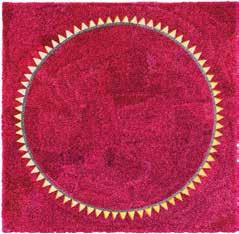
»Lore
»Towards T he ligh T « a statement for Hope against the wars in the world
i n occasion of her 90. Birthday and after more than 350 exhibitions in 30 countries, the German artist Lore Bert presents for the 3rd time an extraordinary exhibition for the Venice Biennale.
With 2 installations of paper, one included a s piral of neon-balls, which indicate towards the center the concentration , towards the outside unlimitation , the other included neon-quatrefoils which stands for the › Cardinal Virtues ‹ : Wisdom, Justice, Courage, temperance.
i n addition 4 paper-objects will be seen as well as a sculpture with neon elements in the form of oriental numbers in the choir.
Chiesa s an Fantin 30124 Venezia · s an Marco opposite il teatro La Fenice contacts : 0039 - 327 - 692 3 693 0049 - 171 - 4 208 280 dvdk@lore-bert.com www.lore-bert.com
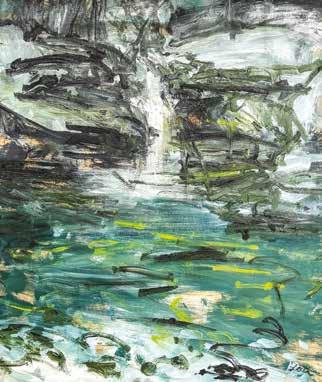
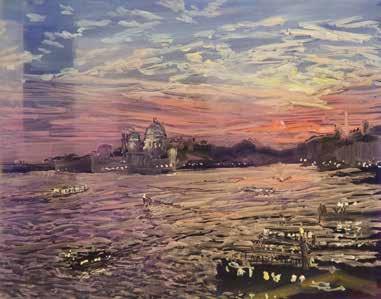

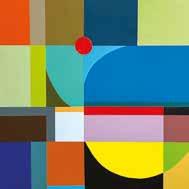
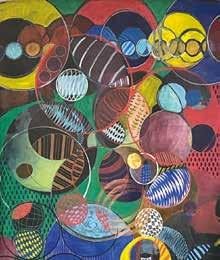

in minor keys
42 MALTA
No Need To Sparkle. Experiments in Love and Revolution
COMMISSIONER Arts Council Malta
CURATOR Margerita Pulè
EXHIBITORS Adrian MM Abela, Charlie Cauchi, Raphael Vella
Le installazioni multimediali dello spazio maltese, affiancate da sculture, disegni e animazioni in stop motion, si sviluppano a partire da riferimenti eterogenei, dalla storia alla mitologia fino al cinema. Ne emerge un percorso che guida il visitatore attraverso universi fittizi e trame in continua trasformazione, capaci di mettere in tensione percezione e forme del credere. In questo contesto, il dubbio si configura come dispositivo di resistenza, sollecitando una riflessione sul rapporto tra verità e realtà contemporanea.
ENG The multimedia installations of the Maltese space, accompanied by sculptures, drawings, and stop-motion animations, draw on a heterogeneous range of references, from history and mythology to cinema. As a result visitors are invited to follow a path through fictional worlds and ever-shifting narratives, capable of creating tension between perception and forms of belief. In this context, doubt becomes a device of resistance, inviting to a reflection on the relationship between truth and contemporary reality.
Artiglierie www.artscouncilmalta.gov.mt
43 Regno del MAROCCO
COMMISSIONER Mohammed Benyaacoub
CURATOR Meriem Berrada
EXHIBITOR Amina Agueznay
Amina Agueznay, che da oltre vent’anni sviluppa una ricerca radicata nei saperi e nelle pratiche vernacolari marocchine, trasforma lo spazio delle Artiglierie in un percorso di soglie e tessiture rituali. Il visitatore attraversa strati di memoria e gesti ancestrali, incontrando intrecci, spirali e cuciture che custodiscono e trasmettono saperi condivisi. Ogni superficie si offre come un segno da decifrare, in un dialogo continuo tra materia, corpo e memoria, dove la creazione manuale si afferma come pratica viva di trasmissione e riconoscimento.
ENG Amina Agueznay, who for over twenty years has developed a practice rooted in Moroccan vernacular knowledge and traditions, turns the space into a sequence of thresholds and ritual weavings. Visitors move through layers of memory and ancestral gestures, encountering weavings, spirals, and stitches that preserve and pass on shared
forms of knowledge. Each surface presents itself as a sign to be read, within an ongoing dialogue between matter, body, and memory, where manual creation emerges as a living practice of transmission and recognition.
Artiglierie
IG @aminaagueznay
44 MESSICO
Actos invisibles para sostener el universo
COMMISSIONER Andrés Valtierra
CURATOR Jessica Berlanga Taylor
EXHIBITORS RojoNegro (María Sosa e Noé Martínez)
Attraverso installazioni, performance e suono, il collettivo RojoNegro interroga i processi coloniali e il loro impatto persistente su corpi, territori e cosmogonie. Nel progetto presentato al Padiglione, una linea di sale a forma di vírgula – simbolo mesoamericano della parola e del dialogo – attraversa lo spazio espositivo. Su di essa poggiano vasi modellati come uccelli, esseri che nella tradizione connettono simbolicamente le Americhe. Il sale assorbe umidità e si illumina mentre la ceramica, al contatto, si erode lentamente, in un processo in cui la materia si trasforma e conserva memoria. Completa l'installazione un dispositivo audiovisivo che intreccia il respiro umano con i suoni della Terra, generando un ritmo lento che invita all’ascolto e alla sospensione.
ENG Through installations, performance and sound, the collective RojoNegro reflects on colonial processes and their persistent impact on bodies, territories and cosmogonies. In the project presented at the Pavilion, a line of salt in the shape of a comma – a Mesoamerican symbol of speech and dialogue – has been drawn across the exhibition space. On it there are vessels modelled as birds, beings that in Mexican tradition symbolically link the Americas. The salt absorbs moisture and glows while the ceramics slowly erode under touch. It’s a process that allows matter to transform and preserve memory. The installation is completed by an audiovisual device that interweaves human breath with the sounds of the Earth, generating a slow rhythm that invites visitors to listen and to enjoy stillness.
Sale d’Armi IG @rojonegro.ome
45 Sultanato dell’OMAN Zı¯nah (Adornment)
COMMISSIONER Sayyd Saeed bin Sultan bin Yarub Al Busaidi
CURATOR/EXHIBITOR Haitham Al Busafi
In una stanza dal tono sommesso il pavimento è ricoperto di sabbia proveniente dall’entroterra desertico dell’Oman, mentre dal soffitto fluttuano ornamenti in argento della tradizione omanita, un tempo utilizzati per adornare cavalli e cavalieri. Questi elementi sospesi nello spazio generano suoni e riflessi di luce che ne amplificano la presenza. Briglie, pettorali, pendenti e cinghie con nappe si trasformano così in dispositivi sensibili, capaci di ridefinire la relazione tra corpo e ambiente e di rendere il visitatore “degno di bellezza”, una delle possibili traduzioni della parola omanita “zı¯nah” del titolo.
ENG In a hushed room, the floor is covered with sand from the desert hinterland of Oman, while silver ornaments from the Omani tradition – once used to adorn horses and riders – float down from the ceiling. Suspended in space, these elements generate sounds and reflections of light that amplify their presence. Bridles, breastplates, pendants, and tasseled straps become sensitive devices, capable of redefining the relationship between body and environment and of rendering the visitor “worthy of beauty” – one of the possible translations of the title word “zı¯nah.”
Artiglierie
IG @omanpavilion
46 PERÙ
From Other Worlds
COMMISSIONER Armando Andrade de Lucio CURATORS Issela Ccoyllo and Matteo Norzi
EXHIBITOR Sara Flores
Per la prima volta il Perù è affidato a un’artista indigena la cui ricerca pone al centro il sistema di conoscenze e la visione del mondo propri del popolo Shipibo-Konibo. Il percorso, attraversato dai suoni di un rituale sciamanico, rielabora il kené, sistema di disegni tradizionali ShipiboKonibo, attraverso pittura, scultura e video. In questo dispositivo multisensoriale il kené opera come struttura visiva e concettuale che articola relazioni tra esseri umani e non umani, restituendo una visione del mondo fondata sull’interconnessione fra le diverse forme di vita.
ENG For the first time, the Peru Pavilion is entrusted to an Indigenous Shipibo-Konibo artist, whose practice focuses on the knowledge system and worldview of this Amazonian community. The exhibition path, permeated by the sounds of a shamanic ritual, reinterprets kené, the traditional Shipibo-Konibo drawing system, through painting, sculpture, and video. Within this multisensory device, kené functions
in minor keys
as both a visual and conceptual structure that articulates relationships between human and non-human beings, offering a worldview based on the interconnection of all forms of life.
Sale d’Armi
47 SINGAPORE A Pause
COMMISSIONER Elaine Ng,National Arts Council
CURATOR Selene Yap
EXHIBITOR Amanda Heng Liang Ngim
Amanda Heng Liang Ngim è una figura pionieristica della scena artistica contemporanea di Singapore. La sua riflessione sul corpo – inteso al contempo come strumento e come soggetto – prende avvio alla fine degli anni Ottanta e si sviluppa attraverso i territori ibridi della performance, dell'installazione, della fotografia e dell'azione partecipativa. Il suo progetto per il Padiglione si configura come uno spazio di sosta e osservazione, incentrato su gesti ordinari come sedersi, aspettare e guardare.
ENG Amanda Heng Liang Ngim is a pioneering figure in Singapore's contemporary art scene. Her reflection on the body – considered at the same time as instrument and subject – began in the late 1980s and has unfolded across the hybrid territories of performance, installation, photography, and participatory action. Her project for the Singapore Pavilion takes shape as a space of rest and observation, focused on ordinary gestures such as sitting, waiting, and looking.
Sale d’Armi www.singaporeartmuseum.sg
48 Repubblica di SLOVENIA
Soundtrack for an Invisible House
COMMISSIONER Martina Vovk
CURATOR Nataša Petrešin-Bachelez
EXHIBITOR Nonument Group (Neja Tomšicˇ, Martin Bricelj Baraga, Nika Grabar, Miloš Kosec)
Nel 1917, al confine nord-occidentale della Slovenia, l’esercito austro-ungarico costruì una moschea temporanea in legno per i soldati musulmani bosniaci impegnati sul fronte dell’Isonzo. Completamente smantellata dopo la guerra e riportata alla luce solo nel 2022 grazie a scavi archeologici, questa architettura “invisibile” diventa il fulcro del Padiglione. Attraverso la sua ricostruzione critica, il progetto riflette sulle relazioni sempre più stratificate e contraddittorie tra religione, guerra e potere politico tra il Novecento e i primi anni Duemila.
ENG In 1917, a temporary wooden mosque was built on the northwestern border
of Slovenia by the Austro-Hungarian army for Bosnian Muslim soldiers fighting on the Isonzo front. Completely dismantled after the war and only rediscovered through excavations in 2022, this “invisible” structure becomes the central focus of the Pavilion. Through its critical reconstruction, the project reflects on the increasingly complex and contradictory interplay between religion, war, and political power from the 20th century to the early 2000s.
Artiglierie
IG @nonument
49 Repubblica Democratica di TIMOR-LESTE
Across Words
COMMISSIONER Jorge Soares Cristóvão, Secretary of State for Arts and Culture of the Democratic Republic of Timor-Leste
CURATOR Loredana Pazzini-Paracciani
EXHIBITORS Veronica Pereira Maia, Etson Caminha, Juventino Madeira
Il percorso, realizzato da artisti appartenenti a diverse generazioni, si costruisce a partire dalla pluralità linguistica di Timor-Leste, dove idiomi ancestrali e lingue d’uso comune, quali l’inglese e l’indonesiano, convivono in un ecosistema complesso. Al centro, l’opera tessile Tais Don traduce la memoria storica in testimonianza materiale riportando i nomi delle vittime del massacro di Santa Cruz avvenuto del 1991. Intorno, installazioni audiovisive sviluppano una riflessione sulla lingua come terreno di identità, trasmissione e costruzione collettiva, restituendo l’immagine di una cultura che trova coesione proprio nella molteplicità.
ENG The exhibition, created by artists from different generations, takes shape from the linguistic plurality of Timor-Leste, where ancestral idioms and current languages, such as English and Indonesian, coexist within a complex ecosystem. At the center of the exhibition is the textile Tais Don which translates historical memory into material testimony, bearing the names of the victims of the 1991 Santa Cruz massacre. The surrounding audiovisual installations develop a reflection on language as a space of identity, transmission, and collective construction, offering an image of a culture that finds its cohesion in multiplicity.
Artiglierie
FB @TimorLesteVenice2026
50 TURCHIA A Kiss on the Eyes
COMMISSIONER Istanbul Foundation for Culture and Arts (I KSV)
CURATOR Bas¸ak Dog˘a Temür EXHIBITOR Nilbar Güres¸
Attiva tra Istanbul, Napoli e Vienna, Nilbar Güres¸ è nota per il suo approccio poetico, critico e arguto ai simboli culturali, alle disuguaglianze sociali e alle questioni identitarie. A Venezia riunisce opere esistenti e nuove produzioni tra scultura, installazione e creazione tessile, esito di un processo collaborativo con artigiani a Istanbul. Attraverso materiali carichi di memoria – abiti, oggetti domestici, forme organiche – Güres¸ indaga migrazione, genere e appartenenza, costruendo uno spazio in cui intimità e tensione politica convivono tra vulnerabilità e resistenza.
ENG Active between Istanbul, Naples, and Vienna, Nilbar Güres¸ is known for her poetic, critical, and incisive approach to cultural symbols, social inequalities, and questions of identity. In Venice, she brings together existing works and new productions across sculpture, installation, and textiles, developed through a collaboration process with artisans in Istanbul. Through materials imbued with memory – garments, domestic objects, organic forms – Güres¸ explores migration, gender, and belonging, constructing a space where intimacy and political tension coexist between vulnerability and resistance.
Sale d’Armi www.turkiyepavilion26.iksv.org
51 UCRAINA/1
Security Guarantees
COMMISSIONERS Tetyana Berezhna, Deputy Prime Minister for Humanitarian policy of Ukraine - Minister of Culture of Ukraine
CURATORS Ksenia Malykh and Leonid Marushchak
EXHIBITOR Zhanna Kadyrova
La scultura al centro del progetto ucraino si configura come un simbolo potente delle promesse disattese sul disarmo nucleare sancite dal Memorandum di Budapest del 1994, sottoscritto con Stati Uniti, Regno Unito e Federazione Russa. Materializzazione dello spirito che aveva animato la firma dell’accordo, l’opera è stata successivamente sradicata dal luogo in cui si trovava, perché troppo vicina al fronte del conflitto russo-ucraino. In questa nuova condizione, si impone come emblema di un pacifismo sempre più fragile, percepito non più come orizzonte condiviso ma come privilegio ormai difficilmente sostenibile.
ENG The sculpture at the centre of the Ukrainian project stands as a powerful
symbol of the unfulfilled promises of nuclear disarmament enshrined in the 1994 Budapest Memorandum, signed with the United States, the United Kingdom, and the Russian Federation. Conceived as a materialisation of the spirit of the agreement, the work was later forcibly uprooted from its original location due to its proximity to the front line of the Russia-Ukraine conflict. In this new condition, it emerges as an emblem of pacifism that has become increasingly fragile, which is no longer perceived as a shared horizon but as a privilege that can no longer be sustained.
Sale d’Armi IG @ukrainianpavilioninvenice
52 Repubblica del UZBEKISTAN
The Aural Sea
COMMISSIONER Gayane Umerova, Chairperson of the Uzbekistan Art and Culture Development Foundation
CURATORS Sophie Mayuko Arni, Aziza Izamova, Kamila Mukhitdinova, Nico Sun, Thái Hà EXHIBITORS Jahongir Bobokulov, Zi Kakhramonova, Aygul Sarsen, Zulfiya Spowart, Xin Liu, A.A.Murakami, Nguyen Phuong Linh
Attraverso installazioni, pratiche interattive e pittura gli artisti intrecciano approcci che spaziano dalla modellazione scientifica all’immaginazione folklorica, dal tessile monumentale all’artigianato minuzioso. Il progetto prende avvio dal lavoro dello scrittore Allayar Darmenov, che dal 2015 immagina di ‘riportare in vita’ il Mar d’Aral attraverso la scrittura, facendo dell’immaginazione una forma di azione. In questo quadro la mostra riflette sulle trasformazioni ambientali di un territorio segnato dalla drastica riduzione del bacino, prosciugato dalla deviazione dei fiumi per l’irrigazione.
ENG Across installation, interactive practices, and painting, the artists weave together approaches ranging from scientific modelling to folkloric imagination, from monumental textile to meticulous craftsmanship. The project draws on the work of writer Allayar Darmenov, who since 2015 has imagined bringing the Aral Sea “back to life” through writing, turning imagination into form of action. The exhibition reflects on the environmental transformations of a region marked by the drastic shrinking of the Aral Sea, largely dried up after diverting rivers for irrigation purposes.
Quarta Tesa www.uzbekistanvenice.uz IG @uzbekistan_national_pavilion
53 PADIGLIONE ITALIA
Con te con tutto
COMMISSIONER Angelo Piero Cappello
CURATOR Cecilia Canziani
EXHIBITOR Chiara Camoni
Con una pratica che integra scultura, disegno e installazione, ripensando la natura della dimensione plastica attraverso l'assemblaggio, il recupero di materiali di scarto e gli elementi naturali, Chiara Camoni ha sviluppato un lavoro fondato sulla cura e sulla ripetizione di gesti semplici e ripetuti come modellare, intrecciare e raccogliere, strumenti attraverso cui attiva da sempre una dimensione relazionale e co-autoriale.
Il Padiglione, promosso dalla Direzione Generale Creatività Contemporanea del Ministero della Cultura, è una grande installazione articolata in due ambienti: un paesaggio scultoreo in ceramica e un’estensione dello studio dell’artista. (Vedi intervista p. 81)
ENG Working across sculpture, drawing, and installation, Chiara Camoni has developed a practice that rethinks the plastic dimension through assemblage, the reuse of discarded materials, and natural elements. Her body of work is grounded in care and in the repetition of simple, iterative gestures – shaping, weaving, gathering – through which she has long activated a relational and co-authorial dimension. The Pavilion, promoted by the DirectorateGeneral for Contemporary Creativity of the Italian Ministry of Culture, takes the form of a large-scale installation articulated across two environments: a ceramic sculptural landscape and an extension of the artist’s studio. (See interview p. 81)
Tese delle Vergini www.contecontutto.it
APPLIED ARTS PAVILION
GALA PORRAS-KIM *
Selezionata da Koyo Kouoh per il progetto speciale realizzato in collaborazione con il Victoria and Albert Museum di Londra, Gala Porras-Kim indaga il rapporto tra artefatti culturali e dispositivi museali che ne determinano classificazione, significato e destino. La sua pratica, da anni concentrata sulle politiche della conservazione e sulle implicazioni etiche dell’archiviazione, mette in luce le tensioni tra istituzioni e oggetti, tra sapere e potere. Al Padiglione delle Arti Applicate l’artista presenta disegni, sculture e video che articolano una riflessione sulle pratiche di conservazione e sui sistemi che costruiscono narrazioni e gerarchie, mettendo in discussione l’autorità dell’archivio e le modalità attraverso cui gli oggetti vengono interpretati, custoditi e trasmessi nel tempo.
ENG Selected by Koyo Kouoh for the special project developed in collaboration with the Victoria and Albert Museum in London, Gala Porras-Kim investigates the relationship between cultural artifacts and the museum frameworks that shape their classification, meaning, and fate. Her practice, long focused on the politics of conservation and the ethical implications of archiving, highlights the tensions between institutions and objects, between knowledge and power. At the Pavilion of Applied Arts, the artist presents drawings, sculptures, and videos that explore practices of preservation and the systems that construct narratives and hierarchies, questioning the authority of the archive and the ways in which objects are interpreted, cared for, and transmitted over time.
Padiglione delle Arti Applicate Sale d’Armi www.vam.ac.uk | IG @itsgala
* See p. 79



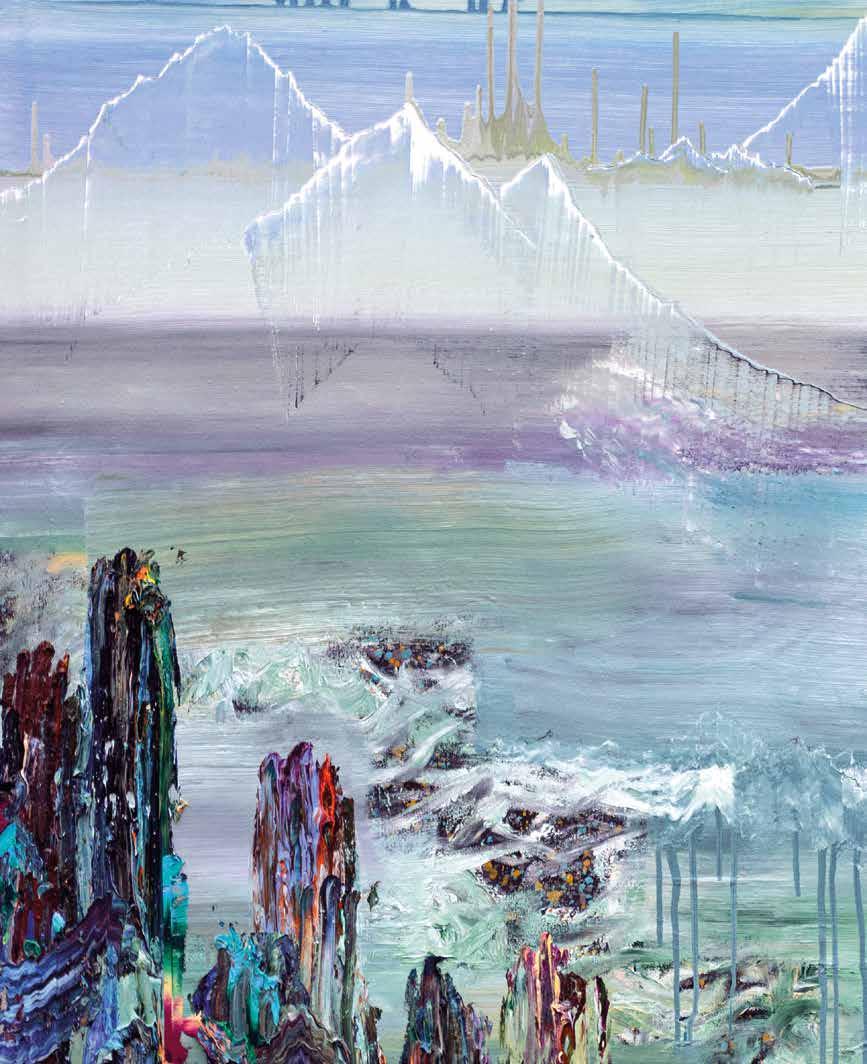
















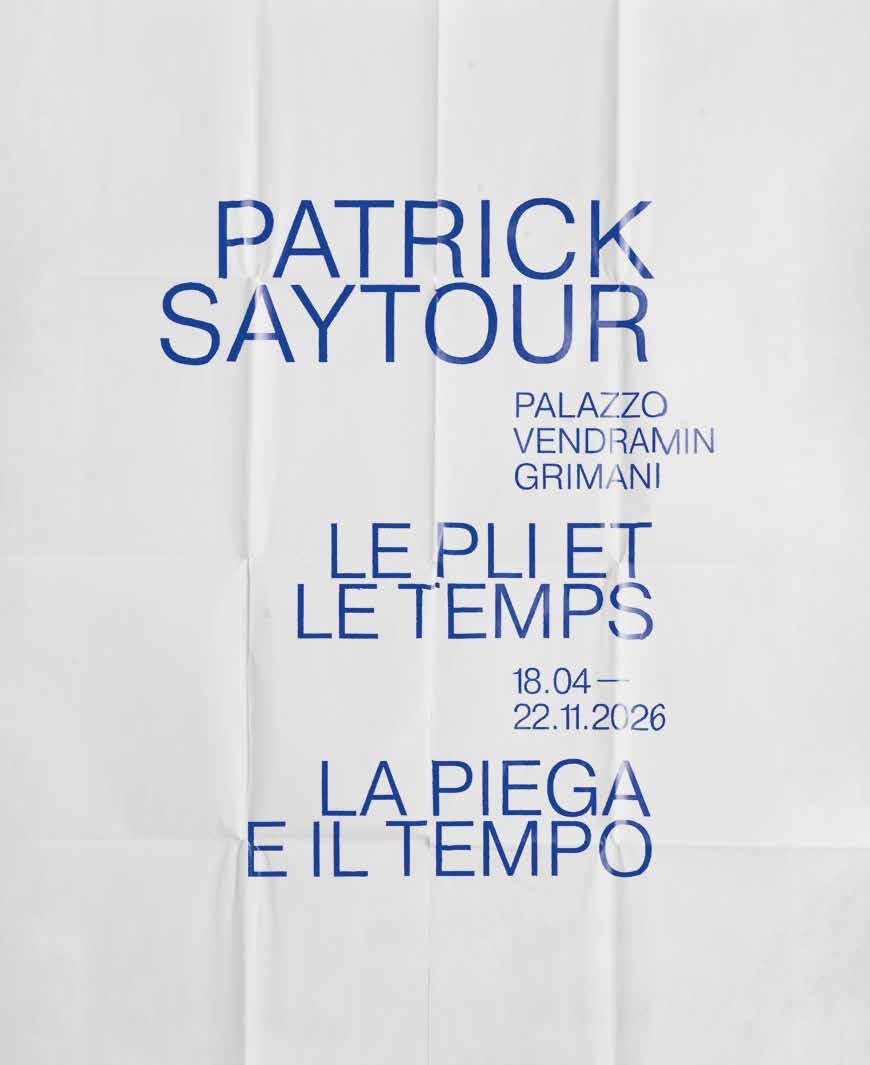
around town
NATIONAL PARTICIPATIONS
BIENNALE ARTE 2026
Spazio Berlendis
Cannaregio 6301/A (VE)
9.05-22.11.2026
The Poetics of Correspondence
Summer
Free Entrance
Commissioner
Susan Mains
Curator
Daniele Radini Tedeschi
Participants
Edward Bowen
Arthur Daniel
Josine Dupont
Alexandra Kordas
Lilo Nido and Chris Mast
Jeverson Ramirez
The Holzwege Group (Cinzia Bulone, Carlo Caldara AyaMarray, Andrea Saltarelli, Luigina Fernanda
Paola Cerrina)
Russell Watson
Supporters
Grenada Ministry of Culture, Tourism and Creative Industries
Grenada Tourism Authority
Grenada National Lotteries Authority
Grenada Arts Council
Row Venice
Start Group, Roma
Venice Documentation Project
Art House 473 Grenada
Act: Art and Design Grenada
JWAA - Japan Women Artists Association
STAV SPA Autolinee & Automobili
MAGNA PARS SRL
BIENNALE ARTE 2026
Spazio Berlendis
Cannaregio 6301 (VE)
9.05-22.11.2026
Las Invisibles
Free
Commissioner
Liwy del Carmen Immacolata Grazioso Sierra
Curators
Elsie Wunderlich
Stefania Pieralice
Participants
ARKEO
Luana Bottallo
Jorge Chavarría
Manuel Navichoc
Ana Lorena Núñez
SOY artistic group (Christin Behrend, Franca Fabrizio
Yang YeXin)
Elsie Wunderlich
Supporters
Associazione Culturale La Rosa dei Venti
Cecchini Group
FORME forniture materiali ecosostenibili
Galleria AccorsiArte
PROVERSE Shangai Digital Media Technology Co., Ltd
REVI GROUP SRL
PitturiAmo aps
Start Group, Roma
Studio C di Luciano Carini, Piacenza
ULISSE GALLERY, Roma
Galleria ZeroUno, Barletta
61 st International Art Exhibition - La Biennale di Venezia
61 st International Art Exhibition -La Biennale di Venezia
in minor keys
54
Repubblica ARABA SIRIANA
The Tower Tomb of Palmyra
COMMISSIONER Waseem Abd Alhameed
Director of Fine Arts at the Syrian Ministry of Culture
CURATOR Yuko Hasegawa
EXHIBITOR Sara Shamma
L’installazione di grande scala che occupa lo spazio si ispira alle antiche torri funerarie di Palmira, monumentali mausolei costruiti tra il I e il III secolo d.C., distrutti durante la guerra in Siria. Pittura, architettura, luce, suono e arte profumatoria entrano in dialogo per evocare un luogo che fu crocevia di culture greco-romane, aramaiche e arabe, dove comunità di diverse religioni e origini convivevano in equilibrio. Il progetto non è solo una riflessione sulla perdita – centinaia di ritratti funerari furono saccheggiati e venduti all’estero – ma anche un gesto di speranza e un invito alla restituzione delle antichità trafugate.
ENG A large-scale immersive installation draws inspiration from the ancient funerary towers of Palmyra, monumental mausoleums built between the 1st and 3rd centuries AD and destroyed during the war in Syria. Painting, architecture, light, sound, and olfactory art intertwine to evoke a place that once stood at the crossroads of Greco-Roman, Aramaic, and Arab cultures, where communities of different religions and origins coexisted in harmony. The project is not only a reflection on loss –hundreds of funerary portraits were looted and sold abroad – but also a gesture of hope and an invitation to the return of stolen antiquities. Cotonificio, IUAV Venezia, Dorsoduro 2196 www.sarashamma.art
55 Repubblica di ARMENIA
The Studio
COMMISSIONER Svetlana Sahakyan,Head of the Department of Contemporary Art and Publishing of the Ministry of Education, Science, Culture and Sports of the Republic of Armenia
CURATORS Tony Shafrazi, Tina Chakarian
EXHIBITOR Zadik Zadikian
Lo spazio armeno si configura come un laboratorio attivo, in cui per tutta la durata della Biennale Zadik Zadikian lavora insieme ai suoi assistenti. Mattoni in gesso, realizzati in loco in diverse scale e pigmentazioni, vengono colati, impilati e riorganizzati in modo continuo, dando vita a strutture aperte e modificabili. La pratica, sviluppata a partire da forme elementari e processi ripetitivi, rende visibile il fare come parte integrante dell’opera, riflettendo sul processo
produttivo e sullo studio inteso come spazio aperto, condiviso e in costante trasformazione.
ENG The Armenian space is an active workshop where, throughout the duration of the Biennale, Zadik Zadikian works together with his assistants. Plaster bricks, produced on site in various scales and pigmentations, are cast, stacked, and continuously rearranged, creating open and changeable structures. Developed from elementary forms and repetitive processes, the practice makes visible the work as it unfolds, reflecting on the production process and on the studio as an open, shared space in constant transformation.
Tesa 41, Arsenale Militare
Fondamenta Case Nuove, Castello 2738/C www.armenianpavilion2026.org
56 Repubblica dell’ AZERBAIGIAN
The Attention
COMMISSIONER Rashad Aslanov Ambasciatore Repubblica dell’Azerbaigian
CURATOR Gwendolyn Collaço
EXHIBITOR Faig Ahmed
Un tappeto attraversa il Padiglione, attorcigliandosi e risalendo lungo le pareti come un unico corpo vivo. Suono, luce e variazioni dei materiali ne scandiscono il ritmo, rendendo la visita un esercizio di attenzione: osservare nodi, deformazioni e segni diventa pratica percettiva e tattile. Al centro del progetto, un altare generativo utilizza un chip quantistico per produrre numeri casuali che si trasformano in flusso linguistico, introducendo schemi imprevedibili e connettendo i visitatori alle strutture profonde della realtà. Tradizione tessile, metafisica Hurufita e fisica quantistica confluiscono così in un invito a leggere il mondo con cura e ad abitare l'incertezza del reale.
ENG A carpet unfolds through the Pavilion, twisting and climbing along the walls like a living body. Sound, light, and variations in materials mark its rhythm, making the visit an attention exercise: observing knots, deformations, and signs becomes a perceptual and tactile practice. A generative altar uses a quantum chip to produce random numbers that transform into a linguistic flow, introducing unpredictable patterns and connecting visitors to the deep structures of reality. Traditional weaving, Hurufi metaphysics, and quantum physics interweave in an invitation to read the world with care and to inhabit the uncertainty of reality. Campo della Tana, Castello 2124/A-2125 www.azerbaijanvenicebiennale.com
57 BAHAMAS
In Another Man’s Yard: John
Beadle, Lavar Munroe, and the Spirit of (Posthumous) Collaboration
COMMISSIONER John Cox
CURATOR Krista Thompson
EXHIBITORS John Beadle, Lavar Munroe Il Junkanoo, processione nazionale biennale di origine secolare e rito cardine della cultura bahamiana, diventa materializzazione delle istanze più urgenti della diaspora africana nel lavoro di due artisti da sempre impegnati tra cooperazione sociale ed ecologia del riciclo. Opere realizzate con materiali di scarto, tra cui cartone, teloni nautici e tessuti per vele, riportano lo sguardo su elementi e oggetti che altrimenti resterebbero nascosti o sottovalutati, trasformandoli in strumenti di commemorazione.
ENG Junkanoo, a biennial centuries-old national parade and a cornerstone of Bahamian culture, becomes the materialization of the most urgent concerns of the African diaspora in the work of two artists who have always been committed to social cooperation and the ecology of recycling. Works made from discarded materials, including cardboard, nautical tarpaulins, and sailcloth, redirect attention to elements and objects that would otherwise remain hidden or overlooked, transforming them into instruments of commemoration.
San Trovaso Art Space, Dorsoduro 947 www.bahamasvenicebiennale.org
58 BOSNIA-ERZEGOVINA Domus Diasporica
COMMISSIONER Sarita Vujkovic´, director of the Museum of Contemporary Art of the Republic of Srpska
CURATOR Isidora Živkovic´
EXHIBITOR Mladen Bundalo
Video, fotografie, disegni e installazioni site-specific sono gli strumenti con cui Mladen Bundalo trasforma il proprio percorso biografico in uno spazio di confronto con il pubblico sul concetto di “casa” e sulle sue trasformazioni in relazione ai contesti sociali, linguistici, economici e politici. Migrazione, sradicamento e ricerca identitaria ridisegnano così il dibattito su un’idea che non si configura come un obiettivo da raggiungere, ma come un processo in continua ridefinizione.
ENG Videos, photographs, drawings, and site-specific installations are the tools used by Mladen Bundalo to transform his own biographical journey into a space of dialogue with the public around the concept of “home” and its transformations in relation to social, linguis -
in minor keys
tic, economic, and political contexts. Migration, uprooting, and the search for identity thus reshape the debate around a notion that far from being a goal to aim at, is more a process in continuous redefinition.
Palazzo Malipiero, San Marco 3198 www.mladenbundalo.com
59 BULGARIA
The Federation of Minor Practices
COMMISSIONER Dessislava Dimova, National Gallery, Sofia
CURATOR Martina Yordanova
EXHIBITORS Gery Georgieva, Maria Nalbantova, Rayna Teneva, Veneta Androva Quattro film distinti affrontano temi quali disinformazione, ecologia, violenza e ricerca identitaria, non per immaginare futuri possibili ma per mettere a fuoco i processi del recente passato che hanno contribuito a configurare il nostro presente. Le opere tracciano così una genealogia critica delle condizioni attuali della società, inserite in un dispositivo narrativo interattivo in forma di videogioco che le mette in relazione come segnali di orientamento collettivo.
ENG Four different films address issues such as disinformation, ecology, violence, and the search for identity, not to imagine possible futures but to focus on the processes of the recent past that have contributed to shaping our present. The works thus trace a critical genealogy of contemporary social conditions, embedded within an interactive narrative device in the form of a video game that links them as signals for collective orientation.
Centro Culturale Don Orione Artigianelli (Sala Tiziano), Fondamenta delle Zattere ai Gesuiti, Dorsoduro 919 www.bulgarianpavilionvenice.art
60 Repubblica del CAMERUN
NZ NDA
COMMISSIONER Guy Martial Ndongo Mendougan, Director of Development and Art Promotion of Ministry of Art and Culture
CURATOR Beya Gille Gacha
EXHIBITORS Beya Gille Gacha, Jail Time Records, Sylvie Njobati, Bienvenue Fotso, Zora Snake, Neals Niat
NZ NDA – “porta” o “cammino verso casa” in lingua medumba – trasforma lo spazio in una matrice iniziatica articolata in dodici capitoli, dispiegata su 400 metri quadrati. Il progetto parte da un assunto preciso: le ferite storiche del colonialismo persistono nei corpi e nella terra, e l’arte può farsi strumento di guarigione.
Sabbie vulcaniche nere, cortecce rosse, tessuti tradizionali, piante medicinali ed entità scultoree dialogano con luci curative, gesti performativi e onde sonore terapeutiche, composte da un’etichetta musicale nata tra le mura della prigione di Douala. Il percorso guida il visitatore lungo tappe di transizione che connettono corpo, terra e spirito, perché nessuna guarigione è possibile senza aver attraversato la propria notte.
ENG NZ NDA – “door” or “way back home” in the Medumba language – transforms the space into an initiatory matrix unfolding across twelve chapters over 400 square meters. The project begins from a clear premise: the historical wounds of colonialism persist in bodies and in the land, and art can be used as a tool to heal them. Black volcanic sands, red barks, traditional textiles, medicinal plants, and sculptural entities intertwine with healing lights, performative gestures, and therapeutic sound waves, composed by a music label born within the walls of Douala’s prison. The journey guides the visitor through transitional stages that connect body, land, and spirit, because no healing is possible without passing through one’s own night.
Palazzo Canal, Rio Terà Canal Dorsoduro 3121 www.nzenda.com
61 Repubblica di CIPRO It rests to the bones
COMMISSIONER Ioanna Hadjicosti
CURATOR Kyle Dancewicz
EXHIBITOR Marina Xenofontos
All’ingresso del Padiglione una struttura replica il soffitto del Perroquet, storico nightclub di Famagosta rimasto sigillato dai tempi dell’invasione turca. All’interno, macchine motorizzate, sculture e materiali audiovisivi danno forma a un “archivio incondizionato” di frammenti storici, oggetti e immagini che si accumulano in configurazioni instabili. Tra movimenti ciclici e loop, Xenofontos compone un ritratto del presente insieme meccanico e metafisico, in cui la memoria si manifesta come presenza insistente ma discontinua.
ENG At the entrance of the Pavilion, a structure replicates the ceiling of the Perroquet, a historic nightclub in Famagosta that has remained sealed since the Turkish invasion. Inside, motorized machines, sculptures, and audiovisual materials form an “unconditional archive” of historical fragments, objects, and images that accumulate into unstable configurations. Through cyclical movements and loops, Xenofontos creates a portrait of the present that is both mechanical and metaphysical, where memory unfolds as an insistent yet discontinuous presence.
Associazione Culturale Spiazzi, Castello 3865 www.cyprusinvenice.org.cy
62 Repubblica Democratica del CONGO
Simba Moto! Seize the fire! Saisis le feu!
COMMISSIONER Cindy Makiana, CURATOR Nadia Yala Kisukidi
EXHIBITORS Sammy Baloji, Arlette Bashizi, Patrick Bongoy, Damso, Gosette Lubondo, Nelson Makengo, Aimé Mpané, Léonard Pongo, Géraldine Tobé
Il titolo trilingue, in lingala, inglese e francese, dichiara fin da subito la vocazione del progetto: il fuoco che brucia e distrugge, una volta domato come nelle mani di un fabbro trasforma, crea, diventa fonte di vita. Al centro, una fucina abbagliante in cui nove artisti della Repubblica Democratica del Congo e della diaspora affrontano l’oscurità, evocando cosmologie antiche e immaginari radicali per costruire narrazioni che si muovono oltre il dolore e la mancanza, da Kinshasa a Goma.
ENG The trilingual title, in Lingala, English, and French, immediately tells the project’s intent: fire that burns and destroys, yet, when tamed by a blacksmith’s hands, it transforms, creates, and becomes a source of life. At the centre is a blinding forge where nine artists from the Democratic Republic of the Congo and its diaspora confront darkness, evoking ancient cosmologies and radical imaginaries to develop narratives that go beyond pain and absence, from Kinshasa to Goma.
Scuola Grande di San Marco (Antico Refettorio), Campo SS. Giovanni e Paolo Castello 6777
IG @nadia_yala_kisukidi
63 CROAZIA
Compelled by Fright and Beauty
COMMISSIONER Ministry of Culture and Media of the Republic of Croatia
CURATOR Branko Franceschi
EXHIBITOR Dubravka Lošic´
Un’installazione site-specific riorganizza cicli sviluppati dall’artista nell’arco di quattro decenni, adattandoli alle caratteristiche spaziali e semantiche del luogo. Il percorso si articola tra cortile e piano nobile, accostando forme in bronzo e ferro corroso a elementi in legno e tessuto, in un linguaggio ibrido e teatrale pervaso da riferimenti moderni e tradizionali. Tra tensioni e metamorfosi, la materia si rivela come un campo attivo in cui si condensano libertà e indipendenza.
ENG Lošic´ presents a site-specific installation that reorganizes cycles he developed over four decades, adapting them to the spatial and semantic characteristics of the site. The exhibition unfolds from the courtyard to the
piano nobile, juxtaposing corroded iron and bronze shapes with wooden and fabric elements, through a hybrid, theatrical language that weaves together modern and traditional references. Amid tensions and metamorphoses, matter reveals itself as an active field in which freedom and independence take shape. Palazzo Zorzi, Salizada Zorzi, Castello 4930 www.dubravkalosic.com IG @croatianpavilion2026
64 CUBA
Hombres Libres / Free men
COMMISSIONER Daneisy García Roque
CURATOR Nelson Ramirez de Arellano Conde
EXHIBITOR Juan Roberto Diago Durruthy
Affrontando temi quali l’eredità della diaspora africana e le forme contemporanee di schiavitù, l’installazione di Roberto Diago riunisce un gruppo di grandi teste scultoree che avanza verso lo spettatore. Metalli ossidati, legno e materiali di recupero compongono un’epidermide, facendo della cicatrice un elemento strutturale che afferma concetti di identità e resistenza. La libertà si configura come pratica consapevole, memoria che riaffiora, corpo che si sottrae all’oblio.
ENG Addressing the legacy of the African diaspora and contemporary forms of slavery, Roberto Diago’s installation brings together large sculpted heads advancing towards the viewer. Oxidized metals, wood, and reclaimed materials form a sort of skin turning scars into a structure element, highlighting identity and resistance. Freedom becomes a conscious practice: memories resurfacing, body escaping oblivion.
Il Giardino Bianco – Art Space Via Garibaldi, Castello 1814 IG @robertodiagoart
65 ECUADOR
Tawna & Oscar
COMMISSIONER Museum of Anthropology and Contemporary Art (MAAC)
CURATOR Manuela Moscoso
EXHIBITORS Tawna collective, Oscar Santillán Al centro del Padiglione non c’è un oggetto, ma il dialogo tra due pratiche che mettono in relazione modi differenti di abitare e interpretare il mondo: quella corporea e onirica del collettivo Tawna e quella insieme tecnologica e ancestrale di Óscar Santillán. Radicato in territori andinoamazzonici attraversati da pluralità linguistiche, culturali ed ecologiche, il progetto indaga il sapere come pratica relazionale che prende forma nell’esperienza condivisa.
ENG At the center of the Pavilion there is no object, but a dialogue between two prac -
tices: the bodily and dreamlike practice of the Tawna collective and the technological yet ancestral practice of Óscar Santillán, which bring into relation different ways of inhabiting and interpreting the world. Rooted in Andean-Amazonian territories characterized by linguistic, cultural, and ecological plurality, the project investigates knowledge as a relational practice, shaped through shared experience.
Castello 1636/A www.pavilionofecuador.art
66 EL SALVADOR
Cartographies of the Displaced
COMMISSIONER Astrid María Bahamond
CURATOR Alejandra Cabezas
EXHIBITOR José Oscar Molina
Al debutto dell’El Salvador alla Biennale Arte J. Oscar Molina presenta una ricerca scultorea dedicata alle geografie intime della diaspora. Nato a Madrid e cresciuto negli Stati Uniti, l’artista combina memoria personale e storia collettiva, indagando appartenenza e sradicamento come condizioni esistenziali. Cuore del progetto è la serie Children of the World, figure modellate come presenze vigili, emblemi di comunità disperse ma resilienti. La mostra concepisce lo spostamento non solo come superamento di confini, ma come stato ontologico, mappa fragile e tenace di identità in movimento.
ENG Marking El Salvador’s debut at the Biennale Arte, J. Oscar Molina presents a sculptural practice devoted to the intimate geographies of diaspora. Born in Madrid and raised in the United States, the artist weaves together personal memory and collective history, exploring belonging and uprootedness as existential conditions. At the core of the project is the series Children of the World, figures shaped as watchful presences, symbols of scattered yet resilient communities. The exhibition conceives displacement not only as the crossing of borders, but as an ontological state – a fragile yet tenacious map of identities in motion. Palazzo Mora, Cannaregio 3659 IG @omolina.arts
67 ESTONIA
The
House of Leaking Sky
COMMISSIONER Maria Arusoo, Estonian Centre for Contemporary Art (CCA)
CURATOR Natalia Sielewicz
EXHIBITOR Merike Estna
Vivendo a Venezia con la famiglia per l’intera durata della Biennale, l’artista trasforma lo spazio espositivo in uno studio aperto in cui i dipinti prendono forma in tempo reale davanti ai visitatori. La pratica si intreccia così al lavoro di cura e alla dimensione domestica, rendendo visibile il tempo della produzione e della vita condivisa. Ne emerge un dispositivo che mette in discussione i confini tra quotidiano ed eccezionale, tra genio individuale e processo collettivo, tra intimità e sfera pubblica.
ENG Living in Venice with her family for the entire duration of the Biennale, the artist turns the exhibition space into an open studio where paintings take shape in real time before visitors. Her practice intertwines with care work and the domestic sphere, making visible the time of both production and shared life. The result is a platform that challenges the boundaries between the everyday and the exceptional, between individual genius and collective process, and between intimate and the public spheres.
Calle San Domenico, Patronato Salesiano Leone XIII, Castello 1285 www.cca.ee
IG @estonianpavilion_merikeestna
68 ETIOPIA
Shapes of Silence
COMMISSIONER Ambassador Demitu Hambisa Bonsa
CURATOR Abebaw Ayalew
EXHIBITOR Tegene Kunbi
In Etiopia il silenzio possiede uno statuto ambivalente: celebrato come forma di saggezza, può al contempo generare esclusione e mancanza di cura. È uno spazio di tensione distribuito in modo diseguale lungo linee di genere, geografia e potere. Tegene Kunbi lavora per stratificazioni pittoriche, assemblando tessuti di provenienza e significato contrastanti – stoffe lavorate a mano accanto a materiali industriali, indumenti sacri e tessuti utilitaristici – fino a costringere categorie socialmente separate in un unico campo visivo, dove il contenuto si manifesta nella prossimità e nella presenza materiale, più che nella spiegazione.
ENG In Ethiopia, silence has an ambivalent meaning: praised as a form of wisdom, it can at the same time mean exclusion and a lack of care. It is a space of tension unevenly distributed along lines of gender, geography, and




in minor keys
power. Tegene Kunbi works through painting stratifications, assembling fabrics of contrasting origins and meanings – handmade textiles alongside industrial materials, sacred garments and utilitarian fabrics – bringing socially segregated categories into a single visual field, where meaning surfaces through proximity and material presence rather than explanation. Palazzo Bollani, Castello 3647 www.ethiopianpavilion.com
69 GEORGIA
Modern Argonauts –Georgian Crossroads
COMMISSIONER Shalva Khakhanashvili
CURATORS Shalva Khakhanashvili, Nino Metreveli
EXHIBITORS Tatia Darchiashvili, Konstantin Mindadze, Guram Nikoladze, Nestan Mikeladze, Manuchar Okrostsvaridze, Guela Patiachvili, Mamuka Tsetskhladze, Merab Buliskiria, Karim Borjas, Jean-Dominique Ferrucci, Aliska Lahusen, Eve Ramboz, Annette Turrillo, Pedro Morales, Eizo Sakata, Mauro Marcenaro, Silvano Rubino
Concepito come un vascello in perpetua trasformazione, il Padiglione riflette sulla figura dell’artista come moderno Argonauta e presenta la Georgia come spazio di soglia, percorso da scambi, fratture e prospettive mobili. Musica, poesia e installazioni site-specific presentano motivi del folklore, polifonie e astrazioni moderniste che evocano l’intimità di un caravanserraglio. Al centro, l’alfabeto georgiano prende forma come palinsesto storico in cui identità e memoria si confrontano con il presente.
ENG Conceived as a vessel in constant transformation, the Pavilion reflects on the figure of the artist as a modern Argonaut and presents Georgia as a threshold space shaped by exchanges, fractures, and shifting perspectives. Music, poetry, and site-specific installations intertwine with folkloric motifs, polyphonies, and modernist abstractions, evoking the intimacy of a caravanserai. At the center, the Georgian alphabet reappears as a historical palimpsest in which identity and memory engage with the present.
Palazzo Querini, Calle Lunga San Barnaba Dorsoduro 2691
IG @shalvak04
70 GRENADA
The Poetics of Correspondence
COMMISSIONER Susan Mains
CURATOR Daniele Radini Tedeschi
EXHIBITORS Edward Bowen, Arthur Daniel, Josine Dupont, Alexandra Kordas, Lilo Nido and Chris Mast, Jeverson Ramirez, The Holzwege Group, Russell Watson
Una costellazione di artisti internazionali costruisce un percorso che indaga le corrispondenze tra isole, correnti e linguaggi intesi come reti di significato, memoria e materialità. Installazioni stratificate, opere basate sul tempo e interventi collaborativi compongono uno spazio polifonico in cui Grenada si configura come nodo di scambi tra dimensione locale e orizzonti globali. Pratiche eterogenee per media e processi convergono in una riflessione sulle dinamiche relazionali del presente.
ENG A constellation of international artists constructs a trajectory that explores correspondences between islands, currents, and languages as networks of meaning, memory, and materiality. Layered installations, time-based works, and collaborative interventions compose a polyphonic space in which Grenada emerges as a node of exchange between local specificity and global horizons. Practices diverse in media and processes converge in a reflection on the relational dynamics of the present.
Spazio Berlendis, Cannaregio 6301/A www.grenadavenice.org
71 GUATEMALA Las Invisibles
COMMISSIONER Liwy del Carmen Immacolata Grazioso Sierra, Minister of Culture and Sport CURATORS Elsie Wunderlich, Stefania Pieralice EXHIBITORS ARKEO,Luana Bottallo, Jorge Chavarría, Manuel Navichoc, Ana Lorena Núñez, SOY artistic group, Elsie Wunderlich Le donne maya che ogni giorno, dall’alba al tramonto, macinano il mais, alimentano il focolare e preparano tortillas su comal d’argilla sono protagoniste invisibili di una storia millenaria. Il tortear – il gesto ripetuto di passare le mani umide sulla pietra rovente per evitare che il mais si attacchi – finisce spesso per cancellare ogni impronta digitale, ogni traccia di identità. Eppure in quel silenzio quotidiano si custodisce la memoria collettiva di un popolo, la sua sopravvivenza identitaria e il legame indissolubile tra esseri umani, natura e cosmo della cultura maya.
ENG Mayan women, who from dawn to dusk grind corn, feed the fire, and prepare tortillas on clay comales, are the invisible protagonists of a millennia-old history. Tortear – the repeated gesture of passing wet hands
over the heated stone to prevent the corn from sticking – often erases every fingerprint, every trace of individual identity. And yet, that daily silence preserves the collective memory of a people, their cultural survival and the unbreakable bond between humans, nature, and the traditional Mayan cosmos.
Spazio Berlendis, Cannaregio 6301 www.biennaleguatemala.com
NEW ENTRY
72 Repubblica di GUINEA
Le Son de l’Art: l’Écho de la Matière
COMMISSIONER Bilia Bah
CURATOR Carlo Stragapede
EXHIBITORS Francesco Tullio Altan, Paola Arrigoni, Bella Bah, Nino Barone, Stefania Basso, Emiliano Bazzanella, Giuliana Bellini, Milena Bellomo, Bluer (Lorenzo Viscidi), Alda Bòscaro, Alessandro Cadamuro, Carmine Calvanese, Carmela Candido, Giancarlo Caneva, Tommaso Cascella, Giancarlo Cazzaniga, Bruno Ceccobelli, Giorgio Celiberti, Giorgio Celiberti Jr., Maurizio Cervellati, Marco Ciani, Massimo Clemente, Bachir DiaIlo, Bruno Donzelli, Mauro Filigheddu, Mirko Filipuzzi, Pasquale Fraccalvieri, Ferruccio Franz, Carla Galli Morandi, Omar Galliani, Andrea Marco Ghia, King Emmanuel, Gianni Maglio, Paolo Marazzi, Rossella Marchesin, Marvin, Enzo Migneco (Togo), Zdravko Milic´, Giampaolo Muliari, Lucia Paese, Bruno Paladin, Giorgio Pastres, Ottavio Pinarello, Giuseppina Pioli, Manuela Pittana, Adriano Piu, Stefano Pizzi, Claudia Raza, Rosaspina, Andrea Rossi Andrea, Marco Nereo Rotelli, Gernot Schmerlaib (BIX), Cesare e Noah Serafino, Alessio Serpetti, Leo Strozzieri, Sékou Oumar Thiam, Lucia Tomasi, Angelo Toppazzini, Maurizio Valdemarin, Andrea Vizzini, Luciana Zabarella, Marina Zambon, Tono Zancanaro, Leonardo Zanin
L’Isola di San Servolo – che ha ospitato nel tempo un monastero benedettino e in seguito un istituto psichiatrico, luogo segnato dall’isolamento e dal silenzio – accoglie la prima partecipazione della Guinea alla Biennale Arte. Gli arazzi abitano lo spazio come presenze vive che evocano libertà, mentre le opere si dispongono secondo una logica sonora e ritmica. Una narrazione in tonalità minori in cui l'arte guineana, profondamente radicata in funzioni rituali e spirituali, si confronta con la sensibilità europea per abitare le dinamiche della globalizzazione e le stratificazioni dell'identità postcoloniale.
ENG The Island of San Servolo immersed in its isolation and silence has hosted over time a Benedictine monastery and later a psychiatric hospital. This year it welcomes Guinea's first participation in the Biennale Arte. The tapestries inhabit the space as living presences that
in minor keys
evoke freedom, while the works are arranged following a sonic and rhythmic logic. A narrative in minor keys where Guinean art, deeply rooted in ritual and spiritual practices, engages with European sensibility to inhabit the dynamics of globalisation and the layering of postcolonial identity.
Isola di San Servolo
NEW ENTRY
73 Repubblica
della GUINEA EQUATORIALE
The Forest. The Undergrowth
COMMISSIONER Paulo Speller
CURATOR Joan Abelló
EXHIBITORS Fernando Nguema Madja, Modest Gené Roig, Rani Bruchstein, Barbara Cammarata, Florin Codre, Jianqi Du, Martin Emschermann, Alessia Forconi, Fulvio Merolli, Alfred Mirashi Milot, Mfochive Oumarou, Hannou Palosuo, Valeria Pérez Fuchs, Andrea Roggi, Sonia Ros, Carlotta Flora Saavedra González, Sandro Sanna, Giuseppe Saporito, Ingrid Seall, Michele Stanzione, Vassilis Vassiliades, Liu Youju, William Marc Zanghi
Per la sua prima partecipazione alla Biennale Arte, il Paese dell’Africa centrale pone al centro di una mostra collettiva l’immaginario della foresta tropicale e del suo fitto sottobosco. Questo habitat è evocato come ecosistema vitale da preservare, metafora di connessione, complessità e ricchezza biologica e culturale. In linea con l’urgenza di tutelare la biodiversità forestale, le opere mettono in evidenza come le componenti visibili e invisibili di questo ecosistema siano profondamente interdipendenti.
ENG For its first participation in the Biennale Arte, the Central African country places at the heart of a group exhibition the imagery of the tropical forest and its dense undergrowth. This habitat is evoked as a vital ecosystem to be preserved, a metaphor for connection, complexity, and biological and cultural richness. In line with the need to protect forest biodiversity, the artists’ works highlight how the visible and invisible components of this ecosystem are interdependent.
Palazzo Donà dalle Rose Cannaregio 5038 / 5101
74 Repubblica di HAITI
Yelena’s Garden
COMMISSIONER Gandy Thomas,Ambassador of the Republic of Haiti in Italy and Permanent Representative to the Rome-based UN Agencies
CURATOR Mario Savini
EXHIBITOR Enock Placide
L’installazione si configura come uno spazio di attraversamento e relazione in cui pittura, immagine in movimento e interazione ridefiniscono il rapporto tra visibile e invisibile. Tele rettangolari e circolari, un pannello dipinto su due lati, una sfera di vetro e un video si dispongono in una geometria aperta e instabile che esclude un punto di vista privilegiato. Il pubblico è invitato a muoversi e a intervenire sull’assetto, generando configurazioni sempre diverse. Tra fenomeno quotidiano e dimensione cosmica, l’opera costruisce un campo percettivo in cui il senso si svela progressivamente, orientando l’esperienza verso una dimensione relazionale e non gerarchica.
ENG The installation unfolds as a space of passage and relation in which painting, moving image, and interaction redefine the relationship between the visible and the invisible. Rectangular and circular canvases, a double-sided painted panel, a glass sphere, and a video are arranged in an open, unstable geometry that rejects any privileged viewpoint. Visitors are invited to move through the space and alter the configuration, generating ever-changing constellations. Between everyday phenomena and a cosmic dimension, the work establishes a perceptual field in which meaning gradually reveals itself, orienting the experience toward a relational, non-hierarchical dimension.
Palazzo Albrizzi-Capello, Cannaregio 4118 www.mariosavini.com
75 INDONESIA
Printing the Unprinted
COMMISSIONER Endah T.D. Retnoastuti, Director General for Cultural Diplomacy, Promotion and Cooperation Ministry of Culture
CURATOR Aminudin TH Siregar
EXHIBITOR Agus Suwage, Syahrizal Pahlevi, R.E. Hartanto, Nurdian Ichsan,Theresia Agustina Sitompul (Terre), Mariam Sofrina, Rusyan Yasin
Realizzato in collaborazione con la Scuola Internazionale di Grafica di Venezia, il Padiglione si articola in tre sezioni. Materiali e Metafore della Scomparsa indaga processi fisici di dissoluzione utilizzando pittura, scultura e installazione; Narrazioni Soppresse e Voci Inascoltate riattiva storie marginalizzate mediante disegno, stampa e media non convenzionali; L'inversione della Scoperta rilegge la storia globale ribaltando il punto di vista occidentale, ricorrendo a pratiche incisorie collaborative.
ENG Developed in collaboration with the International School of Graphics in Venice, the Pavilion is structured in three sections. Materials and Metaphors of Disappearance investigates physical processes of dissolution through painting, sculpture, and installation; Suppressed Narratives and Unheard Voices reactivates marginalized histories through drawing, print, and unconventional media; The Reversal of Discovery rereads global history by overturning the Western point of view through collaborative printmaking practices.
Scuola Internazionale di Grafica Cannaregio 1798 www.scuolagrafica.it
76 ISLANDA
Pocket Universe
COMMISSIONER Icelandic Art Center, Cecilie C. Ragnheiðardóttir Gaihede CURATORS Margrét Áskelsdóttir, Unnar Örn Auðarson EXHIBITOR Ásta Fanney Sigurðardóttir
Un’opera di immagini in movimento dà vita alla "Creatura Zero", una presenza in stato di inizio, sospesa tra nascita e creazione. Il suo viaggio alla ricerca della “roccia originaria”, immaginata come il primo passo nella creazione della Terra, si configura come una cosmogonia in miniatura, un racconto sull'impulso umano a dare forma al mondo. I simboli che attraversano la mostra – sfere, amuleti, talismani – agiscono come condensatori di senso, oggetti liminali tra gioco e rituale, che suggeriscono percorsi senza esiti fissi, dove errore, caso e ripetizione diventano strumenti di trasformazione.
ENG A work of motion pictures brings “Creature Zero” to life – a presence suspended between birth and creation. Its journey in search of the “original rock,” imagined as the first step towards the creation of the Earth, takes shape as a miniature cosmogony, a narrative about the human impulse to give form to the world. The symbols that run through the exhibition – spheres, amulets, talismans – act as condensers of meaning, liminal objects between play and ritual, suggesting pathways without fixed outcomes, where error, chance, and repetition become instruments of transformation. Docks Cantieri Cucchini
San Pietro di Castello
IG @astafanney_art
77 Repubblica del KAZAKISTAN
Qoñyr: The archive
of Silence
COMMISSIONER Aida Balayeva, Deputy Prime minister, Minister of Culture and Information of the Republic of Kazakhstan
CURATOR Syrlybek Bekbota
EXHIBITORS Ardak Mukanova, Assel Kadyrkhanova, ADYR ASPAN (Gulmaral Tattibayeva, Natalia Ligay), Anar Aubakir, Smail Bayaliyev, Nurbol Nurakhmet, Mansur Smagambetov, Oralbek Kaboke
La parola “Qoñyr”, che dà il titolo alla mostra, è un concetto chiave della cosmologia kazaka e indica quei segnali quasi impercettibili che rendono manifesto ciò che normalmente resta nascosto alla vista e all’udito. Ispirata a una composizione del musicista kazako Äbiken Khasenov, l’esposizione si sviluppa in sei sale comunicanti e mostra come la memoria si trasmetta in ogni istante della vita quotidiana, tra figure monumentali ed erba della steppa distesa sul pavimento. I suoni di Venezia si fondono con quelli della tradizione kazaka, componendo un paesaggio acustico immersivo di cui il pubblico diventa parte attiva.
ENG The title word “Qoñyr” is a key concept in Kazakh cosmology, referring to nearly imperceptible signals that make what is hidden from sight and hearing perceptible. Inspired by a composition by the Kazakh musician Äbiken Khasenov, the exhibition unfolds across six interconnected rooms and explores how memory is transmitted in every instant of everyday life, among monumental figures and steppe grass spread across the floor. The sounds of Venice intertwine with those of Kazakh tradition, creating an immersive soundscape in which the audience take an active part. Museo Storico Navale, Riva San Biasio Castello 2148 IG @kazakhstan_nationalpavilion_
78 Repubblica del KIRGHIZISTAN
Belek
COMMISSIONER Embassy of the Kyrgyz Republic
CURATOR Geraldine Leardi
EXHIBITOR Alexey Morosov
Il progetto prende avvio da ghiacciai, fiumi e dighe per riflettere sull’acqua come risorsa e come dono primordiale della natura. Un ambiente immersivo mette in relazione paesaggi montani, infrastrutture idriche e la memoria culturale delle civiltà nomadi dell’Asia Centrale, evocata anche tramite l’antico gioco equestre del Kok-Boru. Al centro, un video-affresco monumentale dialoga con lo spazio storico dell’ex Chiesa di Santa Caterina, costruendo una composizione che si colloca all’intersezione tra arte, filosofia, antropologia e tecnologia.
ENG The project starts from glaciers, rivers, and dams to reflect on water as a main resource and a primordial gift of nature. An immersive environment brings together mountain landscapes, water infrastructures, and the cultural memory of the nomadic civilizations of Central Asia – evoked also through the ancient equestrian game of Kok-Boru. At the center, a monumental video-fresco enters into dialogue with the historic space of the former Church of Santa Caterina, building a composition at the intersection of art, philosophy, anthropology, and technology.
Ex Chiesa di Santa Caterina
Convitto Foscarini, Cannaregio 4941 IG @alexey_morosov_artist
79 Repubblica del KOSOVO Hard Teeth
COMMISSIONER National Gallery of Kosovo, Hana Halilaj
CURATOR José Esparza Chong Cuy
EXHIBITOR Brilant Milazimi
Scelto per la forza del linguaggio pittorico e la capacità di tradurre tensioni emotive e politiche in immagini ambigue e potenti, il progetto di Brilant Milazimi – tra le voci più promettenti della nuova generazione di artisti kosovari – esplora temi quali attesa, vulnerabilità e sospensione, riflettendo sia dimensioni individuali sia contesti geopolitici più ampi. Noto per paesaggi psicologici sospesi tra minaccia e sogno, l’artista costruisce una composizione panoramica di 17 metri in cui una fila di figure si muove in un paesaggio montano, evocando attesa, vulnerabilità e persistenza.
ENG Brilant Milazimi’s project was chosen for its powerful pictorial language and its ability to translate emotional and political tensions into ambiguous, powerful images. Milazimi – one of the most promising voices of the new generation of Kosovar artists – explores
themes of waiting, vulnerability, and suspension, reflecting both individual dimensions and broader geopolitical contexts. Known for his psychological landscapes hovering between threat and dream, the artist has created a 17-meter panoramic composition in which a line of figures cross a mountain landscape, evoking wait, vulnerability, and persistence. Chiesa di Santa Maria del Pianto, Calle de le Capucine, Fondamente Nove, Castello www.pavilionofkosovo.com IG @kosovopavilion
80 LITUANIA
animism sings anarchy
COMMISSIONER Lolita Jablonskiene˙ CURATOR Louise O’Kelly EXHIBITOR Egle˙ Budvytyte˙
Un’installazione filmica multicanale girata in 16mm traduce una ricerca archeologica in canto, movimento e stati alterati di percezione. Ispirandosi agli studi sulle società neolitiche matrilineari e animiste dell’antropologa e archeologa lituana Marija Gimbutas, Egle˙ Budvytyte˙ mette in dialogo reperti, paesaggio e corpo utilizzando sequenze coreografiche ambientate tra spazi museali e grotte costiere del Sud Italia, proseguendo una pratica radicata che si pone all’intersezione tra arti visive e performative. Facsimili di divinità antropomorfe e gesti rituali compongono così una sorta di preghiera animista che riattiva legami tra memoria archeologica, ambiente e forme collettive di esperienza sensibile.
ENG A multi-channel film installation shot on 16mm translates an archaeological inquiry into song, movement, and altered states of perception. Drawing inspiration from the studies of Lithuanian anthropologist and archaeologist Marija Gimbutas on Neolithic matrilineal and animist societies, Budvytyte˙ weaves together artefacts, landscape, and the body through choreographic sequences set between museum spaces and the coastal caves of Southern Italy, continuing a practice grounded at the intersection of visual and performing arts. Votive figurines and ritual gestures form a kind of animist prayer that re-enables connections between archaeological memory, the environment, and collective forms of embodied experience.
Fucina del Futuro, Castello 5063/B IG @egle_budvytyte
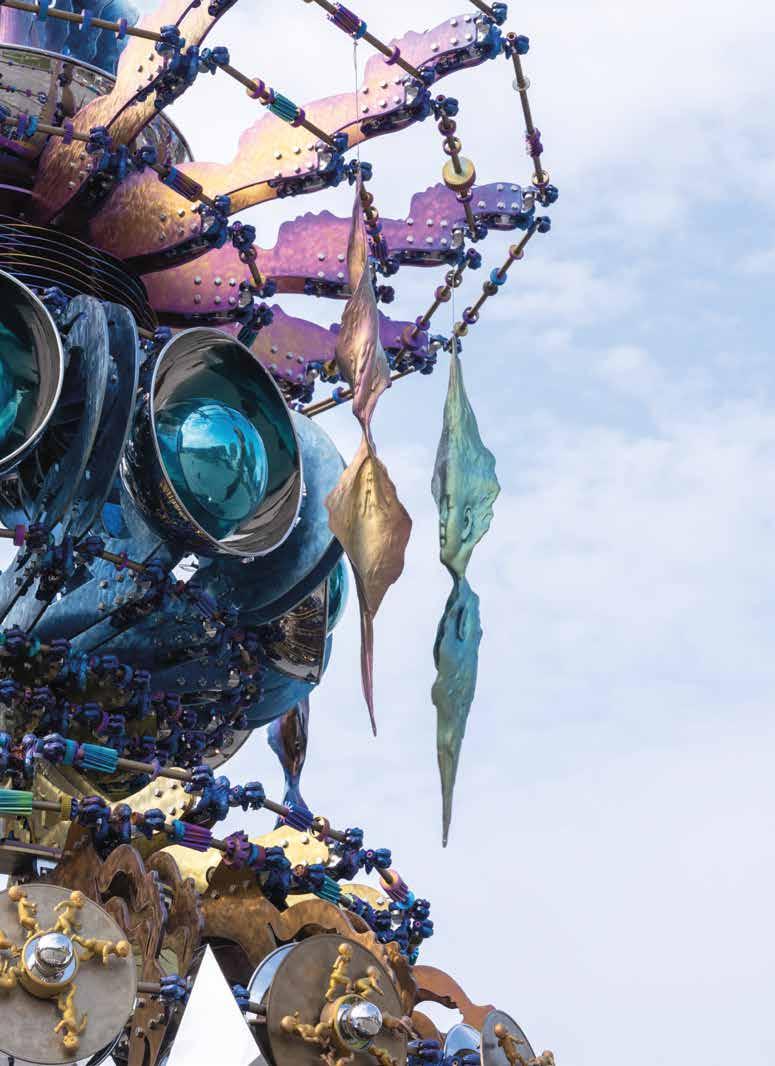


in minor keys
81 Repubblica di MACEDONIA
DEL NORD
Pietà in the Emergency Blankets
COMMISSIONER Avni Qahili
CURATORS Tihomir Topuzovski and Amanda Boetzkes
EXHIBITOR Velimir Zernovski
Create originariamente come materiale destinato alle missioni spaziali, le coperte isotermiche sono oggi divenute oggetti d’uso comune, associate al primo soccorso prestato in seguito a catastrofi naturali o all’accoglienza di migranti dopo traversate estenuanti, via mare o via terra. Nel Padiglione, è la Pietà di Michelangelo a essere avvolta da una di queste coperte, in un gesto che ne riattiva la lettura e ne espande i significati. L’intervento mette in evidenza la fragilità delle relazioni tra individui, accomunati da un orizzonte di incertezza e da condizioni di vulnerabilità condivise, restituendo all’opera una dimensione di attualità radicale.
ENG Originally designed as material for space missions, thermal blankets are currently used for instance in case of first aid in the aftermath of natural disasters or to provide assistance to migrants after exhausting journeys by sea or land. In the Pavilion, Michelangelo’s Pietà is being wrapped in one of these blankets – a gesture that wants to re-engage with this work of art and to amplify its meanings. At the same time this gesture highlights the fragility of the relationships between individuals who share a horizon of uncertainty and conditions of vulnerability, placing the work in a radical contemporary dimension.
Ex Cappella Buon Pastore, Castello 77 IG @macedonianpavilion2026
82 Repubblica di MOLDOVA
On the Thousand and Second Night
COMMISSIONER Oleg Nica, Ambassador of the Republic of Moldova to the Italian Republic
CURATOR Adelina Luft
EXHIBITOR Pavel Bra˘ila
I droni, usati sempre più spesso in operazioni militari che li vedono protagonisti di conflitti in ogni angolo del mondo, diventano nel Padiglione moldavo simbolo di sostegno pratico ed espressivo, sollevando a mezz’aria tappeti in uno spazio aereo poetico e libero. La tradizione tessile moldava incontra così una tecnologia che non è più al servizio dell’uomo come strumento di offesa, ma che si trasforma in metafora di solidarietà
e immaginazione fiabesca, evocando – tra gli altri – l’archetipo orientale del tappeto volante.
ENG Drones, more and more used in military practices that make them protagonists of ongoing conflicts all over the world, become in the Moldovan Pavilion a symbol of practical and expressive support, lifting various carpets into mid-air within an airspace which is poetic and free. Moldovan textile tradition thus encounters a technology no longer in the service of humanity as an instrument of aggression, but transformed into a metaphor for solidarity and fairytale imagination – evoking, among other things, the Eastern archetype of the flying carpet.
Spazio Santa Veneranda, Chiesa dei Santi Geremia e Lucia, Cannaregio 252 IG @moldovapavilion
83 MONGOLIA
Entanglements:
Connectivities Across Borders
COMMISSIONER Sainbayar Surenkhuu, Senior Advisor to the Minister of Culture, Sports, Tourism and Youth
CURATORS Uranchimeg Tsultem, Thomas Eller EXHIBITORS Nomin Bold, Gerelkhuu
Ganbold,Tuguldur Yondonjamts, Dorjderem Davaa
La mostra indaga connessioni interspecie, spiritualità e scambi transnazionali, tracciando una mappa dell’Eurasia al tempo dell’Impero mongolo in relazione alla Venezia nel XIII secolo. Le pratiche degli artisti fanno convergere tradizione e contemporaneità: Nomin Bold rielabora la pittura mongol zurag con scene vibranti che riflettono su scambio materiale e cultura urbana; Dorjderem Davaa utilizza materiali naturali e immaginari mitologici; Gerelkhuu Ganbold fonde folklore, videogiochi e fantascienza; Tuguldur Yondonjamts esplora eredità culturale, paleontologia ed ecologia. Ne emerge una visione della Mongolia come campo dinamico di relazioni, tra migrazione, coesistenza e resilienza.
ENG The exhibition explores interspecies relations, spirituality, and transnational exchange, mapping Eurasia during the Mongol Empire in relation to 13th century Venice. The artists’ practices interweave tradition and contemporaneity: Nomin Bold reworks the mongol zurag painting style through vibrant scenes that reflect on material exchange and urban culture; Dorjderem Davaa employs natural materials and mythological imagery; Gerelkhuu Ganbold merges folklore with video games and science fiction; Tuguldur Yondonjamts investigates cultural heritage, palaeontology, and ecology. The result is a vision of Mongolia as a dynamic field of relations, shaped by migration, coexistence, and resilience.
Squero Castello, Salizada Streta Castello 368
IG @mongoliapavilion2026venezia
84 MONTENEGRO
Out of the Blue, I’m Swept Away
COMMISSIONER Vladislav Šc´epanovic´
CURATOR Svetlana Racanovic´
EXHIBITOR Siniša Radulovic´
Un’installazione site-specific mette in dialogo diretto due mondi distinti ma confinanti. Da un lato un pavimento in vetro rivela un universo incasellato e asettico, i cui abitanti sono impegnati in gesti quotidiani ripetitivi e automatici che scandiscono una realtà priva di immaginazione e inventiva. Dall'altro le proiezioni monumentali sulle pareti rimandano a un mondo aperto a tutte le possibilità, in cui lo sguardo corre libero nello spazio e si affida a orizzonti infiniti grazie al ruolo salvifico dell’arte.
ENG A site-specific installation brings into direct dialogue two distinct yet neighbouring worlds. On one side, a glass floor reveals an enshrined and aseptic universe, whose inhabitants are engaged in repetitive and automatic daily gestures that mark out a reality lacking imagination and inventiveness. On the other side, monumental projections on the walls evoke a world open to all possibilities, where the gaze roams freely through space and surrenders to infinite horizons, thanks to the redemptive role of art. Artenova, Castello 5063 IG @montenegro.pavilion
NEW ENTRY 85 Repubblica di NAURU AIM Inundated:
Imagining Life After Land
COMMISSIONER Isabella Dageago. M.P. Deputy Minister in the Government of Nauru CURATOR Khaled Ramadan
EXHIBITOR Kauw Tsitsi, CPS (Khaled Ramadan, Alfredo Cramerotti), Patricia Jacomella Bonola, Tedo Rekhviashvili, Sylvia Grace Borda, Ron Laboray, Dorian Batycka, Khaled Hafez, Iv Toshain, Stefano Cagol
Nauru, il più piccolo stato insulare del mondo, partecipa per la prima volta alla Biennale portando con sé una condizione di decenni di estrazione intensiva di fosfati che ne hanno compromesso il paesaggio e la sovranità, mentre l'innalzamento del livello del mare ne minaccia la stessa esistenza. Il Padiglione riunisce dieci artisti di altrettante nazioni per riflettere sulla scomparsa non solo di un territorio fisico, ma anche di memoria, identità e continuità culturale. Nauru non come caso remoto, ma come monito e come guida verso un futuro condiviso.
in minor keys
ENG Nauru, the smallest island state in the world, joins the Biennale for the first time, raising awareness of its present condition after decades of intensive phosphate extraction which have compromised its landscape and sovereignty, while rising sea levels threaten its very existence. The Pavilion brings together ten artists from as many nations to reflect on the disappearance not only of a physical territory, but also of memory, identity and cultural continuity. Nauru not as a remote case, but as a warning and a guide towards a shared future.
Spazio Castello 3683, Calle Bosello Castello 3683 www.nauru-biennalevenezia.com IG @nauru_biennale_venezia
86 NUOVA ZELANDA Taharaki Skyside
COMMISSIONER Kent Gardner, Arts Council of New Zealand Toi Aotearoa
CURATORS Felicity Milburn, Chloe Cull EXHIBITOR Fiona Pardington
L’artista orienta lo sguardo del visitatore verso l’alto, rendendo protagonisti del Padiglione grandi ritratti di volatili dal profondo significato culturale e spirituale nella tradizione Ma¯ori, di cui è esponente. Queste creature imbalsamate, conservate nei musei neozelandesi e australiani, restituiscono la fragilità del loro destino, oggi drammaticamente minacciato dall’impatto umano e dalla colonizzazione, facendosi messaggeri spirituali in grado di mettere in relazione il mondo dei vivi e quello dei morti.
ENG The artist directs the viewer’s gaze upward, making large portraits of birds central to the Pavilion – creatures that hold deep cultural and spiritual significance within Ma¯ori tradition, of which she is a member. These taxidermied birds, preserved in museums in New Zealand and Australia, evoke the fragility of their fate, now dramatically threatened by human impact and colonization, becoming spiritual messengers capable of connecting the world of the living with that of the dead.
Istituto Provinciale per l’Infanzia Santa Maria della Pietà di Venezia, Riva degli Schiavoni, Castello 3702 IG @fionapardington
87 PAKISTAN
Punj•AB
– A Sublime Terrain
COMMISSIONER Yaqoob Khan Bangash
CURATOR Beatriz Cifuentes Feliciano
EXHIBITOR Faiza Butt
Il Punjab, regione divisa tra India e Pakistan dopo la Partizione del 1947, si rivela in memorie, ritualità quotidiane e tessuti finemente lavorati, in cui i saperi femminili custodiscono storie spesso rimaste ai margini della narrazione ufficiale. Faiza Butt restituisce centralità a queste forme di conoscenza con immagini dense e lavorazioni minuziose, in cui il gesto artigianale e la lentezza del ricamo diventano strumenti di presenza e resistenza. Lo spazio si trasforma così in un arazzo vivo di memoria, identità e narrazione condivisa.
ENG Punjab, a region divided between India and Pakistan following the Partition of 1947, reveals itself through memories, everyday rituals, and finely crafted fabrics, in which feminine knowledge preserves stories that have often remained on the sidelines of official narratives. Faiza Butt gives back to these forms of knowledge their central role through dense imagery and meticulous craftsmanship, in which the craft gesture and the slowness of embroidery become instruments of presence and resistance. So the space turns into a living tapestry of memory, identity, and shared narrative.
Ex Farmacia Solveni, Dorsoduro 993-994 IG @pakistan_pavilion_2026
88 Repubblica di PANAMA
Tropical Hyperstition
COMMISSIONER Gianni Bianchini
CURATORS Ana Elizabeth González, Mónica Kupfer
EXHIBITORS Antonio José Guzmán e Iva Jankovic – Messengers of the Sun
Rifiutando la logica del white cube, il progetto si configura come un ambiente sensoriale percorso da memoria, sradicamento e sopravvivenza culturale. L’indaco, pigmento legato alle economie coloniali, avvolge uno spazio in cui tessuti, collage d’archivio e un ambiente sonoro spazializzato raccontano storie di migrazione afrocaraibica, tradizioni indigene e tracce delle città cancellate durante la costruzione del Canale di Panama. Al centro un’amaca monumentale realizzata a mano raccoglie pratiche ancestrali delle Americhe facendosi luogo di quiete, memoria e sopravvivenza.
ENG Far from the logic of the white cube, the project takes shape as a sensory environment permeated by memory, displacement, and cultural survival. Indigo, a pigment linked to colonial economies, envelops a space where
textiles, archival collages, and a spatialized sound environment interweave stories of AfroCaribbean migration, Indigenous traditions, and traces of cities erased during the construction of the Panama Canal. At its center, a monumental handwoven hammock gathers ancestral practices from the Americas, becoming a site of rest, memory, and survival.
Tesa 42 Arsenale, Fondamenta Case Nuove Castello 2738/C www.panamapavilion.org
89 PORTOGALLO
RedSkyFalls
COMMISSIONER Américo Rodrigues, DireçãoGeral das Artes
CURATORS Ana Baliza and Ricardo Nicolau
EXHIBITOR Alexandre Estrela Vibrazioni, microvariazioni e fenomeni sismici impercettibili diventano visibili su schermi e desktop digitali, rendendo i visitatori partecipi dell’instabilità che caratterizza costantemente il nostro mondo. In questo modo, l’installazione traduce l’invisibile in esperienza percettiva, mostrando come la tecnologia e la scienza possano farsi mediatrici della comprensione del reale. In questa prospettiva, Venezia e Lisbona si rivelano più che mai affini: città sospese su equilibri precari, costruite sull’incertezza e sulla continua negoziazione con i propri margini di stabilità.
ENG Vibrations, micro-variations, and imperceptible seismic phenomena can be seen on screens and digital desktops, making visitors aware of the instability that constantly permeates our world. The installation translates the invisible into a perceptual experience, showing how technology and science can help understand reality. From this perspective, Venice and Lisbon appear more akin than ever: both cities are suspended on fragile balances, built on uncertainty and on a continuous negotiation with their own stability margins.
Fondaco Marcello, Calle del Marcello San Marco 3415 www.redskyfalls.com
90 ROMANIA/2
Black Seas – Scores for the Sonic Eye
COMMISSIONER Ioana Ciocan
CURATORS Corina Oprea, Diana Marincu
EXHIBITORS Anca Benera & Arnold Estefán
A partire dal concetto di “occhio sonico”, il progetto si concentra sull’ascolto come metafora, metodo e strumento di conoscenza. Dati oceanografici – turbolenze, boe alla deriva, correnti sotterranee – registrazioni sul campo e composizioni spettrali vengono tradotti in vibrazioni spazializzate all’interno di un ambiente sonoro e
visivo in cui il Mar Nero è attivato come sistema risonante. Nel lavoro di Anca Benera e Arnold Estefán il suono opera come archivio e agente, articolando un paesaggio stratificato che contempla dinamiche ecologiche e geopolitiche.
ENG Drawing on the concept of the "sonic eye," the project focuses on listening as metaphor, method and instrument of knowledge. Oceanographic data – turbulences, drifting buoys, undercurrents – alongside field recordings and spectral compositions are translated into spatialised vibrations within a sonic and visual environment, in which the Black Sea becomes a resonant system. In the work of Anca Benera and Arnold Estefán, sound operates as archive and agent, articulating a layered landscape that interweaves ecological and geopolitical dynamics.
New Gallery of Istituto Romeno di Cultura e Ricerca Umanistica Palazzo Correr, Campo Santa Fosca, Cannaregio 2214 and Giardini www.blackseas.ro
91 Repubblica di SAN MARINO
Sea of Sound
COMMISSIONER Valentina Garavini
CURATOR Luca Tommasi
EXHIBITOR Mark Francis
Una proiezione introduce il visitatore nell’immaginario visivo di Mark Francis, pittore attivo dagli anni Novanta nell’ambito dell’astrazione, la cui ricerca indaga le relazioni tra arte, suono e scienza. Il percorso prosegue in una seconda sala che raccoglie dipinti inediti di grande formato. Tra immagine e frequenza, la pittura costruisce un campo percettivo in cui visione e ascolto evocano la vastità di vibrazioni continue in cui siamo immersi.
ENG A screening introduces the visitor to the visual imaginary of Mark Francis, a painter active since the 1990s in the field of abstraction, whose practice explores the relationships between painting, sound, and science. The exhibition continues in another room, which brings together previously unseen large-scale paintings. Between image and frequency, painting thus shapes a perceptual field in which vision and hearing intertwine, evoking the dimension of continuous vibrations in which we are immersed.
Tana Art Space, Fondamenta de la Tana Castello 2111 www.biennaleveneziasanmarino.com
92 SANTA SEDE
L’orecchio è
l’occhio dell’anima / The Ear is the Eye of the Soul
COMMISSIONER Card. José Tolentino de Mendonça, Prefect of the Dicastery for Culture and Education of the Holy See
CURATORS Hans Ulrich Obrist, Ben Vickers
EXHIBITORS Giardino Mistico dei Carmelitani Scalzi: Bhanu Kapil, Brian Eno, Carminho, Caterina Barbieri, Devonté Hynes, FKA Twigs, Holly Herndon & Mat Dryhurst, Jim Jarmusch, Kali Malone, Kazu Makino, Laraaji, Meredith Monk, Moor Mother, Otobong Nkanga, Patti Smith, Precious Okoyomon, Raúl Zurita, Soundwalk Collective, Suzanne Ciani, Terry Riley; Complesso di Santa Maria Ausiliatrice: Alexander Kluge, Ilda David', Tatiana Bilbao, Monache benedettine dell'Abbazia di Eibingen
Ispirandosi alla vita e all’eredità spirituale di Ildegarda di Bingen, proclamata Santa e Dottore della Chiesa nel 2012 da Benedetto XVI, gli artisti coinvolti nel progetto si uniscono in una preghiera sonora che è invito all’ascolto contemplativo. Brian Eno e Patti Smith, Jim Jarmusch e Meredith Monk sono solo alcuni degli autori di creazioni sonore fruibili con cuffie dai visitatori, assieme ad un’installazione filmica in dodici stazioni del regista Alexander Kluge, scomparso di recente e a cui si deve il titolo del Padiglione. ENG Inspired by the life and spiritual legacy of Hildegard of Bingen, proclaimed Saint and Doctor of the Church in 2012 by Benedict XVI, the participating artists come together in a sonic prayer that invites contemplative listening. Brian Eno and Patti Smith, Jim Jarmusch and Meredith Monk are among the contributors whose sound works can be experienced through headphones, alongside a film installation in twelve stations by filmmaker Alexander Kluge, who recently passed away and to whom the project’s title is owed.
Complesso di Santa Maria Ausiliatrice Fondamenta S. Gioacchin, Castello 450 Giardino Mistico dei Carmelitani Scalzi Cannaregio 54

danza teatro musica circo cinema
in minor keys
93 SENEGAL
« WURUS* » - What the Earth provides us with...
COMMISSIONER Oumar Sall
CURATOR Massamba Mbaye
EXHIBITOR Caroline Gueye
Wurus (“oro” in lingua wolof) dà il titolo a un Padiglione finemente configurato tramite pareti secondarie, aperture e soglie: alcune opere si offrono allo sguardo solo attraverso ampie fenditure, altre restano visibili in spazi sottratti all’accesso diretto. Superfici riflettenti, sculture in ottone, bronzo e polimero e passaggi compressi costruiscono un ambiente fatto di rimandi e slittamenti. L’oro non compare mai come materia, ma si manifesta come tensione: è nella distanza che si misura il suo valore, in ciò che si intravede e si riflette. In ciò che si desidera senza poter possedere.
ENG Wurus (“gold” in Wolof) is the title of a Pavilion carefully structured through secondary walls, openings, and thresholds. Some works reveal themselves only through wide slits, others are visible within spaces you can’t have a direct access to. Reflective surfaces, brass, bronze, and polymer sculptures, compressed passageways create an environment made of echoes and displacements. Gold never appears as a material, but manifests instead as tension: its value is measured in distance, in what is reflected, in what you can glimpse and in what you desire without being able to own it.
Palazzo Navagero, Riva degli Schiavoni Castello 4147 www.carolinegueye.com
NEW ENTRY
94 Repubblica di SIERRA
Worlds of Today
COMMISSIONER H.E. Fatima Maada Bio CURATORS Sandro Orlandi Stagl and Willy Montini
EXHIBITORS Hawa-Jane Bangura, Ayesha Feisal, Hickmatu Bintu Leigh, Abu Bakarr Mansaray, Eros Bonamini, Piergiorgio Colombara, Jacopo Di Cera, Fernando Garbellotto, Gianfranco Gentile, Margherita Levo Rosenberg, Alberto Salvetti, Seini
Awa Camara, Abdoul Ganiou Dermani, Eloy Lokossou, Móyòsóré Martins, Armando Amaya Romero
Alla sua prima partecipazione, la Sierra Leone compie un gesto politicamente significativo: apre il proprio spazio a quattro artisti dell'area ECOWAS – Nigeria, Togo, Senegal e Benin – affiancandoli a artisti sierraleonesi e internazionali. Non una semplice mostra collettiva, ma una mappatura della complessità dell'Africa
Occidentale, dove ogni voce porta una tonalità distinta per lingua, cultura e velocità di modernizzazione. Il progetto privilegia la profondità sull’accumulo, cercando nel dialogo tra opere contigue una rete di significati che superi confini imposti, dissolvendoli.
ENG In its first participation, Sierra Leone makes a politically significant gesture by opening its space to four artists from the ECOWAS region – Nigeria, Togo, Senegal, and Benin –alongside Sierra Leonean and international artists. Not merely a group exhibition, but a mapping of the complexity of West Africa, where each voice carries a distinct tone shaped by language, culture, and differing paces of modernization. The project privileges depth over accumulation, seeking in the dialogue between adjacent works a network of meanings that crosses – and dissolves – imposed borders. Liceo Guggenheim, Campo dei Carmini Dorsoduro 2613 www.sierraleonepavilion.it
NEW ENTRY
95 Repubblica Federale di SOMALIA
Saddexleey
COMMISSIONER Abdirahman Yusuf Mohamud CURATORS Mohamed Mire and Fabio Scrivanti
EXHIBITORS Ayan Farah, Asmaa Jama, Warsan Shire
Saddexleey – forma poetica somala basata su ripetizione, variazione e relazione – dà titolo e struttura al Padiglione, sviluppato su tre piani secondo un ritmo triadico. In Somalia, conosciuta anche come la “Nazione dei Poeti”, la tradizione orale ha storicamente strutturato pensiero, trasmissione e memoria collettiva, e il progetto ne adotta la forma come principio organizzativo dello spazio. Tre artiste, tre registri: tessuti e sedimenti come depositari del tempo, film e pratiche d'archivio per riattivare il patrimonio, parola come testimone dello sradicamento e dell’intimità. ENG Saddexleey – a Somali poetic form based on repetition, variation and relation – gives its title and structure to the Pavilion, developed across three floors according to a triadic rhythm. In Somalia, known also as the “Nation of Poets”, the oral tradition has historically shaped thought, transmission and collective memory.The project space has been organized following the form of this tradition. Three artists, three registers: textiles and sediments as keepers of time, film and archival practices to reactivate heritage, the word as witness to uprooting and intimacy. Palazzo Caboto, Via Garbaldi, Castello 1645 www.somaliapavilion.so
96 Repubblica Unita della TANZANIA
Minor Frequencies: The Inner Life of a
Nation
COMMISSIONER Leah Elias Kihimbi ,Deputy Director Ministry of Information, Culture, Arts and Sports of the United Republic of Tanzania
CURATORS Lorna Benedict Mashiba, Martina Cavallarin
EXHIBITORS Amani Abeid, Valerie Asiimwe Amani, Alice Andreoli, Christian Balzano, Silvia Canton, Patrizia Casagranda, Mirko Demattè, Marie Denis, Jung Duri, Gheorghe Fikl, Fukushi Ito, Anastasia GiuntoliStarovoitova, Guk-hyun Cho, Turakella Editha Gyindo, Jiang Heng, Jennifer Lee, Andrea Marchesini, Gianni Moretti, Ahmad Nejad, Maria Elisabetta Novello, Jiyoon Oh, Ciro Palumbo, Andrea Papi, Angelo Orazio Pregoni, Lazaro Samuel, Roberto Saglietto, Michele Tombolini, Joungeun Shin, Xin Junqin, Xu Deqi, Zhai Xudong, Sasha Vinci, Sergi Zader, Zhang Meng, Jin Zhiqiang
La Tanzania presenta un coro polifonico di artisti che funge da diapason coinvolgendo geografie plurali. L’allestimento orchestra installazioni multidisciplinari, collage, pittura, scultura, luci e suoni con ritmica sincopata e non lineare. Lo spazio favorisce così interiorità e ascolto rispetto alla spettacolarizzazione, cercando comunanze e diversità oltre i grandi proclami identitari.
ENG Tanzania presents a polyphonic choir of artists that acts as a tuning fork, engaging plural geographies. The installation orchestrates multidisciplinary works, collage, painting, sculpture, light, and sound in a syncopated and non-linear rhythm. The space thus favours interiority and listening over spectacle, seeking commonalities and diversities beyond grand identity proclamations.
Gervasuti Foundation, Palazzo Canova
Calle Longa Santa Caterina
Cannaregio 4998
Supernova, Cannaregio 3218/A
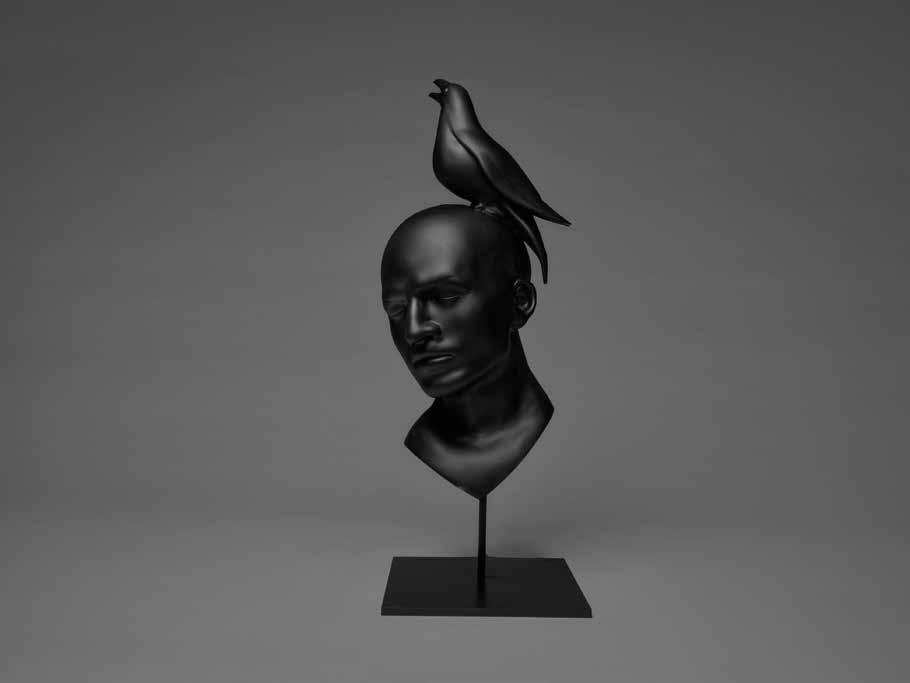
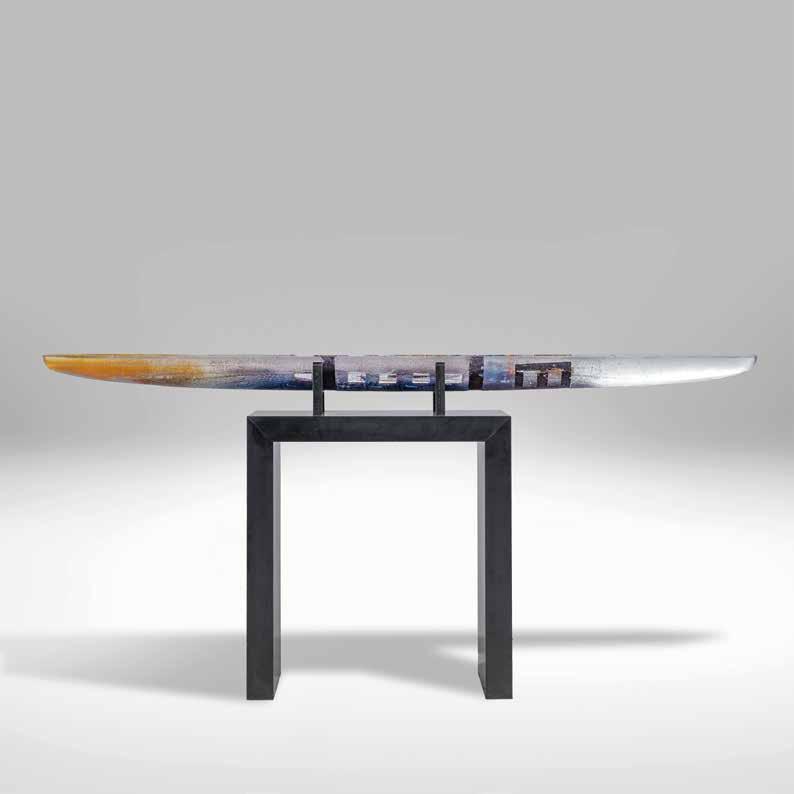
in minor keys
97 UCRAINA/2
Security Guarantees
COMMISSIONER Tetyana Berezhna, Deputy Prime Minister for Humanitarian policy of Ukraine - Minister of Culture of Ukraine
CURATORS Ksenia Malykh and Leonid Marushchak
EXHIBITOR Zhanna Kadyrova
La scultura al centro del progetto ucraino si configura come un simbolo potente delle promesse disattese sul disarmo nucleare sancite dal Memorandum di Budapest del 1994, sottoscritto con Stati Uniti, Regno Unito e Federazione Russa. Materializzazione dello spirito che aveva animato la firma dell’accordo, l’opera è stata successivamente sradicata dal luogo in cui si trovava, perché troppo vicina al fronte del conflitto russo-ucraino. In questa nuova condizione, si impone come emblema di un pacifismo sempre più fragile, percepito non più come orizzonte condiviso ma come privilegio ormai difficilmente sostenibile.
ENG The sculpture at the centre of the Ukrainian project stands as a powerful symbol of the unfulfilled promises of nuclear disarmament enshrined in the 1994 Budapest Memorandum, signed with the United States, the United Kingdom, and the Russian Federation. Conceived as a materialisation of the spirit of the agreement, the work was later forcibly uprooted from its original location due to its proximity to the front line of the Russia–Ukraine conflict. In this new condition, it emerges as an emblem of pacifism that has become increasingly fragile, which is no longer perceived as a shared horizon but as a privilege that can no longer be sustained.
Riva Ca’ di Dio, Castello IG @ukrainianpavilioninvenice
98 UGANDA
Kampala
COMMISSIONER Acaye Kerunen
CURATOR Taga Francis Nuwagaba
EXHIBITORS Joseph Ntensibe, Lilian Mary Nabulime, Ronex Ahimbisibwe, Lakwena Maciver, Sheila Nakitende, Stacey Gillian Abe, Aloka Trevor
Il Padiglione riunisce sette artisti ugandesi per una riflessione sulla cultura materiale, la spiritualità e la memoria sociale nella pratica artistica dell’Africa orientale. Tra i partecipanti, Stacey Gillian Abe lavora con seta ricamata a mano e un utilizzo distintivo dell’indaco per indagare ascendenza personale e sociale, in opere che affrontano riappropriazione, identità e narrazione ereditata.
ENG The Pavilion brings together seven Ugandan artists in a presentation that moves across material culture, spirituality, and social
memory within East African artistic practice. Among the participants, Stacey Gillian Abe works with hand-embroidered silk and a distinctive use of indigo to explore personal and social ancestry, in works that engage with reclamation, identity, and inherited narratives. Palazzo Navagero Gallery
Riva degli Schiavoni, Castello 4147 IG @stacey_gillian_abe
NEW ENTRY
99 Repubblica Socialista del VIETNAM
Art in a Global Flow
COMMISSIONER Ma The Anh
CURATOR Do Tuong Linh
EXHIBITORS Nguyen Thanh Chuong, Doan Thi Thu Huong, Bui Huu Hung, Le Hoang Nguyen, Trinh Tuan, Dinh Van Quan, Nguyen Truong Linh, Trieu Khac Tien, Le Nguyen Chinh, Le Huu Hieu
Alla sua prima partecipazione, il Vietnam propone un’esperienza artistica sobria e meditativa, in cui silenzio e lentezza diventano strumenti di comprensione. Dieci artisti presentano opere realizzate con la tradizionale lacca vietnamita, stratificata con pigmenti minerali, gusci d’uovo, oro e argento. I colori – nero, rosso cinabro e bruni profondi – affiorano dall’interno della superficie con una forte intensità visiva. Il Padiglione ospita anche il corpus di opere Baco da seta di Le Huu Hieu: installazioni e sculture monumentali realizzate con materiali che rimandano alla storia e alle tradizioni del suo paese, nell’epopea di una nazione i cui eroi sono le masse anonime.
ENG At its first participation, Vietnam presents a sober and meditative artistic experience, in which silence and slowness become tools of understanding. Ten artists present works made using traditional Vietnamese lacquer, layered with mineral pigments, eggshell, gold, and silver. The colors – black, cinnabar red, and deep browns – emerge from inside the surface with striking visual intensity. The Pavilion also presents the body of work Silkworm by Le Huu Hieu: installations and monumental sculptures made from materials that evoke the history and traditions of his country, in the epic of a nation whose heroes are the anonymous masses.
Ca’ Faccanon, Calle delle Acque San Marco 5016
100 Repubblica dello ZIMBABWE
Second Nature | Manyonga
COMMISSIONER Raphael Chikukwa National Gallery of Zimbabwe (NGZ)
CURATOR Fadzai Veronica Muchemwa
EXHIBITORS Gideon Gomo, Eva Raath, Felix Shumba, Franklyn Dzingai, Pardon Mapondera
La neuroplasticità – la capacità del cervello di riorganizzarsi tramite il cambiamento – diventa una metafora per esplorare come identità, storia e società si ridisegnino continuamente. Cinque artisti zimbabwesi lavorano con installazioni, stampe su cartone, sculture in pietra e metallo, tessuti ottenuti da bottiglie di plastica e materiali di recupero. Al centro pulsa una domanda urgente: cosa resta dell’umano quando la macchina diventa seconda natura? E dove si traccia il confine tra immaginazione e programmazione? ENG Neuroplasticity – the brain’s ability to reorganize itself through change – becomes a metaphor for exploring how identities, histories, and societies are continuously reshaped. Five Zimbabwean artists work with installations, cardboard prints, stone and metal sculptures, and textiles made from plastic bottles and reclaimed materials. At the core lies an urgent question: what remains of the human when the machine becomes second nature? Where does imagination end and programming begin?
Santa Maria della Pietà, Castello 3701 www.pavilionofzimbabwe.com
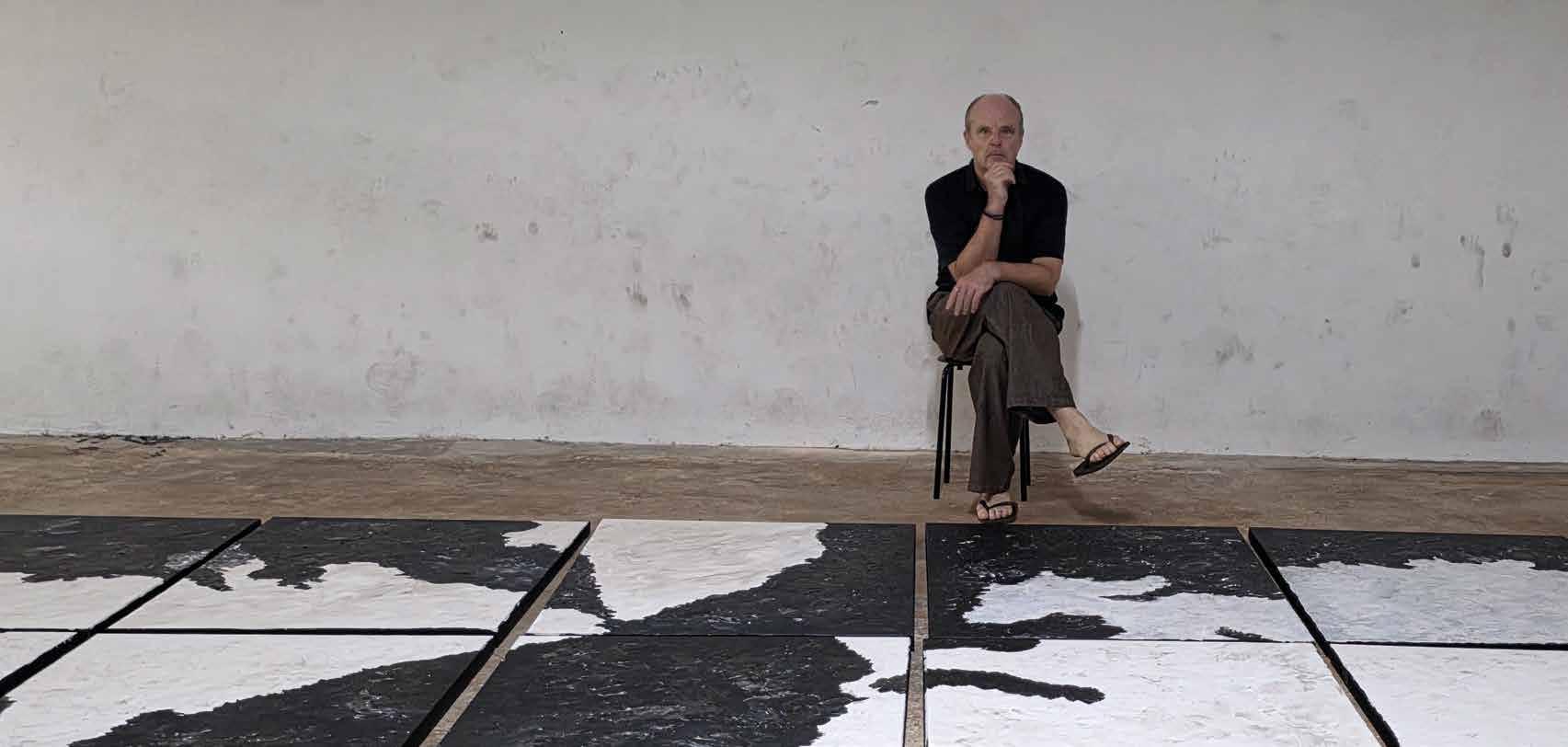
Palazzo Mora, Venice
9 May - 22 November, 2026

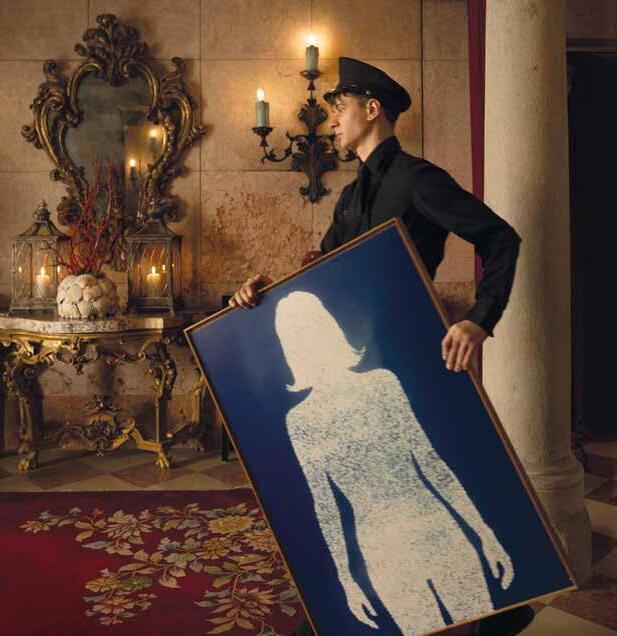
“Guest” by Christopher Bucklow
around town
COLLATERAL EVENTS
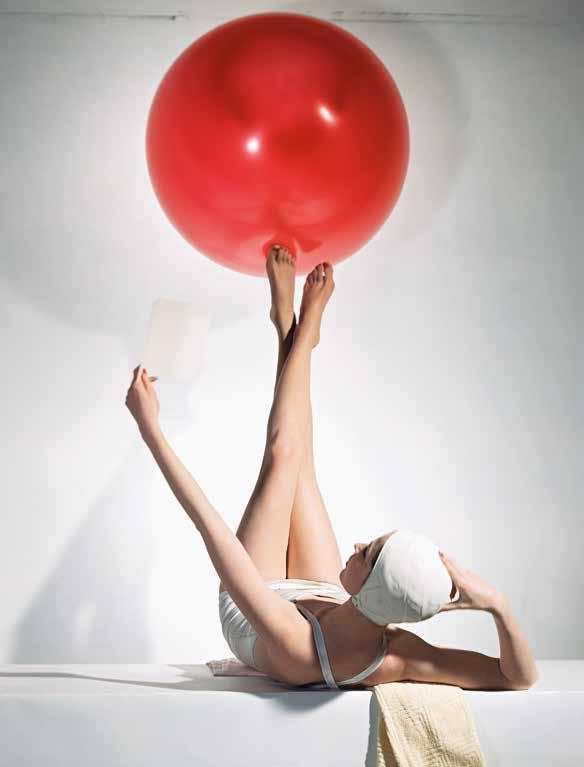

in minor keys
101 PALAZZO MORA
“_____________” * * Gaza - No WordsSee the Exhibit
ORGANIZED BY Palestine Museum US
Cento manufatti ricamati secondo la tradizionale tecnica palestinese del tatreez – punto croce –, realizzati da donne palestinesi in campi profughi e villaggi in Libano, Giordania e Cisgiordania, portano all’attenzione globale il genocidio in corso a Gaza. Ogni opera, composta da 55 mila punti, per un totale di 5,5 milioni, raffigura scene legate al conflitto e alla vita sotto assedio. Associazioni e privati possono sostenere il progetto e vedere il proprio nome ricamato accanto a quello delle artigiane.
ENG One hundred embroidered works made using the traditional Palestinian technique of tatreez – cross-stitch – bring global attention to the ongoing genocide in Gaza. Created by Palestinian women in refugee camps and villages in Lebanon, Jordan and the West Bank, the works depict scenes related to the conflict and life under siege, each composed of 55,000 stitches, for a total of 5.5 million. Organisations and individuals can support the project and see their name embroidered alongside the embroiderers’ names. Strada Nova, Cannaregio 3659 www.falastin.museum
102 PALAZZO CAVANIS

|A ghrab Idra¯k: Thresholds of Perception
ORGANIZED BY VCUarts Qatar – Virginia Commonwealth University School of the Arts in Qatar
Al centro dell’esposizione si collocano le ricerche creative sviluppate dal corpo docente dei laboratori interdisciplinari dell’Institute for Creative Research di VCUarts Qatar. La mostra riunisce installazioni multimediali, ambienti sonori, dispositivi cinetici, sculture e fotografie che mettono in relazione temi quali memoria, linguaggio, migrazione e tecnologia. I lavori reimmaginano i modi di comprendere il mondo, articolandosi in una narrazione aperta e plurale.
ENG At the core of the exhibition are the creative research activities carried out by the faculty of the interdisciplinary labs at the Institute for Creative Research at VCUarts Qatar. The project brings together multimedia installations, sounds, kinetic devices, sculptures, and photographs that interweave memory, language, migration, and technology. The works reimagine ways of understanding the world, unfolding through an open, plural narrative.
Fondamenta Zattere ai Gesuati Dorsoduro 920 www.qatar.vcu.edu/our-impact/biennalearte-2026
103 FABBRICA H3
A s Above, So Below
ORGANIZED BY One Ocean Foundation WHEN 9 maggio May-8 giugno June
L’oceano come archivio attivo del tempo profondo. Sette tra artisti e collettivi internazionali trasformano l’ex Chiesa dei Santi Cosma e Damiano alla Giudecca in un ambiente immersivo in cui suono, luce e sistemi computazionali si connettono. Vocalizzazioni di balene, paesaggi acustici della laguna, bioluminescenza del plancton e segnali bioelettrici di un ulivo convertiti in suono: ogni opera traduce forme di intelligenza non umana in esperienze sensoriali, rendendo percepibile l’interdipendenza tra cosmo, oceano e vita terrestre. La mostra si conclude l’8 giugno, Giornata Mondiale degli Oceani.
ENG The ocean as an active archive of deep time. Seven international artists and collectives transform the former Church of Santi Cosma e Damiano on Giudecca island into an immersive environment made of sound, light, and computational systems. Whale vocalizations, acoustic landscapes of the lagoon, the bioluminescence of plankton, and the bioelectrical signals of an olive tree translated into sound: each work turns non-human forms of intelligence into sensory experiences, making perceptible the interdependence between cosmos, ocean, and earth life. The exhibition closes on June 8, World Oceans Day.
Ex Chiesa dei Santi Cosma e Damiano Giudecca www.1ocean.org | www.zeitgeist19.com www.asabovesobelow.space
104 REM PROJECT
Baile, Botella y Baraja
José Ruiz between the Bottle and the Canvas and his Naïf Narration of Puerto Rico
ORGANIZED BY Consolato REM Brega
Per oltre sei decenni José Ruiz ha costruito una cronaca visiva di Porto Rico attraverso un’estetica naïf volutamente non accademica, in cui carnevali, piazze, giochi di carte e momenti di vita comunitaria diventano archivi di memoria collettiva. Il titolo richiama una formula coloniale ottocentesca che associava festività, alcol e gioco a strumenti di controllo sociale. Nelle mani di Ruiz questa logica si ribalta e la festa diventa una forma di contro-memoria, in uno spazio di resistenza e riappropriazione culturale. A Venezia, tra le tele, risuona la musica popolare portoricana, dalla bomba al perreo contemporaneo.
ENG For over six decades, José Ruiz has built a visual chronicle of Puerto Rico through a deliberately non-academic naïf aesthetic: carnivals, town squares, card games, and communal gatherings become repositories of collective memory. The title recalls a 19th-century colonial formula that promoted festivities, alcohol, and gambling as tools of social control. In Ruiz’s work, this logic is overturned: celebration becomes a form of counter-memory, a space of resistance and cultural reclamation. In Venice, Puerto Rican popular music resounds among the canvases, from bomba to contemporary perreo Via Garibaldi, Castello 1735 www.consolatorem.org
105 DOCKS CANTIERI CUCCHINI
Catalonia in Venice: Claudia Pagès Rabal Paper Tears
ORGANIZED BY Institut Ramon Llull
Una raccolta di filigrane quattrocentesche su carta diventa il nucleo di un’installazione immersiva che le proietta sulle pareti tramite laser e schermi LED, accompagnate da un paesaggio sonoro. Nate come marchi di origine e autenticità, queste impronte visibili solo in controluce rivelano le infrastrutture del potere: la carta circolava insieme a idee, contratti e codici, veicolo attraverso cui si esercitavano autorità, dominio e giustizia. In un tempo segnato da conflitti geopolitici e crisi migratorie, Paper Tears traccia una continuità inquietante tra i sistemi di controllo del passato e quelli del presente, celata – come suggerisce l’espressione francese en filigrane – proprio sotto la superficie.
ENG A collection of fifteenth-century paper watermarks are the core of an immersive installation that projects them onto the walls through lasers and LED screens, accompanied by a soundscape. Historically marks of origin and authenticity, these impressions, visible only when backlit, reveal the infrastructures of power: paper circulated alongside ideas, contracts and codes as a tool to exercise authority, dominion and justice. In a time dominated by geopolitical conflicts and migration crises, Paper Tears outlines a disquieting continuity between the systems of control of the past and those of the present, concealed – as the French expression en filigrane suggests – just beneath the surface. San Pietro di Castello 40/A www.llull.cat | IG @CataloniaInVenice
in minor keys
106 ISTITUTO SANTA MARIA DELLA PIETÀ
Cymru yn Fenis / Wales in Venice presents
Sownd: Manon Awst and Dylan Huw
ORGANIZED BY Arts Council of Wales
Giocando sulla doppia valenza del termine gallese sownd, traducibile sia come “impantanato” sia come “solido”, gli artisti sviluppano una riflessione scultorea su come forma e significato risultino profondamente interconnessi. Ne emerge un’indagine su paesaggio e linguaggio intesi come ambienti animati da persistenza e vulnerabilità. Materiali organici, oggetti trovati, testi e interventi sonori danno vita a un’installazione continua, che idealmente si estende verso un programma site-specific parallelo in Galles, previsto durante il periodo di apertura della Biennale Arte.
ENG Playing on the double meaning of the Welsh term sownd, which can be translated both as “stuck” and “foundationally sound,” the artists develop a sculptural reflection on the deep connection between form and meaning. The result is an exploration of landscape and language understood as environments animated by persistence and vulnerability. Organic materials, found objects, texts, and sound interventions come together in a continuous installation, which conceptually extends into a parallel site-specific programme taking place in Wales during the opening period of the Venice Art Biennale.
Calle della Pietà, Castello 3703 www.venice.arts.wales www.cy.fenis.arts.wales
107 CAMPO DELLA TANA
Fermata: Hong Kong in Venice
ORGANIZED BY Hong Kong Arts Development Council e Hong Kong Museum of Art, Leisure and Cultural Services Department
La fermata – segno musicale che prolunga una nota o una pausa a discrezione dell’esecutore –dà il titolo a una mostra che invita il visitatore a rallentare e osservare i ritmi silenziosi della vita quotidiana. I due artisti di Hong Kong Kingsley Ng e Angel Hui lavorano con luce, suono e movimento in installazioni site-specific: il primo trasforma rituali urbani ordinari in incontri meditativi sulla fugacità del tempo, la seconda guida l’attenzione verso oggetti e presenze solitamente ignorati, rivelando i battiti sottili della vita cittadina.
ENG The fermata – a musical symbol to hold a note or a pause at the performer’s discre -
tion – gives its title to an exhibition that invites visitors to slow down and observe the silent rhythms of daily life. The two Hong Kong artists Kingsley Ng and Angel Hui work with light, sound and movement in site-specific installations: the former transforms ordinary urban rituals into meditative encounters with the fleetingness of time, the latter draws attention towards objects and presences usually overlooked, revealing the subtle pulsing of city life. Campo della Tana, Castello 2126 www.hk.art.museum | www.hkadc.org.hk
108 PALAZZO DONÀ DALLE ROSE
F issures of Light Diaspora: Dissonances in Fa Minor
ORGANIZED BY Association Tissali Arts & Cultures
Le superfici fratturate di Yasna Kohlbrenner, volutamente screpolate e colmate con foglia d’oro, pigmenti preziosi e pietre lavorate da donne sopravvissute a esperienze estreme, trasformano la ferita in soglia. Alchimista della materia e della memoria, l’artista si concentra su ciò che emerge dopo la rottura: la luce e la ricerca della bellezza. Dal buio affiorano figure fluorescenti che evocano bambini costretti all’invisibilità. Amache sospese e panchine invitano alla sosta. Al piano terra, tessuti giapponesi dialogano con opere dedicate alla diaspora africana, in un percorso che oscilla tra racconto collettivo e dimensione intima.
ENG Yasna Kohlbrenner’s fractured surfaces – deliberately cracked and filled with gold leaf, precious pigments, and stones worked by women who have survived extreme experiences – turn wounds into threshold. An alchemist of matter and memory, the artist focuses on what emerges after rupture: light and the pursuit of beauty. From the darkness, fluorescent figures appear, evoking children forced to be invisible. Suspended hammocks and benches invite visitors to rest. On the ground floor, Japanese textiles enter into dialogue with works addressing the African diaspora, unfolding a path that swings between collective storytelling and intimate reflection. Cannaregio 5038/5101 www.unyk-art.ch | www.wafrica.art seiran.art | www.tissaliartscultures.org www.fondazionedonadallerose.org
109 NEGOZIO OLIVETTI
Hybrids. Leandro Erlich al Negozio Olivetti
ORGANIZED BY Associazione Arte Continua Ceramica, vetro, bronzo, marmo di Carrara e resina sono alcuni dei materiali utilizzati dall’artista argentino Leandro Erlich per mettere in evidenza quanto le forme artistiche possano influenzare l’immaginario urbano e la percezione degli spazi condivisi. Farfalle con orecchie al posto delle ali, alberi le cui radici assumono forma di piedi umani, coralli dalle architetture perfette e rigorose occupano uno spazio iconico della città, in cui l’arte ha storicamente trovato un habitat privilegiato, sintesi di gusto estetico e progettualità funzionale. ENG Ceramics, glass, bronze, Carrara marble, and resin are among the materials used by Argentine artist Leandro Erlich to highlight how artistic forms can shape the urban imagination and the perception of shared spaces. Butterflies with ears instead of wings, tree roots in the shape of human feet, and corals with extremely precise architectural shapes are displayed in an iconic urban space, where art has long found an ideal habitat, a synthesis of aesthetic taste and functional design. Piazza San Marco 101 www.artecontinua.org www.negozio-olivetti.it
110 PALAZZO NERVI SCATTOLIN
I f All Time Is Eternally Present: Kandis
Williams, Meriem Bennani & Orian Barki, Tai Shani
ORGANIZED BY Pier Luigi Nervi Foundation WHEN 9 maggio May-7 giugno June
Il titolo dell’installazione si ispira a Four Quartets di T. S. Eliot, raccolta poetica che indaga l’effetto della ciclicità del tempo sul destino dell’essere umano. Una riflessione analoga attraversa le opere video degli artisti coinvolti, proiettate sulla facciata di Palazzo Nervi Scattolin in Campo Manin, uno dei pochi esempi di architettura modernista a Venezia. L’intervento si inserisce così in un contesto che ne altera sensibilmente le condizioni di fruizione e ricezione.
ENG The title of the installation draws inspiration from Four Quartets by T. S. Eliot, a collection of poems exploring the cyclical nature of time and its effects on the human condition. A similar reflection runs through the video works by the participating artists, projected onto the façade of Palazzo Nervi Scattolin in Campo Manin, one of the few examples of modernist architecture in Venice – a context
that significantly reshapes the conditions of viewing and reception.
Campo Manin, San Marco 4866 www.pierluiginervi.org
111 RIVA SAN BIASIO
I nfinito Cabinet
Maria Cristina Crespo
ORGANIZED BY Eclettica Cultura dell’Arte
Una wunderkammer contemporanea in cui arte, mito, religione e filosofia dialogano in modo fitto e inatteso. Tra fondali pittorici e figure bizzarre in abiti di stoffa riciclata, l’artista porta avanti una riflessione personale avviata alla fine degli anni ‘70, di cui Venezia – luogo di contaminazione per eccellenza – rappresenta una tappa necessaria. Suggestioni che rimandano ad André Malraux e Jorge Luis Borges invitano il pubblico a interrogarsi sulla funzione dell’identità occidentale in ambito artistico e non solo, a patto di essere disposti a scardinare le proprie certezze più inscalfibili.
ENG A contemporary wunderkammer in which art, myth, religion and philosophy engage in a nonstop and unexpected dialogue. Against painted backdrops and bizarre figures dressed in recycled fabrics, the artist pursues a personal reflection she began in the late 1970s. Venice as a place of cross-contamination par excellence represents a necessary milestone for the artist’s path. Echoes of André Malraux and Jorge Luis Borges invite visitors to question the role played by Western identity in the artistic sphere and in other fields as well, provided one is willing to dismantle one’s most unshakeable certainties.
Castello 2145 www.ecletticaweb.it www.circuitodelcontemporaneo.it
112 MUSEO STORICO NAVALE
Iván Tovar: Le Retour
ORGANIZED BY Fundación Iván Tovar
Nel centenario del Manifesto del Surrealismo di André Breton, l’evento presentato dalla Fundación Iván Tovar si unisce alla riflessione portata avanti da musei di tutta Europa, America Latina e Stati Uniti presentando dipinti e sculture dell’artista dominicano Iván Tovar – tra i pochi capaci di abbandonarsi con piena convinzione alla ricerca del meraviglioso. Nei suoi lavori si incontrano motivi dominicani e stilemi dell’arte europea del primo Novecento, a convergere in un punto d’osservazione che a prima vista appare subalterno, per poi rivelarsi privilegiato.
ENG To mark the centenary of André Breton’s Surrealist Manifesto, the event joins a wider conversation taking place in several museums all over Europe, Latin America and the United States, showing paintings and sculptures by the Dominican artist Iván Tovar – one of the few artists to indulge wholeheartedly in the pursuit of the marvellous. His works weave together Dominican motifs and the formal language of early 20th-century European art, converging on a single viewpoint which if at first seems to be marginal it proves to be remarkably privileged.
Ex Istituto Idrografico, Riva San Biasio Castello 2148 www.ivantovar.org
113 CAMPO DELLA TANA
Jacone’s Polyphony Exhibition from Macao, China
ORGANIZED BY Cultural Affairs Bureau of the Government of the Macao Special Administrative Region, Macao Museum of Art Sul finire del Seicento, Wu Li – pittore, poeta e teologo – partì per raggiungere i missionari gesuiti a Roma, per poi fermarsi invece a Macao, dove studiò teologia e immortalò i paesaggi della città nelle sue poesie. Tre artisti contemporanei rievocano questo viaggio incompiuto tra dipinti, installazioni e video, accostando le proprie voci con quella di Wu Li in un percorso espositivo che unisce spazi esterni e quattro gallerie interne, attraversando tempo, culture e fedi in dialogo polifonico.
ENG In the late 17th century, Wu Li –painter, poet and theologian – set out to join Jesuit missionaries in Rome, only to stop in Macao, where he studied theology and immortalised the city’s landscapes in his poems. Three contemporary artists revisit this unfinished journey through paintings, installations and video, weaving their own voices together with Wu Li’s in an exhibition path that connects out-
door spaces and four indoor galleries, moving across time, cultures and faiths in polyphonic dialogue.
Castello 2126/A (near the Arsenale entrance) www.mam.gov.mo
114 FONDATION WILMOTTE
K an Yasuda
Isole del silenzio
ORGANIZED BY Fondation d’Entreprise Wilmotte
Il concetto giapponese di “Ma” – l’intervallo, lo spazio tra due forme o due note, l’assenza che diventa presenza – ispira il lavoro dello scultore Kan Yasuda, originario di Hokkaido. In un ambiente di quasi totale oscurità, dieci sculture in marmo sono disposte come isole in un giardino interiore. Una luce radente, progettata dall’Agence Wilmotte, le solleva visivamente dal pavimento bianco, rivelando la texture liscia della pietra e il vuoto scolpito al suo interno. Un paesaggio contemplativo in cui durezza e morbidezza, forma e non-forma si bilanciano silenziosamente. ENG The Japanese concept of “Ma” – the interval, the space between two forms or two notes, an absence that becomes presence –inspires the work of Hokkaido-born sculptor Kan Yasuda. In an environment of near-total darkness, ten marble sculptures are arranged like islands in an interior garden. Raking light, designed by Agence Wilmotte, lifts them from the white floor, revealing the smooth texture of the stone and the void carved within it. A contemplative landscape in which hardness and softness, form and non-form find their balance in silence.
Corte Nuova, Fondamenta dell’Abbazia Cannaregio 3560 www.fondationwilmotte.com www.kan-yasuda.co.jp
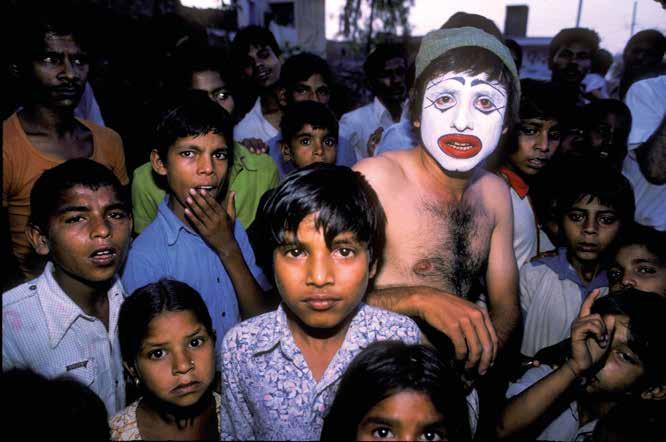
© Alain Bizos - « Le cirque, New Delhi - Inde
1983 »
in minor keys
115 SMAC – SAN MARCO ART CENTRE
L ee Ufan
ORGANIZED BY Dia Art Foundation
Il gesto, l’intervallo, l’equilibrio e la tensione spaziale attraversano sette decenni di attività dell’artista sudcoreano, articolandosi nelle otto sale delle Procuratie in occasione del suo novantesimo compleanno. Nuclei fondanti di una ricerca che lo ha imposto come figura centrale del panorama contemporaneo, questi elementi trovano espressione tanto nei dipinti quanto nelle installazioni site-specific, che mettono in luce i legami, filosofici e materici tra la sua poetica e le pratiche artistiche da cui prende forma.
ENG Gesture, interval, balance, and spatial tension run through seven decades of the South Korean artist’s practice, unfolding across the eight rooms of the Procuratie on the occasion of his 90th birthday. These elements are at the core of his research, which has established him as a central figure in the contemporary art scene. They emerge in both his paintings and his site-specific installations, highlighting the philosophical and material ties between his poetics and his artistic practices.
Piazza San Marco 105 www.smacvenice.org/whats-on/lee-ufan
116 FONDAZIONE BVLGARI
BIBLIOTECA NAZIONALE MARCIANA
L ara Favaretto, Momentary Monument –The Library
Monia Ben Hamouda, Fragments of Fire Worship
ORGANIZED BY Fondazione Bvlgari
Due interventi site-specific interrogano la trasmissione del sapere come sistema instabile, attraversato da fratture e ricombinazioni. Le sculture al neon di segni frammentari e indecifrabili di Monia Ben Hamouda – che rielabora l’eredità paterna della calligrafia islamica – trasformano la scrittura in un alfabeto impossibile, dove la luce non chiarisce ma trattiene. L’installazione di Lara Favaretto si configura come una scaffalatura monolitica che riunisce volumi selezionati per densità contenutistica, ciascuno accostato a un’immagine d’archivio. Ne emerge un ipertesto analogico governato dalla serendipità che interpreta il sapere come un campo in continuo slittamento più che un deposito ordinato.
ENG Two site-specific interventions question the transmission of knowledge as an unstable system, shaped by fractures and recombination. The neon sculptures of fragmented and undecipherable signs by Monia Ben Hamouda, who reworks her father’s legacy of Islamic calligraphy, turn writing into an unreadable alphabet, where light does not illuminate but holds in suspension. Lara Favaretto’s installation takes the form of a monolithic shelving structure bringing together volumes selected for their content fullness, each paired with an archival image. An analog hypertext governed by serendipity emerges, interpreting knowledge as a constantly shifting field rather than an organized repository.
Biblioteca Nazionale Marciana Piazza San Marco 13/A www.bibliotecanazionalemarciana.cultura. gov.it www.bulgari.com
117 ISOLA DI SAN GIORGIO MAGGIORE
Nabatele
ORGANIZED BY Montreal Jewish Museum WHEN 9 maggio May-9 luglio July
Anna Kamyshan ha realizzato un’installazione aerostatica che si solleva fino a venticinque metri sull’acqua, composta da una struttura a doppia membrana riempita di elio. Promosso dal Montreal Jewish Museum, il progetto rielabora il modello delle sinagoghe veneziane elevate, traducendolo in un’architettura sospesa e visibile allo sguardo. Ne emerge una riflessione su appartenenza, diaspora e instabilità in un contesto segnato da conflitti globali.
ENG Anna Kamyshan has created an aerostatic installation rising up to twentyfive metres above the water, composed of a double-membrane structure filled with helium. Commissioned by the Montreal Jewish Museum, the project reinterprets the model of upper-floor Venetian synagogues, translating it into a floating architecture above Venice. This project invites to reflect on belonging, diaspora, and instability within a context marked by global conflicts.
Isola di San Giorgio Maggiore (open-air) www.nabatele.world
118 MAGAZZINI DEL SALE N. 5
Nalini Malani Of Woman Born
ORGANIZED BY Kiran Nadar Museum of Art L’artista indiana Nalini Malani trasforma lo spazio dei Magazzini del Sale in una “camera del pensiero” in continuo mutamento attraverso una grande installazione multicanale. Sessantasette animazioni, realizzate a partire da oltre 30 mila disegni su iPad e proiettate su nove canali video, si intrecciano a un paesaggio sonoro di voci femminili. Ispirato al mito di Oreste, il progetto riflette su violenza patriarcale, memoria e conflitti globali, con al centro la condizione delle donne.
ENG The Indian artist turns the Magazzini del Sale space into a “thinking room” in constant flux through a large multichannel installation. Sixty-seven animations, created from over 30,000 drawings made on an iPad and projected across nine video channels, intertwine with a soundscape of female voices. Drawing inspiration from the myth of Orestes, the project offers a reflection on patriarchal violence, memory, and global conflicts, focusing on women’s condition.
Fondamenta Zattere ai Saloni, Dorsoduro 262 www.knma.org
119 CHIESA DI SAN GIOVANNI EVANGELISTA
Official. Unofficial. Belarus.
ORGANIZED BY Belarus Free Theatre
Interrogando le forme in cui l’arte sopravvive e resiste sotto repressione e sorveglianza, il progetto dà voce agli artisti che in Bielorussia rischiano esilio, clandestinità o carcere. Nella Chiesa di San Giovanni Evangelista l’installazione mette in dialogo dipinti site-specific che sovvertono le pale d’altare, una sfera composta da libri censurati compressi, sculture realizzate con sbarre di prigione e una croce costruita interamente con telecamere a circuito chiuso. Nel cimitero adiacente riecheggiano testimonianze di prigionieri politici recentemente rilasciati, mentre un paesaggio sonoro per organo alterna crescendo e silenzi riverberanti.
ENG By questioning the forms through which art survives and resists under repression and surveillance, the project gives voice to artists in Belarus who risk exile, clandestinity, or imprisonment. In the Church of San Giovanni Evangelista, the installation brings together site-specific paintings that subvert altarpieces, a sphere made of compressed banned books, sculptures made of prison bars, and a cross built entirely from CCTV cameras. In the nearby cemetery visitors can see testimonies of recently released political prisoners immersed in a soundscape for organ which alternates crescendos and reverberating silences.
San Polo 2454 www.belarusfreetheatre.com
in minor keys
120 RADIO VANESSA
R adio GAMeC
Pedagogy of Hope
ORGANIZED BY GAMeC – Galleria d’Arte Moderna e Contemporanea di Bergamo WHEN 5-10 maggio May (online fino Until 22 novembre November )
Nel 2020, in pieno lockdown, la Galleria d’Arte Moderna e Contemporanea di Bergamo avviava Radio GAMeC, piattaforma digitale oggi riconosciuta a livello internazionale come modello innovativo di pratica museale. Durante la settimana di opening della Biennale, Radio GAMeC occupa gli spazi della storica emittente Radio Vanessa, intrecciando presenza e trasmissione in FM con contenuti legati alla programmazione 2026 della Galleria, dedicata all’educazione come pratica di libertà e trasformazione e alla valorizzazione di prospettive decentralizzate.
ENG In 2020, during the lockdown, Bergamo Gallery of Modern and Contemporary Art launched Radio GAMeC, a digital platform now internationally recognized as an innovative model of museum practice. During the Biennale’s opening week, Radio GAMeC takes over the spaces of the historic broadcaster Radio Vanessa, weaving together in-person engagement and FM transmission with content related to the Gallery’s 2026 program, dedicated to education as a practice of freedom and transformation and to the valorization of decentralized perspectives.
Fondamenta de la Tana, Castello 1923 FM 101.8 MHz www.radio.gamec.it
121 DOCKS CANTIERI CUCCHINI
R onald Ventura: Luna
ORGANIZED BY MUSE – Museo delle Scienze e Castel Belasi – Contemporary Art Center for Eco Thought
Venezia e Malabon, villaggio di pescatori delle Filippine, sono entrambi luoghi plasmati da maree, vie commerciali su acqua e vulnerabilità ecologica. Ronald Ventura, una delle voci più autorevoli dell’arte del Sud-Est asiatico, li connette tramite il simbolo della luna – elemento insieme mitologico e spirituale – in una serie di nuove opere che spaziano dalla pittura a olio al carboncino, dalla scultura in resina al vetro di Murano, fino alle installazioni video. In questo corpus elementi eterogenei quali fotorealismo, grandiosità rinascimentale e cartoni animati che dialogano con i classici compongono un pastiche visivo tramite cui Ventura riflette sulla complessità e la stratificazione dell’identità contemporanea.
ENG Venice and Malabon, a fishing village in the Philippines, are both shaped by tides, waterborne trade routes, and ecologi -
cal vulnerability. Ronald Ventura, one of the most prominent voices in Southeast Asian art, connects them through the symbol of the moon, considered as both a mythological and spiritual element, and creates a series of new works spanning oil painting and charcoal, resin sculpture and Murano glass, as well as video installations.Heterogeneous elements such as photorealism, Renaissance grandeur, and cartoon imagery in dialogue with the classics form a visual pastiche. It’s a way for Ventura to reflect on the complexity and stratification of contemporary identity.
San Pietro di Castello 1/A www.muse.it
122 SPAZIO OLIVOLO
S cotland + Venice: Bugarin + Castle
ORGANIZED BY Scotland + Venice
Architettura, immagini in movimento, scultura e performance si intrecciano in un linguaggio contemporaneo attraverso cui vengono riletti antichi rituali di umiliazione, cortei pubblici nei quali spettacolo, suoni e costumi servivano a disciplinare i trasgressori sociali. In un dibattito insieme artistico e politico confluiscono prospettive queer, oltre a traiettorie diasporiche legate alle Filippine, ampliando un confronto che ripercorre queste pratiche dal XIV secolo fino a oggi. Ne emerge una sociologia in continuo movimento, capace di riscrivere le forme della rappresentazione e del controllo.
ENG Architecture, motion pictures, sculpture, and performance converge into a contemporary language used by the artists to re-examine ancient rituals of humiliation and public processions, where spectacle, sound, and costume were used to discipline social offenders. Within a discourse that is both artistic and deeply political, queer perspectives intersect with diasporic trajectories linked to the Philippines, expanding a reflection that traces these practices from the 14th century to the present day. What emerges is a sociology in constant motion, one that continually rewrites the forms of representation and control.
San Pietro di Castello 59/C www.scotlandandvenice.com
123 PALAZZO DELLE PRIGIONI
S creen Melancholy: Li Yi-Fan
ORGANIZED BY Taipei Fine Arts Museum of Taiwan
Una nuova opera site-specific di Li Yi-Fan occupa l’intero spazio del Palazzo delle Prigioni, trasformandolo in un palcoscenico dinamico in cui i confini tra realtà e virtualità si dissolvono in un percorso scandito da sculture large-scale e personaggi-marionette che emergono dai video. Lavorando con pittura, animazione, motori grafici e immagini generate dall’IA, Li indaga come gli schermi possano mediare la percezione e la narrazione di sé nell’era del sovraccarico informativo.
ENG A new site-specific work by Li Yi-Fan takes over the whole space of Palazzo delle Prigioni, transforming it into a dynamic stage where the boundaries between reality and virtuality dissolve along a pathway punctuated by large-scale sculptures and puppet-like figures emerging from the videos. Working with painting, animation, game engines, and AI-generated imagery, Li investigates how screens mediate perception and self-narration in an age of information overload.
Castello 4209 (near Palazzo Ducale) www.taiwaninvenice.org/2026
124 FONDAZIONE ERES
Shifting Waters ERES Foundation
ORGANIZED BY ERES Foundation WHEN 9 maggio May-28 giugno June 4 settembre September-1 novembre November Edificata su isolotti e palafitte e da secoli esposta alle maree, Venezia è un laboratorio di convivenza con l’acqua e oggi un osservatorio privilegiato del rapporto sempre più critico tra idrosfera e antroposfera. I sette artisti coinvolti (Mike Bouchet, Giorgio Andreotta Calò, Anne Duk Hee Jordan, Sonia Leimer, Sadamasa Motonaga, Pamela Rosenkranz, Lawrence Weiner) ne esplorano le tensioni attraverso sculture in vetro che evocano l’antica potenza della Serenissima, un’installazione che si fa memoriale della città che affonda, un ambiente sottomarino multisensoriale e opere in filigrana che intrecciano tecnologia e natura.
ENG Built on islands and wooden piles and exposed to the tides for centuries, Venice is a laboratory of coexistence with water and, today, a privileged site for observing the increasingly critical relationship between the hydrosphere and the anthroposphere. The seven participating artists – Mike Bouchet, Giorgio Andreotta Calò, Anne Duk Hee Jordan, Sonia Leimer, Sadamasa Motonaga, Pamela Rosenkranz, Lawrence Weiner – explore this tension:
glass sculptures evoking the former power of the Serenissima, an installation that becomes a memorial to the sinking city, a multisensory underwater environment, and filigree-like works intertwining technology and nature.
Ca’ Sarasina, Castello 1228 www.eres-foundation.com
125 SPAZIO 996/A
S ong E Yoon: Songs Across Time
ORGANIZED BY The Foundation of ART NYC
L’esposizione mette in dialogo i linguaggi di Song E Yoon e di Frédéric Bruly Bouabré, scomparso nel 2014 e noto per aver ideato negli anni Sessanta l’alfabeto Bété, un sistema sillabico di oltre 400 segni volto a preservare la cultura del suo popolo. A questo corpus si affianca la pratica di Song, che attinge a incisioni rupestri, simboli mitologici e costellazioni per costruire, con disegni su larga scala e installazioni immersive, mappe visive che interrogano il bisogno umano di orientamento e costruzione di senso.
ENG The exhibition brings into dialogue the practices of Song E Yoon and Frédéric Bruly Bouabré, who passed away in 2014 and is known for devising the Bété alphabet in the 1960s, a syllabic system of over 400 signs created to preserve the culture of his people. Alongside this body of work, Song draws on rock engravings, mythological symbols, and constellations to shape, through large-scale drawings and immersive installations, visual maps that investigates the human need for orientation and meaning.
Fondamenta Sant’Anna, Castello 996/A www.artnycnewyork.com
126 PALAZZO CONTARINI-POLIGNAC
Still Joy – From Ukraine into the World
ORGANIZED BY Victor Pinchuk Foundation
WHEN 9 maggio May-1 agosto August
Video, installazioni, e interventi immersivi compongono un percorso che fonde memorie individuali, paesaggio e corpo, dai rave party di Kiev alle memorie di guerra, fino ad una serie di testimonianze della comunità LGBTQIA+. Promossa dalla Victor Pinchuk Foundation, la mostra riunisce più di venti artisti ucraini e internazionali attorno a un’idea condivisa: la gioia come forza vitale, capace di superare conflitti, perdita e dislocamento.
ENG Video, installations, films, and immersive interventions are part of a journey that weaves together individual memories, landscape, and body – from Kyiv rave parties to war memories, up to the testimonies of the LGBTQIA+ community. Presented by the Victor Pinchuk Foundation, the exhibition brings together more than twenty Ukrainian and international artists around a shared idea: joy as a vital force, capable of going through conflict, loss, and displacement. Dorsoduro 874 www.pinchukartcentre.org
127 PALAZZO SORANZO VAN AXEL
Su Xiaobai’s Alchemical Universe
ORGANIZED BY Los Angeles County Museum of Art e Su Xiaobai Foundation
Una selezione di trentacinque dipinti ripercorre la ricerca di Su Xiaobai dal 2003 a oggi, incentrata sull’uso della lacca naturale come materia pittorica. Strati sovrapposti, incisi e abrasi generano superfici monocrome dense e tattili, in cui tonalità scure e variazioni di grigio definiscono una dimensione meditativa. Fulcro del percorso è la serie Niao Niao, che indaga transitorietà ed evanescenza mediante un processo di trasformazione materiale.
ENG A selection of thirty-five paintings goes through Su Xiaobai’s research from 2003 until now, based on the use of natural lacquer as a pictorial medium. Overlapping, incised and abraded layers create thick and tactile monochrome surfaces, where dark tones and shades of grey define a meditative dimension. At the heart of the exhibition is the Niao Niao series, which explores transience and evanescence through a process of material transformation. Cannaregio 6099, 6071, 6072 www.suxiaobai-foundation.org/foundation
»La Ga LL eria «
Dorothea van der Koelen presents 8 May – 22 Nov. 2026
»Art Beyond B ound A ries«
30 artists - 14 nations
25 Years of La Galleria
Bert · Bruch · Buren
Chillida · Dannenberg · Gappmayr
Glattfelder · Hall
Heerkens · Honegger
Kazem · Al Khalifa
Kirschner · Kosuth
Liebl & SchmidPfähler · Megert
Mimran · Morellet
Nam · Plessi · Quinze
Reis · Röhm · Roy
Simeti · Uecker
Venet · Willing · Wu

La Ga LL eria · Ve N ezia
30124 Venezia · S. Marco 2566
0039 - 327 - 692 3 693
lagalleria@vanderkoelen.com www.vanderkoelen.de




















in minor keys
128 PROCURATIE VECCHIE
Tadeusz Kantor (1915-1990)
Emballage, Cricotage and Madame Jarema
ORGANIZED BY Starak Family Foundation
Pittore, regista e scenografo, Tadeusz Kantor è una delle figure cardine dell’avanguardia europea del dopoguerra. La mostra ripercorre le tappe fondamentali della sua ricerca pittorica – dalle composizioni informali degli anni ’50 agli imballaggi, fino alle serie Next Nothing e Damn It Falls – mettendole in relazione con oggetti originali provenienti dalle sue performance. Fulcro dell’esposizione è la proiezione di Dead Class, registrazione dello spettacolo teatrale del 1975 in cui l’artista metteva in scena manichini di studenti intrappolati nei banchi di scuola. In parallelo, la Collezione Starak presenta monotipi e costumi di Maria Jarema, co-fondatrice con Kantor del Teatro Cricot e di Cricot 2. ENG Painter, theatre director, and set designer, Tadeusz Kantor is one of the key figures of the postwar European avant-garde. The exhibition traces the key milestones of his painting practice – from the informal compositions of the 1950s, to the packagings, to the Next Nothing and Damn It Falls series – putting them in relation to some original objects from his performances. At the heart of the exhibition is the screening of Dead Class, a 1975 recorded theatre performance featuring mannequins of students trapped at their school desks. In parallel, the Starak Collection presents monotypes and costumes by Maria Jarema, co-founder with Kantor of the Cricot Theatre and Cricot 2. Piazza San Marco, San Marco 139-153/A www.starakfoundation.org
129 PALAZZO ROCCA CONTARINI CORFÙ
T he Spirits of Maritime Crossing 2026
ORGANIZED BY Bangkok Art Biennale Foundation
WHEN 9 maggio May-2 agosto August Una costellazione di opere tra performance, film, installazioni, pittura e scultura riunisce venti artisti dal Sud-Est asiatico, dall’Irlanda, dalla Serbia e da altri contesti internazionali, esplorando identità, diaspora, sradicamento e resilienza spirituale in un mondo investito da migrazioni e trasformazioni globali. Al centro Marina Abramovic´ con Sea Punishing (2005), video in cui centinaia di partecipanti frustano il mare come reazione allo tsunami del Mare delle Andamane, in una tensione rituale tra gesto collettivo e memoria della catastrofe. Attorno, le opere di diversi arti-
sti mettono in connessione cosmologie locali e immaginari contemporanei.
ENG A constellation of works spanning performance, film, installations, painting, and sculpture brings together twenty artists from Southeast Asia, Ireland, Serbia, and other international contexts, exploring identity, diaspora, uprooting, and spiritual resilience in a world dominated by migration and global transformation. At the centre, Marina Abramovic´’s Sea Punishing (2005) – a video in which hundreds of participants flog the sea, as a reaction to Andaman Sea tsunami – creates a ritual tension between gesture and catastrophe memory. It is accompanied by several artists’ works weaving together local cosmologies and contemporary imaginary.
Dorsoduro 1057/D www.smc.bkkartbiennale.com
130 PALAZZO FRANCHETTI
T URANDOT: To the Daughters of the East
ORGANIZED BY Parasol Unit Foundation for Contemporary Art
WHEN 9 maggio May-31 ottobre October
Prendendo avvio dalla figura di Turandot e dalla sua genealogia persiana, il progetto combina temi quali femminilità, esistenza, mito e storia a partire dalla figura di Turandot e dalla sua genealogia persiana. Ne emerge una mostra collettiva che riunisce undici artiste provenienti dall’Asia centrale e da più ampie regioni orientali, in un dialogo che interessa tradizioni e contemporaneità. Le opere spaziano dal video all’installazione, dalla scultura alla pittura, fino a pratiche tessili e sonore, componendo un paesaggio stratificato in cui narrazioni mitiche e vissuti presenti si sovrappongono e si riscrivono reciprocamente.
ENG The project weaves together themes such as femininity, existence, myth, and history, starting from the figure of Turandot and her Persian genealogy. The result is a group exhibition bringing together eleven women artists from Central Asia and the broader Eastern world, in a dialogue that goes through tradition and contemporaneity. Through video, installation, sculpture, painting, textile, and sound-based practices, the works compose a layered landscape where mythic narratives and present-day experiences overlap and rewrite one another.
San Marco 2847 www.parasolunit.org
131 PALAZZO FRANCHETTI
Vyacheslav Akhunov: Instruments of the Mind
ORGANIZED BY Centre for Contemporary Art Tashkent
Lavori rimasti per oltre cinquant’anni allo stato di schizzo nello studio di Vyacheslav Akhunov sono presentati accanto a opere più recenti, componendo una riflessione su memoria, tempo e coscienza spirituale. Tra i primi a introdurre il Concettualismo nel contesto uzbeko, movimento con cui ebbe modo di entrare in contatto durante gli studi al Moscow State Institute of Art, Akhunov rende visibili, attraverso pittura, disegno, video e installazione, pratiche di introspezione che segnano l’intero suo percorso. Ricorrente è l’uso del mantra, dispositivo con cui l’artista attiva un dialogo continuo con la propria memoria.
ENG Works that remained in sketch form for over fifty years in Vyacheslav Akhunov’s studio are presented alongside more recent pieces, forming a reflection on memory, time, and spiritual consciousness. Among the first to introduce Conceptualism into the Uzbek context – a movement he encountered during his studies at the Moscow State Institute of Art – Akhunov renders visible, through painting, drawing, video, and installation, practices of introspection that run throughout his career. Recurring is the use of the mantra, a device through which the artist activates an ongoing dialogue with his own memory.
San Marco 2847 www.ccat.uz/en
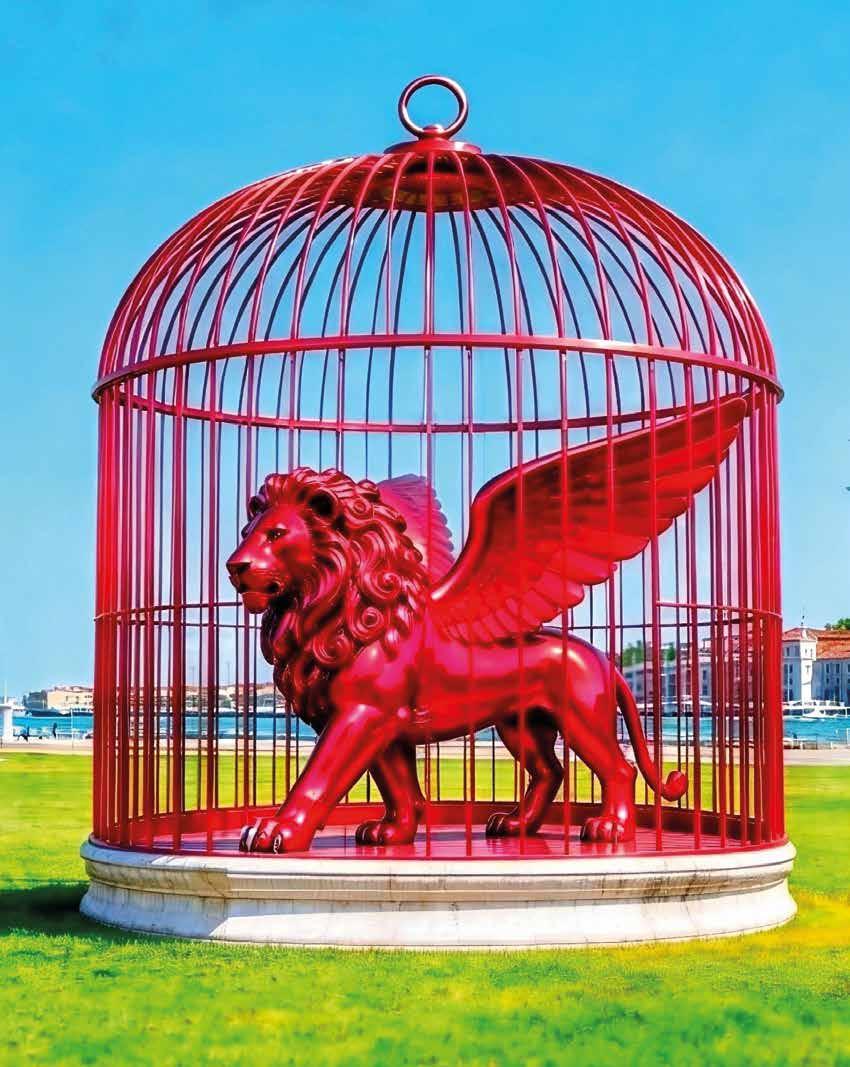
ZHOU YIWEN
A New Renaissance to End Human Wars:
The Lion of Venice
The Chinese lion, introduced via the Silk Road, embodies guardianship; the Venetian winged lion symbolizes maritime hegemony. Zhou merges these forms in red metal, creating a cross-civilizational symbol.
An
Allegory of
Power
and
Freedom
22 July-22 November, 2026
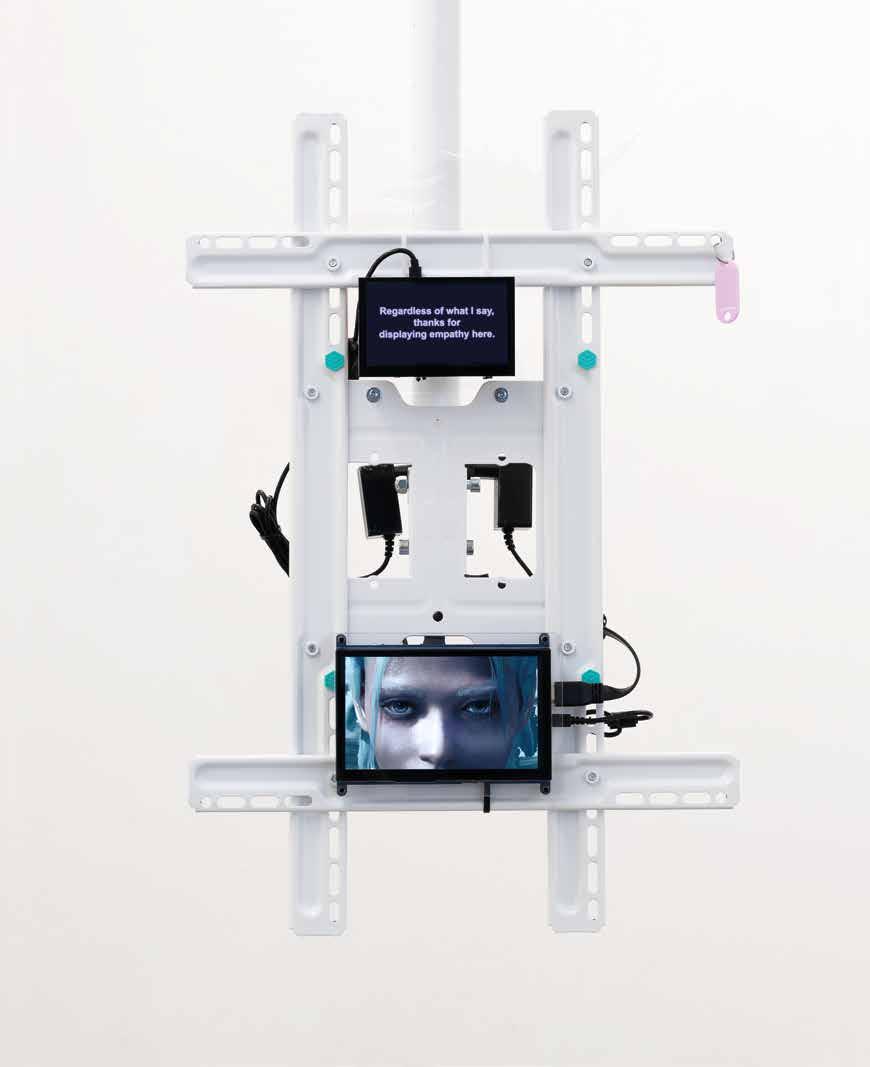
around town
NOT ONLY BIENNALE
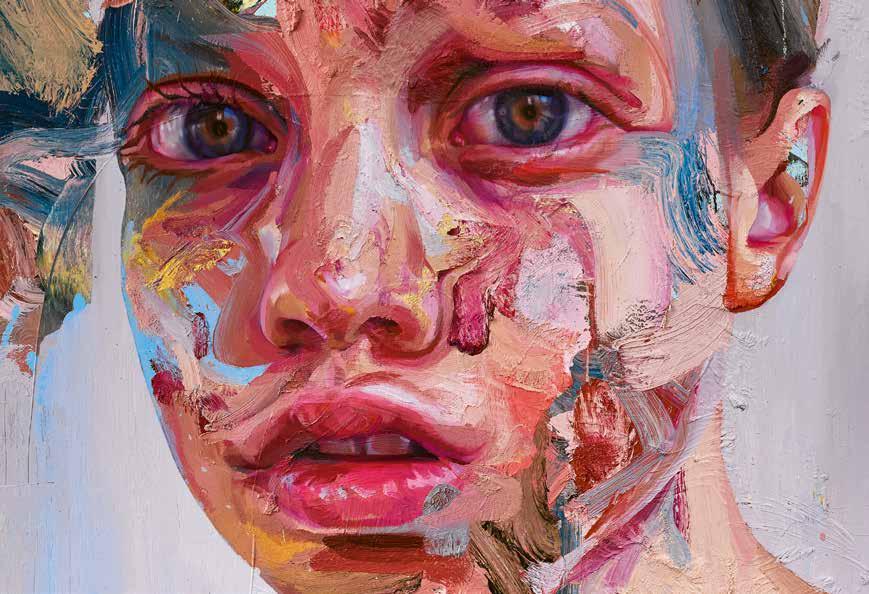
Jenny Saville a Ca’ Pesaro
Ca’ Pesaro
Galleria Internazionale d’Arte Moderna 28 marzo–22 novembre 2026
Santa Croce 2076, 30135 Venezia
Vaporetto: Linea 1, fermata San Stae capesaro.visitmuve.it
in minor keys
132 10 & ZERO UNO MELISSA MCGILL AQUAE
WHEN 30 aprile April-20 giugno June
Il titolo – plurale latino di “acqua” – evoca immediatamente un materiale mai univoco, ma mobile, stratificato e molteplice. Nella pratica di Melissa McGill l’acqua non è semplicemente un oggetto di osservazione, ma un interlocutore con cui dialogare, elemento da cui attingere conoscenza e con cui agire in modo sincrono. È una presenza sia fisica che simbolica, capace di portare in superficie le tensioni che permeano un territorio, le sue fragilità ecologiche, le sue energie collettive e le sue possibilità di resistenza. In mostra l’acqua diventa medium, presenza viva e strumento narrativo.
ENG The title – the Latin plural of “water” – immediately evokes a material that is never univocal but mobile, layered and multiple. In Melissa McGill’s practice, water is not simply an object of observation but an interlocutor with which to dialogue, an element from which to draw knowledge and with which to act synchronously. Both a physical and symbolic presence, capable of bringing to the surface the tensions that permeate a territory, its ecological fragilities, its collective energies and its possibilities for resistance. In the exhibition, water becomes a medium, a living presence and a narrative tool.
Via Garibaldi, Castello 1830 10zerouno.com
133 193 GALLERY/1
HASSAN HAJJAJ
Venice, 1447
WHEN 5 maggio May-27 giugno June
Una selezione di lavori iconici di Hassan Hajjaj costruiti attorno a un doppio sistema temporale che accosta calendario islamico Hijri e gregoriano. Ritratti vivaci, incorniciati da oggetti di uso quotidiano, mettono in scena figure della vita urbana tra tradizione marocchina e cultura street contemporanea. Con un linguaggio visivo insieme celebrativo e sovversivo, l’artista riflette con ironia sulle dinamiche dell’identità postcoloniale e sulla fluidità culturale, mettendo in discussione gli stereotipi e abbracciando cultura pop e pratiche artigianali. ENG A selection of Hassan Hajjaj’s iconic works, constructed around a dual temporal system that intertwines the Hijri and Gregorian calendars. Vibrant portraits framed with everyday objects depict figures of urban life, blending Moroccan tradition with contemporary street culture. Through a visual language both celebratory and subversive, the artist reflects through irony on the dynamics of postcolonial identity and cultural fluidity, challenging stereotypes and embracing pop culture and artisanal practices. Salizada San Samuele, San Marco 3337 www.193gallery.com
134 193 GALLERY/2
SESSE ELANGWE
WHEN 1 luglio July-26 agosto August
Sesse Elangwe (1994, Ngaoundéré, Camerun) è un artista autodidatta la cui pittura fonde l’eredità africana con movimenti artistici del XX secolo come Cubismo, Espressionismo e Pop Art. La sua pratica sensibile e introspettiva indaga identità e memoria mediante un approccio profondamente umano. Lo stile realistico e vibrante al tempo stesso mette in risalto la bellezza della pelle nera ed enfatizza la forza delle espressioni facciali dei suoi soggetti. Un occhio sovradimensionato incoraggia lo spettatore a osservare criticamente e a scardinare i propri preconcetti.
ENG Sesse Elangwe (b. 1994, Ngaoundéré, Cameroon) is a self-taught artist whose painting blends his African heritage with 20th-century art movements such as Cubism, Expressionism and Pop Art. His sensitive and introspective practice takes a profoundly human approach to exploring identity and memory, while his realistic yet vibrant style highlights the beauty of black skin and emphasises the power of his subjects’ facial expressions. An oversized eye encourages the viewer to observe critically and question preconceptions.
Salizada San Samuele, San Marco 3337 www.193gallery.com
135 193 GALLERY/3
THANDIWE MURIU
WHEN 3 settembre September 31 ottobre October
Thandiwe Muriu è un’artista keniota il cui lavoro affronta identità, cultura ed emancipazione femminile. Profondamente ispirata alle narrazioni tessili – in particolare all’Ankara (Wax) e al tessuto Kanga dell’Africa orientale, che usa come tela per ridefinire, celebrare e ricordare – costruisce un linguaggio visivo audace che intreccia riferimenti storici ed estetica contemporanea, ponendo al centro la femminilità e mettendo alla prova le sue rappresentazioni contemporanee.
ENG Thandiwe Muriu is a Kenyan artist whose work explores themes of identity, culture and women’s empowerment. Her work is deeply inspired by textile narratives, particularly Ankara (Wax) and East African Kanga fabric, which she uses as a canvas to redefine, celebrate and remember. Muriu thus develops a bold visual language that intertwines historical references with contemporary aesthetics, celebrating femininity and calling into question contemporary representations.
Salizada San Samuele, San Marco 3337 www.193gallery.com
136 A PLUS A GALLERY COUNTERFORMS
WHEN 5 maggio May-26 luglio July
Undici artisti internazionali mettono a fuoco il ruolo dell’assenza come principio strutturante del significato, a partire dal concetto tipografico di controforma. Attraverso film, fotografia, installazione e pittura, le opere articolano un sistema di interstizi e discontinuità che orienta la percezione. Immagini frammentate, oggetti segnati da processi di uso e rimozione e tracce sonore costruiscono un campo stratificato, in cui i dispositivi di produzione e visualizzazione incidono sulle modalità di apparizione e lettura dell’opera.
ENG Eleven international artists explore the role of absence as a structuring principle of meaning, starting from the typographic concept of counterform. Through film, photography, installation and painting, the pieces create a system of interstices and discontinuities that guide perception. Fragmented images, objects marked by processes of use and removal and sounds create a layered field where the devices of production and display influence the ways the work appears and is interpreted. San Marco 3073 www.aplusa.it
137 AKKA PROJECT BlackBox by DAWIT ABEBE
The Residency Outcome
WHEN 7 maggio May-30 giugno June
Dawit Abebe (1978, Addis Abeba) lavora principalmente con pittura e linguaggio figurativo per indagare le relazioni tra corpo, memoria e potere. Le composizioni di Abebe, caratterizzate da colori vibranti e figure monumentali, affrontano le tensioni tra esperienza personale e collettiva, toccando temi di identità, trasformazione sociale e culturale, responsabilità globale. I suoi soggetti, spesso rappresentati di spalle, invitano lo spettatore a confrontarsi con ciò che rimane invisibile: le forze storiche che plasmano il presente.
ENG The multidisciplinary practice of Dawit Abebe (b. 1978, Addis Ababa) primarily uses painting and figurative language to investigate the relationships between the body, memory and power. Characterised by vibrant colours and monumental figures, his compositions explore the tensions between individual experience and collective history, addressing themes of cultural identity, social transformation and global responsibility. His figures, often depicted from behind, invite the viewer to engage with what remains invisible: memory, the past, and the historical forces that shape the present.
Ca’ del Duca, San Marco 3052 www.akkaproject.com
in minor keys
138 AMA VENEZIA AURA
WHEN 5 maggio May-22 novembre November
Attingendo alla Collezione AMA, Aura è un percorso creativo che mette in relazione presenza e percezione, materiale e immateriale. Un’opera site-specific di Ed Ruscha stabilisce un ponte tra Venice (Florida) e Venezia, mentre Tino Sehgal introduce una dimensione performativa basata su movimento e interazione diretta. Queste e altre opere di artisti internazionali si distribuiscono nello spazio attivandolo in modi differenti, sollecitando una fruizione lenta e attenta, in cui lo sguardo si trasforma in esperienza fisica e emotiva.
ENG Drawing on the AMA Collection, Aura is a creative journey that connects presence and perception, material and immaterial. A sitespecific work by Ed Ruscha establishes a bridge between Venice (Florida, USA) and Venice while Tino Sehgal introduces a performative dimension based on movement and direct interaction. These and other works by international artists are distributed throughout the space, activating it in different ways to elicit a slow and attentive experience where the gaze becomes a physical and emotional experience.
Fondamenta de Ca’ Vendramin Cannaregio 2395 www.ama.art
139 ANISH KAPOOR FOUNDATION
ANISH KAPOOR
WHEN 6 maggio May-8 agosto August
Riunendo circa cento modelli architettonici, tra progetti realizzati e non, insieme a installazioni di grande scala e opere in acciaio, il percorso mette in luce la ricerca di Kapoor sullo spazio dell’oggetto e sulla sua capacità di generare nuove esperienze percettive. Superfici specchianti, pigmenti e forme concave espandono e assorbono l’ambiente, trasformando la relazione con lo spazio e conducendo il visitatore nella dimensione del “nonoggetto”. Il percorso si estende a una selezione di opere in Vantablack, che approfondiscono la ricerca dell’artista sul vuoto e sulla percezione. ENG Bringing together approximately one hundred architectural models, both completed and unrealised, along with large-scale installations and work in steel, the exhibition highlights Kapoor’s exploration of the space of objects and their ability to generate new perceptual experiences. Mirrored surfaces, pigments and concave shapes expand and absorb the environment, transforming the relationship with space and leading the visitor into the dimension of the “nonobject.” The exhibition also includes several works in Vantablack which further explore the artist’s exploration of emptiness and perception. Palazzo Manfrin, Fondamenta Venier Cannaregio 152-153 www.anishkapoor.com
140 ARCHIVIO DI STATO
DAYANITA SINGH ARCHIVIO
WHEN 17 aprile April-31 luglio July
In ARCHIVIO l’atto di fotografare diventa una forma di catalogazione, un tentativo continuo di comprendere come la memoria viene plasmata, strutturata e conservata. Dayanita Singh (1961, New Delhi, India) rivisita le immagini che ha realizzato nelle città italiane dalla fine degli anni ‘90, in dialogo con i suoi approfonditi studi sugli archivi realizzati in India e altrove. Attraverso questo incontro l’archivio diventa non un magazzino statico, ma un organismo vivente, uno spazio generativo capace di plasmare le storie che raccontiamo e quelle che restano ancora da scoprire.
ENG In ARCHIVIO, the act of photographing becomes a form of cataloguing and an ongoing attempt to understand the way memory is shaped, structured and preserved. Dayanita Singh (b. 1961, New Delhi, India) revisits the images she has been creating in Italian cities since the late 1990s, engaging them in a dialogue with her indepth studies of archives in India and elsewhere. Through this encounter, the archive becomes not a static warehouse but a living organism – a generative space capable of shaping the stories we tell and those yet to be discovered.
Frari, San Polo 3002 www.frithstreetgallery.com/ artists/dayanita-singh
141 ARSENALE INSTITUTE FOR POLITICS OF REPRESENTATION
D is for DUCHAMP the DEEP DYED DECEIVER
WHEN 10 maggio May-22 novembre November
La mostra riunisce il più ampio corpus di materiali finora raccolto sulla ricezione dell’opera di Duchamp: straordinari documenti inediti accanto alle pubblicazioni più influenti per restituire una mappa di quanto è stato visto, narrato e riprodotto nell’arco della sua carriera, mettendo al centro il ruolo attivo dello spettatore. Tra ready-made e dispositivi concettuali emerge una pratica che concepisce l’opera come un campo aperto di significati, in cui interpretazione e fraintendimento costituiscono parte integrante del processo artistico. ENG
An exhibition that brings together the largest body of material ever assembled on the reception of Duchamp’s work: an extraordinary collection of previously unpublished sources and documents alongside the most influential publications. Centring the active role of the viewer, these documents
provide a map of what was seen, narrated and reproduced over the artist’s career, and a practice emerges from the ready-mades and conceptual devices that sees the work as an open field of meaning where interpretation and misunderstanding are integral to the artistic process.
Riva dei Sette Martiri, Castello 1430/A www.arsenale.com
142 ART DEPOT AI BIRI
WHEN 3 maggio May-30 agosto August Quattordici artisti coreani – Hyangnam Lee, Hyunmi Koh, Miha Jeong, Sungock Ahn, Jungsook Kim, InhunSong, Jinsook Kim, Okja Na, Heewon Park, Kwooni Shin, Miyoung Lee, Jeonga Lee, Insoo Chun, Gyeewon Han – intrecciano tre brevi storie indipendenti sotto un unico tema. Le opere portano al centro esperienze periferiche e spesso trascurate, componendo una trama comune a partire da prospettive individuali. Il risultato è un dispositivo che riflette sulla costruzione di una dimensione condivisa, intesa come esito dell’incontro e della relazione tra soggetti differenti.
ENG Fourteen Korean artists – Hyangnam Lee, Hyunmi Koh, Miha Jeong, Sungock Ahn, Jungsook Kim, InhunSong, Jinsook Kim, Okja Na, Heewon Park, Kwooni Shin, Miyoung Lee, Jeonga Lee, Insoo Chun and Gyeewon Han – weave together three short independent stories with a single theme. The works forefront marginal and often overlooked experiences, crafting a common thread from individual perspectives and resulting in a reflection on the construction of a shared dimension understood as the outcome of encounters and relationships between various subjects.
Rio Terà dei Biri, Cannaregio 5415
143 ATENEO VENETO
NATASHA
TONTEY
The Phantom Combatants and the Metabolism of Disobedient Organs
WHEN 9 maggio May-25 ottobre October
LAS Art Foundation (Berlino) e Amos Rex (Helsinki) presentano una nuova opera commissionata a Natasha Tontey, la cui pratica comprende film, video, performance e installazioni che portano alla luce i toni più sommessi della storia e la possibilità di sviluppare futuri alternativi. L’installazione multimediale racconta le vicende di una combattente della resistenza indonesiana degli anni ‘50. Attingendo alla tradizione simbolica del popolo Minahasan – comunità del Nord
Sulawesi, Indonesia –, all’immaginario militare contemporaneo e alla trasformazione fisica e chimica, l’opera affronta il tema della sovranità dei corpi, delle culture e della Terra.
ENG LAS Art Foundation (Berlin) and Amos Rex (Helsinki) present a new commission by Natasha Tontey, whose practice encompasses film and video, performance and installation, exploring the subtler tones of history while also examining the possibility of developing an alternative future. The multimedia installation tells the story of an Indonesian resistance fighter of the 1950s. Exploring physical and chemical transformation, the symbolism of Minahasan and contemporary military imagery, the work addresses the issue of the sovereignty of bodies, cultures and the Earth.
Campo San Fantin, San Marco 1897 www.las-art.foundation
144 BAROVIER&TOSO ARTE
FABRIZIO PLESSI
Perdersi in un bicchier d’acqua
WHEN Fino Until 21 giugno June
Invitato da Barovier&Toso ARTE ad esplorare il vetro di Murano come puro materiale artistico, Plessi libera la sua mano e ne reinterpreta le forme archetipiche: bottiglie e bicchieri. I disegni rivelano la genesi delle forme realizzate, configurandosi come testimonianze del processo creativo. Gli oggetti abbandonano la propria funzionalità originaria per farsi visioni fluide e dinamiche, solidificate nel movimento dell’acqua, dove la turbolenza – cifra stilistica dell’artista – si traduce in materia.
ENG Invited by Barovier&Toso ARTE to explore Murano glass as a pure artistic material, Plessi takes a free hand to reinterpreting the archetypal forms of glass, bottles and glasses. The drawings reveal the genesis of the resulting forms, serving as evidence of the creative process that transforms these objects into autonomous sculptures, solidified by the movement of water: genuine works of art that abandon their original function to become fluid and dynamic visions, where turbulence – the artist’s signature style – is translated into matter.
Palazzo Barovier&Toso Fondamenta Manin 1/D, Murano www.barovierarte.com
145 BAROVIER&TOSO GALLERY
IBRAHIM MAHAMA A Shea Garden
WHEN 4 maggio May-18 luglio July
Un pavimento ricoperto da un campo di terracotta frantumata da cui emergono vasi intatti come fiori. Gli oggetti provengono dal Ghana settentrionale: le loro forme sono state trasposte in vetro di Murano trasparente e impalpabile, in contrasto con l’argilla densa e opaca. I due materiali coesistono, crescendo dallo stesso terreno. Mahama costruisce l’installazione come un giardino che evoca qualcosa che non si sostiene da solo e che necessita quindi di cura, come le due antiche tradizioni a rischio di estinzione che incarna: la lavorazione della terracotta ghanese e la produzione del vetro di Murano.
ENG A floor covered with a field of crushed terracotta, from which intact vases emerge like flowers. The objects come from northern Ghana and their forms have been transposed into transparent, impalpable Murano glass that contrasts with the dense, opaque clay; the two materials coexist, growing from the same soil. Mahama constructs the installation like a garden, evoking something that cannot sustain itself but requires nurturing, like two ancient traditions at risk of extinction: Ghanaian terracotta and Murano glassmaking. Rio Terà de la Carità, Dorsoduro 1046 galleriabarovier.com
146 BEA VITA VENEZIA NOWRUZ Images, Sounds and Voices from Contemporary Iran
WHEN 20 marzo March-22 novembre November In un contesto in cui le condizioni politiche e sociali rendono sempre più complessa la circolazione delle opere e il dialogo con l’Iran, il progetto assume questa condizione di sospensione e parzialità trasformandola in una struttura narrativa aperta in cui l’assenza si fa presenza. La mostra si configura come un progetto in divenire che, riunendo una selezione di opere e artisti, mette in relazione pratiche eterogenee attraversate da una comune riflessione su memoria, identità e trasformazione.
ENG In a context where political and social conditions are increasingly challenging the circulation of work and dialogue with Iran, the project embraces this state of suspension and partiality, transforming it into an open narrative structure where absence becomes presence. The exhibition is an ongoing project that brings together a selection of work and artists, connecting diverse practices informed by a shared reflection on memory, identity and transformation. Fondamenta de le Capuzine Cannaregio 3082
147 BRAGORA GALLERY YEXIN YANG
The Man Who Threw Away Golden Rice
WHEN 5 maggio May-22 novembre November Chicchi di riso in oro massiccio, distribuiti dall’artista nello spazio espositivo e liberamente raccolti dal pubblico, costituiscono il fulcro della performance di Yexin Yang Art or Gold?. Il gesto, solo in apparenza generoso, attiva una riflessione sulle relazioni tra arte e capitale e sulla distribuzione delle risorse su scala globale. In un ambiente in cui il valore si negozia continuamente, lo spettatore si trova di fronte a una scelta tanto simbolica quanto concreta.
ENG Solid gold grains of rice distributed throughout the exhibition space by the artist and freely collected by the public form the fulcrum of Yexin Yang’s performance Art or Gold? This seemingly generous gesture sparks a reflection on the relationship between art and capital and the distribution of resources on a global scale, transforming the gallery into a field of tensions where value is constantly negotiated, challenging the viewer to confront a choice that is both symbolic and concrete.
Salizada Sant’Antonin, Castello 3496
148 CA’ DA MOSTO
THE VENICE VENICE HOTEL
JR. Il Gesto
A
contemporary reinterpretation of The Wedding at Cana
WHEN 4-10 maggio May
La facciata di Ca’ da Mosto diventa la superficie per un’installazione monumentale temporanea ispirata a Le Nozze di Cana di Paolo Veronese – dipinto conservato al Museo del Louvre, originariamente creato per il monastero di San Giorgio Maggiore a Venezia. JR proietta il celebre dipinto del 1563 nel presente facendone un affresco contemporaneo: un organismo vivente costruito attorno a 176 persone legate alla comunità di Refettorio Paris –ospiti, volontari e chef –, fotografate e registrate per formare una composizione collettiva, trasformando la tavola in una potente metafora di uguaglianza.
ENG The façade of Ca’ da Mosto becomes the surface for a temporary monumental installation inspired by Paolo Veronese’s The Wedding at Cana – a painting now in the Louvre and originally created for the monastery of San Giorgio Maggiore in Venice. JR brings the famous 1563 painting into the present as a contemporary fresco: a living organism built around 176 people – guests, volunteers and chefs – connected to the Refettorio Paris community, who were photographed and recorded to form a collective composition, transforming the table into a metaphor for equality. Facciata e Sale Interne, Cannaregio 5631 jr-art.net | venicevenice.com
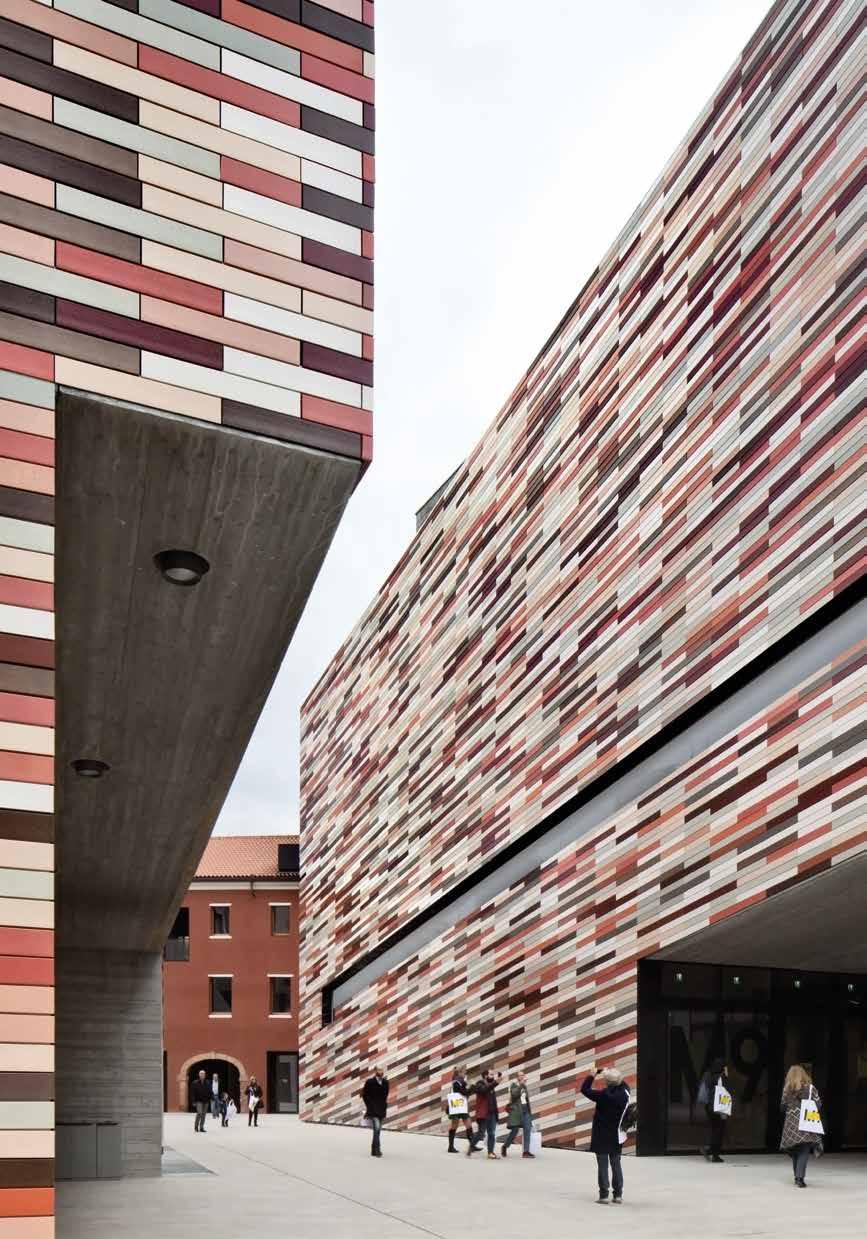
in minor keys
149 CA’ FACCANON SHIM MOON SEUP
Harnessed From Nature
WHEN 6 maggio May-30 settembre September
Figura centrale dell’avanguardia coreana, Shim Moon Seup dalla fine degli anni ‘60 ha ridefinito il linguaggio scultoreo sviluppando il concetto radicale di “anti-scultura” in dialogo con Monoha, Arte Povera e Land Art. Concependo l’opera come esito di dinamiche naturali, il suo lavoro si è orientato progressivamente verso una visione ecocentrica, in cui materia, luce ed energia diventano elementi attivi del processo creativo. La mostra monografica ripercorre oltre cinquant’anni di ricerca artistica in ventotto opere tra dipinti, sculture e installazioni.
ENG A central figure in the Korean avantgarde, Shim Moon Seup has been redefining sculptural language since the late 1960s, developing the radical concept of “anti-sculpture,” in dialogue with Mono-ha, Arte Povera and Land Art. Conceiving of the work as the product of natural dynamics, his practice has progressively shifted toward an ecocentric vision where matter, light and energy are active elements of the creative process. This monographic exhibition traces over fifty years of artistic work through twenty-eight pieces which include paintings, sculptures and installations.
Calle delle Acque, San Marco 5016 www.tilsittgallery.com
150 CA’ PESARO/1
JENNY SAVILLE
WHEN 28 marzo March-22 novembre November
Ampia retrospettiva dedicata a Jenny Saville dagli anni ‘90 a oggi. Dai grandi nudi ai ritratti e ai lavori più recenti ispirati a fatti di cronaca, il percorso mette in luce una ricerca pittorica in cui confluiscono tradizione figurativa, tensione espressionista e riflessione sul corpo. Centrale è anche il dialogo con la storia dell’arte, in particolare con la pittura veneziana, che riaffiora nell’uso del colore e della materia, fino agli inediti realizzati dall’artista in omaggio a Venezia. ENG A comprehensive retrospective dedicated to Jenny Saville from the ‘90s to the present. From large nudes to portraits and more recent works inspired by current events, the exhibition highlights a pictorial practice that brings together the figurative tradition, expressionist tension and reflections on the body. A central theme is also the dialogue with art history, particularly Venetian painting, which resurfaces in the artist’s use of colour and texture, including previously unpublished works created in homage to Venice.
Galleria Internazionale d’Arte Moderna Santa Croce 2076 capesaro.visitmuve.it
151 CA’ PESARO/2
GIULIO MALINVERNI Natura morta, Natura viva
WHEN 21 aprile April-14 giugno June
Giulio Malinverni indaga il rapporto tra materia naturale e intervento artistico attraverso la pittura su pietra ispirata a una tradizione antica ma reinterpretata in chiave contemporanea. Le venature naturali di marmi, alabastri e onici sono il punto di partenza della sua pittura, essenziale e delicata, che non modifica la sostanza ma ne rivela le potenzialità, trasformando la “natura morta” in una presenza vitale. Ne emerge una visione unitaria del mondo naturale, in cui i confini tra minerale, vegetale e animale si dissolvono, infondendo vita alla materia apparentemente inerte.
ENG Giulio Malinverni explores the relationship between natural matter and art through stone painting, taking inspiration from an ancient tradition reinterpreted with a modern twist. The natural veining of marble, alabaster and onyx is the starting point for his essential and delicate painting, which does not alter the substance but rather reveals its potential, transforming the “still life” into a vital presence. What emerges is a unified vision of the natural world where the boundaries between mineral, plant and animal dissolve, bringing seemingly inert matter to life. Galleria Internazionale d’Arte Moderna Project Room, Santa Croce 2076 capesaro.visitmuve.it | www.marignanaarte.it
152 CA’ PESARO/3
HERNAN BAS
The Visitors
WHEN 7 maggio May-30 agosto August
Hernan Bas (1978, Miami) trae ispirazione da Venezia, città consumata dal turismo, stravolta nella sua identità e nel suo tessuto urbano. Trenta nuovi dipinti compongono un’installazione immersiva concepita per Ca’ Pesaro: i suoi Visitors sono turisti in scenari sia immaginati sia reali, figure sospese sulle soglie tra curiosità e arroganza, incontro e violazione, esperienza e spettacolo. Ancora una volta Bas esplora le complessità dell’identità personale, in cui l’ordinario scivola nello straordinario. ENG Hernan Bas (b. 1978, Miami) draws inspiration from Venice, a city particularly affected by tourism and continuously transformed by its consequences. Thirty new paintings compose an immersive installation conceived specifically for Ca’ Pesaro: his Visitors are tourists in both imagined and real settings, figures hovering on thresholds between curiosity and arrogance, encounter and violation, experience and spectacle. Once again, Bas explores the complexities of personal identity where the ordinary slips into the extraordinary.
Galleria Internazionale d’Arte Moderna Sale Dom Pérignon, Santa Croce 2076 capesaro.visitmuve.it | www.marignanaarte.it
153 CA’ PESARO/4
GIUSEPPE DI LIBERTO
WHEN 23 giugno June -6 settembre September
La pratica di Giuseppe Di Liberto appare barocca, sia per il modo drammatico e al contempo sensuale con cui affronta il concetto di vita e di morte, sia per la riproduzione di scenari legati alla creazione e alla distruzione. Calchi, sculture e installazioni misurano il paradosso e il mistero dell’immagine come simulacro e palliativo dell’assenza e della morte, rimedio alla caducità inevitabile dei corpi. Con un esistenzialismo estremamente carnale e concreto il suo lavoro indaga a fondo i grandi tabù della nostra società.
ENG Giuseppe Di Liberto’s practice appears baroque, both in the dramatic yet sensual way he addresses the concept of life and death and in his reproduction of scenarios linked to creation and destruction. Whether casts, sculptures or installations, his work engages with the paradox and mystery of the image as a simulacrum and palliative for absence and death – a remedy for confronting the inevitable transience of bodies. With extremely physical, concrete existentialism, Di Liberto’s work confronts the great taboos of our society.
Galleria Internazionale d’Arte Moderna Santa Croce 2076 capesaro.visitmuve.it
154 CA’ PESARO/5 NICOLÁS LAMAS
WHEN 24 settembre September22 novembre November
Il lavoro dell’artista visivo peruviano Nicolás Lamas interroga le relazioni fra gli oggetti e lo spazio in cui coesistono, determinando associazioni e scambi al di fuori di ogni regola prestabilita. La sua pratica è il risultato di un processo di produzione in costante divenire, in cui intuizione, possibilità, gioco e fenomeni fisici determinano la connessione dell’artista con oggetti e immagini appartenenti a contesti specifici, dove tutto fluttua tra ordine e caos.
ENG The work of Peruvian visual artist Nicolás Lamas questions the interaction between objects and the space in which they coexist, determining different types of association, exchange and combinatorial potential outside of pre-established rules. Lamas’ practice can be interpreted as the result of a practice of constantly evolving production where intuition, chance, play and physical processes shape the artist’s connection with objects and images from specific contexts, where everything fluctuates between order and chaos.
Galleria Internazionale d’Arte Moderna Santa Croce 2076 capesaro.visitmuve.it

in minor keys
155 CA’ REZZONICO
I GUARDI DELLA COLLEZIONE GULBENKIAN
WHEN Fino Until 8 giugno June
Tutte databili tra il 1770 e 1790, le opere di Guardi del Museo Gulbenkian rappresentano una straordinaria testimonianza dello stile dell’artista, fatto di pennellate allusive e di proporzioni liberamente sfalsate che producono vedute in cui la struttura prospettica appare elastica. Ormai lontana dalle certezze geometriche di Canaletto, la Venezia ritratta da Francesco Guardi è composta da edifici corrosi dalla luce, resi attraverso una pittura tremolante, quasi che il pittore voglia offrire un’immagine interiore della città e di una civiltà, quella veneziana, già in rapido declino.
ENG All dated between 1770 and 1790, Guardi’s works in the Gulbenkian Museum are an extraordinary testament to the artist’s style, made up of allusive brushstrokes and freely staggered proportions that produce views where the perspective structure appears elastic. Far from the geometric certainties of Canaletto, the Venice portrayed by Francesco Guardi is composed of buildings corroded by light, rendered through a trembling brushwork, almost as if the painter wished to offer an interior image of the city and of a civilisation – that of Venice – now in rapid decline.
Museo del Settecento Veneziano Dorsoduro 3136 carezzonico.visitmuve.it
156 CA’ TRON/1
EMILIA KABAKOV
Venetian Diary
WHEN 9 maggio May-28 giugno June
A tre anni dalla scomparsa di Ilya Kabakov Venezia rende omaggio a una delle più importanti coppie artistiche della scena internazionale con Diario veneziano, progetto monumentale e partecipato, concepito da Ilya ed Emilia Kabakov. Frutto della loro visione condivisa, l’opera pone al centro le storie, le memorie e gli oggetti dei veneziani, restituendo un intenso autoritratto corale della città e riaffermando la forza poetica e concettuale che ha reso il duo una figura di riferimento nell’arte contemporanea mondiale.
ENG Three years after the passing of Ilya Kabakov, Venice pays tribute to one of the international scene’s most important art duos with Diario Veneziano, a monumental participatory project conceived by Ilya and Emilia Kabakov. The fruit of their shared vision, the work focuses on Venetians’ stories, memories and objects, creating a powerful collective selfportrait of the city and reaffirming the poetic and conceptual power that made the duo key figures in global contemporary art. Santa Croce 1957 www.iuav.it
157 CA’ TRON/2 TONY CRAGG Ocean of Drops
WHEN 5 maggio May-28 giugno June
Oceano di Gocce è il titolo di una monumentale opera in vetro di Tony Cragg, tra i più originali esponenti della scultura contemporanea. Realizzata a Murano, dà il nome e il tema al progetto espositivo, riferendosi alla natura particolare di tutti i materiali. Insieme alle altre opere presenti richiama le proprietà di atomi, molecole, cellule, particelle e strati che costituiscono le strutture interne fondamentali della materia. Cragg trasforma forme e sostanze in organismi visivi capaci di mettere in discussione il nostro rapporto con gli oggetti e il paesaggio.
ENG Ocean of Drops is the title of a monumental glass work of art by Tony Cragg, one of the most original artists working in contemporary sculpture. Created in Murano, the piece lends its name and theme to the exhibition project, referencing the particular nature of all materials. Like the other pieces in the exhibition, it recalls the properties of the atoms, molecules, cells, particles and layers that constitute the fundamental internal structures of all materials. Cragg transforms matter and forms into visual organisms capable of questioning our relationship with objects and landscape.
Santa Croce 1957 www.iuav.it | fondazioneberengo.org
158 CA’ TRON | FONDAZIONE BERENGO ART SPACE
GLASSTRESS
WHEN 11 luglio July-22 novembre November
« Glasstress è il movimento che vuole scrivere nuovi capitoli nella storia del vetro e dell’arte». In questa prospettiva Adriano Berengo porta avanti da quasi un ventennio la sua missione di unire arte contemporanea e vetro mettendo in connessione artisti e maestri nella creazione di opere nella sua fornace a Murano. Lanciato nel 2009 come evento collaterale ufficiale della Biennale di Venezia, oggi Glasstress è una mostra seminale, che traccia nuove traiettorie per il vetro e per gli artisti contemporanei. L’edizione 2026 è ancora più sorprendente per partecipazione di artisti internazionali e per esiti creativi.
ENG “Glasstress is the movement that aims to write new chapters in the history of glass and art.” Since 2009, Adriano Berengo has pursued this mission of uniting contemporary art and glass, connecting artists and masters in the creation of glass art in his furnace in Murano. Launched in 2009 as an official collateral event of the Venice Biennale, it is now a seminal exhibition, charting new paths for glass and contemporary artists. And the participation of international artists and the creative outcomes make the 2026 edition more impressive than ever.
IUAV, Ca’ Tron, Santa Croce 1957 Fondazione Berengo Art Space Campiello della Pescheria 4, Murano glasstress.org
159 CAPPELLA DI SANTA MARIA DELLA PIETÀ SCALA DEL BOVOLO
WALLACE
CHAN
Vessels of Other worlds
WHEN 8 maggio May-18 ottobre October (Cappella della Pietà)
Mythos
WHEN 4 aprile April-18 ottobre October (Scala del Bovolo)
In occasione del suo settantesimo compleanno, Wallace Chan si regala un progetto espositivo articolato tra Venezia e Shanghai. Una nuova serie di sculture monumentali in titanio si sviluppa tra lo spazio sacro della Cappella della Pietà e quello architettonico della Scala del Bovolo, dando forma a un ambiente di grande intensità sensoriale. Le opere, ispirate all’immaginario di Bosch e alla simbologia liturgica, evocano le diverse fasi della vita e confluiscono in una riflessione sulla trasformazione, mettendo in relazione materia e dimensione spirituale.
ENG On the occasion of his seventieth birthday, Wallace Chan presents an exhibition project that spans Venice and Shanghai: a new series of monumental titanium sculptures unfolding between the sacred space of the Cappella della Pietà and the architectural space of the Scala del Bovolo, creating a deeply immersive environment. Inspired by Bosch’s imagery and liturgical symbolism, the works evoke the various stages of life and converge in a reflection on transformation, connecting matter and the spiritual dimension.
Cappella Santa Maria della Pietà Riva degli Schiavoni, Castello 4150 Scala del Bovolo, San Marco 4303
in minor keys
160 CASA DEI TRE OCI
BERGGRUEN ARTS & CULTURE
JOSEPH KOSUTH
The-exchange-valueof-language-has-fallento-zero
WHEN 28 marzo March-22 novembre November
Joseph Kosuth, attraverso un’installazione al neon in cui pulsa la scritta “A Chain of Resemblance” lungo le pareti d’ingresso, riflette su quanto il significato di un atto possa essere plasmato al contempo sia dal contesto in cui è inserito che dalle parole che lo esplicitano. L’artista gioca con le molteplici potenzialità del linguaggio, elevandolo a opera d’arte visiva e caricandolo della forza del suo contenuto espressivo. Al primo piano prendono posto i lavori storici degli anni ‘70, quando l’opera si presentava come sintesi tra oggetto, immagine e testo.
ENG Through a neon installation with the words pulsating “A Chain of Resemblance” which runs along the walls of the exhibition’s entrance, Joseph Kosuth explores how meaning can be shaped both by its context and by the words that express it. The artist plays with the multiple potentialities of language, visually elevating it to the level of artwork while simultaneously imbuing it with the power of its expressive content. The first-floor features historic pieces dating back to the 1970s, when Kosuth’s art presented itself as a synthesis of object, image and text.
Fondamenta Zitelle, Giudecca 43 berggruenarts.org | berggruen.org
161 CASA SANLORENZO WAVES
WHEN 6 maggio May-28 giugno June
WAVES nasce da un’intuizione radicale: l’onda non è una forma ma una condizione. Da questo principio prende vita la prima mostra collettiva che trasforma Casa Sanlorenzo in un ecosistema in cui confluiscono arte, architettura e natura. L’onda diventa energia in movimento, una guida concettuale che percorre opere, ambienti e percezioni. Calder, Fontana e Melotti rivelano una materia in costante instabilità, modellata da forze che ne ridefiniscono continuamente i confini. Accanto alle loro opere, spazio ai lavori di Tony Cragg, Christine Safa, Marcello Maloberti, Friedrich Andreoni e di molti altri ancora.
ENG WAVES was born from a radical intuition: the wave is not a form but a condition. From this principle comes the first group exhibition to transform Casa Sanlorenzo into an immersive ecosystem where art, architecture and nature intertwine. The wave becomes energy in motion, a conceptual guide that runs through works of art, environments and perceptions. Calder, Fontana, and Melotti reveal an unstable
material, shaped by forces that continually redefine its boundaries, accompanied by contributions from Tony Cragg, Christine Safa, Marcello Maloberti, Friedrich Andreoni and many others.
Dorsoduro 170
www.sanlorenzoyacht.com
162 CASTELLO 925
CROSS CONTEMPORARY ART PROJECTS
MARTIN WEINSTEIN
Nothing Goes Away
WHEN 9 maggio May-26 luglio July
Personale dell’artista Martin Weinstein dedicata a Venezia: vedute esterne – i suoi magnifici canali e la sua architettura – giustapposte a studi di interni che evocano un’elegante e raccolta domesticità tipicamente italiana. I dipinti, realizzati su strati multipli di acrilico, sono semplici risposte a ciò che l’artista ama: un giardino, un fiore, il sole che filtra tra le nuvole, la città di Venezia, la quiete di un pomeriggio o l’atmosfera elettrica che precede un temporale. Per Weinstein questo elenco è al contempo vasto e intimo, diario silenzioso sulla poesia dell’esistenza.
ENG Artist Martin Weinstein’s solo exhibition is dedicated to Venice: exterior views of its magnificent canals and architecture juxtaposed with studies of interiors that evoke an elegant and intimate Italian domestic mood. Created with multiple layers of acrylic, the paintings are ultimately simple responses to what the artist loves: a garden, a flower, the sun filtering through clouds, the city of Venice, the quiet of an afternoon, or the atmosphere preceding a storm. For Weinstein, this list is both vast and intimate, serving as a silent diary on the poetry of existence.
Fondamenta San Giuseppe, Castello 925 www.martinweinstein.com www.crosscontemporaryprojects.com
163 CASTELLO 925
PROJECT SPACE
CROSS CONTEMPORARY ART PROJECTS
ANNE LEITH
Verge
WHEN 7 maggio May-26 luglio July
Anne Leith ritrae il mondo che la circonda con pennellata gestuale, rivelando la rapidità del suo sguardo e la passione per l’attimo presente. I dipinti e le opere su carta, allestiti con mollette su fili stesi come il bucato tra le calli di Castello, sono ispirati alla poetica dei boschi: l’artista cattura la luce effimera che si riflette sull’acqua, filtra tra i rami e vibra tra cascate, nuvole e ruscelli. Foglie d’oro e d’argento su carta di gelso danno vita a una serie di dipinti traslucidi.
ENG Anne Leith’s practice is dedicated to portraying the world around her, her gestural brushstrokes revealing the swiftness of her gaze and her passion for the present moment. Arranged with clothespins on hanging lines just like the laundry in the streets of Castello, her paintings and work on paper are inspired by the poetics of the woods: Leith captures the fleeting light reflecting on water, filtering through branches and vibrating among waterfalls, clouds and streams. She works with gold and silver leaf on mulberry paper to create a series of translucent paintings.
Fondamenta San Giuseppe, Castello 780 www.crosscontemporaryprojects.com
164 CAVANA GALLERY
DU HAI JUN
Chronicles of the Floating City
WHEN 9 maggio May-29 luglio July
Du Hai Jun indaga l’esperienza estetica e sociale della città contemporanea attraverso una pittura a olio che si muove tra figurazione e costruzione, restituendo la densità degli spazi abitativi e la frammentazione del paesaggio metropolitano. Le finestre assumono un ruolo centrale come punti di osservazione che condensano microstorie, tensioni sociali e memorie collettive, mentre le griglie architettoniche emergono come struttura ricorrente del vivere moderno. Al centro, il rapporto tra individuo, comunità e architettura.
ENG Du Hai Jun explores the aesthetic and social experience of the contemporary city through oil paintings that shift between figuration and construction, capturing the density of living spaces and the fragmentation of the metropolitan landscape. Windows play a central role as observation points that condense micro-histories, social tensions and collective memories, while architectural grids emerge as a recurring structure of modern life. The result is a reflection on the relationship between architecture, the individual and the community.
Rio Terà Foscarini, Dorsoduro 909/C www.bigeyesvision.com
in minor keys
165 CHIESA DI SAN FANTIN
LORE BERT Towards the Light
WHEN 5 maggio May-22 ottobre October
In occasione del suo novantesimo compleanno Lore Bert crea un’installazione site-specific che irrompe nello spazio della chiesa con interventi in carta e luce al neon. Due grandi cerchi occupano la navata: uno integra una spirale di sfere luminose, che suggerisce una tensione tra concentrazione e apertura, mentre l’altro presenta elementi a trifoglio che richiamano le virtù cardinali. Nel coro una scultura luminosa introduce la presenza dei numeri. Luce, forma e spazio articolano una riflessione su ordine, percezione e simbolo.
ENG On the occasion of her ninetieth birthday, Lore Bert has created a site-specific installation that fills the church space with work in paper and neon light. Two large rings occupy the nave: one incorporates a spiral of luminous spheres suggesting a tension between concentration and openness, while the other features cloverleaf elements that reference the cardinal virtues. In the choir, a luminous sculpture introduces the presence of numbers. The whole creates an environment where light, form and space articulate a reflection on order, perception and symbol.
Campo San Fantin, San Marco www.vanderkoelen.de | www.lore-bert.com
166 CHIESA DI SANTA MARIA DELLA VISITAZIONE
WHEN 9 maggio May-22 novembre November
Uno spazio multisensoriale in cui l’acqua emerge come principio vitale, mettendo in connessione umanità, natura e cultura. Piroghe sospese e strutture organiche, sviluppate con la collaborazione di comunità indigene, costruiscono il paesaggio simbolico dell’Amazzonia, ecosistema fragile che, dall’incontro con il mondo occidentale nel XVI secolo, vive in tensione tra sfruttamento e tutela. L’assenza di acqua diventa elemento percettivo che ridefinisce lo spazio e orienta lo sguardo, ponendo il rapporto tra ambiente e responsabilità collettiva al centro del dibattito.
ENG A multisensory experience space whose driving force is water and its ability to connect humanity, nature and culture. Hanging dugout canoes and organic structures, developed in collaboration with indigenous communities, construct the symbolic landscape of the Amazon, a fragile ecosystem that has existed in a state of tension between exploitation and protection since it encountered the Western world in the 16th century. The absence of water
becomes a perceptual element that redefines the space and directs the gaze, triggering a reflection on the relationship between the environment and collective responsibility.
Fondamenta Zattere Ai Gesuati Dorsoduro 919A www.martinez-vega.de
167 CIRCUIT SUNBURN
WHEN Fino Until 30 maggio May
CIRCUIT è una piattaforma interdisciplinare fisica e teorica di ricerca e incontro su nuovi media e arte digitale: uno spazio di oltre 100 metri quadri dedicato a mostre, bookshop, incontri, talk e formazione, con la direzione artistica di Herwig Egon Casadoro-Kopp (HECK). La mostra inaugurale, SUNBURN, personale di Federica Di Pietrantonio, indaga le forme di connessione e isolamento che definiscono l’esperienza contemporanea attraverso pittura, installazioni e video.
ENG CIRCUIT is an interdisciplinary physical and theoretical platform for research and encounters in new media and digital art: a space of over 100 square meters dedicated to exhibitions, a bookshop, meetings, talks and training under the artistic direction of Herwig Egon Casadoro-Kopp (HECK). The inaugural exhibition, SUNBURN, a solo show by Federica Di Pietrantonio, explores the forms of connection and isolation that define contemporary experience through painting, installations and video.
Calle del Gambero 16, Mestre Project Room Via Giordano Bruno 31, Mestre www.circuit-space.art
168 COLLEZIONE PEGGY GUGGENHEIM
PEGGY GUGGENHEIM A LONDRA
Nascita di una collezionista
WHEN 25 aprile April-19 ottobre October
Racconto visivo dell’avventura londinese di Peggy Guggenheim e della sua prima galleria, Guggenheim Jeune, attiva a Londra dal gennaio del 1938 al giugno del 1939. Nell’arco di diciotto mesi, la galleria diventerà un punto di riferimento per le avanguardie dell’epoca, nota per la promozione e valorizzazione di artisti locali e internazionali. Un periodo cruciale che contribuì a definire Peggy Guggenheim come collezionista e mecenate, mettendo in evidenza la rete di influenze e amicizie – da Marcel Duchamp a Mary Reynolds a Samuel Beckett – che ne plasmarono la visione.
ENG A visual narrative of Peggy Guggenheim’s time in London and her first gallery, Guggenheim Jeune, which operated there from January 1938 to June 1939. Within eighteen months, the gallery became a hub for the avant-garde movements of the time and was renowned for promoting and showcasing local and international artists. This crucial period helped define Peggy Guggenheim as a collector and patron, highlighting the network of influences and friendships – from Marcel Duchamp and Mary Reynolds to Samuel Beckett – that shaped her vision.
Ca’ Venier dei Leoni, Dorsoduro 701 www.guggenheim-venice.it
169 COMPLESSO DELL’OSPEDALETTO ZHOU YIWEN
An Allegory of Power and Freedom
WHEN 22 luglio July-22 novembre November
Artista, scrittore di fiabe e poeta, Zhou Yiwen è figura pionieristica nell’avanguardia cinese e ideatore del movimento “Nuovo Rinascimento”, che intende risvegliare il pensiero classico europeo integrandovi la tradizione artistica orientale. La sua pratica – che spazia dalla pittura alla scultura, dall’installazione all’arte digitale – recupera la soggettività dell’arte cinese in un contesto occidentale, trasformando con immaginazione fiabesca e spirito poetico le dinamiche di potere dell’era globale in allegoria visiva.
ENG An artist, fairy-tale writer, and poet, Zhou Yiwen is a pioneering figure in the Chinese avant-garde and the originator of the “New Renaissance” movement, which seeks to reawaken classical European thought by integrating it with the Eastern artistic tradition. His practice – spanning painting, sculpture, instal -
lation, and digital art – reclaims the subjectivity of Chinese art within a Western context, transforming the power dynamics of the global era into visual allegory through a fairy-tale imagination and poetic spirit.
Atrio Moderno, Barbaria de le Tole Castello 6691
170 CORTE NOVA MELISSA MCGILL Marea
WHEN 30 aprile April-10 maggio May
Una marea che avanza e con le sue onde travolge Venezia. In queste onde si intrecciano le voci dei residenti, impegnati a resistere a un turismo sempre più invasivo, e quella della città stessa, minacciata dall’innalzamento delle acque. È Marea, il nuovo intervento pubblico di arte partecipata ideato dall’artista americana Melissa McGill. Sui tradizionali stenditoi di Corte Nova, dove il bucato è ancora oggi appeso ad asciugare, sono esposte lenzuola dipinte che, sovrapponendosi tra loro, richiamano le onde della laguna e il respiro condiviso con la vita e con l’anima del luogo.
ENG An advancing tide, its waves overwhelming Venice. These waves intertwine with the voices of residents, struggling to resist increasingly invasive tourism, and those of the city itself, threatened by rising waters. This is Marea, the new participatory public art project conceived by American artist Melissa McGill. Painted sheets are displayed on the traditional drying racks of Corte Nova, where laundry is still hung out to dry, intertwining and recalling the waves of the lagoon and the shared breath of life and soul of their setting.
Corte Nova, Castello www.melissamcgillartist.com
171 CREA – CANTIERI DEL CONTEMPORANEO
MICHAEL CORNER Cliché
WHEN 8 maggio May-15 novembre November
Michael Corner presenta un nuovo ciclo di dipinti che mette in cortocircuito spazio storico e contemporaneo. Attingendo a opere canoniche della storia dell’arte occidentale, l’artista inserisce citazioni trompe-l’œil all’interno di scene teatrali sospese, in cui gesti irrisolti e narrazione trattenuta affidano alla percezione dello spettatore la costruzione del significato. Il significato affiora nell’atto del guardare.
ENG Michael Corner presents a new cycle of paintings that bridge historical and contemporary space. Drawing on canonical works from Western art history, the artist inserts trompe-l’oeils into theatrical scenes where unresolved gestures and restrained narratives leave the construction of meaning to
the viewer’s perception. The narrative is concealed, allowing meaning to emerge through the act of looking.
Giudecca 211/B www.creavenice.com
172 EMERGENCY VENEZIA LILLI MÜLLER
Divided We Do Not Stand… a Chance
WHEN Settembre Septemberottobre October
La nuova installazione immersiva di Müller si articola in quattro ambienti che evocano diverse condizioni di spostamento forzato, guidando il visitatore fisicamente e sensorialmente tra passaggio, separazione e sopravvivenza. Un filo rosso percorre gli spazi come elemento narrativo e simbolico, connettendo esperienze individuali a una dimensione collettiva. La partecipazione diretta del pubblico rende la visita un’esperienza di testimonianza e responsabilità condivisa attorno alle conseguenze umane determinate dai confini e dalle divisioni sistemiche.
ENG Müller’s new immersive installation is divided into four environments that evoke different conditions of forced displacement, constructing a physical and sensorial journey through passage, separation and survival.
A common thread runs through the spaces as a narrative and symbolic element, connecting individual experiences to a collective dimension. The public’s direct participation makes the visit an experience of shared testimony and responsibility, leading to reflection on the human consequences of borders and systemic divisions.
Calle Fondamenta San Giacomo Giudecca 212 www.lillimuller.us
173 EUROPEAN CULTURAL CENTRE ITALY/1
PERSONAL STRUCTURES CONFLUENCES
WHEN 9 maggio May -22 novembre November
Sono 175 gli artisti, tra figure affermate e nuove voci provenienti da oltre 40 Paesi, a prendere parte all’ottava edizione di Personal Structures, articolata attorno al tema Confluences, che invita a esplorare le intersezioni tra pratiche artistiche, dialoghi culturali ed espressioni creative. Accostando opere intime e interventi su scala monumentale, il progetto avvicina generazioni e linguaggi differenti, attivando un campo di sperimentazione in cui materiali, tecniche e immaginari convergono per tradurre i molteplici volti del contemporaneo.
ENG 175 artists – both established figures and emerging voices from over 40 countries – take part in the eighth edition of Personal Structures, themed Confluences, which invites an exploration of the intersections between artistic practices, cultural dialogues, and creative expressions. Bringing together intimate works and monumental interventions, the project bridges different generations and languages, activating a field of experimentation in which materials, techniques, and imaginaries converge to reflect the many facets of the contemporary.
Palazzo Mora, Strada Nova, Cannaregio 3659 Palazzo Bembo, Riva del Carbon San Marco 4793 Marinaressa Gardens, Riva dei Sette Martiri Castello www.personalstructures.com
174 EUROPEAN CULTURAL CENTRE ITALY/2
PERSONAL STRUCTURES CONFLUENCES
Our Precious World
WHEN 9 maggio May-22 novembre November
Architetto di formazione oltre che artista, Baum medita sulle meraviglie della Terra, ricomponendo tesori creati dall’uomo e unendo ogni segmento di tela per creare un luogo immaginario e delicato. Il suo lavoro è influenzato dalla luce e dalla struttura degli oggetti. Gioca con ombre e luci, sfondo e primo piano, scomponendo gli elementi in strati e ricomponendoli in una nuova dimensione immaginativa, trasportando l’osservatore in un ambiente silenzioso e suggestivo.
ENG Trained as an architect as well as an artist, Baum reflects on the wonders of the Earth, reassembling man-made treasures and joining each section of canvas to create an imaginary and delicate place. His work is shaped by light and the structure of objects. He plays with shadow and light, background and foreground, breaking elements down into layers and reassembling them into a new imaginative dimension, drawing the viewer into a quiet, evocative environment.
Palazzo Mora, Strada Nova Cannaregio 3659 casparbaum.com
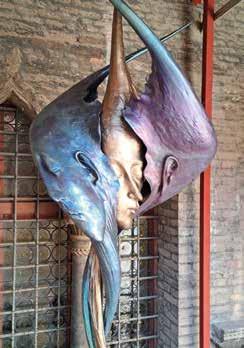
SCALA DEL BOVOLO
WALLACE CHAN Mythos
4 aprileApril–18 ottobreOctober San Marco 4303
COMPLESSO DELL’OSPEDALETTO FONDAZIONE IN BETWEEN ART FILM Canicula 6 maggioMay–22 novembreNovember Barbaria de le Tole, Castello 6691 inbetweenartfilm.com
ORATORIO DEI CROCIFERI
IEVA LYGNUGARYTĖ Carmen 1–31 maggioMay Campo dei Gesuiti, Cannaregio 4904 www.carmenbisontis.com
SCALA DEL BOVOLO
in minor keys
175 EUROPEAN CULTURAL CENTRE ITALY/3
PERSONAL STRUCTURES CONFLUENCES DIETMAR
BRIXY
Wanderlust
WHEN 13 settembre September11 ottobre October
L’artista tedesco Dietmar Brixy mostra nelle sue opere un panorama stratificato tra sogno e realtà, movimento e trasformazione. Il paesaggio funge da punto di partenza, non come rappresentazione della realtà esterna, ma come espressione di stati interiori. Linee dell’orizzonte, campiture di colore e strutture tettoniche aprono spazi pittorici in cui percezione, memoria e immaginazione si sovrappongono. L’uso intenso ed espressivo del colore con spessi strati di impasto, velature trasparenti e passaggi a vista crea superfici in cui il tempo rimane iscritto come una traccia.
ENG In his works, the German artist Dietmar Brixy unfolds a layered landscape suspended between dream and reality, movement and transformation. Landscape serves as a starting point – not as a representation of external reality, but as an expression of inner states. Horizon lines, planes of colour, and tectonic structures open pictorial spaces in which perception, memory, and imagination overlap. The intense and expressive use of colour – through thick layers of impasto, transparent glazes, and visible passages – creates surfaces in which time remains inscribed as a trace.
Palazzo Bembo, Riva del Carbon 4793 brixy.de
176 EUROPEAN CULTURAL
CENTRE ITALY/4
PERSONAL STRUCTURES CONFLUENCES DOM ART RESIDENCE –ACCEPTED WITHOUT REVIEW
Yiou Wang, Lilli Müller, Pablo Cazares, Quang-Dai Tran, Brenner-Havelka-Plessl, Agnes Hansella, Sandra Bejarano, Sonja Radakovic, Olaolu Senbanjo, Evgeny Granilshchikov
WHEN 9 maggio May-22 novembre November Il progetto presenta la prima Digital Residency di DOM Art Residence, riunendo dieci artisti internazionali le cui pratiche creative vengono trasmesse in diretta dai rispettivi studi. Allestita attorno a un container, metafora di sistemi e scambi, la mostra sostituisce l’opera finita con il processo in divenire, rendendo visibili fasi di lavoro, errori e trasformazioni. Le opere, progressivamente spedite e installate nello spazio, costruiscono un archivio in evoluzione da cui trapelano fiducia, tempo e pratica artistica.
ENG The project presents DOM Art Residence’s first Digital Residency, bringing together ten international artists whose creative processes are broadcast live from their respective studios. Positioned around a container, a metaphor for systems and exchanges, the exhibition replaces the finished work with the ongoing process, making stages of work, errors and transformations visible. Progressively shipped in and installed in the space, the work builds an evolving archive rich with trust, time and artistic practice.
Palazzo Bembo, Riva del Carbon San Marco 4793
www.domartresidence.com
177 FABRICA33
NICLAS CASTELLO La diabolica commedia: Prelude
WHEN 6 maggio May-11 novembre November
La Divina Commedia di Dante Alighieri è al centro dell’esplorazione pittorica dell’artista concettuale tedesco Niclas Castello (1978). Il progetto, sviluppato a partire dal 2022, comprende oltre 220 disegni che traducono il viaggio di Dante in un linguaggio visivo contemporaneo. Punto d’incontro tra letteratura, storia e arte visiva, le opere sono un’interpretazione profondamente personale della Divina Commedia e riflettono sul rapporto tra esperienza individuale e storia collettiva. Castello attinge alle sue esperienze passate e le plasma sulla tela.
ENG Dante Alighieri’s Divine Comedy is at the heart of the pictorial exploration of German conceptual artist Niclas Castello (b. 1978). The project, which began in 2022, comprises over 220 drawings that translate Dante’s journey into a contemporary visual language. A meeting point between literature, history and visual art, the works are a deeply personal interpretation of the Divine Comedy and reflect on the relationship between individual experience and collective history as Castello draws on his past experiences to shape them on the canvas.
Calle Larga dei Boteri, Cannaregio 5063 niclascastello.com
178 FONDAMENTA DEI PENINI THOM YORKE / STANLEY DONWOOD No Go Elevator (Not Without No Keycard)
WHEN 6 maggio May-7 giugno June
Disegni a inchiostro e un grande dipinto popolano di paesaggi inquietanti, figure isolate e strutture industriali minacciose un corpus interamente nuovo, senza tema unificante. Protagonisti sono Thom Yorke, frontman dei Radiohead, e Stanley Donwood, artista visivo con cui Yorke collabora dalla metà degli anni ‘90 – insieme hanno firmato alcune delle copertine più iconiche della storia del rock. Le parole hanno peso quanto le immagini: «guardare le parole è guardare metà dell’opera», avverte Donwood.
ENG Threatening industrial forms, an entirely new body of work with no unifying theme. The protagonists are Thom Yorke, frontman of Radiohead, and Stanley Donwood, the visual artist with whom Yorke has collaborated since the mid-1990s – together they have created some of the most iconic covers in the history of rock. Words carry as much weight as images: “looking at the words is looking at half the work,” Donwood warns.
Castello 2432
179 FONDATION VALMONT GAYLE CHONG KWAN, STEPHANIE BLAKE, KIMIKO YOSHIDA
Penelope - Her Journeys
WHEN 5 maggio May-31 gennaio January, 2027
Attraverso lo sguardo di tre artiste contemporanee il mito di Penelope viene riattivato come spazio di narrazione e riscrittura in cui la figura femminile assume una posizione attiva e consapevole, ridefinendo il proprio rapporto con storia, linguaggio e rappresentazione. Sottraendola dal modello tradizionale di attesa e obbedienza, Penelope diventa una tessitrice sovversiva, un’artista ante litteram che ha trasformato il telaio in arma di resistenza. Il gesto del tessere si fa allora strategia di costruzione del tempo e del sé, aprendo a una riflessione sul ruolo della donna.
ENG Through the eyes of three contemporary artists, the myth of Penelope is reinvented as a space for narration and rewriting, where the female figure takes an active and conscious role, redefining her relationship with history, language, and representation. By freeing her from her traditional attributes of patience and obedience, Penelope becomes a subversive weaver – an ante litteram artist who transformed the loom into a weapon of resistance. The act of weaving thus becomes a strategy of resistance and the construction of time that encourages reflection on the role of women. Palazzo Bonvicini, Calle de Ca’ Bonvicini Santa Croce 2161/A www.fondationvalmont.com
in minor keys
180 FONDAZIONE BEVILACQUA
LA MASA/1
PICASSO, MORANDI, PARMIGGIANI
Still Lifes
WHEN 7 maggio May-25 luglio July
Tre maestri della pittura moderna, tre approcci all’oggetto. A partire da una selezione estremamente ponderata, rigorosa ed essenziale di nature morte di Pablo Picasso (1881-1973), Giorgio Morandi (1890-1964) e Claudio Parmiggiani (1943, Luzzara, Reggio-Emilia), la mostra indaga il tema della rappresentazione tra osservazione e ricostruzione del reale attraverso la messa in scena dell’oggetto nell’atelier. Interrogativi sulla scomparsa e sull’assenza reinterpretano il concetto di Vanitas in chiave contemporanea.
ENG Three masters of modern painting, three approaches to the object. Beginning from an extremely rigorous and essential selection of still lifes by Pablo Picasso (1881-1973), Giorgio Morandi (1890-1964) and Claudio Parmiggiani (b. 1943, Luzzara, Reggio Emilia), the exhibition offers a reflection on the question of representation, somewhere between observation and the reconstruction of reality which begins with the staging of the object in the artist’s studio. Questions about disappearance and absence reinterpret the concept of Vanitas in a contemporary key.
Galleria di Piazza San Marco 71/C
181 FONDAZIONE BEVILACQUA LA MASA/2
GIANGIACOMO ROSSETTI
WHEN 4 maggio May-26 luglio July
La mostra, curata da Milovan Farronato, segna un passaggio nella pratica di Giangiacomo Rossetti, il quale per la prima volta misura il proprio linguaggio figurativo su una scala più ampia. La pittura, finora radicata in una dimensione intima e relazionale, si apre a un campo in cui elementi fisici, astratti, reali e immaginati si sovrappongono. Il blu, già presente nei lavori precedenti, diventa il terreno in cui queste dimensioni entrano in relazione, costruendo uno spazio pittorico instabile e rarefatto.
ENG Curated by Milovan Farronato, the exhibition marks a turning point in Giangiacomo Rossetti’s practice: for the first time, the artist engages with a larger scale and an extension of his figurative language. Painting, until now rooted in an intimate and relational dimension, opens up to a broader field where physical, abstract, real and imagined elements overlap. Already present in previous works, blue becomes the field in which these dimensions interrelate, constructing an unstable and rarefied pictorial space. Palazzetto Tito, Dorsoduro 2826 www.bevilacqualamasa.it
182 FONDAZIONE BEVILACQUA
LA MASA/3
108ma COLLETTIVA GIOVANI ARTISTI
Creart 3.0
WHEN 5 maggio May-28 giugno June
La 108ma Collettiva Giovani Artisti raccoglie una selezione di 46 opere di 37 artisti under 30 attivi nel Triveneto, selezionati tramite una call aperta ai diversi linguaggi del contemporaneo, dalla pittura alla performance. La mostra offre uno spaccato delle ricerche più recenti, affiancando alla dimensione espositiva un percorso che coinvolge gli artisti nelle diverse fasi di produzione e presentazione del lavoro, configurandosi al contempo come esperienza formativa e confronto con il sistema professionale dell’arte.
ENG The 108th Young Artists Group Exhibition presents a selection of 46 works by 37 artists under the age of 30 active in the Triveneto region, selected through an open call for works exploring various contemporary media, from painting to performance. The exhibition offers a snapshot of the most recent work, combining the exhibition with a journey that engages the artists in the various stages of production and presentation of their work, simultaneously offering an educational experience and a window into the professional art world. Sala del Camino, Complesso dei SS. Cosma e Damiano, Giudecca www.bevilacqualamasa.it
183 FONDAZIONE DELL’ALBERO D’ORO
PATRICK SAYTOUR
Le pli et le temps / La piega e il tempo
WHEN 18 aprile April-22 novembre November La prima mostra in Italia dedicata a Patrick Saytour, a cura di Daniela Ferretti, mette in scena una ricerca fatta di pieghe, tagli, bruciature, strappi e superfici instabili. Figura di spicco di Supports/Surfaces, l’artista francese costruisce un lessico materico in dialogo con gli spazi storici di Palazzo Vendramin Grimani e con l’opera di Piero Manzoni. Due visioni opposte e complementari che si riflettono e si scompongono nell’anima mutevole della città lagunare.
ENG Curated by Daniela Ferretti, the first exhibition in Italy dedicated to Patrick Saytour showcases a practice involving folds, cuts, burns, tears and unstable surfaces. A leading figure in Supports/Surfaces, the French artist constructs a material lexicon that dialogues with the historic spaces of the palazzo and the work of Piero Manzoni. Two opposing yet complementary visions that reflect and disintegrate in the ever-changing soul of the lagoon city.
Palazzo Vendramin Grimani, San Polo 2033 www.fondazionealberodoro.org
184 FONDAZIONE DI VENEZIA
GIANNI BERENGO GARDIN
La Venezia del Maestro del bianco e nero
WHEN Fino Until 30 giugno June
Nei toni di un bianco e nero terso e puro che, nella sua semplice essenzialità, nulla concede ai facili e banali sentimentalismi, le fotografie di Venezia di Berengo Gardin fanno della città lagunare il teatro del mondo. Il tutto con partecipazione, umorismo e grande poesia. La storia raccontata dalle sue immagini si snoda in un mondo fatto di volti, gesti, paesaggi, architetture, eventi quotidiani nel quale il fluire del tempo sembra cristallizzarsi. In mostra tornano ad animarsi luoghi e situazioni in parte immutati nei secoli, in parte profondamente trasformati nel loro vissuto, nei loro costumi.
ENG In crisp, pure black and white, whose simplicity leaves no room for facile and banal sentimentality, BerengoGardin’s photographs of Venice transform the lagoon city into the world’s theatre with compassion, humourand profound poetry. The story his images tell unfolds in a world of faces, gestures, landscapes, architecture and everyday events where the flow of time seems to stand still. The exhibition brings to life places and situations, some unchanged over the centuries, others profoundly transformed in their form and customs. Palazzo Flangini, Cannaregio 252 www.fondazionedivenezia.org
in minor keys
185 FONDAZIONE
DRIES VAN NOTEN
THE ONLY TRUE PROTEST IS BEAUTY
WHEN 25 Aprile April-4 ottobre October
Un’esplorazione della bellezza intesa come incontro intenso, capace di sconvolgere ciò che ci è familiare e di aprire spazio all’imprevisto. A Palazzo Pisani Moretta apre la nuovissima Fondazione Dries Van Noten con una esposizione di oltre duecento oggetti – tra moda, gioielli, vetro e fotografia – che esplorano l’artigianato come veicolo di emozioni. Superando i confini tradizionali, oggetti unici rivelano la dimensione umana del fare. Qui la creazione diventa un metodo di indagine, un’esperienza di scambio, un campo di possibilità.
ENG An exploration of beauty as a charged encounter, capable of unsettling the familiar and making space for the unexpected. At Palazzo Pisani Moretta, over two hundred objects, spanning fashion, jewelry, glass, and photography, explore craftsmanship as a conduit for emotion. Moving beyond traditional boundaries, they reveal the human dimension of making. Here, creation becomes a practice of questioning, an experience of exchange, a field of possibility.
Palazzo Pisani Moretta, San Polo 2766 fondazionedriesvannoten.org
186 FONDAZIONE GÜNE S ¸ TEKIN
AHMET GÜNES¸TEKIN
Sessizlik / Silenzio / Silence
WHEN 6 maggio May-1 novembre November
Palazzo Gradenigo, sede della Fondazione Günes ¸ tekin, apre le sue stanze appena restaurate con un percorso espositivo che affianca undici sculture site-specific e altrettanti dipinti dell’artista Ahmet Günes ¸ tekin sul tema del silenzio come condizione imposta e al contempo spazio di ascolto. Le figure in bronzo, in parte ispirate agli operai coinvolti nel restauro, e i dipinti costruiti attorno a porte anatoliche, che combinano simboli del Mediterraneo e della Mesopotamia, intessono un racconto visivo intenso sulla cancellazione delle culture e la convivenza tra identità diverse.
ENG Palazzo Gradenigo, home of the Günes¸tekin Foundation, opens its newly restored rooms with an exhibition featuring eleven sitespecific sculptures and eleven paintings by artist Ahmet Günes¸tekin, exploring the theme of silence as both an imposed condition and a space for listening. The bronze figures, partly inspired by the workers involved in the restoration, and the paintings constructed around Anatolian gates which combine symbols from the Mediterranean and Mesopotamia, form a powerful visual narrative about the erasure of cultures and the coexistence of diverse identities.
Palazzo Gradenigo, Campo Santa Giustina Castello 2838 www.ahmetgunestekin.com
187 FONDAZIONE IN BETWEEN ART FILM
CANICULA
WHEN 6 maggio May-22 novembre November
Terzo capitolo della “Trilogia delle incertezze” promossa da Fondazione In Between Art Film – dopo Penumbra (2022) e Nebula (2024), ciascuna ispirata a un fenomeno atmosferico come strumento per esplorare le condizioni della visione e le loro associazioni metaforiche con l’azione umana – Canicula trasforma il Complesso dell’Ospedaletto in un’architettura cinematografica. La mostra presenta otto nuove opere site-specific di Lawrence Abu Hamdan, Massimo D’Anolfi e Martina Parenti, Roman Khimei e Yarema Malashchuk, Janis Rafa, P. Staff, Wang Tuo, Yuyan Wang e Maya Watanabe.
ENG The third instalment in the “Trilogy of Uncertainties” promoted by the ‘In Between’ Art Film Foundation: after Penumbra (2022) and Nebula (2024), Canicula transforms the Ospedaletto Complex into cinematic architecture with exhibitions inspired by various atmospheric phenomena, adopted as a tool to explore the conditions of vision and their metaphorical associations with human action. Canicula presents eight new site-specific works by Lawrence Abu Hamdan, Massimo D’Anolfi and Martina Parenti, Roman Khimei and Yarema Malashchuk, Janis Rafa, P. Staff, Wang Tuo, Yuyan Wang and Maya Watanabe. Complesso dell’Ospedaletto Barbaria de le Tole, Castello 6691 inbetweenartfilm.com
188 FONDAZIONE PRADA
ARTHUR JAFA and RICHARD PRINCE Helter Skelter
WHEN 9 maggio May-23 novembre November
Un dialogo creativo finora inesplorato: Arthur Jafa (1960) in relazione con Richard Prince (1949). Nati a dieci anni di distanza, i due artisti condividono un approccio radicale nei confronti dell’appropriazione e della manipolazione di immagini provenienti dalla cultura popolare americana. Entrambi tracciano delle topografie specifiche degli Stati Uniti: se Jafa riflette sulla sua identità di uomo afroamericano con la missione di rafforzare il cinema e l’arte black, Prince oscilla tra una critica lucida della mascolinità bianca e il fascino per il lato oscuro della psiche americana.
ENG A previously unexplored creative dialogue: Arthur Jafa (b. 1960) and Richard Prince (b. 1949). Born ten years apart, the two artists share a radical approach to the appropriation and manipulation of images from American popular culture. Both trace specific topographies of the United States: while Jafa
reflects on his identity as an African-American man with a mission to strengthen Black cinema and art, Prince oscillates between a lucid critique of white masculinity and a fascination with the dark side of the American psyche.
Ca’ Corner della Regina, Santa Croce 2215 www.fondazioneprada.org
189 FONDAZIONE QUERINI STAMPALIA/1
THE DREAMER
WHEN Da From 5 maggio May
La mostra The Dreamer, concepita come una serie di set o scene cinematografiche che si dispiegano nelle sale del museo tra realtà e immaginazione, invita il visitatore a diventare spettatore e insieme regista, montando un proprio racconto tra frammenti, visioni e memorie. Il percorso mette in tensione unità e discontinuità, aprendo a una narrazione polifonica e non lineare. Al centro, il sogno agisce come dispositivo attivo che ridefinisce l’opera d’arte. Tra suoni, immagini e opere d’arte della Collezione, la figura di Giovanni Querini si ricompone per scarti e riflessi, come un montaggio interiore che chiama in causa chi guarda.
ENG The exhibition is conceived as a series of cinematic sets or scenes that unfold through the museum’s rooms between reality and imagination, inviting visitors to become at once spectator and director, assembling their own narrative from fragments, visions, and memories. The journey holds unity and discontinuity in tension, opening onto a polyphonic and non-linear narration. At its core, the dream operates as an active device that redefines the work of art. Through sounds, images, and works from the Collection, the figure of Giovanni Querini emerges through gaps and reflections, like an inner edit that implicates the viewer.
Museo, Campo Santa Maria Formosa Castello 5252 www.querinistampalia.org
190 FONDAZIONE QUERINI STAMPALIA/2
DING YI
Cosmotechnics: Ding Yi as Planetary Code
WHEN 9 maggio May-22 novembre November Cosmotechnics – concetto mutuato dal filosofo Yuk Hui – dà il titolo a una mostra che ripercorre l’evoluzione del linguaggio astratto di Ding Yi. Le opere trasformano l’Area Scarpa in una foresta contemplativa in cui le immagini funzionano come un codice planetario e la loro disposizione crea un percorso sinuoso che richiama i tradizionali giardini cinesi. In dialogo con Scarpa, Ding Yi traccia una logica costruttiva in cui pittura, scultura e architettura convergono formando una grammatica di soglie in sintonia con Venezia.
ENG The exhibition traces the evolution of Ding Yi’s abstract language. Titled Cosmotechnics – a concept borrowed from philosopher Yuk Hui – the pieces transform the Scarpa Area into a contemplative forest of images where they function as a planetary code and their arrangement creates a sinuous path reminiscent of traditional Chinese gardens. Ding Yi dialogues with Scarpa to create a constructive logic where painting, sculpture and architecture converge to form a grammar of thresholds that resonates with Venice itself.
Area Scarpa, Campo Santa Maria Formosa, Castello 5252 www.lissongallery.com www.querinistampalia.org
191 FONDAZIONE QUERINI STAMPALIA/3 NIGEL COOKE
Bad Habits
WHEN 5 maggio May22 novembre November Prima personale in Italia dell’artista britannico Nigel Cooke, che dalla prossima primavera sarà in residenza alla Fondazione Querini Stampalia. Profondamente radicato nella storia della pittura, Cooke riveste un ruolo di rilievo nello sviluppo dell’arte contemporanea britannica e appartiene oggi alla tradizione di quegli artisti che hanno trovato a Venezia una fonte di ispirazione creativa. Attraverso segni astratti, le sue opere tracciano pattern continui in cui passato e presente, personale e collettivo, si riflettono e si fondono, sospesi in una delicata e vibrante incertezza.
ENG The first Italian solo exhibition of British artist Nigel Cooke, who from next spring will be in residence at the Fondazione Querini Stampalia. Deeply rooted in the history of painting, Cooke plays a key role in the development of British contemporary art and belongs to the tradition of artists who have found a source of creative inspiration in Venice. Through his abstract markings, his work traces continuous patterns in which past and present and personal and collective are reflected and intertwined, suspended in a delicate and vibrant uncertainty.
Portego Biblioteca, Campo Santa Maria Formosa, Castello 5252 www.pacegallery.com www.querinistampalia.org
192 FONDAZIONE QUERINI STAMPALIA/4
THE INVISIBLE CORD. HANS HARTUNG AND THE MUSIC
WHEN 5 maggio May-13 settembre September
Riunendo quasi ottanta dipinti, documenti e strumenti di lavoro, la mostra esplora il ruolo centrale del suono nell’universo plastico ed esistenziale di Hans Hartung, ballerino e pianista di talento in gioventù, ossessivamente devoto alla musica. Da Bach ai Pink Floyd, passando per compositori come Lili Boulanger, un paesaggio di energie, gesti e risonanze attraversa tutta la sua opera. I suoi dipinti sono permeati da un clima sonoro di ritmi, armonie ed esplosioni vocali o strumentali che, sebbene silenziosi, secernono flussi melodici nelle loro stesse fibre.
ENG Bringing together nearly 80 paintings, documents and work tools, the exhibition explores the central role of sound in the visual and existential universe of Hans Hartung, a talented dancer and pianist in his youth and obsessive devotee of music. From Bach to Pink Floyd via composers like Lili Boulanger, a landscape of energies, movement and resonance permeates his entire oeuvre. His paintings are imbued with a sonic climate of vocal or instrumental rhythms, harmonies and explosions, which, though silent, secrete melodic flows from their very fibres.
Terzo piano, Campo Santa Maria Formosa Castello 5252 www.perrotin.com | www.querinistampalia.org
193 GALERIE NEGROPONTES UN REGARD SUR BRANCUSI, VENISE
WHEN 26 marzo March-18 dicembre December
Un’interpretazione originale e contemporanea dell’eredità di Brancusi attraverso un dialogo tra fotografia e scultura. La mostra ruota attorno alle fotografie di opere di Brancusi realizzate da Dan Er. Grigorescu accostate a creazioni di artisti contemporanei rappresentati dalla Galleria. Questo dialogo rivela la natura duratura di un approccio scultoreo basato sulla purezza, sulla tensione delle forme e sul rapporto con la materia e lo spazio: temi che permeano l’opera di Brancusi e continuano a influenzare l’arte contemporanea.
ENG A surprising and contemporary interpretation of Brancusi’s legacy through a dialogue between photography and sculpture. The exhibition revolves around photographs of Brancusi’s works by Dan Er. Grigorescu, juxtaposed with creations by contemporary artists represented by the Gallery. This dialogue reveals the enduring nature of a sculptural approach based on purity, the tension of forms and the relationship between material and space: themes that permeate Brancusi’s work and continue to influence contemporary art. Palazzina Masieri, Dorsoduro 3900 negropontes-galerie.com
194 GALLERIA 200C
TIM PARCHIKOV
I’m not taking part in it
WHEN 8 maggio May-20 settembre September
Otto specchi con scritte al neon integrate compongono l’installazione site-specific di Parchikov, curata da Olga Strada, in un dispositivo capace di coinvolgere direttamente il pubblico. Riflessi e intersezioni visive interrogano il rapporto tra immagine individuale e responsabilità collettiva, trasformando il gesto dello specchiarsi in una presa di posizione rispetto al presente. Il lavoro si inserisce nella più ampia ricerca dell’artista, caratterizzata da un’estetica della tensione che connette percezione, realtà e implicazione etica.
ENG Curated by Olga Strada, Parchikov’s new site-specific work consists of eight mirrors with integrated neon signs, creating an installation capable of engaging directly with the audience. Through reflections and visual intersections, the piece questions the relationship between individual image and collective responsibility, transforming the act of looking in the mirror into a standpoint on the present. The work continues the artist’s practice, which is characterised by an aesthetic of tension that connects perception, reality and ethical implications.
Fondamenta San Giacomo, Giudecca 200/C www.galleria200cgiudecca.com
195 GALLERIA ALBERTA PANE
THE
MATERIALITY OF JUDY CHICAGO
WHEN 8 maggio May-22 novembre November
Figura pionieristica dell’arte femminista, Judy Chicago ha costantemente sfidato le gerarchie artistiche abbracciando tecniche storicamente liquidate come “artigianato” – dai cofani delle auto verniciati a spruzzo ai piatti di porcellana, fino al ricamo e alla lavorazione del vetro – per ampliare le pratiche artistiche femministe e concettuali. Dalle serie più significative della sua carriera alle opere più recenti, la mostra traccia un arco che valorizza la propria convinzione di quanto e come l’arte rappresenti un veicolo nodale sul terreno della trasformazione intellettuale e del cambiamento sociale.
ENG A pioneering figure in feminist art, Judy Chicago has consistently challenged artistic hierarchies, embracing techniques historically dismissed as “craftsmanship” – from spray-painted car hoods and porcelain plates to embroidery and glass – to broaden feminist and conceptual art practices. The exhibition passes through some of her career’s most significant series and extends to her most recent works, charting a path that underscores her belief that art is a vehicle for intellectual transformation and social change.
Calle dei Guardiani, Dorsoduro 2403/H albertapane.com
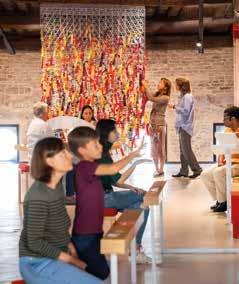
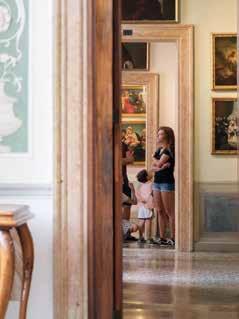
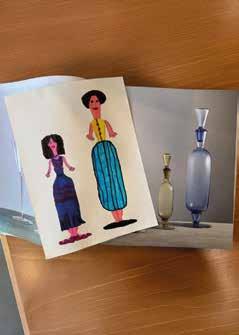


in minor keys
196 GALLERIA D’ARTE L’OCCHIO
TOBIA RAVÀ Palpiti notturni
WHEN 26 aprile April-10 giugno June
Attraverso dipinti, rasi, allumini e sculture, Ravà sviluppa una ricerca che intreccia figurazione e struttura numerico-linguistica, costruendo immagini mediante lettere e numeri secondo principi legati alla ghematria ebraica. La forma ricorrente del tondo organizza lo spazio come dispositivo simbolico, alludendo a un’idea di totalità e continuità. Paesaggi e volti affiorano da superfici dense e stratificate, in cui segno, simbolo e rappresentazione si sovrappongono, aprendo una meditazione sul tempo e sulla possibilità di rintracciare, dentro la complessità del presente, un ordine nascosto.
ENG Through paintings, silks, aluminiums, and sculptures, Ravà develops a practice that interweaves figuration and numerical-linguistic structure, building images from letters and numbers according to principles drawn from Jewish gematria The recurring form of the tondo organises space as a symbolic device, alluding to an idea of totality and continuity. Landscapes and faces emerge from dense, layered surfaces in which sign, symbol, and representation overlap, opening a meditation on time and on the possibility of tracing a hidden order within the complexity of the present.
Dorsoduro 181-185 www.gallerialocchio.it
197 GALLERIE DELL’ACCADEMIA
MARINA ABRAMOVIC ´
Transforming Energy
WHEN 6 maggio May-19 ottobre October
La mostra celebra l’ottantesimo compleanno di Marina Abramovic´ tra passato e presente, materiale e immateriale, corpo e spirito. In profondo dialogo tra la sua pionieristica arte performativa e i capolavori rinascimentali delle Gallerie, l’artista invita a una forma di osservazione “prolungata”, meno passiva e più orientata alla presenza, alla partecipazione e alla possibilità di un cambiamento interiore. Opere iconiche come Imponderabilia (1977), Rhythm 0 (1974), Light/Dark (1977), Balkan Baroque (1997) e Carrying the Skeleton (2008) si affiancano a proiezioni di performance storiche e a nuove creazioni.
ENG An exhibition celebrating Marina Abramovic´’s 80th birthday that spans past and present, material and immaterial and body and spirit. In an intense dialogue between her pioneering performance art and the gallery’s Renaissance masterpieces, the artist invites a form of “prolonged” observation, less passive and more oriented toward presence, participation and the possibility of internal transformation. Iconic works such as Imponderabilia (1977), Rhythm 0 (1974), Light/Dark (1977), Balkan Baroque (1997) and Carrying the Skeleton (2008) are displayed alongside screenings of historic performances and new creations. Campo della Carità, Dorsoduro 1050 www.gallerieaccademia.it
198 GALLERIA DI PALAZZO CINI DAVID SALLE
Present-Tense Painting
WHEN 5 maggio May-27 settembre September
David Salle ripropone un modello di intelligenza artificiale progettato su misura per una serie di opere precedenti, i Tapestry Paintings (199092). In questo modo mette in evidenza la capacità della pittura di far convergere più realtà temporali su un unico piano. I Tapestry Paintings originali sono basati su arazzi russi del XVIII secolo, a loro volta ispirati a dipinti italiani del XVI e XVII secolo. Questa stratificazione di storia dell’arte si confronta con il modello di intelligenza artificiale ideato da Salle su cui l’artista compone le sue distintive giustapposizioni poetiche.
ENG David Salle refocuses a custom-designed artificial intelligence model on a series of earlier works, the Tapestry Paintings (199092). In doing so, he highlights painting’s ability to collapse multiple temporal realities onto a single plane. The original Tapestry Paintings are based on 18th-century Russian tapestries, which in turn were inspired by 16th- and 17thcentury Italian paintings. This layering of art history now encounters Salle’s artificial intelligence model, which the artist uses to compose his distinctive poetic juxtapositions. Palazzo Cini, Campo San Vio Dorsoduro 864 www.palazzocini.it
199 GARIBALDI GALLERY
LAURA MEGA DANIEL PEŠTA
Where My Soul
Compiles
WHEN 6 maggio May-22 novembre November Installazioni tessili imbottite e ricamate di Laura Mega si affiancano ai dipinti di Daniel Pešta che indagano la sublimazione come meccanismo capace di trasformare tensioni interiori in forme espressive. Il titolo evoca la compilazione del codice come metafora dell’anima che si assembla e trova forma, esplorando un luogo, reale o metaforico, in cui l’esperienza interiore si raccoglie lungo una linea di tensione tra dolore e consolazione, interiorità e sfera pubblica. ENG Padded and embroidered textile installations by Laura Mega are placed alongside paintings by Daniel Pešta that investigate sublimation as a mechanism capable of transforming inner tensions into expressive forms. The title evokes the compilation of code as a metaphor for the soul assembling itself and finding form, exploring a place – real or metaphorical – in which inner experience gathers along a line of tension between pain and consolation, interiority and the public sphere.
Via Giuseppe Garibaldi, Castello 1815
200 HOTEL METROPOLE
CHRISTOPHER BUCKLOW Guests
WHEN Fino Until 22 novembre November
Christopher Bucklow presenta un ciclo di lavori fotografici sviluppati a partire dalla sua esperienza veneziana. Realizzate con un processo affine alla camera oscura, le opere utilizzano la luce solare per imprimere immagini generate da migliaia di micro-perforazioni dalle quali emergono figure instabili, generate da costellazioni luminose in continua variazione. La superficie fotografica diventa così un campo sensibile alla luce e al tempo, in cui l’immagine si forma come evento e le figure si collocano tra percezione e dimensione interiore.
ENG Christopher Bucklow presents a series of photographic works developed from his experience in Venice. Created through a process similar to the camera obscura, the pieces use sunlight to imprint images constructed from thousands of microperforations, from which unstable figures emerge, generated by ever-changing constellations of light. The photographic surface thus becomes a space sensitive to light and time where the image forms as an event and the figures are positioned between perception and the interior dimension.
Riva degli Schiavoni, Castello 4149 www.hotelmetropole.com
201 IKONA
PHOTO GALLERY
FERDINANDO SCIANNA
Il Ghetto di Venezia
WHEN 31 maggio May-22 novembre November Il Ghetto di Venezia nello sguardo unico ed emozionante di uno dei più importanti fotografi viventi. Con il suo obiettivo Ferdinando Scianna racconta come questa comunità, dopo più di 500 anni, mantenga ancora vivo il proprio patrimonio artistico e culturale. Dal giorno alla notte, il fotografo cattura un susseguirsi di scene e di spazi; anche là dove lo scatto comprende figure singole, c’è sempre il gran teatro del mondo.
ENG The Venetian Ghetto, seen through the unique and thrilling gaze of one of the most important living photographers. Through his lens, Ferdinando Scianna recounts how, after more than 500 years, this community still maintains its artistic and cultural heritage. From day to night, the photographer captures a succession of scenes and spaces, and even in shots which focus on individual figures the grand theatre of the world is always present.
Campo del Ghetto Nuovo Cannaregio 2909
www.ikonavenezia.com
in minor keys
202 ISOLA DI SAN GIACOMO FONDAZIONE SANDRETTO RE REBAUDENGO
MATT COPSON
Fanfare/Lament. Don’t have hope, be
hope!
WHEN Da From 7 maggio May
Con la sua nuova sede, la terza, la Fondazione Sandretto Re Rebaudengo rafforza il proprio impegno nella promozione dell’arte contemporanea dando vita a uno spazio aperto alla produzione, alla ricerca e al dialogo tra artisti. Un ampio programma alterna mostre, performance e installazioni site-specific. Tra queste Fanfare/ Lament, personale di Matt Copson a cura di Hans Ulrich Obrist che unisce esposizione e performance con musiche composte da Oliver Leith, e Don’t have hope, be hope!, una selezione di opere della stessa Collezione Sandretto Re Rebaudengo.
ENG With its new venue – its third –the Fondazione Sandretto Re Rebaudengo strengthens its commitment to promoting contemporary art and creates a space for production, research and experimentation which is open to dialogue between artists. A comprehensive exhibition programme intertwines shows, performances and site-specific installations, including Fanfare/Lament, a solo exhibition by artist Matt Copson, curated by Hans Ulrich Obrist, which combines exhibition and performance with music composed by Oliver Leith, and Don’t have hope, be hope!, presenting a selection of works from the Sandretto Re Rebaudengo Collection. Isola di San Giacomo fsrr.org
203 ISOLA DI
SAN GIORGIO/1 ABBAZIA DI SAN GIORGIO MAGGIORE
BARRY X BALL
The Shape of Time
WHEN 9 maggio May-22 novembre November
Retrospettiva dedicata alla pratica scultorea dell’artista Barry X Ball (1955, Pasadena, California, vive e lavora a New York), che rilegge attraverso un approccio audace e innovativo il capolavoro architettonico di Andrea Palladio, l’Abbazia di San Giorgio Maggiore, fondendo tecnologie digitali avanzate e artigianato tradizionale. Nuovi materiali e forme rinnovate reinterpretano i capolavori rinascimentali dell’Abbazia: ventitré opere, appartenenti a cinque serie distinte, ridefiniscono i confini della scultura contemporanea, riaffermando al contempo il rapporto tra arte, patrimonio e spiritualità. ENG A retrospective dedicated to the sculptural practice of artist Barry X Ball (b. 1955, Pasadena, California, living and work-
ing in New York). Through a bold, innovative approach he reinterprets Andrea Palladio’s architectural masterpiece, the Abbey of San Giorgio Maggiore, blending advanced digital technologies with traditional craftsmanship. New materials and renewed forms reinterpret the Abbey’s Renaissance masterpieces: 23 pieces from five distinct series redefine the boundaries of contemporary sculpture while reaffirming the relationship between art, heritage and spirituality.
Basilica di San Giorgio Isola di San Giorgio Maggiore www.abbaziasangiorgio.it www.barryxball.com
204 ISOLA DI SAN GIORGIO/2 FONDAZIONE GIORGIO CINI
HOW TO REACH THE SKY
WHEN Fino Until 12 luglio July
Attraverso una grande installazione di sculture, animazioni, dipinti, film, fotografie e happening, i due artisti Barbora Šlapetová e Lukáš Rittstein raccontano la storia, straordinaria e magica, dell’incontro tra due mondi: una crew di astronauti della NASA e una comunità del popolo Yali Mek della West Papua. Due mondi lontani, uno a terra e uno in cielo, uno immerso nella ipertecnologia e l’altro radicato ai suoi saperi ancestrali. Eppure uniti da una esperienza: volare. Il progetto traduce artisticamente un immaginario ancora autentico, non contaminato dalla globalizzazione.
ENG Through a large installation of sculptures, animations, paintings, films, photographs, and happenings, the two artists Barbora Šlapetová and Lukáš Rittstein tell the extraordinary and magical story of an encounter between two worlds: a NASA astronaut crew and a community of the Yali Mek people of West Papua. Two distant worlds – one on the ground and one in the sky, one immersed in hyper-technology and the other rooted in ancestral knowledge – yet united by a shared experience: flight. The project gives artistic form to an imaginary that remains authentic, untouched by globalisation.
Ex Piscina Gandini
Isola di San Giorgio Maggiore www.cini.it
205 ISOLA DI SAN GIORGIO/3 FONDAZIONE GIORGIO CINI
GEORG BASELITZ Eroi d’Oro
WHEN 5 maggio May- 27 settembre September
Dipinti di grandi dimensioni – la serie più recente realizzata dall’artista tedesco Georg Baselitz (1938, Kamenz) – mostrano corpi che giacciono nudi su sfondi piani dorati, senza alcuna illusione di profondità, come se fluttuassero sulle proprie superfici. Realizzati con vernice nera diluita, che ricorda l’inchiostro, questi ritratti spettrali dalle linee nette richiamano i dipinti di Hokusai e la calligrafia giapponese. Mai prima d’ora i dipinti di Baselitz avevano mostrato una somiglianza così diretta con la pittura iconografica.
ENG The most recent series of largescale paintings by German artist Georg Baselitz (b. 1938, Kamenz) show bodies lying naked against flat, golden backgrounds without any illusion of depth, as though floating above their surfaces. Made with diluted black paint reminiscent of ink, these ghostly portraits executed with sharp lines recall the paintings of Hokusai and Japanese calligraphy. Never before have Baselitz’s paintings borne such a direct resemblance to iconographic painting.
Sala Carnelutti
Isola di San Giorgio Maggiore www.cini.it | ropac.net
206 ISOLA DI SAN GIORGIO/4 LE STANZE DEL VETRO
1948-1958 IL VETRO
DI MURANO E LA BIENNALE DI VENEZIA
WHEN Fino Until 22 novembre November
Terzo capitolo dedicato da Le Stanze del Vetro alla storia del vetro muranese alla Biennale di Venezia. Nel decennio che va dal 1948 al 1958, ovvero dalla ripresa dell’attività della Biennale dopo la fine della Seconda Guerra mondiale fino a tutti gli anni Cinquanta (dalla XXIV alla XXIX edizione), le mostre del vetro, ospitate all’interno del Padiglione Venezia, testimoniarono la rinnovata vitalità della produzione muranese attraverso i lavori di alcune vetrerie “storiche”, di altre di recente costituzione, nonché di alcuni artisti che parteciparono a titolo personale.
ENG The third chapter in Le Stanze del Vetro’s exploration of Murano glass at the Venice Biennale focuses on the decade from 1948 to 1958, spanning the revival of the Biennale after the Second World War through the entire 1950s (from the 24th to the 29th edition). During these years, the glass exhibitions held in the Venice Pavilion reflected the renewed vitality of Murano production, featuring works by historic glasshouses, newly established furnaces, and indipendent artists.
Isola di San Giorgio Maggiore lestanzedelvetro.org
HARNESSED FROM NATURE Calle delle Acque, San Marco 5016
KANTOR (1915-1990). EMBALLAGE, CRICOTAGE JAREMA
Piazza San Marco 139 – 153/A
COSMOTECHNICS: DING YI AS A PLANETARY CODE
Stampalia, Campiello Santa Maria 5252
CHORD. HANS HARTUNG AND MUSIC
Stampalia, Campiello Santa Maria 5252 BAD HABITS
Stampalia, Campiello Santa Maria 5252
BLUE, I’M SWEPT AWAY
NATIONAL PAVILION 5063
REBOUL
Campo San Zaccaria, Castello 4693
FREEDOM
Campo San Zaccaria, Castello 4693
NATURE | MANYONGA
NATIONAL PAVILION
della Pietà, Calle della Pietà, Castello 3702
/ WALES IN VENICE PRESENTS AWST ANDDYLAN HUW
della Pietà, Calle della Pietà, Castello 3703
HYPERSTITION NATIONAL PAVILION
Militare, Fondamenta Case Nuove, Castello
NATIONAL PAVILION
Militare , Fondamenta Case Nuove, Castello
SPARKLE; EXPERIMENTS IN LOVE REVOLUTION PAVILION
NATIONAL PAVILION
Castello 1636/A
VENICE: BUGARIN + CASTLE
65/A
OFFICIAL. UNOFFICIAL. BELARUS. Collateral Event
Organised by: Belarus Free Theatre
Chiesa di San Giovanni Evangelista, San Polo 2454
SHY SOCIETY
Organised by: Studio DRIFT
Site-specific kinetic light installation on the façade of Palazzo Balbi
A SELECTION OF WORKS BY PERROTIN’S ARTISTS ON VIEW DURING THE VENICE BIENNALE
Organised by: Perrotin and Nolinski Venezia Nolinski Venezia, Calle Larga XXII Marzo, San Marco 2032
VIETNAM: ART IN THE GLOBAL FLOW
VIETNAM NATIONAL PAVILION
Ca’ Faccanon, Calle delle Acque, San Marco 5016
SHIM MOON-SEUP, HARNESSED FROM NATURE
Organised by: Shim Moon-Seup Art and Culture Foundation
Ca’ Faccanon, Calle delle Acque, San Marco 5016
TADEUSZ KANTOR (1915-1990). EMBALLAGE, CRICOTAGE AND MADAME JAREMA
Collateral Event
Organised by: Starak Family Foundation
Procuratie Vecchie, Piazza San Marco
139 – 153/A
Maria Formosa, Castello 525
NIGEL COOKE: BAD HABITS
Organised by: Pace Gallery Fondazione Querini Stampalia, Campiello Santa Maria Formosa, Castello 5252
OUT OF THE BLUE, I’M SWEPT AWAY MONTENEGRO NATIONAL PAVILION Artenova, Castello 5063
FRANÇOIS REBOUL
BEYOND CHAOS
Organised by: Joan Porcel Studio
San Vidal Space, Campo San Zaccaria, Castello 4693
FROM CHAOS TO FREEDOM
Organised by: Joan Porcel Studio San Vidal Space, Campo San Zaccaria, Castello 4693
SECOND NATURE | MANYONGA
ZIMBABWE NATIONAL PAVILION
Istituto Santa Maria della Pietà, Calle della Pietà, Castello 3702
CYMRU YN FENIS / WALES IN VENICE PRESENTS
SOWND: MANON AWST ANDDYLAN HUW
Collateral Event
Organised by: Arts Council of Wales
Istituto Santa Maria della Pietà, Calle della Pietà, Castello 3703
TROPICAL HYPERSTITION
PANAMA NATIONAL PAVILION
Tesa 42, Arsenale Militare, Fondamenta Case Nuove, Castello 2738/C
ECUADOR NATIONAL PAVILION Castello Gallery, Castello 1636/A
SCOTLAND + VENICE: BUGARIN + CASTLE Organised by: Scotland + Venice Collateral Event Olivolo, Castello 65/A
Art Events works behind the scenes of some of the most compelling happenings across Venice and Milan, developing and producing tailor-made exhibitions and cultural events.
With a strong presence throughout Italy, the company brings together specialized expertise in venue scouting, event production and cultural project development, grounded in over a decade of experience with complex and high-profile initiatives. Each project begins with careful listening, combining strategic thinking with local knowledge, creative solutions and cultural sensitivity.
| Milan art-events.it
Illustrations by PAOLA MOMENTÈ
Illustration by Paola Momentè
in minor keys
207 ISOLA DI SAN GIORGIO/5
LE STANZE DELLA FOTOGRAFIA
HORST P. HORST
La Geometria della Grazia
WHEN Fino Until 5 luglio July
Un dialogo sotterraneo tra memoria e contemporaneità: le fotografie di Horst P. Horst (1906, Weißenfels-an-der-Saale-1999, Florida), che hanno attraversato il Novecento, arrivano dirette al contemporaneo vibranti, assolute, modernissime. La mostra costruisce una rilettura trasversale dell’opera di Horst P. Horst articolata in oltre 400 lavori: stampe vintage originali si intrecciano a materiali d’archivio e documenti inediti accanto a proiezioni e slideshow. Un universo creativo multiforme, tenuto insieme da una coerenza interna sorprendentemente rigorosa.
ENG A subterranean dialogue between memory and modernity: the vibrant, ultra-modern and absolute nature of the photographs of Horst P. Horst (b. 1906, Weissenfels-an-derSaale; d. 1999, Florida), which spanned the 20th century, feel powerfully contemporary. The exhibition, comprising over 400 artefacts, constructs a transversal reinterpretation of Horst P. Horst’s oeuvre: original vintage prints mix with archival materials and unpublished documents alongside projections and slideshows. A multifaceted creative universe held together by a surprisingly rigorous internal coherence. Isola di San Giorgio Maggiore lestanzedellafotografia.it
208 ISOLA DI SAN GIORGIO/6 LE STANZE DELLA FOTOGRAFIA ROBERTO DUTESCO
30 years. The Wild Horses of Sable Island
WHEN 15 aprile April-5 luglio July Trentasei fotografie di grande formato, tra bianco e nero e colore, immortalano i magnifici cavalli selvaggi di Sable Island, un lembo di terra remoto nell’Atlantico del Nord. Attraverso un linguaggio visivo essenziale e cinematografico, le immagini di Roberto Dutesco raccontano un ecosistema in bilico, dove la bellezza nasce dalla resistenza e dalla capacità di adattamento. Il suo sguardo non cerca l’eccezionale, ma la presenza: corpi che lottano contro il vento, le sabbie mobili, le maree, restituendo un’idea di bellezza che coincide con la sopravvivenza.
ENG Thirty-six large-format photographs in black and white and colour immortalise the magnificent wild horses of Sable Island, a remote strip of land in the North Atlantic. Using spare, cinematic visual language, Roberto Dutesco’s images depict a precarious ecosys -
tem where beauty arises from resilience and adaptability. His gaze seeks not the exceptional but presence: bodies that resist the wind, the shifting sand and the tides, conveying a sense of beauty that coincides with survival.
Isola di San Giorgio Maggiore lestanzedellafotografia.it
209 ISOLA DI SAN GIORGIO /7 FONDAZIONE GIORGIO CINI
HOMO FABER 2026
An Island of light
WHEN 1-30 settembre September
Homo Faber mette al centro il rapporto fondamentale tra luce, materiali, talento e creatività. Ispirandosi all’arcipelago della Laguna, Es Devlin, alla direzione artistica della quarta edizione, ha creato una narrazione che unisce il lavoro di centinaia di singoli artigiani provenienti da tutto il mondo, ciascuno dei quali rappresenta un’isola di talento e abilità. Manipolando la luce utilizzando acqua, specchi, movimento e altro ancora, Devlin crea un percorso che illumina circolarmente il mondo artigiano: dal lavoro dei maestri stessi ai loro laboratori, dagli strumenti ai materiali, fino, naturalmente, agli oggetti che creano. ENG Homo Faber explores the fundamental relationship between light, materials, talent and creativity. Inspired by the Laguna archipelago, Es Devlin, artistic director of the fourth edition, has created a narrative that brings together the work of hundreds of individual artisans from around the world, each an island of talent and skill. Manipulating light through the use of water, mirrors, movement and more, Devlin creates a journey that illuminates the world of craftsmanship, from the artisans themselves to their workshops, tools, materials and the objects they create.
Isola di San Giorgio www.homofaber.com
210 LA GALLERIA ART BEYOND BOUNDARIES
25 Years of La Galleria
WHEN 8 maggio May-22 novembre November Trenta artisti internazionali – Bert, Bruch, Buren, Chillida, Dannenberg, Gappmayr, Glattfelder, Hall, Heerkens, Honegger, Kazem, Al Khalifa, Kirschner, Kosuth, Liebl & Schmid-Pfähler, Megert, Mimran, Morellet, Nam, Plessi, Quinze, Reis, Röhm, Roy, Simeti, Uecker, Venet, Willing, Wu – si incontrano in occasione della collettiva che celebra i 25 anni di attività de La Galleria, fondata nel 2001 come sede italiana della Galerie Dorothea van der Koelen di Magonza. La Galleria incrocia tendenze attuali e avanguardie internazionali con focus sull’arte concreta, concettuale, costruttiva e minimalista.
ENG Thirty international artists – Bert, Bruch, Buren, Chillida, Dannenberg, Gappmayr, Glattfelder, Hall, Heerkens, Honegger, Kazem, Al Khalifa, Kirschner, Kosuth, Liebl & Schmid-Pfähler, Megert, Mimran, Morellet, Nam, Plessi, Quinze, Reis, Röhm, Roy, Simeti, Uecker, Venet, Willing and Wu – meet for a group exhibition celebrating the 25th anniversary of La Galleria, founded in 2001 as the Italian branch of the Galerie Dorothea van der Koelen of Mainz. The gallery intersects current trends and international avant-garde movements with a focus on concrete, conceptual, constructive and minimalist art.
San Marco 2566 www.vanderkoelen.de
211 LINLI ART SPACE
HERO PAVEL
WHEN 1-30 maggio May
La ricerca di Pavel, artista e designer cinese, utilizza l’intelligenza artificiale per interrogare i presupposti dell’arte contemporanea. Cento opere generate con AI, numerate e firmate, costituiscono un dispositivo espositivo fondato sulla gratuità: il 9 maggio l’artista le donerà al pubblico ponendo concretamente in discussione i concetti di autorialità, unicità e valore economico dell’opera, riportando al centro dell’arte l’idea di espressione e condivisione.
ENG The practice of Chinese artist and designer Pavel uses artificial intelligence to question the foundations of contemporary art. One hundred numbered and signed AI-generated pieces form an exhibition based around costlessness. On the 9th of May, the artist will then donate them to the public, questioning the authorship, uniqueness and economic value of the work and refocusing on ideas of expression and sharing.
Fondamenta Zattere ai Saloni, Dorsoduro 65 www.linliart.com
ZHOU YIWEN
An Allegory of Power and Freedom
22 July-22 November, 2026
Atrio Moderno, Complesso dell’Ospedaletto, Venice
in minor keys
212 M9 – MUSEO DEL ‘900 PERTINI. L’ARTE DELLA DEMOCRAZIA
WHEN Fino Until 31 agosto August
Personaggio pubblico, protagonista dei principali momenti di svolta della vicenda nazionale del Novecento – dalla Prima Guerra mondiale alla Resistenza, dalla nascita della Repubblica alla lotta contro il terrorismo tra anni Settanta e Ottanta –, il Presidente Sandro Pertini continua a sorprenderci. La mostra a lui dedicata, ripercorrendo la sua biografia umana e politica, rivela una sensibilità forse in parte nascosta verso l’arte, seguendo le tracce dei grandi maestri del Novecento italiano: Renato Guttuso, Giorgio Morandi, Mario Sironi, Emilio Vedova e molti altri ancora.
ENG A public figure and protagonist of the major turning points in 20th-century Italian history – from the First World War and the Resistance to the birth of the Republic and the battle against terrorism in the 1970s and 1980s – President Sandro Pertini continues to surprise us. This exhibition dedicated to exploring his personal and political biography reveals a sensitivity to art that was perhaps partly hidden and his interest in the work of the great masters of twentieth-century Italian art: from Renato Guttuso and Giorgio Morandi to Mario Sironi and Emilio Vedova and many more.
Via Giovanni Pascoli 11, Mestre www.m9museum.it
213 MAGAZZINO DEL SALE 3
PEDRO CABRITA REIS
XIV Steps
WHEN 4 maggio May-22 novembre November
L’artista portoghese (1956, Lisbona) presenta un ciclo di quattordici dipinti a dittico ordinati secondo la sequenza delle Stazioni della Via Crucis. Il riferimento, svincolato da una lettura religiosa, s’interroga sulla condizione umana tra sofferenza, resistenza e persistenza. Attraverso immagini frammentarie, il lavoro procede per quesiti da cui il significato affiora in forma aperta – dal silenzio piuttosto che da narrazioni esplicite o affermazioni ideologiche – in una pratica che rivendica l’atto artistico come spazio assoluto di libertà.
ENG Born in Lisbon, Portugal, in 1956, Pedro Cabrita Reis presents a cycle of fourteen diptych paintings arranged according to the sequence of the Stations of the Cross: freed from religious interpretation, the reference triggers a reflection on the human condition, encompassing suffering, resistance and persistence. The work advances through fragmented images, asking questions from which meaning emerges in an open manner, the fruit of a practice that reclaims the artistic act as a place of absolute freedom. Meaning emerges from silence rather than from explicit narratives or ideological assertions.
Dorsoduro 264 pedrocabritareis.com
214 MARE KARINA
HANNA ROCHEREAU
Data Divas
WHEN 4 maggio May-18 luglio July
L’artista francese Hanna Rochereau (1995, Parigi) trasforma la galleria Mare Karina in un archivio compresso in cui corpi, dati analogici e resti di un passato costruito vengono silenziosamente messi sotto pressione. L’installazione prende spunto da studi recenti sugli archivi aziendali d’arte e di moda come infrastrutture ‘viventi’ che mediano identità, branding e innovazione, spingendo questa logica verso un punto di straniamento. In questo registro lo spazio appare al tempo stesso generativo e sotto sforzo: un luogo in cui cura, autorialità, valore e visibilità sono oggetto di costante rinegoziazione.
ENG French artist Hanna Rochereau (b. 1995, Paris) transforms Mare Karina gallery into a compressed archive where bodies, analogue data and remnants of a fabricated past are put silently under pressure. The installation draws on recent studies of corporate art and fashion archives as “living” infrastructures that mediate identity, branding and innovation, pushing this logic towards a point of estrangement. In this register, the archive appears simultaneously generative and under stress: a place where curation, authorship, value and visibility are constantly renegotiated.
Campo de le Gate, Castello 3200 marekarina.com
215 MARIGNANA ARTE
MAURIZIO PELLEGRIN
WHEN 22 maggio May-5 settembre September
Maurizio Pellegrin, veneziano trapiantato a New York, è un narratore visivo che usa “reperti di umanità” per creare ritratti costruiti sull’assenza. L’assenza di un soggetto che l’artista rende non necessario, sostituendolo con oggetti, una sorta di reliquiario ripreso dal passato e innervato di nuova energia. Ogni opera diventa così un’opportunità per sviluppare la conoscenza e mantenere un sottile equilibrio tra spirito e materia.
ENG A Venetian now living in New York, Maurizio Pellegrin is a visual storyteller who uses “relics of humanity” to create unique portraits. These are portraits that emerge through absence: the absence of a subject the artist renders unnecessary, replacing them with a series of objects – a sort of reliquary taken from the past and charged with new energy. For Pellegrin, each work thus becomes an opportunity to develop
understanding and maintain a subtle balance between spirit and matter.
Rio Terà dei Catecumeni, Dorsoduro 141 www.marignanaarte.it
216 MARIGNANA PROJECT
ALESSANDRO D’AQUILA
Before Language / Prima del linguaggio
WHEN 22 maggio May-5 settembre September
La mostra si apre alla dimensione della poesia che precede la parola, con opere che uniscono testo, segno e Braille, trasformando il linguaggio in esperienza visiva e tattile. La ricerca di Alessandro D’Aquila si basa sulla provocazione, invertendo ruoli e capacità, rendendo il pubblico cieco e allo stesso tempo più attento e cosciente di sé e degli altri. La sua Sintesi spegne la luce e accende la ragione, chiude gli occhi e aziona il cervello, annulla il pregiudizio e risveglia l’empatia, perché niente, più del buio, fa brillare ciò che davvero conta.
ENG An exhibition exploring the dimension of poetry that precedes the spoken word through works of art that combine text, sign and Braille, transforming language into a visual and tactile experience. Alessandro D’Aquila’s artistic practice is based on provocation, reversing roles and abilities, making the audience blind while at the same time more attentive and aware of themselves and others. His Sintesi turns off the light and turns on reason, closes the eyes and activates the brain, erases prejudice and reawakens empathy, because nothing makes what truly matters shine more than darkness.
Rio Terà dei Catecumeni, Dorsoduro 140/A www.marignanaarte.it
IN OCCASIONE DELLA
61. ESPOSIZIONE INTERNAZIONALE
D’ARTE - LA BIENNALE DI VENEZIA
EDIPO RE
PRESENTA
JOCASTA /GIOCASTA DI DANI TREW
217 MUNAV – MUSEO STORICO NAVALE DI VENEZIA
ALFRED EISENSTAEDT
La fotografia era nell’aria
WHEN 22 maggio May-22 novembre November
Tra i protagonisti della fotografia del Novecento e padre del fotogiornalismo moderno, Alfred Eisenstaedt è al centro di una mostra che ne ripercorre la carriera dalla formazione nella Germania del primo dopoguerra all’esperienza negli Stati Uniti come autore di riferimento della rivista Life, in oltre trent’anni di attività tra reportage, ritratti e immagini iconiche. Dall’ampia selezione di lavori affiora uno sguardo capace di coniugare attenzione documentaria e sensibilità narrativa, restituendo i momenti cruciali e le trasformazioni culturali del secolo.
ENG The exhibition traces the career of Alfred Eisenstaedt, a leading figure in twentiethcentury photography and a key figure in the development of photojournalism. From his training in post-World War I Germany to his experience in the United States as a key writer for Life magazine, the exhibition spans over thirty years of activity, including reportage, portraits and iconic images. The broad selection of work reveals a vision capable of combining documentary attention and narrative sensitivity, capturing the crucial moments and cultural transformations of the century.
Riva S. Biasio, Castello 2148 www.munav.it
218 MUSEO CORRER/1
BIZHAN BASSIRI
Principe. Il Nottambulo del Pensiero
Magmatico
WHEN Fino Until 22 novembre November
L’intervento site-specific dell’artista italo-iraniano Bizhan Bassiri costruisce una “quadreria” sovratemporale. La figura del Principe, testimone e alter ego dell’artista, accoglie il visitatore in due delle quattro soglie di accesso alla Sala: novanta immagini che ritraggono artisti scelti da Bassiri, dai Maestri del Quattrocento fino al Contemporaneo, creano un ideale albero genealogico di appartenenza. L’impianto espositivo, pur nella sua solennità strutturale, offre l’idea di un’arte viva e in continua trasformazione.
ENG This site-specific work by ItalianIranian artist Bizhan Bassiri takes the form of a supratemporal “picture gallery.” The figure of the Prince, the artist’s witness and alter ego, welcomes visitors at two of the four entrances to the room, where ninety images depicting artists selected by Bassiri, from 15th-century masters to contemporary art, create an idealised family tree to which Bassiri feels he can adhere and belong. Despite its solemn structure, the exhibition layout conveys the idea of a living, ever-changing art. Sala delle Quattro Porte, Piazza San Marco 52 correr.visitmuve.it
219 MUSEO CORRER/2
JULIAN CHARRIÈRE Spiral Economy
WHEN 30 aprile April-22 novembre November
La mostra si sviluppa come un dialogo tra l’artista franco-svizzero Julian Charrière e Antonio Canova svelando la poesia della materialità. Charrière incontra le forme idealizzate di Canova: il marmo come corpo e fantasma, contenitore di bellezza e testimone di un tempo profondo. Spiral Economy mette in discussione ogni tentativo di misurare o padroneggiare il tempo e, in ultima analisi, è un invito a lasciarsi assorbire in durate planetarie più profonde, dove la materia stessa si fa suprema custode del tempo.
ENG Unfolding as a dialogue between Franco-Swiss artist Julian Charrière and Antonio Canova, the exhibition reveals the poetry of materiality. Charrière encounters Canova’s idealized forms: marble as body and phantom, a vessel of beauty and witness to intense time. Spiral Economy invites reflection on every attempt to measure or master time and ultimately to let oneself be absorbed into deeper planetary durations, where matter itself becomes the supreme guardian of time.
Sala Canoviane, Piazza San Marco 52 correr.visitmuve.it
220 MUSEO DEL MERLETTO BIENNALE DEL MERLETTO 2026 Merletti d’Autore
WHEN 21 aprile April-8 gennaio January, 2027
Un viaggio all’interno di una straordinaria stagione creativa, tra gli anni Venti e Trenta del Novecento, con opere di artisti e progettisti – Giulio Rosso, Fausto Melotti, Vittorio Zecchin, Giovanni Gariboldi e Tomaso Buzzi – accompagnate da disegni preparatori, cartoni e pubblicazioni d’epoca, per ripercorre l’ascesa del merletto d’autore come autentica espressione artistica. Una sezione speciale è dedicata alla rassegna internazionale del 1931 ad Amsterdam, una delle prime occasioni in cui il merletto italiano si affermò all’estero accanto a ceramiche e vetri di Murano.
ENG A journey through the extraordinarily creative era of the 1920s and 1930s, with works by artists and designers such as Giulio Rosso, Fausto Melotti, Vittorio Zecchin, Giovanni Gariboldi and Tomaso Buzzi, accompanied by preparatory drawings, cartoons and period publications, tracing the rise of designer lace as true artistic expression. A special section is dedicated to the 1931 international exhibition in Amsterdam, one of the first occasions when Italian lace established itself abroad alongside ceramics and Murano glass.
Piazza Baldassarre Galuppi 187, Burano museomerletto.visitmuve.it
221 MUSEO DI PALAZZO GRIMANI
AMOAKO BOAFO
It doesn’t have to always make sense
WHEN 6 maggio May-22 novembre November I ritratti di Amoako Boafo (1984, Accra) rivelano vulnerabilità e creatività, mettendo in discussione i modelli tradizionali della mascolinità. L’applicazione del colore direttamente sulla tela con le dita, unita alle pose e agli sguardi magnetici dei soggetti, conferisce alle opere un forte senso di matericità e presenza, affermandone con fierezza l’identità. Qui Boafo si confronta con la tradizione rinascimentale veneziana, reinterpretando il genere della ritrattistica, e con le architetture del Palazzo, creando un ecosistema unico. ENG Amoako Boafo’s (b. 1984, Accra) portraits are studies that reveal vulnerability and creativity, challenging traditional models of masculinity. The application of paint directly onto the canvas using the fingers, combined with the subjects’ poses and magnetic gazes, imbues the works with a sense of materiality and presence, proudly asserting their identity. Here, Boafo engages with the Venetian Renaissance tradition, reinterpreting the genre of portraiture, and with the architecture of the Palazzo, creating a unique ecosystem.
Ruga Giuffa, Castello 4858 gagosian.com
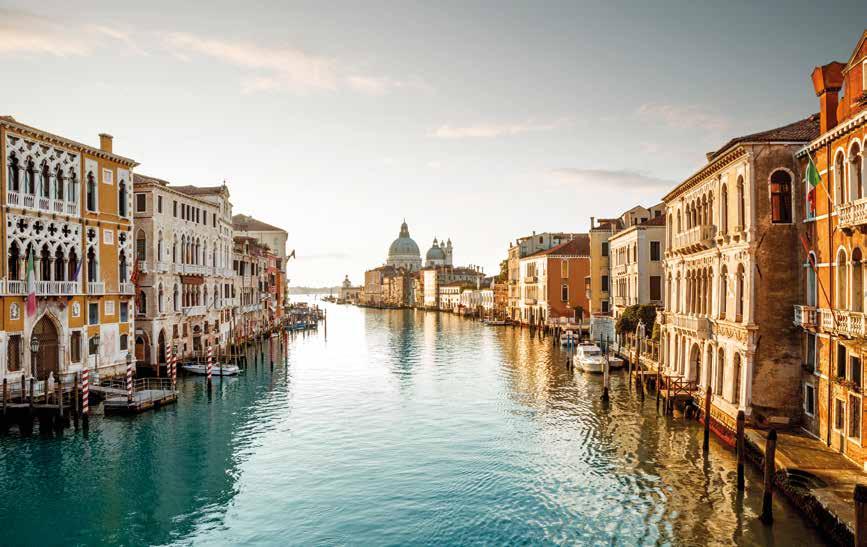
in minor keys
222 MUSEO FORTUNY ERWIN WURM Dreamers
WHEN 6 maggio May-22 novembre November
Tra i più influenti artisti contemporanei, Wurm ha ridefinito il concetto di scultura utilizzando l’umorismo come dispositivo critico. La mostra riunisce alcune delle sue serie più note, dalle One Minute Sculptures, che trasformano il gesto del visitatore in una scultura temporanea, ai Dreamers, cuscini sovradimensionati sorretti da arti umani. Il percorso si concentra anche sul rapporto tra abito, presenza e assenza, mettendo in dialogo le opere con l’universo di Mariano Fortuny e con gli spazi del museo, dove identità, forma e memoria si misurano continuamente con il confine tra arte e vita.
ENG One of the most influential contemporary artists, Wurm has redefined the concept of sculpture by adopting humour as a critical device. This exhibition brings together some of his best-known series, from the One Minute Sculptures, which transform visitors’ gestures into temporary sculptures, to the Dreamers, oversized cushions supported by human limbs. The exhibition also focuses on the relationship between clothing, presence and absence, establishing the works in dialogue with Mariano Fortuny’s universe and the museum spaces, where identity, form and memory continually measure themselves against the boundary between art and life. Palazzo Pesaro Orfei, San Marco 3958 fortuny.visitmuve.it
223 MUVEC – CASA DELLE CONTEMPORANEITÀ
KLIMT, SCHIELE, KOKOSCHKA e il corpo nell’arte contemporanea
WHEN 26 settembre September14 febbraio February, 2027
I maestri della Secessione viennese, Gustav Klimt, Egon Schiele e Oskar Kokoschka, sono accostati ad artisti contemporanei, tra questi Chen Zhen, Vanessa Beecroft e Marlene Dumas, sul tema del corpo come rappresentazione e come simbolo della relazione tra carne e psiche. Il corpo, vero protagonista del nostro tempo, viene esorcizzato, esaltato, esposto, modificato, reso oggetto e strumento di esigenze interiori o di condizionamenti esterni, sempre in alternanza tra lo scandalo erotico e l’esibizionismo del mondo dell’immagine.
ENG The masters of the Vienna Secession – Gustav Klimt, Egon Schiele and Oskar Kokoschka – set in a dialogue with contemporary artists such as Chen Zhen, Vanessa Beecroft and Marlene Dumas, among others, on the theme of the body as representation and symbol linked to the flesh and the psyche. The body, the true protagonist of our time, is
exorcised, exalted, exposed, modified, objectified and made an instrument of internal needs or external conditioning, always alternating between erotic scandalousness and the exhibitionism of the world of images.
Piazzale Luigi Candiani 7, Mestre muvemestre.visitmuve.it
224 NICOLETTA FIORUCCI FOUNDATION
LYDIA OURAHMANE 5 Works
WHEN 5 maggio May-22 novembre November Le installazioni di Lydia Ourahmane (1992, Saïda, Algeria), sculture e opere video e sonore, creano situazioni le cui conseguenze vanno ben al di là dello spazio espositivo che le ospita. Il suo lavoro si concentra sulla politica reale della vita quotidiana e su come l’arte venga valorizzata, prodotta, distribuita ed esposta, esaminando in che modo il movimento di oggetti e persone sia condizionato da restrizioni statali e barriere invisibili. La nuova commissione segue una residenza presso la Fondazione Nicoletta Fiorucci. ENG Lydia Ourahmane’s installations, sculptures and video and sound pieces create situations that have consequences beyond the exhibition space. The artist focuses on the real politics of everyday life, as well as exploring how art itself is valued, produced, distributed and exhibited. Her work examines how the movement of objects and people is influenced by factors such as government restrictions and invisible barriers. This new commission follows a residency at the Nicoletta Fiorucci Foundation. Dorsoduro 2829 www.nf.foundation
225 OCEAN SPACE TIDE OF RETURNS [ONDE DI RITORNI]
WHEN 28 marzo March-11 ottobre October
TBA21–Academy rinnova l’impegno nelle pratiche artistiche legate alla restituzione culturale e alla guarigione ambientale, invitando il pubblico a interrogarsi sui concetti di appartenenza, memoria e trasformazione. La mostra Tide of Returns presenta la ricerca del Repatriates Collective, artiste/i provenienti dal Pacifico del Nord australiano, dall’Africa, dall’Europa e dall’America Latina. Un’installazione immersiva di sabbia, conchiglie, video e suono e un paesaggio tessile-video che unisce gesti di cura e memoria indagano parallelamente il ruolo dell’acqua nei processi di rimpatrio culturale.
ENG TBA21–Academy renews its commitment to artistic practices related to cultural restitution and environmental healing, inviting audiences to question concepts of belonging, memory and transformation. The exhibition Tide of Returns presents the research of the
Repatriates Collective of artists from the Australian North Pacific, Africa, Europe and Latin America: an immersive installation of sand, shells, video, sound and a textile-video landscape that intertwines gestures of care and memory simultaneously explore the role of water in processes of cultural repatriation. Ex Chiesa di San Lorenzo, Castello 5069 www.ocean-space.org
226 ORATORIO DEI CROCIFERI
Carmen
WHEN 1-31 maggio May
L’installazione video di Ieva Lygnugaryte˙ riattiva una storia poco conosciuta. Nel 1523 il poeta Nicolaus Hussovianus scrisse Poema sulla grandezza, la ferocia e la caccia del bisonte Il Granducato di Lituania intendeva inviare questo poema insieme a un bisonte europeo imbottito di paglia a Papa Leone X. Il tentativo mirava a introdurre una regione periferica europea nel centro culturale della Roma rinascimentale. Purtroppo il dono non raggiunse mai il suo scopo. Lygnugaryte˙ riporta in vita il poeta in cerca di un riconoscimento al di là dei confini dell’Europa nord-orientale.
ENG Ieva Lygnugaryte˙’s video installation revives a little-known story: in 1523, the poet Nicolas Hussovianus wrote A Poem on the Greatness, Ferocity and Hunting of the Bison
The Grand Duchy of Lithuania intended to send this poem, along with a European bison stuffed with straw, to Pope Leo X in an attempt to introduce a peripheral region of Europe into the cultural centre of Renaissance Rome. Unfortunately, the gift did not achieve its goal. Lygnugaryte˙ brings to life the poet’s quest for recognition beyond the borders of north-eastern Europe. Campo dei Gesuiti, Cannaregio 4904 www.carmenbisontis.com
in minor keys
227 ORTO GIARDINO DEL REDENTORE
VENICE GARDENS FOUNDATION
SARAH MOON
Orizzonte | Un giardino a Venezia
WHEN 5 maggio May-6 ottobre October
In Un giardino a Venezia, film di quattro minuti con musiche di Arvo Pärt, Sarah Moon racconta l’intima essenza dell’Orto Giardino della Chiesa del Redentore, eredità spirituale e botanica insieme, eremo di meditazione ed armonia dove il silenzio è un soffio delicato di pace. In Orizzonte, serie di fotografie di natura realizzate dall’artista nel corso della sua carriera, Moon suggerisce, evoca, cattura le ombre, gli interstizi e i silenzi sospesi, autentici echi della memoria. Nel suo viaggio visivo i confini vacillano, disorientano lo sguardo, dischiudendo oniriche narrazioni.
ENG In Un giardino a Venezia (“A garden in Venice”) a four-minute film with music by Arvo Pärt, Sarah Moon explores the intimate essence of the Garden of the Church of the Redeemer. At once a spiritual and botanical legacy and a retreat of meditation and harmony where silence is a delicate breath of peace. In Orizzonte, a series of nature photographs taken by the artist over her career, Moon suggests, evokes and captures shadows, interstices, suspended silences and echoes of memory. In her visual journey, boundaries falter, disorienting the gaze as dreamlike narratives unfold. Giudecca 194 www.venicegardensfoundation.org
228 PALAZZETTO BRU ZANE FONDATION BRU
ROLAND DUFAU Scultore di luce
WHEN 23 maggio May-12 settembre September
In 37 anni di attività, Roland Dufau ha valorizzato le stampe di oltre 220 fotografi, realizzate a partire dalle loro diapositive, rese eccezionali grazie alla tecnica svizzera nota come Cibachrome. Le parole del fotografo americano Robert J. Steinberg lo hanno accompagnato per tutta la vita: «Per me l’oggetto d’arte più sensuale è una stampa fotografica meravigliosamente eseguita». Dufau ha costituito una collezione privata unica, che oggi conta oltre mille stampe, di cui presenta una selezione a Palazzetto Bru Zane in dialogo con Reza.
ENG Over the course of a 37-year career, Roland Dufau has brought out the best of the work of over 220 photographers, creating exceptional prints from their slides using the Swiss technique known as Cibachrome. A quote by American photographer Robert J. Steinberg has accompanied him throughout his career: “For me, the most sensual art object is
a beautifully executed photographic print.” Roland Dufau has built a unique private collection, now comprising over 1,000 prints, a selection of which he presents at Palazzetto Bru Zane in dialogue with Reza. San Polo 2368 bru-zane.com
229 PALAZZO ALBRIZZI CAPELLO
LINA KARAM
Diving in the depth of a journey
WHEN 7 giugno June -12 luglio July
Ispirata al Voyage di Baudelaire, Lina Karam traccia un parallelo tra il richiamo del poeta verso l’ignoto e il proprio percorso personale. Stampe digitali, texture a olio e materiali delicati compongono opere che indagano come il viaggio trasformi l’identità: il desiderio di apertura, il bisogno di metamorfosi, la ricerca di nuovi orizzonti. L’incontro tra il testo di Baudelaire e la narrazione personale dell’artista genera una storia visiva sospesa tra dimensione intima e risonanza universale.
ENG Lina Karam creates a reflection on travel as a transformative experience inspired by Baudelaire’s Voyage. Through painting, heterogeneous materials and visual layering, her work constructs a path between displacement, memory and imagination. The journey becomes a metaphor for a process of metamorphosis that redefines identity and perception, while the images, suspended between the interior dimension and architectural space, articulate an open narrative between darkness and light.
Cannaregio 4118
www.linakaram.com
230 PALAZZO BALBI
DRIFT
Shy Society
WHEN 3-10 maggio May
Fondato ad Amsterdam nel 2007 dagli artisti Lonneke Gordijn (1980) e Ralph Nauta (1978), DRIFT è noto per le sue sculture monumentali e le installazioni cinetiche ispirate ai fenomeni naturali. Con Shy Society, lo studio applica queste qualità allo spazio pubblico esterno, dimostrando come la scultura possa incarnare morbidezza, tattilità e ritmo all’interno dell’ambiente urbano. Ogni elemento è formato da più strati di seta, che consentono alle sculture di muoversi con eccezionale fluidità e precisione, come grandi fiori che danzano sulla facciata.
ENG Founded in Amsterdam in 2007 by artists Lonneke Gordijn (1980) and Ralph Nauta (1978), DRIFT is known for their monumental sculptures and kinetic installations inspired by natural phenomena. With Shy Society, the studio applies these qualities to outdoor public space,
showing how sculpture can embody softness, tactility, and rhythm within the urban environment. Each element is formed from multiple layers of silk, allowing the sculptures to move with exceptional fluidity and precision, like large flowers dancing across the facade.
Dorsoduro 3901 studiodrift.com
231 PALAZZO BRAGADIN
TAMARA KVESITADZE
Medea. Fragments of Memory
WHEN 9 maggio May-31 ottobre October
L’artista georgiana Tamara Kvesitadze costruisce un ambiente installativo in cui la figura di Medea non è personaggio ma soglia interpretativa: esilio, trasformazione e discontinuità culturale si sedimentano in un modello urbano modulare che affiora e si disgrega ciclicamente. Superfici in carta rossa e blu segnate da accumuli e fratture trattengono tracce senza fissarle. Le sculture cinetiche – tra cui una figura femminile in rotazione continua – introducono una temporalità circolare, mentre un paesaggio sonoro costituito da onde radio e registrazioni del Mar Nero destabilizza la visione.
ENG Georgian artist Tamara Kvesitadze presents an installative environment in which the figure of Medea is not a character but an interpretive threshold: exile, transformation, and cultural discontinuity settle into a modular urban model that surfaces and disintegrates cyclically. Red and blue paper surfaces marked by accumulations and fractures retain traces without fixing them. Kinetic sculptures – among them a continuously rotating female figure – introduce a circular temporality, while a soundscape composed of radio waves and recordings from the Black Sea unsettles the gaze. Barbaria de le Tole, Castello 6480 www.tamarakvesitadze.com
232 PALAZZO BRAGADIN CARABBA
MEL RAMOS
An Iconography of American Beauty
WHEN 3 maggio May-22 novembre November
La mostra ripercorre la ricerca di Ramos, tra i protagonisti della Pop Art americana, soffermandosi sulla costruzione di una nuova iconografia della femminilità nel secondo dopoguerra. Servendosi di una pittura che rielabora pubblicità, pin-up e immaginario pop, l’artista ridefinisce la donna come protagonista della cultura visiva dell’epoca: sospesa tra seduzione e messa in scena, la pin-up appare qui come una Venere moderna, insieme ludica e monumentale.
ENG An exhibition tracing the practice of Ramos, a leading figure in American Pop Art, and focusing on the construction of a new iconography of femininity in the post-World War II era. Using a painting style that reworks images from advertising, pin-ups and popular culture, the artist redefines the figure of the woman as the central image of the era’s visual culture: suspended between seduction and staging, the pin-up appears here as a modern-day Venus, both playful and monumental.
Castello 6036
233 PALAZZO CORNER
DELLA CA’ GRANDA
PALAZZO PAPADOPOLI
CHARLOTTE COLBERT
Possible Landscapes
WHEN 6 maggio May-30 settembre September
Artista e regista anglo-francese, Charlotte Colbert propone un viaggio visionario tra sogno e immaginazione presentando le sue celebri sculture surrealiste in uno spazio sospeso tra realtà, finzione e simbolismo. La mostra si sviluppa lungo il Canal Grande a partire da un’opera monumentale nel giardino di Palazzo Corner della Ca’ Granda, estendendosi poi con quattro ulteriori installazioni nei giardini dell’Aman Venice a Palazzo Papadopoli, definendo un giardino espanso che indaga le molteplici modalità di percezione della realtà.
ENG The Anglo-French artist and director offers a visionary journey through dreams and imagination, presenting her celebrated surrealist sculptures in a space somewhere between reality, fiction and symbolism. The exhibition unfolds along the Grand Canal, beginning with a monumental work installed in the garden of Palazzo Corner della Ca’ Granda, and conceptually extends to four additional installations located in the gardens of Aman Venice at Palazzo Papadopoli, forming an extensive garden that explores the multiple modes of perceiving reality.
Palazzo Corner della Ca’ Granda San Marco 3978
Palazzo Papadopoli, Aman Venice San Polo 1364 charlottecolbert.com
234 PALAZZO DELLE ARTI E DELLE CULTURE FONDAZIONE GIANCARLO LIGABUE
COLLECTO
WHEN 7-24 maggio May 17 settembre September22 novembre November
Un viaggio attraverso una collezione di oltre 400 opere e reperti che abbraccia paleontologia, archeologia e arte, connettendo culture e civiltà di tutti i continenti, da 4,5 miliardi di anni fa alla contemporaneità. Le origini della Terra e i primi manufatti del genere Homo; una biblioteca mesopotamica e le antichità classiche; arte precolombiana, oceanica e africana; Leonardo, Piazzetta, Tiepolo e Guardi accanto a Nico Vascellari, Arcangelo Sassolino, Giorgio Andreotta Calò e Vera Lutter. In contemporanea, la residenza d’artista di Marta Spagnoli, invitata a sviluppare un progetto creativo legato alla Collezione.
ENG A journey through a collection, a selection of over 400 works of art and objects that intertwine palaeontology, archaeology and art, connecting cultures and civilisations from every continent, from 4.5 billion years ago to the present day. The origins of the Earth and the first artefacts of the genus Homo; a Mesopotamian library and classical antiquities; pre-Columbian, Oceanic and African art, from Leonardo, Piazzetta, Tiepolo and Guardi to Nico Vascellari, Arcangelo Sassolino, Giorgio Andreotta Calò and Vera Lutter. Artist in residence Marta Spagnoli will concurrently be invited to develop a creative project related to the Collection.
Palazzo Erizzo Ligabue, San Marco 3319 www.fondazioneligabue.it
235 PALAZZO DIEDO/1 BERGGRUEN ARTS & CULTURE
STRANGE RULES
WHEN 4 maggio May-22 novembre November Ideato come laboratorio espositivo e teorico da Mat Dryhurst, Holly Herndon e Hans Ulrich Obrist, in collaborazione con Adriana Rispoli, il progetto introduce una riflessione strutturata sulla Protocol Art, pratica che rende visibili regole, algoritmi, piattaforme e infrastrutture alla base della cultura digitale. Installazioni e video costruiscono una narrazione che assume processi, istruzioni e sistemi come materia artistica, mettendo in luce le logiche che determinano la produzione e la circolazione delle immagini e aprendo alla dimensione di cocreazione tra essere umano e macchina. ENG Conceived as an exhibitive and theoretical laboratory by Mat Dryhurst, Holly Herndon, and Hans Ulrich Obrist, in collaboration with Adriana Rispoli, the project
introduces a structured reflection on Protocol Art – a practice that renders visible the rules, algorithms, platforms, and infrastructures underlying digital culture. Installations and videos construct a narrative that treats processes, instructions, and systems as artistic matter, shedding light on the logics that determine the production and circulation of images and opening onto the dimension of co-creation between human and machine.
Fondamenta Diedo, Cannaregio 2386 www.berggruenarts.org
236 PALAZZO DIEDO/2 BERGGRUEN ARTS & CULTURE
CEAL FLOYER
Unfinished
WHEN 4 maggio May-22 novembre November
Una selezione di video, fotografie, installazioni sonore, ready-made e sculture ripercorre la pratica di Floyer, celebre per il suo umorismo sintetico e per un linguaggio visivo profondamente sobrio. Tra slittamenti del punto di vista, giochi di parole, doppi sensi e un’interpretazione paradossale del quotidiano, le opere innescano cortocircuiti che investono immagine, suono e significato, rivelando dimensioni inattese dentro gesti e oggetti ordinari. La mostra restituisce una ricerca che lavora per sottrazione, da cui emerge, anche nei gesti più comuni, una vitale energia creativa.
ENG A selection of videos, photographs, sound installations, ready-mades, and sculptures traces the practice of Floyer, celebrated for her synthetic humour and deeply spare visual language. Through shifts in perspective, wordplay, double meanings, and a paradoxical reading of the everyday, the works trigger short circuits that cut across image, sound, and meaning, revealing unexpected dimensions within ordinary gestures and objects. The exhibition presents a body of work that operates through subtraction, from which – even in the most common gestures – a vital creative energy emerges.
Fondamenta Diedo, Cannaregio 2386 www.berggruenarts.org
in minor keys
237 PALAZZO DUCALE
ETRUSCHI E VENETI. ACQUE, CULTI E SANTUARI
WHEN 6 marzo March-29 settembre September
Reperti archeologici di grande valore, molti inediti, aprono un confronto tra il versante tirrenico e adriatico dell’Italia, concentrando l’attenzione su due civiltà distinte per geografia e radici culturali, gli Etruschi e i Veneti, sviluppatesi nel primo millennio a.C. Fra loro fiorirono scambi e relazioni lungo la “terra tra i due fiumi”, tra il basso corso dell’Adige e l’antico corso orientale del Po. Un racconto autorevole e suggestivo che restituisce all’acqua il suo ruolo fondativo nella costruzione del sacro e nell’identità delle civiltà antiche.
ENG Through valuable archaeological finds, many previously unseen, the exhibition establishes a dialogue between the Tyrrhenian and Adriatic coasts of Italy through two civilisations with distinct geographies and cultural roots, both of which lived and developed in the first millennium BC: the Etruscans and the Veneti, between whom trade and relations flourished along the border in the “land between the two rivers,” between the lower Adige and the ancient eastern course of the Po. This authoritative and evocative narrative restores water's fundamental role in the construction of the sacred and the identity of ancient civilizations. Appartamento del Doge Piazza San Marco 1 palazzoducale.visitmuve.it
238 PALAZZO FRANCHETTI FONDAZIONE BERENGO
MARTIN JANECKÝ
Dreamers
BERTIL VALLIEN
Transparent Boundaries
WHEN 5 maggio May-22 novembre November
Gli artisti Bertil Vallien e Martin Janecký si incontrano nello spazio della Fondazione Berengo a Palazzo Franchetti con due progetti espositivi personali che attestano la potenza espressiva dell’arte contemporanea in vetro. Tra misticismo e precisione, opacità e trasparenza, le due visioni sono magistrali ma contrastanti: da un lato le suggestive forme in vetro colato nella sabbia di Vallien, che affrontano temi quali la memoria, l’identità e la condizione umana; dall’altro le intricate sculture figurative di Janecký, realizzate con la tecnica dell’inside sculpting, da lui stesso ideata.
ENG Artists Bertil Vallien and Martin Janecký meet at the Fondazione Berengo in Palazzo Franchetti with two solo exhibitions showcasing the expressive power of contemporary glass art. Ripe with mysticism, precision, opaqueness and transparency, the two
visions are masterful yet contrasting: on one hand, Vallien’sevocative sand-cast glass forms which explore themes of memory, identity and the human condition; on the other, Janecký's intricate figurative sculptures, created using his own “inside sculpting” technique. San Marco 2847 fondazioneberengo.org
239 PALAZZO FRANCHETTI LE CABANON
EVA & FRANCO MATTES
Rage Bait
WHEN 6 maggio May-30 giugnoJ une (Palazzo Franchetti)
6-31 maggio May (Le Cabanon)
Il termine “rage bait” si riferisce a contenuti progettati per generare reazioni emotive immediate e catturare l’attenzione. Attraverso installazioni, video e intelligenza artificiale generativa, il progetto indaga le logiche delle piattaforme digitali, mostrando come l’engagement produca forme di comunicazione sempre più polarizzate. In continuità con la loro ricerca, i due artisti mettono in tensione l’estetica patinata dei contenuti online e le loro implicazioni etiche, evidenziando le dinamiche che strutturano l’esperienza contemporanea della rete.
ENG The term “rage bait” refers to content designed to generate immediate emotional reactions and capture attention. Through installations, videos and generative artificial intelligence, this project investigates the logic of digital platforms, demonstrating how engagement produces increasingly polarized forms of communication. The two artists contrast the glossy aesthetic of online content with its ethical implications, highlighting the dynamics that structure the contemporary online experience. Palazzo Franchetti, San Marco 2847 Le Cabanon, Campo del Santissimo Giudecca 193/A www.autotelic-foundation.org
240 PALAZZO FRANCHETTI
PALAZZO LOREDAN
CHIHULY: VENICE 2026
WHEN 5 maggio May-14 novembre November Trent’anni dopo aver trasformato Venezia e i suoi canali con il suo rivoluzionario progetto Chihuly Over Venice, l’artista americano Dale Chihuly, che reinterpreta gli spazi lavorando con colore, luce, trasparenza e forma nella materia del vetro, torna con tre nuove sculture monumentali installate all’esterno di palazzi lungo il Canal Grande, visibili dal Ponte dell’Accademia. Le installazioni sono accompagnate all’Istituto Veneto di Scienze, Lettere ed Arti da disegni, fotografie, video e documentazione che tracciano l’evoluzione del suo processo creativo.
ENG Thirty years after transforming Venice and its canals with his ground-breaking project Chihuly Over Venice, American artist Dale Chihuly, who uses glass to transform spaces through experimentation with colour, light, transparency and form, returns with three new monumental sculptures installed on the exteriors of buildings along the Grand Canal and visible from the Accademia Bridge. The installations are accompanied at the Istituto Veneto di Scienze, Lettere ed Arti by drawings, photographs, videos and documentation that trace the evolution of Chihuly's creative process.
Palazzo Franchetti, San Marco 2847
Palazzo Loredan, San Marco 2945
Palazzo Balbi Valier, San Marco 2506
Palazzo Querini alla Carità, Dorsoduro 1051 www.chihulyvenice2026.com
241 PALAZZO GRASSI/1
MICHAEL ARMITAGE
The Promise of Change
WHEN 29 marzo March-10 gennaio January, 2027 L’artista britannico-keniota Michael Armitage (1984) sovrappone memorie personali e riferimenti alla mitologia classica, alla letteratura africana e alla storia dell’arte occidentale. In mostra più di centocinquanta opere vibranti e stratificate, spesso di grande formato, affrontano le tensioni sociopolitiche del presente senza eludere i nodi più duri dell’attualità: repressione politica, corruzione, violenza, migrazioni, disuguaglianze e dinamiche di potere. L’arte per Armitage non è un mero rifugio, bensì uno spazio di confronto diretto con la realtà.
ENG British-Kenyan artist Michael Armitage (b. 1984) interweaves personal memories with references to classical mythology, African literature and Western art history. This exhibition features over one hundred and fifty vibrant and layered works, many large-scale, which address contemporary sociopolitical tensions without avoiding today's most pressing issues: political repression, corruption, violence, migration, inequality and power dynamics. For Armitage, art is not a refuge but a space for a direct confrontation with reality.
Campo San Samuele, San Marco 3231 www.pinaultcollection.com
in minor keys
242 PALAZZO GRASSI/2
AMAR KANWAR Co-Travellers
WHEN 29 marzo March10 gennaio January, 2027
Amar Kanwar sviluppa da sempre una pratica che combina arte, documentazione e attivismo, dando forma a spazi di riflessione poetica e politica sulle dinamiche del potere, della violenza e della resistenza. Le sue due installazioni multimediali, The Torn First Pages (2004-2008) e The Peacock’s Graveyard (2023), costruite attraverso schermi invisibili, testi e immagini astratte, sono messe qui in relazione rivelandone affinità formali e concettuali e proponendo una meditazione intensa e senza tempo sulla giustizia, la memoria e le contraddizioni del presente.
ENG Amar Kanwar has consistently developed a practice that intertwines art, documentation, and activism, creating spaces for poetic and political reflection on the dynamics of power, violence, and resistance. Created using invisible screens, texts and abstract images, his two multimedia installations, The Torn First Pages (2004-2008) and The Peacock’s Graveyard (2023), are brought together here, revealing their formal and conceptual affinities and offering a poignant and timeless meditation on justice, memory and the contradictions of the present.
Campo San Samuele San Marco 3231 www.pinaultcollection.com
243 PALAZZO MALIPIERO PATRICK MIMRAN
Billboard Project. 42 Billboards in Venice
WHEN 4-17 maggio May
Recent
Works
WHEN 4 maggio May-22 novembre November
In giro per Venezia brevi riflessioni, pensieri caustici e slogan sprezzanti: è il Billboard Project di Patrick Mimran, serie di installazioni in forma di manifesti di grandi dimensioni che adottano il linguaggio pubblicitario della cartellonistica per stimolare un confronto critico sul tema dell’arte e del suo rapporto con la società. A Palazzo Malipiero il lavoro di Mimran si semplifica, le sue opere recenti oscillano tra l’acromatismo – equivalente pittorico del silenzio – e la policromia, che se applicata in modo caotico è solo rumore, se strutturata con saggezza diventa musica.
ENG Brief reflections, caustic thoughts and scornful slogans dotted around Venice: this is Patrick Mimran’s Billboard Project, a series of installations in the form of large-scale posters,which adopt the advertising language of billboards to stimulate critical discussion of art and its relationship with society. At Palazzo Malipiero, Mimran’s work is simplified; his re -
cent work alternates achromatism, the pictorial equivalent of silence, and polychromy, which is mere noise when applied haphazardly, but becomes music when structured wisely.
Campo San Samuele, San Marco 3198 www.mimran.org
244 PALAZZO MARIN SHIRIN NESHAT Do U Dare!
WHEN 9 maggio May-6 settembre September
Ispirato alla vicenda di Nasim Aghdam, figura mediatica di origine iraniana che ha segnato profondamente la ricerca di Neshat, Do U Dare!, a cura di Ilaria Bernardi e Bartolomeo Pietromarchi, indaga le connessioni tra le esperienze delle due artiste. Girata in tre contesti socio-economici di New York, tramite il racconto di una soggettività mediata dal mondo digitale la trilogia mette in tensione dimensione interiore ed esteriore, realtà e illusione, articolando uno sguardo che incrocia la società americana con la prospettiva femminile iraniana.
ENG Inspired by the story of Nasim Aghdam, an Iranian-born media figure who profoundly influenced Neshat’s practice, Do U Dare!, curated by Ilaria Bernardi and Bartolomeo Pietromarchi, explores the connections between the two artists’ experiences. Filmed in three socioeconomic contexts in New York through the narrative of a subjectivity constructed in the digital world, the trilogy creates tension between interior and exterior dimensions and reality and illusion, articulating a gaze that intersects American society with the Iranian female perspective. San Marco 2541 www.annadefrancesco.com
245 PALAZZO MOCENIGO Le Tarbouche. Quando un accessorio diventa simbolo Opere di MOUNA REBEIZ
WHEN 20 maggio May-8 novembre November
Il mondo artistico di Mouna Rebeiz (1957, Beirut) celebra la bellezza e la sensualità femminile partendo dall’ideale delle “Tre Grazie”. I suoi nudi ispirati all’iconografia classica sono declinati in chiave contemporanea, interrogando i canoni estetici del passato. L’artista elabora un ciclo pittorico dedicato al tarbouche : un simbolo, il tipico cappello che indossano tutt’oggi i maschi musulmani, risalente al XIV secolo e citato in numerosi dipinti e disegni veneziani, che Rebeiz provocatoriamente usa come elemento distintivo dei suoi nudi femminili.
ENG The artistic world of Mouna Rebeiz (b. 1957, Beirut) celebrates female beauty and
sensuality, starting with the ideal of the “Three Graces.” Inspired by classical iconography, her nudes are interpreted in a contemporary way, giving rise to reflections on ideal beauty. Here, the artist develops a pictorial cycle dedicated to the symbol of the tarbouche: the typical hat still worn by Muslim men dating back to the 14th century and cited in numerous Venetian paintings and drawings, which Rebeiz provocatively uses as a distinctive element in her female nudes.
Centro Studi di Storia del Tessuto, del Costume e del Profumo, Santa Croce 1992 mocenigo.visitmuve.it
246 PALAZZO PISANI SANTA MARINA
ETHNOGRAPHY OF THE BODY AND MATERIAL Slowness and Depth in an Accelerated Society
WHEN 9 maggio May-22 novembre November
In un presente segnato da velocità e consumo, le pratiche di dieci artisti – Shige Fujishiro, Kazuhito Kawai, Takahiro Komuro, Takuro Kuwata, Ritsue Mishima, Yoca Muta, Mayu Nakata, Junko Oki, Noritaka Tatehana, Yui Wata – riportano al centro il tempo lento del fare e la dimensione fisica della percezione. Le opere restituiscono un lavoro radicato nei materiali e nel gesto manuale: fuoco, acqua, terra, fibre, lacca e vetro, insieme al corpo, diventano strumenti di una ricerca sensoriale che si sviluppa ai margini dell’accelerazione contemporanea, ripristinando forme di attenzione, memoria e profondità.
ENG In a present day represented by speed and consumption, the practices of ten artists – Shige Fujishiro, Kazuhito Kawai, Takahiro Komuro, Takuro Kuwata, Ritsue Mishima, Yoca Muta, Mayu Nakata, Junko Oki, Noritaka Tatehana, Yui Wata – recenter the slow pace of making and the physical dimension of perception. The works convey a practice rooted in materials and manual gesture: along with the body, fire, water, earth, fibres, lacquer and glass become instruments of a sensory exploration that unfolds at the margins of contemporary acceleration, reactivating forms of attention, memory, and depth.
Cannaregio 6104 www.venice.goforkogei.com
247 PALAZZO PRIULI BON DOMUS CIVICA
MAGGIE HALL
Love
You to Death
WHEN 5 maggio May-15 novembre November
L’artista canadese presenta un nuovo ciclo di lavori che attinge all’immaginario dell’America di metà Novecento. Le immagini, inizialmente riconoscibili e accessibili, nel tempo dello sguardo si incrinano: le figure si collocano in narrazioni instabili e perturbanti, mentre la superficie, composta da una fitta trama di punti applicati a mano, rivela una costruzione lenta e ossessiva. Ne emerge una tensione tra leggibilità immediata e progressiva disarticolazione del senso, fino a svelare qualcosa di inquietante sotto l’apparente semplicità delle opere.
ENG Canadian artist Maggie Hall presents a new series of work that draws on the imagery of mid-twentieth-century America. Initially recognisable and accessible, the images fracture as we look: the figures are placed within unstable and disturbing narratives, while the surface, composed of a dense network of hand-applied dots, reveals its slow and obsessive construction. A tension emerges between immediate readability and the progressive disarticulation of meaning, and what initially appears simple and natural reveals itself as a disturbing and haunting narrative.
Palazzo Priuli Bon, Santa Croce 1979/A Domus Civica, Calle de le Sechere San Polo 3082
248 PALAZZO QUERINI A CA’ BALA
JEREMY DELLER
The Constant Buzz of a Drone
WHEN 4 maggio May-19 luglio July
L’artista britannico Jeremy Deller, vincitore del Turner Prize, presenta un intervento site-specific, visibile anche dallo spazio pubblico, concepito per intercettare lo sguardo dei passanti. Un banner – linguaggio ricorrente nella sua pratica – porta la forma diretta della cartellonistica pubblicitaria a veicolare un messaggio di solidarietà verso le vittime dei conflitti contemporanei. Il riferimento al ronzio dei droni, suono associato alla guerra e al controllo, trasforma l’opera in una dichiarazione immediata che pone in tensione spazio urbano e responsabilità collettiva.
ENG Turner Prize-winning British artist Jeremy Deller presents a site-specific work visible from public view and designed to capture the gaze of passers-by. Using a banner, a recurring medium in his practice, the artist uses the direct form of billboards to convey a message of solidarity with the victims of contemporary conflicts. The reference to the buzzing of drones, a sound associated with war and
control, transforms the work into an immediate statement, setting in tension urban space and collective responsibility.
Dorsoduro 244/245 www.palazzobentivoglio.org
249 PALAZZO ROTA IVANCICH
KOEN VANMECHELEN We Thought We Were Alone
WHEN 9 maggio May-22 novembre November
Quaranta nuove sculture tra bronzo, marmo, vetro, fotografia e video esplorano la relazione tra organismi viventi e ambiente inorganico. Le forme si fondono e mutano, riflettendo su ibridazione, identità e crossbreeding, temi da sempre al centro della ricerca di Koen Vanmechelen. La statuaria classica viene riletta accanto a forme animali, rendendo evidente l’interconnessione tra uomo e natura in una visione che si rifà al concetto di Rinascimento cosmopolita. Il lavoro dell’artista belga sfida i confini tra arte, scienza e comunità.
ENG Forty new sculptures created using bronze, marble, glass, photography and video explore the relationship between living organisms and the inorganic environment. The forms transform, merge and mutate, reflecting on hybridisation, identity, and crossbreeding –always central themes in Koen Vanmechelen’s work. Classical statuary is reinterpreted alongside animal forms, highlighting the interconnection between humanity and nature, in a vision that draws on the concept of a cosmopolitan Renaissance. The Belgian artist’s work challenges the boundaries between art, science and community.
Castello 4421 www.wethoughtwewerealone.com
250 PALAZZO ZON SHIGEO OTAKE “Nel mezzo del Cammin”
WHEN 4 maggio May-28 giugno June
L’artista giapponese Shigeo Otake evoca profonde influenze artistiche mantenendo al contempo una forte impronta personale. Dipinti meticolosamente realizzati e composizioni ricche di dettagli, popolate da creature ibride e forme organiche proliferanti, instaurano un sottile dialogo con la pittura italiana del Trecento e del Quattrocento, riattivandone il potere simbolico grazie alla sensibilità giapponese contemporanea. «Il mio obiettivo è stato quello di sfumare il confine tra il mondano e il fantastico, dipingendo un regno in cui l’ordinario e l’ultraterreno coesistono».
ENG Japanese artist Shigeo Otake evokes profound artistic influences while maintaining a strong personal imprint. Through meticulously crafted paintings and richly detailed compositions populated by hybrid creatures and proliferating organic forms, his work establishes a subtle dialogue with 14th- and 15th-century Italian painting, reactivating its symbolic power through a contemporary Japanese sensibility. “My goal was to blur the lines between the mundane and the fantastic, depicting a realm where the ordinary and the otherworldly coexist.”
Calle Zon, Castello 6512 www.consortiummuseum.com
251 PALAZZO ZORZI
SARA BONAVENTURA, LUKAS TAIDO, MATTEO ZAMAGNI
Water Dream Memory
WHEN 1 maggio May-28 giugno June
L’acqua come elemento liminale, in equilibrio tra presenza, assenza e trasformazione: attraverso installazioni e dispositivi visivi, gli artisti traducono dati e processi scientifici in immagini, restituendo all’acqua una dimensione sensibile e percettiva. Gli ambienti sospendono la lettura funzionale della risorsa idrica invitando a promuovere una “nuova cultura dell’acqua” intesa come patrimonio condiviso e responsabilità collettiva. Superando le tradizionali narrazioni catastrofiche, Water Dream Memory crea “zone di attenzione”.
ENG Water as liminal element, balanced between presence, absence and transformation: through installations and visual devices, artists translate scientific data and processes into images, restoring to water a dimension of sensitivity and perception. The exhibition creates immersive environments that suspend the functional interpretation of water resources, inviting the promotion of a “new culture of
in minor keys
Curated by Sergio Risaliti
Cristiano Seganfreddo
Alexander Calder
Lucio Fontana
Fausto Melotti
Tony Cragg
Marcello Maloberti
Christine Safa
Friedrich Andreoni
Interferences by Ersilia Vaudo Scarpetta
6 May – 28 June 2026
Wednesday - Sunday 11 Am – 7 Pm
Casa Sanlorenzo
Dorsoduro 123
Lucio Fontana, Concetto spaziale, 1968 © Fondazione
Lucio Fontana, Milano, By SIAE 2026
water,” understood as a shared heritage and collective responsibility. Moving beyond traditional catastrophic narratives, Water Dream Memory creates “zones of attention.”
Castello 4930
252 PUNTA DELLA DOGANA/1
PAULO NAZARETH
Algebra
WHEN 29 marzo March-22 novembre November
L’artista brasiliano Paulo Nazareth da oltre quindici anni percorre le Americhe e il continente africano, spesso a piedi nudi, per calpestare la stessa terra dei suoi antenati ridotti in schiavitù, privati delle calzature come simbolo di sottomissione. La sua pratica, una forma di performance in continuo divenire, riflette su come la cartografia coloniale e il razzismo sistemico abbiano modellato i paesaggi della modernità. I suoi spostamenti, deliberatamente lenti, diventano medium narrativo: il viaggio come scrittura di storie nei corpi, nelle lingue, nei confini.
ENG For over fifteen years, Brazilian artist Paulo Nazareth has travelled the Americas and Africa, often barefoot, treading the same land as his enslaved ancestors, stripped of footwear as a symbol of submission. A constantly evolving form of performance, his practice reflects on how colonial cartography and systemic racism have shaped the landscapes of modernity. His deliberately slow journeys become a narrative: travel as the writing of stories in bodies, languages and borders.
Dorsoduro 2 www.pinaultcollection.com
253 PUNTA DELLA DOGANA/2
LORNA SIMPSON Third Person
WHEN 29 marzo March-22 novembre November Rivelatasi già a metà degli anni Ottanta per il suo approccio innovativo alla fotografia concettuale, Lorna Simpson (1960, New York) non ha mai smesso di esplorare in modo critico i meccanismi di costruzione delle immagini. Cinquanta opere – dipinti, collage, sculture, installazioni e un film –compongono una trama di fili narrativi che danno forma agli universi di finzione e ai racconti suggeriti dalla sua opera. Resistenti a ogni lettura univoca, i suoi lavori ci conducono in zone incerte poste ai margini del visibile.
ENG First emerging in the mid-1980s for her innovative approach to conceptual photography, Lorna Simpson (b. 1960, New York) has continued to critically explore the mechanisms of image construction. Fifty works – paintings, collages, sculptures, installations and a film – compose a web of narrative threads that shape the fictional universes and stories her work suggests. Resistant to any univocal reading, her works lead us into uncertain zones at the margins of the visible.
Dorsoduro 2
www.pinaultcollection.com
254 SALONE VERDE
JEWEL
Matriclysm: An Archeology of Connections Lost
WHEN 10 maggio May22 novembre November
Jewel allestisce un ambiente totalizzante in cui forme scultoree, tessuti, dipinti, opere data-driven e paesaggi sonori si fondono in un unico dispositivo percettivo. Al centro emerge una riflessione sulla memoria, intesa come dimensione insieme personale e globale, capace di connettere gli individui. La colonna sonora originale, sviluppata a partire da dati oceanografici e osservazioni celesti, accompagna il percorso alternando registri astratti e melodici, contribuendo a un’esperienza continua che mette in relazione corpo, ambiente e sistemi di connessione.
ENG Jewel constructs an immersive environment where sculptural forms, fabrics, paintings, data-driven work and soundscapes intertwine in a single perceptual installation. From its core emerges a reflection on memory, understood as both personal and global dimension, capable of connecting individuals. An original soundtrack developed from oceanographic data and celestial observations accompanies the journey, alternating abstract and melodic registers and contributing to a continuous experience that connects the body, the environment and systems of connection. Calle della Regina, Santa Croce 2258 www.saloneverde.com
255 SCOLETTA BATTIORO E TIRAORO
ARCH HADES
Return | Ritorno
WHEN 7 maggio May-30 ottobre October
Le nuove opere di grandi dimensioni dell’artista e poeta Arch Hades uniscono pittura site-specific, scultura immersiva e installazione sonora, trasportando i visitatori in eterei mondi interiori che oscillano tra vulnerabilità e contenimento. Amplificando queste intime riflessioni personali in composizioni delicatamente composte, Hades esplora l’atto di rendere pubblico il privato e, per la prima volta, pone il testo al centro dell’opera, sondando le tensioni tra confessione, memoria e permanenza materiale.
ENG Artist and poet Arch Hades’s new large-scale works combine site-specific painting, immersive sculpture and sound installation, transporting visitors to ethereal inner worlds that oscillate between vulnerability and containment. Amplifying these intimate personal reflections in delicately
composed compositions, Arch Hades explores the act of making the private public, and for the first time in his practice places text at the centre of his work, exploring the tensions between confession, memory and material permanence. Campo San Stae, Santa Croce 1980 archhades.com
256 SCUOLA GRANDE DI SAN ROCCO
JAN FABRE
The Quiet Source
WHEN 9 maggio May-22 novembre November
Tre nuove sculture in bronzo di Jan Fabre sono installate lungo l’asse centrale della Scuola in dialogo diretto con il ciclo pittorico di Tintoretto. Concepite come una trilogia, le opere incorporano il corpo dell’artista e i volti del padre e del fratello, tessendo memoria familiare e mitologia personale in una spina simbolica che connette spazio, luce e spiritualità. Linguaggi distanti nel tempo, accomunati dall’esperienza umana.
ENG Three new bronze sculptures by Jan Fabre have been installed along the central axis of the Scuola, in direct dialogue with Tintoretto’s pictorial cycle. Conceived as a trilogy, the work explores themes of family memory and personal mythology, incorporating the artist's body and the faces of his father and brother. Their presence creates a symbolic connection between space, light and spirituality, sparking a dialogue between languages distant in time but united by a reflection on the human experience.
Campo San Rocco, San Polo 3052 www.scuolagrandesanrocco.org
257 SCUOLA PICCOLA ZATTERE/1
NIKIMA JAGUDAJEV
Like
WHEN 7 maggio May-11 ottobre October
Un ambiente digitale interattivo strutturato come un videogioco fonde linguaggi del cinema e del documentario, coinvolgendo il pubblico attivamente nello sviluppo della narrazione. Frutto di una ricerca avviata nel 2020, il progetto prende forma in un liceo virtuale dove chi partecipa controlla un avatar e interagisce con sei personaggi senza percorso prestabilito. L’installazione è affiancata da lavori tessili partecipativi che invitano a lasciare una traccia, configurando l’insieme come un dispositivo condiviso di relazione e memoria.
ENG An interactive digital environment structured like a video game intertwines the languages of cinema and documentary, inviting the audience to actively participate in the narrative’s development. The result of work begun in 2020, the project takes shape in a virtual high school, where participants control an avatar and
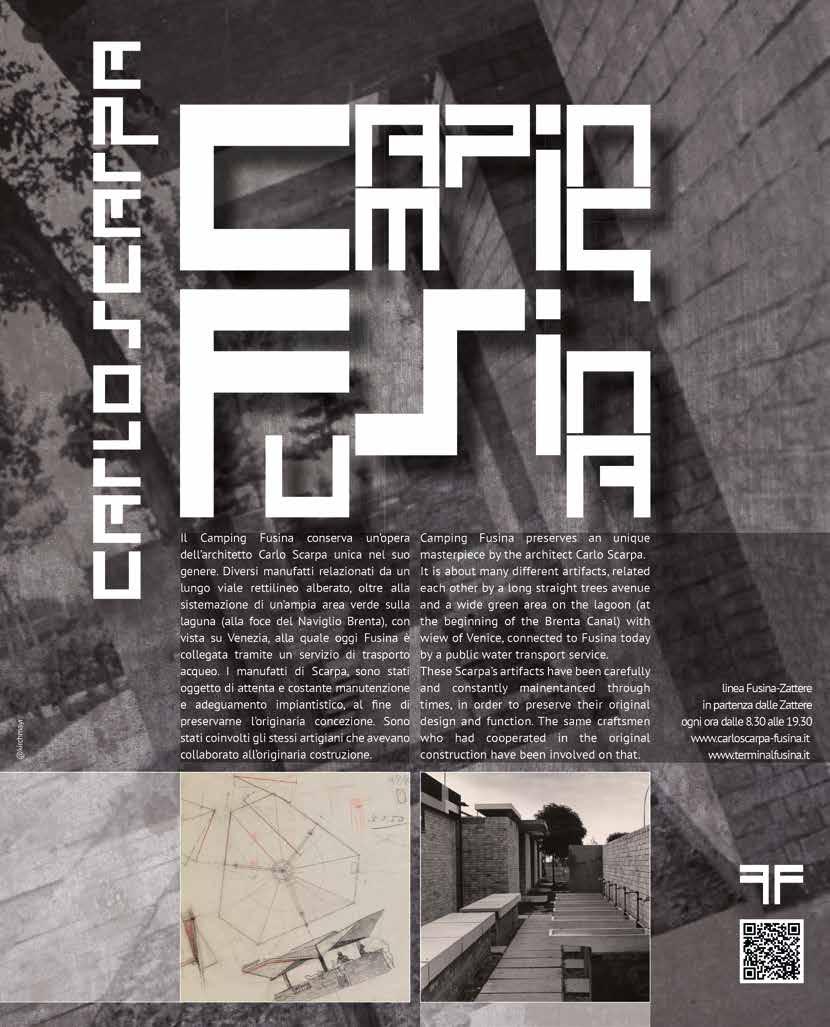
in minor keys
interact with six characters without a predefined path. The installation is accompanied by participatory textile works that invite the audience to leave a trace, configuring the work as a shared space for connection and memory.
Fondamenta Zattere ai Gesuati Dorsoduro 1401 www.scuolapiccolazattere.com
258 SCUOLA PICCOLA ZATTERE/2
RACHEL
YOUN
Unruly Vessel
WHEN 8 maggio May-18 ottobre October
Sculture cinetiche e installazioni combinano dispositivi per il benessere dismessi con piante artificiali, riattivandone i movimenti in sequenze ripetitive da cui emergono figure ibride, sospese tra erotismo e disagio, piacere e dolore. Il lavoro affronta controllo e disciplina del corpo, culminando nella grande installazione centrale che richiama i banchi dei vogatori, dove si delinea un continuum tra lavoro forzato, cura e pratiche liturgiche.
ENG Through kinetic sculptures and installations, the artist combines artificial plants with decommissioned wellness devices, reactivating their movements in repetitive sequences that create hybrid figures suspended between eroticism and discomfort, pleasure and pain. The exhibition reflects on control and discipline of the body, culminating in the large central installation reminiscent of rowers’ benches, delineating a continuum between forced labor, care and liturgical practices.
Fondamenta Zattere Ai Gesuati Dorsoduro 1401 www.scuolapiccolazattere.com
259 SMAC VENICE
ALIGHIERO BOETTI
WHEN 7 maggio May-22 novembre November
Viene proposta l’evoluzione dalla fine degli anni Sessanta ai primi anni Novanta della pratica artistica di Alighiero Boetti (1940, Torino-1994, Roma), tra i massimi protagonisti dell’arte italiana del dopoguerra. Dall’identità sdoppiata alla costruzione di sistemi aperti, il percorso attraversa opere e serie come Mappe, Ricami e Biro, in cui l’artista definisce regole e strutture lasciando che esecuzione, tempo e collaborazione ne modifichino gli esiti. Ne emerge una pratica coerente che mette costantemente alla prova i propri presupposti, accogliendo caso, ripetizione e autorialità condivisa come forze generative.
ENG Covering the late 1960s to the early 1990s, the exhibition explores the evolution of the practice of AlighieroBoetti (b. 1940, Turin, d. 1994, Rome), one of the leading figures in postwar Italian art. From doubled identities to the construction of open systems, the exhibition explores works and series such as Mappe
(Maps), Ricami (Embroideries) and Biro (Biros), where the artist defines rules and structures, allowing execution, time, and collaboration to shape the results. What emerges is a coherent practice that constantly challenges its own assumptions, embracing chance, repetition and shared authorship as generative forces.
Procuratie, Piazza San Marco 105 www.smacgallery.com
260 SPARC*
LEO FRONTINI
Yields of Fray
WHEN 5 maggio May-5 settembre September
L’indagine di Leo Frontini sul subconscio e sulla dimensione emotiva si radica in una solida padronanza dell’anatomia, della pittura a olio e del disegno. I dipinti, accompagnati da testi poetici, attivano un sistema di rimandi allegorici che coinvolgono percezione e senso. Nutrito di diverse influenze storico-artistiche, il suo lavoro oscilla tra precisione tecnica e tensione contemplativa, restituendo immagini di stratificata profondità interiore.
ENG Leo Frontini combines exploration of the subconscious and the emotions with a solid knowledge of anatomy, oil painting and drawing. Accompanied by poetic texts, his paintings activate a system of allegorical references that engage perception and reflection. Through a language that absorbs diverse arthistorical influences, his work moves between technical precision and contemplative tension, constructing images that open onto a stratified interior dimension.
Campo Santo Stefano, San Marco 2828/A www.leofrontini.com
261 SPAZIO BRUCHIUM FERMENTUM
HELEN BROMS
SANDBERG
Le
Sette Opere
di Misericordia
WHEN 6 maggio May-22 novembre November Una serie di fotografie di grande formato e alcune sculture si accostano a un’installazione video multicanale per rispondere alla domanda: come si possono interpretare gli atti di carità da una prospettiva universale? Dopo una lunga fascinazione per l’opera di Caravaggio, convogliata in un primo video realizzato nel 2021, Sandberg ritorna sul tema della Misericordia con una serie di opere multi-formato realizzate tra il 2018 e il 2026 che affrontano questioni più che mai attuali: i conflitti e le sofferenze del presente e il bisogno condiviso di prendersi cura del prossimo. ENG A series of large-format photographs and sculptures combined with a multi-channel video installation to answer the question: How
can acts of charity be interpreted from a universal perspective? After a long-standing fascination with Caravaggio's work, first captured in a video made in 2021, Sandberg returns to the theme of Mercy with a series of multi-format works created between 2018 and 2026 which explore issues that are more timely than ever, recalling the conflicts and sufferings of the present and the universal need to care for others. Calle del Forno, Castello 2090 www.helenbromssandberg.com
262 SPAZIO RAVÀ
SIGMAR POLKE
The Photographs for Venice Biennale 1986
WHEN 2 maggio May-2 luglio July
A quarant’anni dalla celebre presentazione dell’installazione Athanor di Sigmar Polke (1941, Olesnica-2010, Colonia) alla 42. Biennale di Venezia, un ampio nucleo di opere fotografiche uniche documentano il processo creativo del leggendario progetto e ne ampliano il contesto artistico. Quando Sigmar Polke si recò a Venezia nel gennaio del 1986 insieme alla sua compagna Britta Zoellner per esplorare il Padiglione tedesco non utilizzò la fotografia semplicemente per documentare lo spazio, ma piuttosto come mezzo di appropriazione spaziale e punto di partenza per la sperimentazione fotochimica. ENG Forty years after the celebrated presentation of Sigmar Polke’s (b. 1941, Olesnica, d. 2010, Cologne) installation Athanor at the 42nd Venice Biennale, a large body of unique photographic work documents the creative process of the legendary project and expands its artistic context. When Polke travelled to Venice in January 1986 with his partner Britta Zoellner to explore the German Pavilion, he used photography not simply to document space, but rather as a means of spatial appropriation and a starting point for photochemical experimentation.
San Polo 1100
in minor keys
263 SPAZIO SV FRANÇOIS
REBOUL
Beyond Chaos
WHEN 1 maggio May-15 agosto August
From Chaos to Freedom
WHEN 28 agosto August-22 novembre November
Originario di Isle-sur-la-Sorgue (Provenza, Francia), François Reboul vive e lavora a Venezia. Le sue ricerche sull’Espressionismo astratto connotano uno stile originale che si traduce in tele di grande formato connotate da forti colori acrilici. Il riferimento e l’ispirazione guarda a straordinari artisti come Willem de Kooning, Joan Mitchell, Jackson Pollock e Lee Krasner, solo per citarne alcuni. La mostra monografica è un dittico che si sviluppa in due momenti espositivi e temporali diversi, entrambi tuttavia fortemente caratterizzati da colori e forme.
ENG Originally from L'Isle-sur-la-Sorgue (Provence, France), François Reboul lives and works in Venice. His explorations of Abstract Expressionism define an original style that translates into large-format canvases imbued with bold acrylic colours. His references and inspirations are drawn from extraordinary artists such as Willem de Kooning, Joan Mitchell, Jackson Pollock and Lee Krasner to name but a few. This monographic exhibition is a diptych unfolding across two distinct exhibition spaces and time periods, yet strongly characterised by colour and form.
Campo San Zaccaria, Castello 4693
264 SPAZIO THETIS
VENICE 20.26
WHEN 29 aprile April-30 ottobre October Il titolo, Venice 20.26, intreccia la dimensione temporale (l’anno 2026 e l’orario simbolico dell’inaugurazione) con quella spaziale, creando un laboratorio ideale dove memoria e trasformazione convivono. Esponendo opere di Angelo Crazyone, Vincenzo Profeta, Andrea Morucchio, Luca Rossi e Pucci Scafidi, Fondazione Poggianella sostiene un percorso corale che attraversa l’Arsenale. Cinque linguaggi differenti convergono nel descrivere un corpo artistico vivo e resiliente, capace di spostare l’attenzione sulle inesauste trasformazioni globali del terzo millennio.
ENG The title Venice 20.26, intertwines the temporal dimension (the year 2026 and the symbolic time of the inauguration) with the spatial one, creating a space where memory and transformation coexist. Through the works of Angelo Crazyone, Vincenzo Profeta, Andrea Morucchio, Luca Rossi and Pucci Scafidi, the Fondazione Poggianella supports a collaborative journey through the Arsenale. Five different languages converge to describe a living and resilient body of art capable of reflecting on the ongoing global transformations of the third millennium. Arsenale Nord, Castello 2737/F www.thetis.it/spazio-thetis www.fondazionesergiopoggianella.org
265 TEATRO GOLDONI
MINOR MUSIC AT THE END OF THE WORLD
WHEN 5, 6 maggio May h. 20.30 7 maggio May h. 16
Minor Music at the End of the World della scrittrice e studiosa Saidiya Hartman è l’adattamento teatrale, strutturato in tre movimenti, basato sul celebre saggio The End of White Supremacy, An American Romance. Potente creazione collettiva, riunisce una costellazione di artisti celebri – Arthur Jafa, André Holland, Okwui Okpokwasili, Precious Okoyomon e Cameron Rowland, diretti da Sarah Benson, sotto la produzione esecutiva di Tina Campt e Beatrix Ruf (Hartwig Art Foundation) – e combina letteratura, cinema, installazioni artistiche, movimento e suono in un’esperienza scenica unica.
ENG Minor Music at the End of the World by writer and scholar Saidiya Hartman is a three-movement stage adaptation of the celebrated essay The End of White Supremacy, An American Romance. A powerful collaborative creation, it brings together a constellation of celebrated artists – Arthur Jafa, André Holland, Okwui Okpokwasili, Precious Okoyomon and Cameron Rowland, directed by Sarah Benson and executive produced by Tina Campt and Beatrix Ruf (Hartwig Art Foundation) –and combines literature, film, art installations, movement and sound in a unique performance. San Marco 4650/B www.hartwigartfoundation.nl
266 THE HOME OF THE HUMAN SAFETY NET
MARINELLA SENATORE
We Rise by Lifting Others
WHEN 7 maggio May-22 marzo March, 2027 Nuovo progetto di inclusione e resilienza, speranze e potenziale, nato dalla collaborazione tra The Human Safety Net e l’artista multidisciplinare Marinella Senatore, che ha coinvolto famiglie a rischio di esclusione sociale. We Rise by Lifting Others, concepita prima di tutto come un’esperienza collettiva, si articola in una monumentale luminaria e in una serie di arazzi che accostano immagini e testi frutto dei laboratori con le famiglie, segnando una nuova fase nella ricerca dell’artista e ampliandone il vocabolario formale in un intrigante dialogo tra luce, parola e attività tessile.
ENG A new project of inclusion, resilience, hope and potential born from the collaboration between The Human Safety Net and multidisciplinary artist Marinella Senatore, which involved families at risk of
social exclusion. Conceived primarily as a collective experience, We Rise by Lifting Others comprises a large-scale light installation and a series of tapestries that interweave images and texts inspired by the experiences of workshops with families. Together, they mark a new phase in the artist's practice and expand her formal vocabulary in the dialogue between light, words and textiles.
Procuratie, Piazza San Marco 105 www.thehumansafetynet.org
267 UNIVERSITÀ CA’ FOSCARI VENEZIA/1
JENNIFER WEST Stitched Cosmos
WHEN 7 maggio May-6 luglio July
Jennifer West rielabora i materiali della Astronomical Plate Collection dell’Harvard-Smithsonian Center for Astrophysics trasformando il piano terra dell’Università in un dispositivo di osservazione del Cosmo. Il progetto nasce da una ricerca su lastre astronomiche storiche e sul lavoro delle Harvard Astronomical Computers, gruppo di scienziate a lungo marginalizzate. Tra collage luminosi, animazioni, proiezioni olografiche e una grande installazione in pellicola, arte e scienza, analogico e digitale si fondono in un percorso che mette a fuoco sapere, memoria e lavoro femminile.
ENG Jennifer West reworks materials from the Astronomical Plate Collection at the Harvard-Smithsonian Centre for Astrophysics, transforming the University’s ground floor into an immersive cosmos observation device. The project stems from research into historic astronomical plates and the work of the Harvard Astronomical Computers, a long-marginalised group of female scientists. Through light collages, animations, holographic projections and a large film installation, the exhibition intertwines art, science, analog and digital, offering a reflection on knowledge, memory and women's work.
Dorsoduro 3246 www.jweststudio.com
268
UNIVERSITÀ CA’ FOSCARI
VICTORIA LU
Metamorphosis: Beyond the Real – Searching for Victoria Lu
WHEN 7 maggio May-22 novembre November
Curatrice e artista sino-americana, figura pionieristica dell’arte contemporanea cinese, Victoria Lu presenta un progetto espositivo dedicato alle trasformazioni dell’immagine e dell’identità nell’era dell’intelligenza artificiale. Configurata come una ricerca accademica, la mostra indaga la relazione tra soggettività femminili e spazio digitale, mantenendo un approccio aperto e in continua evoluzione. Nel contesto degli studi sull’arte del metaverso, Lu intreccia pratica curatoriale e sperimentazione tecnologica.
ENG A Sino-American curator and artist and a pioneering figure in contemporary Chinese art, Victoria Lu presents an exhibition project dedicated to the transformations of image and identity in the age of artificial intelligence. Configured as an academic inquiry, the exhibition explores the relationship between female subjectivities and digital space, maintaining an open and continuously evolving approach. Within the context of metaverse art studies, Lu interweaves curatorial practice and technological experimentation.
Ca’ Foscari Esposizioni, Dorsoduro 3246
269 VICTORIA MIRO
FLORA YUKHNOVICH
Egg
WHEN 5 maggio May-4 luglio July
Flora Yukhnovich è attratta dalle ideologie che sottendono i racconti della creazione e da come, spesso, essi tentino di spiegare i misteri della vita senza riuscire a rendere conto della complessità della realtà, dell’esperienza vissuta. Per l’artista questo scarto tra concetto ed esistenza trova un riscontro significativo nella pittura: qui la fisicità del gesto pittorico può racchiudere contraddizioni e incertezze, risultando di volta in volta fragile o profonda, sfuggendo da qualsiasi interpretazione univoca.
ENG Flora Yukhnovich is drawn to the ideologies underlying creation narratives and how they often attempt to explain the mysteries of life without fully accounting for the far more complex and unpredictable reality of lived experience. For the artist, this tension between concept and existence finds a significant echo in painting, here the physicality of the pictorial gesture can encompass contradictions and uncertainties, proving at times fragile or profound and eluding any unequivocal interpretation. San Marco 1994 www.victoria-miro.com
270 VILLA FÜRSTENBERG PARCO
INTERNAZIONALE DI SCULTURA BANCA IFIS
WHEN Da From 19 aprile April
Negli oltre 22 ettari di giardino secolare che circondano la cinquecentesca Villa Fürstenberg, sede storica di Banca Ifis, trovano perfetta ambientazione le opere di grandi maestri della scultura contemporanea, italiani e internazionali, in un percorso in cui natura e scultura dialogano senza tempo. Opere di: Fernando Botero, Annie Morris, Park Eun Sun, Igor Mitoraj, Manolo Valdés, Pablo Atchugarry, Pietro Consagra, Roberto Barni, Julio Larraz, Philip Colbert, Jaume Plensa, Giuseppe Penone e Nico Vascellari, a cui si aggiunge la nuova opera in bronzo Margarete v Antiochia di Anselm Kiefer.
ENG The centuries-old 22-hectare garden surrounding the 16th-century Villa Fürstenberg, the historic headquarters of Banca Ifis, provides the perfect backdrop for works by great masters of contemporary sculpture, both Italian and international, creating a special place where nature and sculpture engage in a timeless dialogue. Works by Fernando Botero, Annie Morris, Park Eun Sun, Igor Mitoraj, Manolo Valdés, Pablo Atchugarry, Pietro Consagra, Roberto Barni, Julio Larraz, Philip Colbert, Jaume Plensa, Giuseppe Penone and Nico Vascellari are among the highlights, along with the new bronze sculpture Margarete von Antioch by Anselm Kiefer. Via Gatta 11, Mestre www.bancaifis.it
Magazine guida di Venezia e del Veneto
Supplemento al periodico Venezia News n. 311-312 maggio-giugno 2026 - Anno XXX
Aut. del Tribunale di Venezia n. 1245 del 4/12/1996
Venezia, 28 aprile 2025
Recapito redazionale
Cannaregio 563/E - 30121 Venezia tel. 041.2377739 redazione@venezianews.it www.venezianews.it
Stampa Grafiche Italprint Srl Via Castellana 69, Treviso www.graficheitalprint.it
© Edizioni Venezia News di Massimo Bran
THE BAG
Biennale Arte Guide
Direzione editoriale
Massimo Bran
Coordinamento redazionale
Mariachiara Marzari, Marisa Santin
Direzione organizzativa Paola Marchetti
Grafica
Luca Zanatta
Redazione Davide Carbone, Chiara Sciascia
Hanno collaborato
Michele Cerruti But, Massimo Michele Greco, Daniele Licata, Francesco Santaniello, Giovanni Santarelli, Adele Spinelli
Traduzioni
Patrizia Bran, Richard McKenna
Si ringraziano
Cristiana Costanzo, Claudia Gioia
e tutto lo staff dell’Ufficio Stampa Flavia Fossa Margutti
La Biennale di Venezia
Un ringraziamento speciale
Michele Cerruti But
Immagine di copertina
Courtesy JR. Il Gesto – Temporary installation on The Venice Venice Hotel façade
VENEZIA NEWS
Direttore responsabile
Massimo Bran
Direzione organizzativa
Paola Marchetti
Relazioni esterne e coordinamento editoriale
Mariachiara Marzari
Redazione
Marisa Santin, Chiara Sciascia, Davide Carbone
Speciali
Fabio Marzari
Grafica
Luca Zanatta
Traduzioni
Patrizia Bran, Andrea Falco
Guide spirituali
“Il più grande”, Muhammad Alì
Il nostro “Ministro della Fantasia”
Fabio Marzari
05 maggio –28 giugno 2026
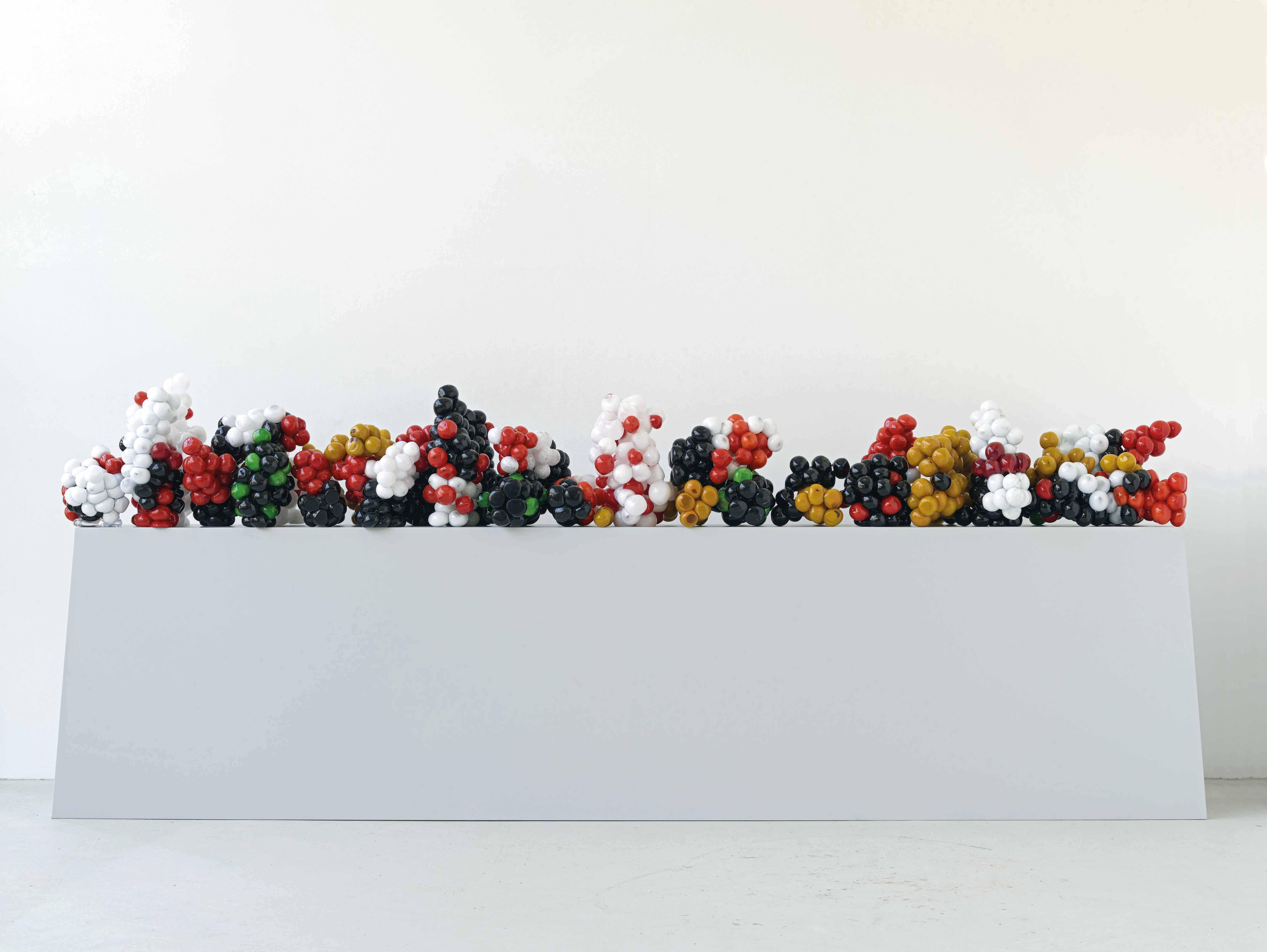
Ca’ Tron
C. del Tentor, 1957, Venice
A POSTVENETIAN DREAM
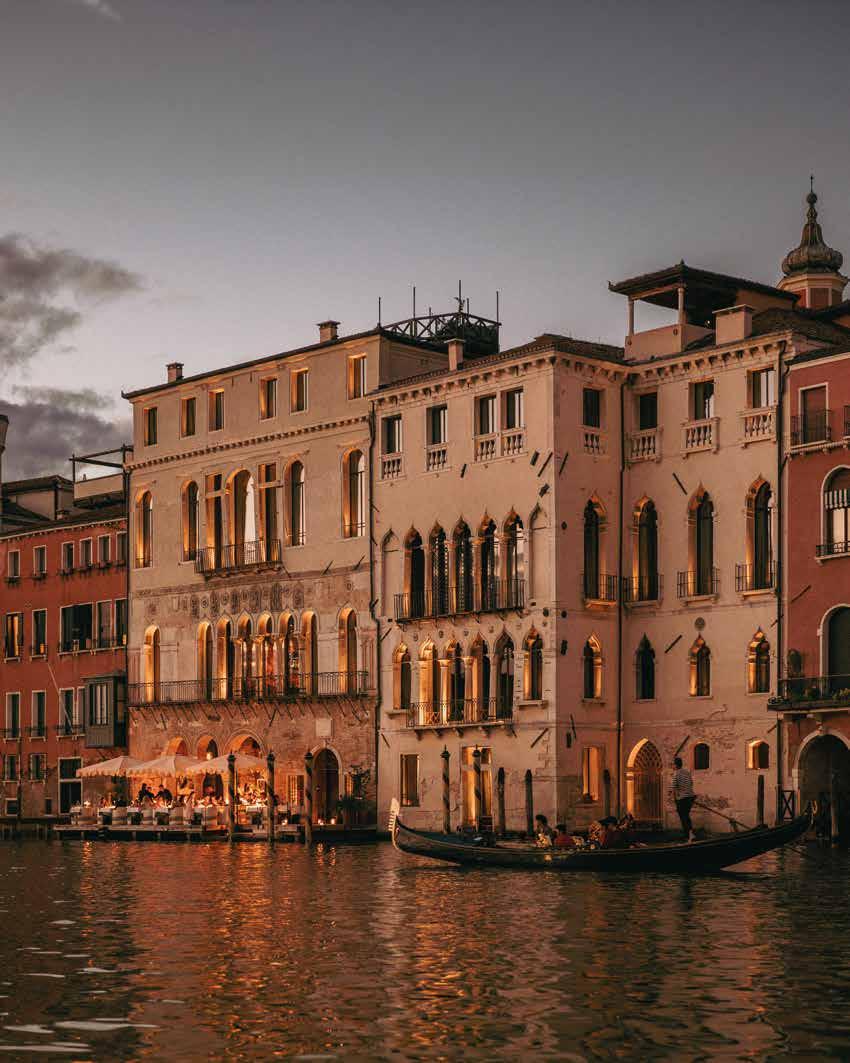
THE VENICE VENICE HOTEL AMONG THE WORLD’S BEST HOTELS & RESORTS. THE GOLD LIST 2026 — CONDÉ NAST TRAVELER.
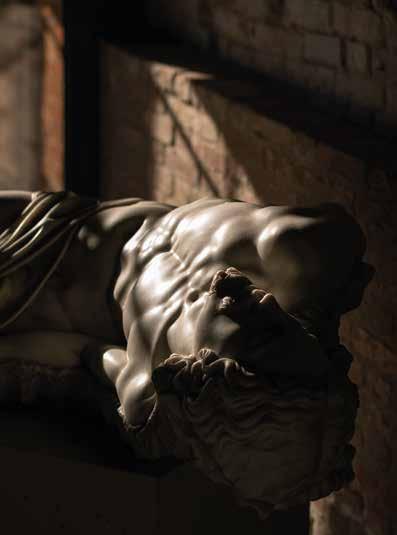
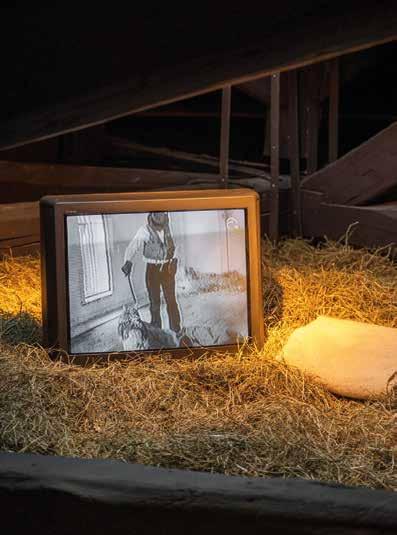
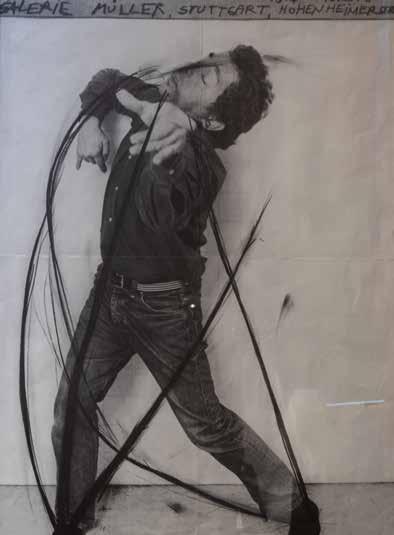
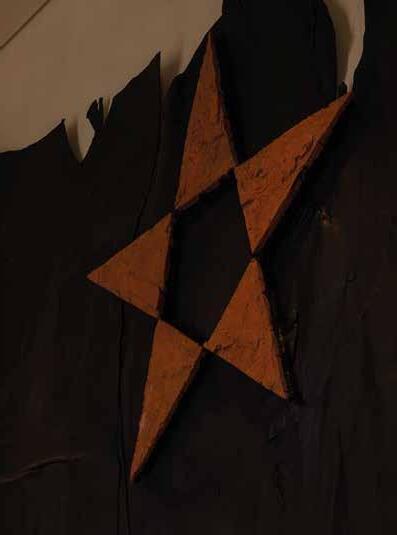
01 SOUVENIR BY FABIO VIALE (2008) - WATER ENTRANCE
03 I LIKE AMERICA AND AMERICA LIKES ME (COYOTE) BY JOSEPH BEUYS (1978) - ROOM 72
04 STELLA AFRICA BY GILBERTO ZORIO (1983) - ROOM 23
02 KARYATIDE BY ARNULF RAINER (1970-1975) - ROOM 22