Marijuana Rescheduling and the End of Section 280E
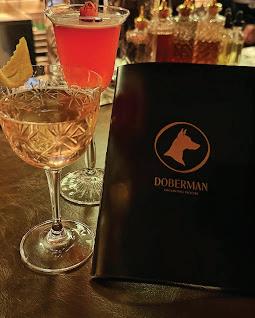
Cocktails for the Intellectually Curious +
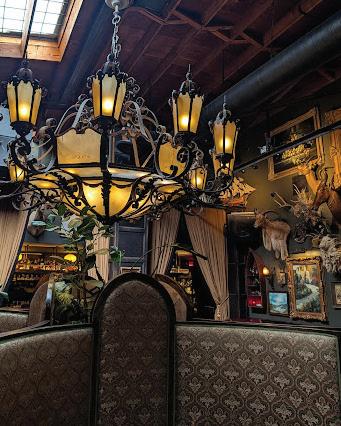
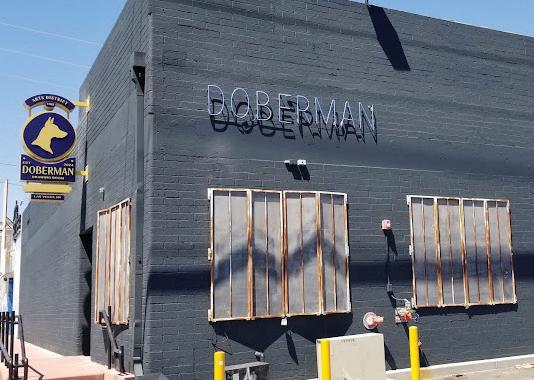
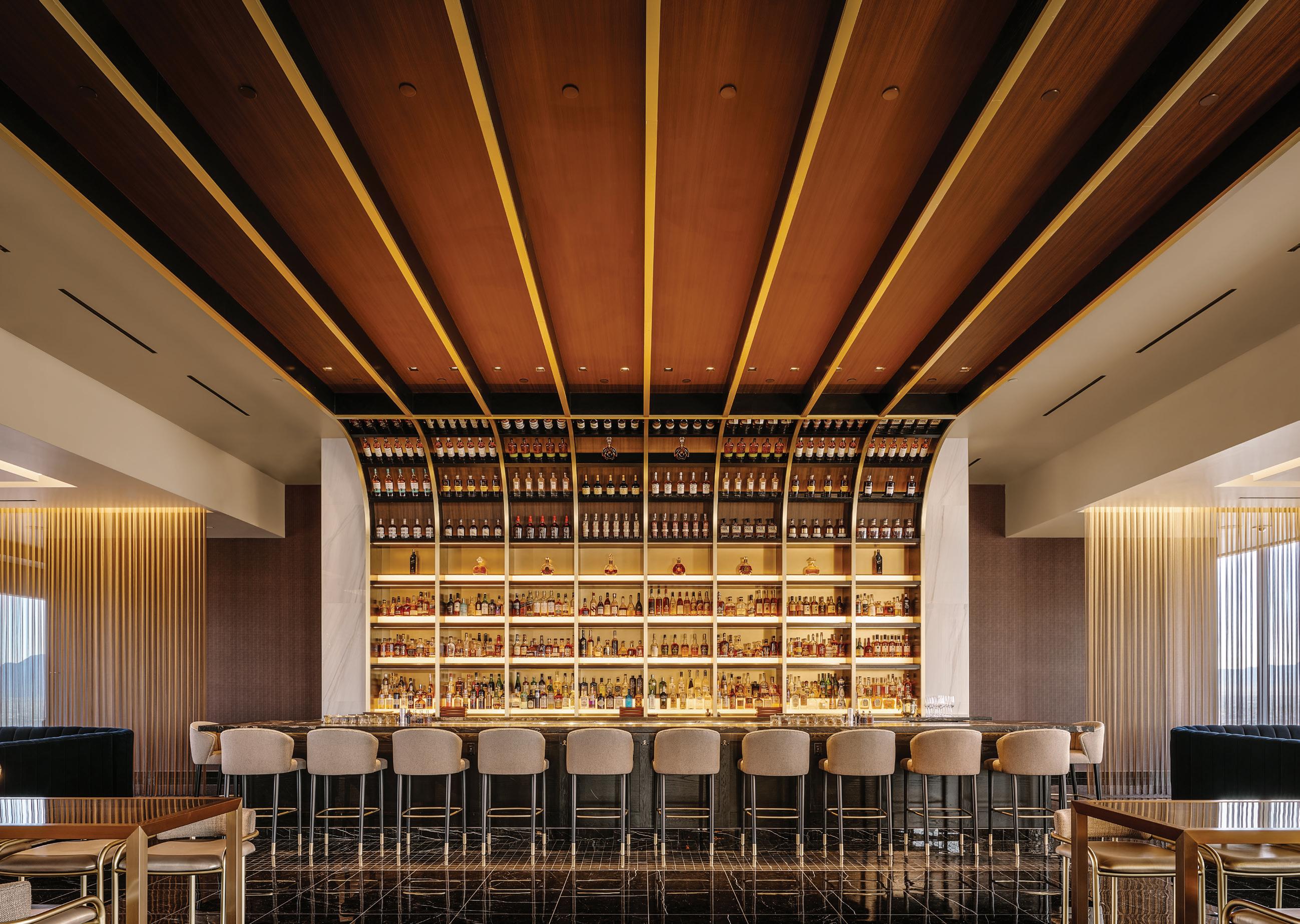
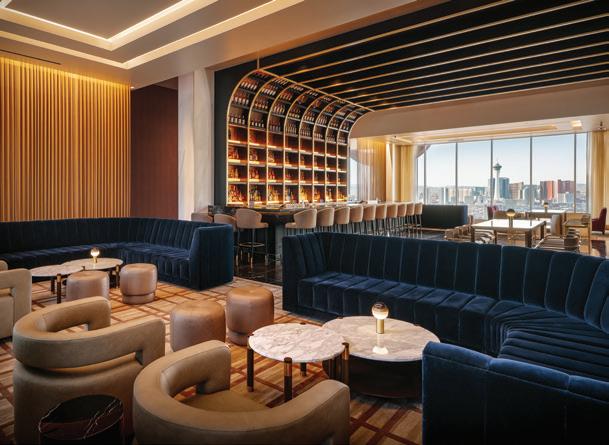
Doberman Drawing Room
NEUROLOGIST
OWNED & OPERATED
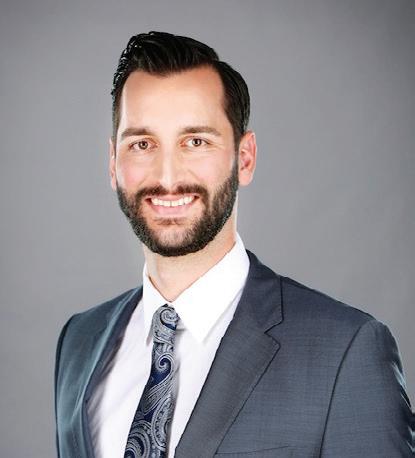
Dr. Jonathan Gomez serves as CHIEF MEDICAL OFFICER forSynapse TBI and is widely recognized for his role as a ringside physician for the UFC. Dr. Gomez speaks Spanish and English, and will be seeing patients in the local Las Vegas market in person for evaluations for TBI.
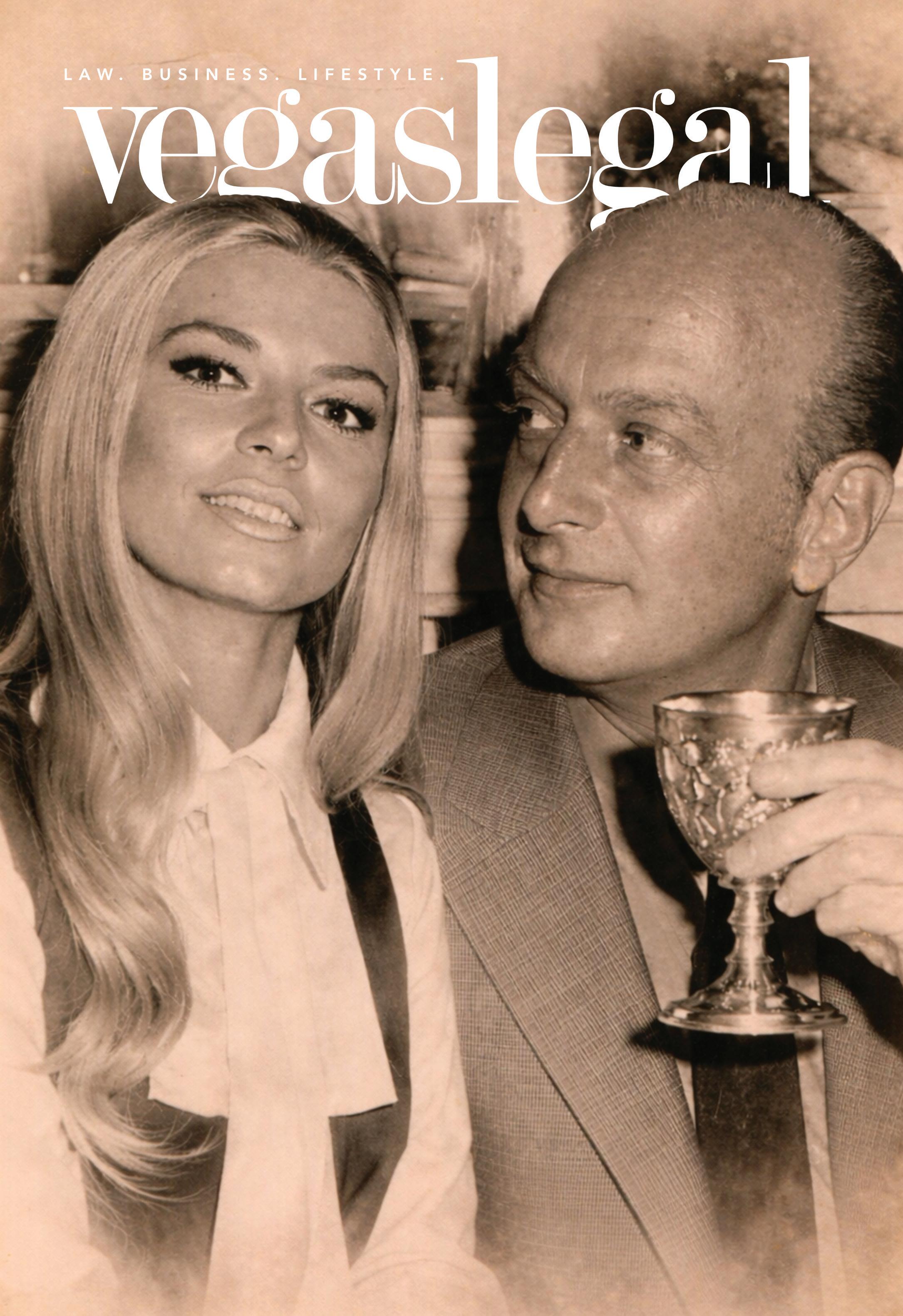
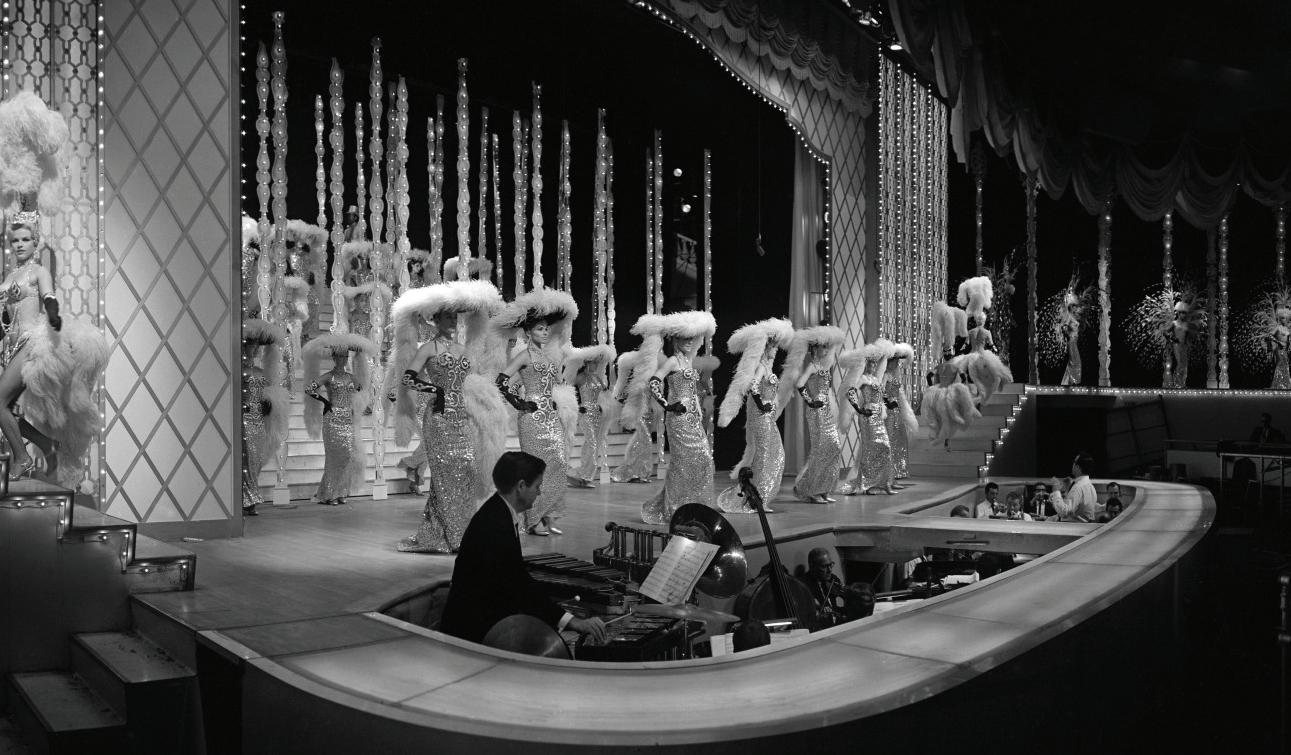
Photo courtesy Las Vegas News Bureau, LVCVA Archive
LAW
12 | VEGAS ICON; REMEMBERING JEFF HANEY
16 | MEET THE INCUMBENT: JUDGE PETERSON
22 | PATENTS FOR AI-RELATED INVENTIONS
26 | NEVADA DOUBLES DOWN ON ARBITRATION
32 | THE FRAMEWORK OF GENERAL TRIBAL CRIMINAL LAW AND PL 280
12 REMEMBERING JEFF HANEY
BUSINESS
44 | MARIJUANA RESCHEDULING AND THE END OF SECTION 280E
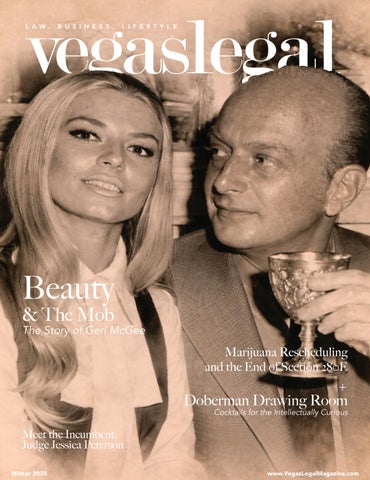
50 | BEAUTY AND THE MOB: GERI MCGEE
56 | THE MIRAGE OF LABOR
62 | THE MOVIE CAPITAL THAT ALMOST WAS
THE MIRAGE OF LABOR
LIFESTYLE
68 | AUTOMOTIVE EXCELLENCE EXTRAORDINARE
76 | VLM PRESENTS: BEST OF LAS VEGAS
78 | DOBERMAN DRAWING ROOM
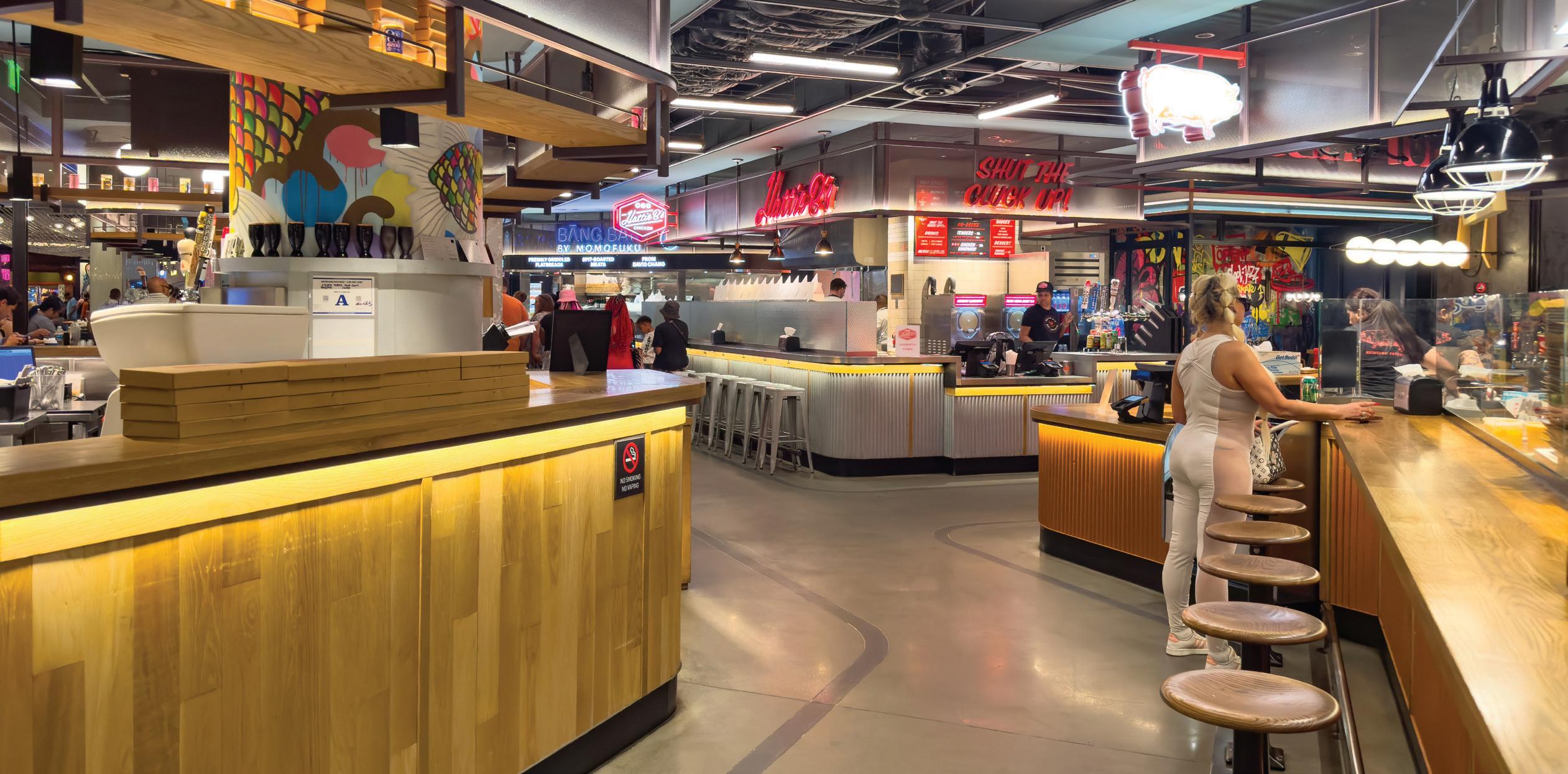
82 | THE SHRINKING BUFFET & RISE OF FOOD HALLS
THE EDITOR
Winter is a season of reflection, and this issue of Vegas Legal Magazine looks closely at where we’ve been and where we are headed - legally, politically, and culturally.
Our cover story, “Beauty and the Mob: Geri McGee,” exemplifies that balance. Geri McGee’s story is not just one of glamour and notoriety, but of resilience and complexity - capturing a Las Vegas era that continues to shape the city’s mythology. It sets the tone for an issue unafraid to explore nuance and history.
We also continue our commitment to informed civic dialogue with “Meet the Incumbent: Judge Jessica Peterson.” In an era of heightened scrutiny, this interview offers a thoughtful look at experience, judicial philosophy, and the responsibilities that come with serving on the bench.
Leadership matters - especially in roles that directly affect public safety and the rule of law. With that in mind, I offer my endorsement of Steve Wolfson for Clark County District Attorney. His experience, steady leadership, and commitment to justice have provided credibility and continuity in an office that plays a vital role in our community.
Elsewhere in this issue, “The Mirage of Labor” explores the changing realities of work in a city built on hospitality, while “The Movie Capital That Almost Was” revisits an ambitious chapter in Nevada’s creative past. Together, they reflect a city still defining itself.
Thank you for reading and engaging with us. I’m proud to share this issue with you.
Sincerely,
STEVE WOLFSON FOR CLARK COUNTY DISTRICT ATTORNEY
Steve Wolfson has earned our endorsement for reelection as Clark County District Attorney. He leads Nevada’s largest and busiest prosecutor’s office, overseeing nearly 750 employees and handling about 75,000 cases each year with experience and steady leadership. With more than four decades in law and public service including work as a deputy district attorney, federal prosecutor, private attorney, and Las Vegas City CouncilmanWolfson brings deep institutional knowledge to the role. Since his appointment in 2012 and subsequent elections, he has shown a consistent commitment to public safety and effective administration. For his proven record and leadership, we support Steve Wolfson’s reelection.
ENDORSED
BY:
LETTER FROM THE PUBLISHER
As we head into a new year, it’s hard not to feel real momentum building in the cannabis industry—especially now that meaningful movement is finally happening at the federal level.
In this issue, we take a closer look at the executive order signed on December 18th directing federal agencies to begin the process of moving marijuana from Schedule I to Schedule III under the Controlled Substances Act. Rescheduling won’t federalize legalization, but it does represent a major shift in how cannabis is treated and, more importantly, it could remove one of the industry’s biggest financial roadblocks.
For years, Section 280E of the federal tax code has put state-licensed cannabis operators at a disadvantage, blocking standard business deductions for everyday expenses like rent, payroll, insurance, utilities, and professional services. Moving cannabis to Schedule III will remove 280E, unlocking ordinary deductions and bringing cannabis closer to a rational, workable tax framework.
That change would be more than symbolic. Lower taxable income and stronger cash flow can mean reinvestment: better facilities, tighter compliance, higher wages, more hiring, and an improved ability to compete with the illicit market. And beyond the basics, rescheduling will open access to additional credits and deductions that have long been out of reach— potentially including retirement and healthcare-related deductions and the 199A Qualified Business Income Deduction.
This isn’t just tax relief. It’s normalization. As financials become easier to understand and compare, we may see valuations stabilize, investor confidence grow, and M&A activity increase as cannabis operators can finally be evaluated more like other regulated businesses.
Banking won’t change overnight, but rescheduling may reduce perceived risk and encourage more financial institutions to engage, especially alongside continued efforts like the SAFER Banking Act. And just as importantly, Schedule III status reflects federal recognition of accepted medical use, which can lower barriers to research and expand institutional participation in studying cannabis-derived treatments.
This won’t solve everything, but it is a turning point. One that reduces friction between state legality and federal policy, and creates new opportunities for operators, investors, advisors, and patients alike. In a state like Nevada where we have legal cannabis, this change is sure to spur some major economic growth in 2026.
Here’s to progress—and to what comes next.
LAW
“The life of the law has not been logic; it has been experience.”
– Oliver Wendell Holmes, Jr.
Remembering Jeff Haney Vegas Icon
By Mark Fierro
For more than 15 years, Jeff Haney and I have been writing partners, defending our clients and slaying dragons.
Other than my wife, I don’t think there’s anyone in the world that I was in contact with more often than Jeff Haney.
I spoke to Jeff, sat with Jeff, texted Jeff at all hours of the night, bothered Jeff Jeff Jeff pretty much every day for all those years. No weekends, completely off-limits — we pretty much kept it going.
Jeff never took off work because he was sick. Never.
Jeff did have one idiosyncrasy… Every Monday morning at 9:30, we have our team meeting. We all sit down, have coffee, and work through the plan for the week.
You could set a Swiss watch by it… Jeff would come in around 9:38… nine forty-five… so he never called in sick, but if you added up being late, Jeff missed about a year and a half of work.
We used to say if you put Jeff and Mark in a room together, you’d end up with one really smart guy. The reason is this: Jeff was brilliant. Jeff was 160–170 IQ. Jeff
was that part of my brain that was missing. Jeff could count six decks of cards. Jeff was very proud of the fact that he wasn’t allowed in half of the big casinos on the Strip, and in the rest he just got lucky not to get 86’d. I used to brag on him for that every time we would meet a new client. He would just smile.
Jeff was a sports reporter and editor at the Las Vegas Sun for more than 10 years. Those were the days when the Sun won a Pulitzer. The newspaper was at the top of its game.
When the wheels started coming off the Las Vegas economy in 2007 and dragged on for years, Fierro Communications was looking for a new writer with new ideas and a different voice.
Jeff came in, and he had a different voice. Jeff had some sort of temporary imbalance in his sinuses and hearing; as a result, when we sat down for his interview, he was essentially screaming at the top of his lungs. I was cracking up. I hired him on the spot.
We quickly found that it was a fit for the ages. I was the outgoing one you couldn’t shut up, and Jeff was the one sitting back taking the measure of the situation, virtually silent 90% of the time in public meetings. He would then
have plenty to say when we sat down one-on-one and started writing together.
Over the years, we started being more and more active around the courthouse. We started writing a column for what was then a new magazine, Vegas Legal Magazine.
We produced day-in-the-life videos. Later we added our creative director, Kel Durant.
Fast forward: we started officing with Dominic Gentile in his office at Tivoli, and the three of us sat on top of each other in this little tiny office made for one.
Gentile’s team moved out when they joined a national law firm… then COVID hit, and suddenly we were in a football-field-sized office with our little team of five or six people, and because of COVID we had to sneak into the empty building every day to save clients and slay dragons. It was us against the world.
To give you an idea of just how good we were as a team, of the last nine Class A felonies we handled (four of which involved shooting deaths that took place on video), only one of our attorney’s clients went to prison. It was always self-defense, and we were successful in working with our attorneys to prove it.
Obviously, that has everything to do with the fact that we were working with brilliant attorneys like Dominic Gentile, Paola Armeni, and Ryan Helmick — but the reason that we got to work with such great attorneys is because of the level of work that Jeff and the team produced together. I am so very proud to have been a part of that work.
Of all of the people I’ve ever worked with, I think Jeff had the driest sense of humor. One time, when I took him to a fancy schmancy Japanese restaurant for lunch, I told him he should try the karaage — little bits of deep-fried chicken. He looked at them and said, “Yeah, they have these at McDonald’s. They’re called Chicken McNuggets.”
Both of us came from a journalism background… As I said, Jeff was at the Las Vegas Sun for 10 years. I was at Channel 8 KLAS-TV for about the same, so with print journalism/broadcast reporting backgrounds…
He had a completely different approach to writing the story… because of his formal education by the Jesuits, he knew punctuation, he knew spelling, he knew grammar, and he was the genuine expert in the style points of AP writing. I, on the other hand, knew ellipses… dot dot dot. That I had down.
We both based our business dealings on what we had
learned in our newsrooms. We knew we weren’t going to lie for clients, and that if we did, we would be dead in the eyes of the media.
Jeff was one of the healthiest people I knew. He kept in incredible shape. He never once called in sick in the entire time that we worked together until these last couple of months.
I told everyone I didn’t know that Jeff knew how to be sick.
Then he texted with the news. He was in the emergency room. His answers to the texts came slower.
My team members Kel and Luetta and I went to see him. It was tearful. I told him we loved him and I missed him every minute of every day.
Jeff passed away the following day.
For those of you who got to work with Jeff, you know this was a special man. His work meant something. His life meant something… he helped save people’s freedom.
He kept young men from going to prison for the rest of their lives. They would be in a cell right now.
He helped our team save people’s reputations, and in court, if there was a way to find daylight and help our attorneys prevail, I’m proud to say that Jeff was right there every single step of the way at some of the highestprofile cases in Las Vegas.
I’m so glad — so very proud — that we stood shoulder to shoulder over all these years. I miss it. I miss him every day, every hour of every day.
On Monday mornings, when we are getting ready for our team meetings… I’m going to miss seeing Jeff walk in the door… right about nine thirty-eight, nine forty-five. We miss you, Jeff.
Mark Fierro began his career as a reporter/anchor at KLASTV, the CBS television station in Las Vegas. He worked at the U.S. House of Representatives in Washington, D.C. He served as communications consultant on 24 nine figure IPO global road shows on Wall Street. He provided litigation support for the Michael Jackson death trial.
He is president of Fierro Communications, Inc., which conducts mock juries and focus groups in addition to public relations and marketing. Fierro is the author of several books including “Road Rage: The Senseless Murder of Tammy Meyers.” He has made numerous appearances on national TV news programs.
Meet the Incumbent
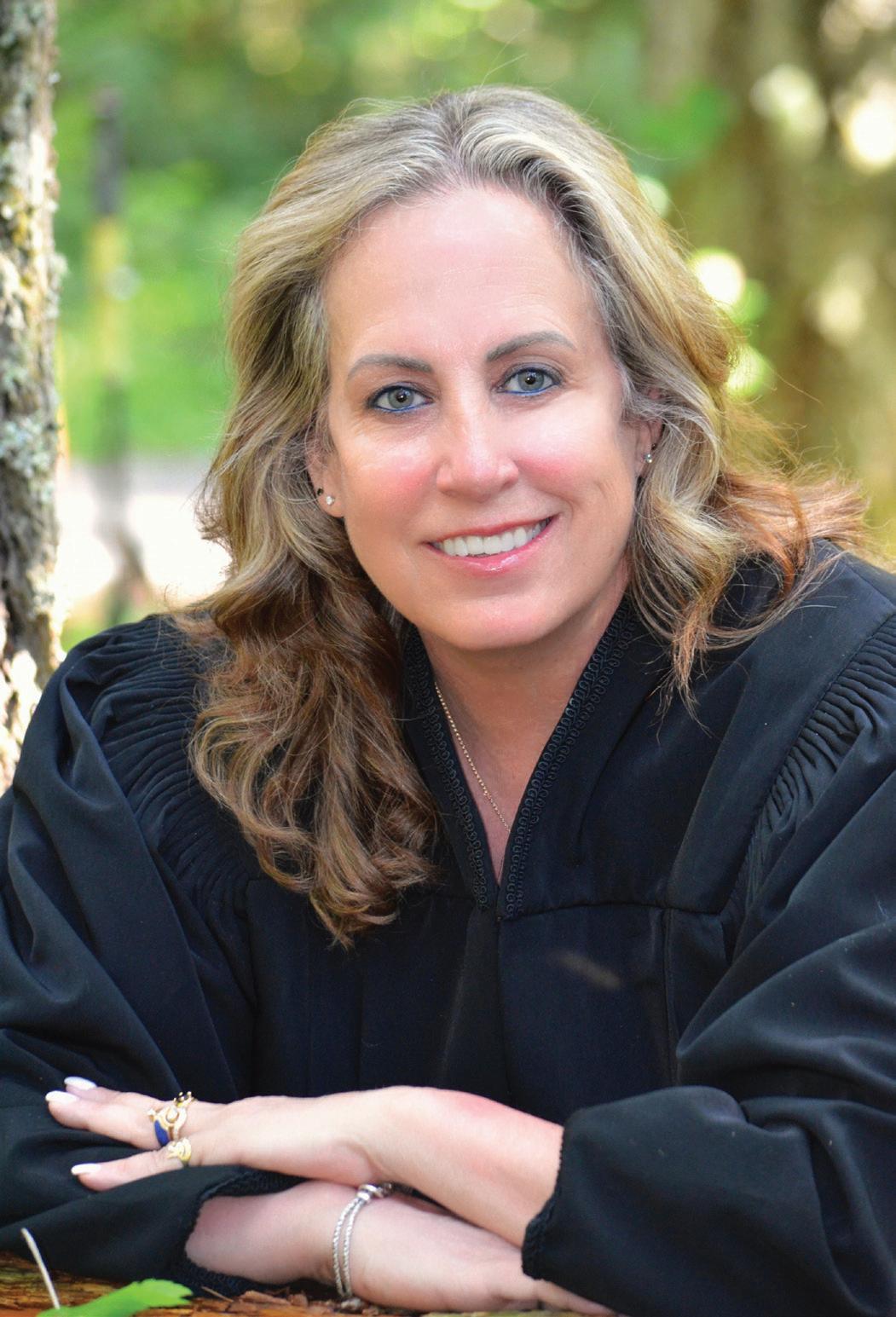
Judge Jessica Peterson
From a childhood fascination with truth and justice to a career defined by thoughtfulness, empathy, and decisiveness, Judge Peterson’s path to the bench is anything but ordinary. In this candid conversation with Vegas Legal Magazine, Judge Peterson reflects on the early influences that shaped her love of problem-solving, the mentors and moments that guided her toward the judiciary, and the personal experiences that continue to inform her no-nonsense yet deeply human approach to the law. Equal parts insightful and disarming, the interview offers a rare look at the woman behind the robe - one who believes that clarity, kindness, and careful thinking are just as essential to justice as the written word of the law.
Vegas Legal Magazine (VLM): Can you tell us a little about your background and what inspired you to pursue a career in law?
Jessica K. Peterson (JKP): I was born in London England in 1971. I moved to California in 1975. My mother limited my television time as a child, except for Saturday mornings when I could watch all the cartoons I wanted. My favorite was Superfriends and my favorite character was Wonder Woman. She had a truth lasso and I thought one of these days I would like a truth lasso. I was an inquisitive child, as my mother liked to say I was the original “why” child. I would ask a question and she would send me upstairs to our encyclopedias and if the answer was not there I would ride my bicycle 10 blocks to the library. I remember watching Murder She Wrote, Matlock and LA Law growing up and always was intrigued by how the characters were able to solve the crime and figure out the puzzle. Figuring things out was always of interest to me and so I knew that I would always be involved in the law in some fashion or another. I was ten years old when Sandra Day O’Connor was appointed as a Supreme Court Justice. In her, I saw a woman who was both a lawyer and a mother ascend to one of the highest positions in the country. I thought that was pretty cool and aspired to be her.
VLM: Who or what had the biggest influence on your decision to become a judge?
JKP: The what goes back to my childhood, researching and figuring things out is truly what I love to do. As a Judge, one is presented with puzzles, having to read and understand and figure out the answer is at the end of the day what we do as Judges. I love working through issues and coming up with answers. The who is Judge Charles Johnson of the 57th Circuit Court in Emmett County Michigan. I clerked for him in my last quarter of law school. After working for him, and seeing how he approached the law from both a legal and equitable approach I knew that I wanted to do what he did.
VLM: Looking back, what experiences shaped your approach to the bench?
JKP: My approach stems from both my professional and personal experiences. As an attorney, sometimes when I left the courtroom I would wonder how the Judge had arrived at their decision; this made it difficult to explain the decision to clients and often resulted in clients asking me to appeal or file Motions for Reconsideration. Additionally, I remember sometimes having to go to Court and waiting for long periods of time before my case was called. I vowed that when I became a Judge that the attorneys who appeared before me would always be able to understand my decisions and that I would endeavor to value their time.
From a personal perspective, I have been exposed to many different people and walks of life. I lived in Europe for two years in high school, moved to Utah, Washington State then Michigan before moving to Nevada in 2007. I have been a receptionist, a nanny, a waitress, a bartender, an office worker, a sandwich maker, a hostess, an attorney and a Judge. All of my prior experiences have shaped me into someone who knows that everyone is important, none of us are perfect and everyone really is doing the best they can. I try very hard to be both fair and
equitable while remaining within the confines of the law when rendering my decisions.
VLM: Outside of the courtroom, what are some of your personal interests or hobbies?
JKP: My biggest hobby is spending time with friends and family, it really doesn’t matter what we are doing. I also enjoy getting involved with community events. There is not a lot I won’t do, I enjoy cooking, painting, gardening, playing poker, working out, going to the theater both Smith Center and regular movies, playing with my dog, reading, heck - I can even make cleaning the house fun! – just don’t ask me to go hiking.
VLM: What do you enjoy most about serving as a judge?
JKP: There are so many things that I love about this job. I love being able to do as much legal research as I want without having to worry about billing clients for it. I love being able to help people resolve their cases, which I get to do a lot of through the Settlement Conference program. I also love the feeling that I am making a difference in people’s lives.
I have had many people that have told me that they could tell that I cared not just about the job but the people, which I do, and so it is extremely rewarding when the efforts that you make are recognized.
VLM: What is the most challenging aspect of the role that people might not realize?
JKP: Transitioning from being a lawyer to a Judge you can find yourself thinking why is someone not making a certain argument or objecting -- avoiding the desire to play the “third lawyer” and not interjecting can be challenging. Having to rule in favor of one side when both sides are making valid and compelling arguments can be challenging. Balancing the need to insure that everyone is heard while still being conscientious and respectful of every other attorneys valuable time can be a challenge.
VLM: What qualities do you most appreciate in attorneys who appear before you?
JKP: Being prepared – this does not mean knowing what is contained in their Motion or Opposition, this means being prepared to answer the questions that the Court has that might not be contained in their
Motion or Opposition. I like attorneys who listen to both the Court and opposing counsel to understand rather than to respond and who are patient with both opposing counsel as well as the Court.
VLM: What are some common mistakes you wish attorneys would avoid in your courtroom?
JKP: Lack of courtroom decorum, by way of example interrupting or talking over each other or the judge; failing to respond to questions that are being asked, or attacking opposing counsel either in the courtroom or in written pleadings. Forgetting that zoom appearances they should act like they are live in the courtroom.
VLM: How do you think the legal community in Las Vegas can better support one another?
JKP: Setting client expectations in the beginning of a case can go a long way to being able to work with opposing counsel. If your client understands that you are going to run the day to day aspect of their case, it will make being able to give professional courtesies to the other side easier and will generally enable you to move your case forward easier. Also, if a deadline is coming up be proactive, while everyone needs to manage their own workload, if you know that there is a whole host of discovery that needs to be done that has not been done, maybe reach out to opposing counsel before they have to file the Motion seeking the extension and see if you can agree. Lastly, BE KIND.
VLM: What advice would you give to young or newly licensed attorneys starting out in the profession?
JKP: Get involved in the legal community. Go sit in courtrooms during Motion Calendar. I learned the most from just going and sitting in certain Judges courtrooms after I was done with my hearing for the day. CLE’s are required but your best education will come from watching how others do it and listening to Judges. Remember to have fun and to fight over the legal issues never make it personal. At the end of the day, win or lose, you should be able to leave the courtroom and go have coffee, lunch or cocktails with opposing counsel.
VLM: Looking back at your own career, what do you wish you knew as a young lawyer?
JKP: I wish I would have known about all the organizations that are available to help you become
a part of the legal community.
VLM: What would you like to see more of from your fellow judges across Nevada?
JKP: Our judiciary is very collegial. We help each other – I would love to have more education on certain aspects of cases that the more senior judges may have had more experience with. I think we do a good job now on a one on one basis of helping each other but maybe a more concerted and combined effort at education.
VLM: How do you see the role of judges evolving over the next decade?
JKP: Judges will always be necessary. While AI can certainly increase the speed at which a Judge can obtain answers to research questions and may even potentially assist in drafting decisions, AI also hallucinates cases and does not yet have the creativity, empathy, or critical thinking necessary to replace people. I think the focus these days being more on rehabilitation than punishment at least in the criminal realm that Judges will take a more active role in creating diversionary programs that will help to rehabilitate people.
VLM: What do you hope your legacy will be when people look back on your judicial career?
JKP: I hope that I am remembered as a thoughtful, caring, intelligent and creative judge. One that followed the law at all times and looked at legal problems through a pragmatic lens and offered alternative ideas and solutions to solving those legal problems. I hope I am remembered as fair but tough and as funny and kind. I am certain I will be remembered as someone who has a no nonsense approach, a quick mind and an appreciation for preparedness.
VLM: What keeps you grounded in a profession that can be demanding and high-pressure?
JKP: I know it may sound hokey but truly being grateful every day that I get to live my life. In 2012, I had brain surgery, I was told that if when I woke up that I was unable to speak that I would never speak again, anyone who knows me knows I am a chatterbox so the idea that I could potentially never speak again was terrifying – not to mention I could have died. Going through something like that changes your perspective on life, and I am just
grateful to be here and that I get to help people on a daily basis. I also try to remember that EVERYONE, from the litigants to the attorneys is doing the best they can with what they know. Some of us know more than others, that does not make us better or worse it just means that we may approach and look at issues from a different viewpoint and perspective. Talking problems and issues out with colleagues and friends and taking time for daily reflection and meditation helps remind me of that. Additionally, remembering to have fun everyday even if it is just dancing in my kitchen as I mop the floors (remember I said I could make cleaning house fun) because laughter and joy truly is the best medicine.
VLM: What do you enjoy most about living and working in Las Vegas?
JKP: From the shows to the restaurants to the opportunities to get involved in the community there is always something to do. I like how Las Vegas is a “big little city” and that it is a community that will come together in times of tragedy as well as celebration. The temperate climate and ability to wear open toed shoes 330 days a year also doesn’t hurt. I have now lived here longer than anywhere else I have lived, I bought a home and have set down roots. I am proud to call Nevada home.
VLM: Your top three restaurants and bars?
JKP: Herbs & Rye – One of the few places that can make an actual Sazerac and the steaks are good too.
Echo and Rig – blueberry pancakes and bottomless mimosas. I still love Marche Bacchus even if Jeff and Rhonda are no longer the owners simply for the location.
But as most people who are my friends know – as long as it’s not Brussel sprouts or liver I’m in…
Final words…in honor of my late Godfather the legendary David E. Davis Jr., who was always proud of me and who always pushed me to be
better… Cogito Ergo Zoom. This was David’s adaptation of Rene Descartes ‘cogito ergo sum’ which means ‘I think, therefore I am’. My godfather substituted “think” for “go fast” (“zoom”), reflecting a belief that a person’s intelligence and decisiveness are demonstrated by their ability to act quickly and with purpose. I strive every day to balance patience with decisiveness and to be circumspect and thoughtful in my approach to this job while always acting within the confines of the law. I promise I will continue to do so for as long as the community will have me.
Yours in service. JKP
Prescription
Prior
Guaranteed
24/7
Patents for AI-Related Inventions
By Nick Beaulieu, Esq.
Over the past few years, there has been considerable discussion about whether patents should be allowed for inventions in emerging technology areas, such as artificial intelligence (AI), cryptocurrency, blockchains, and medical diagnostics. The argument for allowing patents in these areas is that they encourage investment in developing new technologies and bring new products and services to the market. For instance, entrepreneurs and investors are more likely to invest in new products and services if they know that a patent protects their idea, as it grants them the exclusive right to make, use, and sell the technology over the lifetime of the patent. On the contrary, the argument against allowing patents in these areas is that granting exclusive rights to ideas may increase the costs of products and services or stifle competition.
The second Trump administration has signaled that it will be more pro-patent and allow patents in emerging fields. President Trump has appointed
Howard Lutnick as the United States Secretary of Commerce, overseeing the United States Patent and Trademark Office (USPTO), and has appointed John Squires as the Director of the USPTO. Both Secretary Lutnick and Director Squires have impressive backgrounds in supporting patents and new inventions. Secretary Lutnick is one of the most prolific inventors holding a U.S. government position in history. He is a named inventor on over 400 U.S. patents. Many of these patents have been in emerging technological areas such as finance, trading, exchange technology, and e-markets. Director Squires, earlier in his career, served as the Chief Intellectual Property Counsel for Goldman Sachs and was most recently a Partner and Chief of the IP and Emerging Companies practice at the law firm of Dilworth Paxson LLP. Director Squires was sworn into office on September 22, 2025. On September 23, 2025, the following day, Director Squires signed and issued his first two patents as the Director of the USPTO. The first patent was U.S. Patent 12,419,201 for an invention in medical
diagnostics, and the second was U.S. Patent 12,419,202 for an invention in distributed ledger/ crypto technologies. Director Squires said, “I say to inventors and entrepreneurs everywhere: the U.S. Patent Office is your partner,” and “[w]e are here to secure your rights, unleash your potential, and ensure that innovation continues to power America’s future.” In light of the recent appointments of Secretary Lutnick and Director Squires, the USPTO’s procedures for handling inventions related to AI and other emerging technologies are likely to continue evolving.
The latest official guidance from the USPTO on AI-related inventions was a memorandum issued on August 4, 2025, and titled “Reminders on Evaluating Subject Matter Eligibility of Claims under 35 U.S.C. 101” (hereinafter “2025 AI Memo”). The 2025 AI Memo clarifies that existing U.S. patent law should be used to examine patent applications for AI-related inventions and provides a “reminder” for when subject matter eligibility rejections should be made.
Each patent application filed with the USPTO undergoes a rigorous examination. A patent examiner first reviews a patent application and performs a prior art search. The patent examiner compares the invention described in the patent application with the prior art and determines
whether the invention is novel. An invention is novel if it is not the same as previous inventions. Then, the patent examiner determines whether the invention is obvious. To determine whether an invention is obvious, the patent examiner identifies the differences between the invention and the prior art, and then performs an analysis of whether the differences would have been obvious to a person of ordinary skill in the art at the time of the invention.
In addition to the standard novelty and obviousness tests, each invention is also examined to ensure that it qualifies as patent-eligible subject matter. Patent eligible subject matter includes processes, machines, articles of manufacture, and compositions of matter. AI-related inventions commonly fall within the categories of processes and machines. However, patent eligible subject matter excludes laws of nature, natural phenomena, and abstract ideas. U.S. courts have held that abstract ideas can encompass inventions directed to mathematical formulas and methods of organizing human behavior. This has led to some AI-related inventions being rejected by the USPTO, as the USPTO has viewed them as mathematical formulas or methods of organizing human behavior.
The 2025 AI Memo reiterates that the U.S. Supreme Court’s current test for determining patent-eligible subject matter, referred to as the two-step “Alice/ Mayo Test,” also applies to AI-related inventions. The first step of the Alice/Mayo Test is to determine whether an invention is directed to a patentineligible concept such as an abstract idea, a law of nature, or a natural phenomenon. If the patent is not directed to a patent-ineligible concept (i.e., the patent is directed to a patent-eligible concept such as a process, machine, article of manufacture, or composition of matter), the invention qualifies as patent-eligible subject matter, and a patent may be issued for the invention. If the invention is directed to a patent-ineligible concept, the patent examiner proceeds to the second step.
The second step of the Alice/Mayo test is to determine if the invention includes an “inventive concept” that adds an element or combination of elements that transforms the invention into significantly more than an abstract idea or law of nature itself. If the patent examiner determines that the invention does not have an “inventive concept,’ the patent application is rejected for the invention not being directed to statutory subject matter. If the patent examiner determines that the invention does
have an “inventive concept,” the invention qualifies as patent-eligible subject matter, and a patent may be issued for the invention.
From my perspective and from what I have heard from my colleagues, patent examiners have been inconsistently applying the Alice/Mayo test to AIrelated inventions. I think this primarily stems from the fact that the underlying cases the U.S. Supreme Court was deciding when developing the Alice/ Mayo test were medical diagnostic cases, rather than AI cases. In an effort to help resolve this issue, the 2025 AI Memo provides several helpful “reminders” that I think will help improve consistency among patent examiners when dealing with AI-related inventions.
The 2025 AI Memo clarifies when AI-related inventions should be rejected for being directed to methods of organizing human behavior. Patent examiners have sometimes rejected AI-related inventions because they include steps or functions that a human could perform. For example, an AI-related invention may involve steps such as collecting data, analyzing the data, and making a decision based on the analysis. A patent examiner could argue that the AI-related invention is directed to a method of organizing human behavior, because a human could similarly perform steps of collecting data, analyzing data, and making a decision based on the data. However, the 2025 AI Memo states
that AI-related inventions that encompass AI in a way that cannot be practically performed in the human mind should not be rejected as being directed to methods of organizing human behavior. Many AI-related inventions involve collecting and analyzing large amounts of data and updating large mathematical models that cannot be practically performed in the human mind. Therefore, I think this clarification or “reminder” will help advance patents for AI-related inventions. Additionally, the 2025 AI Memo reminded patent examiners that inventions directed to improvements in computerrelated technologies and inventions directed to technological solutions to technological problems are patent-eligible subject matter.
In light of the above, the USPTO’s handling of examining patent applications for AI-related inventions is continuing to evolve as more advances are made in this field and larger volumes of patent applications are filed for AI-related inventions. The USPTO is adapting how it applies laws originally developed to handle other technological fields, such as medical diagnostics, to AI-related inventions. The current administration has signaled its intention to move the USPTO towards a more patent-friendly approach, issuing more patents for AI-related inventions to encourage technological development and stimulate businesses to bring new products and services to market.
Nevada Doubles Down on Arbitration: Breaking Down the Changes Coming in 2026
By Benjamin Reber, Esq.
A New Year, a New Playing Field
You file the complaint, expect discovery to unfold before a judge, maybe even anticipate a jury trial.
But under Nevada’s newly revised CourtAnnexed Arbitration Program, your case never makes it that far. Instead, it’s directed into mandatory nonbinding arbitration, where the rules of evidence are looser, the timeline shorter, and the right to a jury, while technically preserved, feels a little further away.
Starting January 1, 2026, Assembly Bill 3 (AB3) will double the jurisdictional limit for mandatory nonbinding arbitration from $50,000 to $100,000, expand the number of exemptions, raise awardable attorney fees, and remove the limit on arbitrator compensation.
On paper, it’s about efficiency. In practice, it redefines how, and where, Nevadans pursue civil justice.
A Refresher: Nevada’s Mandatory Arbitration Program
Since its creation in the early 1990s, Nevada’s Court-Annexed Arbitration Program (CAAP) has aimed to remove lower-value cases from crowded district court dockets and move them into a faster, less formal process.
The program applies in Clark and Washoe Counties—Nevada’s two most populous jurisdictions—and assigns eligible cases to neutral arbitrators drawn from a rotating panel. Those arbitrators oversee discovery, hear evidence, and issue nonbinding awards.
Either party can reject the award and request a trial de novo, but doing so carries cost risks and time penalties. Discovery and evidentiary rules are streamlined, and the entire process must typically conclude within six months.
For nearly two decades, the program
covered cases valued under $50,000. That limit, unchanged since 2005, is now being recalibrated to match inflation and the growing costs of litigation.
The Road to AB3
AB3 began as a relatively modest proposal from the Nevada Supreme Court and the Administrative Office of the Courts. They asked the Legislature to raise the arbitration cap to reflect inflation and the rising costs of litigation. After all, $50,000 in 2005 dollars equates to roughly $83,000 today.
The logic was straightforward: with medical costs, vehicle repairs, and lost wages all ballooning, more and more “simple” or “straightforward” cases were falling outside arbitration’s reach, forcing them into the district court system and adding to backlog. The arbitration program felt like it was losing its teeth. Getting an exemption from the arbitration program sometimes felt like the civil world equivalent of the phrase “you can indict a ham sandwich.” If Nevada is going to have this program, it was only a matter of time before the value limits saw an increase.
The Nevada Justice Association (NJA), representing the plaintiff’s bar, initially opposed the measure, voicing concern that raising the cap would expand the number of cases forced into arbitration and further distance litigants from jury trials.
The NJA ultimately withdrew its opposition after negotiating key amendments, including:
• Raising the recoverable attorney’s fee cap for prevailing parties from $3,000 to $15,000;
• Adding new categories of automatic exemption; and
• Leaving certain procedural protections intact (such as the ability to demand a trial de novo).
The compromise passed with bipartisan support, and Governor Joe Lombardo signed it into law on June 3, 2025.
The Key Changes
1. Jurisdictional Cap Raised to $100,000
AB3 raises the arbitration program’s monetary threshold from $50,000 to $100,000. This means any civil case in Clark or Washoe County with a probable jury award under $100,000, exclusive of attorney’s fees, costs, and interest, will automatically be assigned to arbitration unless it falls under a listed exemption.
2. Expanded Automatic Exemptions
There are certain categories of cases that are, by their very nature, exempt from the arbitration program. Three new categories join the automatic exemption list:
• Insurance bad faith actions seeking punitive damages;
• Sexual assault or sexual battery actions; and
• Product liability actions.
• These claims, which often involve complex facts, large damages, or public policy implications, were essentially deemed inappropriate for an abbreviated adjudication through the arbitration program.
3. Attorney’s Fee Cap Increased to $15,000
The recoverable attorney’s fees for prevailing parties rise from $3,000 to $15,000, aligning CAAP with Nevada’s Short Trial Program. While a welcome update for practitioners, it still falls short of the compensation available in full district court litigation.
4. Arbitrator Compensation Cap Removed
AB3 removes the old $100-per-hour, $1,000-total cap on arbitrator pay. The Nevada Supreme Court will now set compensation limits by rule, ensuring rates remain current and competitive.
5. Parallel Changes to Short Trials
The Short-Trial Program, which governs de novo trials following arbitration, also sees its limit rise to $100,000, maintaining parity between the two systems.
Supporters Say: Efficiency and Modernization
Supporters describe AB3 as a long-overdue modernization. With medical costs, property damage estimates, and expert witness fees rising sharply, more and more cases were slipping beyond the old $50,000 limit and into full district court proceedings—undermining the purpose of the arbitration program.
By raising the cap, proponents say the reform restores balance. Arbitration provides quicker resolutions, reduces court congestion, and lowers litigation costs for both sides. The increased attorney’s fee recovery, they note, makes the process more practical for counsel handling modest-value cases.
Supporters also emphasize that arbitration remains nonbinding. Litigants retain the right to a jury trial by requesting a trial de novo; they just have to earn it by going through arbitration first.
Critics Say: A Step Away from the Jury Box
Critics are less convinced. They argue that while arbitration is nonbinding, its practical effects are binding in all but name. Cases funneled into the arbitration track often settle based on the arbitrator’s award; not because clients are
satisfied, but because challenging the award and requesting a trial de novo is often too costly or time-consuming to justify.
In that sense, critics argue that AB3’s expansion subtly shifts the balance away from the Seventh Amendment’s promise of trial by jury and toward an efficiency model that prioritizes docket management over litigant choice. It prioritizes speed over rights.
Sending a greater number of cases into a mandatory arbitration program revitalizes lingering constitutional questions. Although courts have consistently upheld Nevada’s nonbinding arbitration system, raising the jurisdictional cap to $100,000 leads one to wonder, how far can our government go in restricting a person’s right to a jury trial (and taking decision making power away from the people) in the name of efficiency?
The Larger Question: Efficiency at What Cost?
Beyond practical considerations, AB3 raises a deeper philosophical question about the rule of the civil jury is a democratic society. There are important motivations underlying the Seventh Amendment that an expanded mandatory arbitration program does not address.
First, the civil jury is a structural safeguard of liberty. The founders were concerned of judicial elitism and resentful of unchecked judicial power. They believed that juries acted as the democratic element of the judiciary.
Second, it creates a vehicle that allows for citizens to participate directly in government, a core democratic ideal. Civil juries are intended to help legitimize outcomes and ensure judicial decisions reflect community values, not detached technical rulings. It is important to have our citizens engage is legitimate aspects of civil service.
Third, having individuals, who are insulated from state influence, deciding private disputes,
allows for a more impartial resolution. The founders feared that the judiciary would favor creditors, merchants, or the government itself over ordinary citizens; the civil jury helps prevent that from occurring.
These interests are all diminished by sending a larger number of cases into a mandatory arbitration program. $100,000 is not a small sum. The average annual salary in Nevada is $58,788. Under these new rules, an individual could have a claim for damages for nearly two times their annual income, and our government has declared that it is a “small” or “simple” case, and they will be compelled into arbitration. The arbitration lacks the democratic element of a jury, it does not allow an opportunity for our citizens to engage in civil service as jurors, and there is no meaningful safeguard to ensure that arbitrators are insulated from improper influences.
Arbitration can absolutely deliver fair, fast outcomes. But it can also compress stories, simplify damages, and reduce the human dimension of civil justice to line items in a neutral’s award. It sacrifices many of the elements that our founders believed critical for the survival of our nation with the simple goal of efficiency.
Conclusion: A Balancing Act
Assembly Bill 3 represents progress, but is it in a positive or negative direction? It brings adjustments to fees and procedure. It attempts to make concessions for certain cases and making it more reasonable for attorneys to handles the cases, but it also extends arbitration’s reach deeper into the heart of Nevada’s civil justice process, reshaping how and where ordinary citizens find resolution.
For now, the Legislature’s bet is clear: efficiency will yield fairness. As Nevada doubles its arbitration threshold, it also doubles down on a fundamental question—how much efficiency can justice bear before it begins to bend?”
The Framework of General Tribal Criminal Law and PL 280
By Sarah Collins, J.D., LL.M.
The roots of indigenous governance are largely under-appreciated in teachings of the U.S. legal system, and thus marginalized from the basic understanding of many state and federal legal practitioners. But these roots are as basic as our democracy itself. Afterall, it was the Haudenosaunee Confederacy which established the Great Law of Peace in 1142. It was this democratic system that the founding fathers used for the framework of the U.S. Constitution. Our bicameral system recognized these indigenous roots under Senate Concurrent Resolution 76 (S.Con. Res.76) and House Concurrent Resolution 331 (H.Con.Res.331) in 1987. While most of our legal teachings dedicate scholarship in courts of old England, absent are meaningful discussions on indigenous governance and indigenous democracy within our founding framework.
Thus, this article is framed to present the most basic understanding of one fragment of law within
the microcosm of indigenous jurisprudence: tribal criminal law and jurisdiction. And although the dive includes a largely hegemonic and patriarchal legal interpretation in the early years of our U.S. history, it does begin to shift as our democracy ages in its own wisdom.
In Worcester v. Georgia, 31 U.S. 515 (1832) the Supreme Court held that state law “can have no force” in Indian territory. The following year in Ex Parte Crow Dog 109 U.S. 556 (1883), the Supreme Court ruled that the federal government did not have jurisdiction over Indian-on-Indian crimes in Indian country when the tribal government prosecuted the defendant in accordance with tribal law. This set the stage for state and federal criminal law jurisdiction in constitutional interpretation: there was none. The case concerned a murder charge, and the sentence was what we may call a form of restitution to the victim’s family, when at the time state and federal sentences were
death penalties. Interestingly, it also reveals that concepts of restorative justice are anything but new within our legal systems, should we choose the inclusive perspective of tribal governance.
Congress did not like the court’s interpretation on the limits of federal power over tribal government, and quickly passed the Major Crimes Act, which granted federal jurisdiction powers of felony level crimes in Indian country, including murder, rape, assault of a minor under 16, and kidnapping. United States v. Kagama, 118 U.S. 375 (1886) became the test pilot on whether the Supreme Court would uphold the novel idea that congress had plenary power to regulate tribal criminal jurisdiction and hence give force to the Major Crimes Act. The court did. From this, the legal interpretation stemmed from congressional ability under the Indian Commerce clause “[The Congress shall have Power . . . ] To regulate Commerce with foreign Nations, and among the several States, and with the Indian Tribes; . . .” (U.S. Const. art. I, § 8, cl. 3.).
In the 1950s, the federal government decided it was overly burdensome to investigate, charge, try, and convict felony cases arising in Indian territories and passed what’s commonly known as PL-280 (Public Law 83-280 (67 Stat. 588)). This congressional mandate ceded its federal jurisdiction over Indian crimes to particular states (Alaska, California, Minnesota, Nebraska, Oregon, and Wisconsin) and granted some other states an option to join. However, there were tribal nations (colonies, rancherias, communities, or otherwise) that had treaty agreements with the United States prior to state recognition. Thus, the grounded analysis in Kagama of treaty agreement for the US federal government to have criminal jurisdiction over a particular tribe did not always flow onto states. This goes into some contract law principles the average legal practitioner would be familiar with-- basically a party to an agreement (the tribal nation) could have no foreseeable way of knowing a nonexistent state would somehow be ceded federal powers over that tribe’s jurisdiction in the future. Thus, there was no
sound interpretation for which PL-280 could be grounded. These tribes are Red Lake Nation (Minnesota), and Warm Springs (Oregon). As such, federal criminal jurisdiction and tribal criminal jurisdiction remain. Minnesota nor Oregon have jurisdiction to bring indictments, charges, prosecution, or sentencing for matters arising under Warm Springs or Red Lake jurisdictions. We also see this reasoning reaffirmed in McGirt v. Oklahoma, 591 U.S. ___ (2020).
More tribal nations have successfully argued their exceptions as well. Oregon is currently working to either cede its PL-280 criminal jurisdiction to tribes or relinquish this back to the federal government in piecemeal. Some non-mandatory states have ceded this authority back to the federal government (Nevada). Thus, there are instances where federal courts and tribal courts have jurisdiction over crimes committed in Indian territory, and others where this concurrent jurisdiction resides in state and tribal court systems.
Next, it is important to understand coverage of felonious crimes borne from the Major Crimes Act. The Major Crimes Act granted the federal judicial branch with exclusive jurisdiction over those six high crimes. This also explains why there has been more development of misdemeanor criminal laws in tribal nations—because those six high crimes are exclusive jurisdiction of the federal government, and concurrent jurisdiction in misdemeanor crimes. For example, say an Indian shoots and kills another Indian inside a residential dwelling within a band’s territory. This person may face felony murder charges in federal court and related misdemeanor charges such as discharging a gun in a tribal court. The tribal police and Federal Bureau of Investigation would have jurisdiction for investigation; tribal and federal prosecutors would have jurisdiction to bring charges in their respective courts. If a PL-280 state, the state police would have authority to investigate the crime as well as tribal police. The state prosecutor and tribal prosecutor would have authority to bring those charges in their respective courts (felony in
state, misdemeanor in tribal).
As one can imagine, this framework has been an immense strain on tribal criminal justice systems and a tribe’s ability to self-govern felonious crimes in Indian country. We see high levels of missing and murdered indigenous women, sophisticated drug trafficking earmarking tribal nations, and more. The Tribal Law and Order Act is a band aid style fix to the bounds of criminal justice in tribal judicial branches. The Act recognizes tribes’ inherent authority to govern when certain conditions are met. Because Congress has only plenary power over interstate commerce of Indians, the framework for congressional acts on tribal governance is inherently different than those for states. Rather than empowering tribes with authority (which it cannot do as tribes have governed longer than the United States and have their own separate Constitutional instruments and sovereignty) it merely recognizes tribal authority of felonious level crimes when certain conditions are met. In this way, tribal nations have their own volition on whether or not to create and codify laws that would comport with the TLOA so that their enhanced sentences are recognized if appealed through federal circuits. This
instrument provides for enhanced sentences (3 charges with 3 year sentences which may run consecutively at a maximum of 9 years). It also requires that tribal defense attorneys meet minimum requirements, as well as judges; that court records be maintained; that defendants have access to appeal; minimum standards for valid search warrants; and more baseline rights. (The Tribal Law and Order Act is an amendment to the Indian Civil Rights Act).
The Supreme Court upheld the validity of Indian Civil Rights Act and its congressional plenary power hook under its language recognizing inherent tribal authority in United States v. Lara, 541 U.S. 193 (2004) (congress has the authority to recognize tribal inherent authority of criminal jurisdiction for nonmember Indians).
As these instruments are relatively new (the Tribal Law and Order Act was passed in 2010)— but continue to function as band aid fixes. This is because the framework of territorial jurisdiction, subject matter jurisdiction and personal jurisdiction over crimes committed in Indian country have had exceptions. The Supreme Court of the United States continued to affirm that tribal nations (and by extension
tribal courts) did not have personal jurisdiction over non-Indians for crimes committed against Indians within the tribe’s territory. (Oliphant v. Suquamish Indian Tribe, 435 U.S. 191 (1978). So while we have a framework where Indians can be tried for crimes against Indians, non-Indians continue to escape justice in the community where the crimes are perpetuated with low prosecution rates for non-Indians for crimes committed against Indians.
The premise of Oliphant goes back to when Indian criminal courts were not permitted to try U.S. citizens in tribal court, and the framework was to deliver non-Indian “bad men” to the state or federal authorities for investigation of crimes. The way I conceptualize this is to think of it as a form of “diplomatic immunity” during the first century of our country. The non-Indian U.S. citizen would face charges in their state or federal court system. This was, of course, a fixed system as Indians were excluded from testifying as witnesses in state courts under state law. As one can imagine, it would be highly unlikely that there would be enough evidence without Indian witness testimony necessary to successfully prosecute for a crime against Indian victims.
There is precedent limiting Oliphant to U.S. citizens under tribal law, which is best illustrated in Eastern Band of Cherokee Indians v. Arnulfo Torre, CR 03-143 (April 15, 2005). Though tribal precedent in one tribal nation as not binding on other tribal nations, and each tribal nation’s court system would follow its legal analysis under its relevant treaty and rationale). Though, because the rationale is to deliver “bad men” tribal police may still detain and search suspects and deliver them state or federal officers. (See United States v. Cooley, 593 U.S. ___ (2021) Tribal police officers have the authority to detain temporarily and to search non-Indian persons traveling on public rights-of-way running through a reservation for potential violations of state or federal law).
Because people do not operate within these abstract silos where people do not mix with other people, this framework continues to
exacerbate crimes in Indian country. Many tribal members marry non-tribal members and continue to live within Indian territory. The legal framework which allowed non-Indians to escape criminal prosecution in Indian country continued to exacerbate missing and murdered indigenous women. Tribal governments have tried to work within a larger scope of civil jurisdiction to address and govern tribal social welfare with methods such as exile from tribal lands. But by and large non-Indians committing crimes against Indian victims continued to make tribal land some of the most dangerous places for tribal women.
The band aid fix for this is the Violence Against Women Act, passed in 1994. There, congress recognizes tribes’ inherent authority to charge, try and convict non-Indians for domestic violence related crimes. But this only fills in one gap—leaving out many more problems such as non-Indians abuse of their Indian children, drug trafficking, burglary, robbery, manslaughter, and other common crimes. Not Invisible Act of 2019 and Savanna’s Act of 2020 close some administrative and investigative gaps between federal, tribal, and state for crimes.
Non-Indian drug trafficking and possession has become one of the greatest strains of tribal governments’ ability to govern social welfare of tribal members. Oliphant’s 1978 holding that tribal courts do not have inherent criminal jurisdiction over non-Indians remains where congress has not explicitly recognized tribe’s inherent authority. One solution some tribes have implemented is tribal-state or tribal-federal cross deputization so that the tribal police officers have the requisite powers to investigate state crimes, which provides more authorization than the basic initial blanket authority of Cooley. In addition, tribal governments have ongoing contracts with tribal jails, as well as state and federal prisons for incarceration. But, these are by and large workarounds to Oliphant limitations for tribal courts to convict drugrelated non-Indian crimes.
Congress continues to demonstrate a
momentum and trajectory to recognize tribe’s inherent authority to investigate, charge, and convict crimes committed by non-Indians. Though coverage continues to be recognized in piecemeal, complicating the analysis for both tribal and state legal practitioners. Congressional passages of “band aid fixes” continues to chip away at the Oliphant framework. We see no signs of congress regressing in this pattern. But for now, it remains a relevant factor complicating tribal adjudication powers over non-Indians.
Next, as this article is aimed for state licensed legal practitioners, you may be wondering: if tribes have more developed laws governing misdemeanor crimes, can the federal (or, where ceded, state) also bring felonious charges arising from the same conduct? That answer is yes. We get that answer in United States v. Wheeler, 435 U.S. 313 (1978). Hence, why my aforementioned example of felonious charges in one jurisdiction and misdemeanor charges in another. This example survives constitutional analysis without frustrating double jeopardy. We also see this issue revisited in Lara, where, again, semantics matter. There the court has a similar holding: because the ICRA itself recognizes certain inherent powers of tribes, it
is not a federal power ceded to tribes, thus it does not violate double jeopardy.
These are some of the basic principles and topics surrounding Pl-280, concurrent criminal jurisdiction, and more broadly tribal criminal law. It also is worth mentioning that many tribal nations also use civil penalties in addition with criminal codes in their criminal justice systems for non-Indians, such as exile, property forfeiture (this must be minor), and fines. I’ve seen exile related to child abuse cases, for example a non-Indian (married to an Indian living on a reservation with their tribal member children) may be exiled after multiple allegations and findings of child abuse.
Some tribes also have systems for non-Indians to waive personal jurisdiction, (though none which overlap with Nevada jurisdiction). For example, a non-Indian may prefer waiving personal jurisdiction for a drunk and disorderly charge for activity at an Indian casino they frequent on the weekends rather than be exiled in a civil proceeding. There are ethical dilemmas both in lawyering (defending your clients’ rights) and criminal procedure, but these things do develop. It’s also important to remember the
time frame in which congress would recognize a tribal government’s power over enhanced sentencing—only since 2010. It’s an important notation if you do go back and read tribal criminal cases—as there are some truly grave cases— that enhanced sentencing was “baked out” of the criminal law framework long ago, and only relatively recently added back in.
Last, it’s important to get a grasp on the Indian Civil Rights Act if you do see a career in tribal public defense or similar. When practicing in tribal jurisdictions it’s going to change how you posit your legal arguments. A tribal member’s civil rights aren’t governed by the U.S. Constitution – it’s governed by the Tribe’s Constitution and the ICRA. So, for example, you wouldn’t make a legal claim about jury violations under the sixth amendment when your client is a tribal member in tribal court. The governing instrument would be that Tribe’s Constitution, and the ICRA. This case would be appealed to the highest court of the Tribal Nation, then next you have an option of appealing to whatever the U.S. court of appeals is in your region or the D.C. circuit under the ICRA.
In conclusion, the importance of understanding
and differentiating between tribal, state, and federal jurisdiction continues to be paramount for state practitioners who should screen and appreciate that defendant or complaining witness’s Indian status may affect criminal jurisdiction and legal stratagem. Screening clients for Indian status is probably the easiest and most basic step for state practitioners and should be part of early information gathering process. Recognize when you probably just don’t know what you don’t know and seek conference with a tribal attorney. Especially if your practice area intersects with criminal law, such as domestic violence in family law, including tribal attorneys within your network is valuable.
Sarah Collins is a tribal attorney in Paiute Shoshone courts across the Mohave and Great Basin. She earned her J.D. from Mitchell Hamline School of Law, and LL.M. in Indigenous Peoples’ Law and Policy from the University of Arizona. She is an affiliated professor of law at Mitchell Hamline School of Law, teaching criminal law and contracts, and CLE Subcommittee CoChair of the Nevada Bar’s Tribal Law Section.
BUSINESS
“Coming together is a beginning; keeping together is progress; working together is success.”
Marijuana Rescheduling and the End of Section 280E
By Donovan Thiessen, CPA
On December 18, 2025, President Trump signed an executive order directing the federal government to begin the process of moving marijuana from a Schedule I to a Schedule III controlled substance under the Controlled Substances Act (CSA). The order instructs the Justice Department and Drug Enforcement Administration (DEA) to carry out the administrative steps required for rescheduling.
This action follows a 2022 directive by President Biden, requesting that federal agencies review the classification of marijuana. This process had produced limited progress until the issuance of this executive order. While rescheduling does not
legalize marijuana at the federal level, it removes one of the most punitive federal barriers facing cannabis businesses. This article examines the legal, tax, and business implications of that shift for a federally prohibited industry that continues to move toward normalization.
The Controlled Substances Act was passed in 1970. This act centralized drug regulation, taking into account medical use, public health, and law enforcement considerations. Administered primarily by the Department of Health and Human Services (HHS) and the DEA, it classifies drugs on a graduated scale from most restricted (Schedule I) to least restricted (Schedule III). Schedule I drugs
are considered to have no accepted medical use and can not be prescribed. Other drugs in this category are heroin, LSD, and MDMA. Schedule III drugs have a recognized medical use, acknowledgment of moderate abuse potential, and are prescribable under federal regulations. Drugs in this category include testosterone, ketamine, and Tylenol with Codeine. It is worth mentioning that fentanyl is currently a Schedule II narcotic, meaning that it is less dangerous than marijuana. The reclassing of marijuana to Schedule III reflects growing recognition of medical utility as well as the impacts on businesses in the many states where it is currently legal.
The current Schedule I classification causes cannabis businesses to be treated unlike nearly any other lawful enterprise for federal income tax purposes. Under IRS Code Section 280E, businesses that traffic in Schedule I or Schedule II controlled substances are denied deductions and credits for ordinary business expenses. As a result, cannabis companies may generally reduce taxable income only through cost of goods sold. At the same time, expenses such as rent, wages, payroll taxes, security, utilities, insurance, business license, and professional fees remain nondeductible. This framework produces unusually high effective income tax rates and, in
many cases, federal tax liabilities that bear little relationship to a business’s actual economic profitability.
Section 280E was enacted in the early 1980s to prevent illegal drug traffickers from deducting business expenses, not to address state-licensed businesses operating under comprehensive regulatory frameworks. Rescheduling marijuana to Schedule III would remove cannabis businesses from the narrow class of entities subject to Section 280E, allowing them to be taxed under the same general rules that apply to other regulated industries. From a tax perspective, Section 280E has long distorted financial reporting in ways that complicate both compliance and valuation.
The schedule change would permit cannabis businesses to deduct ordinary operating expenses for federal income tax purposes. As a result, taxable income and corresponding tax liabilities would decline, improving net income and cash flow. Increased liquidity could allow operators to reinvest in their businesses, expand operations, raise wages, and compete more effectively with illicit market participants. Viewed in this light, the change is less a form of tax relief and more a correction that allows the industry to operate under the same tax framework applied to most
other lawful businesses. State-level income tax typically follows Federal law, with state-level specific rules and adjustments. Nevada does not have state-level income taxes; however, it does have a wholesale cannabis tax and a sales tax that will remain unaffected by this schedule change. For operators in states with income tax, it should provide an additional level of tax reduction.
Federal tax credits and other deductions currently disallowed will become available to the cannabis industry. Tax credits and deductions for retirement contributions, employee health insurance expenses, and, importantly, IRS Code Section 199A, the Qualified Business Income Deduction. This deduction was enacted in 2017 and allows certain companies to deduct 20% of their net income, subject to various rules and limitations. Tax planning for cannabis companies will be critical and valuable.
By restoring ordinary deductions, rescheduling is expected to increase normalized earnings and reduce reliance on heavily adjusted financial metrics. That shift may change valuation analysis and expand investor appetite. As financial
performance becomes easier to evaluate and compare, merger and acquisition activity is likely to increase. Barriers to this remain, however, with various state-level ownership regulations.
While rescheduling marijuana to Schedule III does not require financial institutions to provide banking services to cannabis businesses, it is widely viewed as a step that could reduce perceived regulatory and enforcement risk. As a result, some banks and credit unions may become more willing to serve the industry, particularly in states with established regulatory frameworks. Any expansion of banking access is likely to be incremental. The most relevant legislative response to this is the SAFER Banking Act. This bipartisan bill has not yet passed, but it is viewed as a necessary step for banking normalization even after the rescheduling is complete.
Schedule III classification reflects a federal acknowledgment that marijuana has accepted medical use. That determination matters because it changes how the substance is treated under federal regulatory frameworks, particularly outside the criminal context.
Moving marijuana out of Schedule I reduces barriers to clinical research and lowers the level of institutional risk faced by universities, hospitals, and pharmaceutical developers. It does not amount to FDA approval, nor does it legalize marijuana at the federal level. It does, however, make it easier to study cannabis-derived treatments within the same regulatory system that governs other controlled medications. Over time, this shift could lead to more consistent medical standards, more explicit prescribing guidance, and the development of federally approved cannabis-based drugs. Those developments would not be confined to the cannabis industry. Employers, insurers, and other businesses may eventually feel downstream effects as medical use becomes more standardized and better understood. For instance, how does an employer react to employees who are lawfully prescribed marijuana?
Rescheduling Marijuana to Schedule III does not fix every legal or regulatory issue facing the cannabis industry, but it changes the federal framework in which these issues are addressed. Removing Section 280E represents a fundamental shift in how these businesses are taxed, while federal recognition of medical utility is expected to increase research and institutional participation. Together, these changes reduce friction between legal state markets and federal law without eliminating the need for careful compliance and planning. For operators, investors, and advisors, this marks a transition point that brings the industry closer to normalization while introducing some new complexity and opportunity.
Donovan Thiessen, CPA is the founder and owner of The Accountant, LLC. You may reach Donovan at donovan@theaccounantcpa.com, www. theaccountant.cpa, and 702.389.2727.
YOUR ALASKAN FISHING ADVENTURE AWAITS
RESERVATIONS ACCEPTED MAY - SEPTEMBER
Convenient Location
Airpor t Pickups
Log Cabin Accommodations
Private Chef
32-foot Boats
Daily Guided Fishing
Gustavus, Alaska
A world-class wilderness escape, just a 30-minute commercial flight from Juneau.
Located in the heart of Glacier Bay country, Eagle’s Nest Lodge offers a seamless Alaskan experience without the hassle of seaplanes or extended travel. With a commercial airport less than ten minutes from the lodge, guests are met upon arrival and personally driven to the property. Meaning less time in transit, and more time on the water.
Surrounded by breathtaking landscapes and abundant wildlife, the lodge is a gateway to some of Alaska’s finest fishing. From king and sockeye salmon to yelloweye, lingcod, and giant halibut, the waters here promise unforgettable encounters.
Our exclusive Guided Angler Fish Permits give our guests the rare privilege of keeping trophy-sized halibut that most anglers are required to release, transforming an extraordinary day on the water into a truly lasting reward.
Eagle’s Nest comfortably accommodates up to twenty guests, making it the ideal setting for private groups, executive retreats, and team-building escapes We offer virtual CLE events, where professional development pairs effortlessly with adventure in the wild.
BEAUTY & THE MOB
IGeri McGee, Frank Rosenthal and Las Vegas
By Don Logay
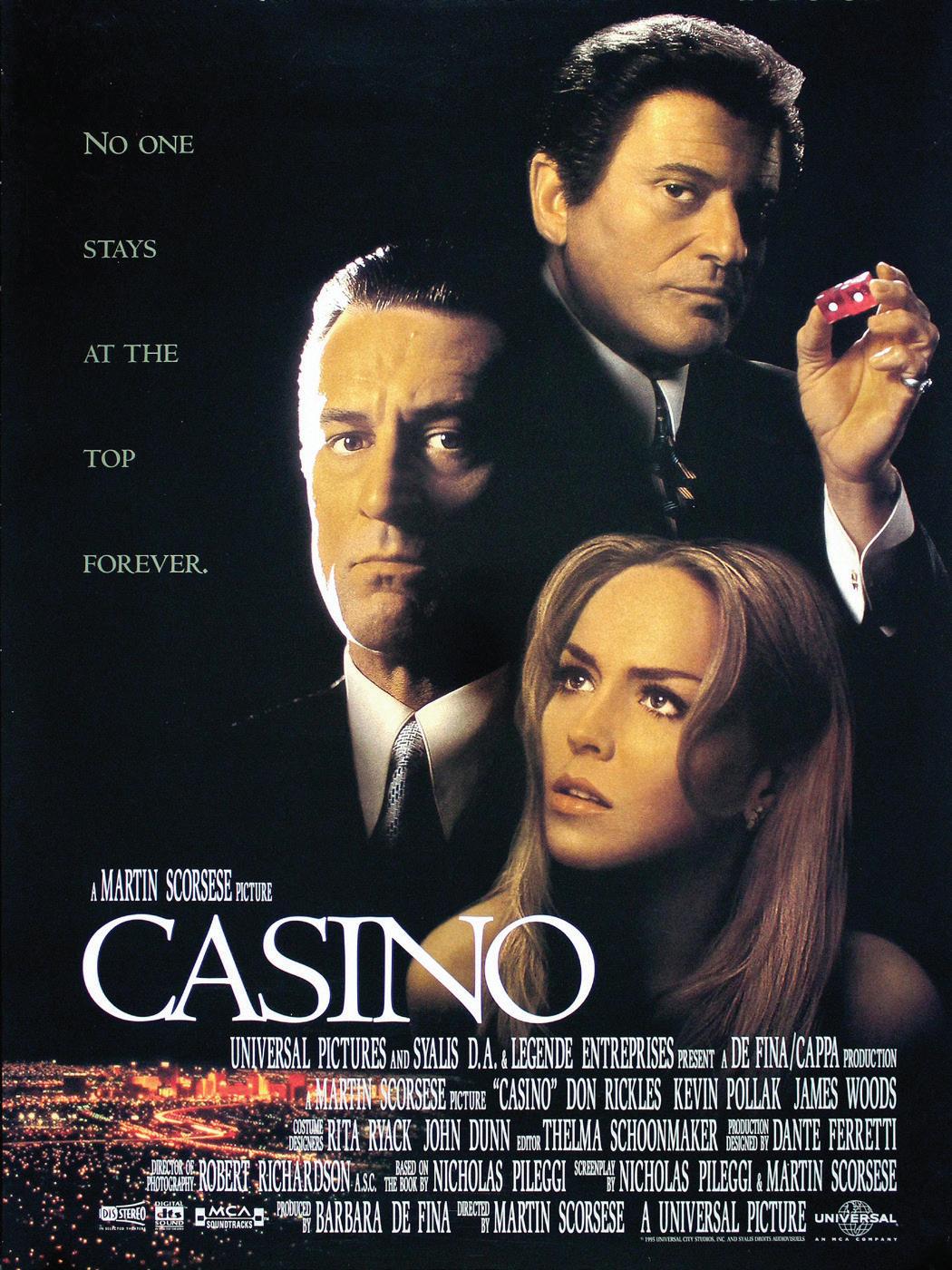
n the mid-1990s, crime aficionado Nicholas Pileggi wrote Casino: Love and Honor in Las Vegas... a book based on the mob-era of vintage Vegas.
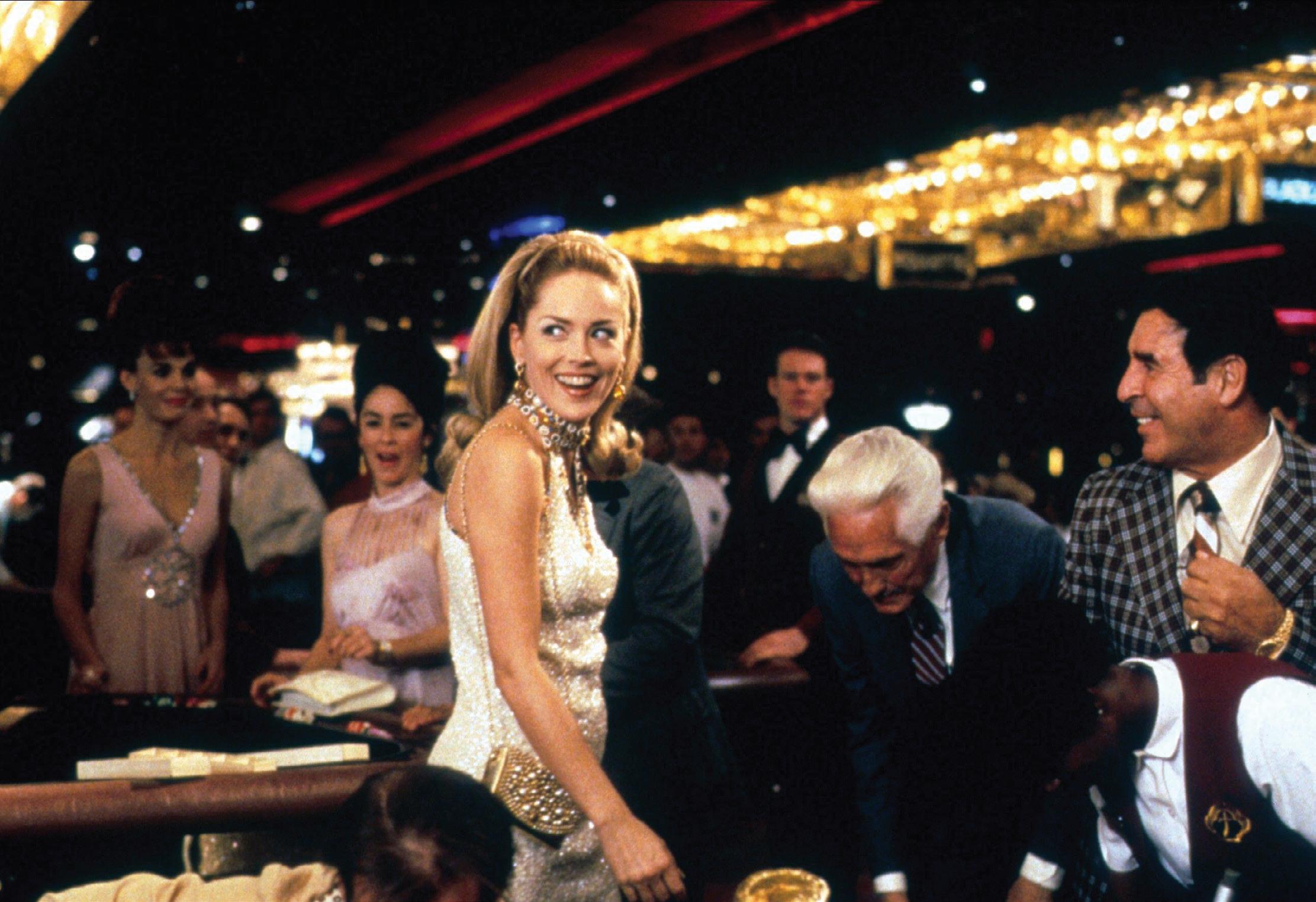
As a seasoned author and screenwriter – whose earlier non-fiction book Wiseguy (1985) was the basis for the hit movie Goodfellas (1990) – Pileggi teamed up with filmmaker Martin Scorsese to turn his latest non-fiction mob-themed book into a movie as well, and together they wrote the screen play for Casino... with characters that chronicled real-life people that ultimately forever changed Las Vegas.
Both were released in 1995 – the book by Simon & Schuster October 1st and movie by Universal Pictures, a month later, November 14th – with the real-life characters carefully reimagined, to avoid any backlash or potential lawsuits, while still portraying their fascinating and riveting life stories with some degree of accuracy.
Even the standard “Based on a true story” opening was changed to “Adapted from a true story” to avoid potential lawsuits from real-life individuals and/or trouble from organized crime figures depicted in the movie.
Vegas and Casino Who’s Who
The films main characters were Sam “Ace” Rothstein and his wife Ginger, with most of the action taking place either at the Tangiers Casino or their palatial home in Las Vegas.
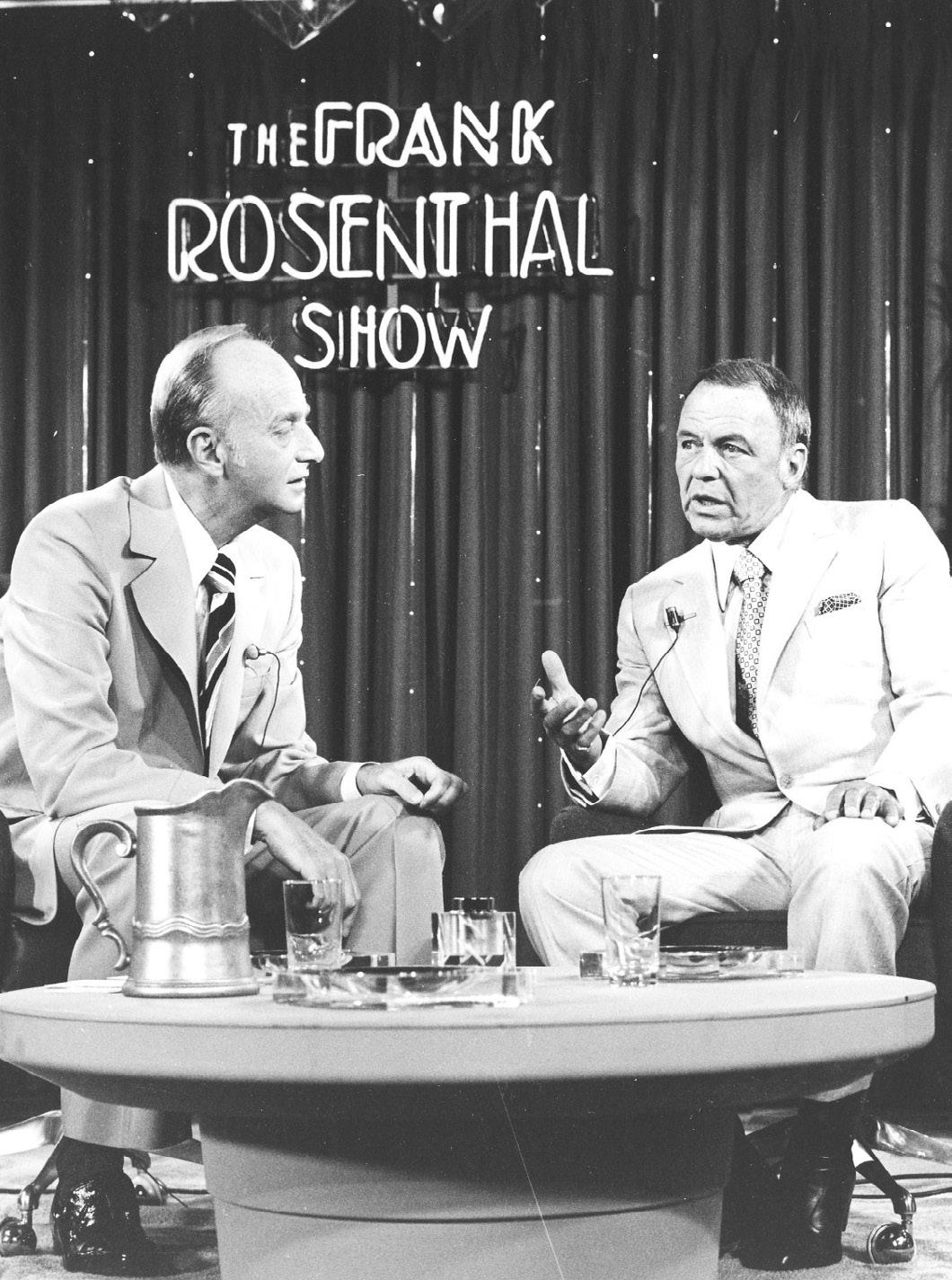
The Rothstein character, that also served as the storyline’s narrator, was based on Frank “Lefty” Rosenthal, a well-known real-life bookie phenomenon that ultimately ran four major Vegas casinos and introduced sports betting to Las Vegas.
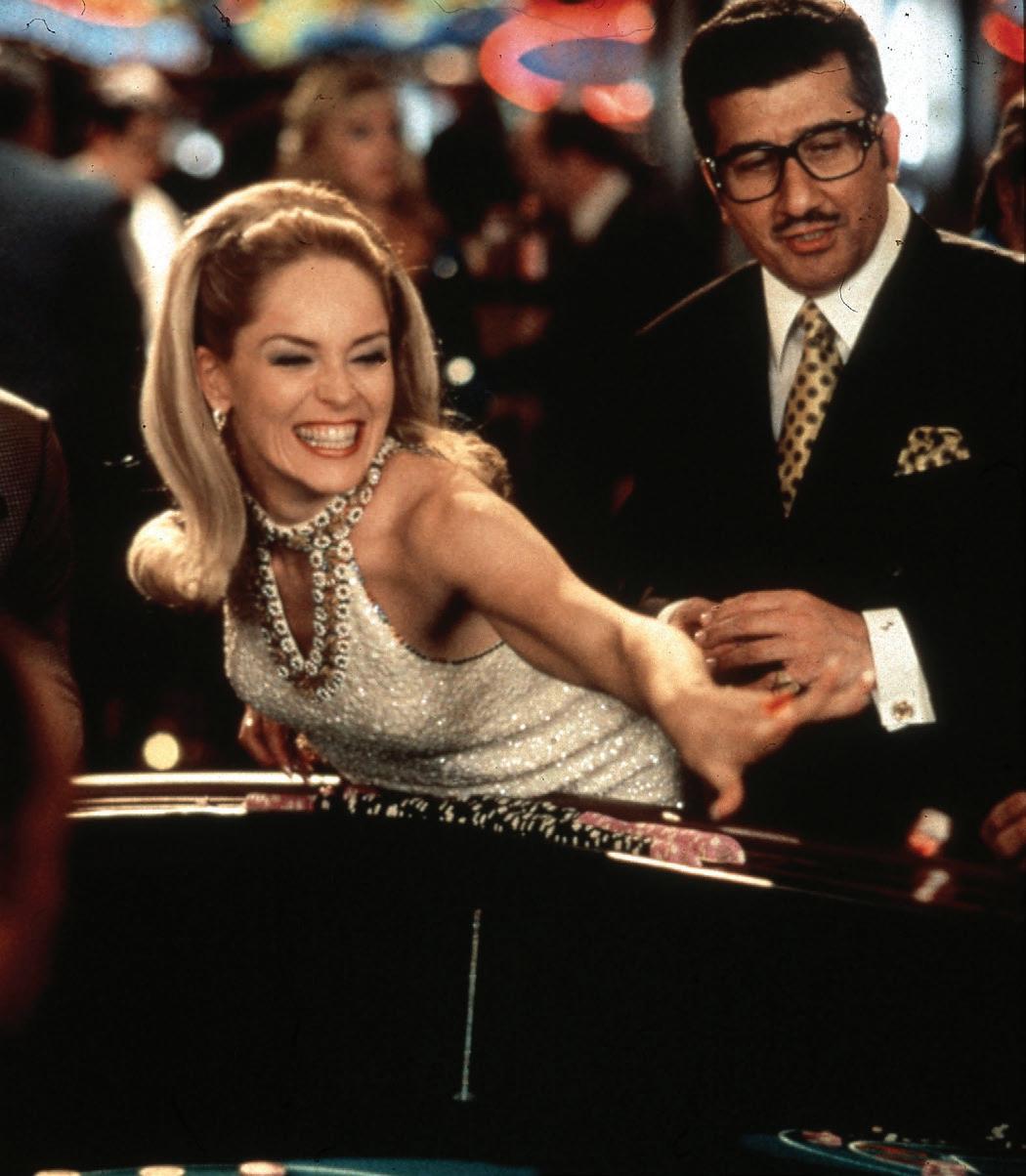
Rothstein’s movie wife, Ginger, was based on reallife Geri McGee, an attractive former showgirl
turned chip-hustler and high-profile popular figure in Vegas casinos.
Supporting characters were Rothstein’s pal, Nicky Santoro, based on real-life mobster Tony Spilotro and wife-Ginger’s unsavory weak-spot, Lester Diamond, based on a long-standing troubled past relationship with real-life Lenny Marmor.
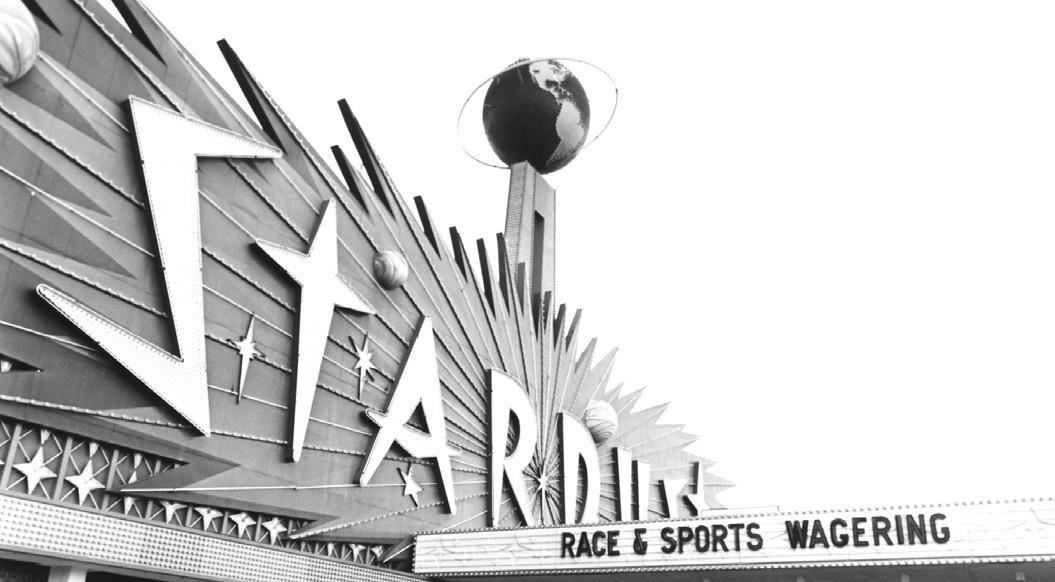
Further side-stepping legal pitfalls, the Stardust – where alleged massive skimming took place – became the fictional “Tangiers Casino” with a flashy Hollywood-created entrance in front of the Landmark Hotel/Casino (now part of the Las Vegas Convention Center) and casino gambling scenes filmed inside the Riviera.
The Currency of Vegas
To be a “player” in Las Vegas one must bring something to the table.
For gamblers and tourists, the “currency” is just that – cash. For others, it is something of perceived value.
Frank “Lefty” Rosenthal had a life-long uncanny ability to study and accurately predict sports outcomes and, as a “no-miss” Vegas bookie, that made him a valuable player.
Tony “The Ant” Spilotro, a well-known Chicago mobster, was sent to Vegas to monitor interests for the bosses back East. His ruthless approach to keeping things “running uninterrupted” made him a valuable player.
And real-life showgirl/hustler Geri McGee had a “time-honored” value that always opened doors and made her a high-profile and much-in-demand player in Vegas – jaw-dropping, stunning, beauty.
So Who is Geri McGee?
When I first heard her name, I had no idea who she was. Only later did I learn Geri McGee was the real-life “Ginger McKenna” in the movie Casino.
While both in the book and the movie, she plays a major role in the lives and eventual fortunes of a powerful casino boss and a fierce Chicago
Frank “Lefty” Rosenthal was hailed as “the greatest living expert on sports gambling” by Sports Illustrated.
Photo Courtesy UNLV Special Collections and Archives
Frank Rosenthal managed the Stardust from 1974 through 1982 and introduced sports betting in Las Vegas casinos. Photo courtesy Las Vegas News Bureau, LVCVA Archive
Movie props for the fictional Tangiers Casino scenes filmed at the Riviera included cards, chips, matches and napkins with realistic Tangiers inserts for the slot machines. Photo Courtesy The Mob Museum
mobster – and even the future of a once mob-run Las Vegas – her essential real-life story is often overlooked.
So, who was the tumultuous beauty that fueled the turmoil of 1970s Las Vegas?
Geraldine McGee was born in Los Angeles on a warm and rainy Saturday... May 16, 1936... in a leap year that reminds us things don’t always proceed in a predictable way.
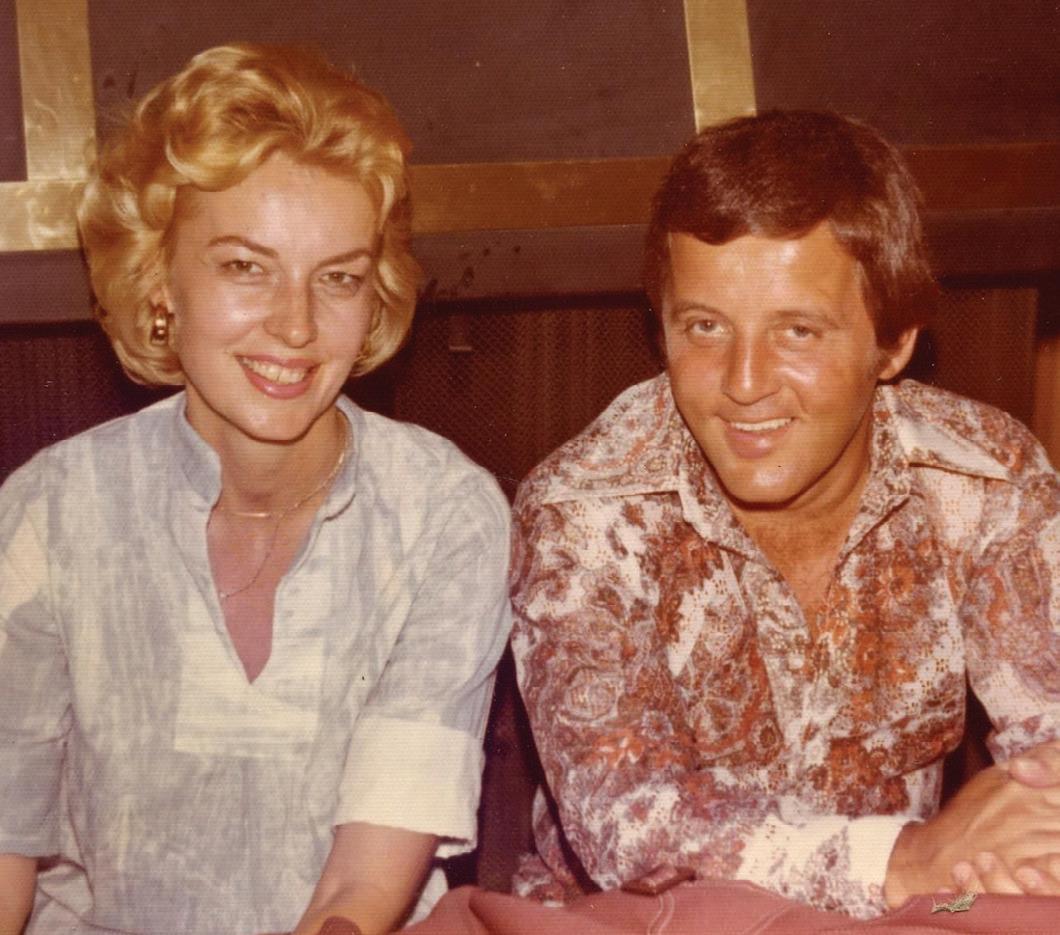
Geri grew up in the Sherman Oaks area and, while in high school, she met an older student named Lenny Marmor – depicted as the sleazy Lester Diamond character in the movie Casino. He was both charming and opportunistic – as well as being an alleged drug dealer and rumored part-time pimp. For whatever reason, and to his ultimate advantage, the two became inseparable. After graduating from Van Nuys High School in 1954, Geri began working office jobs during the day and, with her early good looks, she also entered beauty contests and did modeling jobs on the side.
Noting McGee’s beauty and talent, and acting as her partner and pseudo-manager, Lenny began entering Geri in swimsuit contests and dance competitions, where she would easily win and he would share in her cash and prizes.
Goodbye Golden State
Four years after Geri graduated from high school, they had a daughter, Robin Marmor, in 1958. Soon afterward – and for whatever unknown reason –
Lenny convinced Geri she should move to Las Vegas for bigger and better opportunities.
While Lenny chose to remain in Los Angeles, Geri packed-up and moved to Las Vegas with her daughter around 1960. Her Mother Alice, who had divorced her Father Roy, moved in with Geri to watch two-year old Robin while she was at work.
From the beginning, Geri McGee’s beauty, talent and street-smarts were a perfect combination and “currency” for the Las Vegas boom decade of the 1960s – a time when newcomers... Sands, Dunes, Stardust and Riviera... filled-in around established names, like Flamingo, Tropicana and Sahara... and the metropolitan area’s small-town population of 80,000 soared to over 300,000 with more than seven million tourists and gamblers visiting annually.
Vegas Baby
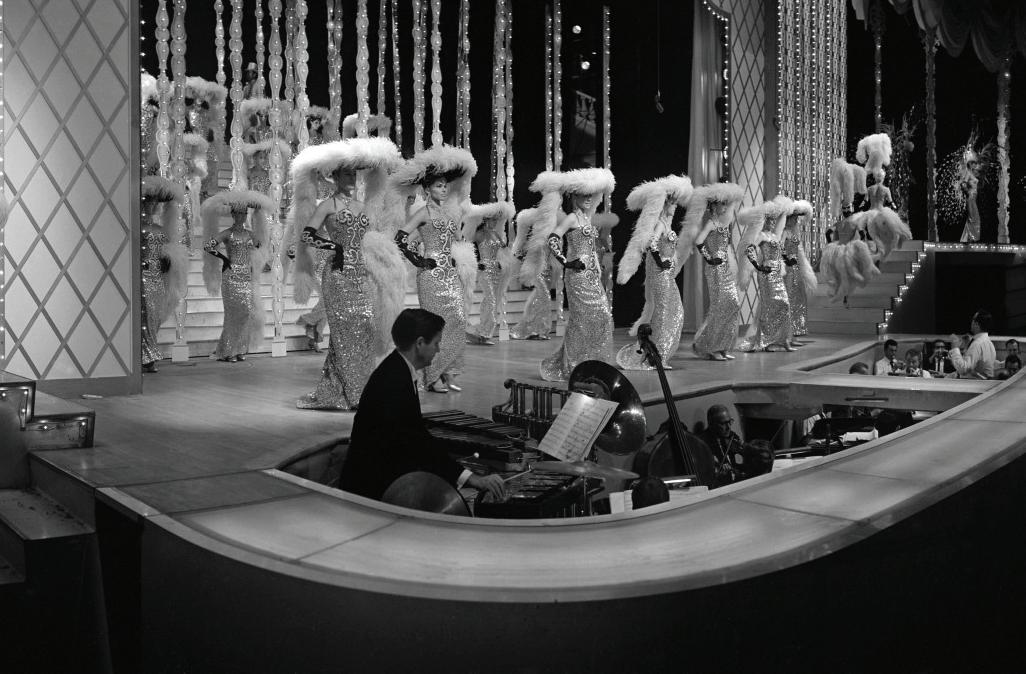
Geri initially found work as a cocktail waitress at the Tropicana. But her beauty and talent as a dancer were far more suited for the hotel/casino’s big name entertainment extravaganza imported from Paris. In short order, she auditioned – and was hired – to become a Vegas showgirl in the famous Folies Bergére.
Showgirls in the “Rat Pack” era were high-profile and very desirable “arm candy” for cash-laden high-rollers and tourists who came to play in Sin City... and off-stage she met lots of people and began working her way up the social side of Las Vegas.
By 1963, dancing and the Folies were left behind and – with the combination of hard-to-resist beauty and know-how learned from her days with Lenny – she became a well-versed, successful “casino hustler” seductively enticing gamblers into sharing high-digit chips to play or cash out... in addition to those she could secretly sneak into her purse.
Nearing the end of the decade, Geri McGee was a popular and well-known Vegas personality... highly-visible, highly-profitable and a “haute
couture” pseudo-socialite... perfectly poised to encounter her second life-changing relationship.
Ginger and the Mob
In the late 60s, while smiling and playing her game, Geri (and Ginger in Casino) caught the eye of Frank Rosenthal, a professional gambler, sports bettor and respected oddsmaker from Chicago. Geri was a dazzling image on the casino floor... and he was smitten.
Frank made it a point to meet her, and after a year of dating and spending time together (as seen in the movie) he proposed. Geri, knowing she was rapidly approaching 30, wisely accepted, and on May 4, 1969 they were married.
Over 500 Vegas insiders attended the lavish ceremony, held at Caesars Palace in a speciallybuilt chapel – followed by caviar, lobster and champagne – with the entire cost of the wedding comped by the hotel.
Frank then purchased a beautiful three-bedroom home near Maryland Parkway and Sahara at 972 Vegas Valley Drive in the gated Las Vegas Country Club. While it still exists today, it is not the home seen in the movie located at 3515 Cochise Lane in nearby Las Vegas National Golf Course.
Shortly afterward, Geri and Frank had two children... first was Steven (not seen in the movie) and three years later was Stephanie (portrayed as Amy in Casino).
Three-way Split
Geri’s frantic and erratic movie characterization can be disputed and/or said to be misrepresented depending on whom one asks... and it does appear she led three distinct and diverse intertwined lives.
First and in reality, at home – and from the stated viewpoint of her children – Geri was a loving and nurturing great parent... as was Frank... and life was quite normal.
Yet, as portrayed in Casino, there was a second explosive and uncontrolled side to Geri... tumultuous and destructive... with unintended consequences that played out as riveting scenes, both real and fictionalized.
Then there was a third aspect... Geri’s strange ongoing link to Lenny Marmor (Lester Diamond in the movie) and never cutting ties to a destructive romantic bond with her high school sweetheart that kept bringing her back to the dark side of her past.
Geri McGee was a Folies Bergére showgirl before becoming a well-known casino chips hustler and Vegas personality.
Photo courtesy Las Vegas News Bureau, LVCVA Archive
Geri’s three confusing intermingled lives... portrayed in the movie and, to some degree, in real-life... reportedly included drinking, late-night partying, infidelities and secret trysts with Lenny – along with outbursts of violent and threatening confrontations.
Finally, after thirteen months of turmoil – and a highly-publicized affair with Rosenthal’s pal Spilotro – Frank and Geri separated and were legally divorced on January 16, 1981.
In the end
On October 4, 1982, Frank Rosenthal left Tony Roma’s restaurant at 620 East Sahara Avenue and got into to his 1981 Cadillac Eldorado. He turned the key, and it exploded in a massive ball of flame. He was blown out of the car and miraculously survived.
In 1983 Rosenthal left Vegas for California, then on to Florida where he continued odds making for sports until his death from a heart attack in Miami Beach, on October 13, 2008. Frank “Lefty” Rosenthal was 79.
After the divorce, Geri headed back to California with her collection of pricey jewelry and a substantial portion of Frank’s cash. It didn’t take long for her to spiral down into life of partying and drugs with Hollywood lowlifes and biker buddies. Just one month after Frank’s car bombing, she was near broke and found unresponsive from a drug overdose at the Beverly Sunset Hotel in Beverly Hills. She died in the hospital three days later on November 9, 1982. Geraldine McGee was 46.
Tough Tony Spilotro also did not end well. He and his brother were ordered back to Chicago where they were reportedly killed gangland-style in a suburban Bensenville home on June 14, 1986 and buried in a cornfield in rural Indiana. Tony “The Ant” Spilotro was 48.
Lenny Marmor never left Los Angeles. He died August 24, 2013 age 76.
Legacy and Surprises
The grown Rosenthal Children, Steven and
Stephanie today live normal peaceful lives... with Steven practicing a medical career in Texas and sister Stephanie, a former star swimmer, now coaching and managing a business career in the Las Vegas area.
Much like mobster Bugsy Siegel before him –who pioneered Vegas casinos with innovations at the Flamingo – Frank Rosenthal’s legacy includes
While married to Rosenthal, Geri McGee had an affair with Chicago mobster and Rosenthal’s childhood friend, Tony Spilotro. Photo courtesy The Mob Museum
While the movie shows Sam Rothstein’s car exploding downtown at Main Street Station Casino, Frank Rosenthal’s actual car bombing October 4, 1982 was outside Tony Roma’s restaurant at 620 East Sahara Avenue. Police crime scene photos show the aftermath. Photo courtesy The Mob Museum
Photo courtesy The Mob Museum
bringing sports betting into casinos, being the first to hire female blackjack dealers and offering gamblers the legendary 99¢ breakfast... to name but a few. He also hosted a star-studded TV talk show and was ultimately hailed as “the greatest living expert on sports gambling” by Sports Illustrated.
Totally surprising – and years after his death –it was revealed that Frank Rosenthal was also an informant for the FBI... and in 2015, it was furthered disclosed that Geri was working with the agency as well.
From Sir Walter Scott’s poem in 1808... “Oh, what a tangled web we weave, when first we practice to deceive.”
Play it Again, Sam
The 1995 movie Casino just celebrated its 30th anniversary on November 22, 2025.
Casino has grossed nearly $120 million to date... with Robert DeNiro playing the fictional Sam “Ace” Rothstein and Sharon Stone as wife Ginger
McKenna. Stone also won a Golden Globe Best Actress award and Oscar nomination for her performance.
Along with earlier mob-themed blockbusters –like Godfather and Goodfellas (also written by Nicholas Pileggi) – Casino is one of those films that people watch again and again.... as many as three or four times (like myself) or 20-times as is the case with super-fans.... with each of us repeatedly reliving the drama and riveting lives of its characters... even though, like Titanic, we know how it tragically ends.
The next time you watch Casino (and you know you will), keep in mind... It was real people with true-life stories and a complex woman named Geri McGee that forever changed Las Vegas. Popcorn anyone?
Don Logay is an award-winning journalist and former Editor-in-Chief of three national magazines. Today he writes luxury lifestyle articles for numerous publications. He can be reached at press@donlogay.com.
Frank Rosenthal’s star-studded TV talk show featured Frank Sinatra in 1977.
Photo courtesy Las Vegas News Bureau, LVCVA Archive
The Mirage of Labor:
Las Vegas’ Post-Pandemic Struggle with Workforce, Turnover,
and Immigration
By Sabrina Siracusa
A Vacancy in the Desert
In the spring of 2022, Las Vegas seemed, on the surface, to be roaring back. The lights on the Strip shone brighter than ever. Ballrooms that had been silent during the Covid pandemic again echoed with laughter. Casinos pushed to reopen capacity, conventions booked months ahead—you could almost hear the cash registers tick. Almost. In backof-house kitchens, in housekeeping, behind the gaming tables, there was a quiet crisis brewing. Jobs were open—thousands of them—but no one would show up for work.
Unfortunately, tourism driven cities like Las Vegas are facing staffing shortages as the city grows and industry workers are not returning post pandemic. Business leaders and legal counsel alike began to realize that the challenge was not merely rehiring people; it was redefining how to compete in a vastly changed labor marketplace.
Things have improved but new challenges are
still present. The Covid pandemic led hospitality workers to question job security while some hospitality workers are seeking more stable careers. Conversely, the overall demand for skilled event staff is remarkably high, putting pressure on agencies, and some companies are still struggling to find enough workers for critical roles.
The Hidden Backbone—Undocumented Workers
No one disputes that undocumented or migrant workers have been part of Las Vegas’ labor force for decades. Hotels, restaurants, construction, landscaping—they rely heavily on workers whose immigration status may be irregular. These workers fill many of the roles that are hardest to fill with native-born workers, especially in hospitality (housekeepers, line cooks, banquet servers), construction, and service industries. Their presence is often informal, under-recognized until a new policy or enforcement action brings them under scrutiny.
When deportation is on the table—or when policies or rhetoric make undocumented life difficult—these workers stop showing up, they reduce hours, or they simply disappear from the public workforce. For fear of deportation, they might avoid job fairs, avoid applying, and avoid registering on payrolls.
Las Vegas casinos operate at a scale where even small staffing gaps produce outsized financial exposure. The American Gaming Association reports the Las Vegas Strip generated approximately $8.62 billion in gaming revenue in 2024, making the Strip a high-stakes labor market. Local unions and industry observers note that a large share of frontline hospitality and gaming roles are filled by immigrant workers, and recent enforcement actions, fears of raids, and broader post-pandemic turnover have produced measurable staffing shortages across Strip resorts. While no public study isolates a single-dollar figure attributable only to the loss of immigrant employees, combining the Strip’s multi-billion dollar revenue base with documented labor deficits and rising wage/replacement-costs demonstrates that even a modest operational shortfall can translate into tens to hundreds of millions in lost or deferred revenue and materially higher operating costs.
Further, FOX 5 Las Vegas recently featured a news report on the impact of migrant workers in Las Vegas casinos and resorts. Culinary Workers Union Local 226
leaders had strong opinion on the topic of migrant workers. In the news report, Ted Pappageorge, secretary treasurer of Culinary Workers Union Local 226, stated, “Immigrant workers are a big part of this, this is the biggest economy in the world and we need workers – they’re a key part of that.” He also added, “This this industry cannot function without immigrant workers.”
The Culinary Union represents 60,000 workers with 45% of its members are immigrants, with more than half identifying as Latino.
When Laws Turn the Tap
Attorneys know that laws are not just words on paper—they move people. In the past few years, enforcement crackdowns, changes in immigration law, and political pressure have rippled through Southern Nevada. The fear of raids or deportation is no longer hypothetical. It is part of life for many undocumented workers. It affects scheduling choices, job retention, staffing reliability. For many businesses, this fear translates into no-shows or understaffing. There have also been warnings from unions and business leaders regarding mass deportations and losing undocumented workers that can lead to litigation risk, operational risk, and reputational risk
Turnover, Competition, and the New Battleground
Compounding the shortage is the phenomenon of turnover, especially in low-margin, high-stress roles. In hospitality, staff turnover for frontline roles is nearly double the national average in Las Vegas. What has led to this? Workers cite pandemic burnout, the lure of less demanding or more secure jobs elsewhere and remote work for non-service roles, gig work in non-hospitality industries. Meanwhile, competition for good talent has become fierce. As a result, businesses are offering signing bonuses, recruiting candidates with bilingual ability (Spanish, Mandarin), partnering with staffing agencies to manage surge labor and reducing hours or scaling back services when staff shortages persist.
There is a legal dimension too–ensuring that hiring practices remain compliant (wage laws, immigration verification, non-discrimination), especially when attempting to tap into migrant or immigrant hiring pipelines, is a minefield. Attorneys often find themselves advising on how to audit I-9s, how to protect workers’ rights under fear of enforcement, how to avoid violating labor or civil rights laws in the pursuit of reducing turnover.
What Attorneys & Business Leaders Can Do
Despite the challenges, legal and business leadership can take effective steps to respond to immigration policies and hospitality workers while minimizing risk. To reduce legal and operational risk, businesses must routinely audit hiring, payroll, and I-9 practices—especially in roles with high turnover or reliance on undocumented labor. Understanding where vulnerabilities exist allows companies to assess exposure and prepare for abrupt changes in enforcement.
Strategic Workforce Planning
Strategic workforce planning should include investments in training, apprenticeships, and partnerships with educational institutions. Where lawful, immigration-friendly hiring practices and inclusion of legal immigrant workers can help stabilize staffing.
Retention & Culture Shift
Retention is equally critical. Improving working conditions, flexibility, and support services (e.g., transportation, childcare) can reduce turnover and improve compliance. Employers must foster trust with immigrant workers by clearly communicating rights and protections, minimizing fear of retaliation and legal claims.
Policy Advocacy & Legal Alliances
Leaders should also engage in policy advocacy through industry groups and chambers of commerce, pushing for pragmatic immigration reforms and staying ahead of regulatory changes. Preparedness for enforcement actions—such as audits or raids—should be built into business continuity planning.
Legal Preparedness
Finally, legal preparedness is essential. Meticulous documentation of hiring, training, performance, and separation decisions—especially where immigration status may factor into disputes— helps mitigate risks related to wage claims, discrimination, or retaliation allegations.
The Final Bet
Las Vegas has always been a city that bets—on the next show, the next hotel, the next influx of tourists. But in this post-pandemic phase, the biggest bet is on hospitality workers. Without reliable, stable labor, even the most glamorous resort or the most lavish event falters. Attorneys and business leaders are uniquely positioned at the intersection of risk and opportunity. They can’t ignore the tremors coming from immigration policy, from workforce shortages, from turnover.
For those who plan well, who anticipate change, who build trust and flexibility into their operations, Las Vegas’ future can still shine. But for those who cling to old assumptions—about “labor always being there,” about undocumented workers being peripheral, about turnover being a cost you just absorb—the desert may, this time, swallow more than one more casino commission.
Knees
Shoulders
Spine
BENEFITS
Settle
TBI ANALYTICS EMPOWERS PATIENTS
TBI ANALYTICS EMPOWERS PATIENTS
Obtaining the appropriate treatment for TBI depends on an accurate and reliable diagnosis. TBI Analytics has set many patients on their unique paths to recovery and beyond.
Obtaining the appropriate treatment for TBI depends on an accurate and reliable diagnosis. TBI Analytics has set many
THE MOVIE CAPITAL THAT ALMOST WAS
Nevada’s Lost Shot at Hollywood Glory and the 30-Year Legacy of the Greatest Las Vegas Film Ever Made
By Tyler Morgan, Esq.
For a brief, electric moment this year, Nevada seemed on the verge of rewriting its economic destiny. The governor’s proposed film tax credit package—an ambitious bid to turn Las Vegas into the country’s next major production hub—wasn’t just another policy initiative. It was a vision. A promise. A chance to transform the Strip from a backdrop into a full-fledged industry engine.
But dreams, like film deals, can be fragile. When the measure failed to pass in the recent special election, the energy surrounding the idea evaporated almost overnight. The balloon deflated, the headlines softened, and the loudest question echoing across the valley wasn’t “What happened?” but rather “What could have been?”
THE DEAL THAT DIDN’T GET MADE
Supporters had expected momentum. The state had courted Hollywood before, but never at this scale or with this level of political capital behind it. The proposed credits were generous, strategic, and—critics would argue—too costly. Despite the governor’s push, despite promises of jobs, infrastructure, and a new economic pillar untied to gaming, the votes simply weren’t there.
Some blamed the price tag; others blamed
distrust of the industry. Still others pointed to Nevada’s cautious electorate, wary of deals that feel too good to be true.
What’s clear is this: had the credits passed, Nevada stood to bring in major production studios, sound stages, training facilities, and a long-term pipeline of film jobs not seen since New Mexico reinvented itself with similar incentives twenty years ago.
Instead, the dream is paused. Not dead—just suspended in that uniquely Nevadan space between risk and reward.
A CITY BUILT FOR CINEMA
Las Vegas has always flirted with Hollywood. It has served as a set, a character, a mythology all its own. The Strip’s neon blaze has framed heists, romances, comedies, and tragedies. Yet for all the filming that’s happened here, Las Vegas has never been a film capital in the true sense.
What the tax credits promised was permanence:
• Studios that wouldn’t just visit but stay.
• Jobs that wouldn’t just cycle but endure.
• Cultural currency that wouldn’t just rely on spectacle but expand into storytelling.
It’s impossible not to imagine what the next
decade of Nevada cinema might have looked like—especially when, 30 years ago, a single movie captured Las Vegas with unmatched power and left a cultural imprint that still shapes the city today.
THIRTY YEARS OF CASINO: THE FILM THAT GOT LAS VEGAS RIGHT
There are many films set in Las Vegas, but only one stands as its definitive cinematic masterpiece: Martin Scorsese’s Casino.
Released in 1995 and celebrating its 30th anniversary in 2025, Casino is more than a movie—it is an autopsy of old Vegas, a love letter to its glittering illusions, and a chronicle of the city’s transformation from mob mystique to corporate colossus. Unlike most Hollywood portrayals, Casino didn’t rely on clichés; it relied on the truth. The grit. The glamour. The people. It captured the tension between the Las Vegas that was and the Las Vegas that was coming. In
that sense, Casino feels eerily relevant today, as Nevada considers the kind of future it wants to build—or the kind it keeps letting slip away.
And at the heart of that film’s enduring legacy is one woman whose real life and cinematic counterpart remain inseparable from the mythology of the city.
GERI MCGEE: THE TRAGIC MUSE OF LAS VEGAS
Geri McGee’s story—raw, magnetic, and ultimately tragic—has haunted the Las Vegas imagination for half a century. Immortalized through Sharon Stone’s Oscar-nominated performance as Ginger McKenna, Geri represents the paradox of this city: dazzling on the surface, dangerous beneath it, seductive all the way down.
Her rise and fall unfolded within the same currents that make Las Vegas so cinematically
potent: ambition, reinvention, excess, betrayal. If Casino is the greatest movie ever made about Las Vegas, it is because of characters like Geri— real people whose lives mirrored the volatility of the city itself.
Including a separate feature on Geri McGee in this issue gives readers the deeper, more intimate portrait behind the film’s mythology. And taken together—her real story and the enduring legend of Casino—they highlight why Las Vegas has always deserved to be more than just the setting for Hollywood’s stories. It has lived them.
THE FUTURE THAT STILL COULD BE
As Nevada turns the page on the failed tax credit vote, the question isn’t whether we lost
our shot at becoming a film hub. The question is whether we recognize the value of the stories we already possess—and whether we’re willing to invest in the ones we could create.
Las Vegas has always been a place where fortunes shift overnight. Deals fall apart. Dreams are deferred. But this city also knows resurrection better than anywhere on earth. The vote didn’t kill the idea.
It only ensured that the sequel isn’t coming out yet.
And as we celebrate Casino’s 30th anniversary, remembering how one film captured Las Vegas with such brutal beauty, it’s impossible not to imagine the movies Nevada might still make—if it decides, next time, to bet on itself.
LIFESTYLE
“My mission in life is not merely to survive, but to thrive.”
– Maya Angelou
Automotive Excellence Extraordinaire
By Don Logay
In the automotive world, Concours d’Elegance exhibitions are recognized as the crème de la crème of automobile shows that transcend basic motoring history, and instead, elevate truly outstanding and amazing vehicles to a captivating art form.
The Las Vegas Concours d’Elegance was founded in 2019 as the 41st and most recent addition to the roster of prestigious Concours events held every year in famous cities and luxurious locations worldwide.
Stuart Sobek, Founder and Chairman Emeritus of the Las Vegas Concours d’Elegance, notes, “We succeeded in making the Las Vegas Concours equally first-rate... but, I also wanted to make ours even better.”
In 2022, that became reality when Sobek was invited to bring Concours to the famed FiveStar Wynn Resort... and to exhibit the world’s finest vintage automobiles on the spectacular 18-hole championship Wynn Golf Course – with its manicured fairways, lush greens and serene ponds with rushing streams – all centrally located on the legendary Las Vegas Strip.
As a result, the prestigious Las Vegas Concours d’Elegance soared to another level
of distinction... known as the Concours Wynn Las Vegas... emerging as a new pinnacle of automotive presentation and recognition in the Entertainment Capital of the World.
Enhancing Excellence
The transition to Wynn set into motion a steady evolution of elite automotive showmanship. Today, the 2025 Concours Wynn Las Vegas brings together the very best-of-the-best cars in the world for presentation, competition and display.
“This year we have over 600 vehicles,” stated Wynn COO, Brian Gullbrants, noting the $1.1 billion dollars of spectacular automobiles on display – presented in four judged and nonjudged categories – all artfully brought together on the resort’s lush fairways.
The main event on Concours Day, November 1st encompassed the original and traditional Las Vegas Concours d’Elegance... which, by definition, is a French term meaning a “Competition of Elegance.” This year’s Wynn show had 130 of the finest pristine vintage automobiles – drawn from famous automotive museums and collections worldwide –competing and being judged in various classes ranging from Pre- and Post War to Gatsby-Era and Pre-1990s.
After exacting inspection and meticulous attention to detail by expert judges, scores were tallied and winners were announced at an evening ceremony where the highest ranking 2026 Bugatti Tourbillon $4.1million / Photo Bugatti
cars received a gleaming fine-art “Helene Award” (named after Helene Rother, the first female desiger at General Motors) richly crafted by the same folks that make the Hollywood Oscar.
Notable winners were a 1929 Mercedes-Benz 680 S Barker Tourer (Pre-War Best in Show), a 1951 Ferrari 212 E (Post-War Best in Show) and a 1929 Duesenberg Model J (Gatsby-Era Class). However, the traditional Concours d’Elegance competition was just the beginning.
Artistry and Speed
The six hours of Concours Day, from 10:00 am to 4:00 pm – with $1.1 billion of the world’s most amazing automobiles, side-by-side and endlessly displayed on the tailored green fairways of the Wynn Golf Course – was truly a car-lovers dream come true... a day of legacy and history intertwined with debuts, introductions and the future.
1929 Duesenberg J, once owned by Bill “Mr. Bojangles” Robinson, won a Helene Award and top honors for a Gatsby Era classic.
Photo Wynn Concours
Photo Don Logay
It began with an impressive array of pristine vintage autos drawn from automotive museums and collectors worldwide – from stunning Duesenbergs and Auburns to beautiful American classics by Packard and Studebaker – paying tribute to more than a century of automotive excellence.
Famous milestones were celebrated, that included the 90th Anniversary for Jaguar and 125-years of Mercedes-Benz with show cars from the respective eras. The 2025 Shelby GTO celebrated 60-years of performance along with two new 2025 Super Snake Mustangs.
There were exciting introductions and activations. Bentley introduced the limitededition 2027 666hp Supersports along with a new Bentayga Speed, Bentley’s most powerful ever. Rolls-Royce debuted the Phantom Centenary honoring 100-years of
the world’s most iconic luxury sedan, with laseretched upholstery, a Starlight Headliner motif, an intricate woodwork interior and a gleaming gold “Spirit of Ecstasy” emblem on the hood.
With a nod to Hollywood, two Steve McQueen autos from the Petersen Museum were on display – a 1956 Jaguar XKSS and a 1958 Porsche Speedster – as well as three of McQueen’s classic motorcycles, two Indians (1921 and 1927) and a 1966 TR6 Triumph. There was also a 1967 Ford Mustang-based “Eleanor” from the “Gone in 60 Seconds” movie celebrating the film’s 25th anniversary.
Famous Grand Prix cars were also on display, celebrating 75-years of Formula 1 and offering a well-timed tribute in advance of the upcoming 2025 Formula 1 Heineken Las Vegas Grand Prix, November 20-22, with 200 mph high-speed racing on the famed Las Vegas Strip.
Rolls-Royce debuted the $3 million Phantom Centenary honoring 100-years of the world’s most iconic luxury sedan.
Photo Don Logay
Hypercars and Supercars
While namesake Concours d’Elegance competition was technically the main event, at the other end of the spectrum was the “new kid on the block” – Hypercars – brought together for Concours Wynn Las Vegas... and not just a few. It made history, as there were more Hypercars gathered together in one place... at one time... than ever before.
By definition, Hypercars are high-performance and designed for extreme speeds well over 200 mph – incorporating cutting-edge automotive technology and sophisticated aerodynamics –with unique and highly-individual sleek striking designs. They are limited edition and very expensive, with single prices often well into the millions.
With that said, and for a better perspective... numbers-wise, there were an amazing 230 Lamborghinis on display... with its own dedicated area commanding two entire fairways. Iconic models all through the years... from a pristine 1966 Miura, the first true Supercar, to a 2021
Countach, blending retro-styling with modern hybrid technology .
There were 66 stunning Bugattis – the largest gathering ever – with more than 30 Veyrons on display honoring th 20th anniversary of the famous model’s 2005 introduction as the first true Hypercar.
It was also the largest gathering of Paganis ever – another first, with 44 of these extraordinary cars together in one place – with the founder and chief designer, Horacio Pagani, on hand to personally unveil the world debut of the new sleek Huayra “Codalunga Speedstster.”
The list goes on-and-on with one breathtaking event after another: McLaren revealed its new “Project:Endurance” Le Mans Hypercar, Lanzante featured the North American debut of the three-seat 95-59, a tribute to its 1995 Le Mans win, and Hennessy made the first public showing of the awesome Venom F5 Revolution EVO – with its 2,031 horsepower nearing a record-breaking top speed of 300 mph... just to name a few.
Transcending Motoring History
If all that were not enough, there were also a number of pre- and post-events that could be considered a “show” in-and-of themselves.
On Thursday, attendees drove 40 different highperformance Supercars and GT race cars on the nearby 1.3-mile “SpeedVegas” race track.
On Friday, Hagerty’s Broad Arrow Auctions held its first auction ever in Las Vegas with more than 70 outstanding collector cars representing curated genres, marques and price points.
Later that day, there was a Friday evening Sunset GT Supercar Showcase gala, with panoramic nightime views of Las Vegas from the rootop of the Wynn parking garage.
Wrapping it up, at 9:00 am Sunday morning, more than 100 Concours cars – spanning all
2005 Mercedes-Benz SLR McLaren, owned by Las Vegas Concours d’Elegance Founder and Chairman Emeritus Stuart Sobek.
Photo Don Logay
Largest gathering ever of 66 stunning Bugattis with 30 Veyrons honoring the 20th Anniversary of the famous model’s 2005 introduction as the first true Hypercar.
McLaren revealed its new “Project:Endurance” 2027 Le Mans Hypercar. Photo Don Logay
Photo Wynn Concours
Rare Pagani “Arrivederci” last Zonda built representing over two decades of artistry and innovation.
Photos Don Logay
years and genre’s – formed a spectacular Tour d’Elegance parade, with owners touring upand-down the Strip, giving locals and tourists an amazing close-up look at the collective beauty seen at 2025 Concours Wynn Las Vegas.
When all was said and done, four sensational days of Automotive Excellence Extraordinaire – October 30th to November 2nd – earned the Entertainment Captal of the World a new accolade... as the epicenter of automotive history and technology... and undisputed Hypercar Capital of the World.
For automotive aficionados, what could be better? Next year’s Conours Wynn Las Vegas is October 29th through November 1st, 2026. Don’t miss it.
Don Logay is an award-winning journalist and former Editor-in-Chief of three national magazines. Today he writes luxury lifestyle articles for numerous publications. He can be reached at (949) 240-4444 or press@donlogay. com.
Bugatti Chiron and gold McLaren GT in the 100 car Tour d’Elegance parade on the Strip.
Photo Wynn Concours
Vegas Legal Magazine Presents:
Best of Las Vegas 2025
By Brandon Pierce
Las Vegas is a city built on precision, performance, and reinvention—values that resonate deeply with the legal professionals who help shape its future. Beyond the courtroom and the boardroom, the city offers a lifestyle defined by world-class dining, elevated wellness, and spaces designed for both connection and escape. For those who demand excellence in every aspect of their lives, Las Vegas delivers at every turn.
For our Winter 2025 issue, Vegas Legal Magazine presents its inagural Best of Las Vegas, recognizing the destinations that consistently rise above the rest. These selections reflect more than popularity—they represent quality, craftsmanship, and experiences worthy of the city’s most discerning residents. From power lunches and restorative retreats to refined nightlife and wellness sanctuaries, these are the places setting the standard.
Best Bar
Doberman Drawing Room – Arts District
Refined, intimate, and unapologetically cool, Doberman Drawing Room has become one of Las Vegas’s most respected cocktail destinations. Located in the Arts District, the bar pairs a meticulously crafted drink program with an atmosphere that favors conversation over spectacle. Every cocktail is thoughtful, balanced, and executed with precision—making it a natural gathering place for professionals who appreciate substance as much as style. Whether stopping in after a long day or hosting an off-the-record meeting, Doberman Drawing
Room delivers a level of sophistication that feels distinctly local and effortlessly elevated.
Best Restaurant
Restaurant Guy Savoy – Caesars Palace
Excellence is timeless, and Restaurant Guy Savoy continues to define fine dining in Las Vegas. From its meticulous service to its artful French cuisine, every detail reflects mastery of the craft. The dining room feels simultaneously intimate and grand—ideal for milestone celebrations, client dinners, or simply appreciating what happens when precision meets passion. It remains the gold standard for culinary achievement on the Strip.
Doberman Drawing Room
Best Power Lunch
Mott 32 – Palazzo
A modern Hong Kong–inspired menu, dramatic design, and impeccable service make Mott 32 the ideal venue for business lunches that matter. The restaurant balances energy with discretion, allowing deals to be discussed over elevated dim sum, expertly prepared meats, and standout cocktails. It’s a place where business and pleasure coexist seamlessly.
Best Gym
Kilo Club – Summerlin
Private, design-forward, and highly curated, Kilo Club feels more like a members-only wellness club than a traditional gym. With expert coaching, personalized programming, and a discreet atmosphere, it attracts highlevel professionals who value both privacy and precision. It’s the kind of place where workouts are intentional and membership feels earned— making it a compelling choice for Las Vegas’s most discerning clientele.
Best Spa
The Spa at Wynn Las Vegas
Luxury, tranquility, and consistency define The Spa at Wynn. From personalized treatments to its serene, impeccably designed environment, the experience is restorative in every sense. For those navigating high-pressure careers, the Wynn Spa offers a rare opportunity to fully disconnect—and return refreshed, focused, and ready.
Best Staycation
The Venetian Resort Las Vegas
With its spacious suites, diverse dining options, and refined atmosphere, The Venetian remains the premier staycation destination for locals who want to step away without leaving the city. It’s ideal for long weekends, special occasions, or simply pressing pause in an environment that feels both indulgent and comfortable.
Best Networking Venue
The Private Dining Rooms at Delilah – Wynn Las Vegas
Delilah’s private spaces have quietly become a hub for high-level networking and intimate gatherings. With old-Hollywood glamour, exceptional cuisine, and an exclusive feel, it offers the kind of ambiance where meaningful conversations happen naturally - and relationships are strengthened beyond the boardroom.
Doberman Drawing Room
By Tyler Morgan, Esq.
There’s a moment, just after you step through the doors of Doberman Drawing Room, when the noise of Downtown Las Vegas fades behind you and the room seems to inhale quietly. The lighting drops. Conversations soften. An atmosphere settles in—a mix of vintage glamour, intellectual curiosity, and the kind of calm you rarely find in a city addicted to spectacle.
Doberman Drawing Room doesn’t shout for your attention. It invites you in like a well-kept secret.
Located in the Arts District, the lounge feels like a cross between an old-world drawing room and a modern social salon. Deep leather seating,
dark wood accents, and a warm glow that makes everyone look a little better than they felt walking in. It’s known for its fresh spin on classic cocktails—and that’s where Doberman Drawing Room really steals the show.
The bartenders here work like craftsmen— confident, deliberate, but never pretentious. They ask you what you’re in the mood for, and they mean it. Off-menu drinks appear like small works of art: pale pinks, delicate creams, aromatic garnishes that smell like someone distilled the idea of a perfect evening into a glass. Even the classics come out feeling elevated, as if the bar is gently nudging you toward a better version of everything you thought you liked.
Service moves at a pace that encourages lingering. A host might guide you to a cushioned corner for an intimate talk, or to a spot at the bar where the night feels more communal. The staff gives the sense that they’re not just serving drinks—they’re curating your experience. And that’s the theme here: intention.
Doberman Drawing Room doesn’t rely on gimmicks. It relies on the belief that people crave connection and atmosphere. On some nights, that means live cabaret drifting across the room. On others, it means a DJ spinning groovy, soulful sets that keep the vibe upbeat without ever tipping into club territory. Sundays lean mellow and nostalgic, while Saturdays bring out the city’s bohemian streak.
Each night has its own personality, but the heart of the place stays the same: warm, intelligent, slightly mysterious.
There’s even a membership element—a nod to the idea of a private social club, though not in the traditional velvet-rope sense. It feels more like Doberman Drawing Room wants to gather people who appreciate depth over noise. The room tends to reflect that. You’ll overhear
conversations about art, travel, business, relationships—rarely anything shallow. It’s a bar that seems to attract thinkers, creatives, and people who still believe in the lost art of conversation.
Of course, Doberman Drawing Room isn’t trying to be everything for everyone. If you want bottle service, pounding bass, or a wild dance floor, this isn’t your spot. But if you want to actually hear the person across from you, enjoy a thoughtful drink, and spend a night in an environment that feels curated rather than chaotic, it hits the mark.
And it hits it consistently.
The best way to enjoy Doberman Drawing Room is simple: go with someone you want to talk to—someone you want to hear. Order a cocktail made just for you. Sink into the soft seating, let the lighting do its magic, and allow the evening to unfold at its own pace.
In a city famous for excess, Doberman Dawing Room is a reminder that subtlety can be the most seductive thing in the room.
The Shrinking Buffet & Rise of Food Halls: Legal, Lease, and Labor Implications
By Sabrina Siracusa
For decades, the Las Vegas buffet has stood as a symbol of abundance. Endless rows of carving stations, seafood displays, and dessert counters were as much a part of the city’s identity as gaming and entertainment. Buffets functioned not only as dining options but also as loss leaders—designed to draw in visitors who would spend elsewhere on the property. Here are some of the recent changes from buffets to food halls among the top casinos in Las Vegas:
Luxor’s The Buffet
Operated by MGM Resorts, this budget-friendly buffet on the Strip closed permanently on March 30, 2025.
Rio / Carnival World Buffet
The large, off-Strip Rio property closed its Carnival World Buffet and is converting that space into The Canteen Food Hall.
Fremont Hotel & Casino
Boyd Gaming converted its former buffet space into a 13,000-sq-ft food hall with several vendor brands.
Additionally, two newer properties, Durango Casino (Southwest Las Vegas) and Fontainebleau Las Vegas, were built without traditional buffet spaces and instead feature food halls.
To understand whether this is uniquely a Las Vegas phenomenon, it is important to consider non-Las Vegas casinos in Southern California, Atlantic City and Michigan have also have permanently closed buffets
and replaced them with other dining concepts.
As consumer tastes evolve and operating costs rise, many iconic buffets are shuttering, replaced by contemporary food halls that emphasize diversity, flexibility, and vendor-driven models. From big name fast food brands to Michelin star chefs led restaurants, food halls offer a variety of dining choices. Take for example, Proper Eats at the Aria. As the fourth food hall on the Strip, it joins the likes of Famous Food Street Eats food hall at Resorts World Las Vegas, the Block 16 Urban food hall at the Cosmopolitan of Las Vegas, and Eataly at Park MGM. From vegan to burgers and Asian to Italian, the choices of cuisine fit almost every taste and budget.
This transition is reshaping the business and legal landscape of hospitality in Nevada and beyond. Attorneys advising clients in hospitality, real estate, or labor law—as well as business leaders managing these properties—must understand the far-reaching implications of this shift.
Lease Renegotiations: From Anchors to Shared Spaces
The buffet once served as an “anchor tenant” within casinos, occupying significant square footage under long-term lease or operating agreements. Food halls, by contrast, are dynamic, multi-vendor spaces where each stall may function as a micro-restaurant. And they are profitable. Buffets, once used to attract gamblers, have become costly to maintain, with
Block 16 Urban Food Hall located in The Cosmopolitan
average food costs around 40% of sales and labor at 30%, leaving slim margins near 20%. Food halls, by contrast, operate more efficiently with vendor-run stalls, made-to-order dishes, and reduced waste. This model typically lowers food costs to 28–32%, trims labor to 22–26%, and pushes margins up to 35–40%, resulting in an estimated 30–50% profit increase over buffets.
A conservative analysis of a large Las Vegas buffet serving 1,200 guests daily shows profits rising from $9,600 to $13,320 per day, or roughly $1.3 million more per year after conversion. Beyond stronger financial performance, food halls appeal to modern visitors seeking variety, speed, and quality while allowing casinos to partner with local chefs and trending brands. With higher revenue per square foot, lower waste, and faster payback periods — typically two to four years — food halls have become one of the most lucrative hospitality upgrades on the Strip.
Las Vegas casinos are increasingly replacing traditional buffets with modern food halls — and the shift is paying off, on and off the strip. Detailed provisions must be drafted to protect the operator’s ability to verify revenues without overstepping vendor confidentiality. Transforming a buffet space into a food hall often requires significant capital improvements—reconfiguring kitchens, adding partitions, and modernizing HVAC systems to handle multiple cooking operations. Contracts must clarify who bears responsibility for these improvements, how costs are recouped, and what maintenance obligations apply once the space is operational.
This structural change requires rethinking lease frameworks. Landlords and casino operators must decide whether individual vendors are granted formal subleases, simple licensing agreements, or hybrid structures. Each choice carries consequences for liability allocation, insurance requirements, and termination rights.
Vendor Contracts and Operational Control
The food hall model introduces an intricate web of vendor relationships. While variety enhances consumer appeal, it complicates operational oversight. Contracts must anticipate disputes and allocate risks with precision to address:
Performance
Standards
and Termination Rights
Food halls host a mix of independent operators, each with its own brand identity. To preserve a consistent guest experience, agreements often include
performance standards.
Indemnity and Liability Allocation
Food safety, employee misconduct, and property damage are amplified risks when multiple vendors share a single venue. Clear indemnity clauses are critical to allocate responsibility.
Dispute Resolution Mechanisms
With numerous independent businesses operating under one roof, disputes are inevitable. Agreements should establish efficient dispute resolution frameworks, whether through arbitration, mediation, or tiered negotiation procedures.
Challenges in Zoning, Licensing, and Regulatory Compliance
While buffets were typically managed by a single operator with uniform compliance obligations, food halls create a patchwork of overlapping requirements from zoning and conditional use permits, health departments and alcohol licensing. Some jurisdictions classify food halls differently than restaurants or buffets. Operators may need to amend existing conditional use permits or seek new approvals. These proceedings can trigger public hearings, neighbor objections, and lengthy approval processes. Attorneys will need to proactively review zoning ordinances to identify potential obstacles early.
Each vendor may also need its own permits, inspections, and certifications. This multiplies the regulatory touchpoints for the venue. Operators must ensure consistency by setting compliance
Eataly located inside Park MGM
benchmarks higher than the minimum standard and by coordinating with health departments on inspection schedules.
Additionally, alcohol sales add another layer of complexity. Will vendors sell directly, or will a centralized operator manage bar service? Each option has licensing implications. If multiple vendors are licensed, regulators may impose restrictions on where and how alcohol can be served, complicating the customer experience. If alcohol is centrally managed, the operator assumes responsibility for training, compliance, and liability.
Labor and Employment Models
Perhaps the most significant shift lies in workforce structure. Buffets employed large, centralized teams under a single employer. Food halls fragment that model into multiple small workforces, each with distinct employment practices. Here are some labor considerations for operators which will require strategic legal consultation:
Fragmented Workforce and Disparities
Individual vendors employ their own staff, leading to variation in wages, benefits, and scheduling practices—raising morale issues and, in some cases, regulatory scrutiny.
Joint Employer Concerns
If food hall operators impose uniform policies risk being classified as joint employers. This exposes them to liability under wage-and-hour laws, collective bargaining obligations, and employment claims.
Union Considerations
Buffets often operated in heavily unionized environments. Food halls disrupt this model. Some vendors may be unionized while others are not, leading to inconsistencies that complicate labor relations. Operators should anticipate potential union campaigns and prepare strategies for consistent compliance.
Labor Flexibility and Cost Efficiency
Food halls are attractive partly because they reduce headcount compared to buffets. However, employers must still navigate wage-and-hour requirements, meal and rest break laws, and new legislation around gig or contract workers.
The Strategic Outlook for Business Leaders
The decline of the Las Vegas buffet and the rise of the food hall reflect broader economic and cultural
shifts. Consumers today value variety, speed, and authenticity over uniformity. Food halls meet these demands by showcasing multiple culinary voices in one space. Yet this innovation comes with legal and operational complexity. For attorneys, the task is to help clients design frameworks that expect challenges:
• Flexible lease structures that adapt to vendor turnover.
• Vendor agreements that balance operational consistency with brand autonomy.
• Regulatory strategies that account for overlapping health, zoning, and licensing requirements.
• Employment models that achieve efficiency without exposing operators to joint employer liability.
For business leaders, the strategic challenge lies in balancing short-term efficiencies with long-term resilience. Food halls may generate strong customer engagement and financial performance, but only if supported by robust governance, legal foresight, and careful vendor curation.
Conclusion: Legal Foresight as a Competitive Edge
The transition from buffet to food hall is not simply a culinary evolution—it is a reimagining of the business, legal, and labor infrastructure of hospitality. Rather than the vast, round-the-clock operations of the past, casinos may revive buffets selectively reimagined as premium, reservation-only events or seasonal attractions tied to specific entertainment offerings.
Casino operators elsewhere—especially in regional markets—will follow suit. Regulatory frameworks will adapt. Health departments, zoning boards, labor regulators will increasingly see requests to reclassify food halls, with likely new regulations specific to multi-vendor shared kitchens in casino resort contexts including defining joint employer exposure and shared ventilation.
In Las Vegas and beyond, this shift highlights the importance of legal strategy as a competitive advantage. Operators who treat these issues as afterthoughts risk regulatory penalties, litigation, and reputational harm. Those who approach them with foresight, however, can transform food halls into not only profitable ventures but also enduring destination