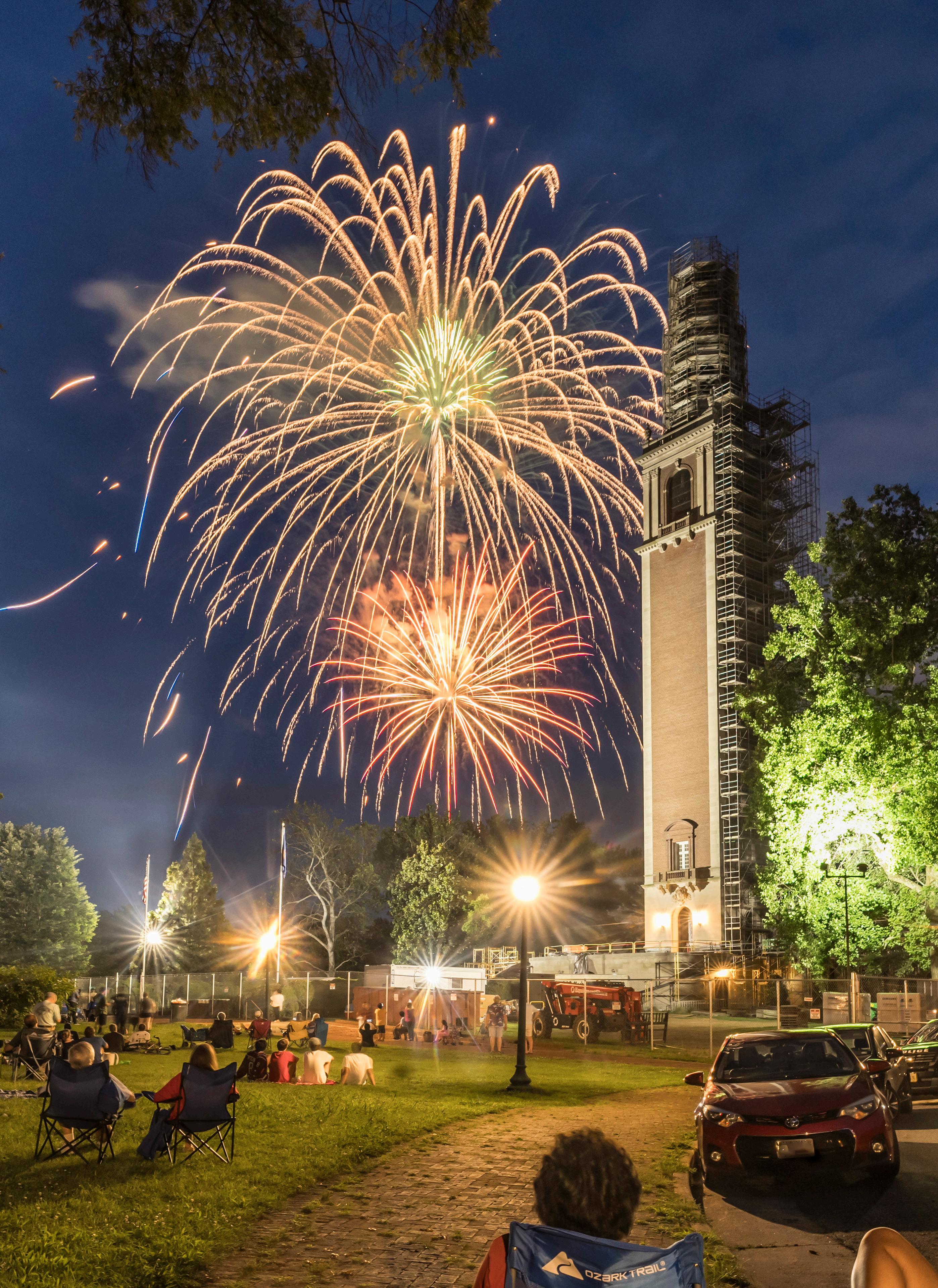
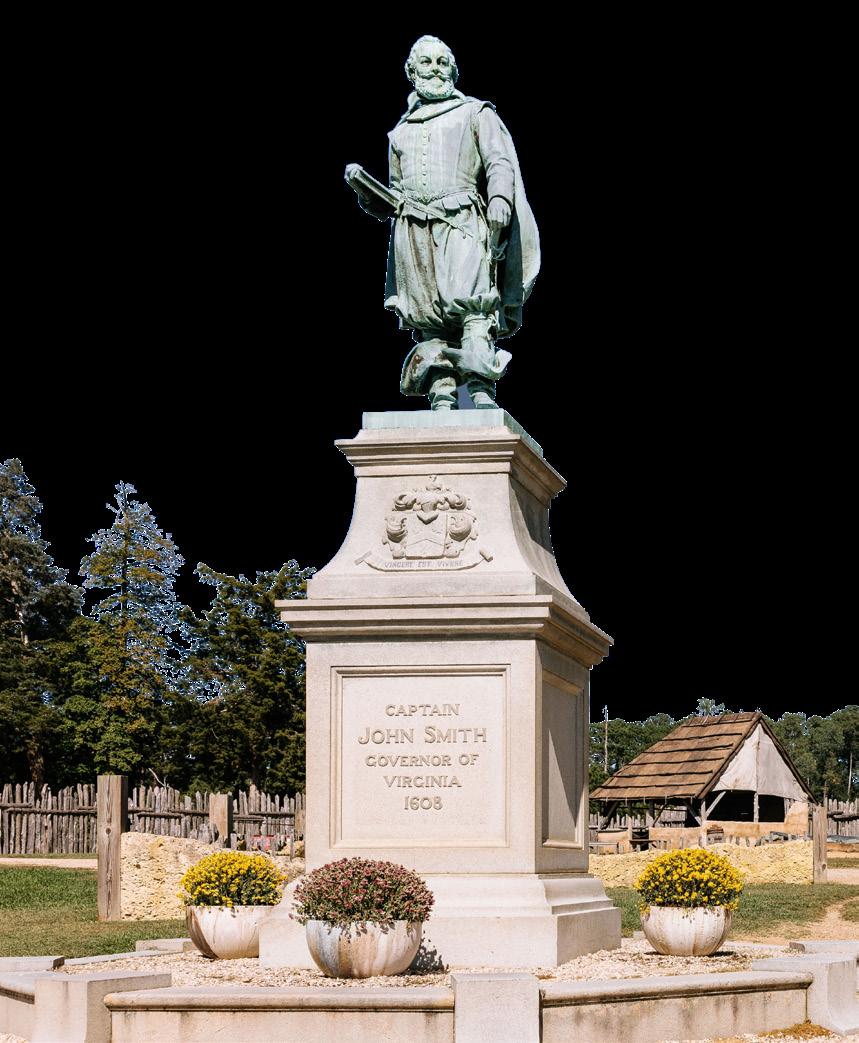
Dogwood Dell in Richmond’s Byrd Park hosts a fireworks show each July 4. Festivities include numerous bands and musical groups, culminating with fireworks synced to Tchaikovsky’s “1812 Overture.”
Virginia: Where the American Experiment Took Root
The Commonwealth is the home of America’s founding ideals — and the ongoing effort to fulfill them
Historic Virginia Companies, Then and Now
Strategic pivots, top-notch operations help these businesses stand the test of time
A History of Innovation
Tech companies find fertile ground for creative solutions in Virginia
It Happened Here First
As one of the locations where the United States began, Virginia claims many historic firsts among American states
Alexandria’s Light Bulb Moment
Beyond the Northern Virginia city’s picturesque street scenes and ideal location is a rapidly flourishing innovation scene that’s being revealed in real time
Historic Universities, Future-Forward Workforce
Virginia colleges and universities build on three centuries of education to prepare students for a changing economy
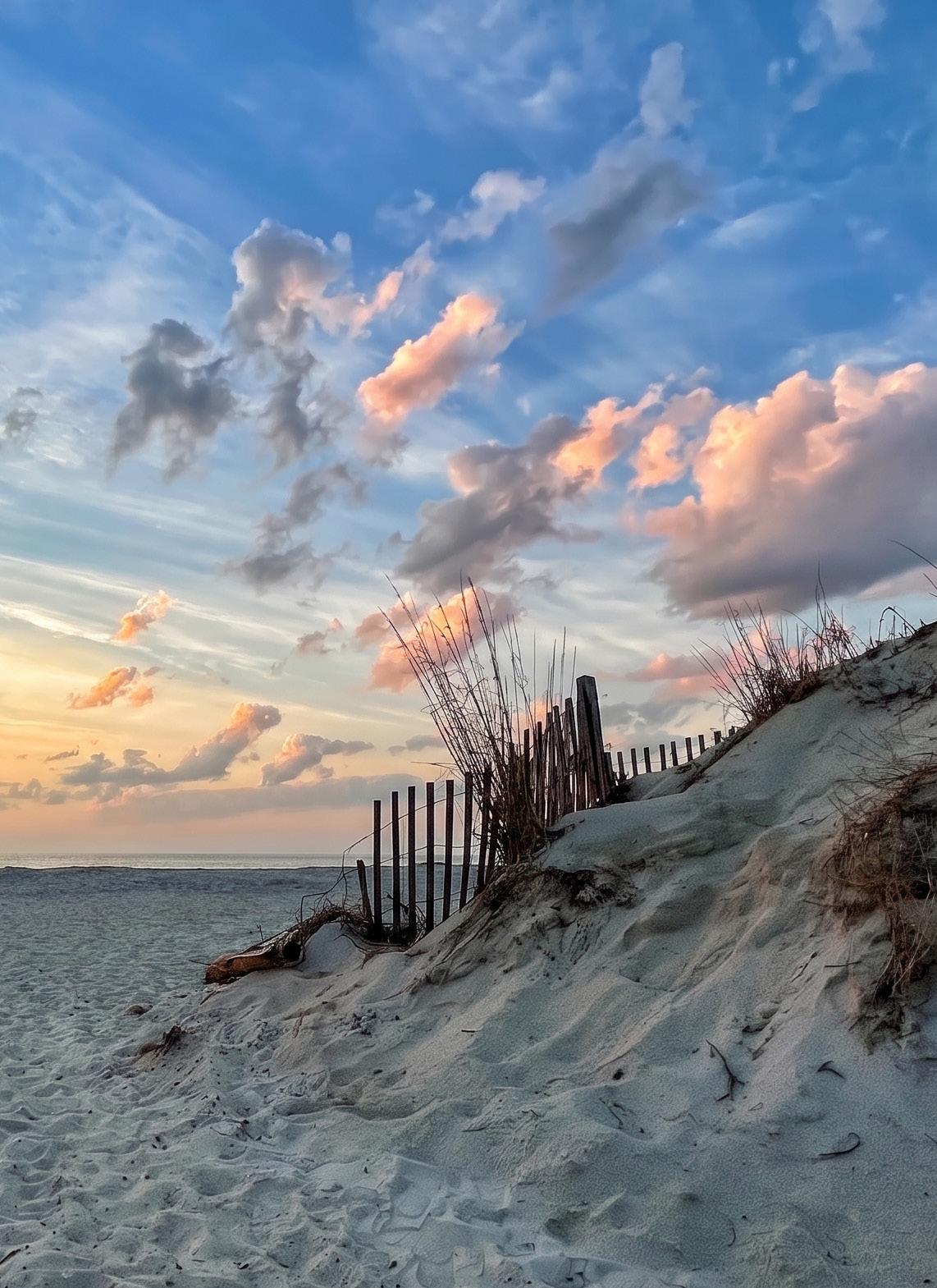
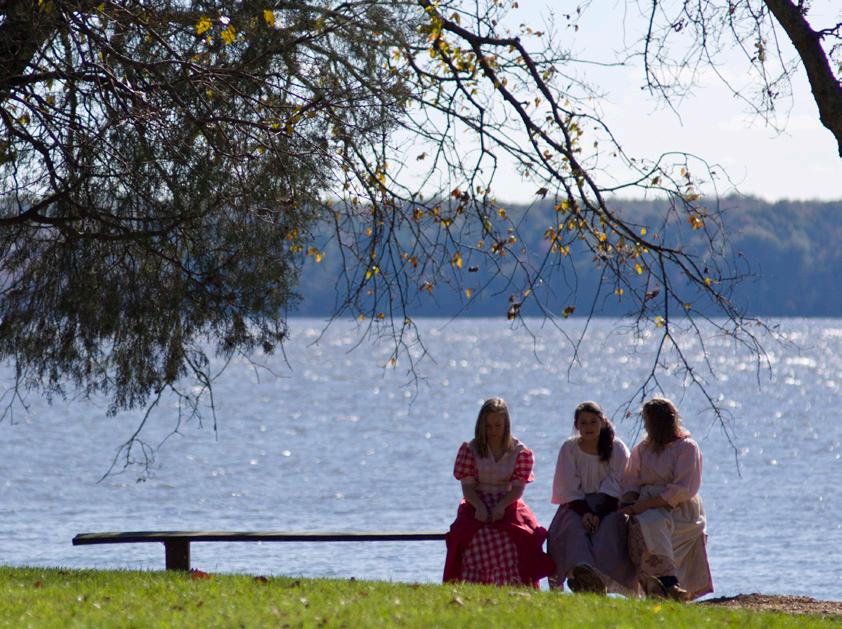
The town of Cape Charles in Northampton County, near the southern tip of the Eastern Shore, offers a free public beach along the Chesapeake Bay with wave-free water recreation perfect for young children.
The Evolution of an American Institution
VIRGINIA CAME INTO BEING more than 400 years ago as an economic development project, when King James I of England founded the Virginia Company of London to bring profit to its shareholders and establish an English colony in the New World. While the Virginia Company itself survived for only 15 years, over the course of the turbulent 17th and 18th centuries, the new colony developed into an enduring institution that played an outsized role in creating the fledgling United States and the opportunity it offered.
That opportunity has been uneven. Among the institutions Virginia helped establish in the New World was chattel slavery, as landowners worked to establish successful plantations to grow tobacco, cotton, and other crops. Like the rest of the country, Virginia continues to reckon with its role in the slave trade and other injustices that followed. As the United States celebrates the 250th anniversary of its founding — that date, of course, is based on the adoption of the Declaration of Independence, principally authored by Virginia native Thomas Jefferson — we celebrate Virginia, warts and all, for the role its residents and institutions played in creating and sustaining the American experiment.
This issue of Virginia Economic Review celebrates that history and the ideals behind Virginia and the United States. We discuss Virginia’s founding and the perseverance of its residents to create a more perfect society and profile several longstanding Virginia companies that, like the Commonwealth itself, have reinvented themselves over the years
to create a lasting presence in the United States. We also highlight the tech companies in Virginia that are continuing to operate at the bleeding edge of innovation to push the economy forward; detail the internet, commercial flight, and other innovations with Virginia roots; and profile two areas in Virginia that have successfully reinvented themselves and their economies — the city of Alexandria’s emergence as a tech and innovation hub and the economic transformation of Southern Virginia as the region continues to work to replace the decline of the textile and tobacco industries. Also inside is a discussion with Christy Coleman, executive director of the Jamestown-Yorktown Foundation, on Virginia’s history and her organization’s work to recontextualize those sites as America marks this milestone.
We hope you enjoy this look into what is, really, the history of the future — the ways Virginians have adapted and reinvented themselves, their businesses, and the Commonwealth itself to establish something enduring from uncertain beginnings. As a state, a society, and a place to do business, Virginia’s history is inextricable from that of the United States itself.
Jason El Koubi President and CEO, Virginia Economic Development Partnership
Best Metro Area for STEM Professionals
Washington, D.C., Metro Area
No. 2 Tech Talent Pipeline
Business Facilities, 2025
WalletHub, 2026 No. 7
CNBC, 2025 No. 4 States With the Best School Systems
SmileHub, 2025 No. 4
State for Research Workforce & Innovation
Most Innovative State No. 2
Most Innovative State — Highest Share of Technology Companies No. 6
Most Educated State — Educational Attainment
WalletHub, 2026
Center for Digital Government and National Association of Counties, Top Digital Counties, 2025
COUNTY RANKING
POPULATION CATEGORY
Fairfax County >1,000,000
No. 2
Chesterfield County 250,000 – 499,999
Prince William County 250,000 – 499,999
No. 1 No. 2
No. 3
Stafford County 150,000 – 249,999
No. 1
York County <150,000
No. 2
Roanoke County <150,000
No. 5
James City County <150,000
No. 7
Bedford County <150,000
No. 8
Franklin County <150,000
Albemarle County <150,000
Orange County
No. 9
No. 10 <150,000
L3Harris Technologies, Orange County
L3Harris’ continued investments in solid rocket motor facilities are bolstering manufacturing capacity for key national defense programs. With a talented workforce and a community committed to long-term success, our expanded presence in Virginia will deliver additional capability to the Department of War and our allies.
KEN BEDINGFIELD President, L3Harris Missile Solutions
Selected Virginia Wins: L3Harris Technologies
350+
$1.2B New Jobs CapEx
L3Harris Technologies, a global leader in defense tech and solid rocket motor manufacturing, will invest more than $1.2 billion to increase manufacturing capacity at the company’s production facilities in Orange County. The expansion is expected to create more than 350 highly skilled jobs in the Commonwealth and builds on the company’s previously announced investment to expand tactical solid rocket motor production in Virginia.
L3Harris’ site in Virginia currently has 256,000 square feet of manufacturing space and serves as the company’s Center of Excellence for Propellant Research and Small to Medium-sized Solid Rocket Motor Production. The expansion project would more than double the manufacturing space at the site. L3Harris plans to construct new facilities to support key solid rocket motor production operations such as mixing, grinding, casting, and final assembly.
VEDP worked with Orange County, the Central Virginia Partnership for Economic Development, and the General Assembly’s Major Employment and Investment Project Approval Commission to secure the project for Virginia. Gov. Abigail Spanberger approved two grants of $12.5 million and $500,000 from the Commonwealth’s Opportunity Fund and a performance-based grant of $5 million from the Virginia Investment Performance Grant, an incentive that encourages continued capital investment by existing Virginia companies. Funding and services to support L3Harris’ employee training activities will be provided through the Virginia Jobs Investment Program.
Selected Virginia Wins
Central Virginia
L3Harris Technologies
Jobs: 350 New Jobs
CapEx: $1.2B
Locality: Orange County
Greater Fredericksburg
CleanArc Data Centers
Jobs: 50 New Jobs
CapEx: $3B
Locality: Caroline County
Vantage Data Centers
Jobs: 50 New Jobs
CapEx: $2B
Locality: Stafford County
Greater Richmond
Richmond National Group
Jobs: 75 New Jobs
CapEx: $1.8M
Locality: Henrico County
Hampton Roads
Radian Forge
Jobs: 53 New Jobs
CapEx: $10.5M
Locality: City of Portsmouth
Tidal Flight
Jobs: 6 New Jobs
CapEx: $538K
Locality: City of Chesapeake
New River Valley
Interstate Group LLC
Jobs: 46 New Jobs
CapEx: $8.9M
Locality: Giles County
Northern Virginia
Blue Sky Innovators LLC
Jobs: 175 New Jobs
CapEx: $7M
Locality: Fairfax County
Innovative Defense
Technologies
Jobs: 210 New Jobs
CapEx: $19M
Locality: Arlington County
TurbineOne, Inc.
Jobs: 22 New Jobs
CapEx: $424K
Locality: Fairfax County
Shenandoah Valley
AeroNimble
Jobs: 51 New Jobs
CapEx: $2.5M
Locality: City of Harrisonburg
Innovative Refrigeration
Systems
Jobs: 214 New Jobs
CapEx: $19M
Locality: Augusta County
Virginia Poultry Growers
Cooperative, Inc.
Jobs: 146 New Jobs
CapEx: $100M
Locality: Rockingham County
Southern Virginia
Avio USA Inc.
Jobs: 1,000 New Jobs
CapEx: $500M
Locality: Pittsylvania County
Fukoku Korea
Jobs: 60 New Jobs
CapEx: $18.9M
Locality: Henry County
Northern Shenandoah Valley
Northern Virginia
Shenandoah Valley
Central Virginia
Washington, D.C.
Greater Fredericksburg
Lynchburg Region
Southern Virginia
South Centr al Virg inia
Greater Richmond
Northern Neck
Middle Peninsula
I95-I85 Intersection
Hampton Roads
Easte rn Sh or e
TOOK ROOT WHERE THE AMERICAN EXPERIMENT VIRGINIA:
The Commonwealth is the home of America’s founding ideals — and the ongoing effort to fulfill them
In the months leading up to July 1776, the Second Continental Congress entrusted a Virginian, Thomas Jefferson, to draft the formal document declaring the colonies’ independence from Great Britain. The 13 British colonies in mainland North America had disparate interests and cultures. For them to unite, the Founding Fathers believed the colony of Virginia needed to spearhead independence. Once that was achieved, another Virginian, George Washington from Mount Vernon, was elected the first president of the fledgling nation.
As it was in 1776, Virginia remains central to the American story in 2026. To understand America’s economic, political, and historical developments on its 250th anniversary, one must begin in Virginia.
THE FIRST AMERICAN BUSINESS
Before the United States of America, there was English America, and before that, English Virginia. At the close of the 16th century, Queen Elizabeth I sponsored numerous voyages to the New World in hopes that England could “plant” Englishmen there. Explorer Sir Walter Raleigh campaigned to name North America’s first settlement after the reputedly virginal Queen Elizabeth herself. In 1607, King James I chartered the Virginia Company.
The Virginia Company’s success was, by its stated goals, short-lived. As Jamestown’s “starving time” in the early 17th century demonstrated, the Commonwealth proved hard to manage without royal support. This led the crown to dissolve the Virginia Company and decree Virginia a royal colony in 1626. Over time, Virginians developed institutions that transformed the colony into England’s most durable North American economic project.
One of those institutions was slavery. In 1619, colonial Governor George
Yeardley purchased “20 and odd Negroes” from a Portuguese ship in exchange for food for the crewmembers. This began Virginia’s involvement with the institution of African enslavement.
Virginians soon learned that the key to economic prosperity was tobacco. While Virginia’s soil was indeed suited to produce it, particularly along the rivers connected to the Chesapeake Bay, Virginians developed institutions to cement tobacco as the staple crop. As early as 1618, for instance, tobacco was used as legal tender to buy goods and land, pay off debt, and serve as collateral on loans. Virginians’ ingenuity with tobacco enabled them to grow the economy for more than a hundred years with it.
Like the rest of the country, Virginia has not always progressed in a linear fashion, and tobacco offers a key illustration. Tobacco could not have sustained Virginia’s economy without the displacement of Native Americans from their lands in massive numbers and cultivation by enslaved people. By 1700, nearly 20,000 enslaved Africans labored on Virginia plantations.
By the start of the 18th century, Virginia represented the pinnacle of Britain’s North American success, its most profitable mainland colony. The College of William & Mary, founded in 1693, educated and trained the colony’s religious, civic, and economic leaders. Port cities like Williamsburg and Norfolk made Virginia a powerful hub of maritime trade.
THE DUALITY OF JEFFERSON
No Virginian embodied the vision for the Commonwealth’s progress better than Thomas Jefferson, born in Albemarle County in 1743. Jefferson entered the world as a genteel British colonial Virginian and left as a principal driver of the American republican experiment. Despite serving two terms as president of the United States, Jefferson wished to be
known primarily for his commitment to Virginia, which he called “his country.”
As written in his epitaph, Jefferson wanted Americans to remember him for writing the Declaration of Independence and the Statute of Virginia for Religious Freedom, and for creation of the University of Virginia (UVA), founded in 1819. For America’s republic to work, he believed the citizenry needed education grounded in the liberal arts, which he deemed the “useful sciences.” Jefferson designed a curriculum at UVA that broke from traditional legal and religious education and taught students how to become productive citizens.
Jefferson’s commitment to republicanism was marred by his commitment to slavery. Throughout his life, Jefferson held over 600 enslaved Africans and did not consider any emancipation effort that didn’t end in expatriating freed African slaves.
By the early 19th century, chattel slavery’s economic benefits were a key part of the Deep South’s new cotton economy. Virginia struggled then, amid a flagging tobacco market and domestic slave trade. The Civil War ended these struggles, but resulted in even harsher ones when the Confederacy — for which Richmond, and briefly Danville, served as its capital — lost the war and remained within the Union.
Slavery’s collapse forced Virginia to reinvent the foundations of its economy. It turned toward railroads, manufacturing, and public education as engines of modernization. Only through renewed commitment to the public good could Virginia find its footing again and effectively realize its economic potential.
The Morrill Land-Grant Acts of 1862 and 1890 allowed for creation of Virginia Agricultural and Mechanical College, now known as Virginia Tech, and the Virginia Normal and Collegiate
Virginia’s enduring success is a result of its ability to adapt, build durable educational institutions, and reinvent itself.
Institute, now Virginia State University, the first fully state-supported four-year institution of higher education for Black Americans in the country. The first Morrill Act focused on educating white working-class Americans for agricultural, mechanical, and military professions. The second act expanded that access — albeit highly unevenly — to Black people. These schools, and other commitments to public education, contributed to the birth of industrial Virginia in the 1900s. Textiles, like those manufactured at Dan River Mills and other factories in Southern Virginia (see page 74), helped diversify Virginia’s economy via creation of a truly industrial sector.
A LEGACY OF SERVICE
Growth of the federal government following World War II transformed Virginia again — into a center for military and federal employment.
Naval Station Norfolk, for instance, was founded in 1917 and burgeoned into the world’s largest naval base during World War II. Today, 27 military bases operate in Virginia. Due to its proximity to the nation’s capital, Northern Virginia became and remains a hub for federal agencies and government contracting. The Department of War, Federal Bureau of Investigation, National Science Foundation, and numerous other federal agencies still operate in Virginia.
If the end of World War II enabled Virginia’s economy to reach new heights, so too did the civil rights movement of the 1960s. Virginia’s expansion of access and opportunity lifted one of the main burdens still holding the Commonwealth back in the late 20th century. By the 1970s and 1980s, public universities across the state had opened their doors to women, minorities, and other historically marginalized groups.
Though certainly never perfect in its advances, Virginia began to realize its true civic and economic potential at the
end of the 20th century. The increase in, and commitment to, a bipartisan landscape where businesses can flourish is a learned lesson for Virginia, but one it continues to uphold. Virginia has also maintained a long tradition of fiscal and regulatory stability, cultivating a favorable environment for economic growth and investment.
Public education and a commitment to liberal arts and STEM fields continue to push Virginia forward in economic prosperity. In the former, Virginia remains integral to the nation’s museums, libraries, humanities, and civic institutions, all of which cultivate citizen leadership and public virtue. A commitment to STEM has sustained Virginia as a hub for the data and tech sectors, with one of the country’s most robust tech workforces and a history of technological innovation from leading companies (see page 48).
Virginia never lacks opportunities for further cultivation of virtue and prosperity. Virginia’s history has proven its flexibility in assuming different roles as needed. As we celebrate America 250, we have an opportunity to reflect on how Virginia has led in America’s economic and civic development. By considering Virginia’s failures and its advancements, we can better understand the need to continue improving the nation today.
By reaffirming our commitment to the institutions that make Virginia viable, we extend the experiment England began 400 years ago and the faith our Founding Fathers placed in Virginia 150 years later. Virginia’s enduring success is a result of its ability to adapt, build durable educational institutions, and reinvent itself. This, coupled with the Commonwealth’s proven ability to embrace economic and technological change, ensures a pivotal role for Virginia in leading the economy of the future and continuing to shape the broader American experiment.
THEN & NOW
NOW
Strategic pivots, top-notch operations help these businesses stand the test of time
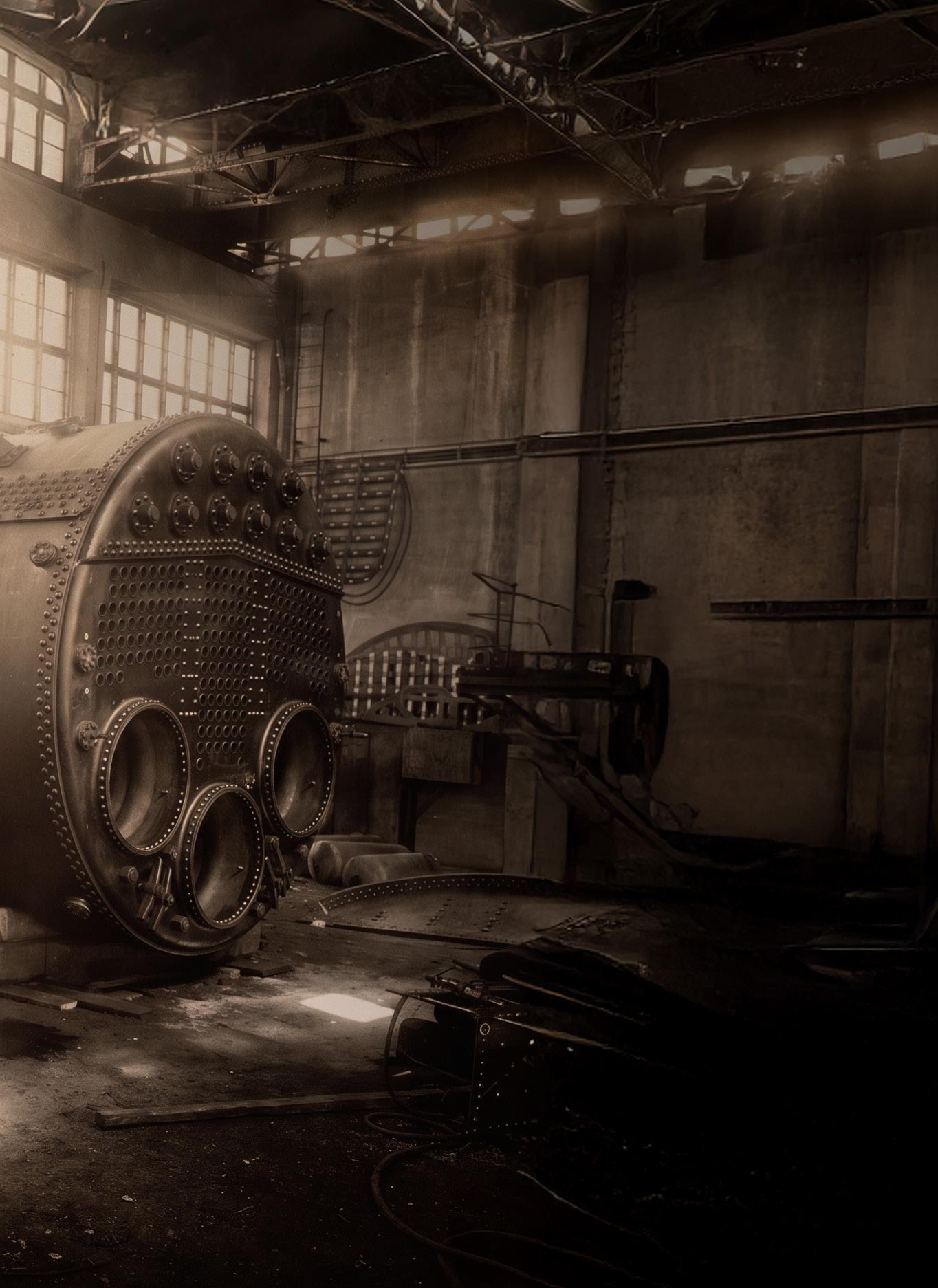
BWX Technologies, Inc., started out as a boiler manufacturer. They were topnotch boilers — no less an authority than Thomas Edison said so — but the idea that the company would one day be critical to the effort to put a man on Mars, like the Lynchburg-based nuclear component provider is today, was utterly far-fetched. Newport News Shipbuilding has seen a similar transformation from relatively humble beginnings to serve the U.S. Navy and become a key factor in the nuclear industry.
Read on to learn about the historic beginnings of companies that have put down roots in Virginia and become vital parts of their industries. These companies include Fortune 500 energy giants (Dominion Energy, Inc.), iconic food and beverage companies (A. Smith Bowman Distillery, Smithfield Foods), financial companies with Reconstruction-era roots working to solve the challenges of an aging population (Genworth Financial), and more.
These companies have innovated, remained nimble, and offered the best of what their customers needed. They have survived periods of turbulence and change and stood the test of time to become critical components of the American economy — just like Virginia itself.
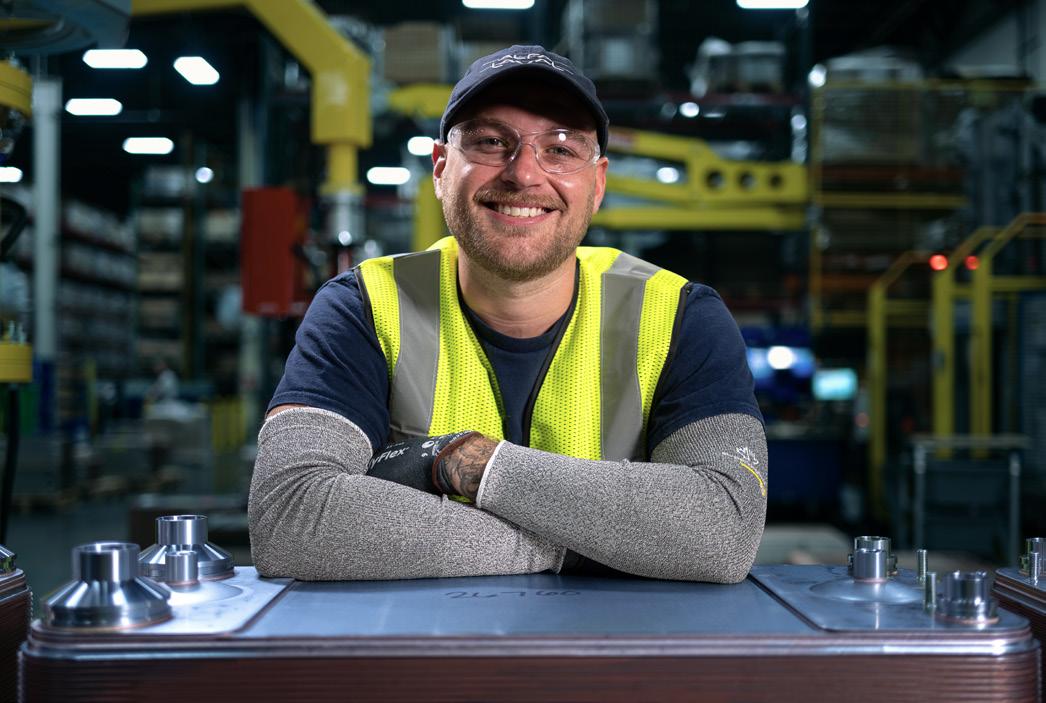
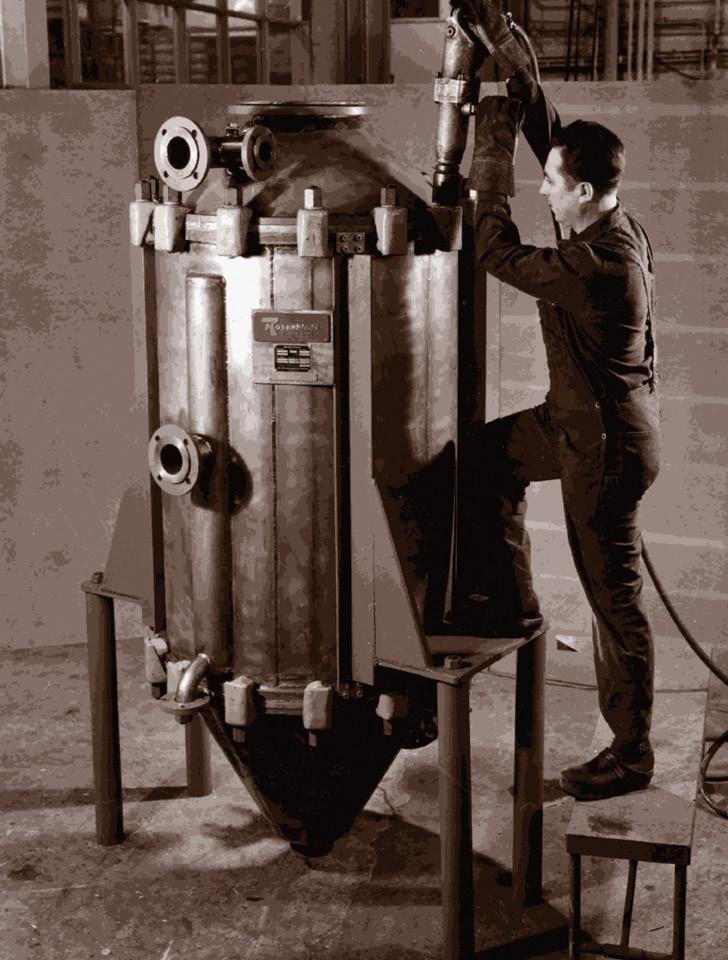
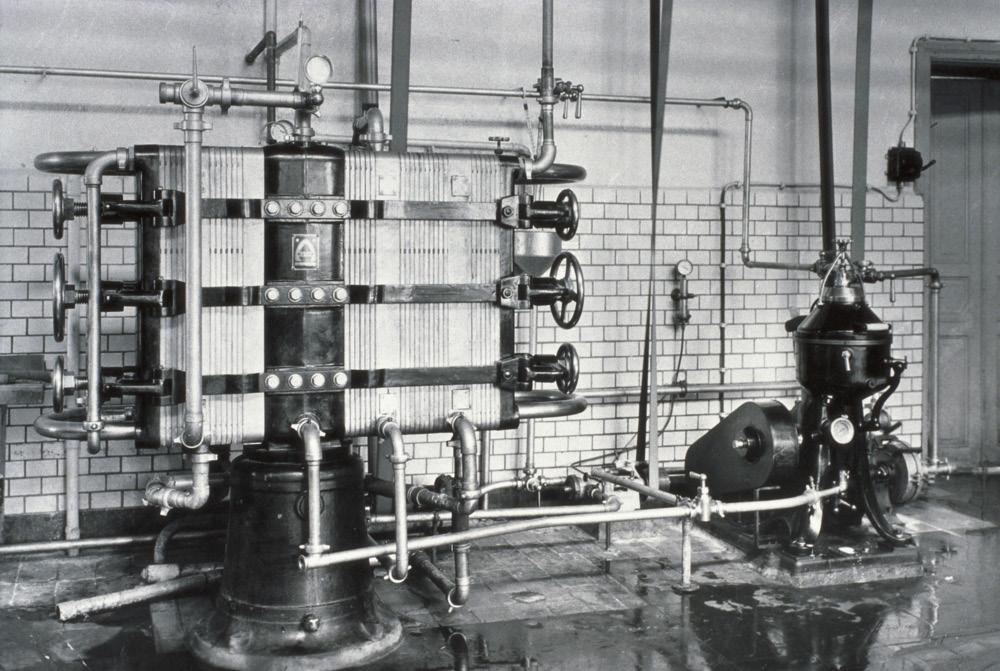
Alfa Laval started out as a dairy separator manufacturer in Sweden and now makes heat transfer, separation, and fluid handling products at its Henrico County facility.
NNS maintains quality amid technological change
HII, formerly Huntington Ingalls Industries, marked 140 years of operation for its Newport News Shipbuilding (NNS) division in January 2026. While the company is still heavily industrial in nature, its partnership with the U.S. Navy has enabled it to become an advanced manufacturing and nuclear partner for Virginia, the Hampton Roads region, and the federal government.
Since its founding in 1886 as the Chesapeake Dry Dock and Construction Co., NNS has delivered more than 800 ships to commercial and military customers. It designs, builds, refuels, and decommissions nuclear-powered aircraft carriers and submarines for the U.S. Navy. The shipyard is currently building Gerald R. Ford-class aircraft carriers and performing midlife refueling and complex overhaul work on
Nimitz-class carriers. It also builds Virginia-class attack submarines and is a major shipbuilding partner in the Columbia-class submarine program.
The company’s work with nuclear subs has made it a key developer in the nuclear power industry, particularly through its use of small modular reactors (SMR), a key part of the push in Virginia and the United States to develop safe, clean nuclear energy sources. Currently, only two commercial SMRs are active worldwide, neither in the United States.
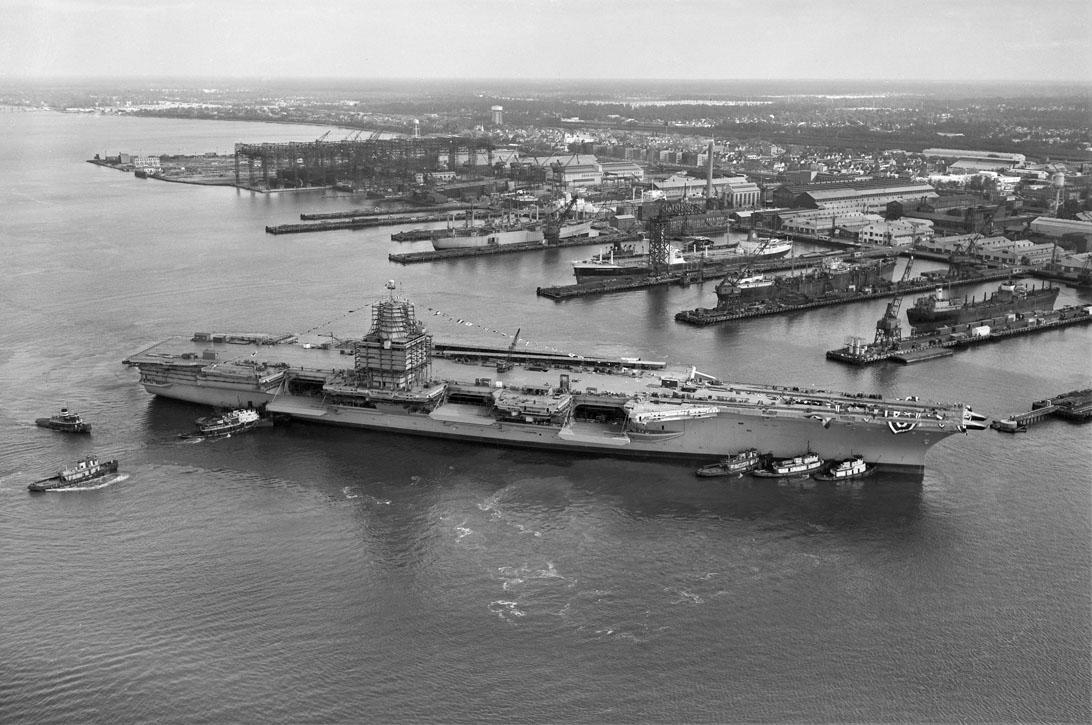
NNS has been building nuclearpowered vessels for the U.S. Navy for decades, including the world’s first nuclear-powered aircraft carrier, the former USS Enterprise, commissioned in 1961. All 11 of the Navy’s current nuclear-powered
carriers were built in Newport News, and the company continues to deploy cutting-edge technologies to provide crucial power.
The first ship ever built at NNS, the tugboat Dorothy, now sits outside the company’s gates in Newport News. It’s a powerful reminder of the words of the company’s founder, Collis P. Huntington, that still drive its mission today: “We shall build good ships here; at a profit if we can, at a loss if we must, but always good ships.”
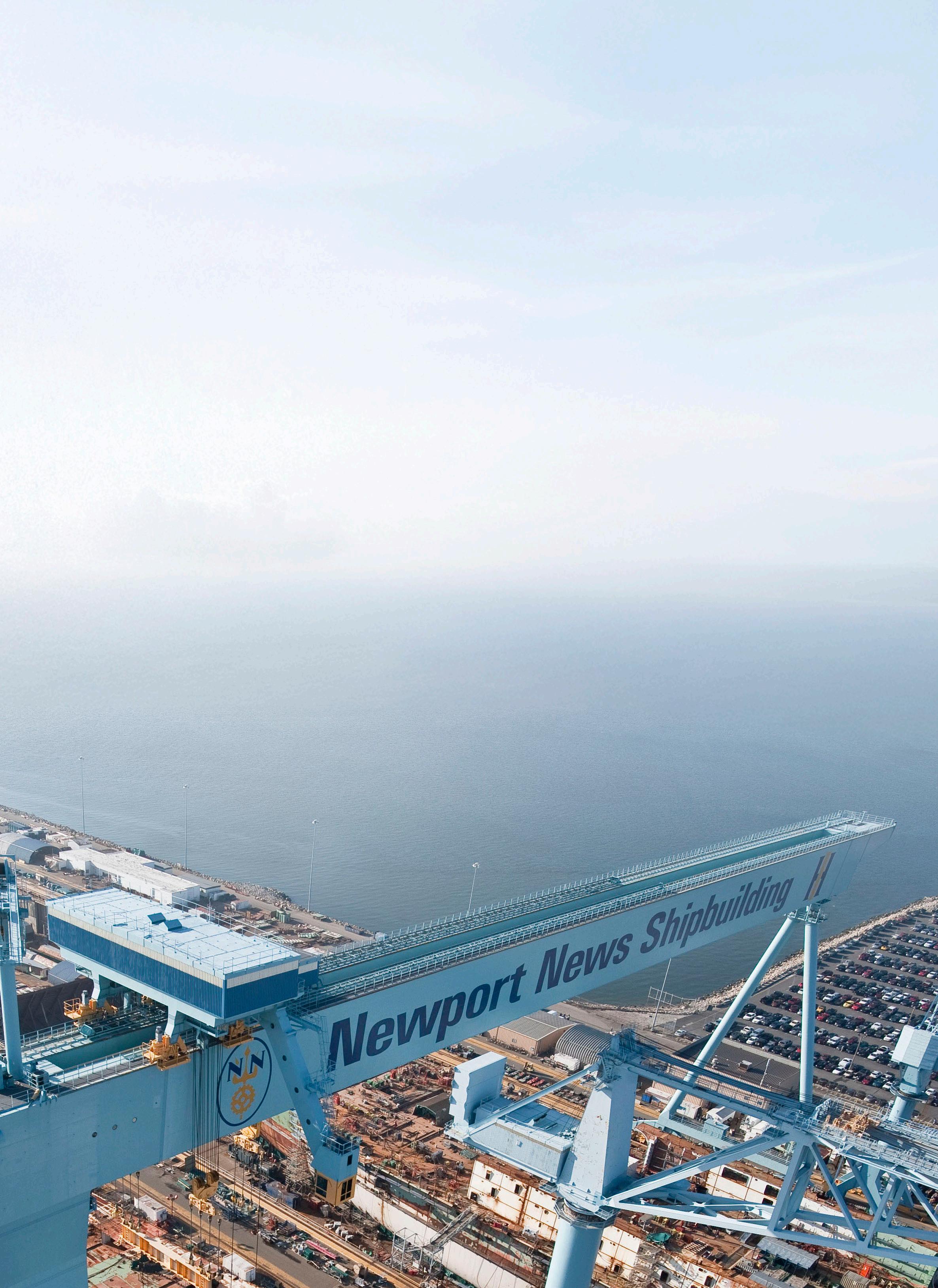
Newport News Shipbuilding has delivered more than 800 ships to its commercial and military customers and is one of only two American shipyards capable of designing and building nuclear-powered submarines.
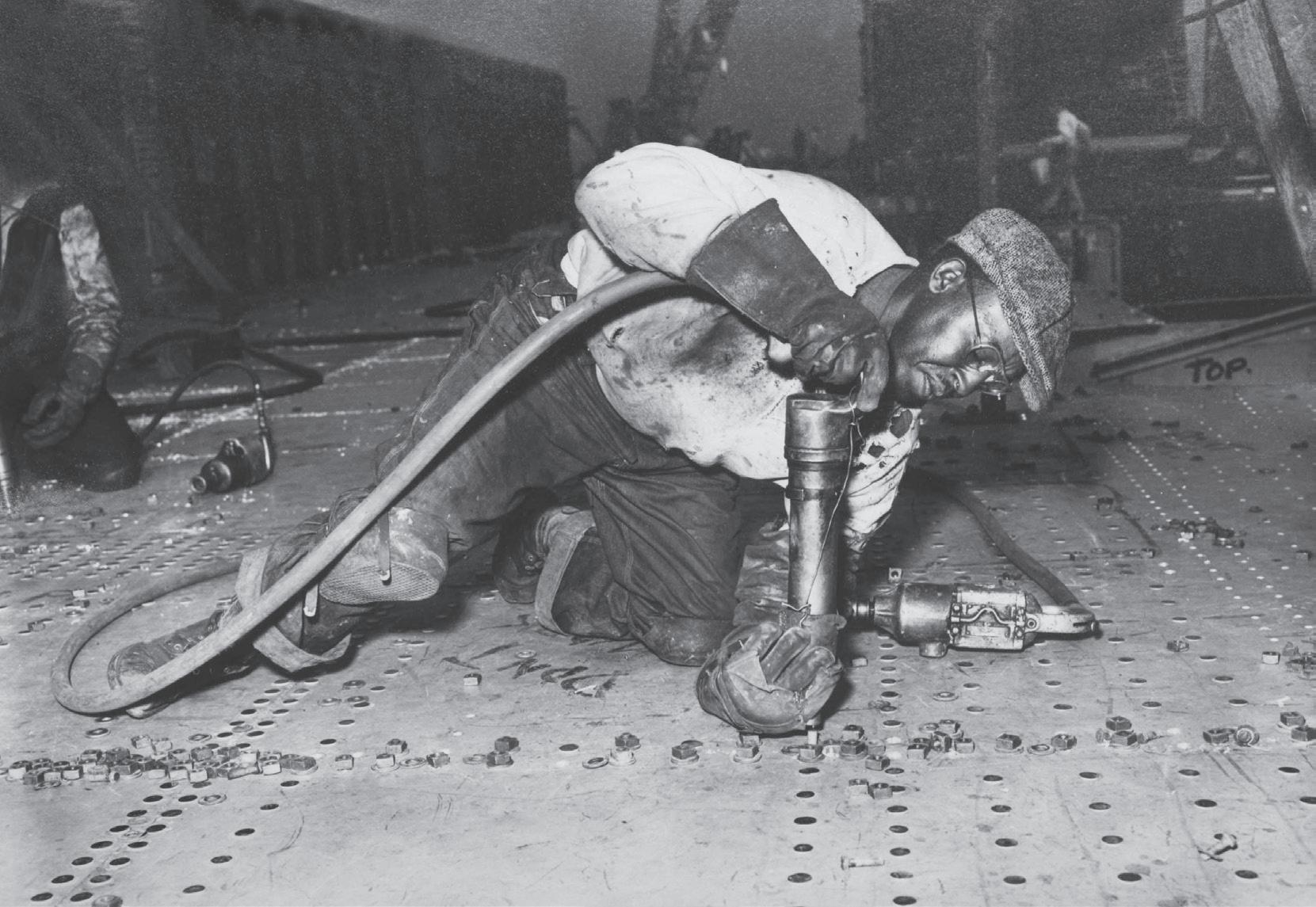
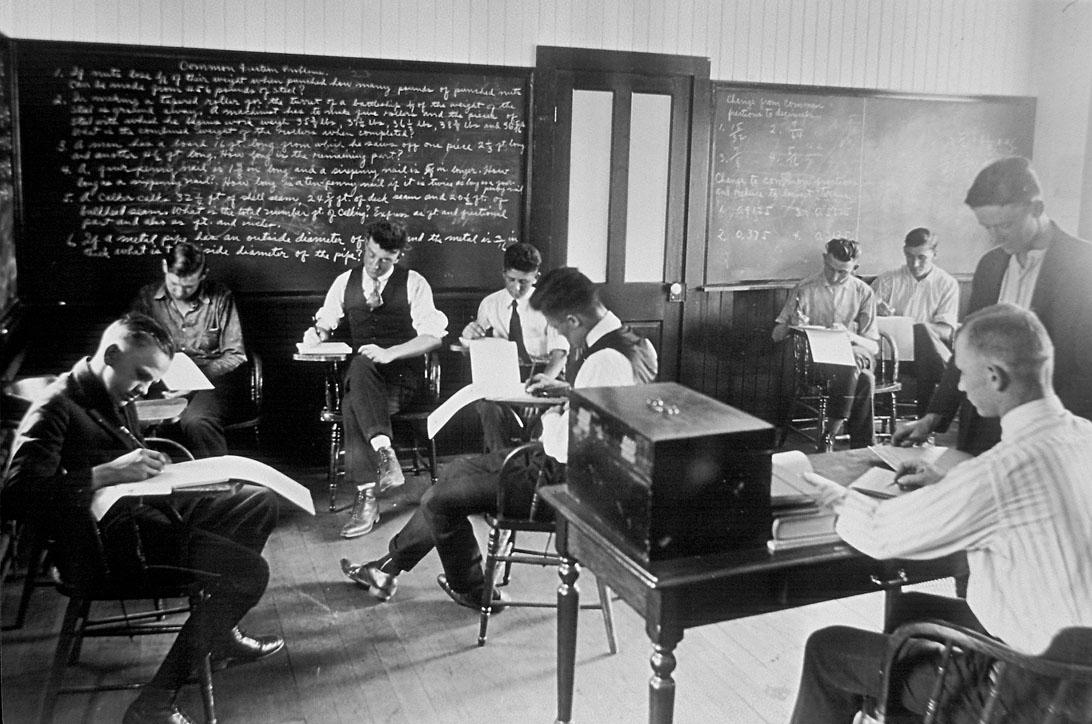
Middle: This photo from 1919 shows students at The Apprentice School, a vocational school operated by Newport News Shipbuilding to train its workforce, shortly after its founding.
Bottom: The USS Enterprise, built by Newport News Shipbuilding, was the first nuclear-powered aircraft carrier in the U.S. Navy.
Top: Newport News Shipbuilding started its existence as a small shipyard serving the burgeoning transportation hub on the Virginia Peninsula.
Dominion Energy adapts to serve customers’ power needs
Richmond-based energy company Dominion Energy, Inc., traces its roots back nearly 250 years to 1787 and the Upper Appomattox Trustees, a group that was said to have included future U.S. presidents George Washington and James Madison. That group was charged with improving navigation and establishing canals on the James and Appomattox Rivers and established the Upper Appomattox Company to build dams on the Appomattox
for industrial use. That company grew through mergers with other river transportation companies and consolidated several stations along the river in the late 19th century — Dominion Energy now estimates that 235 companies contributed to its corporate ancestry.
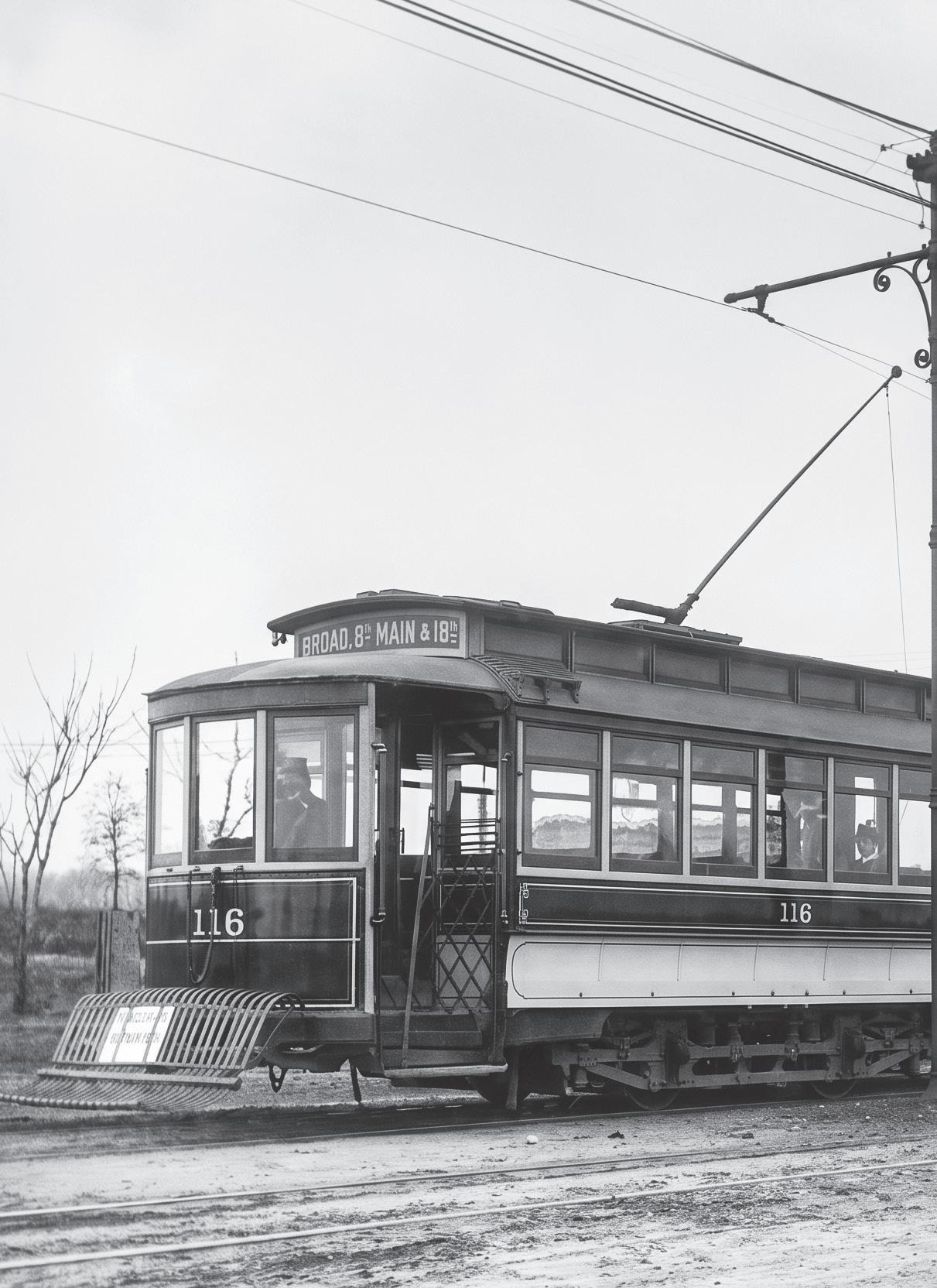
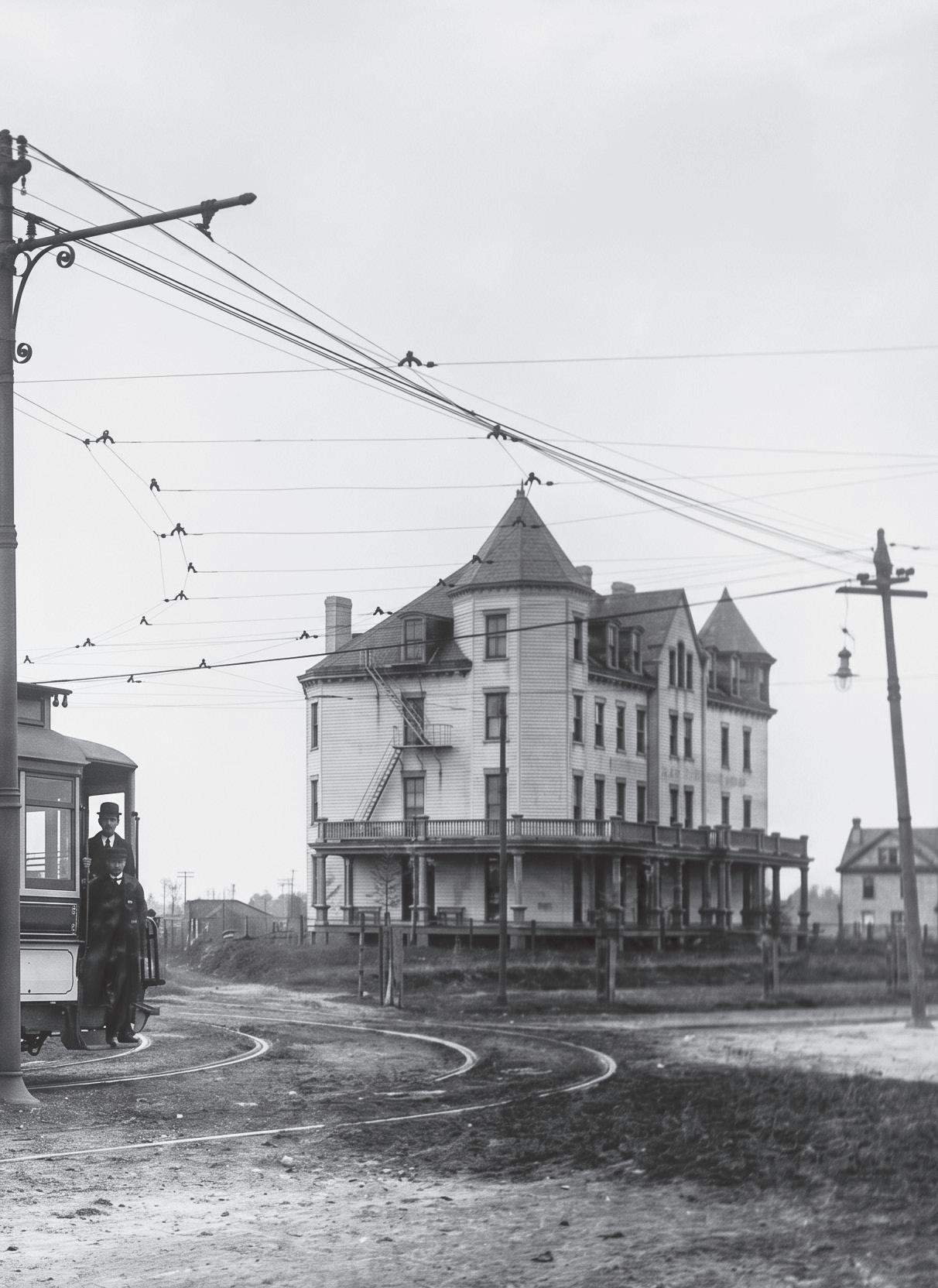
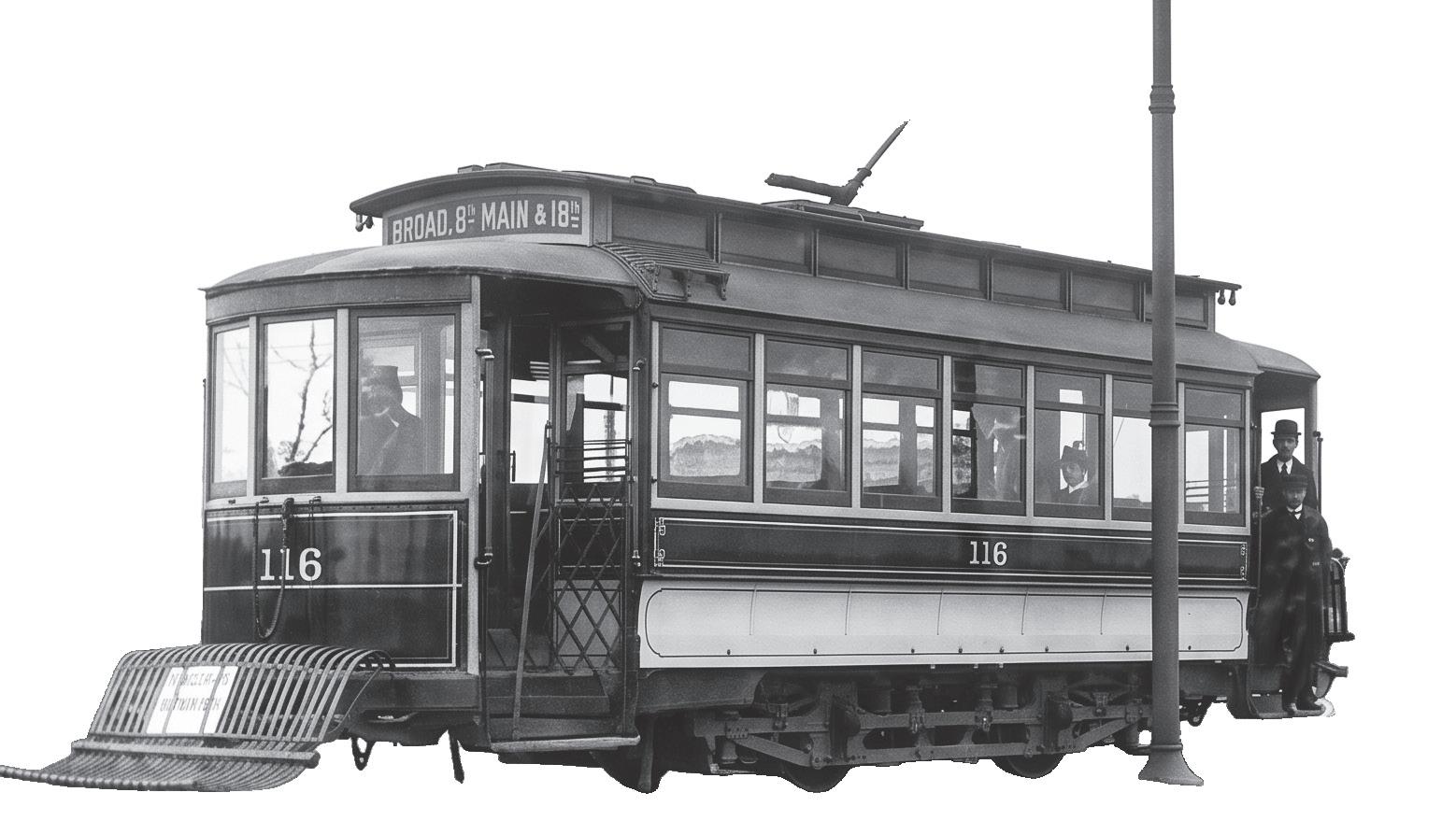
In 1901, the water rights passed to a new company, the Virginia Passenger & Power Company, which was acquired by streetcar firm Virginia Railway & Power
Company a few years later. Acquisitions and rebrands created the Virginia Electric and Power Company (VEPCO), which became one of the country’s largest electric utilities by the early 1950s. The name “Dominion” came about in 1983 when VEPCO reorganized as a holding company called Dominion Resources, now known as Dominion Energy. In May 2026, Dominion announced a proposed merger with Florida-based NextEra Energy that would create the
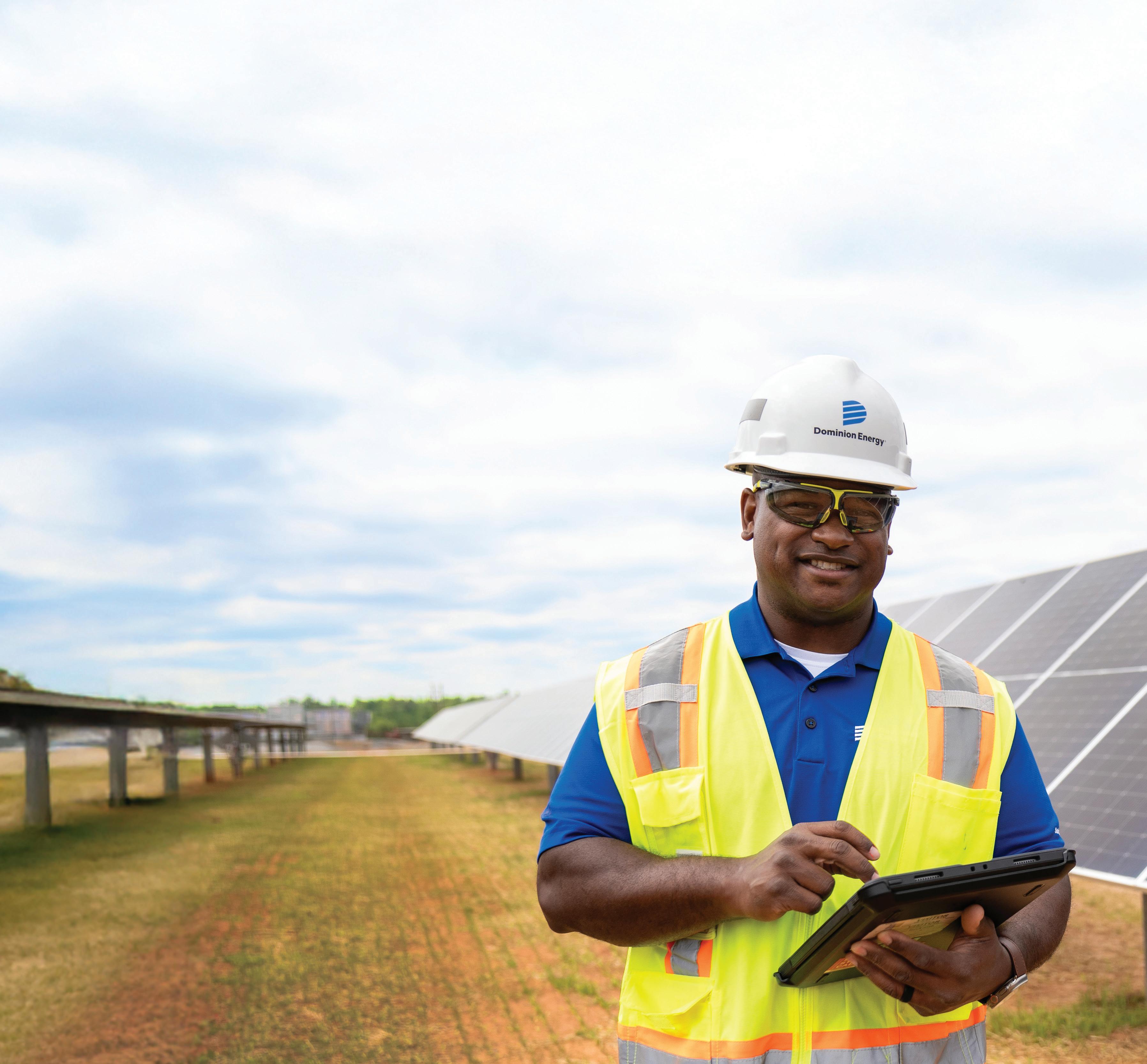
Dominion Energy, Inc.’s Quillwort Solar facility in Powhatan County is part of the company’s push to increase its renewable offerings, with a goal of producing more than 16,000 megawatts by the end of 2035.
Dominion Energy, Inc.
largest regulated electric utility in the country.
Today, Dominion Energy’s network includes nearly 30 GW of electric generating capacity from nuclear, natural gas, solar, hydro, coal, biomass, and offshore wind, more than 90,000 miles of electric distribution and transmission lines, and 20,000 miles of natural gas distribution pipeline. The company serves more than 4 million electric and natural gas
utility customers in Virginia, North Carolina, and South Carolina.
The company continues to expand its renewable energy portfolio, and the 2.6 GW Coastal Virginia Offshore Wind project is scheduled to be completed in early 2027. It owns and operates the third-largest solar portfolio among U.S. utility holding companies and is investing billions of dollars in nuclear power through the extension of the operating licenses for its nuclear
stations in Virginia (North Anna Power Station in Louisa County and Surry Power Station in Surry County) and South Carolina, and through the development of small modular reactors. It also has renewable natural gas operations in 11 states, including a partnership with Smithfield Foods in Virginia (see page 24).
Above: Engineers and officials from the Virginia Electric and Power Company observe what was then a state-of-the-art generator.
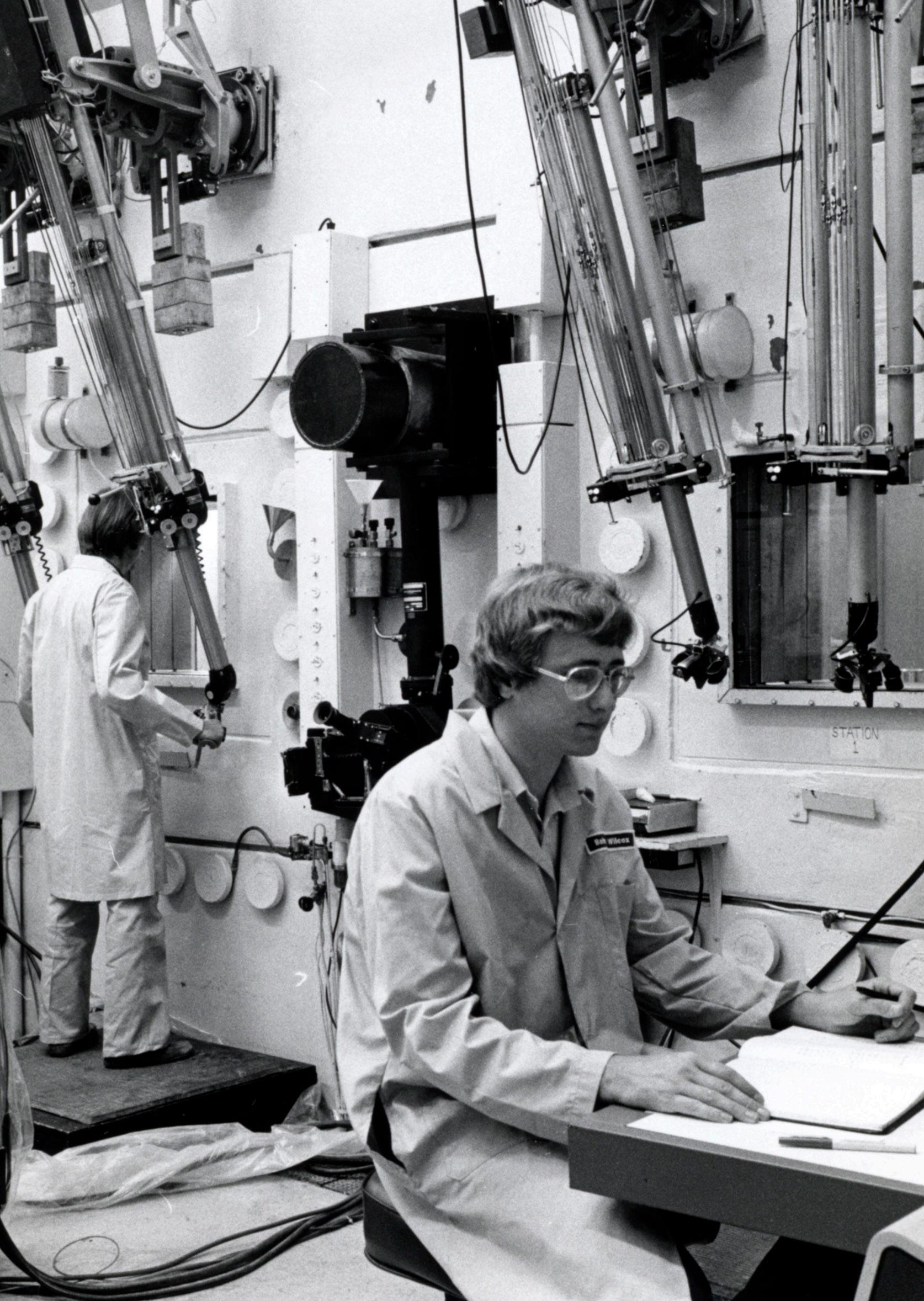
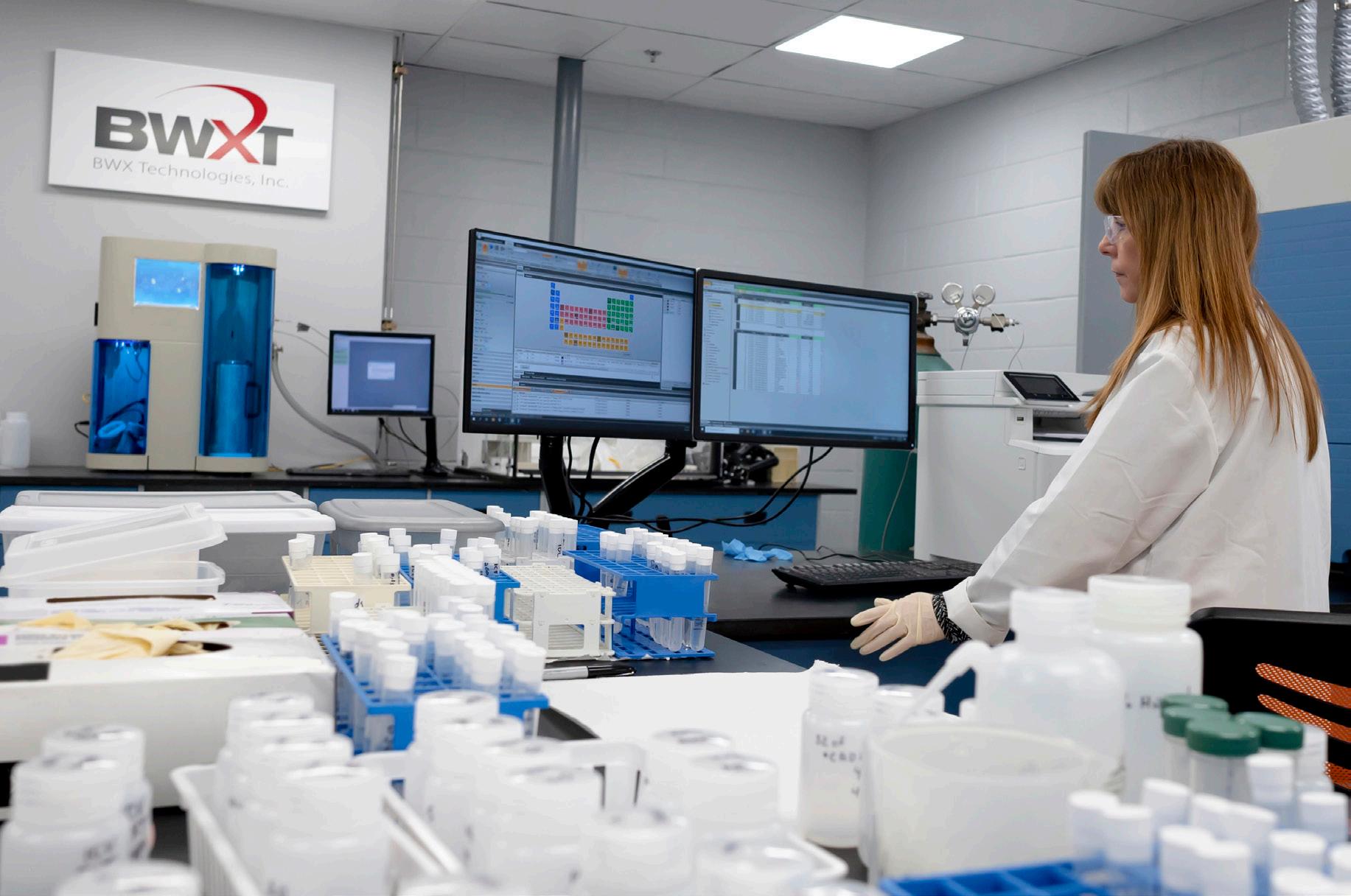
Right: Lynchburg nuclear manufacturer BWX Technologies, Inc., was founded as a boiler company and is now working to support NASA’s missions to Mars.
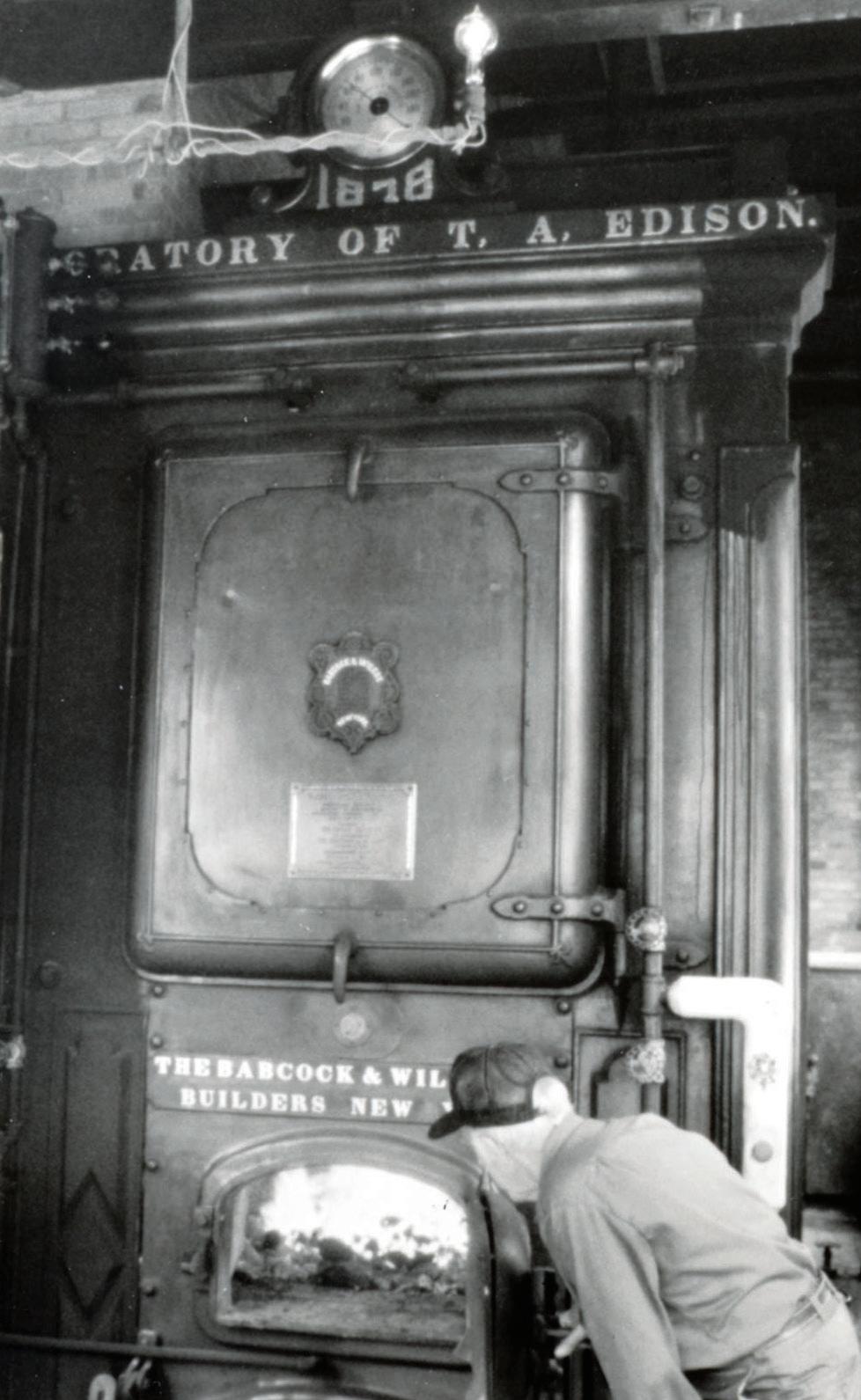
Left: Over the years, Babcock & Wilcox changed its name to BWX Technologies and became a key supplier for the U.S. Navy’s nuclear fleet.
NAVY WORK LAUNCHES BWX TECHNOLOGIES
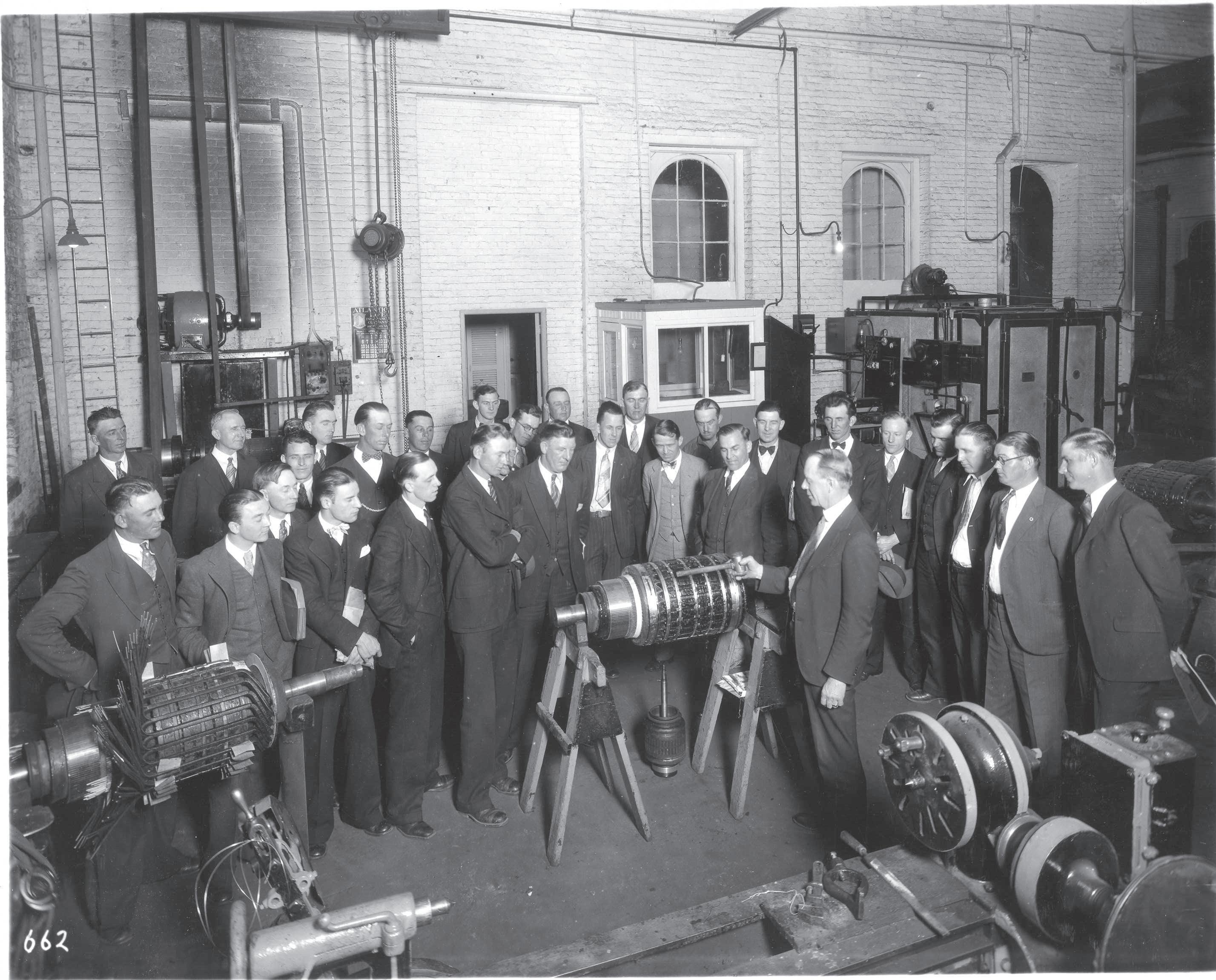
Long before BWX Technologies, Inc. (BWXT), helped create a nuclear industry hotspot in Lynchburg, it was a small Rhode Island company based on a novel technology. Founder Stephen Wilcox patented his water tube boiler design in 1856 and founded the company, then known as Babcock & Wilcox (B&W), with George Babcock in 1867. The company’s boilers powered the country’s first central electrical station, in Philadelphia, and helped Thomas Edison develop the concept of a public utility through the company’s work on his Pearl Street Station in New York. Edison himself wrote that the company’s boiler was “the best boiler God has permitted man yet to make.”
B&W boilers powered the New York subway system and President Theodore Roosevelt’s “Great White Fleet” of U.S. Navy ships, and the company manufactured components for the Hoover Dam and the Manhattan Project. In 1949, B&W was awarded contracts to develop boilers and components for Navy ships — the reason the company came to Virginia in the first place.
Those contracts involved building nuclear submarines for the Navy under Adm. Hyman Rickover, which necessitated a secure location to protect sensitive materials and
intellectual property. B&W eventually chose a Campbell County site just outside Lynchburg on a peninsula in the James River, surrounded by water on three sides with a wooded ridge complicating the only land route to the site. Factoring in rail access and a strong workforce, the site — which became known as the Navy Plant after opening in 1955 — was an ideal location for the sensitive, secretive work in which the company was involved.
Several consolidations and acquisitions and one name change later, BWXT remains an integral part of the United States’ nuclear plans. The company has manufactured more than 420 nuclear reactors for Navy submarines and is now working on space nuclear propulsion and fission surface power in support of the United States’ efforts to put humans on Mars.
“It all started with naval nuclear propulsion supporting Adm. Rickover and the nuclear Navy, trying to figure out how to put nuclear reactors on submarines,” BWXT CEO Rex Geveden said.
But in addition to that high-stakes mission and forays into nuclear medicine and nuclear materials processing, BWXT is continuing its efforts to meet future clean power
needs, for both energy-intensive industries and personal consumption, here on Earth.
“Demand is moving from gas pumps to the electricity grid, from behind the meter to on the meter,” Geveden said. “We’re seeing a surge in demand, and nuclear is how you meet that demand.”
Thomas Edison wrote that BWX Technologies predecessor company Babcock & Wilcox made “the best boiler God has permitted man yet to make.”
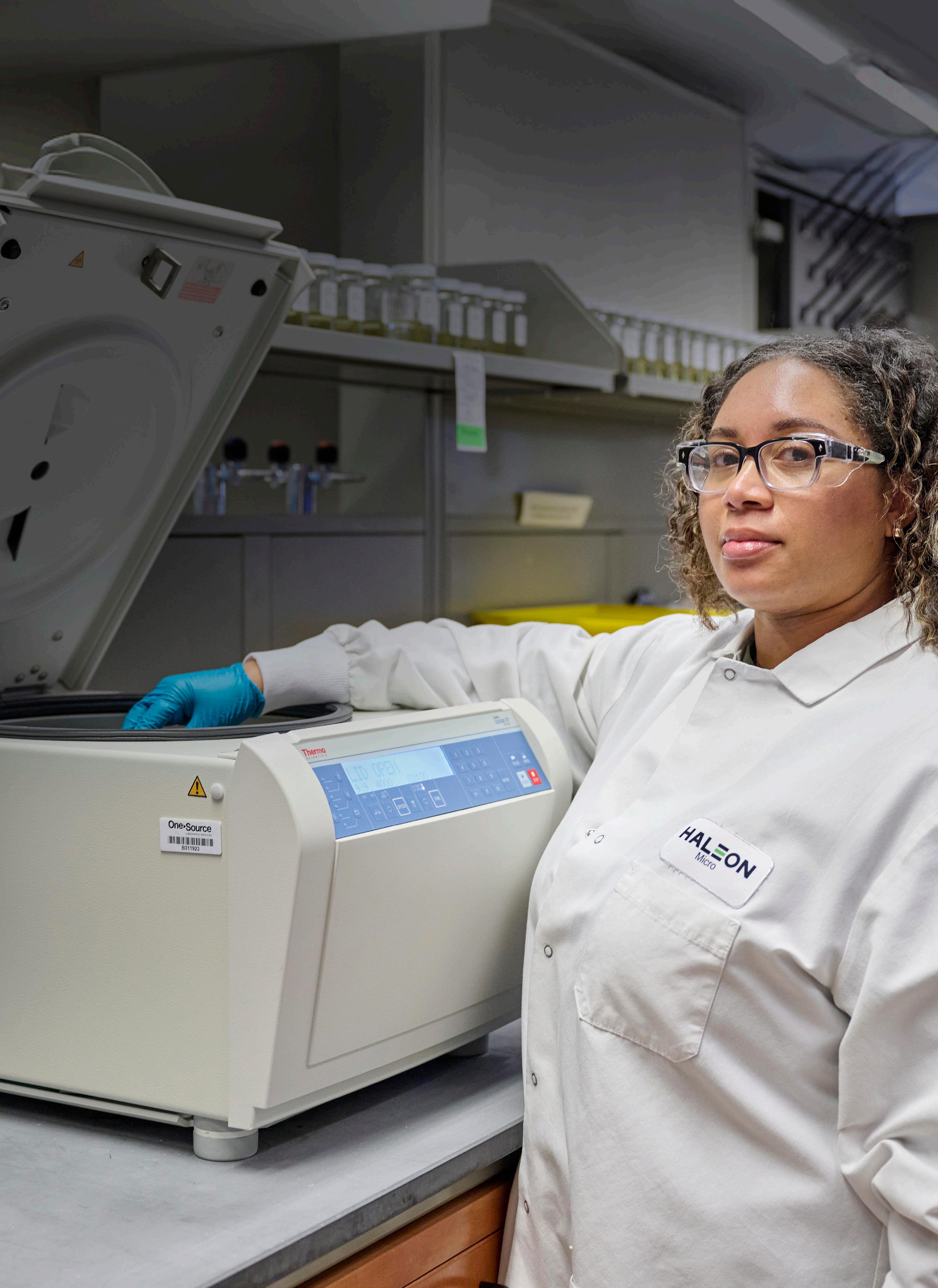
Haleon
Haleon, Richmond
Through mergers, Haleon continues developing consumer healthcare staples in Richmond
The consumer products company focused on better everyday health now known as Haleon (formerly GSK) wasn’t founded in Virginia, or even the United States. The company traces its lineage to the Plough Court Pharmacy in London in 1715. The Commonwealth entered the picture in the late 19th century, and Haleon has become a Virginia fixture since opening its Richmond research and development facility in the 1960s.
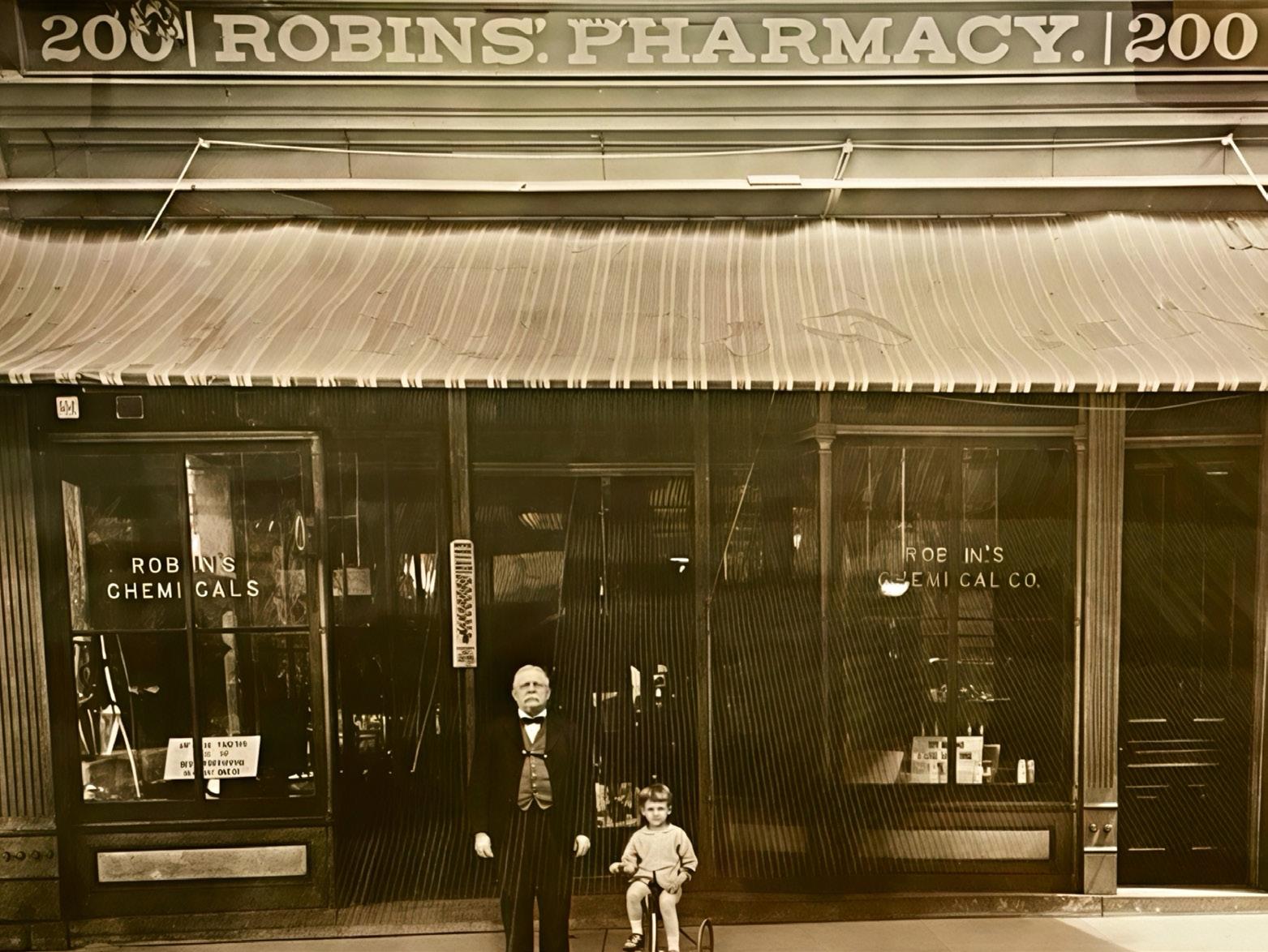
In 1866, Albert Hartley Robins founded the A.H. Robins Apothecary in a Richmond that was still recovering from the Civil War. A.H. Robins grew into international prominence over the next century and merged with Whitehall Pharmaceutical Company in 1986, kicking off a period of several mergers that ended in 2022 with the founding of Haleon as a joint venture of pharmaceutical giants GlaxoSmithKline and Pfizer. This established the company as one of the largest over-the-counter healthcare companies in the world.
The company is associated with numerous household names in consumer healthcare, starting with two major Virginia-developed consumer healthcare products —
Robitussin and Advil, both invented by A.H. Robins. The company used to produce ChapStick, invented by Charles Browne Fleet in Lynchburg in the 1880s, but sold the brand in 2024.
Haleon now manufactures numerous iconic healthcare brands including Robitussin, Advil, Caltrate, Centrum, Emergen-C, Excedrin, Flonase, Nexium, Sensodyne, and TheraFlu. The company continues to develop top-notch consumer healthcare products and announced a $54.2M expansion of the Richmond facility in 2025. In addition to the physical investments, Haleon is partnering with Virginia Commonwealth University (VCU) to launch the Haleon-Commonwealth Consumer Healthcare Internship Program for Advanced Life Sciences, offering paid opportunities for VCU undergraduates and summer internships for undergraduate and graduate students from across Virginia.
Inset left: Albert Hartley Robins founded the A.H. Robins Apothecary, one of the predecessor companies to Haleon, in 1866.
Smithfield Foods
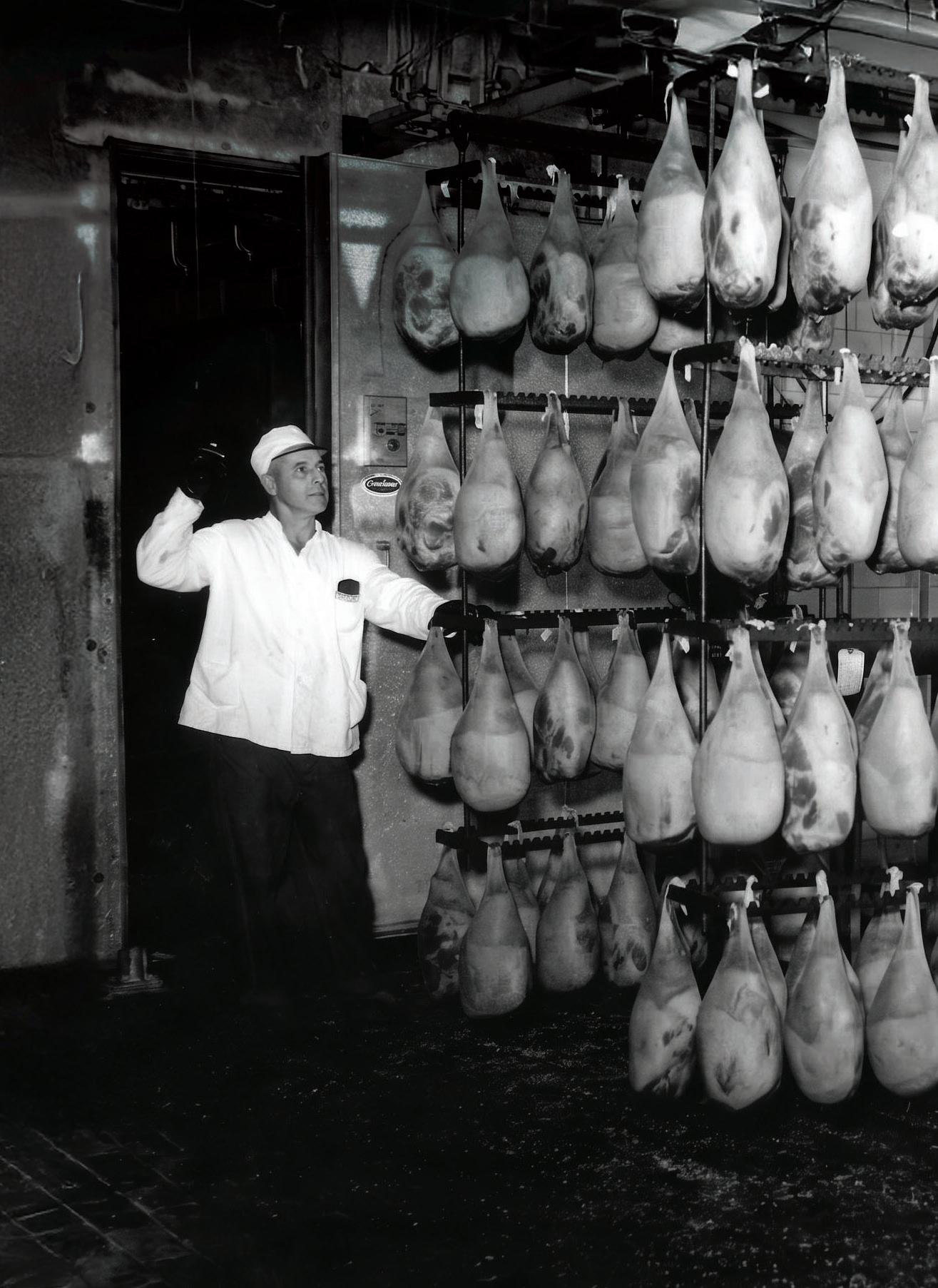
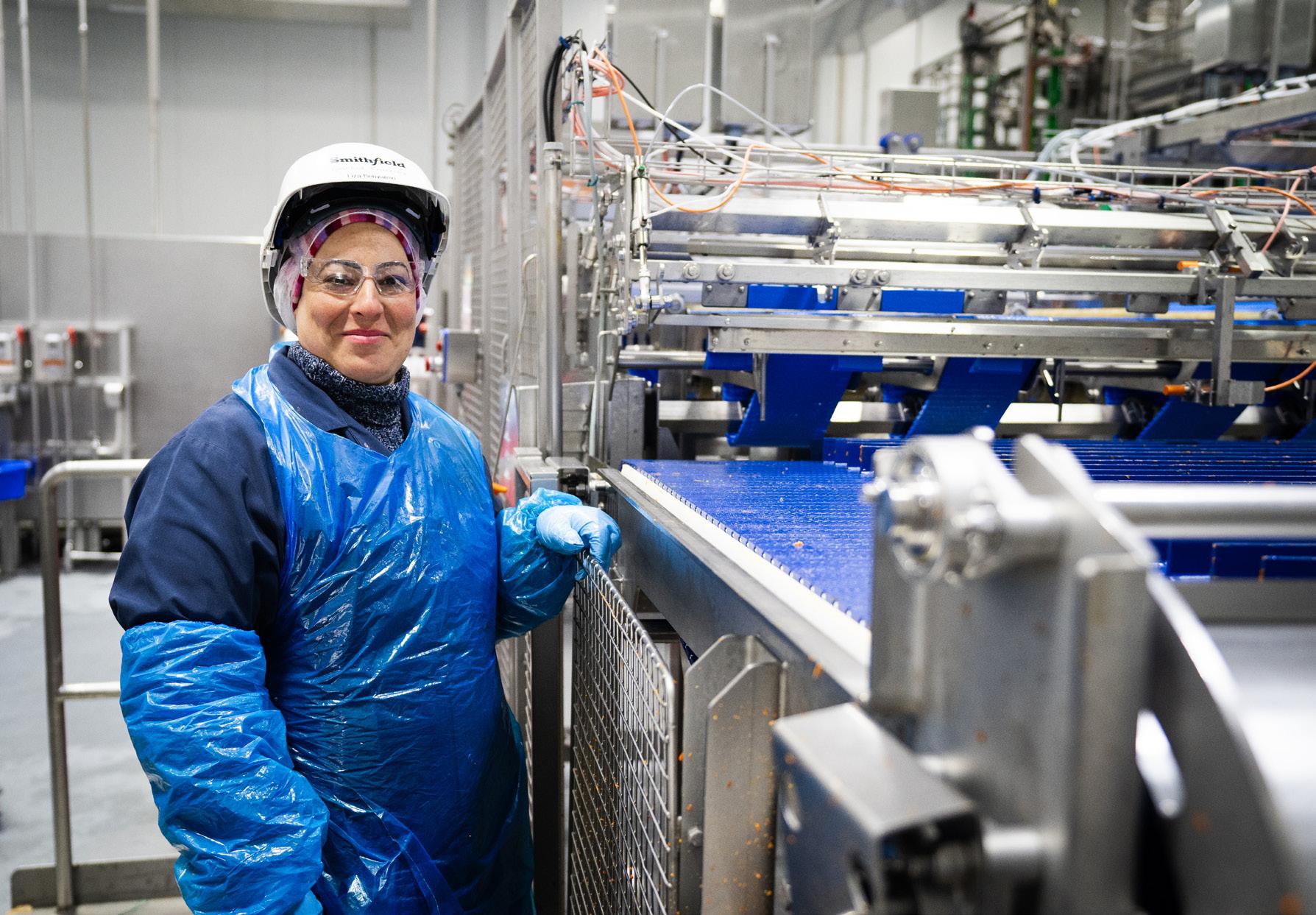
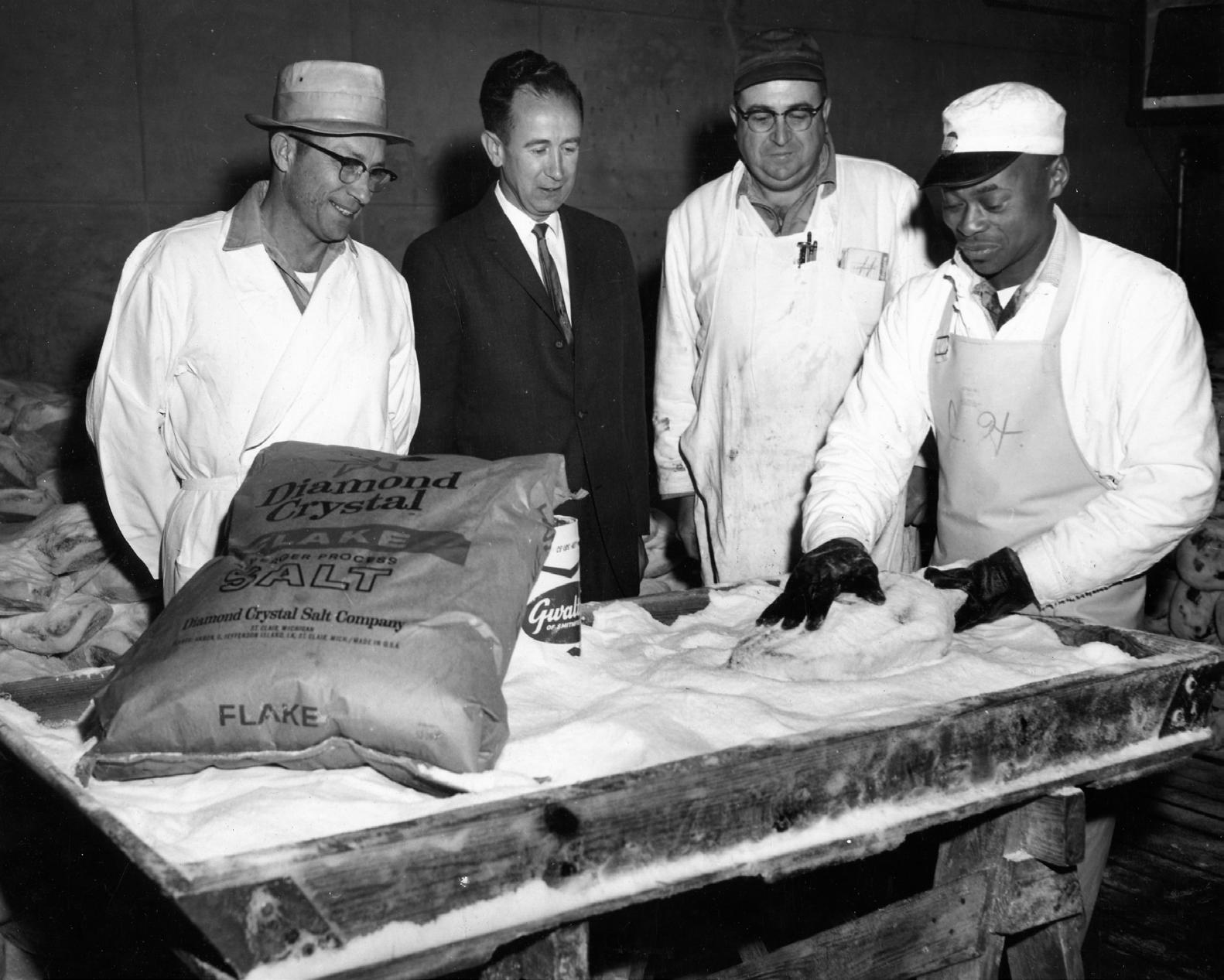
Top: The process of raising, processing, smoking, and curing genuine Smithfield hams was once enshrined in Virginia state law. Bottom: Smithfield Foods has operated out of Smithfield since its founding in 1936 and continues to invest to upgrade the technology in its packaging facilities.
Smithfield Foods grows where it started
Founded in 1936 in the town of Smithfield in Isle of Wight County, Smithfield Foods grew from a small, local ham-curing operation into a global leader in packaged meats. While the business has expanded and evolved over nearly a century, its roots remain grounded in quality, craftsmanship, and a commitment to the communities its employees call home. Today, Smithfield brings that legacy to life with a simple guiding principle: “Good food. Responsibly.®”
After working for P.D. Gwaltney Jr. & Company in Smithfield, Joe Luter Sr. and his son, Joe Luter Jr., started the company in the town’s wharf area, where they cured Smithfield hams. Joseph Luter III, representing the third generation of Luters in the family business, helped expand Smithfield into the world’s largest pork producer.
Innovation continues to shape Smithfield’s growth across its portfolio of iconic brands like Smithfield®, Nathan’s Famous®, and Eckrich®, among many others.
In 2026, Smithfield announced plans to acquire Nathan’s Famous®, which would secure permanent rights to the brand and fuel growth across retail and food service channels.
Guided by consumer insights, the company introduces new products, flavors, and packaging that reflect how people cook, eat, and shop today. At the same time, Smithfield is investing in automation and advanced technologies across its facilities to improve efficiency, increase consistency, and enhance workplace safety.
In 2018, Smithfield partnered with Dominion Energy (see page 18) to launch Align RNG, a joint venture to capture methane on farms and convert it to clean, renewable energy.
Virginia has always been Smithfield’s home. With deep ties, a skilled workforce, and strong community partnerships, the Commonwealth remains the place where Smithfield grows its business, supports its neighbors, and builds for the future.
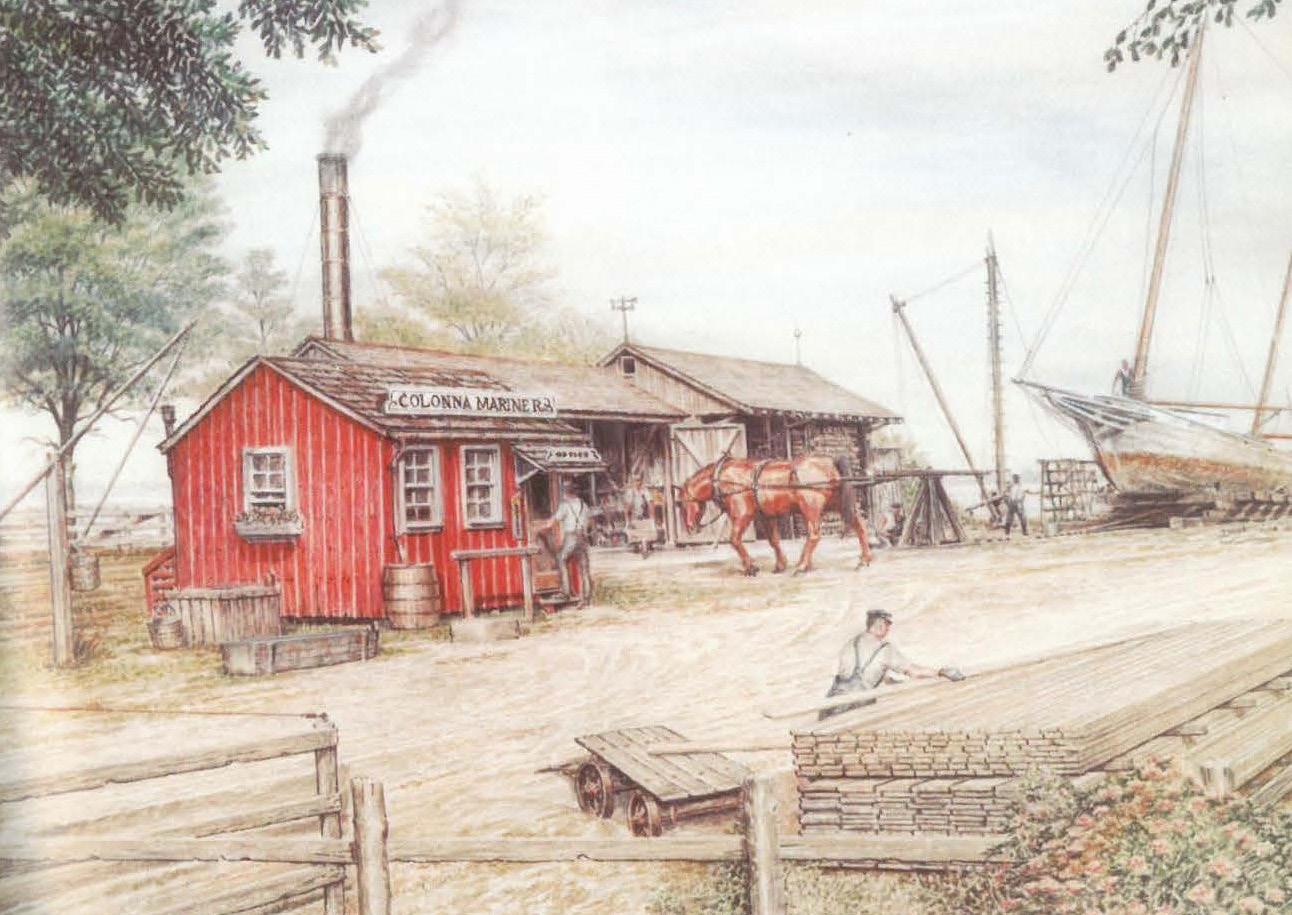
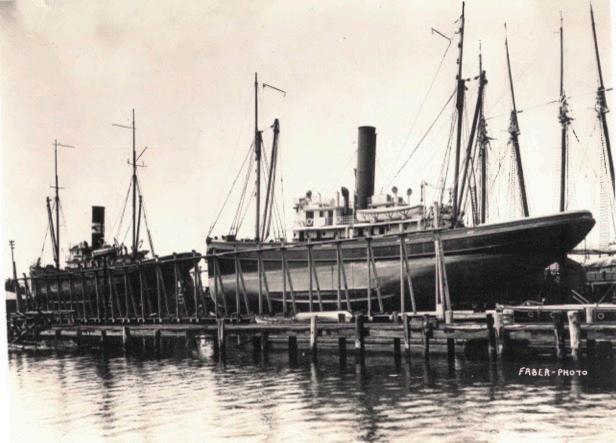
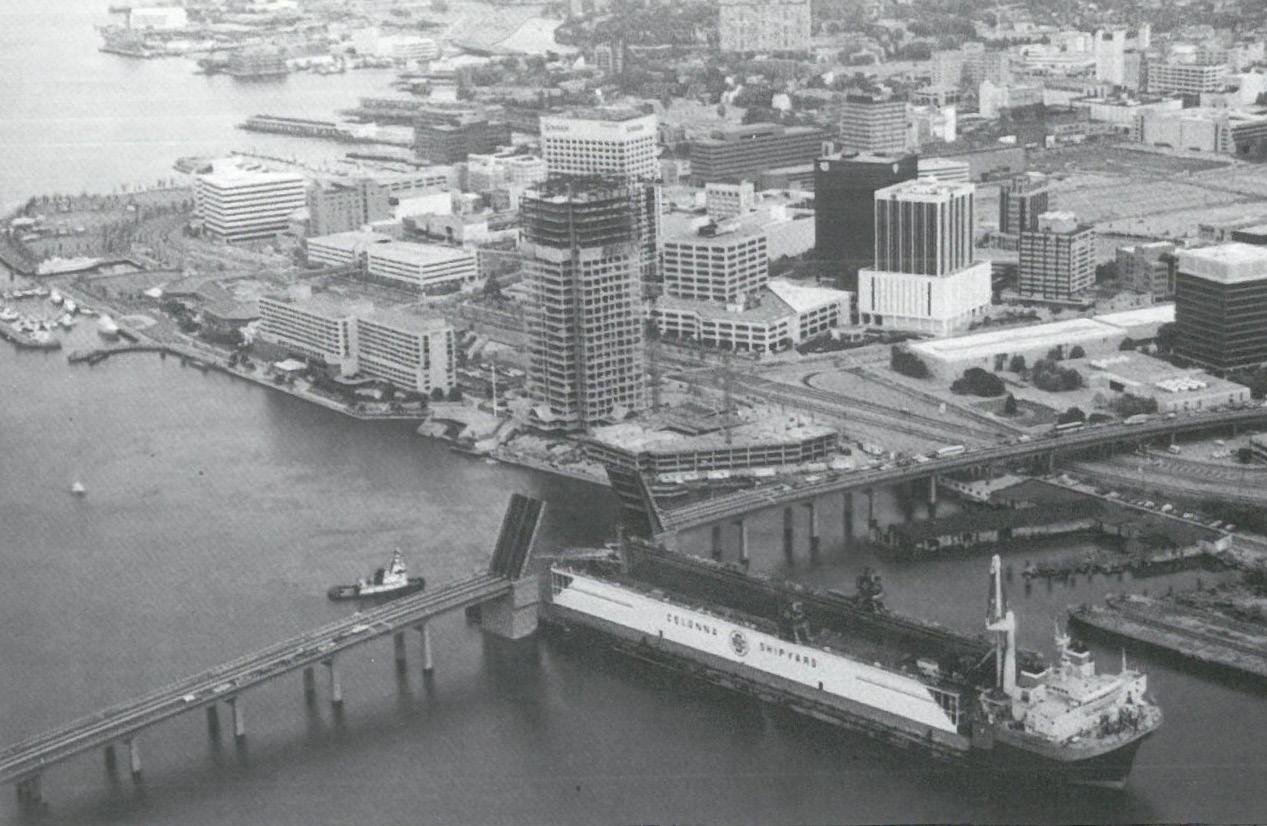
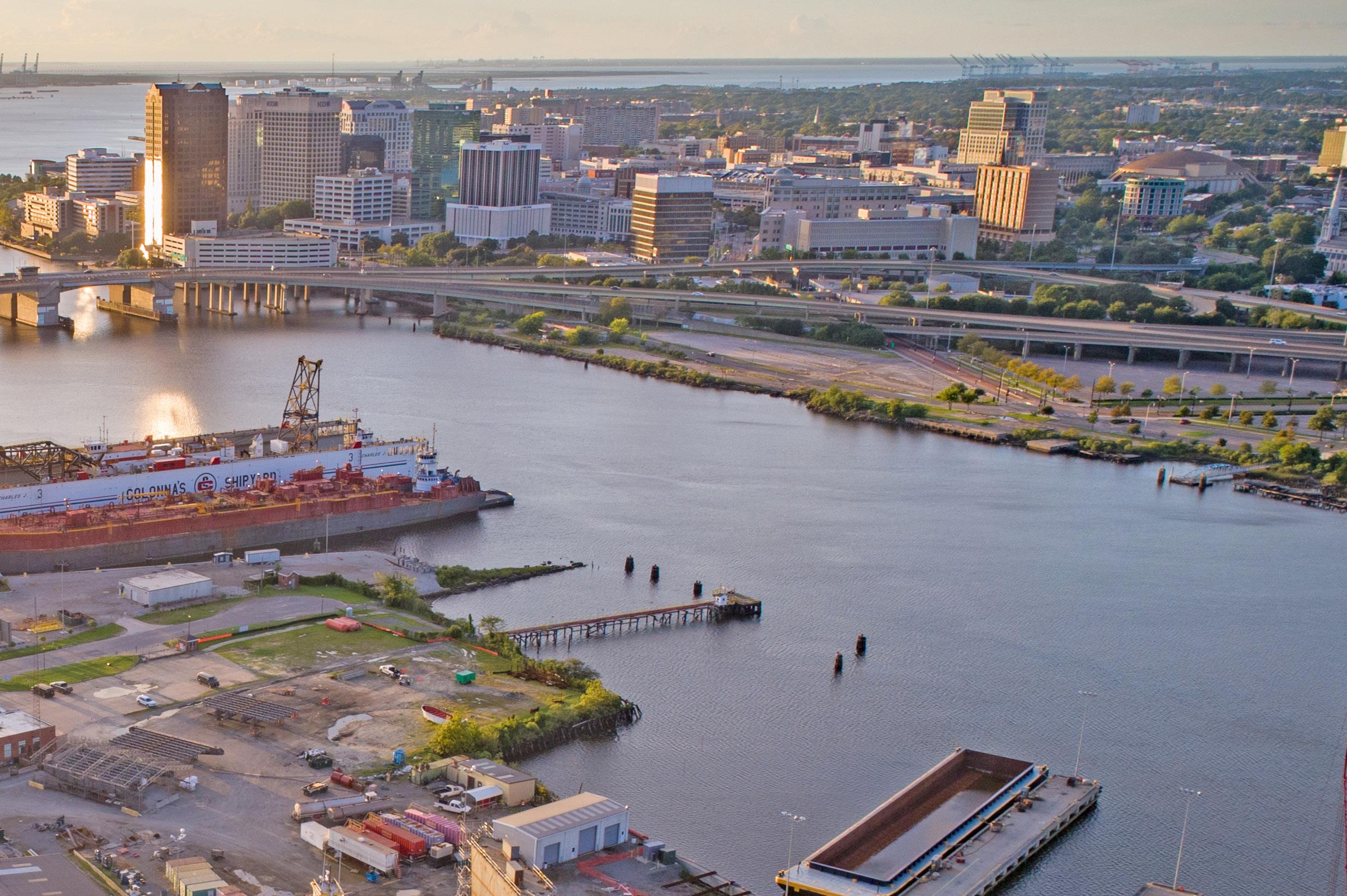
Top: Colonna’s Shipyard began as a small shop servicing wooden ships in Norfolk and has developed into a bicoastal company with major commercial and government clients.
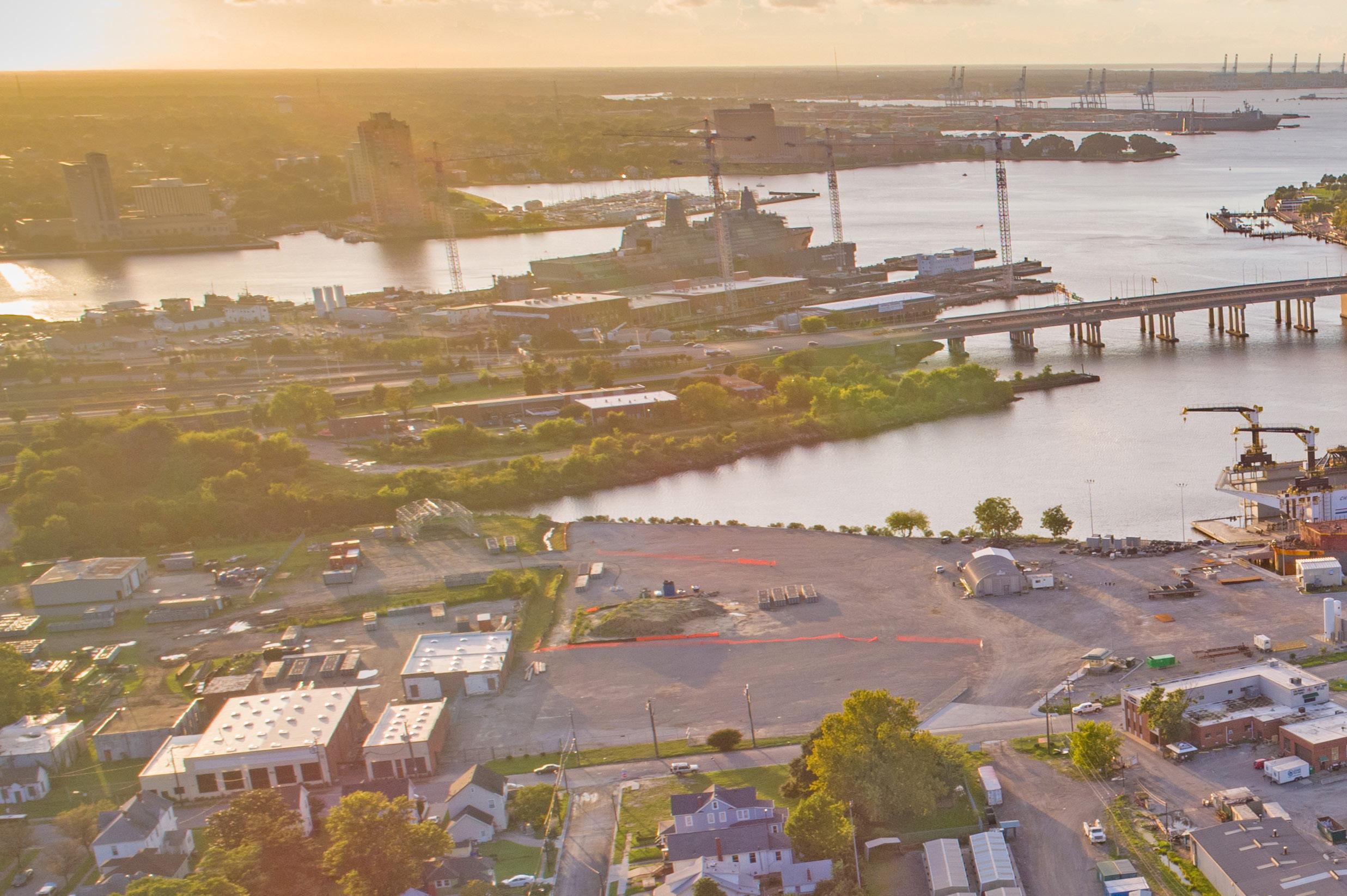
Right: Colonna’s Shipyard is installing a fourth drydock at its Norfolk shipyard to service larger commercial and government ships.
150 YEARS OF FAMILY-OWNED GROWTH
Colonna’s Shipyard soars from humble beginnings
Charles J. Colonna founded the shipyard that bears his name in 1875 with a $2,000 loan from his brother. He was 26 years old. The company initially focused on servicing the sailing ships that called on the port at Norfolk and was limited to pier-side repairs. Within two years, Colonna added a horse-powered marine railway to expand his capabilities.
At the time, nearly all the ships Colonna’s served were wooden and required extensive maintenance from carpenters, caulkers, painters, riggers, sailmakers, and blacksmiths. The shipyard benefited from an advantageous location on the eastern branch of the Elizabeth River, across from downtown Norfolk, where it continues to operate today as the
oldest family-owned shipyard in the United States.
In the century and a half since its founding, Colonna’s has developed into a multi-format industrial service provider of ship overhaul, conversion, and repair, large-scale industrial fabrication, heavy machining, and industrial plant maintenance, conversion, and construction. Its industrial fabrication offerings now include modular shipbuilding for high-priority U.S. Navy programs.
To help fulfill those needs, Colonna’s is installing a fourth drydock, which will provide a platform for larger commercial and government ships to be repaired at the facility. The new drydock is part of a series of major investments
from the company to help it scale its offerings more effectively.
The company’s government customers include the U.S. Army, Navy, and Coast Guard, the National Oceanic and Atmospheric Administration, the U.S. Maritime Administration, and the Army Corps of Engineers. Non-federal government clients have included the New York City Department of Transportation, which previously engaged Colonna’s to maintain the Staten Island Ferry ships.
That scalability is enhanced by the other businesses under the Colonna’s corporate umbrella, notably Norfolk steel fabricator Steel America and Accurity Industrial Contractors in Owensboro, Ky. Colonna’s also operates a West Coast shipyard near San Diego.
Colonna’s Shipyard
Alfa Laval
A HISTORY OF INNOVATION
Alfa Laval is investing in what comes next. The global provider of heat transfer, separation, and fluid handling products recently announced a multi-year expansion of its Richmond-area facility in Henrico County that will double production capacity by 2028. The project includes increased automation, enhanced production capabilities, and workforce development initiatives, all aimed at meeting rising demand for its technologies across key industries.
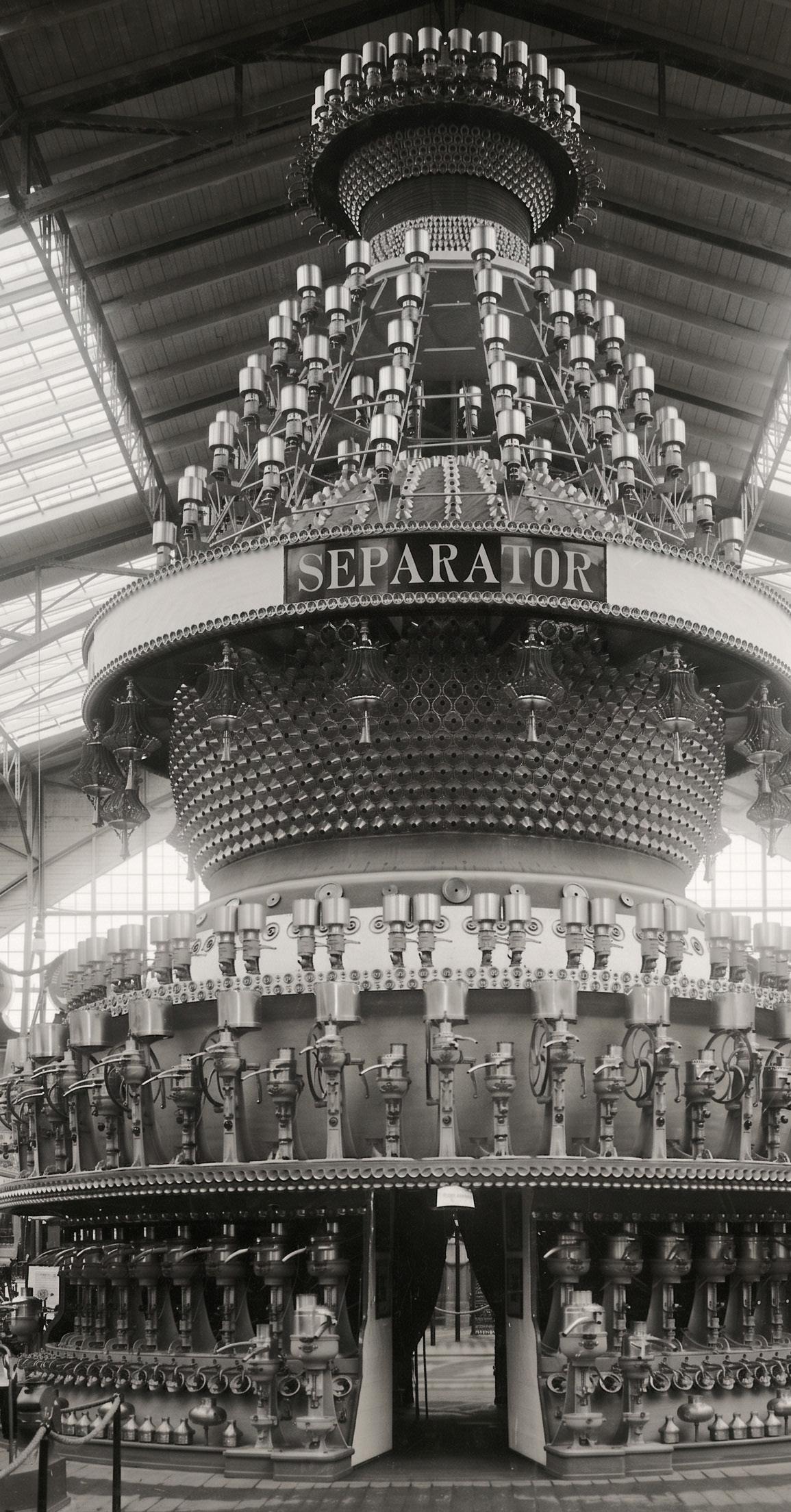
Since its founding in Sweden in 1883 by Gustaf de Laval, Alfa Laval has been guided by a simple idea: Innovation should solve real-world challenges. The company’s earliest breakthrough, the centrifugal separator, transformed dairy production and laid the foundation for a global business that supports the energy, water, food, and manufacturing industries with products that help with heat transfer, separation, and fluid handling.
That mindset extended early to the United States, where Alfa Laval established a presence the same year it was founded. Its initial operations in New York and New Jersey supported rapidly modernizing industrial sectors.
Over time, the company expanded beyond its dairy roots, developing technologies that improve energy efficiency, reduce waste, and enable more sustainable processes.
As the business evolved, so did its footprint. In 1990, Alfa Laval made a pivotal decision to relocate key U.S. operations to Henrico County, creating a centralized hub near Richmond International Airport. The move followed a competitive evaluation of locations including Baltimore and Charlotte, N.C., with Richmond standing out for its logistics advantages, access to talent, and supportive business environment.
Two decades later, Alfa Laval deepened that commitment. In 2010, the company formally consolidated its U.S. operations and established Richmond as its official U.S. headquarters, anchoring leadership, operations, and future investment in the region.
Today, the facility reflects that steady evolution. What began as a strategic relocation has grown into a dynamic hub supporting manufacturing, distribution, and service, enabling Alfa Laval to operate closer to its customers and respond more quickly to changing industry needs.
The latest expansion builds on that foundation. As industries continue to evolve, Alfa Laval’s technologies play a critical role in improving efficiency, supporting industrial processes, and helping customers operate more sustainably. By investing ahead of demand, the company is positioning Richmond to support continued growth and long-term customer needs.
“Richmond has been central to our growth in the United States, providing a strong foundation to scale and invest in the future,” said Alfa Laval President, North America Jan Debruyn. “The region’s workforce, infrastructure, and business environment enable us to evolve with our customers, advancing technologies that improve efficiency and support more sustainable solutions. As we look ahead, Virginia remains a key partner in our continued innovation and growth.”
More than three decades after establishing its presence in Virginia, Alfa Laval continues to build on its legacy — connecting a history of engineering innovation with a future focused on efficiency, sustainability, and growth.
Top left: Alfa Laval’s Henrico County facility near Richmond International Airport has been open since 1990 and served as the company’s U.S. headquarters since 2010. The company announced an expansion in February 2026 that will double the site’s production capacity.
Bottom left collage: Alfa Laval’s products are used to heat, cool, separate, and transport products in a wide variety of industries.
Alfa Laval was founded in Sweden in 1883 and initially manufactured centrifuges for dairies to separate cream from milk.
A. Smith Bowman Distillery
FROM PROHIBITION TO THE
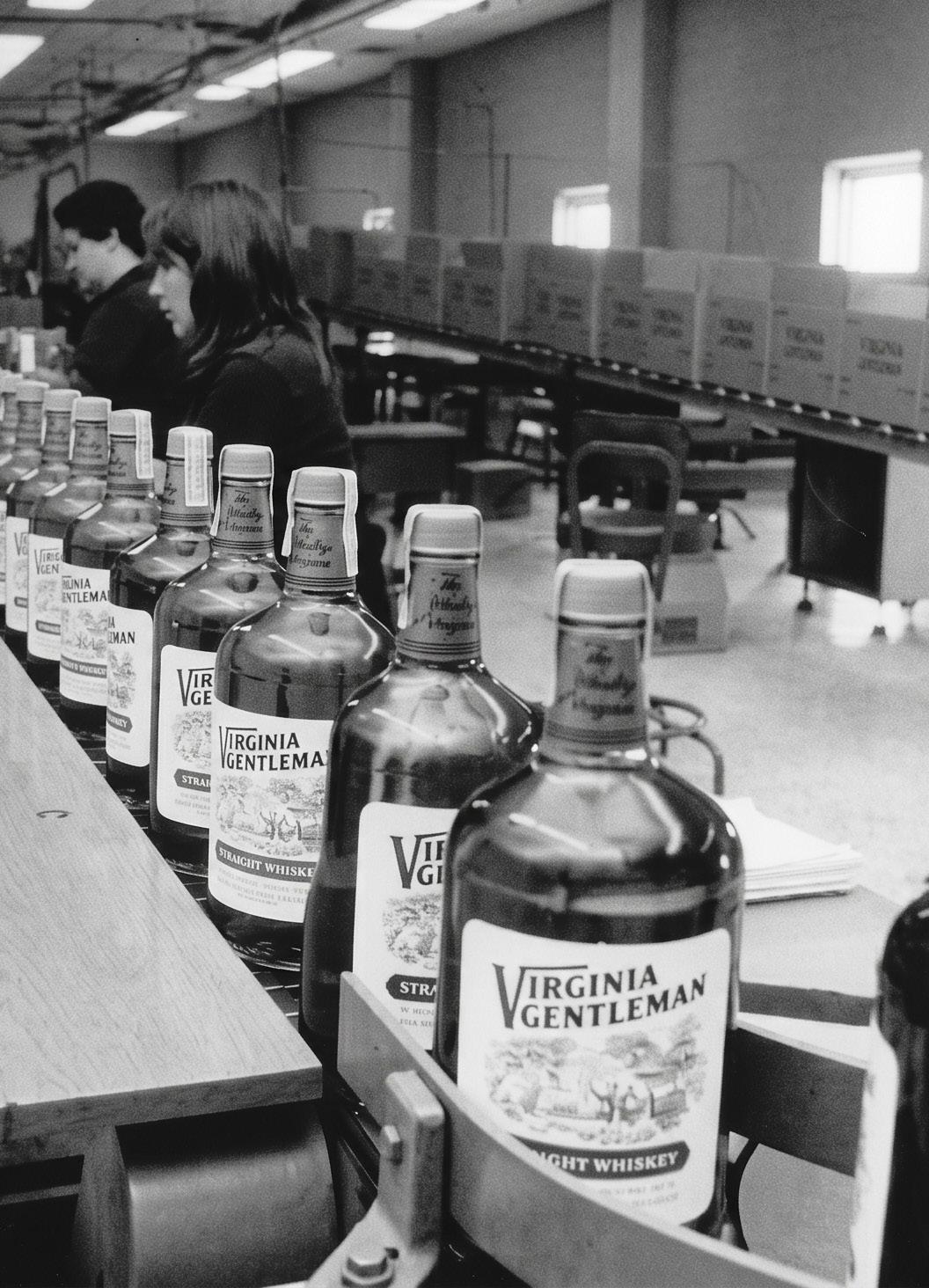
Apossibly apocryphal story holds that Abram Smith Bowman, founder of A. Smith Bowman Distillery, went to the Fairfax County courthouse to register his company the day after the repeal of the 21st Amendment, which officially ended Prohibition in the United States. While that particular detail has proven difficult to confirm, what’s undeniable is that Bowman began producing what would become his signature product, Virginia Gentleman bourbon whiskey, at his property, Sunset Hills Farm, in 1934 — just about as soon as it was legal to do so.
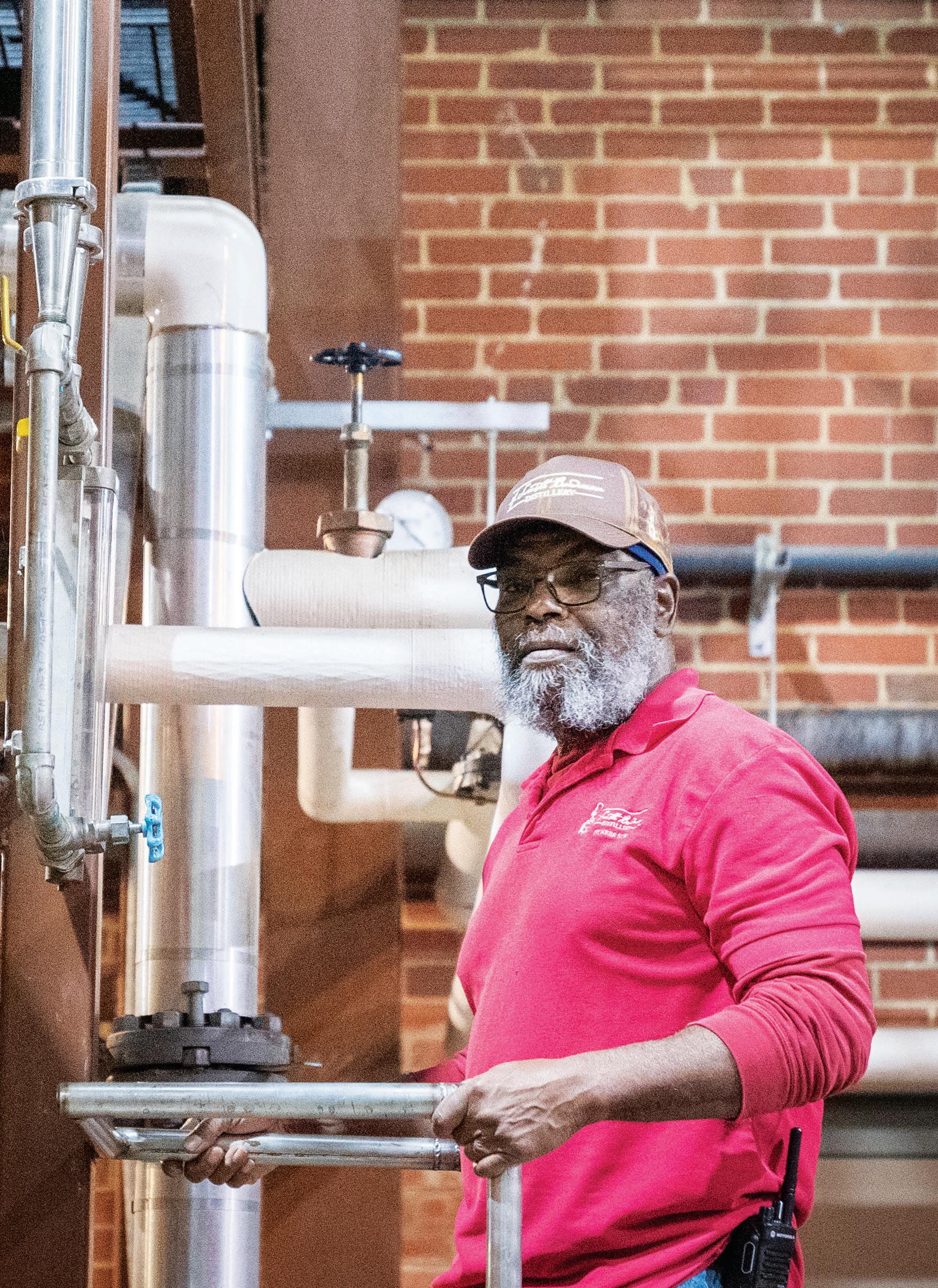
What began as a way to make use of the excess grain produced at Sunset Hills has become one of Virginia’s most enduring food and beverage producers. A. Smith Bowman was the only producer of legal whiskey in Virginia until the 1950s. Since then, the company has undergone significant changes, notably a move from Fairfax to Spotsylvania County in 1988, into a building formerly owned by the Sylvania Industrial Corporation that was once the largest cellophane factory in the world. It still produces Virginia Gentleman but has shifted focus to premium small-batch and experimental spirits, including bourbon, vodka, gin, rum, and cream liqueur.
Those experiments haven’t always worked — Master Distiller David Bock told Virginia Living about a hot sauce whiskey that was “pretty disgusting,” but said that he kept the barrel to remind him that “it’s OK as long as you keep trying to make the best whiskey.” And through experimentation with mash bills, aging techniques, and production methods, A. Smith Bowman has done exactly that — twice. In 2016, Whisky magazine named the company’s Abraham Bowman Port Finished Bourbon Whiskey the “World’s Best Bourbon,” and bestowed the same honor upon its John J. Bowman Single Barrel Virginia Straight Bourbon Whiskey the next year.
Some of the company’s employees have worked there since the 1980s. Those ties to the past, among others — the company’s stills are named George and Mary, after Abram Smith Bowman’s parents — ensure A. Smith Bowman maintains a connection to its rich history as it innovates in its offerings.
A. Smith Bowman continues to innovate in Spotsylvania County
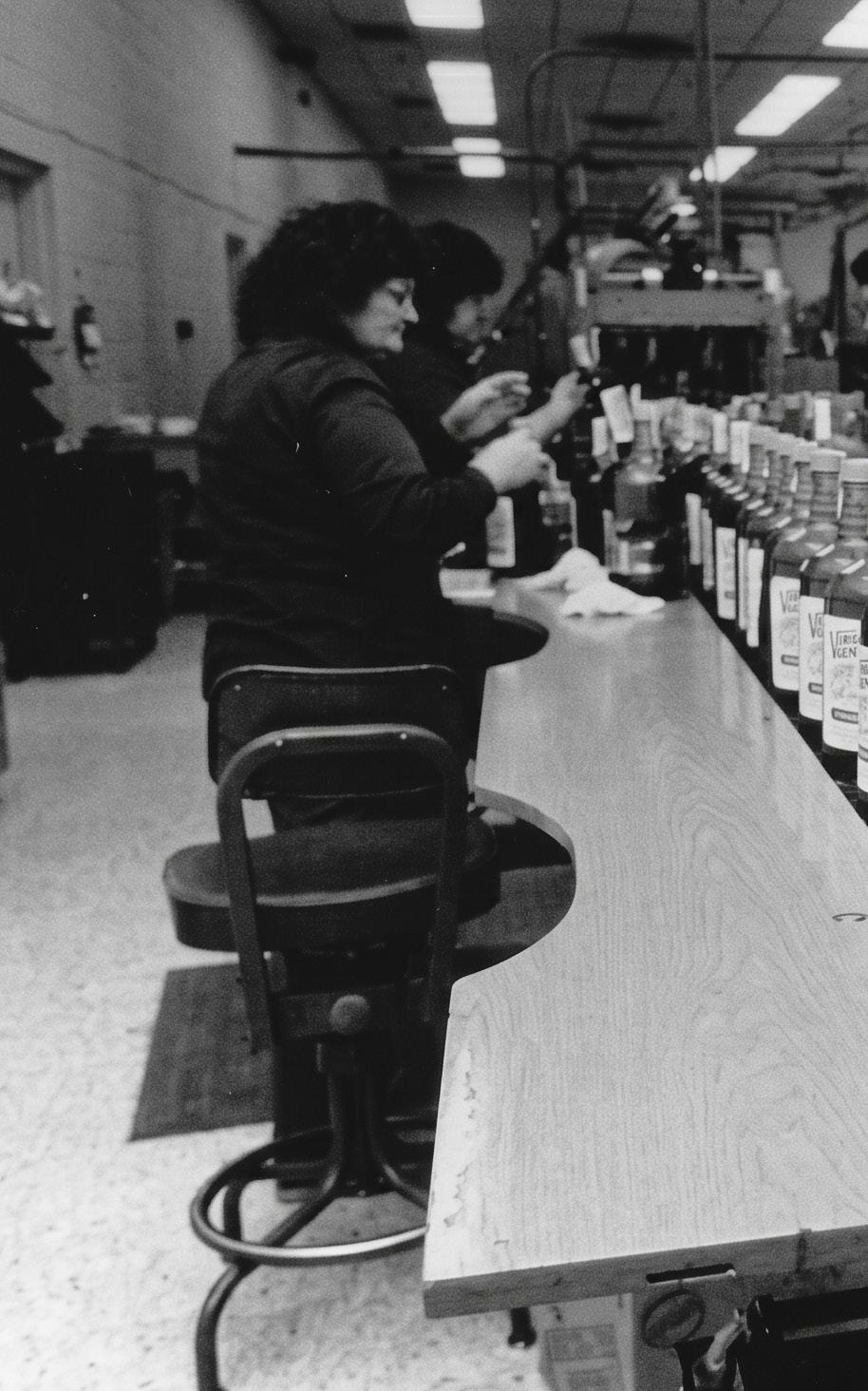
Left: Virginia Gentleman whiskey was A. Smith Bowman’s signature product in the company’s early days. Right: A. Smith Bowman Distillery was founded in Fairfax County shortly after Prohibition and moved to its current Spotsylvania County home in 1988.
Genworth Financial, Inc.
Genworth Financial evolves from Reconstruction-era beginnings
For decades, Genworth Financial, Inc., has been at the center of one of the most personal, and increasingly urgent, challenges facing American families: how to plan for and pay for aging care. The company was an early pioneer in long-term care insurance, building one of the largest blocks of business in the country and helping more than a million families prepare for a stage of life that, at one point or another, touches all of us.
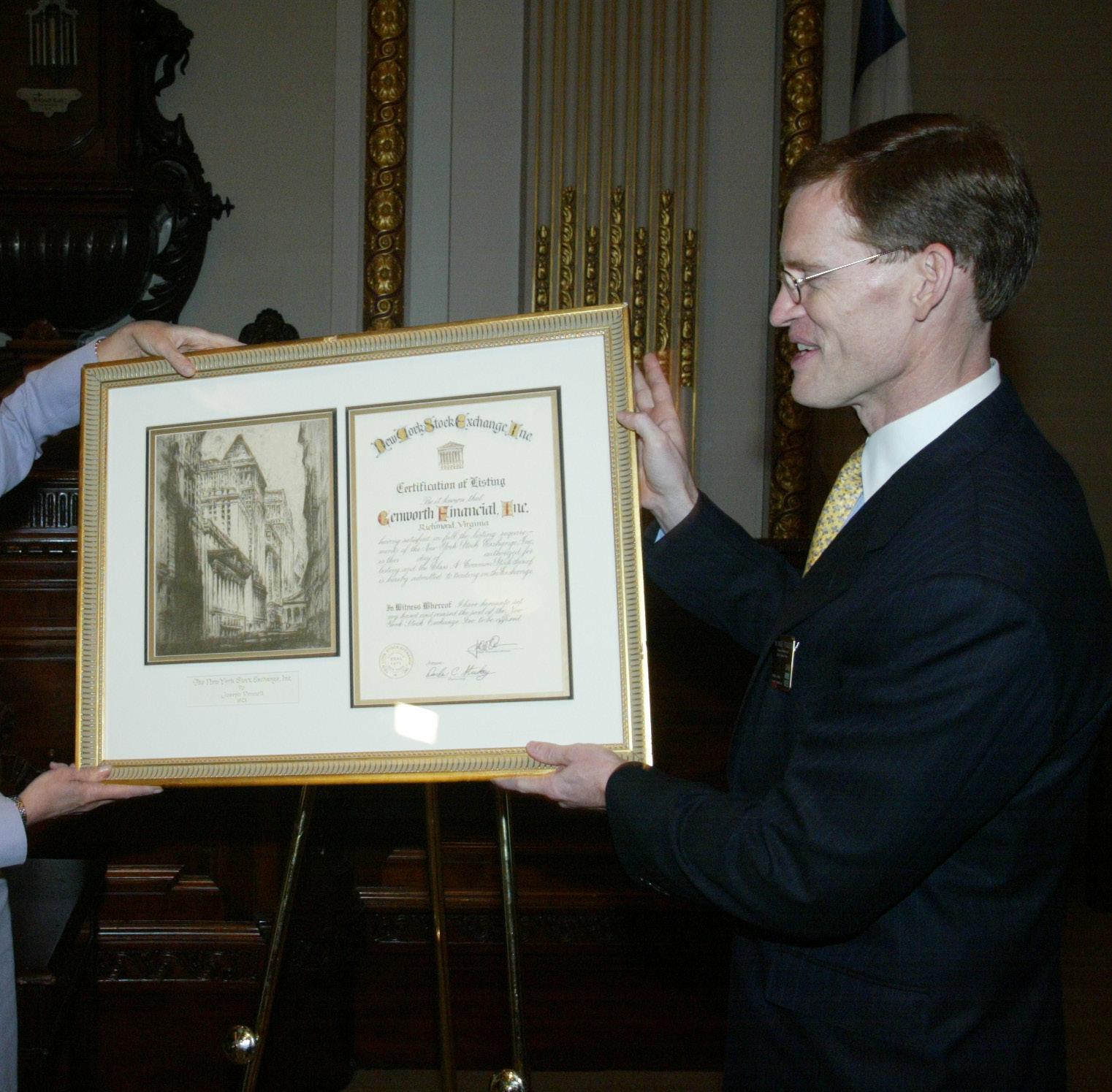
Genworth traces its corporate lineage back to 1871, when the Life Insurance Company of Virginia first began serving families in Petersburg before opening a Richmond office that would become its home. Today, Genworth employs approximately 1,600 people across Virginia.
Its services are more vital than ever. More than 1.4 million Virginians are age 65 or older, representing over 16% of the population, and that number continues to grow. The
fastest-growing segment over the past decade has been adults 55 and older, particularly those entering their early senior years.
The aging landscape today looks very different than it did even a decade ago. People are living longer, care is more complex, and costs continue to rise. At the same time, families are increasingly left to navigate those decisions on their own – often while balancing careers and raising children. Roughly 23% of U.S. adults now fall into the “sandwich generation,” caring for both children and aging loved ones.
That’s why Genworth is continuing to evolve and reshape its core services. Insurance remains a critical part of the equation, but it’s no longer the full solution.
That insight is part of what led to the creation of CareScout: a next-generation business built to
apply Genworth’s decades of data, expertise, and perspective to one of the fastest-growing challenges facing families, employers, and the broader economy.
Nationally, the population aged 65 and older is projected to grow by more than 40% by 2040, with the number of Americans over 85 expected to more than double. At the same time, the care system
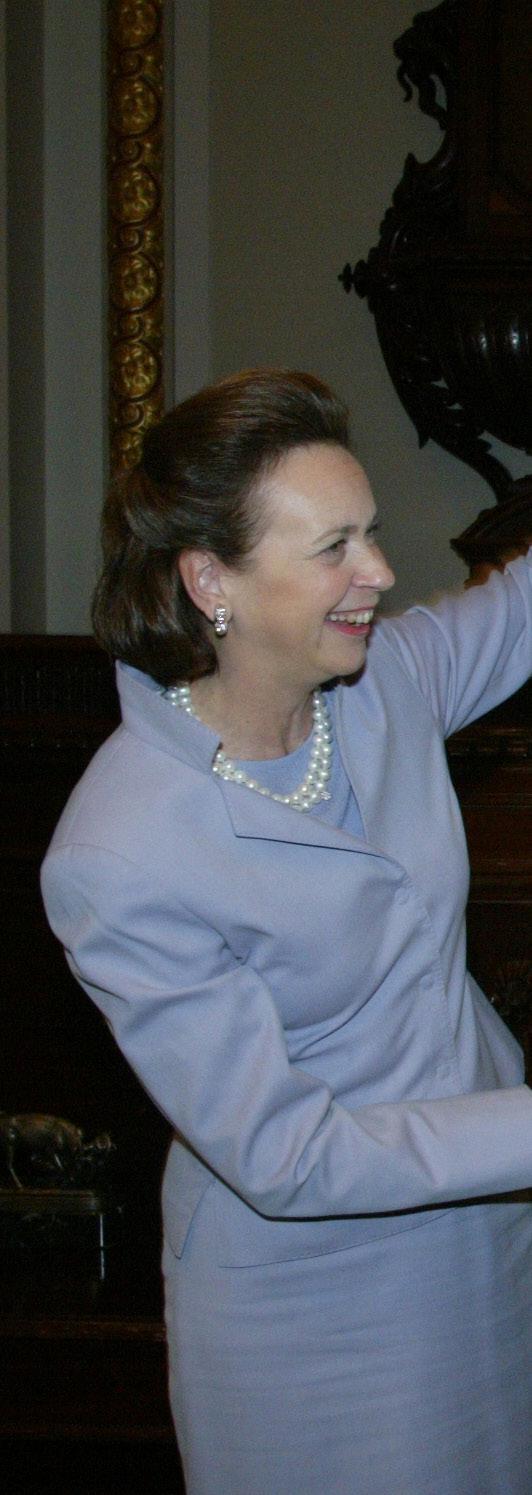
Genworth Financial began trading on the New York Stock Exchange in 2004 and remains a Fortune 1000 company.
itself is under strain, with workforce shortages and limited supply already impacting access in communities across the country.
That pressure is what’s driving Genworth’s next chapter. The company is helping shape that future, using CareScout to translate decades of long-term care experience into a more modern approach to aging.
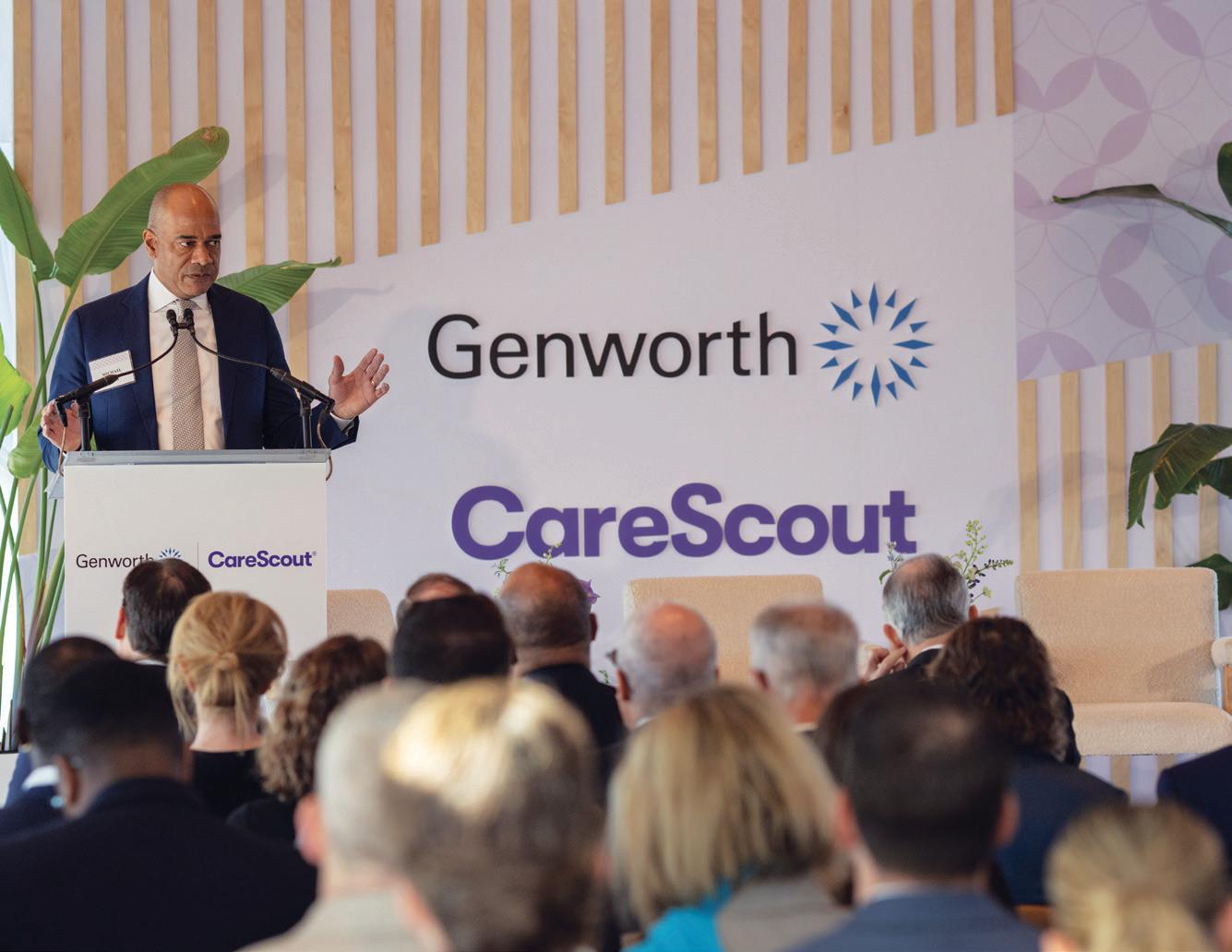
Genworth Financial, Inc., has helped Americans deal with late-in-life finances since its post-Civil War founding. It has created and acquired numerous subsidiaries to help with the issue, notably CareScout, aimed at helping simplify aging care for patients and families.
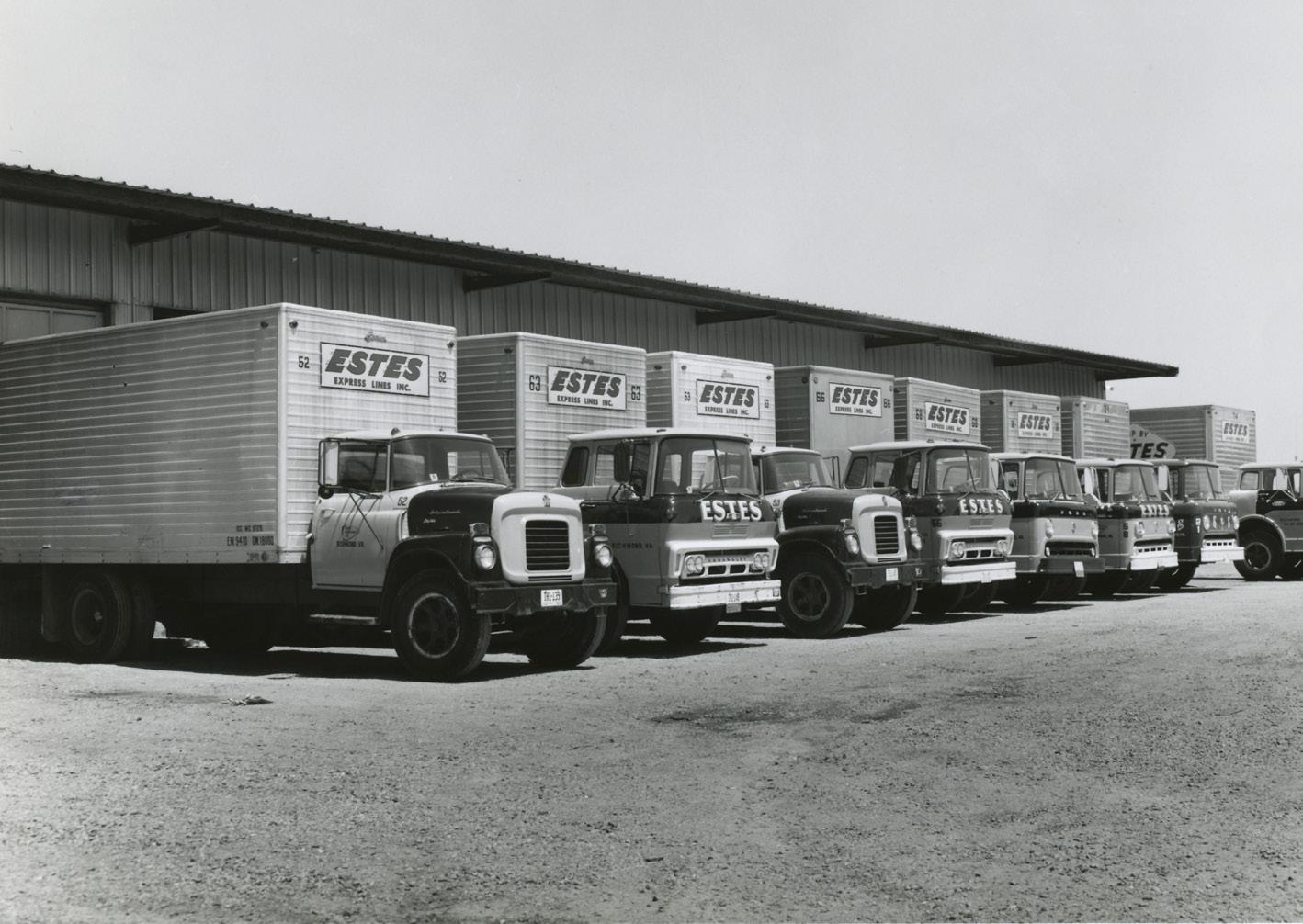
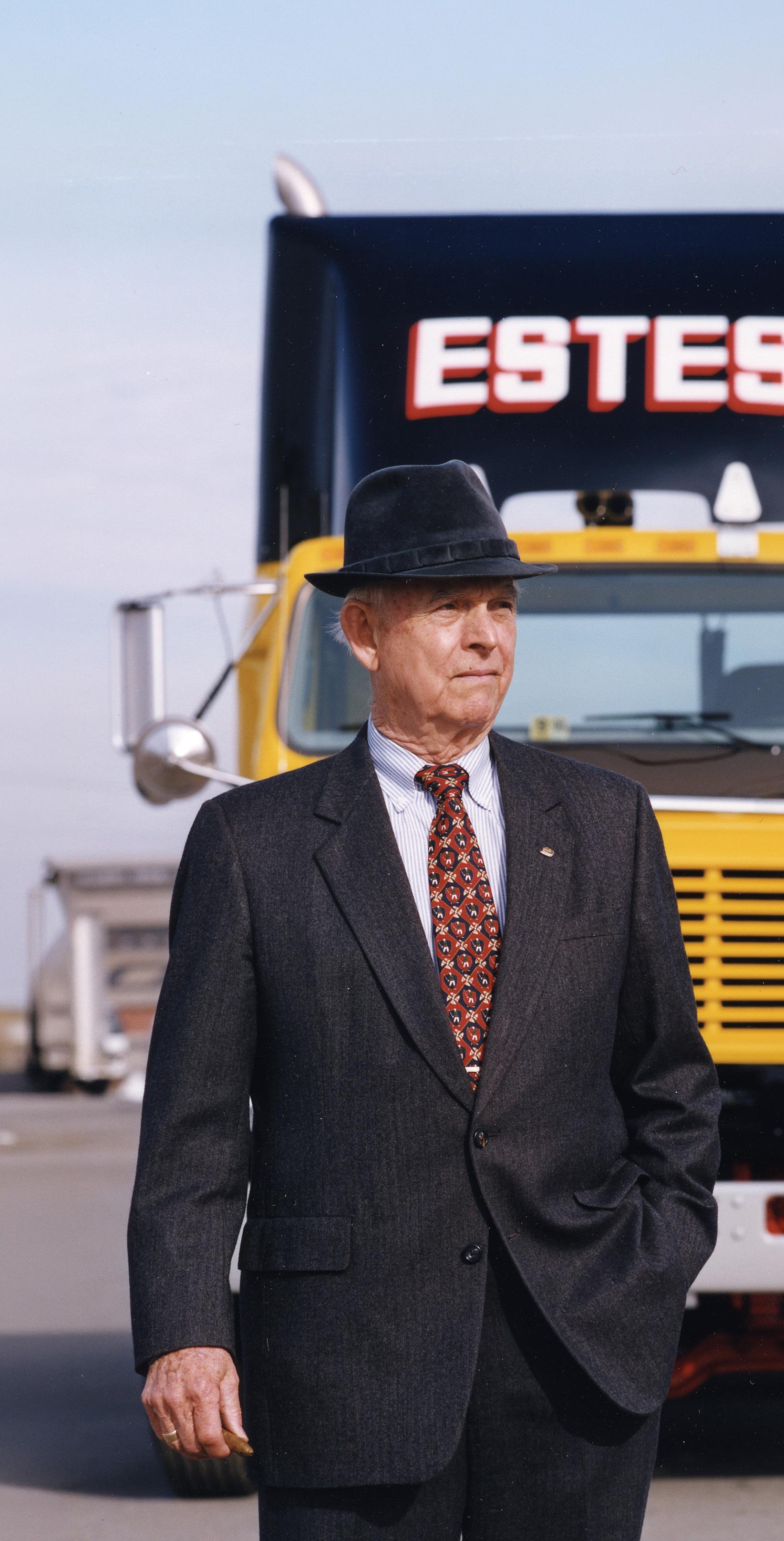
headquarters, Estes Express Lines operates eight service centers across the state, including its Norfolk terminal, shown above in 1961.
Nearly a century after its founding with a single truck in Mecklenburg County, the company is the largest privately held less-than-truckload freight carrier in the United States.
FROM SINGLE-TRUCK BEGINNINGS TO
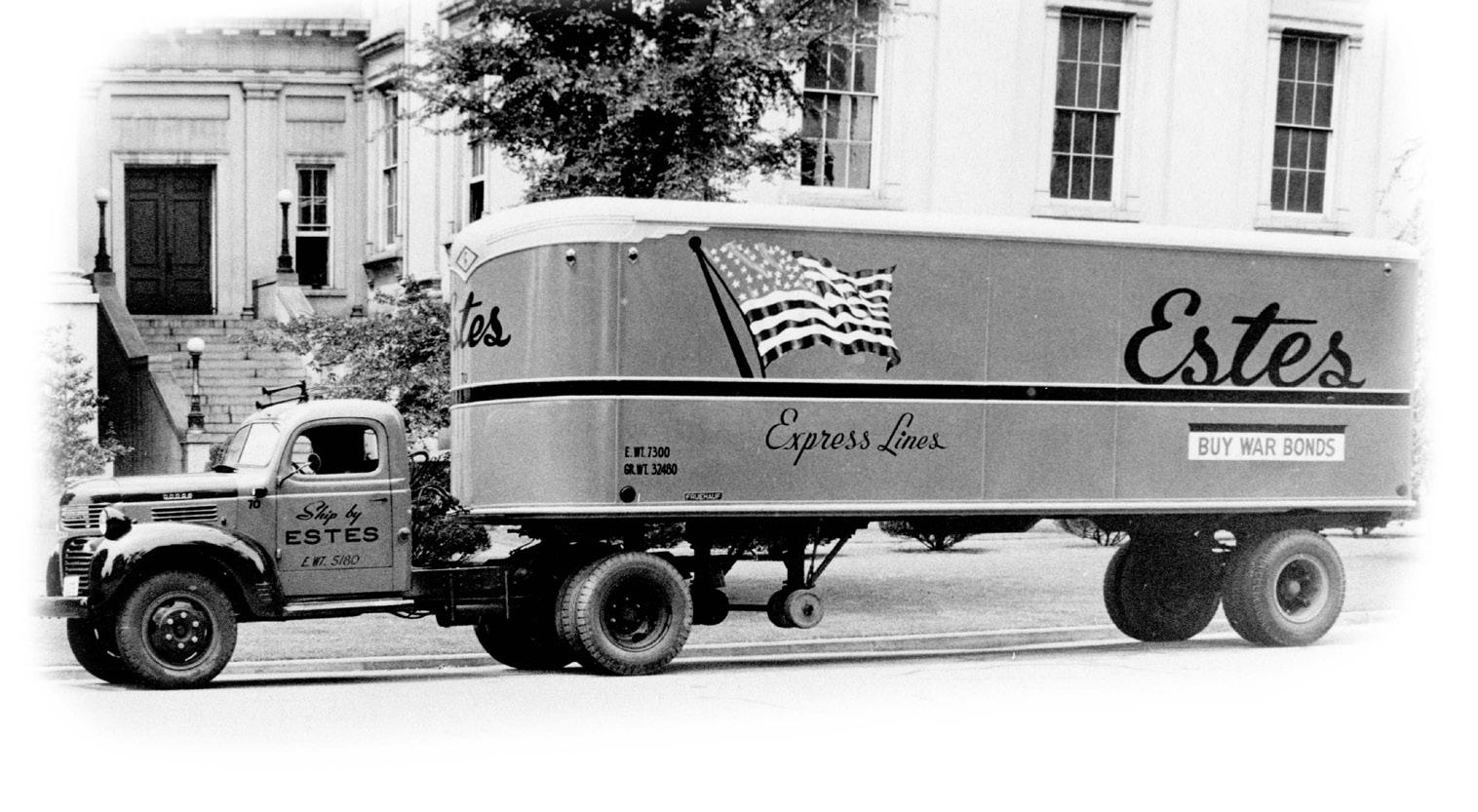
In 1931, W.W. Estes bought a used Chevrolet truck to haul livestock to market for his neighbors in rural Virginia, looking for a way to support his family during the Great Depression. He opened an office in Chase City, near the North Carolina border in Mecklenburg County, the following year. By 1937, Estes Express Lines was in business.
During World War II, Estes was able to expand the business through contracts with the U.S. military to transport and deliver military supplies. W.W.’s oldest son, Robey W. Estes Sr., joined the company fulltime after coming home from World War II — and rather than inheriting a leadership position, W.W. insisted he serve as a driver, office clerk, shop foreman, and terminal manager before he became general manager. Similar expectations were later placed on current CEO Rob Estes and COO and President Webb Estes.
From the beginning, Estes has operated with a family-focused culture where leadership listens to employees, encourages professional growth, and celebrates accomplishments. From drivers to dock workers to headquarters employees, everyone plays an important role. Estes maintains a staff turnover rate of just 16%, well below the industry average.
Estes Express Lines maintains family atmosphere
While the company has evolved to provide its Time Critical Guaranteed shipping and tech tools like Pickup Visibility and the Appointment Research Tool, Estes is still focused on the same goal from 95 years ago: delivering confidence and peace of mind for its customers. Estes is also supporting its commitment to sustainability by finding ways to decarbonize, with initiatives including piloting carbon-capture systems, expanding the fleet with natural gas and electric trucks, and expanding solar capacity.
With 95 years in business and four generations of family leadership, Estes is the largest privately held less-than-truckload freight carrier in the nation. The company now boasts more than 24,000 employees, a fleet of 10,600 tractors and 42,000 trailers, and a network of more than 300 service centers with coverage in all 50 states, Canada, Mexico, and Puerto Rico, including eight Virginia locations in addition to its Richmond headquarters.
Left: Robey Estes Sr., the son of Estes Express Lines founder W.W. Estes, was the second of four consecutive generations of family ownership for the company.
DISRUPT CONVENTIONAL HISTORICAL WISDOM
A CONVERSATION
HISTORICAL WISDOM
WITH CHRISTY COLEMAN
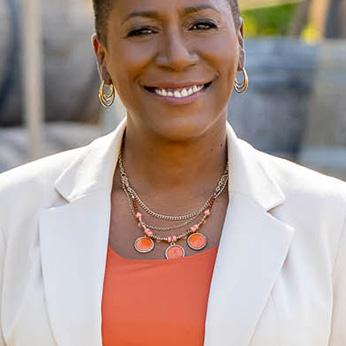
Christy Coleman is the executive director of the Jamestown-Yorktown Foundation, an educational Virginia state agency that offers programs and resources about early American history through its living history museums, Jamestown Settlement and the American Revolution Museum at Yorktown. VEDP
Senior Vice President for Marketing, Communications & Research Stephen Hartka spoke with Coleman about what citizens and companies can take away from Virginia’s history as the Commonwealth celebrates the 250th anniversary of the United States’ founding.
Stephen Hartka: Can you give us an overview of the Jamestown-Yorktown Foundation and its place in Virginia’s historical preservation efforts?
Christy Coleman: The JamestownYorktown Foundation got its start in the 1950s as Virginia was planning for the 350th anniversary of the arrival of the English. As a part of that, the Virginia legislature created Jamestown Festival Park as a celebratory space. It was also a response to federal actions on Jamestown Island, the actual site. They were doing archaeological work there, putting up statuary, and things like that. It was a commemorative space that Festival Park occupied. In the late 1980s and ‘90s, the institution transitioned from just being a commemorative space to an actual museum.
Today, we have the JamestownYorktown Foundation, whose mission is to explore the convergence of cultures and legacies bequeathed to the nation. We look at the settlement era, the nation’s founding era, and the connections between them. We do that through exhibitions, public programs, guest lectures, living history, and galleries. We have a really extraordinary operation, and over 400,000 visitors come through every year.
Hartka: I’ve enjoyed getting to know your career in preparing for this. You’ve been known for disrupting how institutions tell the story of America’s best, and that has entailed pushing for fuller, sometimes uncomfortable, narratives. Coming from the business realm, where disruption often means simplifying things or making them easier, your version of disruption has looked a little different. It’s often made things more complex, not less. Why is that important, and how do you lead through that kind of complexity?
Coleman: I just want to know how things work. Why communities are the way they are. How did they evolve, how do they interact? When do they come into conflict and why? While it’s much easier to create simplified narratives of the American past, it doesn’t explain national moments of disruption where change and expansion of what it means to be an American take place. It’s not brought about out of the goodness of somebody’s heart, but because people at different stages and places challenge the nation to be better, to live up to her creed.
Let’s take a look at what that means. Let’s try to figure out what it means to be an American in all of its facets, and why we progress, contract, progress again, and contract. Each time we go through that cycle, the nation is never the same again, which is a good thing in my view. I don’t disrupt to disrupt. I often struggle with that descriptor. Instead, what I work hard to do is to help people understand that who we are as a country has always been in flux. It’s always been
[Virginia] was a startup, as were all 13 of the colonies. Each were startups to either solve a particular problem or to expand the Crown’s interests in the new world.
CHRISTY COLEMAN Executive Director, Jamestown-Yorktown Foundation
a multiplicity of voices, backgrounds, and resources that have worked to define what America is.
I’m of the great belief that America’s strength is that it’s always had multiplicity, and finding moments of common ground and agreement. We’re a nation literally born out of a protest, a series of disagreements, and an idea — a core idea that effective government is one that has the consent of the governed, that’s responsive and reflective of their needs, that lives up to its creed.
My job in the museum space deals with what that evolution looks like on the ground. Who are the people and places who make that happen? I love history in all these extraordinary facets because it’s always the story of us. It isn’t the story of those guys over there; it’s literally the story of us. You can’t have us if you’re not including us, right? And I mean
“us” in the collective of all the different peoples who have rightfully claimed themselves to be Americans.
Hartka: You’re now leading a stateaffiliated institution representing a complex history, and talking a bit about the history of the organization itself.
I’m sure you interact with a wide range of stakeholders. What have you learned about driving change in that complex environment, and what lessons from that experience might you have to offer to other public- or private-sector leaders?
Coleman: This is about leadership style, too. There are people, unfortunately, who are still of the
mindset, “My way or the highway.” To me, you have to build a shared vision. I’m fortunate that I came to work for an organization that, out of the gate, said, “We are nonpartisan. We will let the history lead us.” That’s made all the difference in the world.
I have three boards — one that’s fundraising, one for enterprise, and one for governance, which is led by political appointees as well as legislators and people in administration. I have a staff of 300-plus people. Each of them comes to their work with a passion and a desire to grow and learn, both professionally and otherwise. An adaptive leadership style allows me to really listen. But as the appointed executive director, it’s also my job to develop that shared vision, because once you share the vision, you can do the remarkable.
Hartka: In the economic development space, we sometimes hear Jamestown
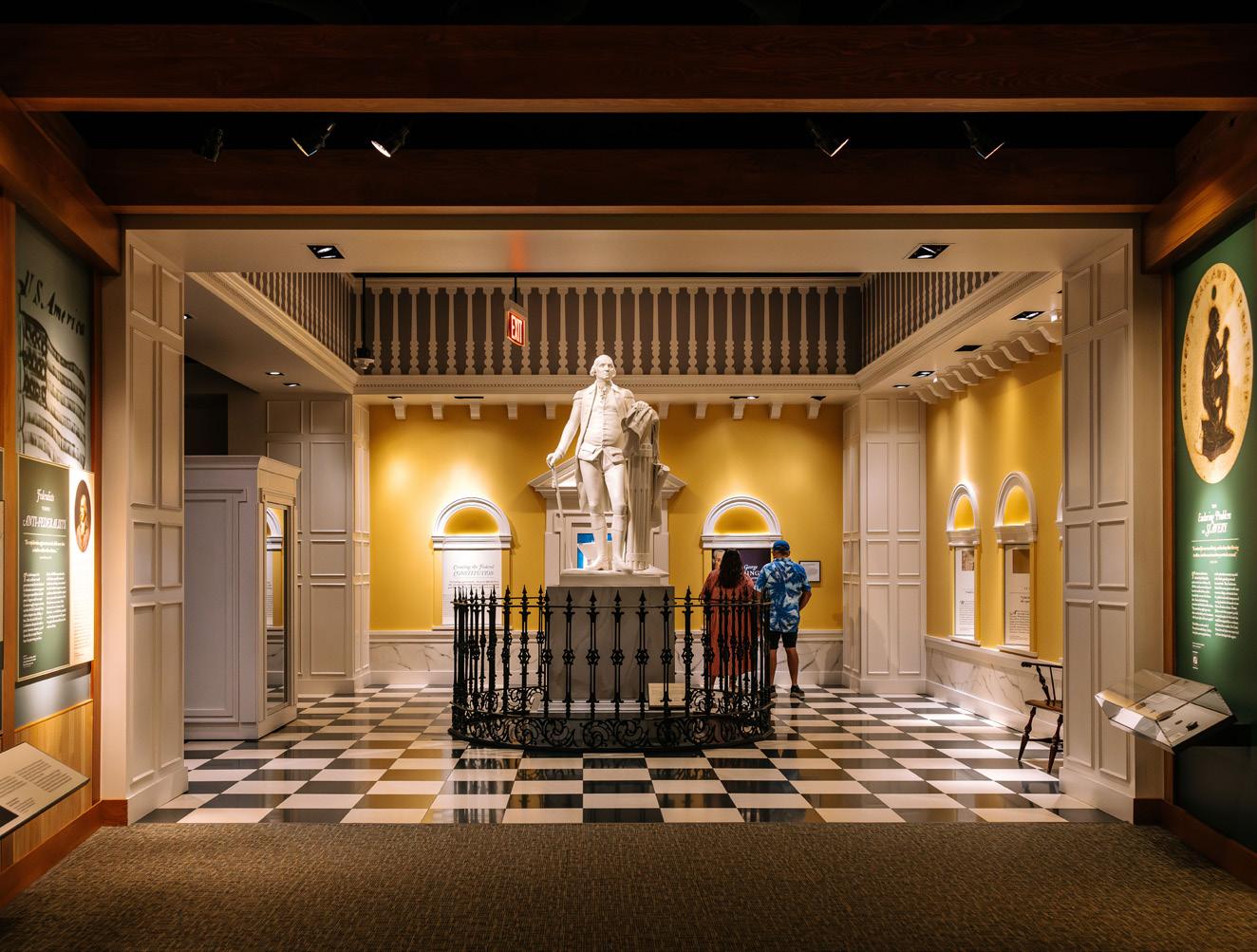
The American Revolution Museum at Yorktown showcases Virginia’s history in the war for independence. On July 1, the museum debuted its “Give Me Liberty: Virginia & the Forging of a Nation” exhibition, which includes a rare 1833 printing of the Declaration of Independence.
Settlement described as an early startup, a high-risk venture backed by investors. From your perspective as a historian, how useful is that analogy? Is it revealing or obscuring different facets of this history? Does this framing have any lessons to offer us?
Coleman: I think that framing is accurate. People purchased stock in the Virginia Company and got workers interested in coming over and developing this colony. The purpose was to make money. It was a startup, as were all 13 of the colonies. Each were startups to either solve a particular problem or to expand the Crown’s interests in the new world.
The fallacy is that our nation was founded for religious freedom. That’s not accurate. The nation was founded to make money for the Crown, to build an empire. Each of the colonies developed a particular character, for lack of a better term. Pennsylvania became the open place — religious tolerance was key because they had so many different people. Maryland became a safe haven for Catholics in an Anglican world. The Puritans, deemed a radical cultish expansion, were put toward Massachusetts, and so forth.
The Crown was very concerned about expansion of Catholicism in the West. “Oh, we’ve got to stop the Catholics and the power of the Pope.” But if you were to ask the average person, that’s not how they were taught the history of America. But the forensic evidence is very clear about what actually was happening at the time.
The question we need to ask ourselves is, “If the forensic evidence from the period tells us this one thing, how did we develop a different storytelling narrative around it?” That’s something else that started to develop when these 13 colonies
decided to unite. They had to figure out a common narrative about the origins of the nation. “A nation born of protest” isn’t necessarily the way they wanted to frame it. Over time, different things have evolved in that storytelling.
Hartka: The 250th anniversary will put places like Jamestown and Yorktown in the national spotlight. If we treat this moment not just as a commemoration, but as a strategic moment, what would you want Virginia’s business, legislative, and economic development leaders to do differently because of what they’ve learned from this history?
Coleman: That’s an interesting question. I’m in the education space, the “driven by a mission” space. Business communities are driven by their bottom lines and their profits. They’re driven by the products or inventions they make that they want to get into the hands of the public, so they’re building a different relationship with the community. They want an environment friendly to their needs.
I would say that business also has a responsibility for protection of the republic, to the ideals laid out 250 years
ago. Because without the ideals, they will find themselves in similar situations faced by the King and the Crown and those early companies. They will have vastly unhappy populations who say, “This government, this job, doesn’t have my best interest at heart anymore.”
I think we sometimes trick ourselves. Part of the reason why we have lost so much from the American middle class was the shift toward shareholder value over expansion, which brought about strong wages and built demand. When people have money, you build demand. They’ve got it in a place now where I don’t think that’s happening.
People are getting squeezed out. They’re not invested in the same way. We see that in people’s lessening loyalties to their companies, in their inability to even do something as basic as the family vacation. If we don’t embrace the creed, for lack of better phrasing, my concern is that we’ll find ourselves at a point of
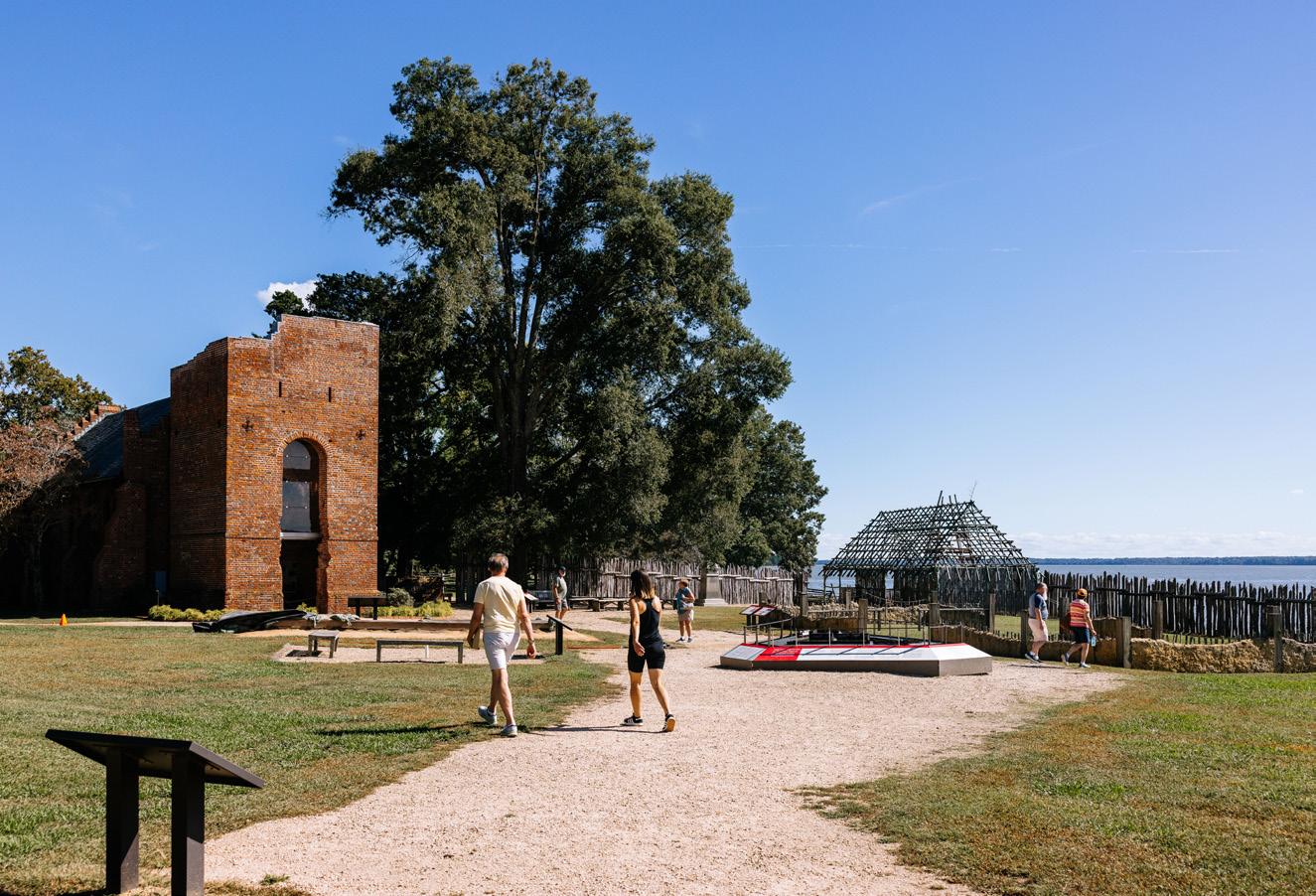
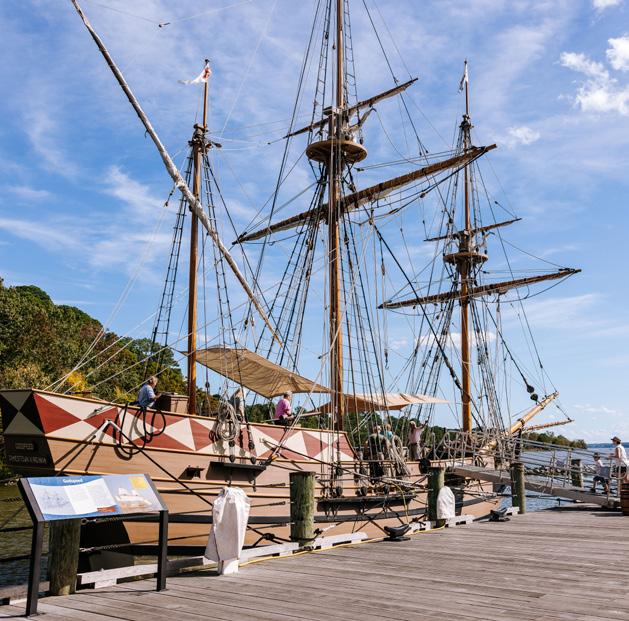
Jamestown Settlement is an immersive museum of 17th-century Virginia history and culture at the site of the first permanent English settlement in North America. Visitors can tour the site’s original church tower.
no return, where people are no longer interested in finding common ground or supporting the common good. We’re not in an era of the common good anymore.
For me, the 250th has become far more reflective, even though I work with this history every day. On a personal level, it’s about what it all meant because those 56 men who sat in that room in Philadelphia during that hot summer even stated in the Declaration that they were willing to sacrifice for this grand idea — their fortunes, their lives, but they weren’t going to give up their sacred honor. They thought, “This is what being honorable is about — to stand for something, no matter what you may lose.” I think the idea of America is something worth fighting for.
Hartka: What lessons might translate to leaders trying to modernize complex organizations today?
Coleman: I’ve learned effective leadership requires watching, assessing, and most importantly, listening to staff and customer needs. Align what you’ve learned with the mission or purpose of the organization, chart a strategic direction, and find innovative ways to bring about the change needed. Communicate to all stakeholders with transparency.
Hartka: What are one or two areas where your team is genuinely changing how this work is done, and what does it take to innovate inside an institution like this?
Coleman: Across the organization, managers and supervisors develop a budget aligned with strategic priorities
versus having it dictated to them. They have genuine ownership of the outcomes. Another area is looking carefully at legacy functions to determine if they are still needed, with a goal of eliminating redundancies.
Hartka: If you were telling Virginia’s economic story to someone considering where to invest or grow a business, what parts of that story do you think are most important or compelling? Which parts do you think tend to be left out of this narrative?
Coleman: The simple answer is to locate your business in an area that has the resources needed to be successful. However, the real question is: Does your company have a problem you’re trying to solve with your product or are you creating a need? Either way, companies should look carefully at how they treat people who work for and with them. Are these relationships transactional? Exploitative? Mutually beneficial? What history has shown is that wealth and growth can be created in all scenarios. The real question to be asked is, which aligns with organizational values, and is it sustainable?
Hartka: Jamestown is often treated as the beginning of Virginia’s economic story, but there were sophisticated Indigenous economies and civilizations here long before 1607. We don’t want to forget that part of the story. What do you think today’s business and policy leaders could learn from those systems?
Coleman: Indigenous systems had a respect for the land and its natural resources, not an exploitation of it. I think even still, there are lessons Indigenous communities are teaching about how to care for the land and still have what’s needed to produce. I think each community that has been a part of the American experience has stories of resilience, innovation, and creativity we should lean into as Americans, because that’s what we all are.
Hartka: I really liked how you relayed the deeply personal reflective experience that this year is. I think that’s a great thing that I’m personally taking away from this conversation. Thank you so much for your time.
Coleman: Thank you so much for having me.
For the full interview, visit www.vedp.org/Podcasts
A Proving Ground for CUTTING-EDGE TECHN0L0GY
How Virginia contributed to the development of the internet and other essential
advancements
It’s not exaggerating to say that Virginia has been part of the internet since day one.
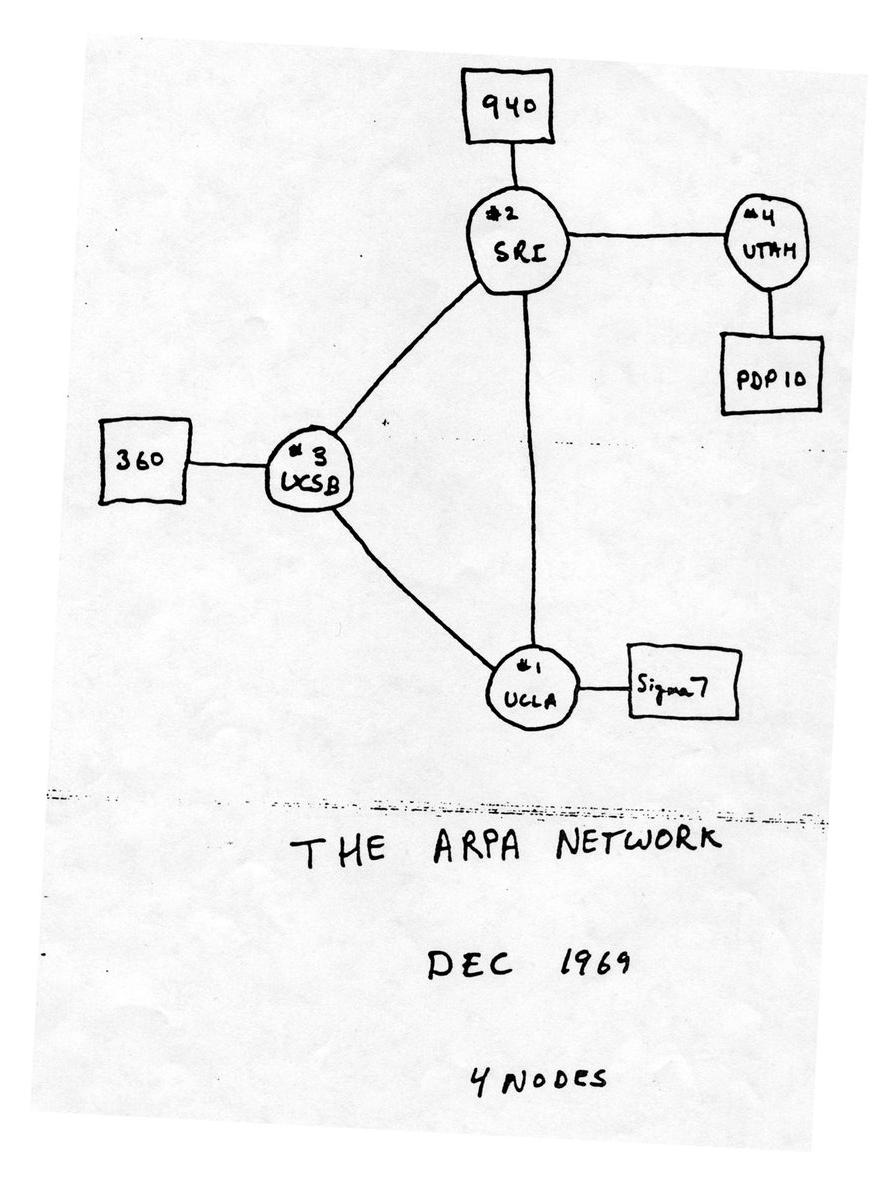
The Commonwealth’s proximity to the federal government in Washington, D.C., makes it a natural place to deploy new technology. In Northern Virginia, network connectivity traces its roots to the U.S. government’s experiments in wide-area fiber optic networking in the 1960s. Around the same time, the first of two related federal projects that became the modern internet was getting underway at the Arlington County-based Advanced Research Projects Agency (now the Defense Advanced Research Projects Agency, or DARPA). The Advanced Research Projects Agency Network, better known as ARPANET, was the first public network to use packet-switching technology, a technical foundation of the internet.
The National Science Foundation (NSF) Network (NSFNET) was the other predecessor that came out of Virginia. The Alexandria-based National Science Foundation sponsored the NSFNET to promote academic research and networking, creating several nationwide networks that became the backbone of the early internet.
The industry briefly moved north to upstate New York with the founding of Advanced Network and Services (ANS), established in 1990 by NSFNET partners
to support the network’s transition into a commercial entity. Four years later, it came back to the Commonwealth when ANS sold its networking business to America Online (AOL), then based in Loudoun County.
In 1992, a consortium of private companies founded Metropolitan Area Exchange, East (MAE-East), first established in Washington and soon expanded to Fairfax and Loudoun counties in Northern Virginia. A year later, the NSF awarded MAE-East a grant, establishing it as one of four original Network Access Points, along with Chicago, San Francisco, and Pennsauken, N.J.
Data center momentum in Northern Virginia began to accelerate a few years later, sparked by AOL moving to Loudoun County and Equinix building its first data center nearby. Data center operators were attracted to what became known as “Data Center Alley” by the nearby infrastructure.
Physically, an intersection of missioncritical fiber backbones connects Virginia to all major markets in the U.S., along with the highest dark fiber density in the world. That’s in addition to three subsea transatlantic communications cables that land in Virginia Beach: MAREA (connecting to Bilbao, Spain), BRUSA (to Rio de Janeiro), and Dunant (to Saint-Hilaire-de-Riez, France).
Early schematics of the ARPANET computer network, which was developed at the Defense Advanced Research Projects Agency in Arlington County.
NASA LANGLEY: THE BIRTHPLACE OF MODERN FLIGHT
Tucked away in Hampton next to Joint Base Langley-Eustis, the National Aeronautics and Space Administration’s (NASA) Langley Research Center has contributed to aerospace research, testing, and development for more than 100 years. Langley is NASA’s oldest field center and a major player in advancing modern flight and space science.
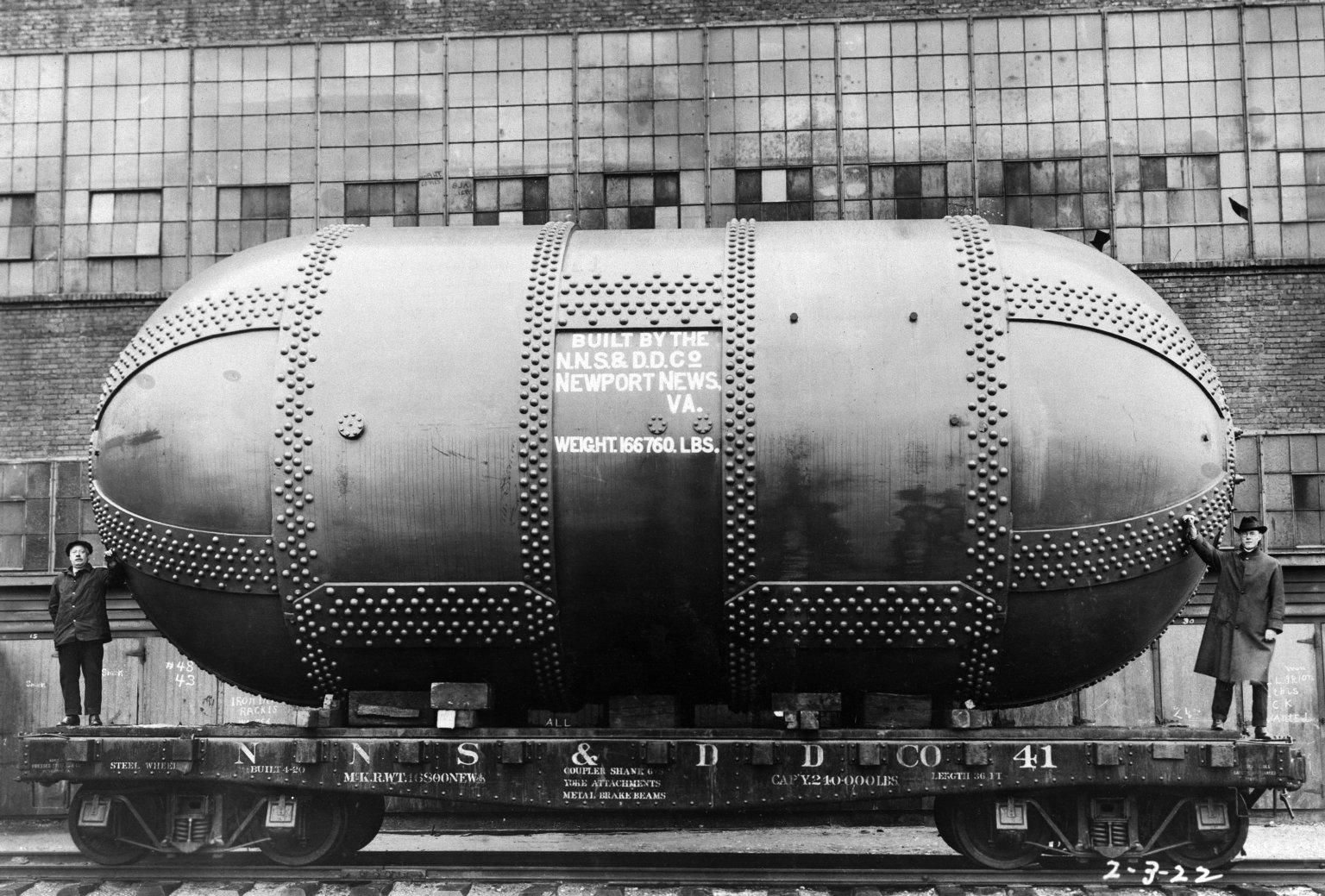
In 1922, Newport News Shipping and Drydock Company (see page 16) built the world’s first pressurized wind tunnel, the Variable Density Tunnel (VDT), for Langley. The steel railcar-sized, capsule-shaped machine saw service for more than two decades, during which it made airfoil design studies still referenced by aeronautical engineers today. The retired VDT, designated a National Historic Landmark in 1985, now occupies a place of honor on display at Langley.
Commercial and military aircraft across the nation have been shaped and developed using technology created through Langley’s extensive wind tunnel testing.
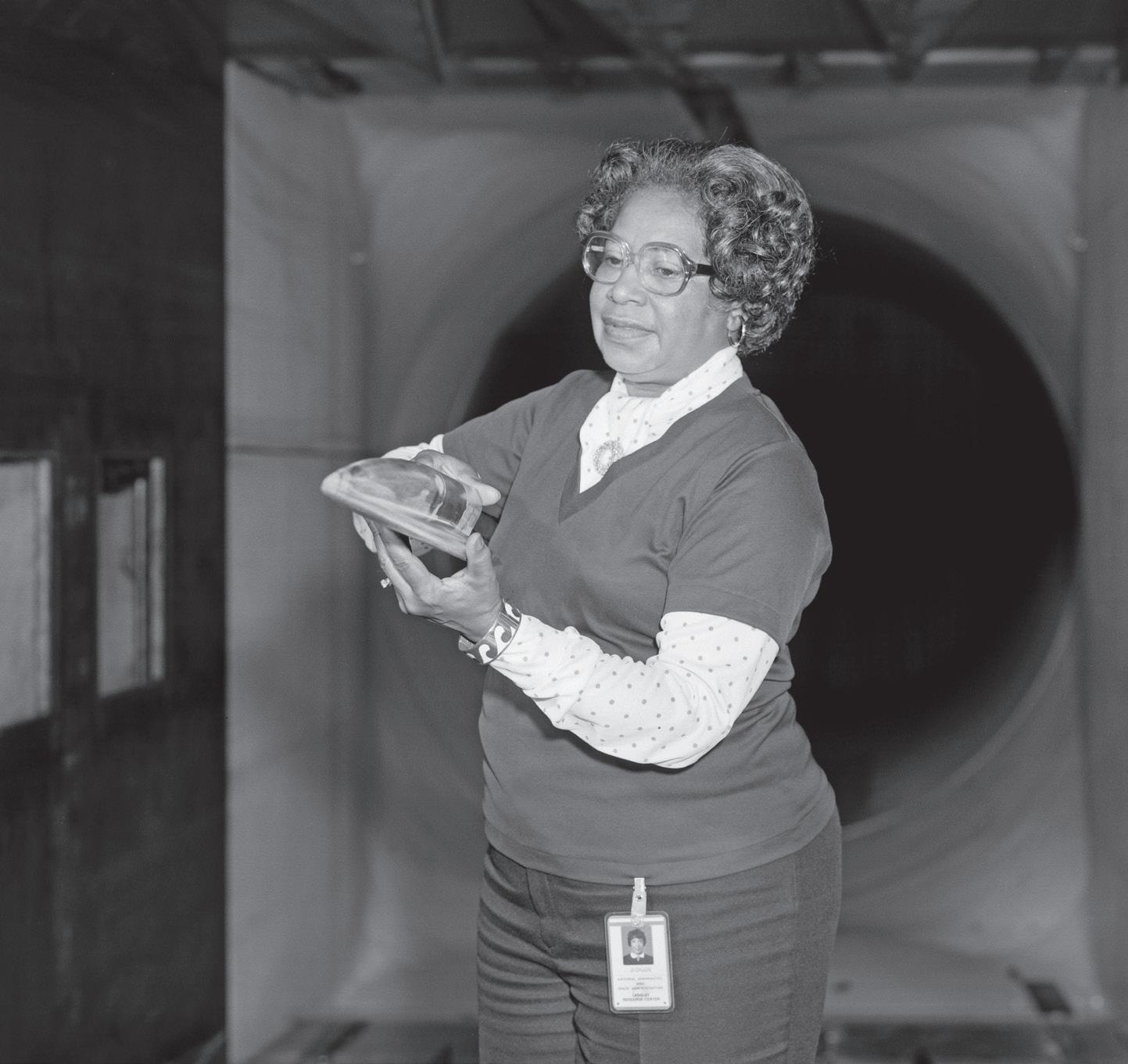
Mary Jackson
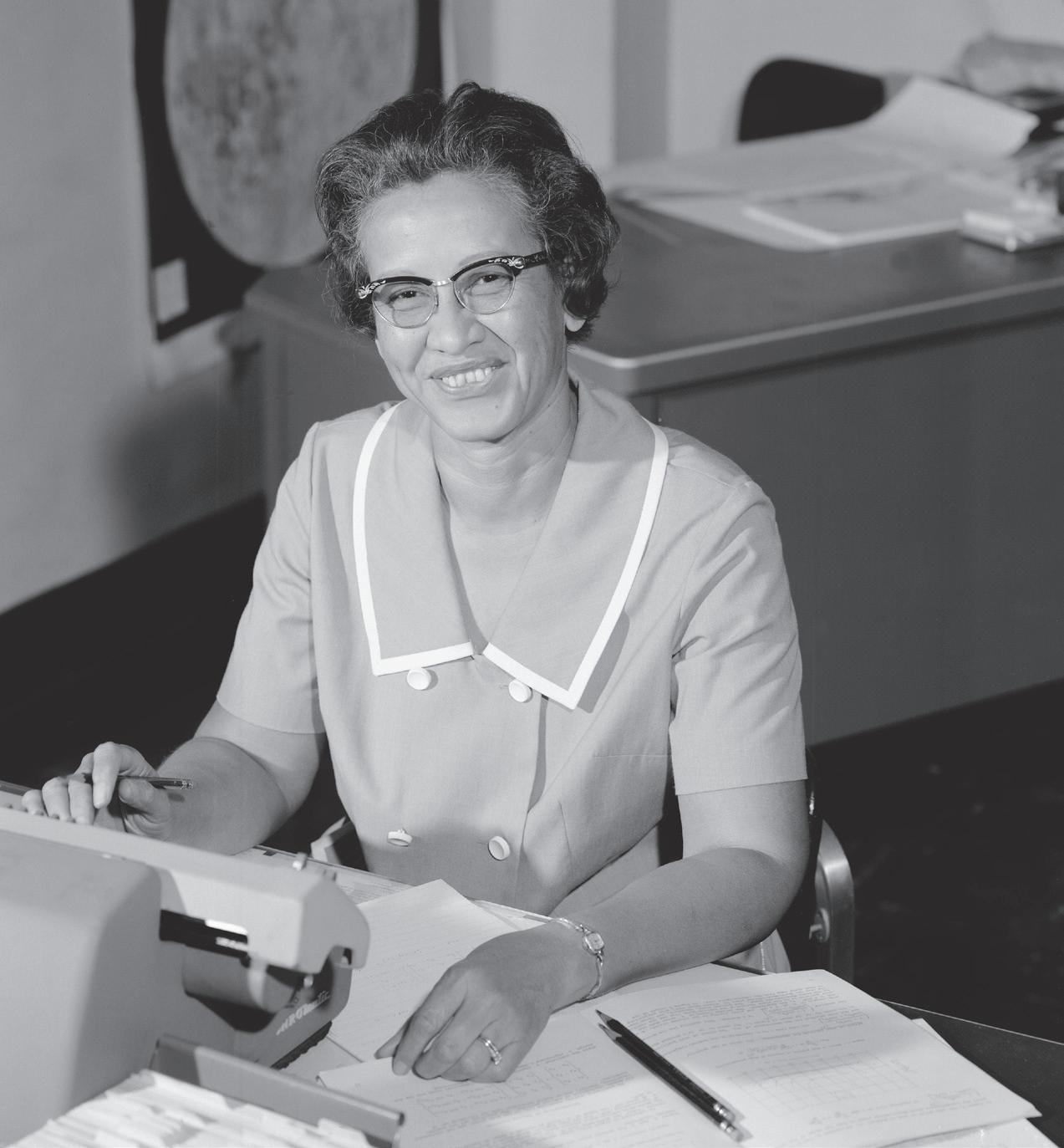
Katherine Johnson
NASA Langley Variable Density Tunnel
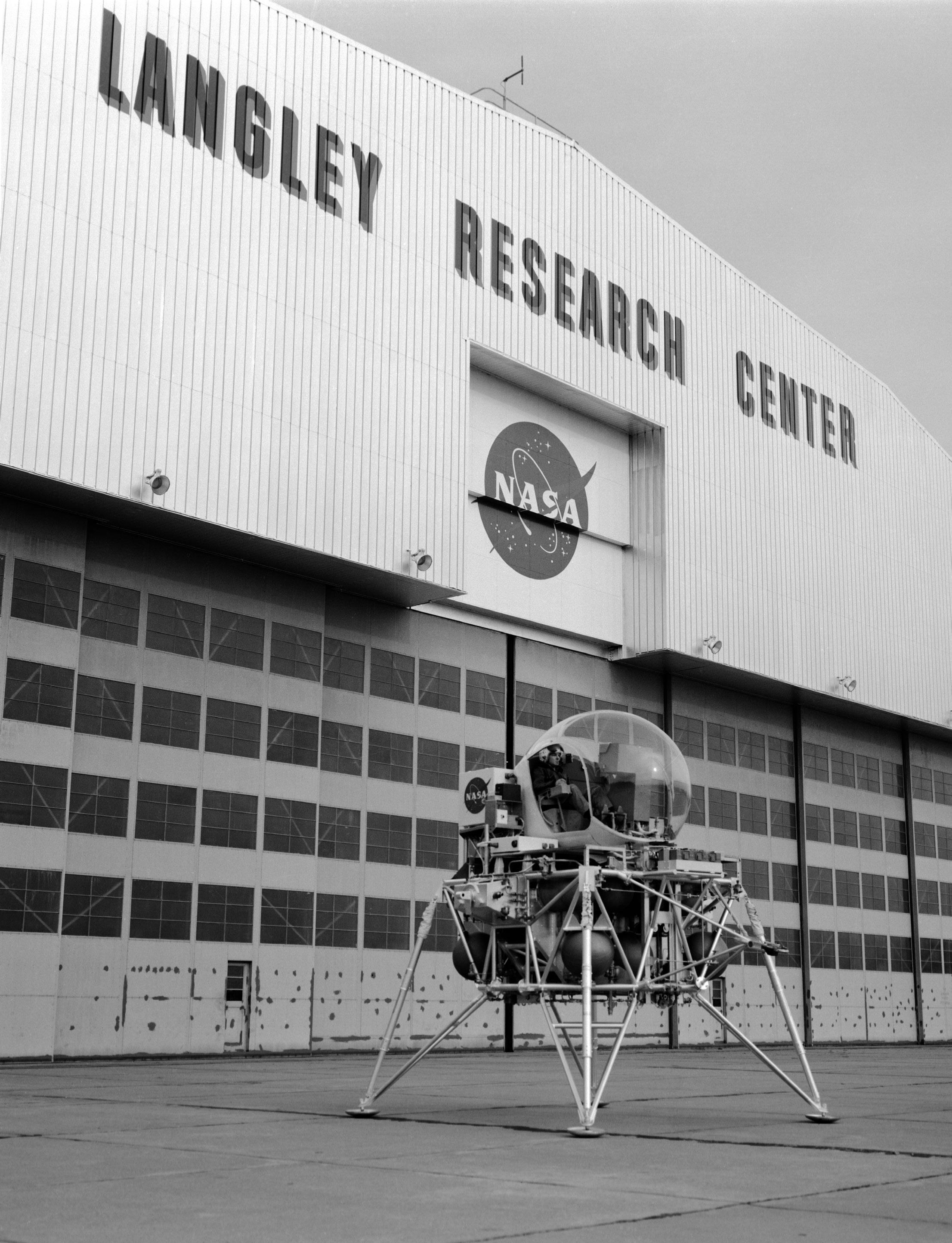
The Lunar Landing Research Facility at NASA Langley Research Center was used to simulate the moon landings before the Apollo project.
Among those technologies are winglets, a standard feature at the end of the wings of many large planes. Winglets, which reduce induced aerodynamic drag, were developed and tested by Langley’s Richard Whitcomb in the 1970s. More recently, Langley developed the Traffic Aware Strategic Aircrew Requests software that helps pilots and ground transportation teams find better routes in transit, taking into account factors like traffic, weather, and restricted airspace.
Langley’s outsized role in NASA’s history was on display in early 2026 with the Artemis II mission. The Orion spacecraft that carried the Artemis astronauts around the moon and back to Earth was heavily tested at Langley’s Hydro Impact Basin facility, starting in 2011. Langley scientists played a major role in developing the heat shield that protected the astronauts during reentry.
“Artemis is a very complex mission, and each system must fit together without fail. All the analyses, over several decades, got us to the point of launching humans farther than they have ever gone before,” said Dr. Trina Marsh Dyal, center director at Langley. “We still have active analysis going on to make sure we’re in safe condition to launch. We have folks who are seeing decades of their work finally out on the launchpad.”
The Artemis mission is just the latest Langley contribution to space science. NASA’s seven Mercury astronauts trained at Langley. Langley was also home to the West Area Computers, the Black women who worked as “human computers” and did the math required to rocket those astronauts into space;
notably, Mary Jackson, Katherine Johnson, and Dorothy Vaughan, immortalized in the book “Hidden Figures” by Margot Lee Shetterly and the 2016 movie of the same name. NASA’s Washington headquarters have been named after Jackson since 2021.
After President Kennedy tasked NASA with landing astronauts on the moon by the end of the 1960s, Langley fostered the expertise making it possible. Langley engineers John Houbolt and Bill Michael developed the so-called lunar-orbit rendezvous architecture that enabled the landings of Project Apollo with a single rocket launch each.
“There are still unanswered questions that come from our past,” Dyal said. “The inspiration is to solve those problems that still exist in the world today. How can we figure out what can be? How can we apply our expertise
to the art of the possible? None of this happens in isolation. We need partnerships to bring the best minds to bear on those problems. We want that force multiplier so we can accelerate how we solve those challenging problems.”
THE ‘HIDDEN FIGURE’ BEHIND GPS TECHNOLOGY
Dinwiddie County-born Gladys West was educated at Virginia State College (now Virginia State University) and Virginia Tech. She was hired by the U.S. Navy in 1956 and worked for 42 years as a mathematician and computer programmer at the U.S. Naval Proving Ground (now the U.S. Naval Surface Warfare Center Dahlgren Division) in King George County, near Fredericksburg. Her husband Ira also worked at Dahlgren as a mathematician; the couple comprised half of the base’s Black workforce at the time.
The inspiration is to solve those problems that still exist in the world today. How can we figure out what can be? How can we apply our expertise to the art of the possible?
DR.TRINA MARSH DYAL Center Director, NASA
Langley Research Center
West became proficient in the Fortran IV programming language as computers were being introduced into the Navy’s day-to-day operations. She led a team that used complex algorithms to deliver an extremely accurate model of the Earth’s shape, establishing the flight paths now used by Global Positioning System (GPS) satellites. Working with an IBM 7030, the world’s fastest computer at the time, she laid the foundations for GPS systems to achieve their current levels of precision and usefulness for navigation.
Like Jackson, Johnson, and Vaughan,
West’s contributions largely went unacknowledged in her lifetime. She received overdue recognition in 2018 with her induction into the U.S. Air Force Space and Missile Pioneers Hall of Fame. In 2021, she earned the Webby Lifetime Achievement Award from the International Academy of Digital Arts and Sciences for her development of the satellite models. She died in January 2026.
“The Navy stands on the shoulders of the geniuses that have been advancing our technology in the Navy,” said retired Navy Adm. Philip S. Davidson,
former commander of U.S. Indo-Pacific Command, at a 2023 event at Dahlgren honoring West. “We’re standing on Dr. West’s shoulders to execute the mission of the United States.”
Dahlgren was also the location of the country’s first unmanned aerial vehicle flight, known as the “Wild Goose” project. On Sept. 15, 1924, Lt. John Ballentine and electrical engineer Carlos Mirick completed the 40-minute flight, during which a bag of sand was strapped into the cockpit to account for the weight of the missing pilot.
The U.S. Naval base now known as Naval Surface Warfare Center Dahlgren Division in King George County was the site of the first unmanned aerial vehicle flight in the United States.
A History of
Innovation
Tech companies find fertile ground for creative solutions in Virginia
Richmond-based CarMax, Inc., the nation’s largest used-car retailer, uses AI in its logistics and pricing tools to assist customers and employees.
Virginia has a long history as a site where revolutions can take root. In recent decades, that revolutionary spirit has attracted entrepreneurs and startups who see Virginia as a place where new ideas grow into powerful energy disruptors.
Today’s tech-driven innovation makes Virginia a particularly appealing locale due to the access it provides to the nation’s highest concentration of technology talent. Approximately 330,000 people work in the Commonwealth’s tech sector or tech-related occupations. This access to talent, and the leading educational institutions matriculating these professionals, is driving growth of a dense innovation ecosystem. Today’s investors are building upon a foundation first shaped by Virginia’s well-established innovators.
When CapTech Ventures was founded in 1997 with the goal of “capitalizing on technology,” its focus was on helping businesses leverage the newborn World Wide Web. Today, this Henrico County-based consultancy
helps organizations identify opportunities to apply AI applications.
“Some people may say innovation is about the discovery of something new. We think it’s the application of that discovery to solve true business problems,” said Brian Bischoff, CapTech principal and chief technology officer.
MIT’s “State of AI in Business 2025” report indicates that as many as 95% of AI implementations fail to deliver results, echoing Bischoff’s point that a business’s ability to effectively use AI to transform business operations is the mark of modern innovation. CapTech works to help clients leverage these tools to unlock powerful new efficiencies within their operations.
Among recent clients was a logistics provider working to streamline ordertaking. “Their very specialized orders were hard to build any automation around,” Bischoff said. “It is a very high-touch, white-glove service.” CapTech helped the client integrate a large language model solution
capable of asking clarifying questions to requests made via email or phone. The result was a fully automated end-to-end order pipeline.
BETTER INFORMATION, MORE INFORMED DECISIONS
CarMax, Inc., is among the countless companies looking to leverage AI to better serve customers. The difference, according to Shamim Mohammad, executive vice president and chief information and technology officer, is that this retail disruptor has been using AIpowered applications over the past decade. Historically, CarMax has applied AI and machine learning intelligence applications to logistics and pricing tools. Today, as CarMax increases its omni-channel offerings, to buy a car online, in-store, or a combination of the two, an agentic AI assistant called Skye provides customers with round-the-clock support via web chat or text. Internal AI platform “Rhodes” provides employees with quick answers to questions. Together,
Henrico County-based consultant CapTech Ventures works to help clients identify opportunities to apply AI applications.
these solutions speed the car-buying process while supporting customers and employees.
Being an early adopter has given CarMax room to experiment with AI, exploring use cases to home in on the most valuable applications.
“To remain relevant and to remain a market leader in our industry, we have to innovate,” Mohammad said. “It’s not optional. Innovation comes with risk, and you’ve got to manage it responsibly. We have very strong AI governance to make sure we’re not doing anything counter to our culture and our core values.”
That commitment is built into the company’s operational foundation. When CarMax opened its first store on Richmond’s Broad Street in 1993, it transformed car buying by eliminating the biggest consumer pain point — the negotiation process — through the introduction of no-haggle pricing. The automotive retailer swiftly moved to transform how customers finance their cars. Over the next three decades, CarMax grew to 255 stores and almost 30,000 associates, but retained a startup mindset.
“We recognized that we’ve got to work like a startup, no matter how big we get,” Mohammad said. About a decade ago, this mindset pushed the company to change its workflow. The company shifted from a project model for technology and digital projects
Some people may say innovation is about the discovery of something new. We think it’s the application of that discovery to solve true business problems.
BRIAN BISCHOFF Principal and Chief Technology Officer, CapTech Ventures
and enhancements, where teams are built to accomplish a specific task over a finite period, to a product model. Within the product model, small cross-functional teams own a specific business challenge.
Each group builds on its knowledge of the core business challenge, continually improving the targeted experience in new ways. It’s an approach that is gaining traction in other companies, where AI’s rapid evolution demands a continuous improvement approach.
THE HUMAN ACCOUNTABILITY FACTOR
Capital One takes a similar approach to product development.
“We foster a DevOps culture where developers are responsible for the entire lifecycle of their code. This promotes accountability, improves supportability, and reduces time to recovery, ultimately leading to faster, more reliable, and higherquality software delivery,” Capital One Head of Small Business Bank and Greater Washington Market President Jenn Flynn said.
For Capital One, this approach is part of the developer-first culture that drives in-house innovation. “Innovation has been in Capital One’s DNA since it was founded,” Flynn said. “From the beginning, we have been focused on finding new ways to leverage technology to address unmet needs across a broad spectrum of customers.”
The Richmond-founded, Fairfax County-based company disrupted the finance industry in 1994 through its use of data-driven customization to account for consumers’ individual risk. Technology has played a central role in the company’s growth as it moved from a credit card company to one of the country’s largest banks. This data-driven approach is one part of a strategy that has helped nearly 44 million customers who started as subprime or with no credit score to rise to prime or beyond.
“Today,” Flynn said, “our innovation
is homegrown and powered by a modern tech stack that allows our teams to work on unique problems in ways that are new to the industry.”
AI plays a key role in this approach. The company is working to automate routine tasks to allow engineers more time to focus on creative problem-solving. “By offering generative and agentic AI coding tools, we’ve seen double-digit gains in productivity, helping our developers to get out of menial tasks and write code faster and more efficiently,” Flynn said.
BUILDING A COMMUNITY OF INNOVATION
Company representatives also cultivate innovation outside the corporation, investing heavily in solutions that strengthen the small businesses’ capabilities. Through Capital One Software, the company has delivered data management tools, including Slingshot and Databolt, to help other organizations scale their data capabilities and harness AI’s power. And in 2018, the company opened the 1717 Innovation Center in Richmond as a startup incubator, offering over 40,000 square feet of space for entrepreneurs to learn, grow, and connect.
CarMax also invests in external startups. “We’re not just relying on our own innovation, but also creating an ecosystem of partners and companies that we can work with to drive company growth and remain competitive,” Mohammad said. These
startups and innovative companies include Treehouse, an electric vehicle charging installer, and RepairPal, an online network of auto repair solutions. Mohammad pointed out that the Richmond area in particular provides a haven for innovation. He has found, “There’s a startup vibe within the Richmond Technology Zone.”
Representatives of these companies serve on the Richmond Technology Council and RVA757 Connects, an organization pushing for greater collaboration within the I-64 corridor from Richmond to Hampton Roads through partnerships and thoughtful infrastructure development.
“The connections we’re able to make with other businesses in the market,
Virginia provides a unique ecosystem that serves as a competitive hub for innovation.
JENN FLYNN Head of Small Business Bank and Greater Washington Market President, Capital One Financial Corporation
to understand what’s happening, have been very valuable,” Bischoff said.
Mohammad, who moved to Virginia from Boston in 2012, said Richmond is a place where innovation and people thrive. “Virginia, especially Richmond, offers a significantly better quality of life than many parts of the country, and that matters. We’ve been able to attract talent from all over the country, and sometimes different parts of the world,” he said.
“There’s a higher education piece that’s very beneficial,” Bischoff said. “We’ve [employed] alumni from a lot of the large or specialized state institutions inside Virginia.” In addition, CapTech team members serve as professors in technology classes, creating a two-way exchange of information that keeps CapTech ahead of industry trends and future graduates prepared to serve in a fast-changing industry.
Flynn added, “Virginia provides a unique ecosystem that serves as a competitive hub for innovation.” As she sees it, “The Commonwealth’s focus on fostering a cohesive business climate allows us to prioritize a world-class experience where we can increase the quality and speed of our breakthrough innovations while remaining well managed. This environment enables us to solve some of the biggest challenges in the financial services industry by providing our associates the opportunity to work on cutting-edge technology that has a meaningful, real-world impact.”
here first
As one of the 13 original colonies, Virginia claims many historic firsts among American states. These firsts span numerous fields and industries, from energy generation to food and beverage production to transportation. Read on to learn more about how Virginians helped push the country forward in its formative years, a precursor to the innovation still occurring in the Commonwealth every day.
The world’s first successful electric streetcar system began service in Richmond in 1888, with power supplied through overhead trolley wires. Previous attempts in the United States and Europe had not proven reliable enough to replace existing animal-hauled railways, but Richmond’s success proved that electric traction was safe and reliable.
1607
The Jamestown settlement near Williamsburg was the first permanent English settlement in the Americas. Today, visitors to Jamestown can view the site of the original 1607 fort and visit a museum devoted to artifacts that are still being unearthed at the site.
1619
The Virginia House of Burgesses was the first democratically elected legislative body in the British American colonies. Established in 1619, the House of Burgesses met at the Williamsburg Capitol until the American Revolution and eventually became the modern House of Delegates in the Virginia General Assembly.
1619
Contrary to popular belief, the first Thanksgiving took place in 1619 at Berkeley Hundred, now the site of Berkeley Plantation in Charles City County. On Dec. 4 of that year, 35 settlers celebrated what is now recognized as the first American English-speaking Thanksgiving, two years before similar festivities at Plymouth Rock. Berkeley was also where the iconic military tune “Taps” was composed and first performed.
1638
Shirley Plantation in Charles City County began operations in 1638 and continues as a working farm today, making it the oldest continuously operating business in the United States. Like many Virginia plantations, Shirley relied on enslaved people for labor until the Emancipation Proclamation.
1776 1792
The first fraternal organization in the United States, the Phi Beta Kappa society, was established at the College of William & Mary in 1776. The group established the practice of naming American college societies after the Greek alphabet.
Cape Henry Lighthouse in Virginia Beach was the first federal public works project to be completed in the United States. Finished in 1792, the stone lighthouse shown in this photo remained in service for nearly a century before being replaced by the new black-and-white lighthouse to its left.
1834
Cyrus McCormick invented the mechanical reaper at his Rockbridge County farm and obtained a patent in 1834. The reaper cut grain much faster than had been possible with existing hand tools and was a precursor to the modern combine harvester.
1842
Virginia has a long, rich history in the peanut industry, from George Washington Carver’s research into the cultivation, farming, and culinary uses of the nut to the first commercial peanut crop grown in the United States in 1842, near the town of Waverly in Sussex County. Today, Virginia remains one of the most prominent and efficient peanut-producing states.
1888
The world’s first successful electric streetcar system began service in Richmond in 1888. Designed by Frank J. Sprague and inspired by his experience on the then-steam-powered London Underground, the success of the streetcars prompted Boston to approve an electric railway of its own less than a year later. By 1895, almost 900 electric streetcar systems had been built in the United States.
1904
Abe Doumar of Virginia Beach invented the first ice cream cone in 1904 by rolling up a waffle and placing a scoop of ice cream on top. The item was so successful that Doumar designed a baking machine to produce the cones more efficiently. Today, Doumar’s Cones and BBQ in Norfolk continues to sell cones made with a semiautomatic machine that dates back more than a century.
1935
The world’s first canned beer was sold in Richmond in 1935, when the Krueger Brewing Company debuted its new packaging method — tin cans with a vinyl interior coating. The cans proved so popular that Krueger was said to buy 180,000 cans per day within two months of their debut. In 1977, Richmond contributed another first to the brewing industry when Reynolds Metals Co. invented the stay-on pull tab opener.
1957 1981
SM-1, short for Stationary Medium Power Plant
No. 1, was the first nuclear reactor to supply power to the U.S. electrical grid. Located at Fort Belvoir in Fairfax County, the plant achieved its first self-sustaining nuclear reaction in 1957 and continues to operate and provide power today.
Elizabeth Jordan Carr was the first baby born in the United States from the in vitro fertilization method. She was conceived with help from doctors Howard Jones and Georgeanna Seegar Jones at Eastern Virginia Medical School in Norfolk, now part of Old Dominion University, and born at Norfolk General Hospital.
Alexandria’s Light Bulb Moment
Beyond the Northern Virginia city’s picturesque street scenes and ideal location is a rapidly flourishing innovation scene that’s being revealed in real time
Alexandria is known for Old Town’s historic shops and homes that are as inviting as they are immaculately preserved.
But it’s also home to groundbreaking, game-changing technology, including Saltenna LLC’s capability to connect with wireless signals traveling across the surface of water, soil, and metal. And Aber Instruments’ ability to measure live cell concentration, a critical component of industries ranging from biopharma to brewing.
It’s not just history, but history-making innovation that’s the new draw for the Northern Virginia city established in 1749. From welcoming startups
to students, Alexandria has been transforming into an ideation destination, complete with recognition by Business Facilities as one of the country’s top innovation hubs to watch.
And momentum is building.
“We are running hard to grow,” said Dendy Young, CEO of Saltenna, which pioneered the aforementioned technology of harnessing surface waves to send wireless signals where they’ve never been used before. The company now owns six patents and is launching two products to enable novel communication for everyone from scuba divers to oil and gas operations exploring the deepest recesses on Earth.
Old Town Alexandria’s brick sidewalks, historic appeal, and independent restaurants and shops make it one of Northern Virginia’s most pedestrian-friendly neighborhoods.
TOWERING INNOVATION
There’s perhaps no greater modern monument dedicated to innovation in Alexandria than Virginia Tech’s new academic building in Potomac Yard, part of the package that helped Northern Virginia land Amazon’s coveted HQ2 in 2018 with a focus on increasing the overall volume of tech talent in the Commonwealth.
Class has not only been in session since January 2025, but Academic Building One, an 11-story, 300,000-sq.-ft. edifice, is already buzzing with 450 enrolled graduate students. Virginia Tech branded its graduate and research-focused academic program as the Institute for Advanced Computing.
“We came with a purpose,” said Lance Collins, vice president of the Greater Washington, D.C., area for Virginia Tech. “I imagine we’re kicking off a new important tech district in the country.”
That belief stems from the ecosystem that Collins and Virginia Tech are building in and beyond Alexandria. At its heart, it’s about a more thoughtful approach to curriculum. Instead of simply wishing graduate students good luck when they earn their master’s degree in computer science or computer engineering, Virginia Tech has added a more immersive requisite experience — a group project built on teamwork and collaborating with an outside organization.
“They’re complex, they’re real-world,” Collins said of the projects. And they could involve everything from partnering with Alexandria workforce optimization startup MARi to create an agentic AI tool to transform course materials to working with the Secret Service to elevate drone detection and disablement. Ultimately, the projects often extend to enduring
relationships between the companies and the institute — as well as a talent pipeline.
“We’re an academic institution born out of economic development,” Collins said. “And we take that seriously.”
COMING TOGETHER
Dominoes are falling into place across Alexandria, which already benefits from built-in advantages such as proximity to three international airports, a highly educated workforce, and numerous federal institutions nearby.
In November 2025, the National Science Foundation announced its relocation to the U.S. Patent and Trademark Office’s campus. Additionally, the U.S. Department of Housing and Urban Development shared that it would move into the National Science Foundation building in Alexandria’s Carlyle
Alexandria was part of Washington, D.C., until 1847, and landmarks like the Washington Monument can be seen from the city.
Having a federal agency as a neighbor is really important when you’re able to show up and have actual face time with your clients.
MARIAN MARQUEZ
Senior Vice President, Alexandria Economic Development Partnership
neighborhood — joining burger chain Five Guys Enterprises, LLC and financial publication The Motley Fool, both of which are headquartered there. And in September, national security company Systems Planning & Analysis announced its purchase of a new headquarters that would be home to 500 new high-earning workers. With Amazon, Boeing, and the Pentagon just north in Arlington County, and additional federal agencies scattered about, the critical mass needed for an innovation revolution has arrived.
Emerging companies like Saltenna and Aber Instruments boast a consistent profile among their peers. First, they’re not just software players, but increasingly possess physical tech — for example, drones delivering medication to hard-to-reach destinations. Second, they serve both private industry and federal agencies.
“Having a federal agency as a neighbor is really important when you’re able to show up and have actual face time with your clients,” said Marian Marquez, senior vice president at the Alexandria Economic Development Partnership (AEDP).
For example, at the same time Saltenna is serving recreational scuba divers, they’re also working with the U.S. Air Force, Army, Navy, U.S. Special Operations Command, and others.
“We’re using those relationships and that knowledge to take us forward,” Young said.
They’re doing the same with resources provided by the Virginia Innovation Partnership Corporation (VIPC), which has provided the company with meaningful introductions to investors and support organizations. Young said
the collaboration has helped Saltenna answer the question, “How could we produce our product faster?”
And there’s room to grow for more startups and larger enterprises, including in the National Landing area rebranded for the arrival of Amazon’s HQ2, the southern portion of which resides in Alexandria, as well as other on-the-move areas with economic upside. A large group of partners, including AEDP, Amazon, Arlington County, VIPC, and Virginia Tech, are working to develop the National Innovation Quarter, or National IQ, an innovation hub spanning Alexandria and Arlington that brings together leaders from academia, industry, entrepreneurship, and government to accelerate technology solutions.
Building Momentum is an Alexandria manufacturing facility focused on
Alexandria’s Old Town neighborhood along the Potomac River is studded with centuries-old architecture and historic sites.
prototyping, systems integration, and training, where Saltenna is making waves. The resources in that space are crucial to startup success and aren’t readily available in many localities on the East Coast. An innovation lab led by a team experienced in challenging environments such as battlefields and disaster zones, Building Momentum specializes in helping companies develop and field test prototypes to bring commercial tech to life.
“It’s a tremendous resource for the whole
We’re an academic institution born out of economic development. And we take that seriously.
LANCE COLLINS Vice President,
Greater Washington, D.C., Area, Virginia Tech
community,” Young said of Saltenna’s “ad hoc training facility.”
Similar maker spaces and industrial innovation labs are popping up across Alexandria, answering the call of a growing startup scene. That scene is why Alexandria recently launched Accelerate ALX, a program to equip up to 15 Alexandria-based growth-stage companies with the resources they need to be the next big thing in AI, quantum computing, robotics, aerospace, cybersecurity, defense, and other verticals.
Virginia Tech’s Institute for Advanced Computing at National Landing began hosting classes in early 2025.
A FOCUS ON LONG-TERM GOALS
Aber Instruments, the global company behind the aforementioned biomass measuring tech, arrived from the United Kingdom in 2024 to create its first U.S. outpost in Alexandria. The move was prompted by a desire to be closer to its customers.
“Whenever cells matter, we measure it,” said Dr. Aditya Bhat, president of Aber Instruments.
Of course, there’s more to it than simply using a scale or ruler. Aber Instruments developed and patented real-time biomass monitoring using radiofrequency impedance — no waiting, no guessing.
They’re also measuring workforce growth, something they manage carefully because of another innovation they bring to the lab: a 100% employee-owned company structure and the flourishing culture that follows.
“It prompts us to make better long-term decisions,” Bhat said of the setup, which
is more prevalent across the pond than stateside.
BUILDING BRIDGES
Alexandria’s innovation is spanning once-disparate connections among people and places with impressive speed. From the shore to the depths of the ocean, with an assist from Saltenna. From research institutions to the workforce, and sometimes back again. From federal agencies to private industry, and often both.
And from Alexandria to Washington, a planned actual bridge spanning the Potomac River. The bridge, included in the $88-million Long Bridge Project, will include a 16-foot-wide path providing both pedestrians and cyclists a safe, scenic shortcut. Another highly anticipated bridge in nearby Arlington County, linking National Landing and Crystal City to Ronald Reagan National Airport — and known as the CC2DCA Multimodal Connection — will further connect the area’s innovation ecosystem.
The Amazon HQ2 project built
bridges within Northern Virginia’s economic development ecosystem. It was the genesis for the Northern Virginia Economic Development Alliance, comprising Alexandria and seven neighboring jurisdictions.
Collins sees a bright future in the bridge that Alexandria and Virginia Tech are building, together.
“I think our location, combined with our mission, makes us a destination,” he said, contrasting the urban environment with traditional college towns. “A part of the education we’re offering is that you’re in the world. It’s the opposite of the ivory tower.”
And as more federal agencies, nonprofits, and companies including Amazon, Boeing, and Northrop Grumman partner with the school, that world only gets bigger.
“I think it’s an exciting place, and seeing our student growth, it suggests that so do they,” Collins said. “There’s laser-focused interest in growing the full tech ecosystem.”
The National Science Foundation is moving to the U.S. Patent and Trademark Office campus in Alexandria.
Historic Universities, FUTURE-FORWARD WORKFORCE
The Sir Christopher Wren Building at the College of William & Mary, constructed between 1695 and 1700, is the oldest college building still standing in the United States.
Virginia colleges and universities build on three centuries of education to prepare students for a changing economy
For more than 300 years, Virginia’s universities have helped produce generations of political leaders, scientists, entrepreneurs, engineers, and business executives who shaped the economy in the Commonwealth and beyond. Higher education in Virginia dates to 1693, when the College of William & Mary was founded by royal charter from King William III and Queen Mary II. Historic universities like William & Mary became synonymous with leadership and public service, while other institutions expanded Virginia’s influence across business, science, law, and expanding opportunities for Black people.
Virginia is home to the oldest university and second-oldest college in the United States (William & Mary), the oldest remaining all-male liberal arts college in the United States (Hampden-Sydney College), the country’s oldest statesupported military college (Virginia Military Institute), and its first fully state-supported institution of higher learning for Black people (Virginia State University). Now, these historic institutions face a new challenge: preparing students for an economy being reshaped by AI, automation, and rapid technological disruption.
The scale of that disruption is becoming increasingly clear. The World Economic Forum’s Future of Jobs Report 2023 found that employers expect 44% of workers’ core skills to change within five years as AI and automation reshape industries. At the same time, companies are rethinking entry-level work as automation handles more routine tasks once assigned to junior employees, contributing to a tougher job market for recent graduates. A recent Washington Post report found unemployment among recent college graduates reached 5.6% this year — well above the 4.2% rate for all workers — as employers reassessed
hiring needs in the AI economy.
For Virginia, the issue extends beyond higher education. As states compete for talent-intensive industries such as biotechnology, cybersecurity, and advanced manufacturing, workforce readiness is becoming a defining economic development challenge. Universities are no longer viewed solely as academic institutions, but as engines for talent incubation, innovation, entrepreneurship, and research commercialization.
Virginia’s universities are responding by redesigning the career readiness pipeline. Across the Commonwealth, schools are building programs that connect students directly with employers, startups, research
projects, and emerging industries. The shift reflects a broader effort to prepare students not only for today’s jobs, but for an economy still being defined.
REINVENTING WORKFORCE DEVELOPMENT
Workforce preparation at William & Mary is centered on combining the university’s liberal arts curriculum with the technical skills that employers demand in the age of AI.
Known for its robust liberal arts programming, William & Mary has baked technological literacy into the foundation of its curriculum. As part of core studies, students across schools can take classes related to AI literacy, data fluency, ethics, and research, with undergraduate research
serving as a core component of the student experience.
As AI upends the future of work, the combination of soft and technical skills will be crucial for students to stand out in the job market. A historian who understands data and how to conduct research, for instance, will be more likely to get hired than a historian without that background. Employers look for candidates who can adapt to change in an age of rapid technological advancement. Employees who can learn
Top: Virginia Commonwealth University was created by the merger of the Medical College of Virginia and the Richmond Professional Institute in 1968.
Left: The University of Virginia was founded by former President Thomas Jefferson in 1819, and his statue stands in front of the university’s iconic Rotunda.
A History of OPPORTUNITY
The beginnings of Virginia’s oldest colleges and universities
The Emancipation Oak was the site of the classes that developed into Hampton University, Virginia’s oldest HBCU. The tree gets its name from its history — it was the site of the first public reading of the Emancipation Proclamation in the South.
College of William & Mary founded in Williamsburg as the second-oldest college in what would become the United States
Washington and Lee University founded as Augusta Academy in Augusta County; college moved to its present site in Lexington in 1780
Hampden-Sydney College, the oldest of the four remaining all-male liberal arts colleges in the United States, founded in Prince Edward County
Former President Thomas Jefferson founds his “Academical Village,” the University of Virginia, in Albemarle County
Randolph-Macon College founded in Mecklenburg County; college moved to Ashland in 1868
Emory & Henry College, now Emory & Henry University, founded in Washington County
Medical College of Hampden-Sydney, the oldest precursor to Virginia Commonwealth University, founded in Richmond
Farmville Female Seminary, now Longwood University, founded in Farmville
Virginia Military Institute, the country’s first state-sponsored and -supported military college, founded in Lexington
Richmond College, now the University of Richmond, founded in Richmond; college moved to its present site in Henrico County in 1914
Valley Union Seminary, now Hollins University, founded in Roanoke County
Augusta Female Seminary, now Mary Baldwin University, founded in Staunton
Virginia Collegiate Institute founded in Augusta County; school moved to Salem in 1847 and became Roanoke College
Union Female College, now Averett University, founded in Danville
Free Black woman Mary Peake begins teaching classes at the “Grand Contraband Camp” of escaped enslaved people in Hampton; these classes served as the foundation for the Butler School for Negro Children, which grew to become Hampton University
Richmond Theological Institute, now Virginia Union University, founded in Richmond less than a year after the end of the Civil War to educate Black freedmen to enter the ministry
Home School for Girls, now Southern Virginia University, founded in Buena Vista
Virginia Agricultural and Mechanical College, now Virginia Tech, founded in Blacksburg
Dayton High School, now Shenandoah University, founded in Rockingham County; school moved to Winchester in 1960
Virginia Normal and Collegiate Institute (now Virginia State University), the first fully state-supported institution of higher learning for Black people in the United States, founded in Chesterfield County
new tools while also leveraging soft skills will be the ones who succeed.
“When you have students who can think critically, communicate effectively, understand ethics, and demonstrate leadership and adaptability, they can use their grounding in fundamental scientific principles to become active contributors to organizations for years to come,” said William & Mary Provost Peggy Agouris.
Beyond curriculum updates, William & Mary emphasizes hands-on experience as key for students to get hired. The university offers internships to students in every major. Students seeking careers in the technology sector can pursue degrees in the School of Computing, Data Sciences & Physics, which opened in July of 2025. It’s the newest school William & Mary has introduced in 50 years, highlighting the university’s focus on innovation as a key industry driver.
At Virginia Commonwealth University (VCU), workforce development has become increasingly tied to interdisciplinary innovation through initiatives like the Institute for Transformative Learning (ITL).
Launched in 2026, the ITL houses a new academic internships office, undergraduate research, service learning, and other project-based learning courses and programs. The Institute was designed to break down traditional academic silos and prepare students to solve complex, real-world problems through cross-disciplinary collaboration.
Dr. Andrew Arroyo, senior vice provost for academic affairs at VCU and interim dean of University College, said workforce preparation increasingly requires students to move beyond classroom theory and apply skills in dynamic environments.
“This kind of interdisciplinary, hands-on work prepares students for the hard intellectual engagement with tough problems that defines the modern workforce,” he said.
The ITL’s programs are open to students across the university and increasingly integrated into general education coursework early in students’ academic careers. Students work in interdisciplinary teams on short-term, project-based assignments focused on solving the kinds of real-world challenges that matter to industry and community partners.
VCU says the emphasis on applied learning is translating into strong workforce outcomes. According to data provided by Dr. Hernan Bucheli, VCU’s vice president for strategic enrollment management and student success, 85% of undergraduate respondents in VCU’s 2025 First Destination survey reported remaining in Virginia after graduation. Nearly one-third said internships, research projects, or other applied learning experiences directly led to full-time job offers.
INNOVATION AS ECONOMIC DEVELOPMENT
At the University of Virginia (UVA), founded by former President Thomas Jefferson in 1819, workforce development is increasingly tied to entrepreneurship, technology commercialization, and interdisciplinary research through UVA Innovates, a university-wide initiative established in 2024 to accelerate innovation across multiple sectors.
The initiative connects engineering, business, medicine, data science, and public policy programs to help students and researchers turn ideas into enterprises in fields such as biotechnology, artificial intelligence, advanced manufacturing, clean energy, and data analytics. Through initiatives like The Foundry, UVA’s entrepreneurship hub for undergraduate and graduate students, students can access startup mentoring, venture workshops, pitch competitions, and incubator-style resources designed to help move ideas from concept to market.
Providing students with the resources to explore their talents and ambitions creates an opportunity for students to develop
the leadership and problem-solving skills necessary for building thriving careers. “Entrepreneurship gives students agency to be able to do that,” said Paul Cherukuri, UVA’s chief innovation officer and Donna and Richard Tadler university professor of entrepreneurship.
UVA Innovates also oversees initiatives like the Commonwealth BioAccelerator and Enterprise Studio, which help researchers and faculty members move university-developed technologies toward commercialization.
GOING BEYOND TRADITIONAL INTERNSHIPS
Career readiness at the University of Richmond, founded in 1840, incorporates hands-on consulting and project-based learning through the Spider Business Hub, an experiential education initiative.
Launched in 2021, the program pairs teams of students from the University
of Richmond’s Robins School of Business with local businesses and entrepreneurs that need assistance solving operational and strategic challenges. In addition to traditional internship experiences, students lead semester-long consulting-style projects for credit under faculty supervision, helping businesses conduct financial analyses, evaluate expansion opportunities, improve operations, and develop marketing strategies.
“It’s not an internship,” said Sara Hanson, associate marketing professor at the University of Richmond (UR) and director of the Spider Business Hub. “They’re coming into the business with expertise that the company might not have.”
Most participating organizations are small local enterprises. Since launching during the 2020–2021 academic year with seven partner projects and 16 students, the initiative has expanded significantly. The Spider Business Hub
supported 64 partner projects and involved more than 300 students during the 2025–2026 academic year, according to UR program data. Participating partners range from retailers and nonprofits to marketing firms and mental health organizations.
Hanson said the program gives students direct responsibility for shaping market strategy and solving real business problems while helping local entrepreneurs access expertise they might not otherwise be able to afford.
“Students are doing a lot of the work that business owners either may not have the expertise for or simply may not have the time to do,” Hanson said.
PREPARING STUDENTS FOR THE AI ECONOMY
As artificial intelligence reshapes industries, universities are also integrating AI literacy directly into workforce preparation.
Arroyo said VCU faculty are incorporating AI tools and ethics discussions into classrooms across disciplines through initiatives like the university’s Practical AI and AI Studies minors. Students are learning how to use AI tools and how to evaluate their reliability, ethics, and limitations.
“At VCU, we can make a distinctive contribution by focusing on AI for the public good and the responsible use of AI while preparing students to use these tools in practical, applied ways,” Arroyo said.
Across town at UR, Hanson similarly encourages students participating in the Spider Business Hub to use AI tools to supplement their consulting and marketing work while learning to critically evaluate the technology’s outputs and limitations.
“AI is just going to be part of the world, so we need to have them understand how to use it,” Hanson said.
The University of Richmond’s original location was used by both sides of the Civil War, first as a Confederate hospital and later as a Union barracks.
Richmond-based design firm Riggs Ward created an eye-catching display for the re-opening of the Graveyard of the Atlantic Museum in North Carolina.
Broader Stage A
BRENT WARD LIKES CHALLENGING PROJECTS.
As a co-founder of design firm Riggs Ward, his job is to help bring stories to life, through displays of artifacts, graphics, soundscapes, and interactive digital media. The Richmond-based company has created exhibits for museums like the Graveyard of the Atlantic Museum in Hatteras, N.C., and destinations like the Library of Congress’ new visitor experience center.
But as the business entered its third decade, Riggs Ward bumped up against one problem it seemed it couldn’t solve on its own: expanding into international markets. “We’re pretty well established in the United States,” Ward said. “But to get work overseas, it really feels like firms out of [major cities like] Boston, New York, or Washington are much more likely to get hired.”
About six years ago, Ward was asking local business contacts how he could get around this obstacle, as a firm located in Richmond. “I was told, ‘You know, VEDP offers all these wonderful programs to help you develop, expand your market, grow your business,’” he said. “And I looked online and applied for one of the programs and we got it! I was shocked.”
Riggs Ward gets an export boost from VEDP’s trade assistance programs
Since then, Riggs Ward has partnered with VEDP to explore the firm’s opportunities in the Middle East and Europe. Grant funding and expertise from VEDP have helped the company fund and power international market research, advertise in global museum trade publications and sites, and attend and exhibit at global conferences in Europe.
“It’s been a great experience,” Ward said. “Everybody is just incredibly helpful, and they give us some great information that helps us learn about different markets.”
A ‘PASSION PROJECT’ THAT TURNED INTO A BUSINESS
Riggs Ward began in 1997 as the brainchild of Brent Ward and Bob Riggs. Ward had a degree in architectural history and was working on a master’s degree researching the history of U.S. espionage in Latin America. Riggs had a design degree from Virginia Commonwealth University and had already done exhibit work for clients including the Library of Congress, Ward said. The pair met working for an advertising firm that did museum exhibition work on the side as a “passion project of the owner’s,” Ward recalled. When Ward and Riggs decided they wanted to focus exclusively on exhibit work, they left to form their own company.
In the company’s early years, budget constraints were an issue, and clients could be skeptical of higher-risk suggestions. Some clients were slow to trust them with bold ideas, because they had no track record showing they could pull off such big swings. “But it was never a big struggle,” he said. “The whole idea was to do things in a more exciting and interesting way.”
also completed more than a dozen projects for the University of Virginia in Charlottesville, including an indoor and outdoor exhibit design for the South Lawn Historic Site, honoring the original owners of the land.
The work itself has evolved in ways they could never have predicted in the late 1990s. “We’ve morphed from being just a 3D studio, creating exhibits with casework and graphics and objects, to a studio that does a lot of interactive media as well,” Ward said. “That’s actually been pretty exciting.”
and see what that building looked like at the time of the rebellion, said Nick Gutkowski, a media and web developer at Riggs Ward. “It’s a combination of past and present in real time in a way that you can’t achieve in other formats.”
Over time, the firm’s client list has expanded from museums and visitors’ centers to universities, nonprofits, and other entities. For Feed More, a Richmond food assistance nonprofit, Riggs Ward designed a branded environment at the organization’s headquarters, including a history wall, donor wall, and other infographics meant to highlight the organization’s mission and culture. The firm has
RECONTEXTUALIZING HISTORY
A current project uses augmented reality to help visitors to Southampton County reach a deeper understanding of Nat Turner’s Rebellion, the 1831 uprising of enslaved people that took place there.
Visitors on the Nat Turner Trail can stop at one preserved building from that era, click on the trail app on their phone,
Clients approach the firm at many different points in the process, from requests as vague as a focus on a theme to specific visions involving binders of information and boxes of artifacts. Then various teams at Riggs Ward, from the designers to the multimedia experts, the historians to the content specialists, get to work fine-tuning the vision and creating an experiential story.
“We try to create something that’s impactful in the space,” Ward said. “When they give us these things, it’s our job to figure out how to make them compelling. How can we make this object come to life? How can we talk about the person who made it, or why it’s significant? How can we frame it so it gets the attention it deserves?”
Riggs Ward engaged VEDP to increase its visibility and viability for international opportunities to create exhibits like the one it developed for the Quest at Latta Nature Preserve in North Carolina.
ATTENTION-GRABBING DESIGNS
the company make connections abroad. This spring, the firm will use a grant to attend a trade show in London through VEDP’s Trade Show Program, which provides eligible companies with up to $10,000 in reimbursements to exhibit at product-, service-, or industryrelated events that occur outside of the United States or have a demonstrated international aspect. Such a trip would have been cost prohibitive without financial assistance, Ward said.
SETTING THE STAGE FOR GLOBAL GROWTH
One recent example, he said, is the recently completed relaunch of the Graveyard of the Atlantic Museum. The museum’s name refers to the fact that the Outer Banks barrier islands have been the site of anywhere from 2,000 to 5,000 shipwrecks, making it one of the most dangerous coastlines in the world. The problem facing Riggs Ward, which designed the renovated exhibits: how to illustrate this? Specifically, what was the best way to grab visitors’ attention when they first entered the museum?
The firm decided to hang a rowboat front and center. It’s a so-called “lifesaving boat” used by locals to row out to wrecks and rescue people from the churning Atlantic. They cast figures for the boat, set wave forms underneath it, hung it from the ceiling, and shone light on it. “People just love it,” Ward said. “It’s the first thing you see and they’re like, ‘Wow!’ That makes them want to look through the museum even more.”
VEDP is now helping Riggs Ward take that expertise overseas by providing them with market research and helping
VEDP’s involvement has already yielded collaborative discussions with a large firm in Spain that does design work around the world, Ward said, and provided Riggs Ward with numerous points of connection in the Middle East. With Saudi Arabia hosting the World Expo in 2030 and the World Cup in 2034, there will be a great need for design work such as the Richmond firm can provide.
Riggs Ward can offer international clients a unique value proposition. Unlike many of its competitors, it does all the elements of the design in-house, which makes the process more streamlined and efficient. The company’s Richmond location allows it to provide value through efficiency and in-house capabilities.
Thanks to the VEDP trade grant, Ward looks forward to explaining this to potential international clients he meets in London. “In-person meetings and in-person relationships are incredibly important,” he said. “Virtual calls help, but they’re probably not going to put you over the threshold into getting work.”
Ultimately, he wants clients, both at home and abroad, to understand “we’re storytellers,” Ward said. “We like to tell stories in big ways, in authentic ways, and in truthful ways. That’s really what we’re all about.”
Three Lakes Park and Nature Center in Henrico County hired Riggs Ward to reimagine its exhibits that highlight the native ecosystems of the Richmond area.
Since Drake Extrusion opened a plant in Southern Virginia to make polypropylene fibers and yarns 31 years ago, the company weathered the collapse of the region’s traditional industry and global downturns and never laid off a worker.
“They’ll absorb the downturns to keep their workforce and not have to retrain them,” Henry County Administrator Dale Wagoner said. Drake CEO John Parkinson “would be too modest to ever say that to you.”
Soft-spoken resilience — the same could be said of the city of Martinsville, Henry County, and the Southern Virginia region.
For nearly a century, Southern Virginia residents thrived in a vibrant manufacturing center of furniture, textiles, and apparel, with the tobacco industry also providing steady employment. By the early 1990s, Martinsville’s mills produced 75% of the world’s sweatshirts.
It took less than a decade for that prosperity to unravel.
Danville’s revitalization efforts to convert its massive tobacco warehouses into housing and retail earned the city the Great American Main Street Award in 2022.
Drake Extrusion in Henry County is one of the leading producers of solution-dyed polypropylene fibers and yarns in the United States.
Danville 3D metal printer Fastech produces complex parts using 3D printing, CNC machining, and reverse engineering. One of its key suppliers, British welding and additive manufacturing provider WB Alloys, announced a new facility in Danville in 2025 that will supply the U.S. Navy and Department of Defense.
THE NAFTA EFFECT
In 1994, the North American Free Trade Agreement (NAFTA) took hold, establishing a free trade bloc between the United States, Canada, and Mexico. Four years later, DuPont’s nylon factory, the largest in the world, closed as the company focused on ramping up its Mexico City operations. The following year, apparel manufacturer Tultex shuttered its Martinsville plant and moved its operations overseas. At the same time, the region’s once-thriving furniture industry was under pressure from Chinese competitors.
Within a decade, Southern Virginia lost an estimated 300,000 jobs, according to journalist Beth Macy of The Roanoke Times, who wrote her best-selling book “Factory Man” about the furniture industry’s collapse in the region. Many of those jobs were the sort that people in Henry County had worked from high school graduation to retirement. Unemployment rates doubled while the number of high schools was halved.
“We essentially lost a generation in our community,” Wagoner said.
The nearby city of Danville and surrounding Pittsylvania County faced similar pressures with the decline of textiles and tobacco. Dan River Mills, the largest textile manufacturing facility in the South at the time, had dominated the city’s economy in the 1940s, employing roughly a third of its residents. In 2019, Danville developer Rick Barker told The Atlantic, “If you were here 10 years ago, it would have been obvious that we were a mill town without a mill. Now we’re becoming something else.”
PLAYING THE LONG GAME
As the years went by, the region’s localities played the long game and diversified their economies. They purchased land, developing industrial parks and erecting shell buildings before potential investors were ready to build, sacrificing tax revenue to attract and grow industry in the future.
Danville’s revitalization plan focused on the huge tobacco warehouses that stood in the city’s downtown, near the Dan River. Public investment in the city’s River District was supplemented by significant private investments, reinventing the city’s downtown and earning the project the Great American Main Street Award, which recognizes successful revitalization of historic commercial districts, in 2022.
In 2012, only about 400 people worked or lived in Danville’s downtown. By 2019, that number had jumped to 6,000, according to Karl Stauber, then the head of the Danville Regional Foundation. Martinsville has seen a similar demographic shift — the city reversed its longstanding population losses over the past few years, with the biggest population swing from older to younger in the Commonwealth between 2020–2024.
In the Martinsville area, Henry County partnered with the Harvest Foundation and Patrick & Henry Community College — the foundation to invest in the community to make it an even more attractive place to work, and the college to develop training programs to support companies new to the region.
That coordinated action, supported by state and local economic development funding, made a difference because Henry County already had what has been a bedrock of its economy: residents who embrace hard work and new challenges.
In 2008, when a financial crisis shook the globe, county officials bought more land for industrial parks. “When the rest of the world was slowing down, we said, ‘Now’s the time we’ve got to invest in our future,’” Wagoner said.
The very dominance the region had once enjoyed in furniture and textiles had exposed the area to the risk of catastrophic collapse. Local officials invested to diversify the region’s industrial base.
A BOOST FROM INTERNATIONAL INNOVATION
Individual companies have been nimble, too, so they can adapt to changing markets and global forces beyond their control.
That sort of innovation had its roots in the county’s traditional economy, Wagoner said. A local chemist, Julius Hermes, invented the process that led to window film, applied to glass to manage heat, block UV rays, enhance privacy, or add decorative elements. His company, Martin Processing, later became part of a global giant, Eastman, which has expanded its range of products in its Henry County facilities.
The need to innovate and diversify has led county officials to search the globe for companies that would make their home in Southern Virginia. Their search has paid off: Companies from eight countries have set up manufacturing in Henry County — and each time, Wagoner places a small replica of that country’s flag on his desk.
Southern Virginia is an attractive destination for global companies because of the local work ethic and its location, close enough to The Port of Virginia for trucks to drive round-trip in a day, and with ready access to highways in all directions.
It’s not just logistics that has placed the region’s economy on the global stage. Local leaders have learned from every industrial park and shell building created, each time making enhancements that attracted business.
When the county built its latest industrial park along the border with North Carolina, Commonwealth Crossing, its leaders realized its community college was too far away to efficiently meet the training needs of prospective businesses, so they created the Commonwealth Center for Advanced Training (CCAT) at the park.
“We built that building to give companies that want to locate there a place to begin
training. That was a game-changer,” Wagoner said.
Danville and Pittsylvania County made similar investments into the Institute for Advanced Learning and Research (IALR), founded in 2002 with the goal of diversifying the region’s economy. IALR launched its Manufacturing Advancement division in 2018, offering an Accelerated Training in Defense Manufacturing program to prepare the region’s workers for jobs in the defense
industry. The U.S. Navy opened an Additive Manufacturing Center of Excellence at IALR in 2022.
Shipbuilding manufacturer Austal USA runs the facility, buoyed by expertise from the company’s Charlottesville facility in laser power bed fusion, wire arc additive manufacturing, wire laser additive manufacturing, and cold spray additive manufacturing. Additive manufacturing is growing in the region, notably with the success of locally owned 3D metal printer Fastech, founded in 2018, and British manufacturer WB Alloys, which supplies Fastech and announced a new facility in Danville in 2025.
The Navy’s foray into Danville is just one example of Southern Virginia educational institutions thinking beyond the region’s landlocked geography to grow its economy. In Martinsville, the West Piedmont Higher Education Center, formerly the New College Institute, offers training programs to support the burgeoning offshore wind industry off the coast of Virginia Beach.
The economic ripples are spreading outward to other parts of the region. In September 2025, global electrification leader Hitachi Energy announced a $457 million expansion of its power transformer production facility in Halifax County that will make the plant the largest transformer manufacturing facility in the United States.
A NEW BREED OF MANUFACTURERS
In Henry County, CCAT’s success, along with ready sites, attracted two companies, Press Glass and Crown Holdings — the latter opening its factory in 2022 with 160 employees already trained.
“We probably had one of the best startups Crown has had in the last 40 years,” said Bob Goforth, the plant manager until his retirement in April 2026.
Of its 179 Crown facilities worldwide, none have produced as many aluminum cans per minute in the past two years as the Henry County plant. Even when adjusted for the relative newness of its
Danville Community College and Patrick & Henry Community College provide manufacturing training for Southern Virginia jobs.
equipment, the plant is the second-most efficient in its division, Goforth said.
Newer manufacturers in Martinsville have joined forces with longer-time players who have proven themselves adept at adjusting to the needs of customers and the challenges of the marketplace — companies such as Drake Extrusion, which launched in 1995 and has become North America’s leading supplier of solution-dyed polypropylene fibers and yarns.
Parkinson has been there every step of the way, starting in the United Kingdom before making the jump with the company to Virginia. Within two years, Drake was making a profit as a small startup competing with subsidiaries of massive American petrochemical companies.
Being small turned out to be an advantage for Drake. The marketplace was changing and it was easier for the startup to adapt its equipment and processes to fill each new niche. Five years after it landed its beachhead in Virginia, Drake bought one of the American subsidiaries while the other was closed. “We became the largest producer in our marketplace within six or seven years of starting operations,” Parkinson said.
Drake selected Martinsville over other locations in the Southeast because the community offered training and a culture that knew and embraced manufacturing. The turbulence since was tough, but Southern Virginia survived the storm and built a wider base of manufacturing. Danville and Martinsville are reversing their economic fortunes with key investments to support a resilient workforce that was primed for reinvention.
Danville’s River District includes a wide variety of local restaurants, breweries, and shops in an area that used to contain warehouses for the tobacco grown nearby.
Economic Development Partners in Virginia
VEDP works in close partnership with local and regional economic development organizations. For a full list of local and regional partners, visit www.vedp.org/Regions
In addition, VEDP regularly works with a wide network of statewide partners, including:
State Leadership Partners
Governor
General Assembly
Major Employment and Investment (MEI) Commission
Secretary of Commerce and Trade
Secretary of Finance
Secretary of Education
Secretary of Labor
Secretary of Transportation
Project Delivery Partners Policy and Programmatic Partners
Colleges and universities across the Commonwealth (e.g., UVA, Virginia Tech, William & Mary)
CSX, Norfolk Southern, and short-line railroads
Dominion, AEP, and other electric utilities
The Port of Virginia
Virginia Community College System
Virginia Department of Agriculture and Consumer Services
Virginia Department of Environmental Quality
Virginia Department of Housing and Community Development
Virginia Department of Rail and Public Transit
Virginia Department of Small Business and Supplier Diversity
Virginia Department of Taxation
Virginia Department of Transportation
Virginia Innovation Partnership Corporation
Virginia Tobacco Region Revitalization Commission
Virginia Tourism Corporation
GO Virginia
State Council of Higher Education for Virginia
Virginia Agribusiness Council
Virginia Association of Counties
Virginia Business Council
Virginia Business Higher Education Council
Virginia Cable Telecommunications Association, Virginia Manufacturers Association, Virginia Maritime Association, Virginia Realtors Association, and many other trade associations
Virginia Chamber of Commerce, as well as many local and regional chambers of commerce
Virginia Economic Developers Association
Virginia Farm Bureau
Virginia Municipal League
Virginia Association of Planning District Commissions
Virginia Rural Center
Virginia’s Technology Councils
1607 1792 1834 1888 1957 1961 1969 2018 2024 2026
Virginia Company settlers land at Jamestown to establish an English colony
Cape Henry Lighthouse, the first federal public works project to be completed in the United States, finishes construction in Virginia Beach
Cyrus McCormick patents his mechanical reaper, developed at his Rockbridge County farm
Richmond streetcar system, the world’s first successful electric streetcar system, begins service
SM-1, the first nuclear reactor to supply power to the U.S. electrical grid, goes online at Fort Belvoir in Fairfax County
Alan Shepard becomes the first American in space; ‘Hidden Figures’ at NASA Langley Research Center did the calculations required to get him there
First computer-to-computer signal sent on ARPANET, a predecessor to the modern internet developed at DARPA in Arlington County
Amazon announces its HQ2 project at National Landing in Northern Virginia
Commonwealth Fusion Systems announces Chesterfield County plant, slated to be the first fusion plant to join a major U.S. electrical grid
NASA’s Artemis II mission completed successfully after extensive research and testing at NASA Langley Dominion Energy will complete the 176-turbine Coastal Virginia Offshore Wind (CVOW) project, which will produce enough energy to power 660,000 homes