MEN’S BASKETBALL SETS UP FOR SUCCESS AFTER MARCH MADNESS
DREW THOMPSON
Sports Editor
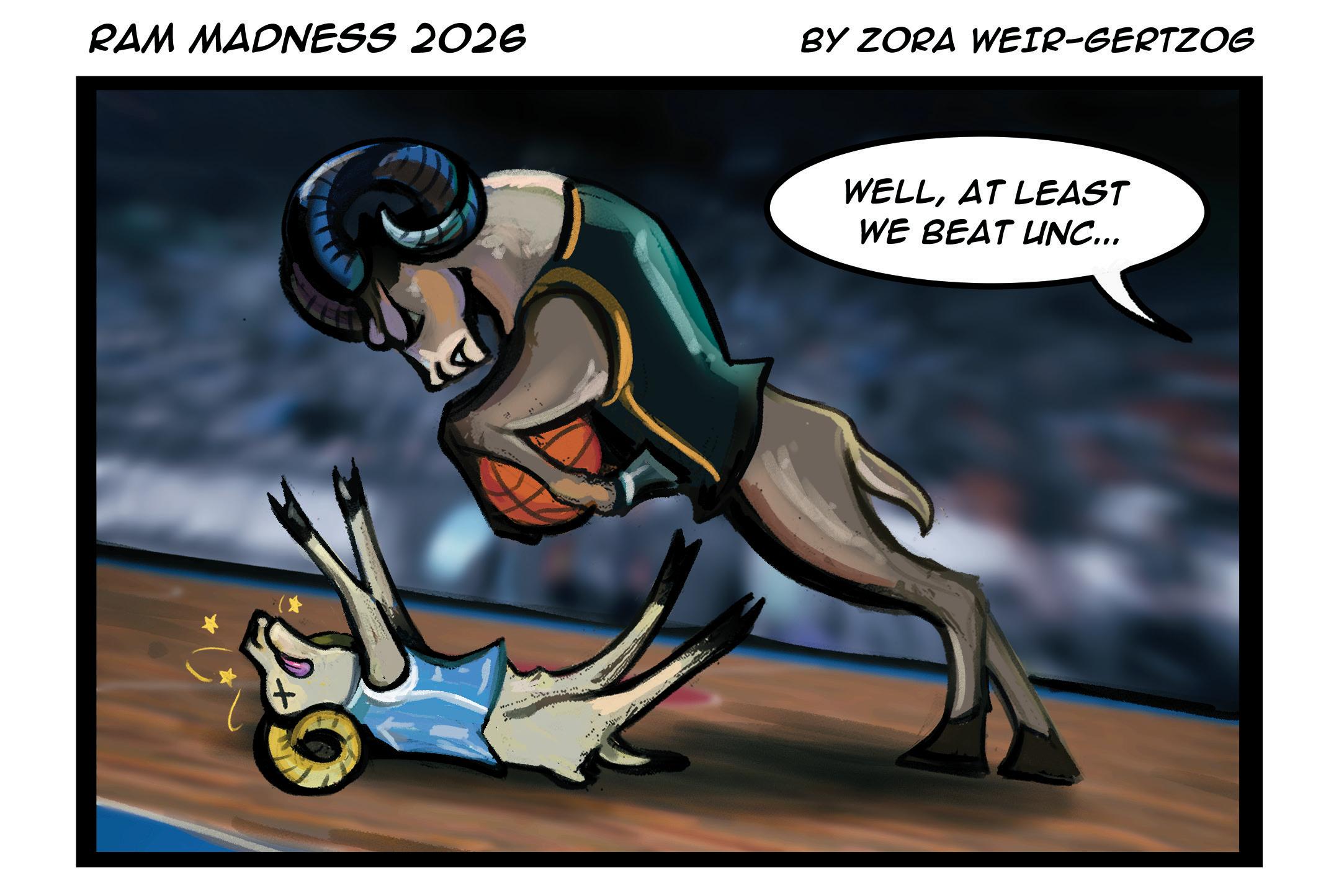
VCU men’s basketball positioned itself firmly in the national spotlight last week, upsetting No. 6 University of North Carolina 82-78 after being down 19 in the second half to complete the largest first round comeback in NCAA tournament history.
Though the Rams would later lose to No. 3 Illinois in the round of 32, it was still an exceptional week and season for VCU. Second-year guard Terrence Hill Jr. shined on the biggest stage and head coach Phil Martelli Jr. announced a contract extension after a monumental first season.
MARCH MADNESS
Continued on page 6
GalaxyCon 2026 was gay nerd heaven
SAPPHIRA MOHAMMED Copy
Editor
Superman, Bumblebee, Pompompurin and Frank-N-Furter all walk into the same bar. Why? Because they just got back from GalaxyCon, obviously — the annual convention filled with some [...]
GALAXYCON
Continued on page 7
Spanberger names three new members to VCU Board of Visitors
ANDREW KERLEY Executive Editor
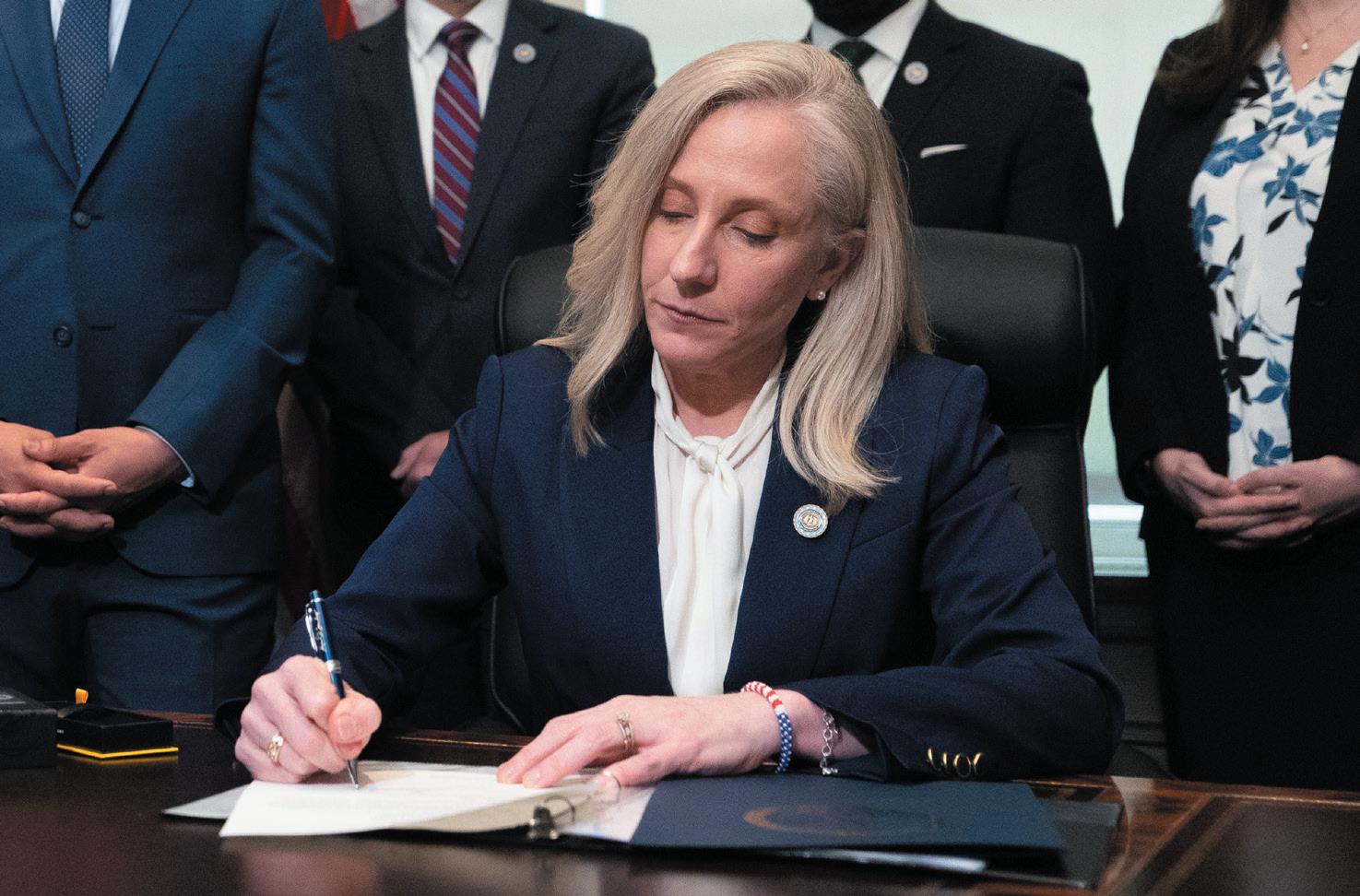
Gov. Abigail Spanberger announced three appointments to the VCU Board of Visitors on Wednesday. The new members will fill the vacancies in the university’s highest governing body created by Democratic lawmakers when they removed three members in February.
The appointees are lobbyist and VCU alum Heidi Schlicher Cook, Towne Bank president Alexis Swann and Harry Thalhimer, the president of Thalhimer Headwear.
They have been invited to the next VCU Board of Visitors meetings on March 23 and 24, according to a VCU spokesperson.
“We warmly welcome our new board members and look forward to working with them,” stated President Michael Rao. “They bring experiences and perspectives that will help VCU advance its vital mission of education and research.”
WHO ARE THE NEW MEMBERS?
The Thalhimer family have been major donors to VCU. They have an endowment in the VCU School of Business and they established a scholarship in 1986. They are also the namesake of the Thalhimer Tennis Center on Cary Street.
The influential Thalheimers have been around in Richmond for nearly two centuries. They began their business with a historic department store chain downtown and have done extensive philanthropy around the city.
Harry Thalhimer is a former MCV Foundation Board of Trustees member and chair, according to VCU.
Harry Thalheimer has donated a total of $27,000 to Spanberger — $17,000 to
her gubernatorial campaign and $10,000 to her inaugural committee. He also made a $250 donation to Del. Betsy Carr, who represents the district that includes VCU’s Monroe Park campus.
Cook is the Senior Vice President of Old Dominion Public Affairs, a firm that lobbies for a diverse set of clients including
BOV APPOINTEES
Continued on page 4
Gov. Abigail Spanberger. Photo courtesy of Mike Kropf/Richmond Times-Dispatch.
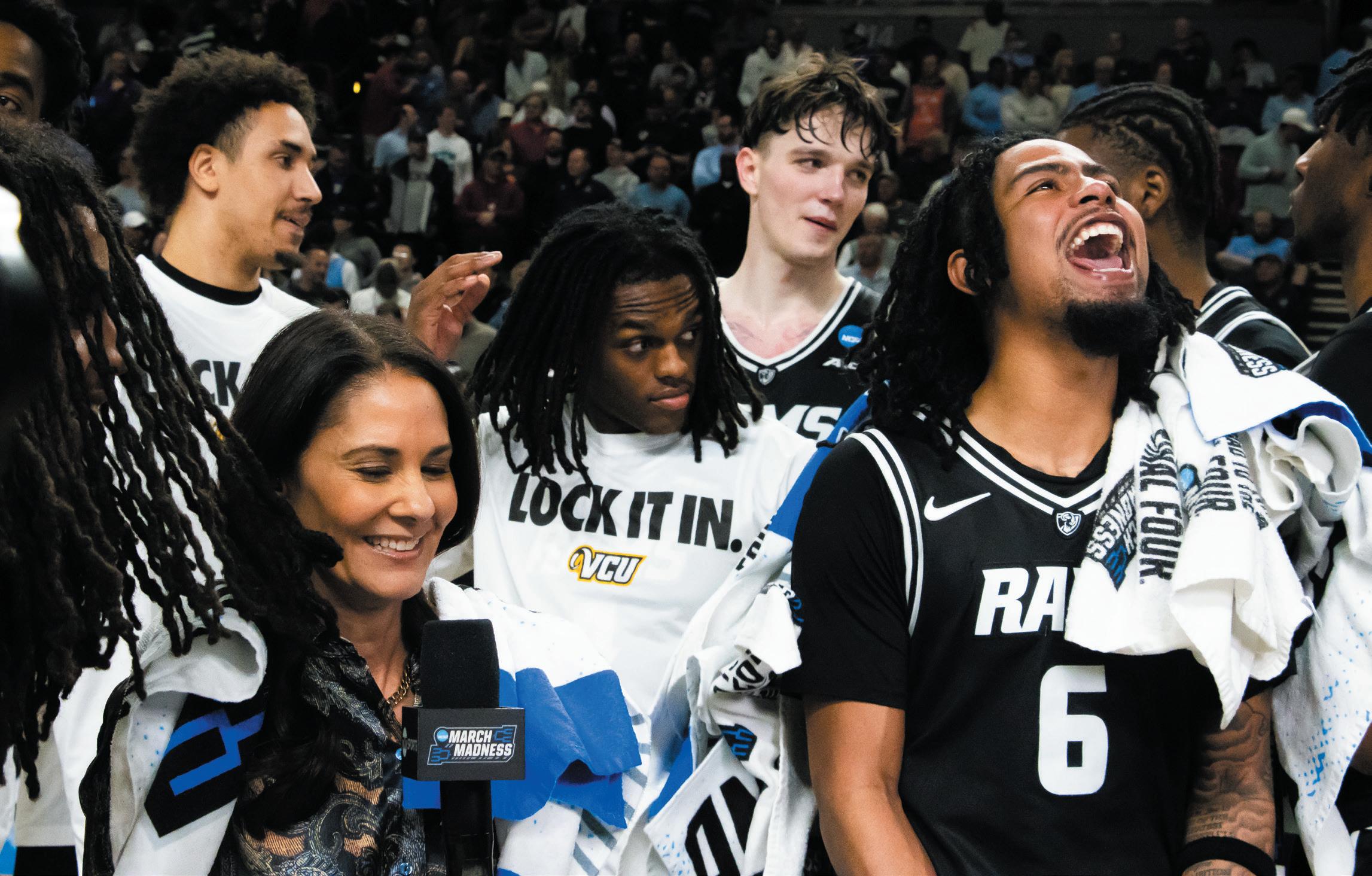
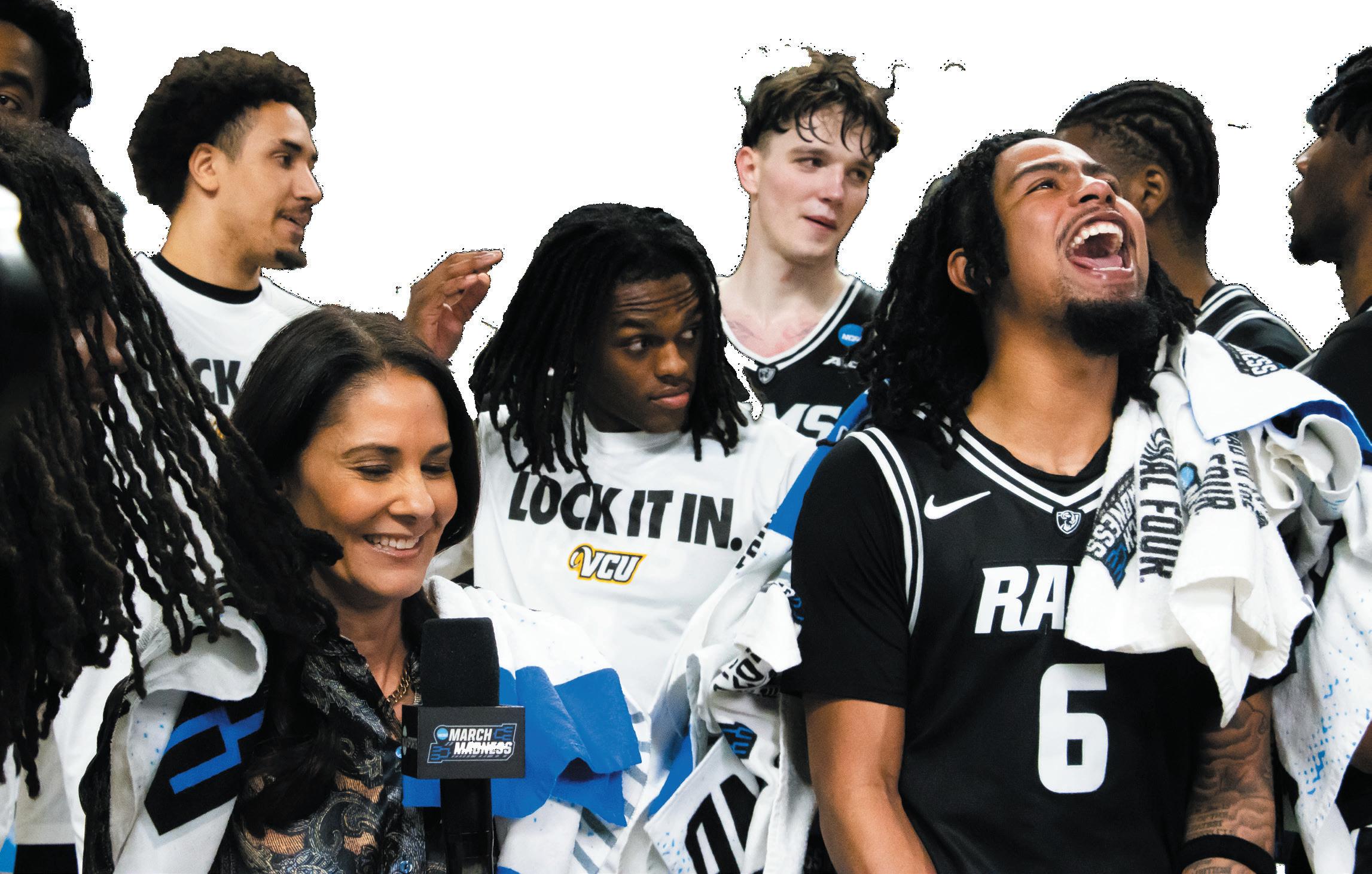
Second-year guard Terrence Hill Jr. celebrates with his team after scoring the three that pushed the Rams into the second round of the NCAA tournament for the first time in a decade. Photo by Alexis Washington.
Burlesque entertainer Chère Noble performing at GalaxyCon’s Cosplay Cabaret. Photo by Kieran Stevens.
VOTE YES BY APRIL 21 ST IN THE SPECIAL ELECTION
Should the Constitution of Virginia be amended to allow the General Assembly to temporarily adopt new congressional districts to restore fairness in the upcoming elections, while ensuring Virginia’s standard redistricting process resumes for all future redistricting af ter the 2030 census?
Stories of the week
national: The worst flooding in Hawaii in decades led to hundreds of needed rescues from Oahu on Monday. The intensity of heavy rains in Hawaii has increased due to climate change.
international: Over 1,000 people in Lebanon and thousands of Iranians have been killed since wider war began in the region on Feb. 28 with a joint U.S.-Israeli strike on Iran. Dozens of deaths in other countries ranging from Oman to Syria have also been reported.
Virginia Democrats pass gun reforms following ODU shooting, campus threats
SAL ORLANDO Assistant News Editor
The Virginia General Assembly recently passed several bills reforming gun laws, limiting who can obtain firearms, where firearms are allowed and the movement of select classifications.
Debates around the legislation — which is heading to Gov. Abigail Spanberger’s desk — heated up following a deadly shooting at Old Dominion university and threats to universities across the state.
DEADLY ODU SHOOTING, CAMPUS THREATS
On March 12, 39-year-old Mohamed Bailor Jalloh entered the campus of Old Dominion University, shooting and killing ROTC instructor Lt. Col. Brandon Shah.
The shooting was not the first in Virginia. It follows the deaths of University of Virginia student athletes Devin Chandler, D’Sean Perry and Lavel Davis Jr. at the hands of another shooter in 2022.
Virginia Tech notoriously experienced a mass shooting in 2007 that resulted in the deaths of 32 people and the wounding of dozens of others.
Following the ODU shooting — the
University of Virginia, Bridgewater College, George Mason University, Randolph-Macon College and Longwood University all faced bomb threats.
Timothy Porter, a second-year math student, said he feels safe on campus regarding guns, but does not feel the same in the broader Richmond area.
“The area on campus is pretty safe itself, in that it’s pretty insular, but it’s easy to have areas in transit between different parts of campus where it feels a lot more risky,” Porter said.
Ezra Hughes, a second-year computer science student, went to high school in the Richmond area and felt jostled by the shooting near Monroe Park a few years ago.
The Huguenot High School shooting outside the Altria Theater in 2023 killed two individuals and injured several, according to VPM.
“On campus specifically, I feel safe, just because of how robust the VCU alerts are, and I’m constantly reminded that things are being dealt with,” Hughes said.
GUN REFORMS AWAITING SPANBERGER’S SIGNATURE
Senate Bill 749, patroned by Saddam Azlan Salim, D-Fairfax, prohibits the sale, manufacture, import, purchase or transfer of an assault firearm. A violation would be classified as a Class 1 misdemeanor and individuals charged could face up to a year in jail, a $2,500 fine or both.
The bill passed the House of Delegates with a 59-35 vote, and the Senate with a 21-19 vote. It now awaits a signature or veto from Gov. Abigail Spanberger.
small country, so the idea of getting these out of circulation or reducing the number in circulation is going to reduce the number of mass casualties,” Goddard said.
Goddard said threat assessments on suspected individuals can be an effective measure to reduce mass casualty events. He believes the best measures are those taken before an event happens.
“The whole point is we need to have way too many guns,” Goddard said. “If we can reduce the number and availability of guns to people who have no real ability to use them safely, that would be helpful.”
Goddard said that a registration system, similar to the one for machine guns, can help ensure “dangerous people” do not get access to assault weapons.
“There are a lot of bills coming through today that will chip away at the death toll, probably much more successfully than the assault weapons ban, to be honest with you,” Goddard said.
House Bill 1525 would prohibit people under the age of 21 from buying a handgun or assault firearm if it becomes law. House Bill 1015 would prohibit individuals convicted of assault and or battery from possessing a firearm.
Senate Bill 272 would limit who can carry firearms at public universities. Senate Bill 173 would prohibit the possession of a firearm in hospitals that provide mental health services or developmental services.
Clara Elliot, lead instructor of ATW Firearms Instruction, thinks the assault weapons bill is ill-conceived and very poorly timed.
“It’s not going to have the real effect that they want it to because we have so many of them already in existence because it’s such a common use firearm,” Elliot said.
ATW Firearms Instruction offers a safe space where marginalized communities can receive firearms classes, self-defense classes and community support, according to their website.
Elliot said that because there are so many assault weapons residing outside the state, the bill will not prevent circulation within the commonwealth. She said that all gun law is based on a history of racism and classism.
“Law enforcement is always gonna have guns, people who are wealthy will always be able to buy their way around some of these loopholes and that kind of stuff,” Elliot said. “It’s a matter of just trying to keep the average American and the marginalized communities from being able to defend themselves in a time where we see our rights being diminished on a daily basis.”
VCU sent out an alert to students last week regarding a shooting that killed one person on the 300 block of North Monroe Street — three blocks away from some campus buildings.
“The kind of weapons that this is trying to limit are the kind of weapons that are most often used for mass casualty incidents,” said Andrew Goddard, legislative director of the Virginia Center for Public Safety. “The facility to have very high velocity rounds, and many of them without changing, without having to reload, is something that most shooters decide is very beneficial to them because they can get a lot of casualties and the wounds that they inflict are incredibly difficult to survive.”
Goddard’s son was a victim of the shooting at Virginia Tech in 2007 and survived four shots from a handgun.
“If you need 30 rounds to defend yourself, you’re being attacked by some
Elliot said the underlying cause of gun violence is the removal of state and national safety nets, such as Supplemental Nutrition Assistance Program benefits and mental health assistance.
Meal swipe donation proposal pushed to 2027
KAYLA MUNECAS Contributing Writer
The bill that would allow Virginia university students to donate their unused meal plan credits did not pass the General Assembly this year. State lawmakers voted to continue debating the proposal in the 2027 session.
The bill was introduced by Sen. Danica Roem, D-Manassas, and would have allowed students to voluntarily donate their unused meal swipes to be distributed for use by other students at campus dining halls or on-campus food pantries, such Story continues on next page
CT File photos by Glenn Jodun (left) Jon Mirador (right).
Photo Collage by Zach Montgomery.
as the VCU Ram Pantry, according to a previous report by The CT.
Roem was successful in establishing the “Hunger-Free Campus Food Pantry Grant Program” in 2025 to fund campus pantries and fight food insecurity. The new bill would have required universities to allow students to donate their swipes in order to remain in the program and receive grants.
Roem told The CT one issue lawmakers took with that part of the proposal was a perceived unfairness of students donating swipes their parents had paid for.
Roem feels that assertion assumes students have a traditional, nuclear family, middle-and-upper class path through college and ignores the many students who put themselves through college with grants and with alternative family structures.
“Then the next part of that is these students by and large are 18 years and older, they’re adults,” Roem said. “This is not for the government to police them about. Them choosing what to do with
their meal plans, that’s their choice. And if their parent happens to pay for their meal plan, then that’s a conversation they can have with their parent.”
BILL DIED BECAUSE OF POLITICS, NOT MONEY, ROEM SAYS
This year, the proposal unanimously passed the Virginia Senate after deliberations, but failed to make it through the House of Delegates Appropriations Committee, a powerful legislative group which, along with its Senate counterpart, scrutinizes bills that would cost money to implement.
“We got out of the Senate, it then got into the House and that’s where House versus Senate politics came in,” Roem said.
“It just went into the House Appropriations Committee and they were killing a whole lot of bills that day. Only two got out of the committee that day.”
Roem said she will continue to push
Richmond’s sewer system fixes see mixed funding future
HECIEL NIEVES BONILLA News Editor
The plan to strengthen Richmond’s water system could receive $50 million in state funding over the next year — but a utility cost hike in Mayor Danny Avula’s proposed city budget indicate a need for further funding for the city’s infrastructure needs.
The state funding is meant to support Richmond’s combined sewer overflow control project and is part of Virginia’s next budget set to be finalized during a special legislative session starting April 23.
The sewer project legislators plan to fund is one of several water system improvements in the city’s last capital improvement plan, which covered fiscal years 2022-2026. It involves building structures to divert water during high water intake events, and improving the capacity of the city’s Wastewater Treatment Plant, a different facility in Southside.
DPU public information manager Rhonda Johnson said the proposed state funding would specifically support the design and construction of the Shockoe High Rate Disinfection facility, the largest item in the project and a key element of controlling James River contamination.
The $50 million to continue the project
Continued from front page
Walmart, Columbia Gas, McGraw Hill and Vantage Data Centers, according to the Virginia Public Access Project. She previously lobbied for Virginia Realtors.
Cook and her firm have donated to Democratic lawmakers in Virginia — including Spanberger’s gubernatorial campaign. She supported 4th District Rep. Jennifer McClellan in her campaign for governor in 2021. She also worked for Democrats in the House of Delegates until 2012.
Swann — who graduated from Howard University — has served on a number of boards across Virginia. She previously served on the VCU Board of Visitors from 2019 to 2022 after being appointed by former Democratic Gov. Ralph Northam.
Swann has also made some donations to Democratic candidates.
the proposal in 2027 and attempt to get both chambers on board, and maintained that the problem is not how much the bill would cost.
“This deals with House versus Senate politics,” Roem said. “It got caught up with a lot of other bills. The House was making a stand on one thing while the Senate was making a stand on another thing. Each body was killing other members’ bills from the other body in the House Appropriations Committee or the Senate Finance and Appropriations Committee.”
STUDENTS STILL SUPPORT THE PROPOSAL
All of the VCU students The CT spoke to supported allowing students to donate swipes. Many students already try to share their swipes with each other.
Unused meal swipes only last until the end of semester before becoming unusable. Some students noted that practice as wasteful
and money out of their families’ pockets.
Chemistry student Meena Marrs pointed to a disparity between students who have many swipes left over and those without enough to finish out the semester.
Mechanical engineering major Mac Hodgens agreed that an official swipe exchange system would fix money losses from unused swipes, saying students should be able to do as they wish with credits they already paid for.
“I think a change they could make to this is, it would be fantastic if you could use two swipes at a time or as many swipes as you want,” Hodgens said.
Speaking to the argument that students could overspend on food without the cap on meal credit use, Hodgens said effective budgeting is a skill college students should learn either way.
is short of the $80 million for several water infrastructure projects Avula requested last year in a letter to former Gov. Glenn Younkin, in which he stated more state funding would minimize the need for utility rate increases on Richmonders.
Avula presented the full budget proposal for the coming year to Richmond City Council on March 11. The proposal includes a $13.84 total utility rate increase per residence, according to Axios.
Estimated expenditures for the Department of Public Works broadly are also expected to increase by around 20%, from $505 million this fiscal year to $605 million in fiscal year 2027 according to a City Council work session document.
The budget must now be discussed and approved by City Council, which will revise the 585-page document through the spring.
Randolph Macon political science professor and “RVA’s Got Issues” podcast host Richard Meagher said the overall proposed budget for 2027 makes no wild swings in funding in any one direction but does make incremental changes to several programs. He said the utility rate hikes follow a pattern seen in many other localities.
“I’m not trying to say there’s something sinister about that,” Meagher said. “It’s just
BOARD MEMBERSHIP SHIFTS TO THE LEFT
Universities in Virginia are governed by boards of visitors made up of 16 members appointed by the governor and confirmed by the General Assembly. The boards hold the power to budget, hire and fire presidents, shape university policy and approve course curricula.
Board members serve four-year terms and tend to be community figureheads, business leaders and former elected officials with university ties. The governor typically appoints four new board members annually. By the end of a governor’s term, all members of the boards are their appointees.
Ellen Fitzsimmons, a former executive for Truist Bank and railway company CSX, was named the new rector, or leader, of the board in June. Steven DeLuca, the vice president and head of government affairs at Capital One Financial, is the vice rector of the board. Both were appointed by Youngkin and have made political donations to Republicans.
a cost rising. How do we raise more money to cover those costs if we’re not gonna raise taxes? What’s not a tax but the thing that everybody pays into the budget? Utility rates”
Most city residents and many in surrounding counties were left without potable water for nearly a week in January of 2025, after a power outage during a blizzard flooded Richmond’s main water treatment plant and shut down its IT system, according to a previous report by The CT.
The city has moved to prevent a similar occurrence at the main plant by improving equipment and through organizational changes to include the firing of former Department of Public Utilities director April Bingham, according to VPM.
Meagher noted that infrastructure improvements in general do not seem to be among the biggest focuses of the budget and the communications from the mayor’s
The board has made a number of controversial decisions under Youngkin, according to a previous reporting by The CT.
They voted in March 2025 to dismantle VCU’s Diversity, Equity and Inclusion policies following an executive order from President Donald Trump. In 2024, they canceled the implementation of a racial literacy course requirement, resulting in some students walking out during their graduation ceremony.
Spanberger’s new appointments shift the balance of the 16-member board from being fully made up of former Republican Gov. Glenn Youngkin’s appointees to having three of its members appointed by a Democratic governor.
Because the governor typically makes four routine appointments every summer, nearly half of the board could be Spanberger appointees before the 2026-27 academic year begins.
Democrats recently passed legislation that would lengthen board members’ terms from four to six years, which could offset the governor’s ability to have all members of boards under their belt by the end of
office. He also said the kinds of investments needed to future-proof the water system could be beyond the city’s scope.
“That’s an investment of hundreds of millions of dollars, and that can only come from the state,” Meagher said. “That’s the argument the city’s been making for years, and so it helps that it seems like there’s a friendly administration. They’re not gonna give him everything he wants, but if the budget goes the way we think it will, there will be some money this year to help with that infrastructure.”
Del. Rae Cousins, D-Richmond, stated in an email she was glad to vote in favor of the funding for the sewer overflow project.
“This $50 million allocation builds on the $100 million provided by the state in FY25-26 and demonstrates our shared commitment to protecting our waterways, updating aging infrastructure, and serving the people of Richmond,” Cousins stated.
their four years in office. The bill still has to be approved by Spanberger to become law.
“When I think about the more than 100 Virginians we’ve appointed to boards and commissions in just 60 days, I think about what they represent — wide-ranging professional experience, an unwavering commitment to their communities, and a willingness to serve their fellow Virginians at the highest standard,” Spanberger stated in a press release. “I know these leaders will always put the Commonwealth first as we continue to focus on building a stronger future for Virginia students, families and communities.”
Virginia Senate Minority Leader Ryan McDougle, R-Hanover, stated no matter who is appointed to university boards, their focus remains on affordability and “keeping money in your pocket.”
“Senate Republicans are fighting against the Democrats’ policies and budget proposal that will raise tuition and fees for students,” McDougle stated.
The next VCU Board of Visitors meetings are scheduled for April 23 and 24. They will be open to the public.
Richmond’s water retention basin in Shockoe, site of the city’s planned High Rate Disinfection project, after a heavy rain event. Photo courtesy of the Richmond Department of Public Utilities.
S T U D E N T S T A F F S P O T L I G H T
S H A M A R I G A R N E T T
Job Positions: Resident Assistant and Desk Assistant
S
Year: Senior Major: Nursing
R e s i d e n t i a l L i f e a n d H o u s i n g , s e r v i n g a s b o t h a
R e s i d e n t A s s i s t a n t a n d D e s k A s s i s t a n t . K n o w n f o r h e r
p o s i t i v i t y , r e s i l i e n c e , a n d s t r o n g s e n s e o f o r g a n i z a t i o n ,
s h e l e a d s b y e x a m p l e a n d c o n s i s t e n t l y s u p p o r t s h e r
t e a m a n d r e s i d e n t s w i t h c a r e a n d p r o f e s s i o n a l i s m .
S h a m a r i h a s m a d e a l a s t i n g i m p a c t o n h e r p e e r s ,
i n s p i r i n g t h o s e a r o u n d h e r a n d s e t t i n g a p o w e r f u l
e x a m p l e o f l e a d e r s h i p i n a c t i o n . T h a n k y o u , S h a m a r i ,
f o r a l l y o u d o f o r o u r r e s i d e n t s a n d t h e V C U
c o m m u n i t y !
MARCH 2026
Sports
Stat of the week
Men’s basketball second-year guard Terrence Hill Jr. had a record breaking March Madness performance. Hill scored 34 points, the most by a player off the bench in March Madness history and the most points by a Ram in tournament history.
COULD KYLER MURRAY RETURN TO BASEBALL?
HAYDEN BRAUN Staff Writer
Kyler Murray is no stranger to crossroads. Once the No. 1 overall pick in the 2019 NFL and the No. 9 overall pick in the 2018 MLB draft, Murray chose a career in football over baseball.
After being released by the Arizona Cardinals, Murray signed with the Minnesota Vikings — however, he again finds himself at a crossroad. If things don’t work out in the NFL, a return to baseball could still be on the table.
During his time in Arizona, Murray showed flashes of elite production but struggled to sustain long-term success. He threw for over 20,000 yards and 121 touchdowns while adding more than 3,000 rushing yards across seven seasons, according to ESPN.
Murray’s best season came in 2021, when the Cardinals opened the year 7–1
Murray’s time in Arizona never met expectations despite his talent, as injuries and organizational instability led to inconsistent results. The Cardinals went 38-48-1 in games he played.
Murray now gets a fresh start in Minnesota — a team he grew up rooting for — even admitting he “cried real tears” after the Vikings’ loss in the 2009 NFC Championship, according to NBC Sports.
Murray joins a star-studded roster featuring wide receivers Justin Jefferson and Jordan Addison, along with head coach Kevin O’Connell.
Before fully committing to football, Murray was also a standout baseball player at the University of Oklahoma. He hit .296 with 10 home runs and 47 RBIs in his final season, finishing his collegiate career with a .271 average, 17 home runs and 72 RBIs.
If Murray chose to return to baseball, he wouldn’t be the first to pursue both
The Athletics drafted Murray ninth overall in 2018 and have remained open to his return, with general manager David Forst saying he would “always be open” to a reunion, according to the MLB.
Murray’s decision may ultimately hinge on opportunity. If his fresh start with the Minnesota Vikings does not provide the stability or success he is looking for, baseball remains a realistic alternative that would likely be easier on his body than the physical toll of the NFL.
While the Vikings’ offer talent at skill positions and strong coaching, concerns remain about the offensive line and the team’s overall direction.
The situation at quarterback has already been a mess, from how the organization handled Sam Darnold to the uncertainty surrounding former top 10 pick J.J. McCarthy, placing added pressure on Murray to quickly stabilize the position.
Continued from front page
A HISTORIC FIRST ROUND
VCU and UNC traded blows throughout the majority of the first half, with neither team gaining a long-lived advantage until the closing minutes.
The Tar Heels’ momentum swelled as their lead extended to 32-21 with three minutes left in the first half. VCU struggled to respond with a two minute scoring drought and only one make in seven attempts.
Hill finally ended UNC’s seven-minute 19-3 run that kept VCU in the mix. However, a three kept the Tar Heels firmly ahead as UNC went into halftime up 39-28.
The second half started with much of the same. UNC scored the first bucket on an inside layup and continued with a 7-0 run to go up 48-30.
However, Hill truly began his ascension in the second half, starting with three plus a foul that gave the Rams a four-point play. When he was not scoring, he was assisting, with two consecutive drive-and-kicks for three to keep hopes alive.
Hill led the charge as the Rams inched closer to the Tar Heels lead. As the game winded down to less than a minute, Hill scored from all over the court, with a layup inside tying the game at 75 and sending it to overtime.
Both teams came out of the gate slow in overtime initially, but Hill made it his moment. After UNC gained a 78-77 lead, Hill iced the game with a now-iconic step back three as time dwindled down to give
VCU the win and complete the legendary comeback.
Hill’s 34 points were historic, being the most by a player off the bench in March Madness history and the most points by a Ram in tournament history.
A FALL TO EARTH IN THE ROUND OF 32
Despite the success in round one, round two of March Madness was not as kind to the Rams. First-year guard Nyk Lewis went down with an injury in the opening minute, and VCU struggled from that point on.
Illinois and VCU went back-and-forth in the first. The Rams gained a short-lived lead before the Fighting Illini rattled off a 9-0 run to end the first half. Illinois never looked back from there.
The second half was all Illinois. The Illini went on run after run to dominate a battered VCU. The Rams showed flashes of life, but it never amounted to anything as they lost 76-55.
A SEASON OF INCREASED LEGACIES
However, the round of 32 loss does not define the Rams’ amazing season. In Martelli’s first year, he defied expectations and set VCU up grandly for the future after an initially rocky start.
Martelli inherited a squad that housed zero returning starters from the previous season. Not only that, but the nonconference schedule Martelli crafted featured more heavy hitters than Ram fans
If that situation fails to come together, a return to baseball may not just be an option but the smarter path. Murray has already proven he has the talent to compete at a high level on both ball fields, and with interest from the Athletics still there, the opportunity remains intriguing.
With a young core that includes rising players like Nick Kurtz and Jacob Wilson, the Athletics are building toward the future and a gifted athlete like Murray could fit right in.
For an athlete who once had two professional futures in front of him, going back to baseball could offer a fresh start in a more stable environment.
If his second NFL opportunity doesn’t work out, Kyler Murray shouldn’t hesitate to return to baseball and finally pursue the path he left behind.
may have been accustomed to.
VCU was voted the top team in the 2025-2026 Atlantic 10 preseason despite all of this. Early non-conference losses to Utah State University, N.C. State University and New Mexico University left people worried about the remainder of the season.
Those worries only grew when VCU started A-10 play with a 2-2 record, however from this point on a switch flipped with the team. After the conference loss to George Mason University on Jan. 10, VCU ended the season winning 17 of its last 19 games.
Martelli careened through the A-10 conference tournament and secured an automatic bid after winning the title. Making it to March Madness would have been enough for many coaches in their first season, but Martelli was not satisfied.
Not only did Martelli make it to the NCAA tournament, he led the Rams to their first NCAA tournament win in a decade. He did in his first year with VCU what no one else could for 10.
Martelli was primed to thrive in the A-10, and his personable coaching style brought the best out of his players. He instilled a confidence that was second to none, and the results became obvious as the season went on.
Multiple VCU players had career years under Martelli, most notably Hill.
Hill exploded onto the scene this season, finishing with a team-high 15 points and 2.8 assists per game. His efforts won him a plethora of awards — A-10 sixth man of the year, A-10 most improved player, First-
GAME RESULTS
MARCH 18
BSB AT VIRGINIA TECH LOST 8-11
LAX AT DAVIDSON COLLEGE WON 7-5
MARCH 20
WTEN VS. GEORGE MASON UNIVERSITY WON 4-0
BSB AT THE UNIVERSITY OF DAYTON WON 17-7
MARCH 21
MTEN VS. ELON UNIVERSITY WON 4-3
WTEN AT OLD DOMINION UNIVERSITY LOST 1-4
LAX VS. LA SALLE UNIVERSITY WON 10-6
BSB AT THE UNIVERSITY OF DAYTON WON 5-2
MARCH 22
MTEN VS. THE UNIVERSITY OF NORTH CAROLINA WILMINGTON LOST 2-5
BSB AT THE UNIVERSITY OF DAYTON LOST 12-14
Last week The CT made a major error. We reported that the VCU women’s track and field won its eighth consecutive Atlantic 10 Indoor Championship title. In actuality, it was only the team’s fourth consecutive title, and eighth total title. The error was based on an article posted by the Atlantic 10 Conference. The digital version of the story has been updated with the correct information. The CT regrets the mistake. The full version of the story is available online at commonwealthtimes.org
team all A-10 and the A-10 conference tournament’s most outstanding player.
Although his debut season came to an end against Illinois, Martelli fulfilled the goal he mentioned in his introductory press conference of protecting VCU’s legacy.
“VCU men’s basketball has been synonymous with excellence. You look around at all those banners, you see the trophies, and you recognize that you are upholding a longstanding legacy,” Martelli said. “I take that very seriously, protecting that legacy is always, always, always on my mind.”
Martelli did more than protect VCU’s legacy, he expanded it. His efforts rewarded him with a contract extension that will keep him with the Rams through the 2031–32 season.
The Rams are primed for even more years of success. Martelli’s commitment to the Black and Gold sends a clear message to the rest of the NCAA. Expect even more national recognition for VCU. This is only the beginning.
Illustration by Zoë Luis
MARCH MADNESS
Spectrum
On This Day
On this day, March 25, 1911, was the Triangle Shirtwaist Factory fire. The fire happened from a mix of poor labor laws and employer neglect, causing the death of 146 individuals. This resulted in different laws and committees being created to make safer working conditions.
The great Richmond ‘Chud-Off’ held in Monroe Park
RACHEL NICHOLAS Staff Writer
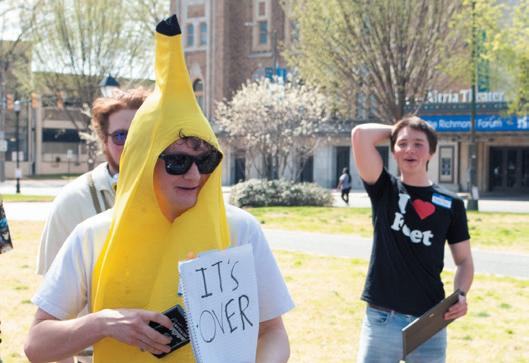
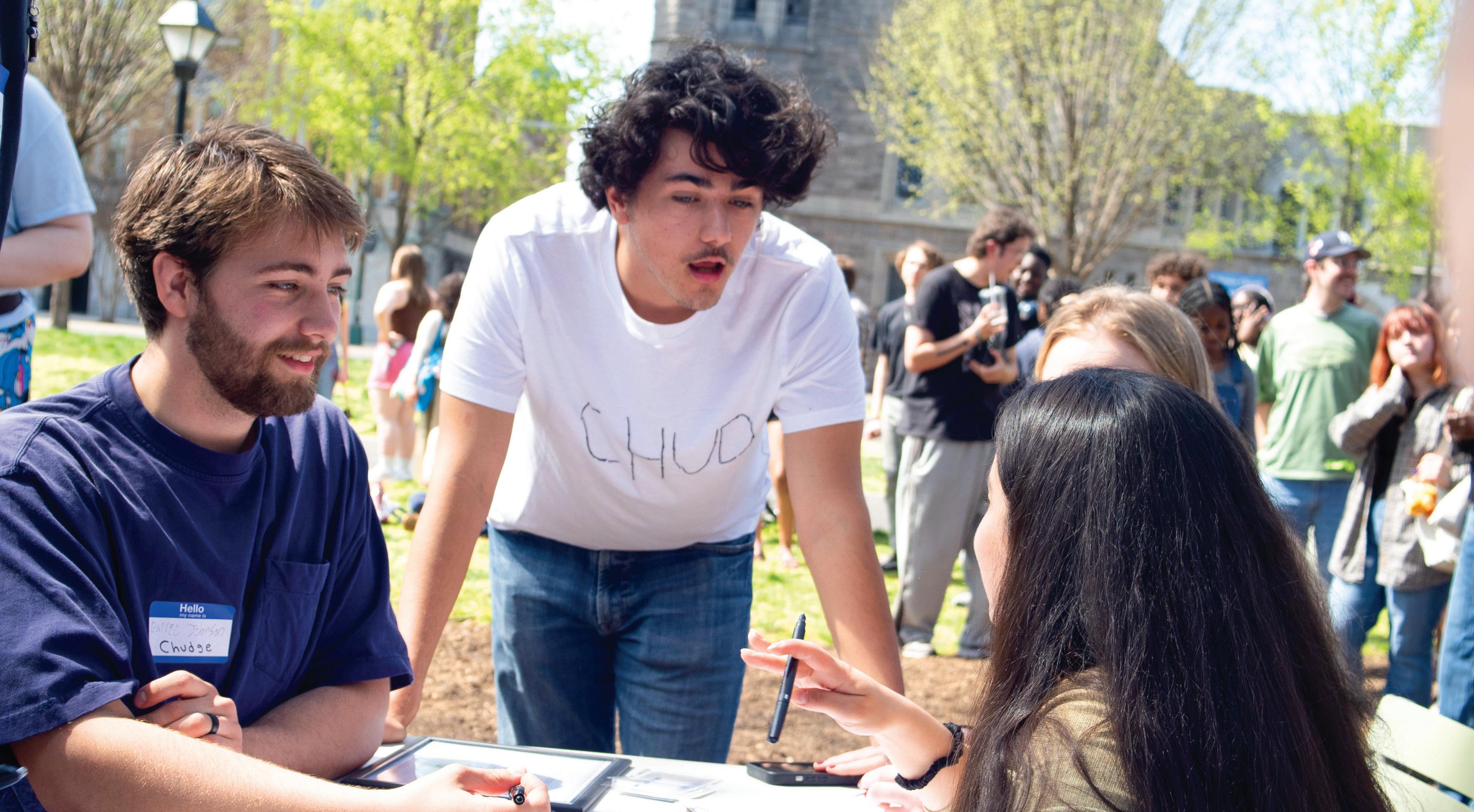
A time was had this past Saturday, as a crowd assembled in Monroe Park to watch around the judges table to behold a positive competition for those who feel like outsiders — Richmond’s first ever “Chud-Off.”
The definition of chud changes with the eye of the beholder, according to Dylan Grasso, the lead organizer. The beauty of the contest is that anyone could be a chud and win.
Grasso created the event after a throw away joke he made about a contest where the winner would be crowned the biggest chud.
“The joke was made and about a month later, and here we are,” Grasso said. “It’s a lot more planned out now, more fleshed out then it was before. A lot of it is based on the performative male contest that was here in the fall.”
Some notable chuds of history include Ronald Reagan and Will Smith, according to Grasso.
“Chudnana,” a banana-costumewearing-chud, gave his own definition of what truly makes a chud.
“So my definition of a chud is someone who stays inside, never does anything with their life, unemployed and dumb, essentially a big, fat chud,” Chudnana said.
As the Chud-Off commenced, the judges, or chudges, evaluated the best of the best. They took notes, marking down
the contents with true displays of chud, according to Chudges Madison Fadely and Tiffany Russo, otherwise known as Tiffart.
“I’d say it was based mostly on a feeling,” Russo said. “Everyone came with really good qualifications, and made sure to write them all down. We also look at how the audience reacted, like if there was a lot of commotion or just a big reaction, we would be like ‘Oh yeah, this guy is the real deal.’”
The competition was broken off into five sections, each emerging with a winner.
The sections were The Dumbest Chud, The Truecel Chud Award, the Foid Award, the Most Nefarious Chud and the Mega Chud.
The Chud of Shame, also known as George Sullivan, walked away with the “Truecel [true incel] Chud Award.”
He listed Jughead from Riverdale as chudspiration, begging the question: “Have you ever seen me without my second pair of cat ears on?”
Sullivan feels that he is a chud at heart and shared a message to all the young, aspiring chuds of today.
“This is for all the chuds of color … anyone can be a chud, no matter what color you are, you just have to hate yourself, a lot,” Sullivan said.
In the end, the Chud-Off proved to be more than just a joke brought to life, but a space for humor, creativity and selfexpression to collide. Through playful performances and enthusiastic crowd reactions, the event highlighted a shared understanding that identity, even as a chud, can be celebrated as a community.
GalaxyCon 2026 was gay nerd heaven
of Richmond’s finest entertainers and performers.
GalaxyCon LLC is a convention company based in Fort Lauderdale, Florida, that organizes comic book and anime conventions in the United States. The company has hosted the convention in Richmond since 2019.
Actors, directors and entertainers from all areas of pop culture media come to the convention to speak on panels and meet fans. This year included actor Hayden Christensen from “Star Wars” and the director of “Scott Pilgrim vs. The World,” Edgar Wright.
Inside the exhibition hall is Artist Alley, a designated area in a convention where artists display and sell their work to convention attendees, according to GalaxyCon’s website.
Austin Vestel, a Salisbury, Marylandbased corset maker and leather worker, has been vending at conventions for 15 years. He said conventions like GalaxyCon have been a huge help to his boutique, Corset & Cogs.
“I quickly learned that in a weekend, I could make what I made in an entire month in my physical location,” Vestal said. “So just getting my work into the eyes of people who understand me, understand my work and understand the culture is a humongous game changer.”
Cosplaying is a big facet of GalaxyCon — attendees were dressed up head-to-toe and several cosplay took place. Cosplayer Morgan Le Foy said that she has been cosplaying since 2014.
“I always was like the kid who took Halloween and Spirit Week extremely seriously. The first time I went to a convention and I saw everyone dressed up,
I was like, ‘Oh, I’m going to get involved with this,’” Le Foy said.
Le Foy is also a cosplay contest host and admires GalaxyCon’s inclusivity.
“I like that Galaxy Con works really hard to have something for everybody. A lot of conventions won’t acknowledge niche communities, and I feel like they’re really good at pinpointing that and creating spaces at their convention for everybody, not just comic fans,” Le Foy said.
One of Galaxycon’s known features is its 18+ After Dark events, where the “Rugrats” go to sleep and “Josie and the Pussycats” come out to play.
Friday night included Drag Bingo from 6-7:30 pm, in which queens Michelle Livigne and Javon Love hosted several
Dylan Grasso, the chudganizer, and his team of chudges contemplating Richmond’s greatest chuds. Photos by Sophie Tran. Collage by CT designers.
Burlesque entertainer Chère Noble performs alongside Guns Ahimbo at GalaxyCon’s Cosplay Cabaret. They are dressed as Cammy White and Vega from Street Fighter. Photos by Kieran Stevens.
rounds of bingo with performances sprinkled in between. Love was dressed up as Ruby Rhod from “The Fifth Element” and Livigne in her own flashy attire that Love described as a “prolapsed anus.”
The drag queens were showered with money, applause and laughter from the audience throughout the night and ended their performance by telling the audience to go support your local drag queens and
drag shows because “drag is joy, and joy is resistance.”
One of the final shows for the weekend was Galaxycon’s annual Cosplay Cabaret, hosted by emcee and burlesque dancer Ginger Oh Snap. Snap has a background in musical theatre and got into burlesque performing after having emcee’d conventions that had burlesque shows she would attend.
“I just love being in front of the live audience and having that immediate energy feedback. I have done film work and music videos, things like that, and that’s also really fun, but nothing beats a live audience,” Snap said.
Snap thinks that the reasoning behind the Cosplay Cabaret being such a hit at conventions is that media such as comics and anime have the same kind of satire and farce that burlesque does.
“When you think of how prevalent fan fiction is, right, that’s what nerdy burlesque is. It’s our nerdy burlesque fan fiction for a character that we love,” Snap said. “And so they get to see characters that they love and know in a certain light, in a very different light at our show.”
The Cabaret was from 10 pm to midnight with a packed audience, its line wrapped around the entire left side of the second
floor. Performers Snap, Rosie Cheeks, Redrum, Chère Noble and Guns Ahimbo performed as femme Loki from “Avengers,” Scar from “the Lion King,” historical figure Grigori Rasputin and Cammy and Vega from “Street Fighter,” and many more performances.
Attendees Elijah and Dashawn came to GalaxyCon as their first-ever convention. The two dressed up as Monkey D. Luffy and Roronoa Zoro from “One Piece” and traveled a long way from their home to be at the event.
“I’m just glad that there’s a lot of people who came in cosplay because normally when I cosplay, I feel like the oddball out, and now I usually cosplay with my friends, but now I get to see people and it’s just normal,” Dashawn said. “I feel like I’m at home. So glad I got to come out to one of these.”
Galaxycon has two other convention branches across the country— Animate! — which focuses on animation, and Nightmare Weekend — which specializes in horror and Halloween-themed events, according to its website, galaxycon.com . To find out about their upcoming events in different cities across the country, visit their Instagram @galaxyconlive.
Fighting the
power, one show at a time
Punks for Liberation fundraises for Palestinian man
MAEVE BAUER Spectrum Editor
Gold Lion Cafe, a typically quiet coffee shop fit for studying and lulled conversations, transformed into a venue for social change and punk rock during Punks 4 Liberation’s benefit show on Thursday night.
The show was thrown to raise money for Karam Hani Al-manasra, a Palestinian man who was shot by Israeli forces, according to the GoFundMe. P4L was able to raise $500 for Al- manasra and his family, as they struggle to secure essential needs, with his injury only making it more difficult.
Laywaste, Silico and Bleedout were the bands performing. The night ended with a rousing speech from real fro, The Magic Man, a local activist. He encouraged the
audience to come together and get stuff done. The energy in the room was alive with the feeling of change.
Mutual aid is a foundation point for P4L, according to Maeve Jenik, one of their main organizers. The idea for the show came from a newer member of the organization. They brought Al-manasra’s cause to Judas, P4L’s founder. He organized it, like he does for all events, and used connections throughout the community to make it happen.
“[Benefit shows] is one of the main things we like to do because we have such an amazing community that is willing to show up and show out and support these causes. I think it’s also great for educating people,” Jenik said. “Living in the United States, we know what our tax dollars support. So, we want to do whatever we can to help the people in need.”
Nim Aranel, one of the winners of GalaxyCon’s Cosplay Craftsmanship competition, displaying their rendition of Bowser Jr. from The Super Mario Galaxy Movie.
Photos by Kieran Stevens.
Silico performing during fundraiser for Palestinian man at Gold Lion Cafe on Thursday March 20th 2026. Photos by Landon G Walker.
Laywaste performing for fundraiser for Palestinian man at Gold Lion Cafe on March 20.
Photos by Landon G Walker.
The organization started a year ago. Their next benefit show will be at the upcoming Barter Market in Scuffletown. There will be more on the horizon, according to Jenik.
Activism and mutual aid is a cornerstone of punk beliefs, and was felt strongly in the walls of Gold Lion. Brick J. the bassiest for Laywaste, a Virginia grindcore band, said he tries to play at least one benefit show a month — whether that be with Laywaste, or one of the many other bands he plays with.
“This guy [Al-manasra] was violently
assaulted by this unstoppable f****** force of evil, it makes me f****** sick.” J. said.
“Getting up there and being able to get all of that out and being able to share the frustration with everyone … just being able to contribute to potentially helping this get out of really, really horrible situation, that’s the bare minimum honestly, and that’s what everyone should be doing.”
The event was filled with a litany of chants demanding a free Palestine and the end of the genocide in Gaza. As each band stepped up to play, they screamed out
the same message — engaging the crowd through shared beliefs and music.
Laywaste’s main goal when performing is for the people to learn something from what they are yelling and singing about, according to Eric Young, lead vocalist of Laywaste.
“It’s nice to have people move and stuff, but I also want to get something out of it and understand what we’re about and hear something that they probably, maybe haven’t heard before,” Young said.
Punk is always political, and art is
Thrifting and hardcore to collide for Salad Days Market
CORA PERKINS Assistant Spectrum Editor
Vintage clothing, old school records and collections from local Richmond hardcore bands will be for sale this upcoming Sunday, March 29, at Salad Days Market. A collaboration between Cut and Run Vintage — a pre-loved clothing store featuring items from the 90s and early 2000s, and Vinyl Conflict — a record store on Grace Street.
The market will be held at Studio Two Three, a nonprofit community arts space in Manchester. The hosting vendors will be joined by Alchemy Coffee and 1115 Mobile Kitchen.
“With United Blood coming back, it felt like the right time to finally make it happen,” said Cody Denzler, one of the owners of Cut and Run Vintage. “One day I was at Vinyl Conflict talking with [Bobby Egger, owner of Vinyl Conflict] about other markets I’d been hosting, and it just clicked that we could team up and do this together.”
The name pays an homage to Minor Threat and their 1985 EP titled “Salad Days,” and to the idea of early days in the scene, according to Denzler.
The vendor lineup for the market was intentional, with many selling pieces from their personal collections. There will be a range of punk, metal and hardcore related merchandise such as band tees, records, pins, patches, zines and more.
A market like Salad Days helps to
pass things down to younger fans getting into older bands, according to Denzler. It creates a space for interaction.
“You’re not just buying something online, you’re talking to someone who was there, who has a connection to it,” Denzler said. “And honestly, while I don’t mind people appreciating band tees for the graphics alone, there’s something special about keeping this kind of stuff within the community.”
The market allows vendors to sell their own items at their price, according to Egger.
“Most of our titles in shop are sourced from distributors or sold to us by customers and we are reselling,” Egger said. “Letting individuals dictate their own prices and selection is going to give the room a very one time experience to items that potentially do not hit the market very often, and potential deals to be had since the owners do not have the same overhead as a retail space.”
Egger hopes for old friends to reconnect and for new friendships to bond.
“I hope that many special items that have previously been appreciated and maybe boxed up for years can be revisited both by the owners and potential new owners,” Egger said. “I’m excited of the movement of these collections entering new appreciative hands as this scene is very passionate.”
Scott Kenney, guitarist for Naysayer, under Edgewood Records, said Egger reached out and asked if Edgewood
Records wanted to have a table at the market. It made total sense, according to Kenney.
“Edgewood Records will be selling our in-stock catalog of various releases of 12-inch, 10inch and 7-inch vinyl records and cassettes, as well as some clothing items such as t-shirts and hoodies,” Kenney said.
Naysayer will be selling shirts, hoodies, hats and records left over from previous shows, according to Kenney. From both new and old shows, there might be some gems in there.
always political, said Nathan Brazie, drummer of Laywaste.
“If there’s someone just talking on a stage or something, it can get just like, no one’s really listening to them. But, when you put it into a form of art or media type of thing it makes people actually listen to it,” Brazie said.
To learn more about upcoming Benefit shows or other events Punks 4 Liberation might be holding you can find it on their instagram @punks4liberation
Hardcore creates a community of difference, according to Kenney.
“It’s for anyone but not for everyone,” Kenney said. “As far as the market goes it gives people a chance to grab that record, t-shirt or hat they have always coveted as well a chance to hang out and have a conversation at a place other than a deafening show.”
Salad Days will be held 11 a.m. to 4 p.m. this Saturday. More information can be found on instagram @cutandrunvintage, @vinylconflict and @studiotwothree.
An array of band tees that will be sold at ‘Salad Days.’
A poster that will be sold at ‘Salad Days.’ Photos courtesy of Cut and Run Vintage.
Bleedout and audience at fundraiser for Palestinian man at Gold Lion Cafe on Thursday March 20th 2026.
Features
Remembering VCU icon Jackie ‘Miss Peaches’ Cherry
BRYER HAYWOOD
Staff Writer
Jackie “Miss Peaches” Cherry, a warm, familiar figure to many students at VCU, passed away on March 8 at the age of 61.
Miss Peaches worked at Shafer Dining Court for 15 years and is fondly remembered for always greeting students with a smile whenever they walked up the stairs.
During an interview with VCU News last year, Miss Peaches said she was motivated in her position by her connection to her family and her “other family” in the Dining Services staff, and strived to be kind to students she came across.
“I treat people decent every day,” Miss Peaches said. “It’s just my humble way. I’m only doing God’s work. If my grandkids were going to college, I would want somebody to treat them with respect and show them support.”
Aramark, the company partnered with VCU to run VCUDine and which employed many of her colleagues, offered a statement on Miss Peaches’s passing.
RVA Spotlight
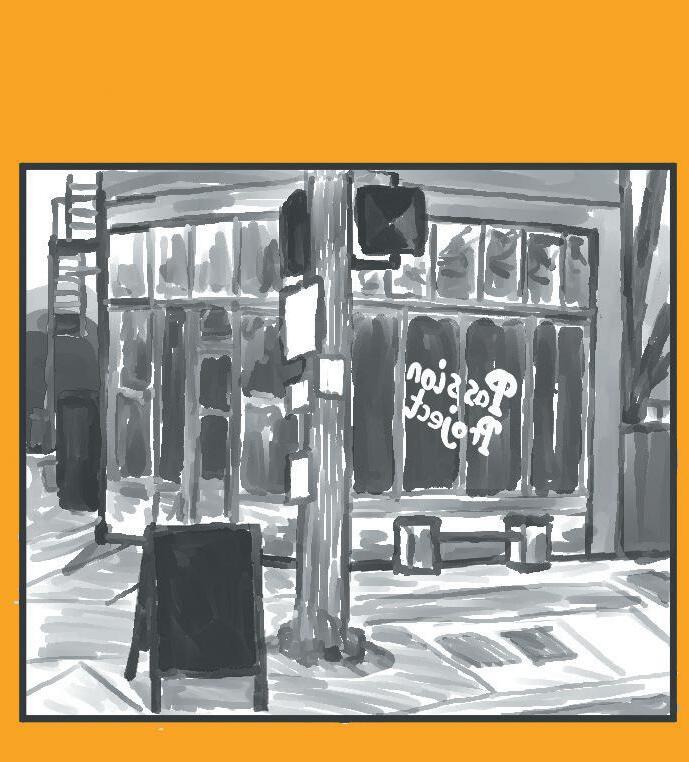
What started as a curated pop-up traveling from Richmond to New York City and D.C., I Love You So Much Books found its home in the Brookland Park neighborhood just over a year ago. Check it out and spend a second slowing down with a new read!
“We are deeply saddened by the passing of our long‑time and cherished colleague, Jacquelyn Cherry, known as Miss Peaches, whose dedication and kindness touched our entire organization. We extend our heartfelt condolences to her loved ones,” Aramark stated.
While born in Fauquier County, Miss Peaches has lifelong ties to Richmond — she grew up in the city and graduated from George Wythe High School. She later became a Certified Nursing Assistant at Westport Rehabilitation Center.
At Miss Peaches’s memorial service, her family and friends shared many heartfelt comments and stories of her.
“No one can ever take the place of a sister,” said Miss Peaches’ sister, Denise.
“I appreciate you for letting me be by your side during some of the darkest moments,” said Arquiera, Miss Peaches’ granddaughter.
Bishop Bernard “BJay” Lambert, Jr. described Miss Peaches as someone who was strong willed and unafraid to speak her mind. He added that she would’ve wanted her family to stick together and fight in her honor.
The women behind Ink Magazine
Celebrating nearly 50 years of alternative
SAPPHIRA MOHAMMED
Copy Editor
Ink magazine is a student run alternative publication that prints issues every semester with out of the ordinary themes such as “cyber,” “sex” or “freaks.” The magazine is unlike other student publications at VCU, but its first issue was unique for a different reasons — it was a student newspaper created by and for African American students.
Reflection in Ink was created in 1978 by the VCU student branch of the League of Black Journalists and the Black Student Alliance, according to VCU Libraries. African American students had just integrated into the college and wanted to create a newspaper based on their collective experiences, according to Marilyn Campbell, one of Reflection in Ink’s founders.
“As a media team, we sought freedom through expression — voicing our truths, reflecting our experiences and embracing the realities of our time,” Campbell stated. “As students, our purpose was to pursue academic dreams while working side jobs, volunteering to gain experience and grounding our ambitions in the lives we were living.”
With technical assistance from The CT and information from the Third World Coalition, Reflection in Ink’s first issue was released in March 1978. They noted that it would be the only issue funded by student activity fees because of their lack of funds from the VCU appropriations board.
The newsletter focused on problems in South Africa at the time, such as the death of Steve Biko, the founder of the Black Consciousness Movement, and the United States’ plan to end funds that were supporting the country at the time.
art and culture
Reflection in Ink became the Vine in October 1994, as the staff said they didn’t want to misrepresent who they were as a publication, according to their editorial “A New Growth.” The renaming was also a rebranding, as they became a news magazine instead of a newspaper, so they could be more flexible with release dates.
Their first issue was still similar to Reflection in Ink with its articles, but started incorporating questionnaires for readers as well as a schedule of upcoming events on campus.
Former editor in chief of the Vine, Rebekah Ofori Washington, said when she first transferred to VCU in 2000, she stumbled upon the magazine and was immediately interested in writing for it. After writing as a music reporter for a few years, her editor stepped down and asked her to take their place.
“When I became editor of The Vine, I wanted to expand on its legacy and focus on a multicultural perspective. VCU is the most diverse public university on the East Coast and I wanted to make sure that [the] diverse voice of the students was reflected in the magazine,” Ofori Washington stated.
While Ofori Washington was not aware of the magazine’s past or its future, she considers the experience to be amazing and hopes the work The Vine did made other students feel proud and celebrated. She and her team keep in touch to this day and have become like family.
In 2008, The Vine finally became Ink Magazine, which has stayed the same name since. The magazine now has multiple editorials, interviews and creative photoshoots in its issues. Its mission statement is “to reach the subcultures, the outsiders and all those who feel unrepresented in print form,” as one
Multiple longtime family friends of Miss Peaches spoke of her caring nature and willingness to take people in as if they were her own family. Many of her friends and loved ones referred to her as “Sister Cherry” or “Miss Jackie.”
Miss Peaches’s youngest sister, Melodie Richards, spoke about how Miss Peaches encouraged everyone to be better people and urged funeral attendees to keep that spirit with them.
“She was always there and the way that the VCU community surrounded her with support and love, it shows what she gave to the community. They’ve given back what she gave out,” said Joe, a former VCU student.
Fourth year dance student Nailah Barnes shared a memory between herself and Miss Peaches.
“I was alone and wasn’t having the best day,” Barnes said. “She could see the look on my face and stopped me to ask what was wrong. We spoke for a while and I told her my problem while people were still coming in and out. To me, she was the face of Shafer.”
of Ink’s responsibilities is to uplift the community, according to current editor in chief Lareina Allred.
Allred has been working for Ink since her freshman year when their friend, who was already a staff writer, signed her up for the publication at the August SOVO fair.
“I think student media is such a gift, especially in today’s kind of political and social environment as a young person,” Allred said. “To have a space where you’re not only encouraged to create something, but you’re given the time and the financial resources and the guidance to do so. And also the complete freedom to do so. I think it’s been such a blessing and it’s just really fun.”
Former editor in chief Kayana Jacobs said one of her favorite parts about working at Ink was connecting with the staff and the art she would watch them create at every meeting. While she loves Ink, she wishes it could’ve been made into its own publication while keeping The Vine as a Black publication. Because of this, Jacobs has created Black File magazine that explores archives of Black art.
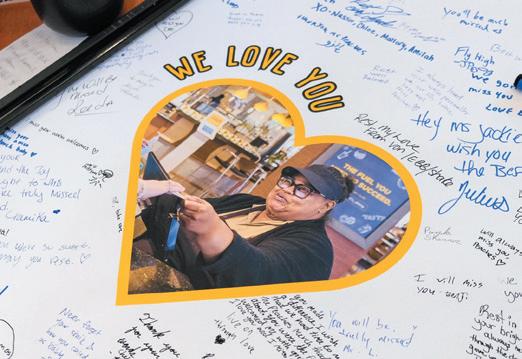
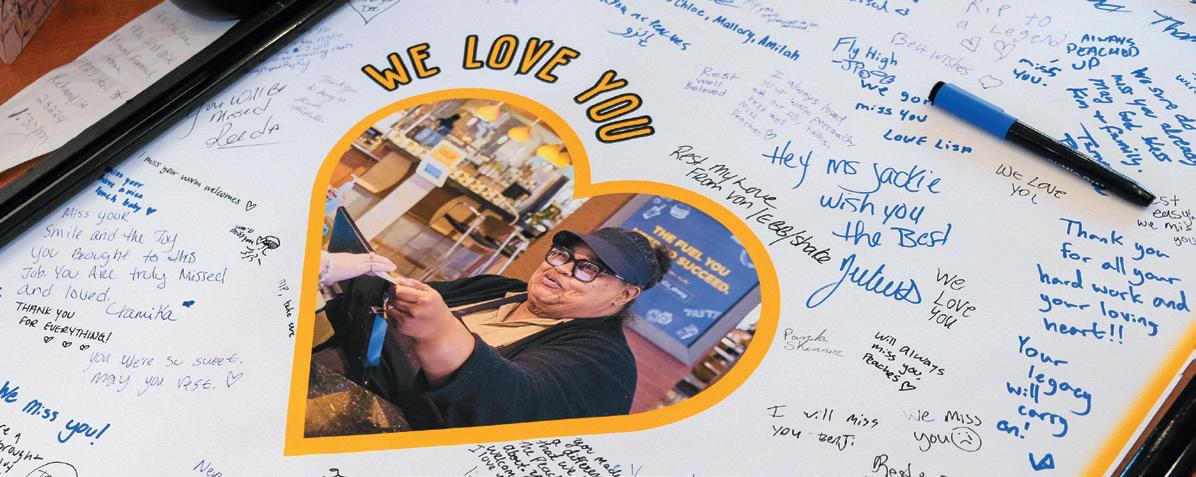
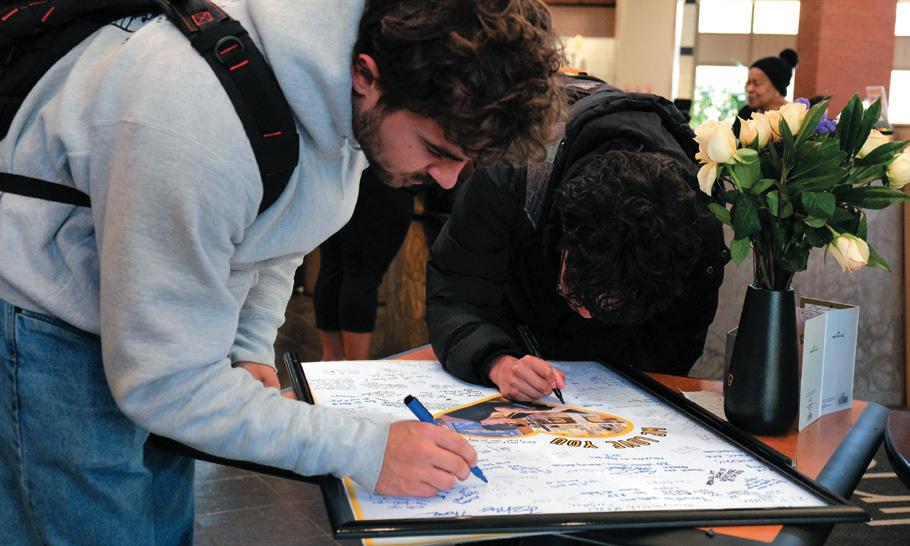
Commemorations for Jackie "Miss Peaches" Cherry including a frame signed by students and a poster hung up at Shafer Dining Hall by the dining services company Aramark, displaying a phrase she was known on campus for.
Photos by Burke Loftus.
A GoFundMe has been set up to help Miss Peaches’ family with costs following her passing. Community members can donate at gofundme. com/f/help-give-jackie-miss-peachescherry-a-proper-farewell.
“The art itself is specifically about black identity or just the fact that a black person put their hands on that and made it,” Jacobs said. “That is what needs to be saved and is a record of ‘we are so much more than how we’ve been treated in the past or how we've been ignored in a race.’”
Former editor in chief Hope Ollivant said that her favorite part of working at Ink was the friends she made throughout her time on the team.
“I hope that [Ink] can just continue giving students the support and resources that they have, and I hope that there are great editors in chief who see the value of their staff and what they have to say and use their power to amplify voices,” Ollivant said.
While Ink Magazine’s next theme for their spring semester’s magazine drop is still a mystery, be sure to check out their reviews and articles independent from their printed issues on their Instagram page or website at inkmagazinevcu.com.
Lareina Allred, the current editor-in-chief of Ink Magazine. Photo by Alex Robinson.
Opinions
JALYN THOMAS
Contributing
Writer
I have been going to VCU for four years and, consequently, have lived in Richmond for four years. But I only recently started immersing myself in the Richmond community.
When I first started out at VCU, I didn’t see any point in trying to be part of the community that Richmond had to offer — I never thought that I would be here for longer than the four years it took for me to get my degree.
I was obviously wrong about that. Unbeknownst to past-me, I am going to be here longer than initially planned.
While looking for apartments and jobs in the city — a feat of considerable difficulty — I have been constantly asking myself why I decided to stay. The answer is simple; Richmond’s community just has so much to offer.
A previous editorial published in The CT helped me put things in perspective. The article reminded readers that VCU is in Richmond and that “we are visitors to this city.” I believe this is a great way to put it — we are first and foremost in Richmond, not the other way around. That notion has made me think about how I should interact with the city and it has encouraged me to find ways to really be a part of the local community.
Quote of the week
“Time you enjoy wasting is not wasted time.” — Marthe Troly-Curtin, 'Phrynette Married'
I love Richmond
My newfound desire has allowed me to create a great life in Richmond, a life where I go to the RVA Big Market, monthly First Fridays and local coffee shops like Abi’s Books and Brews near campus.
Integrating with the community has changed my life for the better. I get to meet new people every time I go out and find and create third spaces.
Beyond that, Richmond has its fair share of unique events, locations and people, such as the free tiramisu drops, the numerous walking clubs and the regular flea markets at Monroe Park and Main Street Station. Richmonders have a special way of creating a unique and vibrant community.
VCU itself does have its own community
— made successful by students who understand the need for third spaces. There is something for everyone; the Historical European Martial Arts club for swordfighters, the Student Literary Association for the readers and a variety of fantastic cultural and ethnic clubs such as the Black Student Union and the Latine Student Alliance. Community is a necessity, especially in times like ours when society feels so unstable. It is up to us to not only seek out that community, but also take part in building it. I urge you to look at the area around you — not just at VCU — and see what you can offer, not just what it can offer you.
We need to be there for our neighbors and create and nourish the people around us.
When did exercise stop being about health?
KATIE MEEKER Opinions & Humor Editor
As both an employee and patron of Cary Street Gym, I have become extremely familiar with both the good and bad aspects of today’s exercise culture.
When I first started my exercise journey, I went to my co-workers and gymfrequenting friends for guidance. They helped me figure out what workouts best suited my goals and gave me tips on how to get the most out of each exercise.
Much of the advice I got was extremely helpful, but I did notice a pattern — a lot of people seemed to assume my goals were appearance-based.
While this assumption was valid but mostly inaccurate, it illustrates an issue within gym and exercise culture that has become increasingly prominent — the prioritization of perception and aesthetics over actual health and wellness.
This issue has always existed, a byproduct of the ever-fluxuating beauty trends and standards our society seems to adore. The body positivity movement of the 2010s was thought to have made at least a little bit of progress, decentering from the unhealthy obsession with thinness that plagued the early 2000s.
Current gym culture, however, highlights that this issue hasn’t gone away, but just taken another form.
Now, the name of the game is bulking, cutting and the overall “gym rat” persona. Muscle growth and body building is prioritized above all else. If you’re not maxing out your daily protein intake, then you’re doing something wrong.
There is nothing inherently wrong with wanting to get swole — it’s your body, and you choose what you want to do with it. The real issue manifests when we
misrepresent bulking and body building as a way to “be healthy” when, in actuality, many aspects of that culture are actively bad for your health.
The best illustration of this issue is the recent rise in “protein products.” It’s not just protein bars and smoothies anymore — these days, products like protein pizza and protein soda are easily found at any grocery store, and often promoted by gym
milligrams of sodium and 31 grams of total sugar additives.
While the protein Pop-Tarts might help you meet your daily protein goal, the added sugar and sodium certainly won’t help you become any healthier, especially as we lean toward these products and stray away from eating real, whole foods, with the vitamins, minerals and fiber needed to sustain a healthy brain and body.
or “wellness” influencers on social media.
These products are advertised as healthy alternatives due to their protein content, but many seem to forget that protein content is not the only standard by which something can be considered “healthy.” These products often include harmful additives and high levels of sugar and sodium.
Take the viral protein Pop-Tarts as an example. While being promoted as healthy for containing ten grams of protein per serving, this product also contains 270
A broader issue with this prioritization of bulking comes in how it has a tendency to promote an unhealthy mindset. While it can seem harmless on the surface, some of the behaviors and techniques associated with bulking are deeply concerning to me, and unfortunately, deeply familiar. The calorie-counting and tragic, protein-prioritizing meal-prepping I’ve witnessed my peers and many online partake in and promote feels grotesquely reminiscent of my time on Tumblr in
middle school — an internet era defined by its romanticization of eating disorders. Is a gym influencer’s “what I eat in a day” video as they pose in front of the camera not the same as a 2016 Tumblr or Pinterest “military diet” or “flat-stomach foods” post?
Whether the goal is skinniness or bulkiness, a hyper-focus on appearances — and a willingness to do anything to meet those appearances — is incredibly dangerous. This issue is only exacerbated by the fact that health is often improperly equated with conventional beauty standards. When we deprioritize health within exercise culture, we run the risk of promoting toxic behaviors that have very real consequences. If we push going to the gym as the only path to achieving health or the unrealistic body standards social media shows us, the value of other forms of exercise is also overshadowed.
Take outdoor exercise, for example, going for a jog or even a walk outside and seeing the sun has positive impacts on both physical and mental health. However, if you can’t track the calories burned, as you can on a treadmill, the current gym culture tells us that exercise is pointless without a tangible result.
When done right, there are so many great things about the gym and exercise. Beyond the obvious health benefits, there’s the potential to be a part of a thriving and supportive community. I’ve found lasting friendships from my time at the gym, and it is a place where I truly feel like I can better myself.
Acknowledging the toxic aspects of that culture, though, is a very important step when it comes to making sure the gym is a safe space for everyone — a space where everyone is focused on being the best, healthiest version of themselves they can be.
Illustration by Abbos Soliev. Collage by Quinn Lysek.
Illustration by Jamie Ryan.
Fact-checking your feed
A medical student’s guide to health misinformation
NABA KHAN Contributing Writer
“I’d rather deal with this pain than give my baby autism.”
“I read online that I should avoid this vaccine.”
“Are you sure it’s safe?”
These were just some of the many conversations I heard during my OBGYN rotation.
I vividly remember encountering a pregnant patient in October 2025 who was curled up and writhing in pain because of six fibroids — painful, fleshy masses growing on her uterus — refusing Tylenol for fear of what our president had said only a month prior in a national address.
Nowadays, when public figures stand at their digital pulpits and make unsubstantiated medical claims, they are rarely met with any meaningful resistance. Instead, those claims are often loudly echoed by sycophants who prioritize loyalty over evidence. The correction — if it comes at all — arrives too late, lost beneath hundreds of reposts and a comment section already convinced.
Nowhere is this damage more visible than in women’s health. For decades, women were excluded from clinical trials, their symptoms chalked up to “anxiety,” their pain classified as normal. The gaps left behind created space for uncertainty, and where uncertainty exists, misinformation festers.
As a rising fourth year medical student, here are just a few examples of common
myths and misinformation that I’ve seen cause real tangible harm for my patients.
‘NATURAL’ DOES NOT ALWAYS MEAN SAFE.
Arsenic is natural. So is poison ivy, smallpox and the black mold growing in the carcass of Johnson Hall. The word “natural” is slapped onto jars and bottles purely for marketing purposes, with no real clinical weight.
YOU CAN’T ‘SCOOP OUT’ YOUR PERIOD.
In a since-deleted TikTok video that garnered millions of views, a woman claimed to go to her doctor to get her period “scooped out,” encouraging others to do the same.
This is not possible. There is a procedure to remove the uterine lining that I’ve seen multiple times in the OR, and it’s not some quick clinic pitstop. D&C, or dilatation and curettage, is a surgical procedure that we do for various reasons, including precancerous overgrowth of the endometrial lining and abortions — not to get rid of a period.
VACCINES DO NOT CAUSE AUTISM.
This is perhaps the most studied and thoroughly debunked claim in modern
As a Jewish woman who grew up within a Jewish community, I have found that a lot of people are very protective of the Holocaust and its history. Many are resistant to the idea that there might be another genocide — or an attempt at one — comparable. Its devastation is, all things considered, recent history. Victims of the concentration camps are alive today, and many families still carry that trauma with them. Members of my own family were victims.
The Holocaust was a tremendous tragedy, immense in scale. It stands as one of the most devastating events in human history. But we cannot pretend that it is the only tragedy of its kind.
We say “never again.” As Americans and citizens of the world, we pledge ourselves to making sure that no tragedy like the one that happened to my people — and to all the other populations victimized — ever happens again.
And yet.
In the decades after the Holocaust, there have been numerous atrocities that bear striking similarities.
There were the Japanese internment camps — more accurately renamed as concentration camps by Asian American
medical history.
The original 1998 paper that sparked the association between autism and MMR (measles, mumps, and rubella) vaccines was retracted. Its author lost his medical license. Dozens of large-scale studies have since found no connection between vaccines and autism.
The Hepatitis B vaccine does not cause autism. The annual flu shot does not cause autism. Thimerosal — a preservative that was removed from most childhood vaccines anyway — does not cause autism.
What the fear of vaccines does cause is outbreaks of preventable diseases in children whose parents loved them enough to worry, but were given the wrong thing to worry about.
AND WHILE WE’RE ON THE TOPIC — TYLENOL DOES NOT CAUSE AUTISM.
Acetaminophen, more commonly known by its brand name Tylenol, is an over-the-
counter pain reliever and fever reducer. It’s also one of the only pain relievers that is safe to take in pregnant patients.
Despite this, our president — a man, and one who is definitely not a trained medical professional — advised expectant mothers to “tough it out” and avoid taking the medication if they could due to an unsubstantiated link to autism.
Despite multiple different doctors, scientists and health organizations coming out and strongly refuting these claims, the damage was done. Orders for Tylenol dropped nearly 20% in emergency rooms for pregnant patients, but stayed the same for non-pregnant ones.
Medicine is not infallible. Doctors get things wrong. Guidelines change. There is plenty of legitimate room for patients to ask questions, push back, seek second opinions and advocate fiercely for themselves in a system that has not always served them well — especially women.
But when we allow medical misinformation to persist, everyone suffers.
‘Never again’ is happening now. We need to acknowledge it.
KYLIE GRUNSFELD Staff Columnist
scholars — in America, the incarceration of Uyghur Muslims in China, the Rwandan genocide; the list goes on. These events were violent and incredibly impactful, and yet our schools do not touch on these topics the same way we do for the Holocaust.
We teach children about the Holocaust as a preventative measure, as well as a way to highlight the extent of Nazi cruelty in World War II. However, the issues discussed are not limited to the confines of history. We say “never again,” but scapegoating, ethnic cleansing and unjust incarceration is happening now — we cannot turn a blind eye to it.
Take Immigration and Customs Enforcement detention centers. There have been reports of medical neglect, overcrowding and lack of safe food and water. Denying or delaying necessary tools for survival to a population does not sound unfamiliar. While the severity of these detention centers cannot yet be compared to camps like Auschwitz — at least considering the information we have — there is certainly blatant evidence of dehumanization.
In Gaza, the Israeli Defense Forces do not discriminate as to who they will target — men, women, children, infants. If it
were solely about eradicating danger, what could a 5-year-old have done that makes her deserving of death?
I am talking, in this particular instance, about Hind Rajab, a young girl who was in the process of escaping to West Gaza with her family when they were killed by IDF soldiers.
I am also thinking of Anne Frank.
I am thinking of how these two girls had barely started their lives when their humanity was stripped from them. Now, everyone knows their names. Despite their differences, both of their lives ended in similarly gruesome ways. Both deserved more. Both were seen in some way as a “threat” and killed alongside their families.
I cannot think of one without thinking of the other.
Of course we, as Jewish people, are allowed to grieve. For decades. For centuries.
But what point is there in resisting comparisons between the Holocaust and current crimes against humanity? In neglecting to acknowledge repeating patterns?
As trite as it may sound, a successful resistance hinges on unity.
Just because something looks benign at best and miserable at worst doesn’t mean it
won’t later be revealed to be truly horrific. The American people did not immediately know how barbaric the Nazi concentration camps truly were. What may have seemed like a necessary evil to people who didn’t know any better turned out to be blatant ethnic cleansing. Regardless of its eventual scale, the Holocaust was once a seedling of an idea, too. When it was just people being kicked out of their homes. When it was just their belongings being plundered. When it was just an attempt at suppression and relocation. If we could go back, wouldn’t we do all we could to make sure it never happened in the first place?