Over a century after VCU’s first Black, female nursing class, STEM students reflect on progress
Over a century after VCU’s first Black, female nursing class, STEM students reflect on progress
Spectrum Editor
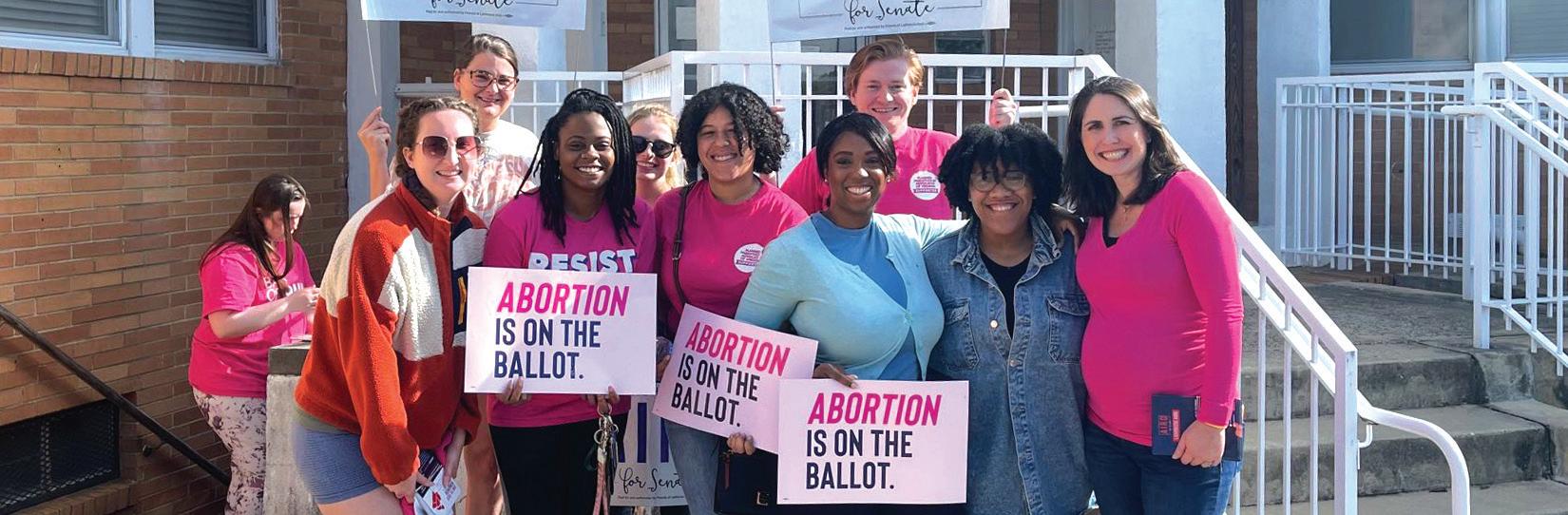
Virginia is on the cusp of codifying an amendment enshrining access to reproductive care in the state constitution. The commonwealth is the last state in the southeastern United States with access to abortion past the first trimester. Though there is access to abortion
in Virginia, many women, transgender people and gender-non-confirming people still struggle to secure reproductive health care due to income inequalities, lack of education and general stigmas. Advocate groups have been working to support each other and maintain equity in access for those seeking reproductive care in the state.
Planned Parenthood Advocates of Virginia have been collaborating with
democratic legislators for four years to amend the state’s constitution. Their proposed change would enshrine protection for multiple reproductive needs — fertility treatments, contraceptives and abortions in the state legislature. Voting for the amendment will open in late September and close on Nov. 3.

MOLLY MANNING Managing Editor
Over a century ago, in an era of sexism and segregation, VCU’s first female graduates crossed the stage. Women studying STEM at VCU today say they appreciate the progress they championed, but divides still exist within certain fields. There is more work to be done.
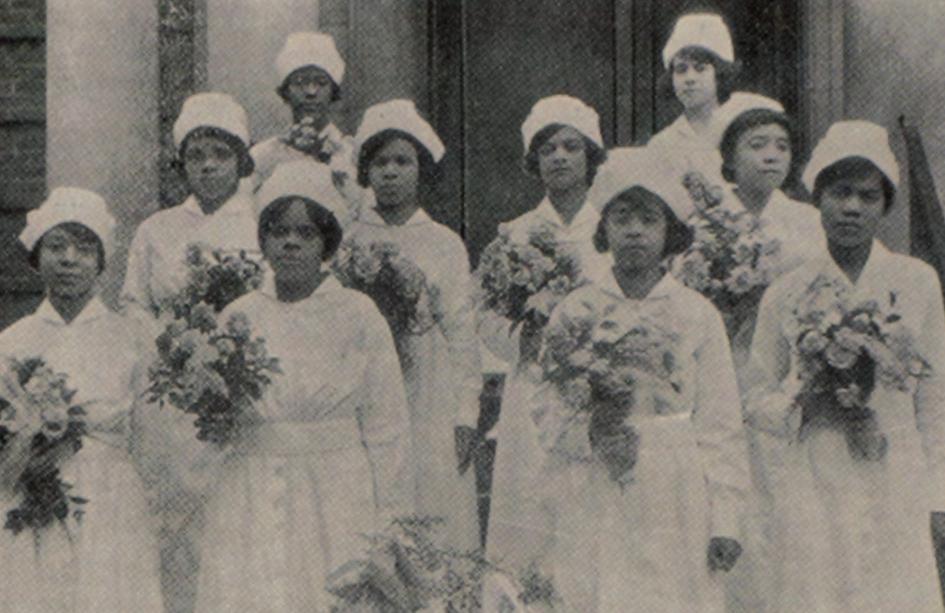
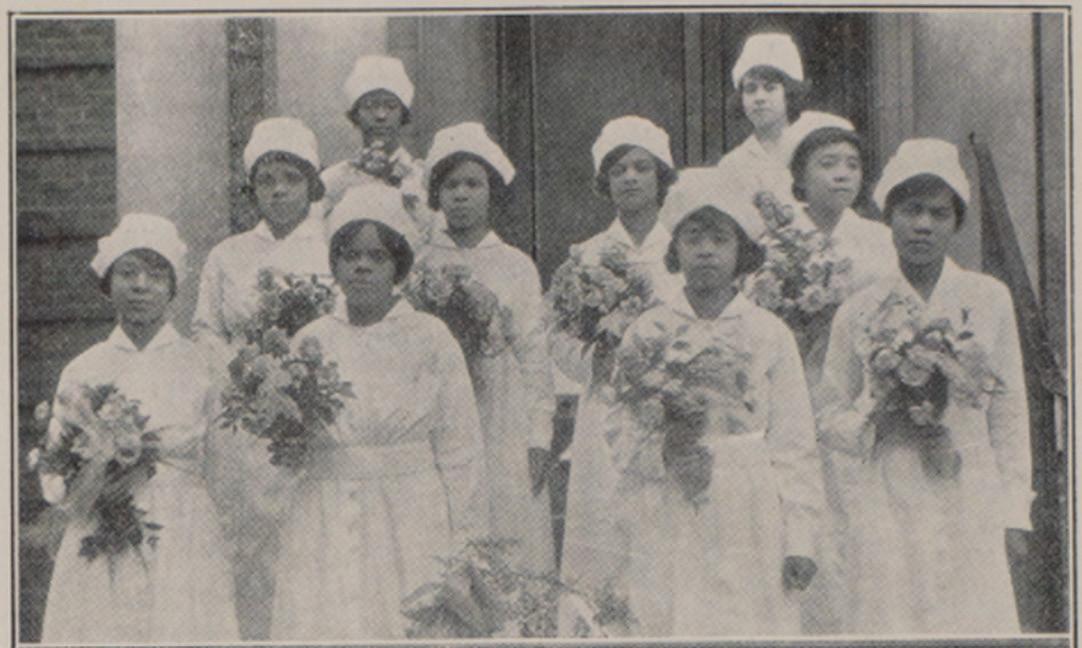
Innis Steinmetz became the first woman to graduate from the Medical College of Virginia in 1920 — and in the same year, the St. Philip Hospital School of Nursing opened its doors to a class of 10 Black, female nursing students. MCV opened the hospital as a separate, segregated school at a time when it was mandated, according to VCU News.
Bessie Conway, Adelaide Royster Thomas and Helena Bell Wooldridge were the first St. Philip’s graduates in 1923. A commencement ceremony was held the following year at the First African Baptist Church, celebrating them as well as the 1924 graduates — Lily Leila DeWeaver, Dorothy Tanner Hooper, Rebecca Thompson Johnson, Thelma Kathleen Jordan, Catherine Ellerson McDowell and Willie Mae Moody.

CORA PERKINS
Assistant Spectrum Editor
Behind the distorted tracks and stage dives that have long made Richmond a beacon for hardcore music, the women performing, shooting and attending these shows have been the backbone of the scene for years.
national: U.S. crude oil prices shot up to over $100 dollars per barrel, following Iran's blockade and attacks in the Strait of Hormuz, in retaliation to U.S. attacks on the nation.
international: The Trump administration told Cuban officials President Miguel Díaz-Canel must step down from his position, as the nation's power grid collapses across the island.
SAL ORLANDO
Assistant News Editor
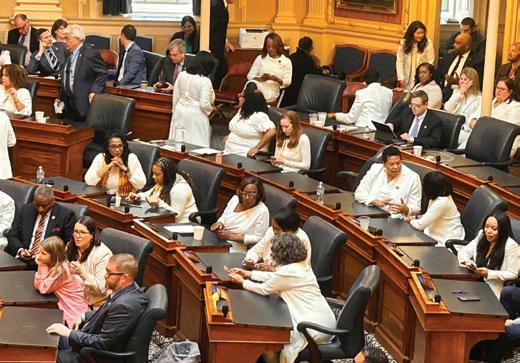
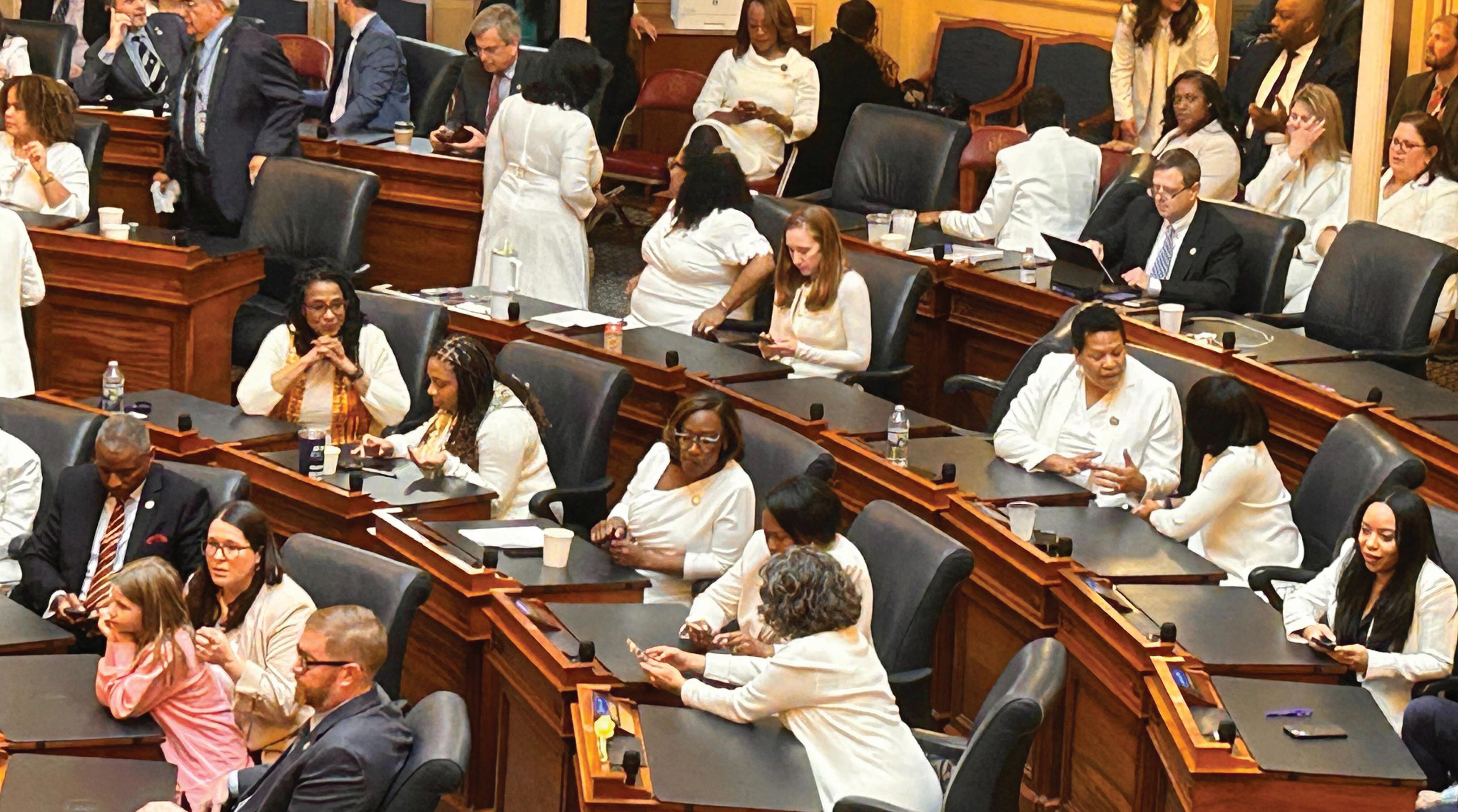
Women held 42 of the 100 seats in Virginia’s House of Delegates this session — a record number — and they are championing transformative policies ranging from a constitutional amendment protecting reproductive freedom to improving health care and strengthening workers’ rights.
The 2026 General Assembly session saw the largest number of female delegates in history, with eight new seats being claimed by women since last year’s regular session.
The Richmond delegation includes lawmakers as young as progressive newcomer Del. Rae Cousins, 46, and as old as nine-term Del. Betsy Carr.
Democratic women currently hold 37 seats — over half of their party’s House majority. There are more Democratic women than total Republicans in the chamber.
Of the 13 House seats that flipped in the 2025 election, 10 were by Democratic women, and more than half of them were by women of color.
Richmond area delegates Lindsey Dougherty, D-Chesterfield, May Nivar, D-Henrico, Leslie Mehta, D-Chesterfield and Kimberly Pope Adams, D-Petersburg won four of the 13 flipped seats — with Nivar and Mehta defeating male incumbents.
Mehta said during the snowstorm in late January, she and other delegates brought their children to the powerful,
historic House floor, and she introduced her daughter to other female legislators.
“I wasn’t even thinking about the power and the gravitas that comes with that, but my little girl responded to my chief of staff when she saw others kind of walking around the building, she said, ‘Oh, boys can be delegates too,’” Mehta said.
Gov. Abigail Spanberger, Lt. Gov. Ghazala Hashmi and Congressional Rep. Jennifer McClellan all supported Mehta throughout her campaign. She believes that mentorship is why the House of Delegates has seen an increase in female membership.
“These women who have paved the way are not just doing their thing, they’re doing it in amazing ways — but they’re also making sure that there are other women who are coming behind them to do good work too,” Mehta said. “I think a lot of it is about the women who are already there helping to support women who are coming behind.”
Del. Vivian Watts, D-Fairfax, is the longest tenured current legislator in the House of Delegates, serving from 19821985, then 1996 to now, following her resignation in 1985 to serve as Virginia’s Secretary of Transportation and Public Safety.
Watts introduced several successful bills throughout her tenure in the support of women, dating back to 1997 when she passed a law establishing criminal penalties for possession, distribution or administration of Rohypnol, the “daterape” drug, as a Schedule I drug.
That same year she introduced the
successful House Bill 1044, which allowed bail to be denied to people charged with sexual offenses who could carry a life sentence for a second conviction.
The first female delegates in state history were elected in 1924 — four years after the ratification of the 19th amendment — with Del. Sarah Fain representing Norfolk and Del. Helen Henderson representing Buchanan and Russell Counties. Between 1924-1933, six women served in the House of Delegates.
“That said, women throughout the nation continue to face opposition to their political participation, including in Virginia,” stated VCU history professor Brian Daugherity. “For instance, the Virginia General Assembly voted against ratifying the 19th Amendment in 1920, and the Commonwealth of Virginia did not ratify the amendment until 1952.”
Fain was the chair of the Committee on Schools and Colleges in her third term as a delegate, and helped pass an important education reform bill.
House Bill 6, patroned by Del. Marcia Price, D-Newport News, passed this session and could mandate a future referendum to voters on whether or not to establish the right to acquire contraceptives and engage in contraception.
“I know for me personally, I’ve benefited from access to contraception, I’ve had miscarriages and had to, you know, be
part of the health care system as a result of that,” Mehta said.
Mehta introduced House Bill 962, which would require employers to provide a “written good faith estimate” of a new employee’s work schedule. The bill did not make it out of committee, but Mehta hopes to tweak it and re-introduce it next year.
“For women in particular, I think that’s incredibly important, as we talk about making sure that there are child care options and being able to set things up quickly,” Mehta said.
House Bill 18, patroned by Del. Adele McClure, D-Arlington, would provide matching funds to encourage employers to contribute to child care costs of their employees. It passed both chambers and is awaiting Spanberger’s signature.
Also heading to the governor’s desk is House Bill 425, introduced by Del. Destiny LeVere Bolling, D-Henrico, granting pregnancy patients who are “high risk” or 35 years or older reimbursement for remote patient monitoring services through 12 months postpartum. Previously, reimbursement was only granted to patients who are “high risk.”
“Women are just tired of being sidelined,” Mehta said. “There are so many great pieces of legislation that have come through recently, things like abortion access, menopause, postpartum care, those kinds of things are things that would not be possible for these types of legislation had it not been for women who just got fed up with what was going on and wanting to be part of the conversation.”
HECIEL NIEVES BONILLA News Editor
VCU is facing millions in unfunded costs for the upcoming fiscal year as it juggles tuition affordability with spending mandated by the state and other pressures.
The potential fiscal gap includes millions of dollars in state-mandated tuition waivers, which cost VCU more than any other university in the state this fiscal year, according to Lee Andes, the finance policy and innovation director at the State
the total price of attendance for university. VCU’s total cost per in-state undergraduate student for 2025-26 was $17,240 and $32,368 including room and dining, according to admissions.
State-mandated waivers are applied to certain groups of students through legislation, but are paid for, at least in part, by universities themselves.
“These programs represent lost tuition revenue for the institutions, though to the extent the amounts are predictable (they don’t always know at the point of admission if a new student qualifies), these programs are factored into the institution’s overall
Virginians who qualify: the children and spouses of killed public safety officials, National Guard and Virginia Defence Force officers, some international students, senior citizens and military survivors and dependents.
The Virginia Military Survivors and Dependents Education Program accounts for 96% of the price of state mandated waivers, and its cost has risen at an “extreme” rate at VCU, according to a previous report by The CT.
The E&G fund concerns the “core academic programs and essential support services” at VCU and represents about half of the university’s $1.7 billion budget this fiscal year.
Over half of the E&G fund, or $464 million, comes from tuition and fees, with $321 million of state funding. The university prioritizes keeping students’ “net price” low in its budget preparation, according to VCU spokesperson Mike Porter.

VCU expects the waiver to raise its expenses by $9 million, according to the Richmond Times-Dispatch.
Those programs remove the cost of tuition and fees for
BRYER HAYWOOD Staff Writer
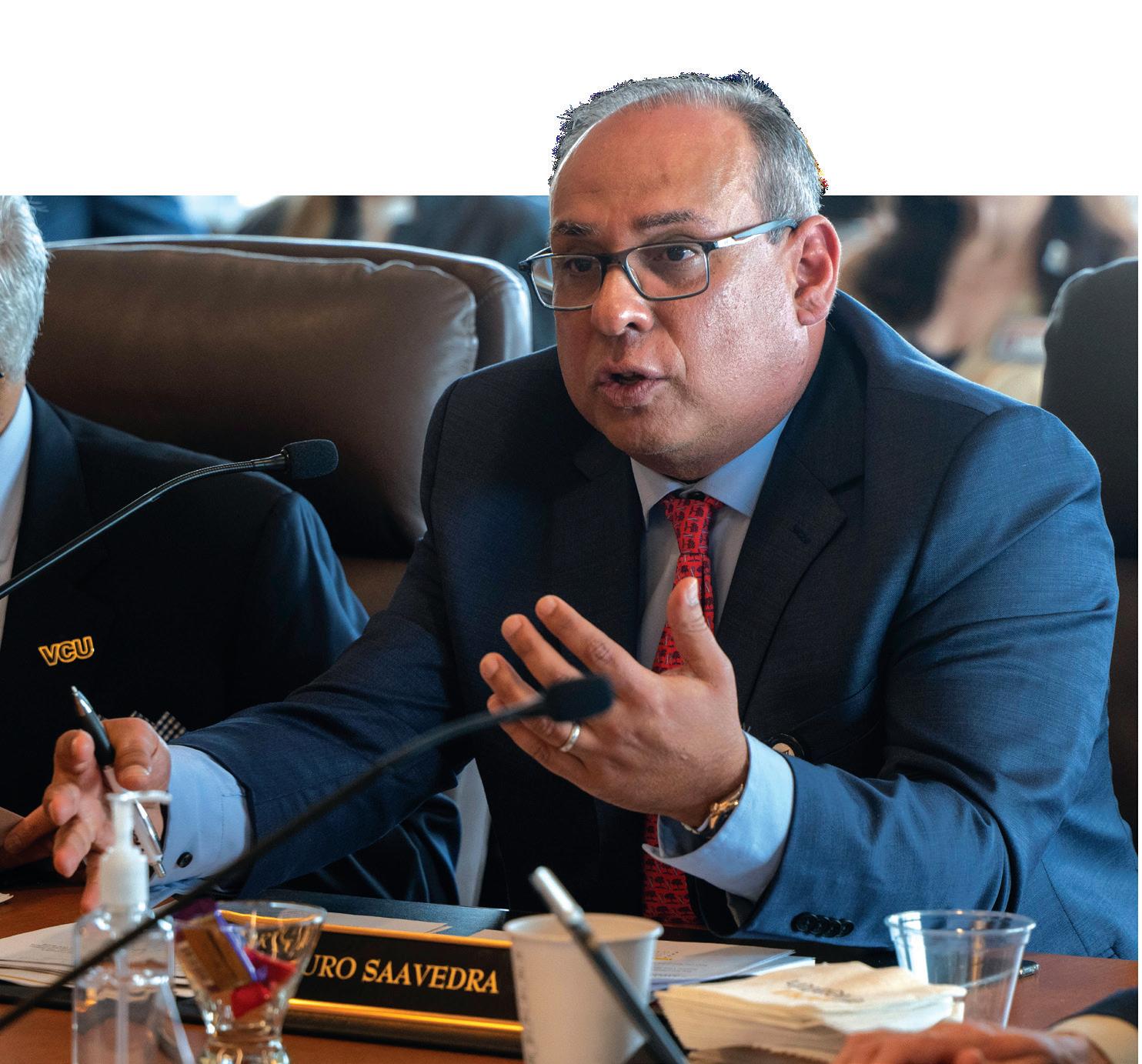
Interim Provost Arturo Saavedra proposed a new post-tenure review policy in a recent Faculty Senate meeting — continuing a trend of VCU policies making professors’ employment more vulnerable.
Saavedra said the proposed policy includes both a cyclical review every six years and a “trigger” approach — activated whenever a department head or chair believes a faculty member has fallen short of their expectations.
Saavedra stressed that the proposed policy is not intended to limit academic freedom. He also noted only a small number of faculty should be negatively affected by the policy.
To receive tenure, faculty typically go through a cycle of evaluations, culminating in a sixth-year evaluation. Tenure generally comes with more permanent employment, more benefits and greater discretion to pursue research.
Post-tenure review is designed to reward faculty who are exceeding the university’s expectations, according to the digest of the proposed policy shown to faculty senators.
Faculty have recently expressed frustration with VCU’s handling of new tenure policies, according to a previous report by The CT. The university recently raised the bar for how advanced faculty’s degrees need to be for them to receive promotions.
Faculty Senate president Maria Rivera said faculty are “suspicious” of the posttenure review initiative, and several VCUarts faculty said the university has acted outside of its tenure review
process in its treatment of faculty — including through the firing of painting and printmaking professor Monsieur “Sandy” Zohore.
Kathleen Rudasill, senior vice provost for faculty affairs, reviewed a slide presentation that detailed the guidelines for the proposed new policy.
Rudasill explained that faculty who receive ratings of “exceeds expectations” or “meets expectations” would be rewarded financially. She also explained that a rating of “below expectations” would trigger an annual review and that a rating of “unsatisfactory” would lead to termination.
Following the presentation, many faculty raised questions about the policy and how it would affect them. One professor pointed out that the language around termination suggests the policy is not intended to reward faculty, but to punish them.
They also questioned the Provost’s desire to push out the policy so quickly. It was introduced on March 3 and, at the earliest, could be approved during the next full board of visitors meeting on April 23 to 24.
An existing post-tenure review trigger policy is already in place, and faculty members are comfortable with the current guidelines, according to Faculty Senate President-elect Kim Bridges.
Glenn Hurlbert, chair of the Mathematics department, said there are already policies in place designed to reward faculty for positive performance, and that human resources can step in to reprimand faculty who are not acting appropriately.
Craig Larson, another professor in the Mathematics department, echoed the
Another cost the university is bracing for is a 2% raise for state-supported employees which was proposed in the state budget. The state would cover half of that cost, and VCU would cover the other half — an estimated $6 million, per the RTD’s reporting.
Also down the pipeline is a possible repeal of Virginia’s ban on collective bargaining for public employees. If the ban is repealed and VCU employees negotiate higher wages for themselves, that could also impact VCU’s finances.
In VCU’s 2025-26 budget document, further expenses in the university’s Education and General fund (E&G) are attributed to “academic and research excellence, contractual or inflationary increases, mandated salary increases (VCU and the state split the cost), and mandated military waivers for which VCU’s costs exceed state support.”
concerns expressed during the meeting and explained that faculty senators were not shown the actual policy, but rather a short, bulleted summary of the proposed policy.
“It’s not clear where this is coming from,” Larson said.
Religious studies associate professor and union member Mark Wood said many faculty members are concerned about the increased workload the policy would bring through new bureaucratic processes, which would stretch faculty thin.
At the meeting, faculty senators cited two studies that examined the effectiveness of post-tenure review policies at Florida
“It is always our goal to efficiently use state support and reduce costs wherever possible in order to minimize impacts on tuition and fees,” Porter said.
The university will discuss budget matters at the board of visitors’ enrollment and budget workshop on Mar. 24. The next full board meeting will be from April 23 to 24.
During the latest board meeting, VCU chief financial officer Meredith Weiss listed several projects the university is completing or seeks to start which will also require state support, including new dorms and the acquisition of the Altria Center near its medical campus.
“We’re grateful to the commonwealth for the contributions they give us towards capital projects, and so we always do our very best under [VCU facilities management head] Richard Sliwoski and his team to not only complete them on time but bring them in under budget,” Weiss said.
post-tenure reviews proved to have adverse effects on faculty productivity and job retention. The first study found no evidence that post-tenure review increased productivity. The results also showed many faculty members at Florida universities left the state following the implementation of the post-tenure review policies.
The second study found that in the first year the policy was implemented, 10 faculty members were dismissed from the University of Florida. The study also found that 31 faculty members resigned instead of completing the post-tenure review process.
The provost’s office must now allow for a 10-day public comment period and will wait one week for revisions based on faculty feedback before the next board meeting on April
ANDREW KERLEY Executive Editor
Virginia lawmakers passed a bill last week to give all public employees the right to bargain for better wages, contracts and working conditions — but excluded public university employees who are not “service workers,” such as professors, librarians and graduate student assistants.
The public sector collective bargaining bill was one of the most contentious pieces of legislation throughout the 2026 General Assembly session. It was the very last bill the Senate voted on before gaveling out for the year.
If lawmakers provide the bill sufficient funding in Virginia’s unfinished biennial budget and Gov. Abigail Spanberger decides to sign it, it would undo Virginia’s historic ban on public sector collective bargaining and put more power into the hands of hundreds of thousands of workers.
The union-led fight to give bargaining rights to all public workers in Virginia has been ongoing for years.
The Democrat-controlled General Assembly passed a similar bill last year, but it was vetoed by former Gov. Glenn Youngkin.
Now, with a significantly bluer House of Delegates and a Democratic governor in office, advocates are hoping for the proposal to be enshrined into law. Though its fate is up to Spanberger, who has expressed more moderate views on unions on the campaign trail and in office.
Halfway through the General Assembly session, the House of Delegates and Senate
passed versions of the collective bargaining bill that excluded certain groups of workers, per previous reporting by The CT.
The House version had workers at public institutes of higher education, such as VCU, removed. Professors, graduate student assistants, librarians, dining workers, athletics workers and others were all excluded.
Some VCU graduate students have decried low pay and benefits from the university as they struggle to afford living expenses, according to a previous report by The CT.
“Campus workers were removed from the House bill after university presidents used their power and privilege to lobby lawmakers behind closed doors,” United Campus Workers of Virginia previously stated.
The Senate version excluded public home health care workers, who provide nursing and other health services in the homes of children, elderly and the disabled, injured or sick — often for minimal pay. VCU Health is among multiple public systems in Virginia providing those services.
Both groups of workers were initially excluded due to budgetary concerns, but the bill’s patrons said they would try to include everyone before the session ended.
The removals prompted a statewide campaign by UCW-VA and the union representing home health care workers, SEIU Virginia 512.
They roused support during town halls at multiple public universities and held a press conference at the Capitol featuring prominent, Democratic officials such as Lt. Gov. Ghazala Hashmi and Attorney General Jay Jones.
SKYE HATHAWAY
Contributing Writer
The Richmond Police Department has extended its contract with Flock Safety Automatic License Plate Readers (ALPRs), according to their public information officer Phon Hoonson.
Some Richmonders are demanding the city remove AI-powered video cameras from the streets as the city defends their utility in responding to vehicular crimes.
ALPRs assist the police in violent crime investigations, missing persons cases and
stolen vehicles, Hoonson stated in an email.
The data stays in the police department’s system for 21 days to aid in investigations before it is automatically deleted, according to Hoonson.
Rick Edwards, chief of the RPD, stated in an email that the ALPR readers have been a useful tool in helping investigators identify and arrest offenders.
“With strong privacy safeguards and strict limits on use, this technology enhances our ability to protect the public and keep Richmond safe,” Edwards stated.
Some groups in Richmond are

During the final week of session, lawmakers held multiple behind-closeddoors conference committees on collective bargaining. Conference committees are meetings between chambers to hash out differences on legislation.
UCW-VA, SEIU Virginia 512 and other supporting unions held a vigil outside the General Assembly building in Richmond to mourn their disinclusion, and sway lawmakers to change that reality.
“Restoring collective bargaining rights to public sector workers is essential to working with dignity,” said Andrew Gneiting, a University of Virginia recycling worker, whose mother was a home health care worker.
“I barely saw her between the ages of 15 to 17, her attention and energy was spread thin between the demands of raising four children and caring for patients so their families could be present at their other obligations.”
Lawmakers attempted a number of amendments to cut the financial burden it would leave on the state budget. At first they removed all university workers who engage in “instructional activities in the classroom.”
That exclusion was later broadened to include seemingly all university employees who are not service workers.
those who are employed at least 16 hours per week to perform work “in
connection with the care or maintenance of property, including a janitor, security officer, groundskeeper, concierge, clerical and administrative assistant, door staff, maintenance technician, handyman, superintendent, elevator operator, window cleaner, building engineer, or food preparation services worker.” Other campus workers are excluded.
In a press release, UCW-VA political and policy committee chair and UVA librarian Cecelia Parks applauded the steps made toward expanding bargaining rights, but expressed disappointment that so many of their members would be excluded.
“Workers like me are the heartbeat of our public colleges and universities, and we are deeply committed to our students and our institution,” Parks stated. “Bargaining would give us a seat at the table to improve our working conditions, our students’ learning conditions, and our communities, and we will continue to fight until no one is left behind.”
In a statement to The CT, one of the bill’s patrons, Sen. Majority Leader Scott Surovell, D-Fairfax, said “the House of Delegates would not agree to college workers. I support that and we’ll work towards that next year.”
The public sector collective bargaining bill passed the General Assembly and is on its way to Spanberger’s desk. She has the power to sign it, veto it or send

campaigning for the city to discontinue ALPR usage, including the Democratic Socialists of America, which has recently led the “Block Flock” campaign.
Victoria McCullough, co-chair of DSA’s Migrant Solidarity Working Group, believes ALPR surveillance does more harm than good.
The group began after a 2025 report that the Bureau of Alcohol, Tobacco, Firearms and Explosives had been using data from Flock cameras to target immigrant drivers, McCullough said.
Immigrant community members are most likely to encounter a police officer while driving, according to McCullough.
DSA has worked to end the RPD’s contract with Flock since last spring, McCullough said. They attend Richmond City Council meetings to share their campaign with council members during public comment.
Recently, MSWG gathered 2,000 Block Flock petitions to send to Mayor Danny Avula, according to McCullough.
The American Civil Liberties Union was among 15 nonprofit and community groups that signed and sent a letter to the mayor requesting for the contract to be cancelled.
The group believes there is a lack of public transparency in how the data is used, McCullough said.
“It’s not necessarily only targeting immigrants, it’s targeting anybody who might have ever been profiled by the cops,” McCullough said. “It’s targeting everybody who drives in general on the basis of precriminal behavior.”
McCullough said the recent increase
in hit-and-runs and gun violence in Richmond moved their campaign towards public safety conversations.
The campaign asks that the money spent on ALPRs goes back to the community where it could be spent on alternative public safety measures, McCullough said.
The RPD has spent a million dollars on ALPRs since 2024, according to The Richmonder.
Suggested alternative safety measures include added sidewalks, lights and safer bike lanes to reduce pedestrian accidents, according to McCullough.
There are at least two Flock cameras on VCU’s Monroe Park campus, located at the intersections of North Harrison and West Grace Street as well as West Franklin Street, according to the open source map deflock.com.
Gloria Kamau, a fourth-year forensic science student at VCU, interned with the Chesterfield Police Department, where she saw Flock cameras being used first-hand.
The CPD used the tool to identify a suspect in a drive-by shooting during her shift at the Analytical and Strategic Unit, Kamau said.
The department relies on ALPRs to identify cars associated with thefts or traffic violations, according to Kamau.
“I understand how people might think it’s an infringement on our privacy but in reality almost everything we do, even having a phone, they can track us,” Kamau said. “So personally I believe Flock cameras help out tremendously for the police to identify cars that are involved with something illegal.”


Men’s basketball first-year guard Nyk Lewis had a double-double with 17 points and 11 rebounds in VCU’s Atlantic 10 conference championship win over the University of Dayton.
HAYDEN BRAUN Staff Writer
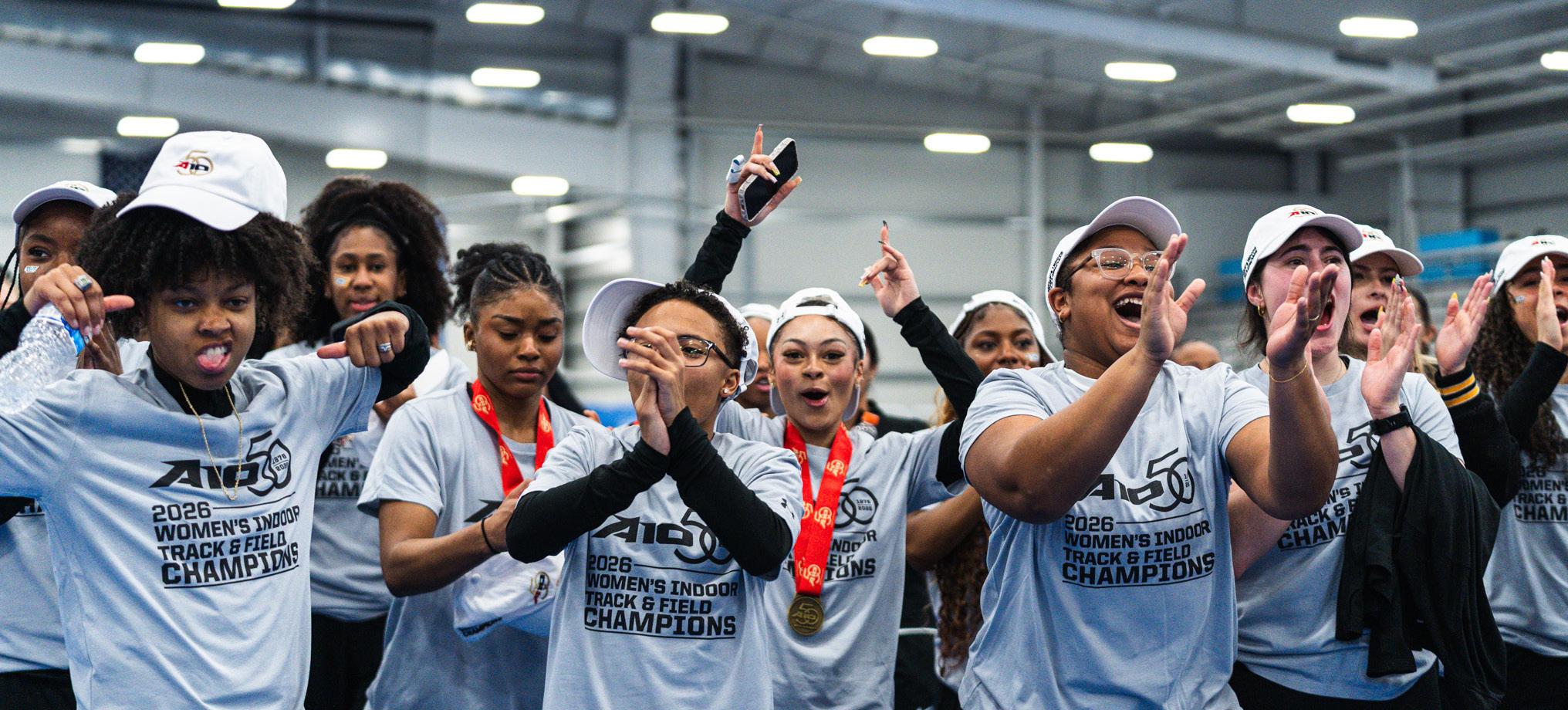
The VCU women’s track and field team has continued its dominance in the Atlantic 10 Conference this season, securing its eighth consecutive Indoor Championship.
The Rams’ sustained success has become one of the most consistent runs in conference history, with the program once again proving why it remains the standard in the A-10.
The championship victory was fueled by strong performances across multiple events to secure the A-10 Indoor title. Redshirt third-year thrower Desi Akaolisa was named the conference’s Most Outstanding Field
Performer after winning gold in the shot put and earning bronze in the weight throw.
Fourth-year sprinter Asia Powell also delivered a standout performance, taking gold in the 60-meter dash with a personal best time of 7.36 seconds — the secondfastest 60-meter time in VCU history. Among those contributors was jumper Damilola Ogbeta, who placed second in the triple jump with a mark of 12.39 meters, earning a first-time podium finish.
Being able to help the team continue its historic streak was a moment of pride for Ogbeta. Despite the strong result, she admitted she entered the championship meet with uncertainty after struggling to hit some of the marks she had reached
JENNY ALLEN Staff Writer
VCU’s season came to an unfortunate end after Duquesne University stole its lead in the second half of the first round of the Betterment Atlantic 10 2026 Women’s Championship tournament, taking a 60-52 victory.
The tournament began with Duquesne winning the tip, sinking two quick buckets for the first points of the game.
The Rams had electric energy in the first quarter as they prevented the Dukes from scoring for over seven minutes. The Rams’ adrenaline closed out the first quarter on top 15-10.
VCU carried their momentum into the second quarter with impressive plays on offense and defense from third-year forward Lucia Sotelo and second year guard Katarina Knezevic.
Going into the half, VCU led 30-19 and shot 37% from the field goal compared to Duquesne’s 21%.
The Rams came out of the locker room with hopes to keep their lead up. However,
the Dukes’ abruptly stole the Rams’ buzz, taking the lead for the first time since the first quarter.
VCU tried to fight back but Duquesne did not let up and regained their lead as they entered the fourth and final quarter.
The Rams’ continued to fall behind. The Dukes’ rhythm stretched into the final quarter.
All-out efforts were shown from both teams with one minute left to play, as Duquesne was up by four.
The Rams began to foul in hopes of possession, however the buzzer hit — putting an end to VCU’s season.
“We talked about it in the locker room after the game, that just because there’s a loss here, that does not dictate who those people, who those players are in the locker room,” said VCU head coach Kirk Crawford.
AFTER O’BOYLE’S DEPARTURE,
VCU COULDN’T GET A WIN
After the Rams’ were led by head coach Beth O’Boyle for 12 seasons, her departure left an impact on the team.
O’Boyle was relieved from her coaching duties at the beginning of February and left the team in the hands of assistant coach Kirk Crawford for the remaining season.
during the previous outdoor season.
“Honestly, I was scared,” Ogbeta said. “Throughout the whole season I haven’t really hit the marks that I hit at the end of last year’s outdoor season, so I didn’t really know what to expect coming in.”
Heading into the meet ranked near the middle of the pack, Ogbeta exceeded expectations and finished in second place — her first podium finish.
The accomplishment carried even more meaning for Ogbeta because she joined the program as a walk-on and did not initially expect to reach that level so quickly.
“It felt really good. I was really happy,” Ogbeta said. “It was one of my goals coming in here.”
While the performance may have felt unexpected it was all due to the hard work and strides Ogbeta has made all season. She would use her own free time when she could as well as the final week before conferences to focus on refining her technique.
Every aspect of the team plays into the shared success, according to Ogbeta.
“I think it’s the environment, our team culture,” Ogbeta said. “We’re always supporting one another. It’s very much an individual sport, but when you have people cheering you on it just makes it ten times better.”
Ogbeta also praised head coach Jon Riley who was named A-10 Coach of the Year, for giving her the opportunity to compete and develop within the program.
“I’m just glad he took a chance on me,” Ogbeta said. “He’s been really open and flexible with my schedule, and he always wants better for me. He’s an amazing coach.”
Riley is historic in his own right, with eight Coach of the Year awards and 11 A-10 championships in 18 years.
As the Rams hope to continue their historic championship run, the team hopes their legacy will be remembered for the work it took to reach that level, Ogbeta said.
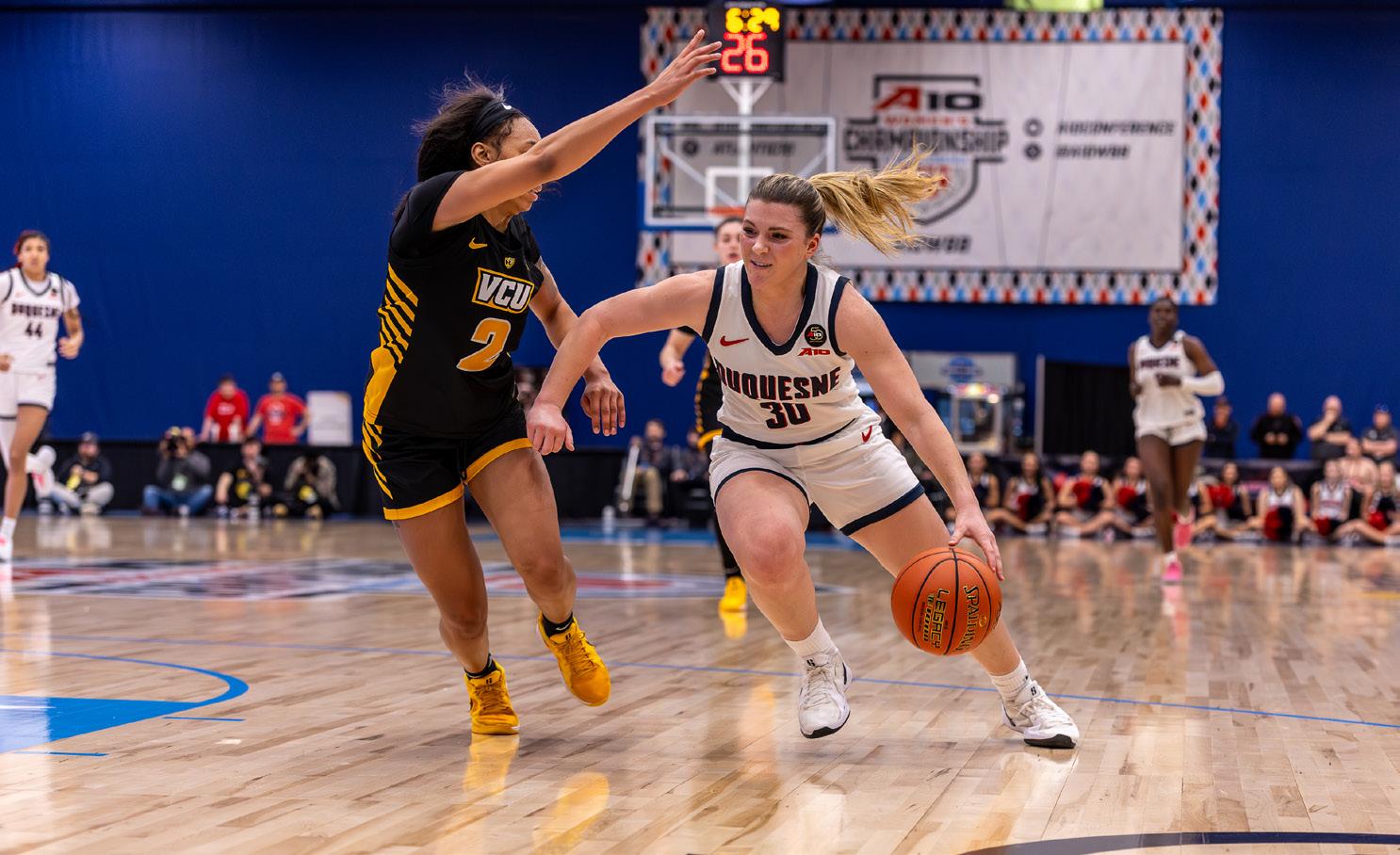
Crawford joined the Rams’ coaching staff in 2017 and brought over 30 years of Division 1 basketball, WNBA and NBA experience with him.
He took over the team in the midst of an 8-15 season and 4-7 in conference play.
From there, the Rams did not have another victory — bringing their overall 2025-26 season record to 8-23.
Crawford debuted his coaching against Loyola University Chicago on Feb. 7 and left with a 10-point loss.
The losses only piled up from there, all the way to the women’s A-10 tournament
to finish up the season.
Despite the Rams’ downfall after O’Boyle’s exit, Crawford showed respect and appreciation for his team after the challenging season.
“I’m very proud of this team, of continuing to be competitive, continuing to practice competitively and to really practice and play with character,” Crawford said.
Players showed the same feelings — saying they felt they gave their all this season, despite the hard year.
Story continues on next page
“We all play for personal pride, also, I feel like it was a hard year, it was really hard to just keep it up, but there’s only that you have left to do, so that’s what we did,” Sotelo said.
Crawford has kept a positive mindset, saying the team’s three season-ending injuries to crucial players are no excuse.
“It was always the next person up,” Crawford said. “It was always ‘what do we have to do to get over that.’ I think the biggest thing that I’m proud of is that there was never any excuses of those three players being out. We always looked forward, we always moved forward.”
There is currently no clue as to who will fill the role of head coach for the 2026-27 season. However, the Rams’ will be hoping for a better outcome as they continue to stick together.
MEN’S TENNIS AT UNIVERSITY OF CALIFORNIA, IRVINE
LOST 1-6
WOMEN’S TENNIS AT UNIVERSITY OF SOUTH FLORIDA LOST 3-4
13
BASEBALL VS. LA SALLE UNIVERSITY WON 6-2
MARCH 14
WOMEN’S TENNIS AT STETSON UNIVERSITY LOST 1-6
LACROSSE AT ST. BONAVENTURE UNIVERSITY WON 15-6
BASEBALL VS. LA SALLE UNIVERSITY WON 4-3
15
BASEBALL VS. LA SALLE UNIVERSITY WON 8-4
DREW THOMPSON Sports Editor
VCU entered the Betterment Atlantic 10 conference tournament as the No. 2 seed and with an automatic two round bye. The Rams beat No. 7 Duquesne University in the quarterfinals 71-66, and then followed it up with an annihilation of No. 3 St. Joe’s University 77-64 in the semifinals.
VCU finished with a 70-62 win over No. 4 University of Dayton for its second consecutive A-10 championship, and an NCAA tournament berth.
No. 2 VCU took on No. 7 Duquesne University in the Betterment Atlantic 10 quarterfinals on Friday. VCU fought through a sluggish offensive start with a stout defense to come out on top 71-66.
VCU continued to struggle offensively with five consecutive misses and a three minute scoring drought. Duquesne took advantage with fluid passing and three straight makes to increase the lead to six.
The Rams’ first-year guard Nyk Lewis disrupted the Dukes’ momentum with a timely three eight minutes in. Third-year forward Michael Belle followed it with VCU’s first points in the paint.
VCU quickly brought it back with a 6-0 run featuring a second-chance layup from redshirt fourth-year guard Jadrian Tracey, a transition layup from Belle and two free throws from Lewis. The Rams’ defense was suffocating the Dukes with four turnovers over a four minute scoring drought.
VCU second-year guard Terrence Hill Jr. made two free throws to secure the Rams’ first lead of the game at 27-26 with less than four minutes left in the first half.
Hill and third-year forward Lazar Djokovic then combined on a pick and roll to extend the VCU run to 12-2. Belle continued the momentum shift with a layup inside to increase the lead to five.
The Rams’ defense held strong while fourth-year forward Barry Evans hit a three to keep the momentum going. Hill then finished the half with a step-back contested three to send VCU into halftime up 39-29.
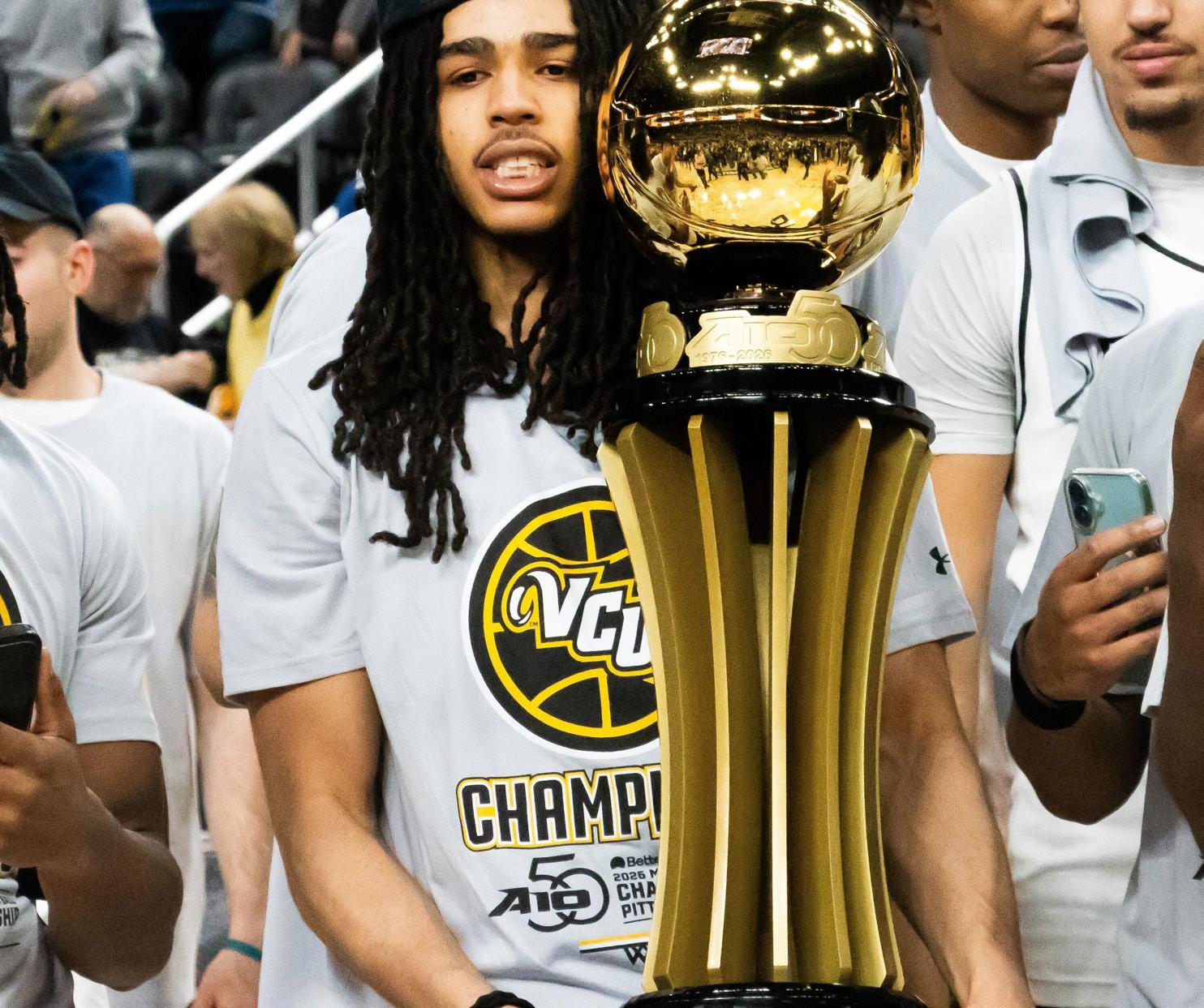

“I dribbled it out, got the switch,” Hill said. “It was like three seconds on the clock, so I just threw one up and it went down.”
Duquesne brought it back to four with a minute remaining before a layup inside brought the lead to two. Hill was fouled on the ensuing inbound but only hit one of his free throws to put the score at 67-64.
Duquesne rushed down the court looking for a tie, but Belle disrupted the dribble and stole the ball. Lewis grabbed the steal, got fouled and hit both free throws to increase the lead to five.
Duquesne got a final chance on offense but a block by second-year guard Brandon Jennings ended the season with a 71-66 VCU win.
No. 2 VCU men’s basketball advanced to its fourth consecutive conference championship appearance after beating No. 3 Saint Joseph’s University 77-64.
The tempo was high in the opening four minutes with both teams getting shots up early in their possessions. VCU’s Tracey hit a corner three to regain the lead, and Lewis followed with one of his own.
The Rams defense picked up from where it left off in the quarterfinals, forcing the Hawks on a five minute scoring drought and capitalizing with an electric 21-2 run.
The Rams kept the momentum flowing with a three from Evans and a layup from Hill that propelled a new 8-0 run.
VCU went into halftime with a commanding 23 point lead. The Rams outclassed the Hawks in nearly every statistical category. VCU shot 42% from the field to St. Joe’s 27%, 39% from three to 17%, while grabbing five steals and forcing six turnovers.
“When you focus on the right things, then those over things happen,” said VCU head coach Phil Martelli Jr. “It can’t be the other way around.”
The Hawks briefly brought it to 16 with an 8-0 run as the Rams struggled to score out the gates with a three minute scoring drought. VCU’s Hill swiftly broke the momentum with a pull-up midrange jumper to keep the Rams firmly ahead.
St. Joes still showed fight however, slowly clawing the deficit back to 16 as VCU went four minutes without a field goal. Hill once again broke the cold spell with a pull-up jumper from the block.
Hill finished with a game-high 18 points, while Lewis contributed eight points and a team-high eight rebounds.
VCU SLUGS PAST DAYTON FOR THE TITLE
VCU then overcame No. 4 University of Dayton 70-62 on Sunday in the A-10
championship for its second straight conference title.
Hill continued his spark off the bench for the Rams from yesterday with a fadeaway jumper from just inside the arc to keep VCU up five.
VCU continued to stay narrowly ahead, but Dayton was always just behind as both teams traded makes halfway through the first.
Lewis took over shooting with another stepback three to ignite a 12-2 run where Dayton was held to a two minute scoring drought and four straight misses.
VCU meanwhile would not slow down, with another Lewis three and a crafty finish by Hill putting the Rams up 40-25 going into halftime.
The Rams’ superb shooting sent them into halftime with all the momentum. VCU was 53% from the field and 57% from three. Lewis dominated across the statsheet with a team-high nine points, four rebounds and one assist.
The Flyers stayed hot, rattling off a 6-0 run to lower the deficit to 10 while VCU opened the half only making one shot in five attempts.
The Rams kept their lead to doubledigits but the Flyers continued to slowly fight back halfway through the second.
Dayton did not slow down, hitting three straight shots as VCU went over four minutes without a made shot. The Flyers brought it back to 10 with a three from Bennett with just five minutes remaining.
Both teams struggled past this point, with a two minute scoring drought on both ends of the court as the game came to its final three minutes.
Dayton fourth-year guard Jordan Derkack made the first field goal in five minutes off a transition layup to bring the lead to 65-57 with one minute to play.
VCU ended the game going over eight minutes with a made field goal. Consistent free throw shooting and good defense helped secure the team its second consecutive A-10 championship, and a spot in March Madness.
Lewis led the charge for the Rams on nearly all fronts. He finished with a double-double, with a game-high 17 points and 11 rebounds.
Lewis and Hill were both named to the all-tournament team, and Hill was named the tournament's most outstanding player.
VCU is an 11 seed and will face No. 6 University of North Carolina in the first round of the NCAA tournament on Thursday, March 19 at 6:50 p.m. in Greenville, South Carolina.
MAEVE BAUER Spectrum Editor
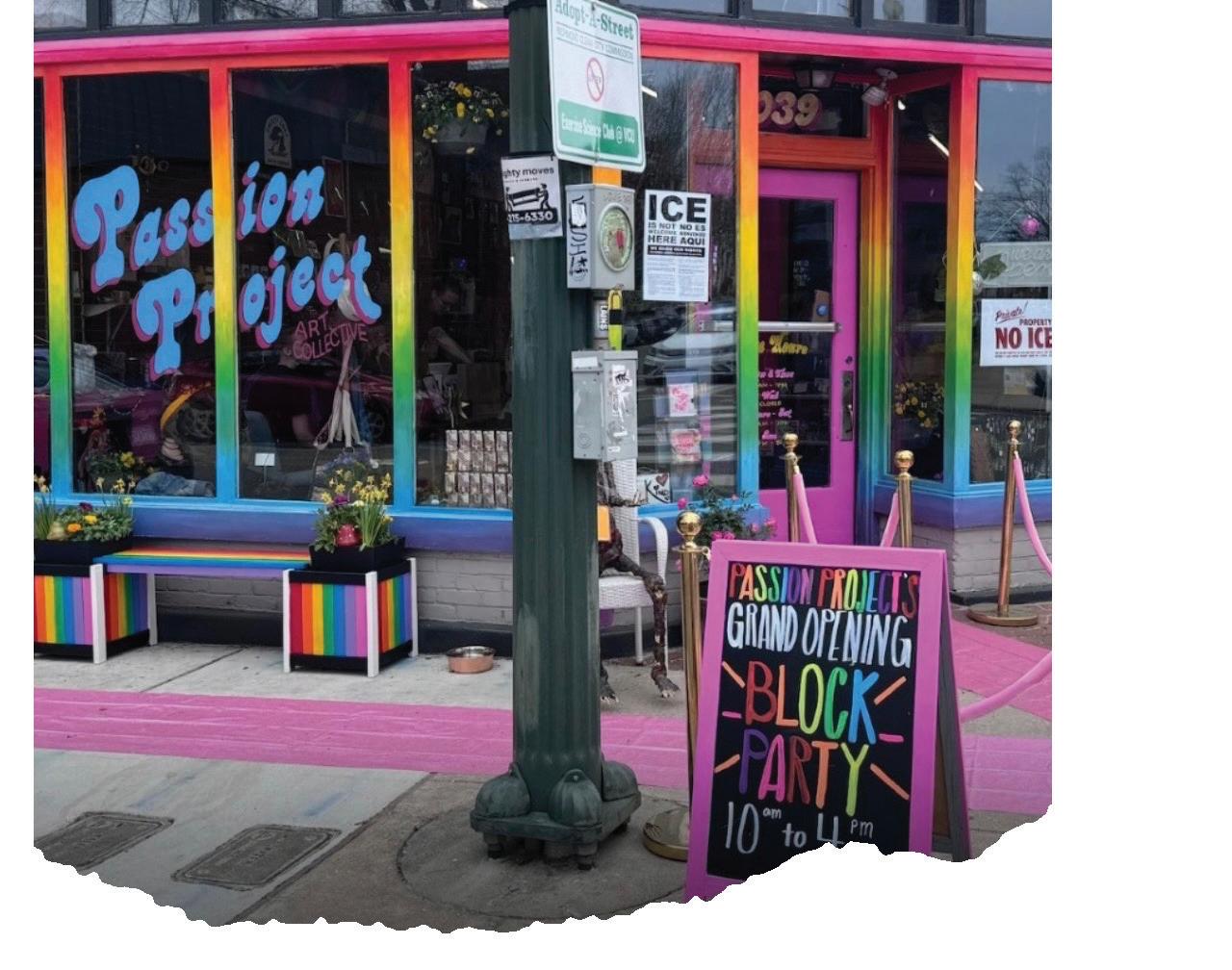
Since her teenage years, Lydia James dreamed of opening a communal space to support people who just want to belong. The now 29-year-old did not think that dream would come true until her 30s. However, just this past Saturday marked the grand opening of the new location of Passion Project, a third space for anyone who needs it.
Located at 1039 W. Grace St., it holds a lot of the same features as the old one downtown — including, the free community fridge at it’s front door stocked with water and other food essentials for whoever needs them.
What will be a first at the new location is its art studio space. James finds that it is important to create room for all people to have a creative outlet to take what they feel inside and bring it out.
“I believe that art is anything you do to express yourself. There is no such thing as bad art, I tell everybody that,” James said. “Art does not have to be something you do on pen and paper, doesn’t have to be crochet. It could be poetry, music. It could be anything.”
James is still processing the feeling of her dreams coming true. After starting the collective in 2024 with a team of five she had no idea it would expand to what it is today, with a team that is now 11 times bigger. There was a line wrapping around the corner opening day, with hundreds of people coming by to support the new space.
“So quickly our community came together and within a year ran out of space,” James said. “And I was like, ‘Oh man, we need something bigger and better for the community. They want this.’ … It really takes the community believing in the artist, artists believing in each other, me believing in them, them believing in me.”
March 18 is
way
the
and
One artist supporting James and Passion Project is DJ BIIGDRII, more formally known as Adryan Tostevin-Sheridan. The two first met last year at Big Gay Market RVA. Tostevin-Sheridan said and James liked her sound, and asked her to perform at the old location’s one year anniversary and then again for the new space’s grand opening.
“It’s really nice to have these spaces where it’s like, you can come here, you can make friends, you can meet like-minded people, and there’s not that financial barrier in between it. I think that it is very important
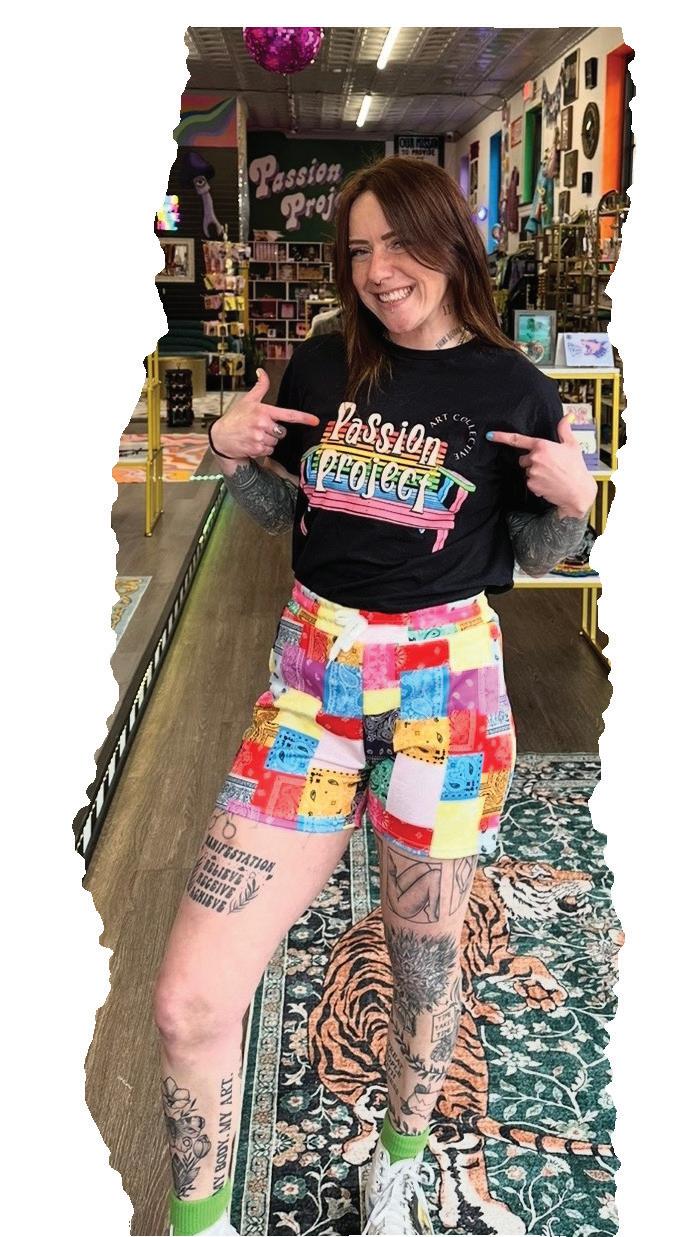
for all of our mental health and just getting to know the people in our city,”
Sheridan said.
Passion Project is open from 11 a.m. to 7 p.m. Monday, Tuesday, Thursday and Friday. It is open 12 to 5 p.m. on Sunday and closed on Wednesday. More information on Passion Project can be found on their instagram, @passionprojectrva.

Continued from front page
Richmond has long been known as an influential city for hardcore music. From house shows packed to the brim with fans of slam drums and moshing, to record stores dedicated to stocking their shelves with heavy riffs and powerful vocals — Richmond has put its love on display.
Kimmy Rivera, the vocalist for local post-hardcore band Athera, has loved music since she was a child.
“Growing up, me and my siblings would play Guitar Hero almost every day,” Rivera said. “My older brother was really into nu metal at the time and as I always looked up to him, I naturally liked it too.”
Once Rivera started at VCU, she made it her mission to go to more local shows, attending her first Richmond show at Cobra Cabana, an essential bar and venue in the neighborhood of Carver.
“There, I saw Sick Of It All and Wasted Space. I was with Sonny and Jackson [of Athera] and I had the most fun ever,” Rivera said. “Ever since then I’ve been going to shows with them and here I am now.”
Rivera said she would love to see more women and queer people in the hardcore scene.
“Being the vocalist in Athera, I am honestly super proud and grateful that I can be in a position doing what I love, and hopefully giving other women and young girls the representation the scene needs,” Rivera said.
Sherri Powell, vocalist of Hanahaki, is mainly self-taught other than a short phase of middle school chorus classes and vocal training for commercials when she was young.
“I actually taught myself how to scream by yelling at traffic on my commutes to school,” Powell said.
Being a woman in a mostly maledominated field has been difficult, Powell said.
“Sometimes I have a bit more leverage in who I speak to when I say I’m part of the band, but more often than not I feel like I’m never taken seriously or I’m largely dismissed,” Powell said. “Sometimes people try to talk to my bandmates instead of me, assuming I’m just someone’s girlfriend there for accessory and not a member.”
Powell said she has had to grow a thicker skin being a part of the scene and to get people to listen to her.
“Getting on stage and showing everyone that I can be just as, if not more, terrifying than every other vocalist has been a great way to get people to listen, mostly because I’m so loud they can’t ignore me,” Powell said.
Things really only get done when women get involved, Powell said.
“Femininity has the gift of emotion, empathy, and kindness; women put it to action,” Powell said. “Women in this scene work hard for this community, because we simply have to if we want to be taken seriously.”
For Laine Roldan, vocalist of Bleed Out, music has always been a big part of their life. Once they started going to local hardcore shows, they gained motivation to create music again.
“Seeing the community kind of sparked my passion for performing,” Roldan said. “I’ve been very involved in the Norfolk and Richmond scenes since then.”
As a feminine-presenting person, said they have had to work hard to prove themself, and it is the same in the hardcore scene.
“I’ve gotten hate from men who give the boys in my band praise but have a problem with me,” Roldan said. “It never deters me though — only motivates me more.”
Queer people, women and people of color deserve a voice in the scene, Roldan said.
“I think we’re all tired of hearing white men scream about their issues on a mic,” Roldan said. “We’re tired of seeing creepy men abuse, target, manipulate our friends then having the scene do nothing.”

MAEVE BAUER
Spectrum Editor
Gallery5 is hosting “Wild at Heart,” a poetry reading featuring some of Richmond’s most zany poets this Saturday, March 21. There will be a variety of variety shows and poetry readings, with doors at 5 p.m. and the show starting at 5:30 p.m.
“Wild at Heart,” is not your average poetry reading. The night will start out with “shocking and salacious truths from Joe Mack, Kathryn Schmidt and Layla Thakkar.”
Audiences will then hear a set from Sophie Colette, a Richmond-based, New York-frequenting indie pop artist. The night will end with an eye-popping show from the “Ballerina of Burlesque” Kayy Lovely — who is “sure to rip your faces off in the most sensual manner,” per the show’s Instagram.
This will be Lovely’s fifth time performing at “Wild At Heart.” Though Richmond is her home — having taught a body positivity movement lecture at the University of Richmond — the performer has traveled the northern hemisphere, recently making her international debut in Montréal, Canada at
the “Bagel Burlesque Expo.”
This is not “Wild at Heart’s” first reading.
The group started in 2024, after the creator of the event, Nate Waggoner, did a Richmond edition of “Red Light Lit,” a reading series on the West Coast.
It evolved into “Wild at Heart” after one of the performers at the first show, and former event coordinator at venue the Basement, asked if he could put on another one. This upcoming Saturday will mark their fourth reading at Gallery5.
“I said it had to be my own thing — ‘Red Light Lit’ is exclusively about dating and relationships, and I wanted to be more expansive thematically, and maybe more shaggy and kooky. More Richmond,” Waggoner stated in an email.
Joe Mack is an author who works out of the Northside of Richmond. Though he is unsure about the piece he will be reading, Mack knows it will be fiction.
Mack got involved with “Wild at Heart,” after taking one of Waggoner’s classes at the
Zines, poems, photos and more to be found at
Visual Art Center of Richmond — thinking the event would get him to write, at the very least. Though he has attended different readings in Richmond, “Wild at Heart,” is the only one he’s read in himself.
“I thought readings were either a genius behind a podium, or otherwise an embarrassing open mic type situation. Wild at Heart is looser and less intimidating than the former and more curated and inspiring than the latter,” Mack stated in an email.
“There’s a goofiness to it, the good kind of awkwardness. The energy is always in flux. Things can go from earnest to funny to erotically charged. There’s so much talent in Richmond, and Nate has a good nose for it.”
Next up is a lady of many hats, Kathryn Schmidt. She works as a teacher and coach while also being a company member of Coalition Theater. The venue is home to multiple comedy shows all connected by the same mission; creating an inclusive space for all through the power of laughter.
Schmidt belongs to the improv troupe “Richmond Famous.” March 13 marked this year’s inaugural show, hosted by newcomer Hamilton Glass. Following

be introduced, and I guess I saw myself as a good person to facilitate something like that.”
Assistant Spectrum Editor
Tucked near the heart of downtown, Agony Books, a Black-owned specialty bookshop and gallery, has become a meeting ground for dialogue, art, culture and community.
Books on art, critical theory, culture and history line the shelves — and squeezed between them are zines that create a sense of life in the store. Art from a multitude of creators lines the space.
Founded in 2021 by David Jaycox and Jesse Feinman, the store focuses on photography, design, critical theory and political commentary, according to its website. Jaycox initially reached out to Feinman with the idea for Agony because of what he built with his publishing practice, Pomegranate, according to Feinman.
“I was 25 at the time and the world felt really endless and big,” Feinman said. “I think it’s not so much that there wasn’t something being met, but maybe that a conversation could continue further, new things could
The people behind Agony try their best to keep the selection in store from feeling stale or predictable, according to Feinman.
“When the project first started, we were much more focused on photography, but it’s since then sort of shifted to highlight more poetry, theory, design, identity, leftist ideology, this and that,” Feinman said. “The work is of no use if it’s just in our hands — it has to pass to somebody else.”
One of Agony’s defining features is its zine collection. In addition to showcasing work from authors across the world and local independent works, the store features handmade zines from independent artists throughout Richmond — the same niche that was Feinman’s introduction to publishing.
“I think the goal for Agony can best be summarized as a small space for discovery, so of course I wanted to try to introduce people to things they may not have heard of before, even if it’s not maybe the most convenient or professional or whatever,” Feinman said.
Kwame Ta is one of the artists whose zine was featured in Agony. Last October, the store had a solo show and zine release event for Ta’s work, “We’ll see what time brings us” — which explores intimacy and the passing of precious moments.
Ta hopes readers will realize that moments we share with our loved ones are worthy of capturing, savoring and cherishing.
“No moment is too small or too big,” Ta said. “We have to bask in them, whatever way we can.”
Ta said it was an honor to work with Agony.
“It was easy working with people who are both professionals, experienced and openminded,” Ta said. “Putting these images into the world physically felt like a way of saying thank you to my friends, my family and my community.”
Beyond literature, Agony functions as a gallery space. With different exhibitions and installations being showcased throughout the store, the art acts as a visual form of dialogue that blends with the printed material casing the shelves.
Laneecia Ricks, an artist who showcased
tradition “Richmond Famous,” invites different people from the Richmond area to participate as the show’s featured guest. Last of the poets will be Layla Thakker — a Richmond-born-and-raised VCU alum.
To keep the good vibes grooving, Sophie Colette will play a collection of her songs. Her music could be described as soothing and eclectic. Mixing the soothing sounds of her voice with a funky-synth-pop beat.
Colette originally moved to New York to study fashion, there she got involved with different music projects and eventually found herself in a record deal with Degraw Sounds, according to her website.
“Kisses from Clay Street,” is the artist’s debut EP, released in 2023. Colette was marked as a “glamglare” favorite artist — an independent music-focused publication.
Tickets are $12 in advance and will be $15 at the door. More information on “Wild at Heart,” can be found at gallery5arts.org.
her senior thesis at Agony, said the process was overall supportive.
“I met people that I didn’t know, and was able to connect with people through my art,” said Laneecia, an artist who showcased her senior thesis at Agony. “It was great to see all the support and the community that showed up.”
Ricks’ thesis “If You Pray Right” was about finding a relationship and understanding between being queer and religious.
“Overall this project was me trying to find peace with that and my connection to religion,” Ricks said.
It is dire that specialized stores like Agony to feature local artists, according to Ricks.
“A lot of local artists, we like to be in our own bubble,” Ricks said. “So to have the opportunity to be featured in a local area, the word of mouth spreads, not just for the artist but also for the store.”
It’s been a priority at Agony to provide a space for artists and art enthusiasts to see publications that are not commonly found in Richmond, according to Barrett Reynolds, an employee at Agony.
“Being able to host events within the space is always deeply rewarding; it’s heartwarming to see the community show their support,” Reynolds said. “It’s always enriching to have photography, graphic design classes, plan visits to the store; getting to chat with students looking to venture into bookmaking is something I always appreciate.”
In a city full of art and culture like Richmond, Agony amplifies the artists of all mediums who inhabit it, creating a space for their work to be shared.
Agony Books is open on Thursday-Sunday from 12 p.m. to 5 p.m. It is located at 304 E. Main St., Suite B. More information can be found on their website, agonybook. club and their instagram @agonybooks.
Vicky Hester, the owner of Babe’s — the oldest lesbian bar on the East Coast — passed away in September. This Women’s History Month, stop by the Carytown bar and reflect on Babes’ history as it carries on Hester’s legacy as the community continues to mourn her loss.

also abortion funds help people know what their options are.”
connection that you can get when you speak the same language,” Billie said.
“This has been a long road to get to this and we know that Virginians overwhelmingly support the right to make their own health care decisions free from government interference or criminal punishment,” said Jamie Lockhart, the executive director of Planned Parenthood Advocates of Virginia.
Planned Parenthood Advocates of Virginia works to provide education and community outreach, a counterpart to the Virginia League for Planned Parenthood, which works to provide health care options surrounding reproductive rights, Lockhart said.
After the Dobbs v. Jackson case in 2022 — which overturned Roe V. Wade, eliminating the constitutional right to an abortion — the urgency to create the amendment ramped up, according to Lockhart. They have been working to ensure protections so that people in Virginia and across the South can acquire access to the care they need.
In the aftermath of Dobbs V. Jackson and Florida’s 2024 six-week abortion ban, Virginia saw an increase of 16% in total abortions and about 4,400 out-ofstate abortion patients, according to a Guttmacher study.
Lockhart said within the Planned Parenthood network there are “patient navigators” who help patients know how to access care in states where it is legal.
“Also, there are several abortion funds,” Lockhart said. “Abortion funds are really important in not only providing financial support for people to access health care and to be able to afford transportation, but
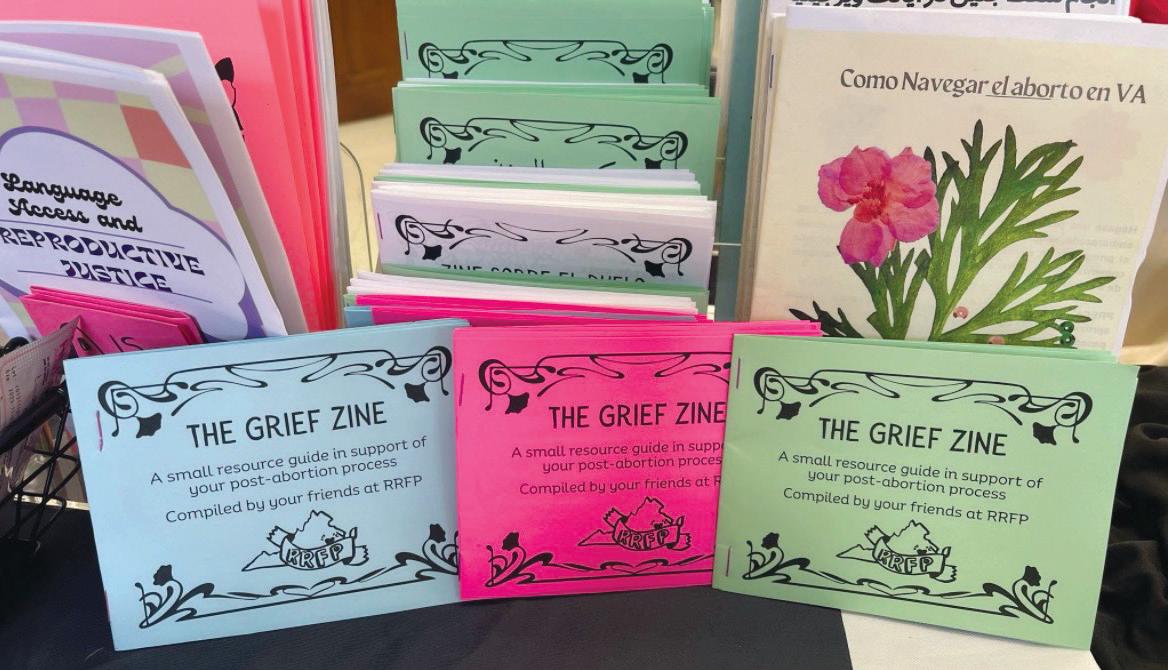
Though the proposed amendment will help secure reproductive health care access, there are still countless struggles in finding care, according to Billie, a member of Richmond Reproductive Freedom Project or RRFP, who requested their last name not be included for their safety.
RRFP has been operating for 23 years, demonstrating how finding reliable reproductive health care has been an ongoing issue, even when it was guaranteed in all 50 states.
As a way to make more folks looking for reproductive care feel comfortable, RRFP has a hotline for non-English speakers, Billie said. They are looking to expand and help as many people access reproductive care as possible with both Spanish and Arabic speakers for their interpretation line, as well as Spanish and Arabic speaking drivers to assist patients getting to and fro their appointments.
“If we have an English-speaking volunteer who knows some Spanish and gives a ride to a Spanish speaker, they’re going to get there safely … but there’s that missing piece of that deep emotional
RRFP works with multiple organizations in Virginia and nationwide to help coordinate rides, funds and other needs for those seeking care. Clinics in Virginia are widely spaced out, so it is vital to have networks or orgs ensuring assistance to anyone who needs an appointment.
Those networks are useful for a multitude of reasons, according to Billie. They not only help with funds and transportation, but with other roadblocks. RRFP actively connects individuals to other organizations, should their area of expertise be more in line with the individual’s needs.
“It’s a lot having all of this information in your head and going, ‘I know a person who does that. This person does this. Oh, this organization is out of money. Let’s try to talk to this

one’ and we just figure it out,” Billie said. “That would be so overwhelming to do on your own as an abortion seeker and looking online and trying to find all the phone numbers.”
Billie noted the importance of local abortion funds and groups being a “touch point” for the community and following through throughout the process to ensure their needs are met.
81% of people who contacted a call center or clinic after a ban on reproductive care reported travelling out of state to receive care, according to the American Public Health Association; only 3% of those callers continued
“We’re here to remove the barriers to abortion access,” Billie said. “At

that point, [they] are able to finally sit with their emotions and decide they don’t want to have an abortion and they do want to continue their pregnancy. In that case, we’re going to follow through with them and give them referral to things local in their area that can support them.”
RRFP relies heavily on donation funds. The organization is currently throwing their annual Fund-A-Thon looking to raise $65,000 by May 1.
Working with different companies and donors, RRFP also provides different contraceptives, such as morning-after pills and condoms, and holds drives in the community. According to RRFP, the most direct way people can volunteer is joining their hospitality — helping complete package drop-offs
in Richmond.
Virginians are working to support those in search of reproductive care in the state — through volunteer, legislative and community action there is a group that will ensure people looking for care they do not know how to receive themselves can get help.
questioning or a transgender woman.

Selah Porter, a third-year biology, premedicine student said she admires the first female graduates and appreciates the opportunities she’s been allowed as a result.
“As a Black woman, I know that just being the first of anything is especially tough, and so I’m sure they faced a lot of hate and discrimination and criticism,” Porter said. “I’m really happy that people took that first step so that I and other women in my family could have that opportunity that we have to get educated.”
While Porter said there’s always “room for improvement” for careers to be more open to women, she hasn’t felt unwelcome in any spaces at VCU because of her gender.
“I would definitely say there’s definitely areas of study where there’s less female representation. And then areas of study where it’s expected to be high female representation like nursing, or education, things like that,” Porter said. “I think it’s also just like a social norm kind of thing as well. You know, like women are supposed to be caregivers and nurturers so they’re expected to go into those roles.”
Today, over 60% of VCU’s students are legally female — 18,554 female students of the 29,288 total enrolled in the Fall 2025 semester, according to VCU. Of the total students enrolled in the Fall 2025 semester, 14,885 students identify as a cisgender woman, exploring, gender non-conforming, genderqueer, nonbinary,
Maya Kamat, a second-year biology and bioinformatics student said though it’s a “huge deal” that women make up so much of higher education now, though she thinks the numbers are skewed based on fields of study.
“Definitely in health sciences there’s a lot of women and in arts there’s a lot of women, but in other areas like coding and math and physics music and certain subspecialties within STEM, I think there’s still that gap,” Kamat said. “I think that’s so important that we continue to have women in all different fields because women are the people that are going to take your health issues the most seriously and just more likely to be receptive to unlearning biases.”
Kamat pointed to cultural bias as a factor in the divide — she remembers her high school and first-level math and coding classes with more even distribution of gender identities, but said as she advanced into higher-level classes there were fewer women.
“I think a lot of that has to do with cultural expectation or like even when you see how women talk about themselves, sometimes like it’s like ‘girl math’ and stuff like that,” Kamat said. “It’s important to be cognizant of how you’re talking about women and how they are able to be logical and be in these fields as well.”
Men continue to outnumber women in physics, engineering and computer science, or PECS, majors, a gap that has widened in the 10 years leading up to 2022, according to a Brookings analysis.
VCU has worked to remedy the structural barriers in place for women in
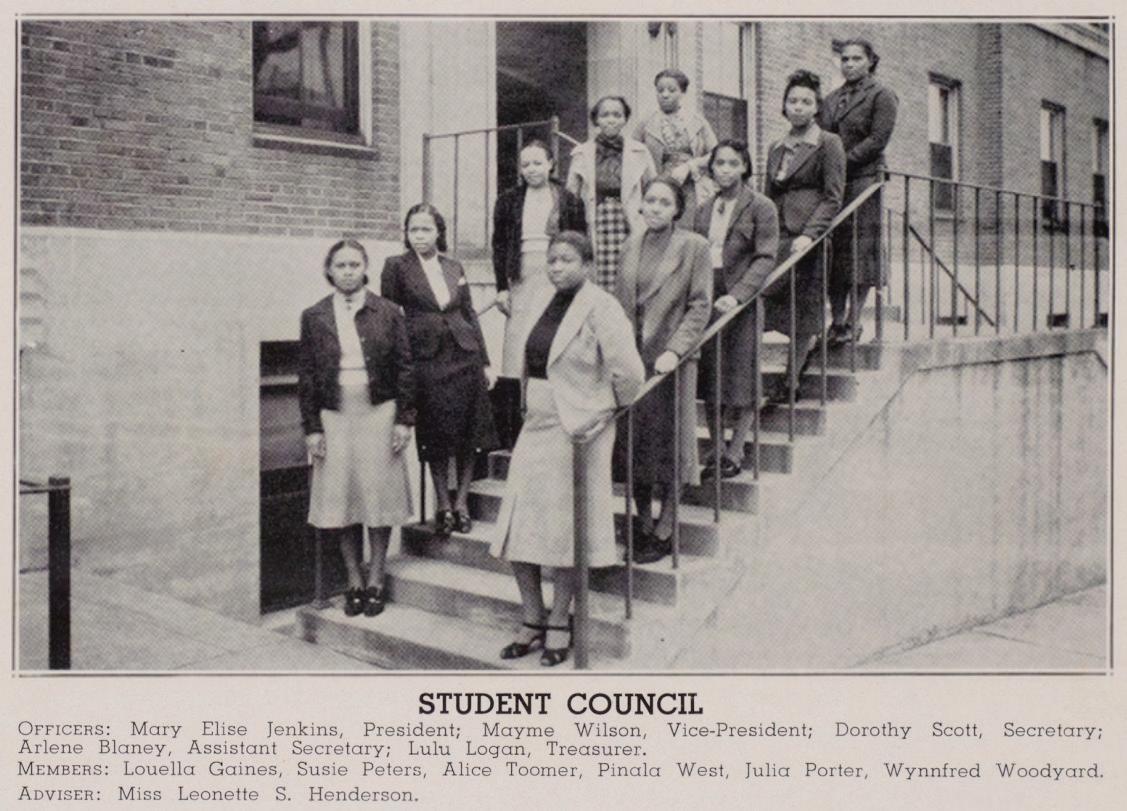
STEM fields — the ADVANCE-VCU project, introduced in 2018, works to diversify faculty in STEM and intersecting departments, in turn increasing recruitment, retention and advancement of female STEM faculty.
Third-year bioinformatics student Rhea Chatterjee said while she’s seen progress for women in higher education, that doesn’t mean they don’t continue to face issues of sexism or other barriers. Within her field of study, Chatterjee said she often faces the assumption that she doesn’t know computer science.
Looking back at the women who paved the way for others in higher education,
Chatterjee appreciates those who came before her.
“My grandmothers, through famines, got a master’s degree and during this month I’m really grateful for them, because of that, I don’t have to sit here and I don’t have the same worries as other people and I recognize that it’s such a privilege to have,” Chatterjee said.
EDITOR’S NOTE:
Quote of the week
“A friend may be waiting behind a stranger’s face.” — Maya Angelou, "Letter to My Daughter"
EMMA CONROY
Contributing Writer
During your next lecture, look around. Take note of who is taking notes, who is teaching and what subject you are studying.
The current freshman class at VCU is 63.3% female and 36.7% male. That is not a footnote — it is context.
Anti-intellectualism is at a peak, yet college enrollment is at an all-time high. The value of a college education’s cultural capital is at an all-time low. Why?
Maybe it’s because college campuses have become “elitist incubators of extreme liberalism” — we’ve all heard that gripe before.
So let’s take a look; Who fills campuses? Women. Who teaches in them, particularly in the humanities and social sciences? Predominantly women. This is not incidental.
Gendered jobs and subjects involve deep-rooted societal assumptions: masculine roles mapped onto engineering, construction and leadership; feminine roles onto caregiving, education and administration. While women now
make up roughly 50% of overall STEM employment, they remain underrepresented in engineering at 15% and computing roles at 25%, but dominate in health care at 74%.
The institution of higher education that women entered and began shaping in the 1970s was never neutral — it was already organized around particular assumptions about what kinds of knowledge matter.
Women’s mass entry into academia coincided with — and partly drove — a shift in what was considered “valid” knowledge.
The experiential, the testimonial and the emotional gained institutional legitimacy. Fields like women’s studies, trauma studies and later Diversity, Equity and Inclusion frameworks institutionalized the idea that lived experience is itself a form of expertise.
This was not anti-intellectualism in its origins — it was a genuine epistemological argument about whose knowledge and perspective had been excluded from academic discussion. But it created a template. The logic of “my experience is valid evidence” escaped its original context and became available to anyone with a grievance.

Second-wave feminism readily employed this ideology. “The personal is political” insisted that private emotional experience had structural causes and political stakes. This was a powerful and necessary claim in its moment, but the logic of “my feelings are politically valid” proved to be a democratization of grievance that no single movement could control.
Men’s rights movements adopted this rhetoric to frame male disadvantage as emotional suffering deserving redress. Culture war arguments used it to claim the injury of feeling “erased.” Therapeutic language began to bleed into legal and policy domains. The framework that women used to enter public life became the framework that reactionary movements used to contest their presence in it.
Anti-intellectualism was not necessarily born out of the gender wars — it was already baked into the American character.
Richard Hofstadter won the Pulitzer Prize for “Anti-Intellectualism in American Life” in 1964. He traced the condition to its roots — early Americans were egalitarian. The common sense of the people was to be trusted; the inaccessible musings of
an aloof elite were not. Modern society inherited that suspicion and deepened it. Heart and hustle came to be valued over rigor and reason. Core knowledge became secondary. Utility became primary. The country that was founded on critical thinking — at least in its aspirational myth — had quietly decided that thinking was optional.
This theory was extended into the twentieth century, where feeling became the primary currency of public life.
When the academy, once a male domain, became majority female, the antiintellectual impulse found a new target and a new urgency. Dismissing expertise became a way of dismissing the people who now held it. The attack on institutions was an attack on their new occupants. Antiintellectualism had always been around, but now it has a recognizable face.
Here lies the deepest irony with the framework women used to enter public life — “my experience is valid, my feelings are evidence” — became the framework men used to protest their exit from it. Two opposing movements, one shared epistemology.
MOLLY CHRISTIANSON Contributing Writer
Growing up, I had a curated image of what female friendships should look like.
I convinced myself that you had to have a big friend group that was always keeping busy in order to be happy. Maybe it started with watching “My Little Pony” or “Phineas and Ferb,” but as I grew up, I learned that friendship is much more than just having someone to go on adventures with.
As my time has passed at VCU, I have found girls who I truly cherish. Many of my relationships up until my junior year of high school felt very one-sided. I am not the best at saying “no,” and I had a few friends who loved that about me.
I knew this was not ideal, but one of my only references at that point for what friendship should look like was Rory and Lorelai’s relationship in the show “Gilmore Girls.” They taught me that sometimes you Story continues on next page

just need to go along with the other person. I didn’t yet understand the importance of setting boundaries.
Meredith and Christina from “Grey’s Anatomy,” on the other hand, show an unwavering commitment and love for each other. Ever since I first saw them, I have honestly craved their dynamic.
While their depiction holds a lot of positive weight for me, it also unfortunately led me to believe that any friendships less than complete in utter commitment were not right. I focused so hard on finding “my person” that I ignored other valuable friendships. While having a strong, sisterlike bond with your bestie is important, so are all our other, less intimate bonds.
While “Euphoria” and “Mean Girls” might not pose female friendships in the most positive light, the scenes where the characters are just hanging out in each other’s bedrooms are really comforting to me. Seeing a group of girls doing their makeup or just talking together is what girlhood is to me: the ability to just co-exist
in a room of other people who understand — whether they understand you, your situation or both.
The literal cat fights and utter pettiness that occur in these shows, though, I will gladly leave in their respective universes.
When I first watched “Golden Girls” a few years ago, I honestly felt a little relieved. The iconic show follows the main cast just navigating their lives’ ups and downs, but the in-between moments are where their bonds truly shine. When they would debrief at the end of the day or argue over what to get for dinner, you could really tell they loved, valued and respected each other.
creating cozy ones. True friendship is when everyone values each other and is happy, and that can manifest in many different ways.
The friendships on television are examples and not guidelines — your friend or friends can do and be whatever you all want as long as it makes you happy.

KYLIE
GRUNSFELD Staff Columnist
In her novel “Communion,” author Bell Hooks famously wrote, “trashing feminism has become as commonplace as chatting about the weather.”
“Communion” was published in 2002, but this sentiment continues to be true today. With the presence of the internet, it has become more prevelant than ever before.
The feminist movement is an easy target to trivialize for those who do not wish for further change. “Women got what they wanted!” they say. “They can do all the things a man can do! So why are they still complaining?”
There have been multiple generations of the feminist movement, each wave
attempting to make women more equal to men in practice. We have come a long way since women were considered literal property. However, it was also only as late as 1974 when women were finally allowed to open a bank account without a man’s signature.
The ownership of women may technically be a thing of the past, but it was a recent past. The idea that women can make a life for themselves is still a relatively new idea.
There are still many things that need fixing, but necessary change is something that a lot of people do not want to accept. Many do not want to give up the unchecked power of being male in a patriarchal society. What better way to keep your standing by making sure those you step on never make it out from under your boot?
When you want to delegitimize a
movement, the easiest thing to target is language. Make a joke out of the terms associated with a real, pressing issue, and the issue itself becomes a joke.
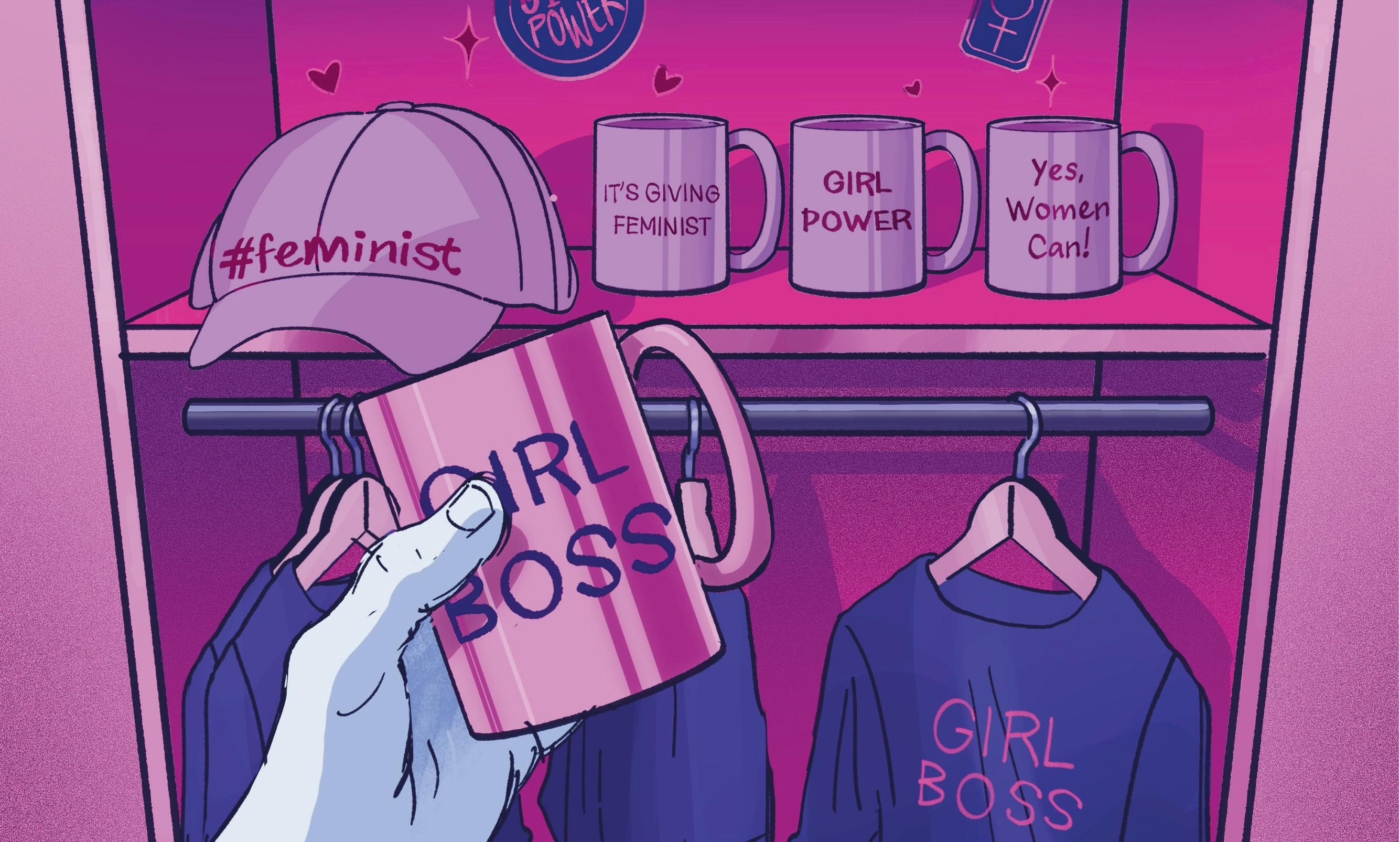
We’ve seen the delegitimization of terms like “girlboss,” “girl power,” “mansplaining” — even “#MeToo.” Take, for example, “mansplaining.”
This term has unfortunately gone through a distortion since its genesis.
It was created to denote the common phenomenon in which a man explains something already known to a woman, automatically assuming that she must not understand it as thoroughly as he does. At best, being “mansplained” to is a pet peeve. At worst, it enforces the idea that women are less intelligent than men, or that they need to be taught by the more knowledgeable, more capable gender.
Despite this, I cannot think of a time
recently where I have heard the term said without irony or genuine distaste. Somehow, “mansplaining” has become a laughing matter. It has effectively been turned against women — just another example of how overdramatic and manhating we are.
“Memeifying” — or making a joke out of — feminist language is the first step in shutting it down.
People will not be concerned about something they do not take seriously. When every piece of terminology associated with feminism — including the word “feminism” itself — is reduced to eyeroll-inducing nonsense, what hope do we have of making the world see the reality of women’s plights?
These shows have taught me that female friendship can come in so many different forms. They can be going out and creating crazy memories, or staying in and Story continues on next page

The commodification of certain words does not help. Terms like “girlboss” and “girl power” have been scooped up by companies that want to make a penny off of women’s desire to be taken seriously, specifically in professional settings.
“Girlboss” definitely leaves a weird taste in my mouth. It evokes the image of a cheap desk placard or a fast fashion pantsuit.
But behind all of this are working women who want to be respected the way a man would be. Men still hold an overwhelmingly large percentage of
powerful positions in corporate America.
It’s a shame these specific terms have become laughingstocks — I can imagine, once upon a time, they were actually really empowering.
For many, the words “feminist” and “feminism” are synonymous with misandry; a woman who seeks equality surely must want to put down a man to get there. It is true that many feminist women are tired of men, and see the feminist movement as a means of retaliation. This is not the case for everyone.
By assigning all feminist women this ideology, the word feminist itself becomes another word for man-hater. Feminists are crazy, woke and unreasonable, and therefore subject to jokes made at their
expense constantly.

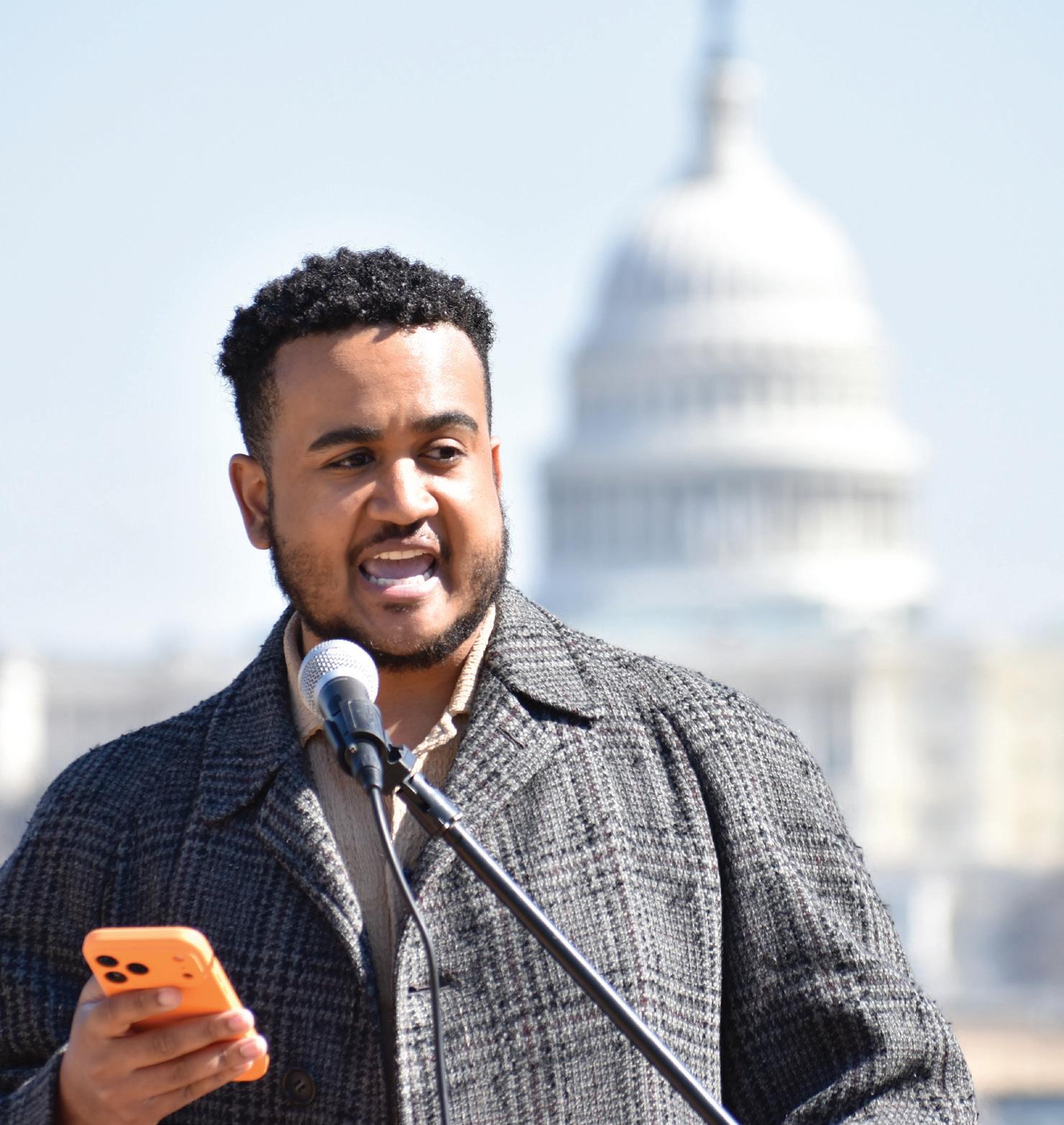
This letter was submitted by Jason Brown II, a college student, member of the Dinwiddie County School Board and independent candidate for Virginia’s 4th Congressional District.
JASON BROWN II
candidate for Virginia’s 4th Congressional District
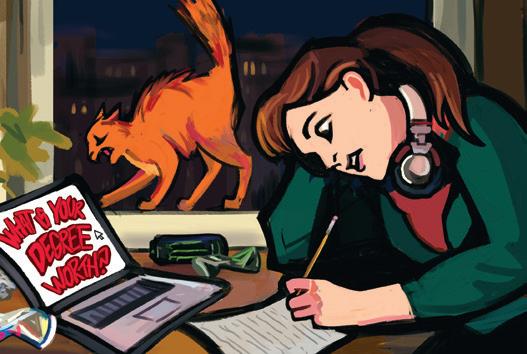
I’m amazed that there aren’t waves of VCU students writing to the school administration, demanding tuition reimbursement. I know, in some faraway parallel universe where students are empowered the way that they should be, there are students who do exactly that and win. But I can’t use up this whole letter writing about the wonders of Dnomhcir; I have to write about the realities of Richmond.
In Richmond, higher education is forprofit. Student housing is a charge, meals are a charge, textbooks are a charge,
transcript requests are a charge — access to knowledge comes with an unaffordable price tag. But you have to sign up for it, right? The alternative is either military service (not a good time to join ...) or wildcard uncertainty (not a good time to try your luck ...). So you sign the dotted line in hopes that a college degree (a piece of paper in which we put our faith ... kindof like dollar bills) can guarantee you a shot at a better life. In effect, we become professional gamblers before the end of freshman year.
Now in Dnomhcir — that parallel universe I mentioned — it’s wildly different. See, in Dnomhcir, people don’t go to war, immigration isn’t criminalized and billionaires don’t exist; so society has the money to offer free education. In Dnomhcir, people acknowledge that access to knowledge is a right, so they prioritize it, not commodify it. In Dnomhcir, shooting stars replace missiles, playgrounds replace prisons and humanity replaces greed. Things weren’t always this way; Dnomhcir
used to mirror Richmond rather perfectly. And now, it’s our time to mirror Dnomhcir. We are the future. And while we’re the inheritors of quite a number of crises, we get to decide whether things get darker or if we’d rather let the light in. Education, much like health care and housing, can be a guarantee. We can create a future of peace over war. We can run with the torch being passed to us or we can drop it and create a wildfire. The choice is ours, and it’s time to make a decision.
You’re paying VCU, but how close are we to VCU paying you? It’s time to be more like Dnomhcir. I plan to fight for that. Will you join me?
Sincerely,
Jason Brown II, candidate for Congress, college student and Dnomhcir frequenter
But if you say someone wants equality for women, one does not necessarily imagine the same thing they do when envisioning a feminist. Clearly, it is the term itself that carries the negative associations. Don’t let people’s ridicule of feminist language distract from why it needed to be coined in the first place. The words themselves are not the point. It is the misogynist actions, phenomena and mindsets that they seek to bring to light. ADVERTISEMENT

EXECUTIVE
MANAGING

ASSISTANT
ASSISTANT
By Katie Hale & Rich Katz
ACROSS 1 Fillone’sride 7 Telly channel 10 Infineform 13Invent 19 Julia’s“Seinfeld” role
69 Tremblingviolin tone
2 Drinkservedin a yard?
66 Younghorses
67 Spiritualcarving
EditedbyPattiVarol
72 ScottsMiracle-Gro brand
Edited by Patti Varol
By Katie Hale & Rich Katz
ACROSS
20 Notableperiod 21 Messenger__ 22 “Memo”on a memo,maybe
23 Cosmeticssample
24 Giveadequate reasonfor
26 Pickup,as a call
27 Completetext of“Prefixesfor Dummies”?
20 Notable period 21 Messenger 22 “Memo” on a memo, maybe
30 Six-timeOscar nomineeAdams
23 Cosmetics sample
32 Avengerwith a hammer
24 Give adequate reason for
26 Pick up, as a call
33 Mixedmartialarts org.
34 Youngfellows
27 Complete text of “Prefixes for Dummies”?
35 Texter’s“Ithink”
38 Makelikewhales andicebergs
30 Six-time Oscar nominee Adams
40 Fancyhotelrooms overrunwith spiders?
32 Avenger with a hammer
33 Mixed martial arts org.
43 TennesseeNFLer
45 Somechildren’s partyperformers
34 Young fellows
35 Texter’s “I think”
47 Argentinesoccer starLionel
38 Make like whales and icebergs
48 Wildcards,maybe 49 Someantiquecars
50 Grub
40 Fancy hotel rooms overrun with spiders?
43 Tennessee NFLer
53 Valleywhereit’s easytoget a cab?
45 Some children’s party performers
56Partofthe HOMES mnemonic
47 Argentine soccer star Lionel
57 Inquire
58 Satisfactory
69 Trembling violin tone
72 Scotts Miracle-Gro brand
73 Orbital shape
77 Build 78 Tariff on marble sculptures?
81 Place for a trim
82 “Don’t me!”
83 Passes, as time
84 “The Sweetest Taboo” singer
85 Stone fruit’s stone
86 Some Italian sports cars, familiarly 89 Glee
93 “That hurts!”
94 Thumbnails in a music collection
96 “The Mole” host Shapiro
99 Pup’s front feet
101 Surgical stitch 102 Sought office
103 “A of Their Own”
104 “Can’t deny it!”
106 Booker T.’s band
107 Pacific Northwest hub, familiarly
108 “Deets coming soon”
73 Orbitalshape 77 Build 78 Tariffonmarble sculptures? 81 Placefor a trim 82 “Don’t__me!” 83 Passes,astime 84 “TheSweetest Taboo”singer 85 Stonefruit’sstone 86 SomeItaliansports cars,familiarly 89Glee 93 “Thathurts!” 94 Thumbnailsin a musiccollection 96 “TheMole”host Shapiro 99 Pup’sfrontfeet 101 Surgicalstitch 102 Soughtoffice 103 “A __ofTheirOwn” 104 “Can’tdenyit!” 106 Booker T.’s band 107 PacificNorthwest hub,familiarly 108 “Deetscoming soon” 110 Snapselfiesin a sulkypose? 113 Airportsafetygp. 116 Esquirepublisher 118 Largestofthe BritishVirgin Islands
48 Wild cards, maybe
49 Some antique cars
50 Grub
53 Valley where it’s easy to get a cab?
64 Took a chair
65 Negotiatingwith Mephistopheles?
56 Part of the HOMES mnemonic
57 Inquire
58 Satisfactory
59 Taxpayer’srep
62 Nikerival
64 Took a chair
65 Negotiatingwith Mephistopheles?
119 Morespooky 121 Lacesupagain 122 Floorcovering 123 Firstwordsin a journal,maybe 124 Offerofassistance 125 Financialrecords 126 Givesfor a while DOWN 1 Lunarholidayin Vietnam
110 Snap selfies in a sulky pose?
113 Airport safety gp. 116 Esquire publisher 118 Largest of the British Virgin Islands
119 More spooky 121 Laces up again
122 Floor covering 123 First words in a journal, maybe 124 Offer of assistance 125 Financialrecords
126 Givesfor a while DOWN
1 Lunarholiday in Vietnam
3 Angryglare 4 __andkin 5 Likeleftovers 6 WesternAustralia city 7 Wordofcaution 8 Muffinfiber 9 Goon a bender 10 SaintofAssisi 11Travelers’stopovers 12 Tell (on) 13 Leafygreeninthe beetfamily 14 Signs a leasewith 15 “At__,soldier!” 16 TVspotscribes 17 Golfballprop 18 Droptheball 25 Singer-songwriter Wainwright 28 Plant,asseeds 29 Smallbatteries 30 Capital of Ghana 31 Drones,e.g. 36 “TheSoundof Music”governess 37 Get-go 39 Bugsontheroad, briefly 41 Automakerbased in Munich 42 Elementwiththe shortestname 44 34thprez 46Joplinknownasthe “KingofRagtime” 48 DenverNuggets pointguardMurray 51 Hostessgoodies
2 Drink served in a yard?
68SportagesandRios
69 Italianscooter
70 Letter-shaped girders
1 2 3
Complete the grid so each row, column, and 3-by-3 box (in bold borders) contains every digit, 1 to 9. For strategies on how to solve Sudoku, visit sudoku.org.uk
52 Celebratorypoem
54 Suitable
55 Detergentbrand
58 Tinypest
59 Magna__
60 __forthenight 61 Lentensymbol
63Kneeparts,forshort
65 “TheLordofthe Rings”monsters
71 Candlelitdinnerat theGeekSquad counter?
3 Angry glare 4 __ and kin 5 Like leftovers 6 Western Australia city 7 Word of caution 8 Muffin fiber 9 Go on a bender 10 Saint of Assisi 11 Travelers’ stopovers 12 Tell (on)
66 Young horses
67 Spiritual carving
74 Sotheby’sevent featuring a Shakespeare original?
75 “Ustoo!”
68 Sportages and Rios 69 Italian scooter 70 Letter-shaped girders
76Onlinesourceof redcarpetcoverage
71 Candlelit dinner at the Geek Squad counter?
79 Udderpart
80 “Youwish!”
86 Travelblogger’s succinctreview
87 Ranchers’ropes
13 Leafy green in the beet family 14 Signs a lease with 15 “At __, soldier!” 16 TV spot scribes 17 Golf ball prop 18 Drop the ball 25 Singer-songwriter Wainwright 28 Plant, as seeds 29 Small batteries 30 Capital of Ghana 31 Drones, e.g. 36 “The Sound of Music” governess 37 Get-go 39 Bugs on the road, briefly 41 Automaker based in Munich 42 Element with the shortest name 44 34th prez 46 Joplin known as the “King of Ragtime” 48 Denver Nuggets point guard Murray 51 Hostess goodies 52 Celebratory poem 54 Suitable 55 Detergent brand
58 Tiny pest
59 Magna__ 60 __forthenight 61 Lentensymbol
74 Sotheby’s event featuring a Shakespeare original?
75 “Us too!”
88 “Le__” : Chicsong
90 Lumberjackcontest thatrequires a lot of balance
91 Paidthefulltab
92 Makeairtightusing thermoplastics,say 95 Athletewhoplays homegamesnear theGreatSaltLake 96 Likemuch battlefield equipment
97 #marinara,e.g.? 98 Likesalesnot madeonline 100 McIlroy’sorg. 105 Chainmaterial 107 Catchesflyballs 108 See-__ 109 Honeyproducers 111 Perspirationoutlet 112 Miss a fewletters whenspeaking 114 Emailbutton 115 GreekMars 117 Saltedpartof a margaritaglass 120 Pastramisandwich bread
63Kneeparts,forshort
65 “TheLordofthe Rings” monsters
By The Mepham Group
76 Online source of red carpet coverage 79 Udder part 80 “You wish!” 86 Travel blogger’s succinct review 87 Ranchers’ ropes 88 “Le __” : Chic song 90 Lumberjack contest that requires a lot of balance 91 Paid the full tab 92 Make airtight using thermoplastics, say 95 Athlete who plays home games near the Great Salt Lake 96 Like much battlefield equipment 97 #marinara, e.g.? 98 Like sales not made online 100 McIlroy’s org. 105 Chain material 107 Catches fly balls 108 See-__ 109 Honey producers 111 Perspiration outlet 112 Miss a few letters when speaking 114 Emailbutton 115 GreekMars 117 Saltedpartof a margarita glass 120 Pastramisandwich bread


3/18/26
EditedbyPattiVarol









