VCU consolidates arts departments despite dean initially saying otherwise
VCU cites operation costs, inflation for rising meal plan prices
SAL ORLANDO
The cost of meal plans at VCU has continued to increase into the 2025-26 school year. Some students describe them as overpriced, and are asking for change from the university.
All dining plans VCU offers have gone up in price by an average of 14.69% since the 2023-24 school year, according to VCU’s most recent budget plan. Currently, there are 6,270 students with meal plans. VCU Dining Services spokesperson Anna Obermiller said the price increase is due to inflation and a rising cost in food operation and equipment.
“Plan rates are adjusted annually in alignment with the Consumer Price Index, which reflects changes in food, labor, utilities, trash, composting, equipment and other operating costs that support campus dining services,” Obermiller said. “It’s these costs that determine increases in dining plan rates.”
The inflation rate in the United States went up 5.54% between August 2023 and December 2025, according to the U.S. Bureau of Labor Statistics.
First-year students living in underclassmen dorms are required to purchase a meal plan, the cheapest of them being $3,155.
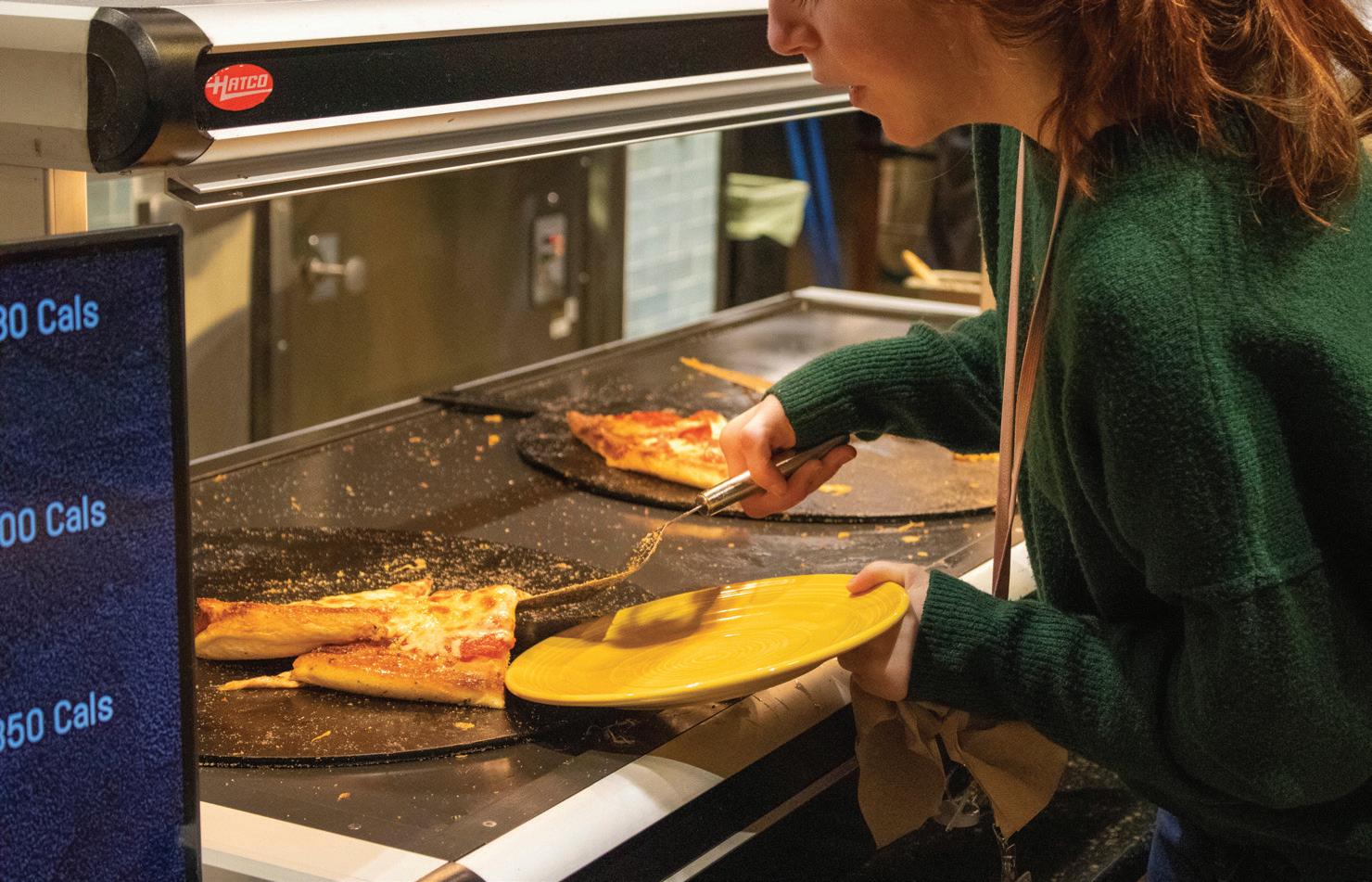
Swipes can be used at any VCU dining location for transactions between $7.53 and $10.15. Dividing the cost of meal plans by the number of swipes they provide shows the average swipe costs around $15.
“Beyond the convenience of daily meal management, the policy aims to integrate students into the campus community and guarantee reliable access to healthy dining options,” Obermiller said.
Obermiller noted that exceptions are made for students “with exceptional dietary requirements beyond the daily cycle menu offerings,” and said a review of the requirements should be used when developing “an exceptional medical or ethnic nutritional program.”
Continued on page 3
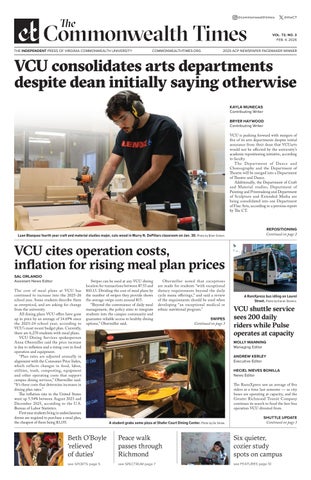
VCU is pushing forward with mergers of five of its arts departments despite initial assurance from their dean that VCUarts would not be affected by the university’s academic repositioning initiative, according to faculty.
The Department of Dance and Choreography and the Department of Theatre will be merged into a Department of Theatre and Dance.
Additionally, the Department of Craft and Material studies, Department of Painting and Printmaking and Department of Sculpture and Extended Media are being consolidated into one Department of Fine Arts, according to a previous report by The CT.
Continued on page 2
shuttle service sees 200 daily riders while Pulse operates at capacity
The RamsXpress saw an average of five riders at a time last semester — as city buses are operating at capacity, and the Greater Richmond Transit Company continues its search to fund the fare free operation VCU divested from.
Continued on page 3
SWIPES
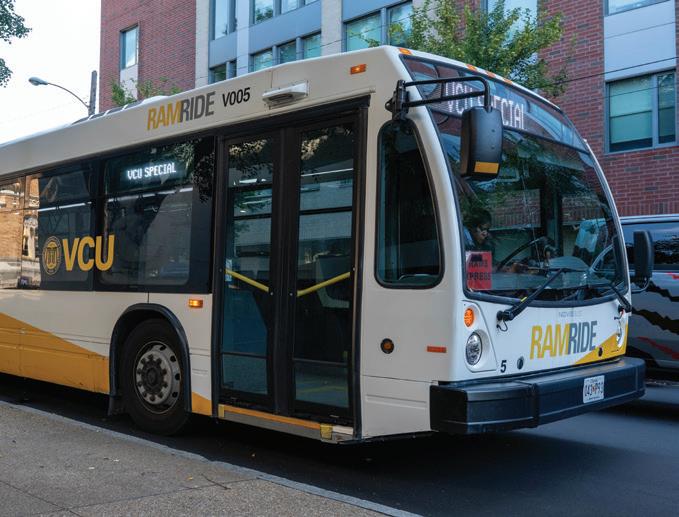
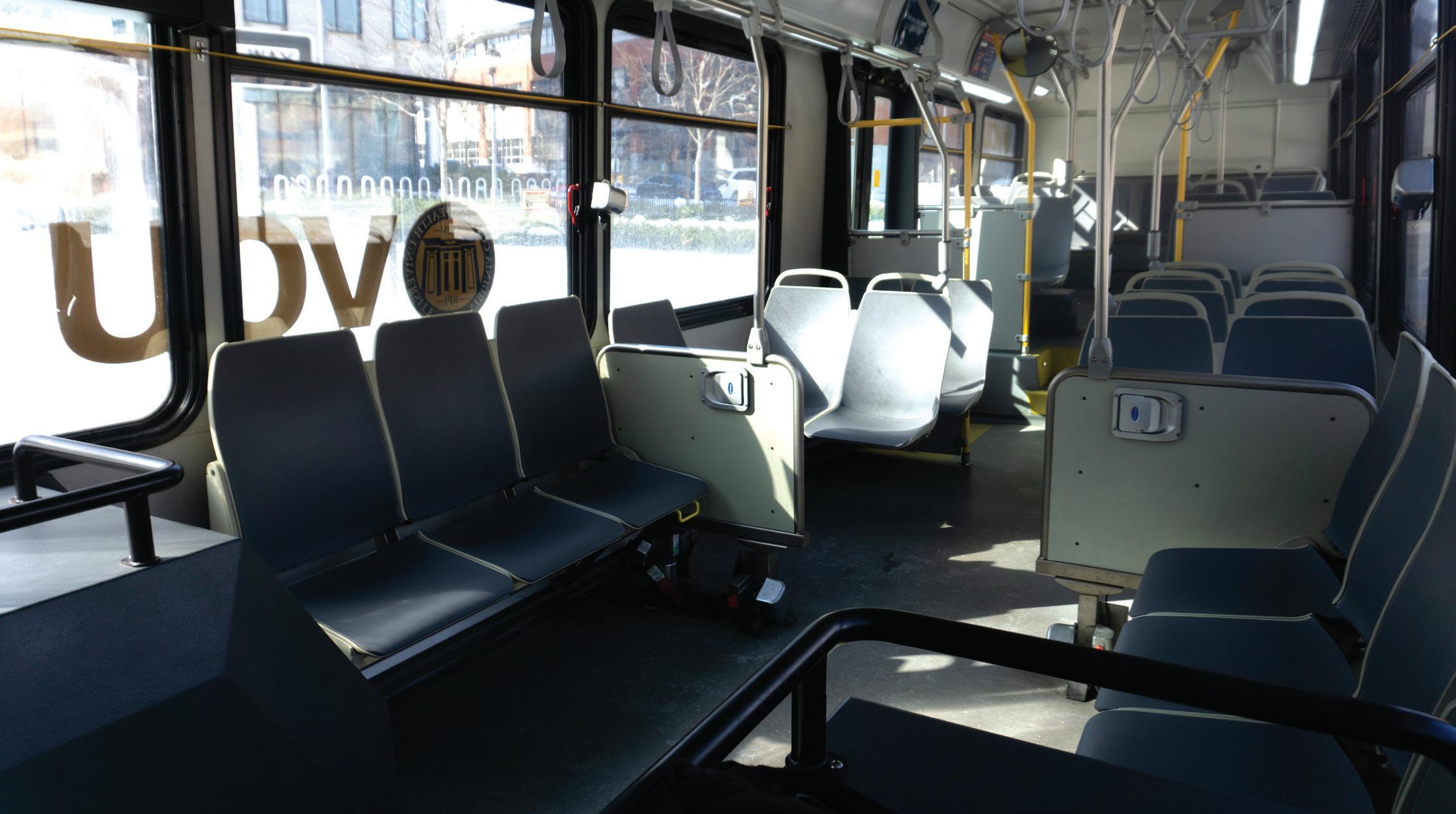
A RamXpress bus idling on Laurel Street. Photo by Kieran Stevens.
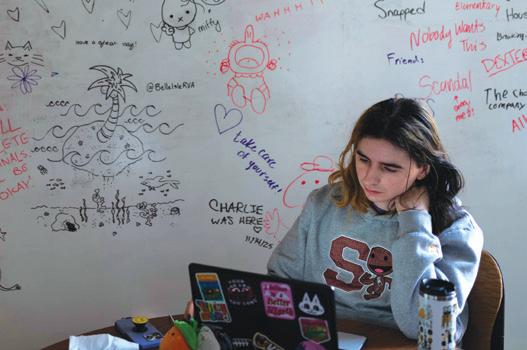
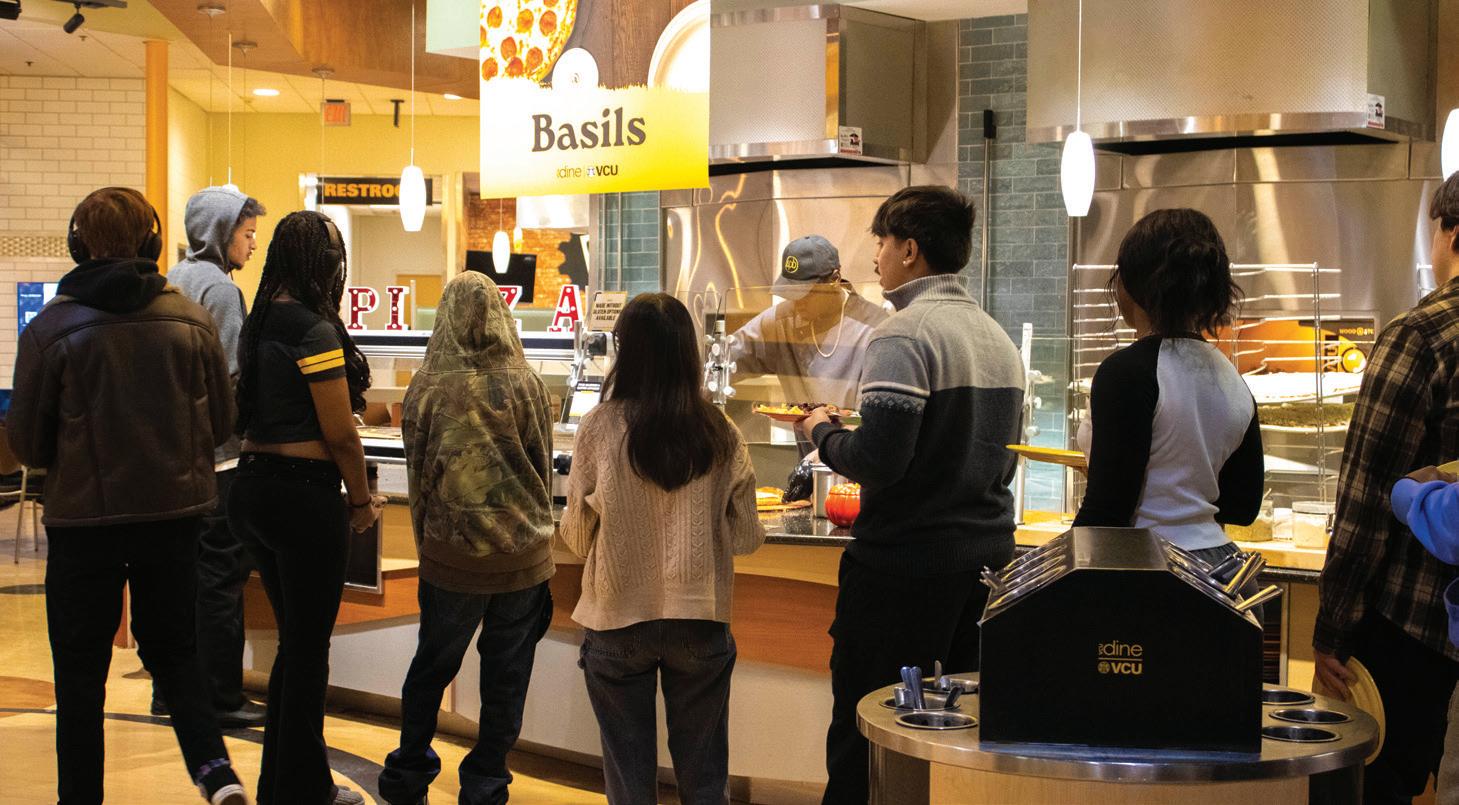
A student grabs some pizza at Shafer Court Dining Center. Photo by De Smaw.
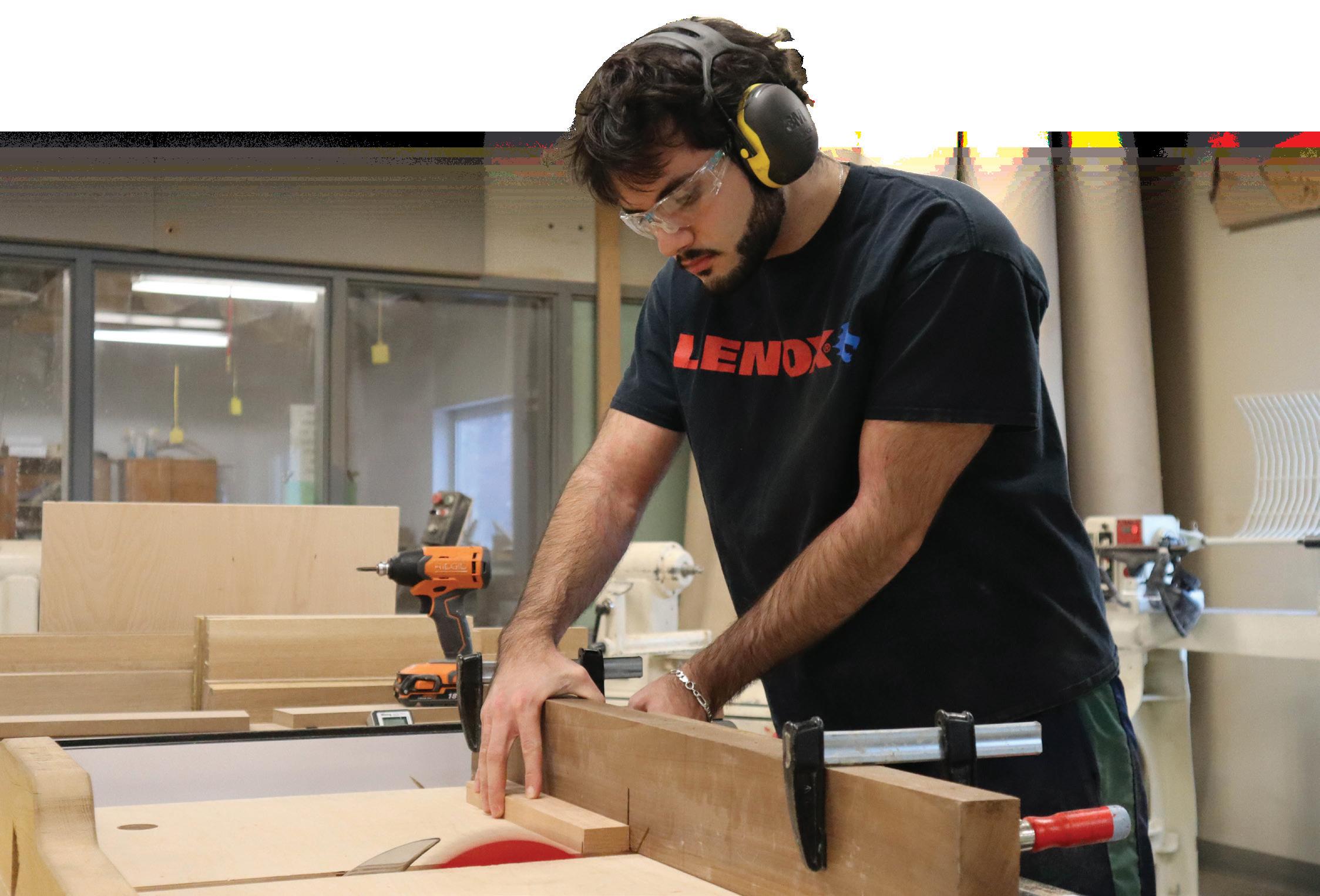
Luan Blazquez fourth year craft and material studies major, cuts wood in Murry N. DePillars classroom on Jan. 30. Photo by Bilan Osman.
News
Stories of the week
national: Millions of files related to the crimes of sex offender Jeffrey Epstein were released by the Department of Justice on Friday. The files detail more crimes against children by him and several political figures, and his involvement in things from the 2008 crash to the online alt-right. international: Global economic and political leaders met at the Davos forum in Switzerland. At the event, U.S. president Donald Trump backed down from using military force in Greenland and Canadian president Mark Carney warned of a world defined by “great power” dominance.
Virginia Democrats push to reform boards of visitors
HECIEL NIEVES BONILLA News Editor
Virginia legislators filed legislation to reform the appointment process and make-up of university boards of visitors, the highest governing bodies at public universities.
Proposed changes include expanding representation on boards to students, faculty and staff, clarifying the role of the General Assembly in confirming appointments and expanding the terms of appointees to reduce their dependence on individual governors.
The largest piece of legislation proposes fundamental changes to the structure of boards. It would expand their membership from 16 to 18, increase terms by two years, and add one person each from the university’s faculty, staff and student bodies as voting members.
VCU’s Board of Visitors has made decisions that were criticized by students and faculty in recent years, including the removal of DEI programs at the university in compliance with directives from the Trump administration and the cancellation of the racial literacy requirement developed by students and faculty.
Several pieces of legislation address a lack of student or faculty representation on boards. One proposal demands one faculty and one staff voting member on each board, elected by their respective groups to serve at least 12-month terms.
Another only calls for the addition of a student representative, elected and chosen by the governor from a list of three.
Some proposals are more administrative in nature, including one clarifying boards’ rights to hire legal counsel and another to clarify the role of the General Assembly in
confirming all appointees.
One piece of legislation mandates that board meetings be livestreamed to the public and are made easily accessible afterthe-fact through an archive.
Megan Rhyne, director of the nonprofit Virginia Coalition for Open Government, said the policy aligns boards with “modern expectations of access and transparency” in her comments to the legislature.
“School boards and local governments routinely do this without a mandate because their constituents expect it, and I think the constituents of these higher education institutions deserve the same,” Rhyne said.
Boards across Virginia have been involved in numerous controversies over the appointees of former Gov. Glenn Youngkin, many of whom were blocked from taking office by Democrats throughout 2025 over their views, according to a previous report by The CT.
Last October, a group composed of the United Campus Workers, Virginia Coalition for Human Rights and various teacher organizations created a package of proposed legislation involving universities — including voting seats for students, faculty and staff, according to a previous report by The CT.
Jack Leff, a VCHR board member who collaborated on the policy proposals, said the proposed changes are a “great start” but sees more room for improvement.
Leff suggested amending the various bills in the docket to bypass the need for the potential new student, faculty and staff board members to also be confirmed by boards or by the governor.
“This would put them more in line with the principles of shared governance that have been eroded over time and ensure
true representation from constituencies,” Leff said. “If the Board of Visitors or the governor is allowed to appoint student, faculty and staff seats, then I worry this will end up continuing to chill shared governance and the democratic process of these public institutions.”
Leff said undergraduate and graduate students have different interests and that the two groups should each have their own board representation, as opposed to one student representing both groups, as is recommended by much of the pending legislation. Despite his differences with some of the final language, Leff confirmed his team has been involved with the bills’ development.
Another organization advocating for Board of Visitors reform is Virginia’s state chapter of the NAACP, which held a legislative advocacy day on Jan. 20.
One of the organization’s legislative priorities is ensuring voting student representation on university boards, according to Jalen Vince, president of its Youth & College Division.
“We want to make sure that we maybe have three students who can vote in representation, or a student who can vote, and one faculty that can vote, or two students at Boards and two… and so on and so on,” Vince said. “So definitely [seeking] Board of Visitors reform, because it allows for more say from the actual community that’s being affected by the governance of the board.”
Vince also encourages students to attend their Board of Visitors meetings, along with other venues for civic engagement such as legislative and city council meetings.
VCU’s next full Board of Visitors meeting is in-person on Feb. 27.
Continued from front page
VCU has consolidated several departments as part of an academic repositioning initiative, a move the school has described to be ensuring a more efficient and academically-focused university.
VCUarts was not explicitly mentioned in the final draft of repositioning recommendations shared by former Provost Fotis Sotiropoulos.
A slideshow outlining the goals of the initiative listed some objectives including restructuring the College of Humanities and Sciences and renaming it University College, but there is no mention of the school of the arts.
When Sotiropoulos solicited input from faculty during the repositioning process, VCUarts Dean Carmenita Higginbotham assured faculty that VCUarts would not be affected by the initiative, according to Lily Cox-Richard, an associate professor in the Department of Sculpture and Extended Media.
The repositioning website states the university planned to move forward with the initiative while prioritizing “trust and transparency.”
To do so, the university convened a task force to get the perspectives of VCU faculty members. It included over “50 faculty and
staff members with more than 27,000 engagements, 1,300 attendees at in-person discussions and 2,500 written comments,” according to the Office of the Provost.
Some faculty claim there was limited communication from administrators, and other faculty were not consulted in certain decisions until it was too late.
Cox-Richard said the administration and VCUarts management have communicated only the bare minimum since talk of the repositioning arose.
“As faculty, we have received very mixed messages leading up to this,” CoxRichard said.
Cox-Richard noted that VCUarts management repeatedly stated the repositioning would strictly bring administrative changes, and assured no faculty would lose their job.
“So far, neither of those things seems true,” Cox-Richard stated.
In the midst of consolidation efforts, VCUarts paused admission to the furniture design graduate program and did not renew the contract of professor Annie Evelyn, the only full-time professor of the wood program.
When asked if VCUarts would hire a replacement, Higginbotham stated they are “unable to share updates on individual faculty employment matters.”
REPOSITIONING
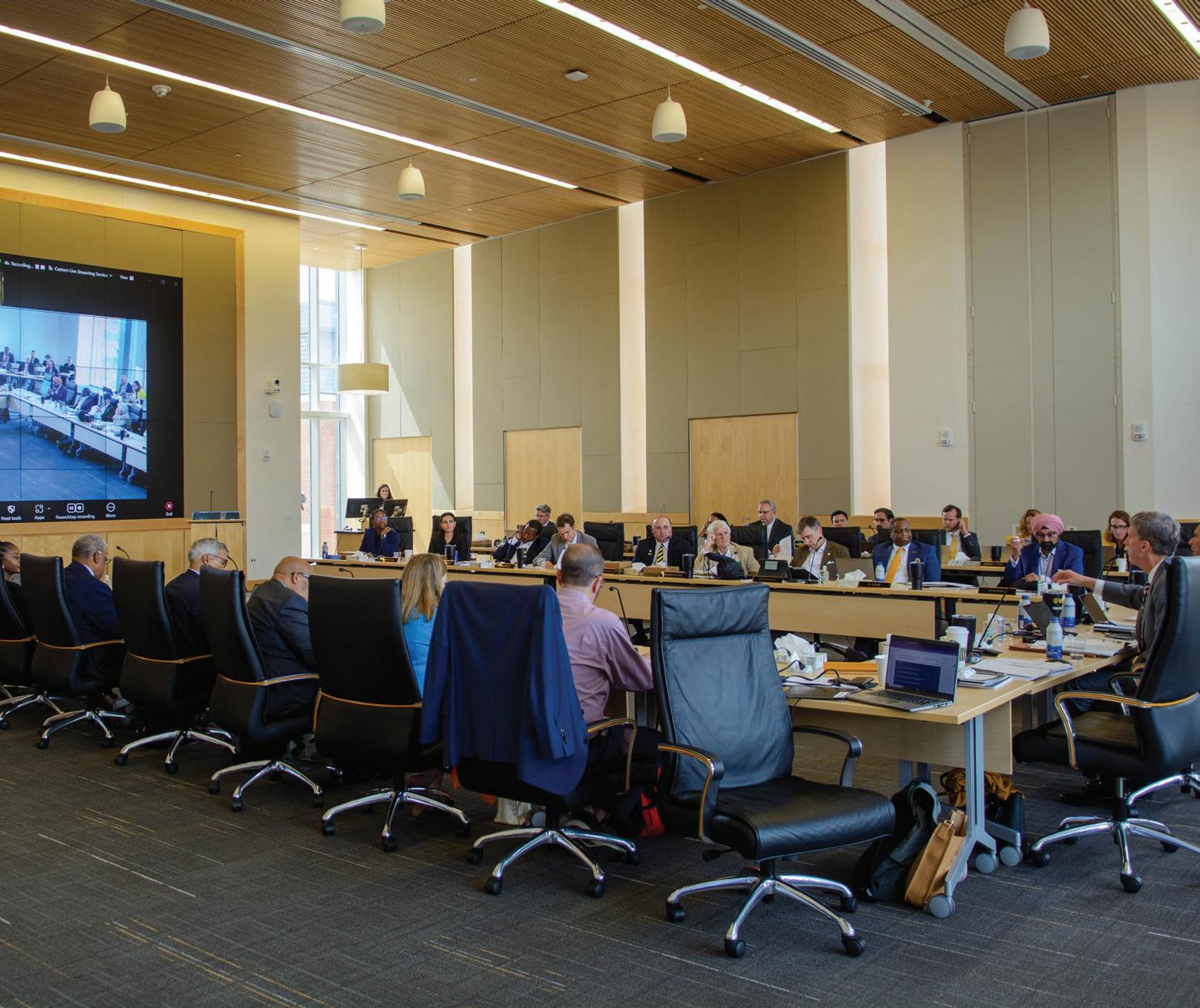
VCU President Michael Rao is joined by fellow administrators at a full Board of Visitors meeting on Sep. 13, 2024. Photo by Kieran Stevens.
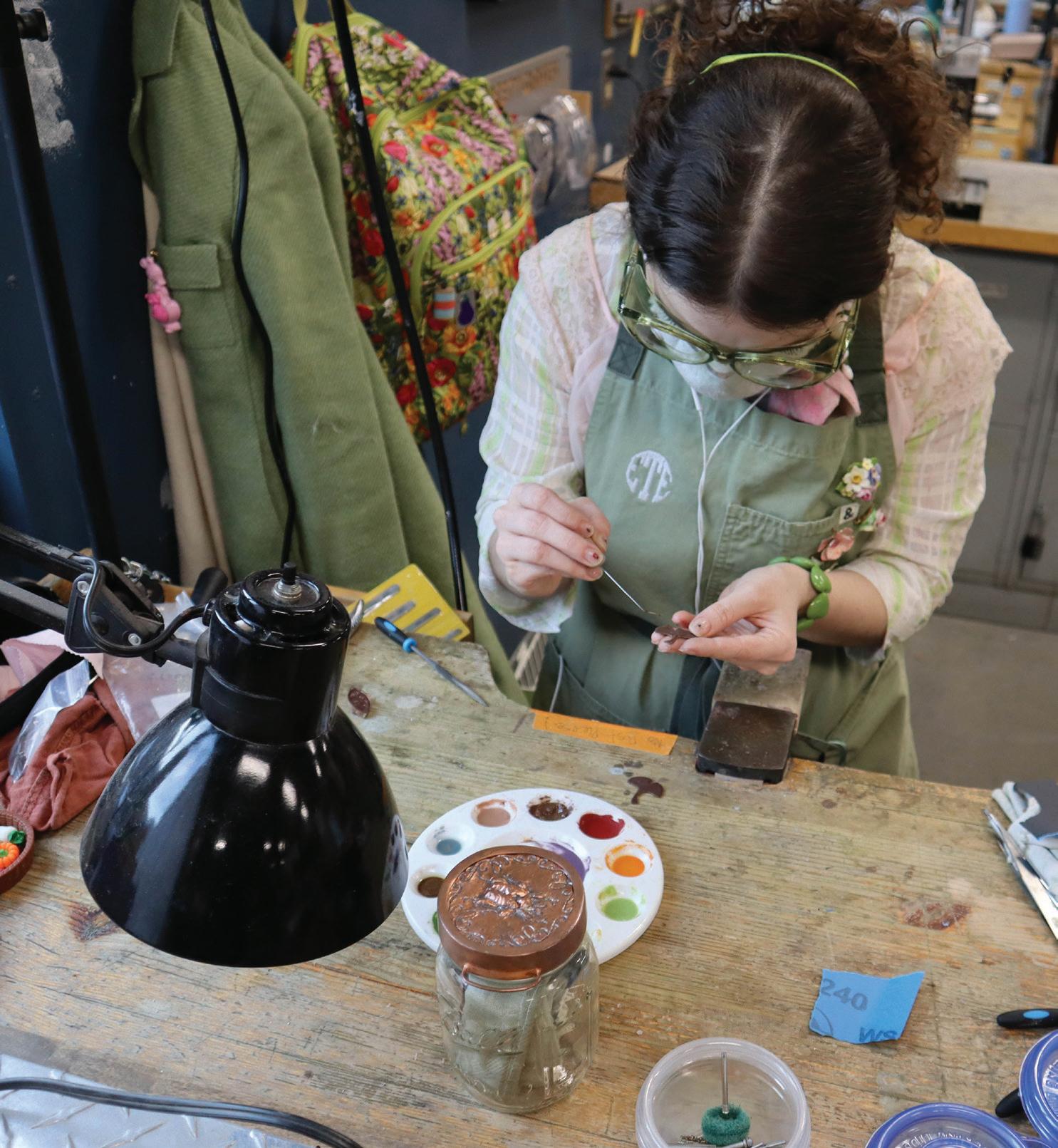
Craft and material studies major Estella Trygg paints enamel piece in Murry N. DePillars classroom on Jan. 30. Photo by Bilan Osman. Story continues on next
“The School of the Arts remains committed to the strength and continuity of our programs, and courses next academic year will be taught by qualified individuals while long term instructional needs are evaluated,” Higgenbotham stated.
Faculty were eventually told in October 2024 the restructuring would affect VCUarts, according to Cox-Richard.
The VCUarts Faculty Advisory Committee (FAC), which serves as a mediator between faculty and the dean, has worked to increase faculty involvement in decision-making, according to a VCUarts faculty member who requested to remain anonymous.
Most of the work has been put into revising the school’s governance document. In September 2023, FAC members voted to request that Dean Higginbotham refrain from making further departmental, administrative or organizational changes within VCUarts until the revised governance document was approved. The vote passed with 13 members in favor and one abstention.
The governance document had not been ratified by the date of this story’s publication.
“While exact details are still taking shape, we’re excited about the opportunity to work across programs to explore forward-thinking ways of sharing resources,” Higgenbotham stated. “This may include expanded access to facilities, specialized equipment, and learning opportunities. This exchange of ideas and expertise will ensure that students benefit from a broader creative community and are equipped with deeper interdisciplinary skills.”
While tensions remain between some faculty and administrators, some students
Continued from front page
VCU introduced the RamsXpress, a shuttle between the Monroe Park and MCV campuses, in August, as their contract to fund GRTC expired, according to a previous report by the CT.
During the fall 2025 semester, RamsXpress had 18,317 total riders — faculty and students — with about 1,000 riders per week, or roughly 200 per day, according to VCU Parking & Transportation director Josh Stone.
The RamsXpress does not duplicate GRTC routes, and currently has 2 buses running from 7 a.m.-7 p.m. between the Monroe Park and MCV campuses. Depending on traffic, each bus reaches both campuses 40-48 times per day, according to Stone. Though that number is subject to change based on how long the bus waits for riders at each stop.
Using the 200 riders per day and 40 stops at each campus per day estimates, the average number of RamsXpress riders at any given time is five or fewer. Though the majority of people ride between 8-9 a.m. and 11 a.m.-2 p.m.
“Overall, we are pleased with the program. The buses should be wrapped soon with the ‘RamsXpress’ brand so they will have a fun, new look,” Stone stated.
In contrast, GRTC Pulse buses, which share a similar route between VCU’s campuses, are nearly always full or at max capacity.
Between August and December 2025 — roughly the Fall 2025 Semester — GRTC’s Pulse had 876,148 total riders, an average of 175,230 per month or 43,807 per week, according to GRTC spokesperson Ashley Potter.
Potter said the buses are “pretty consistently standing room only.” In the current schedule, the Pulse makes
said they look forward to the changes the department mergers.
Fourth-year theatre student Grace Taraschke said the consolidation felt like it was a “long time coming.”
“What we gathered is, it’s going to bring us as theatre majors a little more access to dance classes, which in the past haven’t been the most accessible,” Taraschke said.
Third-year theatre student Andi Landrum said they sensed some sort of consolidation would occur, but they were never officially notified.
“It kind of just happened. It was like, one of our classes is now at the dance building, which is super far and doesn’t make a whole lot of sense. I didn’t know it was an official thing,” Landrum said.
When asked about the situation, Faculty Senate president Kim Bridges noted recently proposed legislation to the Virginia General Assembly that would “increase faculty and student voice on boards of visitors.”
Both Taraschke and Landrum said they would become involved with the VCU Board of Visitors if they have the opportunity.
“Myself and my classmates are very proactive in making sure our education is what we want and deserve, and I know we would all be more than willing to participate if we had access,” Taraschke said.
EDITOR’S NOTE: The CT made the decision to grant anonymity to a source in this story in order to protect them from possible retaliation.
about 188 trips every weekday and has approximately 312 passenger boardings every hour.
Though GRTC buses serve the Richmond community as a whole, not VCU students exclusively, many students rely on the public option for transportation.
Creative advertising student Dru Sweet has heard of but never used RamsXpress. She rides the public bus regularly.
Sweet said she would choose GRTC buses over the RamsXpress service to visit the MCV campus, and generally rides it when she feels the need to leave campus for elsewhere in the city.
“You’re able to get more with the public bus than you can with the shuttle — that’s just mostly for either this campus or the medical campus, but with the bus you can go way farther in Richmond,” Sweet said.
Third-year VCU radiation sciences
Continued from front page
School of Life Sciences and Sustainability assistant professor and Ram Pantry faculty advisor John Jones said that stable short and long-term access to food, the nutritional quality and cultural appropriateness of the food someone consumes, and if a person is able to obtain food legally (not stealing) make up most scholarly definitions of food security.
“Unless all of those conditions are present, the person in question is food insecure,” Jones said.
Jones mentioned that though dining plans can reduce food insecurity, it may take many years for students who take out loans to pay for meal plans to “pay for their food.”
Candace Collins, a second-year mass communications student, said she believes the prices of the dining plans need to be more realistic, and that they are
currently overpriced.
First-year mechanical engineering student Peyton Burlison described the dining plans as “pretty pricey,” and said he is “definitely not doing it next semester because they add up to a lot.”
Burlison said he understands why meal plans are required for first-year students living on campus, but thinks that there should be smaller packages offered to firstyear students.
Sen. Danica Roem, D-Manassas, recently introduced legislation to the Virginia General Assembly that would allow students to donate their unused meal swipes to other students. It passed the Senate through a block vote and will be heard by the House of Delegates and considered by the governor before becoming law.
The VCU Ram Pantry is a free food resource for all VCU students. More information is available at advocacy.vcu. edu/resources/ram-pantry/.
student Anthony Ramirez takes the shuttle every day. He has used the Pulse to get to classes in the past, and still uses it when the shuttle is unavailable.
“Last semester I was either by myself, or max like five people, usually,” Ramirez said of his time on the RamsXpress.
Ramirez contrasted this with a Pulse service that is usually “very full,” and said the shuttle is more convenient in light of safety concerns from students.
The previous contract between VCU and GRTC allotted $1.2 million annually to support fare-free service — the running cost of the shuttle for Fiscal Year 26 is $917,925 and goes up 3% annually, according to Stone.
GRTC fundraises through their Transit Access Partnership program, launched in 2023 in anticipation of finding new partners to help continue the “Zero Fare”
program, according to Potter. TAP aims to raise $2 million from the community out of the annual $6.8 million it takes to operate fare-free.
Zero Fare is currently slated to continue through FY26, ending in July. Though Potter said it is too early to comment on the status for FY27, she said they are still seeking funding partners.
“We are still looking for anybody who wants to come along and be a part of that funding effort — that is still open to the community, the public as a whole, organizations,” Potter said. “We also have our advertising aspect of it that we’re also hoping will start generating some major revenue toward Zero Fare. And so that’s being built up, and we’re rolling out new ways to advertise just to, again, collect those funds to keep the buses free.”
SHUTTLE UPDATE
VCU students dine at Market 810, one of the more popular spots on campus that accepts swipes. Photo by De Smaw.
The inside of a RamXpress bus, with no students to speak of. Photo by Landon Walker.
Stat of the week
Second-year guard Terrence Hill Jr. scored a career-high 24 points off the bench in the come from behind win over Loyola University Chicago.
Women’s basketball trapped by Spiders in third annual SupportHer game
DREW THOMPSON Sports Editor
VCU women’s basketball played its third annual SupportHer game against the University of Richmond on Feb. 1, ending with a 77-65 loss.
The SupportHer game is an initiative to get the Richmond community more involved with women’s athletics at VCU. The game drew a crowd of over 5,000, something that the players and coaches want to become the norm.
“If we could have this type of crowd every game, we would play even better,” second-year forward Katarina Kneževic said. “That’s something that should be a standard for women’s basketball as we are all developing the sport.”
The Spiders jumped out to a quick fourpoint lead before the Rams found themselves on the board off a jumper from first-year guard Daija Preston.
Richmond stayed in front for the opening five minutes primarily through its efforts to get to the free throw line, as both teams looked streaky from the field.
Both teams began to find their stride after the Rams brought the game to 10-10. VCU made four straight field goals while Richmond went four for five in the same stretch. The Spiders continued to hold the lead but the Rams would not back down easily.
A well–worked offensive routine from VCU second-year guard Cyriah Griffin and fourth-year forward Makennah White put the Rams down only four to end the first quarter, 15-19.
Richmond came out of the gates hot to start the second, gaining a rapid nine-point lead. The Spiders built their lead through high-volume three-point shooting and perfection at the line.
The Spiders continued to hold a lead as the Rams struggled to build momentum. Richmond held the rebounding advantage halfway through the second while VCU doubled Richmond’s total personal fouls.
Both teams began to struggle offensively to close out the second quarter; Richmond went four minutes without a field goal and VCU ended with a two-minute scoring drought.
The Spiders held a 13-point lead at halftime, 38-25. The key difference lay in
free throw numbers: Richmond was 13/14 from the line while VCU was only 3/5. The Spiders also shot over double the amount of threes as the Rams, converting on three compared to VCU’s zero.
The second half started much the same as both teams came out the gates slow. The game continued to be a back-and-forth contest for the opening four minutes with Richmond still holding a double-digit lead.
Kneževic began to take over for VCU, scoring three straight field goals — including VCU’s first three of the game — for the Rams to bring the game to within single digits. However, a rapid recovery by Richmond put the lead back to 11 points.
The Spiders continued their streak with a 10-2 run to extend their lead to 14, making eight straight shots to end the third.
Kneževic continued to dominate for the Rams even through the run, hitting another three and getting fouled in the process — although she was unable to convert the free throw.
“[Kneževic] is getting so much experience on the floor,” said VCU head coach Beth O’Boyle. “She can score in a variety of ways.”
Richmond opened the scoring in the fourth quarter with a close shot under the hoop before VCU answered back with a shimmy and three-pointer from first-year guard Laia Crespín.
The Spiders continued to stay in control however, with a crafty dribble move from third-year guard Ally Sweeney putting a defender on skates and finishing with an elbow jumper.
VCU still showed fight but Richmond always appeared one step ahead as a three took the Spiders’ lead to 65-50.
The Rams brought it back to 11 but foul trouble kept the Spiders in the driver’s seat. Sweeney continued to command the Richmond offense with another three, her fifth of the game.
VCU’s offense began picking up with three straight made shots but Richmond continued to stay out of reach. The Spiders hit free throw after free throw to secure the 77-65 win.
Richmond’s efficient shooting and free throw numbers were the difference in the win. The Spiders shot 53% from the field and only missed one of their 18 free throw attempts. VCU showed flashes of good production but it was never able to keep up with Richmond’s efficiency.
Kneževic had a career-high 22 points despite the loss.
VCU will play its next game at Loyola University Chicago on Saturday, Feb. 7 at 3 p.m.
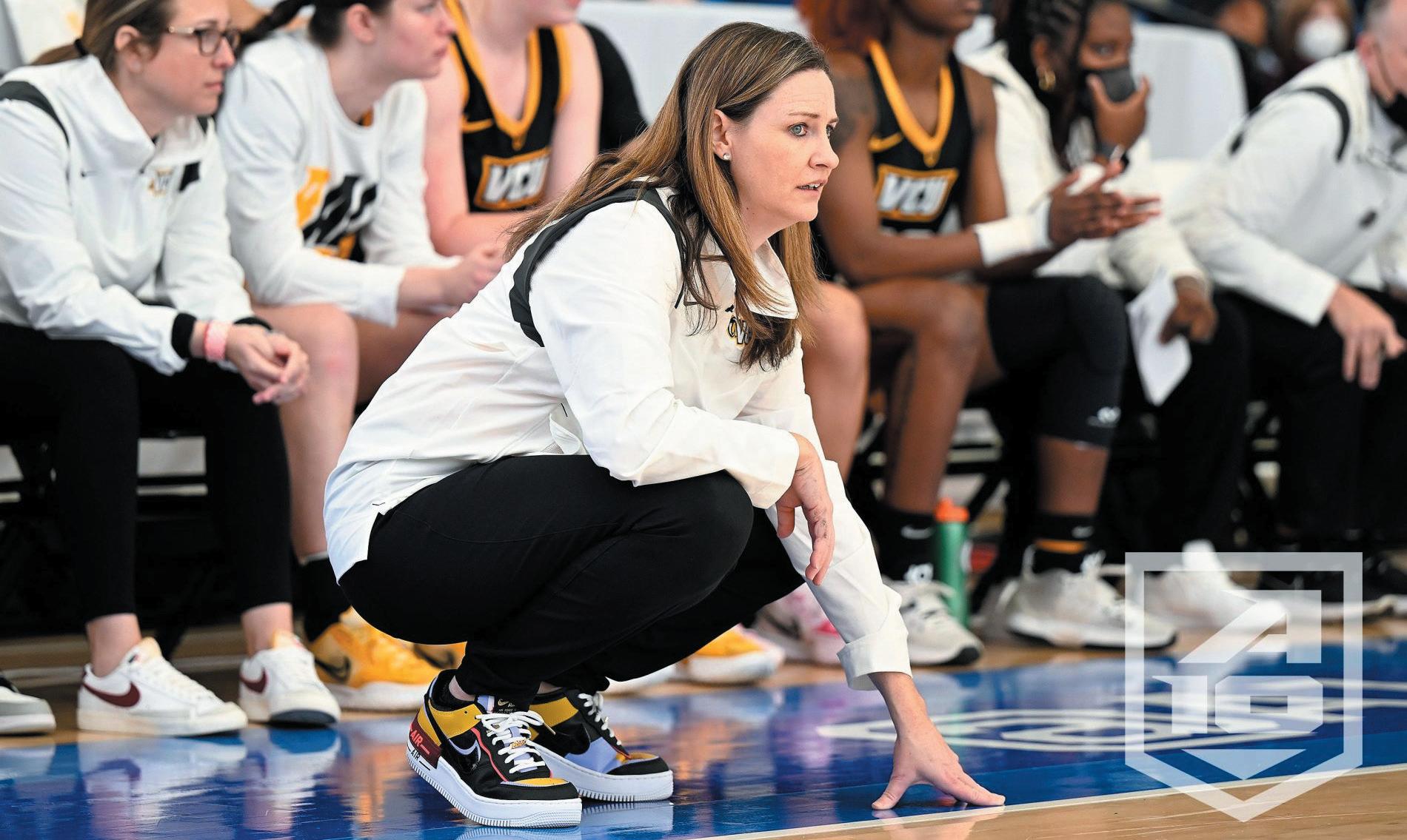
Women’s basketball coach Beth O’Boyle
‘relieved of duties’ after 12 seasons
DREW THOMPSON Sports Editor
ALEXIS WASHINGTON
Assistant Sports Editor
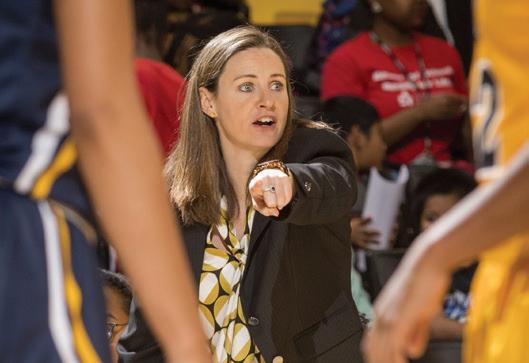
VCU women’s basketball head coach Beth O’Boyle was relieved of her duties at noon on Feb. 2. She will not coach the remainder of the season and will not return to VCU after the season, according to Evan Nicely, VCU Athletics associate athletic director for external affairs.
“We want to thank Coach O’Boyle for her service to VCU and her dedication to
our student-athletes. We will not renew her contract and she will not coach the remainder of the season,” VCU Athletics director Ed McLaughlin said in a press release. “We wish her all the best in her future endeavors. We will begin a national search immediately.”
The news came out following VCU’s Feb. 1 loss to the University of Richmond, 65-77, in the annual SupportHer game.
O’Boyle was hired as head coach in 2014 after serving as head coach for Stony Brook University. She holds the record for the most coaching victories in VCU basketball history.
Story continues on next page
VCU second-year forward Katarina Kneževic dribbles by a University of Richmond defender.
Photo by Ashley Davis. Collage by Zach Montgomery.
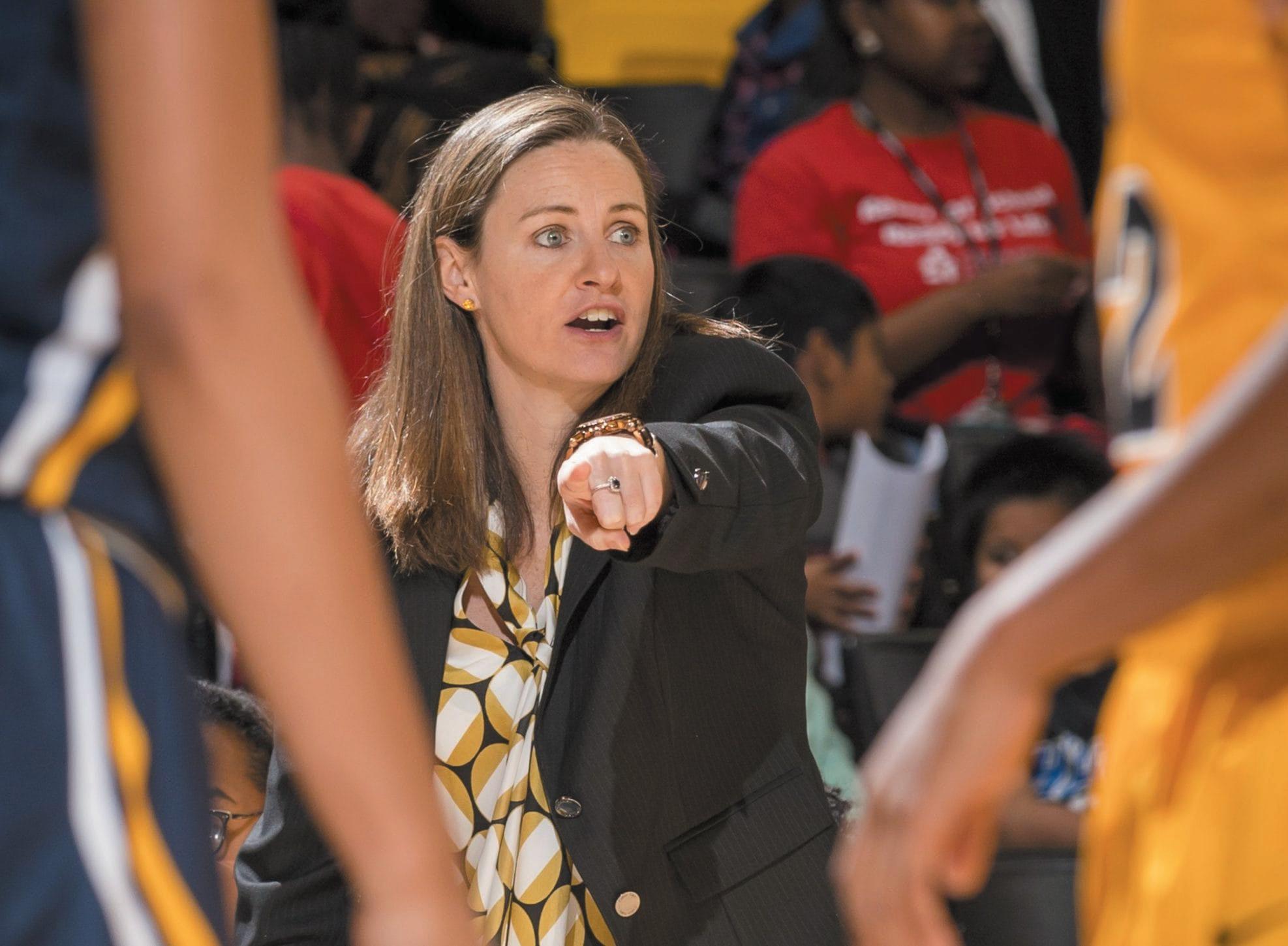
Former VCU women's basketball head coach Beth O'Boyle.
O’Boyle was the head coach for 12 seasons. She held an overall record of 191-168, won one Atlantic 10 tournament title in 2021 and reached the NCAA tournament that same year.
Despite holding the record, O’Boyle’s recent years have been marred with inconsistency.
The women’s basketball team is currently in the midst of an 8-15 season, 4-7 in conference play. Last season VCU finished 12-19, 6-12 in the A-10 and lost 11 of its last 14 games.
The 2023-24 season they finished 26-6 and 15-3 in the A-10. However, they lost in the conference tournament and were bounced out of the Women’s Basketball Invitation Tournament in the first round against Villanova University. The season prior, they went 7-22 and 4-12 in the A-10, losing 11 of their final 13 games.
VCU women’s basketball has not had back-to-back seasons over .500 since 2020-21 and 2021-22. In the last four seasons the Rams are 53-62 overall and 29-34 in the A-10. Taking out the 202324 season makes those win numbers even less balanced.
JAN. 28
WBB VS. FORDHAM UNIVERSITY WON 69-58
JAN. 30
MTEN VS. DEPAUL UNIVERSITY WON 4-3
Amidst the leadership change, the Rams are dealing with several injuries including first-year guard Patricia Augustin, firstyear guard Daija Preston and fourth-year
VCU women’s basketball assistant coach Kirk Crawford will serve as the interim coach for the remainder of the season. He joined the staff in July 2017 and brings over 30 years of Division 1 basketball, WNBA and NBA experience.
guard Mary-Anna Asare. Crawford will make his coaching debut when VCU faces Loyola Chicago on Saturday, Feb. 7 at 3 p.m.
VCU Athletics declined a request by The CT asking for further comment.
RVA-native baseball phenom Jacob Lee returns after record-breaking rookie year GAME RESULTS
JENNY ALLEN Staff Writer
Second-year catcher Jacob Lee went beyond expectations during his debut collegiate season in 2025. He delivered unanticipated performances while setting records that will be hard to beat.
Lee began receiving his collegiate recognition during the 2025 preseason, during which he was ranked No. 2 among the Division 1 Baseball Preseason Atlantic 10 Impact Freshmen and No. 92 out of the D1 Baseball Preseason Top 100 Impact Freshmen.
Lee was then named Freshman AllAmerica First Team by the National Collegiate Baseball Writers Association and Freshman All-American Second Team by Baseball America, D1 Baseball and Perfect Game.
The star catcher is a native of Chesterfield, Virginia, and is the first player in VCU Baseball history to be named to four Freshman All-American teams in one season, according to VCU Athletics.
“His value; you probably couldn’t put a number on it,” Head Coach Sean Thompson said during a press conference.
Lee has set standards high for the upcoming season after proving himself last year.
Lee was recently ranked No. 7 among the D1 Baseball Preseason Top 50 catchers in the 2026 preseason.
“Lee’s looked really good, I think this is some of the best he’s swung the bat since being on our campus,” Thompson said.
Matching his accomplishments at the plate in producing runs, Lee’s ability as a fielder has increased steadily.
“He’s developed so much defensively, turning himself into a really high level prospect,” Thompson said. “Not with the bat but playing a premium position like catcher and looking like a catcher that’s going to be able to play the game for a long time.”
Lee has already made his mark in the Rams record book in his first year, setting the freshman home run record with 17 home runs, finishing third in single-season
MBB VS. LOYOLA UNIVERSITY CHICAGO WON 89-75
FEB. 1
MTEN VS. EAST TENNESSEE STATE UNIVERSITY LOST 3-4
WBB VS. UNIVERSITY OF RICHMOND LOST 65-77
home runs and tied No. 9 in single-season runs batted in, according to VCU Athletics.
Lee had 20 multi-hit games and 14 multi-RBI games, including seven games with four or more RBIs — the most by a VCU player in each category.
Alongside those stats Lee was tied for the team lead with 59 hits and four sacrifice flies, while finishing second among Rams with 13 doubles and 53 games started.
Thompson had his first season as head coach during Lee’s rookie season, giving them the opportunity to create an unstoppable dynamic duo.
In Thompson’s first victory as head coach, Lee hit a go-ahead, eighth-inning homer, driving in three runs.
Despite the other opportunities Lee encountered after an outstanding first season, he has kept his loyalty with VCU — pleasing his teammates and coaches.
“He loves VCU, he loves his baseball program, he loves his friends, his teammates. He bought into the vision right away last year,” Thompson said
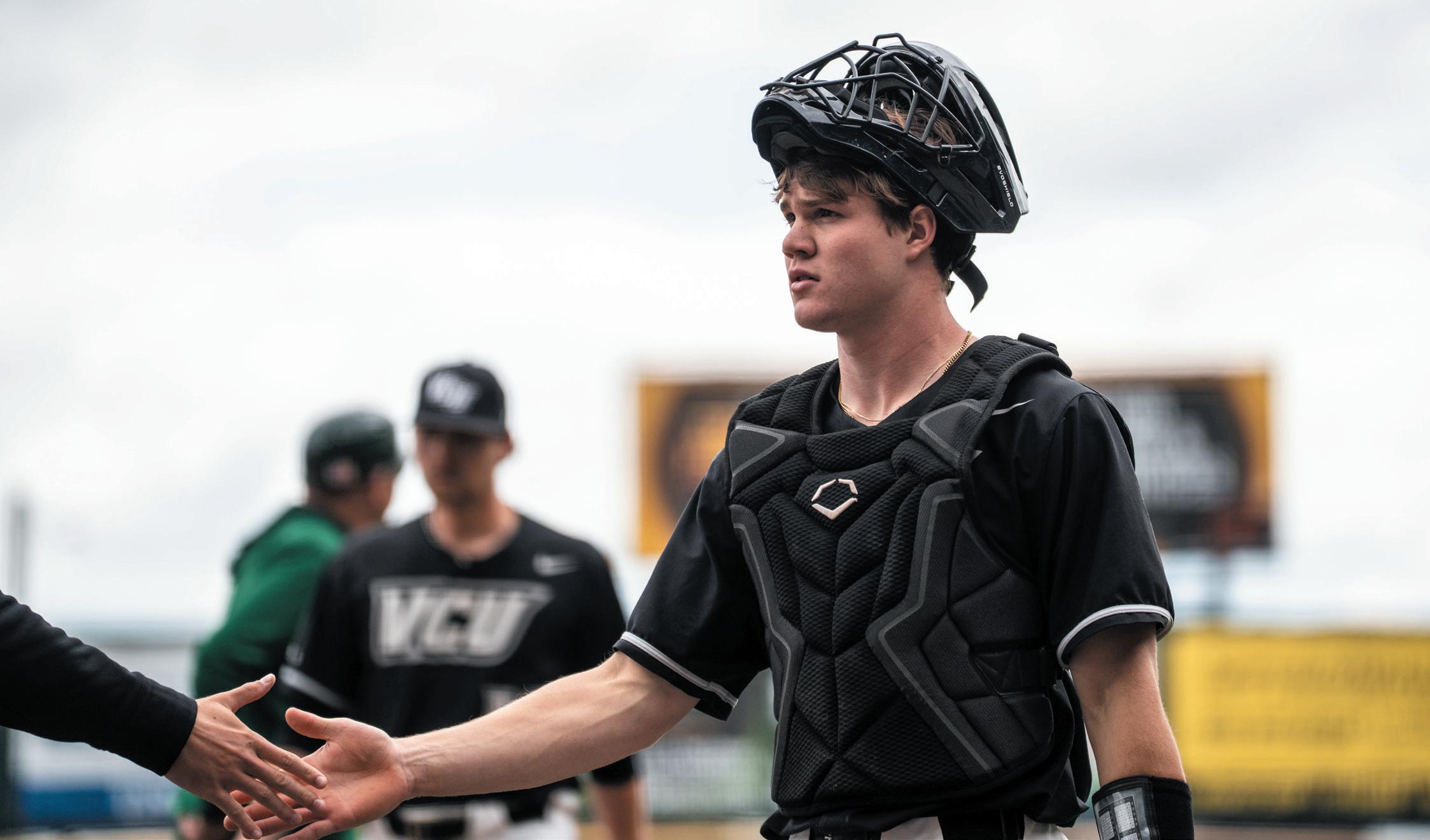
VCU second-year catcher Jacob Lee in his catcher gear. Photo courtesy of VCU Athletics.
Former head coach Beth O’Boyle coaches players from the sidelines against Dayton University on March 5, 2022. Photo courtesy of Greg Fiume and the Atlantic 10.
On This Day
day, Feb.
Monk ‘Walk for Peace’ comes through Richmond
MAEVE BAUER Spectrum Editor
Thousands of people visited downtown Richmond on Monday to catch a glimpse of the Buddhist Monk “Walk for Peace,” a group of 17 venerable monks — and one dog — from Fort Worth, Texas making their way to Washington, D.C.
The Monks’ visit to Richmond marked the 100th day of their 2,000-plus mile journey. They are set to arrive at the United States Capitol on Feb. 10-11.
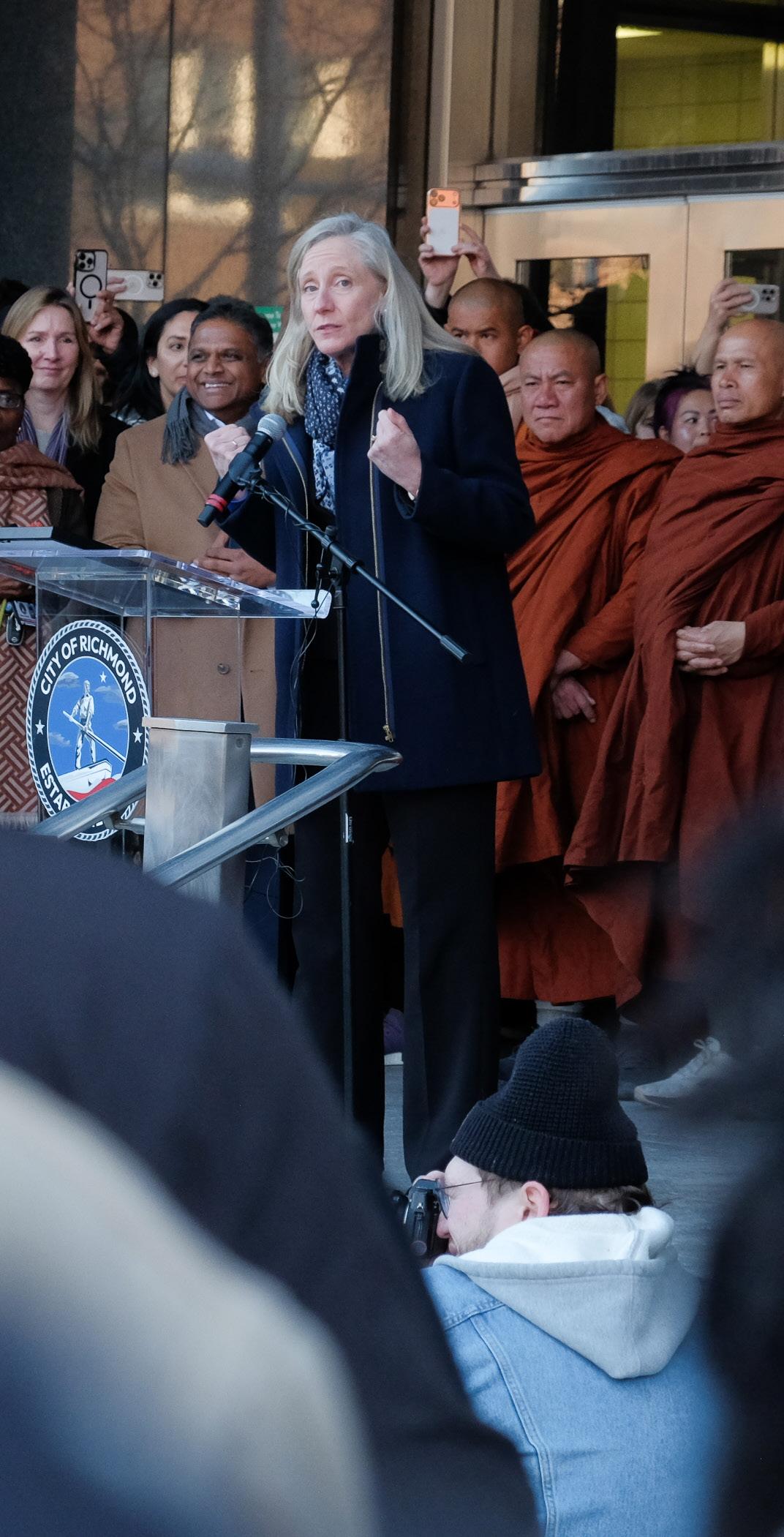
The monks walked from Richmond Fire Station 17 and across the bridge to City Hall, where they were met by Mayor Danny Avula and Gov. Abigail Spanberger.
“This pilgrimage comes at a critical time when communities across our nation face rising mental health challenges, divisions and global uncertainty — serving as a reminder that peace is not merely a destination, but a practice that begins within and radiates outward to families, to communities and to our nation,” Avula said.
Gov. Abigail Spanberger officially proclaimed Feb. 2, 2026 as “Walk for Peace Day” in the Commonwealth of Virginia. It was her first proclamation as governor.
“The venerable monks who have been walking for 100 days to make clear to the people of the United States and the world that when you believe in something, you bring people together for a common cause,” Spanberger said.
While eventually arriving in Washington will be the end of the monks’
physical journey, it will not be their final destination, said venerable monk leader Bhikkhu Paññākāra. Their final destination is world peace.
Paññākāra’s speech emphasized the importance of practicing mindfulness every day. He encouraged people to slow down, turn off their phones and focus on one thing at a time.
“When we are overwhelmed with thoughts, that is when we cry,” Paññākāra said. “When we feel stressful, then that is when we don’t want to do anything else.”
Within the last century, there have been only select moments when Buddhist monks have gathered for a meditation walk, according to Jennifer Garvin-Sanchez, an adjunct world studies instructor specializing in union theological seminary at VCU.
“Monks have walked for peace, have walked for harmony and for healing of war, you know, like monks walked after the killing fields in Cambodia. Tik Na Khan walked after the war in Vietnam, so it’s been sort of a mindful practice that calls attention to not only the healing of the self through mindful meditation, but the healing of the world as well.” GarvinSanchez said.
The Richmond Police Department estimated the streets were filled with about 10,000 people, according to City Hall spokesperson Michael Hinkle.
Most spectators seemed to be from Richong, but some traveled far just to witness what they called a “once-in-alifetime-opportunity.”
Two of those travelers were sisters — Adrianne and Maria Martino. Adrianne is from Florida and Maria is from Kansas. They had both been following the monks online, and decided to come together to see them and Aloka, “The Peace Dog.”
Summing up the message being shared by the monks, Adrianne said it is that if every person has peace within themselves, then the whole world would have peace. The cultural moment was the first time she truly understood religion.
“I was raised catholic, but sitting in church is like all I could do was say ‘when will this end?’ but I can just listen to him [the venerable Bhikkhu Paññākāra] for an hour and it’s like only a minute has gone by. I had the realization yesterday, I understand now why people are religious,” Adrianne said.
The sisters shared the same hope: the walk can help bring peace to young people so they will be left with a world “less crazy.”
“I have a son, 35, and I’m like, ‘man, what is gonna happen to you?’” Maria said. “How do you get community when everybody’s at loggerheads with each other? I don’t know, so we’re just two sisters for peace.”
Adrianne and Maria could not equate anything they had seen in their time to the event.
Bygones boutique makes buying decades-old garments inclusive
DEVYNN ALSTON
Contributing Writer
Bygones Vintage Clothing is a boutique in Carytown with pieces dating from the 1800s to 1976. The owner Maynee Cayton prides herself on creating an inclusive space — bringing old Hollywood glamour right to Richmond.
Since opening their doors in 1979, the store’s staff has looked to buy and sell vintage and antique pieces to and from Richmonders — to gain a lot of its antique pieces, they will have buying appointments with anyone who has something special to sell.
In these buying appointments, the owner, Maynee Cayton, and her employees get to see one-of-a-kind antiques ranging from clothes, accessories and jewelry. The knowledgeable staff has the ability to pinpoint the different eras of the items that get brought into their store, according to Cayton.
“When people come in for buying appointments, that’s always cool, because they’ll pull all these boxes out of their attics that have been in there for years and years, and you get to dig through them, and see history that hasn’t been touched for however many decades,” Bygones employee Emily Pricenski said. “It’s always a surprise.”
Princeski has been a collector and studier
of vintage for a long time, Bygones is more than just a job to her. It is something she is truly passionate about.
The store finds and sells reproduction items — which are newly manufactured objects designed to closely resemble or imitate older, original or antique items.
Cayton said she does not have to guess what vintage looks like.
“I was born in 1950, so I remember the 50s, the 60s, 70s, 80s, so I don’t have to guess. I just know,” Cayton said.
The store doesn’t sell anything newer than the 70s. Throughout the 70s and 80s, there was a lot of vintage, but today there is not as much, according to Cayton. As time progressed, she decided to stay in the earlier decades of the 20th century, which started the inclusion of reproductions in her store.
Selling reproductions is a way to be a lot more inclusive, according to Cayton. Vintage items run small and do not offer a lot of options. A lot of people just could not wear vintage clothes at one point.
On this
4, 1913, civil rights icon
Rosa Parks was born in Tuskegee, AL.
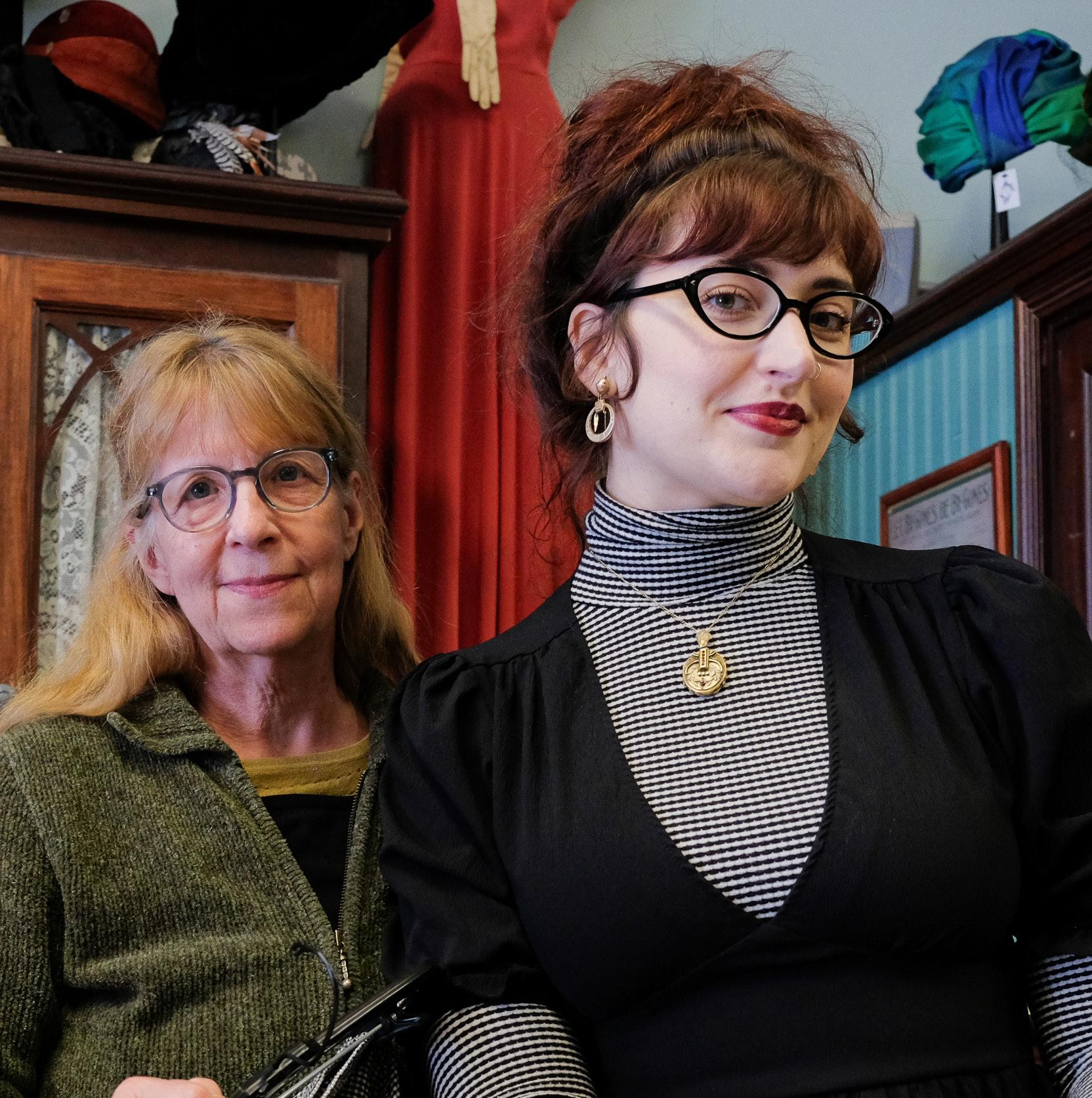
Vintage lovers can find home at Bygones in Carytown, 2916 W. Cary St. They are open from 11 a.m.-6 p.m. every day. Maynee Carton, Bygones owner, with store employee. Photos by Burke Loftus.
The venerable monks walk through Richmond. Photos by Burke Loftus.
Gov. Abigail Spanberger officially proclaims Feb. 2, 2026 to be “Walk for Peace Day” in the Commonwealth of Virginia. It was her first proclamation as governor.
AFO professors show off their specialties at latest Anderson exhibition
FAKEHA NAEEM
Contributing Writer
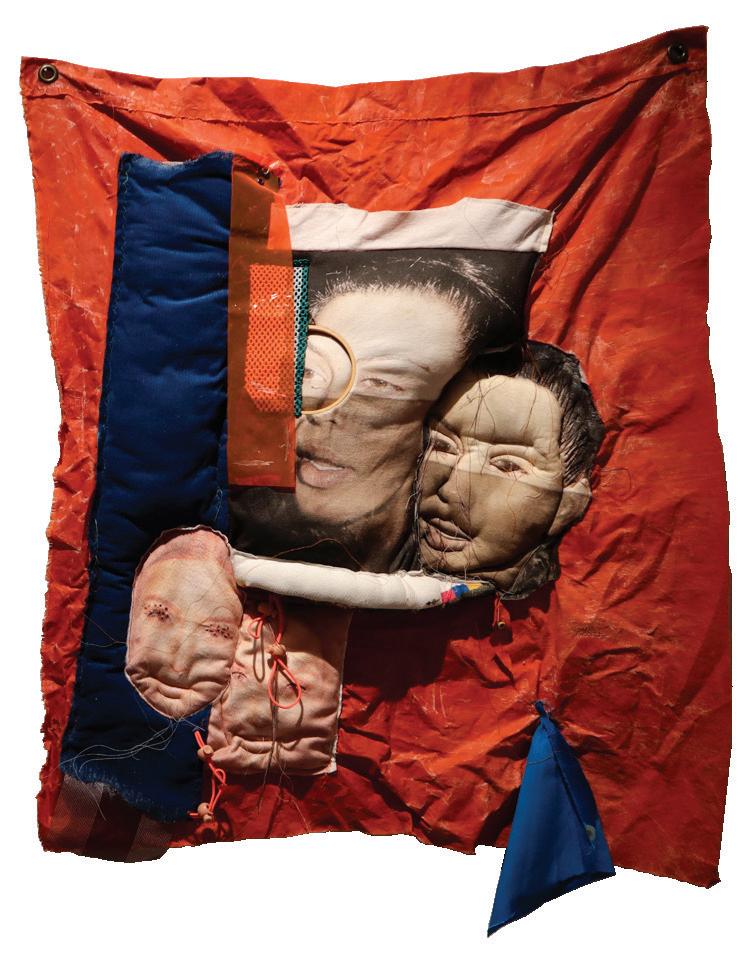
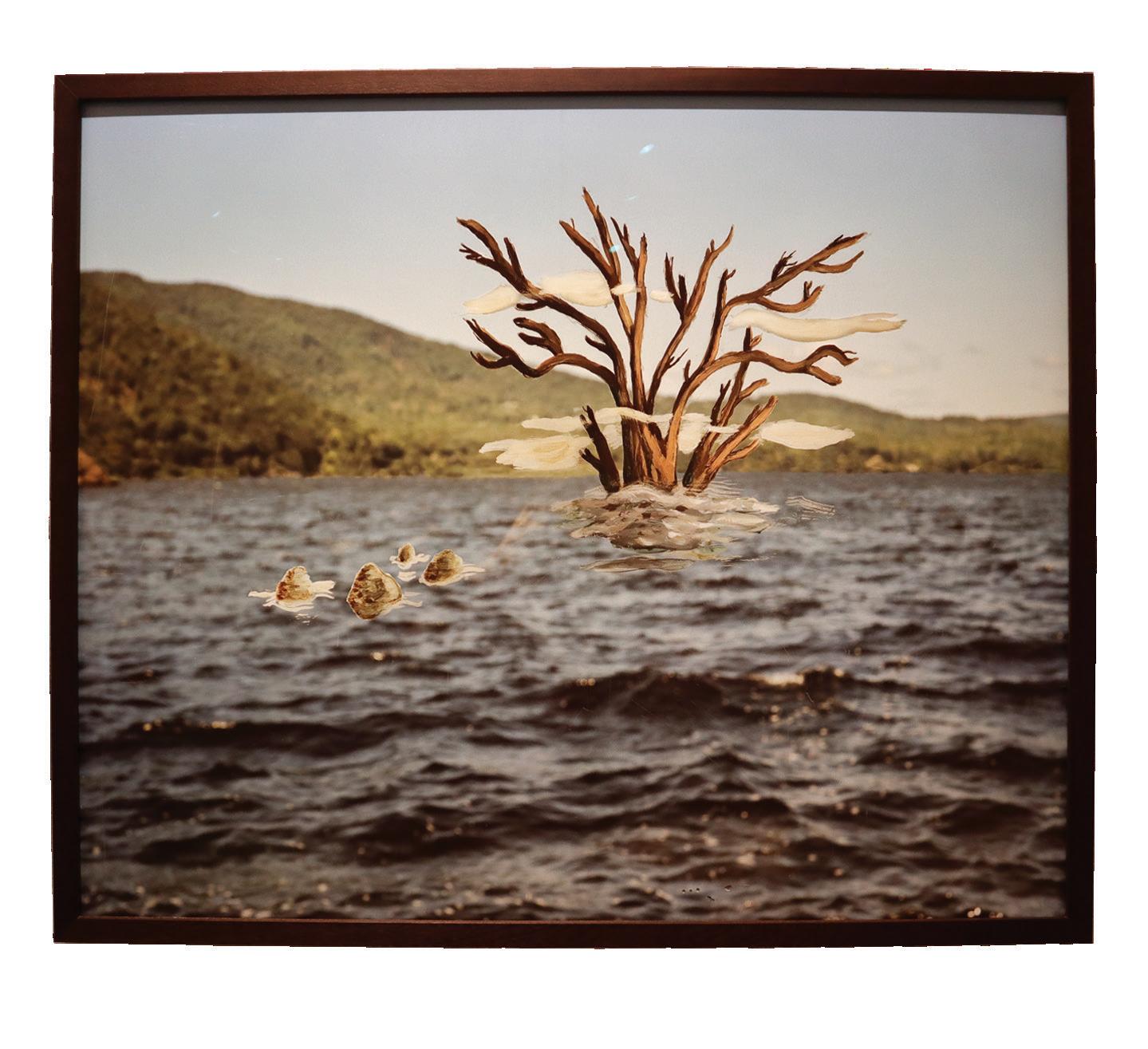
The Anderson and VCUarts are exhibiting “The way things could be …,” an exhibition curated by adjunct instructor Sarah Irvin. The exhibition showcases selected works of six participating artists, from the VCUarts Foundation faculty.
The artists include Roberto Jamora, Nyasha Madamombe, Will Connally, Morgan Herrin, Chelsea Lee and Michael Royce. Their work brings a unique perspective to the transformation of thoughts and feelings into physical expression for the audience to interact with.
The featured works explore the concept of what seems tangible, becoming concrete through the mediums of photography, painting or sculpture.
The artists’ works are based on belief, religion, fictional work and emotions.
The theme for the show stems from Irvin, who challenged the artists to create works which tie to the concept “The Way Things Could Be...”
“Through studio visits, attending their artist talks, and engaging in in-depth conversations about their work, I began to see throughlines emerge,” Irvin said.
Irvin said the question on how images can be used to answer questions on what and how we believe, is an important part of being human. That is how the idea of intangible changing into something tangible emerged.
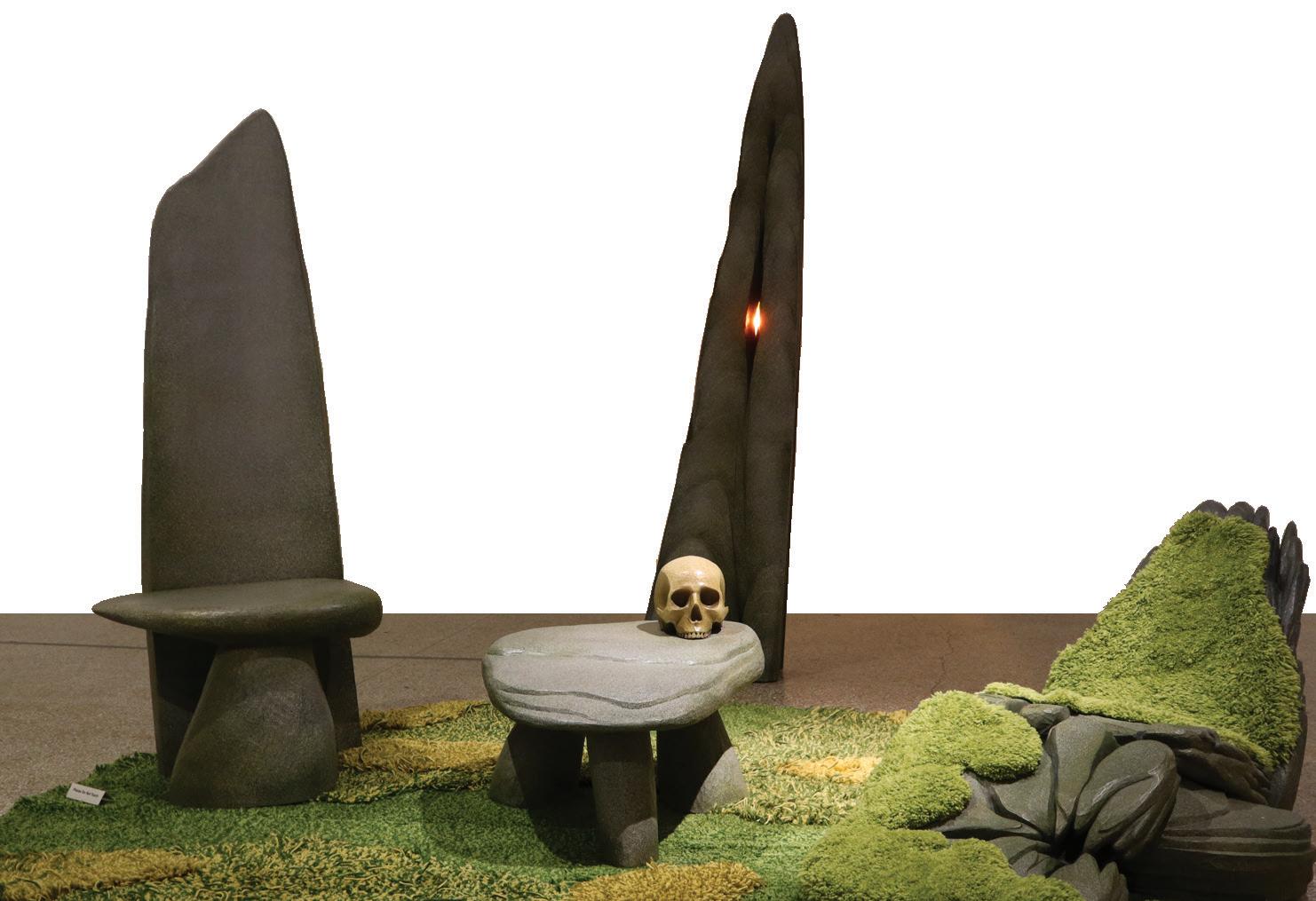
Herrin, an assistant professor and woodshop coordinator for VCUarts, references aspects of ancient, neolithic monuments in his sculptures. Transforming conceptual pieces into physical art comes naturally to him, but for this particular theme his inspiration became a thing obsession, thinking deeply about how things translate into one another.
Herrin’s work in the gallery is a blend of functional and sculptural art that he would like the audience to physically interact with.
“The idea is to connect to the work,” Herrin said. “The work is completed through their interaction with it, I want them to feel the mystery, intrigue of these objects, and want that to come through from the work to, and it did to some extent.”
When asked about how the other artist exhibiting with him felt interacting with his sculptural pieces, Herrin said they were surprised by how functional the pieces were. While there are some incredible pieces from the series, his favorite is a tall spire. Described as a lamp projecting the sunset onto the wall while projecting a beam of light forward.
Connally, an assistant professor focused on photography, is exhibiting. A mix of photography, installations and props based on stories. He was intrigued by the idea of representing an abstract idea and making it more visceral. When Irvin approached the concept, he leaned into the tone of the pieces, mood and contrasting objects.
The series depicts scenes retold by a 90-year-old, according to Connally.
“The objective is to make the pictures visually intriguing for the viewers to go into them and then when immersed in them, the
Creating pieces from an idea into physical form is the “crux” of Lee’s work, she said. It might come across as too trendy for some, but that is precisely the point. She finds communication on the internet interesting.
“Translating ideas or memes into a ceramic bust or piece makes it very solid and real. In a way it is hard to feel that the internet is real,” Lee said.
Through Lee’s pieces, she wants the viewers to feel the joy, fun and connection to something seen on the internet before or something that is shared with friends.
One of her pieces at the Anderson “The Weighted Pillow” has hands of Sarah Jessica Parker printed on them. An internet-based imagery representing the obsession people have with celebrities. Which Lee feels is minute since people are really focused on her hands looking older.
Lee would like the viewers to also physically feel the weight of the object itself. Which, in case of the printed hands, is literally being able to feel the weight of the hands — in a way feel the weight of the way we are communicating with each other on the internet, and how it is important.
“It’s very real and very unreal at the time,” Lee said.
Lee’s favorite piece she is displaying is “Rob Lowe and Horses.” It is one of the biggest pieces showcased in the series of her work which expresses the sketches she drew and her love for horses growing up.
The exhibition offers a wide range of work and installations which the viewers can interact, learn from and gain a fresh perspective on.
It will remain open for viewing from Jan. 23 to Feb. 21, from noon-6 p.m. on Tuesdays through Fridays and noon-5 p.m. on Saturdays.
More insights on the exhibition can be found on the art.vcu.edu/communitycampus/the-anderson.
New VCU theatre group takes the stage
Queer-owned sex shop redefining pleasure, inclusivity opens in
Richmond
CORA PERKINS
Assistant Spectrum Editor
Vintage lingerie, leather bondage and toys for pleasure of all shapes and sizes fill the embellished and glowing boutique. Books detailing tips and tricks for the bedroom and an array of sexual health topics are stacked on the shelves.
Field Day Boutique, a queer-owned sex shop in downtown Richmond, opened their doors to the community in October, an expansion from their original Charlottesville location.
Maggie Lanary, owner of Field Day Boutique, began their business through pop-ups and selling mainly online before opening their store.
“I have been to very cool, educational kinds of sex choice stores, as far as I know there wasn’t really anything like that in Virginia or at least in Richmond, Charlottesville, Central Virginia area,” Lanary said. “So I wanted to be able to be that person for people.”
Although some may assume that the boutique is like any other sex store in Richmond, many other products are sold. From books on sexual and vaginal health and queer identity, to menstrual products and “pay-what-you-can” Plan B, it is important for Lanary to have their items accessible to the public.
“The store is like a little bit of a combo …” Lanary said. “You know, we have vintage lingerie as well and then it’s also almost like a pharmacy-type vibe.”
It’s important to cater to queer audiences
MAEVE BAUER
Spectrum Editor
CORA PERKINS
Assistant Spectrum Editor
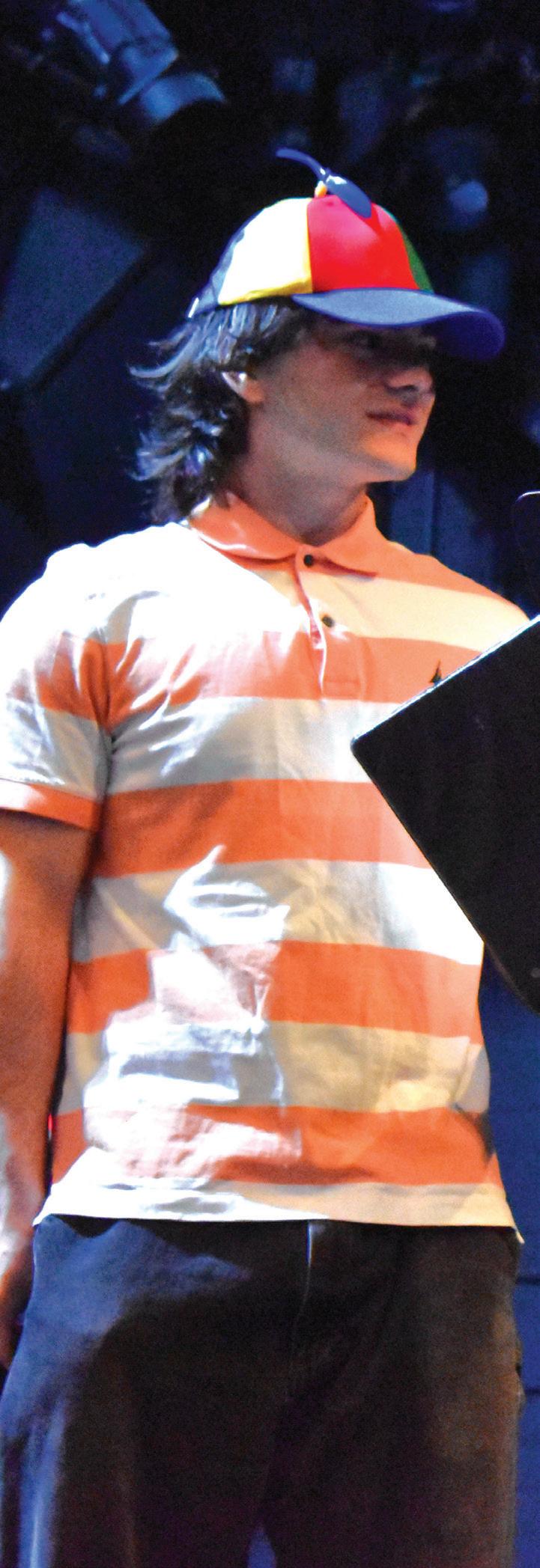
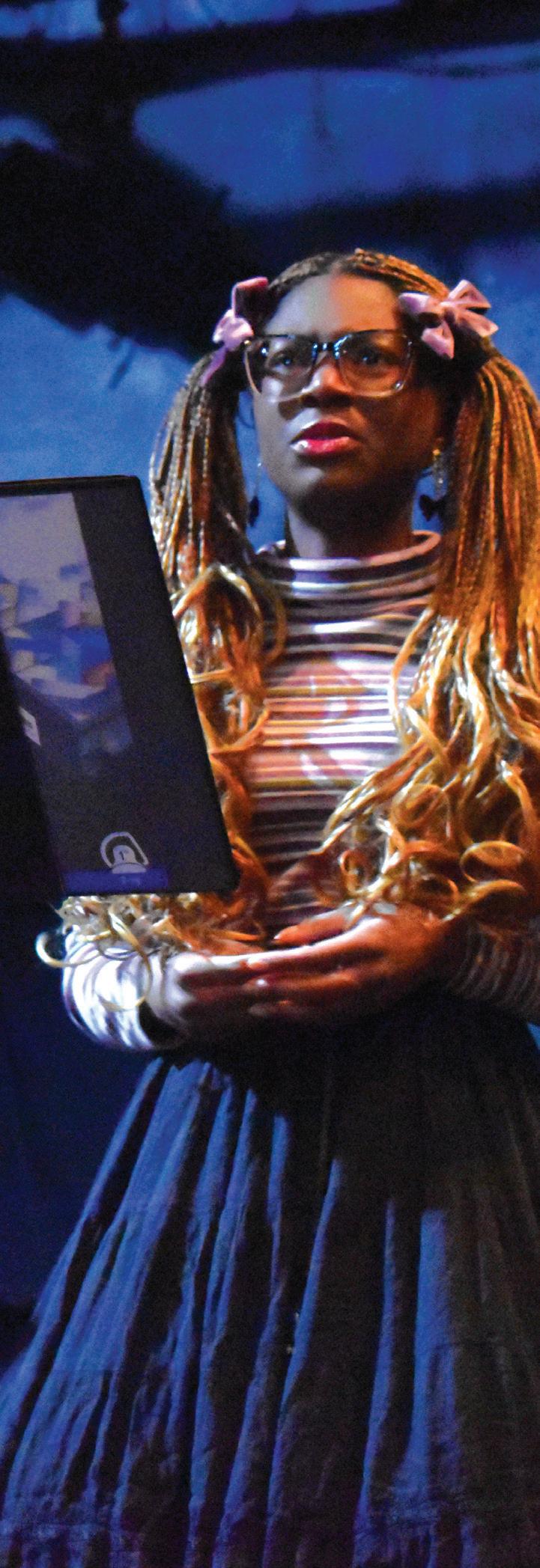
Staged, a new, student-led theatre organization focusing on small-scale, staged readings debuted their first production last weekend with “The Bonespurs.”
Founded in October 2025, Staged is run by a team of eight cast and crew members. “The Bonespurs” ran for a total of 30 minutes with no intermission.
The organization focuses on character development from actors, rather than flashy set design and costumes, according to Novella Edwards, director of “the Bonespurs.”
“There’s blocking, but most of the character buildings like it’s mostly focused on the actor’s voice on selling the character,” Edwards said.
Staged is joining VCU Shafer Alliance Laboratory Theatre (VCU S.A.L.T) and Doomsday Theatre Company as independent, student-led theatre outlets outside of the Mainstage productions.
Those involved with Staged hope to bring a new light to theater, Edwards said.
“I guess that staged is still a really new organization, but we’re just looking to do theater a different way,” Edwards said. “And just for people to be, I don’t know, just get ready to get weird.”
The story of “the Bonespurs” follows a stereotypical 1950s American family living life like all is well, when in actuality they are stranded in the middle of a nuclear wasteland. The father is lost in delusion with the rest of the family following along, except
for the main character Violet Bonespur, who begins to poke holes in their reality.
The characters had a 50s silhouette, but the style was more dark and grungy.
The play mirrors the real world, according to Edwards.
“The main girl character, she’s questioning the world around her as we all should,” Edwards said. “We all need to be questioning the political climate, we need to be questioning the people in power.”
L.C. Kane, the playwright behind “the Bonespurs,” shared a similar sentiment.
“[The play] can be applied to so many different things going on right now. ICE, Palestine; even more potent from when I wrote, things seem more bleak now,” Kane said. “It is talking about closing blinds and making believe in your own household and the world outside is a disaster.”
Kane started writing the play after receiving feedback a different play she wrote was “not funny enough.” She took the criticism and created a play that was supposed to feel like a sitcom family on the brink of insanity.
Kane cited the video games “No, I’m Not a Human,” and “I Have No Mouth, and I Must Scream,” as inspiration for the setting and themes of the play. She took inspiration from 1960s sitcoms in the characterization, such as “The Brady Bunch” and “I Dream of Gennie.”
The themes of the show are retribution, shared psychosis, family privilege and in some ways, liberation, according to Kane.
Attendee Natalie Fajota, showed out to support the first play by the new group.
“It gives apocalypse,” Fajota said. “It gives other meanings, meanings that you need to dig a little bit for.”
and queer identities in the sexual health and education space because queer identities should be visible and celebrated, according to Lanary.
“I think that when we make environments that specifically cater to queer people, it also opens up space for everyone,” Lanary said. “If you’re saying we accept all identities and celebrate all identities here, then whatever selfconsciousness people have about whatever they think is shameful or ‘weird’ about themselves and their sexual desire and experience, they have space to exist in queer spaces as well.”
Jay Dubois, a leather-worker in Richmond who collaborates with Lanary to sell their products in Field Day, shares a similar sentiment.
“I think it’s just really important to have these queer safe spaces because they are opening the conversation,” Dubois said.
Field Day Boutique is one of these spaces, according to Dubois.
“It’s just like an inclusivity issue that a lot of places don’t cater to brands or queer individuals, so it's really nice to have a sex shop that has that in mind,” Dubois said. “They have tons of packers, they have tons of strap-ons and it’s really nice to see an allinclusive sex shop.”
The store is also contributing to kink education by hosting rope nights with KnotYourTypicalRVA, a rope group in the area that promotes safe and inclusive rope education.
“Sex is not a bad word and it’s really important that we destigmatize it,” Dubois said. “It’s really a shame that so many people are afraid of sex and afraid to talk about sex … it’s just better for everyone, you know, make people feel more comfortable about the unknown and the taboo.”
For Rianna Aquino-Richards, a customer of Field Day, she was drawn in by the safe
space the store creates.
“I’ve never been in a sex store where I had felt safe and comfortable,” Rianna said. “Being in a sex store where it feels like a safe space is really important, especially for queer people.”
The environment created while shopping in and visiting the boutique is something that should be felt everywhere, according to Aquino-Richards.
“Everyone deserves to feel safe with sex and around sex, unfortunately a lot of people are made to not feel that way,” Aquino-Richards said. “Maybe the norm for sex stores needs to be shifted, because maybe sex stores should feel like [Field Day Boutique.]”
Field Day Boutique is open 1-7 p.m. on Tuesdays and Thursdays, 1-8 p.m. on Fridays, noon-8 p.m. on Saturdays and noon-7 p.m. on Sundays. The shop is located at 11 E. Grace St.
Cast of “The Bonespurs,” on stage performing the play for the first time. Photos by Max Patterson.
Sex toys on a shelf at Field Day Boutique. Photo by Jalyn Thomas.
Features
RVA Spotlight
Looking to do some shopping now that the snow has (mostly) cleared? Take a stroll through Church Hill and stop by Magdalena’s Botanica, RVA’s only Black-owned botanica for all your spiritual and metaphysical needs.
Sick of Cabell?
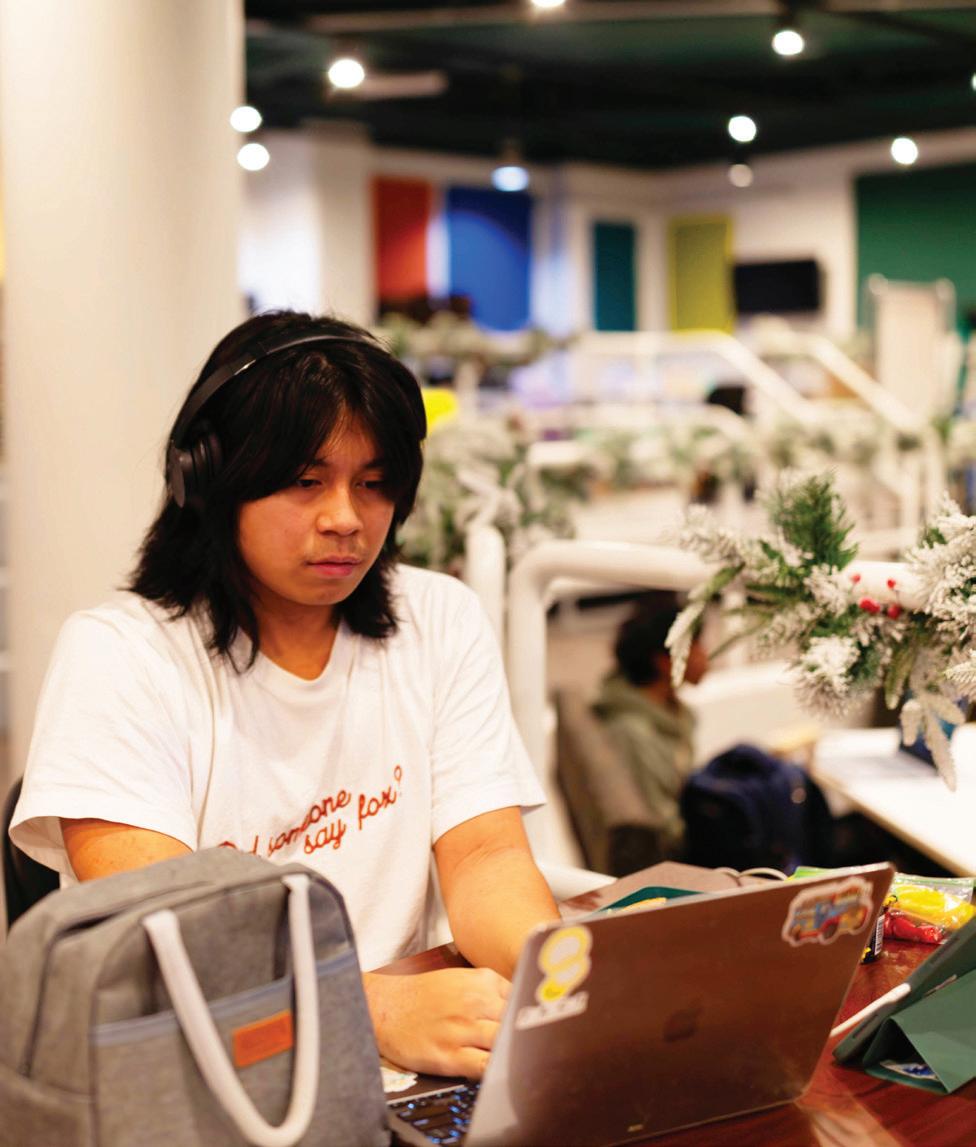
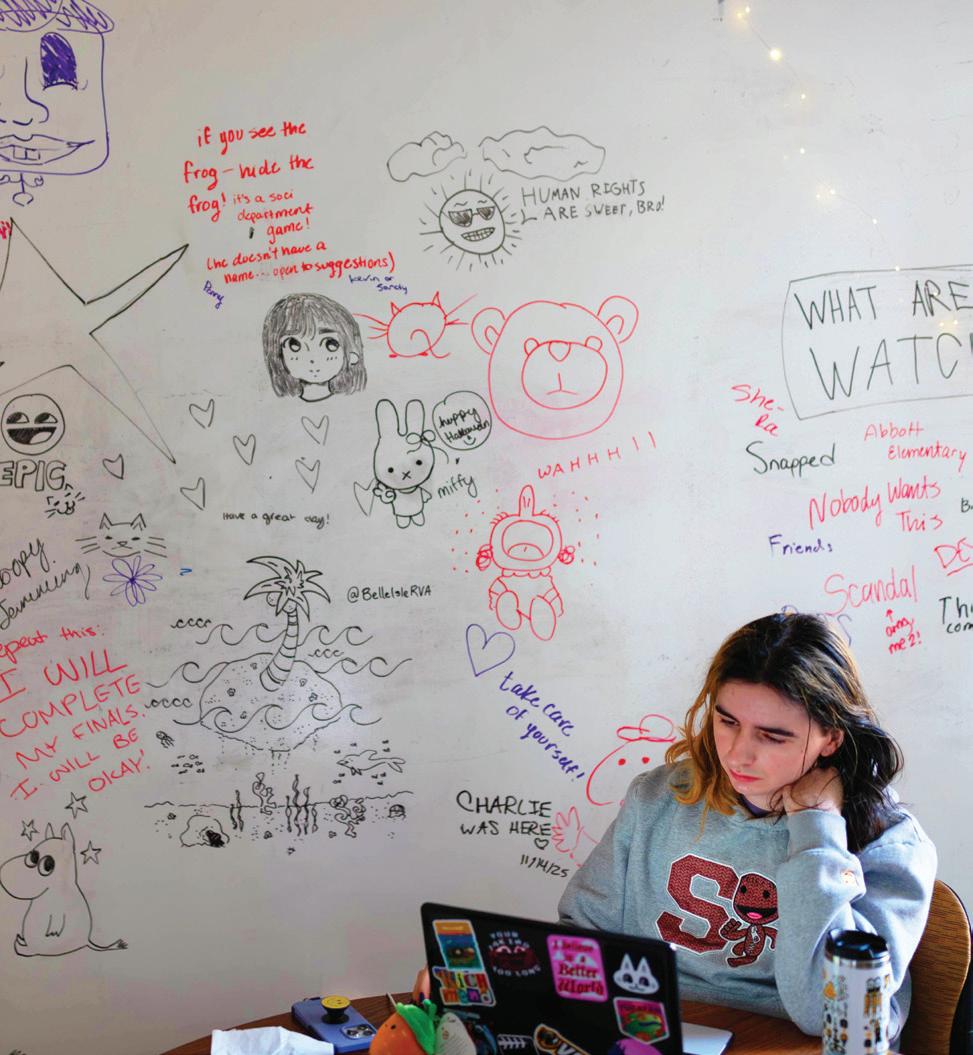
Here are six quieter, cozier study spots on campus
LIZ DEFLURI
Contributing Writer
Throughout the semester, especially around midterms and finals, VCU’s Cabell Library is the place to be for light study sessions, full-fledged lock-ins and everything in between.
Some days, however, it seems as though securing concert tickets on opening day is more likely than claiming your go-to study spot. If you do find a vacant spot, the library can get loud and overcrowded, making concentration difficult. With study rooms reserved until the end of the week, finding a decent place to work becomes an increasingly daunting task.
Thankfully, the Monroe Park campus is littered with cozy nooks available to students hoping for a change of scenery.
ACADEMIC LEARNING COMMONS
Right across from the library on Floyd Avenue is a modern brick building called the Academic Learning Commons. Many classes are taught there, but there are also plenty of study spaces hidden on the second and third floors. Open to all majors, the Academic Learning Commons has tables, booths and comfortable chairs for whether you’re working individually or with a group.
Third-year nursing student Maddy Thompkins said the Academic Learning Commons is one of her go-to, oncampus study spaces.
“The library is usually always full, but here I feel like I have my own space. It’s quiet, but I can talk if I want and answer phone calls,” Thompkins said.
Thompkins also finds the Academic Learning Commons to be more personable than the library. and likes that she sometimes runs into her professors while studying.
FOUNDER'S HALL
Located on West Franklin Street, historic Founder’s Hall building is home to the sociology and political science departments. The lounges on the second and third floors are open to all students and provide comfy couches, chairs and plenty of reading material relevant to the two.
First-year General Studies major Aris Payne said she has never been to any of the on-campus study houses
because they are not well-established like the library is.
“I feel like the other spaces aren’t as well-advertised,” Payne said.
THE TEMPLE BUILDING
The Temple Building on West Main Street offers loads of booths and tables on the upper floors of the Robertson School. This building also has a computer lab with foampadded, noise-proof walls for recording audio. Forgot your laptop? No problem, Adobe Suite programs are already installed on the computers.
THE COMMONS (BEYOND THE FIRST
FLOOR)
The Commons, located at the heart of campus, has much to offer students. Do not be fooled by the noise and crowds on the first floor; the Commons features several studyappropriate spots on the second floor.
First-year biology major Dustin Berry says he likes coming to an area with lots of natural light called the James River Terrace, so he can get food and work on simple assignments.
“It’s nice being away from the crowd of people eating downstairs and those who are always in the library,” Berry said.
For student organizations, the basement level of the Commons, formally known as The Underground, is the place to be. The Underground is a resource center for all VCU student orgs where members can create posters, banners, buttons or whatever else is needed — largely for free.
For art students, the Franklin Terrace building on West Franklin Street offers spacious studio rooms ideal for working on physical media projects.
The renovated historic building also has digital workspace computer labs, fully equipped with Apple desktop computers that have scanning and printing capabilities.
Also for art students, the Pollak building on North Harrison Street is another great place to find open studio spaces. The building features a computer lab especially for fashion students and material libraries for interior design and graphic design students.
Additionally, the second floor of Pollak houses the Creative Print Bureau (CPB), a digital print shop open to all VCU students.
The CPB is equipped with high-tech laser and inkjet printers, a risograph and book-binding materials to benefit art students and assist with their class projects.
If a break and some fresh air are needed while creating, check out the building’s rooftop garden for some muchdeserved relaxation and a stunning view of campus.
THE FRANKLIN TERRACE BUILDING
THE POLLAK BUILDING
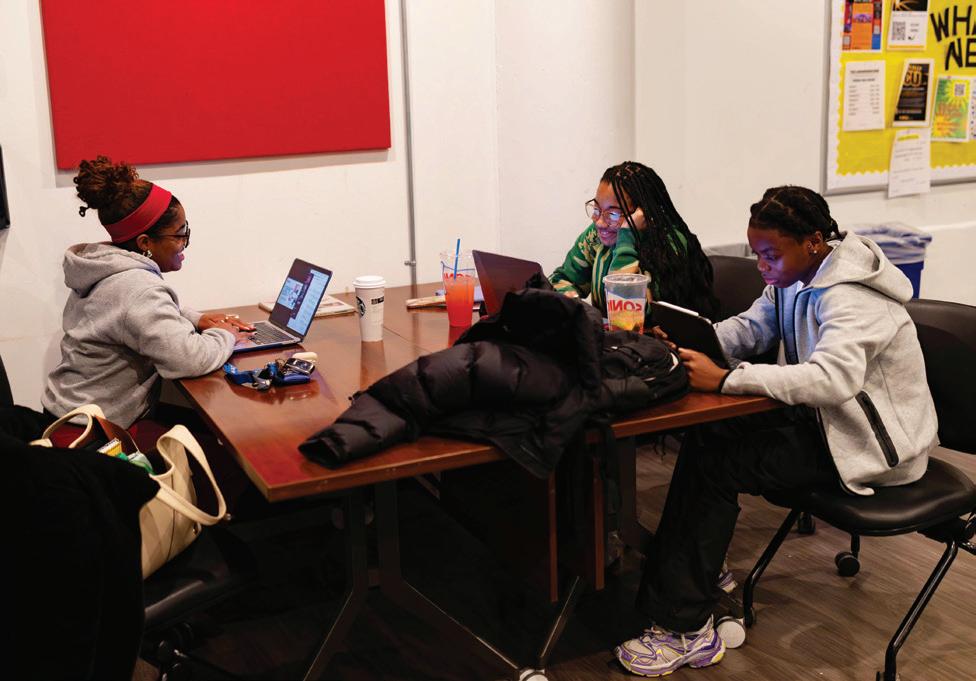
Students all across campus taking advantage of different VCU study spots. Photo by John Brown.
Recording bays located at Temple. Photo by John Brown.
The Common’s Underground, the perfect spot for student organizations.
Photo by John Brown.
Founder’s Hall, located at 827 W. Franklin St.
Photo by John Brown.
Franklin Terrace, opened to VCUarts students.
Photo by John Brown.
Outdoor spaces at Pollak, a great space for art students.
Photo by John Brown.
Richmonders connect with neighborhood ‘trinket boxes’
LELIA CONTEE
Contributing Writer
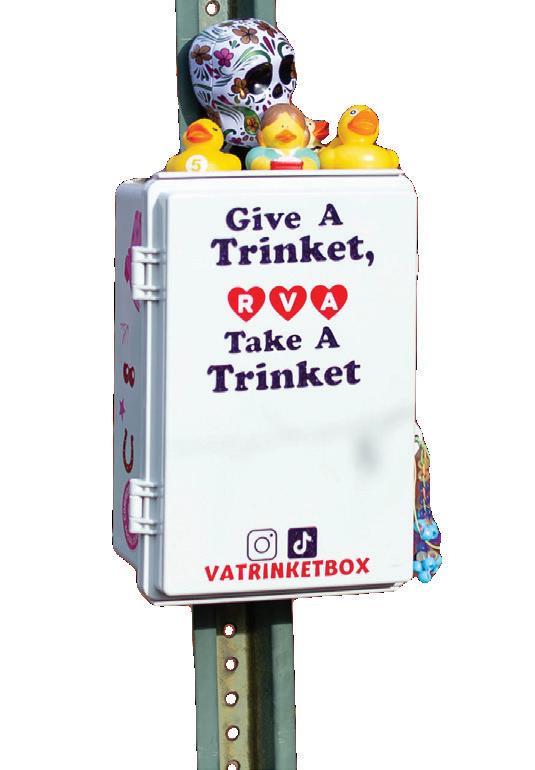
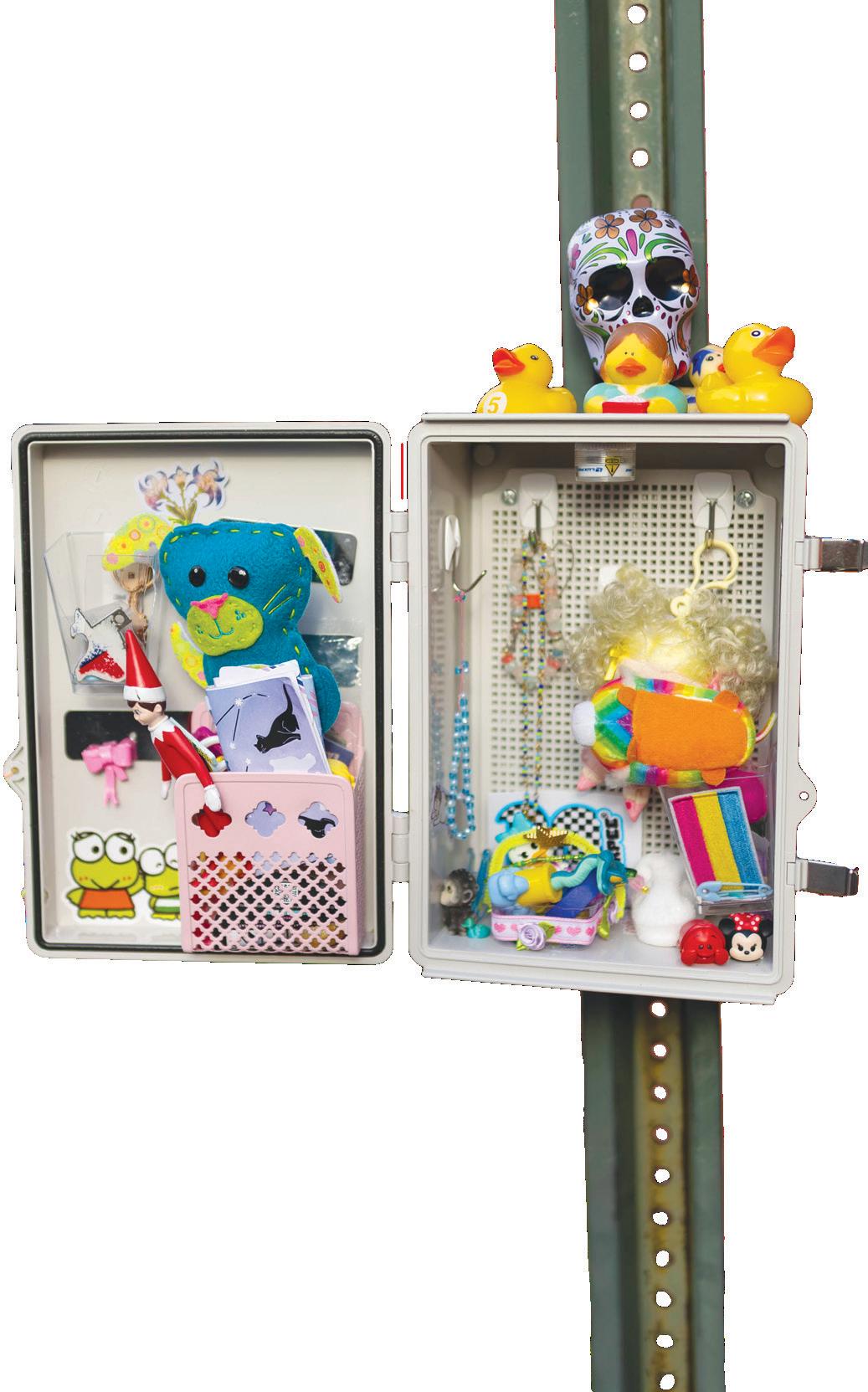
On a quiet Jackson Ward sidewalk, a small junction box sits strapped to a sign pole, inviting passersby to exchange small toys, stickers and artwork.
There is no signage explaining the purpose of the box, except for one rule: “Give a trinket, take a trinket.”
The trend is called Trinket Box. It traces back to Philadelphia, where creators shared their boxes through maps, comments and pins on Instagram and TikTok last year.
Tori Matoska, the founder of VA Trinket Box, felt inspired to adapt this project to Richmond and made one for the community. The trinket box is located at the corner of N 3rd and Clay streets, next to the Greater Richmond Convention Center, according to the VA Trinket Box Instagram.
“I’ve seen people put stickers, pens, their art, which I think is really cool, and seeing different companies and businesses around here get really excited about it,” Matoska said.
Matoska discovered the trinket box trend when researching creative projects in Philadelphia through her boyfriend’s origins there. Encouraged by her twin daughters’ crafting interests, she contacted Philly Trinket Trove for details and learned how affordable it was.
Starting with Richmond, Matosoka has now expanded the project to Virginia Beach and soon Norfolk.
Matoska encourages others to create trinket boxes or otherwise sponsor her trinket boxes, thereby helping to build partnerships with local businesses.
“I think that brings a smile on people’s faces especially with how times are right now. It’s just nice to have that little bit of glitter and happiness,” Matoska said.
People should not add anything that is “not-safefor-work,” trash, perishable or sharp to trinket boxes, Matsoka said.
Rae Shaner, a Dinwiddie County resident, stumbled upon the VA Trinket Box on Instagram, where she felt the box offered “a little bit of peace, joy and hope.”
Shaner and her daughter use geo-tracking to explore Virginia for hidden items, so with a newfound interest in the trinket box trend, she wants to assemble one in her community.
“I think it helps give us a sense of community and gives a little bit of purpose,” Shaner said. “It gives me something to do, filling my day with positivity and that kind of stuff.”
The trinket box trend is one of many small projects that fit into a larger movement. Worldwide Sidewalk Joy is an online platform that connects community-based mini projects with creators worldwide.
Rachael Harms Mahlandt, the co-founder of Worldwide Sidewalk Joy, created a map so people can locate, share and interact with these projects. The Joy map has nearly 700 art installations globally, according to Harms Mahlandt.
Using digital tools such as Google Maps and Instagram played a “monumental role” in connecting people, according to Harms Mahlandt.
“Whether or not they grew up in the area or new to their area, a project like this really helps you get to know your community and feel like a pivotal part of it,” Harms Mahlandt said.
The project began as a way for her children to explore Portland, Oregon and connect with the community, according to Harms Mahlandt.
community,” Harms Mahlandt said.
The Worldwide Sidewalk Joy website features maps, blogs, tips and sign-up options for participants to make a creative change in their communities.
Inspired by other art creations around town, Harms Mahlandt created a dinosaur diorama, or dinorama, to “spark a similar level of delight.” From pin exchanges to puzzle libraries, these unexpected art installations created a welcoming space, according to Harms Mahlandt.
Harms Mahlandt encourages people to “take the plunge” as Sidewalk Joy fosters community, memories, and experiences that far outweigh potential negatives, such as vandalism.
“I hope nothing happens to the dinorama, but if it were to wink out of existence tomorrow, that doesn't take away this experience for me. It doesn't take away the
What influences Richmond’s influencers
CORA PERKINS
Assistant Spectrum Editor
Richmond is bustling with vibrant, southern colors, cobblestone walkways, life around every corner and economic development — and with that development comes influencers.
Folks from around Virginia and the rest of the country are flocking to the river city to create content about its delicious dishes and historic neighborhoods. They are making blogs, vlogs, real estate
businesses and … giving away tiramisu in public parks.
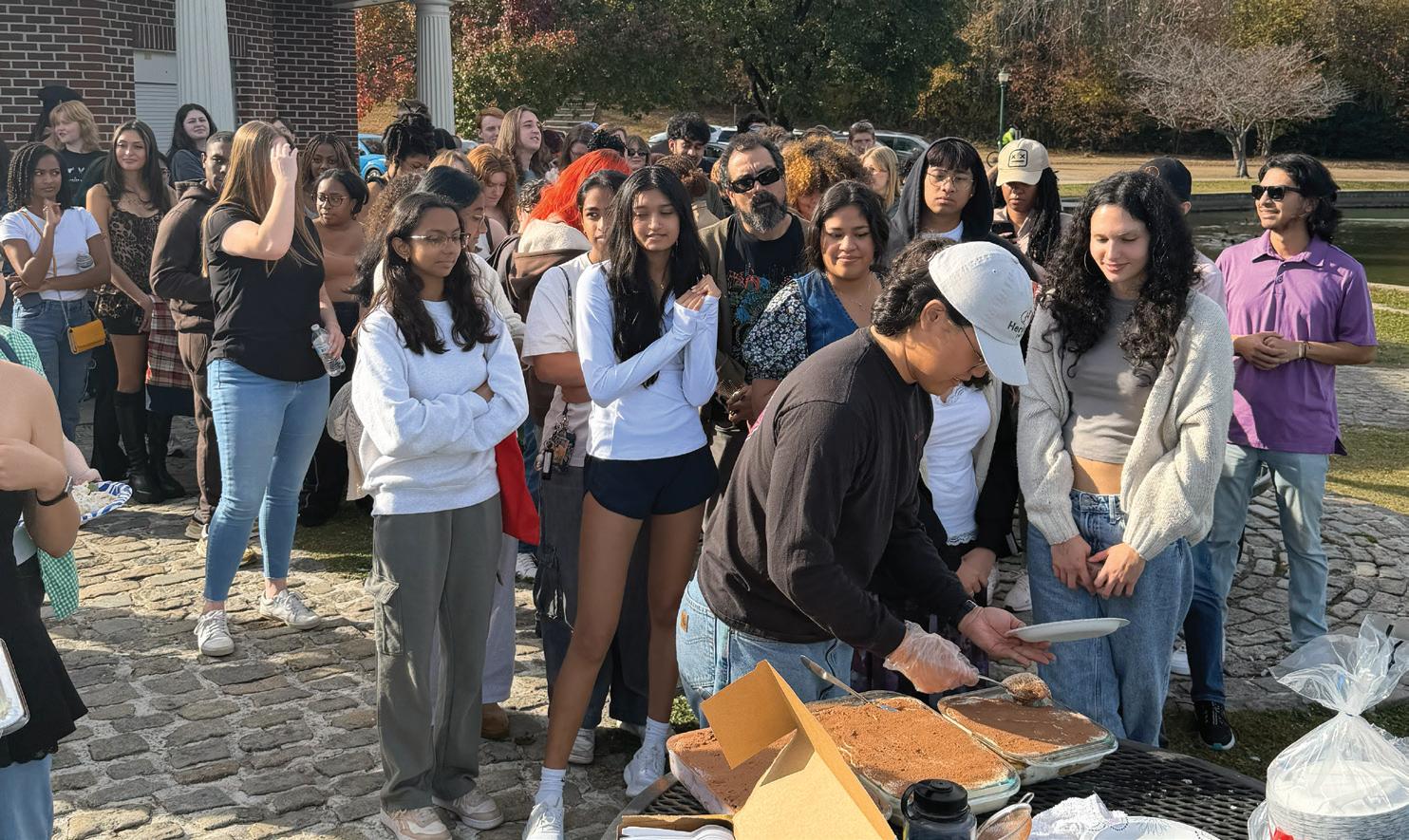
At least, one person is — Alex Na, also known as the “free tiramisu guy.”
Na — a “DMV transplant” in his own words — moved to Richmond about half a year ago and did not know anyone in the area.
“I just had to kind of find my own path around here,” Na said.
Na started his sweet empire with a simple TikTok, in which he offered up his leftover tiramisu to anyone who could meet
him at the park. Now he is holding popups, fundraisers and events galore.
“People can find friends, and people can find a sense of belonging in Richmond,” Na said.
For Na, in a political climate where life feels “hopeless” between the buzz of what is being broadcast on the news, it is a vice to be a creator and meet people through that avenue.
“Having social media content creators and influencers highlighting things they can look forward to a bit more and being like ‘let’s just showcase what Richmond has to offer,’” Na said.
Lauren Z. Ray had no particular plans to plant herself in Richmond but, after a tour down the east coast, she and her partner fell in love with it. Now, Ray is one of the biggest influencers in the city.
Ray is known for her travel vlogs around Richmond and vegan food guides. Many of her videos highlight history and architecture around town.
“The videos started reaching other Richmond locals, I began growing a community and people started sending me their own recommendations,” Ray said. “I seriously love getting to share local businesses and adventures through Virginia with everyone.”
To Ray, it’s important for influencers to show different sides of Richmond and show
every unique place to explore.
“[Influencers] create community, spotlight small businesses that don’t have huge marketing budgets, make the city feel approachable and reach different audiences in different ways,” Ray said.
Even some realtors — such as Miles Agee — have made a splash online for their quick, upbeat videos.
As a real estate agent, Agee makes families happy by helping them find their Richmond forever homes. He is not necessarily trying to become famous — and does not see himself as much of an influencer, but rather a creator striving to build trust with his audience.
“I feel like saying ‘Hey I’m an influencer,’ it’s really more just to show a different side of marketing because every agent is just showing houses and I’m not trying to be like every agent,” Agee said. “I feel trust with people, for them to see a honest, real perspective of who I am so that way they can say ‘this is guy that we want to use.’”
To Agee, authenticity is the true influence. More folks should reach out to the strangers around them and explore.
“My favorite part about Richmond is you’ll find, more often than not, you’ll leave a conversation and you’re like, ‘man I probably would have never talked to that person but they were cool as hell,’” Agee said.
Give a trinket, take a trinket. Trinket box located at N. 3rd and Clay St. Photo by John Brown.
“Free tiramisu guy,” Alex Na giving out free tiramisu. Photo courtesy of Alex Na.
Opinions
Don’t let people say they ‘didn't know’ about
ICE
They’re in our backyard
SHINY CHANDRAVEL Assistant Opinions Editor
The most prominently displayed poem at the United States Holocaust Memorial Museum is the famous “First They Came” by Martin Niemöller. The poem is a recollection of events in which a powerful government comes again and again for different groups of people. As several groups are taken, the poet stood silently — until the Nazi regime finally came for him.
Only then did the poet become appalled, realizing no one was left to help him.
William Vermie, an Army veteran and a Purple Heart recipient, was tackled to the ground and detained by U.S. Immigration and Customs Enforcement (ICE) for eight hours with no attorney.
A city plow worker with legal authorization to work in the United States was detained in an El Paso, Texas Detention Center. His wife has been desperately trying to get him his medication.
Off-duty police officers had guns drawn on them by ICE agents, demanding to see their paperwork.
Native American tribe members have
reported numerous attacks on Indigenous people by ICE agents, with some of them being detained without a trace.
Alex Pretti, a Minneapolis resident, Veteran Affairs ICU nurse and U.S. citizen was fatally shot by a group of ICE agents.
Liam Conejo Ramos, a 5-year-old preschooler, was detained by ICE for over a week with his father in a Texas detention facility. Only after national outrage and an order from a federal judge were they released back to their home state of Minneapolis.
After each group is taken in Niemöller’s poem, there’s a repetitive lull where he reminds us that he did nothing. As the poet says, it didn’t affect him.
The veterans, the city workers, police officers, nurses and children — they affect us all deeply. When your neighbors get shot, you hear it.
As I drew up this poem as a mirror to the past few weeks, I found it applicable.
I’ve recently been watching the Hulu TV series, “The Handmaid’s Tale,” based on the classic novel by Margaret Atwood, about a world in which an oppressive regime
has taken over. One of its most chilling details is how little the regime tries to hide its violence.
The bodies of victims are hung in public view, swinging along walls, roads, scenery and neighborhoods.
The overt displays of inhumanity assured one thing — no one could claim they didn’t know what was happening.
It’s an excuse that people will soon grasp for. When the dust settles and the bodies are put to rest, many will insist the reason the government was able to get away with so much was because the people were unaware.
It’s an excuse that we must reject.
There are widely available videos of people taking their final breath at the hands of unnecessary bullets. There are uncountable photos of children being escorted into black vans. There are a plethora of reports, stories and first-hand accounts of what is happening — names, timelines and footage.
If we are so comfortable ignoring what’s on our screens, what happens now that it’s encroaching into our backyard?
Earlier this month, Hanover County officials received a letter from the Department of Homeland Security looking to expand into the Greater Richmond area with a proposal to purchase a 500,000-square-foot warehouse off I-95. They intended to convert the facility into a large-scale immigration detention facility — a move that would bring ICE right to our back door.
But then, something different happened.
Last week, hundreds of people refused to look away. They showed up. Our neighbors showed up and incessantly protested outside the Hanover facility. As a result, the company decided to withdraw their plans to sell the building to the DHS — preventing the massive detention center right outside Richmond.
Their refusal to settle for inaction mattered.
Watch the videos. Read their stories. Don’t click away. Don’t scroll past. When you are asked to deny what you have seen with your own eyes, you will know precisely what is being asked of you — and why.
AI use is destroying your creativity
KYLIE GRUNSFELD Contributing Writer
If you’re an English student like I am, or taking any class where writing is involved, you have probably listened to your professors talk about AI.
Most have a zero-tolerance policy for AI use in the classroom and on assignments.
by
It seems plain as day to me — using AI to help you with your written work is cheating. It may not be as severe as
completely copying the work of someone else, but the act is not innocent.
Whether you use it to generate ideas or have it write the words in a style that feels “human,” you are reaping the negative effects of having something speak for you.
The morally questionable use of AI isn’t just limited to the classroom; last year’s novel “Shy Girl” by Mia Ballard is an excellent example of what happens when people suspect
Story continues on next page
Quote of the week
“Reality continues to ruin my life.” — Bill Watterson, The Complete Calvin and Hobbes
Illustration by Hanna Perez.
Graphic
Marty Alexeenko.
your writing is not entirely your own.
Ballard’s book has been alleged to be at least partially written by AI. There is no definitive proof to the allegations, but many sentences in her book bare a striking resemblance to the way a bot like ChatGPT tends to write.
If it is true, it’s not only lazy but disrespectful.
People are paying for your book. They are spending precious hours of their lives reading words that weren’t even written by you. Why should anyone waste time on literature written by a soulless, emotionless and waterguzzling piece of machinery?
Let me make my stance abundantly clear — I do not believe that writing in any way generated by
AI, especially writing intended to be consumed by a large audience, is worth reading.
I also understand that most people at universities are not striving to be published authors. But if you write in any capacity, I urge you to reconsider your AI usage.
Imagination is a muscle. Creativity is like a bicep that needs to be flexed in order to be kept strong. If you get used to something else coming up with your ideas for you, those muscles will atrophy.
Imagination isn’t just an important thing to have if you’re in a creative field — it is an essential tool for all people.
Imagination is how we problem-solve.
It’s how we keep ourselves out of the watery depths of boredom. It’s how we set ourselves apart from others.
It’s how we change things when they
need to be changed.
An unimaginative society is one that is content living under current systems, regardless of how flawed they are. Without imagination, how could we conceive of a better world?
When you consistently use AI to come up with ideas for you, you are surrendering your imagination to a machine.
Coming up with a topic for a research paper, for example, is a valuable opportunity to flex those muscles. It may consume more time, may take trial and error, but what you end up with is a concept that is entirely yours.
I understand that things like ChatGPT are particularly useful when trying to get through busy work. It feels pointless to give thought to something that was not thought out when assigned.
I can agree that in cases like these, when you are just trying to get credit for something, AI is enticing. But I’m sure we are all familiar by now with the other negative impacts using AI creates, including its insatiable thirst for water and all sorts of other ethical issues.
People who seek to control us benefit from us being thoughtless. They want us to be, if not content, too unimaginative to think of any other way of life.
Using AI here and there is not going to kill you — at least not in the short term. But I urge you to get into the habit of generating your own ideas.
At the very least, give your support to real human writers. Maybe AI can be told to sound more human, but it will never write with the kind of soul you have.
Gen Z is not the ‘sober generation’
MOLLY CHRISTIANSON
Contributing Writer
There have been many posts about how Generation Z is the “sober curious” generation popping up on my social media feeds recently. People are misunderstanding the label. Being “sober curious” does not actually equate to sobriety.
Ruby Warrington wrote a book in 2018 titled “Sober Curious,” in which she defined sober curiosity as “questioning every instinct, every invitation and every expectation to drink versus going along with the dominant drinking culture.”
In the past few years Gen Z has been statistically proven to be consuming less alcohol than previous generations; drinking culture has less of a hold over our social lives.
What people seem to be forgetting is that sobriety goes beyond abstinence from alcohol, but also other substances such as Gen Z’s drug of choice — marijuana.
Gen Z is the first generation to exist in a world where marijuana is widely legalized. Virginia legalized recreational marijuana use in 2021 for individuals over 21, along with 23 other states and the District of Columbia.
Marijuana’s widespread legality naturally means that people are going to be consuming it more freely. Data by a marijuana research firm found 69% of people aged 18-24 prefer marijuana to alcohol. 56% of the individuals have replaced alcohol with marijuana.
Gen Z, despite popular claims, isn’t the “sober generation.” In high school, I knew
a lot of people who were not able to focus or function at school if they were not high. That trend has continued into college, and I know some people who still get high just out of habit.
The misuse of “sober curious” bugs me for a couple of reasons, but what really gets me is how I have seen substances ruin people’s lives, despite them allegedly being a part of the “sober” generation.
Using marijuana can lead to someone developing a cannabis use disorder (CUD) due to its potential as an addictive substance, according to the National Institute of Drug Abuse.
So what? Why does it even matter that people are consuming marijuana instead of alcohol? The honest answer is this: it doesn’t.
But what does matter is consumption rates. No matter what you are consuming — be it candy or an addictive substance — you should not be consuming excessive amounts of it.
When doing anything you need to be mindful — or “sober curious” — about how much you are consuming and how it is affecting you.
Paying attention to your body and not ignoring the signs it gives you can be a lot harder in social settings, but it is more vital for you to pay close attention in these settings.
In the end, it’s not about being sober or having a buzz; it’s about being in the driver’s seat of your life, steering towards choices with awareness and happiness.