Remembering Raymond Boone, founder of the Richmond Free Press
FEATURES
HECIEL NIEVES BONILLA News Editor
“East Suffolk Cagers to meet Courtland Wednesday Afternoon” read the first headline in the Library of Virginia’s record attributed to Raymond Boone, founder of the now-shuttered Richmond Free Press.
The article was published Jan. 20, 1953 and is an initial touchpoint for the career of Raymond Boone, a native Virginian, who established himself as a pillar of the community, reporting in Richmond and nationwide.
At the time of that publication, Raymond Boone attended East Suffolk High School in what is now the City of Suffolk, Virginia, but in 1954 was part of Nansemmond County. He was 14-years-old.
The short piece appeared in the stillactive Suffolk News-Herald, but Raymond Boone also spent his high school years writing for a school newspaper he founded.
At a meeting of the school’s press club on Oct. 28, 1952 recorded in the Suffolk NewsHerald, Raymond Boone shared a sentiment he would carry throughout his career. He told the group a news reporter “should be, in general, tactful, energetic, accurate,
Black athletes paved the way for VCU basketball
ALEXIS WASHINGTON
Assistant Sports Editor
There is no denying men’s basketball has become a driving force at VCU. It is the only sport that constantly sells out, bringing students, alumni and community members together — all sharing the same passion.
That identity did not form overnight. It was built on the foundation laid by Black players who reshaped the program long before it became a national brand.
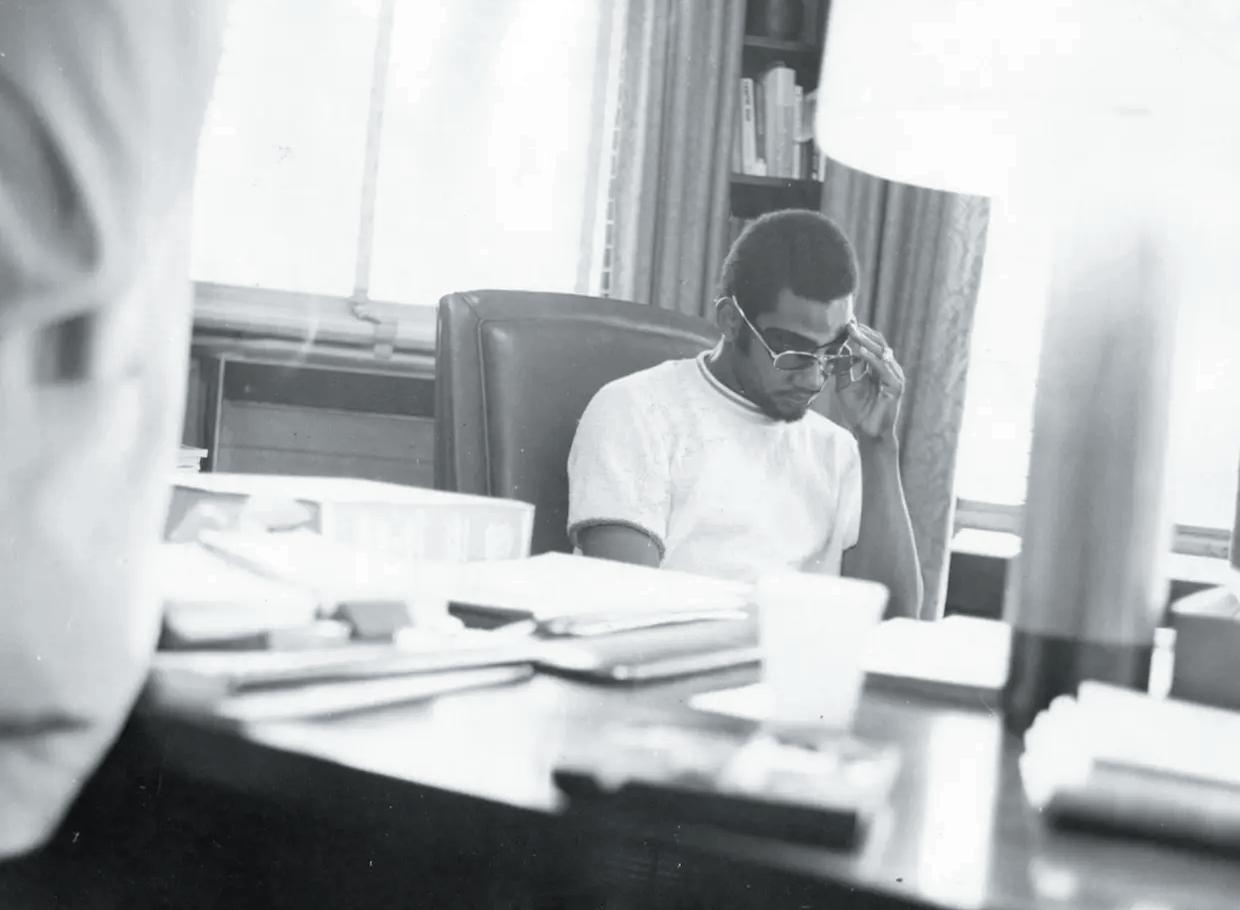
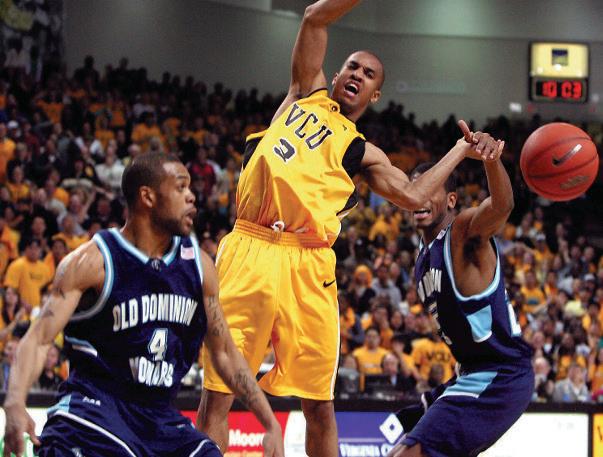
Charles McLeod became the first Black men’s basketball player at Richmond Professional Institute, now VCU, in 1966 and was arguably the founding father of the program.
McLeod transferred from Virginia State University after limited time on the court. That changed after he contacted former RPI Head Coach Ed Allen, who recruited the star athlete.
On the court, McLeod established the nickname “Charlie Mac the Jumping Jack,” using his size to pull down rebounds, block shots and play intense defense, according to VCU News.
McLeod was not only a pioneer breaking barriers on the court. It was his contributions off the court that made him special.
McLeod was a contributor for the Commonwealth Times in 1969. He wrote
an article criticizing wartime efforts and the draft system.
He helped found VCU’s first Black organization in 1968, Students for AfroAmerican Philosophy, along with six other Black students. The mission was to challenge the university to embrace
SPORTS
its urban institution status after he noticed the limited representation of the Black community.
Black History Month Issue
ambitious, aggressive and truthful.”
It was a time of legally sanctioned segregation in Virginia, and much of his continued work for the News-Herald appeared in its “Colored News” section. His wife Jean Boone, an accomplished publisher and activist who ran the Richmond Free Press after his death in 2014, said it is hard to square this appearance with the man she came to know in adulthood.
“It’s sort of hard for me to really wrap my head around the fact that he wrote for something that was called the “Colored Pages,” because he was such a strong proponent of not segregating people or things,” Jean Boone said. “He saw the larger picture and did not let the segregation aspect of it stop him from writing.”
Raymond Boone worked across the journalism profession — as a reporter for the Quincy Patriot-Ledger in college, a White House reporter for the Baltimore Afro-American, an editor for its Richmond subsidiary and eventually the whole newspaper chain, and an international correspondent for the National Newspaper Publishers Association — in addition to[...]
RICHMOND FREE PRESS
Continued on page 11.
‘Ode
to the Anomalous’ exhibition abstracts personal stories
FAKEHA NAEEM
Contributing Writer
“Ode to the Anomalous,” is a month-long exhibition showcasing the art of six artists at Southside Contemporary Art Gallery, or SCAG, that explores works in fabric, acrylic and other mixed mediums.
ODE TO THE ANOMALOUS
Continued on page 8.
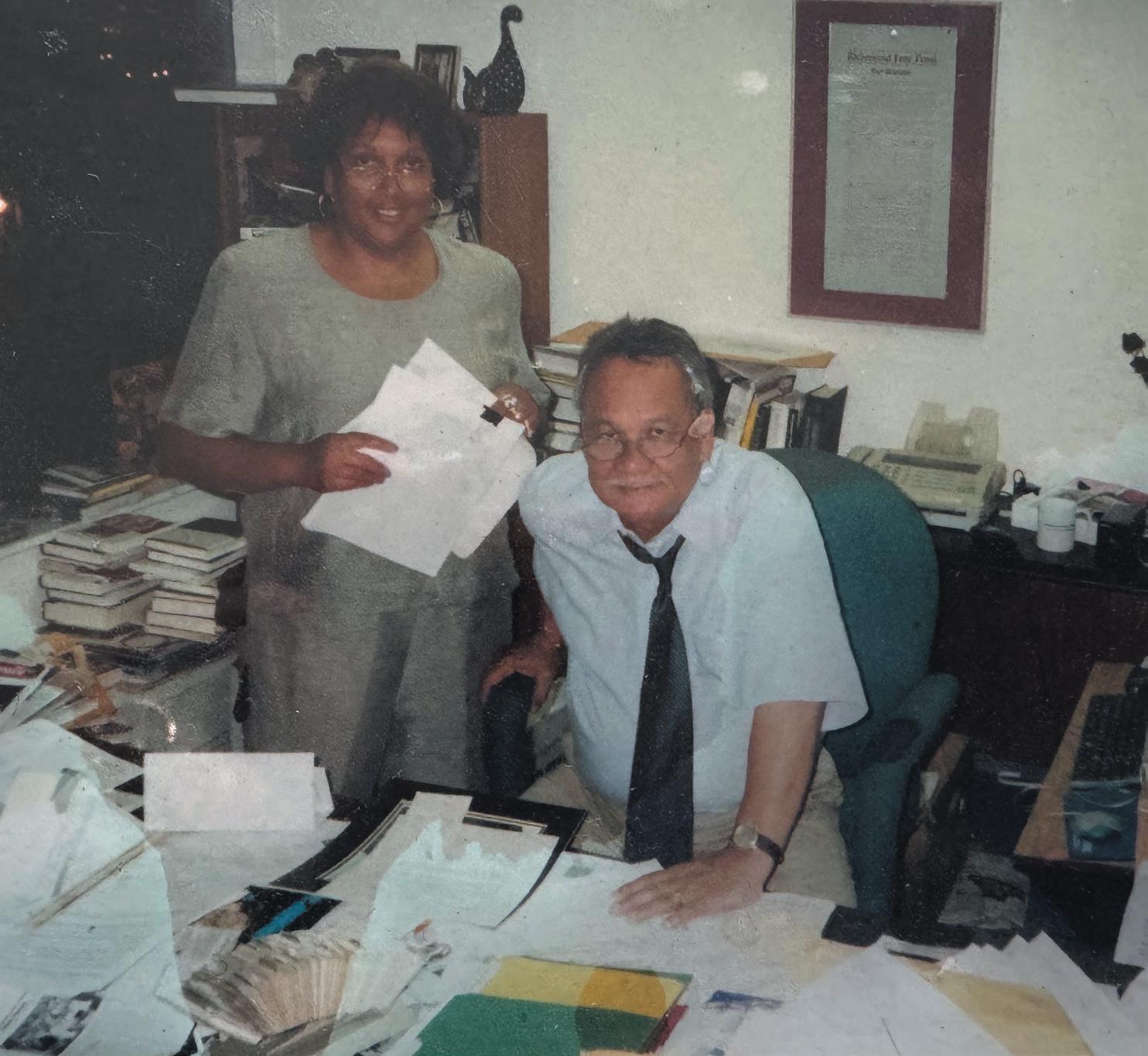
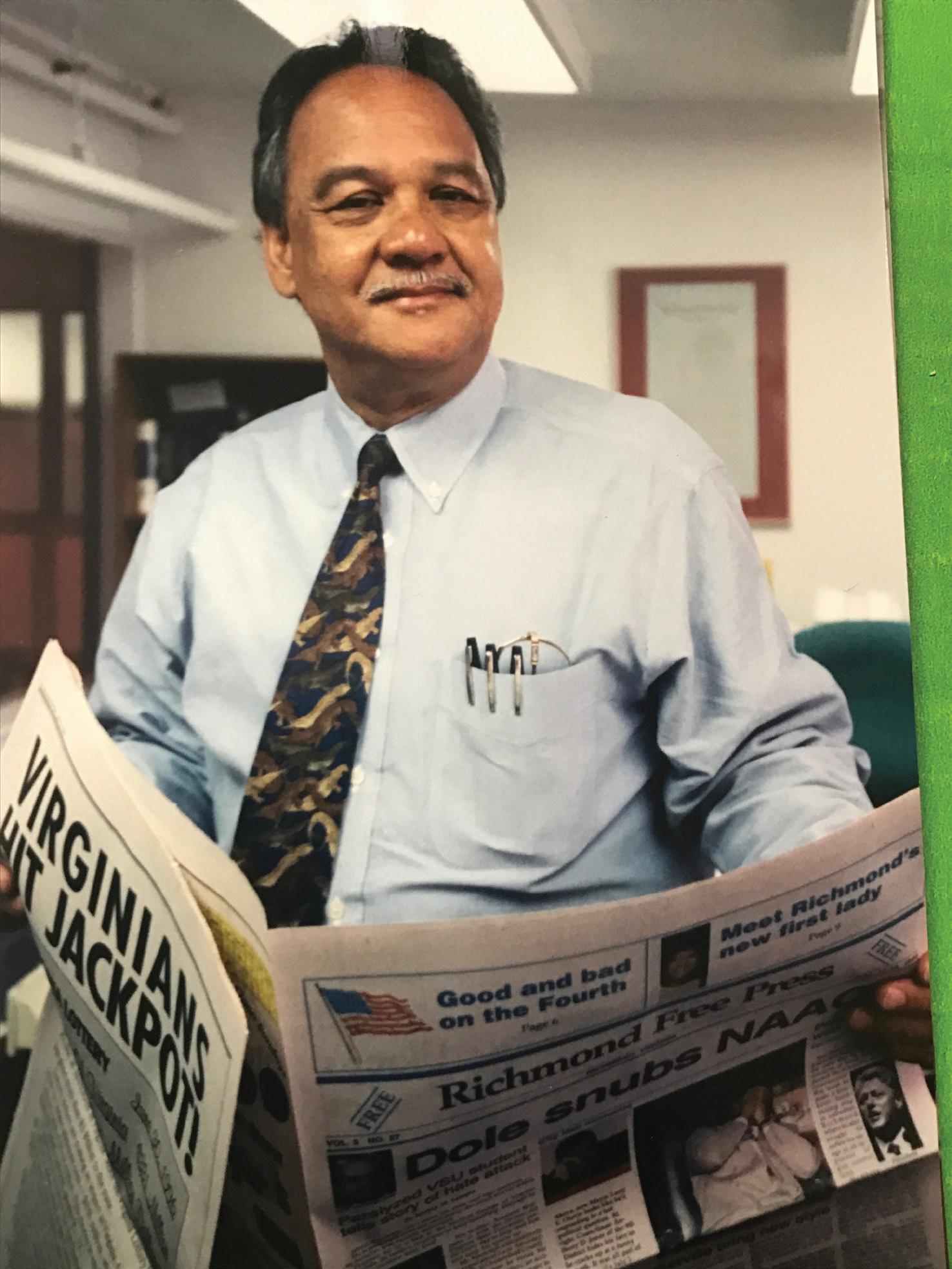
Richmond Free Press editor Raymond H. Boone and then-advertising director Jean Patterson Boone stop for a photo at 101 W. Broad St., the paper’s second location. Photo courtesy of Regina H. Boone/Richmond Free Press.
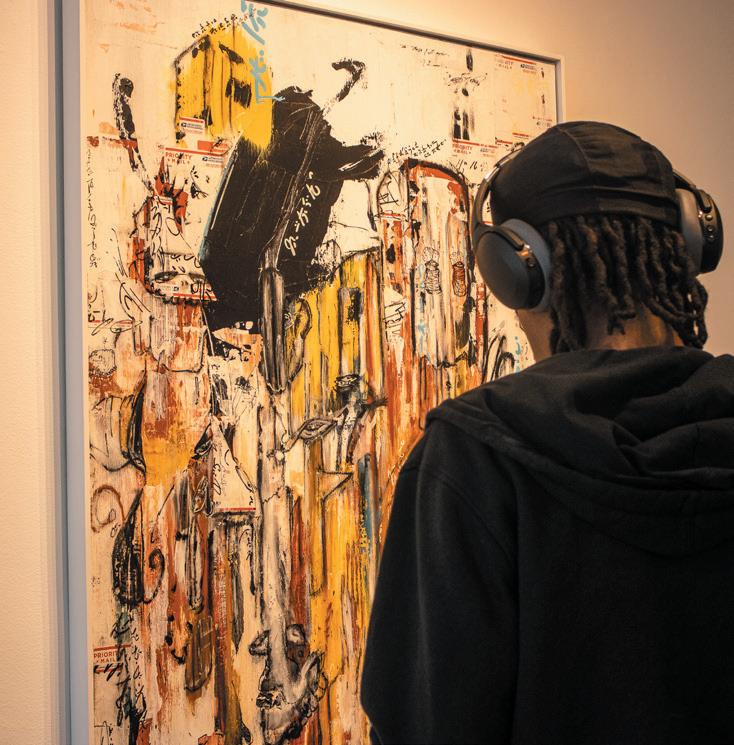
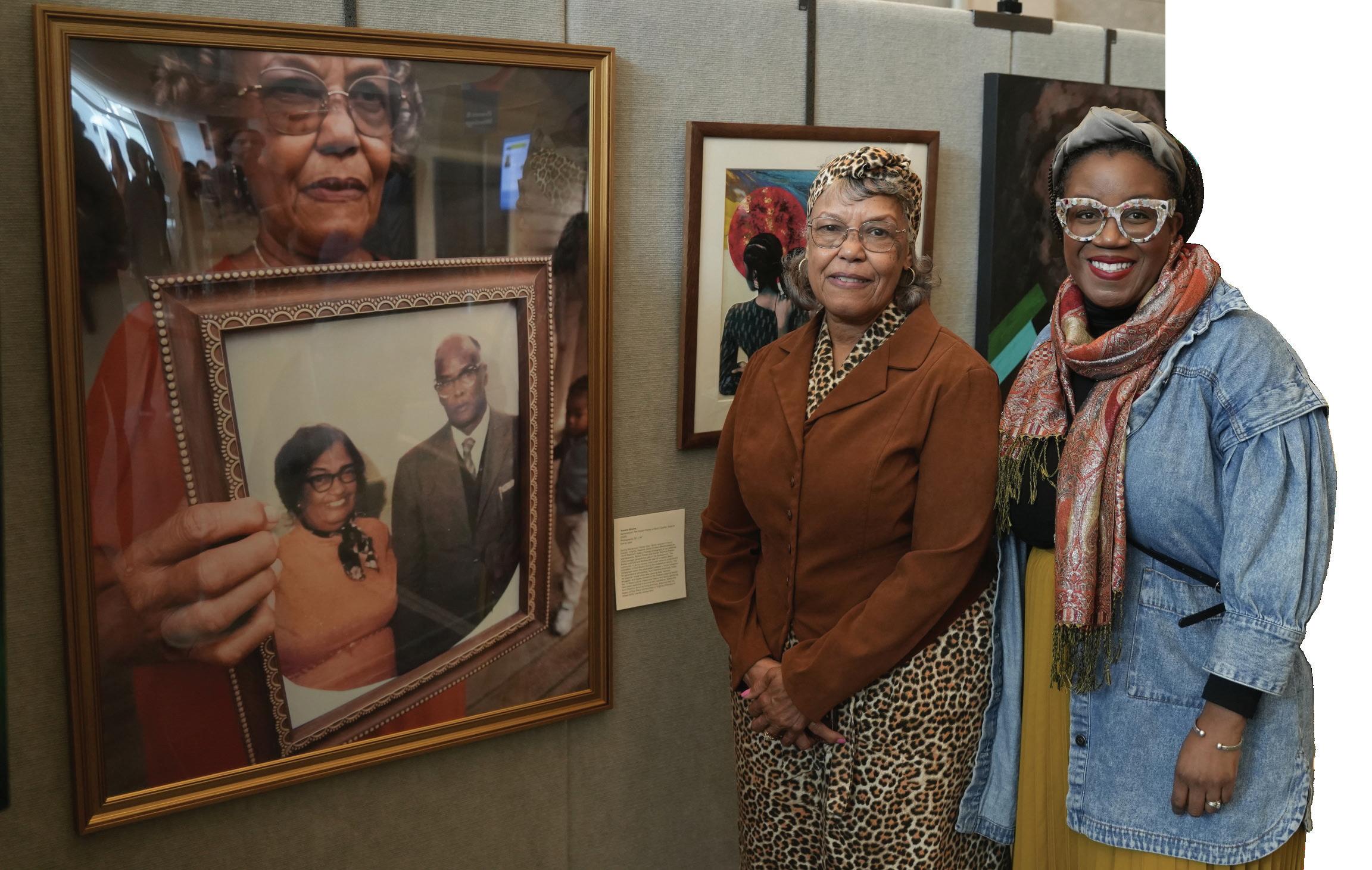
A VCU Student viewing artwork by Huey Lightbody. Photo by De Smaw.
Charles McLeod was the first Black men’s basketball player at Richmond Professional Institute, which became VCU. Photo by The Postscript, courtesy of VCU Special Collections and Archives.
NEWS
Stories of the week
national : After the Supreme Court struck down President Trump’s sweeping tariffs on goods entering the U.S. on Feb. 20, the federal administration introduced a global tariff rate of 10% on Feb. 24.
international: The Mexican military killed the leader of the Jalisco New Generation Cartel, known as “El Mencho,” in a raid operation on Feb. 22. A violent cartel backlash and federal response has since led to dozens of deaths in the country.
Democrats remove three VCU Board of Visitors members
KERLEY
ANDREW
Executive Editor
The Democrat-majority Virginia General Assembly voted last week to remove three members from VCU’s Board of Visitors — the school’s highest governing body.
Among the removed members were the final appointees of former Republican Gov. Glenn Youngkin: real estate developer Lara Tyler Chambers and tech employment firm founder Lori Jennings.
Also removed was CoStar CEO Andy Florance, a member initially appointed by former Democratic Gov. Ralph Northam and reappointed by Youngkin — and whom VCU’s new arts building is being named after.
The VCU Board of Visitors now has three vacant seats going into its first full meetings of the semester on Feb. 26 and 27.
Gov. Abigail Spanberger will be able to fill the vacancies, as well as make the four routine appointments the governor typically makes every summer — meaning seven members of the 16-member body could be Spanberger appointees before the 2026-27 academic year begins.
The Office of the Governor declined a request for comment by The CT to clarify if Spanberger will fill the vacancies and appoint new members to the VCU Board of Visitors this semester, or even before their upcoming meetings.
Virginia Senate Democrats, VCU and the VCU Faculty Senate leaders did not respond to requests for comment.
HOW DOES THE BOARD OF VISITORS WORK?
Universities in Virginia are governed by boards of visitors made up of 16 members appointed by the governor and confirmed by the General Assembly. The boards hold the power to budget, hire and fire presidents, shape university policy and approve course curricula.
Board members serve four-year terms and tend to be community figureheads, business leaders and former elected officials with university ties. The governor typically appoints four new board members annually. By the end of a governor’s term, all members of the boards are their appointees.
Ellen Fitzsimmons, a former executive for Truist Bank and railway company CSX, was named the new rector, or leader, of the board in June. Steven DeLuca, the vice president and head of government affairs at Capital One Financial, is the vice rector of the board. Both were appointed by Youngkin. Both have made political donations to Republicans.
CONTROVERSIAL DECISIONS UNDER YOUNGKIN
The board has made a number of contentious decisions in recent years. They voted in March 2025 to dismantle VCU’s Diversity, Equity and Inclusion policies following an executive order from President Donald Trump, per a previous report by The
CT. VCU could have risked losing hundreds of millions of dollars in federal funding by not complying with the order.
The board voted in 2024 to cancel the implementation of a racial literacy course requirement, resulting in some students walking out during their graduation ceremony. The requirement — which covered topics such as systemic racism, gender studies and workplace inequality — was in development by students and faculty for years before getting cancelled.
DEMOCRATS DEBATE REFORMS
Virginia’s university board appointment system came into question last year as Senate Democrats blocked 22 of Youngkin’s appointees to George Mason University, the University of Virginia and Virginia Military Institute. They argued the members were too politically partisan for the roles.
Trump’s Department of Justice opened investigations into GMU over allegations of antisemitism and race-based hiring and admissions practices, which Democrats called an effort to oust GMU president Gregory Washington. Former UVA president Jim Ryan resigned under similar pressure from the Trump administration — without the backing of the Youngkinappointed UVA board.
Those events led to Spanberger issuing an executive order in January directing the Virginia Department of Education to review and evaluate the process for appointing
members to boards of visitors. She called for legislators to do the same during her State of the Commonwealth address.
Democrats introduced a number of bills this year to reform the appointment process and make-up of university boards of visitors, according to a previous report by The CT.
Proposed changes include expanding representation on boards to students, faculty and staff, clarifying the role of the General Assembly in confirming appointments and expanding the terms of appointees to reduce their dependence on individual governors.
A number of the bills did not make it to the second half of the legislative session. Some are still being debated in committee hearings.
The VCU NAACP chapter shared a statement with The CT calling reforms to the board of visitors at VCU — and other boards across the state — pivotal.
“In the interest of VCU, replacing many members will allow for dynamic changes to the board and may better reflect the students and staff of VCU, but we stand firm in advocating for widespread institutional reform to the Board of Visitors that reflects the student and staff of the university, as we acknowledge the dangers that BOV members only appointed by political figures may pose,” the chapter stated.
The General Assembly is expected to adjourn in March. The final deadline for the governor to sign or veto any legislation is May 25.
Campus unions fight to be included in collective bargaining bill after halftime snub
Public-sector collective bargaining is the ability of state-employed workers to have a recognized union — giving them the right to strike, lobby for better working conditions and negotiate their contracts.
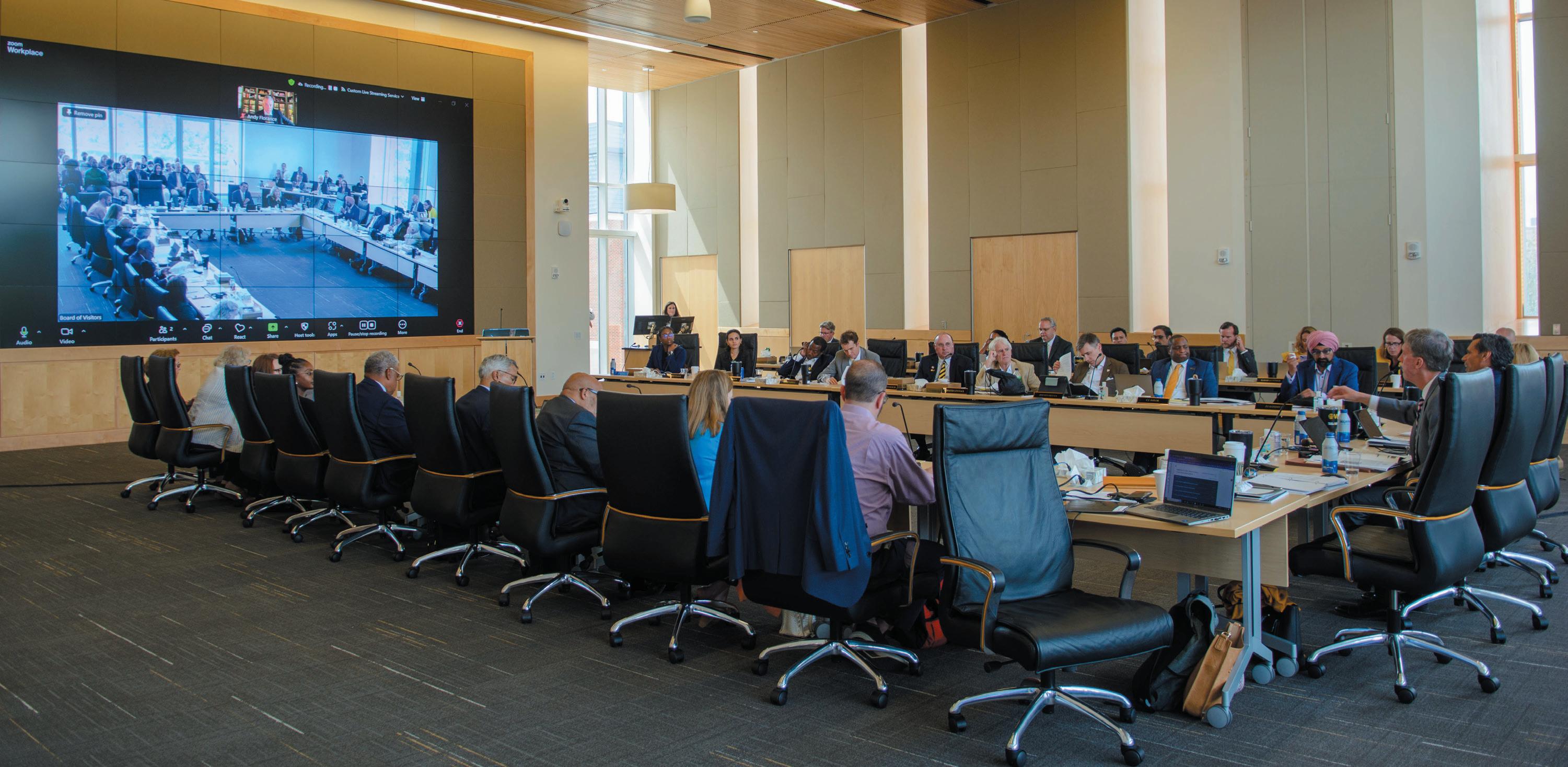
The VCU Board of Visitors meets in James Branch Cabell Library in September 2024
Photo by Kieran Stevens.
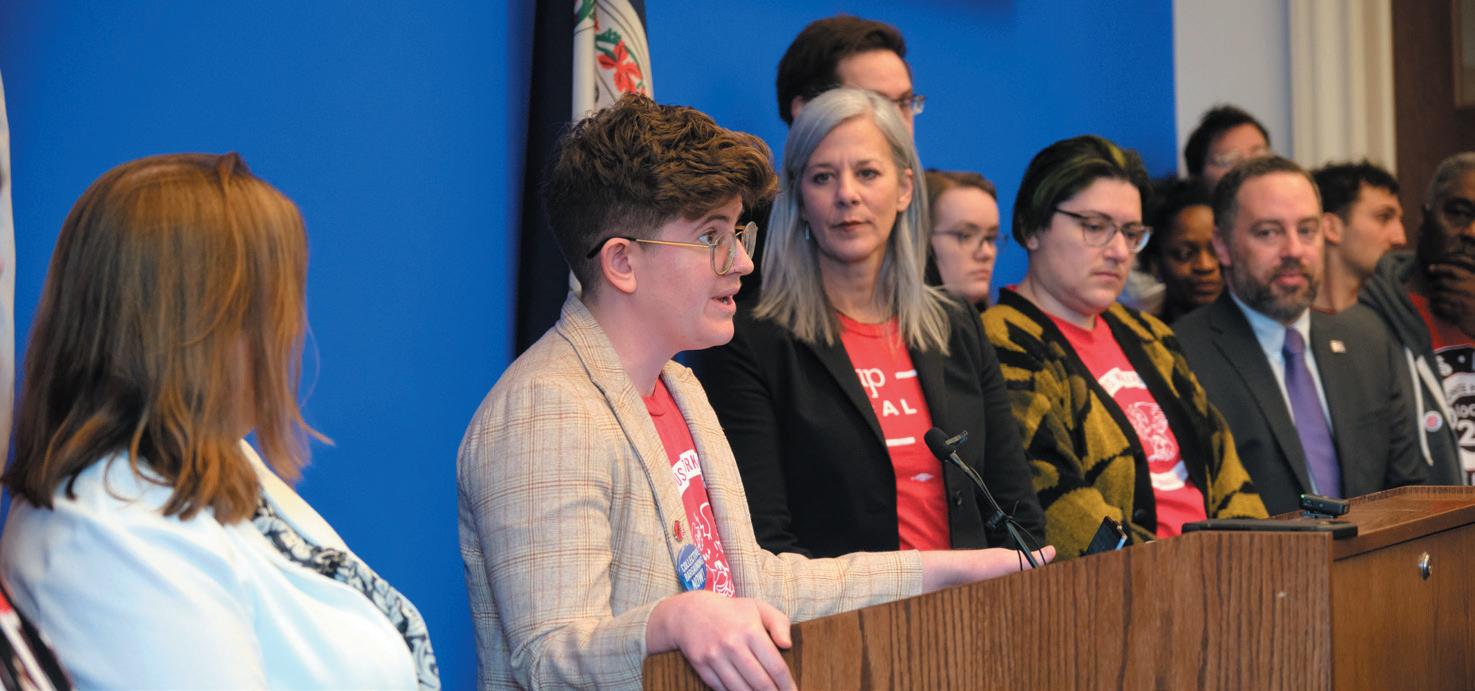
UVCVA President Harry Szabo speaks at a Feb. 10 press conference in favor of campus workers’ inclusion in House Bill 1263. Photo by Bert Shepherd.
ANDREW KERLEY Executive Editor HECIEL NIEVES BONILLA News Editor
Public-sector collective bargaining was banned in Virginia after an incident in 1943, when 28 Black women who worked as maids at the University of Virginia’s hospital walked out in protest against unfair pay and negotiated new wages for themselves.
Campus unions have been advocating for a repeal of the ban at the Virginia General Assembly for years. This session the repeal was introduced again, according to a previous report by The CT. It is backed by the United Campus Workers of Virginia — including the VCU chapter — as faculty, staff and student employees fall under the public worker umbrella.
The House of Delegates Appropriations Committee removed higher education employees from their version of the bill earlier this month. The Senate’s version currently still includes higher education employees, but now discounts home health care workers. Lawmakers will have to work out the differences by the end of the legislative session.
The removal of both groups came after legislators received fiscal impact statements from Virginia’s Joint Legislative Audit and Review Commission.
Senate Majority Leader Scott Surovell, D-Fairfax, suggested he will fight to have campus workers included in an interview with Dogwood.
In response to their removal, UCWVA kicked off a series of town halls over the weekend to drive up support for everyone’s inclusion.
“Campus workers were removed from the House bill after university presidents used their power and privilege to lobby lawmakers behind closed doors,” the union wrote in a statement.
VCU previously declined to comment on the bill, as it is the school’s policy to not comment on pending legislation.
Roz Carter is a service worker at VCU employed by the third-party food service organization Aramark, and is thus able to have a union contract through UNITE HERE Local
23. She is appreciative of the additional respect and benefits she receives through the union.
“I just made 19 years there a couple of weeks ago, so yeah, it’s finally better now,” Carter said. “It wasn’t ‘bad bad,’ but the money and the health insurance and the respect and being able to fight for each other and not be quiet when higher-ups just feel like they can do anything. That was a big thing that needed to change there and we have that now.”
Carter wants collective bargaining for public employees to include higher education for the sake of the many workers she shares a space on campus with who are not afforded these benefits. She said she has known people who work on VCU’s grounds for years, many of whom have discussed the gains the union has made, and they should receive the same benefits she does.
UCWVA president Harry Szabo previously told The CT securing higher pay for graduate students would be a
priority if they had collective bargaining rights. Szabo was a graduate teaching assistant before becoming an assistant professor at VCU.
“In order to make ends meet, I lived in a laundry room, like [a] washer, dryer, twin bed,” Szabo said. My graduate TA’s this year in 2025 told me that they also make $14,000 a year which is 10 years after I started my program. That wage was not a living wage in 2015 and it is not a living wage in 2026.”
Mark Wood, an associate professor of world studies and member of UCWVA at VCU, spoke to why he believes it is important to include campus workers in the bill.
“Our working conditions are our students’ learning conditions,” Wood stated. “We care deeply about students and their success in college and in life. Having the right to collective bargaining will put us in a great position to advocate even more successfully for the resources and support students need to succeed.”
REPORT: VCU better than national average, but still ‘hostile’ for Muslim students
KAYLA MUÑECAS Contributing Writer
A report from the Council of AmericanIslamic Relations released Feb. 11 categorized VCU as a “hostile campus” for Muslim students. The university was ranked as less-hostile than the average of the universities studied.
Approximately 2,000 Muslim students attend VCU.The report, which observed 51 universities and colleges across the country throughout 2025, aimed to gauge the prevalence of Islamophobia on campuses, as well as measure institutional support for Muslim students and their allies.
The CAIR’s findings can serve as a “roadmap for improvement,” and can encourage higher education institutions to create safer spaces for their Muslim students, according to the report.
There are three possible categories that universities can fall into in the report: “unhostile campus,” “under watch campus” and “hostile campus.” Under watch campuses are defined as campuses that have demonstrated inconsistent support of Muslim students or have exhibited harmful behaviors. Hostile campuses are defined as those that have been deemed repressive or discriminatory towards Muslim students.
VCU received a score of 45 out of 100, which, despite earning the institution the lowest ranking category, still fell above the average score from the CAIR’s findings. Of the 51 schools that were examined, 47 were seen as hostile campuses.
Point deductions in the report occurred if the university’s anti-discrimination policies did not specifically mention Muslim students, if there were reports of negative or harmful student experiences and if political expression prohibitions were implemented.
VCU received point deductions for a variety of reasons, including a lack of mention of anti-Muslim bias in their antidiscrimination policy, biased statements/ actions and major policy changes while “excluding input from students,” the CAIR report states.
The university most notably lost points for how its administration responded to student protesters’ pro-Palestine encampment in 2024.
VCU promptly changed its Campus Expression and Space Utilization Policy
the following semester — with new restrictions on chalking and where students could protest. After pro-Palestine protesters and police clashed in the spring of 2024 , the university changed policies on student conduct, such as chalking on the Compass in front of Cabell Library.
The university also temporarily withheld the degrees of several graduating student protesters, most notably Sereen Haddad — who did not receive her degree until late in the summer.
Online letters alleging discrimination, media documentation of anti-Palestinian biases, arrests, sanctions and suspensions are all listed as further reasons the university was deemed a hostile campus.
On Oct. 12, 2023, five days after Hamas’ Oct. 7 attack on Israel, VCU President Michael Rao sent an email to students in which he described the attack as “savage” and “barbaric.”
In response, over 900 VCU students signed a petition asking Rao to consider more perspectives on the issue “rather than issuing a one-sided statement that completely disregards the attacks on Palestinians.”
The sentiment was echoed at a protest on Oct. 18, 2023 organized by the
Richmond chapter of American Muslims for Palestine, which VCU students also attended. Among them was then-Muslim Life director at VCU Bilal Quraishi, who called the language “miscalculated” per a previous report by The CT.
“You feel dehumanized, like all this talk about diversity and inclusion and ‘we love our Muslim brothers and sisters, our community,’ it just feels like empty words,” Quraishi said.
Ammar Mohiuddin, current president of the Muslim Student Association at VCU, said he partly agrees with the rating the university received in the report.
“I guess it makes me, in a way, feel unsafe. It’s a small feeling in the back of everyone’s mind, especially with that report,” Mohiuddin said. “But at the same time, there’s different people at VCU that have done a great job in really trying to advocate for Muslim students.”
Regarding pro-Palestine demonstrations, Mohiuddin said he does not believe VCU handled the situation to the best of their ability.
Mohiuddin said the report was a bit surprising, but helped him to recall instances in which the university has not
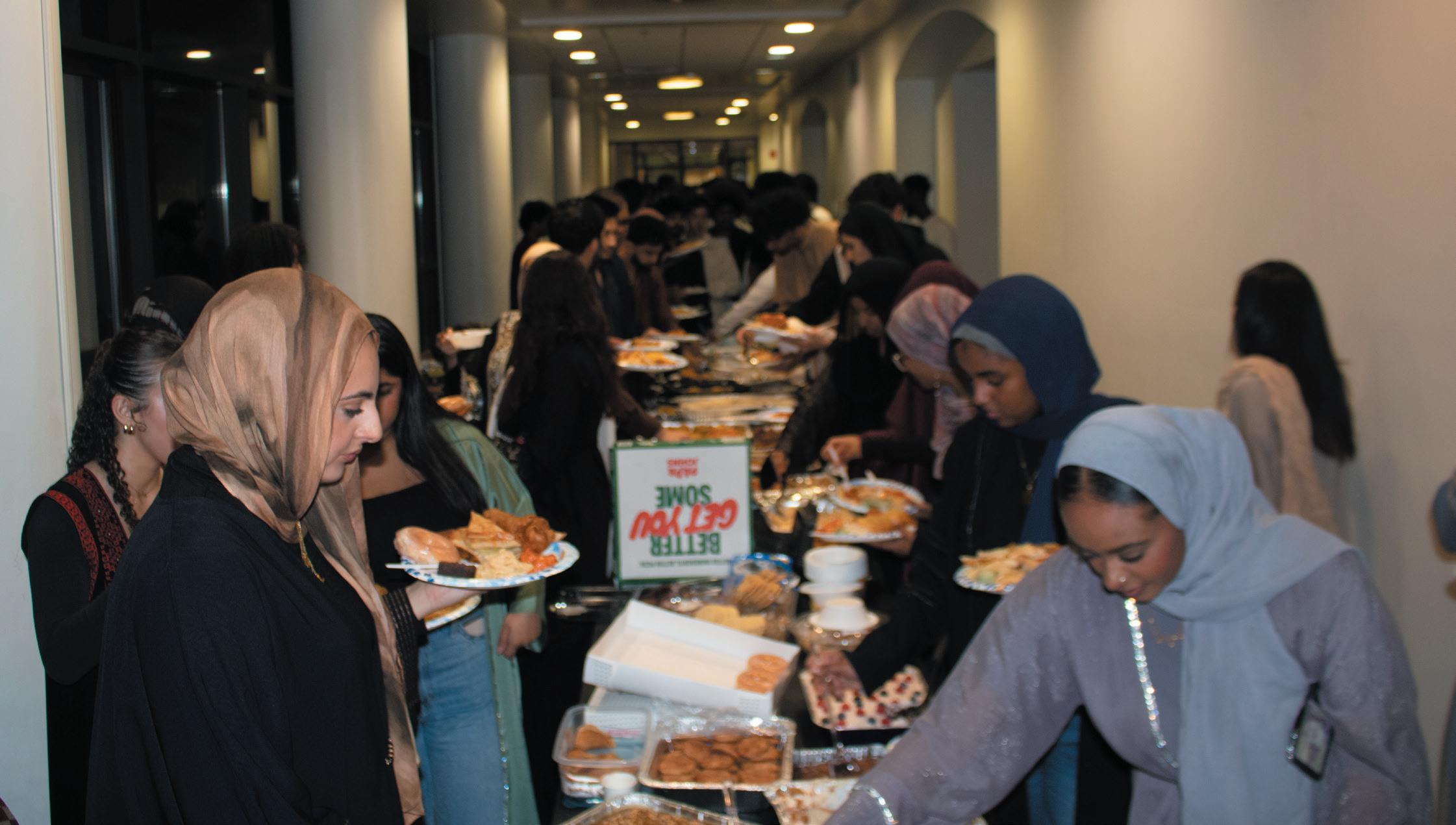
been exactly supportive of Muslim students. Mohiuddin said staff and faculty in the Commons have been especially helpful during Ramadan, a month where Muslims fast from sunset to sundown, by helping Muslim students reserve places to hold iftar, or daily dinners where fasts are broken.
“I think that there’s different levels to VCU. So maybe at the top, it might not be the best for Muslim students, but as I build connections with different people within VCU, I really have found that some people really do want what’s best for Muslim students,” Mohiuddin said.
VCU spokesperson Michael Porter stated that the CAIR had not reached out to the university, and in turn that they would not be able to address the rating.
“VCU is committed to upholding a climate of mutual trust and respect where individuals of different backgrounds, identities, abilities and life experiences are embraced, engaged and empowered to drive excellence and success,” Porter said.
Muslim students gather for a Ramadan event in the Commons. Photo courtesy of the Muslim Students Association at VCU.
VCU POLL: many Virginians voted with democracy concerns in mind
SAL ORLANDO
Assistant News Editor
The L. Douglas Wilder School of Government and Public Affairs released a new Commonwealth Poll on Feb. 10 with results showing Virginians are concerned about democracy and civic norms.
Virginians were motivated to vote this past election to maintain democracy and civility, with 41%
naming it their top issue, according to the poll. Of those polled, 32% said the top issue faced by legislators during the current General Assembly session should be threats to democracy.
“Right now, the biggest safeguard to our democracy is how people are reacting to it in public opinion polling, not how Congress is reacting to it, not how our allies are reacting to it — but the president seems pretty nulled by
ADVERTISEMENT
those things, he doesn’t seem to care,” said Christopher Saladino, an associate professor of political science.
Saladino said President Donald Trump changes his policies and orders when public opinion shifts.
Virginia Democrats recently released their proposed congressional district map that would likely give Democratic representatives a 10-1 majority in the state, per a previous report by The CT. Similar moves have been made in California and Maryland, following redistricting done by Republicans in Texas, which removed Democratic seats
Ryan Smith, professor of history, compared the concerns over democracy being under attack from pollers to how the signers of the Declaration of Independence felt when their inherited political rights were under attack by the British monarchy.
Alexandra Reckendorf, assistant professor and associate chair of political science, compared the current state of U.S. democracy to the five themes of a fascist education: national greatness, national purity, national innocence, strict gender roles and vilification of the left.
“It has taken a really long time for America, and even Virginia, to function as a democracy as we recognize it in our generation. And it has all been nearly snuffed out several times,” Smith stated in an email. “The poll’s concern for ‘maintaining democracy and civility’ expresses a hope that a government principles can continue.”
Ryan Smith, professor of history
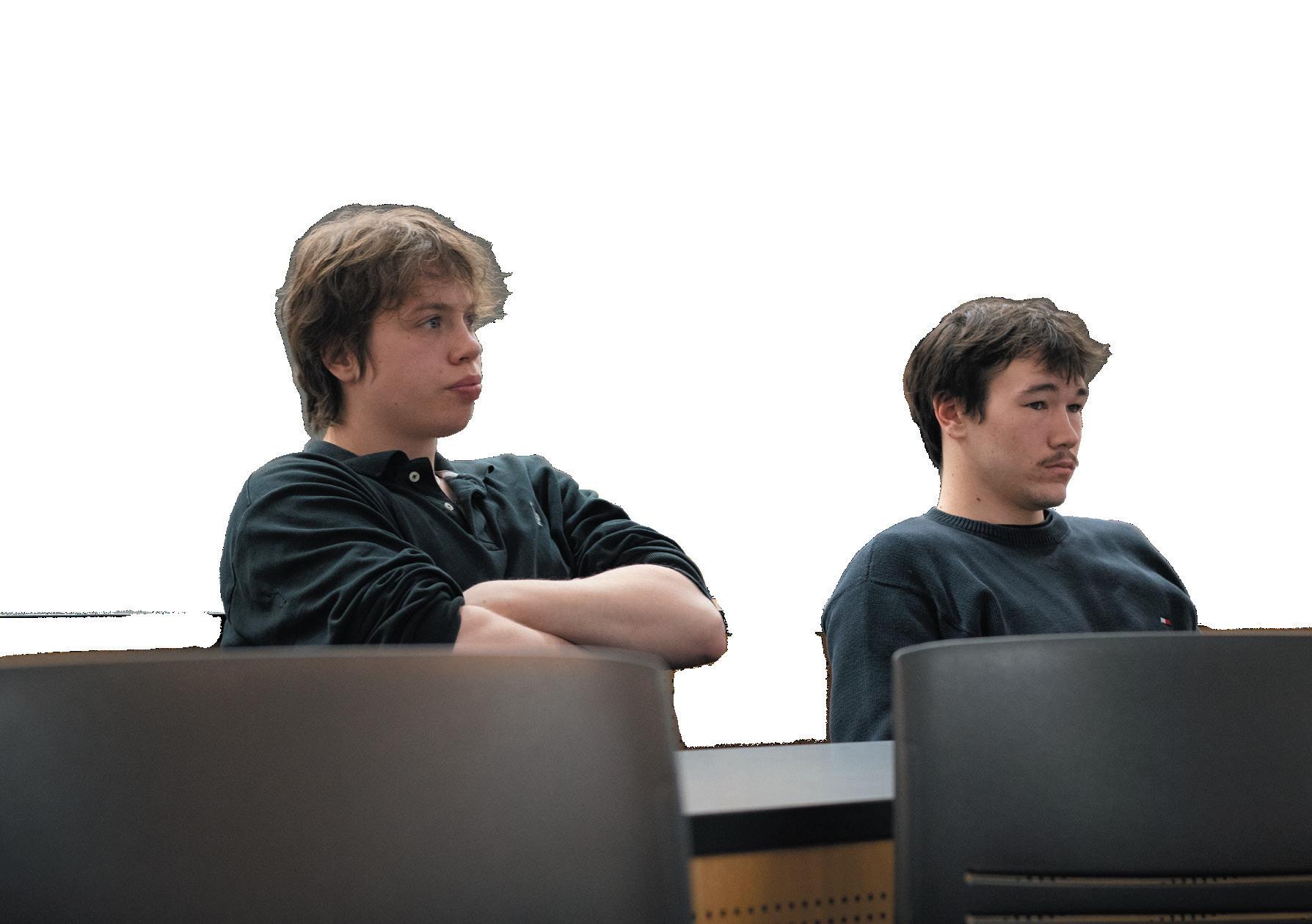
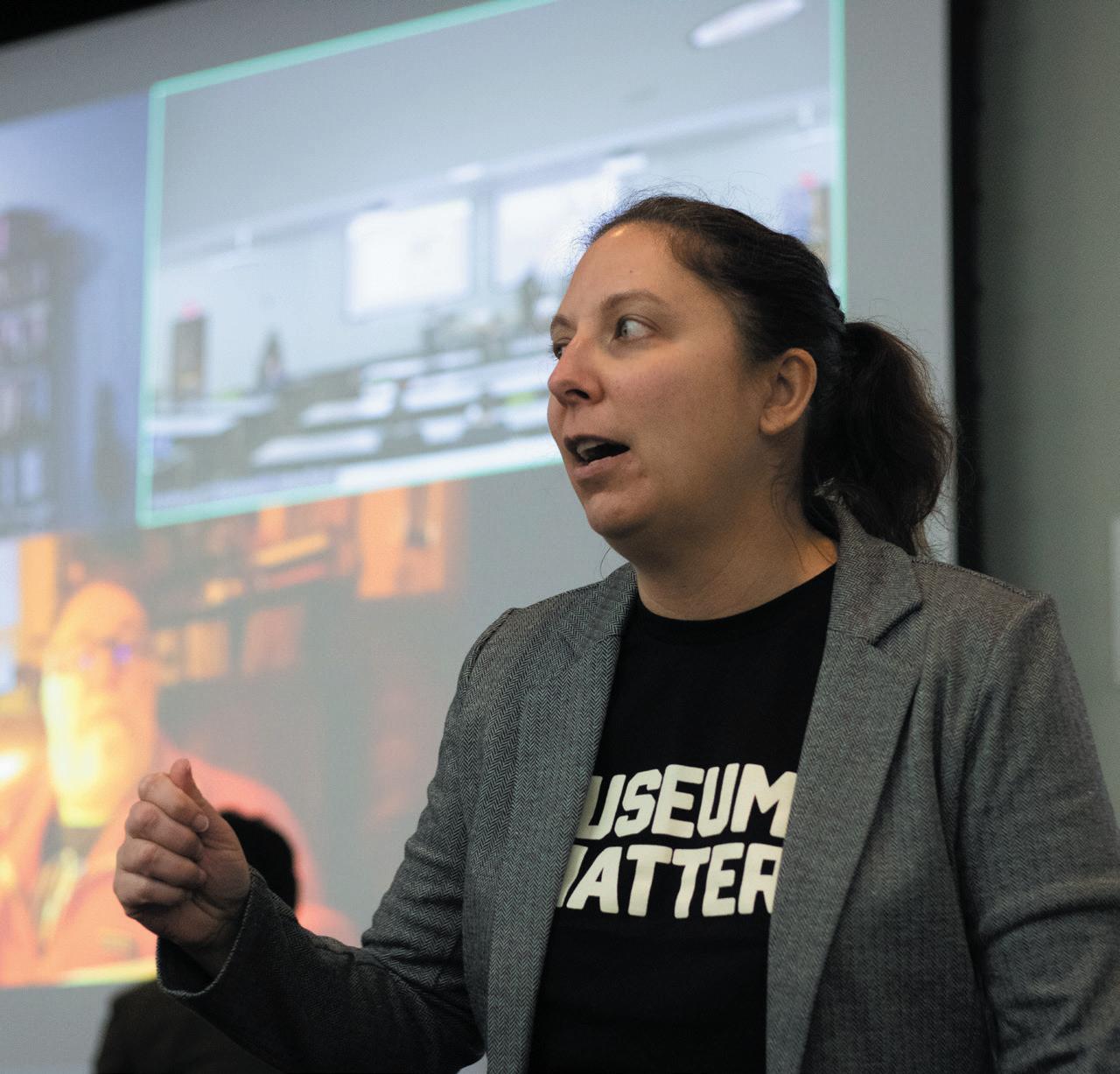
(Left) Students watch the town hall event from their seats. (Right) Professor Alexandra Reckendorf cites quotes from President Trump while discussing fascism at a town hall event event at VCU on Feb. 19. Photos by Chiara Wells.
STUDENT STAFF SPOTLIGHT
BEN JONES
Job Positions:
Resident Assistant
Year: Sophomore
Major: Biology
Ben Jones is a sophomore Resident Assistant (RA) at Rhoads Hall with VCU Residential Life and Housing and is a valued member of the team. He balances his academic responsibilities and RA role with admirable dedication, consistently demonstrating professionalism and care in his work. Ben regularly checks in with residents and uses humor to create a welcoming, supportive, and uplifting community environmen t. His strong work ethic and thoughtful engagement have made a meaningful impact in his first year as an RA. Thank you Ben for all you do!
FEB. 2026
SPORTS
From Nigeria to Richmond, Jude Okafor is a one-of-akind record-breaker
MALACHI KEYS Contributing Writer
About 5,500 miles away from his home, third-year track star Jude Okafor is setting VCU program records and making his family proud.
“Whenever I hear their voice on the phone, they say, ‘remember why you’re there; do the best that you can,’ and that motivates me,” Okafor said.
Okafor is the youngest of seven siblings and started playing soccer in high school in Nigeria. However, his journey in sports took a turn after his coaches convinced him to try out track. This was the start of something special, as VCU soon came calling.
Okafor was hesitant to leave home, but with the support of his family and community he traveled to the United States to chase his dreams and pursue his goals.
“I’m not just here to run track. I’m here to be great, not just good. I want to be great,” Okafor said.
For the Nigerian athlete, greatness may only scratch the surface of his potential as a Ram. Okafor set the VCU 300 meter record at the Virginia Tech Invitational on Jan. 16 with a blazing time of 33.7 seconds.
Just a few weeks later, he broke the VCU indoor 400 meter program record on
Feb. 7 at the Virginia Military Institute Winter Relays with a time of 47.88 seconds.
Although being an ocean apart from his family comes with mental and emotional stresses, Okafor found his home away from home at VCU.
“My coaches, they don’t just treat me like an athlete — they treat me like family,” Okafor said. “My teammates and my coaches, they have been very supportive.”
Despite sitting in the record books today, it has not been the smoothest road for the star sprinter.
Okafor dealt with a lingering ankle and lower leg injury that prevented him from performing at the level he knew he was capable of early in his career.
Injuries were not the only thing holding Okafor back from his full potential, according to VCU Head Coach Jon Riley. His mindset had to be curated to where it currently stands.
“It’s a process — year three,” Riley said. “The female student athletes, year one, two, they are buying in. Sometimes it takes the guys a little bit longer. It takes a good two or three years before they totally get it.”
Along with buying into Riley’s process, Okafor credits his spiritual beliefs and
Stat of the week
relationship with God for his recent successes.
“I pray every day to God. I go to church every Sunday,” Okafor said. “Whenever I pray to God, I find this sort of special peace. Even though I may not always make the right decisions, the Holy Spirit leads me through.”
Okafor is a health services major and plans on working on the administrative side of hospitals and clinics, specifically in occupational therapy.
“When I was a kid, I always wanted to give,” Okafor said. “I want to give to the community, I want to give to people. I want to graduate and then go into occupational therapy for my master’s degree.”
Okafor will travel to Virginia Beach for the Atlantic-10 Indoor Track and Field Championship on Feb. 27 and 28 where he will have the opportunity to break even more records and further solidify his spot in VCU history.
Men’s basketball feeds off hype crowd, earns 10th straight win
JENNY
ALLEN Staff Writer
Surrounded by notable alumni and with VCU’s winning streak on the line — energy and pressure pulsed throughout the Stu as men’s basketball faced George Washington University on Feb. 17. The game marked the 15th anniversary of the 2011 Final Four run.
VCU won the tip-off and fourth-year forward Barry Evans immediately put up a second chance layup getting the and-one.
Rams’ first-year guard Nyk Lewis drained back to back threes putting both the first threes of the game on the board.
Second-year guard Brandon Jennings followed Lewis’ consistency and knocked down the Rams’ third three in a row putting them up 13-4.
Third-year forward Michael Belle hit VCU’s fourth three pointer in a row, keeping the momentum going.
George Washington University responded with its own back-to-back threes by graduate guard Luke Hunger and third-year guard Trey Autry, bringing the score to 16-12.
The Revolutionaries tried to keep up with the Rams as they knocked down another three putting them down by three with 13 minutes.
A free throw from Revs’ graduate guard Tre Dinkins gave them their first lead of the game with 12 minutes left in the first.
The Rams did not let up, as third-year guard Tyrell Ward and Evans consistently broke down GW’s defense in the paint, grabbing the lead back.
Third-year forward Lazar Djokovic
knocked down his first three of the game as the shot clock buzzer went off bringing the score to 27-21.
Energy in the Stu went wild and the tension got high as back-and-forth scoring began and the Revs’ fouls started to pile up.
VCU kept its composure, leading to a fast break dunk from Ward which lit up the crowd with three minutes left in the first.
The Revs used the crowd’s energy to give Dinkins the opportunity to tally up his stats and hit a deep three in the Rams face, bringing the score 38-44.
At the half, VCU shot 55% from the field goal compared to GW 52% and 43% from the three compared to 42% from GW.
GW’s redshirt second-year guard Christian Jones immediately put three
points on the board after the half giving them a one point lead to start the second.
A fast break and-one layup from Ward ended the Rams two minute scoring drought, tying the game at 51 three minutes into the second.
The Rams struggled to finish while the Revs took the lead, 58-52.
Djokovic stood the crowd up with an outstanding dunk closing the gap down to 65-58 with 12 minutes remaining.
A technical foul from GW kept the excitement roaming around the Stu. Belle used the energy to knock down an impressive second-chance layup closing the gap to 62-65.
An electric crowd atmosphere remained as Djokovic hit a three pointer to tie the game at 65 halfway through the second.
Third-year outfielder Michael Petite hit his third home run in seven games for VCU in the loss to No. 6 Coastal Carolina University.
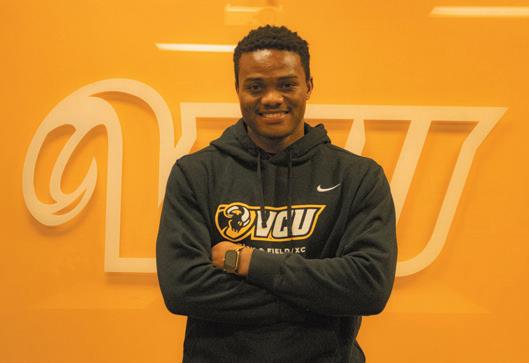
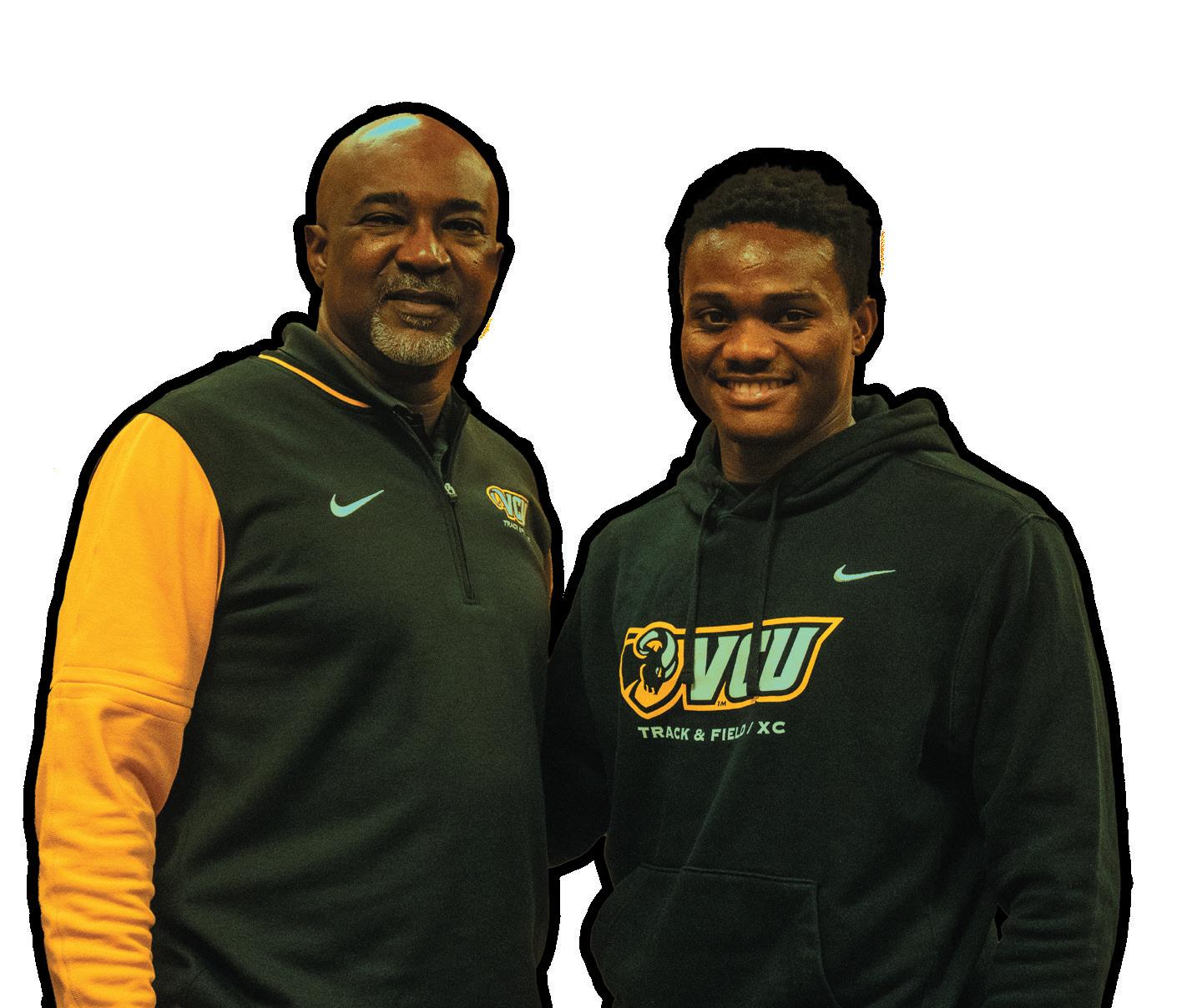
Track runner Jude Okafor (right) smiling with Coach Jon Riley (left).
Photo by De Smaw.
VCU recognized its 2011 Final Four team before playing GWU. Former guard Bradford Burgess (left) forward Toby Veal (middle) and guard Reco McCarter (right) were some of the players recognized. Photos by Kendall Lott. Collage by Quinn Lysek.
Belle banged a three pointer to continue the hype as he finally gave the Rams their first lead during the second half. Rams’ second-year guard Terrence Hill Jr. showed off with a behind-the-back stepback, putting them up 72-67 with seven minutes on the clock. Lewis hit another three giving him 12 points on the game while keeping the crowd on their feet.
Rushing for a quick comeback, a stepback three pointer from GW made the score to 83-74 with two minutes left.
The Rams clutch defense at the end secured their lead, finishing the game with an 89-75 victory. Six Rams scored in the double digits with Ward leading at 15 points.
“Those last 15 minutes we guarded well enough to go win the game and stretch
Women’s basketball’s woes continue against Davidson
DREW THOMPSON Sports Editor
The Rams continued their five game slide as interim Head Coach Kirk Crawford still searches for his first win this season.
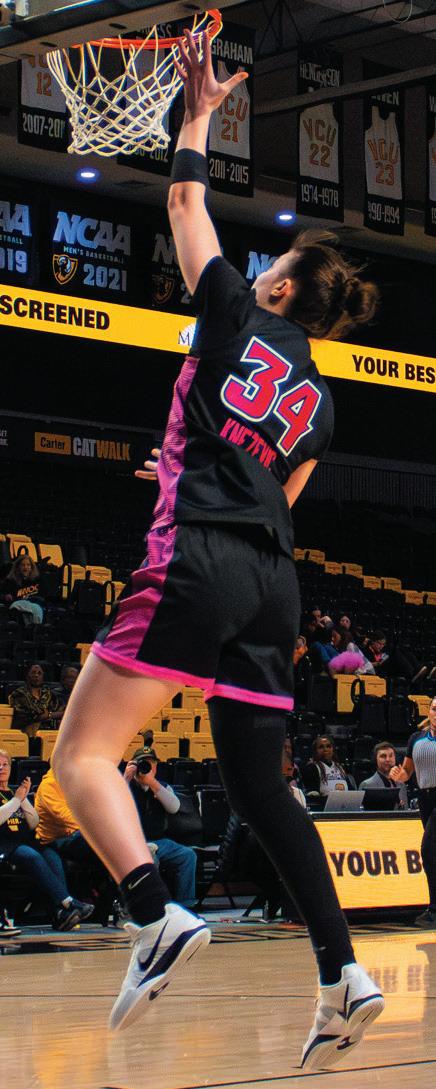
VCU won the tip and second-year forward Katarina Knezevic immediately opened the scoring with a layup.
Davidson answered with a layup of its own on the ensuing possession.
The Wildcats came out of the gate hot, shooting multiple threes in the opening minutes and grabbing a quick lead.
Davidson went on a three minute scoring drought halfway through the first despite the high volume of shot attempts, allowing VCU to regain a short-lived lead.
The two teams remained evenly matched throughout the majority of the first, however the Wildcats continued to hold a slight 14-12 advantage.
Second-year guard Cyriah Griffin made VCU’s first field goal in over two minutes to keep the score close.
Davidson ended the first quarter with a narrow 17-14 lead. The Wildcats continued the trend of high-volume three point shooting, with half their points coming from behind the arc.
The Wildcats capitalized on the Rams’ sluggish start out of the break quickly going up six points. VCU looked good defensively but struggled to carry that momentum to offense.
Black athletes paved the way for VCU basketball
“The only thing really new about the Black Revolution,” Charles McLeod said in an interview with the CT from 1969. “Is that now there is pride in being black. Before now, the Black man was unable to feel this pride.” Decades later, Black athletes continued to make their way to Richmond. Former sixfoot-three- inch guard Eric Maynor became a fan-favorite and the best athlete to ever rock the Black and Gold.
He is the all time leader in points with 1,953 and assists at 674. VCU had not seen that kind of player before — a poised guard with sharp court vision, a reliable pull-up jumper and the ability to dismantle defenses with speed.
Maynor took his talents pro, and ended a 17-year drought for the Rams by reaching the NBA in 2009 when he was selected with the No. 20 pick in the first round by the Utah Jazz.
Davidson continued to pile it on after a 8-0 run put it up 11 halfway through the second quarter.
VCU redshirt third-year forward Ann Zachariah momentarily disrupted the momentum with a three to bring the lead back to single digits. However, Davidson did not let up and quickly regained the double-digit lead.
The Wildcats went into halftime up 3520 following a dominant second quarter where they outscored the Rams 18-6.
Davidson started the third with the same intensity as the lead grew to 21 in the opening three minutes.
VCU failed to build anything meaningful on offense, piling up turnovers, missed shots and airballs as the team continued to look lost. The Rams spent a majority of the third quarter bouncing between scoring droughts.
The fourth quarter started with the Rams still struggling to score. Davidson coasted comfortably to a 22 point lead with six minutes remaining.
The Wildcats effortlessly glided through the fourth quarter en route to a 66-39 win over the Rams.
“We need to compete more consistently,” Crawford said. “You can’t make mistakes against a good team like Davidson.”
the game open,” VCU Head Coach Phil Martelli Jr. said.
The Rams extended their winning streak to 10 thanks to the wild crowd and competitive play.
“It gets really hard this time of the year to win, but it gets sweeter when you do,” Martelli Jr. said.
He was the first Ram to get drafted firstround, later joined by two other Black players — Larry Sanders to the Milwaukee Bucks in 2010 and Nah’Shon “Bones” Hyland to the Denver Nuggets in 2021.
Maynor paid his dues as a player and is now the current assistant coach for the reigning 2025 NBA champions, Oklahoma City Thunder. Moments like that set a new standard for VCU basketball — one that made the absence of similar success stories in other sports, like football, even more noticeable.
At six-foot-seven-inches and 250 pounds,
FEB 17
MEN’S BASKETBALL VS. GEORGE WASHINGTON UNIVERSITY WON 89 -75
LACROSSE AT VIRGINIA TECH LOST 4 -11
FEB 18
WOMEN’S BASKETBALL VS. DAVIDSON COLLEGE LOST 39 - 66
FEB 20
MEN’S TENNIS AT ST. JOHN’S UNIVERSITY LOST 0 - 4
BASEBALL VS. THE UNIVERSITY OF ILLINOIS LOST 4 - 9
BASEBALL AT NO. 6 COASTAL CAROLINA UNIVERSITY LOST 2 -13
MEN’S BASKETBALL AT NO. 18 SAINT LOUIS UNIVERSITY LOST 75 - 88
FEB 21
WOMEN’S TENNIS VS. HOWARD UNIVERSITY WON 5 -2
BASEBALL VS. THE UNIVERSITY OF ILLINOIS WON 3 -2
WOMEN’S BASKETBALL AT DUQUESNE UNIVERSITY
LOST 61-72
LACROSSE AT OLD DOMINION UNIVERSITY WON 12 -10
FEB 22
0 -7 BASEBALL AT NO. 6
3 - 6
FEB 24
Mo Alie-Cox took his talents from the court to the field as an NFL tight end.
During his time with the Rams, AlieCox led the team to 2015 Atlantic-10 Championship and scored over 1,000 career points. He was also the 2016 Black History in the Making Award recipient.
After his basketball season, Alie-Cox did the unthinkable, signing as an undrafted free agent with the Indianapolis Colts in 2017. He later signed a future contract with the Colts in 2018 after coming back from an injury.
McLeod, Maynor and Alie-Cox share a defining commonality — resilience and an
WOMEN’S TENNIS VS. GEORGE WASHINGTON UNIVERSITY WON 4 -1
unwavering drive to never give up. Today, that same spirit lives on through players like second-year guards Brandon Jennings and Terrence Hill Jr., who are modeling themselves after legends who came before them. They both combined for an average of 23.3 points and 4.9 assists. Jennings and Hill are embodying what leadership looks like. Their impact reaches beyond the game, serving as a powerful example for Black boys on who they can become.
Continued from front page
VCU BLACK ATHLETES
VCU sophomore forward Katarina Knežević goes up for an open layup in transition
Photo by Ashley Davis.
Eric Maynor is stripped of the ball by Brian Henderson (right) as the time expires in Saturday's loss CT archive photo by Rachel Lauren.
VCU will play its next game at Duquesne University on Saturday, Feb. 21 at 2 p.m.
SPECTRUM
‘Ode to the Anomalous’ exhibition abstracts personal stories
Continued from front page
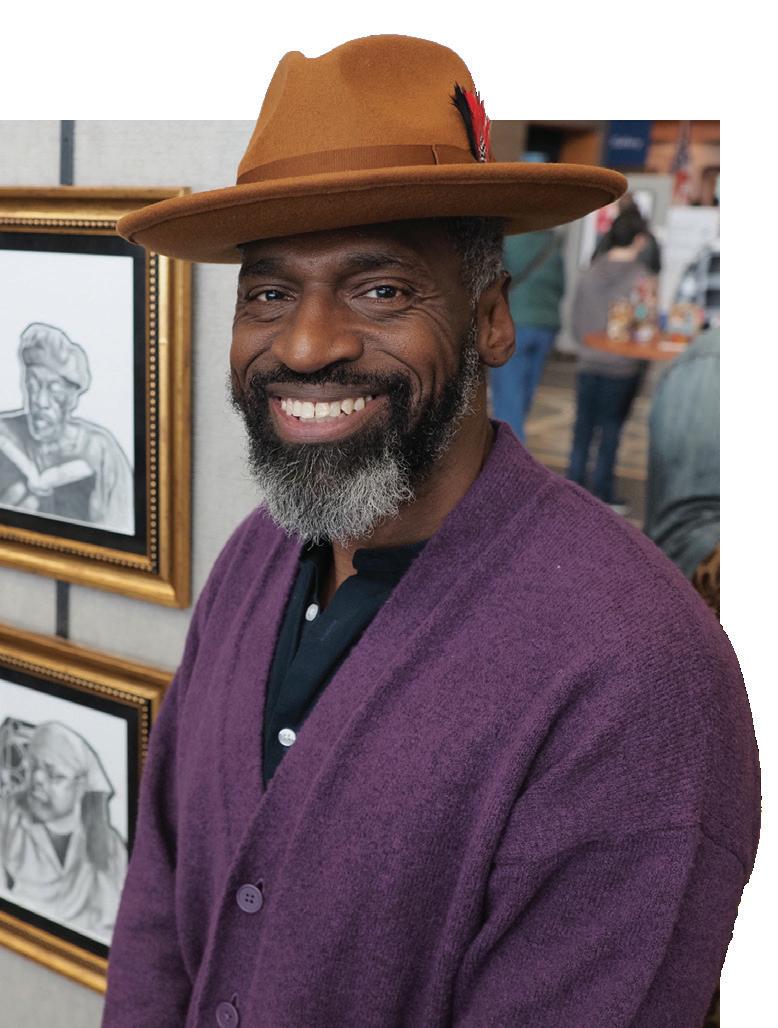
The artists participating in the exhibition are Alex Sorapuru, Asa Jackson, James Williams III, Huey Lightbody, Serron Green and Taj Posce. All are contributing their unique voices and perspectives.
Ra-Twoine “Rosetta” Fields, founder of SCAG and curator of the exhibition, brought in works of the artists he has worked with for over 10 years as either a curator, collector or a curious patron of the art.
All artists exhibiting their work are traveling from different states, including New Jersey, Louisiana and Maryland — to name a few.
“To represent them speaks to me as a curator, my travels and helping artists reach their growth,” Fields said.
The inspiration for “Ode to the Anomalous,” comes from Fields’ desire for people to explore how artists use materials to translate their experiences and narratives within their artwork.
“[It] functions as a space of reflection. Navigating the feeling of uncertaininty and doubt. Pieces serve as mirrors depicting lived experiences,” Fields said.
Fields wants people to explore how artists used the materials to translate their experiences and their narratives within their artwork and draw more attention to the curation work.
Sorapuru, a New Orleans-based visual artist and architectural designer participating in this exhibition, believes visual and written art share fundamental elements.
“Visual art and poetry intersect in that gap, inviting interpretation and personal connection,” Sorapuru stated.
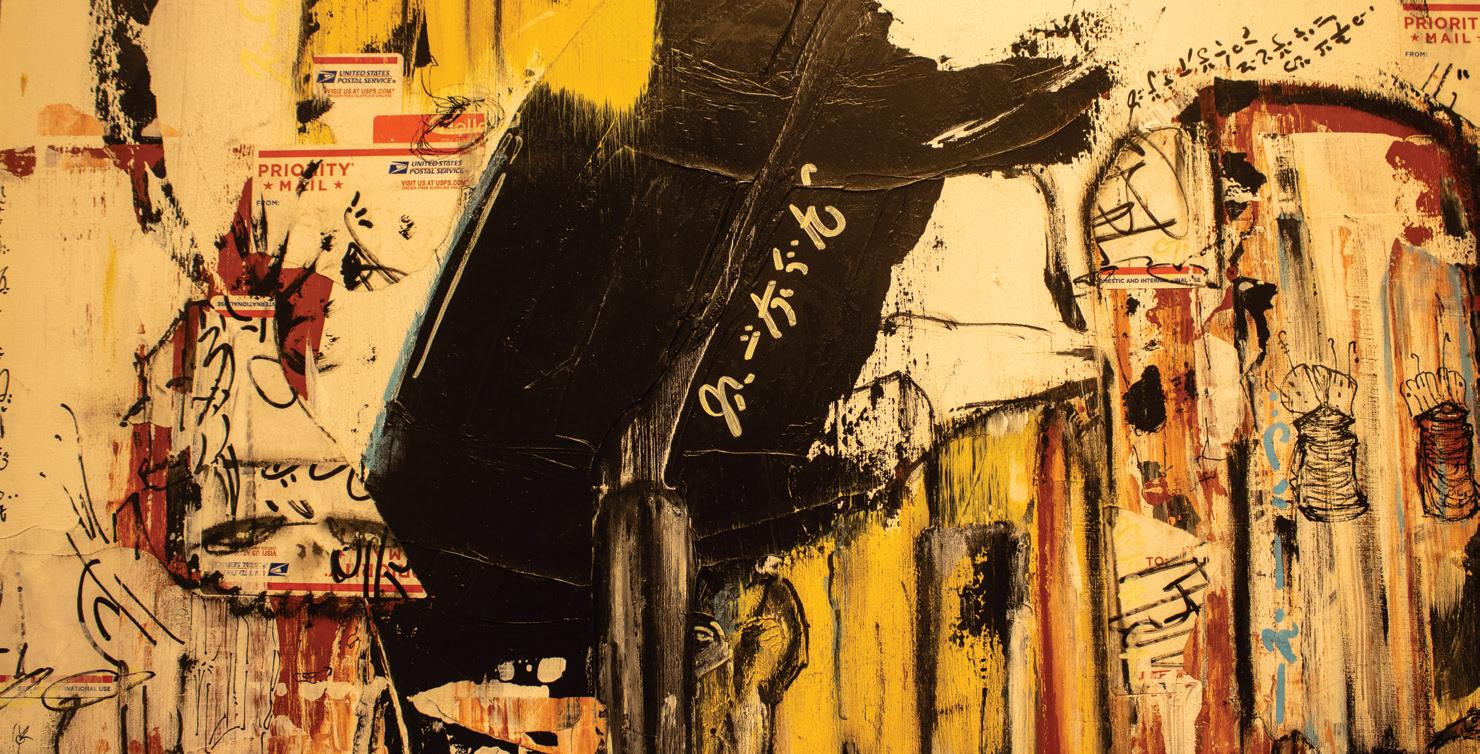
Sorapuru’s work for the exhibition is based on colorblocking and use of vellum and collage, embodying the idea of structure, rhythm and its absence. His compositions explore structure, negative spaces and transparency.
The artist was drawn to the theme “Ode to the Anomalous,” in his art he explored the “spaces between structure and organic life, how identity shifts and grows,” Sorapuru stated.
“Like the process of storytelling from our own personal point of view,” Sorapuru stated.
Green is a New Jersey-based artist and uses various mediums such as text, images, sculptures and installations to create his art. His work titled “Black Love” on display for Southside Gallery is a piece from a small series of text-based work he created, his approach to artistic creativity to visually stimulate the audience.
The art Green created expresses the Black American experience and Green loved the way people responded to the piece. Green and Fields are old friends and when Fields approached him with the idea “Ode to the Anomalos,” Green knew this particular text-based work was what best resonated with the inspired theme.
On this day
On this day, Feb. 25, 1870, Hiram Rhodes Revel became the first African American to take oath and serve in the U.S. Senate.
While Green does not have a specific style, he does have a signature content which tends to gravitate towards things surrounding the Black American experience.
“Content and information dictate the mediums for me,” Green said. Green’s travels as a child with his dad
Student org empowers Black artists from gallery walls to the big screen
LELIA CONTEE
Contributing Writer
From gallery walls to projected screens, Black Art Student Empowerment, or BASE, at VCU, worked with multiple organizations to platform students’ artistry across mediums.
BASE and Black Cinema Society hosted a screening that featured six Black student films, exploring Black identity, culture,
community and experiences at The Depot on Feb. 20. BASE also hosted an exhibition called “Black Fidelity: Crafted in the Storm,” that will run until Feb. 28 at the Anderson.
Kailah Augustine, co-president of the Black Cinema Society, hopes the screening inspired audiences to create and share their art or simply enjoy the immersive experience.
The films presented were: “Why Was I Born So Different,” by Kendell Liverpool;
“Music is My Drug,” by Janiya Taylor and Jack Pendleton; “Strange Fruit,” by Ashley Davis; “At the Tone,” by Aja Williams and George Weston; “Different,” by Amanda Malcolm; and “Mama’s Roots,” by Ash Jones and Joy Sharpe.
The short films examined how Black people navigate a world that dehumanizes them while still finding connection and belonging, according to Yterniti Williams, the president of BASE.
“Art is a driver of culture,” Yterniti Williams said. “Art is expression, is freedom, is one of the few things you have for certain that you can always create, no matter what.”
In the exhibition, students explored themes of radical joy, creative agency and relief in times of anguish.
Shaeley Lincoln, a fourth-year sculpture and extended media student, crafted three pieces for the exhibit: “Reminisce,” “Mankind” and “Artist in the Bricks.”
Lincoln’s “Reminisce” uses incense, hair and regrowth to symbolize her family heritage and connection to her father. “Mankind,” a blue portrait with “little sad faces” drawn inside the pupil, represents collective human emotion and functions as an incense burner, where smoke rises from the head.
“Artist in the Bricks,” Lincoln’s final piece, features a collection of bricks with a carved marble face to represent the history of enslavement and its influence on Southern architecture.
“Although I’m dealing with heavy messages, I still want people to feel emotions that they’ll lead with joy or lead
sparked his interest in learning various cultures. It inspires him in a wide range of works and texts, which are seen in his collections, such as a five-piece series of the word “Stop” in five different languages and another 12-piece series inspired by the poetry of Amiri Baraka.
Green’s exploration in different mediums and cultural expressions is seen in his body of work. He believes that people should start respecting one another, and we would get along better. “respect each other. We would get along a little better.” The exhibit “Ode to the Anomalous,” will remain open, showcasing the artwork to the public from Feb 6 through March 7 on Thursdays-Saturdays from 12-6 p.m. More information about the exhibit can be found on SCAG’s Instagram page: @ southsidecontemporary.
with some kind of self-reflection on their own life or history,” Lincoln said.
Grace Sharpe, a fourth-year painting and printmaking student, featured two pieces at the exhibition titled “Protection” and “Uncover.”
“Protection” is a sculptural window piece painted in haint blue with silver crosses in reference to Gullah Geechee culture, Christianity and vampirism, according to Sharpe. The second piece, “Uncovered,” reflects the 1786 Tignon Laws that forced Black women to cover their hair. The piece includes a canvas, headscarf and two braids on the side, according to Sharpe. She printed the braids on top of the headpiece as a sign of rebellion against Black hair oppression.
Aja Williams, a third-year painting and printmaking student, featured their piece “Tens.”
The piece depicts a figure joyfully listening to House and Ballroom music, representative of the joy within the Ballroom community, according to Aja Williams. It serves as a commentary on Ballroom culture and gender expression, drawing inspiration from model Grace Jones’ magazine shoots and the television series “Pose.”
“I hope that they [attendees] feel the same way as the figure feels — they feel like dancing, they feel like listening to music and just being unapologetic about themselves,” Aja Williams said.
BASE will be hosting an Artist Alley event, where local artists can showcase their work, at the Institute for Contemporary Art on March 6 at 4 p.m. Information can be found on their instagram @baseatvcu. am @baseatvcu.
Audience members watch as credits roll on student film ‘Mama’s Roots,’ by Ash Jones and Joy Sharpe at The Depot on Feb. 20. Photo by Landon Walker.
Detailed image of Huey Lightbody’s ‘The Copper Against My Skin.’ Photo by De Smaw.
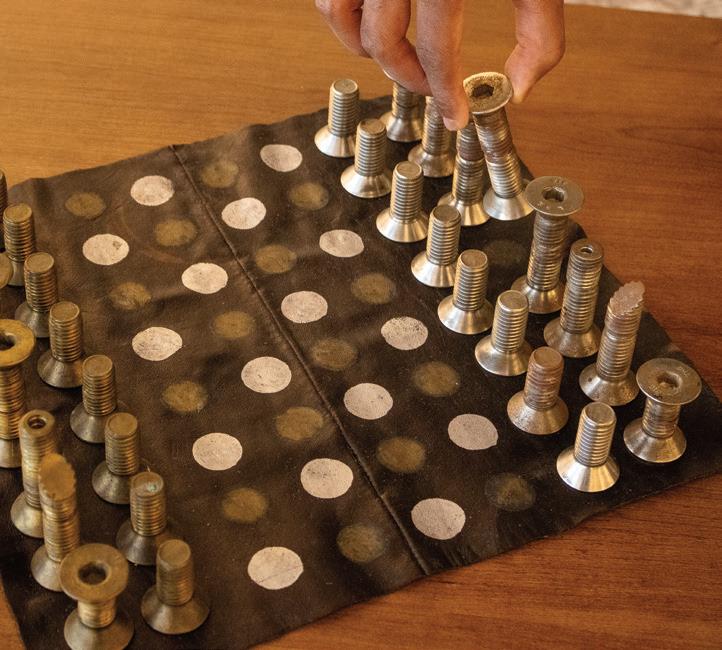
An individual picking up a custom made chess piece. Photo by De Smaw.
Elegba Folklore Society brings African diaspora in the form of dance
MAEVE BAUER Spectrum Editor
With walls covered in art and decor from across the African diaspora — laughter and conversation harmonized with traditional African drum music on Saturday, Feb. 21, at the Elegba Folklore Society.
Elegba Folklore Society’s cultural center is located at 101 E. Broad St. It typically functions as an educational gallery. Each piece of art and jewelry in the space has a meaning connected to Africa, according to founder Janine Bell.
They are committed to celebrating African and African-American culture year-round, according to their website. Elegba is a deity that comes from Yoruba cosmology of West Africa and is an “intercessor who opens the roads, bringing clarity out of confusion.”
The point of Convergence is to share the history of African dance through African dance, according to Bell.
“How many people say ‘Oh, y’all over there jumping up and down with some drum beats,’ and giving it no artistic credibility? When African dance is the first forms of movement that we know on the planet. African drums is the first forms of music that we know on the planet. This is the classical dance,” Bell said.
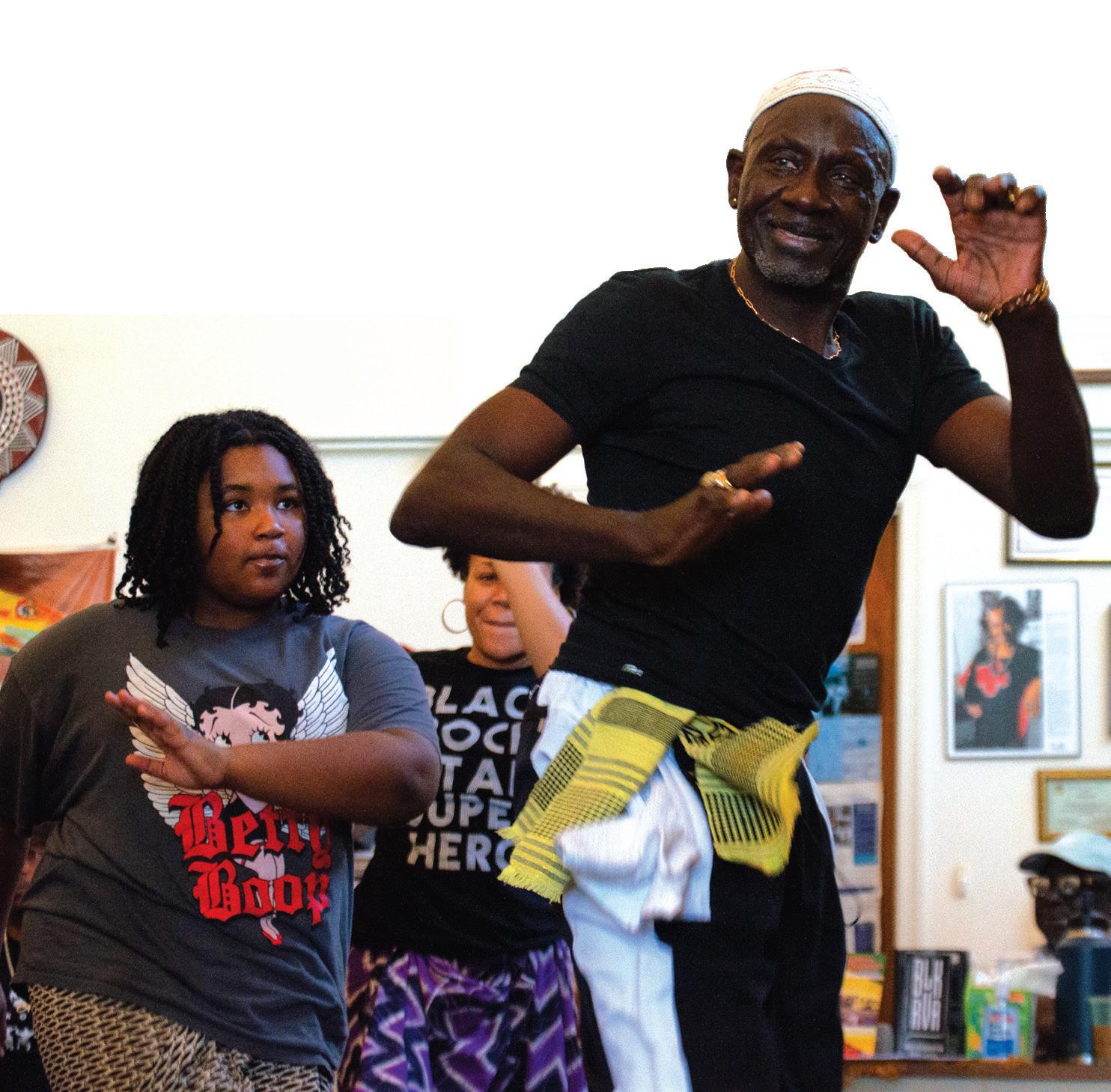
Convergence consisted of four classes, three dances and one drum. They were taught by different instructors who specialize in different types of dance. There were two adult dance classes, a youth dance class and one drum class.
The instructors for the event were Myah Walker-Taylor, Assane Konte, Fode Moussa Camara and Samantha Salters.
Salters has been working with Elegba Folklore Society since 2018. When Bell invited her to instruct at Convergence, Salter saw it as a great way to contribute to the community through the arts.
“The very communal aspect of it in itself is healing, brings people together. We sing together, we use our voices, we’re sweating together,” Salter said. “The baseline is community … It’s a very holistic form and so that’s why I think it’s important to keep spreading the word and getting people involved with traditional African dance.”
Salters found the opportunity wonderful and hopes she can continue to do activities like this in the future that invite people to come and dance.
People drove hours to join in on the celebration, including Sister Nadiyah Stowers, who attends dance classes led by Konte. She traveled to Richmond to learn more from the founder of KanKouran, Konte’s West African dance company that
‘House to Highway’ Virginia Library exhibition reclaims Jackson Ward history
RACHEL NICHOLAS Staff Writer
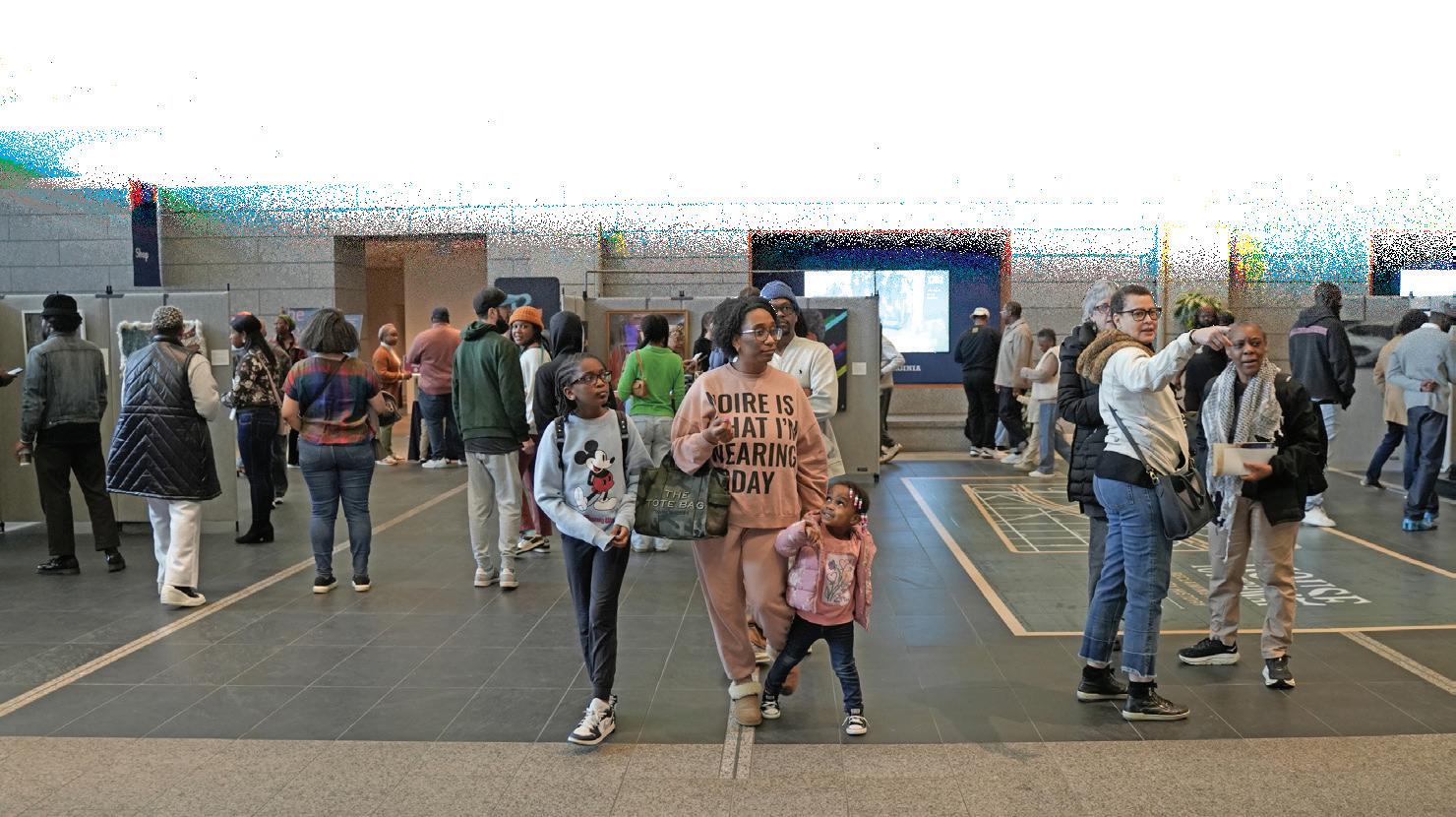
The Library of Virginia hosted its inaugural “Culturescape” event, highlighting Black artists and honoring Black history, guests got to explore different exhibitions, presentations and took a tour through “House to Highway: Reclaiming a Community History,” a historic reflection on Richmond’s Jackson Ward neighborhood using archival records
from the Library’s collection.
The event took place Saturday, Feb. 21 and was free to the public.
From sculptures to paintings, the exhibition presented all types of art from all walks of life around the community, telling stories of culture and expressing the emotions of those in history.
“It was beautiful to see art that I could relate to,” Richmond local Hillary Johnson said. “Black experiences are so complex and real so just being able to see pieces that
he opened back in 1983.
As a first-time visitor, Stowers said Elegba Folklore Society felt very inviting.
“The environment is very conducive to cultural awareness,” Stowers said. “I like how they display all the masks, the drums. You get a real, authentic encounter before you do the dance … and as you move into the spaces, and all the different areas it is filled with educational items that you can learn from.”
show our lives, our struggles and our past is just wonderful.”
As a new event on their roster, the Library aims to continue hosting “Culturescape” every few months — hoping to attract larger, diverse crowds, according to Sarah Falls, the library’s chief of researcher engagement.
“I call it sort of a cafeteria approach,” Falls said. “Folks can come in here on a day where we’re open, roughly every other Saturday, but we don’t always do programming. So we added this as a way to engage other folks to come in on Saturdays.”
The event was originally scheduled for late January as a preparation for Black History Month, but was postponed due to inclement weather. However, Falls notes that the Library was even more motivated to bring “Culturescape” to life.
Black Creatives RVA, a collective run by Shannon Bass and Andre Johnson curated the community exhibition. Artists throughout Richmond had their work shown, including local Gabriela Aroche.
Aroche, a first-year art foundation major at VCU, was one of many artists on display in the exhibition. Encouraged by her mother to submit her work, she was more than happy to share in the theme of storytelling.
“My piece was mainly about expressing a shared experience
After a long day of dance and celebration, instructors, organizers and attendees ended the night in conversation, sharing food that was based in several different West-African culinary traditions — a display of community coming together and rejoicing in a shared past, present and future.
More information on Elegba Folklore Society and the events they hold can be found on their website, efsinc.org.
of getting your hair done,” Aroche said. “The pain, the tenderness, all the emotions you feel during the process. I wanted to share that because I feel like that’s something everyone can relate to.”
As the afternoon progressed, guests moved between the exhibitions, sparking conversations with each other over memories, history and family legacy.
With plans to host Culturescape again, organizers hope the event will continue to grow as a space where Richmond’s diverse voices can be preserved and accessed for generations to come.
An instructor leads one of the dance classes during Elegba Folklore Society’s Convergence event on Feb. 21. Photo by Kendall Lott.
FEATURES
RVA Spotlight
For the CT’s Black History Month Issue, it’s time to spotlight BLK RVA. This collaboration between Richmond Region Tourism and local leaders celebrates the Black culture of Richmond’s past and future. Dining, art, attractions, history — they’ve got it all! Check out the BLK RVA website and subscribe to their newsletter to stay in loop.
Five years ago, Adam Oakes was hazed to death Now, students, staff and his family weigh-in on prevention
HECIEL NIEVES BONILLA News
Editor
MOLLY MANNING
Managing Editor
“The medical examiner said if anybody would have called and got Adam help, he would be alive today.”
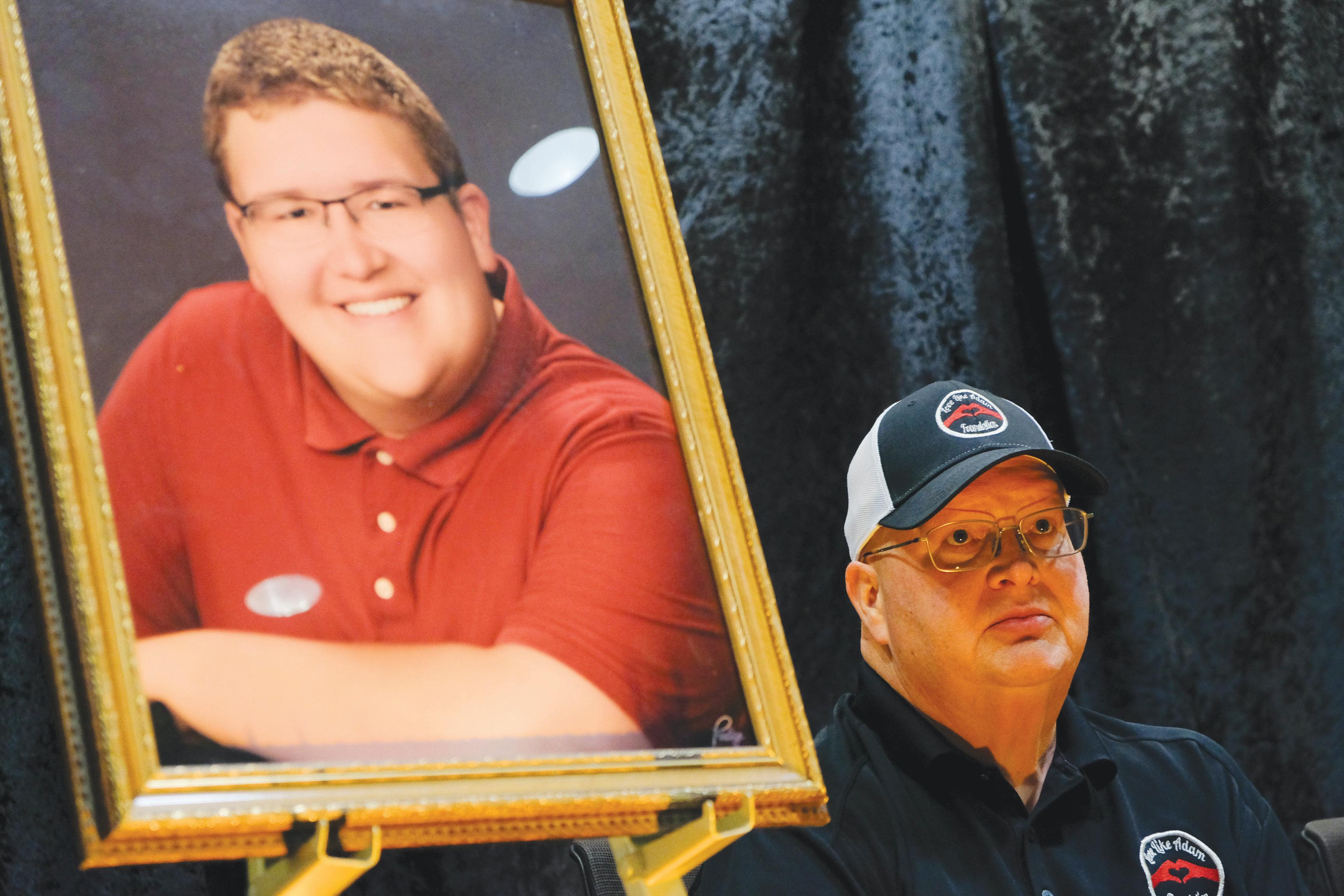
These are the words of Eric Oakes, the father of Adam Oakes, a VCU student who died before the end of his first year from hazing in the Delta Chi fraternity house in 2021. Feb. 27 marks the fiveyear anniversary of his death as the university and its students continue hazing prevention efforts.
Adam was pledging the Delta Chi fraternity when he died by alcohol poisoning at an event Feb. 27, 2021. Both the national Delta Chi organization and VCU suspended the fraternity from campus the day after his death, per a previous report by The CT.
After a seven-month-long police investigation, 11 people, including a VCU graduate and non-student, were indicted. His family then released a statement listing things to be learned from the death of their 19-year-old son and the ensuing arrests.
VCU and the Oakes family issued a joint statement in September 2022 following their agreement and settlement payment of $995,000 to the family from VCU and the Commonwealth of Virginia. The agreement included strengthening
the requirements for students’ Greek life eligibility, designating Feb. 27 as an annual hazing prevention day and a day of remembrance of Adam and other alcohol regulation and hazing p revention guidelines.
Adam’s parents founded the Love Like Adam Foundation to support students, families, law enforcement officers and others with hazing prevention education through spreading awareness and information about hazing, as well as providing scholarships for high school students.
Their documentary “Death of a Pledge: The Adam Oakes Story” recalls the night of Adam’s death and includes interviews from his parents and a few Delta Chi members who were involved.
The state of Virginia enacted “Adam’s Law” in 2022. It requires universities to provide hazing prevention training and education to all new, potential or current members of student organizations. It also requires the advisors of student organizations to receive hazing prevention training.
Universities must now maintain and publicly report actual findings of violations of the institution’s code of conduct or law violations pertaining to hazing that are reported, per a previous report by The CT.
Eric Oakes is pleased with the results of Adam’s Law, and said he is happy with the way VCU has implemented it. He noted that hazing remains a problem statewide,
and hopes that students will take the expanded education on hazing provided to them and change both their own and their peers’ attitudes toward culture at fraternities and sororities.
“Some students are lining up to be hazed at these fraternities, like it’s a rite of passage, or it’s an honor to be hazed before you get into the organization, and I’m just shaking my head,” Oakes said. “As long as the kids come into the freshman year and into these fraternities with that kind of mindset, it’s really hard.”
To that end, Oakes and his family supported a bill last year to expand hazing education to high schoolers.
“If you talk to most of the kids that have seen our presentations, for example, I know a lot of them are changed,” Oakes said. “And I’m not saying we go out there and we say, ‘don’t join a fraternity’ — I mean, that’s not true at all. We are 100% supportive of you making your own decision, you know? [So] here’s information. Knowledge is power.”
Last September, VCU Student Affairs sent a letter to all students with a notice that “unrecognized groups” were operating on campus.
The letter cautioned students of potential health and safety risks in engaging with unrecognized student groups — Pi Kappa Phi Fraternity was operating under the guise of a group called Rose Club and former members of the Phi Mu Fraternity were operating under The
Collective RVA.
VCU also began investigating the unrecognized, undercover Theta Chi fraternity at VCU over hazing incidents last October, according to NBC 12.
Eric Oakes was outraged at the news over unrecognized fraternity recruitment and hazing, and said he contacted VCU President Michael Rao at the time to ask what would happen as a result. He believes the students involved should be expelled and that the university should consider whether that is the kind of student it wants at the school.
“Let’s say some students came up and, you know, they got these biker chains and leather jackets, and it says Hell’s Angels on it,” Oakes said. “Is everybody okay with that?”
Fourth-year music education student Kyle Wheeler is the HR chair of VCU’s chapter of Phi Sigma Epsilon, a coed fraternity focused on professional development. He said their events are open to all students, with mostly business and engineering students participating, and that the organization includes hazing education in its onboarding.
“I transferred here from a different university, Southern University in Baton Rouge, Louisiana, where I don’t know if you’re familiar with the situation, but Caleb Wilson was a victim in [2025] of hazing,” Wheeler said. “Unfortunately he was killed because of it. So I take hazing super seriously.”
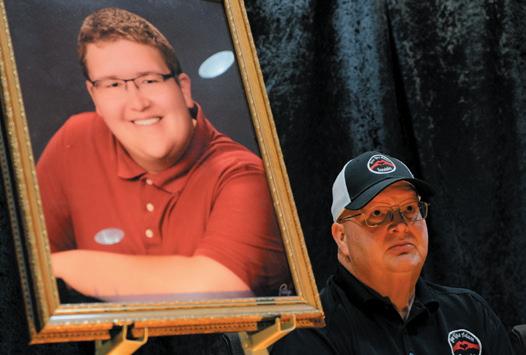
Eric Oakes, father of Adam Oakes, sitting next to a portrait of his late son at a hazing prevention event on Feb. 24. Photo by Burke Loftus.
Wheeler noted there are other organizations on campus that are more secretive about their recruitment process, and attributed that to a culture of secrecy in which members take pride in a process only certain people understand, even if it’s “not something necessarily wrong.”
Wheeler also said there is less activity in Greek life as a whole at VCU than other universities, including at his previous school and the larger university in that same city, Louisiana State University. In turn, there is a reduced presence of certain negative elements of Greek life such as hazing, and a reduced emphasis on joining secretive organizations.
“I think they push a good amount of diversity here and that you’re, I think, more inclined to join something that’s going to be more beneficial to you,” Wheeler said.
Wheeler does not consider VCU a party school, in which large events often with
an abundance of alcohol and drugs are a big part of the experience of campus life and Greek life for many — but if students are looking, he is sure the experience can be found.
“You see it at the big schools or whatever, it looks glamorous and all that. But realistically, what happens in those — what we all know, we just don’t want to admit — is what actually happens in those organizations is not something that you want to happen to you or to anybody that you know,” Wheeler said.
Every semester since 2021, VCU has released a Student Organization Conduct Report on its Division of Student Affairs website. While the site lists fewer violations in spring and fall of 2025 than previous years, reported events continue — and the spring of 2024 saw the most conduct violations thus far.
In August 2025, Phi Kappa Psi was
reported over an event in which someone suffered “alcohol-related conditions requiring medical services.” The incident echoed the alcohol poisoning that led to Adam’s death.
Phi Kappa Psi is currently under deferred suspension, during which an organization is “given the opportunity to demonstrate the ability to abide by” the violated policy or face suspension, until the end of 2026.
The fraternity did not respond to a request for comment. No currently suspended fraternity chapters contacted by The CT responded to requests for comment.
Josh Skillman, director for Communications and Marketing at VCU’s Division of Student Affairs, stated the university expects more reports of incidents as students become more aware of how to report hazing.
did not have access and do not have access to the internet,” Jean Boone said. “Maybe through their phones, but even that is not a terrifically wonderful experience to read.”
Jean Boone expressed disappointment with the city’s primary daily newspaper of record, the Richmond Times-Dispatch, for the nature of its coverage during the Richmond Free Press’ run.
“We always felt that they did not serve the community well,” Jean Boone said. “People called it the ‘Times Disgrace,’ as a way of putting their spin on how badly the daily paper was covering Richmond, whether it was race-based or not, it just was not a strong daily paper.”
The RTD historically supported segregation and massive resistance and wrote negatively about civil rights leaders, though it has since expressed regret for doing so. As of 2025, it no longer operates out of the City of Richmond.
The RTD hired its first Black columnist, Michael Paul Williams, in 1992 — the same year the Richmond Free Press was founded. Williams recently wrote an opinion piece describing Raymond and Jean Boone as having carried on the legacy of abolitionist newspapers in the city with their paper.
“We need all media hands to combat the lies — particularly the pernicious DEI falsehood that is choking off revenue for the Free Press and other publications,” Williams wrote. “That lie is based on a zero-sum mindset that can’t see inclusion beyond the myth of concurrent white harm.”
Jean Boone, along with others who knew him, remembers Raymond Boone as a tough boss — someone who had a particular idea of how an article or issue should turn out and pushed staff to meet those expectations and raise their own.
Skillman noted that VCU abides by both Adam’s Law and the Stop Campus Hazing Act, engages regularly with the Love Like Adam foundation, and joined other universities in the Hazing Prevention Consortium, which he described as a “research-to-practice initiative designed to build an evidence base for hazing prevention.”
“VCU offers a variety of programs designed to increase prevention and awareness related to hazing,” Skillman stated. “While some programs aim to increase understanding of hazing, others strive to increase skills that help decrease the likelihood of hazing (e.g. bystander intervention, ethical leadership, and group cohesion).”
Students can learn about these initiatives at https://hazing.vcu.edu/programs/.
Regina Boone described remembering her father’s words at several points in her career in journalism — urging her to cover her community and keep up a standard of quality. She recalled covering the fury in Richmond during the summer of 2020 over the confederate monuments on Monument Avenue.
“We didn’t drive on that street,” Regina Boone said. “We were taught from day one about how evil they were, and my dad editorially was always the one who was calling for them to come down.”
Regina Boone said she clearly remembers the day the Robert E. Lee statue came down — her father’s advice echoing in her mind.
“I had to sit on the curb for a second,” Regina Boone said. “I just started crying because I thought of my father and what he had fought for editorially for these statues to come down, and now they were down, and I just kept thinking, ‘Wow, what would he say? What would his editorials be?’”
Virginia Defender editor Phil Wilayto also contributed to the Free Press as a staff reporter in the early 2000’s, and named Raymond Boone’s passing as another in a series of other prominent Americans involved in news and community organizing.
“King Salim Khalfani, Bill Martin, Silvester Turner — a whole generation is passing along at a time when we’re facing the equivalent of a right wing dictatorship. So It’s a blow,” Wilayto said.
Wilayto recalled the difficulties the Richmond Free Press encountered in obtaining advertising for a community and primarily Black newspaper, pointing to a particular attempt to solicit advertising from a local suburban shopping mall.
sitting on the Pulitzer Prize Committee for Journalism, according to Richmond Free Press.
Jean Boone recalled the first publishing of the Richmond Free Press in 1992, shortly after Raymond Boone’s time teaching at Howard University.
“There were times early on in the first year when, on Saturdays, we would ride around the city to see how many boxes were empty to see if people had
picked them up,” Jean Boone said. “And we expected people to read it, and we expected people to think it was important to them. But at the same time, when you had that happen, it was a very, very good gratifying feeling.”
Raymond Boone passed during a time when many local papers had or were starting to move primarily to online publishing, but the Richmond Free Press continued to print a physical copy every Thursday — something he thought better served their often lower-income, substantially marginalized readers.
“Our readers were so diverse and many
Raymond Boone mentored his daughter Regina Boone, who has since led a photojournalism career both in and out of the Richmond Free Press. She said her father meant for the RFP’s reporting to reach beyond the Black community in Richmond and to be of the same caliber as any larger publication.
“My dad was hard on me just as he was hard on everybody else,” Regina Boone said. “My dad was an old-school newspaper man, old-school journalism.”
Raymond Boone wrote several op-eds and took personal action on issues as an editor. During the Occupy Richmond protest movement in 2011, he allowed protesters to camp on his lawn next to the Mayor’s home at the time to “demonstrate their first amendment rights,” according to NBC 4.
He repeatedly cited the first amendment as a core part of the paper’s mission.
“We received information that there was a meeting to discuss advertising and someone suggested the Free Press,” Wilayto said. “And someone else said, ‘Why’d we wanna advertise with them? We don’t want those people out here.’”
Wilayto remembers Raymond Boone as a “newspaper man in the old style” and someone who exerted a singular vision over his newspaper. He is also skeptical that any existing paper, including the Defender, could fill the gap of reporting for Richmond’s Black community on the regular weekly basis the way the Free Press did.
“He was gonna continue getting that paper out no matter what, come hell or high water. And that’s what you need,” Wilayto said. “That’s what you need to survive in the newspaper business.”
RICHMOND FREE PRESS
Raymond H. Boone stands in his office at the Richmond Free Press’ second location at 101 W. Broad St. Photo courtesy of Regina H. Boone/Richmond Free Press.
OPINIONS
Quote of the week
“Love was a room that appeared when you stepped into it.”
You shouldn’t have to be exceptional to be seen
ALIYAH PITT Contributing Writer
Growing up in Maryland, Black history wasn’t something confined to one month out of the year. It was woven into my everyday life — from the names of buildings to the murals painted across brick walls.
Living just outside of Washington D.C., I was surrounded by reminders of progress — reminders that people who looked like me had shaped this country in undeniable ways.
Every February, the spotlight returns to the same kind of
The appropriation of the ‘Bonaly flip’ reflects a larger problem
JALYN THOMAS Contributing Writer
In 1976, American figure skater Terry Kubicka failed a backflip during a competition, ultimately resulting in the move being banned because it was deemed “too dangerous” to perform.
Surya Bonaly, a Black French figure skater, competed in the 1998 Winter Olympics. Despite knowing it was illegal, she performed and successfully landed a single leg backflip. Ultimately, she was penalized for the move, but she proved it could be safely done.
Ilia Malinin, an American figure skater from Virginia competing in the 2026 Winter Olympics, made headlines by successfully landing a single leg backflip. The move was legalized in 2024 and Malinin became the first skater to legally execute it in competition.
Malinin received an overwhelming amount of praise for his accomplishment, being lauded as a pioneer in the sport. The narrative has failed to properly recognize Bonaly, erasing her achievement.
While Bonaly performed the move
while it was illegal, she still deserves the same amount of praise as Malinin. Though their performances are different, it’s still called the “Bonaly flip” for a reason.
Elvis Presley, the so-called “king of rock and roll,” is known for his style that is widely considered to be stolen from Black artists. When the star’s biopic came out in 2022, it sparked conversations about the source of his inspiration and the lack of credit given to those inspirations when he was alive.
African American Vernacular English, or AAVE — a dialect still looked down upon depending on the user — has been reduced to being considered nothing more than “Gen Z slang,” completely erasing its community roots. Most people who use the dialect do not address or even know the history of the language and how Black people were considered lesser if they used it.
It’s a tale as old as time. Those who are Black do not get the same recognition, praise and credit as their white counterparts.
As a Black woman, I have seen time and time again my peers not recieving the same
story: “the first to do this, the first to become that, the first to break through a space that had long been closed off.” Each story shares a consistent message: “look how far we’ve come and look at what’s possible.”
Black excellence is real and deserves recognition. The milestones we highlight each year reflect resilience and determination in the face of adversity. However, I began to recognize a pattern in how those stories were told. Recognition only seemed to follow record-breaking moments. Visibility was really only followed by history-making achievements.
Slowly, the lessons became less and less about pride and more about expectation.
The stories we celebrate shape how we see ourselves. When Black history is framed mostly around extraordinary achievement, it quietly teaches that visibility is earned through struggle — that to be seen, you must outperform. In order to belong, you must exceed the standard rather than simply meeting it.
I was told once that I would have to work twice as hard for half as much. That message does not exist without context — it echoes the same expectation for how people define excellence.
The “firsts” did not emerge suddenly. They came after centuries of legalized exclusion — from slavery to Jim Crow laws. These systems shaped opportunity for generations. When someone finally broke through, it was powerful.
Now, after living and studying in Virginia, I see what resistance looks like in real time. Leaders such as L. Louise Lucas — the first Black woman to serve
as president pro tempore of the Virginia Senate — did not simply walk into leadership. She fought for it. She obtained one of the highest-ranking leadership positions in the state Senate, becoming not only the longest-serving woman, but the highest-ranking Black lawmaker in Virginia’s history.
When we celebrate the first Black CEO, senator or judge without fully examining why it took so long, we risk framing inequality as an individual obstacle rather than a structural one. The narrative becomes about personal grit instead of institutional barriers. It becomes about how remarkable one person is rather than how entrenched the system is.
Empowerment isn’t just about honoring breakthroughs. It’s also about questioning why those breakthroughs were necessary in the first place. Being “the first” is powerful because someone was denied that title before. If we don’t talk about denial — if we only focus on victory — we risk turning injustice into an inspiring backdrop instead of calling it what it was.
There’s nothing wrong with celebrating milestones — they matter. They represent resilience and persistence. But when those are the only stories amplified, they can unintentionally create pressure. Pressure to be exceptional. Pressure to be extraordinary. Pressure to carry more than your own ambition.
True progress would mean walking into a space without counting. It would mean not wondering if you’re the only one. It would mean not feeling like your performance determines whether others like you will be welcomed the next time.
praise as others. It’s frustrating. The current federal government is not making this issue any better. The Trump administration has been erasing Black history before our eyes — the President ordered the removal of “signs and exhibits related to slavery” in the Smithsonian Museum in Washington, D.C., stating he plans to “restore the Smithsonian Institution to its rightful place as a symbol of inspiration and American greatness.”
What is the “American greatness” that President Trump wants to call back to?
If you were to look back at an unbiased view of history, you would know that Black people have been front runners. The Black Panther Party is the reason why we have free lunch in schools. Marsha P. Johnson helped pioneer a better future for LGBTQ+ Americans. Garrett Morgan invented both the gas mask and traffic light.
Despite the wishes of the current federal administration, Black history cannot be overlooked. It’s up to the public to make sure that those who came before us get the recognition they deserve.
— Kaveh Akbar, ‘Martyr!’
Illustration by Bailey Wood.
Illustration by Zoë Luis.
Beyond historical wrongs, health care must confront present-day inequities
NABA KHAN Contributing Writer
The United States likes to call itself an egalitarian society — but that is a far cry from the truth, especially when it comes to health care.
As a third-year medical student, I can personally attest to this.
When my clinical rotations began, it was a flurry of non-stop action from day one. In those first few weeks, I gleaned a great deal of wisdom through observation alone, but one of the most important lessons I learned was this: the people who tend to be the most hesitant about treatments are people of color and Black patients.
This should not come as a surprise. Throughout history, grave injustices have been carried out against the Black community by means of medical racism.
The 1932-1937 Tuskegee Syphilis experiments deliberately left Black sharecroppers untreated and unaware of their syphilis diagnoses— even when penicillin was an available cure.
There was the testing of gynecological surgeries on enslaved women in the 19th century.
And do not forget Henrietta Lacks and her family, who have yet to receive justice and compensation for the illegal and nonconsensual use of her cervical cells in scientific research.
VCU itself is no stranger to the historical exploitations of Black bodies: in 1994, hundreds of bones were uncovered and found in a well during the construction of a new VCU medical building. They had
been grave robbed by the medical students and faculty in the mid-1800s from Black cemeteries to practice dissections.
Virginia’s first-ever heart transplant was done at MCV and taken from Bruce Tucker, a Black construction worker who was declared brain dead. His family was never notified, and when his brother tried to sue the facility, an all-white jury ruled in favor of the surgeons.
These injuries are not confined to the recent past; they echo into the present, in which Black mothers remain disproportionately more likely to die during childbirth than their white counterparts. Where Black children are much less likely to receive opioids for pain compared to white children, even when presenting with the same level of pain.
Medicine is a profession defined by human involvement. It is also a profession liable to human error. Physicians can harbor subconscious biases and, frighteningly, those can lead to differential treatment.
In Richmond, racial health disparities aren’t theoretical. Black residents experience higher rates of hypertension, diabetes complications, chronic obstructive pulmonary disease and stroke compared to white residents. Neighborhoods historically shaped by redlining are often associated with reduced access to preventive care and a higher utilization of the emergency department.
Structural racism — housing segregation, disinvestment, gentrification — determines which communities have access to primary care clinics and
We deserve better Black icons than Nicki Minaj
MARITZA BAPTISTE Contributing Writer
Nicki Minaj, once dubbed the “queen of rap,” was previously celebrated for her feminist stances, acceptance of the queer community, pioneerism of the rap genre and her condemnation of callous immigration policies that aimed to separate children from their families. But as of late, that success has been tainted by her endorsement of Turning Point USA and President Donald Trump.
I became a fan of Nicki Minaj when she won her first Grammy in 2011. I was too young to know much about her music, but I knew she was a Caribbean woman like me. Seeing her rise to fame meant representation for me and everyone who grew up listening to Reggae and Benna music.
As a former fan, it’s been disheartening to watch Minaj align herself with an organization that promotes authoritarian ideals and has been at the forefront of the push for the increased presence of Immigration and Customs Enforcement, or ICE, in major cities and mass deportation. This sharp turn has shocked
therefore which communities are healthier. When predominantly Black districts lose hospitals or face longer emergency wait times, that’s decades of policy manifesting into clinical reality.
One way to begin approaching this massive, tangled mess of a problem is active representation.
The concepts of diversity and inclusion have too often been reduced to pandering buzzwords for the benefit of individual organizations, ignoring the actual benefits that these virtues accrue. In the U.S., only about 5.7% of doctors are Black, even though around 15% of the population identifies as African American.
It’s no secret that medical education has a deep-rooted history of exclusion and racism, but it can be argued that current standards for admission are also classist. The requirements for exam prep and clinical experience are significantly harder for lower-income applicants to achieve, and typically, the cost of medical school alone is enough to weed out potential students from lower socioeconomic backgrounds.
In a country where wealth and race
are inseparable, these standards are functionally racial gatekeeping under a different name. With the limitations brought about by Trump’s One Big Beautiful Bill to student loan policies, one can only imagine the impact on applications going forward.
Black History Month invites reflection, but reflection without transformation is insufficient. The medical field must confront not only its historical transgressions, but its present-day inequities as well.
Trust, once fractured, requires more than an apology.
It requires accountability. It requires change.
It may feel futile — like we are hopelessly chipping away at a behemoth of an issue — but futility is a luxury we cannot afford right now. The systems that perpetuate inequity were not accidents of nature; they were engineered, brick by brick, policy by policy, assembled deliberately and reinforced over time. And anything that has been built can be rebuilt.
her fan base, which largely consists of Black women and queer people.
Many have been left reeling by her seemingly sudden shift to conservatism, but Minaj’s harmful politics actually parallel a thread of black history: the Uncle Tom. Malcolm X dubbed this archetype as the “house negro.”
This character stems from the divide between the enslaved people who worked outside in the fields and the ones who worked inside the master’s house. There was a perceived lack of solidarity from the “house negro” because of their proximity to the master and their subsequent proximity to whiteness. This is furthered by the fact that the enslaved people who were picked to perform labor in the house had lighter skin, and often were the offspring of the master himself.
Malcolm X argued that the house negro archetype persisted beyond slavery.
He stated that the house negro, in trying to look like “one of us,” mocks the culture they should be in solidarity with.
“He doesn’t identify himself with your plight whatsoever,” he once said.
We see contemporary Uncle Toms every
day without even realizing it. It’s Black police officers and Black ICE agents. It’s your neighbor who, despite being a person of color, voted for Trump three times. It’s people believing they somehow benefit from throwing their own community to the wolves, until the harm they’ve perpetrated turns on them.
There’s a strong belief that karma will come for the Uncle Toms. That “master” will grow tired of his presence and send him back to the fields. But by then the harm is already done to the community.
As we hopefully move toward a future of liberation, let us be clear-eyed in our recognition of who is with us and who is against us. Nicki Minaj is Black, a woman and an immigrant, but having marginalized identities doesn’t automatically make you an ally.
Our communities deserve better, so let’s honor icons in Black history who don’t turn their backs on us when it’s convenient or profitable. Our role models should be the pillars holding our community up, not the tyrant tearing them down.