Saavedra on tenure policies, research, academic freedom
ANDREW KERLEY Executive Editor
VCU’s year-long search for a new second-in-command and chief academic officer finally came to a close last week.
Arturo Saavedra, the former School of Medicine dean and interim provost since December, was confirmed by the VCU Board of Visitors into his new role as the permanent provost.
Saavedra is the third person to hold the high office in the last year, as former Provost Fotis Sotiropoulos departed in April 2025 for his same job at Pennsylvania State University. It was then held by interim Provost Beverly Warren until December 2025.
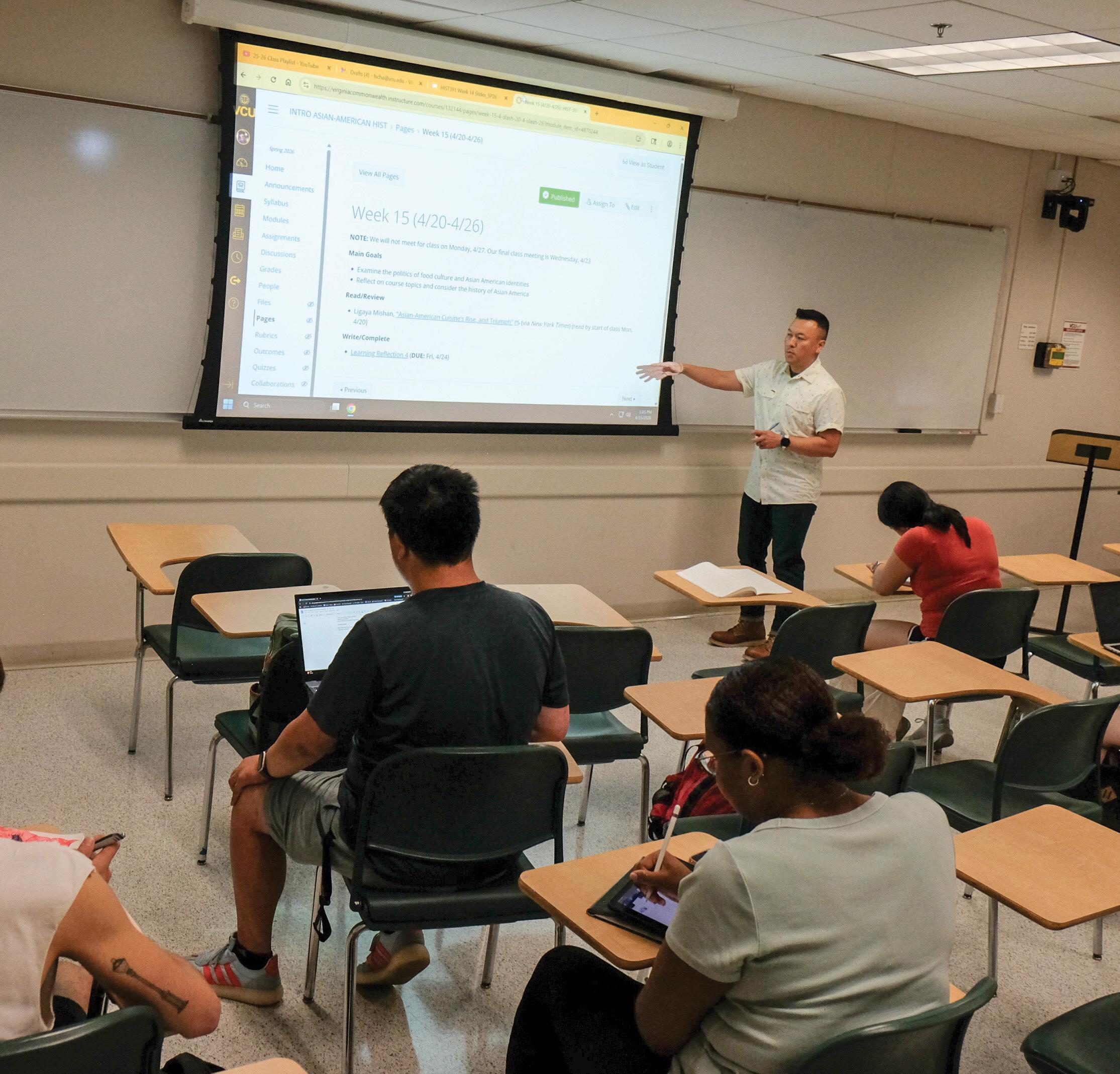
Now, at the crossroads of new goals, policies and a shifting university identity, Saavedra sat down with The CT to discuss the matters most important to the VCU community.
%
Board of visitors approves 3.9
tuition increase
ANDREW KERLEY Executive Editor
HECIEL NIEVES BONILLA News Editor
The VCU Board of Visitors voted on Friday to approve a 3.9% tuition increase for instate undergraduate students.
Housing fees and meal plans will see a 5% increase across the board: an extra $441-525 for housing and $160-194 for meal plans.
The typical in-state undergraduate student enrolled in 15 credits per semester will pay $17,963 in tuition and mandatory fees during the 2026-27 academic year — an increase of $723, according to VCU.
Out-of-state undergraduate students’ tuition and mandatory fees will be set at $41,127, also an increase of $723.
Overall, in-state undergraduate students will pay around $31,000-33,000 for a full year of tuition, mandatory fees, room and board.
page 3
Qatar student describes hope, adaptation as Iran war settlement stalls
HECIEL NIEVES BONILLA News Editor
As peace talks between the United States and Iran continue on an unpredictable path, a student from VCU’s Qatar campus spoke to The CT regarding his experiences of living through threats of bombing and a peace in the balance.
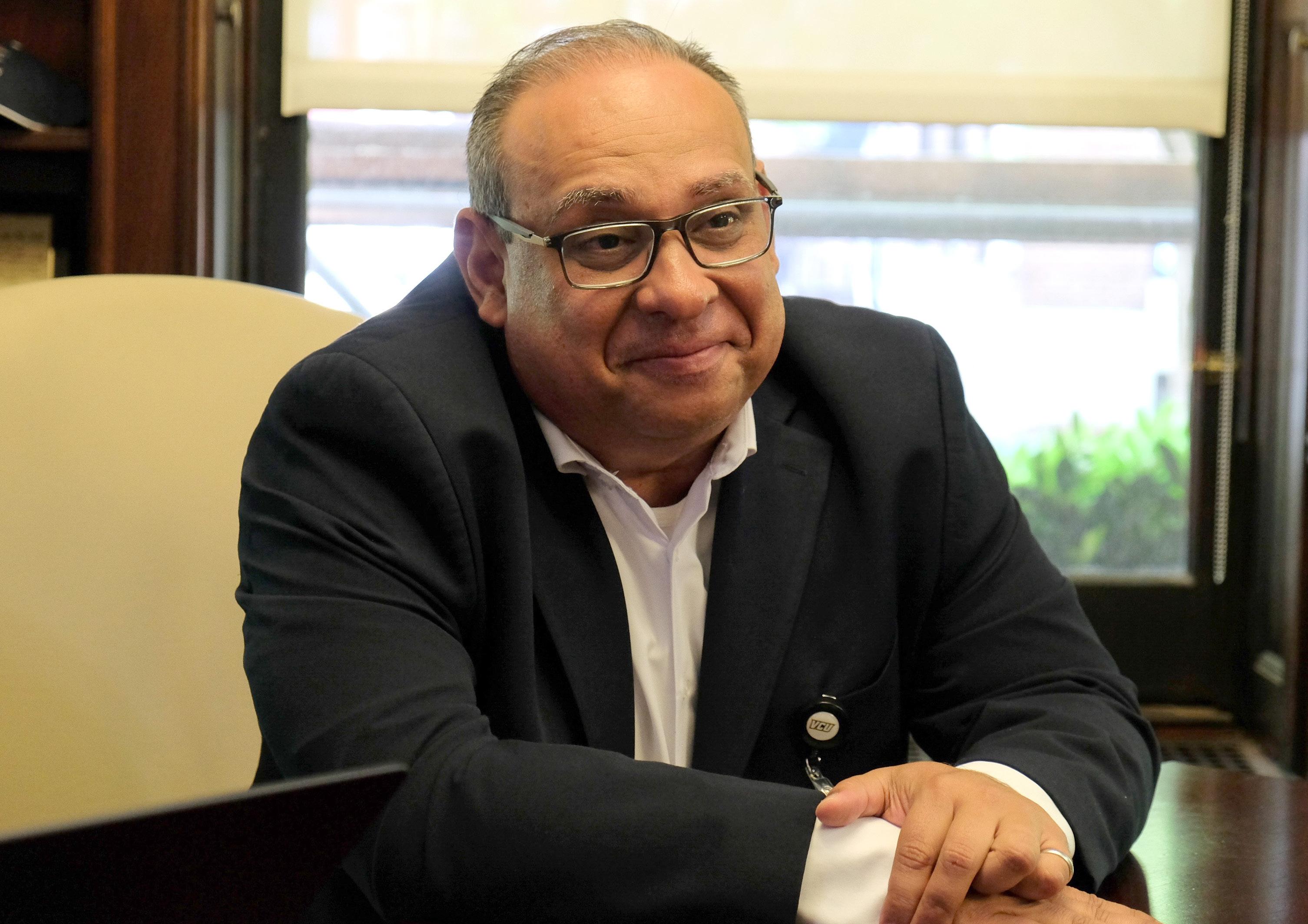
Dr. Arturo Saaverda, recently appointed executive vice president and provost of VCU, in his office. Photo by Burke Loftus.
President Michael Rao speaks to members of the VCU Board of Visitors during a February meeting. Photo by Kieran Stevens.
VCUarts Qatar student Anirudh Anil Kumar (left) poses in the desert with stateside VCU student Jackson Mallory, (right). Photo courtesy of Anirudh Anil Kumar.
Stories of the week
national: A man evidently carrying multiple weapons charged past security at the White House Correspondents’ Association dinner, exchanging fire at the president's event.
international: An Indian billionaire’s son, Anant Ambani, made an offer to the Colombian government to take the ‘cocaine hippos’ of deceased narcoterrorist Pablo Escobar to avoid them being killed.
Does VCU’s $720 million payroll add up?
HECIEL NIEVES BONILLA News Editor
ANDREW KERLEY Executive Editor
VCU’s payroll shows a substantial gap between the salaries of administrators and other staff. Data shows that gap has increased nationwide, and VCU salaries are consistent with those of other universities — with some notable exceptions.
The CT obtained VCU and VCU Health’s payroll for active employees as of April 2026 through a Freedom of Information Act request. It includes the salaries of 7,925 employees who make more than $10,000 per year.
The median salary earned across all listed employees at VCU and VCU Health is $74,257, and the average is $91,149.
The average salary for professors of any type is $167,984, according to an analysis by The CT. An assistant professor’s average salary was less than half that, at $82,277. The average associate professor makes $106,388.
HIGHEST EARNERS AND ADMINISTRATORS
Employees with “chair” in their title, such as department, division or program
leads, make an average of $201,194. The average employee with “dean” in their title makes $413,750.
There is noticeable variation in the salaries deans receive. College of Humanities and Sciences dean Catherine Ingrassia is the lowest-paid at $227,150 — more than any non-admin or chair CHS faculty, but less than many faculty in other subject areas such as engineering and health. Many medical professors and other faculty earn more than any humanities faculty member.
A report by the American Association of University Professors finds that the average chief financial officer at American doctoral universities makes $423,982.
Meredith Weiss is the CFO at VCU and makes $600,000, the fourth highest salary between the university and health system.
President Michael Rao’s salary is listed as $895,618 — exceeds the average by over $100,000 and the average for public schools by over $200,000. The figure is comparable to that of private university presidents, but salary is not the only compensation Rao receives from VCU. His total as of 2025 is closer to $1.4 million a year, according to the Richmond Times-Dispatch.
Rounding out the university’s highest earners are several medical faculty, including second and third-place: neurosurgery chair David Limbrick
and Massey Cancer Center director Robert Winn, who make $818,000 and $800,000 respectively.
Athletics director Ed McLaughlin and men’s basketball head coach Phil Martelli both rank in the top 20 highest earners with $567,538 and $450,000 respectively — not counting benefits and bonuses for successful seasons. Martelli’s contract is worth over $1.4 million, according to the Augusta Free Press.
LOWEST EARNERS AND BROADER TRENDS
The top five salaries at VCU round out to over 3.6 million dollars. The top ten, 6.3 million. The top twenty, just over 11 million — more than the bottom 423 earners on the payroll.
That bottom 5% includes many assistant professors and other full-time employees but also most adjunct faculty — who often work part time and are generally the lowest-paid group of faculty. Adjunct professors are paid per class.
EDITOR’S NOTE: This interview has been shortened and edited for clarity. The full transcript can be read at commonwealthtimes.org
Why do you think you were chosen to be the new provost?
Saavedra: “I would like to say that through my life, my utmost goal has been to be of service, to understand where I sit from the perspective of impacting change so that others benefit.”
For those who have no idea, how would you describe the job of VCU’s provost?
Saavedra: “The provost is technically the chief academic officer, so all things related
to our academic enterprise report up to the provost. And that is curriculum design, resources needed for good pedagogy, how we combine the talents of our faculty of teaching with research and innovation. And frankly, also how to be innovative in the space, so that we teach not just facts, but also critical thinking and innovation.”
Considering all the things students do every day, how much of that stuff do you get your hands on?
Saavedra: “I hear a lot of it, yes. We understand what courses, for example, are courses that are challenging when you are pursuing a major. We understand what learning and teaching techniques are better than others. We understand, frankly, what aspects of student life outside of the classroom impact learning and students.”
Employees listed in the document as “adjunct instructors” make $12,370 a year at VCU on average. Total “adjuncts” made an average of $20,364.
The gap between administrator and faculty pay increased nationwide for the third year in a row from 2025 to 2026,
What will your priorities be as provost? How will your tenure differ from Sotiropoulos and Warren?
Saavedra: “I think those are two illustrious people in the Provost Office. My goal is to bring into the university a perspective of interdisciplinarity. We, of course, train in different areas, and we have subject matter expertise in specific areas. But I’m also interested in helping people navigate the situation that most of the big problems in society, the real problems of society, have to be approached from more than one perspective. It is no longer sufficient to just train in your specialty or area of interest.”
according to Inside Higher Ed. The College and University Professional Association for Human Resources found in March that pay for all university worker groups remains less adjusted for inflation than it was pre-pandemic.
They also found that tenure faculty continued to receive the lowest salary increase of any higher ed employee group nationally, and have not seen real-dollar salary growth in at least a decade.
The AAUP’s report from last year found that faculty have been shrinking as a percentage of the academic workforce for decades. The number of people in higher ed who neither receive nor are eligible for tenure, with its associated benefits and pay, has risen in the same period.
SEE THE SALARIES OF EVERY VCU EMPLOYEE
The CT obtained the salaries of 7,924 employees through a Freedom of Information Act request. To view VCU and VCU Health’s payroll for active employees as of April 2026, visit commonwealthtimes.org or scan the QR code.
advent of AI, with our strengths in health, particularly those are important.
How would you describe VCU’s identity? How will your vision preserve or further that identity?
Saavedra: “When I think of VCU, the first word that comes to mind is ‘opportunity.’ We want everyone who comes here to be able to see themselves as important to the industry and enterprise, to know that whatever dreams they have, they can navigate them here, they can find the resources here. And we want people to know that the time is now and today when it comes to impact and need.”
VCU recently set a goal of reaching $1 billion in research dollars. Do you see greater research, particularly in STEM disciplines, as the future of this school?
Saavedra: “So when we talk about the $1 billion goal, maybe the best way to say that is the impact of our research ought to require a billion dollars in funding. So it is not the funding that will lead to our impact, frankly. It is our impact that will necessitate that funding. When I look at the problems of today, I do think STEM is, of course, very important. With the
But the true power of a university is to bring people together to understand all the issues. Let me give you an example. My mom had a brain tumor, and yes, that required a skilled neurosurgeon to come in and do a surgery. But the person who taught her how to recover double vision and prevent her one eye [from becoming] a lazy eye, was to draw, using the art to color and to focus the pencil. It was exactly art therapy that led her to be able to drive again, read and continue teaching. So how do you really solve the problems of society or the people we are appropriated to help? By looking at all of the perspectives that surround the needs of that person or community.
I am so proud of the impact that our School of Education has, because not only does it look at the right ways to teach, or the innovative ways to teach, it really specializes in placing students and teachers in difficultto-place school districts. We are teaching our students to say ‘where is the biggest need?’ and unapologetically, ‘let’s go solve that.’”
The VCU community has heard a lot about this “interdisciplinary” initiative. Could you please explain what that is in layman’s terms?
Saavedra: “When we think of ‘interdisciplinary,’ we have to understand that each of our schools and centers have a strength and a perspective … It’s figuring out how a doctor learns to speak to a sociologist, and how a computer engineer learns to speak with a fashion designer.”
on next page
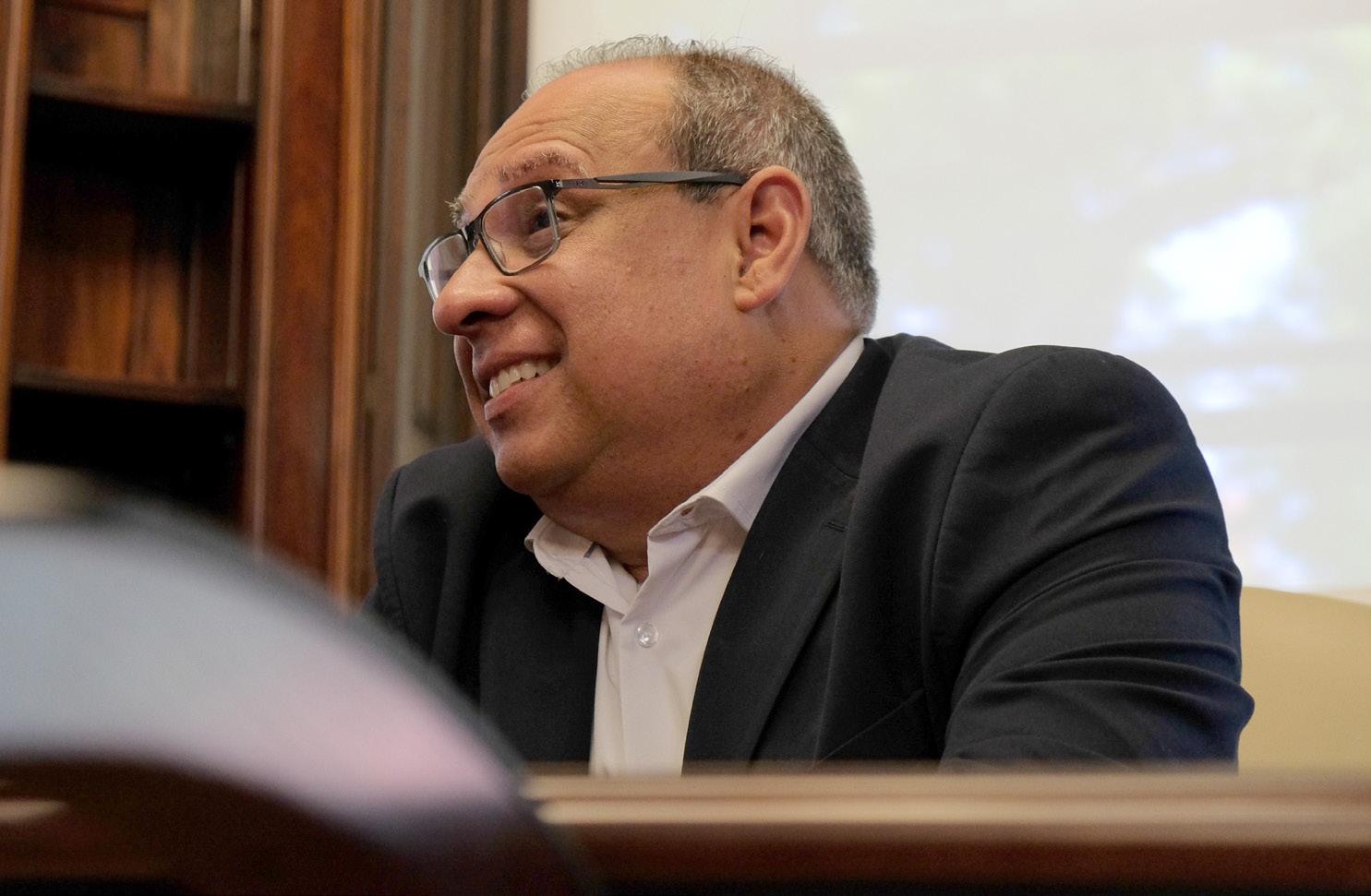
Dr Arturo Saaverda, recently appointed executive vice president and provost of VCU, in his office. Photo by Burke Loftus.
Story continued from front page Story continued
What would you say to those worried about STEM research initiatives overshadowing the arts, humanities and social sciences?
Saavedra: “I would say that, as a humanity, as a group of people through history, we have always understood that our greatest strength is how we relate with one another. I can tell you, as a doctor myself, that the concepts in science are just so interesting. But how do you talk to a patient who’s going to hear that they have cancer? How [do] you talk to an individual that may not understand the impact of the medications they take? Or how [do] you talk to a family member about what it means to pay very high medical bills? All of that relates [to] the ability to be human with one another, to understand fear and to communicate. Without a strong foundation in the humanities, in the arts, in every aspect of this institution, we don’t have strong STEM.”
Can the VCU community expect that sentiment to trickle down on the funding level?
Saavedra: “Absolutely. You know, every field has different sources of funding, through foundations or government agencies or even internally from VCU, and though all are different, they equivalently impact our institution … Regardless of the different sources of income, I think as a university leader, I have to hold myself accountable to understanding that together, we’re greater than the sum of our parts.”
In recent years, there have been concerns about academic freedom — particularly with partisan board of visitors appointments, the dissolving of Diversity, Equity and Inclusion and the cancellation of the racial literacy requirement, which was postponed by the previous provost after years of work before being ultimately killed by the board of visitors. What is your take on these matters, and will you fight to protect free learning at VCU?
TUITION INCREASE
The board previously cited increased costs under the Virginia Military Survivors and Dependents Education Program, or VMSDEP, and the university’s high rate of in-state students as key reasons to raise tuition.
The board was considering tuition increase options between between 2.5% and 4.9%. By going with the 3.9% option VCU will be able to better support internships, stipends for graduate students — and partially commit to investing in academic programs with increasing demand.
Without a higher tuition increase, VCU will not be able to hire six additional in emerging and high-demand areas, as well as boost advising and financial counseling, according to a board presentation. $2 million in cuts and efficiencies will still be needed to balance the budget.
“VCU is committed to keeping costs as low as possible for our students,” President Michael Rao stated in a press release. “Today’s board’s action allows the university to manage rising external costs while continuing to strengthen our investment in student success at all levels of learning and to raise further the value of a VCU degree.”
VCU also listed potential 3% “state mandated faculty and staff increases” to salaries among its budget pressures, pending legislative outcomes. The state budget has yet to be finalized, and lawmakers have said they do not expect it to be until June.
The university’s priorities in lobbying to Virginia lawmakers include more support for VMSDEP, which VCU has repeatedly
Saavedra: “Academic freedom is imperative, not only because it leads to conversations that maybe we haven’t had before and new innovative spheres, but because that’s what we’re here to do. To be able to teach, not just content, but teach civility, exchange of ideas and yes, considering all aspects of humanity, that is paramount, and I will defend that ‘till the last day I am in this job.
At the same time, we have to understand that charged conversations need to be held professionally, that we should be able to seek data, that we should be able to communicate inside and outside of the institution with other people that have gone through similar challenges.
I will say the incredible job that our board of visitors does is that they bring in a perspective from their own fields, having been incredibly accomplished at what they do, in guiding us in perspectives that perhaps sometimes, at the operational level, we cannot see. I appreciate difficult conversations. I appreciate the ability to feel like your words matter, and that you can have a perspective. That will always be upheld as long as I am the provost of this institution.”
So you are saying you will fight to protect academic freedom. What will that look like materially?
Saavedra: “We have, not only relied on the knowledge within the institution and people that come here with training from all aspects and disciplines and areas of the country, in the way we recruit that brings in diversity of thought, but we’ve also brought in structures related to our own donors and philanthropists that have helped us establish centers of civic discourse, of democracy. And so working together, not just with the resources that we have inside, but seeking resources externally as well …”
Last year, under Sotiropoulos and Warren, VCU implemented a new tenure policy that further differentiated between term and tenure track faculty. They argued it was in
cited as a primary pressure on its budget.
Other priorities include support for “high-cost health science degrees,” support for the Massey Comprehensive Cancer Center and Pauley Heart Center, help with buying the Altria building, money for a School of Dentistry building and support for the College of Engineering to “develop and deliver AI-based technology solutions” on healthcare.
Second-year mass communications student Joeneth Lopez comes from an underprivileged background and attends VCU with the support of pell grants. Going into next academic year, he worries that aid and loans will not be enough to support him.
“This is gonna hurt,” Lopez said.
Lopez is skeptical about VCU pinning the increase on VMSDEP and — like many students — points to the various construction projects across campus, as well as Rao’s $895,618 paycheck.
“I believe that makes zero sense,” Lopez said.
Esther Schneider, a third-year mass communications and sociology student, said it unfortunate how much more expensive college is becoming given she views VCU as more accessible than most institutions.
VCU has approved the largest tuition increase for 2026-27 compared to other R1, tier III institutions such as William & Mary, Virginia Tech and the University of Virginia. Old Dominion University and George Mason University are still deliberating.
“I think a lot of students feel that the amount of money they put into VCU, they don’t always see the benefit of that,” Schneider said.
pursuit of raising VCU to the same standard as other R1 research universities — though many professors pushed back, saying it did not fit the nature of their disciplines. Now you are trying to implement another new policy to adjust the post-tenure review process. A lot of faculty are worried about their job security rapidly changing with little of their own input in the process. What would you tell those concerned faculty?
Saavedra: “So, three things. The first thing is: let’s be clear about what we’re here to do. We’re public servants, and the education of students and our impact on the community via research and innovation is at the center of all we do. We do support our faculty as our most important asset in delivering that mission. But, let’s be clear, the mission is to keep the education of students and the innovation via research and impact to communities at the clear center of what we do …
Second, that policy is meant to invest in the career development of people. Whereas before, the policy only impacted those who had already performed an unsatisfactory review. This policy tries to catch people early so we can hopefully all together inflect that course into the incredible accomplishments that these people clearly had because they were tenured.
And third, and most importantly, this is not a new policy. We have had this policy since 1997. It has not been revised since 2013. Everything around us is changing, and the world is changing. Not only are we late to updating this policy, it ought to reflect what our institutions are doing … We do not expect for this to impact more than 20 people in a year. We have a huge faculty of upwards of 750, and by impact, I mean positively
impacting us, trying to inflect the course so that performance can return to the glorious, excellent performance that was required to gain tenure to begin with.”
What is changing about the world or university that begs the new policy to come about now?
Saavedra: “As education has become more expensive, and as society has begun to question the value of that education, and that’s not just the students, but parents, we have to hold ourselves to saying ‘your hard earned money, and the money of our state is held in accountability.’”
What is something we did not ask you about that you think the VCU community should know?
Saavedra: “I would simply say it’s not only an honor and a privilege to serve in this role, quite frankly, it’s the greatest dream and opportunity in my entire professional career. I take the job seriously, and going back to how we opened, we are public servants, and our faculty is collaborative and amazing. Let’s leave with that. They are our greatest asset to fulfilling our mission, again, to educate students and to put the community research impact at the center of what we do. The fact that we’re looking at some changes that may be hard to interpret only reflects our changing environment and our desire to be increasingly more transparent, equitable and specific about how we move together, forward onto the future. Thank you for giving me this time.”
‘We’re not going anywhere’ VCU’s service workers start contract renewal effort
HECIEL NIEVES BONILLA News Editor
ANDREW KERLEY
Executive Editor
Service workers represented by chapter 32BJ of the Service Employees International Union began a public effort to ensure a fair negotiation as their contract is set to expire on June 30.
The workers held a rally in Monroe Park on April 24, which featured words from custodial and maintenance workers and local legislators.
Angela Arrington, a lead housekeeper at VCU and 32BJ union member, said she attended the rally because Compass — the third-party umbrella corporation which contracts her and other housekeepers’ work at VCU — has avoided coming to negotiation on the workers’ demands.
“We don’t want a sliver of the pie, we want a slice of the pie,” Arrington said.
Arrington described grievances with Compass over her need to use vacation days for doctor’s visits so she can afford to do so, and over Compass’ pay structure for events.
“I work from 7 to 3:30, if they have an event within that time, I don’t get paid [overtime],” Arrington said. “Compass is getting paid. First of all for them to have the event. Secondly, if they request a porter, they get all of that money in my eight hour period.”
Arrington asks that the company engage in a “community conversation” with its workers and potentially find a happy medium on a new contract.
“We’re not going anywhere,” Arrington said. “It’s negotiation time, this contract is about to run out. We need to be on the same page.”
Three years ago, the workers’ first union contract with SSC, the education facilities-focused subsidiary of Compass Story continued on next page
Story continued from front page
A SEIU 32BJ organizer (left) and Angela Arrington (right), a lead housekeeper for VCU, at a rally in Monroe Park on April 24. Photo by Andrew Kerley.
Group, netted them a 35% pay increase from $12 an hour to $16 an hour among other benefits, according to VPM.
Del. Charlie Schmidt, D-Richmond, was in attendance both as a legislator and a member of a different SEIU chapter and supports what he said can be tumultuous negotiations with employers.
“I think that it’s sort of two sides of the same coin,” Schmidt said. “There’s the argument that these should not be jobs that are outsourced to contractors that just skim off the top, but at the same time, if we are going to have contractors handling these private sector jobs for these public institutions [then] we need to stand in support of the workers that have every right to unionize and bargain collectively and enforce their contract.”
Sen. Mike Jones and Del. Rae Cousins also attended in support of the union. The latter stated she supports the legislation to expand collective bargaining to public employees that is currently in a state budget limbo.
“I was proud to stand with SEIU 32BJ
members at last week’s rally as they begin the collective bargaining process for their second contract,” Cousins stated. “When workers have a seat at the negotiating table, they can advocate for the kind of benefits and wages that improve their lives.”
Housekeeping and some maintenance workers, along with dining workers through UNITE HERE, are among few workers at VCU who are able to sign collective bargaining
agreements, because they do so with third party companies and not the university.
A bill to expand collective bargaining to many public employees in Virginia, including other maintenance workers at VCU, is currently in limbo as the legislature rejected the governor’s proposed changes over claims they weaken the bill. It is one of several bills awaiting final budget decisions, according to a report by The CT.
I was proud to stand with SEIU 32BJ members at last week’s rally as they begin the collective bargaining process for their second contract. When workers have a seat at the negotiating table, they can advocate for the kind of benefits and wages that improve their lives.”
Student calls out fashion department for denying request for Black model
Spectrum Editor
“VCUarts Fashion has made my work into a minstrelsy,” read a post by thirdyear student Taylor Hodge last Thursday — less than a week before the annual VCUarts Fashion and Merchandising show at the VMFA.
Fashion design and merchandising students submitted their works in hopes of being selected for the fashion show, something usually seen as an opportunity for students to share skills they have been harnessing at VCU.
When submitting their work, students are asked to fill out a comment card for any specifics they had about their work and how they would like to see it displayed. One of the sections asked if there were any cultural considerations to be taken into account.
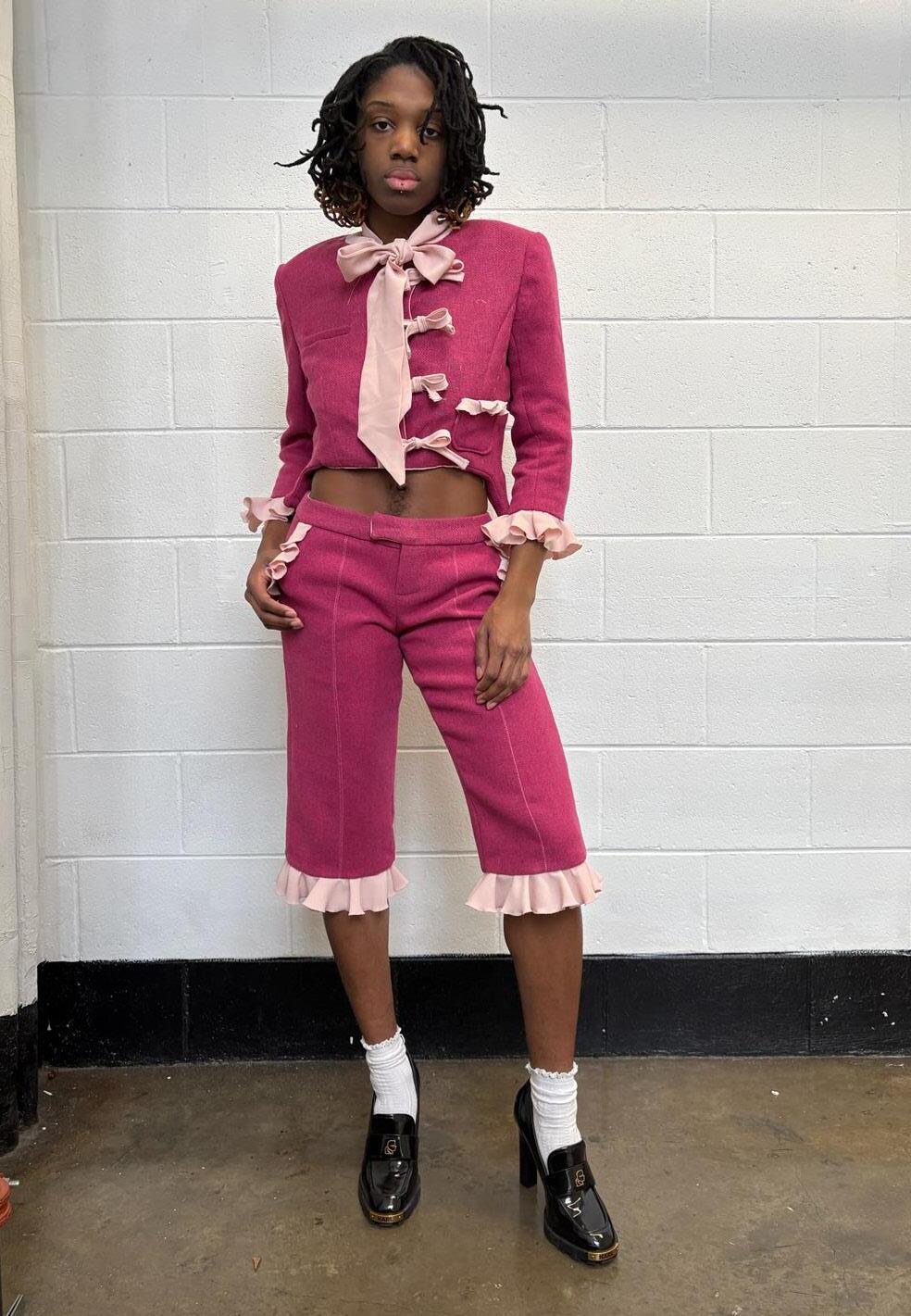
Hodge requested a Black model wear her design. Her selected two-piece suit was part of her “Sapphire Collection,” named for the “angry Black woman” stereotype. The looks were scored and decided by a board made up mostly of VCU donors and some alumni. Students have no
communication with the board, according to Hodge. The models were chosen before the outfits were selected in March by a board of professors and community members.
Hodge heard from other designers that the models for certain looks did not match the requests that were entered. She checked a list of the models and looked up the person assigned to her design.
“I was like, ‘this person does not not match this at all, but I’m going to make sure’ so I asked them and I’m like, ‘hey, would it be possible for me to see an image of the model?’ They were very curt,” Hodge said. “They were very quick to be like, ‘no, get out. You shouldn’t be in here. We don’t have to show you that,’ and basically questioning why I needed to know that information.”
Hodge went to the show directors, who questioned her need for a Black model despite the specifications she made on the form.
After some back and forth, the director suggested Hodge model the outfit — Hodge said she preferred not to, but ultimately agreed. She later reversed her decision after speaking with a counselor, not wanting to compromise her art.
“It feels so big because I know that the VCU show is a big opportunity for all of us as designers and I would love to be able to show my work, but if it’s going to be in a way that feels unauthentic, I don't know if it’s really worth it,” Hodge said.
Department chair Kimberly Guthrie asked Hodge what message she thought it would send to the department, stressing the issues it would cause so close to the show date, according to Hodge.
“One distinct thing I really remember her [Guthrie] saying was, ‘are you okay with knowing that in your senior year, you would have given up this opportunity?’” Hodge said.
After their conversation, Hodge went to Instagram to share her experience with the department — saying she would rather stand up for her and other students’ representation than worry about disappointing her professors.
The post has since garnered thousands of likes and views. Guthrie asked Hodge to take the post down the day it was posted, according to Hodge.
“I just let her know I really can’t do that,” Hodge said. “It just wouldn’t feel
right to me to say something so boldly and then immediately retract it.”
VCUarts recognized the fashion department’s shortcomings in a statement sent to The CT.
“Every student deserves to feel heard, respected and supported in our programs at VCUarts. We recognize that this student’s experience fell short of that,” the statement read. “Our Fashion Department faculty has been in contact with the student and we are actively working together to address her concerns. We are also examining what led to this situation so we can continue to improve our support for every student in the School of the Arts.”
Some fashion students have planned an alternative show for May 7. It was already being planned prior, but Hodge’s story only gave them more of a reason to do so, according to third-year student Emory Bartenstein.
“This is a wonderful opportunity to showcase everyone’s work outside of our regular fashion show, which can be competitive,” Bartenstein stated. “It’s also a great way to build community and support each other and get inspired by new ideas through others’ fashion.”
Del. Rae Cousins, D-Richmond
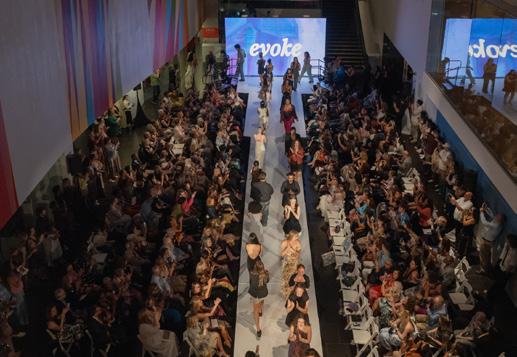
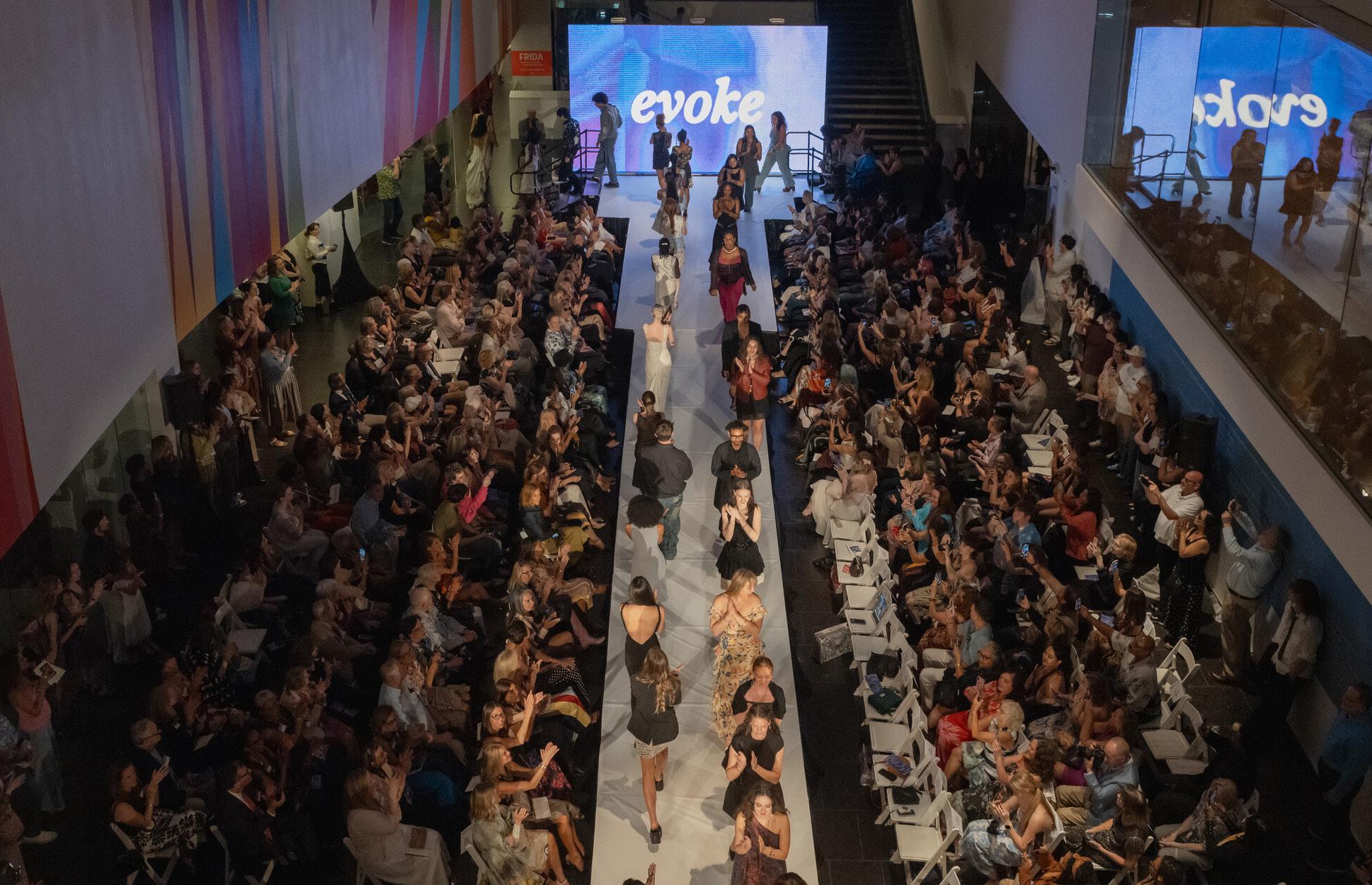
(Left) ‘Evoke,’ last year’s VCUarts Fashion and Merchandising event. Photo courtesy of Kimberly Guthrie. (Right) Taylor Hodge wearing the two-piece suit that she pulled from the VCUarts show. Photo courtesy of Hodge.
MAEVE BAUER
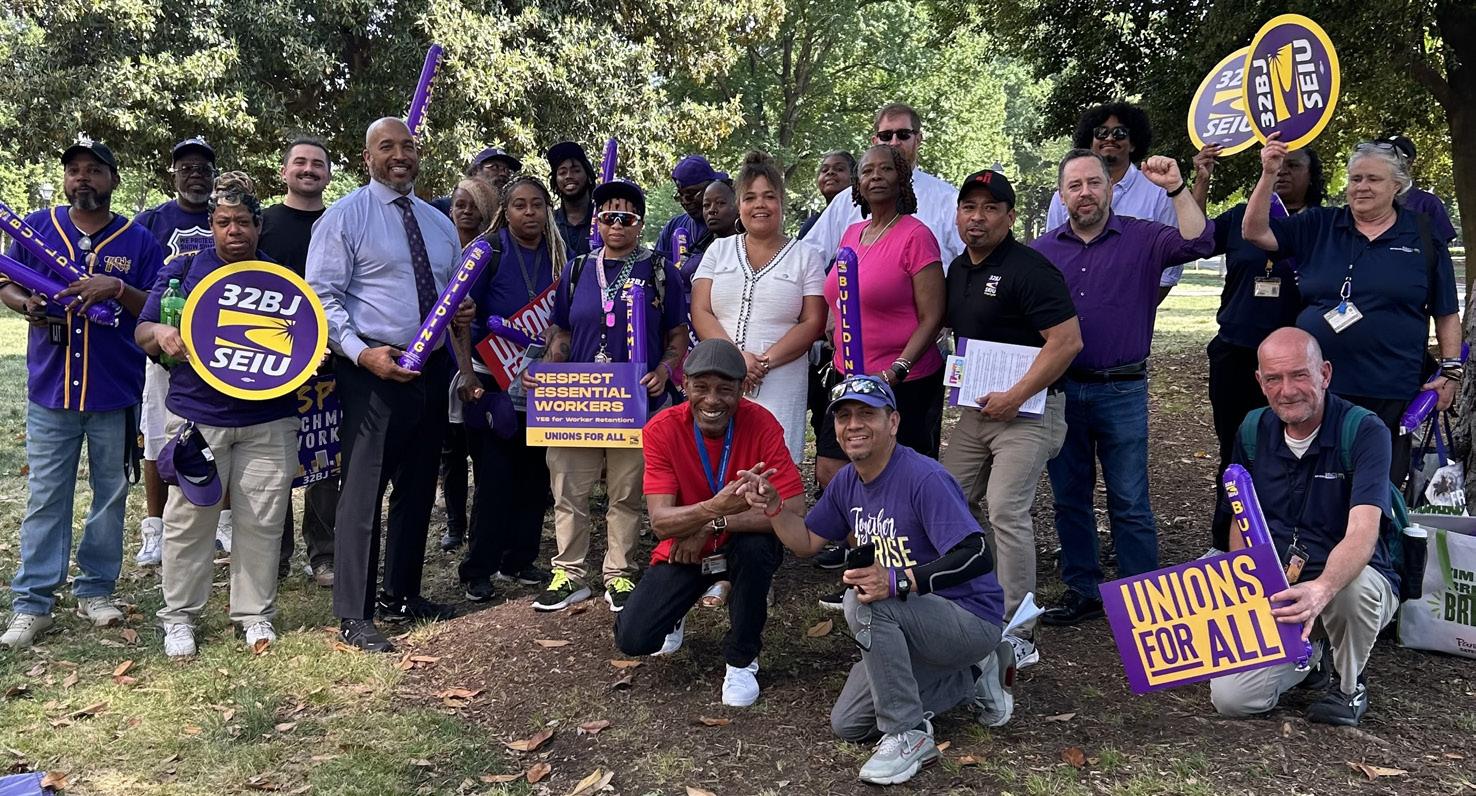
Union service workers and local legislators pose at a contract negotiation rally in Monroe Park on April 24.
Photo courtesy of 32BJ SEIU.
VCU Police report over 1700 traffic citations at end of safer streets operation
SAL ORLANDO Assistant News Editor
VCU Police issued 1760 traffic summons this semester amid their “Operation Safer Streets” enforcement effort.
VCU Police doubled the size of its traffic division to focus on enforcing traffic law, assigning officers to monitor high pedestrian red lights and areas with posted traffic signage, according to their fact sheet on the operation.
Officers on patrol, community policing and investigation assignments provided “high visibility and traffic enforcement support” when able.
The majority of the violations were for speeding, which made up 743 of issued traffic summons, according to the final numbers. The other reported violation summons issued were 246 highway signs, 186 red light, 22 seatbelt, 14 DUI and 563 other incidents. VCU police made 14 DUI arrests related to the operation.
“Just to be clear, we tell our officers to never write a ticket just to write a ticket,” VCU Police Lieutenant Edgar Greer said during a press conference. “They were on the streets looking for serious violations and dangerous behaviors.”
Motorists going north on Belvidere created the biggest area for speeding concerns on the Monroe Park campus. E. Leigh Street, from N. 4th Street to N. 8th Street, is where the most speeding violations
were reported on the MCV campus.
Red light summons were primarily issued around the intersections of West Broad and South Belvidere streets, West Cary and South Belvidere streets and West Broad and North Harrison streets. Highway sign summons were concentrated mainly on North Harrison between West Franklin and West Broad.
The operation follows two fatal pedestrian crashes in 2023 that killed two VCU students. VCU has introduced a number of safety initiatives since, according to previous reports by The CT.
“We, as pedestrians, have to be extra vigilant because people behind the wheel are behaving so poorly and we know that the most harm comes to someone as a pedestrian from motor vehicles,” said Andy Boenau, director of the Richmond Department of Transportation, during a press conference. “So this isn’t to put blame on people who get hurt by walking around, it’s to acknowledge there’s such bad behavior behind the wheel that you’ve got to pay more attention.”
There have been 47 crashes involving pedestrians, bicyclists and scooters this academic year as of April 15, according to VCU Police. Last year, there were 37 incidents throughout the academic year.
There were 33 hit-and-run incidents near VCU campuses between February and April, according to VCU’s daily crime log.
“I definitely feel like there’s an effort
VCU expands ‘NEXT Step’ program to include Richard Bland, Brightpoint
SKYE HATHAWAY
Contributing Writer
VCU’s “NEXT Step” dual-admission program has expanded to include Richard Bland College and Brightpoint Community College.
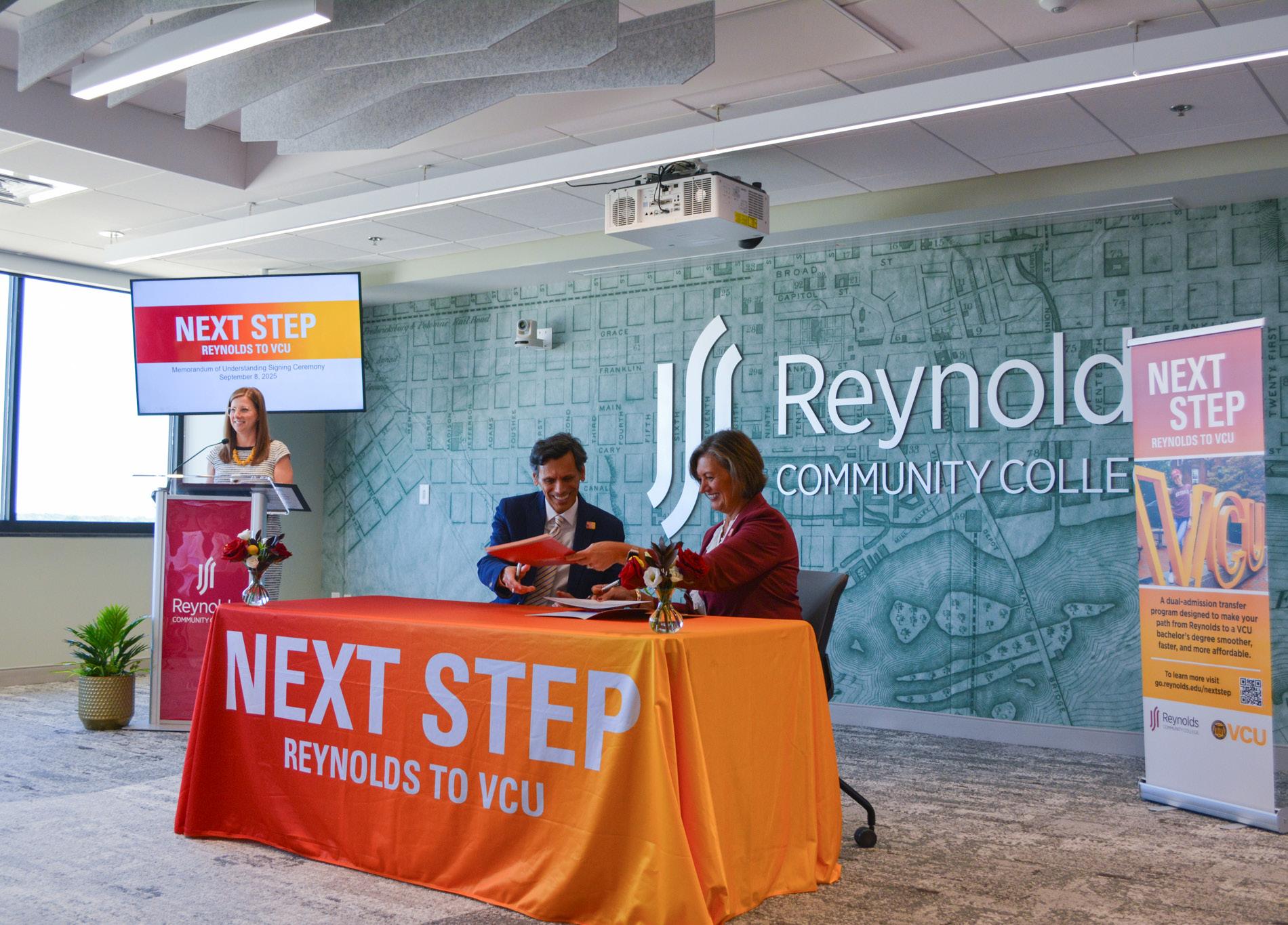
The program’s expansion began with signing ceremonies on April 2 at Richard Bland’s Prince George campus and April 14 at Brightpoint’s Midlothian campus. NEXT Step launched in September as a partnership with Reynolds Community College,
being made, but I do feel like just by the virtue of how Richmond drivers are, I still feel like I might turn into a pancake,” second-year political science student Riley Devany said.
Anna Skillin, a third-year criminal justice and psychology student, said she has noticed the addition of the “HEADS UP PHONES DOWN” signs around campus over time.
“I appreciate that there’s crossing guards,” Skillin said. “That’s nice when they have those up in the main intersections, but there’s only one by the Commons.”
Skillin said she would like to see more crossing guards at other main intersections during busy class times.
We, as pedestrians, have to be extra vigilant because people behind the wheel are behaving so poorly and we know that the most harm comes to someone as a pedestrian from motor vehicles. So this isn’t to put blame on people who get hurt by walking around, it’s to acknowledge there’s such bad behavior behind the wheel that you’ve got to pay more attention.”
Andy Boenau, director of the Richmond DOT
according to a previous report by The CT. Students in the program can complete the first two years of their bachelor’s degree at a participating community college, earning a guaranteed credit transfer to VCU.
David Dore, the Virginia Community College System chancellor, said the program allows students to save up to twothirds on their first two years of tuition.
NEXT Step participants can work with VCU advisors as community college students, allowing for a seamless transition to VCU.
VCCS recently introduced a plan called Accelerate Opportunity, according to Dore. The roadmap prioritizes awarding 300,000 meaningful credentials and degrees by 2030 — with a focus on adult learners, people without high school diplomas and veterans.
“We basically take every student that comes to us and we say ‘okay, how can we create a pathway?’” Dore said. “We’re not exclusive. So in some instances our mission is really to serve all Virginians, right? Everybody.”
Students receive a VCU student ID and have access to student events that enable them to get involved in campus life before they transfer, according to Dore.
VCCS is focused on scaling its career and technical programs to fit the most in-demand jobs in the area, according to Dore. Top fields include healthcare, welding and aviation.
Dore said NEXT Step is in line with their transfer vision — to provide students with a smooth transfer to VCU. Early participation in the program allows students who know they want to attend VCU to set themselves up for success right away.
Michelle Theodore, lead international enrollment counselor at Richard Bland College, said students at her college were excited at the prospect of having the opportunity to transfer to VCU.
NEXT Step is more accessible to students than their bridge program with the College of William and Mary, which caters to high academic achieving students, according to Theodore.
Theodore said to enroll in NEXT Step, students must have a minimum 2.0 GPA and reach a 2.5 GPA by the time of their graduation. The bridge program with William and Mary requires a minimum 3.25 GPA.
“Having the NEXT Step program to umbrella them into the VCU community,
to guide them, that’s just gonna open up even more opportunity for a continuous flow into VCU’s programs,” Theodore said.
Upcoming Reynolds graduate Hiba Reshamwala enrolled in NEXT Step after the program began in Fall 2025. She said she wanted to attend VCU from a young age, after her older sister brought her along to club meetings.
Reshamwala will transfer to VCU in the upcoming fall semester, where she will study accounting.
“[The] NEXT Step program was literally perfect,” Reshamwala said. “Like, I told more people in Reynolds that ‘if you want to join in for next year, to join in the NEXT Step program,’ because it was very helpful.”
Reshamwala said the program allowed her to tour VCU’s campus and meet VCU students. She also attended a meeting with Seth Sykes, associate vice president for transfer initiatives, that helped her understand how to become involved on campus through clubs and other activities.
“I would have had a harder time understanding the campus if it wasn’t for the program,” Reshamwala said.
NEXT Step applications are open from April through August for the fall semester, and November through January for students applying in the spring. Students can apply by submitting a declaration form through the NEXT Step VCU website.
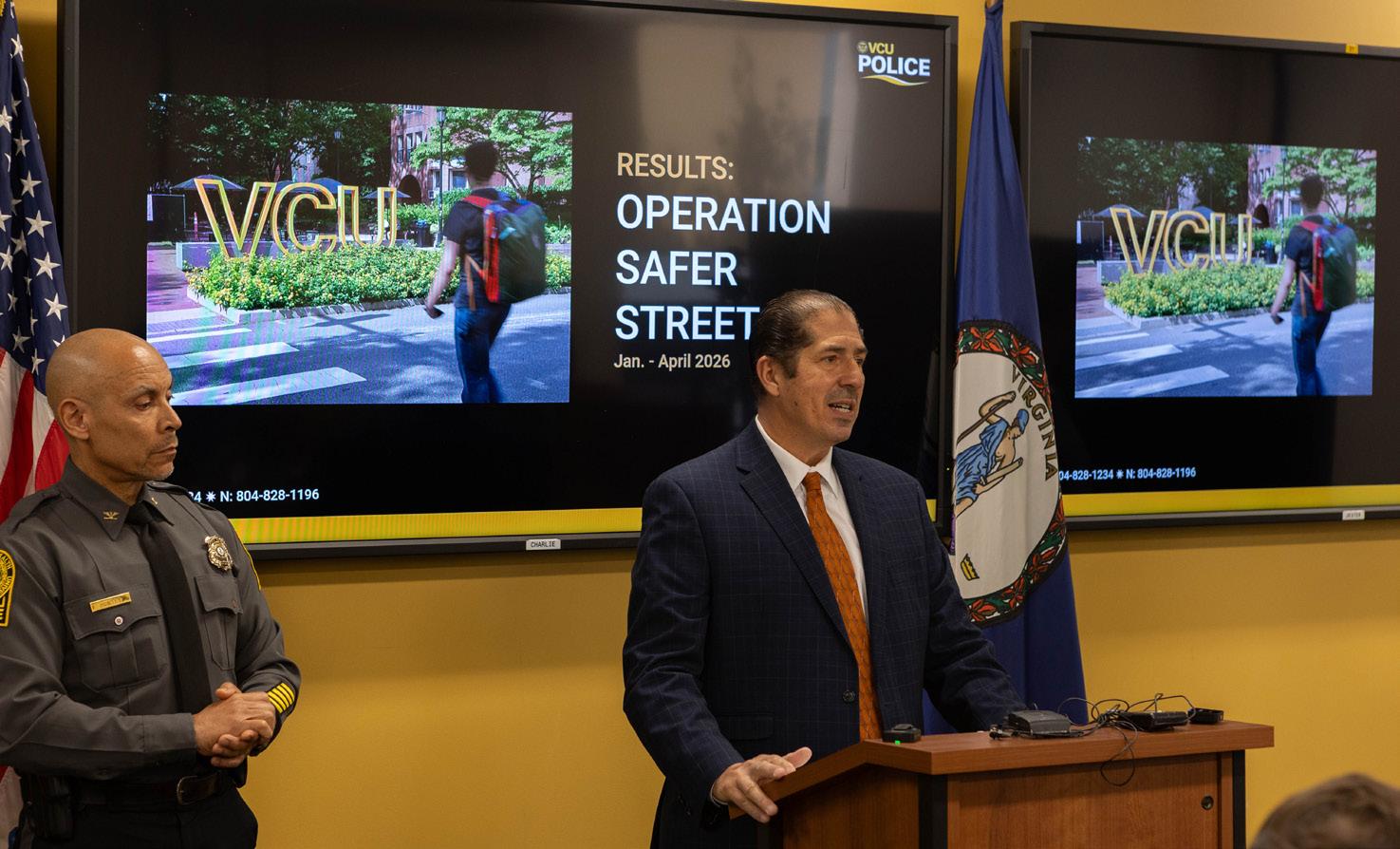
John Venuti, associate vice president for public safety at VCU, speaks during a press conference held on April 21.
Photo by John Brown.
VCU president Michael Rao and Reynolds president Paula Pando at the launch of NEXT Step. CT file photo by Molly Manning.
VCUarts Qatar shut its doors to the public on Feb. 28 in response to hostilities in the area when the U.S. and Israel began a bombing campaign on Iran, according to previous reports by The CT.
The conflict went on to impact the entire region through retaliatory strikes and the closure of the Strait of Hormuz. Qatar lies beyond the strait in the Persian Gulf and has been the target of Iranian strikes on industrial, military and natural gas infrastructure.
Second-year VCUarts Qatar graphic design student Anirudh Anil Kumar said the university had students limit entry to the campus as much as possible for several weeks afterward.
“They told us not to come to campus, like ‘come only if necessary to take important items, and just don’t come in as a group, so you don’t get crowded in here.’” Kumar said. “So we had a system to come one by one or something like that, and have a schedule.”
According to Kumar, students living in the dorms were made to evacuate to a hotel toward the beginning of hostilities, and given the choice to return to other countries if they were not from the area. Kumar himself is from Qatar, and has stayed with family.
Since that time, Kumar has taken several classes remotely, and has had to adapt his hands-on coursework. One project involved creating wayfinding signs for the campus with acrylic and other materials, but during the pause the project became to create these signs digitally instead.
“At the beginning, people were a bit negative about [the war],” Kumar said. “They were like, ‘Oh no, the situation is very dire. What could happen? What would be the state of Qatar? Are we running low on resources?’ But over time
as the attacks go lesser we don’t hear much, and we hear that it’s safer now and everything is going back to an offline state — people are slowly getting out of their comfort zones. But even then we still have that little spark of fear.”
The recent closure is not the first this academic year. An Israeli airstrike in Doha, about 12 kilometers from the campus, resulted in a shelter advisory and cancelled classes in September, according to a previous report by The CT.
“That was very intense because people were not sure what was going on,” Kumar said. “We got warnings and safety alerts, but we weren’t sure what was the situation. So after everything calmed down, we got to learn that civilians were at the safest space because they were not aiming for us.”
Classes were moved fully online for the third time on March 30, according to a previous report by The CT. Iran’s Islamic Revolutionary Guard Corps made a post on X stating all American universities in the region were “legitimate targets,” warning students, faculty and staff to stay away for their own safety.”
Kumar described current opinion on the matter as mixed but improving, with some people much more positive about the end of hostilities and a return to “the same old Qatar.” He said people are less focused on blame and more focused on looking out for each other, and gave an example of students sheltering a delivery driver until a strike situation calmed down.
Kumar’s sense of camaraderie extends to the VCUarts campus, which he described as familial, tightly-bonded and warm. The campus is much smaller than Richmond’s, as he saw when he visited on a trip with VCUarts Qatar’s Student Government Association.
“When I think of a university life, I think of a life like how [in] Richmond, the campus is humongous and there’s so many people that everyone’s here, and I feel like every day you
see a new face,” Kumar said. “You don’t see a familiar face as much like that commonly, but it’s pretty much very different here because our campus is very small. I would say it’s just as big as the Commons.”
Many students at VCUarts Qatar are Muslim and honor Eid, a holiday to mark the end of Ramadan. This year, the holiday was punctuated by ongoing hostilities. Kumar is not Muslim himself, but was happy to join the celebration for something he said many friends and fellow students cherish.
“The celebrations, they still go on,” Kumar said. “It feels a bit restricted sometimes because people are waiting for an alert or something, but it still went on safe, you know. So thank God everything was fine.”
Limited, optional campus access and virtual learning at the Qatar campus will continue through April 30 according to VCU spokesperson Mike Porter.
“Commencement is intended to be held in person on May 4 in Doha,” Porter stated. “In the weeks that follow, VCUarts Qatar anticipates a gradual return to more regular on-site activity and the resumption of in-person summer and community classes.”
The current U.S.-Iran ceasefire began on April 8. President Donald Trump cancelled a planned visit by Steve Witkoff and Jared Kushner to Pakistan last week, where they were expected to discuss issues including the continued blockade of the Strait of Hormuz, according to Al Jazeera.
Democrats reject some of Spanberger’s amendments, pressuring her to pass policies
KAYLA MUÑECAS
Contributing Writer
The Virginia General Assembly’s special session to work out Gov. Abigail Spanberger’s amendments to pending legislation has come and gone with no finalized budget and the rejection of several of the governor’s recommendations.
Lawmakers reconvened for a highstakes special session after struggling to reach an agreement on the state’s two-year budget in March.
Over 1,000 bills reached Spanberger’s desk. Of those, 962 were signed into law, 180 were amended and eight were vetoed by the governor.
BOARDS OF VISITORS REFORMS
House Bill 1385 originally extended board member terms from four to six years, and required governing boards to implement shared governance policies where boards, faculty, staff and students would be able to contribute to decision-making.
The revised bill contains a more detailed section on academic freedom, and requires institutions to consult with faculty senates on major academic changes. The bill also emphasizes protection of professors’ free speech and academic freedoms.
Spanberger suggested the State Council of Higher Education for Virginia create work groups to establish shared governance policies. The bill was one of the many the legislature
passed by during the special session, meaning they did not accept the governor’s amendments. It may be revisited, but also risks a potential veto.
PUBLIC SECTOR COLLECTIVE BARGAINING
House Bill 1263 aimed to reverse the state’s ban on collective bargaining for public workers. Spanberger recommended making it so local governments would have until 2030 to implement the legislation, according to a previous report by The CT.
The revisions have been met with resistance from unions and Democratic lawmakers, who argue they weaken the bill’s purpose of establishing meaningful bargaining rights for public employees.
FACE COVERINGS FOR LAW ENFORCEMENT
Senate Bill 352 restricted law enforcement officers from wearing face coverings while performing their duties. Officers who failed to comply could be demoted, suspended or face a Class 1 misdemeanor.
The governor removed the Class 1 misdemeanor charge as a punishment, which lawmakers say fails to protect immigrant communities.
GUN REFORMS
The General Assembly accepted several of Spanberger’s amendments to several firearm safety bills, including House Bill 1525, House Bill 1524 and Senate Bill 727.
The accepted amendments ban individuals from carrying certain semiautomatic and assault firearms in public spaces, make it a Class 1 misdemeanor for people under 21 to buy assault firearms, and implement new restrictions on transporting firearms.
Several other bills to change gun laws in the state came back with revisions, including the ban on the sale of assault weapons, which Spanberger amended to specify banned features and protect certain semi-automatic hunting shotguns.
Del. Dan Helmer, D-Fairfax, told VPM News the legislature flipped on the governor’s changes because “legislating is an ongoing process,” and that he is confident it will become law.
FACE COVERINGS
The legislature rejected the governor’s changes to a passed bill preventing law enforcement from covering their faces in most situations. Its House sponsor Del. Charlie Schmidt, D-Richmond, said both chambers believed her changes were too drastic.
“She had put in there changes to make it just a civil enforcement sort of civil liability for violations of the mask and identification law. We didn’t agree with that. We needed stronger protections for the community. She also took out the badge and ID portion which was very important to build trust in the community.”
QATAR
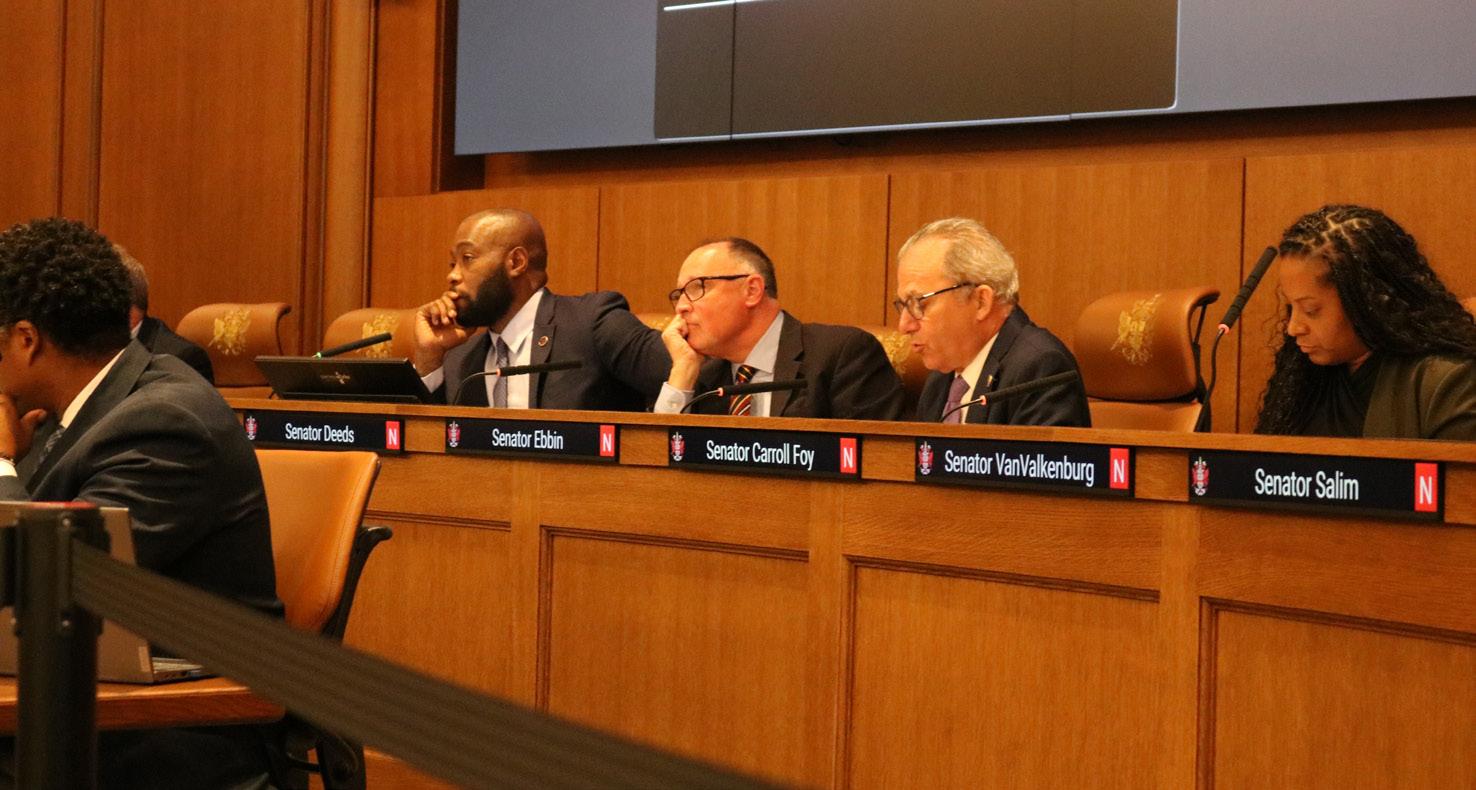
Virginia senators sit through a committee meeting. CT file photo by Andrew Kerley. Story continued on next page
Story continued from front page
VCUarts Qatar student Anirudh Anil Kumar (left) poses in the desert with stateside VCU student Jackson Mallory, (right). Photo courtesy of Anirudh Anil Kumar.
Several bills to change gun laws in the state also came back with revisions, including the ban on the sale of assault weapons, which Spanberger amended to specify banned features and protect certain semi-automatic hunting shotguns.
WEED RETAIL MARKET
Spanberger’s amendments to House Bill 642, which would create a regulated retail marijuana market, were also rejected.
She suggested delaying the start date of the legal market from Jan. 1 to July 1, 2027 and introducing harsher criminal penalties and a lower possession limit.
Lawmakers said in a joint statement the proposal significantly altered the bill and failed to achieve its original goals, according to a previous report by The CT.
A press release from the governor’s office defends the revisions, claiming they prioritize consumer safety, and the market’s delay would “allow for additional time to implement a legal market safely and curb the illicit market.”
A final decision on the marijuana market is key to budget negotiations, as that revenue cannot be counted toward the budget if the bill is vetoed.
DATA CENTER TAX EXEMPTIONS
A central point of contention during the session was tax exemptions for data centers, which have been in place in Virginia since 2010.
Initially estimated to cost $1.5 million in revenue loss, reports show data centers have been exempted from over $1.9 billion in taxes in the last fiscal year.
Some lawmakers have called for repealing the exemption entirely. Senate President Pro Tempore Louise Lucas, D-Portsmouth, has been among those arguing the amount of lost revenue is too significant.
Other lawmakers support the tax exemption. Del. Luke Torian, D-Prince William, said the state should be cautious about reversing commitments to companies that invested under the existing tax structure.
The divide has contributed to the ongoing budget stalemate, with lawmakers unable to finalize a two-year spending plan as the special session came to an end.
Former General Assembly intern Leah Baynes said the session reflects a shift in Virginia politics, especially under Spanberger. In response to what the session suggests about the state’s near political future, Baynes remains optimistic.
“It’s been going very strongly for Democrats. I know of a lot of bills that
died under former Gov. Glenn Youngkin have almost gone straight through,” Baynes said. “We’re seeing bills that are very much bipartisan or nonpartisan getting the chance they deserve now.”
Virginia lawmakers bluntly decline Spanberger’s cannabis bill changes
ERIKA VASQUEZ
Contributing Writer
Virginia lawmakers rejected Gov. Abigail Spanberger’s proposed amendments on legislation to create a retail cannabis market during the General Assembly’s reconvened session on April 22.
This follows lawmakers expressing disappointment towards the governor’s recommendations on retail cannabis markets in Virginia.
Since the legalization of cannabis possession in 2021, adults above the age of 21 have been able to possess an ounce of cannabis and to own up to four plants.
Former Gov. Glenn Youngkin twice vetoed bills to provide consumers with a way to purchase regulated cannabis legally during his tenure.
With six years of legal possession but nowhere to legally purchase recreational cannabis, many Virginians have been left anticipating the results of the ongoing legislative dispute.
“I have been waiting for this because it’s so many people, you know — college
students sometimes partake in recreational weed use to get off the edge a bit,” third-year English student Owen Collins said. “I think a lot of us are watching very closely as to what will be the outcome of this for sure.”
Introduced by Sen. Lashrecse Aird, D-Petersburg, the bill originally establishes the framework for the creation of a retail cannabis market in Virginia and sets January 2027 as the launch date for legalized cannabis purchases.
In a joint statement regarding the bill’s revisions, Aird and Del. Paul Krizek, D-Alexandria, the bill’s primary sponsors, expressed their opposition to the governor’s recommendations.
“By making the legal market harder to access, this proposal allows the illicit market to continue to thrive in every corner store in our Commonwealth,” Aird said in the statement. “That undermines the core goals of legalization and increases the likelihood of untested products, inconsistent potency and lacks consumer protections.”
Despite the early launch date, Chelsea Higgs Wise, executive director of the Richmond-based nonprofit Marijuna
Justice, stated that small businesses in Virginia would be at a disadvantage.
Spanberger’s proposed changes to the bill suggested Virginia cannabis stores open in July 2027, delaying the start date for sales by six months since its original date. She also suggested reducing the amount of sell licenses the state gives out before 2029.
Another proposed change makes smoking marijuana in public a criminal misdemeanor, which would result in jail time. As of now, adults who smoke out in public with less than an ounce on them face a $25 penalty charge.
Higgs Wise said the General Assembly rejection of the governor’s proposals is a “testament to the work of equity, racial and criminal justice organizers.” She added that marijuana prohibition has disproportionately impacted Black and low-income Virginians in every locality across the commonwealth, further calling out the governor’s substitute for failure of acknowledgment.
“Not only would the governor’s substitute be worse for Black, Brown and low-income communities than the status quo, her language ignored the reform,
Virginia has until June 30, the end of the governmental fiscal year, to decide on legislation that impacts the budget, including through calling another special session.
Not only would the governor’s substitute be worse for Black, Brown and low-income communities than the status quo, her language ignored the reform, repair and redress required to acknowledge the decades of racist enforcement.”
Chelsea Higgs Wise, executive director of Marijuana Justice
repair and redress required to acknowledge the decades of racist enforcement,” Higgs Wise said.
The average arrest rate for Black Virginians for marijuana possession is 3.5 times higher than their white counterparts, while also being 3.9 times more likely to be convicted, according to a study done between 2010 and 2019 by the Joint Legislative Audit and Review Commission.
When questioned about the current bill’s effect on small businesses, HiggsWise stated that businesses would be able to grow and sell from the ‘seed-tosale’ model at a small scale. This is a new provision that allows them to become more profitable as a business.
The governor has less than 30 days to either sign the legislation into law, veto it or not act on the legislation. If vetoed, Virginia will have to wait roughly until 2027’s legislative session to hear the final green light on the debate over recreational dispensaries.
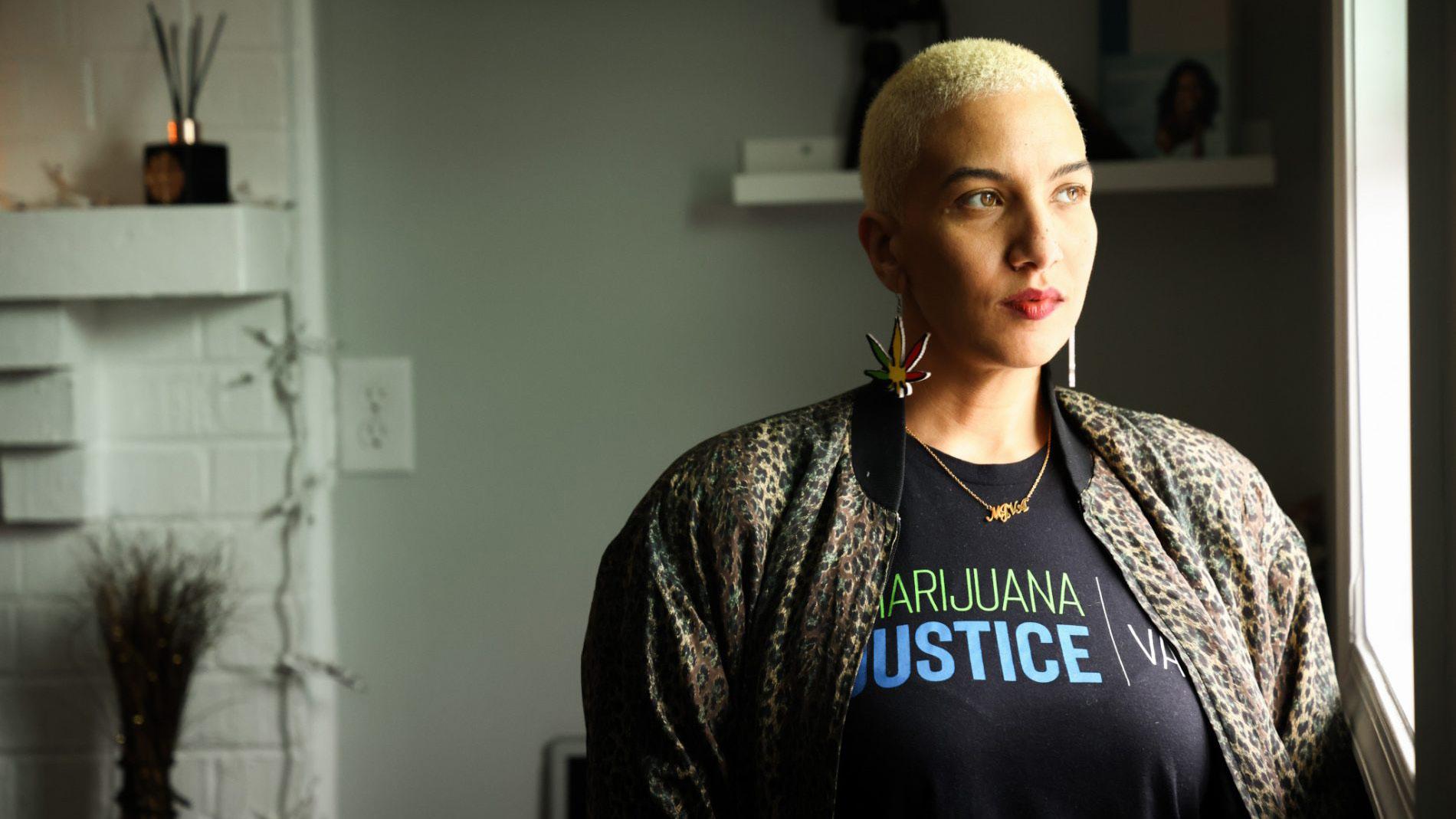
Chelsea Higgs Wise, executive director of the Richmond-based nonprofit Marijuna Justice, who has been outspoken against Gov. Abigail Spanberger's amendments. CT file photo by Jon Mirador.
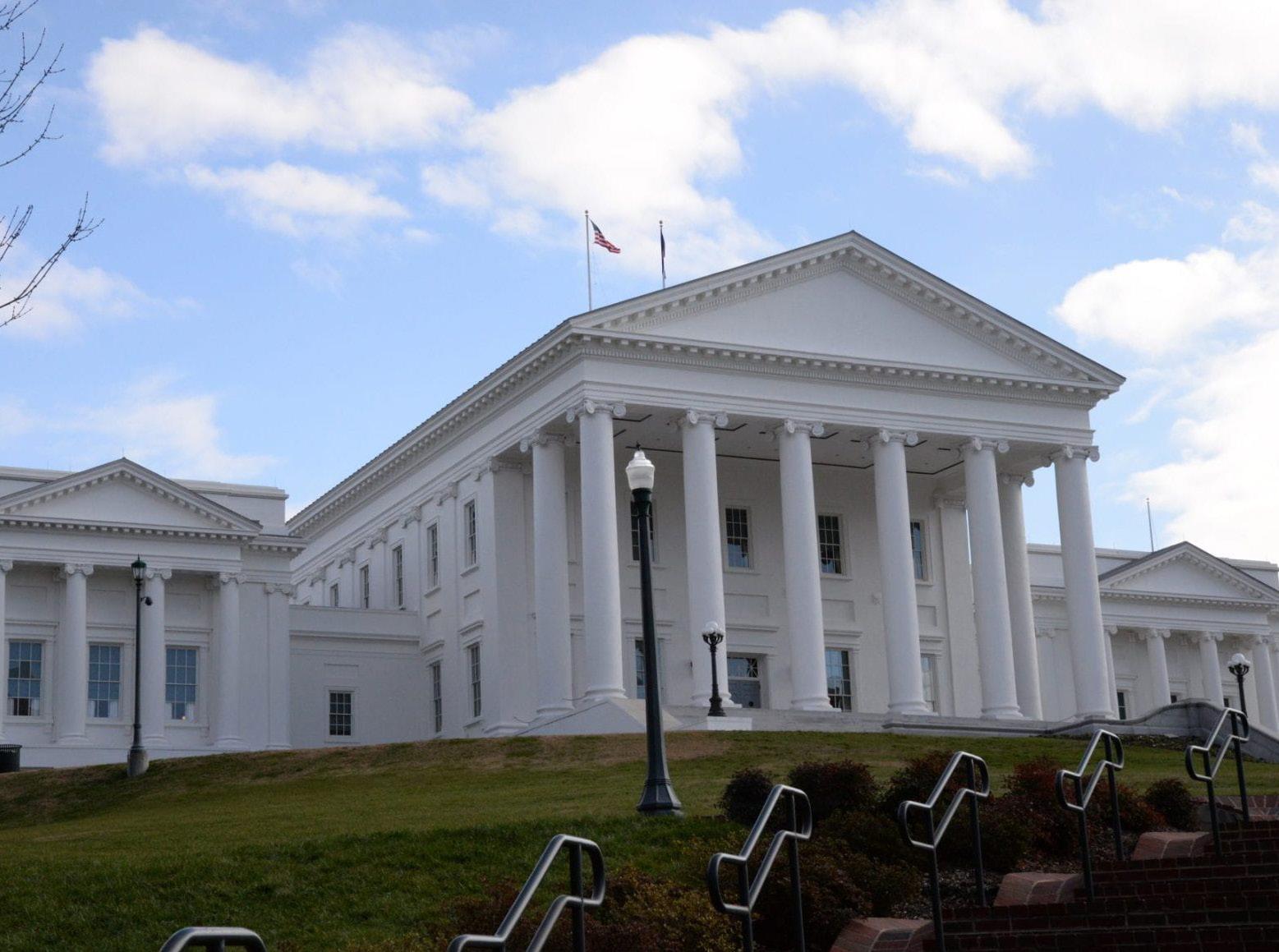
The Virginia State Capitol. CT file photo.
A hemp harvest. Photo courtesy of Chester Cannabis Co. / VCU Capital News Service.
Stat of the week
VCU
Sports BACK-TOBACK CHAMPS
HAYDEN BRAUN Staff Writer
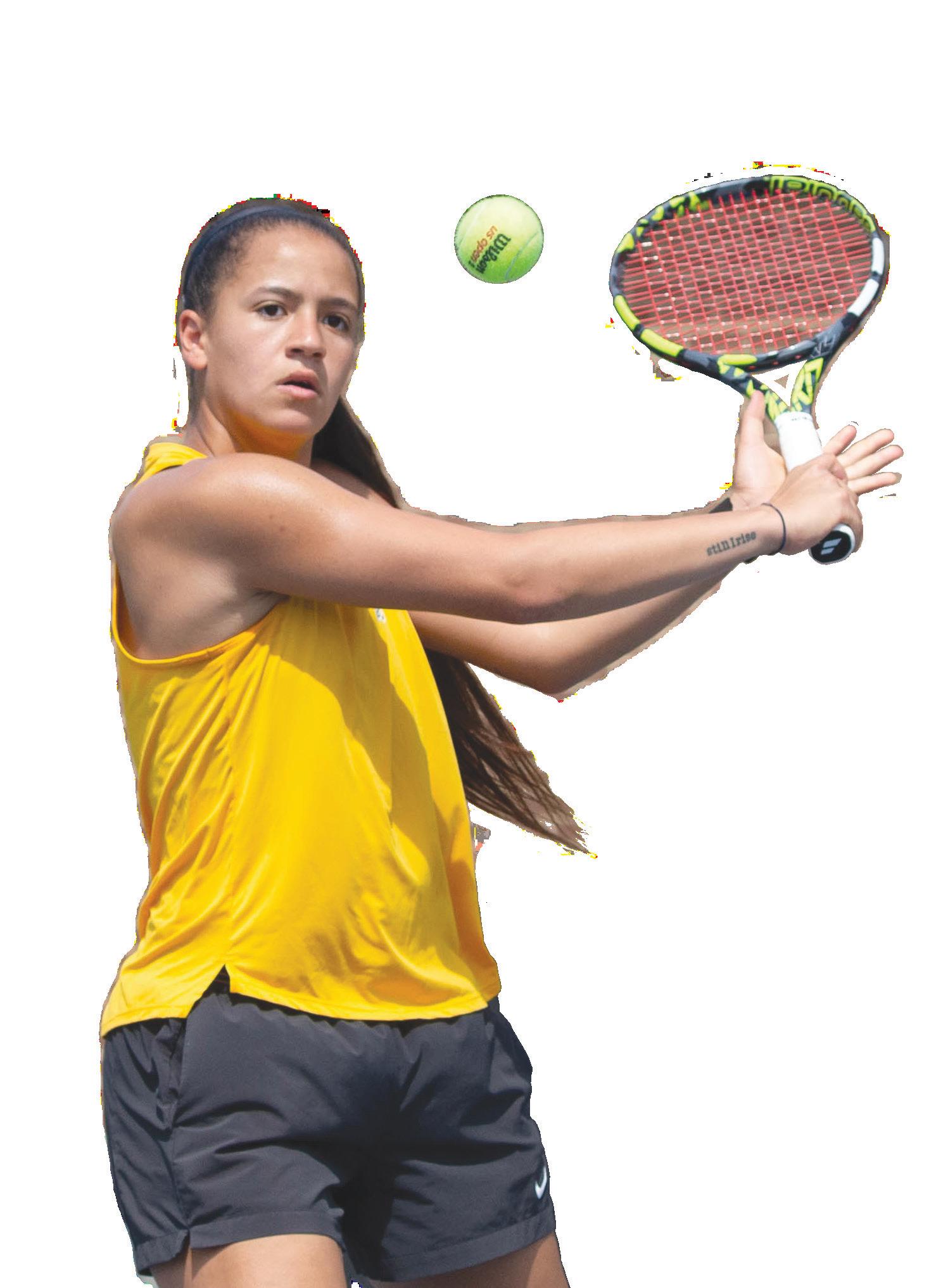
VCU women’s tennis is setting a new standard for the program.
The Rams won their second straight conference championship tournament in the Atlantic 10, marking their 10th title since 2013.
The Rams finished the regular season 14-10 while being 5-0 in conference play. VCU carried that flawless mindset into the conference tournament and defeated Fordham University 4-3 in a close contest.
The matchup between VCU and Fordham was a mostly even matchup boasting similar records with both teams being unbeaten in conference play.
VCU striked early securing the doubles point before battling back late in singles play. With the match tied 3-3, secondyear Andrea Magallanes clinched the championship with a comeback three-set victory, sealing the title for the Rams.
The win highlights a season built on a
strong lineup and consistent performances across both singles and doubles play.
In singles play, VCU posted a 98-66 overall record, including a 15-2 mark in conference matches and a .882 winning percentage, according to VCU Athletics.
Multiple players stood out this season for VCU. Magallanes finished 17-7 overall and remained perfect in conference singles play and first-year Viktoria Lackova finished the season with an 11-2 conference record. Both third-year Tania Isabel Andrade Sabando and Magallanes finished the season on an eight-match winning streak.
Doubles play also had key contributions this season towards VCU’s success. The Rams put together a 50-32 overall doubles record and went undefeated in conference doubles competition (10-0), consistently putting themselves in position to come out on top.
The pairing of Magallanes and secondyear Sofia Jane Thorne led the way with a 17-7 record, including a perfect 5-0 record in conference play, while second-year Sara
After A-10 win, women’s tennis sets sights on NCAA Tournament
Alba and Lackova boasted a 12-9 record going 3-0 in conference play adding key wins throughout the season.
That ability to consistently secure the doubles point played a major role in the championship match as well. Against Fordham, VCU took control early before relying on its playmakers in singles to close out the match. Even after falling behind late, the Rams showed resilience — a theme that defined the season.
The back-to-back championships further reinforce VCU’s position as one of the A-10’s premier programs. The Rams have now won six conference titles in the
past eight seasons, continuing a stretch of sustained success that has become the standard for the program.
Now the Rams’ focus shifts to the national stage.
VCU will play No. 15 Duke University in the NCAA Division 1 Women’s Tennis Championship bracket, where the Rams will look to carry their momentum into postseason competition.
With back-to-back titles, a flawless conference record and a proven ability to perform in high-pressure moments, VCU enters the NCAA Tournament as a team capable of making noise.
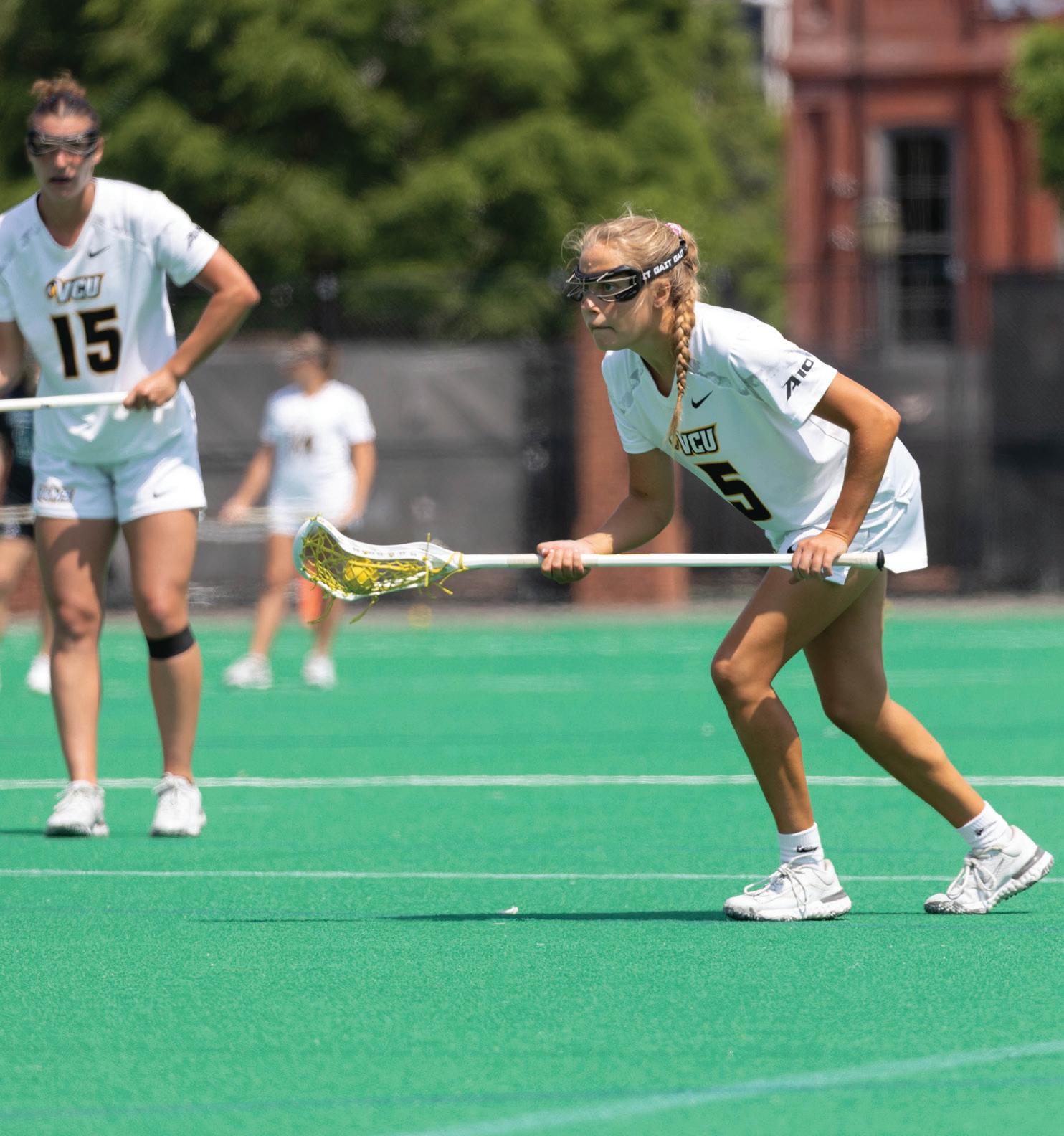
Lacrosse outclasses Patriots 13-2 in Senior Day celebration
MARCUS LEARY Contributing Writer
VCU defeated its in-state rival, George Mason University, in a 13-2 rout on Senior Day.
The Rams finished their season with a program high in wins with 12. They are ending the year at 12-4 overall, 7-1 in conference and as the No. 2 seed in the Atlantic 10 tournament at Davidson College.
While the Rams forced a running clock for the fourth quarter by going up 10, the game was won in the details. VCU won the ground ball battle 19-11 and led the draw control margin 13-5, according to StatBroadcast.
Fourth-year midfielder Kiley Kozak was a key player for VCU, securing four draw controls on top of two goals.
Kozak was one of four players honored at Senior Day. She mentioned that in her four years with the team, they went from “not even making it to the tournament” to earning the No. 2 seed and a bye into the semifinals.
“I never want another team to look down on us,” Kozak said. “It’s such a cool experience, every year just seeing how the skill and the talent have improved. This program really is stepping up.”
The Rams started the scoring early in the first quarter. Second-year midfielder
Amelia Eilbacher put the first goal in the net two minutes into the game. Eilbacher piled on the scoring six minutes later, capitalizing off of a George Mason turnover.
The Patriots won the next draw control, and moved down the field on offense. However, the Green and Gold continued to be plagued by turnovers and threw the ball out of bounds.
The Rams attempted to take advantage of the opportunity, putting four shots on goal against George Mason fourth-year goaltender Regan Bestick.
Bestick saved the fourth shot on goal which led to a successful George Mason clear. The Patriots tried to kickstart their offense with a shot on goal, however it was no good and led to a turnover with three minutes remaining in the quarter.
Second-year attacker Kenson Epperly scored the Rams final goal of the first quarter with just over one minute remaining.
While the VCU offense put six shots on goal, and three in the back of the net, it was the defense that stood out in the first quarter, holding the Patriots scoreless. The Black and Gold defense forced seven turnovers, and first-year goalie Lu Doyen made two saves.
lacrosse third-year attacker Rachel Koeneke scored her sixth hat-trick of the season and tallied on two assists in the 13-2 win over George Mason University.
Third-year Mariam Ibrahim returns the ball to her opponent. CT file photo by John Brown.
Third-year attacker Rachel Koeneke runs with the ball.
Photo by John Brown.
George Mason netted its first goal of the game after turning defense into offense. The Patriots forced a shot-clock violation before second-year midfielder Matye Riley put a goal on the board with 10 minutes to play in the second quarter.
The Rams responded with a four-goal run highlighted by two goals and one assist from third-year attacker Rachel Koeneke. Eilbacher added to her three goals and one assist day with another goal and an assist.
VCU led 8-1 headed into the second half.
The Rams switched goalies at halftime. Doyen ended her afternoon with three saves and one goal allowed, earning her the win. Second-year goaltender Ava Carrillo took her spot in the cage and finished with four saves and one goal allowed.
VCU Head Coach Nicole Flores attributes her ability to swap goalies mid-
game to how hard everyone works.
“When we are in a comfortable position, we have more opportunities to play a little bit more freely in who gets opportunities,” Flores said.
VCU’s momentum quickly carried over into the third quarter. Rams third-year attacker Sam Palmer won the first draw, pushed down the field and put the ball in the back of the net — widening the VCU lead 9-1.
The Black and Gold kept their foot on the gas, scoring three more goals in the third quarter. Koeneke added one goal and one assist to the onslaught. She ended the afternoon with three goals and two assists.
The Patriots did not go away quietly, however. Fourth-year midfielder Kate Anders got the ball from Bestick on a fast break clear, took the ball all the way down
the field and scored George Mason’s second goal of the game.
The Rams led 12-2 going into the final stanza.
The fourth quarter was quiet for both teams. George Mason’s final quarter was highlighted by three saves from Bestick.
VCU graduate student attacker Molly O’Keefe scored the 13th and final goal for the Rams with five minutes remaining in the game.
While the Rams do not yet know who they will play in the semi-finals on Friday, Koeneke believes they can win no matter who they face.
“Our big day is Friday,” Koeneke said. “As long as we play together and as long as we have each other’s backs and perform well. There’s no way we won’t make it to the championship on Sunday.”
New WNBA bargaining agreement redefines women’s sports
JENNY ALLEN Staff Writer
The Women’s National Basketball Association and the Women’s National Basketball Player Association announced a new collective bargaining agreement in March.
The new seven-year CBA began in the 2026 season and extends through 2032. It marks one of the most groundbreaking labor agreements in professional sports.
In recent years, professional women’s sports have been exceeding expectations, quickly winning over fans.
Despite the argument regarding the value differences between men’s and women’s professional sports, both athletes work equally as hard and both should be recognized for their skills.
Disregarding gender bias — fans support talent, dedication and hard work; the women’s professional sports industry growth has proven what they have to offer is equally as enjoyable and compelling as men’s sports.
The hypergrowth is currently expanding 4.5 times faster than men’s sports, according to Denver 7. The global revenue for women’s sports are projected to reach $2.3 billion this year alone.
As a result, the CBA agreement will result in major changes towards WNBA players compensation with a salary cap set at $7 million for the 2026 season. This
is a 364% increase — the largest in U.S. professional sports history. The cap will be adjusted annually depending on both league and team revenue changes.
After the monumental 2025 season, the WNBA reached records with the most-watched regular season, postseason, opening weekend and three point contest ever, according to ESPN Press Room. Across the 25 regular season games, the WNBA on ESPN networks averaged 1.3 million views which marks a 6% increase year-over-year.
With viewership proving their worth, the WNBA projects more than $1 billion in player salaries and benefits.
Top players will now have the opportunity to sign history-making multimillion dollar contracts for the first time ever. Maximum-contract players will earn a salary of $1.4 million in 2026 with an expectation to grow to more than $2.4 million by the end of the agreement.
No. 1 overall pick Azzi Fudd is now the highest-paid rookie in WNBA history thanks to the CBA, according to Sports Illustrated. In her first season with the Dallas Wings, she will earn a $500,000 fully guaranteed contract followed by $520,000 in her second year and $572,000 in her third season. By the final year of her contract, Fudd will be making $646,360.
All first-round draft picks will now be making more during their rookie season
MEN’S TENNIS VS. NO. 9 DAVIDSON COLLEGE WON 4-1
WOMEN’S TENNIS VS. NO. 7 SAINT LOUIS UNIVERSITY WON 4-0
MEN’S TENNIS VS. NO. 5 UNIVERSITY OF RICHMOND LOST 3-4
BASEBALL AT THE UNIVERSITY OF RICHMOND LOST 1-2
WOMEN’S TENNIS VS. NO. 3 UNIVERSITY OF RICHMOND WON 4-2
APRIL 25
LACROSSE VS. GEORGE MASON UNIVERSITY WON 13-2
BASEBALL AT THE UNIVERSITY OF RICHMOND LOST 4-8
WOMEN’S TENNIS VS. NO. 1 FORDHAM UNIVERSITY WON 4-3
APRIL 26
BASEBALL AT THE UNIVERSITY OF RICHMOND WON 2-1
than any WNBA players had ever made due to the agreement, highlighting the growth and investment of women's sports.
Prior to Fudd and the CBA, the highest-paid WNBA player — Indiana Fever’s All-Star guard Kelsey Mitchell — was only given a salary of $249,244.
The 2025 No.1 pick Paige Bueckers’ rookie salary was set at $78,831, with a four-year contract worth $348,000, making Fudd’s earrings six times more than the amount Bueckers earned last year.
Bueckers is now expected to see a pay increase as she is projected to earn $499,200 in salary.
Veteran players can also significantly benefit from the CBA as they can now receive up to $1.4 million supermax contracts.
Mitchell signed a one-year supermax contract for $1.4 million, making her the highest-paid player in team history.
Aside from increased player salaries, overall player experiences will also be enhanced, according to the NBA. Team facilities, first-class travel accommodations, performance bonuses and retirement plans are also a part of the deal.
The CBA also included an increased minimum roster size of 12 players plus two more roster spots for developmental players.
Players will not be the only ones benefiting from the CBA, as fans will now have more basketball to enjoy due to an increase of up to 50 games in 2027 and 2028 and up to 52 games in 2029 through 2032.
PRESS BOX
Illustration by Zoë Luis.
On This Day
On this day, April 29, 2024, 13 protesters were arrested at a Pro-Palestine encampment in front of James Branch Cabbell Library. One more protester was arrested on the same day at the same place in 2025.
Zack Fox gets VCU moving
Spectrum Annual RamFest draws 900 attendees
MAEVE BAUER
Spectrum Editor
Zack Fox — actor, rapper, DJ and comedian — dazzled nearly 1,000 people at the Activities Programming Board’s 2026 RamFest at the VCU Student Commons plaza on Thursday.
The APB hosts events for students all year round, and usually ends the school year off with a celebration headlined by big-name artists. Last year, they hosted their take on a Tiny Desk concert headlined by Rico Nasty, with opener Jay Irvine who performed again this year.
Irvine was accompanied by Kwajo and SH1NOB1 on mic, with Aidan Kohn playing guitar and Justin Dono mixing it up on the sound board.
Dono is 22 and started experimenting with DJing 11 years ago alongside Irvine.
“This is crazy, like we actually almost made it. You know? The DJ set I was using was like a CDJ mixing setup. That was my dream setup when I was a 6th grader. So this is a full circle thing,” Dono said.
The events are a part of the APB’s annual Havoc Week, a tradition to round-out the end of the school year. In 2023 they invited Young Nudy to headline, took a break from the big names in 2024 and then started RamFest back up again with Rico Nasty.
This year the APB was able to admit twice as many students, according to Sensiere-Yanti Thompkins-Harris, coordinator for Student Programming & APB advisor. There were 980 people in attendance. 900 of them were students and 80 of them were volunteers, artists and their crews, media personnel and staff, a few of whom were students.
“I really like him [Zack Fox] as a DJ, he’s very versatile and I feel like he can just bring a good vibe anywhere,” said third-year psychology student Jailah Chapman.
Usually the headliner is picked by the board, but this year they opened a survey up to students — helping them land on the decision to invite Fox, according to host and 2026-27 Senior Divinity elect Khamari Pineda.
“I think Zach Fox was just the most
appealing to a lot of students, as far as his range,” Pineda said. “Zack Fox is more of a performer and entertainer rather than just a straightforward rapper.”
VCU has seen a lot of big name artists come to campus. In 2014, Wiz Khalifa and Chevy Woods performed at the homecoming concert, Kendrick Lamar, Big Sean and Outasight played in 2012. The year prior J. Cole and Wale paid a visit, and Drake stopped by in 2010.
“I think that the artists kind of represent the era that we’re in,” Pineda said. “A lot of them, traditionally, they were heading either right before they were going to, quote unquote, blow up or as they were blowing up. It’s not to the peak of where they are now and their staples and their respected craft.”
Pineda hosted alongside Yamarie Kamara, a VCU alumna from the class of 2022. Kamara sees Fox’s personality as true to himself, and feels that many VCU students embody that same trait.
Fox entered the public eye in 2013, gaining popularity on Twitter. He started expanding into film and music in 2017
and 2018. He became known for his freestyle session with producer Kenny Beats. Appearing on Beats’ youtube series “The Cave,” they recorded “Jesus is the One (I Got Depression),” talking about sticking a certain body part in Thousand Island Dressing. In 2021 he became a household name with his role of Tariq in “Abbott Elementary.” Since then, he has been recognized for his contributions through various artistic and comedic outlets. In a talk Fox gave at Georgetown University, he described how being Black in America impacts his work — seeing himself as a jester, peeling away at accepted social ideas.
Fox ended the night by thanking young people for being the future, encouraging that they will make it, even if things in the country seem bleak.
“I love y’all, have a great night. My name is Zack Fox, keep dancing. Dance music is Black music, music is Black music. I don’t give a f***. Good-bye, I love you,” Fox said.
Lesbian Field Day enriches Richmond
The sun shines on Lesbians during Visibility Week
ALESSANDRA CACERES MENDOZA
Contributing Writer
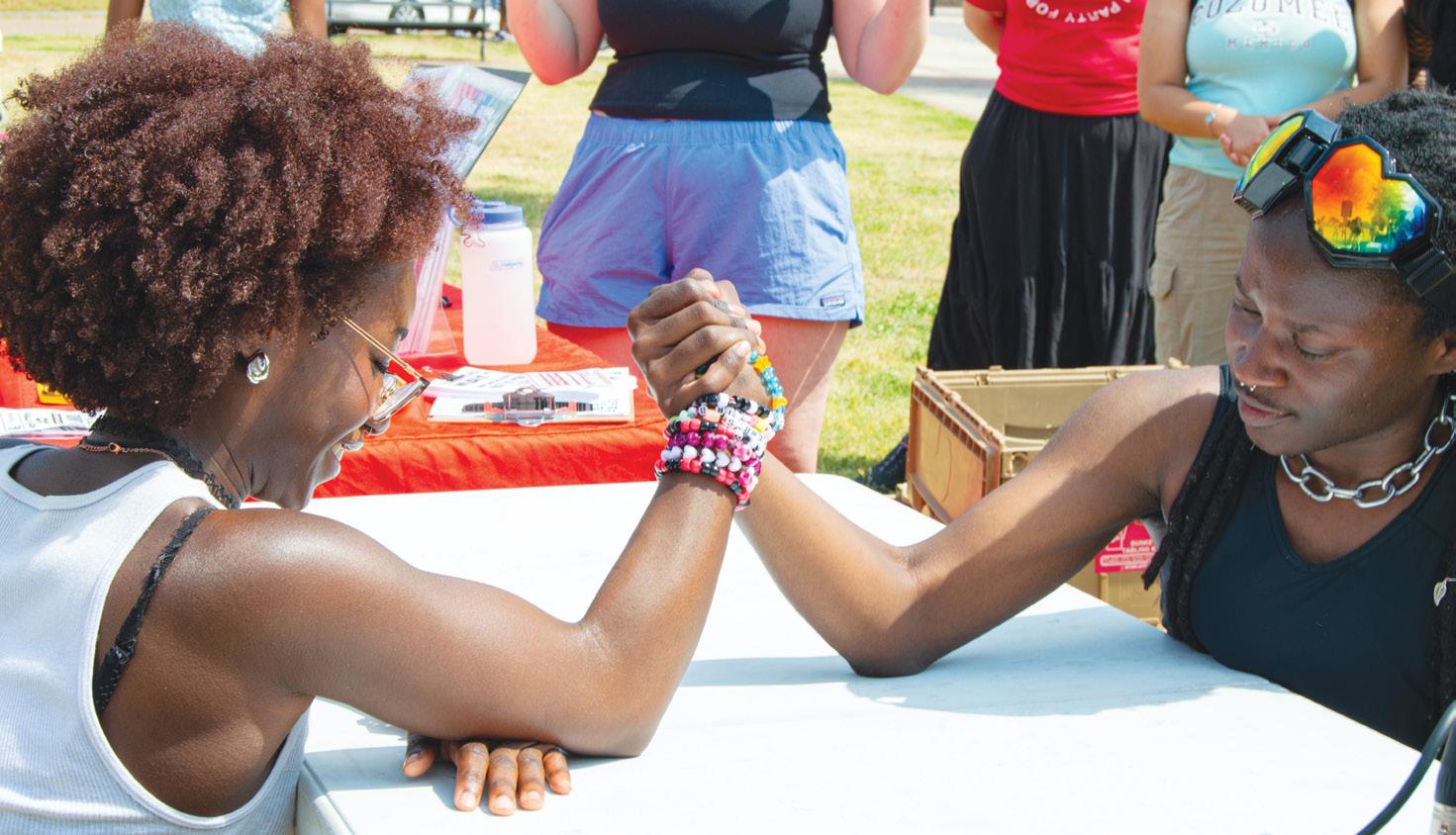
Pink and orange hues decorated all corners of Abner Clay Park as queer spirit radiated among the smiles of lesbian participants, while cheerleaders dressed in their unique outfits applauded those in the midst of a decisive round of tug-of-war.
Lesbians of diverse backgrounds gathered at the park Saturday for Lesbian Field Day, an outdoor community gathering organized by VCU first-year students Denisha Chisolm, Samaya Waldo and Danny Williams.
Chisolm, Waldo and Williams have hosted other events centered around strengthening community. In October studs, mascs and butches faced off in Monroe Park for their Performative Stud Competition, and just this month they hosted Sapphic Baby Oil Wrestling at Babes of Carytown.
This butch vs. femme-themed event
featured competitive activities like tug-of-war, potato-sack racing and a water-balloon fight.
These two prominent lesbian identities teamed up and clashed in friendly competition throughout the day in pursuit of prizes, notably carabiners — a simple object that has become a recognized symbol within the community.
Participation in the activities required attendees to be 18 or older. Although catered towards lesbians, the event was open for all to enjoy.
Abner Clay Park is within walking distance of the Gladding Residence Center, the dorm building where many of VCU’s first-year students reside.
“As someone who’s not 21 yet, it’s frustrating finding events that are gay and especially lesbian-related,” first-year student
Genesis Jackson said.
celebrate Lesbian Visibility Week, observed from April 20-26, in addition to bringing about VCU students to finish the semester off on a good note.
Chisholm sought to provide a safe space to Story continues on next page
“It’s showing queer visibility,” Chisolm said. “Lesbians are here at VCU. Lesbians are here in Richmond.” Proceeds raised from the sign-ups were donated to the Richmond Reproductive Freedom Project.
Zack Fox spinning tracks at APB’s Ramfest on Thursday.
Photo by Alex Robinson.
The Femme team poses, ready to show who’s boss. Photo by Landon G Walker.
Chisholm said they chose the organization as they are inclusive towards women, trans and gender non-conforming people. She said reproductive care can also be genderaffirming care.
In 2024, 12% of women in the state
reported not seeing a doctor for reproductive healthcare visits 12 months prior due to costs, according to an analysis done by KFF, an independent healthcare policy research organization.
“It was very important for me and
my friend to find an organization that supports that value of providing not only gender-affirming care, but life-saving care that benefits people’s mental health,” Chisolm said.
Lesbian Visibility Week is much more than a week-long event to Chisolm. It is where they can be acknowledged by the queer community and address the erasure ensuing within the current political climate.
“This is our time to be recognized for our accomplishments, contributions and innovations,” Chisholm said.
A femme competition to decide who was the best femme was held between the games. Participants lined up and were asked pageantry questions related to the event.
When asked “what does being femme mean to you?” many participants had answers pertaining to pride in non-conformity as well as support towards other lesbians.
The term femme is defined as an identity that actively rejects cis-heteronormative standards of what femininity means, according to an NYU Press essay.
The identity has strong ties to butches,
who are lesbians who express themselves in a masculine manner.
“The most masculine of our community deserve the most protection right now, especially under the current administration,” said contestant and first-year student Elaina Shepard.
VCU students Sasha Blue Taylor Butler and Tazmania Taylor were the winners of the femme competition.
They both feel that events like this strengthen the already impenetrable queer community at VCU.
“Even though we go to VCU, and VCU’s a very queer place, some people are still too scared to be themselves,” Butler said.
After the water balloon fight and arm wrestling ensued, it was time to wrap up the field day with a childhood wonder: a rainbow parachute.
The organizers saw it as an important activity for attendees to tap into their “inner child and queerness.”
PUNK AND PLUR COME TOGETHER
Femmefest brings moshing, mutual aid
CORA PERKINS Assistant Spectrum Editor
It was a normal day in Scuffletown Park, the birds were chirping, the flowers were blooming and the punks and ravers were moshing and dancing.
Femmefest, a festival of DJs and hardcore punk bands, celebrated feminine-presenting people, both in and out of music.
Miles Dillahunt, vocalist of PlutoniumWomb and creator of the fest, wanted there to be a space for newcomers to become involved in the scene.
“I wanted to create a safe space for people who might be nervous to get involved with activism or shows due to their queerness or femme identity, just so that way they feel less alone and encouraged to go to more shows,” Dillahunt said.
A big motivator for the event was the reaction to a previous story by The CT about women in the hardcore scene in Richmond. The comments under the article spoke volumes to how many men in the scene feel about women speaking out against issues they face within the hardcore community, Dillahunt said.
“The comments were vile,” Dillahunt said. “Both Judas and Lexi received death threats for speaking on their lived experiences. A lot of the people in the comments aren’t even authentic punks, and don’t go to shows in the area, so I felt like Femmefest would be a good opportunity for femmes, queer people and the whole sea of ‘weirdos’ — just people who feel left out to take up space. The situation lit a fire under my a** to fly harder for the event.”
Bringing the two jarring genres of music together was a two birds, one stone situation, Dillahunt said.
“It honestly arose from my love for both shows and raves, the politics in both of these spaces and a moment of opportunity,” Dillahunt said. “With both the punk and rave communities, I’ve felt like we get a lot of newcomers who aren’t familiar with the politics or community aspects and thus deem it unimportant or just seem ignorant to it all together.”
It is important to talk about political issues and what is going on in the world in music because they would not just go away if ignored, according to Dillahunt.
“They will keep building, they will keep getting worse and politicians will keep getting away with their shitty behavior — to ignore is to be the idiot the politicians say you are,” Dillahunt said. “Through activism, I’ve had medic training and security training, both of which I’ve utilized at shows before. It’s a whole world people need to tap into because it only gets stronger with more hands.”
The cost of entry to the festival was either a donation of menstrual products or $10. All proceeds made went to Haze Harm Reduction, a community organization that provides free harm reduction materials and education at shows in the Virginia area. The festival raised over $149 for the organization.
“We raised so many menstrual products, we’re still counting but we got two huge boxes full of pads and tampons,” Dillahunt said.
In addition to handing out free harm reduction and prevention supplies and speaking one-on-one to educate people on the topic, the organization also shows people how to use Naloxone, according to Peaches Javins, founder and executive director of the organization. They focus on doing so at community events and live shows.
“It’s specifically important to target shows and the scene, because we can bring out these supplies and, you know, get them to where people need them, and directly help the community that has helped me specifically,” Javins said.
Music is a great way to get everyone on the same page politically, according to Javins.
“It’s a universal language, you know, you don’t always have to understand the lyrics to understand that,” Javins said. “You know, somebody’s angry about something, and it makes you wonder, like, ‘what are they so angry about?’ and so you can kind of have some of these conversations, and you can hear other people out, and ultimately it gets people talking, and it gets more attention on what's going on, which is highly important.”
Art and music are inherently political, according to Maeve Hickey, also known as
DJ Shartchan, who performed and repped the “raver” half of the festival.
“It’s really easy to kind of turn a blind eye to everything happening in the world and just party,” Hickey said. “But I also think it’s really important to use a platform when you have so many people in one room to just really appreciate the awareness that people want to put out.”
The raving and punk communities are not all that different, according to Hickey.
“A bonding force is; we’re all here for music at the end of the day, whether that’s hardcore or EDM, which is really awesome,” Hickey said. “Everybody just wants to come out to dance and like, support their community, be with friends, have a good time. So, like, no matter the difference of genre we’re all there for the same reason.”
Two contestants arm wrestle at the Lesbian Field Day competition.
Photo by Kendall Lott.
DJ ShartChan performing at Femme Fest Photos by Landon G Walker.
Laine, vocalist of Bleed Out, performing at Femmefest.
DJ CoolAssPrettyGirl performing at Femmefest.
Summer events to look out for Stay
in touch as The CT cools down on coverage
RACHEL NICHOLAS Staff Writer
Summer is coming full blast to Richmond and there are many things to do across the city. Whether you are planning ahead or just taking things one day at a time, something is always happening.
From VCU and its surrounding neighborhoods to across the James River, there is an event for everyone. Here are a few to start with.
DANCE THE NIGHT AWAY AT MAYMONT PARK
Celebrating 100 years and hosting its annual summer concert series, Maymont’s spokesperson Melissa Abernathy said the goal is to “create a space where people can slow down and experience both music and landscape together.”
Expect picnics spread across the lawn accompanied by a plethora of musical talent — upcoming shows to include the Punch Brothers and Carbon Leaf — as well as different tours of the gardens that surround the Gilded Age mansion.
More information about their events can be found on their website, maymont.org.
REFRESH AND RELAX WITH LOCAL WATERMELONS
It would not be summer in Richmond without the Carytown Watermelon Festival. Organized by Three One One Productions and held every August, the festival has grown from a neighborhood gathering into a citywide tradition with arts and craft vendors, live music across multiple stages, street performers and more watermelons including watermelonthemed contests.
Many participating shops and restaurants offer special promotions or
watermelon-inspired menu items. The festival will be held Aug 9.
More information about their events can be found on their website, carytownwatermelonfestival.com.
FIND YOUR RHYTHM
AT RICHMOND’S RAVES
For those looking to stay out a little later, Richmond’s rave and electronic scene is quietly thriving. From warehouse-style pop-ups to club nights featuring regional DJs and touring acts, there is almost always something happening if you know where to look. Platforms like EDM Train track upcoming shows across the city, making it easier to find everything from house and techno sets to bass-heavy lineups.
Venues rotate and spaces can be unconventional, but more information on where and when can be found on EDM Train’s website, edmtrain.com/ richmond-va.
COOL DOWN AT THE JAMES RIVER WATERFRONT
For those who do not wish to trek farther south to find a summer splash pad can look no further than Reedy Creek along the James. The area offers shaded swimming areas surrounded by the calm flow of the river, and is home to several species of birds, turtles and marine life. Visitors can park on 42nd Street or the Reedy Creek headquarters where several of the trailheads are located.
More information can be found on their website, jamesriverpark.org
TAKE A
Noted as Virginia’s largest state park, Pocahontas Park remains a key destination for fans of hiking, biking, camping and those who want to embrace the outdoors. The park’s landscape of hardwood forest, wetlands and lakes offers more than 90 miles of trails alongside Beaver Lakes — the perfect fishing spot that is home to bass, bluegill and catfish.
Just 20 miles southwest of Richmond, visitors can reserve picnic shelters and more at dcr.virginia.gov/state-parks/pocahontas
Richmond backdrops the James River. CT file photo by Kaitlyn Fulmore.
The James River. CT file photo by Kaitlyn Fulmore.
STROLL AROUND THE PARK
DJs REINHOLD and Daniel Burke at the ‘First Caturdays’ rave at Powers Bike Shop on Oct. 4 CT file photo by Molly Manning.
The stage lights up the night at the Band of Horses performance, co-lined with City and Colour, in September 2024 at ‘Music at Maymont,’ which consists of a series of performances from July to October. CT file photo by Anthony Duong.
RVA Spotlight
Features Professor teaches VCU’s first Asian American history class
BURKE LOFTUS Staff Photographer
VCU’s Department of History now offers a new course, Intro to Asian American History, the first of its kind in the university’s history.
Second-year political science student Trina LaFortune is a Filipino American from Annandale, Virginia. Growing up in Northern Virginia, she said most of her knowledge of Asian American culture came from conversations with her family, who immigrated to the United States from the Philippines in the early 2000s, and other Asian immigrant families.
“We only highlighted ‘Asian studies’ in junior and senior year, and that was the extent of it,” LaFortune said. “There [are] a lot of Asian people in NOVA. Even then, my education just had a narrow scope of what Asian American history was.”
In the fall of 2025, LaFortune’s focused inquiry professor, Frank Cha, announced to the class that he would be teaching an Intro to Asian American History course in the spring — asking students to email him if they were interested.
“Part of me was like, ‘Oh my god, this is representation,’ but also part of me was like, ‘No, I think I’m just more curious to see what else I can learn,’” LaFortune said. “I wanted to see how Dr. Cha would teach a class that wasn’t [focused inquiry] as well.”
According to Cha, LaFortune is now taking VCU’s first official Asian American history course.
“We’ve always had those [history] courses, but I think we need to expand our perspectives a little bit more,” Cha said. “When we look at the trajectory of Asian American history, there are very strong parallels to what’s happening in the world
Before teaching this course, Cha exclusively taught in the Department of Focused Inquiry. According to Cha, the 2025-26 academic year is the first in which focused inquiry professors have been able to teach outside of the unit after its transfer from the University College to the College of Humanities and Sciences in January 2025. Cha was offered the opportunity due to his expertise in the subject.
In 2013, Cha earned his Ph.D. in American studies from William & Mary, his dissertation focusing on Asian Americans in the South. While there, he taught Asian American history and literature courses. His work as a doctoral student helped launch what is now the Asian & Islander Pacific American Studies program at William & Mary.
“I feel like our course catalog should, in some ways, reflect our student population,” Cha said. “The fact that we have such a diverse array of students, I was shocked that we didn't have something like [this course].”
Statistics from VCU show 14% of first-year students admitted in Fall 2025 — approximately 630 students — ethnically identify as Asian.
Cha believes there is a demand for Asian American studies at VCU, referencing the overall growth of the Asian American population in Richmond and student-run organizations such as Asian American Pacific Islander Affinity.
“[I took the class] because I’m Asian and I want to learn about Asian American history,” fourth-year history student Andrew How said. “Asian Americans have been overlooked as one of those ethnic groups where people just go like,
Got weekend plans? Now you do — it’s the first weekend in May, which means Arts in the Park is back at Byrd Park! Swing by one of the country’s top art shows starting at 11 a.m. Saturday and Sunday to pick up arts and crafts, pottery, jewelry, trinkets and more.
Lessons are balanced between classmate discussions and lectures. In March, Paul Yoon, a colleague of Cha’s in the focused inquiry unit, featured as a guest speaker. Yoon shared his experience and proficiency as an American Taiko drummer, a variant of traditional Japanese Taiko.
“This is such a pivotal part of Asian American history,” fourth-year sociology student Anita Liammaytry said, referring to the 1982 murder of Chinese American Vincent Chin. “Why would you not want to explore that more?”
Fourth-year history student Payten Broderick compares Cha’s style of teaching history to her prior educators.
“He conveys [the content] so well that I don’t have a problem following, which is great,” Broderick said.
The course is categorized into four units: Asian immigration to the United States, origins of anti-Asian sentiment, resistance and activism against that sentiment and pop culture. With only two 50-minute class meetings per week, Cha stresses the difficulty of teaching such a broad subject in one course.
“Now I want to dive into specifics because I’m barely scratching the surface
on some of these topics,” Cha said. Cha is currently in the early steps of developing an “Asians in Virginia” research project.
“My hope is to create an ongoing project that brings together faculty, staff and students to collaborate on collecting experiences and information about Virginia’s rapidly growing Asian American population,” Cha stated in an email. “I would like to create a multimodal archive that incorporates oral histories, photographs, videos and archival material to share with a broader public.”
LaFortune said that, in her experience, the “Asian American” label has mostly highlighted East Asian voices. Cha’s class is a welcome broadening of that panethnic label.
“Being a Filipino woman, having my representation and my history highlighted, my voice highlighted, I feel like that has really helped … I wish there [were] an expansion of this [course],” LaFortune said. Cha plans to discuss with the department of history about the possibility of offering another Asian American history course sometime in the 2026-27 academic year.
Professor Frank Cha teaching about the influence of classical Indian music on Western music in his Asian American history course.
Photo by Burke Loftus.
Professor Frank Cha previewing the next week’s itinerary to his students in his Asian American history course on April 15.
Photo by Burke Loftus.
Fourth annual Animation Festival brings international film to Richmond
FAKEHA NAEEM
Contributing Writer
The Richmond Animation festival started as a creative initiative of three artists and animators — Zack Williams, Jordan Bruner and Dash Shaw. This year marked their fourth festival, celebrating short films from artists all around the world and Q&As with awarded animators.
Williams enjoyed animation from a very early age and studied traditional animation, worked in commercials and later realized working in 3D allowed more creativity and gave more freedom.
“We both got interested in animation when there wasn’t much awareness of animation and independent films, we just wanted to recreate those instances where people would come out and see films and share our passion, which is very important,” Williams said. “I looked into animation as another medium, pushing it into the fine art space. We are taking our shared appreciation for that kind of animation into the festival.”
Bruner, a VCU alumnae and Williams’ partner, started as an illustration major but transitioned into animation. Bruner discovered the work of Martha Colburn, an artist whose work was based on puppetry, animation and stop motion which Bruner found fascinating.
“I felt like those two worlds fuse together in a way that felt exciting,” Bruner said.
The husband and wife duo moved to Richmond in 2019, giving them more physical space to work on their creative projects. The animation festival came when the couple lived in New York and Bruner curated a night of animated films, showing works of artists she knew and films she liked at an Equity Gallery, a small space which filled up quickly and generated a lot of interest which she thought would be a great thing to continue.
“New York offers lots of opportunities to see animations in person; however, in Richmond, there wasn’t a specific event dedicated to animations, so we just thought it would be a great opportunity to share the work that we really liked,” Bruner said
The festival has gotten bigger over the years. This year the event was broken down into two days, with a shorts program held on April 25 at Studio Two Three, showing short films contributed by international artists from 10 different countries including Argentina and Finland.
On April 26 there was a screening of the short film, “Boys go to Jupiter” by Julian Glander, followed by a question and answer panel series with the artist himself and Shaw.
“The experimental animation community isn’t massive, so it feels natural to include an international group of filmmakers in our shorts program. Our mission is to share this work within our community as a way to gather in person and be inspired together,” Bruner stated.
Julia Tadisco, an artist and director from Hungary spoke about her short film “Children of the Bird” shown at the festival. The film revolved around kids having different powers — one has the power to create and the other to destroy.
“This is my fourth short film that is being shown at the festival. I’m interested in environmental and mental health topics. After showing my work to the audience at the festival, I would like to reach other audiences outside through my web series that I am currently working on,” Tadisco said.
Shaw is an animator and comic artist. He spoke about how excited he is for Richmond to experience foreign animations from artists around the world.
“The things you see are different from Sundance, there are different perspectives from worldwide animators, an eye-opening experience, which we are hoping to do for Richmond,” Shaw said.
The durations of the short films varied, “Action Bog” was a one-minute watch. The lengthiest short film “Papillon,” ran for 14 minutes. A total of 11 short films were screened at Studio Two Three, covering a variety of themes and storylines for the audience to enjoy.
“Well Wishes My love” is a nine minute Swedish/Malaysian production by Gabriel Gabriel Garble, also screened at 2023 Sundance festival. The animation is about a boy who films textures in nature for a friend with a prosthetic arm, created in line style showing connectedness.
The international artists contributing their work for this event were either contacted directly or through their distributors by the festival organizers.
There are many short films and animation shorts available online but Shaw believes that seeing animation on big screens is an emotional experience.
Shaw was excited about Glander’s movie “Boys to Jupiter.” This would be Glander’s first movie to ever be shown in the festival, starring many famous voices such as Jack Corbett, Janeane Garofalo and Sarah Sherman to name a few.
For future information and volunteer opportunities follow the organizers at @richmondanimationfest.
Flicks from Animation Fest
‘Boys Go To Jupiter,’ which played at the Byrd Theatre. Photos courtesy of Richmond Animation Festival. Collage by Quinn Lysek.
Opinions
Quote of the week
“Each of us is more than the worst thing we’ve ever done.” — Bryan Stevenson, ‘Just Mercy ’
As a prospective teacher, RPS budget cuts are disheartening
Education since coming into office last year, all while publicly decrying the agency’s effectiveness and image.
When I first received my acceptance letter for VCU’s masters in teaching program, I was so excited to finally be getting a foothold in my future.
I’d struggled all through undergrad trying to figure out what exactly I wanted to do with my English degree. I knew I wanted to do something that gave back to my community, and after much soul searching, I realized education was a perfect way to fulfill that need.
Beyond the specific appeal of VCU’s program, I was thrilled to have the opportunity to continue to live and work in Richmond — I’ve grown very fond of the city and its people, and student teaching would allow me to give back to the place that has become my home.
However, I quickly realized that recently, Richmond hasn’t been too kind to its educators. In January, the proposed Richmond Public Schools budget for the coming fiscal year included plans for more than 40 layoffs, raise delays for staff, the elimination of summer school programs for all non-high school students, a reduction in mental health programs for students and the termination of the district’s online learning program.
There are certainly a lot of very complicated justifications for the choices officials made when writing the budget. RPS officials stated that a “combination of financial pressures created a particularly tough budget year,” according to the Richmond Times-Dispatch.
Beyond just Richmond, the entire field of education in recent years has taken many hits: President Donald Trump has defunded and shrunk the federal Department of
However, it’s really disheartening to see how the RPS budget’s priorities not only disvalue teachers and staff, but also the students themselves.
The cuts to school mental health resources is especially worrisome. The number of adolescents reporting poor mental health is on the rise, according to the Center for Disease Control. Resources for students in schools, especially in low-income, high-need areas, are more important than ever.
If students are unable to attend, pay attention or even care about class due to a lack of mental health resources, how are they expected to learn and develop? How are teachers supposed to effectively do what they’re supposed to do?
No wonder there’s a teacher shortage plaguing central Virginia schools — who would want to work in such conditions?
As a prospective educator, I want to be able to effectively help my students learn the skills they need to succeed in life. I want to connect with them and help them grow. But if administrators keep making cuts to vital aspects of education such as mental health resources, teachers’ pay and after-school programs, then my job is going to become infinitely more difficult.
During his campaign, Mayor Danny Avula promised to prioritize funding Richmond Public Schools in the city’s budget. I can only hope that he follows through with his promise, and that officials writing the budget in the future will start to prioritize students and educators in their plans.
Illustration by Julia Kellum.
KATIE MEEKER Opinions & Humor Editor
Opinions
10 reasons why you should delete Instagram
KYLIE GRUNSFELD Staff Columnist
I have deleted Instagram — my primary vice — many times, and each time I’ve felt my body become instantly lighter, my energy increase and my anxiety ebb, even if only slightly.
I’ve gone weeks and months without Instagram. Its absence makes me better for reasons I need to constantly remind myself of, because otherwise I become tempted to return to the very thing that steals so much of my life.
BEING OFFLINE FORCES YOU TO BE PRESENT
How many times has someone had to repeat themselves because you were so busy scrolling that you forgot to listen? How many times have you been in the car, the bus, the train or even walking and you’ve missed a chance to connect with your surroundings?
I notice so much more when my attention is not being monopolized by Instagram. Little sights that enrich my days despite their briefness — a squirrel digging in the mulch, a baby smiling at me, a piece of beautiful architecture. These moments are what make life. These opportunities to appreciate our humanity are often lost when we choose to let algorithms snatch our awareness.
YOU’LL BECOME A MORE PATIENT PERSON
You can never really reach the end of the algorithm, so it’s absurdly easy to get used to having your cravings satiated as quickly and as frequently as you desire. There is no such thing as having to wait for the next video — except in the case of slow wifi — or putting down your phone because you’ve seen all there is to see.
Making a habit of impatience can spread to other areas of your life. Spending five minutes without stimuli feels like five hours. Waiting is a natural part of life, and yet we’ve grown accustomed to rarely having to experience it.
BOREDOM IS IMPORTANT
Ideas and acts of self-reflection sprout from boredom’s soil. When you have no choice but to drift off into thought, you have the chance to learn more about yourself. To untangle complicated feelings. To hypothesize, imagine and eventually create.
INSTAGRAM IS CONSTANTLY SELLING YOU THINGS
While yes, you can tailor the type of posts that are pushed onto your feed to your interests, there are some things you have no control over encountering — like advertisements that are also perfectly tailored toward you. Not only are they obnoxious, but so frequent that they completely disrupt your experience.
The last time I scrolled on Instagram Reels, there was about one ad for every two videos. That means if I watched 100 videos in a session, a third of them were attempting to sell me a product.
THE ALGORITHM IS AN ECHOCHAMBER
Especially if you only get your news from social media. If you only follow like-minded people and watch videos of those who align with your views, your understanding of current events runs the risk of being extremely narrow. Nuanced perspectives aren’t easy to find on Instagram — not when the app is literally designed to show what you want to see.
INSTAGRAM DOESN’T HAVE YOUR BEST INTEREST AT HEART
Meta, the parent company of Instagram, was brought to court last month and attempted to defend itself from claims that its social media websites are “harmful to children’s mental health and in violation of state consumer protection law.”
They lost.
Instagram doesn’t care if you are using it unhealthily and struggling to maintain boundaries. It doesn’t care if you are losing precious years of your life to something designed to be as addictive as possible.
The jury decided that Mark Zuckerberg and Meta are more concerned with turning a profit than creating an app that is beneficial, let alone safe, to use.
SOCIAL MEDIA EXACERBATES FEELINGS OF FOMO
When you can see what friends and strangers are doing as they are doing it, you become hyper-aware of everything happening you aren’t a part of. Parties. Concerts. Hangouts. Sometimes what they say is true — ignorance is bliss. Being unable to watch the world go on around you, without you, can actually be a blessing. Getting rid of Instagram won’t cure your FOMO, but what’s out of sight tends to be out of mind.
YOU LOSE
THE OPPORTUNITY TO DISCOVER THINGS ON YOUR OWN — OTHER PEOPLE DO IT FOR YOU
I know what the summits of several hikes look like, despite not going on the hikes myself. Because I watched a random person climb to the top of a mountain and look out over a beautiful view, I can never experience the awe of seeing that same
view for the first time myself.
There is something to be said about discovering things entirely on your own. Living vicariously can be wonderful in small doses, but when all of your excitement is second-hand, it may be time to ask yourself if it’s enough.
IT SKEWS YOUR PERCEPTION OF REAL LIFE
This is not news, but it’s also very easy to forget. In case you needed a reminder: Instagram is a curated space. People show only what they want to show. Gritty, unaesthetic, unimpressive life does not go viral, so why would anyone be incentivized to present a raw experience that will not get attention?
YOU DON’T HAVE TO QUIT COLD TURKEY
I think this is the biggest thing that keeps people from getting rid of social media: the idea that once you delete an app, it has to be gone forever.
Many people communicate with friends and family through Instagram DMs. They keep up to date on what’s going on locally. They stay in touch with old or longdistance friends via their posts. Deleting Instagram doesn’t only mean getting rid of the negatives, it means getting rid of the positives too.
But consider this: you can delete Instagram off your phone and use it over a computer instead, making it harder to access but not impossible. You can delete it for the week and redownload it for the weekend. Breaking a social media addiction doesn’t have to be all or nothing. Watch how your life changes when Instagram no longer has power over you — because I promise you, it will change.
Illustration by Marielle Taylor.
A LETTER FROM THE DEPARTING CT SENIORS
THE COMMONWEALTH TIMES STAFF
As many of us prepare to move on from VCU, we, The CT staff, are reflecting on the period of substantial growth and change we have undergone this past academic year — and the meaningful stories you allowed us to retell.
We began in August with a staff of almost entirely new faces, hoping to produce a newspaper that would truly reflect and honor our community.
We came together from different backgrounds, majors and experiences. This short-lived staff sought to give a voice to the underrepresented and underserved. We recognize VCU as a unique, nuanced institution that exists within the boundaries of a beautiful, growing Richmond. To the people of RVA, thank you for tolerating us. We hope
our reporting reflected those sentiments.
This era of The CT ushered in new ideas across every corner of the publication. We initiated a streamlined hard news operation to promptly deliver vital information to our readers. We found new ways to tell stories in an evolving world; our four sections became five with “Features.” Our digital footprint widened with new video and audio content. We translated stories to Spanish in a principled step to broaden our reach, promote language access and fill news gaps.
As full-time college students, many of whom work other jobs or internships, each and every member of The CT staff showed commitment and care with every piece published. Everyone brought something
unique to the table.
We kept our ears to the ground. We kept our fingers on the pulse. We sent reporters, photographers, producers and contributors of all types to key university and city happenings — from the boards and committees running VCU, to the clubs and communities keeping it alive.
We made editorial stances that reflected the needs and voices of VCU. We broke from AP Style by referring to the conflict in Gaza as what it is: a genocide. We advocated for the Free Press and student media as tools for both record keeping, and change — meeting the moment Americans are living through.
By the numbers, The CT has grown wildly. We doubled how much we print as
we returned to weekly issues. Our website visitation tripled. We branched out to new social media platforms. We gained more followers on Instagram in nine months than in the entire previous decade.
The power of and hunger for student journalism is real, and you all proved that.
We cannot wait to see what the next staff and next generation of student reporters, illustrators, photographers, producers and designers bring to The Commonwealth Times.
As the news landscape and the world change around us, we hope this little newspaper will continue to be a beacon for voices at VCU and a pacemaker for student media.
We hope you keep reading!
FROMTHEEDITOR:Bebold,Rams
ANDREW
KERLEY Executive Editor
VCU is a special place.
From the paint-stained blankets that garnish Monroe Park to the bustling, never-quiet Compass; from string-lit backyard punk shows to the roaring rapids of the James River — our campus, and our city, channel a certain southern, scrappy energy you can’t find elsewhere.
VCU churns out changemakers and trailblazers. Some students harness institutional support to invent solutions that improve people’s lives. Others fight against the grain to change things from the bottom up.
VCU loves to champion its “Uncommon” branding. Though when I think of “Uncommon,” I also think of the faces you don’t see on billboards and the sides of
buildings — students like Sereen Haddad, who put her degree on the line to fight for human rights. I think of the good folks at the NAACP and their chapter president Ashley Brown, who have advocated for better housing, inclusive university boards and justice and equity for all. I think of all the students, faculty and staff who have worked since VCU’s inception in 1968 to give us everything we have.
You might find it corny, but in a way, we are “Uncommon.” Not because of them, but because of us.
Here at The CT, we worked every day to write the news other outlets won’t — to represent the unrepresented, to record campus events and keep the score on history. We heard your stories, your hardships and your triumphs. And we did our best to pack it all in 1,500 bundles of paper to be distributed to you, the
community, for free, every single week. They say that universities are microcosms of society. They’re a training ground for finding your way of making a little difference.
It’s understandable to wallow amid this crazy time we’re living in. It’s easy to feel defeated by how hard it’s becoming to just exist. But I encourage you to look at the speckles of good around, and start building the world you want to live in. It doesn’t have to be big — it all starts with your community, your people.
We made our difference, now go make yours. Be bold, Rams. Change your world!
There’s only so much room in print! To read individual farewell letters from our 16 CT seniors, visit commonwealthtimes.org/2026/04/28/the-ct-seniors-sayfarewell-2/.
Illustrations by Zoë Luis. Collage by Quinn Lysek.