

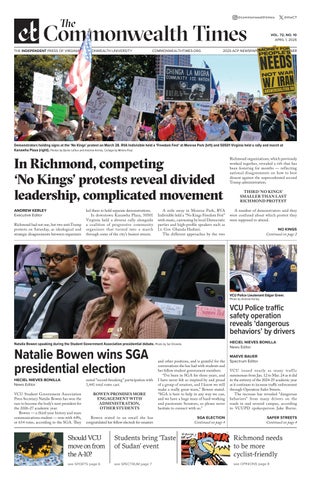
ANDREW KERLEY Executive Editor
Richmond had not one, but two anti-Trump protests on Saturday, as ideological and strategic disagreements between organizers
led them to hold separate demonstrations. In downtown Kanawha Plaza, 50501 Virginia held a diverse rally alongside a coalition of progressive community organizers that turned into a march through some of the city’s busiest streets.
A mile away in Monroe Park, RVA Indivisible held a “No Kings Freedom Fest” with music, canvassing by local Democratic parties and high-profile speakers such as Lt. Gov. Ghazala Hashmi.
The different approaches by the two
HECIEL
NIEVES BONILLA
News Editor
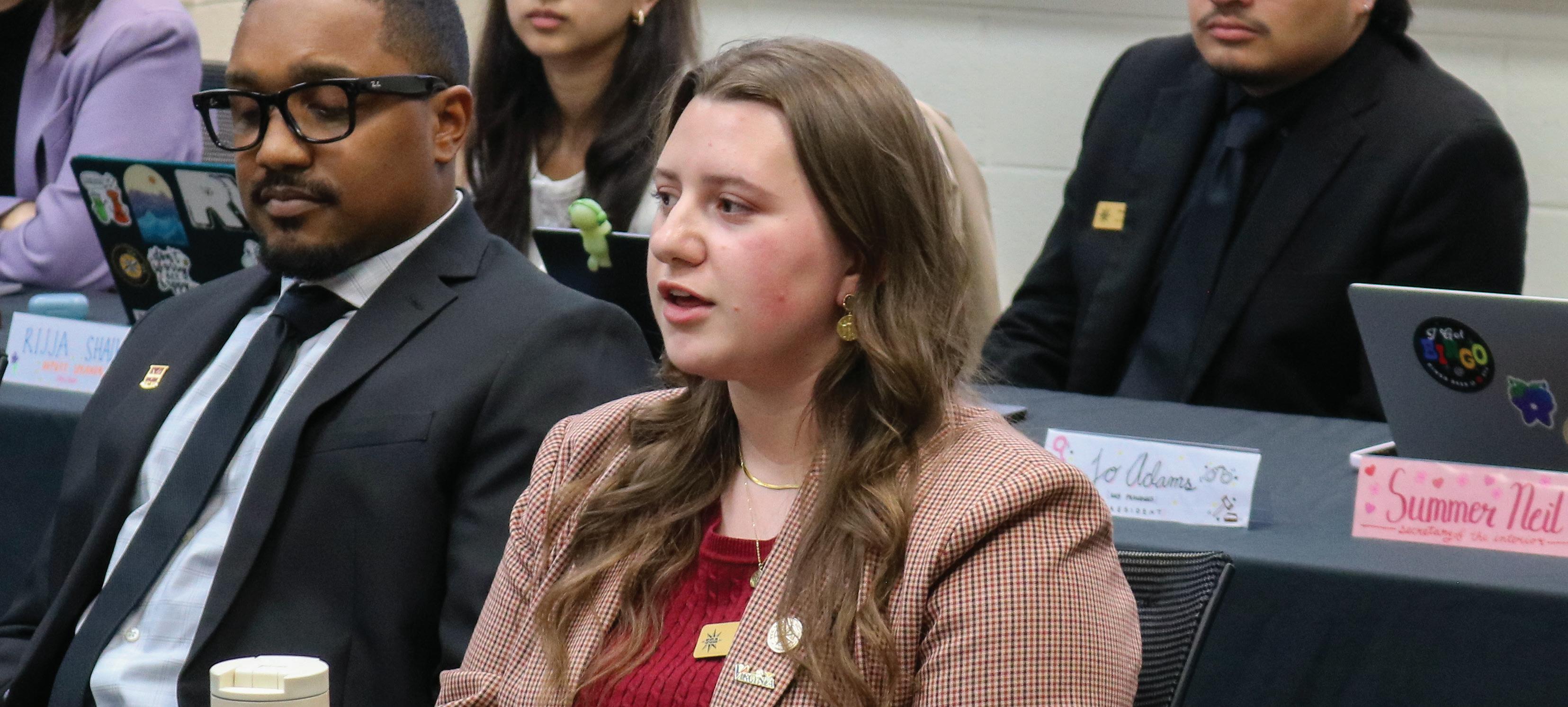
VCU Student Government Association
Press Secretary Natalie Bowen has won the race to become the body’s next president for the 2026-27 academic year.
Bowen — a third-year history and mass communications student — won with 44%, or 634 votes, according to the SGA. They

noted “record-breaking” participation with 1,441 total votes cast.
BOWEN PROMISES MORE ENGAGEMENT WITH ADMINISTRATION, OTHER STUDENTS
Bowen stated in an email she has congratulated her fellow electeds for senators
Should VCU move on from the A-10?
and other positions, and is grateful for the conversations she has had with students and her fellow student government members.
“I’ve been in SGA for three years, and I have never felt so inspired by and proud of a group of senators, and I know we will make a really great team,” Bowen stated.
“SGA is here to help in any way we can, and we have a huge team of hard-working and passionate Senators, so please never hesitate to connect with us.”
Students bring ‘Taste of Sudan’ event
SGA ELECTION
Continued on page 4

Richmond organizations, which previously worked together, revealed a rift that has been festering for months — reflecting national disagreements on how to best dissent against the unprecedented second Trump administration.
THIRD ‘NO KINGS’ SMALLER THAN LAST RICHMOND PROTEST
A number of demonstrators said they were confused about which protest they were supposed to attend.
NO KINGS
Continued on page 2
HECIEL NIEVES BONILLA News Editor
MAEVE BAUER Spectrum Editor
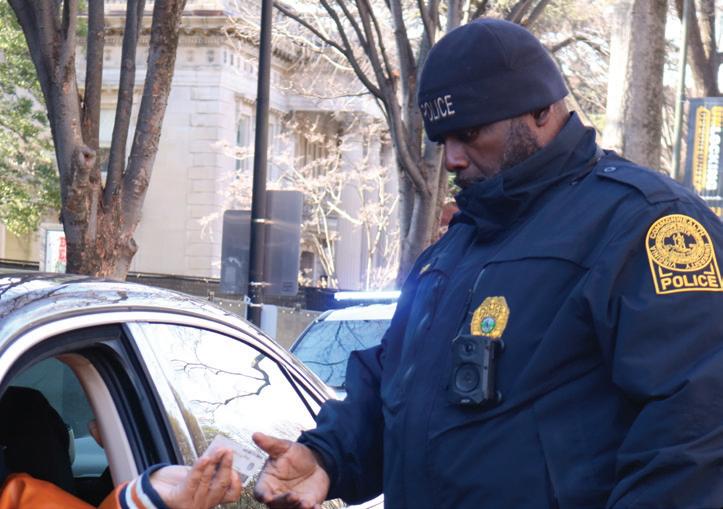
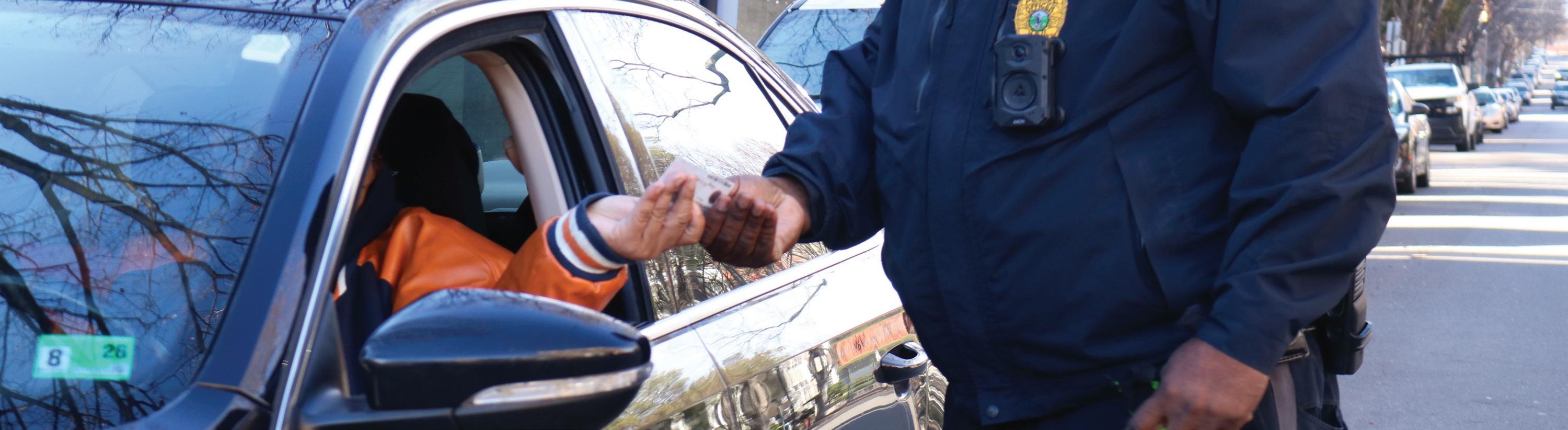
VCU issued nearly as many traffic summonses from Jan. 12 to Mar. 24 as it did in the entirety of the 2024-25 academic year as it continues to increase traffic enforcement through Operation Safer Streets.
The increase has revealed “dangerous behaviors” from many drivers on the roads in and around campus, according to VCUPD spokesperson Jake Burns.
SAFER STREETS
Continued on page 4
national: American Professional Golfer Tiger Woods was in a rollover car accident, showing "signs of impairment" and was in possession of opioids. Woods claimed he was distracted by his phone.
international: Three United Nations peacekeepers were killed in two incidents in southern Lebanon. Two were killed in an explosion from an unknown origin, the third from a projectile hitting a UNIFIL base.
HECIEL NIEVES BONILLA News Editor
Members of the VCU Board of Visitors, the university’s highest governing body, have identified the Virginia Military Survivors and Dependents Education Program and the university’s high rate of in-state students as key reasons to increase tuition for the 2026-27 academic year.
The comments were part of a broader conversation about VCU’s finances at the board’s “Enrollment and Budget Workshop” on March 23 and 24. Board members saw a presentation that outlined potential tuition increases from 2.5% to 4.9%.
The meeting’s discussion on budget, tuition and fees was led by VCU chief financial officer Meredith Weiss, who laid out the case as to why the university could have no choice but to continue raising tuition.
“When you think about these four levers — you have enrollment and retention, you have efficiencies, you have state support and you have tuition,” Weiss said. “So if we’ve already been as efficient as we can be, we’re gonna be efficient, we put that in there. We’re working on growing enrollment. The state has given us what they’ve given us. The last thing left is tuition.”
A presentation by the board laid out six potential percentages by which tuition could increase, if state support remains as-is. In order to balance its budget while also contributing to some of its “value investment” priorities, VCU would have to raise tuition by at least 3.5%.
Under these circumstances, a 3.5% tuition raise — or $473 per student — would correspond to $1.3 million in value investments, which would allow the
Continued from front page
The crowds at both Kanawha Plaza and Monroe Park — even if combined — were smaller than the first two major “No Kings” protests in Richmond.
A June 2025 march attracted an estimated 10,000 people, and an October 2025 march reached 20,000. On Saturday, only 3,000 people showed up to Kanawha Plaza, and 5,500 to Monroe Park, according to organizers.
On the national scale, organizers estimated the third major “No Kings” broke the record for the largest single-day, non-violent protest in modern American history. At least 8 million people filled streets at more than 3,300 events across all 50 states.
The Kanawha Plaza rally opened with a speech from one of 50501 Virginia’s lead organizers Antoni Szachowicz, who demanded an end to President Donald Trump’s “war mongering” in Iran and activities by Immigration and Customs Enforcement (ICE) — whom he referred to as “gestapo murderers.”
Szachowicz mentioned protecting transgender people, who are seeing laws passed against them in some states — as well as preventing the Republican “Save Act,” which he warned would disenfranchise married women.
“We’re not here for the joy of resistance,” Szachowicz told the crowd. “No, we are here to demand no king above us, no dictator
university to increase the amount of academic internships it offers “from ~1,800 to ~5,800.”
A 3.9% increase would also allow VCU to invest in high-demand academic programs.
According to the presentation, only a 4.5% increase in tuition would allow VCU to increase graduate student stipends many find insufficient, which the board’s nonvoting graduate student representative advocated for at the last board of visitors meeting.
Finally, a 4.9% (or $662 per student) increase would correspond to the university hiring six more faculty members “in emerging and high-demand areas,” along with all the above investments.
Conversation about the proposed rates was lively at the meeting. One member, ophthalmologist and medical director Kenneth Lipstock, weighed the community ramifications of raising tuition by that highest amount against the potential benefits of the investments.
“Board members get flak from community and friends and family, and colleagues, about raising tuition — ‘what the heck are you doing down there?’” Lipstock said. “If we raise it $662, if we raise that, what’s coming back at us? I mean, what is the danger of doing that? Because to me that seems like a low amount to raise tuition because of the value I discussed before of getting all four things on the checklist.”
The board cited several outside factors as contributing to its need to consider these tuition raises.
Their biggest concern is the high cost of the Virginia Military Students and Dependents Education Program, which waives tuition and fees to the dependents
telling us how we can live our lives.”
Szachowicz emphasized the need to get rid of “oligarchs” in favor of policies that uplift the working class and not billionaires. He asked the crowd to support “true progressive candidates” and join the grassroots organizations present.
The Virginia Defenders for Freedom, Justice and Equality, Punks for Liberation, the Richmond Community Legal Fund and the Richmond chapters of the Party for Socialism and Liberation (PSL), Democratic Socialists of America and American Civil Liberties Union were all a part of the coalition that organized the demonstration.
Victoria McCullough, co-chair of Richmond DSA’s Migrant Solidarity Working Group, used her time on the mic to bolster the ongoing “Block Flock” campaign, fearing the AI-powered cameras could make authoritarianism possible on the local level.
“No Kings has to mean no secret surveillance expansions either,” McCullough said.
Marching through downtown Richmond, a sea of voices — young and old — chanted “Trump, Trump, you can’t hide, you’re committing genocide” and “injure one and injure all, free our siblings, free them all!”
On the flip side, RVA Indivisible appears to have promoted its “Freedom Fest” mostly on its own. The event ultimately saw plenty of organizations tabling, including the Virginia Education Association, Sierra Club and the Democratic campaign rousing people to vote “yes” on Virginia’s upcoming redistricting referendum.
The crowds at both protests were
and spouses of missing, killed-in-action and certain disabled military members, according to a previous report by The CT.
“While we are proud that military families choose VCU, our costs for this program are the highest among our state peers,” said VCU spokesperson Brian McNeill. “And while over time the state has increased its support for this mandated program, the support they provide doesn’t fully cover it and demand has outpaced state support. If it were fully funded, there would be no need for a tuition increase.”
Another strategy the university has considered to increase revenue is bringing in more out-of-state students.
VCU’s 9% out-of-state student proportion is similar to Old Dominion University’s 10% and slightly below George Mason’s 16%, but is far below William & Mary, Virginia Tech, University of Virginia and James Madison University.
Throughout the meeting, board members cited VCU’s identity as a public university that serves many lower-income Virginians as a reason to tread carefully with how much to expand out-of-state tuition.
“We are who we are and we serve an immensely important Virginia population — I’m glad VCU does what it does, I think it serves an important service to the state,” said board member Peter Farell. “So I hope we get more out-of-state to a point. I never want to see VCU in the 70s in-state. That would make me furious.”
On the other hand, Lipstock believes bringing down costs significantly for out-ofstate students is a promising way to increase recruitment to help with revenue issues. Weiss noted that while the presentation described a
largely made up of older, white people — as they have been at other “No Kings” events — though RVA Indivisible’s Monroe Park festival lacked many of the younger participants brought to Kanawha Plaza through Punks for Liberation, PSL and other less-established groups.
In Monroe Park, demonstrators waved their anti-Trump signs on street corners and signed up with grassroots groups — all to the tunes of rock band Dead Billionaires, reggae act Mighty Joshua and other local musicians.
Some submissions to the festival’s best sign contest read “fueled by RAGE, acting with KINDNESS,” “the only orange monarch we want is a butterfly” and “if Kamala was president we’d be at brunch.”
Peggy Innes, a member of the Liberal Women of Chesterfield County, decried Congress for “giving up their role” in stopping Trump’s unapproved military campaigns, most recently with the escalating war in Iran.
“No Kings” protests in Richmond have attracted a wide range of demonstrators across age, gender, sexuality and ethnicity.
However, as regular protests have gone on, some younger, more leftleaning participants have criticized the movement — jointly organized by 50501 and Indivisible — for being too moderate, not being diverse enough or lacking cohesion. Gaza has been a major point of contention.
The first major “No Kings” protest in June 2025 saw demonstrators hold two different banners while leading a march around the
plan wherein costs for out-of-state students rise with those of other students, the board could decide to keep them the same instead.
“That is a difficult message to hear, that we are raising rates only on in-state students,” Weiss said. That is where we really do need help from the commonwealth.”
VCU president Michael Rao also weighed in, bringing up that VCU’s endowment is small compared to that of a university like UVA.
“The real need here is to deal with the appropriation per in-state student,” Rao said.
Third-year computer science student Patrick Tran said it has become progressively harder for him to pay for his tuition. He gave some suggestions as to ways the university could reduce costs, such as reevaluating program funding.
“What comes to my mind is the athletic department,” Tran said. “I feel like they’re getting a lot of recognition. Like, it’s really good, but also for the mass amount of students, it’s not really benefiting them at all. The school doesn’t have that much spirit to where we need to be throwing a lot of money in the athletics department.”
Michael Boggs, another first year cinema student, said rather than raising tuition to get more money, the funding should be taken from Rao’s salary, as he thinks he is paid too much.
First-year cinema student Trudy Hardman said she thinks tuition raises will deter students from coming to VCU. She thinks that to increase out-of-state students, the university should offer more scholarships to them.
Capitol. The first one read “Hands off our republic,” with an upside-down American flag. A second group walked ahead with a “DESTROY ICE” banner featuring flames and an inverted red triangle, which has been called both antisemetic and a symbol of Palestinian resistance.
After the march of 10,000 stopped at Kanawha Plaza, roughly 500, mostly younger people broke off to continue up Canal Street, according to a previous report by The CT. They chanted “F**k Glenn Youngkin” and “ICE is coming for your neighbor, fight them now there is no later.”
Multiple sources provided accounts of an incident during a march last summer in which an older RVA Indivisible follower harassed and shouted at a chant leader for using pro-Palestine chants.
Demonstrators had to intervene. RVA Indivisible told 50501 Virginia they would work with members to prevent the behavior.
“We came down hard on that,” said RVA Indivisible media coordinator Alisa Booze Troetschel.
When the national coalition — made up of Indivisible, the 50501 Movement and other prominent organizations — announced on Jan. 27 that March 28 would be the third major “No Kings” protest, RVA Indivisible quickly acquired the permits to Monroe Park and Capitol Square.
50501 Virginia was taken aback, as the two organizations had previously coordinated their events together. They received an email the following morning (Jan. 28) from the RVA Indivisible events coordinator, who was requested to not be
named by both groups.
“None of this should come as a surprise after our conversation, but here’s some bullet points for you on why Indivisible is taking the lead on this ‘No Kings,’” the email read.
The events coordinator accused 50501 Virginia of excluding RVA Indivisible, and took shots at them for recent reputational “dings,” including hosting live music without a permit and collaborating with the PSL, which received backlash from the Virginia Defenders for their protesting methods (though both organizations ended up attending the Kanawha Plaza event).
Disagreements over scheduling continued, as the nonprofit Trans Jam RVA happened to schedule their Big Trans Market at the Carillon Lawn on the same day as “No Kings.”
RVA Indivisible reached out to the organizers of the market, seeking to resolve the scheduling conflict by merging the two events.
RVA Indivisible pitched ideas to take over the permit for the Big Trans Market, expand on it with a second permit, move it to a different venue, rename it or lead a “No Kings” march to it.
The organizers of the Big Trans Market noted RVA Indivisible’s lack of consideration for transgender visibility and the event they spent months preparing for.
Booze Troetschel said on the day of the protest that RVA Indivisible was supportive of the Big Trans Market, and they would encourage demonstrators to head over there after “No Kings” ended.
RVA Indivisible declined three requests to meet with 50501 Virginia to resolve their differences, organizers said. The spats over permitting and the Big Trans Market led the two groups to end collaboration.
In the Jan. 28 email to 50501 Virginia, the RVA Indivisible events coordinator made a list of expectations if they were to continue collaborating. RVA Indivisible asked for a “non-violent tone” and suggested 50501 Virginia’s marshal trainings inspired the opposite.
“Furthermore, RVA Indivisible continues to cultivate a positive relationship with Richmond Police, even delivering care packages to precincts,” Indivisible’s events coordinator wrote.
“We believe it is safer for police to be notified of our plans beforehand so they can better assist in our efforts.”
50501 Virginia’s official policy is that they communicate with police when necessary, but do not initiate that communication or get permits for anything other than protests at Capitol Square, organizers said.
“For some of our younger members, it’s kind of a red line if you start actively telling the police what you’re going to do or send them care packages before your actions to show them you’re friendly,” Szachowicz told The CT. “It’s honestly not a protest anymore to them.”
Booze Troetschel called that rhetoric
“off the wall” and said RVA Indivisible is not anti-authority.
50501 Virginia organizers have accused RVA Indivisible of not supporting the presence of medical volunteers at protests, as they too could imply an expectation of violence.
RVA Indivisible disputed that statement. One week before the Freedom Fest, they announced that medics and peacekeepers would be present. At least 20 peacekeepers and 10 medics were present at Monroe Park on March 28, according to organizers.
RVA Indivisible’s Jan. 28 email to 50501 Virginia was capped off with an ultimatum.
“50501 has a choice to make: Either continue preparing to meet government violence with resistance (which may eventually arise as a real need) or commit to peaceful, legal, big tent, safe-forkids protests,” RVA Indivisible’s events coordinator wrote. “One org cannot do both. The former requires op-sec [operations security], masks, pseudonyms, first aid and self defense training, while the latter r equires completely above-the-board, all legal all the time, transparent and cooperative planning and communication with a joyful atmosphere.”
50501 Virginia organizers wrote a lengthy response denying many of their claims and criticizing RVA Indivisible for their exclusive leadership, reputational attacks, opaque planning and claim to exclusivity on the “No Kings” branding.
“Coalition work cannot function on personal veto power,” they stated.
In a statement provided to The CT, Caitlin Trimble, a former member of the RVA Indivisible leadership board who quit amid the “chaotic” planning process, said there was never a good-faith attempt to coordinate with 50501 Virginia.
Trimble stated the intention was to stage a coup and put their “stamp” on the event, despite lacking a “single good reason for doing so.”
“We are literally staring down the barrel of authoritarianism. Why does it matter who gets top billing on the Instagram post?” Trimble stated.
Booze Troetschel called the allegations from 50501 Virginia “sad” and “self-defeating.”
“I can simply say that I’m glad 50501 and RVA Indivisible have provided the people in Richmond with a choice as to how they express their First Amendment rights,” Troetschel said.
Szachowicz disagreed.
“I see it as a weakness for the city of Richmond,” he said. “Richmond is too small. I think it would be more powerful to see all the people in one space.”
Spectrum Editor Maeve Bauer contributed to this story.
SAL ORLANDO
Assistant News Editor
HECIEL NIEVES BONILLA News Editor
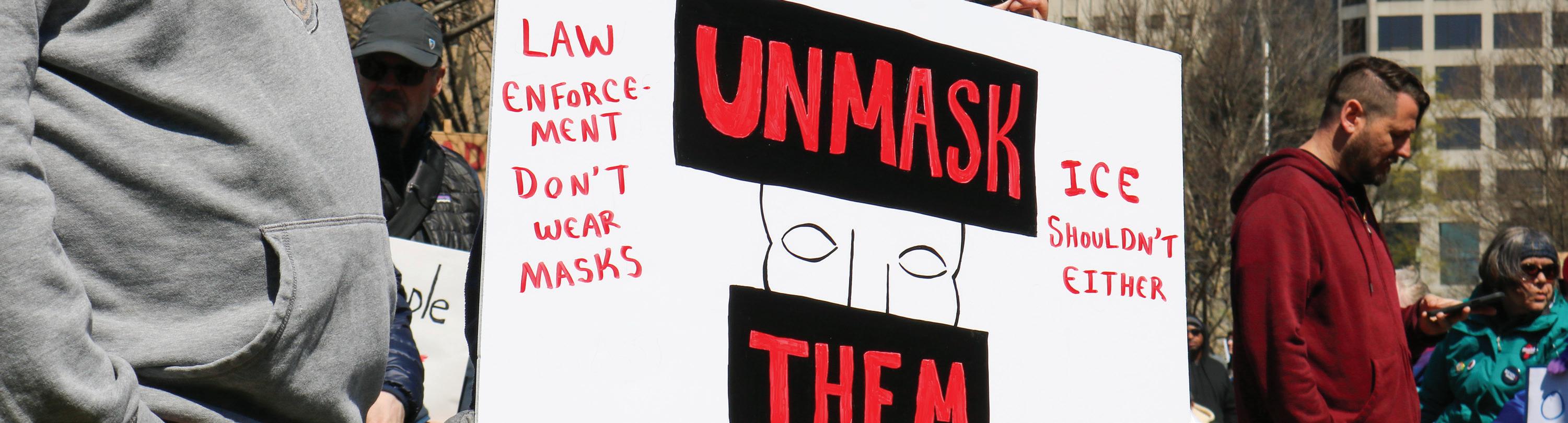
Virginia’s legislature passed two bills prohibiting law enforcement from wearing facial coverings while engaged in official duties.
Senate Bill 352, patroned by Sen. Saddam Azlan Salim, D-Fairfax, and House Bill 1482, patroned by Del. Charlie Schmidt, D-Richmond, subjects violating officials to “disciplinary action, including dismissal, demotion, suspension, transfer, or decertification” and creates a Class 1 misdemeanor for violators.
“If you have to commit certain things and you have to hide your identity, you know what you’re doing is wrong, and I think that’s what we’re gonna try to stop,” Salim said.
The Senate version applies an exception to law enforcement officers under agencies who have adopted and established a written policy for the individual. Both bills exempt facial coverings protecting against disease, infection, and exposure to toxic substances, sunglasses, and law-enforcement officers assigned to a special weapons and tactics team required to cover their faces while engaged in official duties.
“Other localities came and said, ‘We have law enforcement who are on motorcycles who have to wear a helmet with a shield on.’ How do you wanna handle that? Well, we said they can still wear that, but the moment that they’re in front of someone or they’re talking to someone, they have to sort of lift the visor up while still being identified as who they are,” Salim said.
Salim said the bill is meant to ensure federal law enforcement coming to Virginia is held accountable and able to provide identification. He elaborated that he thinks local law enforcement will not have a lack of identification problem, given it’s visibly available to the public who they are.
“We’ve seen some of this with ICE [Immigration and Customs Enforcement] agents where they’re trying to arrest someone or they’re waiting outside of a courtroom to arrest someone, but no one knows who they are,” Salim said.
Such courthouse arrests were seen several times in Chesterfield last year, according to Virginia Mercury. An unconfirmed ICE facility was reported to be leased for operations in Chesterfield County near several minority neighborhoods, per a previous report by The CT.
VCU assistant professor of criminal justice Brad Lehmann said if an officer is doing public trusted consented activity, there is no reason to shield their identity because
they are upholding the social contract. He also said he understands officers can be doxxed if they are not shielding their identities, but it does not outweigh the trust that the entire community should have in law enforcement displaying their identities.
Lehmann said he thinks if police can humanize their behavior as much as possible, it can build trust between the police and the community.
“That humanization really tends to help us create communication as opposed to breaking it down, Lehmann said. “So putting a face shield, putting a mask on, putting something that hides an identity, is inherently nonhumanistic. It’s hiding the human below it.”
As a previous law enforcement officer, Lehmann said he is sad things have gotten to the point where legislation must be passed to ensure law enforcement is going to be done in a transparent manner, but is happy legislators are willing to take up a “pretty powerful bill” to hold police accountable for their actions.
“So I think for police, if they can humanize their behavior as much as possible, which includes not hiding anything transparently, right, which is a name, a badge number, I mean, the most simplistic thing we have is our identity, our face, right, and, and our personalities,” Lehmann said.
Third-year accounting student Maimunah
Nuha approves of the bill, particularly in the context of states needing to take responsibility for federal law enforcement overreach in the form of ICE.
“Especially with a lot of things that’s been going on, like recent events with ICE agents and other forms of police brutality, it does serve a little bit of justice to show that a lot of these attacks onto civilians [and] citizens, that those police can be identified,” Nuha said.
First-year marketing student Ian Charbeneau supports the idea that law enforcement should remove their masks when engaging with the public, particularly to avoid the appearance of having “ill intent.” He questioned the behaviors of ICE agents while avoiding identification.
“They need to try to be cops,” Charbeneau said. “They need to not be trying to be like Batman. They’re not Batman.”
Exercise science student Deston Lawrence agreed the change would be positive given the longstanding fear of police from many, especially in light of their reactions to Black Lives Matter protests and the Rodney King riots before them.
“Having the non-masked officers will kind of make the community feel less prone to be afraid of the cops, and I feel like the cops’ purpose is to protect and serve, and having a mask on your officers is already kind of not representing that purpose that they have,” Lawrence said.
Continued from front page
During SGA’s Presidential debate on Monday, Bowen made a case for increasing efficiencies in the organization and engagement with VCU administration, according to a previous report by The CT. “A big part of the role of president is to meet with administration multiple times
a week, and I want to be a president that puts my foot down in what the student body wants, and not let the administration try to take advantage of our close position,” Bowen said.
Bowen wants to encourage senators to talk about the SGA in their classes and other organization meetings to show the organization is listening to the student body.
All other positions in the student government were run for by unopposed candidates this election cycle. The SGA will see an entirely new leadership board starting in the Fall 2026 semester.
Lawmakers in the Virginia General Assembly considered a number of proposals this year to reform boards of visitors at public universities — including some that would make some students voting members. VCU’s Board of Visitors is its highest governing body.
If such a proposal were to become law next year or in a future legislative session, it could significantly boost the power and relevance of student groups such as the SGA.
Currently, there are four representatives on the board of visitors who represent undergraduate students, graduate students, faculty members and staff respectively. All four of them are non voting members and are not allowed to sit in on the closed sessions of the board meetings.
SGA passed a bill — introduced by Mahmood — in the first half of the Monday meeting that would allow the selection of two SGA members to represent the student body during board of visitors meetings.
Continued from front page
“When drivers attempt to cut time off of their commute, it can potentially have life altering consequences for other travelers,” Burns said. “VCU Police hope this operation serves as an educational opportunity for those who display unsafe driving practices.”
A plurality of the citations VCUPD has issued since January have been for speeding violations. Many others have come from a failure to obey highway signs, red lights and seat belt laws.
Despite a relative drop in traffic-related deaths over time, Richmond remained an area with riskier drivers than the national average as of last year, according to Axios.
Nationally, car crashes are a leading cause of death according to the CDC. Recent pedestrian deaths in Richmond match a national gradual increase in such fatalities since 2009, according to the National Highway Traffic Safety Administration.
Burns said VCU’s new installations to reduce speeds and injuries — specifically modular curbs and turn-hardening bumps — have helped slow drivers down on VCU’s campus. However, he warned pedestrians and cyclists that they cannot
count on driver behavior or assume their own safety.
“Assume drivers do not see you until they prove you wrong, always cross at intersections or crosswalks, put your phones down and take off headphones,” Burns said. “A person’s senses are their most important safety tool. Since we know not all drivers are doing the right thing, attention and alertness while traveling are essential to safety.”
Frequent cyclist Andre Codrington rides in the VCU and downtown Richmond areas often and said he hopes more bike lanes or designated areas for cyclists are installed in the city.
“I honestly feel the same, not 100% safe,” Codrington said. “I think it really depends on the cyclist because you have to drive defensively as a cyclist and as opposed to waiting for cars to look out for you.”
Michael Schmidt, a third-year anthropology student has noticed the traffic enforcement measures that VCU has taken throughout the last year. As someone who both drives and walks he feels like more should be done to teach upcoming students about street safety as opposed to measures like the curb extensions which he said makes it harder for him to navigate the streets.
“I think that having infrastructure that penalizes the driver isn’t the answer but upcoming students should be taught pedestrian safety,” Schmidt said.
VCU School of Dentistry student Jack Reichling witnessed a near-miss at the corner of N 9th Street and Turpin Street in the medical campus. He said a car dropping someone off arrived at high speed and “literally almost blew through the crosswalk,” almost hitting two pedestrians.
“That’s the first time I’ve seen that, but it’s not the first time I’ve heard of people almost getting hit in the crosswalk,” Reichling said.
Reichling has noticed speed bumps and other infrastructure have slowed him down as a driver on campus and finds he is able to avoid hitting pedestrians. He has not noticed a recent difference in his own safety, but believes all parties have a role in reducing incidents.
“There’s always a lot of people walking across the street on their phones, with headphones in — I mean, I’m guilty of that myself,” Reichling said. “Yeah, people need to pay more attention. Drivers need to pay more attention. People are always on their phones, for sure.”
VCU police chief Clarence Hunter confirmed that the operation’s primary goal is not to issue more tickets, but an attempt to address driver behavior such that they “slow down and stay alert” around campus.

HECIEL NIEVES BONILLA
News Editor
ANDREW KERLEY
Executive Editor
VCUarts Qatar has closed its campus in Doha and moved classes fully online after Iran threatened to strike American college campuses in the Middle East on Sunday.
“Amid the ongoing regional situation the university has moved to remote operations and public access to its premises are not available,” a statement posted on the VCUarts Qatar website reads. “Information on scheduled activities will be communicated to individuals directly.”
VCU did not respond to requests for further comment by The CT.
The decision came after Iran’s Islamic Revolutionary Guard Corps made a post on X stating all American universities in the region are now “legitimate targets,” warning students, faculty and staff to stay
away for their own safety.
The threats by the Iranian government were a response to reported strikes by the United States that damaged buildings belonging to Tehran’s University of Science and Technology and the Isfahan University of Technology.
“The reckless rulers of the White House should know that from now on, all universities of the occupying regime and American universities in the West Asia region are legitimate targets for us until two universities are struck in retaliation for the Iranian universities that have been destroyed,” the threat reads.
The Iranian government demanded the U.S. to release a statement condemning the strikes on their universities, otherwise they would retaliate. The U.S. has not released a statement as of the date of this article’s publication.
VCUarts Qatar is one of many American campuses in Doha’s Education City — including a satellite campus for Georgetown University, the dean of
which has assured students that university administration is taking all necessary steps to ensure their safety, according to the Georgetown Voice.
In a statement released earlier this month, VCUarts Qatar dean Amir Berbić announced the school has permitted a temporary, out-of-county remote work option for students, faculty and staff. The choice is available to all, not just American citizens, according to a previous report by The CT.
“I have spoken daily with VCU President Michael Rao, who expresses his strong support and encouragement for our community,” Berbić said. “Please know that our Richmond colleagues are standing with us and holding us in their thoughts during these difficult days.”
The war in Iran and the Middle East has continued to escalate. The Washington Post reported on Saturday that the Pentagon is preparing for “weeks of ground operations in Iran” with plans potentially including conventional infantry troops.


HAYDEN BRAUN
Staff Writer
For the first time in 10 years, the Rams won an NCAA Tournament game. While the run was short-lived, ending in a second-round loss to the University of Illinois, it was still a relatively successful excursion into March Madness and put VCU back in the national spotlight.
However, that success brings back a familiar question surrounding the program: is VCU outgrowing the Atlantic 10 Conference?
VCU is one of the most consistent teams in the A-10 over the past decade.
The Rams have won the A-10 regular season title five times — three of those shared — and also won the conference tournament four times. The Rams are currently coming off back-to-back seasons winning both the regular season and tournament titles.
Despite that sustained success across two different head coaches, postseason success has been limited. No A-10 team
since the 2013–2014 Dayton Flyers have advanced past the second round of the NCAA Tournament.
VCU has been stuck in a cycle of good, and sometimes great, regular seasons followed by early tournament exits, often needing to win the conference tournament just to secure a bid.
This reality the Rams are in has led to a rather interesting topic. Should VCU consider moving to a more prestigious conference, such as the Big East Conference?
The Big East presents a level of competition similar in structure to the A-10, but with more national exposure and historically successful programs like the University of Connecticut, Villanova University and St. John’s University.
A move to a conference like the Big East could elevate VCU’s national profile, improve recruiting and provide more consistent opportunities to face top-tier competition.
In today’s college basketball landscape where the transfer portal plays a major role in roster building, that exposure can be the
difference between retaining talent and losing players to bigger programs.
The transfer portal combined with the rise of NIL money changed everything about the ways programs operate now. Mid-major programs like VCU are often tasked with developing players who eventually leave for bigger schools and bigger paydays.
But VCU could be the outlier in that trend. Head coach Phil Martelli Jr. has built a strong culture in just one season to pair alongside VCU’s history and recent success. This shift in the program could begin retaining key players while attracting new talent instead of serving as a stepping stone to bigger schools.
VCU’s recent tournament performance may also help its case. The Rams’ 19-point comeback win over the University of North Carolina in the first round not only brought national attention to the program, but also highlighted its ability to compete with high-level teams on the biggest stage.
However, moving to a new conference isn’t easy. Financial factors, conference
alignment and institutional fit all play a role in realignment decisions.
Conferences like the Big 12 or Atlantic Coast Conference could offer even greater exposure, but they are larger and more competitive, making success less certain.
For now, VCU remains one of the top programs in the A-10, but the limitations the conference brings raise questions about how far the program can go. If the Rams want to move past early exits and become a team that can make real runs in March, a move to a bigger conference may be the next step.
With Martelli laying the foundation for a new era and national attention returning to Richmond, the question is no longer whether VCU can compete at a higher level, but rather will the program get the opportunity to prove it on the biggest of stages?
MARCUS LEARY
Contributing
Writer
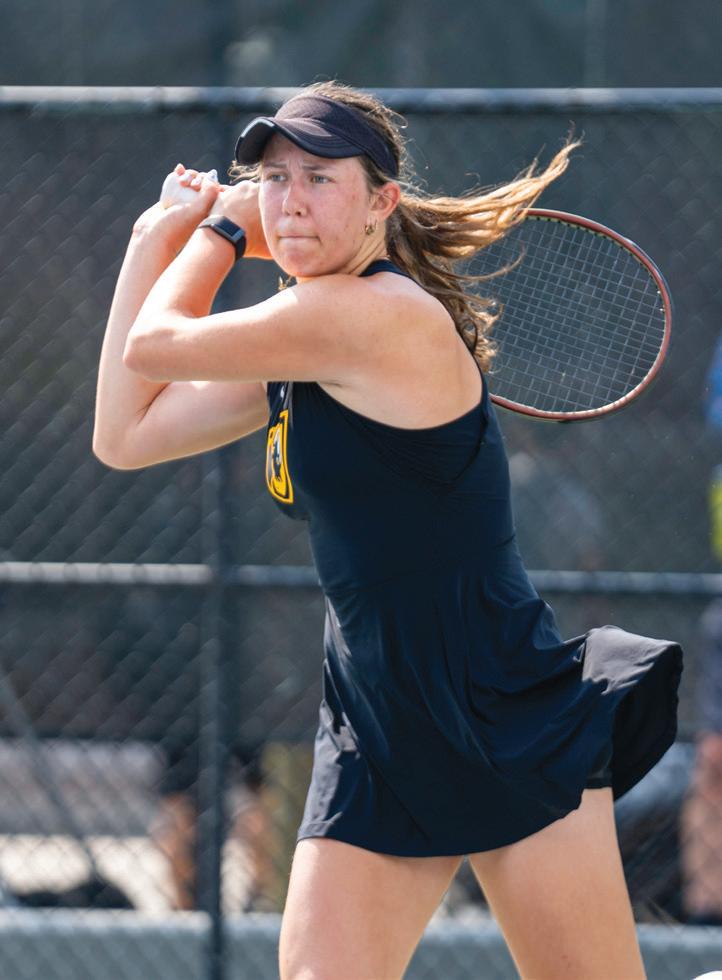
VCU defeated the University of Richmond Spiders 4-1, losing just one singles match to their cross-town rival. The win advances the Rams 9-8 overall and 3-0 in the Atlantic 10.
VCU head coach Rifanty Kahfiani said she would be “lying” if this matchup did not mean anything, but it is also the same as every other game.
“It’s right across the road and they’re a good team. It has a little bit more something to it,” Kahfiani said. “We just keep telling our players to focus on what we can control.
Focusing on practice and fighting from beginning to end.”
VCU second-year Sara Alba and firstyear Viktoria Lackova finished their match first, dominating Richmond first-year Beatriz Guerra and fourth-year Elizabeth Novak 6-1.
VCU second-years Andrea Magallanes and Sofia Jane Thorne beat Richmond thirdyears Lainey O’Neil and Lucy Webber 6-4. This win gave VCU the edge on doubles, earning the Rams their first point of the afternoon.
The Black and Gold extended their lead when third-year Isa Andrade beat Novak in two sets. Winning 6-1 in the first and 6-0 in the second.
While Andrade took care of business on court two, the Spiders did the same on court four. Richmond second-year Abby Lee topped Lakova in both sets winning 6 to 3 in the first and 6 to 1 in the second.
The Rams stormed ahead 3-1 with a win from third-year Mariam Ibrahim. The win on court three gave VCU three opportunities to win. With matches on court one, court five and court six.
The matches on court one and six went into the third and final set. On court one
VCU’s Jane Thorne lost her first set 7-5 and one the second 6-2.
Despite the tough loss, Jane Thorne’s teammates still had her back.
“I saw [Jane Thorne] struggling a bit, so I just tried to support her after my match,” Andrade said. “It was a really tough match for her, so I just tried to be looking out for her.”
On court six, VCU’s Alba did just the opposite, winning her first set 6-1 and losing her second 7-6.
Magallanes took down O’Neil in both sets, winning her first set 7-6 and capitalized off of mistakes from O’Neil in the second set, winning 6-2 and securing the VCU win.
FAKEHA NAEEM
Contributing Writer
VCU’s Sudanese Student Association hosted “Taste of Sudan,” on Saturday from 2-8 p.m. at the VCU Commons Ballroom. The yearly event has gained popularity with approximately 300-500 people in attendance this year.
SSA started preparing for the event a year in advance — booking the venue, planning performances, food, skits, dance and finding the volunteers who help bring it all together each year. It all culminates into a day of celebrating the culture and traditions of Sudan.

On this day, April 1, 1992, Henry "The Bull" Del Toro and Tommy Griffiths, two DJS at WNOR-FM 99's morning show incited fear in residents of Virginia Beach that Mount Trashmore, a park built on top of of an old landfill, was going to blow up due to methane build up. This was all a prank for April Fools.

Some attendees are local, like Aseel Packry, others came from Texas and New York, and some having flown all the way from Canada.
The festival started with a patriotic song “Azza fi Hawak,” sung by the board members who wore white to represent the unity of all regions of Sudan — the East, West, North and Central. They followed it with traditional poetry delivered by Mohammad Ibrahim.
“The poetry represents what it means to be a Sudanese and how proud we are to be one,” said Aya Hamid, SSA vice president and fourth-year student.
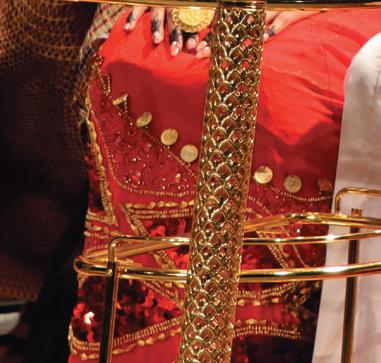
The event highlights the fashion of Sudanese weddings, the prominent colors being red and gold. Jirtig, a traditional wedding thobe in red and traditional Sudanese clothing were worn by the Sudanese women, including gold jewelry to depict the culture of Sudan.
“Sudanese women are celebrated by gold, it shows her value and reminds her of how precious she is,” Hamid said.
Sara Elkheir, SSA President and fourth-year VCU student, said she wanted attendees to feel the essence of Sudan and how generous the Sudanese are. “I want
to bring Sudan here, leave a mark, give something back, before I leave VCU this year,” Elkheir said.
Elkheir intends to stay connected to the SSA once she graduates, hoping to offer advice to the new president of SSA to make next year’s event even better.

The festival highlights how welcoming the Sudanese people are, said Haytham Elshafie, an organizer for SSA.

“The event showcases traditional food, Sudanese fashion, famous traditional dances such as Rageba for everyone to experience,” Elshafie said.
“Growing up, Sudanese would watch Youtube videos of traditional dances that people from Sudan use to upload, but for the past few years due to the war we haven’t seen any new content being uploaded. People are in survival mode. So it feels almost like a duty to have this event to continue to showcase our culture. This is our responsibility to tell the world that Sudan is still here and that we are resilient people who love to dance and share our traditions,” Elshafie said.
Sudan has been admist a civil war since 2023, due to the conflict between Sudanese Armed Forces and the paramilitary

Swords, guilds and what else to expect at RVA’s Ren Faire
NICHOLAS Staff Writer
With less than a month until opening weekend, Richmond’s Ren Faire has quickly transformed from a niche idea into one of the city’s most anticipated events of the year.
Virago Alley, the host of Richmond’s first Ren Faire, has been hosting small events leading up to the big one.
First, in February with a showing of “The Princess Bride,” at the Byrd Theatre, complete with sword fighting and a costume contest. As well as a Lunar New Year Celebration, different beer launchings with local breweries and “Gauntlets, Guilds, and a Goblet of Mead Exhibition

Rapid Support Force causing mass displacements leading to a disconnect from the world and a humanitarian crisis within the region according to the reports by United Nations.
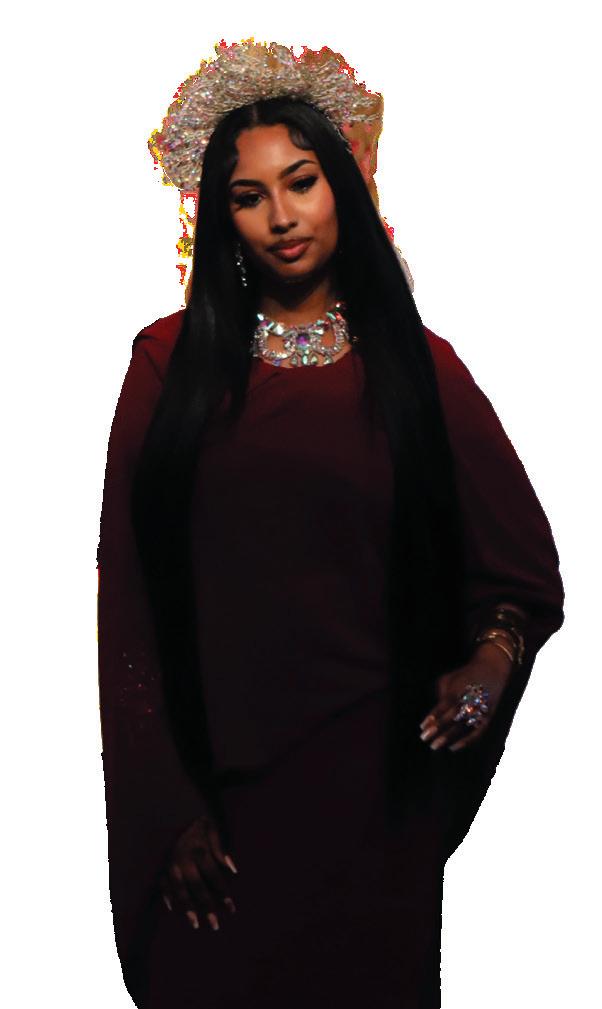
Third year medical laboratory sciences student and attendee Aseel Packry said that as a Sudanese woman being represented by SSA, it was important to her to “show up and show out.”
Gabas Abdalla, a first-year student at George Mason University, felt nostalgic after attending the event.
“The celebration, the dances of my Sudanese people, felt like home,” Abdalla said.
Taste of Sudan is more than just an event, it is meant to show the rich traditions and culture of Sudan to the VCU community and the general public. It is a place for Sudanese students to celebrate

The Sudanese Student Association at VCU hosted the Taste of Sudan event on Saturday, March 28, in the Commons Ballroom. The event was a showcase of Sudanese culture including traditional dance, a fashion show, food, songs and more. Photos by Bilan Osman. Collage
together and share the food, culture and traditions with everyone.
To stay connected on the latest with SSA (VCU Sudanese Student Association), you can follow them on Instagram at @ssaatvcu.
and peak the interests of potential members, according to fourth year biomedical engineering student Brodie Persson.
Opening,” on April 10 at HI-RES gallery. Set for April 18–19 at Dorey Park, the Richmond Ren Faire is designed as a “grassroots celebration created by and for Richmond,” blending history, performance and community-driven storytelling, according to viragoalley.org.
At its core, the Ren Faire is not just knights and castles, but reimagining the Renaissance through a broader, more inclusive lens. Drawing inspiration from the Silk Road, organizers aim to highlight global exchange and the contributions of everyday artisans and tradespeople.
One of the defining features of the Faire is its guild system. Guilds function as immersive and interactive groups that
represent different aspects of Renaissance life such as combat, craftsmanship, storytelling and trade.
Richmond’s Weavers Guild will not only hold a demonstration, but will further allow attendees to try the art of the loom itself. The demo shows the process and acts as live insight into understanding where clothing might come from, according to guild president Patty Franz.
“I think that people need to understand the basic craft and process of where cloth comes from,” Franz said.
Franz began her weaving career later in life, starting with her first loom after graduating from librarian school. She noted that visiting places like Williamsburg when she was a child is where the intrigue of looms caught her attention.
As a member of the guild, she has been involved with several events Virago Alley has hosted. This time, the guild invited Clothos, a sister guild that focuses on the craft of spinning, to join them in the Faire.
Another group demonstrating their skills is the Historical European Martial Arts club at VCU. With their presence at the Ren Faire, they hope to gain more attention
“We understand that the Ren Faire will be attended by many VCU students,” Persson said. “We would like to do these demonstrations to show both aspects of HEMA and perhaps spark the same joy people get from watching swordplay in movies like Star Wars and the Princess Bride.”
Persson first heard of HEMA through his orientation in his freshman year. His orientation group leader had mentioned the club and he later found them at a SOVO fair, thus continuing his interest in fencing with a new and welcoming group of people.
With its emphasis on community, creativity and hands-on experiences, the event reflects a growing desire for connection both to the past and to one another.
Whether visitors come for the performances, the guild demonstrations or the atmosphere, the Richmond Ren Faire will offer something immersive and local for everyone.
As of March 31 all tickets for both Saturday and Sunday are sold out. If you didn’t grab tickets in time, don’t fret, you can still go to the after-party both days at Gallery5, according to the Richmond Ren Faire Instagram @rvarenfaire.
Quote of the week “So it goes…” — Kurt Vonnegut, ‘Slaughterhouse-Five’
KATIE MEEKER
Opinions & Humor Editor
When attempting to navigate the odyssey that is Richmond traffic, there is nothing more enraging than getting stuck behind a cyclist.
As someone who frequently drives in the city, I am very familiar with this frustration.
However, as someone who is also often the very cyclist holding up traffic, I am more concerned with how dangerous this anger — and road-sharing in general — can be.
Richmond has a huge cyclist community, with infamous biking clubs such as the Broad Street Bullies and bike shops such as RamBikes and Outpost Richmond contributing to a thriving, accessible culture. Beyond these more involved cyclists, there is also a large population of both VCU students and regular Richmonders who
use bikes to commute to school and work.
However, like most American urban centers, there is a suboptimal amount of infrastructure in Richmond specifically dedicated to protecting this population. Bike lanes are limited to only a few major roads — and no, the bus lane on Broad Street doesn’t count as one — leaving cyclists to decide whether to tempt death via automobile collision or get heckled riding on sidewalks.
Compared to other cities, Richmond ranks pretty low in the PeopleForBikes’s national bikeability ranking, holding a total network score of 25 in 2025, falling below the national average of 30. The score is attributed to the city’s lack of protective infrastructure and its reputation for aggressive drivers.
Thankfully, Mayor Danny Avula’s administration has made progress on this issue as part of his plan to promote road safety in Richmond. The city has been suffering from what is best described as a pedestrian safety crisis — in 2025 Richmond had more motor vehicle crashes involving pedestrians per capita than

anywhere else in the state, with eight people killed so far this year alone.
In January, after six pedestrians were killed within the first three weeks of the new year, Avula announced he was fasttracking funding for multiple “street safety improvements,” with one of these projects being “advancing roadway reconfigurations for dedicated bus and bike lanes.”
We have already seen some of his efforts come to fruition. Bike lanes were added to busy roads in the months following his announcement, such as on Libbie Avenue in Willow Lawn and on 8th Street near the Capitol.
It also seems like City Hall is finally branching out from just focusing on improvements on the northeast side of the city. Areas such as Southside, neglected and underserved, are also seeing the development of bike and pedestrian infrastructure. Bike lane construction on Hopkins Road, among other projects, is expected to be completed this fall.
Neighborhoods in Southside have the highest need in the city for better bicycle facilities, according to the Richmond Connects Strategic Plan. This is both due to the quality and quantity of current infrastructure and the fact that formerly redlined areas, like Southside, are much more likely to suffer from high rates of pedestrian fatalities.
Through prioritizing the construction of bike and pedestrian infrastructure, Avula is helping make Richmond a safer, more equitable city. There is, no doubt, still a lot of work to be done, but it is comforting to know that visible progress is being made.
However, bike lane construction is not the only way to improve cyclist wellbeing in the city; it is only one small piece of the
ERICKA KOPP
candidate for Virginia’s 1st Congressional District
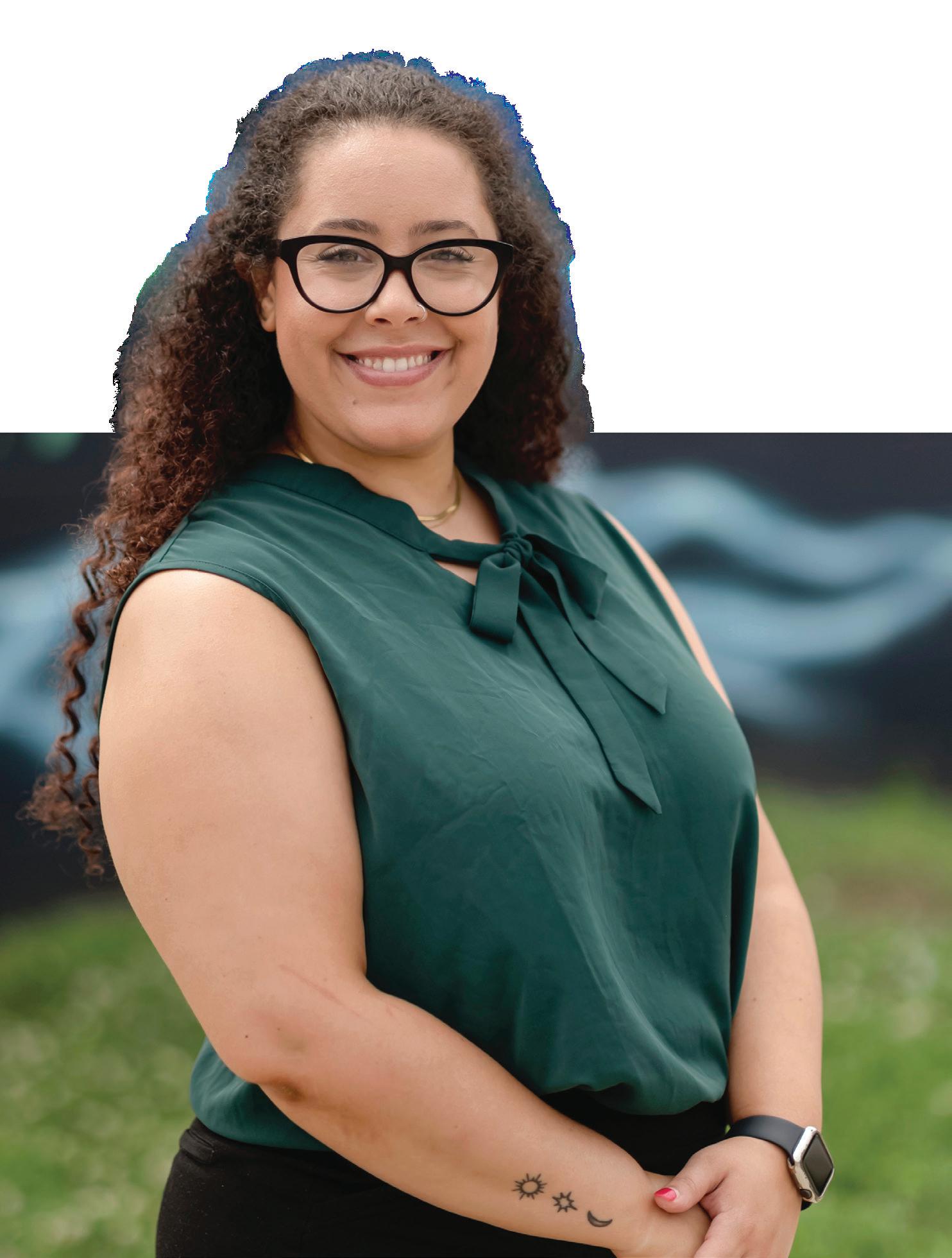
This letter was submitted by Ericka Kopp, a 2014 VCU forensic science alumna and independent candidate for Virginia’s 1st Congressional District.
The Revolutionary War began with the “shot heard ‘round the world” on April 19, 1775. In 1776, the U.S. declared independence from British monarchical rule. The war officially ended in 1783, with the signing of the Treaty of Paris. From that point forward, the future was to be lived under no king’s rule.
On Saturday, March 28, “No Kings 3” gave us an outlet. Maybe you marched in the streets or stood with us in protest. I spent the day meeting people at the heart of VCU campus, listening to what they hoped the event would spark.
I don’t believe we’ve met. Hi, I’m Ericka Kopp (‘14). I’m running for Congress this year in Virginia’s 1st District. As a congressional candidate, I’d like to hear your top issues with the government or with Virginia. Do you know who your congressional representative is? It’s okay if
we don’t know, but we should now, right?
My family has called Virginia home for decades. We’ve watched the region shift in countless ways. The most noticeable changes now are in the people. It’s not just here; it’s happening everywhere. Communities are shrinking. Many folks stay quiet and stick close. Behind that are emotions we recognize: frustration, hurt, anger and exhaustion.
“No Kings 3” happened days after the U.S. Treasury quietly released a bombshell report on the country’s insolvency, noting “material weaknesses” and “unsustainable long-term fiscal path.” It was a reminder of how complex and uncertain the moment feels. Shouldn’t we expect the government to fix things when they are broken? We absolutely should.
We cannot afford to withhold votes on the referendum or at midterms in these unstable times. The decision of how and whom to vote for remains ours, and we need to be the ones to reconcile the fact that no one is coming to right the injustices we see unless the people appoint them. We are responsible for our choices, and we give those elected to office the greater responsibility of representing us. Let’s hold them accountable today and every day.
puzzle. We need to nurture a city that not only protects the physical safety of cyclists, but also their property and the culture as a whole.
Bike theft is always an issue in densely populated areas, and Richmond is no exception — almost everyone I’ve talked to within the community has a story of their bike, or a part of their bike, being stolen. The fact that Richmond police rarely take these thefts seriously only exacerbates the issue.
U-locks, no matter how sturdy, are as fallible as whatever they’re linked to; my own bike was stolen after, left with no better options, I foolishly locked it to an easily-breakable wooden fence.
Constructing more bike parking racks in highly visible areas across the city is a good first step to start preventing theft.
Perhaps the most important step we can take as a city, though, is to start treating each other with a little bit more empathy.
While protected spaces remain under seemingly-perpetual construction, cyclists, pedestrians and drivers need to learn to respectfully share the road. This charge isn’t limited to just drivers needing to tone down their road rage — cyclists can help keep both themselves and others safe by better following road signage and rules.
As Richmonders, it is up to us to create and nurture a safe and welcoming city — policy and infrastructure can’t fix everything.
So the next time you’re stuck driving behind a cyclist, take a deep breath and try to remember: inconvenience is the price we pay for community.
EDITOR’S NOTE: While The CT accepts letter submissions from alumni and local political candidates, we do not endorse said candidates or the contents of their letters. Upon receiving letters from candidates, The CT invites their opponents to do the same in order to remain fair.
SHINY CHANDRAVEL
Assistant Opinions Editor
A recent New York Times investigation revealed allegations that famous workers’ rights activist Cesar Chávez sexually abused women and girls. A figure who was once a monumental hero for union rights and the celebrated founder of the United Farm Workers union now taints the very movements he helped pioneer.
As his legacy topples, so are the numerous statues and memorials once mounted in his honor. The California State Legislature, in a moment of rare bipartisanship, even passed a bill to rename March 31 from Cesar Chávez Day to Farm Workers Day.
This rapid unraveling of a once glorified legacy reveals something beyond Chávez. It illustrates a deeper problem — the way we choose to memorialize history is fundamentally flawed.
For generations, we have built statues and named institutions after individuals we deem “heroic.” We set up bronze and marble embodiments of the individuals whose lives represent our country’s highest ideals and morals.
This approach of carving the visages of our nation’s heroes attempts to accomplish something that history repeatedly disproves — that any one person can fully preserve the values we ought to embrace like justice, perseverance, courage, equality and freedom.
As leaders emerge, our instinct again and again is to tie entire movements
to their names. The labor movement became Chávez. Civil rights became Martin Luther King Jr.. Women’s suffrage became Susan B. Anthony. Intricate, collective struggles — built by thousands of people over decades — get reduced to a single name.
Over time, those names become a shortcut. They are easy to invoke, easy to celebrate and easy to memorialize. We build the statues, name the holidays and title the schools. But this instinct to idolize our heroes also flattens our past. And in that simplicity, something essential is lost — the thousands of ordinary people who made that change possible.
And when that one person falls, that entire history tied to them falters too.
Chávez’s tarnished legacy is only the most recent reminder that human beings, no matter how influential, fall short of embodying the cardinal values we are meant to internalize. When new truths emerge — as they inevitably do — the monuments we construct in their honor become unstable.
As quickly as we build statues up, it seems they fall just as speedily.
The demolition of once heroic statues reflects a decision to dismantle part of a community’s values and ideals. This isn’t necessarily wrong — often times dismantling old values allows for a renewal, an indicator of progress.
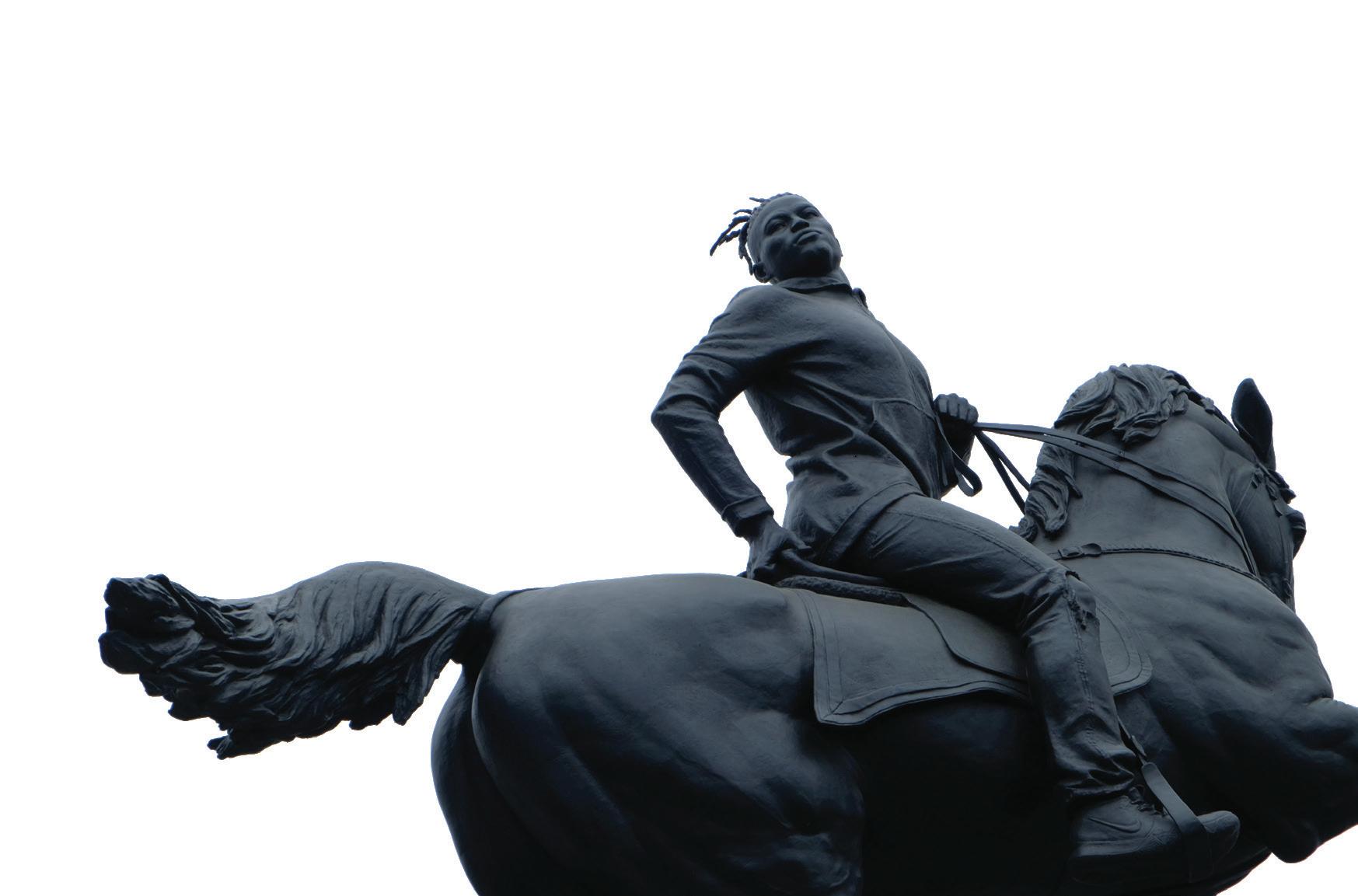
This was most notably the case in Richmond in 2020-21. After the public decried the numerous statues of
the Confederates littered about the city, the decision to tear them down indicated a change in our community’s values. We decided that future generations ought not to honor, but carefully move forward from our dark history as the capitol of the Confederate South.
The deeper issue is not just that the statues we build can fall — it’s what we lose when we build them in the first place. When we reduce movements to individuals, we risk losing meaningful history. We are left grappling not only with who these figures really were, but with how little of the greater history we actually held onto.
The average person, when prompted, thinks of Martin Luther King Jr. and Rosa Parks when asked about the Civil Rights Movement. But beyond that, many aren’t able to remember much else. I wish we would also similarly honor the Children’s March: regular children and citizens violently hosed down by police officers as police dogs were released on little kids.
models instead of keeping their work alive. We sit waiting for saviors of grandeur to emerge rather than realizing that we can make a change too.
Statues don’t eternalize history. They only preserve names.
If we want to teach history with all of its nuance intact, we have to rethink what our memorials are actually for. They shouldn’t just honor individuals — they should remind us to finish the work those individuals were part of advancing.
In Richmond, the mounds of grass where the Confederate statues once stood have become a contested subject — leaving behind questions of who in our city’s history should replace them. But perhaps we are missing something more important — asking ourselves the wrong question.
Perhaps those empty spaces on Monument Avenue aren’t asking us to decide who in our history should be remembered next, but that we become the kind of people worth remembering.
KYLIE GRUNSFELD Staff Columnist
A few months ago I decided to go to Ram’s Coop for dinner.
I was in the mood for something that would make me feel good, so I ordered a chicken caesar salad — pretty much the only item on the menu with a vegetable of any kind, not including a potato. When the man working at the counter looked at what the kitchen had passed forward, he said, and I quote:
“There’s no way you’re giving this to her.”
But they did indeed give it to me. What I received for the price of one whole meal swipe — the rough equivalent of up to $10 — was a few pieces of wilted lettuce,
a sprinkle of cheese and one cold chicken tender cut into pieces.
Pissed off and hungry, I went home and dug something out of the back of my freezer.
I live in Cary and Belvidere, which provides apartments with decently sized kitchens, so I have the facilities to cook my own meals. But any student knows it is simply unrealistic to expect all of your meals to be home-cooked, let alone consistently made from whole ingredients.
There are numerous factors that lead a student to rely on a meal plan, such as a lack of grocery funds, time, space, access and even ability. Not to mention that freshmen are required to purchase a meal plan, and unless they want thousands of dollars to go unspent, they have no choice but to make use of it.
VCU used to boast two campus dining halls, but as of this year they have reduced the selection down to one — good ol’ Shafer Dining Court Center. Shafer is great if you have the time to wait in lines and take a seat. Though the food itself is not always good quality, Shafer has the largest selection of any on-campus dining spot.
Many students have valid complaints about the quality of Shafer’s food, noting that it has gone down significantly over the past few years. I personally have found it to be satisfying enough, but I tend to avoid Shafer like the plague. When I go I find myself incentivized to eat as much as possible, leaving me feeling overly-stuffed.
That leaves the other on-campus locations that take VCU’s meal plan: Panda Express, Chick-Fil-A, Starbucks, Wingstop and Subway — to name a few.

Those are almost all fast-food restaurants. Any fresh items they do have are few and far between, and often out of stock. Chick-Fil-A, which actually has a few salads on its menu, has a line upwards of an hour long constantly. Besides, Chick-Fil-A is not exactly known for its salads, just as Wingstop is not exactly known for its side of celery and carrots.
To be fair, there are some slightly more health-conscious options: Choolah, P.O.D. Market and Shake Smart are decent choices. But even they still lack good quality, fresh items.
Shake Smart, for example, makes its smoothies and acai bowls with agave instead of
regular sugar. Along with Shake Smart’s health oriented aesthetics, one might think it is a good place to go for a fruit-based “meal,” but agave is not actually proven to be much better for you than standard cane sugar.
My concern does not stem from diet culture. It has been a long, hard process, but I have gotten to a point where I understand the need for whole foods — not because they will help make me smaller, but because they offer real, positive benefits for my brain and body long-term.
I am not insisting that people cannot enjoy the dining options available — that’s their prerogative. Nobody should be told how or what to eat. I worry, though, that with our campus meal system, we are not even given a choice.
Choices are even slimmer for students with dietary restrictions. There are hardly any options for those who can’t eat gluten, meat or dairy. Eating from these places in moderation can be exciting, but when you are presented with the same meals over and over again, it can become nauseating.
How can you expect a college student with multiple classes a semester, extracurriculars and jobs to have enough energy to complete their day without healthy food to fuel them? VCU claims to want its students to succeed, but we are set up for failure. We are set up to blame ourselves for gaining the “freshman 15” and for struggling to stay awake through classes, but it is VCU that has a significant hand in that struggle.
Considering we pay to attend this institution, we deserve better.

EXECUTIVE
MANAGING
COPY
NEWS
ASSISTANT
SPORTS
ASSISTANT
SPECTRUM
ASSISTANT
OPINIONS
DIRECTOR
ASSISTANT
By Doug Peterson
By Doug Peterson
Edited by Patti Varol
Peter of “The Lion in Winter”
“The Great Wave off Kanagawa” peak: Abbr.
Edited by Patti Varol
Edited by Patti Varol
By The Mepham Group

Should the Constitution of Virginia be amended to allow the General Assembly to temporarily adopt new congressional districts to restore fairness in the upcoming elections, while ensuring Virginia’s standard redistricting process resumes for all future redistricting after the 2030 census?