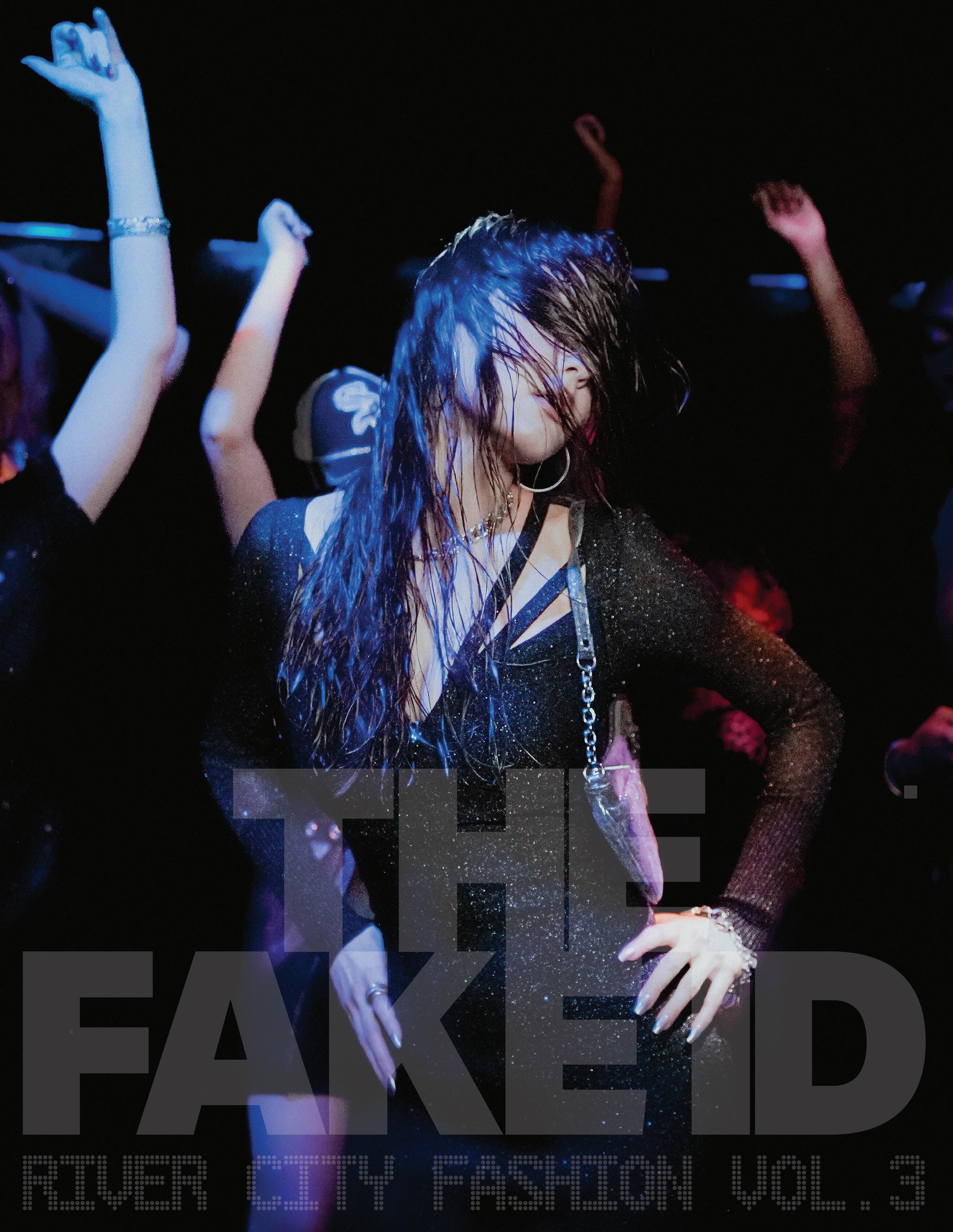
Typefaces used are Adobe Handwriting Std Ernie, Aktiv Grotesk, Danger on the Motorway, OCR A Std, and Roster.
The cover was printed on Neo Star FSC Gloss 100# White Cover and the interior pages were printed on Explorer 80# White Text paper.
Richmond, Virginia.
Printed by Worth Higgins & Associates, Inc.
Editor's Note
One of my greatest loves has always been to write.
As the daughter and granddaughter of English majors, with a father who writes thrillers as a hobby, Ihavealwaysbeenafflictedbyan obsessionwithstorytelling,overly correctgrammar,andnarrativesthat revealdeepertruthsaboutculture.
A Conversation with RCF's Founder, Amanda Campbell
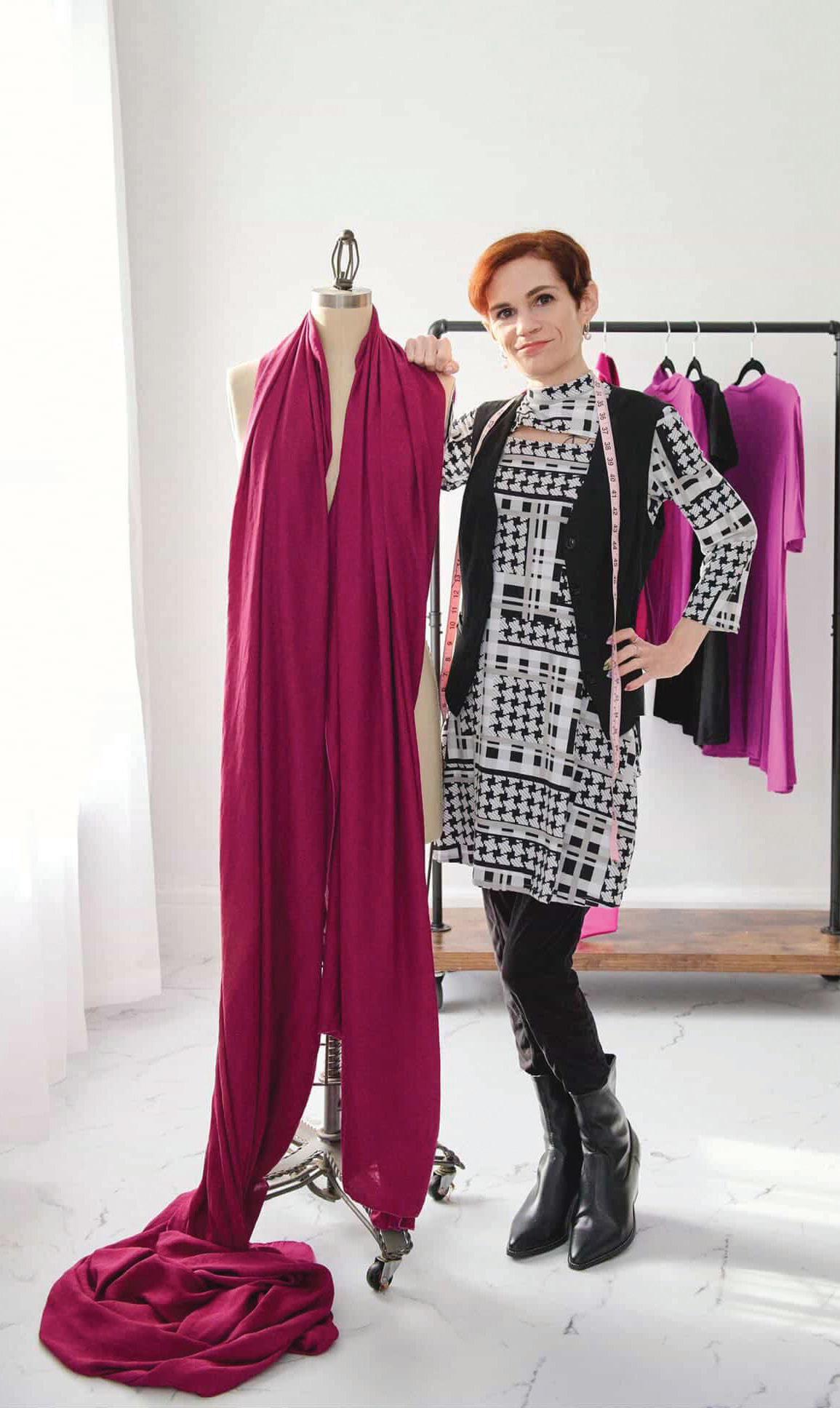
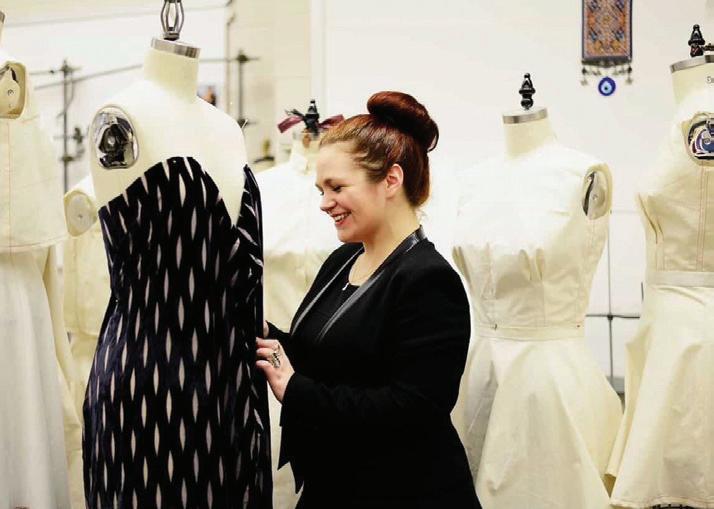
River City Fashion founder and current VCUarts advanced draping professor Amanda Campbell’s passions have always been fashion and writing. During her time here as a student, she was surprised to learn that VCU didn’t have an established student media outlet where students could express their unique identities through fashion. So, she decided to take matters into her own hands and founded the initial iteration of RCF, River City Fashion Uprising. We spoke with Campbell about how she came up with the idea, how she put it into action, and what she is working on currently.
It’s really great to meet with you finally! You’ve left a legacy. What inspired you to create the magazine and to bring the concept to fruition?
It was freshman year, and orientation week. I saw the student media area and had signed up to go for a meeting for The Horn, a music blog. I was always interested in writing, journalism, English, fashion, and fashion magazines. I wondered why there wasn’t a fashion blog for student media, because fashion blogs were super big at the time (2011). I told them I have this idea for a fashion website, and they told me to go for it if I build the website, develop the idea, and recruit people.
How did you recruit people?
I recruited people through networking and the student media organization. At the end of my freshman year, they
brought me on as a secretary for the board of the Student Media Center, so I had a lot more opportunities for recruiting people that way. We got two or three articles up by the end of the spring semester of 2011, but after that, it took the summer to recruit more and plan out content. We had a table at the Student Organization & Volunteer Opportunity Fair (SOVO Fair) by fall of 2012.
How did you secure locations and pull looks for the first shoots?
I did RVA Fashion Week for the first time in 2011, so I was able to talk to designers through that. Different stores would let us come in and take pictures or pull looks for styling, like Rumors and Ashby’s. We would go to [locations like] Can Can around Carytown and do photoshoots.
What are you doing now besides being an advanced draping professor at VCU?
I am a freelance fashion designer and technical designer. After I graduated, I worked for a couple of years in the industry. I was the lead designer for Sassy Jones, so I learned a lot about technical fashion design and manufacturing. I left there last September and started freelancing. I work with local designers already around Richmond, as well as New York and Los Angeles. They’re small fashion brands that need help with the manufacturing side of things, so I help them with tech packs, flats, finding manufacturers, or being a business support for them.
What kind of clothing do you design? What’s your aesthetic?
Definitely eveningwear. That’s always been my bread and butter. Before working at Sassy Jones, I had my own small clothing brand that sold in a couple of boutiques around Richmond, which was all evening wear that was all handmade by me; that’s what I showed at RVA Fashion Week.
Have you stayed up to date with any of the content that we’ve created? How much of a departure was there from your initial ideas?
I love the direction that it’s starting to go in. Recently, I think the biggest thing for me is to get students involved in the Richmond fashion scene and realize that there is a growing and thriving fashion community in Richmond. You don’t have to move to New York or Los Angeles or Atlanta or some big city to make it as a fashion designer, fashion journalist, stylist, or anything like that.
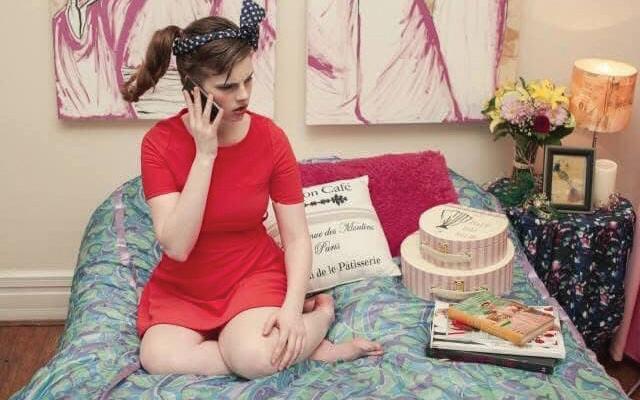
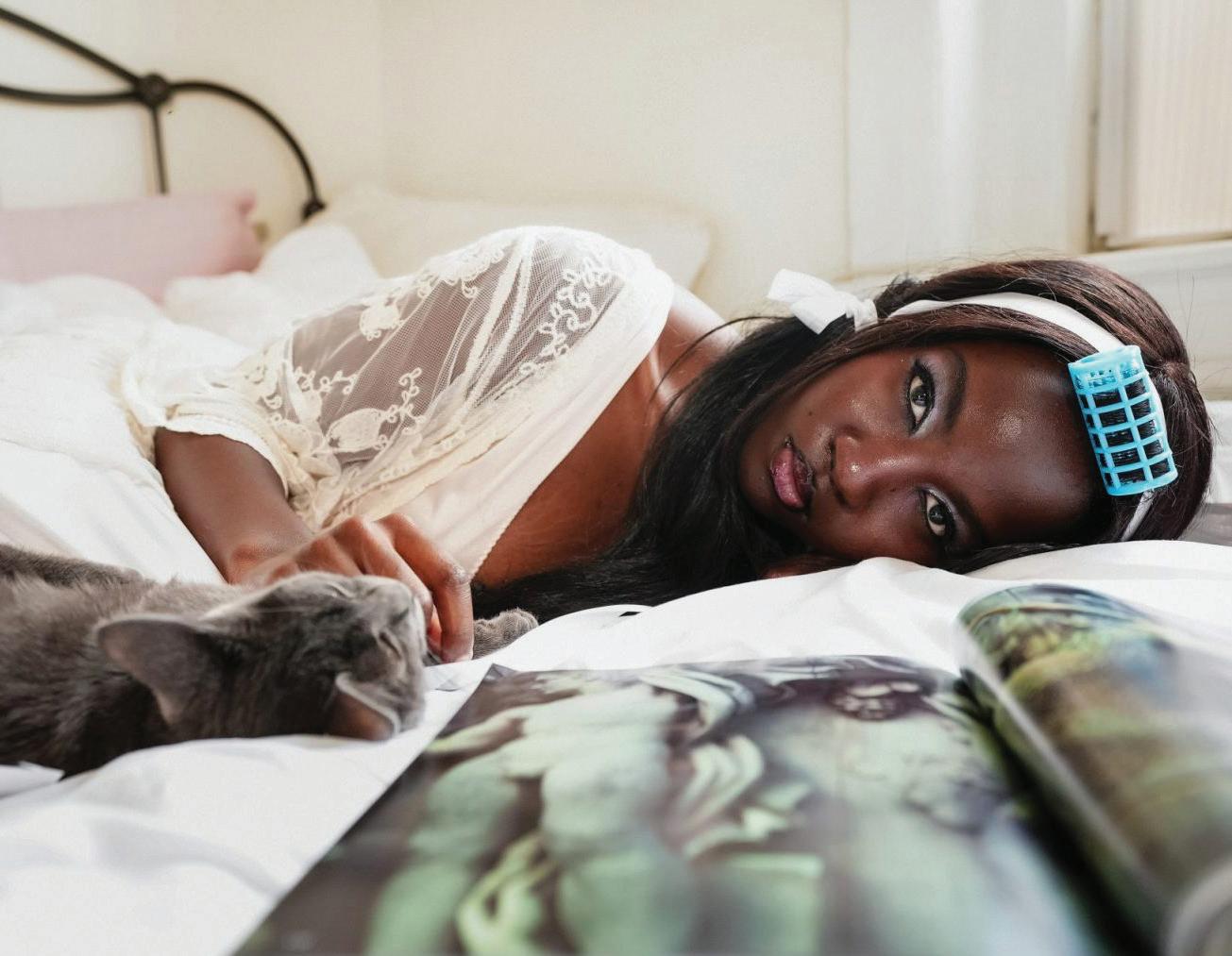
GET READY @ MINE!
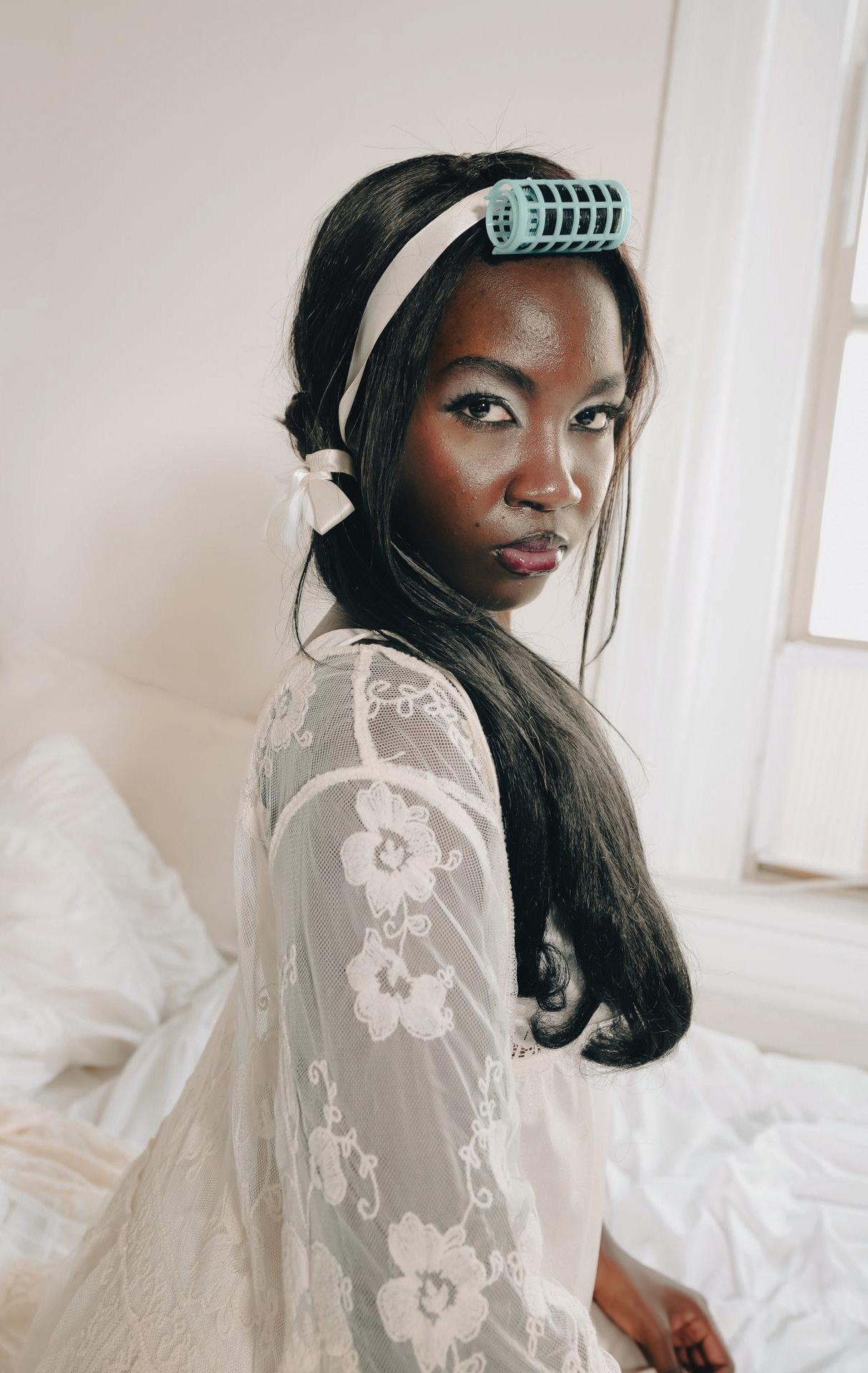
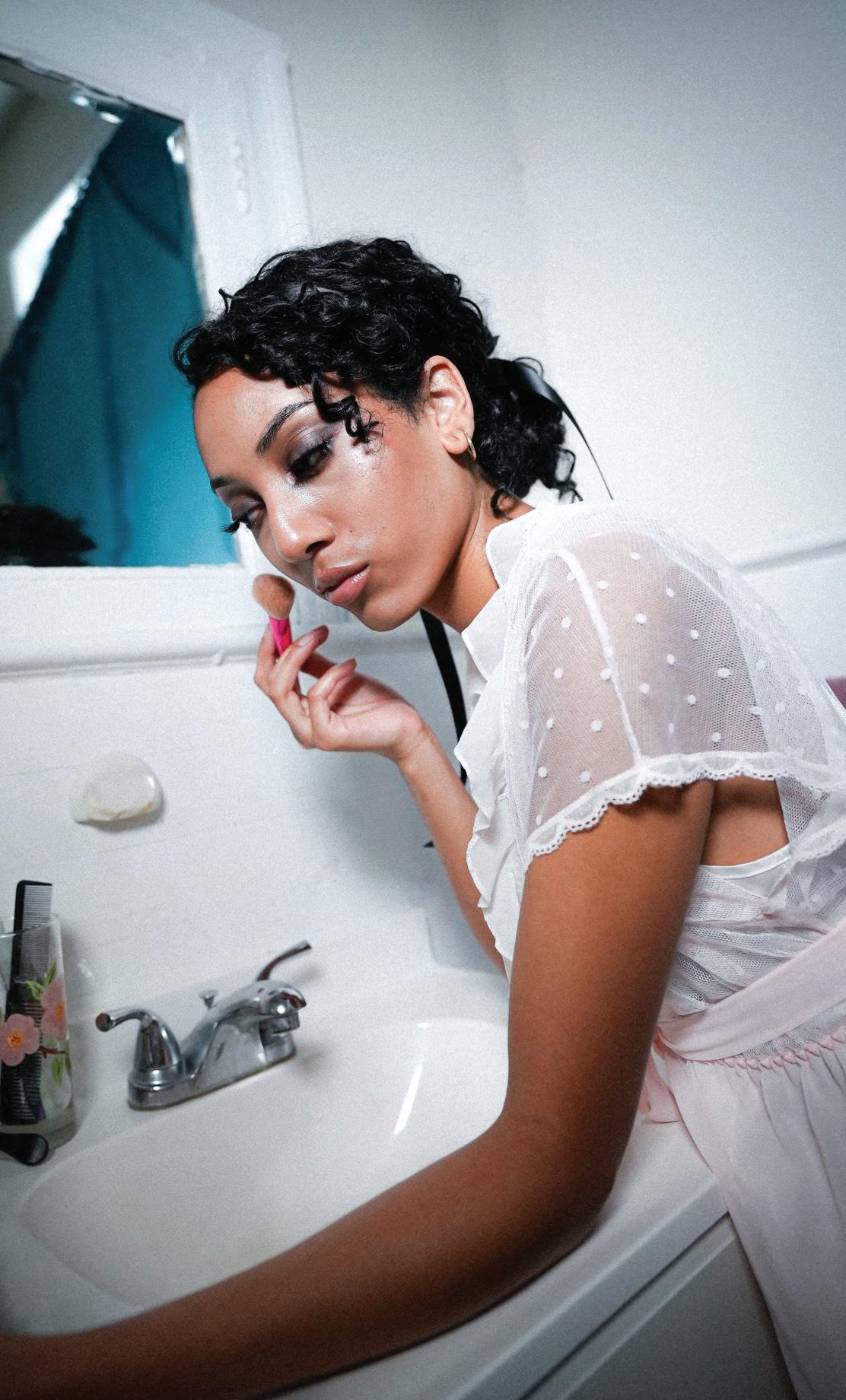
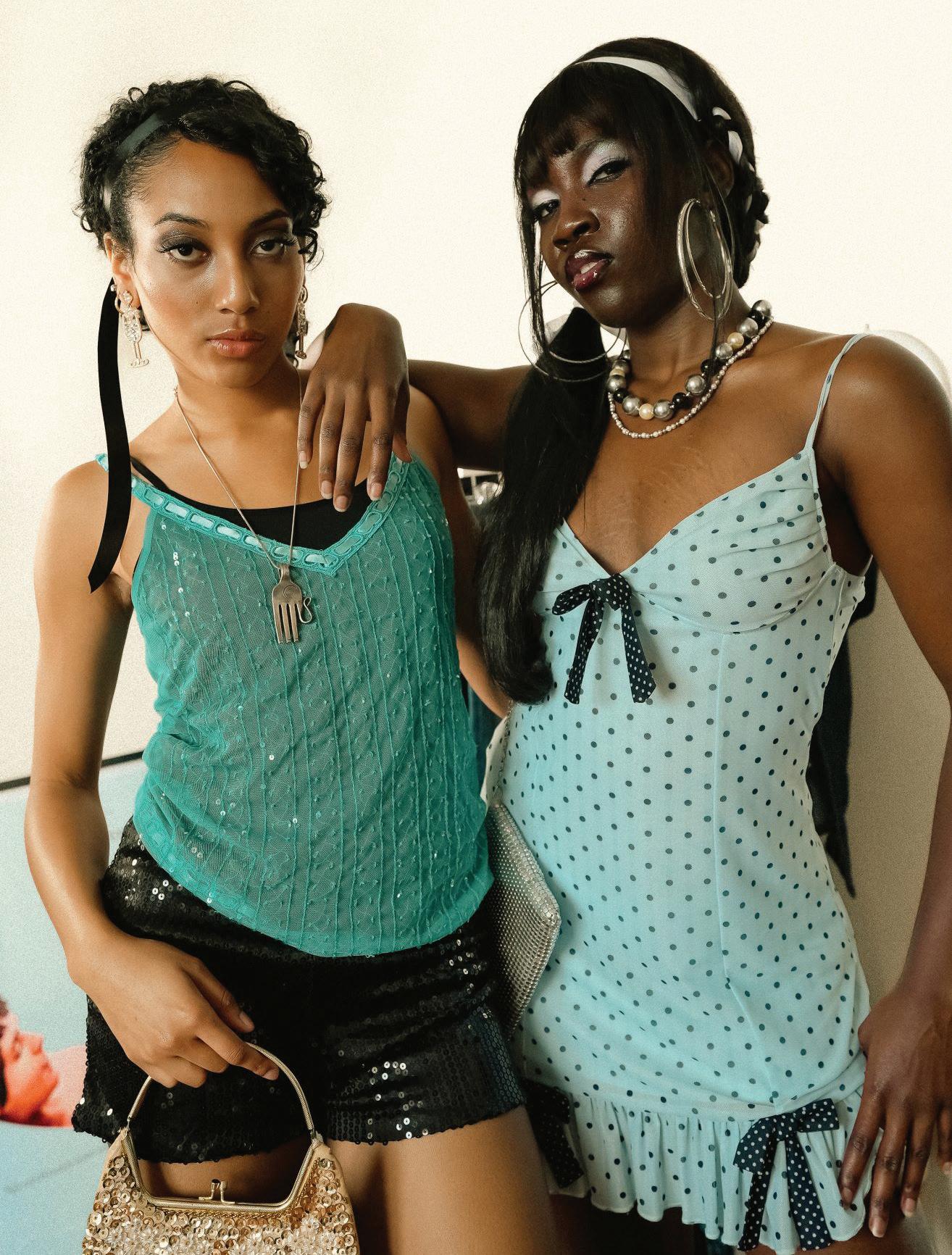
What makes the time spent getting ready to go out with your girlfriends so sacred? Is it the way a perfectly cohesive playlist pumps you up? Is it the pictures you take together feeling hot as hell before your makeup has melted off? Is it embodying a persona of adulthood that you looked up to
as a child? Or maybe, it’s the peace of mind gained in knowing that in later hours—even in the midst of madness— you’ll have each other’s back. Whatever it is that sparks this magical hour of mutual understanding, safety, and love, there’s no understating its power. Draped in lace, sequins, and 2010s-inspired accessories, models
Chelsea Asante and Victoria Peele
Paredes guide us into a world ruled by nostalgic memories—ones of older siblings and television characters we idolized, prepping for their evening escapades. Together we debate outfits, touch up our makeup, and let our curls set until the very last moment.
Julia Karns
Creative Director Kristina Wise spoke to our choice to call back the 2010s: “This time period is when we watched girls we looked up to participating in this behavior, which influenced the way that we engage with friendship and girlhood ourselves.”
Through the photography of Elizabeth Murphy and Erica Leia, we celebrate everyone’s favorite part of the night, joined together in a moment of serenity sandwiched between strobe lights and Sunday scaries.
Creative Director: Kristina Wise
Creative Team: Bianca Justiniano-Padilla, Emma Ogden, Miles Ragin
Models: Chelsea Asante, Victoria Peele Paredes
Photographers: Elizabeth Murphy, Erica Leia
Makeup: Sensi Carter, Zoe Hughes
Hair: Colrain Reed
Set design: Harper Chittum
Peace, Love, Unity, & Respect
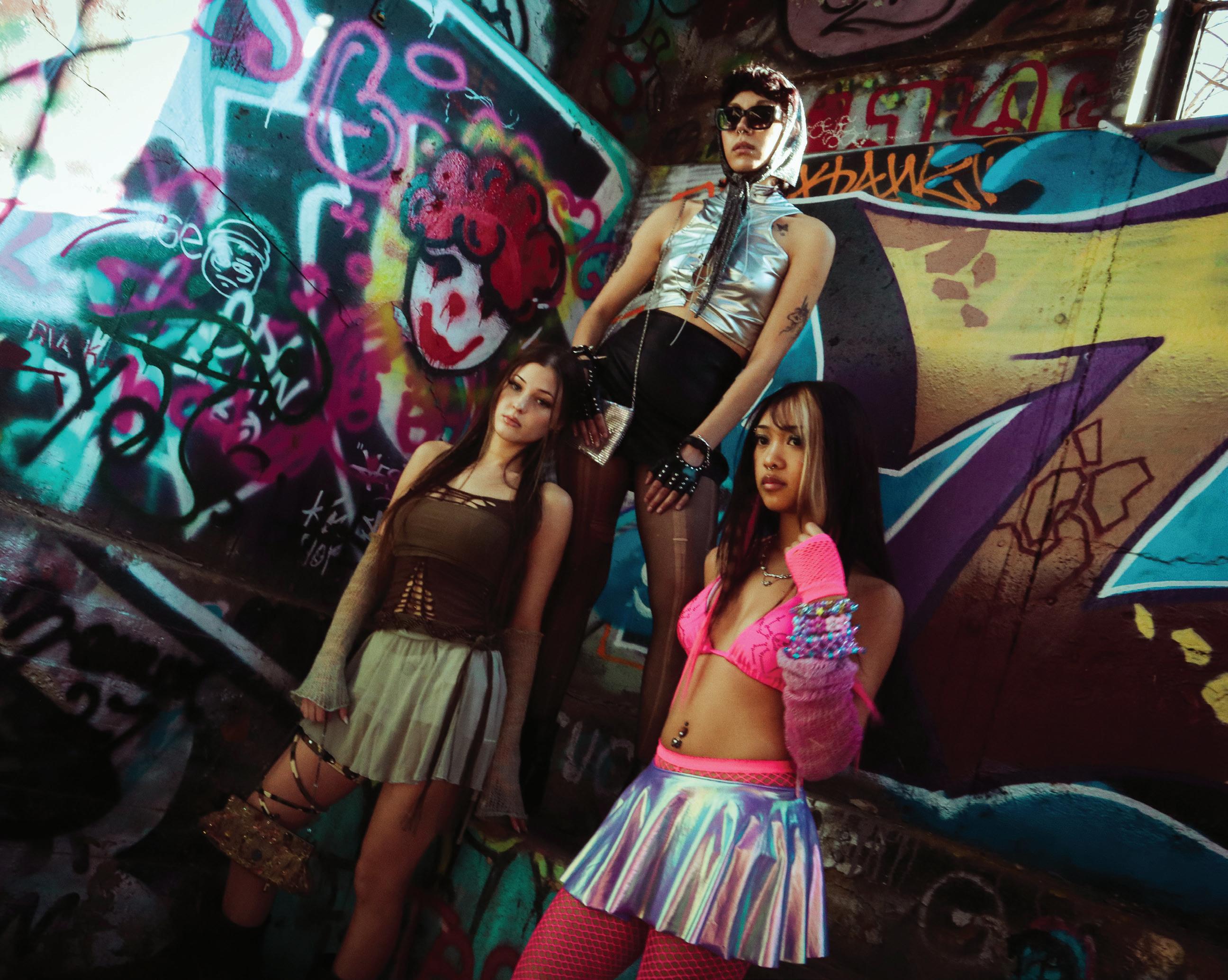
The Essence of the Rave
Julia Karns
Emerging from the freespirited bohemian parties of the 1950s and impromptu acid house gatherings of the 1980s, the rave was born in England out of a desire to foster revelry, community, and love over a joint appreciation of experimental music and subversion.
By the 90s, the rave had made its way across the Atlantic to the States, bringing with it strong associations with illicit drug use, particularly MDMA and ketamine. Combined with the riotous, chaotic atmosphere a rave can conjure, these associations prompted the articulation of the scene’s guiding ethos: Peace, Love, Unity, and Respect (PLUR), a philosophy meant
to protect the community’s sense of safety and belonging.
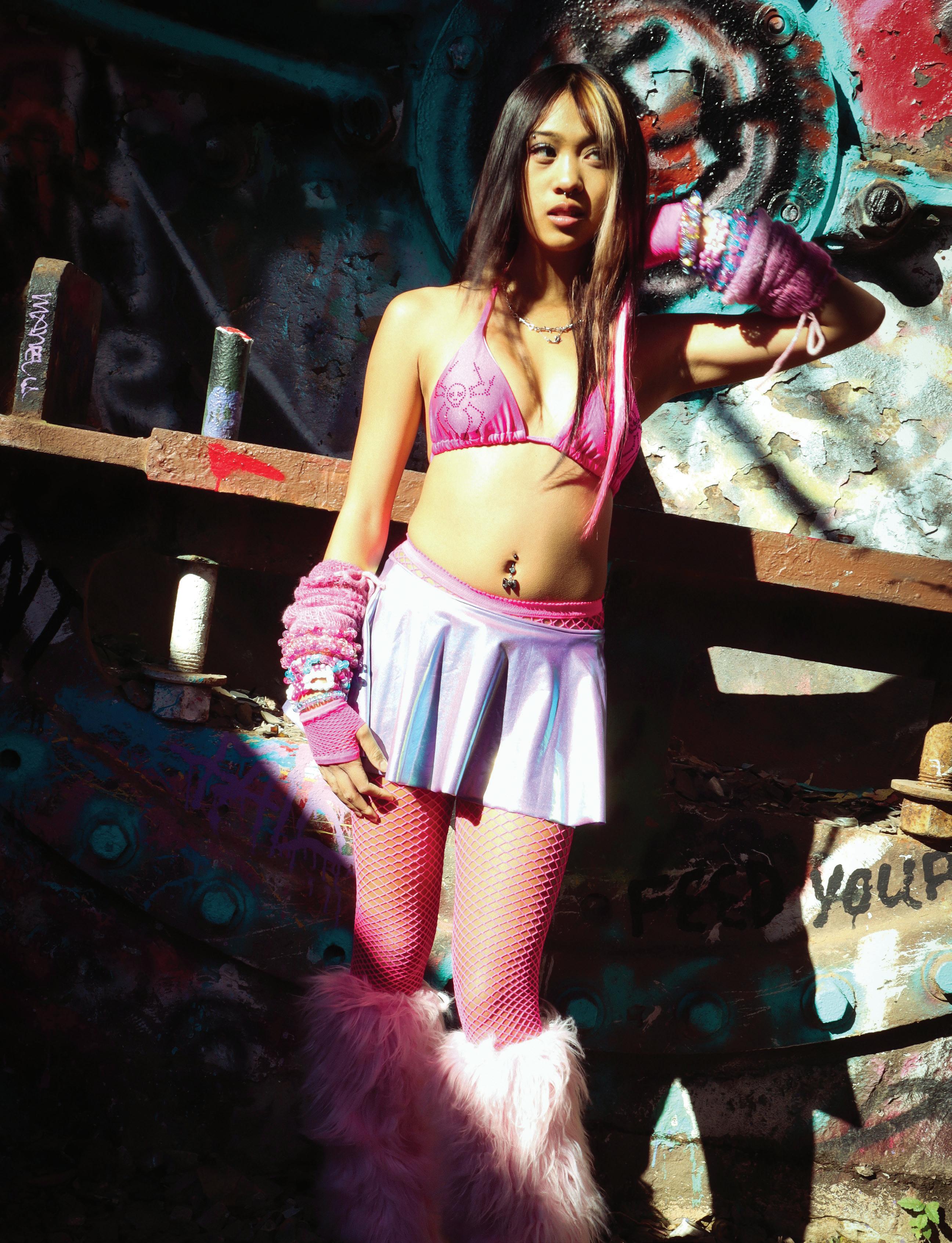
Kandi—handmade jewelry often strung with chunky plastic beads, glow-in-the-dark charms, and other colorful (and intentionally ridiculous) trinkets– emerged as a physical expression of these values.
Exchanged between attendees, the bracelets function as small rituals of connection, passed hand-to-hand as
tokens of friendship and transfers of positive energy.
DJ and music psychologist James Cannon explains why raving feels so powerful: “When we dance in sync with others, our brain’s neural oscillations align with the tempo of the music,” Cannon says. “This creates a feedback loop between our sensory and motor systems, heightening our emotional and cognitive engagement.”
At its core, the rave is meant to be a safe haven: a space that celebrates kindness, safety, inclusivity, and community. A place where bones vibrate from earsplitting syncopations and strangers move together rhythmically as though they are one being. It is a space to discover local or underground artists, for musicians to experiment freely, and for attendees to express themselves without limitation– engaging in the ephemeral catharsis triggered by collective effervescence.
Creative Director: Kristina Wise
Creative Team: Miles Ragin, Bianca Justiniano-Padilla, Emma Ogden, Julia Karns
Models: Emma Ogden, Jolene Lopez, Isabel Gallaro
Photographers: Erica Leia, Josh Larsen
Photography Editor: Elizabeth Murphy
Makeup Artist: Kristina Wise
The Jr. Editor and the City that Never Sleeps Liz's NYFW Exposé
Liz DeFluri
Day 1: Saturday, February 14, 2026
Start spreading the news— what could be a better Valentine’s Day plan than flying to NYC for New York Fashion Week? There’s nothing else I’d rather do as a fashion writer for two of VCU's student media publications.
I arrived at Richmond International Airport with the rest of the Ink Magazine team sharply at 7:00 a.m., rocking a casual look consisting of a red turtleneck sweater (very festive), acid-wash jeans, Reeboks, and a London Fog overcoat.
Armed with my jam-packed suitcase, a coffee, and a new playlist featuring all the songs I Shazamed at the airport I was ready for my first ever flight. My eyes remained fixated on the speck-like trees and frozen lakes on the ground below as the plane streaked through the puffy clouds.
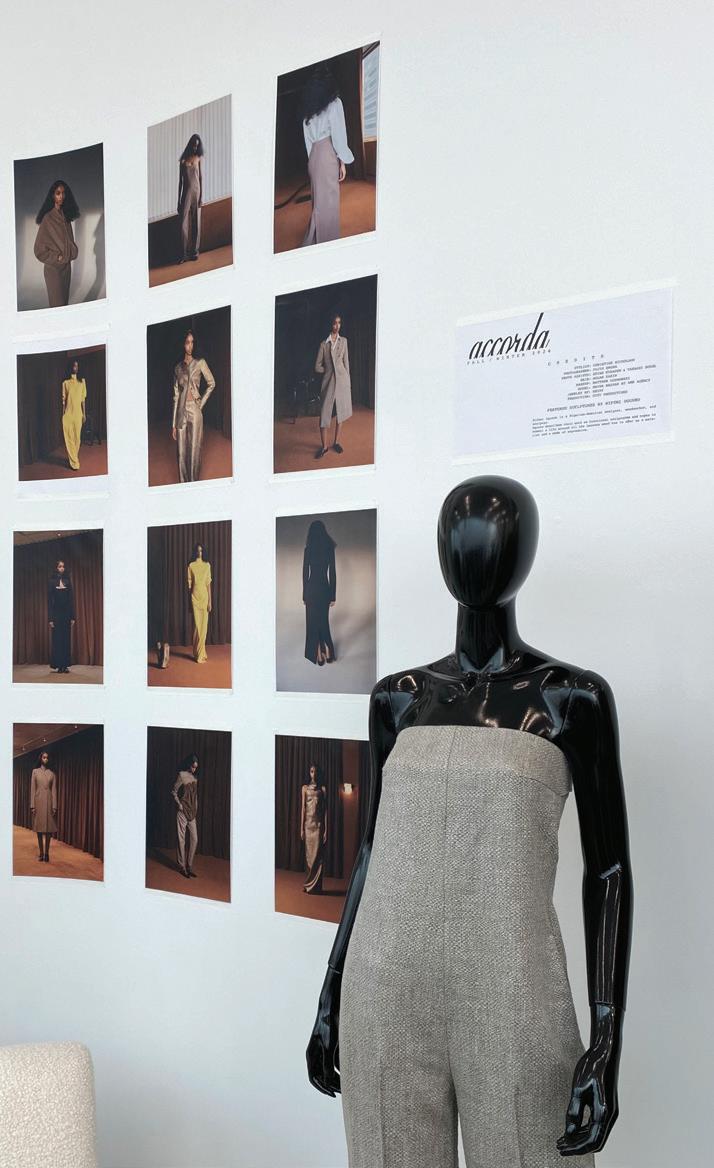
The Statue of Liberty appeared minuscule as we flew past New York Harbor and made our way to LaGuardia Airport in Queens. After checking into our hotel in Tribeca, the team and I headed to our first activity of the afternoon, a visit to the NYFW
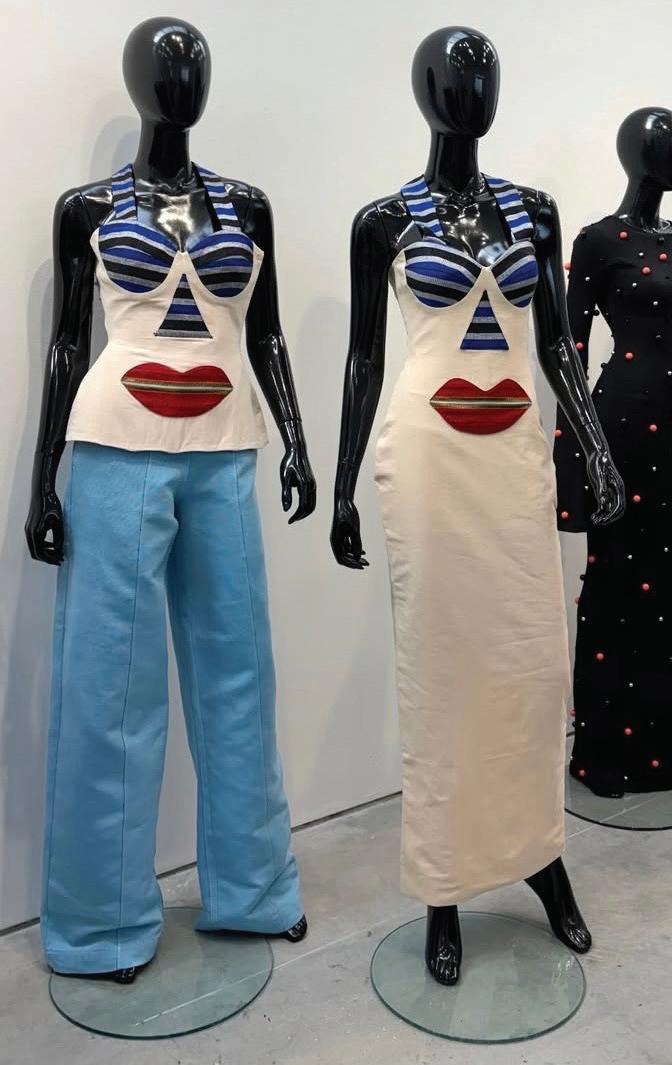
Collections showroom at the High Line Nine gallery in West Chelsea.
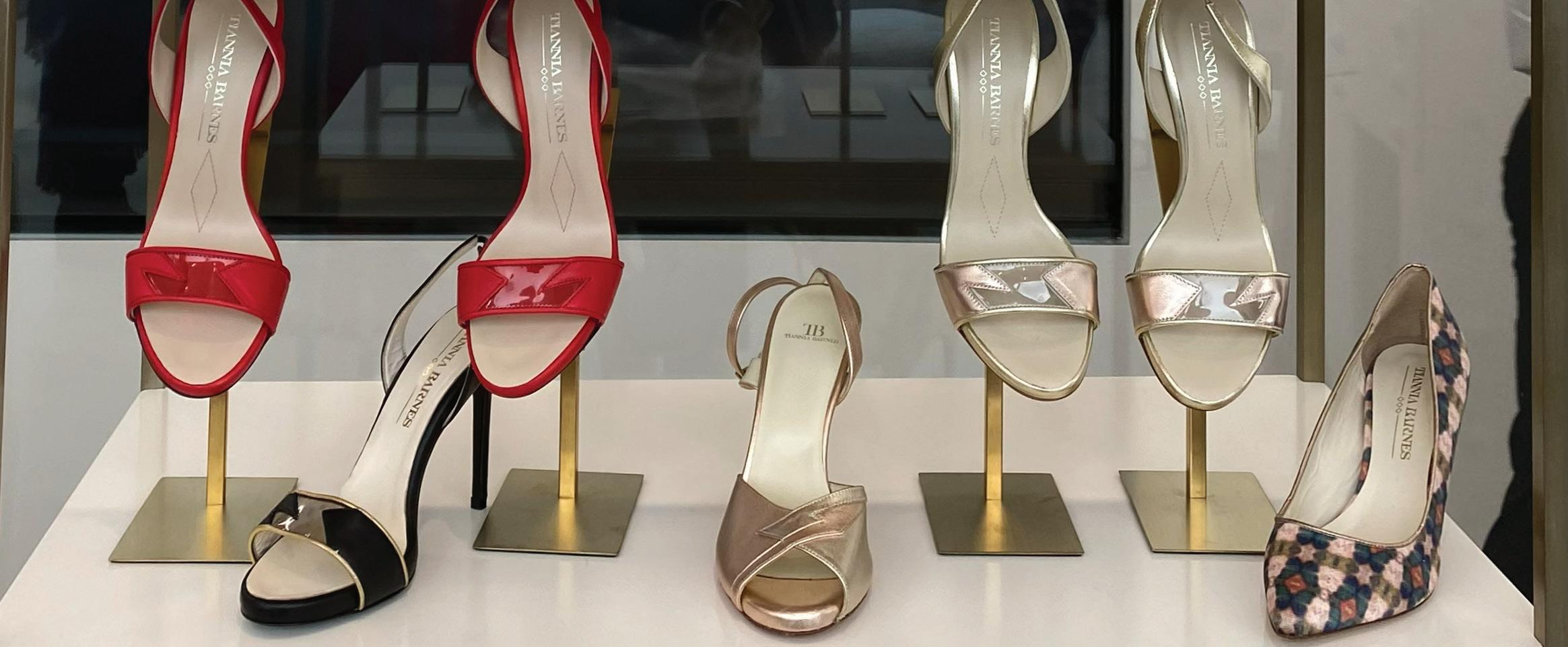
I spoke with several New York-based designers, including luxury footwear designer Tiannia Barnes and jewelry designer Gwen Beloti, about their creative processes and the inspirations behind their work.
We also attended a “Source Code: Fashion as Technology” panel session at the gallery hosted by Dario Calmese, founder of the Institute of Black Imagination and the first Black person to photograph the cover of Vanity Fair.
This space was set up as an immersive reading room featuring a curated selection of books from the personal libraries of Vogue’s first fashion news director and first Black creative director, André Leon Talley and Trinidadian-American actor and dancer Geoffrey Holder.
The guest speaker, author and professor of Africana Studies at Bernard College, Monica L. Miller, analyzed how Black fashion and archival materials create powerful cultural narratives across time and space.
Photographers: Akili Williams and Liz DeFluri
Day 2: Sunday, February 15, 2026
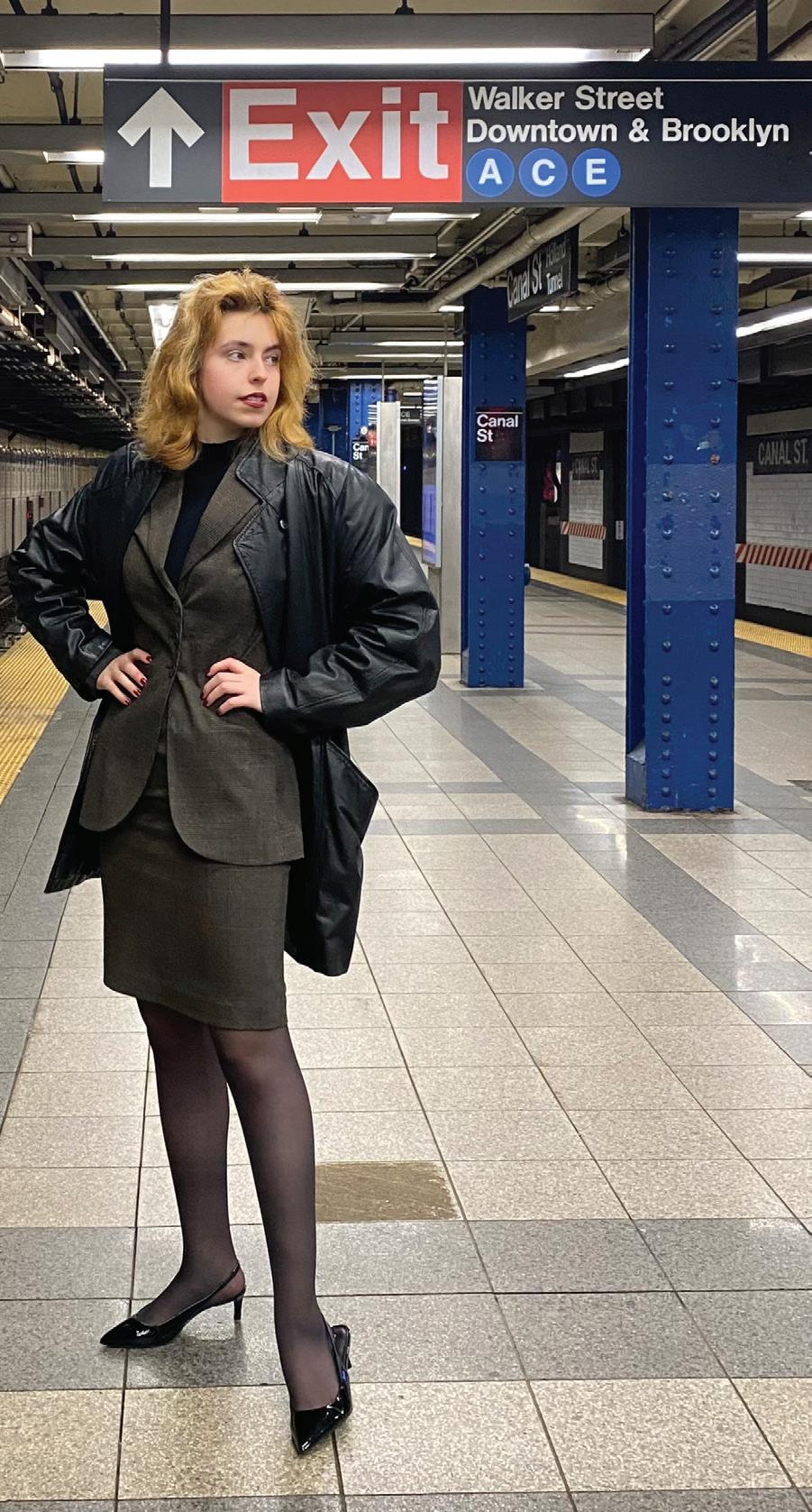
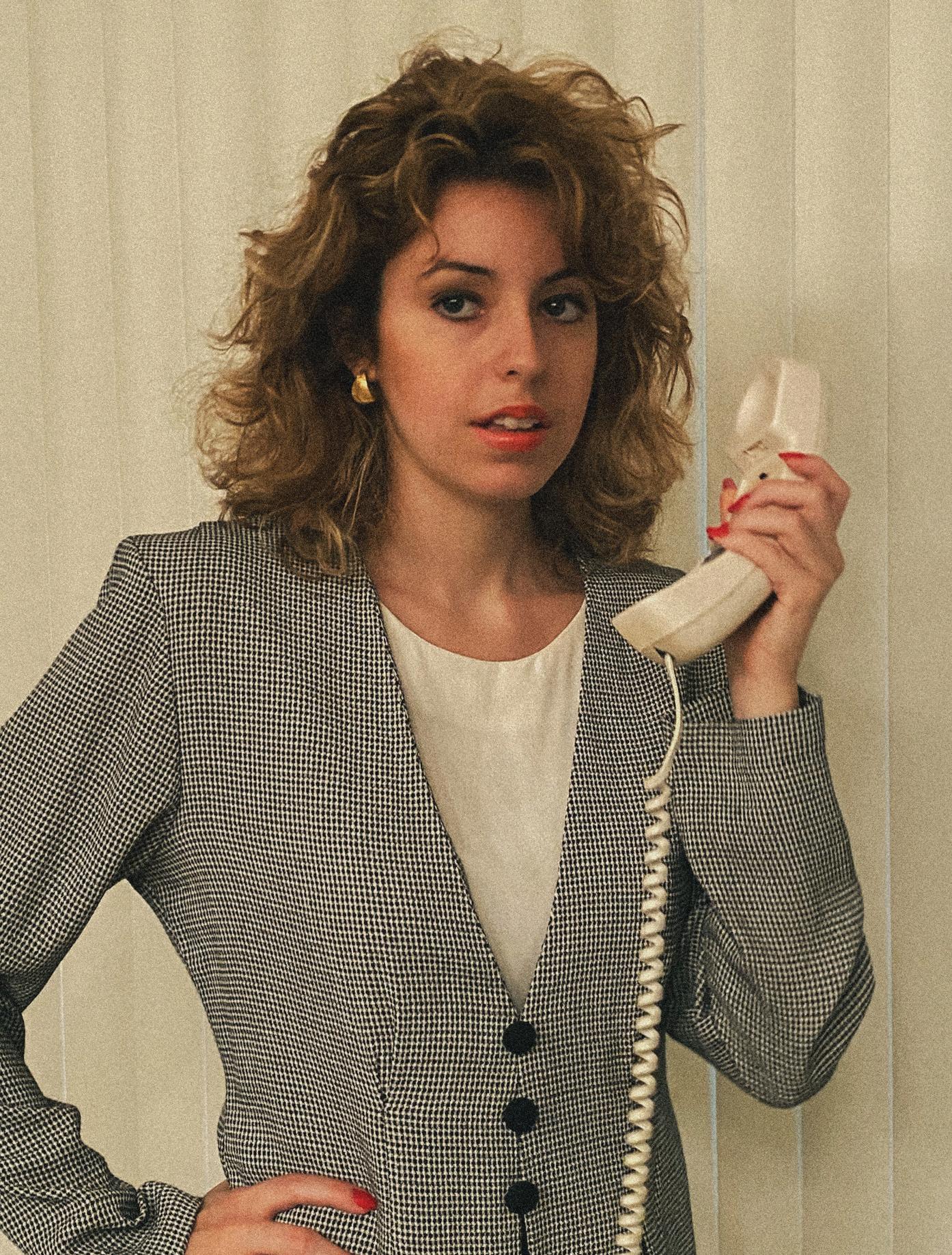
On the second day, I wore a vintage Barbara Moss suit and a G-III leather coat with Calvin Klein kitten heels for a retro, yet timeless corporate inspired look. A quiet morning in the Canal Street subway station made for the perfect backdrop while we waited for the train to arrive.
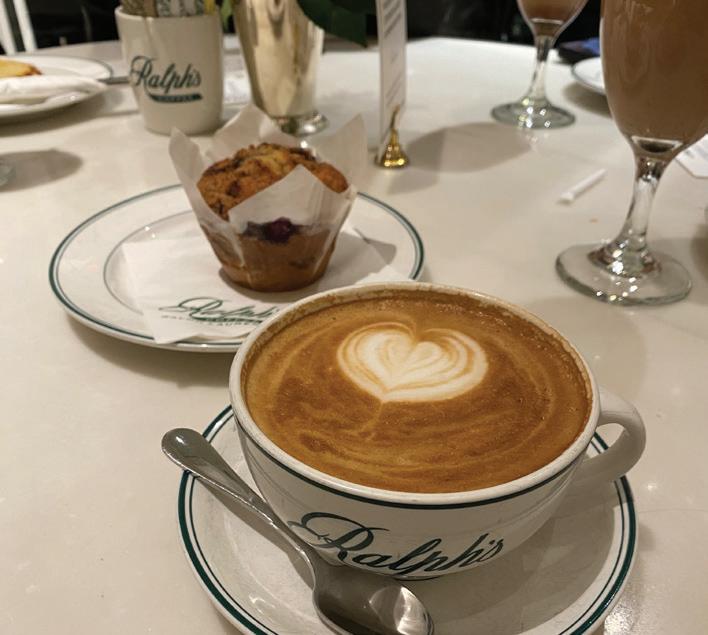
We started the day off with coffee and breakfast at Ralph’s Coffee on Madison Ave. a.k.a the Ralph Lauren coffee shop—and afterwards headed to the MET to explore the galleries for the afternoon.
Although we spent nearly three hours at the museum, that wasn’t nearly enough time to take in the vastness of the history and culture featured in each gallery. I began my self-guided tour in the Robert Lehman Collection, a 2,600-piece gallery of Western European art dating from the 14th to the 20th century.
Day 3: Monday, February 16, 2026
The third day of the trip was dedicated to the photoshoot for Ink Magazine’s spring print edition. Central Park in the snow was a beautiful sight that wouldn’t be complete without people on carriage rides blasting Frank Sinatra’s “New York New York.”
Although the outfits we wore for the shoot weren’t ideal for the freezing temperatures, we had fun and made the most of the frigid weather.
Day 4: Tuesday, February 17, 2026
I slept in a little on the last day and took in the final moments of the New York sunrise peaking through the blinds. I began my morning with a bagel (because Lender’s just doesn’t hit the same) and a cappuccino at a coffee shop called Gotan in Tribeca–which is right between two movie locations, the Ghostbusters HQ and Bubby’s from The Devil Wears Prada! I had a mini work session there so I could get a head start on drafting content from the trip before we headed to Penn Station and embarked on our six-hour train ride back to Richmond.
I am so grateful to have gone on this trip and got to experience New York during NYFW. None of this would have been possible without student media. The experiences I’ve had due to my involvement in various student media publications have elevated my college experience in ways I never thought were possible.
Fashion & Culture Student Spotlights
Julia Karns & Jolene Lopez
Bianca Justiniano-Padilla
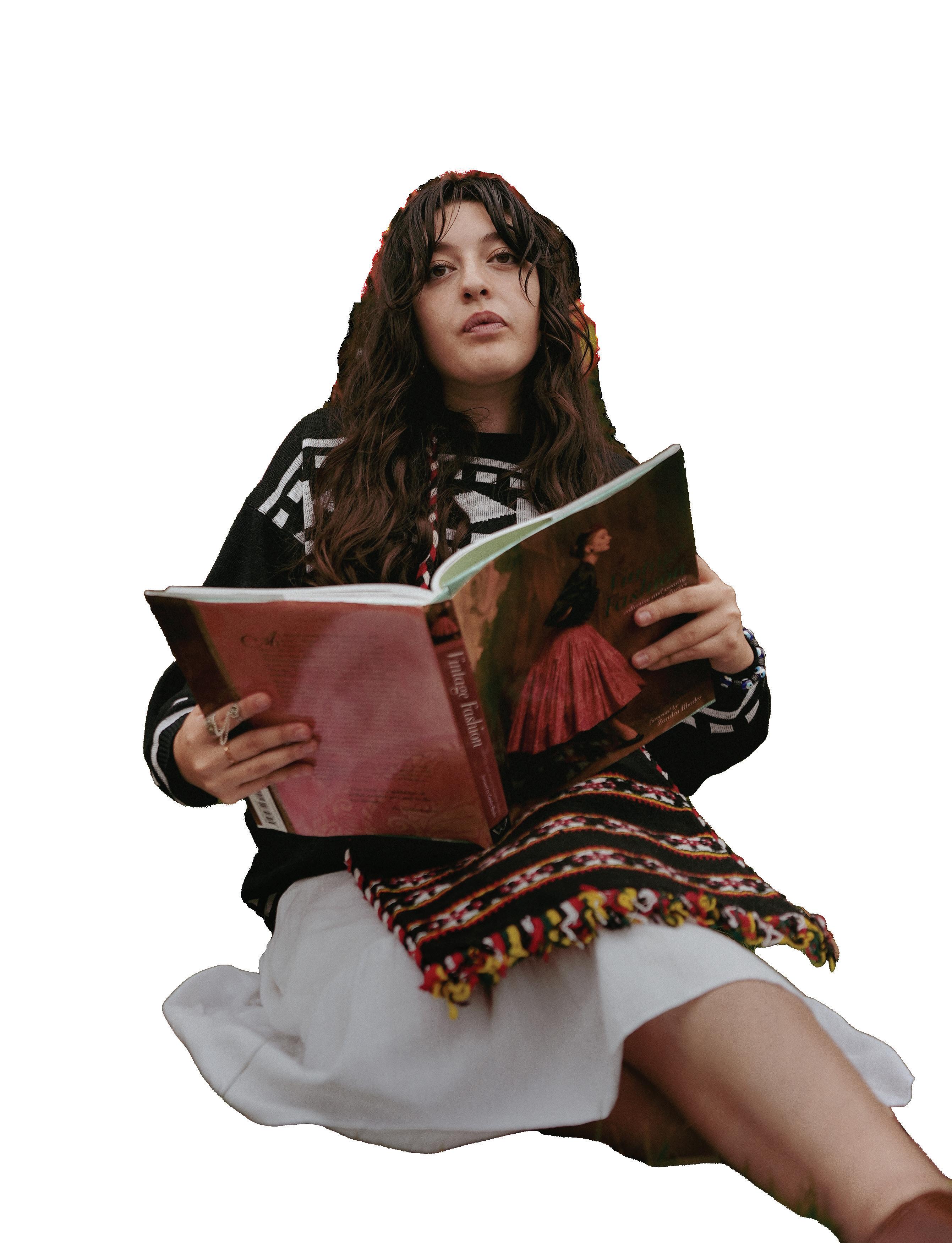
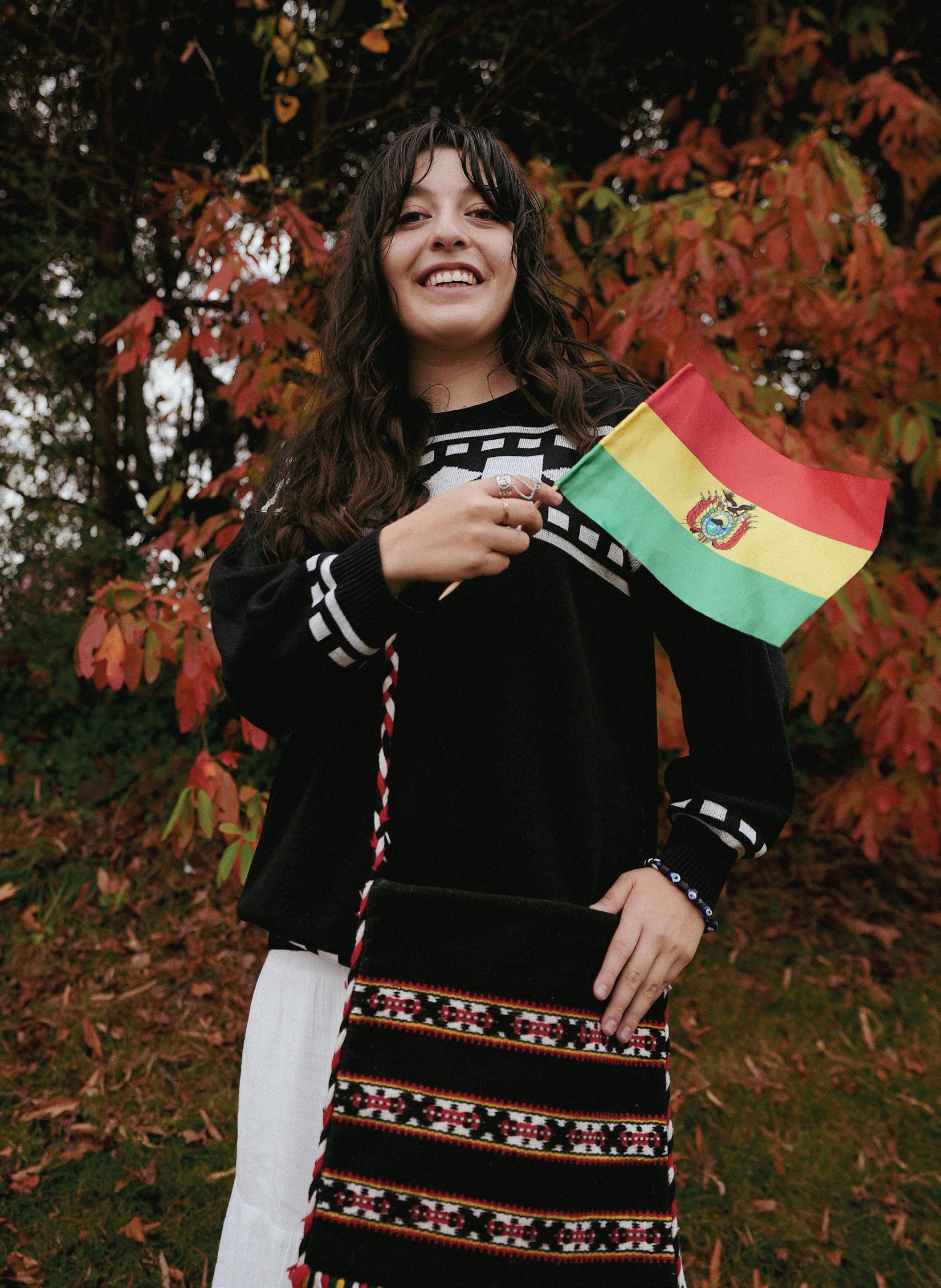
Navigating your identity is an inherent part of adulthood, especially within the Latinx community. Still, the process can feel isolating, often leaving you unsure of where you fit. In an interview with creative team member Bianca Justiniano-Padilla—the mind behind our Señorita photoshoot celebrating the coming-of-age of Latinx women— she reflected on how she navigated cultural barriers in both her personal life and her style, while honoring her Bolivian and Armenian roots.
Bianca was raised in Annandale, Virginia, and—despite being an only child—was constantly surrounded by family. She recalled attending large family gatherings filled with music, food, and lively chatter. “I can remember as a kid being at a party, sleepy and scrunched up in a white plastic chair, falling asleep to Romeo Santos and waking up with a jacket placed on me,” she said. Food has always been incredibly important to Bianca, shaped by having a mother who is a chef and family members who taught her that food is a love language. “My grandma would sell empanadas every now and then, and my cousin and I would help her sometimes— rolling the dough, molding and swirling the crust,” Justiniano-Padilla said.
Bianca’s family immigrated to the United States in 2001, leaving Bolivia during a period of economic hardship. She shared that her family is very close and struggled with the idea of being separated across countries. Initially, the plan was for her grandfather and uncle to come to the U.S. as migrant workers to provide financial stability. Ultimately, her entire family immigrated after
securing visas. “They told my mom they were going to Disney World, and she didn’t know they were actually moving here,” she said. Over time, through word of mouth, many Bolivians arrived in Northern Virginia in search of work. “Families just kind of followed each other’s advice,” she added.
Alongside her Bolivian background, Bianca is also Armenian. She shared, “My family has an interesting history—because of the Armenian genocide, my family hasn’t been directly from Armenia for a long time. They’re from Lebanon and Syria, so we have history there too.”
She has a close relationship with her great-grandmother and greatgrandfather on her father’s side, who are entirely Armenian.
Bianca wore a traditionally patterned Bolivian sweater made of llama fiber—distinct to Bolivia and the Andes region—that has been passed down through generations from her great-grandfather. She uses fashion as a way to express her culture; for example, she often shows off her Bolivian jersey to those unfamiliar with Bolivia, sparking conversations about her heritage.
She also carries a purse her greatgrandparents purchased around 50 years ago in Lebanon. “My purse is really special… My great grandpa passed away two or three years ago, so it’s a nice way to remember him,” she said. Justiniano-Padilla also mentioned her love for all things vintage—a passion her greatgrandfather shared.
Bianca found community through the Latinx Student Association (LSA) at VCU. LSA creates its own version of “bigs” and “littles”—typically associated with
sororities—through a familia program. Justiniano-Padilla became involved with LSA as a freshman and met several people through the program she related to on multiple levels. She also noted that because many VCU Latinos are from Northern Virginia, she is able to spend time with her LSA friends even when she goes home.
As a young Latina woman, Bianca believes that having pride in your culture, building community, and using fashion as a means of resistance is incredibly important, especially in today’s political climate.
Sharon Tamayo
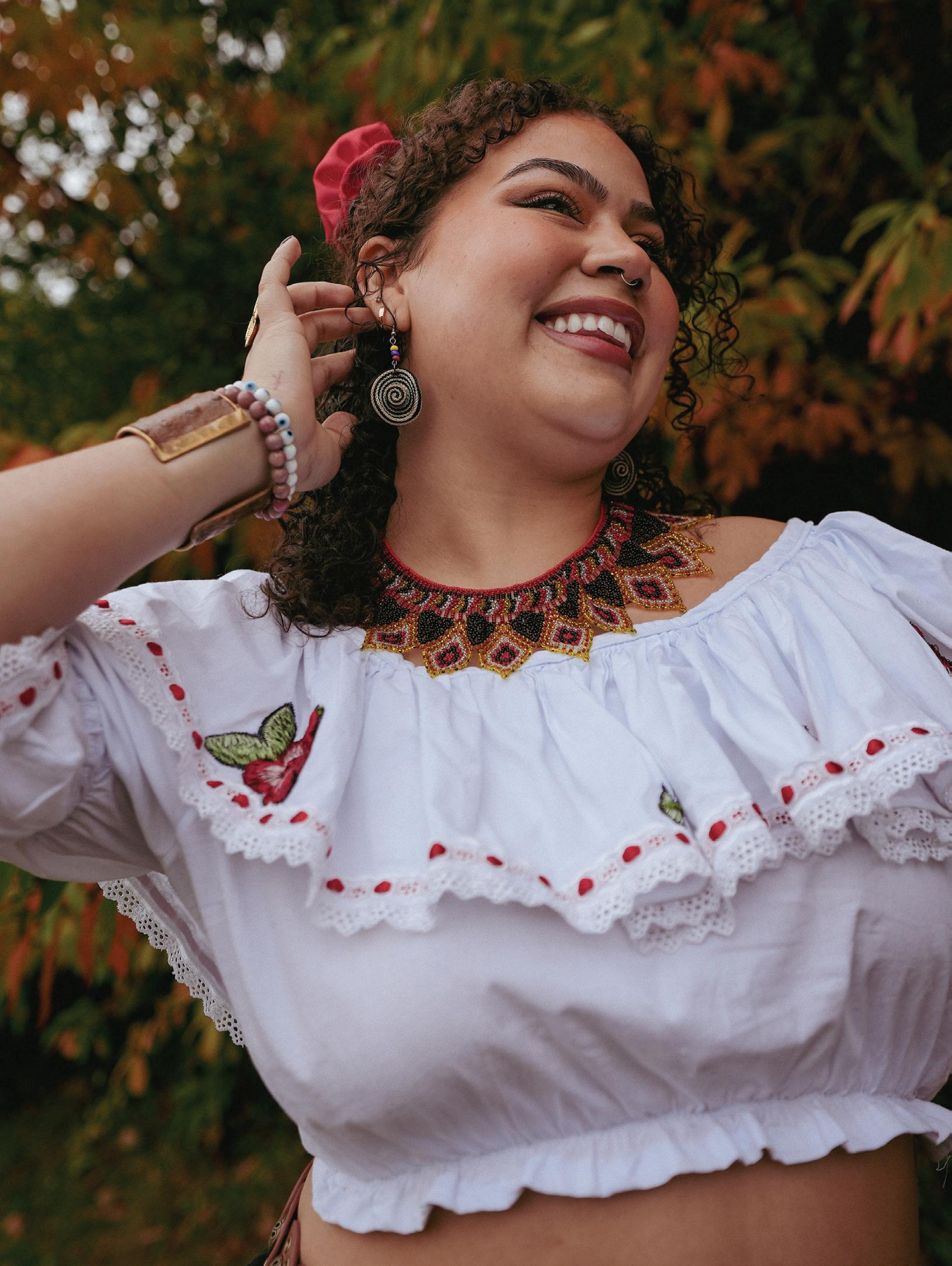
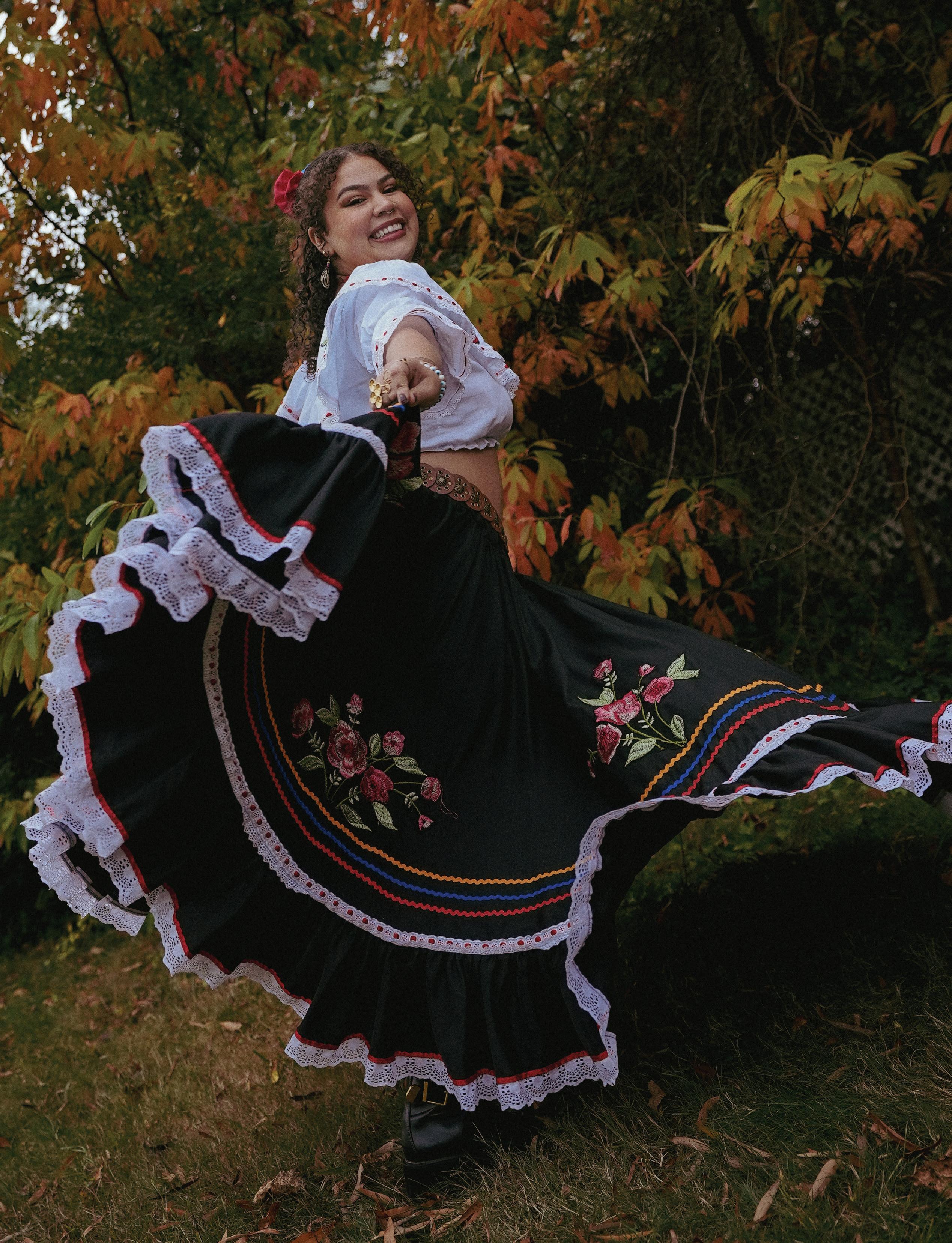
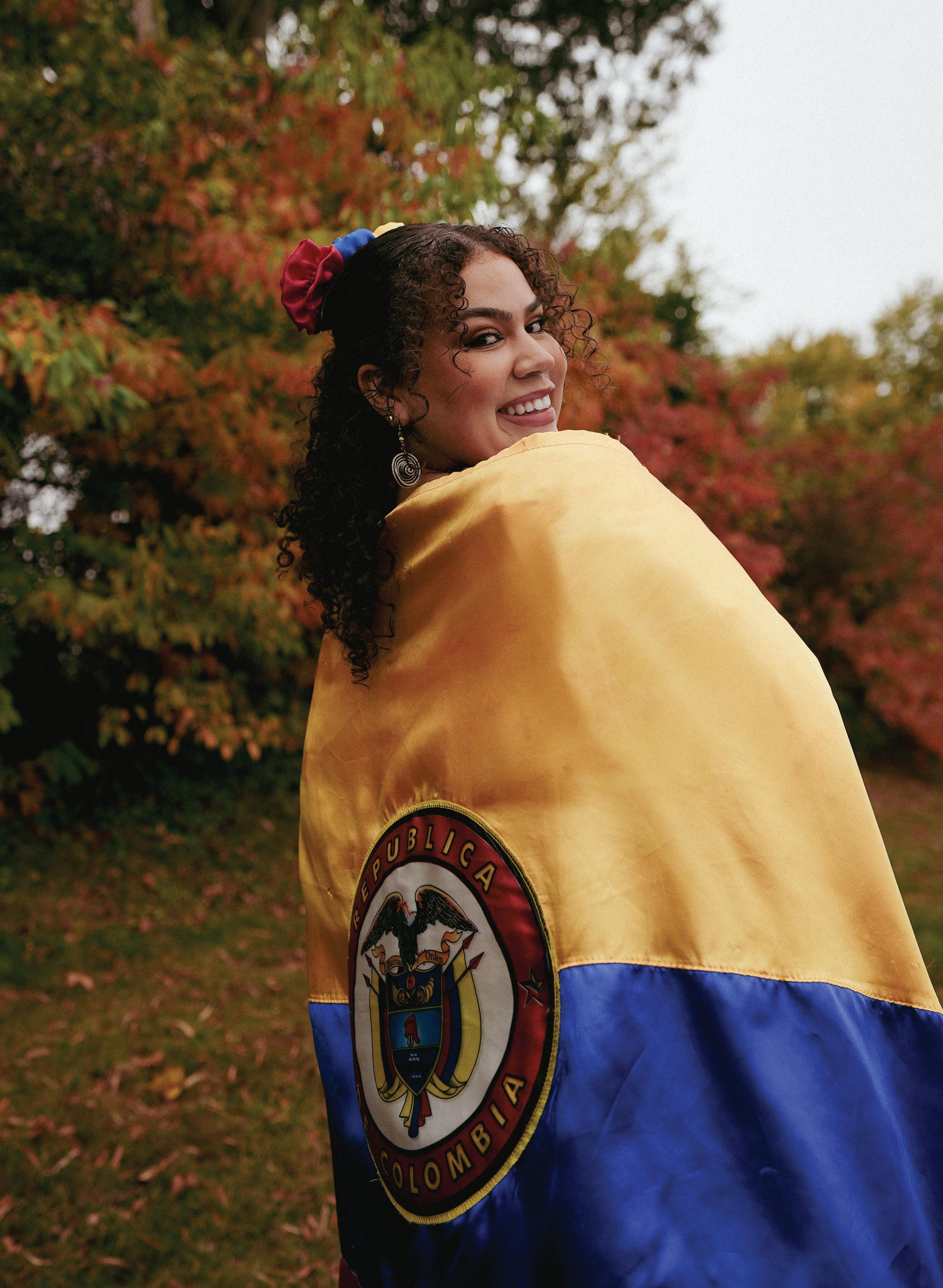
Sharon Tamayo is a Colombian social work student at VCU who comes from a large, close-knit family. Growing up in the U.S., she didn’t always feel connected to her Colombian background, especially after spending most of her life in predominantly white institutions. It wasn’t until she attended a Latinx summer camp program from grades 8–12 that she began to deepen her relationship with her heritage and identity as a Latina. Her time at VCU has strengthened that connection even further through involvement in organizations committed to diversity and inclusion—topics she says she wants to continue addressing by pursuing a career in social work.
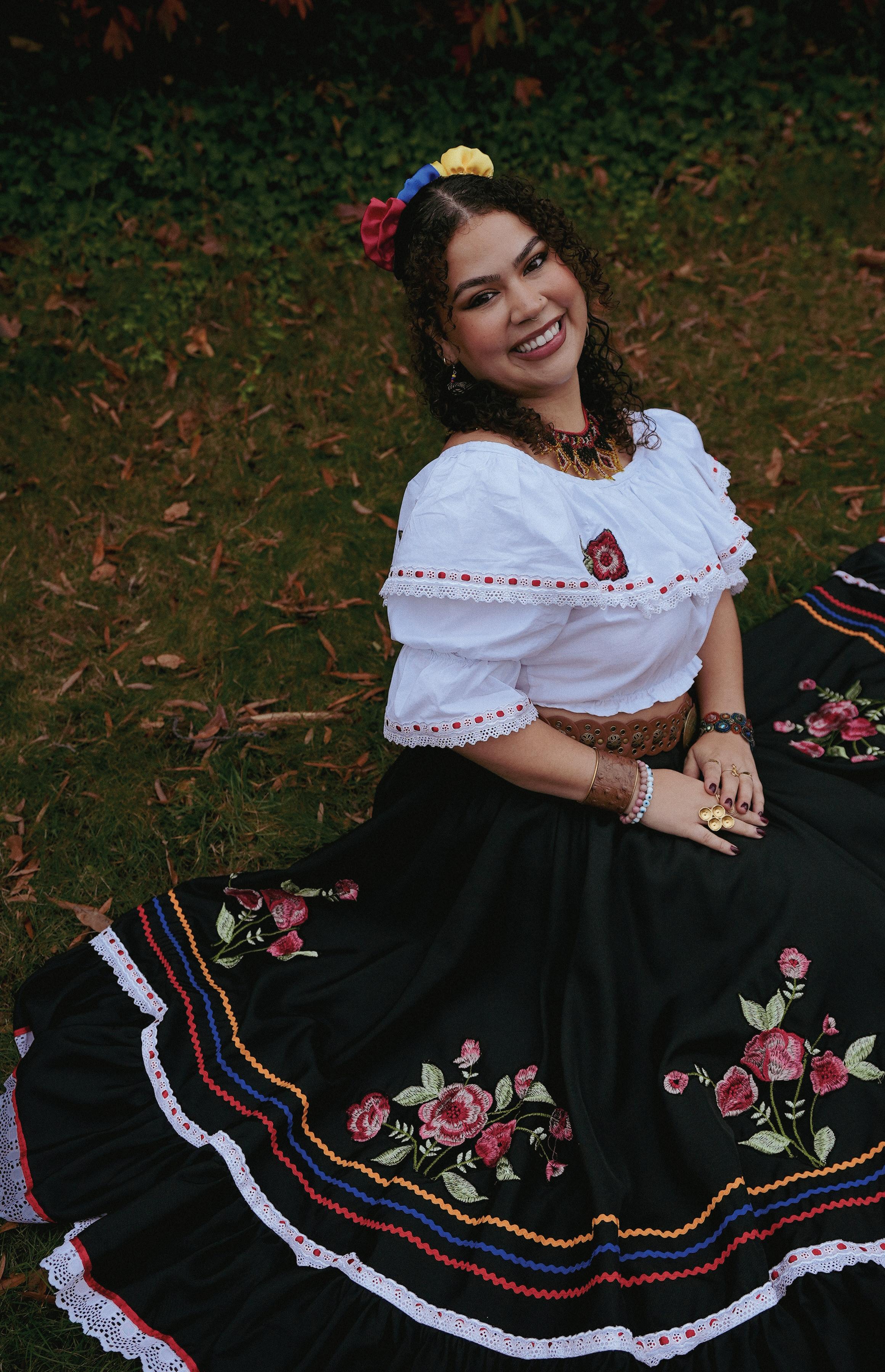
Sharon wore Sombrero Vueltiao–inspired earrings, a style widely recognized across Colombia. Her necklaces, gifted by her aunt, were handcrafted by Indigenous artisans from a small mountainous town called Frontino.
“They’re like chakirita necklaces, and for me I’ve always loved them. I used to make anklets of chakiritas and everything,” she said.
Additionally, her bracelets are an expression of patriotism and cultural pride—something shared by many Colombians. Sharon has been collecting Colombian jewelry since she was young and is always excited for an opportunity to wear it, whether during heritage month or on Independence Day.
She twirled in her “vestido típico”—a traditional Colombian cultural dress—which comes in many variations. In her culture, men wear their own distinctive outfits, often for traditional dances performed during August at Medellín’s “La Feria de las Flores,” or Festival of Flowers. The festival celebrates Paisa culture’s pride in biodiversity through elaborate displays of camellias and floral imagery. Children often wear garments similar to Sharon’s and take dance classes to perform during celebrations. Reflecting on how this tradition shaped her, she said, “When I grew up, I wanted an adult version, so it has the flowers that are seen in Colombia. Mine has the colors of the flag on it, and the skirt is very long—reminiscent of folklórico dances in Mexico.”
Sharon chose to study social work out of a strong desire to help others and create environments where people feel heard. Her first exposure to the field came from her childhood babysitter, and she quickly realized it was the right path for her. Despite pressure to choose a “safer” or more lucrative career, she stayed committed. “Even if I’m not making the most money or anything, this is what I want to do and what drives me,” she said. Reflecting on her time in the social work program, she added, “It’s been learning about communities, learning about the Richmond community, about
empathy, about the intersectionality of everything—of all systems.”
Sharon currently works as a case manager for Families Housing First, a nonprofit housing assistance organization. She serves in two programs where she helps youth and individuals with children secure
stable housing. Looking ahead, she hopes to eventually expand her work into politics at a macro level, noting that “the people we elect, the people who are in power are actually the ones that have the power to make a difference, and I want to be in that sphere.”
Creative Director: Kristina Wise
Creative Team: Bianca Justiniano-Padilla, Emma Ogden, Miles Ragin
Model: Bianca Justiniano-Padilla, Sharon Tamayo
Photographer: Elizabeth Murphy
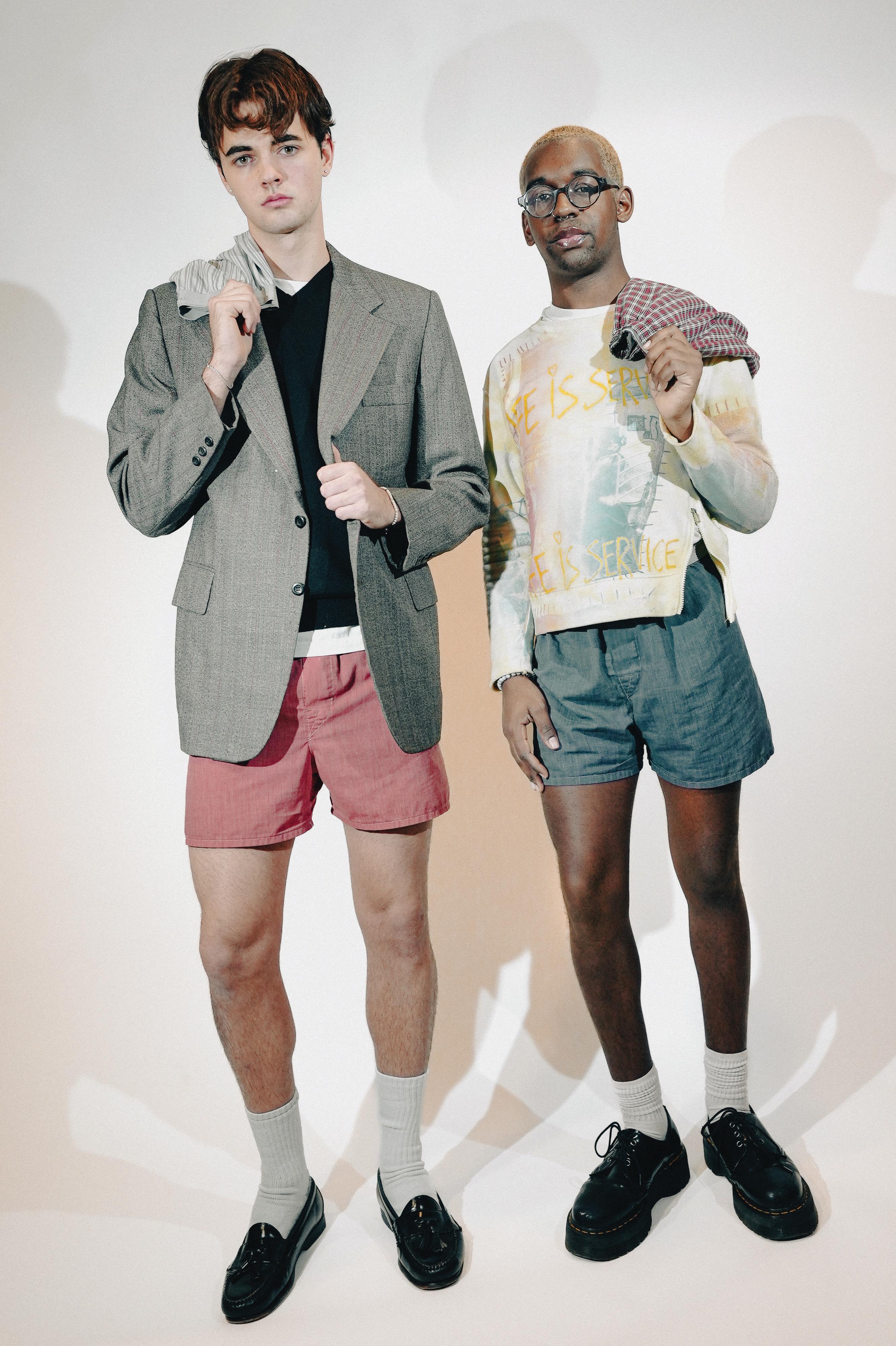
100 YEARS OF BOXERS: Metamorphosis from Underwear to Outerwear
Miles Ragin
Since their boxing culture origins in 1925, boxers have evolved greatly in their design and styling in both menswear and womenswear. In the beginning, Jacob Golomb created the shorts to advance mobilization for martial artists. Around the World War 2 era, drawstrings were largely removed from the design, allowing boxers to be utilized as undergarments for men or masculine-presenting individuals once the war was complete. However, they were mainly used for the comfort and freedom of army soldiers’ needs.
The mainstream identity of these undergarments has been on the rise in the past 100 years following its origin. The casual nature of boxers being displayed on big screens, billboards and massive campaigns have likely desensitized the public to the air of eroticism initially associated with them. This shift stemmed from one of the world’s largest apparel companies, Levi’s, back in 1985 when they featured an advertisement with a model stripped down to his boxers. Soon after in the 1990s, the hiphop trend of “sagging”—wearing pants low enough to expose one’s undergarments—emerged and continues to be widely seen today..
Far from being a relic of the past, this trend continues to thrive in contemporary music culture. When I was at Lollapalooza 2025, the amount of individuals I saw wearing boxers was shocking. On the days headlining artists like Gracie Abrams and Role Model, red and white gingham boxers and short shorts were at an all time high.
Paul Mescal’s appearance during Gucci’s spring 2024 show in micro-hemlined, striped boxers helped cement the evolution of them as fashionable items today. Since then, celebrities and the public have shifted and started wearing them as outerwear. Though boxers have been inherently dominated and worn by men, the transition of them to outerwear has allowed it to be opened up to untapped markets in women. This sartorial shift represents more than just a fleeting trend—it signals a broader cultural movement toward comfort-first dressing and the breakdown of traditional gender boundaries in fashion. High-end designers like Jacquemus and Bottega Veneta have reimagined boxers with luxurious fabrics and tailored cuts, such as nappa lambskin and microfiber, thus elevating them from basic undergarments to statement
pieces worthy of red carpets. The “boxer-as-outerwear” phenomenon has been particularly embraced by Gen Z, who view fashion as a form of self-expression, unbound by a need to adhere to conventional dress codes.
Social media platforms, especially TikTok and Instagram, have accelerated this transformation by showcasing countless styling variations— boxers paired with blazers for a high-low mix, worn in addition to sheer tops for layered looks, or produced as swim shorts for beach vacations. The versatility of the garment, combined with its inherent comfort and nostalgic appeal, has made it a wardrobe staple that transcends traditional fashion seasons. As times change, boxers continue to shift and mold to every whim thrown their way. It’s safe to say that they aren’t going anywhere anytime soon so get comfortable and used to seeing them in your home and on the streets, billboards and runways.
Creative Director: Kristina Wise
Stylist: Miles Ragin
Models: Van Fulton-Wright, Miles Ragin
Photographer: Elizabeth Murphy
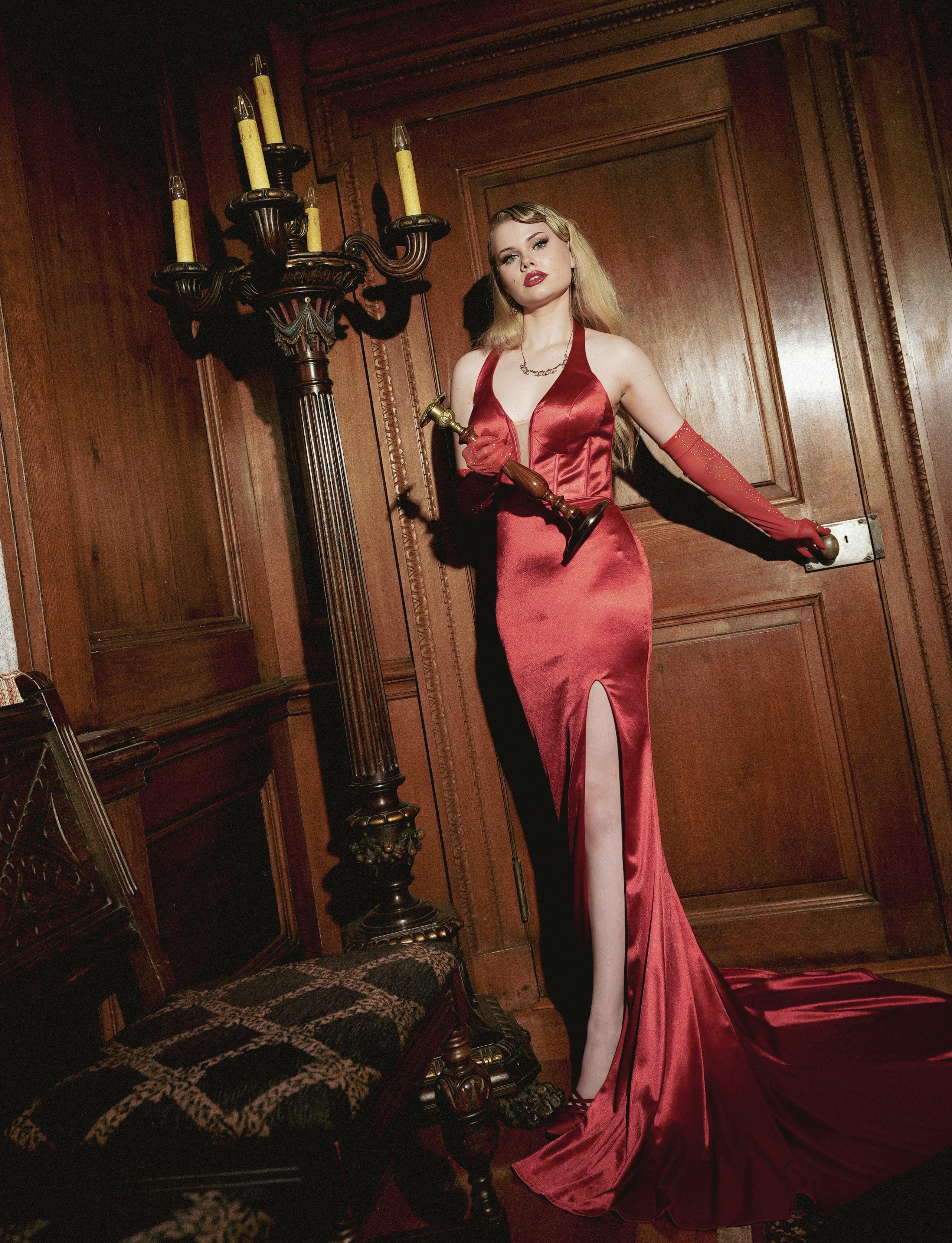
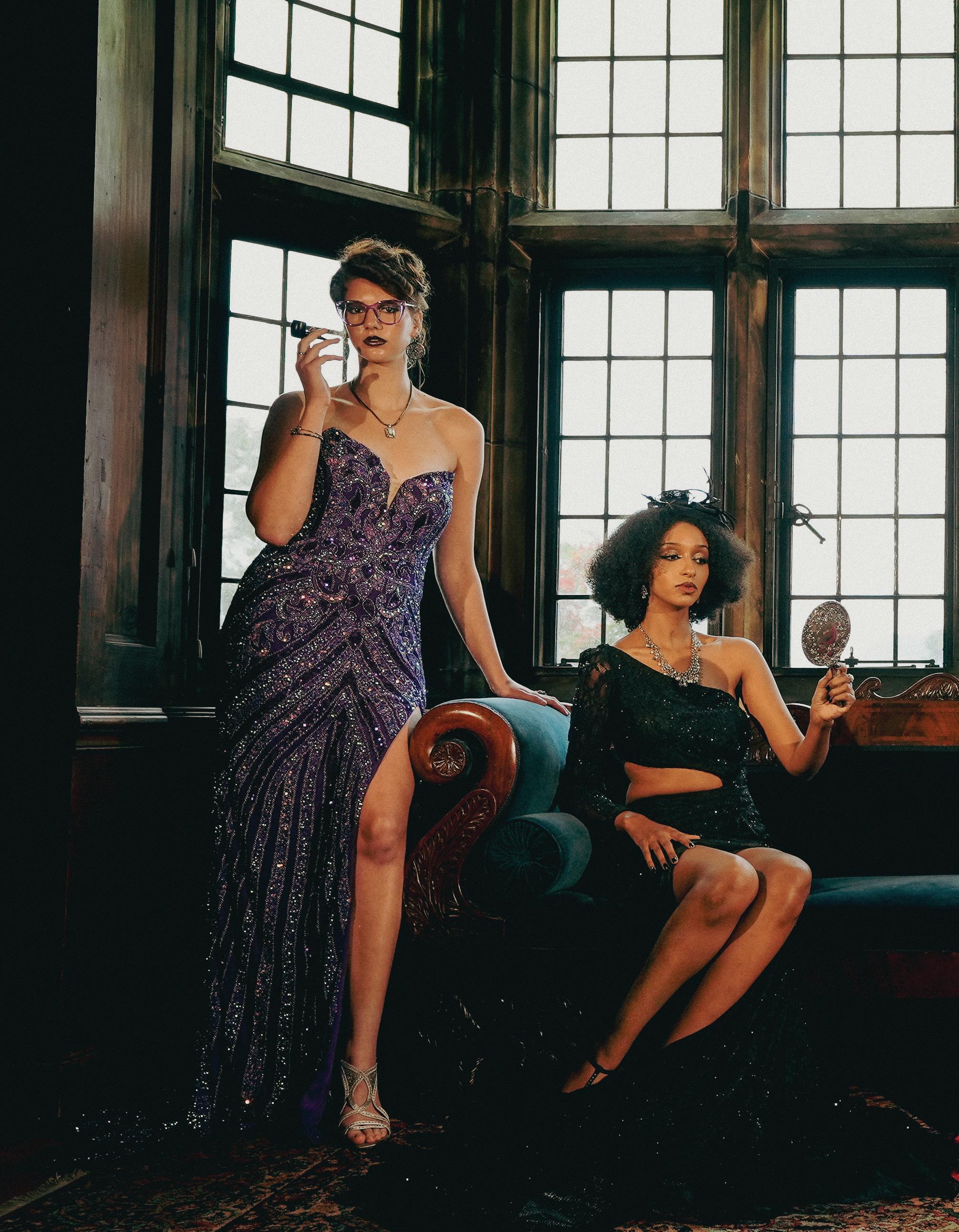
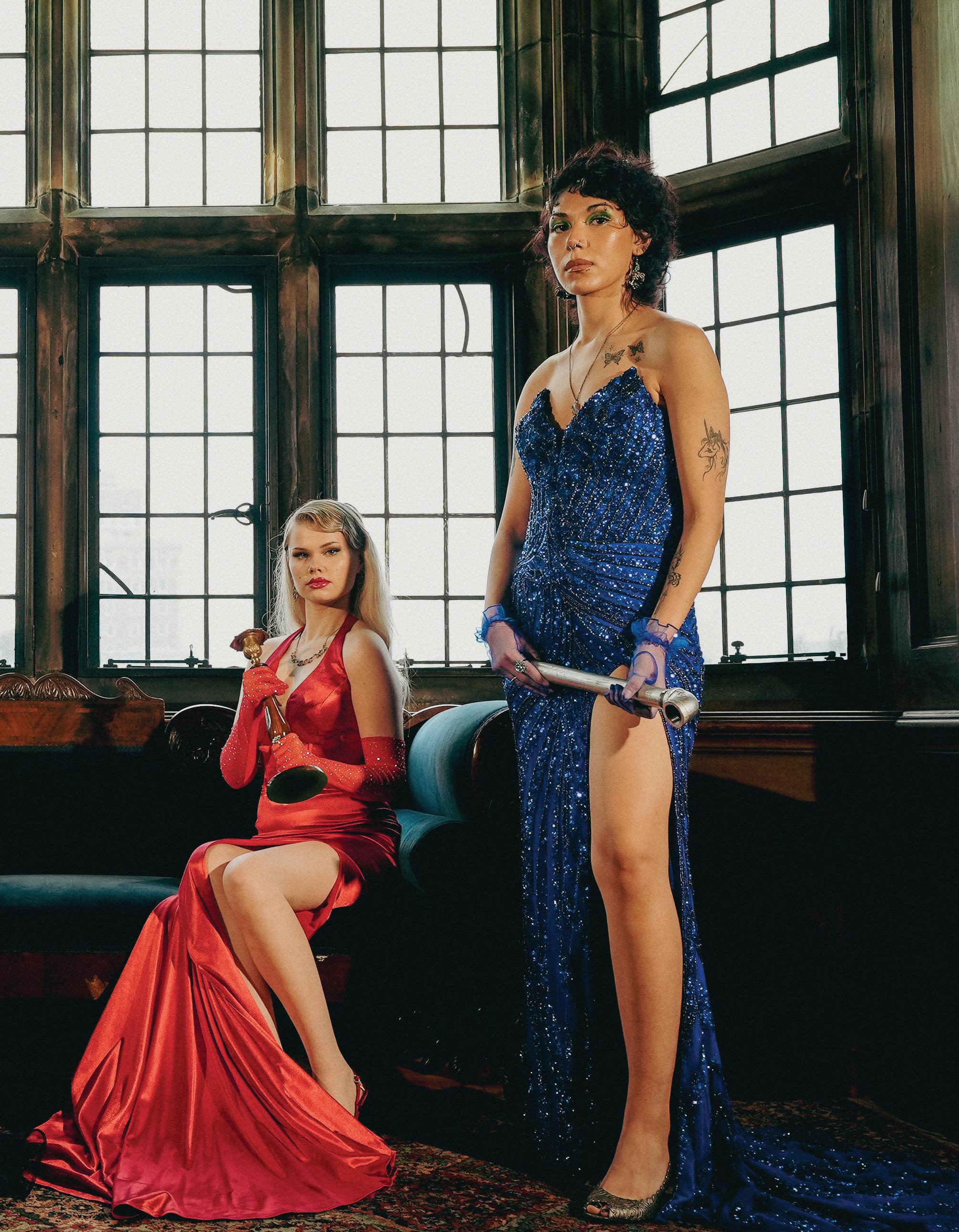
Let the Game Begin A Cold Case to WarmYourHeart…
Karns
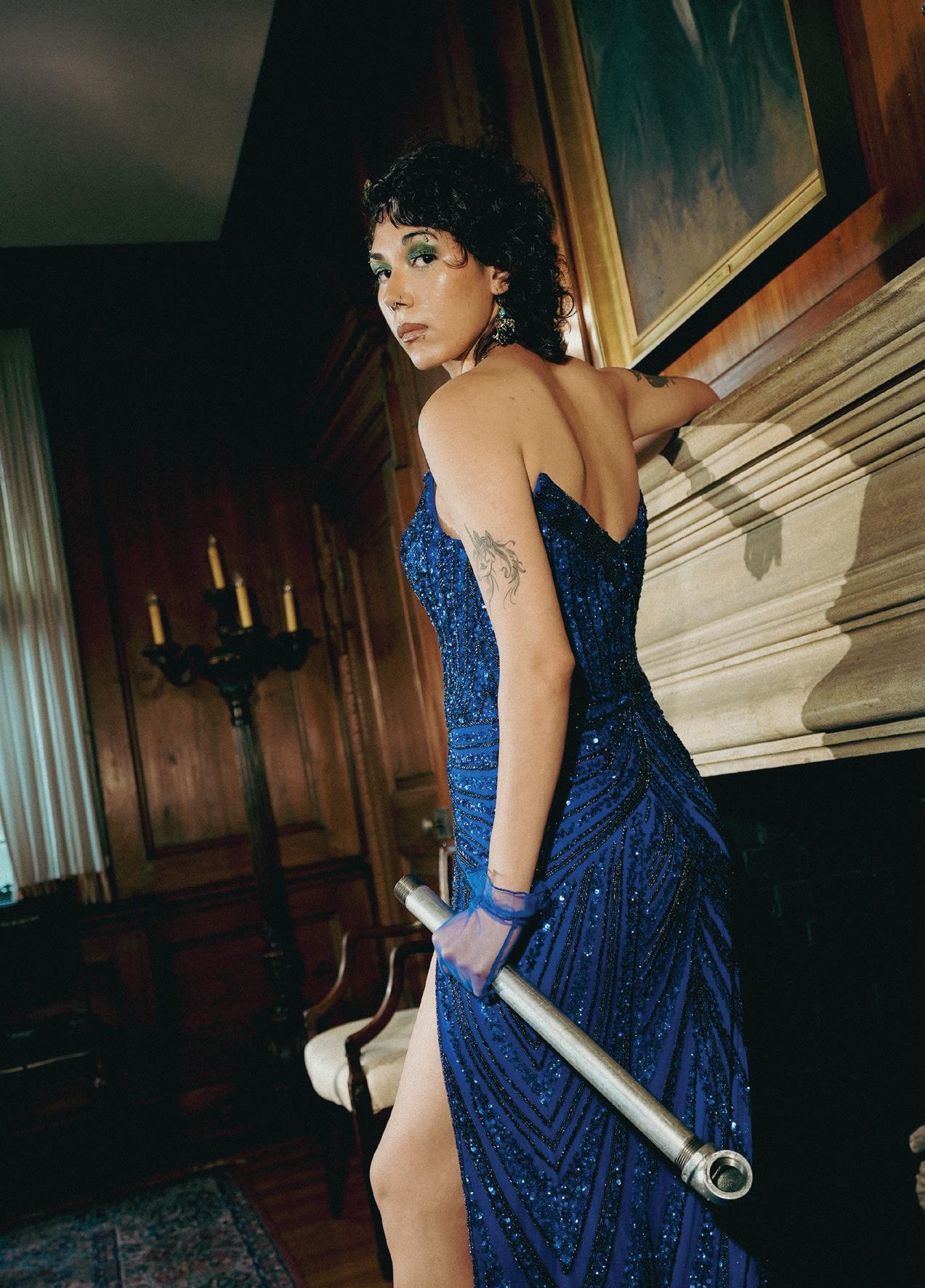
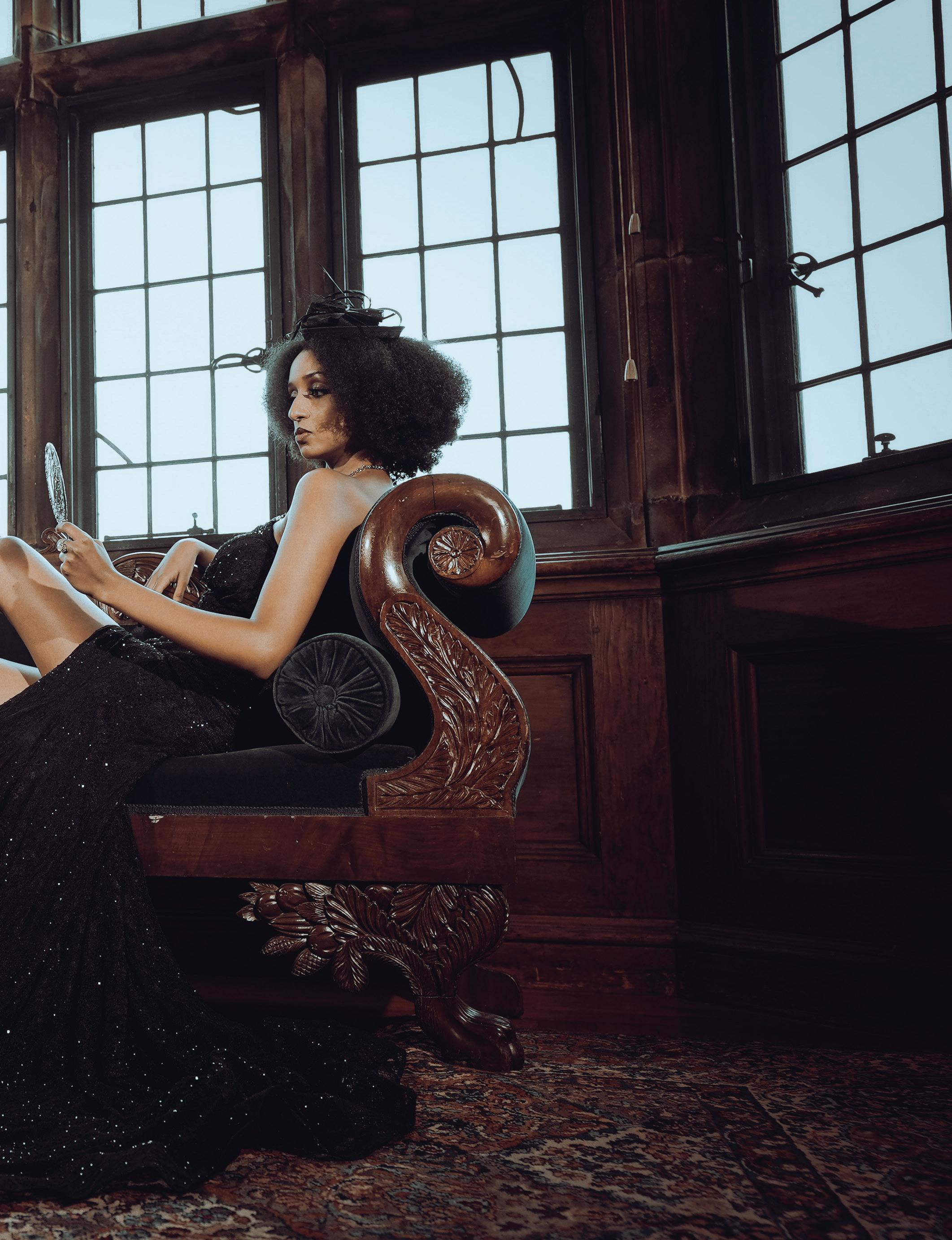
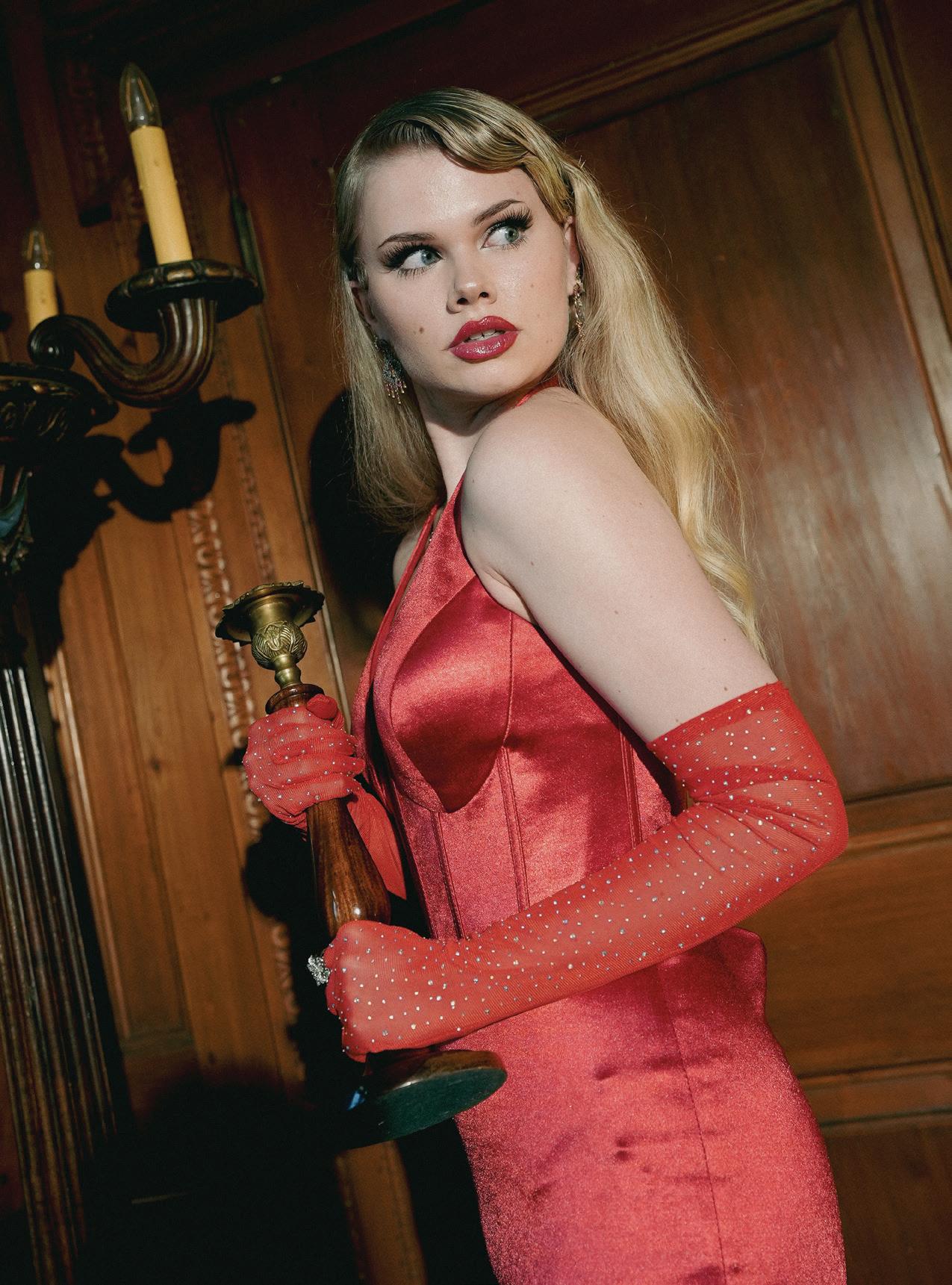
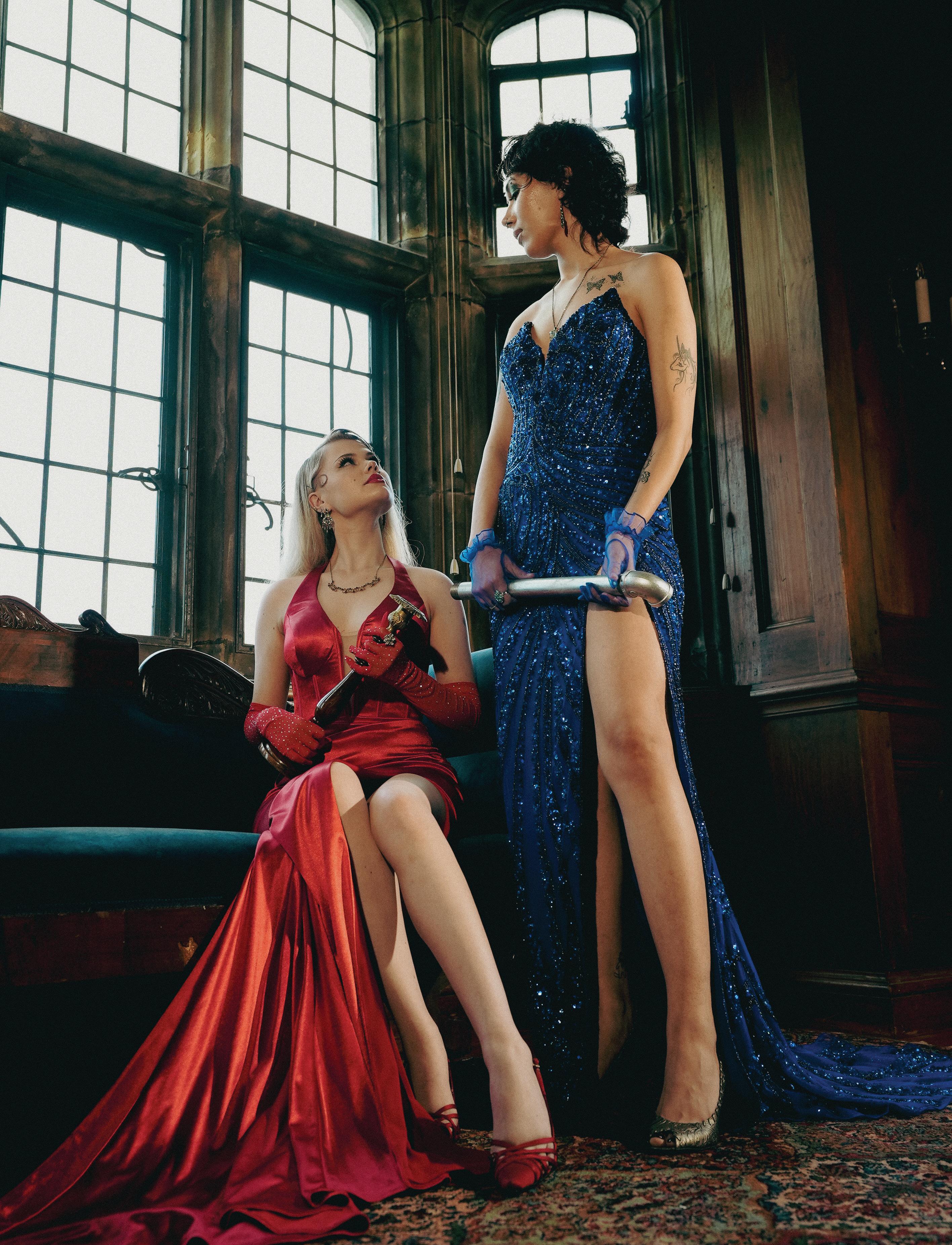
Four blackmail victims are summoned to Boddy Mansion for a mysterious—and ultimately deadly—dinner party. Inspired by Jonathan Lynn’s 1985 cult classic Clue, models draped in elegantly beaded gowns exude an air of distrust, suspicion, and—dare I say—murder. Lock in your alibis, and whatever you do, don’t bring a lead pipe to a revolver fight.
Julia
The board game that started it all was allegedly invented as a result of British pianist Anthony E. Pratt’s boredom during the air raid blackouts of the second World War.
Prior to the war, Pratt had attended many a murder-mystery themed dinner party as an entertainer, recording in his mind all the most bloodcurdling sights, scenes, and screams.
Later on, as a way to pass the time while sheltering in place, he and his wife translated those memories from evenings at English countryside estates onto a makeshift gameboard on their dining room table. Following the end of the war, Clue was released in 1949—going on to become a multimillion dollar family favorite and the inspiration for not only Lynn’s ‘85 film interpretation, but multiple spin off games and even a traveling musical.
This October, lean into the mystery and let out your inner Tim Curry. But never forget—whether it’s taking bribes on behalf of your senator husband like Mrs. Peacock, or allegedly murdering them like Mrs. White—
we're all something.hiding
Creative Director: Kristina Wise
Creative Team: Miles Ragin, Bianca Justiniano-Padilla, Emma Ogden, Julia Karns
Models: Addie Beene, Gabrielle Leeper, Jolene Lopez, Mar Arab
Photographer: Elizabeth Murphy
Hair: Colrain Reed
MUA: Kristina Wise, Addie Beene
Assistant MUA: Maryam Yahya (Salon Vivace)
Photoshoot Conducted at The Branch Museum of Design, Richmond, VA
Gowns Courtesy of Lex’s of Carytown
Dress For the Job You Want
A Study of Workplace Fashion
While the phrase “dress for success” may be widely regarded as a cliché, its message remains relevant to making a memorable first impression and building a strong professional identity.
Author John T. Molloy first popularized the term in his groundbreaking 1975 book, “Dress for Success,” and later “The Woman’s Dress for Success Book” in 1977. Both books publicized the concept of power dressing and established the idea that dressing professionally in the workplace projects capability, strength, and overall confidence. The content of the books is closely linked to the notion of enclothed cognition, which posits that the clothing a person wears influences their thoughts, feelings, behaviors, and self-perception consistent with the garment’s perceived significance. The type of clothing worn on the job reflects the workplace environment and varies substantially by occupation.
The first step in dressing for the job you want involves
determining the dress code and dressing in a way that demonstrates an understanding of the professional norms in that environment. No matter the industry—observe and take note of what managers, leaders, and successful coworkers are wearing and emulate them. Determine what style of clothing is appropriate and adhere to it consistently.
Dress codes for organizations generally fall into three categories: casual, business casual, and formal. Creative industries and freelance positions, such as graphic design, marketing, writing, and entertainment, often have casual attire guidelines that allow clothing staples such as simple blouses, polos, non-distressed jeans, and sneakers to be worn. Careers in industries such as IT, education, and general office support often require business casual looks that blend traditional professional attire and comfort. For these occupations, collared shirts, well-tailored blazers, midi skirts, pumps, and loafers are appropriate. Lastly, for careers in fields such as finance, politics, and
law, formal dress codes are enforced to maintain tradition and authority. Tailored suits with ties for men and pantsuits for women project professionalism and respect for the job.
To develop a professional wardrobe, invest in versatile pieces that contribute to several outfits, such as blazers, slacks, and pencil skirts in neutral colors and patterns. These pieces can be dressed up or toned down depending on the occasion. Commit to two or three colors and one pattern per outfit for a look that is equally cohesive and stylish. Choose accessories like jewelry, belts, and handbags that accent the look, not detract from it.
While there is no universal workplace clothing style, it is important to wear clothing that adheres to organizational guidelines, but that also allows for selfexpression and for employees to exude the confidence needed to make a solid impression and be their most productive selves.
Liz DeFluri
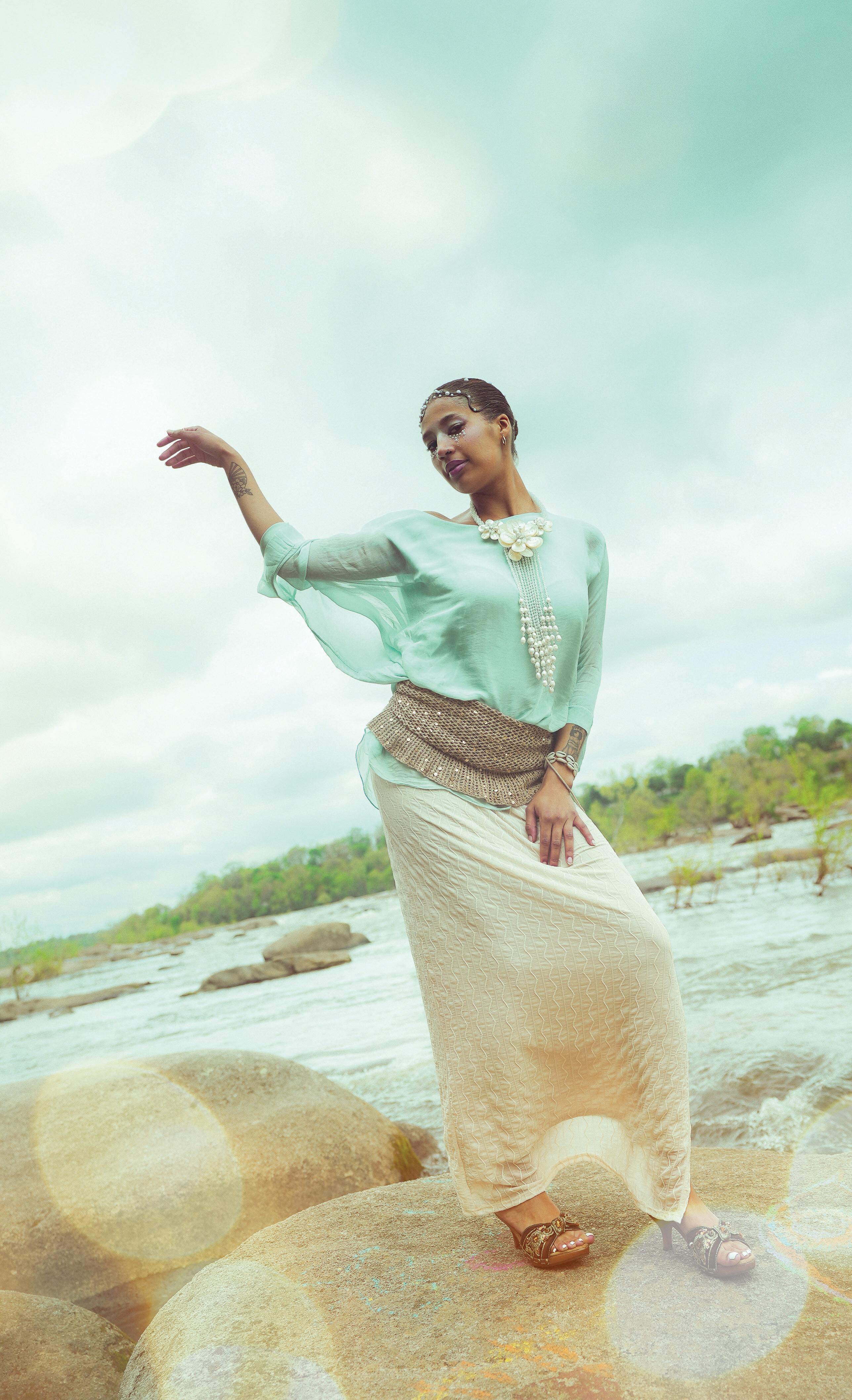
Mermaids
Liz Defluri
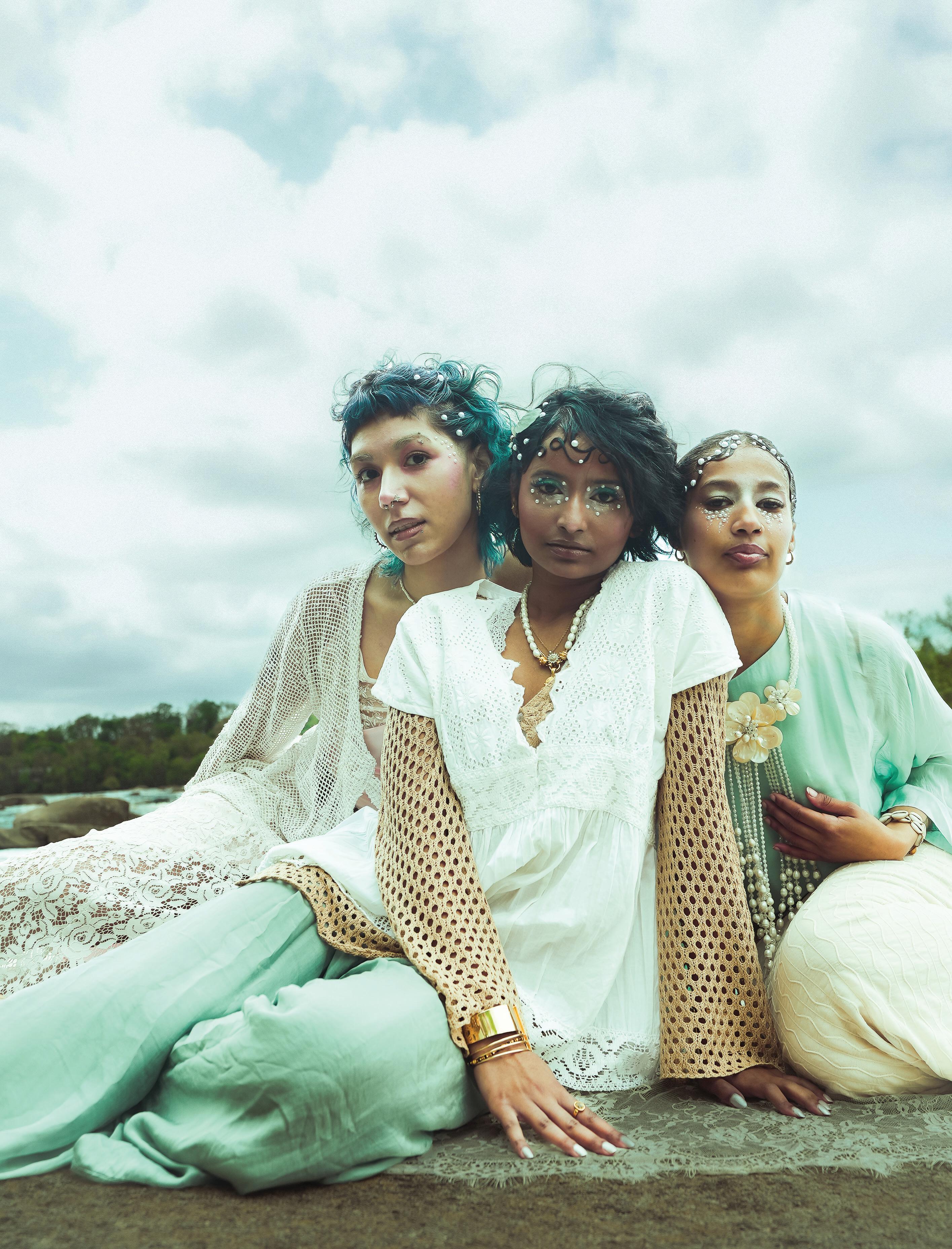
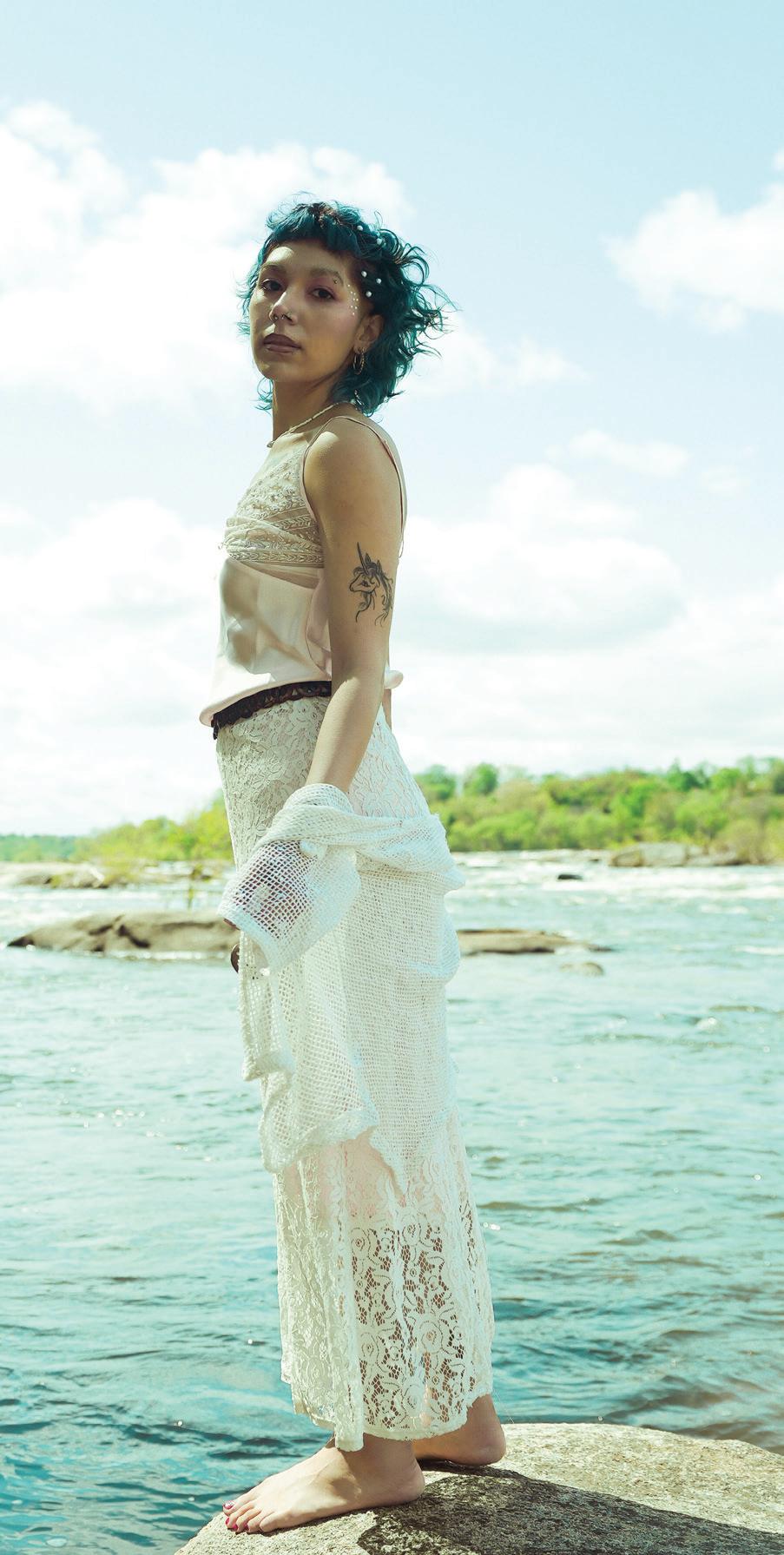
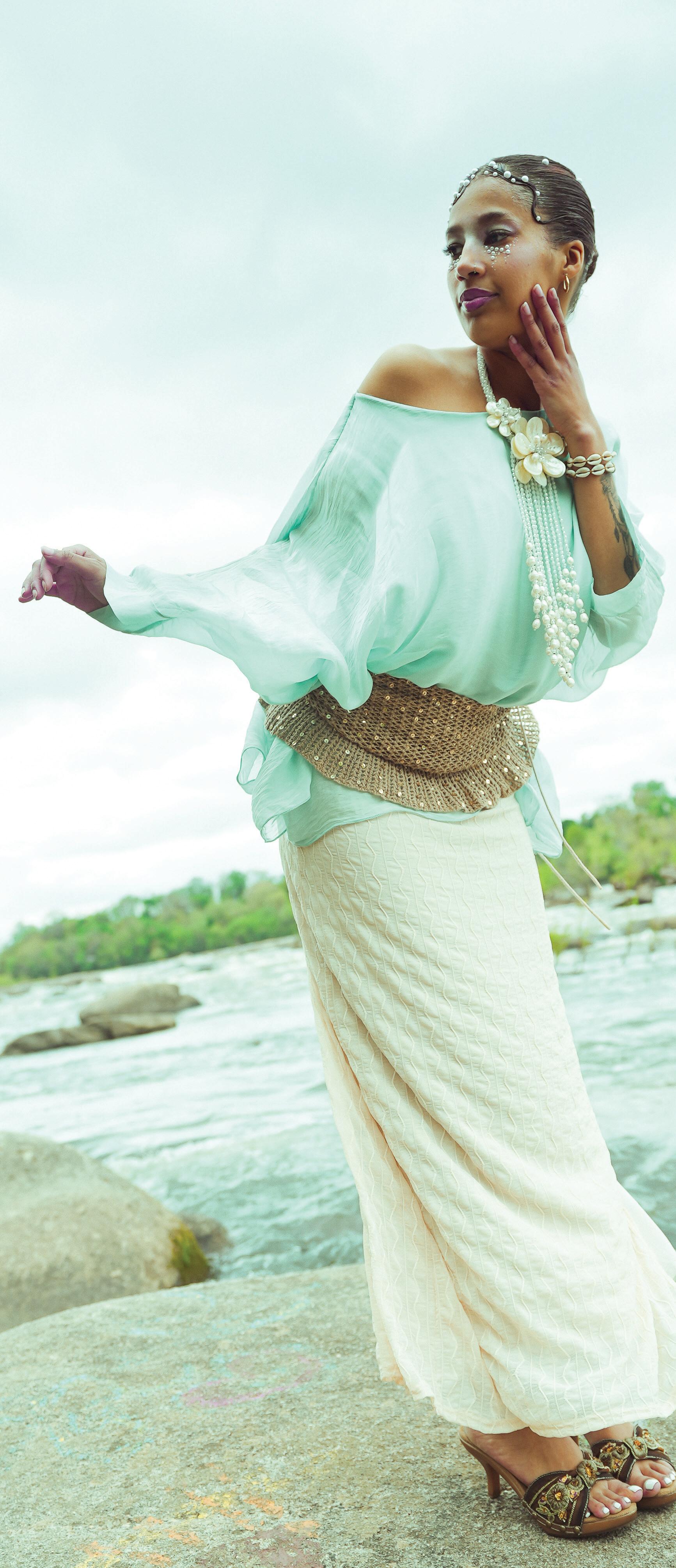
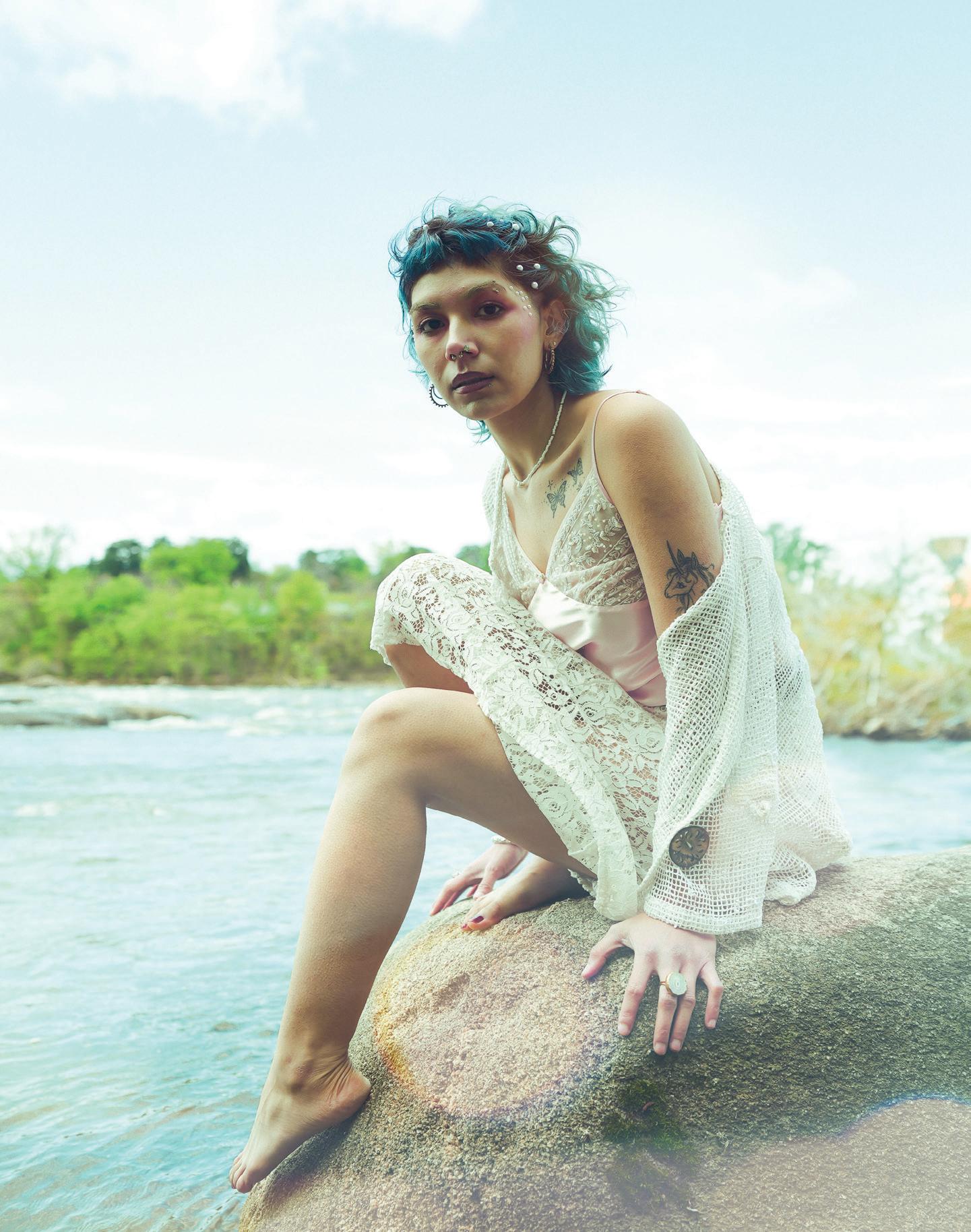
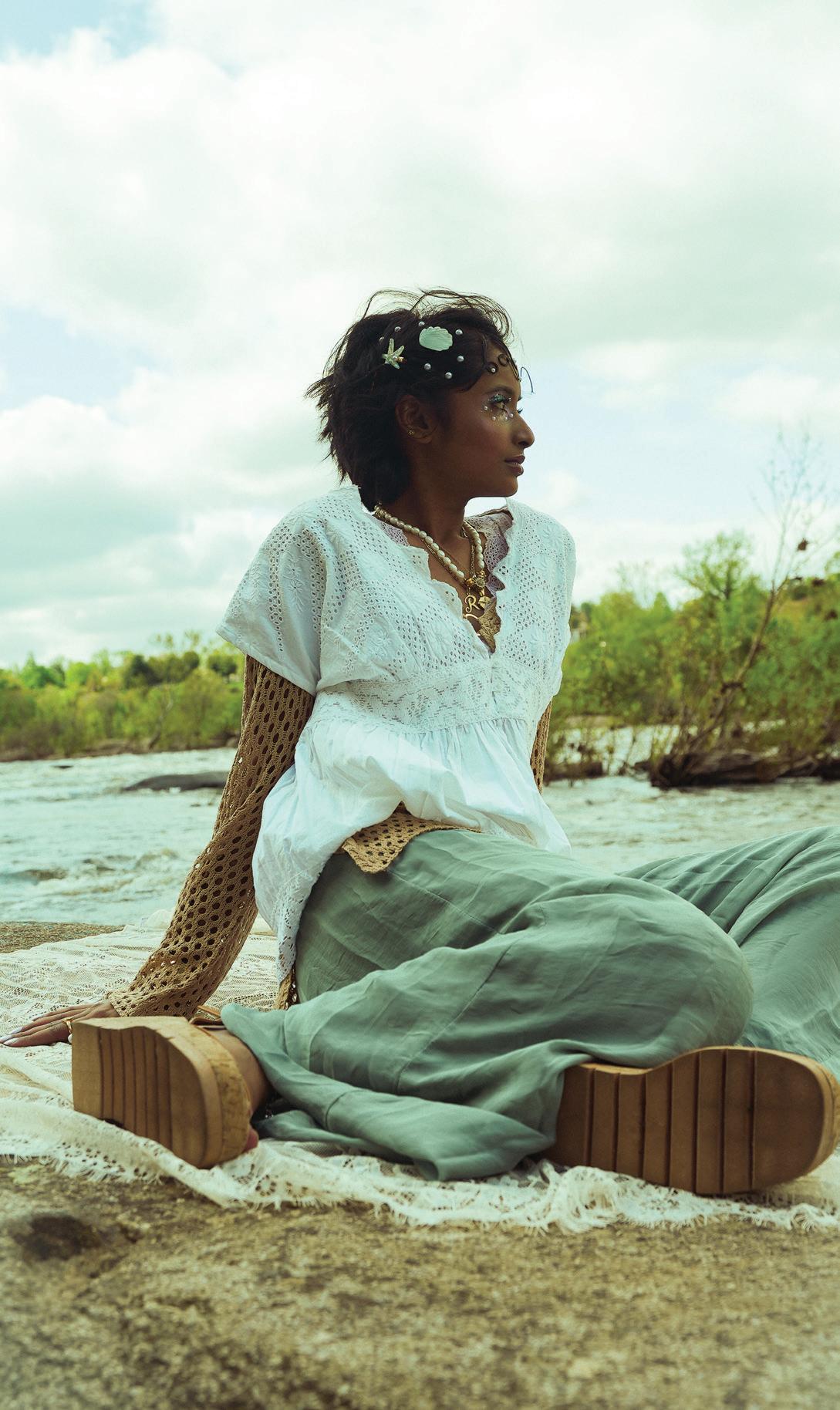
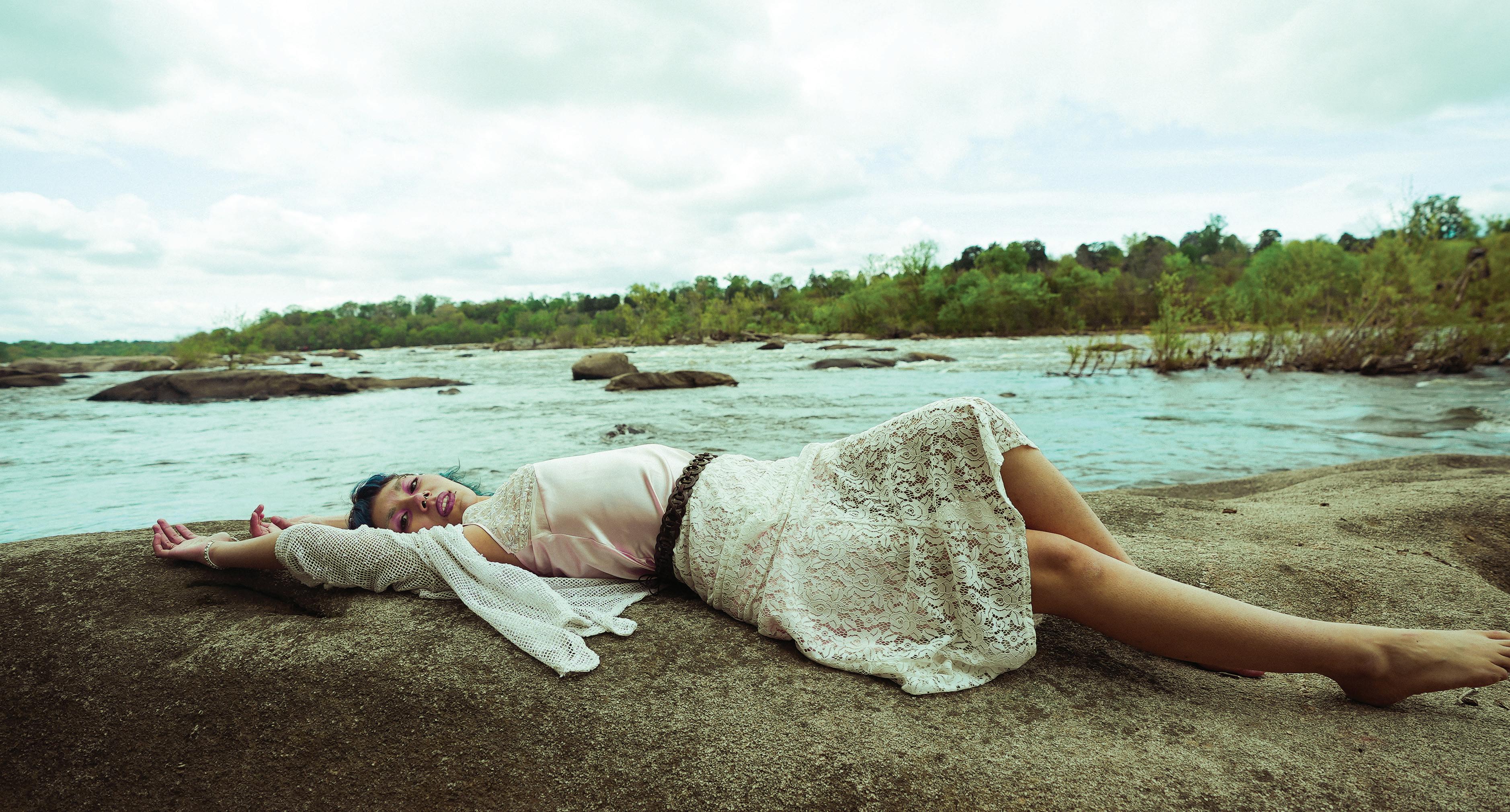
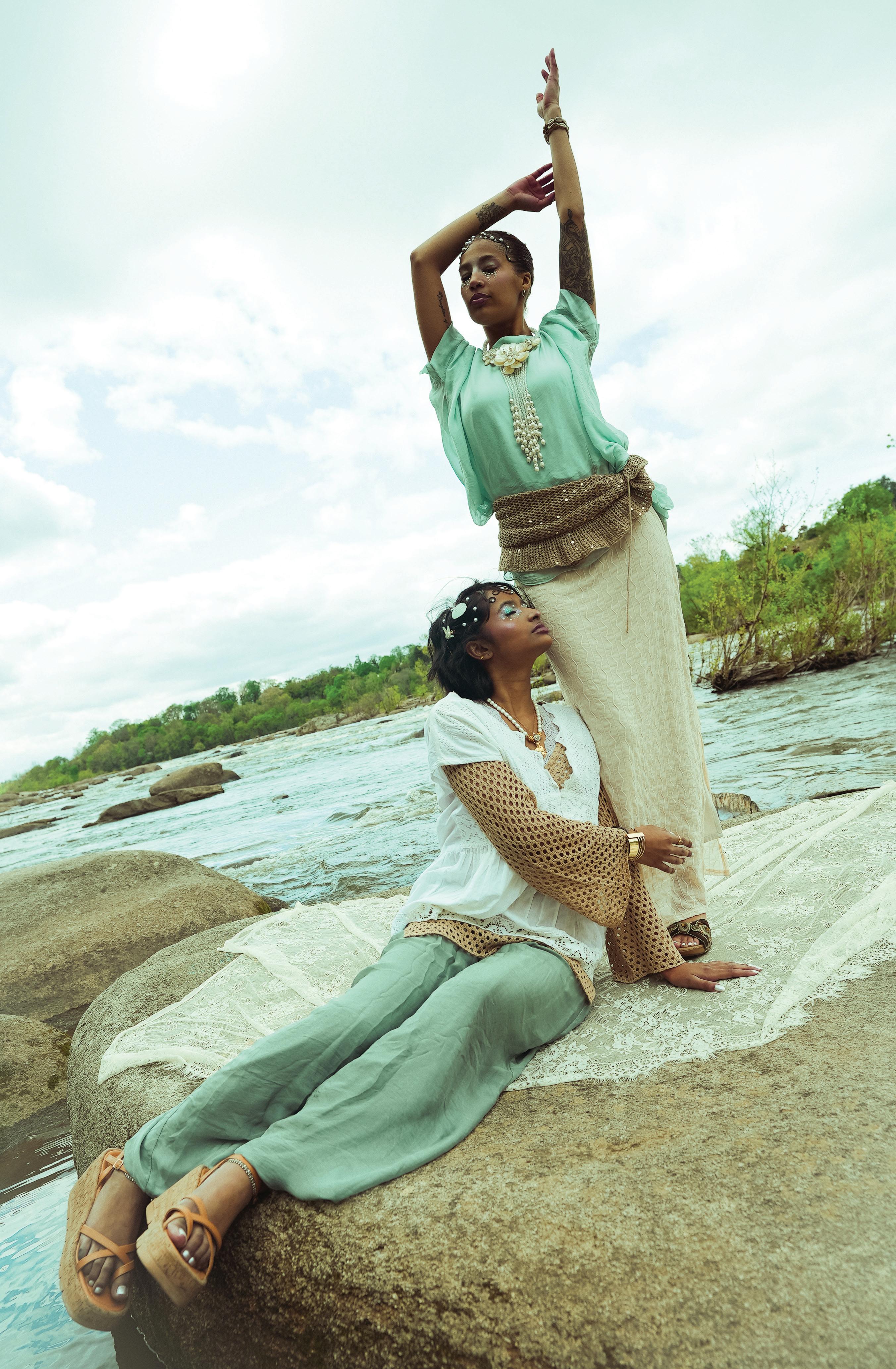
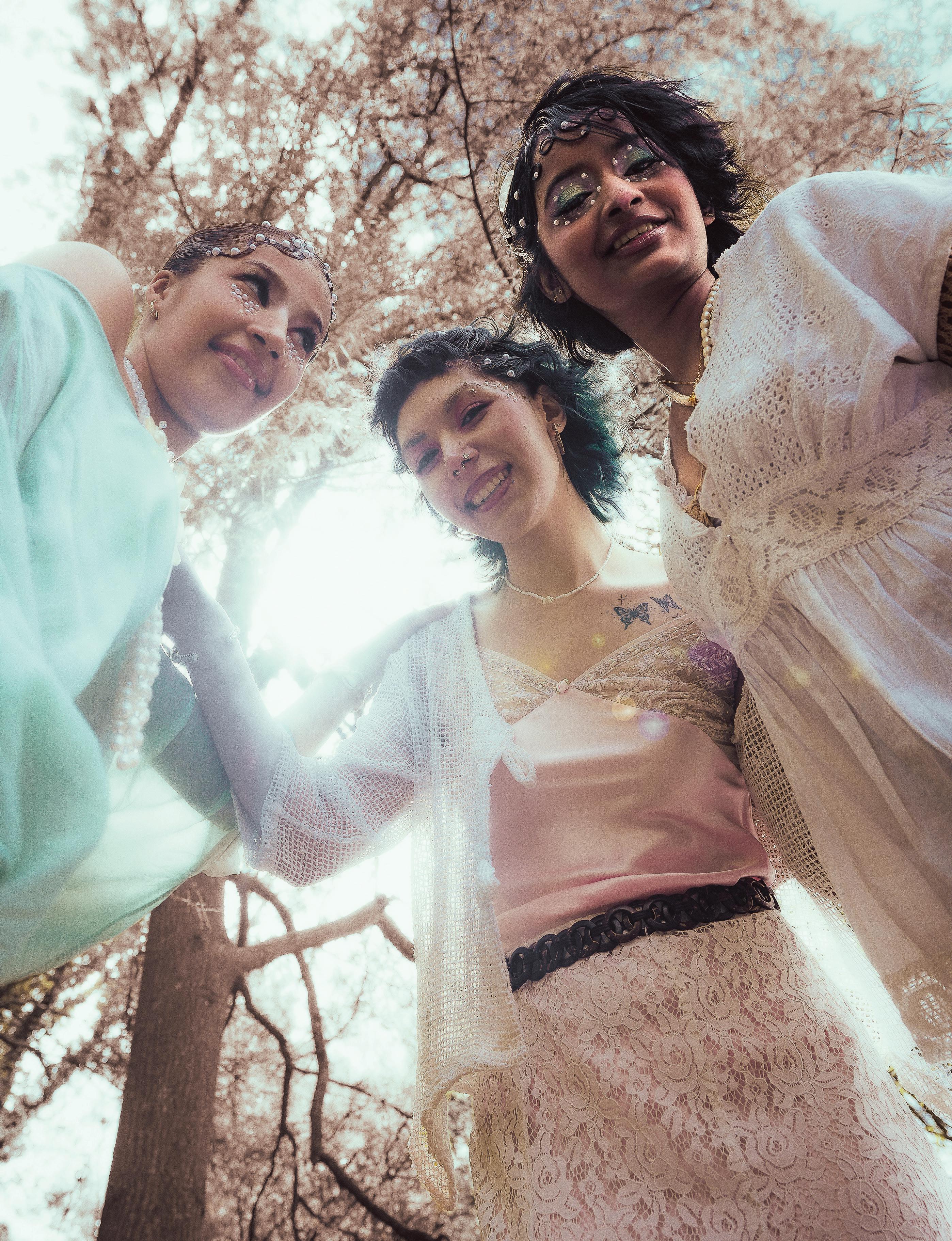
Water splashes, sequins shimmer, and fishtails glisten under both sunlight and the soft glow of fairy lights adorning the walls of childhood bedrooms. Mermaids aren’t just mythical creatures; they represent freedom, femininity, independence and an irresistible charm that lets young girls’ imaginations and creativity run wild.
The childhood fascination with mythological creatures and magic is often expressed through dress-up. Many young girls who grew up in the 2000s recall the prevalence of mermaids in pop culture through films such as The Little Mermaid, Aquamarine and the television series H2O: Just Add Water. The characters in these films were regular teenagers facing everyday problems the audience could relate to, but with a fantastical twist that made them even more compelling.
Dress-up culture thrived within girlhood friend groups, not on the runways or on an influencer’s social media page. Clothing, makeup, and accessories are tools of selfexpression and individualism for young girls who are writing their own stories by stepping into them.
The styles put together during dressup were imperfect, experimental, and genuine. Mermaids symbolize a raw, untamed form of femininity that remains inspiring through each girl’s unique coming-of-age story.
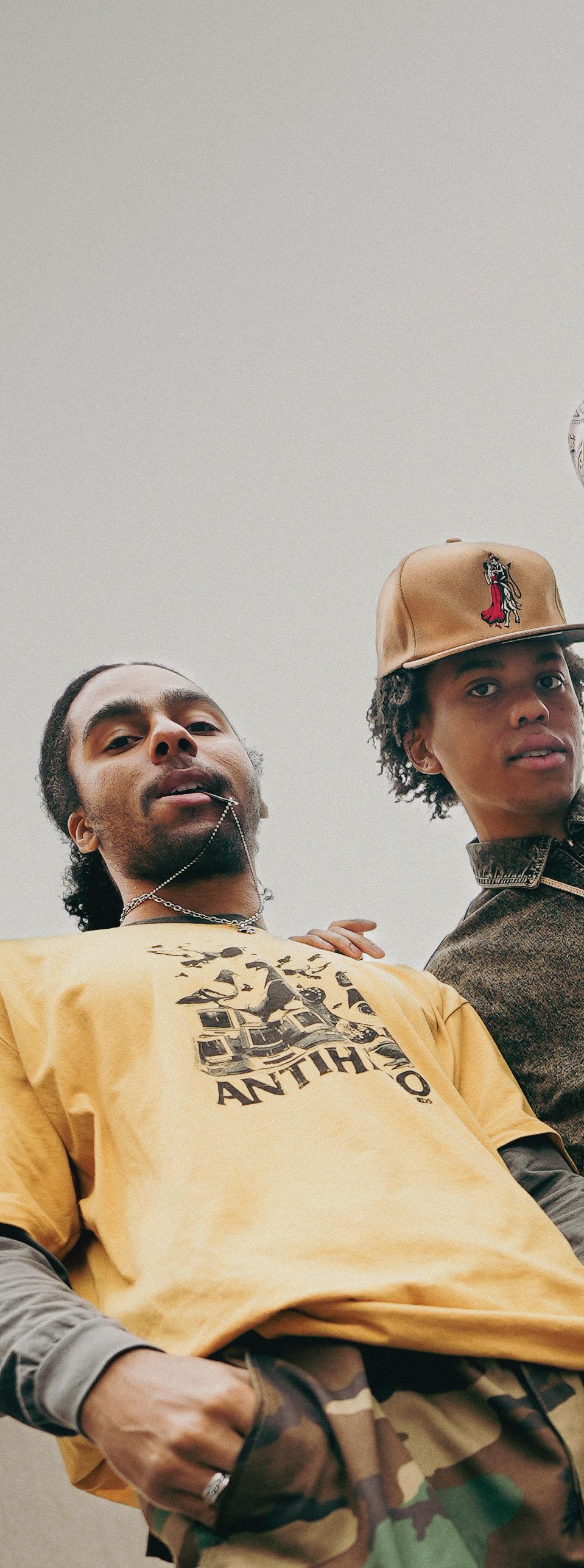
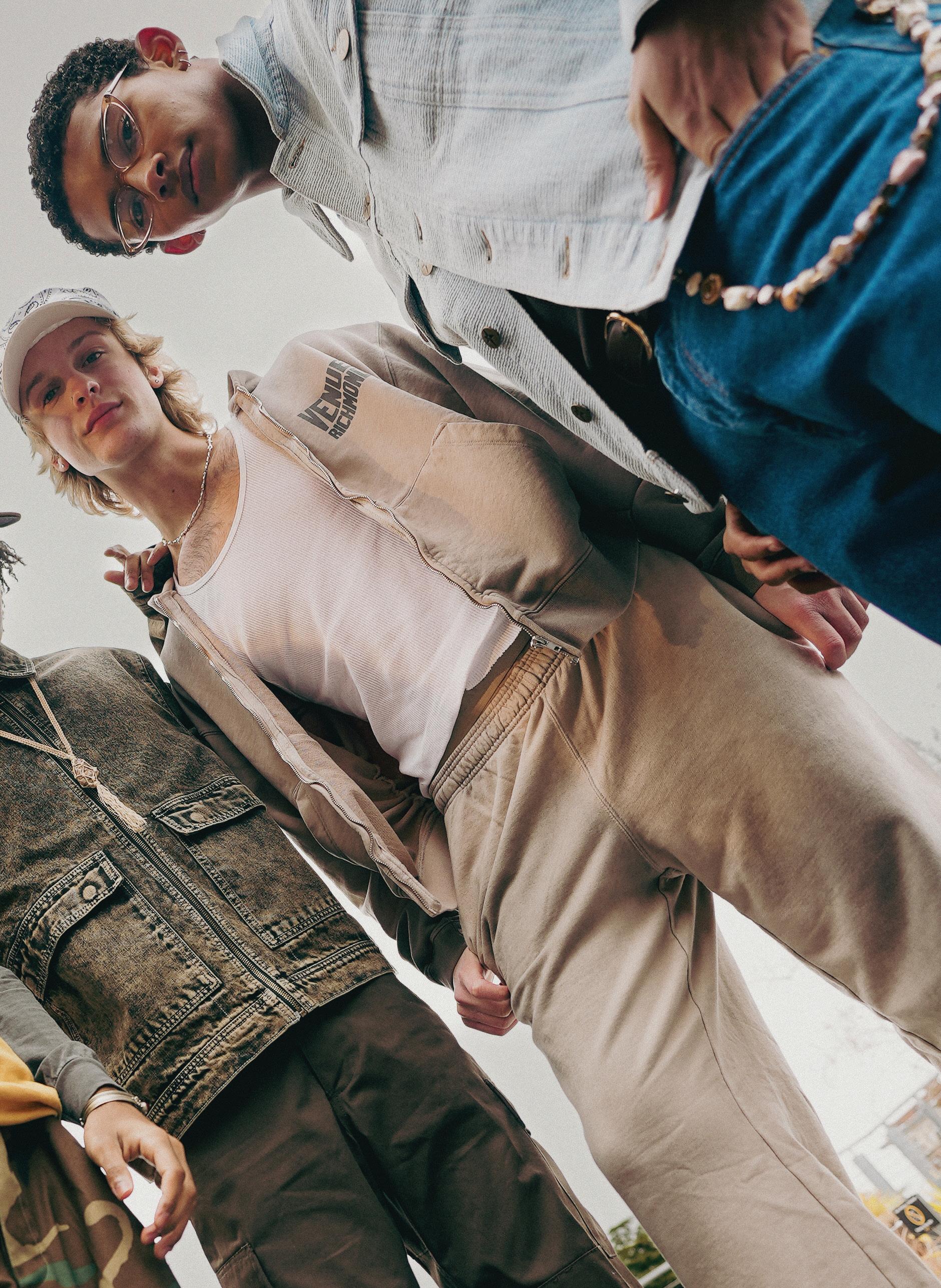
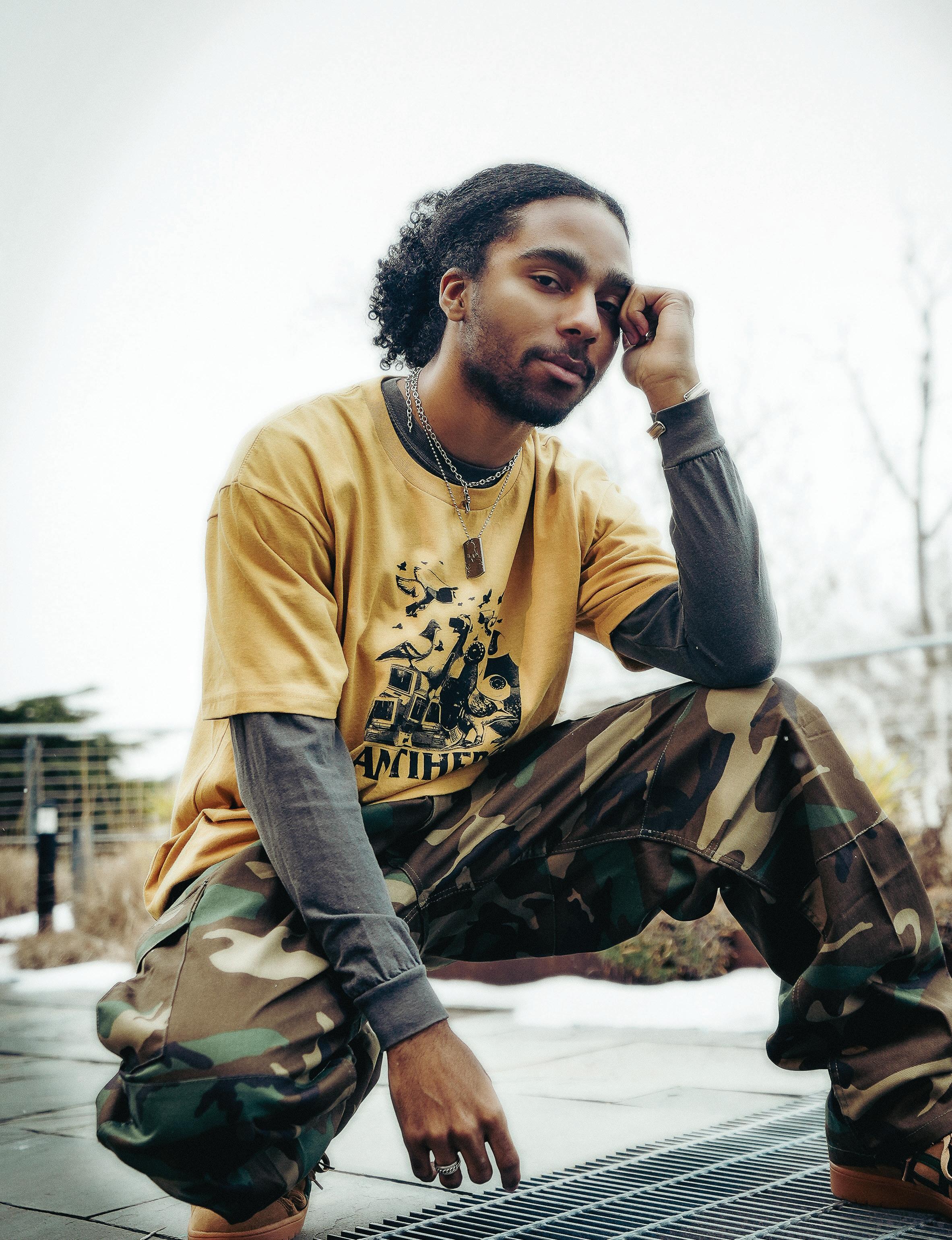
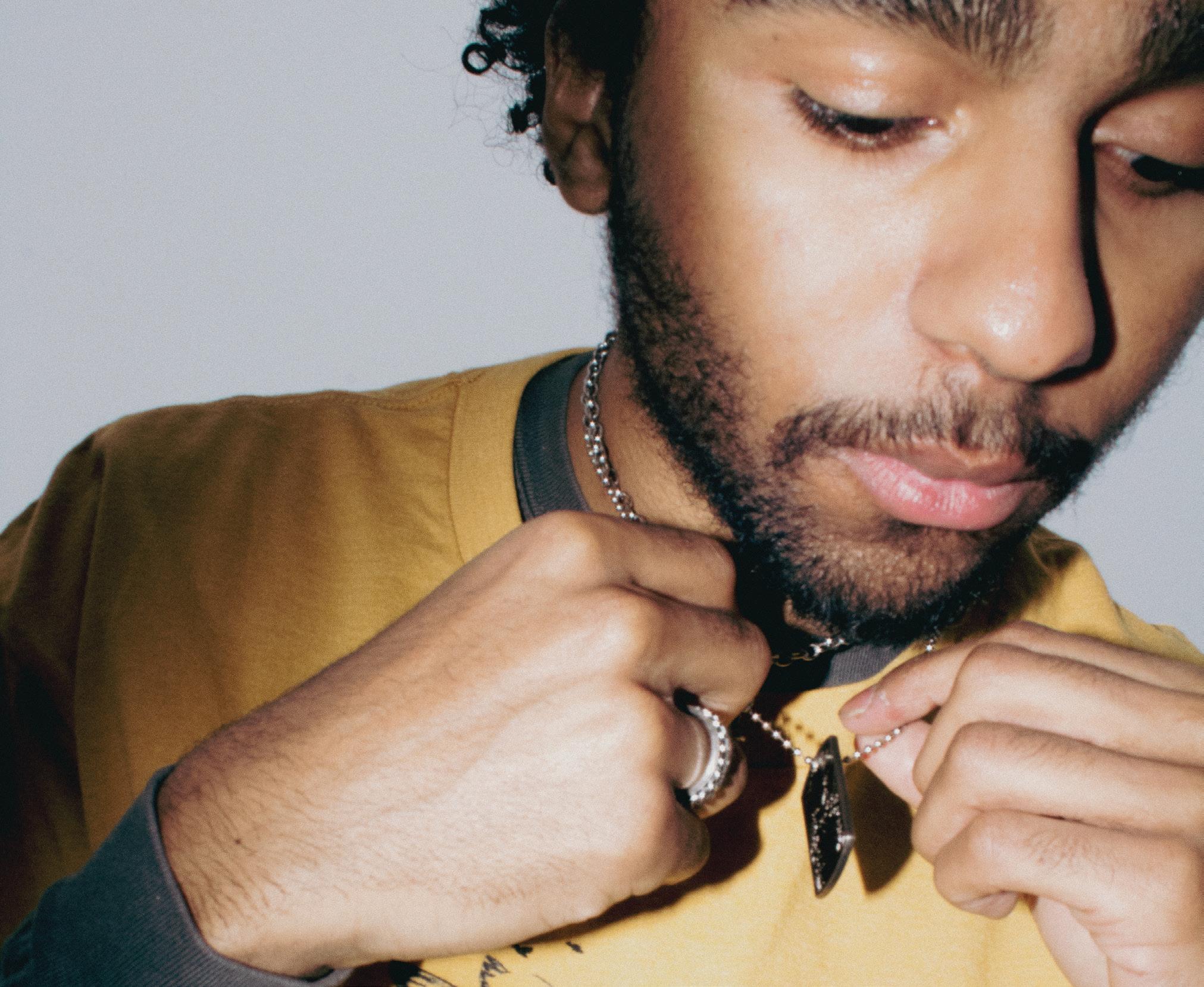
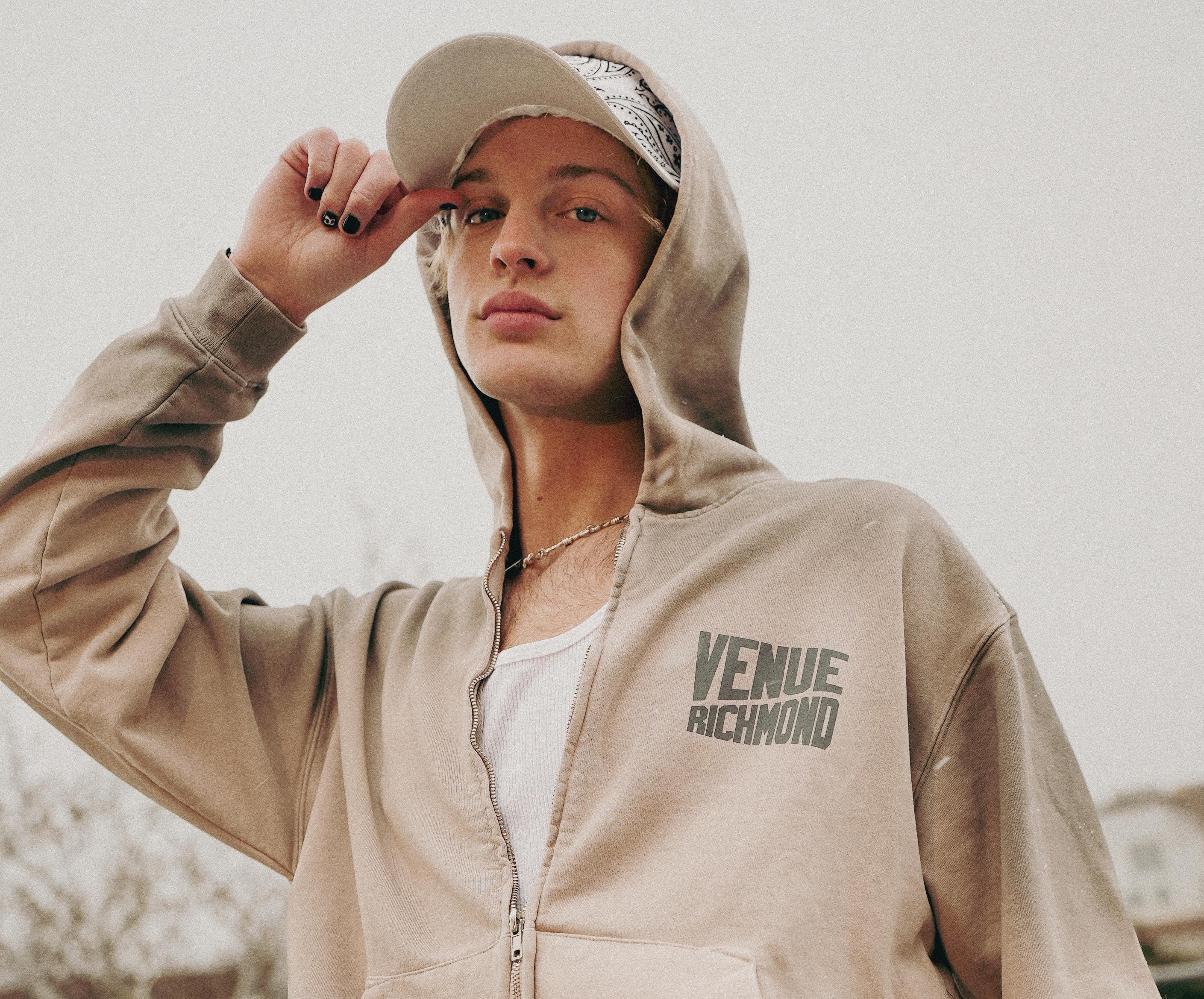
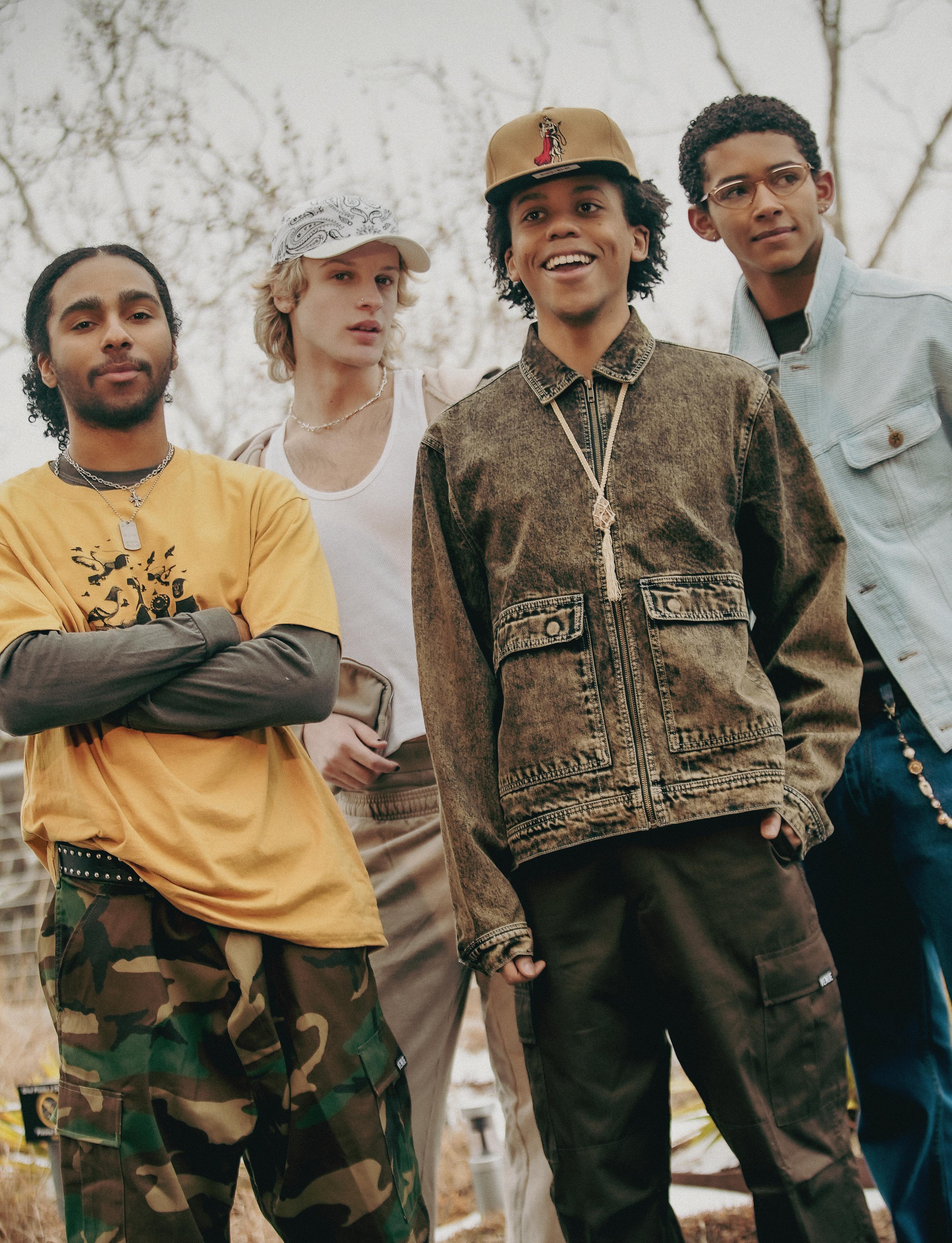
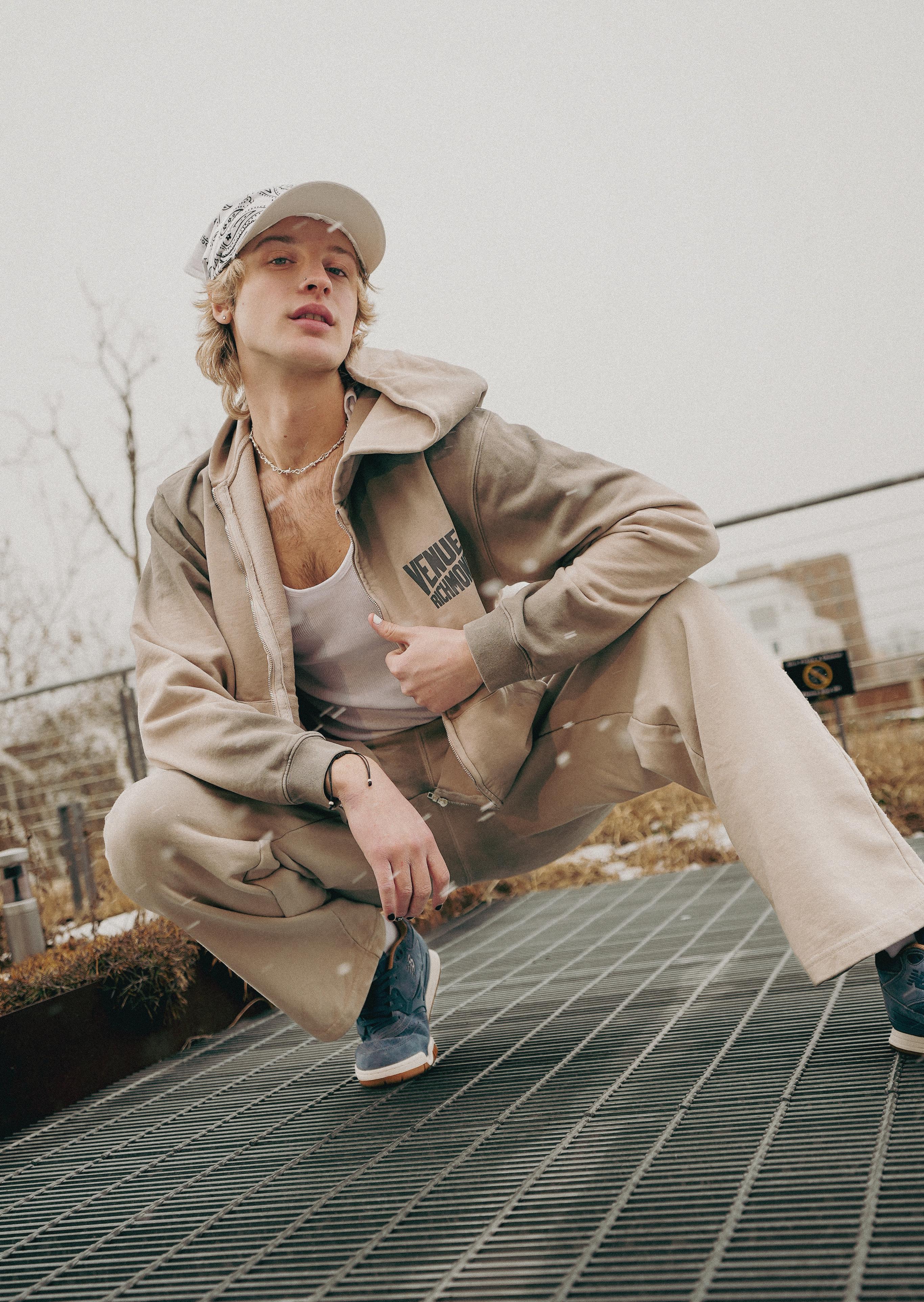
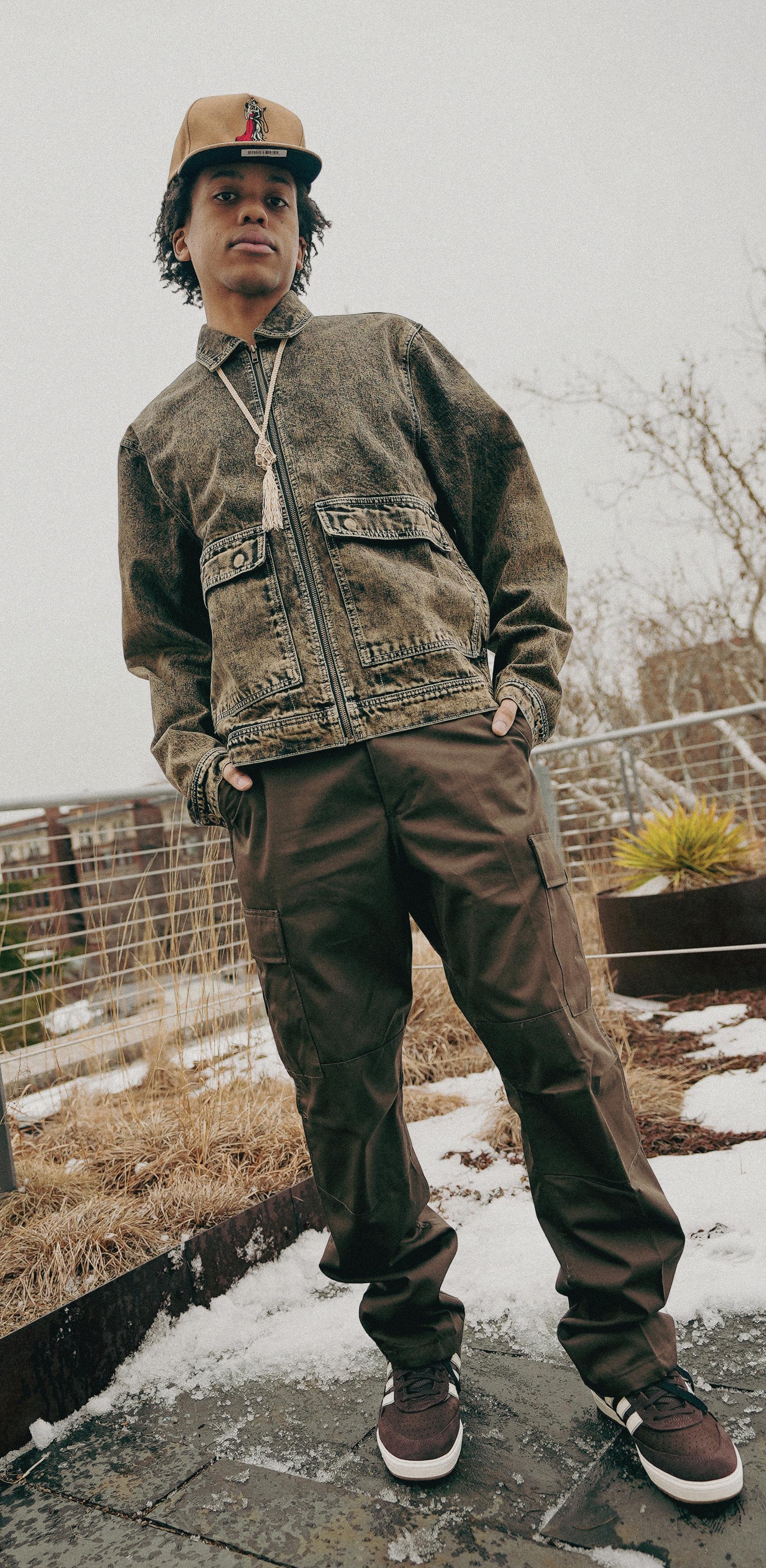
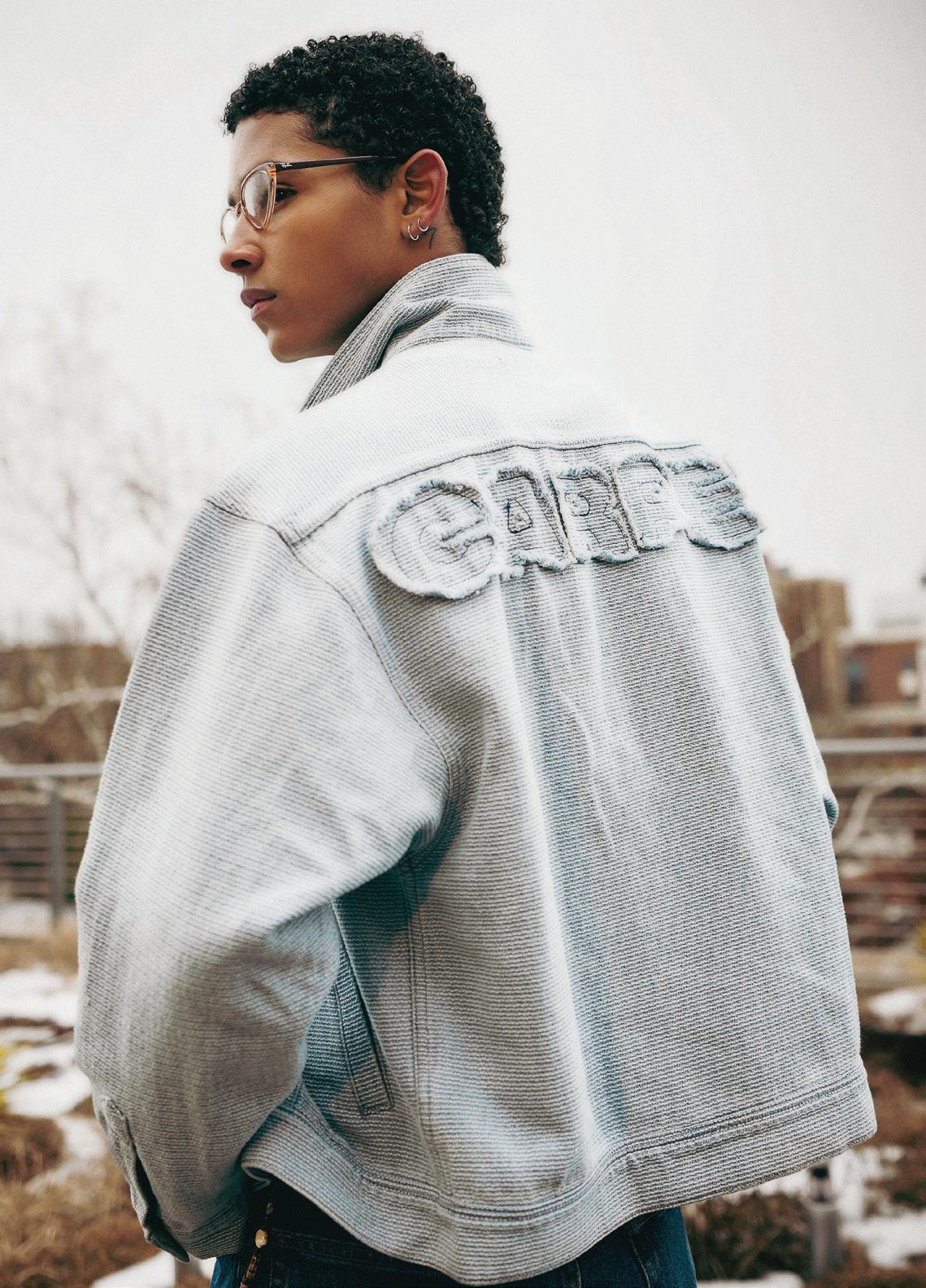
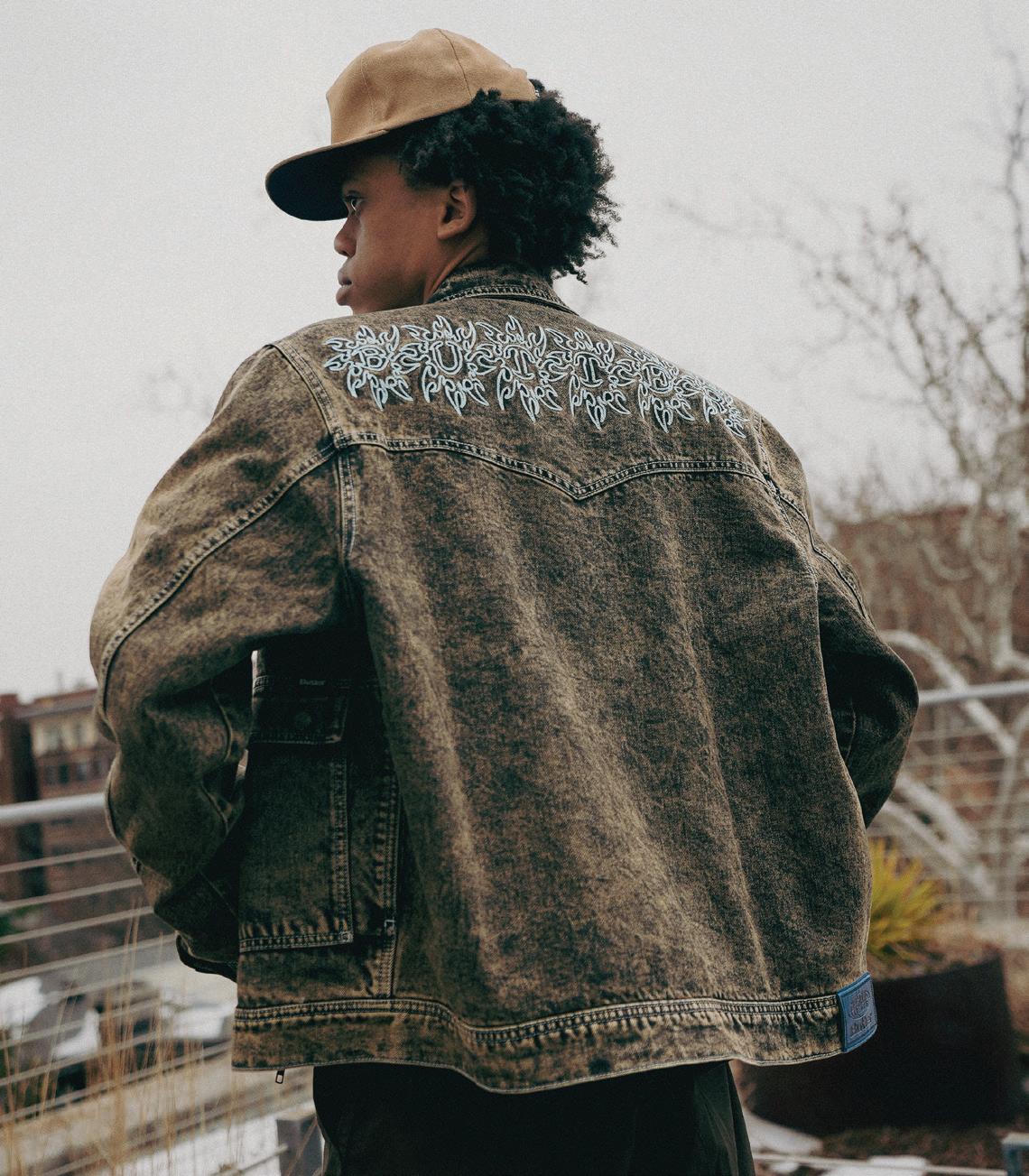
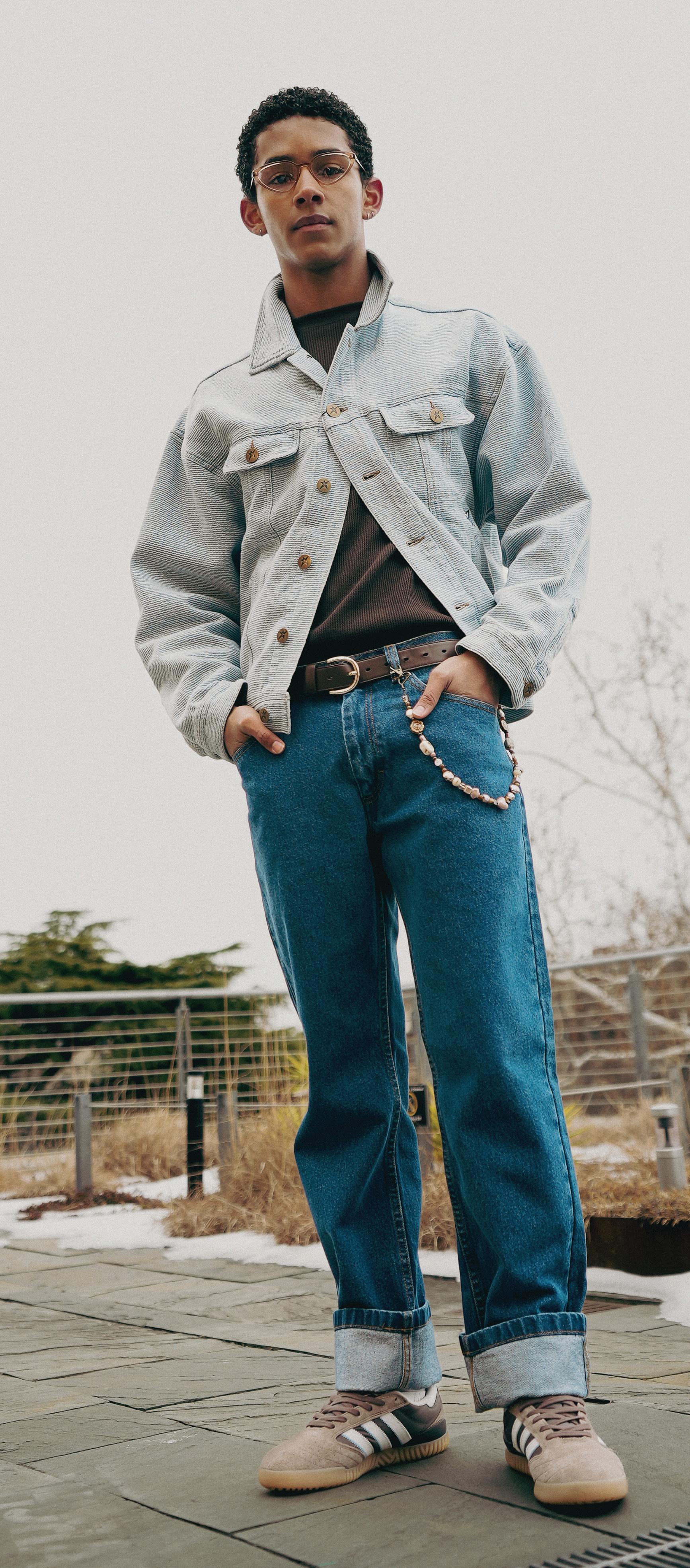
Every menswear wardrobe is built on a few everyday essentials that bring gravity to your closet. The triedand-true staples that are reliable, re-wearable, and easy—pieces that make pulling together an outfit uncomplicated, creating space for self-expression. A solid foundation allows accessories to do the talking. Jewelry, studded belts, baseball caps, or even socks can bring personality into an outfit without having to overthink it. In the age of algorithms, trend cycles have accelerated past a rate that any individual could hope to keep up with, creating fatigue and fueling overconsumption. However, good basics can be styled innumerable ways, allowing you to experiment with the details— to sprinkle in some edge, swagger, or prep depending on what feels right.
In collaboration with Venue Skateboards in Richmond, Creative Director Kristina Wise demonstrates how a goodquality pair of straight-leg jeans, a crisp tee or structured jacket, or even a high-quality sweatsuit serves as the perfect canvas. Paired with pant chains, funky pendants, or a unique Adidas Samba, the simplest staple pieces can become part of something deeply expressive. This philosophy aligns seamlessly with Venue Skateboards’ legacy. Since 1994, Venue has been a cornerstone of the Richmond skate scene—not only by selling durable decks and apparel designed to withstand wear, but by investing in the community—building skateparks, offering lessons, and fostering community. Their pieces are built for motion, impact, and longevity—naturally designed to be something you reach for time and time again. Playing with how you style your core wardrobe pieces allows you to evolve with trends without the financial or material cost of constantly buying new items. Investing in wellmade basics—and expressing yourself through accessories—creates a wardrobe that’s both personal and made to last.
Creative Director: Kristina Wise
Creative Team: Bianca Justiniano-Padilla, Emma Ogden, Julia Karns, Miles Ragin
Photographer: Elizabeth Murphy
Assisting Photographer: Thomas White
Models: Jaden Albuquerque, Jon Solomon Habahbeh, Larkel Kier, Wyatt Moser
Hair: Colrain Reed
Apparel Courtesy of Venue SkateboardsRichmond, VA
A MODERN RITUAL
Julia Karns
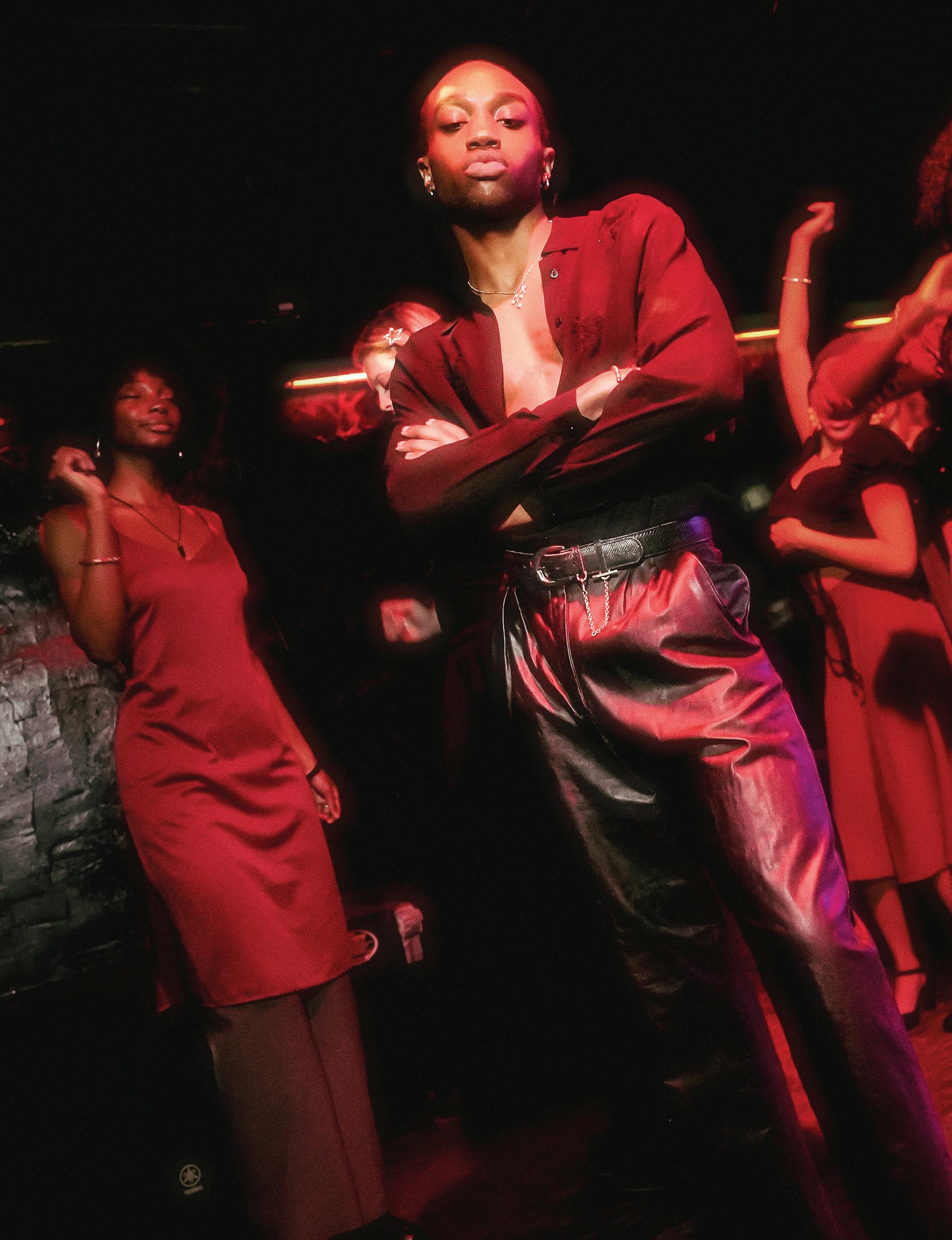
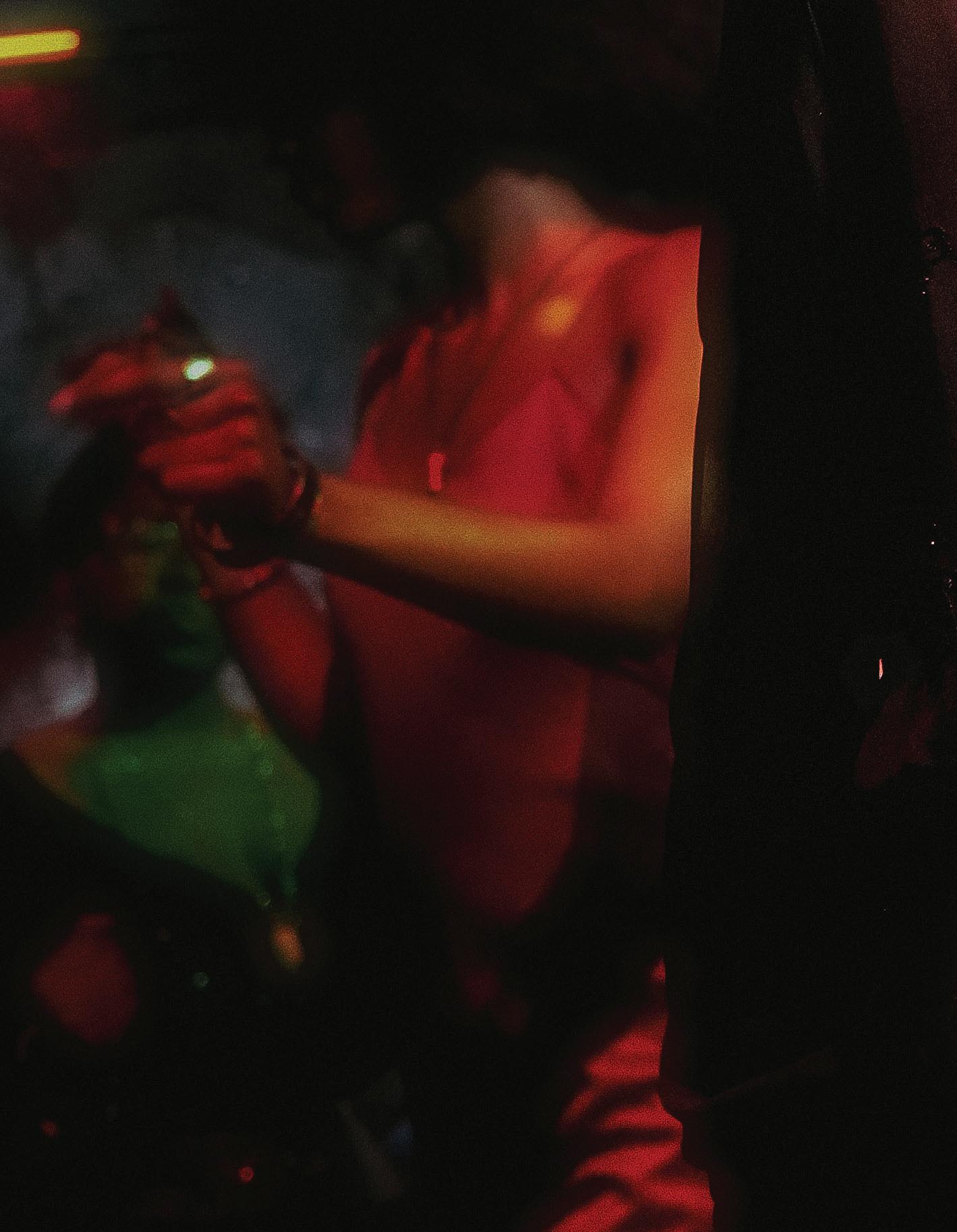
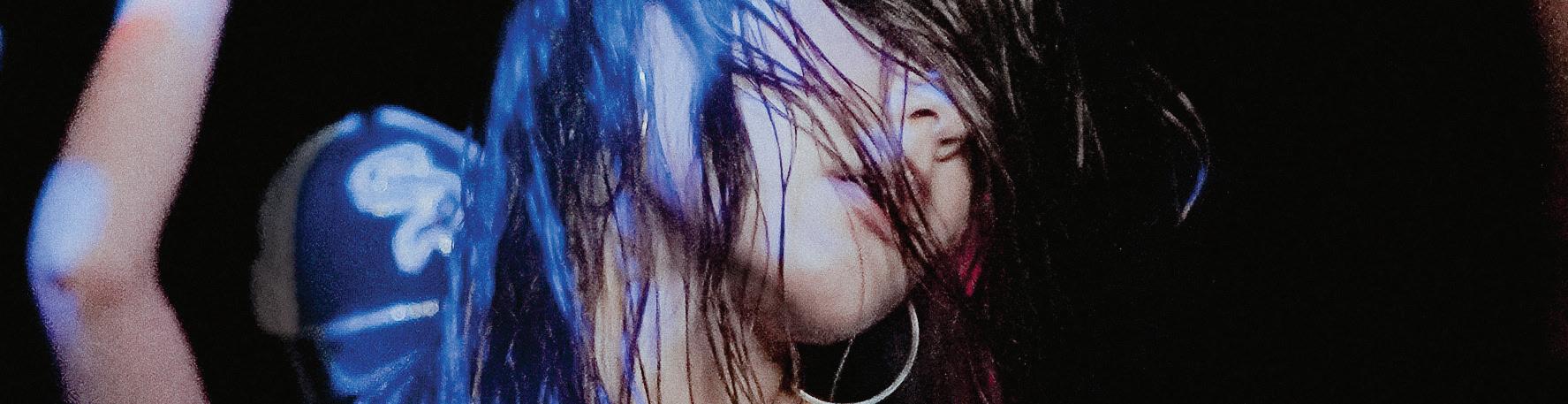
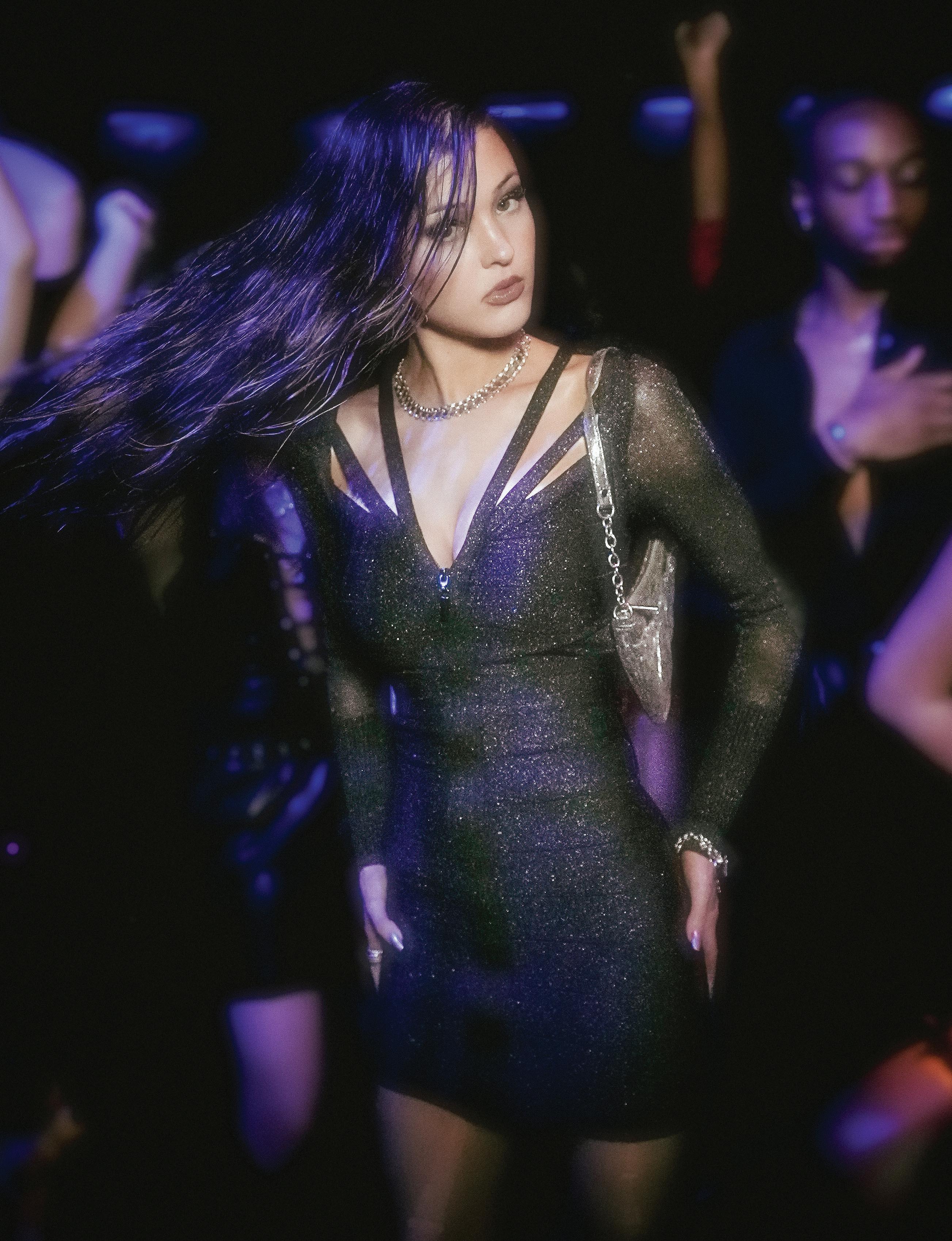
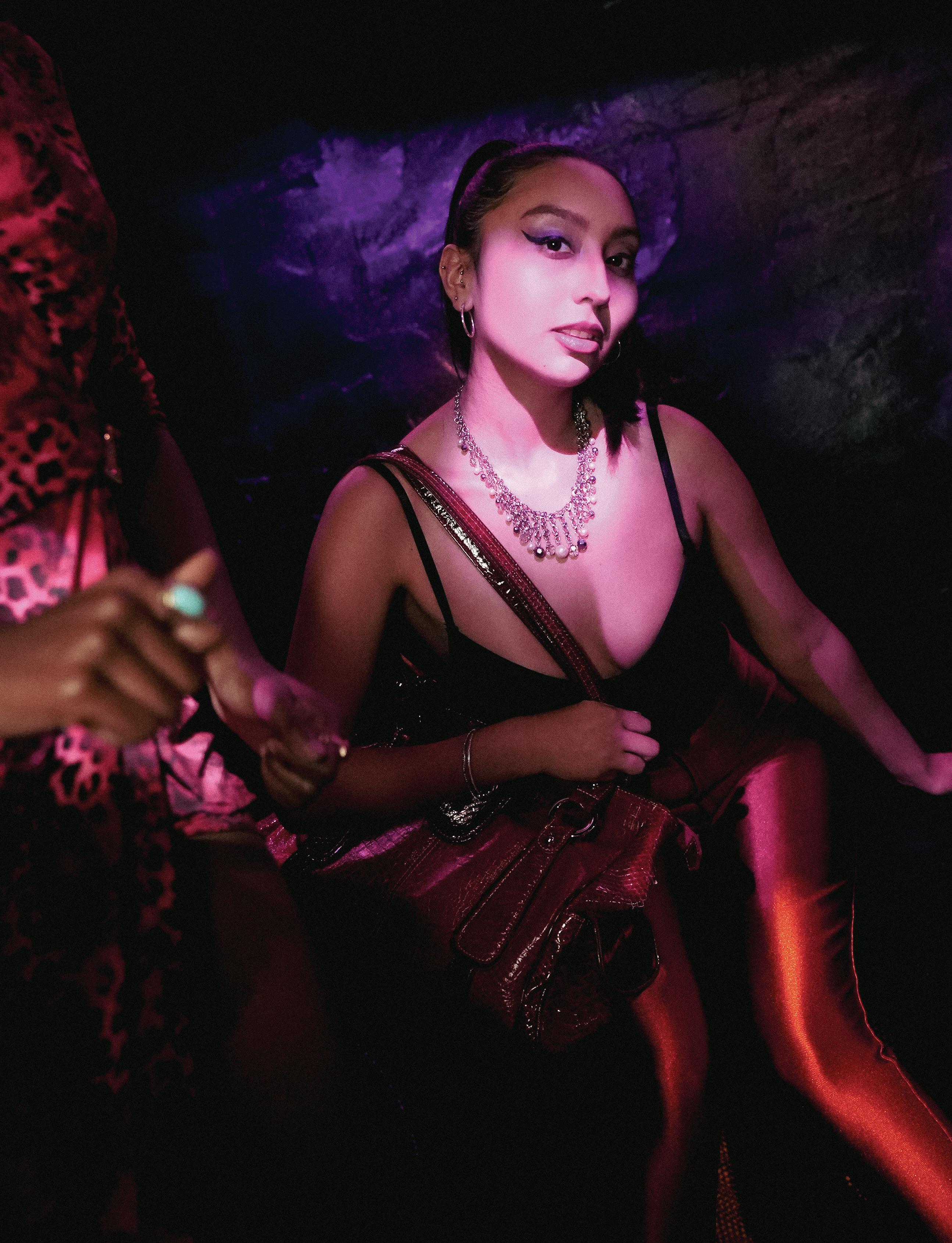
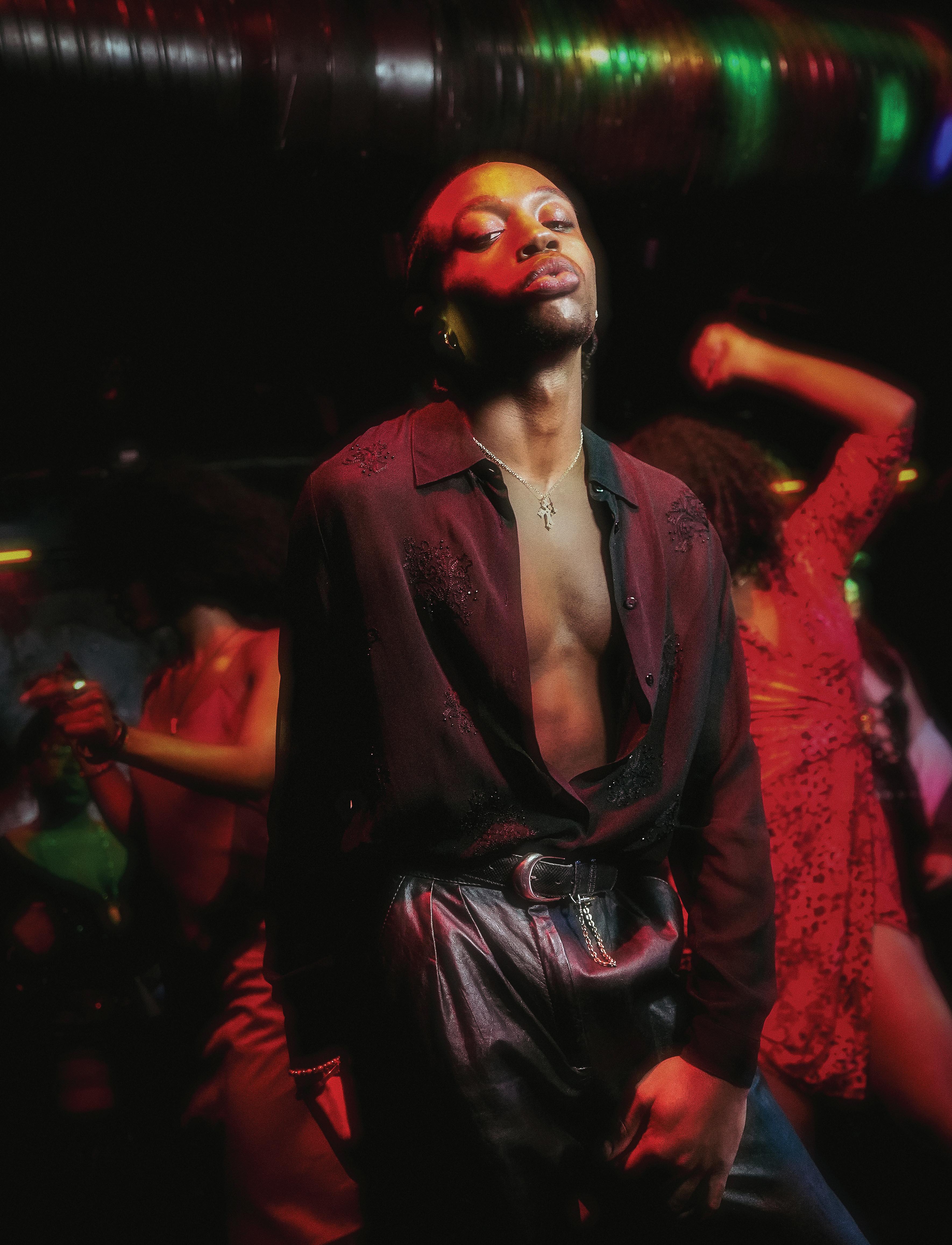
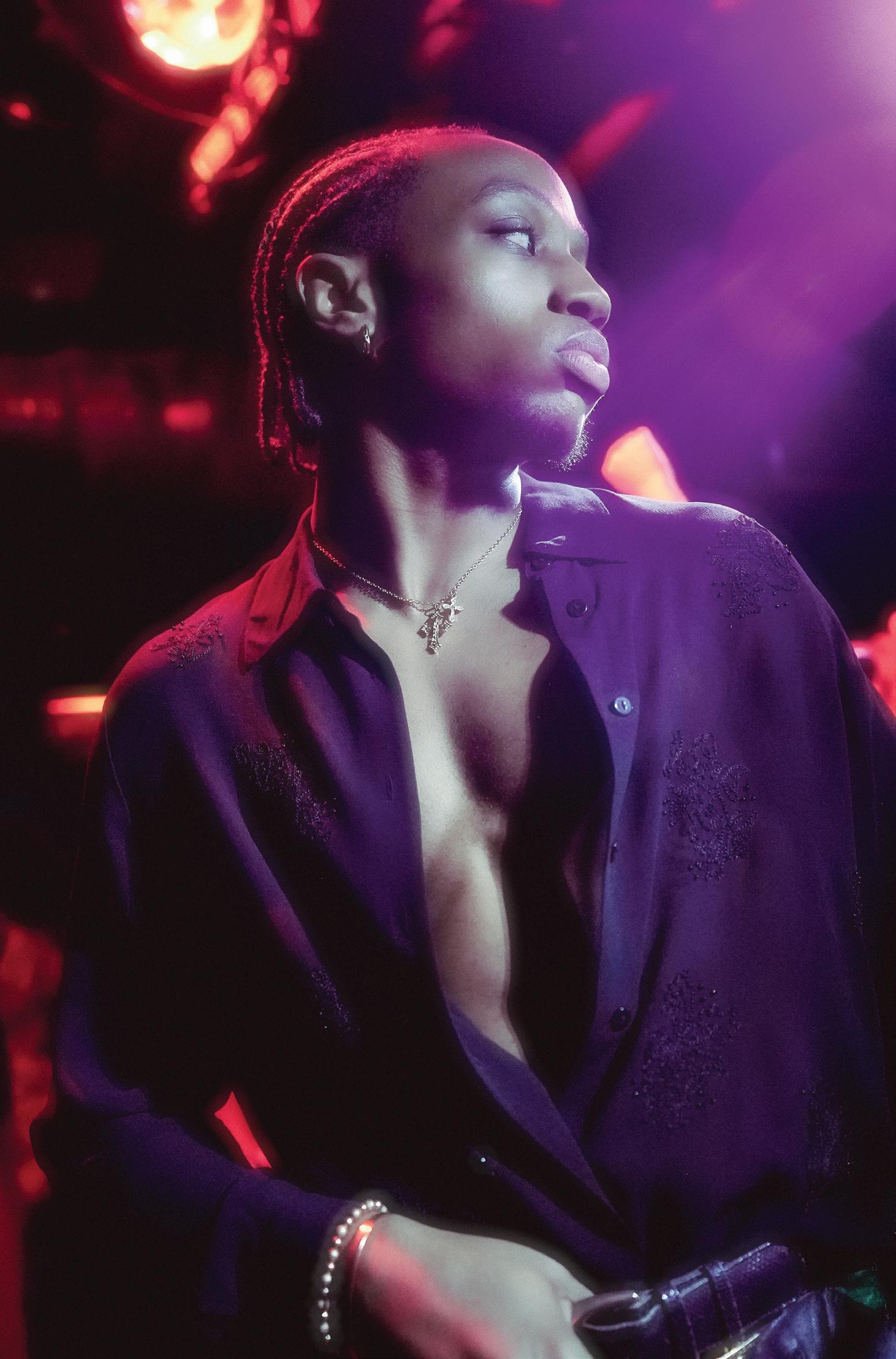
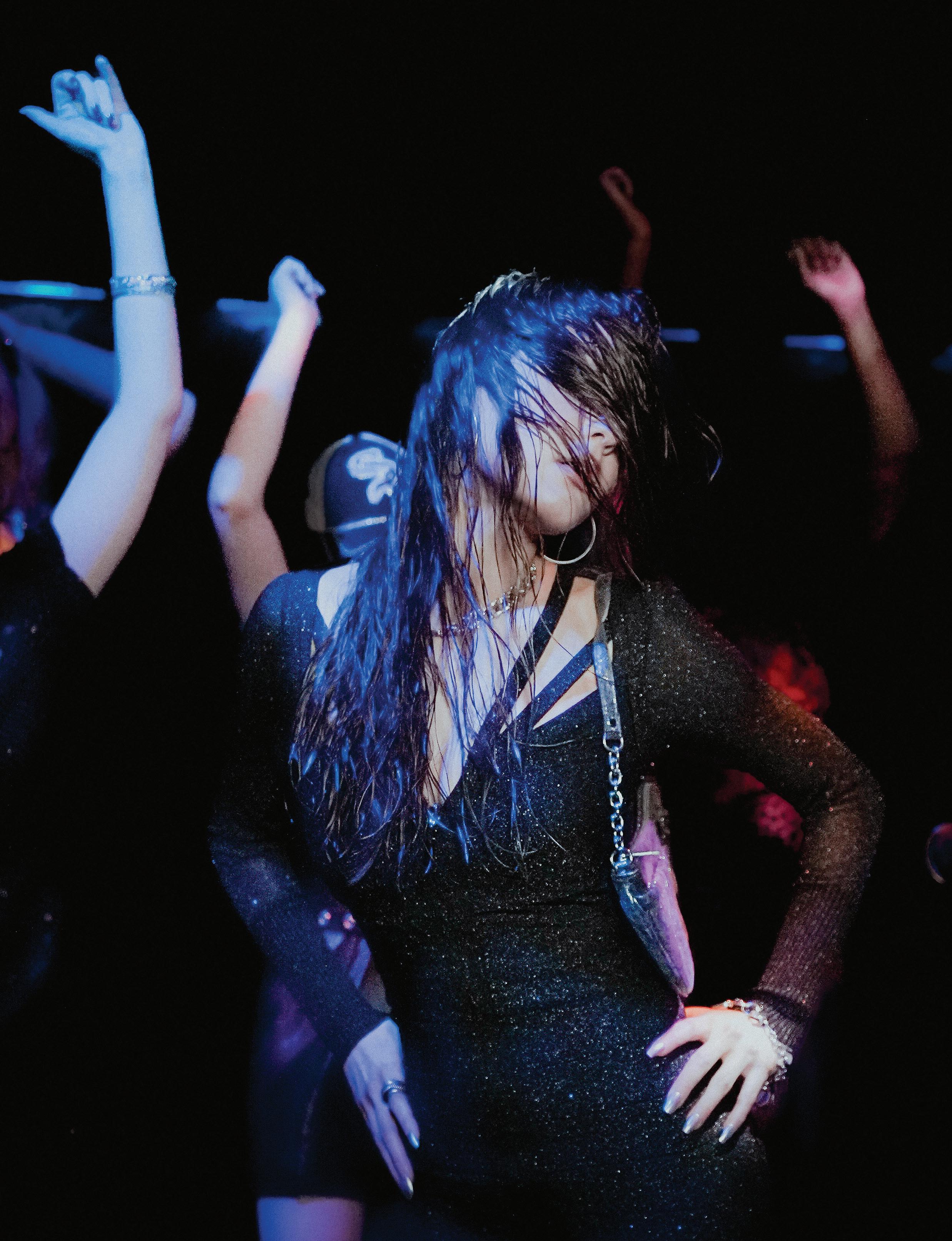
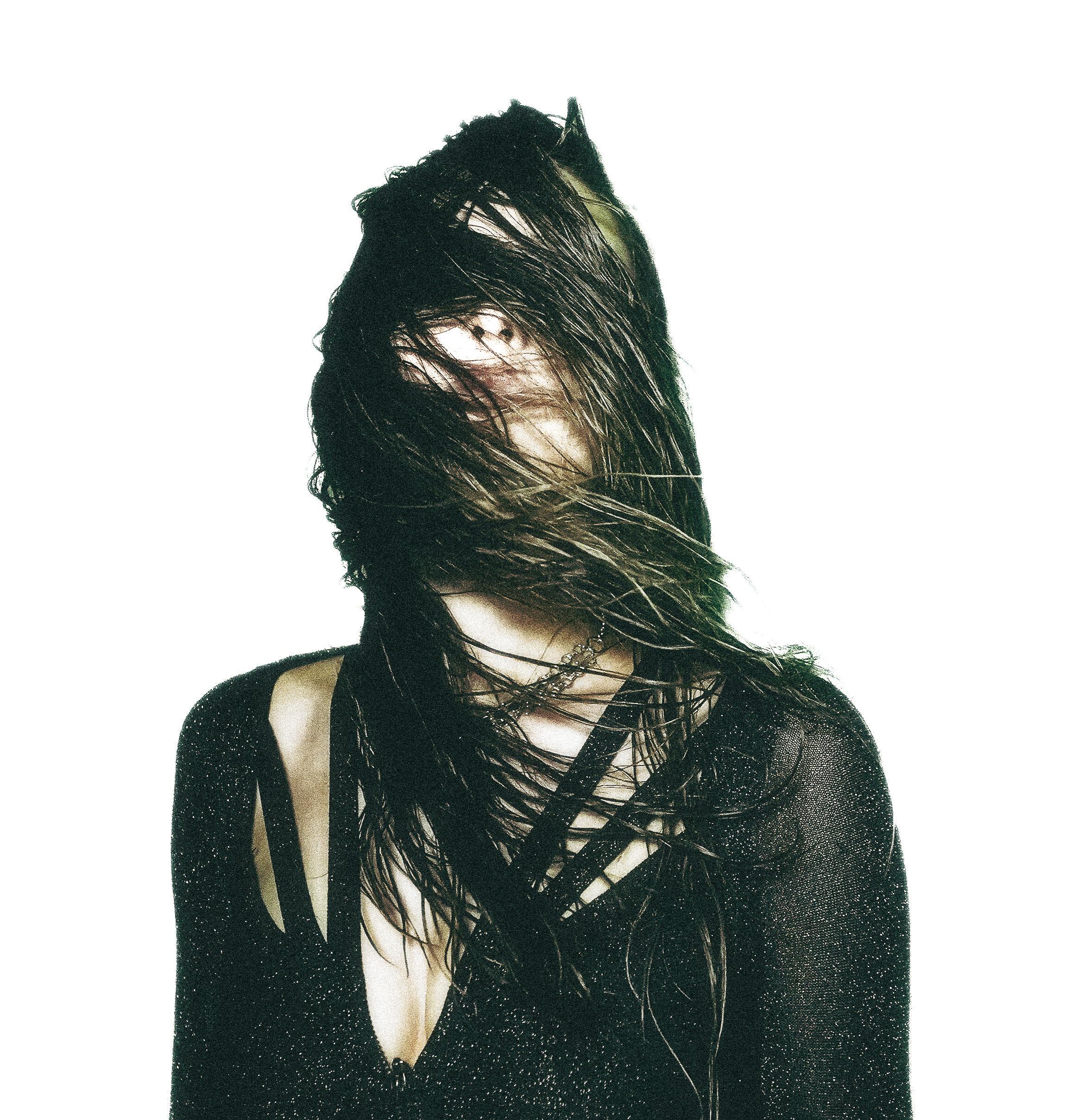
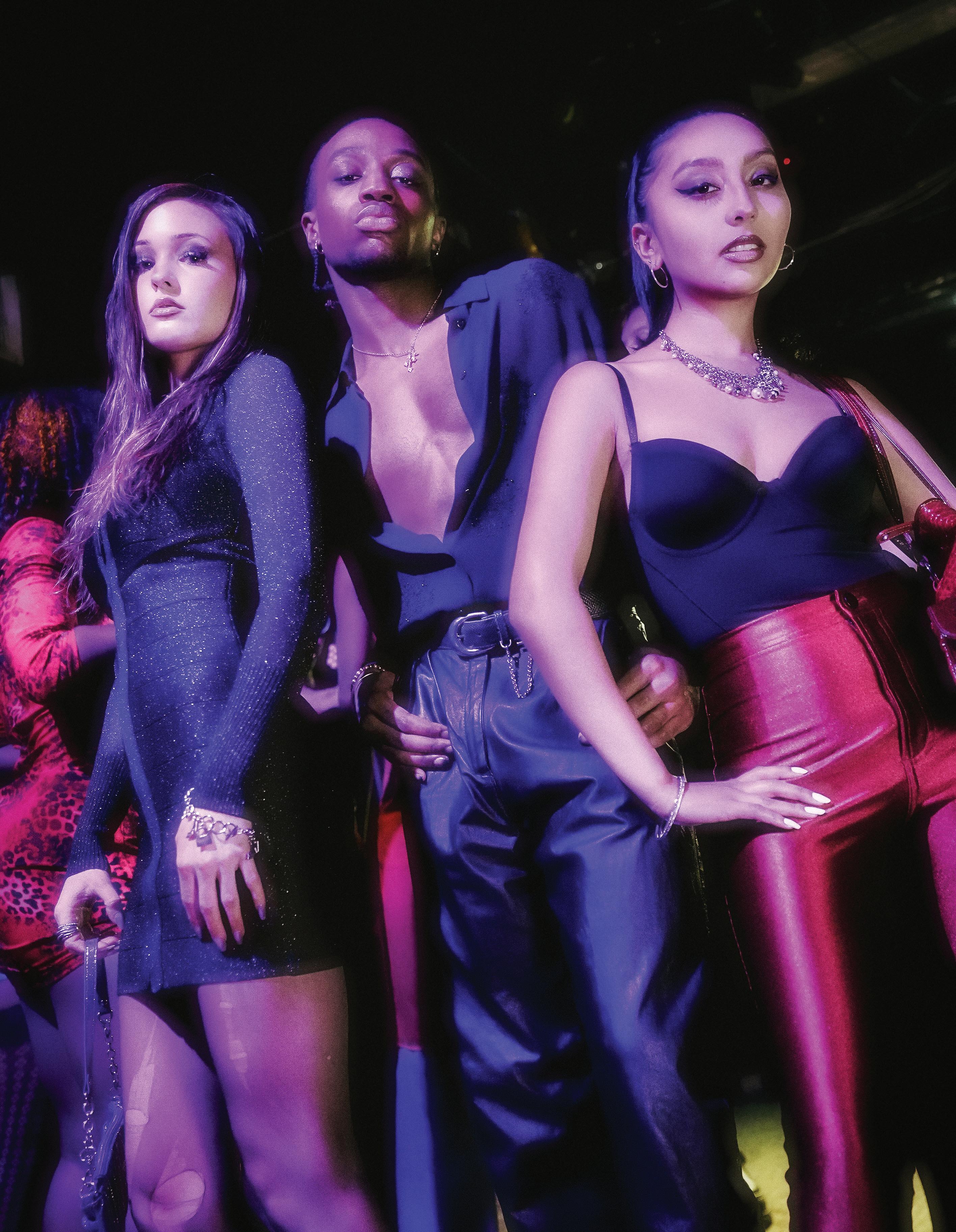
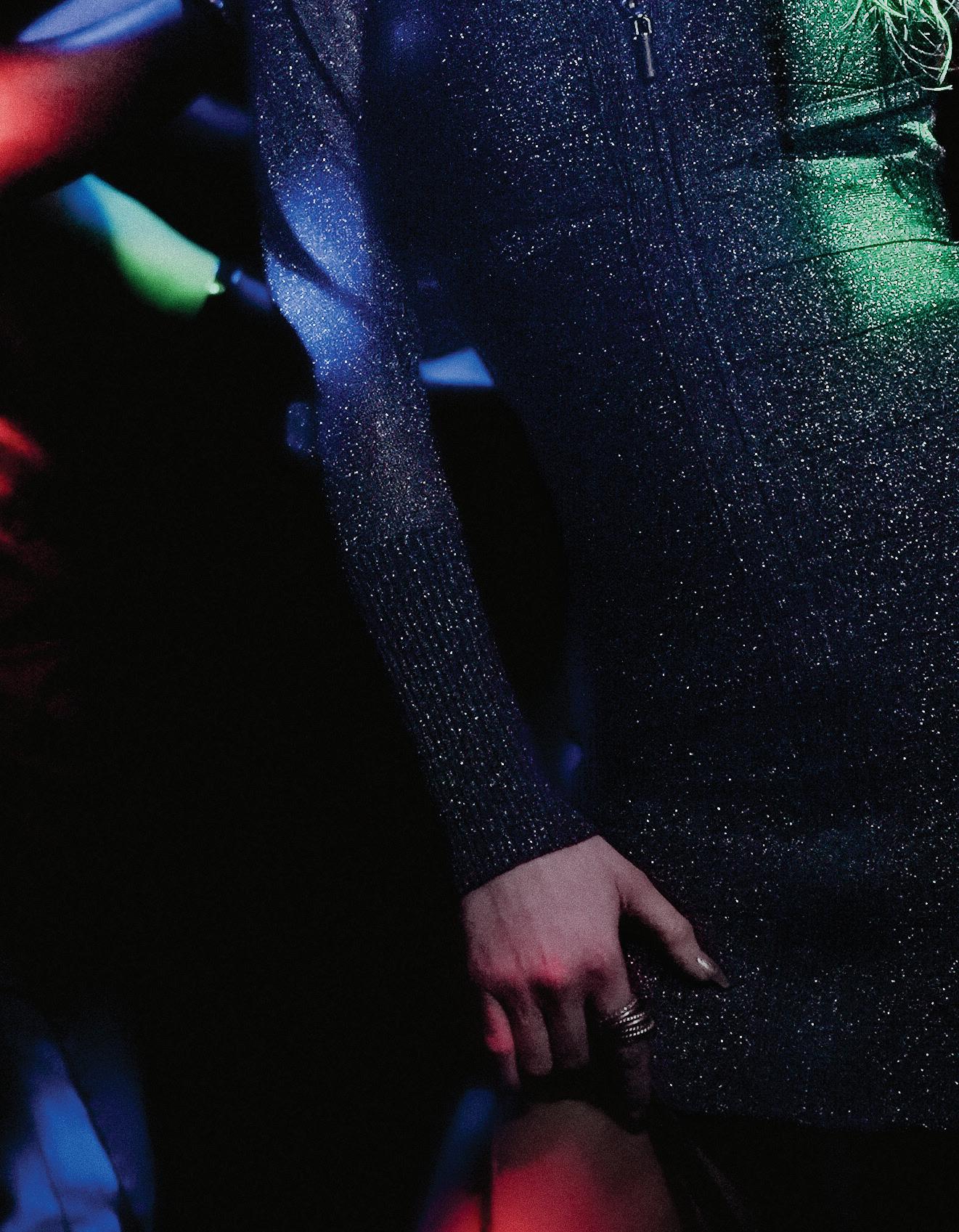
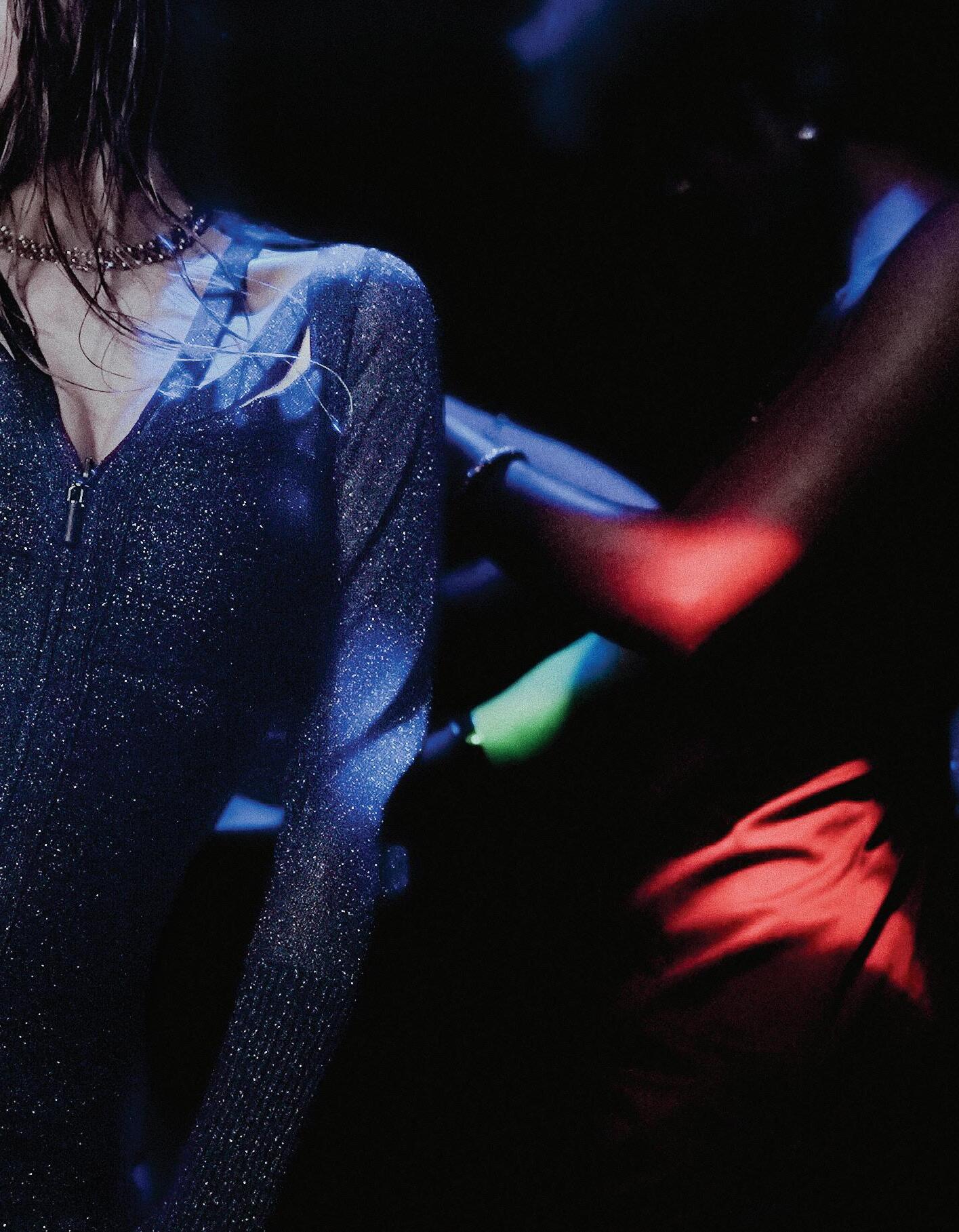
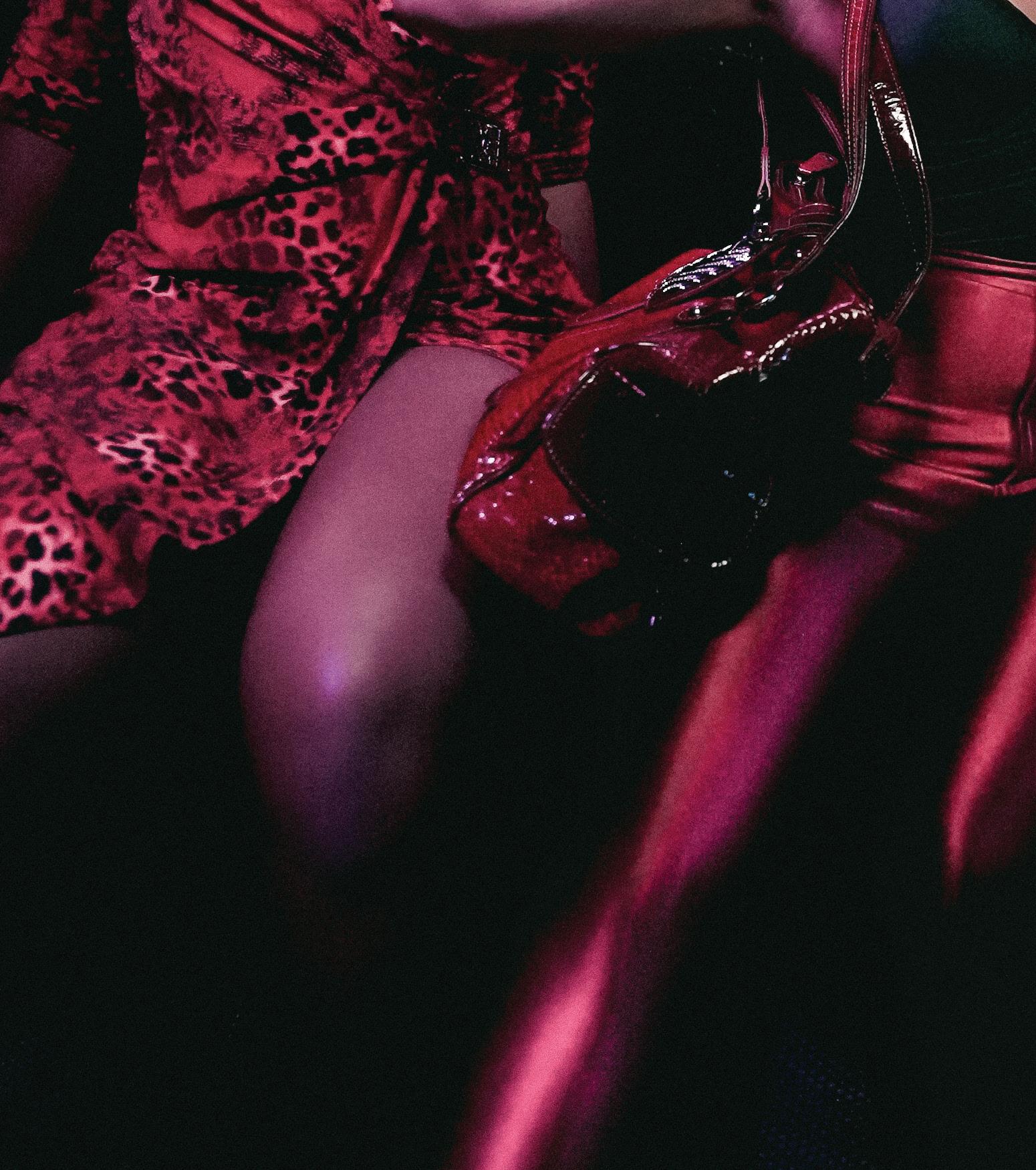
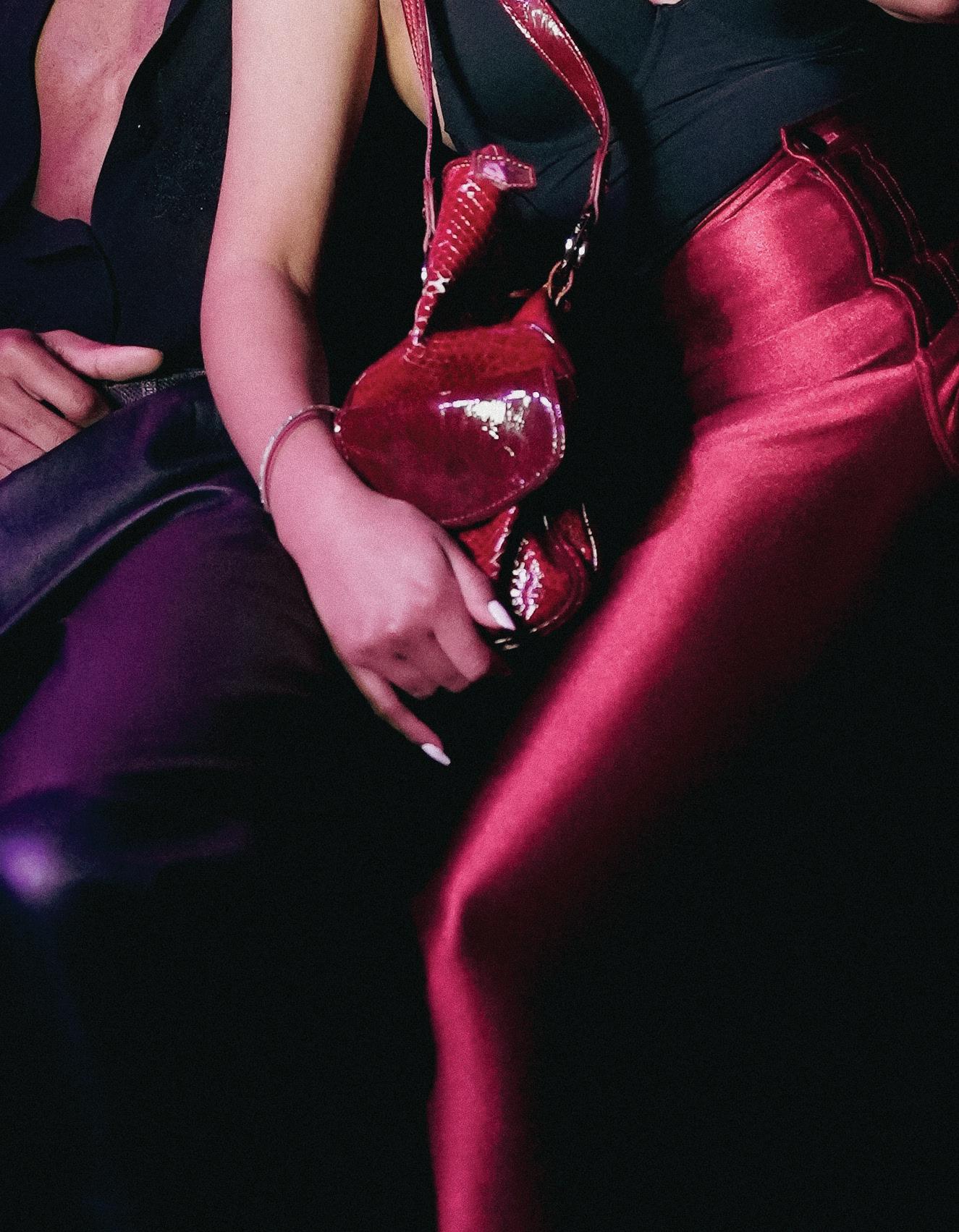
The club scene when you’re on the cusp of legality has an edge of danger and excitement that is never as bright as when you’re 20. The moment of anticipation when you hand your $65 flimsy plastic fake ID to the bouncer and pray he doesn’t try to bend it. Inhaling smoke from the fog machine; heels sticking to a beer-soaked floor; purple, blue, and orange light flooding your vision behind closed eyes as you move to synth and bass.
There is a faux-intimacy that is born with perfect strangers, so much
communicated through small touches and eye contact in a room so loud you couldn’t possibly hold a conversation through words—but you don’t need to.
So much freedom comes in the darkness and flashing lights of a dancefloor at 2 AM. Freedom to fall in love with a girl in the bathroom. Freedom to kiss someone you’ve been afraid of kissing in the daylight. Freedom to discover how you move uninhibited. Time to unwind, release, and be your full self after a day or week or month full of being someone for somebody else.
The skin tight clothing that we wear in the club, mirrors the restriction and suffocation we feel in the “real world”putting up a front for the sake of social acceptance.
To stay in this embrace of ecstatic surrender, and to never be turned back out into the street to walk home-
the cold drying the concoction of sweat belonging both to you and the strangers next to you.
Creative Director: Kristina Wise
Creative Team: Bianca Justiniano-Padilla, Emma Ogden, Miles Ragin