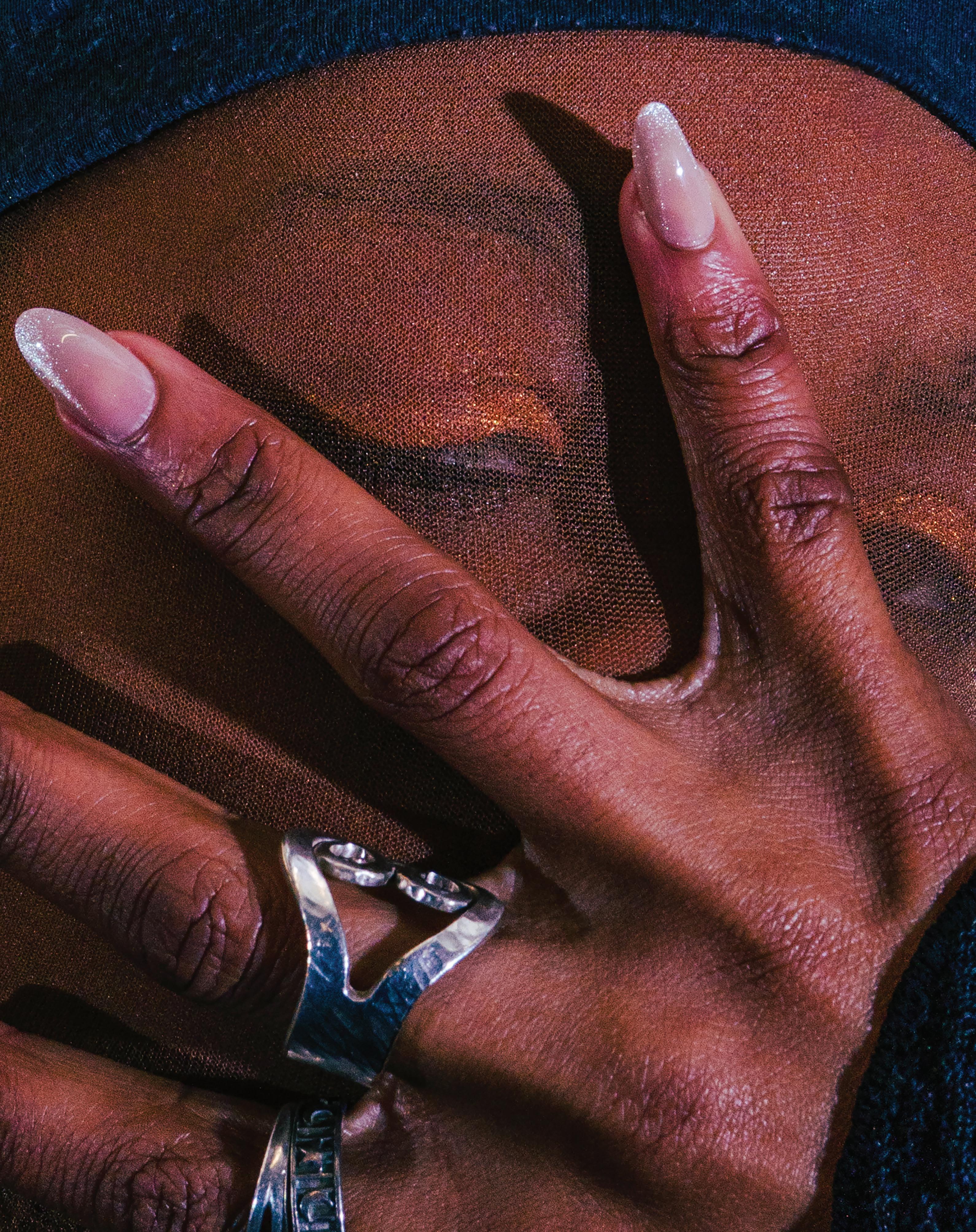
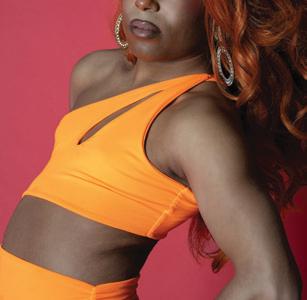
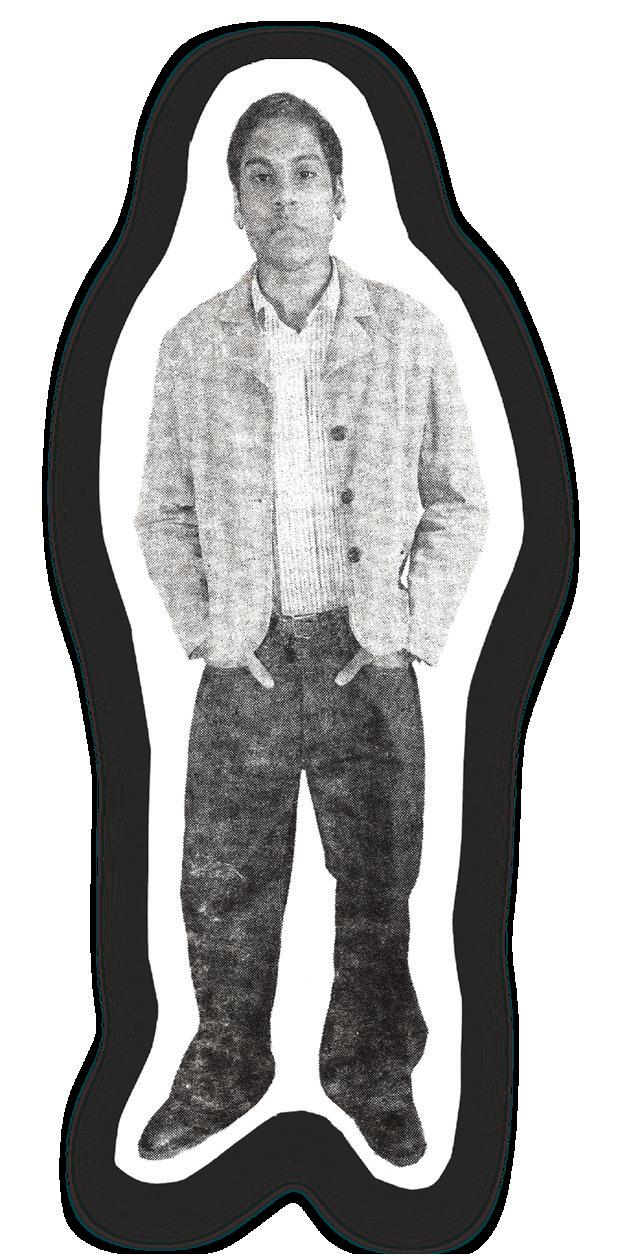
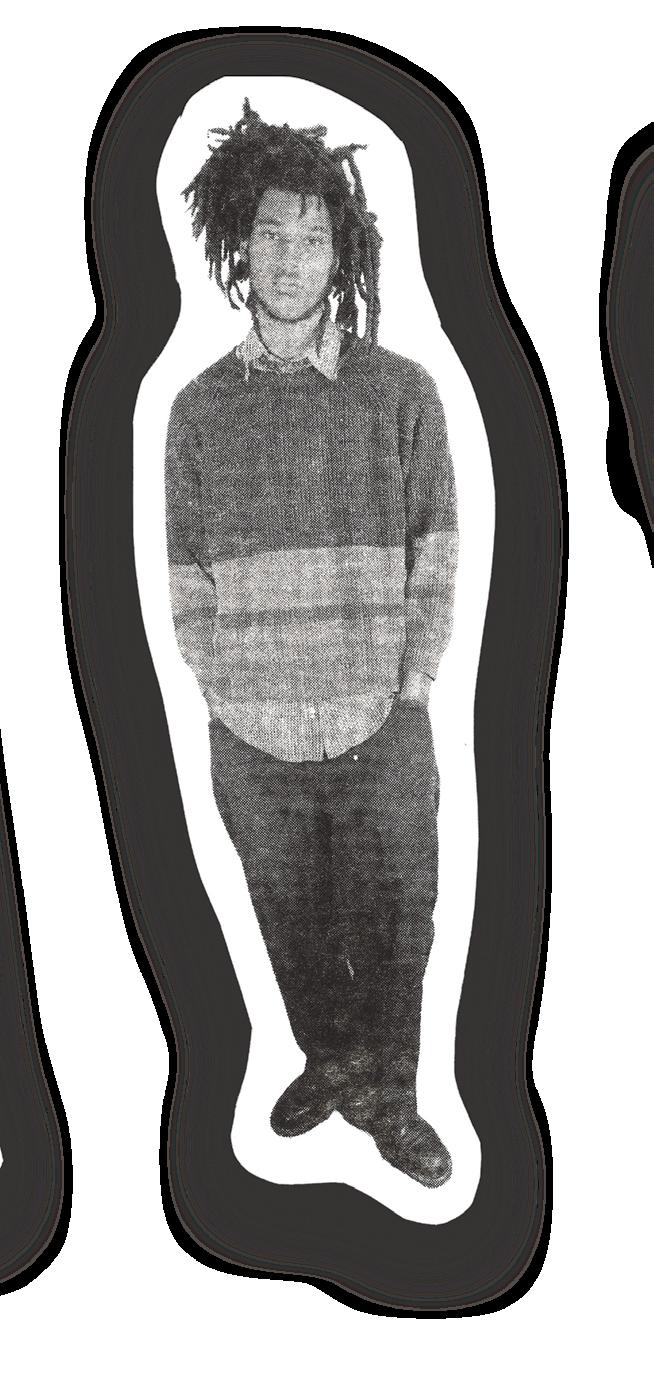
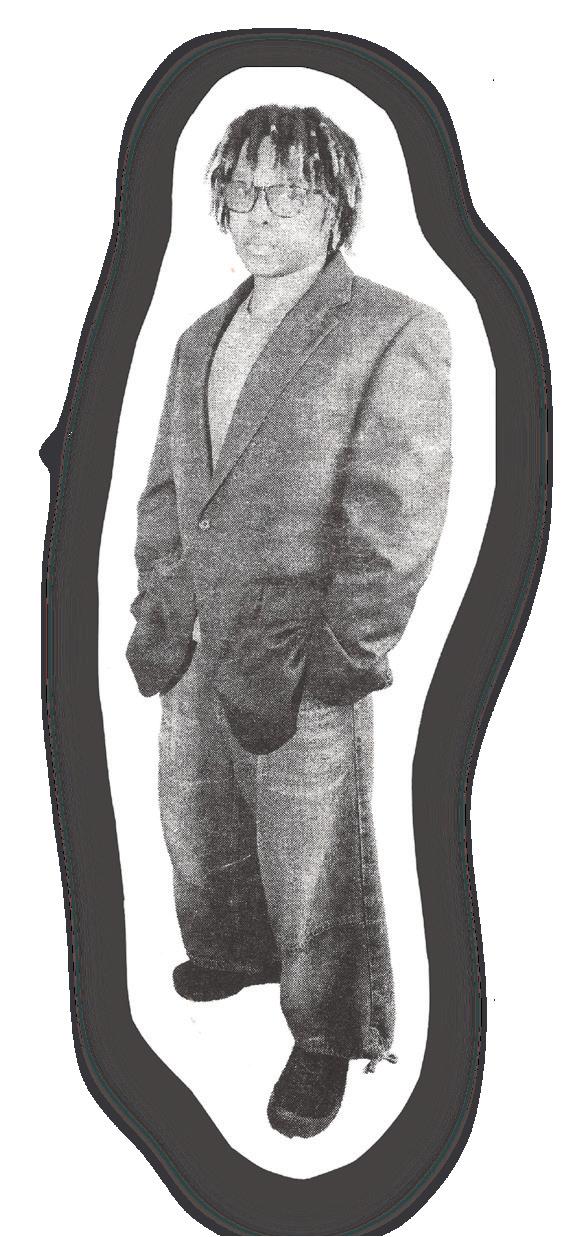
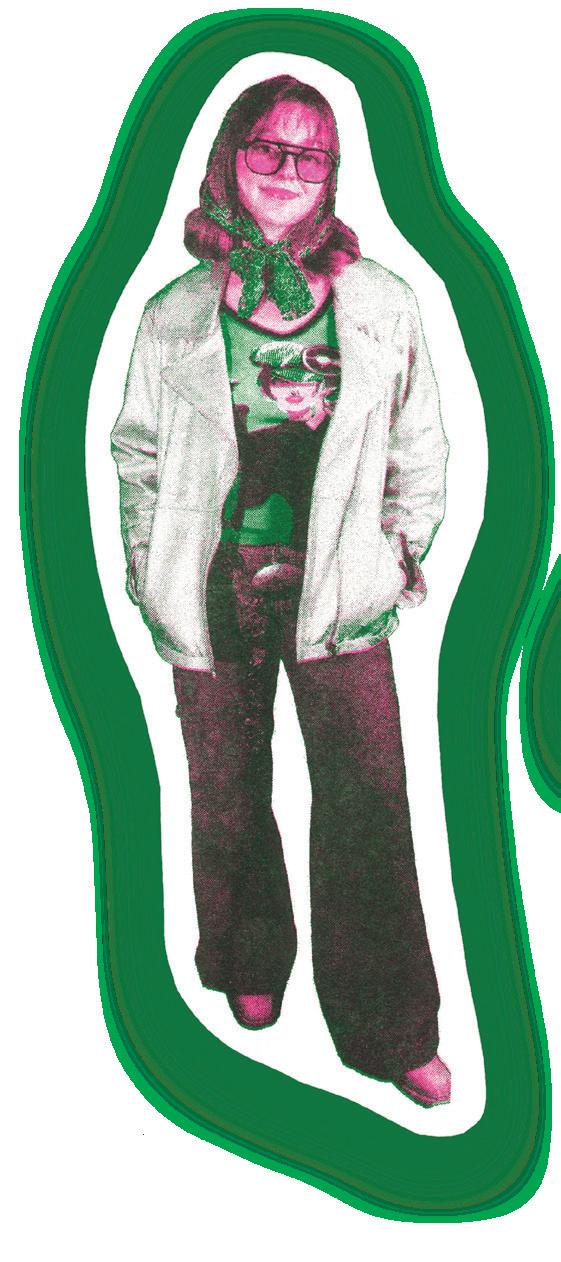
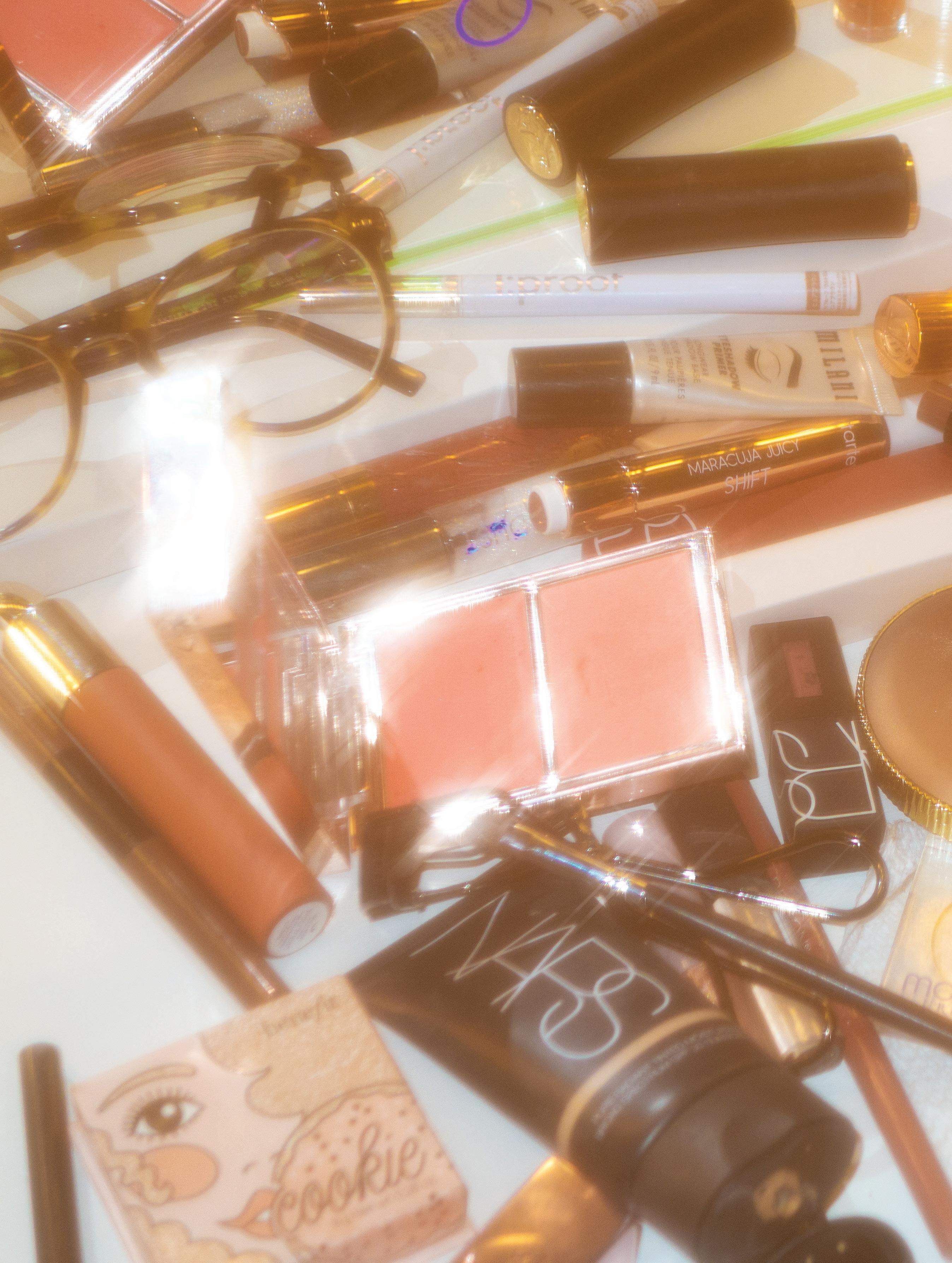
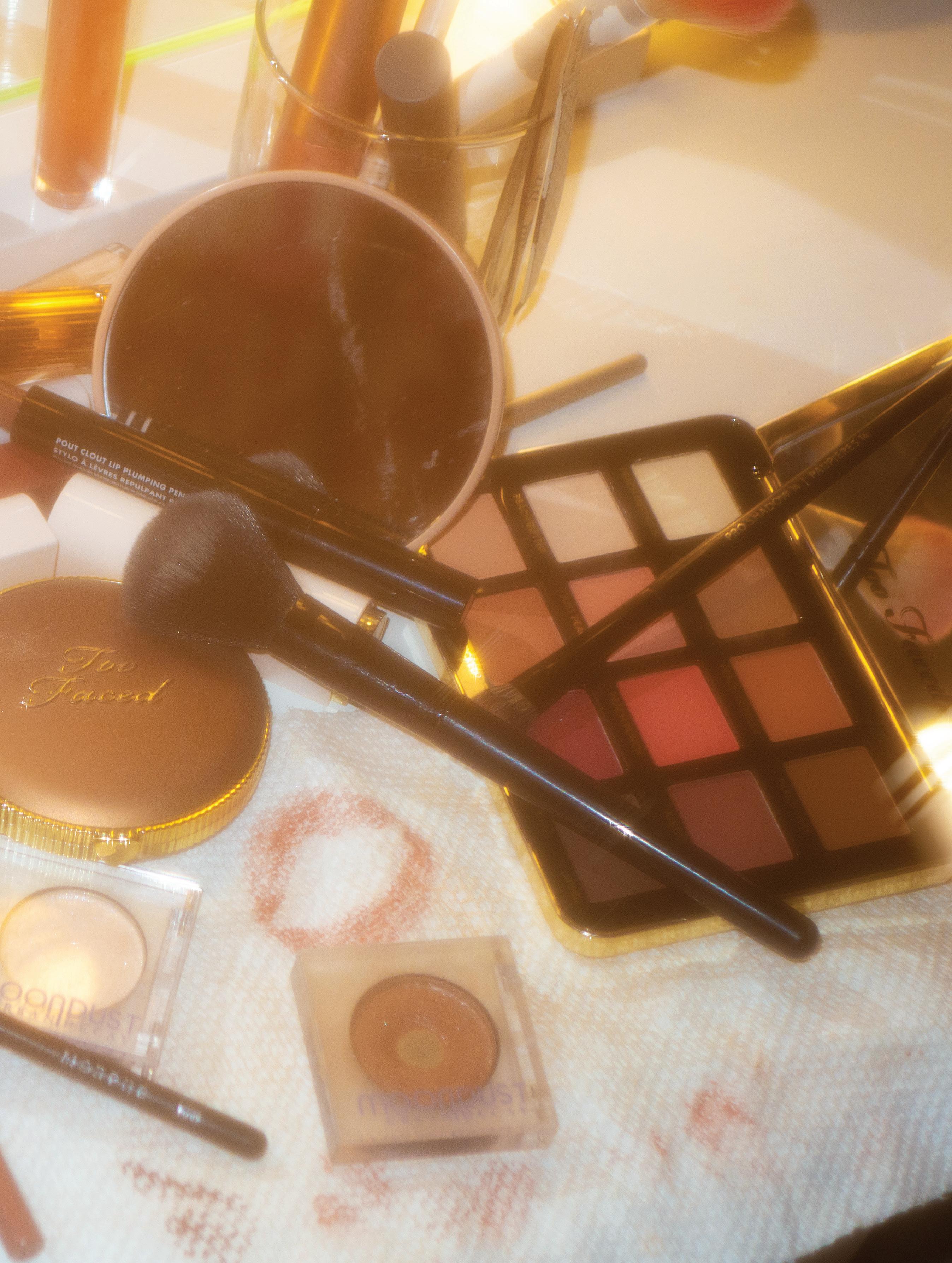
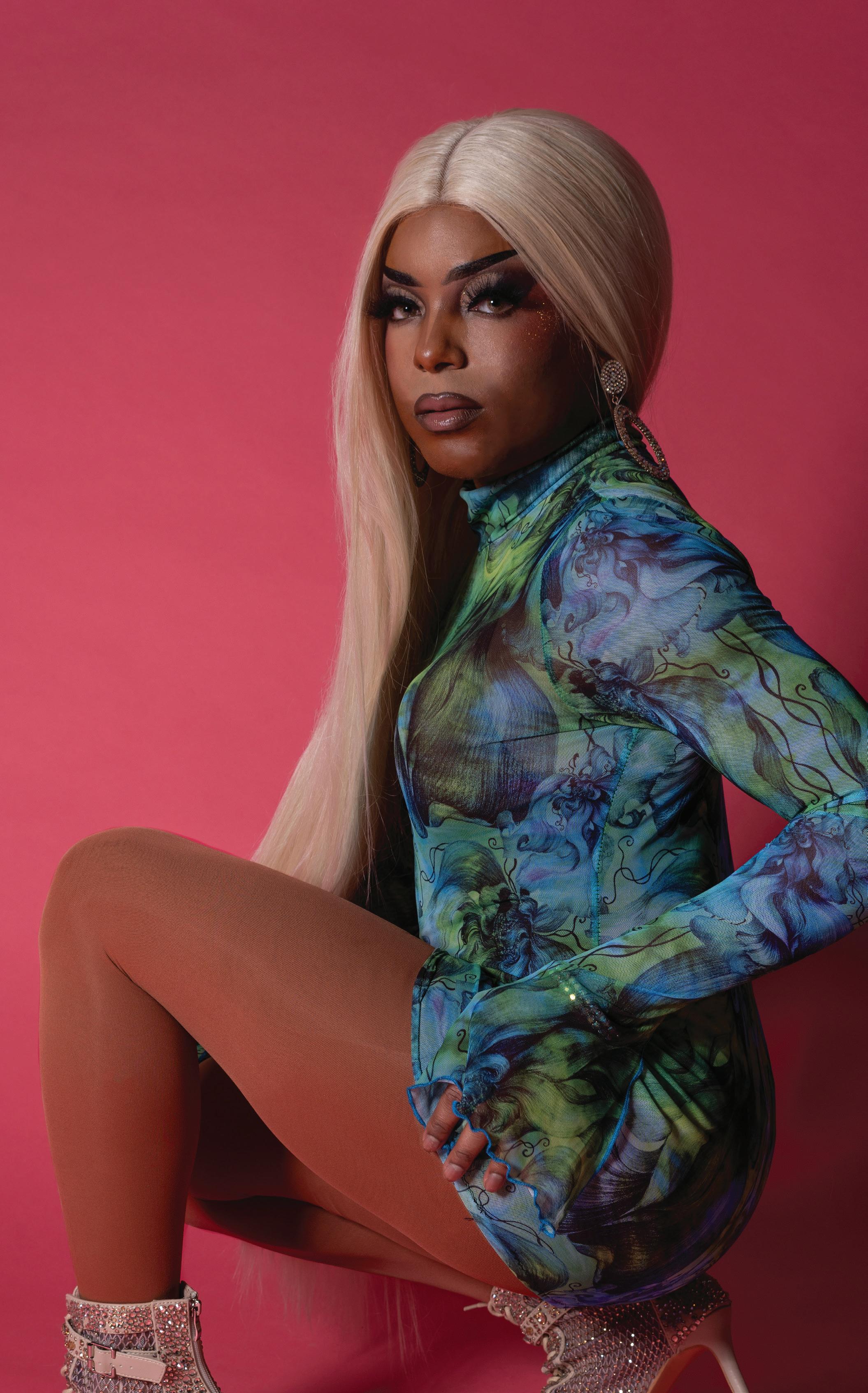
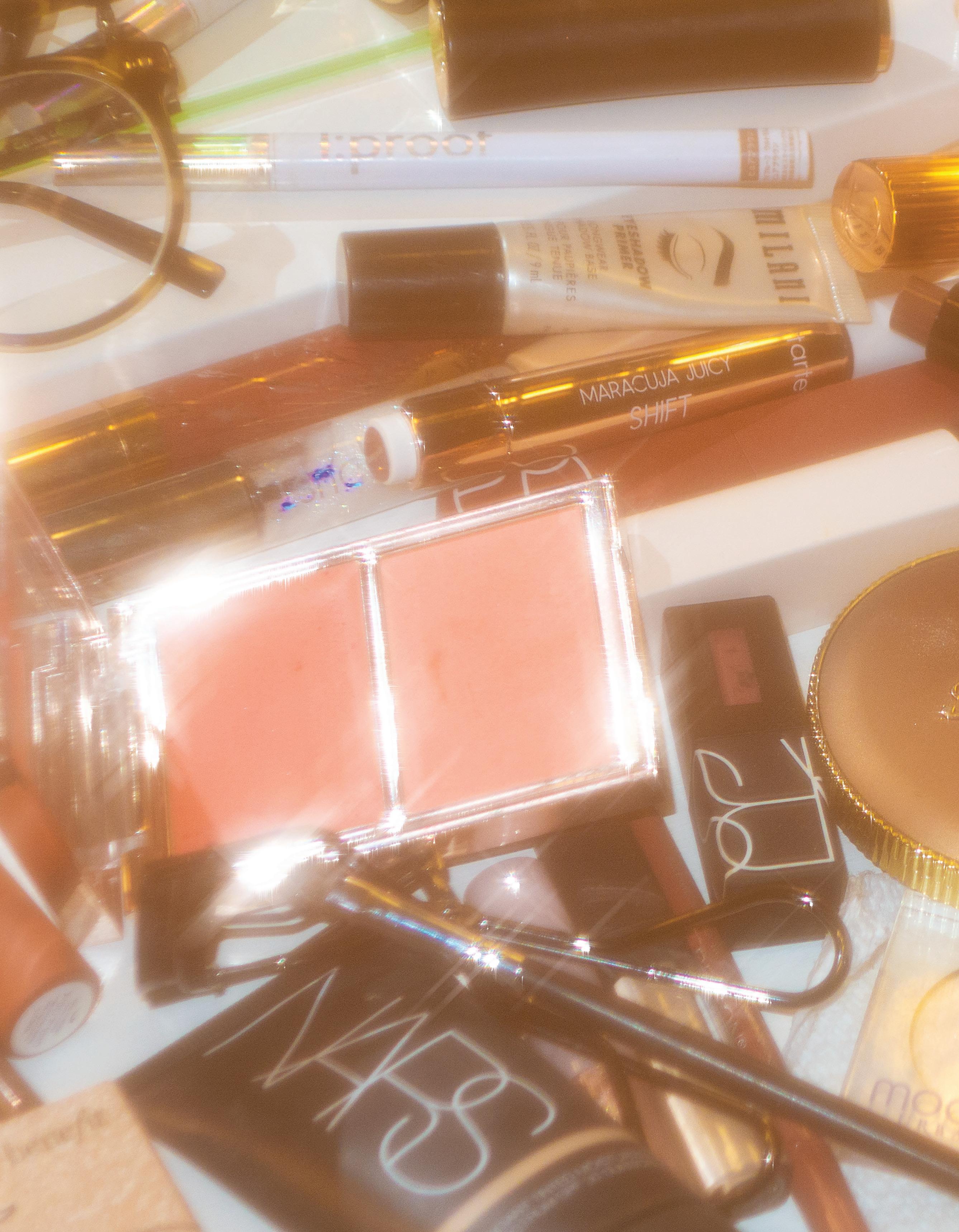
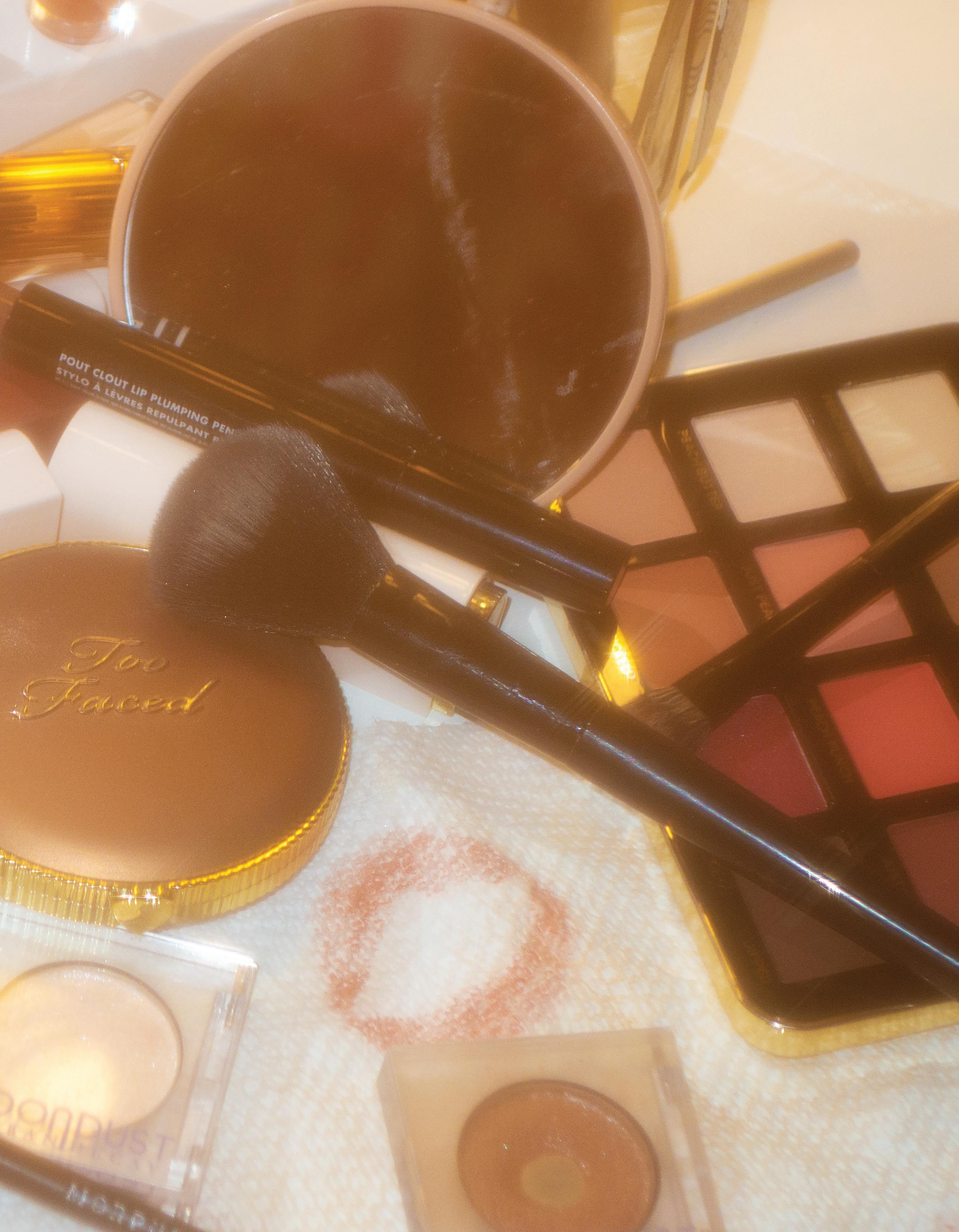
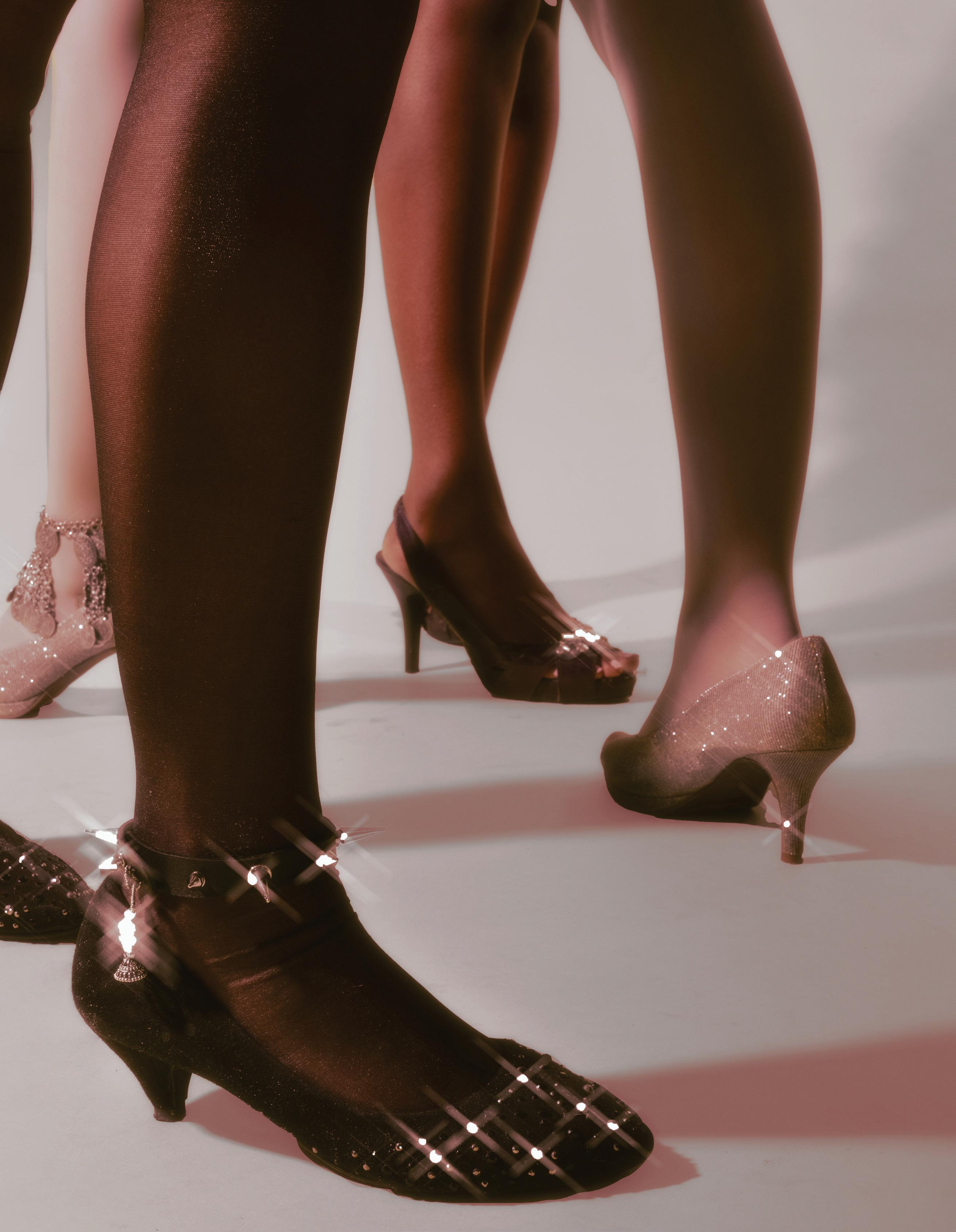
What is glamour? Silent film stars holding cigarettes, A-list celebrities wearing million-dollar gowns, endless parades of unattainable lifestyles; all of these things may seem glamorous, but the wealthy don’t have a monopoly on self-expression. Glamour is local drag queens in bars with faces painted for the back row. Watching your mother freshen her lipstick in a car mirror. Trawling through old MySpace pages to find the best way to tease your hair. Piercing and inking every inch of your body. Glamour is enchantment. The magic of creating the self. And it’s accessible to all of us. In a time when people in power are telling you what to wear and who to be, take the time to develop your own tastes. Instead of listening to influencers telling you “run, not walk!” to buy $50 polyester dresses off a dropshipping site so you can finally achieve some nebulous idea of an “aesthetic,” just go thrifting with your friends! Try and fail at wearing something weird, then get back up and try again.
My time as Editor-in-Chief may be coming to a close, but I’m leaving you in good hands. Our staff has worked incredibly hard to bring this issue to life. They’ll continue to do so for years to come. We’ll always be the magazine you know and love, as glamorous as ever.
Editor-in-Chief
Aisha Virk
Lareina Allred
Buffy Petrin
Maddie Bui Jackson Bechtold
Aya Zejjari
Isabelle Samay
Michael Wynne
David Morales Leela Mendez
Jadyn Lalonde
Akili Williams
Nikhil Sharma
Helena Dauverd Tajma Graham Jasmine Purchas
Liz DeFluri
Julie Cosby
Mira Hay Dani Belay Mason Rowley
Written By, Photography, Graphics: Jennifer Nguyen
Graphics: Eva Derryberry
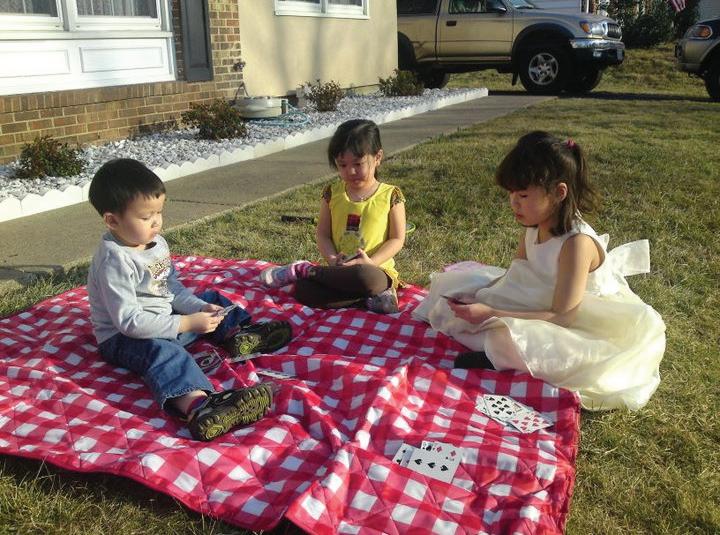
In most of my childhood photos from ages 3 to 6, I’m wearing a big poofy dress on a regular day.
From my mom’s Facebook. Feb 28, 2011
One year, my mom brought home a Belle costume from Party City a few weeks before Halloween and I put it on immediately. It became my go-to outfit for the following days. I wore it until the back ripped. Actually, I kept wearing it even after it had ripped because if I couldn’t see it, I didn’t care! I loved feeling like a princess.
The dress had a big bow right under the neckline which featured a framed photo of Belle in the center. Knowing that her face was only a little below mine naturally caused me to compare. As much as I loved feeling like a princess, it was clear that I was only representing one and not the real deal.
My friends and I played with makeup kits that had the face of Barbie or a princess on the cover. They either lacked pigment or were straight up plastic, so we just had to imagine the makeup. We put colorful clip-on extensions in our hair, which at first seemed fun and cute, but were weirdly sticky, always frizzy, and never matched anyone’s actual hair texture. Online, we were hooked on games where we would design our avatars, dressing them in outfits we would wear in real life if there were no rules to our reality. As much as I yearned to live the glamorous life of the princesses and celebrities I saw on TV and in movies, I knew that if I tried embodying that glamour, I was merely pretending. Or maybe I didn’t know it, but I could definitely feel it.
Glam, in the way it was presented to girls, was manufactured to be desirable but unattainable. The only chance we had at living the princess life was if we were born into the family. Otherwise, it existed purely in fiction. The glitz and glam of celebrities in the media came with the help of wealth and connections, which are out of reach for an ordinary girl. The fantasy of a glamorous life was an inescapable reminder of the barriers separating our reality from the ones we wished for.
I admired older girls and dreamt of living their lives in a similar way I did with celebrities. They could do whatever they wanted, whenever they wanted (or at least that’s what I thought when I was little)! And they did so in ways that made them appear effortlessly cool. Every aspect of their lives that came with their freedom and experience seemed so glamorous. The only barrier between us was the number of years we were born apart.
My cousin Emily is 7 years older than me. I don’t think that’s a big gap at all now, but when I was 8, 15 felt like a lifetime away. At the time, I shared a bedroom with my brother which had owl decals my mom meticulously and lovingly placed on the walls. Emily’s room had walls that were covered with Justin Bieber posters and ripped-out magazine pages. She had Abercrombie & Fitch shopping bags on the floor (the ones with a photograph of some guy’s abs) and lanyards that held backstage passes to One Direction hanging off her dresser. I thought it was soooo glam that she had her own space to fill with ephemera from the cool things she got to do.
My half-sister lived with me for a few months when I was 7 and she was 20. I asked her what she was doing one night and she said she had to do homework and study. In my 7 year old mind, I thought THAT was incredibly glam. How cool it must be to read thick textbooks when I had only read kid books, to read words that I couldn’t even begin to pronounce. How cool it must be to write with a pen and fill up multiple pages, when I had only written basic sentences using a pencil.
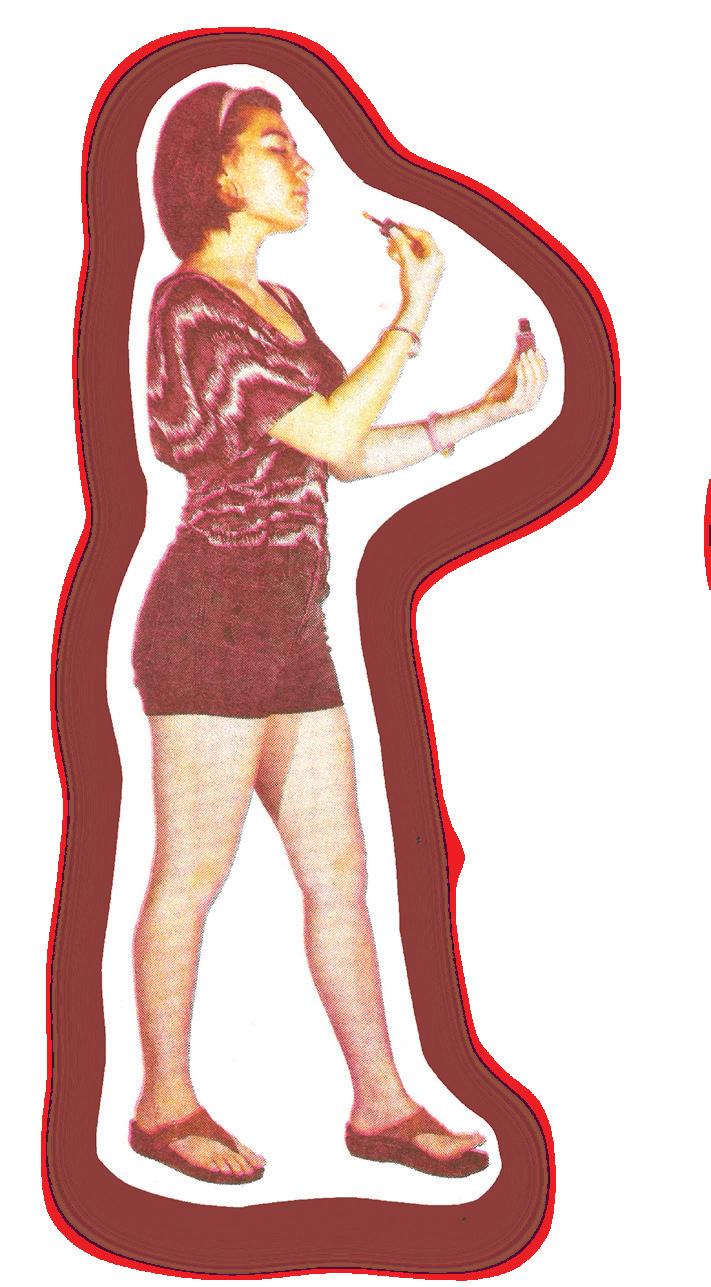
The first thing my mom would do when getting in the car was reapply her lipstick. I watched with enchantment from the back seat as she dug through her bag to find an old receipt. She would then unwrinkle the receipt, fold it in half, and gently press it between her lips to remove the excess. After checking the mirror to make sure her lipstick looked right and that she wouldn’t need to blot it again, she would stick the lipstick-stained receipt down the side door pocket: a glamorous ritual that I knew I wouldn’t be able to participate in until I was older.
All I wanted to do was grow up, and grow into the girls I looked up to.
This past summer, I finished watching “Overcompensating,” a series created by Benito Skinner based on his own experiences navigating college while in the closet. After I finish a show, I search it up on TikTok to see what people are saying about it. A clip of an interview by @attitudemag popped up of Benito doing his best impression of Charli xcx, who made an appearance in the show.
“Any time I’m about to do an impression of someone, I just need one word to get me into it. So for Kourtney, it was ‘yeah’ [...] But for Charli, it would be ‘glam.’ She’s so glam. Glam. Oh, it’s glam.”
This made “glam” stick in my head.
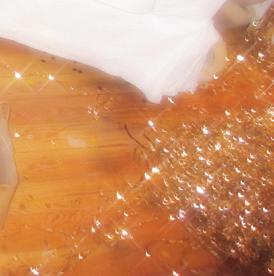
My 21st birthday came around, and all I could think was, “I want this party to be glam.” I bought sparkly tinsel and brought out the mini disco ball from my freshman year dorm. I covered plain surfaces with pretty fabrics. My friends helped me blow up confetti-filled balloons to cover the floor. Approaching the room with the intention of making it glam made me see the space through a new lens, and I couldn’t help but think it was the most glamorous-looking party ever.
Glam became a conscious choice. And with it being a choice, it became wildly accessible.
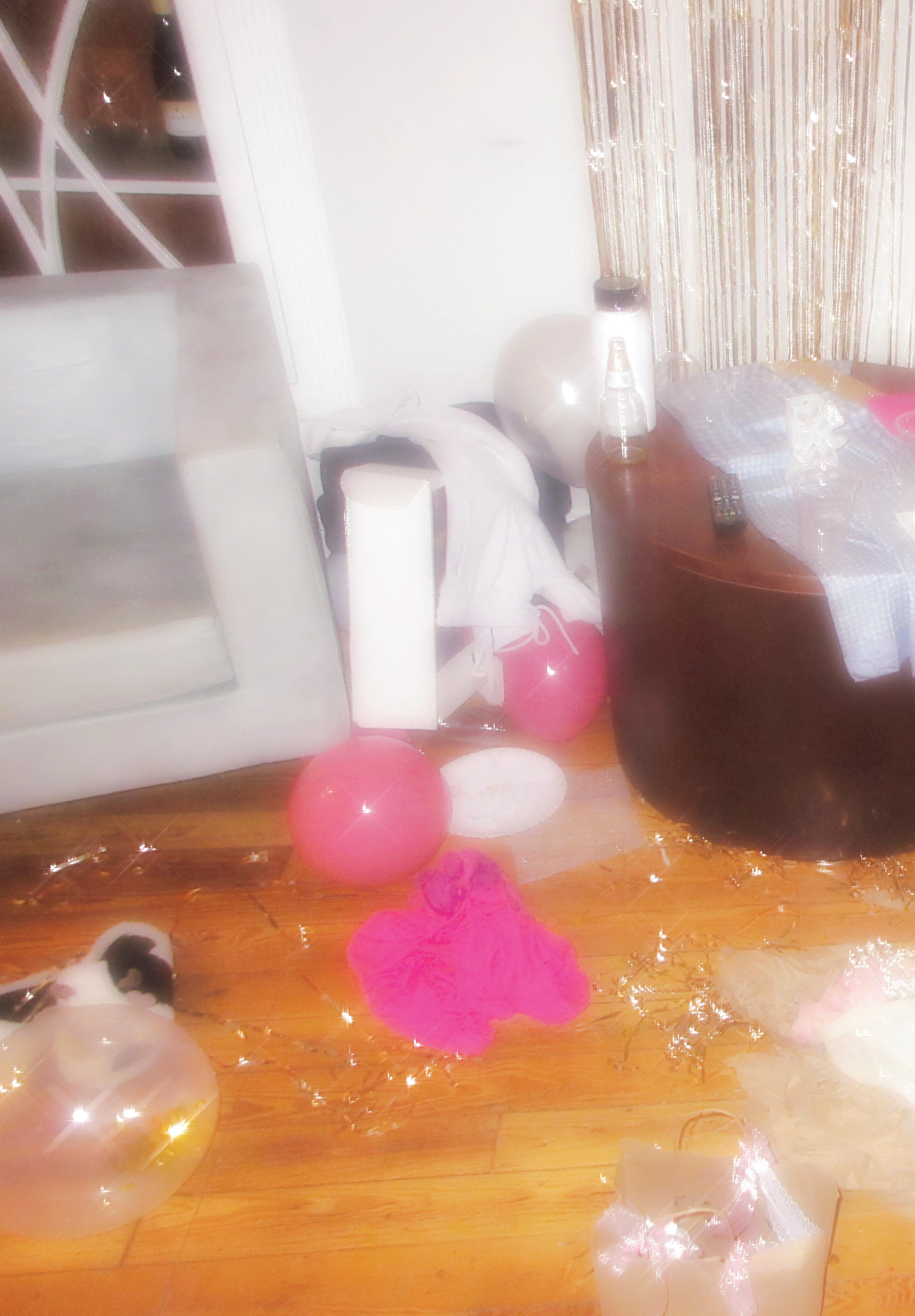
Although I saw the decorations as glam, I didn’t get the magical FEELING of glam — the one I yearned for as a little girl before reality set in — until seeing the mess left after the party and reflecting on my night.
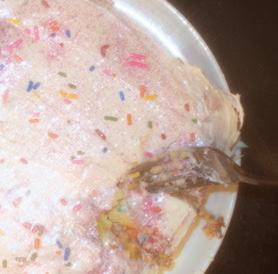
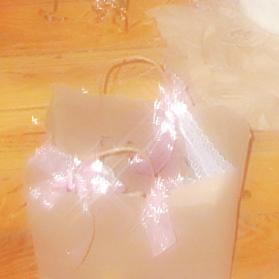
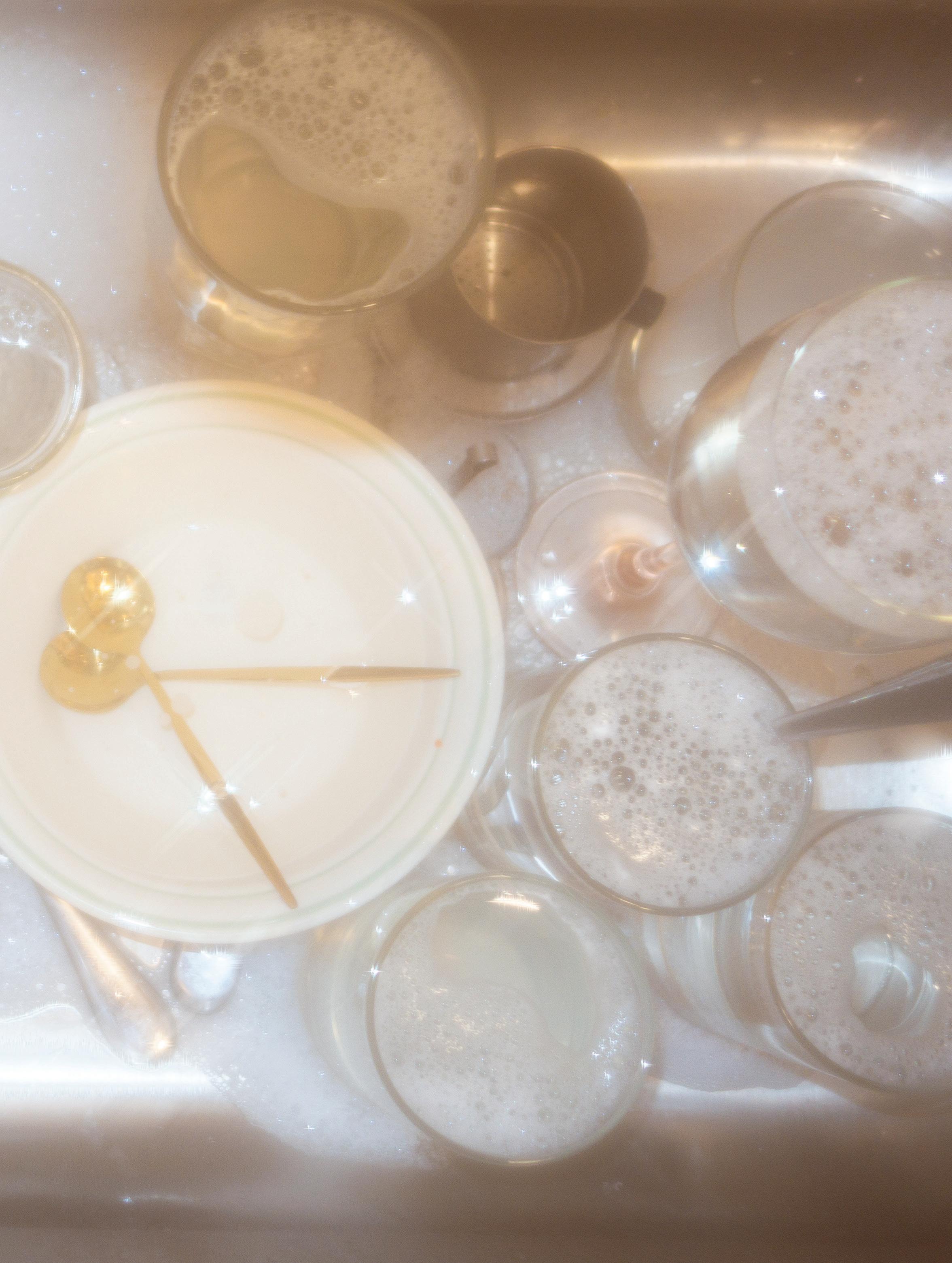
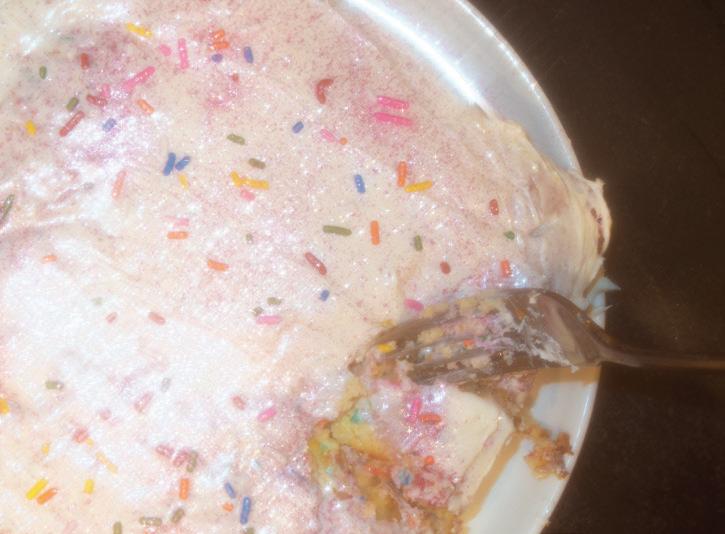
Balloons on the floor. Gift bags with my name handdrawn and embellished, tied with pink ribbon. A stack of cards inside of pink envelopes. The few remaining pieces of ice cream cake melted into the pink lace tablecloth. Fallen tinsel from people walking through the doorways. Cups and plates scattered all over.
This was evidence of a night full of love from my friends who chose to spend their time celebrating with me, who thought about me to the smallest detail of picking out pink envelopes to put their cards in because they knew I would love it.
THAT is glam. It’s noticing the little things we usually brush off & viewing moments with magic. The same kind of magic and awe that my younger self would view my life with now.
I’m 21 now and I use real makeup. I’ve dyed my hair multiple times (there was a quick moment of pink and purple) and now I choose to leave it alone. Whenever I reorganize my closet, I play dress-up with the beautiful dresses that I own.
I have my own room with walls covered in ephemera that I’ve collected. I have shopping bags on my floor and a VIP lanyard from seeing my favorite singer in a box under my bed.
I stay up late to work on my assignments and I’ve skimmed many textbooks for class. I only write with pen now and I’ve filled up many pages across many notebooks and journals.
I reapply my lip gloss before leaving my house and I keep it with me wherever I go. I reach into my bag and pull out old receipts and gum wrappers when looking for other items.
There’s nothing more glamorous than evidence of love and intention. When you create glam, it comes back to you until it’s all you can see. Anything is glam; everything is glam.
Look around you, isn’t it all sooooo glam? And if your answer is no, then flip it around in your mind until it is!
Eun-D AD! SC NE
Written by: Buffy Petrin, Mira Hay
Creative Direction: Buffy Petrin
Photography: Nikhil Sharma
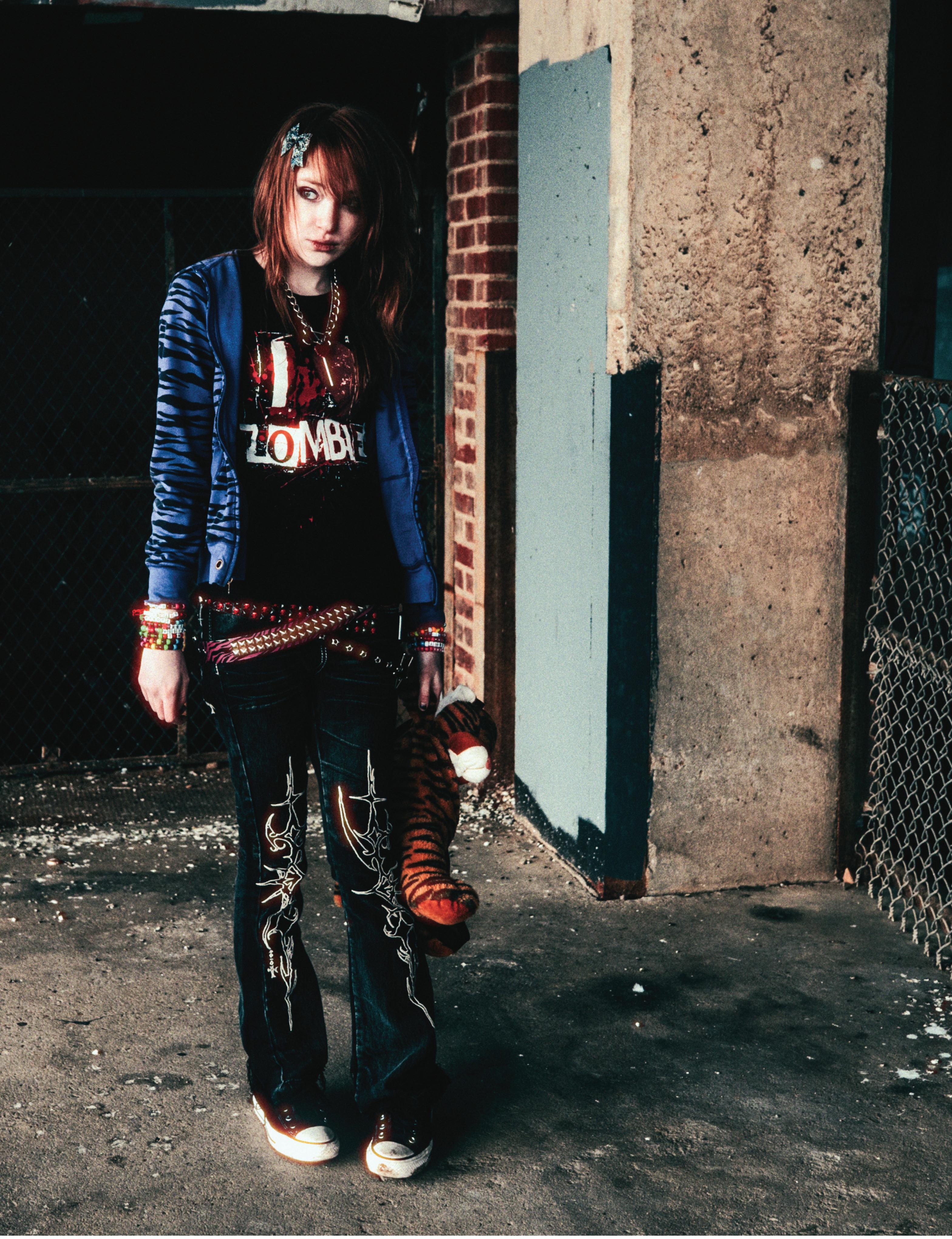
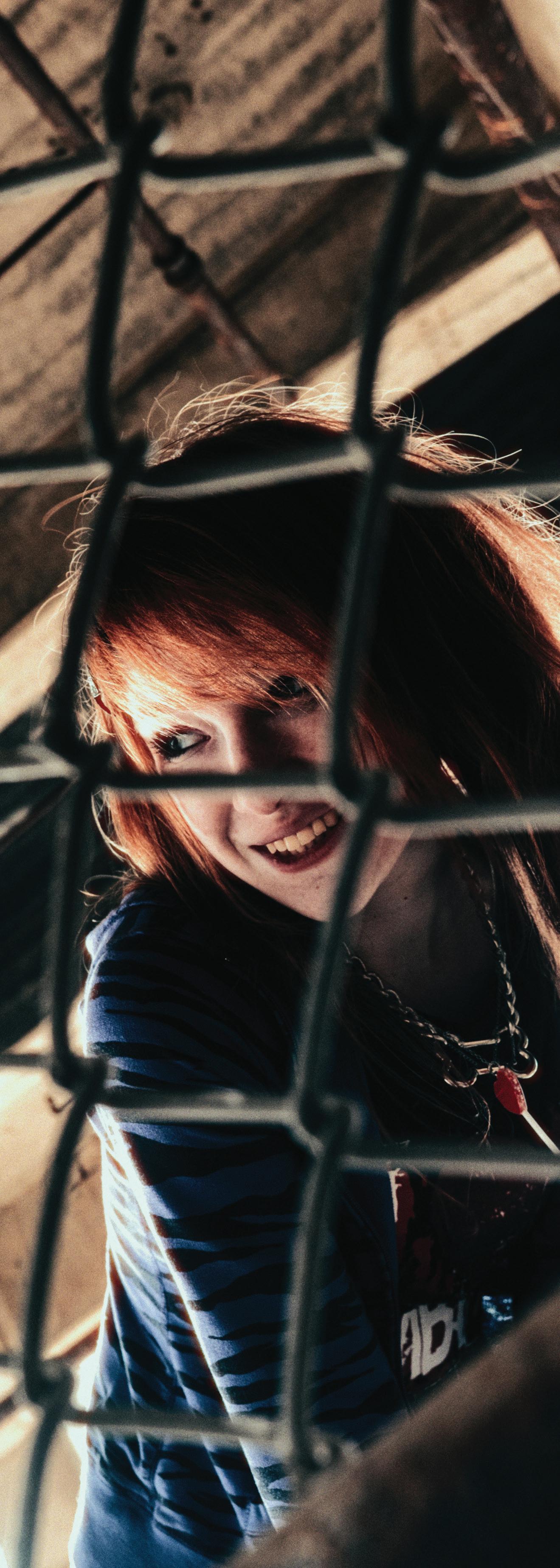
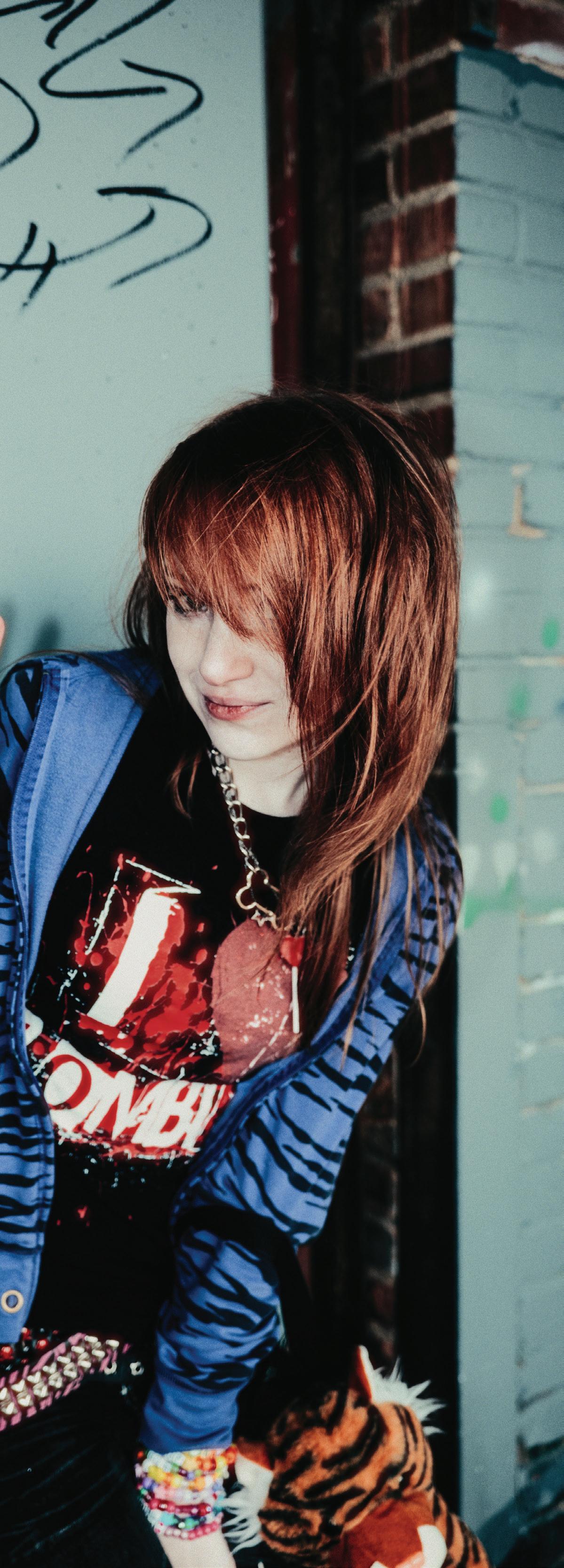
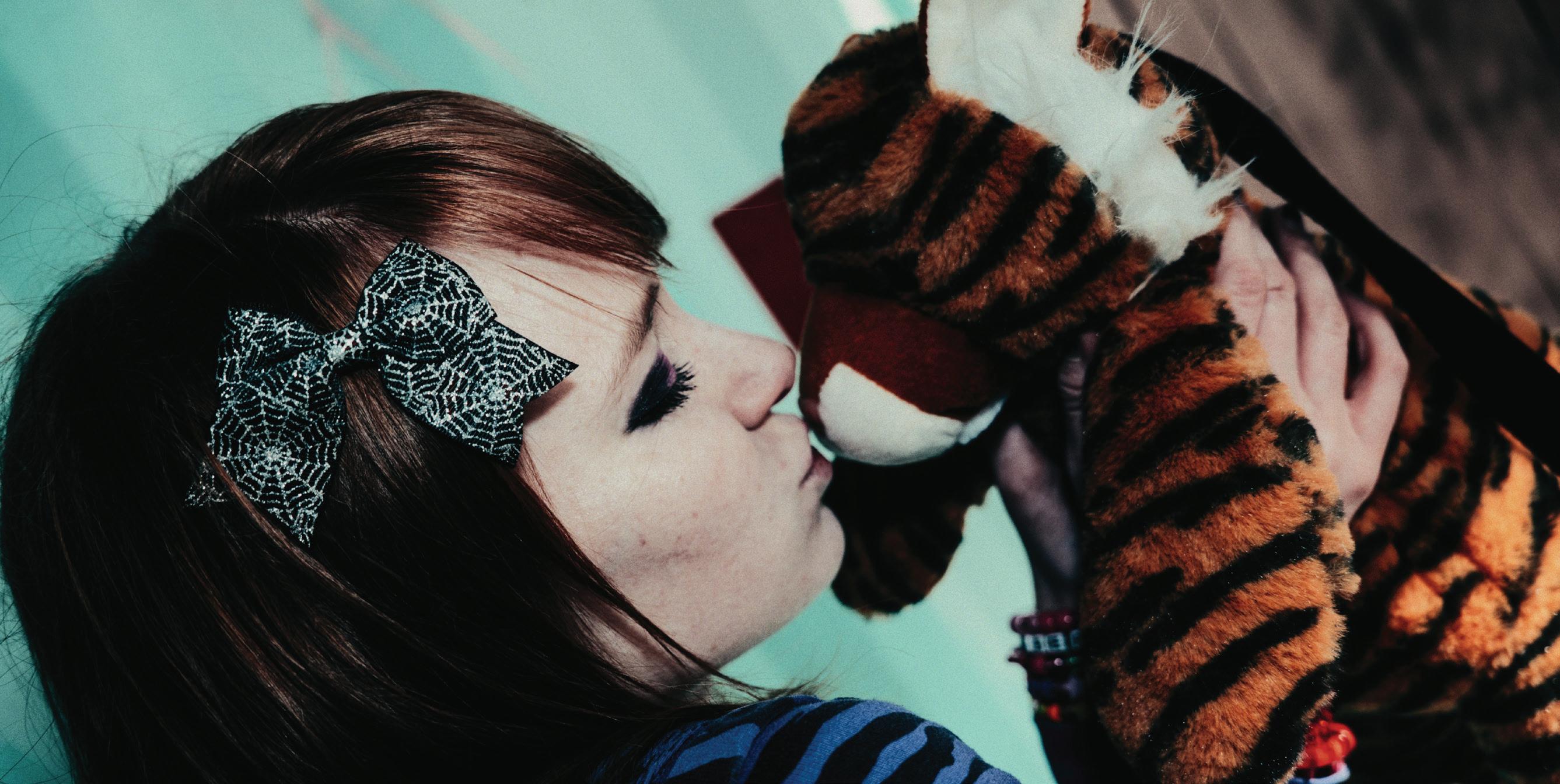
Emo is crawling its way back from the dead. Kneehigh Converse are available to the general public, massively iconic artists like MCR and Chiodos are returning on tour, MySpace has been converted into the modern day SpaceHey: even the “mainstream” is catching on. The Zumiez employee in your coastal Virginia hometown is making comments about how your phone (which still has a home button) is “super aesthetic.” At this point, it’s retrofuturism. Early 2000s aesthetics are in vogue. It’s simple “trend cycle” math — the last few years have been devoted to D.I.Y. DJ sets and indie sleaze sensibilities, but people can only take so much of Snow Strippers and Tumblr pre-post-ironic swag. There’s a shimmery air to 2010’s party culture, one of the precursory waves of an existence constantly observed by social media. As we get closer to the dead internet, however, we’ve arrived at a new (whinier? even more eyeliner-d?) need for escape. A way to avoid the constant surveillance and marketing derived from our reliance on technology … and that way is to get really emo.
Modeling, Styling: Marissa Shaw
Graphics: Michael Wynne
Emo takes the carefully disaffected grunge of sleaze and ramps it up somewhere between Monster Energy t-shirts and mustache fingers. It’s the simulacra of non-sterile existence, where teased hair becomes the signifier of a “better time,” where mega-corps had slightly less of our data and home-ownership was still a vague possibility for people under 35. Our idea of emo today exists just beyond the furthest reaches of our nostalgia, one shaped by older siblings and internet influencers we had no business watching, echoing and unspooling from a lived experience that most of us had the best grasp on in middle school. Being emo implies a true “scene,” a cultural community. No one of sound judgement is going to the heat-damaged lengths of being emo and not listening to the music. This new wave of skramz, sass, and post-hardcore glamour calls to mind the raccoon-tailed glory of the early 2000s. Stretched septums have become the new snakebites, tails and camo the new brass knuckles and zebra print. But to understand this derivation, we have to know what we’re really working from.
A *VERY* BRIEF OVERVIEW SCENEEMO& HISTORY
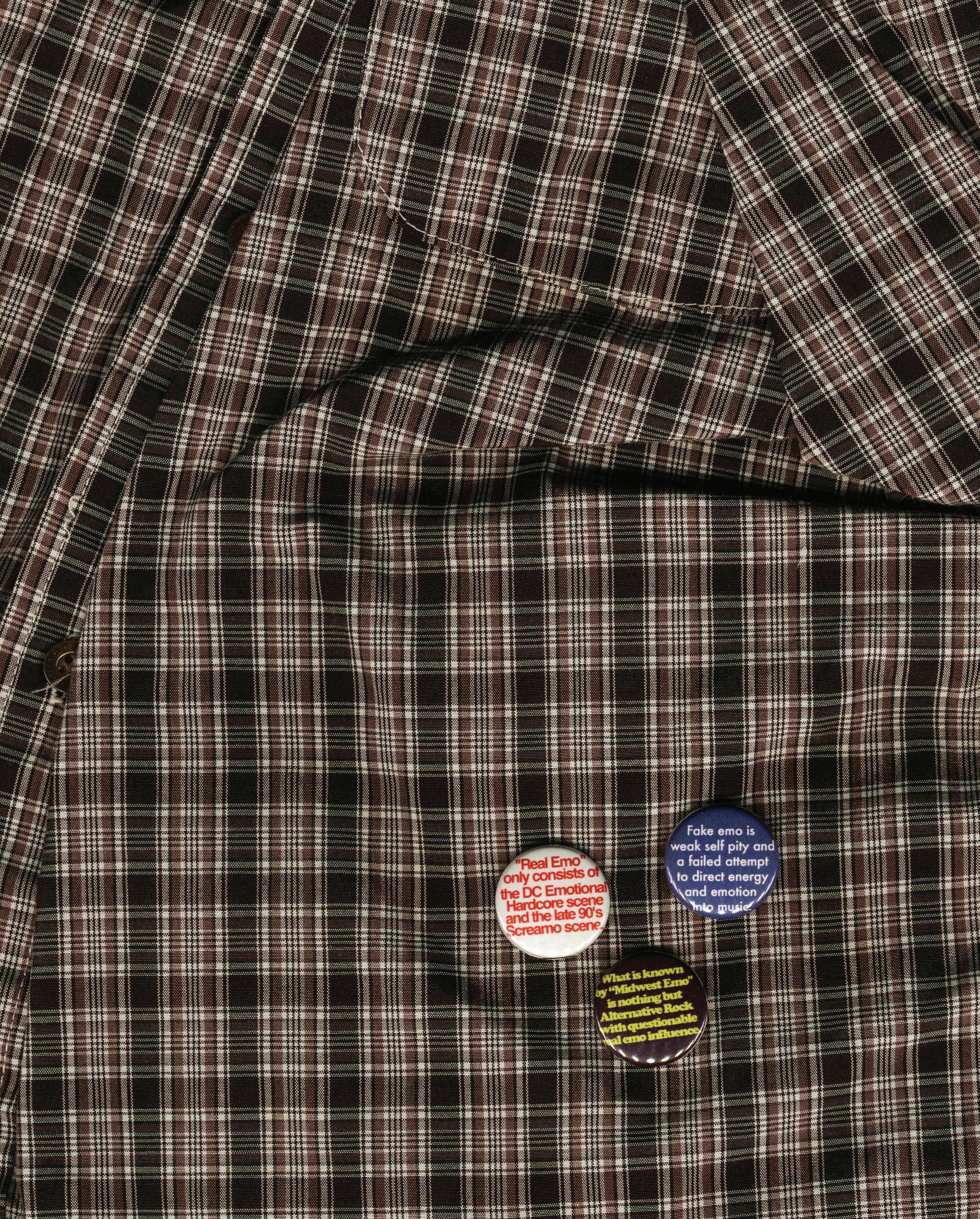
The infamous REAL EMO copypasta, somewhere along the line, spits out a genuinely good take on the thesis of most tracks regardless of their iteration on the timeline: “Real emo sounds ENERGETIC, POWERFUL and somewhat HATEFUL. Fake emo is weak, self pity and a failed attempt to direct energy and emotion into music.”
Emo starts in the Gothamesque, cement city of Washington D.C. It’s the 80s — everyone is repressed and angry. “Emotional hardcore” allowed music to be more vulnerable compared to the overt and outright aggressive displays of masculinity in the punkhardcore scene. One important distinction of emo that separates it from its idiosyncratic modern day perception is that no one ever wanted to be clocked as emo, including its literal innovators. Rites of Spring is going to be the big name in the First Wave, though its frontman, Guy Picciotto, would go on to more memorable projects (It’s just Fugazi. I’m talking about Fugazi. I guess he was really tired of being called emo).
The Second Wave takes us to the disaffected, downtrodden 90’s. Emo began spreading to the heart of America — the sweet, sweet midwest. Sunny Day Real Estate, Cap’n Jazz, and The Promise Ring all came to fame with cleaner sounds and a more accessible charm for the soulful, yet brooding Horn-rimmed masses of Nebraska. As this regional absorption implies, subgenres such as Midwest Emo and screamo came to a head, with smash hits like American Football and Orchid. Trudging through the early 2000s, screamo and sass-core also became an important antithesis to the hardcore scene with its queer undertones, another huge break from the patriarchal expectations emo sought to undermine (thank you, The Blood Brothers).
The Third Wave, perhaps the most direct source of the current revival we’re seeing, is what most people probably think of when they try to envision the most emo of emos in their head. Groups blending poppunk with emo’s grit like Jimmy Eat World were of import towards the beginning of the millennium, but the rise of internet culture catapulted emo into uncharted, colorful territories. Gaining huge traction through online spaces like MySpace and LiveJournal, Third Wave emo emerged as more than just a music scene for broken-hearted nerds with sweater vests. My Chemical Romance and Panic! At The Disco became household staples for teens with unbounded internet access, and bands like Thursday and Circa Survive kept the musical tradition alive for the “real” emos a little too cool for the rock opera flamboyance of “The Black Parade.” Fashion trends and “mall emo” became hugely popular, wherein appearances became huge sources of competition and judgement within the community. With a newfound intense focus on fashion, a new “scene” subculture emerged. Which, to be noted, is not the same thing as emo. It’s emo’s vain, beautiful, more chronically-online cousin.
Fading into the background with the rise of Tumblr fashion, twee, and more palatable forms of selfexpression, the Fourth Wave of emo is often credited as more of a revival of the Second Wave than its own unique category. Fourth Wave’s modus is the vision of twinkly guitars and drinking beer while whining about your last breakup. Bands like Modern Baseball, Brave Little Abacus, and Snowing took the lead in emo culture, paring it back down to emotion and vulnerability combined with math-rocky sonics rather than the harshness and neons of the previous wave.
The Fifth Wave is the latest and most recent. Existing in the era of the musical slush pile — millions of streamable songs and bedroom artists accessible within clicks — this wave of emo isn’t necessarily as bound by conventions of the “wave.” Fifth wave is characterized by its experimental and chronically online nature, often returning to screamo muffled by magical girl anime samples or soundbites from “Courage the Cowardly Dog.” Foxtails, Your Arms Are My Cocoon, and Origami Angel are all big hitters. Fifth Wave’s sense of boundlessness has also made it remarkably open to queerness, the other musical side of the coin from our perceptions about transgender hyperpop.
OK, H WE GET HERE? BU D D T I OW
Today’s “revival” of emo in real-life scenes is a curious blend of both Second Wave screamo (the popularity of “skramz” and Sasscore) and Third Wave aesthetics. 5th wave, particularly in Richmond, is seeing massive popularity thanks to bands such as Athera (@athera_rva) and Donald Shimoda (@donaldshim. oda) combined with a growing interest in rave culture and a return to early 2k fashion sensibilities. Touring bands like Flowersforpersephone have drawn big D.I.Y. crowds from our humble neck of the emo woods… Venues like The Hole (rest in peace) hosted emo shows in a very open floor planned building for the past couple of years with big local names like Donald Shimoda and Hynoki (@hynokirva), and even bigger touring names like Nuvolascura (@nuvolascura_).
It’s also important to note that Richmond exists in a queer and student bubble, where internet personas and self-expression catered to whatever’s going on in the world is in full abundance. Sasscore bands like the former Namelesswastaken (@namelesswastakenva) have also taken a local mainstage — a spastic fourpiece “bringing the sauce” with impressively guttural vocals and panicky riffs as brutual as they are sassy.
The internet eats itself every day, and this white-belt resurgence is no exception. The leads of Nameless, Flowersforpersephone, and Athera sport razor haircuts and studded belts, transporting similarly spike-cuffed audiences back to 2009. People record sets on their 3DS, collect CDs, go wild for kandi merch — it all ties back to what you can have in your hands. The social media that made emo so prolific was barren by the time most of us got to it; there was no code to lovingly screw up beyond repair while trying to make a blog, or incentive to chat with strangers about emo boys for hours. Every part of our lives has been designed to be transient, fleeting, distracting. Maybe the local music scene doesn’t feel like permanency, but it beats the isolation of Spotify’s evil algorithmic recommendations or sitting at home scrolling through Bandcamp.
& TECHNOSTERILITY DEAD
The “slop” version of what used to be open-source, customizable, and actually social is actively feeding into the “Dead Internet Theory,” a framework which suggests that much of today’s internet — particularly, social media — is overwhelmingly saturated by nonhuman activity and corporate agendas, leading to massive declines in “authentic” human interaction. The internet subsumes itself. All forms of online community are at an impasse: when people no longer want to interact with the internet, where do they turn? No matter the circumstance, subculture founded in community is ultimately what people fall back to.
It feels good to be at a show, even better at a show where there’s dirt floors, earplugs are a must, and you’re mildly concerned that a 6’2 crowdkiller in barely held-up JNCOs might take you out permanently. Because that means you’re one less degree of separation from the world. It feels good to watch emo girls squeal into a microphone and sample “Judas” by Lady Gaga and exist in this shared, sacred space, where proximity feels natural and friends could literally be everywhere. It’s rewarding to exist in a physical space out of the performative bonds of internet culture, and even more rewarding to hear awesome crazy music.
Emo has become a material antithesis for the beige, minimal aesthetic heralding of this modern era (which is due to the rise of fascist ideologies that aim to streamline society and centralize control over the human condition, one could argue), by both acting as a realized community as well as combatting the loss of ownership we have over our media and identity. There’s a reason why physical media collections, MySpace nostalgia, and dirty hardcore sets in abandoned buildings are the latest Richmond happening. They’re tactile, they’re real — they’re connected to real people, not influencers or corporate slop. When it comes to community, you’re allowed to embrace modernity AND tradition. So, sharpie your nails, straighten your hair, and
GET IN THE PIT! INTERNET
Written by, Creative Direction, Graphics, Makeup, Styling, & Modeling: Ava Soong
Photography: Ben Phan
Styling & Makeup: Helena Dauverd
Production Assistance: Jadyn Lalonde
Lighting Assistance: Paul Finger, David Morales
Modeling: Rhiannon Stevens, Ren Gebreamlak
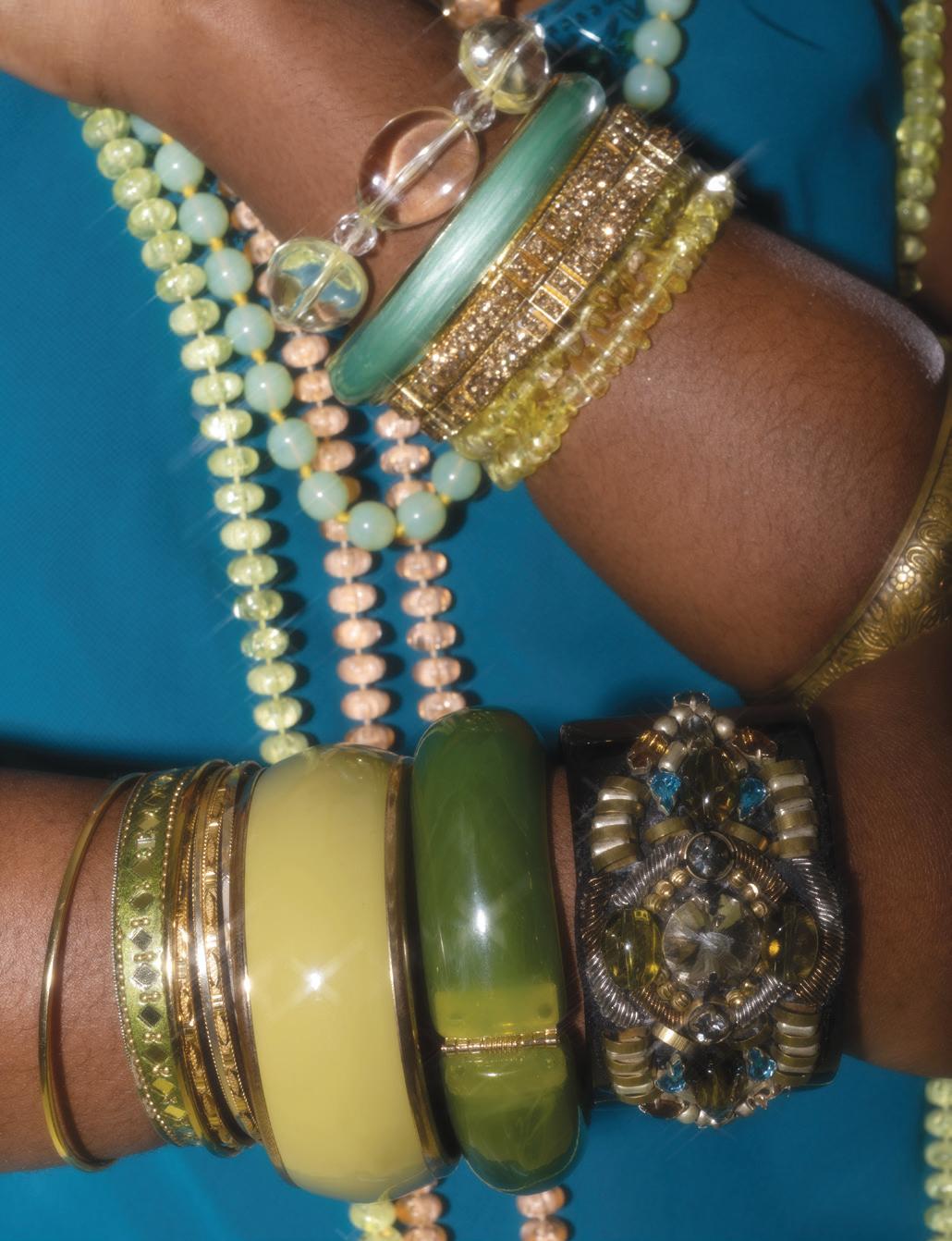
It was ninth grade, and my then (dreadfully) bare earlobes were simply screaming for something, anything to adorn the vacant space. Jewelry wasn’t something I was familiar with at the time, but I had a compulsion — some may say calling — to finally get my ears pierced. My mom drove me to a nearby piercing studio, where I was welcomed by an alluring
display of studded gemstones, shining hoops, and stoic barbells. I had stumbled upon a hidden treasure trove. My piercer sported her own dazzling array of hoops snaking up each ear, which shone as she prepared me for the fatal pinch. I gingerly sat on the cushioned flatbed, eagerly awaiting my first pair of earrings. It would be just one piercing, I told myself.
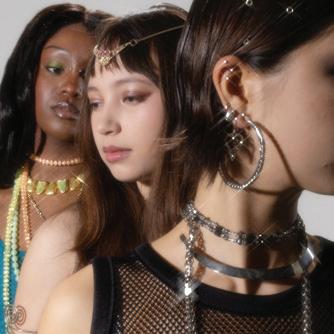
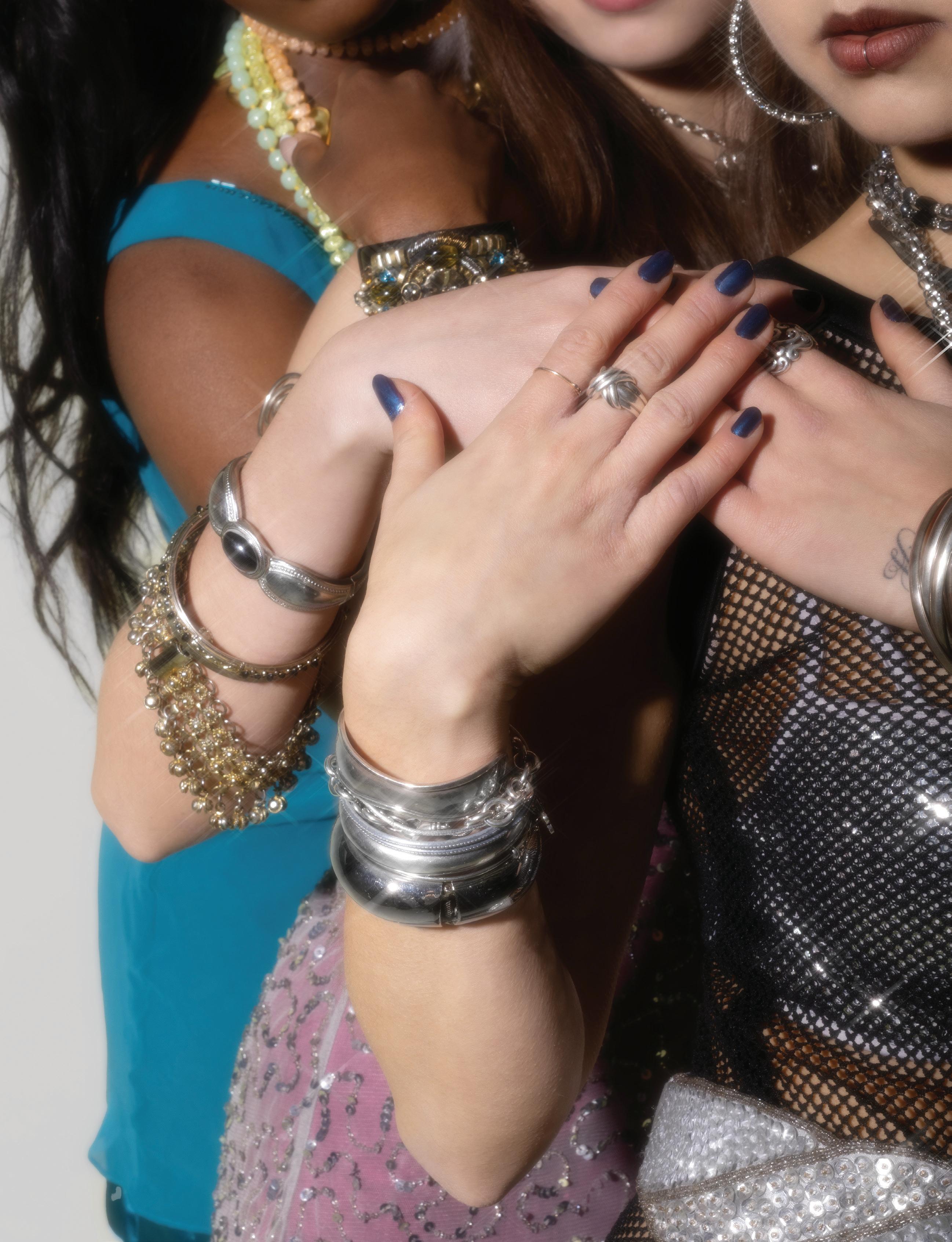
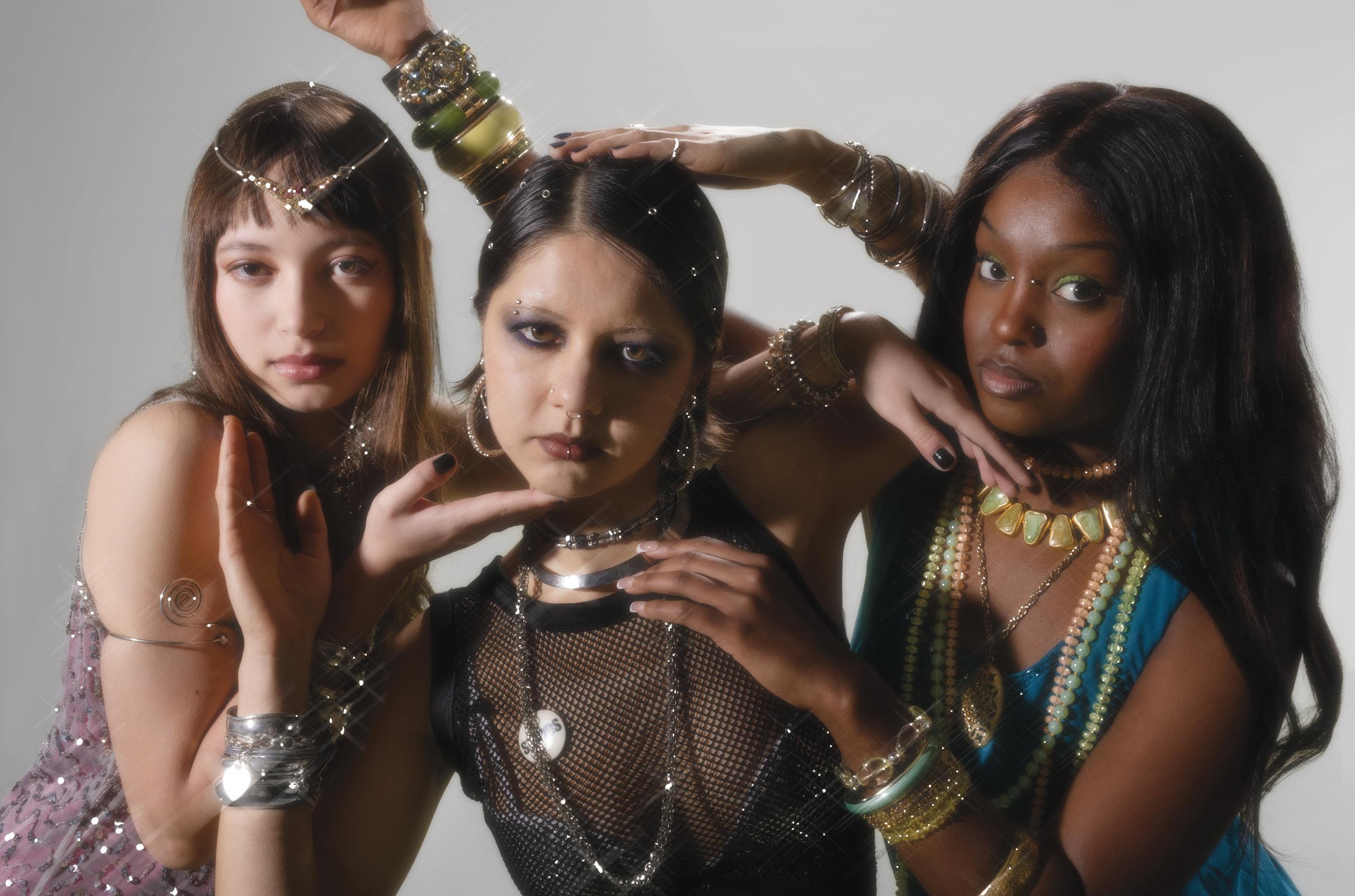
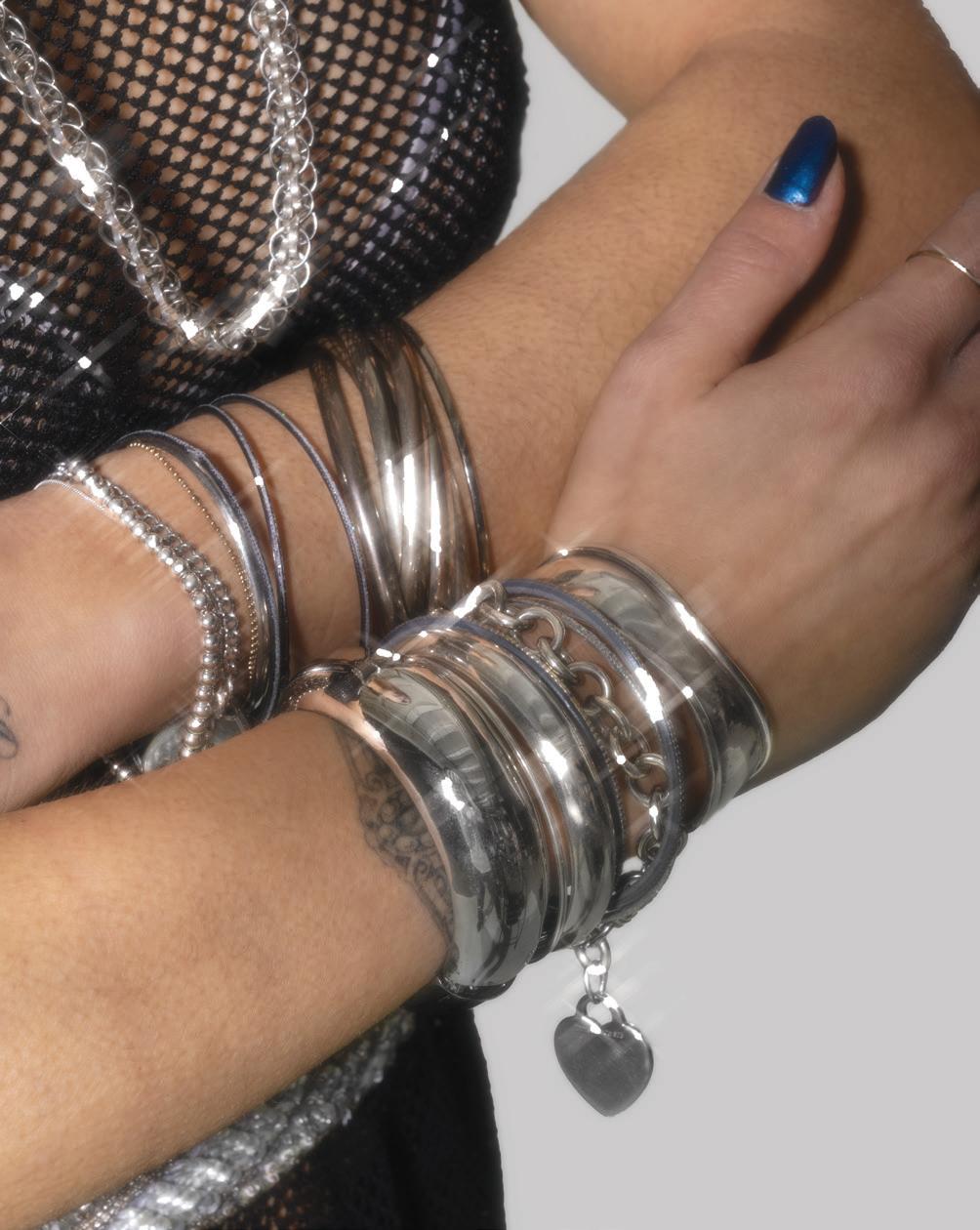
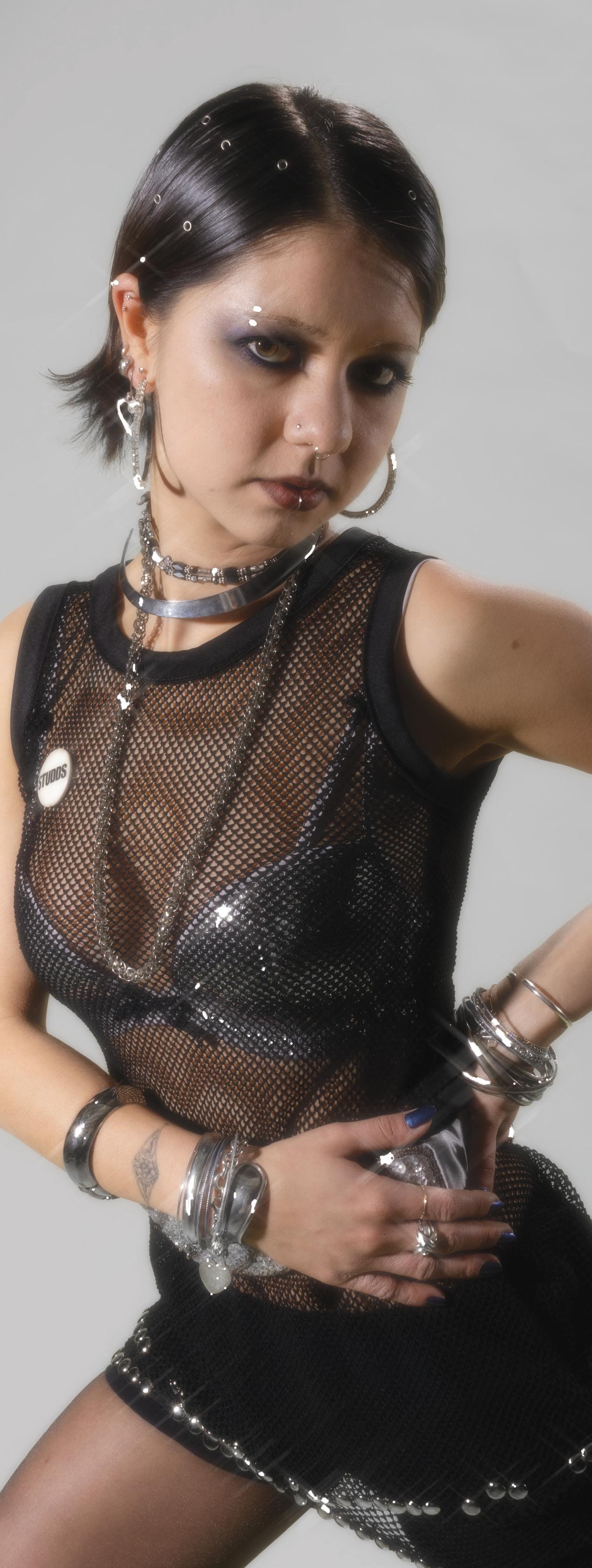
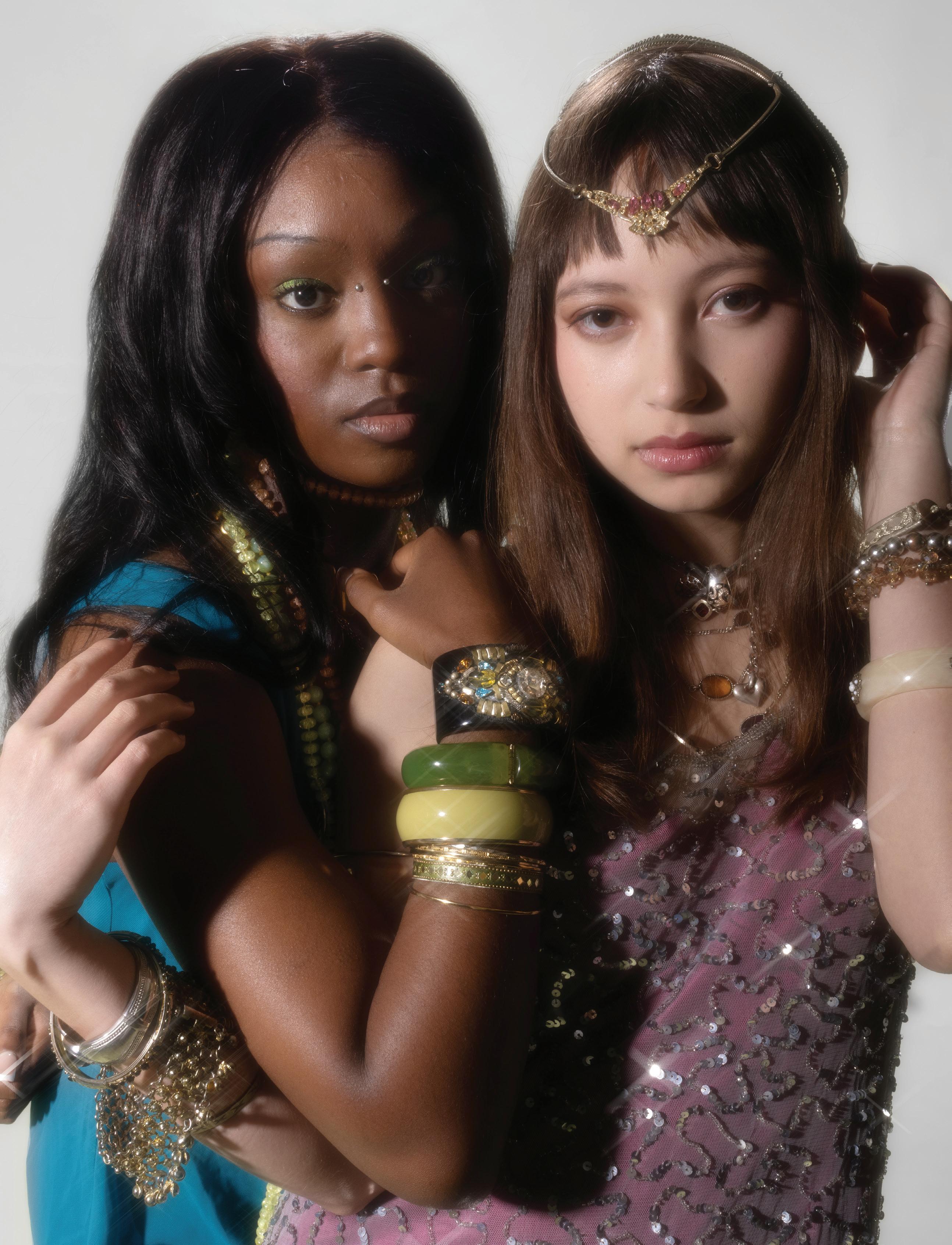
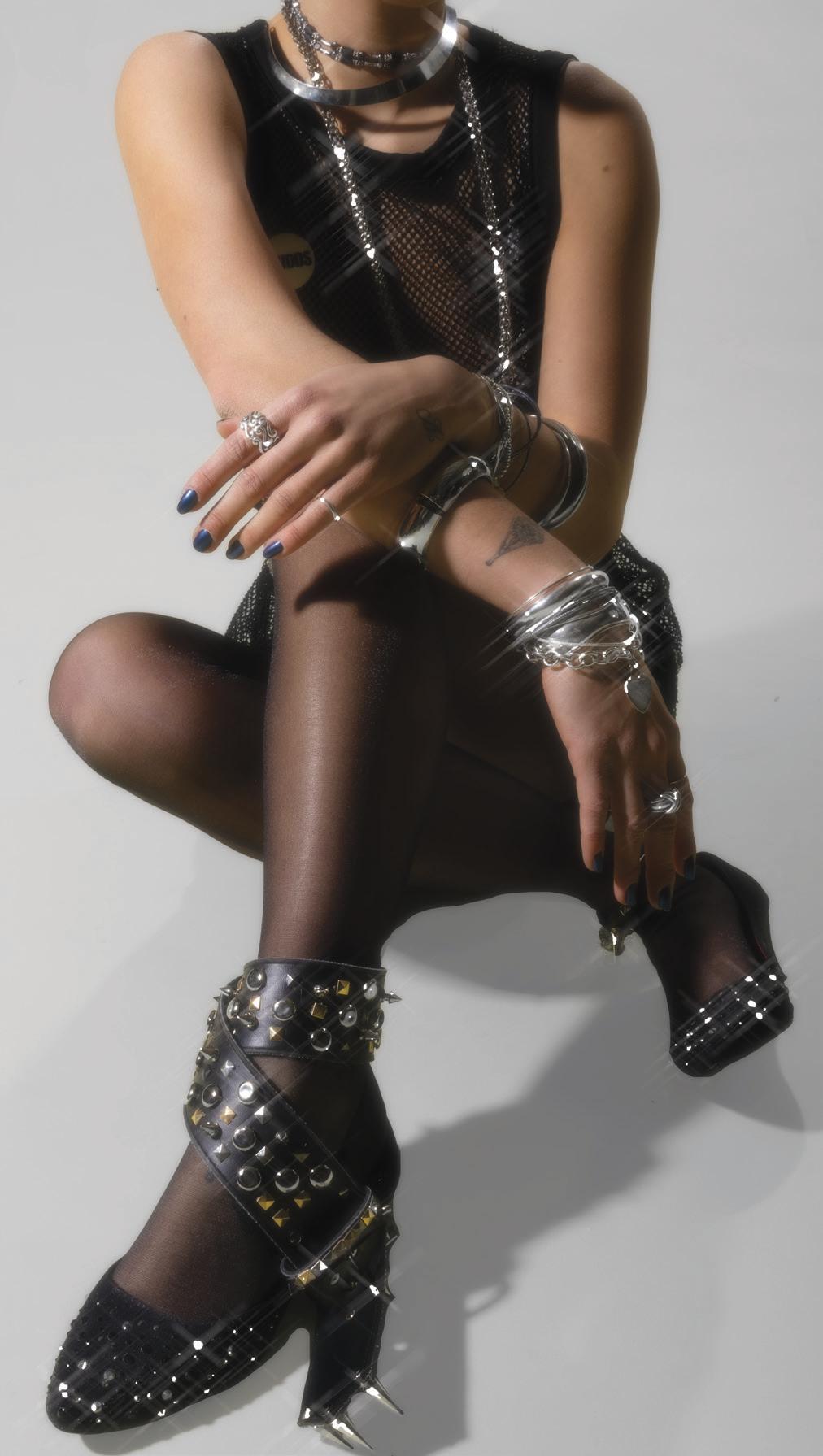
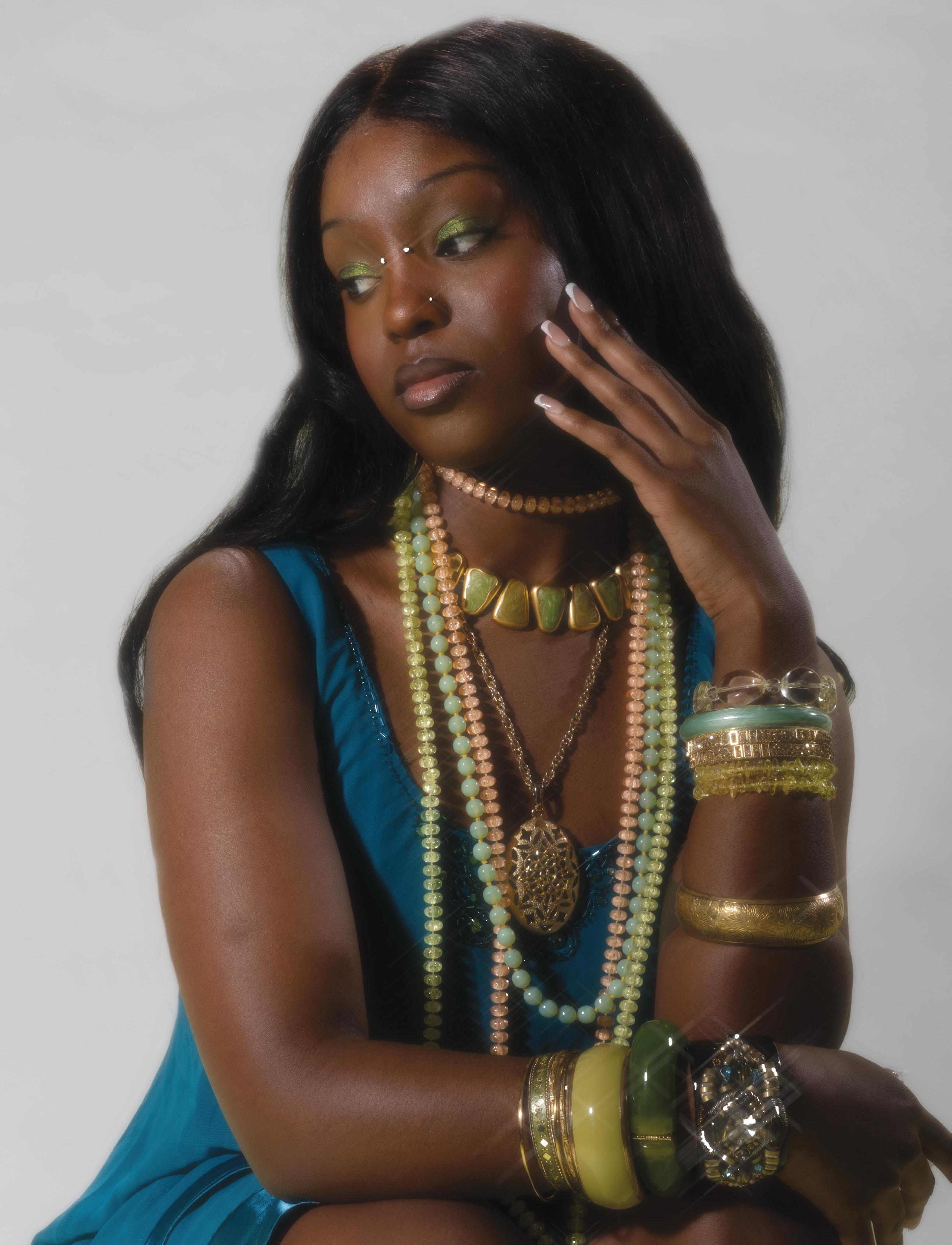
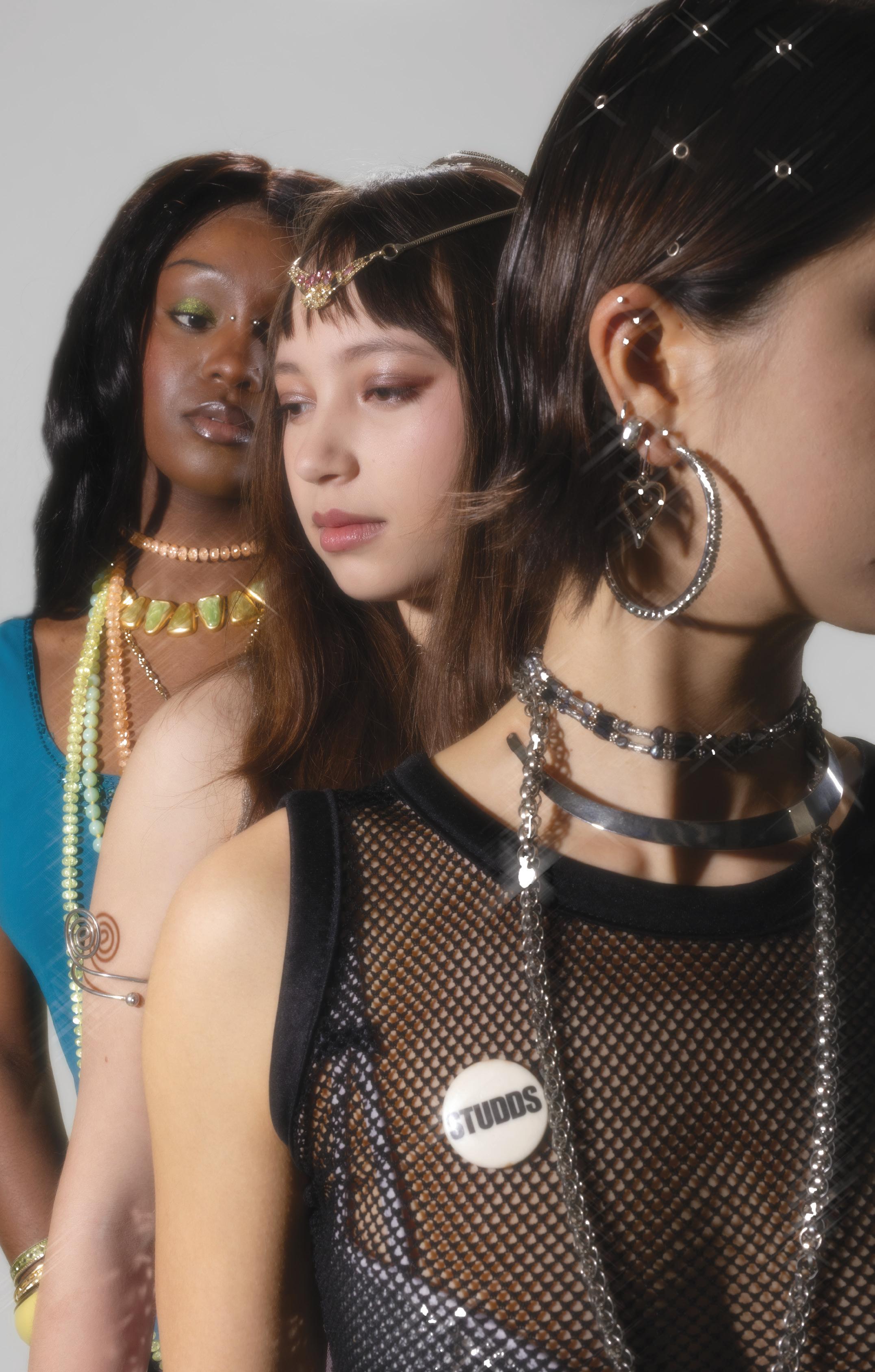
And now, nine years and 19 “just one” piercings later, I’ve fallen in love with the art of adorning myself. Receiving a piercing feels liberating — from the “I’m going to do it” moment to the “1, 2, 3 … ” countdown, choosing an accessory that will live and evolve with you is nothing short of exciting. It’s powerful, almost, embellishing a part of your body that relishes the spotlight. It’s a personalization that gives a little part of ourselves to the world, unapologetically demanding attention. Piercings aren’t the sole proprietors of this sentiment either — from bangles to necklaces, carabiners to toe rings, all jewelry serves as an extension of the wearer. The accessories we adorn ourselves with are more than just props, they’re conscious choices of expression: conduits of personality, memories, and experimentation.
When jewelry speaks, it sings. Listening to its melody, I’ve collected what I believe to be the central tenants to the art of bedecking oneself:
Jewelry isn’t meant to be hidden.
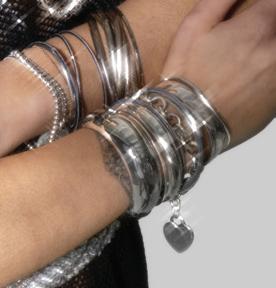
Everywhere I look, a gallery awaits. A singular, graceful hoop swirling through a lobe. A constellation of piercings twinkling across an ear. Blossoms of silver beads nestled in the tails of eyebrows; sparkling studs perched above a nose bridge. The soft tink of necklaces dancing together, entangling in an indecipherable jumble upon a neck; or the unmistakable clinking of bracelets skating across the space of an arm. Rings harmonizing a chorus across typing fingers, or lip rings dancing across a smile.
Every sparkle, shimmer, and jingle serves as a testament to the wearer. From soft elegance to bold extravagance, jewelry can be flaunted on every occasion. A single pendant dangling from a chain speaks just as much as a lavishly layered neck flourishing gemstones and heavy links. Beyond appearances, the mere presence of jewelry adds a comforting touch. Emboldened by light and movement, jewelry smartly peeks out of collars or brazenly commands open space. Jewelry is created to be worn, and its insistence upon standing out is what makes each piece (and therefore wearer) shine a little more.
I see jewelry as illustrious armor, a protective talisman as I move about the world. Hearing the percussion of bracelet charms or returning to the familiar weight of a favorite necklace are practices that I find comfort in. I love noticing similar reflections in others — the large, diamond-cut silver hoops my friend Greta wears, Aubrey’s claycharm choker necklace, Sydney’s golden gemstone rings, and Jen and Isabelle’s bedazzled bear necklace charms. Each person’s jewelry speaks in its own way, and it is each intentional selection that makes jewelry a sacred facilitator of self-expression.
Jewelry tells a story.
Hidden among the etchings of necklace charms lies a secret, a little glimpse into the wearer’s psyche. Jewelry speaks to us and for us, telling stories subliminally. Oftentimes, how we come into possession of jewelry is a story in itself. “It was scavenged from a thrift store,” “My friend gave it to me,” or “It was my grandmother’s.” One of my personal favorites is, “My friend and I got these piercings together.” There is something sacred about carrying a piece of someone else with you, and sharing that memory across spaces. Through the act of wearing, you’re not only constructing your persona, but honoring the spirit behind each piece. As markers of moments, people, and places, jewelry serves as a living, breathing collection of the wearer’s tastes, beliefs, and intentions. As you choose a different piece to wear each day, you collect your own tales of life. Beyond the material, size, or age, the jewelry you wear can hold irreplaceable sentimental value, arbitrary to any price tag.
Each person maintains their own reason for wearing jewelry, whether it’s a favorite piece, a special occasion, or simply for fun. There doesn’t necessarily have to be a reason — something as simple as “I felt that something was missing” is reason enough to wear a funky new bracelet. The more you wear something, the more it evolves with you. Each wear is a small ritual of carrying something special on you for that day. Every piece you acquire builds an archive of current and past selves, a collection that directly reflects an evolution of taste, trends, and investments over time. It’s quite beautiful to see others wear their memories — a single comment or question can spark a shared story, or even create one.
“Too much” is anti-jewelry propaganda.
Alas, there is the ever-present, soul-crushing idea of wearing “too much” jewelry. That it’s “too much going on,” “too much metal,” “too much noise” ... try “too much style,” “too much personality,” “too much fun?” I hereby reject the notion of wearing “too much.” Whatever jewelry you choose to wear or piercings to get, it’s ultimately up to you.
Oftentimes, there’s pressure that surrounds getting a new piercing. (What if I hate it? What if I don’t like it in the future? How will it affect me? What if — the list goes on). It’s understandable; getting a new piercing is a significant decision, especially when considering factors such as placement, price, and environment. While I won’t directly try to convince you to get a piercing (which is a lie, I totally would), I will say that nothing is permanent. Taste, style, and preferences change, and if/when you get a piercing, there’s no rule saying you must keep it forever. There is beauty in the ephemeral, something special about the way we (and thus, our accessories) transform over time. If anything, a piercing or piece of jewelry will always carry a memory from the time you received it, whether you cherish it or remove it completely.
And, oftentimes, that memory is enough of an accessory to carry with you. Too often, pieces of jewelry are abandoned — sequestered in the dark corners of drawers, strewn into the depths of baskets, and stranded across closet shelves, endlessly waiting for the “right moment” to be worn. It’s never the “right time” or “right occasion” to wear it. Those pieces are “special” and therefore “can’t be worn until [enter nonexistent ‘right time’ release date].” In most cases, those pieces may as well just keep on waiting. To that I say: every day is the right occasion. Give yourself permission to wear that special piece of jewelry, to glimmer and stand out. Try pairing that neglected bracelet with something you love to wear already. Brave the unknown in that necklace you’ve been preserving. Take those funky earrings out on a walk! I know they’re just dying to be let out. They need some air.
Jewelry is a practice. Accessorizing is a lifestyle.
Beyond the sparkles and shimmers, the very act of putting on jewelry is valuable in itself. It serves as a ritual, something as healing as cooking a comforting meal, rocking a snazzy outfit, or practicing a favorite hobby. Jewelry, like our rituals, is ingrained into how we perceive ourselves. Every decision on material, color, and style we make reinforces a sense of identity, allowing us the opportunity to manipulate our appearance. We engage in the active process of self-care and self-expression, experimenting with various styles and pieces depending on the moment. Nothing is set in stone, and we have the freedom to choose jewelry that aligns with our authentic selves, regardless of imposing beauty standards and expectations. So, be noisy. Be shimmery. Trust what pieces call (or don’t call) to you — often, it’s for a reason.
If you’re considering that next piercing … it can’t hurt.
After all, it’s just one more.
Written By: Ava Soong, Lareina Allred Graphics: Ava Soong
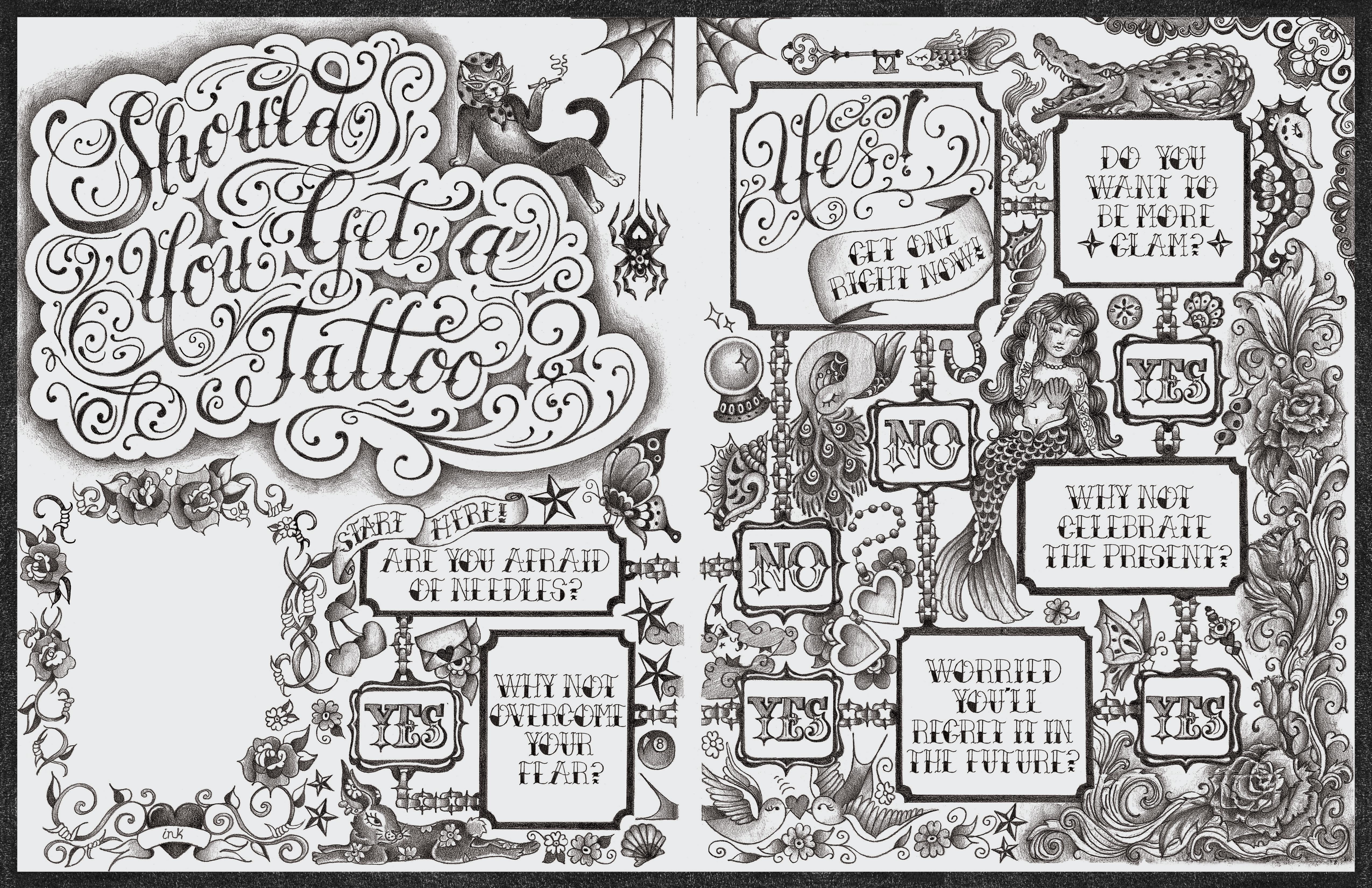
We know you’ve been thinking about it. The weather’s getting warmer, winter layers are being shed in favor of shorts and t-shirts. It’s only a matter of time before Richmond’s art gallery of tattoos is on full display. So … should you do it?
With so many styles, colors, and designs to choose from, getting a tattoo can feel quite daunting. As a means of expression and personality, tattoos are empowering, sentimental, and fun. Trust your gut — whatever you choose to get inked is a celebration of you!
Whether it’s your first or 21st tattoo, Ink Magazine is here to help ease you into your decision. Follow along with some classic pre-tattoo questions to find your answer!
After all, what could be more glamorous than inking yourself … forever?
Written by: Lareina Allred
Photography: Jadyn Lalonde
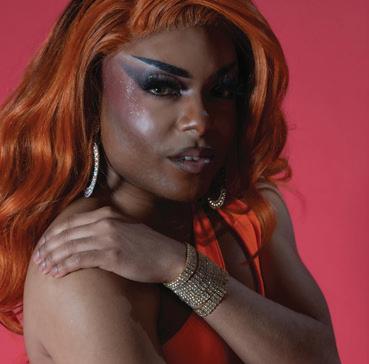
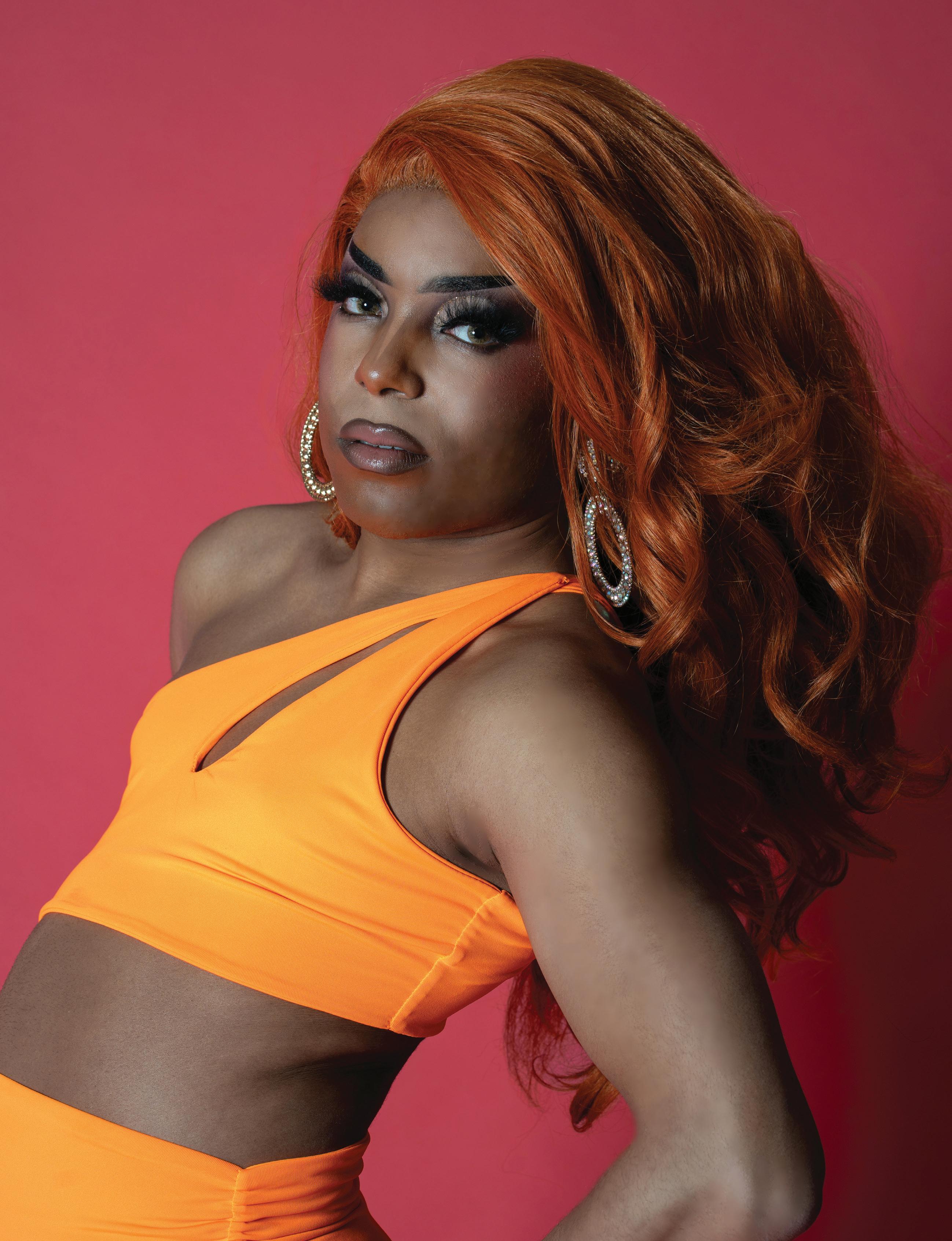
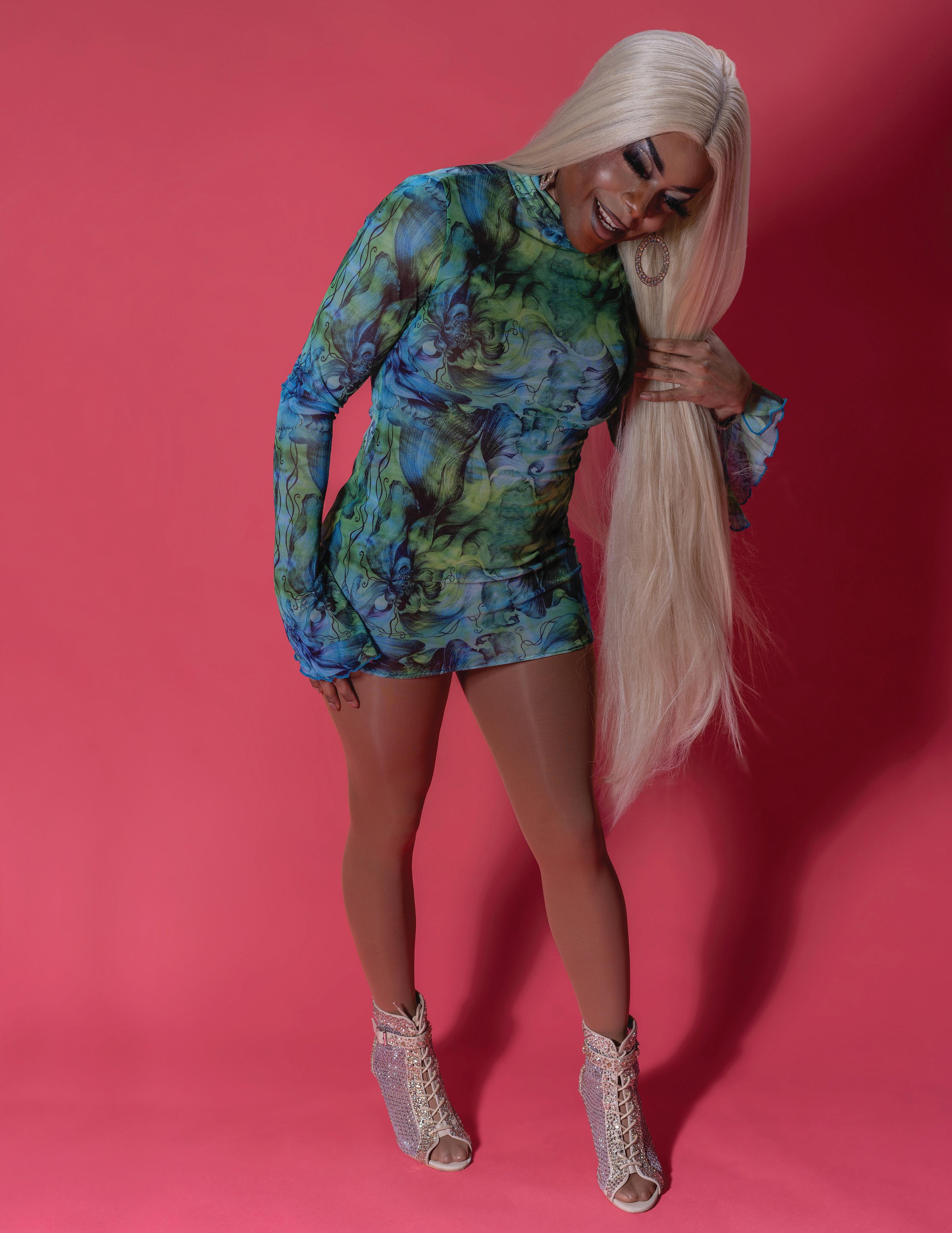
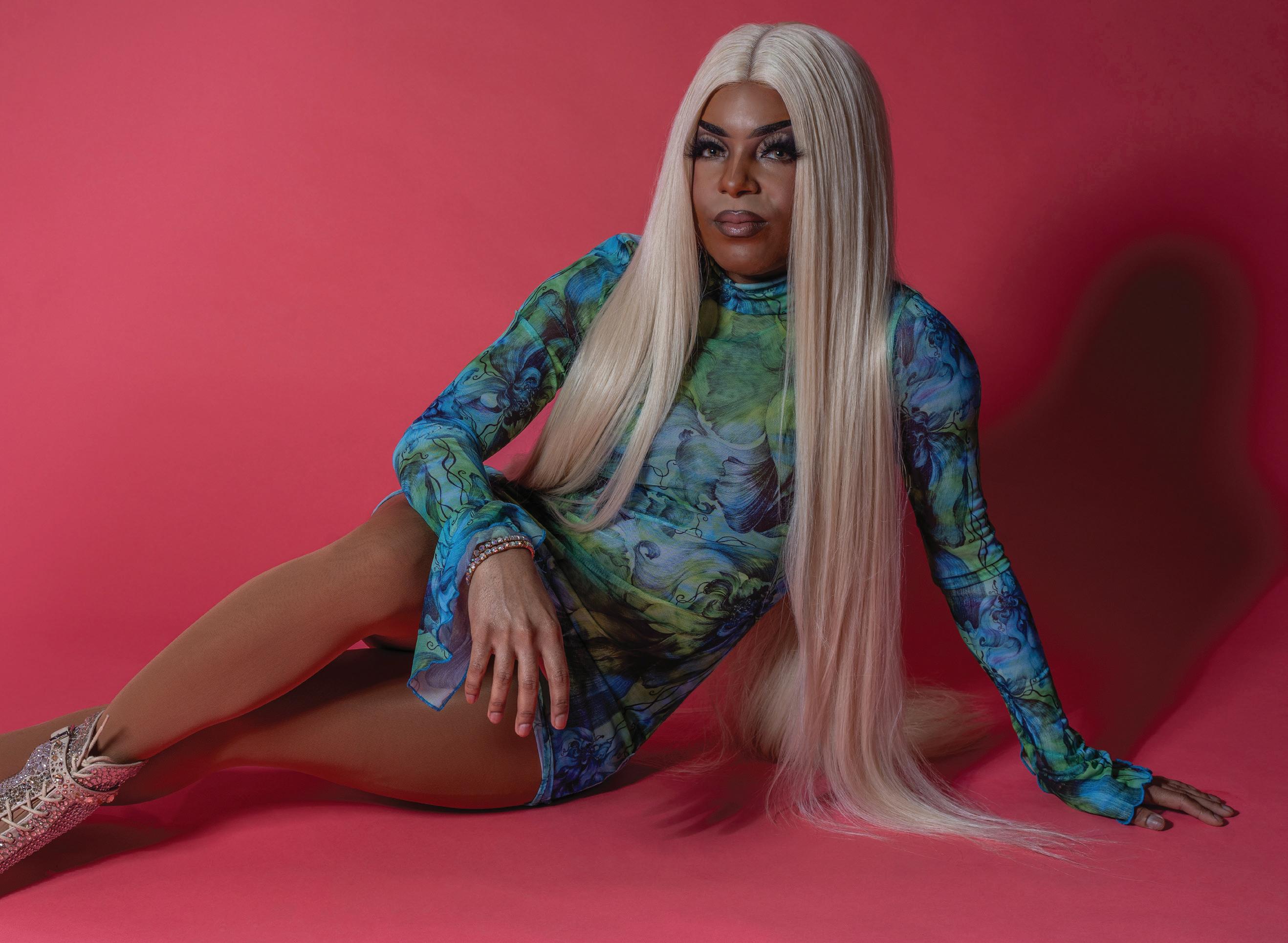
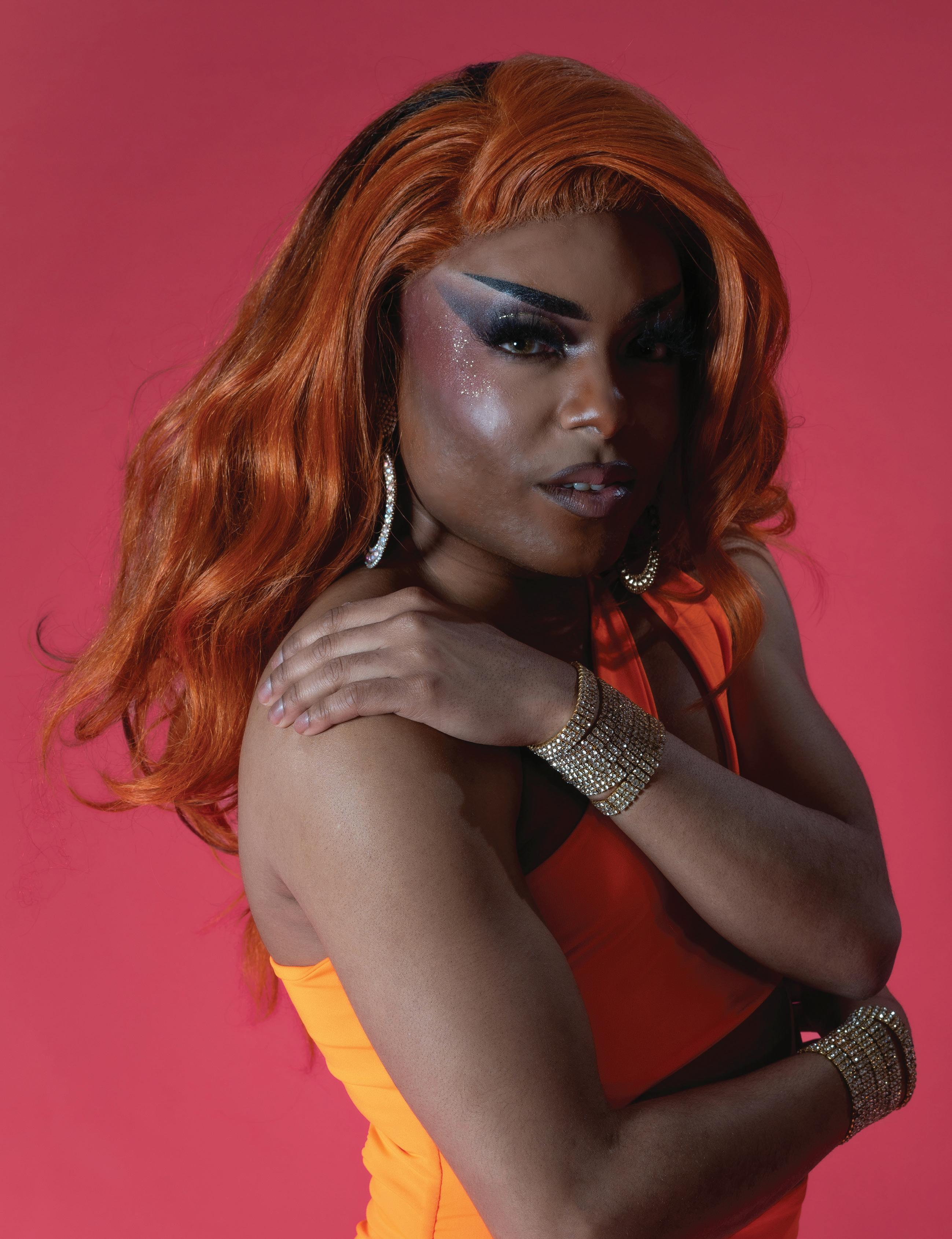
Melanin Monroe has been a staple in the Richmond drag scene for almost 10 years. Born and raised in the city, Melanin, who goes by Mel off the clock, has established herself as a powerhouse performer known for her acrobatic stunts and high-energy performances. As a drag queen, Melanin Monroe spends her days performing for others. But how does she balance the demands of her profession — which often come with strained relationships, late nights, and expensive costumes — with the rest of her life? I recently had the opportunity to sit down with Melanin to discuss her glamour icons, found family, and wisdom for the next generation.
I
would never have thought I would still be here flipping off of things.”
What was life like for you when you were growing up?
When I was younger, I didn’t get to fully express myself the way that I wanted to. It was always a case of, “Well, boys can’t do this, and boys can’t do that” … I feel like I held onto a lot of that throughout my childhood. I get to show the other end of that with my drag. I get to let my femininity out ... and I get to be in a place where I can inspire other people in that same way.
When did you first become interested in doing drag?
I first became interested in doing drag when I was going to VCU. We would go to Godfrey’s on Wednesdays, and I would always see the show. It was specifically this one performer, Raquelle Shereé Colby, who was mind blowing. I was like, “I like the way you dance. You dance the way I dance. I want to do what you’re doing.” From there, I just started doing amateur contests at Godfrey’s and at Fallout just to get into the scene.
What year did you start doing drag?
We are coming up on my 10 years here. Really, I started in 2016, so it’s been 10 years of me just doing this. It’s crazy, because time has gone by so fast. I would never have thought I would still be here flipping off of things.
Outside of your drag performances, what does work like for you?
My day job is as a data analyst. It’s a lot of spreadsheets and things all day long. I love it so much. It’s normally just me working from home with my dog during the day, relaxing, going on a cute little walk, chilling there and then preparing for shows, hanging out with friends.
How do the two parts of your life cross over? Do you make a separation between your daily life and your drag?
I try to keep it very much separated. I don’t like to have too much of my free time spent focusing on the art and things that I do, because I feel like that takes away my fun from it ... So I make sure I have my set aside time for Mel, just Mel, versus all of my time being Melanin Monroe.
What are the differences between Mel and Melanin Monroe? What does that look like for you in your life?
Melanin is a powerhouse. That girl is crazy. She’s confident. She knows it, she holds it down, and she’s not scared of anything. When I have on my full mug and I’m all done up, that’s like an impenetrable shield to me. It’s like nothing is going to get through me. I could look a mess and I don’t feel like I look a mess. Somebody could try to bring me down, but you can’t bring me down, look at how hot I look. You can’t break through this.
How do you approach performance? What does that word mean to you?
Now, everybody has their own definition or thought of what performance is. For me and what I’m influenced by, I want to see energy. And when I say I want to see energy, I don’t mean just dancing. Energy could be done standing still. I want to see presence. Performing, for me is, “I’m able to move you,” whether I’m jumping from the ceiling to the floor, whether I’m standing in one place, whether I’m cartwheeling, I’m dancing, I’m doing comedy or whatever. Performance is power, and how you can captivate somebody.
How does the Richmond drag scene compares to other places?
It definitely has changed from when I first started. There’s much more diversity going on now. You see so many different types of drag now that you were not seeing 10 years ago. Now you can see fashion queens. You see people who don’t pad or wear nails ... I feel like you see a lot more kings, too ... As long as it’s good, it don’t matter what type of drag you like. There’s an entertainer here for everyone.
“
And when I say I want to see energy, I don’t mean just dancing.”
How does that energy and community influence your performances?
I feel like every time I’m like, “Ooh, girl, I’m that girl, I’m this and that,” I see somebody that does something that inspires me. I want to push it further. I see people like Drew Friday. I see people like my daughter, Veronica. I see people like Sapphire. I see people like Dreux Sidora up in D.C.
I see people like Harlot Schmarlot, Javon Love. I could go on and on, but I see people who are confident and comfortable in what they do and among the best of what they do. They come out there and they kill it every single time. That inspires me to keep doing the same. Because it’s like, “Well, b*tch, hold on ... I want to give that much energy. You put the battery in my back.”
What are you most proud of?
I think I’m most proud of when I’m able to do a charity show or anything to give back. Any time I can be in that kind of a space and I can inspire somebody — whether it be an adult, whether I work a back-to-school event and there’s queer kids — whenever I can give back.
What’s it been like interacting with the younger generation?
It was very healing for me to be able to be that for people when I wasn’t able to get that at all. I wasn’t even out of the closet. These kids who are out of the closet, I’m like, “Y’all ate that.” They know what they want, and they’re just happy.
When did you come out of the closet?
Which time? Senior year of high school-ish, I told my mom I was bi, because everybody else said they were bi. They didn’t mess with the bi kids in school, but they messed with the gay kids. I was like, “Well, you know, bi is 50% gay. I’m gonna tiptoe out into that.” I told her I was gay two years later. She was like, “Are you sure?” I was like, “Yeah, babes.”
What was that journey like for your family and friends?
I've gotten so much support from my friends. Family ... It's been a journey, but we're at a place now where I get the support that I want ... It wasn't always like that. It shows that [my mom] loves me and respects me because she's asking, and it wasn't always that way.
Get you a nice full body mirror, put it in your bedroom, and find out what works best for you.”
Did the university environment push you to discover more about yourself?
Oh, for sure. It felt freeing and safe and fun, because VCU is very much a piece of everything. I just got to experience so many different types of people. There was always something going on at OMSA — shoutout to OMSA. I would always be at the events just partaking, listening, learning. You get exposed to different cultures ... It helps to shape you and open your eyes to other people’s experiences.
What advice would you give to college students who are struggling with their own identity, trying to find who they are?
I have a few thoughts, but here’s just one of them. Get you a nice full body mirror, put it in your bedroom, and find out what works best for you. Find out what makes you comfortable in your skin, whether that’s your makeup, your look, your hair, whatever makes you feel the most comfortable. Go for it and do it. Perfect it, love it, and then present it without apology.
Written by, Creative Direction, Graphics, Styling, Modeling: Aisha Virk
Photography: Thomas White; Styling: Helena Dauverd; Makeup: Cassidy Arrieta
Modeling: Ava Soong, Grace Levy, Lareina Allred, Christina Woods, Julia Williams, Carée Mcdonald, Milena Paul
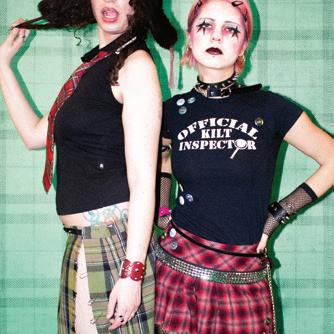
French for advanced guards, “avant-garde” originated as a term to refer to the leading part of an army used to scout and secure territory. Now the avant-garde is viewed as experimental, radical; a challenge to tradition, one that pushes the boundaries of art, literature, fashion, and music. To Guard the Avant-Garde connects the term back to its political roots while further exploring its modern connotation. The curation of these aesthetic choices can help build community through subculture, but it can also create overlap between two cultures that wouldn’t have crossover otherwise. Can “aesthetic appropriation” exist across subcultures — do we have the right to label our style as “ours”?
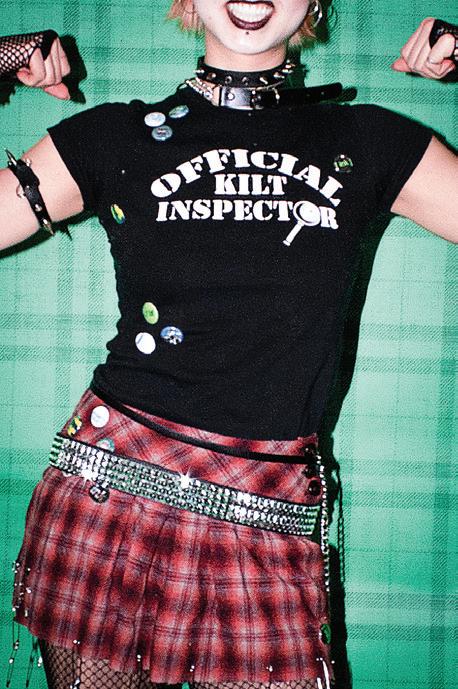
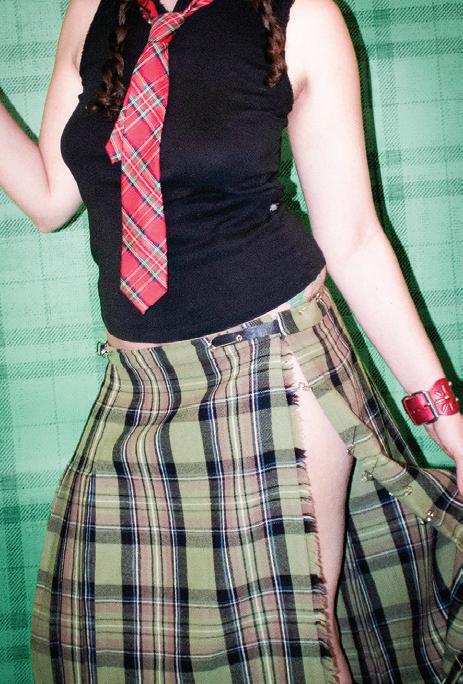
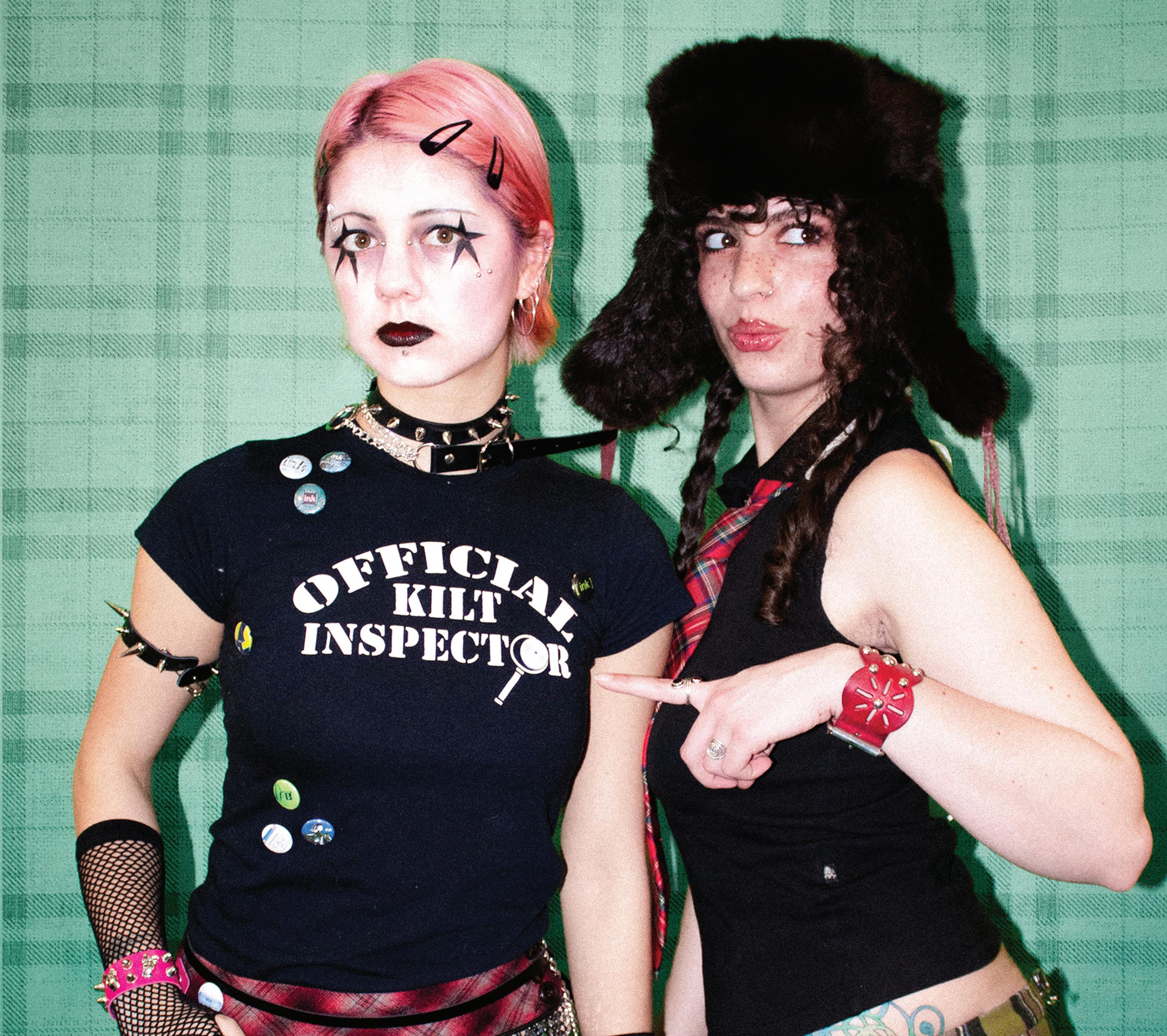
PUNKS X THE SCOTTISH
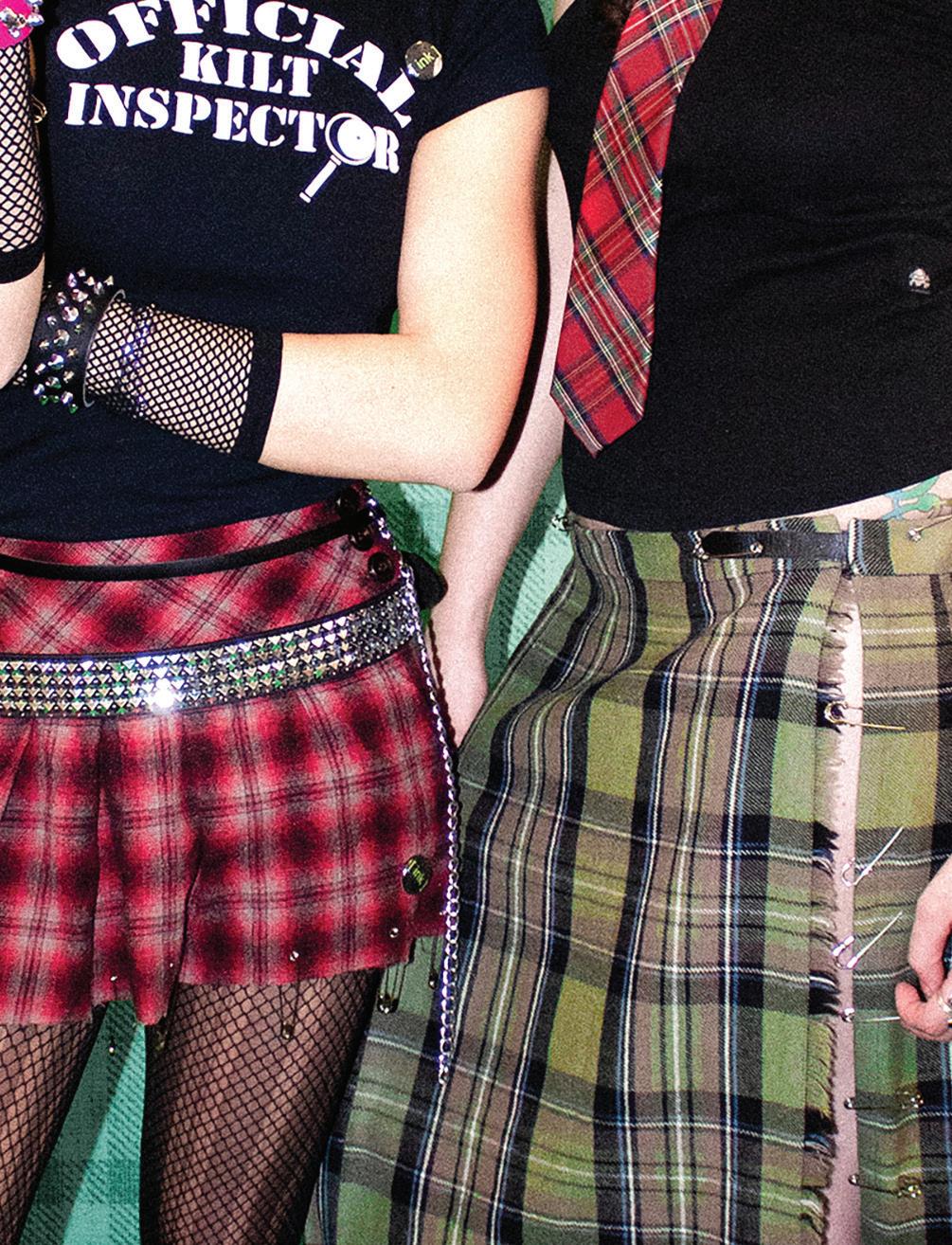
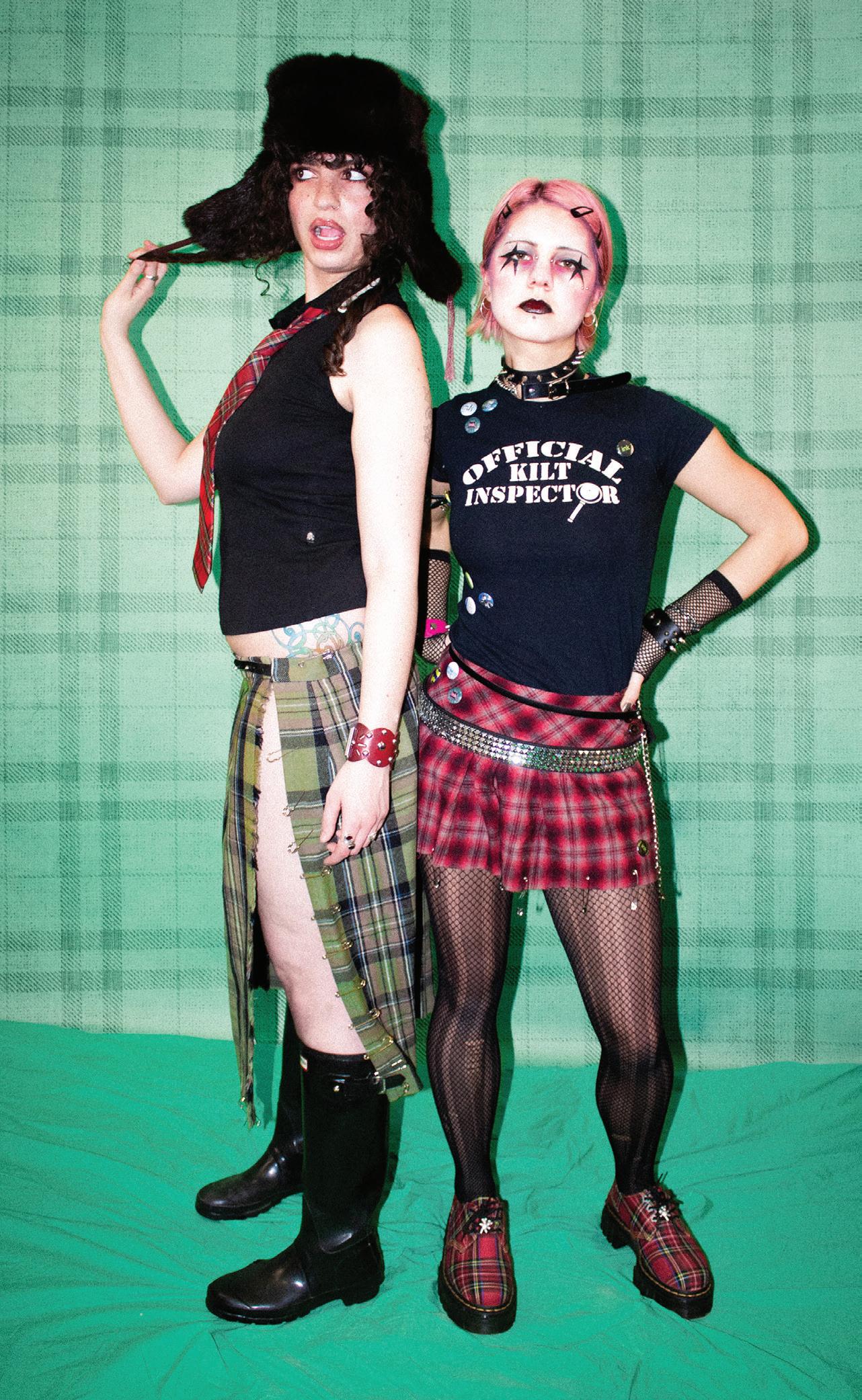
Interchangeable with the word “plaid,” tartan has been used as a symbol of rebellion for centuries. With a rich history in the Highlands, tartan can be used to represent status and political loyalty, and continues to be utilized for political and societal rebellion through punk culture. Traditionally woven from wool, tartan is a warm and protective fabric. Tartan was used to protect the Scottish against northern winds, while also being durable enough for daily labor. Beyond practicality, tartan acted as a symbol for the caste system of Gaelic-speaking clan societies of the Highlands. Each clan, family, or district had a designated sett: a specific sequence of colored threads that make a criss-cross design. The more people that wore your sett, the more powerful your clan appeared.
During the mid-18th century, the Jacobite uprising was the first documented example of rebellion through tartan. The Jacobites, supporters of King James VII, all marched south in traditional Highland dress to reclaim the British throne for James Francis Edward Stuart. They failed, and the British government enforced the Dress Act of 1746, restricting the donning of Highland dress, kilts, and tartan to suppress the Jacobites. The act was later overturned in 1782, with tartan even becoming fashionable for British socialites. Over time the pattern moved beyond kilts, and began being utilized for ties, school uniforms, blankets, and mass-produced goods.
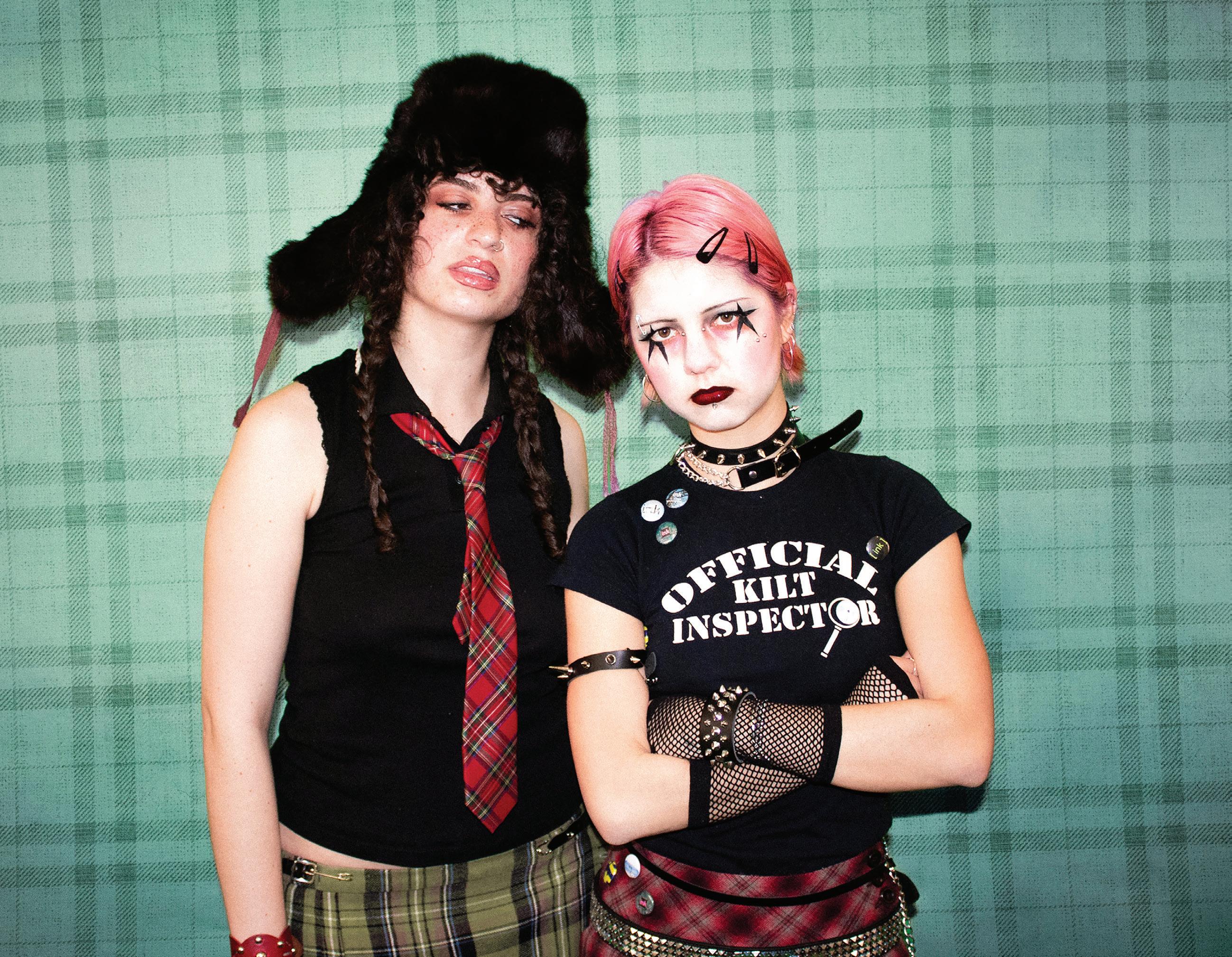
Punk culture began to develop in the 1970s, representing a rejection of societal norms during economic stagnation. Vivienne Westwood held a large influence over early punk fashion, selling punk street wear from her boutique, “Sex,” and styling notable punk bands like the Sex Pistols and The Clash. She reimagined tartan in the form of shredded trousers and bondage-inflicting silhouettes in an act of rebellion against the British establishment and social conformity. In London and New York’s underground scenes, tartan was covered in chains, safety pins, spray paint, and slashes.
Tartan carries connotations of lineage, nobility, and order. Meanwhile, punk stood for class disruption, anti-conformity, and chaos. When Vivienne Westwood ripped tartan apart, she also tore what was historically tied to tartan apart. Through deconstructing tartan, the punks were amplifying the voices of the Jacobites, defying the British elite and traditional conventions. Punk fashion still calls back to its roots to this day, with many from the subculture embracing distressing, safety pins, chains, heavy boots, and tartan. Whether tartan is worn as a kilt to identify status and political associations, or torn up and pinned together as an act of rebellion, it continues to represent identity, boldly and unapologetically.
PUNKS X THE SCOTTISH TO GUARD THE AVANT-GARDE THE
Sirens THE OFFICE
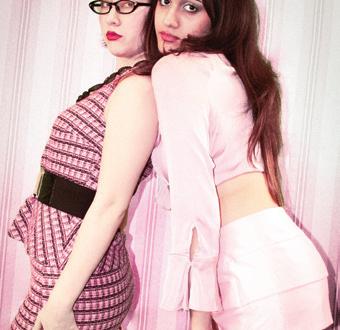
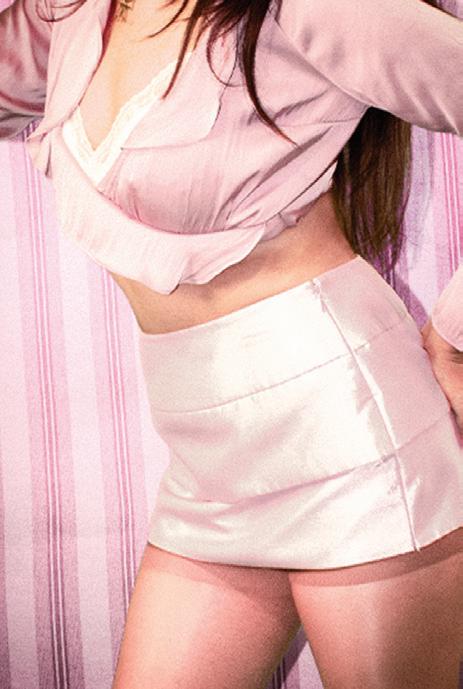
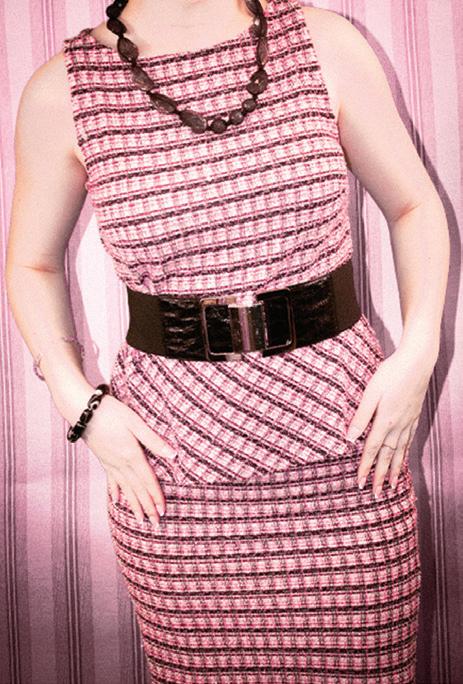
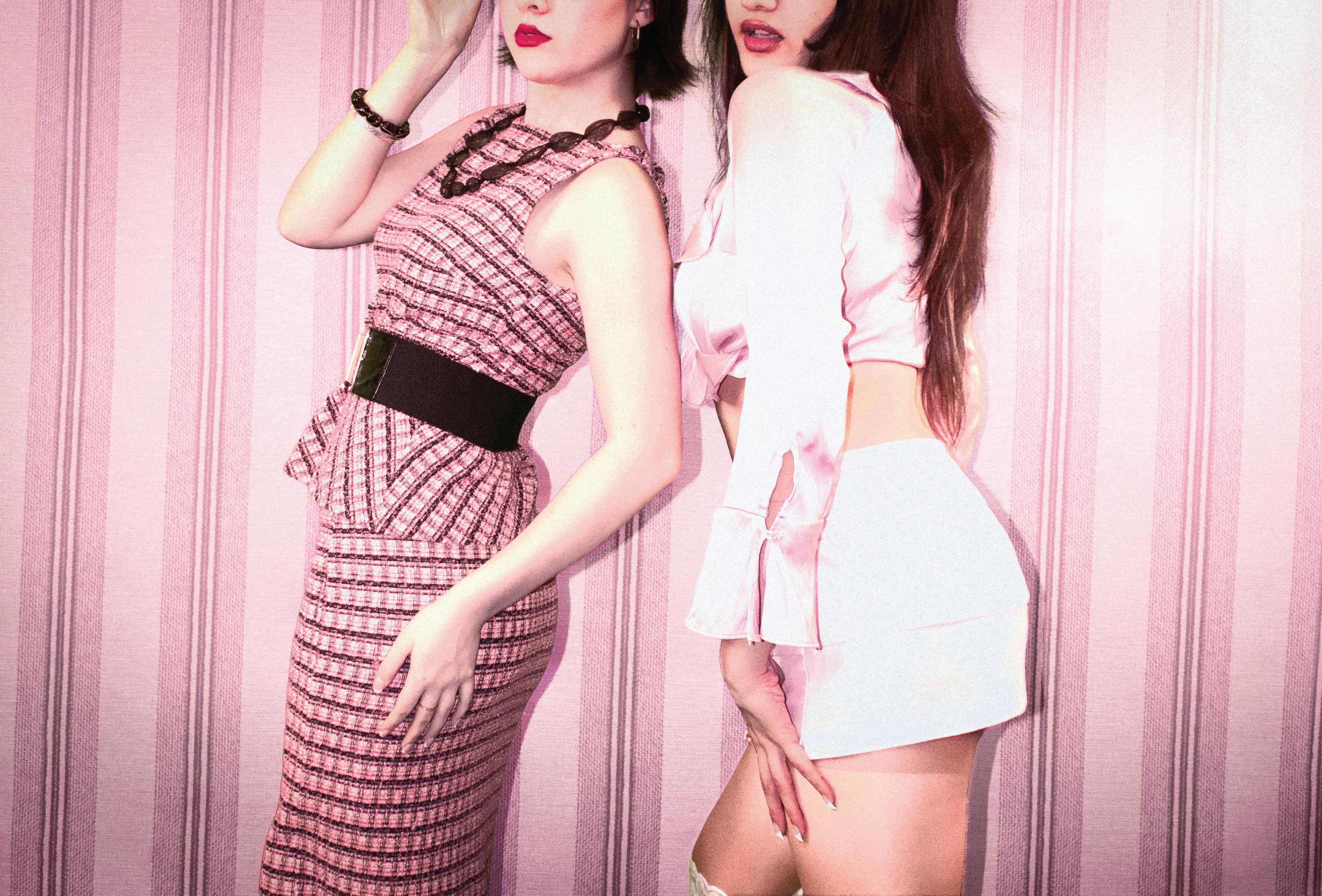
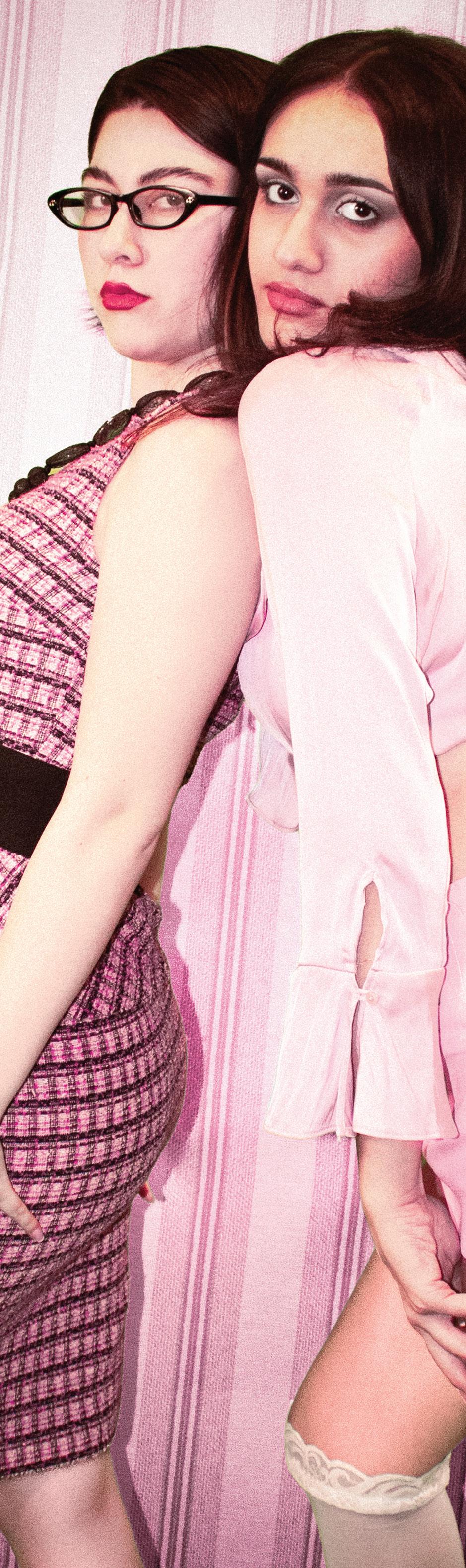
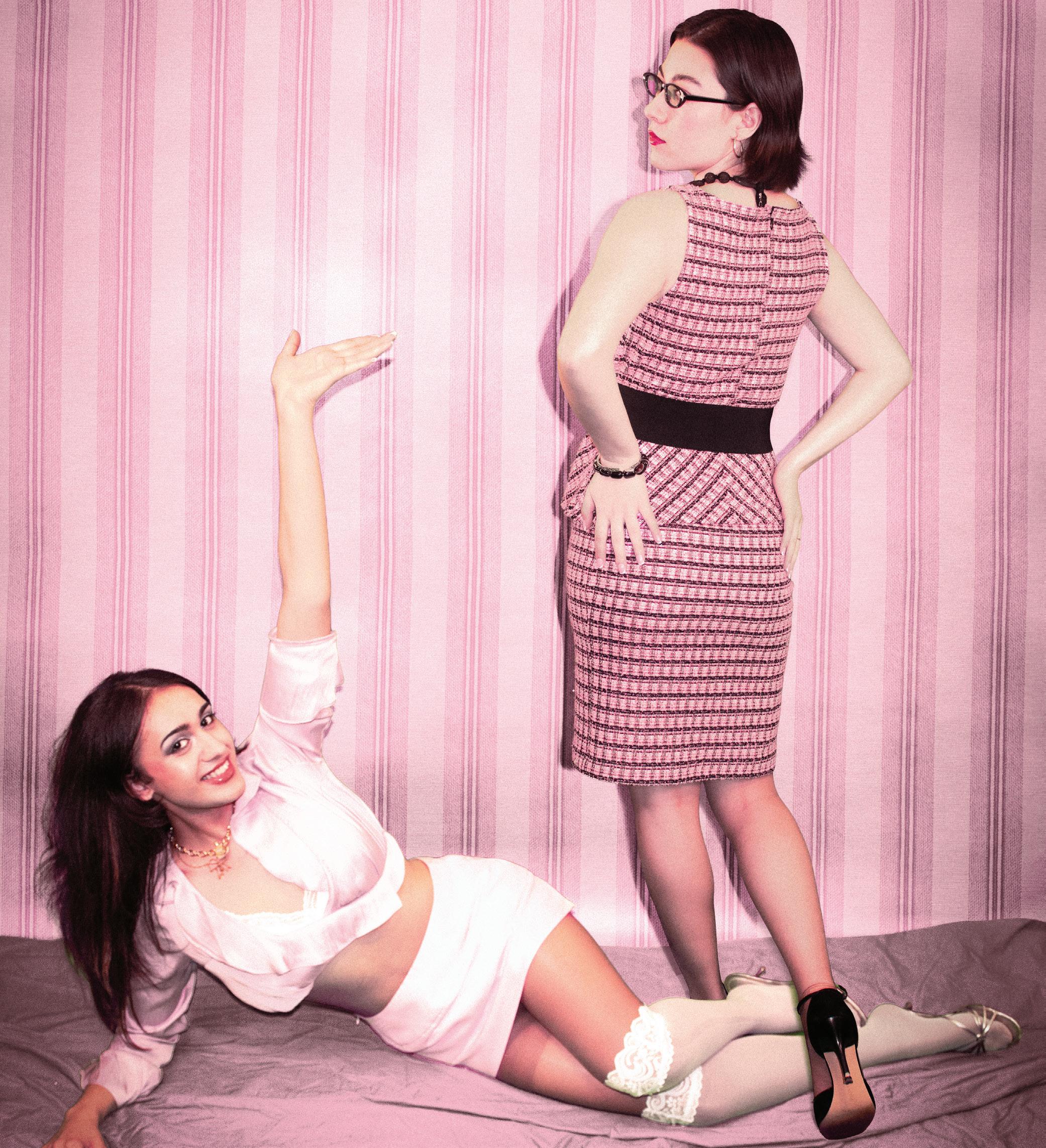
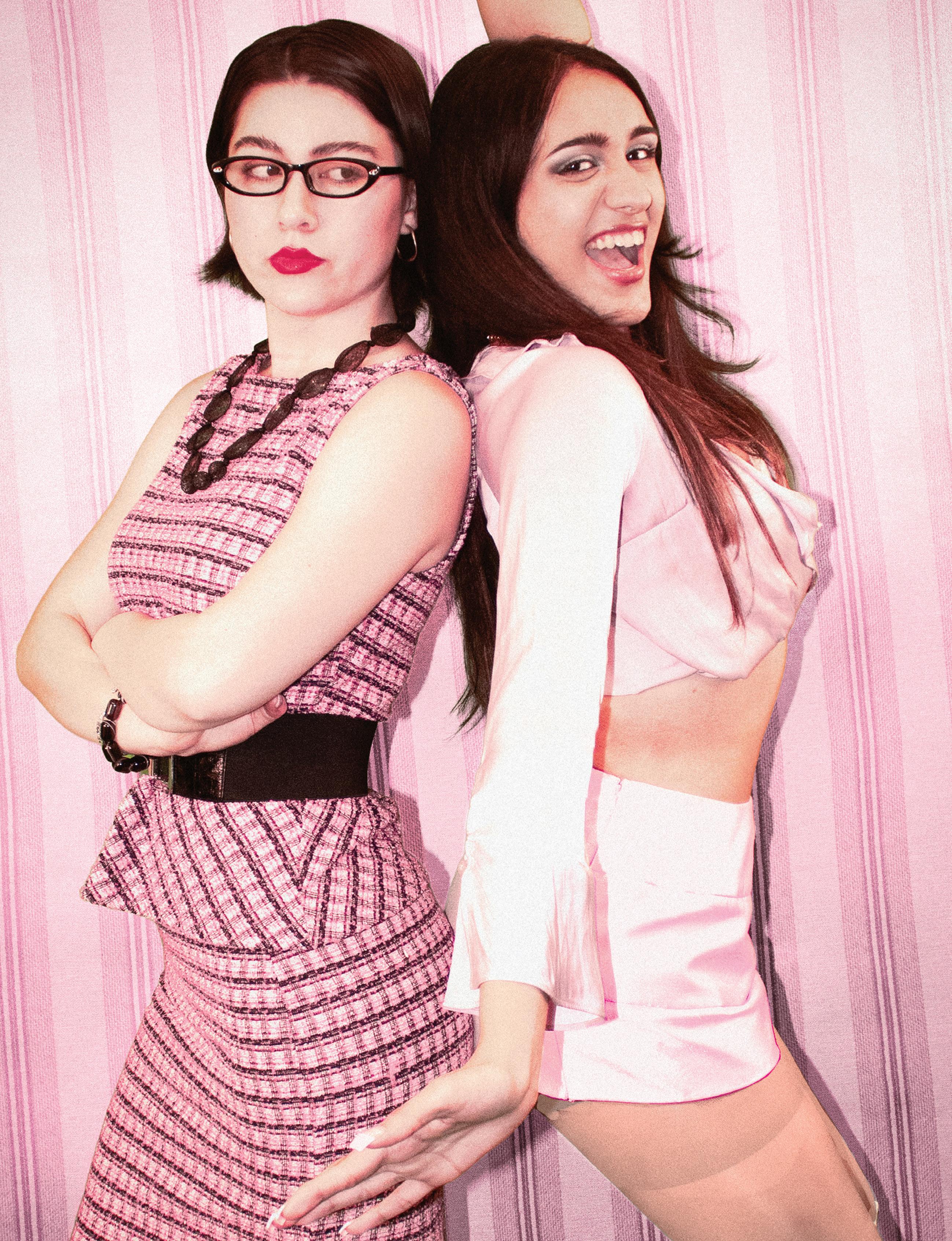
Long before TikTok coined the term, the visual aesthetic of the office siren was quietly forming in the shadows of the corporate office. In the 19th century, tweed (originally tweel) shifted from durable country wear to respectable business attire. Men’s shooting jackets evolved into tailored lounge suits, establishing a base for modern professional dress in the following century. By the early 20th century, women began adopting tweed for utility wear, borrowing from more masculine silhouettes to claim a space in public life.
It wasn’t until 1925 that Coco Chanel introduced her iconic tweed suit, changing the way women’s fashion would be structured from now on. The suit was chic yet boxy and allowed women to move, work, and exist in professional spheres without sacrificing their femininity. Fast forward to the early 2000s; designers like Dolce & Gabbana, Donna Karan, and Calvin Klein began to introduce sexier, sleeker styles for corporate women. Pencil skirts narrowed, tops began to be cinched with belts, and heels got higher. Characters like Jo Frost in “Supernanny,” Lee Holloway in “Secretary,” and Wilhelmina Slater in “Ugly Betty,” became prominent figures in media projecting stern professionalism accompanied by sexual tension. These women were the prototype for the office siren: a woman who understands the codes of businesswear but can tweak it to incorporate the season’s newest styles.
Enter Fall 2023: TikTok microtrends are going strong and early 2000s nostalgia is in full swing. The term “office siren” began to explode across TikTok, influenced by aesthetic moodboards and outfit montages of blazers shrugged over low-cut tops, skintight skirts or slouchy low-rise trousers, and narrow glasses gently perched on the nose. The “office” half of the name is what justifies it as corporate wear, with button downs, clean tailoring, and pumps being staples for the aesthetic. The “siren” half is where the early 2000s references begin to play in, with low collars and short, tight skirts completing the look. The silhouette is dramatic, but deliberate.
The trend also plays into the concept of “recession-core.” As Gen Z enters adulthood in the current state of the economy, they reach for styles that once symbolized stability. Before the 2008 economic recession, businesswear featured minimal palettes and sharp tailoring. Gen Z takes the essence of this look and remixes it with brighter colors, skimpier silhouettes, and even lower tops, combining nostalgia with the algorithm. Modern media provides fuel to the fantasy, with Nicole Kidman’s character in “Babygirl” playing a high-powered CEO tied up in a scandalous office romance.
This exaggerated vision of the workplace reinforces the concept of the office being a fantasy. For older millennials, corporate fashion was about presenting professionally in the workplace to earn space in boardrooms that once excluded them. For Gen Z, raised on instability and remote work, corporate fashion became aesthetic material that portrays a fantasy of the office. The classic blazer and pencil skirt are no longer being used to blend in at the workplace, but to stand out on the “For You” page.
GOTH X BDSM CULTURES
GOTH X BDSM CULTURES
TO GUARD THE AVANT-GARDE
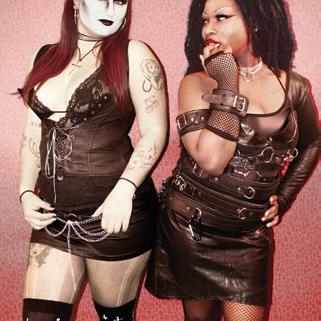
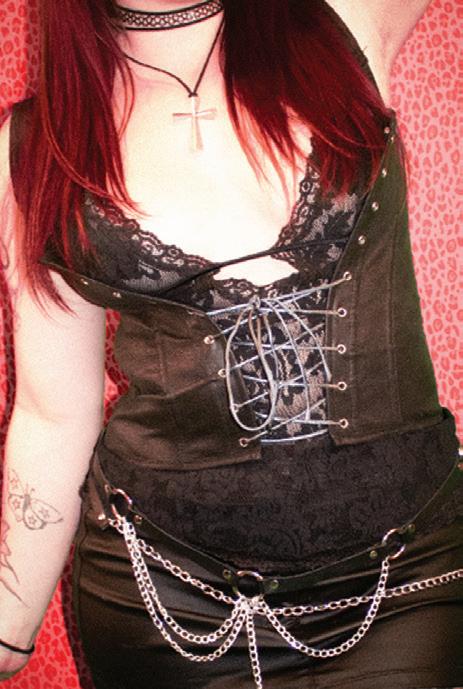
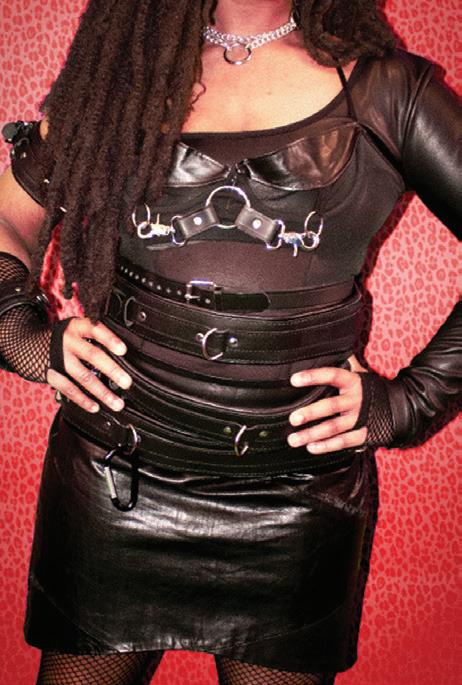
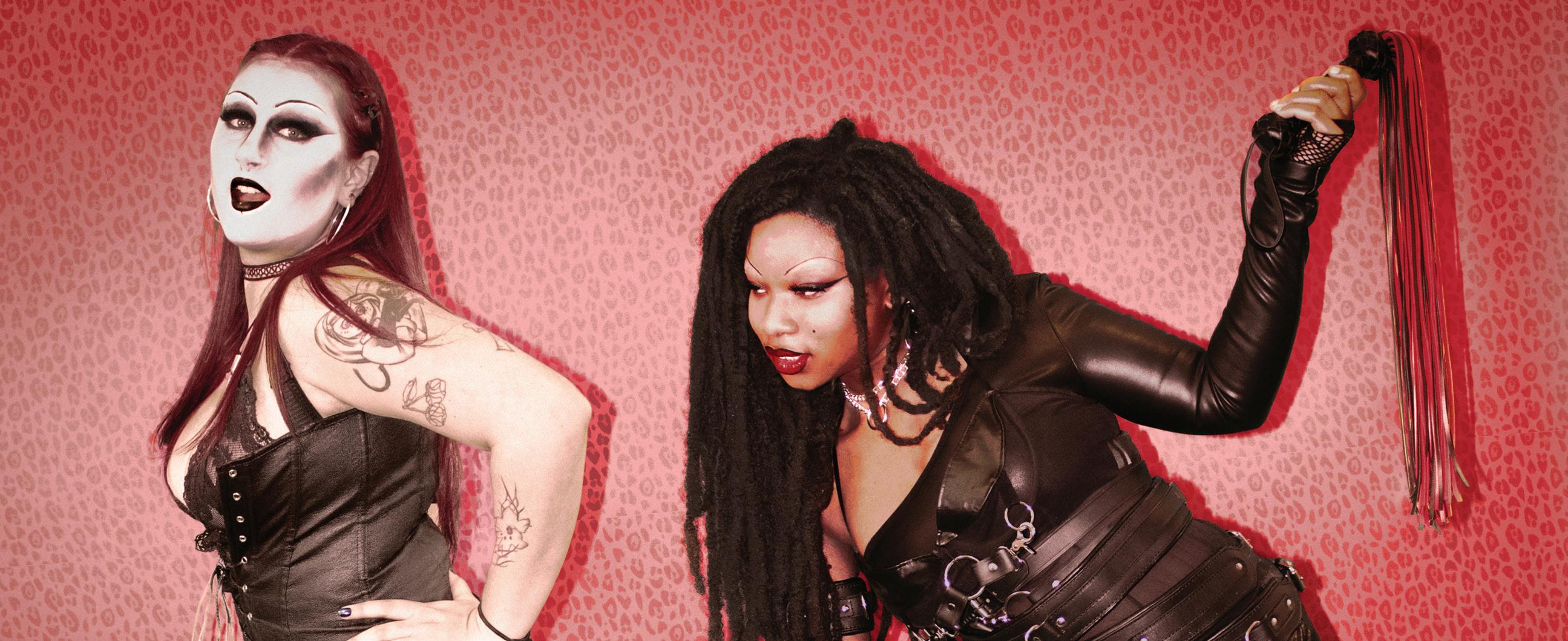
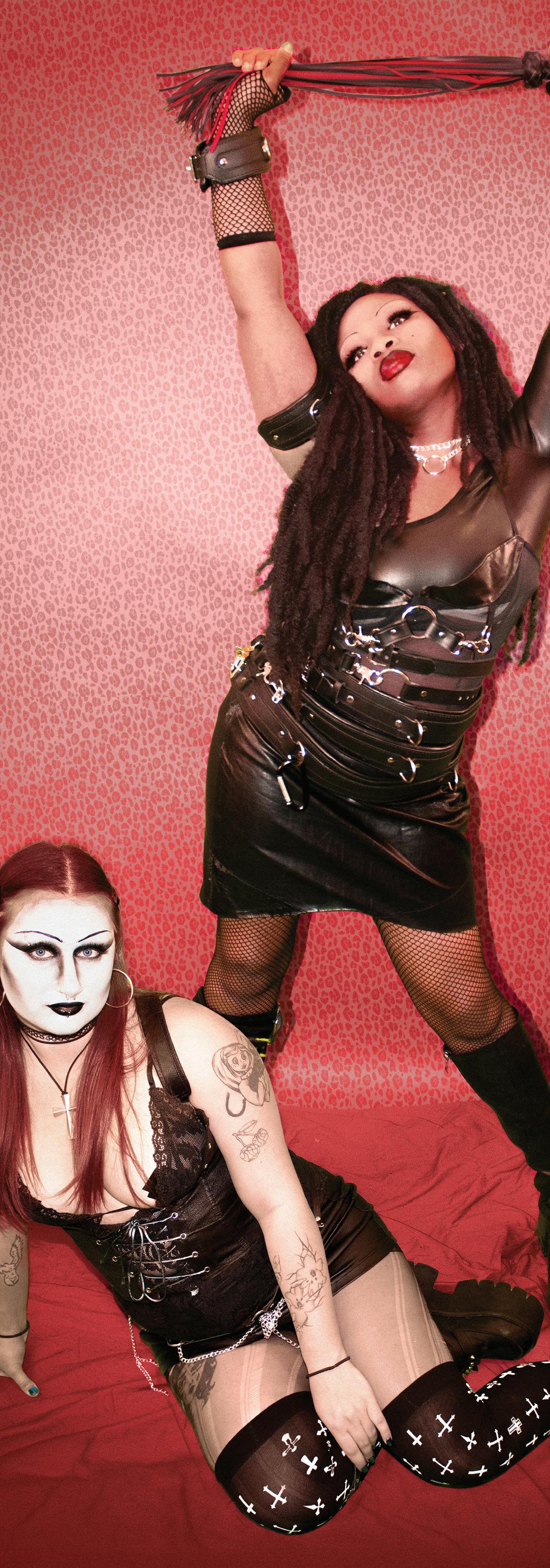
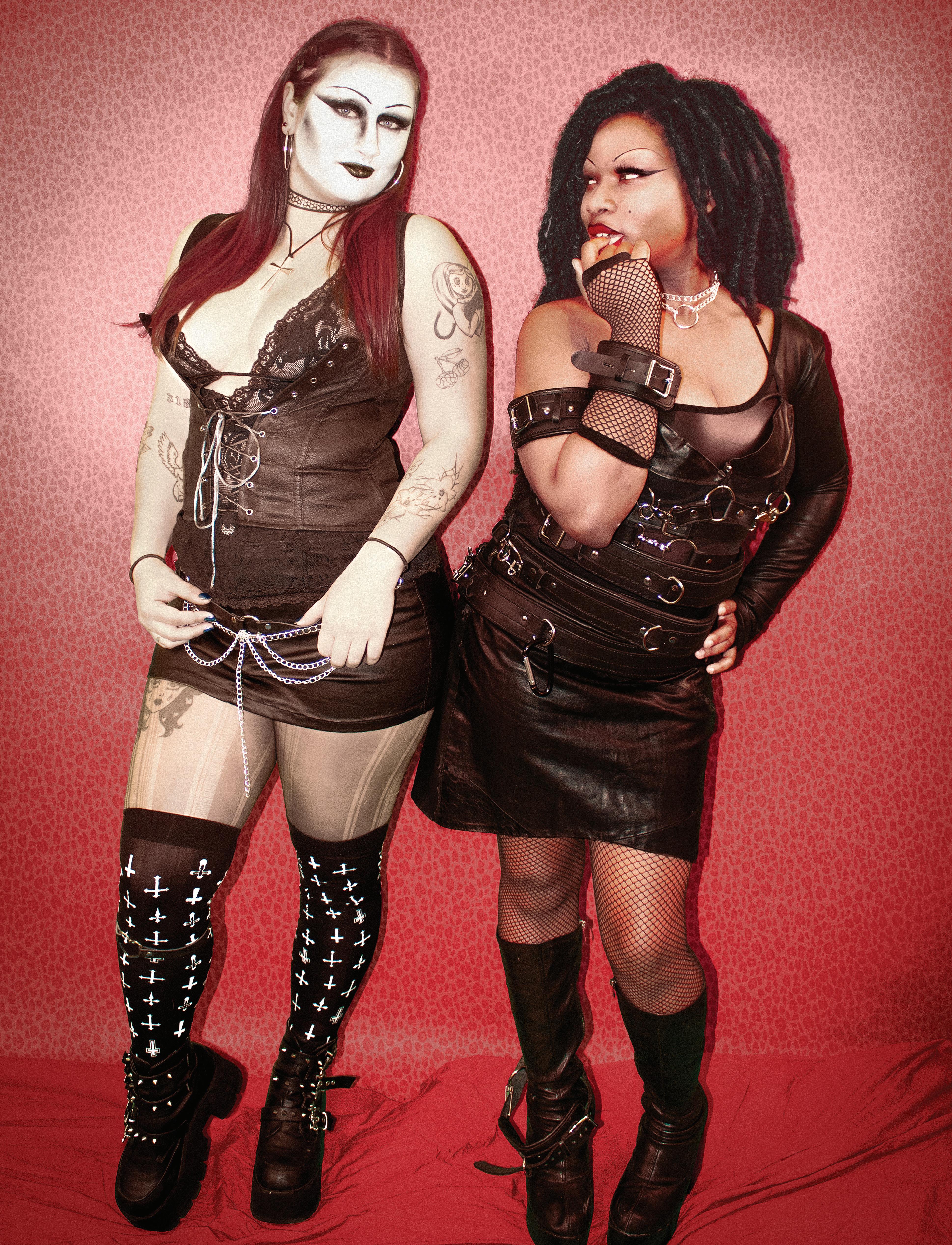
For decades, leather has occupied a visible place in both goth and BDSM subcultures due to its durability and fetish qualities, going beyond just aesthetics. However, the introduction of leather into these communities shifts dramatically between them. The root of goth fashion stems back all the way to the mourning rituals of the Victorian era; corsets pulled tight against the ribs, high-neck blouses framing pale throats, intricate yet delicate lace, and the color black were all symbolism and an expectation for grieving women.
This somber elegance laid the groundwork for what would later cement the goth aesthetic. For most people, the color black represented a darkness they should avoid, but for the goth subculture, it became a landscape that should be explored, embraced, and accepted. GOTH
When punk culture began to emerge in the 1970s, its DIY abrasiveness introduced distressed fabrics, heavy boots, studs, and leather into the developing goth scene, adding a grit to the softness of goth fashion. This introduction of leather into the goth community further cemented the influence of rebellion and non-conformity established by punks. By the 1980s, goth fashion had solidified into a blend of Victorian romanticism and punk rebellion: bold black makeup accompanied by pale skin, chokers, crucifixes, and leather corsets all became staples for the culture.
BDSM fashion, however, places leather at the core of their aesthetic identity. Following World War II, leather jackets, initially utilized for their durable and protective qualities, began to migrate from the military to motorcyclists. Many of the war veterans repurposing leather jackets were queer men discharged under “blue” ticket policies. They began to form communities in urban centers like Los Angeles, San Francisco, and Chicago. By the early 1970s, the Leatherman’s Handbook formalized aspects of queer leather culture, outlining codes of conduct within an underground S&M scene. Leather became symbolic of hyper-masculinity.
As leather begins to move into the mainstream, it’s crucial to acknowledge its origins in marginalized communities who used fashion as a coded language of survival and desire. Leather-fetish wear emerged from queer and sex worker communities long before it reached fashion runways. The stigmas associated with leather further cements the material as symbolism for rebellion, and being outcast from mainstream society.
Similar to the leather jacket, concepts of hierarchy, discipline, and endurance began to develop a new meaning outside of the military, translating seamlessly into the concepts of dominance and submission. Leather is durable. It resists tearing and can mold to the body, emphasizing curves and authority. For some people, leather induces a dominant headspace. For others, the smell, feel, sound, and look of the material can heighten submission. The use of leather through BDSM subcultures began to influence designers like Vivienne Westwood and Alexander McQueen, both incorporating the concept of bondage into their designs.
MORMONS X LESBIANS
MORMONS X LESBIANS TO GUARD THE AVANT-GARDE MORMONS
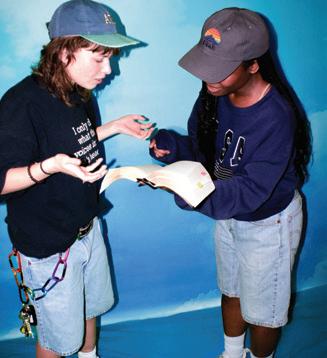
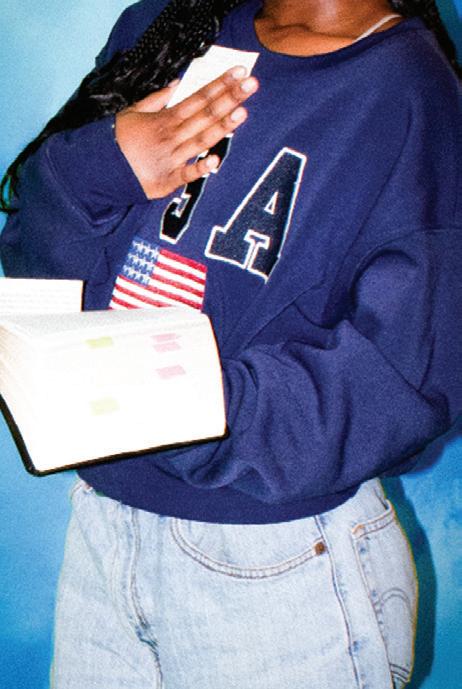
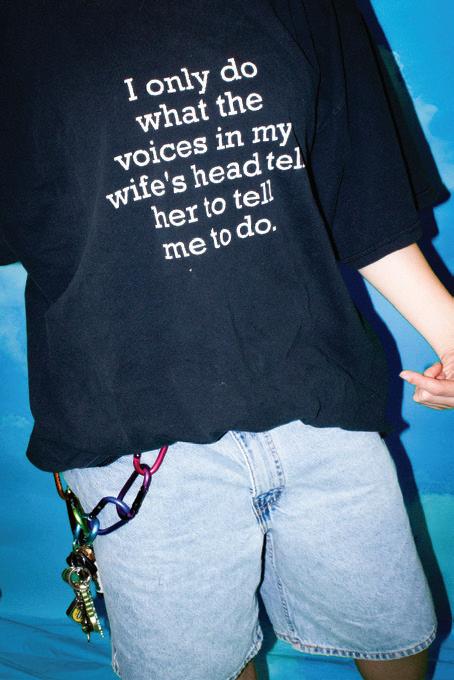
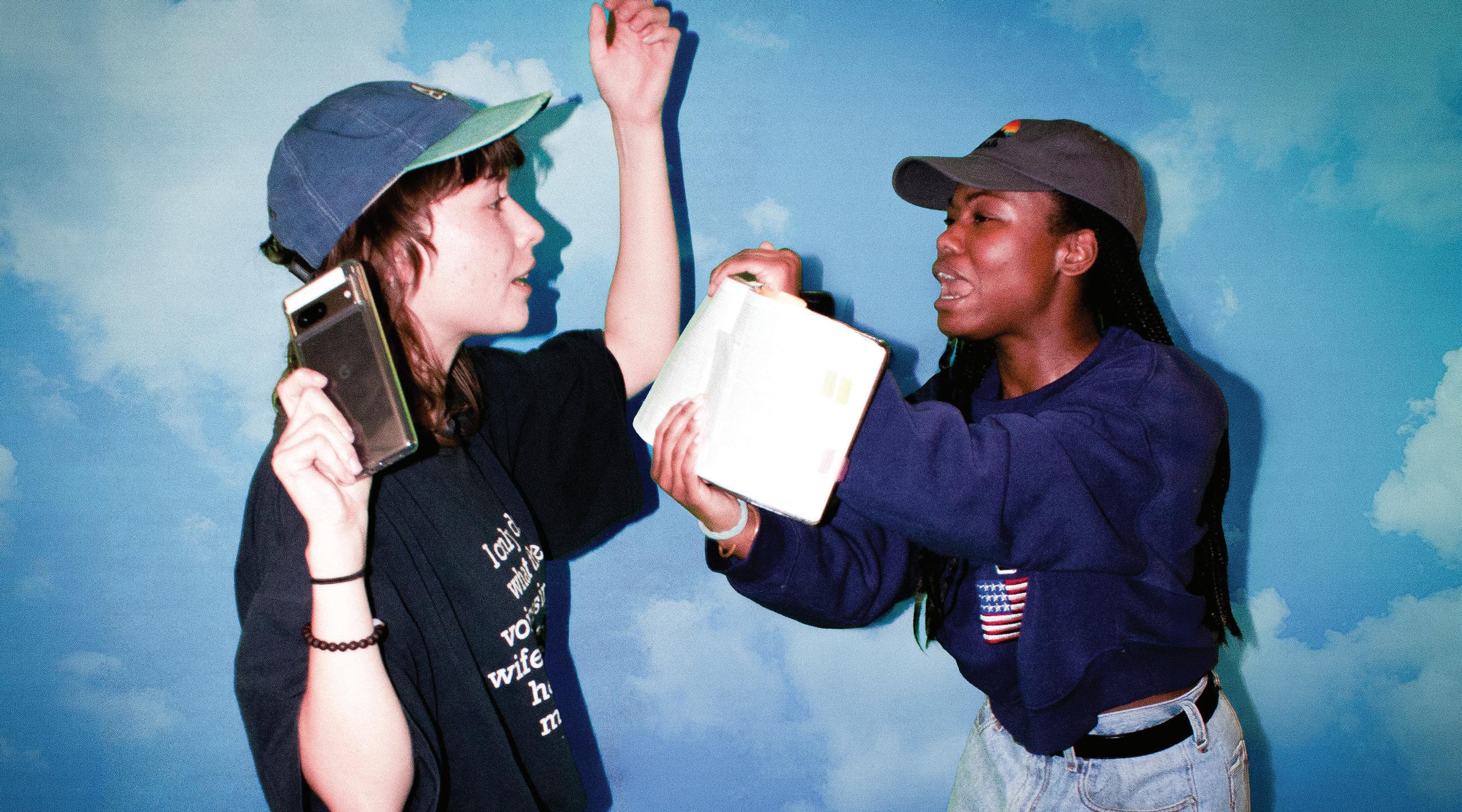
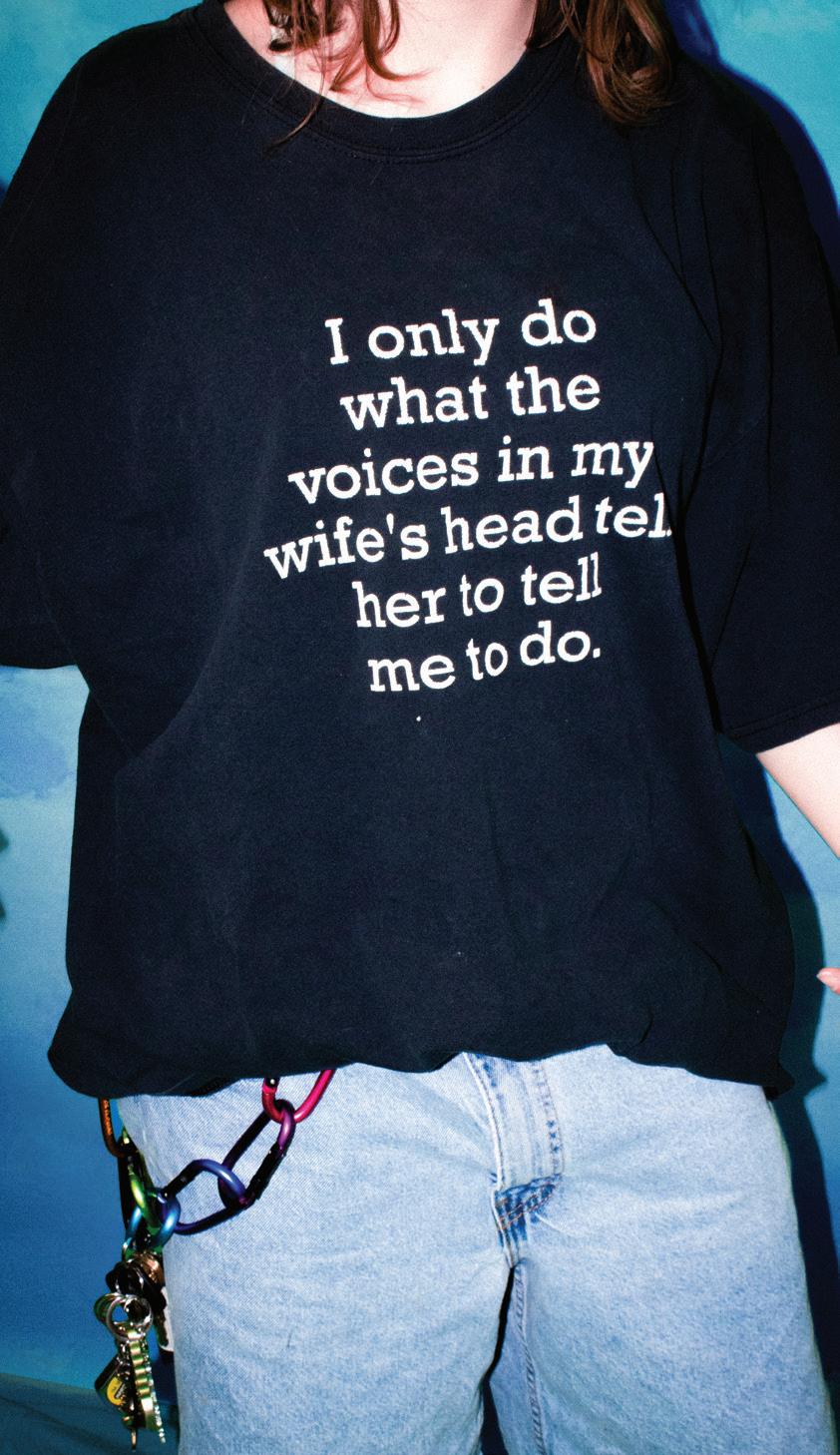
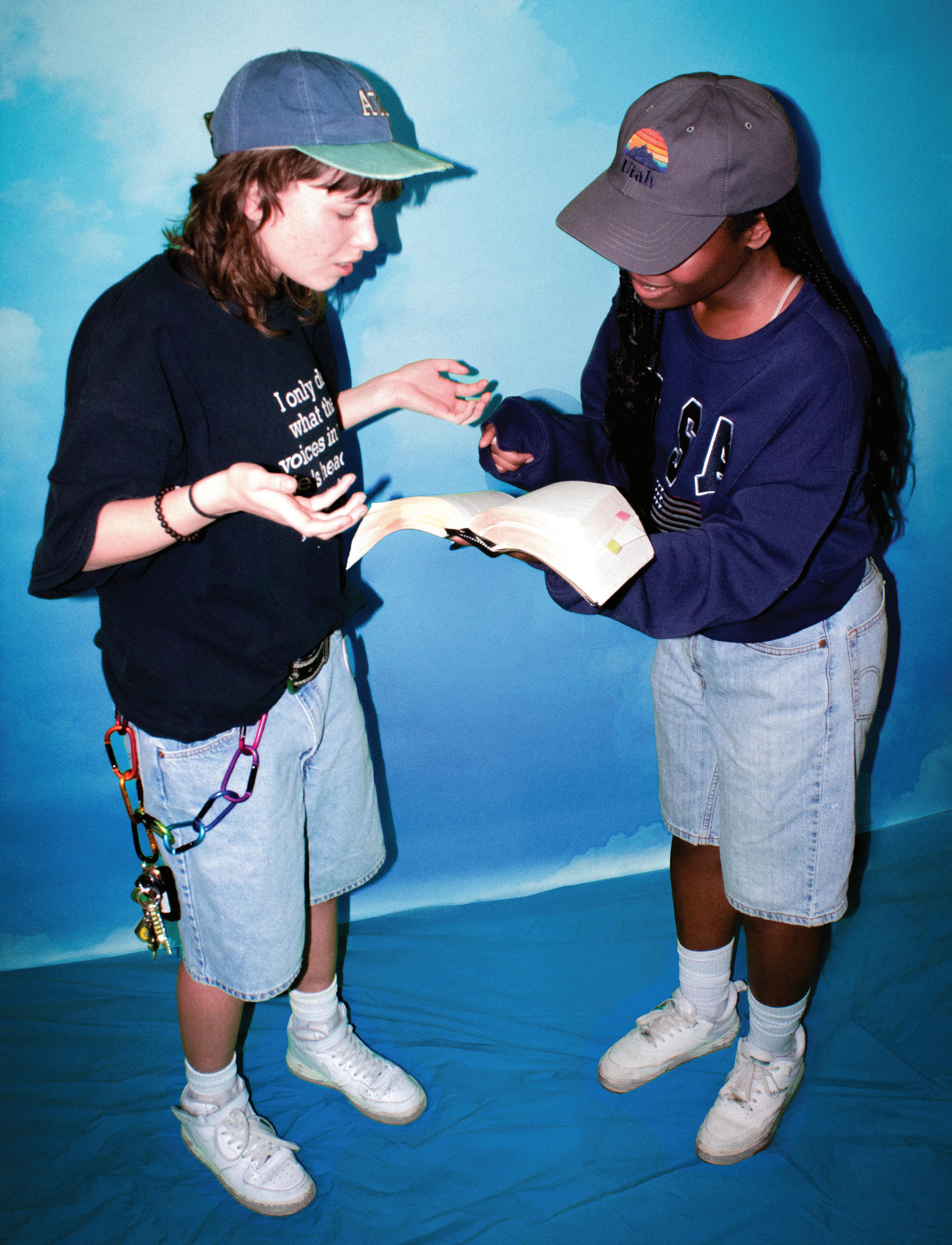
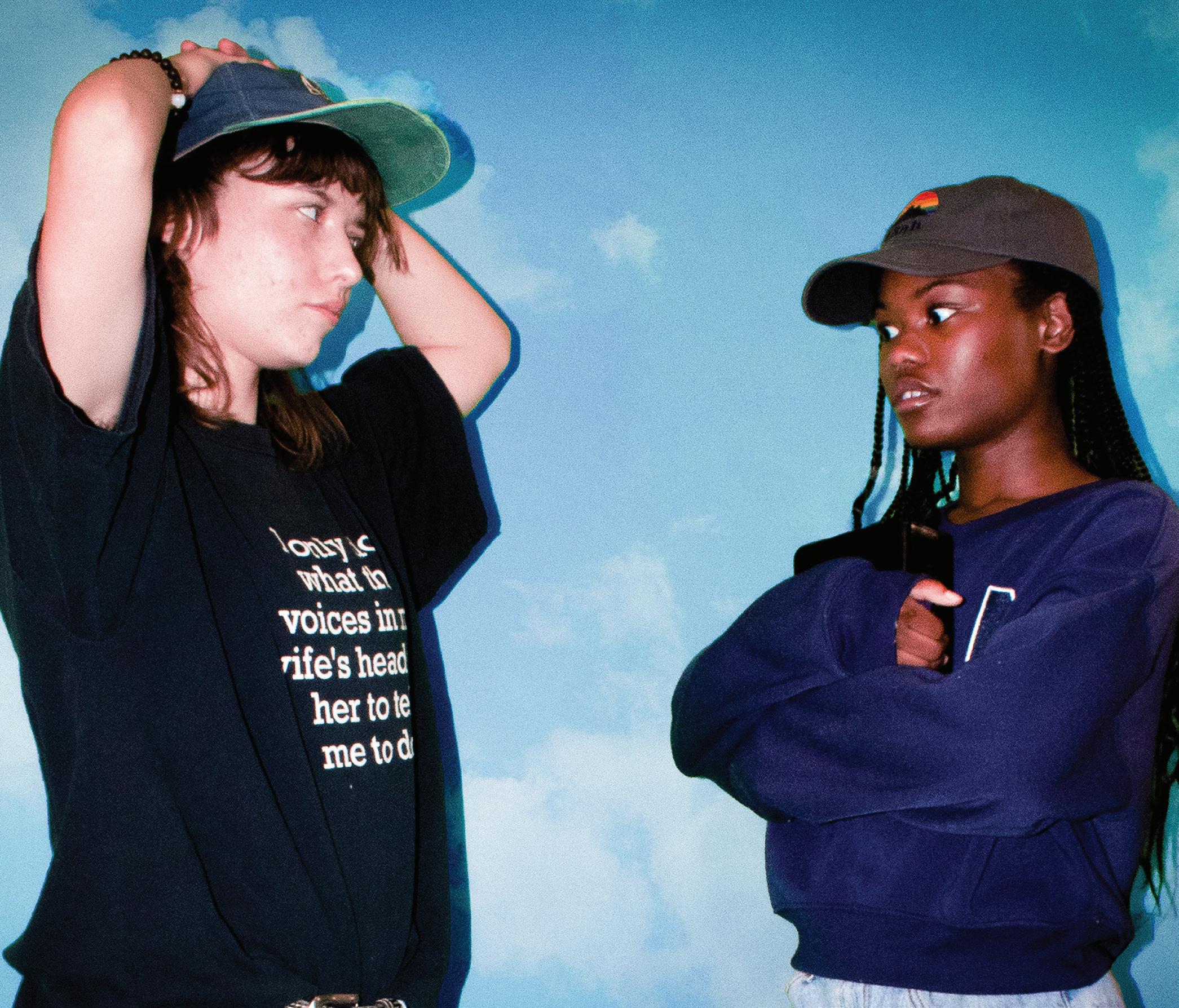
Masculine dress on women has never been neutral. Within queer history, it has been viewed as radical. Women in the LGBTQIA+ community have utilized dress as a way to challenge gender norms for centuries. The term “butch” first emerged in the mid-20th century as a lesbian subculture representing masculine and queer women. Butches lean into men’s fashion, with tailored jackets, sensible shoes, baseball caps, loose denim, and carabiners, generally going outside the bounds of traditional femininity. These fashion choices became a visual shorthand, signaling queerness to those tuned into it. In a world where visibility carried risks, appropriating traditionally men’s clothing and accessories operated as both code and a shield. The “granola lesbian” stereotype builds on this foundation: the vegan with a guitar and a beanie pulled low; rings stacked on most fingers; sporting corduroy, Birkenstocks, Carhartt, or Patagonia. The visual aesthetic is both practical and outdoorsy.
Beyond this stereotype, some lesbians choose to dress more conservatively to disengage from heteronormative expectations, refusing to perform for male validation. Masculine clothing can be protective, affirming, and resist hypersexualization. In 1903, Aaron Bark was outed after death as a “woman dressed in men’s clothes.” Bark chose to publicly present as a man to survive economically, and while the interpretations of their life remain complex, their story reveals how masculine dress has been entangled with autonomy and survival for centuries. But the visual language of a butch identity is not a costume or uniform. Not everyone who presents butch does it intentionally. Some may not even be aware of the culture. Identity is self-defined, and not every butch person fits the stereotype. Still, butch style is one of the most visible and politicized aesthetics within the queer community.
MORMONS X LESBIANS TO GUARD THE AVANT-GARDE MORMONS
Unexpectedly, butch culture shares a visual language with another group shaped by very different motivations. In Utah, you may see a woman in a looser, button up shirt, long denim shorts, and hiking sandals. Her hair is tucked under a cap and she wears minimal makeup, practical styling for a day in the mountains. The overlap between Mormon and butch aesthetics can be striking. Within the Church of Jesus Christ of Latter-Day Saints, modest ways of dressing have been enforced through the Book of Mormon. Brigham Young, the second president of the Church, cautioned women against the “indecent” fashions of the world, encouraging a separation from mainstream trends. Elder Robert D. Hales wrote that modesty is fundamental to worthiness, advising against tight, revealing, or extreme styles. Elder Jeffrey R. Holland later reinforced that while personal agency remains, gospel standards are “not socially negotiable.” The Church teaches girls to frame their bodies as a temple, urging members to only choose clothing they would feel comfortable wearing “in the Lord’s presence.”
For many LDS women, modest dress can signal commitment to the faith, discipline, and preparation for their future husband. These conventions of dress result in an aesthetic built around coverage and functionality. Women in the church dress in longer skirts and shorts, higher necklines, and sturdy footwear. Their intention is humility, devotion, and to reject the overtly sexualized fashion represented in the mainstream media.
Visually, the parallels are undeniable. Both communities favor comfort over glamour, avoid revealing clothing, and can appear “slightly masculine” when compared to mainstream hyper-feminine trends, yet the meaning behind these choices differs greatly. For many LDS women, modest dress signals faith, discipline, and preparation for a future sealed partnership. It aligns the body with spiritual values and communal standards. For many butch-presenting lesbians, similar silhouettes can represent resistance to compulsory heterosexuality or a refusal to perform for the male gaze. The same long shorts and loose crewneck can, therefore, communicate entirely different worldviews. One might be dressing to honor God, while the other might be dressing to reject patriarchal expectations, sometimes the very ones enforced by religion. In both cases, however, clothing becomes language. Choosing to dress in masculine-leaning styles as a woman can call into question what femininity really looks like. Whether it’s rooted in doctrine or defiance, it disrupts the idea that womanhood must be revealing and constricting.
GETTING LOST, ALTERING ME
Written By: Jasmine Purchas and Liz DeFluri
Take the quiz to see what type of “changer” you are!
HOW MUCH DO YOU TEND TO YOUR WEEKLY CALENDAR?
Weekly calendar???
I check on it and add to it when I need Everyday, I have it color-coded by event
HOW OFTEN DO YOU TRY NEW HOBBIES?
As quickly as I pick up a hobby, I put it down I open myself up to a hobby every few months I swear I think about trying new hobbies!!!
HAVE YOU ALWAYS HAD A CONSISTENT FAVORITE COLOR?
It changes weekly, it’s hard to pick one It’s changed once or twice in my life
One’s been my favorite since I was a child
WHAT’S YOUR IDEAL FORM OF SELF-CARE?
Trying Afterglow Coffee’s new weekly pastry
A nice long skincare night
Curling up with a good book
WHAT’S YOUR DREAM ROMANTIC LIFE?
Fun, and casual dates
I’m not tied to any one idea
Those beautiful long-term relationships
WHAT’S THE FIRST PHRASE THAT COMES TO MIND WHEN YOU THINK OF CHANGE? 6. Thank GOD
Well ... here we go The walls … they’re closing in
WHAT IS YOUR IDEAL WEEKEND PLAN?
Not really sure, I haven’t thought that far Spontaneous plans with friends! Something that I’ve had in my calendar all week
WHAT IS YOUR GO-TO GUT EMOTION WHEN YOU HEAR SOMETHING HAS TO CHANGE IN YOUR LIFE?
Elated and prepared Ready and curious Afraid and unsteady
HOW WOULD YOU DESCRIBE YOUR STYLE OF ORGANIZATION?
I wouldn’t say I’m the most organized in the world … I enjoy having structure in certain areas of my life
I’m as Type A as they come
WHAT ANSWER BEST DESCRIBES YOUR WARDROBE?
I shop based on seasons & trends I buy things on a whim if I like them!
I’m satisfied with the clothes I already own
IF YOU ANSWERED MOSTLY A ... YOU’RE AN EAGER CHANGER!
You’re someone who’s excited for change and embraces it head-on! You view all kinds of change like new beginnings and the fresh breeze of spring after a harsh winter. You are open to all the challenges, hardships, and bumps in the road that may come along, and view them all as ways to evolve into the best version of yourself. With so much enjoyment for change, you can forget to allow yourself to sit in things. Because you enjoy newness, you can forget to form new habits, behaviors, and possible ways of thinking. Think about how you can harness the lessons change brings you. Allow your daily/weekly habits to shift and even be enhanced by the newness you’re experiencing. Keep a journal and make observations that help you best “glam” up the change.
IF YOU ANSWERED MOSTLY B … YOU’RE A FLOW STATE CHANGER!
When it comes to change, you’re up for anything. You’re spontaneous and are willing to take on anything life throws your way. Although reluctant in the beginning, you are down for the change and allow it to take you swiftly. Your spontaneity allows you to have a great advantage when taking it on because newness doesn’t scare you … it excites you! Remember to harness the lessons and growth that can come from whatever’s happening. When change comes in hot and heavy, it can be easy to get swept away in it. Try to keep a keen eye and pay attention, for you can miss all that you can learn. Allow yourself to reflect on how change is processing in you and your surroundings. In those times, it would be good to start those daily journals you keep talking about and never doing!
A BIF YOU ANSWERED MOSTLY C ... YOU’RE A HATER CHANGER!
You’re someone who change hasn’t come easy to. Maybe you’ve had bad experiences with change which have closed you off from accepting it. You’re not alone; so many of us struggle accepting the new, especially when it feels like what exists is already so good. Unfortunately, change is a part of life. Allow yourself to fall into change and not let it overwhelm you. Remember that you are still in charge of your life and your decisions. Life happens from you, not to you. Let yourself embrace change with open arms and greet it like an old friend. There is so much beauty that can come from it! Everything old is, indeed, new again. Cycles of change aren’t going anywhere: rather than dreading it, see what happens when you try to embrace it.
C
BECOMING
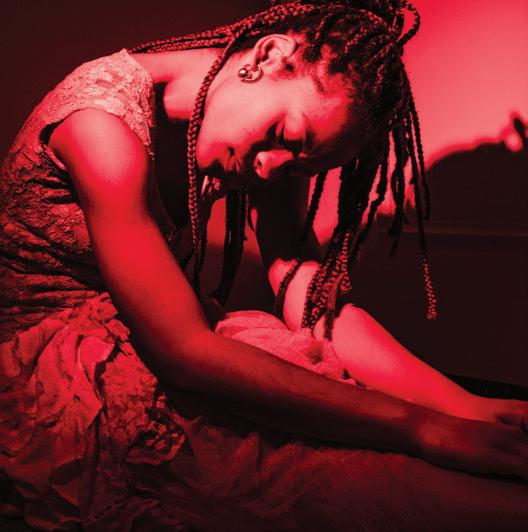
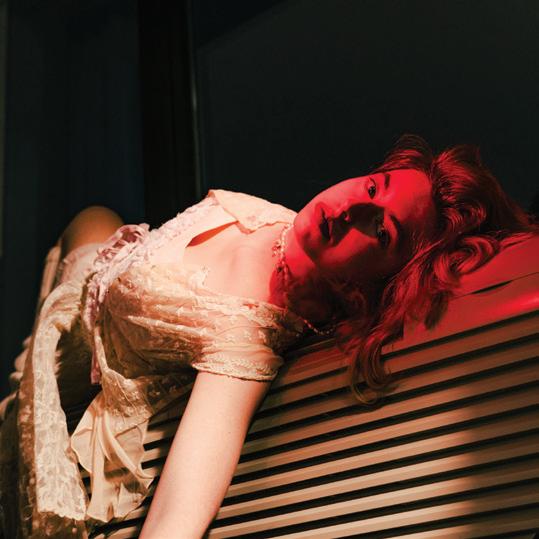
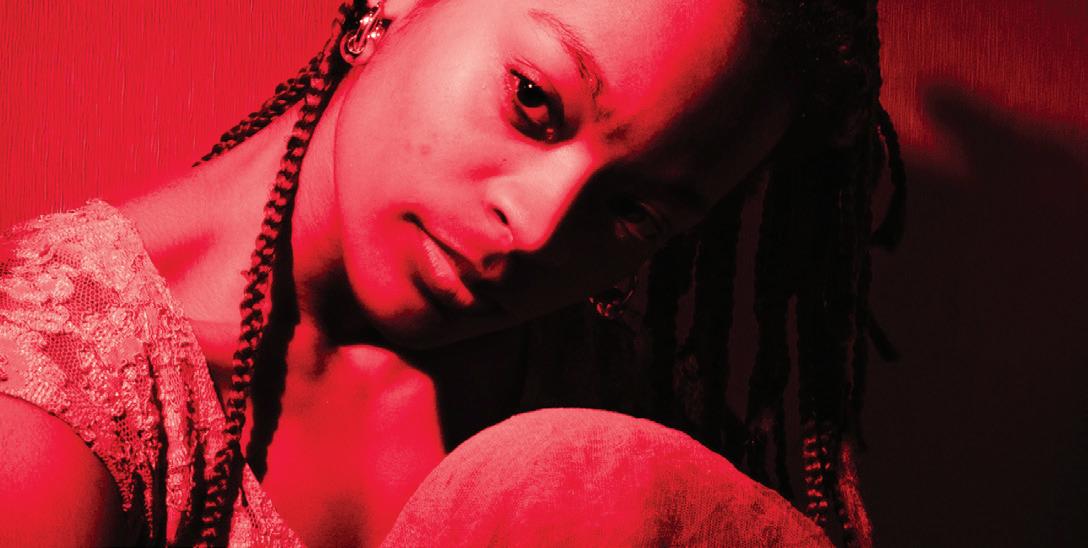
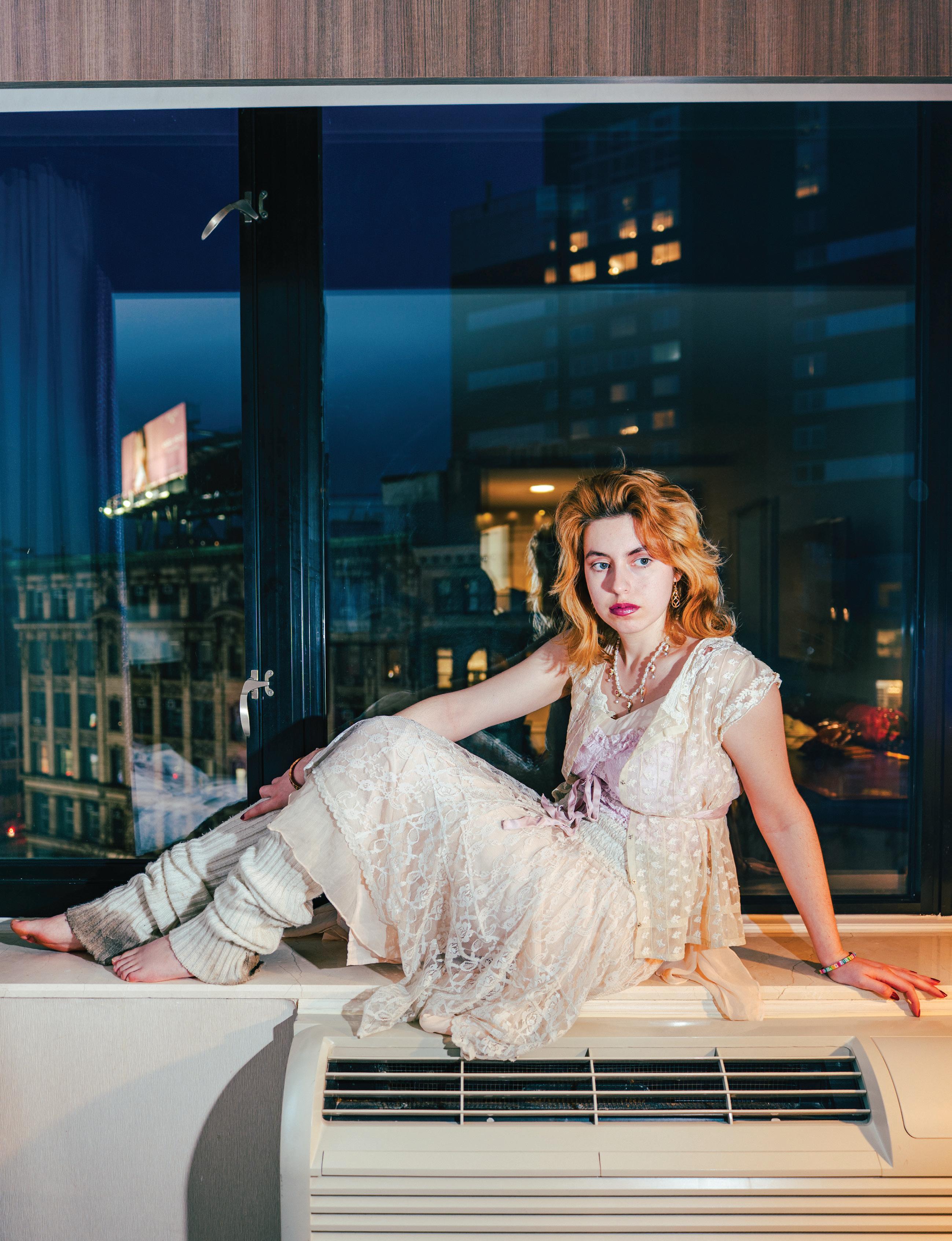
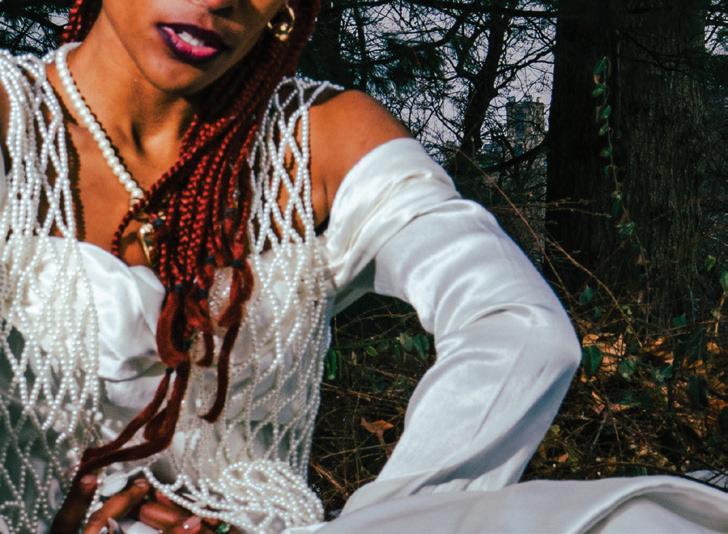
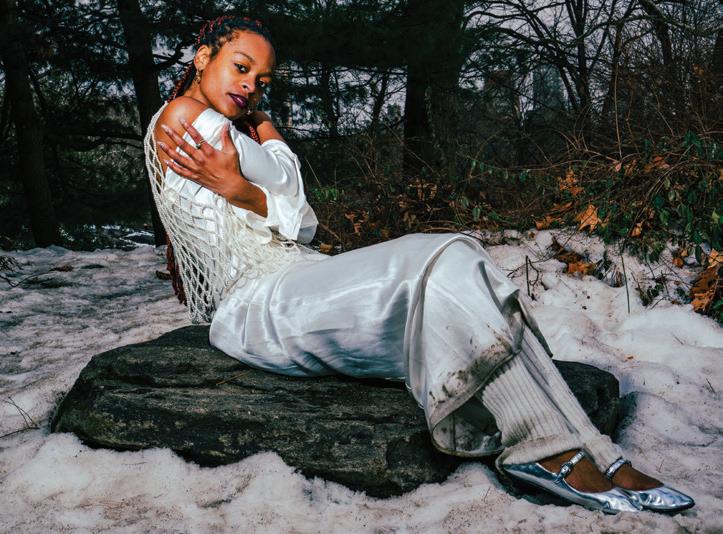
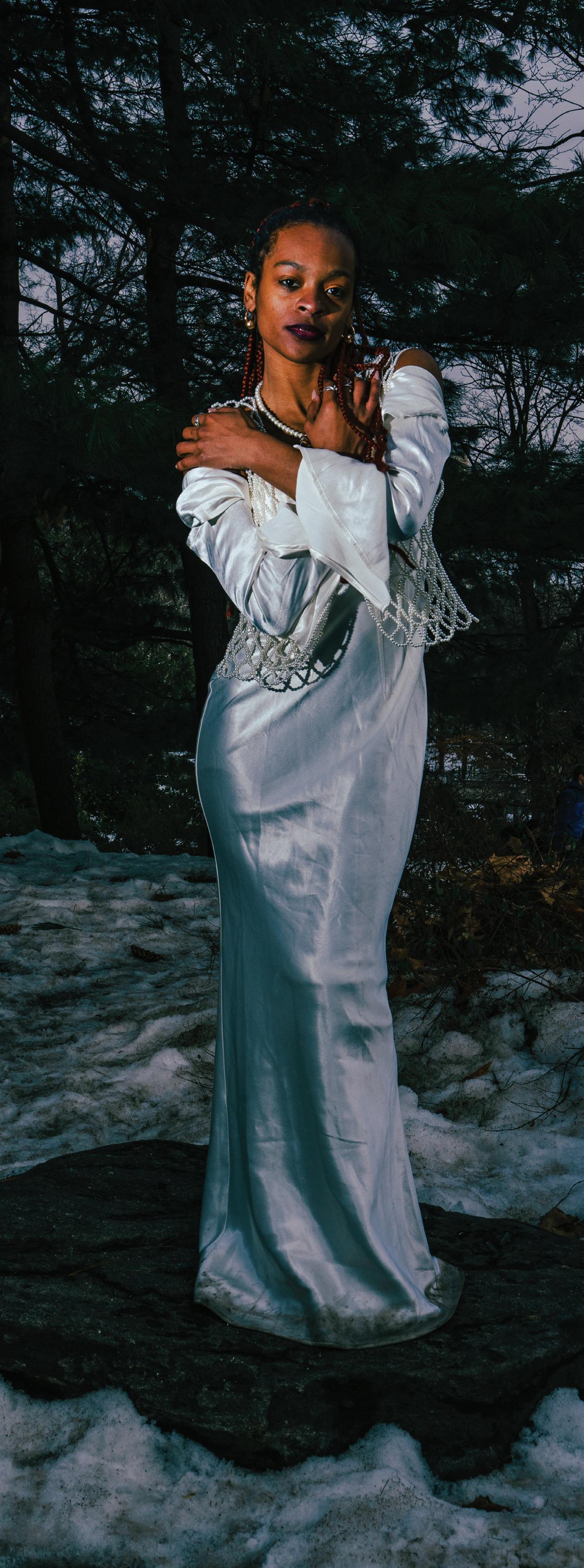
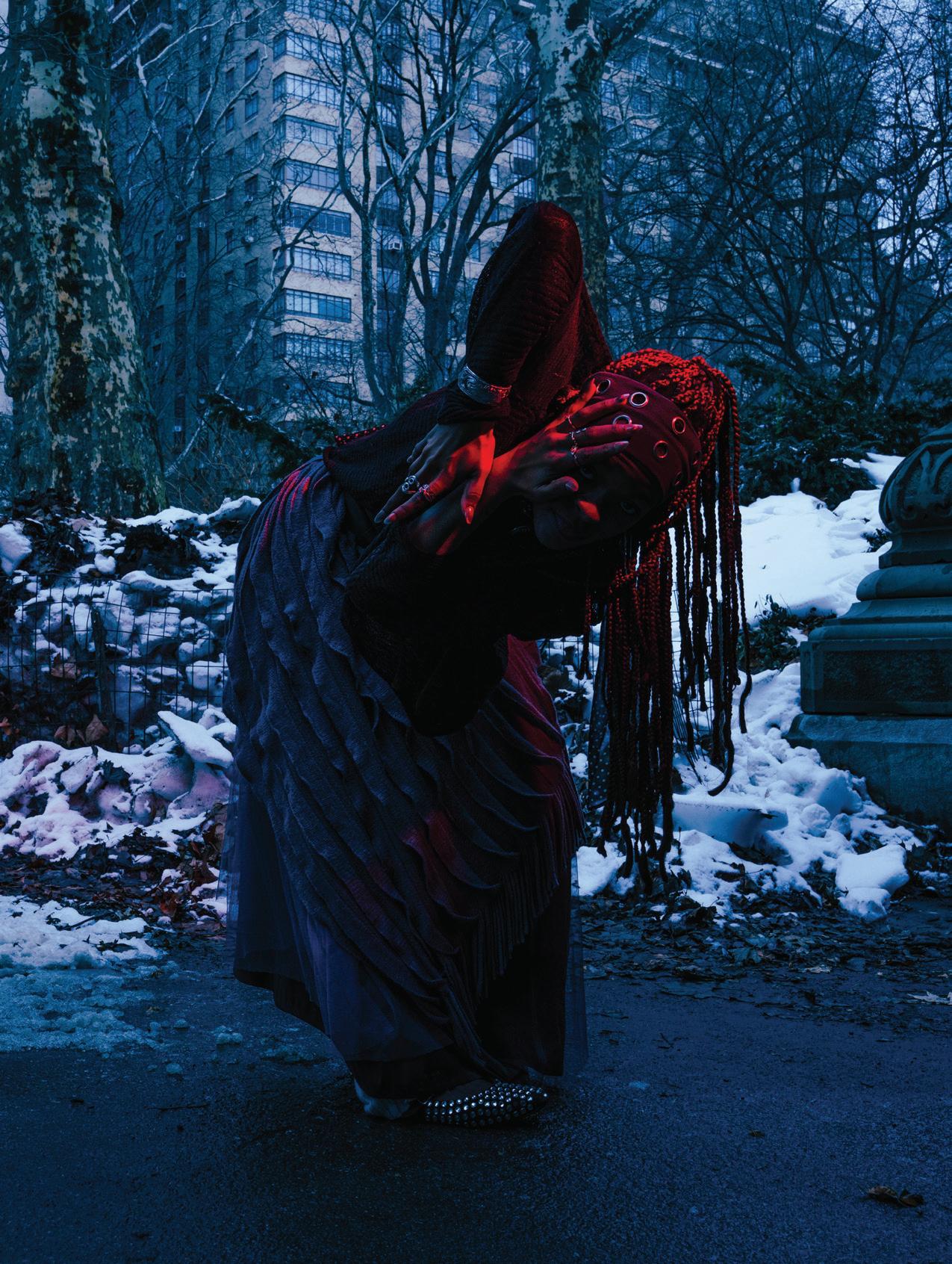
Written By, Modeling: Jasmine Purchas
Contributions By, Modeling: Liz DeFluri
Photography: Akili Williams
Styling: Christina Burbage, Tajma Graham
Lighting Assistance: Buffy Petrin
Clothing Pull: Ashby RVA
ALL OF IT, ALL THE TIME, EVERYWHERE, ALWAYS.
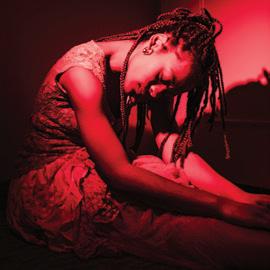
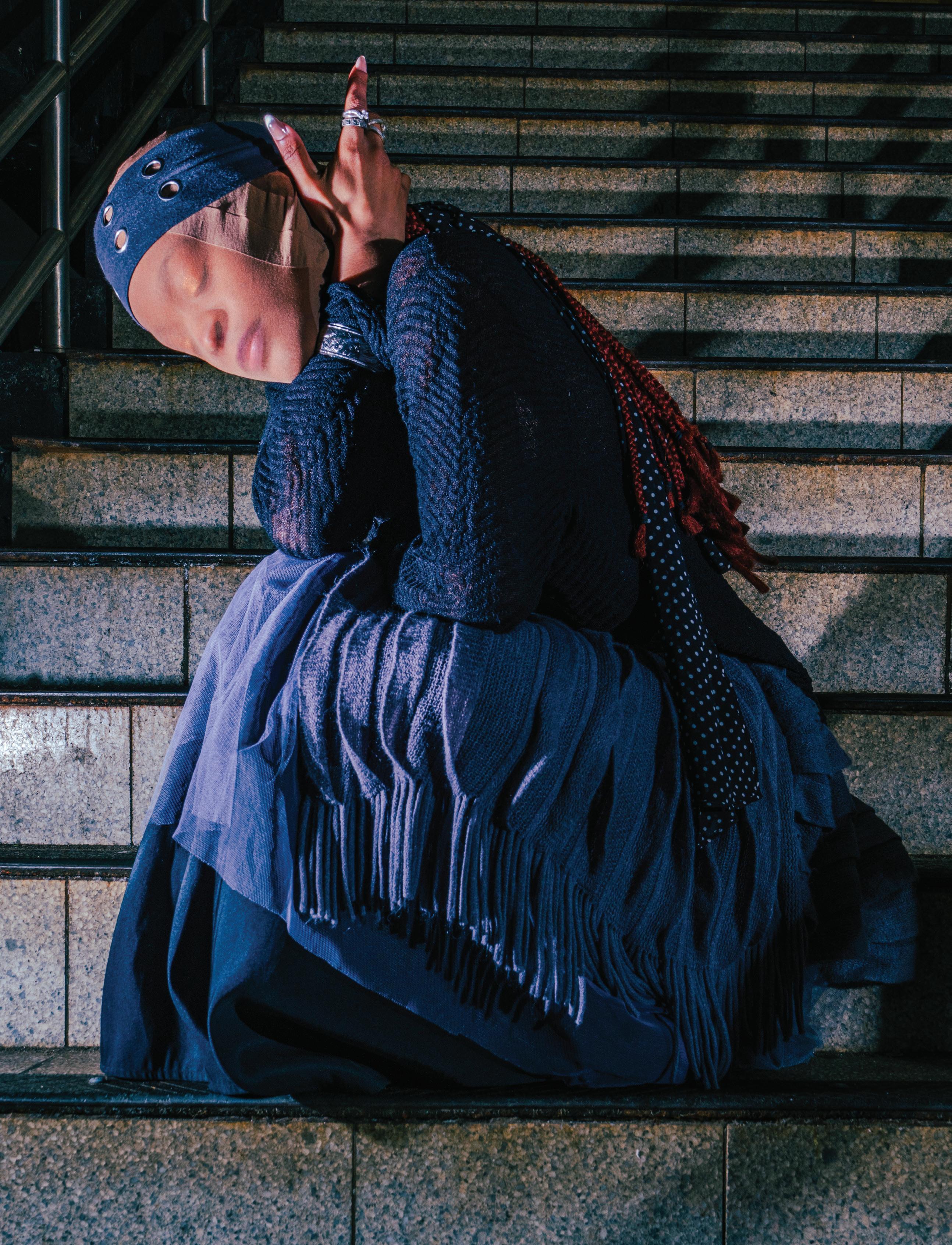
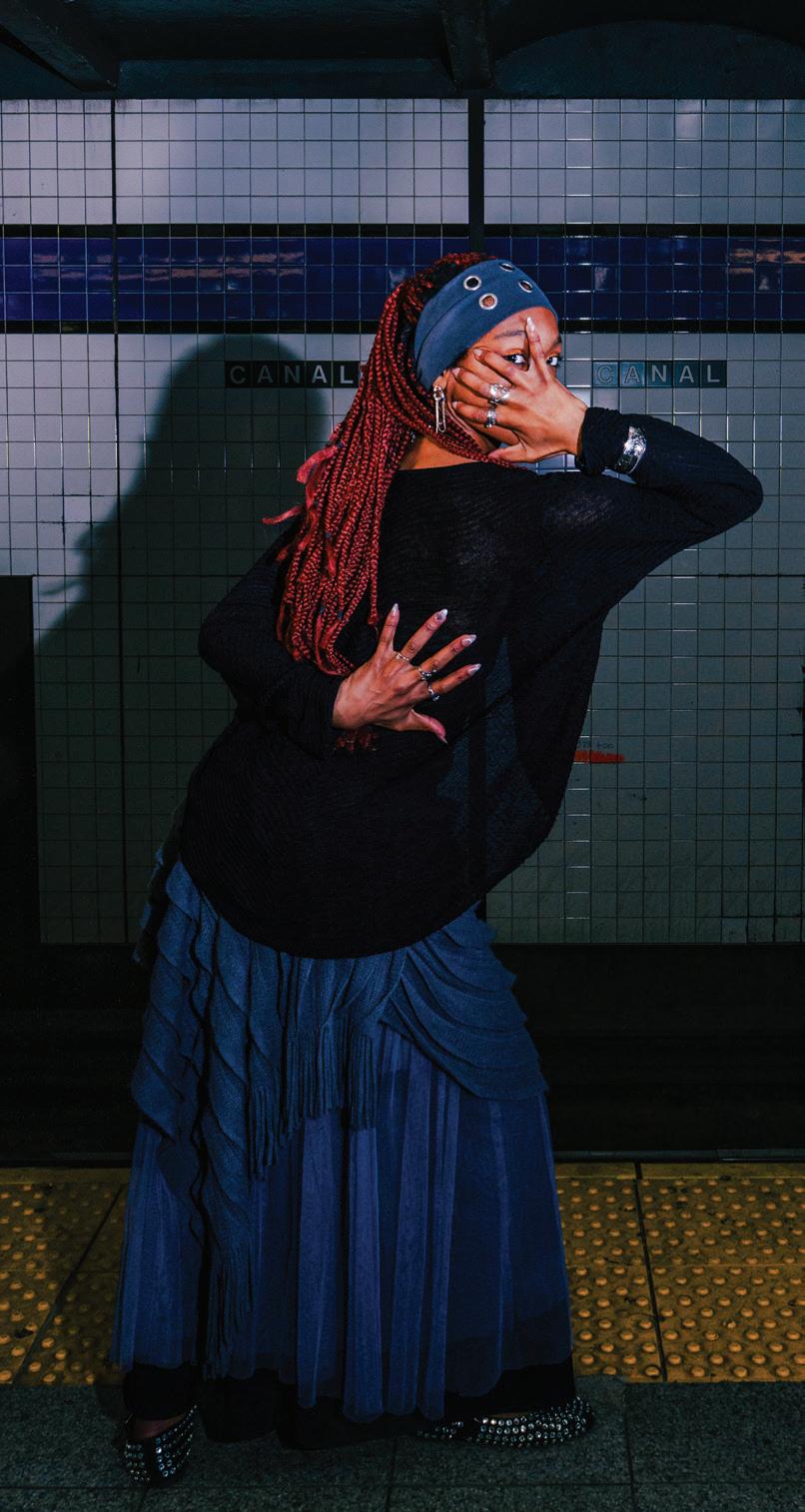
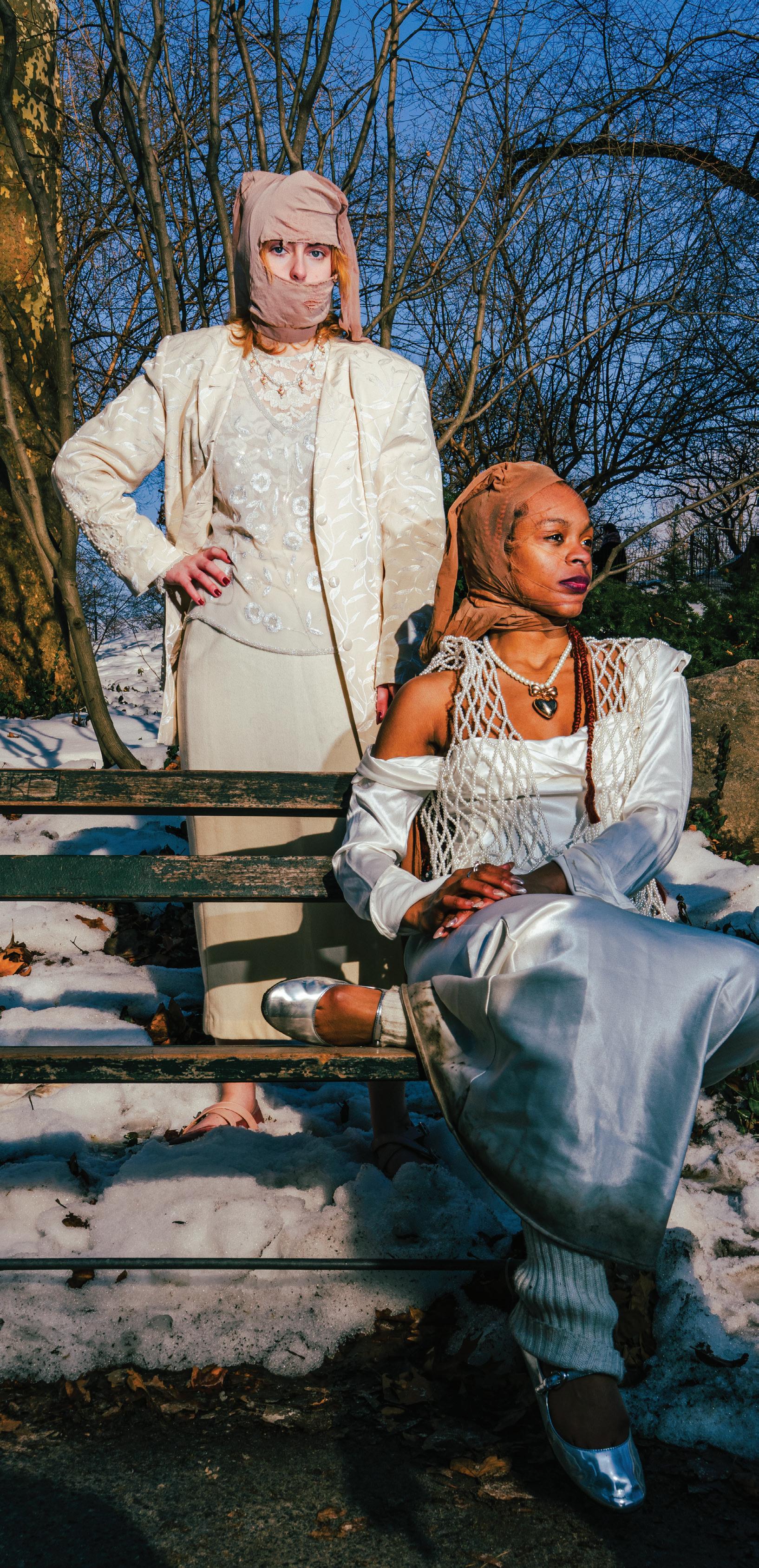
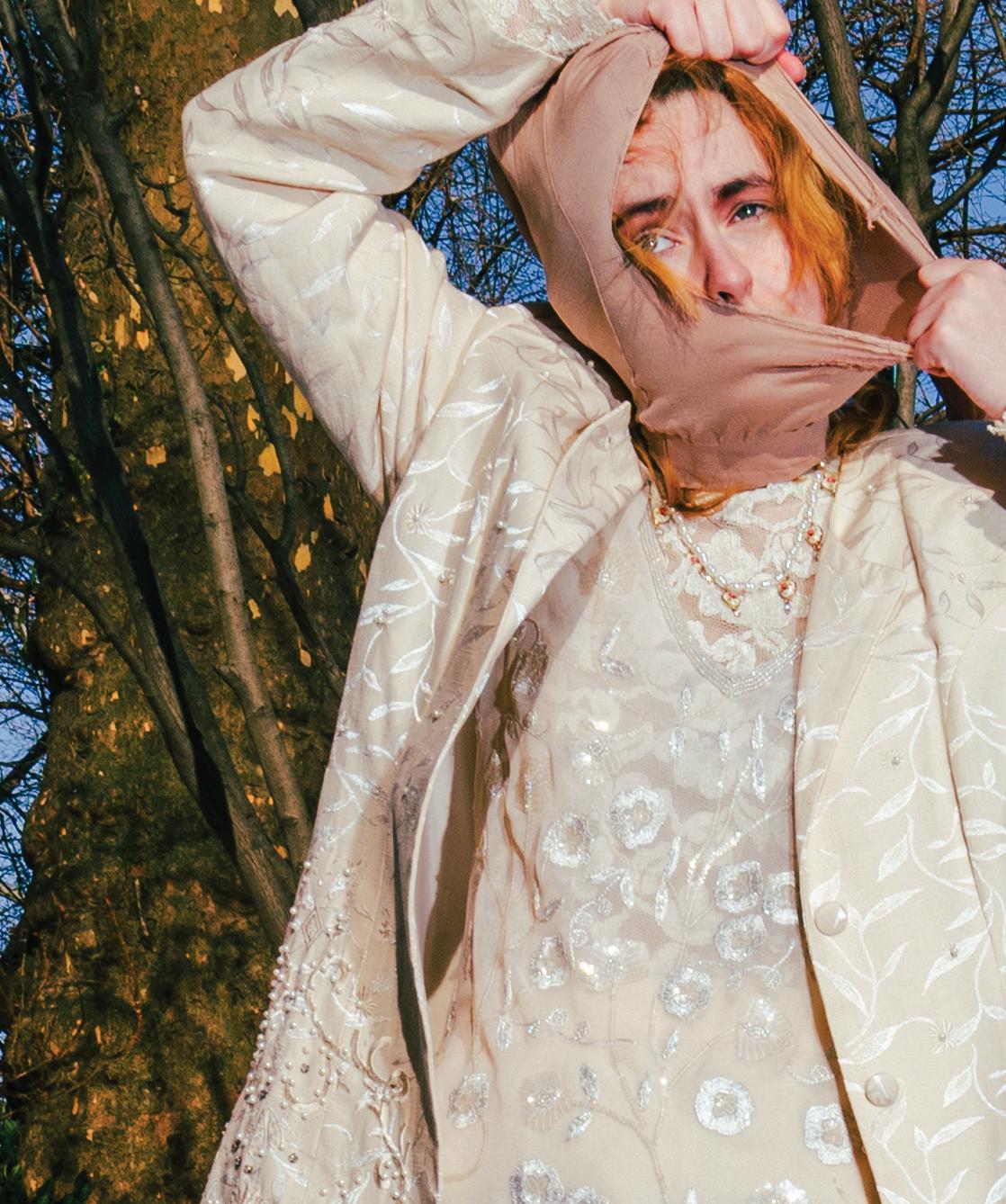
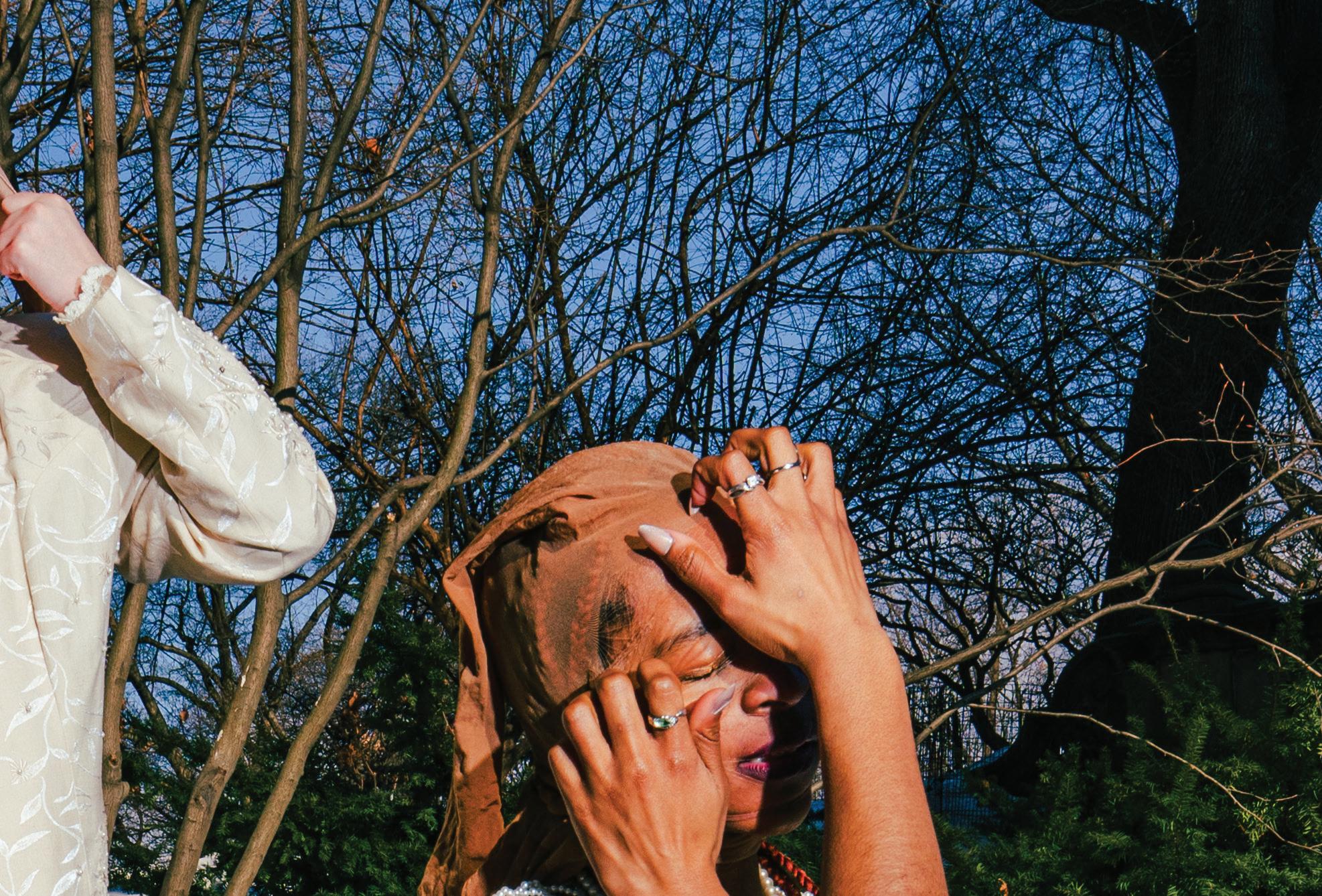
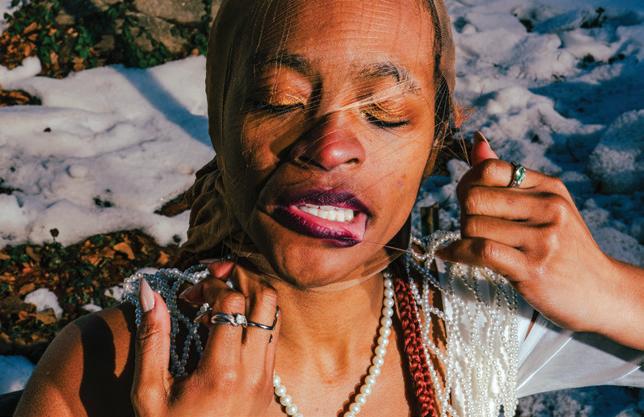
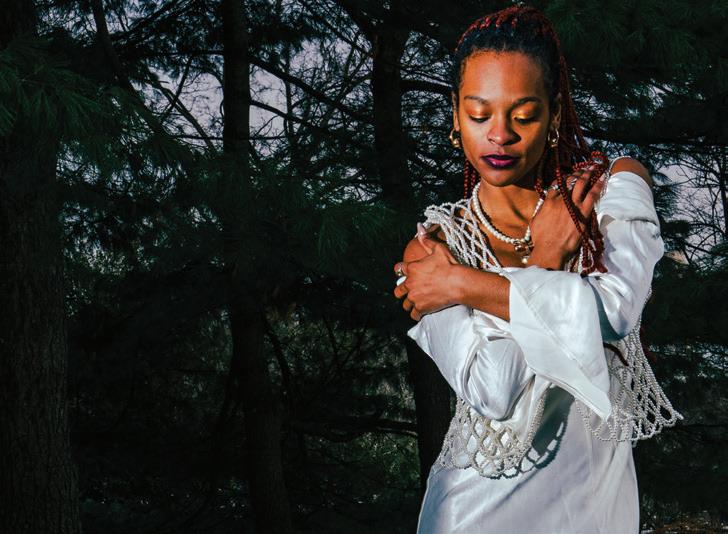
A long, much needed walk around the ring of the local park. You take three laps, just three. You count out each one as you go. You begin to notice that your strides, while at first very rapid and heavy, begin to steady. Creating a smooth saunter, you breathe in through your nose and out through your mouth. By the third lap, you allow yourself to be swept away by your surroundings. You laugh at the little girl in the red Sunday dress who tripped on the sidewalk; smile into the cirrocumulus clouds that paint a blanket in the sky; you notice the new brown dust you’ve accumulated around your New Balance sneakers. You close your eyes to appreciate the shifting of it all. Soaking up what you can of what is, and preparing yourself to be thrusted into what will be. You open your eyes to accept the realization that it’s always changing. All of it, all the time. The act of things changing is the only steady constant.
I’VE ALWAYS HATED CHANGE.
I’ve always hated change. Its constant need to always come in at the most disruptive times, its intense unpredictability, its shedding of people and things from your life. No matter the level of change we experience, change itself is an unfortunate constant in all our lives, all the time. But what would it look like if it wasn’t unfortunate; if we welcomed it with open arms and invited it over for dinner? Greeting it like an old friend because, isn’t it? With all the anguish and stress it brings, how can you find joy and goodness through it?
Psychologist Kurt Lewin created the “change model” which takes you through three stages of how we as humans process and work through change. He calls the first preparation stage the “unfreeze,” which is the one most people have the hardest time with. This stage is the breaking of what already is — breaking out of what exists in your immediate life. Whether this change is something as small and playful as switching your hairstyle, or as heavy and loaded as the loss of a loved one, there’s a level of reframing your brain has to do in order to accept the fact that what was is no longer. When that level of change is being processed, it’s easy for it to feel all-encompassing. In this stage, allow yourself to mourn what was. Change always has a way of coming into our lives like a vortex.
Actions like taking time to reconnect with nature and its many cycles can remind us that change is a natural, beautiful process. After all, the fresh buds of spring flowers don’t burst through the soil without first being covered in dense frost. Along with the seasons, each of the moon’s phases are a vital change necessary for the optimal functioning of Earth in terms of cycles like the tides and animal migration. The moon is constantly changing, and so are we.
LIFE DEATH REBIRTH
Spiritually, moon phases symbolize the cyclical nature of life, death, and rebirth, which can also be applied to stages of life, such as individual and emotional growth, hope, determination, and rest. These phases can help us cultivate mindfulness that aligns with our own cycles.
Sometimes, change in our lives is all about shedding the frost and living as authentically as possible while letting natural, inner beauty lead. As we step into this arena of change, we begin to enter the second stage in Lewin’s model, “change / move.” In this season, we begin to allow change to shift our habits, behaviors, and perspective. Leaning into self-care during this time is essential; nurturing our mind, body, and spiritual well-being allows us to create a beautiful blanket for our new emotions and habits to sit. With lots of things shifting, finding the constants in your life is a good way to hold onto familiarity. One of the most beautiful things about change is that it isn’t the end … It’s usually the beginning of something beautiful. Keep those long-term friendships close, make that favorite dinner of yours you always love, go to the parks you find serenity in. Holding onto the things that you know to be stable helps the change settle in at a more comfortable pace. You may find yourself settling into the new with a deeper sense of ease.
As change begins to blossom more and more into the beautiful flower she is, noticing new habits and behaviors in yourself become even more palpable. As things shift, finding beauty in allowing our psyche to grow can feel scary and unnerving. The battle of the mind becomes a dance; a fight to maintain the things we know to be true, while also trying to accept that maybe our way of doing and thinking isn’t serving us anymore. If we want to become the best versions of ourselves and step into our inner glam, that often comes with shedding what we have viewed as our “just” way of being. But how do you embrace the new without losing the elements of yourself that make you … you?
The last stage of Lewin’s change model is called the “refreeze / stabilize” stage. This is where the new habits begin to set in as we find comfortability and stableness in what now exists. The change has become permanent, the roots have grown and the flower has blossomed. Lewin acknowledges that it’s a common fear to think we’re losing our sense of self during dedicated and prolonged change. However, he assures that oftentimes, those core values and deep-rooted personality traits don’t go anywhere. Those are one of the few things we get to hold on to as a constant throughout our evolution, despite the change we’re experiencing. But also, in the event that for some reason one of those values does change … isn’t that how it’s supposed to happen? And how comforting it is to remember in those moments that everything happens for a reason? When we keep ourselves stuck in our own habits and thinking patterns, sometimes we miss out on what could be. Part of embracing our best “glam” self is stripping down all the walls of who we are to step into the possibilities of what lies beyond.
Becoming and embracing all of who we are in practice is harder than it appears. Doing the leg work of allowing ourselves to be in constant growth can feel less “glam,” but the outcome oftentimes presents a level of profound beauty. In those disgustingly hurtful and gut-wrenching moments, some of the most beautiful revelations are formed. Embracing the glam of change may not look beautiful at face value, but in spaces where we feel our rawest, some of the most awe-striking, gorgeous realizations happen for the soul.