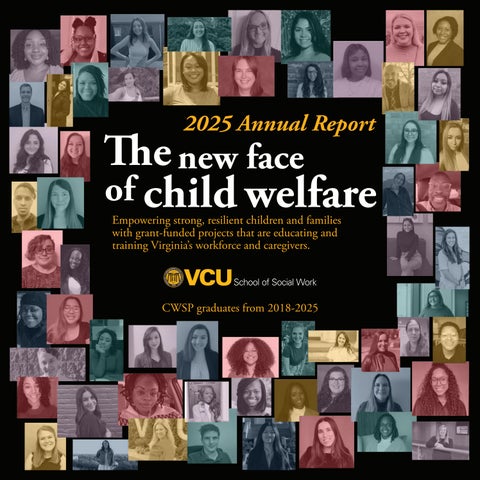
2025 Annual Report
Empowering strong, resilient children and families with grant-funded projects that are educating and training Virginia’s workforce and caregivers.
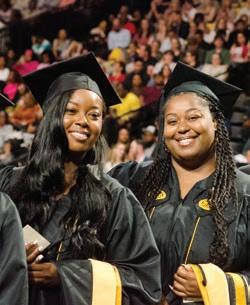
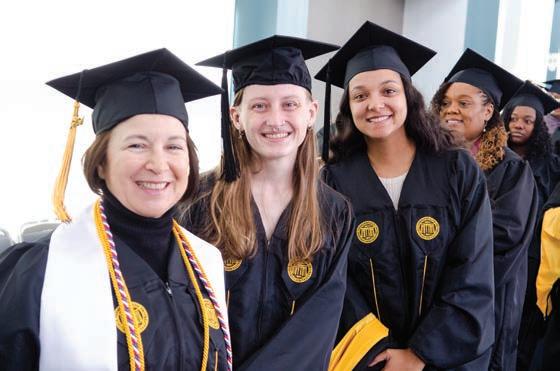
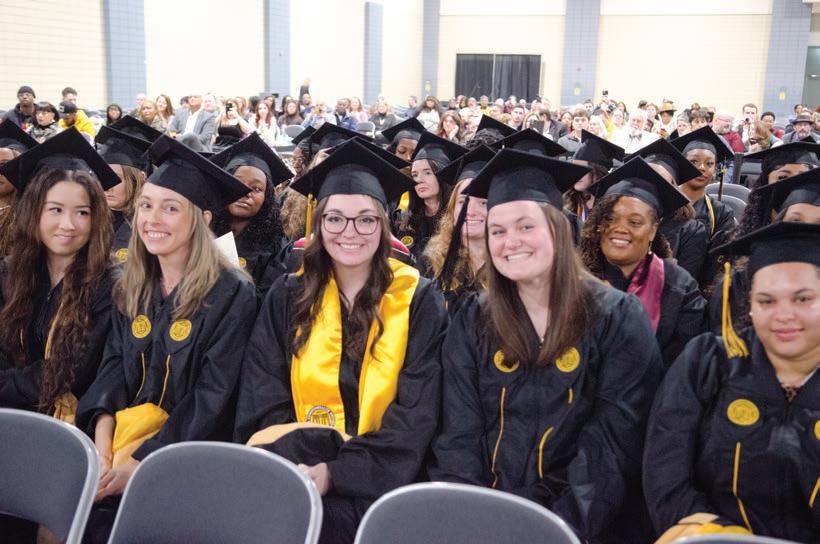
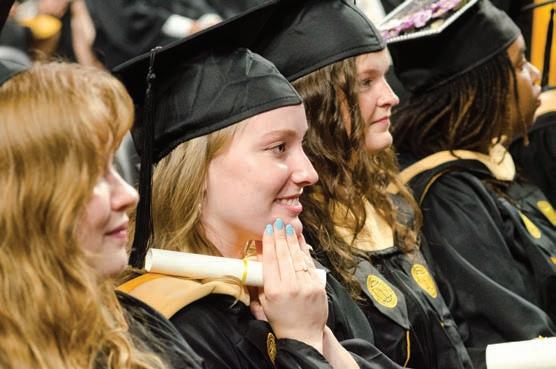
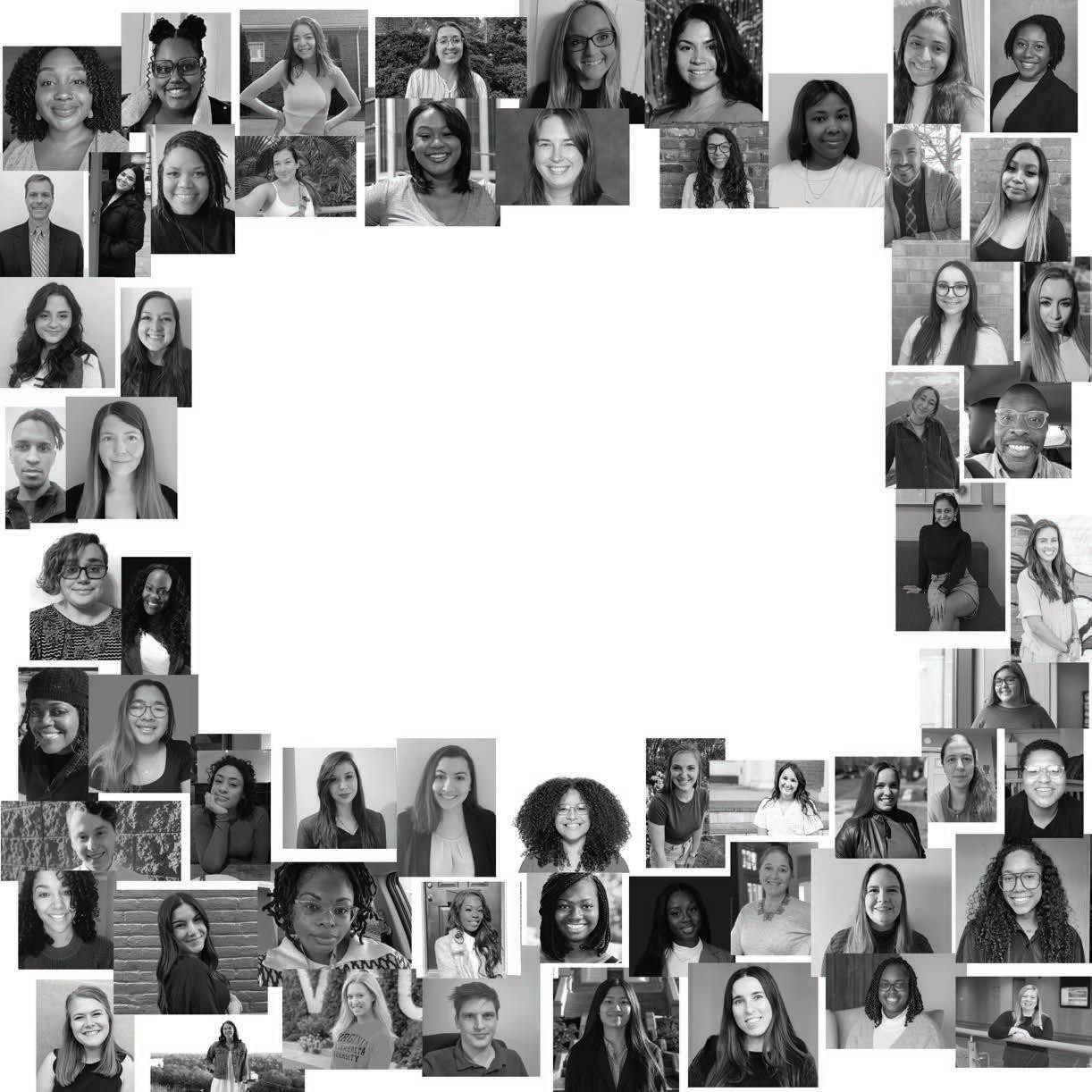
CWSP graduates from 2018-2025
Empowering strong, resilient children and families with grant-funded projects that are educating and training Virginia’s workforce and caregivers.
CWSP graduates from 2018-2025
It is hard to believe another academic year has come and gone! I am thrilled to share with you our many accomplishments and success in our Annual Report, which I hope is a source of pride for anyone connected to the VCU School of Social Work! Go RAMS!
Enrollment continues to grow, with 1,100+ students in fall 2024. We welcomed five new faculty – tenure-track assistant professors Daniel Baslock, Christina Huerta and Yifan Lou; and assistant professors in teaching Erica Jackson and Klara Prachar.
Professor Karen Chartier leads the Institute for Research on Behavioral and Emotional Health and its signature initiative, Spit for Science – the nation’s largest genetic and environmental study of college students. And, yes, as the name implies, more than 13,000 students have provided saliva samples since 2011, building a database that’s supported hundreds of studies nationwide.
More than 90 students earned academic honors, scholarships and/or service awards in academic year 2024-25, and 35 were inducted into the Phi Alpha National Honor Society. Numerous students participated in research endeavors, including undergraduate students at events associated with the American Society for Microbiology and the Association of Baccalaureate Social Work Program Directors.
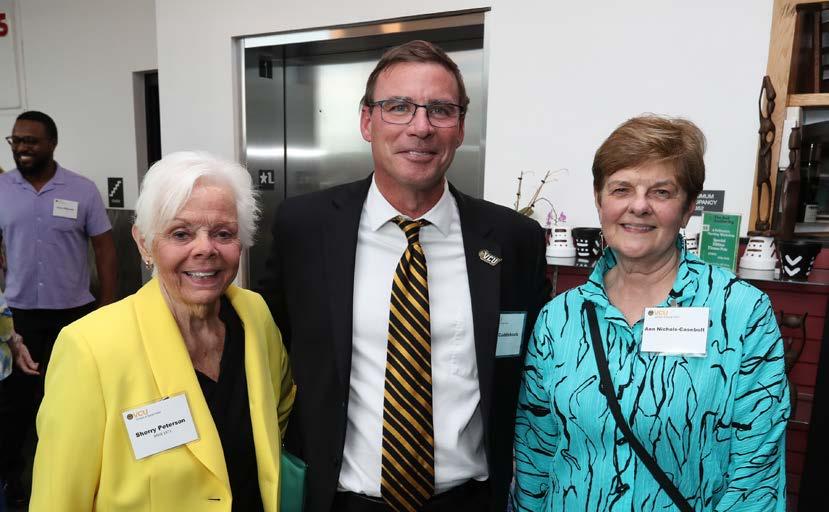
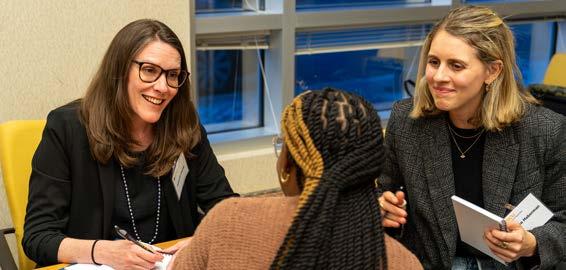
Our alumni take pride in giving back, as evidenced by an incredible speed mentoring spring event that matched 15 mental health practitioners with students for a series of three-minute chats. Alumni panelists and moderators tackled the subject of transformative policymaking at our annual Social Work, Policy & Politics event, and a Macro Fellows program launched. We recognized alumni honorees the past year: Katelynn Jarrells (B.S.W.’16, M.S.W.’17), VCU 10 Under 10 Award; Viola Vaughan-Eden (Ph.D.’03), VCU Alumni Stars Award; and David McLeod (Ph.D.’13), the school’s Ph.D. Making a Difference Alumni Award.
In closing, I want to highlight initiatives we have developed and continue to grow around mental health, macro social work, substance use, international social work and child welfare initiatives (the focus of our cover story); a new Evaluation Lab to provide program evaluation, data analysis, and other services for community agencies; and an emphasis in expanding graduate certificates and dual degrees.
These projects and programs are empowering our students and equipping them with the knowledge and skills that they need to enter the workforce prepared to be impactful social workers. And they directly impact our goal and mission to have excellence in teaching, in research and scholarship, in student success, and in community engagement. I would love to connect with each and every one of you to tell you more and convey how truly excited I am to be dean of the SSW! Please don’t hesitate to reach out!
Our full report, including links to individual stories, is available at annualreport.socialwork.vcu.edu.


Gary S. Cuddeback, Ph.D., M.S.W., M.P.H. Dean and Professor VCU School of Social Work
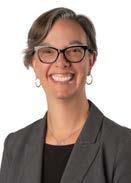
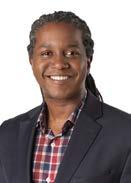
Associate professors M. Alex Wagaman, Ph.D., and Maurice Gattis, Ph.D., regularly work with youth and young adults experiencing homelessness, recognizing the value of their lived experiences and bringing their perspectives into projects as participants and co-leaders.
They recently completed a youth shared-housing project in Richmond focused on individuals ages 18-24 who identify as LGBTQIA+, pregnant and/or parenting. Virginia Housing Trust Fund grants totaling $2.25 million supported the four-year project.
“Maurice and I both felt called by the young people and our partners to radically imagine, what if we were to build something from the ground up in a way that we wanted it to run. … We were putting our radical imagination into practice as a form of change, to prove that things could be done radically differently,” Wagaman says.
That approach – collaboration and imagination – has infused other initiatives Wagaman has led the past year.
Under-18 youth experiencing homelessness who are also categorized as unaccompanied (not in the care of a parent or guardian) are at significant risk because they are ineligible for many government services and struggle in school compared to their housed peers.
Wagaman is leading a research study of high school-age students in Virginia who meet this dual criteria, working in collaboration with youth and researchers from five states and Project HopeVirginia, which administers the federal McKinney-Vento Homeless Assistance Act. “This group of young people is a pretty invisible population,” Wagaman says.
The goals are to design a research study and gather data, then expand their team and scope for a national study, funded by a $75,000 vision grant from Chicago-based Spencer Foundation.
Wagaman worked for a year as a special advisor with the U.S. Interagency Council on Homelessness, developing a youth homelessness plan and helping create the National Council on Youth Homelessness. NCYH, with more than a dozen young adults from across the country, serves as the central leadership for the National Youth Homelessness Partnership, an initiative funded by the Raikes Foundation and housed at VCU.
“Alex is the right person at this time for this work,” says Erika Jones-Haskins, USICH’s director of policy initiatives.
As if to validate Jones-Haskins’ comment, Wagaman was honored for her expansive work in spring 2025 with one of VCU’s inaugural Excellence in Community Engagement Awards, in the category Community-Engaged Research Partnership. Colleagues praised her as someone who “creates safe spaces where people can learn and grow” and as a “steadfast advocate with a gentle presence.”

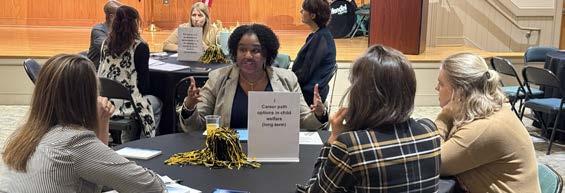
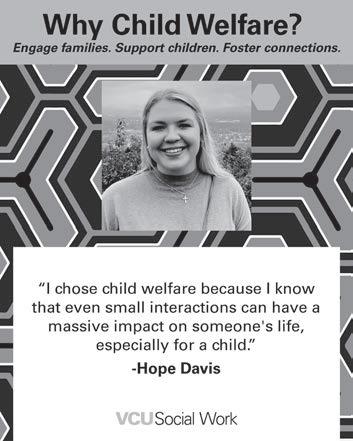
Four key programs are strengthening Virginia children and families
Spelling out the challenges of Virginia’s child welfare system –more than 5,500 children in foster care in April 2025, as well as high caseloads, staff turnover and burnout – can feel like a daunting exercise.
But clear-eyed evaluations and solutions-driven initiatives from Virginia Commonwealth University’s School of Social Work are meeting the moment through four key programs:
• Title IV-E Child Welfare Stipend Program (CWSP)
• Consortium for Resource Adoptive and Foster Family Training (CRAFFT)
• Mutual Family Assessment (MFA)
• Child Welfare and Addiction Fellowship (CWAF)
While the acronyms may look like an unsolvable combination of the New York Times Spelling Bee and a short-on-vowels Wheel of Fortune puzzle, the abbreviations are shorthand for programs long on excellence; they represent the school’s commitment to empowering strong, resilient children and families in the commonwealth.
“I believe the programs provide agencies with a strong foundation for their workforce,” says Kristen Van de Riet (M.S.W.’09), a CWSP alum and CWAF clinical supervisor. “In a field often marked by high turnover and burnout, the specialized training and education offered by the CWSP prepares emerging workers to effectively manage the challenges they will encounter in this profession. The CWAF aims to continue building and nurturing this foundation through additional training and support, with the goal of not only enhancing the skills of the program participants but also making a lasting impact on the families they serve.”
The Virginia Department of Social Services (VDSS) sponsors the
first three programs, and a National Institutes of Health grant funds the fourth.
Collectively, the programs strengthen the child welfare workforce and system; deliver high-quality training and support to resource families; provide assessments of family-based placements; and facilitate enhanced education, training and supervision for child welfare professionals around alcohol and/or substance use disorder.
A steady pipeline of well qualified professionals entering the profession across Virginia helps balance caseloads, reducing turnover and burnout. Children are supported with better prepared placement families and with increased options for kinfirst placements.
“I was a stipend student placed with Henrico County DSS in graduate school and am now the director,” says Gretchen Brown (M.S.W.’94), another CWSP alum. “So many of our stipend students accept permanent positions with us, and we see better quality work from stipend students who are able to more quickly identify needs and connect people with appropriate services and supports. Additionally, I believe that the stipend promotes and values a very specific career path and retention in the workforce.”
The Child Welfare Stipend Program’s funding, $10,000 per student per year, is viewed more as compensation for an in-depth regimen to forge dedicated future child welfare workers than as a purely financial motivator. The program focuses on identifying and cultivating practitioners who can infuse their education, training and passion for service into local Department of Social Services (LDSS) offices statewide. Supported through the federal Title IV-E program, via Virginia DSS, the CWSP is one of five in the state, and is open to both master’s students and undergraduate seniors. There is a post-graduation work requirement with a local DSS agency, a year for each year in the CWSP.
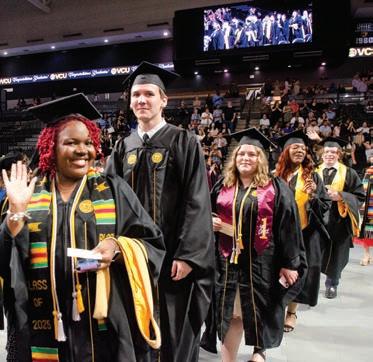
An earlier iteration of the CWSP at VCU was active in the 1990s and early 2000s, with funds to support cohorts of 24-32 students each year. Resurrected in 2017 with a small cohort, student stipends at VCU have gradually returned to close to their original levels (up to 29 funded participants annually), and the program has produced 106 graduates between 2018 and 2025.
“We see how crucial our university-state partnerships are in tackling the challenges within child welfare,” says Naomi Reddish, the school’s administrator for Child Welfare Initiatives. “When we talk about issues like high caseloads and staff turnover, it underscores the vital role of these initiatives. We’re proactively addressing the need for a robust, highly skilled and sustainable workforce.”
Stipend students receive training within local DSS agencies, through professional state resources, as well as child welfarefocused coursework, skills workshops, mentoring opportunities with alumni, employment support and a strong network of cohort peers, VCU administrators and professionals.
In 2025, 120 local DSS agencies had about 200 vacancies.
“By investing in our emerging social work professionals, we’re empowering them to build the skills to manage demanding caseloads more effectively,” Reddish says “This allows them to focus on more impactful engagement with families, an approach that builds a foundation for greater job satisfaction, reduces burnout and promotes a thriving workforce.”
Current child welfare workers are also eligible for the CWSP as they pursue their B.S.W. and/or M.S.W. degrees, elevating their professional development opportunities. A 2025 study (Castañeda & Han) found that supporting employees’ academic pursuits results in “workers who are more committed” and “better outcomes for children and families.”
VCU has administered the Consortium for Resource Adoptive and Foster Family Training, another VDSS initiative, for the Central and Northern regions for more than 20 years. It equips resource families – whether kinship, foster or adoptive – with training and support to ensure stable and nurturing homes for children and youth in the child welfare system. Trainings with families are competency-based and trauma-informed, and the program also works to build capacity for local DSS agencies to lead direct training and assessment of families.
Resource family training also prepares relatives for the role of kinship care parenting, and includes information about child behavior, navigating family relationships and working collaboratively with professionals. Challenges for local DSS include the work to identify, license, train and support kinship families, especially because these types of placements often are unplanned and happen with short notice.
“Rather than immediately placing a child with a locally approved foster family that has no connection to the child/ren, departments of social services are encouraged to work with relatives to minimize disruption when a child enters foster care,” says Daniela Sanzetenea, the school’s Child Welfare Stipend coordinator. “This directly aligns with the Virginia Children’s Services System Practice Model (‘We believe that children do best when raised in families.’). Placing a child with a known caregiver has demonstrated an easier adjustment to foster care and at times can increase parent engagement, as their voice can drive family-finding efforts and placement decisions.”
The CRAFFT team is also:
• Implementing the National Training and Development Curriculum, a trauma-informed approach.
• Using virtual training to expand reach and accessibility, which includes interpretation services to reach non-English speakers.
• Offering in-service training for families to provide ongoing support.
• Implementing contract trainers by region who can provide tailored training that best aligns with local environments.
VCU began administering the Mutual Family Assessment supervision for the Piedmont and Western regions and portions of the Central region in 2023. MFA operates under CRAFFT specifically to ensure a rigorous and ongoing system to evaluate kinship, foster and adoptive families. Primary objectives are to increase and assess the pool of family-based placements and to ensure appropriate matching of children and families across all placement types.
“The MFA program promotes the safety, permanency and wellbeing of Virginia children,” Reddish says. “It aims to minimize the trauma children experience when entering foster care, to support reunification efforts where possible and to foster lifelong connections for children. This ultimately leads to better and safer outcomes for children and families.”
Funded by a National Institutes of Health grant, the Child Welfare and Addiction Fellowship began in 2023, (cont.)
providing eligible CWSP alumni working as child welfare professionals statewide with enhanced alcohol and/or other substance use disorder (AOSUD) education, training and supervision.
Currently instructing its third cohort, the two-year training program aims to improve knowledge and skills in screening and identifying AOSUDs among child welfare-involved caregivers; in case planning; and in referring to treatments and interventions.
“With up to 68% of child welfare cases involving a caregiver with an AOSUD and child welfare professionals making lifealtering decisions about the children in their care, social workers employed in child welfare agencies are a critical target for AOSUD education,” says Karen Chartier, Ph.D., who is a co-principal investigator of the project and a professor in the school.
The training includes weekly clinical group supervision, monthly de-identified case consultations and quarterly workshops. The project team is a robust collaboration of professionals (below).




Self-assessment is an important function for all programs to continue providing quality services in the future. The School of Social Work is conducting a longitudinal evaluation with CWSP alumni to explore the impact of participation in the program on child welfare workforce recruitment and retention; a program evaluation of CRAFFT and MFA is in the data collection stage.
“We are curious if our alumni remain in agencies, move between agencies or leave local child welfare practice,” says alum Camie Tomlinson (Ph.D.’23) of the University of Louisville, who conducts program evaluation as affiliate faculty. ”We are also curious whether alumni who leave local DSS employment continue work with children/families in a different capacity.”
The focus on trauma-informed care, kin-first placements and support for non-English-speaking clients represent progress for systems that are viewed as having been historically reactive. Peer support and community-building are common themes across CWSP students (and graduates) and CRAFFT/MFA families that train together. Other trends and continuing goals:
• Expanding field placement opportunities in rural communities by providing external field instruction when necessary.
• Increasing support for students with lived experiences in the child welfare system.
• Creating professional development pathways for child welfare workers to pursue social work degrees, complete field placements with their employing agencies and get enhanced training.
• Applying for funds to continue the Child Welfare and Addiction Fellowship program.
• Leaning into the expertise of a CWSP advisory committee to ensure relevant focus and learning in a rapidly changing workforce.
• Emphasizing skill building that supports worker well-being.
“I have been individually motivated by the fast pace of the work environment, where every day is different and where I am able to use my core social work skills every day to help resolve issues with people in our community,” says Brown, the Henrico DSS director. “I am also very motivated to be able to use my 31+ years of experience to educate and support both leaders and line workers. Not only do I learn something new every day, but every day I have the ability to have an impact on someone else. I am also reminded regularly that it is a privilege to have the opportunity to work in service to others – to hear and value someone else’s lived experience and be able to navigate a different trajectory alongside them.”
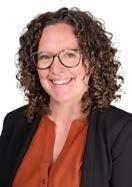
Director of Macro Initiatives, Kimberly Compton, Ph.D., is helping translate alumni’s passion and energy for macro practice into the development of future practitioners: M.S.W. students in the macro concentration. Five graduates formed the backbone of the first Macro Fellows cohort, providing strategy for the school’s macro focus and serving as a resource for students. Other initiatives:
• Macro Coffee Chat, generating interest in the macro track by learning from current students and alumni about their experiences in the classroom and in field education
• Macro Scholars Symposium featuring sessions with faculty from Hunter College’s school of social work
• Careers in Macro, featuring three alumni macro practitioners and M. Alex Wagaman, Ph.D., associate professor, for discussion and Q&A
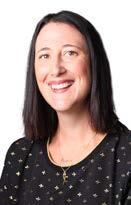
Figuratively speaking, it was that kind of year for Cassie DeSena-Jacobs, D.S.W., LCSW, as she managed a host of events and opportunities for students and the broader community through the school’s Mental Health Initiative:
• Launching a new graduate certificate in mental health and an undergraduate minor in mental health.
• Collaborating on a design thinking workshop with VCU’s da Vinci Center focused on how social workers can better collaborate and problem-solve for mental health challenges.
• Offering multiple clinical skills labs for B.S.W. and M.S.W. students, leveraging the expertise of full-time and adjunct faculty.
• Introducing a new mental health professional speaker series for students.
• Leading continuing education opportunities focused on serious mental illness and training sessions for professionals who want to provide clinical supervision for social workers seeking their LCSW.
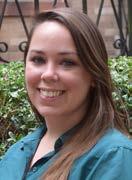
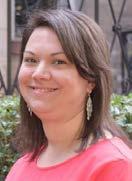
Launched in 2025, the school’s Evaluation Lab provides research and evaluation services to field agencies and community partners as well as nonprofit organizations, government agencies and other behavioral health-related organizations. The team includes Dean Cuddeback; Rebecca Smith, Ph.D., director of analysis and evaluation; and Amy Adkins, Ph.D., director of communications and training.
Services include:
• Program evaluation
• Survey development and administration
• Grant writing
• Data analysis
• Research dissemination
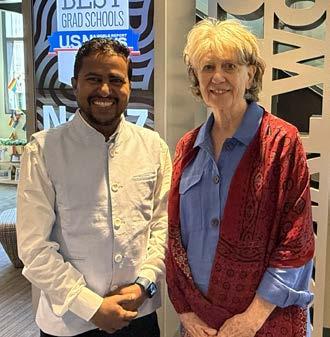
Spin the globe, and you’re likely to find a VCU connection through the school’s International Social Work Collaboratory. Under the leadership of Denise Burnette, Ph.D. (below right, with Ashok Rahod), Wurtzel Endowed Chair for Social Work, the school has memoranda of understanding with colleagues in Australia, Ghana, India, Liberia, Malaysia, Mongolia, Portugal, South Africa and South Korea.
Those partnerships include:
• 3 study abroad programs (Ghana, India, South Africa), with plans to expand to South Korea and Portugal in 2026
• 4 semester-long block field placements in India and Malaysia
• Visiting scholars from South Korea (2025) and Australia (2026)
• Visiting speakers from Mongolia and India
• Research endeavors on end-of-life care (Australia), evaluation of a youth soccer program (India), rural health and development (India), artificial intelligence and education (Liberia), health care for immigrants and refugees (Malaysia), and disabilities (Mongolia)
Brick by brick, social work faculty and students constructed a school in the remote village of Adoteiman in the early 2000s. Two decades later, Grace Life International community school honored former faculty Randi Buerlein and the late Bob Peay.
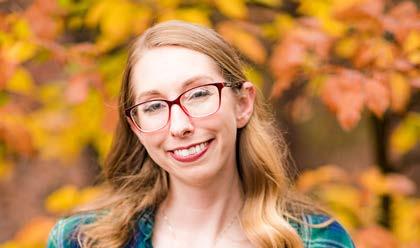
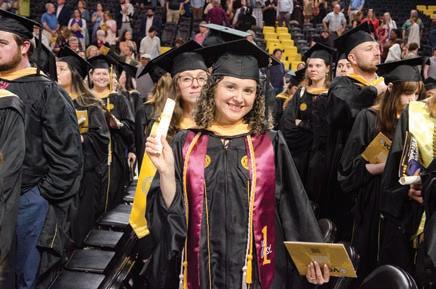
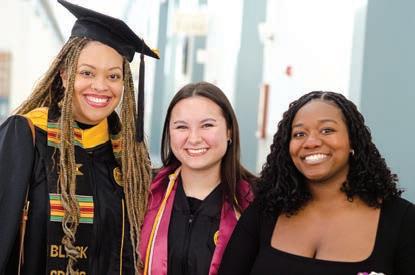
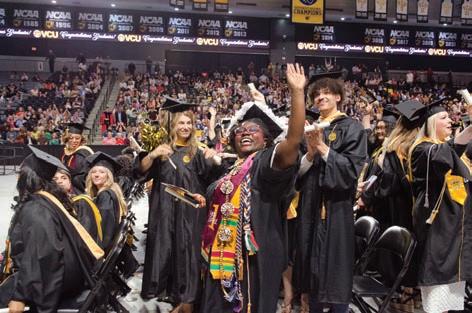
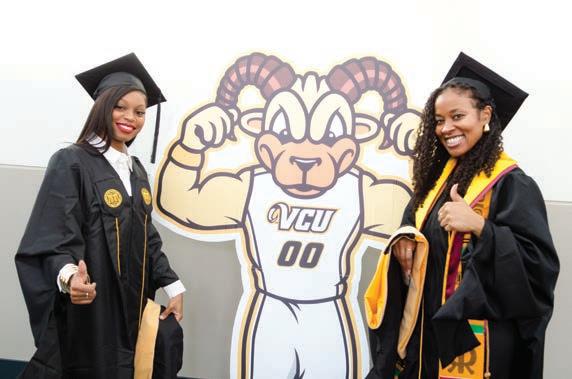
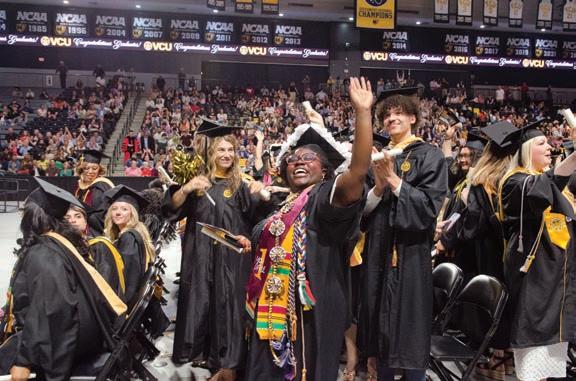
Tassels turned, dreams realized Spotlighting four graduates from the 2024-25 academic year
May graduate Kelci Straka-Mai earned dual degrees with an M.S.W. and M.P.H. from the School of Public Health.
“Working collaboratively is important to do effective work,” she says of the interdisciplinary approach.
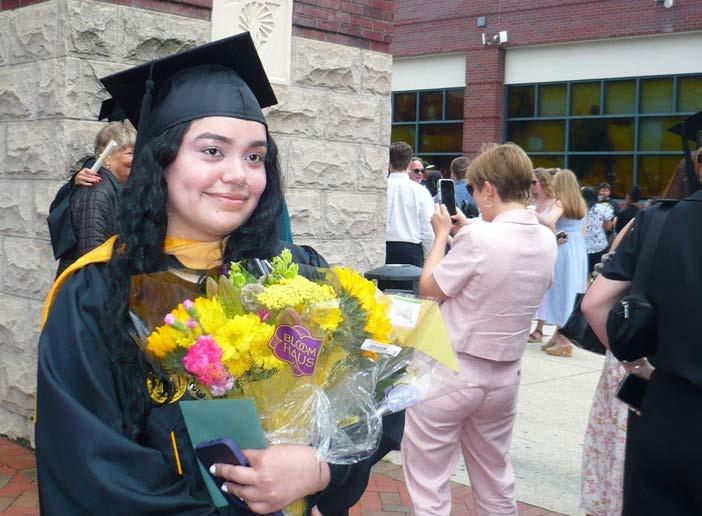
May graduate Briany Cruz, a B.S.W. graduate in 2023, returned to VCU for an M.S.W. to better serve Hispanic communities where she lived and worked. “I saw my community being represented as an island of disadvantage. … It’s about lifting one another,” she says.
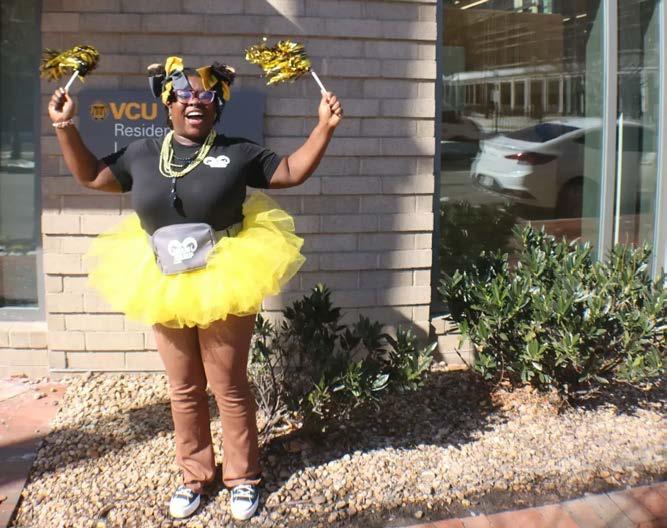
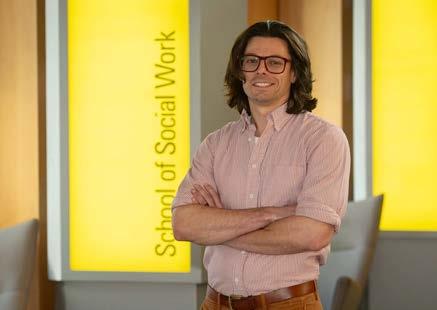
After a series of switching majors, Hilda Quansah found social work and a group that could help with her recovery. Now the May B.S.W. graduate is an M.S.W. student at VCU. “It shaped me into who I am today,” she says.
After a jail stint, December graduate James Orr got sober and on a path that led to an M.S.W. degree and a job “trying to serve the community.” On being incarcerated, he says, “I changed everything … I was reframing and then modeling the person I wanted to become.”
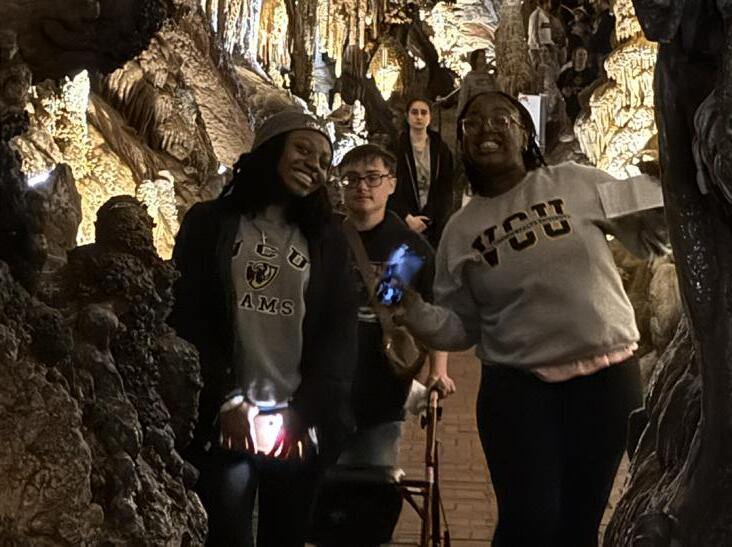
The B.S.W. Program sponsored a day trip to Luray Caverns in spring 2025 to celebrate the Class of 2025 and a countdown to Commencement.
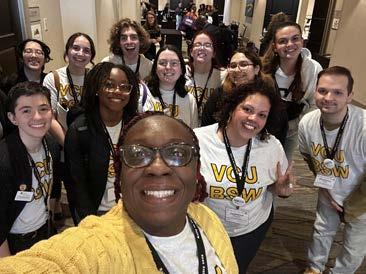
14 B.S.W. students and 9 faculty and staff attended Rally in the Valley in spring 2025 at James Madison University with 13 other schools of social work from the commonwealth. The Virginia Social Work Education Consortium sponsors the annual undergraduate mini-conference.
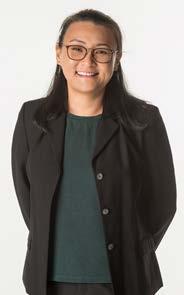
Ph.D. student Marianne Lund (below, center) is researching the impact of effectuation, a form of entrepreneurship. “Academics are pretty siloed, so bringing two fields – social work and entrepreneurship – together is a challenge,” she says. I am enjoying being part of two communities.”
With a social work lens, she is challenging assumptions about who can be entrepreneurs and how a learnable, logical framework for entrepreneurship can address poverty and other economic drivers. In addition to presenting at an international conference in France in fall 2024, she is collaborating to translate the latest discoveries into Spanish and Portuguese.
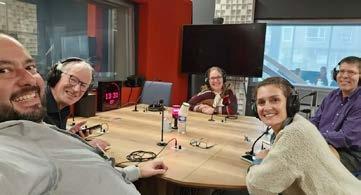
Ph.D. student
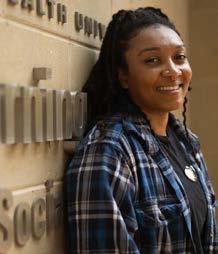
Rayelle Ross has continually advanced her skills and education to help clients – and now a Council on Social Work Education Doctoral Student Policy Fellowship will support her work at the doctoral level. The focus of Ross’ research – and the fellowship – is policy related to social safety net programs to alleviate intergenerational poverty in Black families.
“If I can do anything to be able to inform legislators about how these policies are impacting people, that would be great,” she says.
Ph.D. student Ya-Li Yang earned one of 14 doctoral fellow awards from the Grand Challenges of Social Work to explore the family dynamics of substance use recovery. Yang’s award in the “Eradicate Social Isolation” category aligned with her dissertation focusing on how families develop resilience in supporting a loved one in recovery.
“This project seeks to highlight the struggles and strengths within families’ recovery journeys to guide professionals and policymakers in making meaningful systemic changes,” she says.
2024-25 Ph.D. graduates:
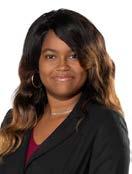
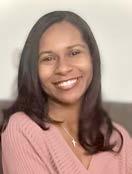
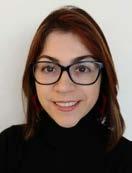
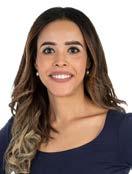
• Nicole Campbell (Dissertation: Understanding Identity-based discrimination: Immigrant women of African descent’s experiences in social and human service agencies)
• Jenée Lee (Housing quality for whom? Housing quality as a form of housing insecurity and housing inequality for Black women renters)
• Paola Roldán (A qualitative exploration of the employment experiences and coping strategies among transgender women in Medellín, Colombia)
• Muna Saleh (Health after resettlement: Predictors of health status and primary care utilization among Somali refugees living with chronic illness)
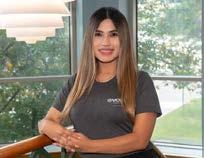
M.S.W. student Josselyn Valenzuela began working on a School of Nursingbased research project as a B.S.W. student, and the 2024 graduate has continued after entering the master’s program. The project, Mindful Moms Study, examines mental health – particularly depression – and well-being during pregnancy for both Spanish- and English-speaking participants.
“Knowing that our work has the potential to make a tangible difference in the lives of pregnant women is incredibly fulfilling,” Valenzuela says. “Seeing how our research enhances care, mental health resources and community support motivates me to continue this important work.”
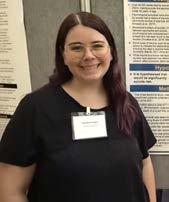
A dozen social work students presented their research at two VCU events focused on student research in spring 2025, highlighted by first-year Ph.D. student Lisa Borntrager’s first-place award. Her presentation – “Does Trauma Type Matter When Evaluating Adult Suicide Risk Level?” – led the Social Sciences, Business and Education category of VCU’s Graduate Research Symposium.
Other graduate presenters:
• Aya Caballero, Ph.D. student, “Examining Life Satisfaction and Depression Among Biracial Black-White Emerging Adults”
• Jeff Ciak, Ph.D. student, “Building a Better Estimate of Serious Mental Illness for the NSDUH: Comparing a Latent Profile Analysis with the Current Weighted Linear Regression”
• Zoljargalan Gantumur, Ph.D. student, “Prevalence of nonCommunicable Diseases and Behavioral Risks Among Older Adults in Mongolia”
• Rose Miola, Ph.D. student, “Poetic Transcription as a Qualitative Method for Understanding Strategies for Violence Prevention Among College Students At Risk for Sexual Violence”
• Samuel Ochinang, Ph.D., student, “Suicide Risk in College Students: Exploring Alcohol Use and Belonging with a Multinomial Growth Model”
• Erin Trimmer, M.S.W. student, “Understanding Intimate Partner Violence Typology Experience in Temporary Assistance for Needy Families (TANF) Recipients”
Presenters at the VCU Poster Symposium for Undergraduate Research and Creativity:
• Kit Curtis, “Autonomic Testing in Pediatric Disorders of Gut-Brain Interface: Relationship with Child Vs. Parent Perceptions of Functional Limitations”
• Matthew Fuller, Olivia Adams and Brianna Fragosa*, “Human Rights and Social Justice in Kerala, India: Photovoice for Transformative Learning in Undergraduate Study Abroad”
• Paloma Rodriguez Saucedo, “Effects of Black and Latine Children’s Academic Self-Efficacy and Skin tone on SelfEsteem”
*Co-authors not presenting: Miangel Brooks, Jasmine Edwards, Cait Parker, Karla Rodriguez and Sam Whichard
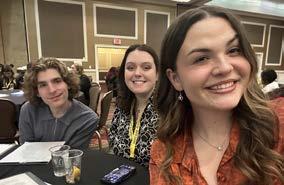
B.S.W. students Joseph Kniceley, Julia Stodard, and Autumn Matusiak presented a poster, “Student-Led Volunteering: How Social Work Students Can Benefit from Outof-Classroom Experiences,” at the Association of Baccalaureate Social Work Program Directors Conference in spring 2025. Co-authors were Elena Diaz and Dija Ndiaye. A yearlong community service initiative was the basis for their research project.
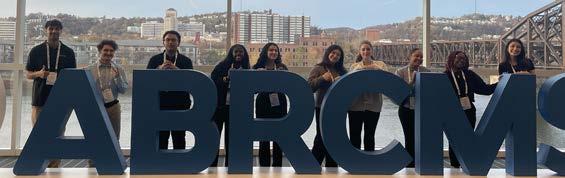
Ten undergraduate researchers, including senior social work major Bella Lenzini, attended and/or presented in fall 2024 at the Annual Biomedical Research Conference for Minoritized Scientists. The trip was sponsored by VCU’s Institute for Research on Behavioral and Emotional Health, led by Karen Chartier, Ph.D., social work professor.
Aging well: GSA awards annual fellowship
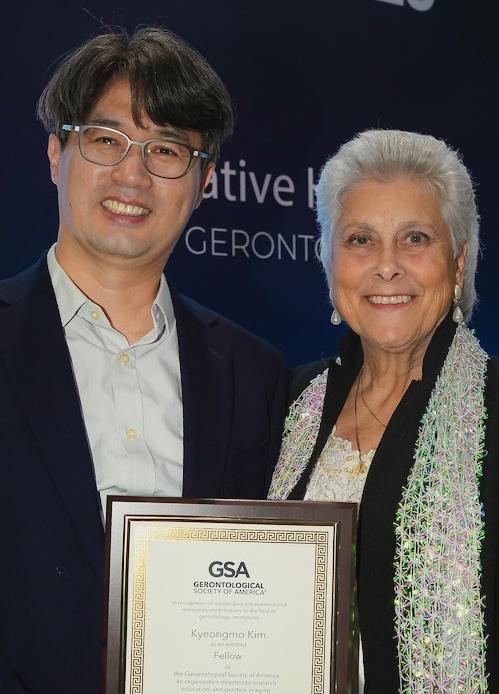
Kyeongmo Kim (below, left), Ph.D., associate professor, was named a 2025 fellow by the Gerontological Society of America in the Social Research, Policy and Practice Section. GSA, the nation’s oldest and largest interdisciplinary organization focused on aging, awards fellow status as peer recognition for outstanding contributions to the field of gerontology. Dr. Kim was one of 16 in his category and 47 overall.
gaming as
Adrienne BaldwinWhite, Ph.D., assistant professor, has developed two interactive games to help college students better understand and prevent situations that could lead to sexual or dating violence. “Once Upon a Time” presents scenarios and conversations as though they are text messages from friends, providing a more engaging and realistic way for students to learn how violence can occur, and to promote bystander intervention.
She is also developing, with students from VCU engineering, an animated game, “Student Body,” that will allow students to navigate through a campus map, generating scenarios based on their decisions. The game will also address human trafficking scenarios and introduce more diverse characters. Baldwin-White is working with VCU TechTransfer and Ventures to help license the games for other universities.
“There’s something about video games that helps information stick,” she says. “I decided that a video game would actually be a good way to educate students on gender-based violence and how to prevent it.” (Photo above by Karl E. Steinbrenner)
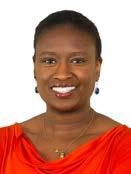
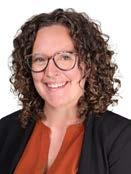
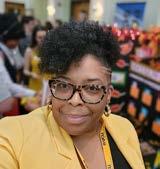
When LaKesha Bennett meets future Rams, she’s invariably wearing black and gold, and usually carrying a song in her heart and on her lips.
“Music transcends all boundaries, and it has the power to put people at ease and command attention,” says Bennett, who might break out her sing-song voice – at an open house or preview day – as the school’s senior recruitment specialist.
She received the School of Social Work’s Outstanding Staff Award for 2024-25, leading recruitment efforts that led to significant year-over-year increases for new students in both the B.S.W. (42% more transfers) and M.S.W. programs (45% more on-campus students). Just as her voice puts students at ease, her wardrobe gives them a taste of VCU spirit.
“Wherever I go, whenever I am on the road, when people see me and my gold blazer, they will say, ‘You’re rocking that black and gold.’ When I put it on, it’s almost like putting on that cape and going into that phone booth, right? I’m putting that on with pride. I love it!”
• Nicki Lee, Ph.D., associate professor of teaching, has been appointed the school’s director of data and assessment.
• Kimberly Compton, Ph.D., assistant professor, has been appointed the school’s director of macro initiatives.
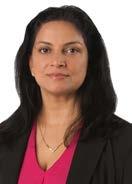
Supporting study of Kerala Diaspora
VCU’s Global Education Office awarded Miriam Kuttikat, Ph.D., associate professor, a grant to participate as a fellow in the University of Oxford’s Harris Manchester College Summer Research Institute in London for a week in June-July.
Kuttikat’s project is titled “The Kerala Diaspora Study: A five-site examination of health & wellbeing, food & nutrition, social network, and lifestyle trends of Malayalis in Kerala, USA, UK, Australia and Canada.” The focus is on epidemiological patterns such as prevalence rates, demographic distributions, food nutrition and lifestyle trends of cardiovascular disease and type 2 diabetes among Malayalis.
“By identifying shared and divergent patterns in disease prevalence and lifestyle behaviors, my research will provide critical insights into the socio-cultural and epidemiological factors that contribute to these health outcomes,” she says.
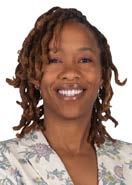
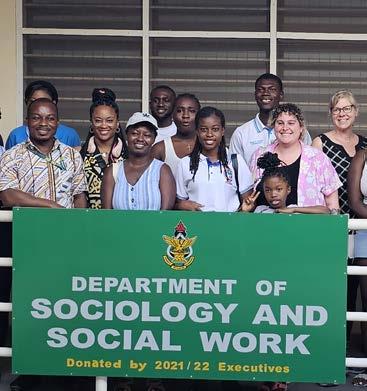
Nicole Corley, Ph.D., associate professor, worked with a counterpart at the University of Ghana’s Department of Social Work to build a four-week spring virtual exchange, finding common ground and bridging a difference of five time zones.
VCU Global provided an award to support the project, a collaborative module exploring policy-related matters across borders in Corley’s Policy Communication and Organizational Practice II class and UG faculty member Jones Adu-Gyamfi’s Project Development and Management class; 21 VCU and 20 UG students participated. The virtual exchange focused on increasing international and global awareness and competencies of social work students through carefully planned online learning activities.
“The experience was enriching, eyeopening and empowering,” one UG student shared in a survey. “It broadened my perspectives, fostered global connections and ignited a passion for international social work.”
• Daniel Baslock, Ph.D., assistant professor, American Public Health Association Annual Meeting
• Qasarah Bey Spencer, Ed.D., associate professor in teaching: Communities in Schools-Virginia Summit
• Larkin Francis, Ph.D., assistant professor; doctoral student Ya-Li Yang: Association of Recovery in Higher Education Annual Meeting
• Maurice Gattis, Ph.D, associate professor: NAFSA Association of International Educators Region VIII Conference
• Ananda Newmark, Ph.D., associate professor in teaching: Virginia Assessment Group Conference; and Undergraduate Education at Research Universities (UERU) National Conference
• Stephanie Odera, Ed.D., associate professor in teaching: Association of Baccalaureate Social Work Program Directors Conference
• Naomi Reddish, M.S.W., administrator of child welfare initiatives; Amanda Long, M.S.W., coordinator of child welfare initiatives: National Title IV-E Roundtable
• Rebecca Smith, Ph.D., research instructor; Larkin Francis, Ph.D., assistant professor; and doctoral students Ya-Li Yang and Rose Miola: Collaborative Perspectives on Addiction Annual Meeting
For 2024 CSWE and 2025 SSWR conference presentations, see annualreport.socialwork.vcu.edu
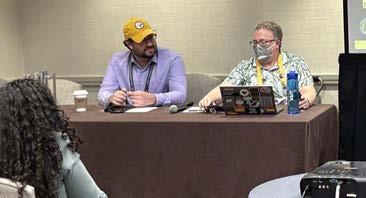
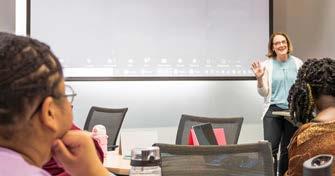
VCU’s Spit for Science initiative began collecting data in fall 2024 for the first time since 2021 – one test tube (of spit) at a time. Karen Chartier, Ph.D., associate professor, leads the initiative as part of her role as director of the Institute for Research on Behavioral and Emotional Health.
Spit for Science is the nation’s largest genetic and environmental study of college students with more than 13,000 students having participated since 2011. Data has been used in hundreds of projects and studies, with numerous interdisciplinary working groups exploring topics such as protective factors that promote positive outcomes for LGBTQIA+ students, traumatic stress and mental health, and substance use disorder and recovery.
“... Making this data readily available … feeds our undergraduate research programs, supports the interests of many VCU faculty and connects us with researchers across the country and the world,” Chartier says.
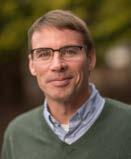
Gary Cuddeback, Ph.D., dean and professor, is helping lead a five-year, $2 million project to provide drug treatment, employment, housing, case management and peer support for people with substance use disorders and co-occurring mental illnesses who are involved in the criminal justice system. The federal Substance Abuse and Mental Health Services Administration is funding the initiative, which includes researchers from two additional VCU academic schools.
Project ReConnect is serving 275 individuals currently incarcerated in the Chesterfield County (Virginia) Jail and who are participants of its HARP program – Helping Addicts Recover Progressively – as well as individuals who are receiving services from REAL Life, a community-based substance use treatment and re-entry organization in Richmond.
Publications
• Published, in press or accepted: 55
• Revisions and resubmissions: 20
• Manuscripts submitted for peer review: 52
Presentations
• At national conferences: 74
• Invited presentations/local engagements: 12
Projects
• Active: 37
• Proposals submitted: 30
• Internal and external funded projects: $4.9+ million (FY2025)

Yifan Lou, Ph.D., assistant professor, has received a $20,000 research grant from the Borchard Center Foundation of Law and Aging for the project “Harmony in Decision-making: Balancing Individual Rights and Family Roles in Advance Care Planning among Chinese Americans.”
Kyeongmo Kim, Ph.D., associate professor, and Youngmi Kim, Ph.D., professor, both received VCU Global Partnership Impact Awards for 20252026.

Denise Burnette, Ph.D., professor; Nicole Corley, Ph.D., associate professor; Maurice Gattis, Ph.D., associate professor; and Youngmi Kim, Ph.D., professor, all received VCU Global Learning Program Development Awards for 2025-2026.
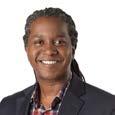
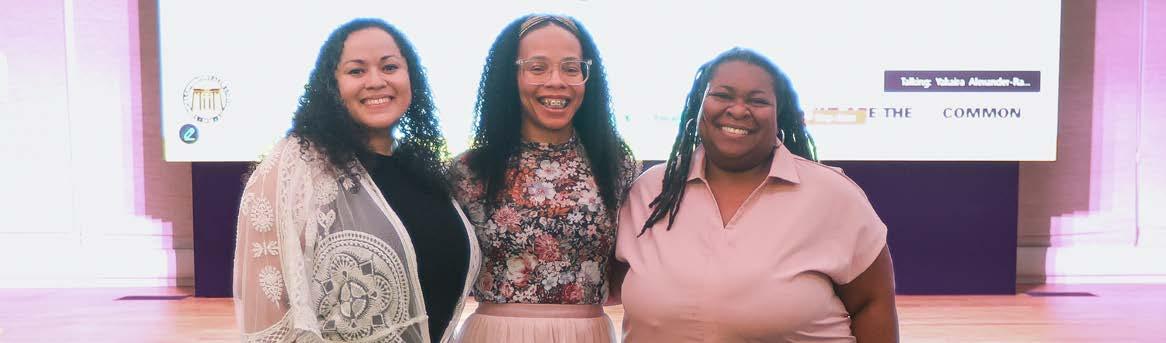
Renata Hedrington-Jones (M.S.W.’87, below, middle), president of the National Association of Black Social Workers, can’t stop praising her alma mater. Especially when her organization’s national conference came to her hometown of Richmond.
“I was absolutely ecstatic – I was so happy that we were here,” she says of the April event that drew 700+ attendees to RVA. It’s no surprise to colleagues and friends who know her well.
“I always talk about my school, my alma mater. And so one of the girls said, ‘Damn, we have to hear about you and that VCU for another whole year?’ And I said, ‘Yes, you’re going to hear it. You’re going to hear everything I have to say about VCU.’”
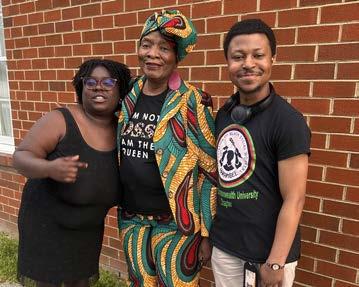
VCU Alumni Relations recognized two social work graduates in fall 2024: Katelynn Jarrells (B.S.W.’16, M.S.W’17) as one of VCU’s 10 Under 10 Awards recipients and Viola Vaughan-Eden (Ph.D.’03) with the Alumni Stars Award. And the School of Social Work’s doctoral program honored David McLeod (Ph.D.’13) with its Making a Difference Alumni Award.
Jarrells is the program head and associate professor of human services and mental health at Brightpoint Community College: “My biggest motivation and passion is around social justice, and particularly racial justice.”
Vaughan-Eden is a professor and the Ph.D. program director in social work at Norfolk State University, as well as a longtime forensic and clinical social worker and trainer focused on upstream child abuse solutions: “This recognition from VCU represents a profound full-circle moment in my career.”
McLeod is director and professor of social work at the University of Oklahoma: “An honor like this feels, to me, as if my work lives up to the value of the gifts I was given by so many during my time at VCU.”
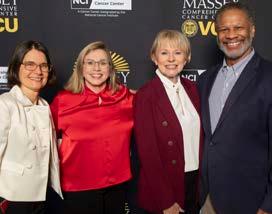
‘Massey saved my life’ Melissa Weaver (B.S.W.’99, M.S.W.’06, below left) served as volunteer chair of the VCU Massey Comprehensive Care Center’s 30th Annual Women and Wellness Luncheon in February. She told the Richmond Free Press that Massey “saved my life” in treating her for breast cancer. “The care I have received at Massey provided hope when I could not rise from bed.”
A March speed mentoring event for the School of Social Work connected mental health-focused alumni with students, who cycled through short sessions to meet and ask questions of the professionals. Nearly 30 alumni and students, almost evenly split, participated, laying the groundwork for strong student-alumni networks and future events.
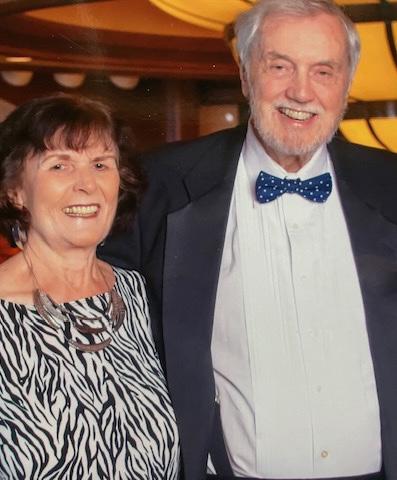
Rosemary Farmer (Ph.D.’93) and her husband, David Farmer, Ph.D., have established a new scholarship for the school focused on public mental health. Rosemary is a former social work faculty member (19932014), and David was a longtime faculty member at the Wilder School.
“This is where we can equal the playing field for those with limited incomes,” she says.
“Additionally, the M.S.W. Program uniquely provides social workers with the skills needed to work effectively with persons who struggle with serious mental illnesses and other psychosocial problems that make it difficult for them to live successfully in society.
“To me, social work is a core discipline; social workers bring an unusual blend of knowledge, human development, social policy and social justice. It is just a unique blend.”
Our supporters helped us push past $1 million in donations for the academic year, including 71 donors and more than $25,000 for VCU Giving Day in April. Contributions like this helped us fund nearly 60 scholarships for social work students this past year.
The school’s annual Social Work, Policy and Politics event in March featured four alumni as panelists and moderator on the topic of “Futuring for Transformative Approaches to Policymaking in Richmond, Virginia.”
• Moderator: Marc Cheatham (B.S.W.’05),director of constituent services and casework, U.S. Sen. Tim Kaine
• Jackie Lawrence (M.S.W.’17, B.S.W.’16), CEO and founder, The Light Work
• Abbey Philips (M.S.W.’12), policy director, Legal Aid Justice Center
• Helen Rai (M.S.W.’17, B.S.W.’16), director of client engagement, ReEstablish Richmond; and program director, Circles RVA
The success of students’ field experiences relies in large part on the Office of Field Education’s extended team of partner agencies –and the instructors, task supervisors and liaisons who keep it all on track. OFE’s annual community partner awards (below) in May honored the following for excellence:
• Kim Close-Jensen (M.S.W.’97), Fairfax County Public Schools: Outstanding New Field Instructor Award
• Brandon Foster, Virginia Wesleyan University: Outstanding Field Instructor Award
• Grace Dowdy (B.S.W.’21, M.S.W.’23), OAR of Richmond, Outstanding Task Supervisor Award
• Madison Woodroof (B.S.’14, M.S.W.’17), VCU Strategic Enrollment Management and Student Success, Amy Rosenblum Field Instructor Award
• Glenda Blake, SSW adjunct faculty member, Field Liaison of the Year
• Virginia Breast Cancer Foundation, Outstanding Community Partner