Why 24/7 Accident & Emergency Care Matters in Critical Situations
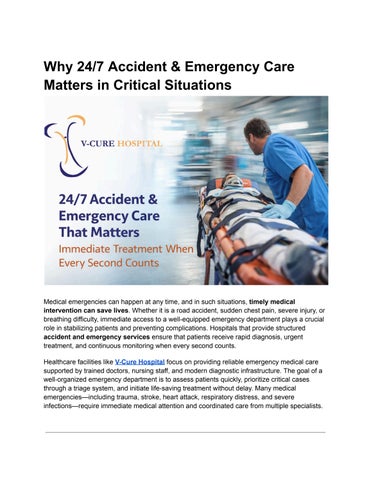
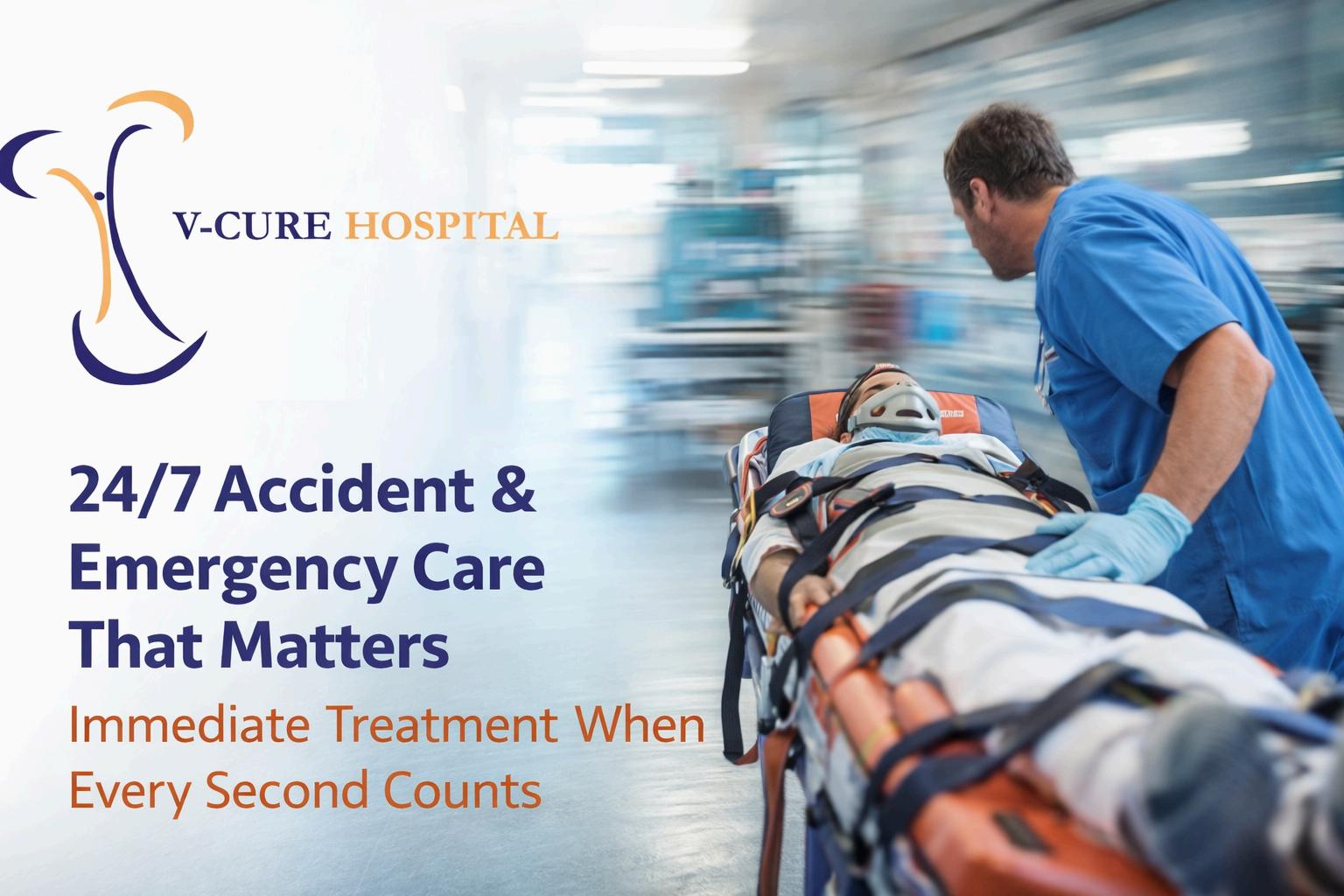
Medical emergencies can happen at any time, and in such situations, timely medical intervention can save lives Whether it is a road accident, sudden chest pain, severe injury, or breathing difficulty, immediate access to a well-equipped emergency department plays a crucial role in stabilizing patients and preventing complications. Hospitals that provide structured accident and emergency services ensure that patients receive rapid diagnosis, urgent treatment, and continuous monitoring when every second counts.
Healthcare facilities like V-Cure Hospital focus on providing reliable emergency medical care supported by trained doctors, nursing staff, and modern diagnostic infrastructure The goal of a well-organized emergency department is to assess patients quickly, prioritize critical cases through a triage system, and initiate life-saving treatment without delay Many medical emergencies including trauma, stroke, heart attack, respiratory distress, and severe infections require immediate medical attention and coordinated care from multiple specialists.
Understanding the Importance of Accident & Emergency Departments
Accident and emergency departments are designed to handle both traumatic injuries and sudden medical conditions. Patients arriving at an emergency unit may require urgent stabilization, pain management, wound care, fracture management, or advanced life-support interventions A well-equipped emergency facility usually includes rapid diagnostic services such as imaging and laboratory testing, enabling doctors to make quick clinical decisions and begin treatment immediately
Hospitals that provide integrated emergency services often work with multiple departments such as orthopaedics, cardiology, neurology, and surgery This collaborative approach ensures that patients receive comprehensive care under one roof, especially in cases involving complex injuries or life-threatening medical conditions.
To understand the healthcare philosophy and patient-centric approach behind these services, you can explore the About Us page of V-Cure Hospital, where the hospital highlights its commitment to compassionate care and modern medical practices
Common Situations That Require Emergency Care
Emergency departments typically handle a wide range of critical situations, including:
● Road traffic accidents and trauma injuries
● Head injuries, fractures, and severe bleeding
● Cardiac emergencies such as heart attacks
● Stroke and neurological emergencies
● Breathing problems or respiratory distress
● Severe infections, poisoning, or allergic reactions
● Sudden abdominal pain or internal injuries
Emergency units are structured to respond quickly through triage, stabilization, and continuous monitoring, ensuring that the most serious cases receive immediate attention Modern emergency departments are also equipped with life-support equipment such as ventilators, defibrillators, and emergency medications to manage critical conditions effectively
The Role of Technology in Emergency Medical Care
Technology has transformed the way hospitals manage emergencies Advanced imaging systems, digital monitoring devices, and rapid laboratory diagnostics allow doctors to identify medical problems faster and begin treatment sooner. In trauma cases, imaging tools such as X-rays or CT scans help detect internal injuries and fractures quickly, enabling timely surgical or medical intervention
Hospitals that combine advanced infrastructure with experienced medical professionals are better equipped to handle emergencies efficiently A coordinated healthcare system that includes emergency care, surgical support, and critical care units ensures that patients receive continuous treatment from the moment they arrive until recovery
Healthcare organizations often share medical insights, awareness articles, and patient education resources through their official platforms If you want to learn more about health topics and treatment options, you can explore informative resources available on the V-Cure Hospital blog.
Why Access to 24/7 Emergency Services Is Essential
A hospital’s emergency department is often the first point of contact for patients facing life-threatening conditions. The presence of trained emergency specialists, critical care equipment, and quick diagnostic support helps stabilize patients and significantly improves survival outcomes
Round-the-clock emergency availability ensures that patients can receive care at any time of the day or night In many situations, immediate treatment during the “golden hour” after an accident or medical crisis can prevent long-term complications and improve recovery chances.
If you need urgent medical assistance or want to connect with healthcare professionals, you can reach out through the V-Cure Hospital contact page for further information.
Final Thoughts
Accident and emergency services play a vital role in modern healthcare systems From trauma management and critical care to emergency diagnosis and specialist coordination, these departments are designed to deliver fast and effective treatment during medical crises. Access to a trusted healthcare facility with dedicated emergency services can make a significant difference in patient outcomes and overall recovery
Hospitals that prioritize patient safety, medical expertise, and rapid response protocols continue to strengthen the healthcare system by providing dependable support when emergencies occur
dedicated emergency services can make a significant difference in patient outcomes and overall recovery