1
2
3
4
5
6
Leslie Rogers
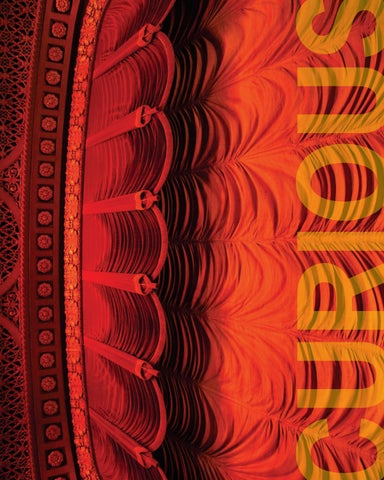
Byrd Theatre ....................................................................................................................................
cover
Sacha Ingber
Buff Yours .........................................................................................................................................
incover
Leslie Rogers
Funerary Sandwich ......................................................................................................................
7
Laura Vitale Respiration and The Voice ........................................................................................................
8-13
Alina Tenser Green Space ....................................................................................................................................
14-15
Abstract Familiarity .....................................................................................................................
16
Fruit Filled Studio Muck ..............................................................................................................
17
Morning Grain ...............................................................................................................................
18-21
Laura Vitale Batang ...............................................................................................................................................
22-23
Sacha Ingber
...................................................................................................................................................................
24-31
Rotem Tamir
...................................................................................................................................................................
32-39
Melanie McLain
...................................................................................................................................................................
40-41
Sacha Ingber
Peeler 3 ..............................................................................................................................................
42-43
Jesse Potts Recoil .................................................................................................................................................
44-49
Leslie Rogers
Hungry Butt Undies: BLT on Marble Rye .............................................................................
50-51
Jon Benjamin
quaint-slice; worksliver fakespace tabletopplaceholder ..............................................
52-59
reflexive container for Chevy Chase ......................................................................................
60
Tom Simon My Desert Vacation: 4 Days, 8 Nights ..................................................................................
61-69
Melanie McLain
Damp Gestures ..............................................................................................................................
70-77
Jessica Kain ...................................................................................................................................................................
78-79
Carl Marin Untitled (shoulder mount) ........................................................................................................
80
Untitled (scratching post) .........................................................................................................
81
Beginning at the End (motion camera footage) .............................................................
82-85
Ryan Crowley
86-95
...................................................................................................................................................................
Jessica Kain ...................................................................................................................................................................
96-105
Lior Modan ...................................................................................................................................................................
106-113
Again: Eulogy Text .......................................................................................................................
108-109
Laura Vitale Transcription of "Elsie Seichrist's Nouns from her Lecture Leslie Rogers
'ESP Behind the Iron Curtain,' 1970" ................................................................
114-121
Ghost ..................................................................................................................................................
122-127
Ghost Study ..................................................................................................................................... Q & A
...................................................................................................................................................................
123 128-136
colophon ...................................................................................................................................................................
137
Lior Modan We Love to Learn ...........................................................................................................................
138-139
Sacha Ingber
incover
Traces and High Maintenance ................................................................................................
7
8
9
10
11
12
13
14
15
16
17
Abstract Familiarity Mastication is the physical act that brings awareness to food consumption. Best understood while seated in a comfortable position, relaxed limbs, in the nude or wearing some sort of stretching pant, so as not to be beleaguered by the pressure and contour of anything but the inner mouth. If standing, I am likely to start pacing to keep with the rhythm of the chew, to get distracted by some small necessity, to swallow without noticing the opportunity to sit with a Mouthful. And laying down, although relaxing, can lead to a catastrophic plug up. Tragedy is comedy plus time. And so, sitting is most benevolent. The material enters my mouth as a bitesized clump of recognizable substance. It bursts with the provincial sensations of taste and temperature, hot and sour (!), arousing the salivary gland to squirt some initial digestive enzymes. Now, grinding the particles with the teeth, shifting them from side to side of the mouth, 18
I visualize the sacred cow patiently pacing the rhythm of munching. As the particles get mashed up, cracking peppercorns and other spotty ingredients, complicate the taste and fill the small voids of tooth imperfection. Saliva starts to prepare the food mass, and the mouth acclimates to all of the sensation. The boundary between Taste Mass and Flesh Mass is doubtful. After a good 20-30 kneads, a wellworked homogenous mass is ready for the next meditation. But not yet. I become aware of the ravine that is my mouth, the multitude of notches and underneaths which, with their contours, inform this experience as much as the actual clump consumed. Blocking out taste, I think about the occupied void of my mouth: dense, yielding, nameless. Now, I stay still with the mouthful of alkalized form. When I eat I am deaf and dumb. When I chew, my ears are closed to all. My mantra is loudly inside my face.
Fruit-filled Studio Muck While in process, the art thing is me. It is reflections of current-self and always-self filtered, sometimes more, sometimes less, through intellectualized decision making. When the thing stops being actively made and becomes part of the world it is no longer me. Yet it remains active, having acquired its own self. Weathering with time, the material nature as well as the presence in the world. A fresh thing is only fresh for a second, with each other second it is slowly making a recess in the universe, settling in a custom crevasse. We grow aloof, and sometimes don’t know each other. This is not sad, this is circulation. In the studio, believing in presence, in mood, in photogenic memories, transferring to a consciousness in the art. If I know these things, the groped thing knows them too. The time spent, the awareness brought becomes the “about” in “What is it about?” and is always in flux day-to-day but somehow unchanging for a lifetime. This awareness, chased by self-doubt, too often detained by the stickiness of language for months at a time until words turn into processed syllables, mere sounds. A mushy mantra. 19
20
21
22
23
24
25
26
27
28
29
30
31
32
33
34
35
36
37
38
39
40
41
42
43
44
45
46
47
48
49
50
51
52
53
54
55
56
57
58
59
60
61
62
T T T T T T T T T T T T T T T T T T T T T T
THE WAY OF THE FUTURE THE WAY OF THE FUTURE THE WAY OF THE FUTURE THE WAY OF THE FUTURE THE WAY OF THE FUTURE THE WAY OF THE FUTURE THE WAY OF THE FUTURE THE WAY OF THE FUTURE THE WAY OF THE FUTURE THE WAY OF THE FUTURE THE WAY OF THE FUTURE THE WAY OF THE FUTURE THE WAY OF THE FUTURE THE WAY OF THE FUTURE THE WAY OF THE FUTURE THE WAY OF THE FUTURE THE WAY OF THE FUTURE THE WAY OF THE FUTURE THE WAY OF THE FUTURE THE WAY OF THE FUTURE THE WAY OF THE FUTURE THE WAY OF THE FUTURE 63
THE WAY OF THE FUTURE THE WAY OF THE FUTURE THE WAY OF THE FUTURE THE WAY OF THE FUTURE THE WAY OF THE FUTURE THE WAY OF THE FUTURE THE WAY OF THE FUTURE THE WAY OF THE FUTURE THE WAY OF THE FUTURE THE WAY OF THE FUTURE THE WAY OF THE FUTURE THE WAY OF THE FUTURE THE WAY OF THE FUTURE THE WAY OF THE FUTURE THE WAY OF THE FUTURE THE WAY OF THE FUTURE THE WAY OF THE FUTURE THE WAY OF THE FUTURE THE WAY OF THE FUTURE THE WAY OF THE FUTURE THE WAY OF THE FUTURE THE WAY OF THE FUTURE 64
THE WAY OF THE FUTURE THE WAY OF THE FUTURE THE WAY OF THE FUTURE THE WAY OF THE FUTURE THE WAY OF THE FUTURE THE WAY OF THE FUTURE THE WAY OF THE FUTURE THE WAY OF THE FUTURE THE WAY OF THE FUTURE THE WAY OF THE FUTURE THE WAY OF THE FUTURE THE WAY OF THE FUTURE THE WAY OF THE FUTURE THE WAY OF THE FUTURE THE WAY OF THE FUTURE THE WAY OF THE FUTURE THE WAY OF THE FUTURE THE WAY OF THE FUTURE THE WAY OF THE FUTURE THE WAY OF THE FUTURE THE WAY OF THE FUTURE THE WAY OF THE FUTURE 65
THE WAY OF THE FUTURE THE WAY OF THE FUTURE THE WAY OF THE FUTURE THE WAY OF THE FUTURE THE WAY OF THE FUTURE THE WAY OF THE FUTURE THE WAY OF THE FUTURE THE WAY OF THE FUTURE THE WAY OF THE FUTURE THE WAY OF THE FUTURE THE WAY OF THE FUTURE THE WAY OF THE FUTURE THE WAY OF THE FUTURE THE WAY OF THE FUTURE THE WAY OF THE FUTURE THE WAY OF THE FUTURE THE WAY OF THE FUTURE THE WAY OF THE FUTURE THE WAY OF THE FUTURE THE WAY OF THE FUTURE THE WAY OF THE FUTURE THE WAY OF THE FUTURE 66
THE WAY OF THE FUTURE THE WAY OF THE FUTURE THE WAY OF THE FUTURE THE WAY OF THE FUTURE THE WAY OF THE FUTURE THE WAY OF THE FUTURE THE WAY OF THE FUTURE THE WAY OF THE FUTURE THE WAY OF THE FUTURE THE WAY OF THE FUTURE THE WAY OF THE FUTURE THE WAY OF THE FUTURE THE WAY OF THE FUTURE THE WAY OF THE FUTURE THE WAY OF THE FUTURE THE WAY OF THE FUTURE THE WAY OF THE FUTURE THE WAY OF THE FUTURE THE WAY OF THE FUTURE THE WAY OF THE FUTURE THE WAY OF THE FUTURE THE WAY OF THE FUTURE THE WAY OF THE FUTURE 67
THE WAY OF THE FUTURE THE WAY OF THE FUTURE THE WAY OF THE FUTURE THE WAY OF THE FUTURE THE WAY OF THE FUTURE THE WAY OF THE FUTURE THE WAY OF THE FUTURE THE WAY OF THE FUTURE THE WAY OF THE FUTURE THE WAY OF THE FUTURE THE WAY OF THE FUTURE THE WAY OF THE FUTURE THE WAY OF THE FUTURE THE WAY OF THE FUTURE THE WAY OF THE FUTURE THE WAY OF THE FUTURE THE WAY OF THE FUTURE THE WAY OF THE FUTURE THE WAY OF THE FUTURE THE WAY OF THE FUTURE THE WAY OF THE FUTURE THE WAY OF THE FUTURE THE WAY OF THE FUTURE 68
ERUTUF EHT FO YAW EH ERUTUF EHT FO YAW EH ERUTUF EHT FO YAW EH ERUTUF EHT FO YAW EH ERUTUF EHT FO YAW EH ERUTUF EHT FO YAW EH ERUTUF EHT FO YAW EH ERUTUF EHT FO YAW EH ERUTUF EHT FO YAW EH ERUTUF EHT FO YAW EH ERUTUF EHT FO YAW EH ERUTUF EHT FO YAW EH ERUTUF EHT FO YAW EH ERUTUF EHT FO YAW EH ERUTUF EHT FO YAW EH ERUTUF EHT FO YAW EH ERUTUF EHT FO YAW EH ERUTUF EHT FO YAW EH ERUTUF EHT FO YAW EH ERUTUF EHT FO YAW EH ERUTUF EHT FO YAW EH ERUTUF EHT FO YAW EH ERUTUF EHT FO YAW EH 69
THE WAY OF THE FUTUR THE WAY OF THE FUTUR THE WAY OF THE FUTUR THE WAY OF THE FUTUR THE WAY OF THE FUTUR THE WAY OF THE FUTUR THE WAY OF THE FUTUR THE WAY OF THE FUTUR THE WAY OF THE FUTUR THE WAY OF THE FUTUR THE WAY OF THE FUTUR THE WAY OF THE FUTUR THE WAY OF THE FUTUR THE WAY OF THE FUTUR THE WAY OF THE FUTUR THE WAY OF THE FUTUR THE WAY OF THE FUTUR THE WAY OF THE FUTUR THE WAY OF THE FUTUR THE WAY OF THE FUTUR THE WAY OF THE FUTUR THE WAY OF THE FUTUR 70
E E E E E E E E E E E E E E E E E E E E E E
71
72
I rub my language against the other
-Roland Barthes
73
Those who suffer from sweaty palms often discreetly stick their hands into their pockets and rub into the insides of the fabric.
74
I licked my chapped lips 75
We hold our water inside. We don't want our drool dripping, our nose running, our spit spatting, our urine leaking. We keep it nicely tucked inside. I don't want my socks wet. I don't want my jeans wet. I don't want my body holding wetness on the outside unless I am submerged, unless I am in a pool, a shower, a tub. Then it is not my water. It is other water.
76
77 later it burned
I put on wet jeans so I can feel them suck on my skin
78
79
80
81
82
83
84
85
86
87
88
I used to play a lot of soccer and one thing that really sticks with me about the nature of the soccer field is the way that within the physical boundaries of the field, there is another, more fluid field, which is the web of players. Within the web is the basic relationship between parts and whole. Each player’s coordinates are always in flux, but the whole group must strategically expand and contract in order to move the ball around the field. When things are really working in a game, you have this intuitive sense of where everyone else is, even when things are crazy and no one is in position and everyone is compensating for some sudden change in the conditions of the game. You know the field so well that you’ve more than memorized everyone’s position, because you are able to predict where they’re going to be before they are there. It doesn’t always work out. Sometimes it’s a chaotic mess. You’re kicking the ball out of bounds or you just decide to use your hands or something. There was this one night in the studio and it just started to fall apart. I wasn’t that into it. I was doing everything wrong. I was being impatient. The cement was too wet and heavy and I kept adding more. The whole thing just collapsed. The form was completely erased. I was thrilled. So I needed to make a skeletal structure. It had urgency and necessity. I needed a way to get the thing standing again. It was like making a full body cast for a crash victim full of broken bones. Cross supports all over the back, awkward leans, postures. All of a sudden there was a character in the studio. It was like I was on the soccer field with this thing. For most of the game I had been just passing the ball to the other team, kind of aimlessly moving material around trying to make a complete pass. And then this thing happens, this falling apart and dismantling and the thing is alive again. It’s that sweet feeling of clarity when I’m making something and I don’t know exactly what it is but I know what I need to do.
89
90
91
92
93
94
95
96
97
98
99
100
the body
figured out
how to do it
to get made
to advance
two by two
touching
impressed
looking and hearing
feeling in those ways
the heart strings
the crotch strings
to use these things
as material wiggly and waistless and
for a body to find legs
of needs with hips
a common trunk
101
102
103
104
105
106
107
108
109
OK. Let’s give it another shot. We are walking. This is the third floor of the south wing. This is home. Here we have all the necessities – food, clothing, housing. Labor is our ethic. Our aim is to become better workers. From where we are now, we can see the majestic structure supporting the huge glass dome. Underneath is the shared courtyard. We are moving through the wooden hall. Over there will be glass-sided arcades, heated during the winter and cooled in summer. Now it is spring. The same system creates extra comfort for pedestrians, who neither soil their feet nor get wet in the rain. This apartment is part of the three pavilions. The pavillions are connected at the angles in such a way to have as many windows as possible. Heading to the entrance of the southern wing. Around us there are many conveniences. On each of the three stories, as well as on the ground floor. All the individual apartments open out onto balcony galleries. Every entrance door opens onto a vestibule that services two apartments and a small pantry. Come! See those windows. They can be opened. We should look through this one. See the gardens. The orchards. Oh! Here are the
110
workers on their break - Hello Jacques! Hello Michel! Salut Louis! Our Phalanstère is a functional Social unit. Piping in the walls arrives directly from the air galleries in the basement, allowing temperature control in the apartments. Over there, above the inner courtyard, there is the cross ventilation. Water fountains are available on each floor of the palace. Workers coming back from work can take advantage of the hot and cold showers. The water is recycled from the blast furnaces. That dark brown door is the access to a laundry room, a wash-house and covered pool. The ground floor of the wing houses workshops and day-care centers. Those talented workers are dealing with noisy activities: carpentry, hammering, forging. Men and women work together. They toil to earn their livelihoods by working the land and by engaging in and employing a variety of skilled crafts. Infants under the age of four play here as well. We are the industrial society! The art of building is the paragon that shapes the entire social life of the inhabitants. We should move on.
Lets stop here. Get a glimpse inside. Notice how serious they are. The School of Solidarity is visited frequently by the children of the community. Only practical knowledge is being taught there. The ordinary courses are enriched by visits to the factory. This week there is a series of lectures in the domains of measure. Once a week, the children are given primary lessons in gardening. The competition in our school involves girls and boys equally. Pupils are graded by the vote of their peers. They are confident in the judgment of their equals. Between the factory and the palace there is a pleasure garden. Can you see it? Lets sit there for a bit. Good. Now, relax. Imagine the green grounds occupied by families, strolling in during their free time. Isn’t it lovely? We live the dream of good, we create the means to achieve it. Our mutual surveillance keeps a moral behaviour possible. I wonder if it could have been different? Sometimes, for a moment, I am curious how it would be if I wasn’t modern. How does misery feel? From time to time I think it is a shame this phenomenon is no longer available here, where everybody knows everybody else.
Maybe we should go back to the social palace. Here the apartments and annexes are all close together. 1,500 persons can see each other, visit, go about their daily duties. They meet in public. Share work, farm, kitchen, entertainment. On the left are the political meeting rooms. There is also a library. On the end of this hallway are the dining rooms. Collective meals offer the advantage of saving space, time and labour. By having the collective kitchen we reduce the odds of hygiene accidents and save money for the community. Cleanliness and hygiene are seriousness matters. Our period is increasingly preoccupied with health. Our founders imagined life that gives every guarantee regarding sanitation. Health is a primary concern. Multiple baths and sewage should be drained away. A doctor comes every morning to ask about the population’s health paid out of the collective kitty. The courtyards, staircases, balconies, ventilation galleries, toilets, broom closets, and fountains, all kept tidy by volunteers who sweep the commons at least once a day, wash them down once a week, and clean the toilets seven times a day.
111
112
113
114
115
116
Transcription of "Elsie Seichrist's Nouns from Her Lecture 'ESP Behind the Iron Curtain,' 1970." [Applause] Hands, questions . . .mouth? Country. People, area, list. Mailing. Word-mouth. Hands, friends, God, advertising; audience afternoon, human interest story, iron curtain. Husband - barbed-wires, walls, city, unconscious, stories, freedom, safety, wall – feeling, bus, gates, thoughts! Freedom! Stories, bus, amazement. Husband, occupants. Bus. Barriers, guards, credentials. Barriers, guards, gates! Lord [laughter] trip. [Laughter] Planes, microphones, planes, planes – minutes, bomber. Planes seats bolts. Front front plane. Doors tours. Things friends things. Doors, everything. Meals, bill, months, scientists, invitation. Tape; nothing! Everything! Tourist. Everything! List names -- names! conferences, tours. Rooms, husband, appointment? Husband, plane – money! Anywhere, plane. Men, room, hotel! People desk! Girls, room. Room patience group work. Dimension thought room, room, beds. Beds group work beds [laughter] Picture! [laughter] Scientist, telephone telephone, scientist professor, professors, bed. Telephones. Interpreter hotels, night, meetings morning. Stories, time stories stories. Tours tour guide, problems, time, line, month; tour guide problem, fault, hours. Hours people cities fall husband slides, pictures, people places pictures audiences scientists people—cleanliness! Places. People problems, movement. Doors people questions. Nations. People world! Nation! People people people money! Clothes! Permission, place, family! Husband, home, wife, home, custom. Questions! Nation ideas, mind, questions. Thing, country; room money people person politics group people. Masses, millions. Papers, papers. Experience countries. Research, parapsychology. Opportunity. Book--field book. Country. Girls. Country. Conference. Freedom. Freedom. Years. Scientist-book-mind. Scientist, host. Things, people; forces, man, nature. Experiments laboratories. . . scientists, biologists, chemists, physicists! Instruments! Something-experiments. Everything, field-field, photography. Things. Things. Questions, people, nation! Reincarnation. Nation! Being powers soul. Unconscious unconscious. Resources, talents. Experiences surface. Century. Religion. Things. Things balance, scientist, activities. Monk. Powers!Man. Sign life czar. Hypnotism, bleeding; infant family time. Interest hearts mind others. Scientist. Research. Monk. Powers mind women. Women bed god possession. Night. Power! Power. Ability. Mind men. Time, post book. Movements. Group. Military. Group. Name glasses associations, instruments. Group. Telepathy thing. Aspect, parapsychologist, country. Gift, talent, people, measurement, devices, force, experimentation, discoveries medicine. Funds, country. Research, country. Government, year. Research dime. Government research movement telepathy astronaut. Work grant. Week, month. Hope science. Years effort, parapsychologist, science. Papers,
117
scientist. People years money time, research. People articles, line, research. Dinnertime, book. Experiences husband people book research. Film, film. Steps, horizon. Work hypnotism. Head. Depths. Patience; reasons. Things film individuals. Film week student. Intelligence. Experiments. Subject. Level. Level, subjects, art. Drawing. Drawing, body. Drawing, arm—artistry! Lesson. Depth. Wave. Depth. Wave, brain. Results. Name. Artists. Time age lessons. Lessons. Artists. Artists, magazines, clothing house. Experimentation people. Arts. Musicians. Lessons, talent. People music, lessons art. People, level. Individual field. Friend. Levels. Reincarnation point. Reincarnation. Person. Flow! lines things. Suggestions children yourself. Truth. Truth, religions! Beautiful beautiful. People. something. scientist. Talk night bridges parapsychology religion. Research aws! Religion way aspect being. Experiments people. Talent. Improvement lesson. People level. Test--alcoholic. Level suggestion. Parents; wife mother father children. End. Alcoholic. Money life mother. Mother. Mother. Mother. Activities. Son. Son. Wife. Wife? Frustration, agony, everything; companion. Man consciousness daughter. Shame. Daddy. Job. Misfit society. Consciousness. Day experience. Agony family. Reformation. Character man. depths. Kinship. Agony, shame. Dimension report means methods, agony. Shame activities. Pictures man, physicists, instrument. Body, checkpoints, electrodes, medicine. Medicine points, body, pressure points healing medicine organ body. Body. Changes, consciousness, activity. Changes, pressure, volume. Experience. Scientists, instruments. Graph, change! Wave. Rate, wave. Time! Answer brain wave instrumentation proof. Change energy energy force. Energy! Force, wave. Energy force. Documentation, instrumentation. Evident doubt. Man people activity. Musicians symphony. Cat calls. Man. Music. Days. State, level. Music. Block shock cat calls. People people research. Chalk persons. Block. Gum! Case magazine. Position government. Speech! Area problem. Mic, mouth. Hypnosis. Audience. Eyes teacher. Teacher. Hypnosis. Experimentation, people. Cause cause. Creativity. Girls articles. Girl object mind. Laboratories experiments. Balls dice, person. Dice ball. Person, picture, film, matches, table, people, concentration. Box wave. Table floor. Compass, observers. Hand needle compass direction hand direction.. compass table. Objects thing. Cover cover. Corner. Cover, things, mask, corner. People things microscope moment. Girl, people. People, skeptics, skeptics. Minute-and-a-half. Abilities questions! Appointment people. Husbands psychologist people room. Questions group answers. Power body chord chord. Ending. Contortions face body. Sensation, spine head. Force energies group work. Energies sex child life music art science. Ability. Husband energy. Period objects. Day pounds photographs amazement. Things. Activity. Scientists energy instances. People Sex level. Activity scientist truth whole side energy truth whole case. Energy. Energy. Thing ability! Book eyes book. Contents book! test language
118
library! subconscious barrier! scientist. Blisters skin. Blister skin book table mind. ability objects. Films, gift, scientist. Energy, people, husband, purse proof proof energy pounds. Pressure, experiments skeptics pulse energy. Person. Table student conversation country. Reincarnation, laugh. Day field things. Scientist work interpreter evening chance. table question. [AAAHHH] Bread!! husband bread, bread table cloth. Minute-and-a-half, bread inches table. Minute-and-a-half! preparation life. nothing demonstration life. Table people husband effort girls scientist injustice husband work. Husband engineer wife examinations heart trouble heart pressure. Pressure. Life husband! Country. Energy objects. Mind! objects energy person. person cancer matches table. Answer. Investigation friend person life responsibility. Life film. Pictures people table table. Gadgets. Attitude experience girl world. People people. Ability. Objects mind. Things. Brain. Voltage. Head. Work. Work. Activity. Brain. Person. Activity change voltage. Field. Earth. Person. Fields work cosmobiology. Day. Work. Group. Woman. Women. Birth. Woman. Woman. Countries. Boy. Boy. Girl. Girl. Years. Days boys girl. Women baby. Doctor women baby. Women. Babies year year. Women. Babies. Babies body brain days. Child. Positions stars. Position. Birth. Astrology. Sun. Birth. Sender. Sensitivity. Sender. Laboratories skeptic sensitive barrier. Face mind barriers flare birth flares. Flares birth sender. Period. Recipient. Sender requisites. Gentleman group experiments. Group broadcasters. Case sender. Sensitive. Boys. Instruments brainwaves chain body heart flow heart. Experiences experience bead places thoughts emotion people person group pinching. Pain. Group people room. People. Pinching. group. Spot. Side, prick, pain. Accuracy emotion! Lemon. Room. Experience reaction, experiment. Recipient tourniquet arm man pain. Muscles, arm reactions. Emotion brain hearts one. Motion. Emotions. Pain. night. Person. Couple problem experiments. Distance ability people empathy. Experiences men. Healing. Man source--healing. Healing healing work. Religion religion. God group men healing. Prayer energy healing mind hearts people headache person cues, clues, directions, personality. People healing personality people work. Healing thing research dream. People dreams. Thing symbol people back groups cultures races, scientist, dog thing. Trouble research years dream. Articles journal dream unconscious. Body symbols. Body. Automobile. Anatomy lunches walls hole wall. Tuberculosis. Research field . Dreams people! Crusade world experiences people research. Hearts minds soul people name country. God god. Writer. Life. Name. Mother. Dream. Town. Dream. Planes sea. War. Son. Coat. Rifles hands. Dream. Things. Person hope time letter. Dream, feeling. Ticket. Fantasies night. Door. Son. Night. Dream! Son. House. House. Ground. Pits barbed-wire pits. Barbed-wire feet. Home. War, home, town. Dreams. War scientist. Dream. Man. Battlefront soldier, job, fields, tanks. Tanks. Sleep attacks.
119
120
Spots. Lions. General time. Time. Dream. Sense spots. Plans. Tanks. Dream. Publicity. Research. Visits. Days siege. Story, article, cannibalism. Place palace array statues fountains life area place. Strength ideals people. Memories countries countries fronts, invasion, area. Statuary women area statuary. Places. Statuary. Statuary. Area statuary. Hair names flower. Science. Lion! Women. Oar people history. Fight nation time. Admiration understanding, heart mind person. Experiments. Time home lecture night. Aspects. Test. Feets feet. Recognition. Life. beings. Way. Machine. Picture. condition. Radiation. Group people room. Person. Pattern, person, room. Experiment. Rabbit. Electrodes brain laboratory bunnies. Submarine ocean. Moment. Bunnies. Death. Mothers, brain, EEG. Question submarine experiments. Government military. Activity. Power. Group. Good mankind! Group. Lecture military fall. Scientist man. Thing scientist. Fear revival. Nature. Gentleman. Time. Powers. Demonstrations. Opportunities. Man. Career life. Religion. Priest. Life gifts country religion hunger service, understanding, health, healing, way, people. Ability. Ability. Man money. Time. Money. Chair. Seat train conductor ticket. Card wallet pocket conductor ticket! Conductor ticket. Chair. Shoelace! [laugh] Ability people tests. Man. Side bank. Bank. Man. Paper! Cashier clerks dollars briefcase briefcase paper. Mind check teller drawer, case, building friends teller. Teller. Heart attack. Test. Guards resident country. Guards hideout. Police. Guards. Minds. Pince-nez! House guards house room papers. powers. Abilities. Interest man chapter book interest. Research development people man. Name. Lessons. Money occasion. Train. Ticket. Mind conductor ticket. Time. Material. Book congressman, senator, government, money. Scientist power, mind, body, soul, universe. Questions? Experiments hypnosis creativity level personality problem life person. Experiments. Experiments. Memory doctors question question girl. Compulsion. Difference. Rod. Influence suggestion question reincarnation earth thing time. Gift. Humility growth experiment. Block thing. Desire people life. Powers ability auras ability psycho kinesis husband pockets. Pocket. Bill! Dollar bill book! Things powers man. Ability minds things. People. Hypnosis. Examples man power direction psycho kinesis man minds people. Office studio. Power, man. Office! Self man fake. Office time footsteps stairs door open. [laugh] Midair! Air foot air suggestion. Balance. Distance miles suggestion. something. Question powers. Affects. Prayer power good. Power. Women court. People. Ability death! Degrees degree. Arrows magic. principle powers influence master. Degrees. Holes spirituality arrows fear magic cultures. Doors pins. Hope movement. Group minutes. Fear. Waves healer patient. Ways change. Energy head head. Degree degree type energy telepathy, clairvoyance, position, front back. Telepathy. Animal something excitement job thing friend. animals telepathy cat string cat cat dog. Energy! Contact death. Influence
121
health guidance death dreams experiences. Experiments pain affects. Sex. Experiments. Opposites male female sex question experimentation arm. Distinction arm experiment arm arm experimentation. Arm arm. Power writing. Writer. Research meditation, meditation level creativity unconscious. Plagiarism! Court plagiarism! Level direction level time. Story. Life everything! man story. News stand name magazine--story! Use. Discussion questions ability. Ability. Purpose. Gift purposes. Results telepathy astronauts ground thing. Communication. Ways. Conclusion. Purpose. Conclusion. Soul body reincarnation time moment breath month. Doctor research doctor babies light life activity. Nipple mouth. Light! Life! Activity day night soul soul ford, soul experiences. Stage soul. Society. [alarm] energy death. Bunch, lump! Residue energy. Directions mind people god. Hope world. Stimulation activity. Tie. Person person room. Ability count person energy. Brain waves time thoughts. Excitation brain. Good. time parapsychology hypnotism mesmerism. Parapsychology misnomer. Parapsychology, study, law, psychology, branches. Psychology! Psychology psyche soul. Psychologies psychiatrist soul. Delusion! Names terms! Hypnotism mesmerism. Force. Power man people. Term parapsychology. Hypnotist. Sender, receiver, transference, person. Thing. Urges person hypnotist. Nature. Man. Treatments. Reading literature wife. Hypnotist. Hypnotist! Level! Hypnotist purpose past. Person. God goodness. Levitation group group instrument negation levitation. Blocks levitation husband town. Cross. Ceiling meditation. Matter ability mind. [laughter] Bulk! Form! Stores girls husbands lives weeks concepts girls slides girls pictures film slides. Weeks. Books tours. Girls. Something mind power mind power. Energy! Time something one stories. Ability. Stick. Power. Power. Stick magnet things salt crystals beans. Power mind motor. Mesmer. Magic magic. Period. Lion husband. Lion? Lion temper. Dream. Temper. Country husband warning. Zoo lions comb comb. [laughter] Lion! [laughter] pendulum dowsers dowser. Oil water. Gold! Sociopath. Sociopath. Lady. Sapper. Sapper. Energy. Book. Creativity. Sapper energy being. People energy. Others people. History person reincarnation past. Things conflicts. Forces sapper. Thing. Sapper thing. Energy vitality well being. Psychologist psychologist psychiatrist. Person . Attention patience way. Problems. Liar. Lion! Lions! Pride. Brood pride! [laughter] reincarnation pardon. Course biometrics test. Interest military powers good. Power, power? Power hand. Back? Face. Energies. Hypnotist regression. Reasons. Dreams body question. Dreams dreams months. Car things instances car. Keys car tense, car? Health. Car, car? Walking. Walking. Body. Dream year reason mind. Sphinx. Finger paw door. Secrecy ex knowledge purse greetings. Passage, storehouse, records. Records. Man information destruction. [Applause]
122
123
124
125
126
127
128
129
Q&A Jon Benjamin to Ryan Crowley: Your interest in your studio door got me thinking about the physical space that you make work in—looking at the work from right on top of it versus glancing at pieces through the grid of the door. There is a constant framing that happens as well, where pieces serve as viewing devices for other pieces even if it's just in the casual sense of looking through or around a piece at another piece. This physical mapping of your workspace also got me thinking about the temporal aspect of your practice—working on things simultaneously, and especially thinking about the duration that a piece is altered in gradual shifts, with periods of intense and condensed changes, segueing into long dormant periods, then often radical and destructive shifts, etc. When does your studio practice "end"? When are you "working" and when are you "not working" as a sculptor? What are the edges that exist between making sculpture and living? RC: The studio is the only place that I make the sculpture. But of course I take everything from outside the studio into the studio and also the reverse—all things from the studio out. It’s a cycle of thought more than it is making sculpture inside or outside of a particular place. Of course we all think about this stuff all the time. We see a thing out in the world and we want to grab it and bring it back to the studio to put our stamp on it, to represent it the way we see it. I have ideas for sculpture in the kitchen, and in the garden too. Egg whites are so amazing to watch while they cook over easy—transparent to milky white, to a beautiful solid, lead white… I like being in stimulating places. Cooking in the kitchen provides so much rich stimuli. Smells, heat, time, processes, flavors, textures… Like Kenny Shopsin says about doing his, “kitchen dance,” cooking, with all the burners going, chopping this and that, orders of operations, timing things just right so that it all comes out at the right temperature. It’s something you get lost in and time disappears. That’s what I always aim for in the studio. But the variables in the studio are so distinct in a way. There isn’t any real equivalence anywhere else. Cooking is it’s own art. It has a familiar alchemy about it but it’s not making my sculpture. There are materials, forms, and images there to deal with. And while we are in the kitchen, maybe a good piece of art can be like a good meal. I just like to savor the experience of looking at something that brings me visual pleasure, that’s ineffable, or makes me feel something, or catches me off guard. JB: What was the worst injury you ever sustained? What was the deepest cut you ever got? Did it change how you thought of the human body, or is there a first-hand, visceral experience that comes to mind that shifted your thinking on the physicality and make-up of the body? RC: This maybe takes the cake for the most brutal: I grew
130
up on a steep hill about like the hill going down to Shokoe Bottom on Main St. I would frequently try to skateboard down this hill, but would always safely bail off the board, right as things got too crazy and shaky. One time though, stupidly, I stayed on. The board began shaking and I couldn’t control it and I was probably going twenty miles an hour, which is pretty fast for a skateboard. I decided to bail off before the situation got worse and I slid and tumbled all over the pavement. Ugghhhh. It was awful. No broken bones but I was a mess with road burn and bloody palms and my face was all gnarled. I walked home and in through the back door where my mom was doing dishes and she looked at me and was mortified. I looked like a zombie child. I’ve always been fascinated with how the body repairs itself and its limitations are for self-repair. Especially with skateboarding, I became really aware of how long certain injuries would take to recover from. That sense of "repair time" was definitely a time scale that I was familiar with. But I don’t think this has any bearing on my art making. It just makes for a gnarley recollection. JB: What is the difference between something being pathetic and funny and pathetic and sad? RC: I can only think of this in terms of how sculptures can be characters or personalities. I was just listening to the radio this morning and there was this Beethoven bit on. It also had this complex polar confusion. Whenever the piece got sweetsounding, it was tinged with melancholy and, whenever it got dark and moody, it had a spark of comedy to it. It’s like always being able to check where you are by making a conscious nod to the other end. I like when a sculpture has this back and forth. It’s about empathy, but also keeping an object on its toes, not letting it fall into one category or another. Tom Simon to Ryan Crowley: Why is your art so macho? RC: It’s interesting to think of my sculpture being macho in relationship to Jon’s question about my sculpture being pathetic. I suppose this goes to highlight the wide spectrum of interpretation—what we perceive as strong or weak, confident or pathetic. There’s often confusion on people’s behalf between who the maker is and what the object is. I don’t think they are necessarily the same thing. Who knows? Macho-ly pathetic? I don’t think that’s right either. TS: If your sculptures were a politician, what would their platform be (3 key issues)? RC: If my sculpture were a politician I would say it would maybe be Herbert Hoover because he really made funny drawings. Did you know Hoover was an avid doodler? Some of his doodles in the margins of presidential documents actually made it into textile patterns! It’s true. The guy was a designer at heart. Super into triangles and spirals. Key Issues:
1. The triangle and its mystical power. 2. The spiral: How to stop it gracefully. 3. The value of cross-hatching. Jesse Potts to Ryan Crowley: I’m struck by your earnest interest and careful/tedious consideration for both formal order and tongue-in-cheek humor. At first glance your work might come across as the brainchild of a hardcore chain-smoking, abstract painter turned sculptor and a hardcore Mello-Yellow swilling Garbage-Pail illustrator turned sculptor. I envy this ability of yours. To me this is totally remarkable. If these two personalities were in an epic duel of Butterfinger candy bars, who would come out on top? Or, how is it that they would call a truce, reconcile, and get back to work? RC: For better or worse, I think they are always dueling. The literal storyteller and the lover of form for form’s sake. But for me this whole thing is about finding some kind of clarity. Which again, has to do more with finding a direction in something than a resolution. I’m always looking for ways in and then ways out. The chain-smoking abstract painter in me would say that the thing has to be direct in it’s materiality, about structure, composition, etc. But then there’s a part of me that loves stories, comic books, and narrative elements— things with a lot of language attached to them. I guess I just do both and let them have at each other until one has gotten the other to really prove that it need be there. It just goes like that. JP: How do you control, modulate, and utilize depth/fluidity of surfaces in both the implied gravitational pull and literal gravitational pull in your work?
RT: When I start thinking about materials, I immediately think about alchemy. The alchemists didn't separate the material from the human being: they saw a direct link between the transformations that occurred in the material and the transformations that occurred in the human. A material is anything that has a structure, behavior patterns, and identifying properties. Basically, anything that exists in the world is a material that can be utilized and charged with meaning. If physicists can observe and research subatomic particles, then there is no reason why artists can't create work with subatomic particles. Through materials, the artist obtains a freedom to research and present his ideas and impressions. However, it isn't as simple as that: every material has a resistance which has to be considered and, in fact, it is from between the artist's action and the material's resistance that the work usually emerges, and this is what eventually creates complex, multi-layered visual systems that conceal within them a social and cultural testimony. TS: What would constitute a failure so huge that it would stop you from being an artist? RT: If one day I woke up alone and discovered that the people who I loved had died without me noticing it, and I didn't have even one true friend, and no one could say anything good about me (about me… not about my art), I believe I would stop making art. In other words, I guess I'm trying to say: if one day I discovered that to be an artist meant to go against life—I would choose life. Also art is a language. If I could not find a single person whom I could communicate with through this language, I might consider learning a new one. TS: What is shameful about being an artist?
RC: Surfaces and gravities. Here’s an example: There’s one piece called You Sum Soap Scum. It’s a tempered glass shower door with what appears to be the moldy clingings of a bath tub stuck to its underside. Also stuck to the back is a cut-out of a digital image on paper of these breast-like moldy mounds that appear smooshed or compressed up against the glass. It’s like pressing your cheek up against a window. The printout is high resolution and has depth to it. The flatness of the printout against the glass contradicts the illusionistic depth of the image, so there is this implied gravity smooshing it there, but it’s not really smooshing. There’s another kind of physics at play, which is the lightness of the paper and its being taped there into position. Other times gravity functions much more literally, where a thing is really leaning precariously under the stress of its own weight. Like in Ciel’s Wig, for example. But gravity is something I think about all the time because it’s always there. Generally working from the ground up, gravity becomes a gradual problem. Everything is a response in some way to this basic sculptural problem of gravity.
RT: Social shame: My personal shame results from choosing a profession that is extremely demanding and requires many sacrifices, while not containing any promise of livelihood or steady employment. Where I come from, this is interpreted as a lack of basic survival instincts. As an artist in Israel, you often feel that you are regarded as a social parasite that society has to provide for. My biggest fear, I think, is to depend upon others as a result of the profession I chose. Artistic shame: I can't think of any better example other than standing naked in front of people you don't know and allowing them to point out and criticize every fault in your body. It might be fun if you had what might be considered a perfect body, but unfortunately there are no perfect bodies, only bodies that appear to be perfect after being thoroughly photoshopped, and these days there is also art that appears perfect after going through the same photoshop treatment. In my opinion, an artist has to be daring and courageous, even at the risk of being ashamed of her failures.
Tom Simon to Rotem Tamir: Why is it essential that art be a material, well-made object?
Tom Simon to Alina Tensor: What is the relationship between your son and your practice as an artist?
131
AT: I think it has been of most significance for me as a person and artist to know this extra bit about life. I have a very easy time trusting my instinct when it comes to physicality, sensuality, how to touch a surface and for how long. I think a lot about autonomy and dependence in my work, which I am sure has direct links to my relationship with my son. Our relationship also makes me incredibly scatterbrained on an everyday basis, making it hard to take beginnings or acute ideas home with me. By the time I am back to the studio I have done so many practical tasks that the acute idea will have to keep floating out there in the universe hoping to get caught again.
RT: How would you describe your own "persona" as an artist? How much do you think this "persona" will have in common with what will be said about you in your eulogy?
Lior Modan to Alina Tensor: With what parts of your work are you satisfied?
TS: My perception of myself is far too distorted to ever correspond with someone else's attempt to present me accurately. It's not a problem of falsifying an identity, but of "truthifying" one.
AT: I am more satisfied with the driving force and thinking behind my work than some aspects of the finished product. There is a gap between the two that I am not sure how to solve. Ideas that are made too well can become dead illustrations.
Rotem Tamir to Leslie Rogers: Do you believe the amount of time a viewer spends looking at an art work has any influence on his understanding of it?
LM: Can you mention 15-20 different words that might have the potential to be turned into Alina's piece? AT: Leaning, floor, flat, plane, indent, bulge, customized, tailored, autonomous, non-object, negative space, void, orifice, cutout, mirroring, peach, mauve, taupe, touched, revealed, tangential, light weight, dependent. LM: So why make art (now)? AT: Making assists me in thinking. Sometimes something needs to be made in the world in order for a thought to complete itself. Rotem Tamir to Tom Simon: Do you think about your viewer at all? TS: I think about my viewer, sure. Usually it's a specific viewer who has a specific problem with what I'm doing. So usually I try not to think about my viewer. When I'm feeling wicked I imagine the viewer is like me but more easily upset. When I'm feeling depressed I imagine the viewer is like me but less easily amused. I often think about the order that someone might look at things. I try to think about the kinds of objects I am making, what commonplaces they might be confused with. I try to consider the broadest assumptions that people carry with them as part of my artistic material. The viewer is a consciousness that pinballs between the bumpers of what I make. Obviously a lazy or uncommitted viewer doesn't get very far. RT: Describe in as much detail as possible what happens to you, physically and mentally, the moment you realize you are looking at something beautiful.
132
TS: I feel a tingling, beginning in the throat (much like a nutrasweetened tea) and the groin, eventually spreading to the left hand and the teeth, as if squeezing something electric with the ring and pinkie fingers while simultaneously biting into a loaf of soft bread. I then suspect this feeling almost immediately.
LR: I think time lingering in the mind is more often the best part, better than time spent looking. I like the tone shift as a tool to engage, and I think a tone shift over the time necessary to receive the work is a useful tool for a deep engagement. I talk about it a lot I think. Corin [Hewitt] used the word frivolous, and I would say fun is the first tone that presents itself usually when viewing my work. It invites you in like a welcome mat: “This is for you. Now that we're together, let's get contemplative.” I think that is a good word for the end tone. In an application recently, I wrote, "I think my best work enters giggling and exits staring into space." RT: What is the secret recipe of your work? Name the four base- elements that can never be left out and when mixed together with a fifth secret substance, you get the fundamental infrastructure of your work. LR: FUN, HYPNOTISM (thank you Sacha), AN OFFERING, DARKNESS (figuratively speaking) Lior Modan to Leslie Rogers: We get a large grant for creating one new piece only. The whole amount should be spent on the same piece. Due to the reputation of our department, it can only be given to an object-oriented piece. Can you tell me what your project is about? What is its name? LR: I would make a giant Hungry Butt picnic. A gigantic, voluminous gingham picnic blanket covers the room with Hungry Butts sticking out of it. Below, trained opera singers sing their different songs all at once in an aural assault, but it's struggled and muffled because they are eating at the same time. You can't see the singers (I don't think). Maybe we rig some kind of harness system so that you can walk downstairs and just watch the singers try to sing while stuffing their faces.
Ryan Crowley to Jon Benjamin: Why is there generally not a middle scale in between the monumental and the miniature in your work? JB: I think it’s a way of working, and a way of looking, that clicks for me. Something about the body—the monumental, really grounding the viewer in relation to their own size, and the miniature as a way of removing the head from the body, a sort of invitation to be a floating pair of eyeballs, hovering over a thing. RC: I’m wondering how you think a surface holds a history? Whether it’s about the history of the specific surface being referenced (the wheel from the lawn mower, the paint on the ladder) or the history of your process or both? You often reference a “look of age” or “a life lived” through meticulous surface rendering rather than by using the “real thing,” which I think starts to get into the territory of aura and how an object resonates with the life lived. So what do you think is the difference between the found surface, and the made-to-look found surface? JB: I think of history and surface in a two-fold, mutually exclusive way. Sometimes, the history of the thing is more important than the image it holds, so the surface has to have a real, embedded type of history, a set of marks and erasures, ruptures, patches, etc. Then there is the space of theatre, or fabrication, where an object can have its skin held in suspension, a clear layering of false materials over a quick form, the way that the book has a certain claim of surface, but a clarity to its actual material nature. The wooden book doesn’t hint at a surface that has slowly accumulated, but at a different kind of slowness in that it is uniform, and concise, but rendered in a manner that implies its time. RC: This idea of “Jon” as a character, or the “Oz,” behind the work came up in conversation around your work. This seems like it could be an easy strategy to try to understand your meanderings throughout the work. At the same time this seems like a reasonable proposal that could continue to complicate the conversation in an interesting way. On some level we are all characters making our work right? What do you think about “Jon Bobby” in this context? JB: That’s funny. I was thinking about that the other day because I was explaining to a friend of a friend where that nickname came from. I’ve always liked the idea of making work in character, and I think to a certain degree it's unavoidable, but I think there is an honesty or sincerity that is stricken from the work when the character becomes too externalized. I’ve always thought of myself as a maker—as a more and more inward version of myself in the regular world, so that if it is a more extreme type of character, it’s one that is directly tapped into a very real, internal place. RC: “WHAT DOES IT LOOK LIKE I’M DOING?... I’M MAKING A RUDDER FOR A LAME DUCK.” This is a phrase I used to hear salty,
older New England carpenter-type characters mumble when they wanted to say, “NONE OF YOUR DAMN BUSINESS!!!” When I was young, the sarcasm went over my head and I just wondered what the rudder looked like. Did you ever hear this in Gloucester? Did you imagine what the rudder might look like? JB: I’ve never heard that saying, but it immediately made me think of an unrelated localism, which makes very little sense. When a group of old timers are gossiping about someone and one of them is running on and on, one of the other guys will find an opening and throw in, "Yeah, her mother was a Tarbox." Tarbox is a common family name, and at one time if you lived in Gloucester, you were probably related to a Tarbox somewhere in the family tree. Often, one of these old guys will make an opening, cutting off the rambler, and ask, “Was she a Parisi?” or “Was his dad Jim Wheeler, lived down the Fort?”, prompting the response, “Don’t know, but his/her mother was a Tarbox.” There’s something mesmerizing about watching haggard old men talk in groups. I’m imagining how I would make a duck’s rudder, and it would be yellow plastic, with a little blue decal stripe and an early 1980s Hasbro logo stamped on it. Laura Vitale to Jon Benjamin: You deal with a lot of really satisfying, concrete nouns: hat, ladder, lobster, tire, log, book, head, spoon, chair. What are you doing when you transform these things, beyond material shifts? JB: I think the simplest way to explain it is that it’s another way of looking and another way of spending time with something. To copy something, which is basically what I’m doing, whether it’s something from my memory, or something in front of me, is a way of tracing back over all the details of the thing, and, especially with an object not present, the act of remembering almost becomes like an act of scanning, or marking out the surface, containing it. I don’t think I have a favorite material, but I really love a sharp pencil and paper, the way those two things meet, and the kind of duration creating a line has. LV: After your last critique I had a dream that I was sitting on a friend’s couch with her pet lobster. It was that kind of lobster that you were describing with no big front pincers. Everyone fawned over the lobster’s cuteness as it skittered all over us, into the crevices of the couch cushions, and occasionally it ran to the perimeter of the room and raced around the outer edge where the walls met the floor, behind the fridge, behind the cabinets, and then back to us on the couch. What does this dream mean? JB: I think the lobster is doubling as a rat or mouse, and a cockroach. I think there is an innate fear of things that are fast and small, more so than fast and large. Because the lobster was “cute” I think somehow this dream is about you pretending to agree, or mimic something that’s happening around you, that you really don’t understand. Maybe it’s
133
about everyone who was there, all agreeing that the gross cockroach lobster was cute, and how they’re all just lost, not getting it, but trying to catch up and hoping no one notices. Leslie Rogers to Jon Benjamin: What is the life of an object? Is there anything that distinguishes the life of an art object from others? JB: I think an object dissipates, leeching out relevancy until it’s a husk—even art objects—they aren’t living or dead. I don’t think of it as a binary state. A well-documented and preserved but mediocre renaissance painting, an uncomfortable couch, a potato getting mealy on the counter—they’re all objects that, while very much existing in this spectrum of “life,” are sapped, wilted, used up. Jon Benjamin to Jesse Potts: How is a machine different than a tool? When something is mechanized, does it have a different time signature than the rest of the world? I'm thinking of clocks, or motors, or anything that has a relatively consistently paced way of running—printers, a dvd player. Essentially, they all function in looped or repeated time. Do you think of looped action or activity as existing in stasis, almost out of motion? JP: Machines and tools suggest use values in vastly different ways. A tool suggests its function through wear and its relationship to the human body. A machine suggests function through action and it is not necessarily proportionally relative. The action of the machine can be harnessed and it has the potential to parallel the function of the body. If this happens the machine can take on a sentient role within a space. Sentience is an important distinction here. The tool most often requires someone attached to one end. Someone is required to swing the hammer. A machine on the other hand operates free of touch and potentially free of human interaction. Yes, I see the looped action as stasis but I also see it as purgatory. Or it’s logistical standard. The motor is doomed to repeat. A clock, for example, relies on this repetition in relationship to the spin of the earth, an eye and the perception increments of 60 minutes and 12 hours. When the increments are replaced or are nonexistent the process of the spin becomes totally stagnant and meaningless. Here is where I can intervene and add some inclusion or action that causes some kind of hiccup in the predetermined logic of the machine. JB: How do you feel about the color red? It's romantic or is it supposed to be romantic? Is it sexual/sensual? Or does it point to the body or flesh or blood? It's punk-rock, rockabilly, and antiauthoritarian. It's also patriotic, traditional, overly sentimental and eye-catchy. It is an overly broad kind of big-tent color, able to serve whatever purpose is imposed upon it? I'm intrigued by your commitment to the color; it seems to pop up in your work frequently. How does color, especially red, and, more broadly, surface (maybe this gets into materiality, with the chrome and
134
metal, or the blue chalk-lines) factor into your work? JP: You said it. I think you covered most of red. I’ve included this color in various places in two recent pieces. The candidacy installation was intended to turn the whole installation into a sort of single entity of action and history and body. Red seemed like the best way to translate this. It was the color of the bike. It was the color in the floral loop too. I was hoping this floral loop would suggest a pulse of the installation. It could be linked to a repetitive prayer or rosary or linked to the fluid in the body and to the black oil collecting from the various orifices of the motorcycle. I think of the color as seductive and horrifying. I’m really afraid of blood. I have to sit down and try to be calm after treating injuries. Needles are my worst nightmare. I avoid them at all costs. But there is something really satisfying about lots of blood spilling out of my skin that gives me pause before grabbing for the bandages. I don’t think of myself as a fetish-finish kind of person. I do get a lot of enjoyment out of placing the perfect compliment of silk scarf next to shiny boot. Maybe making work is like carefully selecting what to wear to an interview. I like to think our associations with color and material are fair game to allow for associations to be brought to the table or develop on the stage/theatre of the work. JB: Have you ever been in a fight? If not, what's the closest you've come to getting in a tussle, aside from sibling rough-housing? JP: Are you trying to start a fight club or something? I’ve never been in a fight. I would like to say I’m a pacifist but the truth is that I’m way non-confrontational and a major sissy. Anytime anyone was ever fixing for a fight, I thought it was a major problem to be avoided. I’m a total coward. Melanie McLain to Carl Marin: What are three things in the making of your work that you feel are necessary for you to feel fulfilled? CM: I want it to be an adventure for me to some degree, and for there to be a level of the unknown, or a fear that the end result will not be reached. I am thinking about how in the deer piece part of the excitement and I guess tension was in the fear that it might not happen. That I was trying to make a specific scenario take place, and there was excitement in the unknown factors of the piece, such as the weather, and that the piece was fully exposed to the public. And I guess there was a lot of anxiety in me in trying to reach the goal I had set up for myself, before any of these other factors brought the project to an end. MM: How do you think about the decoy, the blind, seeing, not being seen, the fabricated set? In your previous work and even in the most recent sculptures we saw a couple weeks ago there is a continued investigation of what we see, what we don’t see, and whether what we don’t see is even actually there or if it is a decoy.
So I wonder how you think about these things outside of the context of hunting? CM: I liked this description that Corin [Hewitt] gave of the decoy, which is that it tricks something into feeling it has a position of power when in fact it is placing another into a position of power. I guess I am starting to think about the decoy in relation to religion, and anything we tell our selves in order to keep going. It was funny in this recent This American Life story where they were talking about how a pet became a stand in (or a decoy, if you will) for a child that had grown up and moved out of the house. I guess in that example it floats in and out of being a decoy because it is a decoy that some one has put in place to distract oneself. So in that case it becomes a lot more tangled up. But in thinking of the decoy in hunting again, I am beginning to realize that I am interested in what decoy the hunter is falling trap to. MM: What is your relationship to these animals that become a part of your work? You take on the role of predator in some ways, getting to know their habits, and recreating their habitat to catch them. However, you play with this predator role by twisting it. You aren’t taking on the role of enthusiast or observer of these animals either. You trick them. There is a mixture of tricking and loving happening. It’s interesting. It’s like the predator who falls in love with his prey. CM: I think there is a mixture of bouncing between predator and lover. I think I am really interested in this balance between a mixture of passion/love/fascination and raw animal savagery. And where the surface of something is not enough there is this need to see the complete other side all at once, this need to see and experience both the life and death of something, to see the outside and insides of something. Alina Tensor to Jessica Kain: What is it like to have sisters? How do you fit in your sisterhood dynamic, like which one are you? JK: Having sisters is to understand the possibility of parallel universes-—I feel like the variousness and possibilities of myself are incarnate in three different women. The four of us—we all look alike and smell alike and live in our flesh the way our mom does—are inevitably all compared to one another. And in many ways it's comforting, and sometimes wholly frustrating, but always we find the structure, distinction, and the integrity and separateness of each one of us. There's no funny woman shit with them either, no lasting jealousy. I think I'm the proudest I can ever be when it comes to their accomplishments. But we're also severe with each other; we can go nuts with words—sometimes with my older sister I feel like she's the kind of lover you don't want to talk with, just want to be touching. My sisters' bodies are so open to me—this is central. We grew up around a lot of nakedness—body nakedness and also emotions and our mom's sexuality. Also, except for the youngest, three of us
are older sisters to three, two, one other person—we've all stepped in as caretakers at different points. I think we have a weird kind of ownership over each other because of it—like we helped make one another. AT: Are you drawn to characters that exist as people, or characters that are filtered through actors more? Do you think that filtration through an artist/actor gives more value to character because it becomes conscious? JK: I'm interested in character in that it provides a context for action—to know if something that is being done is in or out of character. That's a really important distinction and has lot to do with how we interpret something we've witnessed or are told. I think whether we're talking about a living person or a character in a novel or a movie, we end up wanting the same kinds of information to interpret their actions/ choices/etc. We're going to want to know some personal history or precedence—there's always a kind of satisfaction in identifying a pattern, and also so much excitement to find something erratic. I think when "making" characters it's not something that is filtered but rather something that is channelled. The best thing I can do for my sculptures is to get out of the way, to dislodge my logic and let there be an emergent logic within a sculpture, so that it has its own motivations, pressures allegiances that have little or nothing to do with my preferences. Jesse Potts to Laura Vitale: What, if any, are the relationships between your acapella brigade and your solo work? Do you foresee any inherent connections that could ever fuse these endeavors? Or, is it important to you to compartmentalize these projects? LV: It’s important to compartmentalize these projects in some sense, because the group really isn’t mine, or for me—it’s a community group and for the benefit of all the singers involved. It’s important to me that there is room for any members to step forward and give creative input—to arrange songs, or to suggest performance opportunities. The members of the group, like anybody, could tell in an instant if I were trying to use the group for my solo benefit. The fun would leak away and people would stop showing up. There is a relationship between the group and my solo work in that I really, really, really, really wish that I had a more confident singing voice and melody-writing muscle. It’s why I created the group. Originally it was going to be a one-off recording project, but I loved having everyone together so much that I manufactured an identity for the collective (polo shirts, logo, etc.). I lead the “untrained” aspect of the group by example. JP: How do you see symbols and the relationship between man and nature playing out in your work? LV: To be very blunt, I hate symbols. I try to remove them in my work. I use things for their properties rather than
135
their associations. I have started to play with images and recognizable things, but I love when the recognizable elements are arbitrary. I’m still figuring out how I like to play with this balance between properties and associated meaning, how it can best exist in tension between technology and presence, institutional science and discovered natural phenomena. This is a huge part of my work and also the most unresolved and fertile. JP: I understand that your work existed mostly in the realm of sound before you arrived at VCU. In the work you have shown recently, sound seems to have taken a backseat to the visual/video components of the work. Is this a conscious decision or is there some other progression at work? What is the impetus of this transition? LV: There’s a real push for any work that involves sound to be categorized immediately as a “sound art.” Such work is in dialogue with a really specific history. I had been using sound on a completely sensory level, which is valuable, but I also wanted to be using it within a strong conceptual framework. In order to develop that framework, I’ve let myself stray away from strictly using sound and returned to paths of investigation and inquiry that I was on before I started working with sound—my relationship with nature, drawing, and research science, for example Leslie Rogers to Laura Vitale: Do you think everything you do is really serious? Is it silly? How silly/serious are things to you in your practice, and how accurately do you find the sillyness/ seriousness to be detected by viewers? LV: Nothing I do is silly, but I’m still very much learning how to keep my artwork in a balance. Because I deal with technology and science, both of which have weighty associations, I’m usually fine with viewers thinking it is silly. Our uses of technology and impressions of sound in art need a dose of levity. When silliness is associated with self-indulgence, there has been a misunderstanding. Lior Modan to Melanie McLain: I see you working so hard recently! Alone. Making things. Do you consider any value to this self-fabricating method? MM: I used to make things. I used to build a lot and meticulously obsess over small fabrication details. Part of this is clarity of vision. The other part is slightly obsessive. The third part is the joy in focusing so closely in the creation of something. Once I started working more in video, I always felt this itch to get back in with my hands. I knew I didn’t want to make “objects” necessarily, but the process of making with my hands really needed to re-enter my process. I felt this for a couple years, including my first year here. I have found how “making” fits back into my process again, and I love it! It activates the physical body in a way that resonates with me completely. I do not like drawing, never have, but I love to
136
build. When I tried to learn musical instruments, the only one I could stick with for any length of time was the drums. It’s the physicality of the movement that can help you make new discoveries and understand the piece in a new way. LM: What kind of space or environment is impossible to build to your opinion? MM: I try not to believe anything is impossible, but I think we are also trained to think about what is feasible, how to think ambitiously, but within feasible constraints. Everyone went through the phase of wanting to make sculptures that magically float, right? Then we quickly learn to think through the whole process and consider the implications of physics on our creations. The constraints of gravity are sculptural material in a way. LM: Can you describe me a fictional but possible synopsis of your work when you push the boundaries to their extreme? MM: I don't feel like I can really answer this because I can't see the boundaries or the extreme. I try to strive for them, but part of the point is that it it a constant search. I just had a conversation with Taylor [Baldwin] about this actually. He explained it as moving deeper into a forest where you don’t really know what is beyond the darkness, and that is part of the excitement and intrigue. And once you make it 10 feet in, you have lit that path. The next project, you quickly move through the lit path and go another 20 feet, putting you at 30 feet into the forest. This is now lit too. So then the next project you get to 100 feet, and so on and so on. And this could be moving in any number of directions into the darkness. But the points past where you have gone are dark, except the ambient light that may be shining from your current project that just barely gives you a glimpse a few feet ahead, just enough to make you intrigued to start the next project that goes even deeper. Carl Marin to Sacha Ingber: Do you ever consider the action or method used to make your work as part of the content of the work? SI: I think of this in terms of messiness and cleanliness OR curviness and straight-ness OR found-ness and made-ness. However, this is only a part of the content while the work is being made. Once the work is done, I believe this becomes irrelevant. I do not find it important that the action is considered when the work is being viewed the same way that it was in mid-20th century action painting for example. For me, the result of a certain kind of action or treatment should be embedded in the work, and is it hopefully more tied to the other references the work makes and not so much to the history of the making of the work itself. CM: How do symbols function in your work? SI: I’m interested in how something in a work can both act
as a symbol as well as be seen as what it is solely through its constituent material parts. I want certain things to refer to a style or to a utility or to a tool, for example, a rolling pin, stained glass, 1980s architecture. Maybe this has to do with making you imagine what these things can do inside of a different kind of formal or compositional hierarchy, but at the same time making you think of a different other place they may have come from. If something becomes a symbol in this way, I’m also interested in how it can be seen as just a form in the work. Is this when things become abstraction? CM: You're always talking about setting up obstacles for yourself, but what would happen with no obstacles? SI: I need obstacles. I imagine that even if I tried to eradicate obstacles from my brain and my hands and my space, it wouldn’t work. There will always be obstacles but I will try to imagine what would happen if I consciously stopped myself from implementing obstacles. This would be an obstacle in itself. In this case, hierarchies would no longer exist. Perhaps there would be no limit to color, no limit to symbol, no limit to shape, no limit to relationships. I’m not so interested in this. Tom Simon to Sacha Ingber: What materials, shapes or images will never, ever appear in your work? SI: At the moment things seem pretty open. I suppose I would never be interested in using or talking about any religious iconography in my work. I also have an aversion to a color palette that is too monochromatic. In this way, I feel more open to the variation of what enters, and the bigger question is about what does enter to provide some kind of uniformity. I think the emphasis might be on focusing in a manner that does not edit or exclude. TS: Do you believe in social classes? What class do you come from? SI: Non-living things in space, or manmade things will always be tied to class in one way or another. But what brings a thought or reaction about “class” to one’s immediate attention happens most often when there’s some kind of perception of a pattern. The pattern or a consistency often comes from a certain kind of arrangement or density of dead objects in space, like furniture, objects, or some kind of recognizable mode of design. These patterns, in turn, start to describe what kind of lifestyle could be paired with them. I grew up with so much irregularity and extreme variance of these kinds of patterns. It’s such a confusing but satisfying thing for me to try to figure out what kinds of materials and physical things start to accumulate to make a picture about what a lifestyle means and what kinds of hierarchies might exist within that mess. I wonder what mess is, what elegance is, what a reflective surface is, what patterned surface is, what curve is, what bright is, what inherited is, what bought is, what different kinds of browns are, and what straight lines are.
There’s this hierarchy of stuff. Maybe the outward meaning of the patterning of these things is somehow tied to class. How this manifests on a fundamentally perceptual/visual level is one of the most mysterious things to me right now. Jessica Kain to Lior Modan: What is the role dissatisfaction plays in your work? LM: I feel like I am developing a bad rep regarding this term! First, I want to deny the assumption. I am not more dissatisfied than I am content with my art. I use negation as a tool of investigation. It’s a really common tool in Western philosophy and culture-making of the 20th century. In my works, dissatisfaction usually pops out when some of my assumptions tend to be wrong. I think that this character is a productive vehicle for me. I do not consider it as a "shut-down" tool. JK: I'll lay bare that I believe discontent is central to making art— do you ever feel that some of the discontent that propels us comes from not wanting to make art? LM: There are so many good reasons to not make art; it’s a weird and oblique way of communication. It’s an isolation machine. It gets misinterpreted. The ratio between the time-of-making to the consuming time is ridiculous. In general, I do not want to make art. I want to have my art done. The problem is that only I know how to make the exact one. Then, I am damned to deal with all the issues that are involved in artmaking. JK: Can you explain the difference between pursuing fantasy or enigma in relationship to making? LM: First, I believe that these terms are different in nature. I see fantasy as a thing that belongs to an author and may be (or not) shared, and enigma, on the other hand, is more autonomous. It could be treated as a suitcase that nobody knows what is inside, but still they don’t want to throw it away. And art-making? I know it is important for me to pursue specific things each time. Usually, I go for a bunch simultaneously. Those things I am after tend to be fragmented and/or singular phenomenona. That is the reason why it’s hard for me to relate them to an all-inclusive term. I am sure that many artists have an opposite state of mind about this subject. JK: Is there room for love and happiness in how you make art? LM: Some will say there is too much room. I think this question is a testament more to the nature of the questioner than the nature of the addressee! Alina Tensor to Lior Modan: Israel, being full of Jewish grandmothers, must have insanely delicious baked goods. Please tell me of the tastiest baked good of your childhood. LM: You can’t be more right. It is called knishonim. My
137
grandmother used to make it three times a year, on certain holidays. It is hard to describe food in general, and baked Jewish food specifically, but I can ask my mom (an impossible person by herself ) to try: "The origin of this treat is a Polish food named knish. It is made of a special dough. In the dough there are mashed potatoes, grilled onions and spices. Our family developed a mutation, which we called knishonim (a small knish). My mother, Lior’s grandmother, is the one who invented it. In order to make it you need to cut the dough into two inch squares, put inside the potatoes mix, and then pinch edges together towards the center. Afterwards you brush it with scrambled egg and put it in the oven (medium heat). A few decades ago, my husband was invited to a holiday dinner at my mother’s house. After he tasted the knishonim, he seduced to marry me." AT: How much of your inspiration comes from historical reference? More importantly, do you prefer that these inspirations remain history and reference, or, if given the opportunity for time travel, would you like to live through these details as they happen? LM: I have no fascination for time travel. I assume it demands too much sacrifice. I like to reconsider beliefs that turned out to be false, or try to see ideological signifiers through other’s lenses. This urge is motivated by our time, our ethics. Maybe if we were living in another era I would have a completely different urge. AT: What is your favorite kind of humor? LM: I think that bitterness and laughter are confused together in my mind. For me, humor is at its best when it is humanized. Only intellectuals are going for slapstick, isn’t it so? AT: Even though very smart, your work carries the mood of some sort of romance—like enthrallment of revolution, or the ultimate love. I never know how to talk about it. Sometimes it is a circling vertigo of metaphors, and other times it is an intense relationship/ excitement that two elements will have with each other. Is romance ever a starting point or a just something that happens while you are making? LM: It took me awhile to notice it at all, there in the background. In the past, I’ve met romance in both ways you described. As a starting point, it was a vivid and warm conceptual obstacle. In current pieces it is harder for me to decide when romance is treated as a tool and when it’s just a side effect of the proceedings. Maybe it should be confronted with the other polar opposite—the option of having an aloof state of mind. I think that both scenarios sound threatening. So maybe the conservative response will be the desire to find the balance between them? Apparently, we have a dead end.
138
Curious is published as a project undertaken by students in a Spring 2012 Graduate Seminar in the Department of Sculpture + Extended Media at the Virginia Commonwealth University in Richmond, Virginia. May 2012 This publication is made possible through the School of the Arts, Virginia Commonwealth University.
Published by the Department of Sculpture + Extended Media 1000 West Broad Street Richmond, Virginia, 23284, USA P.O. BOX 843005 Telephone: 804.828.1511 Seminar leaders: Kendall Buster, professor and Siemon Allen, adjunct professor Cover image and concept: Leslie Rogers Inside front and back cover images: Sacha Ingber Individual page designs and images: the artists Additional portfolio photography: Terry Brown Layout and production: Siemon Allen, flatinternational © 2012 Department of Sculpture + Extended Media, Virginia Commonwealth University. All rights reserved. No part of this publication may be reproduced without prior permission of the copyright holder. Fair users are of course free to do their thing. ISBN 978-0-9845865-1-6 Printed and bound in China by Permanent Typesetting & Printing Co. Ltd.
139
140
141
142
143
Curious is a publication produced by graduate students in The Department of Sculpture + Extended Media in the School of the Arts at Virginia Commonwealth University. This is the fourth issue, the first having been published in Spring 2007. Curious is a window into the substantive dialogue and vibrant critical exchanges happening in the VCU sculpture graduate community. These pages reflect the wide range of studio practices in the program and the ways in which the work of each of these artists is informed by both material exploration and intellectual curiosity.
ISBN 978-0-9845865-1-6 144