Z I O N P A R K B L V D MAGAZINE

Z I O N P A R K B L V D MAGAZINE
Page 06
Why Zion Glows: The Science of Canyon Light in Summer
Page 12
The Galactic Mind: Under The Desert Sky
Page 16
The Ancient Light: How Indigenous Peoples Read the Solstice Sky
Page 20
Kids’ Corner (Series Premiere) Episode Two: Mane and Tales
Page 28
Night Sky: What to See This Summer Solstice 2026
Page 37
The Narrows: In Summer Water, Heat, Wonder

Published by Microzine™ Press, an imprint of Morrison Vast Media © 2026 All rights reserved
Follow us on Facebook and Instagram: @ZionParkBlvd Stay inspired, stay connected
Letter from the Editor,
Many thanks to all who support this journey May we find joy, culture, and camaraderie in the pages that follow and may this work continue to bring us together in purpose and spirit
With gratitude and hope
Monica B Morrison Founding Editor & Publisher

Zion Park Blvd, Vol 1, No 2 Summer Solstice 2026 © 2026 Morrison Vast Media – Microzine™ Press All rights reserved

The Science of Canyon Light in Summer
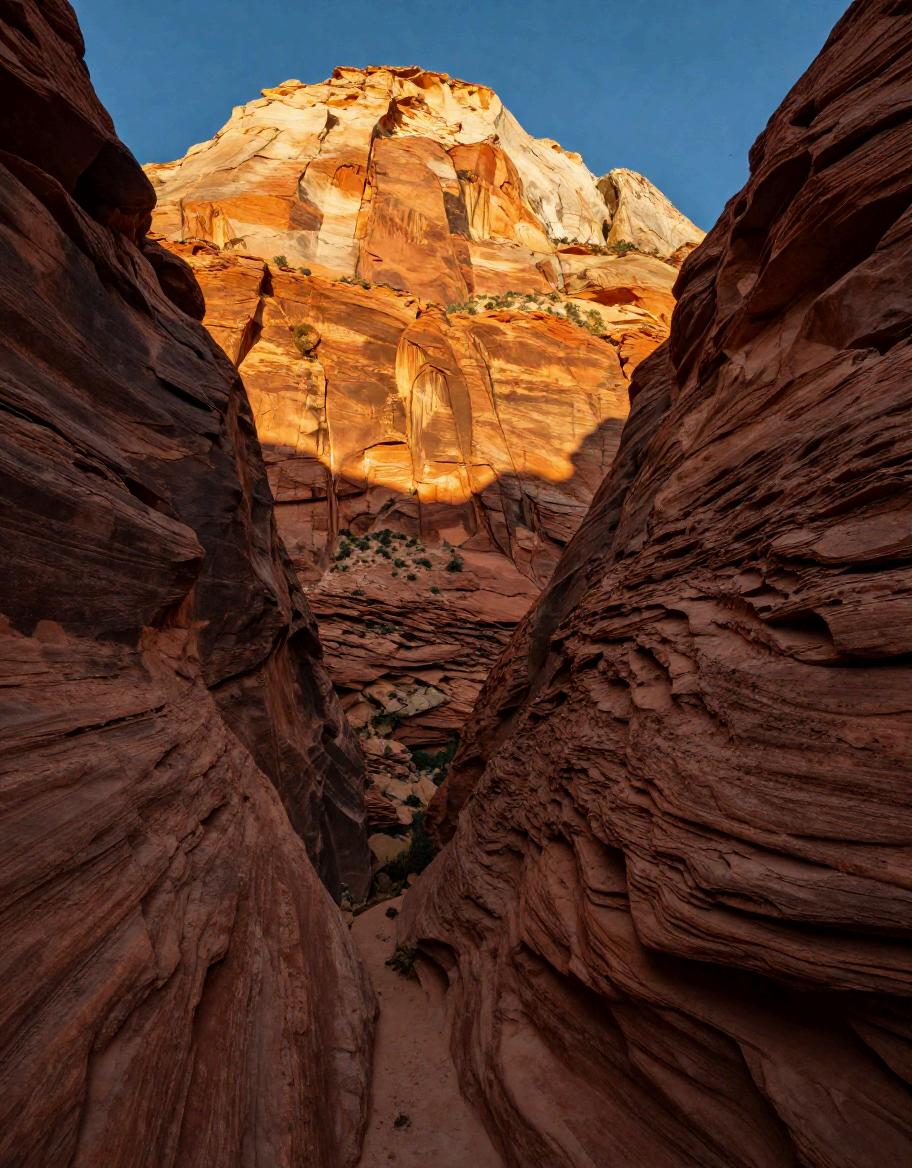
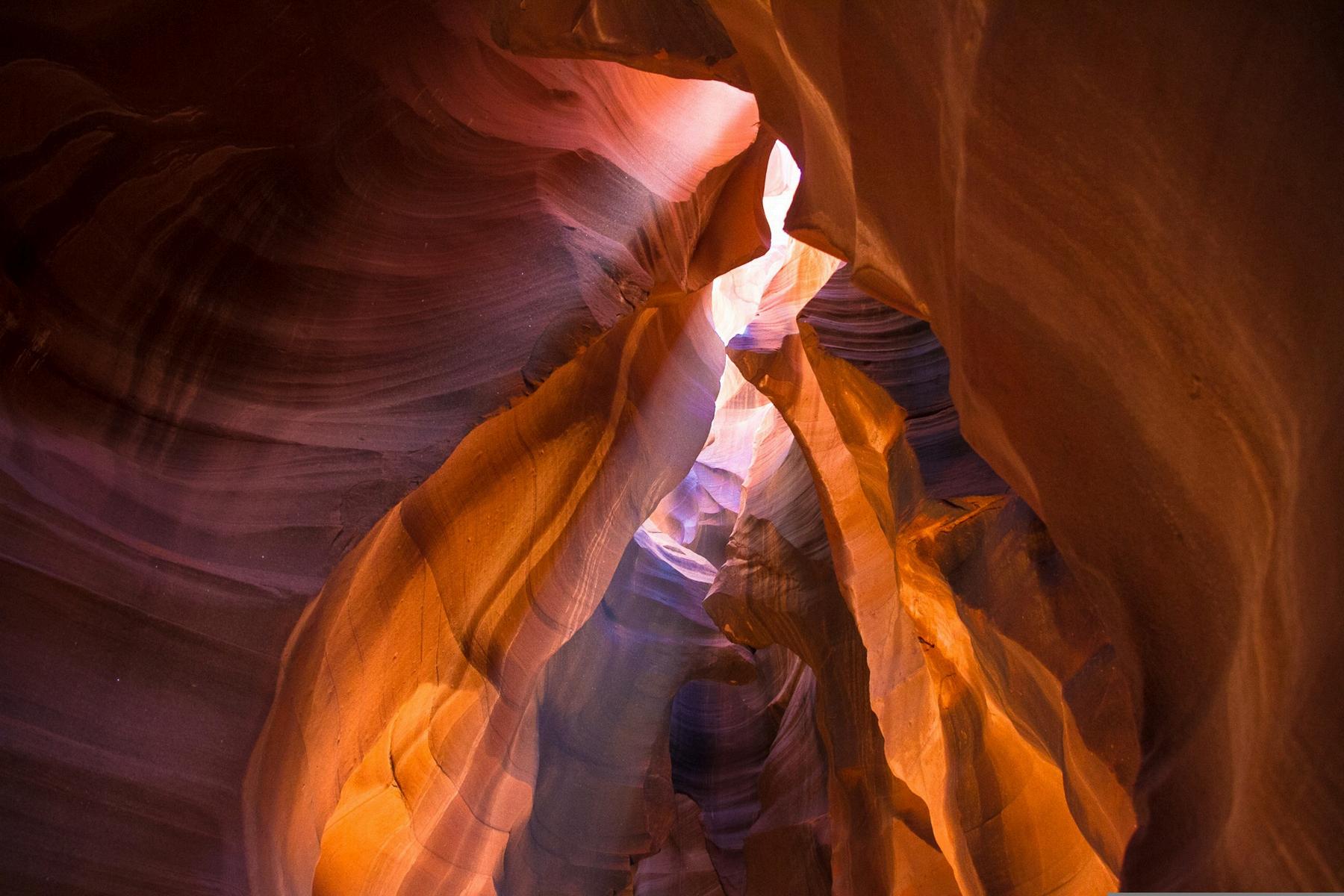
Look at the walls of Zion Canyon in the late afternoon of a summer day and you will see something that looks almost impossible rock that appears to be on fire.
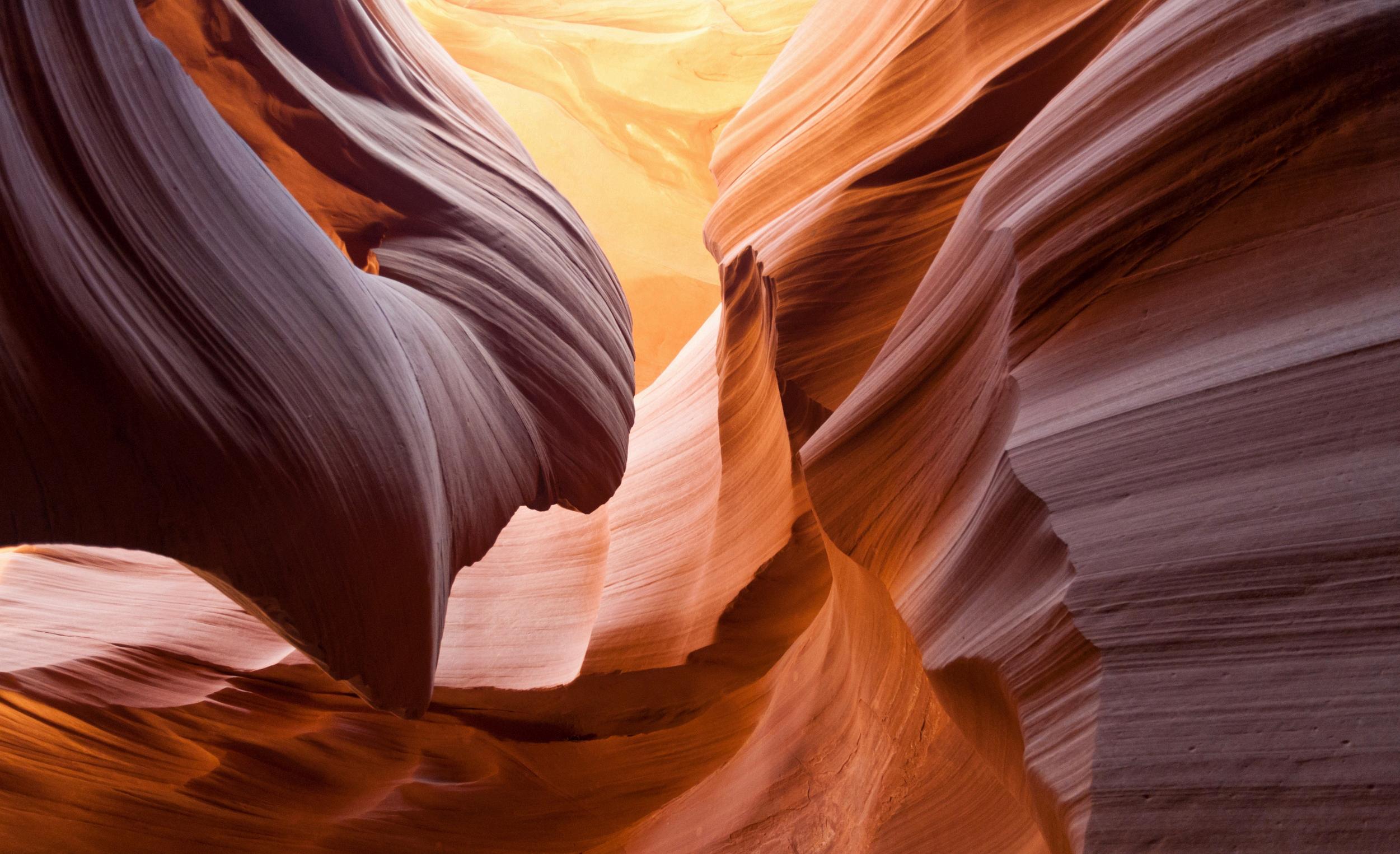
The deep amber, orange, and blood-red tones that saturate the Navajo sandstone in summer light are not just beautiful. They are chemistry, geology, and physics working together in a system that took millions of years to build.
The Navajo sandstone that forms the main walls of Zion Canyon was deposited as sand dunes during the Jurassic period, roughly 170 to 190 million years ago. At that time, the region that is now southern Utah was a vast inland desert not unlike the Sahara today with dunes reaching heights of several hundred feet.
Over millions of years, those dunes were buried under subsequent layers of sediment, compressed, and cemented into stone.
The cement that binds the sand grains together is primarily calcium carbonate and iron oxide and it is the iron oxide that gives the rock its color.
Iron oxide exists in several forms. Hematite, which is anhydrous iron oxide, produces reds. Goethite, a hydrated form, produces yellows and browns. The variations in color you see across the canyon walls from pale cream to deep burgundy reflect variations in the concentration and form of iron minerals in the rock.
The angle of sunlight matters enormously for how the iron oxide reads to the human eye.
In winter, the sun tracks low across the southern sky and the light hits the canyon walls at an oblique angle, washing out the color. In summer, the sun climbs high higher at the solstice than at any other point in the year and the light strikes the walls more directly.
Direct light at a high angle saturates the iron pigments in the rock. The warm wavelengths of late afternoon sun already shifted toward orange and red as they travel through more atmosphere interact with the iron oxide to produce the deep, almost luminous glow that photographers and hikers describe as unlike anything else in the natural world.
The canyon seems to generate its own warmth.
The effect is strongest in the hour before sunset, when the light is most angled and warmest in tone. At the summer solstice, that final hour of light falls on walls that have been absorbing heat all day, and the canyon seems almost to generate its own warmth.
Many of the darker streaks you see on the canyon walls the black and brown staining that runs in vertical patterns down the rock face are not the sandstone itself. This is desert varnish: a thin coating of manganese and iron oxides deposited over thousands of years by microorganisms and windblown dust.
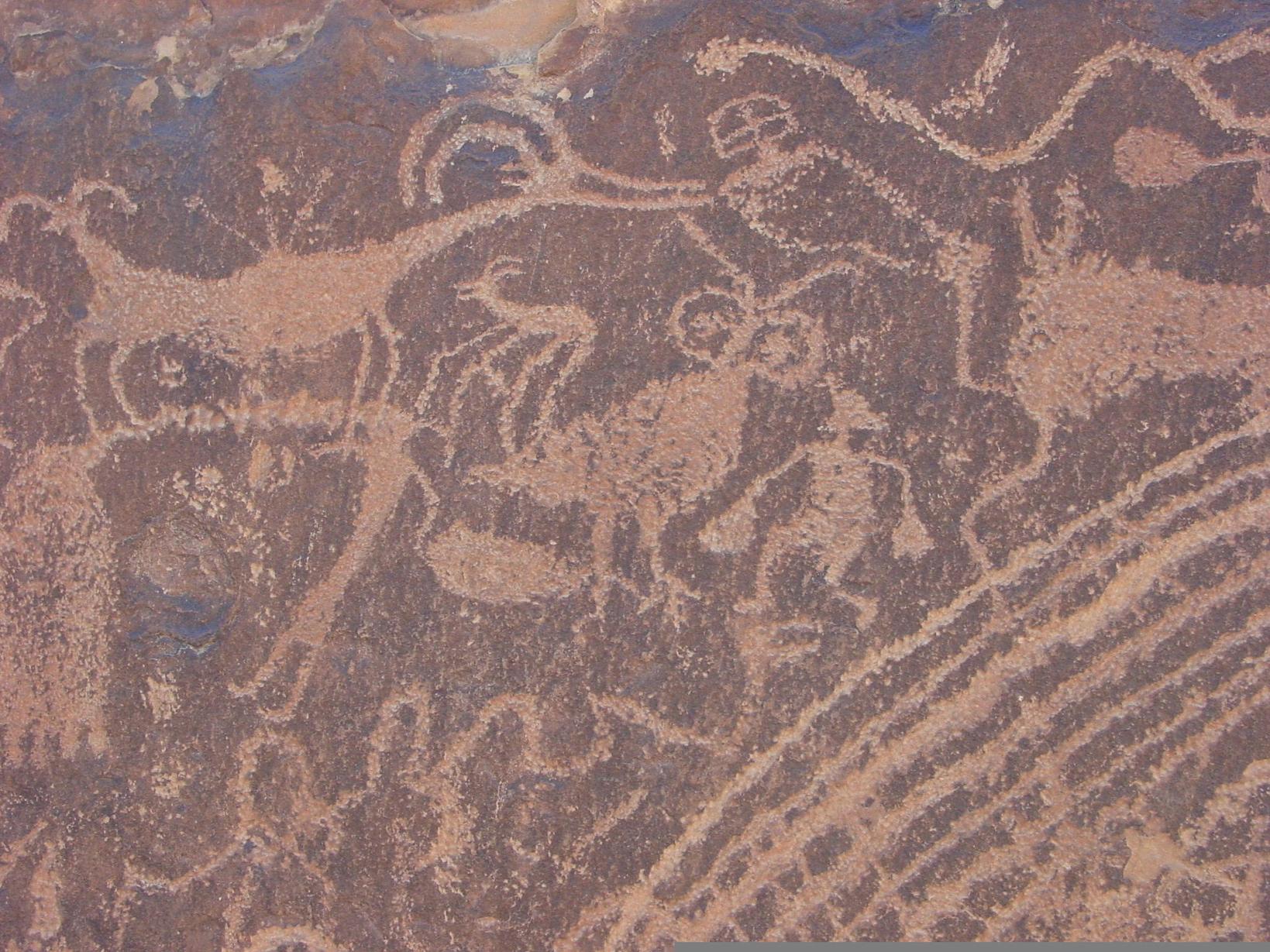
Desert varnish forms incredibly slowly sometimes only a fraction of a millimeter per thousand years. The dark streaks you see in Zion represent tens of thousands of years of accumulation. It was on surfaces of desert varnish that ancestral peoples carved their petroglyphs cutting through the dark coating to reveal the lighter sandstone beneath. The contrast between fresh-cut rock and darkened varnish is what makes many petroglyphs still visible today. The canyon's chemistry, in a sense, preserved them.
One of the pleasures of spending a full day in Zion Canyon is watching the color of the walls shift from morning to evening. The pale pink of early light becomes the bright salmon of midday becomes the deep copper of late afternoon becomes the almost purple shadow of dusk.
The ancient desert that became this stone is gone. But its chemistry is still speaking.

The rock has not changed. The light has. But the iron in the sandstone responds to each quality of light differently, and the result is a canyon that is never quite the same twice.
The ancient desert that became this stone is gone But its chemistry is still speaking, every time the summer sun comes around.
RShadowsofthe
Sagebrush:TheDesert Hare
The European Hare a close lookalike to Zion’s iconic Black-tailed Jackrabbit. Both use oversized ears to beat the intense summer heat.
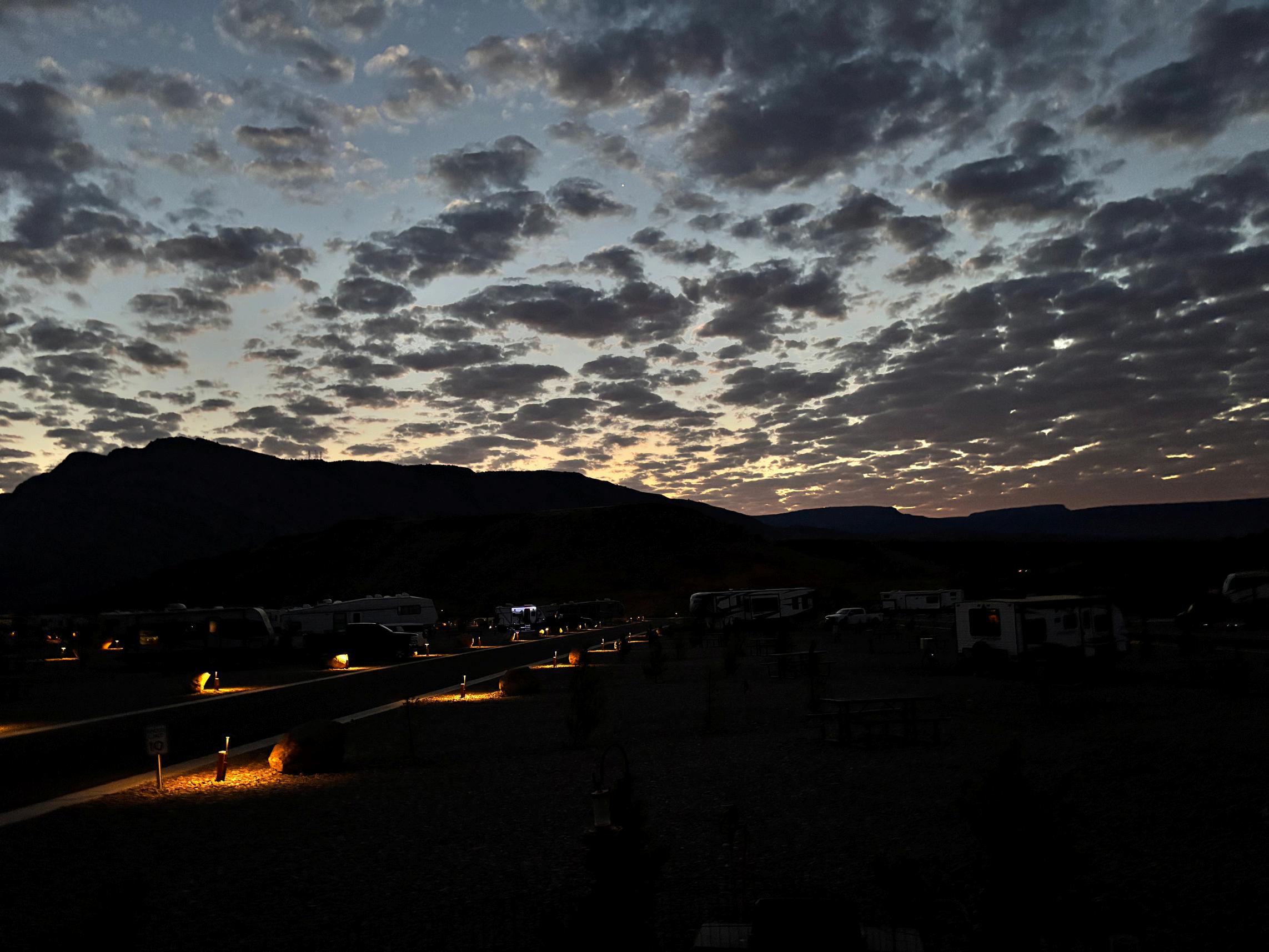
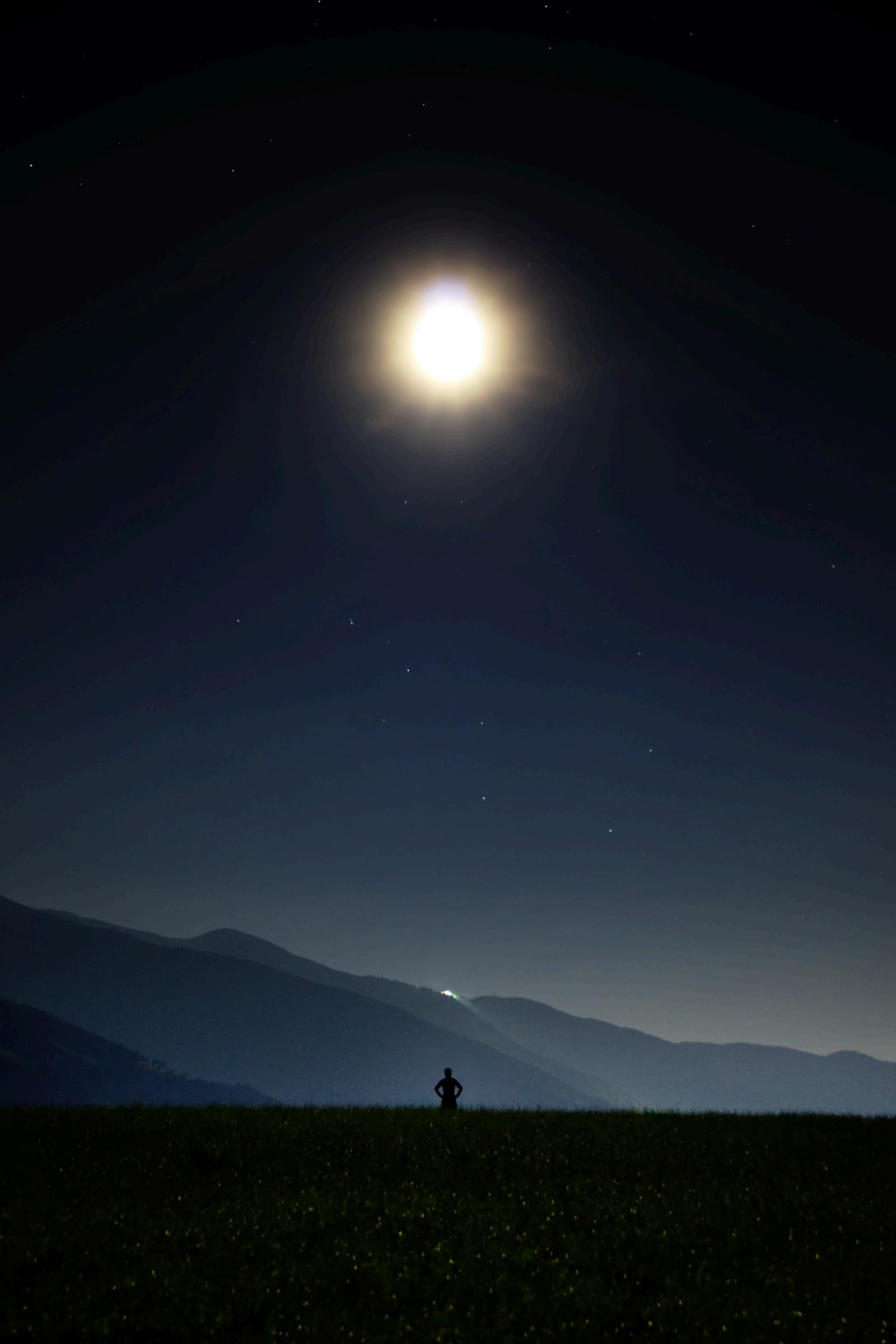
A Southern Utah creator is building a digital publication for people drawn to mystery, place, and the questions that live beyond the horizon.
There is something about the desert that changes the way a person looks at the sky.
In Southern Utah, the horizon feels wider. The stars feel closer. The land itself seems to hold memory in its cliffs, washes, canyons, and quiet open spaces. For many people who live here, or even pass through for a short time, the landscape does more than impress the eye. It invites bigger questions.
For Jim Cloman, that sense of wonder helped shape the foundation of The Galactic Mind, an independent digital publication exploring the edges of reality, including UFOs, consciousness, ancient mysteries, speculative science, and the big questions people do not talk about.
That distinction matters to Cloman. In the online world, subjects like UFOs, ancient civilizations, consciousness, and the unexplained often get pulled into extremes. They are either treated as entertainment, conspiracy, or something to be mocked. The Galactic Mind tries to occupy a more thoughtful middle ground. The publication asks questions instead of forcing conclusions.
The project began as a social media presence, but it has grown into something more structured: a full publication with articles, essays, Case Files, Dossiers, Deep Think pieces, speculative thought experiments, and a free weekly Digest for readers who want to explore unusual subjects without losing their grounding.
At its core, The Galactic Mind is built for people who still feel wonder.
Not blind belief. Not automatic dismissal. Wonder.
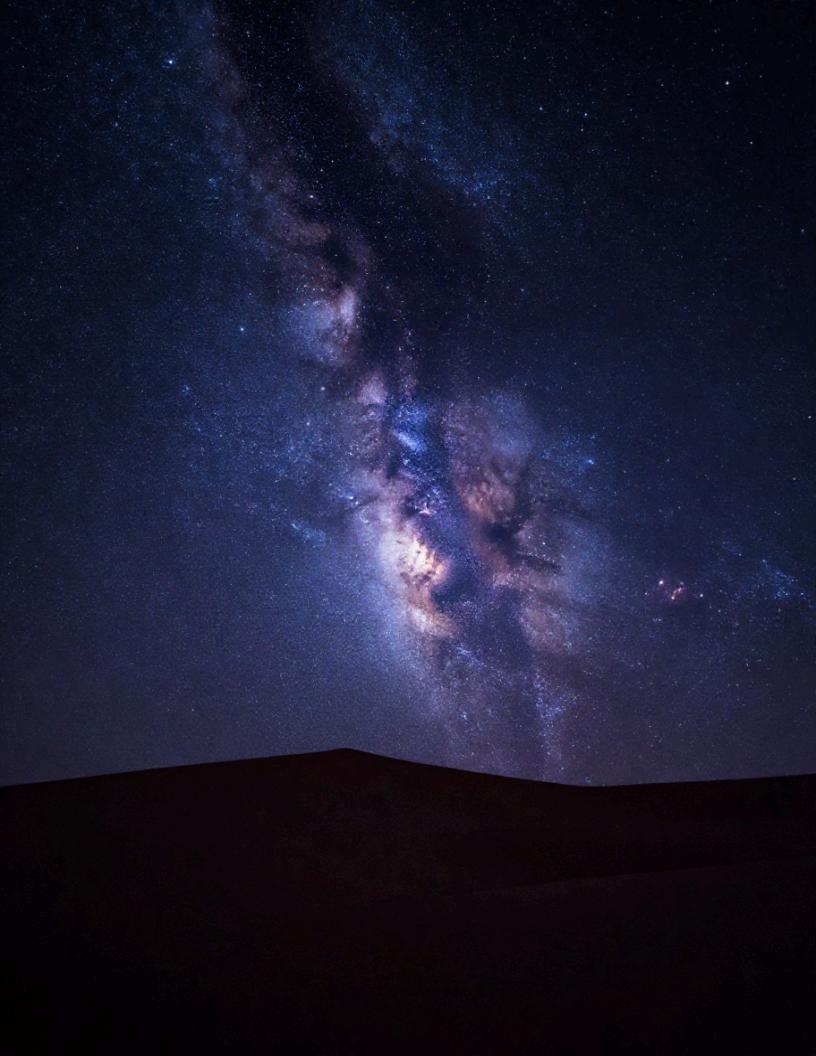
At its core, The Galactic Mind is built for people who still feel wonder.
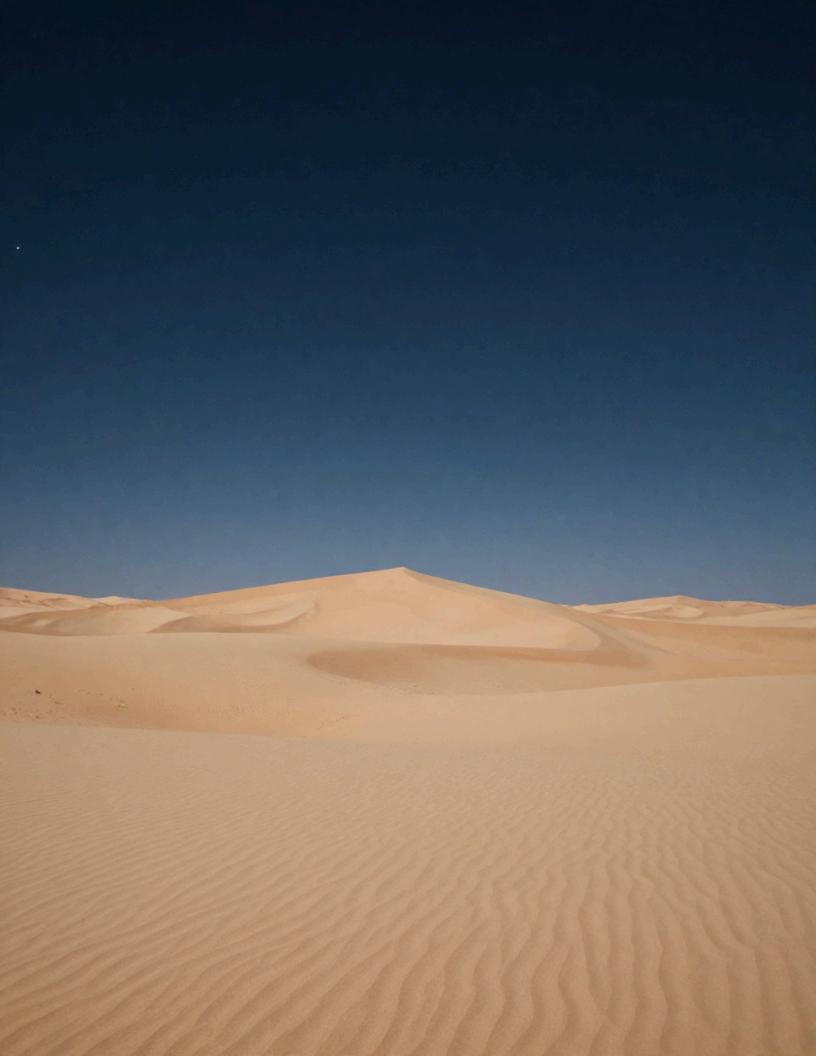
What does first contact look like for humanity? What if consciousness is stranger than the current scientific model allows? What would happen to human culture if alien contact became undeniable? What if the biggest mysteries are not interruptions to reality, but invitations to look more closely at it? Those questions may seem cosmic, but for Cloman, they are also deeply connected to place. Southern Utah has a way of making the unknown feel present. The night sky above the desert is not background scenery. It is part of the human experience here. The same land that draws hikers, photographers, artists, climbers, and travelers also draws seekers. People come to Southern Utah for beauty, but many leave with something harder to define: perspective.
The Galactic Mind carries some of that same spirit into the digital world. It is not a travel magazine, but it is influenced by the desert's scale. It is not a science journal, but it respects evidence. It is not a paranormal entertainment site, but it understands why people are fascinated by mystery.
The publication's Case Files examine reported events, encounters, and cultural mysteries in a grounded format. Dossiers explore figures, thinkers, researchers, and creators who have shaped public conversation around the unknown. Deep Think essays move into philosophy, asking what these subjects reveal about humanity itself. SPEC pieces take the reader further, into speculative futures and thought experiments that feel cinematic, unsettling, and strangely possible. That mix gives The Galactic Mind its identity.
The desert has always been a place where people come to look outward and inward at the same time.
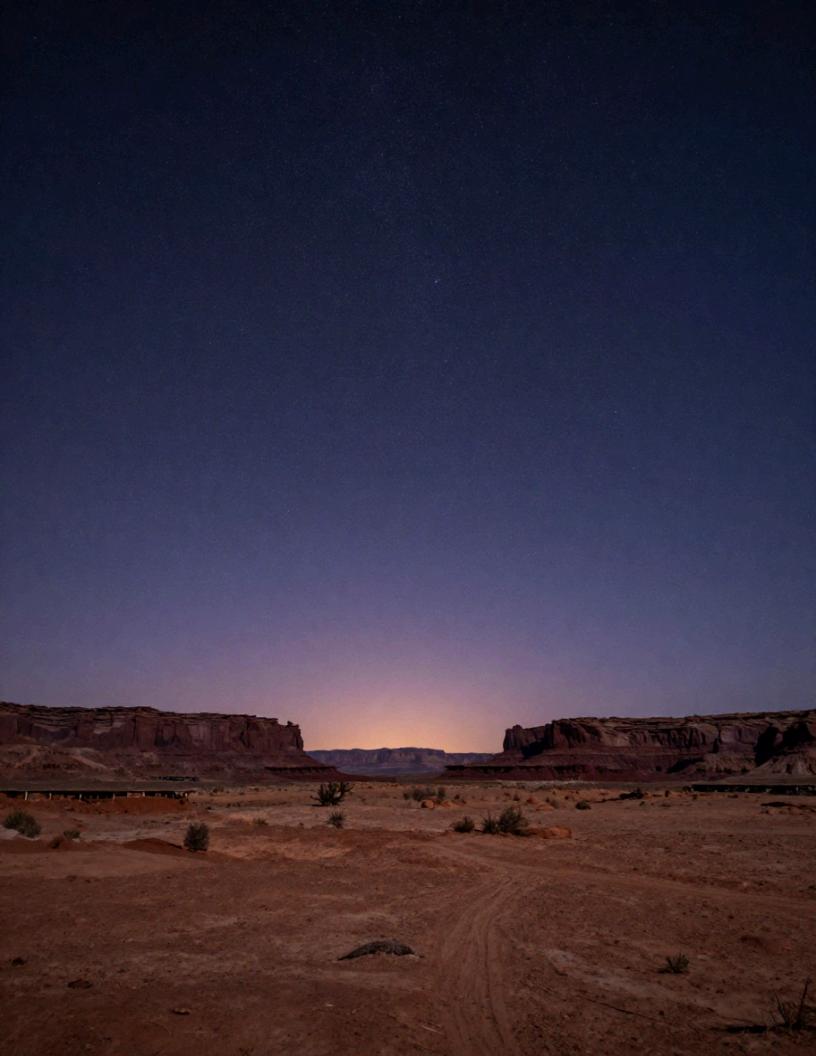
A place where a reader can move from a historical UFO case to a question about immortality, from a consciousness theory to a meditation on civilization, from the unknown in the sky to the unknown inside the human mind.
For Southern Utah readers, that may feel familiar. This is a region where natural beauty constantly meets mystery Ancient landscapes. Dark skies. Remote highways. Canyons carved by time. Silence that feels alive.
The Galactic Mind takes that feeling and translates it into modern media.
It is part digital magazine, part archive, part signal flare for curious people who want to think more deeply about the stories shaping our sense of reality.
Cloman's goal is not to tell readers what to believe. It is to build a space where curiosity can be taken seriously again.
That might be why the publication feels especially at home in the Southwest. The desert has always been a place where people come to look outward and inward at the same time. The questions may begin with the stars, but they often return to us. What are we ready to discover?
what
when the world turns out to be stranger than we
expected?
For The Galactic Mind, those questions are not distractions from everyday life. They are part of what makes life feel vast. Under the Southern Utah sky, mystery does not feel far away. It feels like part of the landscape. Visit The Galactic Mind website.
www.TheGalaticMind.com
How Indigenous Peoples Read the Solstice Sky
Long before Zion National Park had a name, the canyon had a calendar.
The Southern Paiute people who called this region home for centuries read the landscape the way others read a clock. The angle of morning light through a particular gap in the canyon wall. The shadow that crept across a certain boulder at midsummer The place where the sun touched the earth at its farthest northern point and then, slowly, began its return.
The summer solstice was not an abstraction for the people who lived here. It was a turning point in the year a signal for planting decisions, for gathering, for ceremony. And the land itself was the instrument they used to mark it.
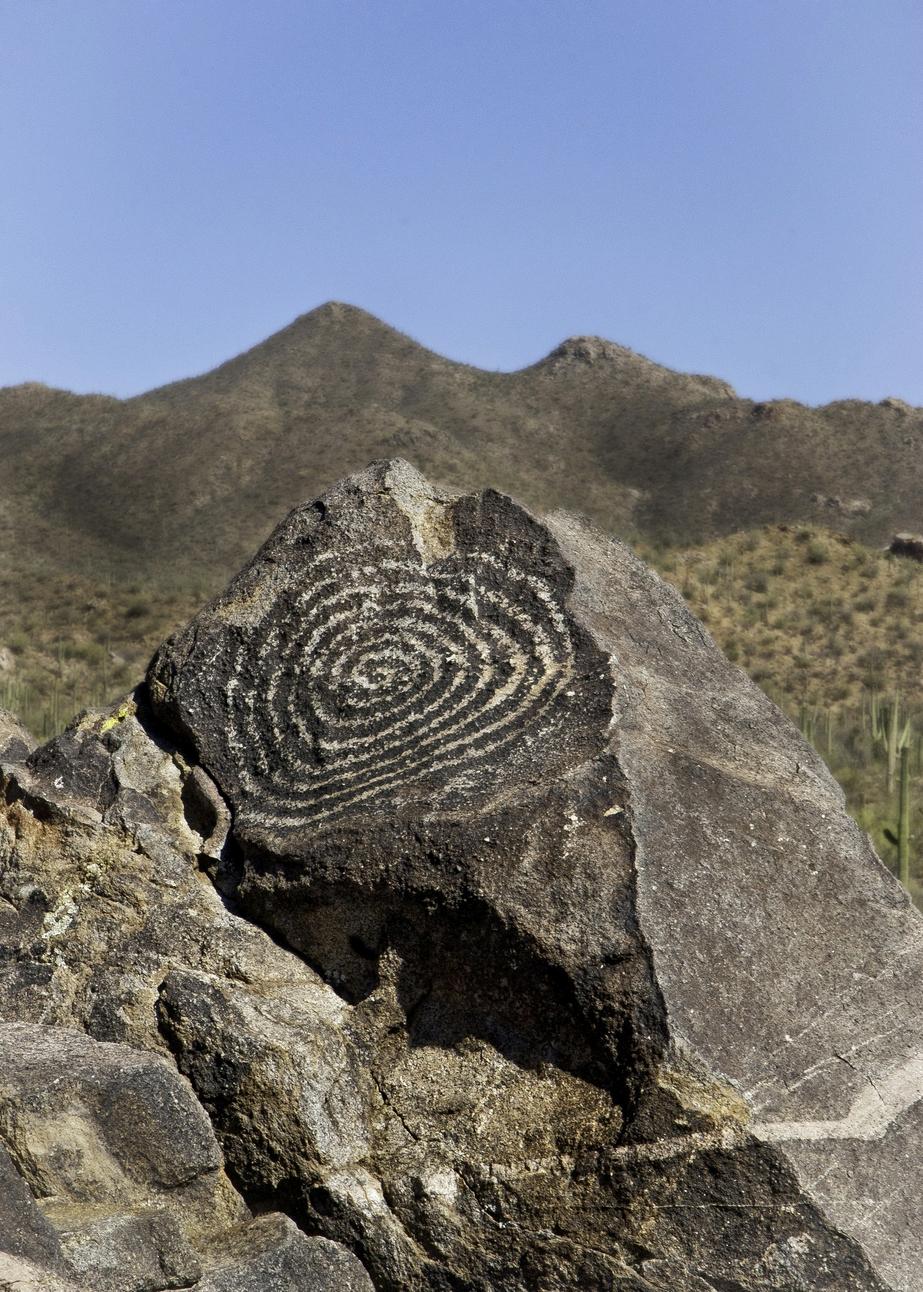
Across the Colorado Plateau, archaeologists have documented dozens of sites where ancestral peoples the Ancestral Puebloans, the Fremont, the Southern Paiute created petroglyphs that align with solar events. Spirals pecked into sandstone that receive a precise dagger of light at solstice. Concentric circles positioned to frame the rising sun at a specific date.
Near Zion, several such sites have been identified, though many are not publicly disclosed to protect them from damage. What we know is this: the people who lived here were careful observers of the sky, and they recorded what they saw in the walls of the same canyon we walk through today.
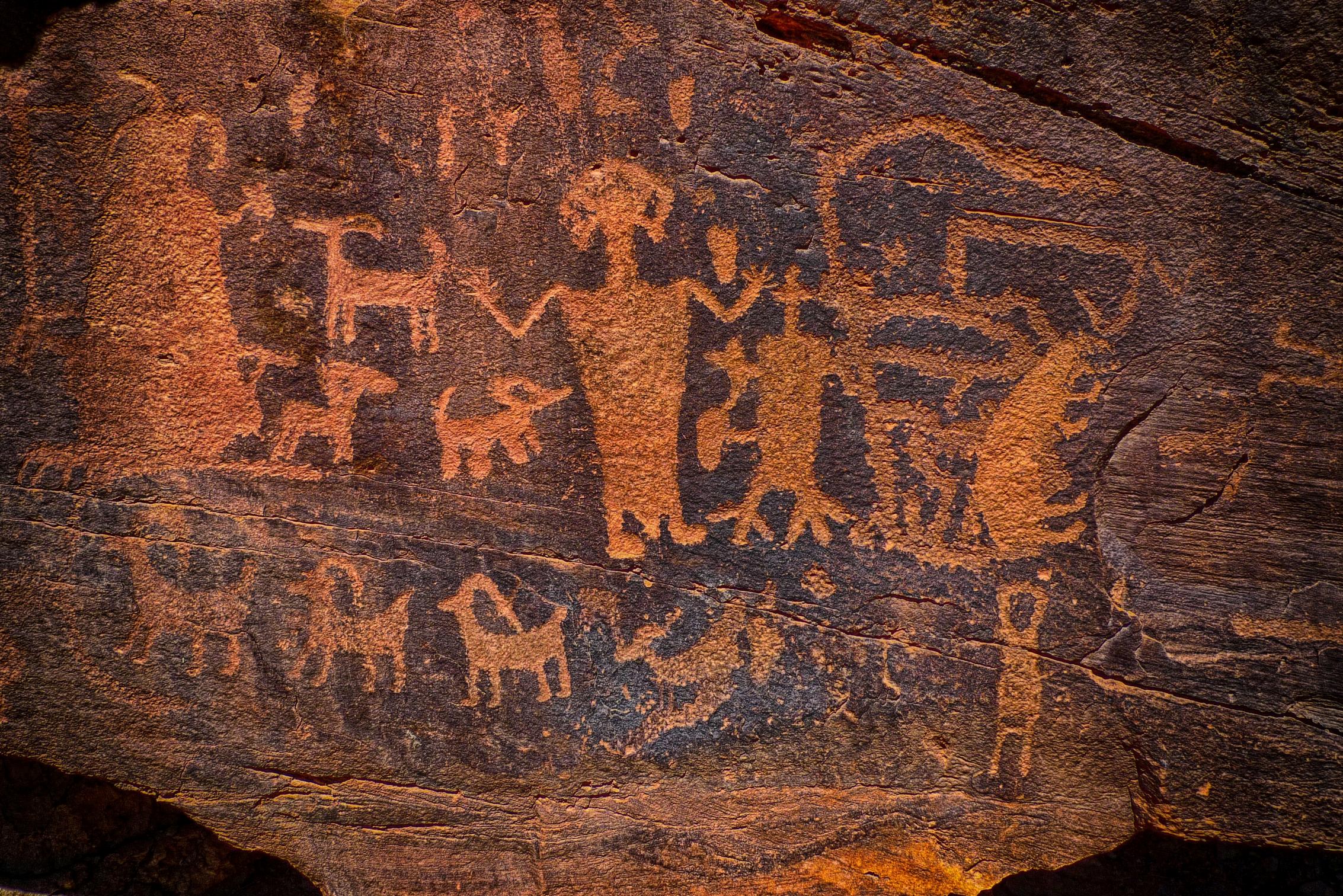
The spiral one of the most common petroglyph motifs in the region appears in many solar marker sites throughout the Southwest. At the solstice, the shadow of a rock edge or a carefully placed stone moves across the spiral in a way that marks the event precisely.
The Southern Paiute called this canyon Mukuntuweap a name that has been translated variously as "straight canyon" or "the place of the rocks which are standing upright." The name given by the National Park Service, Zion, was chosen by a later settler and carries different connotations entirely.
For the Paiute, the canyon was a place of spiritual significance and practical sustenance. They gathered pinyon nuts from the higher elevations, hunted deer in the canyon, cultivated small gardens near springs and seeps. Their knowledge of the land was deep and specific which springs ran yearround, which side canyons offered shade in the heat, which plants bloomed after the summer rains.
The solstice marked a transition in the seasonal cycle of this knowledge. The long days of summer meant different plants, different animals, different patterns of movement through the landscape.
The canyon was here for the light long before any of us arrived to watch it.
You do not need to find a petroglyph spiral to experience what those early observers were watching.
Stand in the canyon near the summer solstice at midday and watch what the light does to the walls. The angle is specific to this time of year, and the glow it produces in the Navajo sandstone iron oxide turning amber and gold under direct sun is not accidental. The people who came before us watched it too. They built their observations into the rock, and some of those marks are still there, patient and precise, waiting for the light to come around again.

to tell...
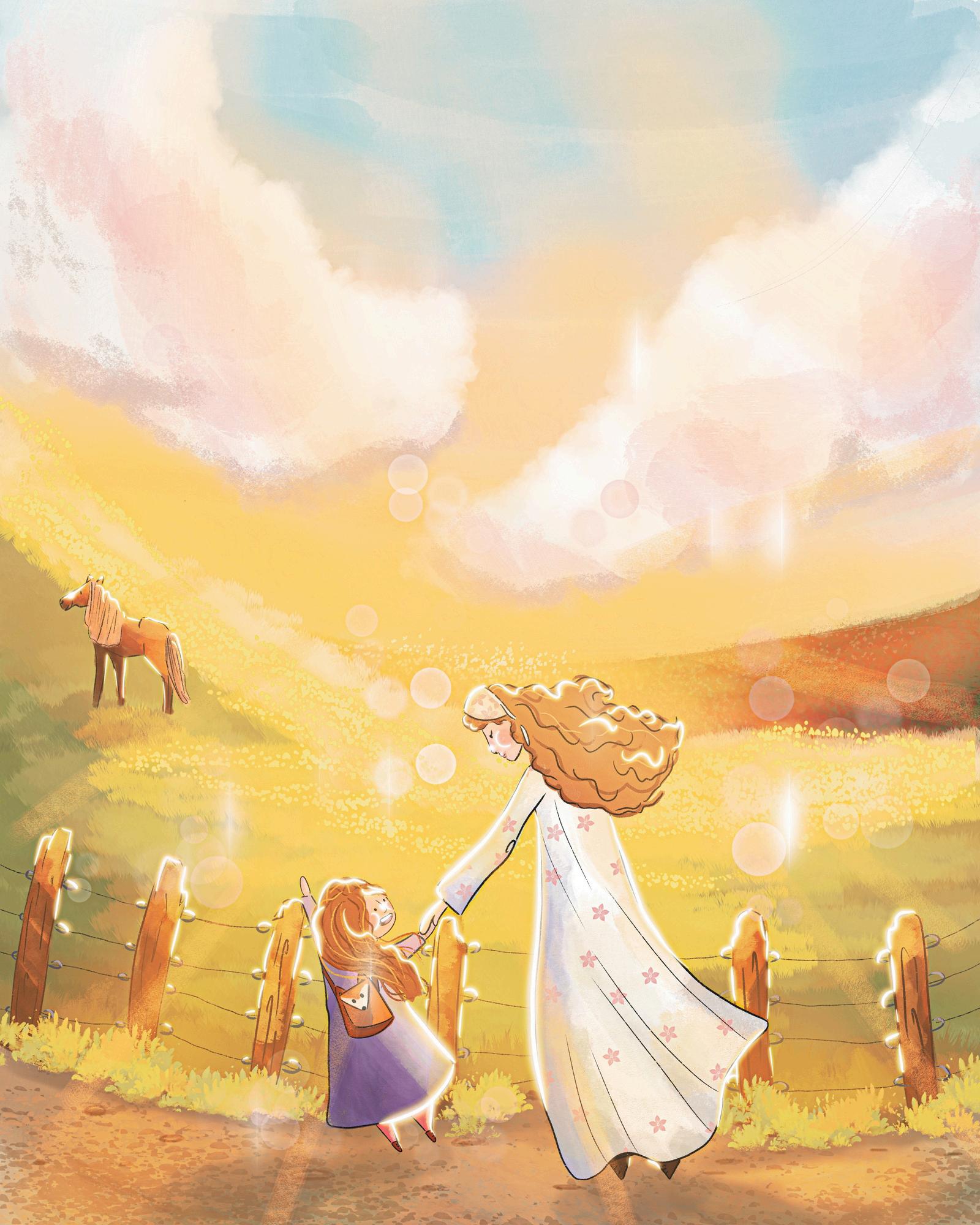
I D S C O R N E R
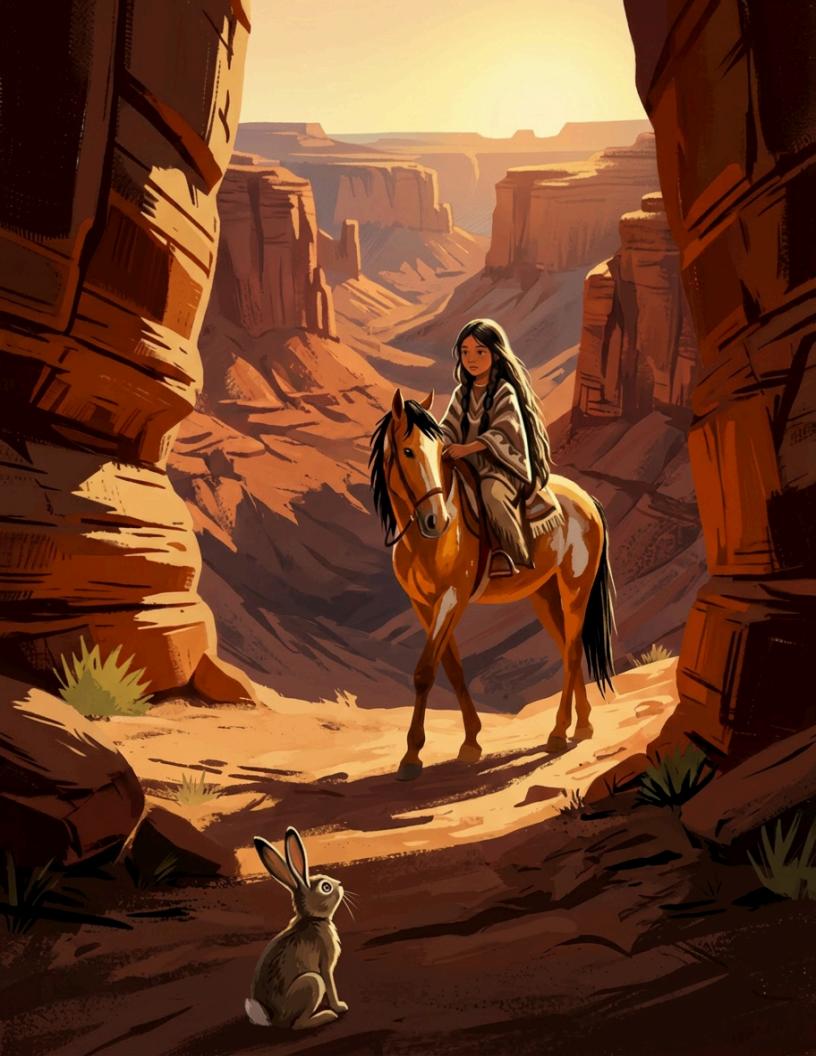
The hare didn’t run.
That was the first thing Maeve noticed. Every hare she had ever encountered on these trails would vanish at the slightest trigger—a shifted boot in a stirrup, a snapped twig, or even Willow’s shadow rippling across the sand.
But this one stayed.
It sat quietly beside the trail, its dark eyes reflecting the canyon light like two tiny, obsidian moons. Its nose twitched once. Then, almost ceremonially, it turned and took three deliberate hops toward the towering canyon wall.
Not away from them. Toward something.
The hare stopped and looked back over its shoulder. Maeve blinked, a nervous smile tugging at her lips. “Well,” she whispered. “That’s different.”
Willow flicked her ears forward. It wasn’t a startled movement, nor was it born of fear. It was recognition. It was as though the old mare had witnessed a moment exactly like this before.
The hare sat perfectly still now between the riders and the stone wall, its work apparently finished. It hadn’t asked for food or attention. It only asked that they follow.
Maeve wondered then if animals carried messages the way people carried memories. Grandma used to say the Creator had many voices, and that perhaps some of them wore fur.
When Maeve finally blinked and looked down, the trail was empty. The hare hadn’t run or hidden; it was simply gone.
“Thank you,” Maeve whispered into the quiet air. Willow lowered her head in silent agreement.
Far above them, somewhere along the canyon rim, a hawk called out into the afternoon sky. For just a heartbeat, Maeve could have sworn she saw a small, still shape sitting high among the sun-drenched rocks. Watching. Waiting.
Then, it vanished entirely into the golden light.
To Be Continued...
8ripepeaches,peeledand sliced(about6cups)
1/2cupsgranulatedsugar (forpeaches)
1tablespoonsfreshlemon juice
1tablespoonscornstarch
1teaspoonsvanillaextract 1/2teaspoonsground cinnamon
11/2cupsall-purposeflour
1/2cupsgranulatedsugar (fortopping)
2teaspoonsbaking powder
1/2teaspoonssalt
6tablespoonscold unsaltedbutter,cubed 3/4cupsbuttermilk
2tablespoonscoarse sugar,forsprinkling
1vanillaicecream,for serving
SERVES: 6-8
PREP TIME: 15 minutes
COOK TIME: 45 minutes
TOTAL TIME: 1 hour
How to bake:
1) Prep the peaches: Preheat the oven to 375°F and butter a 9x13 baking dish Toss 8 ripe peaches, peeled and sliced (about 6 cups) with 1/2 cups granulated sugar (for peaches), 1 tablespoons fresh lemon juice, 1 tablespoons cornstarch, 1 teaspoons vanilla extract, and 1/2 teaspoons ground cinnamon until evenly coated. Pour into the dish and let sit while you make the topping.
2)Make the biscuit topping: Whisk together 1 1/2 cups all-purpose flour, 1/2 cups granulated sugar (for topping), 2 teaspoons baking powder, and 1/2 teaspoons salt. Cut in 6 tablespoons cold unsalted butter, cubed with your fingertips or a pastry cutter until the mixture looks like coarse crumbs with some pea-sized bits of butter remaining.
3)Top the cobbler: Stir in 3/4 cups buttermilk just until a shaggy dough forms don't over mix. Drop the dough over the peaches in rough spoonfuls, leaving gaps for the fruit to bubble through Sprinkle with 2 tablespoons coarse sugar, for sprinkling.
4) Bake: Bake until the topping is deep golden and the peach juices are bubbling thickly at the edges. If the topping browns too fast, tent loosely with foil.
5)Rest and serve: Let the cobbler rest so the juices set slightly. Serve warm with 1 vanilla ice cream, for serving.



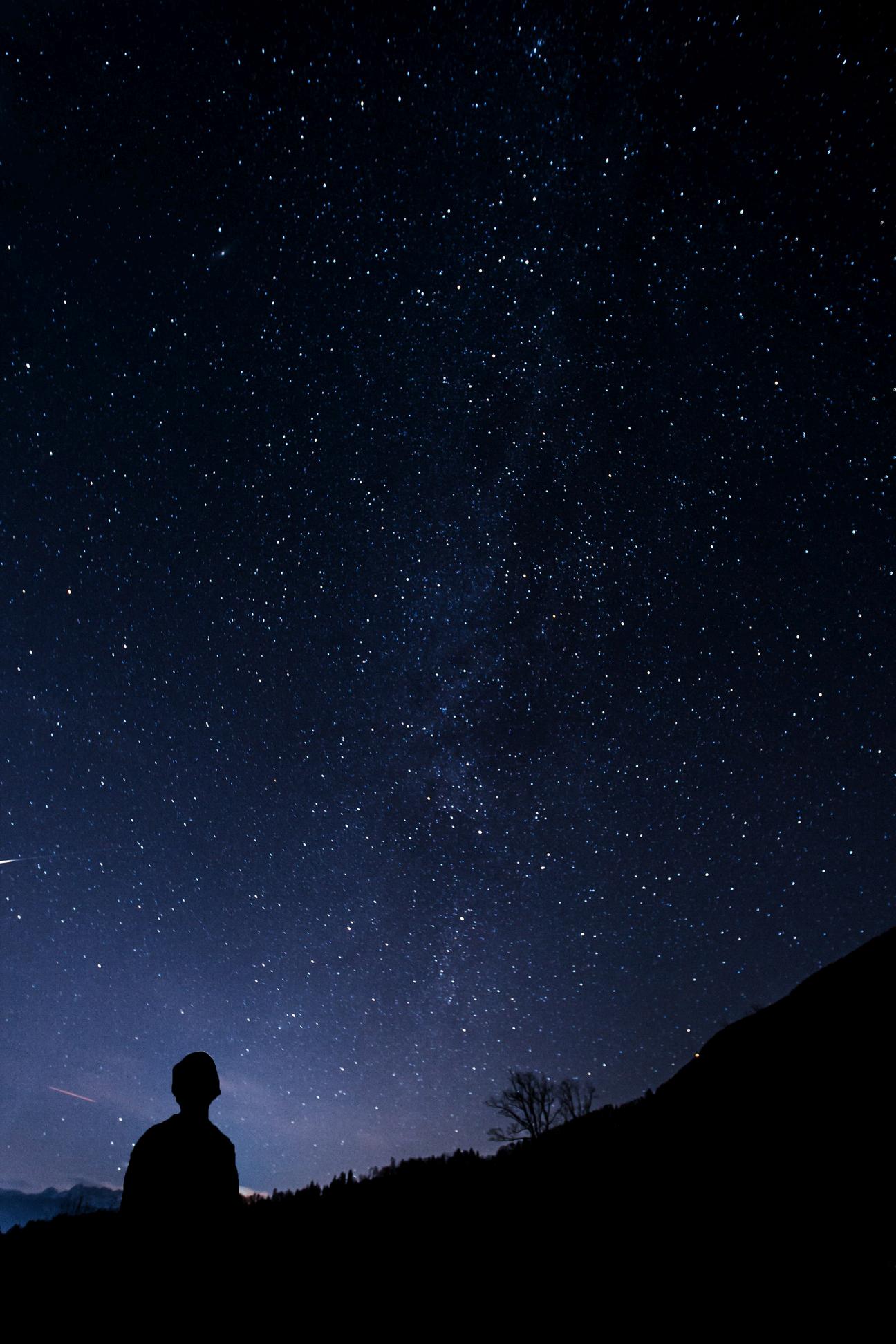
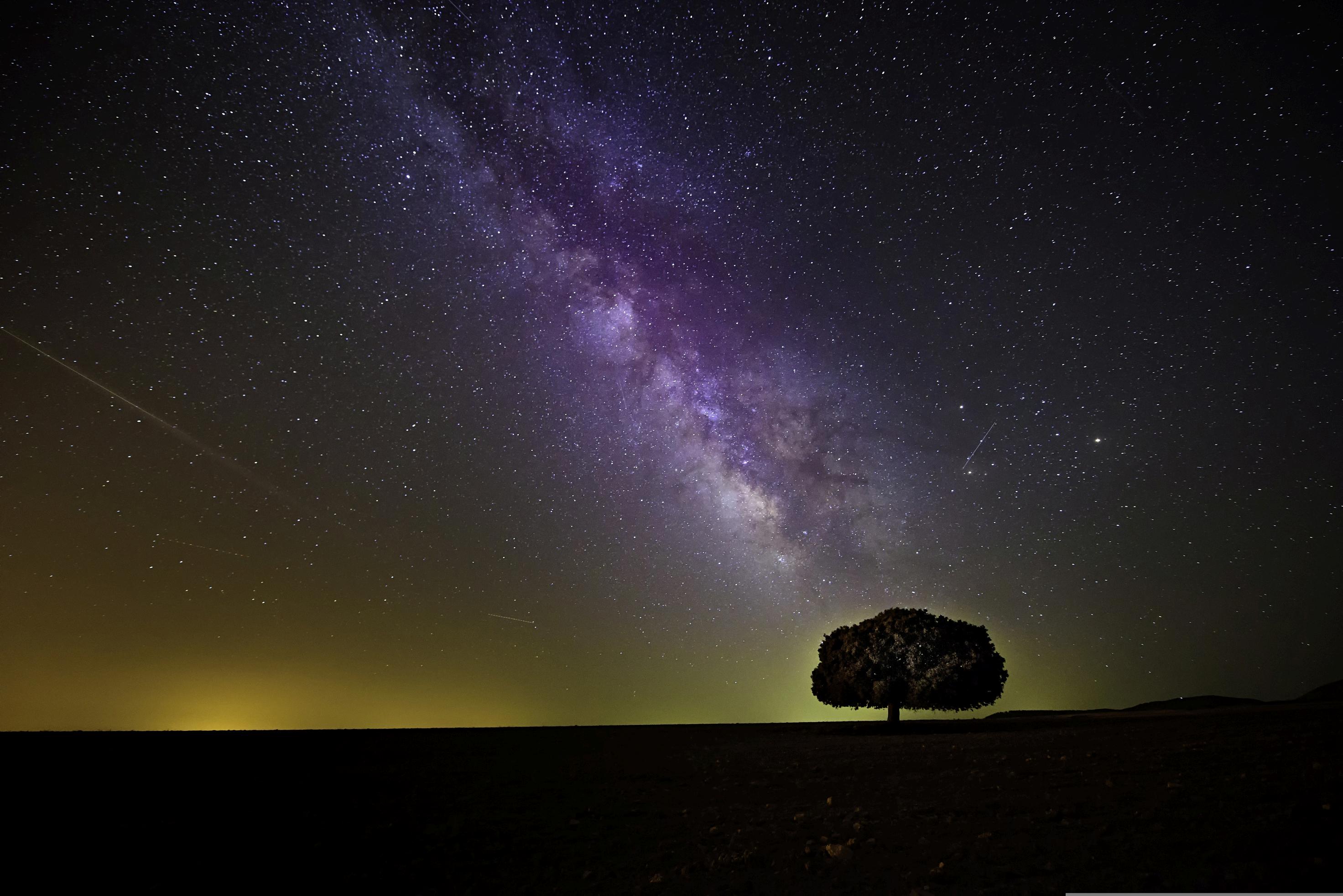
The summer solstice marks the longest day of the year but for stargazers, it also marks the beginning of the best dark sky season in the Zion corridor.
Once the solstice passes and the days begin to shorten, the windows of true darkness grow. By late July and August, the nights are long enough and dark enough that the Milky Way rises fully above the canyon walls. Zion sits within one of the darkest regions in the continental United States, far from major city light domes, and the night sky here is something that most Americans born after 1970 have never seen from where they live.
Here is what to look for this quarter.
On the evening of the summer solstice, the sun sets in precise alignment with the canyon corridor as viewed from the Pa’rus Trail near the visitor center. The light travels the full length of the main canyon and strikes the Court of the Patriarchs formations directly. This phenomenon is visible for roughly three evenings around the solstice date.
Arrive at the Pa’rus Trailhead by 7:30 p.m. and face west. You will not need a telescope.
This summer, Saturn is well-placed in the southern sky after 10 p.m. From a dark site in the Zion corridor, you can see its rings with a modest pair of binoculars or a small telescope. Saturn rises in the southeast and reaches its highest point around midnight.
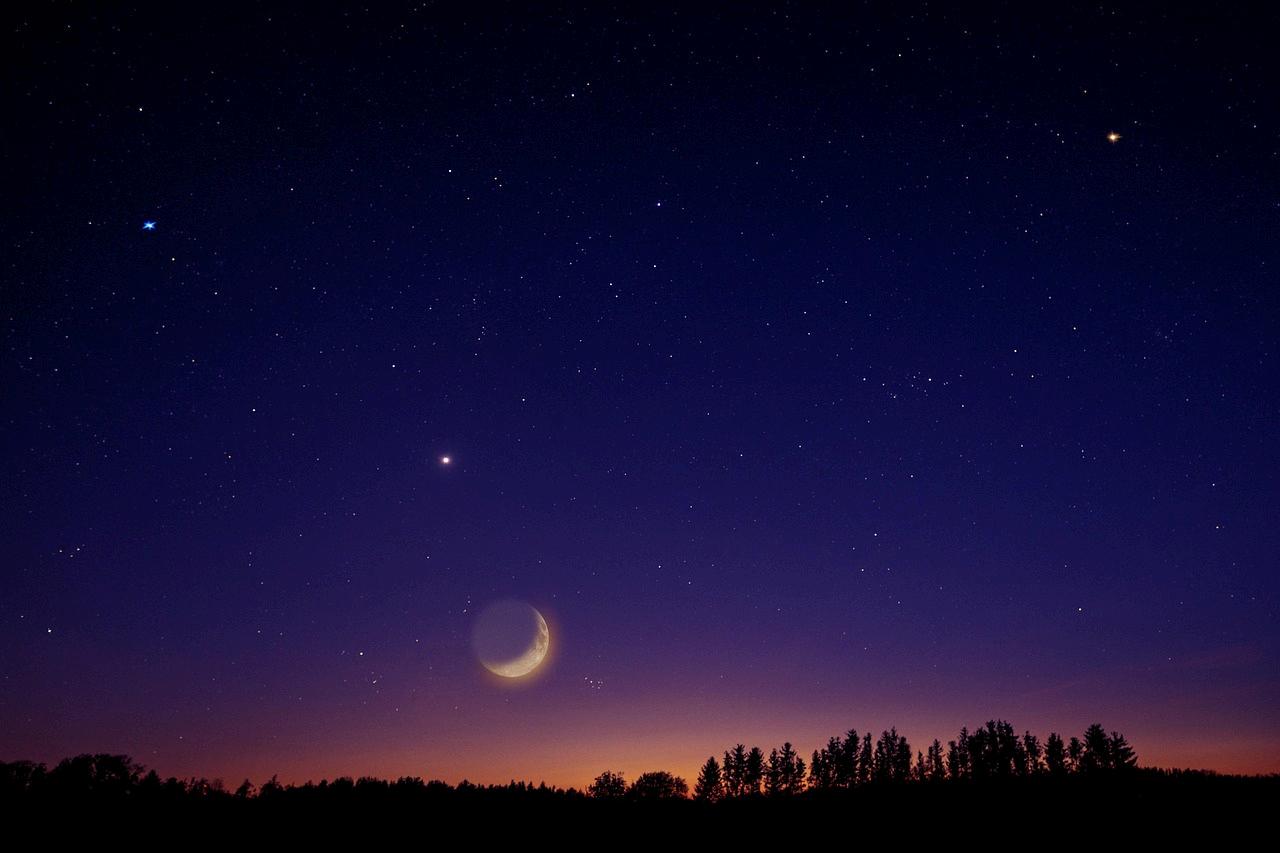
Mars remains visible in the western sky in the early evening, setting a few hours after sunset. Its reddish tone pairs beautifully with the terracotta of the canyon walls at twilight.
From late June through early September, the galactic core of the Milky Way is visible in the southern sky between roughly 9:30 p.m. and 3:00 a.m. The core the dense, bright central bulge of our galaxy rises in the southeast and tracks westward through the night.
The best viewing is on moonless nights. Check the lunar calendar: the new moon in July falls on July 14th, giving you a window of roughly two weeks on either side of that date for excellent dark sky conditions.
From the Canyon Overlook Trail, from Grafton Road near the ghost town, or from any pull-off on Kolob Terrace Road above 6,000 feet elevation, the Milky Way is visible to the naked eye as a dense river of light crossing the sky from horizon to horizon.
The Delta Aquariids peak in late July and are best observed from the southern hemisphere but from southern Utah, the shower still produces a reliable display of 15–20 meteors per hour at peak. The radiant point rises in the southeast around midnight.
The shower runs from mid-July through late August, so even if you miss the peak, any clear night in this window will produce meteors. No equipment needed. Find a dark spot, lie flat, and look up.
The best dark sky spots near the corridor:
1) Grafton Road pull-offs
2) Kolob Terrace Road above 5,500 feet
3) East side of the Zion-Mt. Carmel Highway after dark
Tips:
1) Bring a red-light headlamp white light destroys your night vision for 20 minutes.
2) Let your eyes adapt for at least 15 minutes before you judge the sky.
3) Check weather and park closure hours before heading out.
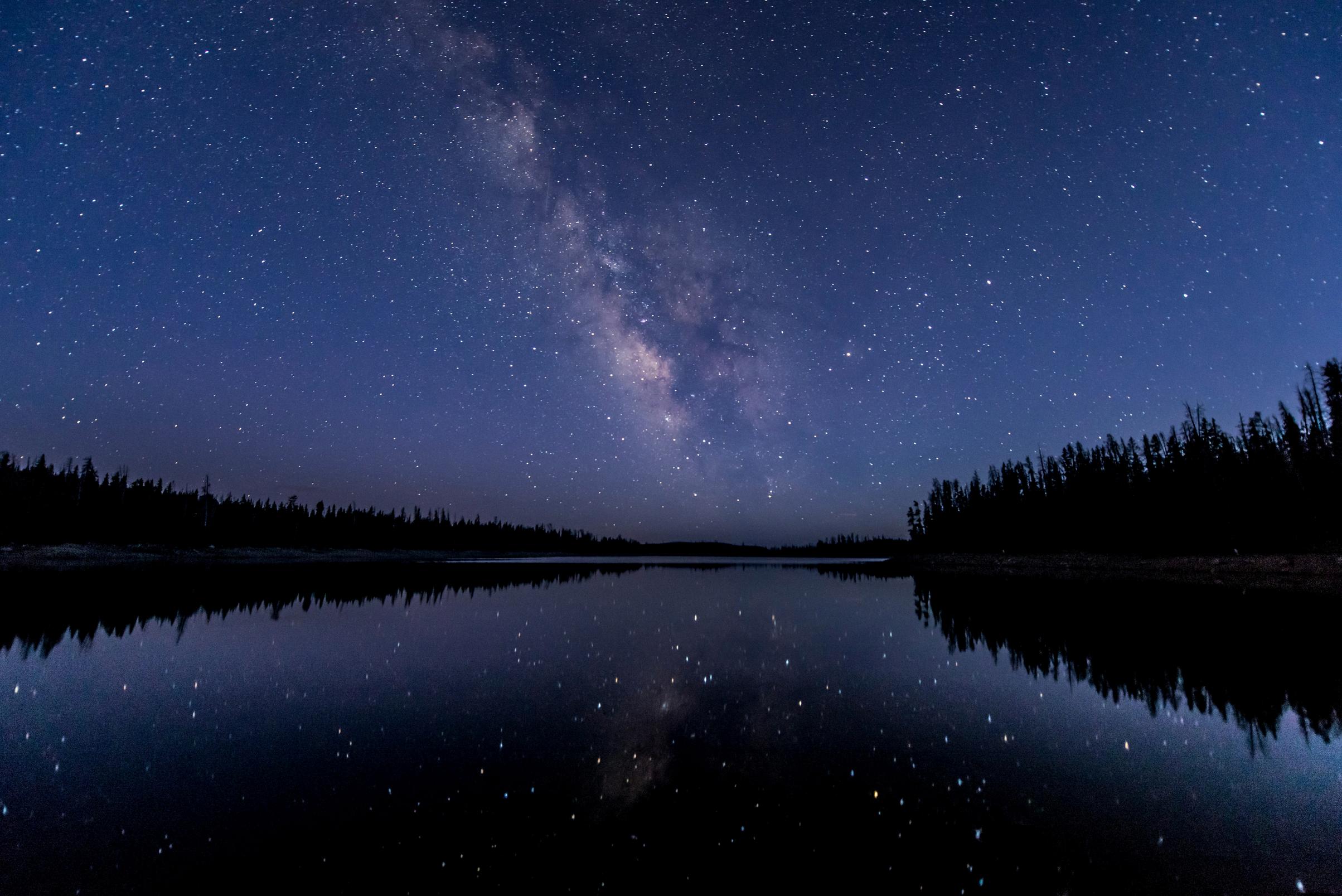
The canyon was built over millions of years by water, wind, and heat. The sky above it has been the same sky for all of that time. Some nights, standing in the dark below those walls, you can almost feel the scale of it



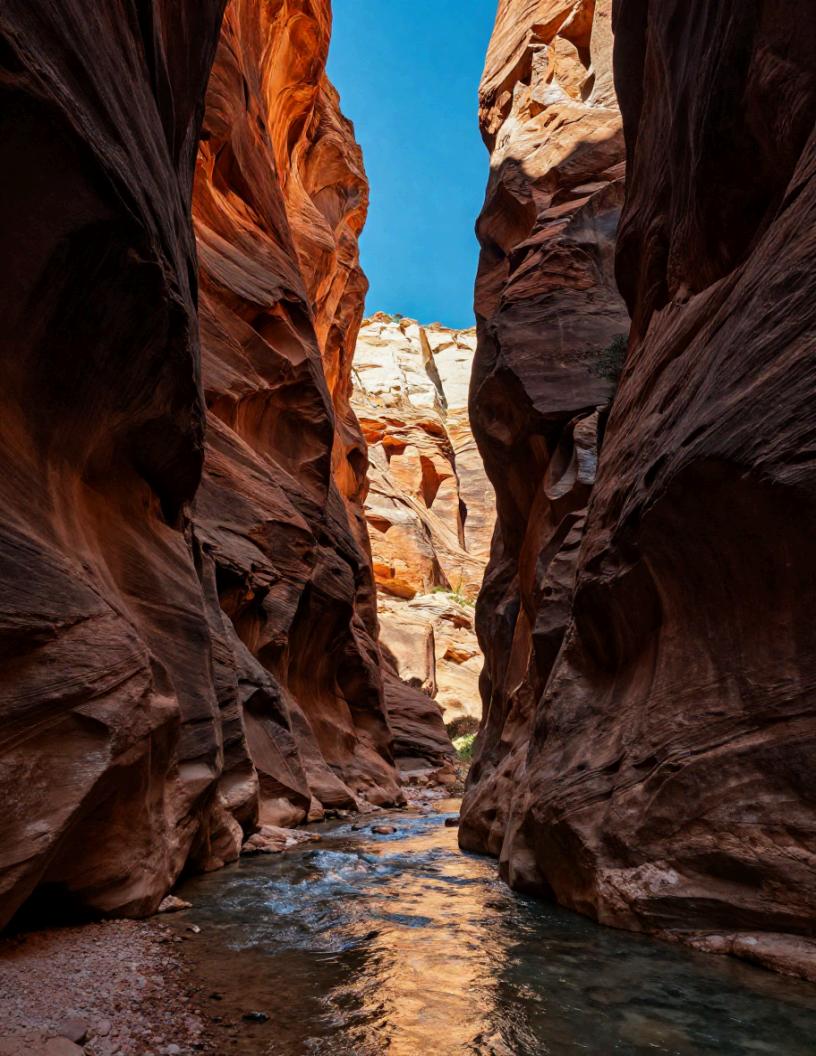
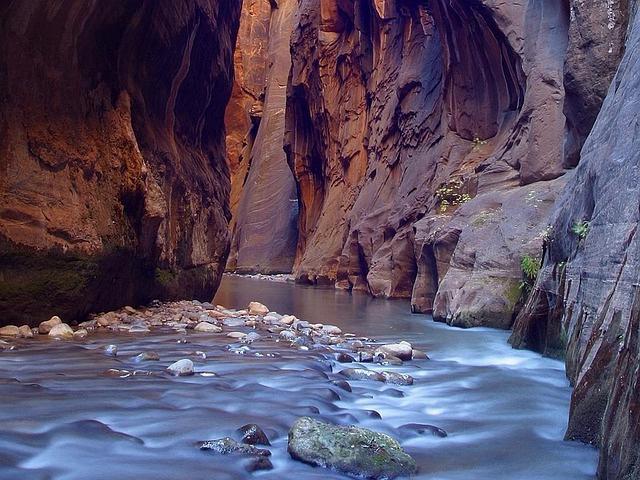
There is a place in southern Utah where the walls close in to fifteen feet wide and the sky becomes a ribbon of blue far above you. Where the Virgin River runs cold even in the furnace of July, and the sandstone two hundred and fifty million years of red and cream and rust presses in on every side like the walls of a cathedral built by no human hand.
This is the Narrows. And in summer, it becomes something else entirely.
By June the temperature in St. George has climbed past 100 degrees Fahrenheit But step into the Virgin River at the mouth of the Narrows and the water is still running at 65, sometimes 60 degrees. The contrast is physical a shock to the ankles, a gasp, then a slow release of breath as your body adjusts. Visitors who make it here in summer often describe it the same way: relief.
The canyon walls hold the cold. The river, fed by snowmelt from the high plateaus above, has been traveling downhill for days before it reaches you. It carries the memory of winter in it, even in the heart of summer.
This thermal contrast is not just a sensation It is an ecosystem The wet alcoves and hanging gardens tucked into the canyon walls ferns, columbine, monkeyflower depend on the seep water that filters through the Navajo sandstone and drips in cool curtains down the rock face. In summer, they are at their most lush.
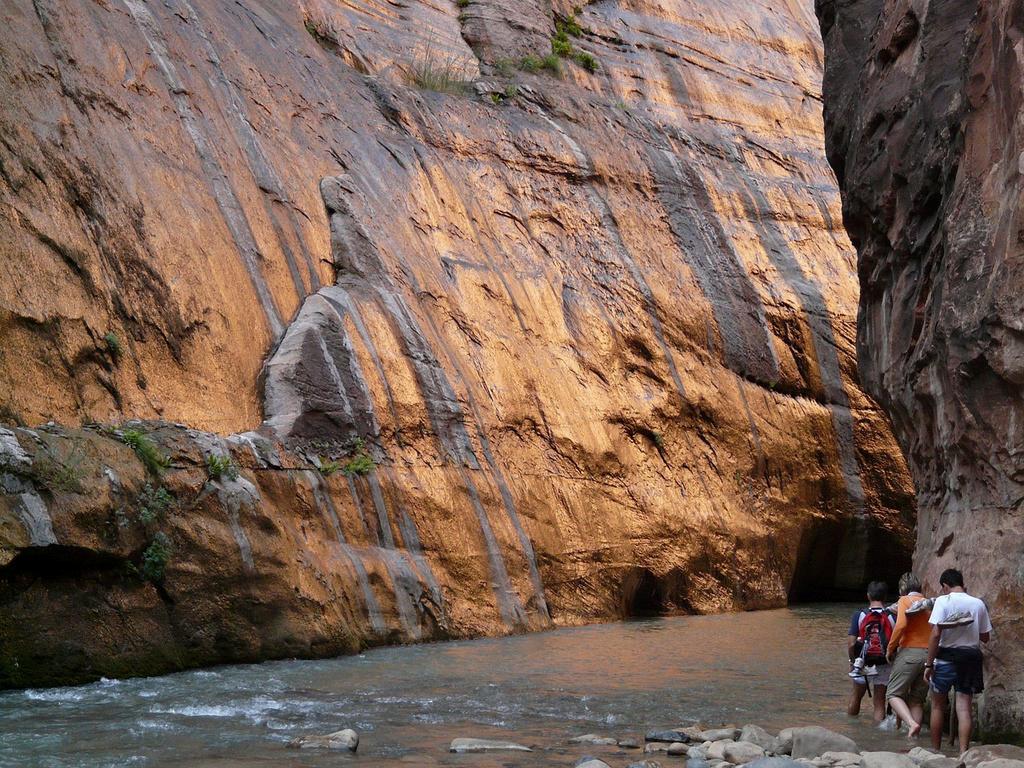
The summer solstice falls on June 21st. At Zion, this means something particular.
The canyon runs roughly north to south, which means the long summer days bring direct sunlight into the slot for a window of midday hours that does not exist in winter or fall. Standing in the Narrows at noon in late June, you may see the canyon floor illuminated the river catching the light, the iron oxide in the sandstone glowing amber and gold, the water surface fractured into a thousand moving pieces of brilliance.
The Zion snail Physa zionis is found nowhere else on earth. It lives on the wet canyon walls in the micro-habitat created by the seeping springs. One of the most geographically restricted endemic species in North America. The canyon walls are its entire world.
Rainbow trout hold in the deeper pools and cool shaded runs, visible from the banks if you move slowly. Dippers small gray birds built for moving water nest on ledges above the river and can walk underwater, hunting aquatic insects along the riverbed.
Rangers and frequent visitors call it “the glow”. It lasts perhaps an hour. Then the walls shift the angle of light and the canyon returns to shadow.
If you have never hiked the Narrows in summer, this is the reason to go.
The canyon walls are its entire world.

Zion Park Blvd Magazine , Vol. 1, No. 2 (Summer Solstice 2026) | © 2026 Morrison Vast Microzine™ Press. All rights reserved.
“The Geometry of Light: At the Speed of Sunrise”
Axis Mundi, Volume 1: The Order of the Cosmos
Produced by: Retrograde Motion Pictures
Editor’s note: I met the Valentines a few years back and fell in love with their passion. Two beautiful humans allowing us to see through their eyes. The Valentines recently hosted a special screening of Axis Mundi, Volume 1: The Order of the Cosmos on Thursday, July 9, 2026, at Clark Planetarium in Salt Lake City. Full details on their ongoing work and project archive can be found at the end of this story.
Official Trailer: https://vimeo.com/1078768006
Produced by: Retrograde Motion Pictures
Long before clocks marked our hours and calendars divided our weeks, humanity measured time differently. The rising sun. The changing shadows. The first light of summer. The longest night of winter.
Across continents and cultures, civilizations built monuments, villages, temples, and sacred spaces that acknowledged the sky above them. Architecture was never simply shelter it was a conversation between earth and heaven.
For researchers David and Chloe Valentine, that conversation has become a life’s work.
Now relocating to the Capitol Reef Field Station in the heart of Utah’s red rock country, the couple is beginning a new chapter dedicated to environmental education, sustainability, and documenting one of humanity’s oldest relationships: our connection to the movements of the sun and moon.
The off-grid field station, operated through a university partnership, serves as a living classroom where students of geology, biology, photography, writing, and environmental science experience the landscape not simply as observers, but as participants. Solar power, well water, and sustainable living are woven into daily life, reflecting the same natural rhythms that have guided civilizations for thousands of years.
Their own journey began with a work of art. At the Edge of the Cedars Museum in Blanding, Utah, artist Joe Pachak created SunMarker a monumental work designed to interact with sunlight throughout the year. During the solstices and equinoxes, light passes through the sculpture in remarkably precise ways, transforming it into both artwork and astronomical instrument.
What began as a photography project soon became something much larger.
The Valentines returned again and again, documenting the changing light through every season. From there, their work expanded to Hovenweep, Chaco Canyon, and eventually to ancient ceremonial landscapes around the world.
Each journey reinforced the same remarkable truth.
For thousands of years, people carefully observed the heavens. They aligned buildings, plazas, stone circles, and sacred spaces with sunrise, sunset, moonrise, and the turning points of the seasons not for novelty, but because these celestial events shaped agriculture, ceremony, navigation, and daily life.
“We’re interested in how people have related to the sky and the earth across time,” Chloe explains. “And how we might begin creating those relationships again.”
Perhaps nowhere is that invitation more timely than today. Modern life has largely disconnected us from the cycles that quietly continue overhead. Our calendars tell us when meetings begin, but rarely acknowledge the summer solstice, the autumn equinox, or the longest night of the year.
Yet the Earth continues its ancient dance.
The sun still rises along a different point on the horizon every day. The moon still follows its own graceful rhythm. The seasons continue to turn exactly as they always have.
Recognizing this disconnect inspired one of the couple’s most practical creations: a Luna-Solar Calendar.
Unlike traditional calendars that place months and weekdays at the forefront, their calendar is organized around the phases of the moon while still incorporating the familiar Gregorian schedule. Solstices and equinoxes receive equal prominence, gently reminding us that these celestial milestones remain as meaningful today as they were to those who first watched the skies.
The calendar itself is also a work of art, featuring breathtaking landscape and astronomical photography captured by David during years of field research.
Their exploration reaches far beyond Utah.
One recent expedition took them to the Callanish Stones on Scotland’s Isle of Lewis, one of Europe’s most significant prehistoric stone circles. Like Utah’s ancient sites, the massive standing stones were carefully positioned to acknowledge celestial events, connecting communities across oceans through a shared understanding of the sky. The couple’s travels have also carried them to ancient observatories in Uzbekistan, China, and India — different continents, different millennia, the same human impulse.
Closer to home, they continue documenting Nancy Holt’s iconic Sun Tunnels in Utah’s Great Basin Desert four enormous concrete cylinders precisely aligned with the summer and winter solstice sunrise and sunset. Created in the 1970s, the installation reminds visitors that even contemporary artists continue humanity’s enduring dialogue with light.
Experiencing these places requires patience.
The Valentines often spend several days waiting for a single sunrise or sunset. Sometimes clouds obscure the event entirely, requiring another journey months later. Winter nights can bring bitter cold, while remote desert locations demand endurance and careful planning.
But for them, that waiting is part of the experience.
“The power isn’t necessarily mystical,” Chloe reflects. “It’s about tuning into how the world naturally works.”
That philosophy also guides their documentary series, Axis Mundi, produced through Retrograde Motion Pictures — an ongoing exploration of archaeoastronomy and cultural astronomy. The films examine how ancient architecture embodies sophisticated astronomical knowledge while emphasizing responsible stewardship of these remarkable places.
Recognizing that increased exposure can unintentionally threaten fragile archaeological sites, the Valentines have intentionally limited the public release of certain films, choosing curated screenings over unrestricted online distribution whenever necessary.
Protecting the places they love has become just as important as documenting them.
In an age of instant streaming, it is a quietly radical stance: some films are worth waiting for, and some places are worth protecting more than promoting. Volume by volume, season by season, Axis Mundi is proving that slow cinema made at the speed of sunrise still has the power to move us.
The work of David and Chloe Valentine reminds us that the geometry of light is not merely something to observe. It is something we are invited to live within.
Axis Mundi, Volume 1: The Order of the Cosmos
This special screening debuted as a featured installment of Clark Planetarium’s Science Utah lecture series on July 9, 2026, followed by a live filmmaker Q&A. Because the directors intentionally practice a limited, curated release model to protect and preserve fragile archaeological sites, future screenings and updates on the Luna-Solar Calendar project can be tracked directly via their network.
Watch the Official Trailer: https://vimeo.com/1078768006
Event Archive Reference: Clark Planetarium, 110 South 400 West, Salt Lake City, Utah
A special thank you from Morrison Vast Media and Zion Park Blvd Magazine to David and Chloe for their gifts