Governor of Victoria, Her Excellency Professor the Honourable Margaret Gardner AC
COUNCIL & STAFF
PRESIDENT
Lucy Maddox
TREASURER
Raymond Barro
EXHIBITING
Bruce Baldey VAS
Meg Davoren-Honey OAM VAS FVAS
Lucy Maddox
Nathalie Anne Henningsen
Gino Severin
Liz Moore Golding VAS
D’Arcy Rouillard
NON-EXHIBITING
Rosemary Noble HON FVAS
Ron Smith OAM HON FVAS
MANAGER & SECRETARY
Kari Lyon PhD
ADMINISTRATION OFFICER & 2IC
Rhiannon Lawrie
MARKETING & DESIGN COORDINATOR
Catherine Jaworski
EDUCATION & PROGRAMS OFFICER
Lucy Wilde
INSTALLATION & CURATION SERVICES
Sam Bruere
GALLERY ASSISTANT
Thomas Bladon
GALLERY ASSISTANT
Olivia White
ARCHIVIST
Anne Scott Pendlebury HON FVAS
HONORARY HISTORIAN
Andrew Mackenzie OAM HON FVAS
MAGAZINE EDITOR
Bruce Baldey VAS
MAGAZINE DESIGNER
Catherine Jaworski
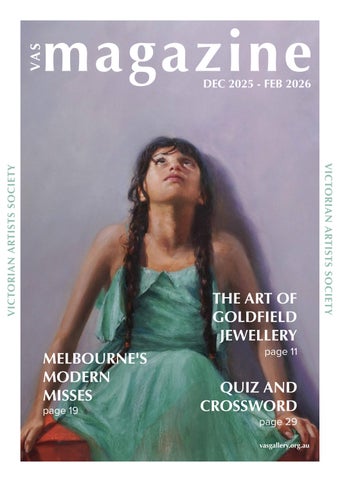
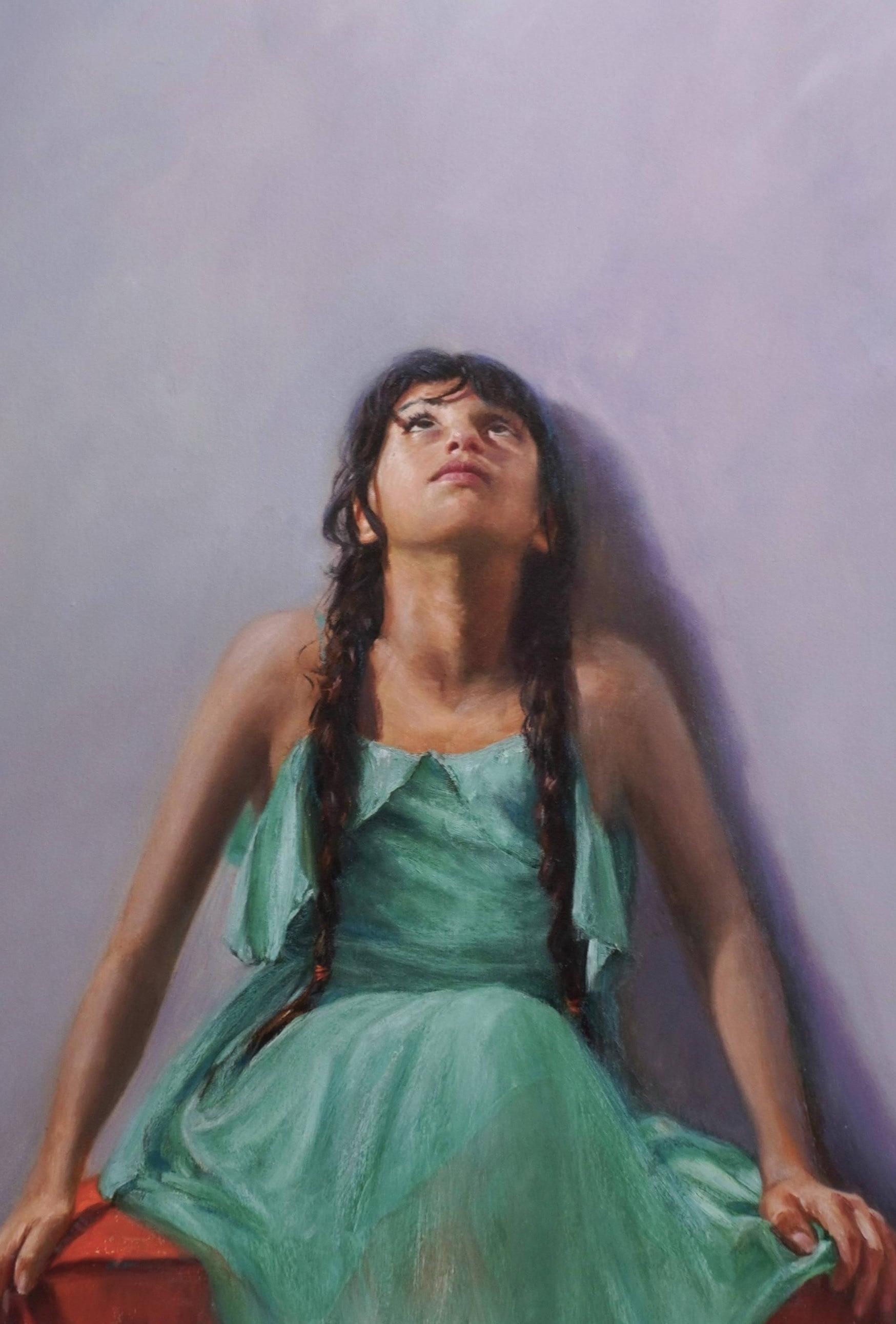
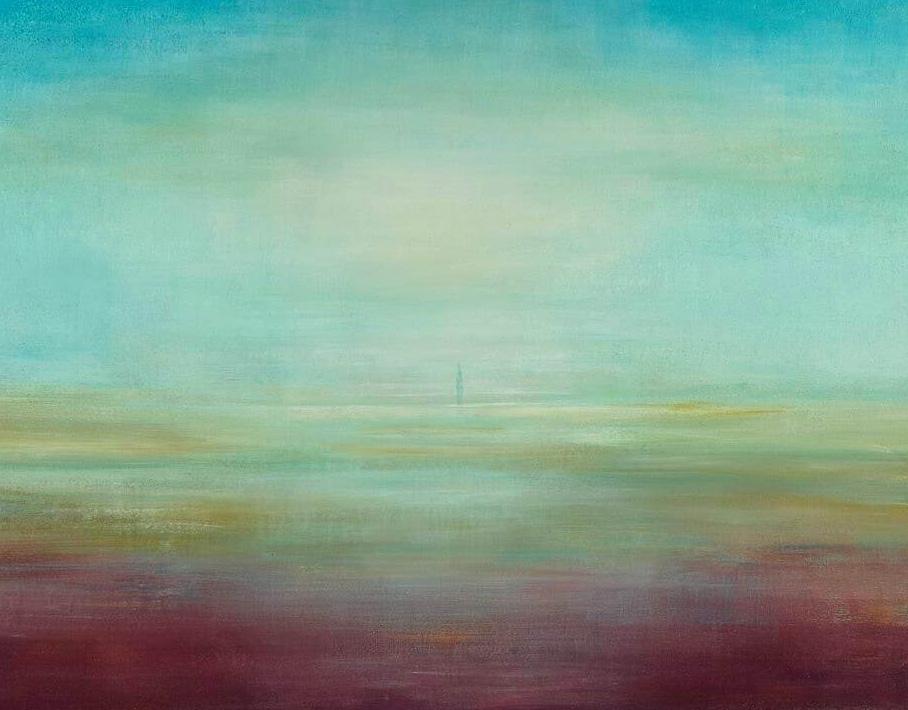
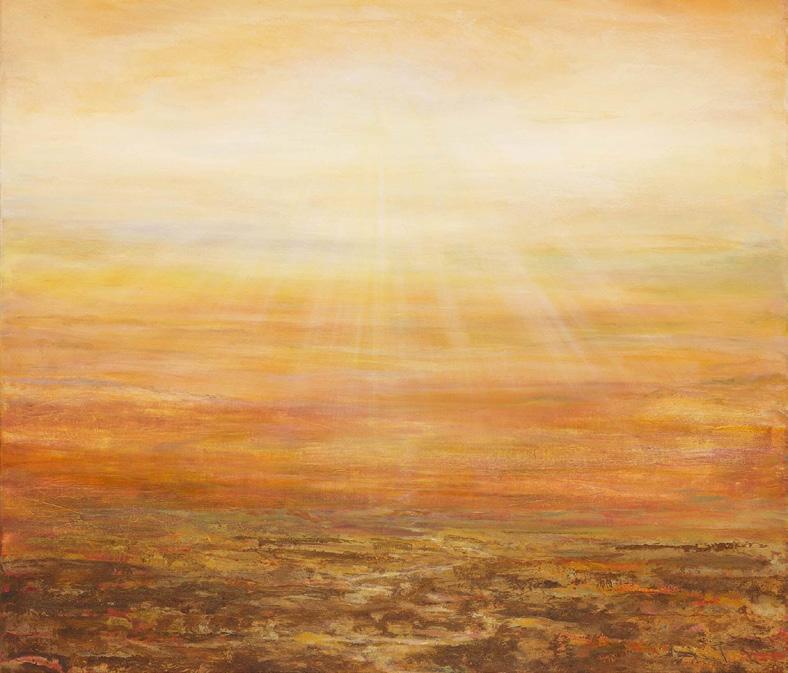
Cover Image: Gaze Beyond, Hamid Abbasi, (cropped)
The VAS Magazine is printed through the Office of the Victorian Artists Society. Opinions expressed herein are not necessarily those of the VAS Council or the editors of this magazine. Articles from members will be appreciated. Contributions will be published on a strictly honorary basis and no payment will be made. The Victorian Artists Society acknowledges the Traditional Owners of the land on which we meet. We pay our respects to Elders, past and present, and the Aboriginal Elders of other communities.
INSIDE THIS ISSUE
The Art of Spring:
A Season of Selection Ends
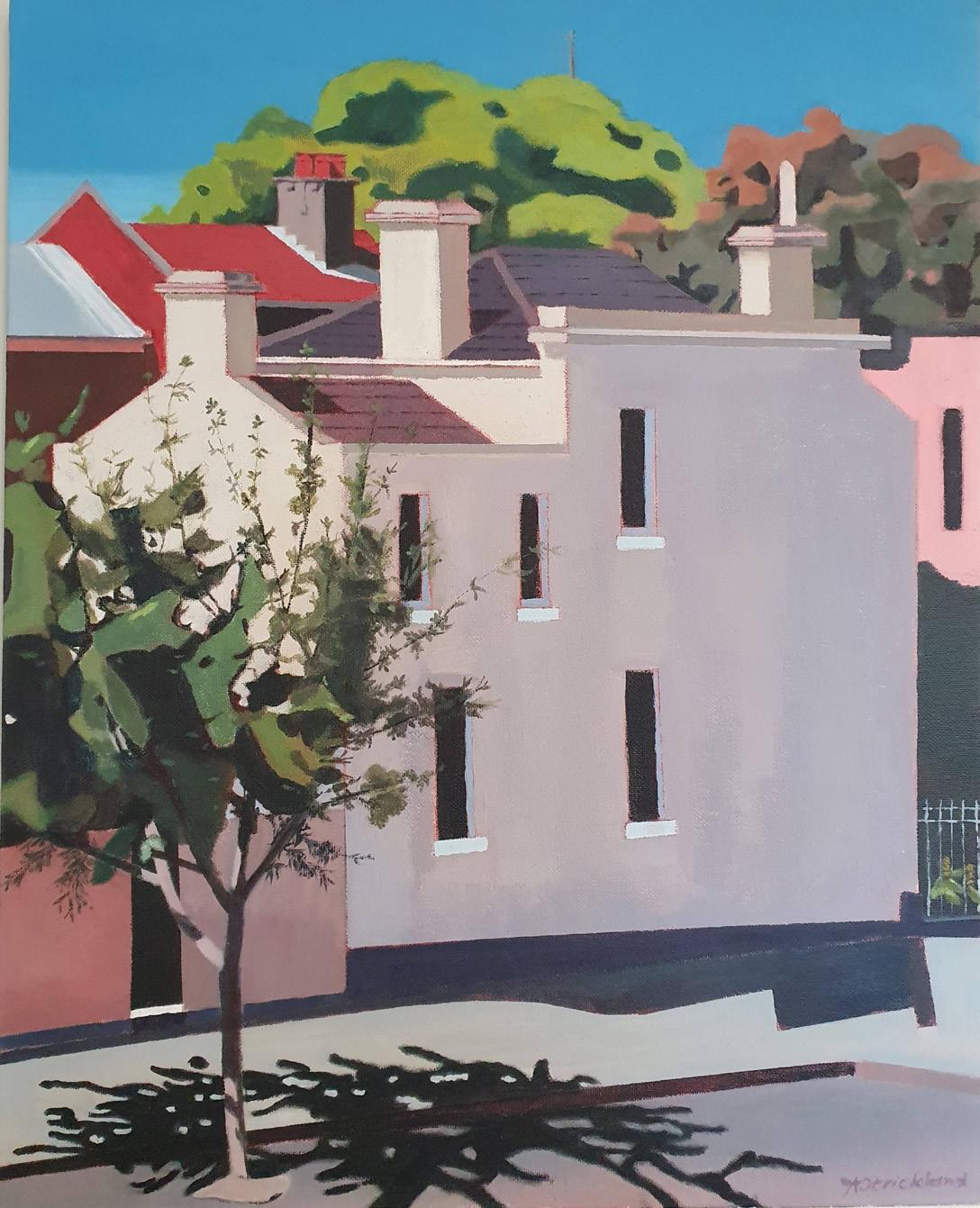
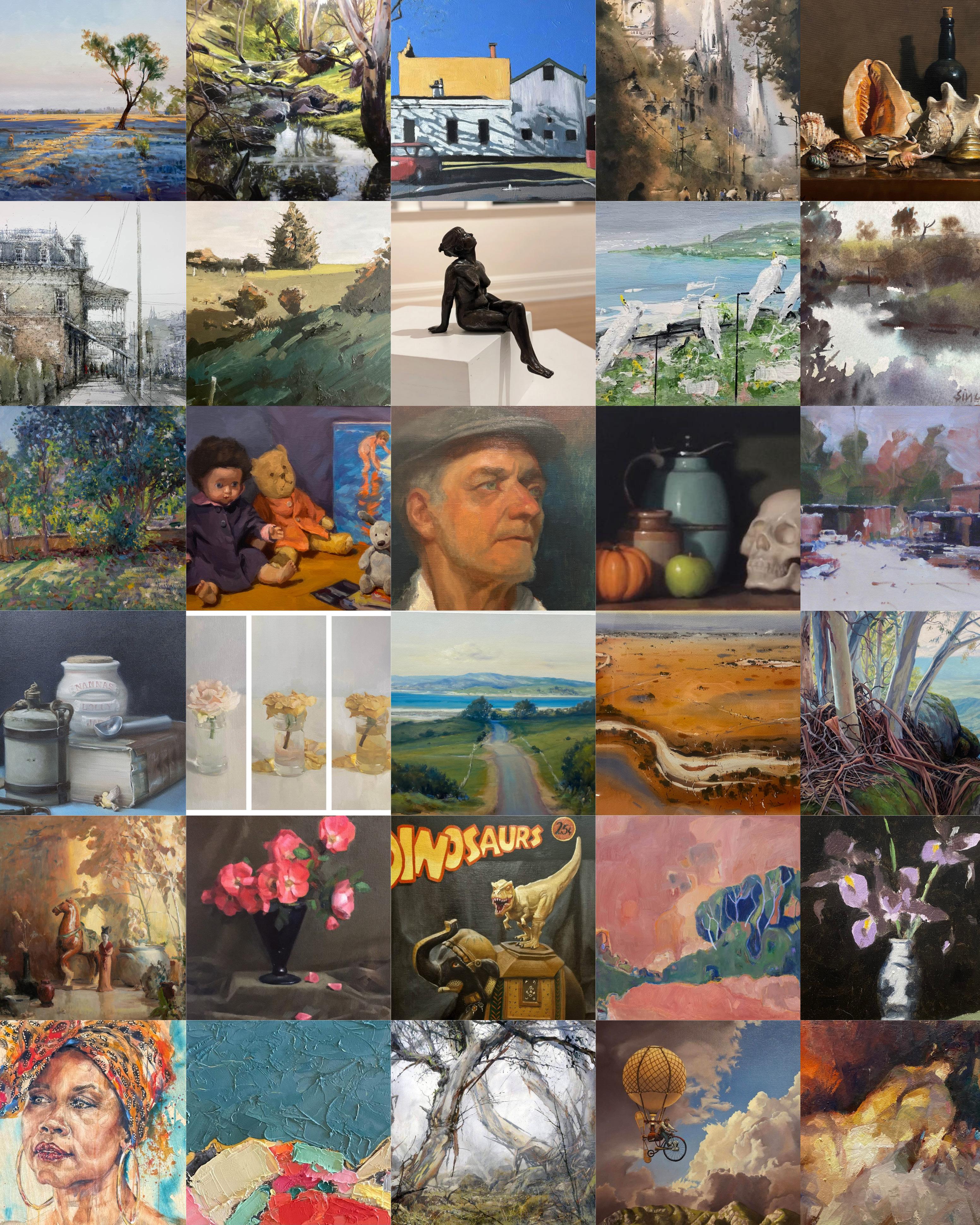
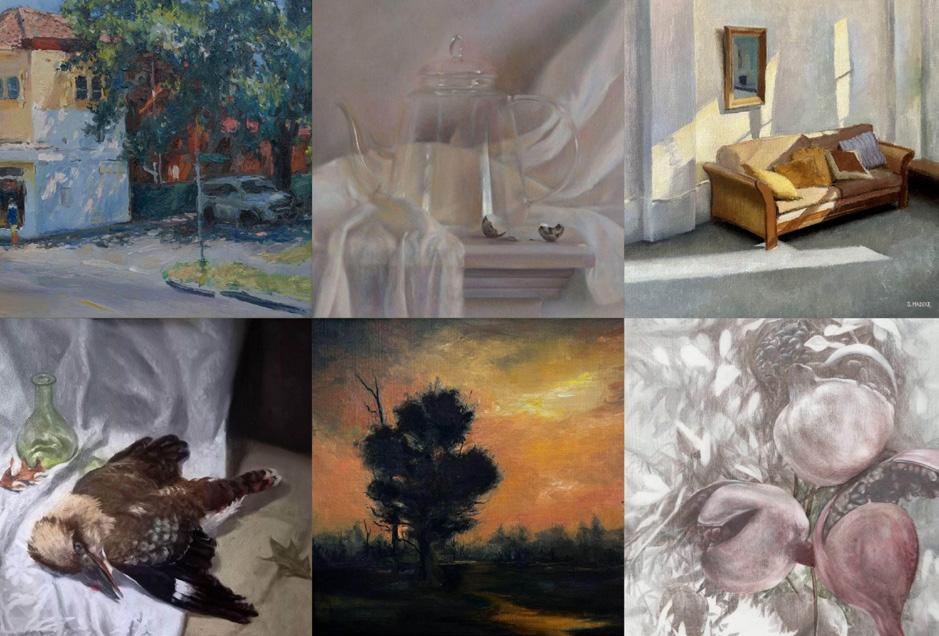
As we reach the end of our year, members brought to our final Select Exhibition reflective work to ruminate on before the busier months begin. How exciting to have one of our students, Belinda Strickland, win first prize for the first time with her work Corner of My Street. Seeing her progress on this piece in Lucy Fekete’s Sunday class and then exhibit it in the gallery made us so proud. Hamid Abbasi’s Gaze Beyond received the Curator's Award, a compelling artwork of a girl thoughtfully looking
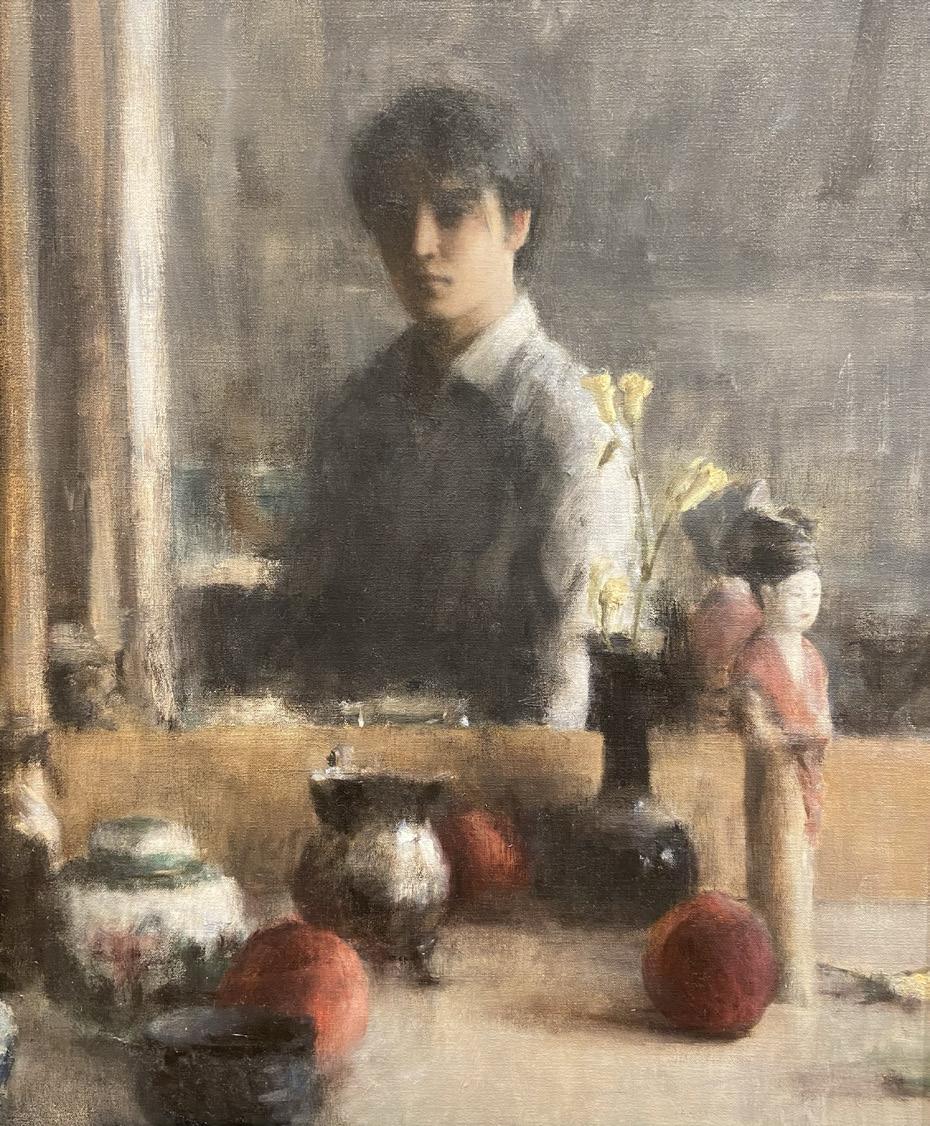
upwards. Abbasi really captured a perfect subject to use for a scale like this, leaving the viewer a commendable amount of space to live in. Other notable works were Madaline Harris-Schober’s Remnants of Departed Days, an interruption of the brighter spring pieces with a moody landscape that she pulls off so consistently. Nicholas Chen submitted his haunting selfportrait, proof of a master at work. We thank those who entered; VAS Select Exhibitions get stronger and stronger each year.
words Rhiannon Lawrie
Corner of My Street, Belinda Strickland Winner VAS Spring Select 2025
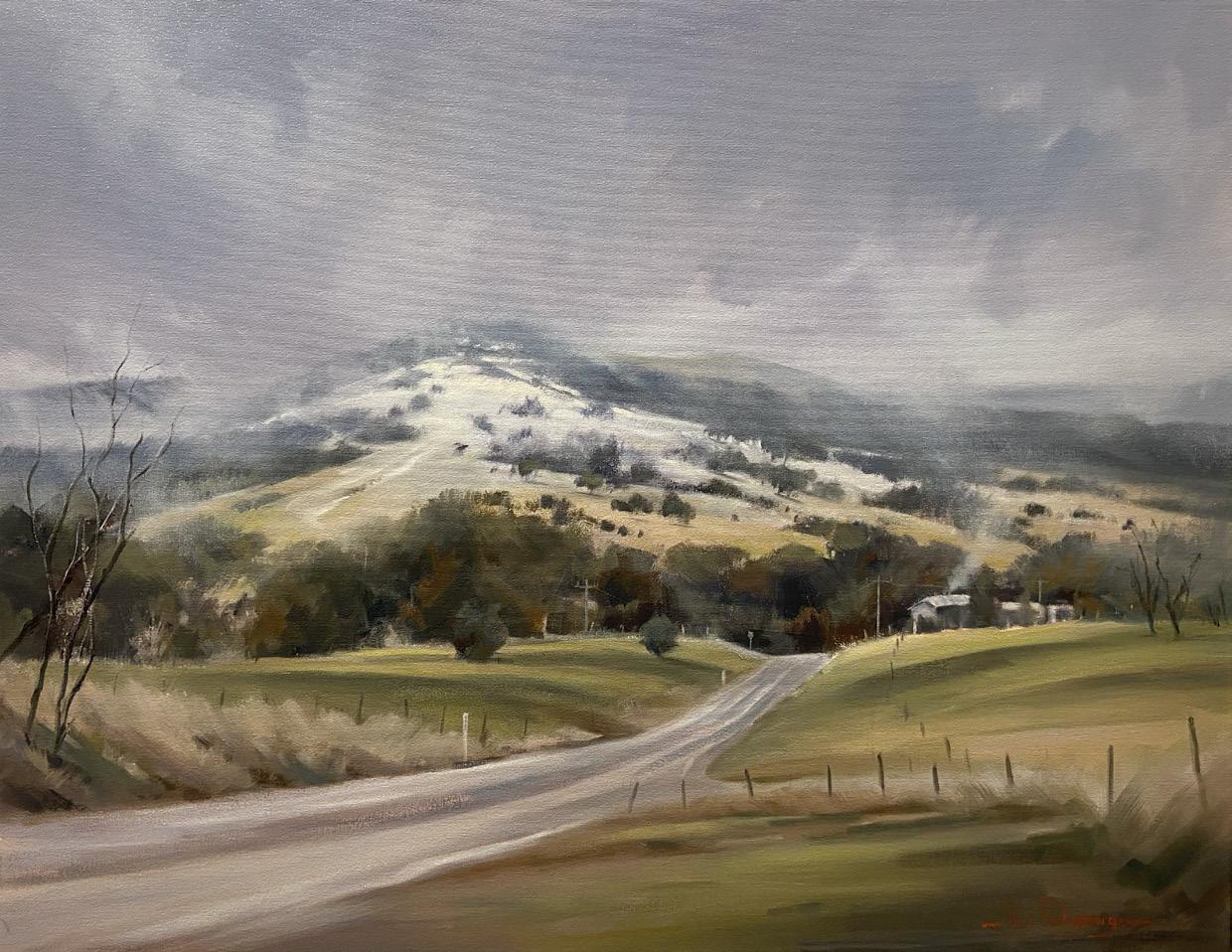
A Winter's Day Mood, Victorian High Country, Vivi Palegeorge
Among the Still Life, Nicolas Chen
Afternoon Light, David Chen
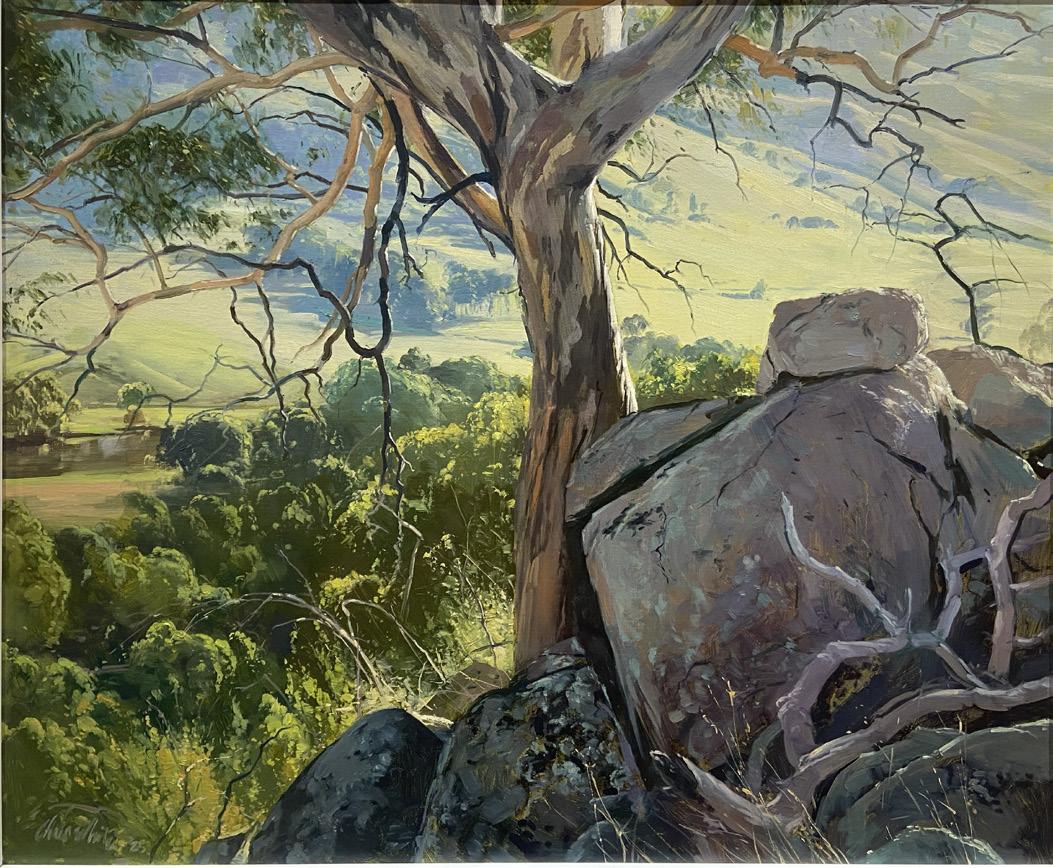
Upper Murray Valley, Chris White
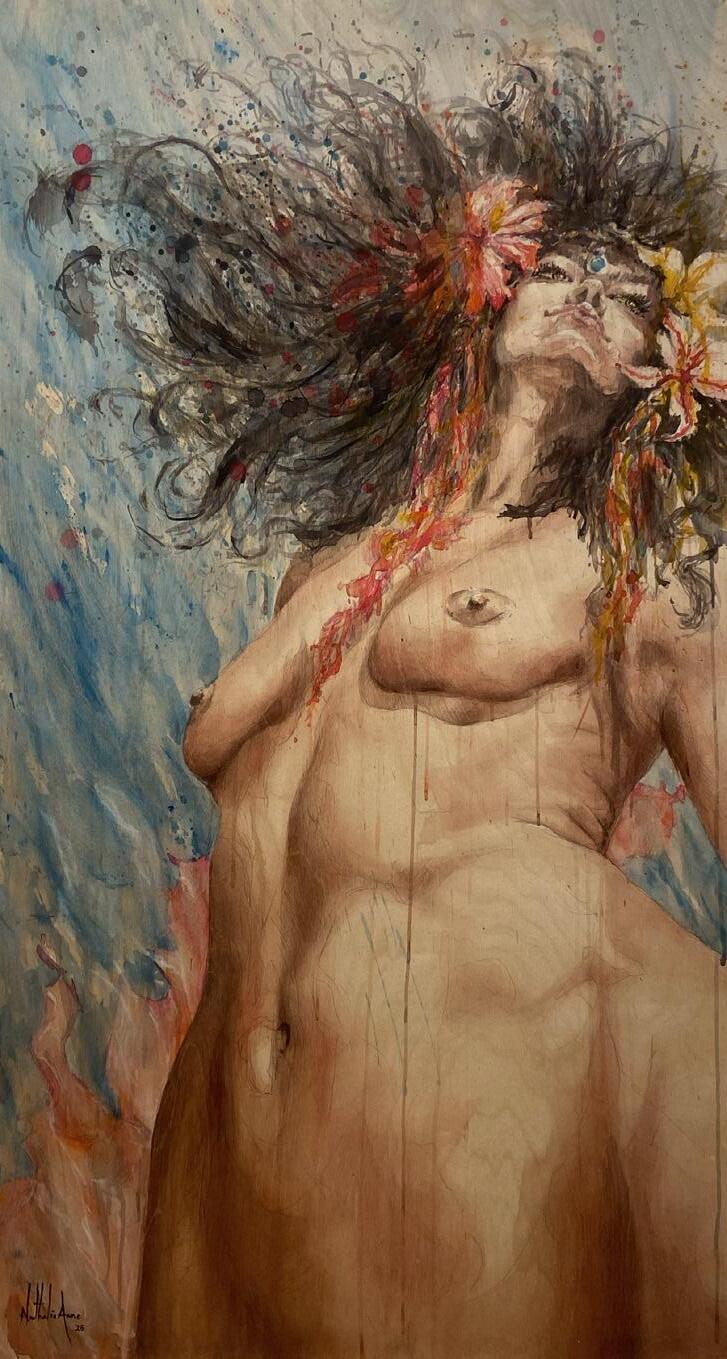
Naïade, Nathalie Anne
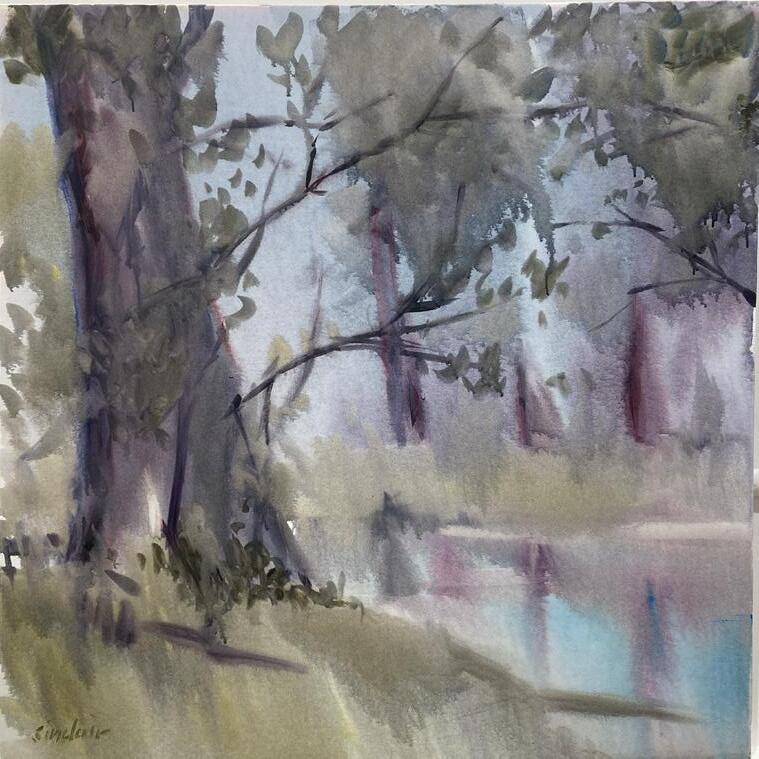
Winter Morning, Clive Sinclair VAS FVAS
JOYCE VERONICA MCGRATH OAM
19/10/1925 - 13/09/2025
Arts
Librarian, artist, archivist, collector
words Dinny Birrell
Joyce McGrath overcame profound adversity when a child to become a pioneering arts librarian, transforming the arts section of the State Library of Victoria into a world class repository of information.
Born at Red Cliffs near Mildura to a soldier settler who was suffering from pulmonary tuberculosis that he contracted during WW1 after he enlisted in 1915 and was subsequently invalided home in 1917, Joyce was diagnosed at the tender age of four with tuberculosis
in the hip. She spent the next five years encased in plaster, that was changed every six months, in the hospital in Frankston, far from her family. Her father, an unwelcome visitor with his infectious tuberculosis, hired a boat to sail past the hospital in the hope that Joyce might see him wave to her. He died in 1933, before Joyce was finally discharged in 1934 at the age of nine.
Her interest in becoming a practising artist first became evident in her drawing on the beach, during
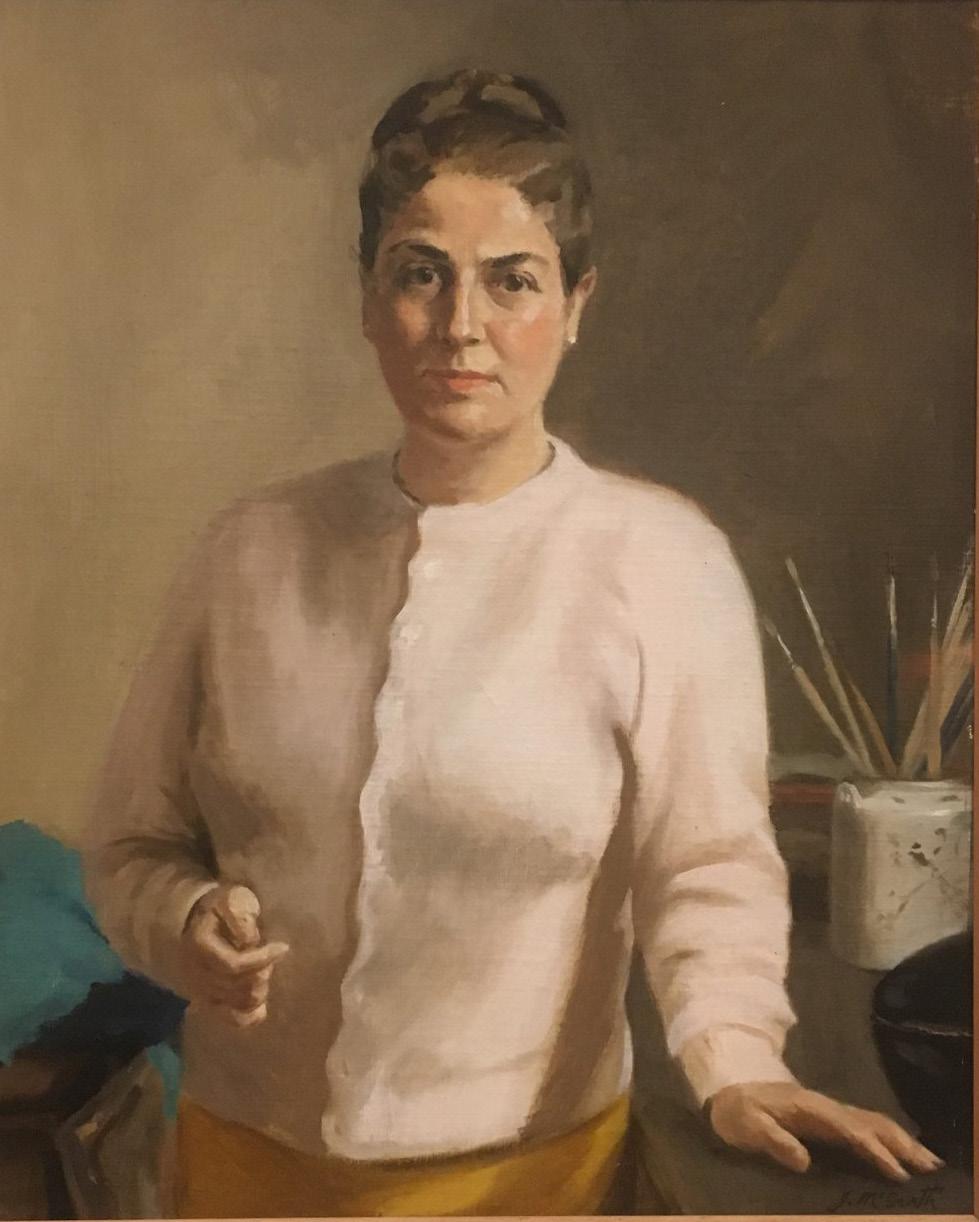
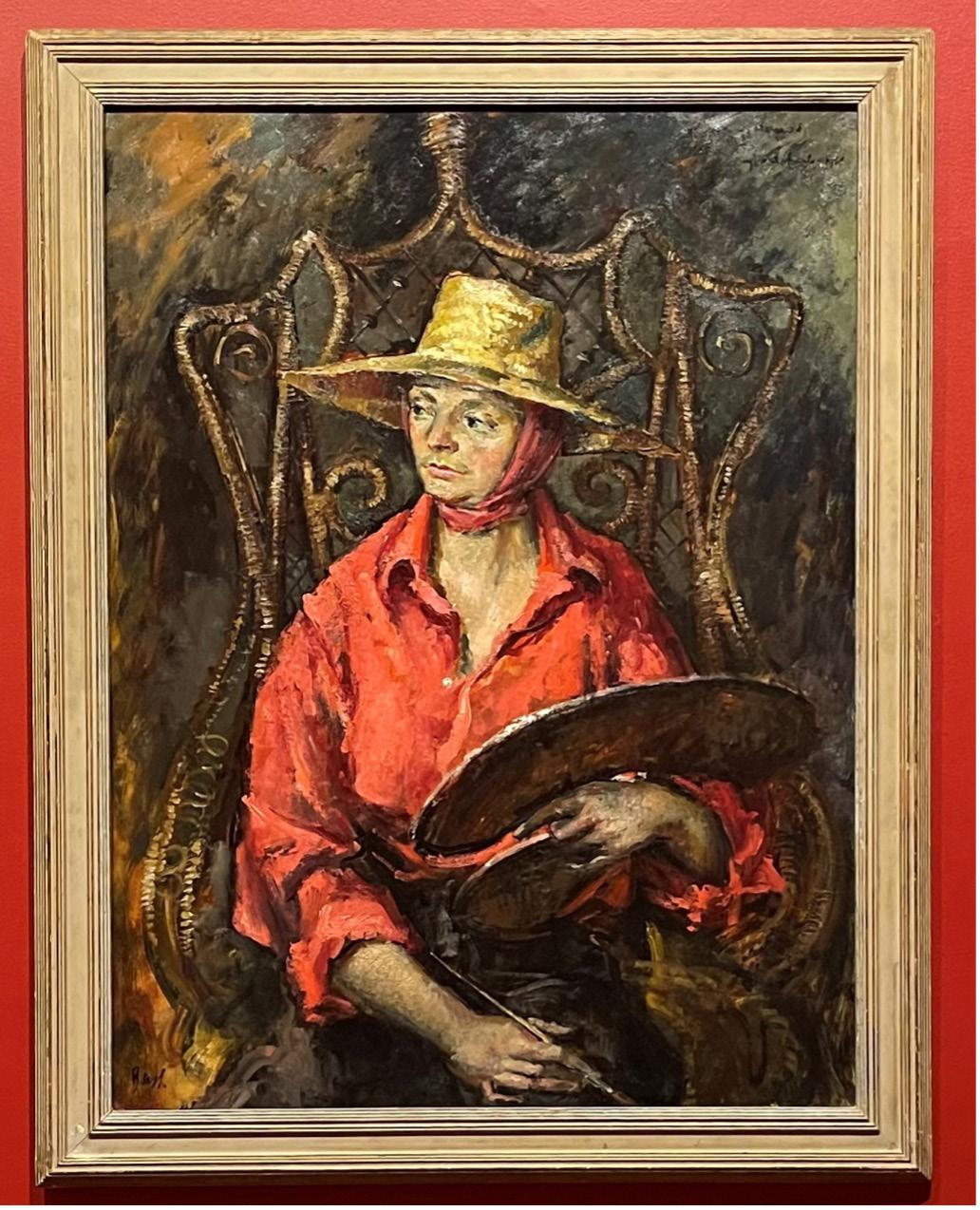
Self Portrait, Joyce McGrath, oil on canvas, 1964
heliotherapy when she was hospitalised in Frankston, and she went on to study drawing at RMIT with Harold Freedman and painting with A. D. and Amalie Colquhoun in their city studio, travelling to Europe and London in the 1940s.
Joyce overcame her disability and the lack of positions for women after the war, joining the staff of the State Library of Victoria in 1952 and proceeded to transform the library's modest Art, Music and Performing Art Library (AMPA) into a collection unrivalled by any other library in Australia.
In 1968, Joyce was awarded a Churchill Scholarship and toured art and music libraries in Europe, the United Kingdom and North America, also visiting Greece and Hong Kong. She established the SLV's Australian Art Archives (AAA) collection with thousands of files on Australia artists, art societies and galleries and it was this work that earned her the Medal of the Order of Australia as well as the inaugural Distinguished Service Award of the Arts Libraries Society of Australia and New Zealand.
Joyce served on the Council of the Victorian Artists' Society, painting with the Friday Group
and participating in the People Painting People fundraiser instigated by Past President Noel Waite. A member of the Lyceum Club, she was on the Art Advisory Committee. Joyce continued her practice as an artist throughout her professional life at the SLV and she is represented in the State Library of Victoria collection with a striking portrait of the musician Peggy Glanville-Hicks. She is represented with a portrait at Melbourne Grammar School, portraits at Mannix College, at Monash University and numerous private collections.
In 2014, Joyce gifted a collection of 30 paintings from the Meldrum tonal school of art to the Mildura Arts Centre. Artists represented are Max Meldrum, Amalie and Archibald Douglas Colquhoun, Rex Bramleigh, Percy Leason, Harley Griffiths, Peter Glass, Alan Martin, Ron Crawford, Ray Hewitt, Dorothy Whitehead and Judith Wills.
Joyce died a month short of her 100th birthday, ending an extraordinary life and leaving many loving friends, relatives and a myriad of godchildren. Her faith was a very important part of her life.
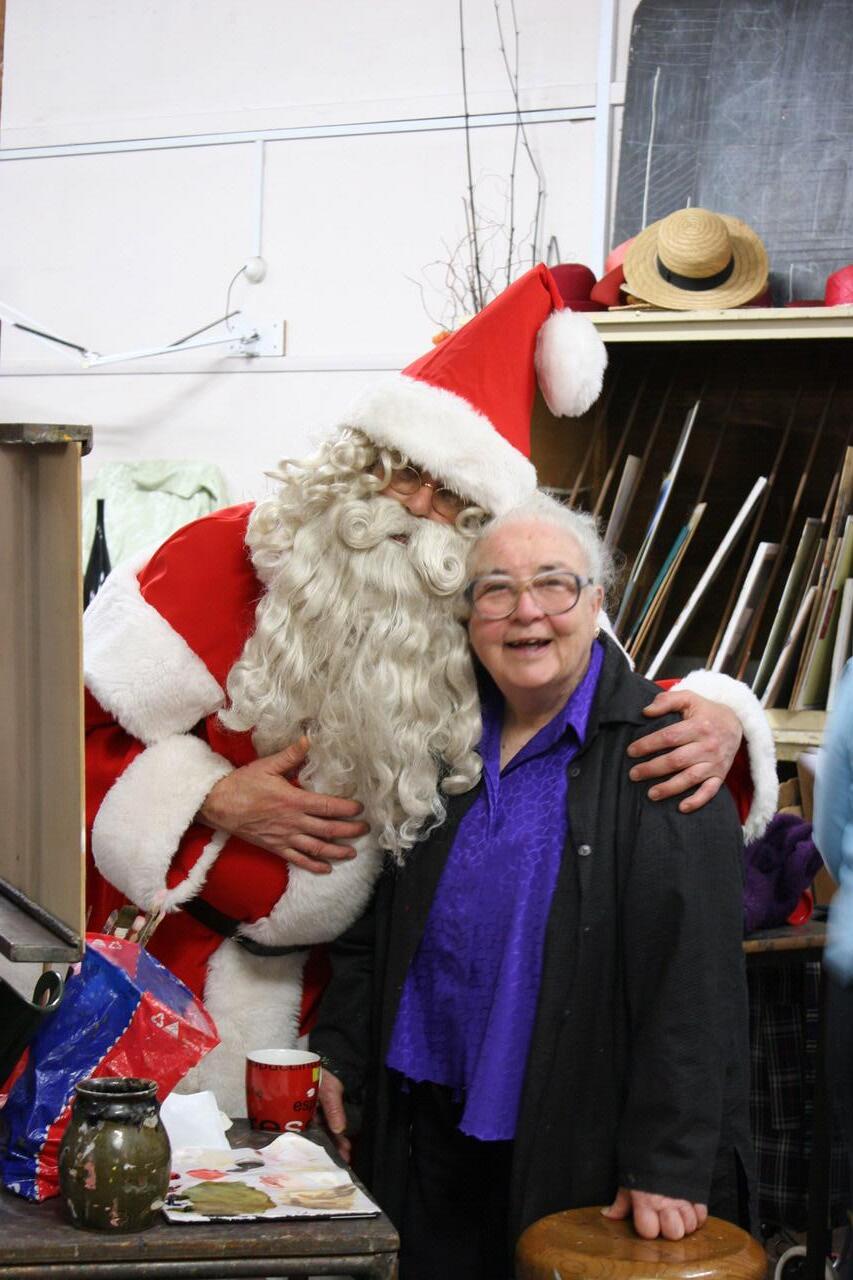
Joyce and our model on 2 Dec 2011 at Friday Group VAS
Female artists play a significant role in introducing modernism to Australian art in the 1920s and 30s. Sydney dominates the scene, but Melbourne produces trailblazers too in the two printmakers and close friends, Ethel Spowers and Eveline Syme.
words Ian Hobbs
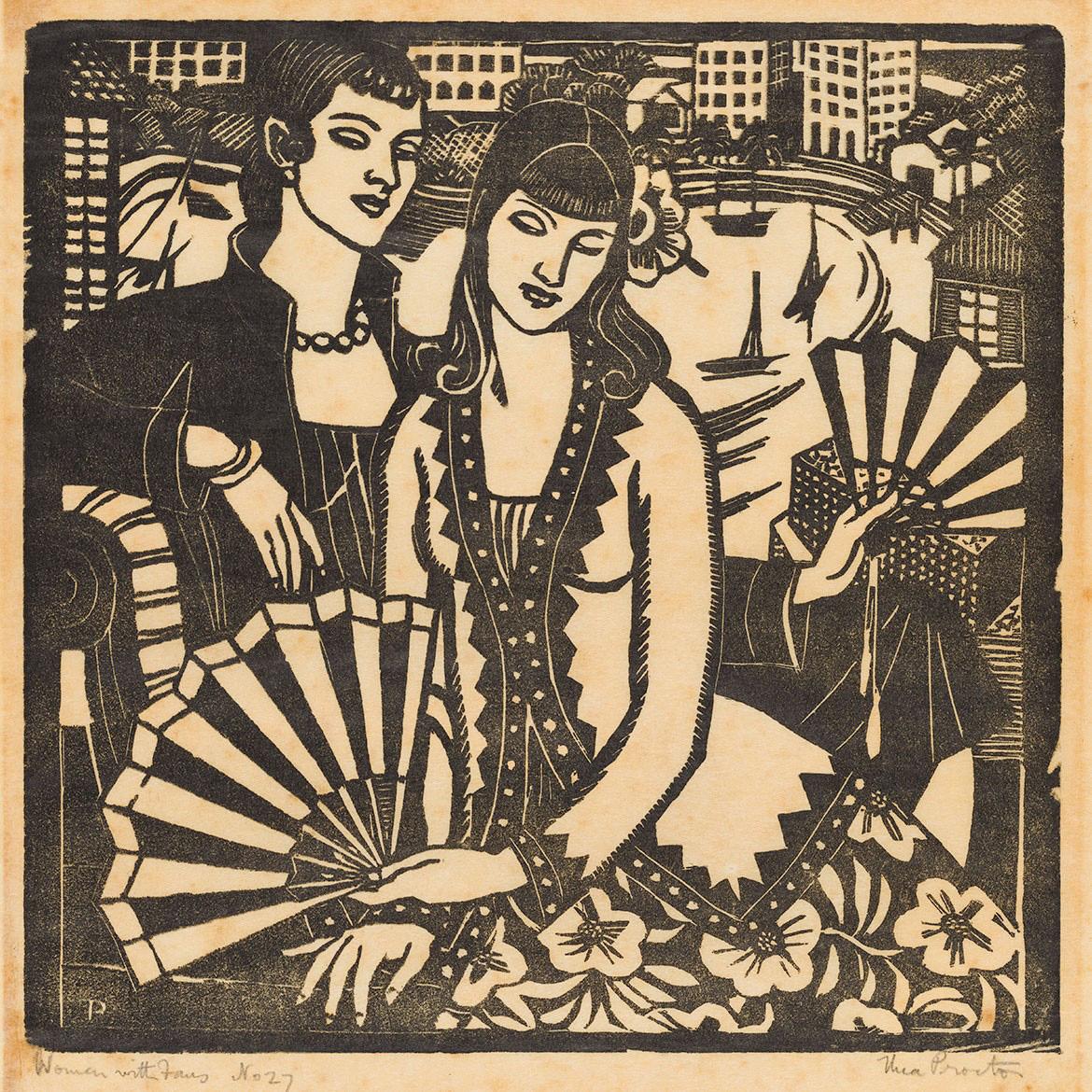
Women With Fans, Thea Proctor, 1930, woodcut Art Gallery of New South Wales
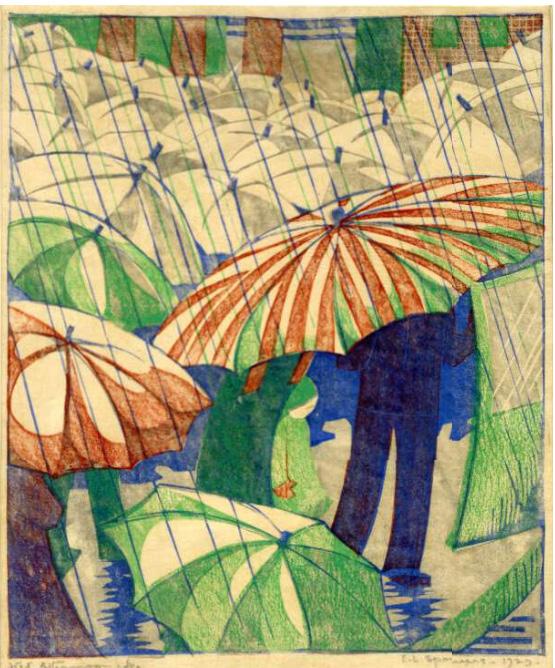
Inspired after attending classes at London’s Grosvenor School of Modern Art in the late 1920s, Spowers and Syme find colour linocut prints the perfect vehicle for the flat decorative shapes, simplicity of form and jazz-age rhythms of the art deco style.
“Art for our time” is their mantra.
Around the world this time is changing rapidly, both technologically and socially. In Australia, the patriarchal world of conservative art that is naturalistic and objective is under challenge from liberated women who have recently gained voting rights and are better educated. New techniques and a gendered vision usher in the new age in the wake of World War I.
The German Expressionists adopt floor linoleum for relief printing in the early 1900s, complementing wood block printing that had been in use since antiquity. Spowers and Syme, and Adelaide’s Dorrit Black, champion linocuts in Australia, producing images not seen here before.
Change, in the form of modern art, does not fit well though with the institutions, societies and many artists.
The printmakers are labelled hobbyists, and more widely the male and female moderns often draw criticism from an old school that largely spurns the elevation of colour and subjective feeling over academic portrayal. But a special vehemence is reserved for women; fancy these “inferior” painters having the audacity to ‘intrude’ into the art scene is the cry from one state gallery director!
Of course, females are not only shortchanged in art. Syme studies Classics in 1907-1910 at Cambridge where at the time only men are conferred degrees, so she returns home and gains one at Melbourne University.
Spowers and Syme are “inseparable” lifelong friends. The daughters of rival Melbourne press barons, they attend Melbourne Girls Grammar, live in mansions in
Toorak and St Kilda and study and paint together at schools in London and Paris.
Their relationship intrigues art writers.
Historian, Helen Topliss, in her book Modernism and Feminism, states that Thea Proctor’s Women with Fans depicts Ethel and Eveline, but others are unsure. There is similar division of opinion over Spowers’ Resting Models, an intimate colour linocut of two nude females that some relatives allude to as having “autobiographical content”. Whatever the case, art commentator Victoria Perrin says their primary relationship outside family was with each other.
These two pioneers choose a career over marriage and child-bearing, a decision made easier by privileged circumstances. Both are active in a number of female groups and societies - the intellectual gathering known as the Catalysts, the Lyceum Club and Melbourne Society of Women Sculptors and Paintersas well as founding members of the Contemporary Art Group and
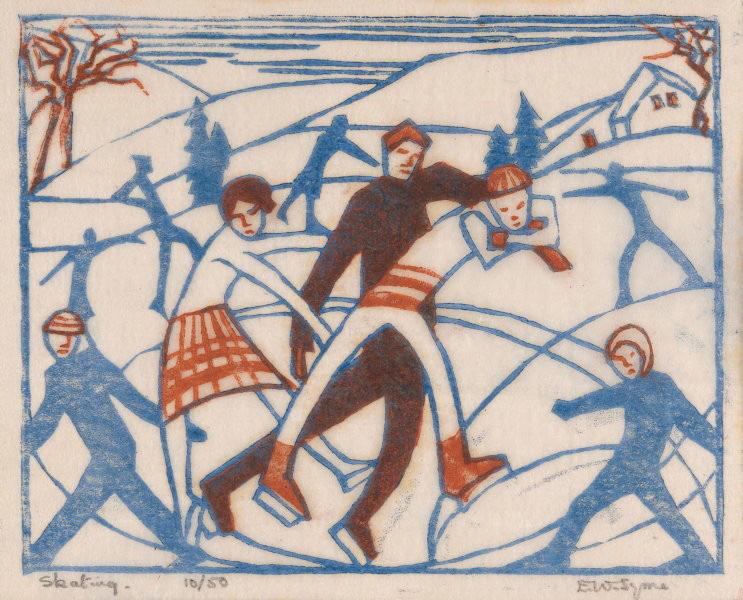
Skating, Eveline Syme, 1929, colour linocut Art Gallery of New South Wales
frequent exhibitors at the Victorian Artists’ Society.
Although they produce other works, Spowers and Syme are renowned today for their Grosvenor Schoolinfluenced linocuts that convey the energy of their era.
One of Spowers’ such revered images is Wet Afternoon. Anonymous figures shelter under a huddle of patterned umbrellas, the curves and repetition conveying a dynamism that captures the motion of wind and rain and the pace of everyday life. Syme’s choreographed snow scene in Skating shows figures in the foreground twisting and turning in full concentration while those in the background lean and teeter, with connected, intersecting lines drawn to accentuate the skaters’
gliding action.
At the Grosvenor, charismatic teacher Claude Flight promotes linocuts as a democratic medium, cheap and accessible, ‘to cost the average man no more than a daily beer or cinema ticket’ to purchase. Seems the art market has other ideas as a Spowers linocut realises $175,000 at a London auction in 2012 and this year Leonard Joel asserts ‘right now the print market is undergoing a quiet revolution.’
Today’s Australian linocut artists owe a debt of gratitude to Misses Spowers and Syme.
Wet Afternoon, Ethel Spowers, 1929, colour linocut British Museum
Karen Hopkins
artist spotlight
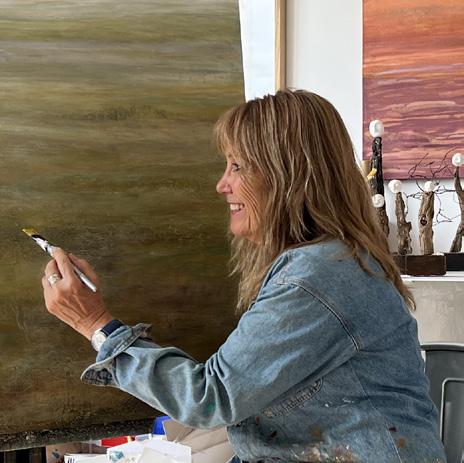
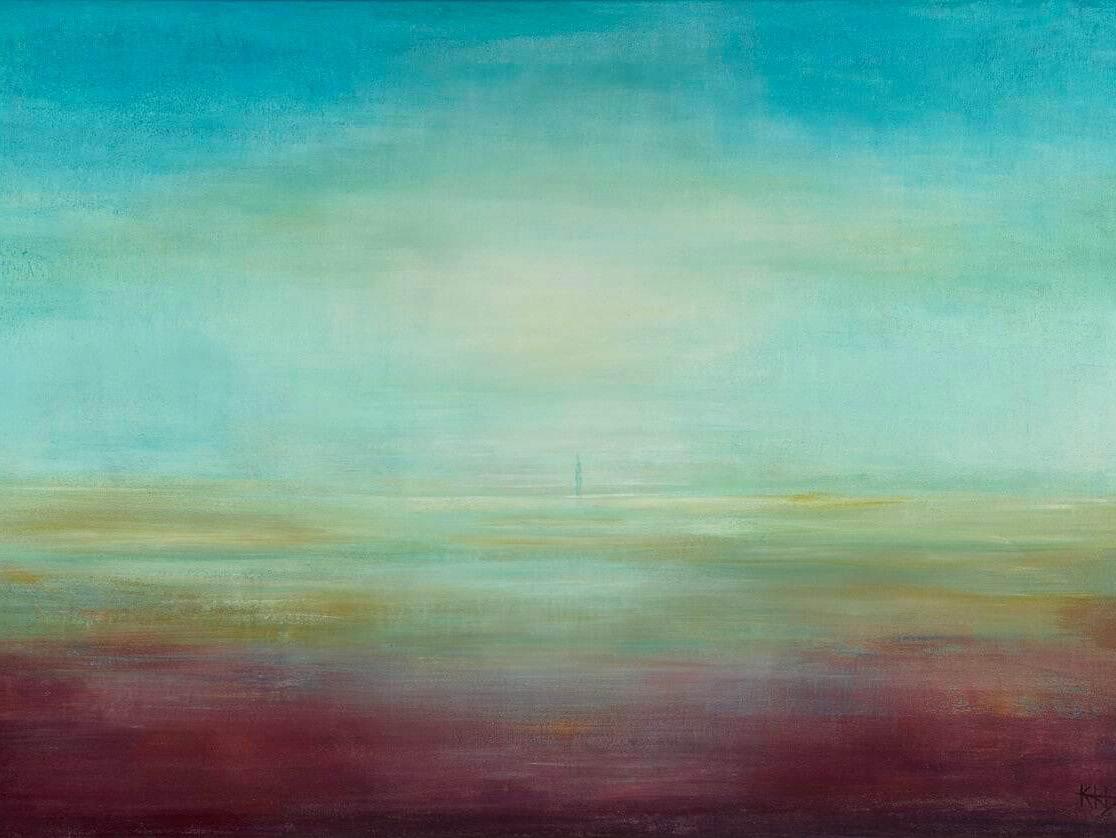
Karen Hopkins has been a professional artist for over 25 years and has artworks in numerous corporate and private collections both nationally and internationally.
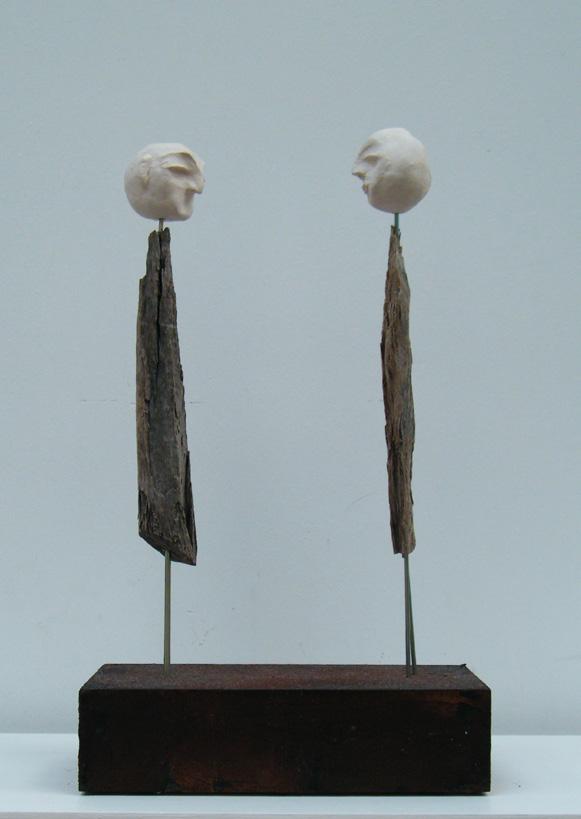
Karen is principally a painter and sculptor, however she enjoys experimenting by using a range of media and techniques as she feels this keeps her practice fresh and developing.
Karen is passionate about caring for the environment and often uses found or recycled objects in her
sculptures, and is exploring making her own paints. She is constantly drawn to the beauty and fragility of the natural world, and the complexity of the human condition. Karen feels art can transform the way we think and feel, enabling a connection to nature and each other.
She hopes through her work to take the viewer on a journey and explore the deeper levels that connect us all.
www.karenhopkinsart.com
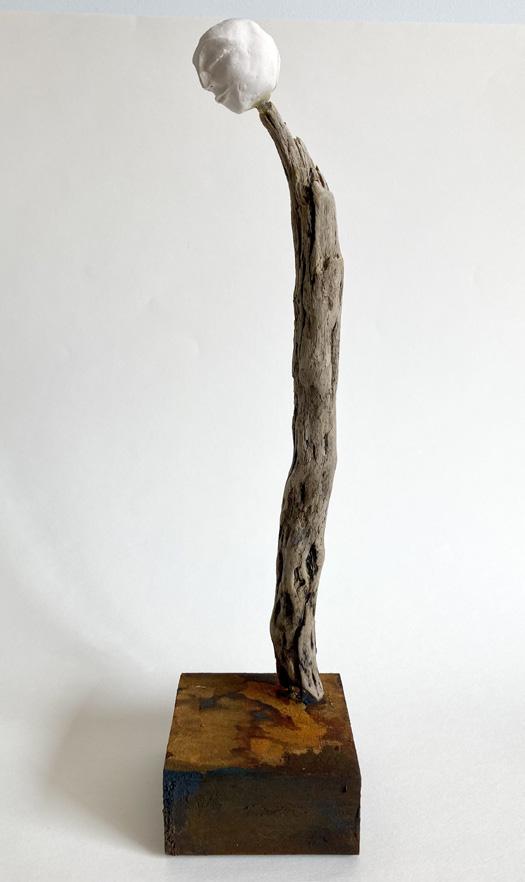
Leaving Only Footprints, Karen Hopkins
Lets Talk About It, Karen Hopkins
Fragile Earth Journey from Solastalgia to Eutierria, Karen Hopkins
Pause, Karen Hopkins
The Art of Goldfield Jewellery
Goldsmithing is an historic art and since ancient times goldsmiths have crafted personal jewellery. Medieval goldsmiths were organized into guilds and these became wealthy and central to the training of artists. Many of the greats commenced their careers apprenticed to a gold or silversmith. In Renaissance times these included Leonardo Da Vinci, Ghirlandaio, Brunelleschi, Ghiberti and Botticelli to mention a few. Gold jewellery remained fine art through peaks of industry in France and the great jewellers to the Tzar Romanoffs in Russia. As early as 1327 the ancient Worshipful Company of Goldsmiths in London received a Royal Charter, and as recently as 1891 they established the Goldsmith’s school. This being so, it is not surprising that with the
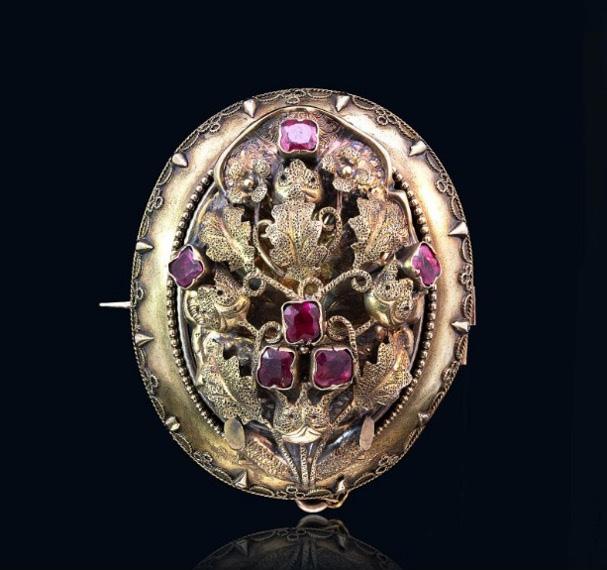
Australian gold rush, there was an influx of talented gold and silversmiths from England and Europe. Some of them, such as J.M. Wendt and Henry Steiner in Adelaide, were fleeing oppression in Europe. Miners who “struck it lucky” wanted to have gold jewellery to celebrate and display their good fortune. The results included exquisite pieces of goldfield jewellery in the form of gold brooches which are now very hard to find because so many were melted down for their gold value in hard times.
More than simple adornments, these brooches embodied the values, aspirations, and emotions of the people who wore or gifted them. Through their forms and symbolism, they offer a glimpse into the lives of colonial Australians.
words JD Park
Makers marks
Much of the early goldfields jewellery is devoid of hallmarks - consequently, the makers remain largely unknown. In some cases, idiosyncrasies of style allow the goldsmith to be identified. Later, some well-known names in Melbourne were Willis & Son, Duggin & Shappere, Rosenthal, Aronson & Co, Larard & Son and Lamborn & Wagner.
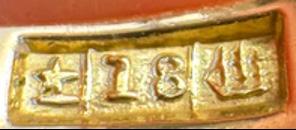
The ‘Manufacturing Jewellers Association of Victoria’, the first of its kind, was formed in 1889 and members of the association applied three or more distinctive marks. The first identified the manufacturer, the second was the purity of gold and the third was a symbol marking the gold quality - wheat sheaf for 9ct, sheep fleece for 15ct and a sailing ship for 18ct, giving assurance of the Australian gold quality. By 1901 the Association had 26 makers using these marks.
Australian Flora and Fauna Brooches
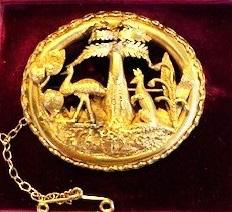
In the 1850s in Sydney, artisans created scenic brooches featuring Australian flora and fauna which are now Museum quality pieces because of their rarity and artistic merit. Two of these are illustrated –Alfred Lorking who frequently worked with small Shark Bay pearls and Hogarth and Erichsen whose work is characterized by emus, koalas and kangaroos with incorrectly shaped kangaroo ears which identified their work. These pieces were possibly the inspiration for the Federation symbol of the emu and kangaroo.
Miners' Brooches
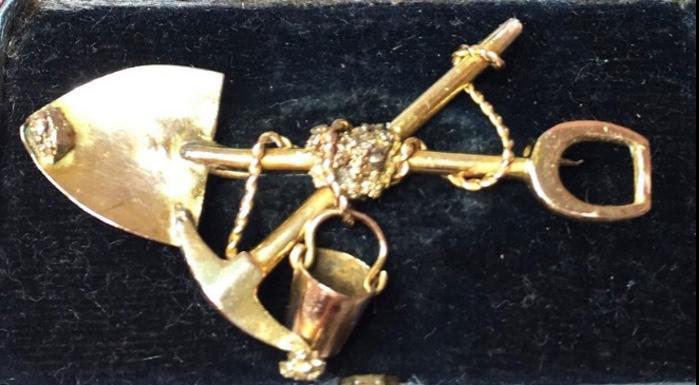
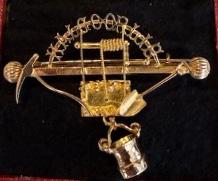
Miners’ brooches were distinctive forms of goldfield jewellery, often shaped as miniature versions of mining tools such as picks, shovels, pans, and even cradles. These brooches served both as a personal badge of identity and a celebration of the miner’s trade. Made from fine gold and sometimes inlaid with small nuggets or precious stones, they had a very masculine symbolism which may not always have met with distaff approval!
Hallmark of Larard with 18ct gold marks
Attributed to Hogarth and Erichsen-Sydney early 1850s
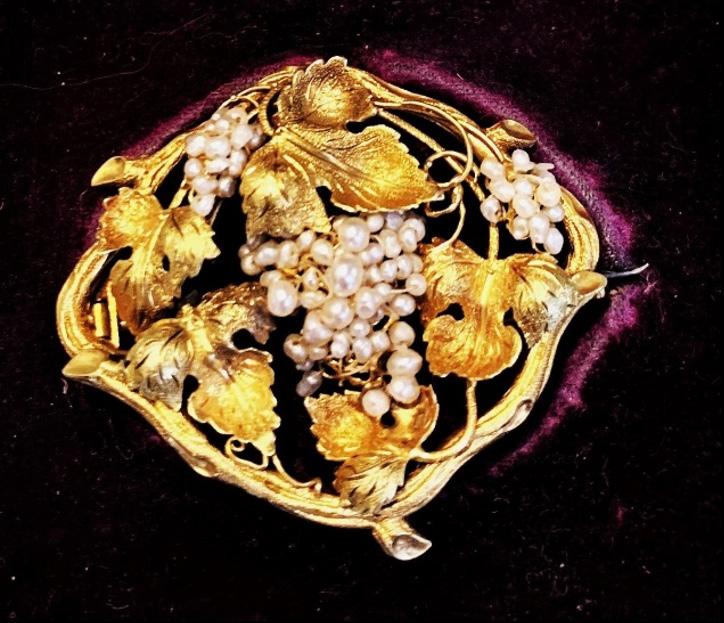
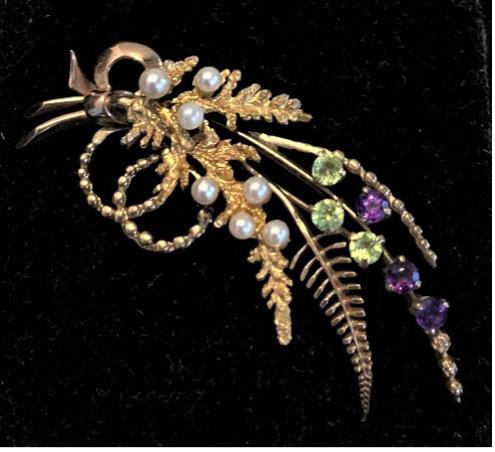
Brooch by Alfred Lorking - Sydney in 1850s
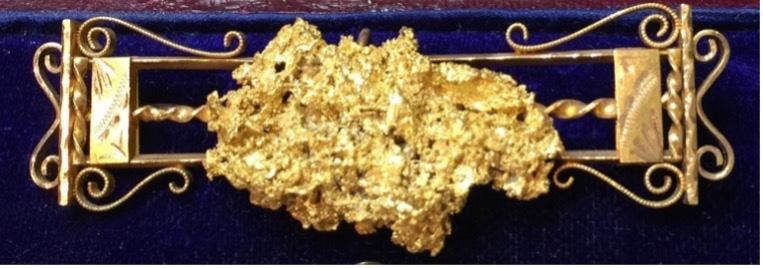
Nugget Brooches
Brooches incorporating natural gold nuggets, retained the unique textures and forms of their natural state, emphasizing the raw, untamed beauty of the Australian landscape. Nugget brooches were symbols of luck and prosperity.
Rapier Brooches
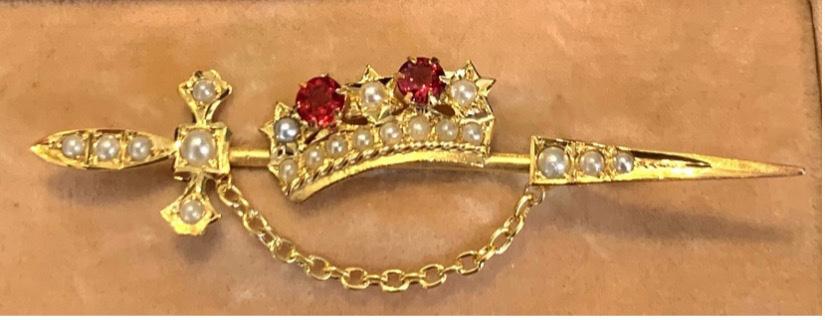
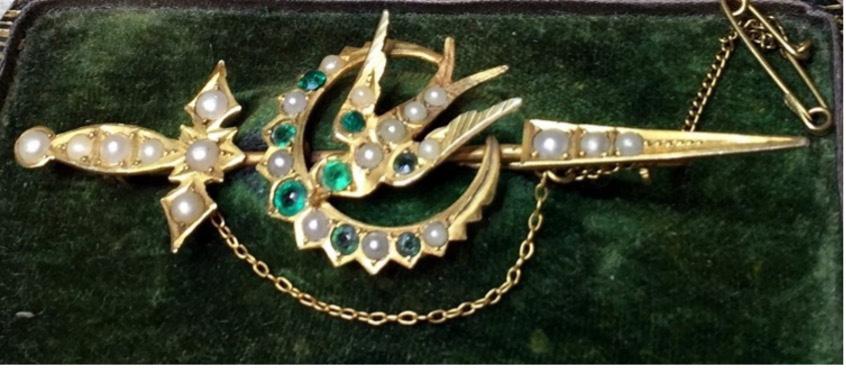
Rapier brooches were usually shaped like slender swords or crossed rapiers. Sometimes adorned with gemstones or encrusted handles, they were often worn by both women and men. In a colonial society the rapier brooch conveyed refinement and a certain dashing confidence.
Suffragette Brooches
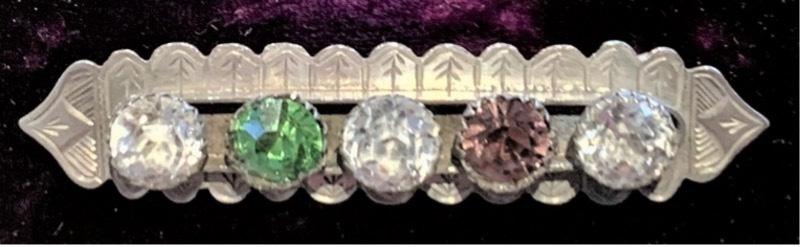
Suffragette brooches were not distinctively Australian; however they found a local expression during the late 19th and early 20th centuries when the Australian womens suffrage movement gained momentum. These brooches, in the symbolic colours of green (hope), white (purity), and violet (dignity or “Give Women Votes”), were both decorative and political. In goldfield communities, women toiled, managed stores, and built homes. Such brooches were an early symbol of woman’s commitment to gender equality and civic participation.
Lovers’ Token Brooches
The courting days of the Goldfield era often included the giving the superb brooches such as Lovers’ knot brooches or a bar brooch with precious stones spelling out messages of love.
Spray Brooches
The spray brooches comprising sprigs of flowers, ferns and leaves, reflected the Victorian era’s love for nature and sentimentality. Made from gold and often set with pearls or precious stones, they were delicate and feminine. In the rough goldfield environment, spray brooches offered a moment of gentility and beauty. Different floral designs conveyed symbolic messages: wattle for remembrance, fern for sincerity, grapes and vine leaves for everlasting love and for Australian identity. The late Queen Elizabeth II was known to love the ‘wattle brooch’ given to her by the people of Australia on her 1953 tour.
Mourning Brooches
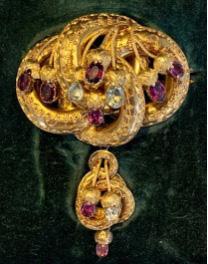
Mourning brooches, frequently crafted in darkened gold, black enamel, or set with jet and hairwork were sentinel symbols in the hazardous colonial world. They were worn to remember loved ones and served as portable memorials. Hair from the deceased was sometimes woven into exquisite, intricate patterns and encased in gold settings, turning the brooch into a deeply personal relic, even including in some, a portrait of the deceased.
Conclusion
Australian goldfield brooches are both creative fine art and mirrors of the emotions and aspirations of early colonial life. Each brooch tells a story and together, they form a chronicle of 19th and early 20th century Australian life.
Reference
The author acknowledges the advice of a prominent Melbourne collector who wishes to remain anonymous.
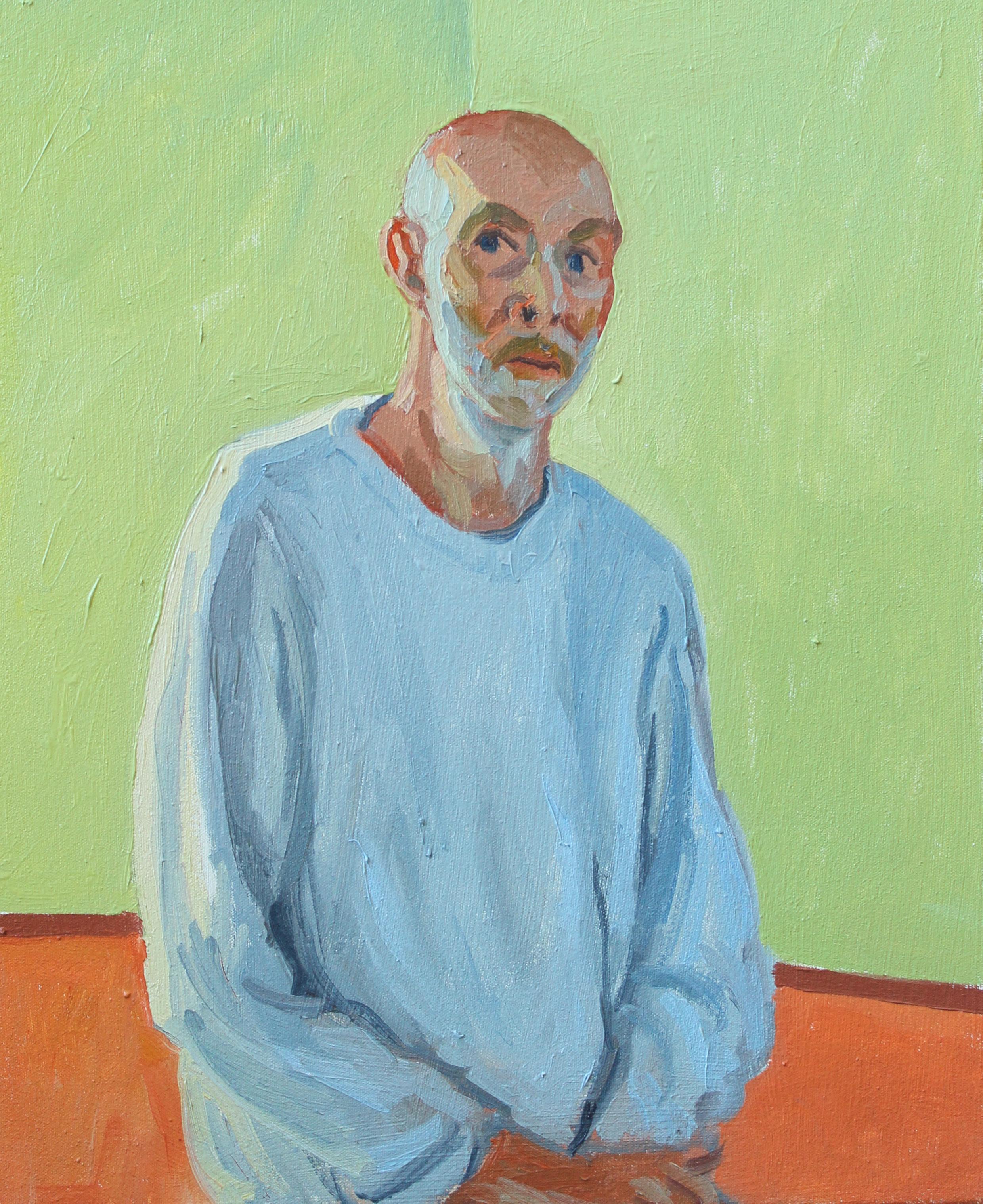
Self portrait, with white jumper, Mark Dober
MARK DOBER
Mark Dober, a regular contributor to the VAS magazine, received a favourable mention from Weekend Australian art critic Christopher Allen in his review of the 2025 Lester Prize of Portraiture. The Lester Prize is regarded as one of the most important in Australia ranking with the Portia Geach Memorial Award running concurrently at Sydney’s S.H. Ervin Gallery. The exhibition opened at the WA Museum in Perth in mid-September and ran through November.
Mark’s Self portrait, with white jumper was credited as “painted from life, with a poignant
sense of immediacy”.
Mark is predominantly a landscape painter but regularly paints portraits from life indoors. Self portrait, with white jumper was painted indoors however, typically, Mark paints self-portraits outside in his garden at Castlemaine. One such painting was shown recently in the Maldon Portrait Prize. Mark’s artist wife Elizabeth Nelson is focussed exclusively on painting portraits working only in the studio painting from life. Elizabeth paints herself and Mark and seeks to show these in national art prizes.
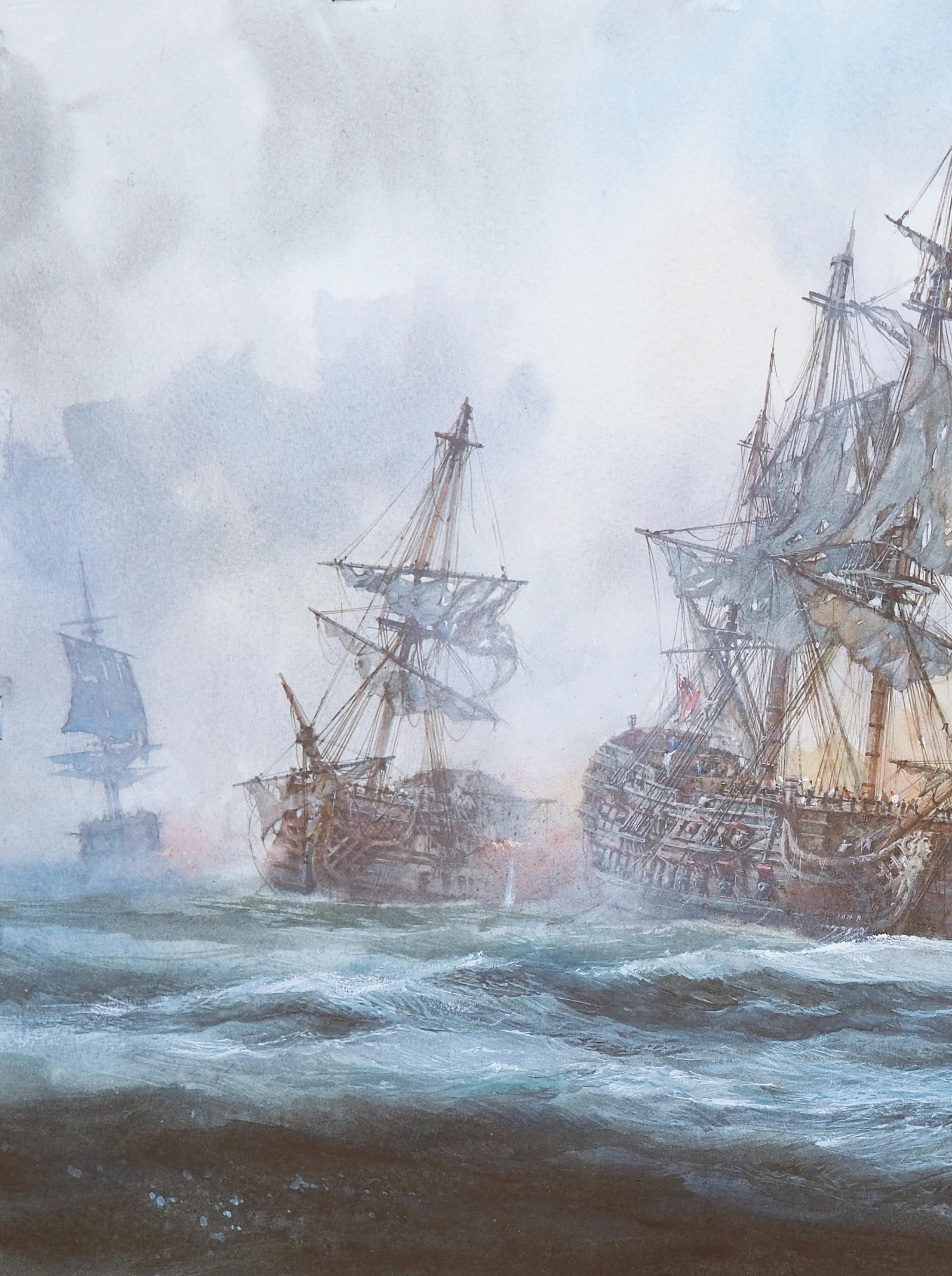
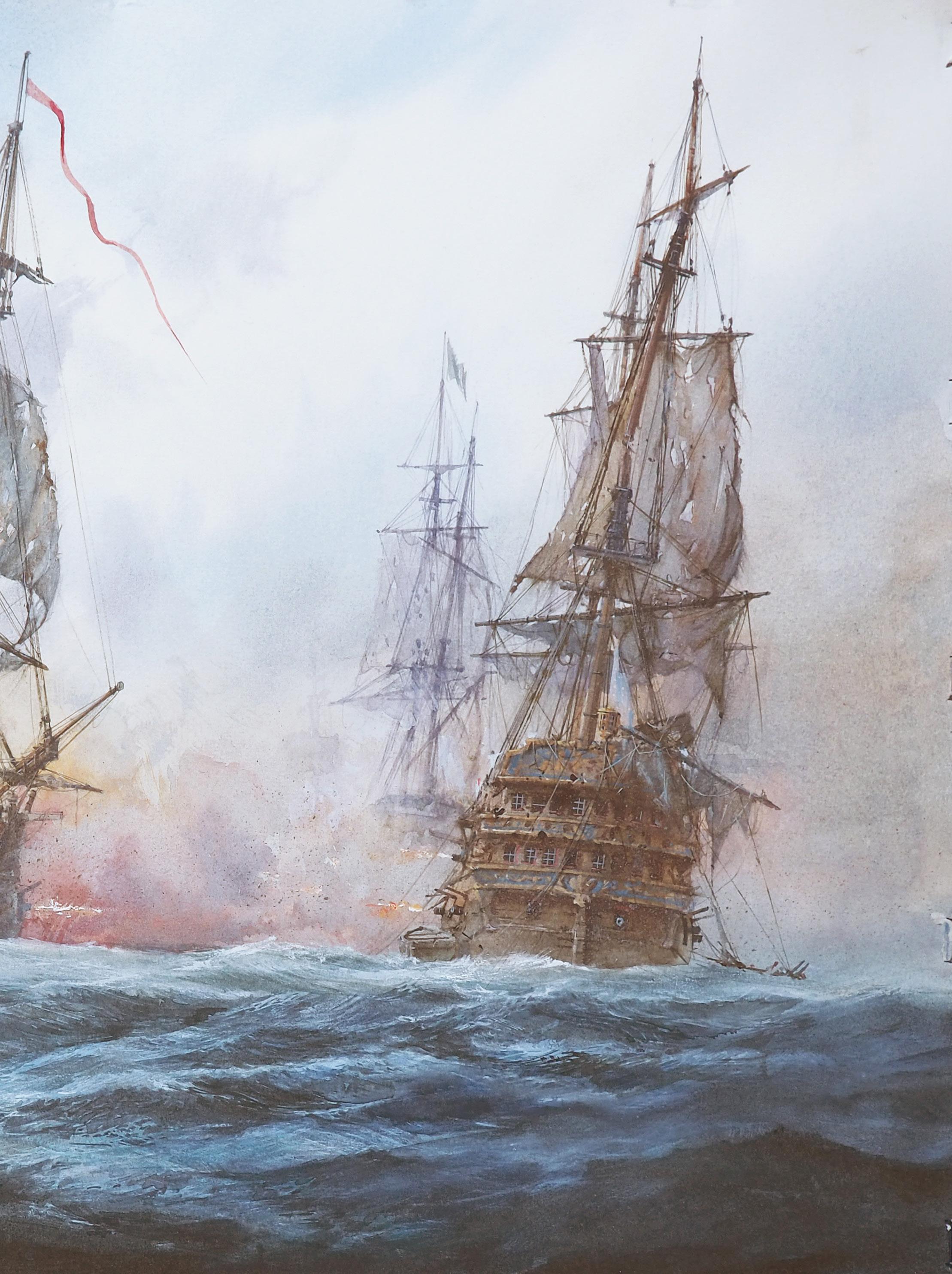
Men o’ War 1700's, Julian Bruere VAS FVAS
This painting depicts an inconclusive action between English and French Men O’ War as they slug it out in the Bay of Biscay in the mid 1700’s. It was selected for inclusion in the Schaefer International Marine Art Exhibition at The Mariner Gallery in Newport, Rhode Island from September 18th to October 10th 2025.
I“…And
Now for Something Completely Different.”
words Anne Scott Pendlebury HON FVAS
n 2024, I was pleased to be able to contribute a Magazine article on the portrait my late father did of myself as a young actress in an early theatre production.
The play was Chekhov’s masterpiece, ‘Three Sisters’ – and father’s beautiful painting was matched with an equally beautiful realization of the play, by a semiprofessional theatre company – in those days highly regarded within the Melbourne theatre scene.
However, here is an example of how it REALLY was backstage.
In the late 1960s, Melbourne art teacher, performer, theatre manager and director Alan Money was an attractive and rather enigmatic Carlton personality - a true eccentric artist. He was known in many art and theatre circles and was a much loved figure. His home was a Grattan Street terrace which he had single handedly turned into a theatre. The main bedroom upstairs had been converted into a miniature performing space ‘in the round’, surrounded by a number of old cinema seats, and the bathroom and second bedroom served as a dressing area for both males and females. He produced and directed only classical plays and had a large and devoted following of actors and audience members, myself included. This
production of “Three Sisters’ involved a large cast. We were adoring fans of Alan, and devoted to his flamboyant and creative directing style. However, the Grattan Street facilities were sordid and unhygienic. Inspite of this we all crowded happily into the cramped upstairs space every night. We made do with one cold water tap and a single old toilet outside ‘down the back’ which we shared with an audience of around 50 people. The entire upstairs area was lit only by gas light and furnished in crimson with gold trim, whilst the existing carpet was stained and threadbare and none of the windows opened. Goodness only knows where Alan himself slept – but that was not our worry.
He was wildly artistic and unpredictable; characteristics which we all loved. He also had very little time for OH&S, security or kitchen management. As a result, Alan lived dangerously. Kerosine lamps hung from the ceilings, gas bottles were kept beside the stove in the kitchen and the front door had no lock on it.
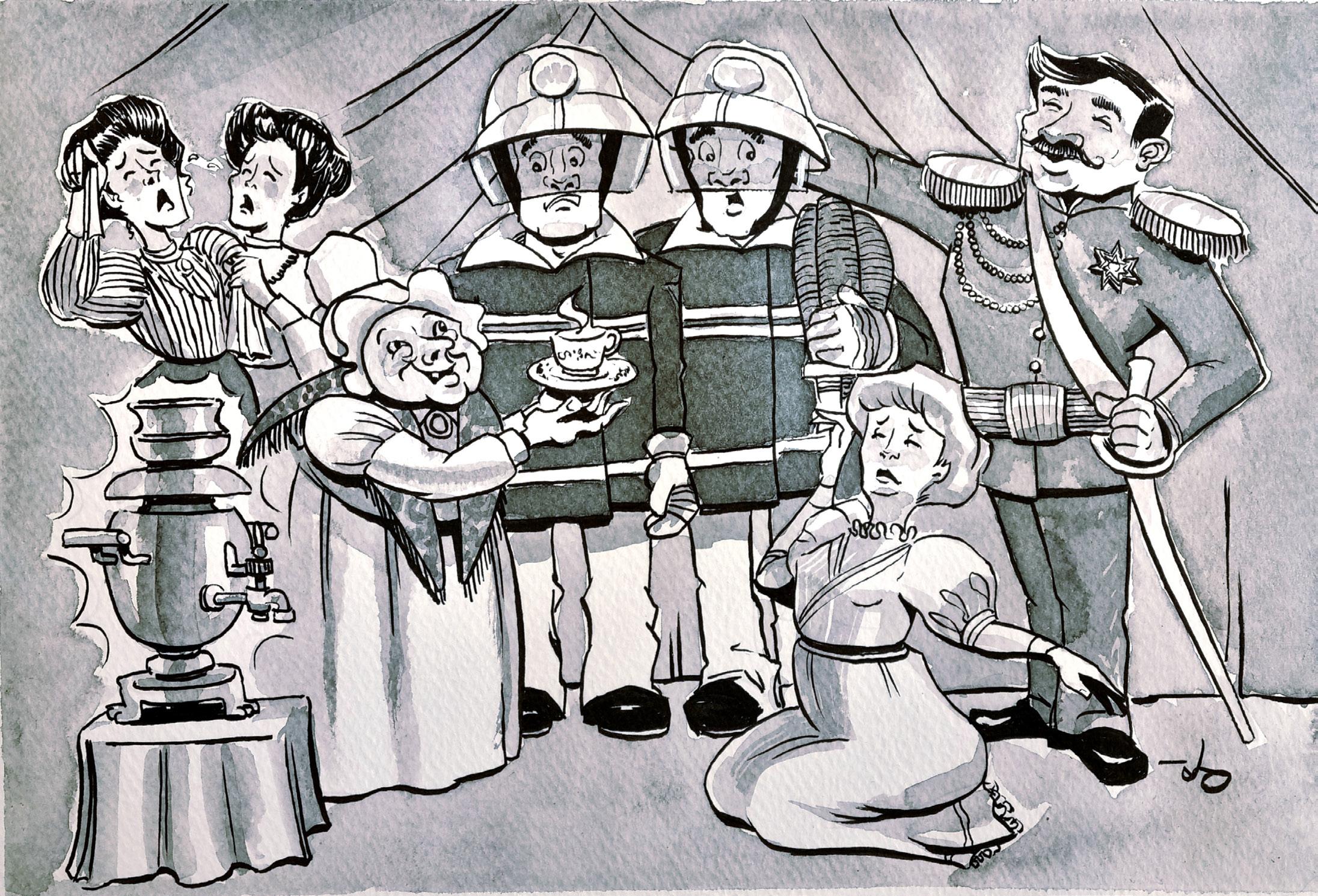
Upstairs, to add atmosphere to our production, naked candles flickered dangerously close to our costumes, whilst tea was heated in a genuine Russian samovar on a rickety gas ring operated inches from the front row of the audience. Several of the male characters smoked cigars throughout the course of the play –and with closed windows the atmosphere was steamy
and airless – but this was Chekhov wasn’t it?
Overall, one could describe the upper floor as a ‘death trap.’ But as a cast we never gave a thought to the possibility or likelihood of incident or accident. We were there to pursue our passion for performing and nothing could spoil that.
During the first week of the season, apparently an audience member saw the dangers inherent in being seated upstairs in a small space with no proper exit in an emergency and laid a serious complaint with the authorities.
Our theatre space was a typical 19th century Carlton Terrace house and had never really been properly updated. There was one rickety staircase leading up from
the front door to the entrance of the performing area. Carpet on the stairs was frayed and the hand rail was a bit loose, and besides that, the cast sat on these stairs during the performance listening for their cues. There were at least ten actors crouching there at any one time, plus the prompt girl who smoked continuously, Alan’s cat, and a smattering of old scripts taking up every bit of space. Any audience member wishing to exit to use the outside lavatory during the performance hadn’t a hope of getting down those stairs. It was an impossibility. And if there was an emergency…… So this particular complaint had gone to the Fire Department.
And this is where the fun starts……. As well as directing our production, Alan was also a lead player in it.
He was ‘Battery Commander Vershinin’, the mature age married lover of the charming middle sister. He looked marvellous too – a most distinguished figure with greying hair and magnificently good looking in his military costume. Like all of us, he was immersed in his role and nothing else mattered.
Several nights after this alleged complaint by the nervous audience member, Alan as well as the rest of us failed to hear two official inspectors from the Melbourne Fire Department enter through the front (unlocked) door and climb the creaky stairs. There were of course no backstage assistants or helpers downstairs to look after security, and no official warning had been given for this on – the – spot inspection. The front door was wide open offering easy
access for these two uniformed gents from the Fire Department. Now the entrance at the top to the actual performing space was merely a curtained doorway – the light was poor and candlelight flickered through the thin curtains whilst the air reeked of cigar smoke. “Fire Department!” came the warning cry in broad Australian tones.
Suddenly the curtains were pulled aside and two unfamiliar faces peered through then entered squinting into the subdued lighting, probably wondering what on earth they had got themselves into. Cast members grasped the situation straight away. Surprise visits from the Vice Squad and Health Department were common occurrences for
several of Melbourne’s ‘alternative’ theatre groups during these years, although their representatives and officials didn’t usually end up on stage as part of the action. Straight away, quick thinking cast members attempted to integrate these interlopers into Act One.
The elderly and experienced actress playing the wizened up octogenarian nanny ‘Anfisa’, confronted them first. She bobbed and curtsied, croaking feebly, “Dear sirs, may we offer you tea from our lovely old samovar –it belonged to my grandfather you know, old Yfgeny Ivanovich Tchaikovsky.” (She was a true Method actress)
At the mention of the name Tchaikovsky, we ‘three sisters’
began to giggle which we tried to pass off as sorrowful weeping. The girl playing the middle ‘sister’ even dropped to her knees sobbing at the feet of one of the inspectors mumbling about ‘the death of dear papa’ and ‘the joy of forgiveness’ and ‘the frustrations of a barren marriage’. A tender and most believable improvisation. Chekhov himself would have been delighted. But it was Alan himself in full military flight who saved the situation.
In a hearty gesture of acceptance he put his hand out to the bewildered men saying loudly, “Welcome to the home of the Prozorovs gentlemen, we are having a family celebration! Do return downstairs for a glass of the best wine. I will join you shortly.”
or words to that effect. Whereupon he firmly pushed both Aussie fellows back through the curtain where they were forced to stumble downstairs in the half dark.
As Act One drew to its conclusion, I think the audience more or less accepted everything which had taken place – two modern looking intruders had tried to gate crash the youngest sister’s Name Day celebrations – a new and different interpretation perhaps? Very avant garde … Most original … Quite New Age…
Then as a naked light globe came on to signal Interval, Alan hastened down stairs still in costume and dealt with the men from the Fire Department. He offered them his customary toasted cheese sandwiches in the dilapidated kitchen, accepting a severe lecture and official papers warning that a proper detailed inspection of the premises would take place in the near future.
Whilst all this took place down in the scullery of a kitchen, the cast upstairs busily prepared for Act Two. The audience of course was forced to remain in their seats talking amongst themselves virtually trapped where they were, pretty much unable to get to the single lavatory in the rear yard and back again in time even if they wanted to.
As the lights dimmed and Act Two commenced, our visitors left munching on their sandwiches reminding Alan, who gallantly waved them off the premises into the night, that “safety regulations would have to be implemented immediately etc etc.”
And then they were gone.
One can only guess at their exchange as they headed for their vehicle parked nearby“What the bloody hell was all that about?" “Gawd knows... good sandwich but.”
And upstairs, as everyone stood by for Act Two we all agreed that whatever happened next, whatever the circumstances, the show must always go on.
The remainder of our three week run continued with great success and I certainly don’t remember any changes to health and safety conditions being made.
Candles were still lit near fluttering drapery, the cat continued to be a tripping hazard on the stairs whilst cigar smoke was puffed nightly into the faces of the delighted audience.
………………..and they loved it. Those were certainly the days.
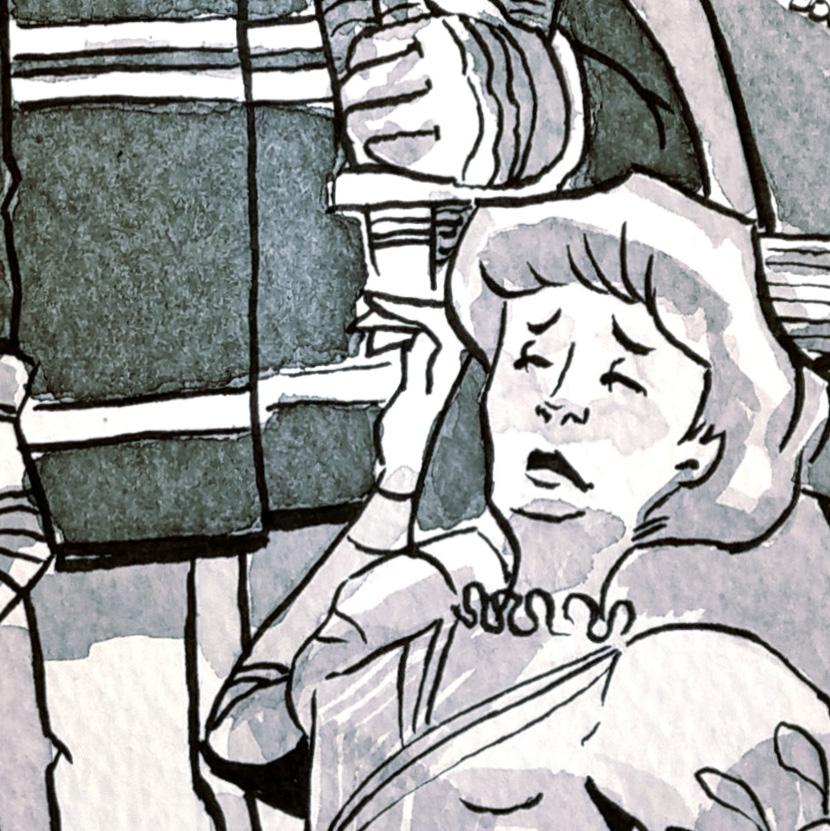
"Cuppa tea from our lovely Samovar?" Illustration by Lucy Fekete
Meet the Artist Lucienne Rickard
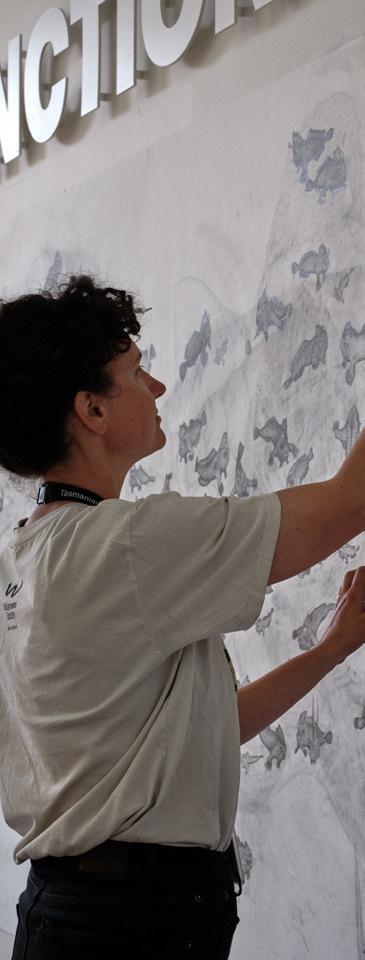
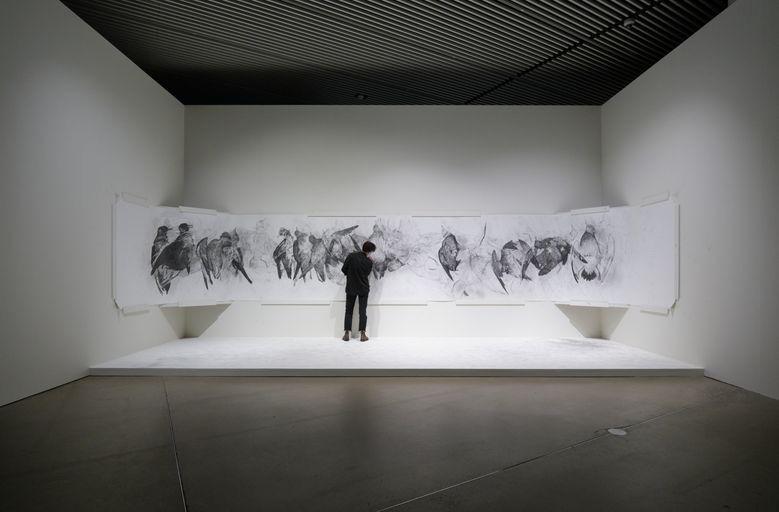
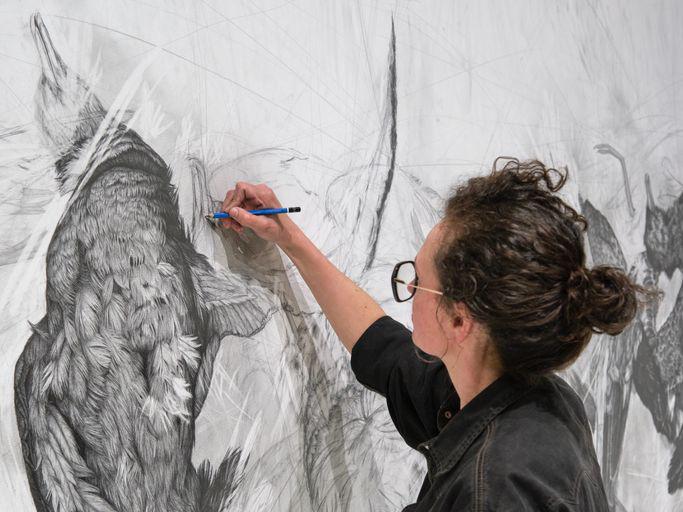
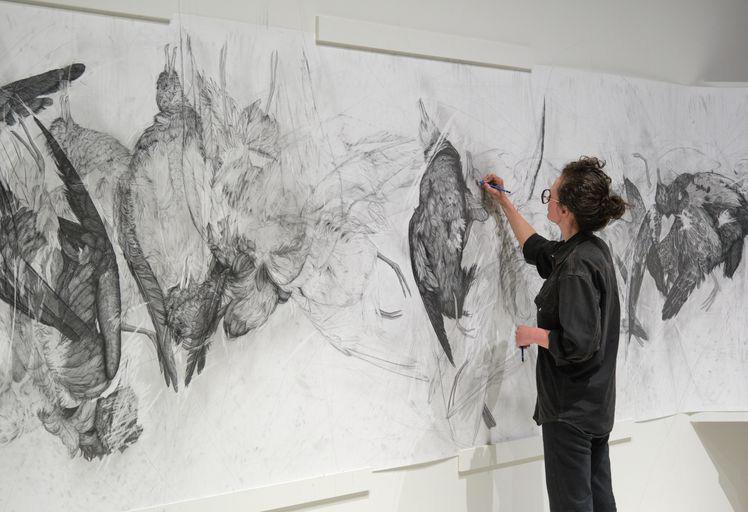
Earlier this year I stumbled upon an artist with a unique outlook on art and what is conveyed to the viewers of her art. Lucienne Rickard is a Tasmanian-based artist who spent a month as artist in residence at the Victorian College of the Arts. During that time she worked on a single sheet of paper, making finely detailed drawings of shearwaters in graphite. What makes
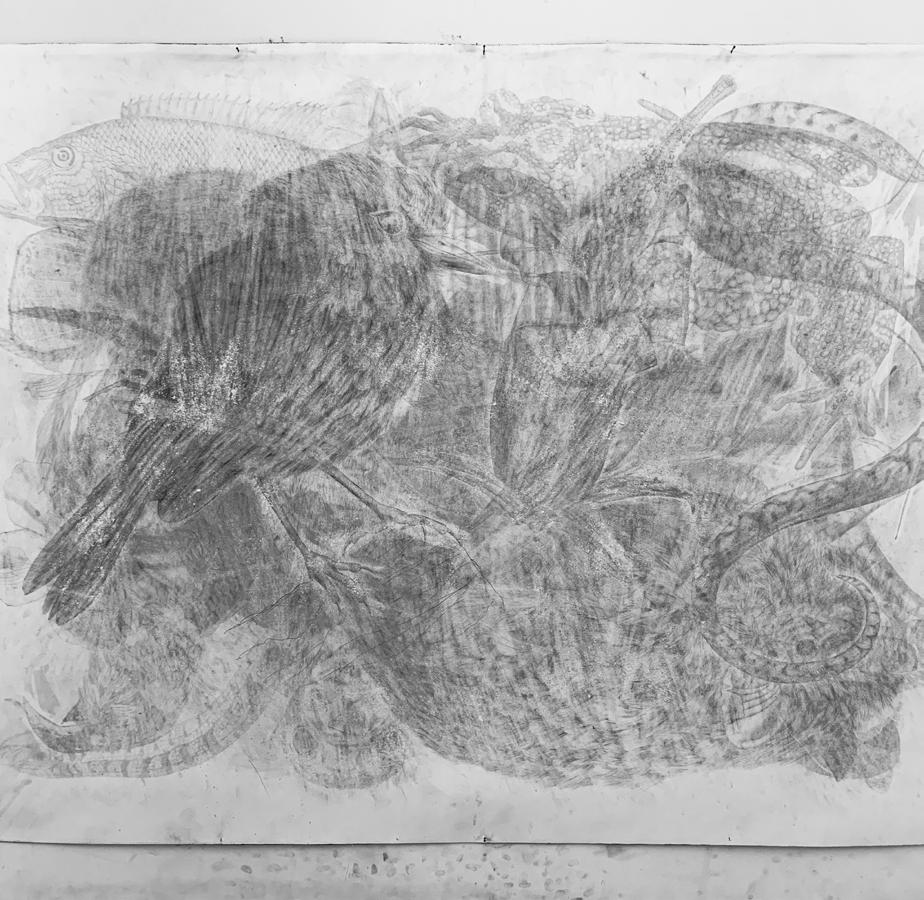
Lucienne’s work so different though is the fact that, once she finished a drawing, she then erased it. When I visited her in the Fiona and Sidney Myer Gallery at Southbank, Lucienne was working on the disarrayed feathers of a bird that had a distressingly large amount of nylon fishing net in its body. This new drawing was taking shape over the ghostly outlines of other bird drawings that she had erased, all capturing
words Rosemary Noble HON FVAS
the brutality of their deaths as well as their intrinsic beauty. Her installation was titled Wreck
Lucienne feels a strong affinity to shearwaters as she spent much of her childhood on Lord Howe Island, which is a major staging point for these birds. Also known as muttonbirds, shearwaters have been heavily hunted for their oil, but in recent years their numbers have been declining further as the world’s oceans become congested with plastics. These amazing birds, with wingspans of about a metre, are migratory and are found in all corners of the globe. Each year, at dozens of shearwater feeding sites around Tasmania’s coastline they feed voraciously to build up their strength before setting out on their migratory flights. They regularly travel around 15 thousand kilometres annually and have been recorded flying more than 800 kilometres in a single
day. The heartbreaking vision of dozens of dead birds along the shoreline indicate the presence of large quantities of plastics in their gut. This alone can kill them, but they are also not receiving enough nutrition-rich food to make this epic journey successfully.
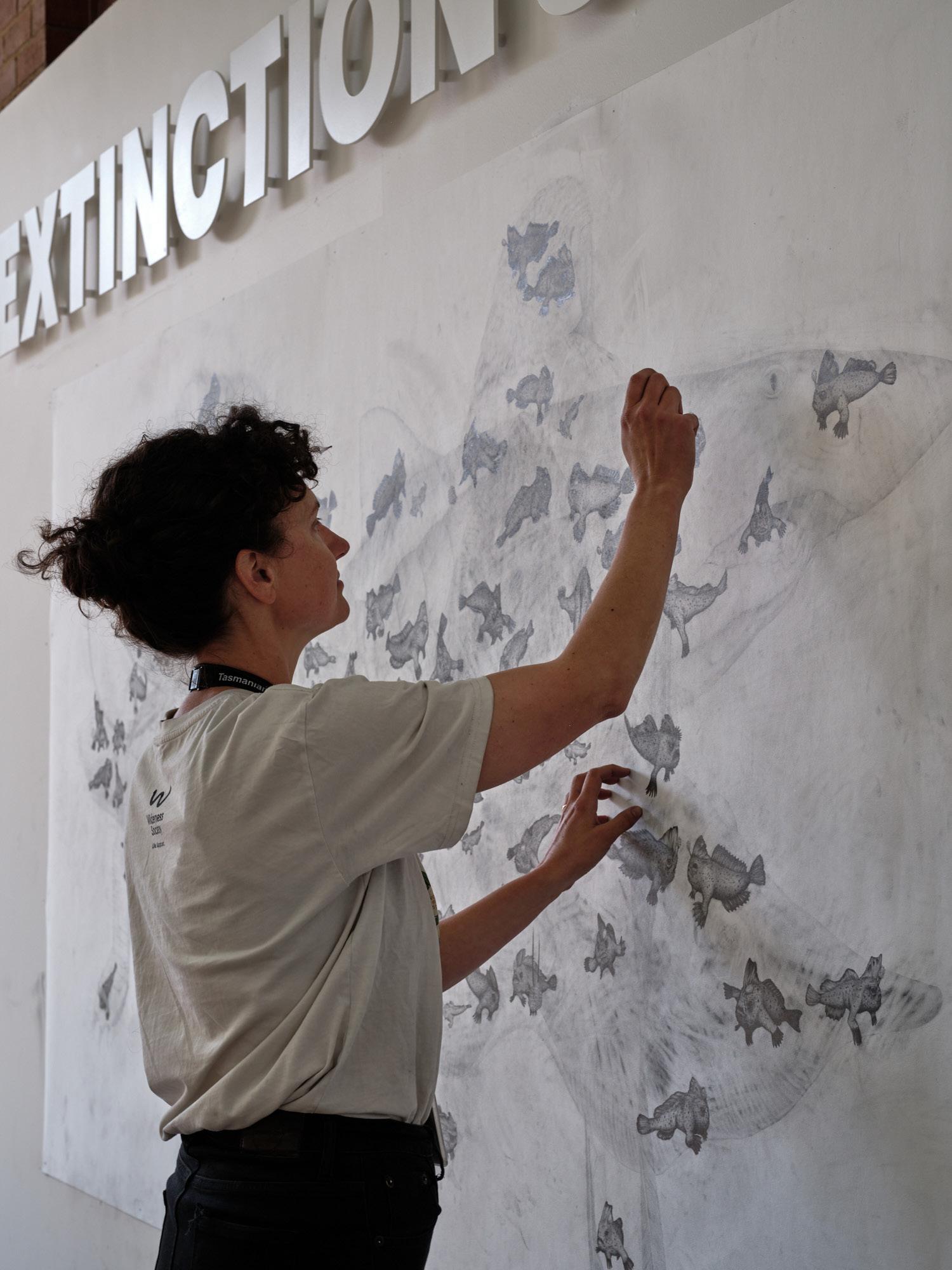
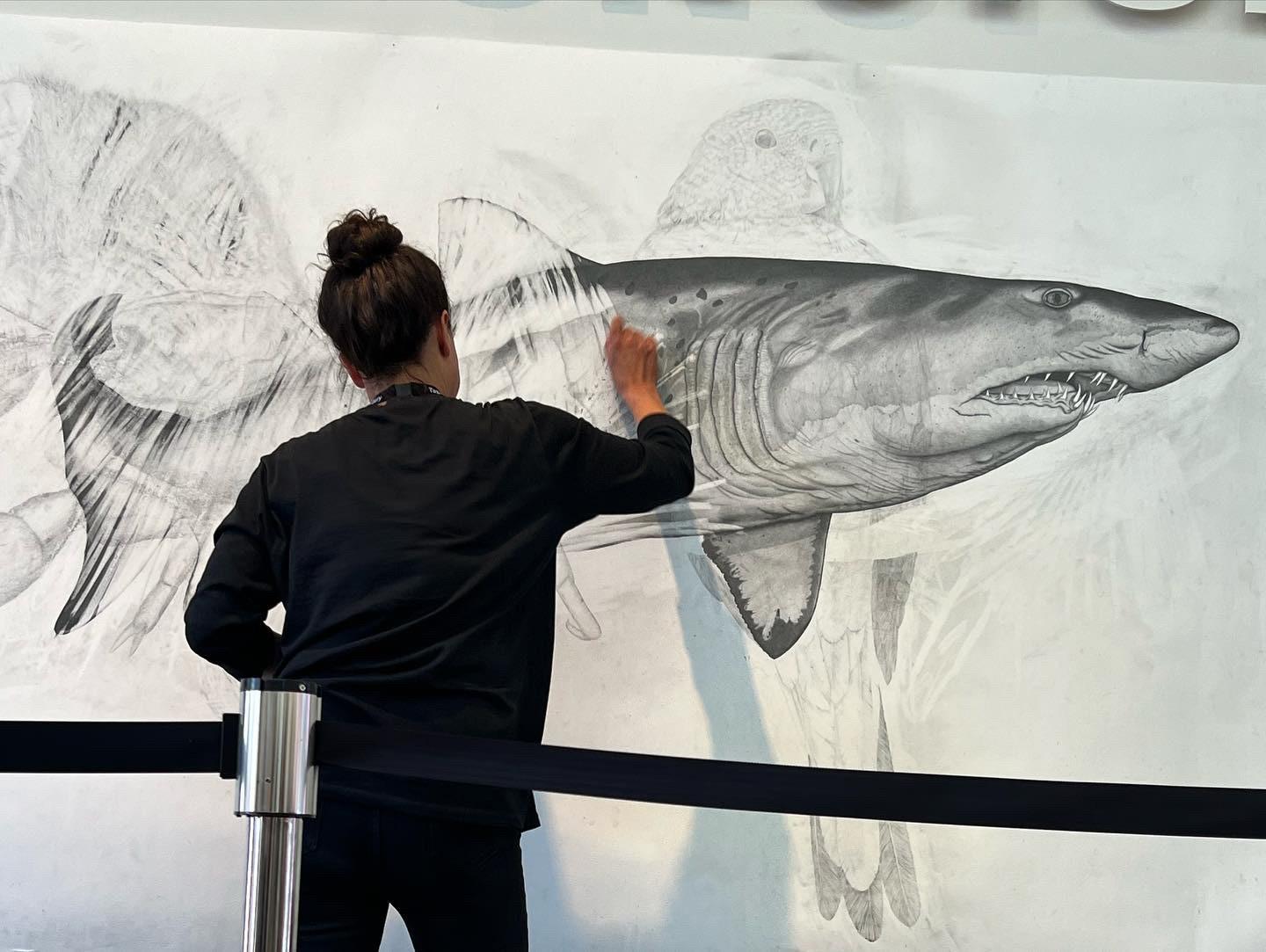
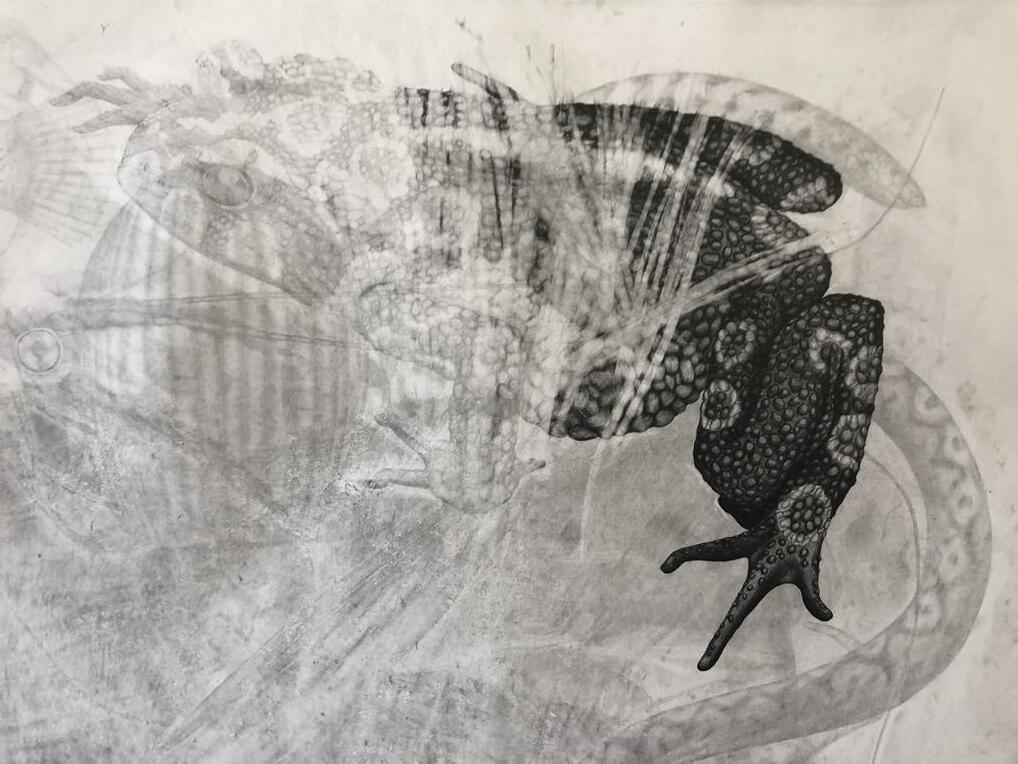
Lucienne has been an exhibiting artist for more than 20 years. The shearwater project is not her first foray into expressing her concern for wildlife in this way. During 2019 and the Covid-19 pandemic, she worked on a project called ‘Extinction Studies’ at the Tasmanian Museum and Art Gallery in Hobart. Each week she would spend several days drawing endangered and extinct animal species with meticulous detail and then would hold erasure events where she invited the public to come and watch her erase the images so that just a ghost remained on the paper. She then used the same paper to draw
another animal, thereby repeating the process.
Lucienne’s work is included in the collections of the National Gallery of Australia, the Art Gallery of NSW and the University of Tasmania.
Lucienne’s process is not one that most artists would embrace. The thought of spending hours doing a beautiful drawing and then erasing it would be anathema to most of us. For Lucienne her commitment to the wildlife and the messages that are built into her product and the process are as important as the art itself.
Book Review
words Bruce Baldey VAS
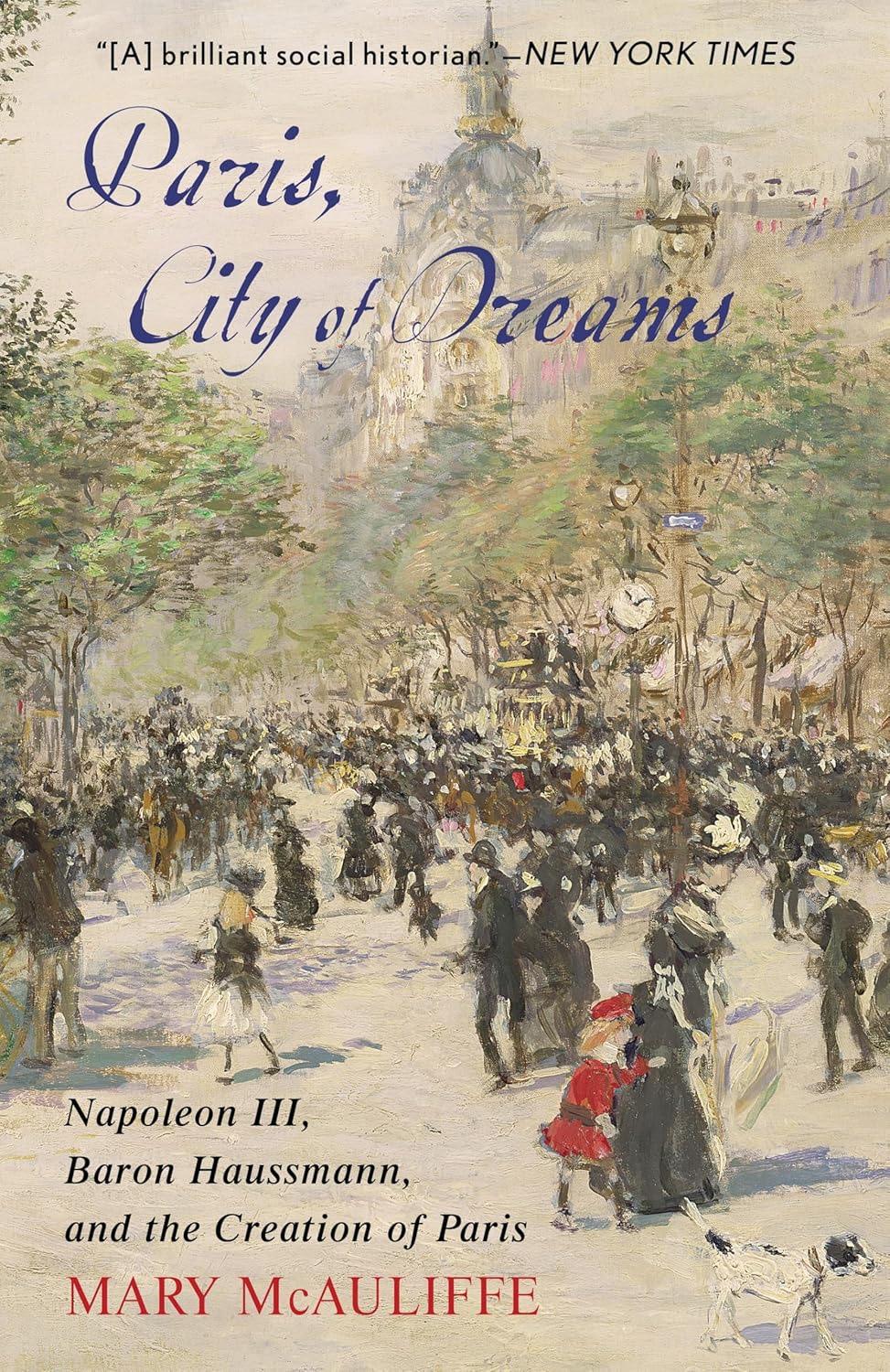
Paris, City of Dreams
Napoleon 111, Baron Haussmann, and the Creation of Paris
By Mary McAuliffe
Rowman & Littlefield 2020, Hardback, 329 Pages
Dimensions: 23 x 15cm
Hardcover available from Dymocks $65.99, Paperback $40.99
In the May 2025 issue of the VAS Magazine, JD Park reviewed Paris is Burning, an account of the siege of Paris during the Franco Prussian War (July 1870- May 1871) followed by the aftermath known as the French Commune Uprising. The narrative features the lives of the Impressionists, notably Edward Manet and Berthe Morisot.
During the Second Empire leading up to the War, Paris underwent a radical redevelopment. Louis Napoleon (Napoleon 111, 1852-1870), nephew of Napoleon Bonaparte, reigned for 18 years and aided by his Prefect of the Seine Baron Haussmann created the Paris that is so beloved today. Paris, City of Dreams is the story of that transformation.
Twenty-six million foreign tourists a year visit Paris and the surrounding Ile de France region. Some venture out to Versailles, Fontainebleau Palace and Disneyland, however most will stay within the 20 arrondissements' ring road where Napoleon’s urban renewal took place. Few venture out into greater Paris to experience its sprawling suburbia.
Urban redevelopment has a chequered history. Ostensibly to initiate and manage projects to revitalize existing urban areas, too often the result is the destruction of heritage and the forced removal and disruption of established communities. Team Napoleon commenced sensibly enough, creating boulevards east/ west and north/south connecting the new railway stations. The boulevards were designed to be wide enough to deter the rebellious Parisians from constructing barricades. This was an autocratic regime and so cronyism, land speculation and indiscriminate dislocation of residents were inevitable. Haussmann apparently stayed above corruption and it was only the force of his personality and the support of Louis-Napoleon that maintained him in his position as resistance to the massive redevelopment mounted.
The book is in desperate need of plans and diagrams showing the gradual changes to the city. Even seasoned travellers to Paris will find it hard to picture the city’s layout of landmarks and boulevards. Anecdotes of the artists and other notable residents, writers, intellectuals of Paris relieve the relentless detailed description
of the physical changes to Paris. There is some duplication of the accounts of Manet and Morisot et al from Paris is Burning however, given the time span of this book, more is revealed about their earlier careers.
As the forces gathered against Louis and his empire collapsed, Haussmann fled for Italy with other officials of the Second Empire. He would spend many years writing his memoirs defending himself, his plans and his expenditures.
Louis Napoleon was eventually undone by the Prussian War misadventure and when released by his Prussian captors he joined his wife Eugenie in exile and obscurity in a Georgian villa near London. Eugiene, the real power behind the throne, lived to the age of 94, spending much of her time at Cap Martin on the Mediterranean. She sometimes returned to Paris where she chose to stay at the Hotel Continental overlooking the Tuileries garden which, along with the Opera Garnier, Bois de Boulogne, Les Halles and a functioning sewerage and water system, was one of many landmarks and urban features that her husband never received proper recognition for.
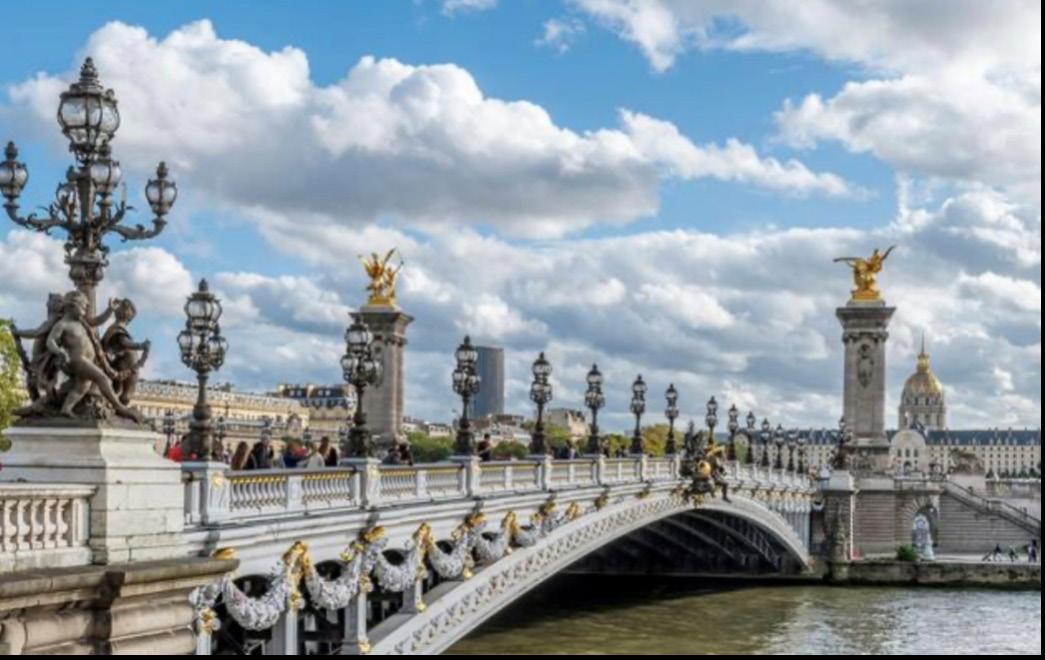
Paris is replete with place names of notable French men and women however the only major landmark in Paris named after Louis Napoleon is the Pont Napoleon 111, a relatively modest bridge over the Seine when compared with his contribution to Parisian architecture and urban planning.
Pont Napoleon 111, Paris, 1865
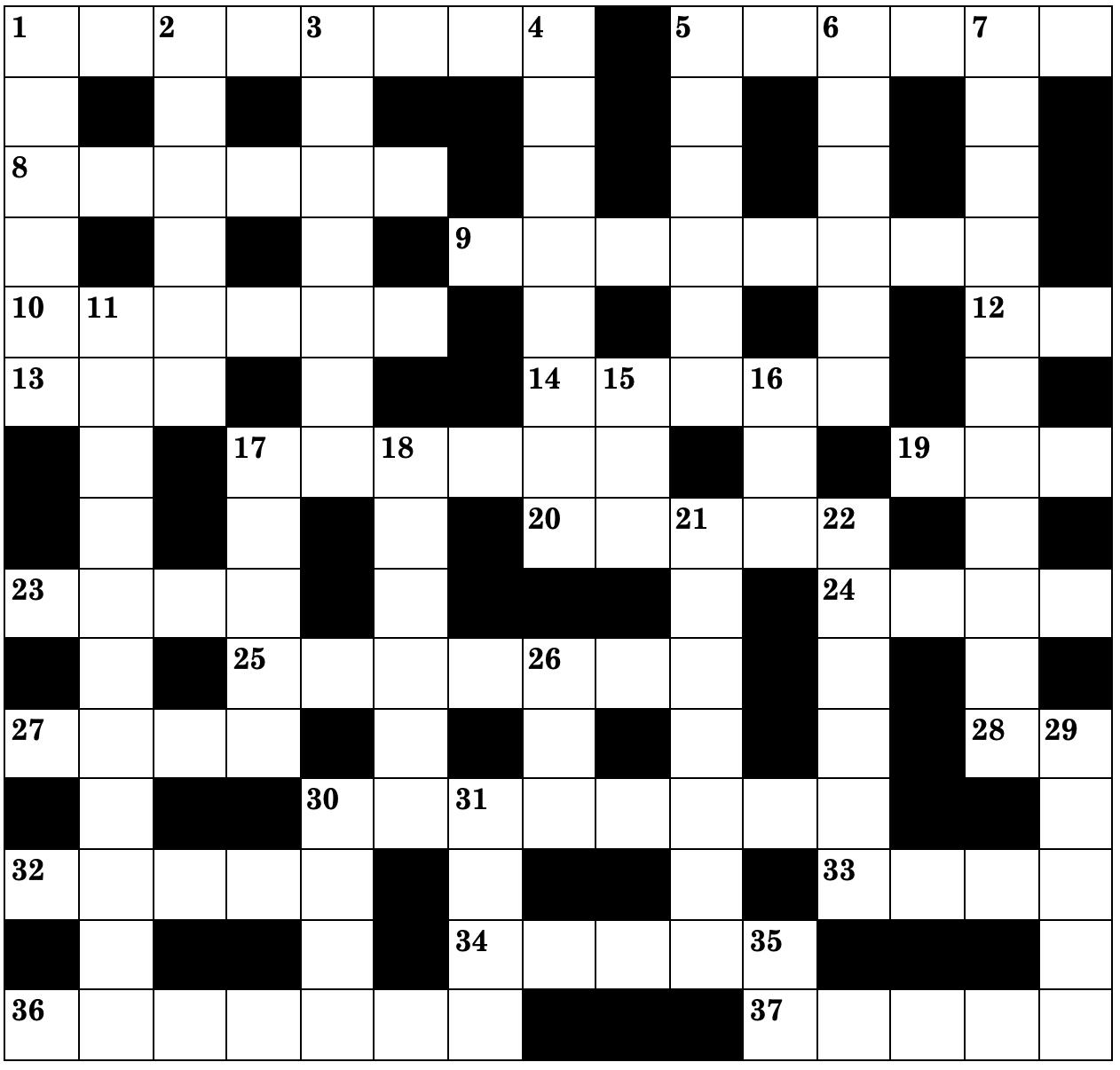
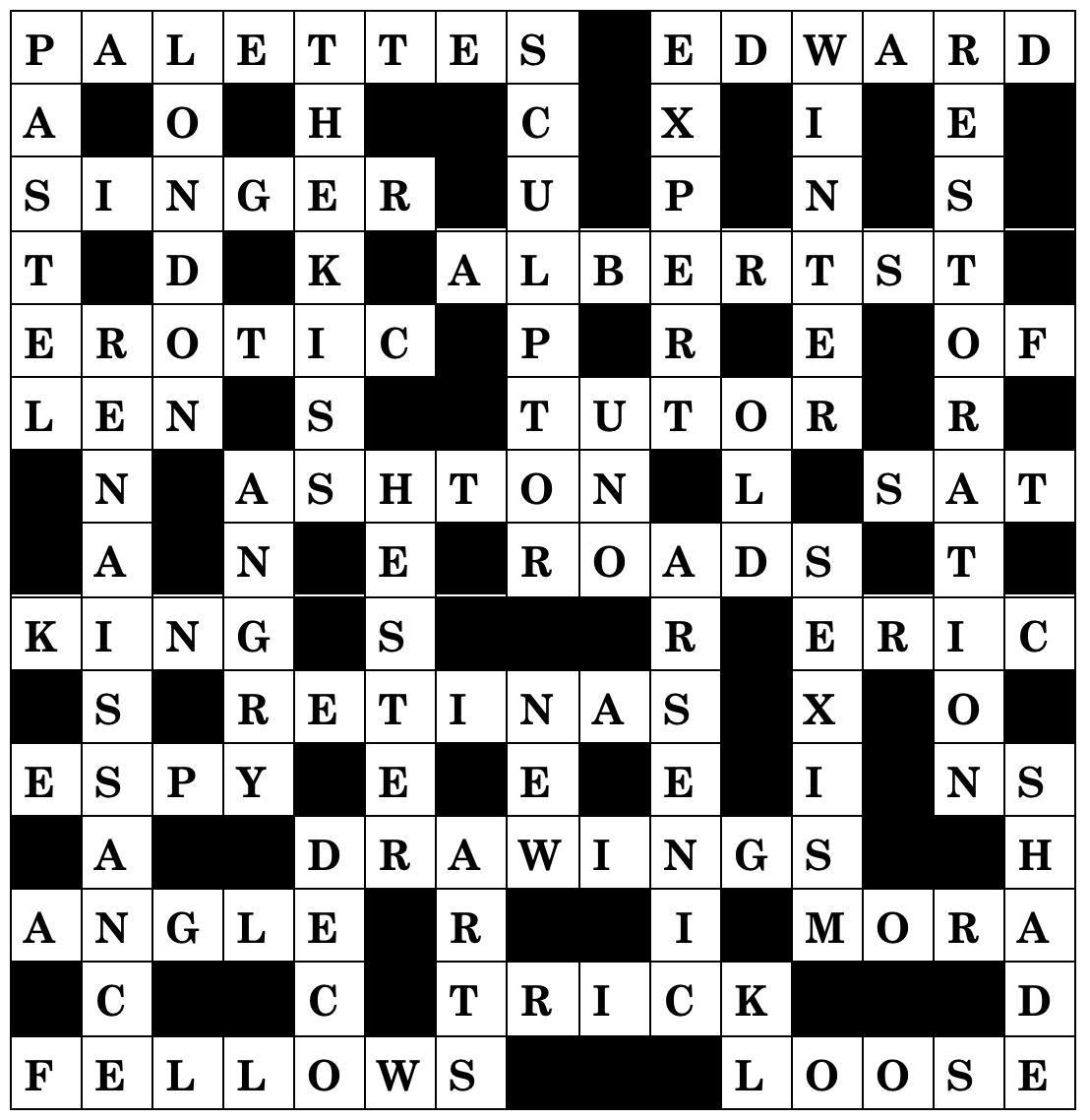
CROSS WORD
Across
1. Specially-shaped board an artist holds for mixing paints (plural) (8)
5. American realist …. Hopper, or anglicised first name of Munch (6)
8. John ….. Sargent, 1856-1925, Florenceborn US expat portrait painter (6)
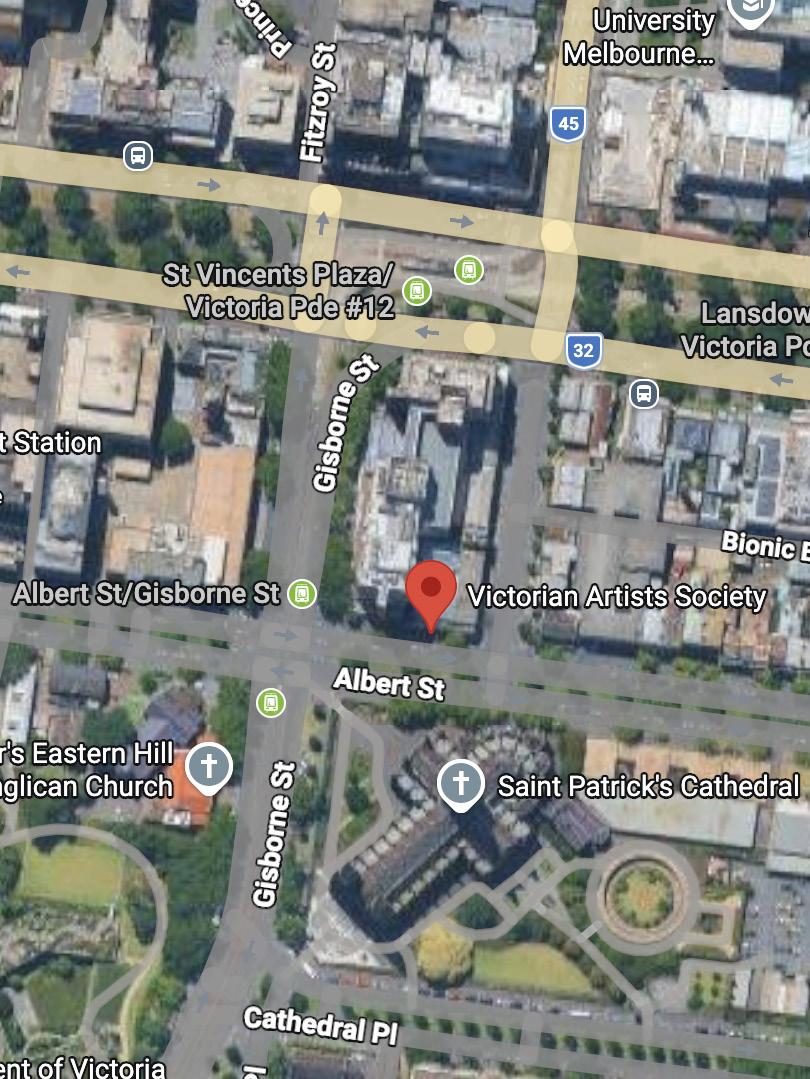
9. The VAS is located on this ‘road’ (6,2)
10. Paintings that depict human nudity and sexual activity is called …. art (6)
12. Botticelli’s iconic work is The Birth .. Venus (2)
13. Australian known for stained-glass works, …… French, 1928-2017 (abbrev) (3)
14. One who teaches art students, instructor (5)
17. Sydney painting academy since 1890, the Julian …. Art School (6)
19. Posed (3)
20. All …. led to Paris and London for artists in the late 1800s and early 1900s (5)
23. German-born Australian sculptor, Inge …., 1915-2016 (4)
24. Won Archibald three times, … Smith, 1919-2017, rhymes with Derek (4)
25. Light sensitive part of the eye that sends nerve impulses to the brain (plural) (7)
27. Esplanade Hotel, home of Felton Bequest philanthropist (colloq) (4)
28. Neville Shute, author and occasional painter (initials) (2)
30. Sketches (7)
32. The viewpoint from which a subject is depicted is the composition .…., maybe eye-
level, high or low (5)
33. Mirka …., 1928-1918, treasured Melbourne artist and cultural figure (4)
34. Trompe l’oeil means ….. the eye (5)
36. Outstanding members of the VAS are known as …… (7)
37. Opposite of tight in painting (5)
Down
1. Art medium often used by Degas, powdered pigment in a stick (6)
2. The Tate Museum is located in this city (6)
3. Klimt’s famous painting of a passionate embrace (3,4)
4. Carver, modeller, statue maker (8)
5. Authority on art, specialist (6)
6. The VAS has Select Exhibitions in …. and spring (6)
7. Conservation of an art work, the act of repairing (11)
11. Period in history of artistic re-birth (11)
15. Picasso is regarded as numero …. in the 20th century (3)
16. The O in Hobart’s MONA (3)
17. Max Meldrum was known as an “….. Scot”, vexed, irate (5)
18. Painter of emotions, Heide member, Joy ….., 1920-1960 (6)
21. Well-known poison once used in pigments (7)
22. Anti-female (usually) prejudice (6)
26. The N in Hobart’s MONA (3)
29. Colour gradient, range (5)
30. Art …. emerged in the 1920s as a bold new style in art and architecture (4)
31. British-based international design trend, …. and Crafts (4)
35. Keith Looby, 1984 Archibald winner (init) (2)
Answers on Page 33
1
2
3
4
Greens can be produced by mixing which two primary colours?
How many faces or sides are there in a dodecahedron?
What are the two main colours in the Spanish national flag?
Turquoise is a mix of which two colours?
5
On which Australian coin does the echidna appear?
6 Which Australian Impressionist painted The purple noon’s transparent might?
7
8
Who painted the ceiling of the Sistine Chapel?
QUIZ
9
Eight of Monet’s water lily murals are in which Paris gallery?
10
English painter George Stubbs (1724-1806) was most famous for painting which type of animal?
11
Name the sculptor known for abstract sculptures of ovoid heads and birds in flight
12 The Angus breed of cow is what colour??
16 The developers of the visual art WikiArt are based in which country?
17 Which Japanese contemporary artist is heavily associated with polka dots?
18
What is the full name of New York’s ‘Met’ museum?
19
There are 3 statues of famous Spanish artists in the grounds of the Prado i.e., Goya, Murillo and who is the third?
Which famous Australian artist painted Collins St., 5pm?
13 Which famous Australian art prize focuses on landscape painting?
14 In which Australian city is the National Portrait Gallery?
15
What is the name of the sculpture garden at the National Gallery of Australia?
20 Shepparton Art Museum (SAM) recently hosted an exhibition of the work of which famous Australian artist?
Answers on Page 33
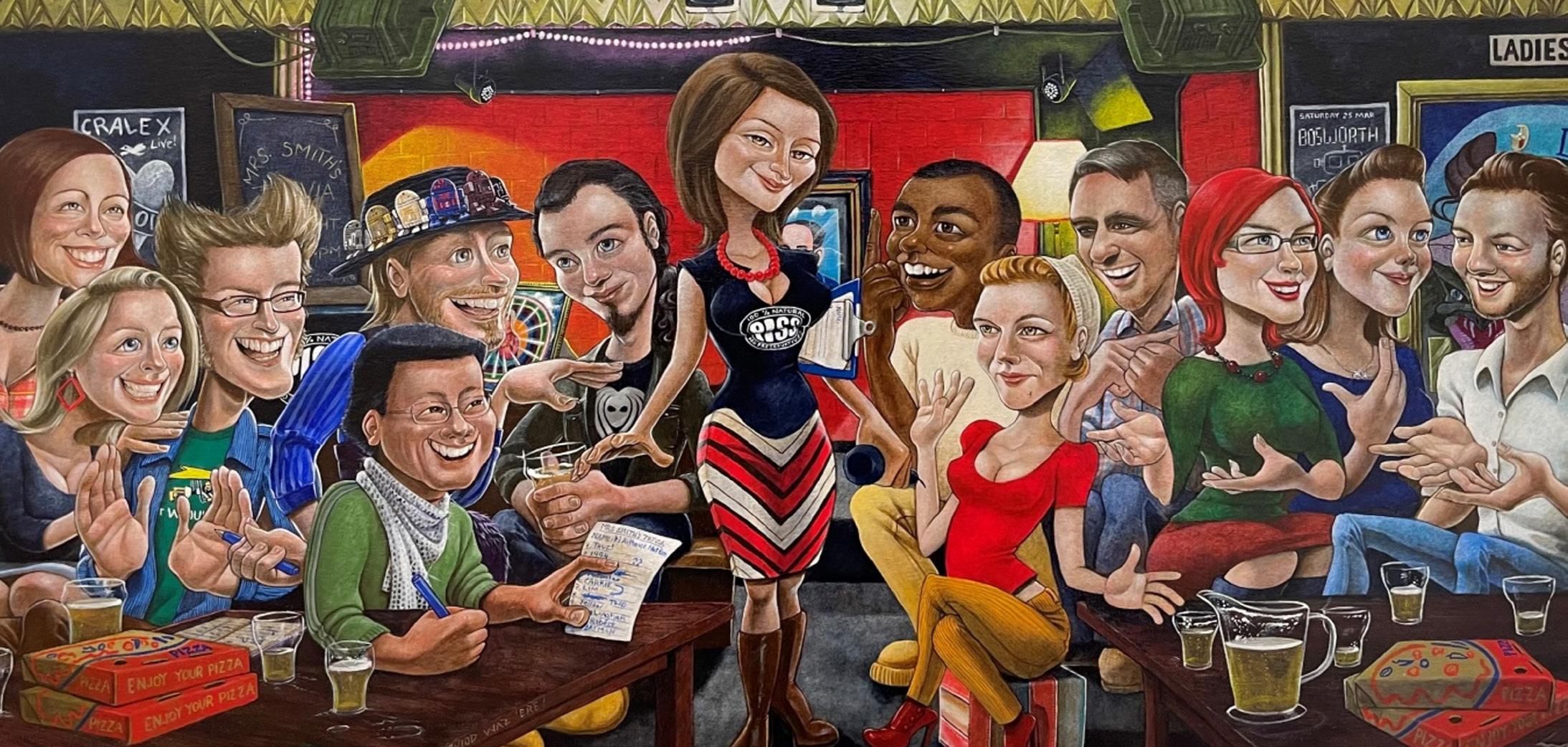
Mrs Smith’s Trivia & the GBH Last Supper, Lucy Fekete
From the VAS COLLECTION
words Bruce Baldey VAS
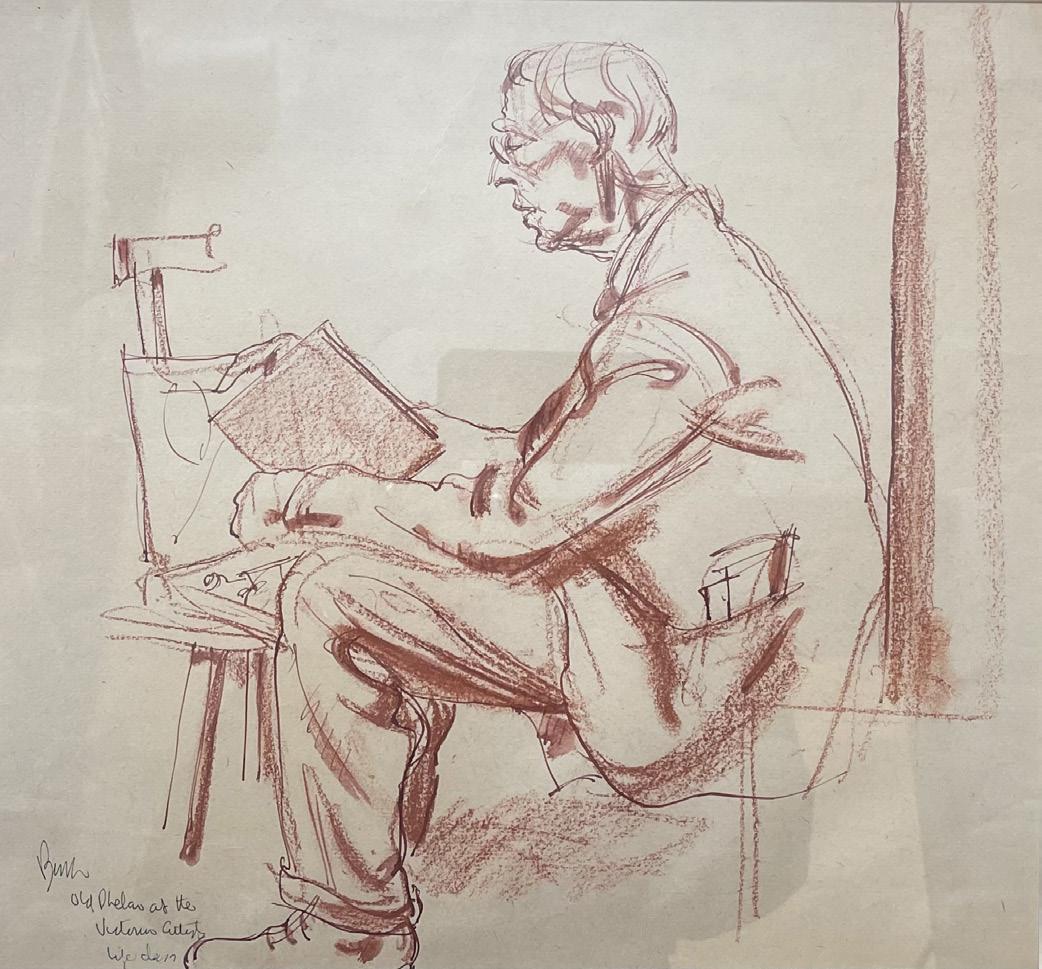
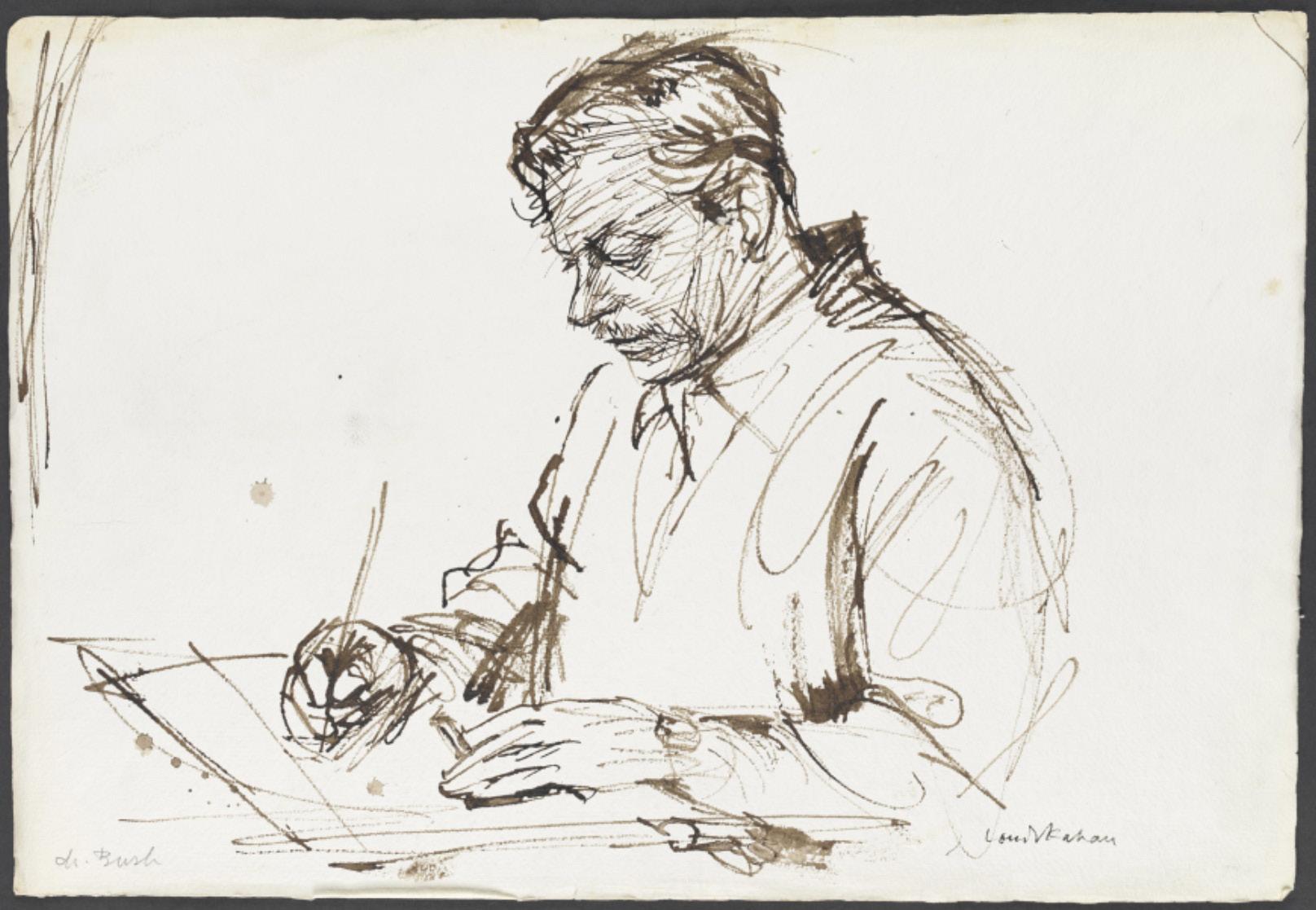
Artist: Charles William Bush (1919-1989)
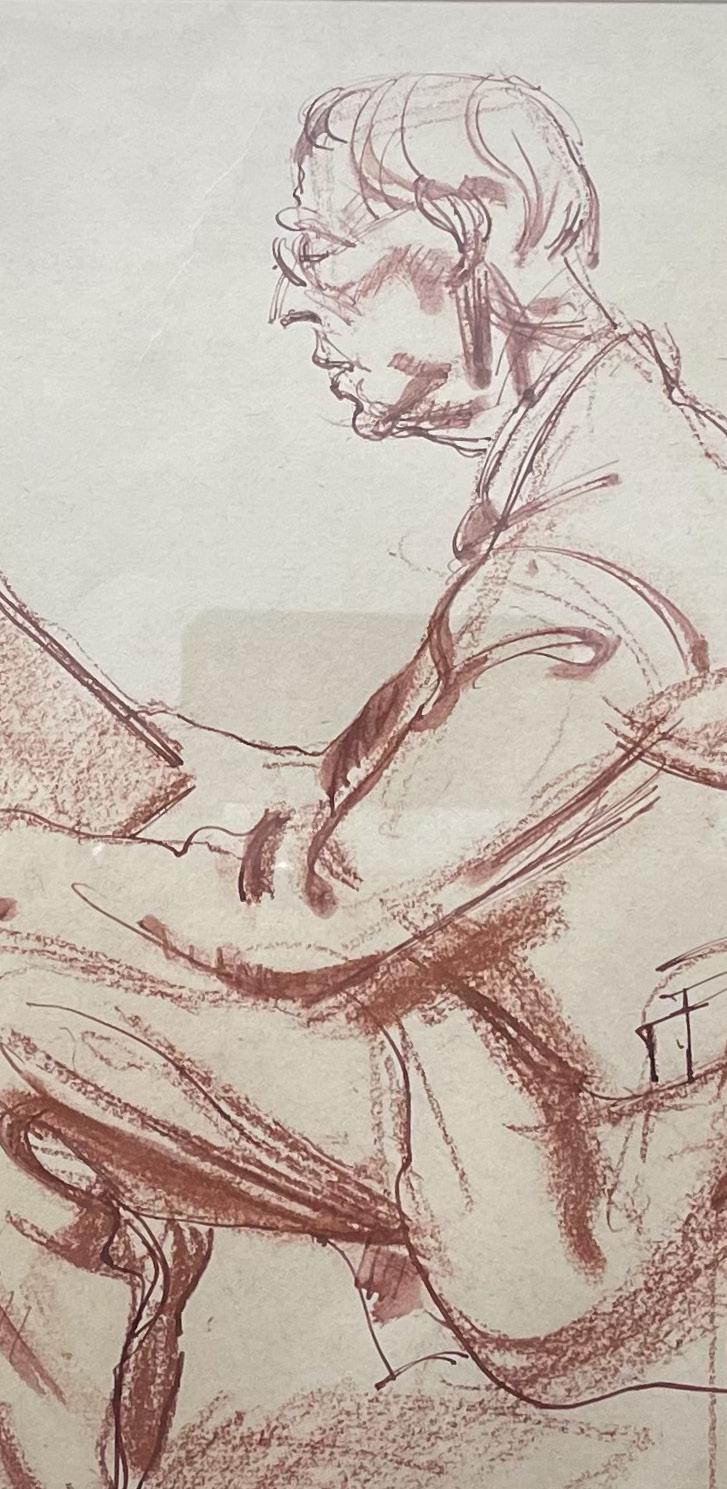
Title: Old Phelan, VAS Life Class
Cat. # 16
Date 1981
Donor: Sargent Family 2024
Medium: Pen and pastel
Size: 45.5cm W x 37cm H
Charles William Bush (1919-1989) was born on 23 November 1919 at Brunswick East, Melbourne, the son of Victorian born parents. He attended Coburg East State and High Schools and worked part-time with his father who was a sign writer. He gained a place at the National Gallery School at the age of 14. It was there that he met Phyl Waterhouse (1917-1989) whose family he moved in with when his father disapproved of his career choice. The two young artists rented a studio and began living together. They were married on 21 June 1979 in Melbourne in the Office of the Government Statist and Actuary.
In 1939, Bush held his first exhibition before being called up in July 1941 for service in the Artillery Survey Unit of the Australian Army where he designed camouflage products and produced service publications. He served in PNG and Timor as a war artist finishing the war as a lieutenant.
A British Council grant in 1949 enabled him to travel to London and study with Bernard Meninsky (1891-1950) at the Central School of Art and Design. He exhibited at the Royal Academy and toured France, Italy and the Middle East.
Back in Melbourne, Bush was a drawing master at the
National Gallery School and in 1961 visited Malaysia to record on canvas the activities of the RAAF at Butterworth near Penang.
Energetic and committed, Bush confidently and enthusiastically embraced painting and considered himself fortunate to be an artist. He painted and drew in his studio in Melbourne nearly every day and exhibited locally and overseas. He won the Wynne Prize twice (1952, 1950) and his work is represented in the NGV, SLA Cowen Gallery, the NGA, the Australian War Memorial and most regional and State Galleries. Bush was excellent company and a great raconteur. He was an art critic at The Australian, and compered a weekly television program with Ray Leighton (My Fair Lady, HSV7 1958-1964). With Phyl Waterhouse and June Davies he founded the Leveson Street Gallery in North Melbourne.
Charles Bush had many friends and associates at the VAS participating in its busy social calendar and exhibiting there regularly throughout his career.
He has an excellent singing voice and often sang while painting.
Predeceased by his wife, he died on 13 November 1989 in Footscray.
Charles Bush, Louis Kahan, SLV, 39 x 58cm, 1962
Phyl Waterhouse, oil on board, SLV Cowen Gallery, 1958
ANSWERS
7.
8.
9.
11.
12.
13.
14. Canberra, ACT
15.
16. Ukraine (www.wikiart.org)
17. Yayoi Kusama
18.
19.
20.
1. Blue and yellow
2. Twelve
3. Red and yellow
4. Blue and green
5. 5 cent
6. Arthur Streeton
Michelangelo
John Brack
Musee de l’Orangerie (www. musee-orangerie.fr)
10. Horse
Constantin Brancusi (1876-1957)
Black
Wynne Prize
NGA Sculpture Garden
The Metropolitan Museum of Art
Diego Velazquez (in front of the main entrance)
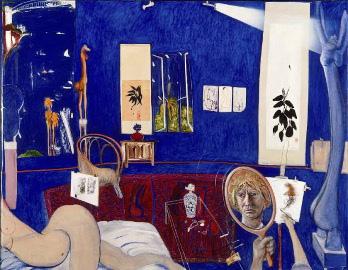
Brett Whiteley: Inside the Studio (28 June-5 October 2025)
Self- portrait in the studio, Oil and collage, AGNSW, 1976