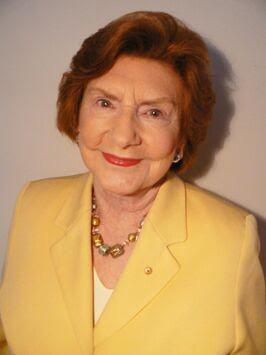
Governor of Victoria, Her Excellency Professor the Honourable Margaret Gardner AC
COUNCIL & STAFF
PRESIDENT
Lucy Maddox TREASURER
Raymond Barro EXHIBITING
Bruce Baldey VAS
Meg Davoren-Honey OAM VAS FVAS
Lucy Maddox
Nathalie Anne Henningsen
Gino Severin
Liz Moore Golding VAS
D’Arcy Rouillard NON-EXHIBITING
Rosemary Noble HON FVAS
Ron Smith OAM HON FVAS
MANAGER & SECRETARY
Kari Lyon PhD
EDUCATION & PROGRAMS COORDINATOR
Lucy Taylor Schmitzer
MARKETING & DESIGN COORDINATOR
Catherine Jaworski
GALLERY ASSISTANT, INSTALLATION & CURATION
Sam Bruere
GALLERY ASSISTANT & ADMINISTRATOR
Rhiannon Lawrie
GALLERY & PROGRAMS ASSISTANT
Lucy Wilde
CONSULTANT
Anne Scott Pendlebury HON FVAS HONORARY HISTORIAN
Andrew Mackenzie OAM HON FVAS
MAGAZINE EDITOR
Bruce Baldey VAS
MAGAZINE DESIGNER
Catherine Jaworski
The VAS Magazine is printed through the Office of the Victorian Artists Society. Opinions expressed herein are not necessarily those of the VAS Council or the editors of this magazine. Articles from members will be appreciated. Contributions will be published on a strictly honorary basis and no payment will be made. The Victorian Artists Society acknowledges the Traditional Owners of the land on which we meet. We pay our respects to Elders, past and present, and the Aboriginal Elders of other communities.
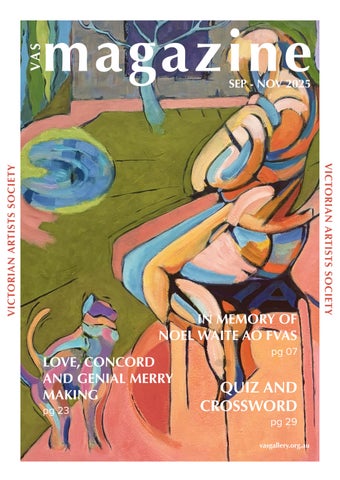
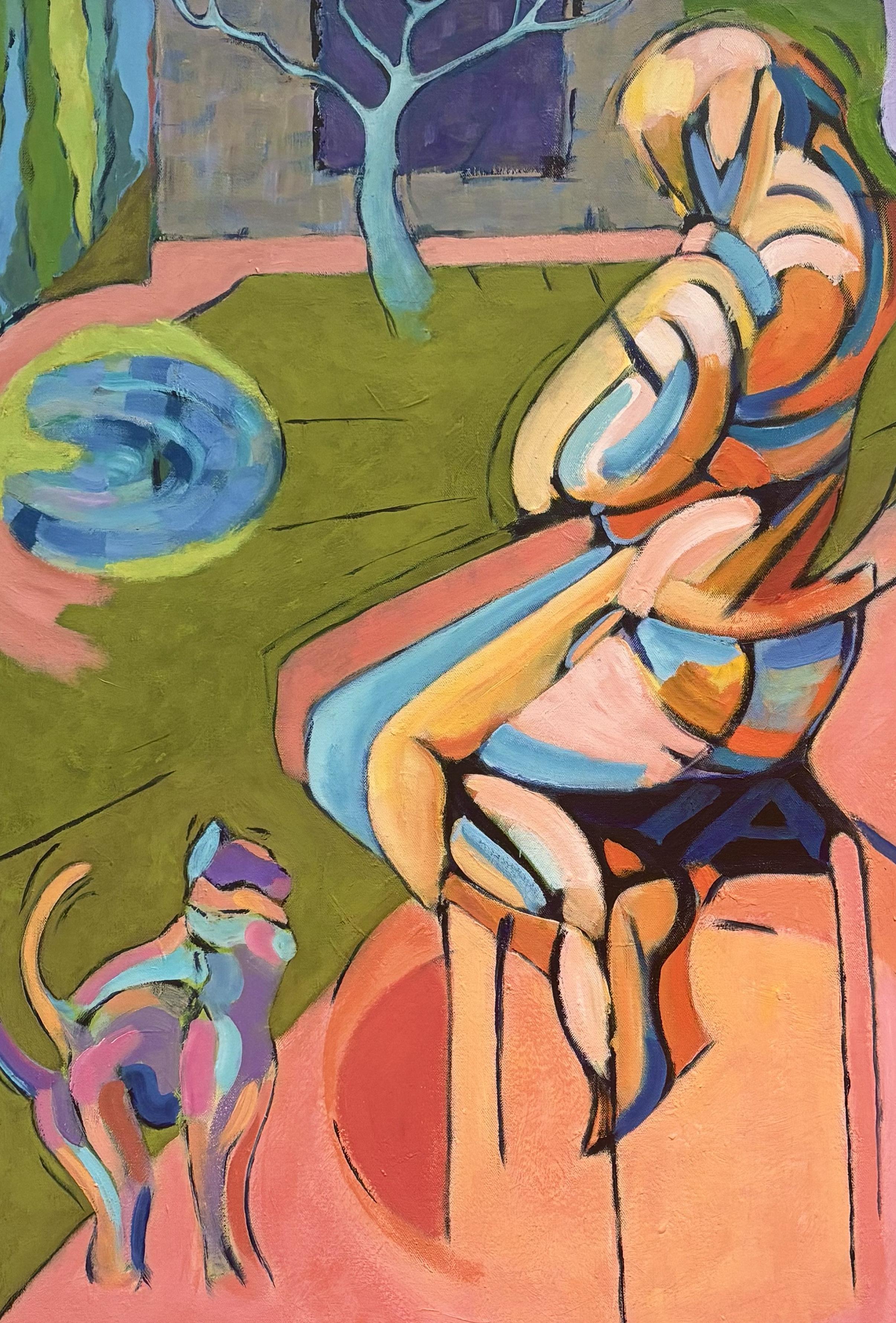
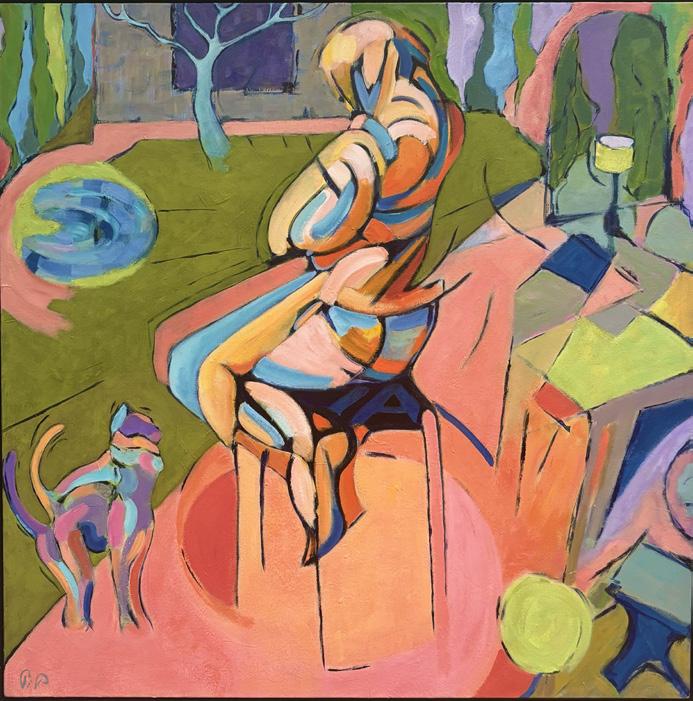
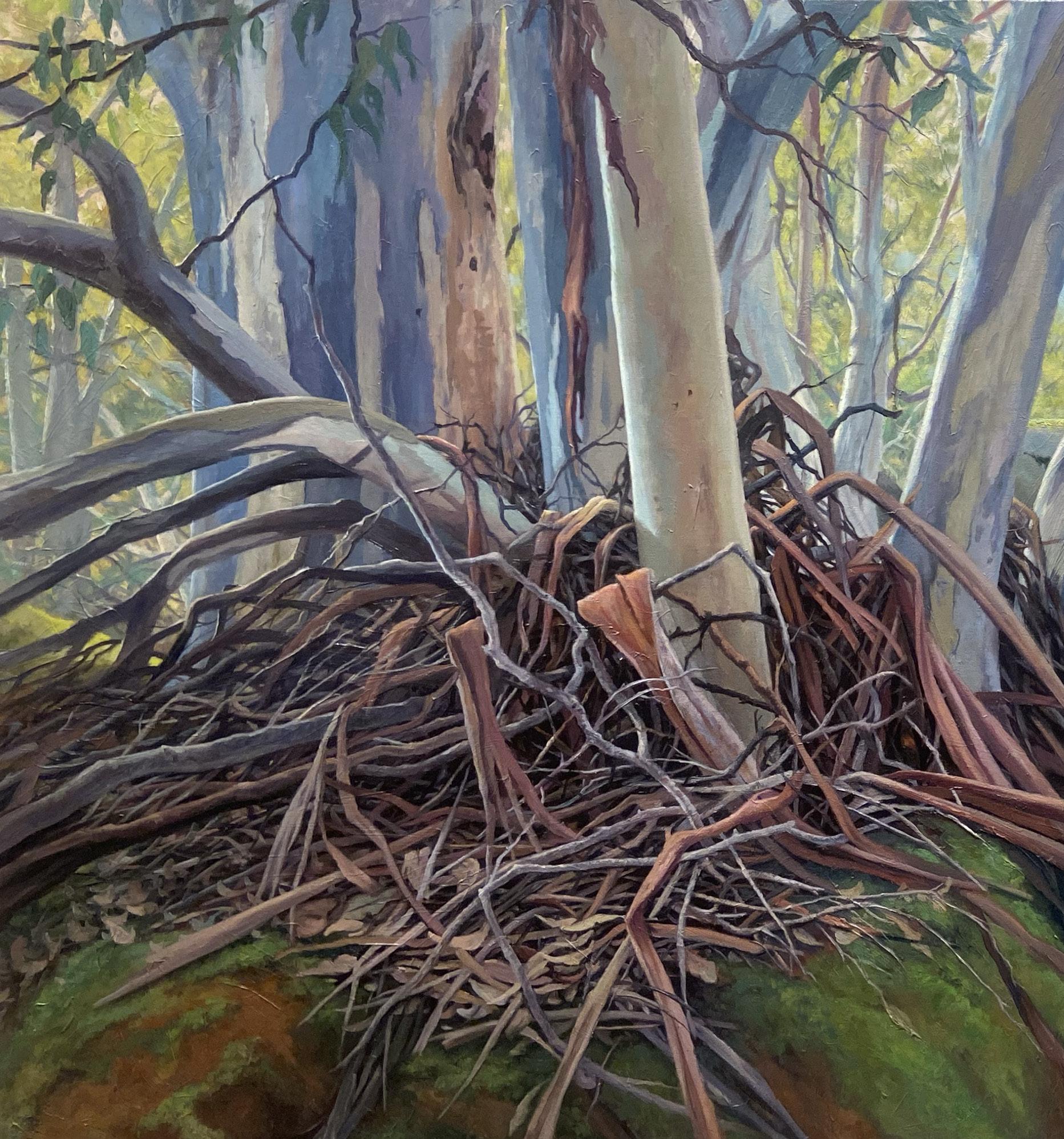
Cover Image: Layers of Life, Philippa Croll, (cropped)
INSIDE THIS ISSUE
INSIDE THE VAS WINTER SELECT Brushed by Winter
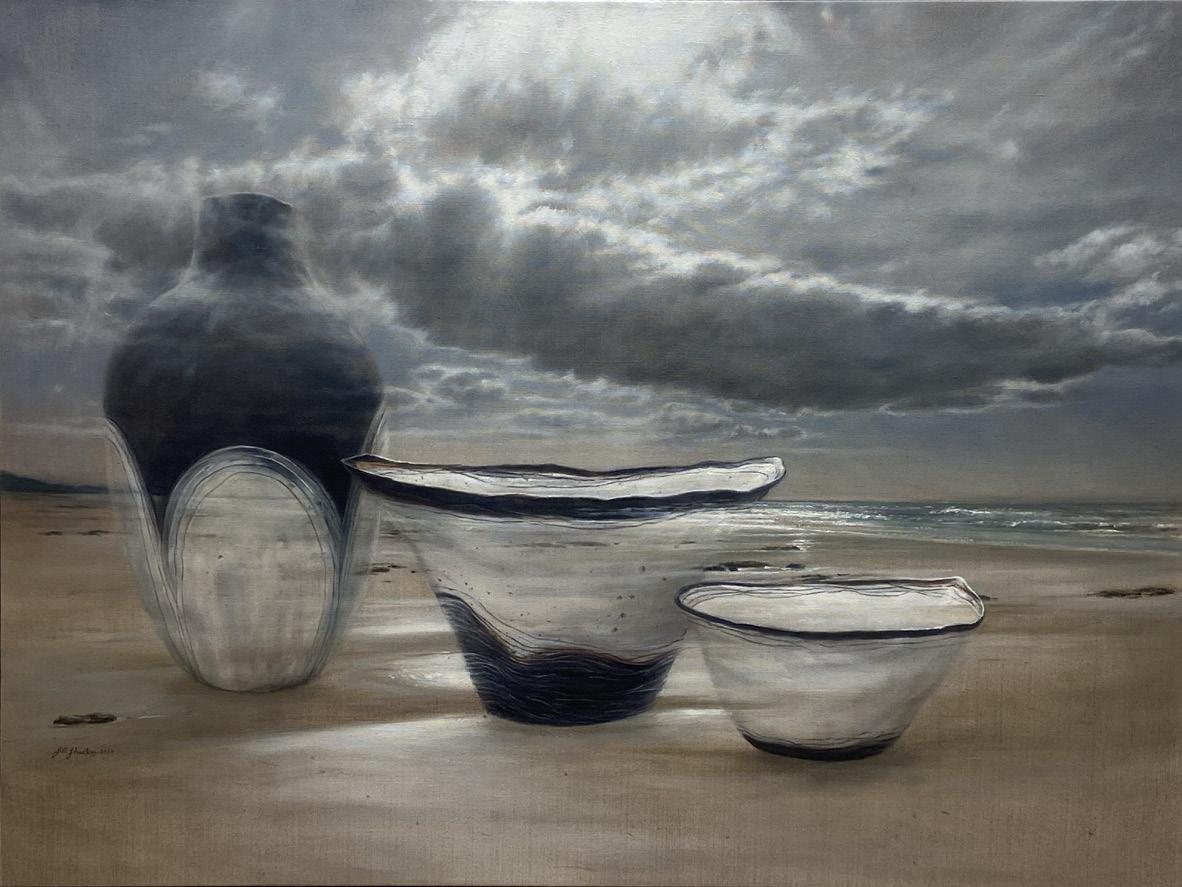
This years Winter Select Exhibition warmed one of those cold Melbourne days with dynamic and sometimes moody works. Jill Shalless' work
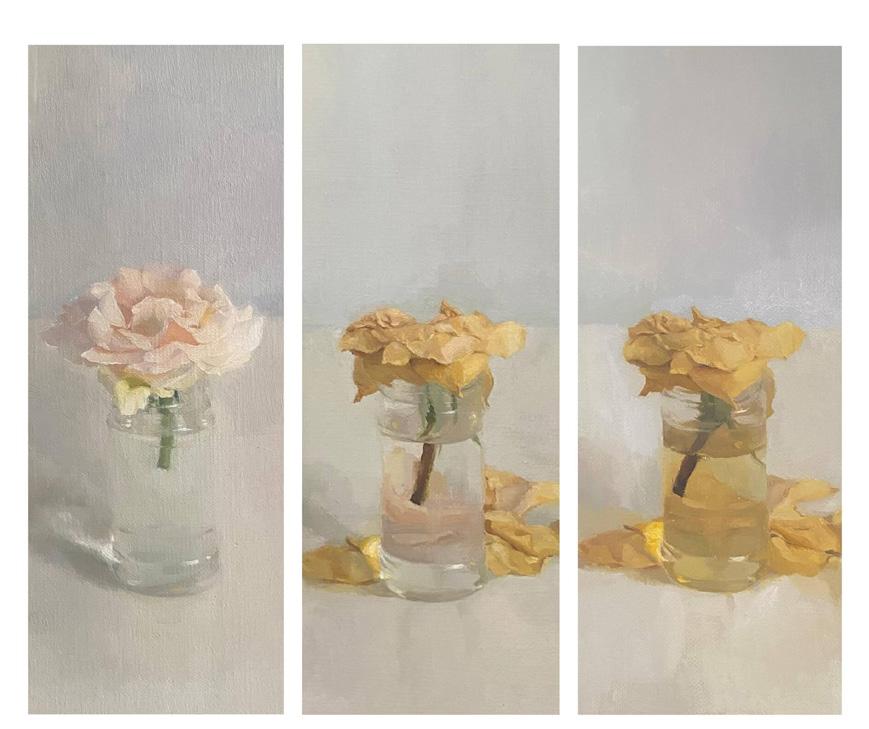
Umbra caught our attention with its surrealist marriage of landscape and still life. The tones celebrate the subject matter in a way that brings you back to the piece whilst experiencing the whole exhibition. Jennifer Huang contributed a beautiful and delicate triptych, The Name of a Rose that showed detailed observation and the pay off of patience to create a quiet but sweet work.
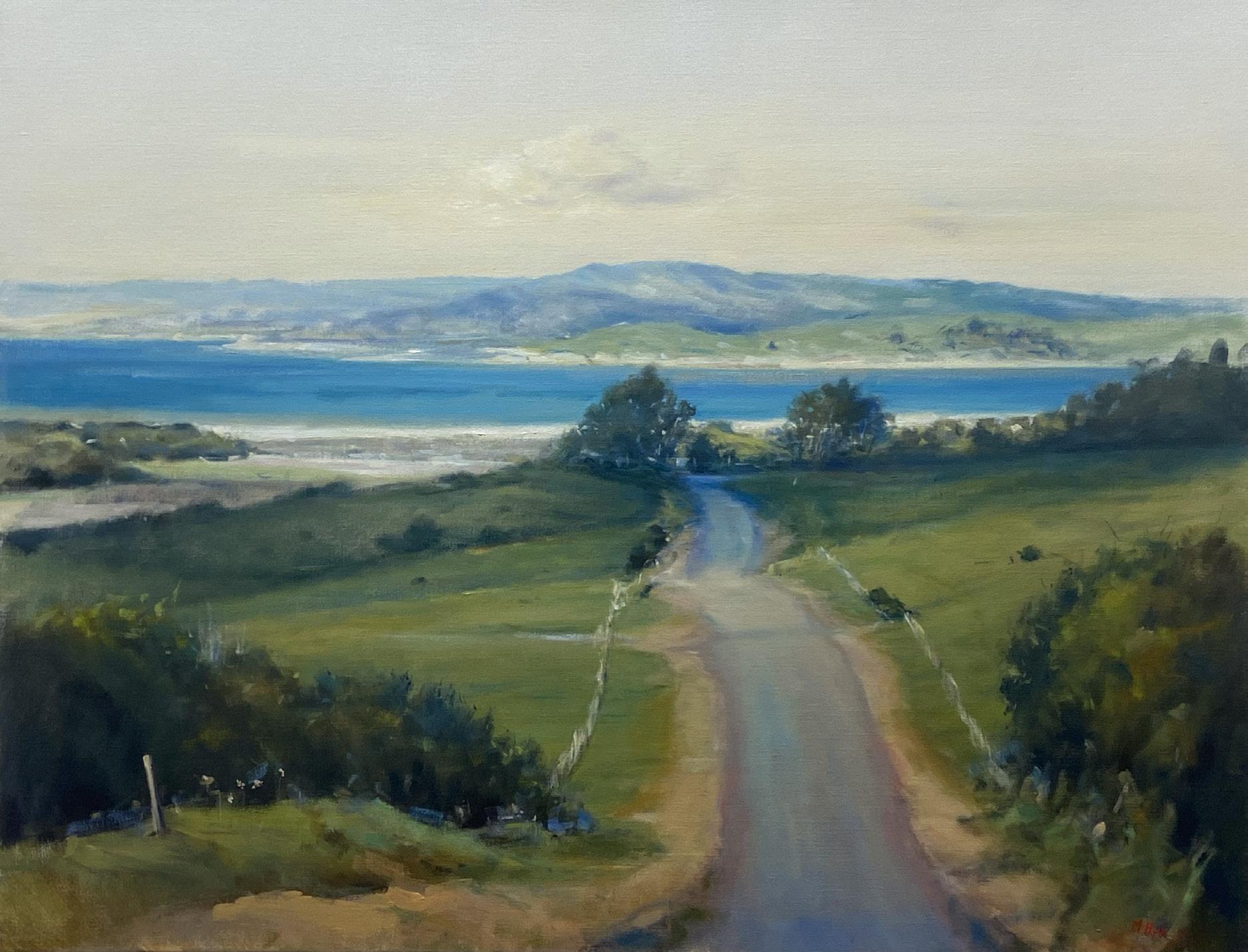
Winner of the Winter Select was Mary Hyde's Further Along the Road, a wonderful landscape that captured Australian nostalgia and country. Gino Severin's Curator's Award went to Phillipa Croll's Layers of Life, a stand out technically and creatively this year. Thank you for attending our Winter Opening in these wet and dark winter nights and warming up with some mulled wine or cider. It was a wonderful evening celebrating worthy artists all round.
Further Along the Road, Mary Hyde VAS, VAS Winter Select Winner 2025
words Rhiannon Lawrie
Hamish, Philippa Croll
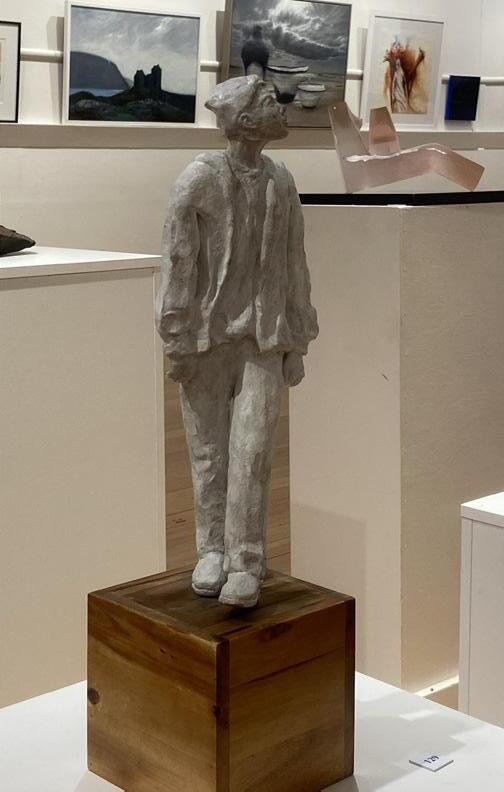
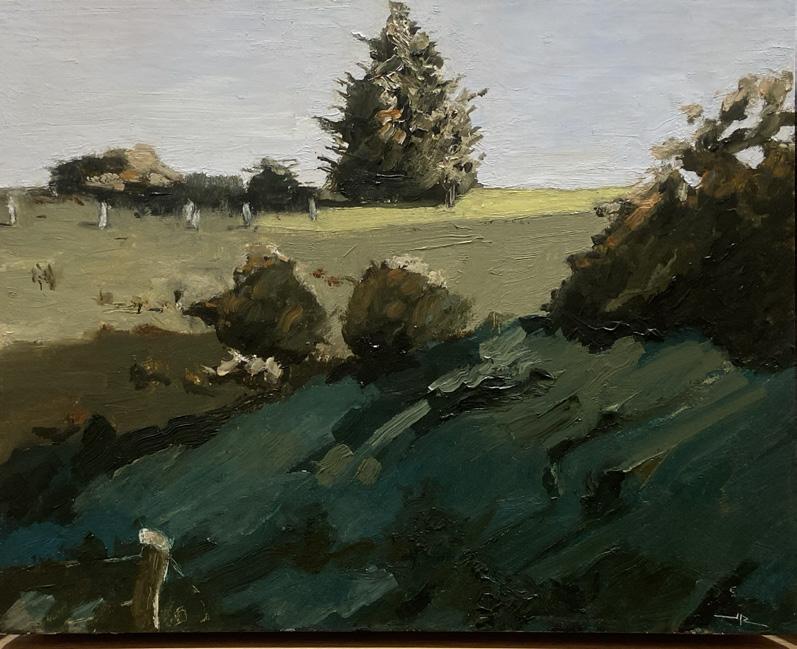
Last of the English Windbreak, John Rabling
The Name of the Rose, Jennifer Huang
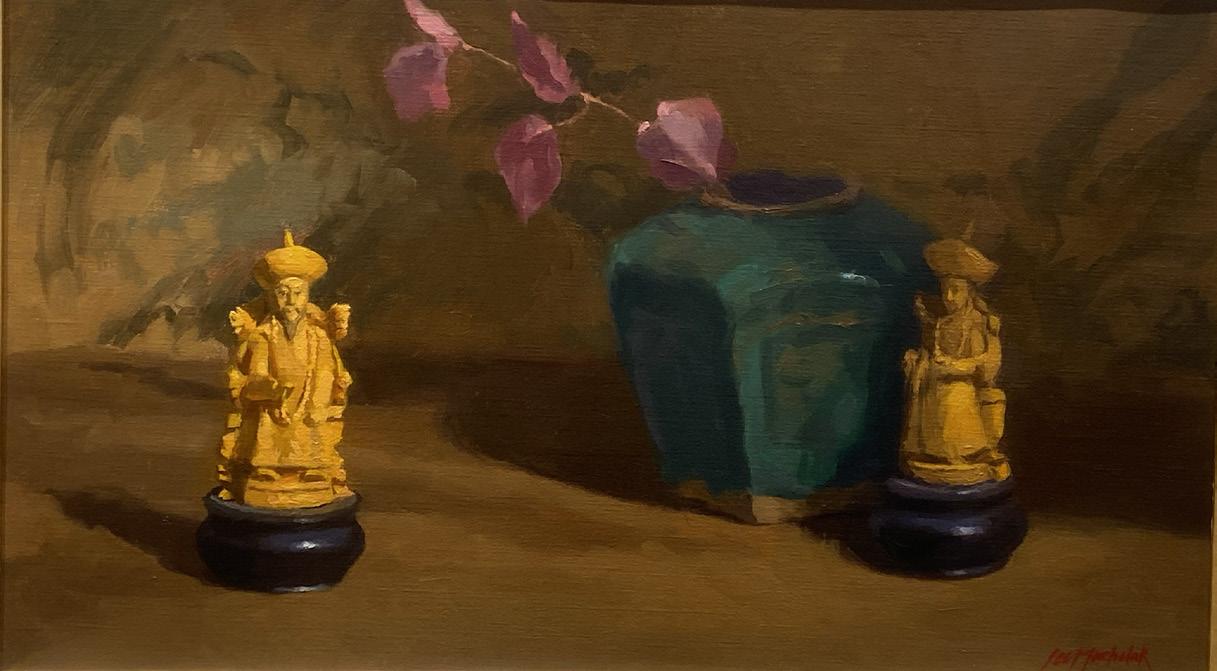
The Emperor and the Empress, Lee Machelak VAS FVAS
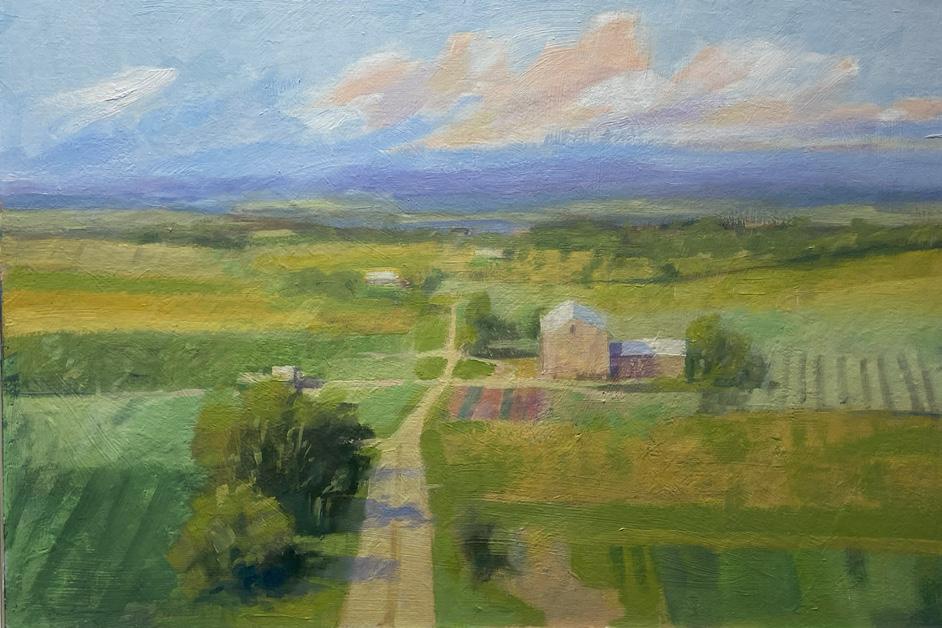
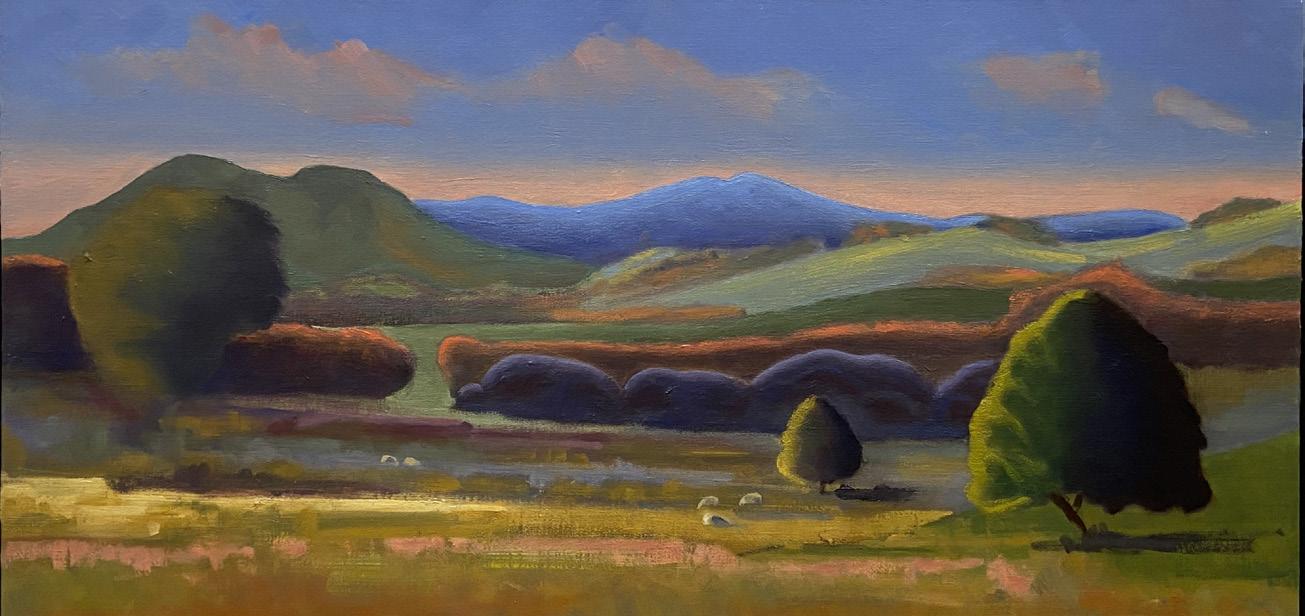
Dusk Over Paddocks, Bruce Baldey VAS
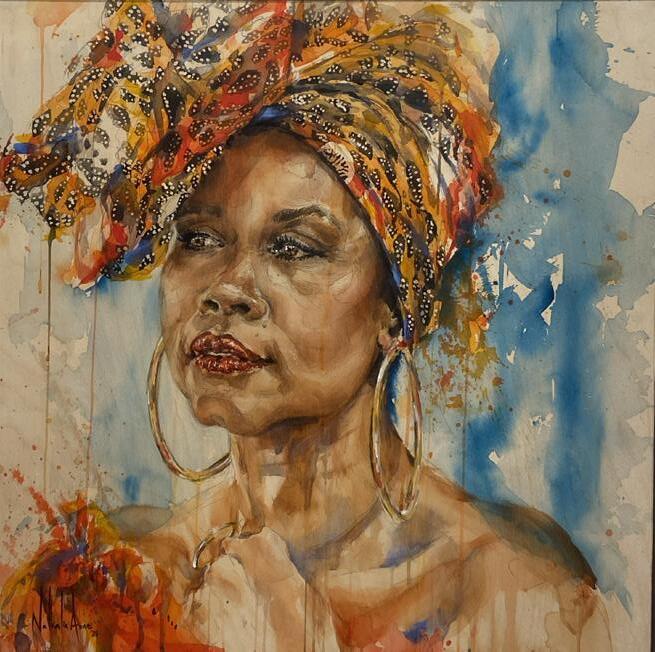
Echoes of Her Light, Nathalie Anne
A Summer's Day in Mansfield, Elizabeth Eades
Umbra, Jill Shalless
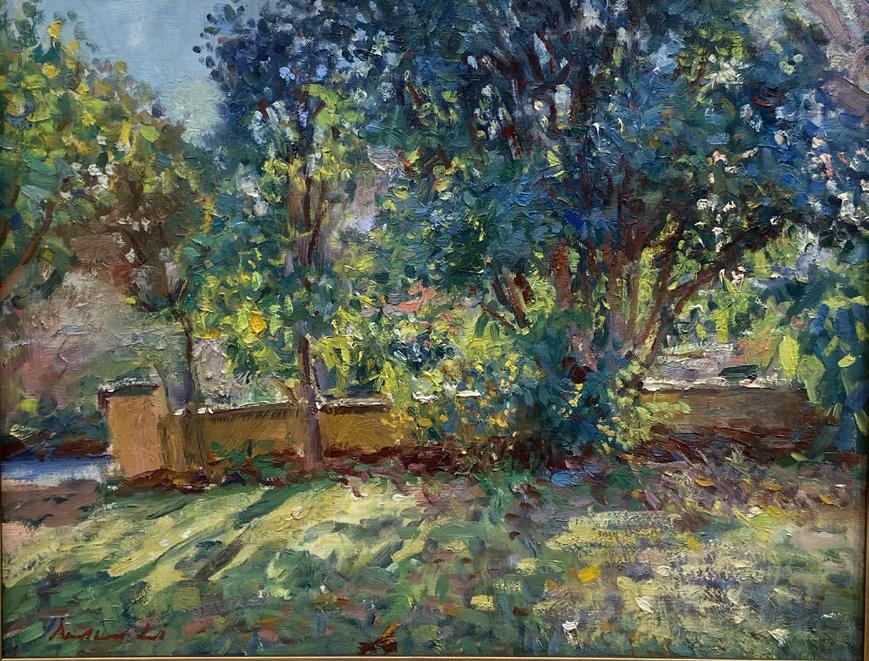
Study of Morning Light, Andrew Li
from sketches to Care:
the making of a masterpiece
words Peter Muntz
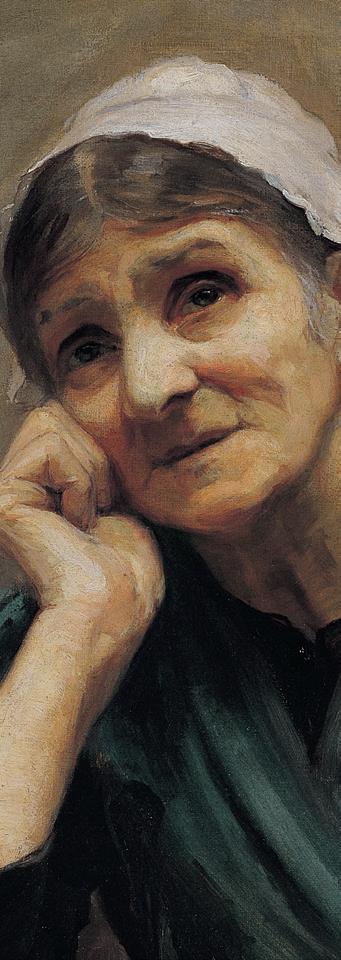
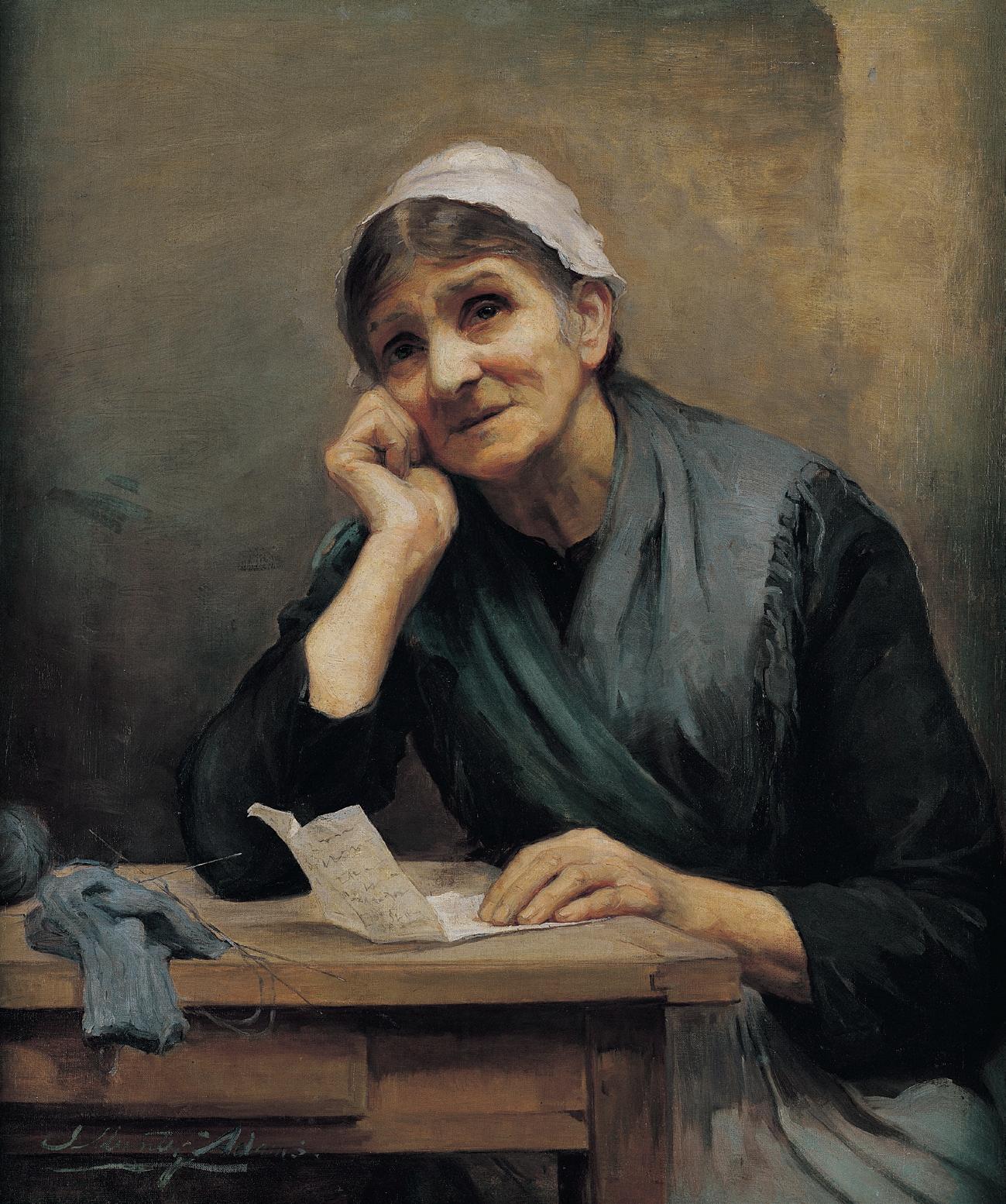
Josephine Muntz Adams’ (1862–1949) Care has captivated audiences for over 125 years, but what inspired this quiet masterpiece? A new website exploring her life and legacy delves into the story behind it. Josephine exhibited at the VAS from 1896-1915 and was elected to Council from 1905-1908 and again from 1912-1913. In 1905 the number of female exhibitors was 57 out of a total of 100 artists.
Care (c.1893) holds a special place in Australian art history: it was Josephine’s first painting purchased by an Australian gallery and the first work by an Australian artist acquired by the Queensland Art Gallery in 1898.
Painted in the French realist tradition during her years as a student in Europe, it was shown at the Paris Salon where it was hung ‘on the line’ – a position reserved for the most outstanding works.
Inspired reunions between mother and son
The emotional power of Care has long been felt. After Josephine’s death in 1949, the Brisbane Telegraph recalled a poignant anecdote shared by James Arthur Watts, a long-time curator at the Queensland Gallery.
A few years after Care was shown at the Queensland International Exhibition in 1897, it toured regional Queensland. In rural Chillagoe, a young man arrived on horseback, viewing the exhibition in a ‘listless, leisurely way’. When he gazed upon Care, his demeanour shifted: ‘That picture reminds me very much of my mother. I have left home and I haven’t written to her since. But I’m going back, because of that picture.’¹
When the exhibition reached Charters Towers, over 500 kilometres away, he returned – reunited with his mother – to show her the painting that inspired his return.
Memories of Long Ago: A precursor to Care
Despite the joyful reunion, Care is steeped in sadness – a theme on which Josephine appears to have been
ruminating for several years.
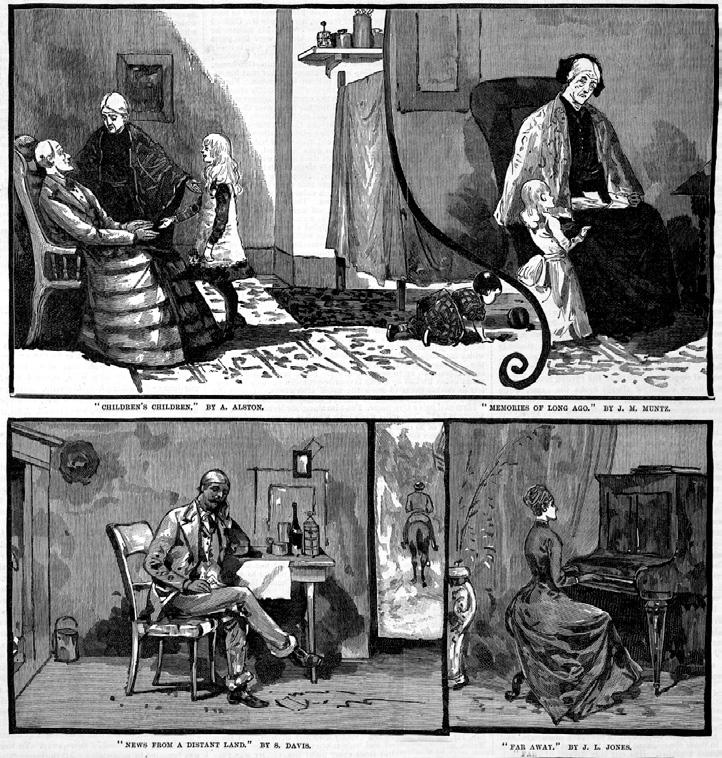
In 1889, the Australasian Sketcher featured an excerpt from a National Gallery School exhibition. It included a student sketch by Josephine, Memories of Long Ago (pictured), depicting a forlorn woman, letter in hand, young girl by her side. The Sketcher described the ‘shadow of pain passing over her face, full of expression and character.’² – a description just as fitting for Care
Tragedy and the travelling scholarship
The ideas Josephine explores in Care were shared by many of her contemporaries.
In 1887, the National Gallery School introduced a scholarship for emerging artists to travel to Europe for further study. John Longstaff won the first with his painting Breaking the News, portraying a mother learning of her husband’s death. Abe Altson followed in 1890 with Flood Sufferings, depicting a mother and child being rescued from a flooded house.
Art researcher Kate Robertson notes that Breaking the News influenced many entrants: ‘The similarity between works was of course influenced by studying at the same school … it also indicates that artists looked to [it] as a valuable prototype for their scholarship submissions.’³
Although Josephine wasn’t a scholarship recipient, and was studying in Europe by the time she painted Care, her work shares similarities with Longstaff and Altson.
A family tragedy: the inspiration behind Care?
A deeper look at Josephine’s family history offers another insight. In 1893 – the year Care was painted – tragedy struck: her sister Florence died after giving birth to her first child. Josephine was studying in Europe and would have received the news via letter, months later. Perhaps she imagined that letter exchange, interpreting her mother’s grief through the figure in Care?
‘I could lie down like a tired child And weep away the life of care, Which I have borne and yet must bear.’ – Percy Bysshe Shelley
Shelley’s poem Stanzas Written in Dejection near Naples is often cited as an influence on Care⁴, but Josephine’s own life is also likely to have played a role. The lines from Shelley’s poem mirror the woman’s sorrow in Care, but who is she? What’s in the letter? And what’s the grief she must bear?
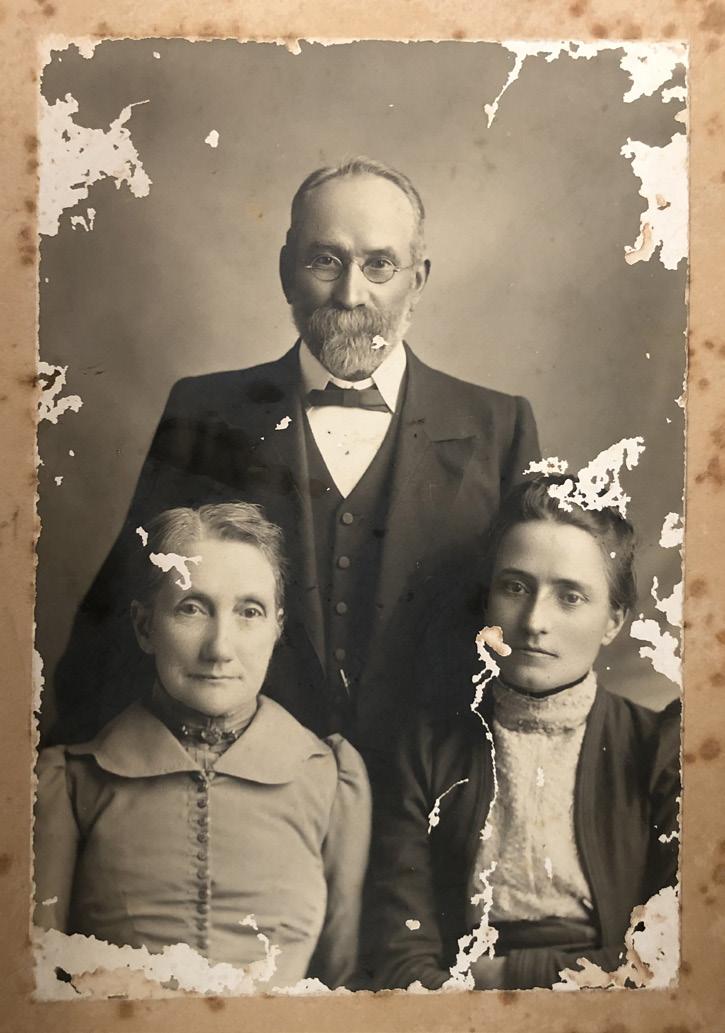
A reviewer once described Care as a ‘lifelike presentment of an old woman reading a letter, evidently of evil import’⁵. It’s also been suggested that the woman is Josephine’s mother, Jane Jamison Muntz (pictured) – plausible, as she often used family and friends.
Regardless, Care resonates more than a century later; a powerful statement of the human experience, painted by one of Australia’s most accomplished portraitists.
Care is featured in ‘Dangerously Modern: Australian Women Artists in Europe 1890–1940’ at the Art Gallery of NSW from 11 October–1 February 2026.
Explore more of Josephine’s life and legacy at www.josephinemuntzadams.art
1 Brisbane Telegraph, ‘Son swayed by picture’, 30 November 1949 (p.18)
2 The Australasian Sketcher, ‘The students’ exhibition at the National Gallery’, 28 November 1889 (p.183)
3 Robertson, Kate (2020), Identity, Community and Australian Artists 1890-1914, Bloomsbury, New York (p.43)
4 Brisbane Courier, ‘Mrs Muntz Adams’, 8 November 1930 (p.18)
5 Queenslander, ‘Art Gallery of the Exhibition: Second notice’, 29 May 1897 (p.30)
Care, Josephine Muntz Adams
The students' exhibition - Memories of long ago (The Australasian Sketcher - 28 November 1889)
Josephine (right) with her father and mother, Jane Jamison Muntz (said to be the sitter for Care)
In
memory of
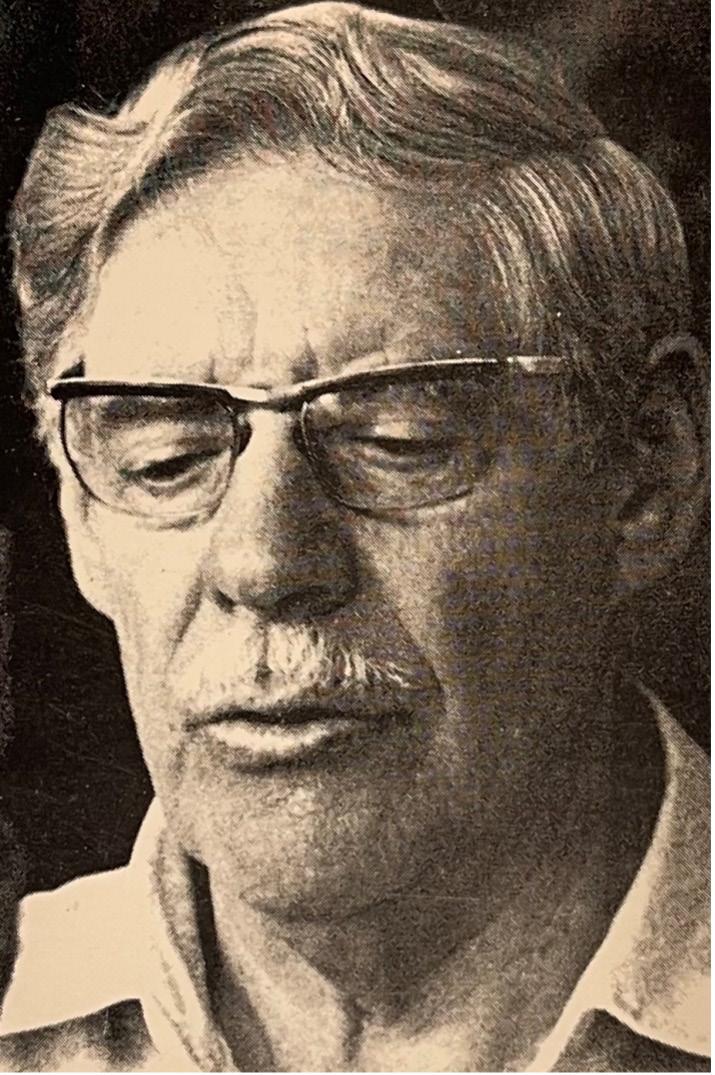
Noel Waite AO FVAS (1931-2025)
The Victorian Artists Society is mourning the passing of Past President Noel Waite AO FVAS. Noel was the sponsor of the Noel Waite AO Award and an active member of the VAS Friday Group. An accomplished businessperson and founder of the Waite Group, Noel became the first female President of the Australian Institute of Management. She was elected President of the VAS in 2007 and served with distinction until 2010. There is a long list of her other achievements in the business world including establishing in 1982 Womensearch, the first executive search firm of its type in Australia.
Noel’s dedication to the VAS was unwavering and transformative. Her vision and commitment continue to enrich our Society through the Noel Waite Award presented annually to the Exhibitors’ Choice in our Artist of the Year Exhibition. This award has recognised exceptional work from artists including Ron Reynolds, Nathalie Anne, Des Parkin, Anne Melloy, Jennifer Fyfe, Raelene Sharp and Jane Jones.
Noel’s leadership and commitment have left an indelible mark on our community. She played a valuable and pivotal role in shaping the history of the VAS, guiding us with her wisdom, passion and an unwavering belief in the power of art to bring people together.
The Noel Waite AO Award
A Retrospective
Originally established by former VAS Honorary Treasurer the late Gordon Moffatt as the Exhibitors’ Choice Award, this honour is presented to artists who receive the highest number of votes from their fellow finalists in the year ending Artist of the Year Award Exhibition.
Renamed the Noel Waite AO Award in 2015 it has been awarded nine times with Ron Reynolds VAS achieving the remarkable feat of receiving peer recognition on three occasions. These winning works represent the best of the VAS as judged by the AOTY finalists. They represent the excellence and peer appreciation that Noel championed throughout her distinguished tenure with the Society.
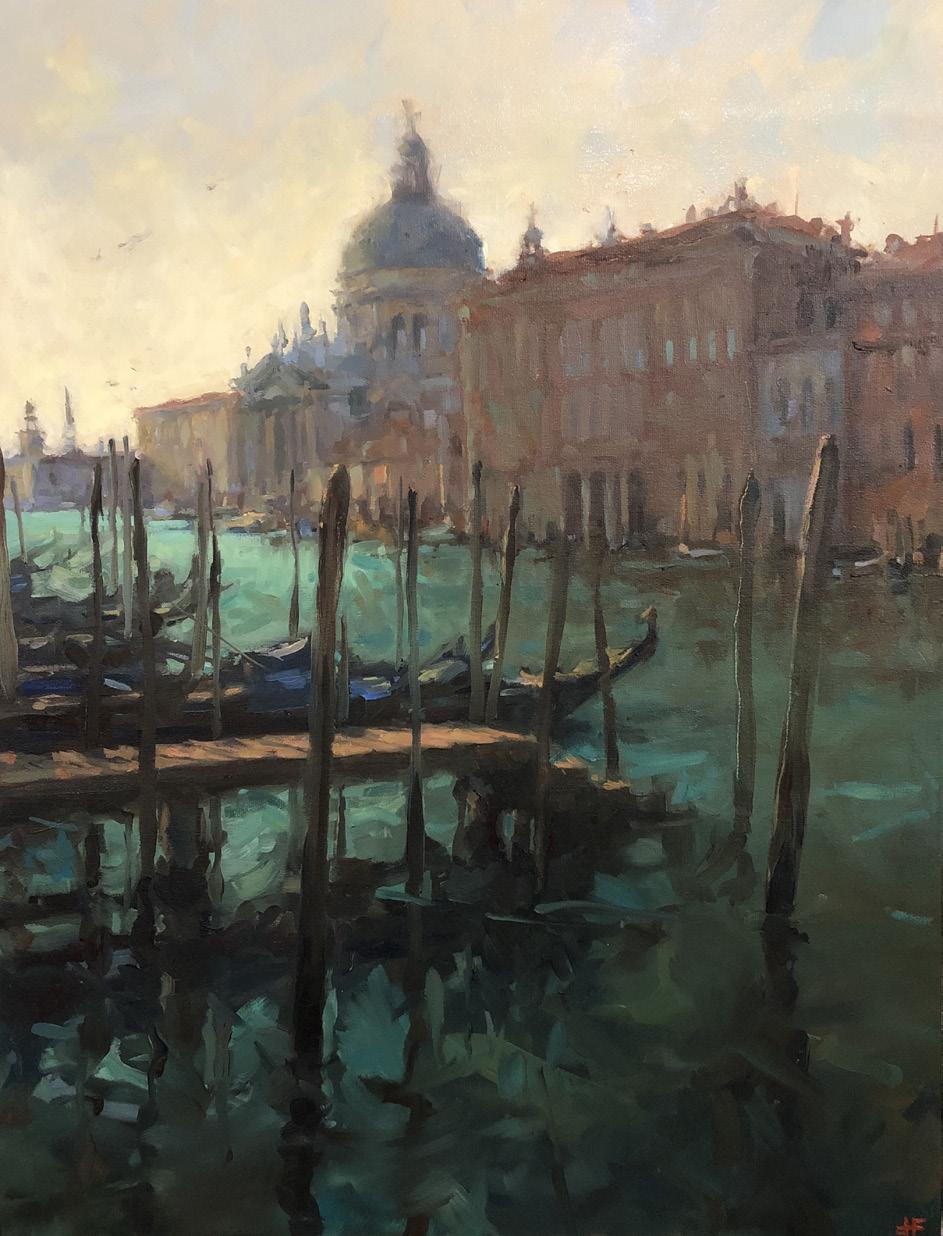
Venezia Awakes, Jennifer Fyfe, Noel Waite AO Award Winner 2018
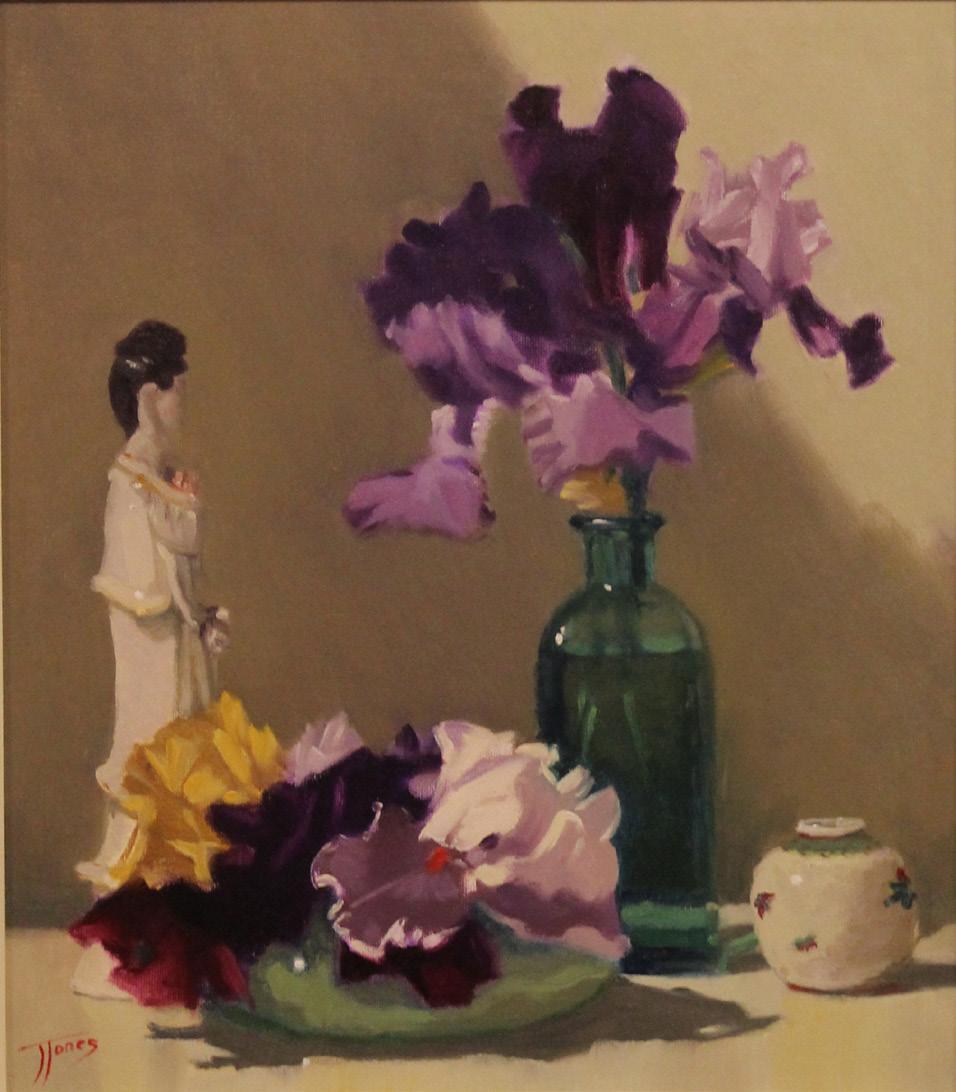
Jane Jones, Noel Waite AO Award Winner 2015
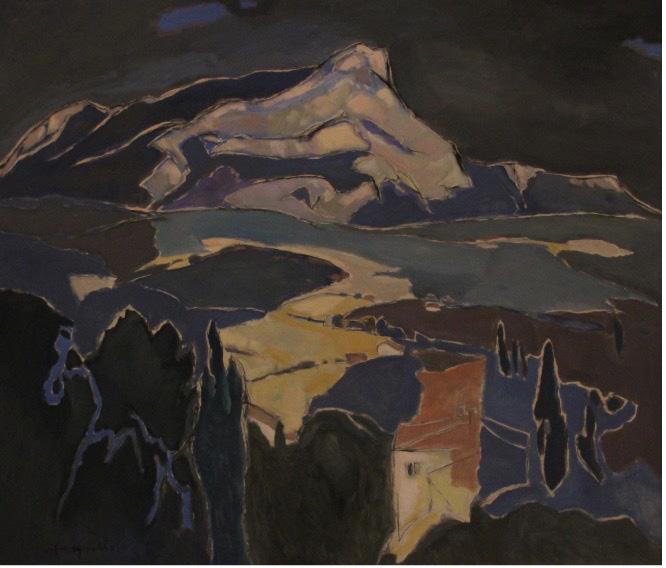
Mont St Victoire (Cezannes Mountain), Ron Reynolds, Noel Waite AO Award Winner 2021
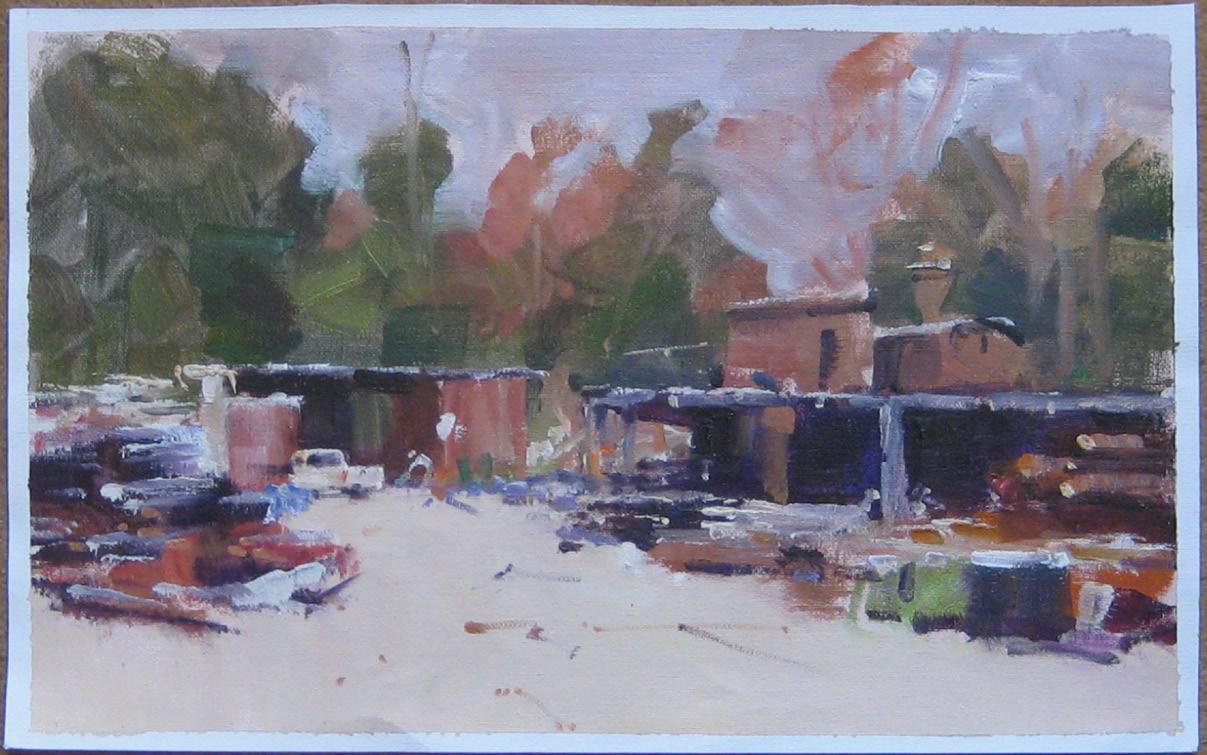
Sawmill Millbank, Des Parkin VAS, Noel Waite AO Award Winner 2016
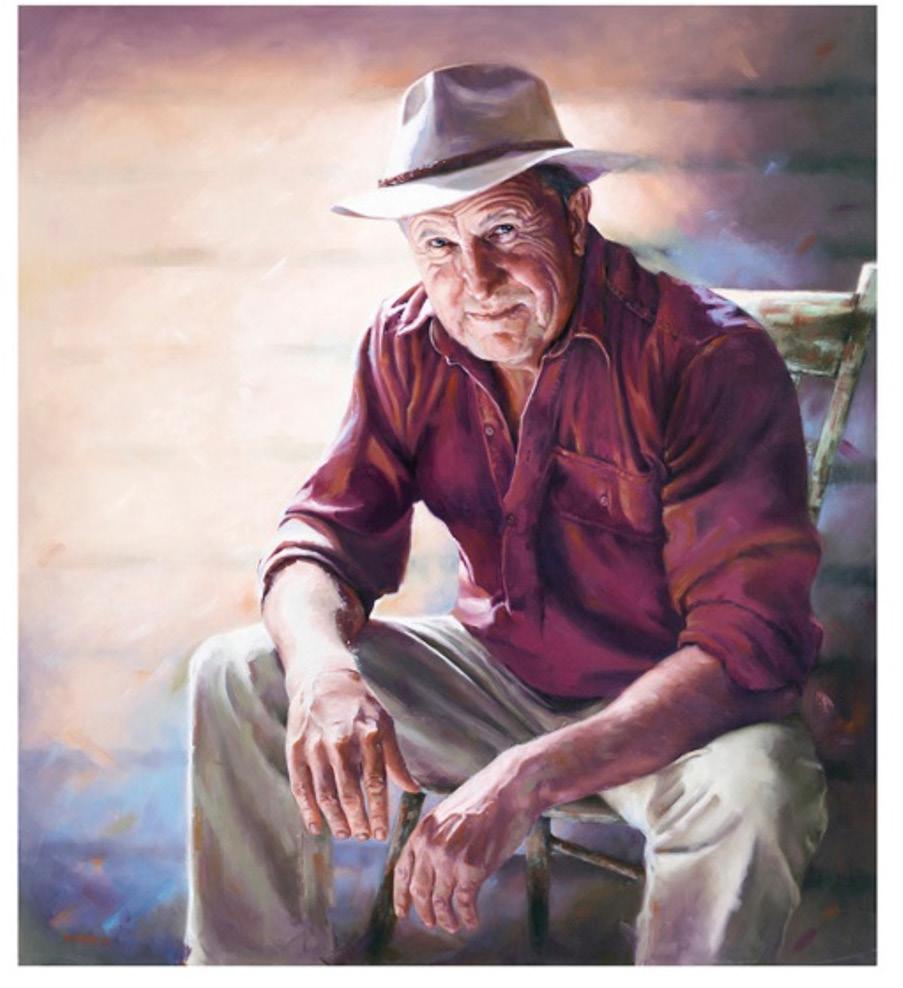
Frankie J Holden, Raylene Sharp, Noel Waite AO Award Winner 2017
King River Reflections, Anne Melloy VAS, Noel Waite AO Award Winner 2022
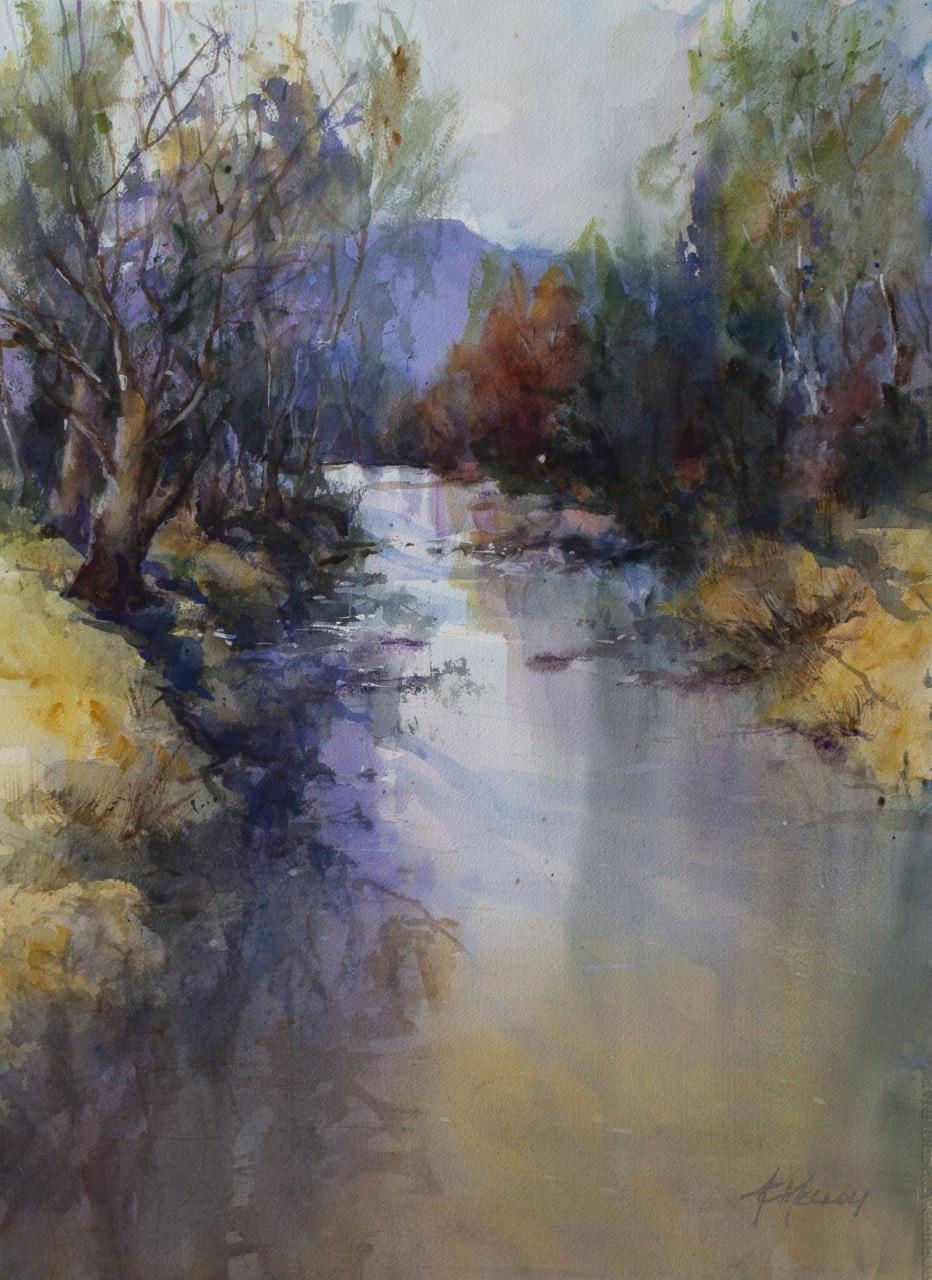
Je Suis Qui Je Suis, Nathalie Anne, Noel Waite AO Award Winner 2024
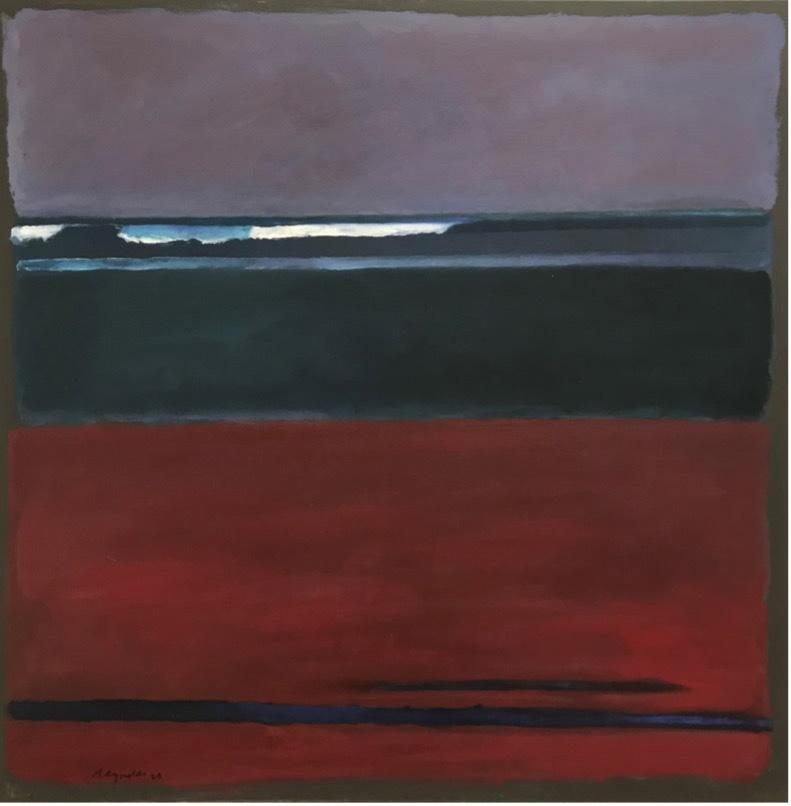
Sound of a Breaking Wave, Ron Reynolds, Noel Waite AO Award Winner 2023
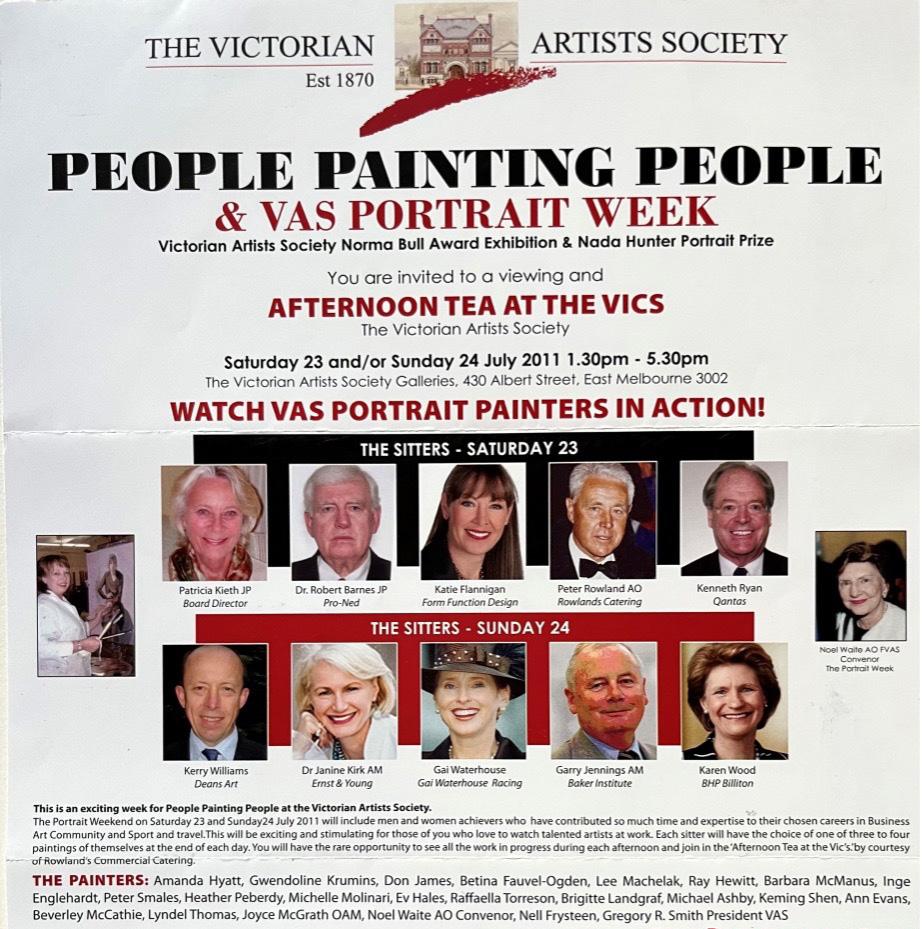
The 2011 Invitation
People Painting People
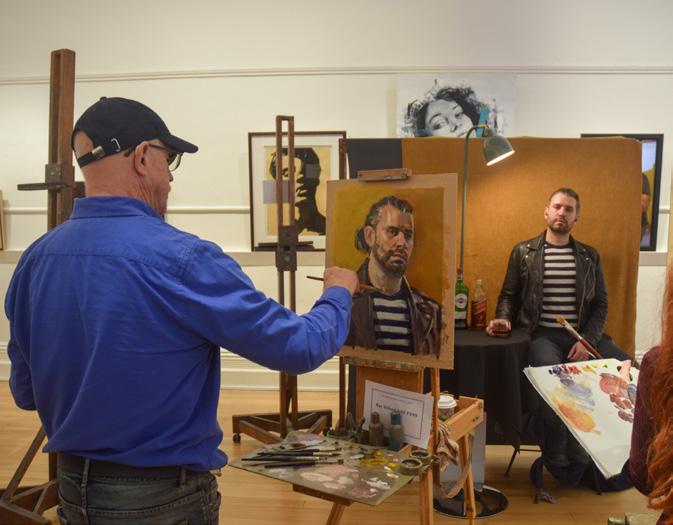
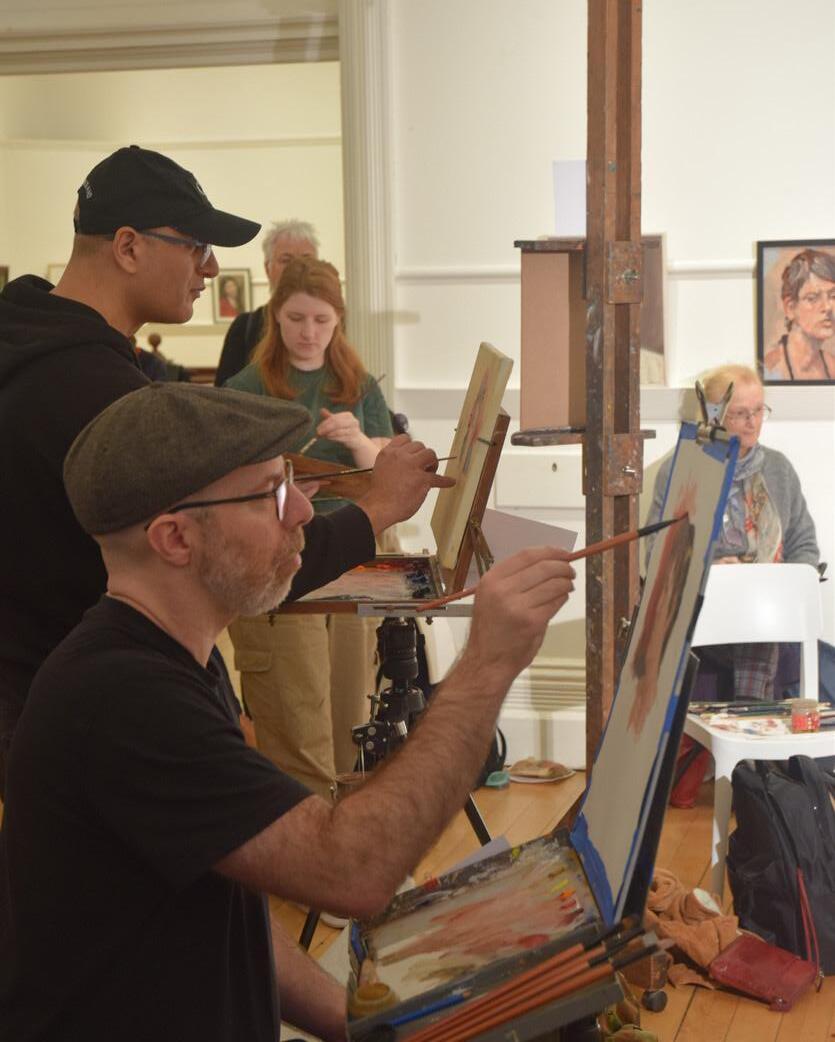
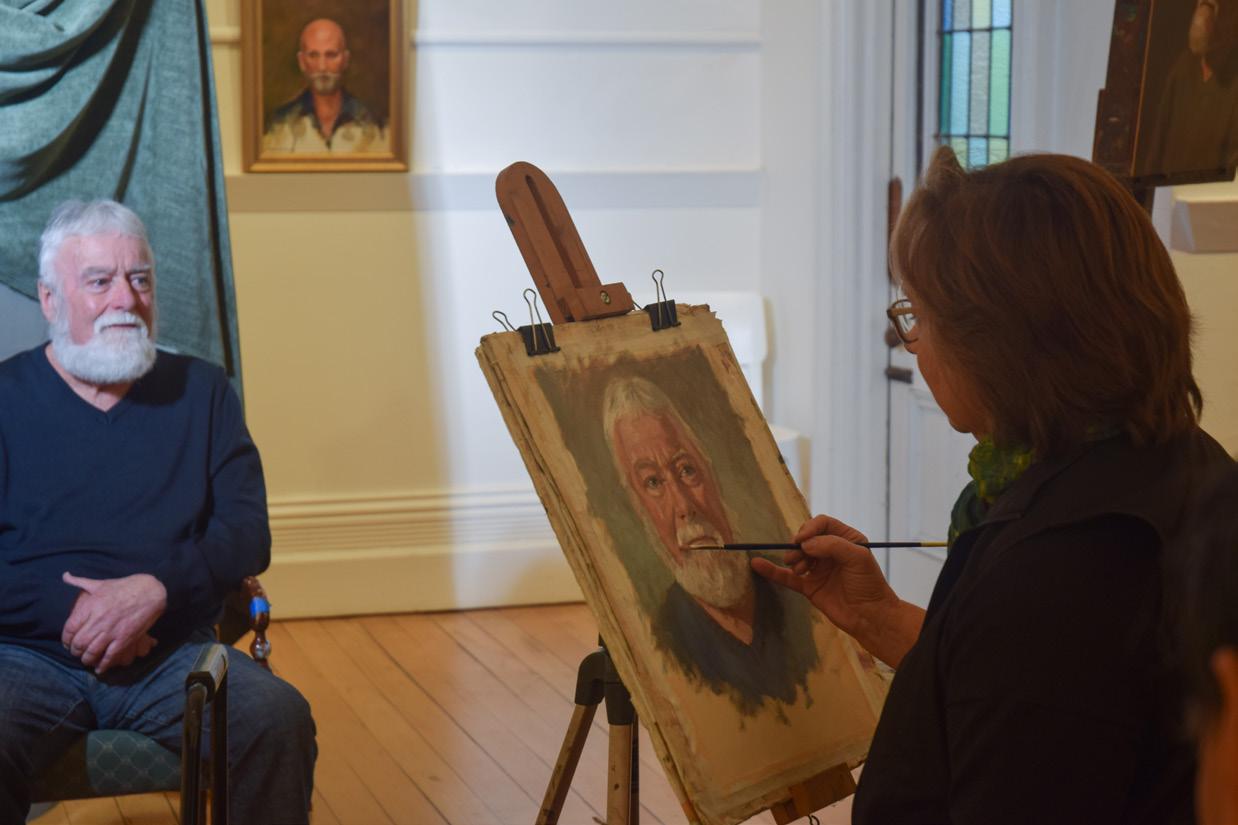
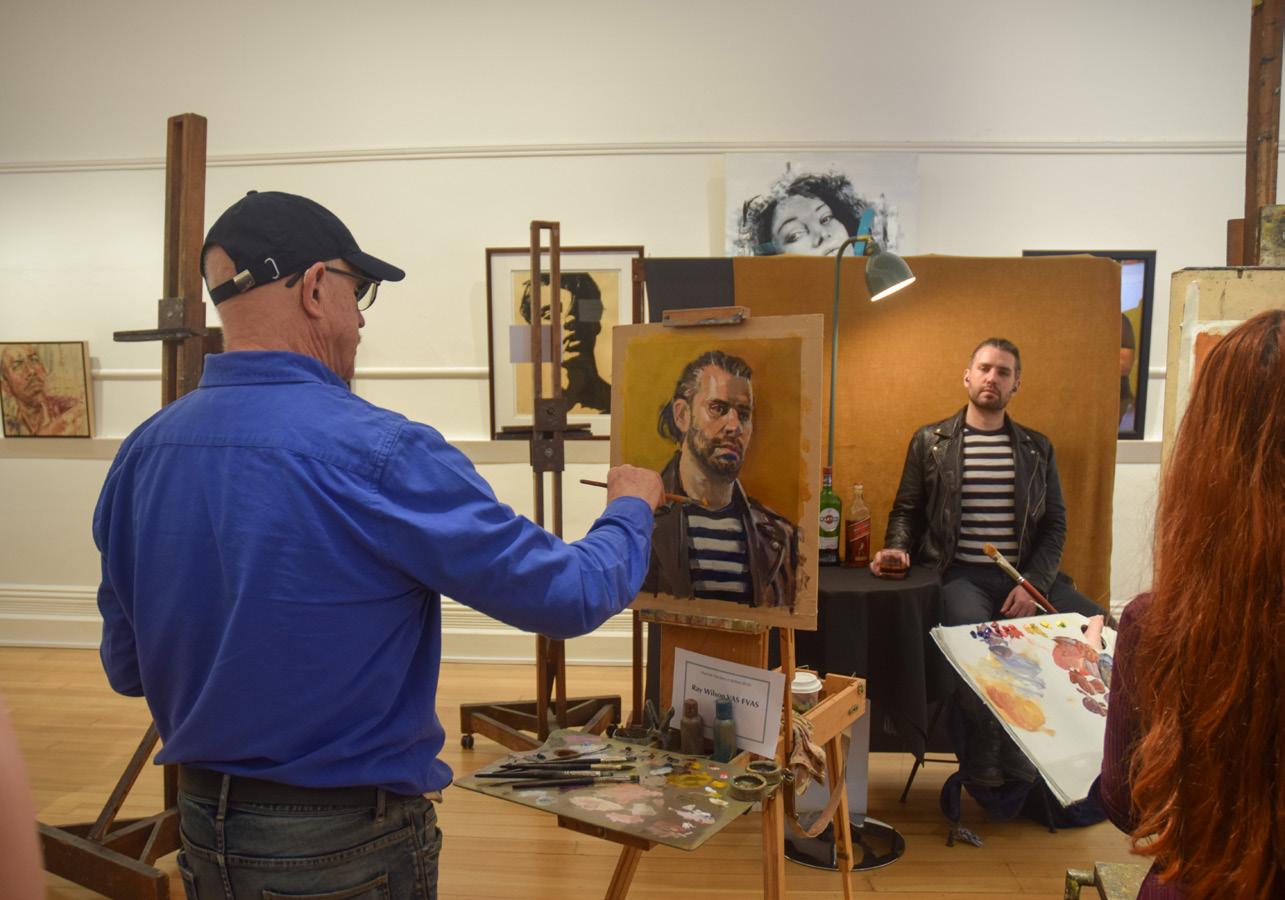
Not long after Noel Waite FVAS AO took up her role as President at the VAS in 2007, she had a casual conversation with member Christine Wrest-Smith about the importance of good portrait painting. During their discussion, the possibility of a VAS Open Day to show portrait painters at work was raised – and soon after the decision was finalized. This chance discussion led to one of the Society's most popular and successful programs – shaped and guided by Noel herself over the next eight years.
Unless one is involved in the visual arts, or has had their portrait painted, it is not something the average person gets to see all that often. The occasional television program or documentary
film may show glimpses of the artist at their easel, with brief flashes of the model. Even a much admired TV series like Anh’s Brush With Fame, an engaging interview program with well-known personalities, shows nothing of the painter in action, their journey on canvas or the thought process with all the highs and lows experienced along the way. At the end there is simply the ‘big reveal’ – as the final result is turned towards the camera and the viewing audience. It is entertaining television for sure, but like all reality programs, it is many hours of work, compressed into a short, palatable time frame. Noel was determined that this Weekend festival should not only be an artistic success, but also help raise a little money for the Society, and with support from her many business
contacts and career colleagues, began what was to be months of planning for the very first People Painting People Weekend. A number of interesting and high profile people received personal invitations from Noel to be ‘models’ and have their portraits painted.
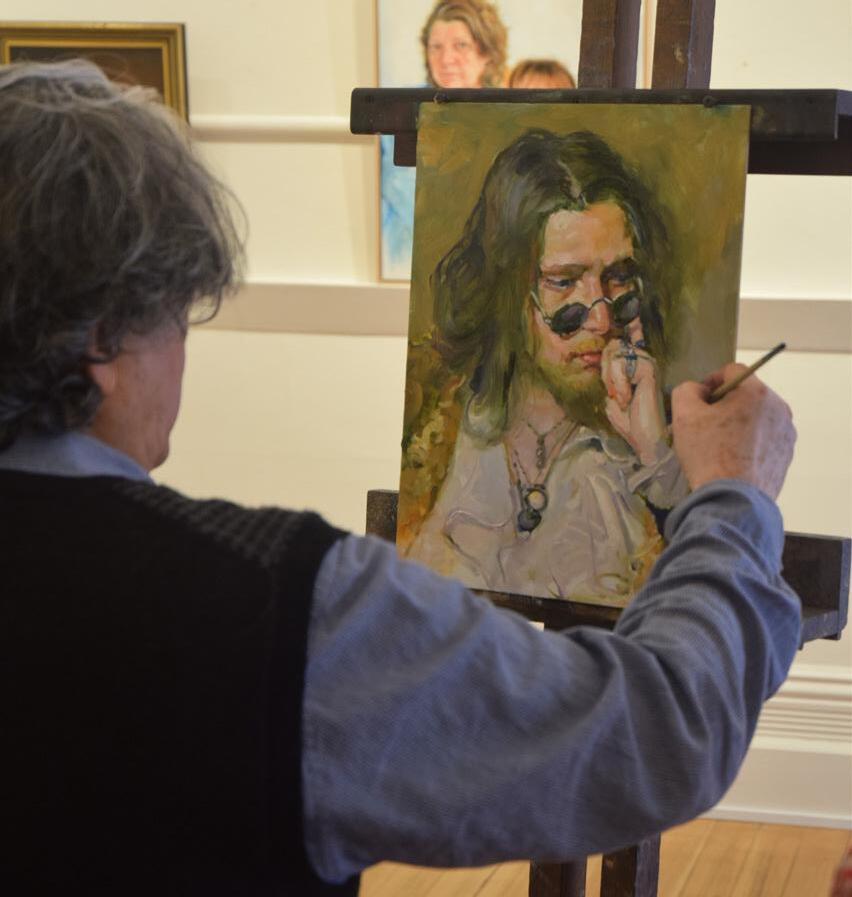
Invitations were extended to many people throughout the next few years as Noel worked tirelessly to make this Portrait Weekend the success it still is today. It was an innovative venture back then, and still today draws crowds, fascinated by the art of portraiture. Here is the perspective of Amanda Hyatt VAS, one of our most distinguished members and talented artists…
Figurative sketch by Noel Waite
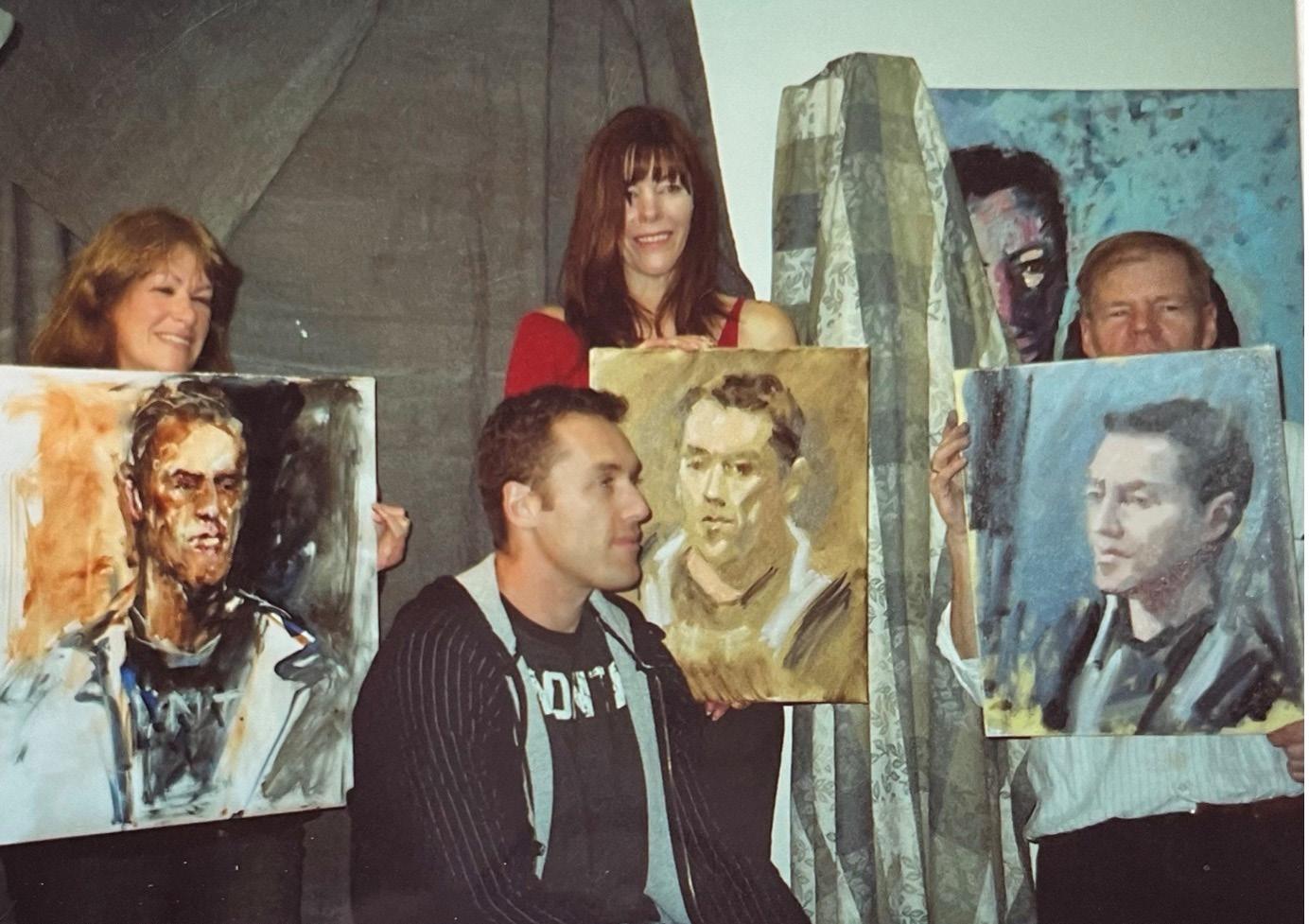
Sitter Anthony Koutoufides with VAS artists Peter Smales and Lee Machelak
It all began with Noel Waite about 2008, 17 years ago!
Noel began the ‘People Painting People’ weekend program, inviting many celebrities and her friends to sit.
She also had ‘Women Painting Women’ for at least 7 or 8 years.
This list of VAS artists who did the portraits is seen at the bottom of the invitation.
The sessions were more fun than serious with red wine usually at everyone’s easel and jibing going on everywhere.
Lots of hilarity and fun with artists’ friends egging them on or the sitters playing up. This innovative draw card event brought hundreds of guests to
watch a fabulous weekend’s painting.
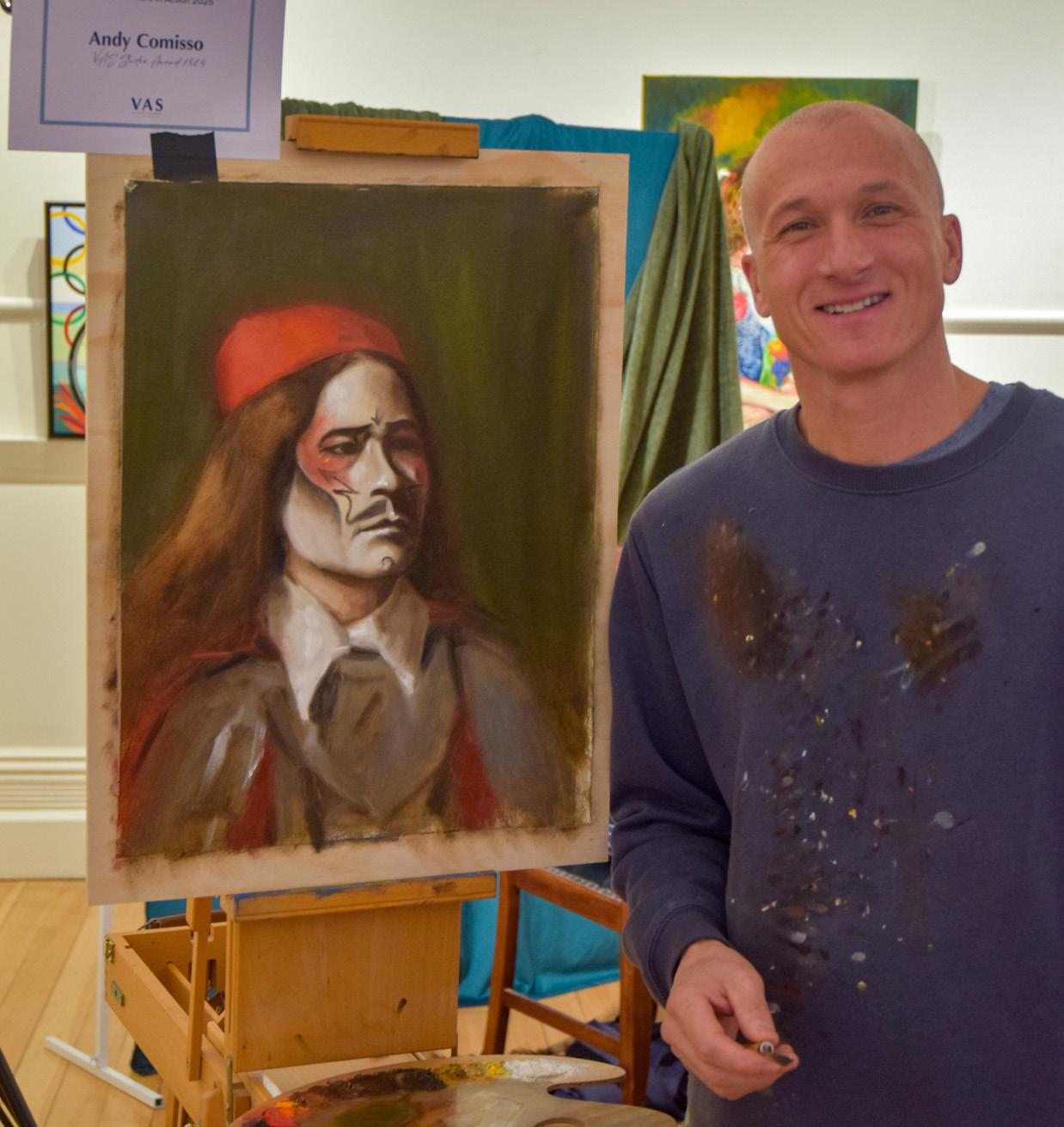
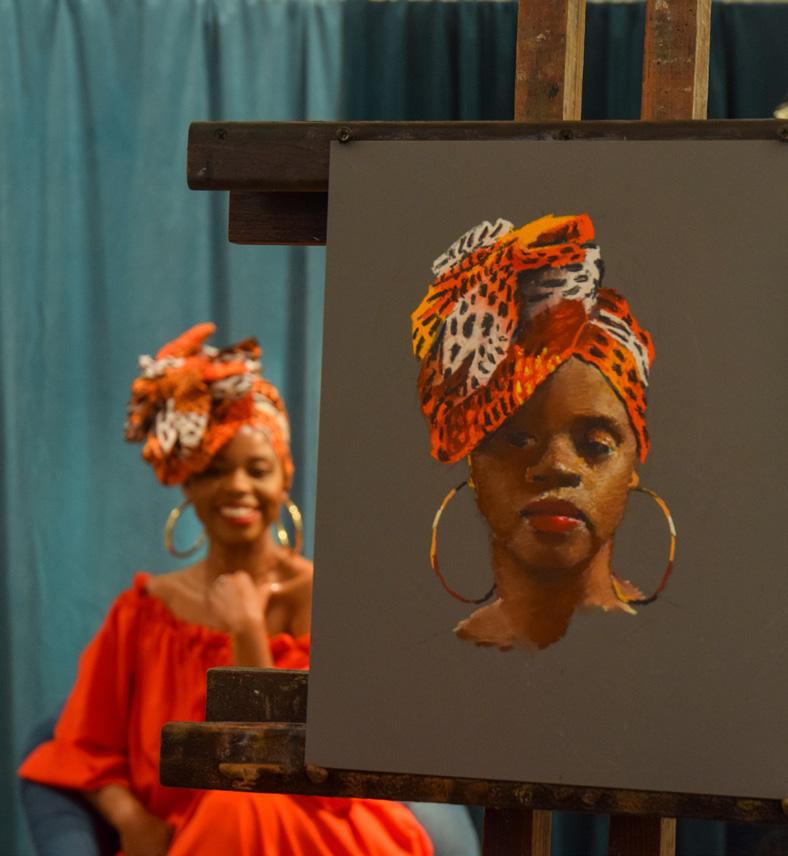
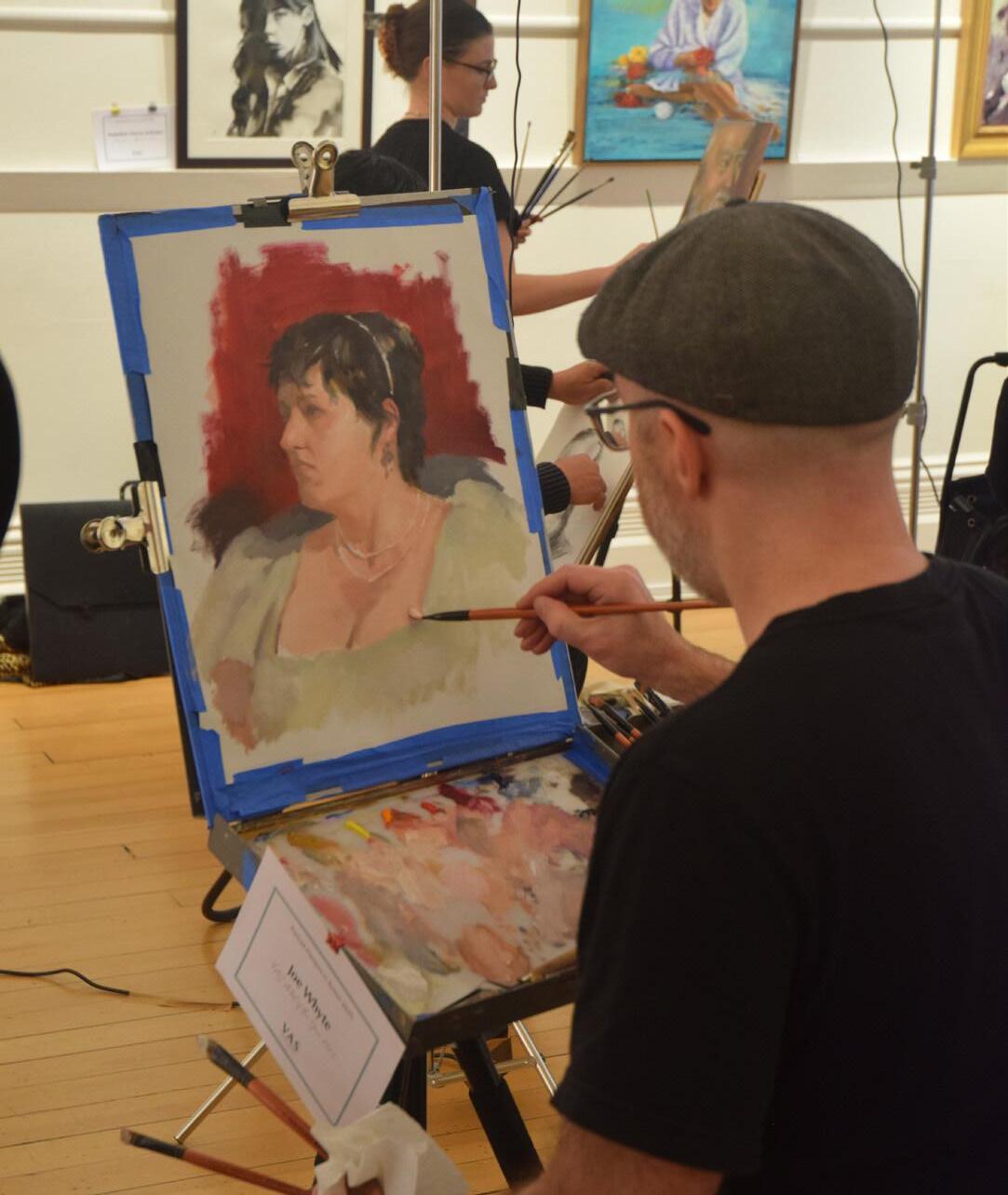
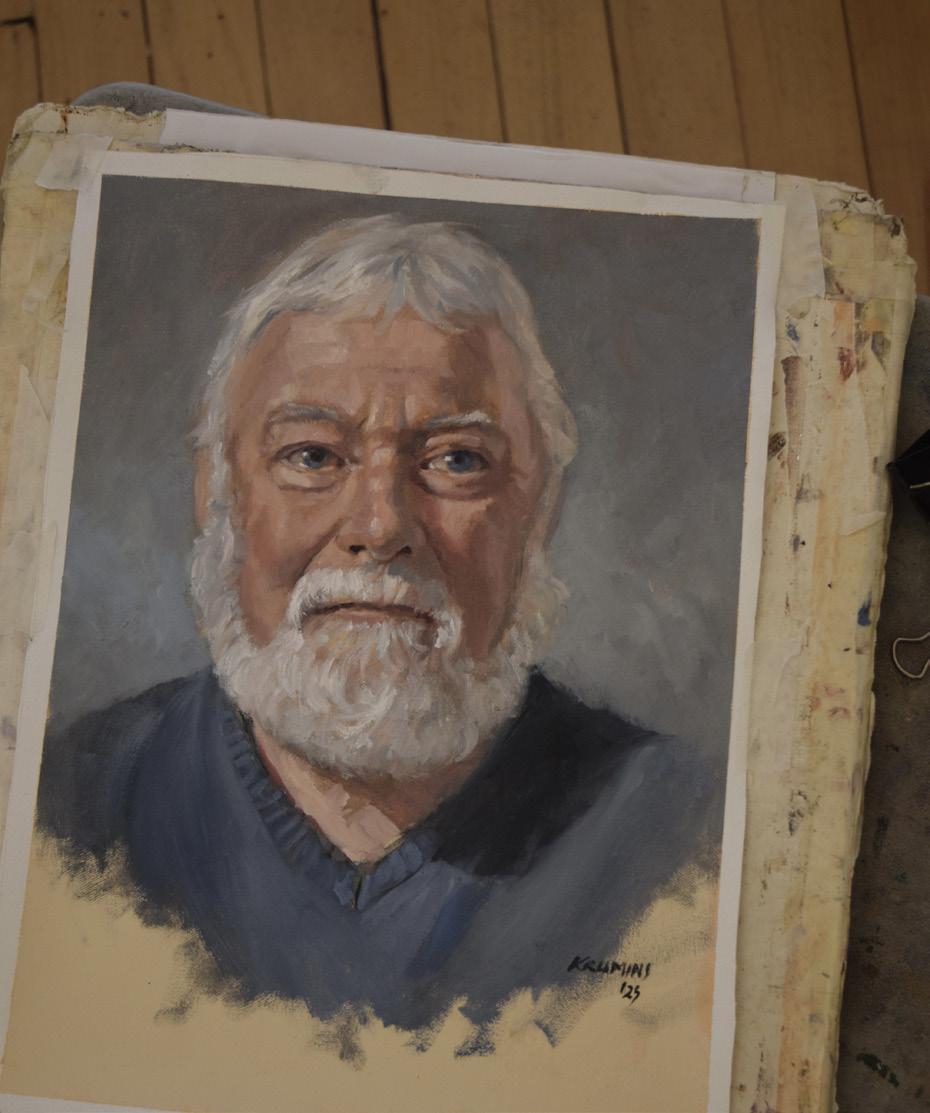
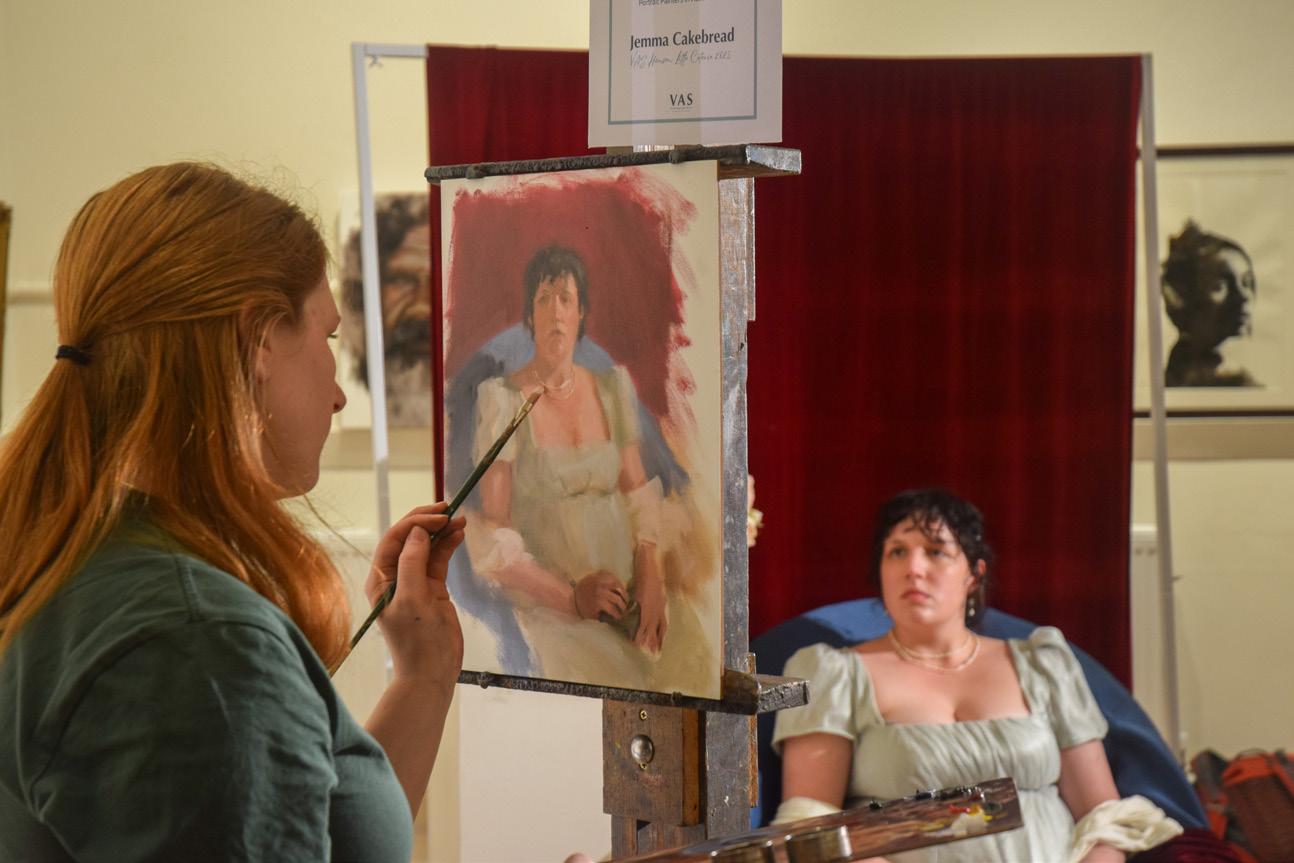
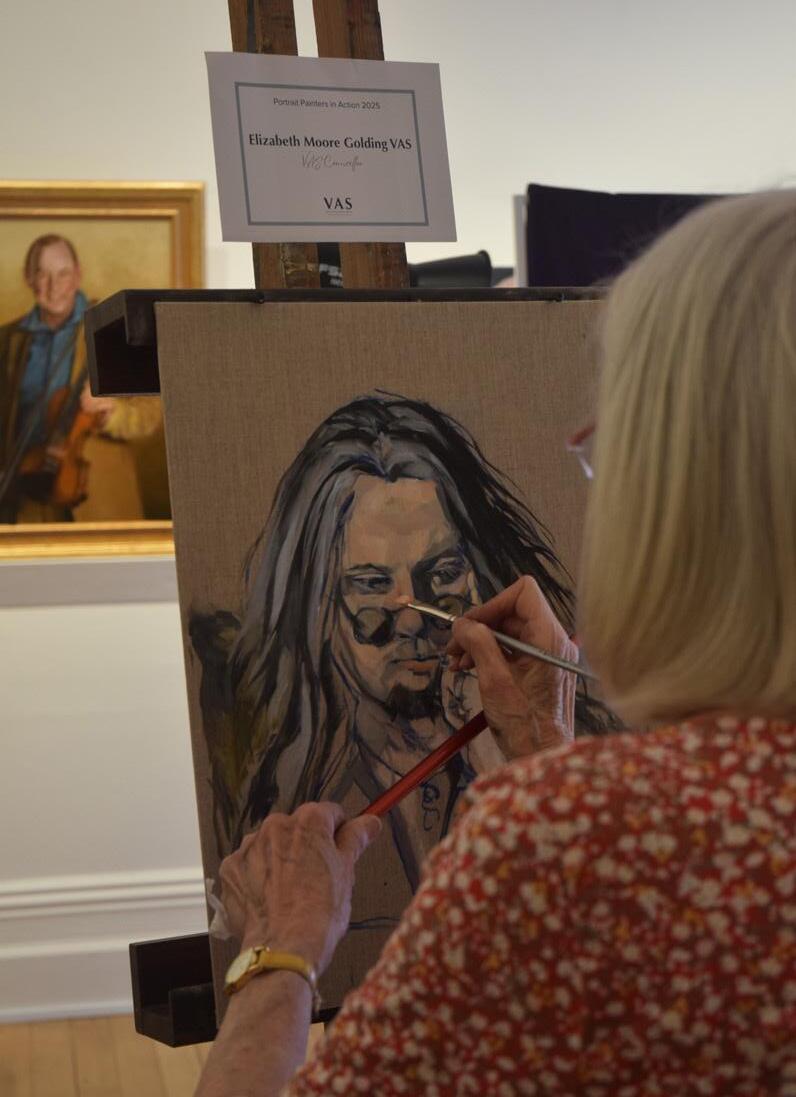
Noel has continued today with ‘Portrait Painters in Action’, with a new group of artists, and some of the originals, showing their skills.
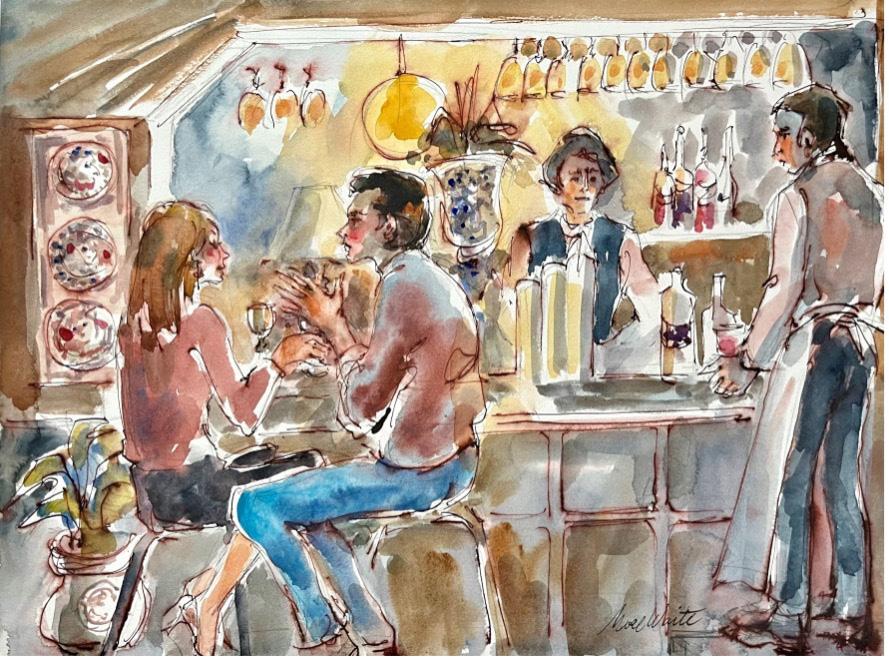
Noel was a fabulous artist herself and a high achiever in the corporate world. She had a passion for watercolour as well and I’m including one of her lesser known pen and wash figurative tableaux which I am fortunate enough to own. I honour Noel and all her achievements at the VAS and very sorry to hear about her passing.
”
Amanda Hyatt VAS
Julien Bruere, Noel Waite, VAS Collection
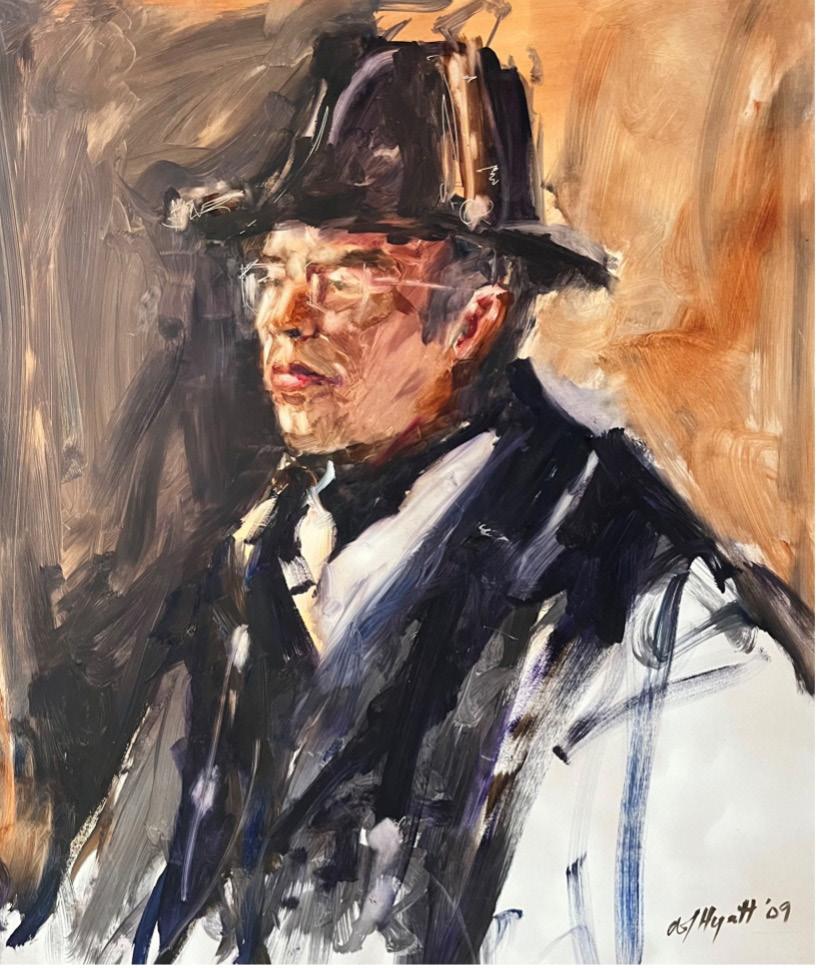
The Admiral, Amanda Hyatt
Victorian Artists Society
Portrait Painters Day
6th July 2025
The artist & the actress
John Longstaff and Jessica
words Ian Hobbs
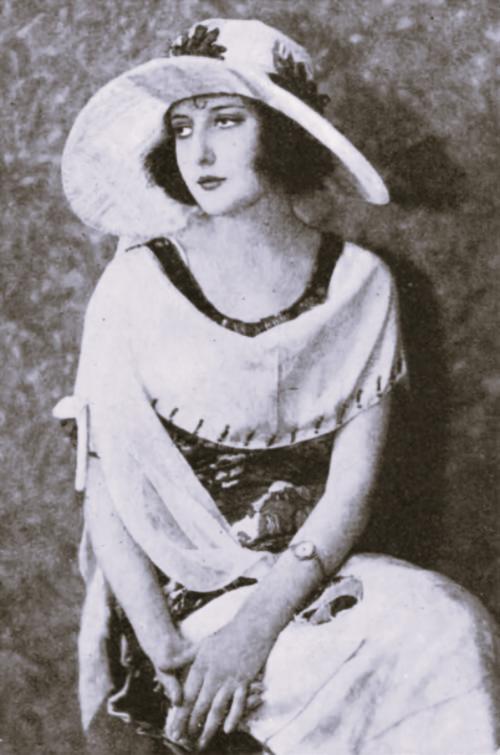
The King and Queen of England sat for John Longstaff. So did the wealthy and their wives, yet, in the Roaring Twenties, it was the anticipation of a portrait of chorus girl, Jessica Harcourt, that captured the hearts of our nation. The former programme seller's acting career took off spectacularly while Longstaff simply added another laurel to his already brilliant CV.
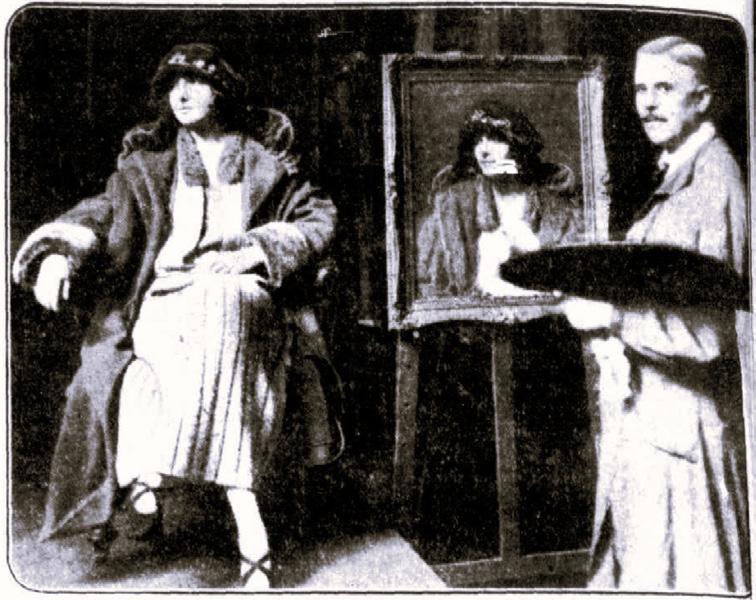
The story goes that a Sydney producer for theatre company JC Williamson discovered Jessica Harcourt front of house and turned her attention to the stage. Others claim she caught the eye of John Longstaff first on one of his visits to the harbour city. Whatever the case, the 18-year-old beauty soon posed for the artist over a period of six months in his Collins St studio, reportedly twice a week for at least two versions. During the course of those months, Longstaff' created a media storm nationally, and one that reverberated internationally, by declaring that:
'Miss Harcourt is a most unusual type, to an artist especially interesting…. more English than Australian, her lovely colouring and features, character and intelligence give her high rank among the many beautiful women I have seen'.
Clearly enamoured, he might well have added that she had the face to launch a thousand ships!
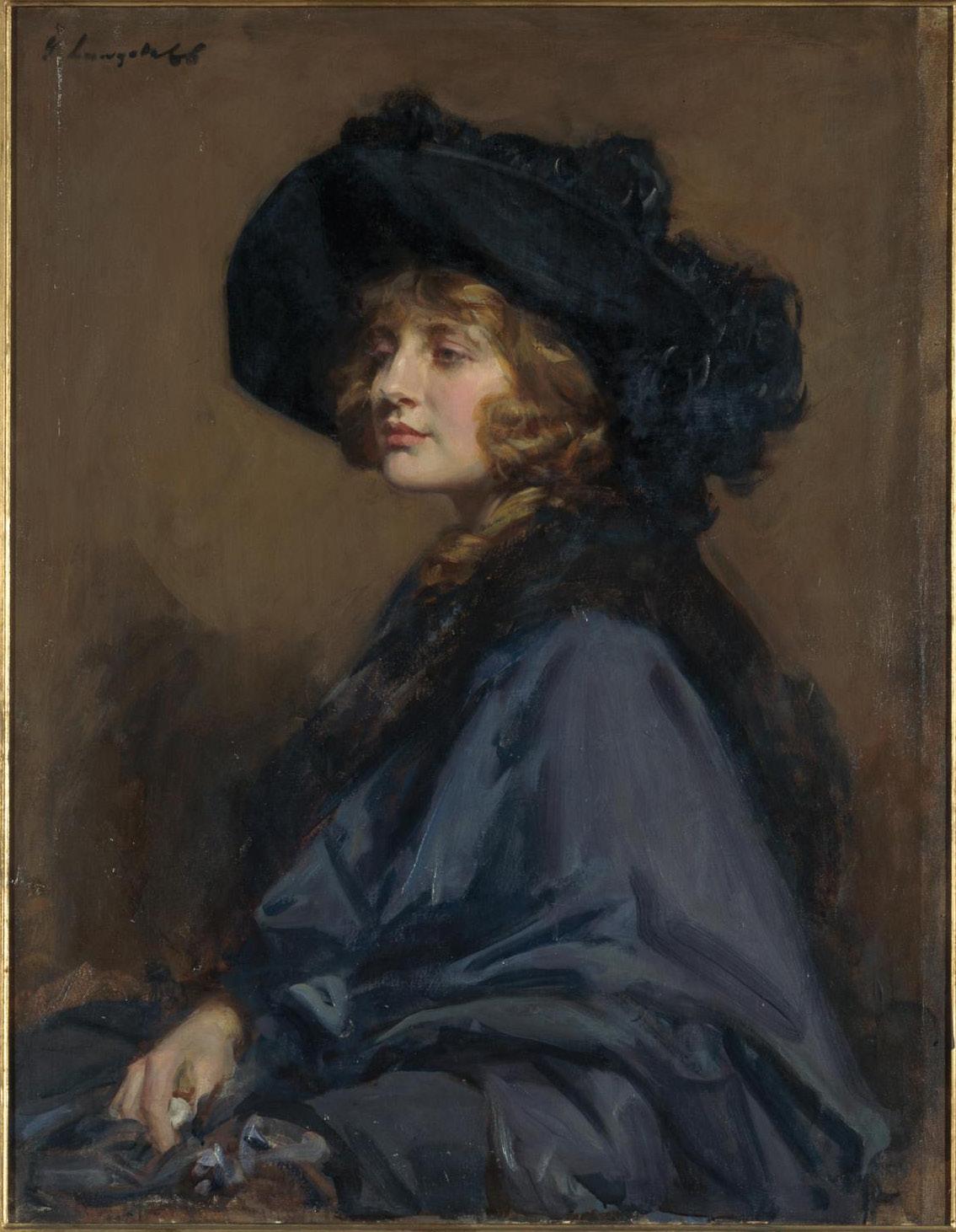
Other notable artists lined up to paint 'Australia’s loveliest girl', as she became known in banner headlines across the country. All this fascination started over a year before the portrait hung as The Picture Hat at the 1925 Twenty Melbourne Painters exhibition at the Athenaeum. Victoria's National Gallery quickly purchased it off the wall, the romance of Jessica's rise from obscurity to stardom remaining fresh and the conversation around beauty, unintentionally ignited by Longstaff, still playing out.
Accolades flowed. Table Talk magazine stating the painting to be 'one of the nation's most treasured
possessions' seemed over the top, but 'a charming presentment of the model… one of the best things he has ever done' was more measured from The Argus
The Sun, years later, may have summed it up best: 'It is a fine study of a beautiful woman, painted with great apparent ease, and with evident pleasure.'
The year 1925 stood out for John Campbell Longstaff. The Picture Hat and twenty portrait commissions in the pipeline aside, he won the first of five Archibald prizes and reigned as president of the Victorian Artists Society until resigning late in the year over issues around exhibition quality. At age 63 then, he had been separated from his wife, Rosa, in London for five years and would continue so for the rest of his life, while remaining financially supportive.
Longstaff had 'impetuously' married 17-year-old Rosa Crocker, in Melbourne in 1887, two months before sailing to Europe courtesy of the first awarded National Gallery (Victoria) travelling scholarship. Socially shy Rosa struggled as her ‘tall, handsome and charming’ husband moved in the art circles and salons of Paris and London on this visit that laid the groundwork for Longstaff later becoming “the doyen of Australian artists”.
The urbane portraitist ‘talked like a Macquarie St doctor with a velvety bedside manner’ according to a northern scribe, ‘quite unlike an artist’.
Such was his reputation that during a 20-year stay in Europe in the new century he painted King Edward VII and Queen Alexandra. Working in the studio at Buckingham Palace, he surely would have reflected on earlier times.
Days like the one as a five-year-old at a school near his birthplace Clunes when the teacher sent him home for drawing on a wall - even at this age apparently unable to resist a blank canvas! And, as a teenager, managing his father's store near Shepparton. Not cut out for the job
or the bush, John often lost concentration, sometimes supplying his father with a sketch of a customer paying on credit, rather than a name. Maybe he recalled too, when, as a 17-year-old, the VAS rejected his first portrait!
In the royal studio in London, musing over the past would seem fair enough for an artist with little schooling who had experienced poverty in his first stint in England.
Returning home in 1920, Longstaff, Debonair Jack, to his biographer, took it in turns with WB McInnes to win the Archibald Prize, the pair taking out ten of the first eleven awarded. After a third success in 1928, Longstaff became the first Australian artist to be knighted. As a matter of
record too, his portrait of Henry Lawson for the Bulletin's proprietor JF Archibald years earlier, inspired the idea of the celebrated prize. Ada Whiting (with a miniature now at the NGV that showed at the Paris Salon), Harry McClelland and Ernest Buckmaster all entered paintings of Miss Harcourt in the Archibald. And Longstaff painted the actress again in the 1930s.
Jessica Harcourt shined in the world of films, fashion and beauty through the 1920s and 30s before marrying an author to become, regretfully, his secretary and note-taker. Longstaff, an accomplished subject painter, concentrated on academically-styled portraits in order to finance two households until his death in Melbourne in 1941, aged 80 years.
Just before he died though, John Longstaff ensured the sitter's name in The Picture Hat would endure by changing the title to Jessica, in what one art academic interprets as an act of familiarity with the sitter.
Jessica, formerly The Picture Hat, John Longstaff, c.1925, oil on canvas, NGV
John Longstaff painting one version of Jessica Harcourt, 1924
Jessica Harcourt, 1924
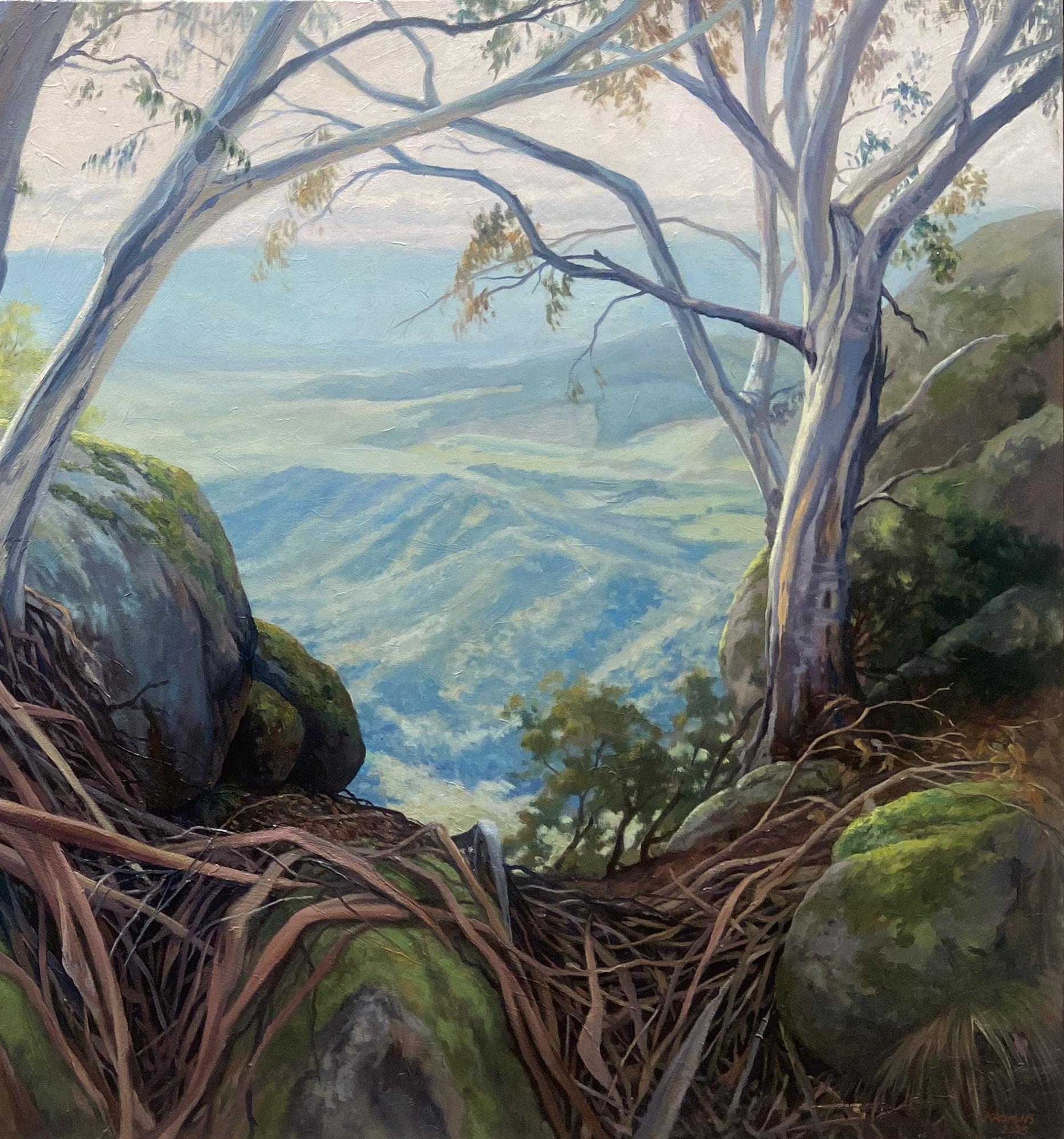
Mountain Magic, Mt Buffalo, Gwendoline Krumins VAS
AROUND THE GALLERIES
Australian Tonalism:
A selection from the John and Peter Perry Collection
7 May – 27 July 2025 Boroondara (Hawthorn) Town Hall Gallery
words Bruce Baldey VAS
The Perry brothers, John and Peter, started their Collection in 1974 and have built one of Australia’s most significant Collections, private or public. From 1975 until 2014 Peter Perry was the Director of the Castlemaine Art Museum. The Australian Tonalist movement was initiated by Max Meldrum (1875-1955) a former President of the VAS (1916-1917) who, failing to be reelected for a second term, inspired his students to form a breakaway group, the Twenty Melbourne Painters Society which remains active in the Melbourne arts scene to this day. Meldrum was a strident critic of the moderns and in his book The Science of Appearances he describes them as “degenerate”. This reflects the depth of feeling between the two artistic camps in the first half of the twentieth century. There is very little science in his book: on page 38 he refers to the “standard textbooks” but asks that we read them for ourselves. His methods are practical and observational rather than scientific.
He developed a simplified method of painting promoting tone and form dismissing colour as “the third and least important factor in depictive art - an added grace … and has very little mental interest”1 His book has been out of print for many years and unless you are prepared to spend several hundred dollars on Amazon a copy is available to read-only at the State Library of Victoria. Turning to the back of the book to one of his lectures is probably the best introduction to his opinions and theories.
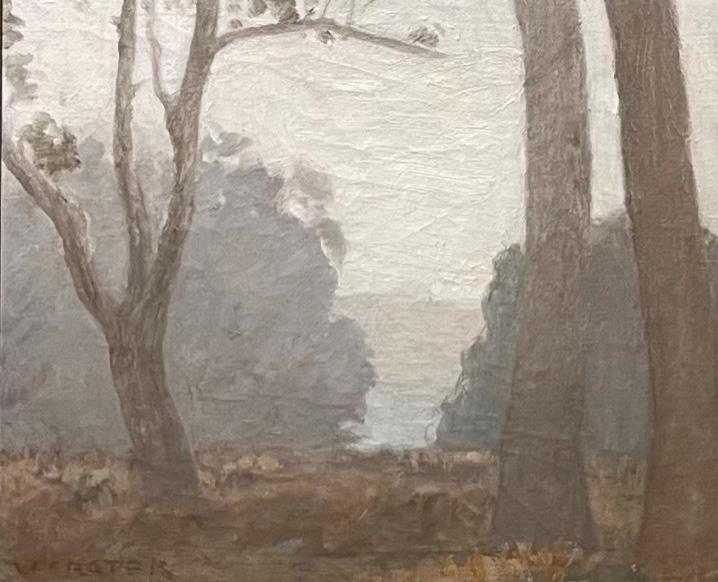
The “Meldrumites” read like a Who’s Who of twentieth century Australian painting. Many within his orbit such as Frater, Shore and Beckett would move on and develop their own individual styles and methods. His methods seem most appropriate to nocturnes at a time of day when colour has been drained out of the air. Clarice Beckett, for example, remained on friendly terms with Meldrum and despite the moodiness and austerity of her paintings succeeded in bringing more colour into her pictures. Amongst the Meldrum circle
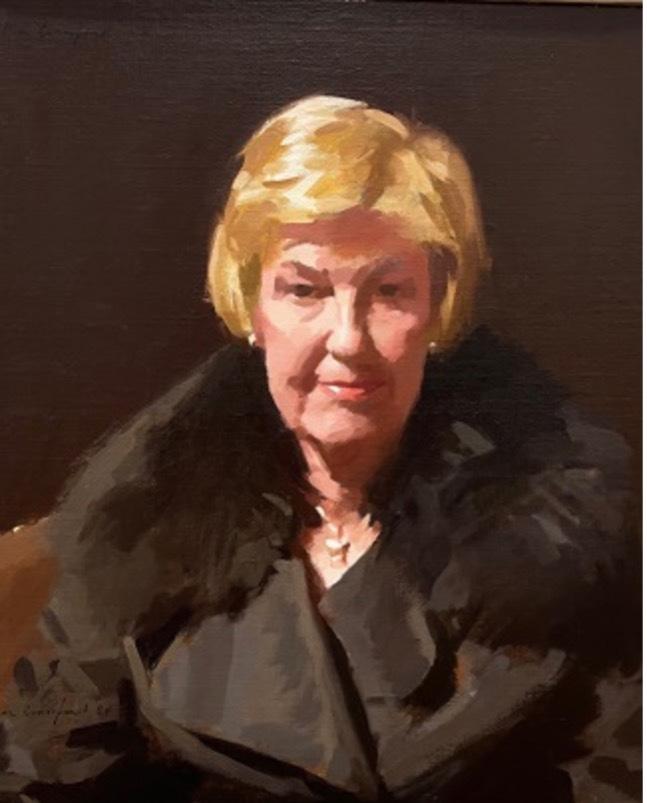
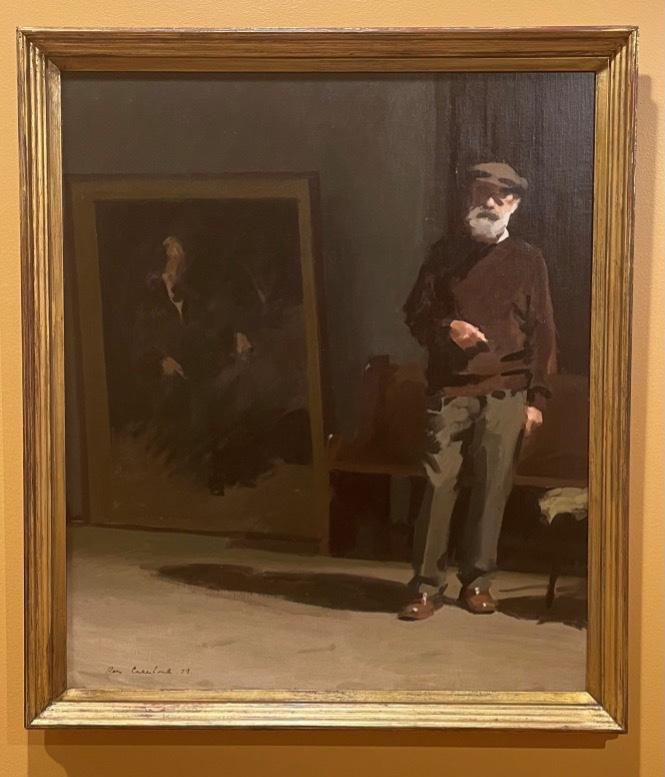
were well known VAS alumni Jock Frater, Jim Minogue, John Farmer, Polly Hurry, AME Bale, Colin Colahan, A D Colquhoun and William Dargie. I was delighted to see Ron Crawford’s Interior with Figure in the Collection. We have a wonderful portrait of his in the VAS Collection : The Black Coat
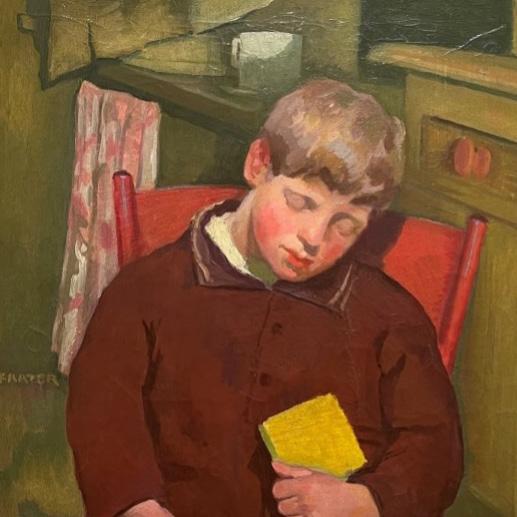
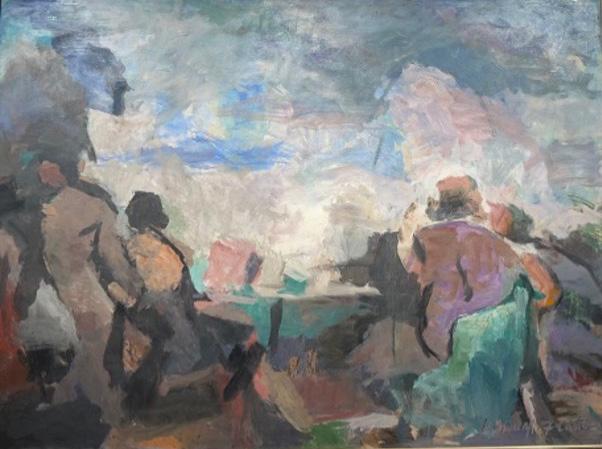
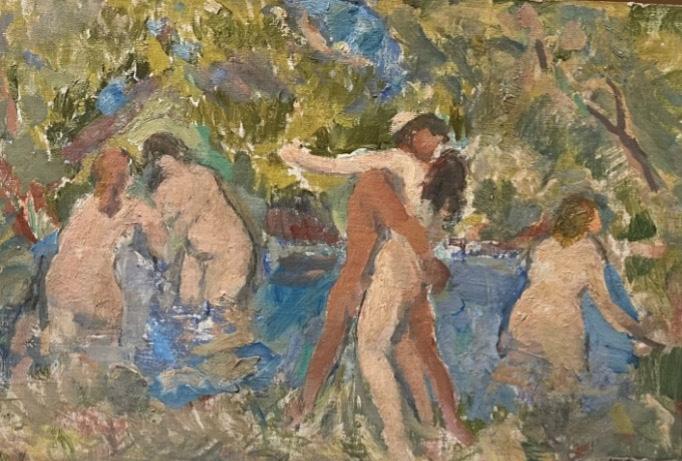
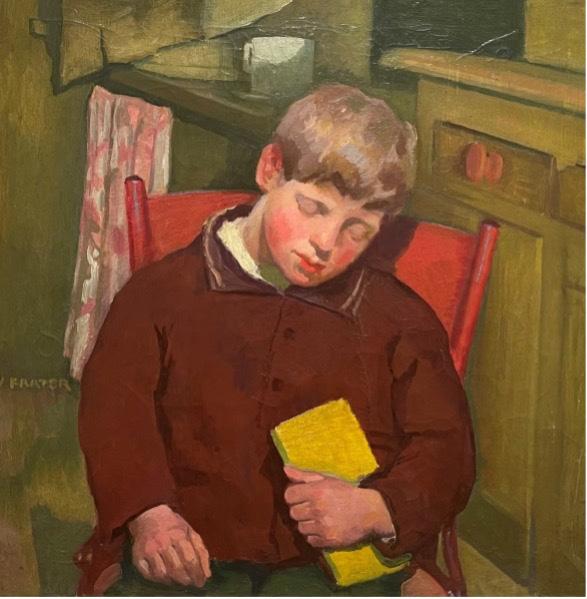
Jock Frater’s colourful Olympus, his portrait Drowsy Boy and Untitled Landscape demonstrate how far he departed from Meldrum’s approach. The VAS Collection includes the vigorous semi abstract Garden Party which is as far removed from the Tonalism Movement as one can imagine. Frater blended tonal foundations with Cezanne inspired brushwork and abstraction and rich expressive colour and brushwork.
In his review of the Exhibition (Weekend Australian July 12-13) critic Christopher Allen rues “the lack of interest in Australian art being shown by our biggest galleries” at a time when the NGV is presenting their Boston Impressionist blockbuster. Simple Australian cultural cringe is probably the best explanation; the popular belief that anything generated overseas has to be better than the local equivalent.The Perry Collection is a thorough record of an important movement in Australian painting and one which deserves a higher public profile.
1 “The Science of Appearances ” Max Meldrum The Shepherd Press Sydney 1950 Page 223
Drowsy Boy, William Frater, 1927
Untitled Landscape, William Frater, 1920, Perry Collection
Olympus
William Frater 1928 Perry Collection
Garden Party
William Frater VAS Collection
The Black Coat, Ron Crawford, 1988, VAS Collection
Interior with Figure, Ron Crawford, 1979, Perry Collection
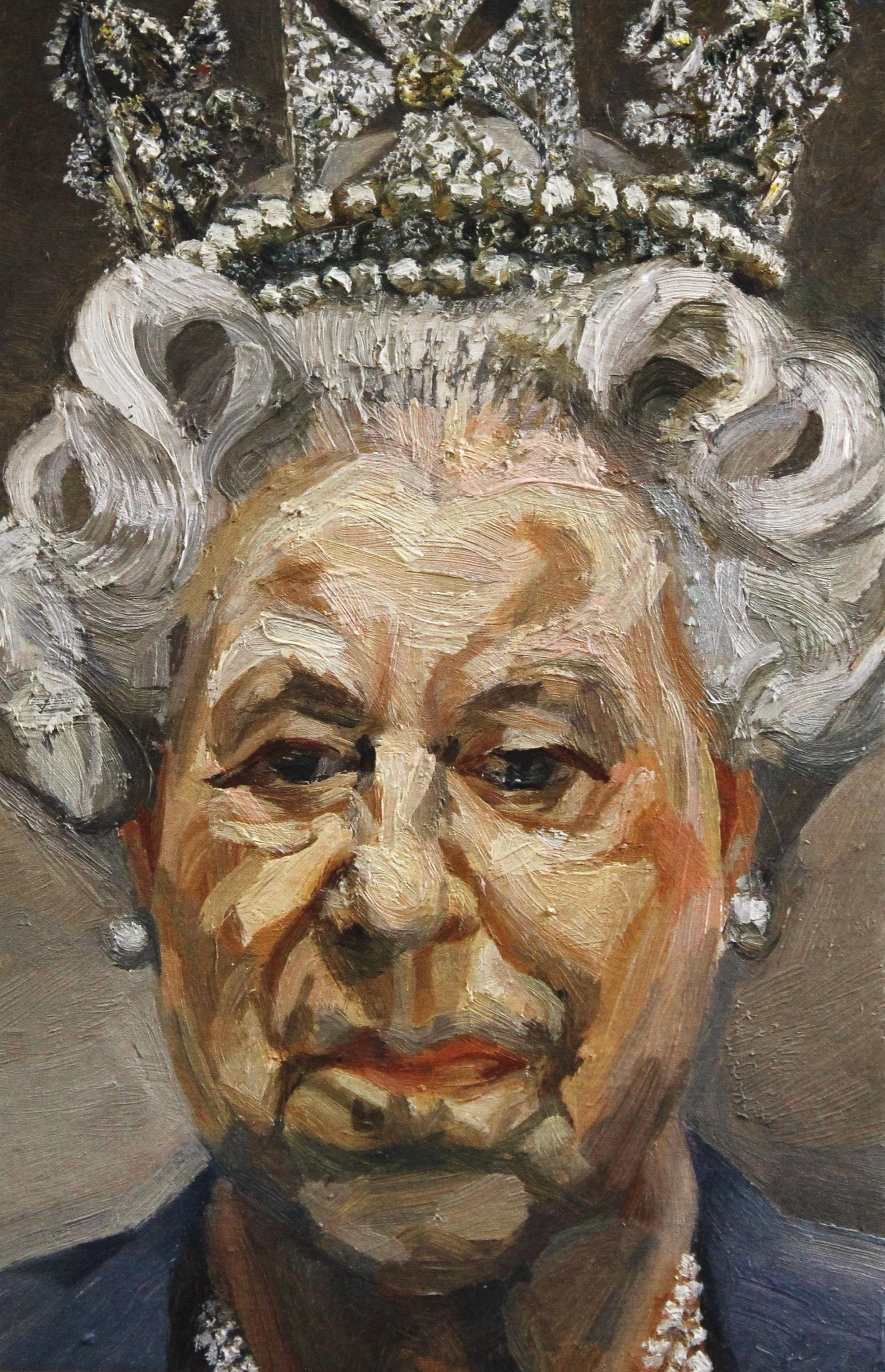
Lucien Freud, Her Majesty The Queen, oil on canvas, 23.5 x 15.2 cm, 2000-1. The Royal Collection.
This painting of Queen Elizabeth 11 by Lucien Freud is an example of an outstanding contemporary artist working in a “traditional” way, making a significant contribution to the tradition of portrait painting.
Art and Tradition
words Dr Mark Dober
The art we artists make and show is often variously described as traditional or contemporary. What is meant by these terms? Describing an artwork as traditional may be in reference to its media and support - such as oil paint on canvas. Traditional art is likely to be identified with work that is figurative and gives expression to tonal, impressionist or realist styles (the Victorian Artist Society website identifies these styles with the “traditional” art which it champions).
The term contemporary when applied to the visual arts can mean a number of things. It can mean, simply, work made now, whatever the style. The description can also be applied to recent artwork that looks contemporary. For the artworld this may be artwork, across a wide range of styles, that in some way relates to the zeitgeist, as defined by curators, gallerists, artists and collectors. Individual artists and artist societies may want to make their own call, differentiating between traditional realist and figurative styles on the one hand and, on the other hand, imagined and abstract work deemed contemporary.
Much art straddles both categories. While an artwork may be viewed as traditional because of its media (say, watercolour on paper) or because of its method (say, an observation-based process) this same artwork may also qualify as contemporary because it’s look, style, or quality of expression is seen to relate to our time. Or it may be that the artwork is of a kind with artists who are achieving notable recognition for artwork that combines the traditional and the contemporary. This recognition can confer a sense of contemporaneity on others who engage in that process. This knock-on effect applies to plein-air painting, which in recent times has been reliably represented in the iconic Wynne Prize at the Art Gallery of New South Wales as well as the accompanying Salon des Refuses at the S.H. Ervin Gallery. Whether artwork is viewed as traditional or contemporary can in large part come down to where the artwork is being shown. Were you to take a painting or sculpture from a VAS show of “traditional” work and put that same work in a “contemporary” gallery context, it just might fit nicely into that context (thereby appearing as contemporary art). The two worlds are not necessarily mutually exclusive, and some artists move between both quite comfortably. It is true that the celebrated virtues of traditional art – such as beauty, skill and subtlety – are too infrequently given their fair due by a
contemporary art world that is on the look- out for the “innovative” and puts too much weight on art that engages with “issues”. Often curators are simply promoting and collecting what they deem to be fashionable. But fashions change, and there is the risk that in the long run chasing fashion does not serve the best interests of either art or artists.
Yet many of us who paint plein-air, a still life or portraits from life – having an art practise that has much of the traditional about it - identify with contemporary art and view our practise in those terms. Identifying as a contemporary artist has much to do with the way the art world associates the contemporary with the professional. What are the hallmarks of the professional artist? These are several: having been to art school (though there are also outstanding artists who are self-taught), working at your art in a committed and sustained way, showing work in galleries (commercial and/or public), and having work selected, at least from time to time, in national art prizes (the Victorian Artist Society has its own well developed and comprehensive structure for prize exhibitions). Selling work, and/or obtaining grants are also significant indicators of professionalism.
For myself, a professional artist, I identify as both traditional and contemporary. But I do think that too much is invested in these terms, for whatever you do with your art, regardless of style or content, or how you position yourself (and how others position you), it is the quality of one’s work that is the deciding factor of importance.
I would also want to make the point that we artists are part of some art tradition or another. No one, or virtually no one, is outside an art tradition (very occasionally something completely new comes along that has no precedent and establishes art on a new footing – Cubism for example). For plein-air painters the tradition of plein-air painting commences in the late Eighteenth century, when French and other northern European artists went to the Campagna in Italy to make oil studies in the landscape. For abstract painters the tradition of abstract painting began with Kandinsky in 1910. For conceptual artists their tradition begins with Duchamp, with his urinal readymade of 1917. Video art has been around for fifty to sixty years. The same with Performance art. And so on. Not only is there nothing wrong with identifying with a tradition, but acknowledging yourself to be part of a tradition anchors your work in ways that broaden and deepen its meanings.
LOVE, CONCORD AND GENIAL MERRY MAKING
The Foundation of the Victorian Artists Society
A look at the amalgamation of the original Victorian Academy of Arts with the Australian Artists’ Association – and what happened after that.
words Anne Scott Pendlebury HON FVAS
Back in 1888, a group of people under the banner of the Australian Artists Association amalgamated with our original organization known as the Victorian Academy of Arts, to form, what is still today the VICTORIAN ARTISTS SOCIETY.
But first, a little background.
1885
The story goes that years earlier in 1885, a number of ‘elite’ artists left the Victorian Academy of Arts and formed the Australian Artists Association (AAA). They were known as a ‘breakaway’ group objecting to the amateur status of the old, established Academy (VAA) which was formed in 1870.
But this was not quite accurate. They certainly were a coterie of talented but disgruntled painters and sculptors who had endured a number of issues with the AAA - the main one being perhaps, the policy of how the paintings were hung in the various exhibitions.
Details are sketchy, but a head-on battle ensued and a ‘walk out’ was the result.
This group of around 20 artists headed off in another direction but very soon an official memorial document was sent to the Head of the old Academy by the Secretary of this new ‘breakaway’ Association. It stated –“…should the Academy ever be reconstructed on an enlarged basis’ – the breakaway Association would rejoin and offer “ sympathy and support.”
Very nice sentiments indeed and most graciously expressed.
Prominent painter Tom Roberts, (amongst others) was a signatory to this memorial document, so his endorsement possibly would have lent great weight to such a declaration.
Anyway, the first meeting of this newly formed group had taken place this same year, 1885 and was led by artist John Ford Paterson heading his team of painters, sculptors and architects.
1886
By September 1886, the Association had fifteen patrons, and in their letter to the Governor of Victoria
Sir Henry Loch, it was made abundantly clear that this newly formed Association did not intend to exist in opposition to the well established VAA – quite the contrary in fact.
Thus Governor Loch (perhaps much relieved that a disturbing cultural feud had been averted on his watch) happily agreed to be Patron -In- Chief of this large and rather interesting Association.
The name of previous patrons, such as the Hon. Alfred Deakin, Chief Secretary of Victoria and Solicitor General were quickly scrubbed from all future catalogues, with only the Patron-in-Chief’s name remaining.
And that is how it is to this day.
Each newly appointed Governor of Victoria is invited to be Patron - In – Chief of the VAS and at present it is Her Excellency Professor, the Hon. Margaret Gardner AC.
But returning to the events of 1886.
By October that year, the AAA held their first ‘Official’ meeting at Buxtons Art Gallery in Melbourne and their new name was officially announced.
1887
The following year in 1887 membership steadily grew.
One aim of the AAA was that members comprise of professional and non professional artists and include Gallery directors, engineers, performers, picture framers, writers, teachers, public servants and even members of the medical profession.
With a membership of around 160, the Association was very pleased with itself, and convened three particularly successful and well patronized exhibitions.
New members included George Coppin local entrepreneur;
W. Spong eminent stage designer; Julian Ashton Sydney artist and well known identity; and Herbert Syme from ‘The Age’ in Melbourne. Exhibitions were held mainly at the Grosvenor Galleries in Swanston Street.
By May 1887 after months of productive exhibitions, sales and a growing network of support, serious discussions commenced regarding the amalgamation of the AAA with the original Academy.
The Council of the old Academy, met with the Committee of the AAA in June just a few weeks later.
The Secretaries of both organizations entered into an amicable exchange of correspondence and finally it was agreed that such a union would be a great advantage to both art and the artists of the colony.
It would place Melbourne seriously on the map as the centre of fine
art and give those Sydney folk something to think about.
In March 1888, 10 months later, the merger took place.
1888
News travelled fast and a couple of weeks later on Monday April 9th, the following article appeared in Melbourne’s ‘Argus’ newspaper –
Melbourne Gossip by our Lady Correspondent
"…. the Victorian Academy of Arts has amalgamated with the Australian Artists Association under the name of the ‘Victorian Artists Society’ – and great things may be expected from the amalgamation.
The union is to be celebrated with a ‘Smoke Night’ and the first Exhibition of the united Societies is to be held in the Grosvenor
galleries.
The last named Society is in a more flourishing condition than its parent tree.”
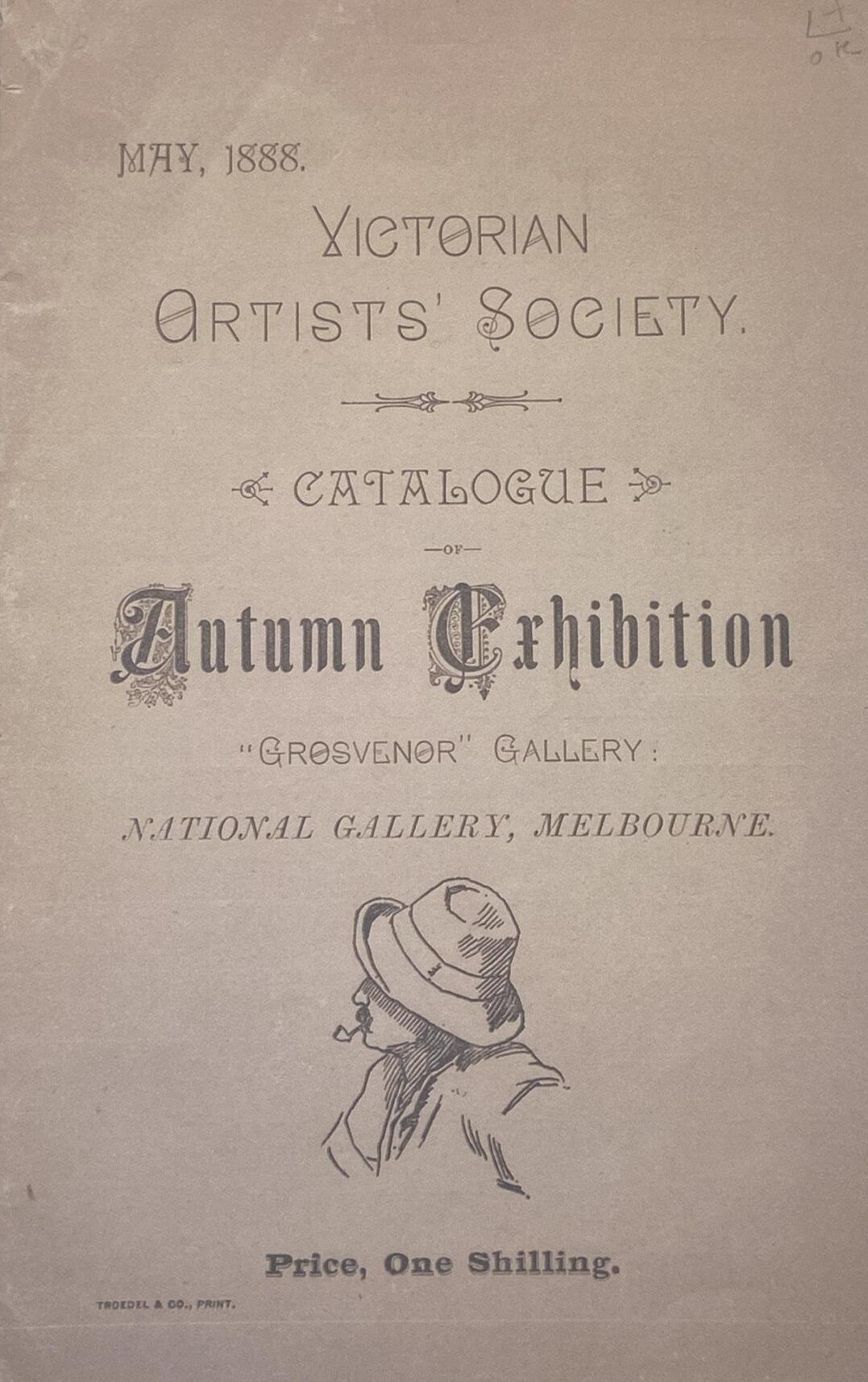
The newly formed Victorian Artists Society (VAS) moved swiftly and within days had organized its first exhibition, the inaugural ‘Autumn Exhibition’ which opened officially on April 30th 1888. Exhibitors were made up of VAS members who were charged 5% commission on all sales, as well as guest exhibitors who were charged 10% on any of their sales.
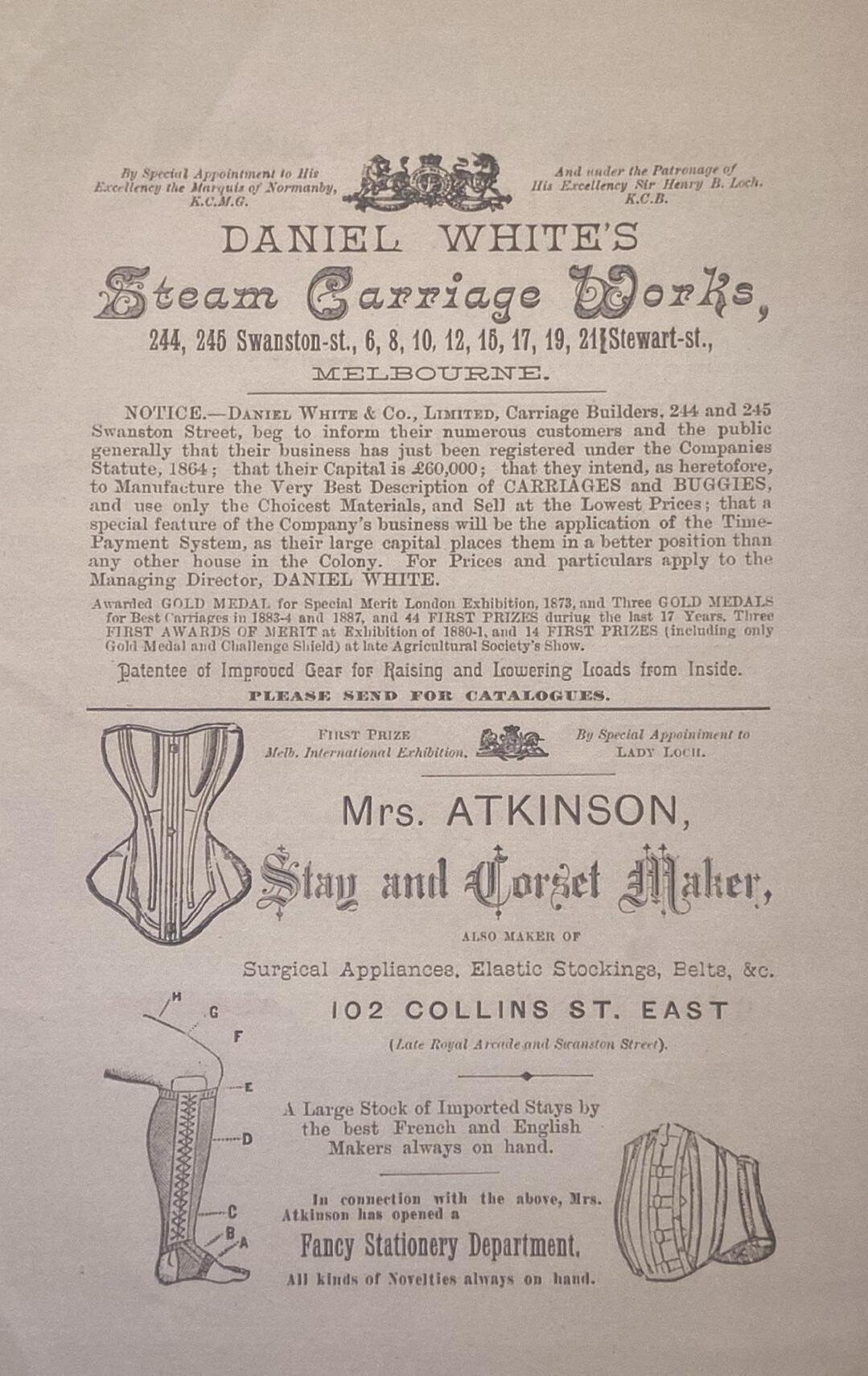
Advertisers were supportive and plentiful and appeared from all over.
They included-
Mr Charles Wilson - FLAG AND TENT MAKER
A.J Hall - BOOT MAKER
Wallach’s - IRON BEDSTEADS AND PIANO MANUFACTURER
S.W Mouncy - ARTISTIC DECORATOR
Mr. Lewis Roberts - SURGEON & DENTIST
Mr. Daniel White - PRODUCTION OF STEAM CARRIAGES and lastly
Mrs. Atkinson - STAY AND CORSET MAKER
At that time there were twenty enthusiastic members of the VAS Council, two Treasurers and two Hon. Secretaries.
This overly large contingent was due to the fact that it was a combined membership of office bearers from both organizations – now combined into one. All Council positions were deemed ‘pro tem’ meaning temporary only. Inspite of future uncertainty it was nevertheless a cheerful and positive collection of office bearers and a very successful Autumn Exhibition .
Exhibiting artists included, Tom Roberts, Jane Sutherland, Arthur Streeton, John Ford Paterson, Mrs. George ( Elizabeth ) Parsons and John Mather. Overall there were 155 entries which included 3 architectural drawings and 3 pieces of sculpture.
Today, the VAS proudly holds work by three of these original exhibitors – Elizabeth Parsons, John Ford Paterson and John Mather.
Another Smoke night followed the Autumn Exhibition. This all-male extravaganza celebrated the amalgamation of the two very significant art
organizations, as well as the historic success of the first Autumn Exhibition.
The ‘Australasian Sketcher’ dated 17th May 1888 described the evening as a night of
“ love, concord and genial merry making.”
By all reports it was an elaborate and worthy celebration and the article concluded by acknowledging the exhibition as,
“ the best yet, made up of local Melbourne talent.”
Today, the annual Autumn Exhibition is still a popular, well patronized seasonal show, displaying a high standard of landscapes, portraiture and still life works. Probably then, as now, the artists emerged from a hot Melbourne summer inspired by the warm, golden tones of autumn, cooler days and crisp evenings. Within several years, the annual Winter and Spring exhibitions were also established.
In 2025 we have four Seasonal exhibitions, with the more recent ‘Summer Exhibition’ now included at the beginning of each year’s program.
To conclude -
The amalgamation of the VAA with the AAA produced a cohesive membership of two like minded groups of artists, to form a strong Society unique in Australian art history.
It would be rather nice to think that” Love, concord and genial merry making” at the Victorian Artists Society continues well into our future.
SOURCE –
Collection of Historical Documents ON THE AUSTRALIAN ARTISTS ASSOCIATION
Compiled by VAS Hon. Historian - ANDREW MACKENZIE OAM HON FVAS
Neil Whalebone
artist spotlight
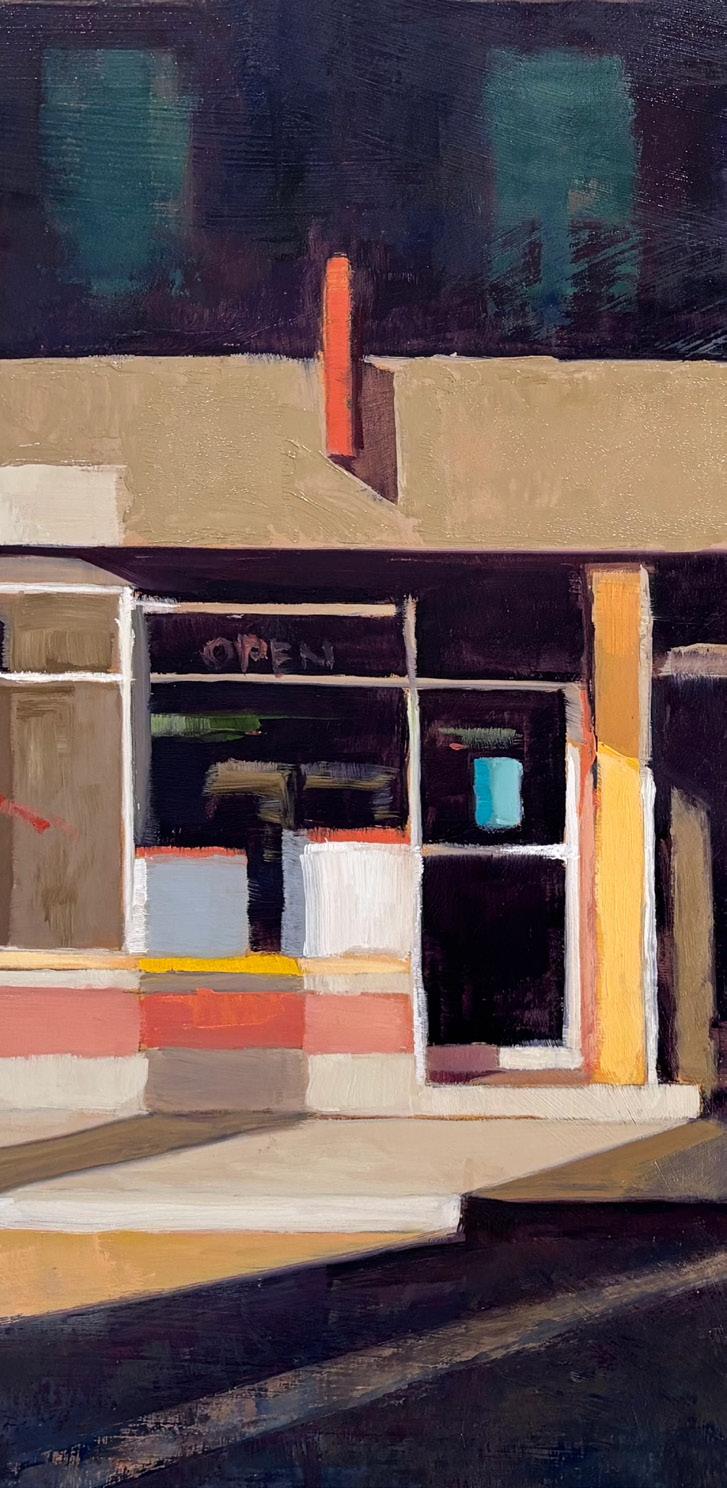
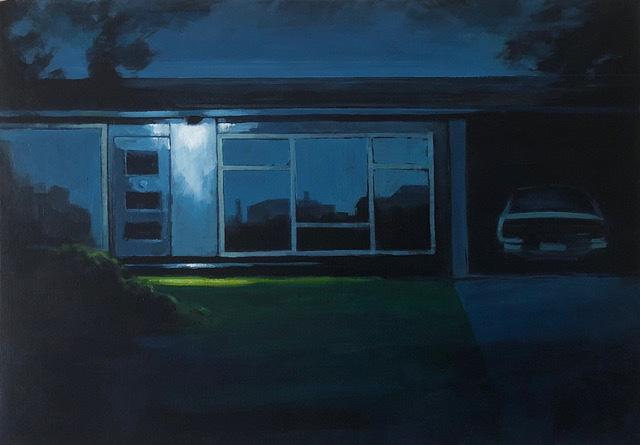
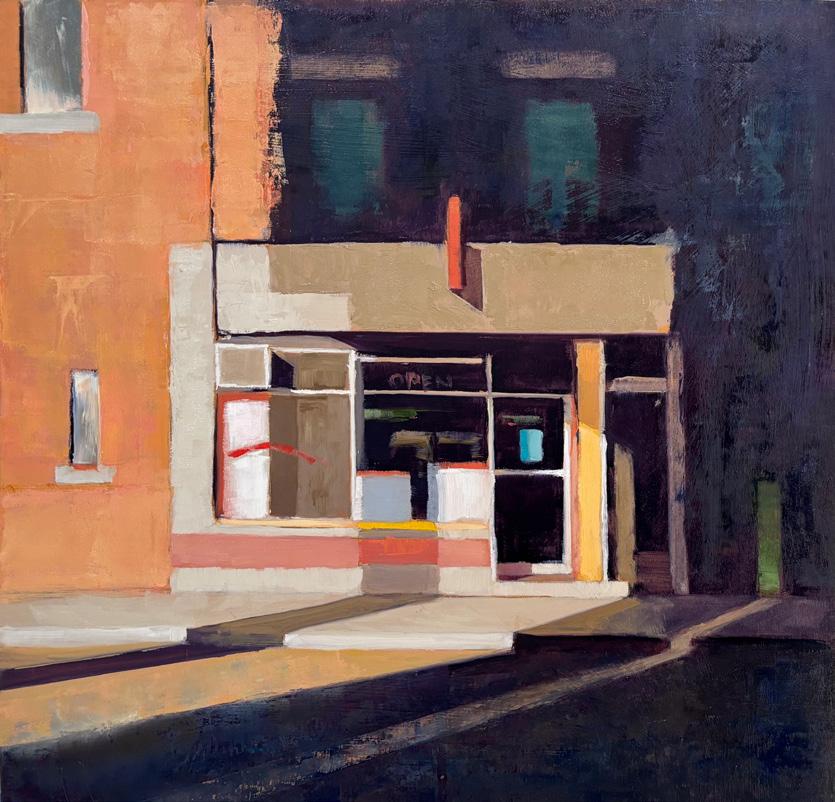
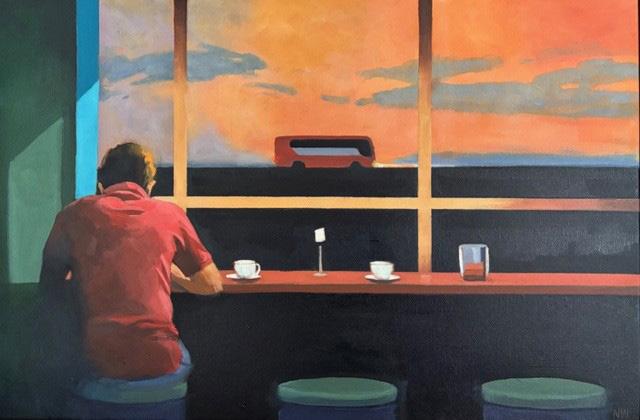
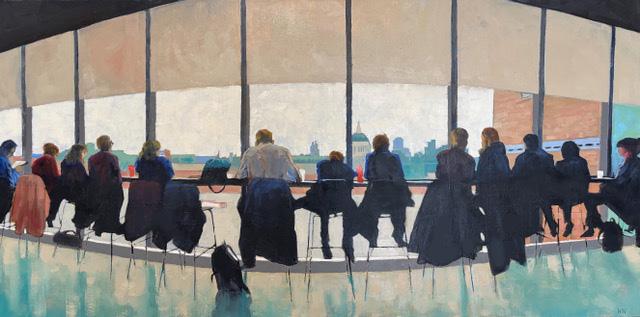
Istudied fine art photography so when I started painting my main source of inspiration was fine-art photographers such as Stephen Shore, William Eggleston (urban landscape photographers) and Diane Arbus. My paintings generally explore the beauty and loneliness of the every day things around us, suburban and rural landscapes and lately allegorical themes delving into the human
condition. I have gravitated towards painters like Edward Hopper, William Wray, Juraj Flores, and Tabor Nagy. I’m still learning how to paint and I like to experiment so I am currently trying to combine traditional realism with the energy of abstract painting; my art is an ongoing evolution .. trying to find a balance between two seemingly unrelated styles.
Window Seat, Neil Whalebone
Midnight, Neil Whalebone
Takeaway, Neil Whalebone
From the Tate to St Paul’s, Neil Whalebone
VAS Councillors’ Exhibition
Mackley Members Room 14 May - 3 June 2025
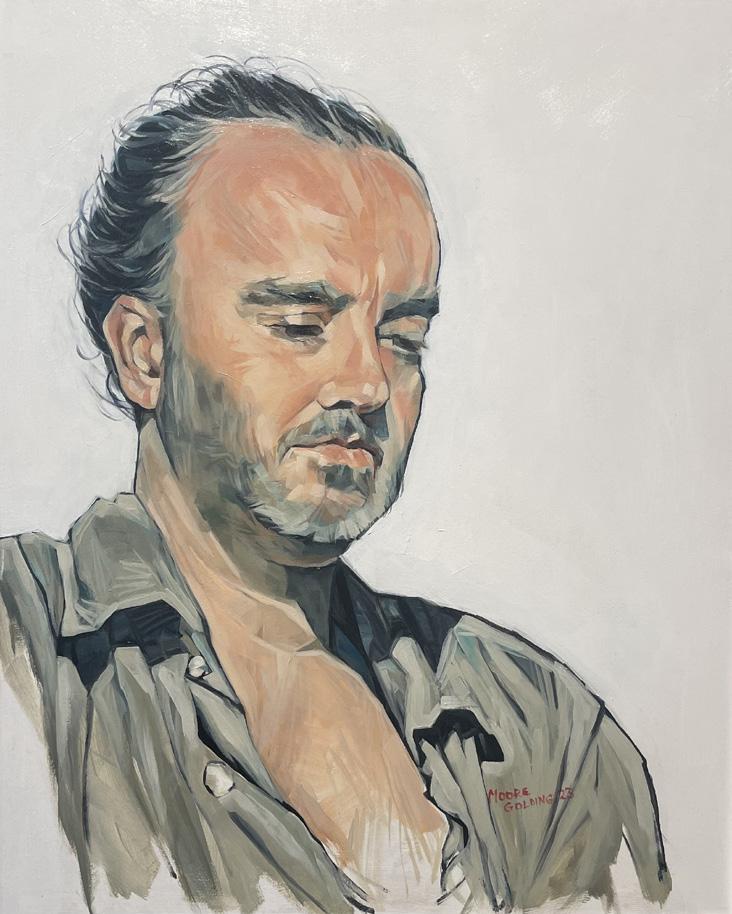
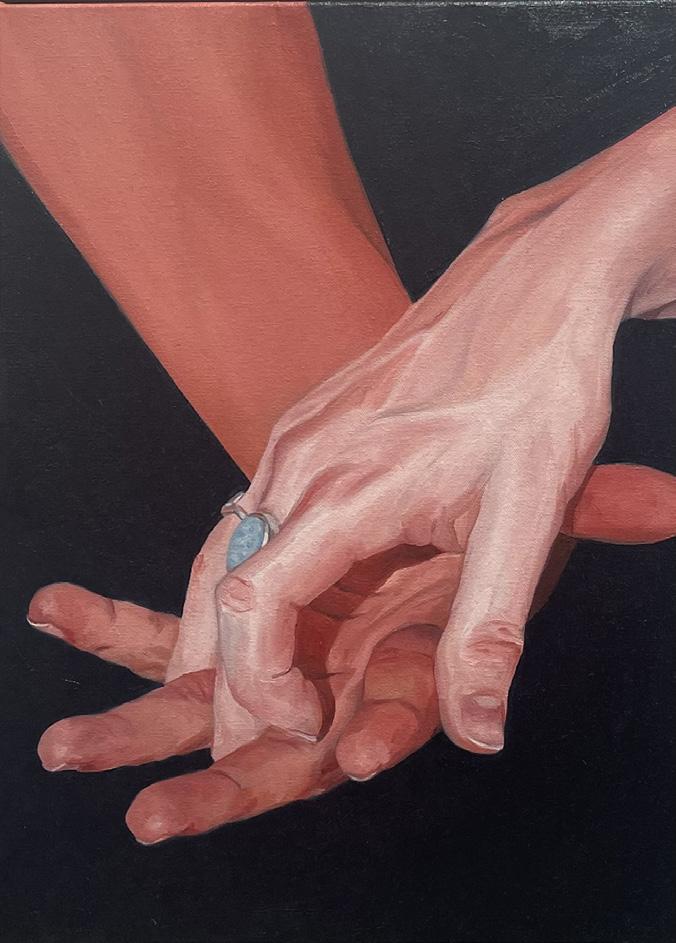
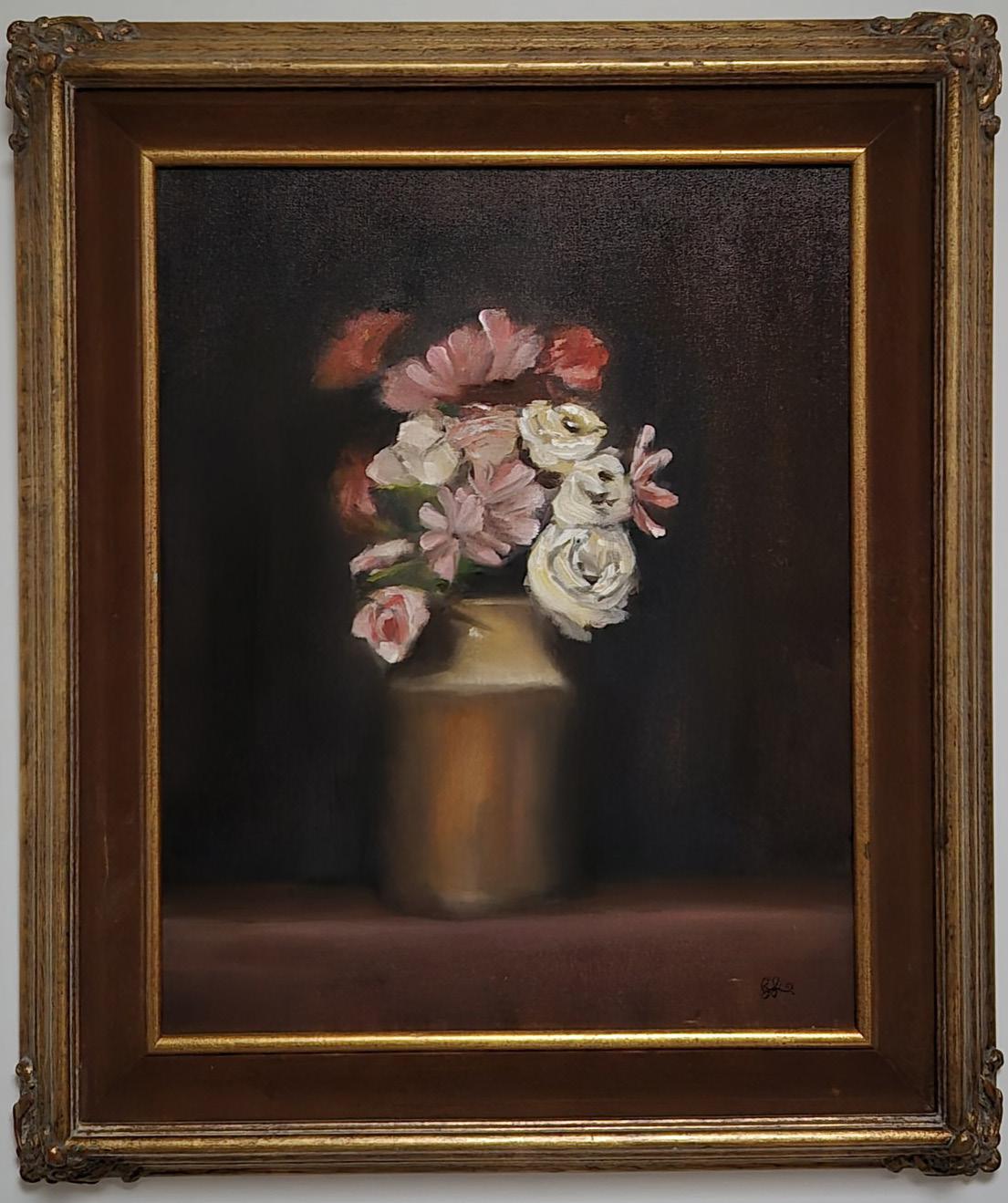
This is the second year that the work of VAS Councillors has been exhibited at the VAS. The intention is that it becomes a permanent fixture on the VAS Exhibitions calendar. It was an eclectic mix of portrait, still life and landscape painting.
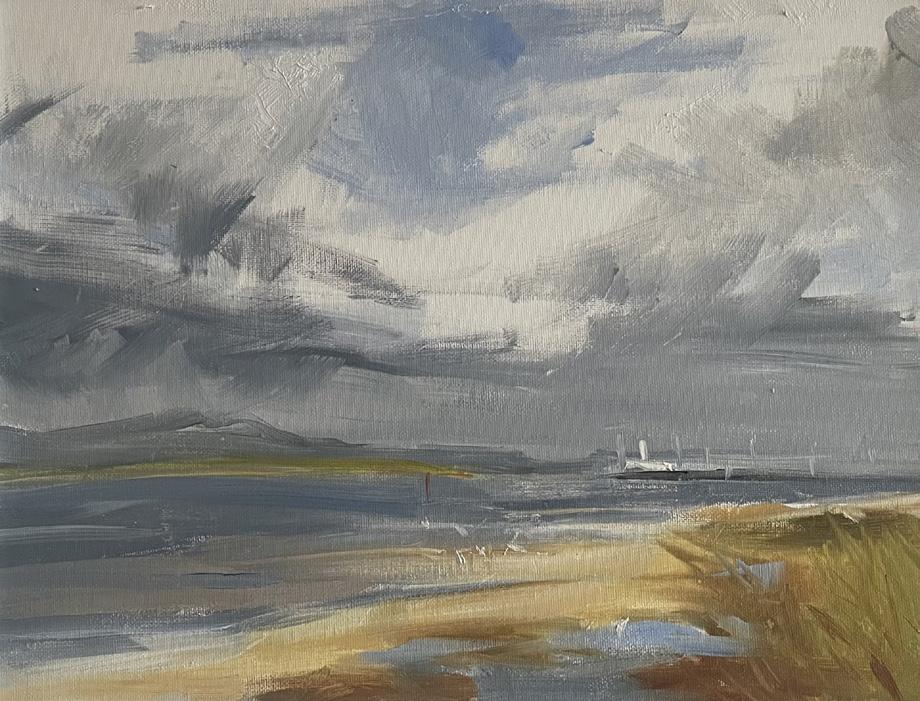
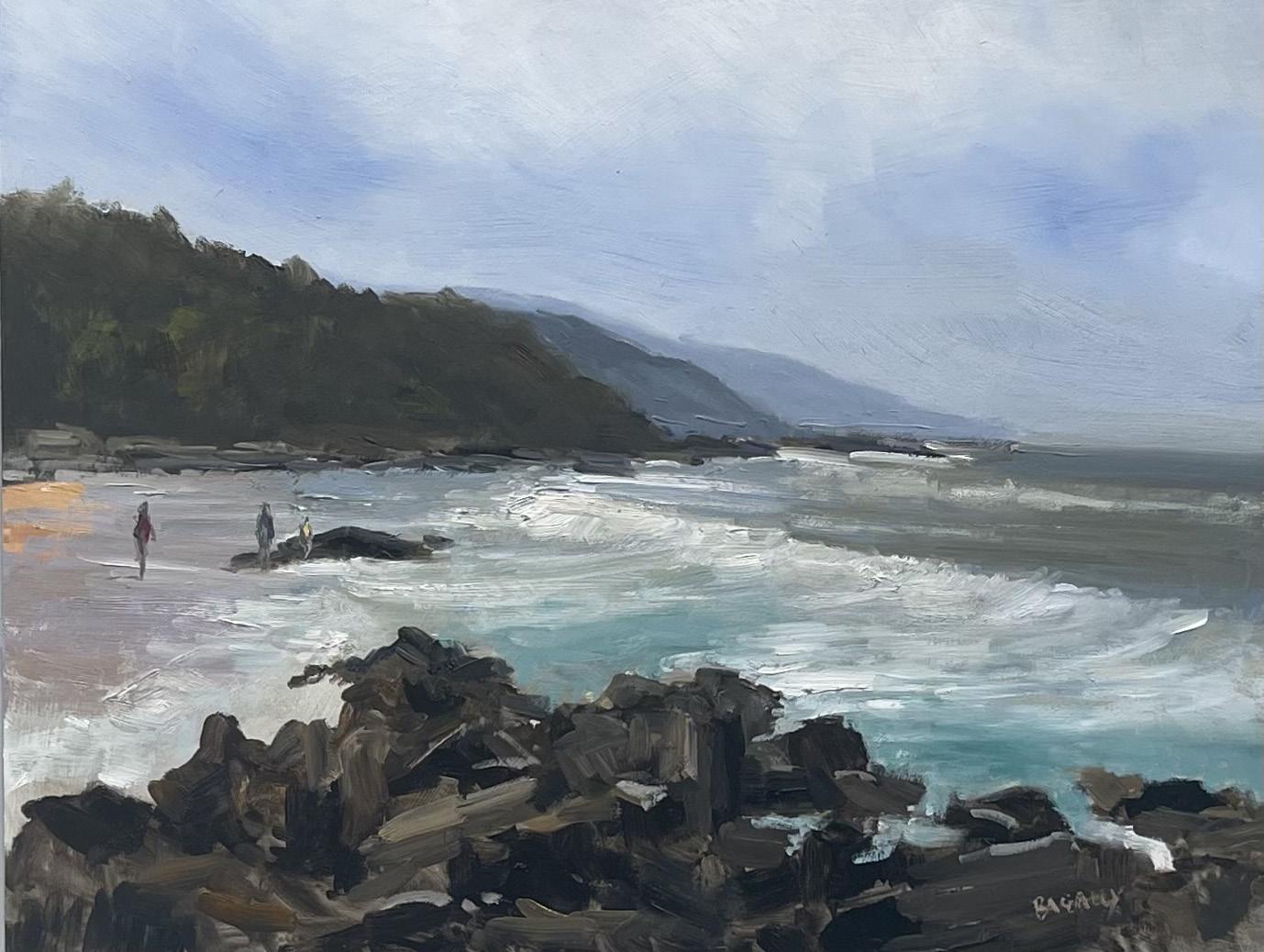
Bruce and Mark have clearly been braving the wild Victorian outdoors while Liz and Lucy were focussing on more contemplative subjects.
Gino has remarked on his classroom piece that “..for me it is art that furthers my skills, and homes in on what it takes to create realistic work like the Masters. Being part of the VAS is helping me explore this with great teachers and a real welcoming atmosphere. I’d encourage any artist to explore this method of painting.
It’s inspiring and very satisfying when you reach new levels of skill.”
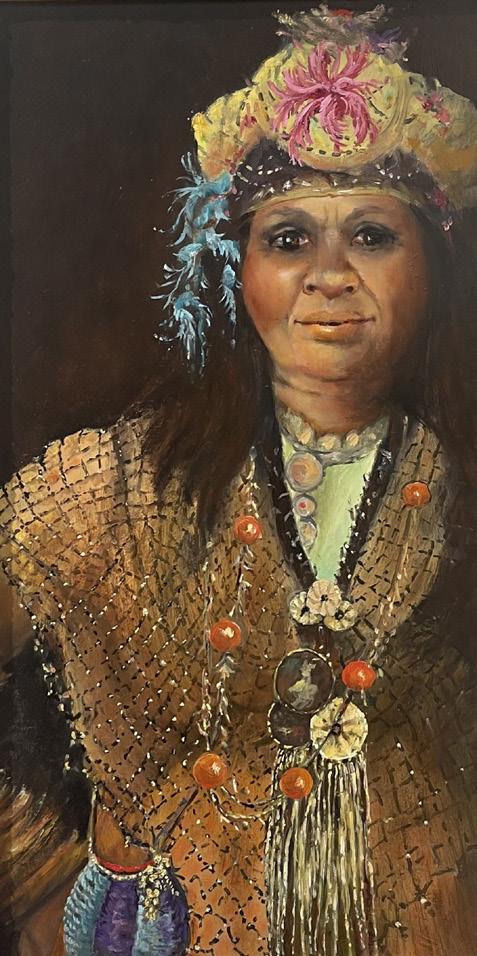
Meg Davoren Honey’s Ruby was an indigenous singer, songwriter and musician who rose above her poverty stricken background to become a world famous entertainer who used her talent to champion the rights of Aboriginal women and children. Partnered in life and in music with Archie Roach OAM they toured the world and together produced many recordings during their singing careers. After the St Kilda Festival in 2010 she died suddenly at the age of 54. She handed an enormous legacy down to her sons who are also musicians. Ruby was a modest woman with a big heart and warm smile who looked after many children in her home with Archie.
words Bruce Baldey VAS
Ruby, Meg Davoren Honey FVAS
Classroom Flowers, Gino Severin
Hunger, Lucy Maddox
Between Showers, Bruce Baldey VAS
The Man Bun, Liz Moore Golding VAS
Father and Son, Mark Bagally FVAS
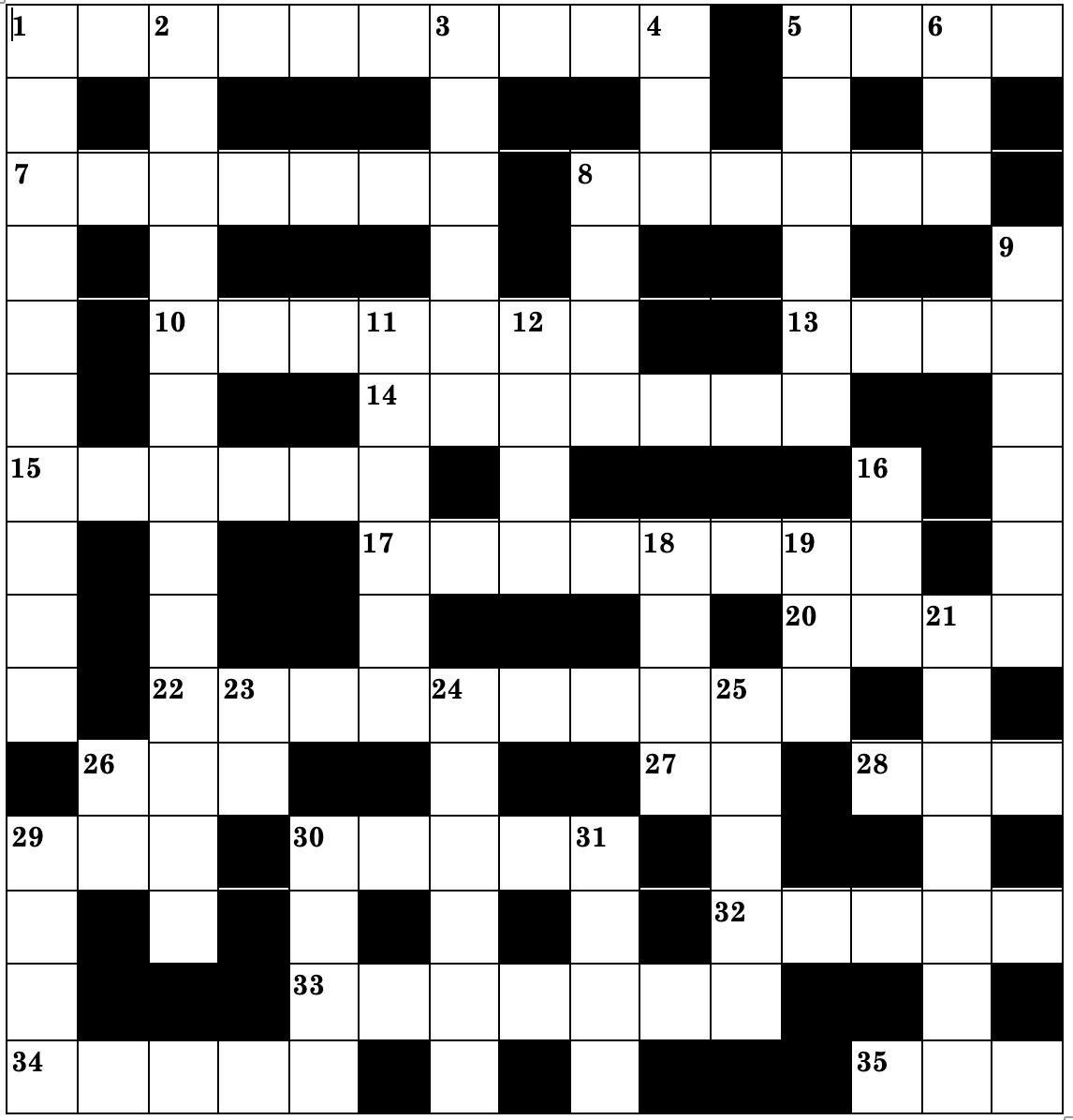
CROSS WORD
Across
1. Rodin sculpture of a man in contemplation (10)
5. Outback painter from Broken Hill, Pro …., 1928-2006 (4)
7. Great master of the Renaissance with da Vinci and Michelangelo (7)
8. Group called The ….. Melbourne Painters (6)
10. Expressionism is all about ……, i.e. feeling (7)
13. First name of German expressionist Dix, rhymes with motto (4)
14. Opposite of Eastern art is …. art (7)
15. MONA is located in this state (colloq) (6)
17. Italian master ….. da Vinci (8)
20. Melbourne artist Rick …. (4)
22. Vermeer’s country (Dutch spelling) (10)
26. Make an offer at an art auction (3)
27. Ellis Rowan, 1848-1922, artist and botanical illustrator (init) (2)
28. Toulouse Lautrec died of syphilis, which is a …. (init) (3)
29. Mark Bagally, former president of this society (init) (3)
30. Nobel Prize-winning US singersongwriter who also paints, Bob …. (5)
32. The art great exhibition of yesteryear was the Paris …. (5)
33. Degas specialised in painting ballet ….. (7)
34. Abbreviated first name of Elizabeth Parsons, our society’s first female councillor (5)
35. General name for visual expression (3)
Down
1. Traditional paint thinner and brush cleaner (10)
2. Early 20th century art movement that expresses subjective emotion (13)
3. First name of opera singer who ran classes at the VAS (6)
4. Type of umber colour (3)
5. Controversial photographer, Bill ….., - exhibition cancelled 2008 (6)
6. VAS impressionist … Hewitt (3)
8. A lighter version of a colour by adding white, a hue (4)
9. One of the big four Heidelberg School members, Charles ….. (6)
11. da Vinci painted the Last Supper that included the ….. Apostles (6)
12. Munch lived in this Norwegian city (4)
16. Australian impressionist, … Roberts (3)
18. VAS consultant, …. Scott Pendlebury (4)
19. Dublin Art Society (init) (3)
21. En plein air is …. painting, not inside (7)
23. Degas’ first name (abbrev) (2)
24. New Zealand-born Sydney modernist ….. Wakelin (6)
25. A nude model is in a state of un….. (5)
26. Bachelor of Arts (init) (2)
29. Australian painter, May …., 1862-1945 (4)
30. Art movement in response to the folly of World War I, also baby’s first words for father (4)
31. VAS President, 2008-2010, … Waite (4)
Answers on Page 33
QUIZ
1
2
3
4
5
6
7
8
Traditionally which colour is the opposite of red?
What is the shape of a stop sign on Australian roads?
What part of the eye showcases its colour?
Teal is a mix of which two colours?
On which Australian coin does the lyrebird appear?
Which downwind sail is known for its kite like shape?
Where in the Vatican City do the Cardinals meet to elect a new Pope?
What is the name of the Australian art movement pioneered by Max Meldrum?
9
The name of which classic French song means “Life in Pink”?
10
11
12
Le Gallerie Degli Uffizi is in which Italian city?
What was the subject of the earliest known paintings?
What type of statue, designed as water spout, gets its name from the Latin word for “gurgle”?
13
14
Typically, what two colours are Holstein Friesian cows?
Which Australian building was opened by Queen Elizabeth II on the 20th October 1973?
15
With which Spanish city would you most associate the architect Antoni Gaudi?
16
Which Australian is immortalised by a 6M high statue in Glenrowan?
17
Which Australian artist painted the famous series of works featuring the bushranger Ned Kelly??
18
What is the name of the famous Australian artist who painted “Shearing the Lambs”?
19 Which Australian city is the home of the Art Gallery of New South Wales?
20 The 33M high statue of the Greek god Helios, destroyed in 654 CE, was better known as?
21
Which of these is not located in Rome: the Pantheon, Forum, Parthenon or the Colosseum?
Answers on Page 33
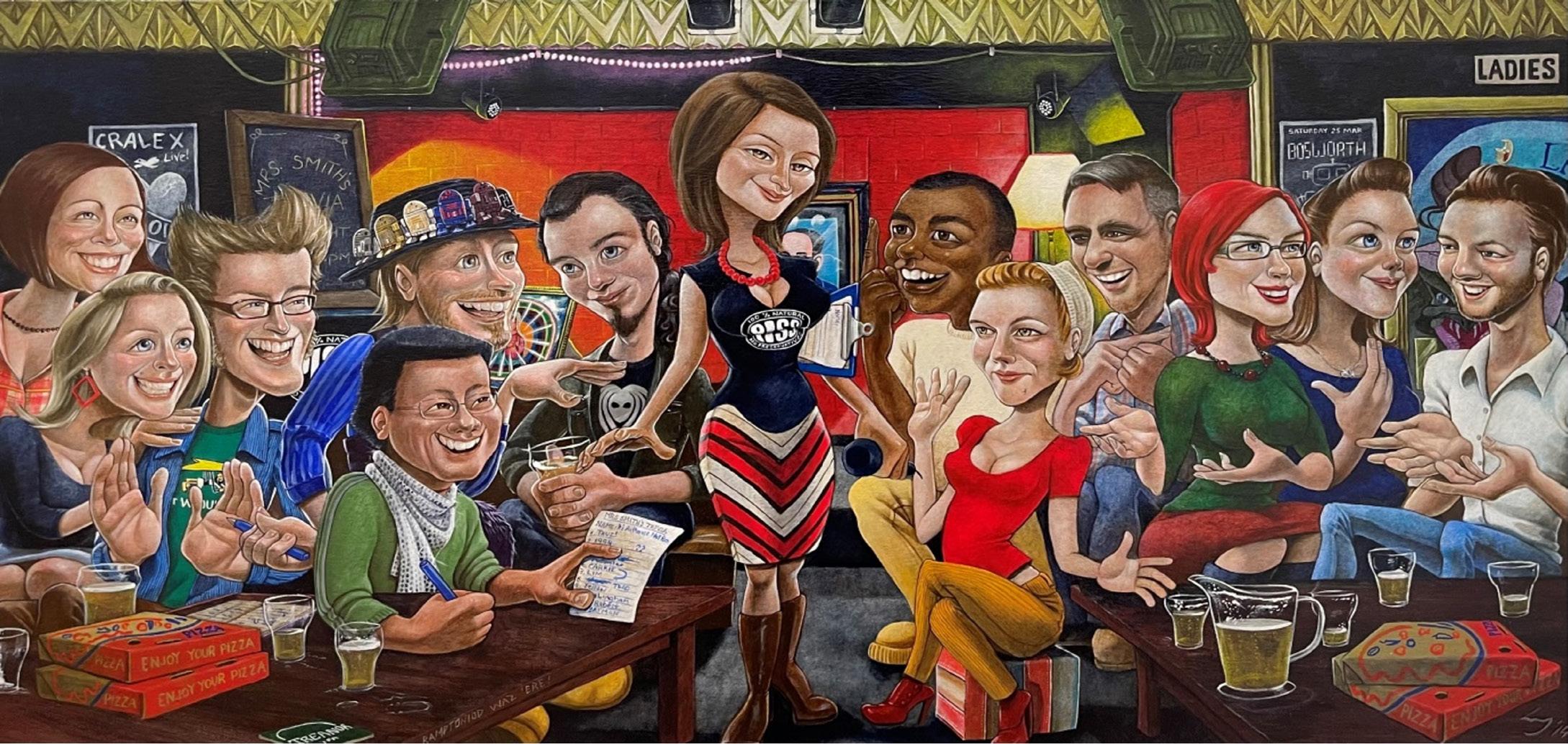
Mrs Smith’s Trivia & the GBH Last Supper, Lucy Fekete
From the VAS COLLECTION
words Bruce Baldey VAS
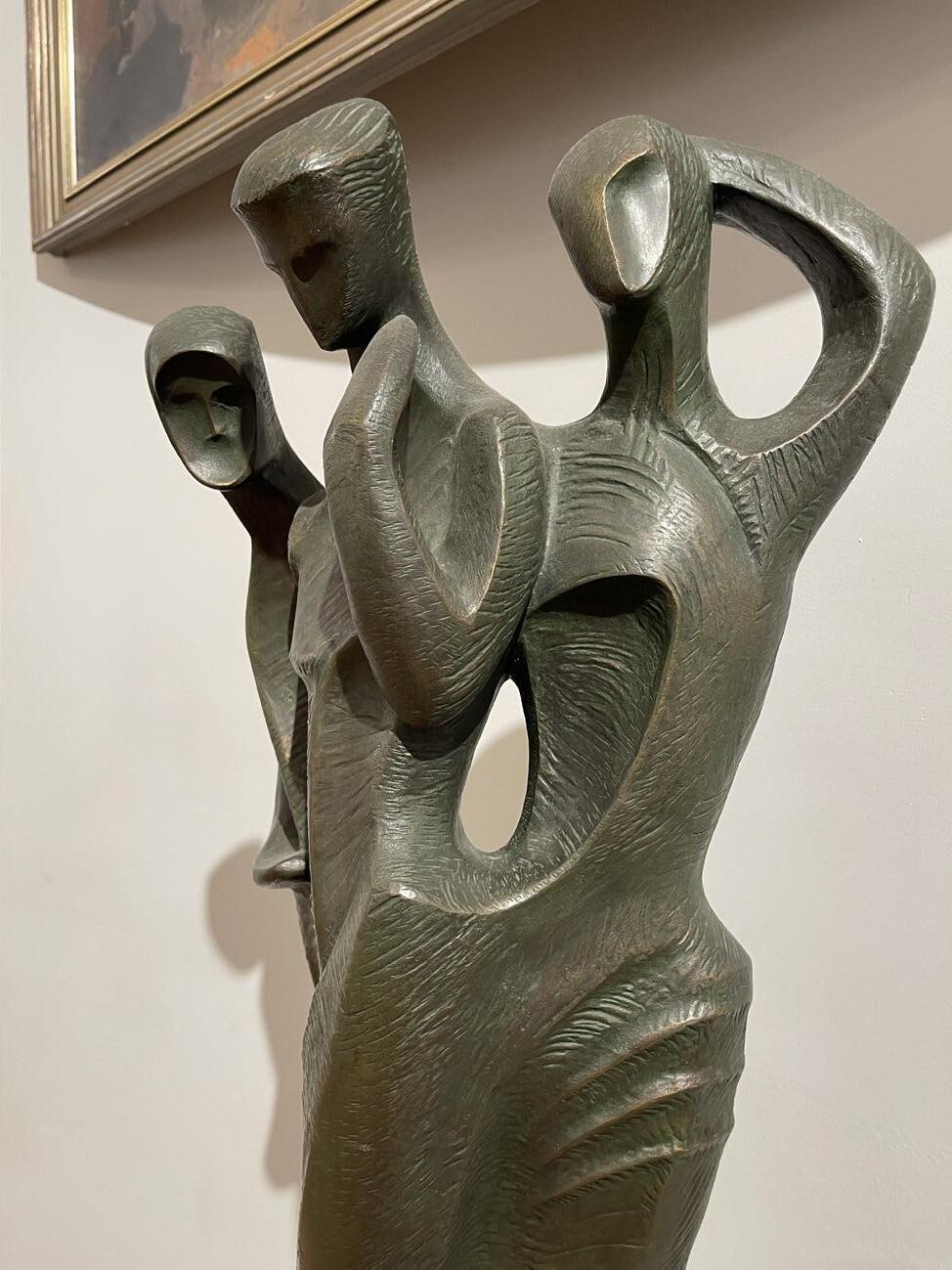
Artist: Stanley James Hammond MBE FVAS (1913-2000)
Title: “Three Figures” Cat. # 15
Date 1980
Donor: Stanley Hammond 1985
Medium: Cast bronze on timber plinth
Size: 97 x 37cm
During a seventy year career Stanley Hammond became one of Australia’s most versatile professional sculptors. His ability to produce major public works in varying styles and materials was highly sought after. Although specialising in large scale public sculptures he was equally adept at smaller works and medallions. Born in Trentham Victoria he attended Daylesford Technical School and RMIT when an advertisement seeking an assistant to Orlando Dutton launched him into a career as a professional sculptor in 1930 at the age of seventeen. Dutton provided him with the experience of working on large scale stone sculpture at the Shrine of Remembrance then under construction. In 1933 he joined leading sculptor Paul Montford to learn the art of bronze sculpture. In 1934 aged 21 he was appointed evening instructor at the Melbourne Technical College. Among his students were many notable sculptors of the next generation including Lenton Parr, Stuart Devlin, Max Lyle, Norma Redpath and Anne Graham.
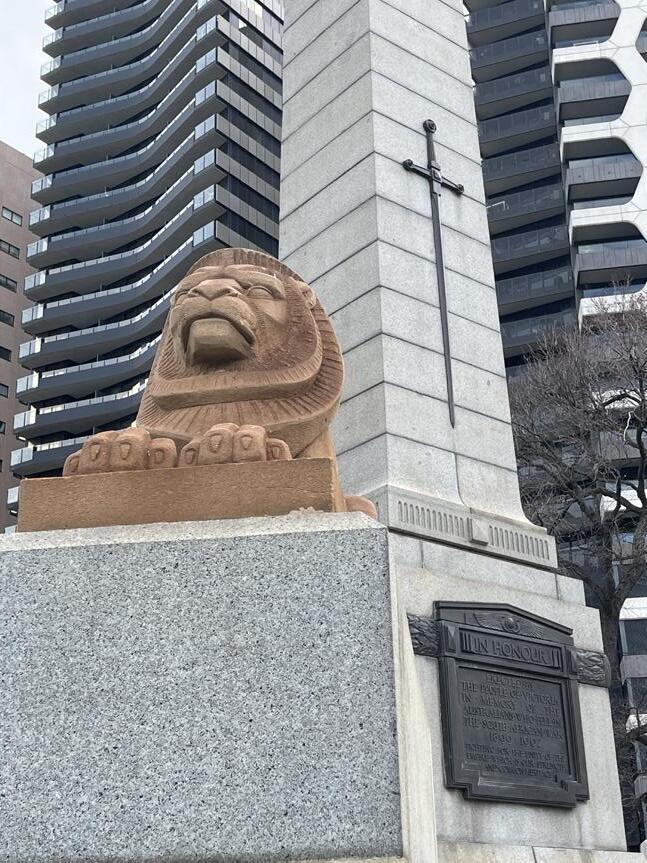
During these early years he won several commissions among them the “Pioneer Miners’ Memorial” Stawell and three relief panels on Sydney’s MWSD Building In 1939 he was called up to serve in the Australian Army and tasked with building scale models of military hardware for identification purposes. After the war he won more prominent public commissions including “Sir Walter Scott” bust in Ballarat Civic Centre and the relief panel on the Telephone Exchange Building on Russell Street Melbourne. In 1951 he was commissioned to add the “Four Lions’ to the Boer War Memorial on St
Kilda Road. The four sandstone lions are set on granite pedestals on each corner of the podium. Basalt was his preferred medium and with George Allen he carved the 125 ton “Fallen Warrior” in the forecourt of the Shrine of Remembrance, Melbourne
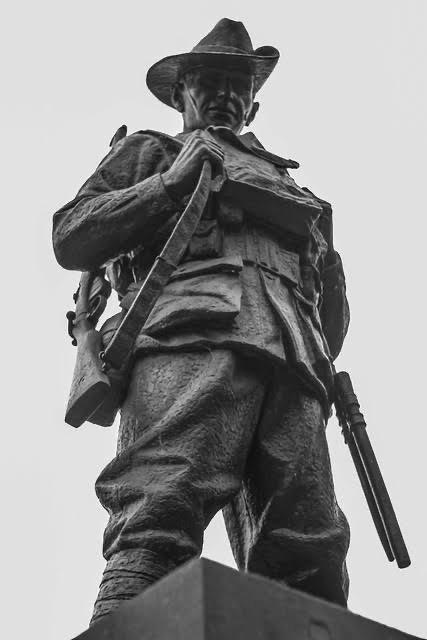
In 1970 he was commissioned to replace a memorial to Australia’s 2nd Division erected at Mont St Quentin, France a 3.5M high bronze statue of a WW1 soldier in full battledress at ease with rifle slung over the shoulder. The original was destroyed by German troops in 1940.
Stanley Hammond’s work can be seen throughout country Victoria, NSW and Queensland, for example Peace Memorials at Geelong and Broken Hill, “Home from School” in Daylesford, and a life size statue of Captain James Cook in Cooktown, North Queensland.
Most of Hammond’s work was public and secular however the interiors and exteriors of churches have been enhanced by his work for example St Ignatius, Richmond, St Georges, Carlton and the two carved gargoyles on the Sacred Heart Cathedral, Bendigo.
Stanley Hammond MBE FVAS served as President of the VAS from 1972 to 1977 and was a member of VAS Council for 35 years.
Extracts from a tribute by the late David H Roper FVAS Friend, Artist and VAS Past President 1983-88
Additional material and photography provided by the Editor
2nd Australian Division Memorial, Mont St Quentin, France 1970
Stanley Hammond MBE FVAS
Four Lions, Boer War Memorial 1951-52
ANSWERS
CROSSWORD
QUIZ
8.
10.
11.
12.
13.
14.
15.
16.
17.
18.
19. Sydney
20.
1. Green
2. Octagon 3. Iris 4. Green and blue 5. 10 cent 6. Spinnaker
7. Sistine Chapel
Tonalism
9. La Vie en Rose
Florence (Uffizi.it)
Animals
Gargoyle
Black and White
The Sydney Opera House
Barcelona
Ned Kelly
Sidney Nolan
Tom Roberts
The Colossus of Rhodes
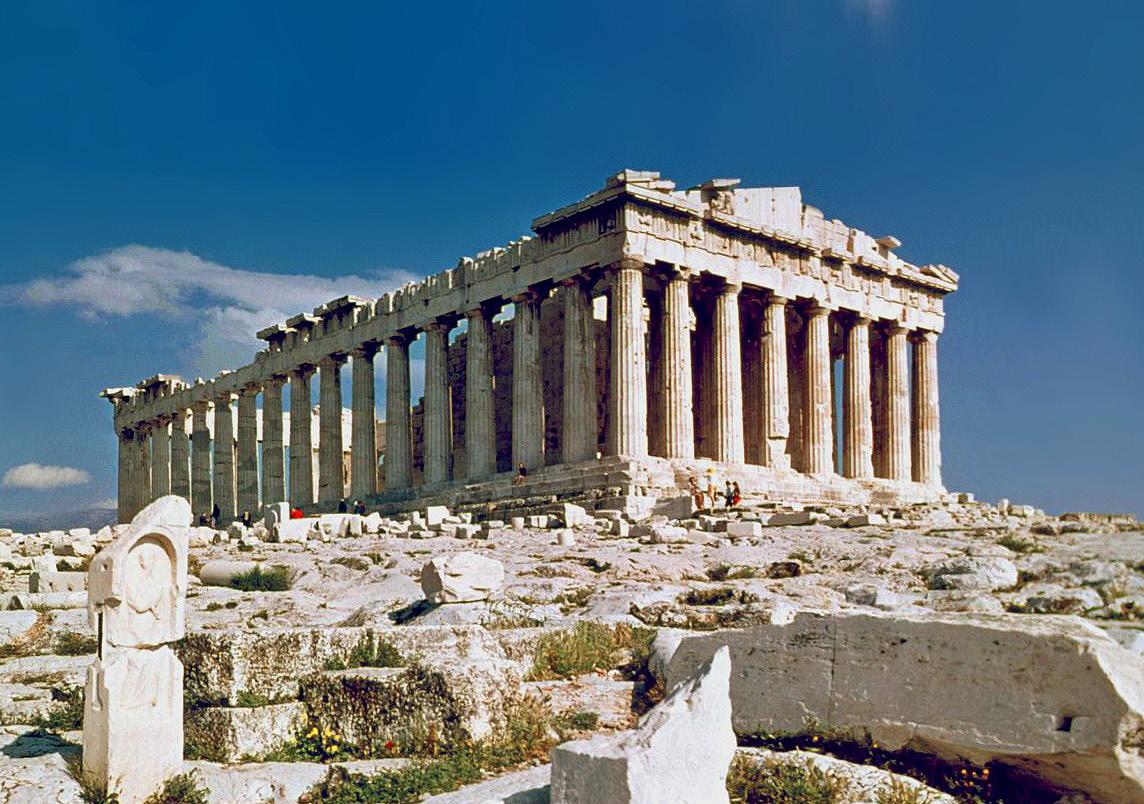
Parthenon (Acropolis, Athens)
Upcoming Exhibitions
4 Sep 2025 – 21 Sep 2025
Twenty Melbourne Painters Society
Oct 2025 – 3 Nov 2025
20 Nov 2025 – 14 Dec 2025
Hylton Mackley Artist of the Year
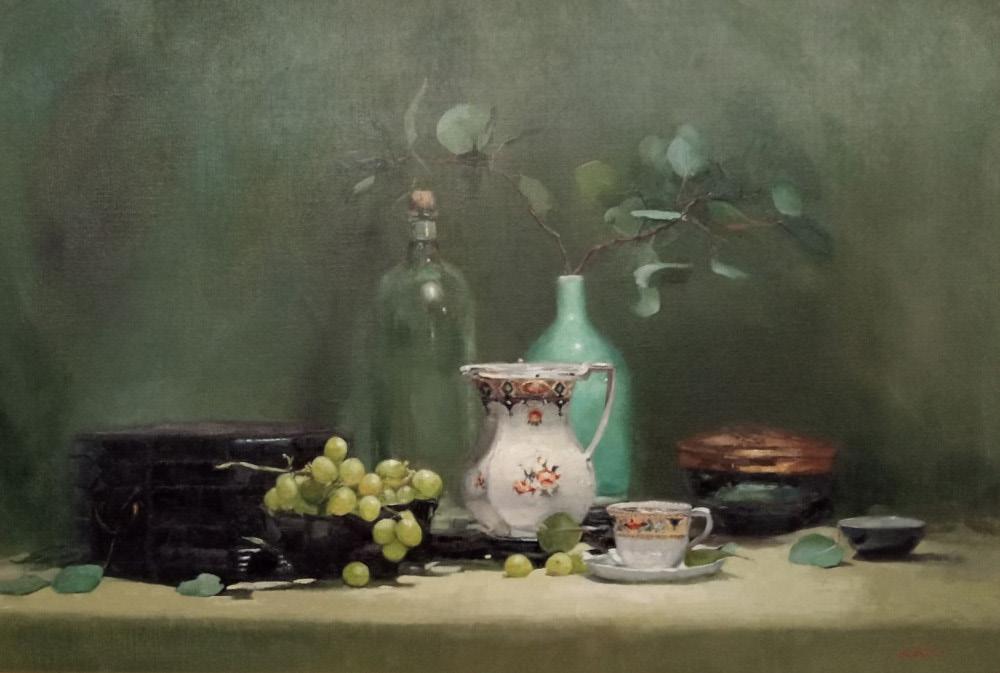
Hues of Green, Fiona Bilbrough
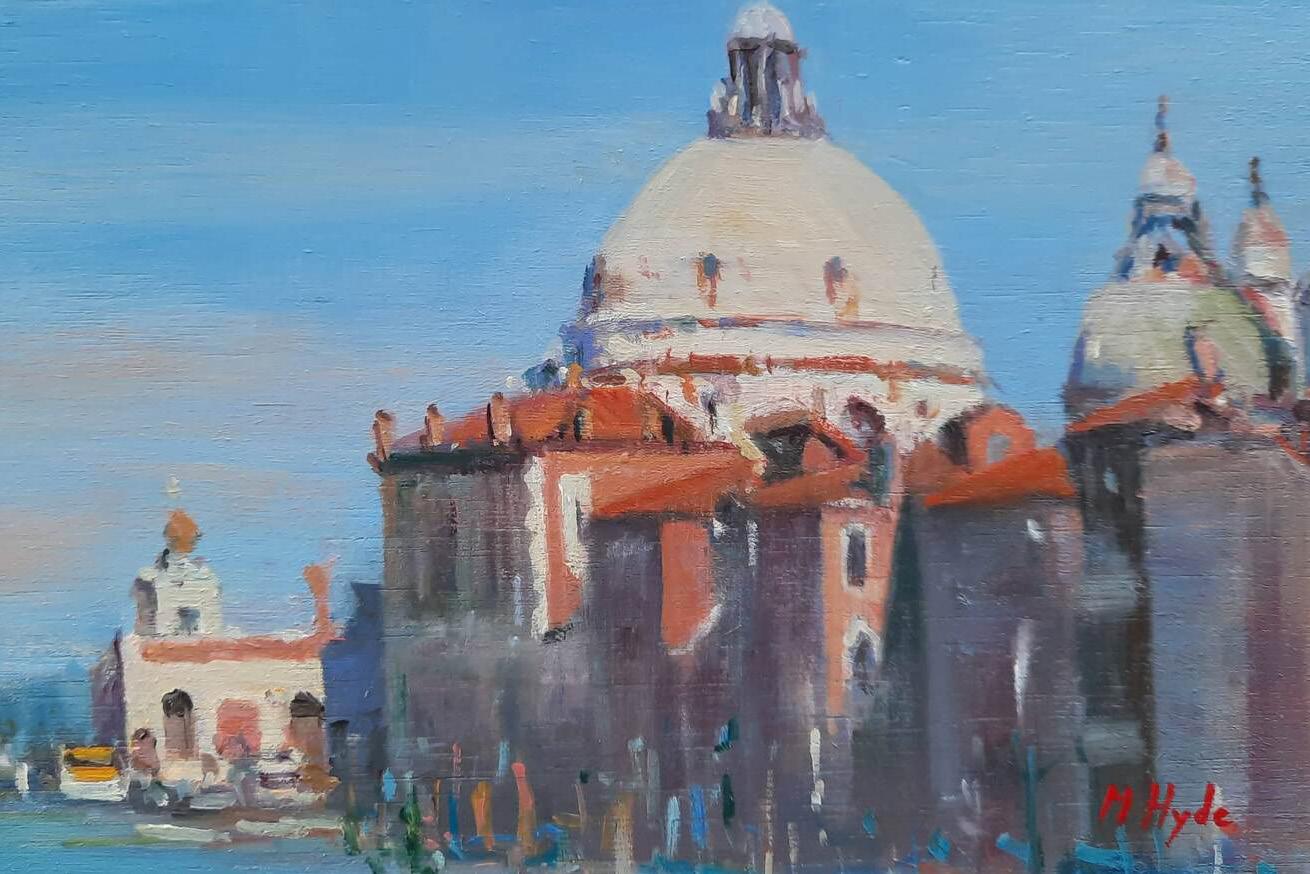
Venezia, Mary Hyde VAS (cropped)
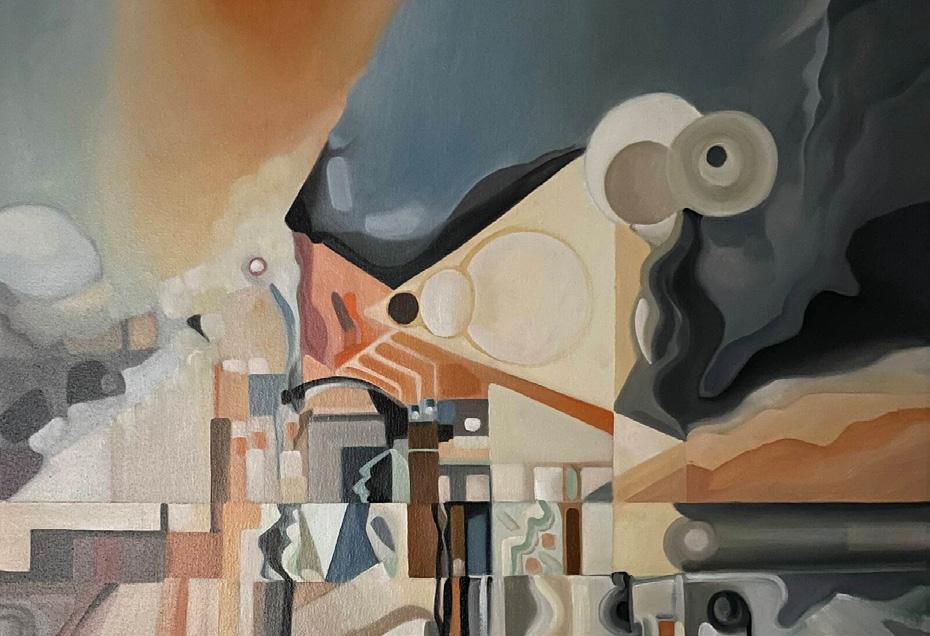
Passage of Time and Orbit of Light, Samira Khadivizand (cropped)
OUR SUPPORTERS
Eileen Mackley AM VAS FVAS & Hylton Mackley AM (HON) FVAS
The late Gordon Moffatt AM Noel Waite AO & The Waite Family