Governor of Victoria, Her Excellency Professor the Honourable Margaret Gardner AC
COUNCIL & STAFF
PRESIDENT
Mark Bagally FVAS TREASURER
Raymond Barro EXHIBITING
Bruce Baldey VAS
Angeline Bartholomeusz
Meg Davoren-Honey OAM VAS FVAS
Ruby van Engelen
Lucy Maddox
Nathalie Anne Henningsen NON-EXHIBITING
Cheryl House
Rosemary Noble HON FVAS
Ron Smith OAM HON FVAS
MANAGER & SECRETARY
Kari Lyon
EDUCATION & PROGRAMS COORDINATOR
Lucy Taylor Schmitzer MEDIA & EVENTS ASSISTANT
Hannah Hotker GRAPHIC DESIGN
Catherine Jaworski GALLERY ASSISTANTS
Sam Bruere
Catherine Jaworski
Rhiannon Lawrie
Oguzhan Ozcicek
Joshua Rushin
Lucy Wilde
CONSULTANT
Anne Scott Pendlebury (Hon) FVAS HONORARY HISTORIAN
Andrew Mackenzie OAM (Hon) FVAS VAS
MAGAZINE EDITOR
Bruce Baldey VAS MAGAZINE DESIGNER
Catherine Jaworski
The VAS Magazine is printed through the Office of the Victorian Artists Society. Opinions expressed herein are not necessarily those of the VAS Council or the editors of this magazine. Articles from members will be appreciated. Contributions will be published on a strictly honorary basis and no payment will be made. The Victorian Artists Society acknowledges the Traditional Owners of the land on which we meet. We pay our respects to Elders, past and present, and the Aboriginal Elders of other communities.
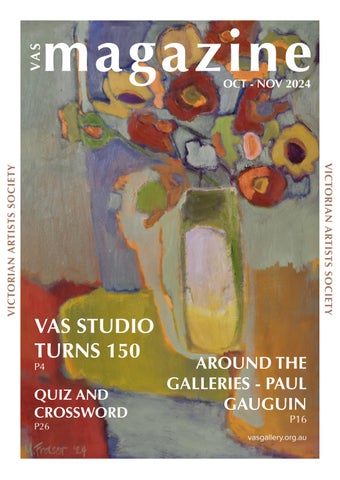
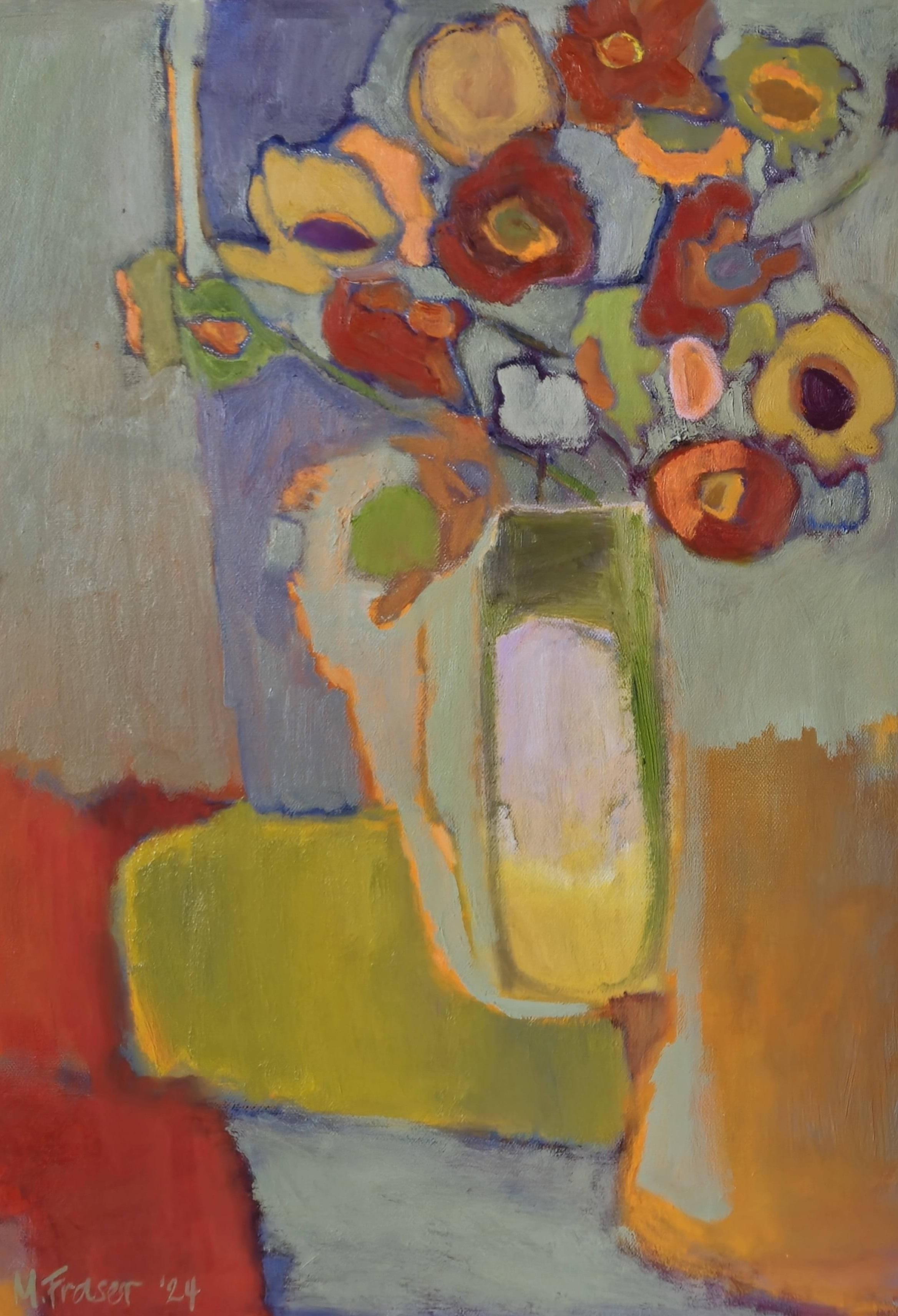
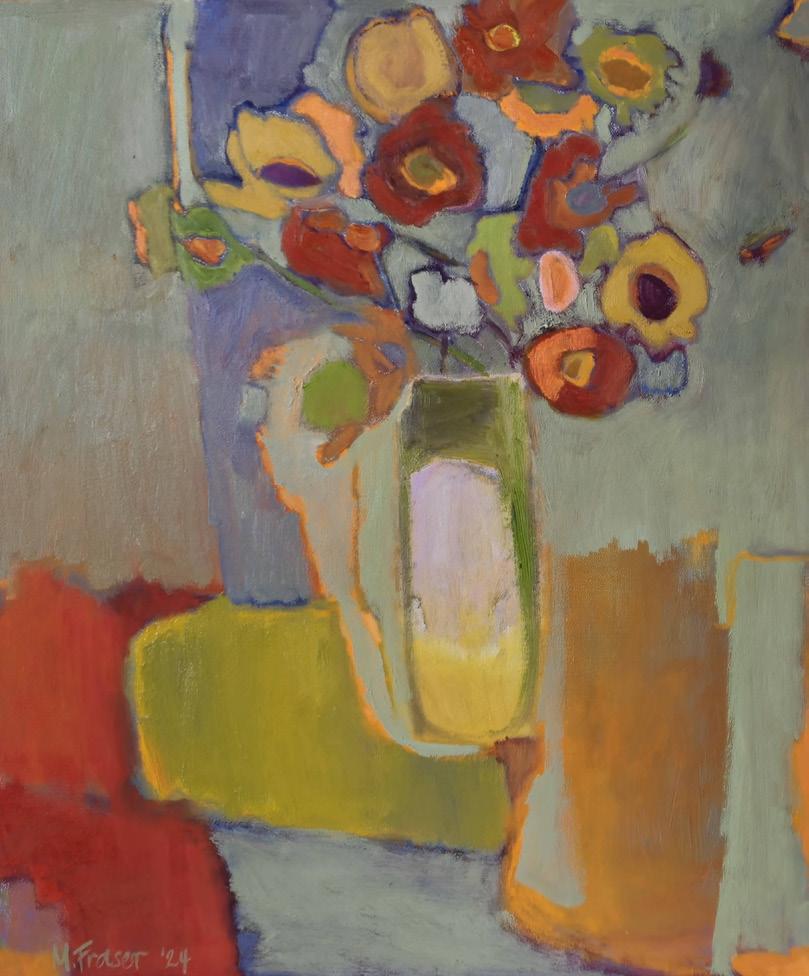
Cover Image: Mixed Bunch, Melissa Fraser, oil on canvas, 51cm (W) x 61cm (H)
INSIDE THIS ISSUE
VAS Studio Turns 150 | Ian Hobbs | 4
Winter Exhibition | Rhiannon Lawrie | 9
The Burrell Collection, Glasgow | Linda Weil 10
Francis Meadow Sutcliffe | J D Park | 14
Around the Galleries | Bruce Baldey VAS | 16
Centrefold | Ben Winspear VAS | 18
Book Review | Bruce Baldey VAS | 22
Sargent and Fashion | T J Murphy VAS | 24
Crossword | 26
Quiz | 27
“...Moscow, Moscow, Moscow..” | Anne Scott Pendlebury (Hon) FVAS | 28
September Quote | 31
Answers | 32
Upcoming Exhibitions | 33
The Hylton Mackley Artist of the Year | 34
VAS STUDIO
words Ian Hobbs
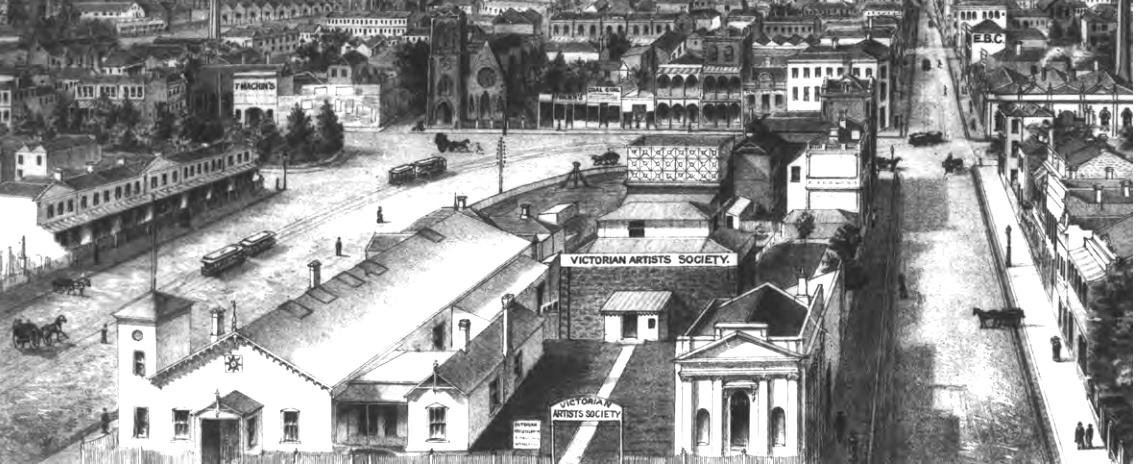
The studio tucked away at the back of the Victorian Artists Society started life as a stand-alone bluestone building in 1874 as the home of the Victorian Academy of Arts (founded 1870, renamed VAS in 1888). Before the current galleries were built around it in 1892 the studio played a supportive role in the emergence of an Australian vision in Western Art. Some say it was the cradle.
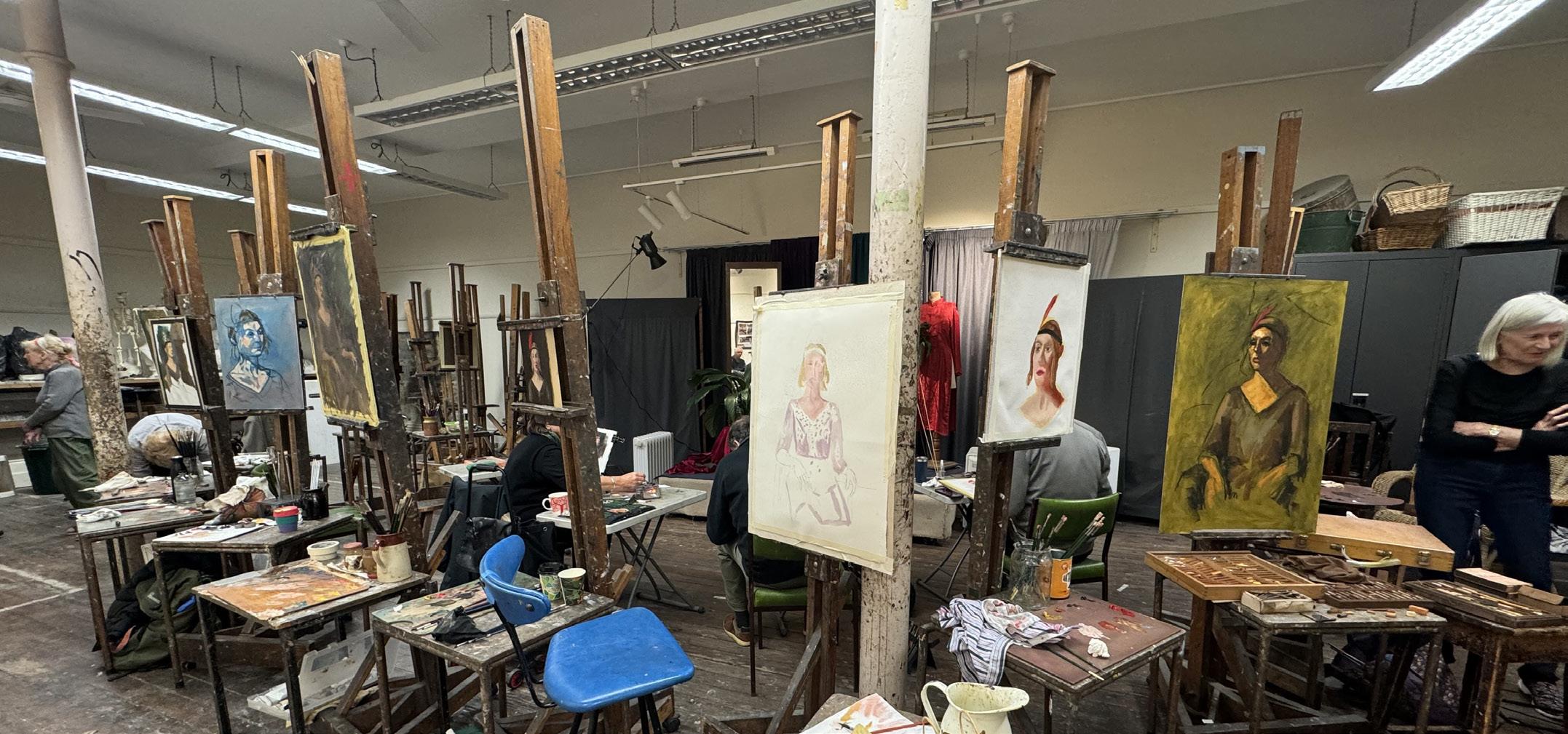
Walking into the room today is to step back in time. The smell of more recent paint is in the air maybe but old oil splashes on the columns and original floorboards, along with the creaking easels dotted around are certainly all relics of yesteryear. And if that’s not enough, head sculptures, like gods of the past, look down from the shelves seemingly protecting this sacred space as artists of today attend classes.
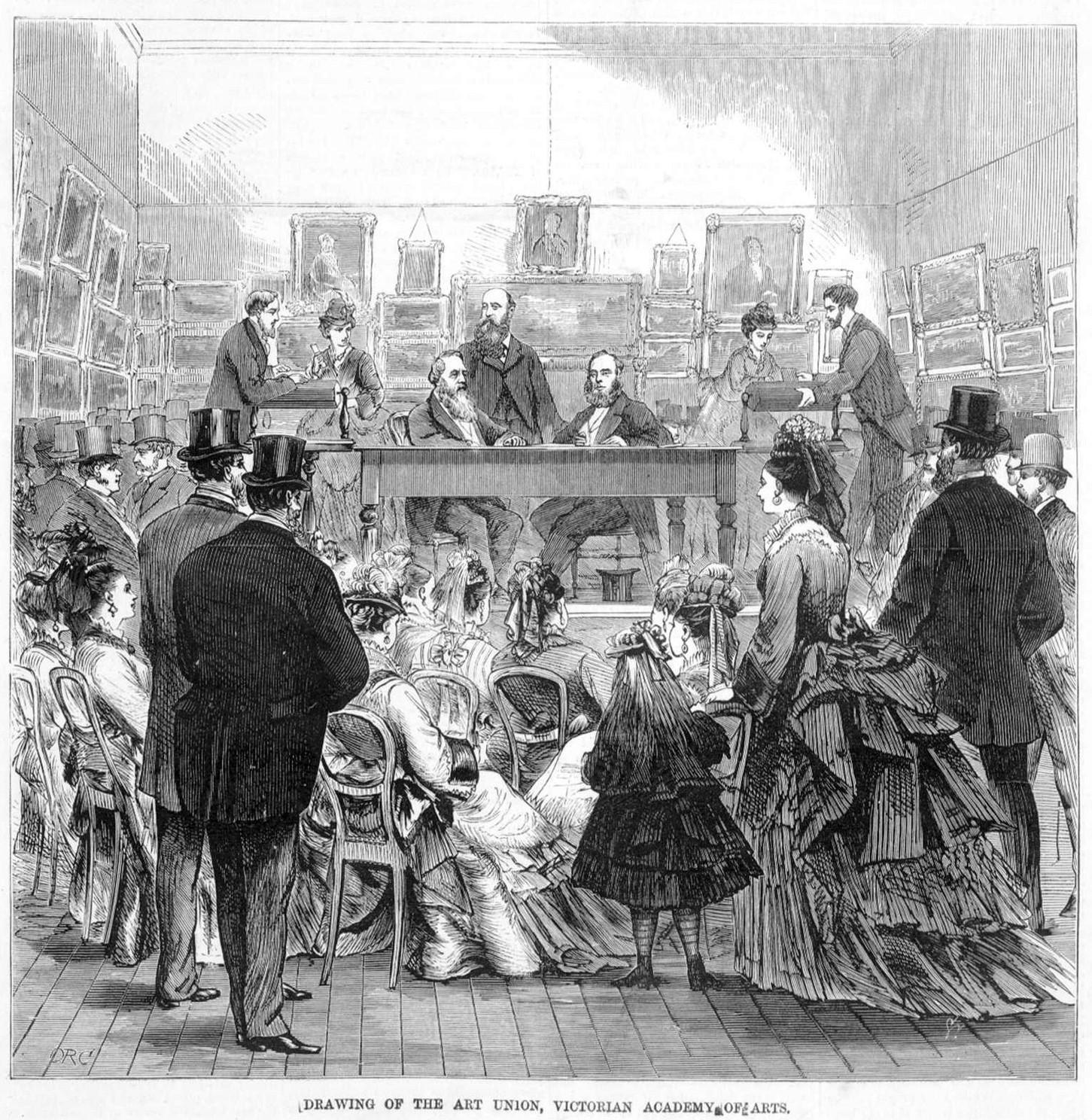
It’s hard to imagine now that an event in the old building could attract as many as 150 members and friends. Annual exhibitions, life drawing classes, conversaziones, smoke nights and council meetings all took place here, and
150 TURNS
with music in the mix it was a lively location in Marvellous Melbourne, despite its nickname The Morgue!
To get an idea of our studio’s place in Australian art history, let’s consider for a moment the 1890 VAS Winter Exhibition, the last one staged in the room, during the whitehot years of the Heidelberg School.
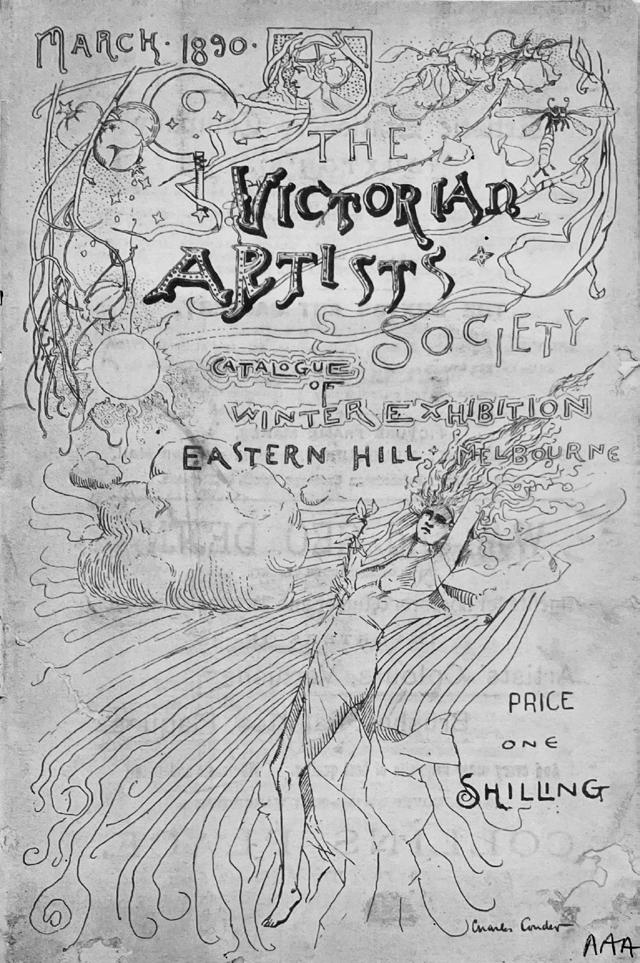
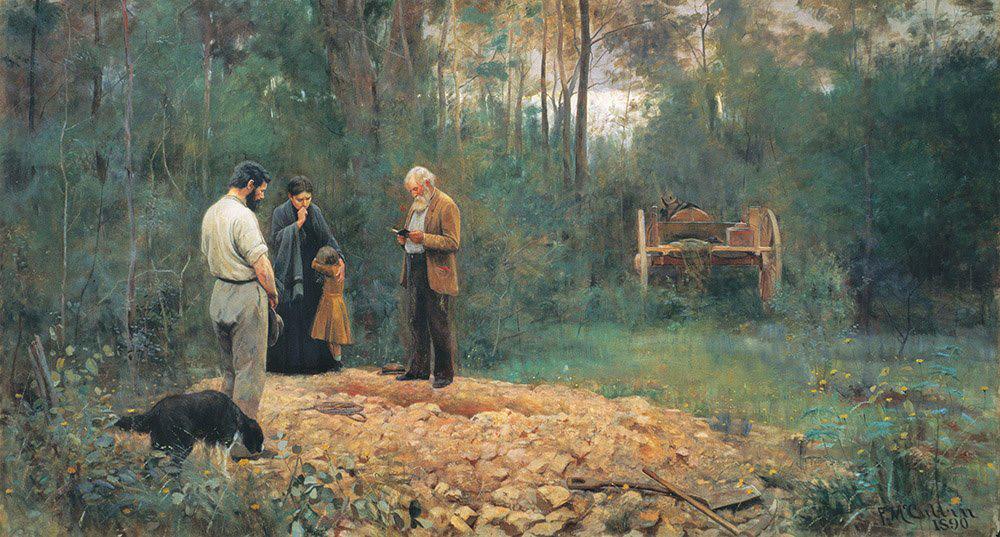
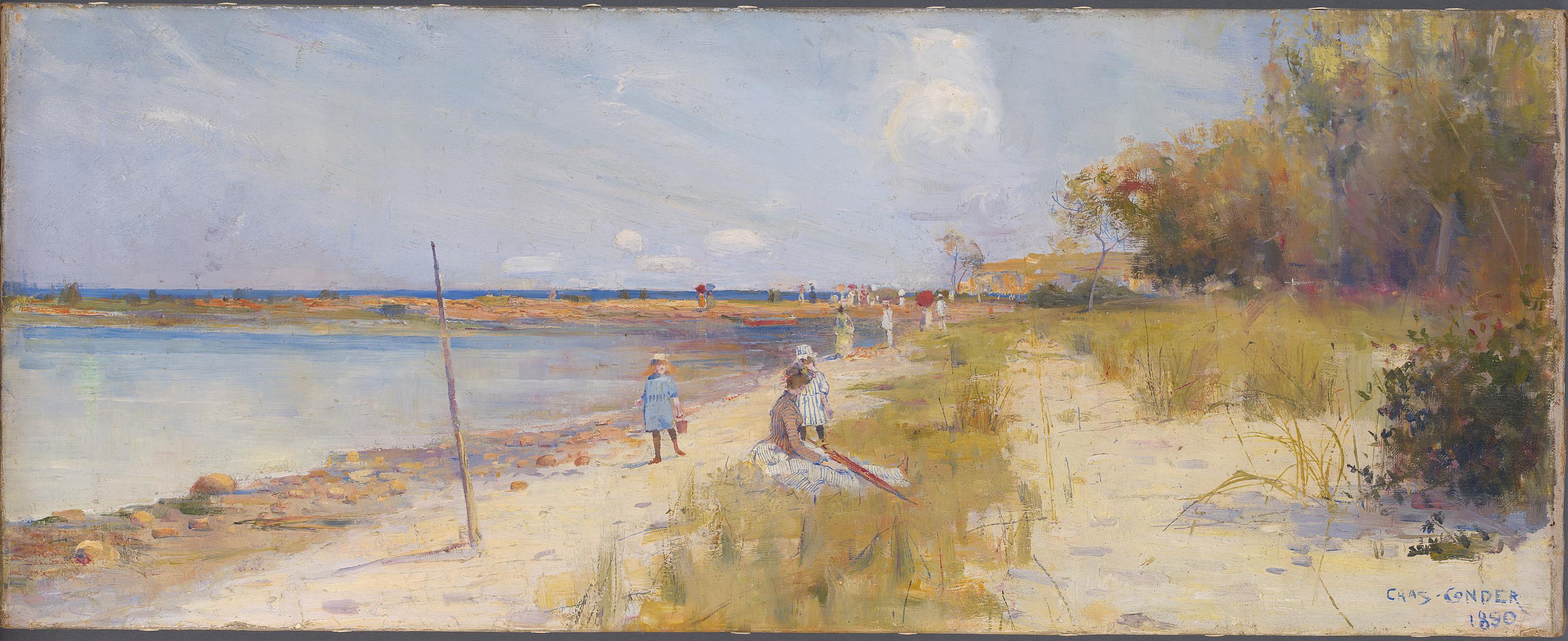
At this exhibition, Arthur Streeton, aged just 22 years, exhibited one of his masterpieces, Still glides the stream, and shall forever glide (purchased by the Art Gallery of NSW off the wall), Charles Condor, his beach leisure scene, Rickett’s Point (National Gallery of Victoria)
Victorian Artists Society, Albert St, c.1888
and Frederick McCubbin, the storied painting, A bush burial (Geelong Gallery), while Tom Roberts, busy putting the finishing touches on Shearing the rams, contributed head studies and a nocturne on this occasion, unlike earlier
years when The artists’ camp and A summer morning tiff graced the walls. Works by Clara Southern, Jane Sutherland, Jane Price, Walter Withers, John Ford Paterson, John Mather, Julian Ashton, Charles Richardson and others
Victorian Academy of Arts, 1874, engraving, Samuel Calvert
A bush burial, Frederick McCubbin, 1890, Geelong Art Gallery
Rickett’s Point, Charles Condor, 1890, NGV
Still glides the stream, and shall for ever glide, Arthur Streeton, 1890, Art Gallery of NSW
VAS Catalogue front page, 1890, Charles Condor, designer
further enhanced the catalogue. Some exhibition!
The show boasted 18 works by Streeton, Condor, McCubbin and Roberts. It would be the last time though that the four exhibited as a working group as Condor left for Europe soon after and Streeton and Roberts headed to Sydney. In the same year as the exhibition, and in other years, Roberts, McCubbin and Streeton sat in the little hall as VAS councillors, McCubbin later becoming president.
However, for Roberts, McCubbin, Richardson and others an association with the VAA started back in the 1870s. When life drawing classes ceased for a period at the conservative National Gallery Art School, these students reportedly gravitated to the Eastern Hill facility, McCubbin winning a prize in 1882.
Roberts sailed to England to study in 1881. Returning four years later imbued with influences from the Royal Academy, Whistler and Europe, his advocacy for a new school of painting soon led to the Heidelberg and other plein air camps and the 9x5 Exhibition, major turning points in Australia’s transition from European-style art to a national one.
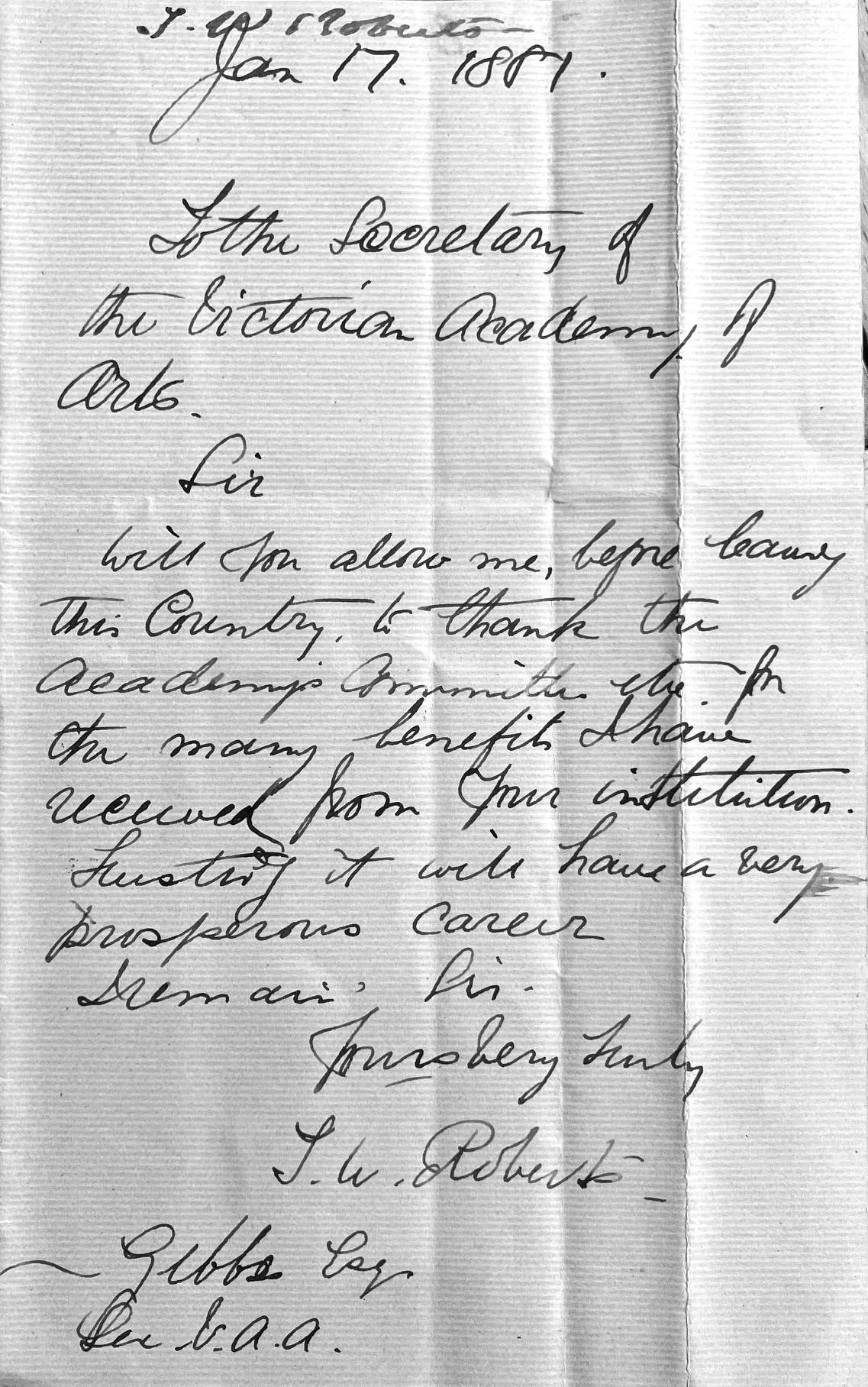
Biographer Helen Topliss says that Roberts received a VAA bursary to help fund this trip to England. Certainly, in a letter to the VAA days before departing he was full of gratitude for benefits received from the institution. In the 1960s, artist Arthur Boyd summed up Roberts’ overall importance when he said “All Australian paintings are in some way a homage to Tom Roberts”.
Roberts in turn claimed that predecessor, Swiss-born Louis Buvelot, one of the
Tom Roberts’ letter to VAA, 1881, State Library of Victoria
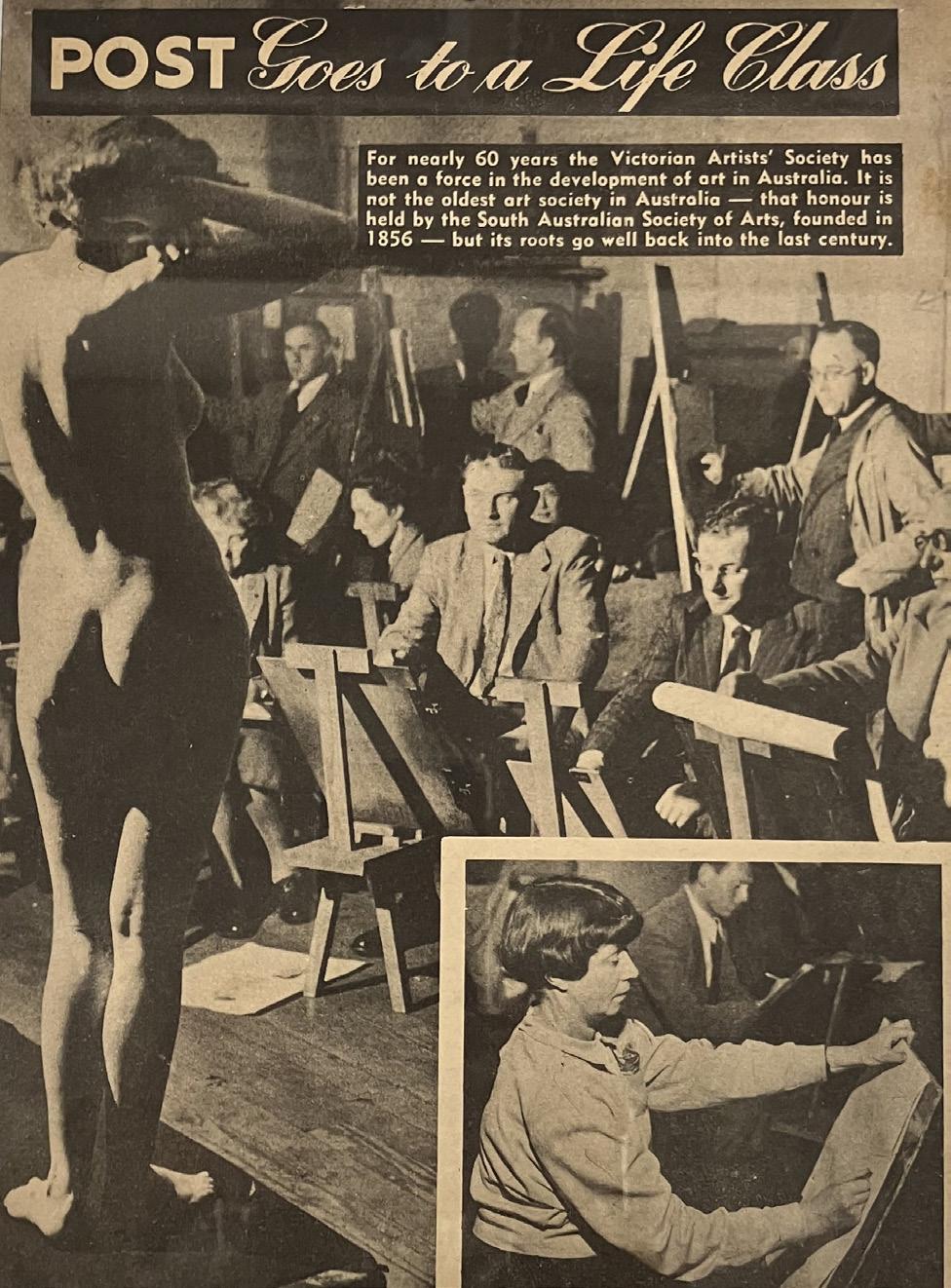
Life Class, VAS Studio. 1950, Australasian Post
founders of the VAA, “began the real painting of Australia”, i.e. the rendition of a feeling for nature with everyday subjects in everyday locations, a focus that ran parallel with bush literature as our young country strove for a national identity prior to federation.
So, you could argue that Buvelot, Richardson, Roberts and McCubbin’s early involvement with the VAA contributed in part to the preHeidelberg School course of Australian Impressionism as well, Roberts later being the acknowledged leader of the movement.
Importantly, the VAA/VAS through exhibitions in the studio from the first on 30 July 1874 to the last in 1890 showcased local art in contrast to the NGV’s penchant for European acquisitions. A newspaper report of 1881 states:
“The Victorian Academy of Arts is the only institution of the sort in the colonies that holds periodical exhibitions of colonial works of art.”
Life drawing and other classes have been running almost since the studio’s opening. The grand new building of 1892 took over all the functions of the society except the classes and has been associated with many fine painters and sculptors over the years since, but it was our little room that provided the initial setting and support for artists who first forged a national vision.
Placed across the back of the block and financed by members, the bluestone building was always intended to be stage one of a larger complex. As construction began on the new galleries in 1891, VAS councillors and members, attired in black, honoured The Morgue with a rousing farewell in the form of a funeral wake, recognising that it would be the last exhibition and occasion of bohemian revelry within its four walls.
All in attendance that night would surely be proud of the studio’s continued existence, just as the VAS is the proud custodian of its 150 year and counting heritage.
Portrait Group tea break, VAS Studio, 2024. Photo, Jennifer Fyfe
Winter Exhibition
words Rhiannon Lawrie
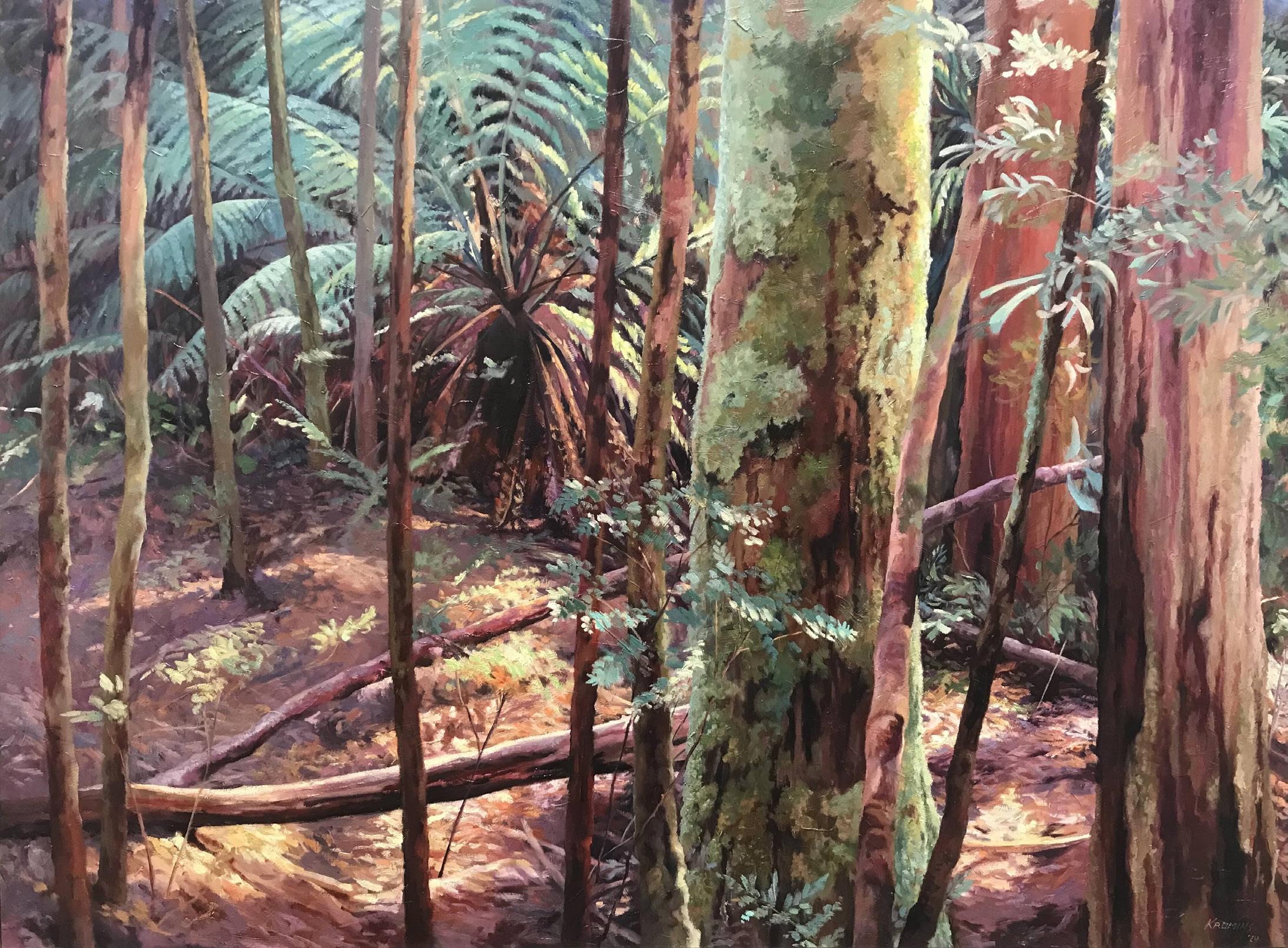
VAS Gallery’s Winter Select Exhibition turned out to be a great success with many engaging and salient contributions. Congratulations to Exhibition winner Gwendoline Krummins for her piece titled ‘The Tarkine, Tasmania’. An immersive scene of the sunny Tasmanian rainforest, the depiction of light and shadow is impressive. Our Sculpture winner D’Arcy Rouillard continued to contribute poignant pieces to the gallery with ‘Reveller’, a bronze figure bending towards the sky. The judges awarded Leslie Pascoe, Gael Balogh, Ulrich Stalph, Mark Dober, Zoja Trofimiuk Highly Commended as they all showed pieces that drew the observer to their artistry and what they collectively bring to the gallery with their work. The Curators choice was awarded to Ray Hewitt’s ‘Interior’, an abstract with Ray’s signature technique and style. Julian Bruere won The Walter Withers
Award for Landscape for his piece ‘Wet Sands’, a part of the ongoing recognition of his splendid Australian landscape work. Other highlights of the exhibition included ‘Flowing Tree Roots’ by Sarah Ackland. This piece shows the consistency and attention to detail Sarah has mastered throughout her career as an artist. She has done a brilliant job of capturing the flow and majesty of the Australian natural world. Another high point of the show was the striking ‘Seated Nude’ by Creagh Manning. The pose of the model is so warm and contented. It was so pleasant to see how the hues of pink and orange stand out against the winter blues of the rest of the exhibition. This year’s Winter Select Exhibition turned out beautiful work for our members in wonderful different direction. Thank you so much for everyone who contributed their wonderful pieces this year.
The Tarkine, Tasmania, Gwendoline Krumins
The Burrell Collection, Glasgow
words Linda Weil
Well, there’s a river that runs through Glasgow And it makes her but it breaks her And takes her in two parts…*
I must admit, my first impression of Glasgow was not at all favourable. Driving in through the outskirts of the city, past miles and miles of grim, run down and depressing council estates I remember thinking to myself ‘Thank gawd I am only spending a day in this hellscape.’ Fortunately, things looked up quickly and our accommodation was great. And a whisky or two at dinner improved my outlook immeasurably. Plus, I had a plan for the next day, as my trusty Lonely Planet guide had pointed out to me the ‘must see’ Burrell Collection.
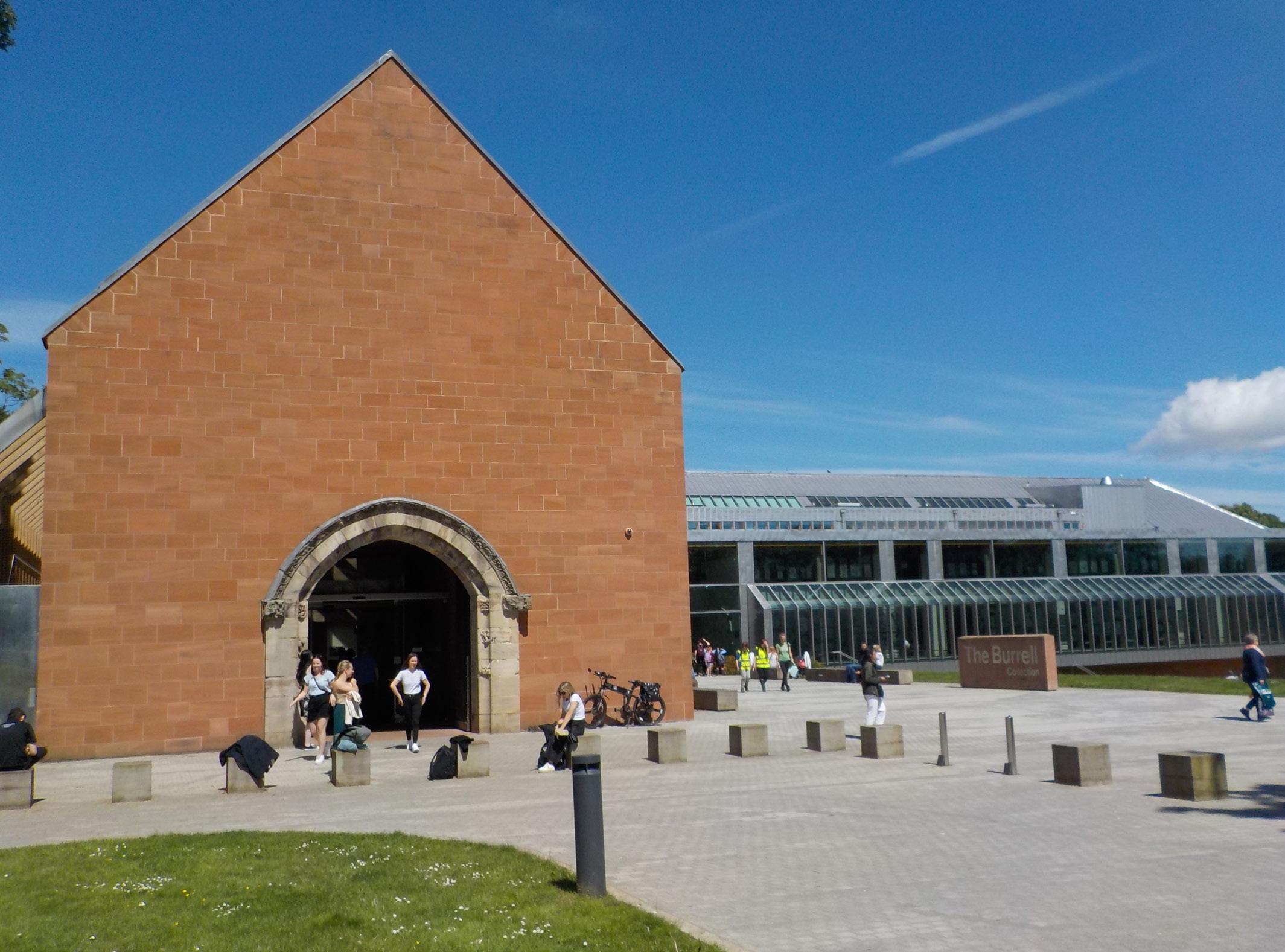
The next morning my travel companions dropped me off at the Burrell Collection Art Gallery (they had family to catch up with in Glasgow and were probably happy to see the back of grumpy me).
Here I am going to put a quote from the website about the Burrell rather than rewrite something:
“A staggering 9,000 objects form The Burrell Collection. Highlights include one of the most significant holdings of Chinese art in the UK, medieval treasures including stained glass, arms and armour and over 200 tapestries which rank amongst the finest in the world, and paintings by renowned French artists including Manet, Cezanne and Degas.
According to the Burrells’ specific wishes, it was to be housed where people could appreciate
the art in a countryside setting. After many years of searching for a suitable site, the opening of the museum in Pollok Country Park in 1983 was received with much critical and public acclaim. This magnificent collection in its purpose-built home surrounded by beautiful parkland, is ranked amongst the most significant civic museum collections in the UK, comparable to the National Gallery and the V&A in London.” https://burrellcollection.com/
Honestly, people, this gallery is amazing. The architecture has been designed in such a way as to display the collections in an innovative and dynamic way. Each gallery or alcove allows you to see the art and supporting objects and explore the way people lived, used, made and traded the objects on display. Recently refurbished, the gallery is light and airy with great flow-through from one section to the next. As I was there at opening time (10am), it was not at all crowded and I could explore at my leisure.
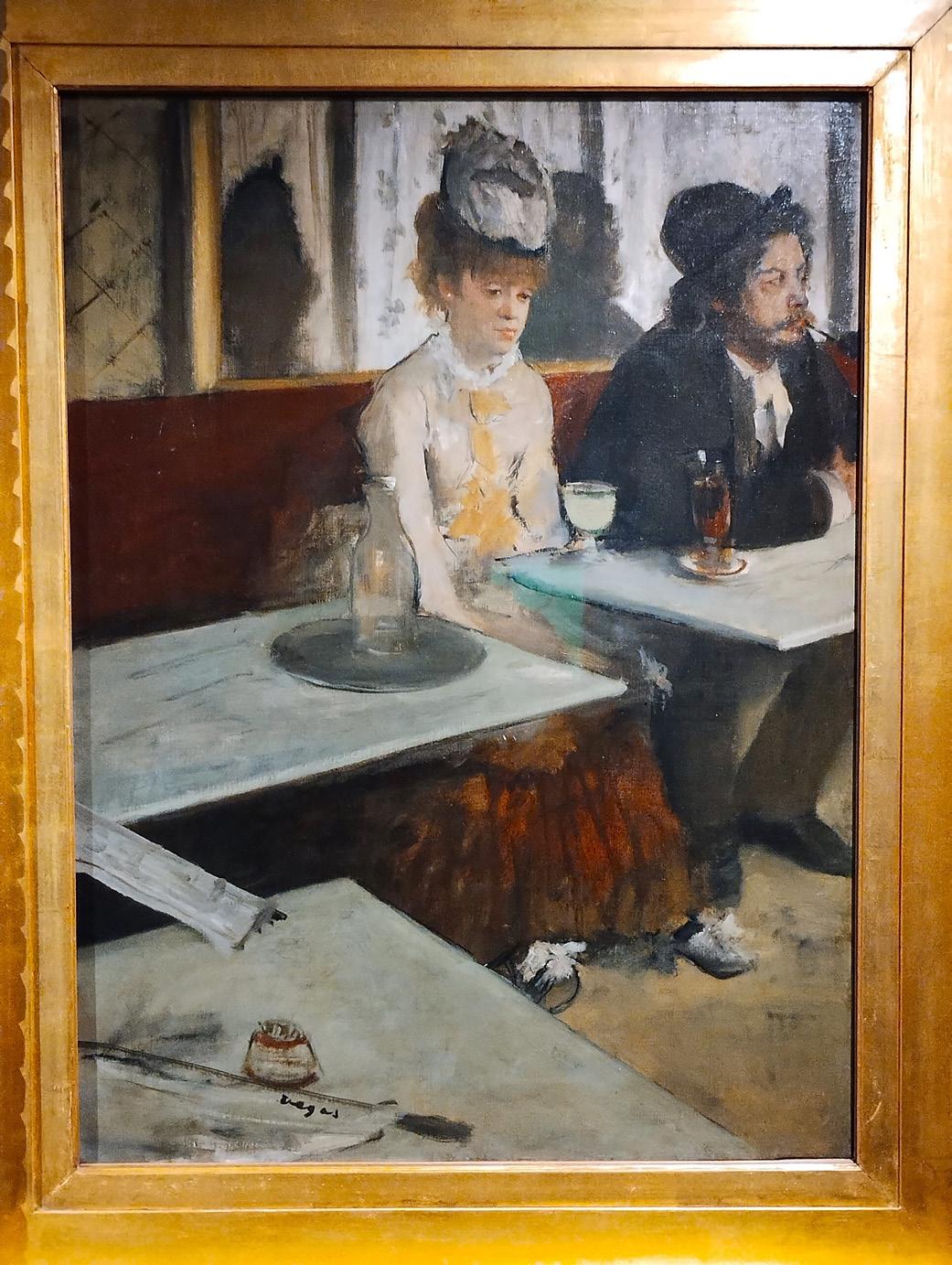
Absinthe, Degas
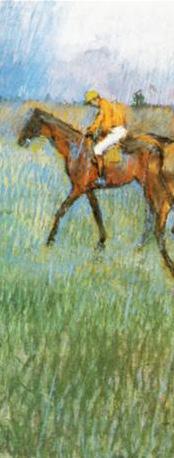
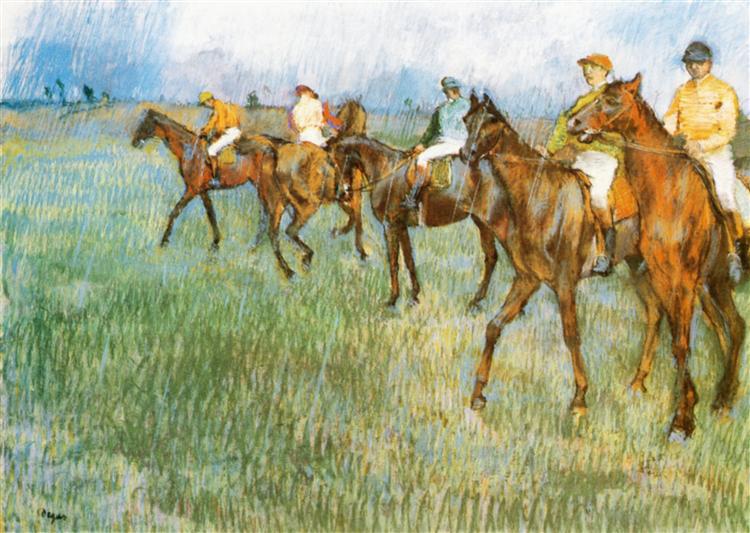
Jockeys in the Rain, Degas, 1886
Linda at the Burrell Gallery
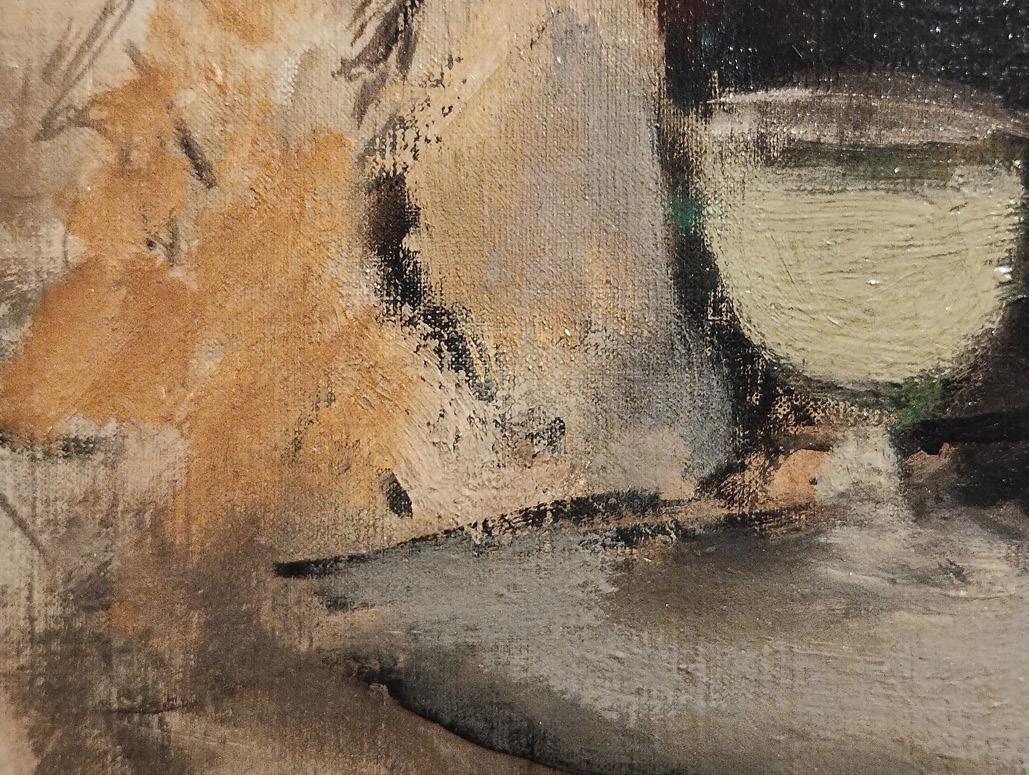
But before I indulged myself in gallery overload, I went into the basement gallery to see my goal of this visit – the special exhibition ‘Discovering Degas: Collecting in the Time of William Burrell’. The exhibition features 23 of Degas’ works from Burrell’s original collection as well as display of supporting works on paper, sculptures and Japanese woodblock prints loaned from other art galleries. All in all, over 70 works to immerse myself in! Works in oils, pastel and bronze, showing Degas’ obsession with the behind-the-scenes ballet views, horseracing, laundresses, women at their bath, all exhibiting the depth and creative output of Degas during his lifetime. A highlight of the exhibition is his famous masterpiece ‘L’Absinthe’, on loan from the Musee D’Orsay. It was a true delight to once again see this work close and study it. No reproduction in an art book can fully display the tonal range and colours that are seen in the original work. I have always admired this work, the hopeless depression exhibited by the subjects. It makes me
uncomfortable to look at, but I cannot look away.
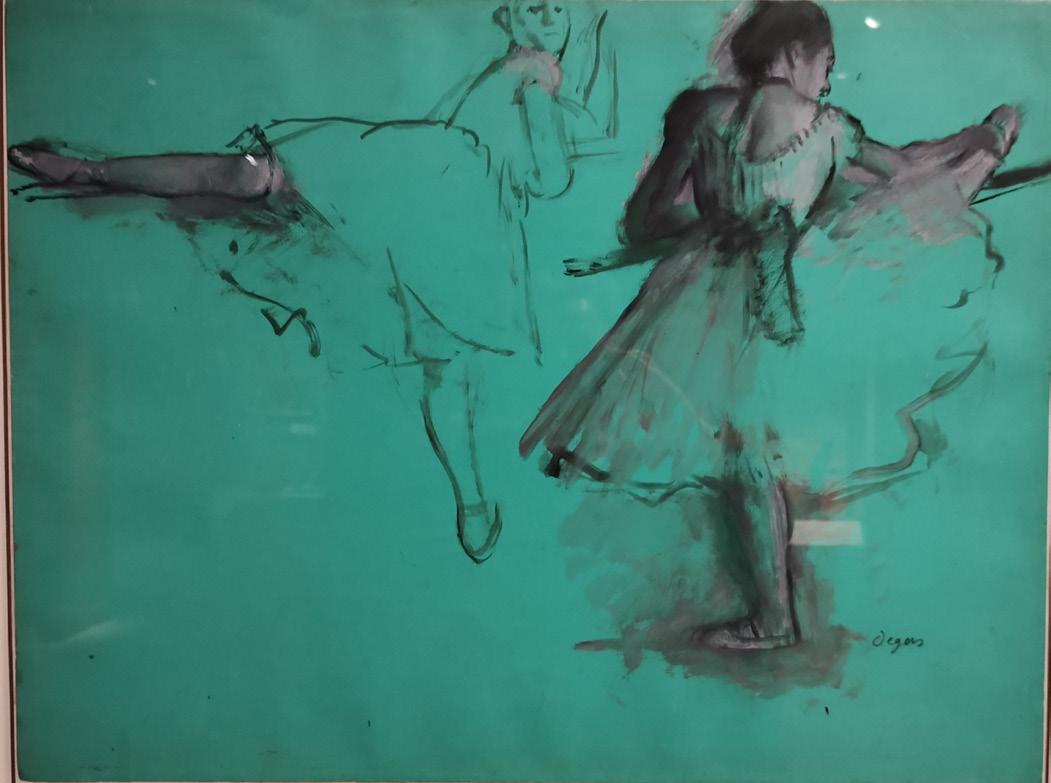
Degas was an artist who insisted on the importance of good drawing – a man after my own heart! One of the works I delighted in was a small sketch he did in thinned oil on paper, ‘Dancers at the Barre’ 1886. This drawing was one of a group of 20 he chose to be part of a special edition of his works published in 1897. I love the economy of line he has used in this small work, it’s deceptive simplicity. The addition of selective areas of hue and tone give form and weight to the figures without overpowering the drawing.
Another work (among the many) I enjoyed was one of Burrell’s last acquisitions, ‘Jockeys in the Rain’, 1884, purchased in 1937. A beautifully handled pastel that shows Degas’ excellent draughtsmanship. He understood the value of accurate drawing and his loose style captures the movement
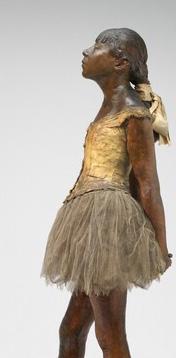
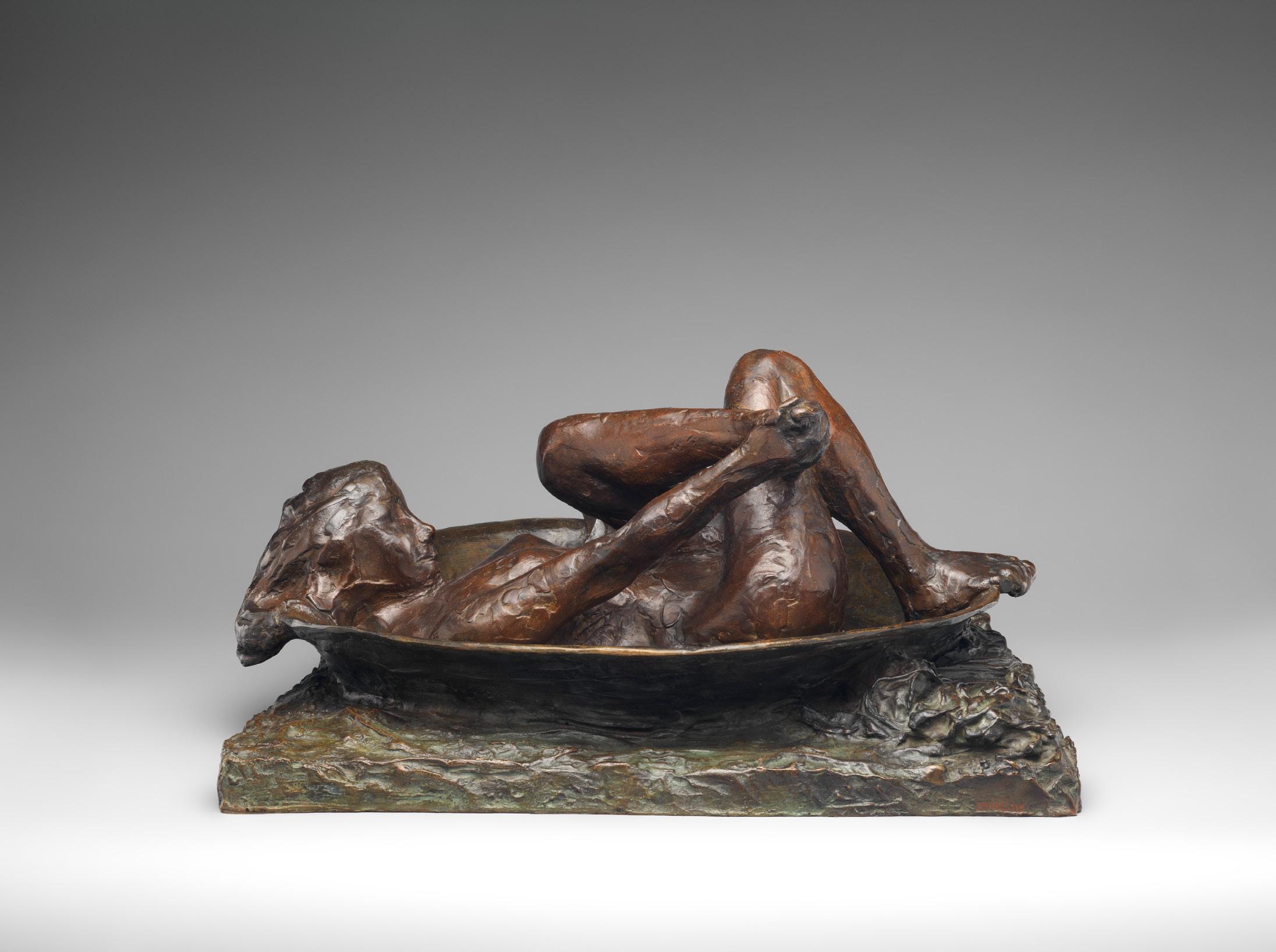
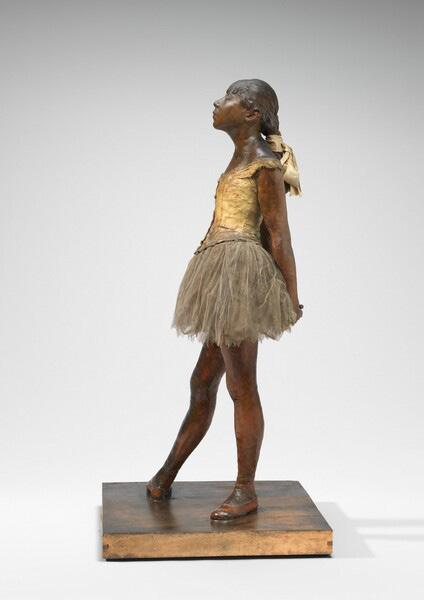
and excitement of a race start. He uses simple slashing white lines through the pastel underdrawing to express the rain in a beautifully minimalist yet effective way. There were also several sculptures on display, horses, dancers and bathers, including the ‘Little Dancer Aged Fourteen’. That work is the only sculpture that Degas ever exhibited in his lifetime. Although he loved to sculpt, he viewed his sculpture as private study and works to assist his drawing and painting. Created in wax or clay, these sculptures on exhibition were cast in bronze after his death. ‘The Tub’, a small work of a woman in her bath, was originally created in red wax, set in an aluminium tin and wet plaster poured in to simulate water. Degas wasn’t afraid to experiment and mix his media.
I spent a good couple of hours in this exhibition and would recommend it to anyone who is in Glasgow in the next few months. The exhibition runs until September 2024 and has a ticket price of £13.50. I would have paid twice that to see this exhibition!
Dancers at the Barre, Degas
Absinthe, Degas (detail)
The Burrell Collection itself is free entry and I wiled another two hours or so exploring the rest of the collection. Treasures from all around the world, one of the most significant collections of Chinese art in the UK as well as objects from antiquity including Roman sculpture and Egyptian pottery. Fabulous stained glass, arms and armour, tapestries, silver, glassware as well as paintings by Manet, Cezanne and more Degas! This truly is a gallery that deserves many repeat visits. And after my Burrell visit? I wandered the grounds of the park and came across a herd of Highland ‘Coos’! Then, footsore and weary, I bravely took a bus (an experience in itself!) into the centre of Glasgow and took in another gallery – The Mackintosh at the Willow Tea Rooms. A small gallery that explores the fascinating history of the Willow Tea Rooms, an Art Nouveau masterpiece designed by Charles Rennie Mackintosh for Miss Cranston. The Tea Rooms are an internationally renowned architectural and interior design treasure in the heart of Glasgow – and of course I couldn’t resist finishing my day with a cup of tea at The Willow.
The afternoon was waning, and office workers and businesspeople were starting to make their way homewards, so I did too. As I wandered through Glasgow shopping and business district towards the train station, I began to look past the street level disasters of Pound shops, roadworks, smoke shops, boarded up windows, beggars, drunks and the like, to realise what a beautiful architectural delight Glasgow really is. I suddenly realised that one day in Glasgow was not enough. I certainly don’t regret my visit to The Burrell, but there is so much more to see in Glasgow that I missed – first impressions can be misleading. Perhaps a return visit is needed soon!
Well, the sun sets late in Glasgow
And the daylight and the city part
And I think of you in Glasgow
‘Cause you’re all that’s safe
You’re all that’s warm in my restless heart*
*’Feather on the Clyde
Written by: Michael David Rosenberg
Album: Passenger; All The Little Lights
The Tub, Degas
Francis Meadow Sutcliffe
words J D Park
Photography became wellrecognized technology in the mid-nineteenth century. Early on it was seen as both a threat and an inferior device by the art community. It wasn’t until well into the twentieth century that museums routinely collected and exhibited photographs as fine art. A very early photographer and fine artist by any measure was Francis Meadow Sutcliffe (1853 – 1941). He is said to have turned photography into an art. He stated that his business was portraits, but his passion was photos.
The son of a Royal Academy trained artist Thomas Sutcliffe, Frank lived much of his life in the fishing village of Whitby, North Yorkshire where James Cook learned his craft. Some members of VAS will be familiar with Sutcliffe, others may have even copied his images as teachers used them as reference material. Some VAS members will also have painted in Whitby. However, for those who are not acquainted with Sutcliffe, his ‘sepia’ images will be a revelation.
Frank Sutcliffe was born ten years after the invention of photography and given a large wooden camera by his father when he was 16
years old. Much of his early photography was done with cumbersome equipment and demanding wet glass plate techniques.
Sutcliffe was an educated aesthete, as well as having an artist father, he had been introduced to John Ruskin. Ruskin had seen his photos and engaged him to photograph his home ‘Brantwood’ on Coniston Waters. As the family
breadwinner he pursued a career in domestic portraiture but exercised his creative energies with meticulously posed portraits of village life.
The public preferred crisp clear photos, however Sutcliffe favoured disturbed moody light and foggy atmospheres. He said, ‘the beauty of a subject depends more on the conditions under which it is seen than the material of which it is composed.” He sought the mornings and late
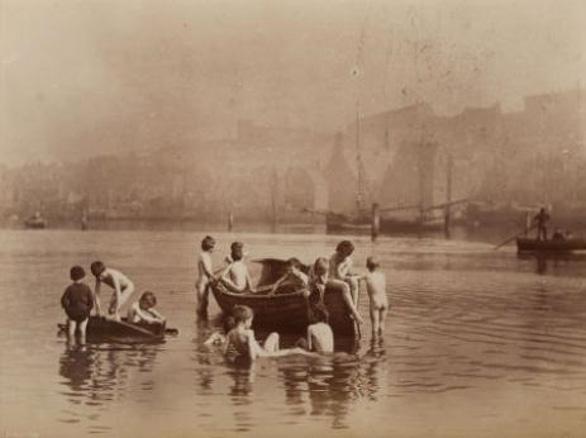
‘Water Rats’ (1886) Francis Meadow Sutcliffe
afternoons to catch long shadows.
Much celebrated among his photos was ‘Water Rats’ (1886) which revealed naked boys playing in a boat. This attracted significant opprobrium from the local clergy. It was subsequently acquired and displayed by the Duke of Wales.
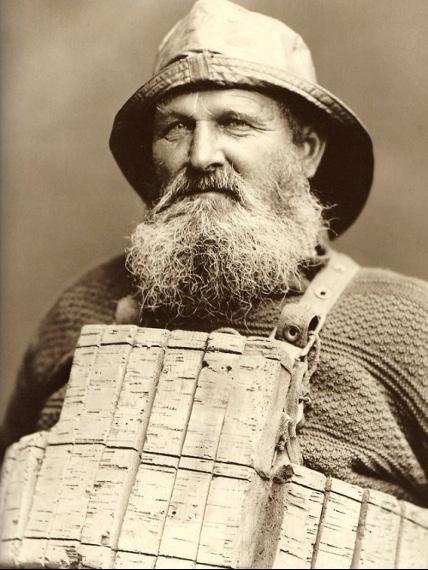
Also famous is the portrait of lifeboat man Henry Freeman, wearing the new life jacket. As a consequence, he was the only survivor of the capsize of a 13crew life boat. An image of heroic magnificence.
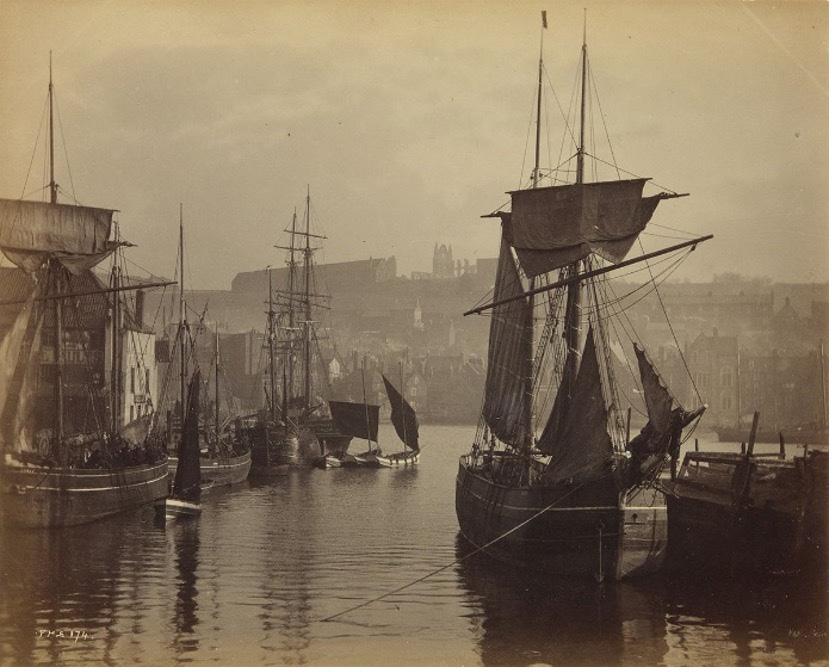
Sutcliffe’s most famous photo of Whitby Harbour is called ’Dockend’. The locally built sloop ‘Alert’ is shown on the right. It was built by the famous Whitby Langborne family of boatbuilders and privateers.
One of the original camera clubs, the Photography Club of Great Britain held its first exhibition in 1888 and chose Sutcliffe’s work as its subject. Sutcliffe also wrote about photography for the Yorkshire Weekly Post for almost 40 years and won many medals at international exhibitions. The great and wealthy appeared at the door of his Whitby studio, such as George De Maurier and the Archbishop of York. Later in the 1890s, Eastman Kodak used his expertise to evaluate new hand-held cameras and roll-film. This was the start of photojournalism. In 1941 at the time of his death he was honoured by the Royal Photographic Society. In 2000, MOMA New York held a major retrospective exhibition of his work.
The following is a link to his images https://www.bing.com/images/search?q=francis+meadow+sutcliffe&form=HDRSC3&first=1
Link to a video https://www.bing.com/videos/riverview/relatedvideo?&q=francis+meadow+sutcliffe+MOMA&&mid=370A8A0DE0F458EE447E370A8A0DE0F458EE447E&&FORM=VRDGAR
’Dock-end’, Francis Meadow Sutcliffe
Portrait of lifeboat man Henry Freeman
AROUND THE GALLERIES
“Gauguin’s World”
29 Jul - 07 Oct 2024
National Gallery of Australia, Canberra
words Bruce Baldey VAS
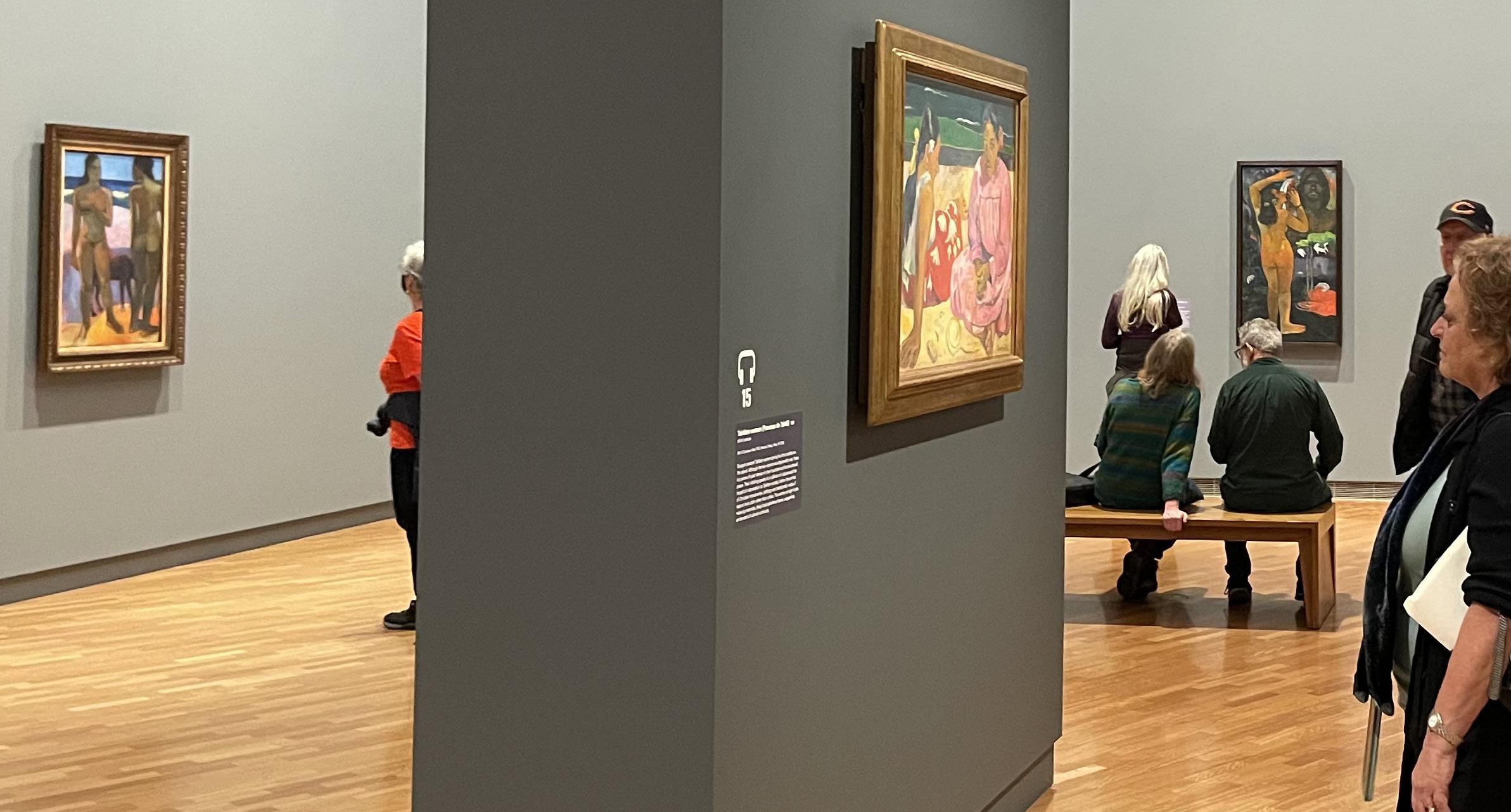
“Gauguin’s World” is the first comprehensive exhibition of the work of Paul Gauguin (1848-1903) to be held in the South Pacific. 120 years ago after an Exhibition in Paris, less than a year after his death, Gauguin achieved the fame he desperately wanted during his lifetime. There are over 120 paintings, prints and sculpture from 65 lenders curated by the former Director of the Louvre and Musee d’Orsay. Gauguin passed through Australia on his first voyage to the Pacific in 1890 stopping briefly in Sydney but staying longer in New Zealand where he was more interested in their indigenous art. There are exceptional loans of priceless work from the Musee d’Orsay and from private collections, remarkable paintings some rarely published or seen in public.
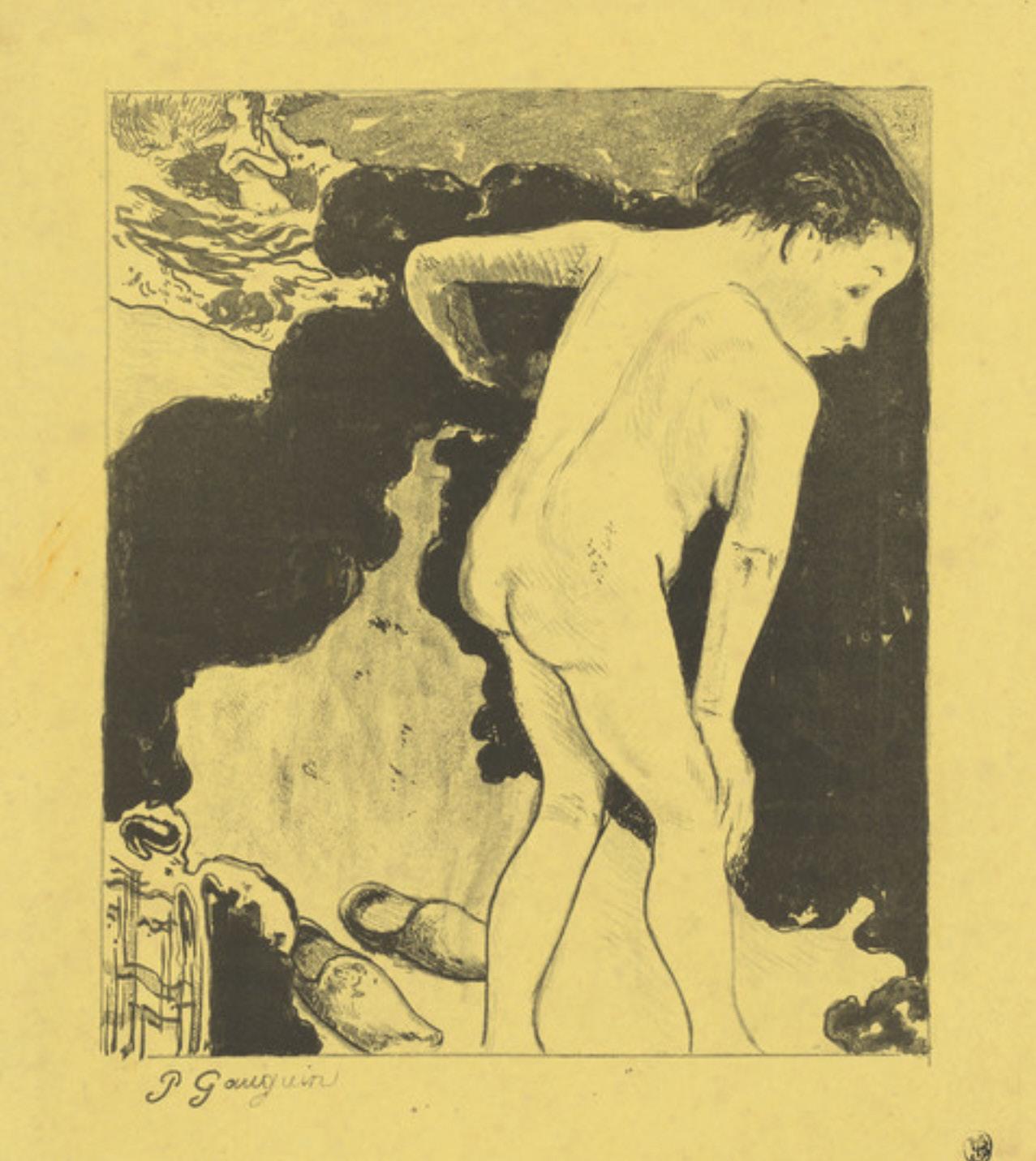
Australasian Collections unfortunately possess little of his work. The NGA has eight prints, all but one from his Polynesian oeuvre. The NGV has one - “Bathers of Brittany”, a print from the Volpini Set which is on full display at this Exhibition. And here is the first of our surprises - Gauguin’s drawing skill, revealed with a variety of subjects and format. Gauguin experiments with unusual compositions. Prints such as “Dramas of the Sea” composed in a fan, and “Joys of Brittany” with a playful extension beyond its borders. This suite
of drawings revisits themes and imagery from paintings made during his peripatetic life.
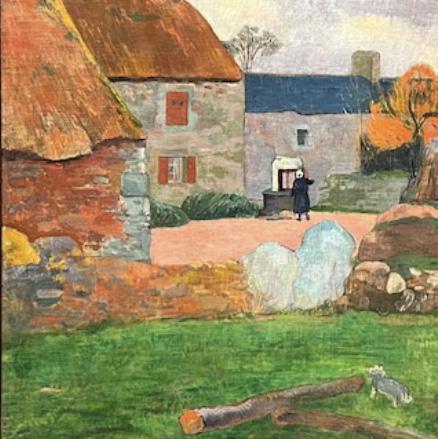
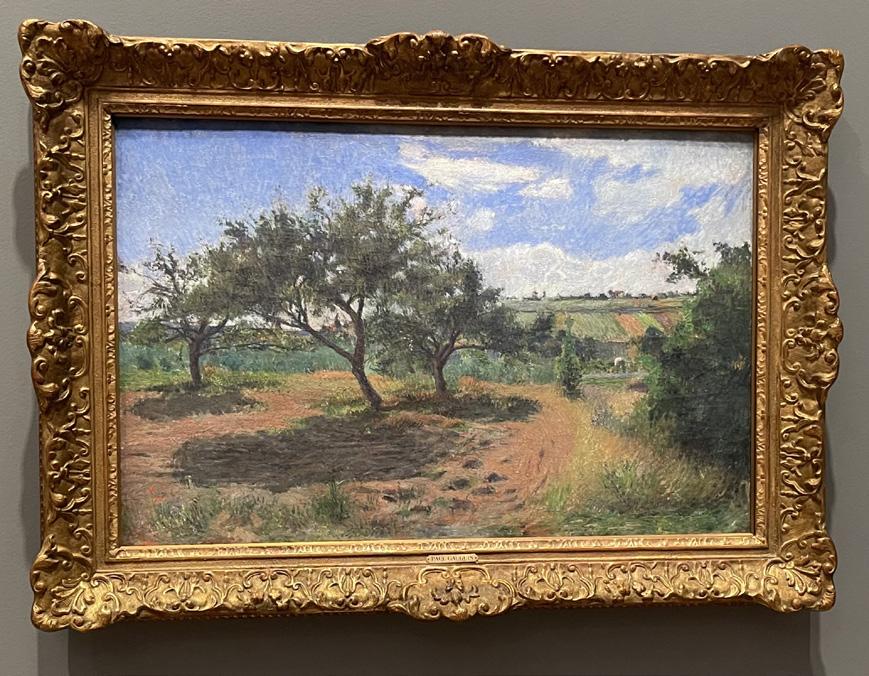
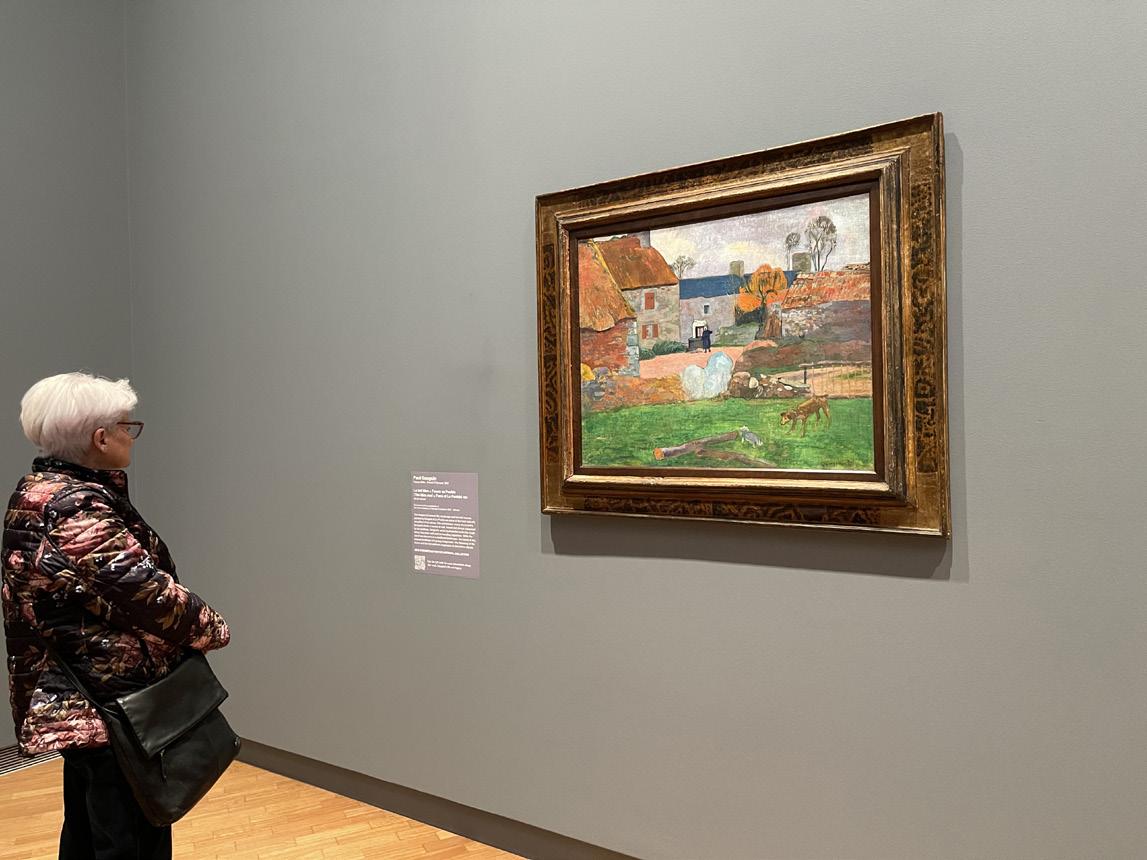
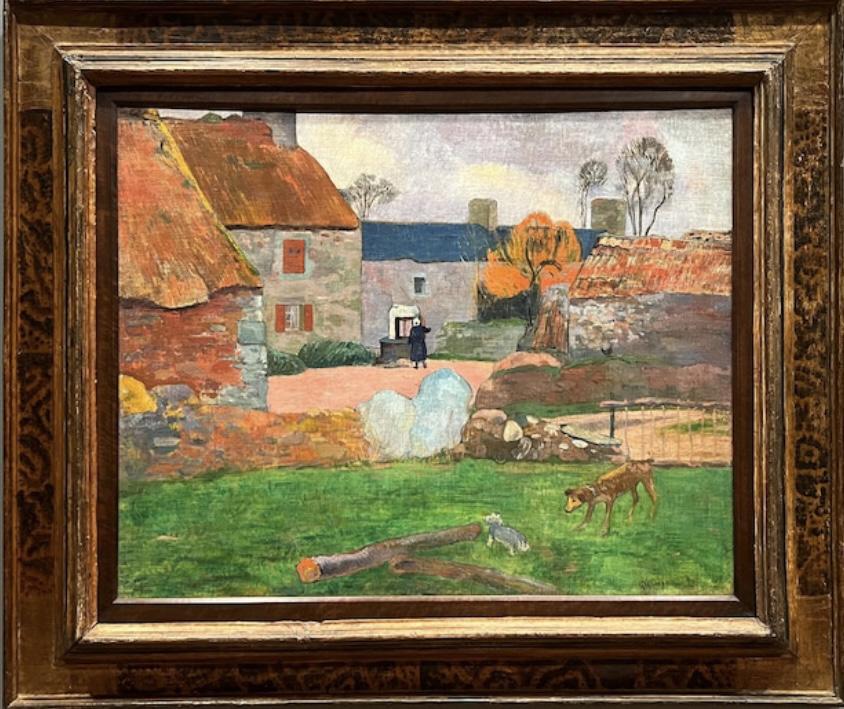
He had no formal training, unless you count the time with his friend and mentor Camille Pissarro (1830-1903) The NGV has acquired “The blue roof” or “La toit bleu” a lesser work from his Impressionist phase purchased for an eye watering $10m. Gauguin exhibited with the Impressionists in the early 1880s so it should be no surprise that the impressionist pieces here display all the colour, light and expressive brushwork typical of Monet and Co.
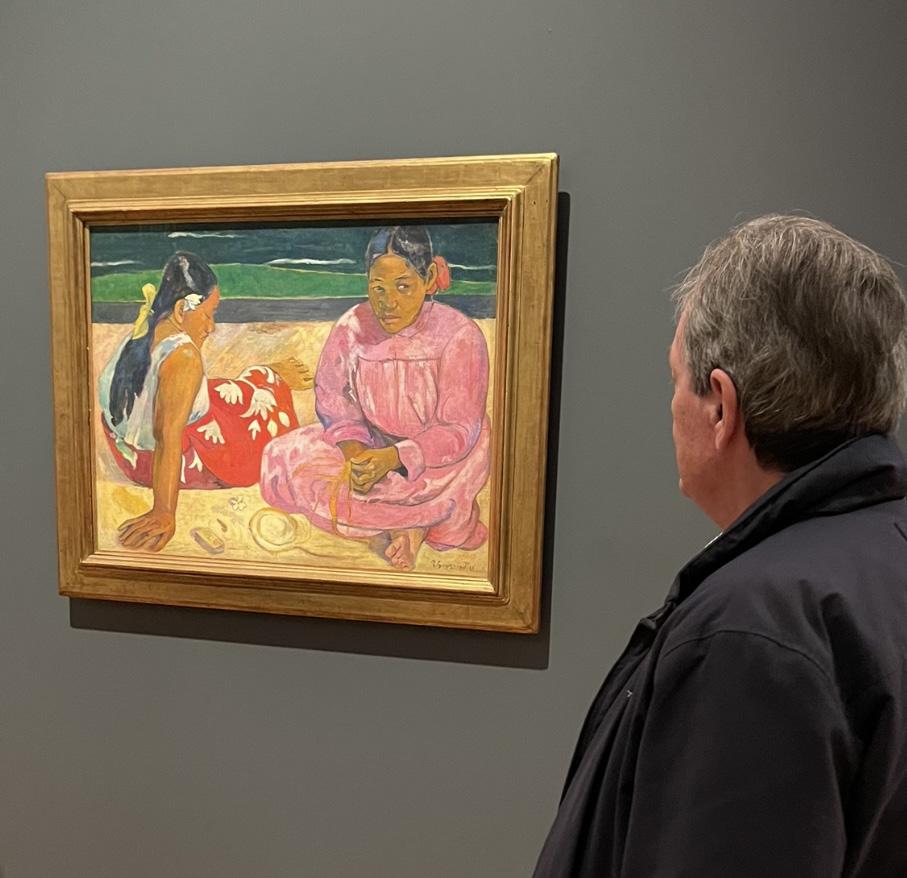
Given the value of his more famous priceless works from Tahiti it is not surprising that they are underrepresented in this exhibition. Tahitian Women is probably the most valuable. It is the second version of an earlier study of Tahitian life featuring his young vahine Teha’amana. His figures are by now monumental and the backgrounds flat clearly demarked and strip like characteristic of the then japonese style favoured
Bathers of Brittany, print, 1889, NGV
Apple Trees at l’Hermitage, 1879, Aarau Art Museum
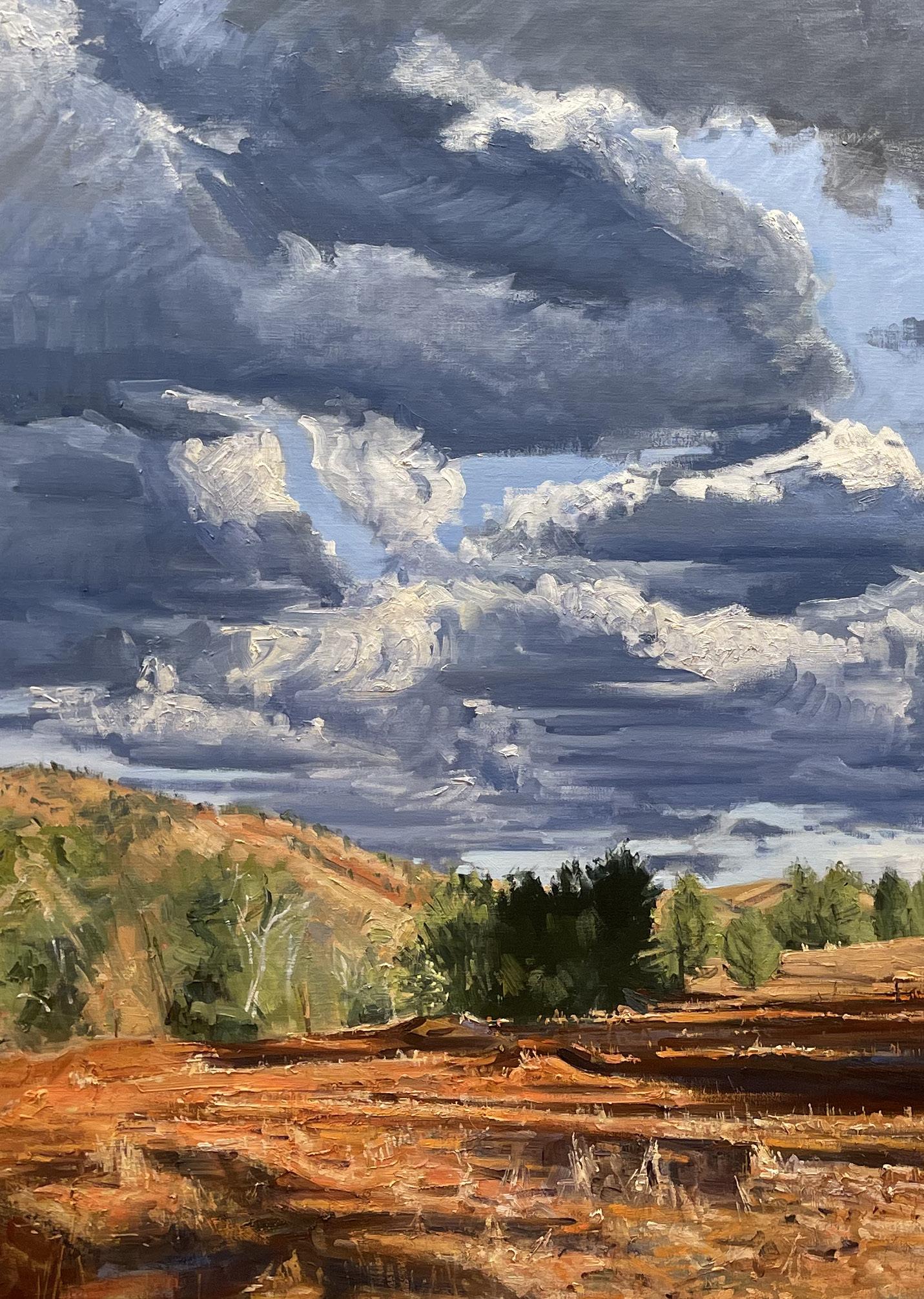
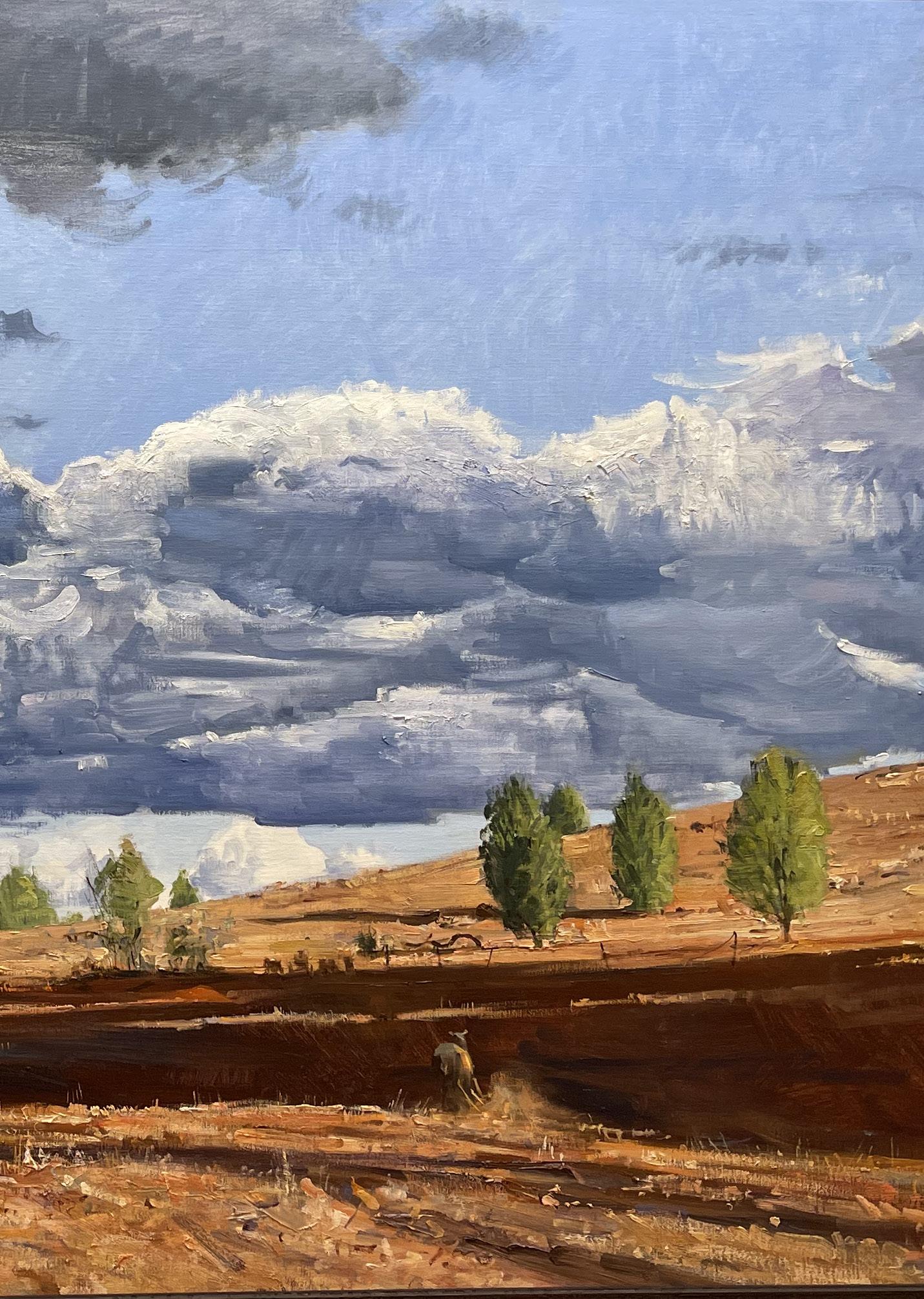
Long Shadows, Flinders Ranges, Ben Winspear VAS
by his European contemporaries.
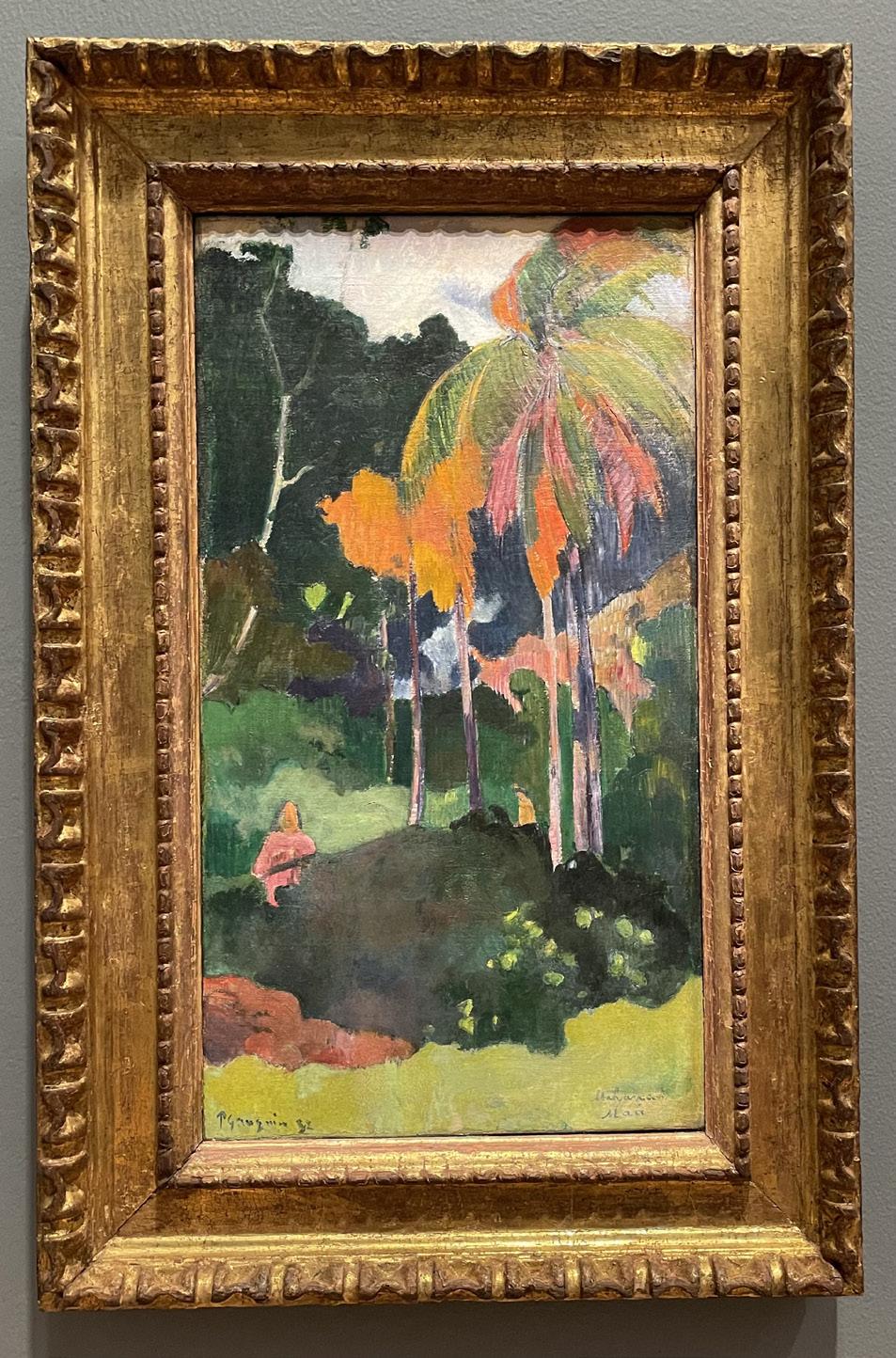
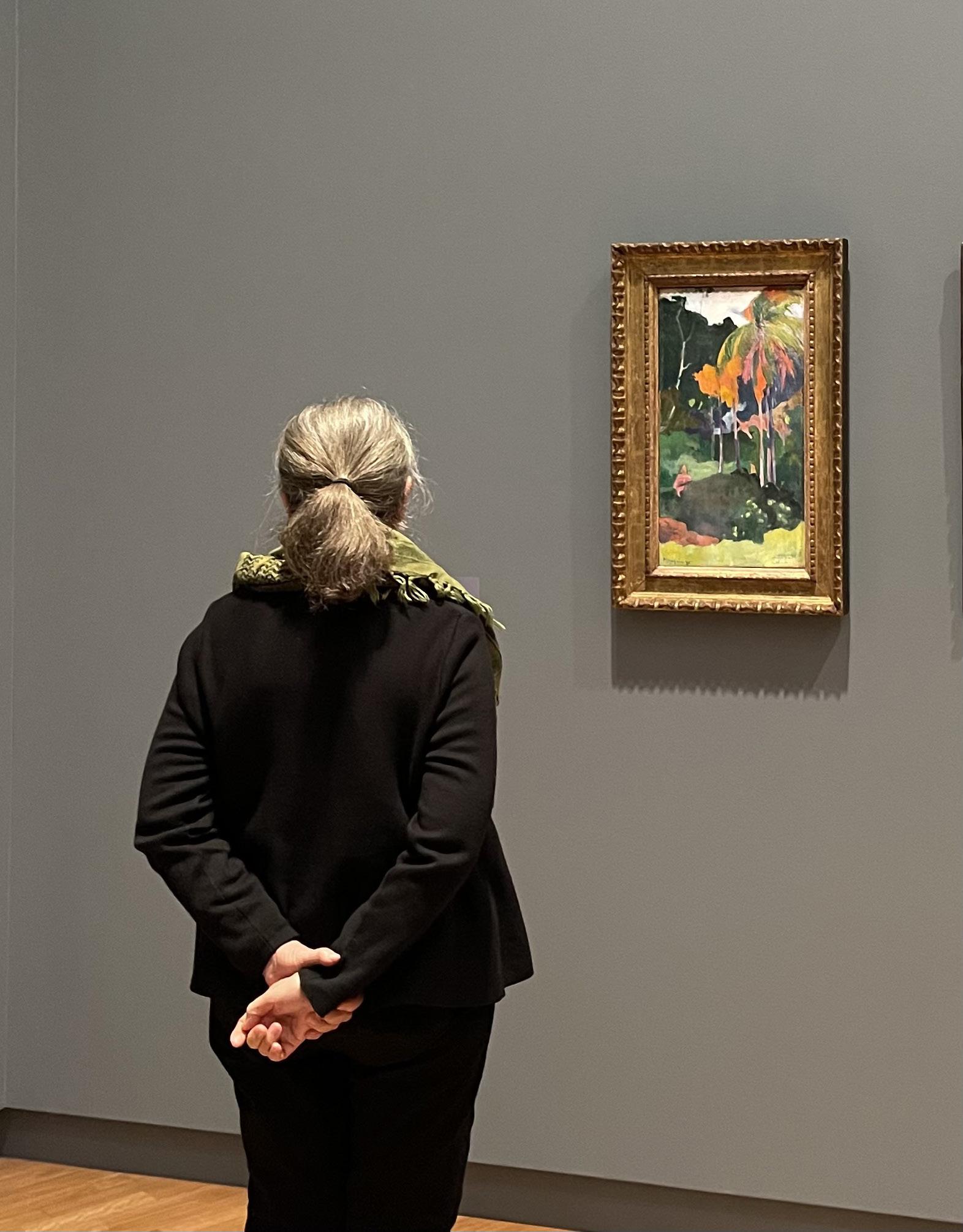
As our VAS President said at the opening of the VAS Winter Exhibition when giving his Curator’s Award, there always seems to be one painting at an Exhibition that you keep returning to. “Mahana ma’a” or “The moment of truth”, on loan from the Cincinnati Art Museum
in the USA, is such a painting. Modest, simplicity itself, small and rarely illustrated in the books or released from its home gallery, it is also modern and prescient abstract.
In the words of the French artist Rodolphe Bresdin (1822-1885), a contemporary of Gauguin:
“Colour is life itself; it abolishes line under its radiance”
Here in this little corner of the Exhibition is Gauguin the PostImpressionist - a triumph of colour in its nineteenth century contest with chiaroscuro.
The Blue Roof, Oil on canvas, NGA
Tahitian Women, 1891, Musee d’Orsay
Mahana ma’a, 55 x 30cm, 1892
Cincinnati Art Museum
Footnote:
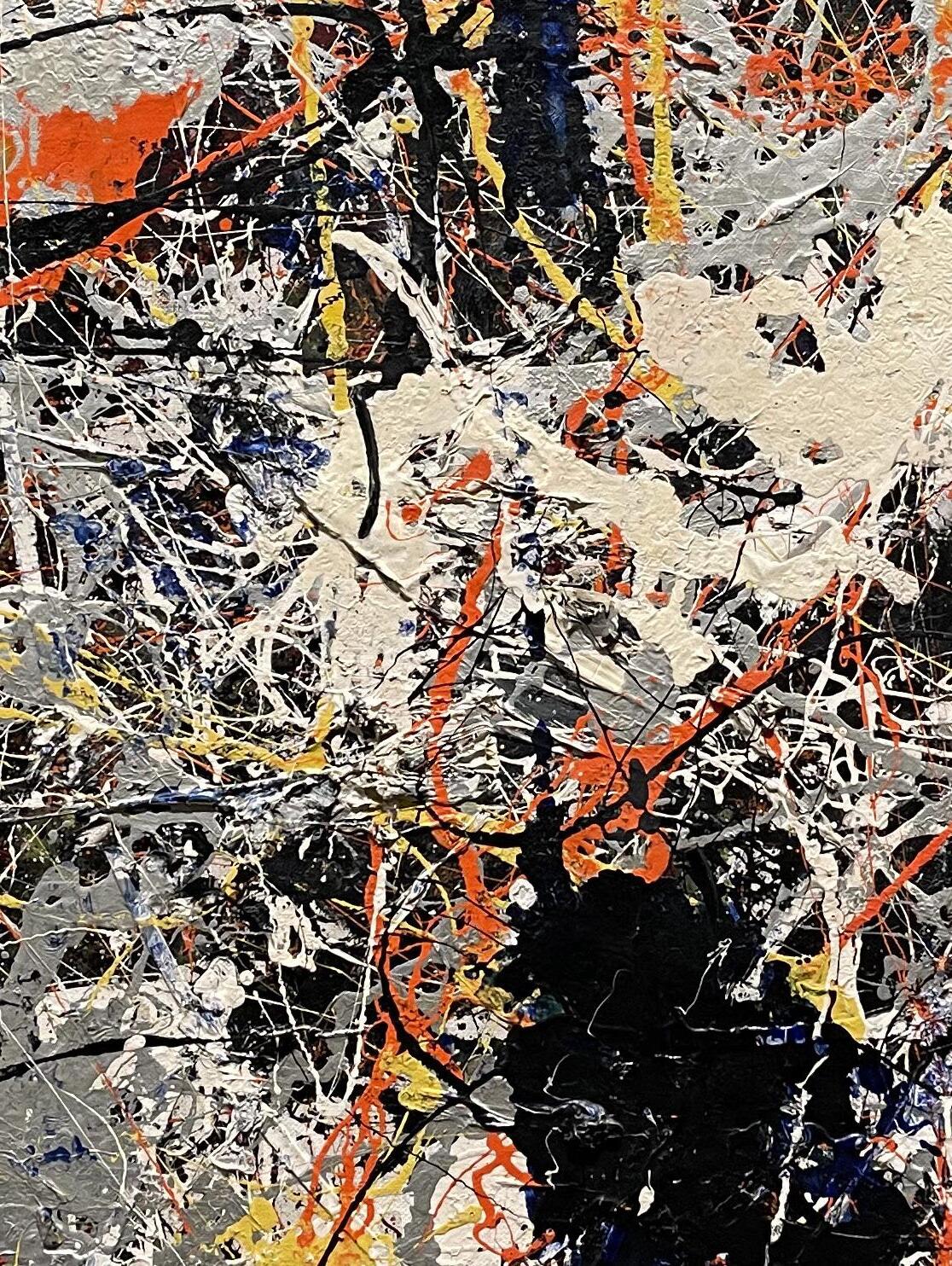
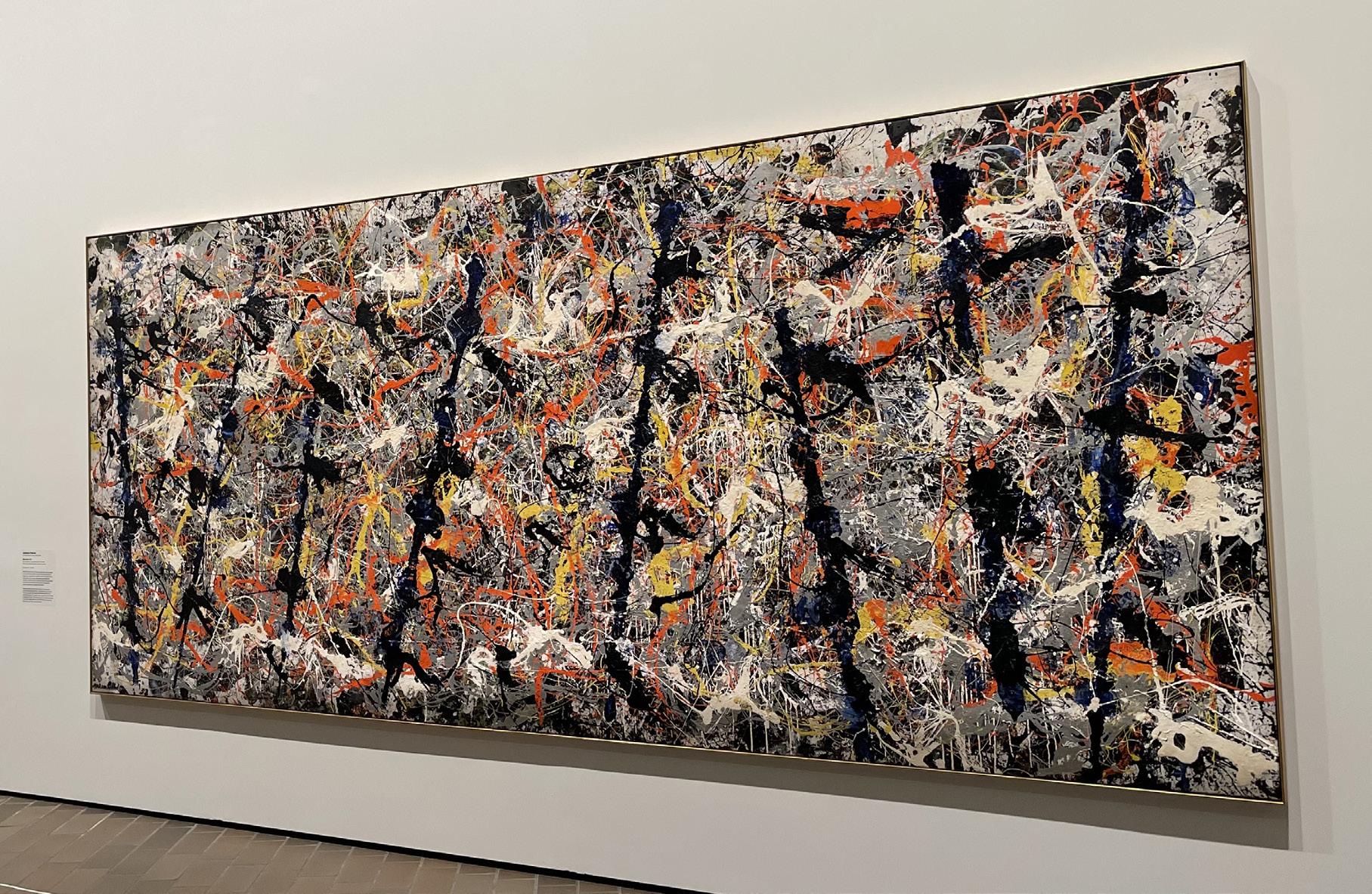
A visit to the NGA would not be complete without paying homage to its most famous resident –“Blue Poles” (originally called “Number 11”) by abstract expressionist Jackson Pollock (19121956). The painting originally sold for US$32,000 in 1957 a year after Pollock’s dramatic death. Purchased for a controversial world record price of US$1,300,000 in 1973 by the incoming Whitlam Labor federal government it is now valued by the NGA at A$500,000,000. Pollock’s drip painting method executed on his garage floor was nothing if not dynamic adding not only paint but also such detritus as cigarette butts, glass shards and matchsticks into the mix all accumulating on supports of variable quality. Partly because of its origins and condition it has been rarely loaned only travelling to the USA (1998) and the UK (2016) where it was the signature work at major Pollock retrospectives. The COVID closures enabled a major conservation effort to restore a sagging and ailing masterpiece to its original glory and I am pleased to report that there on the wall at our NGA it is as raw and as vigorous as when I first saw it in 1973.
Blue Poles with Detail, Enamel and aluminium paint with glass, etc. on canvas, 1952, NGA
Detail of image below
Book Review
words Bruce Baldey VAS
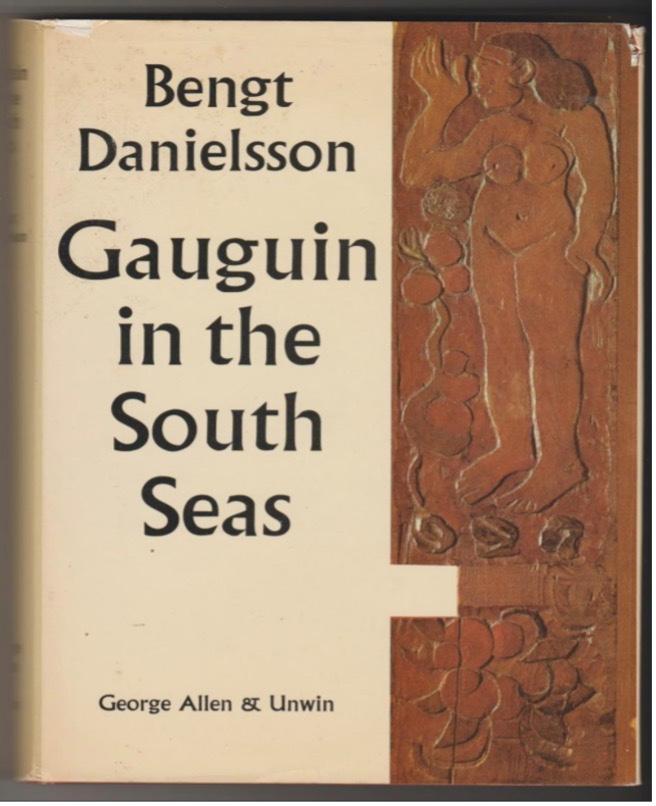
Bengt Danielsson
Gauguin in the South Seas by
George Allen & Unwin London 1965 , Hardback, 310 Pages
Used first edition Hardcovers are available from abebooks.com $21.00
Although written and published 60 years apart these books are complementary companions. Danielsson ( 1921-1997) was a Swedish anthropologist by profession and a crew member of the famous Kon-Tiki raft expedition from South America who subsequently spent 30 years in Polynesia. For the purposes
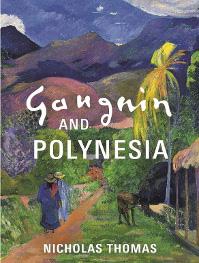
Gauguin in Polynesia by Nicholas
Thomas
Head of Zeus London 2024 , Hardback, 453 Pages Dymocks $79.99, also amazon.com $61.60
of this book he interviewed descendants of Gauguin (1848-1903) and in some cases people who actually knew him. Danielsson wrote many books and scripted many films, becoming one of the world’s foremost students of Polynesia. He and his wife were critics of the French nuclear tests in the Pacific and the general destruction of
Polynesian culture as the result of colonial rule. Nicholas Thomas is also an anthropologist and an archaeologist who first visited Polynesia in 1985. He offers a more contemporary view on the artist. He is also a contributing author to the current Gauguin’s World exhibition catalogue at the NGA.
Danielsson’s version is
replete with anecdotes and social discourse and archival photographs of island society and life and offers the more complete account of this part of Polynesia. He also writes in an easier and more readable style whereas Thomas takes a more bookish academic approach focussing on what he sees as paradoxes in Gauguin’s artwork in the South Pacific.
Gauguin lived a dramatic and iconic life suffering interminable physical and mental hardship in a steely determination to achieve fame and recognition as an artist. One might however reserve more sympathy for his long suffering wife and young family who he effectively abandoned early on in his marriage to pursue a life as artist.
Despite Danielsson’s considerable advantages of time and space Thomas is critical of his methodology asserting that Sweden was not a ‘centre for advanced anthropology’ at the time and despite describing him as “somewhat old-fashioned” Thomas fails to explain exactly how. The only clue we are given is the claim that Danielsson maintained that ancient Tahitian religion and mythology was erased by the European missionaries. The arrival of Christian missionaries in Polynesia after centuries of exploitation by visiting sailors and adventurers profoundly changed life on the islands however, there is plenty of evidence in Danielsson to suggest that compliance with the new introduced religion was rudimentary and deferential at best.
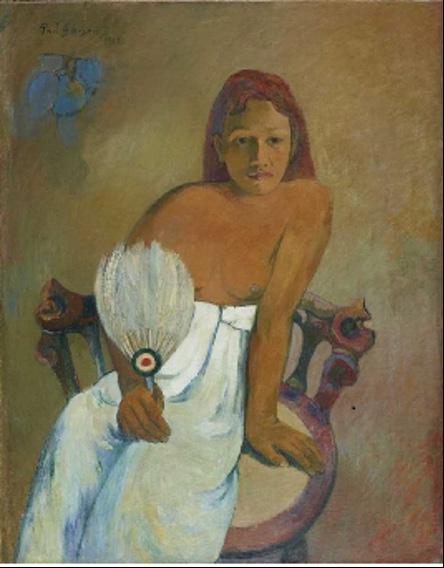
Gauguin was of course aware of the vicarious interest in exotic Polynesia back in France where he shipped his paintings for sale. His otherwise sweet portrait of Tohotaua (The Girl
with a Fan) the young wife of a taua, key figure in the religious, social, and cultural life of ancient Polynesian society is painted in his studio from a photograph. Gauguin’s painting alters the image by adding the feathery fan to her hand and exposing her breasts feeding the sexualized stereotype of young Polynesian woman shaped in the eighteenth century by the accounts of European seafarers such as the Frenchman Louis Bougainville.
Gauguin’s reputation has undergone something of a rehabilitation in recent years. There is now a reconstruction of his final place of residence on the Marquesan island of Hiva Oa which serves as a Gauguin art museum and which is visited regularly by tourists hopping on and off the French cruise liner the Paul Gauguin.
In the end there is only Gauguin’s art and the dangling question - do the lifestyle and misdemeanours of an artist detract from their artistic achievements?
The Girl with a Fan, 1902, Oil, Museum Folkwang, Essen
Sargent and Fashion
words T J Murphy VAS
In June this year I was lucky enough to attend the Tate Britain’s Sargent and Fashion exhibition. This was a collaboration between the Tate and Boston’s Museum of Fine Arts that focused on the portraits of John Singer Sargent and presented them in the context of turn-of-thecentury fashion, notably displaying a number of
original garments alongside the paintings in which they were depicted.
Those familiar with my sartorial choices could be forgiven for assuming that my interest in this exhibition might end at Sargent; whilst this is largely true, if fashion – the thing Sargent’s friend
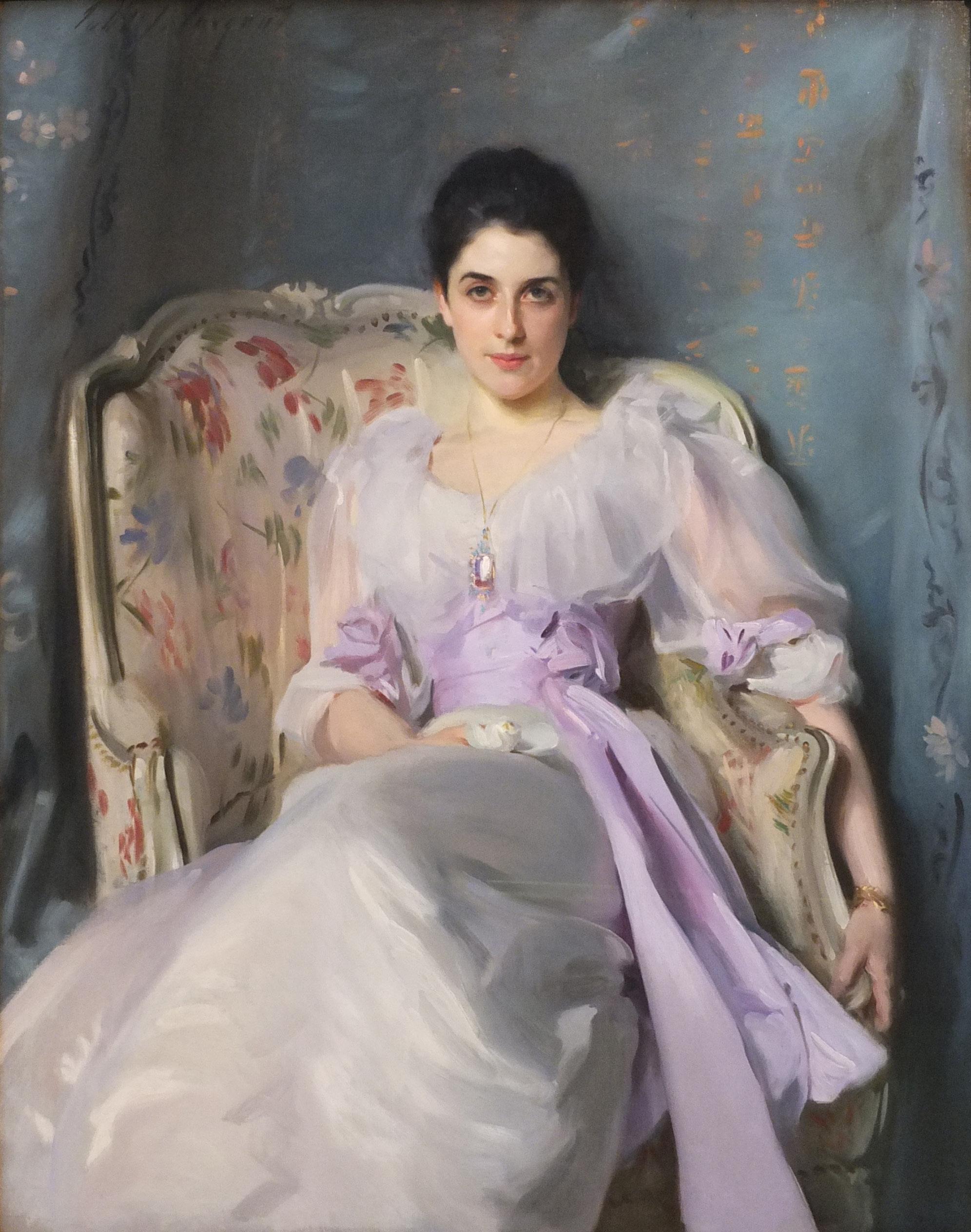
Lady Agnew of Lochnaw, John Singer Sargent
Oscar Wilde described as “a form of ugliness so absolutely unbearable that we have to alter it every six months” – brings a broader audience to Sargent’s masterful work, then send in the gowns!
The exhibition certainly had its detractors: it was conspicuously awarded a one star review by the Guardian’s Johnathan Jones who lamented that Sargent’s paintings were “wretchedly displayed” with glass cases “obstructing sightlines, distracting from the art”. Whilst Jones undoubtedly aimed to be controversial, he had a point – Sargent was primarily a painter of faces, not of fashion. Indeed, Sargent’s most extraordinary skill, amongst many, was his ability to subtly control the eye of the viewer through clever use of contrast and sharpness of edge; more often than not, Sargent seems to direct the viewer to the eyes of the sitter. The fashion, pictorially, is a mere compositional device.
A noteworthy example, amongst Sargent’s most famous pieces, is the Lady Agnew of Lochnaw. It is surely no accident of composition that a pronounced, contrasting line of a single arched eyebrow points directly to the subtly illuminated white of the opposite eye – the result is that we, the viewer, are immediately drawn to the subject’s inquisitorial gaze.
In comparison, Lady Agnew’s famously opulent satin dress is a sparse arrangement of understated highlights and shadows defined by broad brushstrokes. The restrained simplicity is not, however, immediately apparent to the viewer as Sargent has us locking eyes with the subject –he is deliberately drawing our attention away from the dress. It is a testament to Sargent’s skill that he provides only the amount of information needed to convey
the scene without affectation. No more, no less. For all that, what Jones fails to acknowledge in his review is the fact that Lady Agnew’s dress is, perhaps for most people, the most memorable part of Sargent’s painting. The artist and, to an extent, the art critic, may concern themselves with analysing the finer points of the artwork, but the casual observer is more likely to see, simply, a confident woman in an elaborate frock, and due to Sargent’s finesse, everyday viewers are unlikely to notice the deliberate under-painting of the prominent feature.
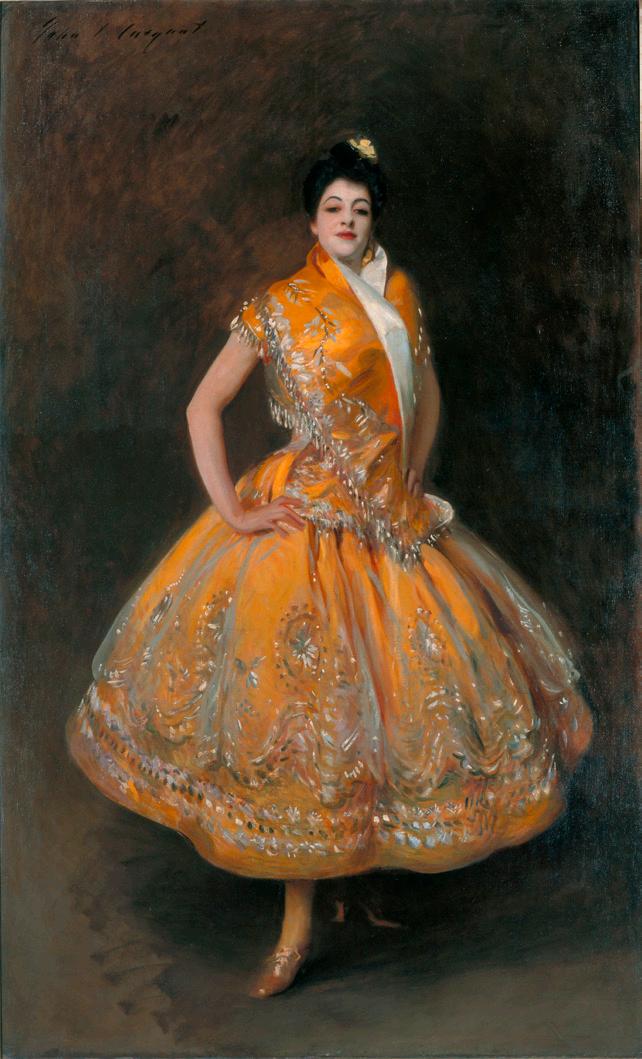
Indeed, I overheard a passionate discussion between two friends concerning the costume worn by the Spanish dancer known as La Carmencita. The lavish yellow satin dress was prominently displayed alongside Sargent’s painting of the subject (including dancer, of course) and thus invited direct comparisons. Whilst the couple marvelled at the detail in Sargent’s treatment, I conversely marvelled at Sargent’s deft restraint; what wasn’t up for debate, however, was that next to Sargent’s painting, the costume appeared to have lost some of its lustre.
It is not an exaggeration to say that the fashion element of this exhibition seemed to create a feverish excitement. Certainly, the usual hordes were there, huddled around the label text and occasionally glancing at the works of art, not to mention the serial photographers who seem more intent on creating a mediocre photographic reproduction of a painting in preference to pondering the thing itself, but the difference here was that many viewers seemed actively engaged in
an analysis of the artworks. The inclusion of fashion undoubtedly broadened the appeal of the show and therefore invited a wider audience to participate. To my mind, anything that focuses a spotlight on the works of Sarget is surely a good thing.
It seems apt, once again, to quote Sargent’s friend and neighbour: “There is only one thing in the world worse than being talked about, and that is not being talked about.”
Citations:
Jones, Jonathan. 2024. “Sargent and Fashion Review – Tragicomic Travesty Is a Frock Horror.” The Guardian, February 20, 2024, sec. Art and design. https://www.theguardian.com/ artanddesign/2024/feb/20/ sargent-and-fashion-review-tatebritain-london.
Wilde, Oscar. 1885. “The Philosophy of Dress.” Internet Archive. April 19, 1885. https://archive.org/details/ ThePhilosophyOfDress.
Wilde, Oscar, and Isobel Murray. 2000. The Picture of Dorian Gray. Oxford: Oxford University Press.
La Carmencita, John Singer Sargent
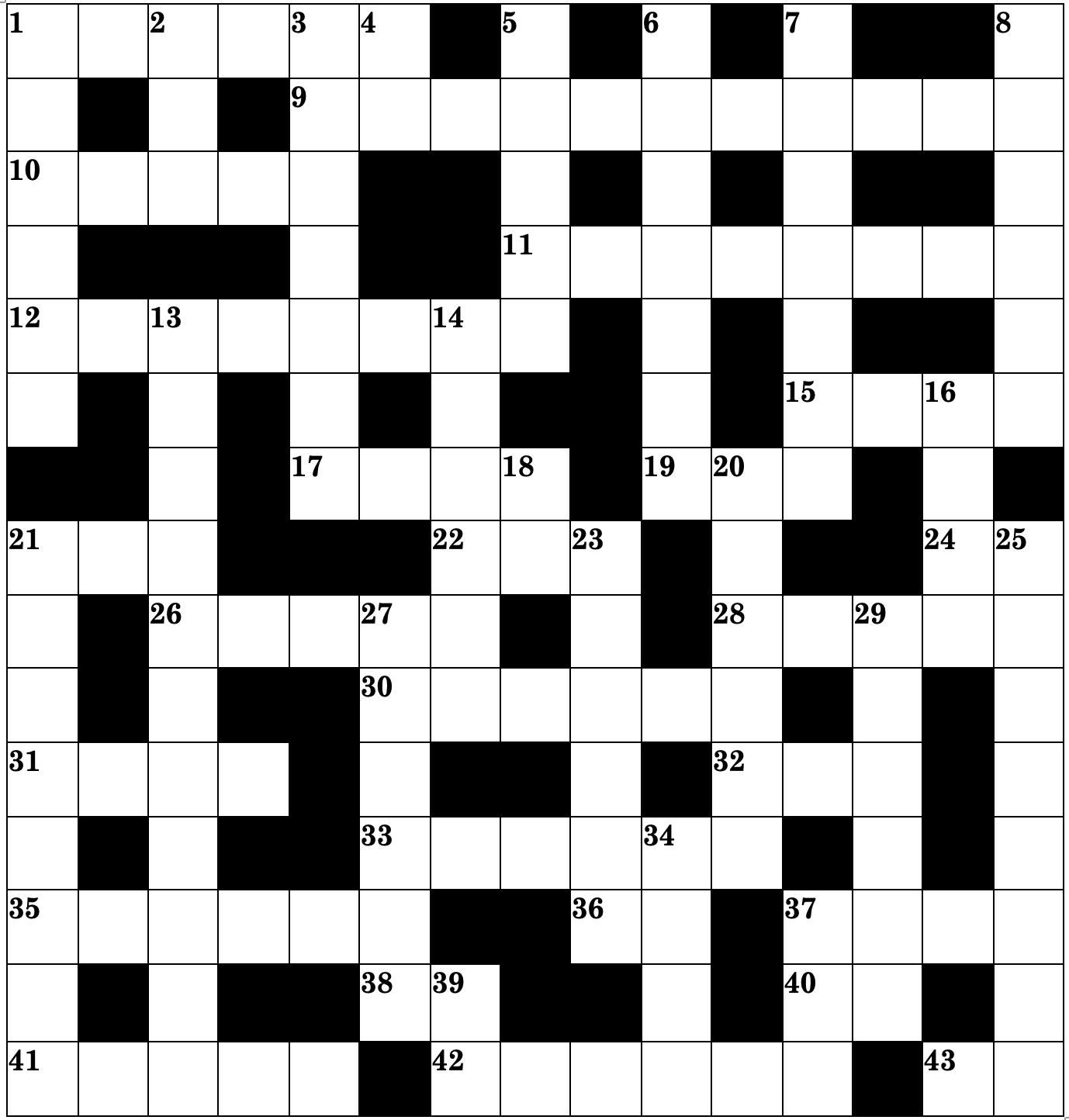
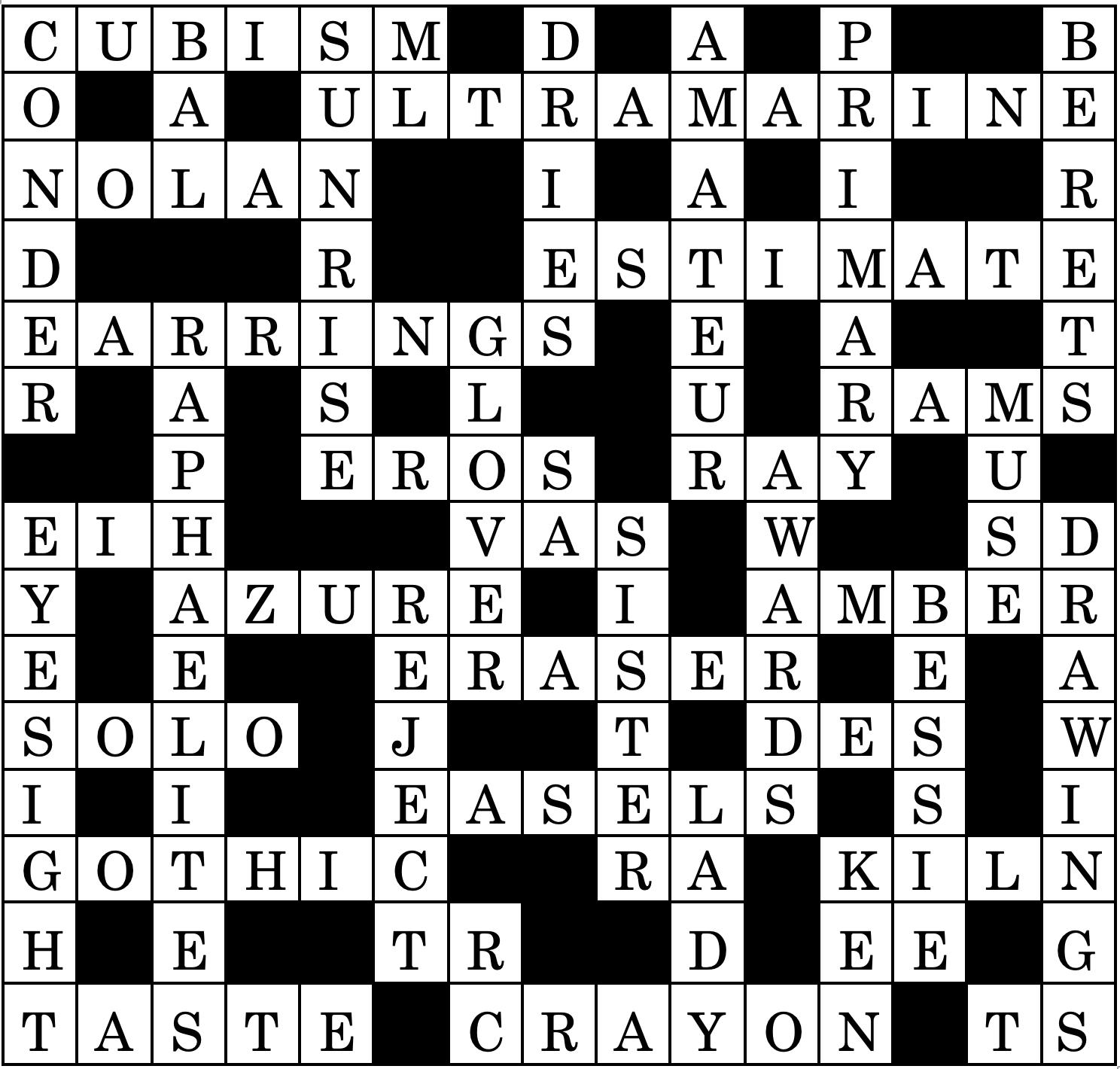
CROSS WORD
Across
1. Picasso and Braque’s geometric art movement of early 1900s (6)
9. Brilliant deep blue colour (11)
10. Famous for Ned Kelly series, Sidney ……, 1917-1992 (5)
11. An auction house’s approximate guide to a painting’s sale price (8)
12. Vermeer painted Girl with a pearl …… (plural) (8)
15. Tom Roberts’ masterpiece, Shearing the ….. (4)
17. God of love, often depicted in earlier times (4)
19. VAS member, impressionist ….. Hewitt (3)
21. Edward Irvine Halliday, 1902-1984, British artist (init) (3)
22. Victorian Artist’s Society (init) (3)
24. Stuart Devlin, 1931-2018, artist and metalworker (init) (2)
26. Colour of sky on a clear day (5)
28. Yellow-orange colour, more associated with traffic lights (5)
30. Used to rub out in pencil sketches (6)
31. One-person exhibition (4)
32. VAS exhibitor, …. Parkin (3)
33. Tripods for supporting paintings (6)
35. Style of art and architecture in Middle Ages, also means romance and horror (6)
43. Tim Storrier, controversial winner of 2012 Archibald (init) (2)
Down
1. Leading member of Heidelberg School, Charles ….. (6)
2. In the old days the VAS often held a .…. Masque (3)
3. Clarice Beckett often painted at …… and sunset (7)
4. Michael Leunig, cartoonist (init) (2)
5. An oil painting can take some months before it …… (5)
6. Not a professional painter (7)
7. Red, yellow and blue are …… colours (7)
8. Soft, flat caps favoured by artists (6)
13. Members of this 1800s art movement were known as Pre….. (11)
14. Colonial painter of Tasmania, John ……., 1767-1849 (6)
16. An artist’s inspiration, usually female (4)
18. Landscape painter Hans Heysen lived in this state (2)
20. Prizes (6)
21. Late in life Monet lost much of his ……. (8)
23. Mary Perceval was Arthur Boyd’s ……. , ie female sibling(6)
25. Sketches, illustrations (8)
27. Exhibition curators …… many entries, ie not accept (6)
29. SA-born artist who lived in France, ……. Davidson, 1879-1965 (6)
34. JW Williamson painted The ….. of Shallot (4)
37. Artist with a design business, … Done (3)
39. Ray Crooke, 1922-2015, Archibald winner 2012 (init) (2)
1
A one-dimensional mark which has a length but no width is otherwise known as?
2
When white is added to a colour in order to lighten it the resultant mix is referred to as a what of that colour?
3
4
5
6
Which African nation’s flag has seven colours?
What is the shape of farfalle pasta?
“Cool” colours fall within which three sections of the colour wheel?
Named in honour of the French sculptor Rodin is an impact crater on which planet in our solar system?
7
8
Which famous Viennese artist painted The Kiss in 1908?
Which Post Impressionist artist is the subject of a major exhibition currently at the NGA Canberra?
QUIZ
9
What is the phenomenon of an object seen in perspective receding towards a vanishing point but appearing shorter than it is in reality?
10 The Statue of Liberty in New York was a gift from which country?
11 The Art Nouveau style is associated with which decades at the turn of the twentieth century?
12 Who won First Prize in the 2024 VAS Winter Exhibition?
13 Who was Jackson Pollock’s main patron?
14
Where is the latest Guggenheim Museum being built?
15 Who coined the word “PostImpressionism” for a French Art Movement?
16 In which country did Futurism originate?
17
The Heidi Museum of Modern Art is located in which Melbourne suburb?
18 The Archibald Prize is judged by the trustees of which Australian Gallery?
19
The winning entry in the 2024 Archibald Prize was a portrait of which well known Australian writer?
20 The Gallery of Modern Art (QAGOMA) is in which Queensland city?
21
Name the painting from the current Gauguin exhibition at the NGA which the Gallery will acquire for $10m?
Answers on Page 32
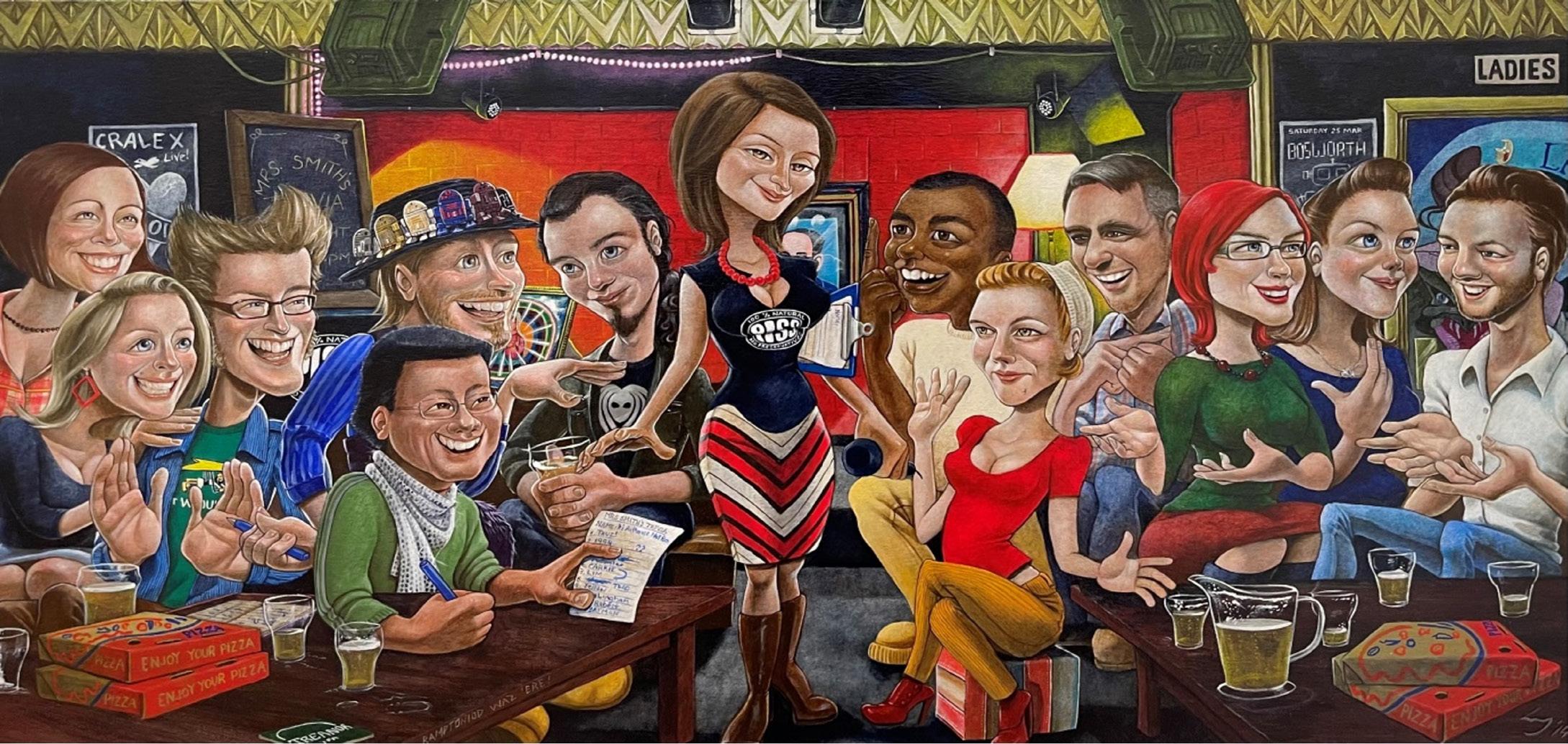
Mrs Smith’s Trivia & the GBH Last Supper, Lucy Fekete
“…MOSCOW! MOSCOW! MOSCOW..”
words Anne Scott Pendlebury (Hon) VAS
“To go away to Moscow – to sell the house, drop everything here and go to Moscow!…”
These are the poignant words of longing spoken by twenty year old Irena Prozorov, the youngest daughter of the late Sergei Prozorov, Russian Military man. Irena was feeling stifled and suffocated by the parochial life so close to the Army barracks. She desperately wanted to escape the close watchful eyes of the community, the boring work in the local post office and
the doleful, dull young man who was seeking her attention and whose feelings she could never return.
Vibrant young Irena spent days dreaming of returning to Moscowthe great city in which she grew up- the city offering an exciting existence, where she could enjoy a life of sophisticated elegant balls and parties and where she would meet many charming young suitors and eventually find love.
She might be any 20 year old today dreaming of a ‘Moscow’– where the grass is always greener and where all dreams will come true and
ambitions will be fulfilled. (But of course you need to get a bit older before discovering that satisfaction and contentment can probably be found closer to home and not one thousand miles away and Irena simply had to find that out for herself.)
However…
Irena is fictitious – a character. A girl in a made-up story. A play in fact written in 1900.
Her words of longing about going ‘to Moscow’ may reveal for many theatre lovers that she was the youngest sister in Anton Chekhov’s beautiful play “ THREE SISTERS”.
This is a dream role for many stage trained young performers and she was my dream role when I was twentythe same age as the young heroine.
I played ‘Irena’ in a wonderful production in Carlton Melbourne.
The Muse Theatre in-theRound in Grattan Street was a small, intimate semi -professional venue near the University of Melbourne.
It was run by the charismatic Alan Money, trained art teacher from Prahran Technical College, actor, director, theatre manager and mentor.
We rehearsed this play in the old Carlton terrace for many months – an unheard of luxury in Australian theatre, before opening to a small audience of fifty people – a capacity house.
More than performing the roles, I believe we actually lived the roles.
But that’s how it is with
Chekhov.
As an actor you just live and breathe his characters – you just cannot help it.
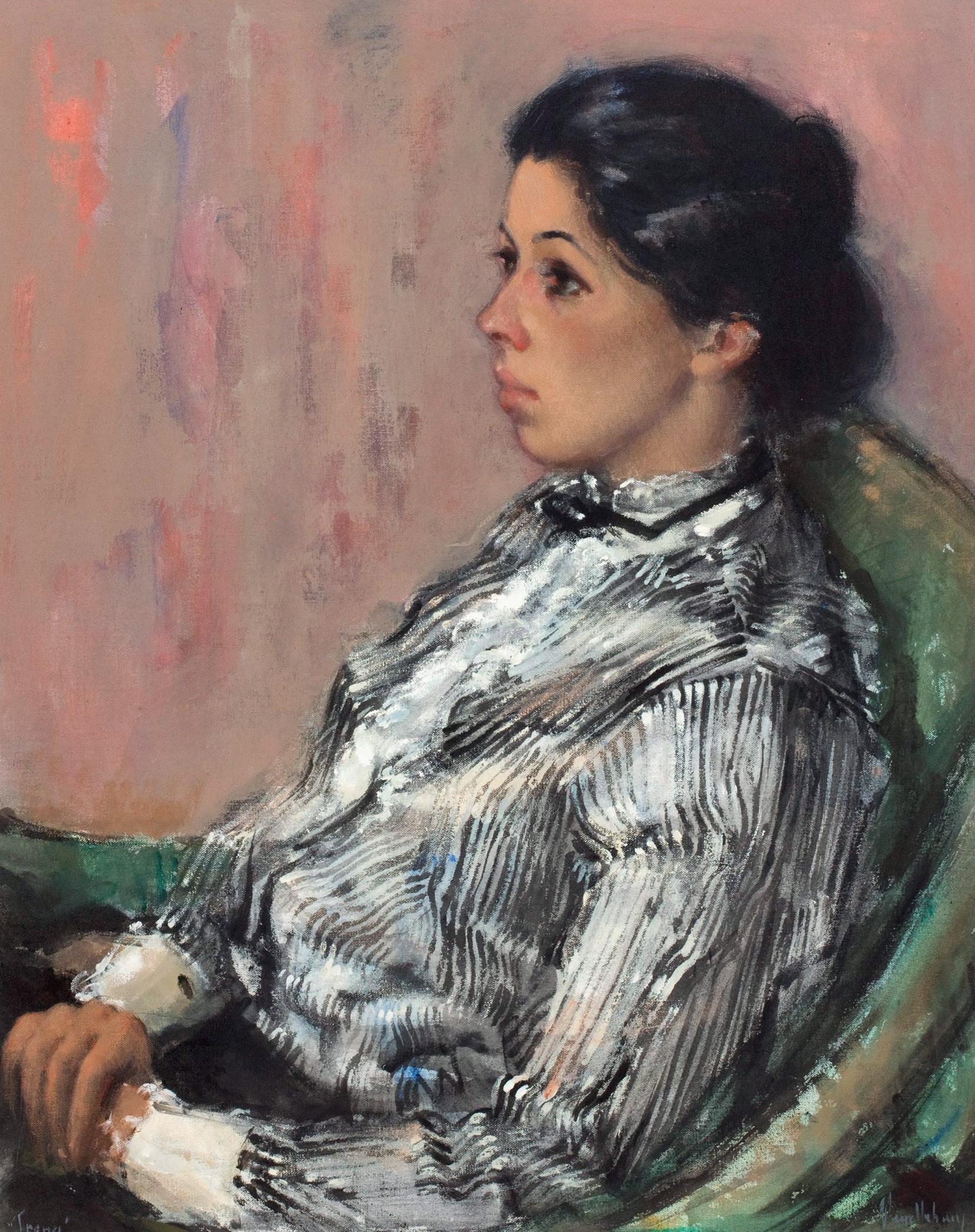
Anyway, during the rehearsal period, my late father, artist Laurie Scott Pendlebury painted me in costume. As can be seen it was painted in oils, a strong and well executed work but delicate and tender at the same time.
He depicted me exactly as I appeared on stage - the long hair piled up in a loose sort of Edwardian knot along with the striped blouse. Perhaps the artist flattered me a little but he certainly captured the romantic young ‘Irena’ as well as the serious and contemplative expression of his actress daughter.
It reminds me quite a lot of a Rupert Bunny or E. Philips Fox portrait.
The painting was purchased by the Gallery of New South Wales, and I am really touched that Kari our VAS Manager has taken such an interest in this work- seeking permission for us to use it, and thereby making it possible to share it with readers in this edition of our VAS Magazine. Looking at it again after so many years, brings back really warm memories of a very fulfilling career and an extraordinarily happy family life.
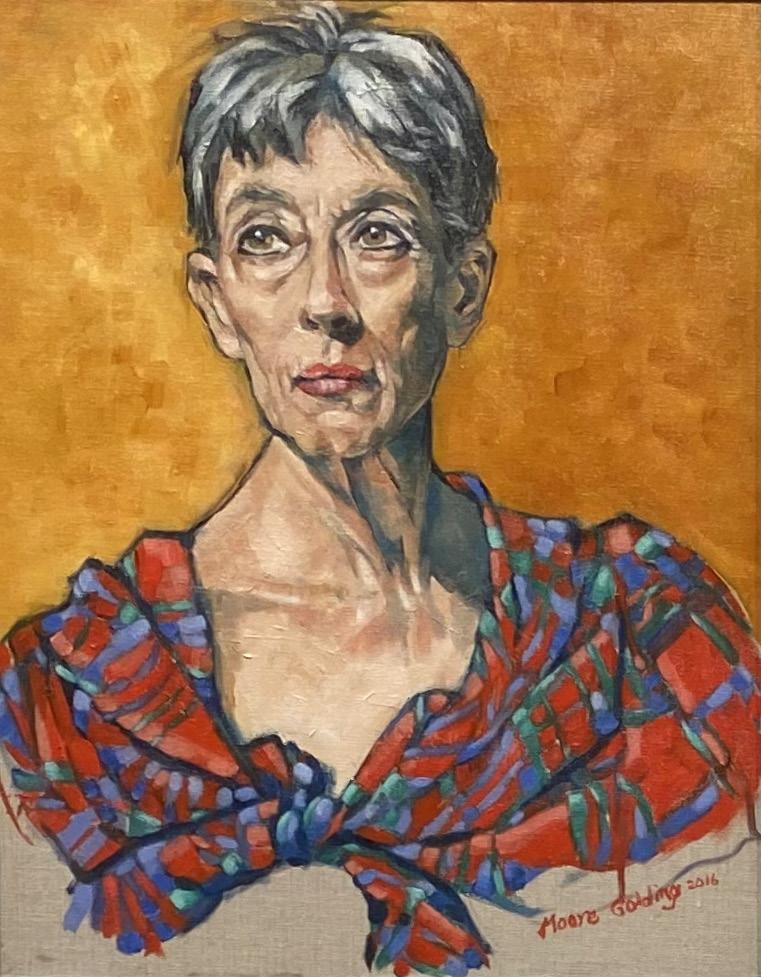
Portrait of Anne, Liz Moore Golding
September Quote
Degas was a shrewd collector of modern art purchasing works by Cezanne and Gauguin long before they became famous and collectable. He turned traditional sculpture forms and techniques on their head when he exhibited Petite Danseuse de quatorze ans (Little dancer of fourteen years) at the
‘ Art is not what you see, but what you make others see ’
Edward
Degas (1834 - 1917)
1881 Impressionist Exhibition. French art critic Joris-Karl Huysmans (1848-1907) declared that Degas had ‘ immediately made sculpture completely individual, completely modern… at once refined and barbarous in her machine-made costume and her coloured flesh which palpitates, furrowed by the working of the muscles,….
the statuette is the only real attempt at sculpture I know of, and because of such profound originality…I have strong doubts that it will obtain even the slightest success’1
Reference; 1. From “Keeping and Eye Open” Julian Barnes Jonathan Cape London 2020
Petite Danseuse, Degas, 1880, NGA Washington
Answers
1. A line
2. Tint
3. South Africa
4. Bow Tie
5. Blue-Green-Violet”
6. Mercury
7. Gustav Klimt
8. Gauguin
9. Foreshortening
10. France
11. 1890s and 1910s
12. Gwendoline Krumins VAS
13. Peggy Guggenheim
14. Abu Dhabi (Expected completion 2025)
15. Roger Fry
16. Italy
17. Bulleen ( 7 Templestowe Road )
18. Art Gallery of NSW
19. Tim Winton
20. Brisbane (Southbank)
21. Le toit bleu (The blue roof)
Le toit bleu, Paul Gauguin, 1890
Upcoming Exhibitions
11 Oct 2024 – 21 Oct 2024
25 Oct 2024 – 5 Nov 2024
The Hylton Mackley AM (Hon) FVAS Artist of
8 Nov 2024 – 25 Nov 2024
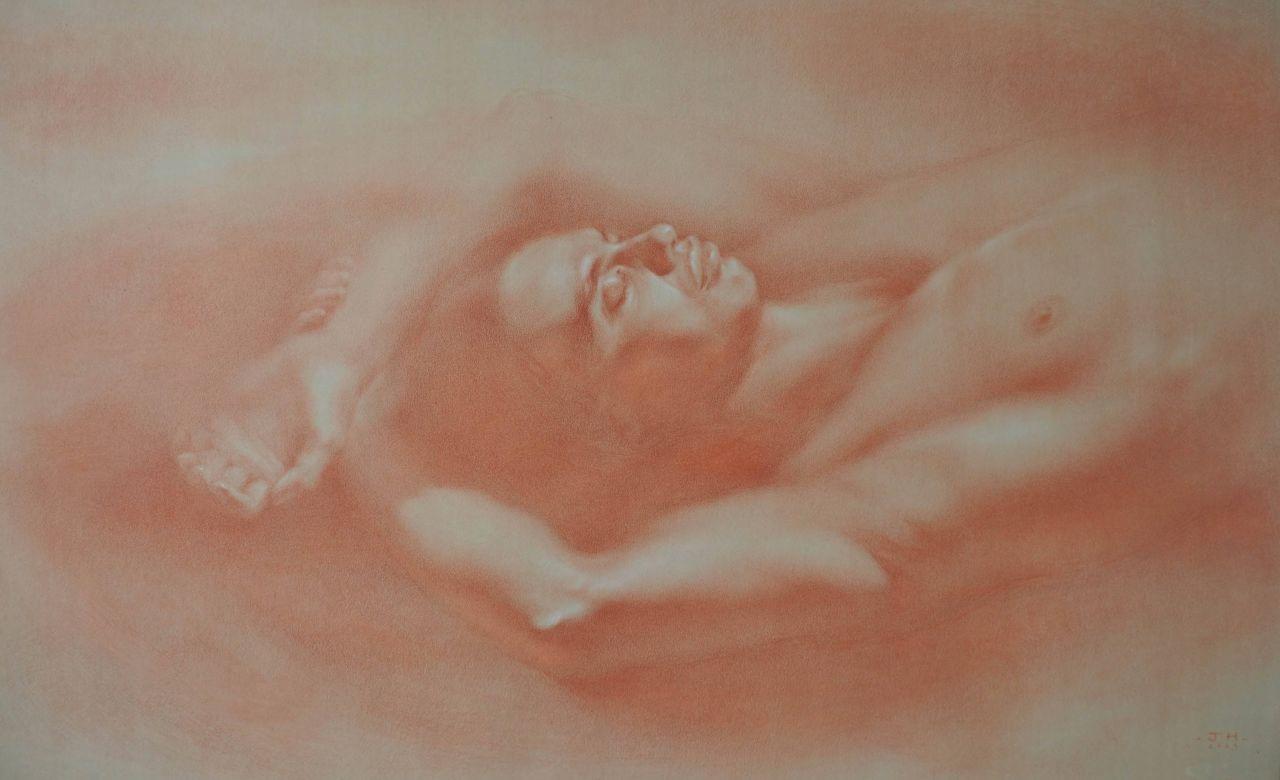
Mare Nubium, Jennifer Huang
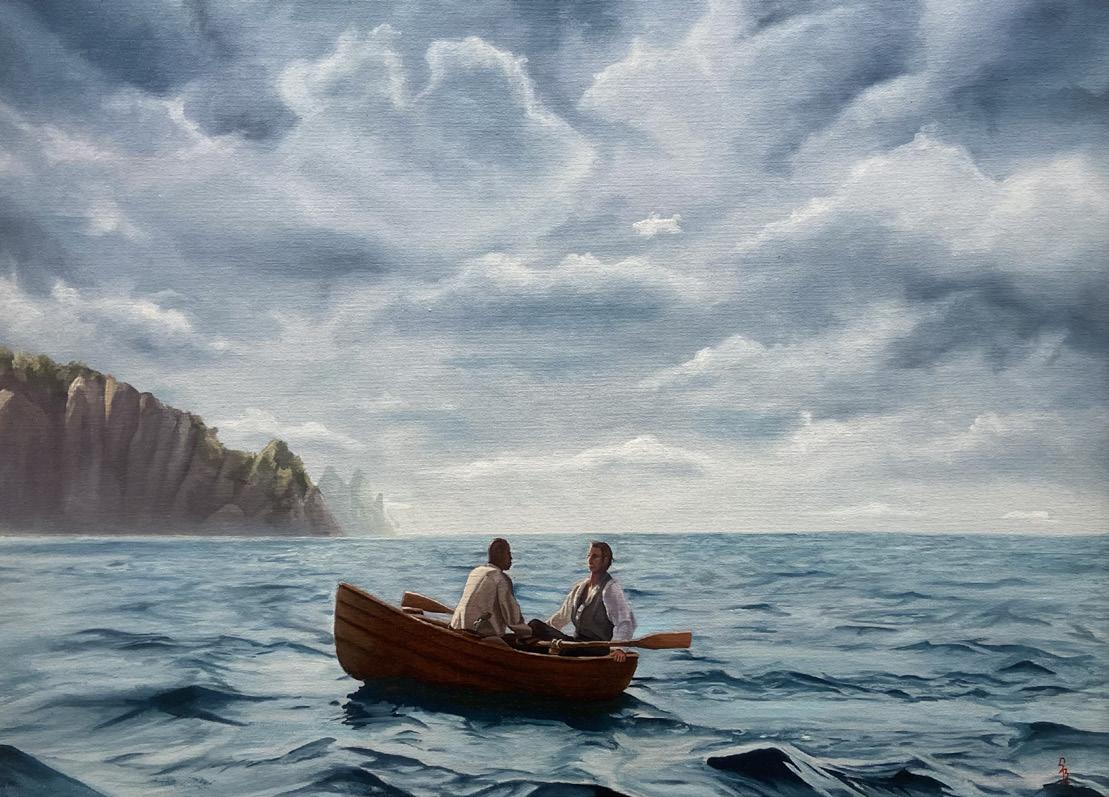
Out to Sea, Sam Bruere
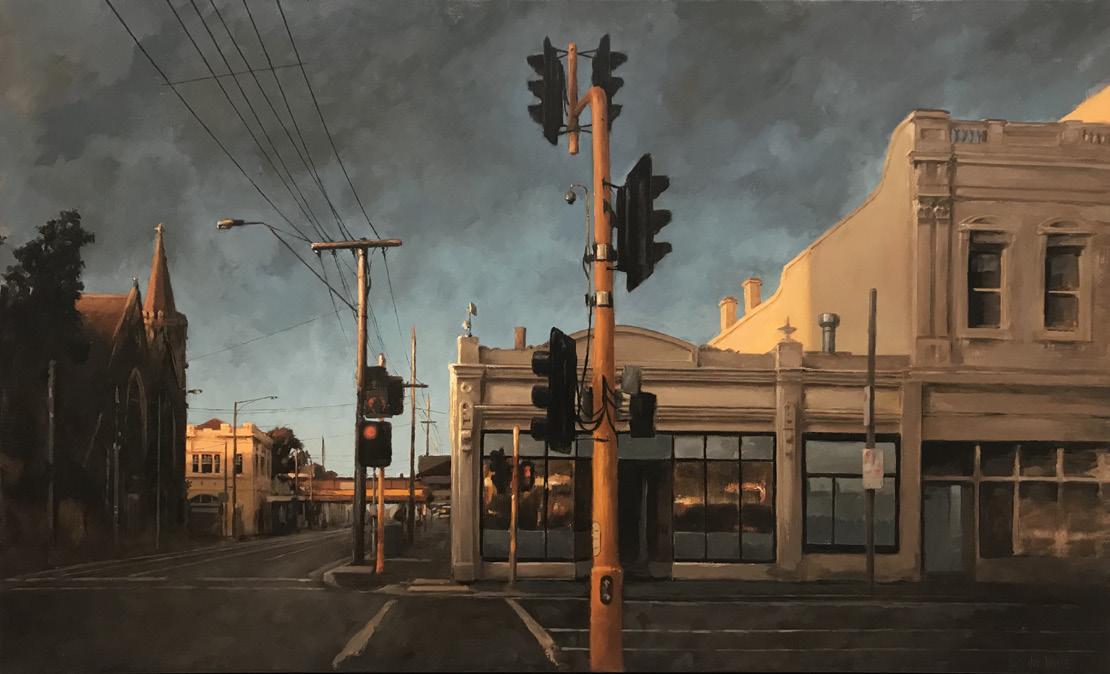
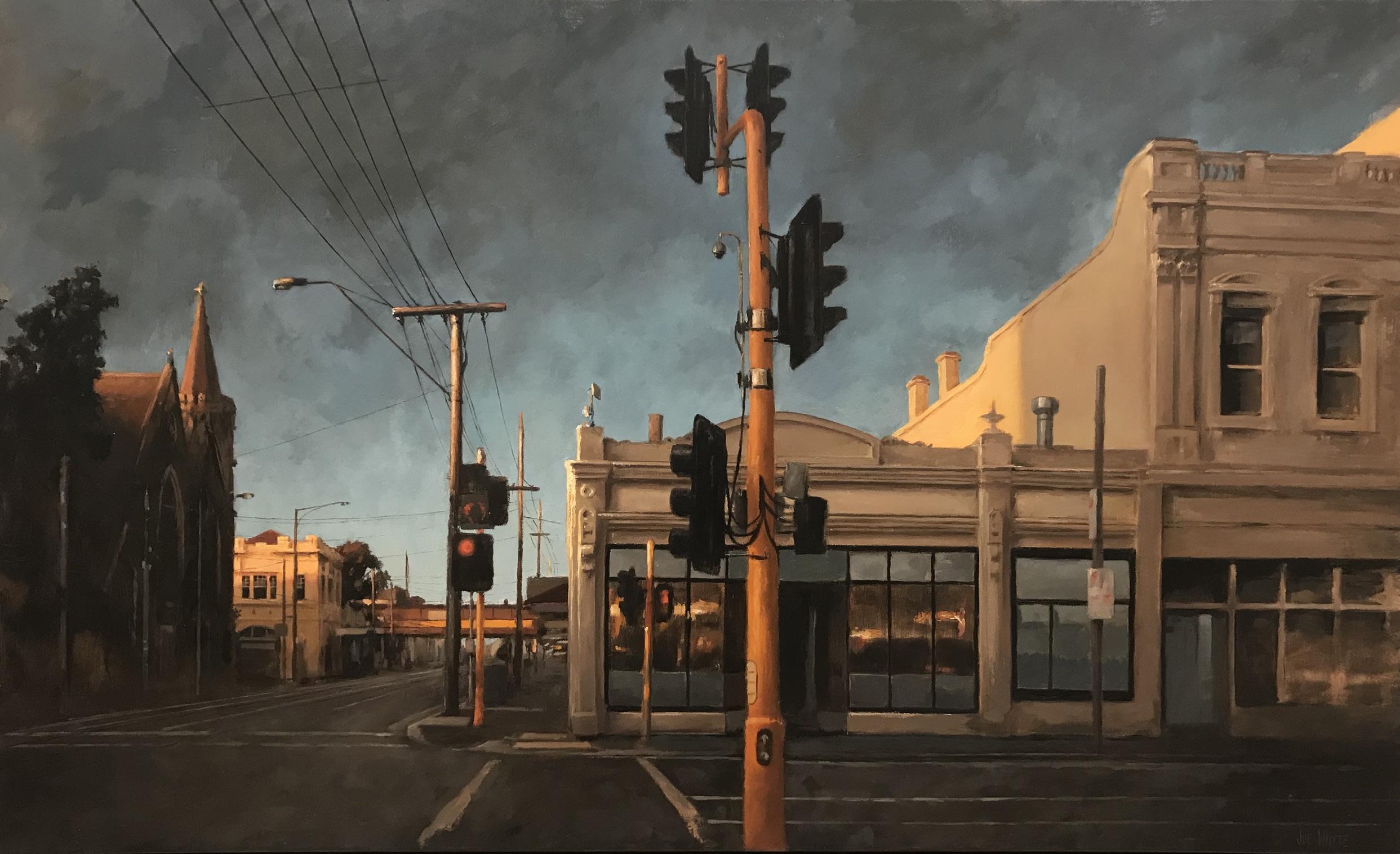
Through the Clouds, Joe Whyte
8-25 NOV 2024
Join us for Opening Night, 7pm, Saturday 9 November Black tie optional, but encouraged
Through the Clouds, Joe Whyte, VAS Artist of the Year 2023
2024 Artists
Sarah Ackland
Nathalie Anne
Mark Bagally FVAS
Natasha Ber
Susannah Bond
Julian Bruere VAS FVAS
Sam Bruere VAS
Ted Dansey VAS FVAS
Rachel Dettman Smith VAS
Lucy Fekete
Melissa Fraser VAS
Adam Frith VAS
Genevieve Gadd-Carolan
Liz Gridley
Mary Hyde VAS
Don James VAS FVAS
Adrian Johnson VAS
Gwendoline Krumins VAS
Creagh Manning
Anne Melloy VAS
Liz Moore Golding VAS
Susan Morris
T.J. Murphy VAS
Des Parkin VAS
It Hao Pheh
Ron Reynolds VAS
D’arcy Rouillard
Clive Sinclair VAS FVAS
Gregory R. Smith VAS FVAS
Ulrich Stalph VAS
Zoja Trofimuik
Maxine Wain
Linda Weil
Ben Winspear VAS
Through the Clouds, Joe Whyte (cropped)
OUR SUPPORTERS
Eileen Mackley AM VAS FVAS & Hylton Mackley AM (HON) FVAS
The late Gordon Moffatt AM Noel Waite AO & The Waite Family