

2
Dr. Samson bids his fond farewell as medical editor.
10 News from SVS
Dr. Gregorio Sicard received the SVS Lifetime Achievement Award at VAM 2018.
2
Dr. Samson bids his fond farewell as medical editor.
10 News from SVS
Dr. Gregorio Sicard received the SVS Lifetime Achievement Award at VAM 2018.
BY MALACHI SHEAHAN III, MD DEPUTY MEDICAL EDITOR, VASCULAR SPECIALIST
On June 22, 2018, Amy Reed, MD, the president of the Association of Program Directors in Vascular Surgery, submitted a proposal for the creation of a new Residency Review Committee for Vascular Surgery.
The proposal came with the overwhelming support of vascular surgery program directors and a written endorsement from R. Clement Darling III, MD, then president of the Society for Vascular Surgery.

4
Dealing with liability with nurses, physician assistants.
BY MARK S. LESNEY MDEDGE NEWS
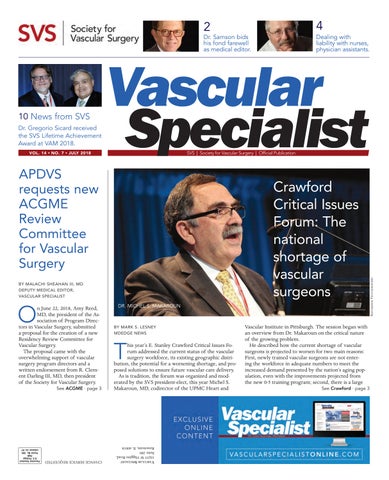
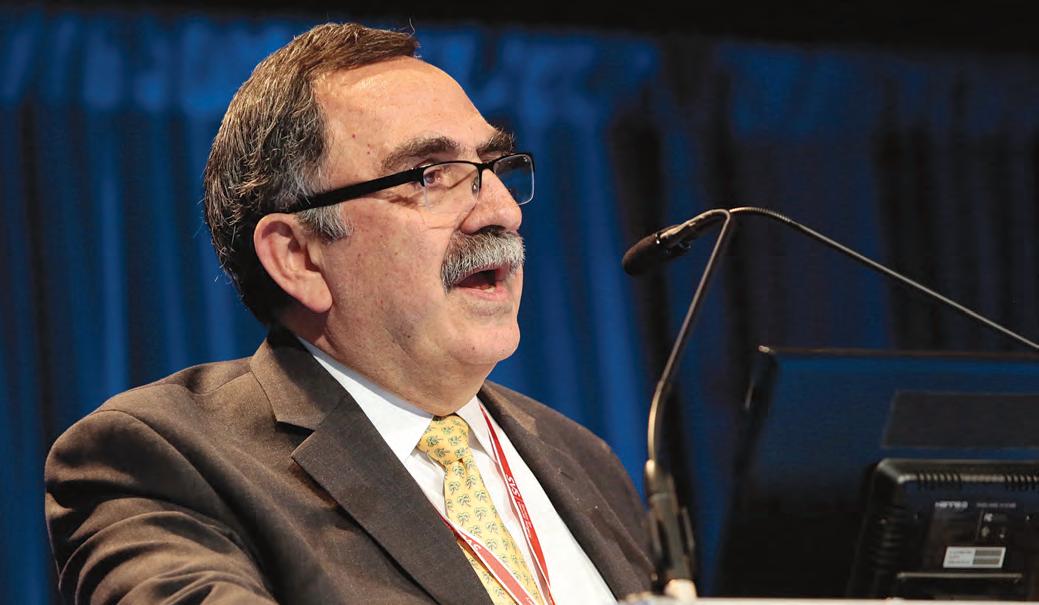
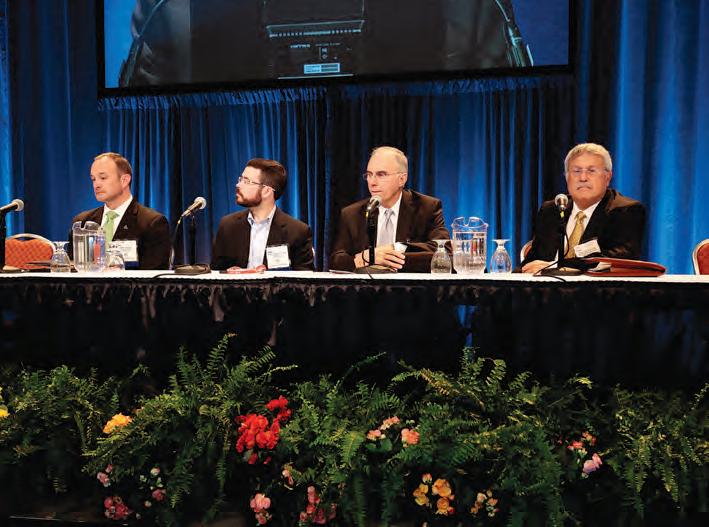
This year’s E. Stanley Crawford Critical Issues Forum addressed the current status of the vascular surgery workforce, its existing geographic distribution, the potential for a worsening shortage, and proposed solutions to ensure future vascular care delivery.
As is tradition, the forum was organized and moderated by the SVS president-elect, this year Michel S. Makaroun, MD, codirector of the UPMC Heart and
He described how the current shortage of vascular surgeons is projected to worsen for two main reasons: First, newly trained vascular surgeons are not entering the workforce in adequate numbers to meet the increased demand presented by the nation’s aging population, even with the improvements projected from the new 0-5 training program; second, there is a large

BY RUSSELL H. SAMSON, MD MEDICAL EDITOR, VASCULAR SPECIALIST
This marks my last editorial as medical editor of Vascular Specialist. It has been more than a privilege to have been offered this position. After all, how lucky am I to be provided with an opportunity to rant about things that annoy me or laugh in print at some of the absurdities of our professional life.
Before I put down my pen, or should I more correctly say close my word processor, I would like to add an epithet that I have yet to coin publicly. I am suggesting that we lay to rest the term “Endoleak” and replace it with “Endofill.”
At the outset, I must commend doctors White, Yu, and May for recognizing and publicizing this important potential complication of aortic endografts (White GH, Yu W, May J., J Endovasc Surg. 1996.3:124-5). However, the term “Endoleak”that they used to describe the continuation of free-flowing blood within the aneurysm sac has created confusion amongst nonvascular surgeons and the lay public. Often such misunderstanding has resulted in deleterious consequences. I’m sure many vascular surgeons have been summoned to the emergency room after an emergency physician incorrectly interpreted a radiologist’s report of an Endoleak as a life-threatening rupture. Others may have had to explain to a referring physician that an Endoleak does not imply the vascular surgeon had performed an inadequate procedure. Further, patients have absolutely no concept of the meaning of this term and are often frightened when they learn they have an Endoleak. So prior to consenting them for an endograft, I always bring out a plastic model of an aneurysm with an endograft
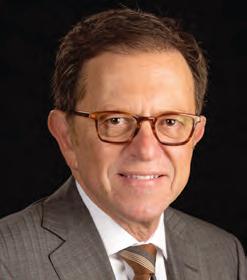
Dr. Samson is a physician in the practice of Sarasota Vascular Specialists and clinical professor of surgery, Florida State University, Tallahassee. He is also the medical editor of Vascular Specialist.
in place and go through a time-consuming explanation. Seldom do they remember this account. When I see patients back who have an Endoleak, I once again find myself placating terrified individuals who think they are about to die.
So that is why we should replace the alarming “Endoleak” with the less disturbing and more descriptive “Endofill.” After all, there is no “leak” but rather a “filling” of the sac with blood. Certainly, a Type 1 “Endofill” is still dangerous, but I doubt the uninitiated would consider it an immediate problem. “Endofill” may still take some explaining, but it is less likely to cause patient anxiety or an overzealous panic in a referring physician.
Let’s face it. Even the term “leak” has led to many errors in the treatment of patients with an abdominal aortic aneurysm. For example, it is not unusual that an emergency room physician, hospitalist, or internist will triage a “leaking” aneurysm as nonurgent because it has not “ruptured.”
I think we should ban “leaking” and “leak” from the medical vernacular. Let Washington politicians use the words. Rather, vascular surgeons and radiologists should describe exactly what is happening when
a limited amount of blood escapes the wall of an aneurysm by using the term “contained rupture.” I’m sure that will get the nonvascular surgeon's attention! I’m hopeful that you will also remember some of my other epithets and aphorisms from columns. Such as “Vascular surgeons Operate, Medicate and Dilate,” that TLR (Target Lesion Revascularization) should really be “The Least Relevant.” That a nervous surgeon will not be proficient so “The most important heart in the Operating room is the surgeon’s.” That vascular surgeons are all “Knights of the rectangular table,” and that rapacious doctors are committing “White Coat Crime.” That atheroembolism to the buttocks should be called “Trash Can.” That we should always ask for longterm outcomes before accepting new technologies otherwise, we would be encouraging “Premature congratulation.” That Societies that refuse to rein in their members by refusing to use the word “inappropriate” are being “Anti-semantic.” Further, that shared decision making is essential but that “Insecurity is the price patients must pay for sharing in the decision-making process.” And, of course, my request that we all join the SOS, the “Save Our Saphenous” society.
I am also hopeful that, with time, my exhortations will aid Vascular Surgery in getting the recognition that it deserves. I have suggested many ways we can expedite this goal including possibly changing the name of the Society to The American College of Vascular Surgery and offering members the opportunity to refer to themselves as Fellows of that College. I have encouraged all who are trying to achieve a separate Residency Review Committee, and I fully support an independent American Board of Vascular Surgery.
Editor continued on page 4
VASCULAR SPECIALIST Medical Editor Russell H. Samson, MD
Deputy Medical Editor Malachi Sheahan III, MD
Associate Medical Editors Bernadette Aulivola, MD, O. William Brown, MD, Elliot L. Chaikof, MD, PhD, Carlo Dall’Olmo, MD, Alan M. Dietzek, MD, RPVI, FACS, Professor Hans-Henning Eckstein, MD, John F. Eidt, MD, Robert Fitridge, MD, Dennis R. Gable, MD, Linda Harris, MD, Krishna Jain, MD, Larry Kraiss, MD, Joann Lohr, MD, James McKinsey, MD, Joseph Mills, MD, Erica L. Mitchell, MD, MEd, FACS, Leila Mureebe, MD, David Rigberg, MD, Clifford Sales, MD, Bhagwan Satiani, MD., Larry Scher, MD, Marc Schermerhorn, MD, Peter Scheider, MD, Murray L. Shames, MD, Niten Singh, MD, Frank J. Veith, MD, Robert Eugene Zierler, MD
Resident/Fellow Editor Laura Drudi, MD.
Executive Director SVS Kenneth M. Slaw, PhD.
Director of Marketing and Membership SVS Justin Cogswell
Managing Editor SVS Beth Bales
Vascular Specialist is the official newspaper of the Society for Vascular Surgery and provides the vascular specialist with timely and relevant news and commentary about clinical developments and about the impact of health care policy. Content for Vascular Specialist is provided by Frontline Medical Communications Inc. Content for the News From the Society is provided by the Society for Vascular Surgery.
The ideas and opinions expressed in Vascular Specialist do not necessarily reflect those of the Society or the Publisher. The Society for Vascular Surgery and Frontline Medical Communications Inc. will not assume responsibility for damages, loss, or claims of any kind arising from or related to the information contained in this publication, including any claims related to the products, drugs, or services mentioned herein.
POSTMASTER Send changes of address (with old mailing label) to Vascular Specialist, Subscription Services, , 10255 W Higgins Road, Suite 280, Rosemont, IL 60018-9914.
RECIPIENT: To change your address, contact Subscription Services at 1-800-430-5450. For paid subscriptions, single issue purchases, and missing issue claims, call Customer Service at 1-833-836-2705 or e-mail custsvc.vasc@fulcoinc.com.
The Society for Vascular Surgery headquarters is located at 633 N. St. Clair St., 22th Floor, Chicago, IL 60611. Vascular Specialist (ISSN 1558-0148) is published monthly for the Society for Vascular Surgery by Frontline Medical Communications Inc., 7 Century Drive, Suite 302, Parsippany, NJ 07054-4609. Phone 973-206-3434, fax 973-206-9378
Subscription price is $230.00 per year.
National Account Manager Valerie Bednarz, 973-206-8954, cell 973-907-0230, vbednarz@mdedge.com
Digital Account Manager Rey Valdivia 973-206-8094 rvaldivia@mdedge.com
Classified Sales Representative Drew Endy 215-657-2319 cell 267-481-0133 dendy@mdedge.com
Senior Director of Classified Sales Tim LePella, 484-921-5001, cell 610-506-3474, tlapella@mdedge.com
Advertising Offices 7 Century Drive, Suite 302, Parsippany, NJ 07054-4609 973-206-3434, fax 973-206-9378
Letters to the Editor: VascularSpecialist@vascularsociety.org
Editorial Offices: 2275 Research Blvd, Suite 400, Rockville, MD 20850, 240-221-2400, fax 240-221-2548
©Copyright 2018, by the Society for Vascular Surgery


Scan this QR Code to visit vascularspecialistonline.com
FRONTLINE MEDICAL COMMUNICATIONS SOCIETY PARTNERS
Director, FMC Society Partners Mark Branca
Editor in Chief Mary Jo M. Dales
Executive Editors Denise Fulton, Kathy Scarbeck
Managing Editor Mark S. Lesney
Creative Director Louise A. Koenig
Director, Production/Manufacturing Rebecca Slebodnik
Corporate
President/CEO Alan J. Imhoff
CFO Douglas E. Grose
SVP, Finance Steven J. Resnick
VP, Operations Jim Chicca
VP, Sales Mike Guire
VP, Society Partners Mark Branca
VP, Editor in Chief Mary Jo M. Dales
Chief Digital Officer Lee Schweizer
VP, Digital Content & Strategy Amy Pfeiffer
VP, Marketing & Customer Advocacy
Jim McDonough
VP, Human Resources & Facility Operations
Carolyn Caccavelli
Data Management Director Mike Fritz
Circulation Director Jared Sonners
Corporate Director, Research & Comms. Lori Raskin
New Ventures
President Douglas E. Grose
VP, Sales Josh Prizer
Editorial Director/COO Carol Nathan
Custom Solutions
President JoAnn Wahl
VP, Custom Solutions Wendy Raupers
Director, Custom Programs Patrick Finnegan
In affiliation with Global Academy for Medical Education, LLC
VP, Events David J. Small, MBA
Crawford from page 1
percentage of vascular surgeons currently practicing who are expected to retire in the next decade, with estimates reaching 35%-45%. He detailed the results of the 2017 survey of vascular surgeons that showed this and other concerning factors.
“We do not take vacations,” he said. “We have significant overwork.” In addition, “half of the surgeons who said they would retire, said they would retire before the age of 65.” In fact, nearly 50% of those surveyed have firm retirement plans, and nearly 20% were planning on retiring within the next 5 years.
“To summarize, we have a pipeline, which at maximum would, within the next 5 years introduce 608 new vascular resident and fellow graduates into the workforce, and at the same time we’ll be losing the same number of practicing vascular surgeons. So, at best, we will stay even,” said Dr. Makaroun.
“The Current Landscape of the Vascular Surgery Recruitment Mar-
In his talk, “Where Did the Vascular Surgeons Go? Seven Years of Futile Recruitment Attempts,” Gerald Goldstein, MD, of the Western Maryland Health System, addressed the problem of attracting new vascular surgeons. His talk was key in pointing out the problems of large health care facilities in poor and rural areas. “We’re not a Band-Aid station. ... we’re a big hospital, we serve a large geographic area and a large cohort of patients,” he said. Still they have failed to recruit a single vascular surgeon. He pointed out how places such as his could not compete for vascular surgeons against more desirable urban centers with more amenities and sufficient backup surgeons to provide lower workloads and improved quality of life, which includes time off, not being on call, and collaboration and teamwork. He was not optimistic about solutions and was fighting the final solution: hospital contraction of services.
“Workforce Targets: How Can We
“Half of the surgeons who said they would retire, said they would retire before the age of 65.”
ket” was addressed by Jeremy Robinson of Merritt Hawkins. He pointed out the market evidence for a large scarcity of vascular surgeons, with a huge number of positions going unfilled, more than half of new trainees receiving more than 100 offers, and bidding wars going on among employers, including offering expansive salaries and benefits to vascular surgeons as part of recruitment efforts.
Know Whether We Have Enough Vascular Surgeons?” was discussed by Mark Friedberg, MD, of the RAND Corporation. Dr. Friedberg pointed out that it was important to define what was meant by a shortage of vascular surgeons, asking whether a surgeon/population metric was the most valuable or should it include other components, such as geographic considerations, quality of care
ACGME from page 1
The proposal will be reviewed by the ACGME Board of Directors at their September 2018 meeting.
Dr. Reed stated, “Recognition of vascular surgery training programs through an independent Vascular RRC will improve the clinical care and safety of patients with vascular disease by holding programs to established standards of care and quality initiatives in vascular surgery.
“Program directors feel strongly that vascular training programs
issues, patient waiting times, and more. In addition, he asked, for any metric chosen, how was the decision made in choosing the optimal level? What is the best ratio of vascular surgeons to population, and how do you decide it?
Finally, Anton Sidawy, MD, of the George Washington University Hospital, Washington, looked at possible solutions to the problem in his talk, “Pathways to Alleviate Shortages and Maldistributions of Vascular Surgeons.” Dr. Sidawy stressed the need for a multifaceted approach, including government at the federal, state, and local levels, as well as medical schools and training programs.
He particularly stressed the need for improving the distribution of vascular surgeons to underserved rural areas, such as described by Dr. Goldstein. However, this would require thinking outside the box, perhaps involving redistribution of training to
more underserved areas of the country as well as recruitment of more individuals from those areas. This is more likely to produce vascular surgeons willing to remain or return to such areas to practice, as has been well documented.
Another possibility is to provide incentives for older vascular surgeons to delay retirement, perhaps with a lowered workload, freedom from being on-call, and other benefits.
But perhaps his most radical suggestion is the idea of rethinking the role of vascular surgeons entirely, to include the ability to perform more general surgery operations, allowing them more flexibility to take on roles in smaller communities and organizations that could not afford a narrowly defined specialist.
The forum concluded with a panel discussion in which the panelists addressed questions from the audience. ■ mlesney@mdedge.com
should be rigorously reviewed by a committee of vascular surgeons rather than other surgical subspecialists as currently exists on the surgery RRC.
“Only vascular surgeons have experience with all phases of vascular care – medical, percutaneous and surgical options – and are therefore in the best position to judge how the next generation of vascular surgeons should be trained.”
Review Committees (RC) set
the requirements and accreditation guidelines for training programs under the auspices of the ACGME. Currently, issues related to vascular surgical training are handled by the Surgery RC.
In addition to vascular surgery fellowships (5+2) and integrated residencies (0+5), the Surgery RC also covers General Surgery, Surgical Critical Care, Pediatric Surgery, Complex General Surgical Oncology, and Hand Surgery.
Of all the medical specialties that issue a primary Board certificate, Vascular Surgery is the only discipline without a separate RC. ■


BY S.Y. TAN, MD, JD
Question: A nurse practitioner evaluated an elderly patient who arrived in the hospital clinic with a 3-day history of cough, tactile fever, myalgia, and malaise. Several members of the patient’s family have the “flu.” His temp was 99.8 degrees, and the chest x-ray was negative. The NP diagnosed a viral upper respiratory infection and discharged the patient without antibiotics. The supervising physician verbally agreed with the NP’s diagnosis and treatment, but did not personally examine the patient. A week later, the patient was hospitalized for pneumonia and sustained additional complications of empyema, sepsis, and respiratory failure. The NP is an employee of the hospital, whereas the physician is an independent contractor.
Which of the following is incorrect?
A. All three parties – NP, physician, and hospital – will all be named as codefendants under various theories of direct and indirect liability.
B. NPs are only licensed to work under the supervision of a physician, and they do not have prescriptive authority.
C. The hospital is vicariously liable under “respondeat superior,” as the NP is an employee.
D. Under state law, the physician will likely share the NP’s liability, even if the physician had no contact with the patient.
E. Medicare services rendered by an NP cannot be billed under a physician’s National Provider Identifier (NPI) unless certain specific requirements are met.
Answer: B. Nurse practitioners and physician assistants (PAs) have historically worked under the direct super-
Editor continued from page 2
vision of a physician. NPs have graduate nursing degrees, and they are now licensed for independent practice in a number of states, including the authority to write prescriptions. Some form of physician “collaboration,” such as chart reviews, still applies, together with certain restrictions, e.g., having clearly delineated protocols and designated triggers for a referral. PAs, who have less training than NPs, do not typically have the same degree of independence. They are individually licensed to work under a specific physician, with a limited scope of practice under direct supervision. Statutes governing scope and restrictions of practice differ from state to state, and one should obviously consult the relevant jurisdictional laws and regulations for any given situation.1

practice. According to PIAA, a trade association of medical malpractice insurers, there were only 351 closed claims involving NPs between 2001 and 2010, compared with more than 174,000 physician claims. From 1991 through 2007, the probability of making a malpractice payment was 12 times less for PAs and 24 times less for NPs.
For all three providers, a missed diagnosis was the leading reason for the malpractice action. There were no observations or trends to suggest that PAs and NPs increase liability.3
Thus, litigation frequently revolves around the question as to whether there exists an employer-employee relationship. The chief test is evidence of degree and extent of control over the worker in matters such as work schedule, duties, and salary. Some jurisdictions have used the principal-agent construct in the absence of an employment contract to justify a finding of vicarious liability.
As an example, NPs in Hawaii may practice independently from physicians and may prescribe drugs and Schedules II-V controlled substances, as well as medical devices if within the NP’s specialty. A health insurance company may recognize a participating NP as a primary care provider.
In the case of a PA, the supervising physician determines supervision requirements as well as the scope of practice in a written document developed on site, to include adequate means of communication between PA and supervising physician. A PA may prescribe drugs, including controlled substances, if delegated by the supervising physician.2
Nurse practitioners and physician assistants are rarely sued for mal-
Over the last 5 years, I have penned almost all that I believe needs to be said about vascular surgery, vascular surgeons, our patients, and the Society for Vascular Surgery. However, although my contract still allows one more year as medical editor, I felt it was time for new insights from a new generation of surgeons.
It is with great pleasure, therefore, that I pass the reins to Malachi Sheahan III, MD. Vascular Specialist has become the primary news source for our Society, and its educational articles and news items offer learning experiences not found in
Although every licensed employee is directly liable for his or her substandard care, the employer also shares in that liability. This is known as vicarious liability, where liability is imputed to the employer, although the tortious action originated exclusively from the employee. Respondeat superior, or “let the master answer,” is the legal doctrine underpinning vicarious liability. The idea behind this rule is to ensure that the employer, as supervisor, will enforce proper work standards to avoid risk of harm. The employer is also better able to shoulder the cost of compensating the victim or insure against workplace injuries.
For vicarious liability to arise, the employee’s act must have occurred during and within the scope of employment, and the risk of harm foreseeable. Where there is no formal employment agreement and the wrongdoer is an independent contractor, then vicarious liability does not apply.
peer-reviewed journals. I encourage all to submit interesting news items for print, add some unusual Tips and Tricks, write letters to the editor, and tell us about your accomplishments inside and out of vascular surgery.
Please also volunteer to write Point/Counter Point articles. Vascular Specialist is your resource, and it’s not only in print but also in all forms of electronic and social media. It is up to you to make sure that it continues to thrive as a valuable resource for all our members.
I want to publicly thank the Associate Editors for their many contributions. This magazine
Liability can take many forms when physicians work with NPs and PAs.4 Negligent supervision is a favorite plaintiff allegation, whereas the defense predictably denies physician negligence in the absence of an established physician-patient relationship. In Quirk v. Zuckerman, an NP treated a patient in the emergency department for an upper extremity complaint, which was misdiagnosed as a tennis elbow. In fact, the patient had a compartment syndrome with evident swelling and ended with an amputation.5
The NP testified that she had discussed the case with the attending physician, and the physician had signed the plaintiff’s medical chart as well as a prescription for a painkiller. However, he did not personally speak to or examine the patient.
The relevant New York statute governing NP practice provides that collaborative medical services be rendered in accordance with a written practice agreement and protocols. Because there was no written protocol by the hospital, the ultimate responsibility for the diagnosis and treatment was held to rest with the physician. The court opined that the practice of a registered nurse practitioner is always in collaboration with a qualified licensed physician, and Liability continued on page 5
would not be the same without their insightful comments. However, in the background is the actual “hero,” Mark Lesney. Mark has been the editor who sends Mal and me news items to review, urges us to be punctual, and is responsible for putting Vascular Specialist together. He works tirelessly under the pressure of producing a monthly periodical. Vascular Specialist is indebted to his efforts.
Finally, I want to thank you all so much for bearing with my rantings these last few years. Your letters and emails of appreciation have been an inspiration. ■
given the circumstances, concluded that an implied physician-patient relationship did exist between Dr. Zuckerman and the patient.
Most jurisdictions have similar statutes regarding collaboration and supervision. For example, in Tennessee, the law provides that physician assistants act under the oversight of a licensed physician, and that the supervising physician shall be responsible for ensuring compliance with the applicable standard of care. Its Supreme Court has ruled that a supervising physician can be held vicariously liable for the negligence of his assistant in a case where there was a missed diagnosis of mitral valve disease and cardiomyopathy.6 The court characterized the relationship as one of principal and agent, whose negligence is imputed to the physician.
The standard of care by which the assistant is judged, however, differs from that expected of a physician,
just as a paralegal is not held to the same standard as his or her supervising attorney.
Other areas of potential liability when working with nurse practitioners and physician assistants include abetting in the unauthorized practice of medicine, and misrepresentation by these providers as physicians. One caveat: If a hospital “lends” the services of its employee to a physician, who then directs his/her work, this makes the nurse practitioner or physician assistant a “borrowed servant.” The borrowing physician will then assume legal responsibility, freeing the hospital from liability.
Another area deserving of attention: violation of the federal False Claims Act. Federal statute defines the requirements that must be met for supervising physicians to bill for services provided by other qualified nonphysician providers.
For office visits under Medicare Part B, physicians may bill for nurse
Dr. Tan addresses several important legal concepts in his article entitled “Liability with nurse practitioners and physician assistants.” The first is that of the physician-patient relationship. If an attorney is to prevail in an action for medical malpractice, he/she must satisfy four basic requirements: The plaintiff’s attorney must establish the standard of care with which the physician defendant must comply. The attorney must then show that this standard was breached. The third requirement is that the plaintiff must show that the patient suffered damages. Finally, the plaintiff’s attorney must show that the breach of the standard of care was the proximate cause of the damages that the patient incurred. If any one of these four components is absent, as a matter of law, the suit must fail. As pointed out by Dr. Tan, direct patient contact by the physician is not required to establish a physician-patient relationship. As in this case, a phone call is sufficient. However, it should be emphasized that, as a potential consultant, simply discussing a case with a colleague does not necessarily establish a physician-patient relationship. If the potential consultant is not on call, and has no duty to see the patient, the discussion of the case is most often looked upon as
practitioner or physician assistant services as “incident to” the service of a physician using the physician’s own National Provider Identifier. However, certain prerequisites must be met, e.g., services are furnished under the physician’s direct personal supervision (on-site presence and immediate availability), and the physician must perform the initial service and subsequent services with a frequency that reflects his or her active participation.7 If these and other stipulated requirements have not been met, the services are to be billed under the nurse practitioner’s or physician assistant’s own provider number, which comes with a lower, 85% reimbursement rate.
Physicians will do well to carefully review all Medicare billing rules to avoid a charge under the False Claims Act, which can carry stiff penalties and criminal prosecution.8 ■
Dr. Tan is emeritus professor of medicine and former adjunct professor of law at
a “sidewalk consult.”
These types of consults do not result in a physician-patient relationship and, therefore, do not impart liability upon the consultant.
It is important to remember that the plaintiff’s attorney will attempt to focus upon a defendant with “deep pockets.”
O. William Brown, MD, JD, is a professor of surgery at the Oakland University/William Beaumont School of Medicine and an adjunct professor of law at the Michigan State University College of Law, East Lansing, and an associate medical editor for Vascular Specialist
The term “deep pockets” simply refers to a defendant with the potential to provide substantial payment to the plaintiff. Therefore, plaintiff’s attorneys will commonly attempt to include physicians and hospitals in any claim for medical malpractice filed against ancillary providers. Plaintiff’s attorneys, therefore, are particularly interested in establishing liability of nurses, physician assistants, and physicians who are employed by the hospital. As noted in Dr. Tan’s article, whereas physician assistants and nurse practitioners may not be individually at risk for liability, they are targeted as a means of establishing vicarious liability. Therefore, if a physician employs
the University of Hawaii, Honolulu. This article is meant to be educational and does not constitute medical, ethical, or legal advice. For additional information, readers may contact the author at siang@hawaii.edu.
References
1. “Prescribing Law: A State-by-State Summary.” Medscape, Jan. 4, 2018.
2. Hawaii Admin. Rules §16-89, §1685, and Hawaii Rev. Stat. §431:10A125.
3. Hooker R. Journal of Medical Licensure and Discipline 2009; 9:6-16.
4. Szalados JE. “PAs and NPs: the scope of physician liability.” ED Legal Letter, Aug. 1, 2006.
5. Quirk v. Zuckerman, 196 Misc. 2d 496 (N.Y. Misc. 2003).
6. Cox v. M.A. Primary and Urgent Care Clinic, 313 S.W.3d 240 (Tenn. 2010).
7. “Incident-to billing: Clearing up the confusion.” Medical Economics, April 24, 2014.
8. Medicare Carriers Manual (Part 3, Chapter II, section 2050).
physician assistants and nurse practitioners, it is best if those employees are covered by separate malpractice insurance policies.
Another important legal concept to consider is that of apparent authority. If a physician assistant or a nurse practitioner is an employee of the hospital, but it appears to the patient that the physician extender is working directly for the patient’s physician, the patient’s physician may be deemed to have liability under the legal theory of apparent authority. It is, therefore, prudent for physicians to clearly discuss with the patient which members of the treatment team are employed by the physician, and which are not employed by the physician.
Lastly, as Dr. Tan correctly pointed out, it is imperative that the physician avoid violating the Federal False Claims Act. To be deemed to have violated the Federal False Claims Act, the government must establish that the defendant:
1. Made or presented a false, fictitious, or fraudulent claim to a department of the United States.
2. Knew such claim was false, fictitious, or fraudulent, and
3. Did so with the specific intent to violate the law or with a consciousness that what he was doing was wrong.
While it is clear from the case law that specific intent to defraud is not required for conviction, it remains controversial as to whether willfulness is required for conviction. As in most legal controversies, it is best to avoid the issue completely and refrain from submitting any claims that could conceivably be viewed as violating the false claims act.
The use of physician extenders has both helped to decrease the burden of medical care on physicians, while at the same time providing care for patients who may not have access to any type of physician care.
Unfortunately, for physicians, this assistance in the care of patients is associated with an increase in medicolegal liability. A thorough knowledge of both state and federal regulations governing the use of physician extenders, and the realization that physicians may be held liable for the actions of these extenders should hopefully decrease the risk to the supervising physician.
Back at the dawn of the endovascular revolution, many other surgical specialties were vying to dominate minimally invasive endovascular procedures. Vascular surgery, the standard bearer of open vascular surgery, could have gone the way of buggy whips.
But this year’s Lifetime Achievement Awardee, Dr. Gregorio Sicard, was one of a dedicated group of vascular surgeon leaders who kept that from happening.
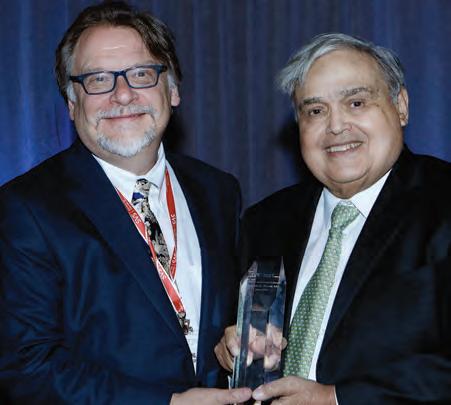
“I did not want to see vascular surgery be born and die within my lifetime,” said Dr. Sicard, who was honored with the 2018 Lifetime Achievement Award at the 2018 Vascular Annual Meeting.
In the early 1990s, the Food and Drug Administration and the Centers for Medicare and Medicaid Services were seeing a lot of technological advances and were being lobbied by many powerful stakeholders. Dr. Sicard, who chaired the SVS Outcomes Committee after his term as SVS president, spent many long hours in Maryland along with other members of the committee, explaining to federal agencies the importance of evidence-based, patient-centered decision-making.
“We were able to gain the trust of the FDA and CMS and to have a voice at the table,” Dr. Sicard recalled. “The committee pointed out the importance of patient safety and expected outcomes which led to these agencies trusting us. We weren’t saying this field only belongs to us. Radiology
and cardiology could be a part of it, but they couldn’t take it over.”
Part of the reason their efforts were successful, he believes, is because the Society for Vascular Surgery and the American Association for Vascular Surgery had gone through a difficult but necessary merger just before his term as SVS president.
“You never know, but I doubt that this same outcome would have occurred,” he said, “if we didn’t have one voice, one society, one very coordinated effort, strategically managed by leadership. We survived an existential challenge, and since then the growth of the society has been astronomical.”
generations, it’s your duty.” Dr. Sicard was instrumental in forming the first fellowship program at Washington University in the 1980s.
He is particularly proud of his mentees. “A lot of them have become heads of their own programs, both in the United States and internationally, from countries like Spain, Chile and Colombia. One of my proudest achievements is that I had about 150 residents from Spanish-speaking countries who spent anywhere from a month to two years in our program.”
Vascular surgeons worldwide have traveled to Barnes-Jewish Hospital and Washington University over the decades to learn from him because of his skills in surgery and patient care. In 2011, a Distinguished Professorship was named for him at Washington University in St. Louis.
His efforts to keep vascular surgery at the political table were just one of the reasons for his award, the highest honor bestowed by the SVS each year.
“With this award, Dr. Sicard joins the list of luminaries whom we call ‘the giants of vascular surgery,’” explained Dr. R. Clement Darling III, now past-president of the SVS. “He has achieved so much it’s hard to know where to start. As president of the SVS in 2004-2005, he was instrumental in smoothing the merger of two competing vascular societies. He has mentored 50 fellows, published hundreds of articles and book chapters, and was instrumental in
ensuring that the Centers for Medicare and Medicaid Services didn’t lose sight of the important role that vascular surgeons play in endovascular procedures.”
The son of a surgeon, Dr. Sicard grew up in rural Puerto Rico, and earned his medical degree at the University of Puerto Rico. Though he now is officially retired, Dr. Sicard, 73, still reports regularly to his Washington University office to attend vascular conferences and rounds and has been passionate about training the next generation of surgeons.
“I always took that very seriously,” Dr. Sicard said. “If you live long enough, you have to train the next
Dr. Anton Sidawy, one of the surgeons who nominated Dr. Sicard, said, “Greg is what one may call a quadruple-hitter. He excels in all areas of academic surgery; clinical care, teaching, scholarship and administration. He is a superb, innovative, and skilled surgeon. The Wash. U. Vascular Surgery group is one of the very active, most comprehensive and versatile academic groups in the country; Greg put that group together over 30 years.
“He is a surgeon’s surgeon,” Dr. Sidawy added. “I have met fellows that trained under him; every single one of them raved about his operative skills.” ■
Ahandful of SVS members will soon begin implementing projects to improve community health in three areas throughout the United States.
The plans are the result of the new SVS Foundation Community Awareness and Prevention Project Grants. The first recipients were announced during the SVS Vascular Annual Meeting in June.
The grants provide up to $10,000 to three community-based vascular surgeons, each of whom proposed an innovative, community-based initiative. The awards are part of the Foundation’s expanded mission to include projects that impact
vascular health, awareness and prevention.
This year’s projects aim to:
• Reduce emergency department visits and hospitalizations for diabetic foot infections, in part by providing comprehensive diabetic preventive care for those at risk for such infections. Leaders are Marcus Semel, MD, MPH; and Edward Marcaccio, MD, both of South Shore Hospital and Brigham and Women’s Hospital near Boston.
• Champion public awareness of vascular disease through empowering high school students in upstate New York to under-
stand the impact of vascular risk factors and disease and help diagnose diseases in family members. This project also hopes to increase awareness of vascular surgeons and their expertise in treating vascular disease. SVS project leader is Manish Mehta, MD, MPH, of Queensbury, N.Y.
• Expand a long-established Wellness Check held across the Excela Health service area in Pennsylvania, adding a Vascular Health Awareness and Screening event. SVS project leader is Elizabeth L. Detschelt, MD, director of vascular surgery for Excela Health, Westmoreland County and parts of Fayette and Indiana counties in Pennsylvania.
Vascular Specialist will describe the projects in greater detail next month. ■
Leaders of the SVS Wellness Task Force urge all SVS members to complete a new survey on physician burnout, this one aimed at physical debility.
The burnout survey is in an email from the Mayo Clinic, which is assisting with distribution and tabulation. It is the second survey the task force has distributed, all aimed at ascertaining burnout and wellness statistics from SVS members.
“We need evidence,” said Malachi Sheahan, MD, who is vice chair of the group with Dawn Coleman, MD. as
chair. “We can’t make change without evidence.”
He issued a “Societal Call to Action” to SVS members at the end of a session at the Vascular Annual Meeting addressing burnout issues.
Dr. Sheahan disclosed statistics from the first task force survey, completed by 860 members. Collectively, members worked an average 73.5 hours a week, with five hours completing electronic medical records and 5.5 hours of administrative/scholarly activities added to 63 hours in the office.
“Eighty-nine percent feel burned out on occasion, everyone thinks they’re working too hard and when there are conflicts between work and personal life, they’re resolved in favor of the personal side only 8 percent of the time,” he said of the recently released data.
He believes EMR will be the No. 1 conflict of vascular surgeons, with surgeons reporting they spend one hour charting for every one hour of patient time. “It’s just not working out,” he said of the records system.
Twenty percent of physician respondents said they had been sued for malpractice within the past two years, 37 percent reported being depressed within the month prior to completing the survey and the 8 percent who reported suicide ideation within the past year is double the national rate, Dr. Sheahan said.
The second survey, launched in midJune, focuses on physical debility as a result of the stress on the body vascular surgeons face and should take fewer than 10 minutes to complete. It is expected to close in late summer.
Statin therapy can boost survival rates in patients undergoing repair of abdominal aortic aneurysms, according to an article in the August issue of Journal of Vascular Surgery. Researchers studied patients without documented statin intolerance undergoing AAA repair in the Vascular Quality Initiative between 2003 and
2017. The researchers concluded, “Preoperative statin therapy is associated with higher long-term survival but not perioperative mortality and morbidity in patients undergoing AAA repair, and initiating statin therapy in previously statin-naive patients is associated with markedly higher survival.”
Anew Journal of Vascular Surgery publication, “JVS: Vascular Science” is planned to launch in early 2019, Drs. Peter Gloviczki and Peter Lawrence announced at the Society for Vascular Surgery’s Vascular Annual Meeting.
The publication will focus on multi-disciplinary basic and translational vascular research studies.
The two doctors’ goal “is that the publication becomes the pre-eminent research journal for our Society, and that it will complement the other three JVS journals,” said Alan Dardik, MD, PhD, who will serve as editor. Drs. Gloviczki and Lawrence will serve as editor-in-chief and senior editor, respectively, as they do for the existing three publications.
Both JVS leadership and the staff of
Elsevier, which publishes the JVS periodicals, assessed the need for such a journal, Dr. Dardik said. “It will answer the need for high-quality scientific studies that address the fundamental questions of patients with vascular disease.
“We’re very excited about it,” he said. “We anticipate that we will draw both from within our community of vascular surgeon-scientists as well as from the great community of scientists who study vascular biology. We also expect this new journal to be the premier and preferred publication conduit for the SVS Vascular Research Initiatives Conference.”
Dr. Dardik encouraged anyone, including the Society’s younger surgeon-scientists, interested in participating in the journal, to contact him. ■
“Look for the Mayo Clinic survey, and please take it,” he said. He added that there are initiatives going forward that aim to change the environment
“Eighty-nine percent feel burned out on occasion.”
and change the culture. These include the SVS task force and the American Board of Surgery’s new lifelong learning initiative. “This is a call to action,” Dr. Sheahan said. “The main thing I want to say is that this is changeable. I don’t want you to think or say that we can’t do it. We can. We just need evidence.” ■
AAA patients who are statin-tolerant should receive statin therapy and those patients not taking a statin at the time of surgery should be
considered for such therapy before discharge. The article is open source through Sept. 30. Visit vsweb.org/ JVS-Statins ■
Specializing in Vascular Surgery Positions
Job Seekers
Find your next great role!
Search for a new position, create search alerts, post your resume, or browse our resources for career, interviewing, and networking advice
Employers and Recruiters
Fish where the fish are!
Customize a package, with price discounts for SVS members
SVS Career Site Post to reach our specialized niche
Job Flash™ email to 1,000 vascular surgery professionals
Network postings to Healthcare or Vascular Job Board Network Banner ads on 10 most popular pages visited by job seekers
svs.careerwebsite.com
Congratulations to the winners of our Vascular Annual Meeting Scavenger Hunt and the SVS Booth drawing. Both took place in the Exhibit Hall. Winners are: Scavenger Hunt
• First Place: Abbey Modlin, $3,000 in tickets from American Airlines
• Second Place: Andrew Rogers, $1,500 Apple gift card
• Third Place: Michelle Budge, $500 Amazon gift card SVS Booth
• First Place: Deepak Deshmukh, DO, free SVS membership for 2018
• Second Place: Shernaz Dossabhoy, free 2018 registration for VAM 2019
• Third Place: Oleksiy Gudz, MD, PhD, free 2018 VAM on Demand

Participants
BY SHIPRA ARYA, MD, SM ON BEHALF OF THE LEADERSHIP DEVELOPMENT AND DIVERSITY COMMITTEE
The SVS Leadership Development and Diversity Committee began this column in 2016 to highlight leadership skills in leaders of the SVS and create this opportunity to allow members of the committee to interact with SVS leaders. In this way, we are accomplishing one of our main goals, which is to disseminate leadership skills within the society. Based on 25 years of research by Kouzes and Posner in their book “The Leadership Challenge,” we are focusing on five “practices” routinely embraced by successful leaders:
1. Modeling the Way: Leading by example, with consistency, credibility and integrity.
2. Challenging the Process: The courage to question the status quo and thoughtfully test new paradigms.
3. Enabling Others to Act: Optimizing teams and team members by delegating power and authority so they can reach new heights of success
4. Encouraging the Heart: Taking the time to celebrate key accomplishments and ensure the team stay connected to mission or purpose;
5. Inspiring a Shared Vision: Envisioning a
Research focusing on potential new therapies, along with a discussion of entrepreneurship and the second annual Alexander W. Clowes Distinguished Lecture highlighted the recent SVS Vascular Research Initiatives Conference.
Presentations emphasized some of the latest research in vascular biology, offering a glimpse into the future. “We hope that the research presented at this meeting will evolve over the next 10 to 20 years into therapies for vascular disease,” said Edith Tzeng, MD, chair of the SVS Research and Education Committee, which oversees the annual conference. It was held in mid-May in San Francisco.
Of course, it’s not typically clear which peeks into the future have staying power. Dr. Tzeng remembered that years ago she dismissed drug-coated balloons – now common – when the idea was presented as research. “I thought, ‘Well, that will never work!’ “
The one-day conference, held the
day before the American Heart Association’s Arteriosclerosis, Thrombosis and Vascular Biology meeting, typically draws early- to mid-career surgeon-scientists. They presented a mix of basic and translational vascular research, generally with an emphasis on clinical applications.

Abstract sessions covered stem cells and regeneration, peripheral arterial disease, vascular endothelium and thrombosis, and vascular inflammation and injury.
VRIC also included two special presentations: the annual Alexander W. Clowes Distinguished Lecture and the Translational Panel.
This was just the second year for the Alexander W. Clowes Distinguished Lecture, named for the late Dr. Clowes, a frequent VRIC presenter, outstanding surgeon-scientist and mentor to many.
positive future and appealing to the shared goals of others.
As part of this program, I had the honor of interviewing Dr. Peter Henke, Leland Ira Doan Research Professor of Vascular Surgery and Professor of Surgery, University of Michigan Medical School. He graduated from the University of Wisconsin with a Bachelor of Science degree in Biochemistry and Molecular Biology in 1988, and from the University of Wisconsin School of Medicine in 1992. He did his general surgery residency at the University of Louisville, where he was honored with the Chairman’s Award for Personal Scholarship and the C. M. Edelen Award for best resident paper of the year in 1997. He joined the University of Michigan for his Vascular Surgery fellowship, and graduated to join the faculty in 2000.
Over his 18-year career-to-date, Dr. Henke has served in many leadership roles at the University of Michigan and in national societies. He is the past Chief of Surgery at the Ann Arbor VA, co-director of the Blue Cross Blue Shield Medical (BCBSM) Vascular Intervention Collaboration and the past president of the American Venous Forum. He has served as the basic science editor for the Journal of Vascular Surgery. He has had an actively funded research program since 2004 focusing on the Henke continued on page 13
Speaker Alan Daugherty, PhD, Dsc, FAHA, presented “Angiotensin II and Cellular Complexity of the Aorta: A Recipe for Aneurysmal Location.”
“It was very clinically relevant,” said Dr. Tzeng of Dr. Daugherty’s lecture. He discussed how drugs that stop activity of the angiotensin II are currently used to treat blood pressure and congestive heart failure but may also be useful to treat aortic diseases as well. His current research focuses on how angiotensin II works as a regulator of producing and propagating aortic bulges. His studies have also revealed unique embryologic origins to the layers of the thoracic aorta that may underlie the pathogenesis of aortic dissection.
This year’s Translational Panel, “The Road to Entrepreneurship,” talked less about research and more
about taking that research and bringing it to market. It addressed not only how to know if a researcher has something that he or she should develop and patent but also how to go about that process.
“Frequently researchers don’t think of their work as intellectual property,” she said. “But a great deal of what is not considered ‘common knowledge’ can – and should – be protected. If a scientist is working on genetics, for example, and identifies something that causes disease, that information can be used to develop treatments.
“Researchers have to think, ‘Should this information be protected?’ and then need to work on interesting a company in the research and potential therapies.”
To view a slideshow of VRIC photos, visit vsweb.org/VRIC18Pix. To learn more about the lecture and to contribute to its funding, visit vsweb. org/ClowesLecture ■
basic mechanisms of deep vein thrombosis resolution as well as the effect of the vein wall and is the co-Principal Investigator for the T32 vascular training program at the University of Michigan that has trained many vascular surgeon scientists over the years. Thus, it is with great pleasure that I was given the task of interviewing Dr. Henke on “Modeling the Way.”
Q: We tend to learn a lot about leadership through observation of others. As you think about one-two role models you desired to emulate, what attributes come to mind as being most important to you? Why? I have observed levels of leadership including Chief of Staff, Chief of Surgery and Section Heads over the years and found that a common denominator is that the leader has to have both integrity and transparency. When you start with that foundation, then people are willing to trust the leadership for whatever may come about. Secondly, I think the leader needs to be data-driven and decisive to address various situations and tackle problems. It’s always important to build consensus, but at times one side needs to be chosen over another on whatever issue it may be, and being fair and objective is best done when backed up by data. Another attribute of successful leaders I have observed is that when beginning a new project or addressing a difficult issue, stating what the overall overarching mission is first, and agreeing on this together is helpful. This strategy helps keeps one’s eye on the ball moving forward, and decreases the chance of getting distracted and sidelined.
Q: Which leadership skills have you found to be most critical in your day-to-day leadership success? Why? Can you give me a brief example?
In terms of day-to-day leadership skills, one of the major skills is the ability to organize and triage. Everyone is very busy but controlling the chaos is key. Fortunately, we all get this training by the nature of our being a surgeon. I think that to get things done, organization of tasks and priorities, circling back on these, and reassessing the progress are a key to keeping the momentum going for any given large or small project. Generally, I make up a weekly list of things to get done with some small tasks and some bigger tasks. This keeps me on point and prevents me from forgetting important issues and allow my teams to stay engaged.
Q: Which have been the most difficult for you to acquire? Why? What
avenues have you found helpful in developing the “leading by example” behaviors (e.g. leadership courses/coaches)?
I think for me a difficult skill to acquire and practice is the ‘cheerleading’ role of being a leader. Motivating others with an enthusiastic and positive attitude can, at times, be hard, as my overall nature is to be pretty realistic about most everything and at times pessimistic. The current reality of the exponential increase in documentation is not good any way you look at it, but you still have to motivate people to take on tasks that may not be very pleasant or appealing. I think leading from the front as best as you can does inspire your team. I believe leadership courses are worthwhile. At the University of Michigan, the surgery department has an excellent course over a year, committing to one Friday per month, where various aspects of leadership, emotional intelligence, coaching and financial analysis are taught. This has been very helpful to consider totally different perspectives and learn additional skills.
co-directing this collaborative. This has been a great experience because we interfaced with our state vascular medical society that merged those participating in both the BMC2 and the Vascular Quality Initiative (VQI). This ultimately was a win-win, but took a lot of work from everyone to organize and focus these meetings and the data distribution and quality

Q: You have held numerous leadership roles including chief of surgery at the Ann Arbor VA, co-director of the BCBSM Vascular Intervention Collaboration and the president of the American Venous Forum. These roles have been unique in their cross-disciplinary nature. What leadership advice to “model the way” would you have for vascular surgeons seeking similar leadership roles?
As one goes through their academic career, I think it is important to say “yes” more often than to say “no,” but keeping that in balance to try to prevent burnout can be a challenge. Each of the leadership roles described above are very different. Nonetheless, I would do them all again, and am currently still involved with one of these leadership positions. The chief of surgery at the VA was an opportunity that unexpectedly arose about seven years into my career. I wanted to learn what leadership would be like in the VA system, knowing in part what it would entail. It was actually a rewarding job because the local VA team of surgeons, nurses and support staff was excellent. Dealing with central office unfunded mandates, bureaucratic rules and dealing with VISN level directives was definitely challenging but a learning experience. In terms of the Blue Cross Blue Shield Vascular Surgery QI, I am still
protected. It means sometimes doing clinical cases on other days that you normally would not, including weekends. Taking time to celebrate the lab with a night out is also appreciated and fun.
Q: How can SVS best support development of surgeon-scientists?

projects. Lastly, being president of the American Venous Forum (AVF) was also a good learning experience with society leadership, particularly in terms of getting a group of very strong personalities to agree on issues and move various initiatives forward. Being the president of an academic surgical society means that you are basically responsible for most everything good and bad that happens. You again have to motivate team members to get things done and make sure all the details are paid attention to. I was lucky we had an excellent executive council and administrative staff during my time.
Q: A unique attribute for you is the path of leadership balancing a clinical role and research lab. How is leading by example different for you as a scientist running an actively funded basic and translational laboratory? What are one to twopractical pieces of advice you can provide aspiring surgeon-scientists to save them time and discomfort? I think leading a research lab requires a different set of skills than the clinical teams. It’s a smaller group with a wider range of backgrounds of experience and certainly most of them are not MDs. To keep this team functioning well requires truly making quality time for the lab (during normal hours), and can be a challenge when emergencies and unexpected clinical problems arise. The leadership role here is keeping the focus of the experiments that will hopefully produce results that are valid and understandable, as well as providing troubleshooting. I think really one of the biggest challenges is to prevent the clinical enterprise from eroding into research lab time, and it’s just so important to keep those blocks of time
I think the Society for Vascular Surgery (SVS) and the SVS Foundation have done a great job in engaging, promoting and funding surgeon-scientists. Certainly the SVS’co-sponsored Mentored Clinical Scientist Award has really allowed vascular surgeons to compete at a very high level, as many of these K08 awardees have gone on to R funding that has continued. The Vascular Research Initiatives Conference (VRIC) meeting has really been a good addition by combining it with the Arteriosclerosis, Thrombosis and Vascular Biology meeting (now called Vascular Discovery Meeting). This collaboration has promoted networking and allows interactions with vascular biologists and other non-surgeons who are important to network with for success. I think one thing the SVS should continue to do is to profile basic and translational research at the Vascular Annual meeting (VAM) each year to prevent it to being lost from the majority of the SVS membership who are not surgeon-scientists.
Q: As you think about the future of vascular surgery and vascular disease in the population, how can vascular surgeons and surgeon-scientists best position themselves to lead effectively?
We really need to be “at the table” in nonsurgical organizations. This really is important for us, because vascular surgery and general surgery are now quite separate, including different training paradigms. I think it is important to be involved with societies such as the American Heart Association, the American Venous Forum and the International Society for Thrombosis and Hemostasis, as well as other sub meetings from the AHA that might be relevant, such as epidemiologic and health services meetings. This is really where many of our grant reviewers and manuscript peer reviewers come from, as compared with surgical societies. One major area where surgeon scientists can grow and lead is in clinical trials (not just device trials), but also medical and surgical therapies. This is an important area for young people to jump into and get training and lead us forward. ■
Here are just a sample of the photos from VAM18. See them all, and find your own photo at vsweb.org/VAM18pics.
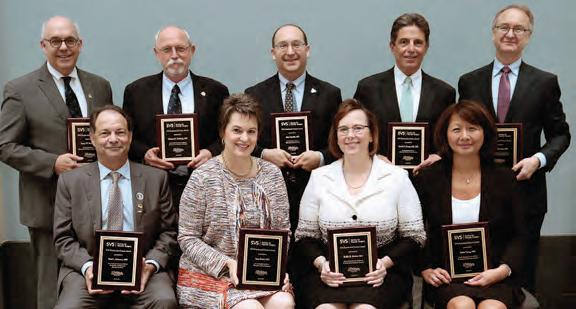
Presidential Citation
This year's recipients of the SVS Presidential Citation Award are, from left, top row: Drs. Larry W. Kraiss, Michael C. Dalsing, Alan Dardik, Frank B. Pomposelli and Robert M. Zwolak; bottom row: Drs. Brad L. Johnson, Amy Reed, Kellie R. Brown and Edith Tzeng.

Distinguished Fellows
The 2018 SVS Distinguished Fellows honored at VAM were, from left: Drs. William Patrick Robinson, Ahmed M. Abou-Zamzam, Jr., Christopher J. Abularrage, John A. Curci, Mohammad H. Eslami, Ulka Sachdev, Karen Woo and Matthew T. Menard.
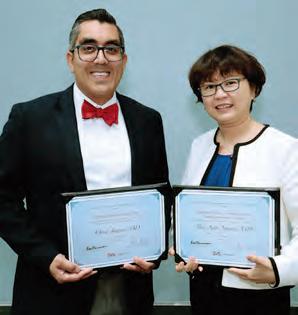
Award Winners
Pictured at left: EJ Wylie Traveling Fellowship awardee Omid Jazaeri, MD, and Mentored Clinical Scientist Research Career Development awardee Bao-Ngoc Nguyen, MD.

Leadership Grants 2018 SVS Women's Leadership Training Grant awardees: Dawn Coleman, MD, (left) and Bao-Ngoc Nguyen, MD.

June 12–15, 2019 National Harbor, Md.

Scientific Sessions: June 13–15
Exhibits: June 13–14 (Outside Washington, D.C.)


BY TERRY L. KAMPS MDEDGE NEWS FROM THE JOURNAL OF VASCULAR SURGERY
Diabetic foot ulcer healing is predictable with the Wound, Ischemia, and foot Infection (WIfI) classification system when used alone or with multivariable risk-adjustment analysis, according to a study published in the Journal of Vascular Surgery.
The research was conducted by Caitlin W. Hicks, MD, of Johns Hopkins University, Baltimore, and her colleagues as a retrospective study using prospective database information from enrolled type 1 and type 2 medication-dependent diabetic patients presenting to the multidisciplinary diabetic limb preservation service at Johns Hopkins Hospital from June 2012 to July 2017. The cohort of 310 patients with diabetic foot ulcer (DFU) in the study had a median age of 59 years and was composed of 60.3% men, with 60.0% of patients being black.
All patients were assessed for baseline characteristics and DFUs at entry into their treatment program and at each follow-up visit by an integrative primary team consisting of a vascular surgeon, surgical podiatrist, endocrinologist, physician assistant, wound care nurse, and prosthetist.
Infectious disease, plastic surgery, and orthopedic foot and ankle consultations were provided as needed. Individuals with evidence of peripheral artery disease (PAD) were provided lower extremity revascularization as determined to be appropriate by the primary vascular surgeon.
The 709 presented DFUs were assessed by x-ray imaging and follow-up MRI as needed. Wounds were debrided to clean margins and antibiotic treatments were administered as appropriate. At each visit the primary team assessed and assigned each wound a WIfI classified stage of 1-4 according to the calculation based on previously accepted Society of Vascular Surgery definitions, with PAD considered separately in final multivariable model analysis.
The association between WIfI stage and wound characteristics and healing was tested by univariable analysis. Multivariable Cox proportional hazards models that included sociodemographic, comorbidity, and wound characteristics were subsequently created to test WIfI stage as an independent predictor for wound healing after adjusting for those variables. Differences between models were related to wound location.
Most of the treated wounds occurred on toes, with the least common wound location being the leg/ankle. Of the 709 treated wounds, 32.4% (n = 230) were WIfI stage 1, 19.9% (n = 141) were stage 2, 25.2% (n = 179) were stage 3, and 22.4% (n = 329) were stage 4.
Differences between the stages included larger increases in mean wound area size, wound depth, and mean time from wound onset to initial assessment as WIfI stages increased from 1 to 4.
Healed wounds were defined as “maintained complete epithelialization with the restoration of sustained functional and anatomic continuity for 6 weeks after complete healing.”
The researchers found that wound healing time significantly increased with increasing WIfI stage, with a mean wound healing time of 96.9 days for WIfI stage 1 wounds, increasing to 195.1 days for WIfI stage 4 wounds (P less than .001). The authors found a likelihood of 94.1% for stage 1 wounds to be healed at 1 year, decreasing to a low of 67.4% for stage 4 wounds (P less than .001).
In univariable and risk-adjusting multivariable analysis, WIfI stage had an independent negative association with wound healing. With inclusion of risk adjustment, the probability of wound healing at 1 year was significantly lowered for stage 4 wounds, compared with stage 1 wounds (hazard ratio, 0.44). The three most prominent independently associated factors associated with poorer wound healing results include concomitant PAD (HR, 0.73), increasing wound area (HR, 0.99 per 1 cm2 area increase), and longer time from wound onset to initial assessment (HR, 0.97 per month). The strongest predictors for poor wound healing were increasing wound area (z score, –3.14), WIfI stage 3 (z score, –3.11), and WIfI stage 4 (z score, –5.40).
In this expanded study of previous work, the authors stated that they were the first to provide validating evidence for use of the WIfI classification system in giving “wound healing prognoses regardless of patient risk factors, comorbidities, and wound location.”
Their findings also demonstrated that this classification system has broader applications than its original purpose to provide prognostic information and risk expectations for major amputation for patients presenting with foot wounds, Dr. Hicks and her colleagues concluded.
The authors reported no conflicts of interest. ■
SOURCE: Hicks CW et al. J Vasc Surg. 2018 Apr 2. doi: 10.1016/j.jvs.2017.12.079.
BY BRUCE JANCIN MDEDGE NEWS REPORTING FROM EUROPCR 2018
PARIS – Endovascular device–delivered renal denervation has been dramatically resuscitated as a promisingly safe and effective nonpharmacologic treatment for hypertension on the basis of two rigorous positive, prospective, sham-controlled, randomized trials presented at the annual meeting of the European Association of Percutaneous Cardiovascular Interventions.
“These two trials are proof of concept. They were not intended to show superiority of denervation over drug therapy. They provide the proof of principle that when we interfere with the renal sympathetic nervous system we are able to lower blood pressure,” according to Felix Mahfoud, MD, an interventional cardiologist at Saarland University Hospital in Homburg, Germany, who was a coinvestigator in both trials.
As a longtime investigator in the field, he was selected by the EuroPCR 2018 organizers to present an official statement to attendees in conjunction with presentation of the two late-breaking clinical trials. The essence of the official commentary was that, despite what physicians have heard based on earlier major setbacks, renal denervation (RDN) therapy for hypertension is alive and well; it’s an active area of investigation; and it holds promise for addressing the vast unmet need for better control of hypertension.
“It’s an interesting field. EuroPCR is committed to further support of the field. Stay tuned; there’s more to come. It’s been a bumpy road up until now, but I think we’re back on track with renal denervation,” Dr. Mahfoud said.
A few years ago RDN was widely dismissed as a failed treatment strategy on the basis of the negative results of the phase 3 SYMPLICITY HTN-3 trial conducted in patients with
multidrug-resistant hypertension (N Engl J Med. 2014 Apr 10;370[15]:1393-401). Since then, two European consensus conferences on device-based hypertension therapies were held in 2015 and 2017. Those

meetings analyzed key mistakes in earlier research and identified three key confounders that need to be standardized in order for high-quality research to move forward: The use of antihypertensive medications, or lack thereof, must be fixed and consistent; patients with severe treatment-resistant hypertension for whom basically nothing works are not the population to study initially; and key trial design and procedural details for the various endovascular therapies in development must be agreed upon.
The two sham-controlled trials presented at EuroPCR 2018 utilized different ablative energy sources: The RADIANCE-HTN SOLO study employed an ultrasound catheter, while the SPYRAL HTN-ON MED trial used a radiofrequency device. Both devices remain investigational. Each aims to ablate both the afferent and efferent renal sympathetic nerves located in the adventitia that run to and from the brain.
Laura Mauri, MD, professor of medicine at Harvard Medical School, Boston, reported on 146 patients with mild to moderate hypertension at 39 U.S. and European centers, all of whom were deemed anatomically suitRenal continued on page 16
able for device therapy on the basis of the results of renal angiography. After a 4-week antihypertensive medication washout period, by which point their average blood pressure had climbed to 150/93 mm Hg, they were randomized in single-blind fashion to endovascular ultrasound RDN using ReCor Medical’s Paradise system or to renal angiography as a sham procedure.
The primary endpoint was the change in daytime ambulatory systolic blood pressure at 2 months’ follow-up post procedure in an intent-to-treat analysis. The RDN group had an 8.5mm Hg reduction from baseline, compared with a 2.2-mm Hg reduction in sham-treated controls.
In a per protocol analysis excluding the five patients in the RDN group and 13 controls who required antihypertensive medication during the 2-month follow-up period, the average reduction in daytime ambulatory SBP was 8.5 mm Hg in the RDN group and 0.1 mm Hg in controls.
Similar statistically significant and clinically important placebo-con-
A reliable predictor of response is desirable so that likely nonresponders to RDN aren’t needlessly exposed to the procedure.
trolled reductions in blood pressure were seen in all other endpoints, including 24-hour ambulatory, office, and home blood pressure.
“To put this in context, the magnitude of effect observed both on ambulatory blood pressure as well as office blood pressure is comparable with differences in blood pressure associated with reduction in cardiovascular events in population-based studies and meta-analyses of antihypertensive medication randomized trials,” Dr. Mauri observed.
At 2 months, 20% of the RDN group had a blood pressure below 135/85 mm Hg in the absence of antihypertensive medication, compared with 3% of controls.
No major adverse events such as renal failure, major vascular complications, embolism with end organ damage, or hypertensive crisis occurred during 2 months of follow-up. Follow-up will continue out to 3 years to evaluate the durability of therapeutic benefit.
The Paradise ultrasound system achieves circumferential ablation at a controllable depth of 1-6 mm in order to interrupt renal nerve traffic. Two or three ablations, each lasting 7 seconds, are delivered to each of the main renal arteries. The arterial wall is protected by water circulating through the balloon. The results were published simultaneously with Dr. Mauri’s presentation (Lancet 2018 May 23; doi: 10.1016/S01406736[18]31082-1).
SPYRAL HTN-ON MED
pharmacotherapy and independent of adherence issues,” he added.
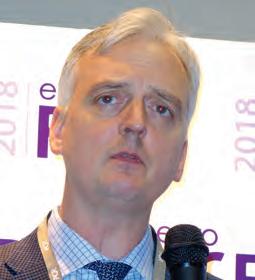
David E. Kandzari, MD, reported on the first 80 patients to complete 6 months of prospective follow-up in this ongoing international, single-blind, randomized trial of more than 400 patients with inadequately controlled hypertension on one to three commonly prescribed antihypertensive medications. Participants are being randomized to RDN via circumferential radiofrequency ablation using Medtronic’s Symplicity Spyral catheter or a sham control procedure. Although in this trial patients remain on their antihypertensive medications, an earlier randomized trial established proof of principle for efficacy in the absence of antihypertensive drugs.
In the real RDN group, 24-hour ambulatory blood pressure fell from baseline to 6 months of follow-up to a statistically significant and clinically meaningful degree: by 9.0 mm Hg systolic, compared with 1.6 mm Hg in controls, and by 6.0 mm Hg diastolic versus 1.9 mm Hg with the sham procedure. Similarly, office blood pressure fell by 9.4/5.2 mm Hg with RDN, compared with 2.6/1.7 mm Hg in controls.
Notably, 24-hour ambulatory systolic blood pressure was significantly lower in the RDN group around the clock.
“This may have important considerations with regard to pharmacotherapies with pharmacokinetic peaks and troughs in the early morning hours and late evening, or perhaps for groups with hypertension who are at especially high risk for cardiovascular events, such as those with nocturnal or early morning hypertension,” observed Dr. Kandzari, director of interventional cardiology and chief scientific officer at the Piedmont Heart Institute in Atlanta.
“This raises the concept of an ‘always on’ effect for renal denervation therapy that may be in distinction to
And speaking of adherence, a key feature of SPYRAL HTN-ON MED was that the trial incorporated periodic drug adherence monitoring using both urine and blood testing. The results, Dr. Kandzari said, were eye opening: At any given time, roughly 40% of patients in both study arms were nonadherent to their antihypertensive medications. Moreover, nonadherence was dynamic: It was not predictable for any single patient at any time point.
This 40% nonadherence rate was surprisingly high given that participants in SPYRAL HTN-ON MED were volunteers eager to participate in a non–drug treatment study and were informed up front that they would be undergoing adherence testing.
As in RADIANCE-HTN SOLO, no safety issues arose during follow-up in SPYRAL HTN-ON MED. The results were published simultaneously with Dr. Kandzari’s presentation (Lancet 2018 May 23; doi: 10.1016/ S0140-6736[18]30951-6).
One difference between the two technologies is that, unlike the ReCor Paradise ultrasound catheter, which ablates in the main renal arteries, the Medtronic radiofrequency device is placed in the side branches.
Asked whether he sees RDN, provided it is established as safe and effective, being used primarily in hypertensive patients who are on or off medication, Dr. Kandzari replied that his personal view is it will have a role in both. Some patients would prefer not to take drugs. For others with uncontrolled hypertension despite multidrug therapy, RDN could serve as adjunctive therapy that reduces their need for medication.
Unanswered questions
Additional studies of both technologies are ongoing, and pivotal large phase 3 trials are being planned, with results expected in the next year or 2.
Asked if regulatory agencies are going to require large, long-term trials with hard cardiovascular endpoints as a condition for approval, Dr. Mauri said a strong case can be made for bypassing this step.
“Blood pressure is remarkable,” she replied. “It’s one of the strongest surrogate endpoints that we have in the medical literature. It’s supported by multiple randomized trials of antihypertensive therapies, which have shown
that reductions in blood pressure are associated with reductions in mortality from cardiovascular events. That’s really the gold standard for a surrogate endpoint. So I think it’s convincing. That being said, I would be very interested to also see hard endpoints in the long term, but that will take time.”
And time is a luxury in light of the escalating global hypertension pandemic. Dr. Mahfoud noted that it’s estimated that in 2015, 950 million people around the world had a systolic blood pressure in excess of 140 mm Hg. By 2025, that figure is expected to climb to 2.5 billion people. The Centers for Disease Control and Prevention estimates that more than 360,000 deaths per year in the United States have hypertension as the primary or a contributing cause. Blood pressure control rates remain unacceptably low, in the 50% range. Nonadherence is high. So there is a pressing unmet need for new forms of treatment.
Dr. Mahfoud cited three major remaining research priorities for RDN therapy. There is a need for some form of intraprocedural feedback to inform the interventionalist while still in the catheterization lab that the denervation is successfully completed. A reliable predictor of response is desirable so that likely nonresponders to RDN aren’t needlessly exposed to the procedure. And of course, the sustainability of benefit for RDN requires longer-term study.
Dr. Kandzari reported receiving institutional research support and consulting fees from Medtronic and several other medical device companies. Dr. Mauri reported receiving institutional research support from ReCor and other device companies and serving as a consultant to ReCor and Medtronic; in addition, she has accepted a position as a vice president at Medtronic to begin in September. ■ bjancin@mdedge.com

BY MICHELE G. SULLIVAN MDEDGE NEWS FROM THE LANCET
Deaths from abdominal aortic aneurysm among Swedish men are going down – but not because they’re being screened for the potentially fatal condition.
Although the death rate has decreased by 70% since the early 2000s, screening only saved 2 lives per 10,000 men screened. It did, however, increase by 59% the risk of unnecessary surgery, Minna Johansson, MD, and colleagues wrote in the Lancet.
“Screening had only a minor effect on AAA mortality,” wrote Dr. Johansson of the University of Gothenburg (Sweden). “In absolute numbers, only 7% of the benefit estimated in the largest trial of AAA screening was observed. The observed large
AAA continued on page 18
The study by Johansson et al. indicates a significant risk of overdiagnosis associated with routine screening for abdominal aortic aneurysm: Those risks may not be as clinically harmful as might be assumed, Stefan Acosta, MD, wrote in an accompanying editorial (Lancet 2018;391:2394-95).
“Although I agree that having a small AAA that needs long-term follow-up might be associated with negative psychological consequences, there could also be a window of opportunity [e.g., with statins, antiplatelet therapy, and blood pressure reduction], for individuals with increased burden of cardiovascular disease. Indeed, screening for AAA,
peripheral artery disease, and hypertension, with the initiation of relevant pharmacotherapy, if positive, reduces all-cause mortality and some evidence suggests that this approach of multifaceted vascular screening instead of isolated AAA screening should be considered.”
Dr. Acosta is a vascular disease researcher at Lund (Sweden) University. He had no financial disclosures.
When performed according to the established criteria for elective AAA surgery, the procedure is associated with less than 1% postoperative mortality, “mainly because of wide implementation of endovascular aneurysm repair, a minimally invasive method.”
The 6-year follow-up time, as the
Also available at MedJobNetwork.com



authors noted, is relatively short. A 2016 review of the Swedish Nationwide Abdominal Aortic Aneurysm Screening Program determined that significant mortality benefit could take 10 years to materialize (Circ 2016;134:11418).
The full impact of Sweden’s remarkable decrease in smoking is almost certainly making itself known in these outcomes – smoking is implicated in 75% of AAA cases.
“The decreased prevalence of smoking in Sweden, from 44% of the population in 1970 to 15% in 2010, should be viewed as the main cause of the decreasing incidence and mortality of AAA.”

Englewood Hospital and Medical Center is seeking a graduating or recent fellowship trained vascular surgeon.
Our program was established by renowned Dr. Herbert Dardik and is nationally recognized for its research, training, and innovation. Led by Chief of Vascular Surgery, Dr. Thomas Bernik, specializing in arterial disease, the team is rounded out by Dr. Steve Elias who manages venous disease. Join the team of three vascular specialists of MD Partners, our rapidly growing Medical Group, consisting of over 400 providers in 85 locations. The Vascular Surgery practice is experiencing rapid growth in both patient volume and complexity of arterial and venous procedures. The appropriate candidate will enhance vascular care utilizing the most advanced, minimally invasive
techniques. Two fully integrated hybrid operating rooms are on site. Along with clinical responsibilities, the candidate will function as part of the wound care center, vascular laboratory, and vascular fellowship, with opportunity for leadership roles in the above areas.
We offer a competitive productivity based salary with the opportunity to grow uncapped compensation with a generous wRVU compensation model, full benets, malpractice insurance, and CME allowance. Located minutes outside New York City, Englewood rests in a sophisticated, suburban New Jersey setting that is literally surrounded by the cultural advantages of one of the world’s most exciting cities.
Candidates are welcome to submit a CV to: John Chung Physician Recruiter, john.chung@ehmchealth.org
201-608-2678

BY TERRY L. KAMPS
MDEDGE NEWS FROM THE JOURNAL OF VASCULAR SURGERY
Four preoperative variables – age over 76 years, creatinine concentration greater than 2.0 mg/ dL, pH less than 7.2, and lowest ever systolic blood pressure less than 70 mm Hg – predicted 30day mortality following repair of ruptured abdominal aortic aneurysms (rAAAs), in a retrospective study of 303 patients treated at Harborview Medical Center at the University of Washington, Seattle.
AAA continued from page 17
reductions in AAA mortality were present in both the screened and nonscreened cohorts and were thus mainly caused by other factors –probably reduced smoking. … Our results call the continued justification of AAA screening into question.”
In Sweden, all men aged 65 years are invited to a one-time ultrasound abdominal aorta screening. Most par-
Brandon T. Garland, MD, and his colleagues at Harborview, reviewed the data set of patients, noting 50% were aged older than 76 years and 80% were male. Many patients had typical vascular risk factors: 65% had hypertension, 39% had coronary
ticipate. Anyone with an aneurysm is followed up at a vascular surgery clinic, with surgery considered if the aortic diameter is 55 mm or larger. Dr. Johansson and her colleagues plumbed national health records to estimate the risks and benefits of this routine screening. The study comprised 25,265 men invited to join the AAA screening program in Sweden from 2006 to 2009. Mortality data were

hundreds of sessions for one year See those you missed, watch others again — even download materials
$199 for VAM attendees $499 for non-attendees
To purchase, visit vsweb.org/OnDemand18
artery disease, and 22% had chronic obstructive vascular disease. Patients who were treated for rAAA after 2007 and had preoperative computed tomography scans were assessed for endovascular
Predict continued on page 19
compared with those from a contemporaneous cohort of 106,087 men of similar age who were not invited to screen. Finally, the mortality data were compared with national trends in AAA mortality in all Swedish men aged 4099 years from 1987 to 2015.
A multivariate analysis adjusted for cohort year, marital status, educational level, income, and whether the patient already had an AAA diagnosis at baseline.
From the early 2000s to 2015, AAA mortality among men aged 65-74 years declined from 36 to 10 deaths per 100,000. This 70% reduction was similar in both screened and unscreened populations; in fact, the decline began about a decade before population-based screening was introduced and continued to decrease at a steady rate afterward.
After 6 years of screening, there was a 30% reduction of AAA mortality in the screened population, compared with the unscreened, translating to an absolute mortality reduction of two deaths per 10,000 men offered screening.
Screening increased by 52% the number of AAAs detected. The absolute difference in incidence after 6 years of screening translated to an additional 49 overdiagnoses per 10,000 screened men.
Looking back into the mid-1990s, the investigators saw the numbers of elective AAA surgeries rise steadily. In the adjusted model, screened men were 59% more likely to have this procedure than unscreened. The increased risk didn’t come with an equally increased benefit, though. There was a 10% decrease in AAA ruptures, “rendering a risk of overtreatment of 19%, or 19 potentially avoidable elective surgeries
per 10,000 men,” the team noted. “Sixty-three percent of all additional elective surgeries for AAA might therefore have constituted overtreat.”
The findings are at odds with large published studies that found a consistent benefit to screening.
“Compared with results at 7-year follow-up of the largest trial of
In absolute numbers, only 7% of the benefit estimated in the largest trial of AAA screening was observed.
screening for abdominal aortic aneurysm [Multicentre Aneurysm Screening Study (MASS)], we found about half of the benefit in terms of a relative effect and 7% of the estimated benefit in terms of absolute numbers [2 vs. 27 avoided deaths from AAA per 10,000 invited men]. Compared with previous estimates of overdiagnosis and overtreatment, we found a lower absolute number of over-diagnosed cases [49 vs.176 per 10,000 invited men] and fewer overtreated cases [19 vs. 37 per 10,000 invited men]. However, since the harms of screening decreased less than the benefit, the balance between benefits and harms seems much less appealing in today’s setting.”
None of the authors had any financial disclosures. ■ msullivan@mdedge.com
SOURCE: Johansson et al. Lancet 2018;391:2441-7.
aneurysm repair (rEVAR) based on infrarenal neck length and diameter and access vessel size. Noneligible patients and all patients treated prior to 2007 had open repair (rOR) surgery.
A primary screen of selected preoperative variables included age, hematocrit, systolic blood pressure values, use of cardiopulmonary resuscitation, pH, international normalized ratio, creatinine concentration, temperature, partial thromboplastin time, weight, history of coronary artery disease, and loss of consciousness at any time.
The four statistically significant associations were age over 76 years (odds ratio, 2.11; P less than 0.11), creatinine concentration over 2.0 mg/ dL (OR, 3.66; P less than .001), pH less than 7.2 (OR 2.58; P less than .009) and lowest ever systolic blood pressure less than 70 mm Hg (OR, 2.70; P less than .002) Each of the four predictive preoperative rAAA variables was assigned a value of 1 point. Individualized scores are simply calculated by totaling the number of preoperative risk predictors.
Of the original 303 patients, 154 were alive at 30 days following rAAA repair, and there was a significant benefit from using rEVAR. Overall, patients with 1-, 2-, 3-, and 4-point mortality scores had 30day mortality risks of 22%, 69%, 80%, and 100%, respectively. rEVAR mortalities dropped to 7% for a 1-point score and to 70% for a 3-point score. There were no 30-day survivors with 4-point risk scores regardless of whether they had rEVAR or rOR procedures.
The predictive risk scores for rAAA mortality outcomes provide helpful guides for patient care recommendations, and can be used to supplement the rOR-validated Glasgow Aneurysm Score, Hardman index, and Vascular Study Group of New England risk-predicting algorithms to “aid in clinical decision-making in the endovascular era,” the researchers wrote. The scores also add “prognostic information to the decision to transfer patients to tertiary care centers and aid in preoperative discussions with patients and their families.”
Dr. Garland and his colleagues reported that
they had no financial conflicts of interest.
SOURCE: Garland BT et al. J Vasc Surg. 2018 May 9. doi: 10.1016/j.jvs.2017.12.075.


The latest medical news for physicians from MDedge, delivered every weekday.
MAXIMIZE RADIAL SOLUTIONS TO PERIPHERAL CHALLENGES – INTRODUCING RADIAL TO PERIPHERAL (R2P™) by TERUMO From the leaders in radial access, Radial to Peripheral (R2PTM) is the first and only portfolio of longer-length radial devices specifically designed for peripheral procedures, including Above-the-Knee (ATK) and PAD/CLI vascular interventions.
With the introduction of R2P™, TERUMO continues to advance procedural solutions, enabling physicians to utilize a comprehensive radial to peripheral approach to perform more peripheral procedures for more patients:
• Optimize entry site management with Slender Technology™
• Enable the potential for quicker ambulation, improved patient comfort, and satisfaction
• May increase cath lab efficiencies and decrease overall costs per procedure
The R2P™ portfolio is comprised of:
• GLIDESHEATH SLENDER® Hydrophilic Coated Introducer Sheath
o 7/6 Fr Size
o 10 cm and 16 cm lengths
• R2P™ DESTINATION SLENDER® Guiding
Sheath
o 6 Fr Size
o 119 cm and 149 cm lengths
• R2P™ SLENGUIDE® Guiding Catheter
o 7 Fr Size
o 120 cm and 150 cm lengths
• GLIDEWIRE® Hydrophilic Coated Guidewire
o Straight, Angled, 1.5 mm and 3 mm J Tip
o 350 cm, 400 cm, and 450 cm lengths
• GLIDECATH® Hydrophilic Coated Catheter
o 4 Fr Size
o 150 cm length
• NAVICROSS® Support Catheters
o Straight, Angled
o 135 cm and 150 cm lengths
• R2P™ METACROSS® RX PTA Balloon
Dilatation Catheter
o 3-8 mm diameter x 20-200 mm length
o 200 cm shaft length
• R2P™ MISAGO® RX Self-expanding Peripheral Stent
o 6-8 mm diameter x 40-150 mm length
o 200 cm shaft length
o Coming in 2018—contact a TERUMO representative for availability
Indications
The MISAGO® RX Self-expanding Peripheral Stent is indicated to improve luminal diameter in symptomatic patients with de novo or restenotic lesions or occlusions of the Superficial Femoral Artery (SFA) and/or proximal popliteal
artery with reference vessel diameters ranging from 4 to 7 mm and lesion length up to 150 mm.
Important Safety Information
Do not use this device in pregnant patients or patients who may be pregnant, patients who exhibit angiographic evidence of severe thrombus in the target vessel or lesion site before/ after undergoing Percutaneous Transluminal Angioplasty (PTA) procedure, patients with contraindication to antiplatelet and/or anticoagulation therapy, patients with known allergy to nickel-titanium alloy, gold or contrast media, vessels in which there may be a residual stenosis of 50% diameter or larger in the target vessel after the planned intervention, a lesion that is within an aneurysm or an aneurysm with a proximal or distal segment to the lesion, a lesion through which a guide wire cannot pass. This device should only be used by a physician who is familiar with, and well trained in, Percutaneous Transluminal Angioplasty (PTA) techniques and stent implantation.
• TR BAND® Radial Compression Device
o Regular 24 cm and Long 29 cm
Discover what’s next in peripheral intervention--learn more at www.terumois.com/r2p
RX ONLY. Refer to the product labels and package insert for complete warnings, precautions, potential complications, and instructions for use.
©2018 Terumo Medical Corporation. All rights reserved. All brand names are trademarks or registered trademarks of Terumo. PM-00531

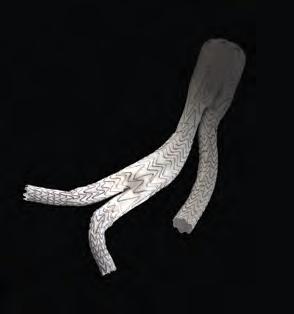
– Preservation Matters: Recommended treatment1,2 to sustain quality of life
– Advances Repair: All-In-One System with proven outcomes
– Performs as Promised: High patency3, conformability, and durability
– Complete Confidence: More than 20 years of aortic device experience 1,2,3 For the complete list of references, visit goremedical.com/IBE