

Vladimir Kara-Murza on surviving prison pg.10









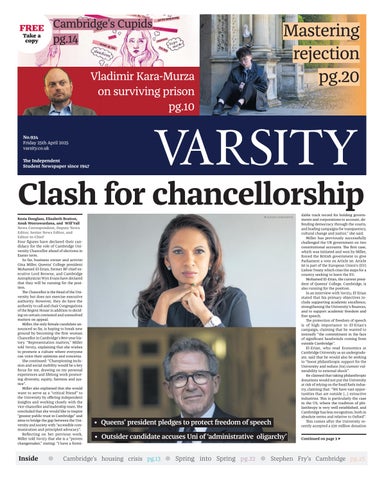
Kezia Douglass, Elizabeth Bratton, Anuk Weerawardana, and Wilf Vall News Correspondent, Deputy News Editor, Senior News Editor, and Editor-in-Chief
Four gures have declared their candidacy for the role of Cambridge University Chancellor ahead of elections in Easter term.
So far, business owner and activist Gina Miller, Queens’ College president Mohamed El-Erian, former BP chief executive Lord Browne, and Cambridge Astrophysicist Wyn Evans have declared that they will be running for the position.
e Chancellor is the Head of the University but does not exercise executive authority. However, they do have the authority to call and chair Congregations of the Regent House in addition to deciding on certain contested and unresolved matters on appeal.
Miller, the only female candidate announced so far, is hoping to break new ground by becoming the rst woman Chancellor in Cambridge’s 800-year history. “Representation matters,” Miller told Varsity, explaining that she wishes to promote a culture where everyone can voice their opinions and concerns.
She continued: “Championing inclusion and social mobility would be a key focus for me, drawing on my personal experiences and lifelong work promoting diversity, equity, fairness and justice”.
Miller also explained that she would want to serve as a “critical friend” to the University by o ering independent insights and working closely with the vice-chancellor and leadership team. She concluded that she would like to inspire “greater public trust in Cambridge” and aims to bridge the gap between the University and society with “accessible communication and principled advocacy”.
Re ecting on her previous work, Miller told Varsity that she is a “proven changemaker,” stating: “I have a formi-
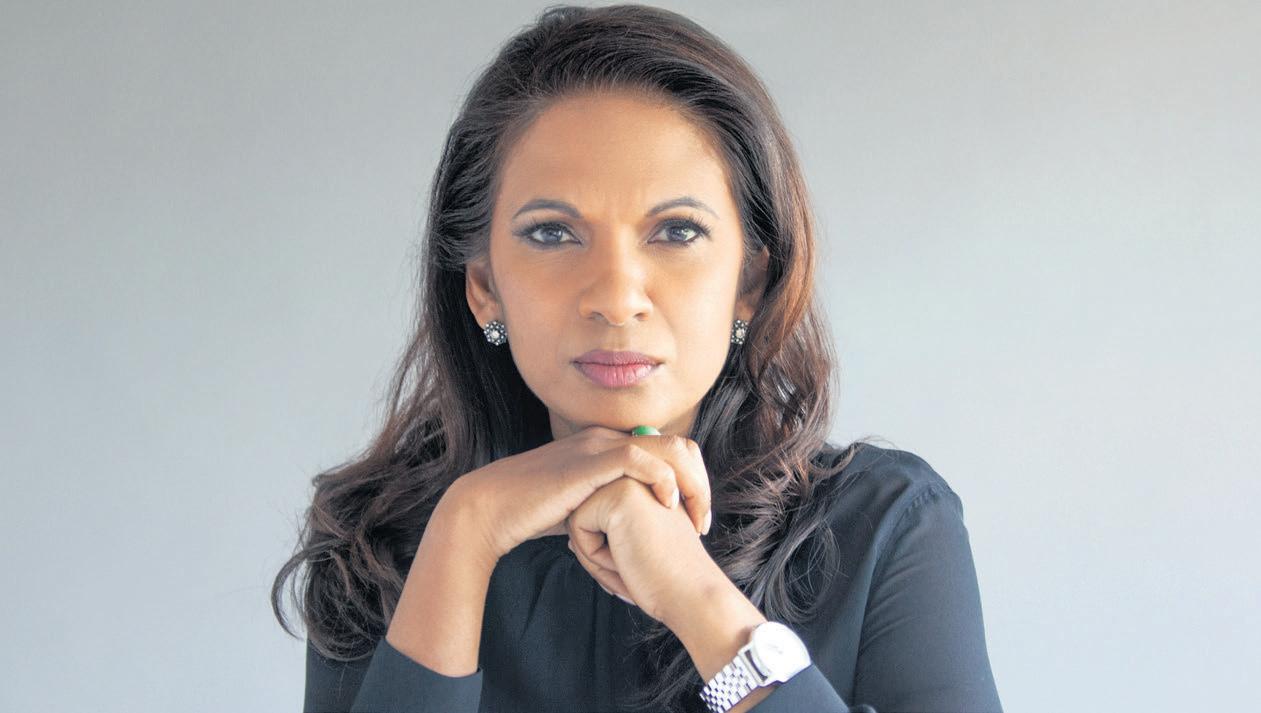

dable track record for holding governments and corporations to account, defending democracy through the courts, and leading campaigns for transparency, cultural change and justice,” she said.
Miller has previously successfully challenged the UK government on two constitutional accounts. e rst case, which was initiated and won by Miller, forced the British government to give Parliament a vote on Article 50. Article 50 is part of the European Union’s (EU) Lisbon Treaty which cites the steps for a country seeking to leave the EU. Mohamed El-Erian, the current president of Queens’ College, Cambridge, is also running for the position.
In an interview with Varsity, El-Erian stated that his primary objectives include supporting academic excellence, strengthening the University’s nances, and to support academic freedom and free speech.
e protection of freedom of speech is of high importance to El-Erian’s campaign, claiming that he wanted to intensify “the commitment in the face of signi cant headwinds coming from outside Cambridge”.
El-Erian, who read Economics at Cambridge University as an undergraduate, said that he would also be seeking to “boost philanthropic support for the University and reduce [its] current vulnerability to external shock”.
He claimed that taking philanthropic donations would not put the University at risk of relying on the fossil fuels industry, claiming that: “We have vast opportunities that are outside […] extractive industries. is is particularly the case in the US, where the tradition of philanthropy is very well established, and Cambridge has less recognition, both in absolute terms and relative to Oxford”. is comes after the University recently accepted a £20 million donation

With Easter Term comes uncertainty. Exams, elections, and endings are upon us. For many, this is the last term we will spend in Cambridge, bringing about mixed emotions. Saying goodbye to people, a city, and for some, a degree, is a daunting prospect, but one that is cushioned by the prospect of pastures new. It’s normal to be scared of the future. But we should cherish moving on and making the most of a new opportunity. But before we say goodbye we have memories to make and achievements to celebrate, be it going on that blind date (pg.14), or winning the Boat Race with friends (pg.32). Many years down the line, we’ll be re ecting on our Cambridge with rose-tinted glasses, perhaps having followed in the footsteps of prominent Cantabs such as Stephen Fry (pg.25), or former society hacks (pg.18). Hence the importance of committing to our own term time traditions (pg.21) so that we too may look back on our time here with a smile.
We’ve written a lot about Cambridge going through a time of change in our editorials. e Chancellorship election (pg.1) is a better symbol of any than a sea change at our University. As candidates pitch their visions for the future of this institution, we are reminded of all the amazing achievements and discoveries that have occured and will continue to occur within these ageing walls.
Students and sta will continue to think outside the box, remaining at the forefront of technological innovations (pg.16) and political discourses (pg.6). Hopefully, those of us moving beyond Cambridge will continue to perform this work in the wider world, using the les-
sons we have learned here (pg.20) to continue to push for change (pg.13) as we seek to improve the world we will enter.
In vacating the Editor’s chairs, we’re both letting go of something that has de ned much of our University experience. We’re letting go of hours spent in a dingy o ce with people we will call friends for life, pulling together to get the paper to print. We’re letting go of a newspaper which has allowed us to make our mark on Cambridge. And we’re letting go of something that we’ll
reminisce on in the future when we cling to our University days. It’s a scary prospect. But more than anything else we’re excited to see where a brilliant group of people take this newspaper next.
Want to share your thoughts on an article? Send us a letter to letters@varsity.co.uk
Commodi cation continues
In response to ‘Cambridge’s tourism risks commodifying students’ (18/04/2025)
Dear Varsity,
After three straight nights partying in May Week 1968 I fell asleep in the bath in New Hall wearing nothing but plastic rollers. I jolted awake to find 3 Japanese women tourists in the bathroom photographing me and roaring with laughter! “Commodification” of Students is not new!
Jane Ridley
New Hall (MurrayEdwards), alumna
How to heal reviews
In response to ‘The Healing Room takes you on an (overly) complex journey’
Dear Varsity,
Whilst the review makes a few interesting points about an imperfect script, its structure is jumpy and focused on strange speci cities (i.e. the mispronunciation of an esoteric term in one scene). It does the cast a gross disservice by discussing their acting performances in only two lines, failing to name all cast members and crucial members of the production team. is
is not a dig at the reviewer – just a plea to Varsity to please teach their eatre reviewers how to structure their pieces to maintain integrity and provide fair, nuanced criticism of objectively imperfect student theatre.
Madeleine Whitmore
Lucy Cavendish, English
Tripos triumph
In response to ‘Uni to ‘review’ tripos rankings and weekend lectures in undergrad teaching overhaul’ (10/04/2025)
Dear Varsity, May I commend Varsity’s reporting on new reforms to alleviate “selfimposed competitive pressure” among students (10/04). This story was picked up by the national press, allowing me the opportunity to air a longstanding bugbear in The Sunday Times: that Oxbridge should embrace coursework and a less pressurised work environment in order to better reward genuine scholarship.
As a student journalist in your position some ten years ago (I am unfathomably old), I mainly indulged in frivolous tittle tattle (my detractors may suggest this has not changed). It is
lovely to be reminded that students are engaging in proper journalism too.
Charlotte Ivers
Restaurant Critic and Columnist, The Sunday Times
Pembroke, alumna
AI appreciation
In response to ‘Summarise this article’ (21/02/2025)
Dear Varsity
Thanks Bibi Boyce for an interesting read; the piece about AI’s contributions to climate change was compelling. Some amazing statistics and projections were highlighted, and I praise the astute observation about comparing today’s speedy advancements in AI to the ‘space race’.
Despite no affiliation with the University, I’ve enjoyed reading some promising new journalism from bright, young minds juts on my doorstep. I’ll look out for future copies of the paper to ensure I keep hearing their perspective.
Jack Stevens
Cambridge local

Public transport palava
In response to ‘Cambridge is in a public transport crisis’ (21/03/2025)
Dear Varsity, Yes, this is why as a Girton student it has been difficult to take advantage of what opportunities Cambridge has to offer. If there is an event/talk at a certain time, It would be largely impossible for me to attend. The buses are simply to slow, unreliable, and have large gaps (so lots of waiting) between each other.
As someone who has struggled riding bikes so far, I choose to skip lectures for the most part due to finding travelling and coming back extremely inefficient. I opt for rewatching or note reading in my college. This of course means that the only time I get to spend little time with friends (who nearly entirely live in central colleges) throughout term.
Aitzaz Hassan Girton, Medicine
Due to a high volume of letters, not all can be published in print. All letters to the Editors will be published online as well as in print.
editors Sophie Denny &WilfVall editor@ varsity.co.uk
deputy editors MaddyBrowne&Isabella Steinmeyer deputyeditor@varsity.co.uk
vulture editors Sophie Ennis & Ezra
Izer magazine@varsity.co.uk
news Hugh Jones & AnukWeerawardana (Senior); Elizabeth Bratton, Lili Fairclough, Charlie Rowan & Evie Selby (Deputy) news@varsity.co.uk
investigations leads Eleanor Dougan & Nick James investigations@varsity.co.uk
comment Elsie McDowell, Rosie Roberts, & Daisy Stewart Henderson opinion@ varsity.co.uk
features Georgie Middlemiss & Calum Murray features@varsity.co.uk
interviews Ethan Cain & Varun Ravikumar interviews@varsity.co.uk
science Ruby Jackson & Teymour Taj science@varsity.co.uk
sport Barney Blackburn & Joss HeddleBacon sport@varsity.co.uk
lifestyle Ellie-Mae Buckley & Loveday Cookson lifestyle@varsity.co.uk
arts Ben Birch & Madelaine Clark arts@ varsity.co.uk
fashion Maddy Gamble & Gina Stock fashion@varsity.co.uk
fashion shoot co-ordinator Holly Hardman
film & tv Ines Goes-Maliere & Daisy Simpson lmandtv@varsity.co.uk
music Daisy Bates & Ben Curtis music@ varsity.co.uk
theatre Bethinn Feeley, Zach Lonberg, & Milly Kotecha theatre@varsity.co.uk
photography editor Amika Piplapure
illustrations editor Jessica Leer
sub-editors Maya Kunchur (Chief) & Arjola (Lola) Sadikaj subeditor@varsity.co.uk
associate editors FelixArmstrong,Grace Cobb, Hannah Gillott, Alice Mainwood & Erik Olsson associate@varsity.co.uk
business manager Mark Curtis business@ varsity.co.uk
varsoc president Felix Armstrong president@varsity.co.uk
varsity board Dr Michael Franklin (Chairman), Dr Tim Harris, Michael Derringer, Mark Curtis (Company Secretary), Felix Armstrong, Hannah Gillott, Hugo Gye & Erik Olsson-Ferrer (Directors), Lotte Brundle (Guest) & Zoah Hedges-Stocks (Guest)


Continued from front page from the oil magnate Majid Jafar to support the building of a children’s hospital, prompting accusations of “sidelining ethics” from senior academics.
El-Erian has been backed for the position by more than 230 supporters including former prime minister Gordon Brown, former BBC newsreader Emily Maitlis, and actor Stephen Fry.
Maitlis stated that in addition to ElErian’s “academic brilliance,” he also has “a real understanding of the human soul”.
“Whether with students, colleagues, or the wider public I have admired his genuine curiosity for the welfare of others,” she continued.
Stephen Fry has also praised the candidate’s “high sense of the pastoral, academic and administrative roles”.
Lord Browne, the former CEO of BP, who announced his candidacy last week, emphasised his relationship with Cambridge as a University and a city, stating
that “Cambridge is not only my university, but also my home”.
Browne listed a plethora of reasons for why he is running for Chancellor, the main being to safeguard the University’s reputation and core values, to help it build a vision for the future, to ofer strategic counsel, and to represent and fundraise for the University.
Speaking more on his vision for the future, Browne expressed concerns over “intellectual freedom” being “threatened,” adding that it should be “preserved for the future”. Browne also stated that EDI Laws are being threatened by “people saying [it] is getting in the way of merit”.
“I don’t think it’s getting in the way of merit. If anything, it’s opening up the aperture for more merit,” he said.
Browne also claims that the University has to engage with key issues such as “climate change, energy, and artiicial intelligence”. He explained that Cambridge, “where all these things are studied, researched, and taught at a high
level, is exactly the place where these things can be developed for the future”.
Earlier this year (26/02) BP announced it will cut its renewable energy investments by more than £3.9bn and instead pivot to increasing oil and gas production by around 20% to about £7.9bn a year. his company explained pressure from investors unhappy with its proits as the primary reason for the change.
Browne was the CEO of BP between 1995-2007, but claims he was the “irst person running an oil and gas company” to say that these companies are “part of a problem called climate change, and we should be part of the solution”.
He has since been vocal on the renewable energy transition and founded the private equity fund Beyond Net Zero. Browne stated the importance of being able to see “both sides of the equation”.
“We can’t turn of [fossil fuels] immediately, but we have to move to eventually replace them,” he said.
he third candidate running for the position of Chancellor is Cambridge As-
trophysicist Wyn Evans.
Evans has pledged to review how jobs are created and retained at the University and to review various aspects of University management, including transparency and performance.
Evans told Varsity that he wants to move the University away from being an “administrative oligarchy” and “return the University to what it once was,” namely a “self-governing community of scholars”.
Evans promises to conduct a “thorough review of job creation and retention trends,” adding that the University needs to create new academic positions for young researchers, if it is to “maintain its international standard”.
Among Evans’ plans is the introduction of Cambridge’s own version of Edinburgh University’s ‘Chancellor’s Fellowship’.
Another issue which Evans hopes to address is the “increasing casualisation” of staf which he believes is worsened by the number of staf on ixed-term contracts. He alleges that many staf members, who make a “very signiicant contribution to teaching and research,” face “poor” pay, conditions, and promotion prospects. his is something Evans is seeking to “reverse”.
When asked whether he is concerned about coming up against well-renowned names in the elections, Evans replied: “I’m sure the University will have found a candidate who is very distinguished and very famous, but they won’t necessarily know what the problems of Cambridge University are at the moment.”
he Chancellor is the University’s formal and ceremonial head. he current Chancellor is Lord Sainsbury of Turville. Sainsbury was elected the Chancellor of the University by the Senate in 2011, and ceremonially installed as Chancellor in the Senate-House in 2012.
he elected candidate will partake in public-facing activities, fundraising, and in providing advice to senior members of the University.
However, the Chancellor does not exercise executive authority and is typically seen as a symbolic position. When asked about the Chancellor’s purpose Miller agreed that the role is “traditionally ceremonial,” but added that “it can and should be much more”. “Symbolism, when wielded with authenticity and courage, is not supericial,” she said.
She continued: “A Chancellor should use their proile, connections and networks to support strategic fundraising for scholarships, access initiatives, and frontier research addressing the world’s greatest challenge.”
Browne stated that he believed that non-executive roles are about “advice and counsel” as opposed to “running an organisation,” adding: “you are very often actually quite invisible in what you do”. At the same time he acknowledges the importance of “building relationships,” and the capacity to fundraise, as Chancellor.
He added that although he spent the irst half of his career in “very senior executive positions,” the last 20 years in “non-executive positions” has prepared him for the role of Chancellor.
El-Erian seemed to disagree with the ceremonial nature of the role. “I’m not running for the prestige and I’m not running for the ceremonial aspects,” said El-Erian, adding that if elected, he would be “an engaged, inclusive Chancellor”. his year marks the irst time in the history of the University’s Chancellorship elections that voting can be conducted online. All candidates appeared happy with the change claiming that the online vote makes the process more democratic.
Wilf
Vall Editor-in-Chief
he University of Cambridge’s disciplinary body held zero hearings for cases of sexual misconduct in 2024. his means no accused person faced “serious sanctions,” including expulsion from the University, for their actions in this time.
Freedom of Information Requests show that the Oice of Student Conduct, Complaints and Appeals (OSCCA) – the University’s disciplinary body – held zero disciplinary committee meetings for sexual misconduct in Lent, Easter, and Michaelmas term last year. During this time the body received eight reports of sexual misconduct.
OSCCA is the University’s central disciplinary body for complaints, the review of examination results, itness to study, harassment, and sexual misconduct. In cases of sexual misconduct it can hand out minor sanctions without a hearing – which are authorised by a student discipline oicer (SDO). For a student to face serious disciplinary sanctions, such as being temporarily or permanently withdrawn from the University, a disciplinary committee meeting must be held.
Minor sanctions without a hearing for sexual misconduct can include the perpetrator attending a consent course or writing a letter of apology to victims.
While OSCCA deals with both academic misconduct and non-academic misconduct, its role in academic misconduct is largely to provide procedural advice unless a complaint reaches a disciplinary committee.
OSCCA’s remit for disciplinary actions falls under “sexual misconduct,” with more serious allegations, such as sexual assault or rape, intended to be dealt with by the police. Victims of potential sexual assault claimed they were applauded for choosing the supposedly “kinder” process of reporting through OSCCA.
Last year (19/01),Varsity reported on allegations that the Cambridge Colleges have “actively discouraged” students from reporting sexual assault allegations to the police, instead refering them to OSCCA.
A spokesperson for the University told Varsity: “here is no place for sexual misconduct at the University of Cambridge. While disciplinary action may vary depending on the circumstances of a particular case, we always take allegations seriously, providing support for those afected and clear systems for reporting incidents.”
hese indings have been criticised by activist group End Sexual Violence Cambridge who said: “Sexual misconduct encompasses sexual harassment, assault, and violence. However, based on the information we have gathered, the

University’s Oice for Student Conduct, Complaints, and Appeals did not give the opportunity for a single one of these cases of reported sexual misconduct to be heard by more than one person, or for sanctions beyond minor consequences to be administered following a hearing (should it be decided that it is more likely than not that a breach of the Rules of Behaviour occurred).”
hey added: “he investigation of sexual misconduct cases is often slow, intense and re-traumatising for those involved. Many reporting students desire to feel they have been listened to, understood and respected within the
process. By not ofering a hearing, not only may students feel the scope of justice is limited, but the opportunity for them to feel heard and wholly respected is once again compromised.”
“Whilst we understand that the University’s disciplinary process assesses potential breaches of the institution’s Rules of Behaviour, not criminal ofences allegedly committed, we question why sexual misconduct is still considered by the same system as other forms of misconduct, a system that in this context can have such devastating an impact on those involved. Please view our full statement and guidance for those af-
fected by these cases @endsvcambridge on Instagram,” they continued. Cambridge is also set to adopt new OfS regulations, which stipulate that universities must ensure “that investigations undertaken and decisions made in respect of incidents of harassment and/or sexual misconduct are credible, fair and otherwise relect established principles of natural justice”.
A spokesperson for the OfS told Varsity: “We know that harassment and sexual misconduct are signiicant issues for students, and our new regulation in this area seeks to ensure universities and colleges can better protect and support them.”
“From 1 August, all universities and colleges registered with the OfS must publish and maintain policies and procedures that set out the steps they will take to prevent and address harassment and sexual misconduct. his includes enabling students to report incidents, providing support for those afected, and letting students know how incidents will be handled. hey will also need to deliver understandable and evidencebased training for staf and students,” they added.
he University currently publishes an annual report summarising OSCCA cases, with the next report expected in Easter term.
Charlie Rowan
Deputy News Editor
Former Shadow Chancellor John McDonnell has urged Cambridge University to “support” postgraduate student Roshaan Khattak, amid claims that his research is being obstructed following alleged threats from the Pakistani state.
In an email sent to Wolson College President and also ddressed to vicechancellor Deborah Prentice, McDonnell expressed “grave concern” about the University’s response to threats against Khattak, whose research focuses on alleged human rights abuses in Balochistan, a con ict-ridden region of Pakistan.
“I urge both the College and the University to ensure all necessary security

precautions are taken to safeguard Mr Khattak and support his ongoing research,” the MP for Hayes and Harlington wrote. He warned that any curtailing of the student’s research or “yielding to intimidation” would embolden those behind the threats.
is comes after Varsity reported that Khattak received a threatening message on X in December.
e message warned: “Don’t forget even Cambridge and [the] UK is not safe. For them they can get anywhere… Don’t be stupid.” Police subsequently informed Khattak that the perceived threat did not meet the threshold for a criminal o ence under malicious communications laws.
Khattak said he believed that this message was sent by an agent of the Pakistani Inter-Services Intelligence (ISI).
is threat came days after Khattak had arranged an online solidarity conference over the “enforced disappearance” of his cousin, Idris Khattak, in Pakistan in November and also in the same month he was asked to draft a bill in the UK Parliament on transnational repression by both Jeremy Corbyn and John McDonnell.
A spokesperson for Wolfson stated at the time: “ e College is and has been taking all steps toward resolving the situation, including ongoing conversation with the student.”
McDonnell’s recent email stated: “In recent years I have taken an interest in the human rights abuses taking place in Balochistan, including incidents of transnational repression […] Recent social media posts and news articles indicate that Mr. Khattak received threats in December last year and I am concerned that it appears he has not been a orded adequate security measures since then. is is especially alarming given that multiple human rights defenders, lawyers and experts have already raised serious concerns with the college.
“Moreover, Mr. Khattak feels his […] research is being hindered as a result. My fear is that any curtailing of Mr. Khattak’s research or yielding to intimidation would not only threatens academic freedom but may also embolden those behind these threats, potentially leading to more severe attacks or oppres-
sive measures in the future against the student and his family.
“I am certain that, given its reputation and history, Cambridge is well equipped to protect vulnerable students and uphold the principles of academic freedom. It is vitally important that his research into the critical issue of the Balochistan genocide must not be obstructed, regardless of any pressure from the Pakistani state.
“Many observers consider that his work could contribute substantially to reducing the incidence of genocidal crimes in Balochistan, underscoring the gravity of this issue for those seeking peace in the region. I therefore urge both the College and the University to ensure all necessary security precautions are taken to safeguard Mr. Khattak and support his ongoing research,” McDonnell continued.
Several organisations, academics, and campaigners have also written to the University seeking greater protection for Khattak.
Campaigner Peter Tatchell posted on X that he was “deeply concerned by reports that some people at Cambridge Uni are allegedly trying to block” Khattak’s studies. “Whether it’s negligence or bowing to Pakistani military pressure, academic freedom is at risk. I urge the university to protect the researcher & allow his [studies] to continue.”
Human rights lawyer Clive Sta ord
Smith OBE stated: “I am con dent that his [Khattak’s] work will be so impactful that it holds the potential to contribute meaningfully to the reduction of crimes against humanity during the ongoing genocide in Balochistan.”
Mary Lawlor, the United Nations Special Rapporteur on the situation of human rights defenders, posted in February: “Hearing disturbing news that human rights defender Roshaan Khattak, a [postgraduate] student at Cambridge University, has received online threats pressuring him to cease documenting human rights abuses against Pakistani activists including his cousin HRD Idris Khattak.”
e Cambridge University Amnesty International Society stated: “Recent communications suggest that he is being told that he can’t continue for his research […] We are especially concerned that these constraints may be the result of external pressure – potentially from the Pakistani government – combined with internal vindictiveness in response to Roshaan’s public requests for greater security.
“If his scholarly inquiry can be halted or sti ed, then crucial research – on race, empire, populism, climate change, or any number of pressing social issues –may also be endangered in the future,” they added.
Wolfson College was contacted for comment.












































































































Charlie Rowan and Elizabeth Bratton Deputy News editors
Cambridge students’ use of ChatGPT has increased by 14% since 2023, with over 60% of students admitting to have used the arti cial intelligence (AI) chatbot to assist with university work in a new survey.
A Varsity survey found that 61.3% of Cambridge students had used AI tools to assist with academic work. e survey, which received over 330 responses from Cambridge students, also found that 29.7% of students have used the AI chatbot to help with assessed work, such as coursework or exams.
is marks a signi cant increase from an investigation conducted two years ago, which found that 47.3% of students had used ChatGPT for academic purposes, and nearly one in ve had used it in assessed work.
61.3%
Percentage of students who have used ChatGPT to help with university work
Cambridge students are prohibited under University guidelines from submitting unacknowledged AI-generated content as assessed work. Attempting to pass AI-generated content o as their own work is considered to be academic misconduct, unless the assessment brief states otherwise. Guidance for non-as-



sessed work varies by department. e most commonly cited reason among students for using the tool was summarising texts, with 34.5% of respondents stating they had used the platform for this purpose. One student told Varsity: “Why would I read a 70 page article when ChatGPT can just sum it up for me in a paragraph or two?”.

Other popular reasons for enlisting the help of ChatGPT included requesting explanations of how to tackle questions, problems, or equations (28.5%),
revision (27.9%), and research






reported never using ChatGPT to assist with university work, 21% admitted to using it multiple times a day. 14.1% said they use the tool a few times a week, with 12.6% using it less than a few times a month.
36% of STEM students revealed that they use ChatGPT multiple times a day. is gure was much lower, at 12.2%, for humanities students.


However, others have acknowledged the potential bene ts AI tools like ChatGPT could bring.

One student told cerned by how widespread the use is. I think students have lost sight of the idea of learning how to think critically for yourself.” Another student remarked: “After dabbling with AI I realised I am much better


One student said: “It is a brilliant tool for generating new ideas and o ering alternative solutions when improvements to work are stagnating.” Another re ected: “It’s like Grammarly with extra is study comes just months after reported that the University recorded its rst-ever formal AI-related cases of academic misconduct in 2024.
One History student described having “a Black Mirror moment” when “a lecturer ‘simulated’ a convo [sic] between FDR [Franklin D Roosevelt] & Reagan in a lecture”.
Another student was blunt in their assessment of enforcement e orts: “ e University are daft if they think they can ever police it properly. ey’ll end up wasting a lot of money on detection software that’ll never be fully e ective.”



to the results of the survey, students taking STEM more likely to have employed the software for university work (74.7%) than students


subjects were reading humani-

o




Departments have responded to the software in various ways. Last year, the HSPS faculty announced that handwritten exams would replace online assessments for rst and second-year Sociology and Anthropology students, citing



ties (52.3%). For assessed work, 46.8% STEM students admitted to using ChatGPT, compared to



only 18.8% of hu-

While 34.5% of all students surveyed





34.5%
Percentage of respondents who have used ChatGPT to summarise texts




By contrast, English students were told in 2023 that AI could assist with tasks such as “sketching a bibliography” or “early stages of the research process,” provided it was done under supervisor guid-

A University spokesperson said: “A survey of 333 students represents around 1.4% of Cambridge’s student population. e University has strict guidelines on student conduct and academic integrity. A student using any unacknowledged content generated by arti cial intelligence within a summative assessment, as though it is their own work, constitutes academic misconduct – unless explicitly stated otherwise in the assessment brief – to be dealt with under the University’s disciplinary procedures. Students are permitted to make appropriate use of AI tools to support their personal study, research, and formative work, but it is recommended they discuss this with supervisors or lecturers, to understand how to best to engage with these tools.”






Charlie
Rowan Deputy News Editor
Campaigning has begun for next month’s local elections, in which two students and ve sta members at the University of Cambridge are standing.
e two students running in the Cambridgeshire County Council election on 1 May are both members of the Green Party. Among the sta members, three are Labour members, and two are Greens.
However, two City Council by-elections are also being held this year, in the East and West Chesterton wards, following the resignation of former councillors Sam Carling and Alice Gilderdale.
Currently, the Liberal Democrats are the largest party in the County Council with 23 councillors, followed by the Conservatives with 21 councillors. Labour has ten councillors and there are seven independent councillors. e Conservatives lost control of the County Council after the last election in 2021.
e County Council is responsible for providing a number of services across the county, including highway maintenance, adult and children’s social care, education, and running libraries.
Esmé Hennessy and Chloe Mosonyi are the two students standing for the Green Party, with the former running in Market and the latter in Trumpington. Both candidates have made environmental and housing issues central to their campaigns.
Running against Hennessy in Market is the incumbent Labour County Councillor Nick Gay, Professor of Molecular and Cellular Biochemistry and a Fellow at Christ’s.
Churchill College Alumni Officer Elizabeth McWilliams is standing for Labour in Castle. Yvonne Novis, Head of Science Information Services at the University Library (UL), is running for Labour in Newnham.
e two University sta standing for the Greens are Hannah Charlotte Copley (Chesterton), MRC Clinical Research Training Fellow at Addenbrooke’s, and Peter Rees (Newnham), History of Innovation Project Archivist at the UL. Copley is also running in the City Council by-election for West Chesterton ward.
Cllr Nick Gay Labour, Market
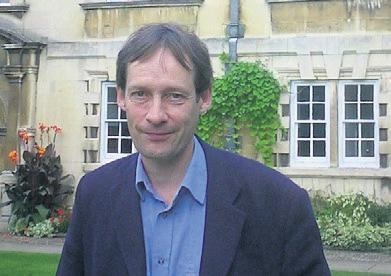
“I am standing for re-election because I believe that local government has a central role to play in decarbonisation and climate change. Projects like Swa am Prior need to be rolled out at scale if we are to meet our climate goals. e establishment of GB energy by the Government provides the framework for delivering these ambitions [...] (see GB Energy). Projects underway include a proposed distributed heat network for central Cambridge and I am keen to be involved in their delivery.”
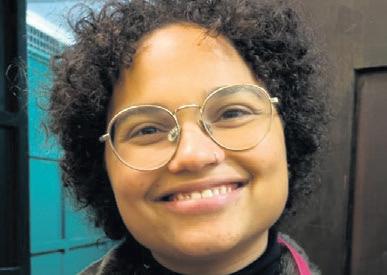
“I’m running [...] because we need more Green voices to advocate for a reliable and a ordable public transport network, genuinely a ordable housing, more rights for tenants, and to respond adequately to the climate crisis [...].Greens have the policies to challenge Labour, the Lib Dems and Conservatives on their poor response to the social and environmental challenges we’re facing [...] I want to join our existing elected Greens in building a positive and sustainable future for Cambridge”

“ e Greens are the fastest growing party in Cambridge, challenging the incumbents on environmental pollution, transport, and housing, the most important issue in Cambridge. As a student at Lucy Cavendish, I’m fully aware that we are not immune from this crisis [...] Yet the Lib Dem run county council and Labour run city council have both failed us on housing and the cost of living. [...] Local elections are often so close; this is our chance to elect a council which won’t fail on the key issues.”
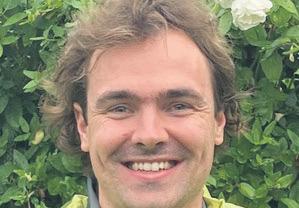
“I was shocked to learn that there are 61 County Councillors for Cambridgeshire and not 1 of them is Green. e authorities are not taking the climate seriously. It is the elephant in the room. Who is going to speak out? I have lived in Newnham for the past 23 years and have witnessed the e ects of the climate crisis here in Cambridge. I very much hope to make Green investment and growth of green spaces a priority for the County Council!”
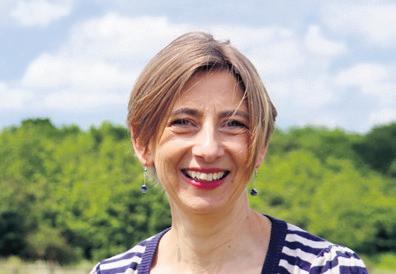
“I’ve been the Alumni and Events O cer at one of the colleges in the Castle area for over eight years. [...] I successfully argued for sick pay for probationary sta . As a Parish Councillor, I secured repairs for council tenants outside the City after the Lib Dem Council turned them down. I also successfully pushed that Council to sign up to the White Ribbon campaign [...]. I want to be a County Councillor to help solve problems, to serve residents and work with o cers to protect the best of Castle.”
Yvonne Nobis Labour, Newnham
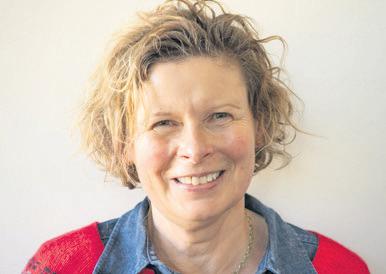
“I am standing for Labour in the County Council Elections as I am committed to equality of opportunity and I nd it galling that I live in one of the most unequal cities in the UK. I have skills in negotiation, publishing and communication. I am committed to the improvement of social care and all aspects of the education experience. I am a union caseworker, and specialise in equality and discrimination cases, including for our graduate student members.”

“I am standing for election as a Green Party candidate [...] to work towards a fairer, greener neighbourhood. I will ensure every decision made by the County Council and City Council has inequality and runaway climate change at the forefront. [...] I would work to achieve a safer more connected segregated cycle network in this area and safer routes for pedestrians, all council activities to be done with the minimum emissions, and investment in new low carbon infrastructure and [...] a ordable housing”
Charlie Rowan Deputy News Editor
Female academics at the University of Cambridge are now paid 13.2% less on average than their male counterparts, with the gender pay gap returning to its highest level in 2024 since 2019.
According to the University’s annual Equality, Diversity, and Inclusion (EDI) report, the median gender pay gap among central University academics went up by almost 3% in 2024 from 10.4% in 2023.
Although the gap fell from 13.2% in 2019 to 8.4% in 2022, the latest rise marks the second year in a row it has increased.
e median gender pay gap among other central University sta , both academic and non-academic, also increased, rising from 8.6% in 2023 to 11% in 2024.
A spokesperson for the Cambridge
University and College Union (UCU) told Varsity: “We are deeply disappointed to see this worrying trend of an increasing gender pay gap and we urge the University to take action to address it.”
“Our members have repeatedly highlighted to us how structural problems such as the University’s reliance on casualised labour and poor access to childcare facilities interact with more overt forms of discrimination to put women, disabled and BME sta at a disadvantage in terms of pay, pensions and career progression,” they added.
Nowsha Farha, the Students’ Union’s women’s o cer, told Varsity: “ e recent rise in the gender pay gap up to a post2019 high of 13.2% is concerning. ese gures highlight that while some progress may have been made in the past, it is important to maintain and sustain long-term positive changes through targeted, e ective and continued action.
“It serves as a reminder that progress
is not linear and we must ensure that changes are embedded into the attitude, culture, systems, structures and Policies,” Farsha continued.
In February, Varsity reported that the gender pay gap among Cambridge academics is 22.63% wider in the central University than in its colleges. On average, female academics at 19 responding colleges earn 10.32% more than their male colleagues, whereas in the central University, women earn 12.31% less than men.
e report also found that, among the central University’s six academic schools, the School of Humanities and Social Sciences recorded the widest gender pay gap at 11.66%, followed by the School of Technology at 10.35% and the School of Physical Sciences at 7.66%. Meanwhile, the School of Biological Sciences had the smallest gap at 5.18%.
Earlier this month, a report by the University’s Research on Research team
demonstrated that structural disparities –particularly in seniority and disciplinary distribution – drive gender imbalances in grant funding at Cambridge.
e study showed that women at Cambridge apply for around 10% fewer research grants than men, and when they do apply, their grant applications are on average 7% smaller in value. However, once academic seniority and departmental a liation are taken into account, these gender disparities largely disappear.
9%
more female-identifying students achieved a II.ii than males in part IB
e University drew up a global Gender Pay Gap Action Plan which commit-
ted to measures such as “diversifying recruitment, promoting exible working options, levelling roles and advertising them with pay ranges to increase transparency, and expanding our gender pay gap reporting in the locations where we have the numbers of employees to make such reporting meaningful” in 2023.
A report from the Higher Education Policy Institute found that women are less likely than men to achieve rst-class degrees at Oxbridge than at other universities due to “combative and confrontational” teaching styles, examinationbased assessments, and a lack of female representation.
According to the report, at Cambridge, theology had the largest rst-class degree attainment gap on average at Cambridge over the last decade, with a 20.6 percentage di erence, followed by Mathematics (20.1%) and Archaeology (15.7%).
e University of Cambridge was contacted for comment.
Elizabeth Bratton Deputy News Editor
A Cambridge professor was paid over $1 million by the FBI between 1991 and 2017 for his assistance to the U.S. Intelligence Community (USIC), according to recently published de-classi ed documents.
e documents reveal that the FBI used a Con dential Human Source (CHS) by the name of Halper to investigate potential ties between Russia and Donald Trump’s 2016 presidential campaign.
A 2016 payment request of $5,000 revealed that Halper had been “integral in the Cross re Hurricane investigation,” while a $25,000 payment request from the same year was labelled as being “for services performed on the Cross re Hurricane / Typhoon investigations”.
“Cross re Hurricane” was a counterintelligence investigation into potential links between Russian intelligence and members of Trump’s 2016 presidential campaign, with Cross re Typhoon being a sub-operation that formed part of the wider Cross re Hurricane investigation.
e report stated that the CHS had provided the FBI “with unique access to targets who are very di cult to gain access to” and had been “more than willing” to do “whatever [he] could do in order to assist the FBI”.
Halper was deemed to be “valuable on a variety of cases,” and it was recommended that he “continue to operate as needed”.
Halper is described in the documents as a “lifetime fellow at a prestigious overseas university” who “has also been involved in several U.S. presidential campaigns and is a published author of several position papers and books”. He is also identi ed as residing in Cambridge for several months of the year. No other individuals with the surname of Halper are sta members or students at the University of Cambridge. is matches Stefan Halper, a life
fellow at Magdalene College, who was revealed to have assisted investigations into potential Russian links to the Trump campaign in 2018. Halper was tasked with meeting Trump o cials as part of the operation. Halper was also an adviser to the Nixon, Ford, and Reagan administrations.
e declasi ed documents show that Halper, codenamed MITCH, received $1,181,064.44 from the FBI between 1991 and 2017.
Documents pertaining to the nature of Halper’s activities describe him as being “in an advantageous position to assist the USIC,” and as “assisting on a high
priority/sensitive investigation”.
One eld o ce annual source report described the CHS’ motivations for providing information to the FBI as “monetary compensation” and “patriotism/ideology”. His “behaviour” was described as “excellent”, stating that they had: “devoted signi cant time and energy to assisting the FBI in it’s [sic] goals.”
Halper has been criticised by RussianBritish Cambridge graduate Svetlana Lokhova, who claims he provided false information about her interactions with a member of U.S. intelligence at a dinner in Cambridge in 2014.
According to one report, the CHS claimed that Lokhova had “latched” onto then-U.S. National Security Adviser Michael Flynn at the dinner and travelled with him after the dinner. e report declared: “ e CHS stated that [he] is somewhat suspicious of Lokhova, as she has been a liated with several prominent members of his university.”
Lokhova has rejected the version of events in the documents.
Court documents also show that FBI Special Agent William Barnett considered the idea that “Flynn could leave an event, either by himself, or REDACTED” to be “not plausible”. is refered to a source’s report that Flynn unexpectedly departed from an event in 2014. “With
nothing to corroborate the story,” Barnett deemed the information provided by the source about the 2014 event to be “not accurate”.
Trump has coined the “Cross re Hurricane” investigation “Spygate” and claimed that it could be “one of the biggest political scandals in history”. Trump supporters allege that “Spygate” was a conspiracy, supported by the Obama administration to surveil and undermine his 2016 presidential campaign. Conservative news websites Just the News and e Federalist each published the dossier shortly after Trump ordered that documents relating to operation “Cross re Hurricane” be declassi ed on 25 March.
According to the FBI website, U.S. courts “have recognised that the government’s use of informants is lawful and often essential to the e ectiveness of properly authorized law enforcement investigations”. e bureau’s policy states that “special care is taken to carefully evaluate and closely supervise their use so the rights of individuals under investigation are not infringed”.
A spokesperson for the FBI told Varsity: “ e FBI has been providing documents to Congress.”
All relevant parties were contacted for comment.


July 27-August 8, 2025
St. Catherine’s College, University of Oxford
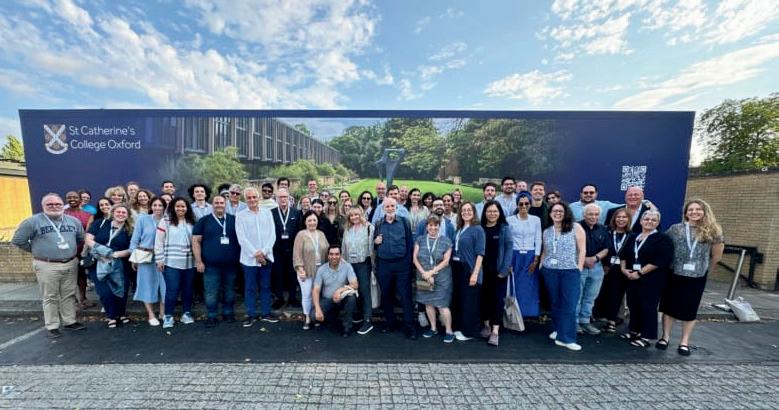
Applications are now open for the annual ISGAP-Oxford Summer Institute for Curriculum Development in Critical Contemporary Antisemitism Studies. Embark on a transformative journey at the ISGAP-Oxford Summer Institute, designed for those shaping the future of academia. Join us from July 27-August 8, 2025 at St. Catherine’s College, University of Oxford, and be at the forefront of critical discussions on antisemitism. Together, we will map, decode, and combat the current explosion of global antisemitism, contributing to the development of contemporary critical antisemitism studies as a recognized academic discipline.
Scholars-in-Residence: Submit your CV, a letter of intent, two letters of recommendation, and a letter from your home department’s Chair, Dean, or Provost. Recognizing the unique challenges since October 7th, if obtaining a formal letter from your home department to create a new course is not possible, please provide a letter demonstrating your commitment to integrating program insights into your existing courses.
Wiesel-King Jr. Scholars: Submit your CV, two letters of recommendation, and a concise project proposal that showcases your commitment to combating antisemitism, racism, and other forms of discrimination. Additionally, outline your plan for implementing the proposed project upon completion of the program.
Applications accepted on a rolling basis; apply early to secure your spot in this experience.
Fees: $2,500 USD – Scholars-in-Residence
$1,800 USD – Wiesel-King Jr. Scholars (includes cost of the program, two weeks of accommodation, daily breakfast, and weekday lunch)
Contact: Submit your application, inquiries, and expressions of interest via email to info@isgap.org with the subject heading “ISGAP-Oxford 2025”
Queen’s Veterinary School Hospital has launched a general practice providing 24/7 care and emergency support for the University’s furry friends. All registered animals will also have an important job: to help teach vet students. Four cats have registered with the service: Cheese, Toast, Chutney, and Beanies. Their owner, Charlie Le Vine, said: “The staff there are always friendly and welcoming from start to finish, and you can tell the vets genuinely love what they do.”
Christ’s College have secured a place in this season’s nal of University Challenge. Captained by Oscar Despard, who is studying for a PhD in molecular biology, the College resoundingly defeated Bristol University 220-50 on Monday’s (21/04) broadcast. e College has not made it to a nal of University Challenge since 1970. eir rival will be decided on Monday (28/04) as Darwin College, Cambridge, and Warwick University face o . Could we be set for an all-Cambridge nal?
A collection of Charles Darwin’s personal writings, many of which reside in Cambridge’s University Library (UL), have been recognised by the UNESCO Memory of the World Programme. e collection of his notes, photographs, diagrams, and letters totals over 20,000 documents, split over six UK institutions. e collection at the UL contains the former NatSci’s pocket notebooks, which detail the development of his theory of evolution. ey also feature the famed ‘Tree of Life’ diagram.
Researchers from the University of Cambridge and Fudan University in Shanghai have found that better sleep could bene t memory and heart rate, with just 15 minutes’ more sleep producing “di erences in brain structure and activity”. According to Professor Barbara Sahakian, “surprisingly little” was known about sleep in adolescence. e study suggested that young people could perform better in tests and have greater brain function if they go to bed earlier and sleep for longer.
ALL BOOKS FOR HOLDERS OF CAMBRIDGE UNIVERSITY AND CAMCARDS
SIMPLY PRESENT YOUR CARD IN STORE
WE ALSO STOCK A WIDE RANGE OF CAMBRIDGE RELATED GIFTS AND SOUVENIRS
Cancer support centre to begiven permanent home at Addenbrooke’s
A cancer support centre run by the charity Maggie’s is to be built on the grounds of Addenbrooke’s Hospital. Since 2012, the charity has run a temporary facility on Puddicombe Way. e new building, which is expected to open by 2028, is set to be two storeys tall, and be home to a kitchen, counselling room, dining area, welcome area, library, winter garden, and more. e Local Democracy Reporting Service stated that the city council approved the plans because of the “health and wellbeing bene ts” it would o er to the community.
Cambridge restaurants in the running for Deliveroo Restaurant Awards
Cambridge restaurants Ti n Truck, Hong Kong Fusion, Pizza 1889, House Authentic ai, and Luk ai at e Cricketers, have all been nominated for Regional Cuisine Awards for South England and Wales. Deliveroo customers will determine ve Regional Restaurant of the Year winners. e winners will then form the shortlist for Independent Restaurant of the Year, which will be judged by a panel of experts. On the panel will be Tilly Ramsay, daughter of Gordon Ramsay, Deliveroo CEO and founder Will Shu, and food critic Jimi Famurewa. Shu said: “ e Deliveroo Restaurant Awards is about championing the local restaurants who provide incredible selection and quality food in their communities.”
Cambridge named UK’s most sustainable city
A data tool used by real estate rm BNP Paribas Real Estate has determined Cambridge to be the UK’s most sustainable city, followed by Exeter and Bristol. Cambridge “stands out due to its strong environmental policies, e cient infrastructure, and high levels of access to open space”. e ranking considers sustainable lifestyle behaviours, local infrastructure, real estate environmental credentials, access to open space, and pollution/ emissions. Company researcher Josh Arnold said: “ e city’s commitment to green space preservation, sustainable transport, and long-term carbon reduction strategies continues to set a high benchmark for other locations.”
Nick James Investigations Lead
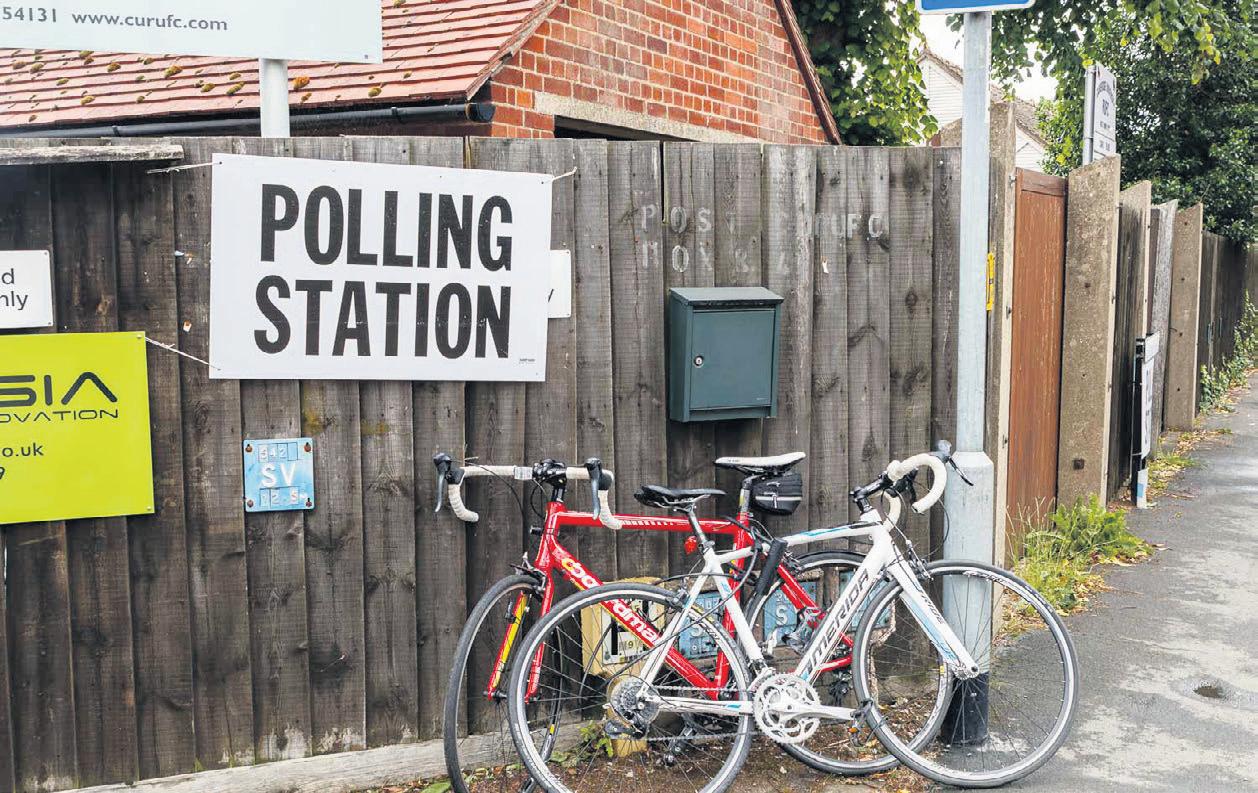
Six in ten Cambridge students intend to vote in the upcoming local elections, which is more than average, and the majority are voting for left-leaning parties, Varsity’s survey nds.
On ursday 1 May, Cambridge students will be able to vote for Mayor of the Cambridgeshire and Peterborough Combined Authority, as well as councillors for the Cambridgeshire County Council. ose in East Chesterton and West Chesterton will also vote in byelections for the Cambridge City Council.
Varsity’s survey nds that 57% of students intend to vote in these elections –more than the 41% turnout in Cambridge city for the mayoral election and the 3050% turnout in council wards with high student populations in 2021 – indicating a strong desire for students to express their views at the ballot box this year.
One student told Varsity that: “I’ll be
57%
Of students surveyed said that they intend to vote in the upcoming elections
voting in the local elections because, while they may not seem as permeative or heavyweight as national ones, local councils directly impact and modulate the places we live in – transport, housing, and funding for youth and cultural services. In the whirlwind of today’s political landscape, it’s easy to overlook how much of politics is quite literally infrastructure.”
He continued: “As a student in a city so often de ned by its university, it’s easy to feel detached from the wider community, but voting is a small way to stake a claim in a vast shared space and show we care about what happens to Cambridge beyond its role as an institution.”
Another student said: “I will denitely be voting in the local elections. I am always an advocate of utilising our right to vote, which is often especially
important in local elections where the turnout can be very low – and, therefore, your vote will likely have a signi cant impact.”
However, more than four in ten surveyed said that they would not be voting in the local elections, representing a lower average turnout rate than Cambridge witnessed at the general election in 2024.
One student told Varsity that: “As a third year, my time in Cambridge is coming to an end. So, to be honest, I’ve disengaged from Cambridge local politics, especially as these elections are just after the Easter vacation which I have spent at home.”
She added: “I wouldn’t vote in an election where I wasn’t properly informed and, as I won’t be living in Cambridge much longer after the election, in uencing local issues doesn’t feel right.”
Commenting on the gure, Esmé Hennessy, a Cambridge student who is running as a Green Party candidate for the county council in the Cambridge Market ward said: “It’s so important that students vote because the Labour-Lib
Dem County Council has very clearly been shown to take students for granted. Most of us only stay for three years, so they invest very little time and money into addressing our priorities. at’s why bike lanes are so poorly maintained, night time safety is inadequate, and student housing is so expensive.”
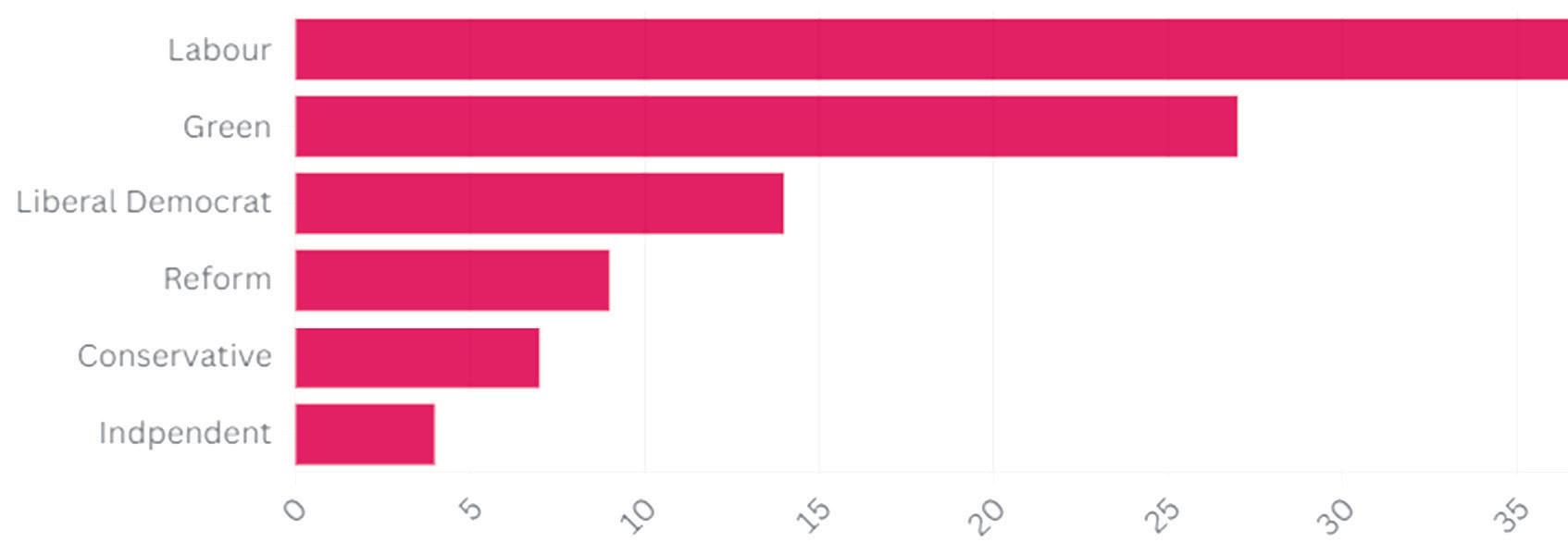
Varsity’s survey also found that of the students voting, the majority will lean left with Labour and the Green Party receiving 38% and 27% respectively.
Despite historical links between the University and the Conservative Party, they are currently the least popular major party according to Varsity’s survey, only receiving 7% of the votes compared to 9% for Reform and 14% for the Liberal Democrats.
Commenting on students’ voting preferences, Chloe Mosonyi, another Cambridge student running as a Green Party candidate for the county council in the Trumpington ward said: “Labour and the Lib Dems have failed to deliver in the ght against inequality and the climate emer-
gency. Momentum for change is building in Cambridge; the Green Party achieved a record vote share at the last General Election and has been gaining more seats locally than the other parties.”
Cambridgeshire County Council is currently run by a joint Liberal Democrat, Labour, and independent coalition, and has no Green councillors. According to another poll conducted by the Cambridge Independent, the County Council is likely to remain in no overall control.
e County Council is responsible for many important services that students rely on, including road maintenance, public transport, public health, and waste disposal.
Meanwhile, the mayoral election is set to be a close race with Labour set to lose the post to the Conservatives, according to e i Paper. Paul Bristow, former Conservative MP, is hoping to defeat local councillor and Labour candidate Anna Smith by focusing on themes including housebuilding and transport.

Oxford dons drank wine from slave woman’s skull
Oxford academics at Worcester College reportedly used a human skull, believed to belong to a 19th-century Caribbean slave woman, as a drinking vessel during formal dinners until 2015, according to a new book by Professor Dan Hicks. e skull, adorned with a silver rim and stand, was later repurposed to serve chocolates after it began leaking. e chalice was donated to the college in 1946 by George Pitt-Rivers, a known eugenicist and former student. Carbon dating suggests the skull is approximately 225 years old. e practice ceased in 2019 amid growing concerns, and the skull has since been archived respectfully.
University funding ‘not working,’ Canterbury vicechancellor says e vice-chancellor of Canterbury Christ Church University has said the current higher education funding model is “not working,” citing rising costs and changes to student visa rules. Professor Rama irunamachandran is calling on the government to increase tuition fees in line with in ation, noting they are now worth only two-thirds of their 2013 value. e University plans to cut up to 400 jobs, having already lost 148 through voluntary redundancy. It is also scrapping its English Literature degree due to low demand. Local UCU chair Craig Potter said the cuts have left sta in tears, while the University of Kent is seeking £20 million in savings and will phase out six courses, including philosophy.
◀ Percentage of students voting for each party in the upcoing local elections

Fire disrupts UK’s largest university ski trip
A re broke out earlier this month at La Muzelle, a major accommodation site for the University of Bristol’s annual ski trip to Les Deux Alpes, affecting over 500 students. e blaze, allegedly caused by a faulty heater placed too close to bedding, left many without lodging. While no injuries were reported, the incident led to signi cant disruption. Students faced challenges with reallocated accommodations, with some groups arriving to nd their new lodgings already occupied. Organisers, Wasteland Travel, worked to resolve the issues, but many students experienced delays and confusion.
Wilf Vall talks to the Russian dissident leader about his time at Cambridge and how it helped him survive solitary con nement
I’m not someone who is often lost for words. But, huddled in a secluded corner of the University Library Tea Room, I nd myself trying to think of how to start an interview that, by Vladimir Kara-Murza’s own admission, should not have happened. I’m grateful when he interjects with a warm suggestion: “Should we talk about Cambridge?”.
Kara-Murza studied history at Trinity Hall in 2000, but his involvement in the Russian dissident movement started before then. In 1999, aged 18, he was already working for the Democratic Choice of Russia party, advising stalwart Putin critic Boris Nemtsov. He would go on to serve as deputy leader of the People’s Freedom Party (one of the leading prodemocracy parties in Russia) and face two attempts on his life by Russian secret services, and then be inde nitely imprisoned in a high security Siberian prison over his opposition to the war in Ukraine. He was only released in a high stakes prisoner swap last year. Despite this, the dissident is keen to emphasise the importance of his time at Cambridge in shaping his trajectory.
“I think Cambridge is a really good launching craft for life, for professional career, just for everything really, it teaches you to be independent,” he remarks, reminiscing on the opportunities he had to de ne himself while at university. rough debates at the Union, running his College’s history society, and trawling the UL’s archives, Kara-Murza had a depth of opportunities to de ne himself at Cambridge. ere’s a depth of emotion in his voice reminiscing on his time here. “It’s always a little sad to come back here, a little nostalgic, because it just makes you realize how much time has passed.” But, he is quick to remind me that this is no ordinary visit: “It’s my rst time since prison […] I never thought I’d be back here again.”
❝ I never thought I’d be back here again
Of all the things he took from university, his education as a historian is what informs his activism. “I think if there is an educational background, an academic background, a profession that prepares you best for political life or participation in politics, this is history,” he asserts con dently. For Kara-Murza, historians know best “how the world works”. ey’ve studied the rise of dictators, the corruption of power, and most importantly “how the story ends,” especially in the case of his native Russia. is historical intellect “never came as

▲FREE
useful to me as it did when I was sitting in that Siberian prison,” he declares, “I always knew I was right”.
Kara-Murza was treated di erently to most prisoners in Russia. ose who chose to speak out against the regime are seen as “the most dangerous criminals, because we can ‘infect other people’s minds’ with thoughts and ideas as the regime sees it. ey’re probably right in this sense,” he remarks dryly. I’m taken aback as he calmly describes the conditions he endured. 11 months of solitary con nement in a cramped concrete cubic cell, with only one small window –recounting endless days where there is “nothing to do, there is nowhere to go, there is no one to speak to”. is treatment is a form of torture, he makes clear, because it strips away the most important aspect of our humanity: “I think it was Aristotle who said that we human beings are social animals, and we need human interaction, contact with each other, just as much as we need water to drink.” Without the comfort of socialising, Kara-Murza experienced his imprisonment as being “an e ort to remain sane”.
Even in this state, it was his education as a historian that, in Kara-Murza’s words, “stopped me going crazy”. He proudly recounts his studies of the Russian dissident movement’s history, reading their books, interviewing them for documentaries, and working alongside them. is distilled in him “invaluable advice” for surviving solitary con nement. “You have to nd something with which to ll your brain.”
Listing o his compatriots, he explains how famous dissident “Vladimir Bukovsky learned English when he was sitting in the Vladimir City prison. Latan Sharansky practiced his Hebrew. Soviet prisoners who were Roman Catholics learned Latin, I decided to learn Spanish.” He was painfully aware of the ab-
surdity of the endeavour “I never, never thought I’d be able to use Spanish in real life. At best, I thought if I do go crazy, at least I’ll be able to shout at walls in a perfect Castilian dialect!”, he jokes. But he insists learning kept him grounded, “I could tell myself that I’ve actually done something useful today.” Even in the worst conditions imaginable, KaraMurza found value in engaging his brain.
❝ Opposition is a term that belongs in democratic societies
Since his release, Kara-Murza has been organising against the Putin regime, working with fellow activists in order to organise an opposition movement. When asked about it, the rst thing he does is correct me, “I’m not sure that term opposition really plays anymore,” he points out sharply. “Opposition is a term that belongs to democratic societies […] in my country, people who oppose this regime are either murdered or imprisoned like I was.”
He’s keen to draw a line between a lack of opposition and support for Putin, claiming that “too many people in the West” buy into “Kremlin propaganda” that the Regime enjoys widespread support. He insists that “there are millions of people in Russia who oppose
this dictatorship, who oppose this war of aggression,” but this sentiment relies on “glimpses” of opposition. Kara-Murza dismisses opinion polls, TV debates, and elections in Russia as nothing more than a “circus full of a couple of hand-picked clowns” that act to legitimise Putin, but instead points to “glimpses” of resistance, of dissidence, from the Russian people.
Urging westerners to treat Putin as a dictator, Kara-Murza once again evokes history in a grim warning, when he recalls how “Putin was Putin from the very beginning […] but Western leaders on both sides of the Atlantic chose to turn a blind eye in hope of maintaining some sort of modus operandi with him on the international stage. It was appeasement. It was enabling,” reminding me again that we “have seen this story before”. is is where the thrust of KaraMurza’s concern lies; by treating Putin as a legitimate leader, the rest of the world forgets the people facing repression and violence – both Russian and Ukrainian. is is paramount in Kara-Murza’s view on settling the war in Ukraine –leaders must remember to “put people rst”. He discusses a campaign between Ukrainian and Russian human rights organisations to assure that settlements “include the provision for releasing all Russian political prisoners who are in prison because they spoke out against this war”. There’s serious personal weight for Kara-Murza in this, considering his “torturous” imprisonment. But it’s an issue far bigger than one person: “ ere’s hundreds more like me,” he points out. “We have more than 1,300 political prisoners in Russia […] And the fastest growing category on that list of political prisoners is people who have spoken out against the war in Ukraine […] they are captives of this war as much as anyone else, and they must not be forgotten.”








How did you feel when you were receiving so much online hate?
Mentally, I was unscathed, as the harsh criticisms of my work had no basis in reality, since they were based on the title and abstract of my thesis alone, and many of them were misreadings in any case. I was concerned by the scale of the vitriol, however. It was clear that the response went far beyond me as an individual.
Do you think it’s true that academics are detached from ‘the real world’?
I think the notion that academics don’t live in the real world is rooted in a misunderstanding of the precarity of academia as the sector continues to see funding cuts. Students and academics at institutions like Cambridge have access to resources that others don’t, but it is senseless making assumptions about a person’s background and lifestyle from the very limited information available to us online.
Do you think the internet is a net positive or net negative for humanity?
Part of the problem is that it is di cult for people to know who to trust on the internet. Certainly the internet can be a force for good and can facilitate the wide and free dissemination of accurate information, but it can also do the opposite, so I tend to put my trust in books where possible. at’s why I’m a really strong advocate for public libraries, which o er access to trustworthy resources regardless of income.
e criticism of your work reeked of anti-intellectualism. Do you think anti-intellectualism has worsened recently?
I think this is clearly the case, particularly in parts of the world where leaders are seeking to systematically undermine the credibility of academic institutions and control their output, such as the States. e internet is a global community and many of the vitriolic comments on my initial post were made by those from outside of the UK.
— MARIAM AL-BADRY


The school I went to in Glasgow is probably of the type that would be raised in debates on the impact of toxic masculinity on boys. Parts of its catchment area are highly deprived and there are issues with students’ behaviour. e city’s football rivalry, notorious for its association with sectarian violence, remains ever-present. e prevailing culture for young men is undoubtedly a highly macho one.
I’m thankful that I wasn’t a boy in that environment. But even so, I have witnessed far more overt misogyny at Cambridge.
In conversations about toxic masculinity with Cambridge students, a few key themes tend to emerge. ere’s an assumption that the young boys most prone to it come from impoverished backgrounds, where there is nothing better for them to do than watch hateful content online. Perhaps they live in broken homes, with fathers who are themselves misogynists. Football seems to come up again and again.
ese are all valid points. But, coming from those at a university where a disproportionately small number of students have backgrounds like this, they have the e ect of kicking the can down the road. e middle class intellectual poster child of a male Cambridge student is rendered immune. We are quietly asserting that misogyny and harmful male behaviours are just not our problem.
We’re willing to address the toxic masculinity that abounds from binge drinking fuelled lads culture in settings such as football games. But why aren’t we talking about all-male drinking societies at Oxford and Cambridge, where admission may be contingent on partaking in some debauched initiation, or


how many women a man has slept with? What of the notoriously bad behaviour of sports societies that seems to recur again and again? In the debate about the presence of toxic masculinity in schools, where is the discourse on the unique phenomenon that is all-boys schools? What of the impacts of attending boarding schools, in which male abuse has a notorious precedent on young boys? Surely it isn’t the case that a boy’s school won’t expose him to misogyny just because his parents pay fees for him to attend it. Social media is ubiquitous among teenage boys. e upper and middle classes cannot opt out of the toxic masculinity debate, even if they’re the ones debating it in parliament. ough I, for obvious reasons, didn’t attend an all-boys boarding school, studying at Trinity College, which is 70% male and home to many an alumnus of such schools, may be as close as I can ever come. Toxic masculinity certainly has a presence, but it looks di erent to what you might see at a football game in Glasgow. It’s inextricably linked to privilege and a belief in one’s own superiority, instilled in boys from an early age. It looks like young men mocking female academics, or talking over their female peers in supervisions, or seeking out drunken freshers as the targets of their advances. It tends to be directly correlated with entitlement, creating a distinctive strain of male bad behaviour. We’ve certainly paid the price for it, through years of allowing a Bullingdon Club culture to thrive in Downing Street. And yet we still struggle to talk about privileged toxic masculinity and its roots in speci c school and university environments.
Net ix’s Adolescence has drawn atten-
❝ We’ve certainly paid the price for toxic masculinity
tion to a harrowingly extreme variant of toxic masculinity. But it would be complacent for anyone to assume immunity from that phenomenon. We have established that the issue starts young, and that it is more-or-less endemic in our society. However, a lack of introspection remains among some sections of this society who, one can only assume, consider themselves too clever, or too well-raised, to be misogynists. We acknowledge the importance of diverse role models for young boys, for example. But the speci c role they can play
for boys brought up in educational environments that are exclusive by design
remains an important yet unanswered question.
Maybe it’s time to acknowledge that wearing a quarter zip rather than a football shirt doesn’t render a man immune from misogyny. Atrocious as online trends are, the attention they have drawn to the issue of toxic masculinity should highlight its engrained presence in our society, rather than framing it as a new import. is is a moment for all men to reckon with misogyny, yet it risks creating a new way of passing the buck.
Lockdown and online learning sent the world of university exams into an in nite and unsolvable crisis. Whether take home or in person, handwritten or typed, open- or closed-book exams are the best for students remains a topic of intense debate. Personally, I am probably inevitably always going to be saddened by whichever format my department chooses. I don’t wish to suggest that one exam format is better than the others. Afterall, we all work very di erently. My real problem is departments changing the formats of exams annually.
Both the English and HSPS departments announced earlier this academic year that they would be changing the format of their exams for multiple cohorts studying the undergraduate tripos. Last summer, the part IB English exams su ered severe technical disruptions from the Inspera software, which resulted in many students losing their work mid-exam. Inspera undeniably is the enemy of many Cambridge stu-
dents. I never anticipated, walking into my rst exam as a fresher, clutching my laptop in nervous anticipation, that I too would be cut out of my exam and lose a good amount of writing time, something which happened to a few of us. However, when part IB History exams were announced to be typed again this year, with the use of Inspera, it made sense to me. I am tested and familiar with how to revise and manage my time for this format of exams, whether I like them or not.
As Cambridge students, we are not a orded the most copious amount of time to revise. Many of us spend Easter Term, and the vacation period before, juggling projects, coursework, and continuing contact hours. And each exam format does require a distinct style of revising. I am well adapted to revising for a closed book and typed exam; I can type at a good speed and know I must spend a fair amount of time memorising things as I cannot rely on anything in the exam. However, the HSPS department
gave its students multiple online, openbook exams to complete in their rooms last year. is year, second year students were informed their exams would now be in person and online. is could well require many of them to have to drastically reorient their methods of studying and revising, methods they developed and tested last year with encouragement from the faculty.
e problem is not with in person or handwritten exams, but rather that departments should think carefully about implementing consistency from rstyear exams onward rather than dumping new formats on students in their second or nal years, when things actually count. Revising for an open-book and closed-book exam are two completely di erent processes and require a different assessment of how to use time, which is very limited. Unsurprisingly, a Cambridge degree has just been made harder once again.
Many of us have spent hours perfecting our skills for the exam formats we
❝ e problem is not with in person or handwritten exams
are used to, whether that’s timed handwritten essays to ensure faster writing or curating e cient notes to use in an open book. Discarding these things can be frustrating, especially when comparatively little notice is given. Painstaking hours of revision could ultimately end up devalued and discarded, making marks more precarious once again.
Concerns about technological problems and overuse of AI are a valid problem, one departments have clearly not managed to pre-empt or notice over the last few years of online and typed formats. Hopefully, changing exam formats mid tripos will not send too many of us scrambling back towards square one. But, inevitably, the sentiment has denitely been expressed by many.
While change is a natural thing, some of these decisions seem fundamentally unfair. e University should take the students and the demands made of them into account more often when making such decisions.


As I reach the nal term of my time here at Cambridge, I cannot help but look back on my last three years of (very different) college accommodation. When I compare each year, it appears to paint a much broader picture. e lessons we can learn from the city’s town and gown housing re ect broader trends in the UK’s housing market, and it’s time we paid attention to them.
I arrived as a fresher to the wonders of a 19th-century college room (even if the gyp was more suited to a Victorian gentleman who barely ever cooks his own dinner). Fast forward to second year, and my ballot group and I were in the distant reaches of the city – by which I mean a 20-minute walk. We were pestered by moths, but there was a sense of camaraderie in the face of our insect enemies. Now, in third year, we’ve lucked out with a kitchen table and a view of the Fitzwilliam Museum.
Regardless of the quirks of the Cambridge kitchen, we were extremely lucky. My sister’s rst year rent at another university is set to be nearly double what I paid in rst year. For those in her building, add in living costs, and even the maximum maintenance grant disappears in the blink of an eye. In that respect, a lot of us (accounting for inter-college disparities) are profoundly fortunate to have spent three years with reduced rents and shorter contracts. However, many colleges are also preparing us for the worst bits about UK housing, and are going for a hands-on ap-


proach rather than a theoretical warning. Last year, ve members of Trinity were left having to seek medical treatment after excessive levels of chlorine leaked into the water system. Only last term, Caius were threatened with legal action after a roof collapsed, an incident that followed weeks of insu cient communication and noise disruption. is is not to mention the nearly £3,000 rent disparity Varsity found between the most and least expensive average college rent.
Never again will I live in an Edwardian terraced house in the city centre without selling a part of my soul to a mortgage company. So, while I remain grateful for the temporary absence of a Faustian pact, I am still sceptical that Cambridge is doing all it can for the students who do not only study here, but live here. ese examples of colleges play-acting as negligent and uncommunicative landlords only reinforce the country’s wider crisis, when they could be at the forefront of events to mitigate it.
Landlords across the country are articially hiking rents, which are rising at a much higher rate than wages, creating the worst a ordability in a decade. Here, I’ve heard how some colleges ght to stay in the same spot in the accommodation price rankings, and so increase rent regardless of whether they need to. ey want to control exactly how a ordable, or not, they seem to applicants, even if it harms existing students.
When we look at the city beyond the colleges (and there isn’t much of it, which of course is a big part of the problem),
❝ We deserve dignity and fairness in our housing
27% of property buyers paid more than the asking price, compared to 20% in London. House prices have risen by 10% in ten years. New University developments in Eddington with a ordable
housing for sta are a promising start to solving the problem, but there are still persistent obstacles to construction due to limited water supplies.
e problems still embedded in the gownie housing system, in spite of its signi cant protections for students, are replicated in the local and national housing market. In fact, the colleges’ own arti cial rent market is not just reproduced in city housing, but is exacerbating problems thanks to its dominance of land and property ownership. Our three-year accommodation guarantees shouldn’t come at the cost of wider access to housing across the city. Nor should we become the recipients of college exploitation.
Like many landlords seem to forget, it is an immense privilege to have built up a property portfolio, to earn money from a possession rather than an occupation. And there aren’t many organisations who have hoarded as much property as Oxbridge colleges. ey must remember that students, and the other residents of a city that they seem to control, deserve housing that is fair to everyone and does not just cater to a private market. Wherever I live in the future, I can only hope to nd a landlord that both protects the fairness of their rents whilst also trying to keep pests or mould at bay. is may be a naïve pipe dream. But, I know I will remember my three years of accommodation here in Cambridge and try to hold onto the idea that we deserve dignity and fairness in our housing, regardless of who our landlord is.
If there’s one casualty of the culture wars we should all be worried about, it’s multiculturalism. Once seen as the promise of a fairer, more inclusive society, it’s now under siege. Dismissed as naïve idealism or a failed social experiment, we’re told it has run its course. But, if we care about building a society that actually re ects its diversity, we can’t a ord to abandon it. Saving multiculturalism doesn’t mean clinging to comforting slogans, it means reckoning with its tensions and reclaiming its democratic purpose.
At its core, multiculturalism is a balancing act, making space for cultural diversity while integrating minorities into a shared public life. Critics argue
these two aims pull in opposite directions. Is it not counterintuitive to insist on commonality while maintaining cultural di erence? I think it’s in navigating this tension that multiculturalism nds its strength.
As political philosopher Will Kymlicka argues, multiculturalism isn’t a retreat from liberal democracy but its expansion. Minority rights aren’t just about symbolic inclusion but enable people to participate as equals. at does, however, come with an expectation of civic engagement. is isn’t assimilation in disguise, instead being a democratic bargain. Without it, we risk two extremes: a society of isolated cultural siloes or an exclusionary nationalism that demands
assimilation at the cost of identity. is tension plays out in real time at Cambridge. e University prides itself on diversity with college prospectuses boasting about widening participation. Walk through Sidgwick Site and you’ll hear countless languages, or see cultural societies advertising their events. Yet, many students from minority backgrounds describe feeling like they have to adapt to an unspoken standard of belonging. ese underlying rules require a performance, a version of themselves that ts within a pre-existing framework.
is makes one thing clear: diversity on its own doesn’t equal inclusion. Multiculturalism isn’t just about representation, it’s about recognition. It’s about ensuring people don’t just exist in a space but actually belong in it, being able to express their identities without it being conditional on how palatable they are to the mainstream.

Multiculturalism prides itself on inclusion, but inclusion is rarely unconditional. Minority cultures are accepted, but often only within the ideological framework of Western civic ideals. is might seem neutral, but it isn’t. No version of multiculturalism is completely pluralistic because every society, whether it admits it or not, draws boundaries around what it considers acceptable di erence.
The real question isn’t whether assimilation happens
Every call for inclusion is seen as a loss for someone else
(it does). It’s who sets the terms. Too often, “integration” means minorities are expected to do the adapting, while the mainstream remains unchanged. If multiculturalism is going to mean anything beyond a branding tool, it has to be a negotiation, not a one-sided process. is isn’t about demanding special treatment or attening di erences. It’s about recognising that if multiculturalism only functions on the majority’s terms, it ends up reinforcing the same power structures it claims to challenge. If it’s to work in any meaningful way, it has to go beyond surface-level diversity and engage with deeper questions, about who gets heard, whose identity is valued, and who actually gets to belong.
Saving multiculturalism, then, means renewing the democratic bargain at its core. at means rejecting the culture war logic that pits identity against identity, where every call for inclusion is seen as a loss for someone else. Instead, we need a politics of pluralism that acknowledges deep di erences while still fostering a shared sense of belonging. It’s di cult work, but it’s necessary. And if Cambridge, an institution that prides itself on its intellectual and cultural capital, still struggles to make multiculturalism more than a branding exercise, what does that say about the wider challenge we face?
Multiculturalism may be under re, but it remains our best chance at building just and inclusive societies. We won’t save it by pretending it has no contradictions. We’ll save it by embracing them, and doing the hard, necessary work of living together in di erence.
From blind dates to Camfess complaints, Alex Brian nds out if the Cambridge dating scene is really so hopeless
You don’t have to spend much time on Camfess (though trust me, I do) to know that Cambridge students are frustrated with dating. Just today, I logged on to see #Camfession44170: “Love life so barren that the only thrill I get is when Camfess thanks me for my submission.” Cynics will say such users should spend less time on Facebook and more time meeting people. But surely there’s more to it than that? To uncover the root of Cambridge’s dating woes, I spoke to the students spending their precious free time helping Cantabridgians nd love.
One such Cupid is Sophie Ennis who, alongside co-editor Daisy Bates, relaunched Varsity blind dates in Michaelmas 2024. “ e dating scene in Cambridge is so dire that someone needed to step in,” she laughs. Originally aiming simply to spice up her Lifestyle Editor application, Sophie never expected to receive over 100 signups.
❝
e dating scene in Cambridge is so dire that someone needed to step in
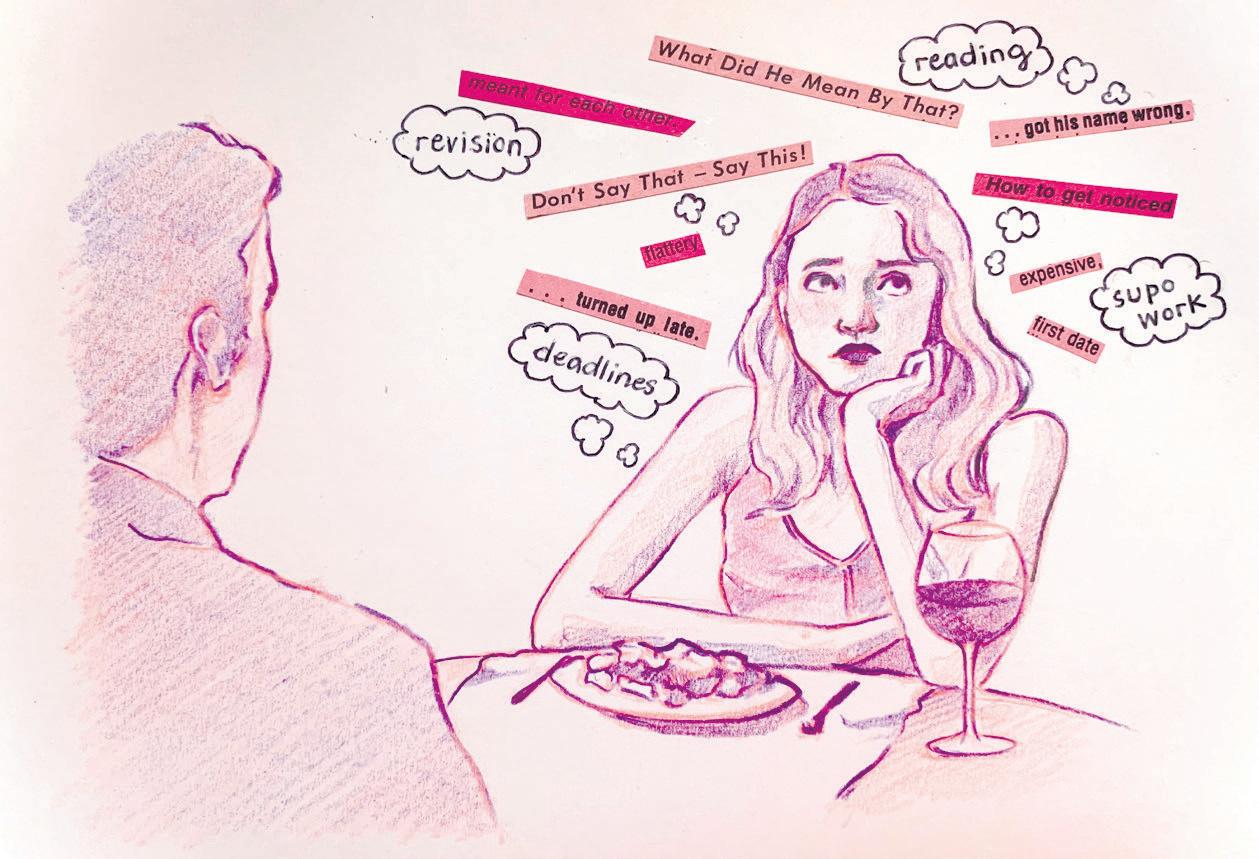
meeting their partners in night clubs or on Hinge. ere aren’t a lot of third spaces where people go and talk to people who aren’t just their friends.”
❝
Worst case scenario, you’ve just had a new experience; best case scenario, you nd the love of your life
with students pulling out days before the event. Why do students put themselves through such anxiety?
For Sophie, her favourite part is the interviews afterwards: “It’s like having a debrief with your friends after a night out” or “a strange kind of anthropological study”. Izzy, meanwhile, enjoys the power of determining people’s Wednesday night (“You can be quite malicious if you like…”) and the thrill of watching couples she matched scoot closer together.



Yet this pales in comparison to the 444 registered for RAG blind dates in February, admittedly a much older tradition. Every year, Cambridge Raising and Giving (RAG) chooses three charities to fundraise for: one local, one national, and one international. In 2025, their blind dates raised £2,300 for Cambridge Acorn Project, Dravet Syndrome UK, and SolidariTee, making them one of their biggest fundraisers – though not quite as popular as the naked calendar…

So what does she think of dating apps? “ ey’re the worst thing ever, I hate them and they’re awful,” she spurts before backtracking. e one bene t of apps, she acknowledges, is their informality. e same goes for blind dates: “ e more you think about anything, the more you’re going to talk yourself out of it.”



Izzy Wyatt is RAG’s co-president. She believes the event’s popularity shows that Cambridge students need an excuse to date. Otherwise, friends will always take priority in those rare moments o from work: “If you’ve not got very much time to date and a limited pool of people, it doesn’t make for a particularly exciting dating scene.”



Stumped faces confront me when I try to elicit advantages of Cambridge’s dating scene. “ e ‘everyone knows each other thing’ can be quite good if you want to vet people,” suggests Izzy. Meanwhile, Sophie acknowledges the power of the Cambridge bubble to forge intense relationships. While queer Cantabridgians face the “nightmare” of an even smaller dating pool, for Sophie, this means they are more open and less afraid of awkwardness. ere is one other factor… “Lots of people think everyone’s strange and nerdy and therefore well-suited,” Izzy grimaces.
as “a bit of fun,” often in large groups of friends. “I’m kind of jealous that, because I set it up, I can’t really match myself with someone,” she laughs. For those still unconvinced, Izzy has some words of advice: “Have an open mind. Cupid has worked for you, whether you believe it or not.”
Frustratingly, Sophie hears little of what happens to the couples after their rst dates but we know that RAG has enabled at least one marriage in its long history – unsurprising given its painstaking matching process. Both students describe spending long nights glued to spreadsheets. Izzy faces the additional task of organising the event at Revs: “Oh, my God, it’s such a slog!”.
character: “Even if they didn’t give much away in their application, sometimes you can tell a lot about a person just from that.” Conversely, Izzy focuses on celebrity crushes, while acknowledging that “there actually aren’t many people like Hugh Grant out there”.







To this list of problems, Sophie adds Cambridge’s successdriven culture: “I think there are lots of people who arrive at university and are like, ‘Ok, I’ve got three years to nd the person I’m going to marry and spend the rest of my life with’.” Bemoaning the lack of spontaneity in modern dating, Sophie continues, “I feel like most people are
So how can blind dates alleviate these issues? “If you’re scared to put yourself out there, you can play it o as a joke,” Sophie advises. No longer need you worry about gossip’s eye or Cambridge’s miniscule dating pool: “Even if you get matched with someone you know, it’s out of your hands.”

For Izzy, the beauty of RAG blind dates is that there’s no FOMO since all your friends are also on dates. As Sophie says, “Worst case scenario, you’ve just had a new experience; best case scenario, you nd the love of your life.”
Sophie believes most people sign up
❝ e solution may well be relinquishing expectations and embracing spontaneity
Still, things don’t always go to plan. Izzy cringes at having matched two girls, one of whom thought the date was platonic and the other romantic. Somehow, Sophie tops this: “ ere were two guys I thought would be perfect for each other. ey came back to do the interview and were like, ‘You sent me on a date with my ex’. I almost fell o my chair!”. By far the biggest problem RAG faces is a shortage of straight men. Izzy suggests this may be because, while women appreciate the safety and informality of public dates, “for men, the prospect of lots of other men being around could be intimidating.” One unfortunate byproduct of RAG’s men problem is that bi people are always matched with women.

Obviously there are logistical considerations: age, college, sexuality. But these Cupids go further, asking, in Sophie’s case, for a description of yourself and your ideal partner or, for RAG, anything from classic Hinge prompts like your ideal Sunday, to quirky questions about spirit animals.

Sophie believes open-ended prompts are best for gauging


Another explanation could be that RAG has an overwhelmingly female fan base. Indeed, Varsity, fearing similar issues, provided the option of platonic dates, but never faced a lack of straight men. “I guess romance is still rife in Cambridge,” Sophie laughs.



Ultimately, playing Cupid is fun. Indeed, as the president of Cambridge’s Matchmaking Society somewhat philosophically muses, “I feel like Matchmaking Society has and will always exist in some way”. Inspired by a similar organisation in Nottingham, this club ran speed dating events in 2023 but is now looking for a new president. Rewind to 2000 and you have ruo3 – a dating site for Cantabridgians devised by Richard Neill and John Surcombe in a pub after Edinburgh Fringe. e service may only have 91 members now but, in 2001, it had over 2500. e site was so successful that it spread to Oxford, Warwick and graduates in general. Moreover, in the admittedly long time I’ve taken to write this article, its membership has jumped by 30, following a shout-out on Camfess. True, the webpage absolutely looks like it was made in 2000, but it has a wide range of features. You can send people likes, or ensure they only see you like them if the feeling is mutual. ere’s a “degree rescue mode” to stop you chatting too much, a May Ball section, and even Facebook-style poking. Codes can be generated to write in Valentine’s Day cards, allowing for anonymous messaging. e site is non-pro t, self-funded, and promotes diversity – that and it has produced sixteen weddings.

Sure, as an English student, Sophie had the advantage of very few contact hours in Michaelmas, while Izzy bene tted from the institutional memory of RAG. Nevertheless, organising blind dates can be as stressful as it is exciting,

Clearly, there are some amazing opportunities for dating in Cambridge. However, that doesn’t change dating’s overall incompatibility with Cambridge life. Given the amount of pressure we experience daily, the solution may well be to relinquish expectations and embrace spontaneity, whether that be through a blind date or a chance encounter. You never know when Cupid will strike.
Willow
Nugent speaks to students about the vast discrepancies between colleges’ mental health support and a counselling service that fails to support them long-term
Ididn’t think anything of it when a friend told me last year he’d started therapy, until he said it was through his college. “Your college has a therapist?” I asked. He looked confused. “Yeah, doesn’t yours?”.
In theory, the system is equal: all students can access both the UCS and support from their college wellbeing team. But, as with other college provisions, the support provided varies depending on how much funding is allocated.
Some of my friends have the constant worry of tness to study meetings
A 2022 review of Cambridge’s mental health services found “wide variations” in support across colleges. Since the report, the University has made progress in attempts to centralise mental health support, with the UCS now o ering appointments to students, and the average waiting time reducing to three working days. Each college now also has a wellbeing adviser and a student nurse.
Ella spoke to her college wellbeing team during Lent term last year. As a
fresher, reaching out to her tutor about her mental health was nerve-wracking.
She was referred to her college nurse and, while “everyone was really kind,” Ella couldn’t help but feel “like I was bothering them”. After their appointment, the college nurse told Ella that she would email her a UCS referral link. “It felt like I’d gone through all the right steps and ended up back at square one,” she said.
Ella told me getting assigned a counsellor was “surprisingly quick”. She had four sessions with the UCS, which is the standard amount o ered. Ella called the experience a net positive, saying: “even just being able to speak about things out loud made a di erence.” However, she felt “stuck in limbo” as short term support ran out, and her low mood returned.


demic progression. Maya praised her college for not taking this approach, saying “they didn’t see me as a liability […] some of my friends have the constant worry of tness to study meetings. I don’t think I’d still be at Cambridge if I hadn’t had space to be honest without that fear.”
Alongside counselling, she’s found that regular wellbeing events her college arranges have helped her to stay grounded. Student-led initiatives provide an alternative path for those who wish to access options beyond their college welfare. Student Minds is a studentrun charity based in universities across the UK, aiming to connect peers with resources and hosting regular welfare events. “We o er JCR-style wel-
fare sessions,” explained Valeriya Damola, president of the society, “and try to
bridge the gap between students and resources.”
Valeriya and vice-president Poppy Jo Lee informed me about recent events, including mug painting, yoga, and speaker nights. “It’s about bringing people together and destressing from Cambridge life,” Valeriya said, continuing: “sometimes you just don’t want to attend a college welfare event for whatever reason.” Poppy added: “sometimes it’s nice to get outside your college bubble.”
❝
Students who can’t access a consistent support network end up paying an emotional cost
often ampli ed as colleges are people’s “ rst point of contact”.



Other students have benefitted from long term support thanks to their colleges. Maya, now in her third year, credits her progress to ongoing guidance from her college. Often students fear reaching out for help could hinder their aca-
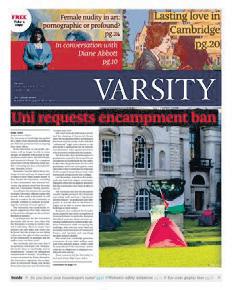

ey stressed the importance of not only the availability of support but also its visibility. Students can reach out to them via social media or email to access resource links. Valeriya told me they take an “intersectional approach,” recognising that experiences of “mental health are not universal”.






We spoke about how the UCS ts into the network of support provided at Cambridge. Valeriya said: “I think a lot of people don’t even know how to access UCS counselling […] it’s not always obvious.”
The University’s ‘Reach Out’ campaign does aim to make students aware of support available to them. Disparities in mental health support across colleges, Valeriya added, are
Both Poppy and Valeriya highlighted how short-term much of the available support feels. Poppy noted feeling as though the UCS appears “as a oneo ”. Valeriya said, “you can play with a puppy for 15 minutes or have some tea […] [but] accessing long-term help in a high pressure academic environment is important,” which in Cambridge is “very hard to do”. Her closing words resonated heavily: “What I’d like to hear after I graduate is that people feel they can access support that genuinely helps them, as opposed to distractions.” Too often the support available acts as a stopgap, with students paying the emotional price. While progress has been made, student mental health shouldn’t depend on luck, but with 31 disjointed systems, it often does.







Neutrino’s mass nailed down
Scientists in Germany have constrained the mass of the neutrino, calculating that it cannot weigh more than onemillionth the mass of an electron.
Neutrinos are the lightest of all the Standard Model particles with mass. ey are electrically neutral and interact incredibly weakly with other particles, making them almost impossible to detect. Initially, they were thought to be massless, but later experiments proved that they must have a tiny mass.
e team at the Karlsruhe Tritium
Neutrino experiment calculated the neutrino’s mass using a trick that avoided having to isolate the elusive particle. Instead, they studied the radioactive decay of an isotope of hydrogen with two neutrons and one proton, tritium. When tritium decays, it releases an electron and an antineutrino (the neutrino’s antiparticle, which has the same mass). e antineutrinos y out of the experiment and are lost, but the energies of the remaining electrons are measured and added together. e energy ‘missing’ from the electrons is then used to infer the lost neutrino's mass.
Water molecules ‘ ip’ before being split by electrolysis
Scientists at Northwestern University were puzzled as to why splitting water requires more energy than expected. Electrolysis of water consists of two half-reactions, with one taking place at each electrode. e reaction should, in theory, need a voltage of 1.23 V applied across the electrodes to start, but in reality it requires a voltage of over 1.5 V.
Study leader Franz Geiger said that this extra energy is one reason why electrolysis of water has not been widely used at scale.
Geiger’s team shone an infrared laser onto the electrode’s surface and measured the intensity of re ected light at half the original wavelength. is tech-
From theatre to competitive sports, Cambridge students get up to a lot alongside their studies. However, few can say they are part of a team designing and building a zeroemissions boat that will be raced against teams from around the world in Monaco.
is is exactly what Riviera Racing, an entirely student-led team, are currently doing. I spoke to Tyr Högsander, Deputy Director of Operations and Treasurer, and Ray Wang, the Chief Engineer, to nd out more about the work that goes into this process.
❝
nique revealed that the orientation of the water molecules at the electrode depended on the voltage; hence, energy is used to ip the molecules around. e researchers explained that since the electrode’s surface is negatively charged, the water molecules initially align with their positive end towards the surface. However, they must ‘ ip’ to allow the oxygen atom in the more negative region to o oad its electrons onto the electrode and progress the reaction. is study has spurred more research into alternative electrodes and catalysts that could ‘pre-align’ the molecules, reducing the energy needed to initiate the reaction.
brain cells could o er Parkinson’s cure
Neuroscientists at the Florey Institute of Neuroscience and Mental Health have produced promising research into the treatment of Parkinson’s disease. It can be treated by the transplantation of healthy nerve cells, but this is a di cult procedure, as the body’s immune system targets and destroys foreign cells. One solution is to provide immunosuppressant drugs, but these increase the risk of cancer and serious infections and can cause tissue damage. Another solution is to engineer the cells to ‘hide’ from the patient’s immune system – a technique known as ‘cloaking’.
To cloak the cells, the scientists altered eight genes in the brain cells, adding modi cations found in placenta and cancer cells, which are naturally immune-evasive. ey then added a ninth “suicide gene” to prevent the cells from multiplying uncontrollably; if they became cancerous, they could be destroyed with the drug ganciclovir. e transplanted cells successfully restored muscle control in rats with Parkinson’s disease, without needing immunosuppressant drugs, opening a promising new avenue for a Parkinson’s cure.
Rather than trying very ambitious technologies for the sake of trying them, we ’re focusing on reliability and testing
When I ask them about the process that goes into this, they are keen to emphasise that building a zero-emissions boat alongside your degree is no easy task. “Most teams either take several years to build their boat or keep the boat from the previous year and improve upon it. We’re essentially doing a oneyear boat.”
On the technical side, last year wasn’t as successful as the team hoped. “We were really, really ambitious last year, technically with our hydrofoil system and our hydrogen fuel cell.” Despite this, Tyr and Ray’s optimism doesn’t at all seem sti ed, and they are eager to show they are learning from last year’s struggles. “Stripping back the design [is] the overarching theme […] Rather than trying very ambitious technologies for the sake of trying them, we’re focusing on reliability and testing.” ey have removed the hydrogen fuels, which are
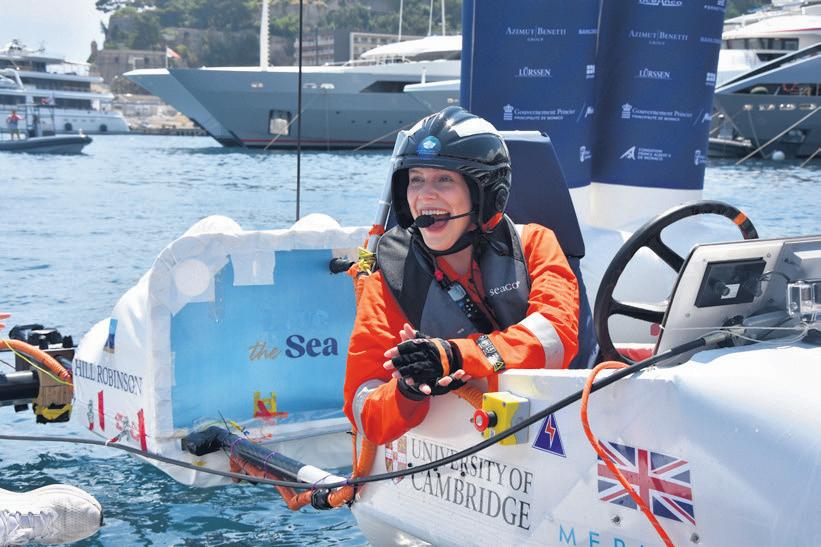
strictly regulated, along with the hydrofoils that were both found in last year’s boat, but that doesn’t mean their ambition is waning. “We’re demonstrating that we can do something well rst, and then hopefully in the years to come, we’ll try and integrate those technologies back gradually.”
e culmination of their year of painstaking work is the Monaco Energy Boat Race. “Teams from universities all across the world come together. Last year, we were the rst ever UK team in the Energy Division.” Many of the boats here are at the cutting edge of sustainable maritime innovation. In Monaco, the hub of superyachts, bringing in these green technologies couldn’t be more crucial. is year, the Riviera team want to make sure they are making a splash at the race. “ ere are four speci c races within the week […] we’re trying to do a broad top three in all of them rather than just banking on one.” It’s clear that the team aren’t just there to have fun – they are there to win.
However, the team’s work has applications far beyond the races in the Monaco Harbour. “Why we’re building the boat in the rst place is [to demonstrate] the commercial viability of zero-emissions technology. We’re not just trying to build Legos for fun. We’re trying to demonstrate this can be used in a real commercial setting.” e team’s e ort in showing these technologies can work could play a key role in the movement to steer the maritime industry into a new,
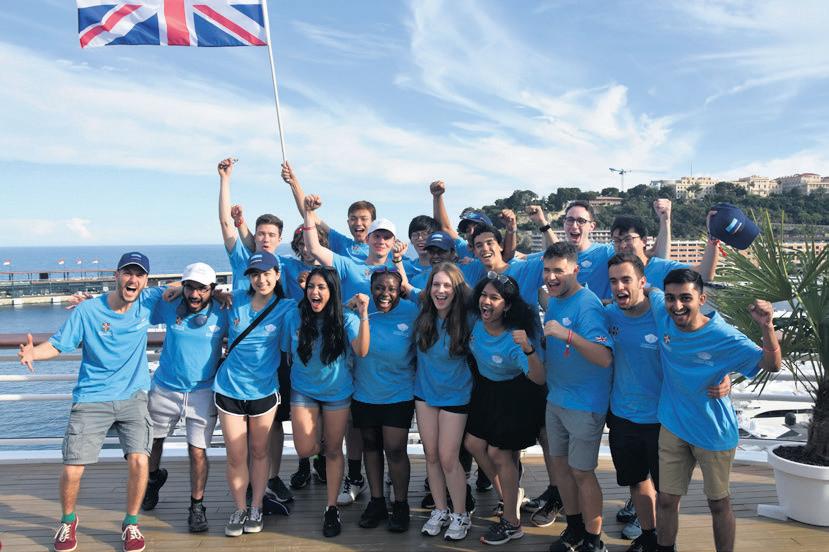
MATTEO CASCINI
▲
greener, direction. ey are even doing this with direct links in the industry. “ e motor, the propulsion unit specically, we’re developing in collaboration with a commercial company. is is a model they are hoping to sell, and we’re here to show that this works.” ese applications could also be outside of the maritime industry, in the UK, “there’s a big shift [to electrify] canal boats.” e technologies they are working on and testing have a broad range of applications.
ey are quick to emphasise that the team is entirely student led, mostly by undergraduates, with no support from the university. “We often get asked by sponsors, is there a sta member responsible, I can speak to? And the answer is no.” From nding funding from sponsors to designing, building, and ultimately sailing the boat, everything is done by students alongside their degrees. Moreover, with a huge amount of work to do on the organisational side, the team doesn’t just take engineers –Tyr is a land economist. “We want to communicate to people that we don’t just take technical people.”
It’s clear that the team aren’t just there to have fun – they are there to win
It seems that all involved are keen to emphasise the friendliness of the team and the fact that anyone can get involved. When I ask Gereon Leckebusch, an engineering student and cohead of propulsion on the team, why he joined Riviera, he says “Quite a few [engineering student societies] weren’t very friendly towards new members, especially rst years […] But I thought Riviera was really nice about that [...] ey got people involved straight away.” e boat might not be ready to be put to sea yet, but with such an enthusiastic team, I’m sure the race in Monaco will be little more than plain sailing.
If the area of the outside square is 100cm², what is the area of the inside square?
What percentage of respondents successfully solved this?
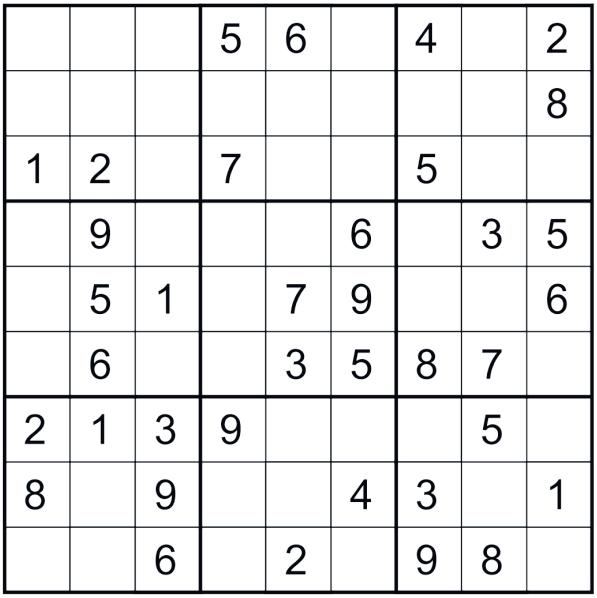
ACROSS
8 What’s just finished (4,4)
9 Tudor, or Plantagenet (6)
10 Lady or siege gun, when big (6)
11 Extinct Scandinavian language (3,5)
12 Ivy League university (4)
13 Cleansing, as pores (10)
15 Town 25 miles from Cambridge (7)
16 Richest Oxford college (7)
18 Something that picks out a referent from a possible world, be it rigid or accid (10)
19 Sicilian mountain (4)
20 ‘Unready’ king (8)
22 8 across in Oxford (6)
23 Form of ‘ e Four Quartets’ (6)
24 Steer (8) DOWN
8 Run down on a co n bearer (8)
9 Silver a German intially gets, as time leaves its mark (6)
10 Trainee starts with a gun but it’s nothing to worry about (6)
11 A long story with half of something that could spread virally (8)
12 Slash is central to this band that is current (4)
13 Beforehand I make bonds as the stu of importance (10)
15 Earnest but wrong prophet on the radio (7)
16 A marked achievement in your exams comes with rejection in how much time you work (7)
18 Pay close attention to me, as a BSL speaker might? (4,2,4)
19 Inspirational rock band (4)
20 Inconsistent, as a light switch goes (2,3,3)
22 Hand luggage for a rodent or an idiot? (6)
23 Average ruined city! (6)
24 Matt Smith’s place at the last hour to x something (8)
1 What last took place on 4 July 2024 (7,8)
2 Copper-clad statue whose framework was built by Ei el (6,2,7)
3 Ten-sided shape (10)
4 What tari s are imposed on (7)
5 Fifth largest country in Africa (4)
6 Evelyn Waugh novel, or how you celebrate something special? (15)
7 Unwelcome person (7,3,5)
14 Astringent lotion (10)
17 What you are, probably (7)
21 Sting _____ (4)
Use logic and deduction to place each of the numbers one to nine into the grid.
e circles indicate the relationship between the squares.
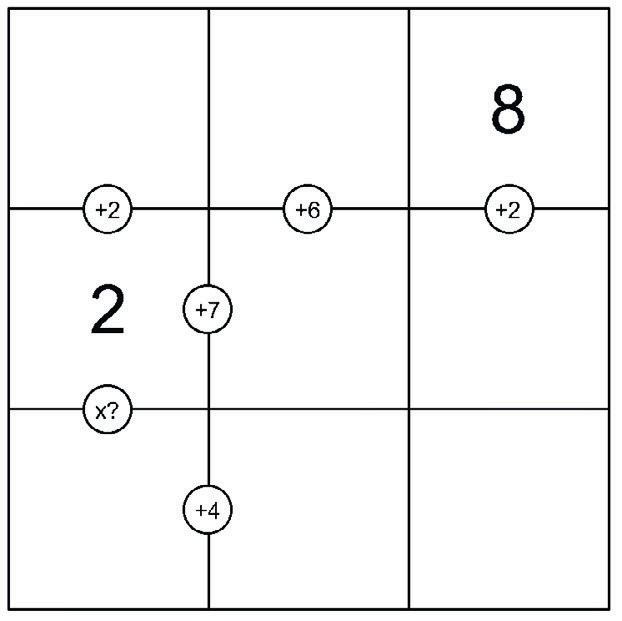
1 Iteratively derive arc next if a light path bends so much in a medium (15)
2 Final notes from slightly confused school champions with modulation (7,8)
3 Jealous equal, I left Caroline Lucas’s a liation (5,5)
4 Born in a place that is suitable for you, with some government assistance (7)
5 I nally pay a fare for Uber, say (4)
6 Parliamentary sub group nominate and pledge a resting place for a golfer (6,9)
7 A worker then several workers, consumed, I push down pills (15)
14 Church barrier is a reportedly impertinent test (4,6)
17 Sasquatches, or what large shoes mean? (7)
21 ‘Deary me!’, on hearing state of the Middle East (4)
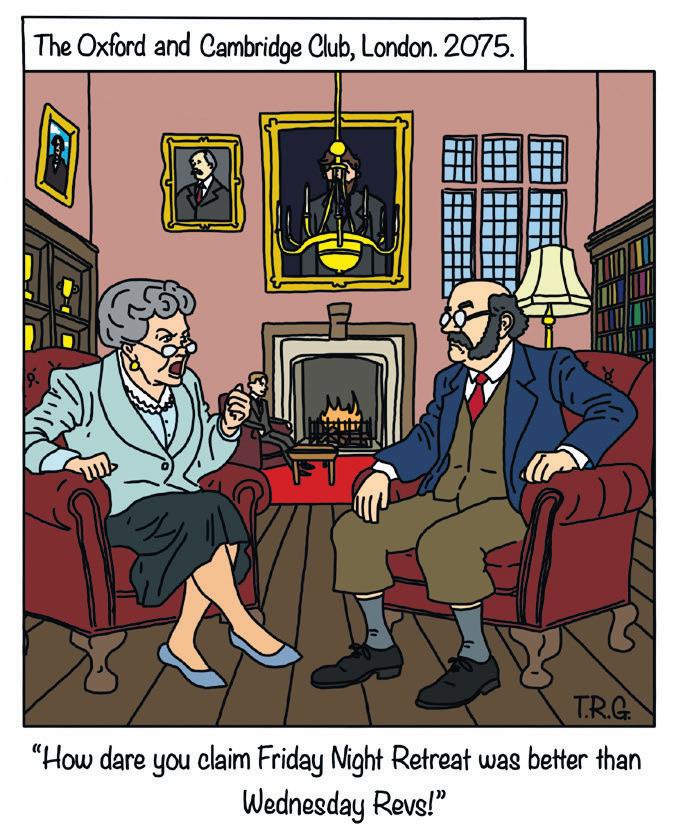




Resident Varsity Archivist Lily O’Sullivan dives into the archives for some career guidance from those who made it
It’s no secret that many a Varsity hack harbours dreams of a career in journalism: to be an eyewitness to history, to interrogate world leaders, or perhaps for the most ambitious, to pen the speech bubbles for the Private Eye’s cover. In a search for the stories of how some of today’s top journalists kicked o their careers, Vintage Varsity tracks their contributions to the paper.
While we may be more accustomed to seeing him on the BBC’s University Challenge, Amol Rajan edited Varsity in 2005. Under a decade later, the keen cricketer became e Independent’s editor before joining the BBC. He was not the rst Varsity alum to host the popular quiz show, with Jeremy Paxman having led the paper in 1972. No stranger to posing questions to politicians throughout his career, Paxman’s notoriety even landed him a cameo in the political sitcom e ick of It. Despite his success, Paxman’s advice to a Varsity interviewer in 2008 does little to inspire would-be journalists: “Don’t do it.”
e future achievements of Varsity’s past contributors are not, however, conned to journalism. If your LinkedIn has never featured the line, “thrilled to announce” nishing your work experience at e Times, fear not. Varsity writers have excelled in a variety of elds, not least comedy. David Mitchell, in his position as 1995 Footlights president, provided a step by step guide on how to gain membership to the illustrious comedy circle. Steps four to six suggested that hopefuls “shag the President […] shag the vice-president [and] shag the junior treasurer to make sure”. Vintage Varsity can only assume such initiations have been con ned to the ‘90s.
Famed Cambridge alumni have graced Varsity’s pages in some more unexpected sections. Sylvia Plath, better known for her literary talents, not only featured alongside her poems, but among the fashion pages. Producing a May Week fashion guide in 1956, the poet modelled polka dot bathing suits and oral cocktail dresses. While not having attended the University, another model for a later May Week fashion shoot, Cambridge local David Gilmour, gained acclaim as guitarist for the legendary band Pink Floyd.
Despite the evidence of alumni success stories, journalism, or any of the other mentioned elds, are far from easy to get into, as many a nalist or recent graduate could attest. Having a backup plan may be advised, as Oliver Du , editor in 2003, reminded readers. In the event of his journalistic ambitions not being realised, the now editor of e i Paper admitted that “sitting on a Caribbean beach, drinking his own weight in rum each day, would su ce”. Surely few of today’s Varsity hacks could disagree.

Picture this: you’re in the takeaway queue for Aromi pasta. As you go to Apple Pay your way to £8 pasta absolution, you see the dreaded Outlook noti cation, subject line
“Application for Admission – Decision.” You turn to Nick who, however much he might not want to be written as such, is your friend and fellow Aromi frequenter. You mention the email, pay for your pasta, and wait beside the to-go wall of shame.
“Are you going to open it?” For some inexplicable reason, my response was a resounding “no”. In my heart, I already knew and had resigned myself to the reality of the situation. I told Nick how there was not only a fear of what it would mean to not receive an o er, but a murkier, more intrusive one: what would it mean if I did? I didn’t want to stay here for another year – that it was prolonging the inevitable, and seeking validation that would come with the adage of something more destructive in the long-term. Nick, rightfully so, asked why I had bothered going through the fuss of applying in the rst place.
e truth is that the University of Cambridge has been a foundational part of my identity since 17. So much of my self-perception was rooted in the idea of being an Oxbridge candidate, and before that, of being someone who excelled enough for that to be something worth fussing over. And as much as I would love to say that, a foray into adulthood and plenty of disillusionment with the institutions that run this place later, I no longer associate myself so deeply with being here, that being a Cambridge student is not something that underpins a lot of my academic self-esteem as well as my LinkedIn posts, I can’t. I feel it walking down King’s Parade, past my college, down through the City Centre, up Regent’s Street, over the bridge to Sidge. ese movements have become a daily meditation to my academic worthiness. ere are tangible symbols in Medieval architecture; symbols that, no matter how much I am given reason to complain about my college or the University, I am at Cambridge. Now, this email was about to test that; about to be the thing that imploded the present and nudged forward the urgence of answering the future. “I don’t think I can open it.”
Nick and I had a lovely conversation as we walked back, ending with the words, “and besides, there’s always tutoring!” Not wanting to be entirely alone, I knocked sheepishly on my darling wife Erika’s door down the hall, and asked her to sit with me. “ ank you for sending your application for admission. e University has given it careful consideration and, [sic] I am sorry to tell you that they have decided that they are not able to o er you a place.” Immediately, I was irritated by the rogue comma after “and”; this feeling was soon eclipsed by the words “Well thank fuck for that,” tumbling out of my mouth. Erika looked at me for a moment before and echoed the sentiment: “Oh, thank fuck, you’d have been miserable.” I waited for the existential dread to sink in, for my bones to be pumped full of something cold and leaden and unemployable, for the tears to arrive, but they never came. Suddenly, I was walking down the same streets as








before, squinting with scepticism at everyone I passed donning a college pu er with san-serif initials. ere were MPhil o er-holders beneath some of those shells, and so I decided to start treating everyone as if they were members of the Cantab Illuminati. I started walking around this city, with its irritating familiarity, turning my eyes upward trying to cram how many oors every building had into my long-term memory. It’s morphed, like most things, into something to mentally scrapbook: keepsakes of a city that, for the first time, is temporal.








ere is, no matter how much I would love to pledge otherwise, an embarrassment that comes with writing this article. A small voice in my head

if I really want my name
Oh, thank fuck! You’d have been miserable an have



attached to this, cast into the public domain with my shortcomings visible to future employers (assuming they exist at this point). But then I remind myself: I have spent the last three years earning a Cambridge degree. One less year, one less hoop jumped, doesn’t diminish that. I can grieve what this place has been for me, I can push the rosetinted glasses of romanticisation as far up my nose as I can and sigh heavily in Caius lib at how few midnight study sessions we have left together. I can see with a newfound clarity, that the aspects I will miss are the sum of things worked for rather than the things themselves. I will carry the growth that Cambridge has bludgeoned out of me beyond it, appreciating how no longer su ering for success does not mean no longer being successful.
ereisanoddreliefinhavingthedecisionmade for me. And now, here I am, grappling with the unexpected lightness of reopened possibilities. I

would be lying if I said I hadn’t panic-googled “Consulting graduate placement intern early careers vac scheme.” So what else, a law conversion when the market is more saturated than ever? Cutting my losses and committing to a master’s elsewhere? So, for the time being, I don’t know. I have no clue what could provide the justi cation and purpose that I’m itching for. I’d also, Scrooge McDuck as it sounds, rather start making my own money than be reaching my hand back into the punitive piggy bank of Student Finance England. What I do know is that I will enjoy these last few months of my studies without the pressure of getting a solid rst, and nally feeling the ful lment of settling into academic progress and lasting friendships. I am going to stop acting like I am owed something. Speaking of friends, I’m grateful to have people who care about my academic fate, and I am grateful for the people who don’t care even a little bit. Just because I am unable to detach myself from being a student of this place rst, pretentious arsehole second, doesn’t mean that others are. More people in my life than I suspected crept out of the woodwork to share similar feelings, and this miserable solidarity – a short parade of mutually pitying hugs – has been nice. It’s been comforting to know that
the people I love and revere were also not quite the right t. It makes the prospect of confronting it in myself a lot less intimidating.

I write all this mostly to hold myself accountable to it. But I have this small hope that someone else might nd some comfort in it. You’re allowed to be upset and you’re allowed to move on for all the right and wrong reasons. At the end of the day, courses like this, in Universities like this, are competitive: you’re more likely to be rejected than not, no matter how capable you are. It’s okay to take time not knowing. You don’t have to keep punishing yourself academically
But, even as the prospect of casting one’s soul out as bait for the Canary Wharf sharks looks less absurd, you don’t have to be in work for things to work out. e weather always gets better, and spring always arrives. ere is comfort in this, as there is comfort in the assuredness of the seasons. In this same breath, this city will always be part of me; the tulips that I see budding as I embark on my last dozen walks through King’s are temporary, but will return to me annually.
ith the ability to count my weekly contact hours on one hand (yes, that’s including lectures too), it is easy for me to spend my days alone, ipping through the pages of journal articles and book chapters, week in and week out. e life of a historian, or any student for that matter, can Terms pass us by so quickly, to the point where scheduled brunches and formal swaps are continually pushed until the next deadline, next week, or even next term. To prevent this perpetual postponement, I present you with four categories of traditions to infuse our days with a little more excitement. e rst is those traditions that we preserve for ourselves. Personally, I like to treat myself to a matcha latte whenever I have an essay due (a necessary investment to churn out 2000 words, I tell myself) and owers at the end of the week to bring some new life into my room. And, once my essay is handed in, I head over to my weekly yoga class to


stretch out my shoulders, having been hunched over my laptop for the past eight hours. Quality time with ourselves doesn’t need to be extravagant – the intimacy of simply sitting down with yourself, away from all the noise, is more than enough.
I’ve been embraced by the community that exists outside the collegiate bubble
e second of these categories is traditions dedicated to spending quality time with someone special. Punctuating my week is a regular movie night with a friend, one who I would scarcely see otherwise. Our movie nights have become a non-negotiable in our schedules, as we look forward to talking over the screening with gossip from the past week and thoughts on the latest TikTok trends. Having a tradition that breaks up my week, and more importantly, that I can share with someone I love, has become so special to me, and is very needed amid the chaos of a Cambridge term. is leads me onto the third of my suggestions: traditions that embrace exploration. For us, exploring the city through its many co ee shops and bakeries has become a classic outing whenever we are in need of a walk. As I’m pried
Making,Designing,Prototyping& CreatingintheCentreofCambridge
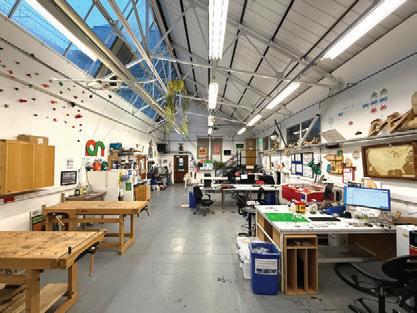
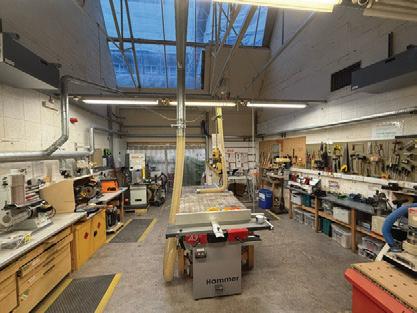
MakespaceisCambridge'scommunityworkshop,opentoall.Locatednear Cambridge'scitycentre,weprovideaccesstoequipmentlikesewingand embroiderymachines,3Dprinters,lasercutters,woodworkingand metalworkingtools,CNCrouters,microscopes,andmuchmore.Whether you'reanartist,maker,engineer,orjustcurious,Makespaceofferstools, resources,andacollaborativeenvironmenttohelpyouexplore,learn,and create.Wecurrentlyhaveover500activememberswithanalumni networkofover1600.Ourmembersincludeengineers,scientists,artists, entrepreneurs,students,educators,developers,woodworkers, metalworkers,costumedesigners,roboticists,guitar-builders,andmany manymore!
● Accessto3Dprinters,lasercutters,electronics,andmore!
● Workshopsforallskilllevels.
● 24/7accesstothespaceformembers.
● AlllocatedinthecentreofCambridge
● Joinacommunityofcreators,engineers,artists,andenthusiasts.
Signuptodayforatourto seeMakespaceinaction!


away from my table at Harvey’s, I am enlightened to the world that exists beyond Sidgwick Avenue. Most recently, Café Foy, with its beautiful view of the river and Maison Clement, have impressed us the most. ough once cripplingly shy, I have really grown to love talking to strangers, not heeding all the warnings about ‘stranger danger’ that I received as a child. As I stop by the Porters’ Lodge and the Buttery, I receive my daily dose of college gossip and, soon enough, nd myself knowing all sorts about the inner workings of their lives – just as they know mine. Small talk has evolved into conversations that are not so small, and has become a xture I look forward to. is past month being one of increased worship for Muslims, I have visited the Cambridge Central Mosque nearly every night. In doing so, I’ve been embraced by the community that exists outside the collegiate bubble. From interacting with families who have grown up here for generations to students from neighbouring universities, there’s a special feeling of existing in the limbo between town and gown. When you frequent the same places, be it co ee shops or society events, you begin to notice your fellow regulars each time, and they notice you too. You may never end up speaking to them, but I can say that I’ve made real friends from doing just that – embracing the awkwardness, sitting down with a stranger when there are no other




















heeding received made embracing




tables free, and starting up a little conversation during breaks between study sessions. And from then on, each time you return to that location, a small part of you is hoping they’ll be there too (or is at least pleasantly surprised when they are). So many of us are hellbent on gaining 500+ connections on LinkedIn and networking our way to the top, but we miss out on the beauty of genuine connections when we neglect the people who simply exist around us. We have nothing to lose (except, maybe a little mystery, if that’s the vibe you’re going for) from complimenting a stranger or chatting with the college librarian as you prepare for a study session – everyone has a story to share, and even those who seem tough at rst tend to soften very quickly.
As you begin or continue to cultivate your own term time traditions, don’t let yourself exist in a vacuum. Embrace all that the city has to o er, from its people to its culture, and open yourself up to the idea of new friends, or simply smiling faces. ese traditions of transmitting love and joy have been instrumental to me in creating a home out of this city.
Maddy Gamble shares her two cents on fashion trends this spring, and how to incorporate them into your own wardrobe
Spring has arrived in Cambridge, and after a spell of sun and blue skies, it’s time to start pulling your tank tops and short skirts out from the back of your wardrobe, and tucking your thick knit jumpers and jeans in for their months of hibernation.
I have yet again fallen victim to the endless cycle of scrolling on Pinterest, creating vision boards instead of essay plans in a desperate attempt to identify what my fashion identity will morph into in the coming months. My grey cardigans and long sleeve tops just aren’t cutting it anymore.
I here present to you an amalgamation of half thoughts and serious industry research, in an attempt to inspire your spring fashion looks.
Sheer clothing
Somewhat reminiscent of the brat summer that dominated last year, sheer clothing has remained a fun and somewhat experimental way to elevate any look. Compatible with the jeans and a cute top combination that has been adopted by the masses, a sheer top adds an extra bit of fun to an otherwise overworn and bored look. E ective as both a short and a long sleeve (spring is never that warm after all), it is best paired with a cute bra or bralette, or even a classic tank top. It gives you the chance to layer both colours, designs, and patterns, as well as having the option to keep monochrome, for a sleeker look.



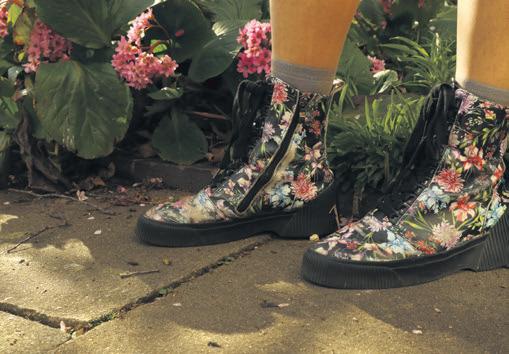




Pu s and frills and all the trimmings
A distant cousin to the pu all skirt, which made a short but impactful appearance on the fashion scene late last year, embracing and exploring a wider range of textures is an interesting way to expand your wardrobe. From wa e textured tops to ruched skirts and embroidered shirts, adding an extra dimension to your out ts aside from just colour and shape is yet another way to add a more unconventional feel to your looks. I’m personally envi- sioning pastel coloured skirts with lots of volume, and silk and satin, leaning into more classically feminine silhouettes. e drop waist skirt is another way to explore and adopt some more interesting textures, with pleats and added volume, it seems to be the long lost sister of the low waist jean that has nally come out to play.








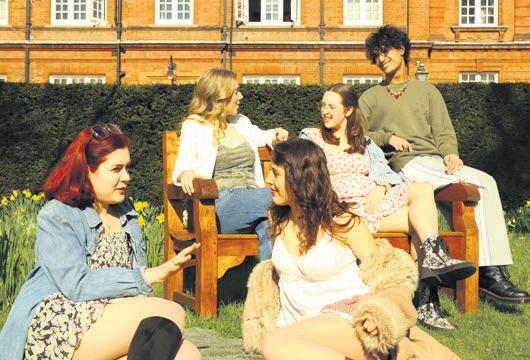
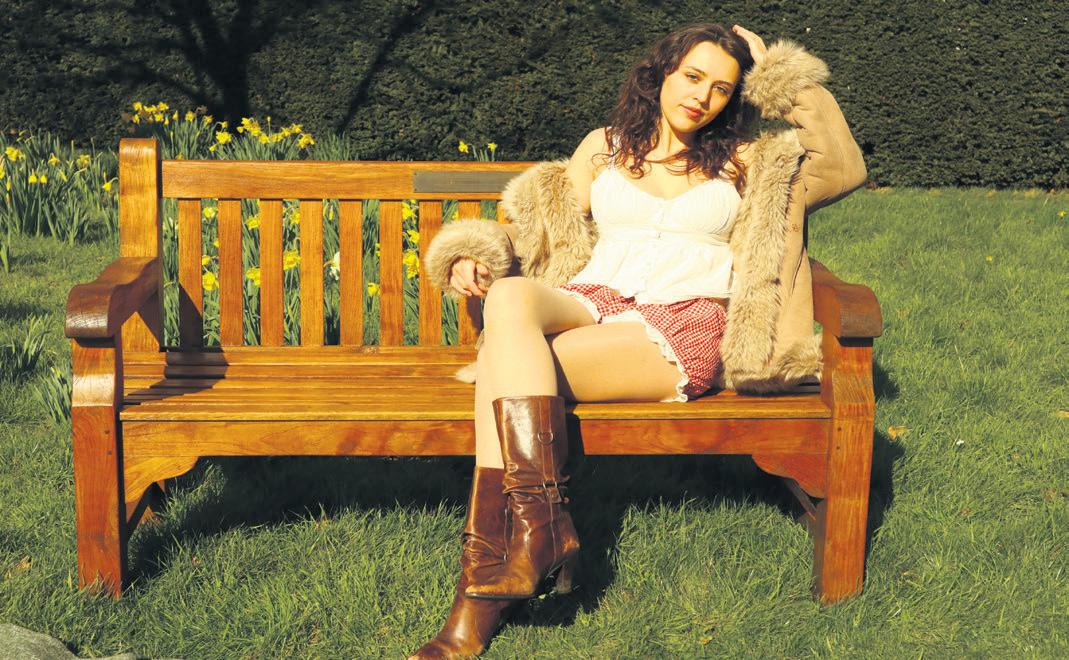
Colour!
I’m sure this isn’t the rst article to tell you to wear more colour in spring, but it might be good advice. As an advocate for the timeless simplicity of monochrome, especially all black out ts, it can be di cult and at times sort of terrifying to step out the door in a bright colour. But if spring isn’t the time to try new things and experiment outside of your fashion comfort zone I don’t know when it is. Pastels are the generic colour of spring, the muted tones and feminine energy pairing well with the general symbols of new life and blooming nature that accompany this time of the year. Butter yellow especially is seeming to be a fan favourite this year, walking the line of being a bright colour yet also remaining understated and classy.
Tailored fashion

e o ce wear phenomenon is also here to stay this spring. Making tailored pants fun requires a certain amount of skill, but it really isn’t too hard to make it work. With the sharp silhouette they provide, it’s fun to contrast them with a owy (or sheer) top, or even a simple tank top to put the casual in business casual. ey can easily be dressed down for pub gardens when the sun comes out, and still a good staple piece to have in your wardrobe for any work experience over the break. So a truly multi-functional and adaptable piece. e tted blouse can also be grouped in this category, either to wear together in a full embrace of the o ce siren aesthetic, or paired separately with a patterned midi skirt or denim shorts to create a fun spring vibe.


Short nails



Say goodbye to the days of acrylic and hard gel nails ruining your nail beds, and ultimately getting stuck in a cycle of £40 in lls that realistically, as students, we can’t a ord. Accepting your natural nails is




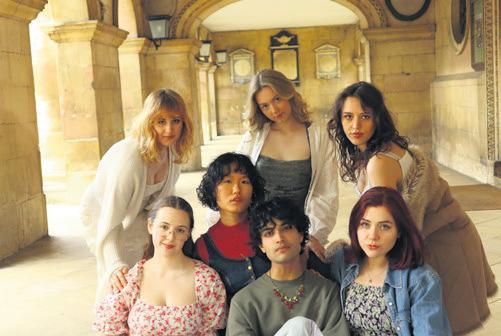
slightly chipped nail polish adds a certain ‘je ne sais quoi’ to any look
experiment with which way frames your face best. Simple and basic accessories like bobby pins and fun shaped hair clips, which you can most likely nd on Etsy, can elevate it easily, and if all else fails just keeping it down and natural remains a low maintenance job. Less hair, less work, and even if I’m proven wrong, it will always grow back.
Double denim
Denim is also permeating just about every out t this spring, either in the form of a jacket, or jeans, or a skirt, or bag, or everything all at once.Whether or not this is still as fashionable as it was in the 70s is up to personal taste, but I personally am excited to welcome double denim back with open arms. e combinations are limitless, and investing in a decent, reliable pair of denim jeans, whilst hard to nd, is always worth it.


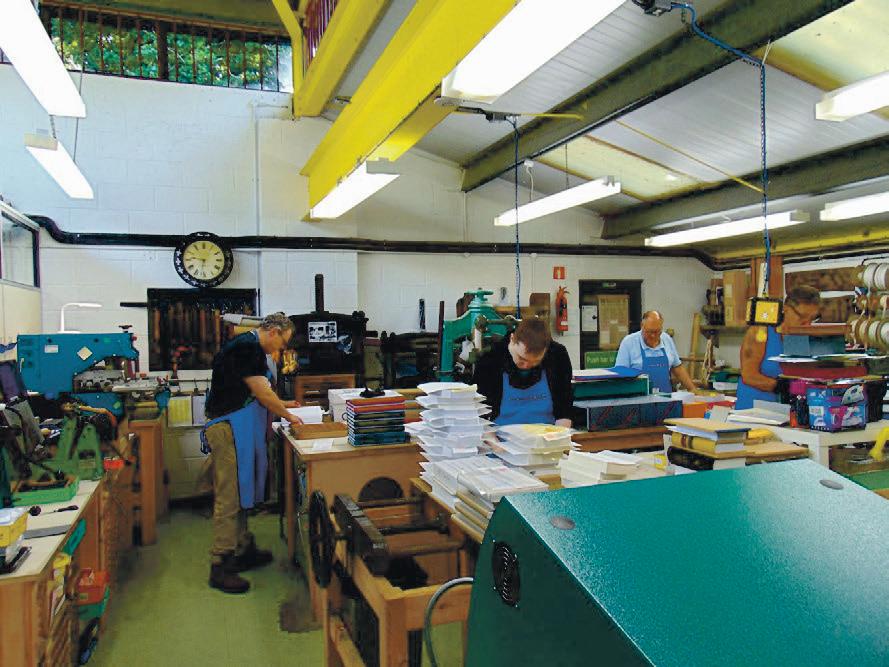
in this spring, either venturing into biab (a type of gel nail polish that supports the healthy growth of your nails), or just keeping them short and neat, accessorised with a £5 nail polish from your local boots. A pop of colour makes your everyday look a bit more exciting, and even slightly chipped nail polish adds a certain je ne sais quoi to any look. And you don’t have to stop at one colour, pick a di erent colour for each nail, or add some nail stickers. A quick and easy x.
is list is by no means exhaustive, and denitely a very loose guide for fashion this spring. Ultimately, I have concluded that this season is one for experimentation, embracing the marginally warmer weather, while still keeping things practical, and always having a jacket on hand. Layering, accessorising, and investing in staple pieces is not new advice, and is largely applicable to every season, but I’ll say it again anyway just in case I’ve convinced you to change your fashion habits this spring.



e bob is back It seems to me that short hair has swept the nations. Perhaps it’s just my bi-annual urge to cut all my hair o , but what better time to take the jump than spring? Short hair unequivocally appears to be more fun than keeping it long, it forces you to style it in di erent ways, and
Fashion Shoot Coordinator: Holly Hardman
Photographer: Amika Piplapure
Models: Matilda Billinge, Ellis Boden, Ditta





Ben Birch reviews Here is a Gale Warning: the art of disaster, the Kettle's Yard exhibition which displays the works of artists grappling with catastrophe, and ponders what we can learn from crises
Increasingly often, I nd there is something very philistine about how I think. High art, poetry readings, contemporary dance: all these tend to make me scowl slightly. So, when I walked into Here is a Gale Warning: Art, Survival, and Crisis and saw a maroon doghouse hanging from the ceiling titled ‘God Kennel – A Tabernacle,’ my hackles were immediately raised.
Yet as I began to browse the exhibition, my cynicism softened. Here is a Gale Warning is an exhibition that brings together the works of eight di erent artists and explores art’s capacity to warn us of incoming catastrophes. e catastrophes in question range from ecological disaster to housing crises. But, as curator Dr Amy Tobin emphasised at the opening of the exhibition, this art can also comfort and replenish us as these catastrophes loom. e exhibition is named after a ag that Rose Finn-Kelcey designed and displayed above Alexander Palace with the words ‘Here is a Gale Warning’ sewn upon it. e wind-dependent ag only shows its message when the gale force winds are blowing. Dr Tobin’s borrowed title reminds us that the crises of which these artworks warn us are already in full swing.



I was usually sceptical. But Vicuña’s photographs force you to focus, to pay attention to the strangeness of the objects on show. ey mimic the shapes and colours of the shells that you’d expect to nd on a beach, but with none of their delicate beauty. e natural beauty that we have taken for granted has been worn away by pollution and climate change – all that is left is a synthetic identical.
❝ e exhibition forces you to focus, to pay attention to the strangeness of the objects on show



In the rst room, Cecilia Vicuña’s closeup photographs of plastic on the beach initially seem unremarkable. Blurry, unde ned, and hard to identify, this is the kind of art of which










My hostility towards the art was tempered by the focus the artworks demanded of me. Vicuña’s photographs ‘Red Pipe,’ simple close-ups of New York City at pavement level, had the same effect. ey make the ordinary completely unrecognisable and ask us to rethink our relationship with everyday urban environments. ey do all this by simply asking you to look more closely. Many of the labels beside the pieces on display were at pains to explain just what was going on in the artworks. e label beside Justin Caguiat’s ‘Pissing in the Stars’ read that a part of the painting ‘looks like a constellation.’ Beside one of Candace HillMontgomery’s weaves the label claimed that the piece in question looked like the keyboard of a piano. It is doubtless important to ground the viewer as they interact
It’s 7:26pm on a Saturday. Black tie donned and glass of champagne acquired, you waddle over to a few friends. A shouting contest masquerading as a civilised conversation ensues. Your DoS, somewhat inebriated by this stage, passionately ushers the crowd into the dining hall. SNAP! What the bleedin’ ’eck was that? e inevitable “smile one more time for me, guys. Cheers,” not only con rms that a stun grenade hasn’t been pelted at you (phew), but it also draws your attention to a member of one of the University’s most undersung demographics: its student photographers.










with these more abstract pieces, but I found that more often than not I saw something completely di erent. Many of the objects on display call attention to their own peculiarity. Just as the crises with which these artworks interact are complex, so are their manifestations in art. Take Tomashi Jackson’s work as an example. Her piece ‘ e Hair of the Dog II’ initially looks like a kind of plastic Rothko of red and black. But as you step back, faces emerge – the faces of those watching a house burn in the 1981 New Cross re in London. e stories that these artworks tell cannot be the subject of art which is easily understood.
❝
Just as the crises with which these artworks interact are complex, so are their manifestations in art
It is very hard to bring eight di erent artists together in one exhibition, yet Here is a Gale Warning certainly succeeds in this sense. Walking through the exhibition I was constantly aware that something was impending. Justin Caguiat’s piece ‘Pissing in the Stars,’ one of the largest and most eye-catching artworks in the exhibition, was an excellent example of this. Beneath the muted browns and yellows of the painting lurks something bright and unidenti able. While some shapes can be made out, there is a sense of a veiled world. It is hard to say whether or not this world is one which we should welcome or fear, but nonetheless it is a world of our own making and one which we must face sooner or later.

seasoned photographer, rehearsed to me on a sofa in Emma café squares with this. Wanting experience and, of course, to continue developing her passion for photography, Susie “accepted everything” in rst year. is “everything” included some heartwarming shots of a doting couple, photo-










Student photographers are seemingly ubiquitous. May Balls, Union debates, graduation ceremonies, drunken subject dinners – you name it, they’re single-handedly ensuring that we are wellequipped with photos we can laugh (or cry) about in 30 years’ time. eir wideranging work is something unique to Cambridge, if not university settings in general e photographic autobiography that Susie Kirsten third-year Phys NatSci and





a ‘beauty of women’ shoot, collaborating Fem- soc, and some in-
timate portrayals of various performers and some not-so-intimate photos of rambunctious nalists at St John’s May Ball 2023. With such situational diversity, however, comes the requirement to adapt and improvise. Susie noted that one photographic technique – light-streaks, say – can be used to convey a surprisingly large amount of di erent moods and themes. Regarding light-streaks, Susie said that she “can capture a still image of the person by the quick re of the ash, followed my motion of the camera to get light streaks from the longer exposure around the person. I can use long exposure to show chaos, I can use it to show the ow in musical situations.”
















Ami Khawaja, a second year Historian at Caius embarked on such a mission while snapping some lawyers letting loose at the University’s Law Ball. Ami attests strongly to the value of a photographer’s patience. After some amicable disagreements, Ami “worked together [with the students] and tried di erent things like
❝ Con dence. For many a nervous teenager that noun will seem rather misplaced

Walking into a third sixth form college, following two expulsions, Stephen Fry told the vice-principal, given a place to read English at Queens’ College. If you take me on, that is what will happen.” Despite two of his requested courses being full, Fry was admitted, and in 1978 the actor/writer/comedian arrived in Cambridge “with a collection of carefully chosen books, a typewriter, a gramophone, a pile of records, some posters, and a bust of Shakespeare.” As is evident from his declaration to the vice-principal, for Fry, “it was Cambridge or nowhere.
I will be with it
❝
throughout his engagement in student theatre –e beauty of our way was that everyone was learning as they went along. Such a welcoming environment encouraged the blossoming of talents such as Emma ompson and Hugh Laurie, both in Fry’s year at Cambridge – by the end of their university experience, the three had become unalter-
Wine can be a wiser teacher than ink
Fry remains convinced that his pursuit of extracurriculars and connections at Cambridge
Chronicles and Moab himself admits that I in my en-
Upon reading e Fry Chronicles is my Washpot, two autobiographies comprehensively covering Fry’s university years, it became increasingly clear to me that the Cambridge of the late 1970s is worlds away from the one I currently nd myself in. e University has predominantly been de ned by its demand for academic excellence over the course of its 800-year history; Fry, however, seemed far less burdened by his degree than most current students. He “I went to three lectures tire three years.” Fry’s self-liberated timetable thus makes us question what we might do if we didn’t have to study all day. Perhaps we can get some ideas from him: the natural thing to do was to talk a lot, listen to music, drink co ee and wine, read books and go to plays. activities do not convey studying in the strictest sense, they ultimately contributed to Fry’s cultural upbringing – indeed, most Cambridge students similarly bene t from the town’s rich cultural history. Fry experienced the same kind of liberation
the optimal route to go down: Wine can
While these

Cambridge.

be a wiser teacher than ink, and banter is often better than Despite this, he still managed to achieve a II.i (which he claims dull, worthy, and unexciting ), with rsts in all of his examined
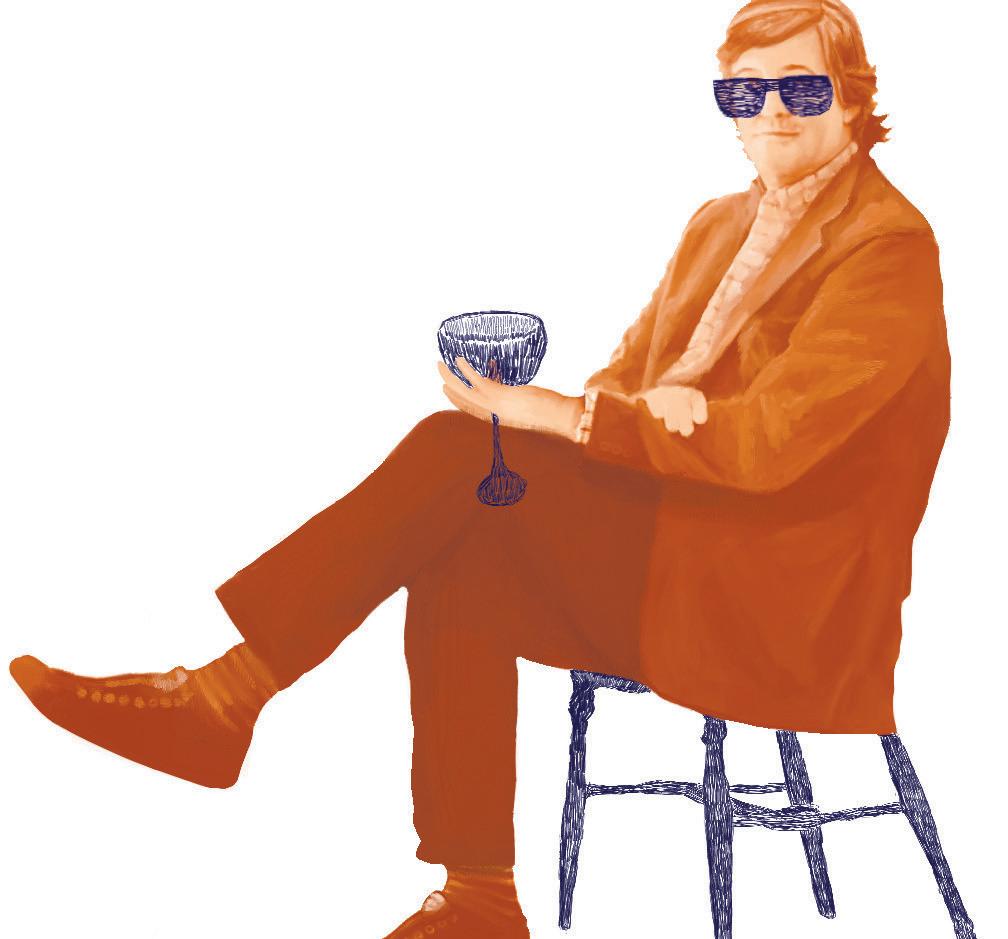
angles and lighting until we both came to a solution we were happy with.” In addition to gaining some negotiating skills, some wider realisations were born out of this process of adjustment: “it’s so fascinating the di erences a slight angle can make to someone’s condence.”
Con dence. For many a nervous teenager that noun will seem rather misplaced in the context of photography. at Ami mentioned this emotional shift speaks to the unique insight into our behaviour that photographers can gain. Niamh Ca erty, second year lawyer, had a similar anthropological experience while documenting a few weeks ago. She found it “interesting seeing how some people take to being in front of the camera like it’s second nature,” whereas “others are far more critical of themselves.”






Susie agreed, but also noted that the way individuals’ behaviour changes around cameras depending on such factors as room size, number of people, and ambience is also fascinating: “people go into an event with a bit of a mask on […] they feel the need to have small-talk and that’s awkward,” but, as time progresses, “they know they’re being watched, [so] their posture changes etc.” At an Association of Veterinary Surgeons dinner that occurred in late January, for instance, Susie observed that “during the drinks, people would talk normally and ask for a photo,” she found. However, during the dinner some adjustment was necessary:






“as I walked around, the closer I came I found I had to switch to a di erent lens to capture some genuine smiles,” for “as I walked over, suddenly [individuals’] conversations were hilarious.”




Fry’s autobiography highlights how Cambridge is at once forever constant and forever changing: while the chapels and colleges, courts, bridges and towers are what they have always been, Cambridge is entirely di erent each time.” e city is situated as both temporary and timeless; its architecture and cultural history render it frozen in time, while it is the constant transformation of its students that brings Cambridge to life, always directing it towards something currently unknown.
For current students, making an impact on a city already so in uential to history, culture, and art seems an insurmountable task, but Fry certainly left his mark on the town; we all have the potential to do so. Indeed, it was during his last performance as a Cambridge Footlight that Fry and Laurie both got scouted by an agent, kickstarting their comedy careers before they’d even left the town: “ e silhouette of King’s College chapel loomed up against the night sky. “I’ve got an agent!” I told it. It was unmoved.” Cambridge undeniably changed Fry’s life, while remaining itself unchanging; the town is thus a catalyst for greatness, waiting patiently to welcome its next young prodigy - the “ ushed youth, pampered youth, privileged youth, happy as Fry suggests.
papers. Fry therefore stands as testament to the fact that prioritisation of non-academic elds is possible, and indeed preferable, even in a university like time. arconstant an the unmoved. to mine. an
Like me, Fry grew up in Norfolk (and is similarly ambivalent about the fact). He even brie y attended the sixth-form college I took my A-levels in, though in his time it was an all-boys grammar school. As a fellow English student (and fan of Oscar Wilde), I take great inspiration from Fry’s path to Cambridge, and the subsequent success he achieved from making the most of that experience. Fry believes everyone can get something di erent out of the University – “ ere were a lot of Cambridges, I am just trying to remember mine.” Perhaps we would all bene t from making the most of Cambridge in all its facets – we might as well try to have an experience worth writing an autobiography about.

❝ With such situational diversity, comes the requirement to adapt and improvise
image of the solitary photographer gaining unfathomable wisdom. Susie, Ami, and Niamh, however, noted in varying ways that interactions with other photographers can prove rather useful. Susie was unequivocal about her gratitude for her college father, who “helped [her] to get into photography, and helped me get my rst jobs.” College parents, nurture your children: it could change lives! Similarly, Niamh “bonded over art styles and the fun of [photography]” with a fellow photographer at a Churchill LGBTQ+ formal, which attests to the value of comradeship in artistic contexts.

Human nature, eh? is emphasis upon how photographers observe and capture us conjures up an
Cambridge’s student photographers, like us all, are a diverse bunch. From May Balls to college archives, their willingness to follow their interests and develop their passion for photography is admirable. Why? Because it results in those ephemeral, seemingly insigni cant moments of our time here being frozen in time, preserved for a merry or not-so-merry nostalgia sesh. eir art requires them to observe and consider the minutiae of our behaviour, which are invariably lost amid the hustle and bustle of 21st century life. Say thank you to a photographer one more time than you typically would after leaving that dining hall, or downing that pint.
Daniel Kamaluddi sits down with two organ scholars to discuss the highs and lows of the tradition
Organ scholars are essential to the fabric of Cambridge’s traditions, yet much of their work is cloaked in mystery. If juggling playing, conducting, and singing wasn’t enough, organists throw busy social lives and countless college and society positions into the mix. I have been in choirs since I was seven, so the organ’s spine-tingling sound has been ever-present in my life. Yet I have always been ba ed by its countless keyboards, pedals, and stops. Someone once jokingly described playing it to me as like driving a car.

to absorb knowledge constantly; I admire him hugely.” Nora emphasises the importance of friendship between organists: “you have to get on with them,” she says. “If you have a grudge against them, you are going to have a horrible time. Miles and I at Emma are lucky because we get on so well. Every time we go to the organ loft we gossip.”
When I play the organ I enter a more aural state of perception. Training the ear means I can open my mind





If it really is like driving, I wanted to lift the lid to gain an insight into this crucial but overlooked role. I sit down with Barbara Dooley, Organ Exhibitioner at Peterhouse and Nora Rechel, Junior Organ Scholar at Emmanuel to learn more.



Sitting in Peterhouse’s dark wood-panelled hall, Barbara tells me how “music has been a constant ow throughout my life. I started the violin aged ve and played in an orchestra, but soon decided to take up the piano; I felt it was another way of working with a string because it is a string instrument encased within ivory keys. at was fascinating as I wanted to see if I could change my idea of sound.”






e organ scholar’s role in college life is various but centred around the organ loft, Barbara says: “as organ exhibitioner, I the choir for services thrice weekly. e role includes conducting, and we help compile music for the term and the music-making life of the college. For example, I sang for Vivaldi’s Gloria which the Music Society performed to celebrate forty years of women at Peterhouse.” Nora tells me, “depending on the college you have a certain amount of services to play. [At Emma] we play two services weekly and Compline fortnightly. For complines, Miles and I conduct. Beyond that, we help with admin, organising tours. It is very varied and very fun.”



Tucked away in the slightly less grand setting of Fiona’s, Emma's café, Nora tells me, beaming, that “music has always been something that feels missing when it is not there; I really value it because it brings you closer to people.”


















Nora emphasises the application process's rigour: “ e academic interviews and the organ scholarship auditions were simultaneous so you had intense days where you were examined on every aspect of your life. You had to play for Directors of Music, you had to do sight-reading, transposition, keyboard tests. It was a crazy week!”


e most fascinating part of being the junior to a senior organ scholar, Barbara says, is “the wealth of knowledge passed down. I learn a huge amount from Shawn and it is a unique experience as a Junior










Other days you may be tired, hungover, and have no choice but to conduct.” Barbara stresses that “time management is really important. As someone who studies Classics, not Music, some might think the two don’t meet. I nd they complement each other hugely. Classics for me is verbal and quite visual; when I play the organ I enter a more aural state of perception. Training the ear means I can open my mind.”
It’s the social aspect of being an organ scholar, for Nora, that is also satisfying: “I am really close with a lot of the choir. Free formals mean after services you sit with lovely people, you have a nice chat, sometimes there are choir parties. You have this integrated social network from day one, as you are around amazing people with similar interests.” For Barbara, the joy is that “every organ is completely di erent, and what I love about being an organ scholar is creating a friendship with it. You get to know the instrument really well.”
Music has always been something that feels missing when it is not there

Barbara enjoyes the process amid the stress. “It is a very rigorous process. When I applied, it was the rst year in person after online interviews. It’s an enriching experience because you play a number of organs in Cambridge and meet Directors of Music.” e challenge of being an organ scholar, for Nora, is “ensuring consistency because there are days when you’ve had great sleep and are feeling on top of the world, and you feel con dent leading the choir.

Organ scholars are sometimes stereotyped as being too immersed in classical music to know contemporary hits but Barbara assured me: “I can bust that myth. On the jazz end of things, I like Stan Getz and Billy Childs. In terms of classical music, I would say, since it’s near Easter, the Bairstow Lamentations or Hadley’s My Beloved Spake.” Nora, too, showed the breadth of her listening: “I listen to a mixture of jazz and indie. I really like Sammy Rae and the Friends who are a funk band – they’re relatively up-and-coming.” We moved from classical to modern, from conducting to parties, and with that our conversation drew to a close.
Once again, we nd ourselves hurtling towards revision season. Spurred on by distant dreams of May Balls and garden parties, we lock in, hit the library, and study hard. Everyone has di erent strategies for surviving this ritual sacri ce of our mental state. For most, headphones play a crucial part, blocking out distractions and allowing music to take the edge o . Preferences for study tunes vary. I walked into a revision space last Easter to nd someone working to the Super Mario Bros ‘Underground eme’… to each their own. Many – like a recent contributor to this section, who blasts out essays to lm scores and Tchaikovsky ballets – nd themselves turning to classical music, a genre they might not otherwise listen to. But how does the genre's association with studying shape our engagement with it, and the industry it supports?
by the anecdote that Richter’s project ‘Sleep,’ an eight-hour composition literally intended to put its audience to sleep, was inspired by his own wife dozing o while listening to his concerts virtually from other time zones, which hardly feels like a ringing endorsement. A few decades ago, classical music tried to nd a popular audience through pseudoscience about Mozart making babies smarter; now, the selling point is that people don’t even need to pay attention to it.


with recent technological developments, such as the streaming services that give us access to this material, and the headphones which allow us private, portable listening experiences. ere is only a point in creating music to accompany more cognitively demanding activities if it is physically possible for people to listen to it while doing so. Given that this is the case, the recent proliferation of such music is perhaps unsurprising. What is more interesting than music created speci -
Now, the selling point is that people don’t even need to pay attention to it

e high demand for easy listening classical music is evident in its copious supply. e BBC, for example, recently launched a new radio stream called Radio 3 Unwind, lled with ambient synths, soft piano tones, and more reverb than a bass drum in a French cathedral. Spotify is the true bastion of this sub-genre, though, its algorithm serving up playlist after generic playlist of ‘Calming Classical,’ ‘Peaceful Piano,’ and ‘Music for Concentration,’ providing hours of uneventful music curated to recede into the subconscious of its listeners. is trend has helped launch some of the most successful composing careers of this century – gures like Max Richter and Ludovico Einaudi have reached millions with music that strikes the perfect balance of being nice but not interesting. I’m always amused

Taking a historical view of the genre, this is a somewhat curious development. Back in Tchaikovsky’s day, the only way to hear a full ballet was to go to the ballet and watch the ballet, which is perhaps a sub-optimal location for completing academic work. In such environments, generally speaking, it was supposed that audiences would at least be paying some attention to the music being performed. Music had its quiet, sustained, and gentle moments, of course, but almost invariably within a larger whole featuring a range of moods to maintain interest across its duration, in stark contrast to the hours of almost identical music populating today’s study playlists. e emergence of background

listening habits is clearly linked







cally for these listenhab-



ing its is how classical music from before the recording age is being selectively co-opted for this purpose. Taking a look at the snappily named ‘Classical Study Music for Focus’ playlist on Spotify, we nd the usual suspects of modern background classical like Richter, Einaudi, and Radio 3 Unwind stalwart Ólafur Arnalds.


eir music is intermingled, however, with that of bygone gures of the classical repertoire, including J.S. Bach, Dmitri Shostakovich, and even Franz Liszt. Taking only the pieces chosen for this playlist – lyrical second movements, rolling andantes, lullabies, romances – you’d be forgiven for imagining these musicians to be the Richters of their day. Of course, anyone familiar with Bach’s haunting depictions of death in works like Komm, süsser Tod and the St. John Passion, Shostakovich’s violent scenes of war and con ict in the 7th and 11th symphonies, and pretty much anything by Liszt knows otherwise. e pieces in this playlist represent but one tiny sliver of these musicians’ work.
If one were being cynical, it might be suggested that the packaging of classical music for background listening is predicated on passing this rich and varied repertoire through the lter of what is most easily ignored. On the other hand, going through ashcards is hardly the time for contemplating the horrors of the Bolshevik revolution. I just advocate, then, for people to dig a little deeper into the music of those composers they study too. Listen to the odd nale, attend a live concert, pay attention to it, and realise that classical music is, in fact, often not very relaxing or easy to tune out. ❝
Having seen Lady Bird (2017) at the formative age of 15, I always tried to imagine what my own ‘coming-of-age’ moment would look like. My own life experiences were then virtually nonexistent, so my dreams for the future were built vicariously around the adventures and mishaps of my favourite on-screen characters.
So, naturally, on the eve of my moving into college I decided that I must watch the episode of Gilmore Girls (2000-2007) in which Rory has her rst day at Yale. Lying in a hotel room with my sisters, it provided exactly the comfort we needed, and a respite from the screaming match we’d engaged in just an hour before. For those 43 minutes, we could pretend our anxieties about new beginnings only existed in a ctional world.
But by the time term was in full swing, I found myself overtaken by all the excitement. e thought of sitting down for a quiet evening to rewatch my favourites suddenly felt like a laborious task, and a new lm or series was totally out of the question.
Having now steadily overcome this to the point of procrastination through comfort rewatches, I’ve managed to narrow down why rewatching our favourite shows and lms is a staple in the university student’s routine. For starters, their predictability allows us to momentarily switch our brains o , not having to focus particularly hard on dialogue or worry about missing key plot points. If you’re anything like me, it also provides the perfect back-
ground noise for getting ready, answering messages or (more commonly) playing a few rounds of Block Blast.
my own. Some might say this practice is a little parasocial, but that’s no reason to stop. Rewatching certain episodes acts as a reminder of my past self and it lls me with a sense of pride to think about how far I’ve come since I rst watched


My dreams for the future were built vicariously around the adventures of my favourite characters


Our favourite scenes and soundtracks can be the antidote to all our ailments: a warm hug to cure a bout of homesickness, or simply some laughter to help battle the Week Five blues. When we press play, we are hit with a wave of nostalgia, transported back to simpler times.

So, as these lms and shows form part of our past selves, they can become facets of our identity. As someone who enjoys a slice-of-life drama, I frequently nd myself mirroring my own milestones with those of my favourite characters. I rewatched Rory Gilmore’s acceptance into Yale when I received mine to Cambridge, and I’m reminded of her rather scathing review of a student ballet performance each time I write an article of




my favourite lms,
comes more intimate. As the plot develops, their understanding of me and my interests does too. ey learn a little more about what I like or dis-



Mohammad Rasoulof’s latest un inching drama, e Seed of the Sacred Fig (2024), draws deeply from the well of Iranian cinema – both pre- and postrevolution – to craft and amplify an urgent cry for justice and women’s rights. For many, Rasoulof’s drama will serve as a powerful introduction to the rich tradition of Iranian lm, renowned for its potent political subtexts and neorealist, docu ction narratives. For others, it will prove a reminder of Iranian lmmakers' resilience; how they brave censorship and arrest to expose injustice, challenge authority, and give voice to the marginalised. I hope to provide a closer glimpse into this New Wave of cinema and to pave an accessible pathway for those interested in exploring these works further.
e House is Black (1962)
“Flow to us, ow to us,” speaks Forugh Farrokhzad as the credits roll and we’re left stranded, haunted by her gut-wrenching images. e House is Black is not merely a documentary on a Tabrizian leper colony but a slice of history that, as Jonathan Glazer notes, is “so coruscating, so humanist, so political” that it demands to be seen. Every frame bleeds, every poem sings. In 1967, following Farrokhzad’s untimely death, director Chris Marker dubbed the lm “a masterpiece” and, shortly thereafter, it was cemented as a staple of early Iranian New Wave cinema. Its in uence is undeniable; Makhmalbaf’s e School at Was Blown Away (1998), Kiarostami’s e Wind Will Carry Us (1999), and Majidi’s e Colour of Paradise (1999) pay homage to the lm. Professor Hamid Dabashi calls it “the most signi cant lm of the early 1960s,” suggesting it kickstarted the entire Iranian New Wave movement.
Ebrahim Golestan’s inky-black melodrama dances on the precipice of FilmFarsi and New Wave, battling trope and truth. It follows taxi driver Hashem, who is forced to care for an abandoned child. In typical Golestan fashion, the lm is littered with allegory and societal critique. e title references an Attar poem, “what the Youth sees in the mirror, the Aged sees in the raw brick,” hinting at a wider commentary on alienation and bubbling political instability. Ten years prior, Golestan photographed the trial hammad Mosaddegh, whom he supported, stating: “[Mosaddegh] gave it his best shot […] but the people did not understand”. marked a tonal change for Iranian cinema, prompting an in ux of politically-charged minimal realism.





Hamoun (1989)
an expert study on self-awareness, or a lack thereof. In an opening sequence as poetic as it is nightmarish, a cinema screen is transformed into a giant mirror re ecting an eclectic mix of medieval philosophers, Kierkegaard readers, and ancient Su s, all under the watchful eye of Ezzatolah Entezami’s Satan, hooves and all. Mehrjui’s background as a philosopher is on full show, his fascination with identity and metaphysical doubt unfolding amid a eeting, powerful dreamscape. Hamoun’s in uence lingers in the bones of so many modern Iranian classics and, after his tragic murder in 2023, it is no doubt that Mehrjui's legacy will continue to play a major part in the future of


Often described “Fellini-esque”, but arguably more Lynchian, Dariush Mehrjui’s Hamoun pushes Iranian auteurship to its extremes. Long speculated to be a loose adaptation of Sadegh Hedayat’s e Blind Owl, Mehrjui’s surreal divorce drama bounces freely between dreams and reality, weaving fantasy with delusion, heartbreak with narcissism, and is
them. What would my teenage self think of having lived out her dreams, now being able to relate to what she would e lms and shows of my teenage years shaped me into the person that I am now: a little pretentious, always referencing more pop culture moments than necessary. As I wrangle my friends together for screenings of the experience belike, and why certain lms called out to me in that period of my life. We have been transported back to childhood sleepovers with How To Lose a Guy in 10 Days (2003), and to the horri c experience of writing my EPQ on military propaganda with the

Having prioritised going out over staying in with a throwback lm or series in my rst year, I can now say that the former is a little overrated. For students who rarely get a proper break in term time, comfort rewatches are perfect for winding down after an intense day. More signi cantly, they can act as a connector between our current and past selves, illustrating to us and our Now, as I scroll down once more to
the ‘Watch It Again’ section on Net ix, I feel no shame. Rather, I revel in enjoying my favourite theme tunes and characters for at least another year, as I desperately cling onto my girl-

director of e Cyclist (1987). is leads to his arrest and fraud trial, which Kiarostami lms and includes in the movie. It is impossible to pin down work that stands unique among a awless lmography and has fundamentally in uenced world cinema. Scorsese’s pseudo-documentary on Bob Dylan, Rolling under Revue (2019), is taken directly from the mythos of Close Up. In Kiarostami’s words: “People become aware of their own reality, only upon seeing their image, [Close Up is] a world without mirrors”.

Martin Scorsese cites Abbas Kiarostami’s as “refocusing his entire way of thinking”. Not only based on a true story but starring all those involved, including Kiarostami, in a series of elaborate re-enactments, Close Up blurs the lines between ction and non- ction until they’re almost indecipherable. e lm centres on Hossain Sabzian who, during an impulsive bus journey, decides to claim he is Mohsen Makhmalbaf, writer-





It would be remiss not to include the Iranian diaspora, as they are as much a part of the canon. Films such as Holy Spider (2022), A Girl Walks Home Alone at Night (2014), and Babak Anarvi’s terrifying Under the Shadow (2016) are rede ning the horror genre. But with Gholam, Mitra Tabrizian’s quiet, unassuming debut, she strikes a deeper chord, one that lays out the depressing, unspoken realities of exile. Dr Ali Mirsepassi describes this as “ghorbat” – a stranger in a strange land and, with shades of Taste of Cherry (1997), Taxi Tehran (2015), and Still Life (1974), Tabrizian captures the essence of “ghorbat” in her lm. A former war hero, Gholam, played by Shahab Hosseini, wanders aimlessly through London, unable to relate to anybody, not even his own countrymen, until he nds himself at the centre of another con ict. Shattering, silent desperation pours uncontrollably from this lm, depicting an often-hidden truth of the immigrant experience.
What you wear says a lot about you. It’s the rst impression people get of you, what you like, what interests you. So, consider how important costume is for a character in a play, who has a whole audience trying to understand them from their rst step on stage. Costuming which feels right, that feels like that character woke up and picked out those clothes themselves, is as crucial as good dialogue and performance.
There’s so many special and unique pieces
is is something which is particularly important to the new Designer’s Representative at Cambridge University Amateur Dramatic Club (CUADC), Helen Lyster. Lyster describes her role as one of dual responsibility, both to speak for the interests of designers on the committee and to provide support to anyone working on an ADC funded show. Yet Lyster seems most excited about is the ADC’s costume store. “It’s about ve by ve metres; it’s such a treasure trove. I remember when I rst got Camcard
access, I just went in there and shut the doors and spent a few hours just going through everything,” Lyster continues. “I am passionate that everyone can and should use it, because rst of all, sustainability, and secondly, there’s so many special and unique pieces in there.” e costume store is open once a week for people to drop in to browse… that is if you can wade through an apparently humongous pile of black trousers which Lyster says is a categorising job “for next term.” Lyster mentions how she

is “currently trying to revamp the costume store a little bit. I want to get in more essentials of basic things you need for costuming. So, safety pins, sewing needles, and thread.”



Lyster is also excited to bring light to the outstanding skill and talent she bears witness to through her involvement in the world of costume design. “I’m consistently blown away by how incredible some of the things I’ve seen here are […] even the very small things that you can do like putting lots of safety pins on the back of a jacket like a cross, or wings.” She is keen to mention “the


people who construct garments like Jessi Rogers in Meet Vera Stark or Abi Beton who made six prom dresses for Carrie: e Musical,” which is the rst show Lyster assistant designed.
“I had never made a dress before that point, so I was sort of just in awe of Abi sewing these things.” says Lyster. She is similarly looking forward to inspiring other newcomers to costume design, which in her opinion provides an accessible way to “creatively contribute to a show.”
Bethinn Feely speaks with Helen Lyster about inspiration, the depths of the costume store, and the importance of collaboration ❝
Lyster stresses the collaborative element of the creative process. “I like to speak to the director and producers rst and see what they’re envisioning […] it’s really lovely to get as many ideas as possible.” For the same reason, Helen loves to talk to the actors: “I had a really lovely conversation with an actor where I said, ‘You were just so brilliant on that stage’ and they said, ‘Well I felt brilliant in my costume.’ Yeah, that was special I think, to be able to give people that con dence, someone can step in that costume and the character just comes alive.”
Lyster’s current project is Pride and Prejudice in Week 7; she mentions that the costume store is always “growing and constantly expanding which I think is so cool! Stay tuned for lots more Regency dresses in there hopefully!” I have seen a sneak peek of one of the dresses currently being sewn, and it’s fair to say that even I am now tempted to raid the ADC costume store.
It seemed a fateful coincidence that the very month I began a PhD in Nuclear Energy, a new stage adaptation of Dr Strangelove premiered in London. Despite having worked for three years in the nuclear industry, I was yet to see Stanley Kubrick’s original 1964 lm that is, according to colleagues, a “favourite lm of nuclear scientists.” is seemed the perfect excuse to combine my academic and theatre-writing interests by watching both lm and play and see the thoughts that might arise. Just to be clear, my interest is in civil nuclear energy and Strangelove is about the (distinctly un-civil) hydrogen bomb, but the history of atomic weapons is a fascinating topic for any technologist – and indeed, anyone interested in human nature.
Dr
Strangelove’s most timeless lesson
is that
human stupidity will never run out
First, I tackled the lm. Given its comic reputation, I was intrigued to discover that there is a gripping, ticking-clock thriller at the heart of Dr Strangelove. It’s the 1960s and the US president has just 30 minutes to prevent an all-out nuclear war with Russia. Although we follow the fascinating strategic responses of major players, the lm’s real interest is in using parody and caricature to highlight the inherent absurdity of the situation, such as when a character needs to make a phone call to save the world but has no loose change.
I have to confess that initially, I was probably more disconcerted than charmed by the over-thetop humour. It was only two months later while


watching the streamed-to-cinema theatrical version, adapted by Armando Iannucci and starring Steve Coogan, that I felt able to fully enjoy the black comedy, partly because I now knew what to expect. However, crucially, I suspect that it’s also because the longer stage runtime (an additional 45 minutes compared to the lm) was smartly exploited to ll in some of the characters’ motives (the bomber plane crew gets more development and Dr Strangelove’s sinister nature unfolds more gradually. While with the lm I’d felt occasionally uneasy as to what exactly about the character I was meant to be laughing at) the lm Strangelove is introduced with a strange accent and using a wheelchair, and this ‘weirdness’ initially seemed to be the joke in itself – Coogan’s more restrained, but still hilarious, performance makes it clear that it is Strangelove’s fascist views that we are really meant to nd outrageous.
enjoyed the fact that Iannucci manages to smuggle in some new lines that feel bracingly current, referencing Russian misinformation (“words are bombs!”), America’s attachment to guns, and even a tiny dig at our reliance on AI. But it’s the story’s fundamental warning about military incompetence and nationalism gone haywire which feels dangerously relevant, at a moment when real-world military attacks are apparently communicated via emoji and diplomacy is discarded for economic brinkmanship.
❝
It is Strangelove’s fascist views that we are really meant to find outrageous


Perhaps I simply required more context to understand the craziness than a contemporary Cold War audience, who would have been familiar with the real personalities inspiring these onscreen archetypes, such as the real-life Nazi scientist who became an American rocket scientist, Wernher von Braun. Indeed, having seen the play, I probably appreciate the lm even more, since lines I’d thought ridiculous (“On no account will a commie ever drink water”) now seem like precise satirical strikes against the fanaticism and short-sightedness of Cold War decision-makers.




Even putting aside similarities of political climate, the play speaks to a live discussion about the possibility of nuclear war today. In Nuclear War:



A Scenario by journalist Annie Jacobsen,








views with experts, Jacobsen describes a hypothetical – but apparently realistic – scenario where North Korea launches a surprise nuclear missile attack on the US. Within minutes of detection, the US president orders immediate retaliatory action. However, the missiles aimed at North Korea have to cross Russian airspace, and, just as in Strangelove, the Russian president is hard to get hold of. Russia’s glitchy early-warning system misinterprets the US missiles as an incoming attack, leading the Russian president to respond in kind towards the USA.




Ianucci’s new production is a timely reminder that Dr Strangelove is not a quirky historical artefact but a fable we should nd alarming right now. Nuclear engineer or not, that’s a sobering thought to leave the theatre with. Shan Tan-Ya argues for a theatric update and to revitalise and make-new Stanley Kubrick’s Dr Strangelove

Speaking of context, the question that is asked whenever a classic is dusted down for modern times is – why now? Does our generation really care about outdated political games in the ’60s? Fortunately, and unfortunately, Dr Strangelove’s most timeless lesson is that human stupidity will never run out, even in the face of the apocalypse. More overtly, I



A major turning point in Dr Strangelove is the discovery that Russia has secretly developed a ‘Doomsday machine,’ a fully automated system which destroys all life on earth if any attack is detected, even if accidental, representing the logical endpoint of Mutual Assured Destruction. Jacobsen’s scenario suggests that 60 years after this warning, we nally did it, we made a Doomsday machine of our own. Together, Jacobsen’s modern detail and Dr Strangelove’s ruthless psychological insight make for a pretty convincing case that we may all be living on borrowed time.
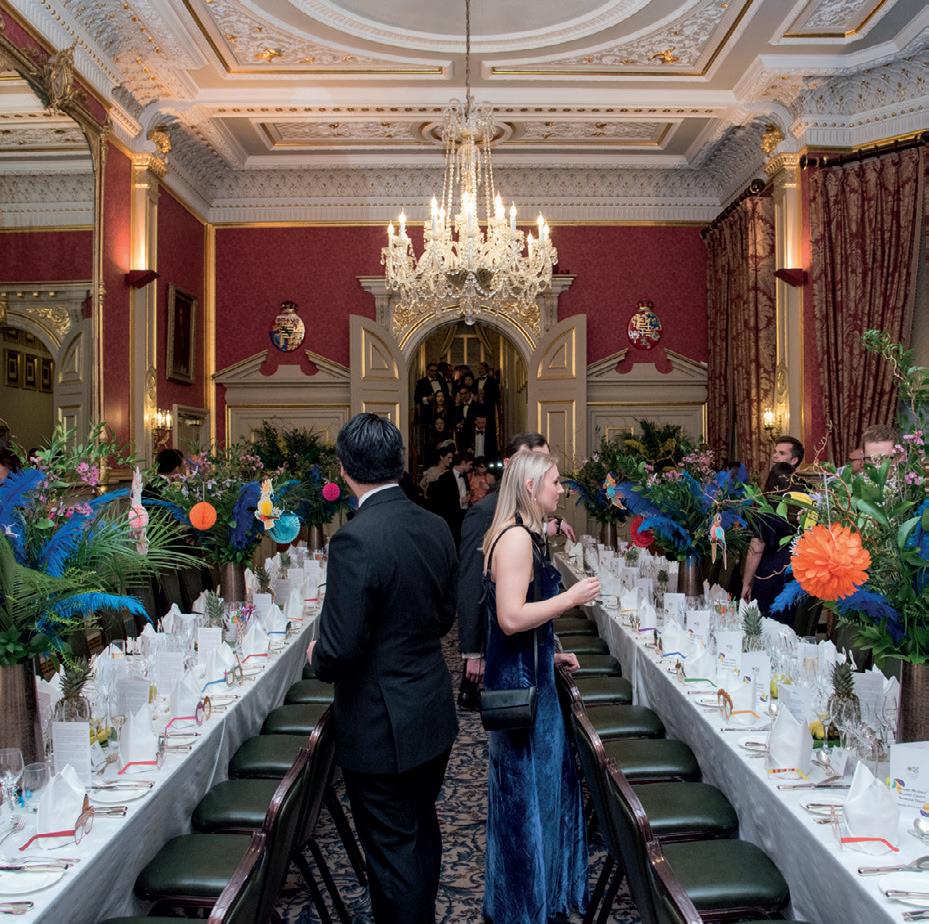


For nearly 200 years alumni have chosen to take up membership of a spacious and elegant private club in the heart of London. The Oxford and Cambridge Club in Pall Mall is the perfect place to meet for a drink, entertain friends and colleagues in magnificent surroundings, play squash, take a break, host a party or just find a quiet corner to prepare for a meeting. A thriving social scene, sports facilities, a lively calendar of events including talks, tastings, dinners and balls, an exceptionally well-stocked library, extensive wine cellars and more than 40 bedrooms mean our members use their club for recreation, relaxation and business - and now you can too.
For details on membership or a tour of the Club house on Pall Mall, please visit www.oxfordandcambridgeclub.co.uk or call 020 7321 5110 Oxford and Cambridge Club @oandcclub
Josh Pritchard emphasises the need for accessible theatre experiences, especially during the cost-of-living crisis
As a person from a low-income household, high-budget theatre has only become a part of my life fairly recently. e rst ‘proper’ big-budget production I saw came about through school and, long story short, I was lucky enough to see Saorise Ronan as Lady

both a student and someone from a low-income background much more regularly. It’s got to the point now where I’ll rarely see a show without rst hunting down a ‘16-25 discount’ or spotting a ‘Free Student Tickets’ tab buried in small print. e Cambridge theatre scene as such feels like a dream to me. But, considering the rising cost of living, I’m well aware that access to high-quality productions at an a ordable price is a blessing that likely won’t
is is where I want to bring up the National eatre. A cornerstone of the London theatre scene, the venue showcases an incredible mix of classical, contemporary, and original work and holds a special place in my heart. It was here, through discounts and school trips, I was able to see plays like e House of Bernarda for the rst time, and even saw my own play, , as a rehearsed reading. One of the venue’s focuses, has been to make theatre more nancially accessible. It was in this period that methods such as concession discounts, the £10 Friday rush and exclusive standby tickets aimed at groups like students and the unemployed were all troduced. Now, this is all well and good, if you belong to one of these groups, but it re ects an derlying idea that everyone else can readily – or even ford to attend the overlooks a wide










range of other groups: low-income workers, carers, those in precarious employment, who all fall outside the concession categories but are still priced out of access. Perhaps, my comments re ect a broader issue with larger institutions more generally but, for an industry that relies so heavily upon public engagement, there is still a long way to go in making professional theatre truly available to all.
does the future of theatre have to rely on such precarious hands?
Local theatre plays a vital role in this e ort and, for many, it may be the only a ordable or accessible way to experience the world of theatre. High-budget productions have, however, sought other ways to broaden their reach. Since 2009, the National has also regularly shown recordings of its productions in cinemas, releasing over 30 between 2009-2014, a strategy which attempts to appeal to the average movie-goer and helps to restore attendance to both theatre and cinemas. e good news? It worked. A Nesta poll found that ticket sales among those with access to NT Live had risen by 6.4% annually. e bad news? ose screenings tend to be a bit pricier than your standard cinema ticket, though far more a ordable than attending a live performance. Ok, so not a perfect strategy, but still pretty nifty, right?



Because what happens when people start to engage less attention with longer-form content entirely? When the average attention span begins to decline to the length of an interval? When entertainment is so freely accessible on a phone, that it negates visiting an actual venue? In a cultural face-o between the theatre and the cinema – two mediums already trying to prop each other up – who’s more likely to survive an audience leaning towards cheaper, bite-sized content over their craft? e answer is, neither of them will.
For high-budget theatre to thrive long beyond our lifetimes, it must be accessible. is involves addressing rising living prices and opening up even more opportunities for people from poorer backgrounds to engage with it. ese factors undoubtedly, rely on external forces: politics, government funding, and the goodwill of patrons, for example. Why does the future of theatre have to rely on such precarious hands? I’ll be the rst to admit that I’m incredibly naive when it comes to the broader economics of the theatre industry. But, I wouldn’t say this without believing that good theatre (which is not limited to big-budget productions) deserves greater recognition and support, both from the general public and from the institutions that have shaped its landscape. A decade of arts funding cuts by the British government, the rise of short form content, and the ominous shadow of AI has conjured a melancholy fear over the future of the industry. Perhaps, if we throw open the doors and let more in to see the wonders which theatre can create, we can ensure that the curtain does not fall for good.
ʻWe’re on the cusp of something really bigʼ: Cambridge’s new director of sport reveals all
Heddle-Bacon
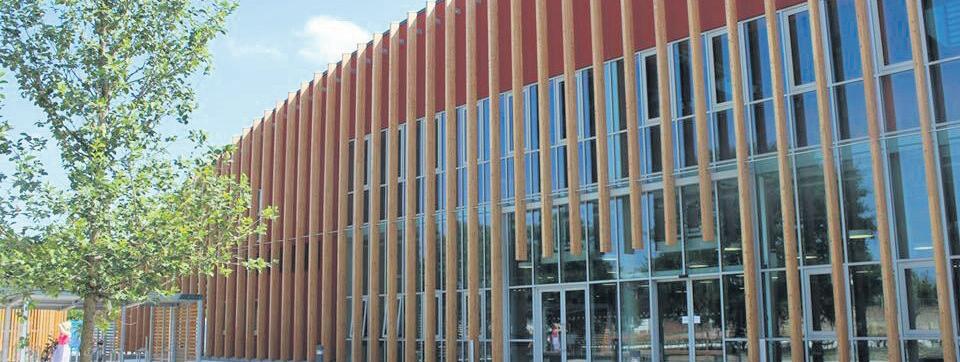
It’s safe to say Mark Brian knows a thing or two about University sport.
Combine over a decade leading the biggest student sports programme in Europe with BUCS, plus seven years at the helm of Britain’s highest ranked team sport university – and the result is a truly glittering set of credentials. is January, Brian traded the athletic prowess of Durham purple for a fresh light blue challenge, plunging himself into a directorial position that faces both unparalleled obstacles and vast opportunities.
After all, just how do you spearhead the sporting blueprint of an institution where excellence is ordinary, terms last a manic eight weeks, and academic pressure looms indomitably large? Speaking to Brian mere weeks into his lofty assignment, it would have been unreasonable to have expected all the answers, yet I was quickly taken aback by his keenly perceptive understanding and total embrace of Cambridge’s distinctive sporting landscape. An ever-a able and candid presence, Brian’s responses bled genuine sincerity, not to mention a wholehearted enthusiasm for all that awaits in the role.
With the hostilities of Varsity season rmly upon us, I was keen to see whether Brian had been swept onto the rivalry bandwagon just yet. “Ah yes, GDBO with an expletive, or so I’ve heard!,” he laughs, adding: “I’ll de nitely get into the slightly partisan opportunities that arise, I’m sure.” Playful jibes aside, Brian had clearly bought into the Varsity buzz, recognising: “Clearly, for many, many, that xture is the be all and end all of sport here, and I can completely understand why it is so attractive. It is an absolutely unique set of circumstances that the two universities have, and what a fantastic opportunity.”
Being at the apex of academia for centuries certainly brings its sporting rewards – Cambridge students compete in some of the world’s longest running xtures, perform at iconic venues, and even receive televised coverage – but such a weight of scholarly brilliance comes with its di culties, too. As Brian was to discover at the earliest possible opportunity, there is one priority here that inevitably forces its way above the rest. “During the interview process, I spoke with [Blues players] about whether sport played a part in their choice to go to Cambridge. And every single one of them said no!”. Quick to empathise with the constant juggling act Cambridge’s
athletes have to perform, Brian acknowledged: “ e challenges are more stark for students here. Academic exibility is always something that plays on the minds of the sports students. It’s a complete misnomer, that it’s just Wednesday afternoons.”
A quick glance at the overall BUCS standings for 2024-25 shows Cambridge occupy a very respectable 23rd place, having racked up a tad under 2000 points across 53 sports. Yet these impressive numbers pale in comparison to Brian’s former posting; Durham sit 3rd nationally and are currently galloping towards a staggering 5000 points – all while ranking among the very upper echelons of academic league tables.
So what exactly gives Durham such a marked edge in elite sport, and might Cambridge have a lesson to learn?
them.” Proactivity so often translates to success, and Brian reveals that Durham also “had a very good postgraduate recruitment tool. If we went out and found three or four volleyball players in America, we would speak to the Business School because that’s what they would probably want to come and do, and – as long as they had the grades –they would generally get an o er.”
Although performance sport perhaps inevitably snatches the limelight, it’s actually the mass participation and wellbeing opportunities that Brian is most eager to cultivate in Cambridge. “It feels like we’re on the cusp of something really big with the Active Students and Sta programme, and the Give it a Go sessions. We’re working hand in glove with Student Services and their support teams to look at how we roll them out, and how sport can be a central part of the university’s broader well-being strategy – it’s really exciting stu .”


“At Durham there was no compromise on academic attainment, but there were formally recognized mechanisms right across the University that would enable student athletes to take time o from study, from lectures, and from tutorials –and a mechanism for them to catch up.”














Joss Heddle-Bacon takes a deep dive with co-captains of Uni Dancesport Qing Lu and Jasmine Austin
e club’s record is astonishing – you’ve been National Champions 11 times since 2014. What’s the secret?
We’re the largest team on the UK University Circuit, and depth is really important for our success. Since Brexit, we’ve had fewer dancers who’ve competed since they were kids to rely on, and so the focus has shifted to ‘homegrown’ dancers. Every year we get in as many people as possible, and maybe 1/3 will nd they’re really quite good. en it’s about keeping that rate of development up by providing the right atmosphere and infrastructure for success.
As elite dancers, how does it feel watching everyone else’s attempted moves on a night out?
Is Strictly even close to the reality of competitive dancing?
Many people come on to our team as a result of Strictly. However, we don’t have a surplus of experienced dancers to partner beginners with, and in competitions we’re not the only ones on the oor. It’s not easy to avoid other couples spinning in unpredictable directions while charging down the oor at full speed! We also don’t learn just one dance at a time; some couples will constantly train all ten styles.
Your most treasured memory from the dance oor?
Jas: e Student Nationals in Blackpool’s Winter Gardens is absolutely electric. It’s an honour to dance on the same oor as professional competitions. I don’t think anything can top winning this year.
❝ e challenges are more stark for students here ▲



Alongside these wide-reaching forms of support, the University would enlist its top talent right from the get-go: “We had a sta member that looked at every successful UCAS application and ltered them for anything that mentioned sport. And then we’d look at the level, and decide whether [Team Dur- ham] should con- versation with
Brian’s keen appetite for improvement hardly ends there, with capitalising on alumni networks and developing fresh facilities up next on his hit list. “We’ve got a nice base (of physical activity spaces), but we are at capacity,” Brian discloses. However, “a real opportunity” could await in Cambridge West: “We’ve got a big tract of land there that has outlined planning permission for sports facilities. I need to really think hard about what we can do with that space, how we can best utilize it.” It’s not just untapped lands that are out there for university sport to reap the bene ts from – there’s also a wealth of untapped minds too. “We really need to re-engage that fantastic network of people that have come here, played sport, and have gone on to do amazing things. Not just for giving, but for students; for careers advice, for development, for mentoring, for leadership opportunities.”
And nally, though he may now be Director of the Light Blue operation, where do Brian’s deepest sporting loyalties lie? “I support Stoke City, so you can take that or leave it with regards to whatever you think about my knowledge of sport if I support Stoke,” he quips with a wry smile. Even if his football team are scrapping for their Championship survival, one thing’s for certain – in Mark Brian’s immensely capable hands, the horizon looks bright as ever for Cambridge University sport.
We only know what we’re doing because we’ve drilled it so many times. Many of us have two left feet and can’t dance in a club any better than the person next to us!
You soon realise that any popular club song is a plausible ChaCha or a Samba. Once a beat comes on that we know, muscle memory kicks in. If you want a good night out, invite your dance friends and make sure their type of music is playing. You’ll really get a show, we promise!
How do you manage training a simultaneously highly strenuous sport and deeply expressive art form?


What’s the best costume you’ve ever donned? Do students suit up in sequins too?
Jas: e best out t I have worn was a black, open back, halter-neck ballroom dress with silver and red rhinestones, black arm oats and embellished black gloves; the embodiment of elegance and class!
How do any keen Cantabs go about slipping on their dancing shoes?
We are running six weeks of classes this Easter! ere will be a free demo on Tuesday 29 April, then one hour of combined Ballroom and Latin with our head coach – suitable for complete beginners – on Tuesdays at 9pm at Downing URC from 6 May. We also have social classes, and social dance evenings every Friday – you’ll leave knowing how to waltz into the night at a May Ball.


We train performance from day one, along with technical and partnering skills. e winning smile, well-timed wink, or sassy hair ip are practiced and drilled, just as footwork is. Artistry can’t be separat- ed from a techni- cally strong foundation.




















Barney Blackburn Sport Editor
“My entire body was vibrating. I’ve never felt anything like that in my life.”
55 beats per minute is the resting heart rate for a Boat Race rower. Simon Hatcher was far from resting as he idled on the start line for the best part of ten minutes, waiting for a piece of debris to be cleared. e American had spent an entire season preparing to peak at the precise time of 2:21pm, where just over 15 minutes of lung–busting legwork would separate him from unrivalled glory or ultimate defeat. Yet, as the clock painfully ticked towards half–past two, eighteen men still awaited their rst stroke.
210 beats per minute is the maximum heart rate for a Boat Race rower. Searing down the Championship course, the rst few minutes of any race are deliriously adrenaline–riddled. Contrary to the original lineup, Hatcher was not helping to set the early rhythm from the seven-seat for Cambridge’s Blue Boat; instead his blade crisply entered the ames from the Bow–seat. A late tactical change perhaps, from mastermind coach Rob Baker? Not exactly.
An enforced reshu e of the lineup
was deemed necessary the night before the Boat Race, as Hatcher, a Brown University graduate, had fallen ill. “I had a really rough day; I lost my lunch a few times,”Hatcher admits to me. Evidently, coach Baker thought it best to tinker, moving Hatcher to a slightly less pivotal position and promoting Luca Ferraro to seven–seat. Ferraro, rowing in his fourth Blue Boat, was utterly unfazed by the change, strutting audaciously out of his side’s minibus upon arrival in Putney. Despite the bookies banking on a supremely talented Oxonian opponent, it was Hatcher who crossed the nish line rst, as Cambridge coasted under Chiswick Bridge to complete a clean sweep, their second of the last three years. Earlier, at 1:21pm, the women sprinted o , hurtling down the Championship Course. Two minutes later, they ground to a halt.
Standing at 183cm, the tallest woman in her race, Sophia Hahn’s vantage–point from the ve–seat was sharply interrupted by a tremendous clashing of blades just minutes into the 79th Women’s Boat Race. e New Jersey native’s handle abruptly pinged over her head as Hahn caught a boat–stopping crab, induced by Oxford cox Daniel Orton’s adventurous steering. is Dark Blue infringement on enemy territory was almost enough
‘
to warrant complete disquali cation, yet umpire Sir Matthew Pinsent’s decisiveness in restarting the race allowed Cambridge’s rowing to do the talking.
After the early aggression, Cambridge’s excellence came to the fore as they powered away to claim an eighth consecutive victory. 2025’s installment proved particularly special; Hahn gushed with pride as she marked the tenth year that women have raced on the Championship course. “I can’t believe I am a part of history now, carrying on the legacy of the women that came before me.” As 2027 approaches, and with it the centenary of the Women’s Boat Race, it will both be vital to celebrate the race’s legacy, yet stark to note that the world has only been able to follow the clash in the last decade. Progress is necessary as the sport plays catch–up. Just this year Sarah Winckless became the rst female umpire to take charge of the Men’s Boat Race on the Tideway.
In the race’s aftermath, among chugs of Chapel Down, exasperated sighs of relief and a smattering of glassy–eyed bewilderment, every single Cambridge rower I spoke to mentioned the club’s “culture” – an amorphous word, yet one that clearly holds gravitas for the Cambridge team. Whether or not this winning “culture” was instilled by coaches
like Rob Baker, he is the rst to admit that the “culture is carried on by the guys year after year. I don’t have to do that much, they carry the culture through.”
Cohesiveness, however, can be tested by external factors. e debate over the eligibility of certain students, which left multiple Light Blue rowers without a seat, cast a shadow over Cambridge’s preparation. It is therefore a testament to Cambridge that they were able to use this setback to their advantage. Baker rmly stated that the crew had used the drama as motivation, while Matt Edge, who had just stroked Goldie (the men’s reserve boat) to glory, went even further: “ e whole way down that course, it felt like there were eleven men in our boat. Eleven against nine, how can we lose?”.
As the Cambridge crews emerge from a celebratory daze, they will now have to grapple with what comes next. Many will enjoy priceless time with family and friends. Some will be back to the library, manoeuvring muscular frames under compact desks. Of course, the ergo is bound to beckon – as George Bourne and Gemma King tell me, project Henley is fast approaching! Ollie Boyne, on the other hand, who has been coxing at Cambridge since 2016, revealed that he is o . O to move on to the “real world,” he explains. Not a bad way to bow out,
I reply.
One question I was desperate to ask was directed to the men’s rowers from Peterhouse: would they be getting stuck in to May Bumps? Hatcher and Bourne said yes, and the prospect of that dynamic duo being joined by Luca Ferraro, Gabriel Mahler, and James Robson in the Peterhouse boat would surely send ripples down the Cam.
Cambridge University Boat Club’s perfect weekend extended to all levels. Alongside the brilliance of the Blue Boats, there were vanquishing triumphs for both reserve crews, while even more impressive were the lightweight eights, who laid down a generational gauntlet as both men and women set course records. e joyful image of the entirety of CUBC crammed onto the podium is remarkable – every single person on that stage celebrating victory. It is impossible to top. Signing o on his coverage of the 170th Boat Race, Andrew Cotter quipped, “again, the tide runs light, light blue.” Of course, with the current state of the sewage in the ames, we all know that metaphor to be slightly uncomfortable. Yet with six victories from six, Cambridge might have temporarily tinged the Tideway with a touch of turquoise.