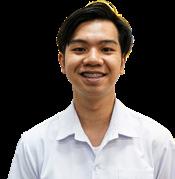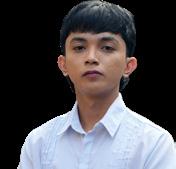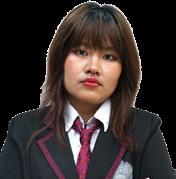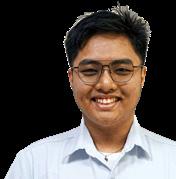




ON FEB. 7, the Central Student Council (CSC) released its transparency report for the first term of Academic Year 2025-2026, outlining recruitment drives, constituency checks, participation in university-wide events, and progress updates from each executive board.
On paper, it was a list of accomplishments. In substance, it was a list of routines.
What the report ultimately revealed was not a productive CSC, but a troubling reality: the University lacks an authentic student government.
The activities highlighted: recruitment, consultations, event participation – are baseline functions expected of any student organization. They are not, by themselves, indicators of effective governance. A student government is not measured by how often it shows up, but by how strongly it stands up–for students, especially when it matters.
And this is where the CSC falls short.
At a time when students face rising tuition concerns, shifting academic policies, and the lingering challenges of hybrid and remote learning systems, the council has failed to assert itself as a visible and forceful advocate of student rights and student welfare.
This is not mere underperformance. It is a dilution of purpose.
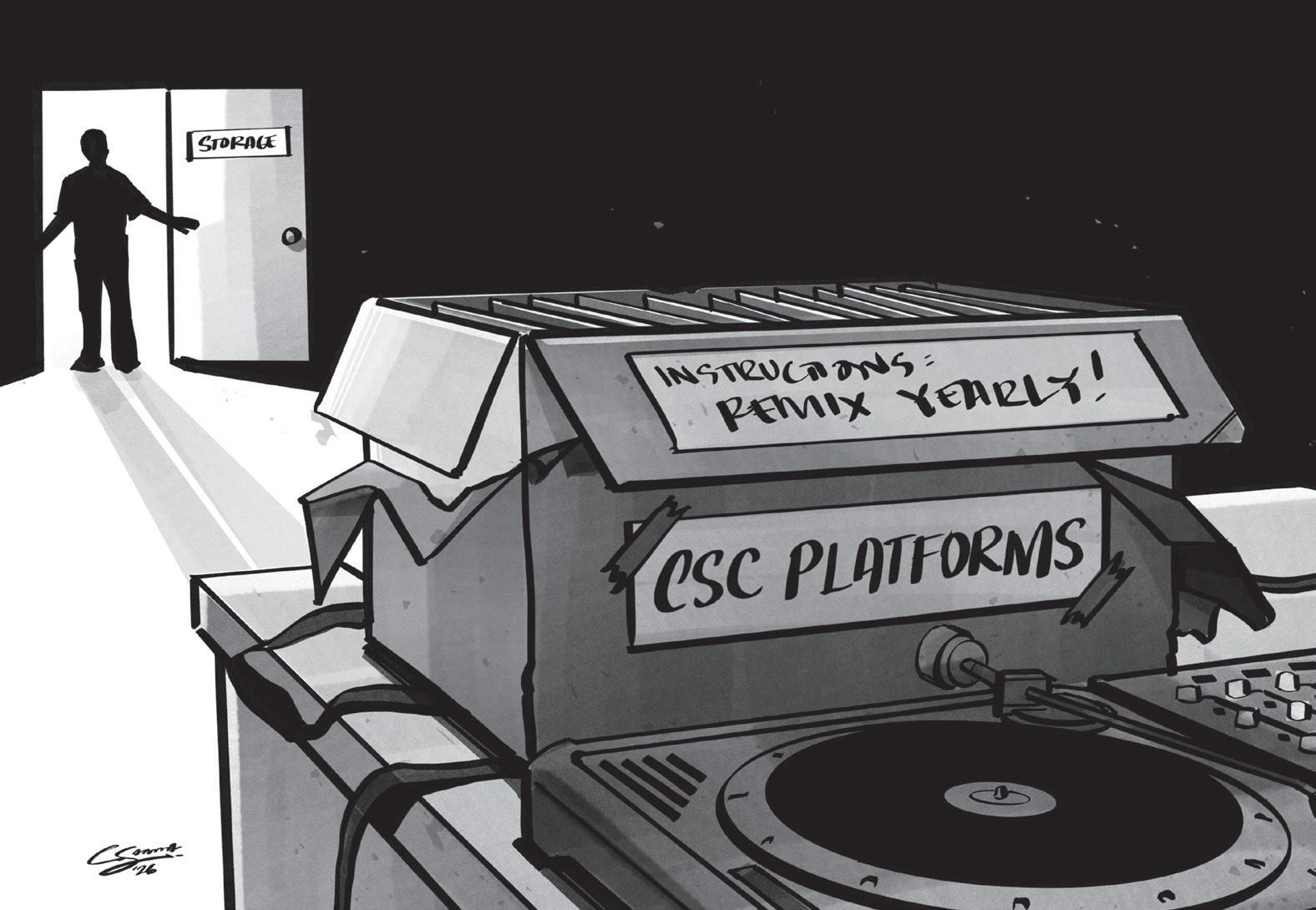
For years, successive CSC administrations have anchored their platforms on sweeping institutional reforms: the long-overdue revision of the 2003 CSC Constitution and the passage of a Magna Carta of Students’ Rights. These proposals are not new. They have been repeated, repackaged, and re-promised across multiple election cycles.
Yet after more than two decades, the constitution remains unchanged. The Magna Carta remains unrealized.

At a time when students face rising tuition, shifting academic policies, and the lingering challenges of hybrid and remote learning systems, the council has failed to assert itself as a visible and forceful advocate of student rights and student welfare.
The failure to deliver these reforms is no longer a question of feasibility—it is a question of will. A 23-year-old charter governing a modern student body is, by any standard, outdated. Its continued existence reflects not just bureaucratic delay, but institutional complacency.
Equally concerning is how the CSC treats student feedback. Constituency checks, frequently cited in reports, are meant to surface student concerns and translate them into policy action. But without clear, solutions-oriented follow-through, these exercises risk becoming performative—data
and what it reveals about student politics in UST
By Alexandra S. Demaisip
FOR YEARS, calls to revise the Central Student Council (CSC) Constitution have been a recurring campaign promise—framed as a necessary step toward “stronger” student representation and autonomy.
Yet despite sustained efforts across multiple administrations, the long-promised charter change remains incomplete, raising a more urgent question: Is the delay merely procedural—or a symptom of deeper problems?
Revisions to the 2003 CSC Constitution remain at the drafting stage, with key provisions still unresolved.
“Nasa drafting pa rin tayo, wala pa siya sa part na pagbobotohan ng Central Board,” Agon told the Varsitarian
Among the unfinished sections are those concerning CSC funds, the roles of the Commission on Elections (Comelec) and the Student Organizations Coordinating Council (SOCC), and the structure of a proposed legislative body.
Agon said even fundamental provisions, such as funding allocations, remained under review due to inconsistencies between policy and practice.
“Nakalagay sa 2003 [CSC Constitution] na P20 pesos, pero [ang] natatanggap ng CSC ay P12 pesos lang,” Agon said, noting that historical financial data was still being gathered to craft appropriate revisions.
The CSC has listed five major points of revision in the 2003 CSC constitution: tenure and vacancies; elections and oath-taking ceremonies; special elections; the powers and responsibilities of elected officers; and candidate qualifications.
Following the constitutional revision, the CSC was supposed to finish the Magna Carta for Students, a “comprehensive policy presenting the rights and welfare of a Thomasian,” in January 2026.
One of the most contentious proposals is the creation of a separate legislative body, which could potentially alter the powers of the existing Central Board—the CSC’s policymaking arm.
Under the 2003 constitution, the Central

Board functions as the legislative body. The proposed revision, however, introduces a separate entity, which leaves the board’s role unclear.
“[Ongoing] discussion pa rin siya na ano ba ang dapat maging power or magkakaroon pa ba ng power ang Central Board,” Agon said.
Discussions continue over how responsibilities will be divided, with initial proposals positioning the Central Board as a communication or coordinating body.
The CSC sought to ratify the new charter by December 2025 but failed to do so after members of the Central Board, the council’s legislative body, did not reach the required quorum to approve the amendments, the Varsitarian has learned.
Agon said the 2003 CSC Constitution had varying interpretations and inconsistencies in implementation, with some provisions not being followed at all.
“In the 2003 Constitution, nakikita natin na hindi siya fully nag-serve for the student body, and at the same time, it created more problems, or every time nagkakaroon ng problem,” she said.
“Minsan nasasagot niya [ng constitution], minsan hindi. ‘Pag nasagot naman ‘yan may ibang problema na biglang uusbong, ganon. So in terms of feasibility, kung mapapasa siya this academic year, 50-50 po talaga,” she added.
Former CSC president Francis Santos pointed to structural constraints that had long hindered constitutional reform.
Santos said changing the charter required the involvement of the Central Board, composed of local student council presidents, who already juggle responsibilities in their respective units.
During his term in Academic Year 2017 to 2018, Santos said the CSC attempted to amend the constitution but was unsuccessful.
A poll and a referendum were conducted, with results showing that the student body supported opening discussions on constitutional changes and allowing the Central Board to convene as a constituent assembly.
“The role of the Central Board is ex-officio, or just given to them in their capacity as LSC (local
By Luis Angelo N. Palma
THE CENTRAL Student Council (CSC) has framed its term as “historic,” anchored on a University-wide walkout rally against corruption that leaders say marked an unprecedented show of student unity in over two decades.
For CSC Acting President Annie Nicholle Agon said the council’s term was marked by mobilizing Thomasians to engage in broader advocacy, particularly through anti-corruption campaigns.
“Pinangunahan talaga ng mga kabataan ‘yung campaign against corruption,” Agon told the Varsitarian, citing student-led efforts that sparked participation across universities.
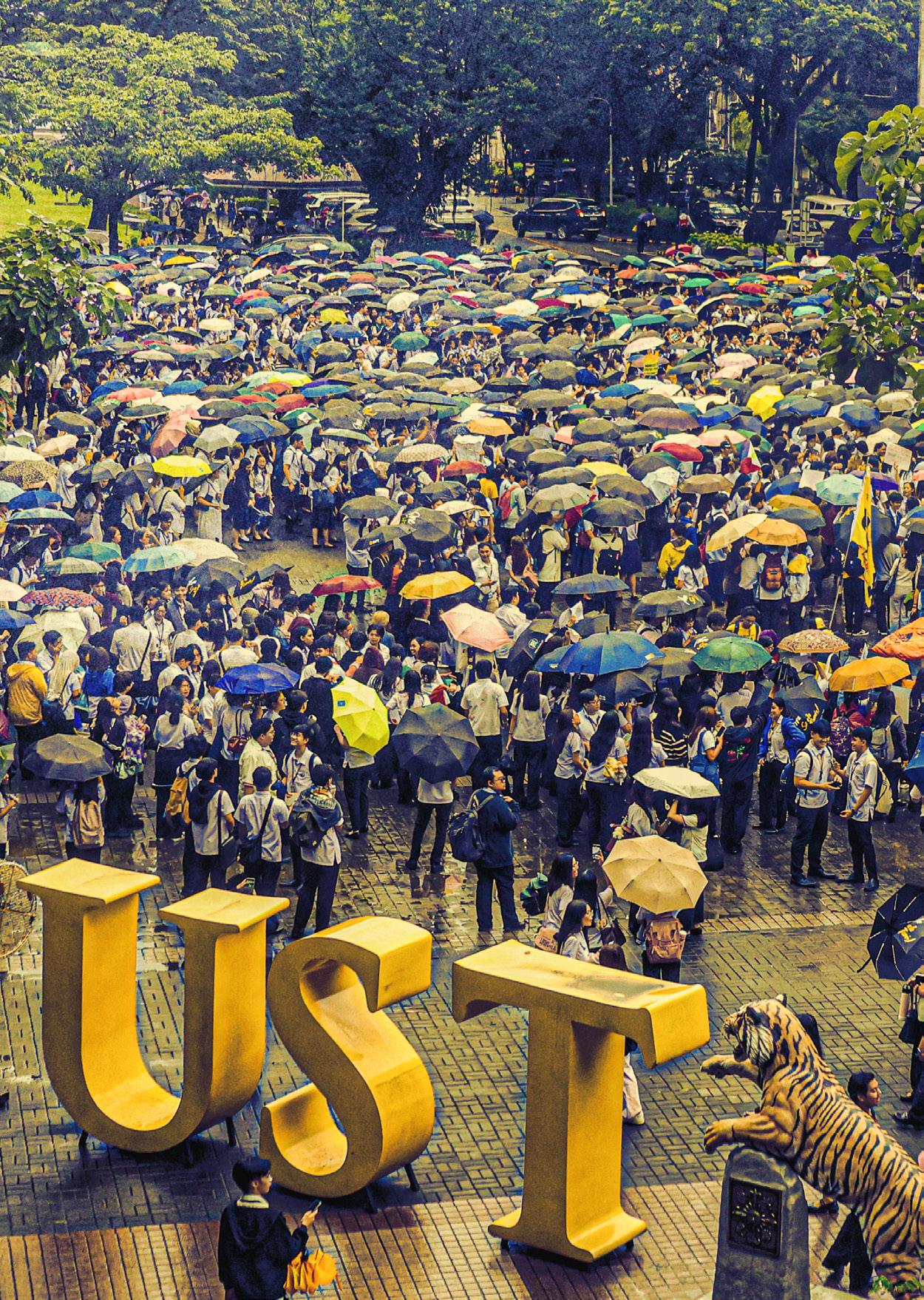
On Sept. 30, 2025, the CSC led Thomasians in a walkout that culminated in a snake rally condemning government corruption amid the controversial flood control scandal.
The protest—considered the first of its scale in over two decades—echoed the 2002 mass walkout that called for the abolition of mandatory ROTC following the death of cadet Mark Welson Chua, who exposed corruption in the system.
Agon admitted the decision to proceed with the walkout was fraught with uncertainty.
“Kaya ba mag-walkout ng students? Ano ba ‘yong sukatan ng pagiging successful ng isang walkout? Ang totoo, wala naman,” she said.
The council also grappled with fears of administrative repercussions.
“Mahirap siya na decision kasi siyempre nga may administrative constraints, parang paano namin ito harapin pagkatapos ng walkout? Paano namin ito harapin kung ma-expose na CSC ang nagpapakalat ng message na
walkout,” Agon said. Despite these concerns, the council pushed through with the mobilization, which later gained the support of the
University administration.
“I think the term is very historic,” said CSC Auditor Joseph Coronel.
“Kasi for over 20 years, nagawa nating tumayo bilang mga estudyante at nag-organize tayo ng mga historic propositions and measures na talagang, for over 20 years, hindi naganap ulit. So, unang-una dito siyempre ‘yung naging walkout rally natin laban sa corruption na talagang against all odds natuloy natin,” Coronel added.
On Oct. 17, students from various universities across the University
Belt (U-Belt) and nearby cities participated in a united walkout protest to condemn corruption involved in flood-control projects.
An estimated 5,000 students joined the march, with some 60 Thomasians participating in the walkout.
Uneven progress
Beyond the walkout, the CSC reported 18 initiatives in its transparency report Veritas, spanning recruitment drives, seminars, and sectoral engagements.
However, progress across offices remained uneven.
Of the 15 platforms outlined in the Executive Board’s General Plan of Action, only six have been completed as of writing, with several projects still pending across the President, Treasurer, Auditor, and Public Relations offices. The Office of the Secretary reported all initiatives as partially accomplished.
Despite this, Coronel emphasized that the council deliberately shifted away from event-driven leadership toward policy-centered governance.
“My initiatives really are policy-based and policy-centric, systemic kumbaga. So sa mga gantong bagay, well sa mga policy or policy making ganoon, hindi kasi ‘yun ‘yong mga bagay na natututukan ng camera,” he said.
“Systemic change are more often than not hindi felt ng mga students immediately… kasi madalas pumapasok–the next term kung saan pumapasok ‘yung changes or ‘yung plinano ng naunang student council which I hope the next CSC would be willing to enact or to push through,” he added.
Under the current term, the CSC nearly ratified a new charter and a Magna Carta for students—reforms aimed at strengthening accountability and expanding student participation—but these remain unfinished after the Central Board failed to convene, the Varsitarian has learned.
‘Inconsistent’ student engagement
Even as the walkout demonstrated the potential for large-scale mobilization, CSC officials acknowledged that student engagement remains inconsistent.
Coronel pointed to persistent apathy and low political attentiveness among students.
“The biggest [problem] na hindi namin na-solve is the kawalan ng attraction ng mga estudyante sa pagpa-participate sa paggogobyerno sa council,” Coronel said.
Data from the Central Commission on Elections showed that 61% of voters participated in the April 2025 polls—comparable to pre-pandemic turnout but still reflective of limited engagement.
CSC Public Relations Officer Heavenly Nerizon said sustaining the council’s relationship with the student body should be the next administration’s priority.
“They should try to maintain the relationship that the central student council has now with the student body kasi it’s very hard to really and fully connect with the student body,” Nerizon said.
Nerizon linked engagement issues to the council’s recent electoral struggles.
Prior to the current term, only two executive positions were filled, following a mass withdrawal of candidates that forced the Central Board to assume interim leadership roles.
She noted that the upcoming elections—featuring seven candidates vying for five of six positions—signal gradual recovery.
For Agon, the walkout reflects the council’s view that campus and national concerns are inseparable.
“Hindi naman kasi hiwalay ‘yung local and national issues,” she said.
While not all students agree with council positions, she said leadership requires balancing perspectives while remaining firm on broader concerns.
“We always try to see things from their perspective and we always try to give them the best possible opportunity that they could have,” Nerizon echoed.
Coronel and Nerizon, respectively, are outgoing officers of the council; meanwhile, Agon filed her leave of absence (LOA) as she filed for the presidency–the first candidate in two academic years to do so. WITH REPORTS FROM RALENT M. PENILLA


By Luis Angelo N. Palma
ONLY ABOUT half of the Thomasian student body has consistently participated in Central Student Council (CSC) elections over the past decade, reflecting unstable voter turnout and persistent disengagement from campus politics.
An analysis by the Varsitarian, using data from the Central Commission on Elections (Comelec) and the Office of the Registrar, showed that from 2015 to the present, voter turnout averaged 49% — with roughly 20,785 voters out of an average student population of 42,290.
Pandemic spike, post-pandemic decline
The highest turnout in the past decade was recorded in May 2021, when 28,848 out of 40,848 students voted, translating to 71% participation.
The election, held after the postponement of the 2020 polls due to the Covid-19 pandemic, marked a surge in engagement and remains the second-highest turnout since 2006, when participation reached 73% (19,158 out of 26,244).
The 2021 polls were also notable for retaining CSC officials from the previous term, making them the only batch in recent years to serve under such circumstances.
However, turnout sharply declined in subsequent years.
The 2024 regular elections recorded one of the lowest participation rates, with only 20,199 of 43,069 students casting their votes, or a 47% turnout.
The elections featured only two candidates, both running unopposed: medical biology junior Meckia Villanueva for secretary and legal manage-
student council) president,” Santos explained.
“So it will be challenging in terms of scheduling, especially as you know, in student organizations, we know that your time is limited to conduct activities and meetings because there is a moratorium period. At the start of the year, you have laid out the calendar of your activities and initiatives that you need to prepare for months or weeks ahead,” he added.
Santos cited changes in priorities and the lack of political parties as reasons for delays in the passage of the revised constitution.
“There was a change in priority. More impactful, more sought-after was the passage of the Students’ Code of Rights. And then the pandemic happened and all that, which leads us to where we are now,” he said.
“One other factor is the decline of leaders, of student leaders, the failure of political parties to train leaders. Political parties not only function as groups in every sense of the word, but should also serve as training grounds for leaders, equipping them with the knowledge and skills to lead, and guiding them by the principles or programs of the political party. So, it’s like recruitment,” he added.
Previous CSC administrations, Santos said, opted to prioritize the Magna Carta of Students — seen as more immediate and tangible policy — over constitutional revisions.
These trade-offs reflected a recurring
ment sophomore Annie Agon for public relations officer (PRO).
The 2024 polls followed a mass withdrawal of candidates, staged in protest against bureaucratic restrictions imposed by the Office of Student Affairs on student organizations.
Despite a similar scenario of limited candidates in 2017, turnout reached 68%, with voters opting to abstain from filling several executive positions, including the presidency and vice presidency—highlighting a stark contrast
dilemma: whether to pursue structural reform or focus on urgent student concerns.
For public relations officer (PRO) candidate Mecealla Capalar, the Constitution should be prioritized by the next batch of leaders.
“Kung babasahin mo siya, sobrang labnaw talaga ng mga detalye niya tapos, hindi na rin siya, kumbaga, sumasapaw sa anumang klase ng konseho na kailangan ng Thomasians ngayon. Kailangan po na baguhin na po siya at isulong na talaga siya ng student council natin ngayon,” Capalar said.
‘Systemic necrosis’
For Clarence Mindo, a candidate for CSC secretary, a constitutional revision is fundamentally the responsibility of the Central Board, emphasizing that in most forms of government, the executive does not lead or implement changes to the constitution.
“Babalik tayo doon sa Students’ Rights and Welfare Act o ‘yong Magna Carta for Students, pag-hold ng educational discussion tungkol sa constitutional revision and ‘yon sa Students’ Rights and Welfare Act nga,” he added.
Mindo said increasing awareness was crucial, as the lack of it had contributed to the stagnation of charter change efforts and to gaps in understanding what a more responsive and updated CSC Constitution should look like.
“I’d like to call this a systemic necrosis,” he said. “Kung saan pinapatay talaga ng sistema ‘yong ating politika sa lebel ng mga estudyante.”
with the 2024 dip.
Record-low special polls
The lowest turnout in the past decade was recorded during the September 2025 special elections, which saw only 25% participation.
A total of 11,419 votes were cast out of 44,957 students, as the polls sought to fill vacancies in the vice presidency and the position of treasurer.
Only the treasurer post was filled, with Kojie Uy proclaimed win-
Mindo argued that restrictive election rules and bureaucratic requirements had made it more difficult for students to participate, both as candidates and as party members.
“‘Yung rigid, ‘yung strict and rigid na Comelec rules. Una, sa qualification, pangalawa pagdating sa kampanya. So ‘yong mga strict and rigid rules na ito, dahilan kung bakit na didiscourage ‘yung ating mga mag-aaral na mag-participate sa ating political landscape,” he said.
Mindo also highlighted the decline of political parties within the University, which he said has weakened leadership development and recruitment.
“Walang makinarya ‘yung mga estudyante natin para mag-execute ng political activities on a central level,” he said.
Mindo said systemic issues, compounded by student repression and bureaucratic constraints, had affected not only student publications but also organizations and the implementation of student-led initiatives.
“For example, hindi siya gusto ng adviser or may hindi appropriate na parte ng programa na in-impose… galing sa OSA mismo. So sa pamamagitan ng systemic na mga problem na ito, nawawala talaga [‘yung student participation] and unti-unting namamatay ‘yung student politics,” he cited.
Questions of accountability
ner, while the vice presidential race was marred by eligibility complaints against candidate Rowen Oloresisimo.
For UST Department of Political Science Chair Dennis Coronacion, the historical turnout figures signaled a deeper issue.
“This low voter turnout indicates the students’ lack of interest in campus politics and governance,” Coronacion told the Varsitarian
He attributed the decline to a disconnect between candidates and the
For student leaders, the prolonged delay in charter change has raised questions of accountability, particularly as it continues to be used as a campaign platform.
Economics senior Brooke Relles said repeated promises without concrete results risked further alienating students.
“For quite a long time, charter change has been a headline discussion, but it still hasn’t been ratified. As an issue, it covers a broad set of student concerns, including sectoral representation and student autonomy,” Relles said.
“If a revised constitution is left unfinished and unratified, then it might turn dominant indifference to mistrust,” he added.
Relles said the issue should remain part of the electoral discourse, but candidates must move beyond “vague” promises and “abstract” slogans.
“It should remain an election issue, but candidates should move beyond vague promises and abstract slogans,” he said. “If a candidate were to simply list charter change as a priority again without concrete steps or mechanisms—a strategy, a detailed timeline, a clear and holistic plan for student consultation, et cetera—then it risks becoming an empty talking point that further erodes student trust.”
Former CSC president Santos echoed this, saying that institutional reform must go hand in hand with efforts to revitalize student politics.
“It’s one thing to change the Constitution. It’s another thing to talk about revitalizing the student politics experience in UST. It’s sort of saying, should we change the Constitution now? Will we see any improvement in student participation? Is that the right answer to the
This low voter turnout indicates the students’ lack of interest in campus politics and governance.
They can’t possibly understand the students; this lack of a deep connection and a meaningful conversation between the students and their leaders contributes greatly to the former’s political apathy.
Prof. Dennis Coronacion
student body, citing mismatched platforms and a perceived lack of leadership qualities among those running for office.
Coronacion also pointed to the rise of independent candidates who may be “more concerned with their public image,” further widening the gap between the CSC and the students.
“They can’t possibly understand the students; this lack of a deep con-
question? To my mind, I think at this point, not yet,” he said.
A draft of the Magna Carta was first submitted in 2004 during the term of former rector Fr. Ernesto Arceo, O.P., but the approval was upended by his resignation.
A version was submitted to the Office of the Vice Rector for Academic Affairs in 2016, but was returned to CSC for revisions.
“Students deserve an update, a part of this includes openly giving them a seat at the table, especially for their concerns. In the face of a failure, students are undeserving of an answer of silence,” Relles said.
“The destination is a CSC that actually works for students and sectors, one that goes into complex issues and improves systems rather than just voicing out,” he said.
Santos, who used to teach at the UST Department of Political Science, remained positive that the CSC would be able to enact these initiatives.
“Work together with the Comelec to develop political parties, I think they are not constrained to do that, they can very well do that. Develop, train political parties,” Santos said.
Since Santos’ term in 2018, the executive board candidates have remained independent; moreover, the Comelec has yet to declare any recognized political party for this election.
The CSC elections are scheduled on April 22 to 26, while the annual Tagisan or Miting de Avance is slated on April 18, 2026. WITH

By Justin Jacob S. Urag
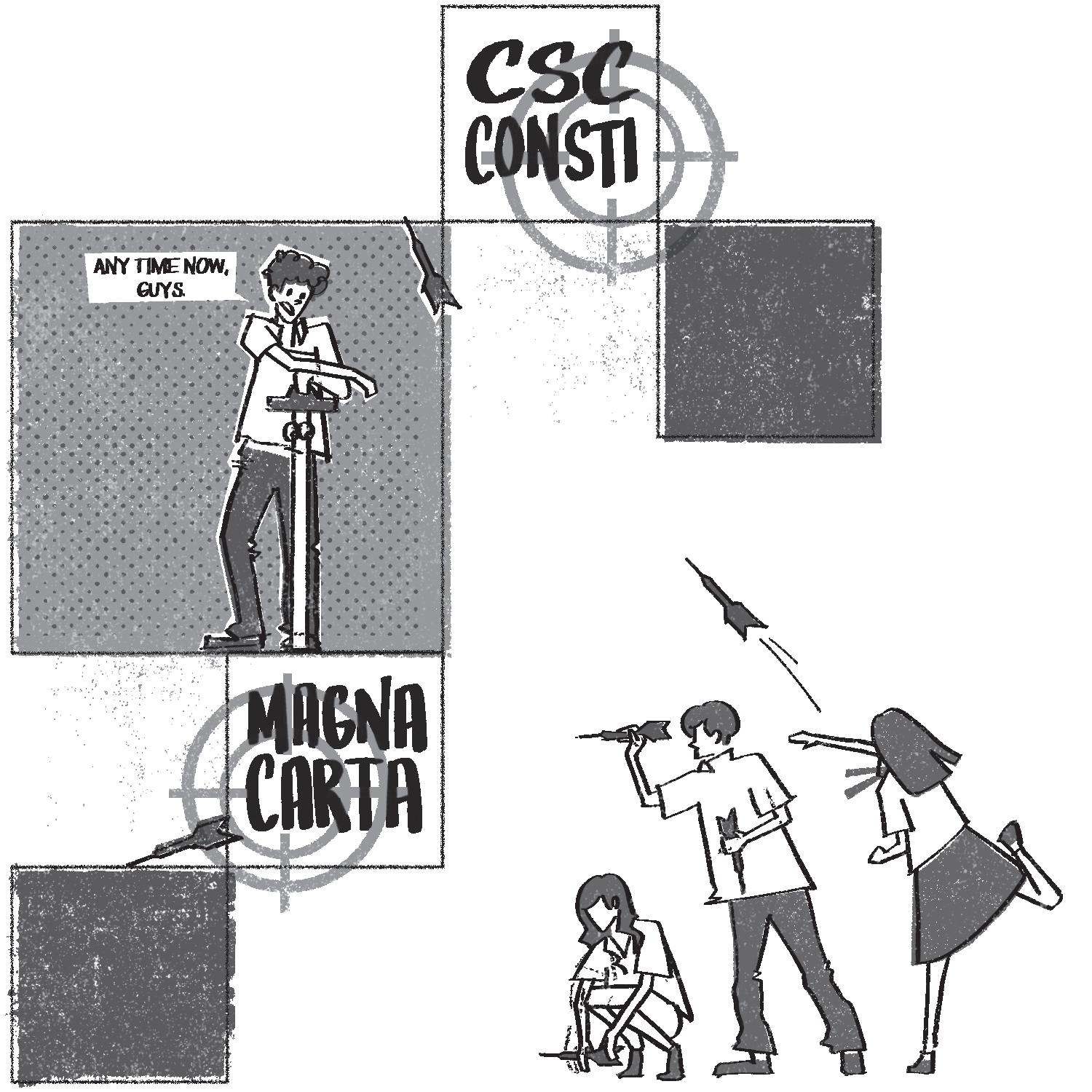
EVERY ELECTION season at the University, the campaign trail hums with the same two promises: the ratification of the Magna Carta for Students’ Rights and the revision of the 2003 Central Student Council (CSC) Constitution.
As incumbent CSC officers end their terms in April, these “Big Two” initiatives remain exactly where they were two decades ago: stalled at the drafting stage.
In an interview with the Varsitarian, incumbent and aspiring CSC leaders said they were caught in a “turnover trap” — a cycle of bureaucratic red tape, shifting priorities, and a dwindling pipeline of trained leaders that keeps the student body under a 23-year-old status quo.
For CSC President Annie Nicholle Agon, the primary obstacle is not a lack of will, but a lack of power.
“May uusbong talaga na bagong problem, so parang nahihirapan kami na gusto namin na siya matapos, pero at the same time, ayaw namin siya tapusin na lang para [lang] umabot bago matapos ‘yong term,” Agon said in an interview with the Varsitarian
During the CSC’s annual State of the Council Address in November 2025, the council announced that the revision of the Constitution would be underway the following month, while the Magna Carta was scheduled for the month after. No progress has been reported since Agon’s 2025 campaign heavily promoted both initiatives, but these were left hanging nearly a year later.
Outgoing Public Relations Officer (PRO) Heavenly Nerizon believes the Student Code is an initiative that spans multiple terms.
“The Magna Carta is a very enduring process and hindi siya nagagawa instantaneously. So kailangan talaga siyang ipasa from one term to another,
and cannot be done solely within one term,” Nerizon said.
Agon, running unopposed for reelection, still needs more than 25% of the votes to meet the University Students’ Election Code (USEC) threshold.
Previous attempts
Efforts to pass charter revisions and the Magna Carta can be traced to 2007, when CSC president Reyner Villaseñor tried to formalize the Student Code, which had been circulating for three years.
However, the resignations of the University’s top officials, including UST Rector Fr. Ernesto Arceo, O.P., amid a hospital management dispute stalled its progress.
In 2014, the outgoing CSC president presented a Student Code signed by the Central Board, composed of local student council presidents, the Office of the Student Affairs director, and the president.
However, when the administration sidelined the code, roughly 200 Thomasians protested at Plaza Mayor, demanding its immediate approval.
The Student Code was revisited in 2018 under CSC President Francis Santos and submitted to the Council of Regents, only to be shelved when his term ended.
“Although I initially wanted to change the Constitution during my term, it has become our battle cry to focus initially on lobbying for the students’ code,” Santos, a former instructor at the UST political science department, told the Varsitarian
For Santos, lobbying for a new charter is more feasible than pushing for the Student Code, which requires deeper engagement with the University administration.
“The passage of the students’ rights [charter] would be more challenging but not at all impossible because there have been some significant efforts in the past… [O]ne way of doing that would be to lobby with the Rector, lobby with the
How would
you
assess the performance of the outgoing CSC officers?
By Luis Angelo N. Palma

“Personally, I think they’re somewhat detached from the student body, the only times I’ve really caught wind of any Central Student Council (CSC) news is if it’s either election season or some disseminated survey they want us to answer. In terms of initiatives that are impactful to the everyday student it’s pretty barebones.”
— Josef Andres, UST-AMV College of Accountancy
“I can see that the officers are very active in updating their social media accounts, which is commendable for keeping the student body updated. However, their direct presence on campus grounds are only seen during events which can likely be due to administrative-focused duties in the office. But overall, I can say that their efforts are appreciated.” — Seichii Mangat, Faculty of Arts and Letters
“While acknowledge the good programs the council has planned, it is highly evident that most students refuse to participate or are not fully aware about it— somehow maybe because it does not reflect the interest of the majority or a lack of dissemination of announcements.
This is why the council may somehow seem detached at times. In assessing their performance, the CSC officers should improve being one with the Thomasian community. They should enhance gathering data or survey of what the students truly want so it can be a win-win situation for both sides. They get more participants for the event, while the participants can also benefit from it. The events done could have also reflected more the current issues that the students are facing, [even if] focused in increasing political and social awareness.”
— Liane Coquia, Faculty of Arts and Letters
“There are two points to consider: So, number one is the external affairs of the UST-CSC and number two is the internal affairs of the UST-CSC. So based on my observations from the first point, it seems to be on a positive note since the president, Ms. Agon is very expressive when it comes to social and political situations in the Philippines, and it helps the Thomasian community to be more expressive as well through the actions of their leader. However, as regards to the internal affairs, I can barely see any changes as compared to other administrations of the UST CSC.”
— Joseph Galanido, Faculty of Civil Law
“I would say they failed to deliver on any of their promises. We, as students, must criticize and scrutinize their actions. They have the best of intentions, but it is never communicated enough on what they are actually doing for us. I think it is especially worrying that the president is running for another term with a renewed promise for reforms to happen, which is the same platform she campaigned on last year and the year before that.” — Aron Bernaldo, College of Commerce and Business Administration
administration, and work with them,” he said.
Agon, however, sees the opposite. She believes the Magna Carta is more likely to be deliberated by the Central Board than the constitutional revisions.
“Ang Magna Carta naman is nandiyan, tuloy-tuloy pa rin ‘yong drafting, pero at the same time na-stuck pa rin siya. Pero kung ico-compare kung ano ang mas feasible na maipasa ngayon o mapagbotohan ng Central Board, [mas may tsansa] ang Magna Carta,” she said.
Vice presidential candidate Franz Salangsang emphasized the need for realism.
“The fact that it’s still not revised ngayon and not enacted means we need to be realistic na hindi siguro siya something na feasible na magawa lang in a single term,” Salangsang told the Varsitarian
Agon acknowledged challenges with potential conflicts between the Magna Carta and the student handbook. The Magna Carta seeks to include student participation in future revisions of the handbook.
“[Halimbawa], ito ‘yong nilagay natin sa Magna Carta pero bawal [pala] siya sa student handbook. Siyempre ang student handbook ang masusunod,” Agon said.
Barring difficulties with the Central Board and officer turnover, Agon hopes to submit the Magna Carta by the end of the term in May.
“Hindi pa rin naman siya totally mapa-promise kasi at that time, nasa turnover period na, may graduating officers ang both CSC and CB,” Agon said. “So ang nangyari is hindi makahanap ng common schedule for everyone. Pero sa timeframe ng Magna Carta ay siguro matatapos ang writing niya by May or end of term.”
Agon is running as an independent presidential candidate. WITH REPORTS
“I think nakukulangan pa ako sa initiative nila when it comes to projects. So far, meron silang mga community development projects. However, I have seen na ‘yung mga outgoing officers were vocal sa national politics lately. For example, active sila lately sa rallies, I have seen Annie and also the other, and I think it’s good. However, what I want to see more is a focus on the studentry, kumbaga more on focusing sila sa projects about nurturing the potential of the students more for the next academic year.” — Maria Suñega, College of Education
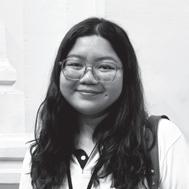
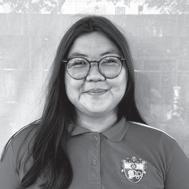
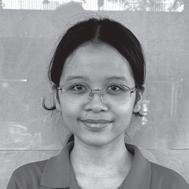
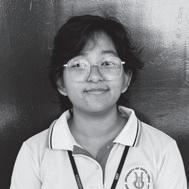
“So far, wala po kaming nababalitaan about the student council, hindi po namin sila feel, and ang dami ko ring nababasa na negative about sa mga candidates, Tapos here in Beato, parang hindi talaga, like wala talagang impact ‘yung ginagawa ng student council sa amin.” — Jianna Nieto, College of Fine Arts and Design
“I think, nararamdaman naman namin sila sa mga events, halimbawa, ‘yung Paskuhan. Marami tayong nakikita e, pero hindi namin sila totally kilala. So basically, parang ano, alam niyo po ‘yung sentiment na ‘ramdam niyo naman sila kahit papano, kahit even though na hindi namin sila kilala kasi nga, marami din mga organizations na sinasalihan.” — Alaine Constantino, College of Information and Computing Sciences
“Aside from the events nga ng school, kapag may certain issues na naririnig sa UST, kasi may mga certain concerns ang students, like basically, gusto ko sana makita if paano nila hinahandle ‘yun. Like, may tulong ba sila duon? If may specific concern or issue ang students sa UST.” — Johanna de Pano, College of Information and Computing Sciences
“To be honest, it just felt like any other year. I mean, it’s not that good, it’s not that bad. Pero I mean it’s good na, to be honest, Ang naririnig kasi usually kapag ganito, especially for something as big as CSC–usually the bad things ‘yung una mong maririnig. Especially with how social media is nowadays.
Pero kasi so far, wala naman kaming naririnig na anything bad. I mean, ‘yung mga activities na usually Univ-wide, they’re ongoing. Alam ko rin na proactive ‘yung student council in terms of the students.
[A]lam ko na they’re always active in asking ‘Guys, may kailangan ba kayo? Do you want us to push for this, do you want us to push for that?’ So I don’t think there’s any ‘lap’ duon, and nothing too bad din naman. I mean, nothing dire happened this year. So I think, it’s been good, peaceful.” — Julianna Sumague, Conservatory of Music

“From my observation, the outgoing CSC officers have been proactive in raising awareness on relevant societal issues, including national concerns such as corruption. One notable initiative was the Veritas Transparency Report released [on] February 7, 2026, which aimed [at informing] students of the projects and progress of each officer. Moreover, it is encouraging to witness developments in long-term goals, such as the constitutional revision and the establishment of courtesy calls with various administrative offices.” — Angeline Grace Garcia, College of Science

Sydney Venice V. Berba
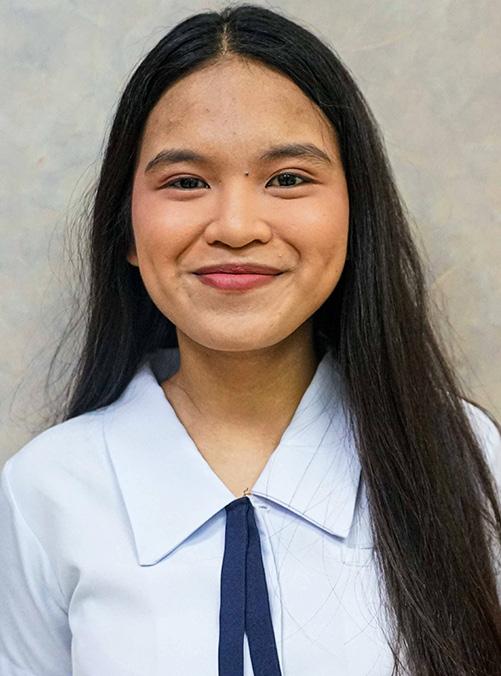
THE OUTGOING acting president of the Central Student Council (CSC) is seeking the top post, campaigning for what would be her third term in the council on a platform calling for a firmer and more assertive student body.
Legal management junior Annie Nicholle Agon said she wanted to address the council’s limited autonomy by fostering a more “militant” body that actively upholds students’ democratic rights.
“Kapag sinabi natin na militant na CSC, nagsusulong siya ng democratic rights ng students and naging mas firm and assertive siya sa democratic rights, given na walang autonomy si student council,” Agon told the Varsitarian Agon said administrative processes had consistently slowed down CSC initiatives.
Reflecting on her previous roles as a public relations officer and vice president, she admitted there were instances when the council could have taken a stronger stance.
“May takot talaga during the term na if ganito ba ang gagawin, ano mangyayari? So may ganoong takot din sa loob ng council na dahil nga sa mga restrictions and challenges,” she said.
Running unopposed, Agon is vying for the presidency, a position that has drawn no candidates in the past two years.
Over the last two terms, she has pushed for the passage and revision of two key documents: the proposed Magna Carta for stu-
dents, envisioned as a “Bill of Rights” complementing the UST Handbook, and the 2003 CSC Charter. Both remain pending.
“‘Yong administrative processes, ‘yon din mostly ang nagpapatagal sa mga initiatives and activities na pinu-push ni CSC,” she said.
“Kaya siya matapos pero at the same time, parang ‘pag patapos na kami, biglang may uusbong na bagong problem,” she added.
Agon said the process involves consultations with students, drafting and revisions, securing administrative approvals, plebiscites, and scenario-building, all of which extend timelines.
Reviewing student feedback alone can take months, further delaying progress, she said.
“Ayaw namin siya tapusin na lang para umabot bago matapos ‘yong term. Sobrang haba noong process, hindi naman siya kaya in a month,” she said.
“Hindi pa kasi siya umabot sa [administration] level pero at the same time, siyempre there are a lot of comments,” she added.
If elected, she plans to launch “Know Your Rights,” a series of briefers aimed at helping students better understand University policies and processes, including those on tuition increases.
Student feedback will also help form the proposed “Circle for Democratic Reforms,” a body that will review policies affecting the Thomasian community.
Under election rules covering incumbents running in the CSC elections, Agon is on a leave of absence until April 26.
Kapag sinabi natin na militant na CSC, nagsusulong siya ng democratic rights ng students and naging mas firm and assertive siya sa democratic rights, given na walang autonomy si student council.
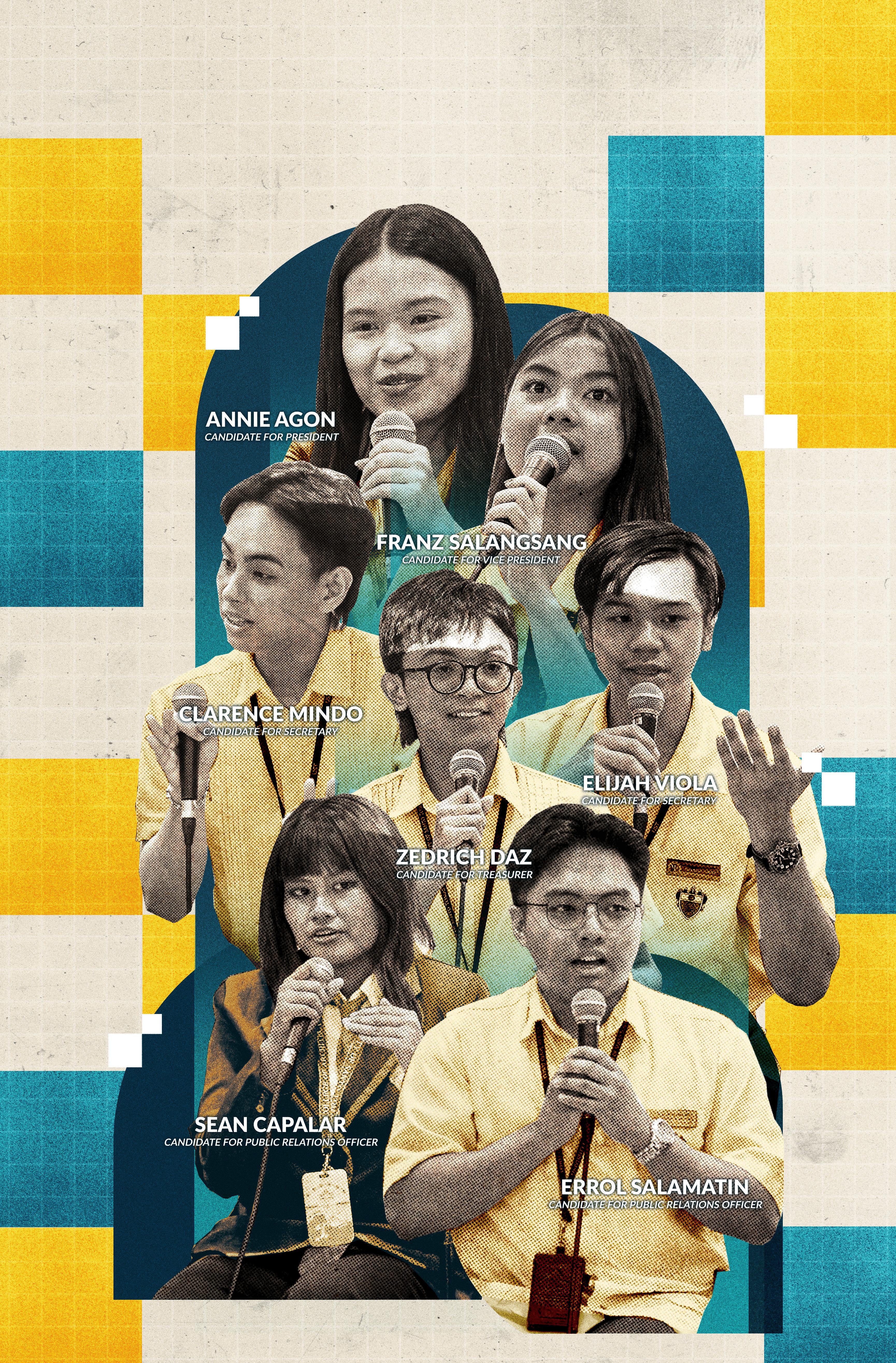
Who are this year’s candidates for the CSC executive board?

‘Grassroots-driven consultations’ to engage students – aspiring secretary
By Louisse Raye Shara C. Santos
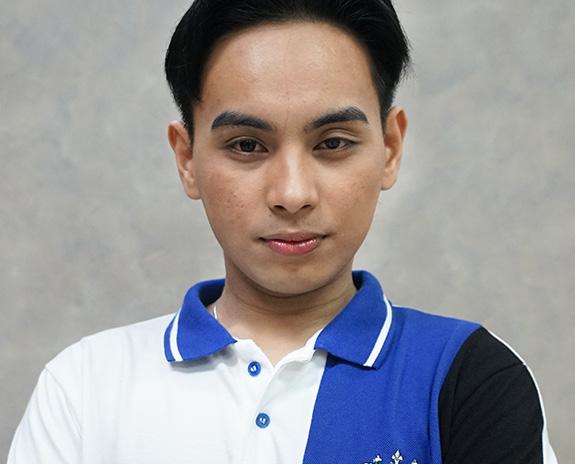
A CANDIDATE for secretary seeks to redefine the position by implementing a “grassroots-driven consultation” to go beyond office work and allow students to directly voice their concerns to the Central Student Council (CSC).
Philosophy junior Clarence Mindo vowed to establish a consultation system that would allow CSC officers and staff to directly approach the student body, eliminating the need for online forms for constituency checks.
“Hindi dapat ‘yung mga
estudyante pa ‘yung nagfi-fill up ng mga online forms, nagbubukas ng mga kung anong links, dahil counterproductive ito sa side ng mga estudyante, gayundin sa side ng CSC,” Mindo told the Varsitarian Mindo explained the onsite consultation drive would be feasible through the manpower of the CSC in coordination with local student councils.
“It is more like consultative town halls and reporting to the student body…it would be conducted by the council simultaneously on college lob-

Secretary bet champions safe spaces, student-driven dialogue
By Elihoenai Hazael B. Cortez
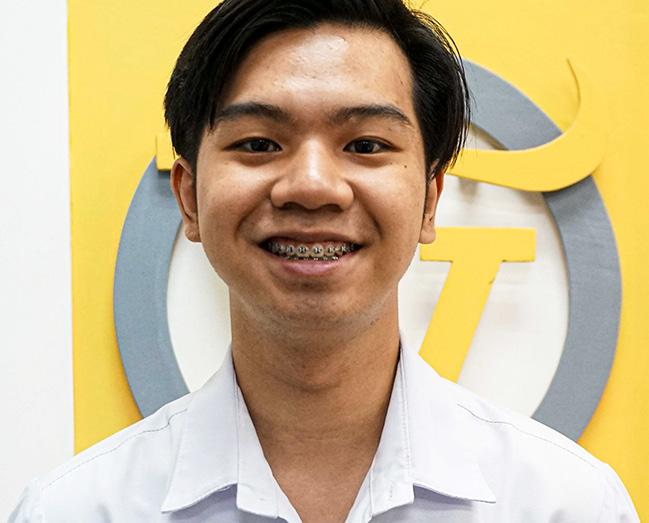
THE CENTRAL Student Council (CSC) deputy to the secretariat has thrown hat in the race for an executive board position, seeking to strengthen mental health advocacies and promote open dialogue in the Thomasian community.
Psychology sophomore Elijah Charles Viola is one of the aspirants for the position of CSC secretary, the highest position contested by two candidates in this election cycle.
Viola is campaigning to bridge gaps through dialogue,
collaboration, and mental health-centered initiatives with his projects titled “Kaagapay” and “Bukas Palad.”
“They (the advocacies) both aim to engage in dialogue with different student sectors from the different local academic units in the University, as we work toward an environment that highlights policy initiatives and recommendations in the system, na mapapabuti at nake-cater talaga ang pinagdadaanan ng mga students,” Viola told the Varsitarian “Bukas Palad” seeks to en-

Treasurer bet pushes for fairer budgeting system in central, local SCs
By Ashley Valkyrie E. Bueno
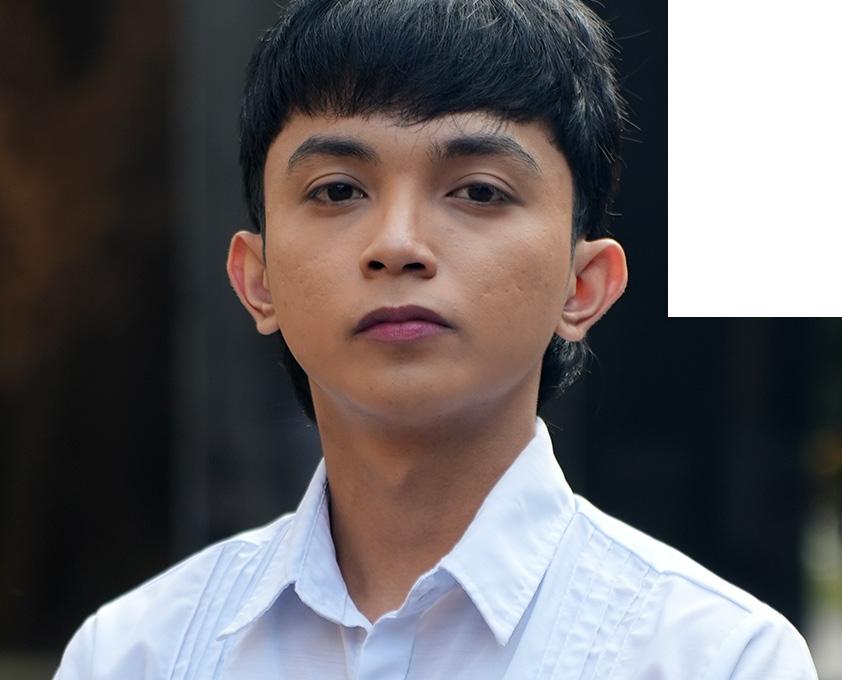
THE DIRECTOR of the Central Student Council (CSC)’s Finance Committee is seeking to move up the executive ladder, vowing to implement a more efficient fund allocation system and streamline policymaking processes across central and local councils.
Communication junior Zedrich Charles Daz, the lone candidate for treasurer, is proposing the “E-ledger,” designed to organize and monitor councils’ budget disbursements based on available funds.
Daz is also advocating for “Behind the Fees,” an initiative
to promote financial literacy among Thomasians.
“Kung papalarin man tayong maupo, pagka-oath pa lang ay makikipagtulungan [tayo] agad sa mga local student council,” Daz told the Varsitarian
“Ang gagawin natin is magre-request na lang muna tayo ng statement of accounts (SOAs) para by first term, may idea pa rin sila, kahit wala pa ‘yung system, kung magkano ‘yung pera nila.”
Daz cited delays in processing SOA requests by the finance office, which oversees
Micah G. Pascua
ARTLETS STUDENT Council acting vice president is vying for the same post in the Central Student Council (CSC), aiming to strengthen communication outlets between students, the CSC, and the University’s administrative bodies.
Legal management junior Franz Salangsang, the lone candidate for CSC vice president, is pushing for effective communication and student representation in addressing campus affairs.
“We are at the front, and we are the ones who get to communicate with the administration. So, I think if we were to have a better connection with the student body, we can also better serve our purpose as student leaders,” said Salangsang.
Drawing from her experience as ABSC secretary and acting auditor, Salangsang also plans to promote transparency in local councils’ event approval processes.
She cited the university’s “bureaucratic” system, the Electronic Reservation of Scheduled Events and Reservation of Venue (e-ReSERVe), where all events organized by administrative offices, student councils, and recognized organizations must pass through multiple approval stages, ending with the Office of the Secretary General.
Salangsang pointed to the Artlets’ sports competition, SIKLAB: Athena’s Cup 2026, which was postponed from February to April due to unforeseen issues in e-ReSERVe, as an example of the system’s challenges.
“Talagang na-emphasize ng Athena’s Cup ‘yung relevance ng contingen-


cy plans, kasi it’s not really enough na we only rely on plan A,” she said.
The candidate for vice president proposes a streamlined and accessible partnership directory to facilitate easier collaborations among organizations within and outside UST.
Instead of having to access redundant and multiple partnership invites,
“We can compile all of that and turn it into an available resource [para] sa lahat ng external vice presidents and partnership heads natin,” she said.
Salangsang also aims to push for students’ freedom of expression on advocacies and social issues, which she said is an inherent right of the student body and can help lessen red-tagging
‘‘
We are at the front, and we are the ones who get to communicate with the administration. So, I think if we were to have a better connection with the student body, we can also better serve our purpose as student leaders Franz Salangsang
against Thomasian activists.
“There are times na talagang nare-red tag [sila]. So we want more platforms, more avenues for them to voice yung mga opinions nila. To voice yung stand nila sa mga ganitong issues,” she said.
Salangsang said that tackling the ratification of the Magna Carta for Students, which is currently being reviewed by the Central Board and the CSC to define and protect student rights, would require connecting students with the student council to drive student-focused improvements.
“Ultimately, again, is prioritizing, putting the students in mind talaga through every action,” she said.

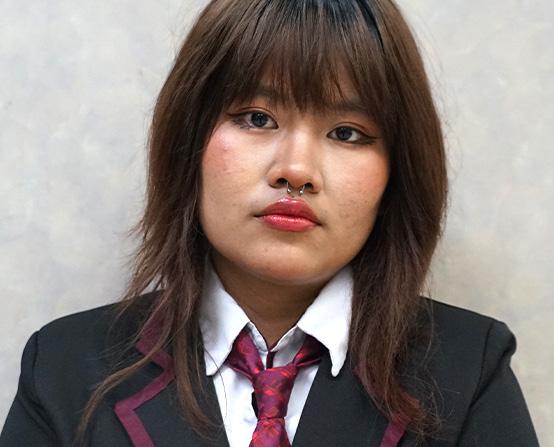
PRO bet proposes monthly presscon, ‘alternative classroom experiences’
By Alexandra S. Demaisip
A CANDIDATE for public relations officer (PRO) seeks to expand the traditional functions of the position, aiming to stand up against instances of student repression by fostering “genuine public relations” with the Thomasian community.
Mecealla Capalar, a fourth-year architecture student, hopes to use the Central Student Council’s platform to address multiple restrictions on student movement and campus press freedom.
“‘[Dapat] lumapag ‘yong mga paa ng mga student
leaders natin sa kung ano mang kinakailangan sa current na danas ng mga Thomasian students. Sa pagsama sa mga laban nila, kailangan tumindig talaga ang mga student leaders at ipakita na kasama sila palagi sa laban ng mga Tomasino,” Capalar told the Varsitarian She also hopes to provide real-time information regarding issues affecting Thomasians within and outside of the University.
Capalar seeks comprehensive and transparent council updates and mat-

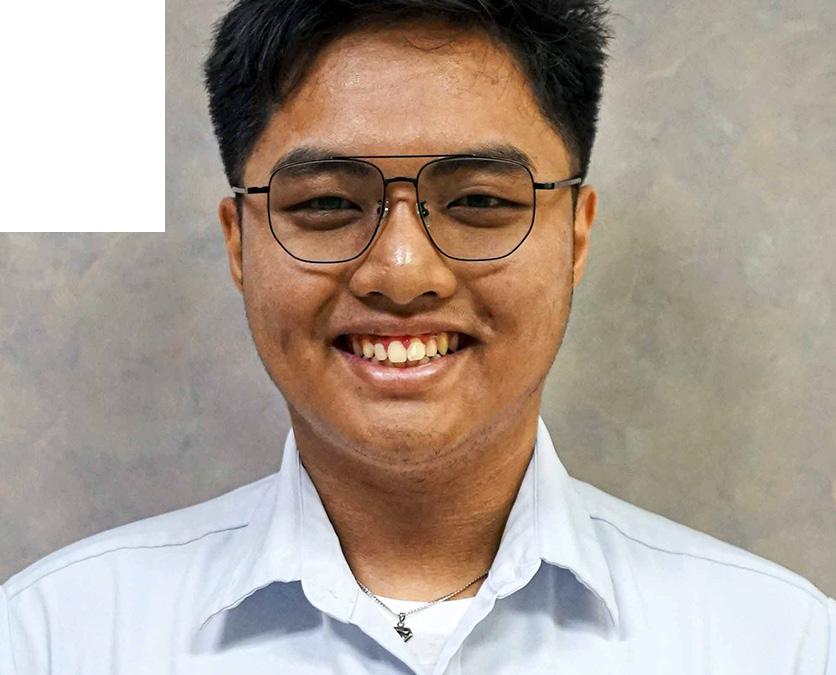
PRO bet pushes for scholar-centered reforms, transparency
By Czeantal Naomi P. Delos Santos
MEDICAL TECHNOLOGY
sophomore Errol Salamatin is eyeing the public relations officer (PRO) post in the Central Student Council (CSC), with a platform to address the struggles of University working scholars.
Salamatin of the Faculty of Pharmacy is proposing “Scholars Connect,” a project that seeks to bridge the gap between the administration and the working scholars.
Salamatin, a Department of Science and Technology scholar, said his motivation
came from what he described as “workplace mistreatment” and “exploitative expectations” faced by working scholars.
“May mga bagay na hindi nakikita ang mga higher-ups and those things need to be addressed. We need to look at the problem at the grassroots level,” Salamatin told the Varsitarian
“Rather than think of them as scholars of the university, mas nagiging ‘empleyado’ sila. And we want to change that notion.”
Addressing the stigma that the PRO is limited to releasing

RALENT M. PENILLA
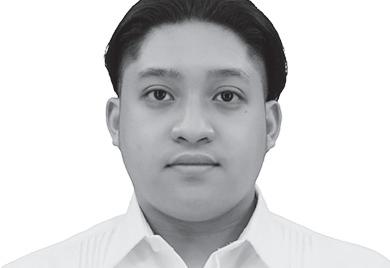
FOR YEARS, the Central Student Council (CSC) has campaigned on the same promise: reforms. A revised 2003 CSC Constitution. A Magna Carta of Students’ Rights. A more responsive and empowered student government.
Yet, year after year, these promises collapse into the same outcome – nothing.
What was once an ambitious reform agenda has become little more than a campaign script, recycled every election cycle to secure votes and sustain the illusion of progress. The repeated failure to deliver has not only stalled institutional change—it has exposed a deeper structural problem within the CSC itself: a legislative body that cannot function.
One may say that the disenfranchisement of students from their leaders can be traced to their very failure to enact these promises. The common Thomasian feels that promises such as a new charter, as well as an extensive bill of rights that will protect them, are aloof and tone-deaf campaign vows that are just mere lip service, all done for the sake of getting the necessary votes to acquire positions of power. The vow to enact these platforms becomes disconnected when officials face the reality at hand, which they cannot control.
To say that the CSC’s Executive Board does nothing to enact their campaign platforms, especially those concerning a new constitution and the Magna Carta, is a blurred hypothesis. Being aware of the processes needed to pursue these initiatives would point out a bigger concern that CSC officials, among those the writer had interviewed over the years, lamented–the Central Board.
The Central Board, as Article VII, Sections 1 and 2 of the 2003 CSC Constitution dictate, is the premier policy-making body of the council, to be composed of presidents from local student councils.
These seemingly innocent provisions become problematic when executing their roles comes into question. Initiatives such as revising or amending the charter, and much more, enacting a separate bill of rights for students are initiatives that the CSC officials shall collaboratively handle with their policy-making body. Yet, even the slightest meetings just to inform the latter about the former’s initiatives are harder to establish, for an array of reasons.
The most basic requirement of any legislative body is the ability to convene. Yet this is precisely where the Central Board consistently falls short. Meetings are difficult to schedule, quorums are rarely achieved, and proposals— no matter how urgent—remain suspended in procedural limbo. Even preliminary discussions on constitutional reform or the Magna Carta are often delayed, not because of
substantive disagreement, but because the body tasked to deliberate cannot even assemble.
The failure is not ideological—it is operational.
Elected officials of the central council have long lamented the difficulties in scheduling among Central Board members, which these students have no control over. Yet, if this issue remains persistent over time, one should only learn to circumnavigate these restraints to conscientiously fulfill their duties.
If a legislative body cannot meet, it cannot govern.
This chronic inability to convene has far-reaching consequences. Initiatives like charter change and the proposed Magna Carta are not unilateral actions of the CSC Executive Board—they require the Central Board’s deliberation, approval, and ratification. Without this, even the most well-intentioned reforms are dead on arrival.
This is why accusations that the CSC “does nothing”
[The] chronic inability to convene has far-reaching consequences. Initiatives like charter change and the proposed Magna Carta are not unilateral actions of the CSC Executive Board—they require the Central Board’s deliberation, approval, and ratification. Without this, even the most wellintentioned reforms are dead on arrival
miss the point. The issue is not inactivity, but incapacity—an institutional bottleneck that renders action nearly impossible.
Worse, this dysfunction is built into the system itself.
The Central Board’s composition—local student council presidents doubling as central legislators—creates an inherent conflict of roles. These officials are already burdened with leading their respective colleges. Expecting them to simultaneously function as a cohesive legislative body at the university level stretches both their time and their mandate.
The result is predictable: divided attention, inconsistent participation, and ultimately, paralysis.
The structure also raises a more fundamental con-
cern. In any functioning democracy, the separation of powers is essential. Yet within the CSC, this principle is blurred to the point of irrelevance. Local executives become central legislators, and in extraordinary cases, even assume executive functions at the central level.
In 2024, this contradiction became glaringly apparent when vacancies in the CSC Executive Board forced the Central Board to temporarily assume executive roles. In effect, a single group simultaneously held legislative and executive power—a scenario that would be unthinkable in any serious democratic system.
This is not representation. This is consolidation.
The tokenism of equality that the Central Board goes after only gets overshadowed when their differences in availability, stances, and alliances all come into play, making the council’s legislative body a paralyzed entity, void of the mandate to craft policies and aid the Executive Board in their programs.
The consequences are now visible. Thomasians have grown increasingly disillusioned with student governance. The repeated failure to pass long-promised reforms has turned what were once credible platforms into empty rhetoric. Students no longer disengage simply because they are apathetic—they disengage because they no longer expect results.
In this sense, the Central Board does more than stall policies—it erodes trust.
Proposals to address this structural flaw have existed for years. One recurring solution is the creation of a legislative assembly composed of representatives beyond local council presidents—broadening participation while ensuring dedicated lawmakers who can focus on central governance. Such a system could resolve both representation and efficiency issues.
But here lies the irony.
Any meaningful restructuring of the CSC—including the creation of a new legislative body—requires constitutional change. And constitutional change, in turn, requires the approval of the very body that stands to lose power from it: the Central Board.
The question, then, is no longer procedural. It is political.
Will the Central Board choose institutional reform over institutional self-preservation? Will it relinquish a flawed system that grants it authority but prevents it from exercising it effectively? Or will it continue to cling to a structure that has repeatedly failed both the council and its constituents?
Because if the status quo persists, the outcome is already clear.
No charter change. No Magna Carta. No meaningful reform.
Only the continuation of a system where promises are made, processes stall, and nothing moves.
Until the Central Board confronts its own dysfunction, the CSC will remain trapped—not by lack of vision, but by a structure that makes failure inevitable.
By Louisse Raye Shara C. Santos
THE UST Central Student Council (CSC) is revising its 2003 Constitution, with amendments centered on governance gaps such as vacancies, elections, and officer responsibilities, ahead of a targeted ratification in December.
CSC President Annie Agon said the CSC, together with the Central Board, has been reviewing the 2003 CSC Constitution and drafting amendments.
“Patuloy pa rin po ang pag-aayos at pagre-revise ng UST Constitution upang maging progresibo, inklusibo, at responsable ang pamamahala,” Agon said during her speech in the annual State of the Council Address, titled “Veritas.”
The CSC has listed five major points of revision in the 2003 CSC constitution, namely, tenure and vacancies, elections and oath-taking ceremonies, special elections, the powers and responsibilities of
elected officers, and candidate qualifications.
Following the constitutional revision, the CSC will proceed to finishing the Magna Carta for Students, a “comprehensive policy presenting the rights and welfare of a Thomasian,” in January 2026.
“Layunin nitong masiguro ang kapakanan ng estudyante, academic freedom, at aktibong partisipasyon sa pamamahala sa loob ng Unibersidad,” she said.
A draft of the Magna Carta was first submitted in 2004 during the term of former rector Fr. Ernesto Arceo, O.P., but the approval was upended by his resignation.
A version was submitted to the Office of the Vice Rector for Academic Affairs in 2016 but was returned to CSC for revisions.
Points of revision
In the event of a vacancy in the Executive Board, the draft charter proposes
that a special election will be held, at a maximum of two elections per year.
Agon said amendments dealing with vacancies in other CSC positions were still being drafted.
The revised charter proposes that special elections be held in the third week of May.
In the event of a second special election, the Executive Board must submit a shortlist of two eligible candidates to the Central Commission on Elections. These candidates will have the opportunity to make their case for election.
The revised charter will also contain additional roles for CSC officers, which were not indicated in the 2003 Constitution.
According to the draft new charter, the president shall serve as the spokesperson and representative of the CSC during meetings with the UST administration, while the vice president shall serve as the
ex-officio speaker of the Central Board.
The treasurer shall attend budget consultations and is responsible for handling sponsorships, monetary benefits, and disbursements, while the auditor will manage all assets and spearhead transparency initiatives.
The CSC is also aiming to revise academic qualifications and add extracurricular qualifications for candidates running for the student council.
The 2003 constitution only included residency and academic qualifications. Under the existing charter, candidates must be enrolled with at least 15 units, with continuous residency of at least seven months, a general weighted average of at least 2.50 or its equivalent and 2.75 or its equivalent for the Faculty of Civil Law and Faculty of Medicine and Surgery, and no failed or dropped subjects in the semester before the elections.
Editor’s note FROM PAGE 2 ►
collected, acknowledged, and ultimately shelved.
Consultation without action is not representation. It is optics.
More alarming, however, is the council’s silence on critical university developments. Whether on academic calendar adjustments or the persistent difficulties of remote and hybrid learning, the CSC’s public stance has been, at best, muted and, at worst, nonexistent.
This is why the CSC increasingly faces an existential crisis. It is seen not as a defender of student welfare, but as an organizer of institutional activities—a body that facilitates, rather than interrogates. The perception of the CSC as a “glorified event committee” is not unfair; it is earned.
And with that perception comes a deeper consequence: eroding trust.
Students are beginning to ask uncomfortable but necessary questions. Is the CSC unwilling to confront authority, or incapable of doing so? Has it grown cautious, or simply complacent? More importantly, whose interests does it ultimately serve?
These questions persist because the council has yet to provide convincing answers.
A genuine student government is defined not by its proximity to power, but by its willingness to hold that power accountable. It requires more than administrative cooperation—it demands independence, courage, and a readiness to take principled stands, even when inconvenient.
If the CSC continues along its current trajectory, it risks becoming exactly what it already appears to be: a hollow institution that fulfills formalities but fails its fundamental mandate.
The path forward is neither vague nor optional. The council must move beyond routine reporting and demonstrate concrete, measurable advocacy. It must push— persistently and publicly—for long-promised structural reforms. It must convert student sentiment into policy positions, and policy positions into action.
Above all, it must rediscover its purpose.
Because without decisive change, the CSC will remain a government in name only—visible, organized, and ultimately irrelevant.
turnout
FROM PAGE 4 ►
nection and a meaningful conversation between the students and their leaders contributes greatly to the former’s political apathy,” Coronacion added.
Coronacion emphasized that identifying the most pressing issues ultimately rests with students, as they are in the best position to determine what matters most to them.
However, recurring concerns may include mental health challenges, the impact of the rising oil prices and transport strikes on daily student life, and grade-related pressures, he said.
The Council’s latest Facebook posts focus on celebrating gender diversity and events related to the recent Women’s Month celebration in March.
For this year’s elections, 42,994 Thomasians are eligible to cast their votes.
By Czeantal Naomi P. Delos Santos
SEVENTEEN OF 22 academic units have fielded candidates for the presidency of their local student councils, leaving five units without a standard-bearer in the upcoming elections.
The Faculty of Arts and Letters logged the highest number of presidential aspirants, with three candidates vying for the post: Jennille Butucan, MIkaela Maravillas, and Rowen Oloresisimo.
A two-way race is set in the Faculty of Pharmacy, where Stephan Aseron and Maria Isabela Rellosa are contesting the presidency.
Both Oloresisimo and Aseron previously took part in Central Student
Secretary — Mindo
bies. Konseho ang lalapit sa mga Tomasino and not other way around,” he said.
Mindo also seeks to implement projects that champion inclusivity, such as the formation of a “Student Senate” composed of student representatives from all academic units of the University.
“Isa akong AB Philosophy student, hindi ko naman alam kung paano maging isang student-athlete o kung paano maging estudyante sa music, sa engineering or sa medicine, kung kaya’t dapat magkaroon nitong sectoral representation,” he said.
Proposed as an ad hoc committee un-
Secretary — Viola
hance the University’s existing support services for student mental health and well-being.
These services include the Counseling and Career Center, the Graduate School’s Psychotrauma Clinic, and the Department of Psychology’s Thomasian Mental Health Responders.
Council (CSC) Executive Board elections.
Oloresisimo’s proclamation as CSC vice president during the 2025 special elections was withheld by the Central Commission on Elections (Comelec) following a petition questioning her eligibility. The 2003 CSC Constitution limits candidacy for the position to incumbent officers of either the central or local student council executive boards.
Aseron, for his part, ran for CSC auditor in the controversial 2024 elections, which ended with all candidates withdrawing. He later exited the race, citing a “system resistant to reform.”
Students from the Faculty of Civil Law will choose between Maria Isabella Gongona and Jan Carlo Zamora as council president.
The Senior High School recorded two candidates for president: Scimon Reyes and Ehrine Santos.
Meanwhile, Karl Sebastien Nicolas is the lone presidential candidate from the College of Science.
Initially having no candidate for president, Science re-opened the filing of certificates of candidacy upon the request of Dean Rey Papa with aspiring candidates being required to make a letter for late filing.
The following candidates will also run unopposed: Carmela Tenorio (Fine Arts and Design), Sophia Deligero (Architecture), Genina Rilles (Accountancy), Natalie Santos (Education), Ezekiel Lagat (Medicine), Micah Luy (Music), Mark Dennis Del Rosario (Nursing), Alexis Garcia (IPEA), Christian Inson (Rehabilitation Sciences), Kenneth
Benito (Tourism), Justine Dela Cruz (Education High School), and Aleena Diaz (Junior High School). No candidate filed for presidency in the College of Commerce and Business Administration and the Faculty of Engineering.
The Faculty of Philosophy, Faculty of Sacred Theology, and the College of Information and Computing Sciences (CICS), have yet to name a candidate for any position in the upcoming election.
The local Comelec of Philosophy and Sacred Theology shall nominate a candidate for positions which no candidacy has been filed, while CICS extended its filing period until March 28.
Candidates who get elected as presidents of their local councils will comprise the UST Central Board, the primary legislative body of the CSC.
The Central Board is tasked with formulating policies, rules, and regulations that directly affect the welfare and interests of the student body. WITH REPORTS FROM DAVID NIGEL C. CORTES AND REV E. DELA CRUZ
der the CSC, the student senate will have representatives nominated by various sectors, including commuters, scholars, persons with disabilities, and working students.
Gender development
Mindo also proposed the establishment of a gender development office to educate Thomasians on sexual orientation, gender identity, and gender expression, as well as to protect them against “sexual predators in authority.”
“Kahit na gaano man ka-progressive ‘yong society natin, mayroon pa rin mga ganitong instances and hindi dapat ito sinasawalang-bahala,” he said.
Leadership
FROM PAGE 6 ►
“Sobrang daming pinagdadaanan ng proseso na nagko-cause din ng kabagalan at minsan hindi pa natutuloy ang mga proyekto dahil hindi ito will [at] hindi sumasang-ayon ‘yung admin sa ilang mga proyekto,” he said.
“Ipaliwanag [sana ng administrasyon] kung bakit kailangan matagalan ‘yung mga ganitong proseso dahil nako-compromise yung gustong ihatid na serbisyo ng student leaders,” Daz added.
The treasurer bet’s advocacy program “Behind the Fees” seeks to explain to Thomasians UST’s table of fees. It also seeks to go beyond the campus and reach out to communities to discuss the impact of taxes.
His advocacy program targets both University- and national-level issues, making Thomasians more aware of where their money goes. It will also include seminars on how to avoid falling victim to fraudulent activities and phishing scams. WITH REPORTS FROM RALENT M. PENILLA
“Kaagapay” focuses on dialogue with the Local Student Councils (LSCs) through focus group discussions with students from various academic units.
Viola believes these advocacies can be effectively implemented through sustained partnership with LSCs, which he plans to strengthen through courtesy calls and transparency.
“Malaking part dito is also establishing transparency on the progress
FROM PAGE 7 ►
Mindo served as the president of Concilium Philosophiae, the academic society of Philosophy majors of the Faculty of Arts and Letters, but later on resigned, citing leadership differences with other officers and restrictions on the society.
“[It] is hard for me to stay in an organization with some of my co-officers that act in the opposite direction in a way that we are leading,” he said in a Facebook
Citing other Catholic schools such as Ateneo de Manila University and De La Salle University, Mindo is eyeing to establish the office as a committee under the CSC before institutionalizing it at the University level.
post on Nov. 5, 2025. “Moreover, the restriction of how the Concilium is, will act, will direct its projects, and will showcase itself as a leading figure in the field of philosophy among undergraduates…adds to my long list of reasons in leaving the organization,” he added.
Mindo also served as the community development director at UST Hiraya, an advocacy-based organization focused on feminism, gender equity, and cultural diversity.
Mindo said he had faced hindrances due to bureaucracy and repression in connection with previous projects, pointing to the University’s “conservative” stance on social issues.
“Hindi ito para sisihin natin ‘yung mga kapwa nating student leader na wala silang nagagawa, kundi ituro natin doon sa repressive situation kung nasaan tayo ngayon,” he said.
Mindo said difficulties in implementing progressive programs had led to decreased participation in student leadership among the local and central councils.
“We are the majority stakeholders of the University. Walang paaralan, walang eskuwelahan, kung walang mag-aaral,” he said.
Mindo is one of the two candidates running for secretary. He is running against psychology sophomore Elijah Viola.
that each and every single council, from the central to the local, has made in ensuring that we are on track, and we are continuously recalibrated to continue to work toward and fight for the goals that we wish to achieve for the students,” he said.
Viola proposes a “networked approach” in which the CSC amplifies local initiatives, positioning itself as a support rather than a replacement for existing efforts.
Student-led initiatives Beyond programming and policy, he also intends to improve systems tied to the secretary role, particularly the Electronic Record of Scheduled Events and Reservation of Venues (e-ReSERVe) platform, which is used by the administration and the Office for Student Affairs to regulate student activities.
By addressing recurring concerns in this process, he hopes to make student-led initiatives more efficient and less burdened by technical obstacles.
“The legacy I just really wish to bring here if elected is that the communication continues, that collaboration, that dialogue, that open discourse, that back-and-forth discourse with the Thomasian community continues,” he said.
and activities to inform Thomasians about social realities.
— Salamatin FROM PAGE 7 ► all matters related to council funds.
ters concerning the student body through her proposed information platform, “Tapat Tomasino.”
Capalar said a new website called “Tiger Bulletin” would be set up under this platform, featuring a report-back system that allows students to receive “transparent status updates” on the council’s initiatives and to be “connected with the council directly.”
Monthly press conference
A monthly media press conference will also be held, during which student publications and organizations within the University can inquire about council issues.
Capalar also seeks to bridge local student councils (LSCs) with the central office through “Bantay Ulat,” a quarterly consultation forum.
“Panday Tomasino,” Capalar’s social initiative, will be a series of community integration programs
This project calls for an “alternative classroom learning experience,” in which students will have the opportunity to interact with farmers and urban poor communities.
Capalar also plans to draft an “evidence-based public relations manual” to determine the student body’s preferred information dissemination systems, in an effort to “bridge the CSC to its constituents.”
“Hindi naman puwede na magtakda nang magtakda ng isang sistemang hindi nakabase sa datos na kung ano mang preferred ng Thomasian body. Mangyayari ito through grassroots research [and] on-ground conversations with LSCs, students, publications, [at] mga [organizations],” Capalar said.
Capalar is one of the two candidates running for PRO. She is running against medical technology sophomore Errol Salamatin.
statements, Salamatin emphasized that the role should function as a “two-way street.”
He proposed a system rooted in “needs assessment” to identify potential student issues, such as transportation crises or academic burdens, before they escalate.
“Ang position na ito ay hindi lamang naglalabas kundi dapat nakikinig din ito sa mga problema ng mga estudyante. At mula sa problema nito, iyon ang magiging gabay para masolusyonan natin,” he said.
Communication lapses Salamatin, a former staff member under the CSC’s PRO office, noted that communication lapses often occurred in the “ladderized” flow of information from the central council to local units.
To fix this, he plans to implement a more transparent system where decision-making processes
and program updates are published regularly.
“What I have seen was that ‘yung mga programs natin sa CSC, hindi masyado na-publish. ‘Yung mga ibang decisions, hindi alam ng mga Thomasians,” he said.
“One of the things that I am eyeing...is that maibalik natin ‘yong trust na ‘yon,” Salamatin added. Salamatin vowed to finish his tenure despite the heavy academic load of a medical technology student entering third year.
“Kahit na ang academics ko ay mabigat, ang kontrata ko ay strict, hindi ito magiging hadlang para i-deliver ko ang kinakailangan for the Thomasian community,” he said. Salmatin said that his experience with strict scholarship contracts taught him the value of “planning ahead” and time management. Salamatin is one of the two candidates running for the PRO position. He is running against fourthyear architecture student Sean Capalar.
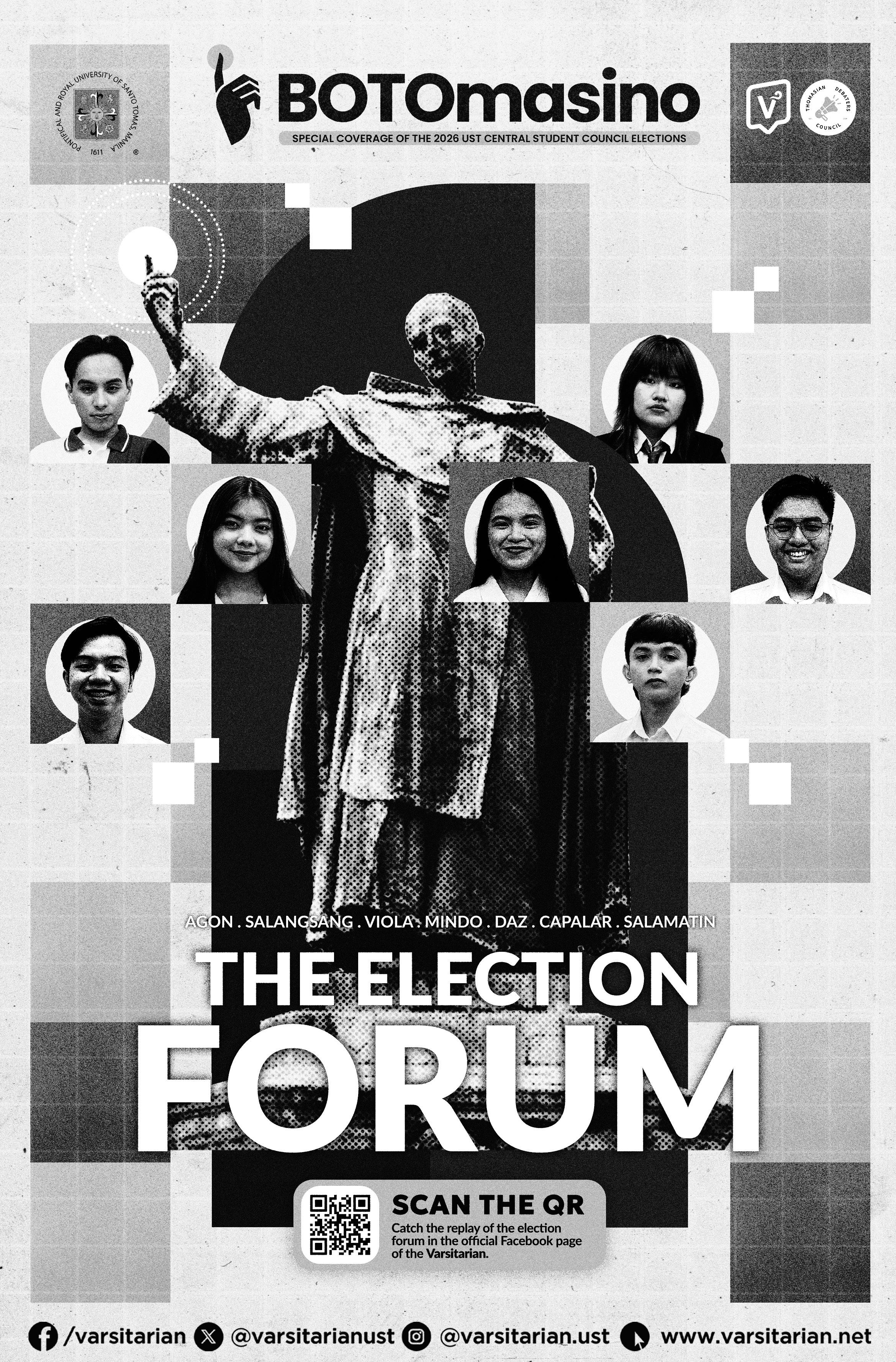
ELECTION FORUM 2026
By Sydney Venice V. Berba
CANDIDATES in the UST Central Student Council (CSC) Executive Board elections identified student repression as the top issue on campus, underscoring the
and
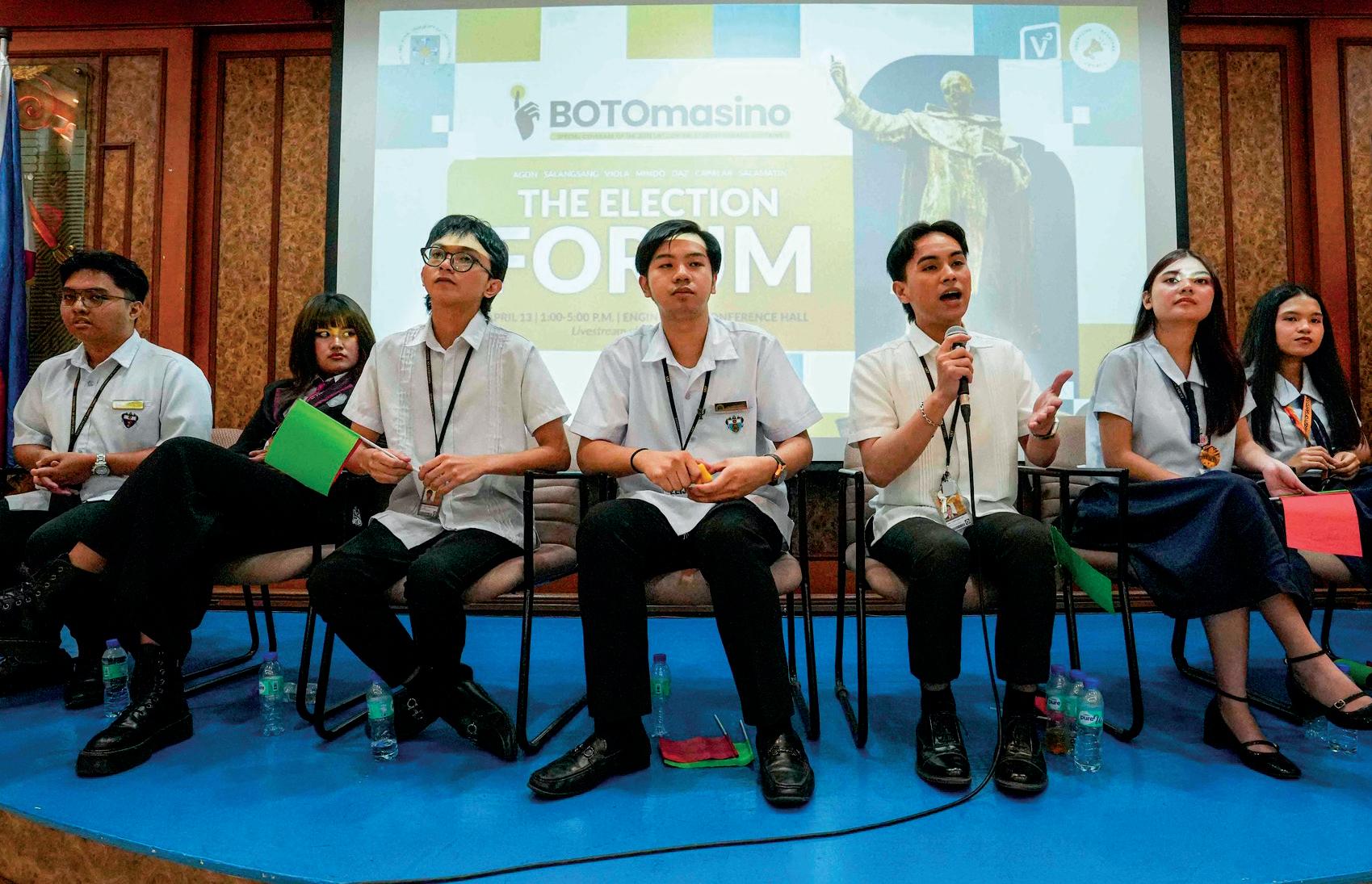
During “Botomasino: The Election Forum” held on Monday, April 13, candidates said student leadership in the University remained constrained by limited autonomy and external pressures that influence decision-making and project implementation.
Presidential candidate Annie Agon, also the CSC acting president, said repression was manifested through bureaucratic hurdles and administrative pressure, often resulting in delays in council initiatives.
She admitted some of her projects were left unfinished due to “reservations” over possible reactions from students and the administration.
“Mas nangingibabaw pa palagi ‘yung takot, kasi sa loob ng council ay palaging parang may brainwashing na nangyayari, and malaki talaga ‘yung emotional toll sa mga officers na lagi siyempreng kausap ng admin,” she said.
Public relations officer (PRO) candidate Errol Salamatin echoed these concerns, citing difficulties in engaging University offices on scholarship-related issues.
“When I had a chance to speak with the Office of the Student Affairs, hindi
nila nabibigyan ng pansin…we need to be able to solve the problem democratically to be able to make sure that we can solve the problem in the long run,” he said.
Fellow PRO bet Sean Capalar linked student repression to broader campus concerns, including alleged red-tagging of student activists.
“Bilang student leader na nanggaling sa aktibismo, ‘yung pagde-defend sa
aktibismo, nature na siya bilang student activist,” she said.
Treasurer candidate Zedrich Daz emphasized the role of student leaders in amplifying student concerns to the administration.
“We are hoping na masagot ng admin ‘yung mga hinaing,” he said.
Bridging gaps, expanding representation
Several bets pushed for consultations and grievance systems with the student body at the “grassroots” level.
This will address the supposed “disconnect” between the CSC and its constituents, which affects student participation and engagement.
Vice presidential candidate Franz Salangsang challenged the notion of political apathy among students, arguing
that disengagement stems from weak connections with the council.
“It also shows an idea na baka kailangan pa natin ng efforts from the student council na mag-reach out to their constituents,” Salangsang said.
Candidate for secretary Clarence Mindo criticized existing grievance systems, particularly reliance on online forms, as “out of touch,” and called for more face-to-face engagement.
“Ang aking grassroots grievance ay isang kampanya na gawin itong faceto-face at talagang lumalapit sa mga mag-aaral na tingin ko hindi ginagawa sa panahon ngayon ng mga student council,” he said.
Fellow secretary bet Elijah Viola stressed the importance of engaging underrepresented sectors, including commuters affected by transport strikes and the energy crisis.
“While we have to accommodate any and all sectors who would like to participate in these discussions,ang pinakagusto ko pong talagang ma-tap into these discussions are commuters,” he said.
“Botomasino 2026: Election Forum,” the inaugural election forum ofThe Varsitarian, was held on April 13 at the Engineering Conference Hall of the Roque Ruaño Building.
The Varsitarian forum was in partnership with the Thomasian Debaters Council, whose officers asked questions to the CSC bets.
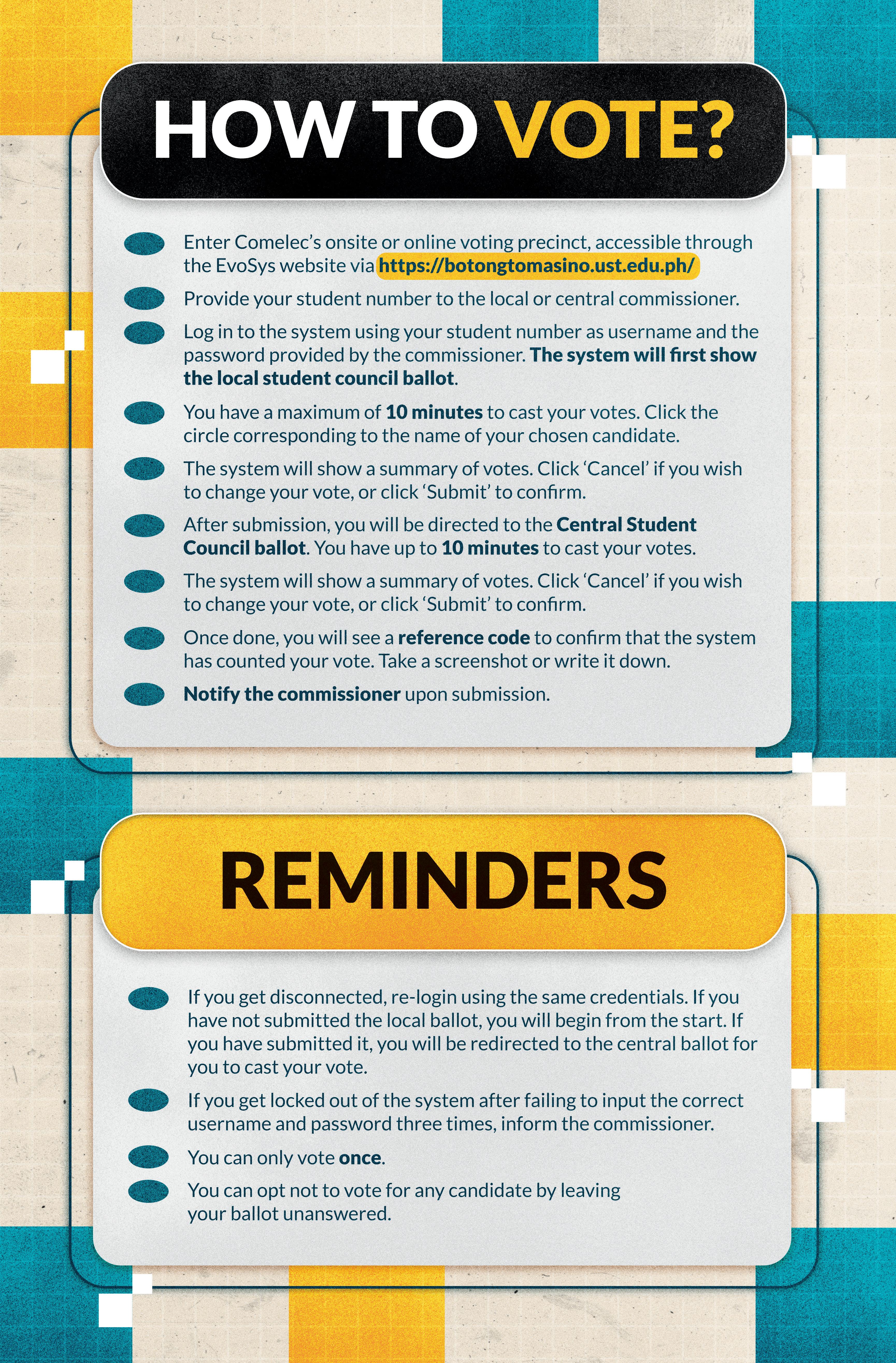
The University-wide CSC elections will run from April 20 to 25 with winners proclaimed on April 25.