



We ensure that each of our actions are in the best interests of our team, our company, and our customers. We lift up our customers and teammates through positivity, confidence, praise, and graciousness.




4 A Letter From Joe 2025 in Review by
Joe Varing
6 Nation Builders
How First Nations are becoming Pivotal Land Developers
12 Multi-Family Construction in the Fraser Valley Market Conditions Have Shifted
18 AI & Real Estate The Next Operating System for the Industry
22 Foreclosure, Insolvency, & Bankruptcy Understanding the Foreclosure Process in British Columbia

NextGen Thinking in Community Building
Solving the Riddle of Housing Unaffordability through Innovation Integration

34 Raw Land vs. Infill Lots
Navigating Today’s Fraser Valley Market
40 Nourish to Flourish The Energy Connection between Food, Mind, and Vitality
46 Vancouver’s Commercial Market Current Conditions & Practical Advice
50 The Agility Advantage How Fully Open Capital Protects Your Timeline
54 Varing Community
Giving Back to the Communities that Support Us



As the calendar turns, I find it’s the perfect time to pause, reflect, realign, and repurpose myself. I want to thank you for your trust, your support, and the relationship we continue to grow together—making things better in more ways than we can imagine.
Looking back at 2025, one defining theme emerges: the market rewarded Hyper Discipline. Buyers became more deliberate, and sellers who embraced market reality— rather than headlines—were the ones who achieved outcomes that served their long-term interests.
The Fraser Valley real estate market entered a classic phase not seen for decades: one of price discovery, marked by selective activity, elevated inventory levels, and benchmarks that softened enough to draw some buyers back—while overall conditions continued to favour the ever-so-patient buyer.
On the development and investment front, elevated financing and construction costs, coupled with slowed transaction velocity, redirected activity toward more conservative, fully underwritten opportunities— including court-directed listings—permanently reshaping how a pro forma is viewed. Concurrently, provincial TOA/TOD policy effectively became the new baseline, mandating higher-station-oriented densities and eliminating parking minimums. In light of this, the Surrey–Langley SkyTrain expansion along Fraser Highway continued to focus attention on eight key nodes as future high-demand anchors.
On another note, there has been phenomenal work being done across the Fraser Valley. We are grateful to have been part of some of the largest development and investment land deals of 2025.
At Varing, we often say that our job is to connect the dots. That means understanding the underlying story of a site, the constraints that matter, the upside that is real, and then bringing the right parties to the table with clarity and conviction to make ends meet. We provide fearless advice, regardless of the outcome or motivation. This approach is not flashy, but it is a reliable one and has stood the test of time. The continuous reliability that we bring to our clients becomes trust; and trust is the secret sauce of all meaningful relationships.
Looking ahead to 2026, we believe there will be a continual radical shift in investment analysis. It’s not just the bottom line anymore—it’s all the lines that matter. We anticipate a deeper and active discovery of price and a continued shift toward opportunities that stand on fundamentals not speculation. The projects that move will be the ones that are well-located, thoughtfully planned and aligned with real people and active living spaces. Simply put, the market will only reward those who are informed, prepared and hyper-focused on community.
Through every market cycle, our commitment remains the same. We will continue to be guided by intuition but anchored by market sentiment and factual data. We will continue to empower our clients with the highest level of information, strategic options and direction, so decisions feel clear, defensible, and timely. We will continue to mirror the values that we admire most: professionalism, humility, and consistency. And, as always, we’ll play the long game. It really is that simple.
Real estate is, and always has been, about more than a land deal. It’s about community, legacy, and the future we’re building for the next generation. If there’s one message we’d like to leave you with, it is this: Live Well.
The market has presented us with meaningful opportunities, and the foundational principal of good work and focus will always give us the greatest return. Our beliefs are simple: if we’re thoughtful, collaborative, and disciplined, we’ll continue to stand the test of time, year after year after year. Here’s to a strong year ahead.
Live Well and Win together,

Joe
How First Nations are becoming pivotal land developers and redefining growth across the region.

Jeff Tisdale CEO of Landcor Data Corporation,
leads a team
that
specializes in automated valuation models for BC’s financial services sector as well as tailored real estate data solutions, empowering real estate professionals across the province.
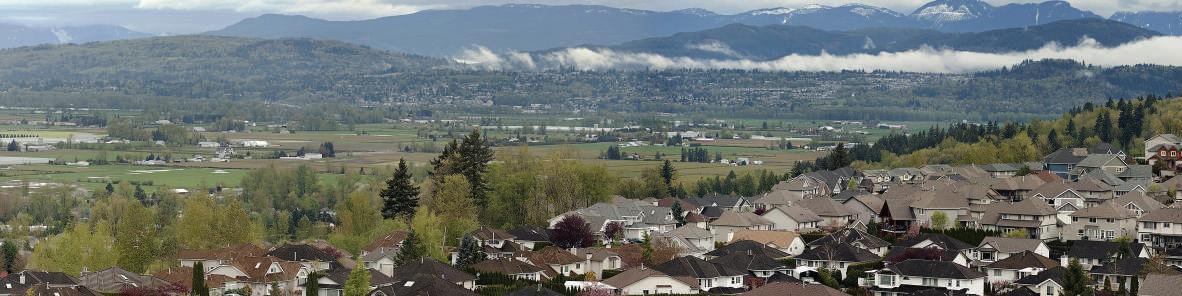
the development landscape of British Columbia’s Lower Mainland and Fraser Valley. Indigenous nations are no longer limited to consultation roles on projects affecting their territories. Instead, they are emerging as originators, co-owners, and equity partners in some of the region’s most ambitious real estate ventures.
The Tsawwassen First Nation (TFN) exemplifies this transformation, and since the 2009 implementation of its treaty, TFN has used its treaty lands to establish itself as a major economic player.
Anchored by the Tsawwassen Mills and Tsawwassen Commons retail centres and a rapidly growing industrial park, the community now generates tens of millions annually in lease and development revenues. These revenues fund housing, education, cultural programming, and infrastructure that directly benefit TFN members.
The Squamish Nation’s landmark development in Vancouver (Sen'ákw project) is another powerful example. Valued at $3 billion, it will deliver more than 6,000 rental homes on reserve land, and unlike developments that proceed through municipal rezoning processes, Sen'ákw is governed by Squamish Nation’s own jurisdiction and planning authority. This demonstrates how Indigenous governments can lead major urban projects on their lands, advancing housing delivery while exercising their inherent right to selfdetermination.

These Indigenous-led developments are about more than economics—they are redefining what the built environment looks like. Guided by Coast Salish values, many projects emphasize connection to nature, cultural visibility, and community gathering.
Sen'ákw will feature extensive green roofs, low-carbon district energy systems, and car-lite urban design. TFN’s commercial and industrial lands incorporate traditional language signage, public art, and community spaces throughout, reinforcing cultural identity alongside economic development.

These partnerships are advancing reconciliation in measurable ways, with many agreements now including:
• Community Benefit Agreements requiring local hiring and apprenticeship opportunities.
• Procurement targets for Indigenous-owned businesses.
• Long-term equity ownership stakes that give nations sustained revenues, not one-time payouts.
This broader vision of prosperity—rooted in sustainability and sovereignty—underscores how land development can serve as both an economic tool and a form of cultural restoration.
“We are not just building homes and businesses,” said Chief Geoff Sparrow of the Musqueam Indian Band at the groundbreaking of the Sen'ákw project. “We are rebuilding nations. Our developments are designed to generate prosperity for generations to come.”

• $60+ million in annual lease revenues generated on TFN treaty lands
• 6,000+ rental homes planned at Sen'ákw (Squamish Nation)
• $3 billion total project value of Sen'ákw, among the largest rental developments in Canada
• 300+ acres of TFN industrial development
• 2009 — TFN Treaty comes into effect, granting selfgovernment and land ownership powers
While regulatory complexity and infrastructure funding remain challenges, momentum is undeniable. Developers, municipalities, and financial institutions increasingly recognize that Indigenous nations are not stakeholders to be consulted late in the process. They are sovereign governments and strategic partners whose involvement is central to success.
In the decades ahead, Indigenous-led development is poised to be one of the most defining forces shaping growth across the Lower Mainland and Fraser Valley. It offers not only new pathways for housing delivery and economic activity, but also a framework for reconciliation and stewardship that benefits the entire region. Growth, once defined by expansion at the edges, is now being redefined by nations who have always been at the centre of this land.

“We are not just building homes and businesses. We are rebuilding nations.”
– Chief Geoff Sparrow Musqueam Indian Band, 2022


Jeff Tisdale Chief Executive Officer


Leasing your next vehicle with OpenRoad Leasing just makes more sense:
Lower monthly payments when leasing
Access to newer models and technologies with flexibility to switch vehicles more often
Ability to buy-out your leased vehicle at a lower rate
Quick approval
Select from a large inventory of quality vehicles, including low-mileage pre-owned models that are traditionally not an option for leasing.



Talk to your Product Specialist at any OpenRoad location.



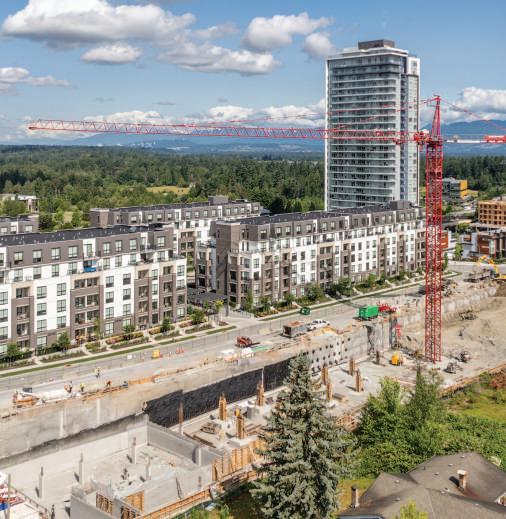
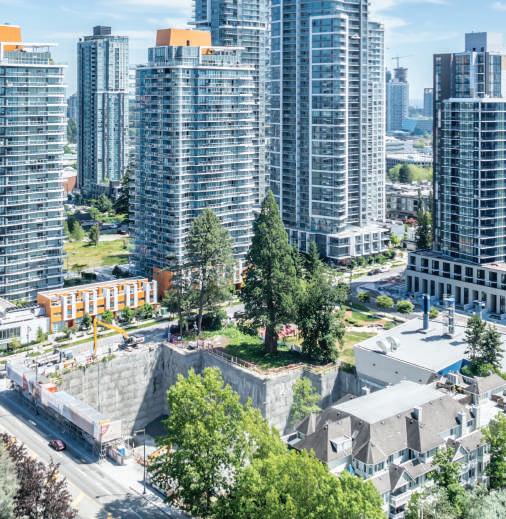


Like urban markets, the suburbs are experiencing soft rents and unsold condos. Sequoia, a condominium development by ML Emporio in Surrey City Centre, launched construction last year. (Sam Chua/CoStar)


Paul Richter | Director Market Analytics
The Director of Market Analytics at CoStar—the leading provider of commercial real estate information, analytics, and online marketplaces—Paul has worked with teams of dedicated analysts from across the country to help clients make better informed decisions for their commercial real estate businesses.

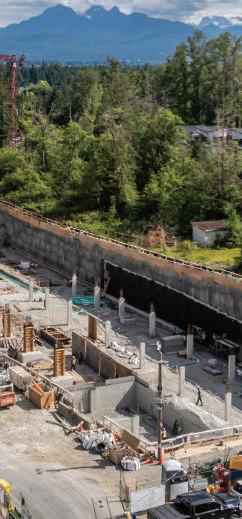
THE FRASER VALLEY HAS EXPERIENCED SUBSTANTIAL GROWTH in recent years, driven by a robust office development cycle and a surge in industrial construction prompted by evolving consumer behaviours during the pandemic. With inventory now replenished, developers have scaled back construction in the commercial sector; however, residential development continues, albeit under increasing pressure.
The residential market is currently contending with several headwinds: tepid presale performance, a growing inventory of completed but unsold units and softening rental rates that challenge the financial viability of new projects. As a result, condominium starts are decelerating, and rental development has plateaued.
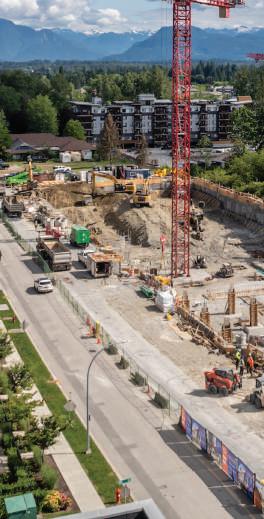
Residential development in the Fraser Valley has passed its peak for over a year; however, multi-family construction remains very active. Approximately 18,000 units are still under construction, with rental housing comprising 20%. Nonetheless, declining rents; elevated costs across materials, labour and capital; economic uncertainty; and expectations of slower population growth constrain development across all major property classes.
Multifamily development in the Fraser Valley has been strong, but new projects are increasingly delayed

From Surrey to Chilliwack, the region has entered its fourth consecutive quarter of reduced construction. Compared to last year, new starts are down between 35% and 75% across office, retail and industrial sectors. The second quarter of 2025 saw virtually no new projects commence. If this trend persists, developers and contractors may face challenges retaining construction labour, which could migrate to more active regions.
Retail development in the Vancouver metropolitan area, constrained by limited land availability, relies heavily on multi-family projects. The initiation of retail developments where retail is the primary use has declined for years. Despite the region maintaining one of the lowest retail vacancy rates nationally, new retail space is typically incorporated as a secondary use within high-density residential projects. This dynamic suggests continued tightness in the retail market as multi-family development slows.
Consumer spending in the first half of 2025 reached $29.3 billion, an increase of nearly 9% year over year, marking the strongest six-month performance on record. Much of this was powered by explosive population growth over the past few years, which is now slowing due to federal government restrictions. However, retail development is unlikely to rebound soon due to cost pressures and a growing preference for mixed-use formats.
In contrast, industrial tenants are experiencing a period of relative flexibility. A recent wave of speculative development in the distribution sector has created a short-term surplus of space already being absorbed. Yet, amid broader economic uncertainty, the average industrial tenant seems reluctant to commit to premium-priced space. With average net asking rents around $19.25 per square foot, there is room for long-term growth. However, after a 40% increase in rents over the past five years, many tenants are adopting a wait-and-see approach, contributing to rising vacancy and a slowdown in new development.
Multi-family development has supported employment in the construction sector, with job levels rebounding from a 10% decline between mid2022 and mid-2023. While employment currently sits near peak levels following a strong summer, volatility remains. Looking ahead, prospects for office development are limited, retail will continue to depend on multi-family projects and industrial development may offer the most-stable foundation for construction employment, though even its shortterm outlook is cautious.
To sustain a skilled construction workforce, new projects must be identified and advanced. Without this continuity, the region risks losing labour to more affordable markets with stronger job prospects, potentially hindering recovery should economic momentum return.
Construction of commercial buildings in the Fraser Valley is at its lowest level in recent history
The pace of consumer spending growth has been strong in 2025, a pace not likely to be sustained
Reduced and inconsistent real estate development is leading to unsettled construction employment


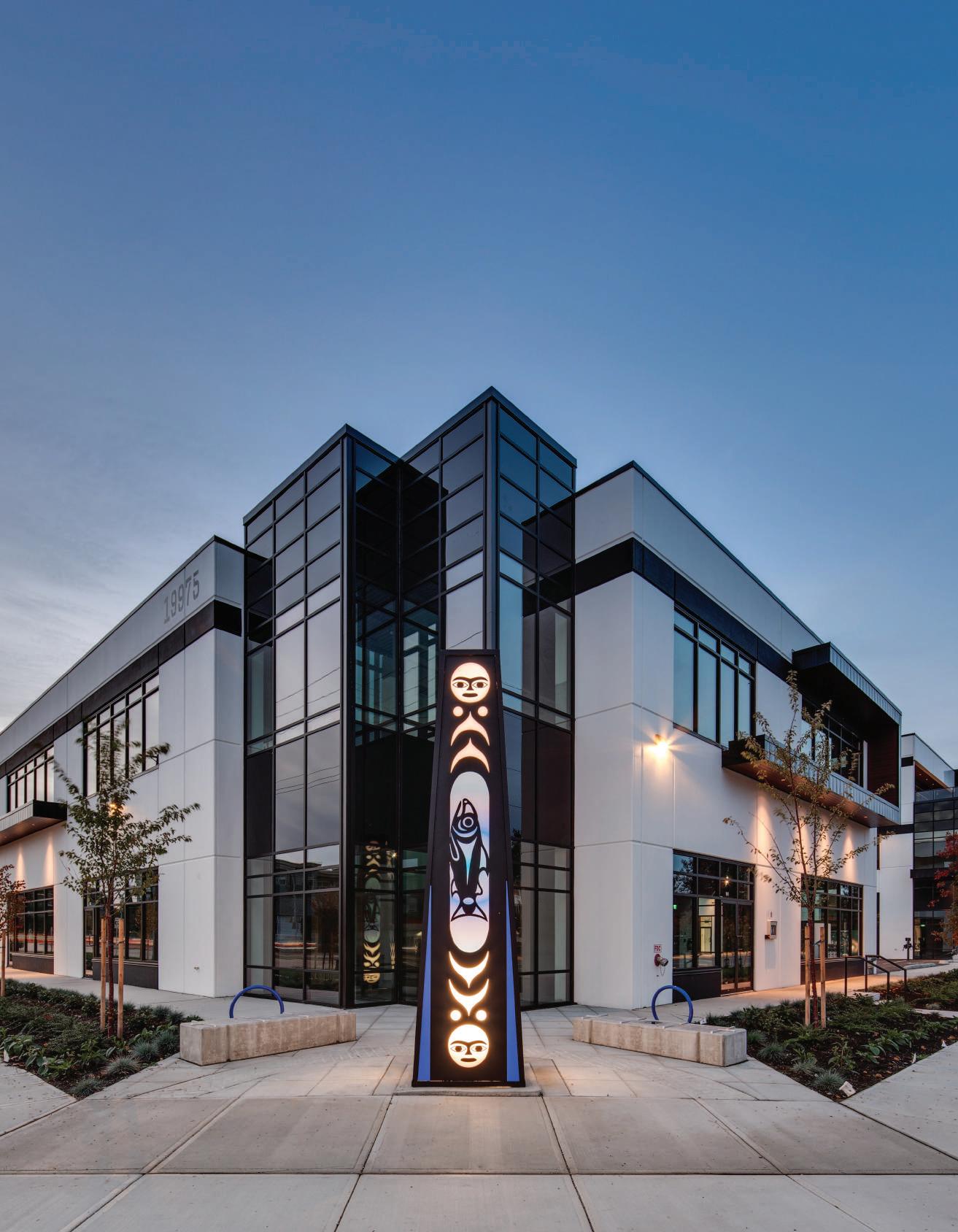
Design-Build services for innovative industrial, commercial, and multi-family developments.
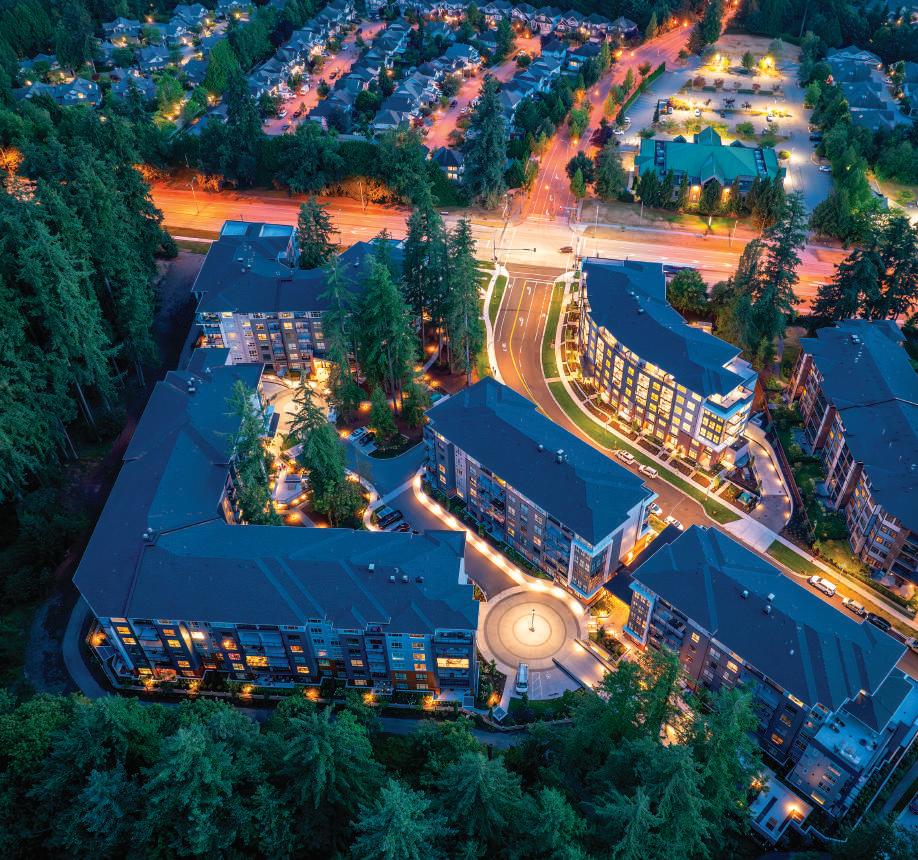

In Collaboration:
The UBC Vancouver Housing Market Club Research Team & VARING
Across Canada—and particularly in British Columbia’s high-stakes, policy-driven market—real estate is entering a new phase of transformation. Artificial Intelligence is no longer a novelty used to write listing descriptions; it is evolving into a practical operating layer across development, underwriting, planning, leasing, marketing, and property management. The result is a faster, more consistent way of working that is reshaping what builders, developers, homeowners, and capital partners expect from the industry.
Globally, AI is moving from experimentation into infrastructure across the full asset lifecycle. In Canada, adoption has accelerated quickly over the past few years, reflecting how rapidly these tools are becoming part of everyday work. Real estate is following the same pattern: quietly at first, then with measurable momentum.
AI’s real shift in real estate is simple: it’s moving from a nice-to-have tool to a reliable first-pass teammate. It can summarize dense reports, clean up data, draft client-ready content, and highlight patterns that would otherwise take hours to find—freeing professionals to focus on strategy, negotiation, and relationships.


On the ground, the most effective AI uses aren’t flashy; they’re quite practical.
• Investors and brokers use AI assistants to help qualify leads, respond to inquiries, and keep followups consistent; AI-written first drafts for listings and campaigns; as well as AI-supported 3D tours and digital twins, which pre-qualify interest before anyone steps on site.
• Developers rely on AI to speed up feasibility work— testing density, use, cost, and absorption scenarios quickly—allowing them to focus sooner on aligning with policy, servicing, and real demand.
• Owners & asset managers use AI to triage maintenance, streamline reporting, and optimize building systems, which reduces operating friction and, over time, supports stronger NOI.
Homeowners and end-users experience these changes as better education, quicker answers, and smarter search results, whether they are buying their first condo, downsizing, or investing in a rental.
In a market shaped by evolving policy, affordability, and transit-oriented planning, this AI-as-teammate model is especially powerful: it compresses the analytical timeline, allowing local expertise to anchor what’s realistic, compliant, and defensible.
AI in practice: what teams are using today
Across the industry, AI is quietly embedding itself into day-to-day workflows:
• Underwriting & research
AI is used for data cleanup, document summarization, first pass market scans, and rapid scenario testing. For a development team, this means moving from raw information to a realistic short list of viable sites much faster, while keeping the final assumptions and risk decisions in the hands of the principals.
• Marketing & communication
With AI, you can produce consistent first drafts of listings, project narratives, and investor updates. For brokers and project marketers, the value is less about automated creativity” and more about making sure every buyer, tenant, and lender receives clear, tailored information quickly—even when internal capacity is stretched.
• Visualization & presentations
AI-supported 3D capture and digital twin workflows help communicate space and potential use, while pre-qualifying interest earlier in the sales process. This allows teams to focus in-person time on better-qualified prospects and more complex discussions.
• Everyday assistants General-purpose tools, such as Chat GPT and Gemini, are increasingly common for summarizing long documents, drafting first-pass reports, and reducing administrative bottlenecks. In practice, many teams now treat these assistants like junior analysts or coordinators: excellent for first drafts, checklists, and summarization, but always supervised before anything reaches a client, lender, or municipal file.
Across all of these uses, the shared value is speed and consistency. It’s important to ensure that professionals verify key facts, assumptions, and material terms before anything becomes client-facing or decision-critical.
Used casually or without internal rules, AI’s benefits come with real risks.
• Confidentiality: sensitive information sent into the wrong tool or environment can create long-term exposure for clients and firms.
• Accuracy: small misinterpretations can have large consequences—particularly when summarizing complex legal, planning, or technical documents.
• Bias: especially where training data or prompts reflect only part of the market reality.
• Overreliance: treating AI as an authority rather than a helper.
The standard in BC should remain clear: professional accountability for accuracy, confidentiality, and compliant service stays with the human professional. AI may support the work, but it does not replace duty of care.
The best real estate teams treat AI as a workflow upgrade rather than a shortcut. They begin with low-risk, high volume tasks such as summarization, first-draft content, internal checklists, and baseline research. They maintain a human-in-the-loop standard for pricing guidance, legal interpretation, due diligence conclusions, and planning-sensitive recommendations. They establish simple internal policies about data handling and disclosure so that AI improves service without compromising trust.
In this model, AI becomes an efficiency multiplier that strengthens, rather than replaces, sound judgment. The objective is not to automate the profession; it is to reduce friction so professionals can spend more time on the parts of real estate that still require human value: experience, ethics, creativity, and relationship-driven decisions.
AI is not changing real estate by replacing professionals. It is changing real estate by raising expectations for speed, clarity, and operational excellence. Investors are underwriting faster. Developers are testing feasibility earlier. Property managers are reducing operational drag. Brokers are responding with more precision and consistency. Homeowners and small investors are gaining access to clearer information and better service.
In a market like BC—where policy, affordability, and land economics continue to shift—AI becomes most valuable when it helps professionals pair speed with judgment. The future belongs to teams who carefully implement and treat AI like a new operating system: powerful, scalable, and transformative.



As economic pressures mount across BC’s real estate landscape, foreclosure filings are becoming increasingly common. Interest rates have risen (with only a modest softening to date), credit conditions are tightening, and prolonged development timelines have created a perfect storm for a troubled market . Whether you're a buyer seeking opportunity, a seller under stress, a lender weighing enforcement, or a developer navigating uncertainty, understanding the foreclosure process is essential.
In BC, foreclosure is a court-supervised process. It begins when a borrower defaults on a mortgage, resulting in the lender sending a demand letter. The lender then commences the foreclosure process by filing a Petition in the Supreme Court of BC. Together with the Petition, the lender will file an affidavit attaching the mortgage documents, the demand sent, and calculating the amount due and owing. Both the Petition and the supporting affidavit must be served on the debtor and all persons whose interest in the mortgaged property is sought to be extinguished. In order to be notified of the next step, any party to the proceedings (including the borrower and any other interested parties), must file a Response to Petition setting out their position on the matter.
The next step in the process will be for the lender (now called the Petitioner) to set the matter down for hearing before the court for a declaration of the amount due and the time that the borrower will have to pay that amount due, known as the redemption period, which is typically 6-months unless there are special circumstances to reduce that time frame, such as lack of equity or wasting of the property. This order for a declaration of the amount due and setting the redemption period is known as an Order Nisi, and is typically a very short, and often uncontested application. If the debtor does not repay the amount due within the redemption period, the Petitioner may seek an Order for Sale granting the Petitioner the right to engage a realtor and market the property for sale. Once an offer is received that the Petitioner wishes to accept, a final application is brought for an Order Approving Sale. A debtor may seek to redeem the mortgage by paying it out in full at any time prior to an Order Approving Sale, despite the expiry of the redemption period. When considering an Order Approving Sale, the court will examine whether the lender has acted in a businesslike manner in marketing the subject property and whether the proposed sale is provident in all of the circumstances.
Foreclosures are no longer isolated events; they are part of a broader trend of financial distress in the land market.
Many landowners are overleveraged on raw sites purchased during the 2021–2022 peak, and refinancing has become increasingly difficult as loan-to-value ratios tighten. According to the Bank of Canada, “about 60% of mortgage holders renewing in 2025 and 2026 are expected to see a payment increase.”

Lenders are moving more swiftly to enforce their rights, while developers continue to face delays in municipal approvals despite calls for change and rising servicing costs.
This mismatch between debt obligations and development timelines is driving a surge in foreclosure and insolvency proceedings, as land has previously been seen as the most valuable asset in BC.
For
Distressed assets can present compelling opportunities, including court-ordered sales, foreclosure auctions, and receiver-managed disposals, which often come at below-market pricing and/or prices that are lower than is required to clear title if the property is over-leveraged.
However, due diligence is critical. Buyers must carefully review municipal files, servicing obligations, and any liens or encumbrances. Note that “cheap land” may come with hidden costs or development barriers.
Financing can also be a hurdle. Traditional lenders may hesitate to fund distressed acquisitions, requiring buyers to rely on cash or private capital. That said, buyers who offer speed and certainty, such as firm offers with short closing timelines, may gain leverage in negotiations with lenders or receivers eager to resolve quickly.
Owners facing financial stress should engage with lenders early. Open dialogue can sometimes lead to extensions, restructures, or staged sales, which are options that may preserve equity and control.
Joint ventures with capitalized developers can also be a lifeline, allowing projects to move forward rather than being liquidated. Pre-selling portions of land to pay down debt is another strategy that can help avoid foreclosure or insolvency.
Waiting too long, however, risks court intervention through foreclosure or receivership proceedings, where pricing and timing are outside the owner’s control.
Lenders must balance enforcement with asset preservation. A forced sale in a thin market may crystallize losses, while a structured negotiation or joint venture may yield better long-term outcomes.
Appointing a receiver ensures professional management of the sale process, but it also adds cost and may alienate the borrower. Moreover, foreclosure listings can depress comparable sales in the area, affecting broader portfolio valuations.
Developers active in today’s market often target shovelready or near-serviced distressed sites where lenders are motivated to sell but fundamentals remain strong. Conservative financial modeling, including realistic absorption rates and cost contingencies, is essential to withstand prolonged cycles.
Partnerships with equity investors or lenders can provide a buffer against insolvency. As more distressed land enters the market, pricing benchmarks may shift downward, creating both acquisition opportunities and valuation risks for existing holdings.
Distress in the BC land market is rising, and all parties, including buyers, sellers, lenders, and developers, must adapt. The winners will be those who act early, document clearly, and structure deals creatively to manage the changing landscape.
Written By: Dan Moseley & Sharon Malhi

Dan Moseley is a partner at McQuarrie and is well-recognized as being a highly experienced and integral member of the firm’s Dispute Resolution and Commercial Litigation team. Dan regularly assists clients with complex construction, land, and business disputes, as well as insolvency and debt recovery matters, and takes pride in helping his clients attain efficient and effective outcomes. Dan lives in South Surrey with his wife and two girls and is passionate about involvement in their growth and the local community.


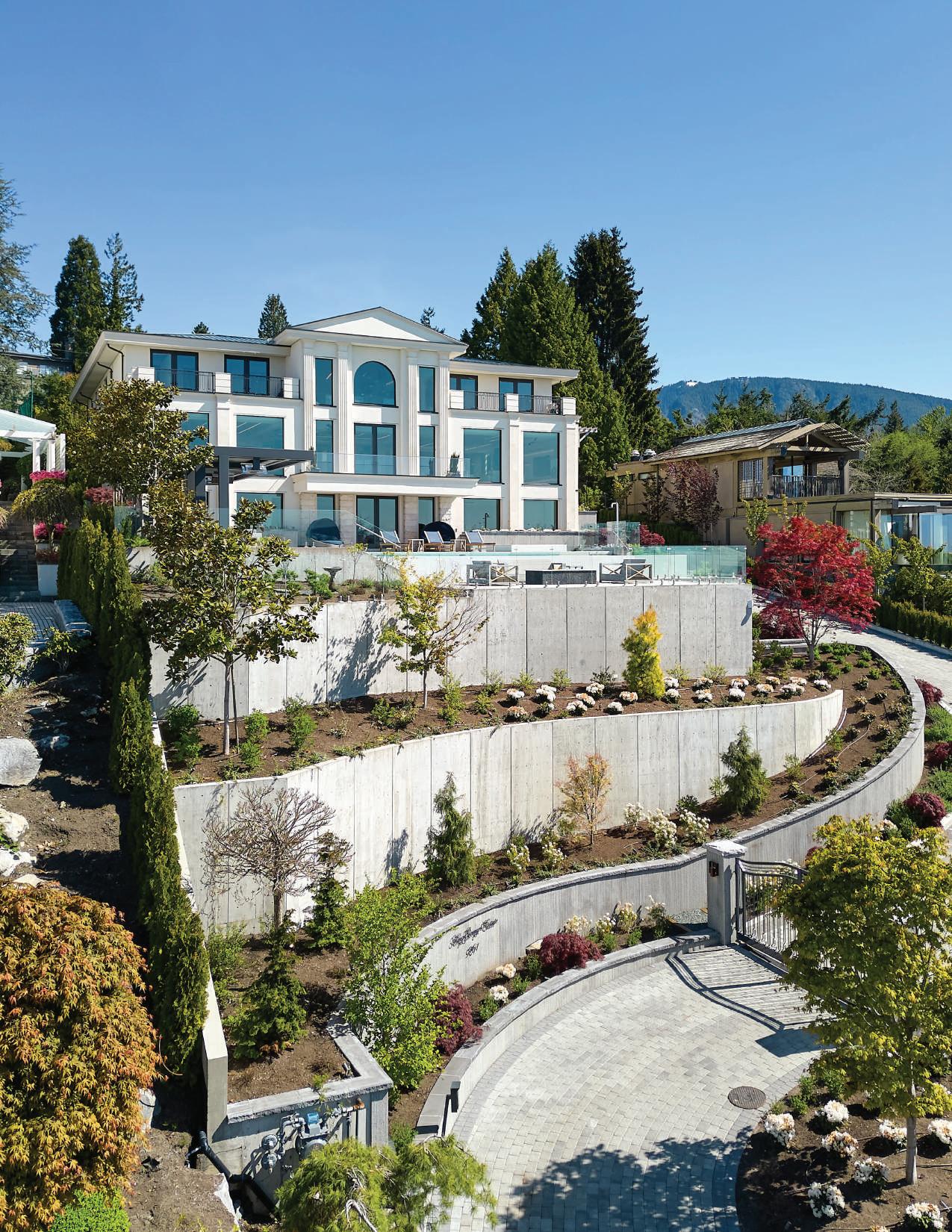
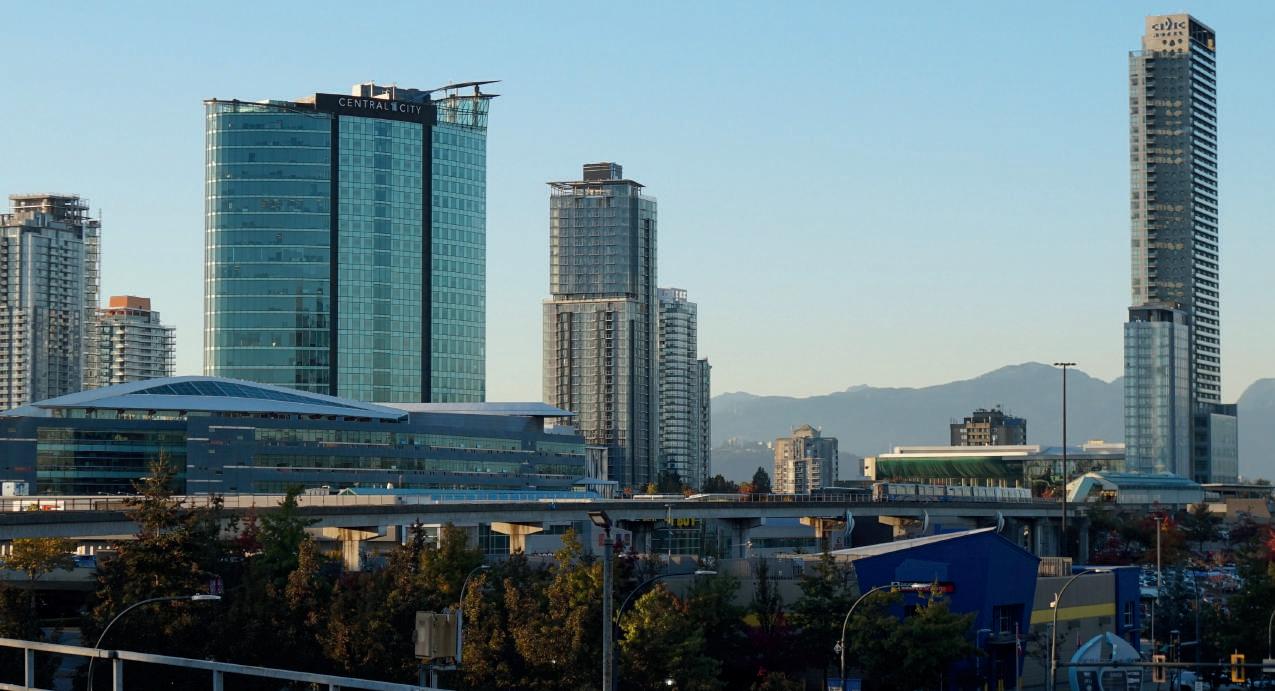

At 317.2 km, Surrey is the largest city in Metro Vancouver Surrey grows by over 1,000 people a month, on track to be BC's largest city by population by 2027 It is projected that by 2044, Surrey will be the first BC city to reach 1 million residents
Home to the Health and Technology District
37% of Surrey's population is under the age of 30
1/3 of Surrey's land base is agricultural
46% of Metro Vancouver's mixed employment land is in Surrey
18% of industrial land in Metro Vancouver is in Surrey Over 200 different languages are spoken in Surrey
Explore business relocation or co-location opportunities in Surrey and White Rock.
Find essential information, key partners and contacts at the Surrey & White Rock Board of Trade.
Already operating in Surrey or White Rock? Join the Board of Trade today and secure the support your business deserves!
swrbot.com


Our attitudes, biases, and pre-judgments to new and innovative ideas can limit our potential. Let’s think differently. In the process, we’ll open new door and new opportunities. Most real estate development ideas have been conceived in different forms before; they simply need to be repackaged and adapted to current times. Here are some basic considerations, as well as innovations, that—if integrated—can radically challenge the seemingly unsolvable riddle of housing unaffordability.

1. Housing resizing. By affordability and design, the townhouse is the new single family home. In many urban and suburban areas, North Americans will need to adapt to more compact spaces and tighter living arrangements featuring quality over quantity of space. The decision to resize prioritizes quality over quantity, with savings in taxes, maintenance, and time to care for the property. The result is more money and time to spend on other, higher-priority items. We should also consider a diversity of home types and sizes brings in an array of housing. A townhouse and stacked townhouse configuration can include singlebedroom to four-bedroom homes, remembering that up to 40% of buyers are now singles, depending on location. Compact living lends itself to fewer cars, more mobility, and closer-knit communities if done well. Amenities can be shared and close by.
2. Housing tenure and suburban retrofit. There is nothing wrong with renting an apartment or, better still, part of a home. In the new digital economy with digital nomads, renting is cool, flexible, and supports a more transitory lifestyle. It is not looked down upon anymore and it may be the trend of the future. Part of the future lies in converting single-family homes into multi-family homes. As it stands, many suburban communities are shrinking in population as families mature. Often, only two people are living in more than 232 m2 (2500 ft2)! The housing stock already exists but needs to be reshaped. Challenges often seen with increased density include parking the additional vehicles associated with each unit as well as the physical and social infrastructure required to house additional residents.

3. Move people, not cars. A growing population supports more transit and thus helps to make transit more convenient, more affordable, and more frequent. So, density done well, with ground-oriented units like townhouses and other multiple-family housing, can vastly improve community mobility and reduce the need for families to own multiple cars.

4. Right Intensification. High density does not necessarily result in the highest quality of life nor market fit. Granted that forward thinking on climate change advances higher density to cut greenhouse gas emissions. This may occur to some extent as more people live in a smaller space, near transit hubs, and more take transit, reducing their ecological footprint. But look at the vast vacant high-density cities in China or what happened in New York in the 1950s with the urban renewal projects—not success but social breakdown. Middle densities, or what is termed the missing middle housing —all those housing types between single-family housing and high-rise apartments—offer a whole range of housing types and can provide variety, diversity, inclusion, and quality of life. The missing middle normally includes townhouses, duplexes, triplexes, four-plexes, three- to six-storey apartments, and midrise apartments.
5. AI and Approvals. In response, some municipalities are already harnessing artificial intelligence (AI) using chatbots to expedite housing permit approvals. Combining this “blockchain” approach (fused history and connections) to ensure applications are comprehensively reviewed with less personal supervision and time is already being piloted by the City of Kelowna. Add to AI the idea of outsourcing some applications to qualified project management professionals (PMPs) and this could further expedite project approvals, especially complex reviews.
6. Reducing Zones. As we try increasingly to integrate and mix our living, work, play, and learning in more compact complete communities, zoning bylaws are unduly complex and may be less necessary in the future context. For example, my firm recently reduced more than 30 zones to 19 zones in Castlegar, as part of a zoning bylaw update. Municipalities need to retune outdated zoning bylaws, institute fewer zones, and look to the Official Community Plan for land use, density, and growth guidance.

Michael’s new book, Real Estate Develoment Primer: An Introduction to the Development Process, is available at michaelvonhousen.com and mvhinc.com/books. You can also find hard copies at amazon.ca or tellwell.ca.


Michael von Hausen FCIP, FCSLA, RPP, LEED AP, IAP2
Michael is President of MVH Urban Planning & Design, a global consulting company that now focuses on serving municipal, development, and First Nations clients in British Columbia and Alberta. He facilitates the sought after FortisBC School of Development for the Urban Development Institute in Vancouver and is an Adjunct Professor at SFU and UFV. For further information go to michaelvonhausen.com.

Every day, we take initiative—with integrity and courage— to elevate ourselves for the greater good of those around us.


Written By: VARING

THE FRASER VALLEY CORRIDOR is undergoing one of its most dynamic transitions in decades. Major infrastructure investments, such as the Surrey-Langley SkyTrain extension, and provincial legislation mandating higher densities around transit nodes, are rapidly shifting the way builders and developers approach acquisitions. The key decision point today is whether to pursue raw land or focus on infill sites—two strategies with very different risk and reward profiles.
Historically, raw development land has offered outsized long-term upside. Acquiring early in a growth corridor allows buyers to capture value as planning frameworks evolve and density is introduced. However, raw land comes with challenges that are magnified in today’s environment. Approvals are measured in years, not months, with multiple layers of municipal and regional review. Servicing costs, off-sites, frontage works, and utility capacity upgrades are unpredictable and can escalate well beyond initial pro formas.
As Joe Varing notes, land requiring rezoning into condos or townhomes is now heavily challenged in pro formas, simply because carrying costs over multiple years can
reach eight to ten per cent annually when mortgage interest, fees, and taxes are included.
While raw land may ultimately deliver the largest potential gains, it requires patient capital, tolerance for holding costs, and an ability to manage duration risk through cycles.
Infill, or serviced sites, are increasingly the preferred play in the Fraser Valley—particularly in a softer market. These sites benefit from existing infrastructure, shorter entitlement pathways, and faster routes to revenue. With utilities often at the lot line and less reliance on major offsite works, upfront capital requirements are lower, which resonates with both lenders and investors.
Varing emphasizes that single-family lots are seeing strong demand because they provide a clear, straightforward path to development. Many of these lots are already entitled for four-plexes and six-plexes, allowing construction to begin within a year without the delays of rezoning. “One can buy in an in-fill neighborhood and start construction—likely within a year,” he says. “Single-family lots will offer a much higher return on investment than buying raw land and waiting multiple years for approvals.”

The introduction of provincial Transit-Oriented Area (TOA) legislation is further strengthening this segment. Sites located near SkyTrain and BRT stations not only enjoy higher minimum density requirements but also benefit from the removal of residential parking minimums. For developers, this means more buildable units, greater efficiency, and improved returns on land that is already positioned for absorption.
Even as the Bank of Canada has begun easing rates, the memory of elevated borrowing costs lingers. Higher debt service magnifies the risks inherent in long timelines, making raw land more difficult to underwrite. By contrast, infill sites offer faster paths to cash flow, help mitigate financing costs, and meet conservative lender requirements. In today’s climate, duration risk is the critical spread; buyers demand a larger discount to carry projects that will not produce income for several years.
“Uncertainty is what’s driving indecision in real estate,”
Varing underlines. “If I don’t know if my job is going to be around in 18 months, am I going to buy a $2 million house?” In other words, projects with long delivery horizons face a greater demand for risk premiums, while quicker-to-market infill sites remain more viable.
• For buyers of raw land, pricing discipline is essential. Underwriting must factor in lengthy approvals, servicing contingencies, and potential policy shifts. Creative structures, such as staged closings or joint ventures can help align risk and capital deployment.
• For buyers of infill lots, the opportunity lies in speed. Validating servicing, securing early works permits, and designing within TOA legislation can compress timelines and sharpen project returns.
• For sellers of raw land, advancing studies and providing clear servicing concepts will reduce buyer uncertainty and attract stronger offers.
• For sellers of infill sites, packaging properties with clean data rooms and alignment to transit-oriented policies can widen the buyer pool and justify premium pricing.
Raw land remains the long-game bet, best suited for investors who can weather time and capital intensity. Infill lots, however, are the market’s current preference, offering shorter timelines, reduced risk, and enhanced value under today’s policy and financing environment.
In the Fraser Valley, where growth corridors are increasingly defined by transit and policy shifts, the winners will be those who balance ambition with pragmatism, aligning acquisition strategies with both market cycles and the evolving development landscape. “There’s a lot of opportunity for builder-developers and owner-investors,” Varing concludes. “New money can enter into the market.”













By Jasneet Varing

Jasneet Varing
Since 2016, Jasneet has committed herself to the practice, study, and teaching of Ayurveda and Yoga.
Originally trained in Kundalini Yoga, she has expanded her teaching to include youth affected by trauma.
A certified Ayurvedic Counsellor, Jasneet is well on her way to becoming a Practitioner.
IN TODAY’S FAST-MOVING WORLD, food has become more about convenience than connection. Ayurveda, the ancient science of life, reminds us that food is not just fuel; it is energy, intelligence, and vibration. What we eat, how we eat, when we eat—and even the state of mind in which we eat—can either nourish our body and spirit, or drain our vitality and clarity.
Ayurvedic physician and educator Dr. Vasant Lad beautifully teaches: “When diet is wrong, medicine is of no use; when diet is correct, medicine is of no need.” According to the founder of The Ayurvedic Institute, every meal carries prana, the life-force energy. Fresh, seasonal, and lovingly prepared foods enliven us, while processed, stale, or heavy foods dull the mind and weigh down energy. Think of your meals as conversations with your body; each bite either uplifts or depletes your rhythm.
“When diet is wrong, medicine is of no use; when diet is correct, medicine is of no need.”
When you eat foods close to their natural state, you feel light yet grounded, awake yet calm. Processed, sugary, or fried foods may fill you temporarily but leave you energetically empty.
Ayurveda teaches: You are not what you eat; you are what you digest. Even the most wholesome meal can turn into ama (toxic residue), if digestion is weak. So, our focus shifts from counting calories to cultivating agni, your digestive fire—the foundation of energy, clarity, and vitality.
Your body is unique. Your diet should be, too. Each person has a unique combination of doshas that shapes their physiology and metabolism. Tailoring your diet to your dosha brings balance, vigour, and a clear, energized mind.
• Vata (air + space): Naturally light and prone to dryness, vata benefits from warm, oily, grounding foods that stabilize energy and nourish tissues. Avoid raw, dry, or cold meals, and maintain a consistent routine to support digestion.
• Pitta (fire + water): With a strong metabolism and tendency toward heat, pitta thrives on cooling, soothing foods like cucumbers, mint, and sweet fruits. Overly spicy, sour, or fried foods can aggravate pitta, leading to inflammation or digestive discomfort.
• Kapha (earth + water): With slower metabolism and a heavier build, kapha benefits from light, warm, and stimulating meals that encourage energy flow and prevent sluggishness. Heavy, oily, or overly sweet foods can increase kapha, causing lethargy and congestion.
Ayurveda calls this samyak āhāra vidhi, or the right way to eat. Rather than a task to complete, each meal is a sacred ritual of self-nourishment.
• Sit calmly and express gratitude for your meal.
• Minimize distractions—avoid screens while eating.
• Chew thoroughly to aid digestion and nutrient absorption.
• Stop eating when about 75% full.
• Rest briefly on your left side to support gentle digestion.
“Every meal can be an act of meditation when taken with full awareness.”
— Maya Tiwari Ayurvedic teacher, health activist & author
Your body thrives when it follows the rhythms of nature. Eating in tune with your internal clock supports digestion, energy flow, and balance. Ayurveda follows a simple truth: when the sun is strongest, your digestion, or agni, is strongest.
• Morning (Kapha Time: 6am–10am)
Digestion is naturally slower in the morning, so choose a warm, light, grounding breakfast—such as porridge, warm chia pudding, stewed apples, warm tea—or skip it if you’re not hungry. Avoid cold smoothies and iced drinks, as they weaken morning agni.
• Midday (Pitta Time: 10am–2pm)
Your digestive fire is strongest at midday, making this the ideal time for your largest and most nourishing meal, built around whole grains, vegetables, lentils, healthy fats, and proteins.
• Evening (Vata Time: 2pm–6pm)
As energy becomes lighter in the evening, aim for a simple, easy-to-digest dinner before 7pm, such as soups, khichdi, or steamed vegetables. Heavy or late meals disrupt digestion and can disturb sleep.
Fasting allows agni (digestive fire) to digest leftover food and clears ama (toxins), restoring energy and mental clarity. Periodic fasting is beneficial, but the type and duration should consider your constitution, age, strength, season, and the state of your digestive fire. Always ensure fasting does not deplete your energy.
Tips by Dosha:
• Kapha: Full fast once a week
• Pitta: Light, fruit-based meals
• Vata: Three light meals a day (warm, easily digestible foods like kitchari and herbal teas with ginger, cumin, or fennel.)
Just as we change our clothes with the seasons, Ayurveda encourages us to adjust our diet to stay in balance.
• In Spring (Kapha season), bitter greens, lentils, and warming spices like turmeric and ginger help clear heaviness.
• Summer (Pitta season) calls for cooling foods such as coconut water, melons, and fresh salads to soothe inner heat.
• In Fall and Winter (Vata season), warm soups, stews, and ghee provide comfort and grounding.

Certain food combinations can disturb digestion and lead to the buildup of toxins. Avoid mixing milk with sour fruits; melons with other foods; fish with dairy; hot water and honey; and hot and cold foods together. Instead, favour harmonious pairings that support digestion, such as rice and lentils; milk and dates; and ghee with warm vegetables.
Food carries emotion. Cook with peace, eat with gratitude, and bless your meal before the first bite. Meals prepared with love transmit harmony, while rushed or stressed eating creates imbalance.
“When we eat with love, we heal not only ourselves but the earth that feeds us.” — Maya Tiwari
Ayurveda reminds us to eat with awareness, not just for calories. When you align your meals with your body’s unique needs and the rhythms of nature, your mind calms, your body feels light, and your purpose becomes clear. Eat to nourish, honor your body’s innate wisdom, and let every meal be a mindful celebration of vitality, balance, and joy.






The commercial real estate landscape in Greater Vancouver continues to adapt to a global environment marked by unstable interest rates, American tariff disruptions, evolving work habits, trade tensions, and heightened capital-market caution. Rather than a broad downturn, the region is experiencing a selective slowdown, with clear segmentation between asset classes and a growing need for strategic repositioning. Here’s an updated snapshot of current conditions— and practical guidance for how to navigate them.
Investment and transaction volumes are down.
Altus Group reports that Metro Vancouver commercial investment in the first half of 2025 reached approximately $4.3 billion, a 33% decline year-over-year, reflecting cautious sentiment across lenders and investors.
Major Themes to Keep in Mind
• Flight to quality continues.
Premium, well-located assets—especially newer office product—are outperforming aging or obsolete buildings.
• Capital is becoming more selective.
Investors are favouring stable, income-generating assets and are less willing to entertain speculative upside.

• External headwinds remain significant. Rising borrowing costs, persistent trade tensions, tariff-related uncertainty, material and labour inflation, and shifting occupier behaviour all continue to shape the market.
• Owners/Landlords:
Older or marginal office assets will face increasing pressure on rents, absorption, and capital-expenditure requirements unless repositioned.
• Tenants:
Many occupiers, particularly in Class B and C office and secondary retail/industrial locations, now have more negotiating leverage. However, assessing building quality, flexibility, and long-term suitability remains essential.
• Investors/Developers:
Despite headwinds, targeted opportunities remain— particularly in logistics/industrial, essential retail, and redevelopment plays. Multi-family assets, however, are seeing elevated uncertainty, driven by foreign-market instability and shifting capital sources.
• Financing & Risk:
With softer transaction activity and muted value growth, lenders remain conservative. Expect tighter covenants,


1. Focus on Fundamentals
• Prioritise location, tenant strength, lease structure, and asset condition over speculative growth.
• Seek assets with durable, predictable income streams or long-term relevance (e.g., logistics, essential service retail).
• For office assets, favour amenity-rich, flexible, hybrid-ready buildings in strong employment hubs.
2. Evaluate Risk vs. Reward Strategically
• Assume lower valuation multiples and longer hold periods under current rate conditions.
• Stress-test vacancy, leasing timelines, and major CAPEX for modernization.
• Avoid relying solely on future growth or compression to justify returns.
3. Prepare for Repositioning and Flexibility
• For legacy office inventory, consider upgrades, conversions to rental housing, or mixed-use repositioning.
• In retail and industrial, target buildings that can adapt to evolving supply-chain and consumerbehaviour trends.
• Build flexibility into lease structures and outline exit strategies early.

4. Monitor Policy, Trade, and Macro Risks
• Capital-gains adjustments, tax policy changes, interest-rate movements, and cross-border trade shifts will influence short- and long-term values in both Canada and the U.S.
• As a major Pacific trade gateway, Vancouver remains vulnerable to tariff cycles and global supply-chain restructuring.
5. Leverage Timing and Selective Opportunities
• A risk-off climate may bring quality assets to market at better pricing or with more favourable terms.
• Liquidity is an advantage: today’s environment may allow investors to secure premium tenants, longer leases, or more attractive financing.
• Avoid chasing “discounts” without strong underwriting—quality still wins.

The commercial market in Vancouver and its surrounding regions is not collapsing, but evolving. The exuberance of past boom years has given way to a more disciplined, fundamentals-driven landscape. In this environment, success will favour participants who prioritize quality, cash-flow durability, adaptability, and long-term optionality.
Whether you are an owner, tenant, investor, or developer, the guiding principle remains the same:
“Better asset, better lease, better term—and the ability to hold through cycles.”

Mike Grudman
Mike Grudman is President at Axium Capital, is a mortgage brokerage comprised of experienced real estate and commercial lenders with offices in Vancouver and Surrey.



2026, high build costs and complex approvals make timing everything. In this environment, execution speed—and the flexibility to adapt—can be the difference between momentum and missed opportunity. For many developers, the standard 8-to-10-week funding timeline from a conventional bank is the primary obstacle to this agility, creating a window of risk where a deal can collapse. This is where the strategic advantage of alternative lending becomes indispensable.
In a competitive market, speed is a powerful negotiating tool. Securing financing in days, not months, allows developers to close on properties with confidence, lock in contractors, and accelerate project timelines, ultimately saving significant time and carrying costs.
We’ve seen this firsthand, funding a time-sensitive construction deal in Vancouver with only five days to close after the borrower’s original lender fell short, proving that rapid execution is a cornerstone of success.
This principle was vividly illustrated by a recent project in Coquitlam. The clients, a couple with a residential rental property, had the vision to subdivide their land into three single-family lots. They diligently navigated the municipal process, obtained subdivision approval, and even pre-sold two of the lots. They were at the finish line, but their bank quoted a timeline that threatened their momentum. Their broker, needing a lender with a proven track record for speed and execution, brought the file to PHL Capital Corp. (“PHL”).
The deal was a great fit. The borrowers had a clear, reasonable plan: they simply needed a partner who could match their pace. Recognizing the project's strength and the clear exit strategy, we bridged the gap. PHL provided a $2,250,000 loan at 60% LTV for the subdivision works, funding the project in just 10 days.

This rapid injection of capital was pivotal, allowing the clients to complete their subdivision in under three months and finalize their sales.
For the broker, this partnership was invaluable. We built trust by being transparent about our requirements and honoring the terms we issued without moving the goalposts. Through constant communication and updates, we provided the peace of mind that comes from a smooth process. This empowered the broker to be the hero for his clients, delivering a sophisticated solution where conventional options fell short and cementing his value as an expert advisor.

The Power of a Flexible, Holistic Approach
True agility combines speed with flexibility. A one-sizefits-all underwriting model fails in a market as nuanced as real estate. We underwrite with a common-sense lens—considering location and liquidity, borrower profile, and a clear exit. Our process prioritizes the story and the path to repayment, with simplified documentation that focuses on the asset and exit strategy rather than traditional income verification. This is a core part of our identity as a trusted ally to our partners.

• Current title, corporate structure, purchase/ sale agreements
• Municipal status: approvals achieved, open items, next gates and dates

Our deep-rooted local market knowledge is fundamental to this approach. Understanding the nuances of local zoning, planning, and development allows us to see a project's real value. Our underwriting is therefore influenced by a comprehensive picture: the property’s location and liquidity, its development stage, the borrower’s financial picture, and a clear, sensible exit strategy. This lets us confidently finance a wide spectrum of asset classes—from residential and commercial to land and construction—and even step in mid-project if plans change.
This philosophy is embedded in our loan structures. We offer fully open, one-to-two-year terms with options for renewal, providing the flexibility developers need to see a project through without the burden of prepayment penalties. Our ability to fund loans from $50,000 to as large as $30 million ensures we can be a partner on projects of nearly any scale.
Ultimately, the most successful ventures are built on strong relationships and trust. We see ourselves not as transactional lenders, but as dedicated partners invested in our clients' success. In a market defined by complexity, having an agile and insightful financial ally is no longer a luxury—it is the cornerstone of building a lasting legacy.

Aaron Duhra VP, Sales & Origination
PHL Capital Corp.
aaronduhra@phlcapital.com
• Budget and construction schedule, including any change orders
• Market support: presales, LOIs, valuation context
• Exit map: sale or conventional takeout, timing, contingency
• Recent appraisal/environmental/geotech (if available) and site photos
• Title search & insurance binder; property tax status; corporate authorization; borrower ID; solicitor details
• Terms: generally 1–2 years; prepayment often fully open; renewals available
• Structures: bridge, land, construction draws, selective seconds/cross collateral
• Sizes: commonly span from small equity unlocks ($50K) to large project facilities (up to $30M), subject to collateral, stage, and exit
The same expertise that empowers developers also drives our investment funds, offering investors the chance to partner in our growth through a portfolio of carefully selected Canadian mortgages secured by real assets. To learn more about our funds and how you can invest through registered accounts like an RRSP or TFSA, visit our website at phlcapital.com/investing.
Disclaimer: This article is for educational purposes only and does not constitute an offer of financing. All loans are subject to underwriting, due diligence, and regional/regulatory considerations. Terms, structures, and availability vary by project specifics.
PHL Capital Corp. is a licensed mortgage brokerage in British Columbia, Alberta, and Ontario; FSRA Ontario licenses #13546 (mortgage brokerage) and #13570 (mortgage administrator).

No singular person achieves success alone. Similarly, our success as a company over the past 18 years is nothing without the wonderful communities, clients, and industries to which we belong. As a part of the Fraser Valley, it brings us great pleasure to give back to the communities who support us, as we support them. We are fortunate to live in one of the most diverse regions in the world. It’s deeply important to us to consciously invest not only our finances, but also our time, in continuously building and strengthening our community. Every day is an opportunity to make a profound impact in our society. Let’s start today!