
OFFICE OF THE STATE INSPECTOR GENERAL
MICHAEL C. WESTFALL, CPA
STATE INSPECTOR GENERAL
REPORT NO. 2025-ADM-002

The 2024 fiscal year brought about many changes at OSIG.
The agency officially earned accreditation through the Virginia Law Enforcement Professional Standards Commission (VLEPSC) on March 7, 2024. This milestone measures the agency’s commitment to the highest professional law enforcement standards. As we celebrate, we also continue the process of obtaining accreditation through the Commission on Accreditation for Law Enforcement Agencies (CALEA).

In FY 2024, OSIG processed 913 citizen inquiries. The Hotline also processed 2,233 calls, emails, and voicemails, and assigned 236 cases for investigation (totaling 471 separate allegations). OSIG’s Criminal Investigations Unit opened 35 investigations, referred 23 cases for prosecutorial consideration, and closed 22 cases.
The Audit Division published four performance audits and a follow-up report. The Healthcare Compliance Unit staff processed 501 calls, emails, and voicemails Fifty-six meetings have been held by our special agents and hotline investigators with executive branch agency points of contact And our staff wrapped up a cumulative 2,452 hours of continuing education, training, and certification study.
We onboarded nine new staff members in Fiscal Year 2024 and will add six more with our new Ombudsman Unit OSIG is fortunate to have exceptional employees dedicated to serving the citizens of the Commonwealth, and is excited to continue this service into FY 2025 and beyond

Michael C. Westfall, CPA State Inspector General
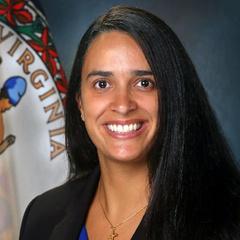
Corrine Louden has served OSIG since August 2018, overseeing the Business Office, Internal Audit Oversight & Training, Information Technology, Communications, and Ombudsman units. With over 22 years in state government, Chief Deputy Inspector General Louden has held the positions of auditor with Longwood University (where she is a double alum), the Auditor of Public Accounts, and Virginia State Police; Controller for Virginia Resources Authority; and Hotline Investigations Supervisor for the Virginia Department of Corrections. A native of Oxfordshire, England, Chief Deputy Inspector General Louden is a Certified Inspector General, Certified Internal Auditor, Certified Investments and Derivatives Auditor, and holds a Certification in Risk Management Assurance She holds local and national positions in various professional organizations and serves on the Freedom of Information Advisory Council
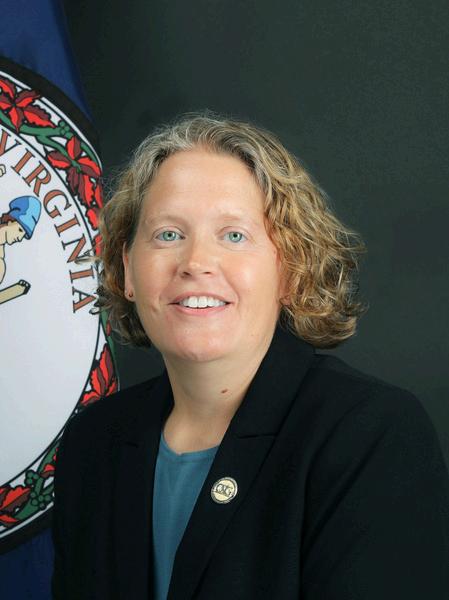
The Deputy Inspector General of Investigations (Chief) since March of 2019, Chief Goodman oversees the Criminal Investigations Unit; Accreditation Program; the Fraud, Waste, and Abuse Hotline Unit; and Healthcare Compliance Unit Previous to OSIG, Chief Goodman served at the former Virginia Department of Alcoholic Beverage Control (ABC) Bureau of Law Enforcement, and the Roanoke County and City of Lynchburg police departments. A Longwood University double alum, she holds both a Master’s and Bachelor’s degree in Sociology/Criminal Justice. She is a Certified Virginia Law Enforcement Command Executive, a Certified Forensic Interviewer, Certified Fraud Examiner, and Certified Inspector General Investigator. Chief Goodman is thrilled that OSIG has received its initial accreditation through the Virginia Law Enforcement Professional Standards Commission (VLEPSC).

A VCU graduate with a Bachelor of Science in Accounting, Tagert is the Deputy Inspector General of Audit at OSIG. He has served in various audit roles at the Auditor of Public Accounts, Capital One, Circuit City, and the Virginia Department of Health. He has been with the Commonwealth of Virginia for over 20 years and with OSIG for over 10 years. Deputy Inspector General Tagert is a Certified Internal Auditor, Certified Government Auditing Professional, and Certified Inspector General Auditor He enjoys working at OSIG and greatly appreciates the opportunity to work with other agencies to improve programs, services, and activities offered by the Commonwealth
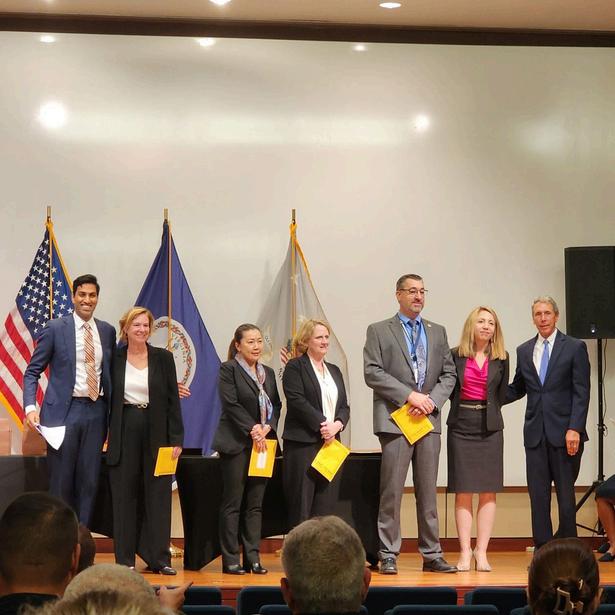
On March 7, 2024, OSIG achieved accreditation by the Virginia Law Enforcement Professional Standards Commission (VLEPSC).
Led by Accreditation Manager Elizabeth Knudson, OSIG passed its online and in-person assessments with zero returns – a perfect score, one could say. “This achievement is something we should all be excited for and proud of,” says Knudson “Accreditation is not the work of one, but the work of everyone ”
The Commission consists of six sheriffs selected by the Virginia Sheriffs' Association and six chiefs selected by the Virginia Association of Chiefs of Police The Commission is responsible for developing and reviewing standards of best practice and efficiency in public safety. Agencies in the accreditation process must demonstrate compliance with all 192 standards to be considered for accredited status.
VLEPSC accreditation is a voluntary process; fewer than 120 Virginia law enforcement agencies have completed it.

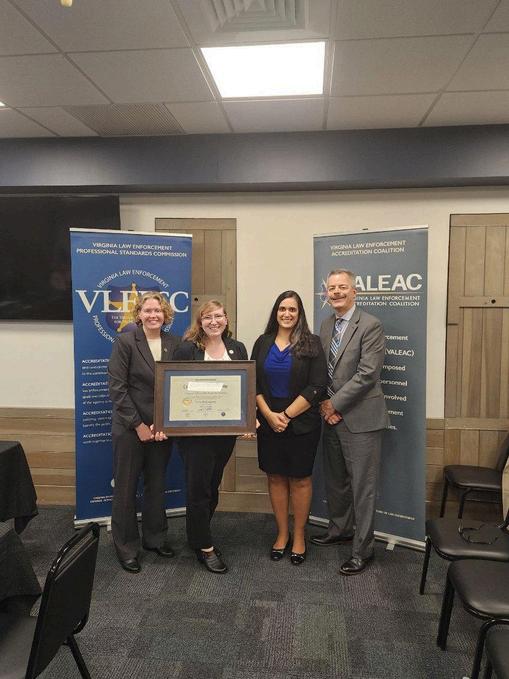
(from left) Chief Goodman, Accreditation Manager Elizabeth Knudson, Chief Deputy Inspector General Louden, and Inspector General Westfall at the VLEPSC Ceremony.
The process typically takes three years (Knudson compressed OSIG’s timeline to two), and the agency will be up for re-evaluation in four years.
On April 4, 2024, Governor Glenn Youngkin signed SB 456 into law establishing the Office of the Department of Corrections Ombudsman within OSIG. This is a new unit designed to provide independent oversight of the state’s correctional facilities.
The Ombudsman Unit operates to fulfill its obligations as defined by Code of Virginia § 53.1-17.2 by conducting inspections; monitoring conditions; establishing the Inmate and Family Support Services Line to receive complaints/inquiries and determine if investigation is warranted; provide information; provide technical assistance, review the administrative remedy process of DOC; develop a strategic plan; and coordinate reporting as required by the Code.
OSIG looks forward to the creation of this new unit, which will report to Chief Deputy Inspector General Louden.
Inspector General Westfall was re-elected to the Association of Inspectors General Board of Directors in October 2023. The AIG is a nationwide non-profit membership organization establishing professional qualifications, standardizing practices and certifications of Offices of Inspectors General nationwide Chief Deputy Inspector General Louden was appointed by Governor Glenn Youngkin to serve on the Virginia Freedom of Information Advisory Council in October 2023.
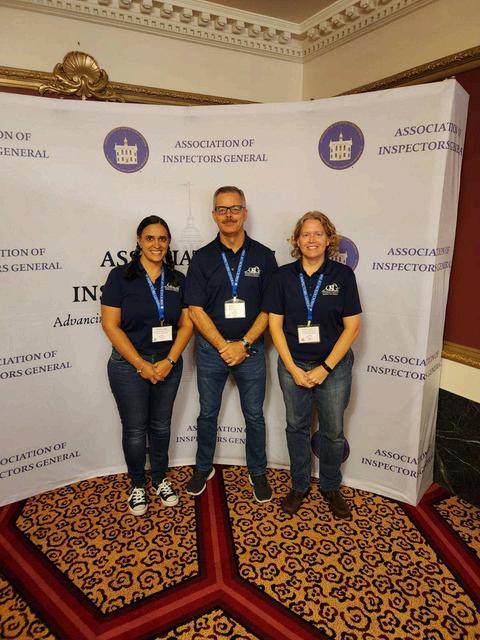
Inspector General Westfall, Chief Deputy Inspector General Louden, and Chief Goodman attended the Association of Inspectors General Annual Training Conference in New York City in October 2023.
Deputy Inspector General Tagert was recognized for his 20 years of public service (and counting) to the Commonwealth of Virginia. Deputy Inspector General Tagert joined OSIG in 2014, and was promoted to Deputy Inspector General in 2022. He oversees O Audit Division.
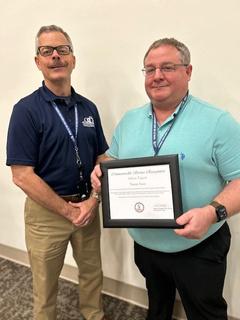
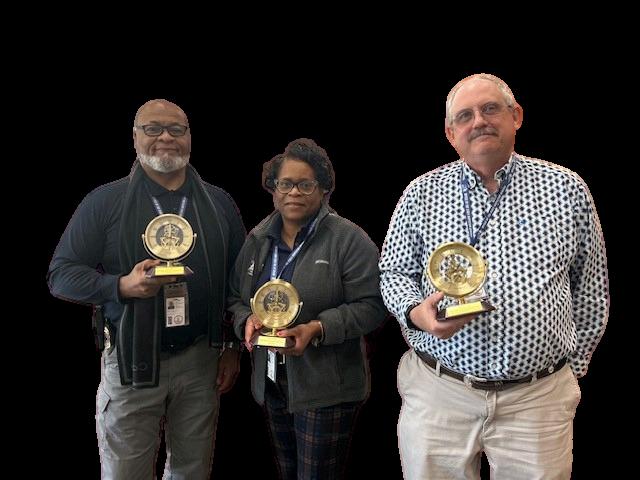
Ben Sutphin worked in public servi work took him to five state agenc the Office of the State Internal Audit of Transportation, Virginia State Po Public Accounts He previously Internal Auditing (IIA) District Rep Washington D.C., and parts of Mary President of the IIA southwest V ISACA Virginia Chapter. Ben Sutph
Prior to his work at OSIG, Special Agent King served with the Richmond Police Department where, over the course of 29 years, he worked his way up from Officer to Sergeant. He served in the Strike Force Unit, Investigative Operations, Field Operations, Internal Affairs, as well as Homicide-Violent Crimes. Agent King was one OSIG’s original employees when the agency began in 2012, and has investigated a variety of cases from misappropriation of federal stimulus funds to misuse of state education funds. Special Agent Allen J. King retired on June 12, 2024.
In accordance with Title 2.2 Chapter 3.2 (§ 2.2-307 through 2.2-313) of the Code of Virginia, the Office of the State Inspector General is responsible for:
Investigating complaints alleging fraud, waste, abuse, or corruption by an executive branch state agency, non-state agency or officers, employees, or contractors of those agencies
Administering the Fraud and Abuse Whistle Blower Reward Fund
Overseeing the State Fraud, Waste, and Abuse Hotline
Conducting performance reviews of state agencies
Providing training and coordination of standards for the Commonwealth’s internal audit functions.
Performing inspections and making policy and operational recommendations for the Department of Behavioral Health and Developmental Services facilities and providers.
Reviewing operations of the Virginia Tobacco Region Revitalization Commission.
Issued four performance audits and one follow-up report.
Issued 32 findings.
Issued 64 recommendations.
Participated in unannounced inspections of 12 DBHDS facilities.
Staff participated in 1,065 hours of continuing education.
Gave two presentations to state and national audit organizations.
Opened 35 investigations.
Investigated allegations of benefits fraud, conflicts of interest, falsifying state documents, procurement violations, theft of government funds/property, and waste and abuse.
Closed 22 cases.
Referred 23 cases for prosecutorial consideration:
Nine cases were declined for prosecution
Three cases have been prosecuted
Five cases are pending prosecution
One case is pending consideration by the Office of the Attorney General
Five cases will be prosecuted at the federal level
Staff participated in 587 hours of training.
Gave ten presentations to state agencies and professional organizations.
Processed 501 calls, emails, and voicemails
Assigned 313 cases for review.
Staff participated in 103 hours of training.
Gave three presentations to state agencies.
Processed 2,233 calls, emails, and voicemails.
Assigned 236 cases for investigation, totaling 471 separate allegations
Of the 199 cases closed: 16 percent were substantiated, 67 percent were unsubstantiated, 13 percent were multiple allegations with both unsubstantiated and substantiated findings, and four percent were inconclusive
Processed 913 citizen inquiries
Investigated 24 cases for allegations that involved an agency head, internal audit employee, or an at-will employee
Issued 26 recommendations to agencies.
Completed three workpaper reviews of agency internal audit programs. Completed 50 investigative review follow-ups for compliance with recommendations. Staff participated in 380 hours of training.
Presented to executive branch Chief Audit Executives.
Maintained daily operations for OSIG employees to include fiscal services, procurement, fleet management, contract administration, payroll, human resources, safety, and records compliance
Responded to 65 Freedom of Information Act inquiries.
Processed 31 responsive and proactive media contacts
Distributed three news releases resulting in multiple statewide media placements
Completed a national cybersecurity review.
Implemented Single Sign-On for new applications.
Established a new data analytics program.
Coordinated a quality assurance review.
Coordinated 10 training courses, in which 683 internal audit attendees from across the Commonwealth participated, earning up to 65 continuing professional education credits to maintain certifications necessary for their positions
Participated in 63 hours of training


Commission's report offers 50-plus recommendations after Virginia Beach mass shooting
WTVR, October 4, 2023
“A new report from the State Inspector General on behalf of the Virginia Beach Mass Shooting Commission now sits on the desk of Gov. Glenn Youngkin. [...] The 16-page report offers a road map for responses to future mass shooting incidents.”
Virginia Inspector General says voter removals were accidental
Virginia Public Media, December 18, 2023
“A purge that affected nearly 3,400 Virginia voters was the result of poor communication and software that was improperly updated, according to a new report from the Virginia Office of the Inspector General.
The Dec. 15 report, which was commissioned by Gov. Glenn Youngkin and drew from interviews with his office, the Virginia Department of Elections (ELECT) and Virginia State Police, “did not uncover any indications that staff from either agency intentionally disqualified voters or willfully permitted ineligible citizens to vote ”

New audit finds $51M in cost savings if Virginia makes overtime pay policy changes
WRIC, April 4, 2024
“‘More than $50 million in state money could have been put to better use if Virginia implemented recommendations from a new state audit that found agencies with “weak or nonexistent overtime policies,’ the state’s inspector general found.


Virginia’s overtime spending increased sharply since payment decisions shifted from the state’s Department of Human Resource Management (DHRM) to individual agencies on July 1, 2010, per the new audit from the Office of the State Inspector General (OSIG).”

Richmond Times-Dispatch April 16, 2024
“State agencies have spent more than $90 million a year on overtime for five of the past six years, OSIG reported [ ] They included an estimated $6.5 million if the state’s behavioral health facilities – its eight adult mental hospitals as well as its children’s facility, its training center for people with developmental disabilities, its rehabilitation center for sexual offenders and its medical center — could follow a private sector approach for direct care staff workloads, with three weekly shifts of 12 hours each.”
WRIC, May 10, 2024
“Among some of its findings, the audit said that nine of the 12 facilities lacked proper signage for permanent rooms such as sleeping rooms, activity rooms and restrooms, including missing accessibility symbols, braille and raised characters
Eight of the 12 facilities did not have accessible routes or entrances from parking areas, per the audit, with issues such as steep slopes, uneven surfaces, elevated door handles and automatic door controls and unsecured carpets.”
CHAMPIONING BETTER GOVERNMENT PERFORMANCE
irtue - exhibiting fidelity, fairness, and trustworthiness.
ction - dedicated, objective, and innovative.
eadership - committed to workforce development, building stronger teams now and in the future.
nderstanding - establishing an environment of equity, diversity, opportunity, and collaboration.
thics - modeling integrity, trust, and ethical behavior.
ervice - serving the citizens of Virginia by providing quality services, leadership, and accountability.
Foster a culture of accountability and transparency within OSIG and across state agencies by communicating best practices and sharing lessons learned from the work that OSIG performs
Foster a culture as a trusted partner and advisor
Highlight the value and impact that OSIG has on the Commonwealth.
Enhance OSIG's reputation by cultivating relationships with both external and internal stakeholders
Maximize the use of technology to enhance collaboration, productivity, and flexibility within the agency
To deter fraud, waste, and abuse while promoting accountability and excellence within the Commonwealth
To be a recognized leader in promoting exceptional governance and independent oversight of Executive Branch state agencies within the Commonwealth of Virginia
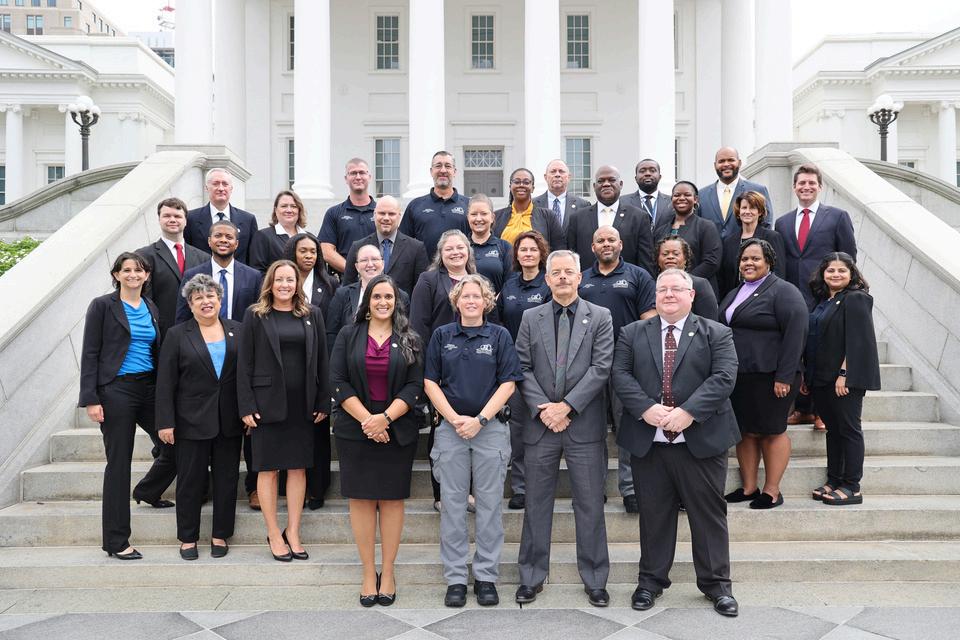
OSIG programs within the Audit, Investigations, and Administration divisions are efficient and effective, ensuring that the office meets statutory mandates and serves the citizens of Virginia.

The Audit Division’s legislative mandates are delineated in Code of Virginia § 2.2- 309[A](10), § 2.2-309.1 and § 2.2-309.2 and include:
Conducting performance reviews to assess the efficiency, effectiveness, and economy of executive branch agencies’ programs and operations.
Assessing the condition of the accounting, financial, and administrative controls of state and non-state agencies as necessary.
Reviewing the condition of the Tobacco Region Revitalization Commission’s accounting, financial, and administrative controls.
Conducting annual unannounced inspections of the 12 state facilities operated by the Department of Behavioral Health and Developmental Services.
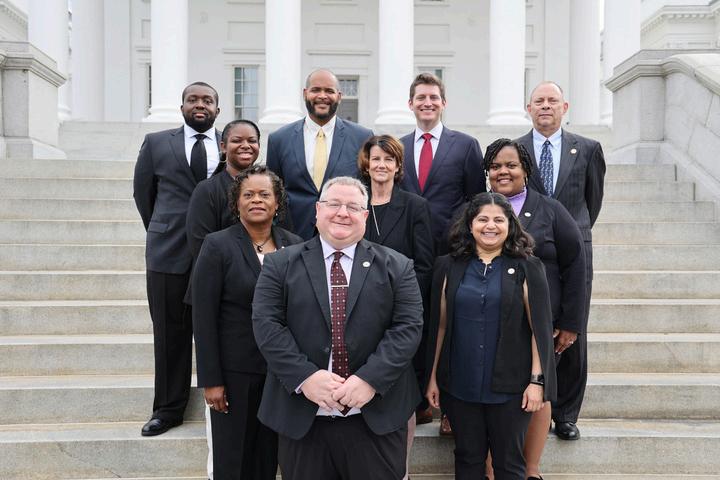
The Audit Division follows Generally Accepted Government Auditing Standards issued by the U.S. Government Accountability Office. These standards reinforce the principles of transparency and accountability and strengthen the framework of high-quality government audits. The Audit Division also follows Principles and Standards for Offices of Inspector General issued by the Association of Inspectors General for all work performed.
Reports
In FY 2024, OSIG published four performance audits presenting 32 findings and 64 recommendations, and one follow-up report.
The Office of the State Inspector General engaged Cotton & Company Assurance and Advisory, LLC (formerly known as Cotton & Company, LLP) to perform an audit of the Tobacco Region Revitalization Commission (TRRC).
The audit objectives were to determine whether: Grant and loan programs are producing their intended outputs and TRRC is properly measuring and reporting the outputs;
1. TRRC properly measured and verified that recipients met their matching fund requirements; 2. TRRC properly established and implemented a financial viability assessment process; 3. TRRC accurately tracked student loan repayment applications and verified recipient eligibility; and 4. TRRC remediated prior audit findings. 5.
Noncompliance with Code of Virginia financial viability assessment requirements. 1. Noncompliance with Code of Virginia accountability matrix requirements. 2. Project outputs and outcomes not sufficiently documented and monitored. 3. Insufficiently supported application documentation. 4. Site visits not consistently performed and/or documented. 5. Inconsistent Smart Simple information. 6. Match requirements not met. 7. Insufficiently supported expenses. 8. Insufficient project amendment documentation. 9.
Fifteen recommendations were made for TRRC related to resolving the deficiencies and ensuring that TRRC strengthens its administrative and management policies and procedures for monitoring grants, loans, and other distributions of funds.
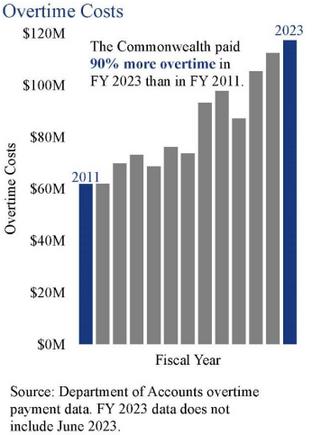
OSIG performed a preliminary analysis of overtime in executive branch agencies resulting in an interim report published to the Governor’s Office in October 2022 This analysis served the purpose of obtaining initial background information and narrowing OSIG’s scope
Department of Human Resource Management (DHRM) is the central human resource agency for the Commonwealth of Virginia Effective July 1, 2010, DHRM decentralized overtime payment decisions to the agency level. The Commonwealth paid 90% more overtime in the first 11 months of FY 2023, than in FY 2011 when this change took place. (It is important to note that figures were not adjusted for inflation.)
2.
Determine whether agency overtime policies contain sufficient criteria for overtime use.
1. Determine whether overtime hours paid to employees comply with each individual agencies’ overtime policy.
3.
Determine whether overtime is being used cost effectively by agencies in relation to recruitment.
1.
Alternative schedules for the Department of Behavioral Health and Developmental Services direct care staff.
2. Virginia Department of Health (VDH) has insufficient controls over the administration and use of overtime.
Establish Commonwealth overtime policy.
3. The Virginia State Police timekeeping process for keying into Cardinal is duplicative.
5
4. Patrick & Henry Community College is not retaining timesheets
6
The Virginia Racing Commission and VDH are not dating signatures on timesheets
Eleven recommendations were made for the Commonwealth related to resolving the deficiencies and inconsistencies found in the audit.
Read the Commonwealth Overtime Audit
The Americans with Disabilities Act (ADA) is a federal civil rights law enacted in 1990 that provides protections from discrimination for indivi the ADA covers all state and local governments, their departments, age and other instrumentalities. It applies to all public entity programs, servi those contracted out to other entities, ensuring nondiscrimination again
OSIG completed this review in accordance with Code of Virginia § 2.2309.1.B.1, which requires OSIG to, “Provide inspections of and make policy and operational recommendations for state facilities and for providers, including licensed mental health treatment units in state correctional facilities, in order to prevent problems, abuses, and deficiencies in and improve the effectiveness of their programs and services.”
The objectives of this audit were to:
Determine whether the facility under inspection is physically accessible by individuals with disabilities. 1.
Determine if the Department of Behavioral Health and Developmental Services (DBHDS) facilities provides means for effective communications for individuals with disabilities 2
Determine if DBHDS facilities have established and implemented effective policies, procedures and controls related to select ADA requirements
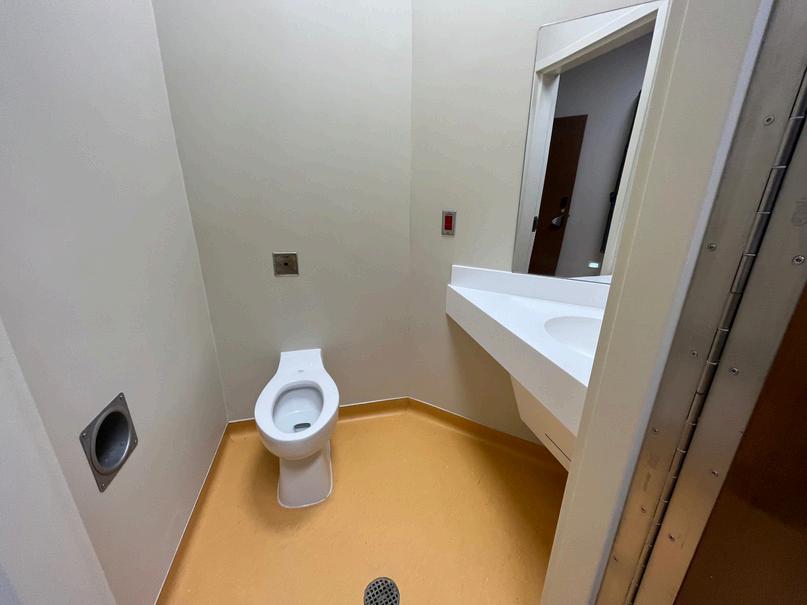
Eleven DBHDS facilities had inaccessible restrooms in accordance with ADA standards.
Not all DBHDS facilities have ADA accessible exam rooms and equipment available.
Policies and procedures do not comply with the ADA requirements for providing effective communication tools.
6.Telephone devices provided for effective communications need improvement.
7. Documentation for effective communication needs improvement.
8 Policies and procedures do not comply with the ADA requirements for managing grievances
9 Facility training does not cover ADA requirements for treating patients with disabilities
10 DBHDS facilities do not have the required public notice posted
Recommendations
Twenty-five recommendations were made for DBHDS related to resolving the deficiencies and inconsistencies found in the audit.
Read the DBHDS State Operated Facilities
Americans with Disabilities Act
Compliance Performance Audit
The 2018 Appropriations Act ordered an interagency workgroup to oversee the development of a statewide integrated Electronic Health R focused on the Department of Behavioral Health and Developmental of the new system, Millennium, and to determine if the agency was su
An interim report was issued in February 2024 with the final report is management concurred with all seven findings and plans to implement all corrective actions by May 1, 2025.
1.
Determine whether the extent of guidance provided by DBHDS to facilities regarding Cerner Millennium EHR system usage is clear, comprehensive, and supportive of their needs
2 Determine whether logical access controls within the EHR system are appropriate and occur timely, including:
Assess whether granting, monitoring, and removal of COV system access is performed within the expected timeline.
Assess whether system auditing and monitoring tools are in place to identify suspicious activities.
Determine whether the EHR system includes an incident management program, assess whether the program has been tested and verify that reporting requirements are in place to notify appropriate parties in the event of an incident (system administrators, IT staff, etc.).
Determine whether DBHDS has established appropriate backup and continuity of services procedures for the EHR system and conducts testing in accordance with COV policy.
Verify whether the EHR system’s risk assessment has been performed and ensure it complies with COV system security control requirements.
Determine whether any third-party users have access to the EHR system and evaluate the adequacy of security monitoring and access controls to meet COV requirements.
3 Determine whether the EHR system updates, including application changes, improve/strengthen the ability of facility staff to input patient medical information into the system to enhance patient care, especially the unique needs of each facility.
4 Determine whether the EHR training requirements align with the unique needs of each facility.
5. Assess user satisfaction with the Cerner Millennium EHR system to identify areas of improvement and/or best practice.
6. Determine whether DBHDS regularly and timely communicates system information.
7. Determine the effectiveness of workflow process controls in ensuring timely delivery of services ordered or referred for patients.
8. Assess the security and compliance of data storage practices to verify that data is securely stored in accordance with COV requirements and prevent unauthorized exporting that may violate HIPAA regulations.
1. Manual processes developed for scheduling medical appointments.
EHR revenue cycle not fully adopted by all facilities.
Facilities Still Using Manual Processes to Schedule Appointments 92%
2. Medical appointment details not properly updated in the EHR system.
3. Limited awareness and use of reporting resources.
4. No uniform process for ongoing EHR training.
5. EHR enhancement requests not properly reviewed and approved 6 Incomplete or inaccurate information fields in the ticket tracking system 7
Facilities Using Digital Processes to Schedule Appointments 8%
Facilities That Never Implemented Millennium 17%
Facilities Using Millennium Software Properly 75%
Facilities That Stopped Using Millennium After One Appointment 8%
Thirteen recommendations were made for DBHDS related to resolving the deficiencies and inconsistencies found in the audit. One recommendation addressed IT Security issues, and was excluded from the publication for security reasons. The other 12 recommendations can be found in the full report.
After audits are completed and reports issued, OSIG performs follow-up on significant items to ensure agencies have taken corrective action. OSIG completed a comprehensive follow-up audit of findings related to audit reports where corrective action was scheduled to be completed by June 30, 2023.
OSIG issued no additional findings following its review and recommends agencies continue to implement corrective actions agreed to by agency management. Review of corrective actions that agencies did not implement will be included in the next follow-up audit.
Much of the benefit from audit work is not in the findings reported or the recommendations made, but in their effective resolution. When OSIG completes audit work and issues recommendations, the aim is to improve the way the Commonwealth serves its citizens. The intention of OSIG’s followup audits is to work with management to verify that their agencies have addressed identified issues.
Agencies implemented corrective actions or were making progress on the implementation of corrective action for 87 of 89 findings All outstanding actions have been fully implemented for the following audits:
Department of Behavioral Health and Developmental Services – Unannounced Inspections Calendar Year 2022
Department of Human Resource Management – Employee Recruitment.
Department of Transportation – Snow Removal.
Virginia Information Technologies Agency – Removal of Commonwealth Data from Electronic Media.
The Department of General Services (DGS) and Department of Social Services (VDSS) did not provide documentation to validate management’s response, declined to implement sufficient corrective action, or accepted the risk of not implementing action for one of their findings. Additional details for these entities can be found in the Audit Results section of this report.
For all findings not corrected as of June 30, 2023, agency management has revised completion dates from July 2023 to December 2024. We encourage agencies to continue implementing corrective action on findings issued by OSIG.
Audit Division staff hold
25
certifications and/or advanced degrees
Certified Public Accountant (CPA)
Certified Internal Auditor (CIA)
Certified Information Systems Auditor (CISA)
Certified Inspector General Auditor (CIGA)
Certified Inspector General Inspector/Evaluator (CIGE)
Certified Professional in Healthcare Quality (CPHQ)
Certified Fraud Examiner (CFE)
Certified Government Audit Professional (CGAP)
Virginia Contracting Associate (VCA)
Master in Accountancy
Master in Business Administration
Master in Public Administration
Master in Sociology and Environment and Natural Resources
Audit Unit staff participated in 125 training events ranging from one-hour webinars to multi-day events, totaling 1,065 hours of training.
Audit Unit staff held officer and board of governors' positions in the Central Virginia and Southwest Chapters of the Institute of Internal Auditors along with the National Association of Black Accountants
Audit Manager Ben Sutphin taught a class for the Institute of Internal Auditors
Audit Manager Ben Sutphin taught sessions at the Association of Inspectors General (AIG) in Chicago, IL in August 2023.
Eris Jones and Nancy Edmunds were each promoted to Audit Manager. Jones and Edmunds oversee five and six staff members, respectively.
OSIG welcomed two new employees to the Audit Unit.
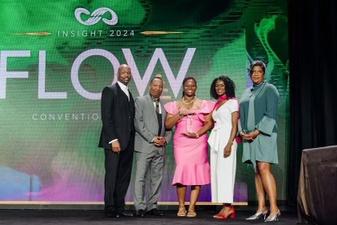
Senior Auditor Danielle Squire was awarded the Eastern Region Service Member of the Year for the National Association of Black Accountants (NABA) in June 2024.
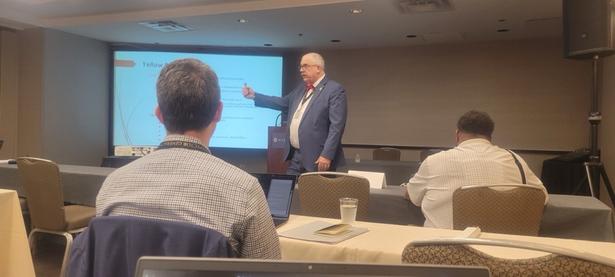

OSIG Investigations Unit statutory authority and legislative mandates are delineated in the Code of Virginia § 2.2-309[A](3-6), § 2.2-309.2 and § 2.2-311; and include::
Investigate the management and operations of state agencies, non-state agencies, and independent contractors of state agencies to determine whether acts of fraud, waste, abuse, or corruption have been committed or are being committed by state officers, employees, or independent contractors of state agencies or any officers or employees of non-state agencies.
Investigate to resolve allegations of fraudulent, illegal, or inappropriate activities concerning disbursements from the Tobacco Indemnification and Community Revitalization Endowment and the Tobacco Indemnification and Community Revitalization Fund.
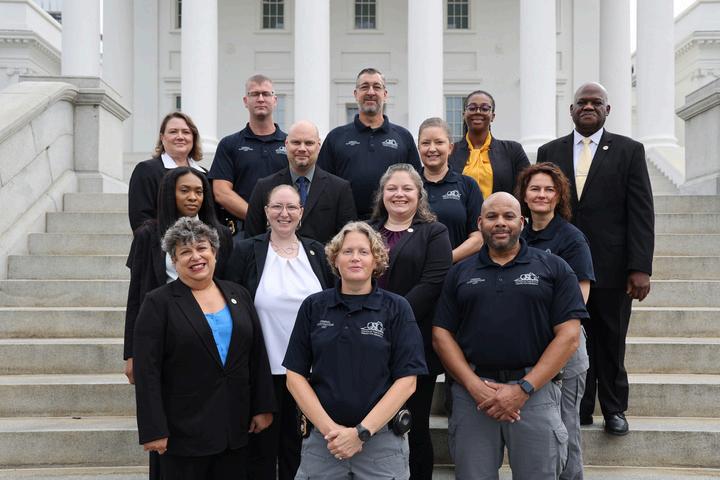
The Criminal Investigations Unit follows Principles and Standards for Offices of Inspector General issued by the Association of Inspectors General for all investigations conducted.
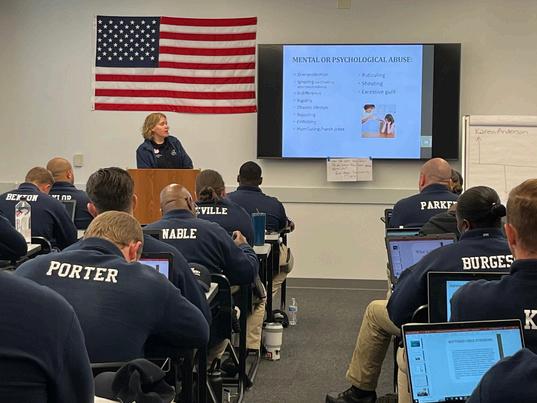
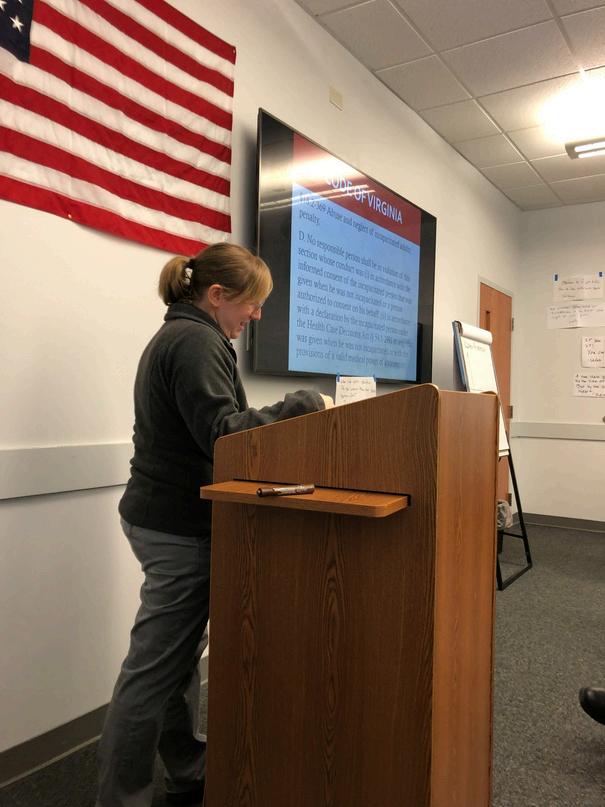
Chief Goodman (left) and Accreditation Manager
Elizabeth Knudson (right) instruct the 101st Basic Law Enforcement Class at the Crater Criminal Justice Training Academy about child and elder abuse
DepartmentforAgingandRehabilitativeServices
DepartmentofGeneralServices
DepartmentofHealth
DepartmentofMotorVehicles
DepartmentofSocialServices
MarineResourcesCommission
MountainEmpireCommunityCollege
PiedmontGeriatricHospital
SouthernVirginiaMentalHealthInstitute
SouthwestVirginiaCommunityCollege
UniversityofVirginia
VirginiaBirth-RelatedNeurologicalInjuryCompensationProgram*
VirginiaCommonwealthUniversity
VirginiaDepartmentofTransportation
VirginiaEmploymentCommission
VirginiaPolytechnicInstituteandStateUniversity
VirginiaStateUniversity
*denotes an independent agency


In FY 2024, OSIG opened 35 executive branch state agency investigations








$3,869
The Office of the State Inspector General investigated the actions of a former Virginia Department of Transportation employee, who used a state-issued purchase card to buy $3,869 worth of gift cards and personal items.
In the course of OSIG’s investigation, VDOT provided copies of the bank statements associated with the questionable transactions. The bank statements reflected multiple VISA gift card purchases during the period of March 16, 2022, through April 5, 2022. The former employee was not authorized to make these purchases and there was no business purpose for these transactions. OSIG procured video footage of the former employee purchasing VISA gift cards and other items for personal use with the purchase card. Initially, when confronted by VDOT regarding non-VDOT purchase card transactions, the former employee stated that the purchase card was stolen and therefore he/she was not responsible for the unauthorized purchases.
On October 19, 2023, the former VDOT employee pleaded guilty to embezzlement of public funds and was sentenced to three years in prison, which the judge suspended. He/she was placed on probation for two years, ordered to pay $3,869 in restitution to VDOT, and fined $583.

The Virginia Employment Commission (VEC) contacted OSIG regarding potentially fraudulent activities of five current and five former VEC employees VEC discovered that the suspects might have fraudulently received unemployment insurance benefits while employed by the Commonwealth VEC advised that four of the current employees might have been victims of identity theft, but that VEC had not proceeded far enough into its investigation to make that determination VEC advised that the loss to the Commonwealth was $47,827 in federal funds
OSIG treated each of the 10 current and former VEC employees as a separate investigation. An investigation regarding one of the subjects, a former employee, showed that the subject made false statements when filing Pandemic Unemployment Assistance (PUA) benefit week-ending claims online to obtain $4,548 in PUA benefits from the Commonwealth through the VEC that the subject was not qualified to receive.
On August 9, 2023, the subject accepted a written plea agreement and pleaded guilty to a reduced misdemeanor charge of obtaining money by false pretense. The subject was sentenced to 12 months in jail with all 12 months suspended. The suspended sentence is conditioned upon restitution of $4,548 to VEC within one year, and good behavior for 12 months.
Petit Larceny, False Statements to Obtain Benefits | $1,035

OSIG investigated allegations of suspicious activity by a Hopewell Department of Social Services (DSS) Supplemental Nutrition Assistance Program (SNAP) Benefits Program Specialist. The specialist was previously employed by Petersburg DSS and King William DSS.
In October 2022, Petersburg DSS noticed that the specialist approved SNAP benefits for a client. Subsequently, while employed at Hopewell DSS, the specialist approved SNAP benefits for the client’s mother (hereinafter claimant). The client’s father correctly reported his monthly gross income of $5,458, which should have precluded the family from receiving SNAP benefits. Additionally, the client was listed as a dependent on the claimant’s application while also receiving benefits through Petersburg DSS.
This investigation showed that the specialist became employed at Hopewell DSS while receiving SNAP benefits from Petersburg DSS. As a DSS employee, it is reasonable that the specialist should have known such a change in circumstances would materially affect the specialist’s eligibility for assistance, or the amount thereof, and failed to notify Petersburg DSS of the receipt of regular income as required by the Code of Virginia. This led to the specialist obtaining $1,035 in public assistance over an approximate three-month period that the specialist was not qualified to receive
The specialist appeared in Peterburg General District Court on May 31, 2024, and pleaded guilty to a reduced charge of petit larceny, § 18 2-96. The felony charge of false statements to obtain benefits was nolle prosequi The specialist paid restitution of $1,035 to Virginia DSS and was sentenced to six months in jail with all six months suspended, contingent upon the specialist’s good behavior over the next 12 months
A privately owned business had Department of Motor Vehicles (DMV) issued – official local government use only license plates – on 16 of their vehicles The business’ 16 vehicles are not owned by the Commonwealth of Virginia or any of its political subdivisions The local government use only license plates were issued in error by DMV between 2017 and 2023.
The business was able to avoid taxes, registration, and title fees totaling $14,740 on 14 of the vehicles registered DMV had no documentation or authorization paperwork within the business’ file to explain how this error occurred DMV acknowledged that there was no appropriate documentation for them to designate the business as a political subdivision and therefore, issued the government license plates in error.
Systems Vulnerable to Exploitation and Fraud
OSIG investigated anonymous complaints regarding the Department of Motor Vehicles (DMV) that:
1.
DMV knowingly waived the Virginia Driver Training requirement, in violation of Code of Virginia § 46.2-328.3 (B) (2), for potentially thousands of drivers who received Driver Privilege Cards (DPCs). This Code section prohibits the waiver of any part of the driver examination process.
2.
Driver Training Schools were completing the Instructor Training Certification Statement on blank Virginia Driver Training Completion Certificate – Adult Waiver forms (waiver forms), then selling the partially completed forms to third parties. The third parties were then selling the waiver forms to individuals who want to obtain the DPC without completing the classroom and in-vehicle training curriculum.
3.
DMV’s DPC application software allows non-U.S. citizens, and persons not legally present in the U.S., to register to vote.
DMV leadership interpreted the Code section to allow third-party testing facilities to be de facto DMV testing facilities, thereby complying with the provisions of Code § 46.2-328.3. DMV recently reevaluated this matter and will cease accepting waiver forms for DPC applicants no later than August 1, 2024.
DMV law enforcement is working with federal law enforcement partners to address fraudulent waiver forms. The agency is implementing other internal measures, not listed here, to protect the integrity of the waiver forms
In April 2024, the Office of the State Inspector General (OSIG) concluded a proactive data analytics project, which consisted of a review of state employees who received unemployment insurance (UI) benefits through the Virginia Employment Commission (VEC) despite being employed by the Commonwealth of Virginia. The review included executive branch agencies whose employees are paid through the Department of Accounts
In coordination with the Office of the Attorney General, minimum threshold criteria were established to identify a population for the review OSIG conducted an analysis of UI benefit files from March 1, 2020, to June 30, 2023
Using information provided by the Department of Human Resource Management and VEC, OSIG identified employees who may have received UI benefits while employed by the Commonwealth Special agents were assigned to conduct additional investigations, includi d i g i vi d vi i payroll and UI records, to determine whether any of the identi s The review resulted in OSIG opening criminal investigations o
OSIG designed the Point of Contact initiative to foster professional and collaborative relationships between OSIG and its counterparts within executive branch agencies, usually the Chief Audit Executive or other senior manager The POC initiative promotes the exchange of information with executive branch agency officials about pertinent activities within OSIG, as well as relevant issues within agencies. OSIG assigns each special agent and senior investigator as a POC liaison representative for several state agencies. POC liaison representatives meet with assigned agency POC counterparts annually.
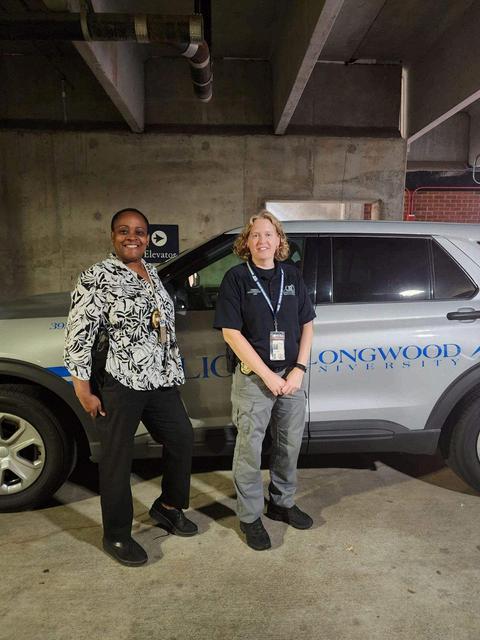
Chief Goodman (right) makes a Point of Contact visit with Longwood University’s Campus Police Chief, Angela Comer (left) in October 2023
In FY 2024, OSIG received 107 Virginia Department of Corrections inmate complaints expressing a variety of concerns. The Chief of Investigations reviewed, processed, and addressed all complaints appropriately.
CIU is staffed by one chief, one supervisory special agent, five special agents, one accreditation manager, and one forensic analyst.
Chief of Investigations Katrina Goodman, Accreditation Manager Elizabeth Knudson, and special agents Susan Day and John Sutherland are general instructors with the Virginia Department of Criminal Justice Services.
Special Agent Susan Day is a firearms instructor.
Gave ten presentations with staff participating in 587 hours of training.
Criminal Investigations Unit staff hold
Basic Law Enforcement
Certified Fraud Examiner (CFE)
certifications and/or advanced degrees
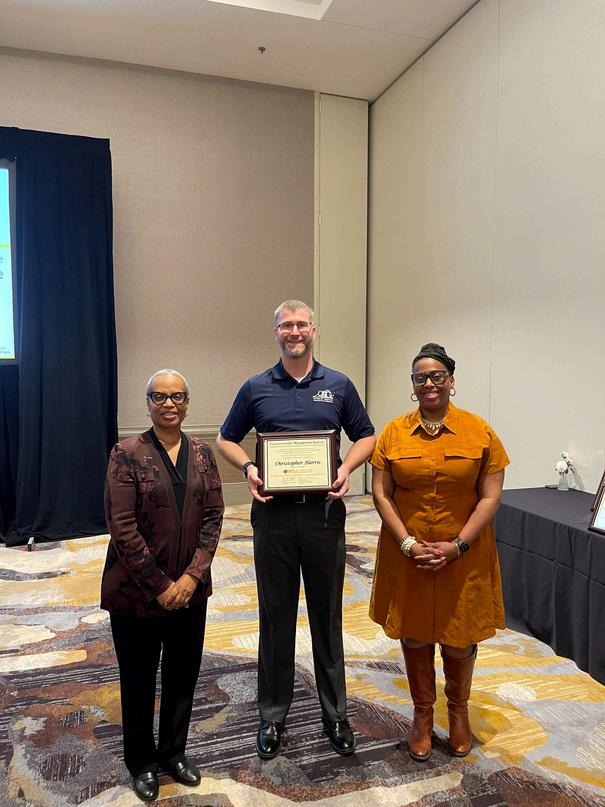
Supervisory Special Agent Chris Harris (center) receives his graduate certificate from the Commonwealth Management Institute, a professional development course offered through Grace E Harris Leadership Institute at Virginia Commonwealth University
Certified Inspector General Investigator (CIGI)
Certified Inspector General Evaluator (CIGE)
DCJS General Instructor
Certified Forensic Interviewer (CFI)
Virginia Contracting Associate (VCA)
Virginia Law Enforcement Professional Standards
Commission (VLEPSC) Master Assessor
Certified Economic Crime Forensic Examiner (CECFE)
DCJS Firearms Instructor
Virginia Criminal Information Network (VCIN)
Operator
Master of Arts in Intelligence Studies
Master of Business Administration
Master of Science in Criminal Justice
Master of Science in Criminal Justice - Public Administration
In October 2023, Special Agent John Sutherland received a 2023 Public Service Award from the U.S. Attorney's Office, Eastern District of Virginia.
Agent Sutherland worked tirelessly with our partners at the Federal Bureau of Investigation (FBI) and the Office of Inspector General, U.S. Department of Education to uncover an 11-year-long embezzlement scheme at Reynolds Community College Their efforts ended in a 63-month-long sentencing, along with $230,000 in restitution for stolen federal and state financial aid benefits
“This was a real team effort and a complex case spanning many years,” says Agent Sutherland. “I’m grateful to my colleagues for their dedication in bringing the perpetrator to justice.”
Agent Sutherland
a 2023 Public Service Award from the U S Attorney's Office, Eastern District of Virginia
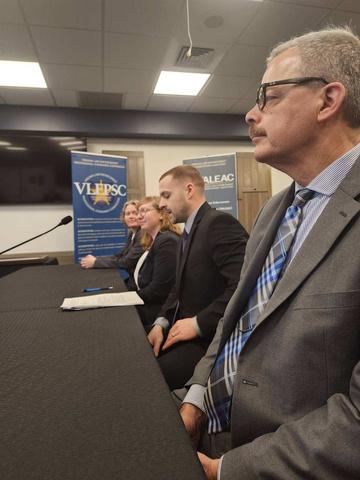
OSIG achieved accreditation through the Virginia Law Enforcement Professional Standards Commission (VLEPSC) in March 2024 OSIG passed the online and in-person assessment, meeting 192 standards of policy, ethics, training, safety, and more For more details, see page four of this report
OSIG is also earning accreditation through the Commission on Accreditation for Law Enforcement Agencies, Inc. (CALEA). Where VLEPSC is a statelevel accreditation process, CALEA’s is national. Earning VLEPSC and CALEA accreditation would give OSIG the rare “dual accredited” status.
Pursuant to Code of Virginia § 2.2-311, OSIG maintains a formal Memorandum of Agreement with the Virginia State Police.
OSIG collaborated with the following agencies on cases of mutual interest during FY 2024:





CIU participates in regularly scheduled meetings or collaborates with the following law enforcement and professional criminal justice affiliated entities:
Central Virginia Crime Intelligence Group
Central Virginia Financial Crimes Task Force
Central Virginia Law Enforcement Chief Executives Association
Commonwealth Managers Association.
Crater Criminal Justice Training Academy.
Fraud Liaison & Alert Group.
Newport News Financial Crimes Task Force.
Virginia Association of Chiefs of Police.

CIU also maintains membership in the Regional Organized Crime Information Center (ROCIC).

OSIG’s healthcare compliance legislative mandates are described in the Code of Virginia § 2.2-309.1 and include:
Inspecting, monitoring, and reviewing the quality of services at state-operated facilities and more than 1,000 licensed providers of behavioral health, substance abuse, and developmental services
Ensuring that the General Assembly and Joint Commission on Health Care are informed about significant problems, abuses, and deficiencies.
Investigating specific complaints of abuse, neglect, or inadequate care.
Reviewing, commenting on, and making recommendations about any reports prepared by DBHDS, as appropriate, and the critical incident data collected by DBHDS.
HCU staff hold 9 certifications and/or advanced degrees.

Registered Nurse
Virginia Contract Associate
Certified Inspector General Inspector/ Evaluator
CLEAR Basic Investigator
CLEAR Advanced Investigator
Master in Adult Education
Master in Nursing
HCU gave three presentations in FY 2024 with staff participating in 103 hours of training.
Healthcare Compliance Specialist Liz Donnelly displays her certification from the Association of Inspectors General
CAT - Catawba Hospital
CSH - Central State Hospital
CCCA - Commonwealth Center for Children & Adolescents
ESH - Eastern State Hospital
HDMC - Hiram Davis Medical Center
NVMHI - Northern Virginia Mental Health Institute
PGH - Piedmont Geriatric Hospital
SEVTC - Southeastern Virginia Training Center
SVMHI - Southern Virginia Mental Health Institute
VCBR - Virginia Center for Behavioral Rehabilitation
WSH - Western State Hospital
OTHER - Community Services Board or Private Provider
The OSIG Hotline was established in 2012 to allow citizens of the Commonwealth to anonymously report instances of state fraud, waste, and abuse. Citizens can submit their complaints via phone, fax, email, web form submission, or written letter.
The Hotline Pipeline
When a citizen or state employee contacts the Hotline (either by phone, email, fax, mail, voicemail, or a web submission), it is noted as a “contact.”
Hotline received 2,233 contacts in FY 2024
Many contacts’ allegations pertain to federal/local government, or private businesses. These are out of OSIG’s jurisdiction. When possible, Hotline investigators refer the complainant to the proper agency. These contacts are recorded but do not result in a Hotline investigation.
Contacts pertaining to state agencies are assigned a Hotline case number in our software system.
814 contacts pertained to state agencies in FY 2024
Of the contacts pertaining to state agencies, 236 required a formal investigation since they met the criteria for fraud, waste, or abuse.
199 cases were closed in FY 2024.
58 of the closed cases were substantiated or partially substantiated.

2,233 Contacts
814 Contacts Pertaining to State Agencies
236 Contacts Requiring a Formal Investigation
199 Cases Closed
58 Substantiated/ Partially Substantiated Cases
Hotline closed 199 cases in FY 2024.
The most common allegations received were noncompliance with agency policy, waste and misuse of funds, inadequate job performance, safety/security concerns, and vehicle or time abuse.
Multiple Allegations with Unsubstantiated and Substantiated Findings
A Hotline case is investigated when a complaint about a state agency meets the criteria for fraud, waste, or abuse
OSIG attributes the increased volume of Hotline cases to the agency’s strategic plan, which has pushed for broader community outreach, points of contact, and a heightened profile within executive branch agencies.
OSIG works with internal audit programs throughout the Executive Branch When a complaint is received regarding a state agency with an internal audit program, OSIG refers the case out for investigation.
These are the top ten agencies OSIG referred cases out to in FY 2024.
Departmentof Corrections
Departmentof SocialServices
VirginiaDepartmentof Transportation
VirginiaDepartmentof Health
VirginiaEmploymentCommission
Departmentof BehaviorialHealth&DevelopmentalServices
VirginiaStatePolice
Departmentof MotorVehicles
Departmentof MedicalAssistanceServices
VirginiaCommunityCollegeSystem
24
26
Hotline calls with allegations that involved an agency head, internal audit employee, an at-will employee, or an agency that does not have an internal audit program. recommendations made to the agencies because of an investigation
3
Workpaper reviews are detailed reports of an internal audit program where the program performed investigations for the Hotline. The workpapers are reviewed to ensure they comply with OSIG standards of investigations.
Three in-depth workpaper reviews were produced in the FY 2024 cycle for the Department for Aging and Rehabilitative Services, Department of Conservation and Recreation, and the Virginia Employment Commission
Hotline staff have presented at educational events with multiple state agencies, including the Department of General Services, the Department of Human Resource Management, the Department of Transportation, the Virginia Information Technologies Agency, and Virginia Military Institute.
Staff also participated in the following events:
VITA Security Conference.
Distracted Driving Summit.
Government Innovation Virginia.
On the Square Kickoff and Farmer’s Markets.
Environment Virginia Symposium.
Governor’s Transportation Conference.
Public Procurement Forum 2023.
87 Hours of Hotline presentations
Following the conclusion of Hotline investigative cases where a recommendation is issued, follow-up contacts are made to ensure recommendations were addressed. These contacts are made within 90 days of a report’s issuance.
50 investigative review follow-ups for compliance with recommendations.
Hotline staff hold
certifications and/or advanced degrees.
Certified CPR/AED Instructor
Certified Forensic Interviewer (CFI)
Certified Fraud Examiner (CFE)
Certified Inspector General Investigator (CIGI)
Certified Internal Auditor (CIA)
Certified Public Accountant (CPA)
Virginia Contracting Associate (VCA)
Society for Human Resource Management-
Certified Professional (SHRM-CP)
Master of Public Administration
Master of Business Administration
Juris Doctorate
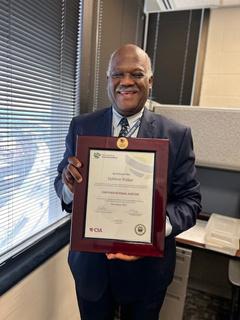

A State Hotline Manager and three senior investigators staff the State Fraud, Waste, and Abuse Hotline.
Senior Investigator Ephfrom Walker completed his required continuing education to maintain status as a Certified Public Accountant and obtained his Certified Internal Auditor certification.
Senior Investigator Jennifer DeVaughn completed coursework and certification as a Certified Fraud Examiner.
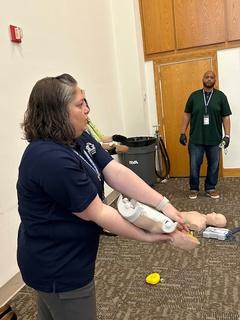
DeVaughn provided CPR/AED and Bloodborne Pathogens certification to OSIG staff and staff at Crater Criminal Justice Training Academy.
Senior Investigator Arreal Parson attended training from the Association of Inspectors General and earned the status of Certified Inspector General Investigator.
Staff participated in 380 hours of training.

Maintained daily operations for OSIG employees to include fiscal services, procurement, fleet management, contract administration, payroll, human resources, safety, and records compliance. Business Manager Ginger Terrell earned Virginia Contracting Associate (VCA) with the Virginia Institute of Procurement.
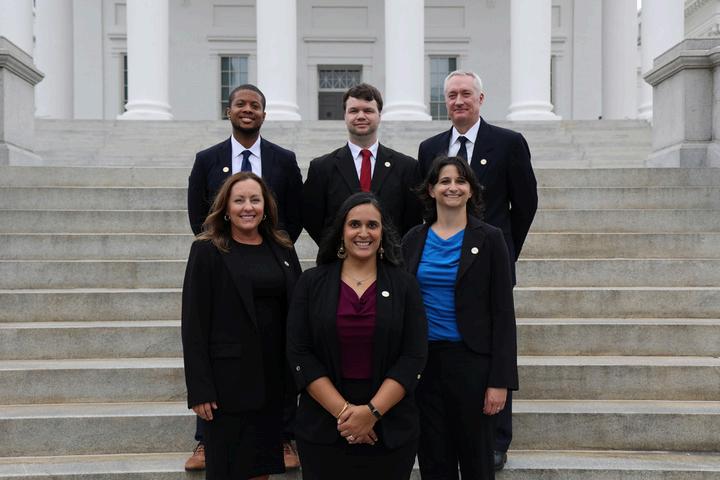
Chief Deputy Inspector General Corrine Louden with members of the Administration Division.
Terrell also completed Fundamentals for Supervisors with the L. Douglas Wilder School of Government and Public Affairs at Virginia Commonwealth University.
The Communications Unit consists of a Public Relations Officer (PRO). The PRO focuses on increasing OSIG’s outreach in Executive Branch agencies and throughout the Commonwealth.
Media contacts increased by 55%
The overall number of social media followers increased to 1,272
Created a full standardized branding color palette for agency
OSIG’s Information Technology Services Unit provides technological advancement, support for key initiatives, and oversight of policies and procedures that safeguard agency information and assets. The ITS staff (which consists of a manager, an information security officer, and data analyst) accomplished the following in FY 2024:
Completed a national cybersecurity review
Maintained the agency’s COV information security standards
Created agency credentials
Implemented Single Sign-On for new applications
Refreshed agency computers
Continued technical assistance for agency staff
total posts across social media platforms
Reviewed and updated the Annual Risk Assessment and submitted it to VITA Commonwealth Security and Risk Management.
Reviewed and updated the Business Impact Analysis and submitted it to VITA CSRM.
Reviewed and updated the agency Continuity of Operations Plan.
Performed the annual COOP exercise.
Reviewed and updated the agency's Disaster Recovery plan.
Participated in the annual COV Disaster Recovery exercise.
Reviewed and updated agency IT policies.
Continued IT training for ITS Unit staff.
Continued IT security training for agency staff.
Performed IT systems moves, adds, and changes.
Updated and maintained the agency website
Maintained VBMSC data sharing site
Performed annual sensitive system audit
Reviewed systems scans for vulnerabilities
Performed COV Win11 OS build-level transition project
Performed software upgrades
Implemented Data Analytics techniques to support the agency mission
Updated agency IT strategic plan.
Updated VITA agency IT COV strategic plan.
OSIG’s Internal Audit Oversight and Training Services’ legislative mandates are delineated in Code of Virginia § 2.2-309 [A] (10-12) and include:
Coordinating and requiring standards for internal audit programs in existence as of July 1, 2012. Coordinating and requiring standards for other internal audit programs in state agencies and non-state agencies as needed to ensure that the Commonwealth's assets are subject to appropriate internal management controls
Assisting agency internal auditing programs with technical auditing issues and coordinating and providing training to the Commonwealth's internal auditors
OSIG Directive 001 was created in accordance with Code of Virginia § 2.2-309 to provide Oversight of State and Specific Nonstate Agencies’ Internal Audit Programs. The directive requires all executive branch state agencies and institutions with internal audit functions to submit specific documents to OSIG to ensure that the Commonwealth’s assets are subject to appropriate internal management control.
There are 31 executive branch agencies with an internal audit program. This includes the Department of Housing and Community Development (DHCD) which hired an individual in June 2023 to staff their newly formed internal audit program. With the exception of DHCD’s FY 2024 audit plan, all of the internal audit programs submitted the required documents. All of the agencies follow The Institute of Internal Auditors standards, which require internal audit programs to go through an external assessment process every five years to ensure they are in conformance with all IIA standards.
OSIG monitors compliance with The Institute of Internal Auditors Standards and provides a cost-effective alternative with its Quality Assurance Review team to conduct QARs. This team eliminates the need for agencies to contract these services and can save the agency from between $5,000 to $30,000 per QAR.
OSIG completed a QAR in FY 2024 for Christopher Newport University. CNU received an overall rating of "Generally Conforms," which is the highest rating.
OSIG coordinated internal audit training courses in FY 2024. In the last several years, OSIG has been able to significantly increase class size by offering the courses virtually. The virtual format also resulted in cost savings in time and travel for the 683 participants. Some auditors attended multiple training classes, resulting in a cost savings to their agency and enabling the participants to receive continuing professional education credits from each of the courses attended Internal auditors from across the Commonwealth who participated in all the classes could earn continuing professional education credits to maintain the certifications necessary for their positions One of the courses also had an ethics component that satisfied the ethics requirement for Certified Public Accountants and The Institute of Internal Auditors
State Fraud, Waste, and Abuse
Hotline Training Session
Engagement Planning and Risk Assessment
How to Issue Audit Findings that Deliver Results
Project Management for Auditors
State Updates
CAE Roundtable
Managing Risk/Virginia CPA ETHICS Course
Fraud Considerations in Audits
Audit Sampling
Internal Audit 101.5: Experienced
Internal Audit Training TOTAL
09/20/2023
10/10/202310/11/2023
10/31/2023 12/6/2023
11/27/202311/28/2023
1/23/2024
4/2/20244/3/2024
4/30/20245/1/2024
5/14/20245/15/2024
5/28/20245/29/2024
In FY 2024, OSIG completed the Agency Risk Management and Internal Control Standards review in compliance with the Virginia Department of Accounts ARMICS. The program includes agency control environment, risk, and financial controls assessments. ARMICS developed fieldwork programs and workpaper templates for OSIG to document current and future years’ fieldwork under the standards. OSIG completed requirements before DOA’s September 30 deadline. ARMICS fieldwork determined OSIG has a strong internal control program with no significant weaknesses.