THE @ SYMBOL THE @ SYMBOL THE @ SYMBOL
SONY WALKMAN
SONY WALKMAN


THE @ SYMBOL THE @ SYMBOL THE @ SYMBOL
SONY WALKMAN
SONY WALKMAN
Design is everywhere, shaping how we communicate, create, and live. Inspired by I Heart Design and MoMA’s “Pirouette: Turning Points in Design, ” I’ve selected three technologically groundbreaking objects: the @ symbol, the Sony Walkman, and the Macintosh 128K. Each represents a pivotal technological advancement. United by their ability to redefine human experience, these icons showcase how innovative design leads technological progress.
Guided by key questions: Who designed the object and when? What problem does the object solve, and how? How does it attempt to make the world better, and does it succeed? Is it important to my own life or perspective? This paper explores how great design unlocks new ways to connect, imagine, and experience the world.
DESIGNED BY
SELECTED BY VANYA W. VOHRA RAY TOMLINSON, 1971
The @ symbol is a survivor of centuries: once a humble commercial mark, now a global icon of digital identity and communication. Its journey from medieval trade to email innovation shows how design, sometimes by accident, can change how we connect.
The @ symbol, now nearly synonymous with digital identity and connectivity, was not initially designed for the internet but became one of its most iconic elements Ray Tomlinson, an American computer programmer, chose the @ symbol for use in the first email protocol in 1971, solving the problem of electronically addressing a specific user at a specificlocation Thisactofrepurposingararely-usedtypographicmarkunlockedanewera: one where communication could cross boundaries and time zones, making the world smaller, faster,andmorepersonal
The importance of the @ symbol is not just functional, but deeply cultural. It embodies the shift from analog to digital, from physical location to virtual presence. As MoMA’s curators andStevenHellerhaveargued,designatitsbestisbothenzymeandemotion.The@markis minimal but profound. It stands for agency and access: anyone with an internet connection becomesanodeintheglobalnetwork,empoweredtospeak,connect,andcreate.
For me, the @ symbol is more than digital shorthand. It’s a daily tool and a metaphor for belonging in the networked age, helping bridge personal voices to global conversations, and demonstrating how good design, sometimes by accident, can revolutionize the way we live andthink.

VANYA W. VOHRA NOBUTOSHI KIHARA, 1979
The Sony Walkman TPS-L2 turned music into a companion, liberating sound from speakers and places. With its portable design, it gave listeners control over their experience reshaping both public space and private time.
The Sony Walkman TPS-L2 brought music out of the living room and into the streets. A compact cassette player with lightweight headphones, it sparked an era of personal soundtracks.
When the first Walkman debuted in 1979, it was instantly a symbol of freedom. Designed by NobutoshiKiharaforSony,itsslim,user-friendlyprofileletlistenerstuneintoprivateworlds astheycommuted,jogged,ordaydreamed.Forthefirsttime,musicwasnottetheredtoplace orspeaker;ittraveledwhereverthelistenerwantedtogo.
The Walkman’s design solved the challenge of portable audio and individualized experience. It empowered people to curate their own sonic environments, a radical shift that shaped cultureandinspiredfuturedevicesfromMP3playerstosmartphones.
The legacy of the Walkman endures in every moment I put on headphones to step into my soundtrack, focusing or escaping as needed. Its impact on personal agency, creative solitude, and mobile technology shows how great design doesn’t just solve problems, it invents new waysofliving.

DESIGNED BY
SELECTED BY VANYA W. VOHRA APPLE INC. 1984
The Macintosh 128K unleashed creativity in computing. Its approachable design and graphical interface invited millions to imagine, build, and communicate in new ways, forever changing digital culture.
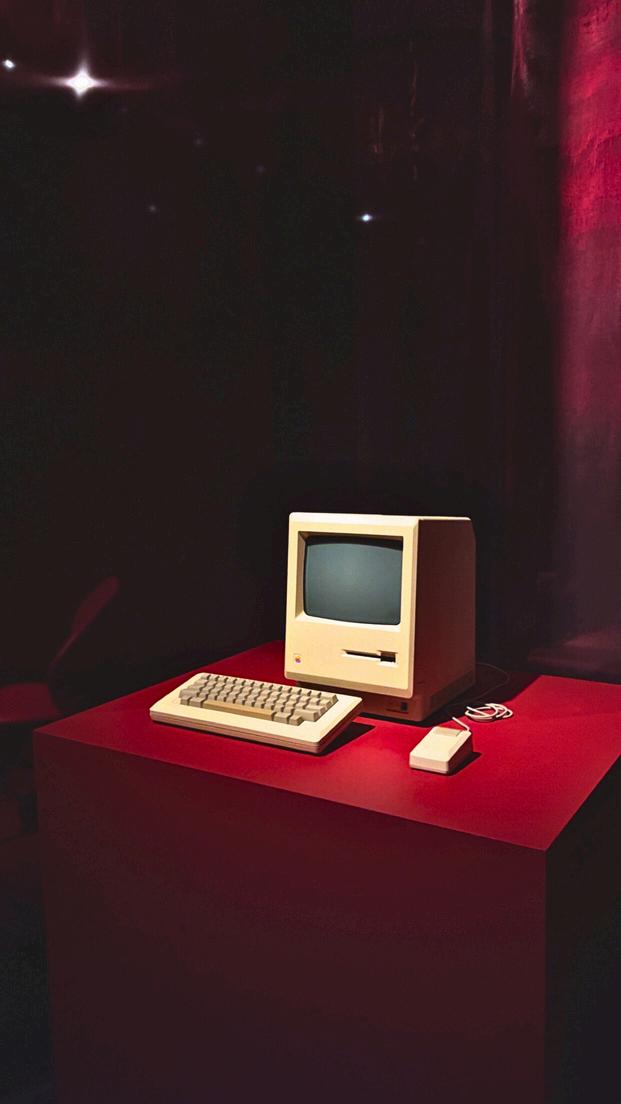
The Macintosh 128K marked a revolution in personal computing. By bringing an intuitive interface and minimalist design to the mass market, it shifted technology from expert circles into the everyday lives of millions, transforming how people imagine, create, and communicate.
The release of the Macintosh 128K by Apple in 1984 was more than a technical milestone, it was a cultural turning point Apple’s all-in-one design, led by Steve Jobs, coupled with the first consumer GUI and mouse, made computers approachable, friendly, and visually engaging What once belonged to scientists and hobbyists became a tool for artists, students, andfamilies
The Macintosh solved the problem of usability, inviting non-experts into the world of digital creation and productivity. Its interface and hardware set the standard for modern computing, influencing everything from desktop publishing to mobile devices. The machine’s iconic “1984” Super Bowl ad only amplified its mythic status, promising a future where technology wouldempower,notintimidate.
Personally, the Macintosh’s legacy fuels my imagination and everyday work. It reminds me of design’s power to democratize innovation and creativity, making technology not just accessible, but inspirational. Its impact echoes in every click, swipe, and digital creation I make.