
Welcome From the Chair
Greetings to all our alumni and friends from the VU Department of English. We are delighted to offer you this inside look at the achievements of our English and Creative Writing students, and at how our faculty and alumni are carrying out Valpo’s mission of leading and serving in the world.
Speaking of Valpo’s mission, this special issue of The Lodestar features an exclusive “you can only read it here” interview with VU’s new president, the Reverend Brian E. Konkol, who has brought a new sense of excitement, engagement, and mission-based momentum to campus and the wider VU family. What you won’t read in the interview, but which I think says a lot about our students, is how the interview came to be. Just two weeks after President Konkol started his job in January, I got an email from senior English major and Lodestar editor Carmen Hernandez, saying “I hope this is okay with you, but today I emailed President Rev. Konkol for an interview with The Lodestar . . . [and] he just accepted my request!” Carmen’s initiative and confidence to ask our new president for an interview— without seeking any kind of “permission” first—greatly impressed me; it’s emblematic, I think, of the power of an education steeped in the written and spoken word, human connection, and critical thinking. Carmen and senior Sean Korpela, who is off to seminary at Vanderbilt University in the fall, had a delightful time sitting down with President Konkol, and I hope you enjoy reading their account of the interview.
Also in this issue: Professor Sara Danger, who has produced significant scholarly work in the fields of juvenilia studies and youth authors, hosted and cochaired the International Society of Literary Juvenilia conference on “Youth Writers and Their Worlds” at Valpo. Multiple English/CW students gained professionalizing experience (with paid internships)
helping to promote and staff the conference, and two students (Carmen and Jovana, who both work on The Lodestar) presented their original scholarly research.
Our other articles include an Alumni Spotlight on recent Jeopardy contestant Heather Ide ’18; Student Spotlights on Jose Ponce and Elizabeth Lieb, who recently studied in Washington DC and Cambridge, England, respectively; and a heartfelt farewell to Professor Richard Sévère, who relaunched The Lodestar in 2022 after a decades-long hiatus, and recently became a Dean at Purdue University Northwest.
Thank you, as always, for being part of the Valpo English family. The Lodestar now features a QR code on the back page that allows you to easily donate to enhance the learning experience of our students.
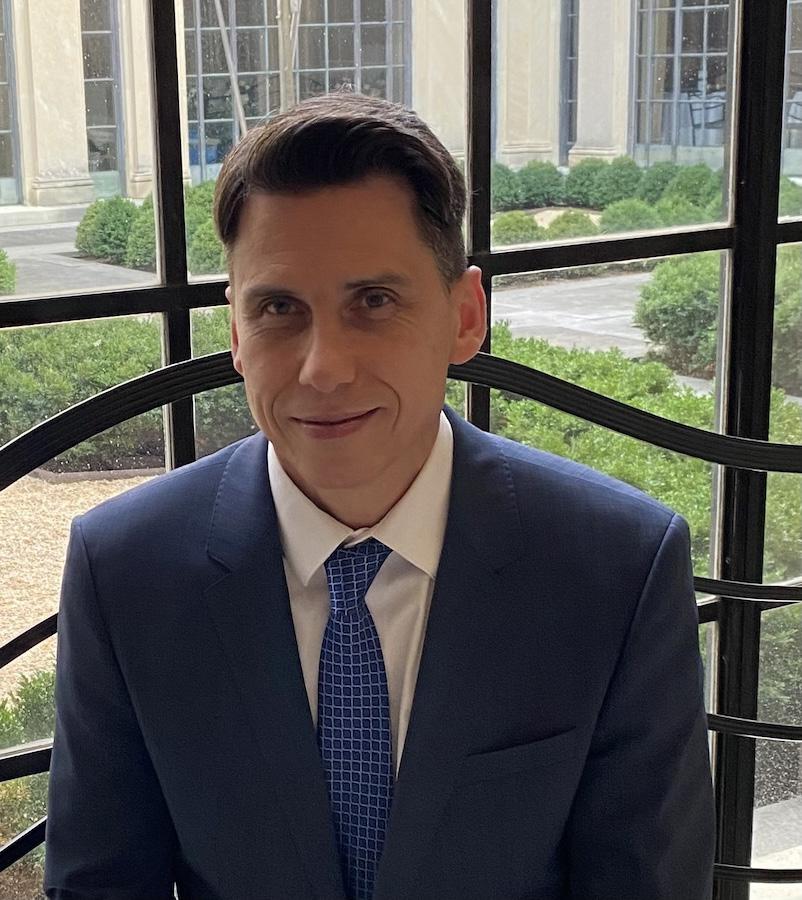
Professor Carter Hanson, Chair of the English Department. Photo from valpo.edu.
Student
Student Spotlight
A Little Bit About Elizabeth
Elizabeth Lieb, junior Digital Media Arts major and Creative Writing minor, spent the fall 2025 semester studying abroad in Cambridge, England. When asked why Cambridge stood out to her as a study abroad destination, Lieb had a few different reasons: “One, there’s no language barrier, so I don’t have to worry about that. Two, I am a fan of English culture. I just think it’s fascinating: their teatime, the depth of their history. I’m also a big Jane Austen fan, so I kind of wanted to go there because I love her books. It was cool to actually finally get to go.”
Lieb undertook her studies at Westfield House, run by the Evangelical Lutheran Church of England (ELCE), and Anglia Ruskin University. About her classes, she shared “I was taking classes, the minimum full-time student 12 credits type of deal. At Anglia Ruskin University, I took a class called ‘Careers in Writing, Editing, and Copyediting.’ It’s got to be one of my favorite classes I’ve gotten to take in college.” During her time in Cambridge, Lieb started her own website, titled Little bit Abroad. The meticulously organized blog has a tab for her time in Cambridge.
When asked what motivated her to start a website, Lieb explained, “Before I went to England, I would tell people I was going, and the first thing they would say is ‘Wow, you have to send us pictures.’ And after 10 people tell you you need to send them pictures… I really wanted to stay off of social media when I was abroad, just because I didn’t want to be on it and see what people were doing back home and
by Cam Haggett
feel bad for missing out. So, the website was my compromise.” Her website is well-designed and aesthetically pleasing, featuring photos and writing. This was one of the benefits for Lieb: “The website allows me to put in picture wheels, do headings the way I like it, organize my trips, and write a little bit about what I did.” Over the course of her time in Cambridge and her time after, Lieb’s mentality around the website shifted. She shared, “I feel like more now, it’s for myself. I have a terrible memory, and so it’s fun going back and rereading the details of my trip.”
However, the travel wasn’t the part that stood out to Lieb the most. “My favorite part was the people. The people at Westfield House were so, so cool. That’s something that I’ll hang onto is having those memories with people,” Lieb said. Her closing thoughts were a firm encouragement for other students to participate in study abroad programs. “For anybody who’s ever considering studying abroad, just do it. Wherever you’re going to go, just go. Because it’s so worth it.” Lieb’s website Little bit Abroad can be found at sites.google. com/view/little-bit-abroad.
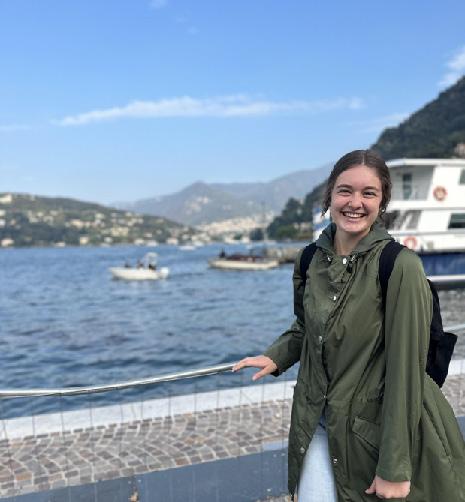
Elizabeth Lieb in Como Lago, Italy. Photo found on Little bit Abroad.
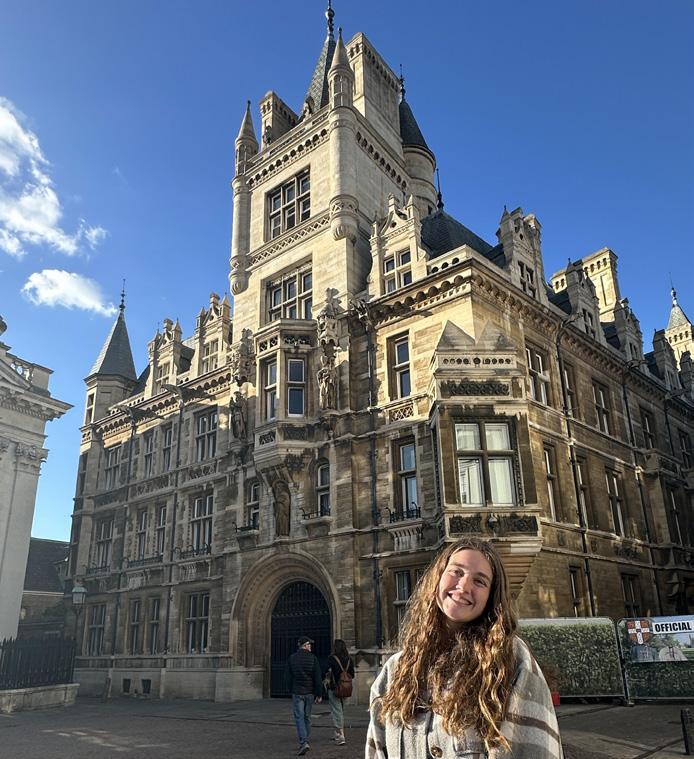
Elizabeth Lieb in Cambridge City. Photo found on Little bit Abroad .
President
Exciting Perspectives: President Konkol’s Vision for Valpo
Starting this spring semester, Valparaiso University students, staff, and faculty excitedly ushered in the arrival of their twentieth president, Reverend Brian E. Konkol, former Vice President and Dean of Syracuse University’s Hendricks Chapel. Many of these university community members are eagerly awaiting the change that President Konkol has committed himself to be.
While President Konkol may be new to Valparaiso University, he is not unfamiliar with Valpo’s culture, ideals, or Lutheran legacy. President Konkol takes the time to describe his deep understanding of Valparaiso University’s mission—while also dissecting why the university is so important to himself and to students. President Konkol states, “Ultimately, we build lives for good at a time where there are people who question the value of a college degree. I say ‘We build lives for good here. That’s what we do.’ When people are wondering specifically about Valparaiso University and what distinguishes Valpo from the hundreds of other universities, I would say we build lives for good. We do it in a particular way, and that’s through our roots and our reach. That’s freedom, that’s scholarship, and that’s faith; that’s education of the head, the hands and the heart.” The “roots and reach” metaphor is foundational to the way President Konkol views the responsibility the university has to its students and alumni. For President Konkol, the university needs to be strong in both its roots and reach: Valpo’s historic Lutheran roots anchor its identity and the belief that Valpo does indeed build lives for good; and the branches–the reach–need to grow outward to find new ways of educating
by Carmen Hernandez and Sean Korpela
the next generations of students for lifetimes of leadership and service.
While President Konkol is focused on preserving Valpo’s foundation and boldly affirming its culture, he is also equally invested in restoring the relationship between alumni and the university. When describing the significance of the relationship, President Konkol states, “[Alumni have] been nourished by the education of this university, which means engaging with our alumni is critically important because they’ve had a lived experience of this place, which means they have earned the right to have their voices heard and ideas shared about the future of this place… So that, to me, is critically important, and it’s also, in my view, incredibly important that we continue to nourish the lives of our alumni.” Rather than alumni being distant members of the Valpo community, President Konkol sees them as ongoing, crucial members—a connection that has been missing in recent years. Furthermore, President Konkol’s framing of alumni as having been “nourished” by Valpo shows the deep commitment and responsibility that both he and the university have to support alumni’s personal and professional growth.
Building on his vision of a lifelong, formative education, President Konkol specifically emphasizes the significance of a Lutheran, liberal arts institution—believing that it is partially the “vocational discernment” fostered by a Lutheran university which helps students and alumni navigate changes throughout their lives. However, President Konkol acknowledges a broader, social devaluation of a liberal arts education, stating, “And therefore I do believe
President
President

that part of the reasons why, to use your words, the liberal arts and humanities may be devalued, is that in many ways, the liberal arts and the humanities are misunderstood. And therefore I see the opportunity for us to translate to say, ‘Okay, here’s what it means to think about resources, skills, capacities, and capabilities—again, to think critically, to communicate, to explore and to have a wide variety of experiences that help us to think as free people, and, in particular, about what it means to be people,’ and there’s some very practical implications to this.” President Konkol continues to describe the job climate that the class of 2026 is going into, which, according to recent studies, suggests that they will likely change jobs “15 to 20 times in their 45 years in the economy.” However, President Konkol argues that an education received at a liberal arts institution, like Valpo, helps students and graduates navigate these changes, “Well, each time you [change jobs] is going to require a different set of skills, capacities, and, if one has a very narrow, very specific particular education, those pivots are going to be complex, difficult, but a liberal arts education with an emphasis on the humanities is going to help you make
those pivots, and especially, I would argue, at a Lutheran institution which takes seriously vocational discernment and how it is that you discern those changes over the course of your life.”
Though his presidency is just beginning, President Konkol is already exemplifying his commitment to Valpo. Since January, President Konkol has shifted his office throughout different academic buildings, lived in different dormitories, and is now flying around the country to visit alumni. These actions echo throughout the university community—showing how President Konkol truly supports student, alumni, and university relationships. For President Konkol, the way to continue nourishing this connection “starts with communication. And by communication, it’s not just what I have to communicate to them. I think for the most part, it’s my ability to listen to them. I think it was Paul Tillich who said ‘The first act of love is to listen.’ And I agree with that. And so if we are going to love our alumni and love our students, faculty and staff, the way we do that is actually to listen.”
President Reverend Brian E. Konkol. Photo provided by Valparaiso University.
Faculty
Professor Danger Welcomes the ISLJ Conference to Campus
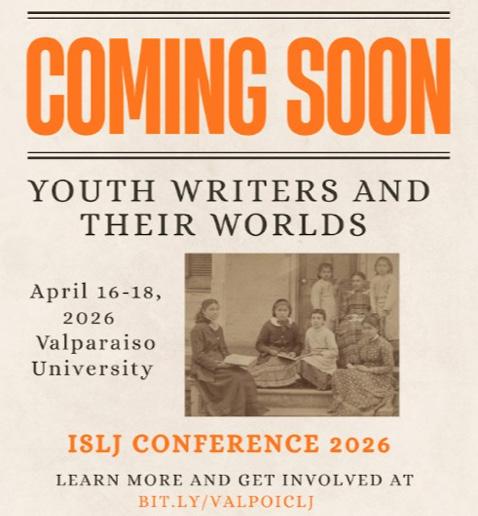
In the fall of 2025, Valpo students had the chance to take a pioneering class—English 365: Becoming American Authors, taught by Professor Sara Danger—which explored a wide range of youth-authored texts from 19th-Century America. The group of students engaged with a wealth of publications written by children and teenagers, ranging from original fairy tales and romances to amateur newspapers like Le Bijou and the Penfield Extra. In addition to designing the class, Professor Danger hosted the International Society of Literary Juvenilia (ISLJ) on Valpo’s campus during the following spring semester. Beginning April 16th, 2026, Danger welcomed experts on youth authorship from across the world together to discuss their research, while also providing two students— Carmen Hernandez and Jovana Trajanoska—the venue to present their own research developed in Becoming American Authors. In addition, Creative Writing major, Tabi Porter, ISLJ Conference Intern, offered invaluable assistance planning the conference, designing the program, and assisting with research. Danger’s interest in the subject of youth writing and efforts to involve students in its study has created an exciting space at Valparaiso University—a forum to explore a compelling world of writing that invites a unique form of curiosity and consideration.
Currently in her 21st year at Valpo, having joined the university as a Lilly Fellow in 2004, Danger has taught classes on children’s literature since the start of her career, dedicating several years to exploring the nature of writing by children, with a firm interest in allowing the voices of children to stand on their own merits and exist as more than a novelty. As such, she was astonished to visit the American
by Alex Pawlowski
Antiquarian Society (AAS) in 2010 and discover how their collection includes thousands of works—most prominently newspapers—written by children. These works provide unprecedented insight into the social realities of children during the nineteenth century. The AAS not only inspired the creation of Becoming American Authors as a class but directly facilitated it, as the creation of a special digital archive for Historic Children’s Voices provided the resources and material for her to craft the course around.
Danger was initially introduced to the ISLJ while presenting at an MLA Conference about the Penfield Extra, a small-town newspaper written and published by an adolescent girl during the Civil War. The creator of the Penfield Extra, Nellie Williams, often veered between abolitionist sympathies and Confederate support, epitomizing what Danger finds fascinating about this field: the ambiguous contexts of how these children lived and what influenced their writing. As she described it, “There’s just so much we don’t know” about young writers like Nellie. “Because of this, we need to contextualize youth writing, probably even more richly than the writing of an adult writer.” For instance, before we interpret the messages found in child-authored texts, Danger has learned to ask “what can [we] find out about [the circumstances and relationships] informing this child’s life?”
The English 365 class was centered on that very question and challenged students to examine the intricacies of each text in order to understand the authors as individual actors with rich life experiences and individuality. The course materials reflecred this variety, including works
Faculty
Faculty
by Black teenagers writing during Reconstruction and young women employed at mills collaborating on newspapers. Similarly, the ISLJ Conference featured a tremendous range of subject matters and mediums, with panels discussing letters sent by children to Mr. Rogers, marginalia left in writing workbooks, and rival newspapers by Australian teenagers. Danger specifically cited the conference as a key motivator for creating the Becoming American Authors course, stating that “[With] this conference coming up, I wanted to involve students if I could and interest them in the topic, learn from them, and have at least one panel that included... students’ scholarship” Hernandez and Trajanoska, the two students who participated as panelists, focused on the significance of youth authorship as a means of emotional and societal subversion. Hernandez discussed the depiction of challenging emotions in the childhood writings of Louisa May Alcott, while Trajanoska demonstrated the social criticism and satire utilized by the amateur newswriter Consuelo Clark.
In doing so, the two reflected one of Danger’s key beliefs regarding the value of seriously studying and discussing youth writing. Danger
emphasized that the realities and viewpoints of children should not be dismissed due to the category in which they, as people, have been placed. She says, “I think we have often assumed that writing by young authors won’t be worth studying for their larger literary or political insights. If they are read at all, it’s often kept between the young writers and their peers or between them and their caregivers or teachers.” However, as Danger experienced and relayed to the students in Becoming American Authors, “I thought too, at the beginning of looking at these things at the AAS that what I’d find was going to be derivative or kids just copying the narratives, so I’m stunned by how original and innovative their accounts are.”
Despite being outside of the norms of what many would expect when considering the study of literature, Becoming American Authors and the ISLJ Conference demonstrated to Valpo’s students the significance that any act of writing can possess. Engaging with youth writing, according to Danger, “Makes us more reflective about our own relationship to writing and the power that it has for us.”
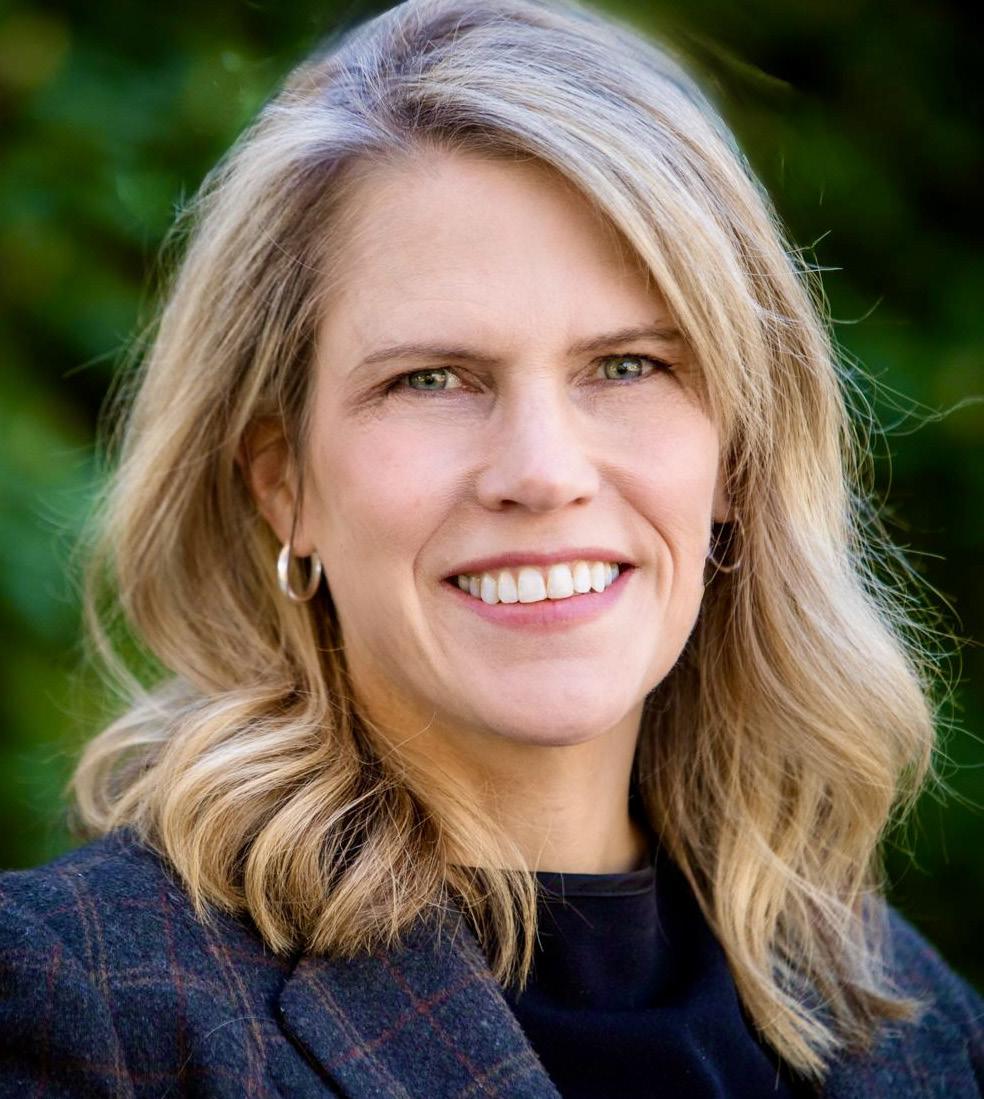
Professor Sara Danger. Photo provided by Danger.
ISLJ Conference Poster. Photo found on Valpo English Department Instagram.
Student Student Spotlight
Jose Ponce’s Creative
Path into Politics
Inthe fall semester of 2025, senior Jose Ponce scored a research internship with the Institute of World Politics in the nation’s capital. The position in Washington, D.C. was part of a highly competitive selection process, where people told Ponce he would “be lucky if he applied to 70 and got one call back.” However, through his own determination and hard work, Ponce was called for an interview. In the interview, Ponce recalls being asked “pressing questions, like ‘what do I think is detrimental to the American government?’” His quick-thinking abilities allowed him to articulate his thoughts clearly and thoughtfully, ultimately earning him a competitive internship after applying to only 13 positions.
Ponce’s days consisted of night classes, working, and lots of coffee. Each Monday, Ponce and his class would go over briefs. On one particular day, he recalls exploring the ambiguity of the President’s statement regarding nuclear testing—where he was then applauded for pointing out the distinction between delivery systems and missiles. This small but precise choice earned Ponce significant respect from an expert Russian scholar and his professors. Throughout his time in D.C., Ponce noticed that many “little things may be affected by one action, so if you’re thinking about a policy issue, how does that affect a smaller group here, like a trickle-down effect?” His continued attention to detail and consideration of others is reflected in his experience
by Jovana Trajanoska
analyzing writers, such as Machiavelli, whose ideas about “leading with power” stayed with him throughout his D.C internship.
Ponce recognizes how “if you want to get into anything policy, you really have to be able to write and communicate.” This skill is what allowed him to stand out among other students in D.C. Ponce’s degree in creative writing enabled him to always look for nuance when telling a story, which is linked directly to his interest in politics. He explains that in creative writing, you learn how to develop your own voice and tell a compelling story: “What I’m doing is writing a story. If I’m writing a policy proposal, I’m trying to convince you that this is what we should do.”
Ponce further showcases the impact of storytelling in Professor Rice’s short story writing course, where he recalls a moment when “the words [were] just hitting the page and everything’s working out, and you’re like, wow, I love the way this is coming out.” For Ponce, that sense of clarity and control over language became more than just creative satisfaction—it became a practical skill. His ability to shape ideas with precision and intention carried over into his application materials and interview, ultimately helping him stand out in a highly competitive internship process.
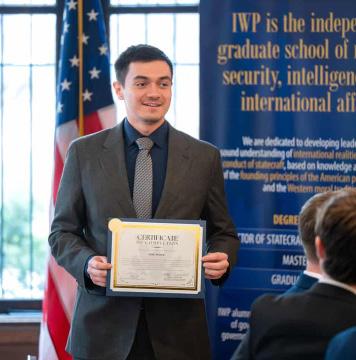
Jose Ponce at his Internship.
Photo provided by Ponce.
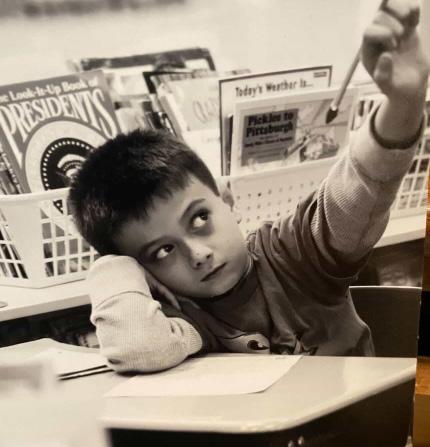
Jose Ponce as a child. Photo provided by Ponce.
Alumnus
Alumnus Spotlight
Tassel to Trivia: Valpo Alumnus Heather Ide
Before she became a contestant on Jeopardy! in the spring of 2025, Valpo alumnus Heather Ide ‘18 was a fellow student on campus. A member of the Pep Band, Sigma Tau Delta, and an honors student of Christ College, Ide earned her Bachelor of Arts in English with a minor focus on the Classics. Eventually, Ide found work at an inner city school in Milwaukee, Wisconsin helping students as a paraprofessional. Through this job, Ide developed her passion for working closely with kids and their access to literature. She states, “Even though I did not end up staying in Milwaukee, it was a place in my life where I was like ‘Oh, I can actually do this with kids.’ And so that definitely influenced my desire to become a youth librarian.” Now, Ide is a special education paraprofessional with a master’s degree in library science from the University of Illinois.
Towards the end of her time at Valpo, Ide became fascinated with the College Edition of the hit game show, Jeopardy!—an intense television series founded on contestants’ broad knowledge of countless subjects. As she watched, Ide discovered that she knew many answers to the Jeopardy! questions. Motivated, she describes spending a lot of her time indulging in different forms of trivia. Ide says, “I’ve always been really curious, and I love to learn even outside of literature.” Eventually, Ide took Jeopardy!’s entry level test. Though she did not hear back on her first attempt, Ide refused to give up. On her second try, Ide was invited to a phase two audition, now challenged with a task harder than any trivia question— waiting.
by Sarah Sheets
Ide’s devotion to knowledge brought her through the audition process and, that May, Ide battled against other contestants on television. Ide recalls the moment she heard the good news, “I went through the whole cycle [of emotions], but I wasn’t going to freak myself out; I told myself that I’m just going to go and have a good time.” Her discernment of how and when to apply her English education was crucial to how she approached the game. Ide credits her time on Jeopardy! to her capacity of learning a little bit about a lot of things. Though Ide did not win her episode debut, she is immensely proud to add “Jeopardy! contestant” to her life achievements.
One of Ide’s biggest takeaways from this experience is her newfound desire to put herself out there. Ide describes, “I was a very shy person [in college]. I would have been shocked if you told me I would be doing Jeopardy!” Now, Ide is a prominent example of what awaits students beyond Valpo’s campus. Her advice for current Valpo students, “I really do believe that having a personal kind of passion or goal outside of work is a really good way to remind yourself that you are human—you have more purpose and meaning than what is in your job.”
Jeopardy! logo. Photo found on Jeopardy! website.
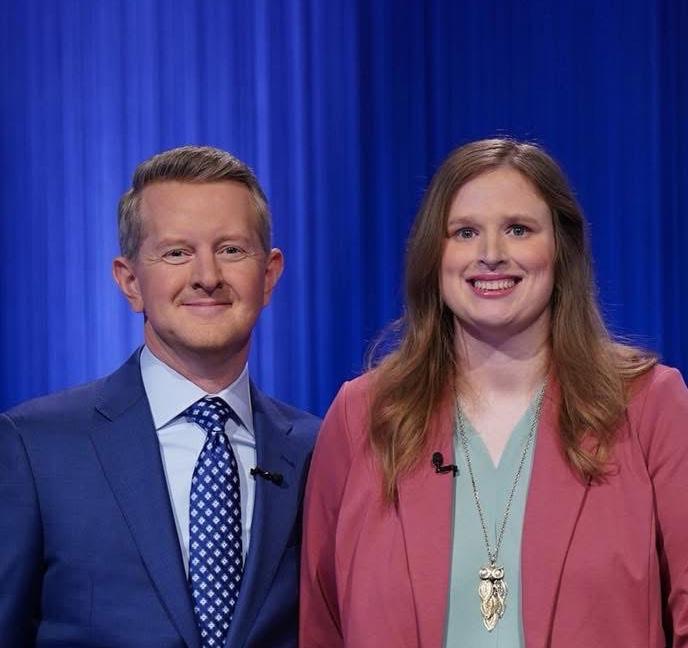
Heather Ide with Jeopardy! host Ken Jennings. Photo provided by Ide.
Farewell
Farewell Address
Sévère’s
Passion for Student Success
The Valparaiso University English Department congratulates Dr. Richard Sévère, former English Professor and Associate Dean, as he steps away from the classroom to take on a new administrative role at Purdue Northwest. Since 2016, Sévère has been a pivotal figure in the Valpo classroom where he specialized in Medieval literature studies. Sévère continually pushed students’ performance, encouraging them to continue refining their writing, ideas, and viewpoints. While at Valpo, Sévère focused on promoting undergraduate involvement through student led-initiatives—seen through his revitalization of The Lodestar after its decades-long hiatus.
Cultivating students’ professional and personal growth remains crucial to Sévère’s career goals. Sévère states, “And I think for me, what’s been important so far in my career trajectories, going to places, working hard, and leaving a legacy… You want to leave a place where you feel like you’ve made an impact, right? And so you create things that will outlive you, which is why I’m committed to doing things that are student led, because students are more invested, and students are always going to be in these particular roles, right?... Like, if the students are committed to doing that work, I think it’s important.” At PNW, Sévère continues to focus on student involvement. Currently, he is working with undergraduate students in the “First Year Experience Class,” helping them build their own legacy outside of the
by Carmen Hernandez
classroom through activities around the campus. As students paint murals and picnic benches, Sévère believes the project is going to “help build community. It’s going to help build a sense of belonging. I think it’s going to help students. I mean, there’s a number of things that we’re actually trying to have this project do; so, resilience, building tangible, transferable skills, communication. It’s a great way to help students kind of acclimate and connect to not only the university, but specifically the college and their program.” While at PNW, Sévère hopes to continue flourishing as an administrator, stating that his experience at Valpo “was really rewarding and really helped me to cultivate and hone the skills that I have as an administrator.”
In his career both at Valpo and PNW, Sévère continues to prioritize the student experience. Sévère believes that students should “approach their time in college with joy and recognize that this is a time… to find yourself. This is the time to experiment. This is the time to fail and learn how to fail gracefully. This is the time to build resilience… college is meant for you to have eight semesters worth of growth. And so I think, you know, advice for both the students [PNW] and the students at Valpo is, you know, definitely use this time to learn how to learn. I think it’s, it’s really, it’s going to be really important.”
The English Department will miss Dr. Richard Sévère, and we wish him nothing but the best in his future endeavors!

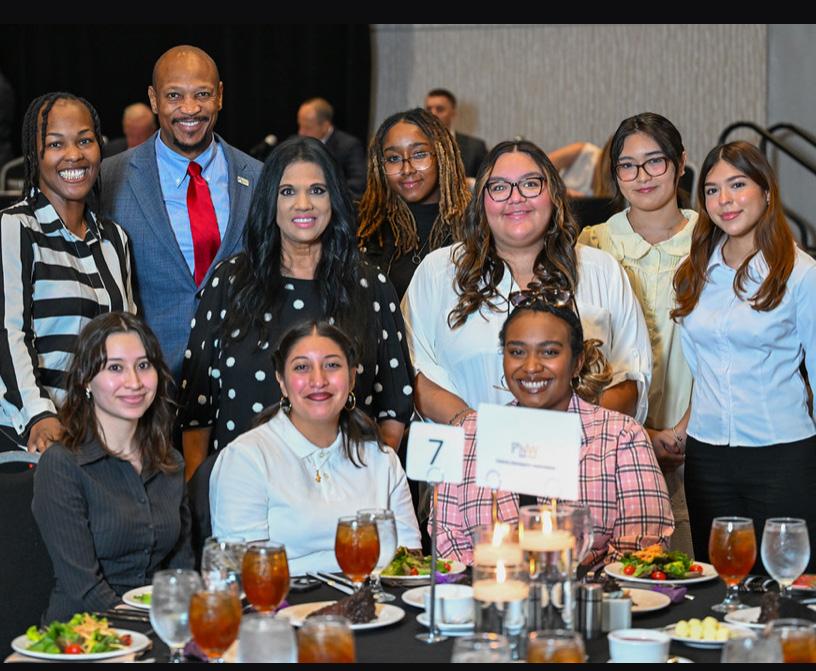
Dean Richard Sévère (second from top left) with students. Photo provided by Sévère.
Photo of Dean Richard Sévère. Photo provided by Sévère.
Our Writers Meet the Staff
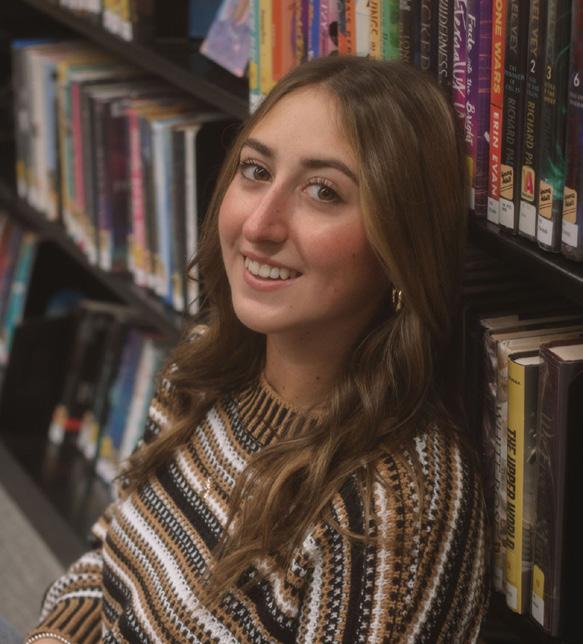
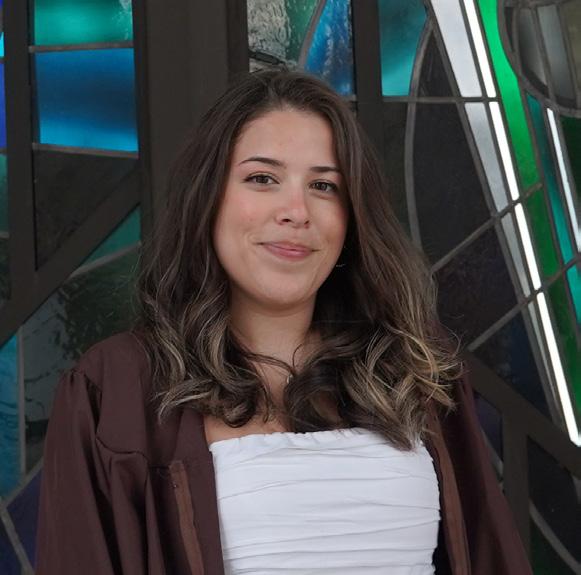
Carmen is a senior English major. This is her third year writing and first year as Editor-in-Chief for The Lodestar. Carmen’s favorite part about the newsletter is “reading about all the accomplishments of [her] fellow students and faculty!”
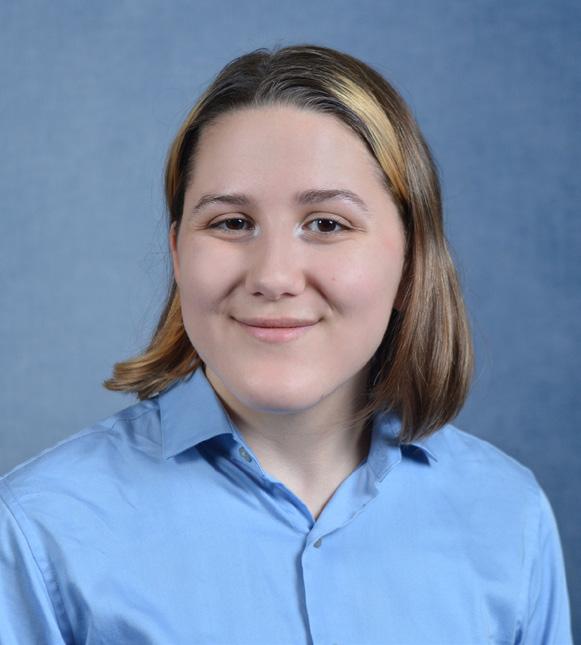
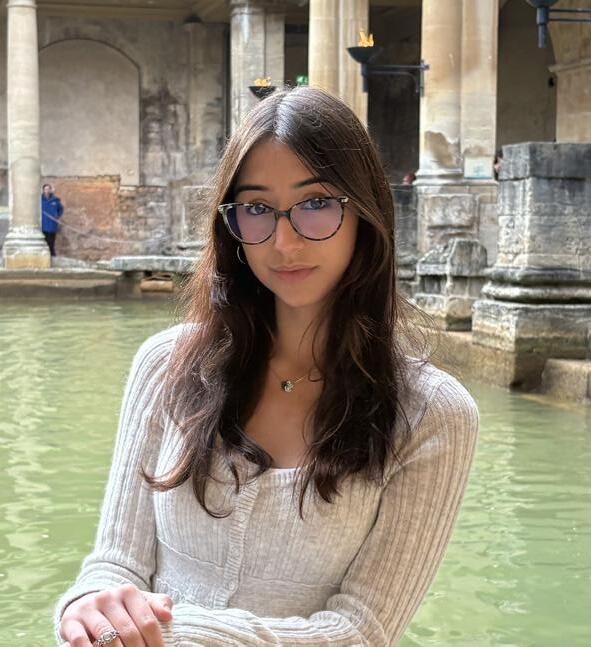
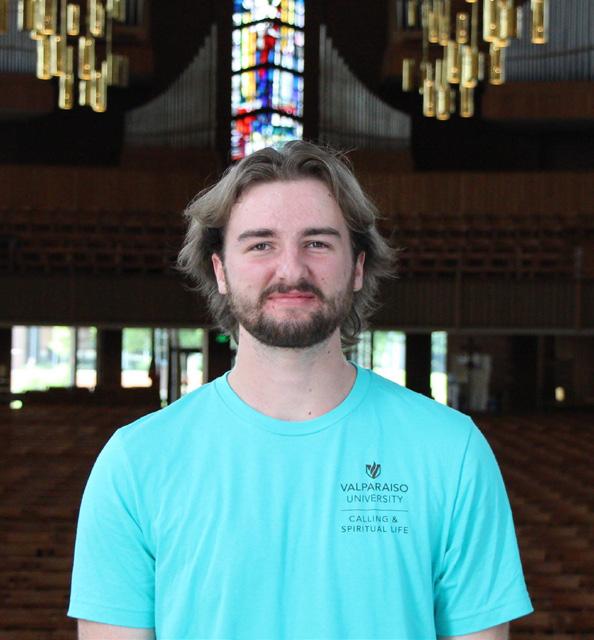
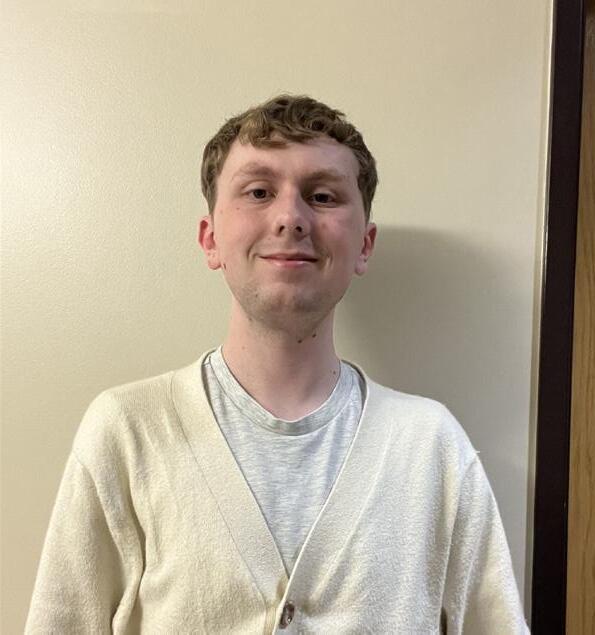
Cam Haggett
Alex Pawlowski
Sean Korpela
Carmen Hernandez
Sarah Sheets
Jovana Trajanoska
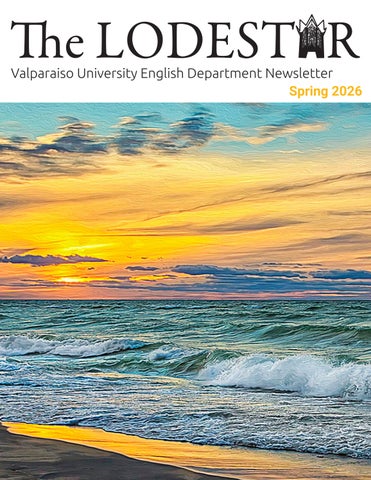
We offer special thanks to Professor Edward Byrne for the cover image and Matt Ross for designing The Lodestar logo.