College of Nursing and Health Professions Strategic Plan | Valparaiso University
Mission:
We create a learning community inspiring students to find purpose and lead lives of impact. Grounded in faith and guided by excellence, we prepare graduates who lead from values, serve with compassion, and transform health through their calling to care.
Vision:
We light the path for tomorrow’s leaders — a community where values matter, every learner belongs, collaboration thrives, and technology drives innovation to transform health and society.
In advancing its mission and vision, the College of Nursing and Health Professions advances Valparaiso University’s mission of preparing leaders who serve the common good through vocation, service, and excellence.
Core Values:
Belonging. Purpose. Impact.
We are a community rooted in values and reaching toward the future — where every learner belongs, every calling is nurtured with purpose, and every graduate is prepared to build a life for good through meaningful impact in health and society.
Strategic Intent
The Valparaiso University College of Nursing and Health Professions (CONHP) strategic plan focuses on three interconnected priorities: expanding access to purpose-driven health professions education, strengthening systems that support student success, and elevating the college’s distinctive strengths in values-based leadership, research, and community engagement.
The strategic priorities that follow are intentionally interconnected and mutually reinforcing. Enrollment growth fuels institutional vitality, student momentum strengthens persistence and completion, and excellence in leadership, scholarship, and community engagement elevates the reputation and impact of the college. Together, these priorities position CONHP to respond to evolving workforce and societal needs while advancing Valparaiso University’s mission and strengthening the college’s regional and national impact.
Strategic Priorities
A Letter from the Dean
As dean of Valpo’s College of Nursing and Health Professions, it is my privilege to share this strategic plan — one shaped through a year of thoughtful collaboration, listening, discernment, and aspiration. This work represents the collective efforts of a dedicated strategic planning task force and college community who came together with both care and method to reflect on who we are, what distinguishes us, and where we are called to go next.
Throughout this process, we listened intentionally to the voices that matter most: our students, faculty, staff, alumni, workforce and community partners, and the members of our National Council who generously advise and champion the work of the college. Their insights helped shape a plan that is both forwardlooking and deeply grounded in our mission, values, and calling as a health professions community.
This strategic plan charts a course for a college rooted in belonging, purpose, and impact and reaching toward transformation in health and society. As healthcare and higher education continue to evolve, we remain committed to what we have always done best: preparing graduates who lead lives of meaning and service and who care for others not only through their vocation, but through the whole of their lives.
The priorities outlined in these pages reflect more than institutional goals; they reflect the kind of community we aspire to be and the future we hope to help build together. While this plan provides direction for the next five years, its greater purpose is to inspire what comes next. The work ahead is meaningful, the opportunity before us is extraordinary, and the future we are building together is filled with possibility.
Elizabeth Gmitter, Ph.D., PT, M.S. Dean, College of Nursing and Health Professions Valparaiso University
Enrollment: Widen the Welcome
Goal: Fuel enrollment expansion with program innovation and pathway development.
CONHP will fuel enrollment growth by clearly articulating who we are, what differentiates us, and the return on investment we provide to students and families. Through unified messaging, expanded pathways, and strong community and industry partnerships, CONHP will widen the welcome to learners seeking purpose‑driven, career‑ready education. Enrollment success will be measured through sustained growth, improved yield, and increased visibility of accelerated and stackable opportunities.
Objective 1.1: Establish a clear and consistent CONHP identity and value across recruitment, marketing, and communications.
• Tactic 1.1.1: Establish a CONHP recruitment committee to consolidate recruitment challenges and opportunities, elevate process-related change requests to cross-university units, and streamline college-specific recruitment efforts for greater impact and efficiency.
• Tactic 1.1.2: Develop the structures, resources, and expectations needed to support CONHP recruitment, including standardized event standard operating procedures (SOPs), designated points of contact, flexible presentation materials, faculty training, and workload recognition for recruitment participation.
• Tactic 1.1.3: Develop and implement a systematic review process for recruitment, marketing, and communications to ensure clarity, consistency, and alignment across web content, program materials, internal awareness, and external storytelling.
Objective 1.2: Strengthen visibility of CONHP programs and accelerated pathways while developing stackable credentials to support sustained enrollment growth.
• Tactic 1.2.1: Identify and prioritize potential stackable credentials, accelerated pathways, and bridge programs by discipline based on feasibility, workforce demand, student value, and partner impact.
• Tactic 1.2.2: Create and execute a phased plan and timeline to design, launch, and implement stackable credentials, accelerated and/or bridge programming.
• Tactic 1.2.3: In parallel with the development of stackable credentials, accelerated pathways, and bridge programming, assess feasibility and plan for the implementation of Continuing Education Unit (CEU) offerings — using program components in part or in whole — for community, workforce partners, and alumni.
Objective 1.3: Expand community-inspired partnerships that create meaningful pathways aligned with evolving workforce needs.
• Tactic 1.3.1: Design, deploy, and analyze a survey of community and workforce partners to identify workforce needs, gaps, and pathway opportunities.
• Tactic 1.3.2: Evaluate alignment between community partner needs and CONHP programs to advance mutually beneficial educational, research, and workforce opportunities (e.g., continuing education, capstone projects, research, grant opportunities, and employee pipelines).
• Tactic 1.3.3: Develop and formalize partnership agreements with aligned community and workforce partners to advance shared programmatic and pathway needs.
PILLAR 2 Momentum: Forward Progress
Goal: Design an integrated student success framework that accelerates student momentum through early academic progress, experiential learning, and coordinated support systems.
Student success at CONHP is driven by intentional design across curricula, support systems, and learning experiences. By expanding experiential learning, strengthening faculty and staff capacity, and aligning academic scaffolding with student needs, the college creates the conditions that support student momentum from entry to completion. Success will be measured through improved retention, persistence, and engagement, particularly for non traditional and commuter students.
Objective 2.1: Expand experiential and applied learning opportunities to strengthen curricular scaffolding, increase student engagement, and improve retention.
• Tactic 2.1.1: Conduct a curriculum audit to assess existing applied and experiential learning and identify opportunities for expansion aligned with workforce needs, partnerships, accreditation standards, and student interests.
• Tactic 2.1.2: Develop partnerships with health-related organizations to expand paid student employment opportunities that reinforce academic degree pathways and connect to experiential and clinical learning.
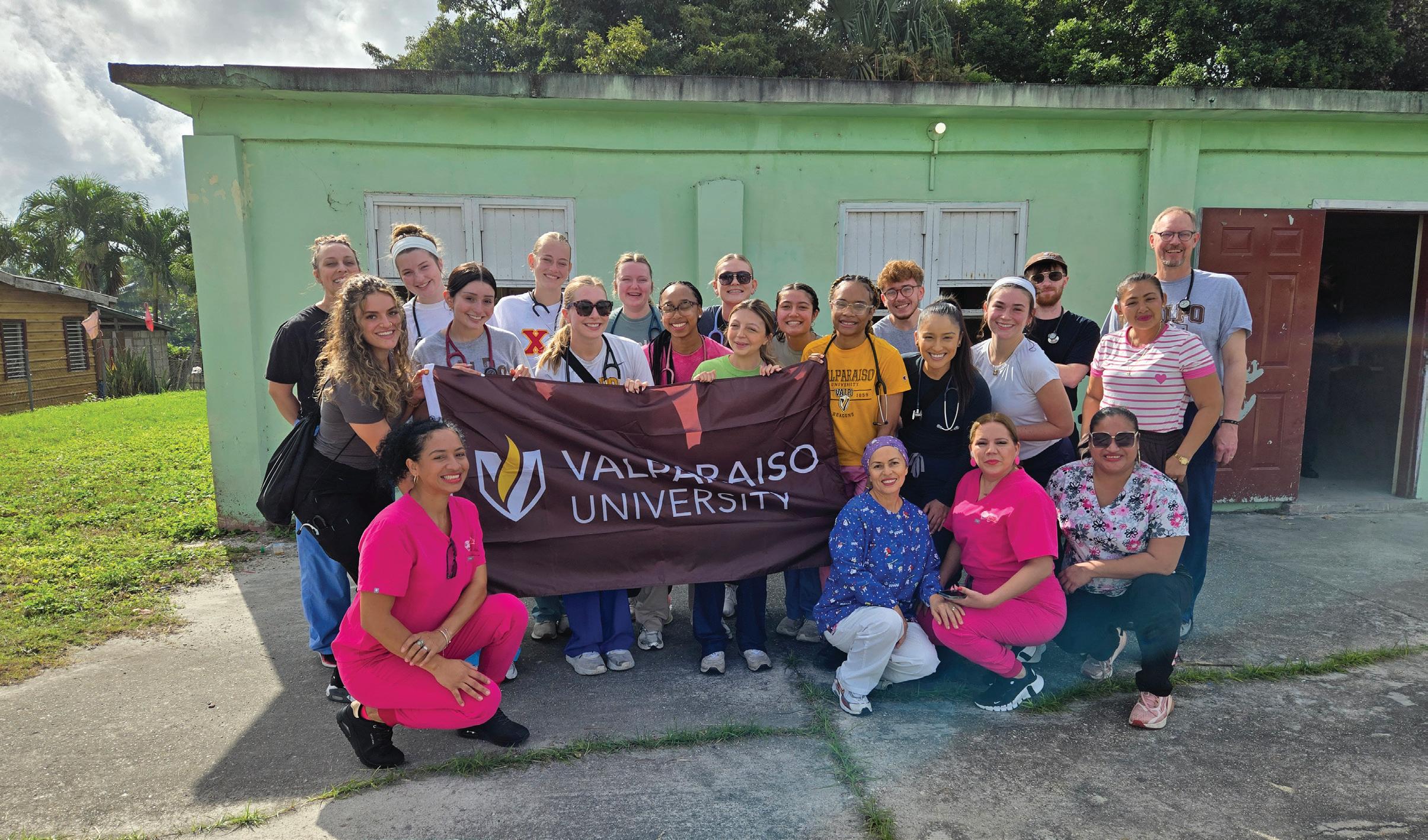
• Tactic 2.1.3: Establish at least one college-wide service-learning opportunity each semester, ranging from local to global contexts.
Objective 2.2: Strengthen faculty and staff capacity to support and engage non-traditional and evolving student populations.
• Tactic 2.2.1: Develop and maintain a centralized, live student resource hub and implement a coordinated communication strategy — across Canvas, email signatures, classroom slides, digital signage, and in-person events — to ensure faculty, staff, and students have consistent access to current support resources.
• Tactic 2.2.2: Implement recurring, visible engagement opportunities with campus resource departments (e.g., rotating lobby presence, annual resource fair, faculty briefings) to strengthen faculty familiarity with support services and improve student referral pathways.
• Tactic 2.2.3: Provide annual targeted professional development for faculty and staff focused on supporting non-traditional and evolving student populations, including effective referral practices, inclusive pedagogy, and awareness of academic and non-academic barriers to student success.
Objective 2.3: Strengthen peer mentoring and integrated student support systems to enhance student persistence.
• Tactic 2.3.1: Analyze institutional and CONHP data and collect targeted feedback from students, faculty, staff, and recent alumni to identify priority needs and inform the design and deployment of peer mentoring and integrated student support resources.
• Tactic 2.3.2: Evaluate and plan for the expansion of NUR 101 into a Health Professions 101 course to promote early engagement, integrate student support systems, and strengthen student persistence.
• Tactic 2.3.3: Develop a sustainable peer mentoring framework, including role definitions, training, supervision, and assessment, to ensure consistency, quality, and scalability across CONHP programs as student needs evolve.
PILLAR 3 Excellence: Elevate Outcomes
Goal: Cultivate signature strengths in support of student achievement and institutional distinction.
CONHP will cultivate institutional distinction by elevating its signature strengths: values‑based leadership, collaborative scholarship, and meaningful community engagement. By embedding leadership development throughout the student experience, advancing a shared research agenda, and amplifying stories of impact, the college will strengthen its reputation while advancing student achievement. Excellence will be demonstrated through scholarship, partnerships, visibility, and outcomes that reflect our mission and values. Through this work, CONHP will strengthen its identity as a national leader in values based health professions education and community engaged scholarship.
Objective 3.1: Embed values‑based leadership (VBL) as a defining and assessable signature strength across all programs.
• Tactic 3.1.1: Conduct a comprehensive curriculum audit to identify where values-based leadership is currently introduced, reinforced, and demonstrated across CONHP programs, and map opportunities to make VBL more explicit and intentional within coursework, experiential learning, and co-curricular activities.
• Tactic 3.1.2: Develop and implement a college-wide plan to intentionally embed valuesbased leadership using shared language, learning outcomes, and assessment strategies to measure student growth and competency development over time.
• Tactic 3.1.3: Partner with University Marketing and Communications and community stakeholders to amplify values-based leadership as a distinguishing strength of CONHP through coordinated messaging, storytelling, and visible engagement in regional leadership initiatives.
Objective 3.2: Establish a coherent, collaborative research and scholarship agenda emphasizing undergraduate and graduate involvement.
• Tactic 3.2.1: Identify and articulate shared CONHP research and scholarship priorities by mapping faculty expertise, community needs, and external funding priorities, in collaboration with the Office of Institutional Research and other campus partners.
• Tactic 3.2.2: Provide cross-college education and support on external funding priorities, data resources, and proposal development processes — leveraging the Office of Sponsored and Student Research — to strengthen faculty readiness for externally funded, student-engaged research.
• Tactic 3.2.3: Implement a structured process to share the CONHP scholarship agenda and systematically identify, recruit, and track undergraduate and graduate student participation in research aligned with CONHP priorities.
Objective 3.3: Amplify community engagement, storytelling, and visibility of student, faculty, and partner impact.
• Tactic 3.3.1: Develop and implement professional development and clear internal processes to help faculty and staff identify, document, and elevate stories of student, faculty, and partner impact, including guidance on working with University Marketing, media outreach, and content submission pathways.
• Tactic 3.3.2: Develop a coordinated CONHP communications plan — including an annual social media calendar, consistent fall and spring newsletters, and strategic amplification of signature CONHP events — to elevate community engagement and impact year over year.
• Tactic 3.3.3: Host an annual on-campus community appreciation and networking event to recognize partners, share impact stories, strengthen relationships, and facilitate dialogue around workforce needs and future collaborations with CONHP faculty and leadership.