
















by Kathy Wolfe
This week Tidbits appeals to your sweet tooth by passing along some facts you likely never knew about sugar and spice and everything nice!
SUGAR SOURCES
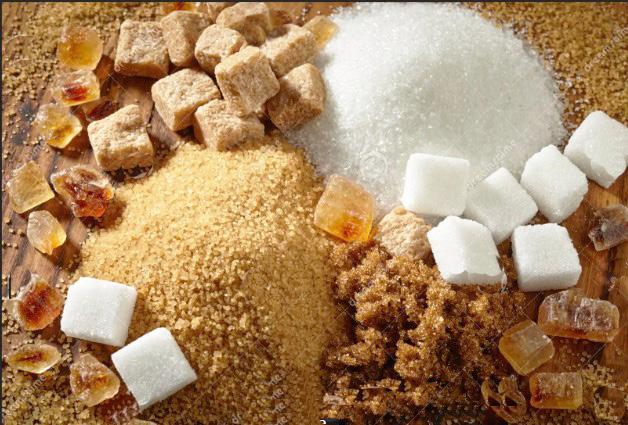
• Sugar cane is a reedy plant that is about 15 percent sugar and can reach a height of 15 feet (4.57 m). When it’s between 6 and 10 feet tall, it is cut and stripped of its leaves. Juice is extracted through a pressing process and is boiled several times, followed by purification with lime water. It’s then centrifuged at high speeds to produce sugar crystals.
• The three U.S. states responsible for the production of sugar cane are Florida, Louisiana, and Texas. In the early 1980s, about 704,000 acres of the crop were cultivated, while today that number exceeds 925,000 acres. The world’s largest producers are India and Brazil.
• Hawaii was once a major supplier of U.S. sugar, but competition and high costs led to the end of production. The last commercial sugar plantation in Hawaii, the Hawaiian Commercial & Sugar









(Answers on page 16)






If you're of a certain age you'll certainly remember all the buzz about the Cabbage Patch Kids. This week Tidbits looks back on this wild craze and the dolls that swept the world, a time when everyone had to have one -- even to the point of riots!
• The Cabbage Patch story starts back in the early 1970s when an Appalachian folk artist named Martha Thomas began creating soft-sculpture dolls. Each one was unique in its own way with cute, hand-painted eyes and pin-tucked facial features giving them expression, along with dainty fingers, and toes. They were a brand new twist to the world of dolls, and the public immediately loved them.
• Encouraged by their popularity with local residents and tourists, Martha decided to put them on the market. She sold her creations along with a birth certificate and adoption papers, and started with Kentucky craft fairs.



1. GEOGRAPHY: What is the capital of Belarus?
2. LITERATURE: Which Ken Kesey novel is set in an Oregon psychiatric hospital?
3. MYTHOLOGY: Who is the Greek goddess of discord?
4. ANATOMY: What is the longest bone in the human body?
5. U.S. PRESIDENTS: Which president was a commanding general in World War II?
6. MATH: What kind of polygon has three sides?
7. BIBLE: What is the last book in the Bible called?
8. ASTRONOMY: Which planet in our solar system is closest in size to Earth?
9. CHEMISTRY: What is the newest element on the Periodic Table?
10. MOVIES: Which Canadian actor/comedian starred in the movie “Uncle Buck” and died of a heart attack at 43?
• In the late 1970s, a 21-year-old art student from Georgia, Xavier Roberts, discovered Martha’s work and began crafting his own hand-stitched soft sculpture dolls. He offered to team up with Martha to increase production and exposure, but she declined the offer.
• Roberts modified Martha’s design enough to obtain a copyright, calling his dolls “The Little People,” making every doll unique, with different coloring and facial expressions.
• In 1981, Roberts enlisted the help of five friends and branched out into regional arts and craft shows. It wasn’t long before he purchased a property in Cleveland, Georgia, setting up the “birthplace” of his “babies,” calling it the Babyland General Hospital.
• Making every head individually proved to be too time-consuming, so Roberts made the decision to have the heads made from plastic, with features matching his needlework. In 1982,
Coleco Toys began the manufacture of plasticheaded dolls and yarn hair. Because Fisher-Price already owned the rights to the name “Little People,” Coleco changed the name to “Cabbage Patch Kids.” As with Martha’s dolls, each came with a birth and adoption certificate.
• Coleco started out with an initial production of 2.5 million dolls. They hit the shelves in the Fall of 1983 with an aggressive advertising campaign and were immediately in massive demand. Thousands of customers stood in long lines, often in sub-zero temperatures, and poured into stores, only to find empty shelves of sold-out dolls.
• Some stores issued numbered tickets for the lines, but they couldn’t stop the frenzy of customer stampedes and even hand-to-hand fistfights. A Pennsylvania department store experienced a surge of 1,000 people, who trampled each other to grab a doll. The store’s assistant manager armed himself with a baseball bat in an effort to protect himself and establish order, but it didn’t help. Five customers were sent to the hospital, with injuries of cracked ribs and even a broken leg. The 240 dolls the store had on had sold out in less than half an hour.
• In 1984, 20 million dolls were sold. Coleco became the stock market’s best performer, with prices rising from $6.87 to $36.75 per share. The company canceled all of its advertising, hoping to quell the demand. But that didn’t deter sales of dolls and related merchandise such as lunch boxes, books, and clothing.
• The line generated $2 billion in sales around the world in 1984. By 1985, there was a Saturday morning cartoon, a Christmas special, and a breakfast cereal that featured the dolls’ cute little round faces.
• In 1984, Martha Thomas sued Xavier Roberts for $1 million, alleging that he had copied her designs after seeing them at a craft fair. The suit was settled out of court for an undisclosed amount.
• Unfortunately, Cabbage Patch Kids didn’t keep Coleco solvent. The company filed bankruptcy in 1988, and Hasbro took over the line until 1994, when it was sold to Mattel.
• Vintage Cabbage Patch dolls today, complete with papers, sell for as much as $3,000 on eBay.






Sugar & Spice (from page one)
Company on Maui, ceased operations in December 2016, ending a 145-year-old industry.
• Sugar beets, a variation of the common garden beet, have been grown as a source of sugar at least since the times of Napoleon, and likely longer. To extract the sugar they contain, the beets are first cut up and diffused in hot water. The water is then evaporated to produce a thick, sweet syrup, followed by further refining.
• Molasses is the by-product of the first boiling of sugar cane juice. This thick liquid is rich in Vitamin B6, iron, calcium, magnesium, and potassium. Brown sugar is a mixture of granulated sugar and molasses, gaining its distinctive color from the molasses.
• The average American consumes 17 teaspoons of added sugar every day. This is nearly twice the recommended limit for men of 9 teaspoons, and three times the 6 teaspoon recommendation for women.
• Residents in the state of Kentucky consume an average of 21.2 teaspoons of added sugar a day, contributing to one of the highest rankings in the nation for obesity and diabetes. Mississippi isn’t far behind with a 20-teaspoon average. The state with the lowest consumption is Oregon, with an average of 15 teaspoons per day.
• Consider the fact that the average 12-oz. can of soda contains 8 teaspoons of added sugar. A can of Coca-Cola has 9 3/8 teaspoons, while Mountain Dew, the soda with the highest sugar content, contains about 11.5 teaspoons.
• Why do we love sugar so much? Much of it is related to the brain and its “reward system.” The mesolimbic dopamine system, produces dopamine, the “feel-good” chemical associated with pleasure and satisfaction.
• Consumption of sugar leads to a surge in the release of dopamine. It occurs the moment
the sweetness hits the tongue, with taste buds notifying the brain that sugar is on the way.
• But it’s not just sugar that triggers the dopamine. Any activity that creates a sense of reward, such as delicious food, listening to our favorite music, or achieving a long-sought goal has the same effect on the brain.
• What are the effects of too much added sugar? The risk of obesity, heart disease, and diabetes is dramatically increased. In the short term, the results can be low energy levels, headaches, inflammation, and loss in the ability to focus.
• Check the labels when watching your sugar intake. Manufacturers use over 50 different names for added sugar that you might not recognize. Some to watch for include brown rice syrup, carob syrup, maltodextrin, corn syrup, treacle, barley malt, and agave nectar.
• What’s the difference between a spice and an herb? Herbs are the leaves of the various plants – basil, oregano, parsley, rosemary, thyme, to name a few – while spices come from the seeds, buds, fruit, flowers, bark, or roots of the plants.
stuffed in green olives. Jamaica is the world’s largest producer of allspice, with the pimento trees living up to one hundred years.
• Today we use bay leaves to flavor stews, but in ancient times, they were a symbol of honor and used in wreaths to crown victorious athletes and scholars. The Greeks planted bay trees near their

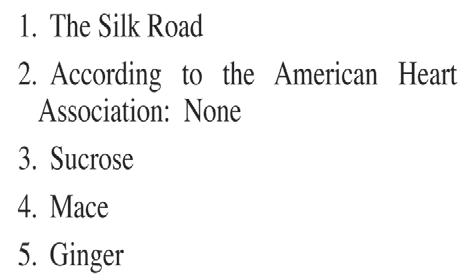
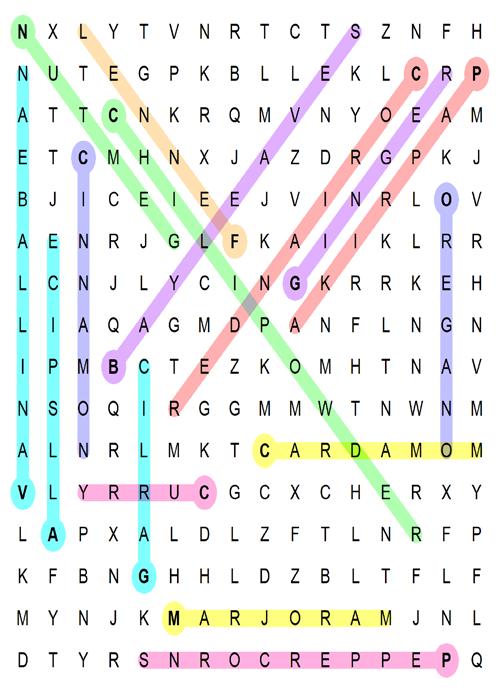
1. What kind of molasses is the darkest and most robust in flavor?
2. What familiar flavor comes from an orchard plant?


• In ancient times, saffron was as precious as gold. It’s still the most expensive spice in the world, selling for up to nearly $2,000 per pound! Saffron comes from a violet-colored crocus that blooms just two weeks every autumn.
• Harvest time for saffron is a very short window and exceedingly labor-intensive. Every flower has just three stigmas that must be hand-picked at dawn before the sun has a chance to wilt the flowers. When the stigmas are dried, nearly 80% of their weight is lost. More than 225,000 stigmas are needed to yield one pound of saffron.
• Saffron is an important ingredient in bouillabaisse and Spanish paella, lending a vibrant golden color to recipes. Iran is the world’s leading producer.




• Although allspice’s name sounds like it’s a blended mixture of several other spices, it’s actually its own substance, grown on the evergreen pimento tree. It’s not related to the sweet pepper pimiento (note the different spelling) that we find





By Lucie Winborne
* “Octlantis” is an underwater city off the coast of Australia where octopuses have built homes and formed communities.
* Skin cancer is the world’s most common cancer.
* When a 1994 power outage in Los Angeles knocked out city lights, many residents were able to see the Milky Way for the first time and were so confused by the sight that they called 911.
* Theophilus Van Kannel was inspired to invent the revolving door because he disliked opening doors for women.
* Prior to 1949, the grass on tennis courts was kept at 2 inches long, until a player was bitten by a snake. Now it’s a safer 5/16 of an inch.
* The tension of the 230-odd strings on a grand piano exerts a combined force of 20 tons on the instrument’s cast-iron frame.
* Chickpeas and almonds contain nearly as much protein as steak.
* Hiroshima and Nagasaki are no longer radioactive, largely because the bombs that struck them never touched the ground but detonated in the air.
* According to French heritage law, the “Mona Lisa” belongs to the public.
* Ice cream was invented in 7th-century China when King Tang commissioned a group of “ice men” to create a cold dessert from buffalo milk, flour and camphor.
* People belonging to a specific clique in high school, such as “athlete,” “cheerleader,” “geek” or “teacher’s pet,” were more likely to be in an office clique.
***
Thought for the Day: “It is the supreme art of the teacher to awaken joy in creative expression and knowledge.”
--
Albert Einstein (c) 2026 King Features Synd., Inc.


by Mary Hunt


make you sick but it will change the quality, color, texture and taste of the food.
• What is the best way to store frozen food products?
I thought it would be just loads of fun to focus our attention today on frequently asked questions I get about frozen foods. But first, a little history.

by Mary Hunt
Although the practice of preserving food by freezing can be traced all the way back to 1626, it wasn’t exactly practical. Frozen foods looked bad, tasted worse and were more apt than not to make people deathly ill.
Thank goodness for Clarence Birdseye, who 300 years later in 1926 invented and developed a whole new freezing process. It was one that not only preserved food safely but also preserved its taste and appearance. The world thanks you, Clarence!
Here are some typical questions:
• Are fresh vegetables more nutritious than frozen?
The International Food Information Council tells us that the nutritional value of frozen vegetables is virtually identical to fresh produce. In fact, frozen has better nutritional value than fresh, if that “fresh” produce has been sitting in the refrigerator for a long time.
• Do fresh fruits and vegetables taste better than frozen?
Frozen foods can pass any taste test. A properly made entree stored at 0 F tastes exactly like one freshly cooked. The recipe used to make these items are developed by some of the best chefs in the world. After they prepare them, they freeze them so that they maintain their freshness and flavor.
• Do frozen vegetables contain additives or preservatives?
The folks at Birds Eye, Clarence’s frozen food company, do not use any artificial preservatives. Instead, they flash freeze produce. This process locks in flavor, preserves texture and nutrition and ensures a long freezer shelf life.
• Once thawed, can food be refrozen? It is not recommended because refreezing a product makes it more susceptible to freezer burn.
• Is freezer burn harmful?
Freezer burn (the white dried-out patches found on improperly stored frozen foods) won’t

Always keep food frozen in its original packaging until you are ready to use it. Thaw according to the package instructions. In the absence of directions, thaw in the refrigerator. Organize your freezer with the oldest foods to the front so they will be used first. Always label frozen foods with what it is and the date it was frozen.
• Is it OK to eat the vegetables straight from the package?
It’s not dangerous, but for the best flavor and texture, Birds Eye Foods recommends cooking frozen foods as stated on the packaging.
• Are frozen vegetables and fruits more expensive than fresh?
Frozen foods are economical because you do not pay for stalks, pits, skins, rinds or damaged food. Edible ounce for edible ounce, frozen food costs are usually less than their fresh counterparts. According to a U.S. Department of Agriculture study, five of the six vegetables tested were cheapest when purchased frozen. Through price fluctuations, fresh produce can cost 99 cents at the beginning of the season, 39 cents at midseason and then, with no explanation, jump up again. With frozen foods, there are no such widely varying prices.
• What is the proper temperature for a food freezer?
Maintain a proper freezer temperature of no higher than 0 F. To be sure that your freezer is maintaining this safe temperature, get a freezer thermometer (less than $10).
* * *
Mary invites you to visit her at EverydayCheapskate.com, where this column is archived complete with links and resources for all recommended products and services. Mary invites questions and comments at https://www.everydaycheapskate. com/contact/, “Ask Mary.” This column will answer questions of general interest, but letters cannot be answered individually. Mary Hunt is the founder of EverydayCheapskate.com, a frugal living blog, and the author of the book “Debt-Proof Living.”
COPYRIGHT 2026 CREATORS.COM

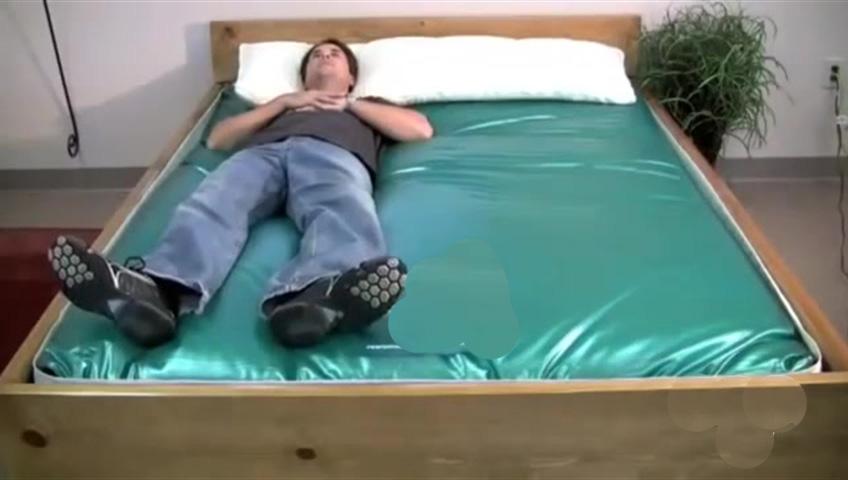
If you can recall the Cabbage Patch Doll craze youʼll certainly remember a time when waterbeds were also all the rage. Here are some facts about this once-popular mattress innovation that gave the sleep industry a huge boost in business.
• When we think of waterbeds, the 1970s and 1980s probably come to mind. However, the ancient Persians slept on water-filled goatskin bags more than 3,600 years ago.
• In more modern times, a type of waterbed was first invented in 1833 by a Scottish physician. Neil Arnott designed “Dr. Arnott’s Hydrostatic Bed” to prevent patients’ bedsores. It consisted of a warm bath topped with a layer of rubberized canvas, then covered with light bedding, and sealed to prevent leaks. However, the good doctor failed to patent it, opening the door for anyone to build and market the same design.
• A waterbed was mentioned in an 1855 novel, used for the storyʼs ailing heroine. Newspapers also posted a request from the USA Medical and Hospital Department, seeking suppliers to allow them to produce “water-beds for invalids.”
Even Mark Twain mentioned them in one of his articles in an 1871 edition of “The New York Times.” Twain informed readers that “in the infirmary will be kept one or two water-beds for invalids whose pains will not allow them to rest on a less-yielding surface…”
• A design student at San Francisco State University, Charles Prior Hall from Bainbridge Island, Washington, is credited with inventing the modern waterbed. His original prototype was a vinyl bag filled with 300 pounds of cornstarch, and another filled with Jell-O. Hall progressed to a mattress filled with water, presenting his creation as part of his Master’s thesis in 1968. The entire class was invited to jump and roll

the bed, and unanimously gave it rave reviews.
• Hall received Patent No. 3,585,356 in 1971 for his “liquid support for human bodies.” He founded a manufacturing and sales company, Innerspace Environments, that same year.
• Even though it wasnʼt possible to keep others from creating their own version of waterbeds, Hall’s business grew to be the leading waterbed retailer, with outlets in 30 stores.
• While some folks preferred free-flow, or fullwave mattresses without any internal fiber layers, others liked a semi-waveless mattress that reduced the motion. Waveless mattresses used baffles to create a bed with little or no waves, separating the water into multiple compartments and eliminating the need for the rigid wood frame. Heating units underneath the bladder controlled an optimal temperature of 780 to 900 F (260 to 320 C).
• Sales of waterbeds continued to climb, and at their peak in the mid-1980s, waterbeds accounted for 22 percent of the mattress industry, more than one in every five beds sold in America. Yet by 2013, that figure had declined to less than five percent of new bed sales.
• What led to the decline of popularity? First and foremost was that they were high maintenance. The beds held hundreds of gallons of water, which made them difficult to move, as well as requiring an electric pump to siphon out the water. Bleach or water conditioners had to be added regularly to prevent the growth of algae.
• There was always the risk of leaks and property damage from the water. The wooden frames were extremely heavy and cumbersome. Because of


their heavy weight and the difficult handling they required, many apartment complexes banned their use completely.
• The introduction of the first commercial memory foam mattress in the early 1990s offered a simpler, comfortable sleep option, leading to the further weakening of waterbed sales.









by Dana Jackson
Q: When is the “Yellowstone” sequel series starting, and will it be on regular cable or just streaming? -- A.M.
A: The wait is over! There have been prequels and spin-offs of the smash hit series “Yellowstone,” but the love story of Beth and Rip continues in the form of the new series “Dutton Ranch” on May 15. The twoepisode premiere and remainder of the first season will air on both the traditional Paramount cable channel as well as the Paramount+ streaming package. The short season of just nine episodes will conclude with a season finale on July 3.
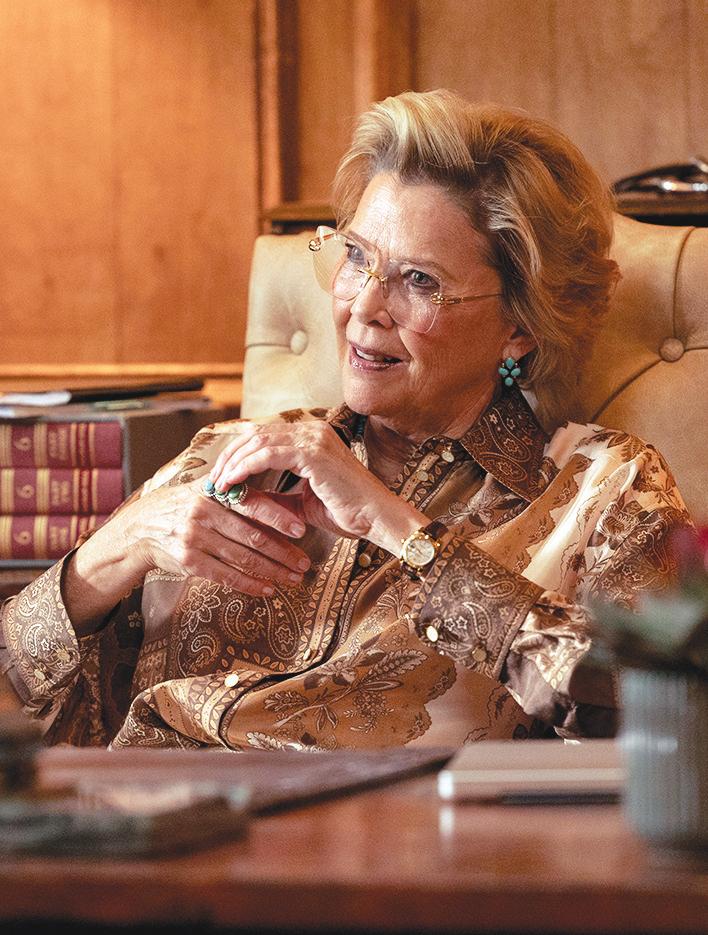
In the new series, Rip (Cole Hauser) and Beth (Kelly Reilly) relocate to South Texas, where they feud with a rival ranch owner played by Annette Bening (“Apples Never Fall”). According to Deadline, Ed Harris (“Westworld”) will also star as “a weathered veteran and veterinarian who treats animals with compassion and understanding and possesses a good sense of humor.” Country/rock singer-songwriter Morgan

1. The Devil Wears Prada 2 (PG-13) Meryl Streep, Anne Hathaway
2. Michael (PG-13) Jaafar Jackson, Nia Long
3. The Super Mario Galaxy Movie (PG) Brie Larson, Virginia Dare Jelenic
4. Project Hail Mary (PG-13) Ryan Gosling, Sandra Hüller
5. Hokum (R) Adam Scott, Peter Coonan
6. Animal Farm (PG-13) Seth Rogen, Gaten Matarazzo
7. Lee Cronin’s The Mummy (R) Jack Reynor, Laia
Wade will play a bartender at a local watering hole, “described as a character who ‘sees all.’” Wade follows in the footsteps of other singers like Lainey Wilson and Ryan Bingham who appeared on “Yellowstone.”
Q: I just saw a headline about Denzel Washington and Ellen Pompeo arguing on the set of “Grey’s Anatomy.” I don’t recall him being on the show, and he’s one of my favorite actors. -- G.I.
A: Denzel Washington didn’t play a character on the long-running ABC series but instead directed an episode. It was a pivotal one during season 12 titled “The Sound of Silence,” where Pompeo’s character, Dr. Meredith Grey, was viciously attacked by a patient. On her podcast “Tell Me with Ellen Pompeo,” Washington scolded her after she improvised a line that wasn’t in the script. Her hackles were raised, and she yelled back, “Listen, [expletive], this is my show. This is my set. Who are you telling?”
When asked by Variety about the incident, Washington said, “It’s all good,” but he hasn’t been back to direct another episode. It wasn’t his first time directing -- he had previously directed two feature films and would go on to direct two more: “Fences” and “A Journal for Jordan.”
Washington got his start by playing a physician on one of the greatest medical dramas of all time -- the multiple Emmy-Award-winning “St. Elsewhere.” Meanwhile, “Grey’s” has been renewed for its 23rd season on ABC. ***
Q: I read that there’s going to be a new sports-themed version of “Jeopardy!” Will it be syndicated on regular TV like the original? -- D.L.
A:”ESPN Jeopardy!” will be hosted by sports commentator Joe Buck sometime this summer on streamers Hulu and Disney+. An exact premiere date hasn’t been announced. According to Deadline, the contestants will consist of “ESPN talent ... representing charities of their choice ... as they compete for a $500,000 prize.” Another spinoff “Pop Culture Jeopardy!” with host Colin Jost moves to Netflix for its second season, beginning May 11.
* * *
Send me your questions at NewCelebrityExtra@gmail.com.
(c) 2026 King Features Synd., Inc.
Tidbits is in need of independent contractor help distributing our newspapers to businesses in the Coachella Valley. A retired husband/wife team is preferred, who wish to supplement their monthly income by driving and distributing to a specified delivery route in the Palm Desert area. Requires year-round commitment of one day per week, either Thursday or Friday, during regular business hours. One person needed to drive; the other to place copies at delivery locations.
Interested parties must posess a responsible work ethic, furnish their own vehicle and auto insurance, and have a friendly demeanor when dealing with the public. Interested couples call Erik at 760-320-0997 for more details.



This comforting mac makes the perfect Meatless Monday meal.
1 medium onion, chopped
2 tablespoon chili powder
1 tablespoon canola oil
1/2 teaspoon salt
1 (28-ounce) can crushed tomatoes
1 (15-ounce) can black beans, rinsed and drained
1 pound macaroni, cooked
1 cup shredded sharp cheddar
Cilantro, for garnish
1. In large pot, cook onion, chili powder, canola oil and salt on medium for 8 minutes, stirring often. Add crushed tomatoes and black beans.
2. Heat to simmering on high, simmer 5 minutes. Toss with macaroni and cheddar. Top with cilantro. Makes 6 servings.
Each serving: About 500 calories, 11g total fat (4g saturated), 22g protein, 82g carbohydrate, 11g fiber, 770mg sodium.
The semolina flour adds an interesting texture to these buttery wedges -- a traditional Edinburgh recipe.


3/4 cup (1 1/2 sticks) butter, softened (no substitutions)
1/3 cup sugar
1 tablespoon sugar
1 1/2 cup all-purpose flour
1/2 cup finely ground semolina flour
1. Heat oven to 300 F. In large bowl, with mixer at low speed, beat butter and 1/3 cup sugar until blended. Increase speed to high and beat until light and creamy, occasionally scraping bowl with rubber spatula.
2. With hand, mix both kinds of flour into butter mixture just until crumbs form. (Do not overwork dough or shortbread will be tough.) Pat shortbread crumbs into ungreased 9-inch-round tart pan with removable bottom or cake pan. With fork, prick dough all over in a decorative pattern. Sprinkle with remaining tablespoon of sugar.
3. Bake shortbread 1 hour 10 minutes or until lightly browned around the edge. Let cool in pan on wire rack for 10 minutes.
4. Remove shortbread from pan to cutting board. While still warm, cut shortbread into 16 wedges. Cool wedges completely on wire rack. Store cookies in tightly covered container up to 1 week.
Each serving: About 155 calories, 9g total fat (5g saturated), 23mg cholesterol, 85mg sodium, 18g total carbohydrate, 2g protein.
This luscious, low-fat snack is ready in just five minutes.
1/2 cup chilled pomegranate juice
1/2 cup low-fat vanilla yogurt
1 cup frozen mixed berries
1. In blender, place juice, yogurt and berries. Cover and blend until pureed. Makes 1 (1 2/3-cup) serving.
Each serving: About 250 calories, 2g total fat (1g saturated), 8mg cholesterol, 110mg sodium, 52g total carbohydrate, 5g dietary fiber, 6g protein.



















5/17 Syttende Mai
5/18 Visit Your Relatives Day
5/19 Boys Club Day
5/20 National Rescue Dog Day
5/21 Eat More Fruits and Vegetables Day
5/22 National Polka Day
5/23 National Learn to Swim Day



By Matthew Margolis
Before you even reach the door, you hear it. Thump, thump, thump -- his tail against the floor. He knows you’re home; he heard the car pull into the drive. You hear the slightest whimper as you linger, fumbling through a ring of keys. The thumping grows louder, faster, with an air of impatience to it now: What’s taking so long? Don’t you know I’m waiting for you?
Boy, do you know!
As you slide the key into the lock and turn the doorknob, you brace yourself. The whimper bursts into a barrage of high-pitched yelps as the door swings open. For the next few minutes, you stand your ground as your best bud tries to scale you like Mt. McKinley.
You’ve got a jumper on your hands. Are you going to stand there and play kissee-face all day, or are you going to do something about it?
Let’s face it, when a dog leaps into the air and turns pirouettes in your honor, it’s cute -- to you. Some people may not see the adorable side of it. While you love your pooch unconditionally, others have conditions -- i.e., that he doesn’t ruin their clothing, knock them down, slobber all over their face and hump their leg when they visit. Fair enough.
Thankfully, it’s easy to catch him in the act and immediately correct him, which is how you solve most dog behavioral problems.
First, what not to do: stepping on his back toes and kneeing him in the chest are Gestapo measures, not corrections. These tactics are inhumane. The best solution is to prevent the problem from developing.
Decide right now that your dog won’t be allowed to jump on you or other people. Be consistent. Correct mistakes. Praise him when he keeps his paws on the ground. Offer toys and affection at his level, rather than holding them high for him to jump up and retrieve.
And if you don’t want him to jump on people, you can’t allow him to jump on the furniture or sleep in your bed. If your dog is allowed to jump up onto furniture, it will be difficult, if not impossible, to make him understand why he can’t also jump on you.

by Matilda Charles © King Features Synd., Inc.
The Federal Trade Commission has some great consumer advice about keeping your online information safe from scammers. With new breaches and thefts being reported all the time, we need to know as much as we can. See consumer.ftc.gov/node/77479 for a detailed list of suggestions and help.
Keeping your software up to date is at the top of the list, and it makes sense. After all, your devices could include cellphones, computers, smart TVs and more. Turn on “automatic updates” so those are installed without you needing to remember.
At the same time, your home’s Wi-Fi network needs monitoring. At that FTC link, click on the information to secure your network.
One of the suggestions is “Choose an automatically generated password” and it gives links to the various browsers for more detailed
information, such as Chrome, Mac and Firefox.
My personal opinion: You don’t need a third party or anything automatically generated to help you come up with a strong password.
To create a password, don’t use any known information such as your mother’s maiden name or somebody’s date of birth. Use information that is likely only known to you, or better yet, use a short phrase (but be sure it’s at least 15 characters long). Then intersperse that phrase with numbers, capital letters and symbols.
For example, if your phrase is: 'I really hate scammers,' then insert numbers and symbols: I*Really69#HATE@scammers#!
Yes, it’s a pain to remember all that just to sign into an account online. And perhaps you’ll need to write it down ... but that’s OK as long as you keep the information nearby but not next to the computer where someone else can find it.
The link at the FTC page has much more information, including what to do if you somehow do get scammed. I highly recommend you check into this site and follow their advice. We need to do everything possible to stay ahead of scams!
* * * Matilda Charles regrets that she cannot personally answer reader questions, but will incorporate them into her column whenever possible. Send email to columnreply2@gmail. com.


Corner (from page 9)
The reasons for his desire to jump are pretty simple: Besides the obvious fact that the furniture is comfy and smells like you, he prefers it to the floor because it is the more dominant position. Just like when he rises onto his hind legs and puts his front paws on you -- that’s a dominant position. Who’s the boss here? Don’t ask him. He doesn’t care. But he will fill the position if it remains open.
A solution: Scout out your dog’s favorite area of the house. In that area, create an irresistibly comfy place -- on the floor -- that’s all his. Give him a bed or a plush cushion. Cover it with warm blankets and soft toys. Using the command “Place,” teach him to go to that place when you want him there. Teach him to go to that place in lieu of your favorite chair or your bed.
See the “Jumping on Furniture” section of my book “When Good Dogs Do Bad Things,” available at www.unclematty.com, for help with teaching “Place” and other tips to keep those paws on the ground.
Think about it: If your dog is trained to Sit/ Stay and Down/Stay on command, he won’t jump. He can’t! He’s too busy pleasing you! This is a perfect example of how obedience training relates to problem solving. It really works.
Woof!
Dog trainer Matthew “Uncle Matty” Margolis is the co-author of 18 books about dogs, a behaviorist, a popular radio and television guest, and the host of the PBS series “WOOF! It’s a Dog’s Life!” Read all of Uncle Matty’s columns at www.creators.com, and visit him at www.unclematty.com.






offices I was familiar with were some of the nicest government properties I ever saw.
by Tom Margenau

I sometimes find myself waxing nostalgic about the “good old days” of working for the Social Security Administration. Even though when I started working for the SSA in 1973, the agency was already almost 40 years old, I still think of that time period as the good “old” days.
But then sometimes I wonder if those days were really all that good. So let me take you back to a Social Security office in 1973.
The office was always clean and located in the heart of a city. (Of course, in big cities, there were frequently more than a few offices scattered around the metropolitan area.) Sometimes the office was in a Federal Building along with other government agencies in town. But more often than not, it was in a stand-alone building in an easyto-get-to part of town. These were almost always spaces that the government rented from the building’s owners.
But believe it or not, way back then, the SSA occasionally bought a building to use as a Social Security office. These were known as “trust fund” offices because the money to buy the space came out of the Social Security trust funds. (I really don’t know, but I am sure this practice stopped many years ago.) Just like a house that is owned is usually nicer and better kept up than a house that is rented, I remember that the few trust fund

1. The book of Joseph is found in the a) Old Testament b) New Testament c) Neither
2. From Judges 11,what judge of Israel was a prostitute's son? a) Hosea b) Jephthah c) Samson d) Lot
3. Which prophet saw a valley full of dry bones come to life? a) Isaiah b) Ezekiel c) Elisha d) Jeremiah
4. From Esther 1, what king did Esther marry? a) Jehu b) Ahasuerus c) Haman d) Zedekiah
5. Who asked, "If a man die, shall he live again?" a) Samuel b) Woman at the well c) Stephen d) Job
6. From 2 Kings 23, where was King Josiah killed? a) Megiddo b) Anathoth c) Jericho d) Philadelphia
Once inside the office, there was always one reception desk and then a whole slew of desks behind the receptionists where people like me worked. Today’s SSA offices are different - at least the ones I’ve seen since I retired in 2005. Sadly, today, they look a bit fortress-like, with armed guards and all kinds of barriers between the public and the SSA workers. I guess that’s just a sign of the times we now live in.
Also, in the “old days,” you could simply walk into your local Social Security office and get taken care of. Although you may be able to just walk into an office today, you better be prepared to wait a long time because you generally must have an appointment to take care of any Social Security business.
Also, in-office staffing has been cut dramatically. There were 82,000 employees when I started working for the SSA. We were constantly winning awards for providing top-notch public service, frequently even beating out private sector service providers. That doesn’t happen anymore because staffing levels have been slashed to about 50,000. (People always claim they want a smaller government. And at least in the case of Social Security, they are getting it.)
That’s why today, people are strongly encouraged to handle their Social Security business online. And of course, that’s not a bad thing. It can be so much easier to take care of matters using the SSA website: www.socialsecurity.gov. I remember when I filed my Social Security claim about 10 years ago, it took me all of about half an hour to finish the process. And I did it while sitting at my computer desk in my pajamas!
Back when I started working for the SSA in 1973, of course, no one showed up at the office in their PJs! In fact, people tended to get dressed up for a visit to a government office like Social Security. (Remember when people dressed up to travel by plane or train?)

Once the person was at my desk to file a claim for Social Security benefits, I would pull out the appropriate paper application form. asking them all the questions and filling in the answers for them. They would sign the form, provide me with any documents they might have brought along (such as a birth certificate), which I photocopied, returned to them, and then they were on their way.
I would then hand the application form and supporting documents to my secretary. (I’m sure those secretarial positions no longer exist in the modern SSA.) She - and it was always a she - would type up a little “tally strip” with the claimant’s name and SSN and place it on my “tally board” (a small metal flip-top device) with all the other tally strips indicating the claims that I had pending at my desk.
The secretary would then order the “earnings record” for the claimant’s SSN. This had previously been done by mail. But we had recently moved on to the modern marvel of a teletype machine. (Gosh, we thought that was so futuristic!) About a week or so later, the earnings record would show up in the mail for the claim. It showed all the earnings recorded to the claimant’s SSN. And we would use those earnings to tabulate the person’s Social Security benefit.
These calculations frequently got pretty complicated and messy. That’s why each Social Security office had a dedicated staff of benefit computation experts who would figure up what the claimant was due in monthly benefits. She (and once again, I remember these experts always being women) would prepare a benefit award form that I -- as the claims-taking technician -- would sign.
around the country. That’s where the claim resided for the rest of its life, and that’s where buttons were pushed that would start sending out monthly checks to the claimant. The whole process usually took two or three months, if not longer.
Today, of course, all of this happens electronically and can happen in a matter of days. Although for a whole variety of reasons, even today, claims can get delayed and take a longer process. But still, the modern online electronic world is so much faster and more efficient than our paper-oriented world a half-century ago.
I also think back to things like a simple change of address. Today, you can go online and essentially make the change instantly. But back in my early days with the SSA, changes of address were mailed to the payment center and could take weeks to process.
I remember two SSA forms that, for some reason, I can still recall their numbers. One was the SSA-2339. Let’s say you came into an office and had a question about how your benefit was figured. If I couldn’t figure it out, I would fill out this 2339 form by hand, essentially saying something like: “This guy wants to know how his benefit was figured.” Then that would get mailed to the payment center. And maybe a month or so later, I would get back a handwritten response and, assuming I could read it, I would call the beneficiary with an explanation. And then there was the SSA-555. We would use that if the inquiry was “critical.” For example, if you complained that you didn’t get a check this month, I would fill out the SSA-555 -- and I would still mail it to the payment center for a response. I guess that because the form was bright pink and had the words CRITICAL CASE in bold letters, it was handled more quickly. But still, thinking back, that seems like such a ho-hum way of dealing with a “critical” issue. Once again, things are so much more efficient today in the online world.
Gosh, do I feel like an old geezer talking about those “good old days” that were maybe not always so good after all!
* * *
If you have a Social Security question, Tom Margenau has two books with all the answers. One is called “Social Security -- Simple and Smart: 10 Easy-to-Understand Fact Sheets That Will Answer All Your Questions About Social Security.” The other is “Social Security: 100 Myths and 100 Facts.” You can find the books at Amazon.com or other book outlets. Or you can send him an email at thomas.margenau@ comcast.net. To find out more about Tom Margenau and to read past columns and see features from other Creators Syndicate writers and cartoonists, visit the Creators Syndicate website at www.creators.com.
COPYRIGHT 2026 CREATORS.COM (Answers on page 16)
Then, once I had gathered any other evidence I might need for the claim (maybe a marriage record, for example), we would mail the claim and all supporting documents to the “payment center.” There were about six or seven such centers




DEAR DR. ROACH: I have a sister who is in her mid 60s and has a very low weight. She cooks a lot but doesn’t eat much. Is there something to suggest to make her gain some weight? She weighs 80 pounds and is 5 feet, 2 inches tall. By contrast, I’m 5 feet, 4 inches tall, and weigh 150 pounds. I’m worried that if she gets sick, she won’t have anything to live off of. -- P.L.W.
ANSWER: With all the recent press about GLP-1 medicines helping people to lose weight, there’s been much discussion about the health risks of being obese. However, there are health risks of being underweight as well. In fact, the health risk of being as underweight as your sister (a BMI level of 14) is about the same as the overall health risk of a person with a BMI of 50. (For her, this would equate to being about 300 pounds.)
I don’t know why she isn’t gaining weight, but there are many possibilities. Weight loss due to psychiatric diseases like major depression and anorexia nervosa is common and underdiagnosed. Some diseases keep people from absorbing nutrients, especially celiac or Crohn’s disease. People can lose calories through their urine (diabetics), while others use up their calories too fast (due to high thyroid levels, advanced cancer, etc.). There are many other less-common
One critically important issue is to be sure of how much your sister is eating. It sounds like she isn’t eating much, which makes some issues more likely than others. While there are appetite stimulants, I don’t use these unless I understand what is causing the problem. A careful evaluation by a general physician is called for. ***
DEAR DR. ROACH: I have arthritis in my neck. When I turn my head, I get a snapping sound in my head under the skull. What can be done for this, and is it dangerous to ignore and maybe just wear a collar? A doctor in Florida wanted to do surgery on my neck when I went for back surgery three years ago. I’m 76 years old. I have no pain or weakness, just a light ringing in my head. -- S.M.
ANSWER: The snapping sound is likely made by one of the tendons in your neck moving over a bony prominence. If it isn’t causing any pain, I don’t think you need to do anything about it. I certainly would not recommend neck surgery. I reserve consideration of neck surgery for people with severe neurologic symptoms, such as pain and weakness, and those whose function is limited.
A warm pack on the back of the neck probably is as good a treatment as anything.
Dr. Roach regrets that he is unable to answer individual questions, but will incorporate them in the column whenever possible. Readers may email questions to ToYourGoodHealth@med.cornell.edu. possibilities.

by Freddie Groves
The Major Richard Star Act seeks to allow 55,000 combat-injured veterans (who have less than 20 years of service) to receive their full pay at the same time they get disability benefits.
The explanation on the website for the U.S. Senate Committee on Veterans’ Affairs on the history of the act reads like a tennis match, and you could get whiplash watching the ball being volleyed back and forth. We have the vote in the Senate going from the Committee to a vote that was blocked by the Republicans as something we can’t afford ... to the Democrats who offered a compromise motion about floor time for the vote ... back to the Republicans ... back to the Democrats ...
Currently, for those who don’t have their 20 years, there’s a reduction in pay in exchange for disability benefits, and that’s what the Star Act can fix.
It’s mind-boggling to consider: You serve your country and end up so combat-injured you can’t continue and you are medically retired. Then, the rules say, you have to decide between DoD retirement benefits and VA disability benefits. And for every VA dollar, they take away a DoD dollar.
Needing to calculate having VA-disability dollars deducted from DoD pay benefits doesn’t help veterans decide their financial future, but passage of the Star Act would.
The Star Act says injured veterans should at least be given a choice of getting Combat-Related Special Compensation (CRSC) or their regular retirement pay plus the Concurrent Retirement and Disability Pay (CRDP) service-connected disability compensation. There are financial considerations of all types between the two. One example is that CRSC is not subject to division with a former spouse and CRDP is. CRSC is not taxable; CRDP is. One requires 20 years of service, and one requires 50% disability instead of 10% and being at least 60 years old. There’s a lot that goes into the decision.
If you’re in a position of needing to decide which financial route to go, see the info at www.dfas. mil/RetiredMilitary/disability/comparison
Freddie Groves regrets that he cannot personally answer reader questions, but will incorporate them into his column whenever possible. Send email to columnreply2@gmail.com.
in Loma Linda, California. The van operates with courteous volunteer drivers and is available Monday through Friday. The pick up locations are in Cathedral City and Palm Springs.
We request that you do not make a reservation if your medical appointment is after 12 Noon as the van must return to the desert at that
You

age premium for each month you delay.



DEAR SAVVY SENIOR: My wife and I are approaching 65, but I’m still working and have good health coverage through my employer. Do we need to enroll in Medicare at this point? --Almost 65
Dear Almost: If you or your spouse is still working past age 65 and have health insurance through your job, you may be able to delay enrolling in Medicare without a late enrollment penalty. However, the rules depend largely on the size of your employer.
First, a quick refresher: Remember that original Medicare has two parts. Part A, which covers hospital care and is premium-free for most people. And Part B, which covers doctor visits, lab tests, and outpatient care and has a monthly premium of $202.90 in 2026. Higherincome individuals (over $109,000) and couples (over $218,000) pay more.
If you’re already receiving Social Security, you’ll automatically be enrolled in Parts A and B when you turn 65, and your Medicare card will

arrive in the mail. It will include instructions on how to return it if you have employer coverage that allows you to delay Part B.
If you’re still working
Start by talking with your benefits manager or HR department to understand how your employer insurance works with Medicare. In most cases, it makes sense to enroll in Part A since it’s free. However, if you contribute to a Health Savings Account, enrolling in Part A will stop those contributions.
Whether you should enroll in Part B usually depends on your employer’s size.
If your employer has fewer than 20 employees, Medicare becomes your primary insurance. In this case, you should enroll in Part B during your Initial Enrollment Period, which lasts seven months; the three months before your 65th birthday, your birthday month, and the three months after.
If you aren’t receiving Social Security, you’ll need to apply for Medicare. You can do this online at ssa.gov/medicare/sign-up, by phone at 800-772-1213, or in person at your local Social Security office.
If you miss your Initial Enrollment Period, you’ll need to wait for the General Enrollment Period, which runs January 1 through March 31. Coverage begins the first day of the month after you enroll, but a 10 percent penalty is added to your Part B premium for each full year you waited. Signing up on time helps you avoid both coverage gaps and added costs.
Large employer
If your employer has 20 or more employees, your group health plan remains your primary insurance while you’re actively working. In this case, you generally don’t need to enroll in Part B at 65 if your coverage is adequate. If you do enroll, Medicare will serve as secondary coverage.
Once your employment or employer coverage ends, you’ll have an eight-month Special Enrollment Period to sign up for Part B without penalty.
You should also review your prescription drug coverage. Ask your benefits manager if your employer’s plan is considered “creditable.” If it is, you don’t need to enroll in a Medicare Part D plan. If it isn’t, you should sign up for Part D during your Initial Enrollment Period to avoid a penalty – typically 1 percent of the national aver-


You can compare Part D plans at medicare.gov/plan-compare
Need help?
For free guidance, contact your State Health Insurance Assistance Program at 877839-2675 or shiphelp.org. You can also call the Medicare Rights Center helpline at 800-3334114.
Navigating Medicare while you’re still working can be confusing, but a quick check with your employer and a clear understanding of the rules can help you avoid costly mistakes. Taking the time to get it right now will ensure you have the coverage you need, without unnecessary penalties down the road.
Send your senior questions to: Savvy Senior, P.O. Box 5443, Norman,












ware is selling in the range of $1300 to $1500 on the Internet.

by Anne McCollam Creators News Service
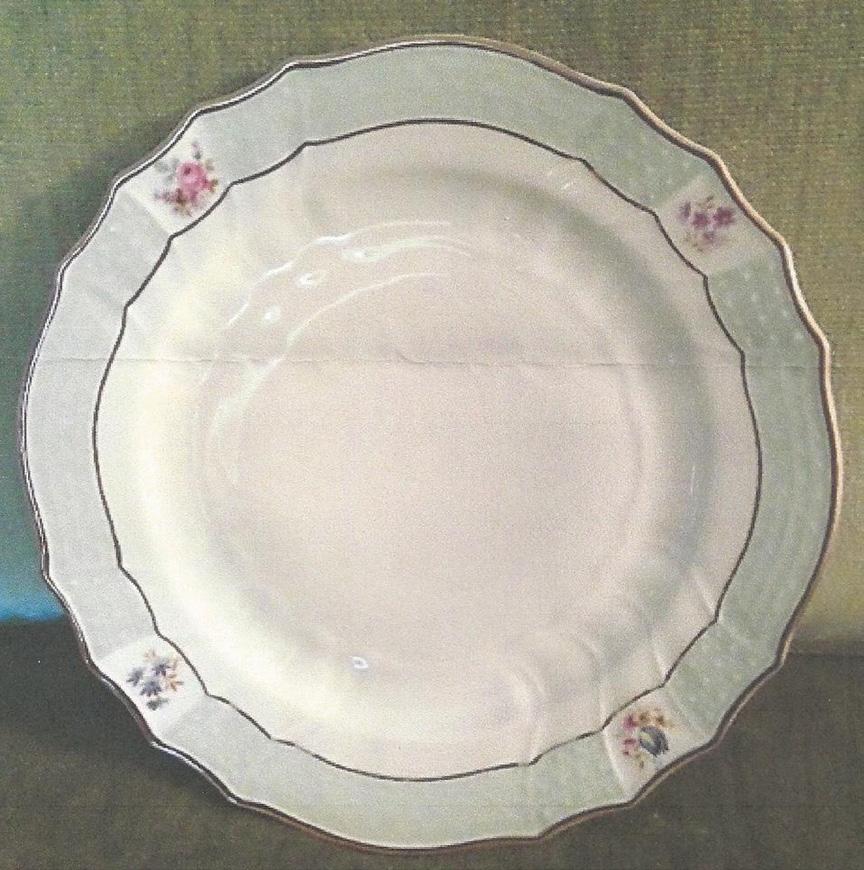
Q: This is a picture of one of the porcelain dinner plates in my set of china. The set is a service for 12 and includes two serving bowls (one is covered), two platters and a gravy boat. The borders are pale green and decorated with small bunches of pastel flowers. The scalloped edges are trimmed in gold.
My husband purchased the set when he was stationed in Wiesbaden, Germany, in 1957. Marked on the back of each piece are the words “Hutschenreuther -- Selb -- L. H. S. -- Bavaria -- Germany -- Dresden.”
I would appreciate it if you could tell me what my china might be worth.
A: Carl Magnus Hutschenreuther founded Hutschenreuther Porcelain Factory in 1814 in Selb, Bavaria, Germany. He discovered rich deposits of kaolin that were used to make fine white porcelain along the River Eger. They have made porcelain dinnerware, figurines, limitededition plates and a variety of decorative objects. Hutschenreuther Factory is still in business.
Similar sets of Hutschenreuther dinner-
Q: I have a question for you about antiques. I have a child-size porcelain tea set that is marked “Japan” in red. I have been told that porcelain from Japan that is marked in red has some value. It is hearsay, but I would like to know the truth. I have looked on the Internet and found nothing. I thought you might be able to help me.
The set always sat in a cupboard, was never played with and is in mint condition. I plan to keep my set, but would like to know its value and more about it.

A: You didn’t mention how many pieces are in your tea set or how old it might be. Usually a child’s set consists of four cups, saucers and dessert plates, and a cream pitcher, sugar bowl and teapot. If your set was made during the American occupation of Japan after World War II, some collectors believe dishes that have the red marks are more desirable and more valuable.
Porcelain tea sets for children are very popular collectibles. Similar porcelain service for four tea sets that were made during the occupation of Japan can be seen selling in the range of $50 to $75.
* * *
Antiques expert and columnist Anne McCollam has since retired and no longer receives inquiries nor answers reader letters. Due to the popularity of her column, this publication will continue to reprint previous columns of interest to our readers.
To find out more about Anne McCollam and read features by other Creators Syndicate writers and cartoonists, visit the Creators Syndicate website at www.creators.com
COPYRIGHT 2026 CREATORS.COM


* On May 18, 1974, India became the world’s sixth nuclear power after successfully detonating its first nuclear weapon, a fission bomb similar in power to the American atomic bomb dropped on Hiroshima in Japan. The test occurred on the anniversary of the Buddha’s enlightenment.
* On May 19, 1836, Cynthia Ann Parker, at about 9 or 10 years old, was kidnapped by Comanche, Kiowa and Caddo Native Americans in Texas. She was adopted into the Comanche tribe and later married a chief, by whom she had three children. Parker lived with the Comanches until Texas Rangers recaptured her and forced her to return to live among whites again.
* On May 20, 1506, Christopher Columbus died in Valladolid, Spain, at the age of 55, still erroneously believing that he had reached Asia. His last months were spent in poor health with what modern doctors suspect was Reiter’s syndrome, and making futile attempts to recover his titles and wealth from King Ferdinand.
* On May 21, 1994, the Flavr Savr tomato made its first appearance in grocery stores. Engineered to delay ripening, it was the first genetically modified food product approved for human consumption in the U.S. and was priced at 70 cents more per pound than its more conventional counterparts.
* On May 22, 2004, Michael Moore’s documentary film “Fahrenheit 9/11,” a sharp critique of George W. Bush’s foreign policy decisions, won the Palme d’Or, the top prize at the Cannes Film Festival.
* On May 23, 1783, following his own prediction that he would enter eternity courtesy of a lightning bolt, American Colonial patriot James Otis did indeed pass away when lightning found him as he stood in a friend’s doorway. According to the Boston Gazette, he “expired without a groan.”
* On May 24, 1915, Thomas Edison announced his invention of the telescribe, a device designed to allow businessmen to record telephone conversations by combining a telephone receiver with his phonograph. Though it was highly praised at first, it failed to catch on and was withdrawn from the market.
(c) 2026 King Features Synd., Inc
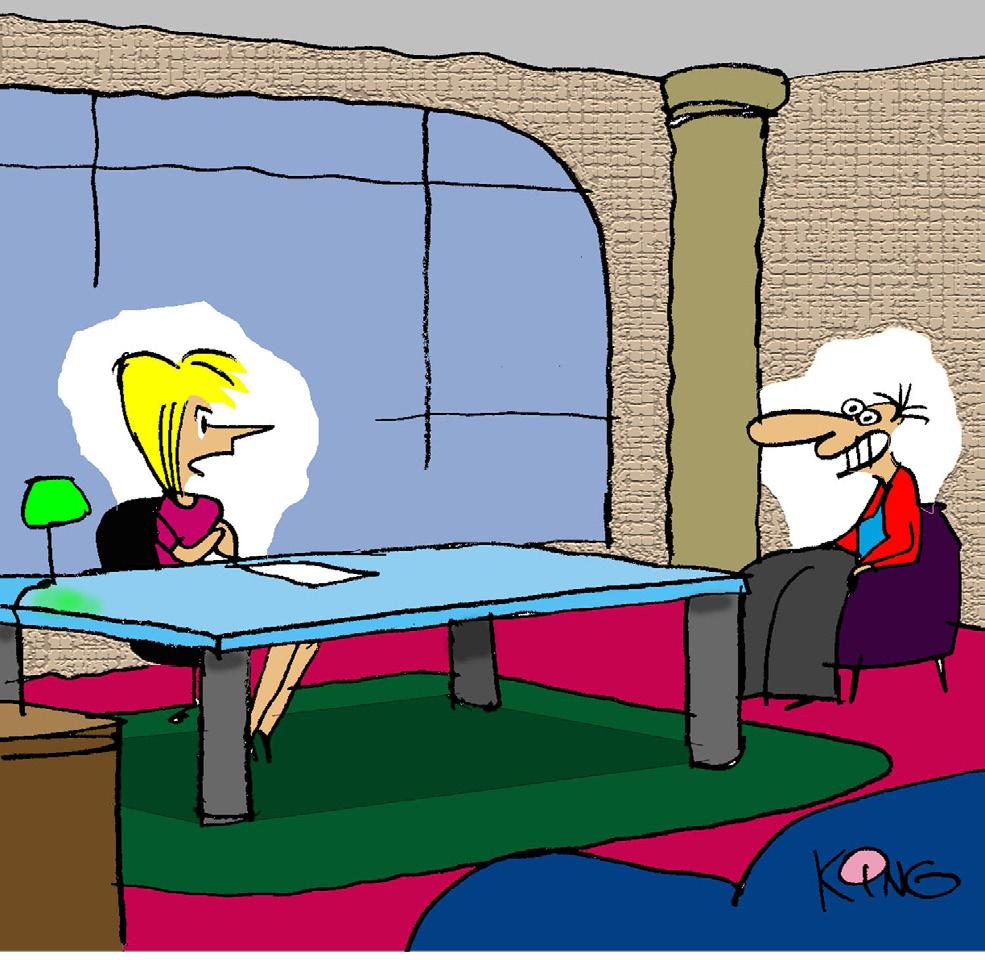
"You've been on the payroll now for a total of four hours, and now you're asking for a paid two-week vacation?"
Sugar & Spice: (from page 3)
homes, believing they would prevent misfortune. Bay leaves have anti-inflammatory and antioxidant properties, and have been used to treat congestion, digestive problems, and joint pain.
• Nutmeg is a warm, fragrant addition to pies, cakes, muffins, and cookies, as well as a colorful flavoring sprinkled on egg nog. It’s native to the tropical climate of Indonesia and has a long history of high cost along with versatility.
• The ancients used nutmeg, not only as a culinary agent, but also for indigestion, muscle aches, arthritis, and other pain reduction. It was even believed to be a cure for the plague in medieval Europe.
• When used in moderation, nutmeg is beneficial and tasty. However, nutmeg contains a chemical compound known as myristicin that can cause “nutmeg intoxication” when consumed in large amounts. Several harmful side effects include skin rashes and swelling, nausea, vomiting, dizziness, dangerously low blood pressure, elevated heart rate, difficulty in breathing, and even seizures, delirium, and hallucinations. High amounts of nutmeg can also interfere with certain medications. The small amounts usually used are totally safe.
• One of the earliest spices, cinnamon is mentioned many times in the Bible. It comes from the inner bark of Cinnamomum trees, which grow to 60 feet (18.3 m) high. The ancient Egyptians considered cinnamon more valuable than gold and used it for embalming mummies and in religious rituals. To the early Romans, cinnamon was a medicine valued as a treatment for digestive issues, coughs, and sore throats.
• Modern research has shown cinnamon to lower blood sugar levels and to reduce blood pressure. It’s been linked to a reduced risk of heart disease and lower cholesterol levels, as well as improvements in Alzheimer’s and Parkinson’s diseases.
• Cinnamon is not botanically related to frankincense and myrrh. While they are all aromatic tree products and historically traded together, they come from entirely different plant families and are harvested from completely different parts of the plant.
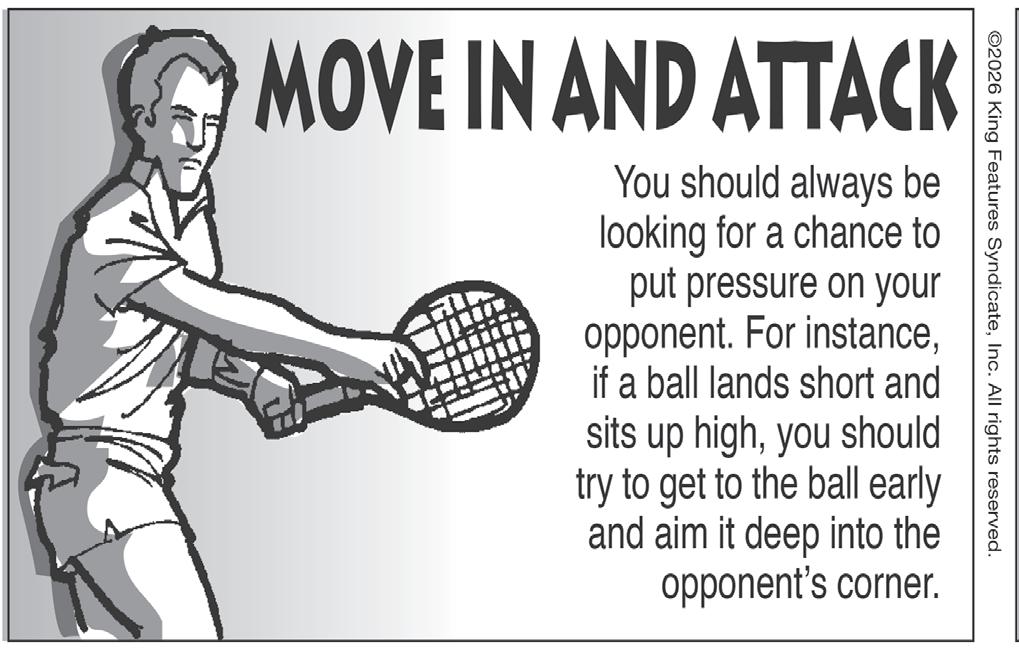
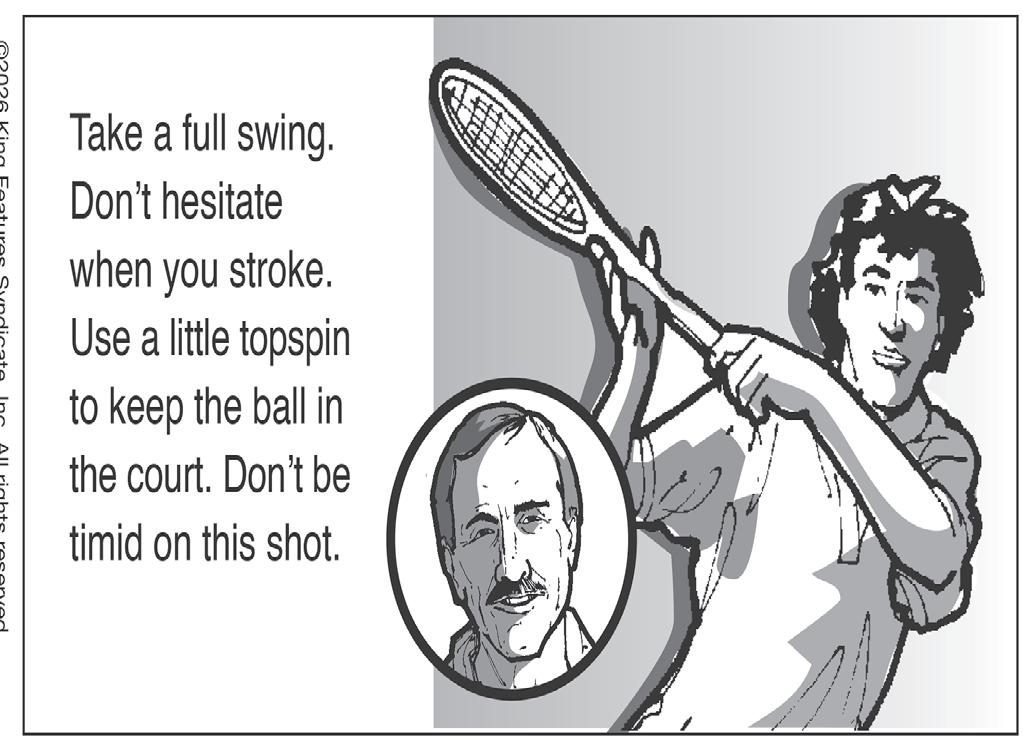
Give your golf-related advertising message targeted visibility in full color in this weekly 2” x 6” fixed location $159 per insertion reaches 70,000+ readers each week at the low cost of only $2.27 per 1,000 reader impressions!


by Jason Jenkins
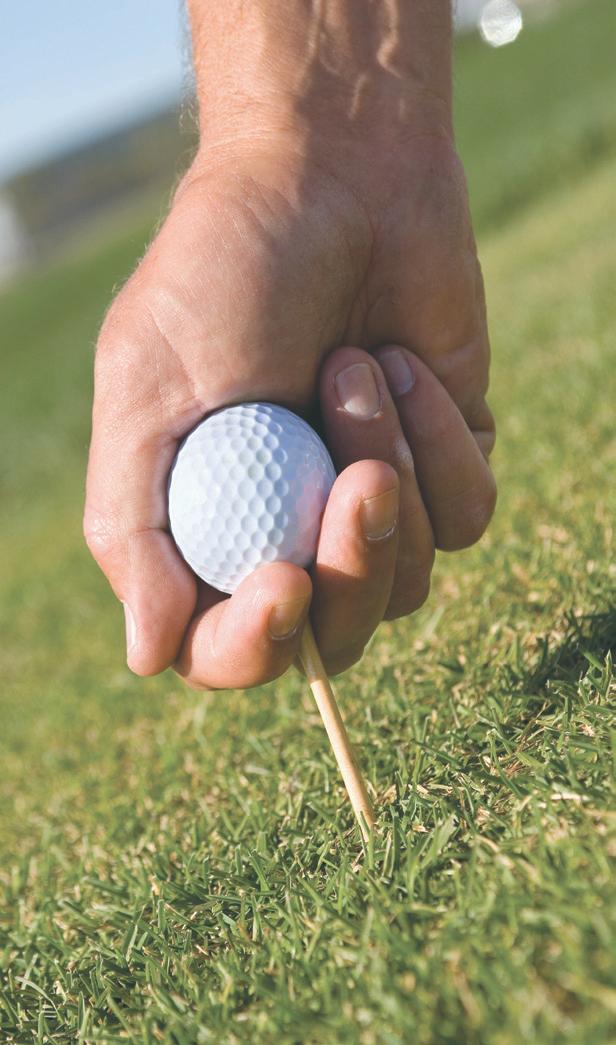
Hitting those sky high, short distance drives can be infuriating to the majority of golfers. Most golfers assume they’ve just teed the ball too high, but there are some more critical issues to attend if you struggle with this crisis.
The majority of “pop ups’ occur when the club is approaching on too descending of an angle of attack. The steepness of the approach causes the ball to hit the higher part of the club, thus creating the high, weak trajectory. Many golfers shift their upper bodies and heads toward the ball in the downswing creating a steeper angle of attack.
In order to improve the swing’s process, picture the bottom of the swing’s arc a few inches behind the ball. Focus on that space of the ground while making swings, which should keep your head and eyes behind the ball by impact.





actor/comedian starred in the movie “Uncle Buck” and died of a heart attack at 43?
actor/comedian starred in the movie “Uncle Buck” and died of a heart attack at 43?
by Linda Thistle
Answers
The idea of Go Figure is to arrive at the figures given at the bottom and right-hand columns of the diagram by following the arithmetic signs in the order they are given (that is, from left to right and top to bottom). Use only the numbers below the diagram to complete its blank squares and use each of the nine numbers only once.
1. Minsk.
2. “One Flew Over the Cuckoo’s Nest.”
DIFFICULTY:
3. Eris. 4. Femur. 5. Dwight Eisenhower. 6. Triangle. 7. The Book of Revelation. 8. Venus. 9. Oganesson (Og). 10. John Candy.