Vol. 22: #8 • French Connection • (2-15-2026) Tidbits of Coachella Valley
by Janet Spencer
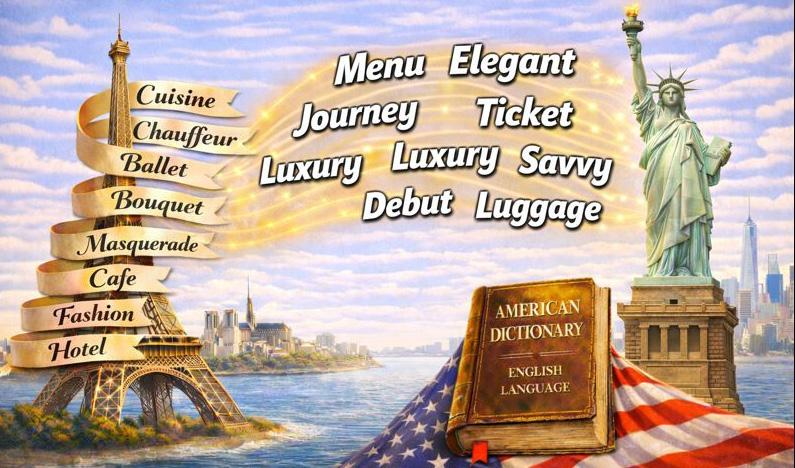
If you never bothered to take a language class in school, chances are you think your French vocabulary is little to none. And to that, mes amis, Tidbits says au contraire! In fact, a massive number of French words have entered the English language and, whether you know it or not, you use many of them every day. Itʼs estimated that 30% to 45% of the English vocabulary is of French origin. Follow along as we learn the surprising facts about how French bulldozed its way into the English language!
LE DÉBUT
• English is actually a conglomeration of various other languages. Some languages, such as Basque and Korean, were developed in isolation from other cultural influences and are uniquely independent. English, however, is a blend, composed primarily of German, Latin, and French, as these cultures were in constant contact.
• Linguists can pinpoint the exact date when the French invasion of the English language occurred, the point at which “Old English” began to morph
TRIV
(Answers on page 16)
1. GEOGRAPHY: What is the capital of Honduras?
2. FOOD & DRINK: What is the name of the Pillsbury Doughboy?
3. TELEVISION: In which state is the sitcom “Roseanne” set?
4. PSYCHOLOGY: What is the fear represented in the condition called arachibutyrophobia?
5. MUSIC: Which 1992 Radiohead song has the lyric “I wish I was special”?
6. MOVIES: Who is Indiana Jones’ nemesis in “Raiders of the Lost Ark”?
7. U.S. PRESIDENTS: Which president is known for giving the longest inauguration speech to date?
8. LITERATURE: “Cry, the Beloved Country” is a novel set in which country?
9. HISTORY: Which organization was awarded the Nobel Peace Prize in 1917?
10. ANATOMY: Which element is a primary component of bones?
Answers
1. Tegucigalpa. 2. Poppin’ Fresh. 3. Illinois.
Classic Games & Toys
Did you know that children's toys have played an important role in helping our soldiers during wartime? Here are some true tales about toys that served valuable purposes in the military.
• The Red Cross and other charities were allowed to send care packages to U.S. and British soldiers held in concentration camps throughout Europe during the Nazi occupation in WWII. The British Secret Service approached the manufacturer of the board game Monopoly and asked them to participate in aiding the POWs, and they agreed. Maps of areas surrounding the concentration camps were printed on silk and hidden in the game board. These could be folded without rustling and hidden in a cigarette pack. Small metal files and tiny compasses were also hidden in the game board. Real local currency was hidden under the Monopoly money. Chess sets and decks of playing cards were also used in this way.
• The Slinky, first released as a toy in 1945, swept the nation in the 1950s. During the Vietnam War, radio operators discovered that a Slinky, when attached to the radio and then stretched out over the highest branches of a tree, would act as an effective antenna. Experimentation found that the Slinky’s metal coils receive radio signals at a frequency between seven and eight megahertz, thereby extending the range. It was a simple task to drape the wire over branches, then quickly pull it down when moving out and storing the toy easily in a backpack.
• The ViewMaster went on the market in 1939. It was a popular item generally sold in souvenir gift shops, allowing adults to purchase an entire disk of 3D photos of the local landmark instead of having to buy individual postcards. During World War II, the military purchased over 100,000 ViewMasters and distributed them to soldiers, along with disks interspersed with pictures of enemy artillery and aircraft, making quick identification much easier.
Bill LeGrave Rolfing in the Desert (1 of 6) 1/8 pg BW 6x disc. Nov. 24, 2024
• When the Japanese cut off much of the world’s supply of rubber during WWII, General Electric
went to work trying to invent a substitute. One of the results was the accidental discovery of a rubber-like substance that became known as Silly Putty. Aside from being an amusing toy, Silly Putty has found several practical applications over the years. Astronauts had issues corralling their loose tools while in zero gravity because they would float away. The solution was Silly Putty. When a wad was plopped onto any surface, a tool could be affixed to the blob, staying in place while still being easily accessible.
• In 2011, Ernie Fessenden attached a wireless camera to a high-end remote control car and mailed it to his brother, who was stationed in Afghanistan. His brother, Staff Sgt. Christopher Fessenden, loaned it to a group of fellow soldiers who were going out on patrol. They used it to scout the road ahead of them for tripwires. The little car hit a tripwire and detonated, setting off over 500 lbs of explosives. The lives of six American soldiers were saved due to the sacrifice that the little car made. Today, remote control toy cars are often used for the same purpose.
• While attempting to invent an aerosol spray-on cast for broken bones, researchers accidentally invented a product now called Silly String. Distributed by Wham-O beginning in the early 1970s, the novelty was a big hit with kids. It also became a big hit with soldiers. In 2006, soldiers in Iraq were attempting to clear buildings of trip wires that triggered explosives. They found that Silly String, which could be launched for distances of up to ten feet, was light enough to hang on otherwise invisible wires without triggering the explosives. Today, Silly String is shipped to the front lines all around the world.
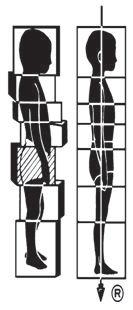
In a series of 10 sessions, Rolfing® actually changes the way your body is structured. You become straighter, taller, more graceful, flexible and free-moving. Possibly many aches and pains will disappear. How does this actually happen?
ROLFING:® How Does it Work?
We manipulate connective tissue called fascia, a type of body tissue that holds the body together and gives it shape. Fascial planes shape broad areas of the body. Dr. Rolf’s discovery was that if you put certain kinds of pressure on fascia, the shape of the tissue will change in a lasting way. She worked with a very firm level of pressure. Since then, we have found that lighter pressure combined with your movement makes the body reshaping occur quicker. Call to schedule an appointment or for a free consultation:
French Connection (from page one)
into “Middle English.”
• The turning point happened on January 5, 1066 A.D. That’s when King Edward the Confessor, who had ruled England since 1042, died. He left no heir to take over the throne. His cousin, William, lived in Normandy, the area of France directly across the English Channel.
• The word “Normandy” is French for “northman” referring to the “Norse” (which also means “north”) because the Vikings invaded and conquered this northern coast of France around the year 900 A.D.
WILLIAM le CONQUERANT
• William took advantage of the vacancy to invade England and seized the throne. Known as William the Conqueror, he took over in the year 1066 A.D. in what is called the Norman Conquest.
• His first move was to kick out every Englishman who was in a public office and substitute Frenchmen instead. Government officials were now French, military leaders were French, the clergy were French, and merchants were French.
• Now, if an Englishman wanted to communicate with the people in power, he needed to speak French. The powerful, the elite, the cultured, and the wealthy only spoke French. Eventually, speaking French became a symbol of status. Only the peasant class spoke English.
• It’s important to note that in a day and age when most citizens were illiterate, most of the upper echelon who were doing the writing and the record-keeping did so in French rather than English. Therefore, they were at liberty to discard English habits of speech and substitute the French method of language instead. This influence remains today.
• For example, the use of “thee” and “thou” declined, replaced with “ye” which morphed into “you” derived from the French “vous.”
• Some vocal sounds that French contributed to
English include the “g” sound in mirage (from the French word for mirror), the “v” in vacation (from the French word for vacant), and the “z” in zigzag (entirely French).
• French scribes removed the English “gg” and used “dg” instead: brigg became bridge. They used “gh” instead of a single “h” turning niht into night. The single “u” was replaced by “ou” turning huse into house. They removed the commonly used “cw” and substituted “qu” so cwen became queen -- because they also contributed the double vowel to signify a long vowel, such as “see.” It was the French who decided we should double up consonants after a short vowel, but not after a long vowel, so rather than have siting and seting we have sitting and setting.
PARLEZ-VOUS FRANÇAIS?
• It was during this French rule of England that the letter “H” started dropping from the beginning of words. The French aren’t big on the “H” sound when it starts a word and many English accents followed suit. This is why we now have a silent “H” in words like hour and honor, and why some British say “an hotel” or “an historic place” as if the word started with a vowel and the H wasn’t there at all.
The word "sautÉ" is French, meaning "jumped" or "bounced," because the cooking technique involves tossing the food in a hot pan, causing it to jump due to the sizzle of hot oil. SoufflÉ comes from the verb meaning to puff up or inflate. The word cuisine is French for kitchen.
• The French introduced the impersonal “one” meaning that phrases such as “one does as one wants” which sounds thoroughly English but is actually totally French.
• The French influence is why we now have an English word for animals when they’re alive (cow, sheep, deer) and a French word for them when they’re dinner (beef, mutton, venison). Peasant class English dealt with these animals on the farm while the cultured French Normans encountered them when served for dinner from the chefʼs cuisine.
• Interestingly enough, all the words for our closest family members are English: mother, father, daughter, son; while all the words for more distant relations are French; niece, nephew, aunt, uncle, cousin.
• The French influence is particularly strong in areas such as government and politics. Crown, state, government, parliament, authority are all
French. It’s also prevalent regarding law; justice, crime, jury, evidence, parole. Military affairs are also largely French in origin: army, navy, battle, regime, captain. Religion is also full of French, including the word religion itself, as well as sermon, saint, and abbey. And because the French were very fashionable, we now have the French-derived gown, robe, satin, and embroidery.
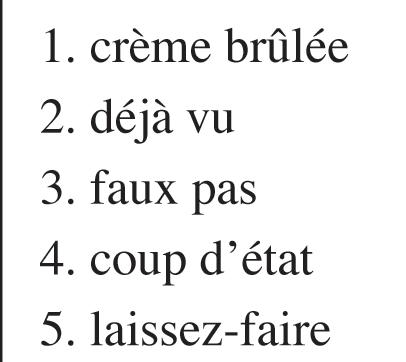
• Many French words are still spoken as the French would: corps, ballet, filet.
French Connection: Turn to page 15
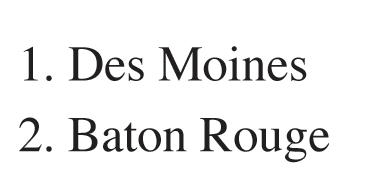
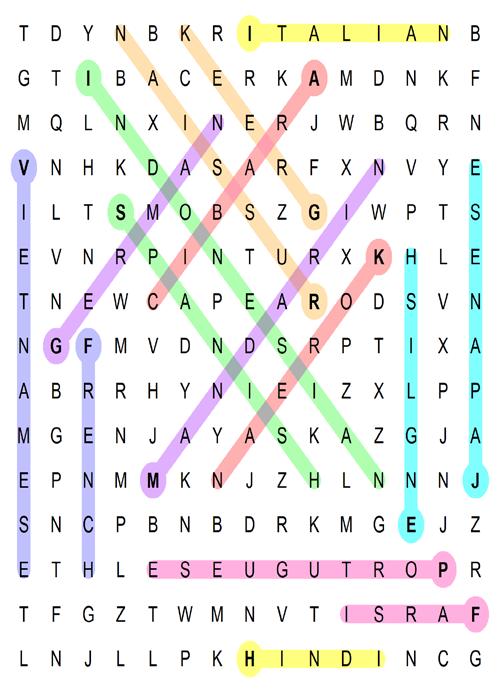
1. What Iowa city name meaning "of the monks" refers to missionaries?
2. What Louisiana city's name means "red stick" referring to a boundary marker?
skinny thing. For example, baguette magique (magic wand), baguettes chinoises (chopsticks), or baguette de direction (conductor's baton). But baguette all by itself denotes a loaf of bread shaped like a stick.
CLIP AND SAVE
By Lucie Winborne
* The cubicle got its name from the Latin “cubiculum,” meaning bed chamber.
* Harriet Tubman was the first woman to lead a U.S. military raid.
* Java junkies, take note: The American Psychiatric Association’s DSM-5 handbook classifies caffeine withdrawal as a mental disorder.
* A newborn blue whale gains about 200 pounds a day during its first year.
* Jim Henson made his first Kermit puppet using his mother’s old coat and two halves of a ping-pong ball.
* Sometimes it snows on Mars, but the snowflakes are made out of carbon dioxide, not water. The flakes don’t fall, but create a fog-like effect.
* Australia is home to approximately 170 kinds of snakes, including some of the world’s most venomous. The good news? Snake bites aren’t common and are rarely fatal. One study estimated that snake bites account for just two deaths per year in Australia.
* Scottish band the Bay City Rollers chose their name after sticking a pin in a map of America, which landed on the city Michigan.
* Actor Benedict Cumberbatch is the second cousin, 16 times removed, of King Richard III, whom he portrayed in the 2016 BBC miniseries “The Hollow Crown.”
* Members of the Secret Service’s Presidential Protection Division always travel with bags of blood in the motorcade in the event a transfusion is needed.
* One of Walt Disney’s first art jobs was drawing cartoons for a local barber in exchange for haircuts. ***
Thought for the Day: “Friends are the siblings God never gave me.” -- Mencius
by Mary Hunt
Debt Consolidation -Good Solution or Terrible Mistake?
Statistics indicate that the person who consolidates to a new loan will enjoy zero balances for a short time but will eventually charge them back to all-time highs. The average time is two years. That means double the trouble because of the debt consolidation loan.
So are all debt-consolidation loans offlimits? No, but they should enter with extreme caution and a great deal of consideration. Before proceeding with any debt-consolidation loan, make sure you get honest answers to these hard questions:
Everyday CHEAPSKATE®
by Mary Hunt
To the person drowning in debt, a debtconsolidation loan looks like a lifesaver. But reaching for it without knowing exactly what it’s made of could be a severe mistake.
The way it’s supposed to work: You pay off all your small high-interest consumer debts with the proceeds of a new low-interest loan whose payment is less than the total of the smaller payments.
In theory, consolidation is a terrific solution for a burdensome debt situation. In reality, it can force you to wade into even more treacherous waters.
There are three ways to consolidate:
No. 1: A new low-interest signature (unsecured) loan from an individual, bank or credit union. If you can get it, this type of debt consolidation is ideal.
No. 2: Transferring all of the balances to a new credit card. Beware of excessive transfer fees or other troublesome conditions buried in the fine print. The interest on credit cards is always subject to increase, even when it is advertised as a “fixed rate.”
No. 3: A home-equity loan. It sounds great to pay off your high-interest debts with money borrowed against your home’s equity. But this only increases the stakes. Now if you fall behind, the lender takes your home through foreclosure.
There is one more significant danger that all of these consolidation loans have in common: I call it the “doubling effect.” If you’ve ever lost 10 pounds and gained back 20, you’ll understand right away.
Most people who pay off all their pesky credit card balances look at those zero balances with a sense of personal accomplishment. They’ve done something remarkable. They didn’t repay their debts, but they enjoyed pretending. They say they won’t use those accounts again but they fail to close them. They leave them to “build credit” or to provide a cushion -- just in case of emergency.
No. 1: Is the total consideration of the debt-consolidation loan (principal and interest), not only the monthly payment, less than the consideration combined for all the debts it will pay off?
No. 2: Are the terms reasonable? If, for example, the new loan or credit card carries significant penalties -- like you lose the attractive interest rate if you are late one or two times -that is not reasonable. If you must pay a big loan origination fee, that is not reasonable.
No. 3: Am I mature enough to cancel the accounts that will be paid off in the consolidation process?
Except in extreme cases, the best way to face a load of unsecured consumer debt is to stop adding to it. Develop your payback plan -- and then buckle down and get to work! You’ll be amazed at how quickly you can reverse your debt situation once you know exactly when you will be debt-free.
* * *
Mary invites questions and comments at https://www.everydaycheapskate.com/contact/, “Ask Mary.” This column will answer questions of general interest, but letters cannot be answered individually. Mary Hunt is the founder of EverydayCheapskate. com, a frugal living blog, and the author of the book “Debt-Proof Living.”
COPYRIGHT 2026 CREATORS.COM
Advertise in Tidbits.
(c) 2026 King Features Synd., Inc.
• Kanzi is believed to be the first non-human great ape to understand and comprehend spoken English. Week of February 15, 2026
• The bonobo, also called the pygmy chimp or dwarf chimp, is a type of primate that’s known for being good-natured. One particular bonobo named Kanzi was born into captivity in 1980. He was immediately snatched up and adopted by the reigning bonobo matriarch of the group, Matata. Matata had been captured in the wild.
• Matata was entered into a study to see if she could be taught to communicate using symbolic pictures called lexigrams. While attending the teaching periods, her adopted baby Kanzi was looking over her shoulder. Matata had difficulty and failed to pick up the language. But one day Kanzi suprised the researchers by suddenly using the keyboard lexigrams himself in a way that indicated he understood.
• On that very first day, he used the keyboard in 120 different ways, indicating the food he wanted to eat or the games he wanted to play. He’d touch the symbol for “grape” and then pull the grapes out of the fridge. He touched the sign for “apple” and then “chase” and then grabbed an apple and scampered away with it in a game of keep-away.
• Amazingly, Kanzi eventually mastered almost 400 symbols in all and even understood rudimentary word order. Later, it became apparent that he had also picked up a basic understanding of spoken English. In carefully controlled experiments, researchers proved over and over that Kanji could undertand many individual words as well as basic sentences. He was even able to follow spoken instructions— even when they were issued over the phone. When told, “Fetch the carrots on the table in the kitchen and put them in the bowl in the living room” he obeyed perfectly, while ignoring other carrots and other bowls in the same proximity.
• Kanzi also picked up signs from American Sign Language from watching videos of Koko the gorilla. Researchers did not teach Kanzi sign language, but merely showed him videos of Koko signing in order to amuse him. He quickly began signing, completely unprompted, and went on to learn many signs.
• In a test that pitted Kanzi against a two-year-old human girl, they were each given 660 simple spoken instructions asking them to use various objects in different ways. Kanzi completed these tasks correctly 74% of the time, while the child did them correctly 65% of the time. When asked, “Feed the ball some tomato” the child was completely flummoxed, but Kanzi picked up a toy pumpkin and mimed feeding it a tomato. In addition to the 400 lexigrams, Kanzi understood about 3,000 spoken words.
• Children start to utter two-word sentences between 18 and 24 months. Kanzi reached the two-word sentence limit, and never grew very much beyond that. He could understand complex sentences, but not craft them himself.
• Researchers would hide a grape under a cup, then ask Kanzi, “Where’s the grape?” If the researcher was present when the grape was
being hidden, Kanzi would not respond because he was perfectly aware that the researcher knew where the grape was. However, if the researcher had been absent during the grape-hiding, Kanzi would quickly point to the correct cup.
• Kanzi was perfectly capable of gathering wood, striking a match, starting a fire, and cooking scrambled eggs or toasted marshmallows. Researchers taught him to craft crude flint knives by striking two stones together, but Kanzi preferred the easier method of hurling stones at the ground, causing them to crack into pieces. He then learned to use the stone tools to cut a rope to retrieve a treat. He enjoyed playing PacMan and a simplified version of Minecraft.
• Kanzi died at age 44 in March of 2025, likely of heart disease. He was a happy, gregarious bonobo who enjoyed interacting with humans, and spent his last morning being his usual joyous self, playfully chasing other bonobos and
relishing the day’s enriching surprises.
Tidbits of Coachella Valley
by Dana Jackson
Q: Is it true that Paul Bettany was supposed to be on “The Crown”? Who was he going to play, and who replaced him? -- L.J.
A: Yes, this is true. In an interview with “Prima” magazine, actor Paul Bettany stated that before the third season of the popular Netflix series “The Crown” premiered, he was in talks to play Prince Philip opposite Oliva Colman’s (“The Roses”) Queen Elizabeth. However, due to scheduling conflicts, likely with his role as Vision on another popular show -- Marvel’s “WandaVision” -- they couldn’t come to an agreement. Instead, Tobias Menzies (“F1”) was cast as the prince.
It all worked out for both actors. Menzies’ exposure on “The Crown” led him to star in the recent Oscar-nominated film “F1,” and Bettany is starring in “VisionQuest,” the upcoming limited series about Vision’s path to recovering his memory and humanity. The final season of “The Crown,” its sixth, aired in 2023, and the show boasts 24 Emmy
1. Send Help (R) Rachel McAdams, Dylan O’Brien
2. Iron Lung
(R) Mark Fischbach, Caroline Kaplan
3. Melania (PG) Melania Trump, Hervé Pierre
4. Zootopia 2 (PG) Ginnifer Goodwin, Jason Bateman
5. Avatar: Fire and Ash (PG-13) Sam Worthington, Zoe Saldana
6. Shelter
(R) Jason Statham, Bodhi Rae Breathnach
7. Mercy (PG-13) Chris Pratt, Rebecca Ferguson
8. The Housemaid (R) Sydney Sweeney, Amanda Seyfried
Q: I was sad to hear that Prue Leith has quit hosting “The Great British Bake Off.” Will the show go on? Is Paul Hollywood still staying? -- U.C.
A: Alas, Prue Leith and her colorful eyeglasses are retiring, but it’s understandable since, as she explained, she’s 85 years old! You might not remember this, but Leith also replaced one of the original judges Mary Berry. Both ladies were loved by audiences, and hopefully Preith’s successor will be welcomed by audiences just as much.
Nigella Lawson has been tapped as the newest host in the big white tent. Lawson is familiar to American audiences for her shows on the Food Network such as “Nigella Bites” and her many cookbooks. She will join co-hosts Paul Hollywood, Alison Hammond and Noel Fielding on set when filming begins this April. Expect to see these episodes on Netflix later in 2026. ***
Q: I love Tracy Morgan’s new comedy “The Fall and Rise of Reggie Dinkins.” I don’t know anyone else who watches it, and I’m worried that it’ll get canceled. How are its ratings? -- L.D.
A: Gone are the days when NBC comedies drew ratings like “Friends” did back in the ‘90s with an average of 25-40 million viewers. This was before competition from streamers, so expectations are now much lower for network sitcoms.
However, when comparing it to other new
comedies, “The Fall and Rise of Reggie Dinkins” has started off quite well, drawing in 5.8 million viewers for its premiere episode. It also streams on Peacock, which certainly gives it another boost.
In comparison, “Stumble,” another new NBC comedy that’s a hidden gem, is unfortunately averaging less than 2 million viewers per week. Season two of “St. Denis Medical,” also on NBC, hovers around 2.8 million watchers.
One big advantage that “Reggie Dinkins” has is that it was created by Robert Carlock and Sam Means, who are two writers and producers from hilarious sitcoms like “30 Rock” and “Unbreakable Kimmy Schmidt.” Stars Tracy Morgan and Daniel Radcliffe (of the “Harry Potter” franchise) have been busy promoting the show, even attending New York Knicks games together. * * *
Send me your questions at NewCelebrityExtra@gmail.com.
(c) 2026 King Features Synd., Inc.
Paul Bettany as Vision in “WandaVision
Good Recipes from
Charred Shrimp and Avocado Salad
Turn up the tropical vibes with pineapple, avocado and shrimp.
2 1/2 pounds large peeled and deveined shrimp
5 tablespoons olive oil
Kosher salt
Pepper
1/2 small pineapple, peeled, trimmed and sliced 1/2-inch thick
2 tablespoons fresh lemon juice
1/2 small red onion, thinly sliced 1/2 English cucumber, sliced into halfmoons
1/2 bunch Upland watercress
1 avocado, quartered
1. Toss shrimp with 2 tablespoons oil and 1/2 teaspoon each salt and pepper. Heat grill pan, grill or broiler. Brush pineapple with 1 tablespoon oil. Grill or broil (in batches on rimmed baking sheets) until pineapple is slightly charred and shrimp are opaque throughout, about 3 minutes per side on the grill or 6 to 8 minutes in broiler (rotating pan and turning food over halfway through).
2. Meanwhile, in large bowl, whisk together lemon juice, remaining 2 tablespoons oil and
1/4 teaspoon each salt and pepper. Toss with onion.
3. Cut grilled pineapple into smaller pieces. Add to bowl with onion along with cucumber and shrimp and toss to combine. Fold in watercress and avocado. Makes 4 servings.
Here’s a cool way to celebrate the start of raspberry season.
2 to 3 lemons
3/4 cup sugar
3 cups water 1 pint raspberries
1. From lemons, grate 1 teaspoon peel and squeeze 1/4 cup juice.
2. In 1-quart saucepan, heat sugar, lemon peel and 1 1/2 cups water to boiling over high heat, stirring to dissolve sugar. Remove saucepan from heat; stir in raspberries. Cool sugar syrup to room temperature.
3. In food processor with knife blade attached, blend mixture until pureed. With back of spoon, press puree through sieve into bowl; discard seeds. Stir in lemon juice and remaining 1 1/2 cups water. Pour into 13-by-9-inch metal baking pan.
4. Cover and freeze mixture about 1 1/2 hours or until frozen around the edges. With fork, scrape ice, mixing it from the edge to the center. Repeat process about every 30 minutes or until mixture turns into ice shards, about 1 1/2 hours.
5. Serve granita right away, spooning shards into chilled dessert dishes or wine goblets. Or, cover and freeze up to 1 month. To
serve, let stand about 5 minutes at room temperature to soften slightly. Makes about 8 cups, or 16 servings.
* Each serving: About 45 calories, 0g protein, 11g carbohydrate, 0mg cholesterol, 0mg sodium, 1g fiber.
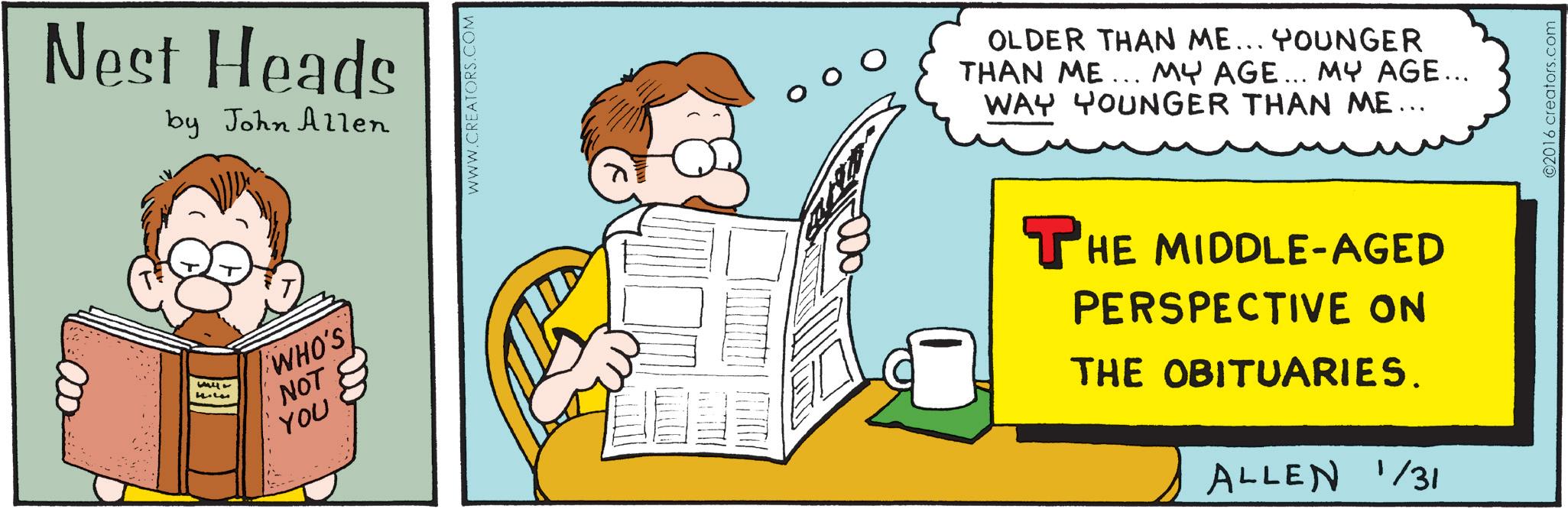
By John Allen
by Brett Koth
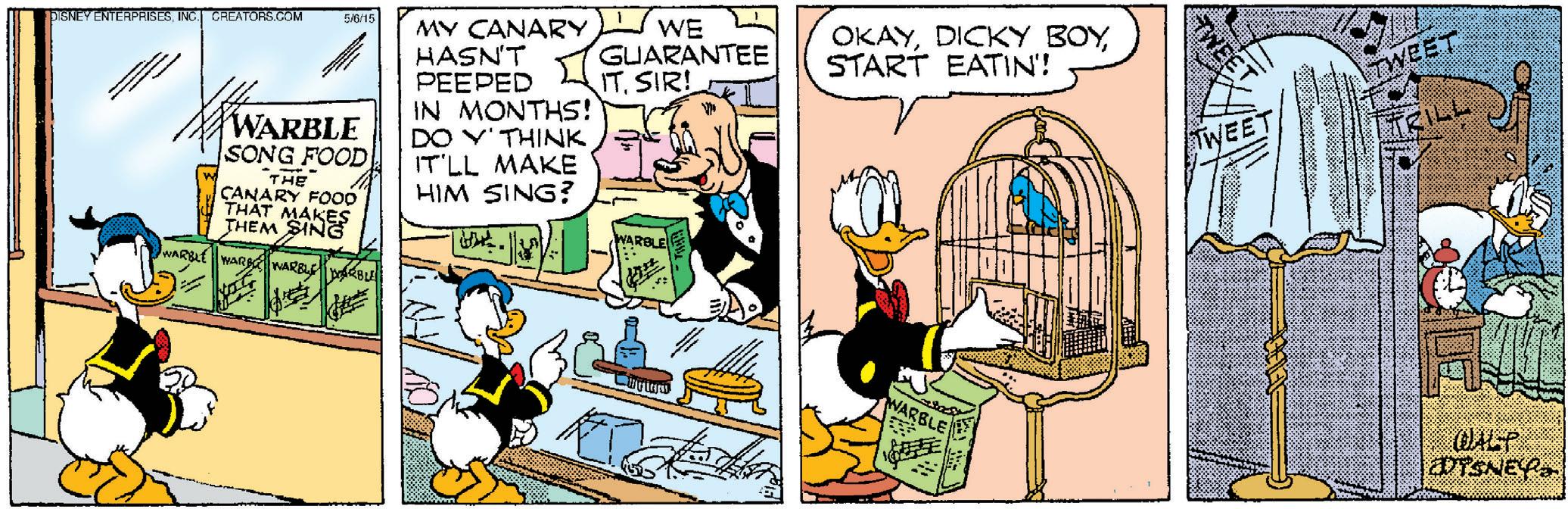
Donald
Children's Books
Holidays & Observances This Week
2/15 Daytona 500
2/16 Presidents Day
2/17 Mardi Gras
2/18 Ash Wednesday
2/19 Iwo Jima Day
2/20 National Caregivers Day
2/21 Birkebeiner Cross Country Ski Race
Dog Talk with Uncle Matty
By Matthew Margolis
Fire-Proof Your Pets
California is famous for more than its Hollywood roots and sun-drenched beaches. It’s famous for its fires. Monstrous, majestic, devastating -- California wildfires are often unfathomable feats of nature, at times triggered by inglorious acts of man.
But then there are the accidents waiting to happen, as was the case with the “Pack Rat” house fire in Riverside, Calif.
Riverside firefighters were first called to the home by a neighbor who reported heavy smoke coming from the home. They found the kitchen engulfed in flames, along with a back porch area that had been turned into a kennel. Fourteen Lhasa Apsos died, presumably of smoke inhalation.
Later that night, fire crews were called back to the home as the flames rekindled. The remains of 11 more dogs were discovered after the second fire.
Firefighters told KTLA they had “access problems in every room due to the ‘extreme clutter’ inside the house.” The Riverside Fire Dept. reported, “All but the living room is full, ceiling-tofloor, wall-to-wall, with collected junk.” The kennel conditions matched those of the house, with dogs stacked in cages, one on top of the other.
The jaw-dropping circumstances that led to this fire and its many casualties indicate a lack of mental health on the part of the owner. But kennel fires happen even with the most stable at the helm. In Excelsior Springs, Kansas, firefighters and a kennel owner snatched 16 dogs from a dire fate as flames engulfed the boarding facility and a neighboring business. In the words of kennel owner Barbara Baldridge, “If we would have been any later, there probably would not have been any dogs left.”
Fires, of course, can ignite anywhere. A 2-year-old Labrador named Duke was rescued by firefighters when his normally quiet home went up in flames in Lubbock, Texas. The family had been grilling the night before, and a smoldering embers are thought to be the cause of the blaze.
In each of these fires, the dogs involved were home alone, with no way out.
I received a text message from a company I do a lot of business with, this time thanking me for my recent order and saying the automatic payment would be made that night as soon as I verified one missing piece of information.
I hear from them frequently, and have for many years. When I heard from them again, in that text message on my phone, I didn’t think much about it at first. I went to press the link in the message ...
Wait, I said to myself, that company doesn’t have my cellphone number. They've never asked for it and I've never given it to them. They only have my email address. They couldn’t have sent me the text message. At the last moment I jerked my hand away and did not click that link.
Instead, I called the company in question and asked if they had sent a text message to me about an order. No, they said. Now beginning to panic, I asked to speak to someone in the fraud department.
Home Sweet Home
We are all familiar with the saying “Home Sweet Home,” but what does it mean? It varies greatly from person to person. What is comfortable and stylish for one person is not for another.
While it is fascinating to find out how people truly live, it is hard to discover. Once hired, I sometimes resort to an unannounced visit. Some might consider it rude, but it is effective for me -- and you’ll see why.
There is nothing I love more than to pay unannounced visits to my clients and friends -- and no, not because I am doing a “mother-in-law’s” housekeeping visit. Lord knows the only housekeeping that I know how to do is the one that I hire. I love these visits because they are spontaneous -- or at least I make it seem that way -- and you can actually see how people live and use their spaces, without them taking time to show you the way they’d like to live.
The man on the other end of the call was professional, quickly firing off a lot of questions, but most especially asking if I had clicked the link. No. After asking several more questions, he determined that I was safe -- this time. He complimented me on using wise judgment and wished more people were as alert to these things as I apparently am.
The moral of this little story is, for me, to slow down! I was all too willing to jump right ahead with what I thought was a genuine text message from a company I know. I won’t make that mistake again. I also blocked that number from ever ringing my phone again.
Some hints:
Do not do banking or any kind of internet business on your cellphone.
Use a throwaway email address for the times you are in contact with companies who ask for it.
And most of all, do not click any links in text messages unless you are one hundred percent certain you know and trust who sent the message.
The crooks are out there waiting for you to bite on their phony bait. Stay alert!
Matilda Charles regrets that she cannot personally answer reader questions, but will incorporate them into her column whenever possible. Send email to columnreply2@gmail.com.
(c) KingFeaturesSyndicate2025
and can be considered intimate territory. So what if your teenage daughter loves to plaster the walls of her bedroom with adhesive tape, your livein mother-in-law is determined to move all your accessories around the house or your husband sleeps in another room? When you are working with an interior designer, it is time to be bitterly honest about your household. This is not the time for keeping up appearances.
Creating you home sweet home is not unlike buying an haute couture gown or having a custom suit made. Rather, it requires a little patience and some time for modifications so it can fit you like a glove.
This always reveals the unedited version. I always take away something from these visits and learn something about my clients to better assist them. As a designer, I never try to impose a lifestyle on clients but rather define and refine their own style that they already have.
Your lifestyle is what should define your decoration. Working with a designer, a client enters into a relationship where it is expected that you divulge information that is somewhat private
Whatever your design style is, the design has to function for the particular needs of you and your family. This might mean letting go of conventional concepts of a household. For example, if you eat out all the time, maybe you forgo a formal dining room. Your designer should always be your sounding board for ideas -- good and bad -- and steer you in the right direction. Somewhere between their advice and your needs lies the best answer for your design.
My favorite quote about being sincere about your design needs is from Dr. Seuss: “Be who you are and say what you feel because those who mind don’t matter and those who matter don’t mind.”
* * * Joseph Pubillones is the owner of Joseph Pubillones Interiors, an award-winning interior design firm based in Palm Beach, Florida. To find out more about Joseph Pubillones, or to read features by other Creators Syndicate writers and cartoonists, visit the Creators Syndicate website at www. creators.com.
COPYRIGHT 2025 CREATORS.COM
Corner (from page 9)
alone from time to time, take the time to fire-proof your home to the extent it’s possible:
-- test smoke detectors monthly
-- maintain your clothes drier, keeping the lent trap clean, as well as the areas below and behind the drier
-- fully extinguish smoking material
-- unplug coffee makers and irons
-- double-check that stoves, grills and ovens are turned off
-- store flammable chemicals in separate sealed containers
-- sweep up and dispose of wood chips and sawdust, which are flammable
-- don’t overload power outlets or chain extension cords
-- unplug tree and house lights during the holidays
-- don't leave lighted candles unattended
-- keep areas around gas heaters and water heaters clear, especially of flammable items
Also, post a Pet Alert on your front and back porches. These stickers or static clings include a place for you to fill in the number and kind of pets living in the house. This alerts firefighters to the presence of your pets.
Finally, before leaving your dog at a kennel or boarding facility, find out whether the dogs receive 24-hour supervision or if there is anyone on duty at night. Often, especially with veterinary boarding, there is no one available after hours. It is up to you to decide whether you are comfortable with those circumstances, but know that dogs left alone in cages are extremely vulnerable to catastrophic events like fire.
To riff on Smokey Bear, only you can protect your pets.
Woof!
* * * Dog trainer Matthew “Uncle Matty” Margolis is the co-author of 18 books about dogs, a behaviorist, a popular radio and television guest, and the host of the PBS series “WOOF! It’s a Dog’s Life!” Read all of Uncle Matty’s columns at www.creators.com, and visit him at www.unclematty.com.
COPYRIGHT 2014 CREATORS.COM
YOUR SOCIAL SECURITY
by Tom Margenau
Some Oddball Questions
As I’ve pointed out before, I usually find myself answering the same questions over and over again. But I’ve saved up a couple of oddball questions -- and here they are. But first, I want to make it clear I am not calling the people who emailed me the questions “oddballs.” However, I am saying the questions they asked were odd -- or at least out of the ordinary.
Q: I recently signed up for my Social Security after working for more than 40 years. I’ve often wondered this. I know that once you have 40 quarters of coverage, you are eligible for Social Security retirement benefits. I bet I had those 40 quarters way back when I was maybe 30 years old. Could I have quit working back then and still gotten a Social Security benefit someday? And if so, why didn’t I just do that?
A: Interesting questions. Before I answer them, let me clarify a term for some readers. You talked about “quarters of coverage.” That’s an old term that hasn’t been used in years. Younger readers might know that as “credits.” And here is why. When Social Security first started, the law said that if you worked and paid Social Security taxes on earnings of $50 or more within a calendar quarter (January-March; April-June; etc.), you got one “quarter of coverage” applied to your Social Security account. And then the law further said that once you had 40 of those quarters, you were then “insured” for Social Security retirement benefits.
But about 50 years or so ago, they did away
The book of
with the calendar quarter business and changed the rules to say you got one “credit” for each specified amount of money you made, not to exceed four credits in one year. That specified amount goes up slightly every year. For example, in 2026, you get one credit for each $1,890 you earn. But again, no more than four credits can be earned in a year. So that means in 2026, once you make $7,560, you have earned the maximum four Social Security credits you can get.
Here is an interesting way of looking at that. For most of us, that means you probably have to work about a month or more before you earn four Social Security credits. But for a billionaire like Elon Musk, for example, he probably earns his four credits five minutes after he walks into his Space X offices on Jan. 2 of each year!
OK. So that clarifies why “quarters of coverage” and “credits” are the same thing. Now, to answer your question about quitting at age 30 and getting your Social Security.
You could potentially do that. But you would end up with an awfully small Social Security benefit. That benefit will be based on your average income over your highest 35 years of earnings. So if you end up with only 10 years of earnings on your record, that means they would have to factor 25 years of “zero” earnings into your Social Security computation. And that would drag down your average earnings, and thus your Social Security benefit, to a very low amount.
Q: My wife and I are both in our late 50s and starting to think about Social Security. I have had well-paid jobs all my life and always paid the maximum into Social Security. My wife spent a big chunk of our 35-year marriage staying home and taking care of the kids. She just barely has her 40 quarters. Can I take the next 10 years or so, transferring my earnings to my wife’s Social Security record, thus building up her Social Security account? I figure we could do this because we file a joint tax return.
A: You can’t do that. How you file a tax return has nothing to do with the assignment of Social Security earnings to individual records.
still nothing has happened! Can you help me?
A: I can help you by telling you to stop obsessing over this and to stop wasting money on lawyers. Even if you got those old earnings added to your Social Security records, they wouldn’t increase your benefit by a single nickel. Why? Because your retirement benefit was based on your highest 35 years of earnings. And for most people, their highest 35 years are their last 35 years. You said you filed for retirement benefits when you were 66. So it’s a pretty good bet that your original Social Security benefit was based on your earnings between ages 31 and 66. So that means any earnings you had before that, especially the paltry money you made as a teenager, would never be used in your retirement benefit calculation.
One other note. You said you just stopped working at age 73. There is a pretty good chance that each year’s worth of earnings you had between age 66 and 73 bumped up your benefit by a little bit. How and why that happens is WAY too complicated to explain in what’s left of today’s column. But if you get my book, “Social Security - Simple and Smart,” there is a whole chapter that explains how earnings after retirement may (or may not) increase your Social Security benefit.
If you have a Social Security question, Tom Margenau has two books with all the answers. One is called “Social Security -- Simple and Smart: 10 Easyto-Understand Fact Sheets That Will Answer All Your Questions About Social Security.” The other is “Social Security: 100 Myths and 100 Facts.” You can find the books at Amazon.com or other book outlets. Or you can send him an email at thomas.margenau@comcast. net. To find out more about Tom Margenau and to read past columns and see features from other Creators Syndicate writers and cartoonists, visit the Creators Syndicate website at www.creators.com.
2. From Daniel 3, who saw four men walking around in the fiery furnace? a) Belshazzar b) Solomon c) Dairus d) Nebuchadnezzar
3. In 2 Kings 9, whose dead body was eaten by dogs after being thrown down from a high window? a) Hezekiah b) Joash c) Jezebel d) Esther
4. With whom did Lot fully escape the doomed city of Sodom? a) Wife b) Two daughters c) Two sons d) Entire family
5. From the book of Genesis, who was the wife of Joseph? a) Elisabeth b) Tamar c) Asenath d) Taphanes
6. What does the name "Naomi" mean? a) Pleasant b) Beautiful star c) Blessed gift d) Holy woman
on page 16)
And even if you could do such a thing, you wouldn’t want to do it. Why? Because your wife will end up getting higher Social Security benefits as a spouse on your record than she ever would get on her own account. Let’s say your benefit will be $4,000 per month and your wife’s own small retirement benefit will be $500. Assuming you start benefits at your full retirement age, she would be due a spousal benefit of $1,500 on your account to supplement her own $500 benefit.
Now, let’s say you were able to give some of your earnings to your wife for several years. That might boost her own benefit to maybe $800 per month. But she is still going to end up with $2,000 in total benefits ($800 on her record and $1,300 from you). So why bother trying to boost her own benefit?
Q: I am 73 years old and have been getting Social Security since I turned 66. I just stopped working. I started working when I was 13. One thing that has always bugged me is that the earnings I had between ages 13 and 18 never showed up on my Social Security record. I didn’t make much back then, but at least it was something and those earnings probably would have increased my Social Security benefit. I have been fighting for years to get those earnings included in my Social Security records. I think I’ve hired a half dozen lawyers over the years to help me fix this. And
Learn the Proper Inhaler Technique for Asthma/ COPD Medication
DEAR DR. ROACH: In a recent column, you noted that many patients do not properly use their inhaled asthma/chronic obstructive pulmonary disease (COPD) medications, but you didn’t tell us how to properly use them. I’d hate to think that I’ve been doing Advair and albuterol incorrectly all these years. A little help, please? -- Anon.
ANSWER: The proper inhaler technique is much more easily demonstrated than it is described. I found a good video showing the proper technique from the American Lung Association at tinyurl.com/inhaler-video, but the ideal way is to have your doctor or nurse watch you use your inhaler.
I have seen people make several common mistakes, including not taking the cap off the inhaler; activating the inhaler, waiting, and then breathing in; and breathing in, then activating the inhaler while breathing out. For it to work, the person needs to breathe in while the inhaler is activated.
DEAR DR. ROACH: I am confused by your remark in a recent column about blood thinners being a good thing to take for the rest of your life. My brother was put on them after suffering from a stroke and ended up dying due to esophageal bleeding because of them.
Why can’t doctors prescribe a natural way to thin blood without medication? Are there not natural alternatives like apple cider vinegar or something else? This confuses me as I would not take any long-term medication. -- G.B.
ANSWER: Anticoagulants, which reduce the blood’s ability to clot, are only a “good thing” to take if you are at a high risk for a dangerous blood clot. In the column that you mention, the reader actually had his heart stop due to a large blood clot in his lung before being brought back by his wife.
In this case, anticoagulants are more likely to keep people alive by preventing a fatal blood clot than they are to cause serious bleeding. I am sorry for the experience of your brother, but physicians always need to weigh the risk of doing something against the risk of not doing something.
Apple cider vinegar has no effect on blood clotting. There are natural products that do. Warfarin (Coumadin) is based on a compound made by a fungus that grows on wet, sweet clover hay. For decades, it was the most common anticoagulant. Newer drugs are safer and more effective for most people, but there are still a few conditions that require warfarin.
Dr. Roach regrets that he is unable to answer individual questions, but will incorporate them in the column whenever possible. Readers may email questions to ToYourGoodHealth@med.cornell.edu.
(c) 2026 North America Synd., Inc. All Rights Reserved
VETERANS POST
by Freddie Groves
Two Very Different Scammers
Scammers come with varying motives, intelligence levels -- and with different intentions. While it’s disturbing that anyone steals from the VA, it’s twice as bad when the scammer himself is a veteran. Here is a guy, a veteran, who claimed he was disabled and couldn’t work due to service-connected injuries; he therefore received VA disability benefits.
You’d think he would stay home, being so disabled, but instead he used his benefit money on luxury international vacations, worked out several times a week, ran his own business and had a very active lifestyle.
His scam netted him nearly a quarter of a million dollars before he was stopped. After pleading guilty to 10 counts of theft, he was only sentenced to 18 months in prison (not nearly long enough) and will have to pay back the money as well as a $20,000 fine.
Then there’s the young computer hacker who broke into the U.S. Supreme Court 25 times, as well as the VA health system computers and AmeriCorps, by using stolen login credentials.
Bragging about what he’d done, he took screenshots of someone’s personal information and posted it all online. Then, using other stolen credentials, he got into the VA’s “MyHealthEVet” website and grabbed his victim’s personal information -- and posted it online.
Among other pieces of information, he got the victim’s name, email address, phone number, home address, date of birth and the answers to three security questions. For other victims he was also able to get (and post) information about citizenship status, Social Security number, veteran status, blood type and list of medications prescribed. For all this fraud against others, leaving them shocked and feeling violated and at risk for identity theft, he could get a mere one year in prison (not long enough) and a $100,000 fine. It appears that he didn’t try to sell the information. His primary motive was to gloat over the bragging rights he earned for his clever hacking.
Freddy Groves regrets that he cannot personally answer reader questions, but will incorporate them into his column whenever possible. Send email to columnreply2@gmail.com.
(c) 2026 King Features Synd., Inc.
Behind every successful man is his woman. Behind the fall of a successful man is usually another woman.
Women will never be equal to men until they can walk down the street with a bald head and a beer gut, and still think they are sexy.
Is there ever a day when mattresses are not on sale?
Crime rate:
Tools to Help You Find the Perfect Place to Retire
DEAR SAVVY SENIOR: My husband and I are interested in relocating to a warmer climate when we both retire next year. What resources can you recommend for researching good places to retire in the U.S.? -- Looking to Relocate
Dear Looking: It’s exciting to think about relocating in retirement! Whether you’re considering seasonal escapes or a permanent change, there are a wide variety of digital resources that can help you find and research new locations. Here are some tips and tools to help you get started:
Where to Retire?
Deciding where to relocate when you retire is a big decision. There are many factors to think about to ensure the move supports your lifestyle, financial goals, and overall quality of living. To help you identify some good retirement locations you need to consider things like cost of living, climate, taxes, convenient health care, housing, crime, access to social and recreational activities, access to transportation and proximity to family and friends.
If you’re at the beginning of your search, a good starting point is BestPlaces.net. This site compiles demographic data from numerous reliable sources, updates it regularly and lets you easily compare cities using different criteria, such as housing cost, climate, crime, religious faith, voting patterns and education level. They even offer a 10-question “Where is the best place for me to live?” A quiz that may suggest some locations you may never have even thought of.
There are also news and financial publications like U.S. News & World Report, Forbes, WalletHub, Bankrate and The Motley Fool that publish “best places to retire” ranking lists on their websites each year. These can give you an idea of popular retirement locations based on different sets of criteria.
Once you identify a few good spots, here are some additional resources that can help you dig a little deeper.
Cost of living:
Affordability is often the No. 1 factor when deciding where to relocate. To research and compare the cost of living from your current location to where you would like to move, use the previously mentioned BestPlaces.net, the Economic Policy Institute Family Budget Calculator at EPI.org/resources/budget and/or Bankrate’s cost of living calculator at Bankrate.com/realestate/cost-of-living-calculator. And, because housing is a big expense, you can take a deeper dive into these costs at Zillow.com and Realtor. com.
Taxes:
Some states are more tax friendly than others. To investigate how states treat retirees when it comes to income, sales, property and other taxes, see Kiplinger tax guide at Kiplinger. com and search “Taxes on Retirees: A State-byState Guide.”
To evaluate how safe a community or area is, the FBI Crime Data Explorer (cde.ucr. cjis.gov) allows you to explore crime statistics at the national, state, and local levels.
Climate:
You can find U.S. climate/weather information at National Centers for Environmental Information at NCEI.noaa.gov. And to research climate change factors and the risks of extreme temperatures, wildfires, floods, hurricanes, severe storms, earthquakes and drought in different locations, use ClimateCheck.com and FEMA (Hazards.fema.gov/nri/map).
Health care:
If you’re enrolled or planning to enroll in original Medicare, check the coverage and availability of providers in your new location. Search by ZIP code for health care providers and facilities at Medicare.gov/care-compare, and check star ratings for quality of care. If you’re enrolled in a Medicare Advantage plan and you move out of the coverage area, you’ll need to find a new plan in your new area.
Transportation:
If you plan to travel much, or expect frequent visits from your kids or grandkids, convenient access to an airport or train station is a big advantage.
Once you have narrowed down your choices, spend a couple weeks in each location at different times of the year so you can get a feel for the seasonal weather changes, and so you can carefully weigh the pros and cons of living there. You may find that you like the area more as a vacation spot than as a year-round
residence. It’s also a good idea to rent for a period of time to actually experience living in the area firsthand before taking a major step like buying a home or tying yourself to a commitment to a retirement community.
You're wise to be starting your search now, giving yourselves time to do a thorough check on all the possibilities out there before making this important decision.
* * *
Send your senior questions to: Savvy Senior, P.O. Box 5443, Norman, OK 73070, or visit SavvySenior. org. Jim Miller is a contributor to the NBC Today show and author of “The Savvy Senior” book.
-- by Jim Miller
by Anne McCollam Creators News Service
King Edward Coronation Memorabilia
Collectible
Q: I enjoy reading your column, and I wonder if you have any idea what several items in my collection are worth.
This is a picture of one of the commemorative pieces that I have. My parents bought quite a number of “royal” souvenir items that were made to commemorate the coronation of King Edward VIII. My parents must have been quick off the mark because the commemorative items were withdrawn from sales almost immediately when it was announced he was going to abdicate. He gave up the crown to marry the divorced American, Wallace Simpson.
I believe my collection might be worth something to collectors and would like to know what your opinion is.
A: Edward was King of England from January 1936 to December 1936, but never crowned. He abdicated before he was crowned. The prime ministers of the United Kingdom strongly opposed him marrying a woman who was divorced, and it also presented a problem because, as King, he was the head of the Church of England. They spent their lives as the Duke and Duchess of Windsor.
There was a plethora of commemorative objects produced in anticipation of the coronation. Some of the makers included Wedgwood, Royal Doulton, Grindley and Alfred Meakin.
Most pieces of 1936 coronation memorabilia are modestly priced from $75 to $100.
***
Q: Enclosed is the mark that is on the bottom of a pink ironstone teapot that was my grandmother’s. It was a wedding gift that she received in 1946. She kept it in her china cabinet, and it is in perfect condition. I always admired it, and she wanted me to have it.
Anything you can tell me about its history will be greatly appreciated.
A: Taylor, Smith and Taylor made your teapot. They were founded in Liverpool, Ohio, in 1901. “Lu-Ray” was the name of a line of dinnerware that was introduced in the late 1930s. Complete dinnerware sets were available in the following pastel colors that included: Windsor Blue, Sharon Pink, Chatham Gray, Persian Green and Surf Green.
Anchor Hocking Corporation bought the company in 1972, and the business closed in 1981.
Your 1946 Sharon Pink teapot would probably be worth $75 to $100.
* * *
Antiques expert and columnist Anne McCollam has recently retired and no longer receives inquiries nor answers reader letters. Due to the popularity of her column, this publication will continue to reprint previous columns of interest to our readers.
To find out more about Anne McCollam and read features by other Creators Syndicate writers and cartoonists, visit the Creators Syndicate website at www.creators.com
COPYRIGHT 2026 CREATORS.COM
* On Feb. 16, 1959, Fidel Castro was sworn in as Cuba’s prime minister after leading a guerrilla campaign that forced right-wing dictator Fulgencio Batista into exile. Castro, who became commander in chief of Cuba’s armed forces after Batista was ousted on Jan. 1, replaced the more moderate Miro Cardona as head of the country’s new provisional government.
* On Feb. 17, 1972, the 15,007,034th Volkswagen Beetle rolled off the assembly line and broke a world car-production record held for more than 40 years by the Ford Motor Company’s Model T, which was manufactured from 1908 to 1927.
* On Feb. 18, 1930, Elm Farm Ollie earned the remarkable distinction of becoming the first cow to fly -- and be milked -- in an airplane. Her milk was then boxed and parachuted to waiting spectators on the ground.
* On Feb. 19, 1473, Nicolaus Copernicus, regarded as the father of modern astronomy, was born in Torun, a city in north-central Poland on the Vistula River. He would become the first modern European scientist to propose that Earth and other planets revolve around the sun.
* On Feb. 20, 1997, an episode of the TV sitcom “Seinfeld” titled “The Pothole” debuted, with the inclusion of a storyline in which the eccentric character Kramer adopted a stretch of the fictional Arthur Burghardt Expressway via the real-life Adopt-A-Highway program.
* On Feb. 21, 2016, quadruple amputee Kyle Maynard reached the summit of Mount Aconcagua, South America’s tallest mountain, after bear-crawling up the nearly 23,000-foot peak without the use of his prosthetics. Four years earlier, he’d climbed Africa’s Mount Kilimanjaro in the same manner.
* On Feb. 22, 1983, Arthur Bicknell’s play “Moose Murders” made its Broadway debut at New York’s Eugene O’Neill Theater, and closed the very same night, earning it the unfortunate description by The New York Times as “the standard of awfulness against which all Broadway flops are judged.” After the curtain fell on cue, there was no applause, leading one cast member to remark that “I don’t think there ever was a show in the history of Broadway where you took a bow to silence.”
(c) 2026 King Features Synd., Inc.
Coronation of King Edward memorabilia is collectible.
“Lu-Ray” dinnerware was made by Taylor, Smith and Taylor.
French Connection: (from page 3)
FINIS
• Linguists also can pinpoint the moment French fell out of favor in England. When the French King Charles IV died in 1328, he left the throne without a male heir, resulting in a power vacuum. This is the point at which the English began the long fight to expel the French, in a conflict that became known as the Hundred Years’ War. This on-again, off-again conflict actually lasted 116 years, ending in 1453 when the English King Edward IV and the French King Louis XI agreed to a seven-year truce and resolved to resolve future disputes through negotiation rather than war. With the French now considered the enemy instead of the rulers, the French language fell out of fashion.
• In 1476, a man named William Caxton brought the first printing presses to England. He was determined to translate all the available books into the English language. This required that the rules of spelling be solidified, which he largely decided very arbitrarily on his own. This was the dawn of modern-day English, now often referred to as “the King’s English.”
• Henry IV (1367-1413) was the first English king whose first language was English. Henry V (1387-1422) was the first king of England to use English in official documents. English became the language of instruction at the University of Oxford, which had previously taught only in French or Latin.
• Itʼs been claimed that the English language doesnʼt really exist because itʼs actually just very badly pronounced French. English speakers who have never studied a foreign language can still recognize more than 15,000 French words.
Give your golf-related advertising message targeted visibility in full color in this weekly 2” x 6” fixed location $159 per insertion reaches 70,000+ readers each week at the low cost of only $2.27 per 1,000 reader impressions!
Game Changers
by Jason Jenkins
Penny Pinchers
Unfortunately this article is not about ways to save yourself coin by finding the best online golf rate, but more about the little secrets of grip techniques that top players used to win a lot of money. Steve Elkington was considered by many of his peers at the time to have carried the title of “best looking swing on tour” through much of the nineties. His set up was beautiful and his motion looked poetic. For Steve it all started with a great looking grip that his coach Alex Mercer had taught him while a young boy in Australia.
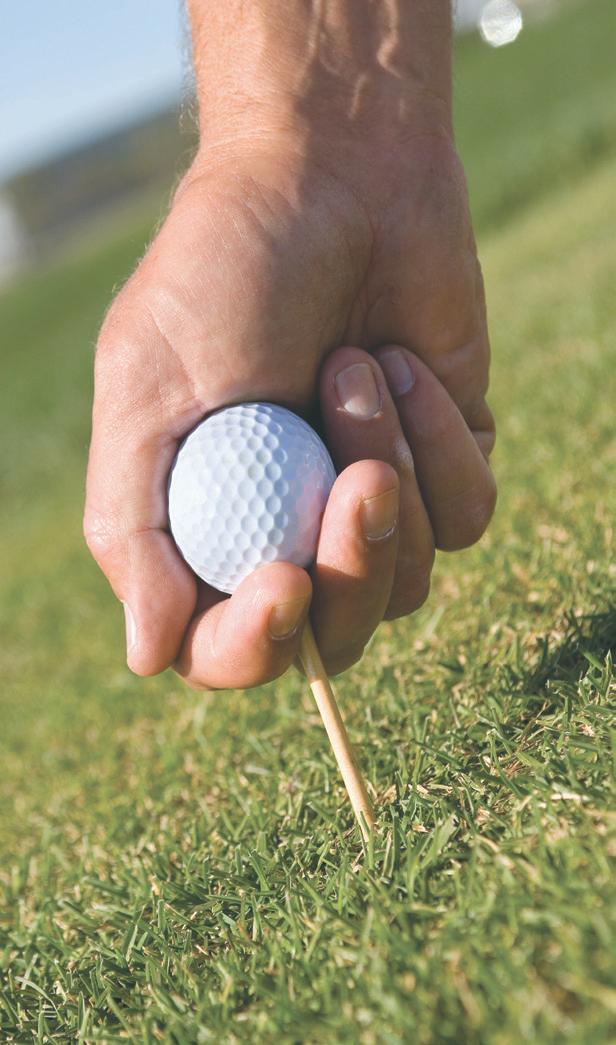
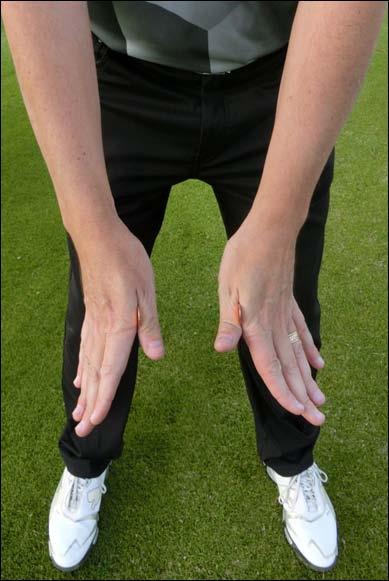
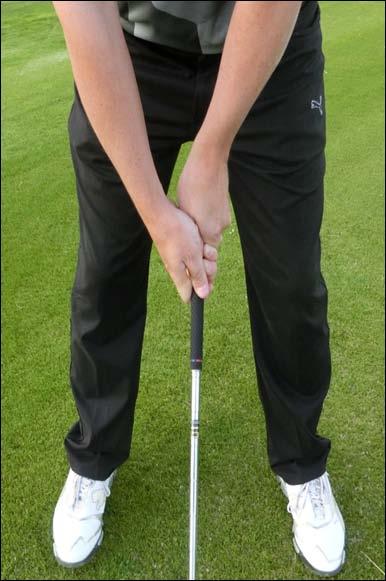
Steve was taught to pinch together his thumbs and forefinger like he was holding a few coins in place. He even recollects walking to school in this fashion. By pinching the thumbs and forefinger together, he had to hold the club more in the fingers and his hands fit together quite beautifully. It takes a little training to use these small muscles of the hand, but it’s well worth it if you’re looking for a top grade grip to emulate.