Community leaders compare decision to kill UW Richland to medieval blood-letting
Henry Redman, Wisconsin Examiner

Sitting squarely within the senate district of one of the most powerful legislators in Madison wasn’t enough to save UW-Platteville Richland, which University of Wisconsin System President Jay Rothman announced last month would be closing to in-person classes next fall.
Rothman said that low enrollment and financial pressures made keeping the system’s smallest campus open “untenable,” and data shows that since 2014, in-person enrollment has dropped from a 2014 peak of 567 to just 60 students this fall. But community and campus leaders say that decline shows a string of negligent decisions by a string of UW System administrators and tight walleted Republican legislators.

The result is the closure of a campus that for decades has been a point of pride for the community and an important avenue to higher education for the residents of a poor rural county too far from the larger metropolitan areas of Madison and La Crosse to draw much attention.


“You killed the campus by bleeding it to death,” Dale Schultz, a former state Senator who represented the area from 1990 until his retirement in 2015, says of the decisions that led up to the campus’ closure. “This is 17th century bleeding medicine.”












Schultz and others point to the 2017 decision to merge the state’s two-year colleges with the four-year universities, the subsequent decisions to cut Richland’s full-time recruiter position and move international students to the larger UW-Platteville campus, as well as a string of austerity focused budgets passed by Republicans in the state Legislature, as the factors that
killed campus, not this semester’s low enrollment numbers.

“When the pandemic hit, UWPlatteville took the exchange students out of UW-Richland, well that knocks the numbers down a bit,” Schultz says. “They took a recruiter out of our office, so we couldn’t do what we were so







former chief of staff Todd Albaugh says the effect will be massive. “You’ll lose the opportunity for folks from a more rural area to have a direct access to higher education,” says Albaugh, whose family history is deeply intertwined with the campus. He attended UW Richland, his father
we had but we’re losing our future.”


Hovering over the closure for Schultz and Albaugh is the timing of the announcement after the November election and the fact that the district is now represented by Sen. Howard Marklein, who serves as the co-chair of the Legislature’s powerful Joint Finance Committee, which controls the state budget.

“Here’s the deal: In 2014 enrollment at Richland campus was somewhere north of 500 students,” Albaugh says.
“Now in 2022 they’re sitting around 60.” That drop coincides with the period after Schultz left office in 2015.


successful at across the state as well as our local high schools, for recruiting kids who wanted to access the system but didn’t know if they were quite ready.”
People looked to UW Richland as an entrance point to the UW System, Schultz adds. “Remember, Richland County is one of the poorest counties in the state. It’s a place that is remote, it’s halfway between Madison and La Crosse, you’ve got to travel an hour to get to a community double our size. You can make a case that cries out for access,” he says. “The entire history of the campus is people recognizing the value of a quality higher education. … If we were ever going to make the county and city prosperous, it would begin with investing in the intellectual capital in the greater community.”
The hit that the local economy will take from the campus’ closure is just starting to come into view, but Schultz’s

served as the athletic director and his grandmother was involved in its founding. “It’s the quintessential example of the Wisconsin Idea. It was able to bring quality higher education to people who might not otherwise have it. There have been studies that UW Richland is responsible for millions annually being pumped into the local economy. That’s going to be a huge hit for one of the poorest counties in the state of Wisconsin.”
Richland County board member Linda Gentges, chair of the county’s education committee, says the loss of a functioning two-year college is going to harm the community’s ability to attract employers.
“We know that companies looking to expand into areas are interested in the quality of the local two-year system,” Gentges says. “A high functioning twoyear college can make a strong case for investment. We’re not only losing what
“I’m not saying it’s a direct result,” adds Albaugh. But, he adds, Schultz’s successor, Howard Marklein, is cochair of the powerful Joint Finance Committee. “There’s also a $6.6 billion state surplus. It’s not lost on me that Howard’s been representing this area since 2015 and the shared revenue portion that’s been given to campus has gone down.”





Richland County is the owner of the campus buildings and responsible for their upkeep while UW System is responsible for paying the salaries of campus employees. From 2017 through 2019, the county budgeted $63,000 for the buildings. That number jumped to $80,000 in 2020 but dropped to $60,000 in 2021 and $40,000 in 2022.



































Marklein, however, said that everything that could have saved the campus had already been tried.
“The University of Wisconsin System and the Board of Regents have been evaluating all of their campuses for many years,” Marklein, whose spokesperson did not make available for an interview, said in a statement.








Thursday, December 15, 2022 | Vol. 3, No. 28 Spring Green, Wisconsin FREE , Single-Copy
Inside this edition Page 2 Pages
Pages
Profile: Katie Green on David Giffey Blaze Orange Board: Announcing the Winners UW-Platteville Richland: Updates and Opinions
8-14
1, 2, 3, 4, 11
“This looks malicious at best and criminal at worst. I think the UW administration and Board of Regents ought to be ashamed of themselves.”
continued on page 11
– Dale Schultz, a former state Senator who represented the area around UW-Platteville's Richland campus from 1990 until his retirement in 2015.
The (not so) Plain and Simple Correspondent: Advocate for Peace — David Giffey
Katie Green, Columnist
In the season when winter darkness commences its slow creep back toward the long sunlit days of summer, much of the world's population of assorted or no acknowledged religious beliefs is nonetheless drawn toward some gesture of celebration, presumably hoping to recapture a sense of wonder or spiritual renewal. You might attend a Festival of Lights, or reenact the birth of the Christ Child, give gifts around a balsam fir, decorate the heck out of your living space... or turn away from the rampant commercialization of Christmas with a despairing “Bah, Humbug!” Given the chaotic state of the world, however, the cry “Peace on earth, good will to all people” is genuine and heart-felt in most bosoms, I dare say. And what better time to honor a man who affirms abundant life as his mission, who takes courageous public stands against endless conflict and the slaughter of innocents?
When my spouse and I moved to rural Spring Green in 2005, David Giffey was editor of the Home News. As is my wont wherever I live, I soon wrote letters to the editor, hoping to initiate some thoughtful dialogue about what I considered important social issues.
To my disappointment, Dave rejected them, with apologies, because of the iron-clad policy of the paper's owners to allow letters of a “political nature” only shortly before an election.
'Ere long we met the editor himself at a M.L. King Jr. gathering at the middle school, where we went to hear speakers on the subject of nonviolence and, incidentally, applaud teenagers who wrote winning essays about peaceful resolution of disputes. David personally awarded $500 scholarships annually at seven high schools in SW Wisconsin for essays on the topic “Why I believe war is not the answer.” He stated, “ it was counter-recruiting, you might say.”
By this point it dawned on me that the Lincolnesque man we saw sometimes striding along Highway 14 in Arena carrying a peace sign was David. My
On the cover
“Taliesin Winter Festival” (2016) Digital
own gene pool includes many Quakers and other pacifist sects willing to witness for peace, and my Korean War vet/pastor husband was firmly in the peace camp, so we were on the same wavelength.
The little homestead where the Giffeys live in rural Arena consists of a home constructed from barn timbers dating back to the 1860s, vegetable gardens, and a series of beloved dogs (“much like your children.”) Howard the Dog was often the quizzical central figure in editorials David wrote during his editorship of the Home News
Later we moved briefly to Madison for the first time and, loving Greek food and culture, attended the annual open house and fundraiser for the Greek Orthodox Church. There, lo and behold, was David again. He is a longtime member of this congregation.
Raised as a Catholic, he was attracted to Eastern Orthodoxy by their custom of private meditation. He was giving tours and explaining his paintings of icons representing the saints of that religion.
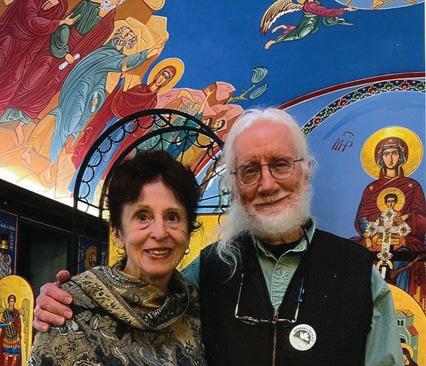
The restored sanctuary and narthex is covered in his work, hauntingly beautiful, stylistic renderings in bright colors and much gold leaf.
He has painted icons in churches in Greece as well as all over this country.
He was baptized at Mt. Athos, an important center of Eastern Orthodox monasticism in Greece.
Gardens in Madison for some weeks around Veteran's Day, perhaps you've seen the “Memorial Mile”, white flags in rows and rows in the grass, each flag representing a fallen service man or woman. They are there to help passersby grasp the terrible human toll of war. This was a project of the local chapter of Veterans for Peace, an organization made up of vets from all the many wars the US has been engaged in. Unsurprisingly, David is a member. Born into a dairy farming family in Fond du Lac County, Wisconsin, he was a journalist in Oshkosh working as a wire editor when drafted in 1963. He was shipped to Vietnam and trained as an artilleryman. Then someone noticed he had been a journalist and “as some miracle of fate”, was reassigned to be assistant editor of the 1st Division newspaper and photographer of the ghastly events going on around him. He wasn't an infantryman but it was traumatic enough that it awakened or at least crystalized his fervor for peace, as happens to many who have survived war.
individuals on the South Side which David conducted in community centers, houses, churches, apartments and a care center. In 2006 he did another series of interviews, this time with war veterans living in this area, beginning with a veteran of the Spanish Civil War (!), moving on to WWII, Korean War, Vietnam, the Yom Kippur War in Israel, the Cold War in Germany, Desert Storm and Afghanistan, and finally the Iraq War. What all of the men and women have in common is a detestation of armed conflict in reaction to their service in foreign wars. Their stories he published in a book entitled Long Shadows: Veterans' Paths to Peace (Some copies may still be available to purchase or read through libraries.) He also painted a series of 6 x 8' paintings about Vietnam, entitled “Burned”, “Revulsion”, “Chop”, Anger”, “Injury” and the like, which have been widely shown around the state.
We'd lost touch with David and Nancy Giffey in recent years, but that changed a few weeks ago when I stopped to converse with a tall, dignified man
"I enjoy Frank Lloyd Wright's architecture and have visited several of his homes and buildings. I have a wholesale line of cards and art products with gift shops and museum shops in the Midwest. I had visited Taliesin a few times and approached the gift shop about creating a custom card for them. Taliesin Winter Festival was created in coordination with the Program Director and Gift Shop manager in 2016. It depicted horse drawn buggy rides past Taliesin as part of its Winter Festival activities. Since then, I have illustrated the Visitor Center, Hillside Assembly Hall, Romeo and Juliet, Midway Farm, Taliesin, and Taliesin's Courtyard. The cards are exclusive to Taliesin Gift Shop. I do sell prints in my Etsy shop and give a donation to Taliesin Preservation for each purchase, so they can continue to maintain these architectural works of art."
—Cindy Lindgren
The trademarks FRANK LLOYD WRIGHT and TALIESIN are the exclusive property of, and used under license from, the Frank Lloyd Wright Foundation.
Submit your artwork or photography for cover consideration: editor@valleysentinelnews.com

When my husband wrote a book about Mary Magdalen, David generously allowed him to reproduce the icon of Mary for the cover. That he has “devoted most of my life to art” is more significant to him than his other endeavors and accomplishments, he says.
Along Monona Drive near Olbrich
For many years David and his equally talented and empathetic artist wife, Nancy, were involved in the Boys and Girls Club of South Madison, teaching art and mentoring young people. Inevitably, they grew close to the kids' parents, other relatives, and friends, as well. In 1998 David designed and painted four huge murals, acrylic on canvas, which were installed in the gym there, each illustrating “a decade of local, national and international events and personalities related to African-American history”, it says in The People's Stories of South Madison The People's Stories is a booklet of striking interviews with notable
LETTERS TO THE EDITOR
Dear Editor, I wanted to share a few words with the River Valley community about our regional two-year UW campus. On November 22, UW System President Jay Rothman announced that UW-Platteville Richland will close its doors after the spring 2023 semester. Many would agree that a campus with sixty students cannot be sustained. If I were faced with these numbers, I would think the same way. But please permit me to tell the story of how we got here. Believe me, it did not have to be this way.
Richland County has more than a 100year tradition of higher education. Prior to UW-Richland opening in 1967, the
Richland County Teachers College prepared educators for country schools for 60 years. Under the leadership of Marge Wallace and Senator Jess Miller, when the teacher’s college closed, UW-Richland opened. Richland County provided the land and the buildings. The state Legislature and UW System provided the academic budget. And for the past 55 years, the campus has provided an affordable gateway to a public 4-year degree. I am sure many citizens of Spring Green, Arena, Plain, and Lone Rock have been touched by UW-Richland. Back in 2015, some 7 years ago, UWRichland, as it was known for many decades, was a vibrant campus with five
moving his personal effects into the senior housing complex where we now live. One topic led to another and, by golly, turns out he is a good friend of the Giffeys and was one of the Vietnam vets interviewed in the book, Long Shadows. We are so glad to roll out the red carpet for Will Williams and welcome him here as a fellow traveler on the bumpy path toward the Peaceable Kingdom, where the lion lies down with the lamb. So long as the world is inhabited by humans of such elevated moral ideals and the willingness to actively draw closer to their fellows in love and respect, we might eventually reach what the Spanish call “querencia”, a place of belonging for all.
Katie, who until recently lived in Plain, has been writing for fun and profit since childhood. Self-described as opinionated, she writes in the interests of a more loving, betterfunctioning world for all. She may be reached at katiewgreen@icloud.com.
hundred students enrolled, including 50 international students from 20 different countries and territories. At the time, the Richland campus had a reserve fund exceeding $1 million. The Richland Country Campus Foundation had the second largest endowment in the UW Colleges, amounting to $13 million. Richland County, although on a tight budget, supported its local campus by maintaining the buildings and grounds. Diversified in its recruitment base and well-funded to serve its students and the community, the campus was on solid footing to weather the decreasing number
Thursday, December 15, 2022 Page 2 Commentary/Opinion
illustration, by Cindy Lindgren
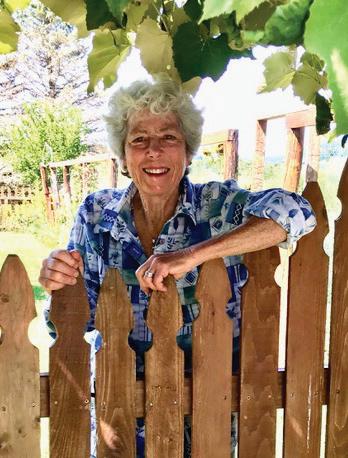
Katie Green
Photo contributed by Katie Green Nancy and David Giffey pictured in front of David's art at the Greek Orthodox Church in Madison.
continued on page 3
Our Fragile Democracy — Part 11: The Final Chapter
Beverly Pestel, Columnist
“Our Fragile Democracy” explores the history and struggles of our nation's form of government from its founding to our current social, cultural and political tensions — looking at solutions and means of learning to work with one another, in hopes of preserving our democracy.
The Final Chapter? Yes.
I noticed with amusement that the Editors on the cover page labeled my last submission of “Our Fragile Democracy” as “Our Fragile Democracy: The Final Chapter?” I had told them it was the last, it seems their skepticism was well founded.
It is not that I have more to say on the subject – but someone else does. I just finished reading “A People’s History of the United States” by Howard Zinn, a book I started last Spring. Near the end of his book, Zinn makes no apology for writing a history that contains many of the well-documented accounts that are left out of most U.S. history books, especially those used as textbooks. It made the book difficult to read. Who wants to hear the bad parts, the many decisions our government
representatives have made for questionable or unscrupulous reasons, and the accounts of the people who have been left out of the telling as not important enough to know or scrubbed out for other less acceptable reasons.
Beverly Pestel
The strength of our democracy depends on our ability to face the facts of who we are – the good with the bad, the honorable with the dishonorable, the well-intentioned acts with those done with consciousness of ill-intent. Zinn attempts to be honest in his telling: “… there is no such thing as a pure fact, innocent of interpretation. Behind every fact presented to the world -
LETTERS TO THE EDITOR
he and his Republican colleagues sit on their own soon to be $6.6 billion “slush fund”?)
by a teacher, a writer, anyone – is a judgment. The judgment that has been made is that this fact is important, and that other facts, omitted, are not important.” I learned a lot of those omitted facts in his book, but in a context of hope and optimism for the future – an optimism founded on us and on how we choose to act.
In Zinn’s own words:
The democratic principle, enunciated in the words of the Declaration of Independence, declared that government was secondary, that the people who established it were primary. Thus, the future of democracy depended on the people, and their growing consciousness of what was the decent way to related to their fellow human beings all over the world.
If democracy were to be given any meaning, if it were to go beyond the limits of capitalism and nationalism, this would not come – if history were any guide – from the top. It would come through citizens’ movements, educating, organizing, agitating, striking, boycotting, demonstrating,
threatening those in power with disruption of the stability they needed.
Yes, we have in this country, dominated by corporate wealth and military power and two antiquated political parties, what a fearful conservative characterized as “a permanent adversarial culture” challenging the present, demanding a new future.

It is a race in which we can all choose to participate, or just to watch. But we should know that our choice will help determine the outcome.
Zinn concludes his book with a quote from the poet Shelley: Rise like lions after slumber In unvanquishable number! Shake your chains to earth, like dew
Which in sleep had fallen on you –Ye are many; they are few!
Beverly is a retired professor. She lives in a remodeled farmhouse and tends 40 acres of woodland in Richland County. When not in the woods she spends her time reading, writing and enjoying the beauty of the Driftless Area.
Then, Governor Scott Walker, preparing for a presidential bid, decided to give the UW System its own version of Act 10. Walker, a Tea Party extremist, was aided in this work by newly elected state Senator Howard Marklein. A forensic accountant by trade, Marklein, ran campaign ads claiming that he and members of the “CPA caucus” had discovered a “slush fund” (read budget reserves, like any responsible business should have) at UW System. Marklein, himself a Tea Party extremist, was a strong proponent of the cuts as a member of the Joint Finance Committee. In the end, the Legislature cut UW System permanently by $250 million. (One wonders today how Marklein can look himself in the mirror as
Dear Editor, I would like to respond to UW President Rothman’s statement that the end of inperson classes at the UW-Richland campus is ‘a done deal.’ Mr. Rothman cleverly
The $250 million budget cut devastated UW-Richland. It forced UW Colleges to regionalize its structure. This meant that administrative and educational resources of the Richland campus were cut to the bone. Students suffered. So did enrollment. The regional concept failed after two years. After that, the Richland campus was “farmed out” to UW-Platteville whose Chancellor Dennis Shields was wrestling with his own budget cuts and decreasing enrollments.
In this scenario, UW-Richland became UW-Platteville Richland and lost its identity completely. Dennis Shields and his staff would not even permit UW-Richland to have its own recruiter. The Richland County Campus Foundation offered to pay for it.
Chancellor Shields shot this idea down. UWPlatteville Richland became an afterthought
at UW-Platteville. One wonders, too, what happened to former UW-Richland’s $1 million plus reserve fund?
Starved for resources and without its own campus identity after 55 years, the Richland campus, once a a vibrant center of education and community in 2015, has now become the target of the Board of Regents. Republican leaders and the UW System would have us believe that considerable efforts were made to support the campus and provide it with a future in the 21st century. They would argue that “we tried, and things just didn’t work out.” Nothing could be further from the truth. The aim here was to starve Richland and let it die. This was part of the Republican’s concerted effort to undermine public institutions in general and even destroy public education. The Richland story is one of many that could be told statewide as counties, state
not fools. We understand his disguised argument that our future is a waste of money. Our community’s petition with 1,500 signatures asks for a few simple things: leave Madison, drive to Richland
agencies, and public workers struggle to meet the needs of taxpayers. It is all part of the Republican agenda to undermine people’s faith in democracy and the good things that government can provide for its citizens.
I encourage citizens of the River Valley to reflect on their own experiences with UW-Richland. I’ve no doubt that many in our region have family stories about how UW-Richland or the Richland County Teachers College changed someone’s life. The question remains, are we satisfied with the fact that starting in fall 2023 no new stories will be told as the beautiful campus on Brush Creek with its brick buildings and coppertops sits empty?
CONTRIBUTORS IN THIS EDITION
Editorial Policy
Est. 2020 igne conflatum “Forged in Fire”
Letter to the Editor Policy
Letters submitted for consideration are subject to fact-checking and editing for
space
Column
Full and up-to-date policies available at: www.valleysentinelnews.com
Valley Sentinel is an independent, editor-owned, all-volunteer, free bi-weekly news publication, available on newsstands in the area.

Subscribe
Want the paper delivered to your home or business? Subscribe online at valleysentinelnews.com/subscribe or subscribe annually with your name, phone number, address and $30 sent to: Valley Sentinel, PO Box 144, Spring Green, WI 53588
Center, and listen to the community’s ideas about how to save our campus.
Mr. Rothman had never once met with the working families of our area. On Thursday,
Patrick Hagen, Former CEO/Dean, UWRichland (2010-2015) Spring Green, Wisconsin continued
on page 4
Deadlines: The display and classified advertising dead- line is Monday at noon for that week. If you would like our design team to design the ad then please allow extra time for the creative process and proofing.
interested in meetings, events or writing and becoming a community contributor? Let us know. Thank you to all of our contributors for believing in our community.
Community Discussion Policy
From time to time the editorial board may select letters to the editor of a particular compelling community interest where a public figure or accountable public action is the recipient of criticism and allow, in the same issue, the subject of the criticism chance for rebuttal, with expounded independent input. The format shall be point, counterpoint and expert analysis. This community discussion shall serve as a moderated dialogue that presents multiple views of important community topics.
Valley Sentinel is published in Spring Green, Wisconsin every other Thursday by Lower Wisconsin River Valley Sentinel, LLC. ISSN 2694-541X (print) — ISSN 2694-5401 (online)

Thursday, December 15, 2022 Page 3 Commentary/OpInIon
us
Editor-in-Chief Nicole Aimone Managing Editor Taylor Scott Legal Editor Gary Ernest Grass, esq. Graphic Designer Julianna Williams Commentary/Opinion Column Beverly Pestel Commentary/Opinion Column Barb Garvoille Commentary/Opinion Column Katie Green
Contact
PO Box 144 Spring Green, Wisconsin 53588 USA (608) 588-6694 editor@valleysentinelnews.com valleysentinelnews.com EDITORIAL
On certain topics in areas of great community interest, the editors of the Valley Sentinel may take positions they believe best represent and serve the interests of the community. Any opinions or positions taken by the editorial board are separate and distinct in labeling and substance from the community journalism that appears in the rest of the publication and does not affect the integrity and impartiality of our reporting. Policy Editors may feature opinion columns written by public figures, members of the public or other publication staff. Columns reflect the opinions of the individual contributors and do not represent positions of the publication. Guest columns of an anticipated length more than 500 words should seek prior editor authorization.
and clarity. Submissions must have a compelling local community interest. Letters to the editor must fit within a 500-word limit, and include name, city and phone number. Phone numbers are for office use only and will not be published. Letters of a political nature, without chance of rebuttal, will not be published the week before an election.
Have graphic design experience or
Ad team: ads@valleysentinelnews.com
Covering Arena, Lone Rock, Plain, Spring Green and the surrounding areas in Sauk, Iowa and Richland counties.
Member, Wisconsin Newspaper Association
of high-school graduates in the years ahead. So, what happened?
continued from page 2
based his decision on two seemingly noble ideas: 1) trying to be a good steward of UW System funds, and 2) providing a highquality education that students expect. Richland County area residents are
The $6.6 billion surplus, tax changes, school funding on Capitol agenda for 2023
The top Capitol players post-election remain the same, with Democratic Gov. Tony Evers vs. a GOP-dominated Legislature.
Also remaining the same is the legislative calendar for the beginning of the new two-year session.
The governor delivers his annual State of the State address to the full Legislature at the Capitol, and in oddnumbered years he introduces a twoyear budget to the Legislature.
Lawmakers then pick through the massive spending bill and forward their version back to Evers somewhere around July 1. Evers, thanks to Democrat Party efforts in key districts, should be able to withstand attempted veto overrides by majority Republicans as long as Democrats remain united.
Planning for the budget has been well underway for months. Evers' administration has collected wish lists from the agencies and done initial calculations.
The big thing this time is the huge forecasted surplus -- $6.6 billion. How that will be used is up for debate. Evers and GOP legislative leaders have different priorities, but they appear to be trying to ease a frosty relationship. So, some at the Capitol hold out the hope for genuine compromise.
Evers, who was reelected on Nov. 8 to a second four-year term, plans to deliver his annual State of the State address on Feb. 7.
Meanwhile, he’s asked GOP legislative leaders to keep open Feb. 28 or March 7 for his budget address.
In a letter to lawmakers, Evers
indicated he’d be available either day to release his budget, but his preference is to do it on March 7.
That's to allow the inclusion of the latest projections. The nonpartisan Legislative Fiscal Bureau does revenue projections in late January each year, and the next report will include revenue projections for the 2023-25 biennium.
Evers’ administration has already projected the state will finish the current fiscal year with a $6.6 billion budget surplus to end the fiscal year on June 30 with an additional $1.5 billion in revenue growth over 2023-25 and $1.7 billion in the rainy-day fund.
Meanwhile, state agencies have requested an increase of $3.6 billion in new general-purpose revenue over the 2023-25 biennium.
Between the projected surplus and the expected revenue growth, the state could fund every single agency request and still have $4.4 billion left over in the general fund.
“Wisconsin is currently in the strongest financial position we’ve ever been with unemployment at historic lows and a strong pandemic recovery that has helped new businesses open on Main Streets in every county,” Evers said. “We’re working hard to build an economy that works for everyone, and this unprecedented surplus presents an unprecedented opportunity to make critical investments in Wisconsinites and the future of our state.”
Republicans like to take some credit for that, as Evers pretty much signed their versions of the budget plan in the first term.
LETTERS TO THE EDITOR
continued from page 3
when their most courageous children took the time to leave Richland Center, drive to Madison, and hand deliver ideas, he told them the following: he didn’t want to prejudge their ideas, but that his decision was ‘a done deal.’ How can a decision be final before the people have been heard?
Mr. Rothman, just like our Governor and legislators, is accountable to Wisconsinites. For too many years now, the powerful in Madison have stolen our future. They reduced our UW-Richland campus budget by 55% over 10 years, and then told us that the student enrollment problem couldn’t be fixed “no matter how much money they
Dear Editor, In this season of grace, kindness, and warmth the people at 4PeteSake would like to thank you for the profound generosity you have shown toward your fellow neighbors in their times of need over the past year. And they humbly ask you to
invested.”
They declined to hear the community’s hopes, and then said we didn’t deserve their endless attention. And now they have the audacity to be developing a plan for our campus behind closed doors, supposing they know our area’s needs better than we do!
In spite of all of this starvation, the poor people of our area had scraped up enough money in 2019 to offer to pay for a fulltime campus recruiter, a position for which the State used to have the money. How do you think it then felt when our offer was declined and we were told “recruitment isn’t your responsibility”?
consider a year end gift to lift up those neighbors who may find themselves in need in the coming year.
4PeteSake is a local non-profit created in 2005 to help Peter Greenwood receive a new generation prosthetic leg. The kindness of his neighbors changed his
Last Leaf Public House (134 W Jefferson St, Spring Green) owner Dave Owen recently announced that Last Leaf will be closing their doors Dec. 30 so he can spend more time with family.
“It is time, time to create more family memories with the one I love so dearly,” Owen said. “I am working on a grassroots marketing plan to find a new restaurateur that will bring new life to our building and create a new destination restaurant for Spring Green that will also have locals enthusiastically embrace.” Owen thanked and encouraged the community to visit Last Leaf before it closes, to reminisce and say goodbye.
Have major updates to your business? Moving? Opening? Re-opening? Offering something you don’t normally offer during your regular course of business or having a pop-up?

Please submit your updates for consideration as we try to flesh out what this will look like and how to best drive engagement for our business community: editor@valleysentinelnews.com

Remember, marketing is an important part of any event and business budget. These updates don’t replace advertising, but we’re happy to offer them as a business community service.
This time, things could work differently.
Senate Majority Leader Devin LeMahieu alongside Assembly Speaker Robin Vos at a Nov. 22 WisPolitics. com luncheon in Madison said they're working on a time to speak with Evers about what they can accomplish in the upcoming session. Both said Evers had recently left voicemails looking for a time to talk, and Vos said he spoke with the governor for five minutes on the phone.
"Which was good because that was five minutes more than in the past two years," Vos, of Rochester, said.
The longest-serving speaker in Wisconsin history also said "our first priority would be cutting taxes as much as we possibly can, while still funding core services."
While Evers said before the election he wants to use part of the state's projected surplus to offer a tax rebate, LeMahieu said the governor will have to find another way to return the funds to taxpayers if he wants the Legislature's approval.
"I think if we can get some big wins, we can also give on some issues and find some of that common ground in negotiation," LeMahieu, of Oostburg, said. "You know, I don't want to be sitting here in four years with $30 billion in surplus because we can't get anything done for the next step." LeMahieu said he still wants to move toward a flat tax and opposes lowering taxes just for the lowest brackets. Eliminating the personal property tax is a good start that would make Wisconsin more attractive compared to
neighboring states, he added.
Evers recently said his budget will propose cutting taxes for the middle class similar to what he's proposed in the past. He also said he can't envision signing a budget that cuts the top income tax rate, which is 7.65 percent and applies to income above $376,400.
School funding is another area in which the two signaled their willingness to work with Evers, but pressed for universal school choice.
Vos said stopping public schools from blocking students who want to transfer from one public school to another would bring Wisconsin closer to the kind of system Republicans have been seeking.
"Well, if it's good enough to go from one public school to another, and we've already accepted that school choice is settled law, I don't know why we couldn't say pick any school that you want, public or private," Vos said.
For more, go to www.wispolitics.com
The Capitol Report is written by the editorial staff at WisPolitics.com, a nonpartisan, Madison-based news service that specializes in coverage of government and politics, and is distributed for publication by members of the Wisconsin Newspaper Association.

Copyright © WisPolitics.com
It’s particularly upsetting to receive lectures about efficiency while the powerful sit on a $6.6 billion surplus. Their current brightest idea is to give more tax cuts to those who already don’t pay taxes. Trickledown economics will do us no good in Richland County after they’ve stolen the vitality of our community.
I’ve served on our County Board’s Finance Committee for 5 years, and we have been wringing our hands that entire time about how to cut our budget. Richland County’s workers are already some of the lowest paid in the state. Now, to give them regular raises, we’re talking about cutting cops, mental health counselors, and our beloved
life. Since then the generosity of this community has helped over 100 River Valley Area residents who, through no fault of their own, found themselves in health related situations for which they needed assistance. 4PS relieves financial stress so that recipients can focus on healing.
annual fair.
Meanwhile, the State can’t seem to find enough money to increase our “shared” revenue. These are taxes they already collect from us. They’ve kept our “shared” revenues at 2001 levels for over 20 years now. Who can live on a 2001 income with today’s rising costs?
The powerful in Madison are stealing our future in rural Wisconsin. If they haven’t reached your community yet, get ready. They’ll be knocking on your door soon.
Shaun Murphy-Lopez Richland County Board Vice Chair Hillsboro, Wisconsin
To donate to this amazing local cause go to 4petesake.com/donate/, or contributions by check can be sent to 4PeteSake, P.O. Box 577, Spring Green, Wisconsin, 53588.
Our Sincere Thanks, The 4PeteSake Board
Seeking office space
Valley Sentinel is seeking office space to rent or purchase in the downtown area of Spring Green.
Flexible ideas for the space include a newsroom, co-working space for small businesses and entrepreneurs, local retail/consignment, local art exhibition/gallery space and (eventually) working collaboratively with area businesses to provide extended hours coffee and potentially grab-and-go food. Please let us know if you have any vacant or soon-to-be vacant commercial space, know of any space, or have any creative ideas or partnership opportunities, by phone at 608-588-6694 or by email at editor@valleysentinelnews.com.
Thursday, December 15, 2022 Commentary/OpInIon Page 4
THE CAPITOL REPORT
WisPolitics.com
Reflections from Lost Horizon Farm — Calves (Part 1)
 Garvoille, Columnist
Each edition, retired dairy farmer Barb Garvoille brings her musings on dairy farm life from her own years of experience on Lost Horizon Farm with her late husband Vince “Mr. Farmer” Garvoille. This mooving memoir focuses on 1980-2000, join Barb as she rises with the herd.
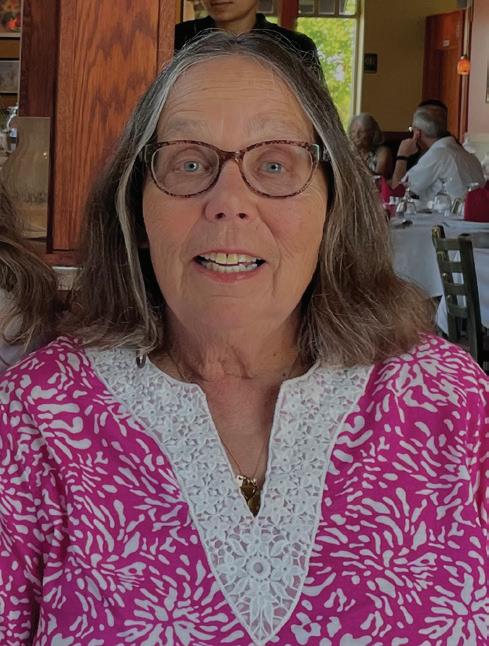
The Calves Heifer (female) calves are the future of any dairy herd. They become the replacements for the cattle that have been culled from the farming operation, or they become additions to the existing milking animals.
It takes 24-27 months of good care for a heifer calf to become a milking animal. Depending on its size, a heifer calf can be bred between 15 and 18 months of age. The gestation period for a cow is, like a human's, nine months. Proper nutrition and husbandry, along with careful breeding, would increase a first-calf heifer's chances of producing a live, healthy calf (or, in less common instances, twin or triplet calves). When a twin birth included a male calf and a female calf, the female was, more than likely, what a farmer called a “free martin,” an infertile female. Twins of this combination, as well as all bull calves born on our farm, were trucked to a nearby livestock sale barn and sold.
During the wintertime, when the cows spent most of their time in the barn, calves were born inside. During bitterly cold spells, a newborn calf would reside for a period of time in the homemade calf warming box in the barn. This deeply bedded and totally enclosed wooden structure with ventilation grid had a heat lamp that provided additional warmth to the interior. The calf would remain in the warming box until its hair coat was totally dry and fluffy. Only then would it enjoy a short ride in a wheelbarrow to its outdoor calf hutch.
At other times of the year, birthing environs depended where the cows were. Calves were delivered out in the pasture, in a secluded place in the woods, or in the barn. Two management practices were very important at calving time. One was that the newborn
received the colostrum (the first milk from the cow: thicker, more yellow and rich in antibodies) as soon as possible. The second was that the calf was placed in a clean, dry and draft-free environment as soon as
possible. If a calf was born alive, it had an excellent chance of survival because of these disciplined protocols.
Because Lost Horizon Farm used artificial insemination (known to some farmers as "the rubber-tired bull") on every cow and heifer, each breeding date was duly noted on the inseminator's chart in the barn. By using the breeding date and relying on a confirmation of pregnancy by the veterinarian during monthly herd health programs, a due date could be calculated. A nine-month gestation was figured out for the Holsteins and Jerseys; 10 days were always added for the Brown Swiss cows.
Part of the farm's routine was to consult the breeding wheel, a perpetual calendar in pie graph form. A sticker with cow name and due date was placed on the corresponding month/date slot. As a person moved the wheel to line up with the current date, the visual would show cows due to calve close to or on that day. Besides looking at the breeding wheel, daily observations were also informative.
When the herd was out grazing, a cow nearing calving (farmer terminology for such an animal is a close cow) would go off by herself often to the farthest corner of the farthest field, or she would repeatedly resist attempts to bring her back to the barn
with the other cows. Within the confines of the barn, the pregnant cow might exhibit restlessness: moving side to side in the stanchion or repeatedly getting up and then lying down. The skin around her vulva would become very loose. Indicative of an imminent birth would be a thick, translucent discharge from the vulva.
A close cow stanchioned in the barn would be given extra bedding. Lots of times the bedding had to be forked away and replaced frequently because the close to freshening bovine would begin leaking copious amounts of milk from each quarter before the calf's birth.
Sometimes, the amount of dripping milk was so large, and the cow in such obvious discomfort from her swollen udder, that Mr. Farmer would begin milking her prior to her offspring’s birth. For other cows, there was no special treatment necessary because they would not "bag up" until after the calf was born.
A gutter grate would be positioned behind the cow. In the perfect situation, the cow would calve easily. With the initial contractions, the first thing a person would see would be two delicate little hooves protruding. The calf would slip headfirst, front legs extended, down the grate and onto the walkway. A person would cradle the calf's head on the uppermost part of its forelegs and then pull the recumbent and slippery newborn down the walkway, up the alley mid-barn, and then up the manger until it was in front of its dam.
Being mothering sorts of animals, lots of cows would show great interest and want to own the newborn being pulled in front of them. Not having had the newborn experience, heifers, however, might fearfully pull back in their stanchions.
After the calf was in front of its mother, it would be sprinkled with a scoop or two of ground feed. This step would encourage the mother cow to do a great job of licking off her wet offspring and provide the nurturing stimulation that would encourage the calf to stand and search for a teat. As soon as possible after calving, warm water in a 5 gallon pail was presented to that cow. Its consumption seemed to hasten delivery of the afterbirth (or "cleanings"). Water was always present in the cows' drinking cups, but coming directly from the well, it was cold. The newly calved or “fresh” cow was urged to stand up in her stanchion as soon as possible after calving to encourage continued good circulation in the animal and discourage further straining. Some cows would continue straining and birth their uterus. (Some farmers called the uterus the “calf bed.”) That necessitated a call to the veterinarian for an emergency on-farm visit. The farmer's duty was to keep the organ moist until the vet’s arrival. The veterinarian had the skill set to return the uterus to its rightful position and to stitch where necessary.
The special hand-carried fresh cow bucket would be brought into the barn, and the upright cow focused on attending to her calf
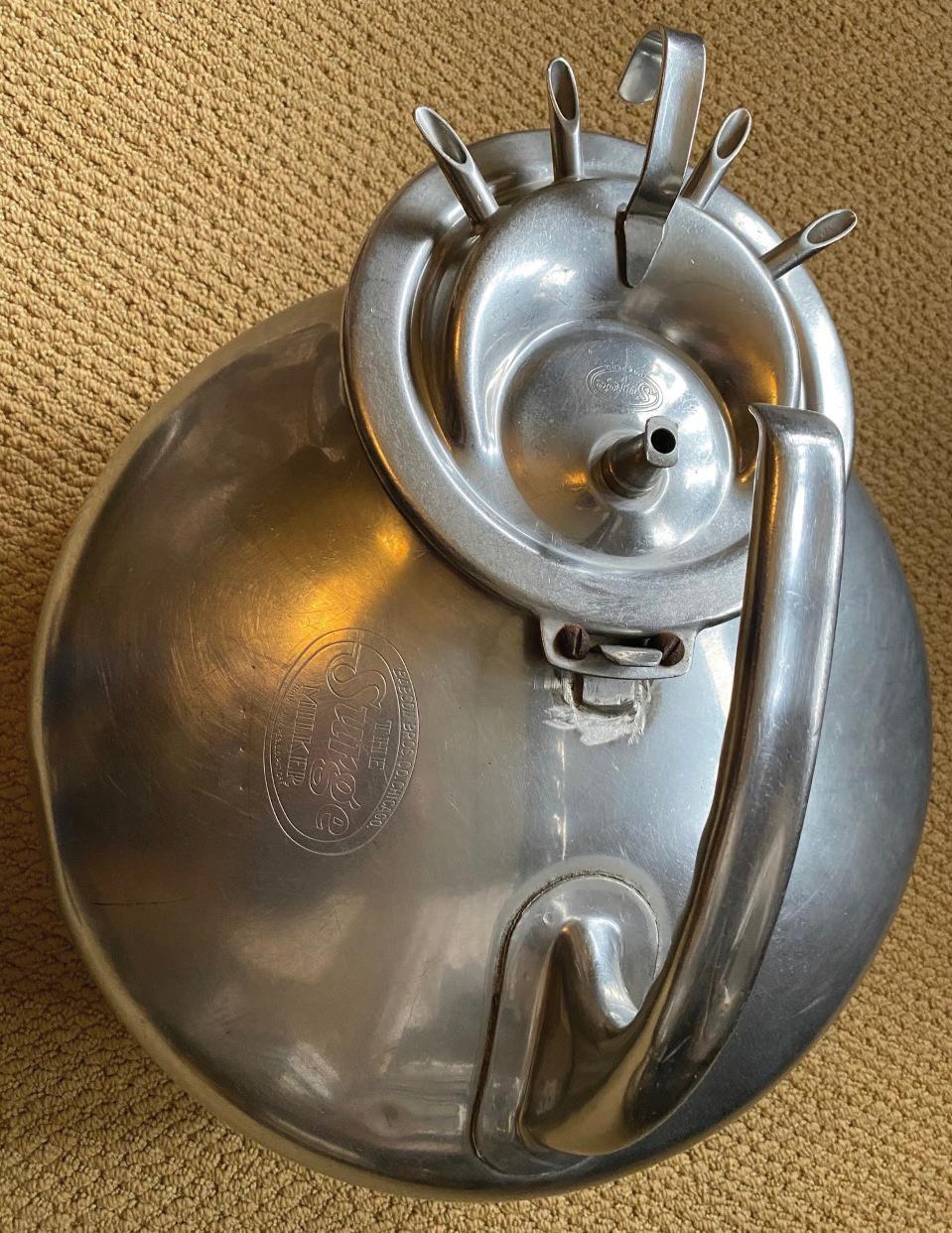
would be milked. Her colostral milk would flow directly from the milking unit into the stainless steel bucket. With the stress of calving and the energy requirements for the milking process, it was better for the cow's health to take just enough milk for the calf at that first milking, a gallon or so of colostrum.
Sometimes a close animal sought solitude and would be missing when the cows headed home for milking. An AWOL bovine could provide a challenge to a farmer’s instincts.
There were a variety of woodland places to explore, and they were usually far from the barnyard and very heavily vegetated. More often than not, a person would have to cut a path through thickets of thorny prickly ash and cascades of berry bushes and watch out for the sharp rake of greenbriar tendrils. Once located, some cows were more approving of a human’s approach than others. A person always had to have an escape route planned in case the cow did not take kindly to disturbance at or near birthing time.
A cow that calved outside in the pasture would soon be ringed by others in the herd. Some cows were tolerant of herd-mates; others were very protective of their newborn and would bunt away or charge at the curious onlookers. Concern for personal safety dictated keeping one eye on the cow when collecting a calf from the pasture. Generally, Mr. Farmer would shoo away the cow, pick up the calf when the cow was turned away, and then gently place it in the box of the pickup truck. The calf would be given a ride back to the farm and placed in its deeply bedded hutch. Then one or both of us would return to the pasture and encourage the fresh cow to return to the barn for milking. Sometimes a person could readily detect the cow’s conflicting drives: to search for her calf vs. rejoining the herd.
If the calf had been born in the pasture during the night or if it had been born on a day when a lot of field work was being done and had been out in the pasture for some time, it had probably suckled the cow and gained a great deal of strength and coordination. Often cows will hide their newborn in the tall grass, under the fence line, or even in the woods. Innate survival skills command the calf to remain parked until it is called by its mother; seeking the hidden calf can be a tough contest. A few hours after birth, a calf can already run very quickly and be a challenge to catch. There was one time when a recently born bull calf actually stopped in the pasture, and instead of running away, lowered its little head and charged towards Mr. Farmer, who was trying to catch it…
Barb has called Lost Horizon Farm, just north of Spring Green, her home for the past 42 years. She is fond of all creatures (including snakes). Her joy stems from being able to be outdoors every day observing and treasuring the plant and animal life on her small piece of this planet. She loved milking cows and is proud to have been a dairy farmer.
Thursday, December 15, 2022 Page 5 Commentary/AGrIcuLture
Barb
Barb Garvoille
Photo contributed by Barb Garvoille A calf at Lost Horizon Farm.
Photo contributed by Barb Garvoille
A fresh cow bucket at Lost Horizon Farm.
COmmunitycalendar

Events for December 16 - December 31

LIVE MUSIC: Joe Policastro Trio 7:30 PM - 10:00 PM Slowpoke Lounge, 137 W Jefferson St., Spring Green slowpokelounge.com Tickets $10 in advance, $15 at the door The Joe Policastro Trio is a forward-thinking, Chicago-based jazz trio. While firmly rooted in jazz, the band’s open-minded, inclusive nature draws upon a wide array of musical styles and sources while still keeping the aesthetic of an acoustic trio intact.
Spring Green Farmers Market 10:00 AM - 11:00 AM . S230 E. Monroe St., Spring Green Spring Green Farmers Market Is a year-round outdoor market offering seasonal produce, local meats, baked goods and many other wonderful items. Held outside the Spring Green Community Public Library every Saturday morning. Pre-orders are recommended. Visit our Facebook or Instagram page or email SGFarmersMarket@gmail.com for a list of participating vendors and their contact into.
LIVE MUSIC: Acoustic Jam 1:00 PM - 3:00 PM Spring Green General Store, 137 S. Albany St., Spring Green 608-5880-707, karin@springgreengeneralstore.com, SpringGreenGeneralStore.com Free event All ages welcome! Acoustic Jams will be held on the third Saturday of each month. While the weather permits they'll be held on our back deck. Bring your instrument and play along or come to listen; all are welcome.
Sunday, December 18
Dressed for the Holidays 2:30 PM - 5:30 PM The Historic Brisbane House, 7050 Reimann Road, Arena springgreen.com Tour the newly renovated Brisbane House and learn the interesting past of the house. The stories will surely surprise you! Enjoy cookies and egg nog.
Monday,
December 19
LIVE MUSIC: A Night of Words 7:30 PM - 9:30 PM Slowpoke Lounge, 137 W Jefferson St., Spring Green slowpokelounge.com An open mic. Friends sharing words. Watch. Listen. Speak. Share. Maybe you have a favorite poem, or passage from a book you’d like to share. Or maybe you write your own and are ready to share it with the rest of us. Maybe you just want to tell a story. Or maybe you just want to listen. It’s all good. Let’s hang out and share words together. Poetry. Stories. Original work and old favorites. This and that. A Night of Words.
VOLUNTEER: Ham Basket Distribution and Caroling 6:00 PM VFW Post, 514 Willow St, Arena For more information, search Wildlife Forever ATV Club on Facebook Sponsored by Arena VFW and Wildlife Forever. Wildlife Forever is working with VFW to assemble & distribute ham baskets at the VFW. Any help would be appreciated.
Restorative Yoga 6:00 PM - 7:30 PM Wyoming Valley School, 6306 WI-23 Trunk, Spring Green ruralremedy.com Contact Emily for pricing at embenzgmail.com This course will help you build a regular movement and mobility practice based in the yoga traditions. Regular mindful movement can reduce your susceptibility to injury, contribute to your longevity, help you find some freedom, and just feels darn good.
Winter Solstice Observance at Franks’ Hill 1:30 PM - 3:00 PM STH 193 just off STH 60, west of Muscoda To learn more about the solstice event or for directions, contact Dave Martin at (608) 739-4198 or Mark Cupp at (608) 739-2179. Additional information may be found at the Three Eagles Foundation website or Facebook page. The setting sun on the shortest of day of the year will be viewed from a small knoll peppered with effigy mounds in southern Richland County. Participants should arrive by 4:00 p.m. to allow for time to hike to the top of the hill. Dress warmly and bring food, drink, and a chair for sitting around the fire.
Saturday, December 31
LIVE MUSIC: New Year's Eve Extravaganza 7:30 PM - 1:00 AM Slowpoke Lounge, 137 W Jefferson St., Spring Green slowpokelounge.com Tickets $25 advance Let’s ring in 2023 with style! We’ve got Jambidextrous starting at 7:30, with Rare Element picking up around 9:30. Champagne at Midnight. We’ll jam and dance and exorcise our pandemicblues away.
LIVE MUSIC: New Years Eve at Wisconsin Riverside Resort 9:00 PM - 1:00 AM Wisconsin Riverside Resort, S13220 Shifflet Rd, Spring Green wiriverside.com 608-588-2826 for Reservations Join us to ring in the New Year with live music from 3 Souls! Sirloin, Pork Chop, and Chicken dinner specials, and a complimentary galss of Champagne at midnight!
WHAT’S HANGINg ? ongoing art exhibitions
Local Art at the Library: Melissa Hildebrandt and The River Valley Stitchers
Open until December 31st Spring Green Community Library, 230 E Monroe St, Spring Green Monday-Thursday: 10 AM - 7 PM Friday: 10 AM - 5 PM Saturday: 9 AM - 1 PM Spring Green Community Library, 230 E. Monroe St., Spring Green Staff member Melissa Hildebrandt is exhibiting examples of her papercutting in the Glass Case Gallery. Beginning in the 1990s, Melissa has made a variety of items including greeting cards, designs for different holidays, and unique Christmas ornaments. Melissa's beautiful Scherenschnitte art (the German word for papercutting) available for viewing during regular library hours. available for viewing during regular library hours. available for viewing during regular library hours. In the Community Room Gallery, The River Valley Stitchers are once again exhibiting their annual quilt show in conjunction with Country Christmas and the Friends of the Library Bake & Book Sale. This exhibit can be viewed during regular library hours when the Community Room is not already in use. Please ask for the key to the room at the circulation desk.
Winter Art Market Open until December 31st Alfred Art to Wear, 159 N. Lexington St., Spring Green alfredarttowear.com Hours vary 18 Spring Green area artists in a boutique setting offering their fine craft and fine art. Fiber, Jewelry, Pottery, Wood, Painting and Photography for your year end shopping and gift giving needs available at Alfred Art To Wear.
CIVICS & SERVICES CALENDAR
Stitch and Bitch 1:30 PM - 3:00 PM Spring Green General Store, 137 S. Albany St. Spring Green springgreengeneralstore.com The Spring Green General Store’s Stitch and Bitch handwork group meets Thursday afternoons weekly. All are welcome. Knit Night at Nina’s 6:00 PM - 8:00 PM Nina’s Department Store, 143 E. Jefferson St. Spring Green ninasdepartmentstore.com Every Thursday from 6 to 8 pm. All knitters and crocheters are welcome. Store closed after 5:30 pm.
Thursday, December 22 Saturday, December 24
Spring Green Farmers Market 10:00 AM - 11:00 AM S230 E. Monroe St., Spring Green Spring Green Farmers Market Is a year-round outdoor market offering seasonal produce, local meats, baked goods and many other wonderful items. Held outside the Spring Green Community Public Library every Saturday morning. Pre-orders are recommended. Visit our Facebook or Instagram page or email SGFarmersMarket@gmail.com for a list of participating vendors and their contact into.
Thursday, December 29
Stitch and Bitch 1:30 PM - 3:00 PM Spring Green General Store, 137 S. Albany St. Spring Green springgreengeneralstore.com The Spring Green General Store’s Stitch and Bitch handwork group meets Thursday afternoons weekly. All are welcome. Knit Night at Nina’s 6:00 PM - 8:00 PM Nina’s Department Store, 143 E. Jefferson St. Spring Green ninasdepartmentstore.com Every Thursday from 6 to 8 pm. All knitters and crocheters are welcome. Store closed after 5:30 pm.
Play reading: Feed the Fish 6:30 PM - 8:00 PM . Spring Green Community Library Community Room, 230 E. Monroe St, Spring Green springgreenlibrary.org All are invited this series of three readings of a holiday play in progress. Set in Wisconsin, “Feed the Fish” is based on the 2010 cult-classic movie of the same name starring Tony Shalhoub. Young people are especially encouraged to take part. Participants may attend any or all gatherings. A limited number of movie DVDS will be available for advance checkout. The events are free and open to the public. This project is made possible by funds provided by the River Valley ARTS and the Wisconsin Arts Board.
For everyone asking “where have all the Bridge and Cribbage clubs gone? (those go in our general community calendar, but nice try), “why won’t any young adults attend village board meetings?” and “how do I get more people at my service organization meetings?” — this is the calendar for you!
This calendar will be a place listing (for free) the typical meeting dates for area governmental bodies,



Please email us with these meetings, or use the form on our Community Calendar page — and let's build community together: editor@valleysentinelnews.com
Until December 21:
Operation Hygiene Various locations across the River Valley springgreen.com In partnership with the River Valley School District, we are collecting hygiene products for families in need that are in the River Valley School District. Several Businesses in the area also have "spare change" buckets that will also be donated for hygiene products that the school purchases for students in need. Check online for full list of items and locations
December 21:
MEETING: Village of Spring Green Board Meeting 7:00 PM Virtual event vi.springgreen.wi.gov

December 27:
MEETING: Rolling Hills/Viroqua Toastmasters Bimonthly Meeting 7:00 PM9:00 PM Kelly’s Coffee House,196 West Court Street, Richland Center Please join our members representing communities within 60 miles of Richland Center — including Viroqua, Plain, Spring Green, Boscobel, Gays Mills and towns in between — in an exciting, fast-paced two-hour meeting where we delve into the art of communication and leadership. We meet bimonthly at 7-9 p.m on the second and fourth Tuesdays.
Thursday, December 15, 2022 Community Page 6
Friday, December 16 Wednesday, December 21 Saturday, December 17


Thursday, December 15, 2022 Page 7 Community
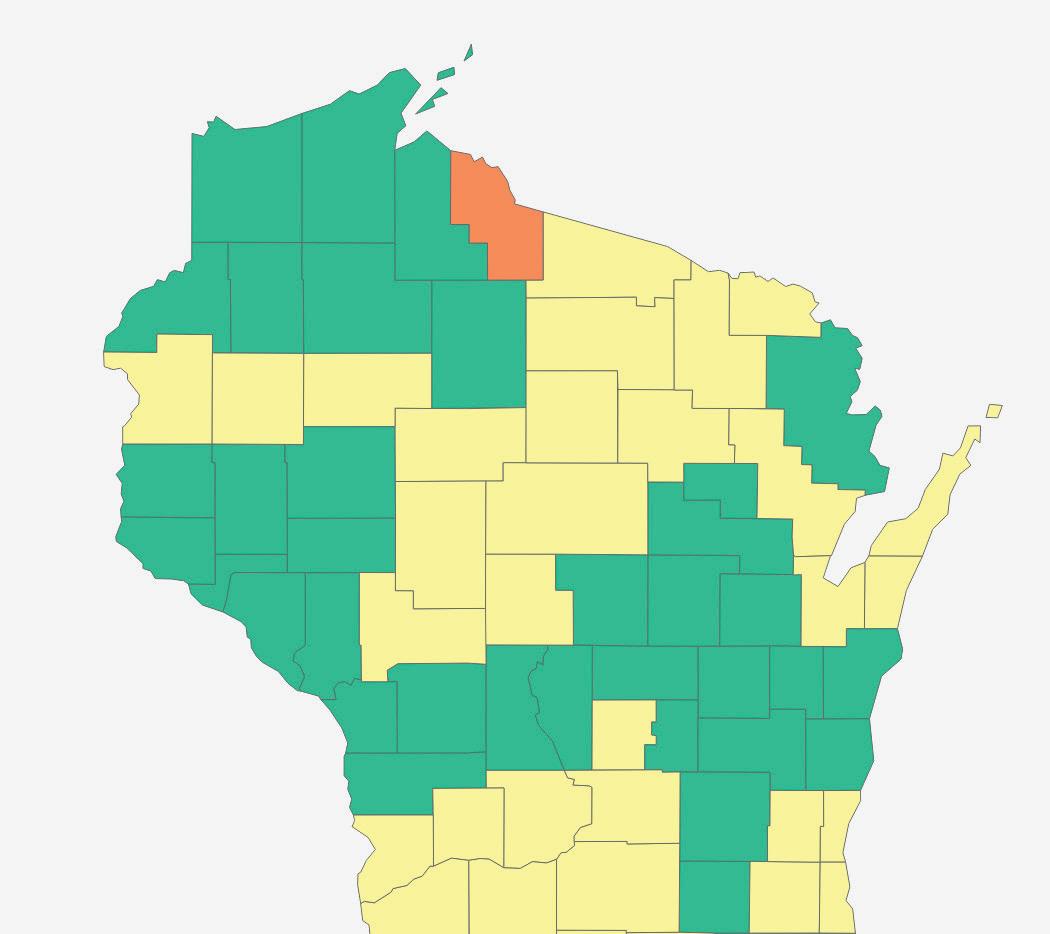
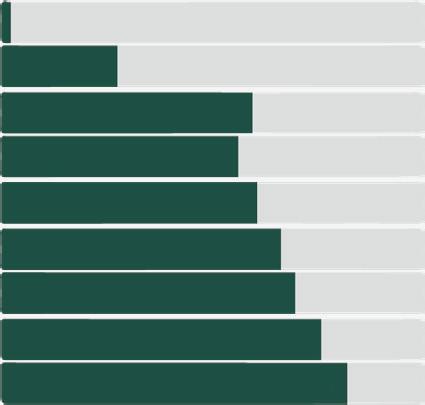
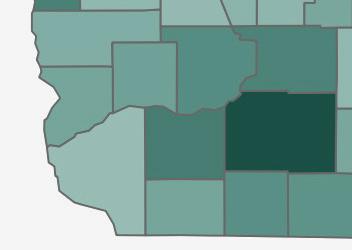
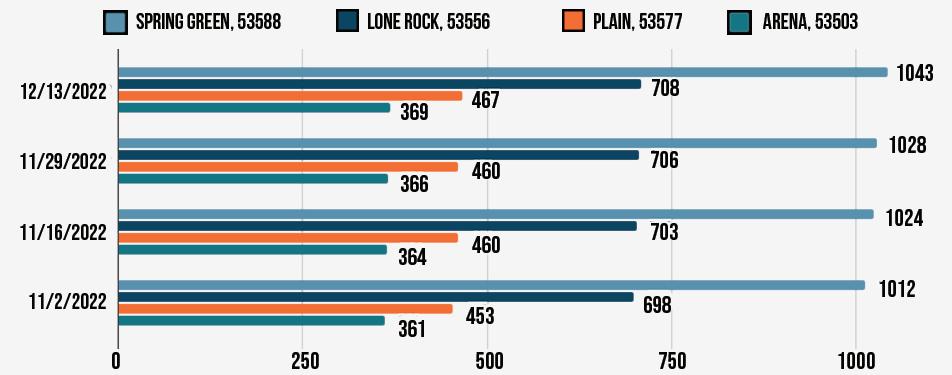
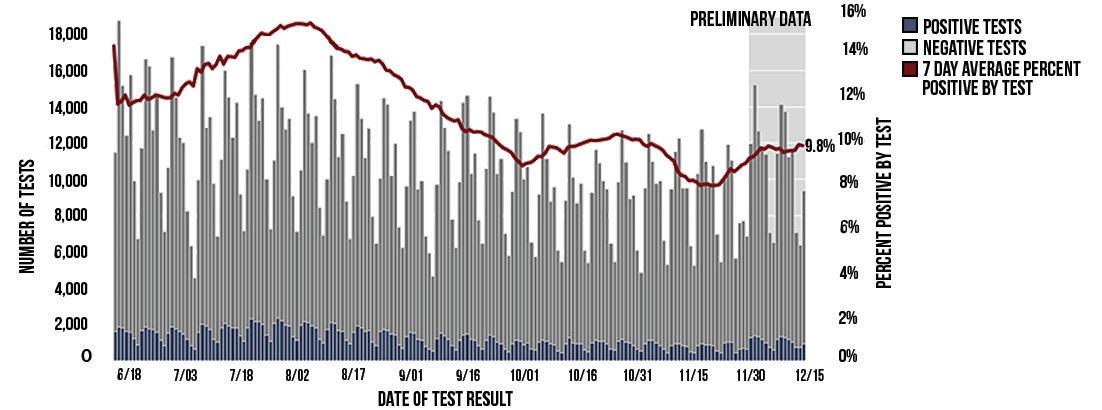
Dashboard Wisconsin Summary Cases as of 12/13/2022 Cases as of 12/13/2022 Graphic by juliAnna Williams 1,706,482 Positive Cases +14,383 from 11/29 +74 from 11/29 Percent of Wisconsin residents ages 5-11 who have completed the primary series by county Vaccine Summary Statistics Vaccine Data 61.8% 37.5% 65.7% of Wisconsin residents have completed the vaccine series of Wisconsin residents have received an additional booster / dose Updated: 12/13/2022 Updated: 12/13/2022 Updated: 12/13/2022 Ages 5-11 12-17 18-24 25-34 35-44 45-54 55-64 65+ Cases per zip code Percent of Wisconsin residents who have completed the primary series 13,826 Deaths Data From: https://www.dhs.wisconsin.gov/covid-19/index.htm +42 from 11/29 +0 from 11/29 4,845 Positive Cases 53 Deaths Richland County Ages 5-11 Ages 5-11 Ages 5-11 Ages 5-11 18.3% 31.4% 24.8% 58.9% Higher % Lower % Richland County Iowa County Sauk County Dane County +224 from 11/29 +3 from 11/29 20,377 Positive Cases Sauk County 156 Deaths +0 from 11/29 +63 from 11/29 6, 665 Positive Cases 31 Deaths Iowa County Iowa Percent completed the primary series Percent received the updated (bivalent) COVID-19 booster Sauk Percent completed the primary series Percent received the updated (bivalent) COVID-19 booster Richland Percent completed the primary series Percent received the updated (bivalent) COVID-19 booster 27.8% 59.6% 56% 60.8% 66.6% 69.4% 75.9% 81.6%
county level weekly
Updated:
2,198,108 3,606,818 Wisconsin residents have received an updated booster of Wisconsin residents have received at least one dose Wisconsin residents have completed the vaccine series 0-4 2.5% 20% 57.9% 67.7% 20.2% 18.4% 62.9% Updated: 12/13/2022
COVID-19
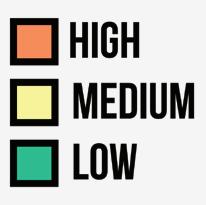
covid case activity level Updated: 12/13/2022 This map shows the current CDC COVID-19 Community Level for each county in Wisconsin. Community levels measure the impact of COVID-19 illness on health and health care systems in communities. COVID-19 community levels can help communities and individuals make decisions based on their local context and their unique needs. Community vaccination coverage and other local information can also inform decision-making for health officials and individuals. Updated: 12/13/2022
statistics
12/13/2022
BLAZE BLAZE ORANGE ORANGE BOARD BOARD
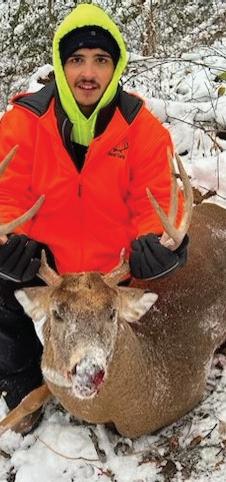








PRESENTED BY
Kate s Bait and Sporting Goods
2022 2022
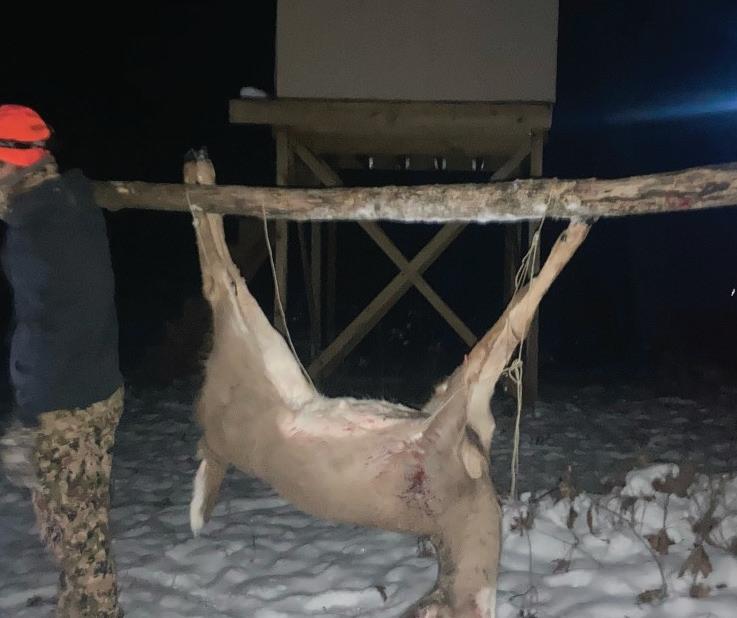
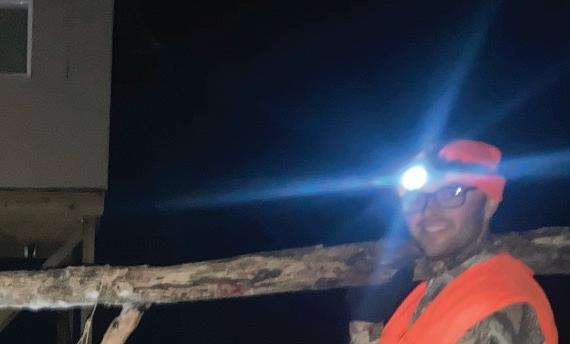
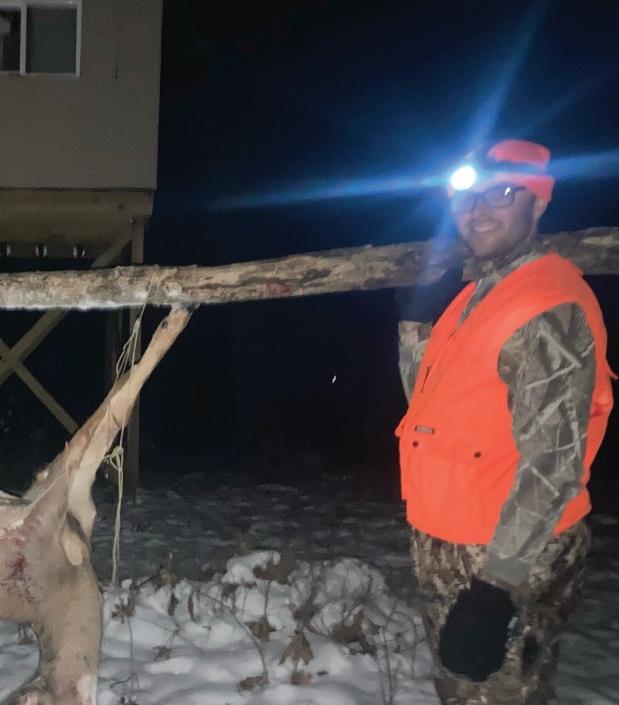
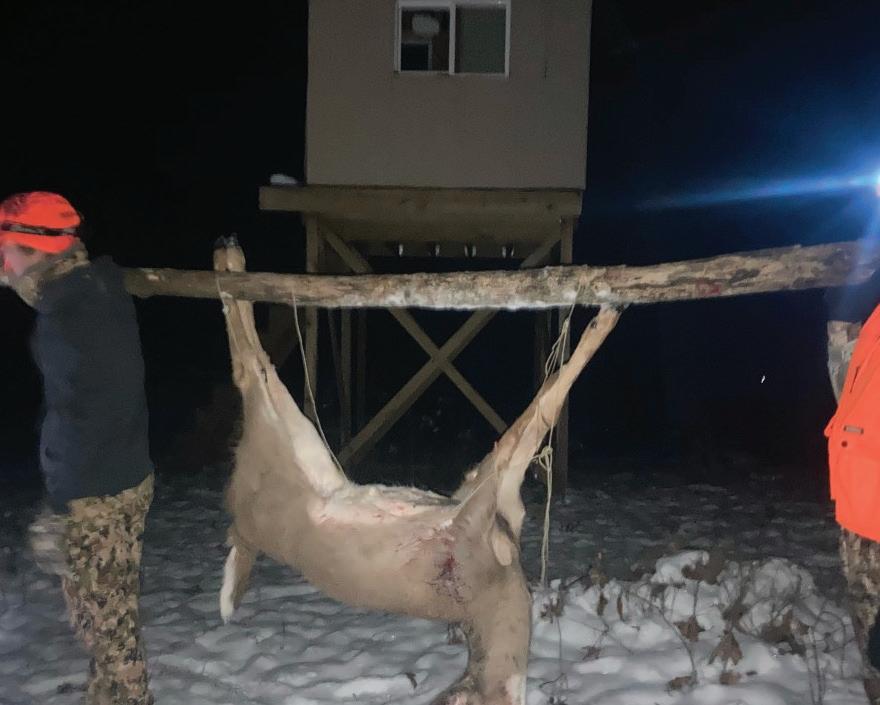
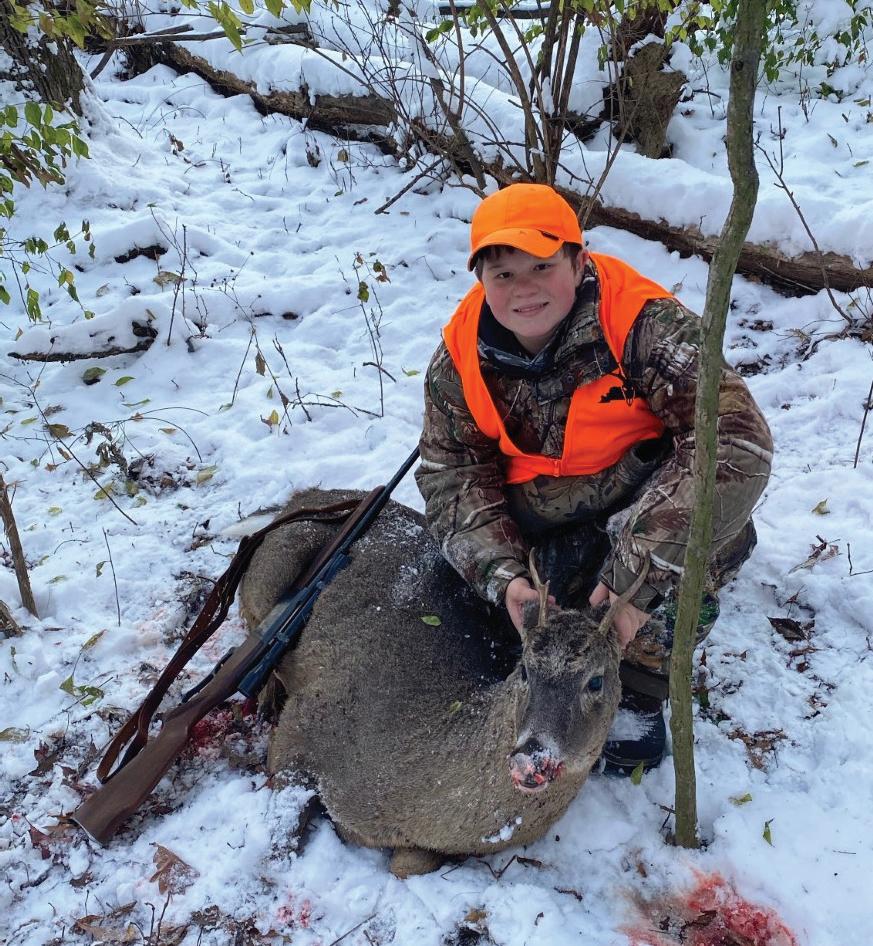
“Cole Amble and Brandon Noble thought of this genius way to get the doe out of the woods,” said Karla Amble.
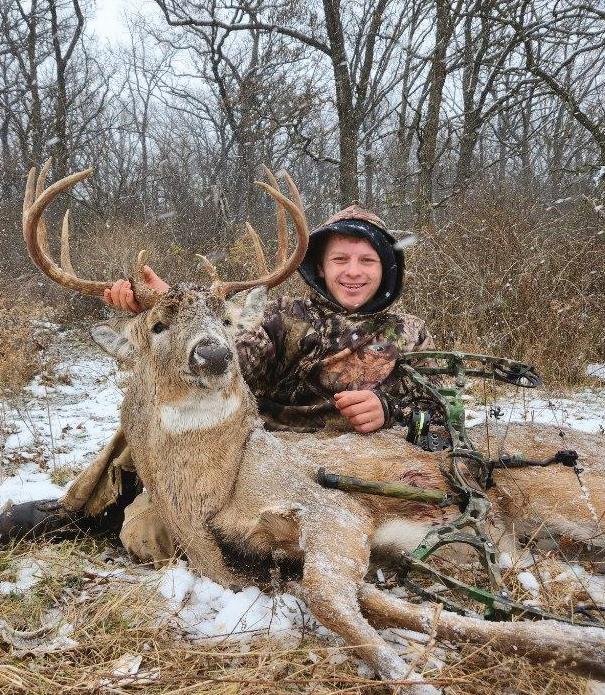
Brett Jensen harvested this 8-point buck on opening day.
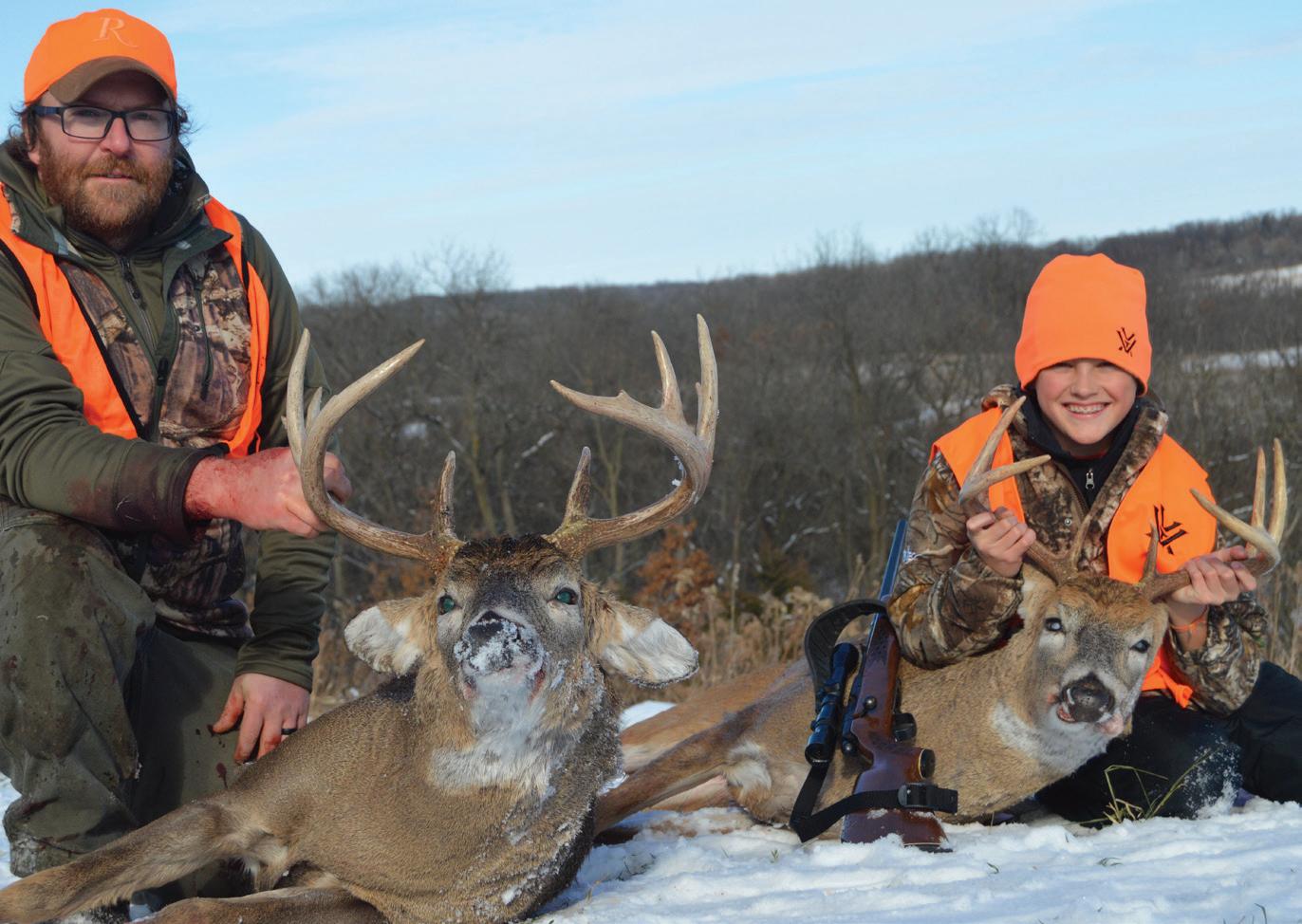
Ben Sweeney, of Sterling, Alaska, poses with Ryland Schwarz, 11 of Wisconsin. They each harvested a buck on opening weekend.
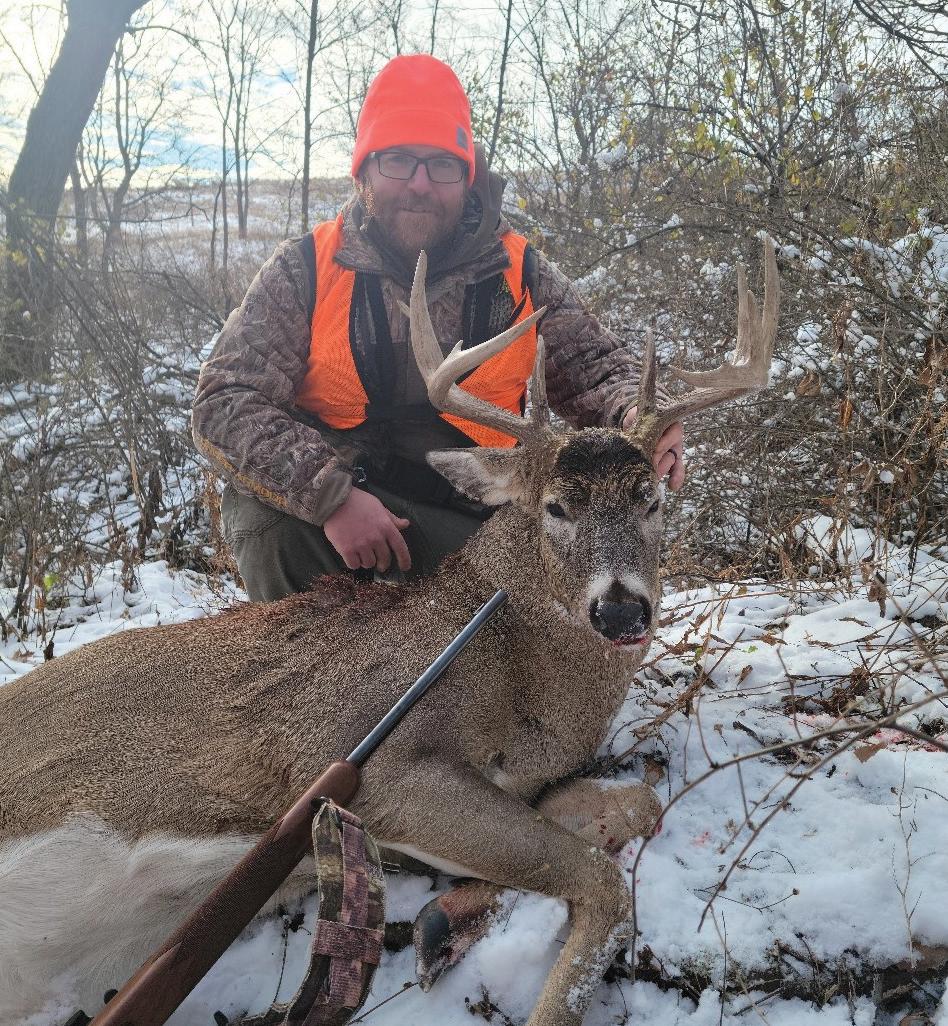
Ben Sweeney of Sterling, Alaska, harvested this 11-pointer opening weekend. He used his .350 mag. Photo by Joe Schwarz.
Cole Peterson, 16, poses with his buck that he harvested with his bow Nov. 16.
Jason Larson harvested this buck during archery season near Plain.
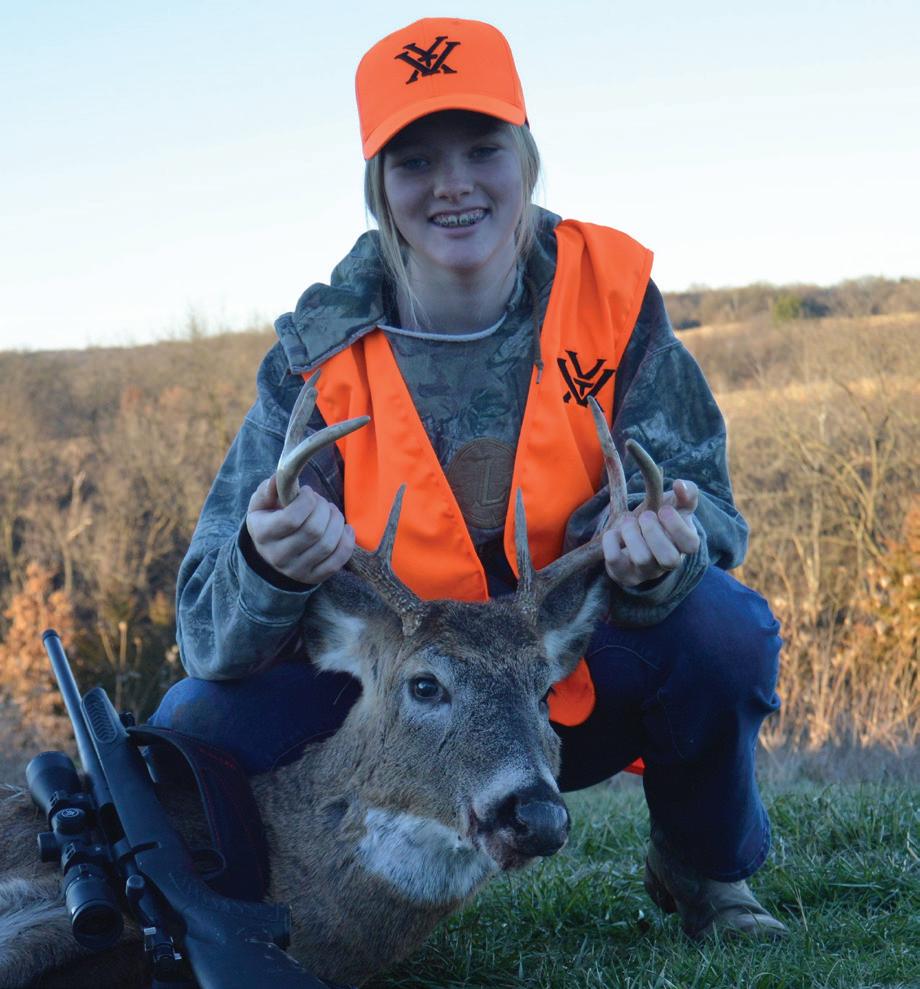
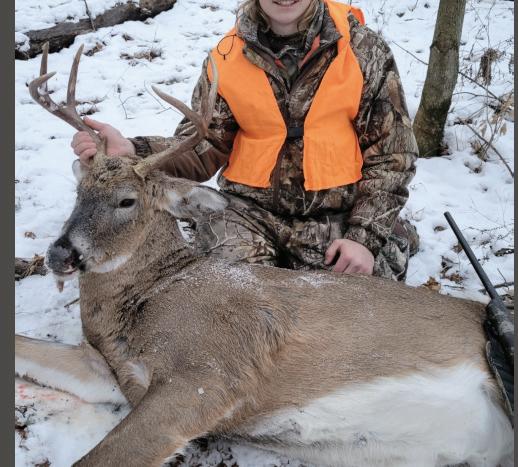
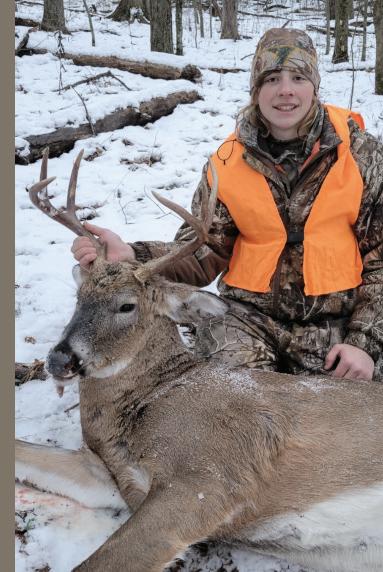
Ayla Schwarz, 14, harvested an 8-point buck on Thanksgiving Day. “She was hunting from ‘grandpas blind’; using her .243,” said Ayla’s dad, Joe Schwarz.
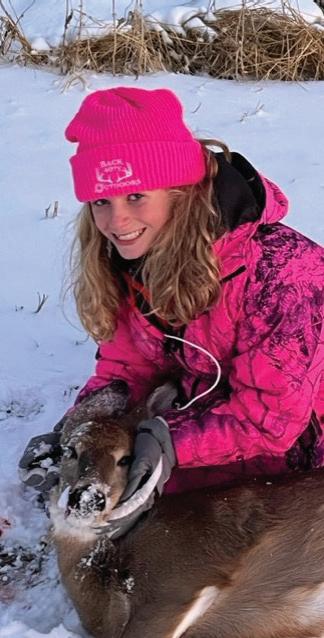
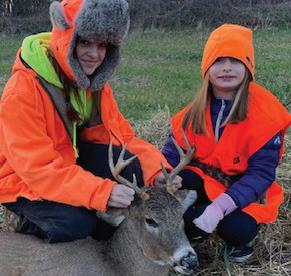












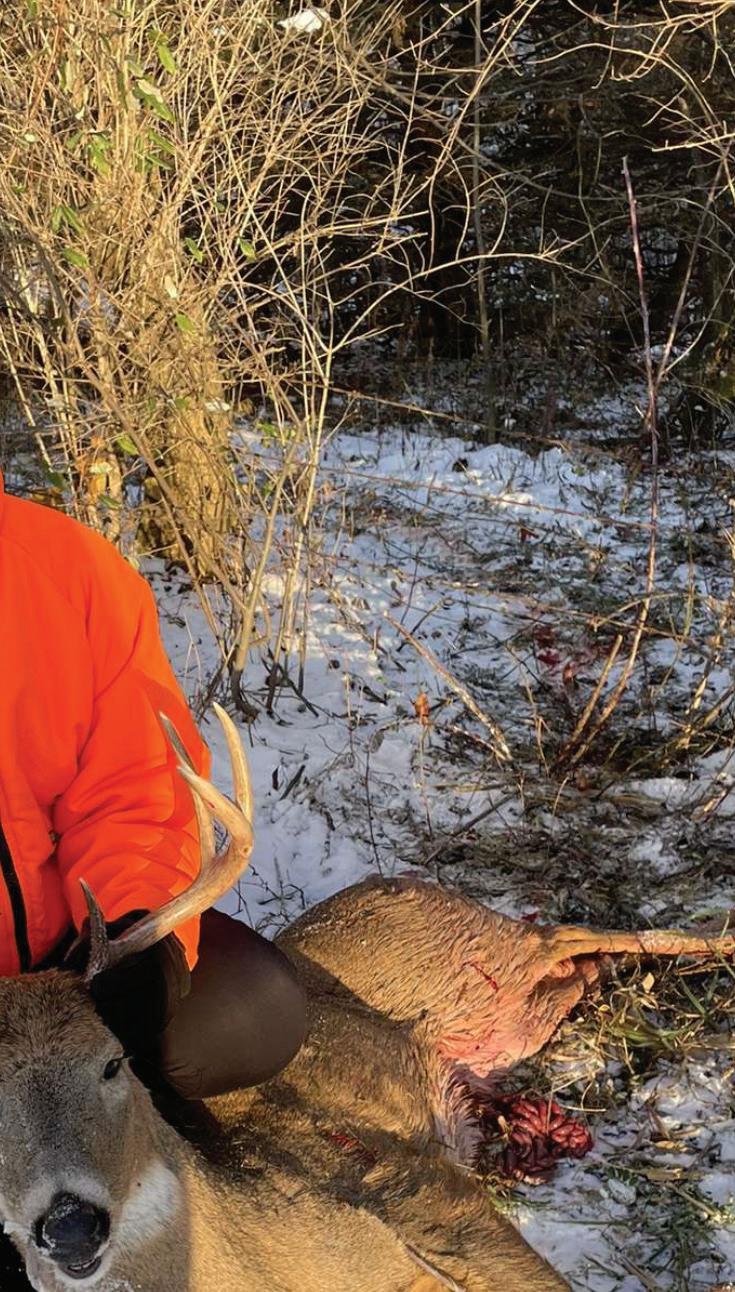

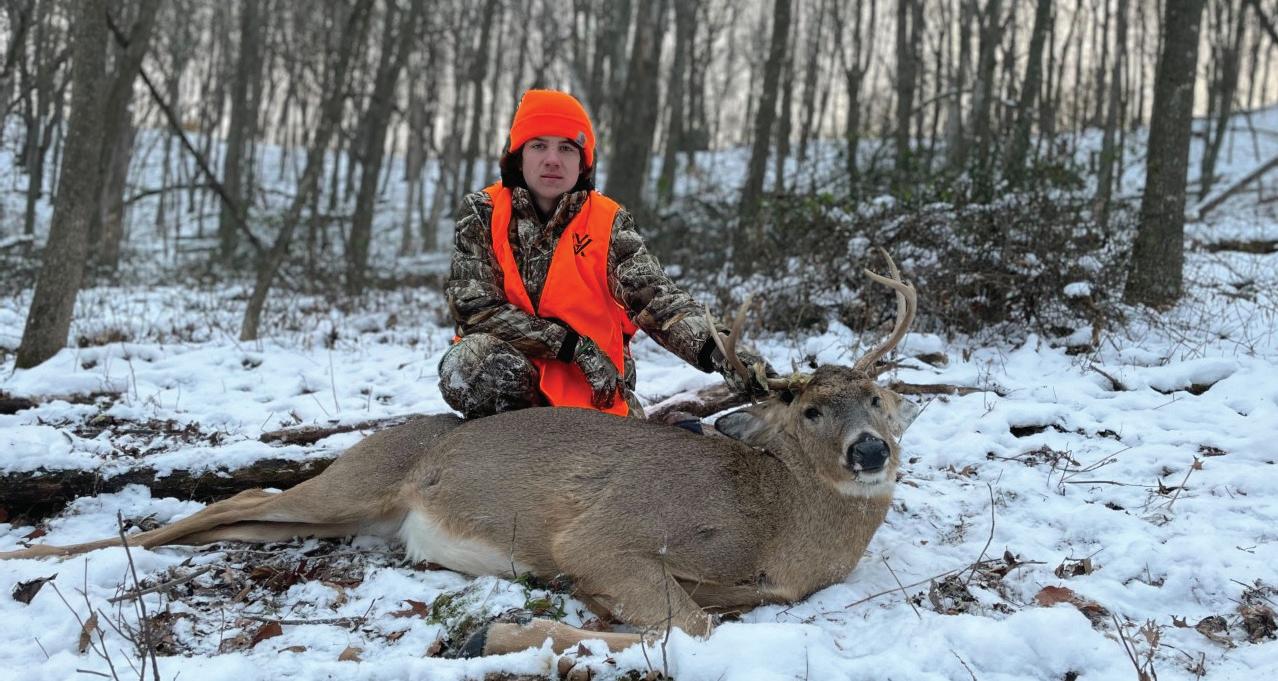
 Owen Wilson, 10, of Lone Rock, harvested this Doe in Sauk County Nov. 20.
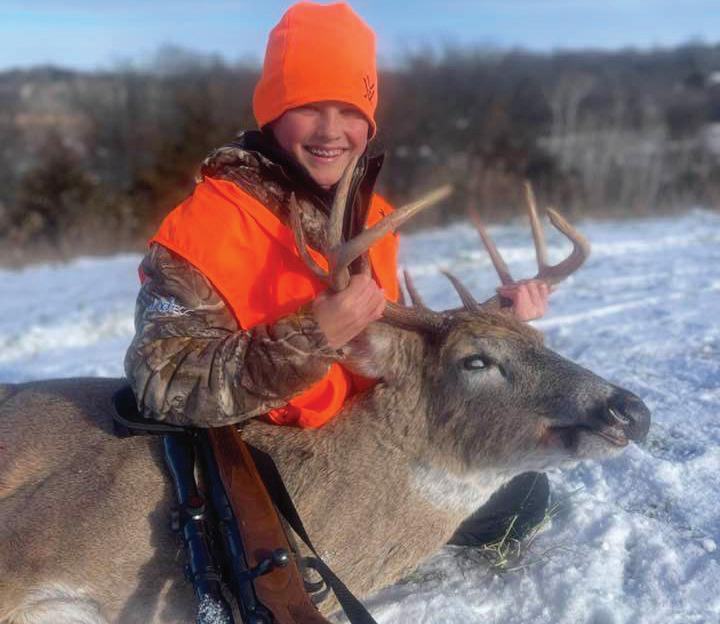
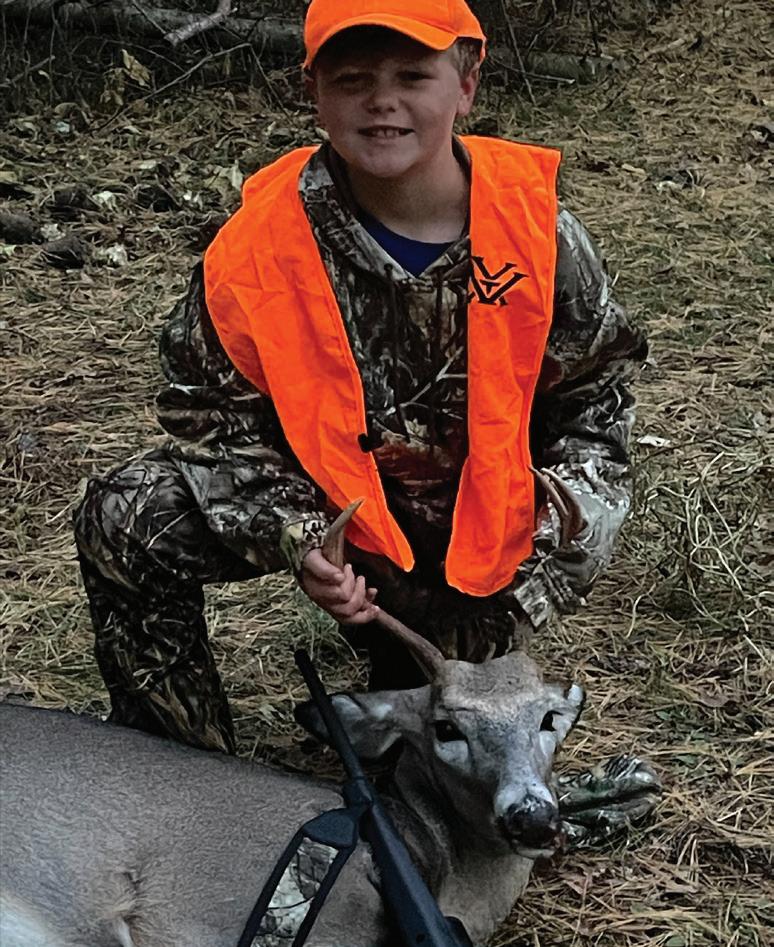
Cael Reno, 9, of Lone Rock harvested his buck during the youth hunt in October.
Owen Wilson, 10, of Lone Rock, harvested this Doe in Sauk County Nov. 20.
Cael Reno, 9, of Lone Rock harvested his buck during the youth hunt in October.
first
Plain
Ty Larson, 14, harvested his
buck near
during gun season.
CATERING With over 20 years experience you can trust Prem Meats & Catering to deliver delicious food with personalized service and impeccable presentation. WILD GAME PROCESSING Prem Meats can butcher and process your favorite wild game into sausage, steaks, jerky, summer sausage and more. NATURAL HARVEST Prem Meats is excited to announce a new division of their business, Natural Harvest LLC. Natural Harvest is our on-site butchering service. Small enough to know you... Big enough to serve you. E5028 HWY. 14, Spring Green (608) 588-2164 Or 1940 Prairie St, Prairie Du Sac www.premmeats.com Spring Green Hours Mon-Fri 9am-6:30pm Sat 8am-5:00pm Sun 9:30am-3pm Menu Items Include: Smoked, vacuum-packed meats Full line of Beef, Pork, Chicken, Seafood Beer Wines Liquor Take & Bake Pizzas Wisconsin Cheeses Heat & Serve Items Propane Tank Exchange Bakery Items Ice Homemade Salads, Wraps, & Sandwiches More! come visit us or shop online! Prem Meats Is A Retail Meat Market, With A Large Selection Of Wine, Beer And Spirits.
Alyssa Nachreiner harvested her buck near Plain.
quality is our pledge to
you!
Taylor Ferguson, 14, hunting with her sister Reese Ferguson, 9, harvested an 8-point buck.
Ryland Schwarz, 11, harvested a 9-point buck on opening day.
Charlee Busser, 11, harvested her first deer on opening day near La Valle.
This

Michael Hills, 11, of Ridgeway, with his first buck.
“A thankful sunrise” on Thanksgiving morning near Hollandale, Iowa County, by Robert Busser.
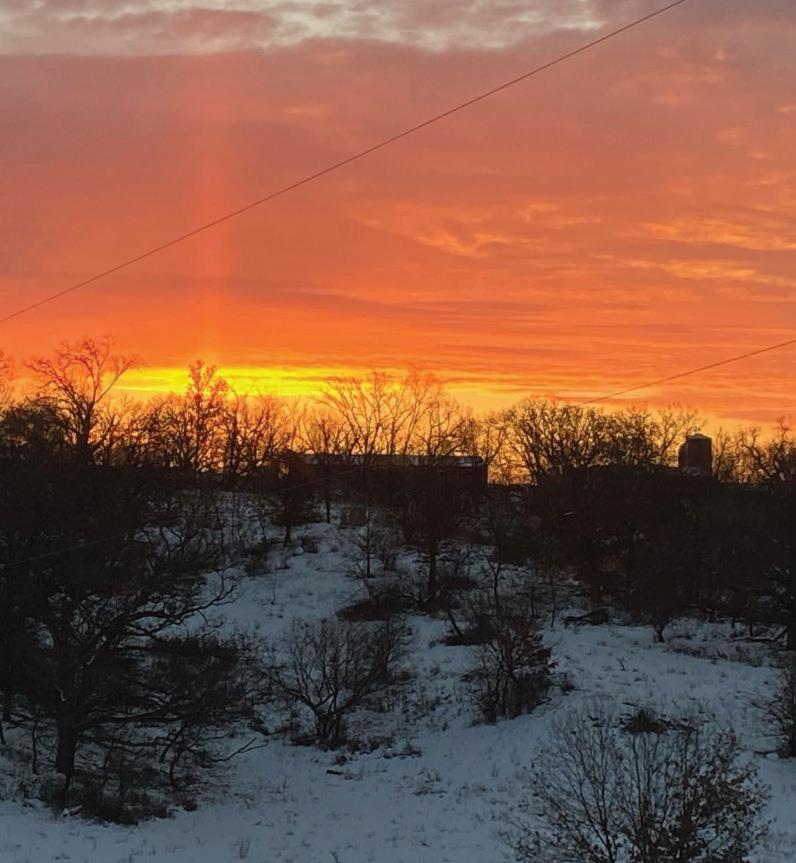
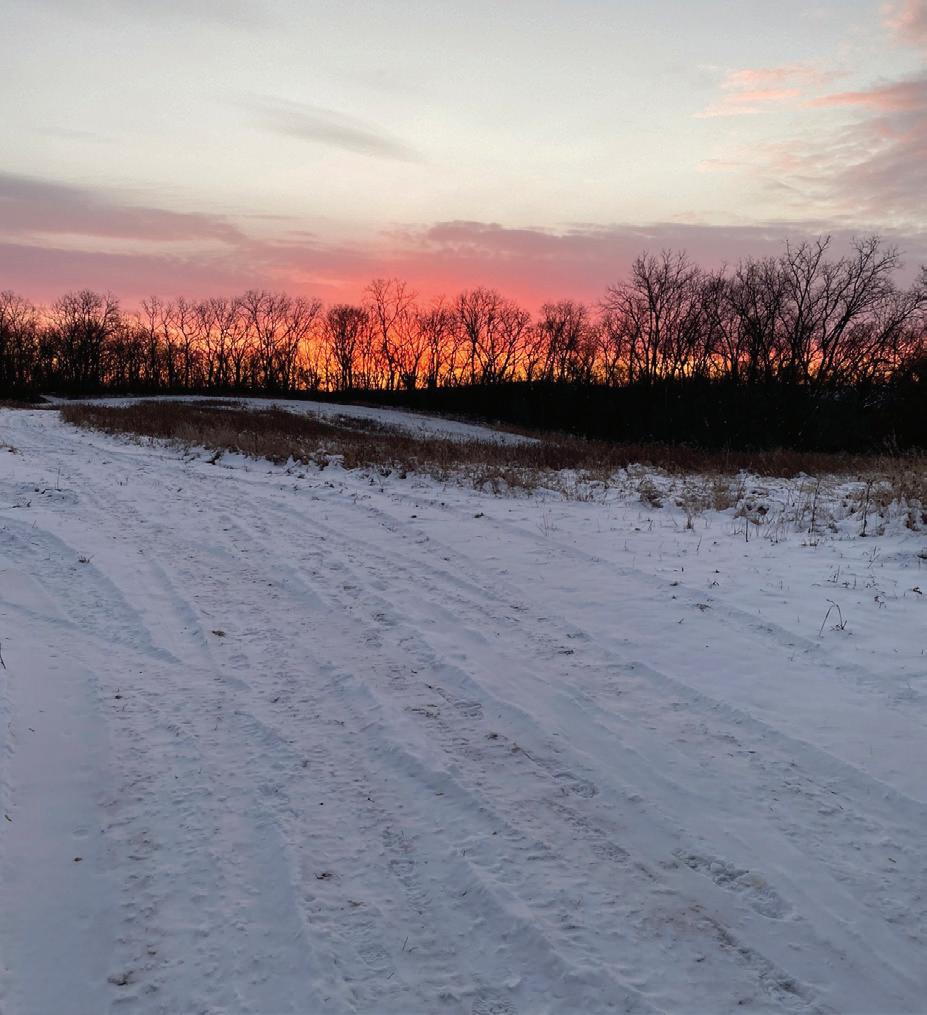
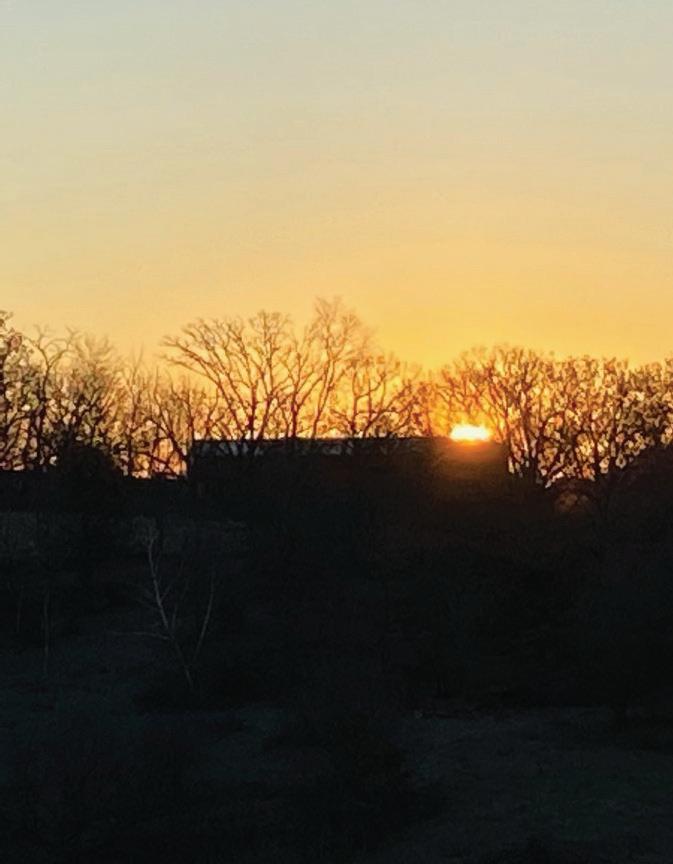
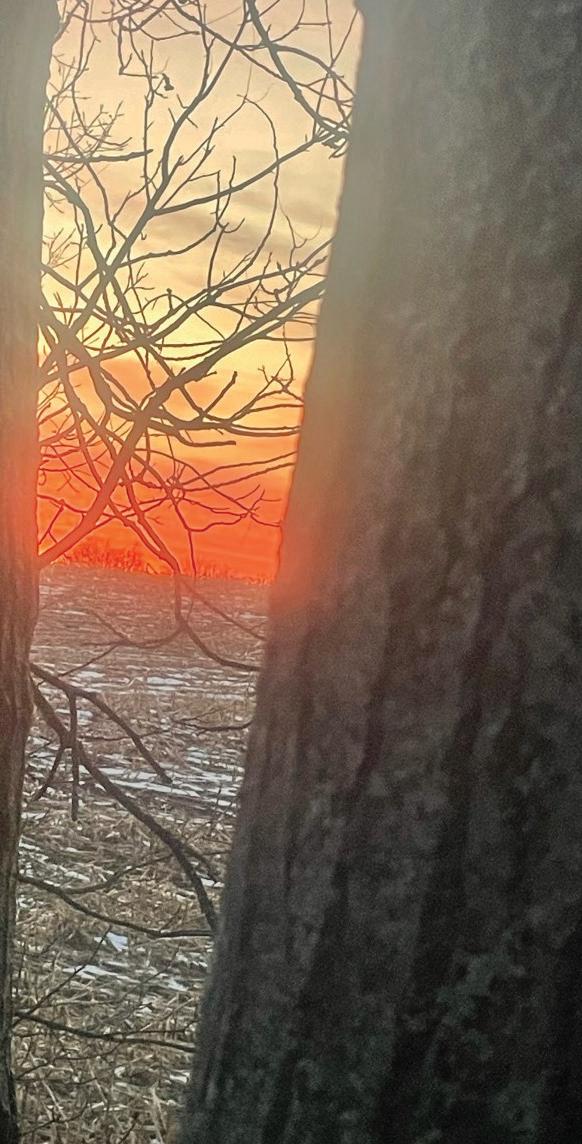
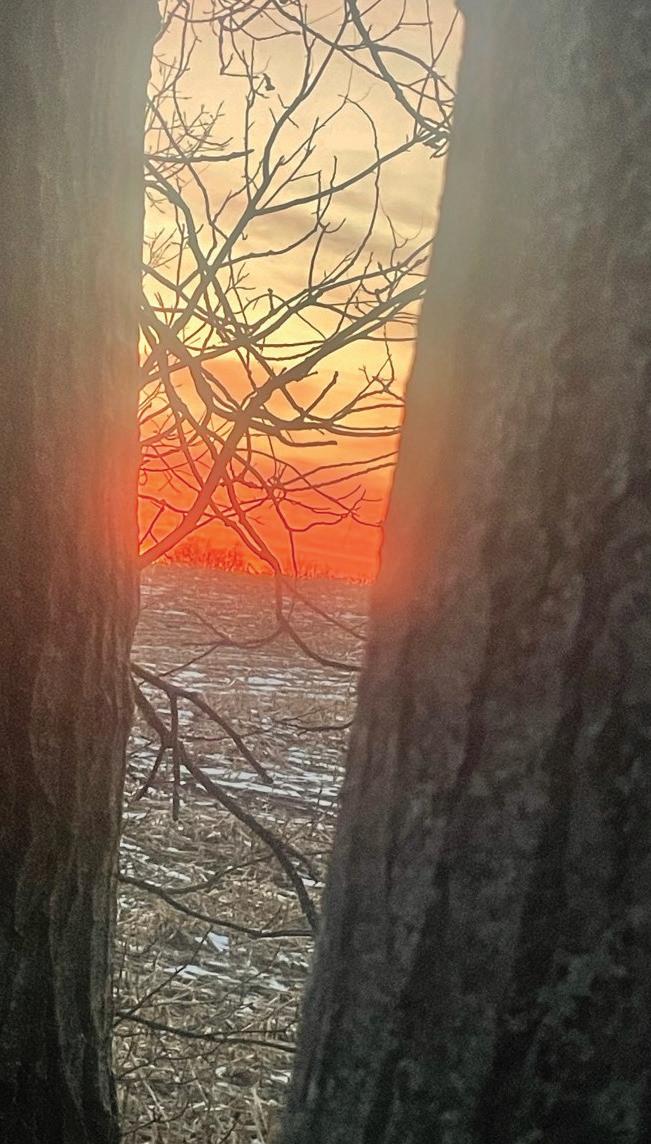
Hogan Farm, on Coon Rock Road in Iowa County by Pamela Hogan.
Ty Larson, 14. with his first buck shot outside of Plain.
Landon Stark, 14, harvested his biggest buck to date in Sauk County.
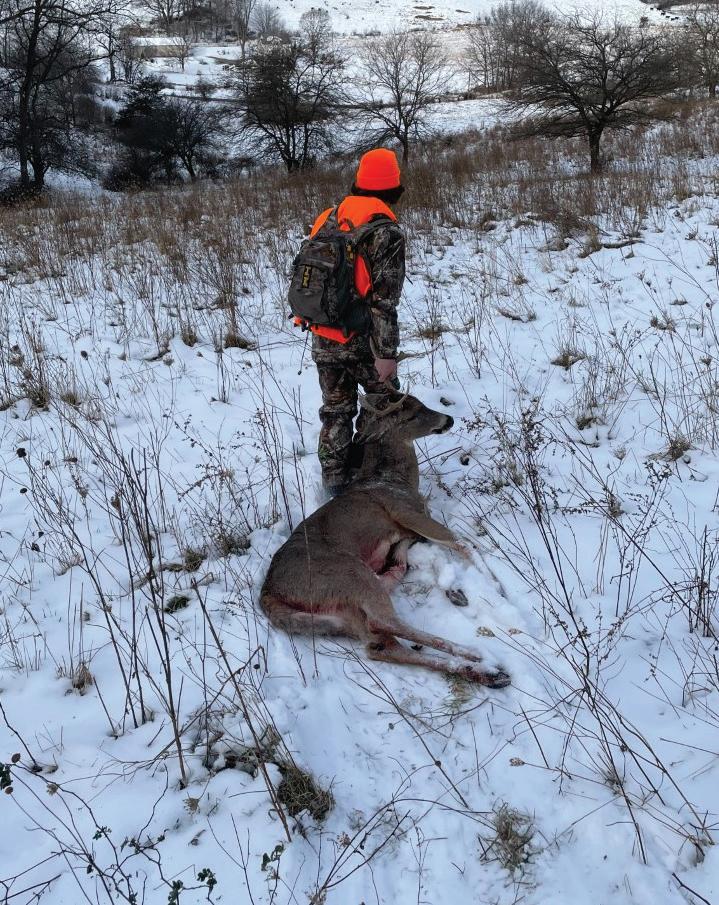
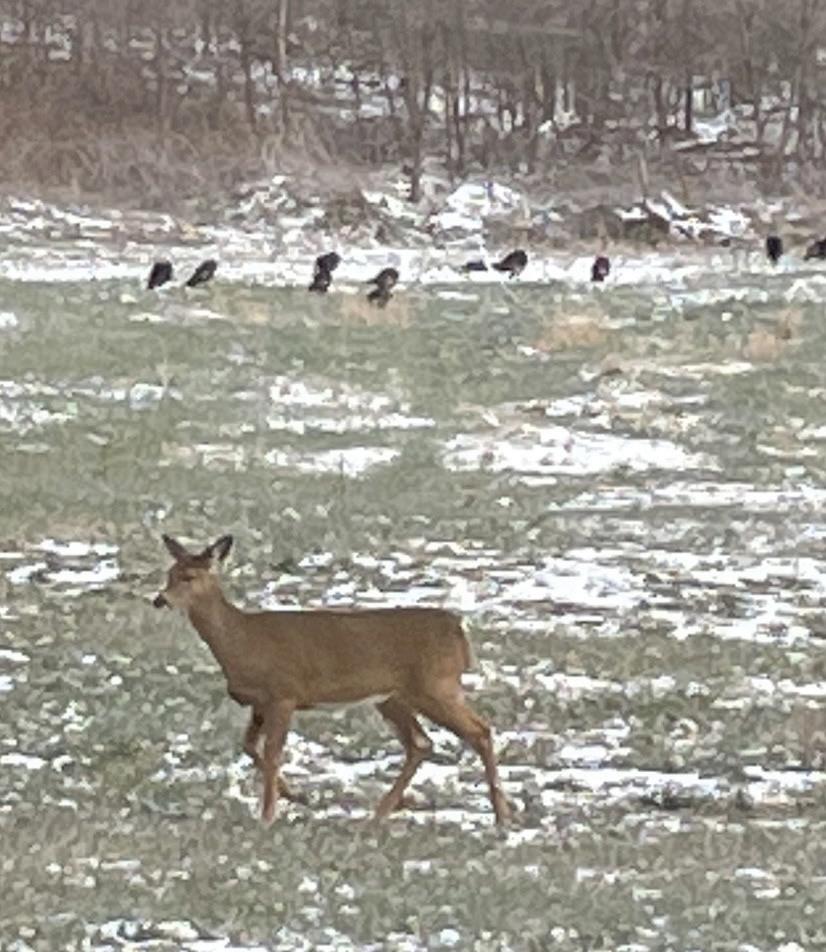
A view of deer and turkey, taken by Reese Ferguson, 9, of Spring Green.
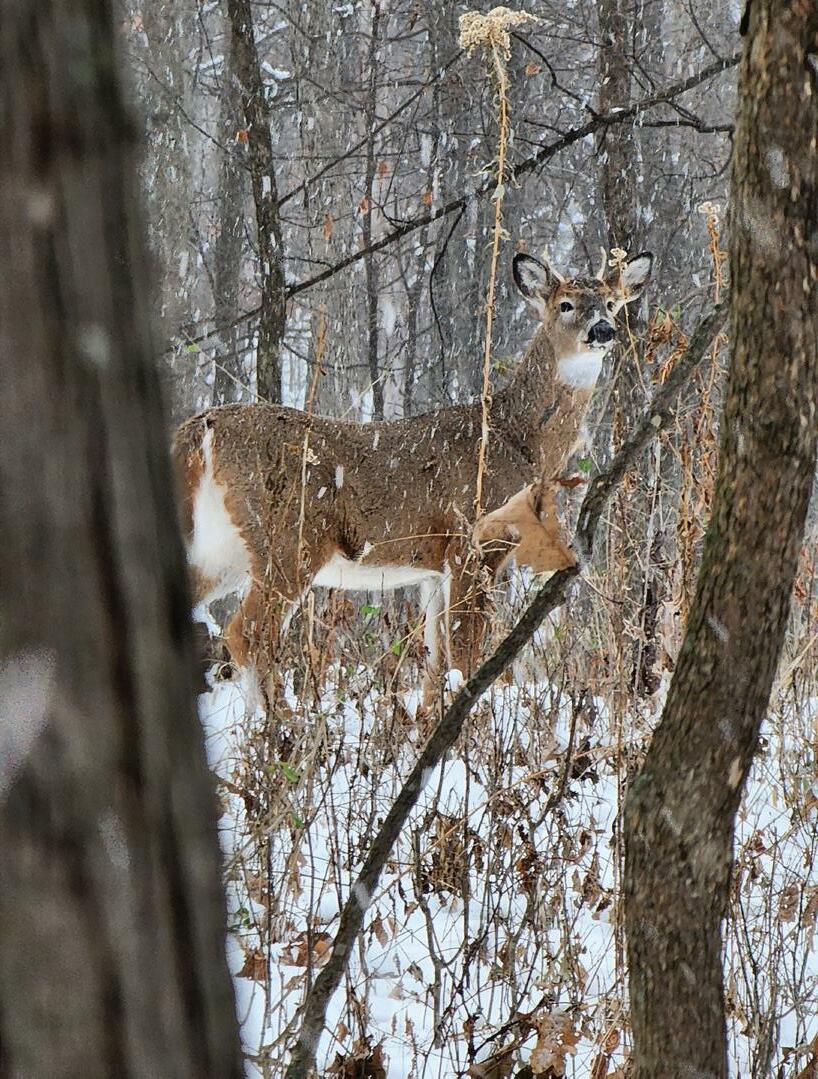
“Between two trees” taken Nov. 23 at 4:44 p.m. from Joe Schwarz’s stand.
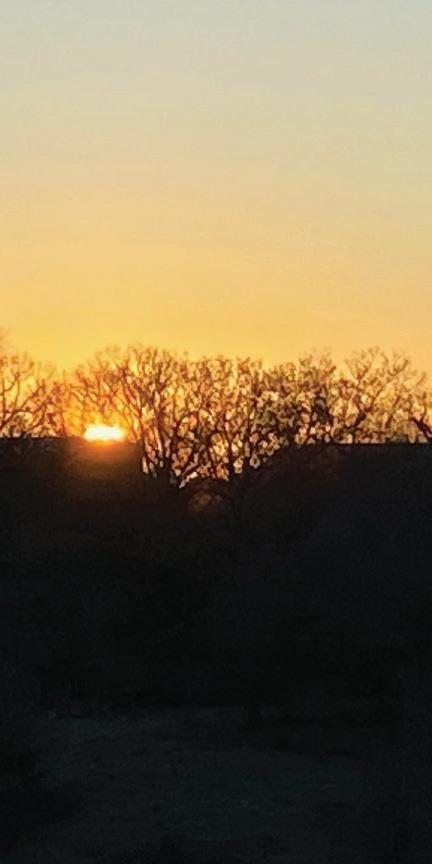
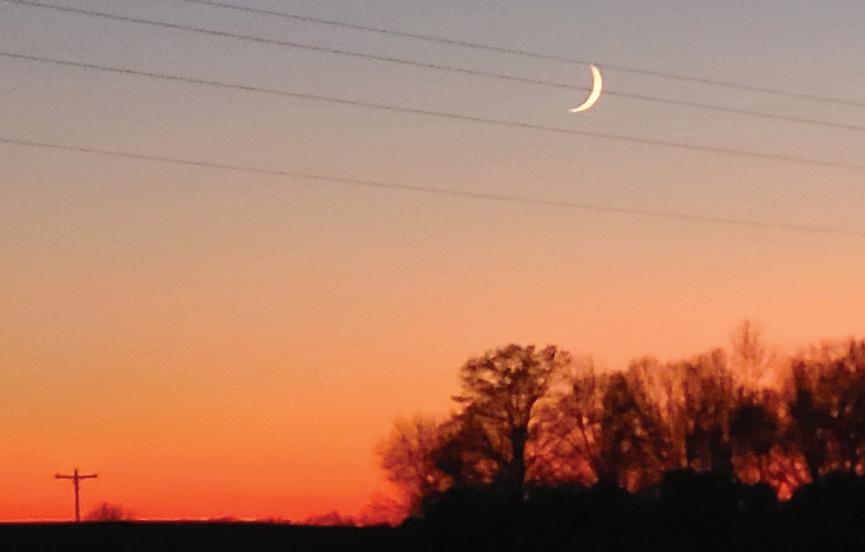
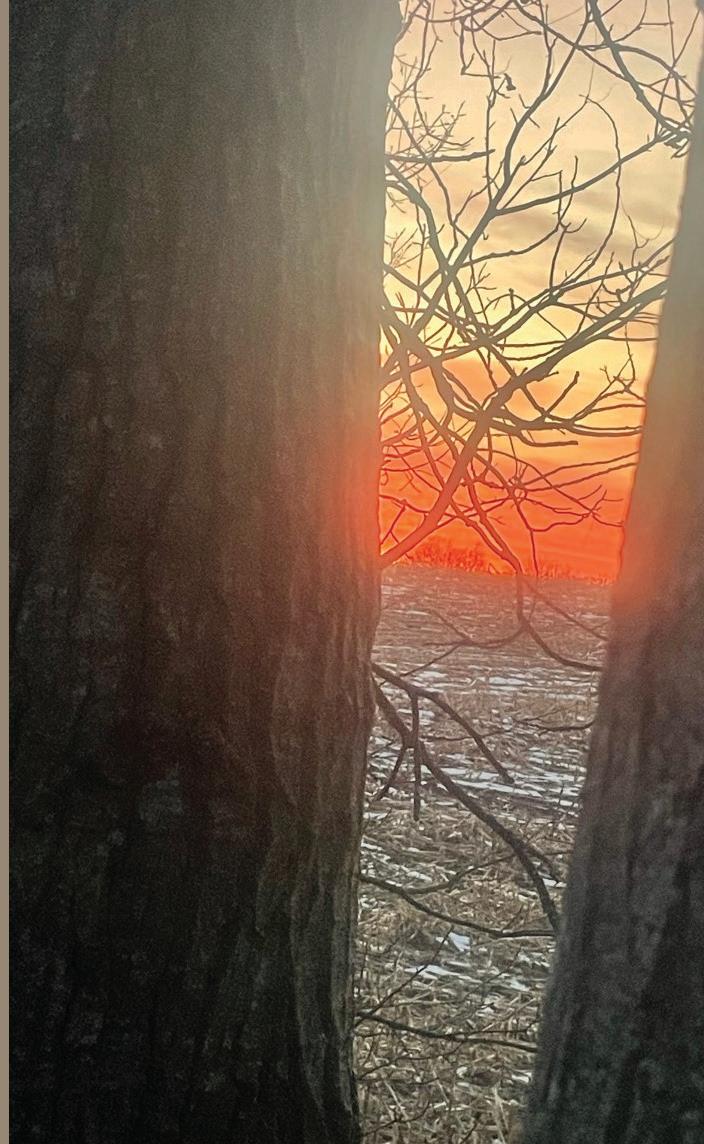 view by Robert Busser — “The Morning Sunrise of Opening Day” — was taken near Hollandale on opening day from Busser’s stand.


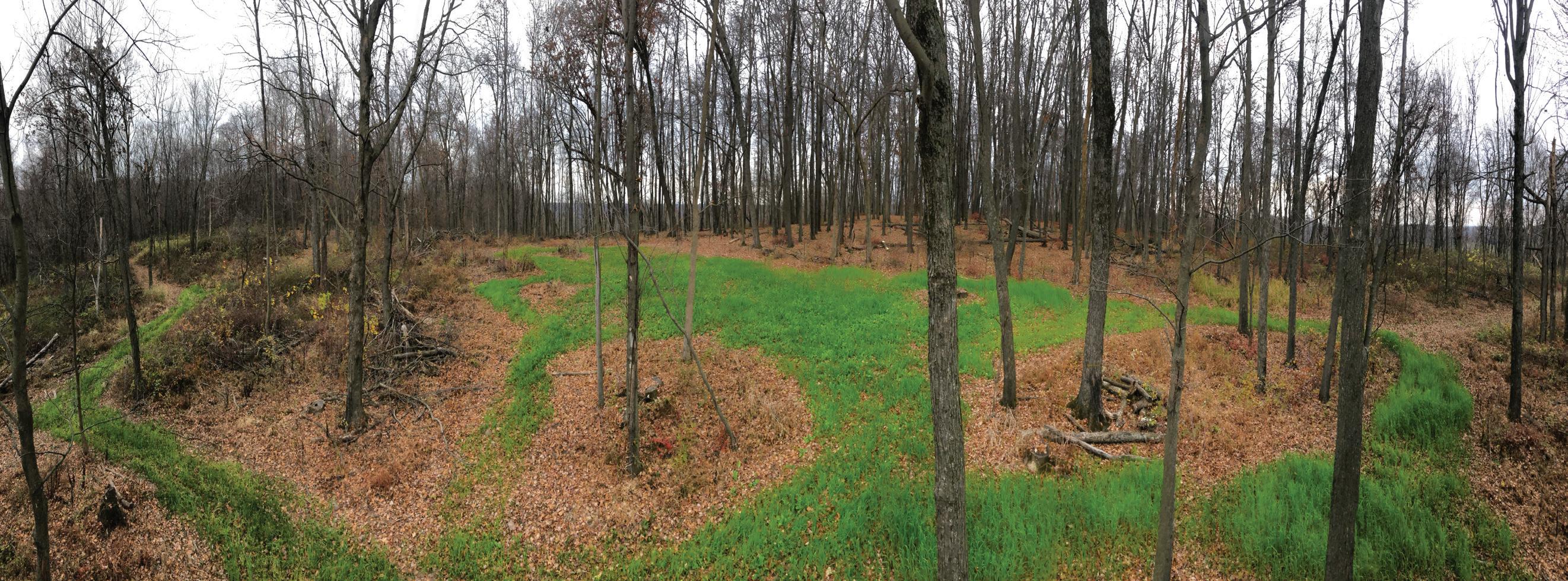


 A panoramic view from Justin Yanke’s treestand overlooks a half acre food plot during archery season in Leland, Sauk County.
STRAKA MEATS “A Cut Above The Rest!” Alma Avenue, Plain, WI • www.strakameats.com 608.546.3301 STRAKA’S VENISON SAUSAGE PRODUCTS Straka’s venison sausage products are made with only FRESH beef and pork and only the finest blend of spices and seasonings available, then hickory smoked. All products are vacuum packaged in a custom, E-Z Open packaging that you can’t get anywhere else. Stop in with your deer or your boneless trim and start enjoying the best tasting sausage products you’ve ever had. Remember, quality takes time. Orders are processed in the order we receive them. Have a great 2022 deer hunt, HUNT SAFE! Mon, Tue, Thurs, Fri : 8:00am - 5:30pm Wed : Closed Sat : 8:00am - 1:00pm Sun : Closed NOT accepting Whole Deer Carcass for 2022 Season. Always accepting boneless trim & skinned, quartered deer. We accept Snap cards Find us on Facebook • Summer Sausage • Garlic Summer Sausage • Slicing Summer • Jalapeno & Cheese Summer Sausage • Wieners • Cheese Wieners • Bologna • Fresh Bratwurst • Fresh Cheddar Bratwurst • Mushroom & Swiss Bratwurst • Smoked Maple Sausage • Bulk Breakfast Sausage • *Snack Sticks • *Hot Sticks • *Jalapeno Cheese Snack Sticks • *Honey BBQ Snack Sticks • *Landjaegers • **Deer Jerky • *Venison Bacon Highest quality and best prices around! All sausagevenisonproducts available in E-Z Open packagesvacuum
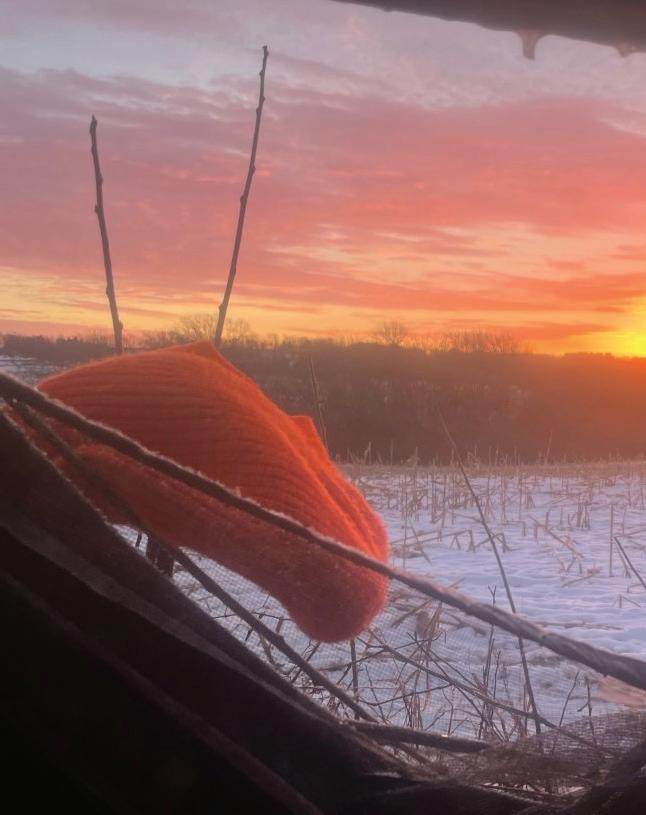
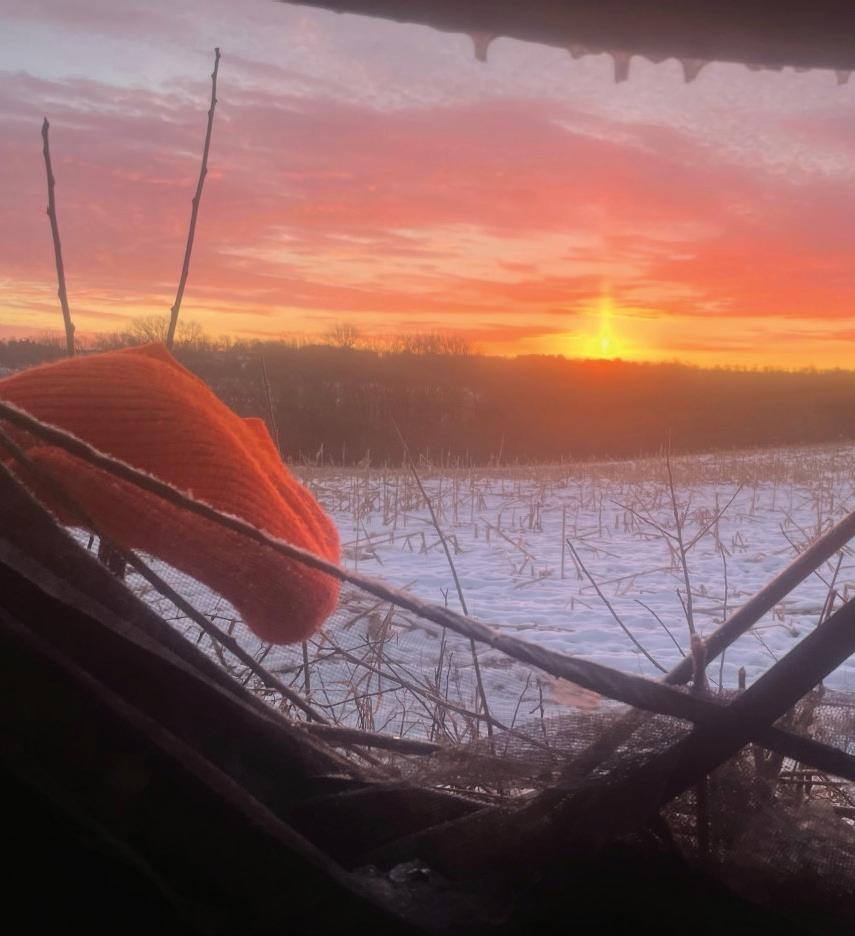
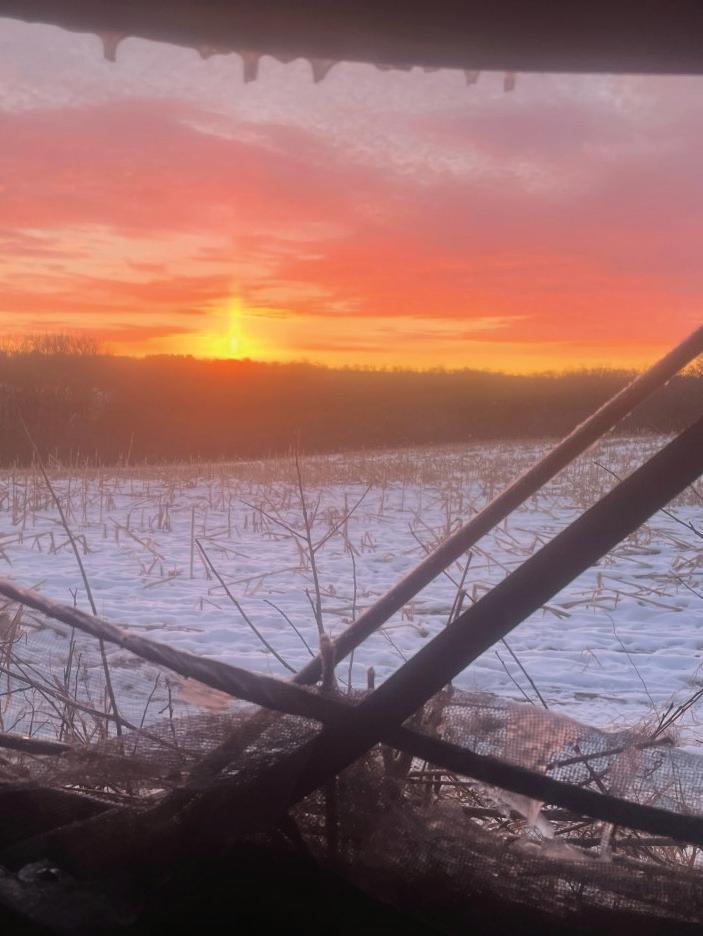
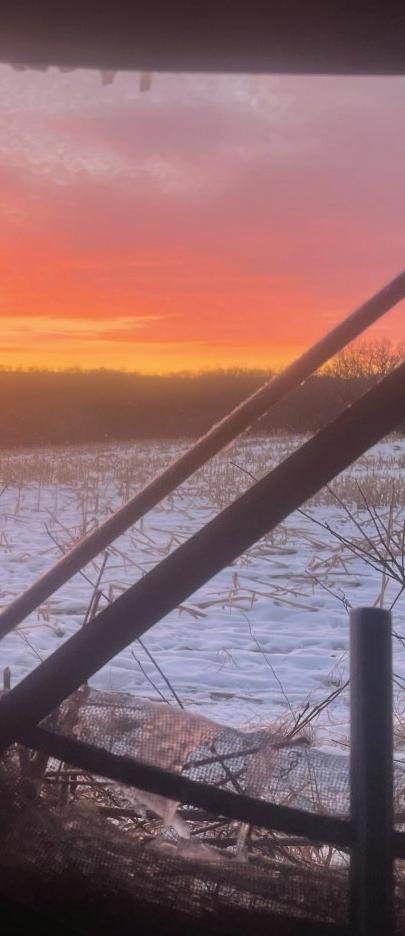
Sunset view from Mark Barreau’s stand in Richland County.
WINNERS





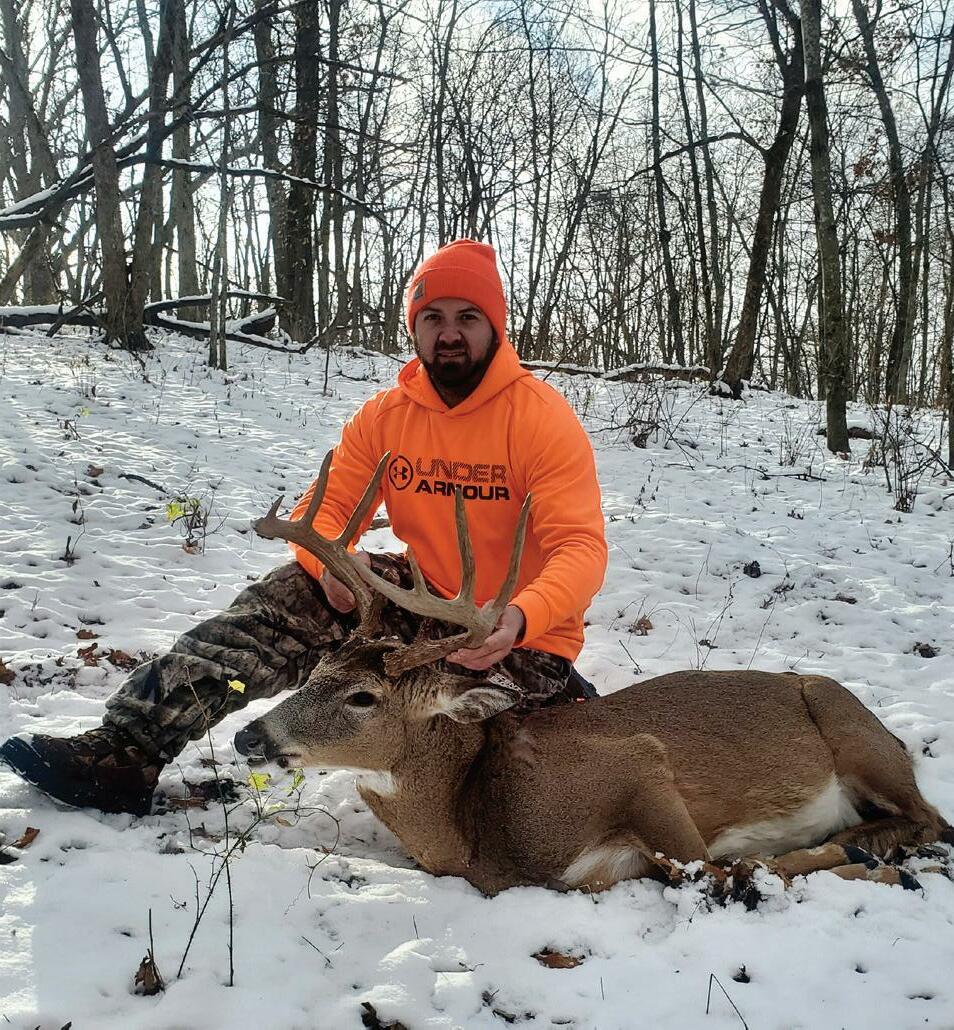
BIGGEST BUCK BIGGEST DOE






Steve Louis harvested this 10 point, 16 ½ inch wide buck in Iowa county.
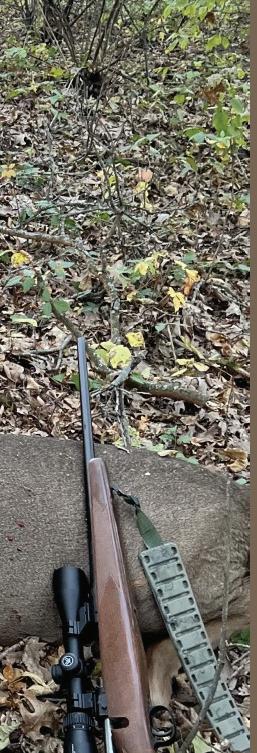
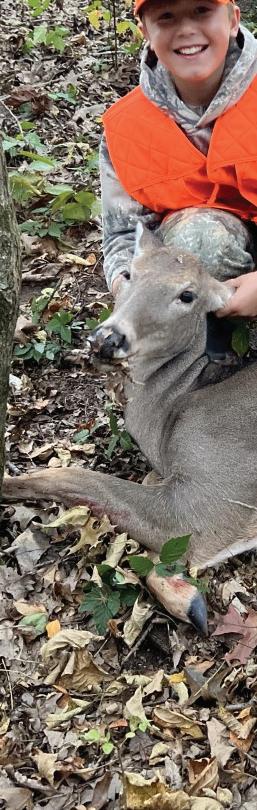
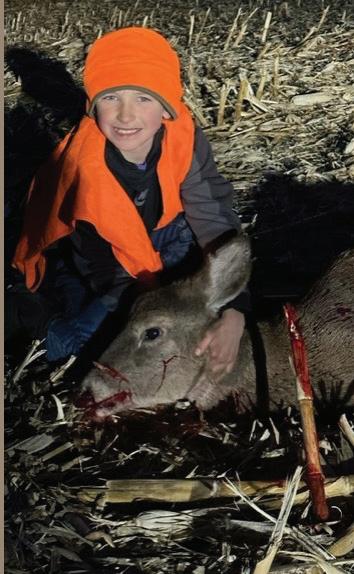
Owen Wilson, age 10, of Lone Rock, shot his first deer, a big doe, on Oct. 9.




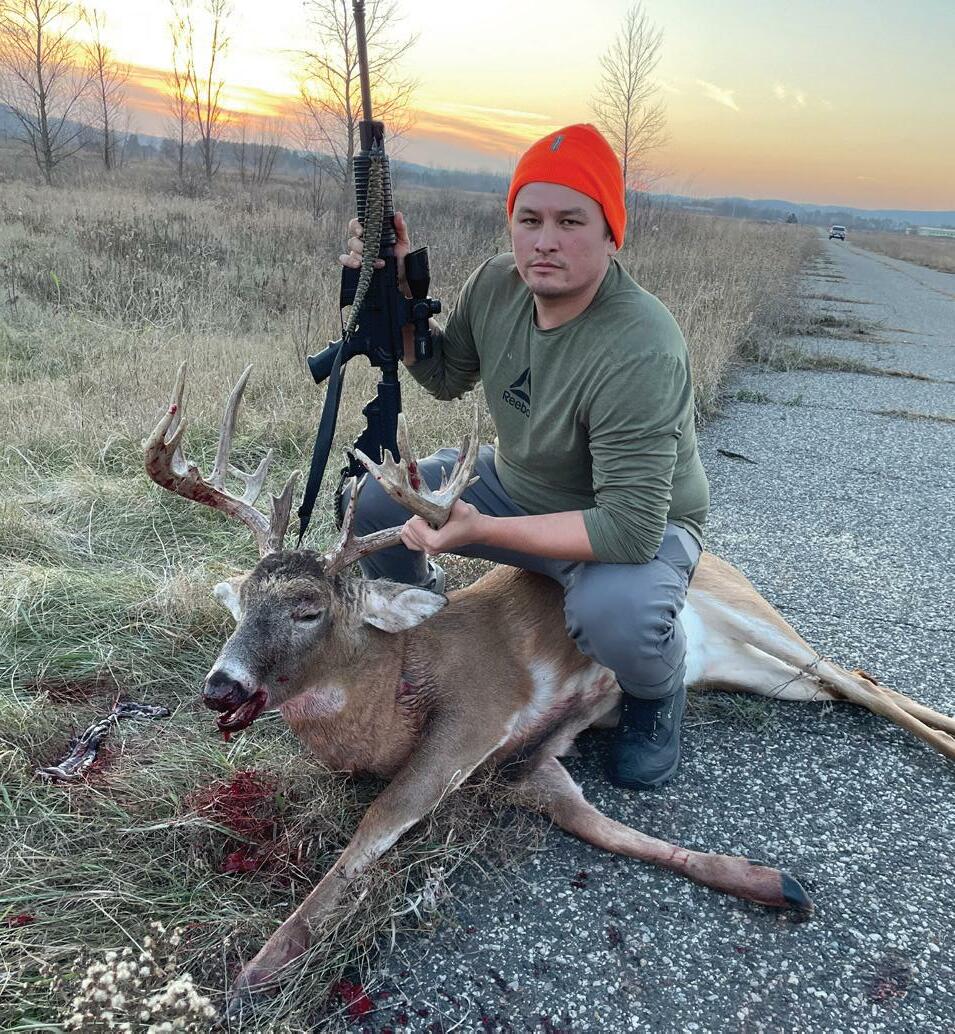
Ken McAndrew, a Ho-Chunk Nation Tribal Member, harvested this buck on Ho-Chunk land near Devil’s Lake. McAndrew is also a combat veteran of Iraq and Afghanistan, and hunting is a new hobby for him. “I am very grateful for my harvest this year,” said McAndrew.
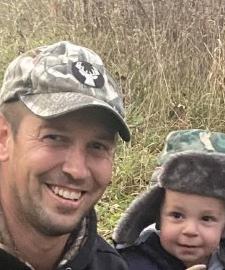
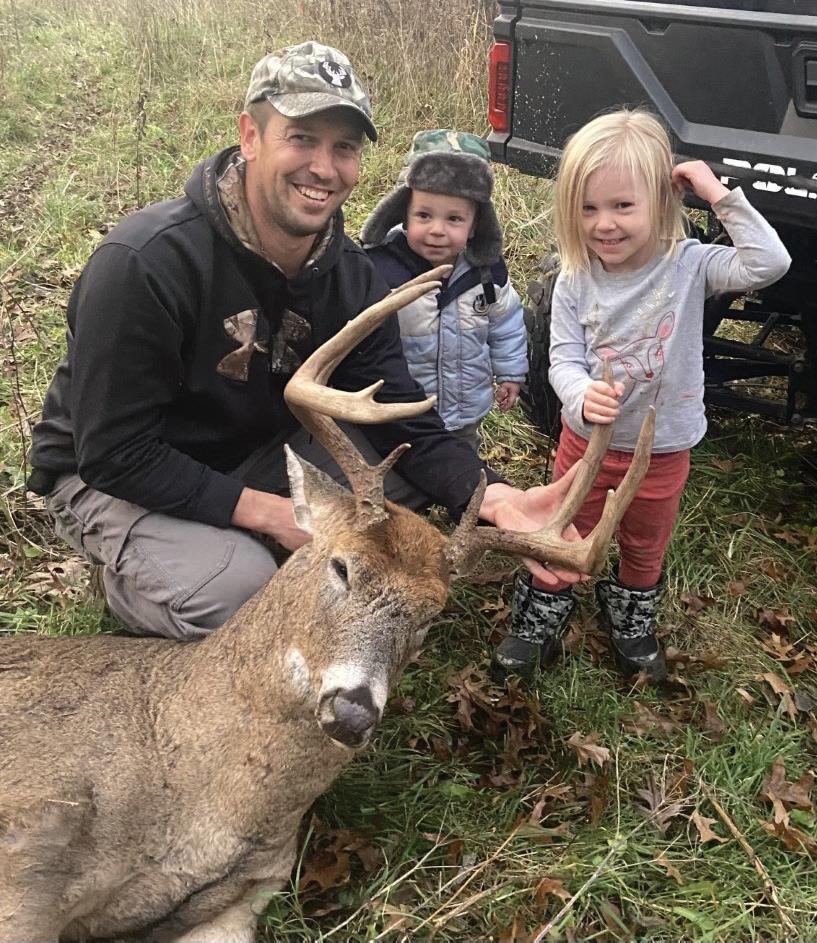
Keith Hasburgh, poses with his kids, Layla, 3, and Sawyer, 1, along with a 9-point buck he shot with a bow. “Layla and Sawyer were so excited to be along for the recovery, a memory I will never forget,” said Hasburgh.
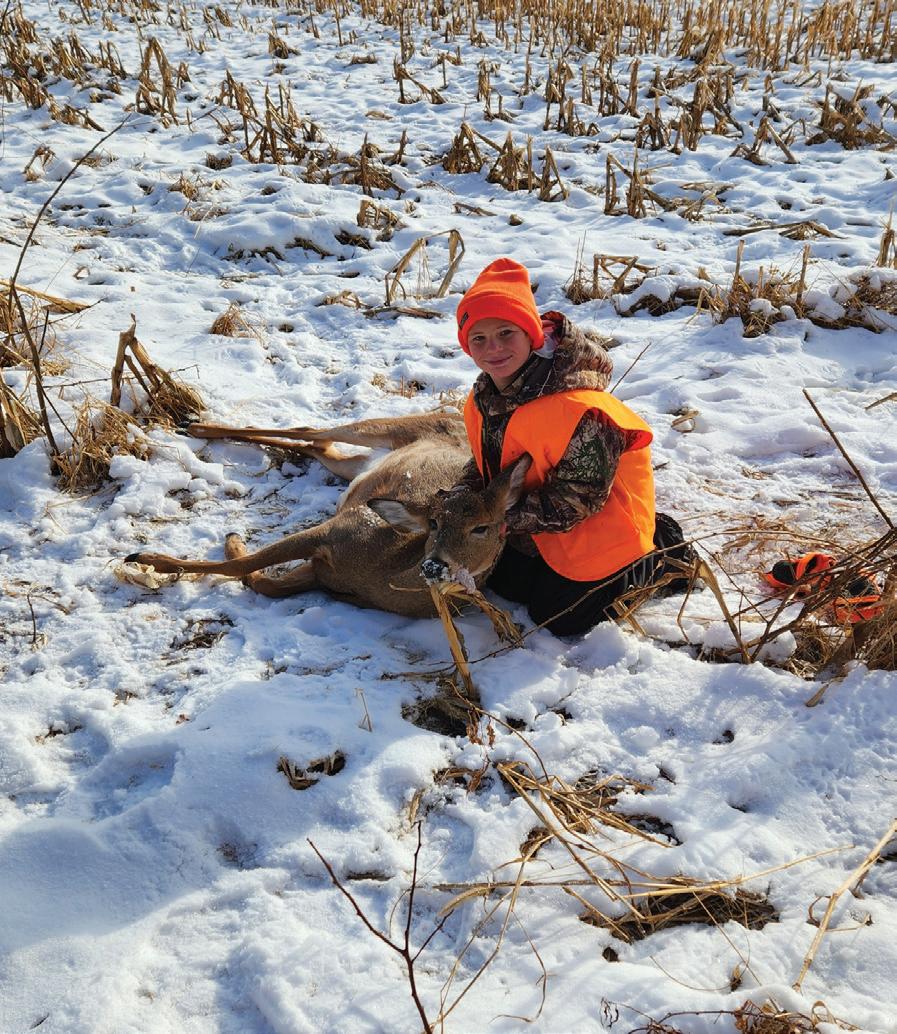
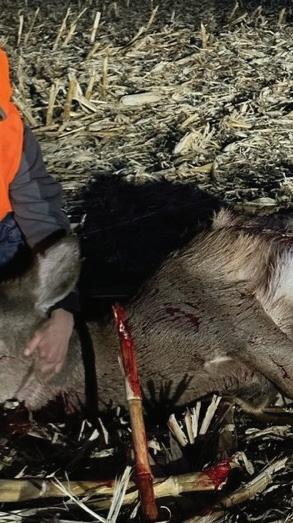
Hunter Freel, 10, harvested this doe his first time deer hunting, in Clyde township.
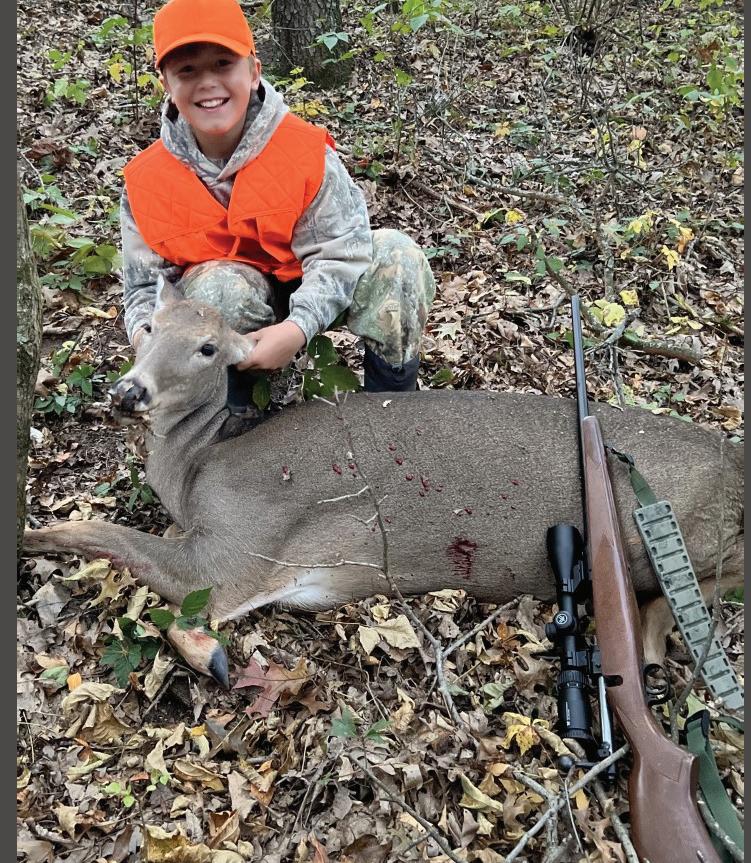
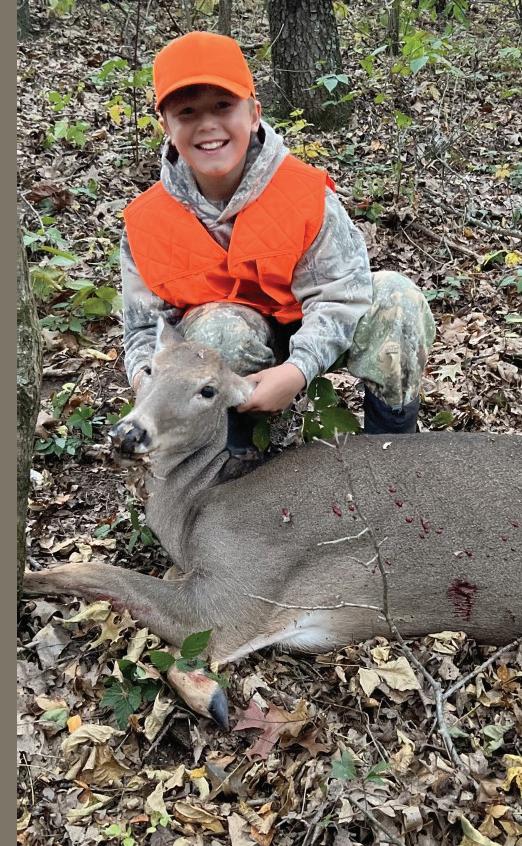
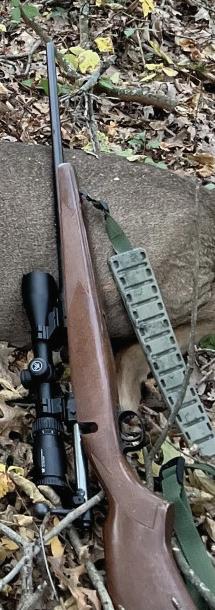
Owen Wilson, 10, of Lone Rock, shot this Doe in Sauk County Nov. 20.

BLAZE ORANGE BOARD
2022 1st PLACE 2nd PLACE 3rd PLACE 2nd PLACE 3rd PLACE 1st PLACE
BEST YOUTH BEST VIEW

1st PLACE
1st PLACE
2nd PLACE
2nd PLACE
3rd PLACE
3rd PLACE

Vera Reeve, 14, shot her 11-point buck opening weekend.
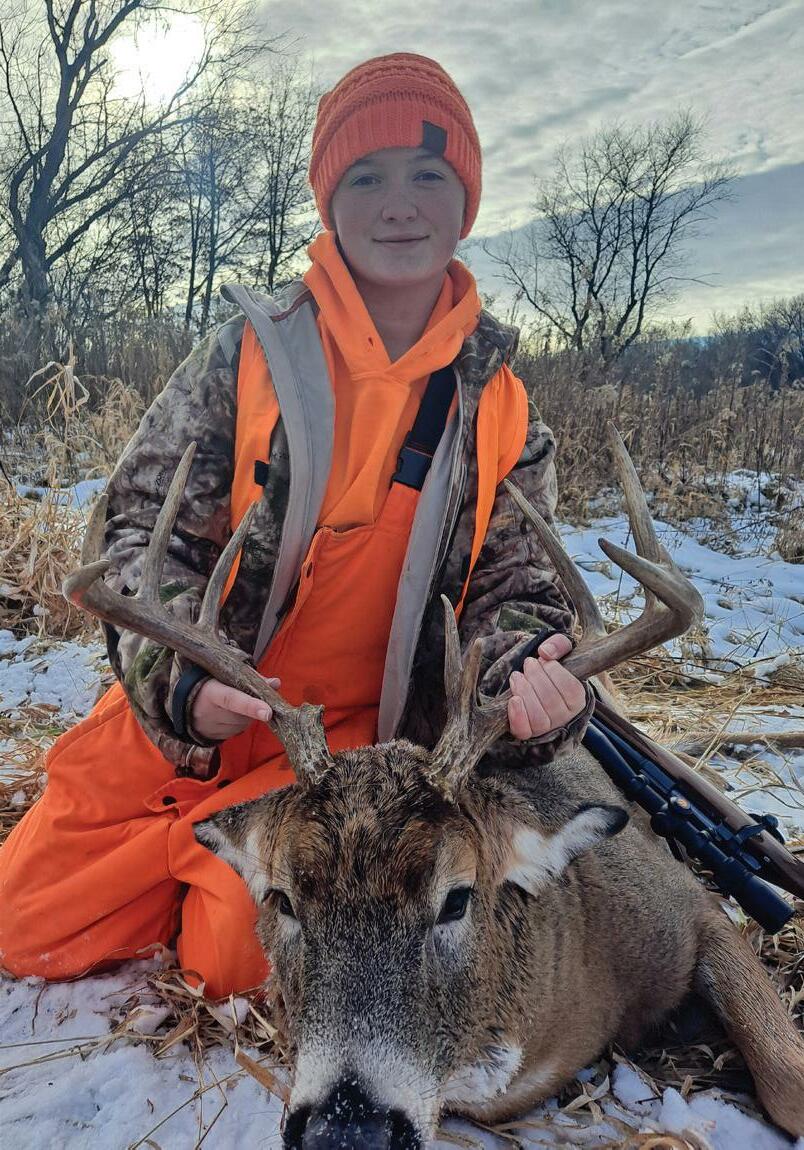
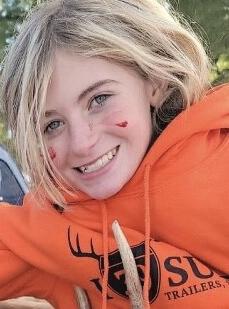
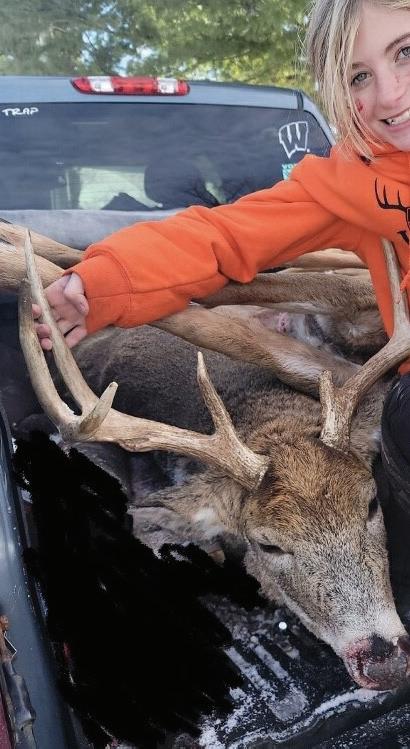
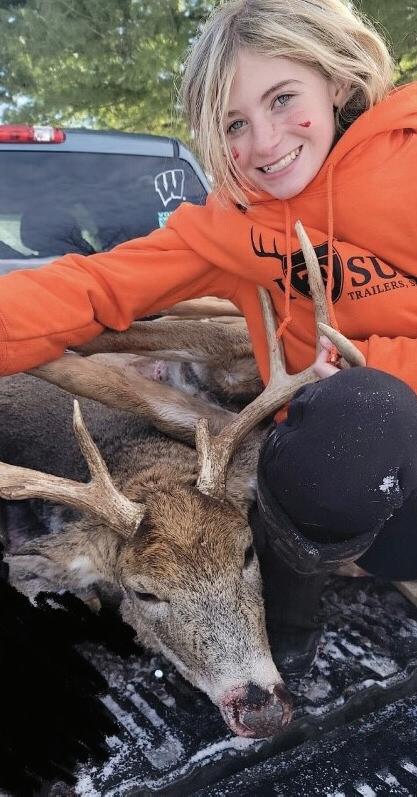
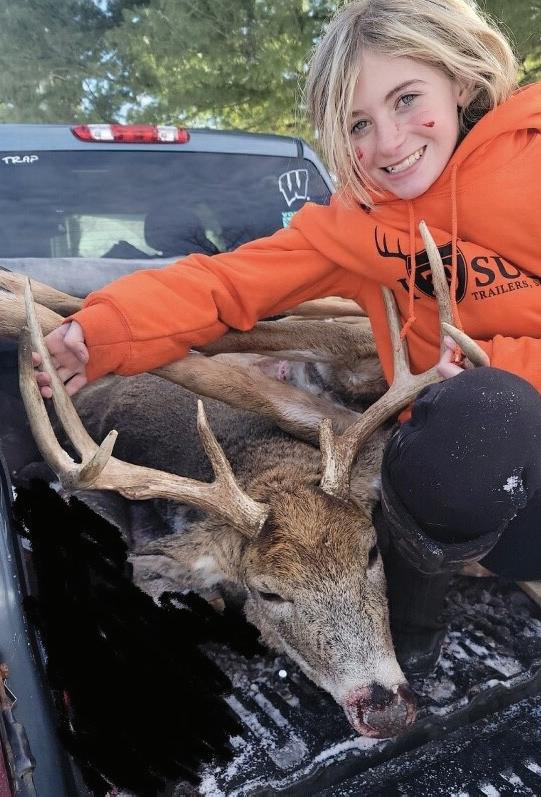
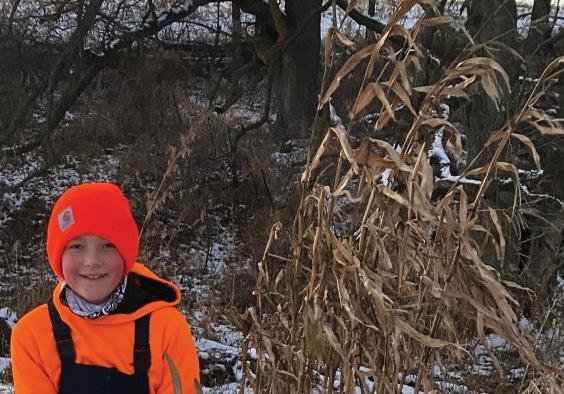
“The buck was chasing a doe and stopped long enough for a shot on it’s third time through,” said Vera’s dad, Joe Reeve.
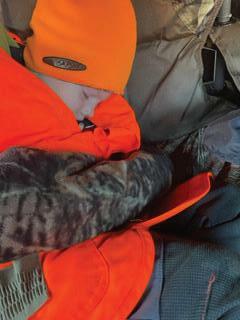







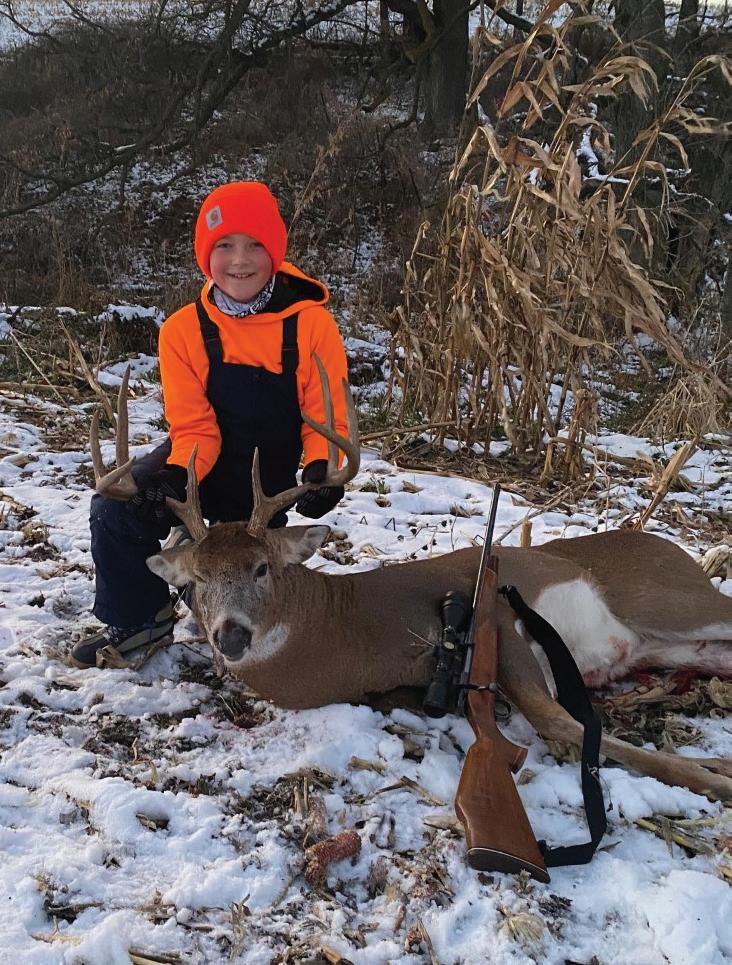
 Mason Marr, 11, of Dodgeville poses with his buck. “Not sure what’s bigger, the antlers or that smile,” said Ryan Marr, Mason’s father.
Charlee Busser, 11, shot her first buck opening weekend near LaValle.
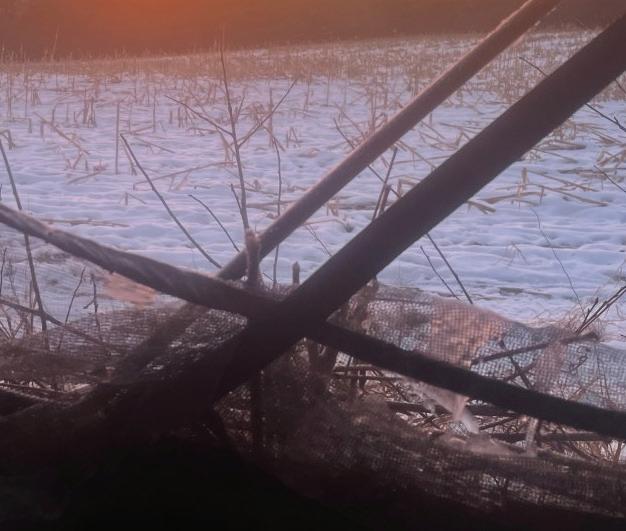
Photo taken on opening day by Daniel WunnickeReady.
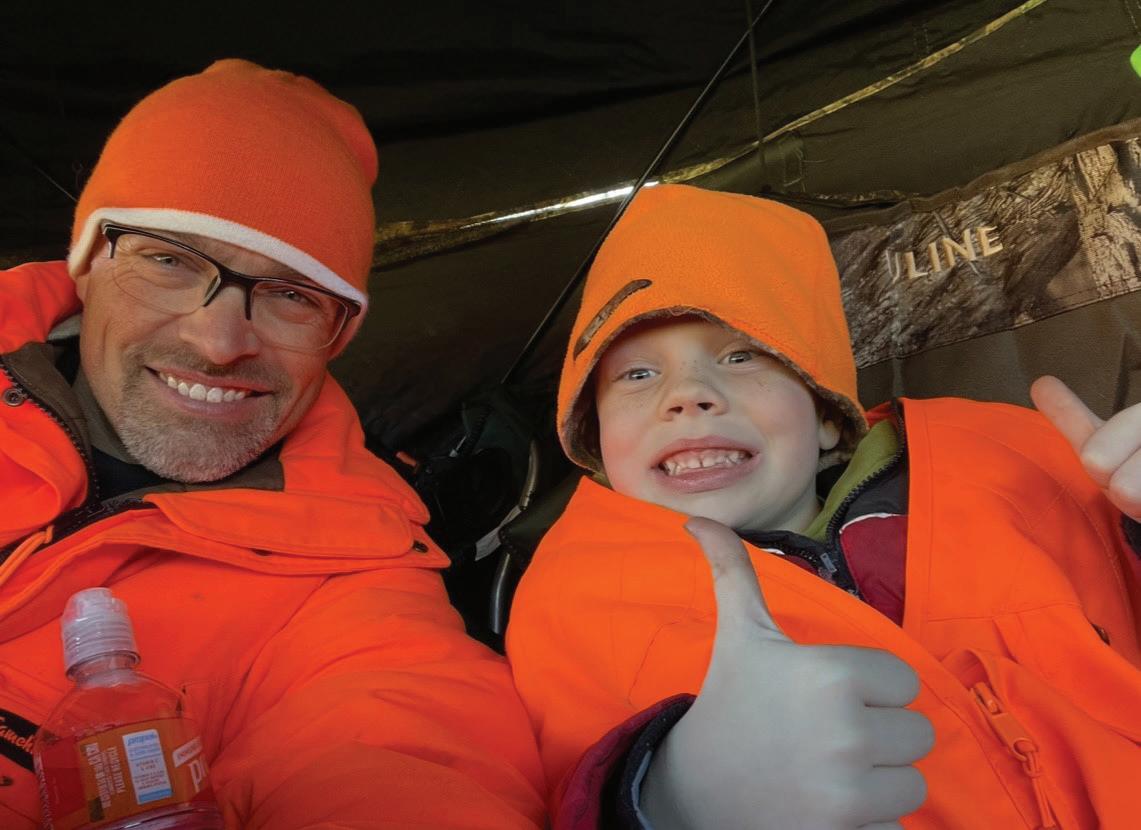
Maverick Ferguson, 5, hunting with dad, Travis Ferguson, in Spring Green.
Photo by Joe Schwarz was taken at 6:53 a.m. from ‘grandpa’s blind’ on opening weekend.
Mason Marr, 11, of Dodgeville poses with his buck. “Not sure what’s bigger, the antlers or that smile,” said Ryan Marr, Mason’s father.
Charlee Busser, 11, shot her first buck opening weekend near LaValle.
Photo taken on opening day by Daniel WunnickeReady.
Maverick Ferguson, 5, hunting with dad, Travis Ferguson, in Spring Green.
Photo by Joe Schwarz was taken at 6:53 a.m. from ‘grandpa’s blind’ on opening weekend.







UNLIMITED. UNCONDITIONAL. LIFETIME WARRANTY. Vortex® will repair or replace the product. Absolutely free — no matter the cause. Does not cover loss, theft, deliberate damage, or cosmetic damage that does not hinder the performance of the product. © 2022 Vortex Optics ® Registered Trademark and ™ Trademark of Vortex Optics BEAR ATTACK: COVERED.
The Sauk County Gardener
Christmas Bird Count
The first weekend in December, my husband and I decorated our home for Christmas. With no snow on the ground, it was easier than usual to do our decorating outdoors. My job is to hold the ladder while my husband climbs up and hangs the lights and wreaths. The problem is I tend to get distracted by things in the garden. This time, while we were hanging up the Christmas wreaths on the house, I was distracted by a variety of birds in the nearby trees. This reminded me that we must get our birdfeeders set up and that
Christmas Symbols
the Christmas Bird Count will soon start.
The Audubon’s Society’s annual Christmas Bird Count happens over December 14 through January 5. The Christmas Bird Count was started to promote conservation by counting, rather than hunting, birds on Christmas Day in 1900. This year marks the 123rd count and is conducted by thousands of volunteers across the United States, Canada, and other counties in the Western Hemisphere. During the Christmas Bird Count, a circle compiler choses one single calendar day within the December 14th – January 5th timeframe to count the birds. Participation is free and anyone can participate, but there are few things to know before you just start counting birds.
The Christmas Bird Count is a real census that is conducted within 15-mile diameter
circles. That’s a lot of area to cover, so single-observed counts are not allowed. To participate, you need to join an existing circle by contacting the organizer/compiler in advance. To find a compiler, visit the Audubon Society’s website and find the map. Green and yellow circles are open to new participants, red circles are full. I found four nearby – Baraboo, Sauk City, Poynette, and Portage. When you click on a circle that’s in an area you’d like to participate, it opens a window that provides contact information for the compiler. You can then reach out to that compiler to find the date they plan to count, the route they are planning. and what data needs to be collected. In the Baraboo area, the count is scheduled for December 28, 2022. (If your home is within the boundaries of
a Christmas Bird Count circle, you may make arrangements to count the birds in your backyard as long as it is okay with the compiler for the circle.)
On the day of the count, you’ll go to your assigned location and document your observations. Volunteers follow specific routes within the defined circle and count all the birds they see or hear. All the birds, not just specific types, are counted to get an idea of how many birds are in the area. After you’ve done, submit your data to the compiler in a timely manner.
To learn more about participating in this volunteer opportunity, visit audubon.org/ conservation/join-christmas-bird-count. It’s a great way to get outdoors and enjoy nature when there isn’t much we can do in our gardens.
There are numerous plants that we grow or give at this time of year to symbolize Christmas. The most popular is the Christmas tree. However, there are other symbols of Christmas that make wonderful gifts and, with proper care, can last for years. Here are some care tips for some of these popular indoor Christmas plant symbols.
The poinsettia is a plant native to Mexico and has become a well-known symbol of Christmas due to its beautiful red and green colored bracts (leaves). The part we consider to be the flower is really only colored leaves. To care for your poinsettia,
water it when the top two inches feel dry as they are susceptible to root rot. The plant should have good drainage so remove the colored foil from around the pot or at least make sure to poke holes in it so it can drain properly. Place the plant in a location with bright, filtered light to prevent it from getting leggy.
Another symbol of Christmas is the Christmas cactus. In many cases, the cactus you see in the store at this time of year are really Thanksgiving cactus. Interestingly enough, this plant has no known tie to a Christmas tradition or Christ’s birth.
However, they tend to bloom during the holidays and their flowers are quite festive. They are succulents but they still need a fair amount of water when they are flowering. Water when the top two inches of soil feels dry. Make sure they have good drainage
and do not sit in water. Feed them every two weeks from spring to early fall and then switch to every month during fall and winter to encourage blooming.

The rosemary plant is also used as a symbol of Christmas. Rosemary has been associated with Christmas long before the more traditional poinsettia. Rosemary was believed to have been the plant placed in the manger where baby Jesus lay. During the Middle Ages, people believed they would be happy and healthy throughout the new year if they smelled rosemary on Christmas Eve. Many people trim rosemary into a Christmas tree shape. The one that I’m growing in my house took on that shape all on its own. With its needle-like foliage, it looks like a miniChristmas tree. This is another plant that does not like a lot of water.
Another indoor plant used at this time of
year is the cyclamen. This pretty plant with heart-shaped leaves likes cooler locations with direct or bright indirect light. Keep the root ball moist when it’s blooming by watering it in a tray to allow the roots to take up water. If kept cool enough, they can bloom for as long as six months.
Forced bulbs are popular plants to grow during the holidays. Amaryllis is a favorite but if you want it to bloom by Christmas, it needed to be planted in November. If you have one growing, simply water it when the top two inches of soil become dry. If you forced paperwhites, move them to a sunny windowsill when their roots start to develop. These are just a few of the beautiful plants you can enjoy during the upcoming holidays. I want to take this time to wish you a most fabulous and blessed Christmas and spectacular New Year.
Community leaders compare decision to kill UW Richland to medieval blood-letting
“Unfortunately, the UW Platteville – Richland Campus has had a steady decline in enrollment over time. I have talked about enrollment concerns with several Chancellors who have overseen the campus throughout my terms as State Senator. The UW System has focused on recruitment, made programming adjustments, invested financial resources and the county even built a dorm – but enrollment continued to decline no matter how much money, resources and attention the UW System invested.”
He also said he was encouraged by the coordination between system administrators and community leaders that has happened since the decision was announced.
“I hope the Richland community is open to the possibilities and opportunities that a new approach for this campus could entail,” he said. “I have heard from several local leaders who are encouraged by the collaboration that has already started and they are optimistic about the future.”
But Gentges says she felt blindsided by the decision and that neither she nor the county board chair have heard much about what comes next.
“It’s been a press release and no communication, nothing,” she says. “It’s been extremely difficult in my mind from a government standpoint and a county board that’s befuddled by this and what we’re supposed to be doing.”
Albaugh and Schultz also lament the decision to announce the campus closure right after Marklein’s reelection,
preventing it from becoming an important local issue for voters to consider.
“Where was the community discussion with the university about what needed to be done to be successful?” Schultz asks. “This looks malicious at best and criminal at worst. I think the UW administration and Board of Regents ought to be ashamed of themselves. You look at what little money was requested to keep this campus, it’s not going to make a hill of beans difference in the entire system, it will mean the world for kids trying to access the system, it will mean the world to the community.”
“Is the intent to starve Richland county out of existence? I don’t get it, what’s the grand plan?” Shultz adds. “During the entire election there was no discussion being raised by the university, local
legislators.”
Now that the decision has already been made, the community is trying to save its campus. Last week, a group of 12 Richland students went to the UW System Board of Regents meeting to present Rothman with a petition signed by more than 1,400 people asking for the decision to be reconsidered.
But Albaugh says the choices that led to the closure are hard to walk back.
“When you add all of that up, it’s like going and buying a plant, then you set it on the kitchen table, close all the blinds and don’t water it for a month and then come back and the plant is dead,” he says.
“That’s exactly what the state Legislature and System and administrators in Platteville have done to the Richland campus. They set it up for failure.”

Thursday, December 15, 2022 Page 15 Outdoors •Natural double shredded oak bark mulch •Colored decorative mulch Red-Brown-GoldOrange •Other landscape supplies available! Gravel-Boulders-Screened Topsoil-Sand, etc. Jand J We offer complete landscape and lawn care service •Full Landscaping from start to finish •Lawn Mowing •Plantings •Grading & Seedings •Bark Spreading •Limestone & Boulder Retaining Walls Total Lawn Care and Snow Removal •QualityWork •FullyInsured •FreeEstimates SatM-F8am-5pm 8am-noon James Harwood •608-588-2453• E4792 Kennedy Rd. We’reyour onestop shop! Business/Professional Directory Reserve a spot in our business/professional directory! Add $30 to any ad order or $60 as a stand-alone order and you’ll be added to the next edition’s premium placement business/professional directory. Bigger than business card sized, full color, updated annually or for a flat $25 design fee. Perfect for top-of-mind awareness, runs under an attention-grabbing header. Want to run it every edition at a discounted rate? $750 for 6 months, $1000 for 1 year (36% discount) “In order to see birds, it is necessary to become a part of the silence.”
― Robert Lynd
Jeannie Manis, Wisconsin Certified Master Gardener
"Let us keep Christmas beautiful without a thought of greed."
— Ann Garnett Schultz
Jeannie Manis, Wisconsin Certified Master Gardener
continued from page 1
An Outdoorsman’s Journal
Mark Walters, Columnist
Hello friends, This week’s column is about opening day of the Wisconsin’s gun deer season and our deer camp The Red Brush Gang. We live out of a 18x36 foot shack that we put up in The Meadow Valley Wildlife Area and we hunt the MVA and the Necedah National Wildlife Refuge. There were 16 of us at camp on opening weekend and the weather was brutal.
Saturday, November 19 High 21°, Low 10° Wind sustained 18 mph

Last night was the only night I had to cook for the entire season, I fed the gang 3 elk roasts, 3 pork roasts and 2 bear roasts along with onions and potatoes from my garden. This morning it was up at 4:00 and then a bit of a drive to where my 21-year-old daughter Selina, 29-yearold stepson Joey Dushek and myself had a walk of 1.5, 1.7 and 2 miles to our stands. A bit of a story is that Joey has never hunted public land on opening day due to the fact that he had a sweet setup on some private land. Our gang is all public so Joey could not get in our big buck contest. Selina was dropped off first, I was next and then Joey vanished in the dark. We all hunted in portable tree stands, it was snowing, and the wind
forecast was correct, sustained 18 mph with gusts to 35.
My view was mostly of a strip of marsh that was maybe 500-yards in width, and I was in the middle of it. Shortly after dark I saw a buck that had gotten across and was just about to enter the red brush at 180-yards. I took a shot, and it was easy to see in the snow when I came upon its tracks that I had missed. No matter what, the story for the individual that hunted in a tree today, was the weather.To stay into the game, you could not over think.
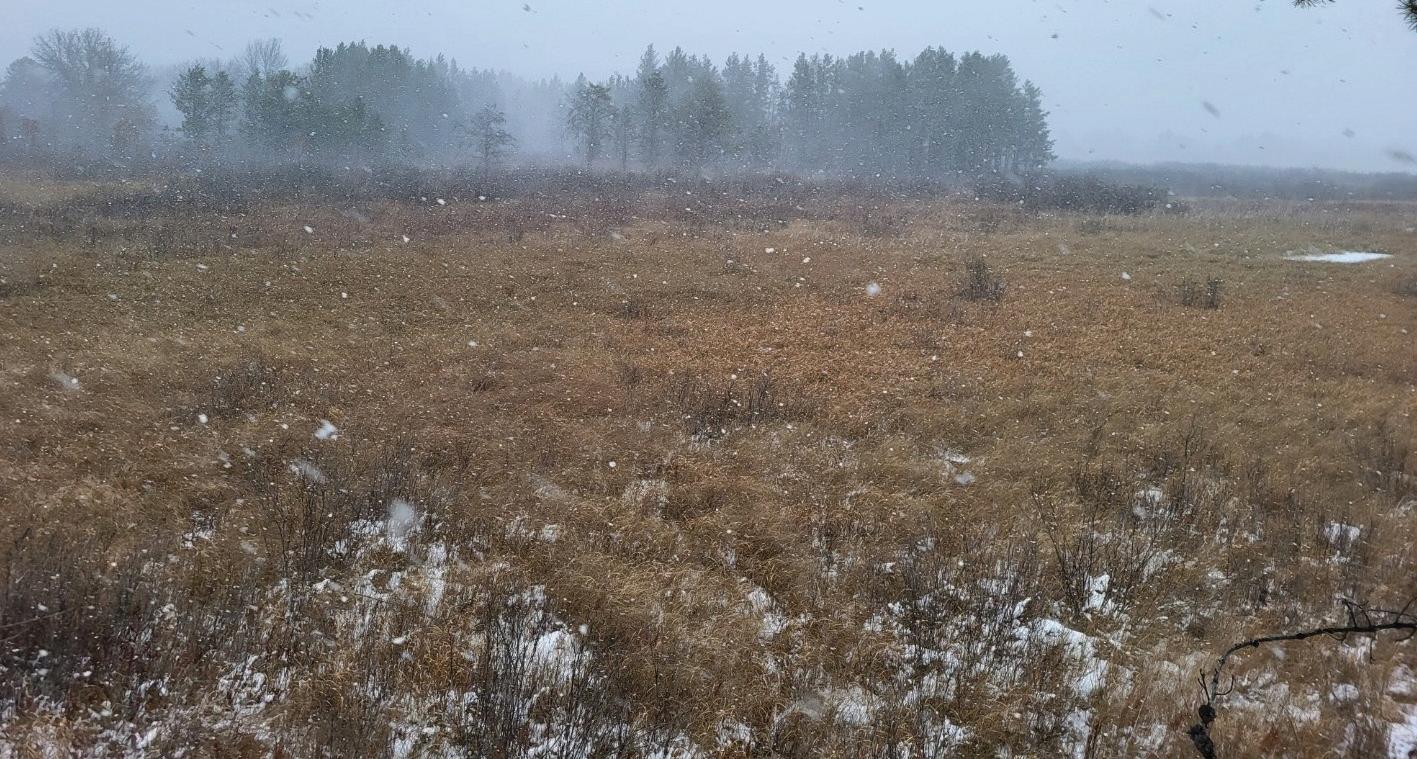
About 10:00 I met up with Selina for a lunch break, even though I had hauled a ground blind and a Mr. Buddy Heater she did not think it would withstand then wind, so it was never put up. Shortly after that I was back up in my tree and it was not 10 minutes and two of the largest gray wolves that I have ever seen came trotting by. I have watched a lot of wolves but their size was amazing.
Selina would also see a bobcat from her stand, and this would be a big year for our entire gang tosee lots of bobcat and wolf. I might add that the entire day I never saw another hunter, I think we are just too far back for anyone to want to walk.
Our group does some texting with each other, and two common texts were, it’s too windy to hit a deer from the tree and it seems like my tree could get
blown over with me in it. As much as I enjoyed this day, my 51st Saturday in a row before Thanksgiving to be hunting here, I was very excited for dark, the walk, and the two wood stoves back at our shack.
Joey Dushek had made the decision that it was too windy to shoot from his tree and was doing a very slow walk and stalk. Joe came across a good buck that turned out to be a 10-pointer and sent it to heaven and it was incredibly cool to hear his war whoop which meant he had shot a buck. This was the beginning of a huge job, removing his stand, dressing his buck and a two-mile drag. Joe made it to my stand just before dark, which meant we had
another 1.7 miles. No one really knows it but I have been nursing some injuries from an October elk hunt that made dragging a large buck in a half frozen marsh a death march.
I have to admit that Joey did the bulk of the work but Selina and I certainly helped as well and when we made it to the truck at 6:30, no one was talking about how cold it was.
On this day Joe’s buck was the only deer harvested out of 16 hunters and would eventually win our groups big buck contest the first year that he entered it! Sunset
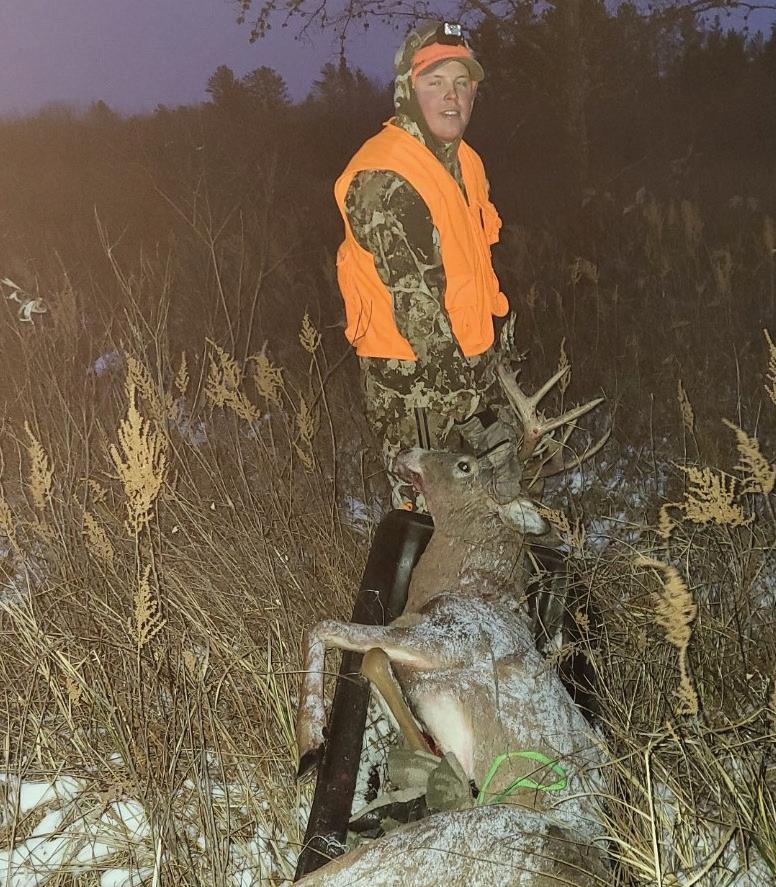
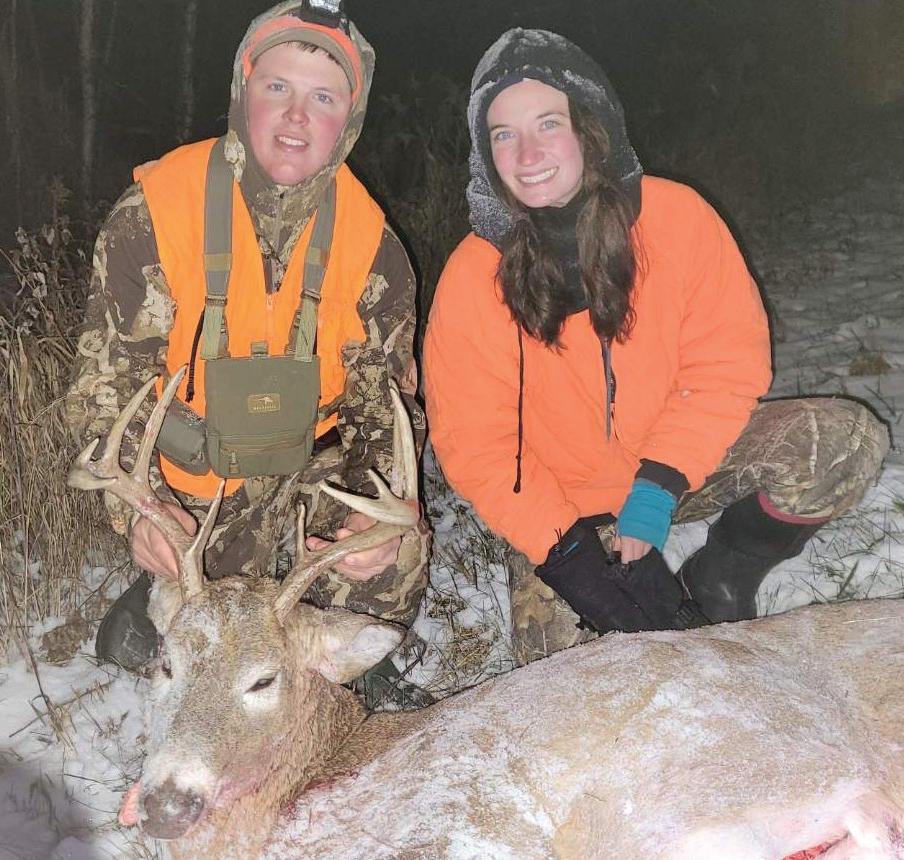
Want to read more?
Check out previous weeks’ columns at www.outdoorsmansjournal.com
Thursday, December 15, 2022 Page 16 Outdoors & Recreation
Photo contributed by Mark Walters Joey Dushek and his sister Selina Walters after a long, cold opening day of gun deer season.
A Big Day in the Tree Stand
It was a two mile pull to get this 10 point buck out of the woods.
Photo contributed by Mark Walters
Follow
columnist
An Outdoorsman’s includes and backpacking. around He hopes adventures! THIS BANNER AD Sponsorship IS AVAILABLE "An Outdoorsman's Journal" is a paid syndicated column written by professional outdoorsman and Necedah native Mark Walters. In order to continue running his outdoors column, we need sponsor(s) to fill the space in print and online so we can continue to support Mark in his adventures and follow along. This space is premium placement top-of-mind awareness, perfect for both businesses that engage with the outdoors or businesses whose customers engage with the outdoors. Only $150 per week. Interested? Give us a call at 608-588-6694 or an email at ads @valleysentinelnews.com
Photo contributed by Mark Walters Challenging weather conditions greeted Wisconsin gun deer hunters on opening day.
Walters,
Wisconsin.
