Court decision on Act 10 spurs memories, speculation
this Page 5 Enclosed
Wisconsin River Valley nonprofit seeks to solve problems, foster community
The Wisconsin Examiner profiles our very own River Valley Commons
In a purple corner of Wisconsin that reflects both the struggles and the promise of the state’s rural communities, a nonprofit group is trying to forge a path beyond isolation and political polarization.
River Valley Commons began six years ago with a lecture series to help residents of the village of Spring Green and the surrounding towns build community, expand critical thinking and foster hope and a sense of agency.
Today the organization connects disparate groups to address the concerns and needs of residents across a threecounty area.
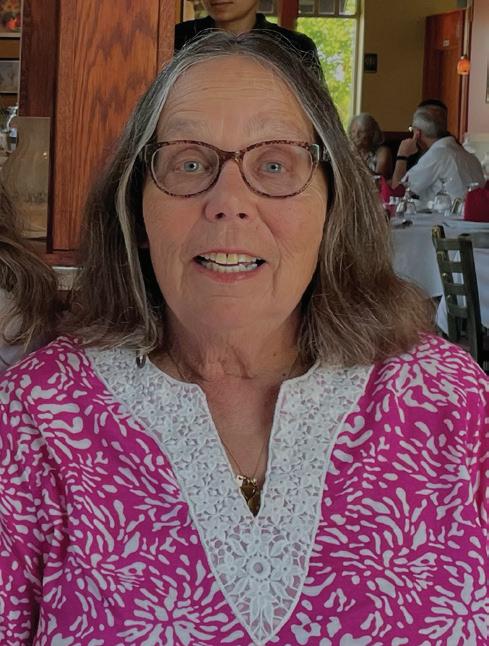
Stephanie “Stef” Morrill-Kerckhoff launched both the lecture series and River Valley Commons in 2019 after asking herself, “what can we do to increase the well-being of our area and the people who live in it?” she says. “And how can we do that collaboratively and in a way that brings in as many people, as many organizations, as we can?”
Stef and Joshua Morrill moved to the Wisconsin River valley area near Spring Green in 2013. Both were natives of western New York where the Chautauqua Institution, a nonprofit learning community and educational center, was founded 150 years ago and still operates.
The couple “felt like we would love to do something similar, where we could bring people together in a lovely natural space to learn and share information,” Stef Morrill-Kerckhoff says. They began organizing the first lecture series, working with the University of WisconsinMadison Continuing Studies program, when Joshua Morrill died suddenly in February 2019.
The lecture program, usually held at the
Octagon Barn, a distinctive rustic-looking venue northwest of Spring Green, became a memorial to Josh Morrill. His widow decided not to stop there. Since they had first moved to the region, the couple perceived a gap between the interest of local residents in addressing community needs and the wherewithal to reach their goals.
“One of the things that we had always wanted to do is to help with that … just getting people together to talk about things, trying to move forward with solving problems, whatever they were,” says Morrill-Kerckhoff, who has since remarried.
The organization set its boundaries as the River Valley School District, with 11,000 residents and covering more than 400 square miles. Within the district are four villages and portions of nearly a dozen towns.
“The communities are different, but if you look at the broader picture, we all need broadband, we all need housing, we all need child care,” says Joy Kirkpatrick, the board chair of River Valley Commons who works for the University of Wisconsin
Extension.
The organization’s work is informed by a desire to address the general problem social scientist Robert Putnam diagnosed in “Bowling Alone.” The book, first published in the year 2000, analyzes the erosion of communal and civic life as engagement has declined among neighbors and with public institutions over the last half-century, fraying the social fabric.
“Whatever the reason, the civic groups and the clubs and the bowling league and the churches, indeed, dwindled, and we’re more alone in our houses,” said the author Sarah Smarsh, citing Putnam’s book when she spoke in August as part of the Morrill Lecture Series.
In early November, the series showed the documentary “Join or Die,” based on Putnam’s work, about the importance of participating in clubs and organizations as a component of healthier living for individuals as well as communities.
The goal of River Valley Commons isn’t to replace existing civic organizations but to help connect them with one another and “lift them up,” Kirkpatrick
9
adds, whether they’re service clubs, local libraries, individual local government bodies or other groups.
Pandemic launch
By the time River Valley Commons officially got off the ground, the COVID-19 pandemic was just setting in. That redirected the organization’s initial mission toward fundraising for food pantries, including from people who were donating their federal pandemic relief checks.
“That wasn’t how I expected to start, but it was a way that we were able to provide some value very quickly, in an unexpected thing we were able to help with,” MorrillKerckhoff says.
Since then, the organization has focused on “helping people and organizations with ideas they have that they want to implement, or problems that they perceive in the community that they want to work on.”
One such project started in Spring Green. The Sauk County village has grown into one of Wisconsin’s prime tourist destinations on the strength of the nationally renowned American Players Theatre along with the quirky House on the Rock and the Frank Lloyd Wright Taliesin studio.
When some visitors in 2021 stopped Spring Green resident Patti Peltier on the street and asked about a place to eat, “I couldn’t think of any place that was open to direct tourists too,” Peltier says. “I took this concern to Stef, and we started looking for what sort of things could serve as an economic engine for our community.”
The result was Savor the River Valley, bringing together restaurants, shops, small farmers and food processors to help support and promote each other.
Peltier, a retired corporate marketing
continued on page 9
Blaze Orange Board Presented by Prem Meats
Now streaming: Should ‘Beetlejuice’ have been left to rest in peace?
Erik Gunn, Wisconsin Examiner
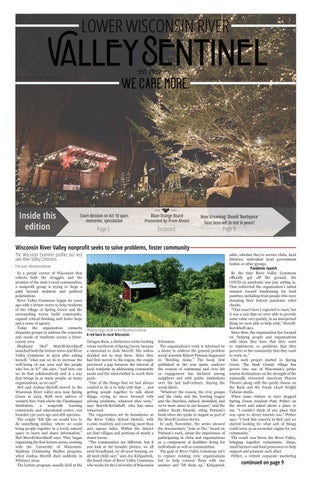
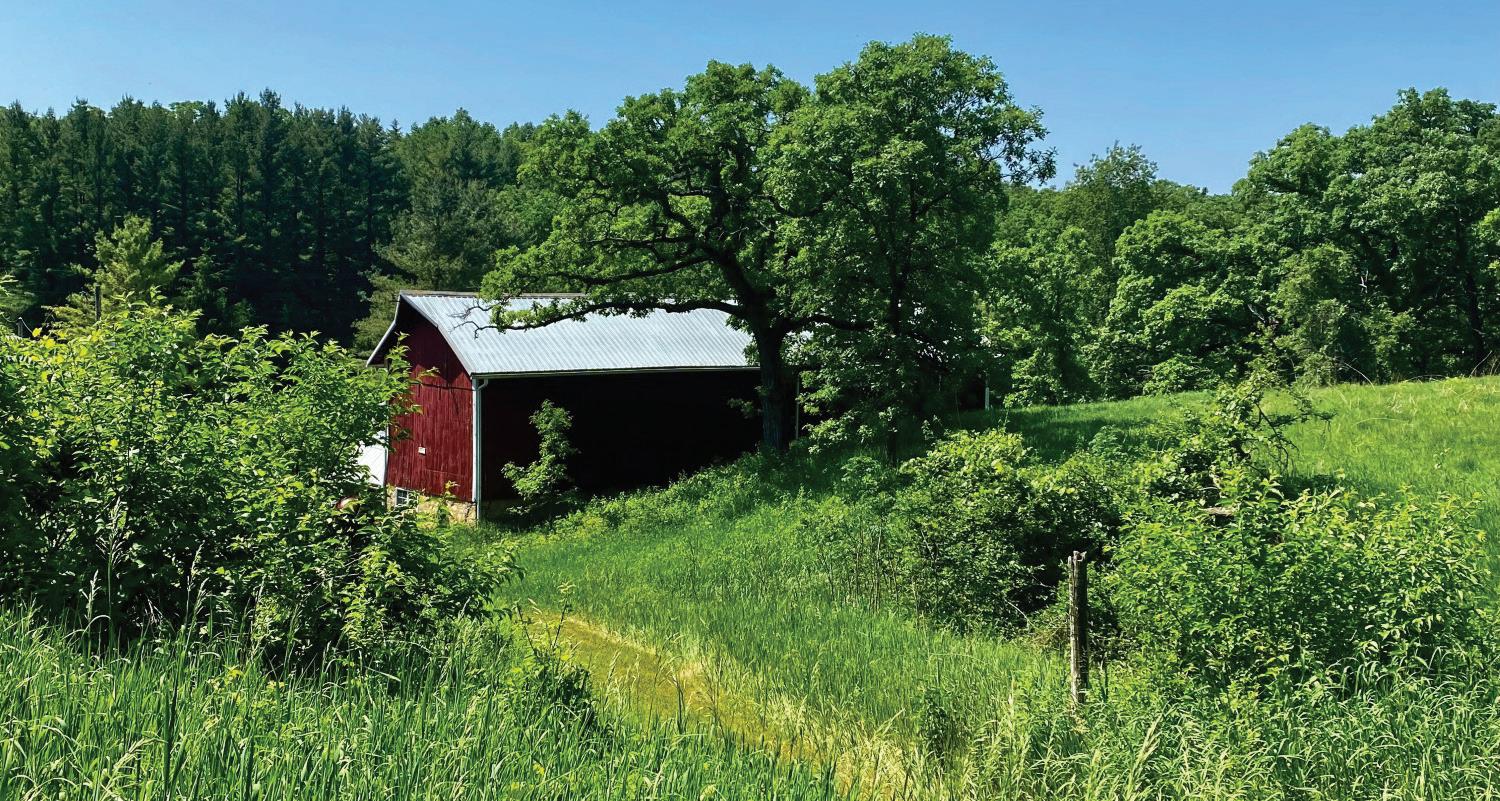
Photo by Greg Conniff via the Wisconsin Examiner A red barn in rural Wisconsin.
OPINION/EDITORIAL
LETTERS TO THE EDITOR
Dear Editor,
Each autumn, public hearings on next year’s municipal budgets are held all around Wisconsin. On November 19, I joined ten other Town of Spring Green residents at the public hearing for the Town of Spring Green 2025 budget. Immediately following the budget meeting was the meeting of the Town Electors, where the local tax levy was approved.
(The local levy limits how much a local government can increase property taxes. For those who are interested in more detail, this reading resource can
Dear Editor,
I seem to have devoted a disproportionate amount of my writing to the closing of various restaurants and coffee shops. It made at least some sense during the pandemic. Today’s installment, however, comes from a place of shock and kneejerk reactions.
This could be the fate of any restaurant in any town, especially in the rural parts of our country. But in this case, it’s our Reunion Restaurant in our Spring Green. Reunion blazed onto the scene with creative, fresh, gorgeous dishes (most of them healthy); partnerships with local farms and vendors; and a crew made up of people who were being treated kindly and who felt a deep sense of purpose. It remains my favorite place to enjoy a meal.
In the days since Reunion’s staff announced the closure, I have heard and read some alarming responses. You know the type: comments made by people who haven’t experienced Reunion and are not invested in seeing it stay open, but nonetheless believe they know exactly what the problem is. These comments have fallen into three related categories, which
be found online: www.revenue.wi.gov/ DORReports/PropTaxOverview2023. pdf)
The Town Board fielded various questions from attendees on the proposed 2025 Budget document. I questioned the accuracy of the information on the document because the numbers in the 2024 budget column were different than the approved 2024 Budget. The Town Chairperson verified that the 2024 budget information was not accurate. It had been copied from a draft document and not the finalized 2024 budget. This led me to question the accuracy of the 2023 expen-
I would like to address here.
1. “The community is too small to support a business like Reunion.”
Anyone who has tried to go out for dinner in Spring Green during high summer knows otherwise. The town isn’t too small; it’s too seasonal. Why should my neighbors and I not enjoy high-quality food and service just because other people don’t want to travel here in the winter? What is inherently, morally wrong with the residents of a small community wanting to serve good food to one another?
Members of this community do support Reunion (and vice versa), in spades, over and over again. But it’s an unrealistic expectation for any of us to dine out enough to balance the summer traffic. Surely there are creative solutions, or no small tourist town would ever come close to thriving.
I believe that Reunion’s owners, Leah and Kyle, would give us their nourishing food for free if they could still make a living and pay their staff fairly. Small towns do not cause businesses to go under. The cause is an economic system under which no good can be accomplished unless it
diture/revenue information. The Town Treasurer confirmed that she had entered the figures reported on the 2023 “Annual Municipal Financial Report” that was submitted to the Department of Revenue. In 2019, the Town Chairperson and Clerk modified the format of the Town Budget and Annual Report documents to mirror the categories in the Annual Municipal Financial Report, which is filed each year with the Wisconsin Department of Revenue. The changes were made to improve transparency by making it easier for taxpayers to compare numbers on financial documents across the years, and
turns a profit.
2. “Reunion just wasn’t filling a need that this community had.” False – plain and simple.
Do you enjoy good, fresh food? Do you want to support small businesses where you know the staff are compensated fairly? Do you like celebrating life events and treating yourself once in a while? Then there is a “need” for places like Reunion. There is no other business like it in this community.
I don’t want to imagine the meanness of spirit required to think that only people who live in cities “need” these experiences. This comment almost made me confront someone out loud, which (as those who know me will attest) is about a oncein-a-decade experience.
3. “Reunion is too far away for most customers to make the drive.”
This is the charitable summary of this set of comments. A more accurate summary would include the unsubtle hint that people in small towns don’t have the same needs as people in cities (see above). The implication is that the only people who would care to visit Reunion live in places where a drive is required.
Your Right to Know: Long waits undercut records law
Bill
The other day, in my role as an advocate for open government, I heard from a Wisconsin resident who has waited more than five months for records he requested from a local law enforcement agency. He has gently prodded the agency several times, asking, “How much more time is my request going to take?” More than three months have passed since these queries have yielded a response.
to reconcile with the information reported to the Department of Revenue. This year, the Town changed the format of the Town budget document so it no longer matches the Department of Revenue categories, and numbers can no longer be easily compared across the years.
Vicki Terpstra Spring Green, Wisconsin
Editor's note: Terpstra served as Clerk for the Town of Spring Green from November 2018 to April 2024 and is a Wisconsin Certified Municipal Clerk.
Why is it acceptable for my neighbors and I to make the same drive in the opposite direction? Would anyone genuinely stand by the belief that we don’t deserve to experience a good restaurant because of where we live?
This economic determinism is the opposite of truth. It is the bending of truth to fit a narrative that the speaker wants to be true. The only way to enhance rural communities is to take a handful of chances on serving the people who live there, instead of being beholden to the nearest city. If no one takes this chance, then of course the grim future that these comments predict will come to pass. I plan to support the chance that Kyle and Leah took. I hope you will too. Let’s make sure that they can keep breaking the mold and doing what they do so well. While closure continues to be imminent for Reunion, there is a fundraiser to give the staff a better start to the next chapter. If you believe they have done something good for the community, you can donate at: https://gofund.me/69860db5/.
Grace Vosen Spring Green, Wisconsin
Lueders, Contributed that “10 working days is a reasonable time for an authority to respond” to simple records requests. But this is not binding advice. Moreover, no court has ever ruled that a particular wait-time was excessive. I tell people experiencing long wait times to practice their “Ps”: Be polite. Be persistent. And be pragmatic — offer to clarify or refine your request to make it more manageable. Sometimes, this helps move things along. Other times, it seems to
On the cover
Such long, frustrating wait times are not uncommon. Wisconsin’s Open Records Law allows any person to obtain any document in the possession of state and local government officials, with limited exceptions. But, unlike in some other states, there is no set time limit. Rather, the law simply directs record custodians to act “as soon as practicable and without delay.” What does that mean? Good question. The state Justice Department has said
make no difference.
That’s where Tom Kamenick comes in. He is the founder and president of the Wisconsin Transparency Project, the state’s only law firm devoted entirely to open government litigation. Since 2019, Kamenick has filed seven lawsuits alleging illegal delays in the processing of open records requests. He has lost only one case continued on page 5
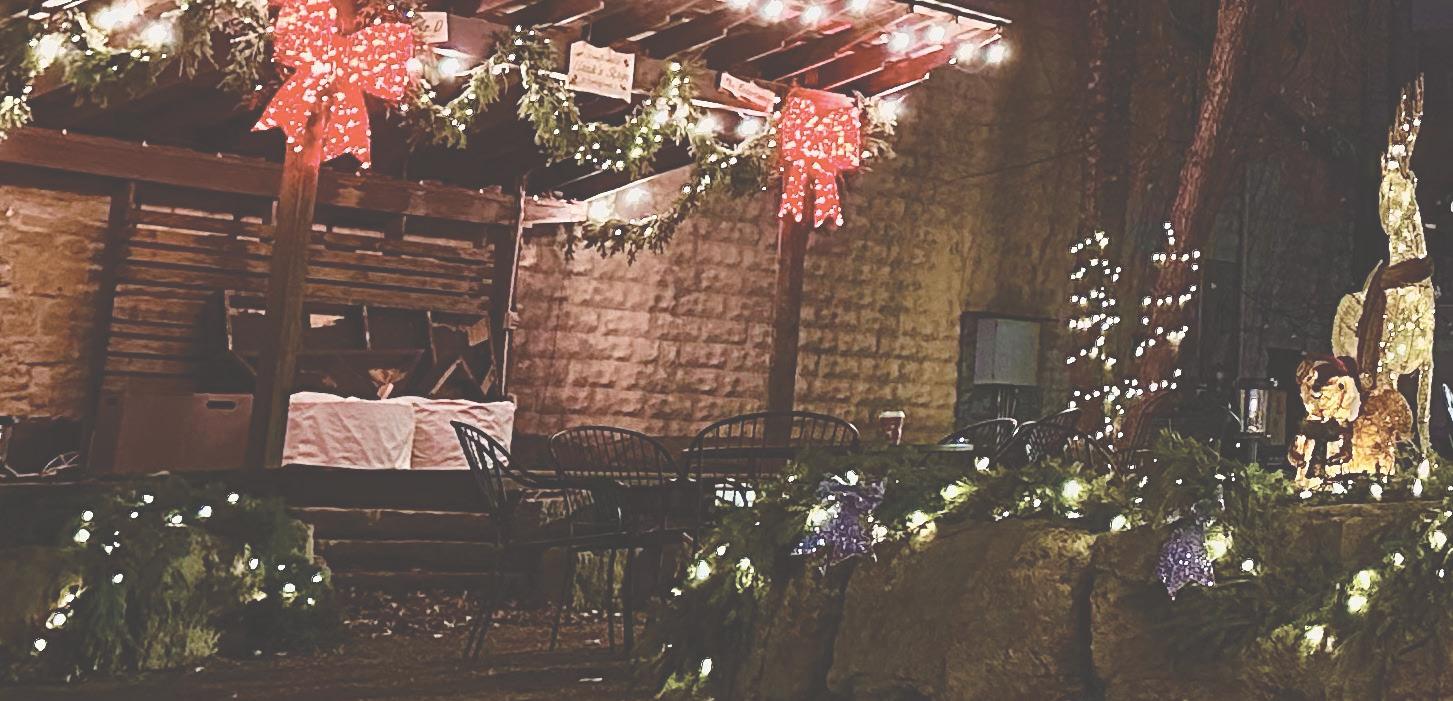
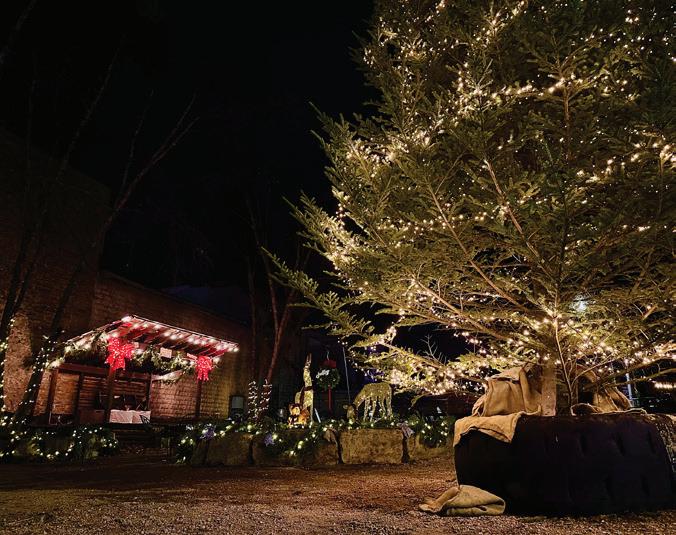
“Downtown Holidays” (2024) Photo, by Bonnie Ostrander
We asked Karin Miller, Spring Green General Store owner, Recently, our new administrative assistant Bonnie was able to capture some scenes from downtown Spring Green shortly after Spring Green Country Christmas, including the lit Christmas tree in the Post House Garden.
OPINION/EDITORIAL
The Tools of Conversation — Part 2: Sillier by the Minute
Beverly Pestel, Columnist
I’m still following one of the Facebook sites I was on over the summer. It is one that is administered much more responsibly than the others, but pre-election it still contained a fair amount of name-calling. What showed up after the election was a significant amount of juvenile “na-na-nana na” posts that made me embarrassed for my community.
Then on my feed I discovered a comment by one of the people that had regularly called me stupid and ignorant and whose mantra was “Know betters, we can’t mock them enough.” He was responding to a sincere post proposing that we should all be friends regardless of who we voted for. His response to that post was to whine about having been called names, but maintained that he was better than that, and that he was awaiting apologies before he could forgive anyone and become friends. When I challenged him on his previous behavior toward me and his description of himself, his response to me was a laughing emoji. What does a laughing emoji response say about our current standards of communication?
And that brings me to Amusing Ourselves to Death: Public Discourse in the Age of Show Business by Neil Postman (referenced in my last column) explaining why he was compelled to write his book: "I hope to persuade you that the decline of a print-based epistemology and the accompanying rise of a television-based epistemology has had grave consequences for public life, that we are getting sillier by the minute…I believe the epistemology created by television not only is inferior to a print-based epistemology, but is dangerous and absurdist." (pgs. 24-27)
Recall, this was written in 1985, well before social media, and epistemology is just his fancy way of writing about how knowledge is communicated. Postman was making the case for the TV being an inferior way of communicating important content and is a negative influence on public communication in general. If he was right, and I think he was, what might he say about the sillying influence of social media? (Dictionar-
ies tell me sillying isn’t a word, but you get my point, don’t you. Especially as Oxford’s 2024 Word of the Year is…Brain Rot.)
In Nexus, Yuval Noah Harari asks, “We have named our species Homo sapiens –the wise human…If we Sapiens are so wise, why are we so self-destructive?” (pg. xi) It can’t be self-destructive to be able to discover new things and devise new technologies, but do we lack the wisdom to always use them in wise ways? Do we lack the wisdom to regulate them to lead to our benefit? Is there any way that our new tools of communication can be made to serve the public good instead of taking us down the “dangerous and absurdist” path that Postman feared?
Alan Lichtman, the historian known for predicting the outcome of presidential elections, has predicted nine of the last ten elections correctly. US Today spoke to him about why he got this one wrong. Among other reasons he gave, they report, “He also cited an ‘incredible explosion of disinformation’ on platforms like X where untrue statements spread at a large scale.” Lichman told NewsNation, “…once you dissolve truth, democracy dissolves along with it.” Did the use of absurd and often malignant social media tools of communication help bring us to a destructive place?
Now let’s go back and update Postman: “I believe the epistemology created by television – and social media - not only is inferior to a print-based epistemology but is dangerous and absurdist.” I can’t imagine he would disagree with including social media in his statement.
December 26: No publication due to the holiday. Merry Christmas! January 9, 2025: Publish (Tentative: Winter Wonderland special edition).
Contact us PO Box 144 Spring Green, Wisconsin 53588 USA (608) 588-6694
On certain topics in areas of great community interest, the editors of the Valley Sentinel may take positions they believe best repre- sent and serve the interests of the community. Any opinions or positions taken by the editorial board are separate and distinct in labeling and substance from the community journalism that ap- pears in the rest of the publication and does not affect the integri- ty and impartiality of our reporting.
Neil Postman’s son talked with several of his father’s former students who are now teachers using Postman’s book in their classes. One of those teachers reported this student comment, “the oversimplification and thinking ‘fragmentation’ promoted by TV-watching may have contributed to our Red State/Blue State polarization.” In addition, many students resonated with his father’s “Now…this” idea presented in his book:
“…the phenomenon whereby the reporting of a horrific event – a rape or a five-alarm fire or global warming – is followed immediately by the anchor’s cheerfully exclaiming “Now…this,” which segues into a story about Janet Jackson’s exposed nipple or a commercial for lite beer, creating a sequencing of information so random, so disparate in scale and value, as to be incoherent, even psychotic.” (pg. xiii)
Now consider the message conveyed in a post I saw on Facebook: “‘They’re eating the cats, they’re eating the dogs’ proved a more effective message than ‘let me help you buy your first house’.” Why did the cat message capture people while the helping people buy their first house message appeared to be largely unheard? Isn’t there something absurd about that?
Postman has an answer as to why the abbreviated and fragmented TV(/social media) communication tool may be responsible for this phenomenon:
“Whenever language is the principle medium of communication –especially language controlled by the rigors of print – an idea, a fact, a claim is the inevitable result… reading is by its nature a serious business. It is also, of course, an essentially rational activity…To engage the written word means to follow a line of thought, which requires considerable powers of classifying, inference-making and reasoning. It means to uncover lies, confusions, and overgeneralizations, to detect abuses of logic and common sense. It also means to weigh ideas, to compare and contrast assertions, to connect
one generalization to another… In a culture dominated by print, public discourse tends to be characterized by a coherent, orderly arrangement of facts and ideas… In a print culture, writers make mistakes when they lie, contradict themselves, fail to support their generalizations, try to enforce illogical connections.” (pgs. 50-51) In this context, consider the report in The Independent on Nov. 8 by Richard Hall regarding his observations attending Trump rallies:
“Inside the arena — in between rants sending immigrants home — Trump promised the crowd he would put more money in their pockets.
‘Vote Trump and your incomes will soar. Your net worth will skyrocket. Your energy costs and grocery prices will come tumbling down,’ he promised, without giving any detail about how he would do so.”
There is no accountability here that is a characteristic of the print-dominated culture of communication. Note the comment about “in between rants”. What we have here is an example of “creating a sequencing of information so random, so disparate in scale and value, as to be incoherent, even psychotic.” Did the crowd even notice? Postman presages the topic of Amusing Ourselves to Death by maintaining that moving away from a dependence on print as the tool of communication has resulted in our becoming “sillier by the minute.” He also asserts that previous generations had little opportunity for leisure, and that the current one provides much and suggests that a media-conditioned craving for entertainment has perverted our ability to digest news and facts (much less talk to one another in a civil manner.)
I’m going to have to explore that further. Beverly is a retired professor. She lives in a remodeled farmhouse and tends 40 acres of woodland in Richland County. When not in the woods she spends her time reading, writing and enjoying the beauty of the Driftless Area. Beverly may be contacted at bpestel@msn.com.
Community Calendar: We need your support to ensure we have all of the community’s events. For the Dec. 12 edition, the calendar is extended in print to cover the events of the next four weeks.
Letter to the Editor Policy
Letters submitted for consideration are subject to fact-checking and editing for space and clarity. Submissions must have a compelling local community interest. Letters to the editor must fit within a 500-word limit, and include name, city and phone number. Phone numbers are for office use only and will not be published. Letters of a political nature, without chance of rebuttal, will not be published the week before an election.
Deadlines: The display and classified advertising deadline is Monday at noon for that week. If you would like our design team to design the ad then please allow extra time for the creative process and proofing.
Column Policy
Editors may feature opinion columns written by public figures, members of the public or other publication staff. Columns reflect the opinions of the individual contributors and do not represent positions of the publication. Guest columns of an anticipated length more than 500 words should seek prior editor authorization.
Community Discussion Policy
From time to time the editorial board may select letters to the editor of a particular compelling community interest where a public figure or accountable public action is the recipient of crit- icism and allow, in the same issue, the subject of the criticism chance for rebuttal, with expounded independent input. The format shall be point, counterpoint and expert analysis. This community discussion shall serve as a moderated dialogue that presents multiple views of important community topics.
Upcoming Valley Sentinel Print Schedule
Beverly Pestel
Alpaca Socks
Vintage Record Cover Notebooks
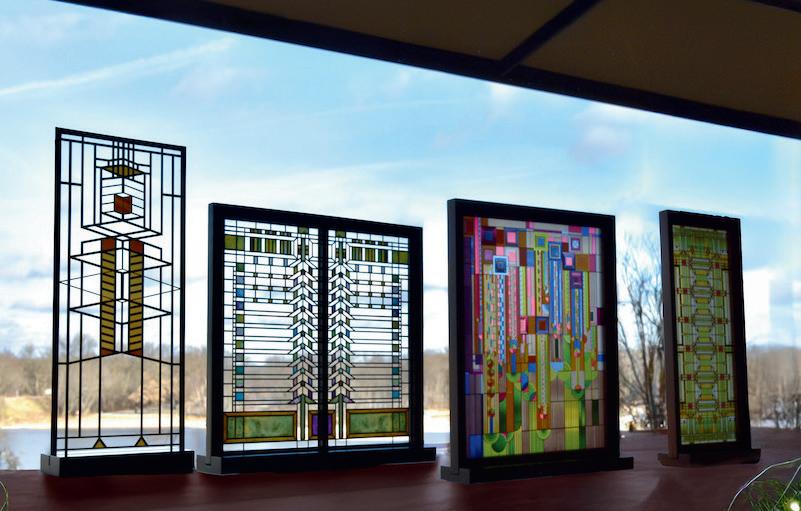
Frank Lloyd Wright-inspired Art Glass
Feather Keepsake Ornament
Two Crows Theatre Tickets
Court decision on Act 10 spurs memories, speculation
Scott Walker's Act 10 more than 13 years ago spurred massive protests on the Capitol Square in Madison and helped the former Republican governor make a national name for himself.
Now a Dane County court decision against key parts of Act 10 is spurring speculation as to how big of an issue it could be in the spring 2025 Supreme Court race that will decide philosophical control of the high court.
Republicans aren't giving up on Act 10. Assembly Speaker Robin Vos and Senate Majority Leader Devin LeMahieu are vowing to appeal the ruling that restored collective bargaining powers for public employees who lost them.
Dane County Judge Jacob Frost this summer found parts of the law unconstitutional because it treated some public safety employees, such as municipal police officers, differently from others in law enforcement, such as wardens working for the Department of Natural Resources. He issued his ruling in early December. GOP lawmakers had asked Frost to only strike down the definition of public safety employees but otherwise leave the law largely intact.
But he rejected that in his early December written decision.
“This lawsuit came more than a decade after Act 10 became law and after many courts rejected the same meritless legal challenges,” Vos, R-Rochester, said. “Act 10 has saved Wisconsin taxpayers more than $16 billion. We look forward to presenting our arguments on appeal.”
The 2011 law barred general employees from negotiating for anything other than base wage increases that were capped by changes in the consumer price index. Frost struck down that measure along with two other key components of the law:
• Requiring 51% of all members in a bargaining unit to certify the union while allowing a simple majority of those who voted to certify for those who fell under the public safety employee definition.
• Allowing union dues to be deducted from the paychecks of public safety employees but barring the practice for others.
In all, Frost struck down 87 provisions from Act 10 and another three from a 2015 law that modified the original statute.
Public employee unions and workers who were part of the suit challenging the law hailed the ruling. They also noted it is likely the case will be tied up in the courts “for some time” with expected appeals.
Plaintiff Ben Gruber, a conservation warden and president of AFSCME Local 1215, said the decision was personal for him and his coworkers.
“As a conservation warden, having full collective bargaining rights means we will again have a voice on the job to improve our workplace and make sure that Wisconsin is a safe place for everyone,” he said. “We realize there may still be a fight ahead of us in the courts, but make no mistake, we’re ready to keep fighting until we all have a seat at the table again.”
Frost had asked both the unions who challenged the law and GOP lawmakers how he should implement his decision that found some parts unconstitutional. In their argument, GOP lawmakers argued Frost should only strike down two provisions of Act 10 that defined a “public safety employee.” Those covered by that definition included municipal police, deputy sheriffs, firefighters and some members of the State Patrol.
Lawmakers then wanted the Wisconsin Employment Relations Commission to
Fiscal Facts: Moving Back to Budget Basics
Wisconsin Policy Forum
Heading into the 2025-27 state budget, Wisconsin retains impressive reserves that put the state in a strong fiscal position. But at the same time, after soaring to previously unseen heights two years ago, Wisconsin’s budget has predictably returned much closer to earth.
This means that state officials may wish to exercise caution this budget cycle -- especially with the prospect of large permanent tax cuts or spending increases.
Two years ago, the combination of record inflation and massive federal pandemic aid boosted state tax collections, and -when paired with relatively tight limits on spending -- produced unprecedented state surpluses. Those surpluses helped to build up state reserves that remain exceptionally large today.
As of next June, the state is projected
to have about $6 billion in reserves in its combined general and rainy-day fund balances. Those funds can be used to pay for state priorities but crucially, can only be tapped once.
Yet in some ways, the state’s fiscal situation has now reversed course from two years ago. Its main fund is now spending more than it is taking in, and the state’s balances are falling. State leaders now have more reason to exercise caution in approving permanent spending and tax cuts than they did in November 2022.
A Forum analysis relies on projected tax collections and spending amounts in the state’s general fund estimated by the Department of Administration (DOA) for the budget running from July 2025 to June 2027.
These numbers exclude all new spending requests by state agencies, and thus do
issue a new definition. But Frost wrote in his ruling that made no sense because the Legislature has previously argued the courts can’t “decide the policy and define a term the Legislature already defined.”
Frost added, “Interpreting ‘public safety employee’ after striking the legislated definition would be an exercise in the absurd.”
That’s because there would be no statutory definition to guide a future interpretation, and both WERC and the courts would have to analyze the statutes and legislative history to determine a new meaning. But that legislative history would show lawmakers intended to carve out exceptions for some public safety employees, and a court or WERC would be barred from following that definition after Frost’s ruling that doing so is unconstitutional.
Dem Gov. Tony Evers, who has proposed restoring collective bargaining powers in his state budgets only for GOP lawmakers to reject the provisions, called the ruling “great news for Wisconsin workers.”
“I’ve always believed workers should have a seat at the table in decisions that affect their daily lives and livelihoods,” Evers said. “It’s about treating workers with dignity and respect and making sure no worker is treated differently because of their profession.”
Republicans have been critical of Frost for hearing the case after his name and signature appeared on a petition to recall Walker that matched the address where he lived at the time.
“For over a decade, liberal activists have attacked reforms that have saved Wisconsin taxpayers tens of billions of dollars,” LeMahieu said. “Despite Act 10 being upheld repeatedly by state and federal courts, an activist Dane County judge decided to issue a ruling suddenly deciding
not represent a true surplus -- they should be seen as merely a starting point for the upcoming budget. Most notably, these figures do not account for the rising cost of maintaining existing services such as Medicaid health care for the poor, K-12 schools, local governments, prisons, technical colleges, and the Universities of Wisconsin.
Using this approach, we calculate that state general fund revenues are currently projected to exceed base spending with some adjustments by $838 million over the two-year budget. That’s down from the $6.8 billion in excess starting revenues that we calculated two years ago.
Looking ahead, the state’s sizable reserves provide a substantial opportunity for state leaders to make investments in their chosen priorities. However, they would only cover large permanent spending increases or tax
Your Right to Know: Long waits undercut records law
continued from page 2
— in which the records were provided but had ended up in the requester’s spam folder.
His other six cases ended in settlements favorable to the requestors: records were provided, legal costs were covered and, in at least one case, the custodian apologized. The problem is that these settlement wins do not set a legal precedent that can be cited by others, although they do add credibility to threats of legal action.
Last year, Kamenick sued the Madison Police Department on my behalf after it told me to expect a wait time of 14 months to obtain records related to police discipline. The office hired additional staff and authorized overtime to reduce its backlog. Last month, Kamenick sued the Racine County Sheriff’s Department on behalf of a local resident, Mitchell Berman, over its
long delays in producing records including video footage. “Delays like this are all too common,” Kamenick noted in a statement.
Wisconsin’s law is unconstitutional. We will appeal this decision immediately.” Frost’s ruling gave the unions seven days to draft a formal judgment for him to sign. That has to be finalized before an appeal can be filed.
The case also could become an issue in this spring’s state Supreme Court race, which will again determine ideological control. The two declared candidates are Dane County Judge Susan Crawford and former GOP Attorney General Brad Schimel, now a Waukesha County judge. Crawford was part of a legal team that unsuccessfully challenged Act 10 in a 2011 lawsuit.
Though the court is now controlled 4-3 by liberals, Justice Janet Protasiewicz said during her 2023 campaign that she might recuse from cases involving Act 10 after she signed a recall petition and protested the law.
Schimel, the only announced conservative candidate and a former GOP attorney general, slammed the ruling in a post on X. The campaign called it the “latest instance of the Left using the justice system to satisfy their donors and dismantle laws they don’t like. It’s why Democrats have anointed a radical Dane County judge (who helped lead the fight to overturn Act 10) to be their pawn on the Wisconsin Supreme Court.”
For more, go to www.wispolitics.com
The Capitol Report is written by the editorial staff at WisPolitics.com, a nonpartisan, Madison-based news service that specializes in coverage of government and politics.
cuts for a limited time, and thus may be better directed toward onetime uses. In recent years, despite the incredible turmoil of the pandemic, the influx of federal aid and a relatively strong economy helped protect the state’s finances. Yet there is no guarantee that this good fortune will last. Policymakers may wish to consider how much of their current reserves they should spend, and how much they should save in case of unforeseen shocks.
This information is a service of the Wisconsin Policy Forum, the state’s leading resource for nonpartisan state and local government research and civic education. Learn more at wispolicyforum. org.
Custodians often contend they lack the staff and resources to handle requests more promptly. Kamenick’s response is to say it isn’t a question of resources but priorities. One school district he sued had a $600 million budget and assigned a single staff position devoted to records requests, then allowed that position to go unfilled. Indeed, the records law expressly states that handling records requests “is declared to be an essential function of a representative government and an integral part of the routine duties of officers and employees whose responsibility it is to provide such information.” That means it should be more of a priority. Eventually the courts should weigh in on this, in a precedent-setting case. The problem also cries out for a legislative solution. A revised law could still say “as soon as practicable and without delay,”
but also set a time limit of, say, 30 days, for records to be provided, absent extraordinary circumstances. Perhaps the state could provide additional funding or guidance to help make this doable — certainly there are worse ways it could spend its $4.6 billion budget surplus. There is an old saying that justice delayed is justice denied; the same is true for records requests. If you don’t get the records until you can hardly remember what you wanted them for, the law is not working as intended.
Your Right to Know is a monthly column distributed by the Wisconsin Freedom of Information Council (wisfoic.org), a group dedicated to open government. Bill Lueders, a writer in Madison and editor-at-large of The Progressive, is the group’s president.
Bill Lueders
Thursday, December 12
COmmunitycalendar
COmmunitycalendar
The Community Calendar is curated by Paige Gilberg and designed by Julianna Williams. Events are subject to change, always check ahead for up-to-date information on any events you are interested in.
Events for December 12 - January 9
Storytime 10:30 AM • Lone Rock Community Library, 234 N Broadway St, Lone Rock lonerocklibrary.wordpress.com Join us every Thursday for storytime!
Stitch and Bitch 1:30 PM - 3:00 PM • Spring Green General Store, 137 S. Albany St. Spring Green • springgreengeneralstore.com • FREE • The Spring Green General Store’s Stitch and Bitch handwork group meets Thursday afternoons weekly. All are welcome.
Tech Help 2:00 PM - 4:00 PM • Lone Rock Community Library, 234 N Broadway St, Lone Rock • lonerocklibrary.wordpress.com rvbroadband.org/techhelp • Come on in with any devices or technology you need help with! No appointment necessary.
Holiday Night Market at Arcadia Books/Convivio/Victoria Sterling 5:00 PM - 8:00
PM • Arcadia Books, 102 East Jefferson St, Spring Green/Convivio, 122 N Lexington St, Spring Green/Victoria Sterling, 100 N Lexington St, Spring Green • readinutopia.com/events • Explore the festive Holiday Night Market at three charming locations: Arcadia Books, Convivio, and Victoria Sterling. Enjoy a cozy evening of unique gifts, local crafts, and special after-hours browsing. This multi-venue event is perfect for finding one-of-a-kind holiday presents.
Knit Night at Nina’s 6:00 PM - 8:00 PM • Nina’s Department Store, 143 E. Jefferson St Spring Green • ninasdepartmentstore.com FREE Every Thursday from 6 to 8 pm. All knitters and crocheters are welcome. Store closed after 5:30 pm.
Library Trivia Night 7:00 PM - 8:00 PM • Spring Green Community Library, 230 E Monroe St, Spring Green • springgreenlibrary.org • FREE • Test your trivia knowledge at the Spring Green Community Library! Bring a team of up to 4 teens or adults, or come solo to join others. Themes change each session, offering fun and challenging questions with bragging rights for the winners.
Sunday, December 15 Friday, December 13
SOLD OUT: Mean Girls: High School Edition 7:30 PM • American Players Theatre, 5950 Golf Course Rd, Spring Green • gofan.co/event/2138678 • The River Valley High School Music Department presents Mean Girls: High School Edition. Rated PG-13, this Broadway musical adaptation runs 2 hours and 30 minutes, including an intermission. Parental supervision is advised.
Angel Dream Studios Holiday Open Studio 10:00 AM - 5:00 PM • E2156 Brace Rd, Lone Rock • For more information look up "Angel Dream Studios" on Facebook • Enjoy refreshments as you shop and learn about exciting class opportunities in 2025! Wire Wrapping Class with Dan Trocke 1:00 PM - 3:00 PM • 124 W Jefferson St, Spring Green • For more information look up "Wire Wrapping Class with Dan Trocke" on Facebook • FREE • Discover the art of wire wrapping in this interactive class led by Dan Trocke. Perfect for all skill levels, this hands-on workshop teaches you how to craft unique, wire-wrapped creations. A great opportunity to unleash your creativity!
LIVE MUSIC: Acoustic Jam 1:00 PM - 3:00 PM • General Store, 137 S Albany St, Spring Green • For more information look up "Acoustic Jam" on Facebook • FREE • Bring your instrument and join an afternoon of acoustic jamming at the Spring Green General Store. Open to all skill levels, this community event is perfect for musicians to collaborate or for music lovers to simply enjoy the melodies.
SOLD OUT: Sunday Supper 4:00 PM • Elderflower Retreat, 6511 Hillside School Road, Spring Green • savortherivervalley.org • $80 (includes tip, bring your own beverage) • Experience a unique Sunday Supper featuring a five-course, gluten-free menu by Reunion Restaurant's Christian Amador. Savor locally sourced perennial crops like aronia berries, elderberries, chestnuts, and more in a picturesque setting. Reservations required; tickets are non-refundable.
A Christmas Carol 7:30 PM - 9:00 PM • Slowpoke Lounge & Cabaret, 137 W Jefferson St, Spring Green • slowpokelounge.com • Pay What You Choose ($5-$10 suggested donation) • Enjoy a live reading of Charles Dickens’ timeless holiday classic, A Christmas Carol, adapted and performed by APT actress Tracy Michelle Arnold. Presented by Two Crows Theatre Company, this 90-minute program (including a 15-minute intermission) is perfect for all ages, though best suited for ages 12 and up. All proceeds benefit Two Crows Theatre Company.
A Night of Words 7:30 PM - 9:30 PM • Slowpoke Lounge & Cabaret, 137 W Jefferson St, Spring Green • slowpokelounge.com • FREE • Join an open mic evening of poetry, stories, and words shared by friends and community members. Whether you want to perform a favorite piece, share an original work, or simply listen, this welcoming event is for everyone who loves the power of words. Perfect for readers, writers, and storytellers of all kinds.
Monday, December 16
Homeschool Hangout 3:00 PM - 5:00 PM • Spring Green Community Library, 230 E Monroe St, Spring Green • springgreenlibrary.org • FREE • Share holiday treats and enjoy festive activities with fellow homeschoolers. This engaging event is a wonderful way to connect with other families and celebrate the season. All homeschool families are welcome!
Cookie Walk! 8:00 AM - 10:00 AM • Congregational Church, 202 S. Chestnut St, Lone Rock • $10 per pound. Please bring your own containers!
Festival of Trees 8:00 AM • Lone Rock Community Center, 214 N Maple St, Lone Rock
• For more information look up "Festival of Trees Lone Rock" on Facebook • FREE • Celebrate the holiday season at the annual Festival of Trees! Enjoy beautifully decorated trees, holiday-themed activities, and festive cheer. A wonderful event for families and community members to kick off the holidays together
Angel Dream Studios Holiday Open Studio 10:00 AM - 5:00 PM • E2156 Brace Rd, Lone Rock • For more information look up "Angel Dream Studios" on Facebook • Enjoy refreshments as you shop and learn about exciting class opportunities in 2025!
Stories with Santa 10:00 AM - 12:00 PM • Spring Green Community Library, 230 E Monroe St, Spring Green • springgreenlibrary.org • FREE • Join Santa for a festive morning filled with stories, a craft activity, and treats! Capture the moment with a photo op with Santa, making this a perfect holiday event for kids and families to enjoy the season.
Pop-Up Shop with Local Artist Kim Russell 10:00 AM - 2:00 PM • 137 S Albany St, Spring Green • For more information look up "Pop-Up Shop with Kim Russell" on Facebook • FREE • Explore the creative work of local artist Kim Russell at this special one-day event. Support local artistry and find unique pieces perfect for gifting or adding to your collection.
Spring Green Holiday Farmers Market 10:00 AM - 12:00 PM • Spring Green Library Community Room and Parking Lot, S230 E. Monroe St., Spring Green • Spring Green Farmers Market Is a year-round outdoor market offering seasonal produce, local meats, baked goods and many other wonderful items. This special holiday market will have an extended time, with a variety of local gifts! Saturday, December 14
LIVE MUSIC: Camela Widad 2:00 PM • 139 Lexington Street, Spring Green • FREE • Join singer-songwriter Camela Widad for a live performance. Enjoy an afternoon of music and community in the heart of Spring Green.
SOLD OUT: Winter Wine Walk 3:00 PM - 7:00 PM • Spring Green Area Chamber of Commerce, 208 N Winstead St, Spring Green • springgreen.com • Join the holiday fun at the Winter Wine Walk. Sample wines, enjoy local treats, and explore participating businesses in a festive atmosphere. Perfect for celebrating the season with friends and the community. Tickets required.
Walking Taco Bar - Eat, Drink & Shop 3:00 PM - 7:00 PM • The Clyde Co., 131 W Jefferson St, Spring Green • FREE • Join The Clyde Co. for an evening of delicious tacos, refreshing drinks, and shopping with local vendors. This event is perfect for getting into the festive spirit while supporting small businesses.
LIVE MUSIC: Trapper Schoepp (Duo) 7:30 PM - 10:00 PM • Slowpoke Lounge & Cabaret, 137 W Jefferson St, Spring Green • slowpokelounge.com • $10 in advance, $15 at the door • Enjoy an evening of story and song with Wisconsin-based singer-songwriter Trapper Schoepp. Known for his folk-rock melodies and storytelling, Schoepp has collaborated with members of Wilco and recorded at Johnny Cash’s historic Cash Cabin. Don’t miss this engaging live performance!
SOLD OUT: Mean Girls: High School Edition 7:30 PM • American Players Theatre, 5950 Golf Course Rd, Spring Green • gofan.co/event/2138678 • The River Valley High School Music Department presents Mean Girls: High School Edition. Rated PG-13, this Broadway musical adaptation runs 2 hours and 30 minutes, including an intermission. Parental supervision is advised.
Winter Indoor Soccer 7:30 PM - 9:00 PM • Plain Elementary Gym, 1370 Cherry St, Plain • For more information look up "Spring Green Recreational Soccer" on Facebook • FREE • Open to ages 12 and up, join the Winter Indoor Soccer sessions for a fast-paced 5-a-side game on a basketball court. Sub in and out as needed. Appropriate footwear recommended. A great way to stay active and build skills over winter months. Carpooling is encouraged due to limited parking.
SOLD OUT: Mean Girls: High School Edition 7:30 PM • American Players Theatre, 5950 Golf Course Rd, Spring Green • gofan.co/event/2138678 • The River Valley High School Music Department presents Mean Girls: High School Edition. Rated PG-13, this Broadway musical adaptation runs 2 hours and 30 minutes, including an intermission. Parental supervision is advised.
Tuesday, December 17
Movies, Munchies, and More: Little Women 1:00 PM - 3:00 PM • Spring Green Community Library, 230 E Monroe St, Spring Green • springgreenlibrary.org • FREE • Cozy up with a heartwarming movie, enjoy a warm drink, and indulge in a sugary treat at the library. Watch the 2019 adaptation of Little Women (PG, 2hr 15min) and immerse yourself in this timeless post-Civil War family drama. Perfect for a winter afternoon!
Afternoon Fall Family Storytime 4:30 PM - 5:00 PM • Kraemer Library & Community Center, 910 Main St, Plain • kraemerlibrary.org • FREE • Enjoy themed stories, songs, and crafts aimed at children ages 0-5. This engaging family storytime is a perfect way to inspire a love for reading and creativity in young children. All are welcome! Yarn Rocks! 5:00 PM - 7:00 PM • Spring Green Community Library, 230 E Monroe St, Spring Green • springgreenlibrary.org • FREE • Meet fellow knitters, learn new skills, or brush up on old ones at this engaging knitting meetup. Enjoy the health benefits of crafting while connecting with the community in a relaxed and creative environment.
Wednesday, December 18
All Ages Storytime 10:30 AM - 11:30 AM • Spring Green Community Library, 230 E Monroe St, Spring Green • springgreenlibrary.org • FREE • Join library friends for stories, songs, and crafts! Quiet toys are available for busy bodies, ensuring all children can enjoy the event. A delightful and engaging experience for families with young children.
ADRC Drop-In with Mindy Shrader 1:00 PM - 3:00 PM • Kraemer Library & Community Center, 910 Main St, Plain • kraemerlibrary.org • FREE • Elder Benefit Specialist Mindy Shrader will provide assistance with paperwork, billing issues, appeals processes, and connecting seniors with local resources. This is an excellent opportunity for seniors to gain clarity and confidence in navigating benefits and entitlements. Walk-ins welcome!
Thursday, December 19
Mid Morning Matinee 11:30 AM - 1:30 PM • Kraemer Library & Community Center, 910 Main St, Plain • kraemerlibrary.org • FREE (Donations welcome) • Join the third Thursday of each month for a delightful matinee event. Enjoy a catered lunch followed by a screening of a popular movie. Sign up at the library or call 608-546-4201 to find out the movie title and reserve your spot. Sponsored by the Friends of the Library and Block 23.
BIGGEST BUCK 2024
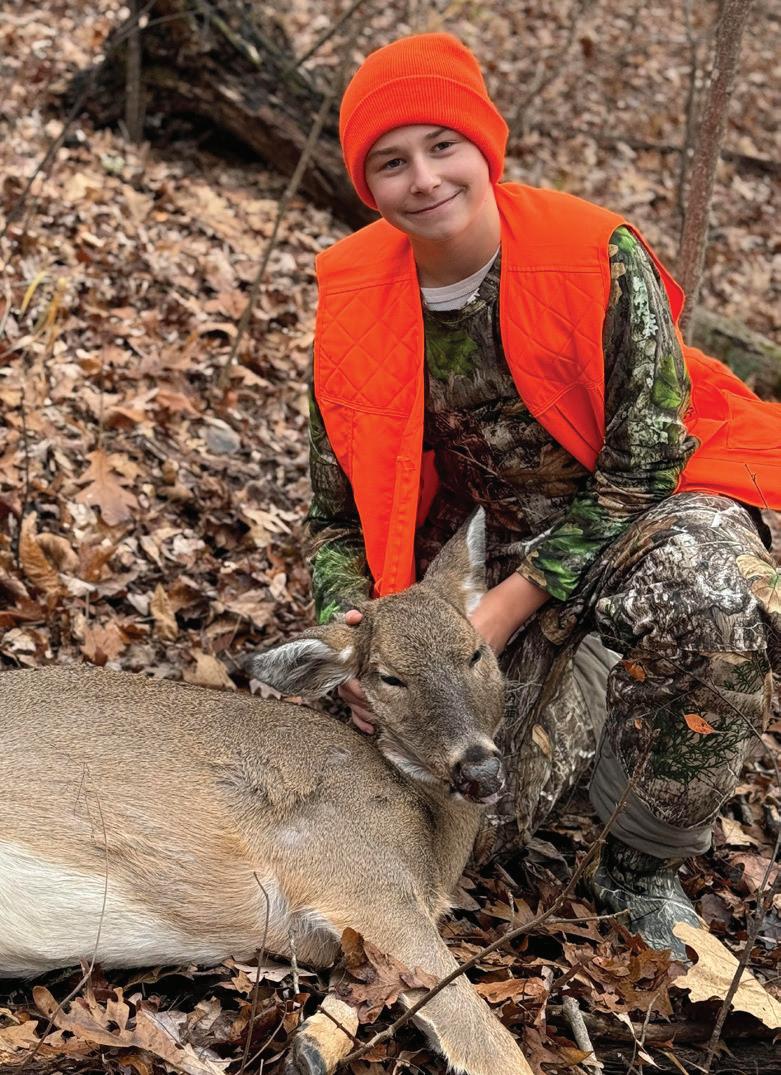
BEST YOUTH HARVEST
1st Place
2nd
Place
3rd Place
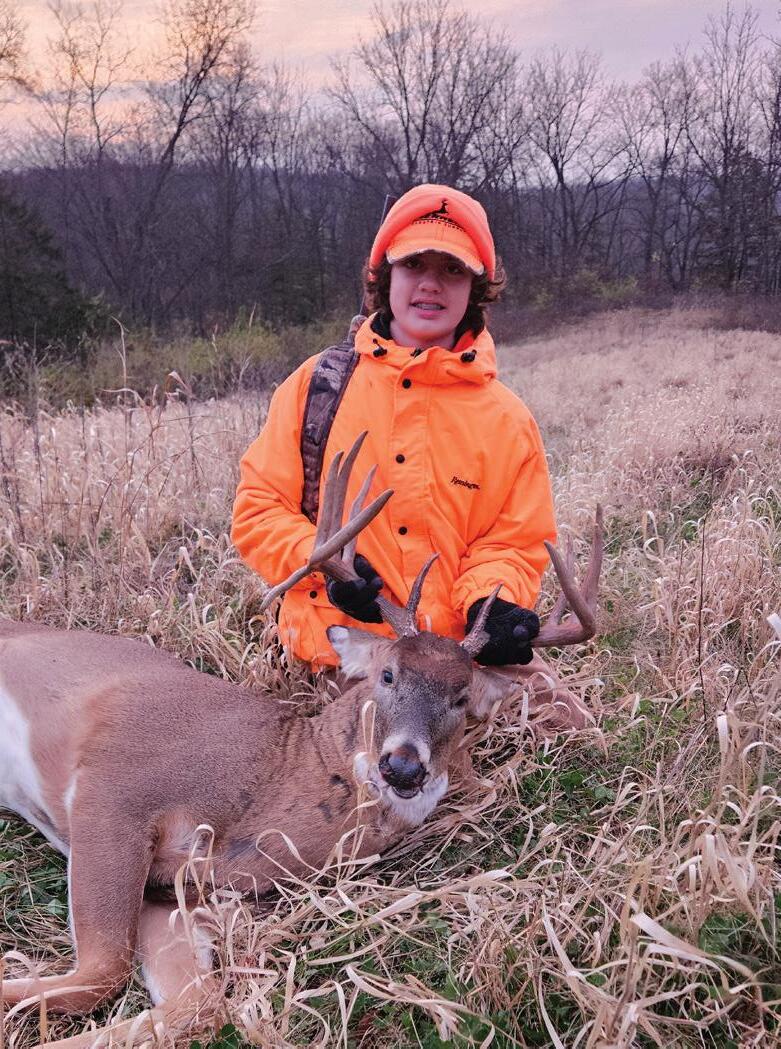
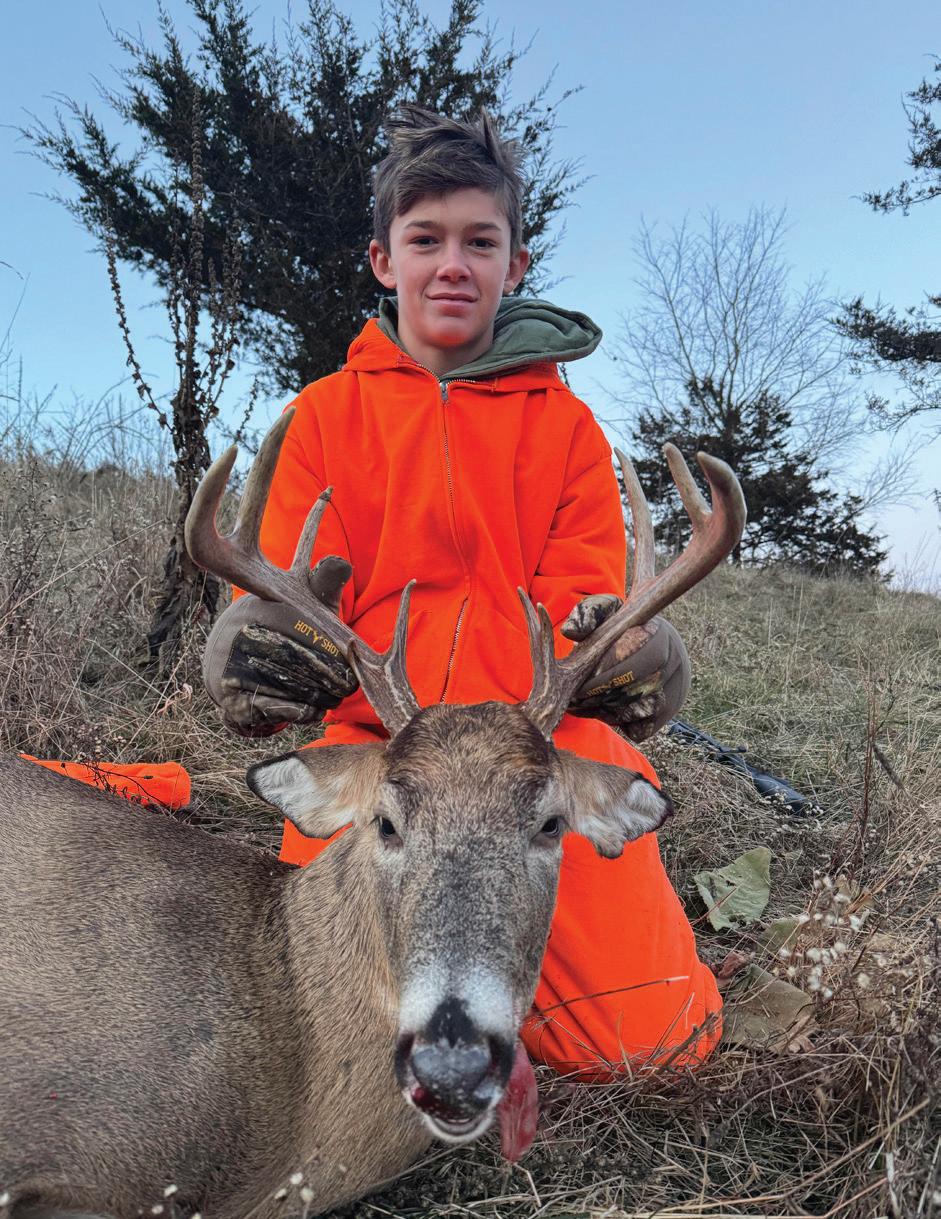
August Polkinghorne, 13 of Lone Rock, got his first deer, a big 11-point buck with a 16 3/8” inside spread and drop tine.
Photo contributed by Steve
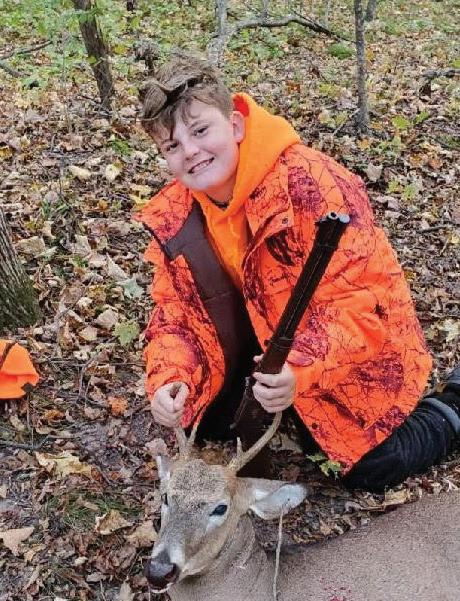
Liam Hildreth, 14 of Cobb, landed this big 10-point buck in Grant county. Liam loves to hunt, says his father. “This year was a little bit harder due to him fracturing his ankle two weeks before the nine-day gun season,” Paul Hildreth said.
Ben Schneider, of Mazomanie, harvested this big buck south of Richland Center at noon on opening day of the regular gun deer season, Nov. 23. “I had a really lucky opening day shooting my first true buck (two nubbins in my youth),” said Schneider. “He’s going on the wall!”
1st PLACE
2nd PLACE
3rd PLACE
Joe Stoltz, age 11 of Spring Green, harvested his first deer ever, a fine nine pointer, after a combined 47 hours on stand during the recent gun season in Sauk County.
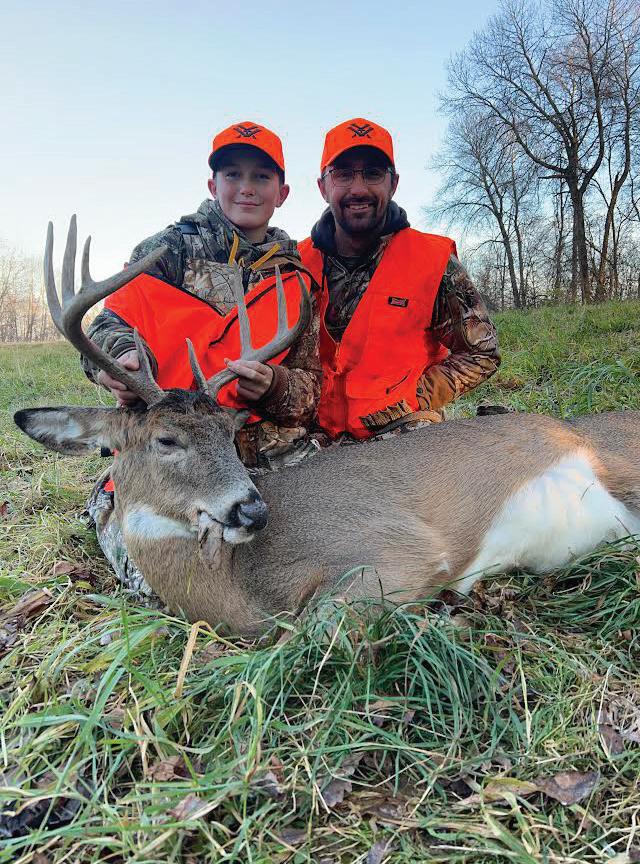
Beau White, age 12 of Spring Green, shot his first ever buck with gun November 27th at 3pm sitting with his older brother Logan White in Sauk County in the Bear Valley area.
by
Forrest Reno, 8 of Lone Rock, harvested this big buck in Richland county on Oct. 5 with a rifle during the youth season.
Polkinghorne
Photo contributed by Paul Hildreth
Photo contributed by Ben Schneider
Photo contributed by Adam Reno
Photo contributed
Jeremy White
Photo contributed by Rick Stoltz
BIGGEST DOE
1st PLACE
2nd PLACE
3rd PLACE
Liam Hildreth, 14 of Cobb, harvested this doe earlier in the youth hunt. The doe was taken in Lafayette county.
BEST VIEW OUT IN THE FIELD
1st PLACE
2nd PLACE
Todd Wilson, age 14, harvested this big doe on Nov. 24, the second day of the gun season in Sauk county.
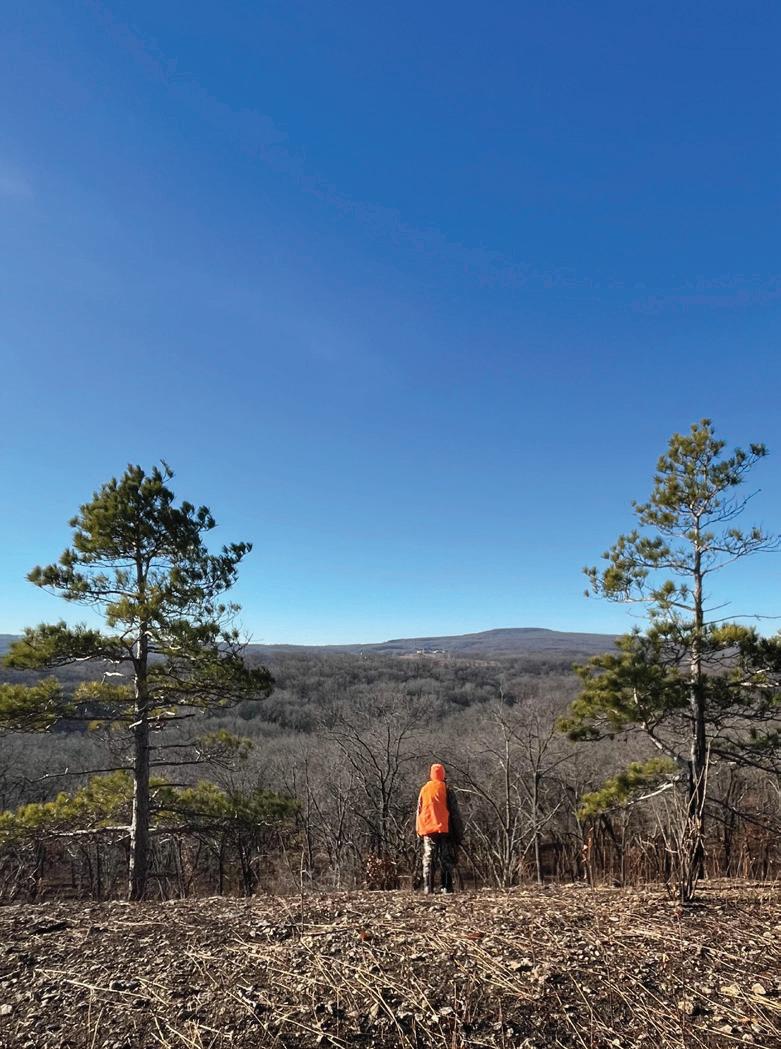
Ryland Schwarz, age 13, admiring blue mound from The Prairie Enthusiasts land located near Blue Mounds, on Nov. 26.
Reese Ferguson, 11, on her first year deer hunting, harvested her first ever deer, this big doe.
3rd PLACE
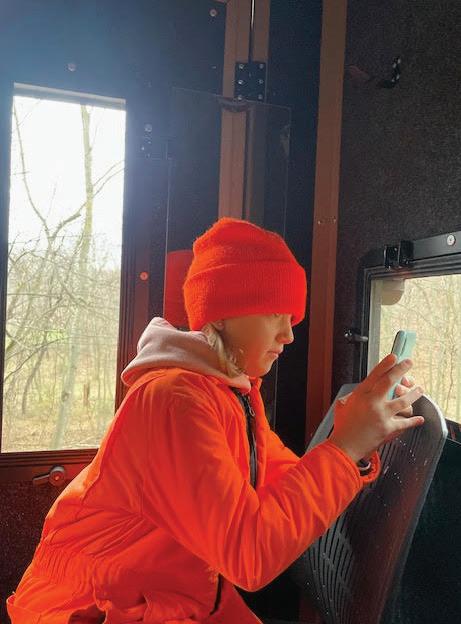
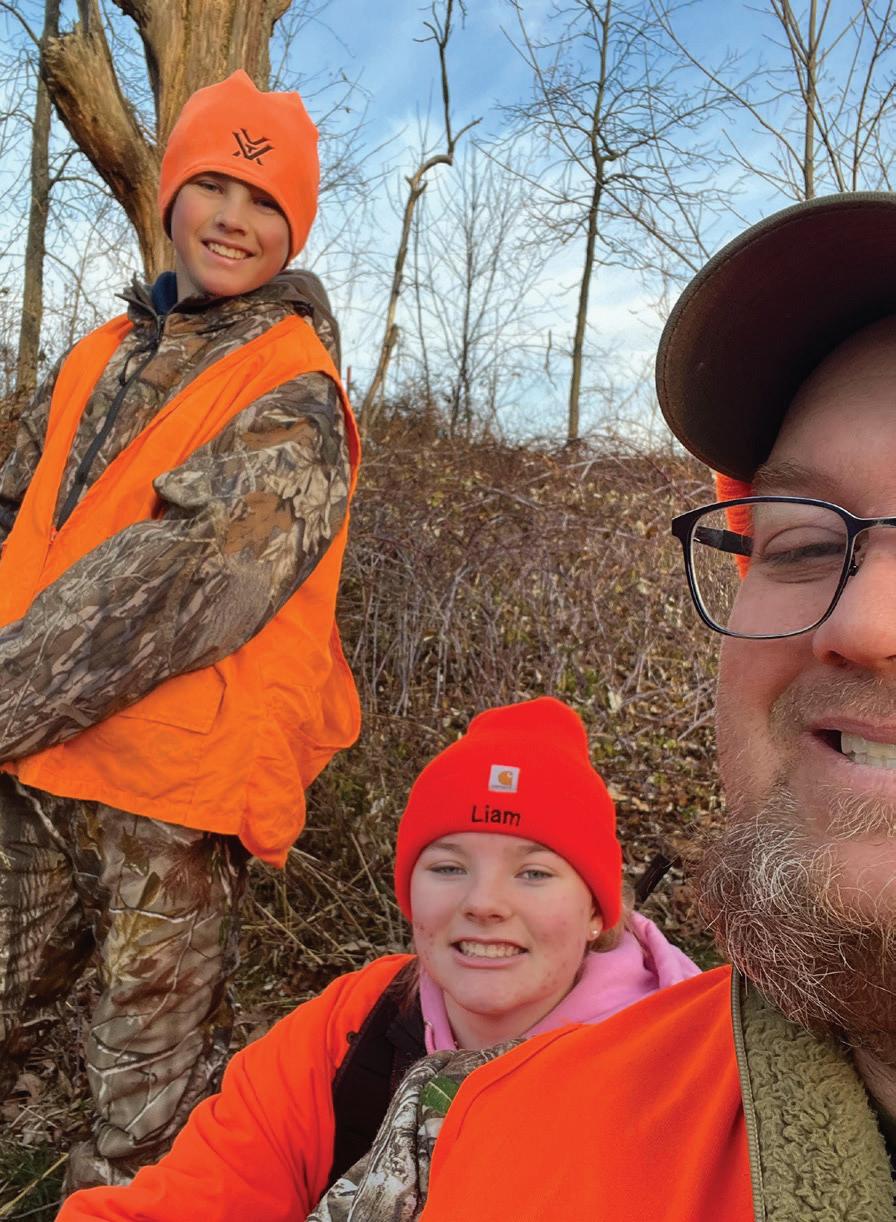
Hadlee Weiss, 8, excitedly filming a doe walk by her stand. “Memories made,” Michael Weiss said. “She is hooked.”
quality is our pledge to
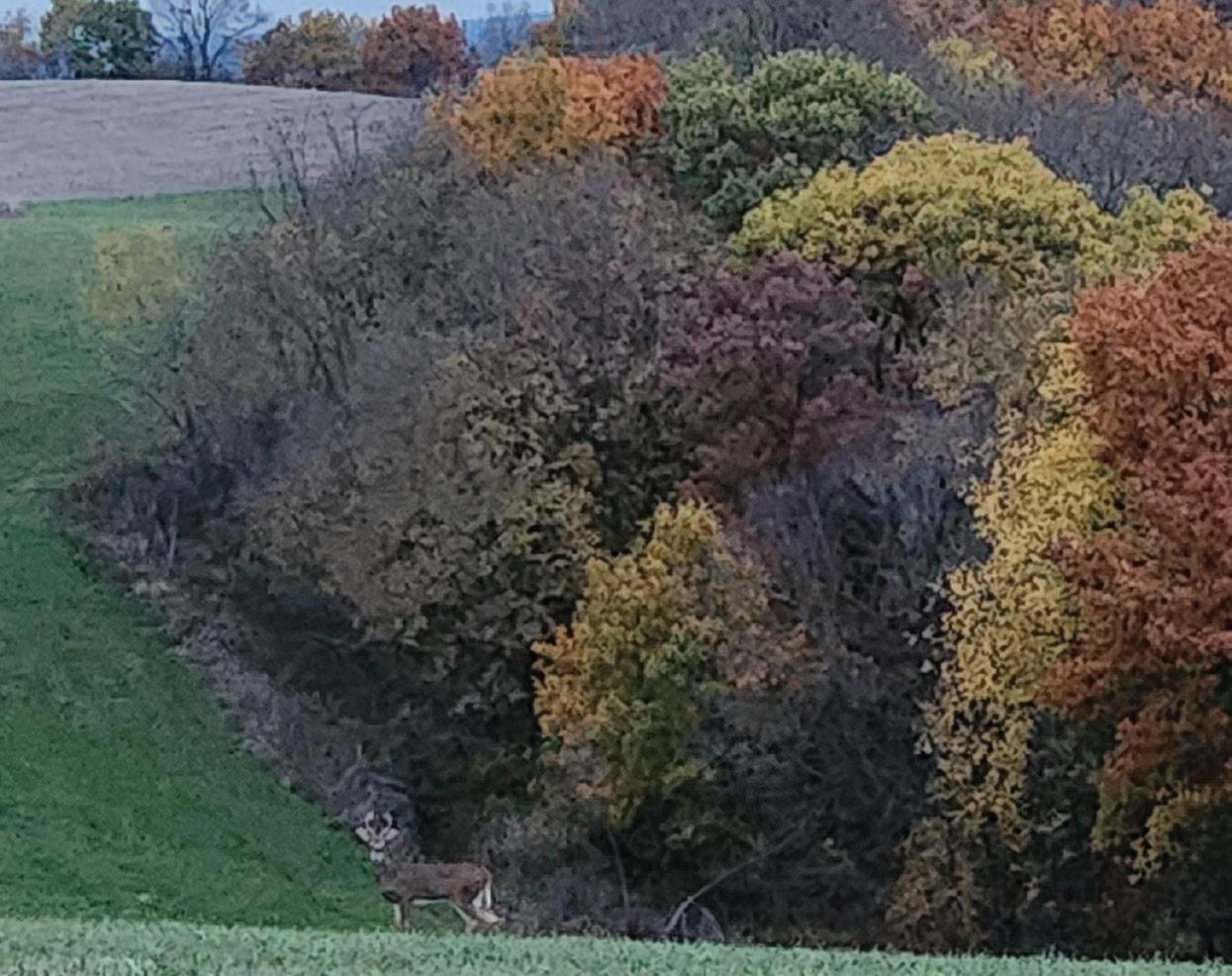
Andrew Reilly took this picture out in the field while bow hunting in Iowa county.
Photo contributed by Andrew Reilly
Photo contributed by Joe Schwarz
Photo contributed by Michael Weiss
Photo contributed by Paul Hildreth
Photo contributed by Bradley Wilson
Photo contributed by Travis Ferguson
Beau White, 12 of Spring Green, harvested his very first doe with a gun during the 2024 Youth Hunt with his Dad Jeremy as a mentored hunt.
Photos contributed by Jeremy White
Cael Reno, 11 of Lone Rock, harvested this buck in Sauk county near Spring Green Nov. 28, during Wisconsin Gun Deer Season.
Photo contributed by Adam Reno
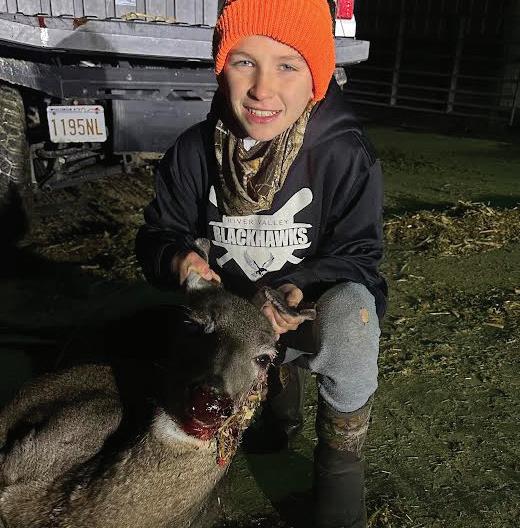
Ryland Schwarz, 13, harvested this 8-point buck on Friday evening of the regular gun season. He was hunting with his dad on their family land in far western Dane county.
Photo contributed by Joe Schwarz
Reese Ferguson, 11, harvested this buck, her second deer ever, during her first year hunting.
Photo contributed by Travis Ferguson
Ryland, 13, Ayla ,16, and their dad Joe Schwarz hunting The Prairie Enthusiasts land near Blue Mounds on Wednesday morning of the regular gun season.
Photo contributed by Joe Schwarz
Colt Nachreiner, 12, harvested this buck near Plain.
Photo contributed by Nate Nachreiner
Treyton White, 19 of Spring Green, harvested this buck on Nov. 28 in Sauk County in the Bear Valley area.
Photo contributed by Jeremy White
Clayton Burns, 13, harvested this buck, his first deer, in Richland county.
Photo contributed by Danielle Ewing
Owen Wilson, 12, shot this big doe on the Friday of gun season, Nov. 29, in Sauk county.
Photo contributed by Bradley Wilson
Prem Meats Wild Game Processing
Prem Meats can butcher and process your favorite wild game into sausage, steaks, jerky, summer sausage and more. We use only fresh beef, pork, and spices, and all of our products are made using our awardwinning recipes. Let Prem Meats transform your wild game into a mouth-watering dinner table delicacy. The same flavorful ingredients we use in our retail sausages, we use in our venison. All of our smoked products are vacuum-packed free of charge. We number your venison when it comes in and the number follows your venison throughout the procedure to ensure that you receive your own meat back. We make both the old-fashioned strip jerky, and ground jerky. Bring in your whole deer to our Spring Green location or your boneless venison trim to our Prairie du Sac location for a delightful treat. Prem Meats will be your last stop when looking for that perfect deer processing place.
Our smoked products are vacuum-packed and include:
• Jerky
• Teriyaki Jerky
• Teriyaki Beef Sticks
• Landjaegers
• Beef Sticks
• Hot Beef Sticks
• Jalapeño Cheese Stix
• Sausage
• Garlic Sausage
• Hot ‘n Spicy Sausage
• Jalapeño Cheese Sausage
• Cheddar Sausage
• Breakfast Sausage
• Italian Sausage
• Pepper Loaf
• Sliced Bacon
• Ring Bologna
• Fresh Brats
• Italian Brats
• Philly Cheese Brats
• Hamburger with Beef
• Buffalo Blue Cheese Brats
• Kielbasa
Most of the products in our market are our own recipes that we have perfected over the years. We also specialize in ready to heat and serve meats that we prepare for sandwiches, including BBQ Pork, Beef Au Jus, Grilled Chicken in its own Gravy, Italian Chicken, and Savory Pork. Each one of these meats are grilled on our Southern Pride BBQ Smoker to give you the most tender and flavorful meats, with that succulent grilling taste. These meats can also be ordered thicker sliced to be served as the main course for your dinner. We use our own special blend BBQ sauce to give you the best flavor in our Ribs, Chicken Breasts, Wings (hot and mild), Beef Brisket, and Smoked Pork Chops.
Boone Dilley, 12, harvested this doe on the afternoon of Nov. 24 in Iowa county. Boone wrestled in Tulsa, OK opening day and raced back to hunt Sunday.
Photo contributed by Brandon Dilley
Journee Vogel, of Iowa county, harvested this big buck on Thanksgiving on her dad’s land in Grant county. “This Thanksgiving was extra special this year as my wife took her first buck.” Matt Vogel said.
Photos contributed by Matt Vogel
Camryn Ferguson, 13, harvested this big 9-pointer in Richland county.
Photo contributed by Travis Ferguson
This buck was harvested in Iowa county near Highland by Brea Welsh, with Creedence Welsh in the photo as well.
Photo contributed by Zachary Welsh
Logan White, 23 of Spring Green, harvested this buck during gun season on Nov. 24, in Sauk County in the Bear Valley area.
Photo contributed by Jeremy White
Emmett Richter, of Arena, snagged his first buck, a 6-pointed, on a 100-yard shot.
Photo contributed by Taylor Richter
BLAZE ORANGE BOARD
MEATS
STRAKA’S VENISON SAUSAGE PRODUCTS
Straka’s venison sausage products are made with only FRESH beef and pork and only the finest blend of spices and seasonings available, then hickory smoked. All products are vacuum packaged in a custom, E-Z Open packaging that you can’t get anywhere else. Stop in with your deer or your boneless trim and start enjoying the best tasting sausage products you’ve ever had. Remember, quality takes time. Orders are processed in the order we receive them. Have a great 2024 deer hunt,
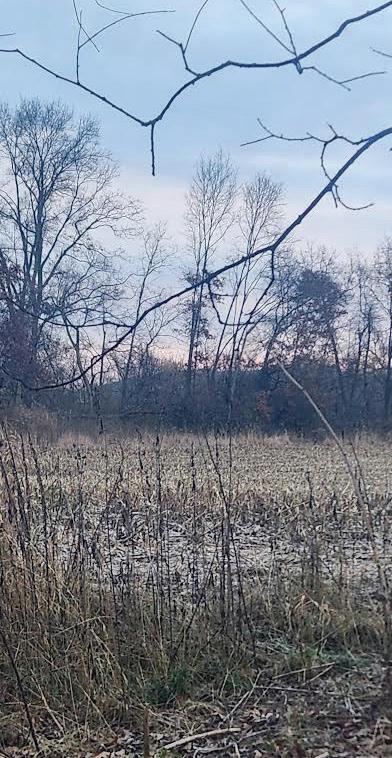
“Nothing beats the quiet Arena river bottoms
opening weekend,” Curtis Johnson said. Photo contributed by Curtis Johnson
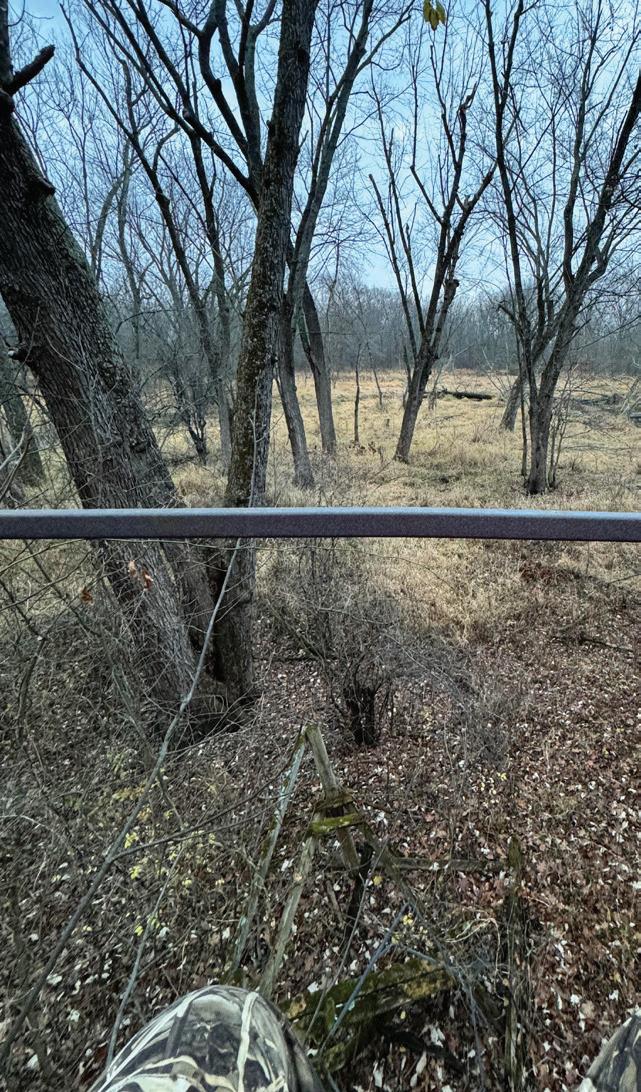
Brian Freel shot this view hunting in Clyde Photos contributed by Brian Freel
A lopsided five point buck at Governor Dodge State Park. Photo contributed by Lynn Jegerlehner
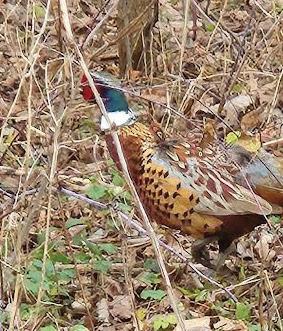
Brian Freel caught an image of a pheasant running by.
contributed by Brian Freel
BAIT KATE’S ANNUAL ICE FISHING DERBY
January 18th, 2025
HELD DURING WISCONSIN’S FREE FISHING WEEKEND
Fish anywhere you want within the designated fishing time Fish in one or two person teams
Kids under 15 years old have their own categories
Registration: $15 per Adult, $5 per Child
Cash Prizes and Trophies
Fishing Time: 6AM-1PM on January 18th, 2025
REGISTER AND WEIGH-INS AT KATE’S BAIT 3916 STATE ROAD 23, DODGEVILLE
Registration opens January 4th and runs through the morning of January 18th
“Most” Pan Fish (Best Stringer of 10) Largest of each species: Crappie, Bluegill, Perch Walleye, Bass, Northern andDon’tforgettostopin enter our Ice Derby Raffle.ofOurbiggestRaffle theyear. Youdon’thavetoparticipate ofinthederbytobeapart the Raffle. Grand Prize valued over $1200 STATE
CATEGORIES:
Events for December 19 - January 9
Stitch and Bitch 1:30 PM - 3:00 PM • Spring Green General Store, 137 S. Albany St. Spring Green • springgreengeneralstore.com • FREE • The Spring Green General Store’s Stitch and Bitch handwork group meets Thursday afternoons weekly. All are welcome.
Tech Help 2:00 PM - 4:00 PM • Kraemer Library & Community Center, 910 Main St, Plain • kraemerlibrary.org • FREE • Struggling with technology? Bring your computer, Kindle, phone, or other device to the library for tech assistance. A knowledgeable librarian will help troubleshoot issues, set up new devices, or guide you through using specific applications. Offered every third Thursday, this welcoming service is a great way to boost your tech confidence!
Family Night: Christmas Cookie Making 5:00 PM - 6:30 PM • Kraemer Library & Community Center, 910 Main St, Plain • kraemerlibrary.org • FREE (Registration required) • Join a festive evening of Christmas cookie making! Families will mix and cut out their favorite holiday sugar cookies to take home for baking and decorating. Call 608-546-4201 or visit the library to reserve your spot. Perfect for creating sweet holiday memories!
Silent Book Club 5:30 PM - 7:30 PM • Arcadia Books, 102 E Jefferson St, Spring Green • readinutopia.com • FREE • Join Arcadia Books for a cozy evening of reading at the December Silent Book Club. Bring your book, enjoy a drink, and share what you're reading during a brief social time before an hour of silent reading. Afterward, browse the store and connect with fellow book lovers.
Knit Night at Nina’s 6:00 PM - 8:00 PM • Nina’s Department Store, 143 E. Jefferson St Spring Green • ninasdepartmentstore.com FREE Every Thursday from 6 to 8 pm. All knitters and crocheters are welcome. Store closed after 5:30 pm.
Winter Indoor Soccer 7:30 PM - 9:00 PM • Plain Elementary Gym, 1370 Cherry St, Plain • For more information look up "Spring Green Recreational Soccer" on Facebook • FREE • Open to ages 12 and up, join the Winter Indoor Soccer sessions for a fast-paced 5-a-side game on a basketball court. Sub in and out as needed. Appropriate footwear recommended. A great way to stay active and build skills over winter months. Carpooling is encouraged due to limited parking.
Spring Green Farmers Winter/Holiday Market 10:00 AM - 12:00 PM • S230 E. Monroe St., Spring Green • Explore a special winter/holiday edition of the Spring Green Farmers Market inside the library and in the parking lot. Shop for seasonal produce, local meats, baked goods, and unique holiday items in a festive, community-focused atmosphere.
Storytime with Santa 10:00 AM - 12:00 PM • Ridgeway Volunteer Library, 850 Dodgeville St, Ridgeway • For more information look up Ridgeway Volunteer Library on Facebook • FREE • Gather with Santa for a magical morning of holiday stories and activities at the Ridgeway Volunteer Library. Perfect for families and children to enjoy a festive start to the holiday season!
Celebration of Light 4:00 PM - 6:00 PM • Spring Green Community Library, 230 E Monroe St, Spring Green • springgreenlibrary.org • FREE • Celebrate the Winter Solstice with a contemplative Spiral of Lights experience. Participants light candles in a spiral of evergreen boughs, creating a glowing display of community and quiet reflection. All ages are welcome. Children may walk with a caregiver or enjoy observing. Please refrain from phone use during the event.
Monday, December 23
Holiday Pop Up Shop with Megan Ores 10:00 AM - 2:00 PM • Spring Green General Store, 137 S Albany St, Spring Green • For more information look up "Spring Green General Store" on Facebook • The perfect opportunity to shop for last-minute presents! Handmade Soaps, Lotions, and more.
Kids' Holiday Movies 10:30 AM - 11:30 AM • Spring Green Community Library, 230 E Monroe St, Spring Green • springgreenlibrary.org • FREE • Enjoy two delightful holiday-themed kids' movies with complimentary popcorn provided by the library. A perfect way to relax and enjoy the holiday spirit with family and friends. Suitable for children of all ages.
Winter Indoor Soccer 7:30 PM - 9:00 PM • Plain Elementary Gym, 1370 Cherry St, Plain • Look up "Spring Green Recreational Soccer" on Facebook • FREE • Open to ages 12 and up, join the Winter Indoor Soccer sessions for a fast-paced 5-a-side game on a basketball court. Sub in and out as needed. Appropriate footwear recommended. A great way to stay active and build skills over winter months. Carpooling is encouraged due to limited parking.
Free Christmas Dinner 11:00 AM - 2:00 PM • The Woods, 320 S. Oak St., Lone Rock • Celebrate the holiday season with a complimentary Christmas dinner. All are welcome to enjoy a warm meal. Call 608-583-2625 to place your order. Orders must be made by December 18th.
Winter Indoor Soccer 7:30 PM - 9:00 PM • Plain Elementary Gym, 1370 Cherry St, Plain • For more information look up "Spring Green Recreational Soccer" on Facebook • FREE • Open to ages 12 and up, join the Winter Indoor Soccer sessions for a fast-paced 5-a-side game on a basketball court. Sub in and out as needed. Appropriate footwear recommended. A great way to stay active and build skills over winter months. Carpooling is encouraged due to limited parking.
December 27
Karaoke Night 8:00 PM - 11:00 PM • Slowpoke Lounge & Cabaret, 137 W Jefferson St, Spring Green • slowpokelounge.com • FREE (Tips for the host welcome) • Join the community for a night of singing and fun! Hosted by Janna Johnson, this lively event welcomes everyone to take the stage or cheer on friends. The night continues until last call, with a dynamic mix of talent and energy.
produce, local meats, baked goods, and many other wonderful items. Held outside the Spring Green Community Public Library every Saturday morning.
River Valley Film Club: Monthly Screening 7:00 PM - 9:00 PM • Slowpoke Lounge & Cabaret, 137 W Jefferson St, Spring Green • slowpokelounge.com • FREE • Enjoy a surprise film screening hosted by the River Valley Film Club. Movie titles are kept secret until showtime, so follow the group on Facebook for clues. Arrive 30 minutes early to grab a drink and meet fellow film enthusiasts. Bring your own popcorn or dinner and join the fun!
Winter Indoor Soccer 7:30 PM - 9:00 PM • Plain Elementary Gym, 1370 Cherry St, Plain • For more information look up "Spring Green Recreational Soccer" on Facebook • FREE • Open to ages 12 and up, join the Winter Indoor Soccer sessions for a fast-paced 5-a-side game on a basketball court. Sub in and out as needed. Appropriate footwear recommended. A great way to stay active and build skills over winter months. Carpooling is encouraged due to limited parking.
2nd Annual Gerald E Robson NYE Masquerade Ball & Ripple of Hope Fundraiser
Gala 6:00 PM • Willow Hill Courtyard, 200 Sharon St, Arena • Look up "Gerald E Robson NYE Masquerade Ball" on Facebook • Celebrate New Year’s Eve in style at this elegant masquerade ball and fundraiser. Enjoy music, karaoke, and dancing, while supporting a meaningful cause. Guests are encouraged to wear formal masquerade attire.
LIVE MUSIC: New Year's Eve Extravaganza 7:30 PM - 1:00 AM • Slowpoke Lounge & Cabaret, 137 W Jefferson St, Spring Green • slowpokelounge.com • FREE (Donations for the band encouraged) • Ring in the New Year with Violet Palms and Sugar Mama and the Rent Check! Dance the night away as we celebrate the end of 2024 and the start of a fantastic 2025. Enjoy an evening of great music, fun, and community spirit at the Slowpoke Lounge & Cabaret.
New Year's Eve Bash 9:00 PM • Wisconsin Riverside Resort, S13220 Shifflet Rd, Spring Green • For more information look up "Wisconsin Riverside Resort" on Facebook • Celebrate the New Year!
Winter Indoor Soccer 7:30 PM - 9:00 PM • Plain Elementary Gym, 1370 Cherry St, Plain • For more information look up "Spring Green Recreational Soccer" on Facebook • FREE • Open to ages 12 and up, join the Winter Indoor Soccer sessions for a fast-paced 5-a-side game on a basketball court. Sub in and out as needed. Appropriate footwear recommended. A great way to stay active and build skills over winter months. Carpooling is encouraged due to limited parking.
Stitch and Bitch 1:30 PM - 3:00 PM • Spring Green General Store, 137 S. Albany St. Spring Green • springgreengeneralstore.com • FREE • The Spring Green General Store’s Stitch and Bitch handwork group meets Thursday afternoons weekly. All are welcome. Knit Night at Nina’s 6:00 PM - 8:00 PM • Nina’s Department Store, 143 E. Jefferson St Spring Green • ninasdepartmentstore.com FREE Every Thursday from 6 to 8 pm. All knitters and crocheters are welcome. Store closed after 5:30 pm.
Spring Green Farmers Winter Farmers Market 10:00 AM - 11:00 AM • S230 E. Monroe St., Spring Green • Spring Green Farmers Market is a year-round outdoor market offering seasonal produce, local meats, baked goods, and many other wonderful items. Held outside the Spring Green Community Public Library every Saturday morning.
Homeschool Hangout 10:30 AM • Spring Green Community Library, 230 E Monroe St, Spring Green • springgreenlibrary.org • FREE • Connect with area homeschool families while enjoying games, crafts, and snacks. This event offers a fun and engaging way for homeschool students to make friends and share activities in a welcoming environment.
Trivia Night 6:30 PM • Spring Green Community Library, 230 E Monroe St, Spring Green • springgreenlibrary.org • FREE • Test your knowledge and enjoy a fun evening of trivia at the Spring Green Community Library! Form a team or join others for a night of challenging questions and friendly competition. Perfect for trivia lovers of all levels!
Winter Indoor Soccer 7:30 PM - 9:00 PM • Plain Elementary Gym, 1370 Cherry St, Plain • For more information look up "Spring Green Recreational Soccer" on Facebook • FREE • Open to ages 12 and up, join the Winter Indoor Soccer sessions for a fast-paced 5-a-side game on a basketball court. Sub in and out as needed. Appropriate footwear recommended. A great way to stay active and build skills over winter months.
Carpooling is encouraged due to limited parking.
Yarn Rocks! 5:00 PM - 7:00 PM • Spring Green Community Library, 230 E Monroe St, Spring Green • springgreenlibrary.org • FREE • Join fellow knitters at Yarn Rocks! Whether you're a beginner or an experienced crafter, come to learn new skills, get help, or simply enjoy the company of other knitters. Research highlights the health benefits of knitting, so bring your projects and craft away!
Stitch and Bitch 1:30 PM - 3:00 PM • Spring Green General Store, 137 S. Albany St. Spring Green • springgreengeneralstore.com • FREE • The Spring Green General Store’s Stitch and Bitch handwork group meets Thursday afternoons weekly. All are welcome.
Tech Help 2:00 PM - 4:00 PM • Lone Rock Community Library, 234 N Broadway St, Lone Rock • lonerocklibrary.wordpress.com rvbroadband.org/techhelp • Come on in with any devices or technology you need help with! No appointment necessary.
Knit Night at Nina’s 6:00 PM - 8:00 PM • Nina’s Department Store, 143 E. Jefferson St Spring Green • ninasdepartmentstore.com FREE Every Thursday from 6 to 8 pm. All knitters and crocheters are welcome. Store closed after 5:30 pm.
Bingo Night 6:00 PM • E4885 Hwy 14 & 23, Spring Green • For more information look up "Bingo Night Spring Green" on Facebook • FREE • Enjoy a lively evening of Bingo! Bring your family and friends for a fun community gathering with opportunities to win prizes. Perfect for all ages and a great way to meet neighbors and enjoy the excitement.
Winter Indoor Soccer 7:30 PM - 9:00 PM • Plain Elementary Gym, 1370 Cherry St, Plain • For more information look up "Spring Green Recreational Soccer" on Facebook • FREE • Open to ages 12 and up, join the Winter Indoor Soccer sessions for a fast-paced 5-a-side game on a basketball court. Sub in and out as needed. Appropriate footwear recommended. A great way to stay active and build skills over winter months. Carpooling is encouraged due to limited parking.
Continued on page 8
The Community Calendar is curated by Paige Gilberg and designed by Julianna Williams. Events are subject to change, always check ahead for up-to-date information on any events you are interested in.
Events for December 12 - January 9
CIVICS & SERVICES CALENDAR
CIVICS & SERVICES
VALLEY SENTINEL'S LITERARY JOURNAL SUBMISSIONS OPEN! Works can be submitted at: valleysentinelnews.com/literary-journal/. Questions about submissions can be directed to: editor@valleysentinelnews.com Submissions will remain open until enough journal-quality submissions are received.
LITERARY + ARTS & CULTURE SECTION
This calendar is a place listing (for free) the typical meeting dates for area governmental bodies, and
Please email us with these meetings, or use the form on our Community Calendar page — let's build community together: editor@valleysentinelnews.com
December 12: River Valley School Board Meeting 7:00 PM • rvschools.org • River Valley Middle School, Library, 660 Daley St, Spring Green
December 13:
VOLUNTEER: Ridgeway Pine Relict Workday 9:00 AM - 12:00 PM • Help us care for some of our state's most pristine public lands, State Natural Areas. Encourage native plants and animals to thrive by cutting brush, controlling invasive species, collecting seeds, monitoring rare species, and preparing fire breaks. RSVP to Bob Scheidegger 608-319-2083 for more information.
December 17: Iowa County Board Meeting 6:00 PM- 8:00 PM• Health and Human Services Center, Dodgeville • iowacounty.org
December 18: Village of Spring Green Board Meeting 7:00 PM • 154 N. Lexington Street, Spring Green, Wisconsin • vi.springgreen.wi.gov Plain Fire Department Meeting 7:00 PM • Village of Plain Fire Department, Plain • villageofplain.com
January 3: Red Cross Blood Drive 11:30 am - 5:30 pm • Christ Lutheran Church 237 E Daley, Spring Green • redcrossblood.org Red Cross Blood Drive 12:30 pm - 5:30 pm • Arena Fire/EMS Station 111 David Circle, Arena • redcrossblood.org
January 8: Plain Village Board Meeting 7:00 PM • 510 Main Street, Plain • villageofplain.com Village of Spring Green Board Meeting 7:00 PM • 154 N. Lexington Street, Spring Green, Wisconsin • vi.springgreen.wi.gov
WHAT’S HANGINg ? ongoing art exhibitions
Spring Green Community Library Art Exhibitions Spring Green Community Library, 230 E Monroe St, Spring Green Monday-Thursday: 10 AM - 7 PM • Friday: 10 AM - 5 PM • Saturday: 9 AM - 1 PM •
The River Valley Stitchers’ quilts are hung in the Community Room Gallery for their annual Country Christmas show. They can be viewed throughout December. The RV Stitchers continue to make quilts that are given out on Veteran's Day at the Meadows and Greenway Manor/Terrace. Eight were given this year along with five lap quilts. The first quilt presented was given by two residents of the Greenway Terrace who had helped make it. The Stitchers have a meeting on the fourth Friday of the month at 1 PM at the Spring Green Community Library. There are no meetings at the Library in December 2024 and January 2025. The RV Stitchers’ quilt show is available for viewing during regular library hours when the community room is not in use. Please ask for the key at the circulation desk.
Lisa Humke’s “This World and Beyond” can be found in the Glass Case Gallery. About herself and her work, Lisa says, “I am a retired art teacher of 28 years. I earned my undergraduate degree at UW-Madison and my Masters from Field Graduate University. My work is a compilation of different materials. I collect a myriad of tiny treasures that most people would find seemingly insignificant. To me, they are rich in texture, color, and shape. They can be used as is to enhance the narrative of my story or they can be altered to fabricate a new relevance. The pieces I construct have threads that sometimes tie to my family, whimsical figures expressing emotions, or just playing with compositions and materials.” The collection in the exhibit, “This World and Beyond” is a series of assemblages that speak to the human conditions we all encounter. This World” relates to us as human and what we go through.The other selections, “And Beyond,” are abstract concepts of dreams, wishes and feelings manifested as guardians or spirits that embody those ideas. (Be sure to check out Lisa’s statement with the exhibit that explains each piece.) “The World and Beyond” can be viewed at any time during regular library hours.
Lexington & Jefferson
Arts In Brief
Applications for the Arts, Humanities and Historic Preservation (AHHP) Grant and the Good Idea Grant are now available. Information about the grants, as well as application forms, are available at https://www.co.sauk.wi.us/ artsandculture.
Completed Arts, Humanities, and Historic Preservation grant applications are due to the Extension Sauk County Office, Attn: Arts & Culture Grant Committee, 505 Broadway, Baraboo, WI by 4:00 p.m. on January 10, 2025. Good Idea Grant applications are due to the Extension Sauk County office by the first Friday of each month until all funds are used.
The Sauk County Arts & Culture grant programs encourage art and historic preservation education and community development in Sauk County. The grant programs provide support for projects and organizations that value innovation, creative expression and community within Sauk County.
The Sauk County Arts & Culture Committee awards grants through a competitive application and review process. The Arts, Humanities, and Historic Preservation (AHHP) Grants are designed to expand the presence of the arts, humanities and historic preservation throughout Sauk County.
Grants provide supplemental funding for a variety of projects including festivals, community events, lectures, tours, digital
projects, community conversations, film projects, exhibitions and more.
The AHHP Grants are larger grants that support non-profit organizations and government entities up to $4,000 and require matching funds.
The Good Idea Grant program is designed to support and leverage the creativity of Sauk County artists, craftspeople, musicians, writers, historians and arts, humanities or historical preservation organizations in endeavors that will contribute to Sauk County’s creative economy. Awards are a maximum of $500 and may be applied for any time during the year until funding runs out.
Each year the Sauk County Arts & Culture Committee awards over $25,000 to nonprofits, governmental units, and local organizations throughout the County to support a wide variety of humanities and arts based projects. The Sauk County Arts, Humanities and Historic Preservation grants program is made possible with funding from Sauk County and the Wisconsin Arts Board.
Additional information can be found at the Arts & Culture Program website (https://www.co.sauk. wi.us/artsandculture). If you have questions about whether your organization or project is eligible, or any other questions, please call the UW Extension Sauk County office at 608-3553250 or email at ahhpgrants@saukcountywi.gov
Writers and Writing: Rhodes novel predicts the future
The late David Rhodes returns to his beloved Driftless region of southwestern Wisconsin in his futuristic novel Painting Beyond Walls, a story of a man of humble beginnings who goes on to achieve great things. The novel was published in September 2022, two months before Rhodes’ death.
Born in Des Moines, Iowa, Rhodes was a graduate of the Iowa Writers’ Workshop and author of several other novels set in the Driftless region, most notably Driftless and Jewelweed. Following his earlier success with The Last Fair Deal Going Down, The Easter House and Rock Island Line, Rhodes’ publishing career halted after a motorcycle accident left him paralyzed.
Chicago of 2027 sets the stage for Rhodes’ final novel. While the time isn’t far in the future, Rhodes’ depiction of events is a clear warning of how climate change could impact not just the landscape, but human behavior:
“Due to a steady trickle of people and businesses from the East Coast, where retreating shorelines seemed increasingly inhospitable, and an even steadier stream of immigration from the drought-plagued Southwest, the costs of living in Chicago had risen.”
Thirty-year-old August Helm, brilliant biochemical researcher at the University of Chicago, is working on a cure for cancer. However, his career is put on hold after he accidentally discovers an illicit liaison between his senior fellow researcher, Dr. Grafton, and a female graduate student.
Dr. Grafton tries to weasel his way out of August’s discovery, saying men in superior positions have acquired an innate right to as many females as they want.
While Grafton does not directly threaten him, the message is clear. Don’t mess with your superiors.
After he loses his position due to funding cuts, and with salt in the wound from a breakup with his out-of-his-league girlfriend Amanda Clark, August returns to his beloved Driftless region to heal. Through his mother, August meets April, a devastatingly beautiful woman living in a gated community who seems totally out of reach until . . .
Rhodes has a devilishly clever knack for putting hapless individuals into seemingly hopeless situations then entertaining us as they struggle to emerge from them. Rhodes’ description of the Driftless region is spot-on, and totally heartwarming. This is a great book to curl up with, and it’s hard to set down. It’s also a wonderful final tribute to a great writer.
ISBN 978-1-57131-141-2
$28
Painting Beyond Walls
David Rhodes
Milkweed Editions
Michael Tidemann writes from Estherville, Iowa. His Facebook page is Author Michael Tidemann.
Michael Tidemann, Contributed
MOVIE & FILM
Now streaming: Should 'Beetlejuice' have been left to rest in peace?
Like so many other “strange and unusual” millennials, I spent much of my childhood soaking up all things Tim Burton. From “The Melancholy Death of Oyster Boy & Other Stories” to “Edward Scissorhands,” I was completely infatuated with his dark and morbid tales.
So you can imagine how excited I was to hear about the long-awaited sequel to “Beetlejuice (1988)” with the reprisal of the great Michael Keaton as Betelgeuse, Winona Ryder as Lydia Deetz, and Catherine O'Hara as Delia Deetz.
My excitement grew after seeing that “Beetlejuice Beetlejuice” is now available to stream on HBO Max. I decided to make a night of it, preparing snacks to enjoy as I watched it from the comfort of my couch. Starting out with a nice aerial shot of the gorgeous small town of East Corith, Vermont, with the iconic Beetlejuice theme heard in the background, I was taken right back to where it all began. Ryder was looking phenomenal as an adult Lydia Deetz, O’Hara was serving flawless drama and glamor (as always) and Michael Keaton proved in just a few clips that he was made to play the role of Betelgeuse.
Though a few of the original cast members appeared absent, some new faces felt promising. Jenna Ortega playing Lydia’s teenage daughter “Astrid” seemed like a great choice, as she’s proven how well she can play a moody goth in the Netflix series “Wednesday.” And Willem DaFoe is notorious for bringing wacky chaos to all of his roles.
The excitement was cut short about 40 minutes into the sequel as I desperately tried to get into the mess of unnecessary subplots and characters (with the
exception of a small Danny Devito cameo as a zombie janitor, no pun intended). By this point, the film was crawling at snail speed and cluttered with the backstories of each character (that no one asked for). Every scene felt like a desperate attempt to inch through one of the many subplots, followed by strange, cringeworthy filler (ex. “Soul Train” scene. Why did we need that?).
*Major spoilers ahead*
However, some of the subplots did feel appropriate, such as a now 52 year old Lydia’s grief journey as an anxious single mother struggling with her own mental health and trauma. I mean, who wouldn’t be traumatized after a creepy dead guy tried to marry you as a teenager and continued to haunt you the rest of your life?
She’s also seen stuck in a toxic relationship with a controlling and selfabsorbed business manager, who’s clearly profiting from her psychic talents and tendency to people-please. With Lydia as the main character in this chapter, we want to know what she’s been up to and how her story will be resolved. I enjoyed watching her estranged relationship with her teenage daughter evolve into a closer bond throughout the film, and witnessing her find her own strength and independence.
As an audience member, I found myself agreeing with her stepmother when she asked Lydia, “Where’s the obnoxious little goth girl who tormented me all those years ago? It’s time to find her.”
I also really enjoyed how they continued to creatively play with the deceased characters in the Netherworld and purgatory waiting room, staying true to the beloved aspect of the first film that
relied heavily on makeup and special effects to tell the story of how they died, without outright explaining. Along with the always phenomenally haunting, and exciting score of musical genius, Danny Elfman.
That being said, I felt bombarded by too many things happening at once. The introduction of Betelgeuse’s ex wife Delores on a rampage for revenge, felt like an excuse for Burton to somehow include his current partner Monica Bellucci in the film, which he’s well known for doing (ex: Lisa Marie and Helena Bonham Carter).
I feel like the movie could have done without this subplot, as I found myself thinking during her limited amount of screen time, “Oh yeah. I forgot about her.”
Between Lydia, her daughter Astrid falling in love with a deceased murderer and then being conned into and dragged through the Netherworld, their shared grief of Astrid’s father, the tiring amount of revisits to the now-deceased Charles Deetz, Lydia’s mentally abusive
Wisconsin River Valley nonprofit seeks to solve problems, foster community
continued from page 1
professional, says that there are many such food entrepreneurs in the area.
Savor the River Valley aims to connect tourists with those businesses, but also “to connect all those food businesses so they could help support each other, help solve common problems,” she says.
Savor the River Valley has grown to 40 members. Membership is free, Peltier says, and open to all food-related businesses in the region.
In the winter, a slow time for the industry, the group sponsors food classes and pop-up dinners to draw in off-season visitors. A farm-and-food tour in April brings in some shoulder-season traffic, and the network publishes a local food guide for the tourist season.
“We’ve got a very collaborative model,” Peltier says. “We’re trying to see how much we can do by working together.”
Community catalyst
Peltier sees Morrill-Kerckhoff and River Valley Commons as a community catalyst.
“It created a focal point for gathering up ideas and concerns about what we need in our community, looking for ways to solve those problems and looking for people who are willing to work together on those problems,” she says.
River Valley Commons also offers practical support, providing administrative assistance and serving as the fiscal agent for Savor the River Valley. It has done the same for other local projects and institutions.
Stacey Feiner and her husband, Bill Meyer, operate My Fine Homestead, a small organic farming operation about a half-hour west of Spring Green. They distribute produce, eggs, meat and other wares using the community supported agriculture model — CSA for short — with consumers paying an annual subscription
fee and receiving deliveries every week or every other week.
A community farmer’s market in Spring Green led by My Fine Homestead and other providers is now part of River Valley Commons, providing a legal structure and acting as the market’s fiscal agent. Savor the River Valley helps “bring people to the area and creates a buzz,” Feiner says.
She and her husband were both raised on Wisconsin dairy farms. At a Morrill Lecture event in October, Feiner told the audience the story of how the couple navigated the shift from the farm life they’d grown up in to the small-scale organic farming that they practice now.
The couple’s business model thrives on forging personal relationships with customers. After Feiner shared their story that evening, “people have come up to me who saw it or watched it on YouTube and said, ‘I just feel more connected to you,’” she says.
“There’s all these little community projects that are happening, and sometimes couldn’t get a foot off the ground to get going,” Feiner says.
“River Valley Commons has provided an umbrella, a safety-net organizational structure,” bringing together people with diverse skills “to piggyback off each other.”
Broadband access and affordable housing
River Valley Commons has helped convene a broadband coalition of local governments and others interested in upgrading internet service in the area.
That work was made easier as state and federal funds for broadband expansion became available, Morrill-Kerckhoff says. The coalition has sponsored regular monthly technology help sessions at area libraries.
The lack of affordable housing has been
another issue for the region, one that it has in common with the rest of Wisconsin. The organization has assembled a group including architects, lenders, local government officials and employers, but housing has presented bigger challenges not so easily resolved.
In the meantime, the organization is continually evolving.
Morrill-Kerckhoff envisions convening what she has been calling “common ground tables” — “where we can bring together groups of people to talk about different issues from any perspective, all perspectives, to try to find some common ground within some of the bigger issues that maybe we are always talking about.”
As for the lecture series itself, MorrillKerckhoff says, “I’d like to try to find ways to engage different communities than we have so far.”
River Valley Commons is also working to ensure its stability for the long term.
To that end, it recently joined Wisconsin Partners — a confederation of nonprofits.
Wisconsin Partners’ executive director, Rachel Peller, says that organization also arose from the concerns highlighted in “Bowling Alone” — “the reality and the idea that membership in associations has declined, so we’re all more isolated than we were before.”
Isolation and polarization
Peller traces the heightened polarization of these times to that isolation as well. It’s not just political polarization, but a divide that is represented in the media people consume and in their social contexts.
Those divisions can obscure the potential for common ground, she says.
“Our policy differences are actually not that sharp,” Peller contends. “If you look at what people want to happen, what people believe in and what some of those core values are, there’s actually more
relationship, Betelgeuse’s obsession with Lydia and getting out of the Land of The Dead to escape his ex wife, the ex wife’s hunt for blood, and Willem Defoe’s faux detective character trying to catch her, I was so overwhelmed and bored that for the first time in years, I actually considered turning the movie off. However, I decided to push through and grit my teeth as I sat through an incredibly awkward and painful end-scene in which the main characters danced and lip synced to Richard Harris’ “MacArthur Park” (a song choice that made no sense to me, and felt extremely out of place). The film ended with a strange cliffhanger, suggesting the possibility of a third film. For the sake of keeping the dark spirit of the original cult classic, I can only hope that Tim Burton stays away from saying, “Beetlejuice! Beetlejuice! Beetlejuice!”
“Beetlejuice Beetlejuice” can now be streamed online at: www.max.com
Rated PG-13; Runtime 1 hour 45 minutes
overlap than we think there is, and the big issue is the social perception of that divide.”
That perception is made worse by the retreat from community life that “Bowling Alone” describes, she says, which also leaves people feeling powerless. “So the more isolated we are, the less we feel like we can make an impact in our communities.”
Wisconsin Partners’ member groups include AARP, the Wisconsin Council of Churches, organizations of public health workers and child care educators, and the Wisconsin Housing and Economic Development Authority.
Part of what animates the organization is “recognizing the connection between all these different sectors,” Peller says. “If we don’t have child care, then we don’t have health care, and if we don’t have health care, our seniors are struggling, and if our seniors are struggling, then so are our churches.”
Wisconsin Partners has started up local groups in Southwest Wisconsin, the Kickapoo Valley and the Fox Valley. River Valley Commons is the first such group to join after launching on its own.
Peller credits River Valley Commons with being “really creative and nimble and adaptive” in its efforts.
“The work that Stephanie and River Valley Commons does almost just speaks for itself,” Peller says. “It’s just very powerful to know that everyday people are working together to make a difference in their own community, and trying and trying and trying again because it matters to them.”
Wisconsin Examiner is part of States Newsroom, the nation’s largest statefocused nonprofit news organization. Read more at wisconsinexaminer.com
Bonnie Ostrander, Administrative Contributor
Photo courtesy of Warner Bros Fan favorites return — along with some new faces — to “Beetlejuice Beetlejuice”. QR code inlaid to watch trailer.
Reflections from Lost Horizon Farm — The Horses
Each edition, retired dairy farmer Barb Garvoille brings her musings on dairy farm life from her own years of experience on Lost Horizon Farm with her late husband Vince “Mr. Farmer” Garvoille. This mooving memoir focuses on 1980-2000, join Barb as she rises with the herd.
Lost Horizon Farm was a home to four equines.
Bird
It was funny to us Bird watchers that the first horse we owned was an aged Belgian mare that came with the name, Bird Bird was purchased as a first horse for Rebecca. She came to us retired from work on an Amish farm. At the time, the price for cull horses was higher than the price for cull cows. In effect, by buying Bird, we saved her from a premature trip to the kill pen and created an amazing windfall for the Amish farmer/owner!
Having been a workhorse, Bird had been trained to pull machinery. She was what was termed "dumb broke." A person could ride Bird bareback, and she would respond to commands through the bit and bridle. Riding her was like riding a big bed. She was very broad and was very easy going except when she heard a horse fly. If she had just an inkling that there was a horse fly nearby, she would run for her stall. If she was being ridden and a fly came nearby, she would buck off whoever was on her and run for her shelter. We always wondered about her past as a work animal; certainly, a horse tending to run when it heard a buzzing fly could not have been very steady at work. Bird was a pasture bound animal; she was what horse people call an "easy keeper" too. That is a polite term for an animal tending to be on the heavier side. Because we were more cow people than horse people, we aggravated Bird's weight problem by always keeping feed in front of her. We did not know that a non-working horse, even a big one like Bird, did not require anything but a scant (to our way of thinking) amount of feed.
Bird's pasture companion was our sheep, CB. The two were inseparable; they would even share feed out of the same grain pail. We never worried about coyotes attacking CB as a lone sheep in the pasture because Bird was very protective of her and had feet that could
be thrust out with considerable might. CB was the bleating alarm that alerted us to the time Bird escaped from the pasture through a gate that had been left open. Bird ran right down the middle of the county road but was easily stopped by the sight of a pail of grain. She was led home and made CB one happy sheep when they were reunited in the pasture.
Rocky
Rocky was a beautifully dappled gray Arabian/Quarter Horse cross. This young gelding was another "easy keeper," but one with an attitude. The Rockster, as we nicknamed him, was well mannered for people, confident around horses, but he became a challenge to control if he detected hesitation in whomever was handling him.
Rocky had been a trail horse, and every time a cattle trailer would pass by on the road or arrive at the farm to load cattle, Rocky would run parallel to the fence in his pasture and neigh. He wanted to be loaded and taken somewhere. Because he proved to be too much horse for us cow people, Rocky was sold to a neighboring couple who were experienced “horse people.” When we visited Rocky, the new owners acquainted us with a slight depression he had on his chest. They were told the depression was called "the thumbprint of the devil.” It was said to be the mark of a highly independent and spirited horse.
Barb has called Lost Horizon Farm, just north of Spring Green, her home for the past 44 years. She is fond of all creatures (including snakes). Her joy stems from being able to be outdoors every day observing and treasuring the plant and animal life on her small piece of this planet. She loved milking cows and is proud to have been a dairy farmer.
Driftless Grace: Spring Green Gleanings 2024
Grace Vosen, Contributor
This is the magical time when I share things I overheard or observed throughout the year that did not merit a full column. I hope you get as much enjoyment from them as this inveterate eavesdropper did.
December 27, 2023
A young teenager said to his friend who had coined a new term, “Make a lot of TikToks using that word and then it’ll be added to the dictionary.”
December 29, 2023
Two cashiers of post-retirement age:
“My hand has been twitching all day and I don’t know why.”
“Are you nervous?”
“No.”
“Are you pregnant?”
January 24
A woman informed me that she had replaced 39 batteries last month while setting up her elaborate Christmas decor. She also described the treacherous, slushy conditions developing outside as “slickery.”
February 5
A customer at a grocery store asked the deli clerk exactly how many rotisserie chickens would be required to feed two men.
March 10
I heard the story of a funeral that recently took place for a beloved Sauk County resident with a keen sense of humor. Before the guests arrived, the man’s family stuck a plastic hand in the newly filled grave –adding some levity and more than a few double-takes.
Also today, a waitress in a nearby town went into great detail about the “pile of condensation” I would find at the bottom of my freshly grilled sandwich.
March 29
At the library, a patron told an acquaintance that it was her birthday. The acquaintance asked if it was “a significant birthday”, which she went on to define as “one with a zero or five at the end of it.”
April 10
When I asked a woman who knew quite a lot about our Driftless region whether she’d grown up here, she replied that no, she and her husband were both “implants.”
April 30
I heard a story from years ago about a local housekeeper who was not very thorough and needed help to get all her work done. Her employer, when asked out to social events, would often respond: “I have to stay home and clean. The housekeeper’s coming tomorrow!”
May 18
Heard in Mount Horeb, with zero context: “I was always painfully aware of summer.”
June 6
At Arcadia, a cyclist told his friends how he had once patched a bike tire using a borrowed ten-dollar bill. One of the friends replied that if it happened again, he should ask for a twenty.
June 12
Arcadia again: “When my friends who are from Wisconsin talk about why they hated Wisconsin, I just keep quiet. I figure you can’t fix stupid.”
August 4
A girl at the General Store showed her parents a shiny coin she hoped to use in a gumball machine. Her parents informed her that first she would need to find 24 more of the same coin.
August 7
I heard a British family discussing the variety and abundance of “sweet drinks” available in our local shops. Said the father, “Everywhere in America, you can buy sweet drinks… but everywhere in America, you shouldn’t.”
August 25
In my most cherished “overheard” moment of the year, I listened to a group of tourists agreeing that they hadn’t felt the need to watch TV in their hotel rooms once during their stay in Spring Green.
Late August
A boy who could not have been much older than 10 remarked solemnly that he thought the river fog had almost lifted for the day.
September 8
Happening upon the back garden at Convivio, a tourist told his friend that “we should have had our espressos out here like a couple of gentlemen.”
September 9
A woman pointed out a car with Wisconsin license plates and a Chicago Bears license plate frame, a contrast she described as “blasphemy.”
September 29
Those of us sitting outside at Arcadia became greatly concerned about a car that was making a rhythmic clacking noise as it approached the intersection of Lexington and Jefferson. The noise stopped at the same moment as the car. But as the car drove away, it revealed a skateboarder around the corner, the board’s wheels thumping against the cracks in the sidewalk.
November 24
At the General Store, a family was splitting the work of putting away their dishes and paying for the meal. When he was asked to be in charge of some task, a little boy replied, “I am in charge of leading you to where I saw those little toys.”
Grace Vosen is a writer and conservation educator living in Spring Green. She blogs about both the human and nonhuman communities of our region at DriftlessGrace.com.
CLASSIFIEDS
Barb Garvoille, Columnist
Barb Garvoille
Photo contributed by Barb Garvoille CB and Bird shared a close bond and feed too!
Photo contributed by Barb Garvoille At left, Alyson set for a ride on the beautifully dappled Rocky. At right, Rebecca and Bird, the Percheron mare, found a close connection.
The Sauk County Gardener
Preventing Holiday Cactus Bud Drop
“Every flower blooms in its own time.”
— Ken Petti
In our house, we have a large section of windows that face the east and south and are wonderful for my many indoor houseplants. So wonderful that I had so many plants in the windows that it was difficult to see out the six-foot high windows. In an effort to let more light in, especially during the winter, I decided to move the majority of these plants to our south-facing basement windows. The only plants left upstairs right now are primarily blooming plants - orchids, African violets, and holiday cacti.
With this major consolidation of plants, I was worried about one thing in particular – buds dropping from my holiday cacti, particularly the one that is just starting to bloom profusely. I’ve had great success with getting my holiday (aka Thanksgiving, Christmas, and Easter) cacti to bloom, often around the holidays, and I didn’t want to miss it this year.
If you’re like me and look forward to seeing your holiday cacti bloom, here are a few tips to help prevent bud drop. First, it’s natural to have some buds drop if you move your plants to new locations. They tend to drop as the plant acclimates to its new location. I had a few drop when I moved mine around. However, if you’re losing lots of buds, it could be due to the following reasons. If you have drastic temperature changes when you move your plant from one location to another, you will most likely experience bud loss. Cooler nighttime temps will promote flowering, but not quick/extreme changes in temperature. They like to be in a cool room or near a cool window. They also don’t like drafty areas where there can be sudden changes from hot to cold. Avoid placing them near heating and air vents, fireplaces and space heaters. Holiday cacti need plenty of bright, indirect light. That’s probably why they love my east and south-facing windows. They respond to our shorter winter days and longer nights by developing strong
Wandering the Driftless
Despite An Unfilled Tag
buds. Twelve hours of darkness is best for optimal budding. Turn off lights in the evening or cover them if you want to ensure they get the required dark hours and encourage them to bloom for the holidays.
Fluctuation in watering is the main reason for bud drop. Holiday cacti do not like to have their roots sit in wet soil for long periods of time. It is better for them to be a little drier than too wet. Water them when the potting soil feels dry an inch down.
Here are a couple other things to keep in mind when caring for your holiday cactus. Stop your fertilizing regiment as it inhibits flower bud development. Start up again a couple months after your cactus finishes blooming. Avoid the temptation to re-pot. Holiday cacti roots need to be crowded a bit to produce blooms. The main reason to re-pot is to replenish depleted soil nutrients; do this right after the cactus finishes blooming. Plant it in welldraining potting mix in a terracotta pot with drain holes. Finally keep an eye
out for these common pests – scale, mealybugs, and spider mites; especially if you tend to overwater. Follow these tips and you should see less bud drop and an improved bloom on your holiday cacti – whether they are Thanksgiving, Christmas, or Easter cactus.
Do you live in (or know of a wonderful garden in) the area between Lake Buckhorn, Lake Delton, and Lyndon Station? Sauk County Master Gardeners invite you to apply to host a garden in their annual Garden Tour to be held July 26, 2025. For more information and to offer your prize vegetable, herb, flower, or other garden, email saukctymg@gmail.com.
This article is written by Jeannie Manis, a Wisconsin Certified Sauk County Master Gardener Volunteer. If you have any gardening questions, please contact the Extension Sauk County by emailing to trripp@wisc.edu or calling the University of Wisconsin Madison Division of Extension Sauk County office at 608-355-3250.
There is no bigger event, for those of us that love the outdoors, than the gun deer season. It is a mix of family, friends, excitement and tradition without rival in the Badger State. This year’s hunt on our family hunting property was no exception.
I had invited Tom Herzog, a good friend from Florida, to join us and had planned to hunt with him on the opening day. The plan changed a few days prior to the opening day with a call from granddaughter, Claire. She had planned on joining the hunt during the second weekend, but was wondering if she could come for the opening weekend, instead. Thanksgiving plans with her boyfriend’s family would interfere with the original plan. I approved the change immediately.
I set Tom up in a good location for the opening morning, while Claire and I headed to an elevated blind. I do not like hunting from blinds, as a rule, as they interfere with a wider view of the area. They are great for younger hunters and for those days when the weather is not “friendly”.
Claire and I opened a pair of windows on the blind and placed her gun on a rifle rest, pointed in the direction we expected deer to approach from. As darkness gave way to light, I explained that deer would likely be seen on the ridgetop logging road she was looking at. My role was to assist in spotting deer and to back Claire up should the need arise.
Claire graduated from high school last spring and has been busy beginning a career in child care. She has harvested several deer during the Wisconsin Youth Hunt, including a nice buck she “shared” with her step-sister, Anna, a few years ago. Both girls had shot at the deer, but the post-mortem examination found only a single bullet hole. They were both excited to share in the success.
I was happy to be sharing a blind with Claire again. We watched the logging road intently as shots began to ring out in the distance. We did not see any deer until around 8 a.m. A doe and two fawns quickly trotted across the logging road from left to right presenting no shot opportunity. A bit later a doe and small buck headed down the road toward us and turned abruptly into the brush, again, without a shot opportunity. Observing deer is always part of the thrill of the hunt, but we were going to need a bit of a break to have any chance at success.
Claire’s opportunity arrived around 9 a.m., as a deer stepped into the logging road and stopped broadside. She took aim and fired at the animal. The deer jumped at the shot and headed downhill. I could see that the deer had antlers and silently hoped for a solid hit and short blood trail and we climbed out of the blind.
I positioned Claire on the logging road while I began the search for blood. It took a while, but I finally located some blood and asked Claire to join in the search. The blood trail was a short one. We were surprised to find that the deer was a good buck with one normal antler and one that was very non-typical.
I guided Claire through the deer gutting routine. Her step-father, Shawn, and brother, Reif, arrived to admire the deer and hoist it into their UTV for transport to the meat pole. We discussed whether an antler mount, skull mount or shoulder mount was in order. Claire decided on the shoulder mount.
I did not fill a single tag during the 2024 Regular Gun Deer season. Am I disappointed? Not in the least.
Sharing in the success of others is, in my opinion, superior to personal accomplishments. As the family taxidermist, I will also be sporting a big grin during each step in assembling that shoulder mount.
Jeannie Manis, Wisconsin Certified Master Gardener
John Cler, Columnist
The 2024 Gun Hunt: A Great Success,
John Cler is a retired High School Science Teacher and Principal residing in Richland Center. He is an avid hunter, trapper, fisher and nature
nut. He currently chairs the Richland County Deer Advisory Council and the Richland County Delegation of the Wisconsin Conservation Congress.
Photo contributed by John Cler Claire Ready, the author's granddaughter, with an unusual Richland county buck.
An Outdoorsman’s Journal
Mark Walters, Columnist
Hello friends,
This week and next I will be writing to you about the 10 days I spent at deer camp with The Red Brush Gang as we lived in our 18x36 foot shack, hunted hard and most certainly enjoyed our evenings as well. Our camp is in northern Juneau County and we hunt public land and it is just as much of a physical challenge as it is to see a deer.
Saturday, November 23rd
High 42°, Low 29°
Today would be the 53rd year in a row that I have watched the sun come up here in northern Juneau County with the hopes of harvesting a buck. My brother Mike would be hunting about 300-yards from me, and he has now seen 55 sunrises in this part of the world. Altogether, 15 of us hit the woods well before dark, with very high hopes, but also realistic expectations as our camps harvest as well as most hunters in this area have had low results for a number of years.
Long story short, there were some interesting stories including Doug Cibulka having a pack of wolves howl up a storm and then den up next to him. Ugly story short, not a buck was harvested today by The Red Brush Gang.
Sunday, November 24th
High 45°, Low 33°
This morning it was kind of more of the same for our gang, but one buck was missed and most of us came to camp for lunch, which we do not often do on Saturday. Our good luck charm came to camp at this point and that was my 23 year old daughter Selina Walters. Selina lives in Missoula, Montana, is a biologist for USFWS and wanted to come home for camp and so she did
Mike was going to hunt a different spot so I was going to put Selina in my stand and I was going to hunt Mike’s for the afternoon hunt. Just before we left camp my “Old Buddy” Jeff Moll pulls into camp, this just happens to be “Jeff Mr. Lucky Moll’s” 50th year in a row here and I invited him along with Selina and I. Long story short I put Jeff in Mike’s stand, set up Selina and then went on a hike to find a spot for myself
solid energy in the festivities and Riley Schuster won our dart tournament.
Monday, November 25th
High 35°, Low 27°
Today is the last day of our Big Buck Tournament and Mr. Luckys fork horn had a solid lead. The buck bet ends on Monday because back when we were kids that is when camp used to end
We do drives the rest of the season, including today and though we did not see many deer, a very large buck was missed with more than one shot. On one of our best drives in a heck of a trying spot where the pushers are walking on a lot of floating bog (horrible experience) we were confident no one else had done it this year and right at the end came to wolf/deer kill that was only a few hours old as the meat was still warm and not completely consumed. Long story short, the wolf beat us to the deer.
That evening it would just be Jeff Moll “Mr. Lucky” who now was drinking out of the buck cup and flaunting it, Ross Moll, Doug Cibulka, Jordan Moll who is 9 and this would be his 3rd year at camp and myself. While sipping on a very tasty brandy and consuming a fine meal we had a fire side chat and came up with a fine plan for the next day that would yield excellent results.
No matter what comes at us, we plow forward and have constant fun!
Sunset
Want to read more? Check out previous weeks’ columns at www.outdoorsmansjournal.com
Follow along the adventures of Mark Walters, a syndicated outdoor adventure columnist who lives in Necedah, Wisconsin. He began writing his column, An Outdoorsman’s Journal, in 1989. It includes hunting, fishing, lots of canoeing and backpacking. He currently writes for around 60 newspapers. He hopes you enjoy reading about his adventures!
Just before quitting time there was a shot from Jeff’s direction, you know the spot “yours truly was supposed to be in,” and I get a text from Mr. Lucky, buck down! I have to tell you, that honestly made Selina and I very happy. Jeff is one of Selina’s favorite people in the world, none of us wanted to go into The Sunday Night Party with zero bucks on the pole and let me tell you, there was some
THIS BANNER AD Sponsorship IS
"An Outdoorsman's Journal" is a paid syndicated column written by professional outdoorsman and Necedah native Mark Walters. In order to continue running his outdoors column, we need sponsor(s) to fill the space in print and online so we can continue to support Mark in his adventures and follow along.
This space is premium placement top-of-mind awareness, perfect for both businesses that engage with the outdoors or businesses whose customers engage with the outdoors. Only $150 per edition. May be divided into two or three spots among businesses, inquire by email.
Photo contributed by Mark Walters
Two of the Shuster boys, Riley, Trent and and their father, Dick, cooking up a storm at camp.
Return of The Red Brush Gang
Photo contributed by Mark Walters Jeff Moll and Selina Walters at a very happy moment in our hunt.
Photo contributed by Mark Walters
The Red Brush Gangs camp has evolved from a 10x10 canvas tent to this 18x36 pole barn.